The Pros and Cons of Making Noise When Haman’s Name is Mentioned: A historical perspective (updated)

The Pros and Cons of Making Noise
When Haman’s Name is Mentioned: A historical perspective (updated)
By:
Eliezer Brodt
Severalweeks before Purim, one can already see children of various ages playing with cap guns and other loud noisemakers. All of this is done in the spirit of preparing for the laining of the Megillah and the noise that will be made whenever the name of Haman is mentioned—sort of like reviewing the halachos of Yom Tov 30 days before the chag!
On a more serious note, what are the reasons for the minhag of “banging” whenever the name of Haman is said? In this article I will try to trace some of the sources and their various aspects.[1] This post first appeared last year as an article in Ami Magazine; the current version contains many additions to that article. A much more expanded version of this article will appear in Hebrew (IY”H) in the future.
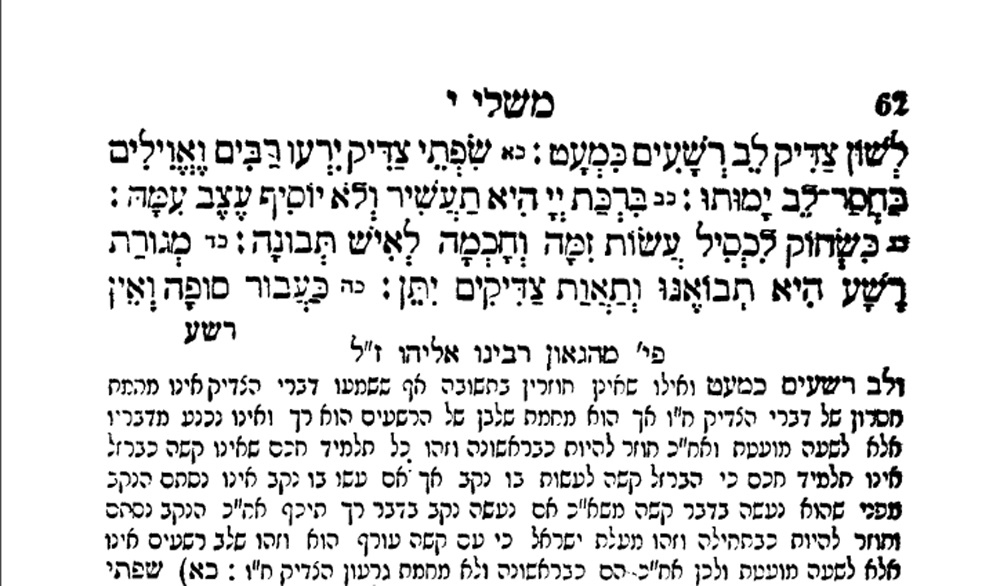
According to the Yerushalmi, one should say “arur Haman ubanav, Haman and his children should be cursed, but it does not specify when. It then mentions that R’ Yonasan would curse Nevuchadnetzar after he was mentioned during the Megillah.[2] However, in Masechtas Sofrim, where this is also brought down, it says that “arur Haman ubanuv” was said after the Megillah was read. From this it is clear that the reason for saying this is the pasuk in Mishlei, that when one mentions the name of a tzaddik he should say “zecher tzaddik livrachah” and “shem reshaim yirkav” whenever an evil person is mentioned.[3]  Today, the practice is to say “arur Haman ubanav after the Megillah, during the piyyut Asher Heini[4], and specifically when its most famous stanza is recited, Shoshanas Yaakov.[5] In fact, this might be what the Gemara is referring to when it says one should be intoxicated to the point of not knowing the difference between “arur Haman” and “baruch Mordechai.”[6]
The Manhig writes that in Spain the custom was to say “arur Haman baruch Mordechai” after the Megillah reading. The children in France and Provence had a custom to write Haman’s name on the bottom of rocks and bang them together in fulfillment of ““shem reshaim yirkav.”[7] From this source it would appear that this was done specifically by children and each and every time Haman’s name was mentioned.
Rav Aharon Hakohen Miluneil (d. 1330) in his work Orchos Chaim adds that the children of France and Provence did this for the additional reason of fulfilling “macho timcheh es zecher Amalek,” but does not specify when this was done. It appears that this was simply a custom that was done on Purim although not necessarily during the Megillah, reading. [8]
The Avudraham mentions the custom from the Manhig and adds that there is a source in the Midrash saying that one should erase Amalek from wood and stones.[9]
The Sefer HaAsufot cites another Midrash (which we don’t have) to show that the children banged on the wall when Haman’s name was mentioned.[10]  The Shibolei Haleket writes that some people in Italy had the custom of stamping their feet, banging stones and breaking pots, after which everyone would get up and thank Hashem for saving the nation;[11] he writes that while it is not obligatory, it is a good custom. It appears that this was done by everyone, not only the children.
From the Sefer Hatadir, it appears that “children who were zealous to do mitzvos” would break pots when Haman and Zeresh were mentioned.[12] It seems from both of these Italian sources that it was not done during the Megillah reading, but neither gives a reason for this custom.
In yet another Italian source, the Machzor Kiminhag Roma printed by Soncino in 1485-1486, we find that they would
smash pots when the piyyut was recited after the Megillah, but during the Megillah laining they would stamp their feet, clap
their hands and make other sounds. It’s also clear that this was done by everyone.[13]
A bit later, R’ Yehudah Aryeh Modena (1571-1648) wrote about Italy that some would bang when Haman’s name was said.[14]
R’ Zalman of St. Goar, in his work Sefer Maharil, writes that he observed that his Rebbe, the Maharil, did not bang when Haman’s name was said.[15] The Rama brings this down in his Darchei Moshe.[16] Various Acharonim have different explanations as to why the Maharil did not bang.[17] There is, however, a manuscript written by the Maharil’s son saying that his
father did indeed bang when Haman’s name was mentioned.[18]
R’ Avraham Saba writes that some have the custom to bang two stones together, based on the words “vehayah im bin hakos harasha,” as the final letters of the first three words spell Haman[19]. This remez is also brought by the Sifsei Kohen Al Hatorah[20], Minchah Beilulah[21], Levush[22] and Mateh Moshe.[23]
The Rama writes that there was custom among children to make a picture of Haman or write his name on wood or rocks
and erase them in fulfillment of “macho timcheh” and “shem reshaim yirkav.” From this they developed the custom of banging during the Megillah reading, and one should not abolish or belittle any custom because there was a good reason for it being established.[24] In Darchei Moshe he writes that his source is from the Manhig as quoted by the Avudraham.
In the very popular Yiddish book by R’ Shimon Ginsburg, first printed in 1590, we find the custom of the children “banging”[25]. Similarly, the Levush also writes that we should keep this custom, as does the Magen Avraham.[26] The Levush then says that when Haman’s name is mentioned one should actually say “shem reshaim yirkav”[27]. At first glance this appears to be a big chiddush, as talking during the Megillah reading is a hefsek. The Mishnah Berurah[28] and Rav Moshe Feinstein conclude that one should not say this during the Megillah.[29] However, after quoting the Levush, the Magen Avraham writes “see Midrash Rabbah about Nevuchadnetzar”.[30] The Magan Avrhom is referring to the Medrash we quoted in the beginning, of Esther which says R’ Yonasan would curse Nebucadnetzar after it was mentioned during the Megilah. So from this Medrash we see clearly that during  the Megilah reading he would say this and he would not wait for after the Megilah. This supports the Levush.[31]
R’ Avraham Klozner writes that the reason children bang rocks together is that they do not know how to say “shem reshaim yirkav, Whereas the adults say that during the Megillah”.[32] The anonymous comments, in Sefer Haminhagim of Rav Isaac Tirina writes the same.[33]
Those Opposed to “Banging”
R’ Binyamin Halevi writes in the Machzor Maagalei Tzedek (first printed in 1550) that he is opposed to these customs,
as well as the burning of a mock Haman in effigy. Not only do they cause a great disturbance in shul, but we live among non-Jews who are constantly looking for reasons to attack us. In other words, these minhagim are dangerous and should be abolished, as was done with other customs.[34]
To illustrate how these things can get out of control, R’ Eliyahu Capsili describes an incident that occurred in Crete in 1545 when a firecracker went off and caused utter pandemonium in shul. A takanah was subsequently made forbidding this kind of thing on Purim.[35]
R’ Avrohom Chaim Naeh writes about Yerushalayim in the 1940’s :
הרמ”א כתב על מנהג הכאת המן דאין לבטל שום מנהג… אבל המנהג היה להכות בעצים, ויומא כי האדינא חידשו להם הילדים מנהג חדש שמכין עם כדור פולווער [חומר נפץ], שנשמע קול יריה והפולווער הזה מוציא עשן מסריח ומחניק, עד שאי אפשר כלל לעמוד בבית הכנסת. העשן נכנס בגרון הקורא, וקולו נעשה צרוד, ובקושי אפשר לו להמשיך הקריאה, וכן הצבור סובלים מחוסר אויר, ומצפים מתי יגמרו הקריאה. בודאי חובה לעקור המנהג של היריות שעת הקריאה, דזה אינו מנהג וותיקין ועל דבר זה צריך לעמוד לפני הקריאה בכל תוקף, ולהוציא מידם כלי היריות [קצות השלחן, הערות למעשה, עמ’ קמו אות ה].
Another reason to refrain from banging is found in the Shelah Hakadosh, which is that it simply makes too much noise and people can’t fulfill the obligation to hear the Megillah.[36] The Pri Megadim writes something similar, that it confuses people.[37]
Another early source opposed to banging R’ Shmuel Portaleone (1570-1648).[38] One of his concerns was that the non-Jews would make fun of us.
The Seder Hayom (1599) writes that it’s not proper to make a ruckus in shul but if it’s being done by small children there’s no need to be concerned, due to simchas hayom.[39]
In Egypt and in London[40] (1783) they abolished the noisemaking completely.[41] Rabbi Avraham Levinson in Mekorei Haminhaghim[42] and R’ Ovadiah Yosef[43] were also for abolishing it. Similarly, Rav Yosef Henkin writes that the banging should be stopped during the actual Megillah laining.[44]
A Compromise
Rabbi Chaim Benveniste (1603-1673) in his work Sheyarei Knesses Hagedolah writes that in Izmir the chazzan would say the names of Haman and his children very loudly so the children would hear it and bang on the floor;[45] this was the intention of the Orchos Chaim. The banging was only done this one time during the Megillah. However, it’s worth pointing out that eventually the banging was abolished completely in Izmir.[46]
Rabbi Yuzpeh Shamash (1604-1678) of Worms writes that noise was made only when the Haman of “asseres bnei Haman” was said.[47] The Mekor Chaim writes the same but adds that woman and children did stamp their feet when Haman’s name was mentioned.[48] The Ben Ish Chai writes that the community would bang when “asseres bnei Haman” was read in Bagdad, but he himself would stamp with his foot after the first and last Haman.[49]
R’ Avrhom Chaim Naeh writes:
בעיה”ק חברון ת”ו, שהצבור היו אומרים עשרת בני המן לפני שהבעל קורא אומרם, ובזמן זה היו התינוקות מכים, ואחר כך אומרם הקורא מתוך המגילה. ויש לומר, דמשום זה זכו עשרת בני המן שהציבור יקרא אותם תחלה, כדי שיוכלו לספוג המכות, דבזמן שהקורא אומרם אי אפשר להכות כיון שצריך לאמרם בנשימה אחת [קצות השולחן, הערות למעשה, עמ’ קמו].
We find a few sources showing that attempts were made to abolish the minhag but for the most part they were unsuccessful.
In her memoirs, Pauline Wengeroff (b. 1833 in Minsk) wrote: “Whenever the hateful name of Haman was heard the men stamped their feet and the young people made an uproar with shrill graggers. My father was irritated by this and forbade it but it was of no use; every year people did it again”.[50] Her father was R’ Epstein, a talmid of R’ Dovid Tevel, author of Nachalas
Dovid
who was a talmid of R’ Chaim Volozhiner.[51]
R’ Yosef Ginsburg writes that it best to bang only when Haman’s name is mentioned with his father’s, as done in communities in Lita and Rasin.[52]
In a memoir written describing Kovno the author relates how a local talmid chacham unsuccessfully tried to convince the children not to throw firecrackers during the Megillah laining.[53]
In a letter written in Telz in 1915 R’ Avraham Eliyhau Kaplan notes that Purim has passed and the children have already made their disturbances with their graggers.[54]
According to the Orach Hashulchan, one should make sure that the noise does not get out of control; otherwise it is preferable to hear the Megillah at home with a minyan.[55]
Sources that they did bang
Still, it appears that for the most part, the minhag remained.
R’ Yair Chaim Bachrach writes:
כלי נקישה שעושין לתינוקות לנקש כמו בפורים יזהר גדול מלטלטלו, אבל ביד התינוקות אין מוחין, כ”ש כשחל פורים ביום א’ כשהולכין בערב לבה”כ [מקור חיים, סי’ שמג]
This appears to be some sort of noise maker.
R’ Yakov Emden brings down that his father the Chacham Tzvi used to bang with his feet when Haman’s name was said during the Megilah.[56]
In the cynical, anonymous, satire Ketav Yosher, first printed in 1794 (and attributed to Saul Berlin), we find one of the Minhaghim he makes fun of is the banging by Haman.[57]
In 1824 a parody called the Sefer Hakundos (trickster) was printed in Vilna. This parody was written by a maskil as a vicious attack on the Jews of the time poking fun at many things. The plus about this parody is we get a very interesting glimpse into Jewish life in those days.[58] When discussing Purim he writes “He (the trickster) must bang with all his strength for a long time every time Haman’s name is mentioned until he is either thrown out or quieted down. If he gets thrown out due to his long
banging even better and he must scream welcome when Haman’s name is said”.
See here what On the Main line brings about New York in 1841.
In a very informative Memoir describing life in Lithuania in the 1880’s the author describes: “We all went to the Synagogue equipped with our Haman Dreiers… and each time the reader of the Megillah… mentioned the name haman the nosie of the rattles was deafening”.[59]
In a diary describing Russia in the 1890s the author writes: “At every mention of Haman’s name there are general cries while the children howl and make as much noise as possible with graggers…the adults beat their pews with sticks as a token of their desire to beat Haman”.[60]
S. Ansky writes in his memoirs of World War One: “On Purim I went to Synagogue to hear the reading of the book of Esther. At the the mention of Haman’s name the children traditionally make noise say by clapping but when these children tried to clap, though very softly, their frightened parents hastily shushed them. Why didn’t they let the children make noise? I asked somebody afterword. Someone might object he stammered. Try and prove that they meant the ancient Haman and not the present one.”[61]
R’ Elayshiv, zt”l, never stopped the crowd from making noise but he himself did not.[62]
Jews in the Eyes of Gentiles
Many of sources of information about how various minhaghim were observed come from non-Jews or meshumadim, which must obviously be used with caution because some of these writers were tendentious or may not have fully understood what they observed or heard of even if they tried to be objective. These accounts however seem sound.
Johannes Buxtorf (1564-1629) writes in his Synagoga Judaica: ” There is also the custom that as often as the name of Haman is mentioned the young Jews knock him, and there is a great commotion. They used to have two stones, on one of which was written “Haman,” and they knocked them together until the name had disappeared, and they said and called out: Jimmach Schmo, his name shall be blotted out, or, Schem reschaim jirkabh, the name of the wicked shall rot. Arur Haman, cursed be Haman…”.[63]
In a letter written by John Greenhalgh in 1662 to a minister friend of his we find the following description of his visit to a shul: “My Rabbi invited me afterward to come and see the feast of Purim which they kept he said for the deliverance from Haman’s conspiracy mentioned in the Book of Esther in which they use great knocking and stamping when Haman is named”.[64]
In the Present State of the Jews (1675) Lancelot Addison writes: “Both the women and children…at the naming of Haman make a hideous noise with their hands and stamping with their feet.”
Johann Eisenmenger (1654-1704) writes that “the boys… clench their fists and strike them together, and hissing at the name of Haman make a mighty noise”.[65]
In the Ceremonies of the Present Jews (1728) we find: “They clap their hands or beat the benches to signify that they curse [Haman]”.[66]
In the book Religion, Ceremonies and Prayers of the Jews the pseudonymous Gamaliel Ben Pedazhur (1738) writes: “All the Jews, young and old, stamp their feet on the floor… the children generally have hammers with them at the synagogue… this
is done by way of rendering [Haman’s] memory as obnoxious as they can.”
Hyam Isaacs in Ceremonies Customs Rites and Traditions of the Jews, first printed in 1794, writes (second edition, 1836, p. 89): “and as often as the reader mentions the name Haman… it is customary for the children, who have little wooden hammers to
knock against the wall as a memorial that they should endeavor to destroy the whole seed of Amalek”.
 In his notes, a Christian traveler describes the events of a visit of his in a shul in Jerusalem, he also writes how the kids would make noise with graggers whenever haman’s name was said and the adults would bag with their feet or sticks.[67]
Reasons for this Custom
What follows from all this is that according to some Rishonim it ties specifically to Shem Rishoim Yirkav whereas others tie it to Mochoh Timcha Es Zeicher Amalek. According to some it was done specifically by the children; according to others it was also
done by adults. Some sources report it as being done after the Megilah reading; others say it was done during the Megilah reading.
The Rama (S.A. 690:17), after bringing some of the earlier sources for this custom, writes that one should not abolish or make fun of any custom because there was a good reason for its establishment.
It is interesting that the Rama, who brings many customs throughout his work, specifically chose this case to spell out this rule.[68] Two, the Magan Avrohom specifically here (690:22) has a lengthy discussion as to various “halachos” of Minhaghim. The question is, why?
Throughout history there were many who were against the “banging of Haman”. So the question is, what lies behind this Minhag. If we can understand that then perhaps we can better understand the Rama and Magan Avrohom.
To backtrack a bit, the Gemara in Sanhedrin (64b) mentions something about jumping on Purim “kmashvarta d’puria.” R’ Nissim Gaon and Rashi understand this to be referring to fires that the children made to jump through on Purim. But the Aruch says that it refers to a minhag to make an effigy of Haman that the children would hang from the roofs and burn on Purim, dancing and singing around it.[69] This is mentioned by others such as such as the Orchos Chaim[70] and Avudraham[71] as well as in Mesechtas Purim by R. Kalonymus ben Kalonymus (1286-1328).
Many have also noted that in the year 408 (!) a law was passed banning the Jewish custom of burning an effigy of
Haman on a gallows in the form of a cross.[72]
In Yemen they did not “bang” but fashioned a man out wood, dressed him up and dragged him around the whole day before hanging him in effigy.[73] The same was done in Baghdad[74] and other communities.[75]
Another minhag related to all this; R’ Tzvi Hirsch Koidonover in his classic work Kav Hayashar brings from his Rebbe R’ Yosef MeDubnov that R’ Heschel[76] (known as the Rebbe R’ Heshel) had a custom when he tested out his writing instrument he used to write either the name Haman or Amalek and then he would erase it to “fulfil” Mocho Timcha Es Zeicher Amalek.[77]
The significance of this source is this work was first printed in 1705-1706 in both Hebrew and Yiddish and was printed over eighty times! It was extremely popular amongst all kinds of readers so this custom of R’ Heschel was very famous.
An additional reason for the widespread popularity of this custom was that the Sefer Zechirah from R’ Zecariah Simnar also brings it, first printed in 1709.[78] This work was extremely popular in its time and was printed over 40 times.
It appears that the custom has to do with both Shem Rishoim Yirkav and Mochoh Timcha Es Zeicher Amalek.
But why did they do this?
What follows is an adaptation of Shut Mili D’avos (3:13) by R’ Yisroel Margolis Yafeh, a talmid of the Chasam Sofer, 9 with some additions and elaboration):
The Torah enjoins us to remember what Amalek did to us. The question is how do we go about doing this, and how often do we need to? The Arizal had a custom to say it every day.[79] What is behind this? It’s to remind us how Amalek set out to completely destroy us. But it also represents our other enemies throughout time, even if they are not direct descendants of Amalek.
The Chinuch writes that the reason for this mitzvah is to impress upon us that whoever oppresses us is hated by Hashem and that their punishment is commensurate with their wrongdoing.[80] Doing an action helps us remember. The banging is to help us remember that part of what we are doing is Mocho Timcha Es Zeicher Amalek, when we read the Megilah. Furthermore it takes time to read the Megilah so to constantly remind us, we bang. It’s also to keep us awake during the leining,[81] but even more so, writes R’ Margolis Yaffe, that similar to Pesach where we do many things for the children’s sake, on Purim as well the children were also saved from this decree of Haman. To get them to learn and remember about Purim we do all this, i.e. have them bang etc. Therefore it is not considered a Hefsek to bang or say Shem Rishoim Yirkav.
In various Rishonim we find a custom to say certain Pisukim of the Megilah out loud. The reason given is that it adds to the Simcha[82] while  some add to this that it’s specifically for the children.[83]
On Rosh Hashonah we have a custom to eat various fruits and say Tefilos. Many ask why we do this. Numerous Achronim,[84] when explaining this Minhag point to a Ramban[85] who writes that when an action is done down here it has an affect ‘upstairs’ causing something on earth to happen. To illustrate this a bit better this Ramban is used to explain numerous issues. There is a custom amongst some that when they say Poseach Es Yodecha during Ashrei, where one is supposed to have in mind about asking Hashem for parnasha, they keep their hands open to “receive” the parnasa.[86]
When an action is done ‘down here’ it has an affect ‘upstairs’, thereby causing something to happen in the physical world.[87] When we make noise when Haman’s name is mentioned, it “triggers” Hashem to destroy Amalek and our other enemies. This, R’ Dovid Pardo in his work on the Sifrei writes, is what is behind this Mitzvah of “Remembering what Amalek did to us” and why some say it daily.[88]
Moreover, when R’ Yehudah Hachasid was asked why we bang on the walls when Haman is mentioned, he answered that they do the same thing in gehinom.[89]
Connected to all this is the second reason brought for banging by Haman which is Shem Rishoim Yirkav. The Nezer Hakodesh explains that when evil people are cursed it has a great effect on their punishments in gehinom[90].  According to some this lies behind the reason when referring to Yoshkah we say Yeshu (Yud-Shin-Vav) as it’s the abbreviation of Yemoch shemo Vizichro[91]. With this we can easily understand its connection to Haman and the banging by Haman, all of the above explanations lie behind the custom.
R’ Eliezer Hakalir even wrote a piyyut for Parshas Zachor in which one says “yimach shemo vezichro” after every (other) stanza.[92]
Another reason is found in the Kaf Naki. He writes that we find Jews, children and adults, from all over, bang with sticks and stones for Haman as if he is still alive. He writes that although the Goyim mock us for this, there is a sound reason for all the commotion. The reason is to remind us that Haman and other enemies were destroyed by Hashem, therefore we bang and make a big deal to remind us of this fact and so that the children will learn that if another enemy rises against us, he too will be destroyed.[93]
Perhaps with all this we can understand why the Rama wrote about Minhaghim not to make fun of them; to teach us that even though it appears to not make sense to us, there is more to the story.
[1]The first large collection of sources on this subject was printed by Yom Tov Lewnsky, Keisad Hekahu Es Haman Betufuzos Yisroel, 1947, 89 pp. For other useful collections on this topic see; Rabbi Avrohom Levinson, Mekorei Ha-Minhaghim, Siman 62; R’ Shem Tov Gagin, Keser Shem Tov, 2, pp. 542-545; S. Ashkenazi, Dor Dor Uminhagahv, pp. 98-104; Rabbi Gedaliah Oberlander, Minhag Avosenu Beydenu, 2, pp. 307-324; Rabbi Tuviah Freund, Moadim Li-Simcha, 3, pp. 299-323; Pardes Eliezer, (Purim) pp. 186- 252; Rabbi Gur-Aryeh, Chikrei Minhaghim,1, pp. 218-222; Rabbi Rabinowitz,  Iyuni Halachot, 3,pp.
488-515; Daniel Sperber, Minhagei Yisroel, 3, pp. 156-159; 4, pp. 331-333; 6, pp. 242-246; Ibid, Keisad Mackim Es Haman, 47
pp. See also M. Reuter, The Smiting of Haman in the Material Culture of Ashkenzai Communities: Developments in Europe and the Revitalized Jewish Culture in Israel- Tradition and Innovation, (PhD Hebrew University 2004) (Heb.).
Another important work that was very helpful for this topic is Eliot Horowitz, Reckless Rites, Princeton 2006. I hope to deal with all this more in depth in the future.
[2]  Yerushalmi, Megillah, 3:7. See the comments of the Korban HaEdah; Shiurei Korban; R’ Eliyahu Hacohen, Midrash Eliyhau, 89b; R’ Shlomo Kluger, Chochmas Shlomo, 690. See also R’ Ratner, Ahavas Tzion Vi-Yerushlayim, Megillah pp. 77-78; S. Abramson, Rav Nissim Gaon, p. 279; R’ Yissachar Tamar, Alei Tamar, Megillah, pp. 142-144; R’ Palagi, Yafeh Li-Lev, 690:6-7.
[3]  Mesechtas Sofrim, 14:6-7. See the Mikra Sofrim (on Mesechtas Sofrim), and the sources in the Higger edition of Mesechtas Sofrim, pp.254-255.  For other versions of this Chazal, see the Midrash Bereishis Rabbah (Theodore-Albeck), pp. 496-497; Yalkut Makheri Mishlei printed from a manuscript by Yakov Spiegel, Sidra 1 (1985), pp. 123-125; Torah Sheleimah, Esther, p. 62. 200; Esther Rabbah, (Tabori and Atzmon Ed.) pp. 178-179, 114-115, [on this new edition see here].
[4]  On the Piyyut Asher Heni see I. Davidson, Otzar Hashira Vehapiyyut 1, p. 372, #8215; R’ Fack, Yemei Mishteh Vsimcha, pp. 158-161; Avrohom Frankel, “Asher heniya – toldoteha shel berakhah mefuyetet, available on the Piyyut website here; Rabbi Yakov Stahl. Segulah (2012), p. 32, no. 30-31.
[5]  On the exact Nussach of Shoshanas Yakov and the censors see R’ Yakov Laufer, Mei-Soncino Vi-ad Vilna, pp. 41-43; Sefer
HaZikuk
in Italia 18 (2008), p. 183.
[6]  Some Rishonim assume it is referring to a Piyyut;  See Sefer Hamanhig, 1, p. 242; Zror Ha-Chaim, p. 118; Shita leMesechtas
Megillah,
pp. 34-35; Avudraham, p. 209; Rashash, Megillah 7b; Meir Rafeld, Nitivei Meir, p. 198. I hope to return to this topic;
for now see Rafeld, ibid, pp. 190-209.
[7]  Sefer Hamanhig, 1, pp. 242-243.
[8]  Orchos Chaim, Purim, 41. The Beis Yosef (690) appears to have a different version of the Orchos Chaim than we have.  On
the Orchos Chaim, see Dr. Pinchas Roth, Later Provencal Sages- Jewish Law and Rabbis in Southern France, 1215-1348, (PhD Hebrew University 2012), pp. 38-41.
[9] Avudraham, p. 209. I believe this addition is not a quote from the Manhig, contra Y. Rafael (in his notes to Sefer Hamanhig, 1, pp. 242) and others appear to have understood the Avudraham.
Regarding the source of this Midrash, Rashi at the end of Ke Sisa brings such a Midrash. The Minchas Chinuch writes he does not know the source for it (Mitzvah 604) The Aderes (Chesbonot Shel Mitzvah, pp. 377-378) and R’ Meir Simcha point to the Mechilta in Beshalach [See Mechiltah Di R’ Yishmael at the end of Parshas Bishalach and the Mechiltah Di Rashbi, p. 126; R’ Menachem Kasher, Torah Sheleimah, Beshalach p. 270 (120), 274 (130); See also Menachem Kahana, Hamechiltos Li Parshas
Amalek
, pp. 190-191, 194, 314, 355. See also the important comments of Daniel Sperber, Minhagei Yisroel, 4, pp. 331-333.
[10] Meorot Rishonim, pp. 168-169.
[11] Shibolei Haleket, Purim, 200. See also the Tanyah Rabosi (Purim, 40) who says the same.
[12]  Sefer HaTadir, p. 209. On this work see R’ Rafael Nosson Rabinowitz, Ohel Avrohom, pp. 14-15.
[13] Machzor Ki-Minhag Roma (1485) in the 2012 reprint p. 62a. See Yitzchack Yudolov, Kovetz Mechkarim Al Machzor Ki-Minhag Bnei Roma (2012), p. 34, and pp. 32-33. M. Gidman, Ha-Torah Ve-Hachaim, 2, pp. 189-190 brings another Italian Machzor from manuscript that says the same. See also E. Horowitz, Reckless Rites, p. 272.
[14]  Shulchan Orach, p. 84.
[15]  Maharil, pp. 427-428. On this work see the Y. Pelles, The Book Of Maharil According to its autograph manuscripts and its specialty as a Multi-Draft versions work (PHD, Bar Ilan University 2005).
[16] Darchei Moshe, 690. See Magan Avrohom, 690:19 who brings down the Maharil.
[17] See Shut Maharam Shick, Y.D. # 216
[18]  Maharil, p. 428, note 6.
[19] Eshkol Hakofer, 9:32. About him see the introduction to the recent edition of his work Tzror Hachaim, Jerusalem 2014.
[20] End of parshas Ki Sisa.
[21] Ki Sisa, 25:2.
[22] Levush, 690:17.
[23] Mateh Moshe, 1006.
[24] S.A. 690:17
[25] On this work See Jean Baumgarten, “Prayer, Ritual and Practice in Ashkenazic Jewish Society: The Tradition of Yiddish Custom Books in the Fifteenth to Eighteenth Centuries”, Studia Rosenthaliana, Vol. 36, (2002-2003), pp. 121-146.
[26]The Magan Avrhom (690:19) says to be careful not to miss words [See the Noheg Ketzon Yosef p. 200 who says the same]. The Magan Avrhom says to say a pasuk or two from the Chumash (because might have missed it). However the Mekor Chaim says this is only if you have a kosher Megillah.
[27] 690:17.
[28]  Sharei Tzion, 690:57.
[29] Igrot Moshe (O.C., 1:192). R’ Moshe deals with the intention of the Yerushalmi and more. See also Chazon Ovaadiah, pp. 93-94; Haghot Pnei Menachem, (printed in the back of the Zichron Aron Levush).
[30]  690:21. See the important comment of the Machtzis Hashekel. See also the Yafeh Mareh on the Midrash Raba on parshas Va-Yayra 49:1.
[31]  There is much more to this story, depending on the exact Girsa in the various Midrashim that talk about saying ‘Aror Haman Ubanuv’. I hope to return to this in the future; for now see the important notes in Midrash Rabah (Theodore-Albeck), pp. 496-497; Yalkut Makheri Mishlei printed from a manuscript by Yakov Spiegel, Sidra 1 (1985), pp. 123-125. See also the important Teshuvah of R’ Yissachar Teichtal, Mishnat Sachir, siman 228-229 where he deals with when exactly do we say Shoshanas Yakov, which relates to all this.
[32]  Sefer Ha-Minhaghim Li R’ Avrohom Klozner (2006), p. 74. On this work see Rachel Mincer, Liturgical Minhaghim Books: The Increasing Reliance on written texts in late Medieval Ashkenaz, (PhD JTS, 2012), pp. 91-149.
[33]  Sefer HaMinhaghim Li R Issac Tirina, (2000), p. 48 # 55. On the authorship of these notes see the Introduction Ibid.
[34]  Maagalei Tzedek, (2000), pp. 175-176. I hope to return to this work in the near future.
[35]  Takonot Kandyah, pp. 130-131. See also the Kitzur Shelah, p. 88a, who describes a similar incident. For the most recent work on R’ Capsali see: Aledia Paudice, Between Several Worlds: The life and writings of Elia Capsali, Munchen 2010.
[36]  Shelah, p. 87a.
[37]  The Mishna Berurah quotes this but it’s not clear what his outcome with all this is.
[38]  Printed in Meir Benayhu, Yosef Bechiri, p. 437,418.
[39]  Seder Hayom, p. 240.
[40] Keser Shem Tov (above note 1).
[41] See Niveh Sholom, Dinei Purim, 7; Na-har Mitzrayim, pp, 52b-53b.
[42]  Siman 62. See also R’ Yakov Reifman, Ha-maggid (1858), issue # 11, p. 44.
[43]  Chazon Ovadiah, Purim, pp. 62-63.
[44]  Shut Gevurot Eliyhau, p. 209.
[45]  Shirei Knesses Hagedolah, 690. About him see the recent work of Yakov Barnai, HaMaruh Shel Europia, Jerusalem 2014.
[46]  Yafeh Li-Lev, 690:15.
[47]  Minhaghim De-Kehal Vermeizah, (1988), pp. 259-260.
[48]  Mekor Chaim, 690.
[49] Ben Ish Chai, first year, Parshas Tzaveh, 10.
[50] Pauline Wengeroff, Memoirs of a Grandmother, 2010, p. 113
[51]  Her father authored an important work called Minchas Yehudah. On this work see S. Abramson, Sinai, 112 (1993), pp.1-24; N. Steinschneider, Ir Vilna, pp. 248-249.
[52]  Itim LeBinah, p. 237.
[53]  Yoser Yasrani, 1, p. 168.
[54]  Be-Eikvot Ha-Yeriah, p. 162,
[55]  Oruch hashulchan, 690:23.
[56]  Siddur R’ Yakov Emden 2, p. 472.
[57] Prakim BeSatira Haivrit (1979), p.93.
[58] See the critical edition of this work printed in 1997, p. 67.
[59] Benjamin Gordon, Between Two worlds: The Memoirs of a Physician, p. 37.
[60] M. Zunser, Yesterday, p.42.
[61] The Enemy at his Pleasure (p. 284).
[62]  I witnessed this myself a few times when I davened there. See also Halichos VeHanhagot, (Purim), p. 14; Ish El haedah, 2, p. 275.
[63]  Synagoga Judaica, pp. 556-557.
[64] Dr. A. Cohen, An Anglo-Jewish Scrapbook 1600-1840, London 1943, p. 267.  See also Ibid, p. 260.
[65] Johann Eisenmenger, The Traditions of the Jews, U.S.A. 2006, p. 853. On this work see E. Carlebach, Divided Souls, London 2001, pp. 212-221.
[66] Ceremonies of the Present Jews, p. 44.
[67] Masei Notzrim Le Eretz Yisroel, p. 802.
[68] See Maharatz Chayes, Darchei Horaah, pp.235-235. For general information about the importance of Minhaghim, see R’ Heller, Maoz Hadat, Chapter 3.
[69] Aruch, s.v. Shvar quoted by the Rama in Darchei Moshe (690). See R’ Yakov Shor, Mishnat Yakov, pp. 398-399; S. Abramson, Rav Nissim Gaon, p. 278; Sefer haManhig, Mossad Harav Kook ed. vol. 1, pp. 249;  Herman H. Pollack, Jewish Folkways in Germanic Lands (1648-1806), pp. 175-177,328.
[70]  Orchos Chaim, Purim, 42.
[71]  Avudraham, p. 209.
[72]  See Yom Tov Lewnsky, (above note one), p. 16; Daniel Sperber, Minhagei Yisroel, 1, p.17; E. Horowitz, Reckless Rites, pp. 213-217; Sarit Gribetz, “Hanged and crucified: The book of Esther and Toledot Yeshu”, in Toledot Yeshu Revisited, (Peter Schafer and others ed.), Tubingen 2011, pp. 171-175. See also another early source that appears to be alluding to this, Shirat Bnei Ma-Aravah (Yahlom and Sokolof ed.), pp. 216-217, 33.
See also Levi Ginsburg, Shut Ha-Geonim Min Hagenizah New York 1909, pp. 1-3; R. S. Schick, Sefer Haminhaghim p. 51a; Korot Luv Ve-Yhudehah, p. 198; Israel Davidson, Parody in Jewish Literature, pp. 21-22; E. Horowitz, Reckless Rites, pp. 93-106. See also R’ Reuven Margolis, Margaliyot Hayam, Sanhadrin 64 b (17-18); Israel Yuval, Two Nations in your Womb, pp.165-166; T. Gaster, Festivals of the Jewish Year, pp. 227-229.
[73] See Rabbi Yosef Kapach, Haleichos Teiman (1968), p. 40. Earlier about Teiman the famous traveler R’ Yakov Sapir already describes this, Even Sapir, pp, 86b-87a [R’ Reuven Margolis Nefesh Chayah, 690].
[74] See R’ Dovid Sasson, Maseh Bavel, p. 226. See the nice collection of sources about this in Pineinim 54 (2012); Pineinim 55, (letters to the Editor); Pineinim 64, (letter to the editor) [Thanks to Yisachar Hoffman for sending me these sources].
[75]  This kind of stuff gets out of control in 1932 some youngsters made such a Mock Haman out of R Kook! See Rabbi S. Goren’s autobiography, With Might and strength (Heb.), p. 68; R’ Menachem Porush, Besoch Hachomos, (1948), pp. 323-324. See also the recent collection of Material on this called “Einei Yochel Lehashlim Im Das Hakanoyim“.
[76] E. Horowitz, Reckless Rites, p. 109 identifies this R’ Heshel incorrectly to be R’ Heshel Zoref. However already in the first edition printed by the author in the Yiddish part he writes he is referring to R’ Heshel Av Beis Din of Cracow. See also R’ Shmuel Ashkenazi’s notes to the Kav Ha-Yosher (1999), p. 23.
[77] Kav Ha-Yosher, ch. 99; Yesod Yosef, Ch. 82. On this work see: Y. Schachar, Bikurot Hachevrah, pp. 3-6; Jean Baumgarten, ‘Eighteenth-Century Ethico-Mysticism in Central Europe: the “Kav ha-yosher” and the Tradition’, Studia Rosenthaliana, Vol. 41, Between Two Words: Yiddish-German Encounters (2009), pp. 29-51; see also his Introduction to old Yiddish Literature, index; Yakov Elbaum, ‘Kav Ha-Yashar: Some remarks on its structure, content and literary sources’, Chut Shel Chein (heb.), pp. 15-64.  On the Yesod Yosef, see: Yeshurun 3 (1997), pp. 685-687.
[78] Sefer Zechirah, (1999), p. 273. See R’ Shmuel Ashkenazi’s notes to the Kav Ha-Yosher (1999), pp. 4-5. On this work see my Likutei Eliezer, pp. 13-25. For additional sources on this see E. Horowitz, Reckless Rites, pp. 107-109; Pardes Yosef, Devarim
beis, pp. 1077-1078 [Thanks to Professor Yakov Speigel for pointing me to this source].
[79] See Olat Tamid (O.C. 1:6); Magan Avrohom 60:2 See also his important comment in his Zayis Raanan, p. 51 b; Radal, Pirkei Di R’ Eliezer, Ch.44:5 (Haghot); Malbim, Artzos Hachaim, Eretz Yehudah, 1:4; Moshe Chalamish, Chikrei Kabbaah UTefilah, pp. 209-226 who collects numerous sources on this topic. See also: Aderes, Chesbonot Shel Mitzvah, pp. 382-383; R’ Zevin, Leor Ha-Halacha, (2004), pp. 270-278; Encyclopedia Talmudit, 12, pp. 217-223.
[80] Chinuch, Mitzvah 603.
[81] Some say this is why some pesukim of the Megilah are read out loud by everyone (see more on this further on).
[82] Sefer Hamanhig, 1, p. 243.
[83] See Yakov Spiegel, Pischei Tefilah UMoed, pp. 195-204.
[84] See for example R’ Margolis in his Shut Machlos Hamachanyim, pp. 27b-28a.
[85] Breishis, 12:6; 48:22.
[86] R’ Yosef ben Naim, Noheg BiChochma, pp. 167-168. See Daniel Sperber, Minhagei Yisroel, 3, pp. 113-172.
[87]  See Daniel Sperber, Minhagei Yisroel, 3, pp. 113-172.
[88] Sifri DeBei Rav, 4, (1990), pp. 181-183.
[89] Meorot Rishonim, p. 171; M. Gidman, Ha-Torah Ve-Hachaim, 1, p. 121. A similar idea is found in R’ Eliyahu Hacohen, Midrash Eliyhau, 89b.
[90]  Nezer Hakodesh, 2, (2014) p. 400. On the actual concept of Shem Rishoyim see Chida in his work Kisay Rachamim on Mesctas Sofrim, 14:7 I hope to return to this in the future.
[91]  R’ Avigdor Hazarfati, p. 414. For additional sources on this see R’ Hamberger, Mishichei Sheker Umisnagdeyium, (2009), pp. 121-122.
[92]  In the recently discovered Pirish from the Beis Medrash of Rashi on the piutim [Piyutim LeArbah Parshiyous, (2013), p. 77] it says the reason for saying Yemoch shemo Vizichro in this piyyut is because of the Medrash quoted earlier.
[93]  Kaf Naki, Lud 2014, pp. 95-96. The Chida brings this piece down from manuscript in his Machzik Beracha, Kuntres Achron, Siman 687 and in his Midbar Kadmot, Ois peh:12.


Le-Tacen Olam (לתכן עולם): Establishing the Correct Text in Aleinu

Le-Tacen Olam (עולם לתכן): Establishing the Correct Text in Aleinu[1]
By Mitchell First (mfirstatty@aol.com)
 
                    The Jewish obligation of עולם תקון (=improving the world) is widely referred to and it is traditionally assumed that the Aleinu prayer is one of the texts upon which this obligation is based.
                    This article will show that a very strong case can be made that the original version of Aleinu read עולם לתכן (=to establish the world under God’s sovereignty), and not עולם לתקן (=to perfect/improve the world under God’s sovereignty[2]). If so, the concept of עולם תקון has no connection to the Aleinu prayer.[3]
—–
                    It is reasonable to assume that Aleinu was already included in the Amidah of Rosh ha-Shanah (=RH) by the time of Rav (early 3rd century C.E.).[4] But no text of Aleinu is included in the Talmud, nor is a text of Aleinu included in any of the classical midrashim.[5] Therefore, we must look to later sources for texts of Aleinu.
                     When we do, we find that the reading לתכן is found in the text of the RH Amidah in the Siddur Rav Saadiah Gaon (d. 942),[6] and in the text of the RH Amidah in the Mishneh Torah of the Rambam (d. 1204).[7] Moreover, it is found in numerous prayer texts from the Cairo Genizah that include this line of Aleinu.[8] For example, it is found in: 1) a fragment of the RH Amidah first published by Jacob Mann in 1925;[9] 2) a fragment of the RH Amidah first published by Richard Gottheil and William H. Worrell in 1927;[10] 3) a fragment of the RH Amidah first published by Mordecai Margaliot in 1973;[11] and 4) a fragment of Aleinu first published by Mann in 1925.[12] It is found in many other Aleinu prayer texts from the Cairo Genizah as well.[13] (In the fragment of Aleinu first published by Mann in 1925, Aleinu is included in the Pesukei de-Zimra section of the Palestinian shaḥarit ritual.[14])
                     Furthermore, the reading לתכן survives in Yemenite siddurim to this day. It was also the reading in the original tradition of the Jews of Persia.[15]
                    Admittedly, the reading in Europe since the time of the Rishonim has been לתקן. See, for example, the following texts of Aleinu:
                      – Maḥzor Vitry of R. Simḥah of Vitry (daily shaḥarit and RH);[16]
                      – Siddur Ḥasidei Ashkenaz (daily shaḥarit and RH);[17]
                      –Peirush ha-Tefillot ve-ha-Berakhot of R. Judah b. Yakar (RH);[18]
                      –Peirushei Siddur ha-Tefillah of R. Eleazar b. Judah of Worms (RH);[19] and
                      –Sefer Arugat ha-Bosem of R. Abraham b. Azriel (RH).[20]
                   The three main manuscripts of Seder Rav Amram Gaon also read לתקן.[21] But these manuscripts are not from the time of R. Amram (d. 875); they are European manuscripts from the time of the later Rishonim.[22]
                   Earlier than Maḥzor Vitry, we have circumstantial evidence for the reading לתקן in comments on Aleinu that were probably composed by R. Eliezer b. Nathan of Mainz (c. 1090-1170). Here, in Hamburg MS 153,[23] the following explanatory comment about Aleinu is expressed (without a text of the line itself): [24] …בשמך יקראו וכולם מלכותך מתקנים העולם כל ויהיו
                   Another manuscript also largely composed of the comments of R. Eliezer b. Nathan has essentially this same reading, in two places.[25] Another manuscript, which is probably the Siddur of R. Eliezer b. Nathan, has a similar reading: [26] …בשמך  יקראו  וכולם .במלכותך  מתקנים  העולם כל  ויהיו
                    Admittedly, it cannot be proven that לתכן was the original reading. But this seems very likely, as לתכן is by far the better reading in the context. This can be seen by looking at all the other scenarios that are longed for in this section:
                                 הארץ מן  גילולים להעביר עוזך בתפארת  מהרה לראות י-שד במלכות  עולם לתקן /לתכן  יכרתון כרות  והאלילים ארץ רשעי כל אליך  להפנותבשמך יקראו בשר בני וכל יכירו וידעו כל יושבי תבל כי לך תכרע כל ברך תשבע כל לשון ולכבוד שמך יקר יתנו יכרעו ויפולו אלקינו ה׳ לפניך   ותמלוך עליהם מהרה לעולם ועד עול מלכותך את ויקבלו כולם בכבוד תמלוך עד ולעולמי היא שלך  כי המלכות
             Beginning with the second line, להעביר, every clause expresses a hope for either the removal of other gods or the universal acceptance of our God. With regard to the first line, properly understood and its mystical and elevated language decoded,[27] it is almost certainly a request for the speedily rebuilding of the Temple.[28] Taken together, this whole section is a prayer for the rebuilding of the Temple and the establishment of God’s kingdom on earth. This fits the reading לתכן perfectly.[29]
             It is appropriate that this section of Aleinu is fundmentally a prayer for the establishment of God’s kingdom on earth. Most likely, this section was composed as an introduction to the malkhuyyot section of the RH Amidah.[30]
             Moreover, we can easily understand how an original reading of עולם לתכן might have evolved into עולם לתקן, a term related to the familiar term העולם תקון. The term העולם תקון (always with the definite article) is widespread in early rabbinic literature.[31] It is found thirteen times in the Mishnah, and seventeen times in the Babylonian Talmud.[32] The alternative scenario, that the original reading was עולם לתקן and that this evolved in some texts into the unusual reading עולם לתכן, is much less likely.[33]
              Finally, the ב of י-שד במלכות seems to fit better in י-שד במלכות עולם לתכן (=to establish the world under God’s sovereignty) than in either of the two ways of understanding י-שד במלכות עולם לתקן.[34] Also, the use of the word עולם instead of העולם and the lack of an את before the object עולם perhaps fit the reading לתכן better. I leave a detailed analysis of these aspects to grammarians.
                                                    Conclusion
             There is no question that social justice is an important value in Judaism.[35] Moreover, classical rabbinical literature includes many references to the concept of העולם תקון, both in the context of divorce legislation and in other contexts. The purpose of this article was only to show that is almost certainly a mistake to read such a concept into the Aleinu prayer, a prayer most likely composed as an introduction to the malkhuyyot section of the Amidah, and focused primarily on the goal of establishing God’s kingdom on earth. Even if we do not change the text of our siddurim, we should certainly have this alternate and almost certainly original reading in mind as we recite this prayer.[36]


[1]  This essay is a revision of Mitchell First, “Aleinu: Obligation to Fix the World or the Text,” Ḥakirah 11 (Spring 2011), pp. 187-197, available here.
   I would like to thank Yehiel Levy for showing me his Yemenite siddur which read לתכן and inspired this research. I would like to thank R. Moshe Yasgur for sharing his thoughts and for always being willing to listen to mine. I would also like to acknowledge the assistance of Dr. Ezra Chwat of the Institute of Microfilmed Hebrew Manuscripts at the Jewish National and Hebrew University Library, and the assistance of Binyamin Goldstein. Finally, I would like to dedicate this article to my beloved wife Sharon, whose name has the gematria of תקון and who needs no improvement.
[2] The above is how this phrase is usually translated. But The Complete ArtScroll Siddur, p. 161, translates: “to perfect the universe through the Almighty’s sovereignty.” Others adopt this translation as well. See e.g., J. David Bleich, “Tikkun Olam: Jewish Obligations to Non-Jewish Society,” in Tikkun Olam: Social Responsibility in Jewish Thought and Law, eds. David Shatz, Chaim I. Waxman, and Nathan J. Diament, Northvale, N.J.: Jason Aronson, 1997, p. 61.
[3] One scholar who intuited that the original reading may have been לתכן is Meir Bar-Ilan. See his “Mekorah shel Tefillat ‘Aleinu le-Shabeaḥ,’ ” Daat 43 (1999), p. 20, n. 72.
   The articles by Gerald Blidstein and J. David Bleich in Tikkun Olam: Social Responsibility in Jewish Thought and Law assume that the reading is לתקן (see pp. 26, 61 and 98). But the article in this volume by Marc Stern mentions the alternate reading of לתכן, citing R. Saadiah (see p. 165, n. 24).
    In 2005, Gilbert S. Rosenthal wrote a detailed article about the concept of tikkun olam throughout the ages and merely assumed that the reading in Aleinu is לתקן. See his “Tikkun ha-Olam: The Metamorphosis of a Concept,” Journal of Religion 85:2 (2005), pp. 214-40.
[4]  The Jerusalem Talmud, at Avodah Zarah 1:2, includes the following passage: א”ר יוסי בי רבי בון מאן סבר בראש השנה נברא העולם?  רב,  דתני בתקיעתא דבי רב זה היום תחילת מעשיך זכרון ליום ראשון וכו’.   A very similar passage is found at J. Talmud Rosh ha-Shanah 1:3 (where the reading is בתקיעתא דרב).
The sentence from the liturgy referred to (…זה היום) is from the introductory section to the ten verses of zikhronot. A reasonable inference from these Talmudic passages is that Rav composed (at least) the introductory sections to zikhronot, malkhuyyot and shofarot. Aleinu
is part of the introductory section to malkhuyyot. Since the sentence from the introduction to zikhronot quoted corresponds to the present
introduction to zikhronot, it is reasonable to assume that their introduction to malkhuyyot corresponded to the present introduction to malkhuyyot, i.e., that it included Aleinu. Admittedly, Rav could have made use of older material in the introductory sections he composed. The fact that Aleinu has been found (in a modified version) in heikhalot literature is some evidence for Aleinu’s existence in this early period, even though the prayer is not specifically mentioned in any Mishnaic or Talmudic source. (Regarding the dating of heikhalot literature, see below.) On the version of Aleinu in heikhalot literature, see Michael D. Swartz,  “ ‘Alay Le-Shabbeaḥ: A Liturgical Prayer in Ma‘aseh Merkabah,” Jewish Quarterly Review 77 (1986-1987), pp. 179-190. See also the article by Bar-Ilan cited above. For parallels in later sources to the two passages from the Jerusalem Talmud, see Swartz, p. 186, n. 20. See also Rosh ha-Shanah 27a.
      A statement that Aleinu was composed by Joshua appears in a collection of Geonic responsa known as Shaarei Teshuvah (responsum #44). But the statement was probably a later addition by the thirteenth century kabbalist Moses de Leon. See Elliot R. Wolfson, “Hai Gaon’s Letter and Commentary on ‘Aleynu: Further Evidence of Moses De León’s Pseudepigraphic Activity,” Jewish Quarterly Review 81 (1990-91),
pp. 379-380. Statements that Aleinu was composed by Joshua are found in various Ashkenazic Rishonim. This idea seems to have originated with R. Judah he-Hasid (d. 1217).  For the references, see Wolfson, pp. 380-381.
        There is much evidence that Aleinu could not have been composed by Joshua. For example: 1) Aleinu cites verses from the prophet Isaiah (this will be discussed below); 2) ha-kadosh barukh hu was not an appellation for God in Biblical times; and 3) terms are found in Aleinu that are characteristic of heikhalot literature. Also, for almost the entire Biblical period, the word olam is only a time-related word. It is not until Dan. 12:7 and perhaps Eccles. 3:11 that olam means “world” in the Bible. (Olam definitely means “world” at Ben Sira 3:18.) See Kirsten A. Fudeman and Mayer I. Gruber, “ ‘Eternal King/King of the World’ From the Bronze Age to Modern Times: A Study in Lexical Semantics,” Revue des études juives 166 (2007), pp. 209-242. See also Daat Mikra, comm. to Psalms 89:3 and Eccles. 3:11, and R. Abraham Ibn Ezra, comm. to Ex. 21:6 and Eccles. 3:11. (Based on the language of the book, it is
very clear that Ecclesiastes is a late Biblical book See EJ 2:349.)
         Regarding the roots תקן and תכן, the root תקן does not appear in Tanakh until the book of Ecclesiastes, and the root תכן probably did not mean “establish” in the period of the Tanakh (see below).
[5] As noted, Aleinu has been found (in a modified form) in heikhalot literature. There are five manuscripts that include the relevant passage. But four of these only include Aleinu in an abbreviated form and are not long enough to include the phrase עולם לתקן/לתכן. See Peter Schäfer, Synopse zur Hekhalot-Literatur, Tübingen: J.C.B. Mohr, 1981, sec. 551, pp. 206-207. The only manuscript that includes the phrase reads לתקן. But this manuscript, N8128, dates from around 1500. See Ra‘anan S. Boustan, “The Study of Heikhalot Literature: Between Mystical Experience and Textual Artifact,” Currents in Biblical Research 6.1 (2007), p. 137.
    Regarding the dating of heikhalot literature, Bar-Ilan (Mekorah, p. 22, n. 85) estimates this literature as dating from the third through fifth centuries. See also more recently his “Shalshelet ha-Kabbalah be-Sifrut ha-Heikhalot,Daat 56 (2005), pp. 5-37. Moshe Idel, in the second edition of the Encyclopaedia Judaica (11:592) summarizes the subject as follows: Even though it is quite possible that some of the texts were
not edited until this period [=the geonic era], there is no doubt that large sections originated in talmudic times, and that the central ideas, as well as many details, go back as far as the first and second centuries.
[6] Siddur Rav Saadiah Gaon, eds. Israel Davidson, Simḥah Assaf, and Yissakhar Joel, Jerusalem: Rubin Mass, 1941, p. 221. Admittedly, the manuscript which forms the basis for this edition was not composed by R. Saadiah himself. It is estimated to date to the twelfth or thirteenth century.
Neither R. Saadiah nor Rambam recited Aleinu in the daily service.
[7] See the Seder Tefillot Kol ha-Shanah section at the end of Sefer Ahavah. I have looked at the Or ve-Yeshuah edition, the Frankel
edition, the Mechon Mamre edition (www.mechon-mamre.org), and the editions published by R. Yitzḥak Sheilat and by R. Yosef Kafaḥ. All
print לתכן. (The Frankel edition does note that a small number of manuscripts read לתקן.)
    In the standard printed Mishneh Torah, in the al kein nekaveh section of the RH Amidah (Sefer Ahavah, p. 154), only the first ten words were included (up to עוזך),  followed by a וכו׳.
[8] Most of the texts from the Cairo Genizah date from the tenth through the thirteenth centuries. See Robert Brody, The Geonim of Babylonia and the Shaping of Medieval Jewish Culture, New Haven: Yale Univ. Press, 1998, p. 32. All of the texts from the Cairo Genizah that I refer to can be seen at genizah.org.
[9] See his “Genizah Fragments of the Palestinian Order of Service,” Hebrew Union College Annual 2 (1925), p. 329. The fragment
is known as Cambridge Add. 3160, no. 10. When Mann published the fragment, he erroneously printed לתקן.
[10] See their Fragments from the Cairo Genizah in the Freer Collection, New York: The MacMillan Company, 1927, plate XLIII (opposite p. 194). The fragment is labeled F42 at genizah.org.
[11] See his Hilkhot Ereẓ Yisrael min ha-Genizah, Jerusalem: Mossad Harav Kook, 1973, p. 148. The fragment is known as Cambridge T-S 8H23.1.
[12] See above, pp. 324-325. See also, more recently, Ezra Fleischer, Tefillah u-Minhegey Tefillah Ereẓ-Yisre’eliyyim bi-Tekufat ha-Genizah, Jerusalem: Magnes Press, 1988, p. 238. The fragment is known as Cambridge Add. 3160,  no. 5. Neither Mann nor Fleischer printed the full text of Aleinu in this fragment.
[13] See the following fragments: Cambridge Or. 1080 2.46; Cambridge T-S Misc. 10.27, 34.5, and 34.23; Cambridge T-S NS 150.235, 154.19, 155.23, 157.6, 157.37, 157.176, 158.69, 195.55, and 273.38; Cambridge T-S AS 101.64; and New York ENA 1878.8. I was able to find only one fragment that read לתקן: Cambridge T-S NS 122.33. (An interesting fragment is T-S NS 153.64, 8R. Here, only the top line of the letter remains and it is hard to determine if it is the top of a כ or the top of a ק.)
    I have been able to examine most of the Aleinu prayer text fragments from the Cairo Genizah. I would like to thank Prof. Uri Ehrlich of Ben Gurion University of the Negev for referring me to them. (Not all of these Aleinu prayer text fragments were long enough to include the relevant passage.)
[14] Since the second word of the Aleinu prayer is לשבח, it was probably seen as fitting to include this prayer in the Pesukei de-Zimra section. A main theme of both Barukh she-Amar and Yishtabaḥ, as well as of the entire Pesukei de-Zimra, is שבח. See also Ber. 32a: le-olam yesader adam shivḥo shel HKBH ve-aḥar kakh yitpallel.
     A Palestinian practice of reciting Aleinu in Pesukei de-Zimra may also explain a statement found in several Rishonim (e.g., Sefer ha-Maḥkim, Kol Bo, and Orḥot Ḥayyim) in the name of Pirkei de-Rabbi Eliezer (a work composed in eighth century Palestine): מעומד לאומרו צריך לכך לשבח בעלינו יש גדול שבח. The statement is obviously not giving an instruction regarding the RH Amidah recited by individuals. Nor does the language of the statement (לאומרו) fit as an instruction to individuals listening to the repetition of the RH Amidah. The recital of Aleinu in a context outside of the Amidah seems to be referred to. (The statement is not found in the surviving texts of Pirkei de-Rabbi Eliezer.)
[15] See Shelomoh Tal, Nusaḥ ha-Tefillah shel Yehudei Paras, Jerusalem: Makhon Ben Ẓvi, 1981, p. 154 (RH). The Persian-Jewish prayer ritual followed that of R. Saadiah in many respects. At the end of the eighteenth century the Persian Jews were influenced to adopt a Sefardic prayer ritual and their own ritual was forgotten.
[16] Ed. Aryeh Goldschmidt, Jerusalem: Makhon Oẓar ha-Poskim, 2004, pp. 131 (daily shaḥarit) and 717 (RH). The earliest surviving manuscript of Maḥzor Vitry dates to the first half of the 12th century.
[17] Ed. Moshe Hirschler, Jerusalem, 1972, p. 125 (daily shaḥarit), and p. 214 (RH). (This work was published by Hirschler together with another work, Siddur Rabbenu Shelomoh; both are integrated into the same volume.) Siddur Ḥasidei Ashkenaz was compiled by the students of R. Judah he-Hasid (d. 1217) and presumably reflects his text of Aleinu.  Hirschler’s edition of this siddur is based on several manuscripts.
[18] Ed. Samuel Yerushalmi, Jerusalem: Meorei Yisrael, 1979, sec. 2, pp. 91-92. R. Judah flourished in Spain and died in the early thirteenth century. Aside from the text of Aleinu in the manuscript published by Yerushalmi including the reading לתקן, it is also clear from the various explanatory comments by R. Judah that he was working with a text that read לתקן.
[19]Ed. Moshe Hirschler, Jerusalem: Makhon Harav Hirschler, 1992, p. 659. R. Eleazar died circa 1230. The text of Aleinu is found in his commentary to the Aleinu of RH. In his commentary on the daily shaḥarit, only the first two words of Aleinu and the last two (timlokh be-kavod) are recorded. In his Sefer ha-Rokeaḥ, his references to Aleinu in both the RH Amidah and the daily shaḥarit are similarly very brief.
[20] Ed. Ephraim E. Urbach, Jerusalem: Mekiẓei Nirdamim, 1963, vol. 3, pp. 469-470. Sefer Arugat ha-Bosem was composed in 1234, in Bohemia. Aside from the text of Aleinu published here including the word לתקן, it is clear from R. Abraham’s explanatory comment (p. 469, lines 8-9) that he was working with a text that read לתקן.
     Other early European texts of Aleinu include the three texts of Aleinu in manuscript Oxford, Corpus Christi College 133 (late twelfth century; daily, RH and one other) and the text of Aleinu in manuscript Cambridge Add. 667.1 (early thirteenth century, daily). The former has לתקן in the first two; the third Aleinu does not include the second paragraph. I have not been able to check the reading in Cambridge Add. 667.1.
[21] See Seder Rav Amram Gaon, ed. Daniel Goldschmidt, Jerusalem: Mossad Harav Kook, 1971, p. 142.
[22] Ibid., introduction, pp. 11-13. A few fragments of the Seder Rav Amram Gaon have been found in the Genizah, but these are very short and do not include our passage.
[23] This manuscript is generally considered to be largely composed of the comments of R. Eliezer b. Nathan.    See, e.g., Urbach, Sefer Arugat ha-Bosem, vol. 4, p. 24 and the facsimile edition of this manuscript published by Abraham Naftali Ẓvi Rot, Jerusalem: 1980, pp. 21-30. The manuscript itself is estimated to have been copied in the fourteenth century (Rot, p. 21).
[24] See Rot, p. 20a (comm. to RH Aleinu).
[25] See Alter Yehudah Hirschler, “Peirush Siddur ha-Tefillah ve-ha-Maḥzor Meyuḥas le-Rabbi Eliezer ben Natan mi-Magenza (ha-Ravan),” Genuzot vol. 3, Jerusalem:1991, pp. 1-128.  In this siddur commentary (pp. 78 and 114), בשמך  יקראו  וכלם  מלכותך ‘מתקני  העולם כל ויהיו is found in the commentary to daily Aleinu in shaḥarit, and בשמך  יקראו  וכלם מלכותך מתקנין העולם כל ויהיו is found in the commentary to RH Aleinu (One should not deduce from this manuscript that R. Eliezer b. Nathan recited Aleinu daily in shaḥarit.)
[26] See Siddur Rabbenu Shelomoh, p. 212 (commentary on RH Aleinu). Hirschler published this work as the siddur of Shelomoh b. R. Shimson of Worms (1030-1096), but it is probably that of R. Eliezer b. Nathan. See, e.g., Avraham Grossman, Ḥakhmei Ashkenaz ha-Rishonim, Jerusalem: Magnes Press, 2001, pp. 346-348.
[27] Gershom Scholem recognized long ago that Aleinu includes several terms that are not only post-Biblical, but are characteristic of heikhalot literature. See his Jewish Gnosticism, Merkabah Mysticism and Talmudic Tradition, New York: Jewish Theological Seminary, 1965 (2d. ed.), pp. 27-28. He points to the terms yoẓer bereshit, moshav yekaro, and shekhinat uzo. Meir Bar-Ilan (Mekorah, p. 8) also points to the term adon ha-kol. All of this suggests that Aleinu was composed by someone with some connection to heikhalot literature, or composed at a time after terms originating in heikhalot literature came to be in normative rabbinic use. This explains how Aleinu easily came to be borrowed into heikhalot literature. Due to the common terms, the authors of this literature probably saw Aleinu as a text “related to their own hymnology.” Scholem, p. 28.
     In heikhalot literature, Aleinu is found in the singular form לשבח עלי, as a prayer of gratitude purportedly recited by R. Akiva on return from a safe journey to heaven. See the article by Swartz referred to above. (R. Akiva and R. Ishmael serve as central pillars and chief mouthpieces in this pseudepigraphic literature. See EJ 11:591, 2d. ed.).
     Meir Bar-Ilan, Mekorah, pp. 12-24, argues that Aleinu originated in heikhalot literature in the singular, and was then changed to the plural and borrowed into the RH service. I disagree, as do many others. (Bar-Ilan does not claim that Aleinu originated as this prayer of gratitude purportedly recited by R. Akiva. This would be very unlikely. There are too many themes in Aleinu that are out of context and extraneous under the assumption that Aleinu originated as this prayer of gratitude.)
[28] The idiom is based on verses such as Psalms 78:60-61 (צר ויתן לשבי עזו ותפארתו ביד) and 96:6 (במקדשו ותפארת עז), and Isaiah 60:7 (אפאר תפארתי ובית) and 64:10 (ותפארתנו קדשנו בית). This interpretation is probably implicit in the commentary of R. Judah b. Yakar. On לראות מהרה בתפארת עוזך, he writes: פני לראות  ונזכה ,אתה  עוזמו  תפארת  כי  (שם על =) ע״ש  .אפאר תפארתך ובית דכתי׳  המקדש  בית  בתפארת  ולראות  שכינה  See the Peirush ha-Tefillot ve-ha-Berakhot of R. Judah b. Yakar, part II, p. 91. R. Judah’s statements are adopted by R. David Abudarham in his commentary to the Aleinu of RH. See also R. Shemtob Gaugine, Keter Shem Tov, Kėdainiai, 1934, p. 104. Unfortunately, this interpretation of the phrase תפארת עוזך has generally been overlooked. Numerous are scholars who have written that the prayer includes no request for the Temple’s rebuilding.
    Scholem (p. 28, n. 18) notes the following passage found in other heikhalot texts: .עזו בתפארת ומבורך הדרו במושב שמו ברוך The parallel to הדרו מושב strongly suggests that עזו תפארת represents the physical Temple in this passage. For heikhalot texts with this passage, see Mordecai Margaliot, Sefer ha-Razim, Jerusalem, 1966, pp. 107-09, and Martin Samuel Cohen, The Shi‘ur Qomah: Texts and Recensions, Tübingen: J.C.B. Mohr, 1985, pp. 173 and 175.
[29] The use of the root תכן to mean “establish” does require some explanation. In Tanakh, the root תכן means to “weigh,”
“examine,” “measure,” or “place in order.” (At Psalms 75:4, עמודיה תכנתי, the root is commonly translated as “establish,” but even here it probably means something like “properly apportion” or “place in order.” See, e.g., the commentary of S. R. Hirsch.) תכן with the meaning “establish” is not found in the Mishnah or Tosefta.  But תכן may mean “establish” in the Dead Sea text 4Q511: שנה למועדי תכן (DJD VII, p. 221), and perhaps in other Dead Sea texts as well.
     In paytanic literature, an early use of the root תכן to mean “establish” is found in the piyyut Emet Emunatkha (תכנת עולמך ימים בששת כי). This piyyut is preserved in the Siddur R. Saadiah Gaon (p. 110) and in several Genizah fragments. It has a tetrastichic structure (as does Aleinu), and is generally viewed as a pre-classical piyyut, i.e., a piyyut from the late Tannaitic/early Amoraic period. See, e.g., Ezra Fleischer, Ha-Yotzrot be-Hithavutam ve-Hitpaḥutam, Jerusalem: Magnes, 1984, p. 55, n. 47. The Academy of the Hebrew Language, in its Historical Dictionary Project database (Ma’agarim), estimates the date of composition of this piyyut as the late second century C.E.
      In the Musaf Amidah for shabbat, תקנת, not תכנת, may be the original reading. See, e.g., Siddur R. Saadiah Gaon, p. 112 and the Genizah fragment quoted by Fleischer, Tefillah u-Minhegey Tefillah, p. 52. (For more sources on this spelling issue, see Maḥzor Vitry, ed. Goldschmidt,  p. 199, n. 1.)
      Probably, the use of the root תכן to mean “establish” arose based on the usage of the root at Psalms 75:4, or perhaps from the words תכן and תכון (both from the root כון) found numerous times in the Tanakh (Jer. 30:20; Ps. 89:22, 93:1, 96:10, and 141:2; Prv. 12:19 and 20:18; I Kings 2:12; I Ch. 16:30; and II Ch. 8:16, 29:35, 35:10 and 35:16).
[30] Aside from the fact that the theme of the section fits as an introduction to verses of malkhuyyot, the section ends with four words from the root מלך: ותמלוך עליהם מהרה לעולם ועד עול מלכותך את ויקבלו כולם .בכבוד תמלוך עד ולעולמי היא שלך  כי המלכות
     I have little doubt that the first section of Aleinu (which includes the words melekh malkhei ha-melakhim and malkeinu) was also composed at the same time. This is contrary to the view of many scholars who point to the two separate themes in the two sections as evidence of different authors. Aleinu is a short prayer, and in the earliest texts of Aleinu there is no division into sections. Therefore, our
presumption should be one of unitary authorship. Close analysis of the verses cited shows that both sections quote or paraphrase from the same chapter of Isaiah (45:20: u-mitpallelim el el lo yoshia and 45:23: ki li tikhra kol berekh tishava kol lashon; there are quotes and paraphrases of other verses from chapter 45, and from 44:24 and 46:9 as well.) This strongly suggests that both sections were composed at the same time. (I have not seen anyone else make this point.) Terms characteristic of heikhalot literature are found in both sections as well.
        While it cannot be proven that Rav (early third century) was the author of Aleinu, it has been observed that “in some of Rav’s homilies a tendency to a certain mystical thinking is discernible.” See EJ 13:1578 and the citations there, as well as the following statement of Rav at Ber. 55a: .יודע היה בצלאל לצרף אותיות שנבראו בהן שמים וארץ  Also, several Talmudic passages record Rav’s authorship or contribution to the texts of other prayers. Most of these passages are collected at Ismar Elbogen, Jewish Liturgy: A Comprehensive History, tr. Raymond P. Scheindlin, New York: Jewish Publication Society and Jewish Theological Seminary, 1993, pp. 207-208. Most relevant is Ber.12b where the הקדוש המלך and המשפט המלך changes for the Ten Days of Repentance are recorded in the name of Rav.
       Most recently, Ruth Langer is another who believes that the evidence points to authorship of both paragraphs of Aleinu around the period of Rav. She writes: In literary style, it is consistent with the earliest forms of rabbinic-era liturgical poetry from the land of Israel… See Langer, “The Censorship of Aleinu in Ashkenaz and Its Aftermath,” in Debra Reed Blank, ed., The Experience of Jewish Liturgy: Studies Dedicated to Menahem Schmelzer, Leiden and Boston: Brill, 2011, pp. 148-149. As Langer points out, although Rav gained prominence in Babylonia, he had also been a student of R. Judah ha-Nasi in Israel.
[31] העולם תקון was the correct classical term, even though it has now been replaced in popular parlance by עולם תקון. Rosenthal, p. 214, n. 1.
[32] Rosenthal, p. 214, n. 1. It is also found eight times in the Jerusalem Talmud and four times in the Tosefta. Most of the time, the term is used in the context of the laws of divorce, but it is found in other contexts as well (e.g., Hillel’s enactment of prozbol at M. Gittin 4:3). Rosenthal suggests that the concept originated in the context of the laws of divorce, and was later expanded into the other contexts. See Rosenthal, pp. 217-219.
[33] Admittedly, the root תקן can often be translated as “established.” But in many of these cases the context is that of establishing a legal ordinance or procedure, and a better translation would be “instituted.” On the other hand, the musaf Amidah for festivals includes the phrase בתקונו ושמחנו (the subject being the beit ha-mikdash) and this seems to be an example of the root תקן meaning “establish” in a non-legal context. Another such example is the phrase…ממנו לו והתקין found in one of the sheva berakhot (Ketubbot 8a).
     Nevertheless, I strongly believe that לתכן was the original reading in Aleinu. It is easily understandable how an original reading of עולם לתכן might have evolved into עולם לתקן; the reverse scenario is much less likely. Moreover, R. Saadiah’s text in the musaf Amidah for shabbat read שבת תקנת. Yet he recorded לתכן in Aleinu.
[34] As mentioned earlier, in the reading עולם לתקן, there are two ways to translate במלכות: “under the sovereignty” or “through the sovereignty.” If the translation is “under,” establishing a world under the sovereignty of God is a simpler reading than perfecting a world under the sovereignty of God. If one wants to advocate for the translation “through,” it requires investigation whether the prefix ב could have been used to mean “through” in the Tannaitic and Amoraic periods.
[35] See, e.g., Shatz, Waxman, and Diament, eds., Tikkun Olam: Social Responsibility in Jewish Thought and Law, and Jacob J. Schacter, “Tikkun Olam: Defining the Jewish Obligation,” in Rav Chesed: Essays in Honor of Rabbi Dr. Haskel Lookstein, ed. Rafael Medoff, Jersey City: Ktav, 2009, vol. 2, pp. 183-204. For some citations to Biblical verses on justice, see Rosenthal, p. 215, n. 2.
[36] R. Chaim Brovender suggested to me that after Aleinu shifted to becoming primarily a daily prayer,   reciting a statement about perfecting/improving the world would have been seen as appropriate. By the twelfth century, Aleinu was being recited as a daily prayer in shaḥarit in parts of France (see above, n. 16) and probably in parts of Germany and England as well. (For Germany, see above, n. 17, and for England, see Ms. Oxford, Corpus Christi College 133.)
    The recital of Aleinu in the evening prayer in Europe is a slightly later development. For some early references to this practice, see Sefer ha-Minhagot of R. Moshe b. R. Shmuel of Marseilles (early thirteenth cent.), published in Kobeẓ Al Yad 14 (1998), pp. 81-176, at p. 103, and Kol Bo, sec. 11, citing R. Meir of Rothenberg (thirteenth cent.). The recital of Aleinu in the afternoon prayer is a later development.
    Regarding the recital of Aleinu as a daily prayer in Palestine, see above, n. 14.


Marc B. Shapiro – Clarifications of Previous Posts

Clarifications of Previous Posts

by Marc B. Shapiro
[The footnote numbers reflects the fact this is a continuation of this earlier post.]

1. I was asked to expand a bit on how I know that R. Barukh Epstein’s story with Rayna Batya is contrived. In this story we see her great love of Torah study and her difficulty in accepting a woman’s role in Judaism. Certainly, she must have been a very special woman, and I assume that she was, for a woman, quite learned. When Mekor Barukh was published there were still plenty of people alive who had known her and it would have been impossible to entirely fabricate her personality. The same can be said about Epstein’s report of the Netziv reading newspapers on Shabbat. This is not the sort of thing that could be made up. Let’s not forget that the Netziv’s widow, son (R. Meir Bar-Ilan) and many other family members and close students were alive, and Epstein knew that they would not have permitted any improper portrayal. It is when recording private conversations that one must always be wary of what Epstein reports.

A good deal has been written about the Rayna Batya story, and Dr. Don Seeman has referred to it as “the only record which has been preserved of a woman’s daily interactions with her male interlocutor over several months.”[15] When challenged about the historical accuracy of Epstein’s recollections, Seeman replied “that there is no evidence to indicate that R. Epstein invented these episodes out of whole cloth.”[16]

I will therefore explain how I concluded that the story is fictional. Let’s begin with the well-attested fact that Epstein was a plagiarizer. My assumption is that when dealing with someone who is not a reputable scholar, one must be very suspicious of what he or she writes when there is no outside evidence to back it up. In fact, when the Torah Temimah first appeared, the editor of this work published a booklet, Sihah Temimah, accusing Epstein of fraudulent behavior.[17] Here are the first few pages of this booklet.
A central feature of his dialogue with Rayna Batya is her producing the book Ma’ayan Ganim by R. Samuel Archivolti. Here it states that mature women who have a desire to study Torah are to be encouraged (Mekor Barukh, p. 1962). Epstein, a young teenager, then attempts to refute her by arguing that the passage from Ma’ayan Ganim is not halakhic, but rather divrei melitzah. The whole dialogue, and in particular the part about her discovering the winning passage in Archivolti, is contrived and designed to lead the reader to sympathize with the fate of the poor woman.

In his Torah Temimah (Deut. ch. 11 n. 68) he cites the passage from Ma’ayan Ganim that as a teenager he supposedly argued against. Anyone reading Torah Temimah would assume that Ma’ayan Ganim is a regular halakhic work, as Epstein refers to it as She’elot u-Teshuvot.[18]

Although at the end of the passage he says that he doesn’t know who the author is, and that Tosafot Yom Tov calls him a grammarian, I believe that this is all part of the literary game he is playing. In other words, he wants to publicize Archivolti’s view, and then to “cover” himself cites Tosafot Yom Tov. In Mekor Barukh, after telling his story, he points out that Archivolti was also a great talmudist and that the only reason the Tosafot Yom Tov refers to him as a medakdek was because he was referring to him in his youth.[19]

Dan Rabinowitz, in his discussion of the issue, writes:

The entire famous Rayna Batya incident must now be called into serious question. Was Rayna Batya so ignorant as to confuse Ma’ayan Gannim with a legitimate book of halakha? How, then, do we reconcile this with her supposed profound learning? It cannot be that R. Epstein was unable to recognize the Ma’ayan Gannim for what it was, for he himself writes that he told his aunt of the true nature of Ma’ayan Gannim. But if he did know what it was, how is it that in his Torah Temima he refers to Ma’ayan Gannim as responsa—and yet in the same paragraph in the Torah Temima he seems to backtrack and wonder how it is that the Ma’ayan Gannim could innovate “new laws about women with reason alone?” The entire Rayna Batya episode is a highly problematic one, raising one perplexing question after another.[20]

As far as the first few questions are concerned, I can only say that the entire report of Rayna Batya discovering the relevant text in Ma’ayan Ganim was made up by Epstein. This book, which was published in Venice in 1553, is an extremely rare volume. There would have only been a few copies of this book in all of Lithuania. (In Torah Temimah Epstein also says that it is a rare book.) It is therefore impossible to imagine that the rebbetzin, sitting in Volozhin, would just so happen to come across this volume on her husband’s bookshelf. Of this, there can be no doubt, and I assumed that Epstein, who was a great bibliophile, later in life came across the book and in his desire to publicize its contents, created the dialogue with Rayna Batya.

Yet thanks to R. Yehoshua Mondshine’s recent article,[21] I see that I was mistaken in my assumption. The truth is that Epstein never even saw the book and thus did not know the true nature of Ma’ayan Ganim. He learnt of the relevant passage, which he places in Rayna Batya’s mouth, from an article that appeared in Ha-Tzefirah, 7 Tishrei, 5656. We see this from the fact that the Ha-Tzefirah quotation mistakenly omits some words, and the same words are omitted in Mekor Barukh. This shows that his knowledge of this book came in 1894 and that he never discussed it with Rayna Batya, who died many years prior to this.

Now that we know where Epstein copied the text from, we can see another element of the literary game he played. He cites Ma’ayan Ganim as follows:
ומאמר חכמינו כל המלמד את בתו תורה כאלו מלמדה תפלות אולי נאמר כשהאב מלמדה בקטנותה.
Yet in Ha-Tzefirah it states:
מאמר רבותינו ז”ל כל המלמד בתו תורה כאלו מלמדה תפלות אינה צריכה לפנים דאיתתא חזינא ותיובתא לא חזינא כי אפשר לחלק שחכמים ז”ל לא דברו אלא כשהאב מלמדה בקטנותה.
Leaving aside the words Epstein omits, he has substituted אולי for אפשר לחלק. In doing so he softened Archivolti’s point. Whereas Archivolti was stating that one can distinguish between teaching a grown woman and a small girl, Epstein has Archivolti prefacing this idea with “perhaps”. I think this is part of Epstein’s confusing game. He wants to bring this view to the public’s attention, but he doesn’t want to come off as too radical. In fact, this אולי, which is his own creation, assumes a life of its own. Thus, in his letter to R. Hayyim Hirschensohn (Malki ba-Kodesh, vol. 6, p. 47), criticizing the latter’s view of teaching women Torah, Epstein writes:

צר לי כי לא אוכל להסכים עמו בזה הן הוא (הרש”ק בעל המכתב הידוע) אינו בטוח בעצמו בדבריו אלה, כנראה מלשונו שכתב “ומאמר חכמינו כל המלמד את בתו תורה וכו’ ‘אולי’ נאמר כשהאב מלמדה בקטנותה” וכו’ ועתה הגע עצמך האם בסברא “פן ואולי” אפשר להתיר מה שנאמר בגמרא מפורש לאיסור. כך דעתי בזה.

In other words, Epstein invents the word אולי and inserts it into Archivolti’s letter, and then he uses this to criticize Hirschensohn! The chutzpah on Epstein’s part is astonishing, but as I see it this is all part of his game.

No one who has discussed Epstein and Rayna Batya was aware of his letter to Hirschensohn, so they could not point out the following obvious fact: When one looks at Mekor Barukh, which was published after his letter to Hirschensohn, one finds him telling Rayna Batya the exact same thing. It is obvious that he uses the language in his letter to Hirschensohn to create the following reply to Rayna Batya, that supposedly occurred some fifty years prior.
והן המחבר בעצמו כמו ‘מודה במקצת’ בזה, באמרו: ‘ומאמר חכמינו’ כל המלמד את בתו תורה כאלו מלמדה תפלות ‘אולי נאמר כשמלמדה בקטנותה’; הרי שבעצמו אינו בטוח בדבריו, וכהוראת הלשון ‘אולי’ ולא ב”אולי” ולא ב”פן” מתירים מה שנאמר מפורש בתלמוד.
(It is possible that I am wrong in assuming that it was his positive view towards women studying Torah which explains why he created the story and cited Ma’ayan Ganim. Perhaps he was simply attempting to create a good story, or even some controversy, and that explains why he seems to be on both sides of the issue, as Dan Rabinowitz points out in the passage cited above.)

Here are the relevant pages in Ma’ayan Ganim, Ha-Tzefirah, Mekor Barukh, and Torah Temimah.
I know that there are people who are very upset at me, believing that I have given ammunition to those who chose to censor and withdraw My Uncle the Netziv. I make no apologies. We must combat falsehoods and plagiarism no matter where they emanate from. If, in the process, some of our own sacred cows are slaughtered, that is the price we must pay.

Returning to Mondshine, he is most concerned with the supposed dialogue between Epstein’s father, R. Yehiel Michel (the author of the Arukh ha-Shulhan), and the Tzemach Tzedek, R. Menachem Mendel Schneersohn. He sees it as an opportunity for Epstein to put all sorts of ideas, including criticisms of Hasidism, into the mouth of the great hasidic leader, something that if he did on his own would have brought down storms of criticism upon him. For example, he has the Tzemach Tzedek say that the hasidim have to be grateful for the opposition of the Vilna Gaon. Had it not been for the great dispute about Hasidism, and the Gaon’s strident opposition, the new movement might have led its followers out of the ranks of halakhic Judaism. (p. 1237). This idea was expressed by R. Kook (Ma’amrei ha-Re’iyah, p. 7) and was probably a common non-hasidic notion. But it is impossible to think that the Tzemach Tzedek would have ever expressed himself this way.

At the time that R. Yehiel Michel is said to have had his conversations with the Tzemach Tzedek, he was the rav of the Habad town Novozypkov.[22] In later years R. Abraham Chen and R. Shlomo Yosef Zevin served as rabbis of the town.[23] I know about this place because my grandmother’s second husband (who was like a grandfather to me) was from there. In fact, during World War One word came to the town that a certain group of Jews was being moved and would be passing through, and that among them was an outstanding young scholar named Shlomo Yosef Zevin. The townspeople came up with the necessary money to remove him from the group. He was chosen as the town’s rabbi and lived in my step-grandfather’s house for about six months. I read somewhere that the townspeople were followers of Kopys/Bobruisk, rather than Lubavitch. As R. Zevin was himself a Bobruisker, this would make sense. R. Yehiel Michel was himself born in Bobruisk, as was his son R. Baruch.

I always tell this story to Habad people in order to impress them with my yichus, that the great R. Zevin lived in my family’s house. Yet on two separate occasions after I told the story to young Habad shluchim, they replied, “Who is Rav Zevin?” It is also very rare to find a young Habadnik who has even heard of Kopust/Bobruisk. Yet without knowing about this it is impossible to understand how R. Zevin could have been a Zionist when the Lubavitcher rebbes were all anti-Zionist. After all, who ever heard of a hasid not following his Rebbe? The answer is that all Lubavitchers were Habad, but not all adherents of Habad were Lubavitch. The ignorance among some in Habad of their own movement probably shouldn’t surprise me, as I have met many hasidim who don’t have a clue about the history of the hasidic movement. And of course, how many Modern Orthodox know the first thing about Hirsch and Hildesheimer?

Mondshine assumes that one of the purposes of Epstein’s stories about his father and the Tzemach Tzedek is to build up his father’s halakhic reputation. His pesakim were subject to attack as being too liberal, and certainly in the hasidic world he was not accepted. In the Lithuanian world he was a much more important posek, and R. Joseph Elijah Henkin stated that in a dispute between the Mishneh Berurah and the Arukh ha-Shulhan, the Arukh ha-Shulhan is to be preferred.[24]

Yet many did not share R. Henkin’s viewpoint. A number of years ago I saw in one of R. Yitzhak Ratsaby’s books that he heard from some gedolim that one should not rely on the Arukh ha-Shulhan. I wrote to him objecting to this lack of respect for the Arukh ha-Shulhan, and also expressing my near certainty that the gedolim he referred to must have been Hungarian, for the Hungarian poskim never accepted the Arukh ha-Shulhan as an authoritative work. On Nov. 22, 1990, Ratsaby wrote to me:
בענין הגאון בעל ערוך השולחן, דוקא הדברים נובעים מליטא, והנני מפרש, הגר”י כהנמן זצ”ל מפוניביז’ (כמדומני שלמד בעצמו יחד עם הערוה”ש) והגר”ח גרינמן שליט”א בן אחותו של החזו”א. זכורני אמנם באגרות משה במקום אחד כתב על ערוה”ש כבר הורה זקן, ובמקום אחר דוחה דבריו. נראה לענ”ד אמנם שבעל ערוה”ש מחדש הרבה סברות ובזה כחו גדול, מאידך בעל משנ”ב מעמיק בעיון היטב הדק. והאמת ניתנה להיאמר שבהרבה מקומות בערוה”ש ראיתי דברים מתמיהים והיפך כוונת הדברים, וכבר הערתי עליו בדרך כלל במקומות שעסקתי בהם בחבורי הנדפסים. ופוק חזי שבישיבות לומדים בקביעות ההלכה מספר משנ”ב, וגם כמעט אין בית היום אשר אין שם משנ”ב. והחזו”א אעפ”י שחולק בהרבה מקומות על המשנ”ב, מ”מ החשיב אותו כהוראה מפי הסנהדרין ומנה אותו בנשימה אחת עם מרן הב”י והמג”א.
(Ratsaby’s recollection is correct. In Iggerot Moshe, Orah Hayyim vol. 1 no. 39, which is his famous responsum on the proper height of a mehitzah, R. Moshe quotes the Arukh ha-Shulhan and uses the expression כבר הורה זקן. Regarding R. Joseph Kahaneman, he actually received semikhah from R. Yehiel Michel.)

The reputation of the Arukh ha-Shulhan has today fallen to such an extent that in a recent publication of the work the rulings of the Mishneh Berurah are included as well. The message of this is that while the Arukh ha-Shulhan is a Torah volume that should be studied, in terms of practical pesak it is the Mishnah Berurah that must be followed. See here for an earlier discussion at the Seforim blog of the recent reprint of the Arukh ha-Shulhan.

2. I was asked if there are any medieval poems in which there is explicit homosexuality. I am unaware of any, and it is precisely because they are ambiguous that there has been controversy about their meanings. This poem by Moses Ibn Ezra is as explicit as I could find
תאות לבבי ומחמד עיני

עופר לצדי וכוס בימיני

רבו מריבי ולא אשמעם

בוא הצבי, ואני אכניעם

וזמן יכלם ומות ירעם

בוא, הצבי, קום והבריאני

מצוף שפתך והשביעני

למה יניאון לבבי, למה

אם בעבור חטא ובגלל אשמה

אשגה ביפיך אד-ני שמה

אל יט לבבך בניב מענני

איש מעקשים, ובוא נסני

נפתה, וקמנו אלי בית אמו

ויט לעול סבלי את שכמו

לילה ויומם אני רק עמו

אפשט בגדיו ויפשיטני

אינק שפתיו וייניקני

כאשר לבבי בעיניו נפקד

גם עול פשעי בידו נשקד

דרש תנואות ואפו פקד

צעק באף, רב לך, עזבני

אל תהדפני ואל תתעני

אל תנף בי, צבי, עד כלה

הפלא רצונך, ידידי, הפלא

ונשק ידידך וחפצו מלא

אם יש בנפשך חיות, חיני

או חפצך להרג, הרגני

Desire of my heart and delight of my eyes –

A fawn beside me and a cup in my hand!

Many admonish me, but I do not heed;

Come, O gazelle, and I will subdue them. Time will destroy them and death shepherd them. Come, O gazelle, rise and feed me With the honey of your lips, and satisfy me.
Why do they hold back my heart, why? If because of sin and guilt, I will be ravished by your beauty – God is there! Pay no attention to the words of my oppressor, A perverse man – come and try me!
He was enticed and we went up to his mother’s house, And he gave his shoulder to my burden. Night and day I was only with him. I undressed him, and he undressed me; I sucked his lips and he sucked mine.
When I left my heart as a pledge in his eyes, The burden of my guilt was also weighted in his hand. He sought enmity, and inflicted his anger, And angrily cried, “Enough; leave me! Do not force me, and do not entice me.”
Do not be angry with me, gazelle, to destruction – Extraordinary is your will, my dear, extraordinary! Kiss your beloved and fulfill his desire. If it is in your soul to give life, revive me – Or if your desire is to kill, kill me![25]

3. When dealing with problematic texts of recent times, the preferred approach is simply to censor them. But with the medievals, there is a simpler method: Say that the text was written by a mistaken student, or even worse, by someone interested in undermining Judaism. In a previous post I mentioned that R. Joseph Zvi Duenner even stated so with regard to the Talmud itself.[26]

Since in modern times we don’t generally have students copying their master’s handwritten texts, the first approach doesn’t make much sense. Yet in a previous post at the Seforim blog,[27] I noted that R. Menasheh Klein used this very argument with regard to R. Moshe Feinstein, even though he was dealing with a responsum published in R. Moshe’s own lifetime. I found another example where Klein uses this exact same approach. He saw something in one of the Steipler’s books, but since it didn’t make sense to him, Klein wrote to the Steipler as follows (Mishneh Halakhot, vol. 7, p. 142a):
היות כי אני מכיר את מעכ”ק וצדקתו נגמר בדעתי שבודאי לא יצאו דברים מפי כ”ק או שיש שם איזה טעות בדפוס מהבחור הזעצער וטעה מעתיק ולא שם על לב כ”ק.
However, here I don’t think Klein should be taken literally. I believe this was just his respectful way of saying that the Steipler was wrong. This is not the case with regard to R. Ovadiah Yosef when he writes that one cannot rely on the responsa in R. Ben Zion Abba Shaul’s Or le-Tziyon, vol. 2.[28] Even though R. Ben Zion was alive, R. Ovadiah claimed that he was powerless to stop his students from taking liberties with the book: הוסיפו וגרעו כפי שעלה בדעתם, וסברו שכן דעת רבם. Not surprisingly, one of R. Ben Zion’s students responded very strongly to this statement.[29]

Prof. Yaakov Spiegel, in his book Amudim be-Toldot ha-Sefer ha-Ivri: Ketivah ve-Ha’atakah, pp. 244ff., discusses the phenomenon of denying the authenticity of responsa. Sometimes the strategy used to reject a responsum is to attribute it to an “erring student.” While on occasion there are scholarly reasons for this assumption, it is almost always the case that the author simply cannot accept that an earlier authority said something. Usually this has to do with halakhah, but there are plenty of examples in theology. For example, R. Issachar Baer Eylenburg assumes that while resurrection is a principle of faith, one is not obligated to believe that this doctrine is found in the Torah. As he puts it (Be’er Sheva to Sanhedrin 90a).
מי שמודה ומאמין על פי הקבלה בתחית המתים אע”פ שהוא אומר דלא רמיזא באורייתא אין ראוי לקראו כופר חלילה ויש לו חלק לעוה”ב.
Although the Mishnah, Sanhedrin 10:1, includes the point that one must believe that resurrection is found in the Torah, Eylenburg assumes that this is a textual error, and indeed, Rambam never mentions this. However, Rashi had this text and explains:
שכופר במדרשים דדרשינן בגמרא לקמן מנין לתחיית המתים מן התורה ואפילו יהא מודה ומאמין שיחיו המתים אלא דלא רמיזא באורייתא כופר הוא הואיל ועוקר שיש תחיית המתים מן התורה מה לנו ולאמונתו וכי מהיכן הוא יודע שכן הוא הלכך כופר גמור הוא.
Eylenberg didn’t like what Rashi said, i.e., it didn’t make sense to him, so he concluded:
לפי דעתי לא יצאו דברים אלו מפה קדוש רש”י אלא איזה תלמיד טועה פירש כן בגליון ונכתב בפנים.
Eylenberg would have been happy to learn what we now know, namely, that the commentary to Perek Helek is, in large measure, not really by Rashi.

I found another example of this in a book that just appeared, R. Menasheh Matloub Sutton’s Mateh Menasheh. (Sutton, who died in 1876, was the rav of Safed.) The second part of the book is a reprint of Sutton’s earlier published Kenesiah le-Shem Shamayim. This work is devoted to a superstitious practice whereby women would burn incense to demons and this was thought to be a help to people who were in various states of distress (e.g., sick, barren, etc.) He includes letters from many great rabbis who agree with him that this is a form of avodah zarah. The problem he has, which he confronts in ch. 2, is that one of the rishonim, R. Isaiah ben Elijah of Trani, is quoted by R. Hayyim Benveniste as follows:
ונראה בעיני המתוק שעושים הנשים מדבש וחלב לרפואה, וכן העישון שמעשנים מותר, שלא חייבה תורה בבעל אוב אע”פ שמקטר לשד אלא מפני שמעלה המת, וכן מעשה כשפים לא נאסרו אלא כשעושים מעשה או כשאוחזים את העיניים כמ”ש, אבל בעישון ומתוק אין בהם כל אלה, וגם אין בהם משום חובר חבר שאינם מתכונים לחבר השדים אלא לרצותם על רפואת החולה ושלא יזיקוהו.
Now it is certainly possible for Sutton to reject R. Isaiah, but it becomes very hard to label the practice as nothing less than idolatry when an outstanding rishon justified it and this rishon is also quoted by Benveniste and the Shiltei Giborim. What to do in such a case? Sutton adopts the tried and true method of declaring that since the position is (in his mind) so objectionable, R. Isaiah could never have said such a thing. It must originate with the “mistaken student” who often makes his appearance when a strange opinion is confronted.
אמינא בקושטא דמלתא כד ניים ושכיב רב אמרה להא שמעתא ועל הרוב שלא יצאו דברים הללו מתחת ידו וקולמוסו אלא שאיזה תלמיד טועה כתבם בגליון קונטריסו והרב שלטי הגבורים אגב ריהטא העתיקם בשמו ובחושבו דתורה דיליה היא מוצאת מעמו ולא פנה לעיין בעיקר הדין נמוקו וטעמו.
Sutton’s book was put out by one of his descendants, Rabbi Harold Sutton, who was a student in the late and much lamented Beit Midrash le-Torah (BMT) together with me. He later went on to become a student of R. Ovadiah Yosef, whose haskamah (together with that of R. Meir Mazuz) adorns the book.

Harold Sutton should not be confused with another young Syrian rabbi, David Sutton. The latter is the author of the ArtScroll book Aleppo: City of Scholars (and from the introduction I learned that he is a son-in-law of R. Nosson Scherman). Zvi Zohar has recently written a very sharp critique of this book. See here.

David Sutton is also the one who delivered the much-talked about lecture “We Believe in Midrashim.” This lecture is the subject of a very harsh attack by Roni Choueka in Hakirah 4 (2007). Choueka sees Sutton’s lecture as a bizayon ha-Torah of the worst sort. When listening to it I didn’t know whether to laugh or to cry. How else is one to respond when one hears a rabbi claim that the fossils are remnants of the giant pets that belonged to Og, who was 800 feet tall and lifted up a stone the size of Manhattan, or that the polar bears came to Egypt complete with their blocks of snow in order to devour the Egyptian children?

Incidentally, in speaking of the Aggadah which describes the great height of Og, the Rashba (commentary to Berakhot 54b) notes that although there is a deep meaning conveyed in this Aggadah, the form in which it is expressed also had a very practical application:
לעתים היו החכמים דורשים ברבים ומאריכים בדברי תועלת והיו העם ישנים, וכדי לעוררם היו אומרים להם דברים זרים לבהלם ושיתעוררו משנתם.
In other words, in order to prevent people from dozing off, the Aggadist would convey his message with outlandish statements. R. Zvi Hirsch Chajes elaborates on this in his Introduction to the Talmud, ch. 26.

4. I have to thank those who have written to me calling my attention to things I did not know. I hope to acknowledge all of you at the proper time. However, many people who send me things have misinterpreted the sources (or the sources they send have been in error).

In the forward of H. Norman Strickman and Arthur M. Silver’s translation of Ibn Ezra to Deuteronomy, p. xiv, the following appears:

It should also be noted that I.E. [Ibn Ezra] was not the only medieval rabbi who believed that there are some glosses or slight changes in the text of the Torah. Thus Rabbi David Kimchi (c. 1160-1235) notes that the word Dan in Gen. 14:14 is post-Mosaic. He argues that the original reading of Gen. 14:14 was “and pursued as far as Leshem.” Rabbi Kimchi maintains that after the tribe of Dan conquered the city of Leshem and changed its name to Dan (Josh. 19:47), the reading of Gen. 14:14 was changed to read “and pursued as far as Dan” as in our texts of Scripture (Radak on Gen. 14:14).

The mention of “Dan” in Gen. 14:14 is used by all critical biblical scholars to prove that the verse must be post-Mosaic. The reason is that since the city would only be conquered in the days of Joshua, and only then be given the name Dan, how could the Torah refer to it this way? Even M. H. Segal, the strong defender of Mosaic authorship, acknowledges the problem. Unlike other scholars he assumes that the verse as a whole is Mosaic. But he also believes that the name “Dan” is a “modernized substitute for the antiquated names Laish or Leshem (Jud. viii, 29, Jos. xix, 47) which stood in the original.”[30]

Yet I was skeptical of what Strickman and Silver wrote as I was aware of Radak’s introduction to his Torah commentary where he is emphatic that the entire Torah is of Mosaic authorship.[31] I looked up Radak to Gen. 14:14 and saw that my skepticism was warranted. Here are Radak’s words:
וירדף עד דן: על שם סופו, כי כשכתב משה רבינו זה לא נקרא עדיין כן, אלא לשם היה נקרא וכשכבשוהו בני דן קראו לו דן בשם דן אביהם.
All Radak says is that the Torah refers to the place as Dan in anticipation of what it will be called in the future. Radak says nothing about the original reading of the Torah being “Leshem” and nothing about the text being changed after Leshem was conquered. As such, Radak cannot be added to the list of those who believe that there are post-Mosaic additions in the Torah.

5. In response to my earlier post at the Seforim blog discussing the meaning of ס”ט, Rabbi Yitzhak Oratz called my attention to Kitvei Ha-Arukh ha-Shulhan, pp. 50-51. In an 1892 letter from R. Yehiel Michel Epstein to R. Hayyim Hezekiah Medini, the author of the Sedei Hemed, we see that R. Yehiel Michel doesn’t know what the acronym stands for, as he writes חכם חיים חזקיאו [!] ס”ט הי”ו. Since the last two acronyms basically mean the same thing one would not put them next to each other, and he must have assumed that the first one meant sefaradi tahor. Yet by 1896 he had learned what it meant and he addresses the Sedei Hemed as מוהר”ר חכם חיים חזקיאו מודיני סופ”י טב טבא הוא וטבא ליהוי.

This is a rare example of an Ashkenazi who knows what the acronym means. For those who have not yet been convinced there is not much more I can say other than that there is a living tradition among the Sephardic scholars for hundreds of years now as to the proper meaning. This is certainly authoritative. Let me also call attention to the end of the introduction of the Peri Hadash on Yoreh Deah (found in the new Machon Yerushalayim edition). He signs his name as follows: חזקיה בן לא”א איש צדיק תמים היה בדורותיו דוד די סילוה נ”ע סופיה טב טבא הוא וטבא להוי אמן.
Also, see R. Yehudah ben Attar’s haskamah to R. Hayyim Ben Attar’s Hefetz Hashem (Amsterdam, 1732). R. Yehudah signs his own name סיל”ט. It is obvious that this is an alteration of ס”ט and means סופיה יהא לטב. 6. Some want to know if any of the letters Chaim Bloch published in Dovev Siftei Yeshenim are authentic. I haven’t carefully investigated every letter, so it is possible that a couple of them are also found in other books. If that is the case, then Bloch included them simply to give the work as a whole a sense of authenticity. There is, however, no doubt that everything that appears for the first time in the work is, in its entirety, a creation of Bloch. Interestingly, when Bloch sent the first volume to the Lubavitcher Rebbe, the Rebbe immediately recognized that the letters from the Rogochover were forged. He wrote to Bloch (Iggerot Kodesh, vol. 19, p. 69):
כן מאשר הנני קבלת הס’ “דובב שפתי ישנים”. ולאחרי בקשת סליחתו נצטערתי על שצויין על כמה מכ’ שהם להגאון הרגצובי – וכל הרגיל בסגנונו יראה תיכף שאינו . . .
The three dots are from the publisher, and I would be very interested to know what was taken out.

Bloch wrote to the Rebbe to defend his publication and the Rebbe responded very strongly. He tells Bloch that originally he thought that it was an innocent error or perhaps someone had misled Bloch as to the Rogochover’s letters. It now surprises him that Bloch continues to earnestly defend their authenticity. The Rebbe is so convinced that they are forgeries that he writes (Iggerot Kodesh, vol. 19, p. 159):

שבאם היתה מציאות, שיבוא הרגצובי ויעיד שהוא כתב המכתבים לא יאמינו לו ולא ישמעו לקולו

I assume that the Rebbe didn’t know that Bloch forged the letters himself, or that the rest of the collection was also forged. If he did know this, then I don’t think he would have been so polite to Bloch. He either wouldn’t have engaged in correspondence with him, or he would have told him that he is a liar and a scoundrel. Instead, after explaining why the Rogochover couldn’t have written the letters, the Rebbe concludes:
ואתו הסליחה על ביטוים אלו, שאולי אינם דיפלומטים ביותר.
One certainly doesn’t need to speak “diplomatically” to frauds, so I would assume that the Rebbe wasn’t aware of the extent of Bloch’s deception.

While on the topic of Bloch (who was previously mentioned at the Seforim blog [32]) I should note that his last Hebrew publication was Ve-Hayah Mahanekha Kadosh (New York 1965), which is directed against R. Moshe Feinstein’s permission for a married woman to be artificially inseminated from a non-Jewish donor. Bloch also wrote to R. Moshe about this, harshly rebuking him for this ruling. R. Moshe’s response (Iggerot Moshe, Even ha-Ezer vol. 2 no. 11) includes the following, which became one of the most famous passages in the Iggerot Moshe:
הנה קבלתי מכתבו הארוך מאד המלא דברי תוכחה על כל גדותיו על מה שלפי דעתו נדמה לו שתשובותי סימן י’ וסימן ע”א מספרי אגרות משה על אה”ע יגרמו איזה פרצה בטהרת וקדושת יחוס כלל ישראל. וניכר ממכתב כתר”ה שהיה סבור שיהיה לי קפידא על דברי התוכחה שלו, ואני אדרבה אני נרגש מזה שאני רואה שנמצאים אנשים בעלי רוח שאינם יראים ולא מתביישים מלומר תוכחה. אבל האמת שאין בדברים שכתבתי ושהוריתי שום דבר שיגרום ח”ו איזה חלול בטהרת וקדושת ישראל אלא תורת אמת מדברי רבותינו הראשונים, והערעור של כתר”ה על זה בא מהשקפות שבאים מידיעת דעות חיצוניות שמבלי משים משפיעים אף על גדולים בחכמה להבין מצות השי”ת בתוה”ק לפי אותן הדעות הנכזבות אשר מזה מתהפכים ח”ו האסור למותר והמותר לאסור וכמגלה פנים בתורה שלא כהלכה הוא, שיש בזה קפידא גדולה אף בדברים שהוא להחמיר כידוע מהדברים שהצדוקים מחמירים שעשו כמה תקנות להוציא מלבן. ואני ב”ה שאיני לא מהם ולא מהמונם וכל השקפתי הוא רק מידיעת התורה בלי שום תערובות מידיעות חיצוניות, שמשפטיה אמת בין שהוא להחמיר בין שהוא להקל. ואין הטעמים מהשקפות חיצוניות וסברות בדויות מהלב כלום אף אם להחמיר ולדמיון שהוא ליותר טהרה וקדושה.
7. Since I mentioned some stories from Halakhic Man that show that the Rav did not have a Modern Orthodox ethos, I will also say something about the following story, which some have wondered about.

Once my father entered the synagogue on Rosh Ha-Shanah, late in the afternoon, after the regular prayers were over, and found me reciting Psalms with the congregation. He took away my Psalm book and handed me a copy of the tractate Rosh Ha-Shanah. “If you wish to serve the Creator at this moment, better study the laws pertaining to the Festival.”

I understand that some people are very troubled by this story, as it bespeaks a real intellectual elitism. Yet, to use an expression popular among the younger generation, I can only say “get over it” (or become an adherent of one of the non-intellectual branches of Hasidism). For better or worse, traditional Judaism has always been a fundamentally elitist religion, dividing the haves (i.e., those who have knowledge) from the have-nots. (Although today we are accustomed to think in terms of bringing Torah study to all, in a future post at the Seforim blog I hope to mention some sources that speak of the danger of allowing the ignorant access to Torah knowledge.) Precisely because we have a notion of ein am ha-aretz hasid we can understand why, in contrast to Christianity, we don’t have women “saints” in our history. Since women have (until recent times) been kept ignorant of Talmud and halakhah, there was no way they could achieve any renown in the area of saintliness.

Regarding the passage from Halakhic Man quoted above, the Rav himself makes reference to R. Chaim of Volozhin’s Nefesh ha-Hayyim, and the ideology of that book is the basis for the Soloveitchik approach. In Nefesh ha-Hayyim 4:2 R. Chaim writes
הרי שהעסק בהלכות הש”ס בעיון ויגיעה הוא ענין יותר נעלה ואהוב לפניו יתברך מאמירת תהלים.
Yet I must also note that one needn’t be a Litvak to have this approach. Here is what R. Eliezer Papo writes (Pele Yoetz, s. v. yediah):
וכבר כתבו הפוסקים שמי שיוכל לפלפל בחכמה ולקנות ידיעה חדשה ומוציא הזמן בלימוד תהלים וזוהר וכדומה לגבי דידיה חשיב בטול תורה.
8. Many people have written to me about Ibn Ezra and post-Mosaic verses, a subject I dealt with in The Limits of Orthodox Theology. Let me therefore point out something in this regard that appears in One People, Two Worlds by Yosef Reinman and Ammiel Hirsch. As I am sure everyone recalls, this was the joint work by the Orthodox Reinman and the Reform Hirsch. What made this so significant is that Reinman is from Lakewood and never before had anyone from that community engaged in such a religious dialogue. The response was fast and furious, and here are the first three pages and the last page of an anonymous attack on him that appeared in Lakewood. In fact, One People, Two Worlds is much worse – or much better, depending on your outlook – than anything done in this area by the Modern Orthodox. The Modern Orthodox who were part of organizations like the Synagogue Council of America and the N.Y. Board of Rabbis never engaged in interdenominational theological dialogue on an equal footing the way Reinman does. Furthermore, it is shocking that a haredi would have co-authored this book for another reason: What will happen if someone reads the book and is more convinced by the Reform rabbi? One would think that this would make the book a possible stumbling block.

I have not read the book cover-to-cover, yet the word on the street is that the debate is pretty one-sided as the Reform rabbi is out of his league. But in glancing through the book I found that in one area it is actually the Reform rabbi who is correct. On p. 16 Hirsch refers to Ibn Ezra’s commentary to Gen. 12:6 and states that Ibn Ezra’s “secret” is a hint to his belief that the verse is post-Mosaic. On pp. 23-24 Reinman writes:

I do not understand how you can represent Ibn Ezra, the illustrious Orthodox commentator, as a closet Reformer. I personally have no idea of the nature of Ibn Ezra’s secret; he has successfully concealed it from me. But be that as it may, how can you ascribe non-Orthodox beliefs to Ibn Ezra? What about all the thousands of pages of solid Orthodox commentary he wrote? Don’t they stand for anything? You obviously need to connect to the time-hallowed texts, but you are grasping at the wind.

They go over this issue a couple of more times and Reinman’s responses are similarly dogmatic. Had Hirsch read my article on the Thirteen Principles (my book hadn’t yet appeared) he could have pointed out that plenty of “Orthodox” commentators and scholars have read Ibn Ezra exactly as Hirsch explained. In other words, it was incorrect for Reinman to respond as if Hirsch was asserting an outrageous canard against an “illustrious Orthodox commentator.”

When I saw this I asked a friend, who studied in Lakewood for many years, if is it possible that Reinman, who has been learning Torah for many decades, is completely ignorant about something that every YU student who takes Intro. to Bible learns in the first few weeks. His reply was that this is exactly the case, and that until he started reading works outside of the typical yeshiva curriculum he too never heard about an issue with Ibn Ezra and post-Mosaic additions. In fact, I would assume that R. Moshe Feinstein also never heard of it, and in his attack on the commentary of R. Yehudah he-Hasid he ironically cites Ibn Ezra condemnation of Yitzchaki’s biblical criticism. (Why Ibn Ezra would condemn Yitzchaki for suggesting that some verses are post-Mosaic, when he does that himself, is explained by R. Joseph Bonfils in his Tzafnat Paneah: Ibn Ezra was willing to accept individual verses as being post-Mosaic but not entire sections, which is what Yitzchaki is referring to. Thus, there is no Documentary Hypothesis in Ibn Ezra’s writings.)

This phenomenon, of great scholars not being aware of things that most people reading the Seforim blog learned years ago, should not surprise us. The traditional yeshiva curriculum is very narrow, and you can spend your life in a yeshiva and unless motivated to expand your horizons, will have no knowledge of entire areas of Jewish thought and history. A good example[33] is seen in this announcement by Agudas ha-Rabbonim, which appeared in Ha-Pardes, November 1975. Yet the beautiful saying which the learned rabbis assume was stated by Hazal was actually stated by Ahad ha-Am, and is perhaps his most famous saying (although the concept can be found in traditional sources, see Taz, Orah Hayyim 267:1)[34] However, for one whose only Jewish knowledge comes from the yeshiva, this information would be unknown, and it is easy to see how such a statement (“more than the Jews have kept the Sabbath the Sabbath has kept the Jews”) could “infiltrate” this closed world and become just another ma’amar hazal.[35] It reminds me of how when I was a kid and my friends and I went to Boro Park for Shabbatons we would have been able to hum niggunim which came from popular songs and commercials, and our hosts wouldn’t have known a thing. At the Rutgers Chabad house in the 1980’s they even had a niggun to the tune of the theme song for Bumble Bee tuna. For those too young to remember it, see it here.

Of course, Ahad ha-Am’s statement is sound Jewish doctrine, as should be expected from one who had a hasidic upbringing (he was born in Skvira). I don’t even think that the saying was original to him. Rather, he was repeating a hasidic idea that he heard in his youth. I say this because Rabbi Uri Topolosky – who is currently rebuilding Orthodox life in New Orleans[36] – called my attention to the following passage in the Sefat Emet to parashat Ki Tisa (from 1873; p. 198 in the standard edition):
ואך את שבתותי כו’ פי’ שלא להיות רצון ותשוקה לדבר אחר בעולם, רק להשי”ת שהוא שורש חיות האדם שתתדבק בו בשבת קודש . . . גם מה שמירה שייך לשבת אדרבה שבת שומר אותנו.
NOTES:
[15] “The Silence of Rayna Batya: Torah, Suffering, and Rabbi Barukh Epstein’s ‘Wisdom of Women.'” Torah u-Madda Journal 6 (1996): 127, n. 62.
[16] Torah u-Madda Journal 7 (1997): 197. Since I mention the fine scholar Don Seeman, let me also call attention to his article “Ethnographers, Rabbis, and Jewish Epistemology: The Case of the Ethiopian Jews,” Tradition 25 (1991): 13-29. In this article he deals with the issue I touched on in two earlier posts, namely, does “halakhic truth” need to correspond to what academics regard as “scholarly truth.”
[17] I thank Eliezer Brodt for calling it to my attention (it is not mentioned in Beit Eked Sefarim). Subsequently, I saw that it is mentioned by Yaakov Bazak, “Al Derekh Ketivat ‘Torah Temimah,’” Sinai 66 (1969): 97.
[18] Thus, R. Moshe Meiselman could write: “In the volume of responsa, Maayan Ganim, the author not only permits motivated women to study the Torah but praises them and urges his audience to encourage them in their work.” See Jewish Woman in Jewsh Law (New York, 1978), 38.
[19] R. Menahem Kirschbaum, Tziyun li-Menahem (New York, 1968), 263, points out that contrary to what Epstein states, Tosafot Tom Tov referred to him as a grammarian when Archivolti was quite old.
[20] Rayna Batya and other Learned Women: A Reevaluation of Rabbi Barukh Halevi Epstein’s Sources,” Tradition 35 (2001): 61.
[21] See here
[22] See Kitvei ha-Arukh ha-Shulhan, part 2, p. 142, where he addresses someone as נכד איש אלקים גדול בעל התניא זי”ע ועל כל ישראל אמן. [23] See ibid., p. 154, for R Yehiel Michel’s 1906 letter of recommendation for R. Zevin. [24] See R. Yehudah Herzl Henkin, Beni Vanim, vol. 2, no. 8. In the introduction to Kitvei ha-Arukh ha-Shulhan one finds the following:
על מעמדו של הערוך השולחן כרבן של ישראל ופוסק הדור [שיש הסוברים שהוא הראשון במעלה ואחרון בזמן והלכה כמותו בכל מקום. עי’ בני בנים] אין כאן המקום להרחיב. What kind of reference is this? Most readers won’t even know what Bnei Vanim is. Why is the author, the volume, and page number not given? Why is R. Joseph Elijah Henkin’s name not mentioned? Furthermore, R. Henkin never said that the halakhah is always in accord with the Arukh ha-Shulhan. (Let’s not forget, the Arukh ha-Shulhan thought you could use electricity on Yom Tov.). His comment dealt only with the Arukh ha-Shulhan vs. the Mishneh Berurah.

For Eliezer Brodt’s review of this work, see here.

I have only skimmed part 2 of this important volume, but since it will probably be reprinted, let me make a few corrections and one addition.The transcription of R. Yehiel Michel’s handwriting on the first page is incorrect.

P. 79 s. v. והנה: The word הארוך should be האריך.

P. 146 s.v. גי”ק. The sentence reads: ורבות נצטערתי והמו מעי לו שירדפו גאון מובהק כמו”ב.

The abbreviation should be כמי”ב – כמותו ירבו בישראל. See p. 152, top line.

P. 173 no. 137: R. Aryeh Jacob Katznelson was the son-in-law of R. Yehiel Michel’s brother-in-law.

P. 193 n. 17: The quotation does not appear in no. 39.

According to Glick, Kuntres ha-Teshuvot he-Hadash, vol. 1 (Jerusalem and Ramat Gan, 2007), 582 (no. 2186), material from R. Yehiel Michel appears in R. Moses Spivak, Mateh Moshe (Warsaw, 1935).
[25] Hayyim Schirmann, Ha-Shirah ha-Ivrit bi-Sefarad u-ve-Provence (Jerusalem, 1954), vol. 1, no. 143; translation in Norman Roth, “‘Deal Gently with the Young Man’: Love of Boys in Medieval Hebrew Poetry of Spain,” Speculum 57:1 (1982): 45.
[26] See here.
[27] see my “Obituary: Professor Mordechai Breuer zt”l,” the Seforim blog (Monday, 11 June 2007), available here.
[28] See Yabia Omer, vol. 9, Orah Hayyim no. 108 (p. 269).
[29] See Shmuel Glick, Kuntres ha-Teshuvot he-Hadash, vol. 1 (Jerusalem and Ramat Gan, 2006), 57.
[30] The Pentateuch: Its Composition and Its Authorship (Jerusalem, 1967), 33.

[31] ואומר בתחלה כי משה רבינו כתב כל התורה כלה מפי הגבורה, מ”בראשית” עד “לעיני כל ישראל” . . . וכן צריך להאמין, כי הכל נאמר ברוח הקודש ומפי הנבואה למשה רבינו עליו השלום

[32] See here.
[33] See Avraham Korman, Ha-Tahor ve-ha-Mutar (Tel Aviv, 2000), 99.
[34] See Al Parashat ha-Derakhim, ch. 51, available here. The actual quote is

יותר משישראל שמרו את השבת שמרה השבת אותם.

[35] R. Herzog was well aware of whose saying he was adapting when, in an article on Taharat ha-Mishpahah published in Ha-Pardes (September 1947, p. 15), he wrote:

לצערנו העמוק והמחריד נפרצו בימינו פרצות גדולות, ואף בארץ הקודש, בחומה זו של טהרת המשפחה, שאפשר להגיד עליה, שיותר ממה ששמרו ישראל עליה שמרה היא על ישראל

[36] See here.


Ten Commandment Representations in Hebrew Manuscripts & Books: Artistic Approaches to Theological Issues in Judaism

Ten Commandment Representations in Hebrew Manuscripts & Books: Artistic Approaches to Theological Issues in Judaism

Dan Rabinowitz

Today, the Ten Commandments or Decalogue[1] are among the most prominently featured symbols associated with Judaism. The Decalogue is represented by two tablets, generally connected and rounded at the top. This representation occupies a central place within synagogue architecture, often displayed on the exterior or interior of the edifices and frequently above the ark itself, which is regarded as the most sacred element within the building. However, it is noteworthy that these practices only began to emerge in the 16th century. The exact origins of this practice remain unclear, but it is likely that they were influenced by the Christian adoption of the Ten Commandment tablets in art as representative of Judaism. Some scholars suggest that this may not be an instance of benign cultural exchange but might have its roots in anti-semitic legislation, which mandated that Jews wear badges shaped like the Ten Commandments with rounded tops. This imposition may have influenced Jewish consciousness, potentially resulting in eventual self-association with this symbol.[2]

Historical evidence indicates that the ancient Jewish community used of other symbols such as the lulav, shofar, menorah, ark, scroll, and etrog, but not the luchos. The absence of the luchos is unsurprising when one considers the inherent difficulties of accurately replicating them. There is substantial ambiguity surrounding the exact proportions and shape of the tablets. Consequently, accurate reproductions were improbable, preventing their adoption as a common, recognizable symbol. Apart from the Israelites in the desert who witnessed the Sinai revelation, the tablets were not publicly displayed but remained housed within the ark. The fact that the luchos were kept in the ark and never removed suggests that they were intentionally not intended for public display.

In contrast to other Temple implements that are meticulously described, the details of the luchos are only generally mentioned as being made of stone and numbering two. This lack of elaboration has resulted in uncertainty even regarding the inscriptions on the stones and their shape. Today, it is widely accepted that each tablet contained five commandments and can be sourced to the Mekhilta DeRebi Yishmael, Yisro (Horovitz-Rabin, 233-234); however, according to the prevailing opinion in the Talmud Yerushalmi (Shekalim 6:1; Sotah 8:3), each tablet contained the entire Decalogue. Additionally, Rav Saadia Gaon asserted that one tablet recorded the version given in Exodus, while the other contained the version from Devarim.

It was not until the early rabbinic period that there was an explicit discussion regarding the shape of the luchos. The two Talmuds are inconsistent as to the exact dimensions and shape of the tablets (and both versions appear in midrashic literature). According to the TY, the tablets were rectangular, six tefachim in length and three in width. The TB describes them as square, six by six. Some attempt to reconcile the two Talmudic versions, there is clearly no consensus are single traditional regarding the shape.[3]

Beyond the challenges in determining and reproducing accurate divisions and shapes, there is a theological concern with their display. The Mishna records that the recitation of the Decalogue was part of the daily service in the Beis haMikdash. Evidence of this practice is found in the Nash Papyrus, dating between the second and first centuries BCE. In that document, the Ten Commandments appear before the Shema. Although the Nash Papyrus is likely either tefillin or a mezuzah, it seemingly confirms inclusion in the liturgy even outside of the Temple.[4] Nonetheless, the liturgical practice was abolished by Rabban Gamaliel II of Yavne. The rationale for the abolition was that some sect, the Minim, had elevated the Decalogue above the rest of the Torah, and the continued public recitation might imply acceptance of that position.[5] It is worth noting that even when the Decalogue was incorporated into the liturgy, there is no mention of it being displayed.

None of these sources mention the most common shape, tablets with rounded tops. According to one theory, this shape was borrowed from the Roman writing tablet, the diptych, which consisted of two tablets hinged together. Regardless of the original source, the rounded-topped tablets became the standard in Christian art from at least the 12th century. Since Jews adopted the luchos as a symbol much later, roughly in the fifteenth to sixteenth centuries, they chose the most commonly recognized version, which features rounded tops.[6] 

The earliest extant depiction of the luchos appears in the Dura Europos Synagogue fresco, where Moshe is holding a scroll. While Dura Europos does not settle the issue of the shape of the tablets, it does begin to reveal some details about how the luchos iconography has evolved over time to address what can be referred to as the “minim conundrum.” The conflict between the Torah recording God delivering just the Decalogue at Sinai, whereas Jews believe that the entire Torah was given at Sinai.

Illuminated Manuscripts and the Ten Commandments: Resolving the Issue of the Minim

Many manuscripts, including Haggadahs, prayer books, and Bibles, feature imagery related to the Decalogue episode. Beyond merely illustrating the text these illustrators intentionally depicted the scene to address and resolve the minim issue and link the delivery and reception of the Decalogue with the entirety of the Torah. For example, many Ashkenazic Haggadahs include the Decalogue scene, typically accompanying the Dayenu, although two include it later in the liturgy. [7] The earliest, known as the Birds Head (dating to the beginning of the 14th century), depicts two fingers emerging from the cloud, presenting two rounded-topped tablets to Moshe. Immediately below, Moshe appears again transferring the tablets, now five, to two figures, presumably Aaron and/or Yehoshua. The dual tablets have been converted into five, referencing the Five Books of the Torah.[8] The Birds Head Haggadah’s metamorphosis during the transmission process of the two tablets into five is the only example of this solution in any Jewish (or non-Jewish) manuscripts.[9]

Figure 1: Birds Head Haggadah, fol. 23r, Israel Museum

A similar rereading of the Giving of the Law occurs in the thirteenth-century Parma Machzor. Unlike the Birds Head, which transforms the two tablets into five in their delivery, the Parma Machzor, however, depicts God giving Moshe three tablets, presumably alluding to the three books of Tanakh, the entire corpus of the Torah.[10]

Figure 2: Parma Machzor (Biblioteca Palatina, MS Parm. 2887)

Beyond transforming the tablets into more than the two mentioned in the Torah, other forms of iconographical methods were used to address the minim issue. Writing material underwent significant changes throughout the centuries. It was initially etched onto stones, like the luchos, then papyrus (like the Nash), and eventually, using animal skins that are much more resilient than papyrus, it was transformed into scrolls. Finally, “the most revolutionary invention in the history of the book” – the codex – was created at the beginning of the Common Era and became commonplace by the third century CE.[11] The codex, which we recognize as a book today, consists of individual pages written on both sides and addresses the major limitations of the scroll: the difficulty of quickly moving from one section to another and the fact that only one side could be used. Christians were the first to adopt this form sometime in the third century CE. Jews, however, adopted the book or codex much later than most other cultures, likely only in the ninth century.[12] This is unsurprising, as the scroll was not merely a device for Jews, but was imbued with special holiness.

These two forms, the scroll and codex, were used to address the minim issue. In these instances, they assumed the role of the entire torah as contrasted with the tablets, recording just the Decalogue. Scrolls are substituted for the tablets in at least two Haggadahs from the late fifteenth century (c. 1470-1480): the Nuremberg II and the Yahuda.

Figure 3: Second Nuremberg Haggadah (Center for Jewish Art)

Figure 4: Yahuda Haggadah (Center for Jewish Art)

In both, Moshe holds up an open scroll with wooden poles in a manner familiar from the hagbah ceremony. Likewise, in the well-known illuminator Joel ben Simon’s c. 1470 Machzor, now referred to as the Rothschild Weill Machzor, Moshe lifts the scroll. In a later Haggadah, known as MS 1388 Paris (1583), Moshe is holding a partially open scroll, though it is not raised like the other examples.[13] 

Figure 5: Rothschild Weill Machzor (Center for Jewish Art)

A similar image appears in the Ulm Machzor, c. 1430; however, Moshe is receiving it directly from God, echoing the approach of the Parma Machzor that there was no transformation, rather the delivery itself was the entire Torah.

Figure 6: Second Darmstadt Haggadah 9v (Center for Jewish Art)

The codex is similarly employed to address the minim issue. In the Second Darmstadt Haggadah (here), Moshe appears at the top right, beneath the shofar. He is holding two connected rectilinear tablets, hinged at the bottom. A man, dressed differently than Moshe and likely Aaron or Yehoshua, appears at the bottom right holding two separate rectilinear tablets, which are clearly sourced from Moshe. Finally, a group of Israelites appears in the bottom center of the page. The leader is now holding a book. This transforms the tablets into a book or Torah. The connection between the tablets becomes clearer as the person holding the book points to Aaron/Yehoshua and the tablets, indicating that the book’s source is the tablets and ultimately what Moshe received directly from God. Therefore, collectively, the page illustrates the transmission and transformation of the Luchos, from the ten into the Torah – received from God by Moshe, which was then handed off to Aaron and finally to the Jewish people.

Figure 7: Detail Second Nuremberg Haggadah (Center for Jewish Art)

There is perhaps another example of the codex that addresses the minim issue. In the Laud Machzor, c. 1290, the illustration for the piyyut recited on Shavous, Adon Ammani, the upper register has an angel delivering two separate rectilinear tablet while on the right side the Israelites receive a single item with a loop at the bottom. Unlike the Birds Head or other manuscripts that has the transformation into the Torah during the transmission stage; here, the only item the Israelites received was this single item with the loop. What is this unusual single panel with a loop? It may be a a codex. Manuscripts and codices were originally kept in cabinets, armaria, but in the late 13th and early 14th centuries they were more commonly placed on desks, and the practice of chaining books to prevent theft began (see here). Perhaps the loop in the Laud Machzor is a ring of a chained codex and another provides another example of using the codex to address the minim issue.

Figure 8: Laud Machzor 127r (Bodleian Library, MS Laud Or. 321)

Hebrew Book Illustrations & Anti-Jewish Representations

Illustrations in printed books, however, do not appear to be concerned with solving the minim issue. To the contrary, some iconography in printed books can be read to diminish or even undermine not only the torah’s transmission but even the continued applicability and viability of the Decalogue. Printed illustrated Hebrew books depict either Moshe receiving or transmitting the tablets or simply Moshe and the tablets without context. Of the four printed mother Haggadahs that served as models for nearly all subsequent printed illustrated Haggadahs, only one, Amsterdam 1695, depicts ma’mad har sinai. Unlike the other illustrations in that edition, which are modeled after Mathis Merian’s Bible, this illustration was borrowed from other Amsterdam Hebrew prints. As we have previously discussed, while the engraver clearly used Merian as a model he deliberately altered the images to suit the Jewish text rather than their original Christian source. Merian’s imagery for ma’amad har Sinai was entirely at odds with the Jewish view, and therefore, the illustrator sought an alternative source. Merian only depicts the sin of the Golden Calf and not the delivery or transmission of the Decalogue/Torah. That aligns with Christian theology that focuses on the sins of the Jews, rather than the monumental and exceptional example of God speaking directly to the Jews and imparting his Torah.

Figure 9: Amsterdam Haggadah, 1695 (Center for Jewish Art)

The Amsterdam Haggadah used the imagery that first appears on the titlepage of the 1679 Amsterdam Humash and reused on many subsequent editions of the Humashim from Amsterdam and other cities. Here, the mountain is in the middle and Moshe is still on top, receiving the tablets. They are square, and one is held in each of his hands. The illustration does not depict Moshe delivering the Torah or tablets; therefore, it does not address the tension between the Decalogue and the torah. Nonetheless, arguably implicitly, the inclusion of the image on a title page of a Humash, obviates the need to include additional imagery for the minim issue – Moshe receiving the tablets is literally attached and is the precursor to the entire Torah.

Figure 10: Humash, Amsterdam, 1679 (Gross Family Collection)

While the Decalogue scene does not appear in the other mother Haggadahs, Moshe with the luchos is used as one of the border figures in the Venice 1609 Haggadah. Moshe is carrying two connected round-topped tablets and has a light emanating from his forehead. This illustration of Moshe and the luchos is among the most common title page illustrations in Hebrew books.

Figure 11: Title Page Shu”t Rashba, Hanau, 1610 (Gross Family Collecdtion)

It first appears adorning the titlepage of Shu”T Maharil, Hanau, 1610. However, that image was clearly borrowed from a non-Jewish source. Moshe has horns, with rounded topped tablets, and is flanked by Aaron wearing a bishop’s mitre and holding a censer.[14] There is another nuance to the image that may also specifically Chrisitan, and more important theologically than whether Moshe had horns or light emanating from his head. Unlike the Jewish sources discussed above, Moshe does not hold the tablets aloft. Rather, they are standing on the ground, his hand on top. This aligns with the Christian view of the Decalogue; after Jesus, it was relegated to a secondary role or was even superseded by the New Testament. The depiction in Shu”T Hashiv R’ Eliezer, published in 1749 in Neuwied, Germany, presents a particularly striking variation. In this volume, Moshe’s hand is shown flat, seemingly serving to drive down the tablets into the ground rather than grasping them, as seen in the Hanua prints. Additionally, unlike other works that either show some of the text on the tablets or leave them blank, Hashiv depicts the tablets filled with lines, effectively obscuring or erasing any text.

Figure 12: Shu”t Hashiv Reb Eliezer, Neuwied, 1748

The unique nature of Hashiv’s title page is amplified when compared with to similar title pages, one may have even served as the a model for Hashiv. Critically, that title page includes subtle yet significant modifications. For example, David Gans, a disciple of Maharal, in his work Sefer Nitzahon, published in Altdorf in 1644, created one of the most exquisite Hebrew title pages. It features a similar depiction of Moshe as seen in Hashiv, with his hand resting atop the tablets that include some lines, resembling Hashiv. However, these tablets prominently display the Hebrew “Aseres ha-Dibros,” clearly underscoring their importance.

Figure 13: Sefer Nitzhon, Altdorf, 1644

Another contrary example is Yefeh Anaf, by R. Shmuel Jaffe, Frankfurt a.d. Order, 1696, which depicts a Jewish Moshe with rays emanating from his head, holding round-topped tablets with the beginning of each directive in Hebrew.

Like the three manuscripts discussed above, there is another title page that features Moshe with a scroll instead of tablets. This title page, which appears in a number of different Amsterdam books, for example, Sefer Shenei Luchos ha-Bris, Amsterdam, 1698, Yad Yosef, Amsterdam, 1700, and Eshlei Ravrevei, Amsterdam, 1711, is an amalgamation of four biblical figures, each symbolizing one of the four crowns: Torah (Moshe), priesthood (Aaron), kingship (Dovid), and a good name (Shlomo).

Figure 14: Shnei Luchos ha-Bris, Amsterdam, 1698

A later Amsterdam edition of the Humash combines all three Amsterdam illustrations on the title page. The 1827 Amsterdam Humash features Carl Christian Fuchs’s engraved title page. At the top is the image of Moshe accepting the two square tablets. Moshe appears below on the left, holding round-topped tablets with lines representing the text, and in the center is a crown of Torah. Fuchs includes another Amsterdam illustration at the bottom of the page, this one from the 1695 Haggadah, which depicts the temple.

Figure 15: Humash, Amsterdam, 1827

There is another unique depiction of the tablets on an early 19th-century title page. In the third edition of Mendelsohn’s Humash, Fürth, 1801-1803, Moshe and Aaron flank the title page. However, Moshe, with rays, holds only his staff. In the central image, the ark of the covenant is present, and the two tablets, with rounded tops, are superimposed in the foreground.

Figure 16: Derech Selulah, Fürth, 1802 (Gross Family Collection)

One printed book, however, R. Yosef Ergas’ Shomer Emunim (Amsterdam, 1736), may be a unique example that specifically addresses the minim issue. This work, which discusses the legitimacy of Rabbinic Judaism, includes a representation within a circular design surrounded by laurel leaves at the center of the upper register. Initially, the figure appears to be Moshe holding the luchos. However, the accompanying legend identifies the figure as “Rabbenu ha-Kodesh,” Rabbi Yehudah ha-Nasi, the compiler of the Mishna and a key figure in rabbinic Judaism. This suggests that the Mishna – Rebi Yehuda’s text – is synonymous with the luchos.

Figure 17: Shomer Emunim, Amsterdam, 1736 (Moreshet Auctions)

This interpretation is further supported when compared to the title page model for Shomer Emunim, David Nieto’s Matteh Dan, Kuzari ha-Sheni, (London, 1724). This work also defends rabbinic Judaism and depicts the figure labeled “Rabbenu ha-Kodesh” encircled in the upper register, but he is holding a book with the inscription “Mishna.” The printers of Shomer Emunim modeled the title page on Matteh Dan, yet went further in visually equating the Mishna with the Decalogue.

Figure 18: Matte Dan, London, 1714 (Moreshet Auctions)

Except for the Amsterdam prints, title page illustrations consistently show round-topped tablets, unlike Hebrew manuscripts where tablet shapes vary. This likely stems from printing developing after Christian art standardized the round-topped representation. Table 1 summarizes twenty-two manuscripts depicting the tablets, with no consistent shape linked to a specific era or region. In one instance both rounded and rectilinear shapes in the same manuscript.[15] In the Sarajevo Haggadah, the tablets appear on two separate panels (panels 30 and 32): once when Moshe receives and conveys the Decalogue, and a second time in the scene depicting what may be the Tabernacle, Solomon’s Temple, or the Messianic Temple.[16] In the first instance, the tablets are rounded, while in the second, they are rectilinear. It is conceivable, though admittedly improbable, that the original designs were rounded and depicted in the first panel. However, in the second panel depicting the temple, when the decision was made to construct the ark with a square shape, the tops may have been removed to ensure a better fit.

The Ultimate Message of Har Sinai

One final manuscript illustration is notable not only for the shape or material of the tablets, but for the broader message it conveys. The entire nation was present at ma’amad Har Sinai, including men, women, and children. The Dresden Machzor, circa 1290, depicts Moshe receiving the tablets on the upper right of the panel. On the left side of the top register, Moshe delivers them to a kneeling woman, with no men depicted. This representation indicates that the Torah was given to and applies to everyone equally. The shape itself conveys a universal message. The luchos feature rounded tablets within a rectangular frame, symbolizing that everyone fits within Judaism’s broad parameters.

Figure 19: Dresden Machzor, c. 1290 (MS Dresd. A.46A, 202)

Table 1: Manuscripts & the Shape of the Tablets

Square/Rectilinear

Rounded

Scroll

1. Laud Machzor (Southern Germany, c. 1290, Bodleian, Laud Or. 321, fol. 127v) Birds Head Haggadah (Southern Germany, c. 1300, Israel Museum, MS 180/57, fol. 23) Nuremberg II Haggadah (1470-1480, Schocken Library, MS 24087)
2. Rothschild Machzor (Florence, 1492, JTS, fol. 139) Sarajevo Haggadah (Spain, 14th Century, Sarajevo Museum) Yahuda Haggadah (mid 15th century, Israel Museum, MS 180/50)
3. Tripartite Machzor (Southern Germany, c. 1320, British Library, MS. Add. 22413, f. 3r) Parma Machzor (13th century, Western Ashkenaz, Parma, Biblioteca Palatina, MS Parm. 2887, fol. 101v) Rothschild Weill Machzor (c. 1470, NLI, MS 804450, fol. 203)
4. Schocken Bible (Southern Germany, c. 1300, Schocken Library, MS. 14840, fol. iv) Dresden Machzor (1290, Mscr. Dresd. A.46.a, fol. 408) MS 1388 Paris (1583, Bibliothèque Nat., MS 1338, fol. 14r)
5. Regensburg Pentateuch (Regensburg?, c. 1300, Israel Museum, MS 180/52, fol. 154v) Ulm-Treviso Siddur (1450-1453, Parma, Biblioteca Palatina, MS Parm. 2895, fol. 271)
6. Sarajevo Haggadah (Spain, 14th Century, Sarajevo Museum) Floersheim Haggadah (1502, Zurich, Floersheim Collection, fol. 15).
7. First Leningrad Bible Egypt, (?) 929, fragment (Leningrad Public Library, MS II 17)
8. Parma Bible (Parma, Biblioteca Palatina, MS Parm. 2710, fol. 3r)
9. King’s Bible (Catalonia, Spain, 1384, MS King’s 1, f. 3v)
10. Catalan Bible (Catalonia, Spain, third quarter of 14th century, MS Add. 15250, f. 3v)
11. Harley Catalan Bible (Catalonia, Spain, c. 1350, MS Harley 1528, f. 8r)
12. Darmstadt Haggadah II (Universitäts-und Landesbibliothek, Darmstadt, Cod. Or 28, fol. 9v)

[1] Although these terms are inaccurate because the Torah does not refer to them as commandments, huqqim, mitzvos, or mishpatim, rather aseres hadivarim or aseres hadibros, nonetheless, as that is the most widespread description we use that term.
[2]
See generally, Gad Ben-Ami Sarfatti, “The Tablets of the Covenant as a Symbol of Judaism,” in The Ten Commandments, As Reflected in Tradition and Literature Throughout the Ages, ed. Ben-Zion Segal (Jerusalem: Magnes Press, 1985)(Hebrew), 353-388; Ruth Mellinkoff “Round-topped Tablets of the Law,” Journal of Jewish Art I (1974): 28–43.

Almost immediately after the luchos were displayed in synagogues, some argued that their display contravened the injunction against elevating the Decalogue above the rest of the Torah. The first to raise this issue was Rabbi Yom Tov Lipmann Heller. He describes how one synagogue in Prague displayed them and equates the display with the public reading, subsequently banning the practice. Rabbi Heller, who served as the rabbi of the Altneu Synagogue (Old-New Synagogue), incorporated other symbols within the building. The walls bear various abbreviations corresponding to verses that describe the decorum and purpose of prayer. The ark is flanked by two lions at the top, and the luchos do not appear anywhere within the synagogue. Rabbi Heller was most likely referring to the Maisel’s Synagogue which, today, displays the luchos above the ark. This synagogue was originally built in the 1590s. However, since it burnt down in 1689 we cannot be certain that the design of the ark was the same during Rabbi Heller’s lifetime. Whether or not this was the synagogue Rabbi Heller referenced, it serves as an example of how his opinion never gained traction even in Prague. Indeed, the Maisel’s Synagogue also displays the Decalogue on the exterior of the building, as does the Baroque Synagogue (originally built in 1622/23, also destroyed in the 1689 fire). The Klausen Synagogue’s building was completed in 1694, and its ark is topped by the luchos. For more information, see Prague Synagogues (Jewish Museum in Prague: 2011), which includes photographs of the synagogues and descriptions of their respective histories.

For a discussion of the issue of Decalogue displays in synagogues see Yechiel Goldhaver, Minhagei ha-Kehilos, vol. 1 (Jerusalem: 2005), 45-48n1, who collects examples throughout Europe of synagogues with the luchos displays as well as sources discussing the propriety of the practice.

Regading contemporary sources that discuss what shape to use for the luchos, rounded, square or rectangular, see Reuven Chaim Klein, “Square versus Rounded,” available here. Of note is the opinion of R. Yisroel Yaakov Fisher, Chief Rabbi of Badatz Eidah Chareidis, who argues, the contra-historical position, that the original tablets were rounded. Indeed, according to Fisher, there were rounded at the top and bottom.
[3]  See Chaim Kenefsky, Baraysa d’Melehes haMishkan, Da’as (Beni Brak, 1996), 38, and Meir Ish Shalom, Beritah, 43; see also Menahem Silber, “Aron ha-Edus ve-Luchot ha-Bris: Tzurotom u-Tavnesam,” in Sefer ha-Zikhron le-Rebi Moshe Lifschitz, ed. Rafael Rosenbaum (New York: 1996), 236-42; see also, Midrash Devarim Rabba, ed. Saul Liebermann (Jerusalem: Shalem, 1992)122n2.
[4] See Ephraim Urbach, “The Place of the Ten Commandments in Ritual and Prayer,” (Hebrew), in Ten Commandments, ed. Segal, 128.
[5] See Urbach, “Place,” 132-136, 138-142; Von V. Aptowitzer, “Bemerkungen zur Liturgie und Geschichte der Liturgie,” MGWJ 74 (1930), 104-115. Both also attempt to identity of the sect of the minim.
[6] See Mellinkoff, “Round-Top.”
[7] See generally, Sarit Shalev-Eyni, “Receiving the Law: Visual Language and Communal Identity in Medieval Ashkenaz,” Gesta 55(2), (Fall 2016), 239-255. Shalev-Eyni discusses many of the examples below.
[8] See Marc Michael Epstein, The Medieval Haggadah: Art, Narrative, and Religious Imagination (Yale Univ. Press, New Haven, 2011), 90; Metzger, Haggadah, 303. Metzger demonstrates that the second figure is also Moshe. Id.
[9] Metzger, Haggadah, 303.
[10] Shalev-Eyni, “Receiving of the Law,” 246-249.
[11] Anthony Grafton, “From Roll to Codex: A Christian Initiative,” in Crossing Borders, Hebrew Manuscripts as a Meeting-place of Cultures, ed. Piet van Boxel and Sabine Arndt (Bodleian Library, Oxford, 2012), 15.
[12] Grafton, “Roll,” 20.
[13] Metzger, Haggadah, 305.
[14] Regarding the image of the horned Moshe see Ruth Mellinkoff, The Horned Moses in Medieval Art and Thought (University of California Press: Berkeley, 1970. For a collection of articles discussing the depiction of Moshe throughout history and reproductions of many examples, see Moïse Figures d’un Prophète, ed. Juliette Braillon, (Musée d’Art et d’Histoire du Judaïsme: Paris, 2015).
[15] The Sarajevo Haggadah is the only Haggadah manuscript from the Sefard tradition that depicts the Giving of the Torah. While the Sephardic manuscripts precede the Haggadah text with the Biblical Cycle from Genisis to Exodus, the remaining Haggadahs end before the episode at Mount Sinai. See Metzger, Haggadah, 302.
[16] See Shalom Sabar, The Sarajevo Haggadah History & Art (Sarajevo: 2018), 233-235; 239-241. Sabar only offers Solomon’s Temple or the Messianic Temple. Nonetheless, it is equally possible that this panel simply depicts what follows the Giving of the Law, the construction of the Tabernacle.


Lithuanian Government Announces Construction of a $25,000,000 Convention Center in the Center of Vilna’s Oldest Jewish Cemetery

Lithuanian Government Announces
Construction of a $25,000,000 Convention Center
in the Center of Vilna’s Oldest Jewish Cemetery
by Sid Leiman

According to Russian statistics, Vilna had close to 200,000 inhabitants just prior to World War I, roughly forty percent of whom were Jewish, more than thirty percent were Polish, and about twenty percent were Russian and the rest consisted of small Lithuanian, Byelorussian, German and Tartar minorities.[1]

In 1919, the Paris Peace Conference was convened by the winning parties of World War I. Its purpose was to map the future of postwar Europe. When the status of Vilna came up for discussion, the Lithuanians claimed Vilnius as the rightful historical capital of independent Lithuania; the Poles rejected such claims on the basis of the cultural and linguistic affinities of Wilno to Poland. The Soviet regime, in diplomatic isolation, voiced its opinion that although Vilna had been part of Russia, the Bolsheviks were ready to share it with the oppressed peoples (mostly peasants) of Lithuanian and Byelorussian origins. Nobody asked or wanted to hear what Vilne meant to the Jews.[2]

I. Prologue.

In the summer of 1935, the municipal authorities of Vilna, then under Polish rule, announced that a sports stadium would be constructed on the site of Vilna’s oldest Jewish cemetery.3 At the time, the graves and tombstones of such greats as R. Menahem Mannes Chajes (d. 1636), one of Vilna’s earliest Chief Rabbis; R. Moshe Rivkes (d. 1671), author of Be’er Ha-Golah, a classic commentary on the Shulhan Arukh; R. Shlomo Zalman (d. 1788), younger brother of R. Hayyim of Volozhin and a favorite disciple of the Gaon of Vilna; R. Elijah b. Solomon (d. 1797), the Gaon of Vilna; and R. Abraham Danzig (d. 1820), author of Hayye Adam, a digest of practical Jewish law, stood in all their glory together with several thousand graves of all the Jewish men, women and children who had lived and died in Vilna between the years of 1592 and 1831.[4]

Tombstone Inscription of R. Menahem Mannes Chajes (d. 1636), embedded in the wall at the extreme left, in the Old Jewish Cemetery.
Tomb of R. Shlomo Zalman (d. 1788), younger brother of R. Hayyim of Volozhin, in the Old Jewish Cemetery.
Tomb of R. Elijah b. Solomon (d. 1797), the Gaon of Vilna, top right, in the Old Jewish Cemetery.
Grave and Tombstone Inscription of R. Abraham Danzig (d. 1820), center, in the Old Jewish Cemetery.

R. Chaim Ozer Grodzenski, spiritual leader of Vilna Jewry, as well as the leading Torah authority of his generation, interceded on behalf of Vilna and worldwide Jewry. He made it clear than no such desecration of a Jewish cemetery would be tolerated by the Jewish community. When the municipal authorities informed him that under the laws that applied at the time any cemetery not in use for one hundred years or more (the old Jewish cemetery was closed in 1831 due to lack of space) could be demolished by government decision, R. Chaim Ozer was adamant and informed the authorities that Jewish law prohibits the desecration of any Jewish cemetery, whether or not presently in use. Moreover, R. Chaim Ozer informed the authorities that the Jewish community would not comply in any way with the immoral demands of the municipal government. An attempt at a compromise was then made by the authorities; they were prepared to allow the section where the famous rabbis were buried to remain standing, so long as the Jewish community would agree to allow the government to demolish the remainder of the cemetery – where ordinary folk, i.e., men, women, and children were buried. R. Chaim Ozer ruled out any such compromise solution and, instead, engaged in a tireless, worldwide lobbying campaign, in an effort to persuade the government officials to rescind their decree.[5]

R. Chaim Ozer Grodzenski (in 1939).

When some rabbis in Palestine – sensing the gravity of the situation – issued a broadside calling for the grave of the Gaon of Vilna to be exhumed so that his remains could be transferred to the Holy Land, R. Chaim Ozer was livid. For, explained R. Chaim Ozer, by acquiescing to the exhumation and transfer of famous rabbis, one in effect consigns the rest of the cemetery to mass destruction. Moreover, it sets a precedent for all governments in Europe – just transfer the famous rabbis out of the Jewish cemetery and the Jews will agree to abandon the remainder of the cemetery.[6] The upshot of R. Chaim Ozer’s wisdom and intransigence was that under his watch,

no sports stadium was constructed on the old Jewish cemetery.[7] R. Chaim Ozer died on August 9 [= 5 Av], 1940.[8] Vilna, and arguably world Jewry, would never again have a leader who so deftly and gracefully combined within himself mastery of Torah, practical wisdom, and an unswerving commitment to the dissemination and protection of Jewish values – with profound and unstinting loyalty to his people, both living and deceased – under any and all circumstances.

II. Statement of Faina Kukliansky, Chairperson of the Lithuanian Jewish Community, Vilnius, August 15, 2015:[9]

Despite a Jerusalem Post story that would suggest otherwise (“Anger Flares Over Lithuanian Sports Palace,” Sam Sokol, 8/11/2015) there is today a remarkable consensus in Vilnius that the site of the former Snipiskes Cemetery and the graves beneath must be protected. On this matter, the government of Lithuania, the Lithuanian Jewish community which I chair, and the Committee for the Preservation of Jewish Cemeteries in Europe (CPJCE), which is Europe’s foremost halachic authority on cemeteries, all agree.

Attention is now focused on the abandoned former Soviet Sports Palace, which partially sits on the cemetery grounds and in its current condition is mostly a gathering place for graffiti artists and alcoholics. The government rightly wants to remove the building and turn it into a center for conferences and cultural events. Because the building itself has been designated an architectural heritage site, no significant structural changes are possible, but the interior will be renovated. The surrounding area will be maintained as a memorial park with inscriptions that describe some of the most famous people who were buried there.

The Lithuanian government and the CPJCE have an agreement dating to 2009, concerning the cemetery site. Even though we are only in a planning stage and still months away from any construction, recent discussions between the two have worked out an understanding for dealing with the renovation of the former Sports Palace. The CPJCE will provide rabbinic oversight and ensure that there are no halachic violations in the course of the work that takes place. The government has further agreed to limit the type of activities that will take place in the renovated center so that they are in keeping with the special nature of the site.

If anything, this should be a cause for celebration and a model for how other governments in our part of the world should deal with similar challenges of respecting and protecting Jewish cemeteries and the mass graves of Holocaust victims.

So what accounts for the “angry voices” in your story and the outrageous claims that a “desecration” is taking place?

No doubt some of those quoted are simply uninformed, and this fuller explanation will assuage their concerns. But sadly there are others who do know better but are using this issue to advance their own personal feuds and grievances. Some of them are rivals to the CPJCE, and while they would never publicly criticize its eminent Chairman, Rabbi Elyakim Schlesinger, they pretend not to know his involvement here. Perhaps even more destructive is the role being played by our community’s former rabbi, Chaim Burstein. His contract was recently terminated – he has spent more days abroad on his personal business than serving our Jews here in Lithuania – and so he is spreading these stories in order to attack me. It pains me to say these things, but your readers should know the truth.

As a proud Litvak who has the honor to chair a small but resilient Jewish community I have been part of many difficult struggles during these past decades as we have pressed the Lithuanian government to return former Jewish property and pressed the Lithuanian people to squarely confront the history of our Holocaust-era past. Those struggles are not over, but we have had much success. How ironic that as we now have Lithuanian leaders who are prepared to see clearly what happened in the past, we have fellow Jews who refuse to see clearly what is happening today.

Faina Kukliansky

III. Response to the Chairperson of the Lithuanian Jewish Community:
           

On August 15, 2015, Faina Kukliansky, Chairperson of the Lithuanian Jewish Community, issued a statement regarding the planned $25,000,000 Convention Center to be constructed by the Lithuanian government, and funded in large part by the European Union’s Structural Funds Program, in the center of Vilnius’ oldest Jewish cemetery – in use from the 16th through the 19th centuries – in the Shnipishkes (Yiddish: Shnipishok) section of Vilnius.

In the opening paragraph of the statement, Faina Kukliansky assures all concerned “that the site of the former Snipiskes cemetery and the graves beneath must be protected.” Her assurance, however, rings hollow, for as one reads on, it becomes apparent that she fully supports the idea of a Convention Center being constructed over the remains of the Jews buried in the cemetery.[10]

Ms. Kukliansky writes about the “abandoned former Soviet Sports Palace, which partially sits on the cemetery grounds.” One gets the impression that perhaps an annex to the Soviet-era Sports Palace, or its outer wall, sits on the cemetery grounds. In fact, the Soviet-era Sports Palace sits squarely in the very center of the old Jewish cemetery.[11]

Soviet-Era Sports Palace in Vilna, as it looks today, in the Old Jewish Cemetery.

Ms. Kukliansky continues: “Because the building [i.e., the Soviet-era Sports Palace] itself has been designated an architectural heritage site, no changes are possible.” Really? It was in the Soviet period that all the tombstones were systematically removed from the cemetery between 1948 and 1955, and it was in the Soviet period that a Sports Palace was constructed over the dead bodies of thousands of Vilnius Jews.[12] Now who was it that designated the Soviet Sports Palace an architectural heritage site? If it was the Soviets, what has this to do with Independent Lithuania? If, however, it was Independent Lithuania that made this designation, then rectification is long overdue. Indeed, the government of Lithuania should recognize the Shnipishkes Jewish cemetery as a heritage site of the Jewish community of Vilnius from the 16th through the 19th centuries. It should certainly not condone and perpetuate the Soviet desecration of a Jewish cemetery. That the EU supports such misuse of funds is nothing short of scandalous. Surely, there is ample room in and around Vilnius for the construction of a Convention Center someplace other than smack in the center of historically, the single most important Jewish cemetery in Lithuania and one of the most important in all of Europe.

Ms. Kukliansky labels those who disagree with her as “simply uninformed” or having a particular axe to grind. She does not entertain the possibility that building a Convention Center over a Jewish cemetery is not everybody’s cup of tea. I’m afraid it is Ms. Kukliansky who seems to be unaware of how many thousands of graves remain on the site, of how often bones have surfaced in recent years on the face of the cemetery,[13] and how despite prior agreements with the Lithuanian authorities, two entire buildings were constructed in recent years on the cemetery grounds.[14] Does she really believe – as she claims – that the construction of a $25,000,000 Convention Center will involve no excavation outside the present perimeters of the Soviet-era Sports Palace? Does she really believe – as she claims – that the type of activities that will take place in the renovated center will be in keeping with the special nature of the site? I wonder who is “simply uninformed.”

Faina Kukliansky writes: “If anything, this should be a cause for celebration and a model for how governments in our part of the world should deal with similar challenges of respecting and protecting Jewish cemeteries and mass graves of Holocaust victims.”

Nations of Eastern Europe take note! If you want to deal with respecting and protecting Jewish cemeteries, learn from the Vilnius experience. First remove and destroy all Jewish tombstones, and afterwards excavate wherever possible and destroy the remains of those who were buried there. Then build a Sports Palace or a Convention Center in the heart of the Jewish cemetery! Make certain that the new structures are designated architectural heritage sites, so that they cannot be dismantled. This should be followed by a celebration of how Jewish cemeteries have been respected and protected in the most proper fashion.

Faina Kukliansky is to be congratulated for assuming the responsibility of leading a “small but resilient Jewish community.” Sadly, she makes no mention of the fact that heartfelt and pained voices have been raised by a number of distinguished members of her small community, voicing strong opposition to the construction of the Convention Center in the Jewish cemetery.[15] But there is another issue here. Faina Kukliansky is much too modest in thinking that the “small and resilient Jewish community” of Vilnius is her only constituency. The Vilnius Jewish cemeteries belong not only to Vilnius and its Jewish community. The spiritual, as well as the genetic, descendants of the thousands of men and women buried in the Shnipishkes and Zaretcha Jewish cemeteries live the world over. They remember their ancestors, study their writings, often live by their teachings, and should have the right to pray at their graves in a cemetery not desecrated by a Convention Center.

Faina Kukliansky would do well to weigh carefully the consequences of the precedent she is setting. By lending her support to the construction of a Convention Center over the old Jewish cemetery, she places in jeopardy every Jewish cemetery in Europe and, perhaps, elsewhere as well. True, she claims that she relies on a rabbinic ruling issued by the CPJCE in London. Distinguished rabbis the world over, however, have raised their voices in unison against the construction of a Convention Center in the old Jewish cemetery, rendering the London opinion – at best – a minority one. These voices include the leading halakhic authorities in Israel16 and the United States,17 and the present heads of the great yeshivot that once graced Lithuania, which due to the Holocaust and Soviet repression had to resettle elsewhere.18 Faina Kukliansky would also do well to remember the voice raised long ago by her pre-World War II predecessor in Vilna, Rabbi Chaim Ozer Grodzenski. He did not allow the Polish government to desecrate the very Jewish cemetery that is about to be desecrated by the Lithuanian government with her approval.

Sid Leiman
Professor Emeritus of Jewish History and Literature
Brooklyn College

September 13, 2015
Erev Rosh Ha-Shanah 5776

Notes:

[1] Laimonas Briedis, Vilnius: City of Strangers (Vilnius, 2009), p. 168.
[2] Briedis, op. cit., p. 195. [The Briedis quotes have been slightly edited by me for the sake of clarity. -SL]
[3] See Yaakov Kosovsky-Shahor, ed., אגרות רחיים עוזר (Bnei Brak, 2000), vol. 1, pp. 400-401. Cf. Dov Eliach, הגאון (Jerusalem, 2002), vol. 3, p. 1142. See also the brief notice in Israel Klausner,
וילנא ירושלים דליטא: דורות האחרונים (Tel-Aviv, 1983), vol. 2, p. 554.
[4] For a concise history of the old Jewish cemetery in Vilna, see Israel Klausner, קורות בית העלמין הישן בוילנה (Vilna, 1935).
[5] In general, see Kosovsky-Shahor, op. cit., vol. 1, pp. 400-405.
[6] Kosovsky-Shahor, op. cit., vol. 1, pp. 402-403.
[7] A soccer field, just north of the old Jewish cemetery, was initiated in 1936 and eventually became Zalgiris Stadium when construction was completed by the Soviets in 1950. See Antanas Papshys, Vilnius: A Guide (Moscow, 1980), p. 127. It is still in use in Vilnius.
[8] For a moving account of his funeral, see Yosef Friedlander, “The Day Vilna Died,” Tradition 37:2 (2003), pp. 88-92.
[9] Faina Kukliansky’s statement was translated from Lithuanian into English and posted on August 15, 2015 on the Lithuanian Jewish Community website here. For the full context of the “Convention Center on the Old Jewish Cemetery” controversy, and for a comprehensive paper trail of statements made by Faina Kukliansky and the various parties involved in the controversy to date, see here. This site exists due to the incredible industry of the indefatigable Professor Dovid Katz of Vilnius, who also has prepared a register of all public voices that have been raised in opposition to the proposed construction of a Convention Center on the old Jewish cemetery, available here.
[10] One suspects that Ms. Kukliansky distinguishes between the land under the former Soviet-era Sport Palace (which, due to the excavations necessary for its construction, presumably led to the disposal of all Jewish remains that had been buried there) and the land surrounding the former Soviet-era Sports Palace (which presumably retains the remains of all those Jews who had been buried there). Thus, she feels comfortable with the construction of a Convention Center over the former Soviet-era Sports Palace. In terms of Jewish law, however, such a distinction is meaningless. Once a Jewish cemetery is consecrated it becomes a hallowed place, much like a synagogue. Like a synagogue, it cannot be used for secular purposes and it may not be desecrated in any way. And like a synagogue, it retains its sanctity whether or not Jews are actually present at any specific time or on a specific day. The Jewish cemetery remains hallowed in its entirety, even if all the remains have been removed from it; how much more so if remains are strewn throughout the cemetery! On the hallowed status of a Jewish cemetery, see, e.g., R. Jacob Moellin (d. 1427), ספר מהריל: מנהגים (Jerusalem, 1989), laws of fasting, p. 270; R. Elijah Shapira, אליהו רבה על ספרי הלבושים, to שלחן ערוך אורח חיים 581:4, note 39; and R. Judah Ashkenazi (d. circa 1742), באר היטב, and R. Samuel Kolin (d. 1806), מחצית השקל, to שלחן ערוך אורח חיים 581:4. In all the passages just cited, every Jewish cemetery is described as a מקום קדוש, i.e. a holy place – which is precisely why Jewish cemeteries are designated as places appropriate for prayer. When a municipal office building, or an apartment house, or a convention center is constructed on a Jewish cemetery, it as an act of desecration. Ms. Kukliansky seems upset about “the outrageous claims that a desecration is taking place.” The claims are hardly outrageous; it is the desecration that is taking place that is outrageous.

That a Jewish cemetery retains its hallowed status even if some or all the remains are removed from it and buried elsewhere is an official ruling of many rabbis, including R. Shlomo Zalman Auerbach (d. 1995), one of the greatest halakhic decisors of modern times. At שות מנחת שלמה (Jerusalem, 1999), vol. 2, responsum 88, p. 338, he rules unequivocally: “A Jewish cemetery, even if should happen that its remains have been exhumed, remains prohibited [for secular use, or for being sold to a second party], and always retains its character as a Jewish cemetery.” Cf. R. Moshe Feinstein,אגרות משה: יורה דעה חלק ג (New York, 1982), responsum 151, pp. 418-419.
[11] This can be seen by examining maps of the Jewish cemetery prepared during the last 200 years, as well as detailed photographs of the Jewish cemetery taken in the last 100 years. Even U.S. intelligence reports released by Wikileaks concede that “the Sports Palace property indisputably rests in the middle of the former cemetery.” See here.
[12] The Soviet-built Sports Palace, used primarily for volleyball and basketball games, was opened in 1971 and remained in use in Independent Lithuania until 2004.
[13] The evidence here is shocking indeed. See, e.g., Binyomin Rabinowitz, “Can Anything Be Done to Save the Remnants of Vilna’s Old Jewish Cemetery,” Dei’ah VeDibur (August 31, 2005), pp. 1-9, available online here.
[14] See, e.g., the Wikipedia entry on “Jewish Cemeteries of Vilnius”: “The Palace of Concerts and Sports (Lithuanian: Koncertų ir sporto rūmai) was built in 1971 right in the middle of the former cemetery. In 2005, apartment and office buildings were built at the site,” here.
[15] See, e.g., Ruta (Reyzke) Bloshtein’s stirring plea to the Lithuanian government online here.
[16] E.g, Rabbi Samuel Auerbach of Jerusalem, son and successor of R. Shlomo Zalman Auerbach.
[17] The list is much too long to be included here. Suffice to mention: Rabbi David Feinstein (head of Mesivta Tiferet Jerusalem), Rabbi Aharon Feldman (head of Ner Israel Rabbinical College), Rabbi Shmuel Kamenetsky (head of Talmudical Yeshiva of Philadelphia), and Rabbi Aaron M. Schechter (head of Mesivta Chaim Berlin).
[18] These include Rabbi Chaim Dov Heller, head of the Telz Yeshiva, formerly in Telshiai, Lithuania; Rabbi Osher Kalmanowitz, head of the Mirrer yeshiva, formerly in Mir, Greater Lithuania (today in Belarus); and Rabbi Aryeh Malkiel Kotler, head of the Beth Medrash Govoha in Lakewood, formerly in Kleck and Sluck, Greater Lithuania (today in Belarus).


A Half Slave, Ber Oppenheimer, the Reliability of R’ Shlomo Sofer, and Other Comments

A Half Slave, Ber Oppenheimer, the Reliability of R’ Shlomo Sofer, and Other Comments
By Brian Schwartz
When I was in my early yeshiva years studying tractate Shabbos, I came across a Rashba which I found to be most intriguing.  During its discussion of the first mishna, the gemara in Shabbos 4a makes the statement, “וכי אומרים לו לאדם חטא כדי שיזכה חבירך,” which means, “do we really say to a person, ‘sin in order that your friend should merit?’” A notion which suggests that a person should not sin in order that others can fulfill a mitzvah. Tosafos[1] has a long discussion addressing the multiple places in the Talmud which seem to contradict this concept.  One of the sources discussed, is the mishna in the fourth chapter of Gittin. The mishna states that if one owns a חצי עבד חצי בן חורין, (a half slave half free man, a phenomenon which happens when two partners own a slave and one partner frees him of his share), one must free him on the account that as a half slave he cannot fulfill the mitzvah of procreating, as a half slave cannot marry a slave or a free woman.  Tosafos also notes that freeing a slave is a transgression of the positive commandment of לעולם בהם תעבודו, as expressly stated previously in Gittin 38b.  Tosafos asks, how can a master be obligated to free his half slave so that the half slave can fulfill his mitzvah of procreating, does that not contradict the above statement in Shabbos of וכי אומרים לו לאדם חטא כדי שיזכה חבירך by violating a positive commandment? 
The Rashba[2] answers this question with the novel idea that the commandment of לעולם בהם תעבודו doesn’t apply to a half slave. Therefore, in this situation one isn’t transgressing any commandments when enabling someone else fulfill a mitzva. The problem with this approach is that there seems to be a gemara in Gittin 38a which suggests otherwise:

“ההיא אמתא דהות בפומבדיתא דהוו קא מעבדי בה אינשי איסורא אמר אביי אי לאו דאמר רב יהודה אמר שמואל דכל המשחרר עבדו עובר בעשה הוה כייפנא ליה למרה וכתיב לה גיטא דחירותא רבינא אמר כי הא מודה רב יהודה משום מילתא דאיסורא ואביי משום איסורא לא האמר רב חנינא בר רב קטינא אמר ר’ יצחק מעשה באשה אחת שחציה שפחה וחציה בת חורין וכפו את רבה ועשאה בת חורין ואמר רב נחמן בר יצחק מנהג הפקר נהגו בה .”
“There was a slave-woman in Pumpedisa, with whom men did sinful acts.  Abaye said: Were it not that Rav Yehuda has said in the name of Shmuel, that anyone who frees his slave transgresses a positive commandment, I would force her master, and he would write her a contract of freedom.  Ravina said:  In such a case Rav Yehuda would agree because of the sinful acts.  And Abaye, would not agree due to sinful acts?  Did not Rav Chanina Bar Rav Ketina say in the name of R’ Yitzchak:  There was once an incident involving a woman who was a half slave-woman and half free-woman, and they forced her master, and he made her a free woman; And Rav Nachman Bar Yitzchak said, men acted with her in a promiscuous manner.”

The gemara clearly suggests that if it wasn’t for the promiscuity of the half-slave woman, freeing her would be forbidden under the positive commandment of לעולם בהם תעבודו, clearly contradicting the Rashba.  This question bothered me very much, so I began a search through the acharonim[3] to see if anyone dealt with this problem.  While I was perusing through the yeshiva’s library, I happened upon an old torn up copy of the Chiddushei Maharam Barby by R’ Meir Barby, the Av Beis Din of Pressburg before the Chasam Sofer and R’ Meshullam Igra.  R’ Barby asks the question in the name of one of his students and attempts to give an answer[4].  At the time, I gave no specific significance to this source, other than the fact it was the earliest mention of this question that I could find.  I continued to gather sources until I found this question asked in the sefer Mei Be’er.  The Mei Be’er was authored by Ber Oppenheimer, a resident of Pressburg and a talmid chacham.  What is so interesting about this sefer is that Oppenheimer corresponds with many of the gedolim of his time.  Examples include; R’ Shmuel Landau, R’ Baruch Frankel Teomim, R’ Moshe Mintz, R’ Mordechai Banet, R’ Yaakov Orenstein, and many others[5].  All these personalities do not hold back on writing titles and honorifics to Oppenheimer that would suit any other great rabbi of their time. 
After a response to the above question from the author of the Ketzos Hachoshen[6], Oppenheimer writes that he found this question in the name of one of R’ Meir Barby’s students,  in the newly printed Chidushei Maharam Barby, and that student happened to be Oppenheimer himself.[7]  From there he proceeds with his own answer.  Here is the title page of the Mei Be’er:
While I was discussing this question with one of my rebbeim in yeshiva, I brought up the topic of the Mei Be’er and how the sefer impressed me with all the correspondence with the gedolim of the time.  To my surprise, my rebbe told me that R’ Moshe Sofer, known as the Chasam Sofer after the seforim he authored, supposedly quipped about the sefer, “מי באר לא נשתה” (a pun of the verse in Bamidbar 21:22).  This tidbit of information intrigued me to learn more about Ber Oppenheimer, and to find out if there was any truth to the hearsay of what the Chasam Sofer allegedly said. 
Ber Oppenheimer

            Ber Oppenheimer, a descendant of the famous R’ Dovid Oppenheim, was born in 1760 to his father Yitzchak in Pressburg.  Together with his brother Chaim, young Ber went to study in the Yeshiva of Fürth.  Sometime later, Oppenheimer left Fürth for Berlin so that he could fulfill his desire to learn secular knowledge.  When he completed his studies in Berlin, he returned to Pressburg where he would become one of the leaders of the community.
            In 1829, Oppenheimer published his seferMei Be’er.  Besides for the Mei Be’er, Oppenheimer published material in the Bikkurei Haitim and Kerem Chemed journals, and in 1825 he printed a prayer service in Honor of the ascension of Caroline Augusta of Bavaria to the Austrian throne[8].  Oppenheimer certainly was a maskil, though it seems he was traditional enough for all the gedolei hador he corresponded with.  The question is, what exactly did the Chasam Sofer think of him?  Did he know something the other gedolim did not, being that he lived in the same community as him?  In the Mei Be’er, there are a few teshuvos from the Chasam Sofer to Oppenheimer[9]. Devoid of of any titles and praise for Oppenheimer, the Chasam Sofer’s teshuvos to him leave off an impression of a seemingly cold relationship compared to his other correspondents; however, from this alone one can hardly gauge exactly what the Chasam Sofer really thought of Oppenheimer. 
            The start of the trail begins with the line “מי באר לא נשתה” that the Chasam Sofer allegedly said.  I found several sources which report the Chasam Sofer as the originator of the line[10], but without any context.  One source, R’ Shimon Fuerst in the preface to his Shem MiShimon,[11] does make a story out of it.  He tells of a story where once Oppenheimer came to speak to the Chasam Sofer in the latter’s house.  Sofer’s sons, R’ Shimon and R’ Avraham Shmuel Binyomin (the Ksav Sofer), noticed that their father made him wait a very long time.  They objected to their father’s treatment of Oppenheimer; protesting that it was not right to keep a talmid chacham such as Oppenheimer waiting so long.  Their father replied that every time Oppenheimer comes to speak to him in learning, it causes him bittul torah, since afterwards he must learn for a half hour in a musar sefer – since Oppenheimer’s head is full of heretical books.  Fuerst continues with another anecdote: once a talmid in his yeshiva asked a question to the Chasam Sofer, and when Sofer realized it was taken from the Mei Be’er, he then told the talmid, “מי באר לא נשתה”. 
            There are other reports of similar reactions and encounters of the Chasam Sofer with an anonymous talmid chacham from Pressburg who happened to also author a sefer.  I think we can safely assume that the intended person is Oppenheimer. 
            R’ Yitzchak Weiss of Varbó, writes to R’ Yosef Schwartz in the latter’s biographical anthology of the Chasam Sofer, Zichron L’Moshe[12], of a story he heard from his uncle, R’ Yaakov Prager.  In 1828, the Ra’vad of Pressburg, R’ Mordechai Tausk, was making a siyum hashas.  Tausk never liked making long pshetlach, so he prepared his dvar torah on just the last page of tractate Niddah.  However, the Chasam Sofer was present, and he started himself to say a large pilpul, explaining Tausk’s thesis, based on the references Tausk prepared.  Also present at the time, was a great talmid chacham who wrote a sefer, though a heretic.  In middle of his pshetle, the Chasam Sofer turbulently cried out, “ מה מועילים כל החידושים וחילוקים, העיקר הוא ליראה את השם הנככד והנורא ית״ש להיות על כל אדם מורא שמים מפחד הי״ת והדר  גאונו,” ואמר תוכחה נוראה בזה.
            
Though here Weiss chose to keep this talmid chacham anonymous, in his Alef Kasav[13] he identifies him as Oppenheimer.
            R’ Akiva Yosef Schlesinger in his Lev Ha’Ivri[14]tells of a story where the Chasam Sofer gave a eulogy. In attendance was “an important person, who was also a great talmid chacham and a great apikores.” During the eulogy, the Chasam Sofer quoted a gemara.  This talmid chacham proceeded to comment to his friends that there is no such gemara.  When someone by the name of Sender Leib happened to hear what the talmid chacham said, he quickly ran home to get a gemara.  With his gemara in hand, Sender Leib waited outside the shul for the Chasam Sofer to finish the eulogy. “When this important talmid chacham and apikores, author of the sefer…” came out, Sender Leib called out to him in public, “you said it wasn’t a gemara, here is the gemara,” and before he could even look at the gemara, Sender Leib slapped him on the face. He says that he received a public humiliation for publicly humiliating the Chasam Sofer – and he never opened up his mouth like that again.
            R’ Schlesinger was from the extreme factions of Hungarian Jewry, and was not without controversy to say the least.  Before taking this story at face value, we should certainly recall that he has been accused of fabrications in his Lev Ha’Ivri by the kehillah of Pressburg, in the polemical Ktav Yosher V’Divrei Emes[15]; written against him and his father in law R’ Hillel Lichtenstein. 
            Another anecdote can be found in R’ Shlomo Sofer’s biography of his grandfather the Chasam Sofer, Chut Hameshulash[16].  Sofer recalls his father, R’ Avraham Shmuel Binyomen Sofer (the Ksav Sofer), telling him about a wealthy talmid chacham in Pressburg, who also wrote a sefer.  This talmid chacham would frequently visit his father the Chasam Sofer. Once, the Chasam Sofer told his son, “every time that man leaves the house I immediately learn mussar, for what comes out of that man’s mouth is impure.” 
            There is no doubt that Sofer is referring to Oppenheimer.  Besides for dropping the clues about the man that he was a wealthy talmid chacham who wrote a sefer, Sofer also divulges a few more clues in his footnotes[17] with another two stories he writes about this man. 
The first story is about a student of the Chasam Sofer from Moravia.  Before travelling home to visit, the student went to the Chasam Sofer, to ask him permission to leave and for a dvar torah, so he would be able to share with the rabbi of his hometown something he heard from his rebbe.  The student also stopped by the anonymous person’s house to see if he wanted him to get regards from the rabbi, who happened to also be the person’s relative.  When the student came to the man’s house, the man asked him for a dvar torah that he heard from his rebbi the Chasam Sofer.  The student told him what he just heard.  Shlomo Sofer goes on to tell the story of how this man stole the dvar torah from the Chasam Sofer and said it over as if it was his own.[18]
            Sofer revealed in this story that this man had a relative who was a rabbi of a town in Moravia.  Oppenheimer had two relatives that served as the rabbi of Dresnitz in Moravia, Chaim his brother, and his nephew, Chaim’s son whose name was also Ber.
            Sofer recalls a second anecdote about this man that he heard from his uncle R’ Shimon Sofer.  R’ Shimon heard from his father the Chasam Sofer, that while he was still a student of R’ Nosson Adler, this man was still a bachur who was learning close to Frankfurt.  R’ Adler warned his young protégé to stay away from the bachur, as he was from the “Avi Avos Hatumah.”
            As stated before, Oppenheimer was a student of the yeshiva of Fürth in his youth.  Fürth is not too far from Frankfurt, about 70km.  All these clues, certainly point to identifying Sofer’s subject as Oppenheimer.  However, the reliability of the Chut Hameshulash has been called into question many times before, and I will return to this issue later.
            Should we assume that the Chasam Sofer’s supposed contempt for Oppenheimer was a result of the latter’s knowledge and interest in secular subjects and haskalah?  The Chasam Sofer was on cordial terms with many learned maskilim such as, Wolf Heidenheim[19], Tzvi Hirsch Chajes[20], Shlomo Yehuda Rappaport[21], and Zachariah Jolles[22].  So, what was behind this perceived animosity, and is there any truth to it? 
            The most definitive biography of Oppenheimer was written by Isaac Hirsch Weiss in his memoirs, Zichronosai.  The relevant pages were not included in the original edition, and were later printed in the compilation, Genazim (Tel-Aviv,1961).  Weiss was the son-in-law of Ber Oppenheimer, the nephew of our subject who happened to bear the same name as him.  In his memoirs, Weiss gives a detailed monograph of Oppenheimer, which includes very interesting material about his relationship with the Chasam Sofer.
            Weiss confirms the existence of the disparaging remark against Oppenheimer’s sefer, and attributes it not to the Chasam Sofer, but to people who didn’t like him; while describing it in its original form of the verse, “לא נשתה מי באר”.  However, also according to Weiss, the Chasam Sofer wasn’t exactly Oppenheimer’s best friend either. 
Weiss describes a cold relationship between the Chasam Sofer and Oppenheimer. To Oppenheimer’s face he was pleasant and cordial, but behind his back he would badmouth him.  Weiss is baffled by the Chasam Sofer’s conduct towards a talmid chacham like Oppenheimer, especially since Oppenheimer was one of the original supporters of the Chasam Sofer, and his son the Ksav Sofer after him, for the position of rabbi of Pressburg.
What was their point of contention?  Weiss heard from Oppenheimer himself that though the Chasam Sofer did not approve of his affinity towards secular subjects, the main reason the Chasam Sofer held a grudge against him was because he supported educational reforms; mainly by being involved in establishing a school in Pressburg, the Primaerschule, which taught secular subjects.  There were two attempts to establish the Primaerschule during the Chasam Sofer’s tenure in Pressburg.  The first attempt in 1811 was met with failure, however the proponents of the Primaerschule succeeded with their second attempt in 1820[23]. 
One interesting remark about Oppenheimer was made by Leopold Greenwald in correspondence with Meir Herschkowitz in Hadarom[24].  There, Greenwald writes to Herschkowitz that Oppenheimer was known as an informer.  Though Greenwald gives no basis for this accusation, what he is probably referring to is the attempt of the maskilim to shut down the Yeshiva of Pressburg.  In 1826, the Rosh Hakahal Wolf Breizach and his fellow maskilim, protested to the government authorities that the education offered by the Pressburg Yeshiva was insufficient, leaving its students uneducated and boorish.   This accusation prompted the government to ask a series of questions on the nature of the studies which took place in the yeshiva.  The Chasam Sofer gave a written reply, answering each question point by point.  The maskilim then followed up with a rebuttal to the Chasam Sofer’s answers[25].  By just reading the content of the rebuttal, one realizes how radical these maskilim really were and what the Chasam Sofer had to deal with.  The government authorities then proceeded with an ultimatum; the yeshiva was to shut down within two weeks. Ultimately, the decree was rescinded through the efforts of one of the members of the Pressburg community.    
What was Oppenheimer’s role in all of this?  Though he was involved in opening the Primaerschule, to my knowledge there is no evidence that he was also involved in the effort to close the yeshiva.  As stated before, Oppenheimer certainly was a maskil.  Nonetheless, I find it difficult to classify Oppenheimer as a radical maskil who would have had such a rabid disposition against the yeshiva as to try to close its doors, like the maskilim who almost succeeded in doing so.   One need only to point to his Mei Be’er which shows his great love for learning in the traditional sense, and the fond relationships he shared with the premier rabbis and talmudists of his time.  Another episode which reveals his true predilections, was his involvement with the selection of a replacement for R’ Moshe Mintz, the previous rabbi of Obuda, who passed away in 1831.  Two of the candidates for the position were R’ Tzvi Hirsch Chajes and R’ Aharon Moshe Taubes, author of the Karnei Re’aim[26].  
One would think that if Oppenheimer were such an ardent maskil he would support someone like Chajes, who not only was a friend of Oppenheimer[27], but was also a maskil himself.    However, in a letter to Shlomo Rosenthal, Shlomo Yehuda Rappaport writes much to his surprise and chagrin, that Oppenheimer supported Taubes[28].  Taubes was a traditionalist rabbi of the old school, and Oppenheimer’s support for his candidacy shows he was far from the radical maskilim of his day who wanted to totally remove the old guard of rabbis and replace them with new enlightened ones.
Another reason I find it hard to believe that Oppenheimer wanted to shut down the Yeshiva of Pressburg, is the fact that there is a Michtav Bracha from Oppenheimer printed in Ber Frank’s Ohr Ha’Emunah Part II, which was printed in 1845, almost 20 years later.  Ber Frank was a close confidante of the Chasam Sofer and an integral part of the Pressburg community.  Frank was the shamashsofer, and shochet, of Pressburg, and wrote sefarim on practical halacha and hashkafah in German for the masses[29].  If Oppenheimer was involved in closing the Pressburg Yeshiva, I find it very hard to believe that Frank would oblige himself with a letter from Oppenheimer in one of his sefarim
            However, the most convincing piece of evidence to me, is a teshuva from the Ksav Sofer filled with respect and praise for Oppenheimer[30].  It is unthinkable to me that the Ksav Sofer would have anything pleasant to say about someone who would have shut down the great institution which he inherited from his father[31]. 
So, what prompted Greenwald to accuse Oppenheimer of being an informer?  The main source for Greenwald in his account of the Primaerschule controversy and the attempt to close the Pressburg Yeshiva, is R’ Yechezkel Faivel Plaut’s Likutei Chever ben Chaim[32].  As stated earlier, there were two attempts to establish the Primaerschule in Pressburg; in 1811 which failed, and in 1820 which was successful, and thereafter in 1826 was the effort to close the yeshiva.  Plaut correctly dates the first attempt to 1811.  However, he mistakenly writes that the second attempt to open the Primaerschule took place in 1826, the same time as the effort to close the yeshiva. This chronological mistake, which was also repeated in Shlomo Sofer’s Chut Hameshulash[33], probably led to the conflation of the two events by Plaut and subsequently by Greenwald[34], leading Greenwald to think that the same people that were involved in establishing the Primaerschule, were also involved in the effort to close the yeshiva.  Thus, concluding that just as Oppenheimer supported the Primaerschule, he must have also supported closing the yeshiva. 
Another proof that Plaut and Sofer’s version of events is inaccurate, is apparent from their recounting of what happened to all the supporters of the Primaerschule.  Both Plaut[35] and Sofer[36] tell us that in reaction to the events of 1826, which according to them included the opening of the Primaerschule, the Chasam Sofer gave a sermon whereby he preached that sinners who lead others astray do not deserve G-d’s mercy in this world; finishing off the sermon with a prayer that all the evildoers should be destroyed[37].  The Chasam Sofer’s words made a profound impression on his audience and in heaven, as all those who were involved in the Primaerschule did not live out the year. 
We have already mentioned that Oppenheimer was a supporter of the Primaerschule, yet he certainly continued to live on, as is evident from the printing of his Mei Be’er in 1829.  In fact, Oppenheimer died in 1850 at the ripe old age of ninety, outliving the Chasam Sofer by eleven years.  Thus, we must conclude that the sermon the Chasam Sofer gave in 1826 was not a response to the Primaerschule[38], but to the attempt at shutting the doors of his yeshiva.  Indeed, Wolf Breizach died in August of 1827, within a year of the Chasam sofer’s sermon.
The reliability of R’ Shlomo Sofer

Shlomo Sofer continues the story, by telling us that one of the people that opposed the Chasam Sofer realized his mistake; as he saw how all those who antagonized the latter started dying off one by one.  In fear and remorse, this person fled to Vienna from where he sent a letter to the Chasam Sofer, begging him for forgiveness and to pray for him so he shouldn’t meet an untimely demise like the rest of his friends.  The Chasam Sofer replied, “I have you in mind when I say ולמלשינים אל תהי תקוה,” and it wasn’t long until this person died like the rest of his friends.
Isaac Hirsch Weiss[39] takes issue with this part of the story, saying that only a fool would believe that someone as righteous as the Chasam Sofer would reject so cruelly someone who was trying to do teshuva.  He goes so far as to say that even if the story were true, it would be an egregious sin to publicize it, giving him cause to lament over the character and temperament of Shlomo Sofer who wrote the biography of his grandfather.  Earlier, Weiss derides the Chut Hameshulash as being filled with silly stories that no rational person would believe. 
Isaac Hirsch Weiss was not the only one to criticize Shlomo Sofer and his works.  No one less than Simcha Lehman, daughter of the Chasam Sofer, was reported to have said that her nephew’s biography of her father is filled with exaggerations[40].  
R’ Shlomo Zalman Ehrenreich claims[41 ]that Sofer intentionally left out his grandfather R’ Avraham Yehuda Schwartz, author of the Kol Aryeh, from a list of students of the Chasam Sofer that Sofer made in his Iggerot Soferim[42].  Ehrenreich attributes this omission to a familial dispute between Sofer and descendants of the elder Schwartz.  Shlomo Sofer was rabbi of the town of Beregszász, where some of the Schwartz family also resided.  Apparently, they did not get along.[43]
Leopold Greenwald[44] not only accuses Sofer of deliberate omissions by the latter in his works, but also of intentional distortions, exaggerations, and fallacious story telling[45].  He specifically takes issue with Sofer’s portrayal of a strained relationship between R’ Azriel Hildesheimer and the Ksav Sofer, when not only was Hildesheimer chosen from a plethora of many other rabbis to eulogize the Ksav Sofer upon his death, the kehillah of Pressburg even postponed the Ksav Sofer’s burial for two days, awaiting Hildesheimer’s arrival[46]. Hardly something that would be done for someone supposedly in a strained relationship with the deceased[47].  Sofer makes no mention of any this when he describes his father’s funeral in his Chut Hameshulash
I couldn’t verify that the reason that Ksav Sofer’s burial was postponed was to wait for R’ Hildesheimer to arrive; however, it is true that Shlomo Sofer only specifically mentions his brother Yaakov Akiva as giving the first eulogy and leaves the rest of the eulogizers anonymous.  Nonetheless, in my opinion I don’t think the omission of Hildesheimer is so problematic.  R’ Azriel Hildesheimer himself described the levayah[48], and he reports that there were five eulogizers; R’ Feish Fishman, R’ Yaakov Akiva Sofer, R’ Shlomo Zalman Spitzer the brother-in-law of the Ksav Sofer, Hildesheimer himself, and R’ Yosef Guggenheimer.  If we were to accuse Shlomo Sofer of intentionally leaving out Hildesheimer, then we would have to say the same about him leaving out his uncle, Shlomo Spitzer who he held in high esteem.  Though I’m not sure what Shlomo Sofer thought of Feish Fishman, who was a controversial figure among the more radical Hungarian rabbis for his German-language sermons, perhaps one could speculate that Sofer only mentions the first person that gave a eulogy and not the rest, so as not to make any mention of Hildesheimer or Guggenheimer.  But again, this is entirely speculation. 
Still, Sofer specifically says that his brother Yaakov Akiva gave the first eulogy[49].  If we were to read Hildesheimer’s list of the eulogizers as happening in the specific order in which he reported them, it would seem that in actuality the first eulogy was given not by Yaakov Akiva Sofer, but by Feish Fishman.  This would not be hard to believe, as there were many in the community that wanted R’ Feish Fishman to succeed the Ksav Sofer as rabbi of Pressburg over R’ Simcha Bunim Sofer, who eventually did succeed his father.  Hildesheimer was known to be a very meticulous person, but at the end of the day, he doesn’t specifically point out if he meant the list of eulogizers to be in the order that they actually happened.
            An allegation of forgery against Sofer was made by Shimon Zusman[50], grandson of R’ Yaakov Koppel Reich who was chief rabbi of Budapest from 1889-1929.  In the Igros Soferim, there is a letter of rebuke from the Ksav Sofer to his student R’ Reich, warning him not to pander too much to secular elements in his new position as Rabbi of Verbó[51].  Indeed, R’ Reich was known to be an educated and openminded person.  Shimon Zusman reports that when the Igros Sofrim first came out, R’ Reich commented about this letter to his other grandson R’ Dovid Tzvi Zusman, “I never received this letter, and I don’t believe that my master and teacher wrote me this letter.”
            Another charge of forgery against Sofer was made by R’ Chaim Elazar Shapiro of Munkacs, in his Nimmukei Orach Chaim[52].  I won’t get into the details of Shapiro’s accusations, as they have already been debunked by extant manuscripts of the letters he claims must be forged.  It should also be noted, that Shapiro got into a dispute with Sofer over certain charity funds and their appropriation[53].  
            So, are R’ Shlomo Sofer and his works, Chut Hameshulash and Igros Soferim reliable[54]?  Though there certainly is no proof of forgery on Shlomo Sofer’s part, can we still rely on his historical accounts?  Specifically, for our purposes, how are we to take the disparaging remarks about Ber Oppenheimer he claimed to hear from his father the Ksav Sofer in the name of his grandfather the Chasam Sofer, despite there being a responsum from the Ksav Sofer to Oppenheimer conferring upon Oppenheimer praise and respectable titles?
            In my mind, there are three ways to explain the seemingly contradictory remarks of the Ksav Sofer.
            The first possible approach is to consider Shlomo Sofer’s accounts as reliable.  Therefore, we must assume that just as the Chasam Sofer did not like Oppenheimer, though he showed no overt animosity toward him, as confirmed by Isaac Hirsch Weiss, so too the Ksav Sofer also shared his father’s opinion of Oppenheimer, and dealt with him in the same manner; overtly cordial with hidden contempt.
            There are other examples in history of rabbinical correspondence contradicting what the letter writer really thought of his recipient.  And though this seemingly goes against the dictum of chazal, “אל תהי אחד [55]בפה ואחד בלב”, I assume these people felt that this was overridden by another statement of Chazal, “תעלא [56]בעידניה סגיד ליה”, given the specific circumstances in which they had to address the correspondent.
            Two such examples come to my mind.  One is the correspondence between R’ Moshe Chaim Luzzato, the Ramchal, and R’ Moshe Chagiz, where Luzzato writes to Chagiz with utmost respect[57].  Yet when Luzzato writes to his rebbi R’ Yeshaya Bassan, his opinion of Chagiz is revealed to be that of extreme contempt[58].  This is understandable, given that Luzzato was being persecuted by Chagiz, for what Chagiz felt was Neo-Sabbateanism. 
            However, the second example really sticks out to me, as it is of the Chasam Sofer himself.  There is a famous teshuva from the Chasam Sofer to R’ Moshe Teitelbaum, where the Chasam Sofer tries to alleviate some perceived strife between them which he heard of from the town of Potok, due to their differences; as Teitlebaum was a chassid and the Chasam Sofer a misnaged[59].  The Chasam Sofer is filled with praise and admiration for Teitelbaum, even as he acknowledges their differences, as you can see for yourself here:
            This letter is dated the 28th of Sivan 5578, or July 2, 1818.  The explanation to what prompted the Chasam Sofer to write to Teitelbaum, can be found in an earlier letter that he sent to the community of Potock, on the 12th of Elul of that year, or September 13th.  It can be found in the Shu”t Chasam Sofer Hachadashos, #54:
            Sometime after the Chasam Sofer wrote to Teitelbaum, on the 13th of Shevat 5579, or February 9th, 1819, he wrote another letter to two of his students who lived in Ujhely, the same town that Teitelbaum was rabbi.  In the letter, the Chasam Sofer reveals to his students what he really thought of Teitelbaum, and the true intentions behind his laudations.  The letter can be found in the Kovetz Tshuvos Chasam Sofer, #36:
            So perhaps we can suggest that the Ksav Sofer’s opinion of Oppenheimer differed from what he put in writing, just like his father before him.  However, I think that though the Chasam Sofer didn’t show any contempt for Oppenheimer in his letters to him, he was still cold, as pointed out before.  The Ksav Sofer on the other hand is overtly warm and respectful with Oppenheimer.  Consequently, I still find it hard to believe that the Ksav Sofer held Oppenheimer in contempt. 
            A second possible approach to this dilemma, is to again take Shlomo Sofer’s account at face value.  However, although the Ksav Sofer relayed to him the disparaging remarks of the Chasam Sofer against Oppenheimer, we must conclude that his opinion of Oppenheimer was different from that of his father’s contemptuous view.  Especially considering that the Ksav Sofer’s teshuva to Oppenheimer was written a few months after he was elected to succeed his father as rabbi of Pressburg.  As we earlier noted from Isaac Hirsch Weiss, Oppenheimer was a supporter of the succession of the Ksav Sofer.  Perhaps because of his support, the Ksav Sofer felt particularly grateful to him at the time. 
            The third viable approach would be to consider Shlomo Sofer’s remarks regarding Oppenheimer as unreliable, and his report in the name of his father fabricated.  What pushes me more to this approach than any other, is the combination of the teshuva of the Ksav Sofer to Oppenheimer and one other peculiarity which I found in the Chut Hameshulash
            In his biography of the Chasam Sofer, Shlomo Sofer copies for us the original Shtar Rabbanus that the Chasam Sofer received at the start of his tenure as rabbi of Pressburg.  Accordingly, at the end of the document, all the names of the signatories are present, or so it seems.  Comparing the version found in the Chut Hameshulash with the one in Likutei Teshuvos Chasam Sofer, reveals a glaring omission. Here is how Shlomo Sofer presents the Shtar:
Here it is in Likutei Teshuvos Chasam Sofer:
As you can see in the bottom of the middle column, Ber Oppenheimer was one of the signatories.  This also verifies Isaac Hirsch Weiss’s report I mentioned earlier, that Oppenheimer was a supporter of the Chasam Sofer taking the position of Rabbi of Pressburg.
            Here is a picture of the actual manuscript where you can still make out Oppenheimer’s signature:
             With a reputation for purposely omitting facts already preceding him, it does not surprise me that Sofer would also omit Oppenheimer’s name from the Shtar Rabbanus of his grandfather, given that it does not follow the narrative he wishes to portray, as evident from negative reports he gives of Oppenheimer.
            Whatever the truth may be, one thing is for sure; Ber Oppenheimer was a talmid chacham who was respected by most of the gedolei hador of his time, who had his differences with the Chasam Sofer.
Miscellaneous Ha’aros

I’d like to end off with a few divrei torah.  While I was busy with this post, Shavuos past, and like every year I read the relevant Mishna Berurah which I could never understand. Regarding the custom of eating dairy on Shavuos, the Mishna Berurah at the end of siman 494 gives a reason in the name of an anonymous gadol.  Since klal yisroel recieved the Torah on Shavuos, by default they also excepted all 613 commandments, for according to R’ Sa’adya Gaon[60] all 613 mitzvos are included in the ten commandments.  Along with that came the commandments of kosher food; shechitanikur, no blood, salting, and the need to have kosher utensils.  Thus, it was much easier at the time to forgo cooking and just eat dairy, as none of the above laws really apply.
This reason makes absolutely no sense to me.  Without getting too involved in the topic, I think that any person who’s learned through shas and chumash, even in just a cursory manner, knows that the whole torah and everything in it was not given all at once at Sinai; there is a chronology to the giving of taryag mitzvos.  I will just quote the Ramban in his hasagos to the Sefer Hamitzvos[61]:
“והנה, שתי פרשיות בתורה ובהן מצות רבות ולא נאמרו למשה בסיני, אלא לאהרן נאמרו ולא בסיני, פרשת שתויי יין ופרשת משמרות כהונה ולוייה ומתנות כהונה ולא חשש להוציאם מן החשבון הזה. ומצות רבות לא נאמרו בסיני אלא בשעת מעשה, כגון דין מקושש ובנות צלפחד ולא חששו לכך, וכו’.”
The Chazon Ish also has a discussion on the chronology of the mitzvos, in Orach Chaim #125.  So, needless to say, suggesting that bnei yisrael by matan torah were concerned with all the laws of kashrus, is simply anachronistic.  Those laws were only given afterwards. 
Also, when Sa’adya Gaon suggests that all the mitzvos are included in the ten commandments, that’s not in a literal sense, but taxonomical; all the mitzvos can be divided under ten categories under the rubric of the ten commandments.
I found another interesting tidbit in the Alfei Menashe part I, from R’ Menashe Ben Poras of Ilya, where he rails against a pshat which suggests that עם קשה עורף is a good character trait:
What I find most interesting is that after condemning this notion by saying it only comes from the koach hadimyoni[62], he brings himself support by quoting the Vilna Gaon who said that the koach hadimyoni is a part of the evil inclination.  However, the Vilna Gaon himself in his commentary to Mishlei 10:20, explains עם קשה עורף as a good character trait!  See here:


[1] ד”ה וכי אומרים.
[2] ד”ה הא דאמרינן וכי אומרים.
[3] Here are the sources that I found at the time:  שו”ת עטרת חכמים אה”ע סי’ ל”א, שו”ת טוב טעם ודעת מהדו”ק סי’ רכ”ו, חידושי חת”ס פה ובגיטין ל”ח ע”ב, שו”ת באר יצחק אה”ע סי’ א’ ענף ח’, שו”ת עונג יו”ט ס”ס נ”א, שיח יצחק חגיגה ב’ ע”ב, נחלת יעקב להגאון מליסא פה, שו”ת כתב סופר יו”ד סי’ קכ”ה, שו”ת בנין ציון השלם כרך ב’ סי’ קי”ט, שו”ת שואל ומשיב מהדורה תליתאה ח”ג סי’ ל”ד, שו”ת מהר”ש ענגל ח”א סי’ צ”ה, אור גדול סי’ ח’ אות ז’ ד”ה ויתישב בזה, שו”ת משיבת נפש אה”ע סי’ י”א, שו”ת ר”ש איגרת יו”ד סי’ ל”ד,שו”ת הרי בשמים מהדו”ק ח”א סי’ ל”ח, יד שאול יו”ד סי’ רס”ז ס”ק נ’, חידושי מהר”ם בנעט פה, שו”ת תירוש ויצהר סי’ ל”ב.
[4] Gittin 41b, Tosafos ד”ה כופין , here.
[5] Correspondence with Oppenheimer can also be found in Shu”t Noda Beyehuda Yoreh, De’ah Mahadura Tinyana here, #64, Shu”t Meshivas NefeshYoreh De’ah #67 here, Shu”t Yehudah Ya’aleh, Orach Chayim #147 HereShu”t Toafos Re’eim, Orach Chayim #9 here,  See also Shu”t Ein Habdolach #4 here where R’ Chaim Tzvi Manheimer gets sharp about Oppenheimer, though he still prefaces his name with Moreinu Harav.
[6] P. 8b here.
[7] P. 9b here.
[8] Hochgefühle bey der glorreichen Feyer der Krönung Ihrer Majestät, (Vienna 1825).
[9] #13, #39, and #103.
[10] See Leopold Greenwald, Otzar Nechmad, p.73 fn. 1, Arim V’Amahos B’Yisraelpart VII, p.74, Shlomo Zonnenfeld, Ha’Ish Al Hachoma, p.109, Shmuel Eliezer Stern, Sneh Bo’er B’Aish, p.66 fn.20.
[11] Vol. 2, P.18.
[12] P.96, here.
[13] P.25 #43.  Weiss also changes the year the story happened in to 1833.
[14] (Jerusalem 1924), part I, p.75b here.
[15] Printed by Efraim Deinard in Shibolim Bodidos, p.49 here.
[16] P.23a in the Munkacz edition here.  There were three editions of the Chut Hameshulash printed by Sofer, with the final edition being called Chut Hameshulash Hachadash due to the additional material not found in the previous editions.
[17] Ibid p.23b, here.
[18] Michael K. Silber, in his dissertation, Roots of the Schism in Hungarian Jewry, chapter2 p.26, writes similarly that there was tension between the Chasam Sofer and Oppenheimer, because of the latter supposedly stole from the former’s chidushim.  Though in his notes Silber references the Chut Hameshulash here, in the actual body of his text he brings proof from the language the Chasam Sofer uses in a short teshuva to Oppenheimer in the Mei Be’er #39, where he seemingly hints to this when he says, “גם אני אמרתי כן בחידושי לב”מ” .  Yet, I see no reason to believe the Chasam Sofer was suggesting anything of the sort by using this language, which is just a way of approving the other’s thoughts. See Shu”t Chasam Sofer Choshen Mishpat at the end of #118, where he uses the same language to R’ Meir Ash, here.  See also ibid. Even Haezer part I, #152 here, where R’ Akiva Eiger also says as such.
[19] See Shu”t Chasam Sofer, Orach Chayim #9, and ibid., Choshen MIshpat #79
[20] See ibid., Orach Chaim #54, 79, 140, and 208, and ibid., Yoreh De’ah, #6
[22] See Shu”t Chasam Sofer, Choshen Mishpat, #205, Kovetz Teshuvos Chasam Sofer, #44 and 64, Teshuvos Chasam Sofer Hachadashos #33
[23] For a thorough treatment of the events surrounding the Primaerschule, see Michael K. SilberRoots of the Schism in Hungarian Jewry, (Hebrew University, 1985) ch.2
[24] Hadarom, no.5-6, pp. 122-123
[25] See Leopold Greenwald, Otzar Nechmad, pp.72-77 here.
[26] See Meir Hischkowitz, Rebbi Tzvi Hirsch Chayos (Mossad Harav Kook, 2007), pp.91-92
[27] See Shu”t Moharatz #47, Here
[28] Leopold Greenwald, Toldos Mishpachas Rosenthal, pp. 38-39 here.  Rappaport accuses Taubes of joining the ranks of the chasidim, and for this he can’t fathom Oppenheimer’s support of Taubes, “אכן אשר אתפלא קצת הוא כפי ששמעתי גם החכם ר’ בער אפענהיימער מפר”ב הוא מתומכי ר’ משה טויבערש ומבלי דבר על תכונת הדוב הזה, הלא מדבר זה לבד יודע דרכו, כי מה מצא הוא באיש לחשבהו ראוי לעזרו וסעדו לעלות במעלה כזאת? ” I find Rappaport’s remarks about Oppenheimer particularly interesting, given the fact that a little over a year before in 1830,  there was a rumor that Oppenheimer advocated for Rappaport to take over the recently vacated position of chief rabbi of Moravia after R’ Mordechai Banet passed away.  See the letter from R’ Yaakov Orenstein to the Chasam Sofer in Igros Sofrim, letter #50, where he asks if there was any truth to this, here.
[29] Here is his picture:
In the Toldos V’Chidushei Rebbi Menachem Katz Prostitz (Bnei Brak, 1990), there is also a biography of Ber Frank, who was the father-in-law of Prostitz.  Here is the title page:  
Not surprisingly, this picture was not printed in this sefer, probably because it does not fit the standard Bnei Brak narrative of what a Jew is supposed to look like.  And though the biographer is meticulous enough to list all of Ber Frank’s publications, whether extant or not, and to list and print the text of all the haskamos and michtivei bracha, he conveniently leaves out two; the michtav from the reformer Leib Schwab printed in Frank’s Ohr Haemunah part Ihere, and the michtav from the maskil and poet Meir Letteris, in his Ohr Haemunah part IIhere.  Frank is also famous for producing the picture of the Chasam Sofer and disseminating it to support the marriage of his daughter to Prostitz. For the story behind the picture, see Igros Sofrim pp. 27-28 here.  
[30] Shu”t Ksav SoferOrach chaim #115, Here.
[31] Hirschkowitz makes the same point, ibid. note 157.
[32] Hakdamah of Part II
[33] Pp.128-131 in the Jerusalem edition from Machon Daas Sofer
[34] In Otzar Nechmad ibid.
[35] Ibid.
[36] Ibid.
[37] See the version of this sermon presented in Drashos Chasam Sofer Part II, pp.648-652, here, and Yosef Naftali Stern’s footnote on p.650.  In his footnote, Stern asks the obvious question; how could the Chasam Sofer pray for the destruction of evildoers when this seemingly contradicts the gemara in Brachos 10a, where the gemara concludes that one should not pray for their death, rather one should pray that they should repent?  I would also add to that this contradicts the gemara in Brachos 7a, where R’ Yehoshua ben Levi concludes that it isn’t proper to curse evil people either, see Tosafos there too.  Though Stern answers this by concluding that the gemara’s dictum does not apply to those that lead others astray and cause others to sin, I’m surprised he doesn’t mention that the Chasam Sofer explicitly comes to this conclusion himself in reference to the gemara in Brachos, in an earlier sermon from 1806, found in the Drashos Chasam Sofer Part I, pp.275-276, here.  I also found that the Alshich in parshas Korach 16:28, also comes to the same conclusion.  Accordingly, this would also explain why birchas haminim which we say in shmona esrei doesn’t also contradict this gemara, as one could say that it was meant only for those minim that were חוטא ומחטיא את הרבים.  See also the Diyukim B’nuschei Hatefilah V’habrachos from the Vilna Gaon, printed in the back of the Shulchan Aruch, where he says that one should say וכל הרשעה and not עושי רשעה, as he references the gemara in Brachos.
[38] Yosef Naphtali Stern makes the same chronological mistake as Plaut in his footnote, ibid.
[39] Ibid.
[40] Olamo Shel Abba, (Jerusalem, 1983) p.67.  Here is her picture:
[41] Zichron L’Moshe P.5, here.
[42] Pp.89-95, here.
[43] See Naphtali Ben Menachem, B’Shaarei Sefer (Mossad Harav Kook) p.115.
[44] L’toldos Hareformatzian Hadatis B’Germania U’bUngaria (1948), p.73 fn.30, here.  Earlier on p.19 fn.38, he also takes issue with Shlomo Sofer writing that the Chasam Sofer allegedly said his son the Ksav Sofer knows how to learn better than himself.  Elsewhere, Sofer writes that the Ksav Sofer said that he learns how to learn from his son R’ Simcha Bunim, author of the Shevet Sofer.  Thus, one may conclude the obvious absurdity, the Shevet Sofer was a greater talmid chacham than the Chasam Sofer!
[45] Though not intentional, I found an example of Sofer telling an untrue story in his final edition (see above, fn.16), Chu”t Hameshulash Hachadash p.8a in the footnotes, or in the modern edition printed in Jerusalem, p.27.  Sofer tells a story he heard about R’ Zelmeleh of Volozhin, one of the prime students of the Vilna Gaon:  When the Vilna Gaon and hs talmidim were gathering signatures for the excommunication against the chasidim, they went to R’ Zelmeleh to ask him to sign on the document.  Much to their surprise, R’ Zelmeleh declined.  R’ Zelmeleh then proceeded to explain his refusal with a dvar torah; we find that Avraham stopped himself from slaughtering his son Isaac, when he heard the angel tell him to do so.  How could Avraham listen to the angel who said not to slaughter Isaac, when he heard directly from G-d himself that he must slaughter him?  R’ Zelmeleh concluded, “for one to not kill someone, a command from an angel suffices, but a command to go ahead and slaughter someone must be heard from G-d himself.”  R’ Zelmeleh continued, “though our master, Rabbeinu Eliyahu, is like an angel of G-d, in order to slaughter someone, we must hear it from G-d himself.”
When I first read this story, I gave a little chuckle.  Here’s why: You can clearly see on the right-hand column the signature of R’ Zelmeleh on the kol koreh of the cherem of 1781.

The main character of this story was originally told as being R’ Refoel Hamburger, not R’ Zelmeleh of Volozhin.  Even so, in the torah journal Sharei Torah, part X, kunteres 1, #5, R’ Meir Dan Plotzky, while explaining that R’ Refoel Hamburger was no lover of chasidim, says he doubts the authenticity of this story.

[46] Interestingly, Greenwald criticizes this practice of postponing the burial to wait for eulogizers, in his Kol Bo Al Aveilus p.12, here.  Greenwald writes that it pained him to read in Der Morgan Journal Dec. 2, 1941, that after the death of a famous rabbi and gaon from Brooklyn early Friday morning, the burial was postponed until Sunday so more eulogizers and people could attend.  I assume Greenwald is talking about the levayah of R’ Moshe Soloveitchik which you can read about here.  Though, I don’t know why he would read about it almost a year later (R’ Moshe died in January).  R’ Simcha Soloveitchick died a few weeks prior to that issue of Morgan Journal, on November 16.  However, R’ Simcha died on a Sunday, not a Friday.
[47] Meir Hildesheimer makes the same point in Sefer Hazikaron L’Yechiel Yaakov Weinberg, p.18 fn.72.  He also adds that the Ksav Sofer pressured R’ Azriel Hildesheimer to become rabbi of Pressburg in a joint capacity with him.
[48] Tzefunos no.6, pp.63-66, Here.
[49] Ibid. p.338.
[50] See Shmuel Weingarten, Sinai no.74, p.92 fn.17.
[51] P.51-52, here.  Another interesting example of a rabbi giving rebuke to one of his peers, is the teshuva of R’ Yosef Shaul Nathanson to the son of R’ Shmuel Waldberg of Yaroslav, in Shu”t Shoel U’Mashiv, Mahadura Telisa’ah, part I #264, here.  Nathanson as an exception responds to the generic talmudic query of Yoel Waldberg even though it is not a pressing question of halacha.  Nathanson explains that he made this exception in order to foster a love for learning in Waldberg, so that he would leave his secular ways; simultaneously criticizing his father, R’ Shmuel, for being too involved in secular studies.  Indeed, R’ Shmuel Waldberg succeeded R’ Hirsch Chajes as Rabbi of Zolkiew, a city with very modern leanings, before his tenure at Yaroslav. Unfortunatley, Waldberg’s children became mechalelei shabbos (I don’t know if that includes the above mentioned Yoel), and in his later years Waldberg was filled with regret about his secular studies, railing against them in his sermons.  Waldberg authored many seforim on a plethora of subjects.  Here is his picture:
[52] Siman 243, here.
[53] See Yehuda Spiegel, Toldos Hayehudim B’Rusia Hakarpatis, pp.86-88.
[54] See Binyomin Shlomo Hamburger, Zichronos Umesoros Al Hachasam Sofer (Bnei Brak, 2013), pp.12-26 for a defence of Shlomo Sofer’s reliability.
[55] See Pesachim 113b.
[56] Literally, “Bow to the fox in its time.” Advice from chazal to act in a subordinate manner towards a person who is in an advantageous position.  See Megillah 16b.
[57] See Igros Ramchal, #10, “לגבר חכם בעוז נודע בשערים, לו שם בגבורים, גבור חיל במלחמתה של תורה עשיר מארי חיטיא קולע ולא יחטיא השערה, בר אורין ובר אבהן יאי ויאי כבוד מורנו ורבנו הרב משה חאגיש נר”ו “.
[58] Ibid. #12, “והשוטה הזה החאגיש, כאשר איש מדנים הוא, הודיע ביום כעסו גם בלא דעת ובלא השכל “
[59] See Drashos Chasam Sofer Part II, p.745, “אך מי שהגיע לכלל תכלית החסידות והפרישות ולא כחסידי הזמן ח”ו  ” , here.
[60] This is apparent from the Azharos of Saadya Gaon, where he explains each mitzva, and under which commandment it falls.  See Rashi to Exodus 24:12 and Perushei Rabbeinu Sa’adya GaonMishpatim fn.2.
[61] Soresh Rishon
[62] lit. imaginary faculty, imagination