Forgetfulness & Other Human Errors a New Monography by Marc Shapr

As a religion based on tradition, Judaism places great stock in the words and opinions of its early Sages. This is so to the extent that there is great debate as to whether it is even possible that these early authorities could err. In fact, throughout Jewish literature one can find many areas where people argue for deference based on seniority. For instance, there is an extensive debate on the binding authority, and to what extent, with regard to the Rishonim or the Shulhan Arukh. Similarly, there are those who refuse to allow that the Rishonim or earlier authorities erred. Recently, some accused Rabbi Natan Slifkin of allowing that certain statements of Hazal require reappraisal and that those statements are wrong. In the case of Slifkin, his issues with the particular statements of Hazal were not novel and mainly he repeated some of the same arguments that have been bouncing around for the last 400 years or so without adding anything new to that particular debate. A more important case, however, was that of R. Hayyim Hirschensohn in his discussion of whether women are allowed to hold positions of power.[1]

In the early part of the 20th century there was a debate of the appropriateness of women taking part in elections – whether they can vote or run for office. (Of late, this debate has been renewed by the Young Israel stance regarding women becoming a synagogue president.) Most are aware that those who argue that women cannot hold positions of power rely upon the Rambam, hilkhot melakhim 1:5, who in turn in relying upon a Sifre 147 to Devarim 17:15. R. Hirschensohn, however, understood the Sifre in a radically different manner and in doing so allowed that the Rambam erred in his interpretation of the Sifre. Specifically, R. Hirschensohn argues that the Sifre that states “that the verse (Devarim 17:15) ‘You shall place upon yourselves a king’ limits the placement to a king and not a queen” should be understood that the requirement for a king does not require a queen. That is, should the queen die she need not be replaced; however, should the king die there is a commandment to replace him.” Furthermore, according to R. Hirschensohn, the Sifre has nothing to do with the other statement from Hazal (Yevamot 45b) based on this verse, that “any leadership you shall establish should only be from your brethren [they must be Jewish].”[2] Thus, the Rambam erroneously conflated the two statements and thereby misunderstood the Sifre and came to the incorrect conclusion – that women are barred from all positions of power. As R. Hirschensohn explains “that even one as great as the Rambam in his knowledge and wisdom is not immune from error, an which then caused many who followed after him to rely upon and led to other errors. It is without a doubt the Rambam relied upon memory regarding these statements, and did not have time to reexamine them again” (See Malki ba-Kodesh 2:194).

As one would expect, aside from taking issue with R. Hirschensohn’s position on women holding power, many took issue with R. Hirschensohn’s claim the Rambam erred. R. BenZion Uziel said that although he respects R. Hirschensohn — in fact R. Uziel ultimate held like R. Hirschensohn on this issue — R. Uziel “believed that [R. Hirschensohn] erred in hastily writing such things about our master, Maimonides. For, while we may indeed take issue with his position, we may not characterize him as having committed [elementary] errors in understanding the text, or as having been mislead by custom and historical context. [R. Hirschensohn’s] remarks to such effect are, no doubt, a slip of the pen.” Mishpetei Uziel, vol. 2, Hoshen Mishpat, no. 6 (the translation comes from this article). R. Uziel was not alone in disputing R. Hirschensohn’s assessment of the Rambam as is evidenced by the many letters to R. Hirschensohn and his responses on the issue of the Rambam erring. See, e.g. Malki ba-Kodesh 4:131, 6:103-104 (letter from R. Yosef Babad).[3] It is worth noting that R. Hirschensohn seemed to have tired defending this opinion saying in one letter “that any further argument about this point is only repetitive.” Malki ba-Kodesh 6:100.

Another more recent example was noted by R. Eliezer Brodt in the magazine Datza, no. 15 (19 Kislev 5368): 4, where he calls to attention the recent edition of R. Yosef Karo’s Maggid Mesharim edited with notes by R. Yosef Kohen. In the Maggid Mesharim, amongst the many halakhic statements from the Maggid — the legendary angel that visited R. Karo and whose remarks are recorded in this work — is that “on Rosh ha-Shana one should not eat meat or drink beer [wine] and one should be careful about other foods as well. And, although Ezra said [regarding Rosh ha-Shana] ‘go eat sweet food’ that was only said for the populace, I [the Maggid] am speaking to the special ones.” The problem with this specific statement is that, as many commentaries have noted, it contradicts various Talmudic statements – including a Mishna or two – that imply one should eat meat on Rosh ha-Shana. (For more on the topic of eating meat on Rosh ha-Shana see Eliezer’s post earlier post, available here, additionally, Eliezer’s forthcoming volume on many of the customs of Rosh ha-Shana will also discuss this custom amongst others.)

Amongst the many others who attempted to explain this statement of R. Hayyim of Volozhin explained that the entire power of the Maggid only came from R. Karo himself. Thus, if R. Karo forgot a Mishna or a source then the Maggid wouldn’t know it either. Therefore, “it is clear that at that moment the Bet Yosef [R. Karo] forgot the relevant Mishna, or there was some lack in his recollection or understanding, and due to that the light [understanding] of the relevant Mishna was also held back from the Maggid.” R. David Luria, Kadmut Sefer ha-Zohar 5:4 (Koenigsberg, 1856), p. 35a (quoting R. Hayyim). Thus, according to R. Hayyim, R. Karo could forget and make mistakes.

R. Hayyim of Volozhin’s understanding, however, is completely rejected by R. Yosef Kohen in his new edition of the Maggid Mesharim. R. Kohen commenting on R. Hayyim’s explanation says “I am extremely troubled, how is it possible to say that the great Rabbi Bet Yosef, who understood and was completely fluent in the entire Talmud and Mishna, that he forgot a simple Mishna or that he was weak in a particular Mishna.” Maggid Mesharim, R. Yosef Kohen ed. (Jerusalem, 2007), 418.

Again, we see the two camps clearly, those who allow for human error and forgetfulness and those who refuse to believe great Rabbis could fall prey to these human frailties. An examination of the relevant sources shows that those in the former camp have the greatest support. To return to the Rambam that R. Hirschensohn argued erred in his understanding of the Sifre. The Rambam himself in his famous answer to the Hakhmei Lunel, admitted that he had made a mistake. Similarly, the Rambam’s son, R. Abraham when presented with a contradiction between his father’s statement and a Talmudic passage said “it is possible that my father forgot this passage when he wrote this.”

Likewise, R. Yair Hayyim Bacharach, author of Shu”t Havvot Yair, explains in a responsum “to one Godol who cast aspersions on [R. Bacharach] for claiming errors in the writings of the great earlier ones. That is, you asked how can I have the gall to dispute the earlier ones which we are much smaller. And, that I went further and said [at times] that they had forgotten the words of the Talmud and the Poskim.” R. Bacharach answered “I turn the question back on you, is not this language, that is, ‘you have forgotten [אשתמיטתיה]’ taken from the Talmud itself and applied to the greatest Amoraim . . . using [forgetfulness] is a respectful way to allege that one didn’t remember a relevant passage. Forgetfulness is human nature and affects everyone. Of course, how forgetful one is depends on the person.”

R. Bacharach then offers historical examples to support his contention. “Who is greater than Moshe the greatest prophet who forgot two laws (Shapiro notes that Bacharach erred – Moshe made three errors! (Shapiro, 52 n.220)) due to anger . . . and who is a greater Posek than the Rambam who understood the entire oral Torah as is evidenced by his work and who also authored a commentary on the entire six volumes of the Mishna based on the Talmud . . . who also forgot . . . and Rashi, who was a repository of Torah, but who writes in his commentary to the Torah . . . ‘I don’t know . . . and whom the Ramban wrote that [Rashi] forgot a passage from Midrash Ruth.” R. Bacharach continues to list other such examples. He concludes “there is no shame in saying that the Rishonim and the Achronim . . . forgot a Talmudic passage or Tosefot . . . and this position is evident from the writers in all the generations that precede me, they never held back from saying on the great ones before them.” R. Yair Hayyim Bacharach, Shu”t Hut ha-Shuni, no. 20.

R. Ya’akov Hayyim from Baghdad, in the introduction to his responsa Rav Pealim, echos R. Bacharach’s sentiment. “In truth one can find that many great ones that they made terrific errors, errors that even children wouldn’t make, and at times they made mistakes in quoting biblical verse, as was the case with the goan, wonder of his generation the Hida [R. Hayyim Yosef David Azulai, one of the most erudite scholars of his period] . . . on these sorts of errors the verse ‘that one is blameless from error’ (Psalms 19:13).” By way of example R. Ya’akov Hayyim highlights four such errors R. Yosef Shaul Nathanson, author of the Shu”t Shoel u-Meshiv made in his work. R. Ya’akov Hayyim concludes “therefore, do be surprised to find I disagree with the great ones . . . when I argue they erred because they forgot. Because, such allegations [of forgetfulness] are not unique and in no way take away from their greatness.”

It is particularly ironic that the Hida fell prey to this very type of forgetfulness as he wrote an entire book, Helem Davar, [4] showing exactly these types of mistakes in other’s works. The title of the Hida’s work, Helem Davar is rather instructive when discussing the possibility of sages erring. Helem Davar refers to the sacrifice the members of Sanhedrin would bring should they all err, indicating that even groups of great people are not immune from making mistakes.

With the above introduction we now turn to Professor Marc Shapiro’s new book Studies in Maimonides and His Interpreters (Scranton and London: University of Scranton Press, 2008), 205 pages, where one of the three articles is devoted to showing exactly the type of errors that must be attributed to forgetfulness or faulty memory that appear in the Rambam. This volume is an expanded discussion of Prof. Shapiro’s two earlier articles “Maimonidean Halakhah and Superstition” (2000) and “Principles of Interpretation in Maimonidean Halakhah: Traditional and Academic Perspectives” (2008), both of which originally published in Yeshiva University’s Maimonidean Studies, and includes a Hebrew section of several letters from two twentieth-century Torah giants (R. Joseph Kafih and R. Yehiel Yaakov Weinbeg), as well as from the nineteenth-century-maskil Nahman Isaac Fischmann to R. Samuel David Luzzatto zt”l (ShaDaL).

Shapiro provides many examples of persons who held Maimonides and others could err as well as many who hold that one cannot attribute difficult passages to error. For example, notes that the Hida (contrary to what we have seen above regarding his view of other scholars) held that one can not write off difficulties in Maimonides’ statements to error as “[i]f such approaches are adopted every insignificant student will be able to offer them, and what value is there in writing such thing?” (Shapiro, 8)[5]. On the other hand Shapiro marshalls numerous sources, including the Ramabam himself, who allow for the errors in the Rambam. In the letter to the sages of Lunel, the Rambam states that in his old age he suffers from forgetfulness. (See Shapiro 73 n.295, 76 nn. 308, 309 discussing the controversy over the authenticity of these letters). However, even explict statements from the Rambam himself have been disputed by later authorities. For example, although the Rambam condeeds regarding a law in Yad that he erred, the Gra says that the Rambam was erring is saying he erred. The Gra explains that the original law in Yad is indeed right contrary to the Rambam’s own position. (Shapiro 69 n.282). The Gra’s position is somewhat tenuos, aside from the obvious issue of ignoring the statement of the original author, as “a number of . . . achronim provided what they believed to be better proofs for Maimonides’ decisions than he himself was able to supply” but is has been shown “that the aharonim who adopted this approach erred in almost every example.” (Shapiro 54 n.227).

Included in the book is a short “Note on Maimonides and Muhammad” following censorship that occurred in his “Islam and the Halakhah,” Judaism 42:3 (Summer 1993): 332-343, about which Shapiro writes:

The “Note on Maimonides and Muhammad” found at the end of the English section requires a bit of explanation, as it speaks to the times in which we live and the sometimes precarious state of scholarship when it comes up against larger political forces. In 1993, I published an article in Judaism entitled “Islam and the Halakhah.” In the version of the article submitted to the journal, I mentioned that Maimonides referred to Muhammad as a “madman,” and in a few lines I also explained the origin of the term. When the article appeared in print, however, I was surprised to find that this had been removed without my knowledge. Naively, I thought that this was an innocent mistake, and I inquired as to what had happened. Imagine my shock when I was told that my article had been censored because the journal did not want to publish anything that could be seen as offensive to Muslims! While some may see this as understandable in the wake of the Salman Rushdie episode, it was nevertheless a betrayal of scholarship, which cannot be guided by political correctness. I would hope that any Muslims who see the “Note on Maimonides and Muhammad” will understand that its intent is not to insult their prophet, but rather to clarify a historical issue.

Studies in Maimonides and His Interpreters is available for purchase here at Amazon.com.

The editors of the Seforim blog take great pride in the first post (of hopefully many frequent posts) at this new web address being able to discuss Professor Shapiro’s new work. This is so, as Professor Marc B. Shapiro has been (as many others) a frequent contributor to the Seforim blog. It is such contributions that make the blog so much better.

Notes:
[1] Much of the material on R. Hayyim Hirschensohn was brought to my attention by Marc Herman, “Orthodoxy and Modernity: Rabbi Hayyim Hirschensohn’s Malki ba-kodesh,” (BA thesis, Brandeis University, 2005), 18-51. For a recent review of the scholarly consensus on R. Hayyim Hirschensohn, see Marc B. Shapiro, “Review of Jewish Commitment in a Modern World: Rabbi Hayyim Hirschenson and His Attitude to Modernity by David Zohar,” The Edah Journal 5:1 (Tammuz 5765): 1-6. Additionally, parts of the material on this topic of claiming that people forgot, comes from R. Shmuel Ashkenazi’s article “Helem Davar u-Tous Sofer.” Ashkenazi’s article was originally supposed to appear in the journal Or Yisrael no. 15 (Nissan 5659), but at the last minute the editors decided not to publish it and instead the article was published separately in a run of 25 copies. Ashkenazi, himself an outstanding repository of material – it seems unlikely he forgets but he is human – in this article lists numerous examples of errors that can only be attributed to forgetfulness or printing error. For instance, Ashkenazi notes that R. Yechiel Epstein in his Arukh Ha-Shulhan states “it is surprising that the Rif does not mention the laws of yayin pagum, not in the eigth chapter of berakhot discussing the laws of wine for blessing, or in the tenth chapter of Pesachim regarding kiddush and havdalah.” In fact, however, the Rif in the tenth chapter of Pesachim does discuss the laws of yayin pagum.
Or, the case of R. Aryeh Leib ben Asher Gunzberg (author of Shu”t Shaagat Aryeh), who notes in his Turei Even, that “we never find anywhere that the reading of the Bikurim passage is called Vidyu.” Turei Even, Megilah, 20, s.v. mihu. Ashkenazi cites R. Yeruchum Fishel Perlow’s comments in the journal Noam who notes R. Gunzberg forgot the mishna in Bikurim 2:2 which calls this recitation “viduy” as well as the Rambam in the laws of Bikurim 3:5, who says “it is a mitzvah to preform viduy on the bikurim.” Ashkenazi adds the Tosefta in Bekurim chapter one and the Yerushalmi Bikurim, chapter 2 also refer to this process as viduy.

Another example, this one with the Hida. The Hida in Machzik Beracha (O.C. 468:10) and Lev David (end of chapter 10) states the author of the SeMaK is R. Yecheil. But, the real author is R. Yitzhak Corbeil. The Hida, in his own work on Hebrew bibliography, Shem ha-Gedolim, actually gets it right. But, it appears that he forgot that when he wrote these other works.

[2] R. Moshe Feinstein also argues the Sifre is not connected with the Talmudic statement. See Iggerot Moshe, Yoreh Deah II, #44-45. R. Feinstein, however, ultimately comes to the opposite conclusion then that of R. Hirschensohn – the opinion of the Rambam must be followed and women cannot hold high office.

[3] As an aside, one of the many letters to R. Hirschensohn regarding women’s voting rights came from Yehiel Mihel Goldberg from Radom. Goldberg attempts to bolster R. Hirschensohn with the (now) well-known statement of R. Shmuel Archivolti in his Ma’ayan Ganim and recorded by R. Barukh ha-Levi Epstein in both his Torah Temimah and Mekor Barukh that supposedly is a halakhic statement which allows for women to study Talmud. As I have demonstrated elsewhere, the Ma’ayan Ganim is not a responsa work or halakhic work. But, Goldberg’s use of the Torah Temimah for this point seems to be the earliest. While the Torah Temimah was first printed in 1902 and then reprinted in 1904, it was not reprinted until 1928 and Goldberg’s letter was written in 1921. Perhaps Goldberg’s use evidences that the Torah Temimah was well received soon after it was published.

[4] This work, Helem Davar was recently printed (Beni Brak, 2006) for the first time in book form from manuscript – it also was printed as part of the lager book Iggerot ve-Haskmot Rabbenu ha-Hida also in 2006. Prior to this 2006 publication, R. Yehuda Leib Maimon published Helem Davar in the journal Sinai 43 (1948): 301-15. The 2006 edition includes Maimon’s original article as well as a commentary on Helem Davar, Hokher Davar.

[5] This argument, essentially a slippery slope argument, is also applied to making textual emendations. See, e.g. R. Y. Landau, Noda be-Yehuda Kama, Even ha-Ezer, 32; this issue is discussed by Y.S. Spiegel, Amudim be-Tolodot Sefer ha-Ivri Haghot u-Maghim, Ramat Gan, 2007, pp. 255-56.


On the History and Development of Nirtza

On the History and Development of Nirtza

By Yaacov Sasson

Yaacov Sasson is a musmach of RIETS, and author of the recently published ספר שש אנכי, available here.

Nirtza is the conclusion of the seder, and as most commonly recited in the Ashkenazi tradition, consists of the following components: the recitation of L’shana Habaa B’Yerushalayim and Chasal Sidur Pesach, followed by the piyutim Vayehi Bachatzi Halayla, Va’amartem Zevach Pesach, Ki Lo Naeh, Adir Hu, and then additional piyyutim such as Chad Gadya and Echad Mi Yodea; the latter two are of later vintage.[1] Nirtza remains somewhat enigmatic, and an analysis of the historical development of Nirtza is helpful to understand its function within the structure of the seder.

The Leket Yosher, a student of the Trumas Hadeshen, records the Trumas Hadeshen’s simanei haseder, which are more detailed and elongated than the popular “Kadesh Urchatz” simanim. The Nirtza of the Trumas Hadeshen is similar to the current day Nirtza, with one very noteworthy difference. For the end of the seder, beginning with the washing of mayim acharonim, the Trumas Hadeshen’s simanim read as follows:

The Leket Yosher goes on to explain each of these simanim in more detail, and writes[2]:

As such, the Leket Yosher already had the components of L’shana Habaa, Chasal Siddur Pesach, Vayehi Bachatzi Halayla, Va’amartem Zevach Pesach, Ki Lo Naeh, and Adir Hu. However, the Leket Yosher has the piyyutim of Vayehi Bachatzi Halayla, Va’amartem Zevach Pesach, and Ki Lo Naeh before the drinking of the fourth cup, whereas the common practice now is to say these piyyutim after the cup and after Chasal Siddur Pesach.

The recitation of these three piyyutim before the drinking of the cup seems to indicate that, fundamentally, the Trumas Hadeshen and Leket Yosher considered these piyyutim to be part of Hallel, as the fourth cup was instituted over the recitation of Hallel. The content of these piyyutim is mostly hallel and shevach, so it seems reasonable that these piyyutim were originally included in the seder as a part of Hallel, and this is also indicated by the Trumas Hadeshen’s language of “Mosif B’Shvachos Ha-el”, indicating that these piyyutim are indeed a hosafa to Hallel. Thus, within the structure of the seder, these three piyyutim do not function as part of the conclusion of the seder; rather they are actually part of Hallel.

The Leket Yosher places L’Shana Habaa, the piyyut Adir Hu, and Chasal Siddur Pesach after the fourth cup. The distinction between these, which are placed after the cup, and the aforementioned three piyyutim, seems to be that the elements placed after the cup are thematically forward looking, toward the future geula, rather than hallel on past miracles. As such, they are appropriate for Nirtza, which, as mentioned, functions as the conclusion of the seder.[3] While Vayehi Bachatzi Halayla and Va’amartem Zevach Pesach do end with bakashos for the future geula, they are by and large shevach and hallel for past miracles, and thus were considered a hosafa to Hallel.

It is also likely that Chasal and Adir Hu were later additions to the seder, which might constitute an additional reason why they were split from the three earlier piyyutim.[4] It appears from Leket Yosher that Chasal Siddur Pesach was originally a local minhag, so that certainly became widespread later than the three earlier piyyutim. And in the hagada of Rav Yitzchak ben Meir of Dura (author of Shaarei Dura), the seder ended with L’shana Habaa after the final cup, with no recitation of Adir Hu or Chasal.[5] This would indicate that Adir Hu and Chasal became standard later than the three earlier piyyutim, which are included in the Shaarei Dura’s hagada.[6]

As noted earlier, the widespread practice today is to recite the three piyyutim (Vayehi Bachatzi Halayla, Va’amartem Zevach Pesach, and Ki Lo Naeh) after the drinking of the fourth cup.[7] Maharshal (Shu”t Maharshal 88) objected to the recitation of these piyyutim before the drinking of the cup, because the closing bracha of Hallel should immediately precede the drinking of the cup.[8] Maharshal states that the piyyutim should be recited after the cup, unlike the Tofsei Machzorim that have the drinking of the cup after these piyyutim. Maharshal is cited by the Bach (siman 480), and the Magen Avraham (siman 480) writes that the piyyutim should be recited after the cup, as they are only a minhag. Although Maharshal and the Magen Avraham provide reasons why the piyyutim should come after the cup, it is possible that they fundamentally agree that the piyyutim are an extension of hallel, albeit with technical reasons why they should be recited after the cup.

It should be noted that the Magen Avraham also cites from the Tashbetz (99) that Maharam would recite the piyyutim before drinking the fourth cup, so as not to be thirsty when going to sleep, and this is what is printed in Siddurim. My impression is that, although he brings both opinions, the ikar halacha according to the Magen Avraham is like the opinion of Maharshal, that the piyyutim be recited after the cup.

As noted by Maharshal and the Magen Avraham, the order printed in the Tofsei Machzorim and Siddurim in their time was the recitation of the three piyyutim before the drinking of the cup. And while Maharshal, the Bach, and the Magen Avraham ruled as early as the sixteenth and seventeenth centuries that the piyyutim should be recited after the drinking of the cup, this ruling was largely not followed for hundreds of years.[9] In my informal survey of printed hagados available online, virtually all printed hagados that I saw through the eighteenth century followed the old order, with the piyyutim before the cup, as presented in the simanim of the Trumas Hadeshen.[10]

To show just a few examples, this hagada printed in Amsterdam in the late 1700s places the piyyutim directly after the concluding bracha of Hallel, before drinking the cup[11]:

As does this hagada printed in Fuerth in the late 1700s[12]:

There were few hagados in the early 1800s that placed the piyyutim after the cup, with more in the later 1800s, as this practice grew modestly. But even by the end of the nineteenth century, the majority of hagados placed the piyyutim before the drinking of the fourth cup. (Aruch Hashulchan (480:3) also writes regarding the placement of the piyyutim before the cup, that it is so in the Hagados, confirming that this was the standard order through the nineteenth century.) The major shift to placing the piyyutim after the cup took place in the twentieth century, and very much accelerated in the second half of the twentieth century, to the point that today, it is difficult to find a hagada that places the piyyutim before the cup.

The Maxwell House hagada is the most widely used hagada in America, and has been used by millions of Jews over the past 100 years. Maxwell House also placed the piyyutim before the cup, as late as its 1994 edition. (Below is an image from the 1964 edition.)

However, by the 2015 edition of the Maxwell House hagada, the order was changed, and the piyyutim are now placed after drinking the cup.[13]

Some other new editions of older hagados have also moved the placement of the piyyutim to after the cup. For example, in the 2001 Ahavas Shalom edition of the Shelah’s hagada, they have moved the piyyutim to after the cup, but do inform the reader of the original placement of the piyyutim.

One popular hagada that still places the piyyutim before the cup is the Ktav Publishing House (red and yellow) hagada.[14] This placement is so out of the ordinary in current day hagados, that it leads to questions like this one[15]: “The semi popular Passover Hagadah by Rabbi Nathan Goldberg strangely puts drinking the fourth cup at the seder after starting a couple of songs from nirtzah. I’ve never seen this in any other haggadah, and it seems wrong. The fourth cup was established to go with hallel, and it would make sense then to drink it at its conclusion, and not make an interruption with a couple of unrelated songs. Is this a mistake? Is there some source for this “change”?”

The pendulum has swung so much to the Maharshal’s order, that the questioner is unaware that this was the order in the majority of hagados until a century ago, and that the change went in the other direction; the order more common today is the result of a change. The language of the question is also noteworthy, as “drinking the fourth cup at the seder after starting a couple of songs from nirtzah” would indeed be strange, as would be an interruption of “unrelated songs”. However, if we understand that these piyyutim are actually intended to be part of Hallel, as noted above, the question falls, as the question is based on the assumption that these piyyutim are intended to be part of Nirtza.

Similarly, the Mesivta (Nusach Ashkenaz) Hagada (p.792) singles out Rav Reuven Margoliyos’s hagada (Be’er Miriam) in noting that Ki Lo Naeh appears there before the drinking of the cup, seemingly also unaware that the majority of hagados were printed that way until the twentieth century.

An interesting question arises: why is it that the ruling of Maharshal and the Bach were largely not followed until the twentieth century, and the custom in the twentieth century shifted so dramatically that the prior custom is now nearly unheard of? One possibility is that this is a “Rupture and Reconstruction” phenomenon, and reflects the shift from mimetic tradition to book-learning halacha due to the rupture in Ashkenazi society caused by the holocaust, a result of which was the de-emphasis of the mimetic tradition. This larger trend was noted by Dr. Haym Soloveitchik in his seminal article in Tradition.[16] A modification of Dr. Soloveitchik’s hypothesis was put forward by Rabbi Yehoshua Pfeffer, who suggested that the shift to book-learning halacha was a result of the explosion of yeshivos and kollelim in the 20th century.[17] R. Micha Berger has argued that the changes noted by Dr. Soloveitchik began in the 19th century, and “less than a discontinuity that occurred in the mid-20th century, the reconstruction was a long process that was forced to a hasty close[18]”, which seems to fit the phenomenon we have observed here.

Another factor to consider is what R. Joseph Tabory has written, that “the custom eventually disappeared from the eastern European tradition, although it still appears in some haggadot of the western Ashkenazic tradition[19]”, although he does not note what precipitated the change, when the change occurred, or that it has further accelerated in the last century with the demise of Eastern European Jewry.

An additional explanation for the dramatic change in common practice was suggested by my good friend Dr. Josh Lovinger, who noted that the halachic codes themselves may have tended more towards Maharshal’s position as time has gone on. The Magen Avraham, for example, brought the position of Maharshal, as well as the practice of Maharam. However, the Shulchan Shlomo (480:1) requires the piyyutim to be placed after the cup, and the Aruch Hashulchan (480:3) also endorses Maharshal’s position unequivocally.[20] There are however, counter-examples, as Chayei Adam (Klal 130: Hallel) presents both options as legitimate, and Mishna Brura, following Magen Avraham cites both positions. It is possible that the acceleration of this shift was a result of a combination of all of the above factors.

Assuming the three piyyutim are to be recited after the cup, as according to Maharshal, what then is the proper sequence after the cup? Based on the above, that the piyyutim were originally part of Hallel, it would follow that the three piyyutim should be recited immediately after the cup, and before Chasal. Although the piyyutim ought not be recited before the cup for a technical reason, it is reasonable that the piyyutim be placed adjacent to Hallel since they were intended to be part of Hallel. Chasal Siddur Pesach means that the seder is complete, so it would be inconsistent to declare that the seder is complete and then go back to reciting Hallel. As noted above, the three piyyutim are primarily hallel-themed, while Chasal is forward looking, and as such seems to belong after the piyyutim. Additionally, as mentioned above, Chasal was added to the seder later than the three piyyutim, which might be another reason that Chasal was originally placed after the cup. This might be additional reason to recite the piyyutim before Chasal, as they were incorporated into the seder earlier.

This order, with the three piyyutim after the cup but preceding Chasal, is in fact found in the hagada of Rav Yozfa Shamash, available in manuscript online via the National Library of Israel.[21]

This section is also included in Machon Yerushalayim’s edition of Rav Yozfa Shamash’s Minhagei Vermeiza, in the hagahos to siman 77:

This is also the order presented in Rav Yaakov Emden’s siddur Shaarei Shamayim, with the three piyyutim after the drinking of the cup, and preceding Chasal.[22] Here is Chasal following the completion of Ki Lo Naeh:

However, this order is not the prevailing practice, and is almost unheard of in present day hagados.[23] Although R. Joseph Tabory notes that “Others of the western tradition have…retained a vestige of the western Ashkenazic custom by retaining the Hasel Seder Pesach after the additional songs, rather than immediately after drinking the fourth cup[24]”, it is unclear to me who he is referring to in the present day that has retained Chasal after the additional songs.

The only hagada that I have seen printed in the last 100 years that places these piyyutim after the cup and before Chasal, is the hagada Todas Yehoshua of the Monastryshcher Rebbe, printed in 1935.[25] (There might be others that I have not seen, but they are certainly very few and far between.) Here is how the piyyutim appear in the Todas Yehoshua, with Vahehi Bachatzi Halalya after the cup, and Chasal after the end of Ki Lo Naeh.

The Monastryshcher was one of the earlier Chasidic Rebbes to emigrate to the United States, and OU Press recently published a volume about him, entitled Hasidus Meets America: The Life and Torah of the Monsatryshcher Rebbe, by Ora Wiskind.[26] I contacted the Rebbe’s descendants to inquire why his hagada placed the piyyutim before Chasal, but did not receive a clear answer. However, his great-grandson Rabbi Nachum Rabinowitz pointed me to the Rebbe’s hanhagos, printed in sefer Erkei Yehoshua, and his own practice was not as printed in his hagada. On the first night, he recited the piyyutim after the cup and after Chasal, as is the common practice today. On the second night, he recited the piyyutim before the cup, as was the old minhag. So his personal practice was different on each night, but neither night was consistent with what he printed in his hagada.

The prevailing practice nowadays is to recite the piyyutim after the cup, and after Chasal. The earliest hagada that I have seen with this order is the hagada of Rav Shabsai Sofer (published from manuscript over 20 years ago), that has the three piyyutim after the cup and after Chasal.[27] The vast majority of hagados with the piyyutim after the cup follow this order, and virtually all hagados printed nowadays follow this order. It is not clear to me how this order became dominant. Most published halachic codes, when they state that the piyyutim belong after the cup, do not specify whether they belong before or after Chasal. Shulchan Shlomo appears to be the exception, as it specifies saying the piyyutim after Chasal. This might have contributed to this becoming the prevailing practice, although it is not clear that this would be sufficient to carry the day so decisively. It is possible that the order of Chasal being recited immediately after the cup stuck, even when the piyyutim were moved to after the cup.

Aside from the question of how this became the prevailing practice, there is also the question of whether this practice is reasonable. If the piyyutim are seen as a part of Hallel, then it should make sense to recite them before Chasal, not after. Part of the explanation might be that the recitation of Chasal is intended to connote the end of the formal halachic seder, and as such should follow the drinking of the last cup, and not additional piyyutim which are a hosafa to hallel. However, as noted above, thematically these piyyutim are more similar to Hallel, while Chasal turns the focus towards the future geula, so the placement of these piyyutim remains somewhat ambiguous, and as such is a matter of dispute between different authorities, as noted above.

In summary, the Trumas Hadeshen and Leket Yosher place these three piyyutim (Vayehi Bachatzi Halayla, Va’amartem Zevach Pesach, Ki Lo Naeh) before the drinking of the fourth cup, as part of Hallel. This was the Ashkenazi practice for hundreds of years. Maharshal, Bach and other poskim objected to this practice and required the piyyutim to be placed after the cup. This ruling was largely not followed the twentieth century. If the three piyyutim were intended to be part of hallel, it would seem to be reasonable to recite them before Chasal, but the common practice is to recite them after Chasal.

Let us conclude with a Nirtza bakasha found in a hagada manuscript from Baghdad in 1776[28]:


,נרצה כל מי שעושה זה הסדר יזכה לשנים רבות
,נעימות וטובות, לשנה הבאה בירושלים
שמחים כפלי כפלים בקבוץ גלות יהודה ואפרים אמן

[1] See R. Daniel Goldschmidt’s chapter 3, and Hagada Shleima (R. Shmuel Ashkenazi and R. Menachem Kasher) siman 36.
[2] https://hebrewbooks.org/pdfpager.aspx?req=8860&st=&pgnum=155

[3] The 1526 Prague Hagada also contains a version of Adir Hu in German, printed in Hebrew letters, beginning “Almechtiger Gott”.

https://braginskycollection.com/portfolio/prague-haggadah
Hagada Shleima suggests that perhaps the German is the original and the Hebrew (Adir Hu) is a translation, but I have not seen any evidence to support that assertion. Versions of this German Adir Hu also appear in various later hagados, some of which include the refrain “Nun Bau”, for example in the 1725 Herlington Hagada.

https://braginskycollection.com/portfolio/herlingen-haggadah/


This German version is still recited by some in the Yekke community to this day. This version also appears in the Hagada in the original printing of the Shaar Hashamayim siddur with the commentary of the Shelah. (The 2001 Ahavas Shalom edition of the Shelah Hagada has removed the German version.) This German version of Adir Hu did elicit some opposition, such as in Beis Eivel Uveis Mishte (pp18b – 20b) by Rav Shmuel Palaggi, and Kos Yeshuos by Rav Naftali Hertz Fleish (excerpts printed in Min Hagenazim, vol. 3, 1975, p. 96.)
[4] See R. Daniel Goldschmidt’s Chapter 3, where he also notes that Chasal and Adir Hu were later additions.
[5] https://www.loc.gov/item/2022397713

[6] Interestingly, the Shaarei Dura hagada has the recitation of borei nefashos after the fourth cup, in the image shown. This is certainly a scribal error, as a few pages before, when detailing the halachos of the remainder of the seder, it says explicitly that al hagefen is to be recited after the fourth cup. Also noteworthy is that this hagada includes our standard simanim of “Kadesh Urchatz”, but with the addition of a siman “Notel”, denoting mayim acharonim before birkas hamazon.
[7] I am told, anecdotally, that some in the Yekke community still recite the piyyutim before the fourth cup.
[8] Regarding the closing bracha of birkas hamazon, and the recitation of harachaman before the cup, see my Sos Anochi (siman 26).
[9] My assumption in this statement is that people’s practice generally followed what was printed in their hagados.
[10] One exception that I saw in print is in the siddur of Rav Yaakov Emden, which will be shown below. There were also several exceptions in manuscript that were printed only more recently, such as the hagados of Rav Yozfa Shamash and Rav Shabsai Sofer, also mentioned below.
[11] https://hebrewbooks.org/4889
[12] https://hebrewbooks.org/10550
[13] My attempts to determine who decided to make this change to the Maxwell House hagada were unsuccessful.
[14] https://ktav.com/products/goldberg-passover-haggadah-box-of-50
[15] https://judaism.stackexchange.com/questions/102127/fourth-cup-after-starting-nirtzah

[16] “Rupture and Reconstruction” by Dr. Haym Soloveitchik, in Tradition 28:4.
[17] In a Symposium on “Rupture and Reconstruction”, Tradition 51:4, specifically pp. 83-84.
[18] https://www.torahmusings.com/2019/08/rupture-and-reconstruction-at-25-years/

[19] The JPS Commentary on the Haggadah, p. 60. My thanks to Dr. Josh Lovinger for bringing this reference to my attention.
[20] Interestingly, Mishna Brura cites both positions, while the Aruch Hashulchan endorsed Maharshal unequivocally. This is somewhat of a departure from what we would expect based on Dr. Soloveitchik’s presentation in “Rupture and Reconstruction”, in which the Aruch Hashulchan typically attempted to justify common practices, while the Mishna Brura tended to value common practice less than did the Aruch Hashulchan.
[21] https://www.nli.org.il/he/manuscripts/NNL_ALEPH990001671700205171/NLI#$FL15383925. This hagada was recently published by under the title Hagada Likutei Yosef.

https://kollelashkenaz.org/publications/haggadah-shel-pesach-the-yosef-yusfa-haggadah/

[22] https://hebrewbooks.org/pdfpager.aspx?req=22619&st=&pgnum=92&hilite=

My thanks to Dr. Josh Lovinger for bringing this reference to my attention.
[23] I would expect that Hagada Likutei Yosef should follow this order, but have not seen a copy thus far.
[24] The JPS Commentary on the Haggadah, p. 60.
[25] https://hebrewbooks.org/2712

This hagada was printed as a fundraiser for Yeshiva R. Chaim Berlin.
[26] https://oupress.org/product/hasidus-meets-america/
[27] My thanks to Dr. Josh Lovinger for bringing this reference to my attention.
[28] Hebrewmanuscripts.org/hbm_712.pdf


The Haftarot for Behar and Behukkotai

The Haftarot for Behar and Behukkotai[1]

By Eli Duker

The old Babylonian practice was to read Jeremiah 16:19 as the haftara for Parashat Behar and  Ezekiel 34 for Parashat Behukkotai, and this is attested to in most of the relevant Cairo Geniza fragments. One of them, Cambridge T-S B15.4, aside from also indicating this, is written in the Oriental Hebrew script and vocalized with the Babylonian supralinear system, indicating its antiquity.  Moreover, these haftarot are listed by R’ Shlomo ben Natan,[2] and their verses are the basis for the Zulatot in the Piyutim of  R’ Shmuel  ben Hoshana[3] written for these Parshiyot.[4] 

It would seem that Jeremiah 16:19 was chosen for Behar because the prophet’s pronouncements of  “Cursed is the man who relies on people” and “Blessed is the man who relies on Hashem” echo the blessing, mentioned in Parashat Behar, that is given to the sixth year of the Sabbatical cycle in anticipation of the Sabbatical year.

It is not clear to me why Ezekiel 34 was chosen as the haftara for Behukkotai, but it may be that its metaphor of a shepherd tending his flock (34:12) brought up immediate associations with the commandment to tithe the flocks and herds elaborated on in the Parsha.[5]

However, in Europe a new haftara beginning with Jeremiah 32:6 appears for Behar quite early on. Meanwhile, the original haftara for that parasha was “moved” to Behukkotai. These haftarot appear in R’ Shmuel Hanagid’s haftara list that is brought in Sefer Ha’eshkol,[6] and in R’ Elazar of Worms’s book on haftarot.[7] They are also listed by R’ Ya’akov Hazan in Etz Haim,[8] which serves as an account of the practices of Anglo Jewry on the eve of the Expulsion.

Abudarham lists only these haftarot for these two parashiyot,[9] and they are also the only haftarot in all of the Ashkenazic Humashim and haftara books in manuscript that I have come across,[10] excepting one[11] that reversed the two haftarot, placing Jeremiah 16:19 with Behar and Jeremiah 32:6 with Behukkotai. Moreover, they are the haftarot in the only humash[12] in our possession that is beyond a doubt from pre-expulsion Spain,[13] and all subsequent humashim that follow the Ashkenazic and Sephardic practices.

It is impossible to determine exactly why communities chose to change the practice regarding the haftarot for Behar and Behukkotai, or when and where this began to take place.

Nonetheless, Jeremiah 32:6 is an exceptionally appropriate haftara for Parshat Behar, as it describes how Jeremiah performed the commandment of redeeming the land formerly owned by a relative, a central part of the parasha.

As it is such an obvious fit, why did the Babylonians not choose it themselves? I believe that this is due to the fact that the old Babylonian practice was to read Jeremiah 32 as the haftara for Va’ethannan, beginning with 32:16. Later on, when communities that read the Torah according to the Babylonian annual cycle adopted the practice of reading “Nahamu”[14] (Isaiah 40:1) on the Sabbath following Tish’a B’av, when Parshat Va’ethannan is always read, Va’ethannan’s original haftara became “available” and thus was deemed very appropriate for Behar, while Behar’s original haftara was “moved” to Behukkotai.[15] The new haftarah for Behar – and the moving of its old one to Behukkotai – were accepted more than any other “new” haftara practice.[16] Only the Italian and Yemenite rites, most conservative regarding  retention of Babylonian haftarot, read the two hafarot as they were originally read.[17]

The practice in Poznań, interestingly enough, was to retain Jeremiah 32:6 as the haftara of Behar, while retaining the old Ezekiel 34 as the haftara for Behukkotai.[18]

Bibliography of Printed Works

 Avraham ben Yitzhak of Narbonne. ”Sefer Ha’eshkol”  Eds. Shalom and Hanokh Albeck.  Jerusalem: Wagshal, 1984.

Azulai,  Menahem. “Lifuyutam shel Yehudei Bavel -Kit’ei Geniza)” (Azulai, Ada. trans.)  Jerusalem: Azulai, 2010.

 Beukum, Walter Jaques van.  “Hebrew Poetry from Late Antiquity – liturgical poems from Yehudah” Leiden: Brill, 1998.

Biton, Eliyahu. “Or Yahudut Luv”  Biriah: Yeshivat Beit Yosef, 1982.

“Sefer Nahalat Avot -Minhagei Yehudei Luv”  Biria: Biton, 2007.

“B’rocho L’Mnachem – essays contributed in honor of Rabbi Menachem H. Eichenstein”   Ed.  Norman Paris. St Louis: United Orthodox Jewish Community – Vaad Hoeir of St. Louis, 1955

David Berabi Yosef Berabi David Ben Abduraham. “Abduraham Hashalem” Jerusalem: Osha, 1963.

Elazar of Worms. “Peirush Al Hahaftarot”  Warsaw: Zisberg, 1875.

Ginzburg, Christian D. “The Massorah”  Jerusalem: Makor, 1971.

“Hamisha Humshei Torah: Im haftarot Vihamesh Megilot” Eliezer ben Avraham Alaatansi, 1486.

“Humash Lima’an Shmo Be’ahava”  publisher and date of publication unknown.

 “Sefer Vayikra, Hamisha Humshei Torah Im Peirush Rashi,” V’im Da’at Mikra” Ed. Menahem Bula. Jerusalem: Mosad Harav Kook, 1991.

Jacob ben Jehuda Hazan of London. “The Etz Chaim” ed. Israel Brodie. Jerusalem: Mosad Harav Kook, 1962

“Machzor LiYamim Noraim” ed. Daniel Goldschmidt. Jerusalem: Koren, 1970.

Shlomo ben Natan. “Shlomo Ben Nattan Siddur Al Pi Hage’onim- Chibro Rabbenu Shlomo B’rabi Nattan.” Ed. Shmuel Chagai. Jerusalem: 1995.

Shmuel ben Hoshana, “The Yostserot of R Samuel the Third.” Edited by Joseph Yahalom and Noaya Katsumata. Jerusalem: Yad Itzhak Ben-Zvi,  2014.

Simha of Vitry. “Mahzor Vitry.” Edited by Arye Goldschmidt. Jerusalem: Makhon Otzar Haposkim, 2009.

Talmudic Encyclopedia, Edited by Meyer Berlin (Bar-Ilan) and Shlolmo Yosef Zevin. Jerusalem: Talmudic Encyclopedia Publishing, 1961.

Zeruk, Refael. “Luah Dinim Uminhagim Kehilot Yotzei Luv”  Bat-Yam: Ginzei Refael, 2008

[1] I would like to thank Rabbi Avi Grossman for editing both the original Hebrew version article as well as my English translation. I would also like to thank my son Moshe Duker for assisting me in looking up haftarot in printed humashim.

[2] Shlomo Ben Nattan, Siddur Al Pi Hageonim, p. 201.

[3] “The Yotserot of R Samuel the Third.” Vol. 1, pp. 519, 528-259.

[4] In Fried’s list of haftarot that appears as an appendix to Volume X of the Talmudic Encyclopedia, Isaiah 1:19 is brought as an alternate haftara for Parashat Behukkotai.This was based on Zulay’s understanding in Zur Liturgie der babylonischen Juden, regarding a piyut  composed by “Yehuda” for “Im Behukotai” with verses beginning with Isaiah 1:21 Zulay believed Yehuda to be Babylonian,  that that was the haftara for this Parsha. However, evidence brought by van Bekkum in his introduction to “Hebrew Poetry from Late Antiquity: Liturgical Poems of Yehudah” shows that Yehuda was a Palestinian Paytan. In addition, Isaiah 1:24 was the haftara for Sedra “Im Behukkotai” in the Palestinian triennial cycle of Torah readings. See Ofer,  “Hahatfarot Al Pi Haminhag Hatlat -Shenati” (here). I would like to thank Prof. Yosef Yahalom for directing me to van Bekkum’s work.

[5] See Daat Mikra,  Vayikra Vol. 1, pp. 323-324. The other reasons given there seem less convincing, as this is not a haftara of rebuke.

[6] Albeck Edition, p. 181.

[7] “Peirush Al Hahaftarot”. p. 8.  The haftara for Behar  is missing in the Ginsburg-Moscow Ms.of Mahzor Vitry while it lists Jeremiah 16:19 as the haftara for Behokkotai. See Goldschhmidt edition, Vol.2, p. 579.

[8] Vol. 1, p. 54.

[9] P. 303.

[10] Mss. Breslau 9: Cambridge St. Johns A1: Vatican EBR 13 14 15 16:  Parma 1885 2046 2148 2818: 3083 3085:  British Library 9401 9403:

[11]  Ms. Vatican EBR 20.

[12] Printed in Hijar in 1486. Another humash with the same haftarot for these parashiyot is believed to have been printed in Spain as well. See the National Library of Israel website: here.

[13] The practice in Saragosa was to read the original Babylonian haftarot. See “The Massorah,” Vol. 2b, p. 486.

[14] The practice of reading Nahamu on the Sabbath following Tisha B’Av was much more prevalent than the practice of reading special haftarot in subsequent weeks. Rambam (Tefilla 13:19) writes that Nahamu was the “practice of the people,’ (Nahagu Haam) while he describes the practice of reading the other six haftarot of Consolation as a local custom.The Italian practice is to only read haftarot of Consolation for the remainder of Av, but this is not directly related to my main thesis, as Italians read Jeremiah 16:19 for Behar.

[15] Parshat Behar plays a unique role in the Ashkenazic liturgy for the Omer period. In the Western rite, R. Baruch of Mainz’s “Aharei Nimkar Geula Tihyeh Lo” is the zulat for that Sabbath, while in Eastern Ashkenaz the GeulaYakush Ma’yano” is said. Both of these piyutim beseech Hashem, as our “close relative”, to perform the “commandment”of redeeming us. No other piyutim from the Omer liturgy are connected to the weekly parashiyot. However, in spite of the strong connection that Ashkenazic Jewry felt to the redemption commandments listed in Behar, is is unlikely that it is the reason for their choice of haftara, which appeared on the scene quite early, before the composition of these piyutim.

It is also worth noting that there has been a historical trend to eliminate haftarot of rebuke from the book  of Ezekiel,  but that doesn’t seem to be relevant to the haftara of Behukkotai as it is not a haftara of rebuke. See note 4.

[16] Unlike the old haftarot for Shemot (Ezekiel 16)and Bo (Isaiah 19) that were retained in some Spanish and Babylonian communities up to the present day. See the list in TE,  pp. 703-706.

[17] Humash L’maan Sh’mo B’Ahava claims that Libyan communities read Jeremiah 16:19 for Parashat Behar. No other sources back up this claim, and Luah Dinim U’Minhagim Yotzei Luv (2008, pp. 137-138) lists the “standard” haftarot for these parashiyot.

[18] See Mirsky, Shmuel K, in “Pinkas Bet Haknesset D’K”K Pozna” in “B’rcho L’Menachem”  p 262. The Poznan community preserved various customs with an Italian connection that either disappeared from the rest of Ashkenaz, or never got there in the first place.

For instance, they read Dirshu (Isaiah 55:6) as the haftara for the Sabbath between Rosh Hashana and Yom Kippur in years when there was a Sabbath between Yom Kippur and Sukkot long after that practice disappeared from the rest of Ashkenaz. See Mirsky, p. 264.
Moreover, during Minha of Yom Kippur they recited the kiklars of “Emunat Om Noteret” and “Efa’er L’Malki Bakodesh. The Kiklars come from the Kalirian kedushta “Odecha Bekol Areiv”, which is recited as the kedushta for Yom Kippur Minha in the Roman community. In Poznan they were inserted into the non-Kalirian Kedushta “Eitan Hikkir Emunatekha” which was recited in all Ashkenaz. (In Nusach Polin   only the  Koteret is inserted.) See Mirsky, p. 270, and Goldschmidt in the introduction to Mahzor L’yamim Nora’im, Vol. 2, pp. 45-46. I would like to thank Dr. Gabriel Wasserman for pointing this out to me.


The Netziv, Reading Newspapers on Shabbos, in general & Censorship (part one)*

 The Netziv, Reading Newspapers on Shabbos, in general & Censorship (part one)*
By: Eliezer Brodt
Previously, I have touched on the topic of the Netziv reading newspapers on weekdays and on Shabbos [here and here]. In this post I would like to revisit the subject, and also deal with some cases of censorship in the Netziv’s seforim.[1] I would like to stress at the outset that this is a work in progress[2] and not intended L’Halacha; each person should consult his own Rav.

In 1928, R’ Baruch Halevei Epstein described in his Mekor Baruch how on Shabbos his uncle, the Netziv, would read the Hebrew newspaper:

ואחר שקידש דודי על היין וטעמו מיני מאפה קלה, ואחר שקרא מעט בעתונים שנתקבלו מחדש… [מקור ברוך, חלק ד, עמ’ 1790].Further he adds:
וזוכר אני, כי “המגיד” הי’ דרכו להתקבל בכל ערב שבת לפנות ערב, ובלילה לא קרא אותו, מפני שליל שבת הי’ קודש לו לחזור בעל פה על המשניות ממסכתות שבת ועירובין… וקרא בו (בהמגיד) במשך היום.
וכאשר נקרה, שנתאחר “המגיד” לבא בזמנו בערב שבת, הי’ אומר, כי באותה השבת חש הוא כאלו חסר לו דבר מה, כמו שמרגיש “בשבת חזון”. זה הרגיל ללכת למרחץ בכל ערב שבת, ובערב שבת חזון נמנעים מזה; וכן הי’ אומר כי העתונים יחשבו לו כמביאי אליו ברכת שלום מכל העולם ועל כן יוקירם וייחל להם [מקור ברוך שם, עמ’ 1794].
 In 1988, Artscroll published part of this book in English called ‘My Uncle the Netziv‘. Lakewood Cheder distributed it as a fundraiser. A few months later, the Cheder sent out a letter apologizing for having sent the book and recommended not reading it. The Cheder explained that there were statements in the book which did not represent the Hashkofos of the Netziv. Jacob J. Schacter, in his frequently quoted article “Haskalah, Secular Studies and the Close of the Yeshiva in Volozhin in 1892,[3] speculates as to which aspects of the book this letter was referring; was it the author’s description of the Netziv reading of newspapers on Shabbos?
There have been many articles written in the past about the Mekor Baruch, alleging plagiarism and the errors he made in his historical narrative.[4] Some have shown that quotes in his father’s name about Chabad are unreliable. In the present article, I do not wish to add to that. It seems unlikely that that Rabbi Epstein would publish fabrications regarding his uncle’s practices that were common knowledge.[5] His work received a glowing haskamah from Rav Kook; had R. Epstein penned outright lies about the Netziv, Rav Kook’s rebbe, it is   doubtful that he would have given such an approbation.
This assumption aside, we may adduce more concrete evidence as to the veracity of R. Epstein’s report. In 1888, when Rav Kook he was 23 years old, he published the first issue of a periodical entitled ‘Ittur Sofrim’.[6] This sefer had many impressive Haskomot from Gedolei Yisroel, among them the Netziv. The volume included a Teshuvah from the Netziv, where he writes:
במכה”ע… ולי נראה דודאי לעיין מותר בפשיטות
 Here is a copy of the actual Teshuvah of the Netziv:


 Later on in the same year (1888) Rav Zev Turbavitz in a letter to the Aderet, writes:[7]
כאשר הגיע לידי סי’ עיטור סופרים חלק ראשון נבהלתי מראות הלכה הראשונה בראשית הפעלים לתורה מהרב הנצי”ב מוואלאזין שחולק על הש”ע שאוסר גם העיון בשטרי הדיוטות בשבת… והארכתי בזה ובודאי נחוץ הוא להדפיסה כי בודאי רבים יפלו על המציאה הגדולה הזאת, ויתלה עצמן באילן גדול ויתפארו בעצמן שכתורה יעשו…
 He also wrote a letter to Rav Kook, where he says:
עיטור סופרים… והנה בפתחי אותו ראיתי ראשית אומרים בד”ת פסק הג’ הנצי”ב מוואלאזין, ונשתוממתי מאד ושלח דברים ע”פ חוצות לחלוק על הש”ע וכן הראשונים והאחרונים בדברים של מה בכך, ובפרט להקל באיסורי שבת… והאמת אגיד לכת”ר כי אם לא היה שמו של הנצי”ב חתום על דבריו לא הייתי מאמין שיצאו דברים אלו מפי בן תורה ומה גם מפי גדול. ונפלאתי על כבודו שנתן להם מקום עוד בראש דבריו…”.
R’ Chaim Berlin writes this about his father’s Heter in 1893:[8]
ועל דבר לעיין בשבת בהרהורא בעלמא בלי קריאה בפה באגרות רשות ובמכתבי העתים לא הי’ כלל דעת מר אבא הגאון שליט”א, לקבוע מסמרים בהלכה זו ככל דבריו שבעטור סופרים, ולא בא אלא ליישב מנהג העולם שקוראים במכתבי העתים בשבת שסומכים בזה על משמעות תלמודא דידן עפ”י דעתם, שמפרשים דתלמודא דידן פליג בזה על תלמוד ירושלמי, אבל להלכה גם הוא יודה דקיי”ל כהירושלמי, וכה”ג מצינו בהרבה מקומות שכתבו הפוסקים ליישב מנהג העולם, שסומכים על דעה יחידית אף שלא כהלכה.

Without going into his reasoning, it seems clear that the Netziv, permitted reading newspapers on Shabbos.
In 1894, The Shut Bikurei Shlomo was printed (with a Haskamah of the Netziv). The first Teshuvah is a letter the author wrote to the Netziv in 1890, commenting on his Heter to read newspapers on Shabbos, which was printed in ‘Ittur Sofrim’. The second Teshuvah is the Netziv’s response clarifying his heter. He did not back down from it.[9] Even more interesting is that the letter of  Rabbi Chaim Berlin, previously mentioned, is also to the author of the Shut Bikurei Shlomo.

Worth pointing out is, in the Netziv’s Meromei Sadeh to Shabbos [116 b, p. 94] he writes exactly as he does in Ittur Sofrim, he just does not add in the words ‘newspapers’. This clearly shows that he understood that this was the correct way to learn the Sugyah.


R. Meir Bar-Ilan also writes that his father, the Netziv permitted reading newspapers on Shabbos (Me-Volozhin LeYerushalayim 1:138). Apparently he did not agree with his brother, R’ Chaim Berlin.

The Shut Meishiv Davar

R. Meir Bar-Ilan writes about his father’s Teshuvot:

ולא עלה על דעתו לפרסם חידושיו הרבים על הש”ס ותשובותיו שהגיעו לאלפים. רק בסוף ימיו, כאשר הפצירו בו מאות ואלפי תלמידיו שיפרסם את תשובותיו, הסכים בקושי גדול להדפיסן בשם ‘משיב דבר’, ומפני שלא היה בידו העתקות מתשובותיו, כשם שלא נשארו העתקות משאר מכתביו, מוכרחים היו לקבצם משואלים שונים ולאספם ממקומות רבים. מתוך כך התשובות שנדפסו במשיב דבר אינן אלא חלק קטן מאוד ממה שהשיב… [מוולוזין עד ירושלים, א, עמ’ 138][10].

It is interesting to note that these two Teshuvot [from Ittur Sofrim and Bikurei Shlomo] about reading newspapers were not printed in this 1894 collection.

In 1993, a new edition of the Shut Meishiv Davar was printed with a fifth section, which includes a collection of 109 Teshuvot and articles by Netziv from various places, including manuscripts. Noticeably absent are both of the Netziv’s Teshuvot regarding reading Newspapers, from the Ittur Sofrim and Bikurei Shlomo.

In 2004, Eyal Mishulash was printed on the subject of reading Shtarei Hedyotot on Shabbos. At the end of the work [p. 240], he quotes a response from Shut Bikurei Shlomo and dismisses the opinion, based upon a Mordechai. The author does not bother telling you exactly who he is dismissing, namely the Netziv, which I believe is a problematic way to present facts; at the very least, mention that the author of the Heter is the Netziv. I feel certain that if the Netziv had forbidden it, his Teshuvah would have been printed prominently in the book.

It is worth noting that none of the various compilations dealing with this topic mention the Netziv’s Teshuvot. Even Rabbi Ovadiah Yosef, who discusses reading newspapers on Shabbos in Chazon Ovadiah, 6:70-73 [one of the last things he wrote], does not quote these Teshuvot.

Reading newspapers during the week[11]

Rabbi Epstein writes:

כל מערכות העתונים העברים כמעט, מאלה אשר במדינה ואשר בחו”ל היו שולחים עליו את העתוניהם השבועיים והירחונים… חנם אין כסף, והיו מעתירים אליו כי יחוננם בספורתו מן איזה מין שהוא… והיו עתים ומקרים שנענה להם; ולקריאה תמידית וסדורית היו לו העתנוים “המגיד” ו”הלבנון”… [מקור ברוך, ד, עמ’ 1794].

R Meir Bar-Ilan also writes the same (Me-Volozhin LeYerushalayim 1:138[12]):

כשהתחילו הצפירה והמליץ לצאת בכל יום והדואר בוולוז’ין היה מתקבל פעמיים בשבוע, וכל פעם באה חבילה שלימה של עתונים, היה אבא ז”ל מקפיד על כך, שאיש לא יקח ממנו גליון עתון, קודם שעבר על הכל.

He repeats this in his work Raban Shel Yisroel (p. 112).

Micha Yosef Berdyczewski writes in an article first published in 1886:

נצי”ב… אוהב תורה וחכמה, ומכתבי העתים שלא יקצצו בנטיעות ימצאו מהלכים בביתו… [מיכה יוסף ברדיצ’בסקי, כתבים, א, עמ’ 72]
 Another student of Volozhin writes in his memoirs about the Netziv:

 היה חותם על כל מכתב עת עברי וקרא בהם כמו ה’מליץ’, ה’צפירה’, ‘היום’, ‘המגיד’ ‘הלבנון’ ועוד [פרקי זכרונות, עמ’ 127].
In his memoirs about the Netziv, yet another student of Volozhin writes:

הגר”הל [הגאון ר’ הירש ליב] כידוע לא היה קנאי, היה גם מקוראי המליץ ואף ליודעי חן היה ביתו פתוח לקרות אותו.[13]

Similarly, Rabbi Moshe Shmuel Shapiro writes:

הנצי”ב עצמו היה מקבל בכל יום את הצפירה והמליץ [ר’ משה שמואל ודורו, עמ’ 62].
Censorship in the Meishiv Davar

Shaul Stampfer writes in his excellent book ‘Lithuanian Yeshivas of the Nineteenth Century‘ (p. 163) “Both R. Berlin and R. Hayim Soloveitchik read newspapers”. 

In a footnote he records the following:

“Rabbi Boruch Oberlander pointed out that, in the latest edition of R. Berlin’s Responsa Meshiv Davar there is a curious omission. The original reads ‘as published in Hamelits, 137 in 5687′ but in the new edition reads simply ‘as published in 5687’ (… Meshiv Davar ii. [p.]71 (responsum 8). Despite the omission in the current edition, it is clear that R. Berlin read newspapers.”[14]

My good friend Mr. Israel, upon reading this passage, consulted a copy of the first edition of Meishiv Davar, printed in 1894, and confirmed what Rabbi Oberlander said is indeed correct, the words ‘Hameilits etc.’ appear. However, when he checked another copy of  Meishiv Davar, also printed in 1894, he saw that the words ‘Hameilits etc.’ had been removed! Thus proving that this censorship took place already in 1894!

It appears that the Meishiv Davar was printed twice in 1894 and already there are differences between the two editions.

 The Mifal Bibliography Haivrit notes:

קיימות הדפסות סטיריאוטיפיות אחדות של ספר זה, ובכולן התאריך תרנ”ד. יש השמטות אחדות שונות בין הדפסה להדפסה.

 However, they do not write what the differences are, exactly. It seems we have uncovered one of them.[15]


Shmuel Glick, in his first volume of Kuntres Hateshuvot Hachadoshot, s.v. Meishiv Davar [p. 686 # 2498], does not make any mention of there being two versions of the 1894 editionHowever, in volume three [p. 1505], Glick notes that there are different editions of Meishiv Davar and while he does mention one difference between the two editions, he does not note this particular discrepancy. [See the end of the post.]

The story does not end here. When Mr. Israel turned the page to the very next siman in the Meishiv Davar, he again noticed the same occurrence. In one edition of the 1894 Meishiv Davar [p. 73, responsum 9] it says ‘Hameliits etc.’ and in the other edition, also printed in 1894, the word ‘Hameilits‘ had been removed!


Even more interesting is that these two Teshuvot originally appeared as articles in the Hameilits newspaper!!

Additionally worth pointing out, is another mention of Hameilits newspaper in the same siman [no. 9], which was not edited out from either 1894 edition:

אבל אם בעל נפש הוא עליו לבקש תחלה מחילה ברבים באותו מקום הוא המליץ…

[Presumably, those responsible for censoring the edition mistook the word to mean ‘advocated’, not the title of the newspaper]

Images five
In 1968, the Meishiv Davar was reprinted based on the 1894 edition that included the words ‘Hameilits etc.’.

 In 2003, a volume called Igrot HaNetziv Me-Volozhin was printed in Bnei Brak, including some letters on this same controversy [pp. 168- 174] [without saying where they are from[16]] with the words ‘Hameilits etc.’

Netziv and his Emek Ha-Netziv

Surprisingly, the story does not end here.

In an article written in 1887 by Rav Kook about the Netziv[17], he writes:
ובהיותו בן עשרים ושלש שנים כבר ראה לבו הרבה חכמה ודעת בכל מקצועות תורה שבעל פה ואז החל לכתוב ספרו הגדול על הספרי חמדה גנוזה עמו עד היום… הננו מעוררים בזה את כבוד הגאון שליט”א לזכות את הרבים מתופשי התורה בהוצאת הספר היקר הזה לאור עולם ולהאיר עיני רבים ממבקשי הדעת [כנסת ישראל, בעריכת ש’ ראבינוויץ, ווארשא תרמ”ח, עמ’ 140(=מאמרי הראי”ה, עמ’ 124)].

However, the Netziv’s Pirush on Sifrei,[18] entitled Emek Ha-Netziv was first printed from manuscript only in 1959-1969. In the first volume the Netziv quotes the “Zofeh Le-hamagid Year ten, issue 28″. Gil Perl already notes that this is the edition of the Ha -Maggid printed on July 17, 1867.[19] Although Perl noted other cases of censorship in the Emek Ha-Netziv, this source was not censored.[20] We see here clearly that the Netziv read newspapers and even referenced them in his work.

Netziv and his Ha’amek Davar                   
          
In 1879, the Netziv printed his classic work on chumash, Ha’amek Davar,[21] based on the Shiurim he gave after Davening.[22] In his Pirush to Parshat Bereishis (2:9), he quotes a manuscript of R’ Maimon (father of the Rambam) which he had seen printed in Ha-Levonon.

In 1937, Rabbi Meir Bar-Ilan printed a collection of almost one thousand and five hundred addenda by the Netziv to his Ha’amek Davar[23] [available here]. On page seven, Netziv quotes the newspaper Ha-tzefirah. Furthermore, Gil Perl points to some additional passages in Ha’amek Davar that seem to be based on material from the newspapers of the time.[24] From all the above, we see him reading newspapers.[25]


Censorship and the Ha’amek Davar

In 1999, a new edition of the Ha’amek Davar was printed incorporating many more corrections.[26] They inserted the numerous addenda published by Rabbi Meir Bar-Ilan into their proper places in the chumash. However two pieces were censored out – both of the aforementioned quotes by the Netziv,[27] citing these newspapers!

In 2005, Rabbi Mordechai Cooperman reprinted the Ha’amek Davar; with annotations, his edition does contain both newspaper references.


More on the Netziv and newspapers

In 2003, a volume called Igrot HaNetziv Me-Volozhin was printed in Bnei Brak this volume is full of references and articles by the Netziv from different newspapers of the time.[28]

In Meishiv Davar 1:44 there is a piece titled: “Al Yamin vsmal’.[29] This siman was actually first printed in the newspaper Machzike Hadat[30] and as can be seen from the introductory paragraphs, it was a response to an earlier article that the Netziv had read in that newspaper.

Appendix: Some other Gedolim who read Newspapers

Yitzchak Wetzlar writes in the introduction to his Libes Briv (written in the early 1700’s) about his work: “think of it as a Newspaper. Nowadays the finest and most important people, scholars and Rabbis read them or have them read to them”.[31]
For other Poskim who were known to have read newspapers, see: Rabbi Yakov Emden[32]; Rabbi Yosef Zechariah Stern [as anyone familiar with his writings knows][33]; Yakov Mark, BeMechitzosom Shel Gedolei Hador, p. 34; Roni Beer Marx, ibid, pp. 40-41 [about the Malbim and others]; Rabbi Yitzchak Nissenbaum, Alei Cheldi,[34]; Jacob Katz, With My Own Eyes, pp. 30-31;  Pinchas Sirkis, Ish HaEmunah, 1979, p. 82, 86; Jacob J. Schacter, ‘Facing the Truths of History’, Torah U’maddah Journal, 8 (1998), p. 225, 263-264 [about Rav Moshe Feinstein Zatzal]; Benny Brown, Hachazon Ish, 2011, p. 21 [about the Chazon Ish; who even quotes Ha-Tzefirah in his work on Orach Chaim 141:9].

A student of the forgotten gaon,[34b] Rabbi Moshe Nechemia Kahanov (1817-1887) [Rosh Yeshiva of Eitz Chaim[34c]] writes:

 ר’ משה נחמיה כהנא או ה’רבה’ מחסלביץ, ראש הישיבה, ידע את נטיתי להשכלה וקרבני על כך, שכן אף הוא היה נוטה בצנעה להשכלה ולמשכילים. בימים ההם אסרו על ה’חבצלת’ לבוא בקהל והרב מחסלביץ היה מקבל אותה מדי שבת בשבת מידי אני. בכל שבת אחר הצהרים הייתי סר אל הישיבה כש’החבצלת’ טמונה בחיקי, מוסר אותה לידיו והוא פורש לחדר קטן הנשען אל הישיבה וקורא בה. כפעם בפעם היה מוסר על ידי שלום לרי”ד פרומקין ומביע לו את ידידותו והוקרתו על השקפתיו של העורך. אוסר אני בכבלים היה מצדיק את הדין על עצמו חולני אני ואין בכחי לעמוד בפני התקיפים ממני [אפרים כהן רייס, מזכרונות איש ירושלים, עמ’ 54].

Worth pointing out is Binyomin Goldberg’s claim that even Rabbi Chaim Soloveitchik secretly read the Hameilits.[35]
Rabbi Moshe Bernstein,[36] Son in law of Rabbi Baruch Ber Leibowitz records the following story about Reb Baruch Ber:
משביקר הגאון ר’ משה סולוביציק, שהיה אז ראש ישיבת תחכמוני בוילנה, כיבדו בהגדת שיעור בישיבה, תלמידי הישיבה שהיו ברובם קנאים התנגדו לזה בכל תקף ובאו לומר לרבם כי הם ילכו מהשיעור הזה, הוא אמר להם כדברים האלה, ת”ל חוננתי בכח מיוחד שלא להאמין בדבר שאינו רוצה, לדידי אין הדבר אמת כלל, ידיד נפשו הגאון ר’ משה אינו כלל בישיבת המזרחי תחכמוני[37], אינו קורא עתונים ואינו מאמין להם, וככה אני יועץ גם לכם, התלמידים שמעו לקולו והקשיבו אל השיעור בנחת ובשלוה [הגיונות, עמ’ עב].
Another Great Gaon who read newspapers was Rabbi Eliyahu Klatzkin. According to his son Yakov, he subscribed to and read several papers in different languages.[38] In an incredible Teshuva of his regarding Tzar Balei Chaim Rabbi Klatzkin quotes numerous medical works in different languages and even newspapers, including The London Times and others papers in Russian and Yiddish.[39]

While Rabbi Moshe Zeirah, Yeshurun 15 (2005), pp. 753-776, refers to the Teshuva on Tzar Balei Chaim and Rabbi Eliyahu Klatzkin’s expert knowledge of science, he does not mention this point.[40]

Another person who read newspapers was Rabbi Shneur Zalman Me’Lublin,[41] author of the Shut Toras Chessed:

רבי ישראל דוד פרומקין שהיה ממעריצי הרב שלח להרב בכל יום ששי העתון חבצלת שהוציא לאור. לקח הרב סכין וחתך למעלה, שיהא נוח לקרות, הביט שניה אחת על העמוד הראשון וכן על השני וכן להלן רק איזה שניות, אחר כך לקח את העתון ופרש על המפה שעל השלחן, ועליו היתה הרבנית מעמדת המנרות של שבת שלא יטפטף מן החלב על המפה. חשבתי שאינו קורא כל הכותב בעתון, המכיל 8 עמודים שלמים, רק מעט בצד זה ומעט מצד שני, וכן הלאה. פעם בין מנחה למעריב, כאשר שכב על מטתו ושמע חדשות (כשאר הבאתי לעיל), ספר אחד חדשות מענינות, אמר הרב זה מדפוס בעתון חבצלת של שבוע זה, ואמר לי להביא את העתון שהיה מונח על האיצטבא. מסרתי לו, ותוך כדי דיבר פתח העתון והראה בעמוד פלוני שורה פלונית כתוב זאת. נשתוממתי שבמהירות כל כך קורא את כל העתון ובשניה אחת הראה איפה מודפס [שלשה עולמות, ב, עמ’ קמז-קמח].
Another person who read newspapers was Rabbi Elchanon Wasserman. The following passage appears on Rabbi Aron Sorasky’s book Or Elchonon [1: 27-28 and the second passage appears in the same book pp. 282-283]. In the English version adaption of this book printed by Artscroll called Reb Elchonon both passage appear uncensored [pp. 28-29, 216] [Thanks to my friend Eli Markin for this source]. 


Another additional point in all this is there were great Gedolim who wrote articles in some of these newspapers[41b] such as Rabbi Alexander Moshe Lapidus,[42] Rabbi Tzvi Hirsch Kalisher,[43] Rabbi Eliyahu Gutmacher,[44] Rabbi Shmuel Moholiver, [45]Rabbi Mordechai Eliasberg[46] and Rabbi Yechiel Yakov Weinberg.[47]
Just to conclude with one last story related to reading newspaper:

*Special thanks goes to my good friend Yisroel Israel for all his time and help in preparing this article. I would also like to thank my friend Rabbi Yosaif M. Dubovick for editing this article. 
[1] For general sources on censorship in Shut [Responsa] Literature see S. Glick, Kuntres Hateshuvot Hachadoshot, vol. 1,  introduction, pp. 58-67; ibid, E-Shnev leSafrut HaTeshuvot, pp. 259-290.
[2]  In the future, I hope to return to exploring other Heterim for reading newspapers on Shabbos. For now see: Herman Pollack, Jewish Folkways in Germanic lands (1648-1806), Cambridge 1971, pp. 168-169, 235, Daniel Sperber, Darka Shel Halacha, pp. 238-241. I also hope to return to the Netziv and his writings in a special series of articles devoted to him. It must be noted that “newspapers” in this context do not only refer to newspapers like the New York Times. The periodical literature read by the Netziv was not the Times and was not Hamodia. These were in many cases ideologically maskilic papers, and while they contained typical Torah articles, they *also* contained editorials and “academic Jewish” type stuff, and this is what the Netziv read and these are what he is talking about, quoting, etc.
[3] Torah u-Madda Journal 2 (1990), pp. 76-133
[4] See Rabbi Kirshbaum, HY”d, Zion Le-Menachem, New York 1965, pp. 251-265.
[5]  Many years ago I discussed the work Mekor Baruch with my Rosh Yeshiva, Rabbi Zelig Epstein Zatzal. He told me he that he had no problem believing this story by Rabbi Epstein or others that people had issues with. He mentioned that when he was learning in the Mir in Europe, he chipped in together with a few friends to purchase a set of Mekor Baruch. When I asked him specifically about this passage of the Netziv reading newspapers on Shabbos, he reiterated that he had no problem accepting its truth. He then told me that he once spent a Shabbos at Rav Dovid Tevil Dynovsky’s home whose daughter would read to him from a Yiddish newspaper. See Rabbi Nosson Kamenetsky, Making of a Godol, 2, p. 1178 who quotes the same anecdote regarding Rav Dynovsky, citing Rabbi Zelig Epstein.

Rav Dynovsky’s anonymously published sefer, Maamar Likrat Tzamei,[which is an attack on Zionism, Hertzl and the Mizrachi movement], is full of quotes from the various Hebrew and Yiddish newspapers of the time [see for example pp. 5, 6, 20, 26, 29, 30, 31, 35, 37, 40, 45, 46 49, 50]. 

Saul Leiberman considered Rav Dynovsky his main Rebbe [Making of a Godol, 2, p. 1189, based on an interview with Shraga Abramson]. Shraga Abramson who also learnt by Rav Dynovsky writes about Leiberman and Rav Dynovsky the following:

לא רחוק מעיירת מולדתו, מוטלה, היתה ישיבה קטנה שידועה היתה בשעתה, לפני מלחמת העולם הראשונה, זו ישיבת מאלטש, בראשה עמד אדם מיוחד: רב העיירה וראש הישיבה ר’ דוד טעבל דיינובסקי, הי”ד, מבעלי ההגיון שבלימוד התלמוד ומבעלי המוסר מן יסד ר’ ישראל סאלאנטר. היסוד שהונח לו לליברמן בישיבה זאת היינו, לימוד התורה ולימוד המוסר נשאר אצלו חזק בכל ימי חייו. וליברמן ידע את ההשפעה שהושפע בישיבה זאת, וזכר לה חסד נעוריו כל ימיו [לזכרו של שואל ליברמן, האקדמיה הלאומית הישראלית למדעים, ירושלים תשמ”ד, עמ’ 24-25].

For more information on this unknown Gaon see Rabbi Nosson Kamenetsky, Making of a Godol, 2, pp. 1174-1181.

Of course, it bears mentioning (as already noted On the Main Line [here]), Chief Rabbi Herzog’s words, The Jewish Chronicle, February 25, 1927: “On Sabbath morning, while turning the pages of my copy of the Jewish Chronicle, my eye caught under the caption Obituary notices the name of Rabbi Meir Simcha of Dvinsk…”.

See also Rabbi Yechiel Yaakov Weinberg, Kisvei Hagaon Rabbi Yechiel Yaakov Weinberg, 2, p. 396:

אחד מבני המשפחה הזאת הלעיז על הרב שהוא קורא עתונים בשבת.
[6]  I hope to return to this journal in a future article. Meanwhile, see Yehudah Mirsky, An Intellectual and Spiritual Biography of Rabbi Avraham Yitzhaq Ha-Cohen Kook from 1865-1904, PhD dissertation, Harvard University 2007, pp. 85-99. I am not sure why this volume [as far as I can see] did not make it to the Kuntres Hateshuvot Hachadoshot of Shmuel Glick.
[7] These letters were printed from manuscript in Moriah 23 (3-4) (1999), pp. 54-60 and more recently in a new edition of the ‘Ittur Sofrim’ printed in 2011, pp. 97-102.
[8]  Otzar R’ Chaim Berlin, Shut Nishmat Chaim, 4, (2008), p. 114; Shut Nishmat Chaim, Siman 24.
[9]   Rav Kook already commented about this Heter at the end of the first issue of the Ittur Sofrim. See also Shut Bikurei Shlomo siman, 3-4 for more on this topic. The Chasdei Dovid, 2, Jerusalem 1994, p. 149, on the related passage in Tosefta, is extremely important for this topic.
[10] See also Rabbi Shlomo Yosef Zevin, Ishim Veshitos, (2007), pp. 17-18;  Rabbi Moshe Shmuel Shapiro, R. Moshe Shmuel Ve-doro, p. 54.
[11] Of course, there were many Poskim who were against reading newspapers even during the week. See, for example, the Chofetz Chaim’s son, who writes:

מר אבא לא קרא עיתונים מעולם אף באותם שלא היה בהם מינות, ועגבים וליצנות ולא היה ניחא דעתו מקריאתי אני והיה אומר מה תמצא בעתונים רק צרות וצרות מבלי שאין בידינו להושיע, וידע אנכי זאת גם מבלעדי העתונים כי אין העולם הזה מקום של נחת וקורת רוח וכמו שאמר הכתוב… [דוגמא מדרכי אבי זצ”ל, עמ’ מג.]

See also the Michtavei Chofetz Chaim #42:

See also this passage:

And this passage:

           
See most recently: Divrei Chachomim, Bnei Brak 1975; Rabbi Kalman Krohn, Harchek Mei’aleha Darcheka, Lakewood 2012. See Rabbi Fuerst, Ir Hagoleh, 1, p. 476. See also Mi’pihem, p. 375.
[12] This passage appears in the original Yiddish version of the book Fun Volozhin Biz Yerushalayim, Chapter 12. See also Me-Volozhin LeYerushalayim p. 163.
[13]  Moshe Yuft, Reshumot V’zichronot, 1924, p. 10. This memoir is not found in Pirkei Zichronot, nor was it used by S. Stampfer in Lithuanian Yeshivas of the Nineteenth Century.
[14] This passage appears on page 179 of the Hebrew edition of Stampfer’s book.
[15]  See also Rabbi S. Gershuni, Hama’yan, 52:4 [202] (2012), p. 54 note, 22 who mentions this censorship about the Hameilits, but not that there were two editions of the 1894 printing.
[16]  It appears that there are additional letters about this same subject. See ibid, pp.163-168. For more on the controversy related to these Teshuvot, see Y. Mondshine, Zechor L’Avraham, (1999) pp. 374- 444 [also available here]. See also Igrot R. Yitzchak Elchanan, 1 (2004), pp. 266-267. See also S. Glick, E-Shnev leSafrut HaTeshuvot, pp.150-154.
[17] On this essay see Yehudah Mirsky, An Intellectual and Spiritual Biography of Rabbi Avraham Yitzhaq Ha-Cohen Kook from 1865-1904, PhD dissertation, Harvard University 2007, pp. 84-85. See also Rabbi Yitzchak Nissenbaum who wrote about this essay:
את… רבי אברהם יצחק הכהן קוק שמעתי זה כבר. בעודני צעיר קראתי את מאמרו ב’כנסת ישראל’ לשפ”ר על הנצי”ב מוואלוזין, וכתלמיד הישיבה, המחבב את רבו הזקן, נהניתי מאד מדבריו [עלי חלדי, עמ’ 188].
[18]  I hope to return to this incredible work in the future for now see the beautiful book of Gil Perl, The Pillar of Volozhin, Boston 2012.
[19] Gil Perl, The Pillar of Volozhin, Boston 2012, p. 32.
[20]  Ibid, and see here.
[21]  On this work see: Jay Harris, How Do We Know This?, pp. 239-244; Channah Katz, Mishnat Hanetziv, pp. 93-98; idem, Machanayim 4 (1993), pp. 380-387; Nissim Eliakim, Haamek Davar la-Netziv, Moreshet Yaakov 2003; Gil Perl, The Pillar of Volozhin, pp. 168-237; Rabbi Dov Leor, Aloni Mamrei, 121 (2008), pp. 73-85. For the dating of this work see: Gil Perl, ibid, pp. 169-171; Rabbi S. Gershuni, Hama’yan, 52:4 [202]. (2012), pp. 50-56.

On the Ha’amek Davar, see the article (quoted above) written in 1887 by Rav Kook about the Netziv where he writes:

בעת ההיא כתב גם כן ביאורו על התורה, אשר גם בו היתה לו האמת לקו והבקרת הנאמנה למשקלת יישר דברי חז”ל עפ”י הדקדוק בסגנון מליצת הכתוב…

In a letter to Dr. Eliyahu Harkavi the Netziv writes [I will hopefully return to the nature of their relationship in the future]:

וידעתי כי איני כדאי והגון להדפסה רחבה כזו, ומה אני ומה כחי להוציא לאור ביאור פרוס על חמשה חומשי תורה, וגם בפעלת ההדפסה רבה אשר הגיע עד חמשת אלפים רו”כ, ובחיי ראשי כי לא הי’ מכן בידי גם מאה רו”כ, אך יד ה’ והשגחתו הפרטית הי’ עמדי בזכות הישיבה הק’ שאני מוסר נפשי עליה, והטה דעת המדפסים להדפיס בהקפה יותר משלש אלפים רו”כ… [שנות דור ודור, ב, עמ’ קפג-קפד (=אגרות הנצי”ב, עמ’ לא)].

See also Igrot HaNetziv Me-Volozhin, p. 214.
[22]  The subject of these shiurim was not dealt with in the excellent book of S. Stampfer, Lithuanian Yeshivas of the Nineteenth Century or in the volume Toldot Beis Hashem B’Volozhin,.

On these shiurim See the Netziv who writes:
וזכות הרבים עמדה לי שפירשתי בכל יום הפרשה לפני היושבים לפני ה’ בית התלמוד עץ החיים אשר נטע אביר הרועים הגאון מהור”ח זצ”ל [קדמת העמק, אות ה].
In the article (quoted above) written in 1887, by Rav Kook about the Netziv he writes:

בהנהגת הישיבה… גם הרגיל אותם לשנן פרשה אחת בכל יום מפרשת השבוע ויער אזנם למוסר לדעת איך ללכת נגד החיים…”.

See also Pinchas Turberg’s picturesque description of the scene when at age fourteen he first walked in to the Volzhiner Yeshiva on a Friday morning:

בבוקר,… השכמתי לקום וברוח סוערת מהרים לבית הישיבה., הרושם שעשה עלי הבית הגדול… כל זה אי אפשר לתאר באומר ודברים. הרגשתי את עצמי כאלו נכנסתי לתוך עולם אחר… ביחוד משך אליו את העין איש זקן בעל פנים מאירות ועינים טובות ומלטפות, שישב מעוטף בטלית ומעוטר בתפלין ולמד לפני תלמידים פרשת השבוע. הזקן הזה היה ראש הישיבה, הנצי”ב שלמד את שעוריו בחומש לאחרי תפלת שחרית [כתבי פינחס טורברג, ניו יורק תשי”ג, עמ’ קלא (= פרקי זכרונות, עמ’ 195)].
Rabbi Yitzchak Nissenbaum writes in his beautiful memoirs:

זמן מה הייתי שומע גם את שעורי הנצי”ב בחומש, שהיה מטיף אחרי תפילת השחרית [עלי חלדי, עמ’ 45 (=פרקי זכרונות, עמ’ 103].
In an article comparing the Netziv and Rabbi Chaim Soloveitchik, Rabbi Yitzchak Nissenbaum writes a bit more:

הסבא יושב בכל יום ויום אחר התפילה ומטיף לפני התלמידים פרשה בתורה מסדר השבוע, וכה הוא לומד ומלמד במשך השנה את כל חמשת חומשי תורה, עד שנולד לו באורו הידוע ‘העמק דבר’. והנכד חושב כי תורה שבכתב ניתנה רק לתינקות של בית רבן טרם שהגיע זמנם ללוד את תורה שבעל פה” [הצפירה, ו’ תשרי תרע”ט גלי’ 37 עמוד 9].

 Micha Yosef Berdyczewski writes:

תפילת שחרית בציבור בשעה 8 בבוקר… ורבים יישארו לשמוע פרשת השבוע מבוארת מפי הרב הגאון ר’ נצי”ב שליט”א על פי דרכו ביאורו הנפלא, הנוטע בקרב לב השומעים רגשות יקרות ואהבת אלקים ואדם. [מיכה יוסף ברדיצ’בסקי, כתבים, א, עמ’ 73 וראה שם, עמ’ 71, 196]

See also Rabbi Meir Bar-Ilan, Me-Volozhin LeYerushalayim pp. 112-113; Pirkei Zichronot, p. 127, 172; Rabbi Moshe Neryah, Toldot HaNetziv, pp. 13-14; Rabbi Moshe Shmuel Shapiro, R. Moshe Shmuel Ve-doro, p. 41, 72; Moshe Tzinovitz, Etz Chaim, p. 235. See also Binyomin Goldberg’s peculiar claim that the general consensus towards the Netziv’s Chumash Shiur was indifference, at best. This passage can be found in Zichron LeAchronim, 1924, p. 21. This book is extremely rare and there is no copy of it in Jewish National Library. Special thanks to Professor Shaul Stampfer for providing me with a photo-copy.
Chumash was learned in Volozhin in the times of Rabbi Chaim Volozhiner and Reb Itzeleh Volozhiner. See: Rabbi Yechiel Yaakov Weinberg, Kisvei Hagaon Rabbi Yechiel Yaakov Weinberg Zal, 2, p. 217; Dov Eliach, Avi Hayeshivot, 2012, pp. 460-462; S. Stampfer, Lithuanian Yeshivas of the Nineteenth Century, p. 42; Toldot Beis Hashem B’Volozhin, p. 63;M. Breuer, Ohalei Torah, pp. 122-123; Shlomo Tikochinski, Darchei Halimud Beyeshivot Lita Bimeah Hatesha Esreh, MA Thesis (Hebrew University, Jerusalem, 2004), p. 34.

In Pirkei Zichronot [p.84] we find a claim from Shmuel Zitron that R. Yehoshua Levin gave a chumash shiur using Mendelsohn’s Biur. However, S. Stampfer [ibid, p. 68] already notes that Zitron’s memoirs are not always accurate.

On Chumash being part of curricula in Yeshivot, see M. Breuer, Ohalei Torah, pp. 118-123. I hope to return to this subject in the future.
[23] The Netziv was always working on adding to this work, In a letter, he writes:
ויאמין לי מעלתו כי נכספתי מאוד לשוב ולהדפיס החומשים עם העמק דבר, כי רבים מבקשים אותם ממני, וגם יש לי הוספות הרבה, אבל אין לי עצה להשיג הוצאות הדפסה… [פרשגן, תרנ”ט ראש הספר].

This letter is also printed in Igrot HaNetziv Me-Volozhin (p. 41) without citing its source.

See also the following interesting letter from the Netziv to Rabbi Eliezer Lipman Prins:

ובכלל אענה על תרעומת מע”כ שקצרתי בלשוני כ”כ כי טוב הוא להתחוקק בראש למי שחפץ להבין ולהשכיל. ובכ”ז מודה אני שיש מקומות שקצרתי יותר מהנדרש וכשאר יזכני ה’ ברחמיו לשוב ולהדפיס החומשים עם באור העמק דבר אי”ה אראה לתקן הלשון באיזה מקומות. לבד אשר אשית נוספות הרבה אשר זכני ד’ לדקדק בלשון המקרא. אך עתה קצרה ידי לשוב ולהדפיס משום חוסר מעות. [פרנס לדורו, עמ’ 208-209].

Worth noting is that the 1999 edition quotes this letter in the beginning of their edition, without giving the source. They also print the whole letter in the back of the volume of Ha’amek Davar on Shemos (p. 21), without referencing the source. This letter is also printed in Igrot HaNetziv Me-Volozhin  (pp. 34-35) without citing its source.
The Aderet writes when he first met the Netziv:

העירותיו כמה דברים בביאורו על התורה שהיה מגיהו אז להדפיסו מחדש (סדר אליהו, עמ’ 85).

See also Rabbi Eliezer Lipman Prins’ notes on the Ha’amek Davar, printed in his Parnas Ledoro, pp.241-256.
[24] Gil Perl, ibid, p.81, 176-177. Rabbi S. Gershuni, Hama’yan, 52:4 [202], (2012), p. 54 points to further evidence in the Ha’amek Davar that the Netziv read newspapers.
[25] On this work see the excellent introduction by Rabbi Meir Bar-Ilan [of course it’s not included in the newer editions]; Rabbi Shlomo Yosef Zevin, Ishim Veshitos, (2007), pp. 23-26.
[26]   See what they write in the back of the first volume of Ha’amek Davar.

מהדורה מתוקנת המופיעה לראשונה, אשר בו אלפי תיקונים והוספות שהגיהם והוסיפם מרן הגהמ”ח זיע”א בכתב יד קדשו על גליוני החומש עם פירוש העמק דבר שהו”ל בחייו בשנות תרל”ט תר”מ. חלק גדול מההספות כבר נדפס בשנת תרח”ץ בסוף החומש, ועתה זכינו בס”ד להשלים את כל ההוספות וההגהות שנמצאו על גליוני החומש בכתי”ק, וכן לעוד הרבה תוספות מהעתקה אחרת שנערכה גם על מנת לשלב את ההוספות והתיקונים להפירוש.
I just started to compare the editions and noticed many new pieces. For example in the Introduction of the Netziv to the Ha’amek Davar called Kadmus Ha’amek there are over 20 new lines of text added in different places. In the famous introduction of Netziv to Chumash Bereishis over 6 new lines of text were added. I will hopefully return to all this in the future.
My problem with this edition is that although it’s amazing to have all these new pieces it would have been helpful for one to be able to see what’s new and what’s old. I would have suggested that they use different fonts, one for the original work, one for the 1500 additions from Rabbi Meir Bar Ilan and one for the new material that they added. Similar to the style found in the Eshkol edition of the Siddur of Rabbi Yakov Emden which allows the reader to see easily what is being added. For a different criticism see what Rabbi Mordechai Cooperman writes in the introduction to his edition of the Ha’amek Davar.

For an interesting discussion relating to this edition, see the back and forth which took place in some recent editions of the journal Hamay’an: Rabbi Avraham Glanzer, Hama’yan, 52:3 [201], (2012), pp. 94-95; Rabbi S. Gershuni, Hama’yan, 52:4 [202], (2012), pp. 50-56; Rabbi Dovid Shapiro, Hama’yan, 52:4 [203]. (2013), p. 103, Although, Rabbi Shapiro deals with an issue of the editing of the new Ha’amek Davar, he does not talk about the censorship of the Netziv’s newspaper reading. 

[27]  Rabbi S. Gershuni, Hama’yan, 52:4 [202]. (2012), p. 53 also points to the censorship.
[28] Hacarmel: p. 21; Ha’maggid: p. 54, 198; Hameilits: p. 60, 113, 114, 140, 147, 168, 170; Ha-Tzefirah: p. 112, 120, 133, 134, 140,141. See also Mekor Baruch, 4, pp.1795-1796 what he brings from the Netziv about the fighting between the Ha’maggid and  Ha-Levanon.

However in regard to the Newspaper Ha’Shachar he writes to Dr. Eliyahu Harkavi:

עוד בקשתי.. וכן ראיתי באיזה עלה עת שמעכ”ה מעריך דברים בעלה השחר, מבוקשי אם אפשר לשלחם לי כל היוצא, בלי עלה השחר, המשחיר את כבוד התורה וכל קדושיה עמה, וכי יבוא דברי מע”כ אלי וכבדתים להביט בדבריו [שנות דור ודור, ב, עמ’ קפד (=אגרות הנצי”ב, עמ’ לב)].

On these newspapers in general see: E.R. Malachi, Mineged Tir’eh, pp. 17-121; Gideon Kouts, Chadushot V’korot HaYamim, Tel Aviv 2013; Dovid Tal, Yehuda Leib Kantor, Tel Aviv 2011, pp. 367-370; Roni Beer Marx, Between Seclusion and Adaption; The Newspaper Halevanon and East European Orthodox Society’s Facing Up to Modern Challenges,(Heb.)PhD. Dissertation, Hebrew University, 2011.
[29]  On this essay see Y. Rivkin, HaNetziv Viyichuso L’Chibbat Tzion, 1919, pp. 7-9; Rabbi Moshe Shmuel Shapiro, R. Moshe Shmuel Ve-doro, p. 63; Moshe Tzinovitz, Etz Chaim, p. 236; Gil Perl, ‘No Two Minds are Alike: Tolerance and Pluralism in the Work of Netziv’, Torah U-Maddah Journal, vol. 12, pp. 74-98.
[30]  On this newspaper see: Joseph Margoshes, A world apart, A memoir of Jewish Life in Nineteenth Century Galicia, p. 14, 25-27; Rachel Manekin, The Growth and Development of Jewish orthodoxy in Galicia, The “machsike hadas” Society 1867-1883, PHD, Hebrew University 2000.
[31] [(English translation of Yiddish) The Libes Briv of Isaac Wetzlar, edited and translated by Morris Faierstein, p.43 (see also p. 13)].

For some sources of regular people reading Newspapers see Yakov Mark, BeMechitzosom Shel Gedolei Hador, p. 28; Pirkei Zichronot, p. 256 [In Telz]; Joseph Margoshes, A world apart, A memoir of Jewish Life in Nineteenth Century Galicia, p. 45, 47; Mah Shera’Iti [Zichronotav shel Yechezkel Kotik], p. 184, 297; Chaim Hamberger, Sheloshah Olamot, 2, pp. 40-41; Mi’pihem, p.273. See also M. Zalkin, Be’alot Hashachar, pp. 255-261.
[32] Rabbi J.J. Schachter, Rabbi Jacob Emden: Life and Major Works, PhD. Dissertation, Harvard University, 1988, p. 614; Maoz Kahana, ‘An Esoteric path to Modernity Rabbi Jacob Emden’s Alchemical Quest’, Journal of Modern Jewish Study (2013) 12:2, p. 271 note 70.
[33] See also Rabbi Zev Rabiner, Harav Yosef Zechariah Stern, 1943, p. 24.
[34]  pp. 56, 73-74, 76, 78, 87, 128, 132, 137, 165, 167, 196, 318.
[34b] The Mishna Berurah quotes his work Netivot Sholom numerous times in Hilchot BishulSharei Tzion (318: 55, 57, 58, 61, 62).
[34c] About him see Avraham Lunz, Netivot Zion VeYerushlayim, pp. 208-209 [who was a talmid of his]; Rabbi Betzalel Landau, in the back of Sifsei Yeshai​nyim, pp. 35-58; Pinchas Gr​ie​vsky, Zichron Lechovvim Harishonim, 8, pp. 391-413; Rabbi Yechiel Michel Tycosinski, Luach Eretz Yisroel, 1, pp. 163-167 [=Chatzer Churvos Rebbe Yehudah Hachassid, pp. 48-53] Yosef Salamon, ‘The Etz Chaim Yeshiva in Jerusalem at the time of Moshe Nechemiah Cahaniu (1866-1887)’,  Yeshivot Ubatei Midroshot, pp.187-197. I will hopefully return to this Gaon in the second part of this post.
[35] See his work Zichron LeAchronim, 1924, p. 6. This passage is quoted in Shaul Stampfer ‘Lithuanian Yeshivas of the Nineteenth Century‘, p. 163. See also Rabbi Nosson Kamenetsky, Making of a Godol, 1, p.459 & vol. 2, p. 917 for a possible explanation as to why Rabbi Soloveitchik read the paper.
[36]  About him see Li’frakim, pp. 156-157.
[37]  However see Rabbi Yitzchak Nissenbaum who was one of the people who ran this Yeshiva who writes:
תכחמוני… כאשר נמנה אחר כך הרב רבי משה סולוביייציק לדירקטור הערכה כבר תכנית ללמוד גפ”ת ובתוכם כבר הובא איזה סדר… [עלי חלדי, עמ’ 344] [וראה: אגרות הרב ניסנבוים, עמ’ 243].
[38] Notrei Morshet, pp.157-169, for a more complete version of this article see Yaakov Klatzkin, Kesavim, pp. 304-320.
[39]Imrei Shefer, Siman 34, pp. 72-73. See also Shnayer Z. Leiman, Rabbinic Responses to Modernity, Judaic Studies 5, 2007 pp. 116-118.
[40] For more on Rabbi Eliyahu Klatzkin, see Rabbi Amram Blau, Heichal Habesht 34, (2013), pp. 159-160.
[41] About him see: Chaim Hamberger, Sheloshah Olamot, 2, pp. 141-158; Yitzchak Shirion, Zichronot , pp. 43-45; Chachmei Polin, pp. 350-353; Igrot Baal Ha’Toras Chesed edited by Y. Mondshine; Y. Chananel,  Ha’Gaon Me’Lublin.
[41b] See: Yakov Lipshitz, Zichron Yakov, 2, pp. 15-19, 99-116; Roni Beer Marx, Between Seclusion and Adaption; The Newspaper Halevanon and East European Orthodox Society’s Facing Up to Modern Challenges,(Heb.)PhD. Dissertation, Hebrew University, 2011; Marc Shapiro, Between the Yeshiva World and Modern Orthodoxy, pp. 38-41.
[42]  See Toras Ha’Goan Rebbe Alexander Moshe, pp. 583-592. See also Yakov Lipshitz, Zichron Yakov, 2, p. 99.
[43]  Many of them are collected in Y. Klausner, Ketavim Tzioni’im, Jerusalem 1947.
[44]  Many of them are collected in Succos Shalom, Jerusalem 1990; see for example pp. 31-33, 43, 49, 60, 61, 65, 75, 91, 95, 96, 101, 151, 159, 168, 172. 
[45] Yakov Mark, BeMechitzosom Shel Gedolei Hador, pp. 197-198
[46]  Shevl Ha’zahav, p. 17; Yakov Mark, BeMechitzosom Shel Gedolei Hador, p. 141, 146; Rabbi Bezalel Naor, The limit of Intellectual freedom, the Letters of Rav Kook, pp. 179-180.
[47] See Marc Shapiro, Between the Yeshiva World and Modern Orthodoxy, pp. 23-26.


The Saga of Publishing the Works of Rabbi Moshe Shmuel Glasner

The Saga of Publishing the Works of Rabbi Moshe Shmuel Glasner:
The Issue of Inclusion of Zionism and Rav Kook
by David Glasner

David Glasner, an economist at the Federal Trade Commission, is a great-grandson of Rabbi Moshe Shmuel Glasner.

This is his first contribution to the Seforim blog.

Many readers of the Seforim blog may be interested, perhaps even pleased, to hear about the recent publication of a new volume containing a number of works of Rabbi Moshe Shmuel Glasner (1856-1924), chief rabbi (av beit din) of Klausenburg (1877-1923), one of the founding fathers of Mizrahi, author of Dor Revi’i on Hullin, Shevivei Eish on the Torah and on selected sugyot, as well as two volumes of posthumously published responsa (Shu”t Dor Revi’i is available online at HebrewBooks.org), and a new volume, entitled Ohr Bahir, which contains six previously published shorter works (kuntresim) that were published between about 1900 and 1915. In chronological order the six kuntresim are Haqor Davar published in 5661 (1900/01) which addresses the permissibility of conversion in cases of intermarriage; Ohr Bahir published in 5668 (1907/08) on the laws of mikva’ot and a defense of the kashrut of the Klausenburg mikveh against (likely politically inspired) aspersions on its kashrut; Yeshna li-Shehitah, on the laws of shehitah published in 5671 (1911); Halakhah l’Moshe published in 5672 (1911/12) on the laws of shehitah and bedikat ha-sakin; Matzah Shemurah on the requirement of shemirah for matzah and on the kashrut of machine matzah during Passover published in 5675 (1914/15); Hametz Noqsha on the sugya of hametz noqsha in Pesahim published together with Matzah Shemurah. In addition to these six previously published works, the volume also contains a previously unpublished responsum by the Dor Revi’i dating from about 1921 or 1922 as well as three short articles by my late father, Rabbi Juda Glasner, which were previously published in the rabbinical journal ha-Pardes.[1]

In a post at the Seforim blog entitled “From Ma’adanei Eretz to Kitvei Ma’adanei Eretz” (link), Rabbi Chaim Rapoport of London discussed the recent publication of a new volume of writings about shemitah by Rabbi Shlomo Zalman Auerbach entitled Kitvei Ma’adanei Eretz, which includes substantial portions of Rabbi Auerbach’s classic Ma’adanei Eretz, a book written specifically to address halakhic questions associated with shemitah. Rabbi Rapoport posed the question why Ma’adanei Eretz, a classic work that has been out of print for over 30 years, was not itself republished in its entirety. Rabbi Rapoport posited two reasons for its not having been republished. First, in Ma’adanei Eretz, Rabbi Auerbach discussed at length the heter mechirah, which, while not his preferred option, Rabbi Auerbach did regard as halakhically valid and treated respectfully as a legitimate option. Second, Rabbi Auerbach discussed at length, and with the utmost veneration, the halakhic positions of his mentor, Rabbi A. I. Kook. Rabbi Rapoport speculated that Haredi opinion regards both the heter mechirah and Rabbi Kook as being beyond the pale of acceptability. To allow contemporary readers ready access to Rabbi Auerbach’s opinions could evidently have two dangerous outcomes. Questions might arise in some minds about the justification for casting the heter mechirah and Rabbi Kook into the outer darkness, and, perhaps even more disconcerting, in other minds doubts might arise about Rabbi Auerbach’s position as a (or the) pre-eminent late twentieth century Haredi halakhic authority.

Rabbi Rapoport noted that this Haredi attitude toward Rabbi Kook had apparently caused the latter to be excluded from the index of authorities on the Rambam in the Frankel edition of the Mishneh Torah. In his Spring 2005 review of the Frankel Rambam in Jewish Action [PDF], Rabbi Rapoport commented on the exclusion of Rabbi Kook (along with such other luminaries as Rabbis Y.Y. Reines, I. Herzog, J. B. Soloveitchik and M. M Schneerson) from that index. He also pointed out with a certain hint of surprise that the filter against religious incorrectness that had apparently screened the above-mentioned authorities had not excluded the name of my illustrious ancestor from the index of notables despite my ancestor’s outspoken Zionism and other (from a Haredi perspective) problematical positions.

This somewhat rambling introduction is intended to set the stage for the following little drama in which I participated during the runup to the publication of the new volume of my great-grandfather’s writings. The idea for the volume began to take shape three or four years ago when my nephew decided that he would like to sponsor the publication of a volume of works by one of our many distinguished ancestors to mark the bar-mitzvah of his oldest son (which was celebrated b’sha’ah tovah u-mutzlahat a few weeks ago on Shabbat Shirah). I suggested to him the idea of republishing the five kuntresim of the Dor Revi’i, which had been out of print for nearly a century and are now almost unknown and unavailable. I took upon myself the task of re-typing the original into a Hebrew word-processor and to the best of my ability flagging problematic spellings, misprints, typos, etc., and providing as many references to citations as I could find on my own. We eventually retained a cousin in Israel to finish the editorial process (find remaining references for citations and add explanatory footnotes as needed) and to guide the project through its final stages. After the passing of my father, we decided to dedicate the volume to his memory as well as to the celebration of my great-nephew’s bar-mitzvah, and therefore included three short articles that my father had published. It was also agreed that I would write an introduction in which I would say something about the life and work of my great-grandfather and about my father.

By last August, when the editorial process was nearing completion, I had finished a draft of my introduction. In the introduction, I tried to give a brief account of the Dor Revi’i’s life and an appreciation of his (in my eyes heroic) character. To me it did not seem possible to portray his life or his character adequately without mentioning his dedication to Zionism and his large role in the founding of Mizrahi. I also thought that it was necessary to point out that he was very much alone among his colleagues in the Hungarian rabbinate in supporting Zionism and, as a result, was much abused and vilified. His response, however, was never in kind, only to work even harder to support and defend his positions with ever more powerful and more rigorous arguments. I also made mention of the high regard in which he was held by the gedolim of his time, e.g., by Rabbi Kook, to whom he became very closely attached after leaving Klausenburg in the spring of 1923 for Jerusalem where he spent the last 18 months of his life before his sudden passing during haqafot on the night of Shemini Atzeret in 1924. But I also pointed out that he was similarly esteemed by other gedolei ha-dor who were not known for their ardent Zionistic tendencies such as the Maharsham of Brezan (who wrote haskamot to Ohr Bahir and Matzah Sh’murah which are also included in this volume), R. Meir Simha of Dvinsk, R. Haim Ozer Grodzinski, and the Tchebiner Rav.

The draft of my introduction was shown to various members of my extended family. The Dor Revi’i had ten children, and the political and religious views of the descendants, as one might expect, cover a pretty wide spectrum of opinions. The feedback from the more Haredi sectors of the family was not positive.

The first objection that I received was from someone who considered it inappropriate to mention the Dor Revi’i’s close relationship with Rabbi Kook, inasmuch as it is no longer acceptable in Haredi circles to mention Rabbi Kook’s name. I was, to put it mildly, shocked when I heard this objection. I would not have been surprised by an objection to my mention of the Dor Revi’i’s Zionism, but I was not prepared for an objection to the mere mention of Rabbi Kook’s name. In view of the friendship between my great-grandfather and Rabbi Kook and the fact that Rabbi Kook had defended my great-grandfather against scurrilous attacks that had been made upon him,[2] I decided that I could not, on principle, delete Rabbi Kook’s name. But I also told my niece and nephew that if they wished, I would withdraw my introduction and they could substitute a more acceptable introduction by someone else in its place. Their response was that they did not want to publish the volume without my introduction and that I should continue to work on it.

Then the other shoe dropped. This time the objection came from a source with whom my niece and nephew have a much closer personal relationship than they have with the first complainant who had objected only to my mentioning Rabbi Kook’s name, but had not objected explicitly to my discussion of Zionism. The new complaint was that politics had no place in the introduction to a book (such as this) about halakhah, and that whatever my great-grandfather had meant by Zionism in his day, it was certainly much different then from what it is today. Moreover, it was asked, what purpose could possibly be served by revisiting all these old issues that no one really understands, or even cares about, today? I was taken aback by the criticisms to say the least, because it seemed to me that if my great-grandfather had devoted so much effort and suffered such heartache in working and writing and speaking on behalf of Zionism and had endured so much abuse as a consequence, then surely it would not be right to pretend that his mesirut nefesh for the sake of Zionism was null and void and unworthy of memory or mention. I then suggested a compromise in which I would delete the word “tzionut” and would substitute “shivat tzion” in its place. However, I said that I would not delete mention of his participation in the founding of Mizrahi and the 1904 conference in Pressburg. That proposal was shot down at once. I was told that in Haredi circles the very word “Mizrahi” is considered a form of nivul peh and that the social standing of my relatives in their communities would be at risk if it ever became known that they had an ancestor who had been a founder of such an organization. When I pointed out that it was a well-known fact that the Dor Revi’i was a Zionist, I was told that in their circles it was not well-known and they would do all they could to keep it from becoming well known.[3] At this point, I realized that my introduction would not be printed as it was, and rather than seek to rewrite it (there was not enough time for me to have done a decent job even if I had wanted to), I took out everything that I had written about my great-grandfather, but left intact the short account of my father’s life that I had written. To replace my introduction, my niece and nephew were able to secure at the last minute a contribution from Rabbi Avraham Yafe Schlesinger of Geneva and Jerusalem, who is also a great-grandson of the Dor Revi’i, a prolific author (several volumes of Shu”t Be’er Sarim) with, as far as I can tell, impeccable Haredi credentials, and who recently published a new edition of Shevivei Eish combined in one volume with a previously unpublished collection of drashot by the father of the Dor Revi’i, Rabbi Avraham Glasner (1825/26-1877) which he called Dor Dorshav.[4]

What is the deeper significance of this sad little tale? First, it solves the minor puzzle about which Rabbi Rapoport wondered in his Jewish Action review, namely, what made the Dor Revi’i an acceptable entry for the Frankel index of authorities when other luminaries of a similar ilk were not acceptable. The answer, I now understand, is that there is nothing that makes the Dor Revi’i more acceptable than the others beyond the (from my perspective) unfortunate fact that there are too few people around who know who the Dor Revi’i was and what his political and hashqafic beliefs were to make the appearance of his name objectionable to most contemporary Haredim.[5] It’s not a matter of the intrinsic acceptability of the authority, just a question of what one can get away with. If enough people recognize the name and associate it with taboo opinions, it has to go. If they don’t recognize it, or don’t know enough about it to mind, then gezunter heit. Second, it shows how extraordinarily powerful are the pressures to conform in Haredi society. Individuals and ideas that do not perfectly fit the accepted norms (and thereby suggest the possibility of different norms) of that society are literally taboo. To mention Rabbi Kook in the context of a halakhic discussion or as something other than an object of scorn is in wide sections of that community to cross a red line. For my Haredi relatives, it is truly a scary thought that their ancestor would be grouped together with one such as Rabbi Kook. I really am on very close and friendly terms with many of my Haredi relatives, including some who are and some who aren’t Dor Revi’i einiklakh, and I have great respect and admiration and very deep affection for them. But this episode has forced me to view their society from a new and, I regret to say, disturbing angle. In the course of my little encounter with Haredi sensibilities, I felt a whole range of emotions, but the one that remains after having (largely) gotten over it is compassion for people who actually have to live in fear lest the events of a life such as the one led by their very own ancestor, the Dor Revi’i, become known within the community in which they live.

Notes:
[1] For further information about my great-grandfather, the Dor Revi’i, see my “Rabbi Moshe Shmuel Glasner, the Dor Revi’i,” Tradition 32.1 (Winter 1998): 40-56, which is available, along with other translations of his various works — including all the divrei torah on the parshiot and hagim from Shevivei Eish and translations of various writings of his son and successor as chief rabbi of Klausenburg, Rabbi Akiva Glasner — online at www.dorrevii.org. If you would like to purchase a copy of Ohr Bahir ($20 a copy plus $3 shipping and handling for single copies), please contact me by email (tovi0214@verizon.net, please put “Ohr Bahir” in the subject heading). If you are in Israel and would like to purchase a copy, please contact Rabbi Shaya Herzog 04-697-4802 or 052-764-6975 for further information. If you are a book seller and would like to order copies, please contact me directly.

[2] The attacks were made in a pamphlet (Mishpat Tzedeq) published by the newly formed Sephardic community in Klausenburg, which was the creation of a small group consisting of perhaps one hundred families (out of a total Jewish population in Klausenburg that exceeded 10,000) who decided that they could no longer remain subject to the authority of a Zionist rabbi. The term “Sephardic community” was a sort of legal fiction designed to gain the recognition of the secular authorities that would recognize only one Orthodox community within a given town or district. The only “Sephardic” aspect of the community was that they recited prayers in “nusah s’fard.” Largely made up of Sigheter Hasidim, the group chose as their spiritual leader Rabbi Joel Teitelbaum, the future Satmarer Rebbe, whose older brother, the Atzei Haim, was then the incumbent Rebbe in Sighet, original seat of the family dynasty. R. Joelish never took up residence in Klausenburg, and after heading the Klausenburg Sephardic community for about five years, he vacated the position in favor of his nephew Rabbi Y. Y. Halberstam, who eventually was to become famous as the Klausenburger Rebbe. While the brilliance and charisma of the latter were already evident during his years in Klausenburg, he led a community that was never more than one or two percent the size of the community headed by my grandfather, and who, in his own right, was one of the leading rabbinical figures in Europe in the interwar period. It was only after Holocaust destroyed organized Jewish life in Hungary, and after he had left Klausenburg, that the adjective “Klausenburger” became routinely attached to Rabbi Halberstam. For the three quarters of a century prior to the Holocaust the title “Klausenburger Rav” was held by a Glasner. That, as such things go, is a fairly straightforward historical fact, and is not meant as explicit or implicit derogation of Rabbi Halberstam. Unlike his uncle, whose hostility to the successor of the Dor Revi’i was unrelenting, Rabbi Halberstam did maintain a civil, even friendly, relationship with my grandfather during his nearly twenty years in Klausenburg. After publication of Mishpat Tzedeq, the Orthodox community of Klausenburg published a pamphlet (Yishuv Mishpat, now available online on the website of the Jewish National Library in Jerusalem) opposing the breakaway community and defending my great-grandfather against the attacks leveled against him. Rabbi Kook contributed an open letter (a hyperlink to the letter is available at www.dorrevii.org) to the rabbis who allowed their opinions permitting the breakaway of the Sephardic community from the Orthodox community in Klausenburg to be published in a pamphlet containing slanderous accusations against the Klausenburger Rav whom Rabbi Kook described as “gadol ha-dor b’torah b’hokhmah, bi-z’khut avot, u-v’midot terumiot.”

[3] I was also told by one relative that he had it on good authority that after the Dor Revi’i arrived in Palestine and saw with his own eyes the disasters perpetrated by the Zionists, the Dor Revi’i repented of his Zionism and was subsequently shunned by his former Zionist friends. A rumor to this effect actually seems to have circulated during the lifetime of the Dor Revi’i, and a former resident of Klausenburg, Shlomo Zimroni, who settled in Israel after the Holocaust and wrote a number of works about the religious history of Klausenburg, refers to this rumor in a short article about my great-grandfather in Shana b’Shanah, published by Heichal Shlomo (5640): 434-39. He quoted from a letter that the Dor Revi’i wrote to a former lay antagonist who, having heard the rumor, wrote to invite his return to Klausenburg and to propose reconciliation. The letter quoted by Zimroni (pp. 436-37) makes emphatically clear that the writer had not changed his mind. The suggestion that the Dor Revi’i changed his mind about Zionism and was then shunned by his former friends is further refuted by the following story which, my father told me he had heard from his father, Rabbi Akiva Glasner, when his father sat shiva for his mother (the wife of the Dor Revi’i) in the early 1930s (when my father was probably in his mid-teens). According to my father, my grandfather said that when Rabbi Yosef Hayyim Sonnenfeld, a student of the Ketav Sofer, the Dor Revi’i’s uncle and (briefly) teacher, paid a shiva call at the home of the Dor Revi’i in Jerusalem, he begged forgiveness from the Dor Revi’i’s rebbetzin for not having attended the funeral of her husband. He said that he had not meant any disrespect by not attending and indeed had had every intention to attend the funeral, but had been misled as to the time of the funeral by his aides who did not want him to show public respect to a Zionist. That apology and explanation would obviously not make any sense had the Dor Revi’i renounced his Zionist opinions and had he been shunned by his former Zionist friends. In that case, why would Rabbi Sonnenfeld’s handlers have wanted to prevent a show of public respect by Rabbi Sonnenfeld to the Dor Revi’i? Such inventions of “bsof yamav” have become a characteristic of of Haredi oral traditions (urban legends) and historiography as Rabbi Rapoport noted in footnote 10 of his posting.

[4] Avraham Glasner was a talmid muvhaq of the Ketav Sofer. He married Raizel Ehrenfeld (daughter of Dovid Tzvi and Hindel Ehrenfeld), a niece of the Ketav Sofer and the oldest granddaughter of the Hatam Sofer. In his twenties, he was appointed chief rabbi of Gyonk, Hungary, and after eleven years in that position he became chief rabbi of Klausenburg. He served in that position for 14 years until his premature death at the age of 52. His only son, Moshe Shmuel, though only 21 years old, was appointed to succeed him on erev Hanukah in 1877. Moshe Shmuel was the oldest great-grandchild of the Hatam Sofer, which along with the implicit Zionistic allusion, was the reason that he chose “Dor Revi’i” as the title of his great work.

[5] It’s therefore somewhat comforting to know that the memory of the Dor Revi’i is being kept alive, if not exactly well, among the Satmarers. They have long memories and nurse their grievances with care and feeling. Thus in volume six of the official biography of the Rebbe, Reb Joelish, unpretentiously entitled Moshian shel Yisrael, there is a whole chapter that is largely devoted to my great-grandfather. The title of the chapter is “milhemet ha-shem neged amaleq.”


Marc B. Shapiro – Responses to Comments and Elaborations on Previous Posts

Marc B. Shapiro holds the Weinberg Chair in Judaic Studies, Department of Theology and Religious Studies, University of Scranton. He is a frequent contributor to the Seforim blog and his most recent posts are “Forgery and the Halakhic Process” and “Forgery and the Halakhic Process, part 2.”

The post below was written as part of “Forgery and the Halakhic Process, part 2,” which the baale ha-blog have split up for the convenience of the readers of the Seforim blog. As such, the footnotes continue from the conclusion of the previous post.

Responses to Comments and Elaborations on Previous Posts

by Marc B. Shapiro

1. Some were not completely happy with an example I gave of an error in the Chavel edition of Ramban in a previous post at the Seforim blog. So let me offer another, also from one of Ramban’s talmudic works (since that was the genre I used last time). In Kitvei Ramban, 1:413, Chavel prints the introduction to Milhamot ha-Shem. The Ramban writes:

וקנאתי לרבנו הגדול רבי יצחק אלפאסי זכרונו לברכה קנאה גדולה, מפני שראיתי לחולקים על דבריו שלא השאירו לו כפי רב מחלוקותיהם ענין נכון בכל מה שדבר, ולא דבר הגון בכל מה שפרש, ולא פסק ראוי בכל מה שפסק, לא נשאר עם דבריהם בהלכות זולתי הדברים הפשוטים למתחיל פרק אין עומדין

In his note, Chavel explains the last words as follows:

רק בסוף הפרק הזה נמצאה השגה אחת מבעל המאור

Yet what Ramban means by למתחיל פרק אין עומדין are the children who begin their talmudic study with Tractate Berakhot. In other words, it is only the explanations and pesakim of the Rif that are obvious even to the beginner that have not been challenged.[21]

Regarding the example I gave in my last post at the Seforim blog, I forwarded to R. Mazuz one of the questions I received, which dealt with the form of the verb אסף found in the Ramban:

וחכמי הצרפתים אספו רובן אל עמן

He answered as follows:

אפשר לפרש אָסְפוּ מלשון ויאסוף רגליו אל המטה, ולשון קצרה הוא. ואפשר לומר אָסְפוּ כמו נאספו. ודומה לו (תהלים קה, כה) “הפך לבם לשנוא עמו”, שהכוונה נהפך. אבל עדיף להגיה אֻסְפוּ מבנין פֻעַל אם כי לא מצינו דוגמא לזה במשמעות זו

I must note, however, that while R. Mazuz’ understanding of Ps. 105:25 is in line with the Targum, this is not how the standard Jewish translations understand the verse.

(Shortly before writing this, I read about the outrage taking place in Emanuel, where in the local Beit Yaakov Sephardi students are being segregated from Ashkenazim to the extent that the two are not even permitted to play together. The Shas party has referred to this as nothing less than Apartheid, which it surely is.[22] What’s next? Mehadrin buses where the Sephardim sit in the back? Of course, when this happens the justification given will once again be that Ashkenazim are on a higher spiritual level and that’s why they can’t sit with Sephardim, not that they are racist, chas ve-shalom.

I mention this because R. Mazuz has made a comment that is relevant in this regard. Speaking to Ashkenazim who like to imagine the tannaim as “white”, he has called attention to Negaim 2:1, where R. Yishmael states that Jews are neither black nor white, but in between. In other words, the tannaim looked like Sephardim.)

2. One of the e-mails to me stated that we Modern Orthodox types love to criticize Artscroll, but how come we never point out errors in the Rav’s works. I can’t speak for anyone else, and it is true that the Rav has now assumed hagiographic standing, meaning that it has become much harder to criticize him or point out supposed errors in his works. However, if I detect what I think is an error I will definitely call attention to it, and I believe the Rav would expect as much, for this is a sign that you are taking his writing seriously. If the Rambam could make careless errors (the focus of a large section of my forthcoming Studies in Maimonides and His Interpreters, available for pre-order on Amazon for only $8) then anyone can err, and it is no disrespect to call attention to these errors. There are actually a number of seforim which have sections in which they call attention to careless errors or things overlooked in the writings of various aharonim.

I understand why students of the Rav and his modern day hasidim might be reluctant to do so, but I never had any real relationship with him and can approach matters as an outsider. My only connection to the Rav was one summer in the Boston kollel (1985, the last year of the kollel. When I lived in Brookline in the 1990’s the Rav was no longer well). I was, however, privileged, together with Rabbi Chaim Jachter, to drive him back and forth to the Twersky’s house, and was thus able to hear some memorable things from him which I will record in a future post at the Seforim blog.

While on the topic of the Rav, let me also state that I used the Rav’s Machzor on Yom Kippur. I found the commentary uplifting and great credit must go to Dr. Arnold Lustiger for the effort he put into the volume. But there is one thing in the Machzor that annoyed me. It relates to what is called Hanhagot ha-Rav. This section includes all of the various practices of the Rav. This is certainly worth knowing and it wouldn’t have bothered me had it simply appeared at the beginning of the Machzor. But that is not the case.

Before I explain the problem, let me start with the following: A number of years ago I asked Prof. Haym Soloveitchik what the practice of his father was in a certain matter. His response was short and crisp. He told me that he never answers questions about his father’s hanhagot, and that to do so would be in total opposition to his father’s outlook.

I assume that today, if it was clear that my concern was of an academic nature, he would be more forthcoming. But back then I was another unknown kid writing to him trying to find some interesting practice of the Rav.

The way I understood Prof. Soloveitchik is that his father, like many gedolim, had practices that diverged from the mainstream. They came to these practices based on their original reading of the sources. Yet these were entirely private practices, reserved at most for other family members and perhaps some very close students. Because they went against the mainstream, they were not for mass consumption. Along these lines, R. Zevin reports, in his article on R. Hayyim Soloveitchik in his Ishim ve-Shitot, that it was such an outlook that explained why R. Hayyim did not want to decide practical halakhah. His original mind would lead him to overturn many accepted halakhot, yet he was not prepared to do so.

Returning to my problem with the Rav’s Machzor, we are told the following in this book: The Rav reversed the order of the final two phrases in the benediction ולירושלים in the Amidah, saying וכסא דוד מהרה לתוכה תכין prior to saying ובנה אותה בקרוב בימינו בנין עולם. This is the way the Sephardic siddurim have it, but certainly the Rav did not expect the entire Ashkenazic world to abandon their long-standing practice because of his practice. Yet when this paragraph (in minhah before Yom Kippur and maariv following Yom Kippur) appears there is a note telling people how the Rav read it. This is certainly encouraging people to abandon the Ashkenazic tradition in favor of the Rav’s reading. From all that I know about the Rav, this is not something he would have wanted.

Another example is that we are told that the Rav omitted the blessing הנותן ליעף כח as it is post-Talmudic. What possible purpose can such information have when provided on the page where this blessing appears, other than to lead people to omit the blessing? Is one to assume that the Rav really wanted people to reject the universal Ashkenazic practice? The Rav never got up at an RCA convention and told people that this is what they should do. Even at the Maimonides minyan and school there is no official minhag to omit this blessing. R. David Shapiro reported to me that almost all those who daven from the amud at the Maimonides synagogue minyan recite the blessing, and everyone does so at the Maimonides school minyan. Yet I wonder how many followers of the Rav are now omitting the blessing after seeing what appears in the Rav’s Machzor.

There are other examples, and as I said above, I don’t believe that this information should be secret. However, when you put it on the relevant pages of the Machzor, where the instructions to the worshipper are designed to be for practical application, you are telling people that if they see themselves as followers of the Rav, then they should follow his practices.

Since my correspondent made the false assumption that I would never point out an error of the Rav, and indeed almost challenged me, let me offer one. In Halakhic Man, page 30, in writing about halakhic man’s relationship with transcendence, the Rav writes:

It is this world which constitutes the stage for the Halakhah, the setting for halakhic man’s life. It is here that the Halakhah can be implemented to a greater or lesser degree. It is here that it can pass from potentiality into actuality. It is here, in this world, that halakhic man acquires eternal life! “Better is one hour of Torah and mitzvot in this world than the whole life of the world to come,” stated the tanna in Avot [4:17], and his declaration is the watchword of the halakhist.

I am not an expert in scholarship on the Rav,[23] so I may have missed it, but I have not seen any articles on Halakhic Man which call attention to the fact that the Rav has misquoted Avot. What the Mishnah says is “Better is one hour of repentance and good deeds in this world than the whole life of the world to come.” Also surprising to me is that the learned translator did not mention the problem with the Rav’s quotation.[24] Is it possible that the Rav’s intellectualism and “halakho-centrism” led him to unknowingly replace בתשובה ומעשים טובים with בתורה ומצוות?

While on the topic of the Rav, which is always of interest to people, let me note another error in the Rav’s writings, although this time the printer is at fault.[25] It has been reprinted a number times and the sentence has also appeared in translation. I realize that it is difficult to say that a text that appeared in the Rav’s own lifetime a few times without correction is a mistake, so I would love to be proven wrong. Yet it does seem that we are confronted with a typo. I would assume that the Rav never knew of the mistake, since people often don’t read their own material after it appears in print. In “U-Vikashtem mi-Sham”[26] the Rav writes:

אבא מרי דיבר תמיד על אודות הרמב”ם. וכך היה עושה: היה פותח את הגמרא; קורא את הסוגיא. אחר כך היה אומר כדברים האלה: זהו פירושם של הר”י ובעלי-התוספות; עכשיו נעיין נא ברמב”ם, ונראה איך פירש הוא. תמיד היה אבא מוצא כי הרמב”ם לא פירש כמותם ונטה מן הדרך הפשוטה

Can there be any doubt that instead of הר”י the text should read רש”י?

R. Aharon Kafih, in his new book Minhat Aharon, 416, calls attention to a similar type of error in Shiurim le-Zekher Abba Mari, 1:14-15, n. 5 (I don’t have this book, so I can’t determine if Kafih is correct). Here the Rav writes:

ועיין ברמב”ן סוף מס’ פסחים (במלחמות) שמתוך דבריו וביאורו בירושלמי . . . עולה שאם לא קרא את ההלל בביהכ”נ חייב לברך על ההלל בהגדה

Kafih writes:

אחר המחילה נראה שיש כאן טעות, ומדובר בר”ן ויובאו דבריו לקמן בגוף החיבור ד”ה וזה שאמרו בירושלמי

3. A few people asked me about R. Mazuz’s reference to the homosexual poem in Judah Al-Harizi’s Tahkemoni (see my previous footnote 15, here). The relevant section, which appears in Gate 50, reads as follows

לאיש עשה שיר מלא זמה וטומאה

לו שר בנו עמרם פני דודי מתאדמים העת שתות שכר
ויפי קוצותיו והוד יופיו לא חק בתורתו ואת זכר

The translation is:

To a man who wrote a poem full of filth and lewdness

Were Amram’s son to see my friend’s face
Blushing when he drinks strong drink
And for the loveliness of his locks and the splendor of his beauty
He would not have inscribed in his Torah
“If a man lie with mankind” (cf. Lev. 20:13).[27]

Following this, Al-Harizi, quotes the poems of nine others, and himself, who condemn the homosexual poet. Some contemporary readers might be shocked to see the language used. It is certainly not anything that those preaching a message of “hate the sin and love the sinner” vis-à-vis the gay community – and this includes R. Chaim Rapoport, the world’s expert on halakhah and homosexuality – would endorse. For example, one of the poems reads:

מוכר קדושת אל בעד טומאה מהר ליד הורג יהי נמכר

He who sells the sanctity of God for defilement
Let him quickly be sold into the hand of the slayer.

Another reads:

שדי שלח מהר עדי מות האיש אשר דתך בחטא מכר

Almighty, deliver speedily into the hand of death
The man who has sold Thy law into sin.

In fact, all of the poems quoted by Al-Harizi call for the gay poet to be struck down, in one way or another.

The gay poet speaks of the face of the young man, and this is actually a popular theme. In particular, the poets focus on the cheeks. There are a number of examples of this in R. Moses Ibn Ezra and Ibn Gabirol, but let give two examples from R. Judah Halevi:

מלחייו עדן בשמי כאשר מעיניו סמי

This means “From his cheeks is my spice garden, as poison comes from his eyes.”[28] Brody notes that the first part is working off Song of Songs 5:13, where the woman says לחיו כערוגת הבושם, “His cheeks are as a bed of spices.” The last section means, to use a modern expression, “his look can kill.” That is, if he gives you non-approving look, it is crushing.

Elsewhere, Halevi writes:[29]

לחי כרצפת אש ברצפת שש

In Norman Roth’s translation: “Cheeks like coals of fire on a pavement of marble,” or as he paraphrases, “ruddy cheeks on pale skin.”[30]

I was asked about the meanings of these poems. I am hardly expert in this area and must leave it to others to determine the exact sense. There has been some dispute about them, although the current scholarly consensus is not something that will make the Orthodox community very happy.[31] I would like to believe that Nehemiah Allony is correct that all of these poems are to be understood as simple imitations of the dominant Arabic style, or as akin to the Song of Songs, where the love poems are to be understood allegorically as symbolizing spiritual matters. R. Shmuel ha-Nagid actually says this explicitly about his poems dealing with man-boy love.[32] (I think we can all agree that writing such verse today will certainly, and deservedly, get a rebbe fired![33])

The issue of homosexuality in the medieval Jewish world even came into the great conflict between R. Saadiah Gaon and David ben Zakkai. This was because the future gaon of Pumbeditha, R. Aaron ben Joseph ha-Kohen Sargado, who was on David ben Zakkai’s side, accused R. Saadiah of having homosexual relations with young men. If that is not bad enough, he adds that this was done with sifrei kodesh in the room and that witnesses can attest to it![34] This is, of course, an abominable accusation, and Harkavy, in his introduction (p. 223), apologizes for having to print what he terms

דברי שמצה ונבול פה שאין הנפש היפה סובלתם

Of course, this is hardly the first example of rabbis, even great ones, hurling outrageous accusations at each other, but it is hard to find anything more disgraceful than this. The only example I can think of that is in this league is found in R. Jacob Emden’s Hit’avkut, 76b-77a, where he publicizes the disgusting accusation that R. Jonathan Eybeschütz fathered a child with his own daughter! If that’s not bad enough, this horrible story is repeated by R. Marvin Antelman in his Bekhor Satan, 37-38. (Antelman and his unusual writings deserve their own post at the Seforim blog.) It was regarding this sort of mudslinging that R. Zvi Yehudah Kook is quoted as follows (Gadol Shimushah [Jerusalem, 1994], 20):

הדגיש בכאב עצום שתחילת המחלוקות החריפות בין גדולים מעבר לאמות מידה מקובלות של מחלוקות, התחילו מבית-מדרשו של רבי יעקב עמדין

Academic scholars such as Scholem have also noted the destructive affect on traditional Jewish society of the battle against Sabbatianism in general, and the Emden-Eybeschütz conflict in particular.

4. Since in my earlier post at the Seforim blog on the Eshkol I mentioned R. Yitzhak Ratsaby, and his negative attitude towards R. Joseph Kafih, I should note that one of Kafih’s students, R. Aharon Kafih (no relation) has recently published his Minhat Aharon.[35] On pages 211 n. 13 and 255 n. 45, there are some very strong attacks on Ratsaby, even accusing him of plagiarism. He also mentions how Ratsaby, when he needs to quote something from R. Yihye Kafih (known among his followers as מו”ר הישיש), will omit the last name so that people won’t know to whom he is referring. As Tamir Ratzon has pointed out, in the 1970’s Ratsaby referred positively to R. Joseph Kafih,[36] yet unfortunately, this is no longer the case. In fact, R. Aharon Kafih reports that Ratsaby tells people that it is forbidden to have any of R. Joseph Kafih’s books, and they must be burnt![37]

This dispute between Ratsaby and Kafih is simply a continuation of the great Yemenite dispute over the legitimacy of Kabbalah. It began with Kafih’s grandfather, R. Yihye, who stood at the head of the anti-Kabbalah forces.[38] Matters reached such extremes that the pro-Kabbalah side was successful in having R. Yihye thrown into jail (much like some mitnagdim conspired to have the same done to R. Shneur Zalman of Lyady). Here is the cover of a rare pamphlet published about 20 years ago. It is directed against both R. Yihye and R. Joseph.5. In my earlier post at the Seforim blog I referred to the anti-Habad book Ve-Al Titosh Torat Imekha. A few people asked me how they can get this book. The author, who wishes to remain anonymous so that he can be spared the personal price paid by anyone who goes up against Habad messianism, told me that when I quote his letter (see below). I should also announce that anyone who is interested in the book should write to him at the following address
הרב יב”א הלוי, ת”ד 57615, ירושלים

This book is interesting because you see that the author is somewhat conflicted. On the one hand, he recognizes how great the Rebbe was and all the positive things Habad has accomplished. On the other hand, he sees what is going on today and reluctantly concludes that the Rebbe himself crossed the line into heretical statements. I asked him why, if he thinks the Rebbe advocated heretical notions, he still shows him great respect? Why doesn’t he treat him as an enemy of traditional Judaism, as he would all others who advanced heresy? He wrote to me as follows.

זו אכן שאלה שכבר נשאלתי עליה מרבים וטובים, והתשובה היא שאם היה מדובר בסתם אדם אז בודאי שאסור להתייחס אליו בכבוד, לעומת זאת הרבי האחרון מחב”ד, שלמרות הבקורת העזה עליו, הוא ג”כ עשה פעולות גדולות והפיץ הרבה תורה בעולם, ולכן צריך לחפש ללמד עליו זכות (הגם שאני בעצמי אינני יודע מה אפשר לומר עליו זכות במה שכתב שהוא “מרגיש” שהקב”ה התלבש בו). ולכן העדפתי לעשות פלגינן, אליו אישית להתיחס בכבוד, ולעומת זאת לכתוב שדבריו הם מנוגדים לי”ג עיקרים, ומי שרוצה להסיק מזה מסקנא לגבי הרב בעצמו עושה זאת על דעתו, כי באמת לא ידוע לי איך צריך להתיחס למי שמצד אחד כתב דברים נוראים ומצד שני הפיץ הרבה תורה, ודוק והבן

So Rabbi Halevi feels that the Lubavitcher Rebbe denied certain of Maimonides Principles and yet he won’t regard him as a heretic because of all the good he accomplished. Once again, theological error in the Thirteen Principles, and the consequences that are supposed to result from this, have been trumped by other considerations. I don’t know how many more examples I need to bring where even the most traditional scholars are not prepared to accept Maimonides’ statement that rejection of one his Principles ipso facto removes one from the faith.[39] Of course, followers of the Rebbe will deny that he has violated any of Maimonides’ principles, but what is important for my purpose is that Rabbi Halevi has no doubt, and elaborates at length, on how the Rebbe has indeed done so. Yet despite this, he still does not regard him as a heretic.

6. In my earlier post at the Seforim blog I wrote that it is unfortunate that one of the only things R. Joseph Messas is known for is being the posek who permitted married women to uncover their hair. Someone wrote to tell me that he was not the only Moroccan rabbi to do so, as R. Moshe Malka, the late chief rabbi of Petah Tikvah, also ruled this way in his responsa Ve-Heshiv Moshe. (Malka published six volumes of responsa entitled Mikveh ha-Mayim; I don’t know why, for his last volume, he picked a new title). The correspondent began his e-mail regarding Malka by noting “I don’t know if you are aware . . . ” In fact, I am well aware of Rabbi Malka’s teshuvot on this topic, as they were addressed to someone I know very well. Since not everyone has access to the volume, here are the responsa. A quick internet search revealed that R. Irving Greenberg picked up on this source.[40] (He obviously saw it in one of R. Michael Broyde’s articles, as Greenberg also cites R. Yehoshua Babad, whose understanding of women’s hair-covering has been one of the bases for Broyde’s own lenient opinion in this matter, and it was Broyde who first publicized Babad’s view.)
7. In my last post at the Seforim blog I mentioned that the version וכל נוצר יורה in Yigdal is found in Birnbaum but not in earlier sources. Noam Kaplan pointed out that this is incorrect and that it is found in at least two early siddurim.[41] It is incredible that Abraham Berliner, who was an expert in manuscripts and early prayer books, overlooked this. R. Mazuz was also unaware of this version, and the Siddur ha-Meduyak only gives וכל נוצר יודה as an alternate. I am grateful to Noam for the correction. It is a good illustration of how the accumulated knowledge of many readers is a great help to all of us.

8. In my first post on the Eshkol, I raised the issue of whether one can accept a pesak even if one is convinced that it is incorrect from the standpoint of modern scholarship. I quoted Prof. David Berger’s view that it is acceptable to do so. Subsequently, I found that Berger also discusses this matter in a recent essay, where he raises the problem without advocating any position.

In the realm of concrete decision-making in specific instances, it is once again the case that the impact of academic scholarship does not always point in a liberal direction. In other words, the instincts and values usually held by academics are not necessarily upheld by the results of their scholarly inquiry, and if they are religiously committed, they must sometimes struggle with conclusions that they wish they had not reached Thus, the decision that the members of the Ethiopian Beta Israel are Jewish was issued precisely by rabbis with the least connection with academic scholars. The latter, however much they may applaud the consequences of this decision, cannot honestly affirm that the origins of the Beta Israel are to be found in the tribe of Dan; here, liberally oriented scholars silently, and sometimes audibly, applaud the fact that traditionalist rabbis have completely ignored the findings of contemporary scholarship.[42]

I have to say that I too struggled with this question, as I was involved in the Ethiopian Jewry cause.[43] My first trip there, in 1987, was memorable, as we were the first group allowed into the villages of Gondar after Operation Moses. (It was also great to be together with Rabbi Dr. Ari Zivotofsky, who in recent years has done such important work on various communal traditions that are in danger of being forgotten.) Yet I vividly recall how even then, when I was quite young, I knew that the notion of the Ethiopian Jews being descended from Dan was a legend without any historical value. The Ethiopians themselves never claimed that they had any connection to the tribe of Dan.

The legend goes back to Eldad ha-Dani and was accepted as authentic by the Radbaz.[44] Based on this, and some other sources that accepted this spurious identification, R. Ovadiah Yosef declared the Ethiopian Jews halakhically Jewish. I regarded R. Ovadiah as a hero for taking this step. Truth be told, I didn’t care how he arrived at this decision; I was just happy he did. My attitude was that it is not for me to be mixing in on these matters, even if I know that certain things being stated don’t stand up to scholarly scrutiny. After all, halakhah operates as an independent discipline with its own rules. The halakhic “truth” need not be identical with what an outsider observer would regard as truth.

Notes:

[21] See R. Meir Mazuz’ note in R. Hayyim Amselem, Minhat Hayyim, 2:15. Incidentally, Amselem is currently a Shas party member of the Knesset. See here.

[22] See here.

[23] Despite this, I am happy to report that I recently discovered a number of interesting letters from the Rav which Prof. Haym Soloveitchik kindly gave me permission to publish. Other than this, my only contribution to studies of the Rav – and I record this only to set the historical record straight – was in locating the material relating to the Rav’s time at the University of Berlin. I gave copies of it to both Dr. Atarah Twersky and the late Dr. Manfred Lehmann for him to publish it in his weekly column in the English section of the Allgemeiner Journal. (How I came to know Dr. Lehmann and why I gave him the material is a story unto itself.) This then became his famous article, “Rewriting the Biography of the Rav,” which has been referred to many times. See here. I am never mentioned in the article, and he even writes, with reference to the Rav’s diploma: “But the fact that it is still housed in Berlin, where I got the copy, might indicate that the Rav never received it, or that he got the original while a copy was kept in the Berlin file — which, together with all other correspondence — survived the war and the near-destruction of Berlin” (emphasis added; when I gave her the material, Dr. Twersky told me that she already had a copy of the diploma). In R. Rakefet’s biographical introduction to his book on the Rav, page 68, he writes: “The author’s student Marc B. Shapiro obtained a copy of a curriculum vitae prepared by the Rav for the University of Berlin while engaged in research for his doctoral dissertation on Rabbi Jehiel Jacob Weinberg. Dr. Manfred Lehmann later published this information about the Rav. . . .”

[24] Lawrence Kaplan went through the entire English translation of Halakhic Man with the Rav. See his “On Translating Ish ha-Halakhah with the Rav: Supplementary Notes to Halakhic Man,” The Commentator (10/23/06), available online. We can therefore view Lawrence Kaplan’s edition as an authorized translation. This makes Marvin Fox’s criticism of one of Kaplan’s translations a bit strange, unless Fox assumed that the Rav didn’t always pay the closest attention to what was in the English. See Marvin Fox, “The Unity and Structure of Rav Joseph B. Soloveitchik’s Thought,” Tradition 24:3 (Spring 1989): 63, n. 7.

[25] I should also note two errors the Rav made in his evaluation of communal matters. 1. He was strongly opposed to changing the charter of YU and turning RIETS into an “affiliate.” Dr. Belkin had been assured by the lawyers he consulted that the change was only a technicality, and that the school would continue to run no differently than before. Yet there were a few hotheads who had the Rav’s ear and had convinced him that this meant the end of Yeshiva University as a real Torah institution. The story of how the Rav, in front of hundreds of people, challenged Belkin on this point, and how Belkin pulled the microphone away from him, has been repeated many times. I have been told (although I don’t know if it’s true) that following this episode YU refused to permit the Rav to speak at university events. With the benefit of hindsight, it is obvious that Belkin was correct and the character of YU did not change. (This reminds me of the doomsayers, and those who were saying tehillim, when it was announced that a non-rabbinic figure would become president of YU. Here again, nothing changed). 2. The second example is the Rav’s firm belief, and in this he was in agreement with R. Jehiel Jacob Weinberg, that a haredi society, and certainly real hasidic societies, could never flourish in the U.S. Here too he was mistaken (as were most observers). This latter error is very important for the Rav’s right-wing students, for they would like to believe that as he saw the development of American Orthodoxy in the 1970’s his view about the necessity for higher secular education changed. One of his leading students has stated on a number of occasions that the Rav could not be a part of Agudah in the 1950’s because the organization opposed all secular education. But today the Agudah convention is filled with lawyers and other professionals, and therefore the Rav would have no reason to leave Agudah – as if the Rav’s position on religious Zionism was not an important factor of his Weltanschauung. For the haredi world, one of the Rav’s great errors was his description of the differences between the Chazon Ish and the Brisker Rav, as expressed in the eulogy he delivered for the latter. During this eulogy R. Dovid Cohen famously screamed his protest at what he thought was the disrespect shown to the Chazon Ish. The Rav’s wife yelled that he should be taken out, and none other than R. David Hartman physically forced Cohen out of the hall. A few weeks ago R. Rakefet faxed me some pages from a new book on the Brisker Rav. Lo and behold, this hagiography says exactly what the Rav said, to wit, the Chazon Ish was prepared to engage in some flattery vis-à-vis Ben Gurion for the sake of kelal Yisrael, but the Brisker Rav was such an ish emet that no matter how good the cause he couldn’t bring himself to do this.

[26] Joseph B. Soloveitchik, Ish ha-Halakhah: Galui ve-Nistar (Jerusalem, 1979), 230.

[27] The translation is that of Victor Emanuel Reichert, The Tahkemoni of Judah al-Harizi (Jerusalem, 1973), 2:404-405 (with slight changes).

[28] Judah ha-Levi, Divan, ed., Heinrich (Hayyim) Brody (Berlin, 1894-1930), 15.

[29] Ibid., 31.

[30] Norman Roth, “‘Deal Gently with the Young Man’: Love of Boys in Medieval Hebrew Poetry of Spain,” Speculum 57:1 (1982): 47.

[31] See Raymond P. Scheindlin, Wine, Women, and Death: Medieval Hebrew Poems on the Good Life (New York, 1986), 77-89.

[32] See Nehemia Allony, “The ‘Zevi’ (=Nasib) in the Hebrew Poetry in Spain,” Sefarad 23 (1963): 311-321. Norman Roth, “‘My Beloved is like a Gazelle’: Imagery of the Beloved Boy in Religious Hebrew Poetry,” in Wayne R. Dynes, and Stephen Donaldson, eds., Homosexuality and Religion and Philosophy (New York, 1992), 271-293, only sees allegory in the religious poems, not the shirei hol.

[33] Part of the problem in responding to the current scandal of sexual abuse is that halakhah, as it has been understood in the past, often stands in the way. For example, R. Menachem Mendel Schneersohn (the third Lubavitcher Rebbe) in Tzemah Tzedek, Yoreh Deah, #237, was asked the following question: A rabbi was playing with a young man on Purim and stuck his hands into the pants of the youth. The rabbi claimed that he did so because he was unable to perform sexually. He thought that this was due to his small testicles and he wanted to see if he was unusual in this regard. In other words, the rabbi was conducting a medical examination on the boy. The Tzemah Tzedek decided that the rabbi should not be removed from his position, as he provided a good explanation for his behavior. One can only wonder how many other boys were subjected to this rabbi’s medical examinations. Regarding another problematic decision, this time by the Aderet, see here.

[34] Abraham Harkavy, ed., Zikaron la-Rishonim (St. Petersburg, 1892), 5:230. Henry Malter writes as follows about R. Aaron (Saadia Gaon [Philadelphia, 1942], 113, 114):

This man hardly deserves the respect and consideration usually accorded to him by modern authors. He may have been a great scholar, as is attested by contemporary sources, and he may also have possessed other good qualities – liberality, devotion to communal interests, and the like. But from all that is related of him in the same sources, he was also a man of violent, quarrelsome, and vindictive temper, and of an absolutely tyrannical bent of mind. . . . Morbidly vainglorious and ambitious, he bore a grudge against the generally admired scholar [R. Saadiah], which may have been enhanced by the latter’s independent spirit and perhaps open disregard for his person.

[35] It is only recent years that scholars have begun to take advantage of Kafih’s enormous contribution to the study of the Mishneh Torah, and R. Aharon Kafih is at the forefront in this area.

[36] “Maharitz u-Minhagei Sefarad,” Mesorah le-Yosef 1-2 (Netanya, 2007), 121, n. 69.

[37] For R. Ovadiah Yosef’s recent condescending reference to Ratsaby, see here.

[38] The most recent article on the topic is Mark S. Wagner, “Jewish Mysticism on Trial in a Muslim Court: A Fatwa on the Zohar – Yemen 1914,” Die Welt des Islams 47:2 (July 2007): 207-231 (called to my attention by Menachem Butler). Here is a famous picture of R. Yihye. It is hanging in R. Joseph Kafih’s house and was sent to me by a friend.
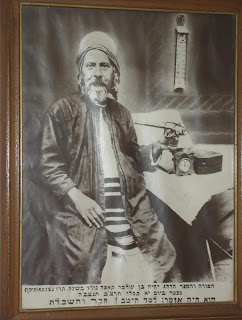
[39] At my request, Rabbi Daniel Eidensohn asked R. Moshe Sternbuch to explain how he can declare that R. Nosson Slifkin’s ideas are heresy, but Slifkin himself is not to be regarded as a heretic. He replied that he holds like the Ra’avad, i.e., that kefirah be-shogeg does not turn a person into a heretic.

[40] Nancy Wolfson-Moche, ed., Toward a Meaningful Bat Mitzvah (Florida: Targum Shlishi, 2002), 30, available online here.

[41] See here (Bologna, 1540), 28, and here (Lisbon, 1490), 10.

[42] “Identity, Ideology and Faith: Some Personal Reflections on the Social, Cultural and Spiritual Value of the Academic Study of Judaism,” in Howerd Kreisel, ed., Study and Knowledge in Jewish Thought (Beer Sheva, 2006), 27.

[43] I also wrote two articles on the topic. See my “Return of a Lost Tribe: The Unfinished Exodus of the Ethiopian Jews,” The World & I 3 (April 1988), available online; and “The Falasha of Ethiopia,” The World & I 2 (December 1987), available online.

Contrary to what it says at the beginning of these articles, I didn’t live with the Ethiopian Jews. Unfortunately, the online versions do not contain the beautiful pictures I took. Here are a few pictures (the men were religious leaders of the village). The book in strange script is the Torah written in Ge’ez. My second trip to Ethiopia was in August 1991, a few months after the overthrow of the Mengistu communist regime. There was still a nighttime curfew in effect during this period and I did not go with a group. While in Addis Ababa I was lucky to become friendly with Asher Naim, the Israeli ambassador. Although this is a story worth telling, for now let me simply recommend his book Saving the Lost Tribe: The Rescue and Redemption of the Ethiopian Jews.
[44] In his famous letter urging that the Ethiopian Jews be rescued, R. Moshe Feinstein also expresses doubts about whether the Radbaz’ information about their origin was accurate. See here.

I can’t find R. Moshe’s letter in Iggerot Moshe (although a different letter, dated one day later, is found in Iggerot Moshe, Yoreh Deah 4, # 41).