Comments on This and That, part 2

Comments on This and That, part 2
by Marc B. Shapiro

Continued from here.

Barth’s opinion was shared by R. Joseph Hertz, who referred to Song of Songs as a “collection of ancient lyrics of the spring-time and youthful love.”[1] Some might regard this as a radical, even un-Orthodox opinion, but from Avot de-Rabbi Natan 1:4, we see that the early Jewish leaders did not regard the Song of Songs (and Ecclesiastes and Proverbs) as anything special.


Originally, it is said, Proverbs, Song of Songs, and Ecclesiastes were suppressed, for since they were held to be mere parables and not part of the Holy Writings [the religious authorities] arose and suppressed them. [And so they remained] until the men of Hezekiah came and interpreted them.

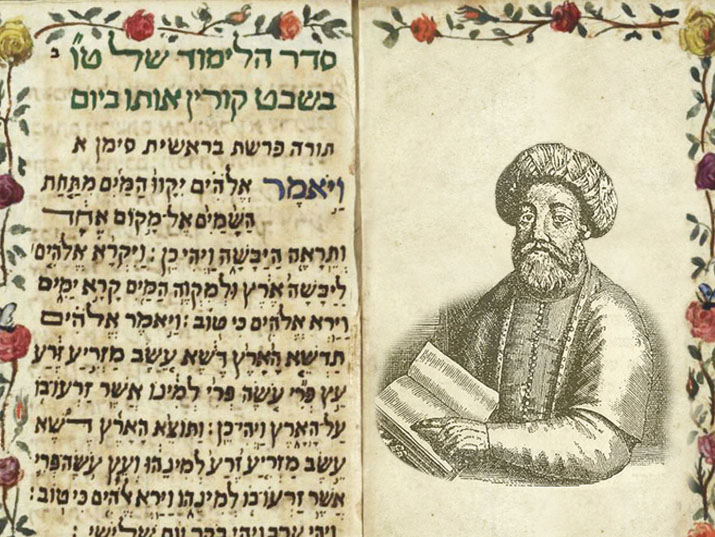
I already quoted a couple of times from R. Moses Isaac Ashkenazi’s Ho’il Moshe, so let me mention that in the introduction to his commentary on Song of Songs, he assumes that the book was indeed sung as part of the wedding celebrations, and as with Barth, he thinks that this was the original purpose of Song of Songs. He also suggests that perhaps שיר השירים אשר לשלמה  does not mean that Solomon wrote it, but that it was written for Solomon. He compares this to Psalm 72:1 which begins לשלמה and means “[A Psalm] for Solomon.” Interestingly, he also thinks that the Shulamite (7:1) is none other than Abishag the Shunamite.[2] Here is the title page of his book.


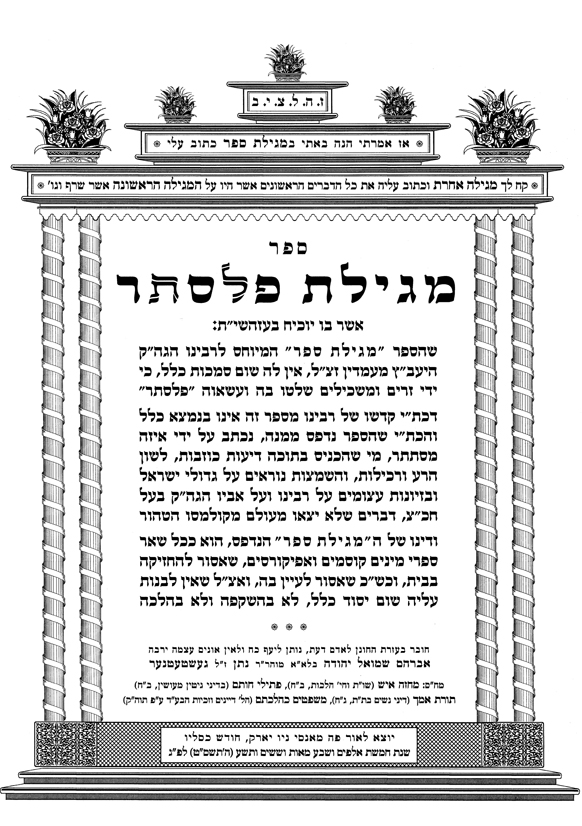
While Artscroll sees a literal interpretation of Song of Songs as blasphemous, Ashkenazi (together with Breuer and Barth) sees the book as teaching the values that make for a successful marriage. This viewpoint is also expressed in the introduction to the Soncino translation:

The main moral of the Book is that love, besides being the strongest emotion in the human heart, can also be the holiest. God has given the gift of love to sweeten the toil of the laborer, as in the case of Jacob to whom the fourteen years in which he toiled for Rachel appeared but a few days, for the love he had for her (Gen. xxix. 20). Love transfigures and hallows, but it’s a boon that requires zealously to be guarded and sheltered from abuse. This Book pictures love as a reward enjoyed only by the pure and simple, a joy not experienced by the pleasure-seeking monarch and the indolent ladies of the court. It is a joy reserved for the loyal and the constant, and is denied to the sensual and dissolute.

Ashkenazi concludes with these strong words:

גם אם נפרשהו ע”ד הפשט, נוכל ללמוד ממנו דברים נאותים. . . . רק אנשי חונף העושים מעשה זמרי ומבקשים שכר כפנחס יטילו בו דופי, בעוד שהם בשבתם על השולחן בבית חתן וכלה יוציאו מפיהם דברי נבלה המלבינים פני כל אדם ישר השמועה; והלואי ואולי היו משוררים שיר נחמד זה בסעודת חתנים. ויופי הקולות והנגינה ישמחו הלבבות ויגדילו חשק חתן וכלה זה לזה, ויגביהו לבות הבחורים והעלמות ברחשי הכבוד הראוים והנאותים להם.

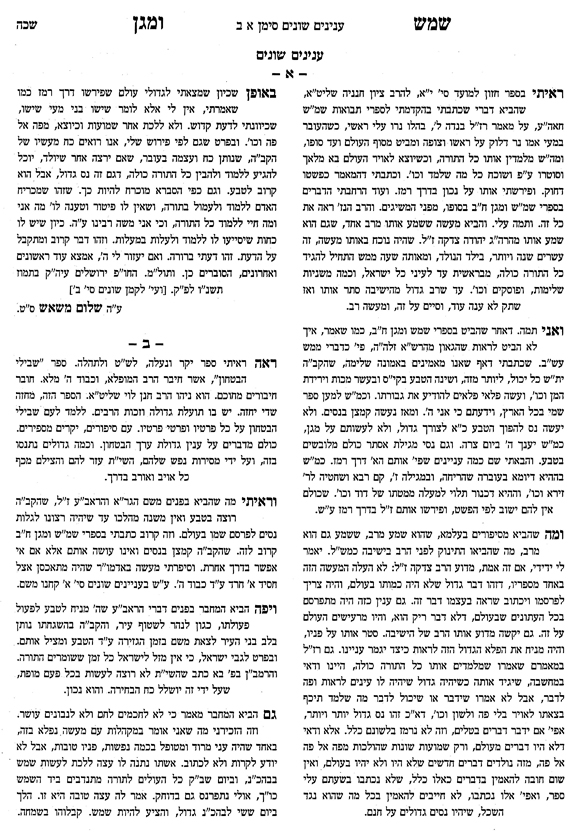
Finally, let me mention Amos Hakham’s introduction to the Daat Mikra edition of Shir ha-Shirim. While he isn’t sure if the entire book can be traced to wedding feasts, he is certain that this is so for at least one section, namely, the song that ends in 5:1:: “Eat, O friends; drink, yea, drink abundantly, O beloved.” How could this not originate in a wedding feast? As for dance songs, Hakham points to 7:1 as an example: “Return, return, O Shulamite; Return, return, that we may look upon thee.” As with those already cited, Hakham argues that the allegory only adds a deeper level to our understanding, but it in no way discounts the peshat of the verses.[3] This is in direct opposition to Artscroll’s position that “The literal meaning of the words is so far from their meaning that it is false” (Artscroll Pesach Machzor, p. 567).

Hakham also calls attention to Va-Yikra Rabbah 9:6, where R. Yohanan understands Song of Songs on the peshat level to be referring to a real married couple. Based on two verses in Song of Songs, R. Yohanan derives “that a bridegroom should not enter the bridal chamber unless the bride gives him permission.”

Hakham states: “It is unimaginable that prophecy would use matters that are distasteful in themselves as an allegory for holy and pure matters.” Here is how he sums up his main point (pp. 8, 9):

כלומר שאמנם לפי המשמעות המילולית הפשוטה מתוארת בשיר השירים אהבה שבין דוד ורעיה שהם שניהם בשר ודם, אלא שבהיות אהבה זו תמה, זכה, טהורה וקדושה, ראויה היתה שתשמש סמל ודוגמה לאהבה נעלה יותר. . . . טעות ביד מי שחושב, שחז”ל דרשו את שיר השירים על דרך הרמז משום שבפירושו כפשוטו היה נראה בעיניהם כשיר העוסק בענינים שאינם ראויים להכלל בכתבי הקודש. לא כן הדבר. כבר העירו גדולי המפרשים שאין להעלות על הדעת, שהנבואה תקח עניינים מאוסים כשלעצמם כמשל לענינים קדושים וטהורים, אלא ודאי שכמו הנמשל כן גם המשל קודש הוא. ואם מצאנו שהנבואה ממשילה את הברית שבין כנסת ישראל ובין הקב”ה כברית שבין איש ואשתו, משמע שהברית הזאת שבין איש ואישה קדושה היא ונעלה. וכבר אמרו חז”ל: איש ואשה, זכו – שכינה ביניהן.

I would assume that if a Modern Orthodox Machzor for Passover is ever published, that Hakham’s perspective will be the one to be included rather than what we find in Artscroll.

R. Zvi Yehuda has the same perspective, writing that the literal meaning has an independent existence, and “it too is raised to the level of holiness, not just on account of the nimshal, but on its own strength.”[4] He quotes Rashi who in his introduction to Song of Songs stresses that the allegory must be attached to the peshat of the verse:

ואף על פי שדברו הנביאים דבריהם בדוגמא, צריך ליישב הדוגמא על אופניה ועל סדרה.

Yehuda brings a wonderful example of this. Song of Songs 4:1 reads: “Behold, you are fair, my beloved; behold, you are fair; your eyes are [like] doves; from within your kerchief your hair is like a flock of goats that streamed down from Mount Gilead.” Rashi explains the second part of the verse as follows: “This praise is a paradigm of the praise of a woman beloved by her bridegroom. Within your kerchief, your hair is beautiful and glistens with brilliance and whiteness like the hair of white goats descending from the mountains whose hair gleam in the distance.” The biblical text does not give any color to the goats, and Yehuda notes that the standard approach is that the goats are black, so that the hair being praised is also black. Yet Rashi speaks of light hair as being beautiful, and therefore he understands the color of the goats differently. Based on this, Yehuda concludes that “Visions of female beauty, in his [Rashi’s] time and place, influenced his commentary.”

The fact that the mashal needs to reflect reality is seen in another Rashi as well (not cited by Yehuda). Song of Songs 7:5 reads אפך כמגדל הלבנון. Rashi writes: “I cannot explain this [אפך] to mean a nose, either in reference to its simple meaning or in reference to its allegorical meaning, for what praise of beauty is there in a nose that is large and erect as a tower? I say therefore that אפך means a face.”
If the allegory is all that is important, then Rashi would not have a problem. He could translate אפך as nose, which is the literal translation,[5] and offer the allegorical explanation. Yet precisely because it is important that the peshat be coherent, Rashi is forced away from the literal meaning, for what man can praise his bride as being beautiful for having such a nose?[6]

One other interesting point that I learnt from Yehuda’s article is that the rishon, R. Avigdor Kohen Tzedek, gives the following strange explanation for why God’s name doesn’t appear in Song of Songs.[7]

ולא נכתב שם קודש בשיר השירים לפי שנאמר כל הספר בלשון חשק ואהבה ואינ’ דרך כבוד להזכיר השם ב”ה על דבר חשק.

Yehuda also cites the sharp comment of R. Solomon Akriti in R. Joseph Kafih, ed., Hamesh Megilot (Jerusalem, 1962), p. 19:

ואחרי אלה ההערות אינני רואה שיסופק שום משכיל בדברי הספר לחשב בם שהם כפשוטם, ואלו היו כפשוטם לא היו חולי חולין בעולם כמותם, ולא היה נזק גדול לישראל כיום שניתן להם שיר השירים, כי פשוטו יעורר תאוה וביותר תאות המשגל אשר היא המגונה מכלם

Yet after quoting these passages, which Artscroll would be very happy with, Yehuda takes his place with the others I have referred to and insists on the validity, and holiness, of the peshat interpretation (p. 478):

שיר השירים, על כל בחינותיה ורבדי מובניה – ואף לפי פשוטה – היא “קודש קודשים”. האהבה האנושית המתוארת בה – מתרוממת לגובהי קדושה.

He concludes (p. 481) that it is a mistake to think that the Sages explained Song of Songs allegorically because they had a problem with its literal meaning. According to Yehuda, the opposite is the case, and it is precisely because the Sages valued the literal meaning of the book that they explained it allegorically. It is because they saw the human love described in the book as so exalted that they were prepared to also view the book as an allegory for heavenly love.

With reference to Song of Songs, there is another reason why it is important to know the peshat. Maimonides’ Hilkhot Teshuvah 10:3, speaks about the love of God. He compares it to the love of a woman. Just as one who is in love constantly thinks about the woman, so too should be your love for God. He concludes that “The whole book, Song of Songs, is an allegory on this subject.” In other words, only one who understands what human love is all about can move to the next level and achieve love of the Divine. This is elaborated upon by R. Mordechai Gifter in his Hebrew preface to the Artscroll Shir ha-Shirim. One can only wonder why Artscroll did not see fit to translate R. Gifter’s important words into English. R. Gifter even mentions the importance, indeed centrality, of sexual desire. He does so not to speak of its great danger, as is often the case, but to stress how vital the sexual urge is even from a spiritual sense:

וכל זה מבו’ בדבריו של ר’ יצחק דמן עכו ז”ל שהביא בראשית חכמה – בסוף פ”ד משער האהבה – שמי שלא חשק לאשה הוא דומה לחמור ופחות ממנו והטעם כי מהמורגש צריך שיבחין העבודה האלקית.

He also writes:

שכל הלשונות שבמשל הן עצמיים ובשרשם העליון ענינם נשגב למאד, אלא שהענינים הרמים אלה משתלשלים ויורדים מעולם לעולם עד שמגיעים אלינו מצטיירים לנו צורה זו הנאותה לפי מציאות האדם בעולם הזה.

With regard to Artscroll, everyone knows that the “translation” they provide of Song of Songs is allegorical. In the Passover Machzor that is all you get, but in their separate edition of Song of Songs they do provide the literal translation in the commentary, for those who wish to look at it. Artscroll’s approach vis-à-vis the Song of Songs has been the subject of harsh criticism in the Modern Orthodox world, especially from its intellectual elite. In fact, I think when people criticize Artscroll, this is one of the things that is high on the list of what annoys them.

Yet it must also be noted that Artscroll’s method of translation is exactly what the Targum does.(See also R. Nahum Finkelstein’s Yiddish “translation” of Song of Songs [Jerusalem, 1929]) So it is not like Artscroll invented this approach. In addition, there is a responsum of R. Joseph Hayyim in Rav Pealim, vol. 1, Yoreh Deah no. 56, that is relevant. Here he states that a teacher in Baghdad translated the Song of Songs into Arabic, and the children copied this translation. R. Joseph Hayyim opposed this, stating that one should not teach the children and the masses the literal meaning of the words because they are not meant to be understood literally. The literal meaning of the book, he states, is no different than a love song (he adds “has ve-shalom”),[8] and unlike the opinions we have already noted, for R. Joseph Hayyim (as with Artscroll) the literal meaning of the Song of Songs is obscene.[9] The same viewpoint is expressed by the nineteenth-century R. Elijah Schick in his Ein Eliyahu, Yadayim 3:1:

כל הכתובים יש פשטות ג”כ אבל בשיר השירים אין שום פשטות אלא הכל קאי על יראת שמים וקבלת עול מלכות שמים, כי על פי פשט היא דברי חשק וזה אי אפשר לומר וקאי הכל על דביקות בה’.

Today we have an interesting phenomenon. When the Targum was written the vernacular was Aramaic, so the typical Jew would not be able to understand Song of Songs in the original. Only the scholar could understand the actual words, and he would know that they were to be interpreted allegorically. Today, in America, the situation is the same, as the typical Jew also cannot understand the Hebrew. Artscroll’s English “translation” therefore serves the same function as the Targum did centuries ago.

Yet what about Israelis? We now have a situation where “the masses” can understand the Hebrew Bible since Hebrew is their vernacular. This is a completely new phenomenon. How are these masses to be protected from reading the text literally, for as we have seen, Artscroll tells us in the Pesach Machzor that “the literal meaning of the words is so far from their meaning that it is false”? In the Introduction to the Artscroll Shir ha-Shirim, p. lxiv, we are told that when the words שני שדיך, “your bosom” [Artscroll won’t use the word “breasts”] refer to Moses and Aaron, this is not

departing from the simple literal meaning of the phrase in the least. Song of Songs uses words in their ultimate connotations. Just as geshem, rain, means the power of stimulating growth, shodayim, the bosom, refers to the Heavenly power of nourishment. . . . They [Moses and Aaron], Israel’s sources of spiritual nourishment, are not implied allegorically or derived esoterically from the verse; the verse literally means them.

In other words, Shir ha-Shirim (in this instance, at least) is not even speaking about a woman, not even on the level of peshat. I have to admit that all this seems like a lot of double-talk to me. I can understand if you tell me that “breasts”, excuse me, “bosom”, allegorically means “Moses and Aaron.” But when you tell me that even the literal meaning of shodayim is “Moses and Aaron”, that’s when I have difficulty.

(Speaking of haredi circumlocutions, since the Agudah convention is in a few days I can’t resist mention of the following. A letter was sent out to attendees inviting them to a breakfast at which they will be addressed by a psychologist and and rabbi-lawyer. You can see the letter here. Notice that the letter speaks about how “the issue of child abuse has become a major topic in our society and children in our community have been and continue to be at risk.” Of course, child abuse is not the issue at all. We are not being confronted on an almost weekly basis with stories of children in our communities being beaten or anything like that. What we have is child sexual abuse, and yet the author of this letter can’t even bring himself to say the word “sexual.” It’s like we are all in grade school and this word is off-limits.)

One opinion in Shir ha-Shirim Rabbah 1:10 states that Solomon wrote Song of Songs in his youth. This is elaborated upon by R. Hayyim Jeremiah Flensburg, Markevot Ami (Vilna, 1910), p. 6. He explains how Solomon’s words are indeed drawn from the real world he experienced, which once again shows how important the peshat, the literal meaning of the words are:

שאף שהנמשל של שיר השירים הוא קודש קדשים, עכ”ז מתוך המשל שעשה לעטוף בו הנמשל, ניכר שהיה אז ילד, שהוא נשא משלו מחתן וכלה, ומגנים ושושנים יפים, ומכל הדרת האביב, וזמרת צפרים.

R. Yosef Ben Arzah, in his popular Yosef Da’at, Bava Kamma 97, also explains in this fashion.

וידוע, האהבה זמנה בימי הנעורים, משא”כ בימי הזקנה “ותפר האביונה”. וכמו שאמרו ששלמה המלך עליו השלום, בילדותו אמר שיר השירים, שהוא תוקף האהבה.

When Ben Arzah writes that the time of love is the youth, he is clearly referring to sexual love, for he follows this by noting that this is not the case in old age when (quoting Eccl.12:5) “[sexual] desire fails.” In other words, the Midrash means that because Solomon wrote the Song of Songs in his youth, that is why it has sexual imagery, for sexual love is strongest when one is young.[10]

I don’t think anyone is going to suggest that Artscroll produce a Hebrew version of its allegorical translation and that this is what the masses should be looking at during the reading of Song of Songs. But why not? If it is religiously objectionable for English speakers to be exposed to the literal meaning of the words of Song of Songs, then it is just as objectionable (if not more so) for Hebrew speakers to read the actual words and understand them literally.

Despite my facetious comment, no one has ever assumed that the Israeli masses should be told not to look at the actual text of Song of Songs. Rather, they are provided with commentaries that explained what the allegorical meaning of the text is. If it is therefore acceptable for Israelis to first understand the text literally, and then see what the allegorical meaning is, I ask Artscroll, why can’t American Jews be given the same prerogative, namely, to have a literal translation together with a commentary that offers the allegorical interpretation?

Finally, let me mention that for Sefer Hasidim it was important to know what the Song of Songs literally meant, for he declares that all the parts of a woman’s body mentioned in the book are forbidden to be seen. See no. 110: שער באשה ערוה לגלות וכל האמור בשיר השירים כגון בטנך ערימת חטים שוקיו עמודי שש שני שדיך וכו’ וכל שדרך לכסות ערוה לאשה לגלות He repeats this in no. 614 where he also adds the following, which never became normative halakhah: צריך להזהר שלא ישמע קול אשה והוא הדין לאשה שלא תשמע קול איש.

Adopting this position might be a good strategy for those who have been trying unsuccessfully to shut down the Jewish concert scene. They haven’t been able to convince the haredi masses that these are in any way problematic, especially when men and women sit separately. But perhaps the new humra that could achieve their objective is that it is forbidden for women to hear men singing. A few years of indoctrination of this view in the various Bais Yaakovs should be able to convince the younger generation, and would mean the end of the haredi concerts.[11]

* * *

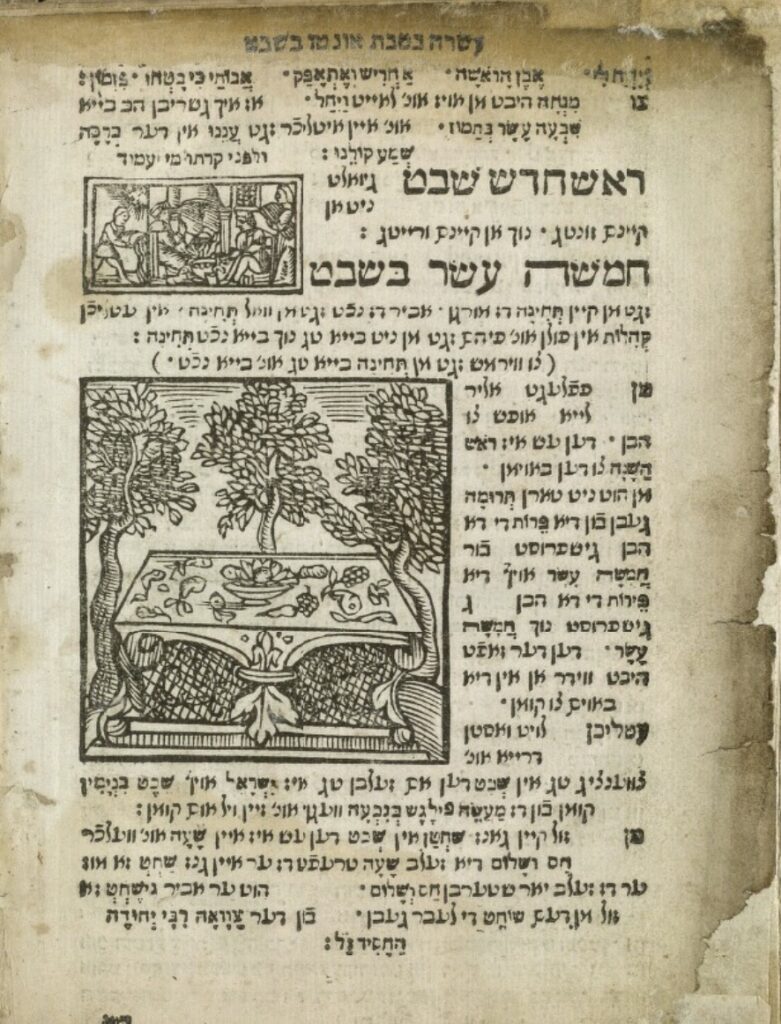
Returning to my post on Adon Olam, the other point dealt with in that post was the meaning of the abbreviation ס”ט. I don’t think anyone who read the post still thinks that it means “Sephardi Tahor.” But in case there are still any doubters, let me offer the following. Here is a page from R. Joseph Shabbetai Farhi’s Tokfo shel Yosef (Livorno, 1846), p. 38b. It contains the end of a letter from none other than Jacob the Patriarch, and you can see clear as day that he also signed himself ס”ט. Now if that isn’t a proof, I don’t know what is. . . .


There was, in fact, one person who did refuse to change his mind, even after I presented him with the evidence. I refer to the late R. Meir Amsel, editor of Ha-Maor. Amsel is deserving of his own post, having edited Ha-Maor for over fifty years. If I were to ever write a history of Orthodox Jews in America, this journal would be an important source, together with its competitor, Ha-Pardes, because in these journals one finds most of the important issues that were part of the American Orthodox experience. Ha-Maor was the more extreme of the two journals, and all sorts of polemics were carried in its pages. But it would also contain all sorts of surprises, and Amsel’s viewpoints were not always predictable. Yet as I mentioned, he didn’t accept what I told him, and changing his mind even in the face of evidence to the contrary was not something he was prepared to do.

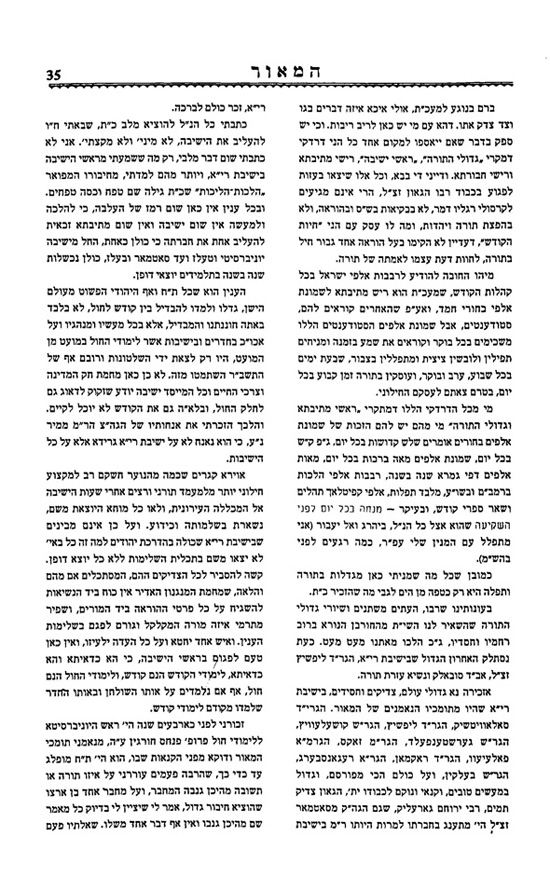
Imagine my surprise when after sending Amsel a letter on the topic he published his response in his journal (Jan.-Feb., 1993). Here it is.

I sent him a second letter which he published, together with his response, in the March-April 1993 issue. Notice how he subtly mocks me at the beginning of this reply.


I didn’t take offense at the mocking as this was classic Amsel. Few had such a sharp pen as he, and woe to those he turned it against. To give one example of his many polemics, readers of the journal will never forget how he targeted R. Elya Svei. Yet he wouldn’t mention him by name. Instead, and as a way to show how little he thought of Svei, he referred to him as “the melamed in Philadelphia.”[12]

The March-April 1993 issue of Ha-Maor, in which he responded to me, is of broader interest for another reason. It contains his hesped for R. Joseph B. Soloveitchik, who had recently passed away. In this hesped he mentions a few things, among them that the Rav told him that he wasn’t really a Zionist, and that while Yeshivat R. Yitzhak Elhanan was not in accord with his family’s philosophy, nevertheless he taught there as it provided intellectual freedom.

In the next issue (June-July, 1993), Amsel printed a letter he received from R. Norman Lamm, thanking Amsel for what he wrote about the Rav, and also criticizing him for mentioning the point about the Rav not feeling connected to RIETS. Note how Lamm specifically asked Amsel not to publish his letter, and Amsel published it anyway.

Also, look at the first paragraph on p. 35, as it shows how the Hungarian extremist Amsel was happy to point out how Lamm was head and shoulders above those in the Lithuanian yeshiva world. (I wonder, where did Amsel get the crazy figure of eight thousand students, that he mentions in the second paragraph? Even if you include the post-graduate schools you won’t get to that number. Did Amsel even realize that non-Jews attend Yeshiva University’s medical and law schools?)


* * *

In my original post on Adon Olam I dealt with Artscroll, so here is as good a time as any for some assorted Artscroll comments.

The custom on Rosh ha-Shanah is to sound additional shofar blasts towards the end of the morning prayers. Most sound these blasts after Musaf of Rosh ha-Shanah, while some sound thirty of them during the silent Amidah. There is no talmudic source for this practice. Why then do we do it? Here is how the Artscroll Machzor explains the matter, citing Eliyahu Kitov’s Sefer ha-Toda’ah as the source:

The source of this custom is the Scriptural narrative of the triumph of Deborah the Prophetess over Sisera, the Canaanite conqueror. In her song of gratitude for the victory, Deborah noted that Sisera’s mother whimpered as she worried over the fate of her dead son. Her friends comforted her that he had surely won a great victory and was apportioning spoils and captive women among his officers and troops (Judges 5:28-30). According to the Midrashic tradition she whimpered and groaned 101 times. Although one cannot help but feel sympathy for a worrying, grieving mother, one must be appalled at the cruelty of a mother who could be calmed by the assurance that her son was busy looting and persecuting innocent victims. The Jewish concept of mercy is diametrically opposed to such barbarism. By sounding the shofar one hundred times, we seek to nullify the forces of cruelty exemplified by Sisera and his mother, and bring God’s compassion upon us. Although she whimpered one time more than a hundred, we do not sound the shofar 101 times, because we, too, feel the pain of a mother who loses a child, even one as loathsome as Sisera.

The first thing to note is that for some reason, the explanation offered by the Taz is ignored. According to the Taz, the reason for the extra blasts is because people might not have properly heard the earlier kolot (Orah Hayyim 596:1). Furthermore, despite what is written, there is no source that speaks of Sisera’s mother whimpering 101 times. What we have is a story in the Arukh s.v. ערב , about Sisera’s mother (אימיה דסיסרא) and her one hundred cries or laments (פועיות This does not mean whimpers! The Arukh cites the story as coming from the Jerusalem Talmud. It is lacking in our versions of the Talmud, but the term “Yerushalmi” was also used for various Midrashim written in the Land of Israel.)

Ashkenazim, therefore, indeed sound the shofar the same amount of times as Sisera’s mother’s cries. Yemenites and Sephardim, on the other hand, blow an extra kol at the end, called Teruah Gedolah,[13] so they actually sound 101 blasts. Many explain that they do this precisely in order to be different than Sisera’s mother.

Here for example is what R. Ovadiah Yosef states, Shiurei Maran ha-Rishon le-Tziyon (Jerusalem, 2008), vol. 1, p. 75:

והנה אם סיסרא פעתה ובכתה מאה בכיות, ואנו תוקעים מאה תקיעות ועוד אחד, כדי לבטל הקטרוגים הנמשכים מהבכיות שלה . . . וזהו “הן אתם מאין ופעלם מאפע.” “מאין” = 101 הן ה100 פעיות של אם סיסרא שבמאה ואחת תקיעות שלנו ה’ מכפר לנו, ומתקנים אנו את הפעיות [“אפע” נוט’ פעיות אם] של אם סיסרא.

The Arukh’s explanation is quoted in a number of medieval sources, Yet what is the logic here? Why would anyone have thought of connecting Sisera’s mother’s cries with how many shofar blasts we sound, as they have nothing to do with each other? Is it really possible that how we blow the shofar has anything to do with what the mother of the wicked Sisera did?

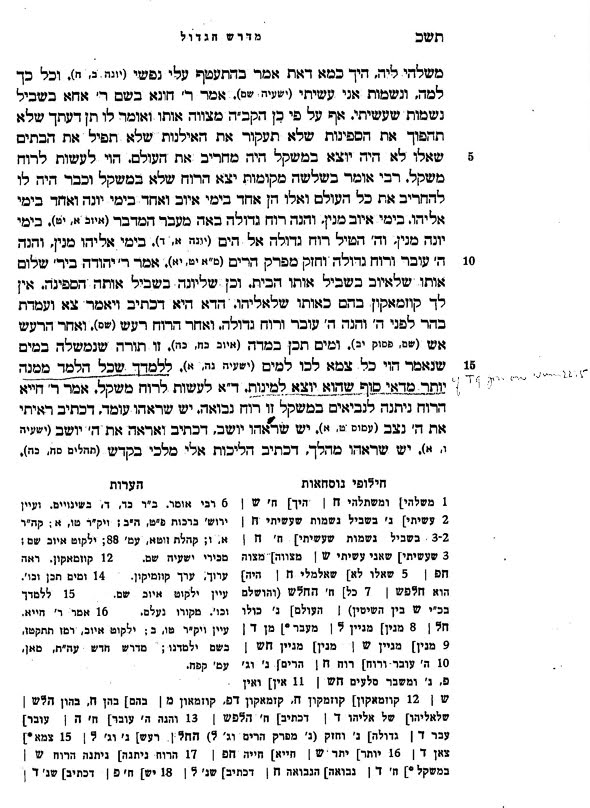
It has been suggested by R. Hayyim Yehudah Ehrenreich[14] and R. Menachem M. Kasher[15] that there is a copyist’s error in the Arukh, and instead of reading it should read אמנו שרה , or something along these lines. This suggestion is made based upon the following passage in Pirkei de-Rabbi Eliezer ch. 32:

When Abraham returned from Mount Moriah in peace, the anger of Samael [Satan] was kindled, for he saw that the desire of his heart to frustrate the offering of our father Abraham had not been realized. What did he do? He went and said to Sarah: “Hast thou not heard what has happened in this world?” She said to him: “No.” He said to her: “Thy husband, Abraham has taken thy son Isaac and slain him and offered him up as a burnt offering upon the altar.” She began to weep and to cry aloud three times corresponding to the three Tekiot, three howlings corresponding to the Teruot. and her soul fled, and she died.

In this text we have a connection made between the cries of Sarah and the blowing of the shofar. Here it states that she cried three times corresponding to the Tekiah and three times corresponding to Teruah. (What we call Shevarim is one possibility for how the Teruah should be sounded.) Alternate versions have Sarah crying aloud six times or ninety times.

We still have the problem: How did the name Sarah become confused with Sisera? It turns out that there is indeed a connection between the mother of Sisera and the shofar. Rosh ha-Shanah 33b states:

The length of the Teruah is equal to the length of three yevavot. But it has been taught that the length of the Teruah is equal to three Shevarim. Abaye said: Here there is really a difference of opinion. It is written, It shall be a day of Teruah unto you [Num. 29:1], and we translate [in Aramaic], a day of yabava, and it is written of the mother of Sisera, Through the window she looked forth [va-teyabav; Judges 5:28]. One authority thought that this means drawing a long sigh, and the other that it means uttering short piercing cries.

We see from here that the Sages, in attempting to figure out how the Teruah should be sounded, looked for evidence in a biblical passage dealing with Sisera’s mother. Since she is thus connected to the Shofar blowing, it is not hard to see how the other passage, which describes how Sarah cried, could have morphed into Sisera’s mother.

The problem with this suggestion, one must acknowledge, is that we have no evidence of a text that has Sarah crying one hundred times. Yet it is certainly possible that this tradition did exist, and is now lost.

Here are some more comments about Artscroll. In the original post I mentioned how in the Artscroll Siddur, p. 870, it mistakenly places R. Elaazar Kalir in the second century. R. Avrohom Lieberman pointed out to me that in the original edition of this Siddur they placed Kalir centuries later. Here is a copy of the page.

The change was obviously made in response to criticism. Yet they should have stuck with the original version, since what appears in the “corrected” edition is mistaken. I assume that Artscroll knows it is mistaken, but leaves it in anyway so as not to antagonize its critics.

Before Lekhah Dodi the Artscroll Siddur writes: “לכה דודי is recited responsively. In most congregations, the chazzan repeats each verse after the congregation. In others the procedure is reversed.” More Artscroll siddurim are sold to Modern Orthodox synagogues than to anywhere else. This is especially the case due to the RCA version of the siddur. So wouldn’t one expect that the instructions would reflect reality? In my entire life I don’t think that I have ever been in a Modern Orthodox synagogue that recites Lekhah Dodi responsively. While in the previous post I wrote how the Artscroll instructions have changed how Modern Orthodox synagogues recite Hallel, as far as I know no synagogue has given up the practice of communal singing for Lekhah Dodi because of this particular instruction. As it stands, this particular instruction is a sign of how little Artscroll respects the customs of the Modern Orthodox world.

Also on Friday night, the Siddur states that each stanza of Shalom Aleikhem is recited three times. Why not mention that there is also a common practice to only recite each stanza one time?

In the Machzor for Sukkot, p. 132, in discussing the different practices when it comes to wearing tefillin on hol ha-moed, it states: “It is not proper for a congregation to follow contradictory customs. Thus, if one whose custom is not to wear tefillin during Chol haMoed prays with a tefillin-wearing minyan, he should don tefillin without a blessing. Conversely, if one whose custom is to wear tefillin prays with a non-tefillin-wearing minyan, he should not wear his tefillin while praying but may don them at home before going to the synagogue.” The source for this ruling is the Mishnah Berurah. Yet with the exception of hasidic synagogues, where I presume everyone does the same thing, this ruling is no longer applicable. In all the synagogues I have ever been in, both Modern Orthodox and non-hasidic haredi, there is no one minhag and everyone does what his family practice is. In other words, the minhag today is for everyone to follow his own personal minhag, and shuls do not have a “custom” in this regard.

Also in the Sukkot Machzor, p. 957 (as well as in the other Machzors), it writes as follows: “It is virtually a universal custom that those whose parents are still living leave the synagogue during Yizkor. This is done to avoid the ‘evil eye,’ i.e., the resentment that might be felt by those without parents toward those whose parents are still living.” Can one conclude from this that Artscroll has a Maimonidean approach to the concept of the “evil eye”?

Quiz

In past posts I have offered a quiz and given out prizes to the ones who answered the questions. People have wondered why I stopped doing this. The answer is simple: I didn’t have anything to give out. But now I have a few items so I can do some more quizzes. For the winner of this one I can give a CD of the music of R. Baruch Myers, rav of Bratislava. Rabbi Myers is a trained classical musician and his music is very different from what you think of when you think hasidic music. Unlike in the past, I will not give the prize to the one who answers the question first. This is unfair as due to the different time zones, some people won’t see the question until it has already been answered. I will give people a couple days and if more than one has answered correctly, I will randomly choose a winner. You will also have to answer two questions, in different genres. Yet even if you only know the answer to one, send it in, for if no one gets both answers, I will give it to a person who got one correct. Send answers to shapirom2 at scranton.edu

Question 1: The word for turkey is תרנגול הדו There is a dagesh in the dalet. Why? Bring a proof for your answer from Berakhot between page 34a and 38a.

Question 2: There is a rabbinic phrase that today is used to praise a Torah scholar, but in talmudic days was used in a negative fashion (at least according to Rashi). What am I referring to?

* * * *

Some people have asked me if I am leading a Jewish history trip to Europe this summer. Actually, I am leading two trips, one to Italy and the other to Central Europe. (The latter is a repeat of the sold-out trip from last summer). Both trips are sponsored by Torah in Motion and details will be available soon.


* * * *

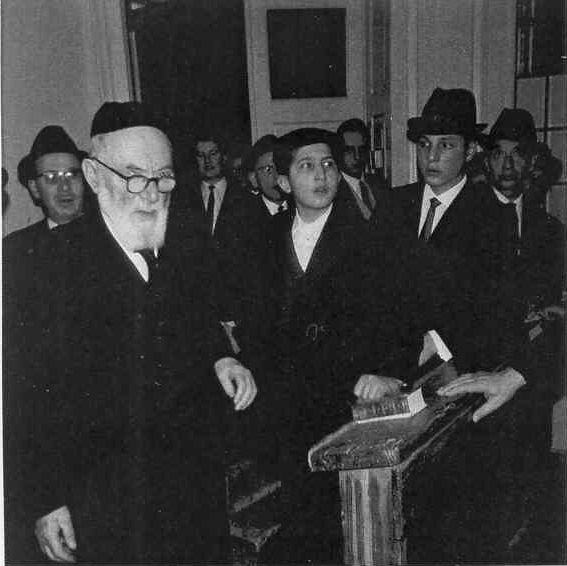
Here is something I think readers will enjoy. It is a picture from Prof. Isadore (Yitzchak) Twersky’s wedding. I thank R. Aharon Rakefet for sharing the picture. According to R. Rakefet, the man second to the left, whose face is obscured by an unknown rabbi, is R. Zev Gold. (R. Rakefet claims that the hair gives it away.) Beginning with Gold, we find Dean Samuel Sar, Isadore Twersky (standing) R. Dovid Lifshitz, R. Eliezer Silver, the Rav, R. Chaim Heller, R. Meshullam Zusia Twersky, Tolner Rebbe of Boston, R. Moshe Zvi Twersky, Tolner Rebbe of Philadelphia.

[1] Authorized Daily Prayer Book, p. 790.

[2] This identification has recently been advocated by Christopher W. Mitchell in his massive work, The Song of Songs (St. Louis, 2003), pp. 130ff.

[3] Medieval commentators, notably Ibn Ezra, put a great deal of effort into explaining the peshat. See also the medieval commentary on Song of Songs written by R. Joseph Ibn Aknin, entitled Hitgalut ha-Sodot ve-Hofa’at ha-Meorot (Jerusalem, 1964). Ibn Aknin provides a three part commentary, with one section focused on peshat, and the other two on derash and sod. From more recent times, see R. Samuel Naftali Hirsch Epstein, Imrei Shefer (Vilna, 1873), and R. Eliyahu Halfon Shir ha-Shirim im Perush Ateret Shlomo (Nof Ayalon, 2003).
[4] “Shir ha-Shirim” Kedushatah shel ha-Megilah u-Farshanutah,” Sinai 100 (1987), p. 475.
[5] Soncino explains: “The comparison is between the well-proportioned nose and the beautiful projecting tower.”
[6] This point was made by R. Isaac Jacob Reines. See R. Judah Leib Maimon, ed., Sefer Rashi (Jerusalem, 1956), vol. 2, pp. 12-13. See also Rashi to Song of Songs 1:2 “Let him kiss me with the kisses of his mouth.” Rashi comments: “In some places they kiss on the back of the hand or on the shoulder, but I desire and wish that he behave toward me as he behaved toward me originally, like a bridegroom with a bride, mouth to mouth.” Artscroll does not mention this Rashi. The Vilna Gaon has an interesting comment on this verse. He notes the plural “kisses,” and explains: כמו שנושק הבעל לחשוקתו א’ על מה שמתחברת עמו והב’ על שאינה מתחברת באחר
[7] Perush Shir ha-Shirim (Jerusalem, 1971), p. 11.
[8] See also Ibn Ezra’s introduction to Song of Songs: וחלילה חלילה להיות שיר השירים בדברי חשק Despite saying this, he still feels it is important to explain the peshat.
[9] See also Rav Pealim, vol. 4, Sod Yesharim no. 11, where R. Joseph Hayyim explains why God’s name does not appear in the Song of Songs.
[10] Since we are speaking of love, I should also mention Elhanan Reiner’s provocative claim, put forward in very stylistic Hebrew, that R. Yair Haim Bachrach’s responsum, Havot Yair, no. 60, is not a real case, but simply a fictional love story that Bacharach inserted into his responsa. See here. For Raphael Binyamin Posen’s response see here, and Reiner responds to Posen here.
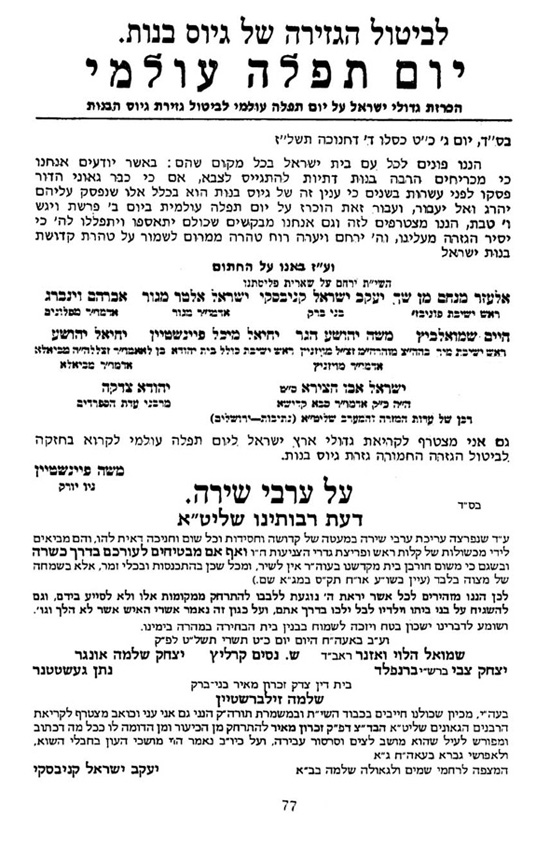
[11] Incidentally, the opposition of haredi gedolim to these concerts is often portrayed as if the only issue is tzeniut, and therefore, when men and women sit separately there should be no problem. This is a complete distortion of the issue, for even without tzeniut concerns, the main reason for the opposition, and I know this will be hard for American haredim to stomach, is that the Israeli haredi gedolim are opposed to all musical entertainment, and “fun” in general, when not connected to simchah shel mitzvah, such as Purim, a wedding, etc. Concerts are doubly problematic since these gedolim believe that is forbidden to listen to live music when not connected to a seudat mitzvah. Here is one proclamation that makes this clear (from Hashkafatenu [Bnei Brak, 1985], p. 77).

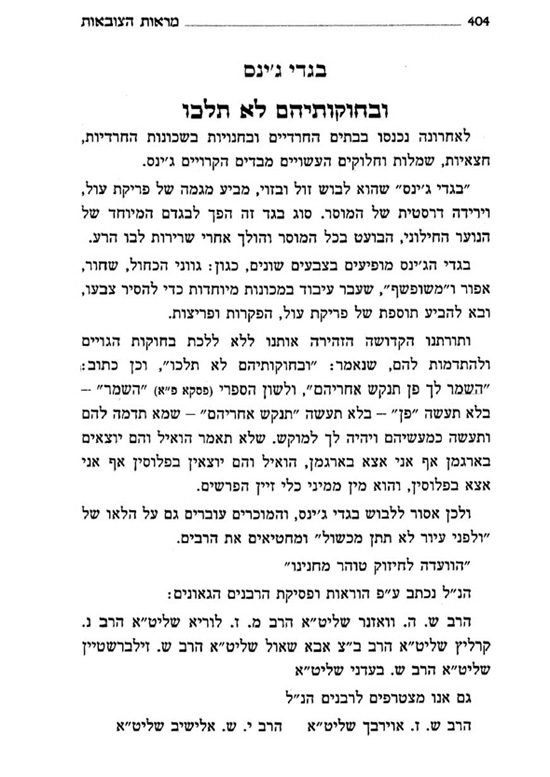
In R. Yaakov Yisrael Lugasi’s Mar’ot ha-Tzovaot (Jerusalem, 2009), p. 401, he states flatly: “The entire concept of entertainment is pasul. This is a condition of moshav leitzim and throwing off the yoke, and is the culture of the non-Jews and the secularists.” Interestingly, a few pages after this, Lugasi prints the herem against wearing jeans skirts. For those who never saw it, here it is.

[12] It is no secret that R. Svei was a polarizing figure in Orthodoxy, even in haredi circles. This is also seen in the book on R. Ahron Soloveitchik written by his son, R. Yosef. It was uploaded to the internet a few weeks ago and until recently was found here. Since many people downloaded the book when it was up, I think it is worthwhile to make some comments about it. I understand that it is a preliminary version of what will be published in book form. I hope the author takes the necessary time to revise it properly, because as it stands, it is an unfortunate publication. On the positive side, it includes a great deal of Torah from R. Ahron, and shows his strong insistence on honesty when it comes to dealing with non-Jews and the government. There are also wonderful tidbits of historical interest. See p. 5 that R. Baruch Ber Leibowitz used to stand up for R. Ahron when he was a child, since he was, after all, the grandson of the Rebbe (R. Hayyim).

See also p. 404 for the following incredible statement: “Rav Ahron told his son that it is not right to print his brother’s דרשה of יוסף ואחיו about the Mizrachi because his brother regretted saying this דרשה ” This is perhaps the most important derashah the Rav ever delivered and is a basic text of study for religious Zionists. It explains how the Rav could break from his family tradition and become a Zionist. It is also the derashah that R. Shakh attacked, saying that it contained דברים שאסור לשומען וכש”כ להפיצן ברבים (Mikhtavim u-Ma’amarim, vol. 4, no. 320). What are we to make of R. Ahron stating that the Rav regretted this derashah?

Among other passages that caught my eye, see e.g., p. 6, where R. Ahron tells a bubba maisah about a rabbi in Auschwitz who killed some twenty Nazis with a chair. On p. 327 R. Ahron claims that Bible Criticism “paved the road for the Nazi ideology.” On this page he also states that Catholics do not support Bible Criticism. This is incorrect. The Catholic Church accepts Bible Criticism and does not see this as harming the holiness of the Bible. In fact, there are only two religious groups that do not accept the academic approach to the Bible, namely, Christian fundamentalists and (most) Orthodox Jews. (In a future post I will explain why I use the word “most”.

Why do I say that this is an unfortunate publication? Because there is a way to write and a way not to write, and someone who is very upset about how his father was treated is not the best person to review important incidents in his life. I can’t see how anyone could believe that the book brings honor to R. Ahron. I am impressed, however, that despite the harshly polemical tone, the author included documents directed against R. Ahron, as this helps with the historical record.

I have to say that after reading the publication, I think I have a better understanding of why R. Ahron had so many difficulties. In order to be a successful leader, one must, at times, be willing to compromise. One must also recognize when the time for battle is over. R. Ahron was so guided by the truth as he saw it, that he appears to have been unable to do this. For him, it was worth fighting a battle to make a point, even if there was no chance of emerging victorious and it would cost lots of money to do so. (I refer to his attempt to cancel the sale of the Chicago Mizrachi building to Buddhists.)

When publishing the letter of the other faculty members of Hebrew Theological College stating that they do not want R. Ahron in a leadership position, the author would have been wise to explain the different perspectives of the protaganists, rather than heaping abuse on them. The same is true when it comes to how he describes the haredim. There is no question that many of his complaints are justified. This is especially the case when he deals with the support given by the haredi gedolim to Elior Chen, which makes everything else pale in comparison. Yet despite this, the language Soloveichik uses in is really over the top.

I also can’t imagine that the family of the Rav will be happy to see how he too makes appearances in the book. Is it really appropriate to quote the Rav’s harsh comment against a certain Agudah leader? And I have a more fundamental question with regard to this last example. When two people agree to take their dispute to a beit din, not a government beit din but a private beit din, don’t they have an expectation of confidentiality? This is especially the case when one of the disputants is still alive. What gives the author the right to reveal the content of a private dispute brought before a private beit din, even if one of the participants did act in a disgraceful manner?

Apropos of R. Ahron, let me mention two things he told me so as to preserve them for posterity.

1. He stated that because of what R. Moshe Stern wrote about the Rav, one should not quote Stern in halakhic discourse. In truth, as I later learnt, it is not so clear that Stern’s harsh comments (pigul, metuav) are about the Rav. It is possible that he is referring to teaching and study at Yeshiva University. (See David Berger in Tradition 27 [Winter 1993], p. 94.) I will let readers judge for themselves. The text appears in Be’er Moshe, vol. 8, no. 3.

2. R. Ahron told me, halakhah le-ma’aseh, that if you have food in the oven when Shabbat starts, that this food can be returned to the oven on Shabbat morning in order to heat it up. I have heard that the Rav gave the same pesak to NCSY, but I have not confirmed this.

[13] See Shulhan Arukh, Orah Hayyim 596:1; Sefer Zikaron Divrei Shelom Hakhamim (Jerusalem, 2003), p. 264.
[14] Otzar ha-Hayyim, Tevet 5695, pp. 87-88.
[15] Ner Maaravi 2 (1925), pp. 227-228; Divrei Menahem, vol. 4, no. 13.


Marc B. Shapiro – Responses to Comments and Elaborations on Previous Posts

Marc B. Shapiro holds the Weinberg Chair in Judaic Studies, Department of Theology and Religious Studies, University of Scranton. He is a frequent contributor to the Seforim blog and his most recent posts are “Forgery and the Halakhic Process” and “Forgery and the Halakhic Process, part 2.”

The post below was written as part of “Forgery and the Halakhic Process, part 2,” which the baale ha-blog have split up for the convenience of the readers of the Seforim blog. As such, the footnotes continue from the conclusion of the previous post.

Responses to Comments and Elaborations on Previous Posts

by Marc B. Shapiro

1. Some were not completely happy with an example I gave of an error in the Chavel edition of Ramban in a previous post at the Seforim blog. So let me offer another, also from one of Ramban’s talmudic works (since that was the genre I used last time). In Kitvei Ramban, 1:413, Chavel prints the introduction to Milhamot ha-Shem. The Ramban writes:

וקנאתי לרבנו הגדול רבי יצחק אלפאסי זכרונו לברכה קנאה גדולה, מפני שראיתי לחולקים על דבריו שלא השאירו לו כפי רב מחלוקותיהם ענין נכון בכל מה שדבר, ולא דבר הגון בכל מה שפרש, ולא פסק ראוי בכל מה שפסק, לא נשאר עם דבריהם בהלכות זולתי הדברים הפשוטים למתחיל פרק אין עומדין

In his note, Chavel explains the last words as follows:

רק בסוף הפרק הזה נמצאה השגה אחת מבעל המאור

Yet what Ramban means by למתחיל פרק אין עומדין are the children who begin their talmudic study with Tractate Berakhot. In other words, it is only the explanations and pesakim of the Rif that are obvious even to the beginner that have not been challenged.[21]

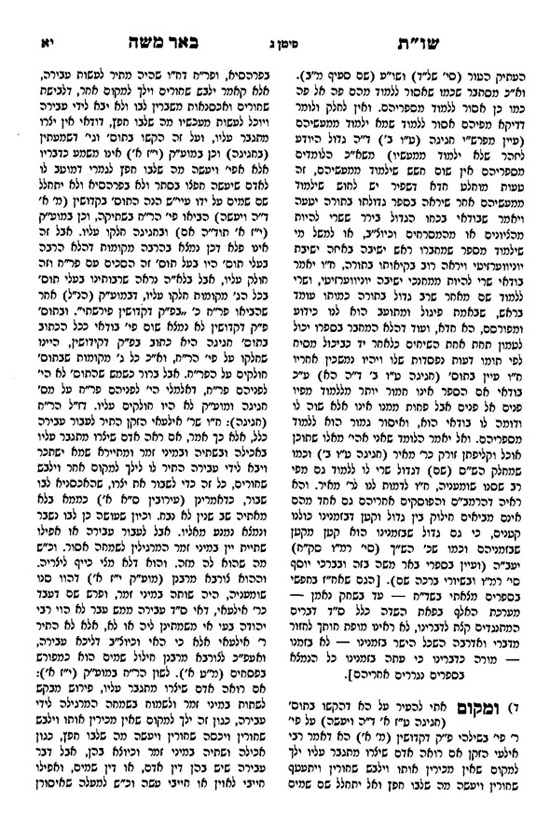
Regarding the example I gave in my last post at the Seforim blog, I forwarded to R. Mazuz one of the questions I received, which dealt with the form of the verb אסף found in the Ramban:

וחכמי הצרפתים אספו רובן אל עמן

He answered as follows:

אפשר לפרש אָסְפוּ מלשון ויאסוף רגליו אל המטה, ולשון קצרה הוא. ואפשר לומר אָסְפוּ כמו נאספו. ודומה לו (תהלים קה, כה) “הפך לבם לשנוא עמו”, שהכוונה נהפך. אבל עדיף להגיה אֻסְפוּ מבנין פֻעַל אם כי לא מצינו דוגמא לזה במשמעות זו

I must note, however, that while R. Mazuz’ understanding of Ps. 105:25 is in line with the Targum, this is not how the standard Jewish translations understand the verse.

(Shortly before writing this, I read about the outrage taking place in Emanuel, where in the local Beit Yaakov Sephardi students are being segregated from Ashkenazim to the extent that the two are not even permitted to play together. The Shas party has referred to this as nothing less than Apartheid, which it surely is.[22] What’s next? Mehadrin buses where the Sephardim sit in the back? Of course, when this happens the justification given will once again be that Ashkenazim are on a higher spiritual level and that’s why they can’t sit with Sephardim, not that they are racist, chas ve-shalom.

I mention this because R. Mazuz has made a comment that is relevant in this regard. Speaking to Ashkenazim who like to imagine the tannaim as “white”, he has called attention to Negaim 2:1, where R. Yishmael states that Jews are neither black nor white, but in between. In other words, the tannaim looked like Sephardim.)

2. One of the e-mails to me stated that we Modern Orthodox types love to criticize Artscroll, but how come we never point out errors in the Rav’s works. I can’t speak for anyone else, and it is true that the Rav has now assumed hagiographic standing, meaning that it has become much harder to criticize him or point out supposed errors in his works. However, if I detect what I think is an error I will definitely call attention to it, and I believe the Rav would expect as much, for this is a sign that you are taking his writing seriously. If the Rambam could make careless errors (the focus of a large section of my forthcoming Studies in Maimonides and His Interpreters, available for pre-order on Amazon for only $8) then anyone can err, and it is no disrespect to call attention to these errors. There are actually a number of seforim which have sections in which they call attention to careless errors or things overlooked in the writings of various aharonim.

I understand why students of the Rav and his modern day hasidim might be reluctant to do so, but I never had any real relationship with him and can approach matters as an outsider. My only connection to the Rav was one summer in the Boston kollel (1985, the last year of the kollel. When I lived in Brookline in the 1990’s the Rav was no longer well). I was, however, privileged, together with Rabbi Chaim Jachter, to drive him back and forth to the Twersky’s house, and was thus able to hear some memorable things from him which I will record in a future post at the Seforim blog.

While on the topic of the Rav, let me also state that I used the Rav’s Machzor on Yom Kippur. I found the commentary uplifting and great credit must go to Dr. Arnold Lustiger for the effort he put into the volume. But there is one thing in the Machzor that annoyed me. It relates to what is called Hanhagot ha-Rav. This section includes all of the various practices of the Rav. This is certainly worth knowing and it wouldn’t have bothered me had it simply appeared at the beginning of the Machzor. But that is not the case.

Before I explain the problem, let me start with the following: A number of years ago I asked Prof. Haym Soloveitchik what the practice of his father was in a certain matter. His response was short and crisp. He told me that he never answers questions about his father’s hanhagot, and that to do so would be in total opposition to his father’s outlook.

I assume that today, if it was clear that my concern was of an academic nature, he would be more forthcoming. But back then I was another unknown kid writing to him trying to find some interesting practice of the Rav.

The way I understood Prof. Soloveitchik is that his father, like many gedolim, had practices that diverged from the mainstream. They came to these practices based on their original reading of the sources. Yet these were entirely private practices, reserved at most for other family members and perhaps some very close students. Because they went against the mainstream, they were not for mass consumption. Along these lines, R. Zevin reports, in his article on R. Hayyim Soloveitchik in his Ishim ve-Shitot, that it was such an outlook that explained why R. Hayyim did not want to decide practical halakhah. His original mind would lead him to overturn many accepted halakhot, yet he was not prepared to do so.

Returning to my problem with the Rav’s Machzor, we are told the following in this book: The Rav reversed the order of the final two phrases in the benediction ולירושלים in the Amidah, saying וכסא דוד מהרה לתוכה תכין prior to saying ובנה אותה בקרוב בימינו בנין עולם. This is the way the Sephardic siddurim have it, but certainly the Rav did not expect the entire Ashkenazic world to abandon their long-standing practice because of his practice. Yet when this paragraph (in minhah before Yom Kippur and maariv following Yom Kippur) appears there is a note telling people how the Rav read it. This is certainly encouraging people to abandon the Ashkenazic tradition in favor of the Rav’s reading. From all that I know about the Rav, this is not something he would have wanted.

Another example is that we are told that the Rav omitted the blessing הנותן ליעף כח as it is post-Talmudic. What possible purpose can such information have when provided on the page where this blessing appears, other than to lead people to omit the blessing? Is one to assume that the Rav really wanted people to reject the universal Ashkenazic practice? The Rav never got up at an RCA convention and told people that this is what they should do. Even at the Maimonides minyan and school there is no official minhag to omit this blessing. R. David Shapiro reported to me that almost all those who daven from the amud at the Maimonides synagogue minyan recite the blessing, and everyone does so at the Maimonides school minyan. Yet I wonder how many followers of the Rav are now omitting the blessing after seeing what appears in the Rav’s Machzor.

There are other examples, and as I said above, I don’t believe that this information should be secret. However, when you put it on the relevant pages of the Machzor, where the instructions to the worshipper are designed to be for practical application, you are telling people that if they see themselves as followers of the Rav, then they should follow his practices.

Since my correspondent made the false assumption that I would never point out an error of the Rav, and indeed almost challenged me, let me offer one. In Halakhic Man, page 30, in writing about halakhic man’s relationship with transcendence, the Rav writes:

It is this world which constitutes the stage for the Halakhah, the setting for halakhic man’s life. It is here that the Halakhah can be implemented to a greater or lesser degree. It is here that it can pass from potentiality into actuality. It is here, in this world, that halakhic man acquires eternal life! “Better is one hour of Torah and mitzvot in this world than the whole life of the world to come,” stated the tanna in Avot [4:17], and his declaration is the watchword of the halakhist.

I am not an expert in scholarship on the Rav,[23] so I may have missed it, but I have not seen any articles on Halakhic Man which call attention to the fact that the Rav has misquoted Avot. What the Mishnah says is “Better is one hour of repentance and good deeds in this world than the whole life of the world to come.” Also surprising to me is that the learned translator did not mention the problem with the Rav’s quotation.[24] Is it possible that the Rav’s intellectualism and “halakho-centrism” led him to unknowingly replace בתשובה ומעשים טובים with בתורה ומצוות?

While on the topic of the Rav, which is always of interest to people, let me note another error in the Rav’s writings, although this time the printer is at fault.[25] It has been reprinted a number times and the sentence has also appeared in translation. I realize that it is difficult to say that a text that appeared in the Rav’s own lifetime a few times without correction is a mistake, so I would love to be proven wrong. Yet it does seem that we are confronted with a typo. I would assume that the Rav never knew of the mistake, since people often don’t read their own material after it appears in print. In “U-Vikashtem mi-Sham”[26] the Rav writes:

אבא מרי דיבר תמיד על אודות הרמב”ם. וכך היה עושה: היה פותח את הגמרא; קורא את הסוגיא. אחר כך היה אומר כדברים האלה: זהו פירושם של הר”י ובעלי-התוספות; עכשיו נעיין נא ברמב”ם, ונראה איך פירש הוא. תמיד היה אבא מוצא כי הרמב”ם לא פירש כמותם ונטה מן הדרך הפשוטה

Can there be any doubt that instead of הר”י the text should read רש”י?

R. Aharon Kafih, in his new book Minhat Aharon, 416, calls attention to a similar type of error in Shiurim le-Zekher Abba Mari, 1:14-15, n. 5 (I don’t have this book, so I can’t determine if Kafih is correct). Here the Rav writes:

ועיין ברמב”ן סוף מס’ פסחים (במלחמות) שמתוך דבריו וביאורו בירושלמי . . . עולה שאם לא קרא את ההלל בביהכ”נ חייב לברך על ההלל בהגדה

Kafih writes:

אחר המחילה נראה שיש כאן טעות, ומדובר בר”ן ויובאו דבריו לקמן בגוף החיבור ד”ה וזה שאמרו בירושלמי

3. A few people asked me about R. Mazuz’s reference to the homosexual poem in Judah Al-Harizi’s Tahkemoni (see my previous footnote 15, here). The relevant section, which appears in Gate 50, reads as follows

לאיש עשה שיר מלא זמה וטומאה

לו שר בנו עמרם פני דודי מתאדמים העת שתות שכר
ויפי קוצותיו והוד יופיו לא חק בתורתו ואת זכר

The translation is:

To a man who wrote a poem full of filth and lewdness

Were Amram’s son to see my friend’s face
Blushing when he drinks strong drink
And for the loveliness of his locks and the splendor of his beauty
He would not have inscribed in his Torah
“If a man lie with mankind” (cf. Lev. 20:13).[27]

Following this, Al-Harizi, quotes the poems of nine others, and himself, who condemn the homosexual poet. Some contemporary readers might be shocked to see the language used. It is certainly not anything that those preaching a message of “hate the sin and love the sinner” vis-à-vis the gay community – and this includes R. Chaim Rapoport, the world’s expert on halakhah and homosexuality – would endorse. For example, one of the poems reads:

מוכר קדושת אל בעד טומאה מהר ליד הורג יהי נמכר

He who sells the sanctity of God for defilement
Let him quickly be sold into the hand of the slayer.

Another reads:

שדי שלח מהר עדי מות האיש אשר דתך בחטא מכר

Almighty, deliver speedily into the hand of death
The man who has sold Thy law into sin.

In fact, all of the poems quoted by Al-Harizi call for the gay poet to be struck down, in one way or another.

The gay poet speaks of the face of the young man, and this is actually a popular theme. In particular, the poets focus on the cheeks. There are a number of examples of this in R. Moses Ibn Ezra and Ibn Gabirol, but let give two examples from R. Judah Halevi:

מלחייו עדן בשמי כאשר מעיניו סמי

This means “From his cheeks is my spice garden, as poison comes from his eyes.”[28] Brody notes that the first part is working off Song of Songs 5:13, where the woman says לחיו כערוגת הבושם, “His cheeks are as a bed of spices.” The last section means, to use a modern expression, “his look can kill.” That is, if he gives you non-approving look, it is crushing.

Elsewhere, Halevi writes:[29]

לחי כרצפת אש ברצפת שש

In Norman Roth’s translation: “Cheeks like coals of fire on a pavement of marble,” or as he paraphrases, “ruddy cheeks on pale skin.”[30]

I was asked about the meanings of these poems. I am hardly expert in this area and must leave it to others to determine the exact sense. There has been some dispute about them, although the current scholarly consensus is not something that will make the Orthodox community very happy.[31] I would like to believe that Nehemiah Allony is correct that all of these poems are to be understood as simple imitations of the dominant Arabic style, or as akin to the Song of Songs, where the love poems are to be understood allegorically as symbolizing spiritual matters. R. Shmuel ha-Nagid actually says this explicitly about his poems dealing with man-boy love.[32] (I think we can all agree that writing such verse today will certainly, and deservedly, get a rebbe fired![33])

The issue of homosexuality in the medieval Jewish world even came into the great conflict between R. Saadiah Gaon and David ben Zakkai. This was because the future gaon of Pumbeditha, R. Aaron ben Joseph ha-Kohen Sargado, who was on David ben Zakkai’s side, accused R. Saadiah of having homosexual relations with young men. If that is not bad enough, he adds that this was done with sifrei kodesh in the room and that witnesses can attest to it![34] This is, of course, an abominable accusation, and Harkavy, in his introduction (p. 223), apologizes for having to print what he terms

דברי שמצה ונבול פה שאין הנפש היפה סובלתם

Of course, this is hardly the first example of rabbis, even great ones, hurling outrageous accusations at each other, but it is hard to find anything more disgraceful than this. The only example I can think of that is in this league is found in R. Jacob Emden’s Hit’avkut, 76b-77a, where he publicizes the disgusting accusation that R. Jonathan Eybeschütz fathered a child with his own daughter! If that’s not bad enough, this horrible story is repeated by R. Marvin Antelman in his Bekhor Satan, 37-38. (Antelman and his unusual writings deserve their own post at the Seforim blog.) It was regarding this sort of mudslinging that R. Zvi Yehudah Kook is quoted as follows (Gadol Shimushah [Jerusalem, 1994], 20):

הדגיש בכאב עצום שתחילת המחלוקות החריפות בין גדולים מעבר לאמות מידה מקובלות של מחלוקות, התחילו מבית-מדרשו של רבי יעקב עמדין

Academic scholars such as Scholem have also noted the destructive affect on traditional Jewish society of the battle against Sabbatianism in general, and the Emden-Eybeschütz conflict in particular.

4. Since in my earlier post at the Seforim blog on the Eshkol I mentioned R. Yitzhak Ratsaby, and his negative attitude towards R. Joseph Kafih, I should note that one of Kafih’s students, R. Aharon Kafih (no relation) has recently published his Minhat Aharon.[35] On pages 211 n. 13 and 255 n. 45, there are some very strong attacks on Ratsaby, even accusing him of plagiarism. He also mentions how Ratsaby, when he needs to quote something from R. Yihye Kafih (known among his followers as מו”ר הישיש), will omit the last name so that people won’t know to whom he is referring. As Tamir Ratzon has pointed out, in the 1970’s Ratsaby referred positively to R. Joseph Kafih,[36] yet unfortunately, this is no longer the case. In fact, R. Aharon Kafih reports that Ratsaby tells people that it is forbidden to have any of R. Joseph Kafih’s books, and they must be burnt![37]

This dispute between Ratsaby and Kafih is simply a continuation of the great Yemenite dispute over the legitimacy of Kabbalah. It began with Kafih’s grandfather, R. Yihye, who stood at the head of the anti-Kabbalah forces.[38] Matters reached such extremes that the pro-Kabbalah side was successful in having R. Yihye thrown into jail (much like some mitnagdim conspired to have the same done to R. Shneur Zalman of Lyady). Here is the cover of a rare pamphlet published about 20 years ago. It is directed against both R. Yihye and R. Joseph.5. In my earlier post at the Seforim blog I referred to the anti-Habad book Ve-Al Titosh Torat Imekha. A few people asked me how they can get this book. The author, who wishes to remain anonymous so that he can be spared the personal price paid by anyone who goes up against Habad messianism, told me that when I quote his letter (see below). I should also announce that anyone who is interested in the book should write to him at the following address

הרב יב”א הלוי, ת”ד 57615, ירושלים

This book is interesting because you see that the author is somewhat conflicted. On the one hand, he recognizes how great the Rebbe was and all the positive things Habad has accomplished. On the other hand, he sees what is going on today and reluctantly concludes that the Rebbe himself crossed the line into heretical statements. I asked him why, if he thinks the Rebbe advocated heretical notions, he still shows him great respect? Why doesn’t he treat him as an enemy of traditional Judaism, as he would all others who advanced heresy? He wrote to me as follows.

זו אכן שאלה שכבר נשאלתי עליה מרבים וטובים, והתשובה היא שאם היה מדובר בסתם אדם אז בודאי שאסור להתייחס אליו בכבוד, לעומת זאת הרבי האחרון מחב”ד, שלמרות הבקורת העזה עליו, הוא ג”כ עשה פעולות גדולות והפיץ הרבה תורה בעולם, ולכן צריך לחפש ללמד עליו זכות (הגם שאני בעצמי אינני יודע מה אפשר לומר עליו זכות במה שכתב שהוא “מרגיש” שהקב”ה התלבש בו). ולכן העדפתי לעשות פלגינן, אליו אישית להתיחס בכבוד, ולעומת זאת לכתוב שדבריו הם מנוגדים לי”ג עיקרים, ומי שרוצה להסיק מזה מסקנא לגבי הרב בעצמו עושה זאת על דעתו, כי באמת לא ידוע לי איך צריך להתיחס למי שמצד אחד כתב דברים נוראים ומצד שני הפיץ הרבה תורה, ודוק והבן

So Rabbi Halevi feels that the Lubavitcher Rebbe denied certain of Maimonides Principles and yet he won’t regard him as a heretic because of all the good he accomplished. Once again, theological error in the Thirteen Principles, and the consequences that are supposed to result from this, have been trumped by other considerations. I don’t know how many more examples I need to bring where even the most traditional scholars are not prepared to accept Maimonides’ statement that rejection of one his Principles ipso facto removes one from the faith.[39] Of course, followers of the Rebbe will deny that he has violated any of Maimonides’ principles, but what is important for my purpose is that Rabbi Halevi has no doubt, and elaborates at length, on how the Rebbe has indeed done so. Yet despite this, he still does not regard him as a heretic.

6. In my earlier post at the Seforim blog I wrote that it is unfortunate that one of the only things R. Joseph Messas is known for is being the posek who permitted married women to uncover their hair. Someone wrote to tell me that he was not the only Moroccan rabbi to do so, as R. Moshe Malka, the late chief rabbi of Petah Tikvah, also ruled this way in his responsa Ve-Heshiv Moshe. (Malka published six volumes of responsa entitled Mikveh ha-Mayim; I don’t know why, for his last volume, he picked a new title). The correspondent began his e-mail regarding Malka by noting “I don’t know if you are aware . . . ” In fact, I am well aware of Rabbi Malka’s teshuvot on this topic, as they were addressed to someone I know very well. Since not everyone has access to the volume, here are the responsa. A quick internet search revealed that R. Irving Greenberg picked up on this source.[40] (He obviously saw it in one of R. Michael Broyde’s articles, as Greenberg also cites R. Yehoshua Babad, whose understanding of women’s hair-covering has been one of the bases for Broyde’s own lenient opinion in this matter, and it was Broyde who first publicized Babad’s view.)


7. In my last post at the Seforim blog I mentioned that the version וכל נוצר יורה in Yigdal is found in Birnbaum but not in earlier sources. Noam Kaplan pointed out that this is incorrect and that it is found in at least two early siddurim.[41] It is incredible that Abraham Berliner, who was an expert in manuscripts and early prayer books, overlooked this. R. Mazuz was also unaware of this version, and the Siddur ha-Meduyak only gives וכל נוצר יודה as an alternate. I am grateful to Noam for the correction. It is a good illustration of how the accumulated knowledge of many readers is a great help to all of us.

8. In my first post on the Eshkol, I raised the issue of whether one can accept a pesak even if one is convinced that it is incorrect from the standpoint of modern scholarship. I quoted Prof. David Berger’s view that it is acceptable to do so. Subsequently, I found that Berger also discusses this matter in a recent essay, where he raises the problem without advocating any position.

In the realm of concrete decision-making in specific instances, it is once again the case that the impact of academic scholarship does not always point in a liberal direction. In other words, the instincts and values usually held by academics are not necessarily upheld by the results of their scholarly inquiry, and if they are religiously committed, they must sometimes struggle with conclusions that they wish they had not reached Thus, the decision that the members of the Ethiopian Beta Israel are Jewish was issued precisely by rabbis with the least connection with academic scholars. The latter, however much they may applaud the consequences of this decision, cannot honestly affirm that the origins of the Beta Israel are to be found in the tribe of Dan; here, liberally oriented scholars silently, and sometimes audibly, applaud the fact that traditionalist rabbis have completely ignored the findings of contemporary scholarship.[42]

I have to say that I too struggled with this question, as I was involved in the Ethiopian Jewry cause.[43] My first trip there, in 1987, was memorable, as we were the first group allowed into the villages of Gondar after Operation Moses. (It was also great to be together with Rabbi Dr. Ari Zivotofsky, who in recent years has done such important work on various communal traditions that are in danger of being forgotten.) Yet I vividly recall how even then, when I was quite young, I knew that the notion of the Ethiopian Jews being descended from Dan was a legend without any historical value. The Ethiopians themselves never claimed that they had any connection to the tribe of Dan.

The legend goes back to Eldad ha-Dani and was accepted as authentic by the Radbaz.[44] Based on this, and some other sources that accepted this spurious identification, R. Ovadiah Yosef declared the Ethiopian Jews halakhically Jewish. I regarded R. Ovadiah as a hero for taking this step. Truth be told, I didn’t care how he arrived at this decision; I was just happy he did. My attitude was that it is not for me to be mixing in on these matters, even if I know that certain things being stated don’t stand up to scholarly scrutiny. After all, halakhah operates as an independent discipline with its own rules. The halakhic “truth” need not be identical with what an outsider observer would regard as truth.

Notes:

[21] See R. Meir Mazuz’ note in R. Hayyim Amselem, Minhat Hayyim, 2:15. Incidentally, Amselem is currently a Shas party member of the Knesset. See here.

[22] See here.

[23] Despite this, I am happy to report that I recently discovered a number of interesting letters from the Rav which Prof. Haym Soloveitchik kindly gave me permission to publish. Other than this, my only contribution to studies of the Rav – and I record this only to set the historical record straight – was in locating the material relating to the Rav’s time at the University of Berlin. I gave copies of it to both Dr. Atarah Twersky and the late Dr. Manfred Lehmann for him to publish it in his weekly column in the English section of the Allgemeiner Journal. (How I came to know Dr. Lehmann and why I gave him the material is a story unto itself.) This then became his famous article, “Rewriting the Biography of the Rav,” which has been referred to many times. See here. I am never mentioned in the article, and he even writes, with reference to the Rav’s diploma: “But the fact that it is still housed in Berlin, where I got the copy, might indicate that the Rav never received it, or that he got the original while a copy was kept in the Berlin file — which, together with all other correspondence — survived the war and the near-destruction of Berlin” (emphasis added; when I gave her the material, Dr. Twersky told me that she already had a copy of the diploma). In R. Rakefet’s biographical introduction to his book on the Rav, page 68, he writes: “The author’s student Marc B. Shapiro obtained a copy of a curriculum vitae prepared by the Rav for the University of Berlin while engaged in research for his doctoral dissertation on Rabbi Jehiel Jacob Weinberg. Dr. Manfred Lehmann later published this information about the Rav. . . .”

[24] Lawrence Kaplan went through the entire English translation of Halakhic Man with the Rav. See his “On Translating Ish ha-Halakhah with the Rav: Supplementary Notes to Halakhic Man,” The Commentator (10/23/06), available online. We can therefore view Lawrence Kaplan’s edition as an authorized translation. This makes Marvin Fox’s criticism of one of Kaplan’s translations a bit strange, unless Fox assumed that the Rav didn’t always pay the closest attention to what was in the English. See Marvin Fox, “The Unity and Structure of Rav Joseph B. Soloveitchik’s Thought,” Tradition 24:3 (Spring 1989): 63, n. 7.

[25] I should also note two errors the Rav made in his evaluation of communal matters. 1. He was strongly opposed to changing the charter of YU and turning RIETS into an “affiliate.” Dr. Belkin had been assured by the lawyers he consulted that the change was only a technicality, and that the school would continue to run no differently than before. Yet there were a few hotheads who had the Rav’s ear and had convinced him that this meant the end of Yeshiva University as a real Torah institution. The story of how the Rav, in front of hundreds of people, challenged Belkin on this point, and how Belkin pulled the microphone away from him, has been repeated many times. I have been told (although I don’t know if it’s true) that following this episode YU refused to permit the Rav to speak at university events. With the benefit of hindsight, it is obvious that Belkin was correct and the character of YU did not change. (This reminds me of the doomsayers, and those who were saying tehillim, when it was announced that a non-rabbinic figure would become president of YU. Here again, nothing changed). 2. The second example is the Rav’s firm belief, and in this he was in agreement with R. Jehiel Jacob Weinberg, that a haredi society, and certainly real hasidic societies, could never flourish in the U.S. Here too he was mistaken (as were most observers). This latter error is very important for the Rav’s right-wing students, for they would like to believe that as he saw the development of American Orthodoxy in the 1970’s his view about the necessity for higher secular education changed. One of his leading students has stated on a number of occasions that the Rav could not be a part of Agudah in the 1950’s because the organization opposed all secular education. But today the Agudah convention is filled with lawyers and other professionals, and therefore the Rav would have no reason to leave Agudah – as if the Rav’s position on religious Zionism was not an important factor of his Weltanschauung. For the haredi world, one of the Rav’s great errors was his description of the differences between the Chazon Ish and the Brisker Rav, as expressed in the eulogy he delivered for the latter. During this eulogy R. Dovid Cohen famously screamed his protest at what he thought was the disrespect shown to the Chazon Ish. The Rav’s wife yelled that he should be taken out, and none other than R. David Hartman physically forced Cohen out of the hall. A few weeks ago R. Rakefet faxed me some pages from a new book on the Brisker Rav. Lo and behold, this hagiography says exactly what the Rav said, to wit, the Chazon Ish was prepared to engage in some flattery vis-à-vis Ben Gurion for the sake of kelal Yisrael, but the Brisker Rav was such an ish emet that no matter how good the cause he couldn’t bring himself to do this.

[26] Joseph B. Soloveitchik, Ish ha-Halakhah: Galui ve-Nistar (Jerusalem, 1979), 230.

[27] The translation is that of Victor Emanuel Reichert, The Tahkemoni of Judah al-Harizi (Jerusalem, 1973), 2:404-405 (with slight changes).

[28] Judah ha-Levi, Divan, ed., Heinrich (Hayyim) Brody (Berlin, 1894-1930), 15.

[29] Ibid., 31.

[30] Norman Roth, “‘Deal Gently with the Young Man’: Love of Boys in Medieval Hebrew Poetry of Spain,” Speculum 57:1 (1982): 47.

[31] See Raymond P. Scheindlin, Wine, Women, and Death: Medieval Hebrew Poems on the Good Life (New York, 1986), 77-89.

[32] See Nehemia Allony, “The ‘Zevi’ (=Nasib) in the Hebrew Poetry in Spain,” Sefarad 23 (1963): 311-321. Norman Roth, “‘My Beloved is like a Gazelle’: Imagery of the Beloved Boy in Religious Hebrew Poetry,” in Wayne R. Dynes, and Stephen Donaldson, eds., Homosexuality and Religion and Philosophy (New York, 1992), 271-293, only sees allegory in the religious poems, not the shirei hol.

[33] Part of the problem in responding to the current scandal of sexual abuse is that halakhah, as it has been understood in the past, often stands in the way. For example, R. Menachem Mendel Schneersohn (the third Lubavitcher Rebbe) in Tzemah Tzedek, Yoreh Deah, #237, was asked the following question: A rabbi was playing with a young man on Purim and stuck his hands into the pants of the youth. The rabbi claimed that he did so because he was unable to perform sexually. He thought that this was due to his small testicles and he wanted to see if he was unusual in this regard. In other words, the rabbi was conducting a medical examination on the boy. The Tzemah Tzedek decided that the rabbi should not be removed from his position, as he provided a good explanation for his behavior. One can only wonder how many other boys were subjected to this rabbi’s medical examinations. Regarding another problematic decision, this time by the Aderet, see here.

[34] Abraham Harkavy, ed., Zikaron la-Rishonim (St. Petersburg, 1892), 5:230. Henry Malter writes as follows about R. Aaron (Saadia Gaon [Philadelphia, 1942], 113, 114):

This man hardly deserves the respect and consideration usually accorded to him by modern authors. He may have been a great scholar, as is attested by contemporary sources, and he may also have possessed other good qualities – liberality, devotion to communal interests, and the like. But from all that is related of him in the same sources, he was also a man of violent, quarrelsome, and vindictive temper, and of an absolutely tyrannical bent of mind. . . . Morbidly vainglorious and ambitious, he bore a grudge against the generally admired scholar [R. Saadiah], which may have been enhanced by the latter’s independent spirit and perhaps open disregard for his person.

[35] It is only recent years that scholars have begun to take advantage of Kafih’s enormous contribution to the study of the Mishneh Torah, and R. Aharon Kafih is at the forefront in this area.

[36] “Maharitz u-Minhagei Sefarad,” Mesorah le-Yosef 1-2 (Netanya, 2007), 121, n. 69.

[37] For R. Ovadiah Yosef’s recent condescending reference to Ratsaby, see here.

[38] The most recent article on the topic is Mark S. Wagner, “Jewish Mysticism on Trial in a Muslim Court: A Fatwa on the Zohar – Yemen 1914,” Die Welt des Islams 47:2 (July 2007): 207-231 (called to my attention by Menachem Butler). Here is a famous picture of R. Yihye. It is hanging in R. Joseph Kafih’s house and was sent to me by a friend.

[39] At my request, Rabbi Daniel Eidensohn asked R. Moshe Sternbuch to explain how he can declare that R. Nosson Slifkin’s ideas are heresy, but Slifkin himself is not to be regarded as a heretic. He replied that he holds like the Ra’avad, i.e., that kefirah be-shogeg does not turn a person into a heretic.

[40] Nancy Wolfson-Moche, ed., Toward a Meaningful Bat Mitzvah (Florida: Targum Shlishi, 2002), 30, available online here.

[41] See here (Bologna, 1540), 28, and here (Lisbon, 1490), 10.

[42] “Identity, Ideology and Faith: Some Personal Reflections on the Social, Cultural and Spiritual Value of the Academic Study of Judaism,” in Howerd Kreisel, ed., Study and Knowledge in Jewish Thought (Beer Sheva, 2006), 27.

[43] I also wrote two articles on the topic. See my “Return of a Lost Tribe: The Unfinished Exodus of the Ethiopian Jews,” The World & I 3 (April 1988), available online; and “The Falasha of Ethiopia,” The World & I 2 (December 1987), available online.

Contrary to what it says at the beginning of these articles, I didn’t live with the Ethiopian Jews. Unfortunately, the online versions do not contain the beautiful pictures I took. Here are a few pictures (the men were religious leaders of the village). The book in strange script is the Torah written in Ge’ez. My second trip to Ethiopia was in August 1991, a few months after the overthrow of the Mengistu communist regime. There was still a nighttime curfew in effect during this period and I did not go with a group. While in Addis Ababa I was lucky to become friendly with Asher Naim, the Israeli ambassador. Although this is a story worth telling, for now let me simply recommend his book Saving the Lost Tribe: The Rescue and Redemption of the Ethiopian Jews.

[44] In his famous letter urging that the Ethiopian Jews be rescued, R. Moshe Feinstein also expresses doubts about whether the Radbaz’ information about their origin was accurate. See here.

I can’t find R. Moshe’s letter in Iggerot Moshe (although a different letter, dated one day later, is found in Iggerot Moshe, Yoreh Deah 4, # 41).


R. Yitchak Al-fasi’s Anti-Qaraite Legislative Activity

R. Yitchak Al-fasi’s
Anti-Qaraite Legislative Activity
By Tzvi H. Adams
R. Yitchak Al-fasi (1013 – 1103) lived in North
Africa and Spain during the Golden Age of Qaraism. It is quite natural that we
find many instances of anti-Qaraite legislation in his writings.
Below are four such cases:
1) R. Al-fasi had the shofar blown on Shabbos
Rosh HaShanah in his beth din in Fez, Morocco. (See
discussion here: here). This
ruling and practice baffled many later authorities as it seems to contradict
the Talmud Rosh HaShanna 29b. R. Zerachiah Ha-Levi wrote about R. Al-fasi’s
opinion – וזה אחד מן המקומות המתמיהים הנמצאים בהלכות  (המאור הקטן ר”ה פ”ד).

When we consider that the Qaraites (of whom existed a large community in Fez)
did not blow a shofar at all on this holiday because such blowing is not
clearly written in the Torah, it is understandable why R. Al-fasi would desire
to have shofar blowing take place. Refraining from blowing the shofar would be
like surrendering to Qaraite views. We should also recall that Rosh HaShanah
can fall out on Shabbos as often as five times in ten years.
Aaron ben Elijah (1328-1369), a prominent
Qaraite theologian wrote:

The Rabbanites draw an analogy between the Day
of Trumpeting and the Day of Atonement which precedes the Year of the Jubilee,
of which it is written: Then shalt thou sound the horn of trumpeting in
the seventh month… on the Day of Atonement
(Lev. 25:9). They say
just as this trumpeting was done with horn, so also must the trumpeting on the
Day of Trumpeting have been done with a horn. (However), we have already
explained…. The Day of Trumpeting, therefore,
signifies nothing but the raising of the voice in song and praise, inasmuch as
there is no mention of a horn in connection with it. Moreover, why should we
draw an analogy between a thing which is obligatory every year, and one which
is obligatory only once in fifty years, the year of the
Jubilee?…                   
(from Leon Nemoy’s Karaite Anthology (1980) pg 173)

Read more on the Qaraite halacha here
2) R. Al-fasi was a key player in the
transition of the evening prayer from reshut to chova:
Summary: Since the close of the Talmud, the
accepted halacha had been תפילת ערבית רשות.
Towards the end of the tenth century the custom solidified amongst Qaraites to
pray only twice a day. To create a social divide, Rabbanite authorities
responded by requiring every Rabbanite follower to pray three times each day.
By attending synagogue three times a day one affirmed his allegiance to the
Rabbanite camp; also by praying more often than Qaraites, Rabbanites
distinguished themselves as being more holy and religious. The Franco-German
sages, distant from the Qaraite-Rabbanite scene, upheld the original halacha of
תפילת ערבית רשות.
Explanation: All early Gaonim ruled aravit
is optional (עיין בראשונים ברכות פרק תפלת השחר).
In early Qaraite times there were different views as to how many times a day
one should pray. Anan ben David, the early sectarian schismatic, believed that
only two prayers should be said: “Anan rejected the maariv – service, as being
only a Rabbinic innovation (See Brochos 27b), and prescribed two daily services
only in accordance with the times on which the Temidim were sacrificed” (Jacob
Mann, “Anan’s Liturgy and his half-yearly cycle of the reading of the law”, Karaite
Studies
(1971) edited by Philip Birnbaum pg. 285). R. Saadya Gaon
(882- 942), who had many interactions with Ananites, responded by requiring
Rabbanites to pray three times- he made maariv mandatory (chova).
This was only the opinion of the Ananites;
other sectarian Qaraite-like groups had other views as to the number of daily prayers
required. Later, in the mid-tenth century, R. Sherira Gaon (906-1006)
maintained the early gaonic psak that maariv
is reshut, but
wrote that one who does not daven maariv is a “poretz
geder
” (here).
Late in R. Sherira’s lifetime and in subsequent
years, the view among Qaraites was solidifying that only two daily prayers were
required. The Qaraite scholar, Levi ben Yefet, writes in his Sefer
ha-Miswot
(latter half of the 10th century),II pp.  501-502:
הדבור
בכמה זה השער- כבר נתחלפו בו ואשר עליו ההמון, כי הנה שתי תפלת בכל יום בקר וערב
שנאמר “ולעמוד בבקר בבקר להודות ולהלל ליוי וכן לערב”,… אשר יהיה זולת אלה הוא
נדבה…
ואמרו
מקצת חכמים כי חובה גם היא…ואלה הג’ תפלותיהם אשר זכר אותם דוד ע”ה “ערב ובקר
וצהרים אשיחה…” …. והקרוב עמי כי אלה הכתובים לא יורו על חיובה…
Shortly thereafter, R. Al-fasi (1013 – 1103)
further enforced the tri-daily prayer system by stating “והאידנא
נהוג עלמא לשוייה כחובה”. A Jew who belonged to the Rabbanite camp
distinguished himself from the Qaraites by attending synagogue three times a
day. I am preparing a lengthy paper on this topic – “The Transition of Aravit
from Reshut to Hova
a Rabbanite Response to Qaraism”.
3) R. Al-fasi participated in the anti-Qaraite
transition of minor fast days from being voluntary to mandatory.
Though the Gaonim and R. Chananel (990-1053)
explicitly say that not eating on the three minor fast days is the individual’s
choice (as per the Talmud’s ruling RH 18b- אין שמד ואין
שלום – רצו – מתענין, רצו – אין מתענין), R. Al-fasi chose to overlook this detail
about fast days in his halachic writings. The purpose of this intentional
omission was almost certainly to separate Rabbanites from the Qaraite community
who did not observe the Rabbanite fasting calendar.
Briefly, here is the sugya
in Rosh HaShannah 18b:
אמר ר”ש
חסידא מאי דכתיב (זכריה ח) כה אמר ה’ צבאות צום הרביעי וצום החמישי וצום השביעי
וצום העשירי יהיה לבית יהודה לששון ולשמחה קרי להו צום וקרי להו ששון ושמחה בזמן
שיש שלום יהיו לששון ולשמחה אין שלום צום אמר רב פפא הכי קאמר בזמן שיש שלום יהיו
לששון ולשמחה, יש (גזרת המלכות) שמד צום, אין (גזרת המלכות) שמד ואין שלום רצו
מתענין רצו אין מתענין
אי הכי ט”ב נמי אמר רב פפא שאני ט’ באב
הואיל והוכפלו בו צרות
The Gaonim:
– בזמן
הזה, בדורות הללו, שאין שמד ולא שלום, רצו מתענין לא רצו אין מתענין…. הילכך שלושת
צומות, מי שאינו
רוצה לצום אין בכך כלום
ואינו מחוייב בהן. (תשובות הגאונים גנזי
קדם ח”ג עמ’ 43)
R. Chananel:
שיש שלום
– כלומר כל זמן שבית המקדש קיים יהיה לששון ולשמחה. יש שמד – צום.  אין שמד
ואין שלום –  כגון עתה בזמן הזה, רצו מתענין רצו אין מתענין. וכיון שאם רצו
שלא להתענות בהן אין חובה עליהן
, לפיכך אין שלוחין יוצאין בהן.
(רבינו חננאל – ראש השנה יח, ב)
הרב
ברג’לוני ז”ל כתב מ”ט קבעום האידנא חובה? מפני שהם דברי קבלה … (שערי תשובה
סימן עז)

By the time of Ramban (1194–c. 1270) and later
authorities mandatory fasting was well established in Spain. (Rashba, though,
is an exception- he still considered the fasts optional.)
About the practice of the Qaraites, Levi ben
Yefet, writes in his Sefer ha-Miswot (latter half of the
10th century),III pg 452: Levi be writes
“צום הרביעי וצום החמישי וצום השביעי” וגו’. … והוא
העשירי מן החדש העשירי… והוא היום אשר סמך בו נבוכדנצאר על ירושלם והצר עליה
ובנה עליה דיק, שנאמר “ויהי בשנה התשיעית למלכו בחדש העשירי בעשור לחדש בא
נבכדנאצר מלך בבל וכל חילו” וגו’
והיום השני – והוא יום פתיחת המדינה, והוא היום התשיעי מן החדש הרביעי
שנאמר “בחדש הרביעי בתשעה לחדש ויחזק הרעב בעיר ולא היה לחם לעם הארץ ותבקע
העיר”.
והצום השלשי – הוא היום השביעי מן החדש החמישי מפני כי אמר בו
“בחדש החמישי בשבעה לחדש היא שנת תשע עשרה שנה למלך נבוכדנצר בא נבוזראדן רב
טבחים עמד לפני מלך בבל בירושלם, וישרוף את בית יוי”.
והצום הרביעי – הוא היום העשירי מזה החדש הה’ שנאמר “ובחדש
החמישי באחד לחדש” וגו’. והגרמתו וגם הגרמת היום הז’ הוא שריפת בית יוי מפני
כי אמר אחרי כל אחד מהם ” וישרוף את בית ה’ 
שני פעמים.
והצום הה’ – הוא יום כד’ מן החדש השביעי שנאמר “וביום עשרים
וארבעה לחדש נאספו בני ישראל בצום ובשקים” וגו’.
… ויש באלה הצומות חלוף. מהם בין הרבנים ובין הקראים, ומהם בין
הקראים ובין העננים,…
הדבור בצומות אשר יצומו אותם הרבנים … והוא יום
יז’ בתמוז ויום ט’ באב, ויום עשרה בטבת… ואולם לא נצום אותם עמהם…
Dr. Isaac Gottlieb summarizes (here):
The Karaite calendar does not take note of our
holidays of Hanukkah, Tu-b’Shvat… because these days are not mentioned in the
written Torah. Three of the four fast days associated with the destruction of
the First Temple are observed in Karaite tradition, but on different days from
us: the “fast of the fourth month,” which we observe on the 17th of Tamuz, they
mark on the 9th of Tamuz (cf. II Kings 25:3-4); instead of the Ninth of Av the
Karaites fast on the 7th and the 10th of Av (II Kings 25:8; Jer. 52:12-13);
instead of the Fast of Gedaliah, which we observe on the 3rd of Tishre, the
Karaites fast on the 24th of Tishre (Neh. 9:1). The fast on the 10th of Tevet
is the only one which they observe on the same date (Jer. 52:4-5). They do not
observe the Fast of Esther but celebrate Purim for two days, and on leap years
they only observe it in the first month of Adar.
Rabbi David Bar-Hayim’s view is that the
transformation from optional to mandatory fasting occurred because later
rishonim believed they lived in time of שמד
– hence fasting was obligatory. More recent authorities only cited the words of
these late rishonim and that perspective became the norm. Here is his
discussion of this topic: “The Four
Fasts and their Halakhic Status Today”.
Rabbi Bar-Hayim suggests that the situation
today (the political climate – war vs. peace) is not different than that of the
Gaonim and R. Chananel – אין שמד ואין שלום. 
This assessment has practical halachic implications. I suspect, though, that
the transformation was not only because of ‘wartimes versus peaceful times’ but
was also political and anti-Qaraite.
Rambam also omits this Talmudic leniency of רצו מתענין רצו אין מתענין. The Halachot
digest of R. Al-fasi and Mishnah Torah of Rambam were both intended
to replace Talmud study for the lay population. By ignoring the leniency of
permissibility of skipping the minor fasts, these sages made sure their general
readers would assume fasting is obligatory- thereby segregating them from the
Qaraite communities who did not fast on Rabbanite fast days.
The language used by R. Y Barzillai, “קבעום האידנא חובה”, is similar to that employed by R.
Yitzchak Al-fasi and others – “והאידנא נהוג עלמא לשוייה
כחובה” – in explaining why, in the eleventh century, Jews were
required to pray the evening prayer every night (עיין
ברכות פרק תפלת השחר). This may hint at the same reason for
change- to separate Rabbanites from Qaraites. See Case#2.
Furthermore, Sma”k 96 (R. Yitchak Corbeil- 13th
century France) and Kolbo Laws of Taanith (Provence
14th century) cite the Gemara רצו מתענין רצו אין מתענין
. These authors only cite practical matters- it is clear they still considered
the minor fasts optional. The great R. Tam was asked if a pregnant woman needs
to fast on the minor fasts. He responded by citing the Talmud – that these
fasts are optional (cited in Hagaath Maimoni Laws of Taanith 5).

These European sages lived far from Qaraites and therefore had no need to
respond to sectarian practices.
My suggestion – that the transformation of the
three minor fasts from being optional to mandatory was a reaction to Qaraism –
is novel and requires some more investigation and research…והמשך יבוא.
4) R. Yitchak Al-fasi, and his teacher, R.
Chananel, created a six hour waiting requirement between meat and dairy in the
early eleventh century – thereby limiting the social participation of
Rabbanites with Qaraites. This was not the common practice in Judaism until
their new legislation. I elaborated on this in “Waiting Six Hours for Dairy- A
Rabbanite Response to Qaraism” –  here.


Is there a rotten apple in the Tu-BeShevat Fruit Basket?

Is there a rotten apple in the Tu-BeShevat Fruit Basket?

By Dan Rabinowitz and Eliezer Brodt

[This post is heavily updated from an earlier Seforim Blog post – here]

Some claim that the origins of the custom to celebrate Tu-beShevat as a holiday that includes eating fruits and other rituals, is Sabbatean. In the main, this assertion is based upon identifying  the work Hemdat Yamim as the source for Tu-beShevat as a holiday and eating fruit and other rituals.  Thus, an article in Ha’aretz trumpets, “The New Year for the Trees, Isn’t it for Sabbatai Zvi.” And the National Library of Israel’s blog includes a post “The Holiday of Tu-beShevat is an Auspicious Time to Pray for the Only (?!) Jewish False Messiah.”  They even include this photoshopped image.

However, a closer look at the history reveals, that although some of the customs on Tu-beShevat can be traced to Hemdat Yamim the actual celebration dates much earlier. Contrary to the popular song, Tu-beShevat hegihu hag ha-ilannot, the 15th of Shevat was not a “chag” of the trees.  Instead, the earliest discussions regarding Tu-beShevat do not mention any holiday associated with the day.  The first Mishna in Rosh Hashana, identifies the 15th of Shevat as the new year for trees.  This designation merely defines how to calculate annualized tithes and is otherwise silent as to the significance of the date.  One can’t tithe fruits from one year using a different year’s fruits. Thus the 15th of Shevat is the cut-off point. [For other contemporaneous examples see Safrai, Mishnat Erets Yisrael, Mesekhet Rosh HaShana (Jerusalem:  Mehlelet Lifshitz, 2011), 305-06]. It was not until R. Gershom’s time that there were any of the traditional holiday markers, but only that fasting is prohibited.

The first mention of the custom to eat fruit and other holiday rituals appears in 16th century Machzor, published between 1548 and 1550. 

That Machzor follows the Ashkenazi rite and includes a discussion of customs according to that rite and the commentary of R. Benyamin ha-Levi Ashkenazi, Ma’aglei Tzedek. He was the rabbi of the Ashkenazi community in Saloniki (of contemporary interest is that he records the death of four of his sons during a plague).   This source, however, was not well-known, and, historically, a different, later, source is identified.  For example, Avraham Ya’ari in his otherwise comprehensive article claims that R. Issachar ibn Susan (c. 1510-1580) is the first mention.  Susan, in his Ibur Shanim, published in 1578, provides that “the Ashkenazim have the custom [on Tu-beShevat] to eat many fruits in honor of the day,” confirming the custom recorded in the Machzor.  1578 was the first authorized printing of R. Susan’s work but not the first time this custom is associated with him.  In 1564, Shlomo Rie published Susan’s Tikkun Yissachar.  (Ibur Shanim 48b and Tikkun Yissachar 62a).  Susan, in Ibur Shanim, accuses Rie of publishing an unauthorized edition, one that contains errors and unacknowledged additions by Rie. Ibur Shanim includes a corrected and otherwise only slightly modified version of Tikkun Yissachar.  [See Susan’s introduction; see also Yaakov Shmuel Spiegal, Amudim be-Tolodot Sefer ha-Ivri: Hadar Mechaber (Jerusalem, 2018), 321-22.]

Mention of this custom also appeared in a Judeo-German Minhagim book first published in 1590. “The custom is to eat many fruits as it is the New Year of the trees.”

Venice, 1593 edition


In the community of Worms, there was a rather interesting variation of the custom. As R. Jousep Schammes (1604-1678) in his custom-book states:

On Purim and the 15 of Av and Shevat these were vacation days for the Rabbis, . . . [on the 15th of Shevat] one says tehina even during the morning prayer. It is a vacation day for the students and the teachers, especially the younger students, it is a day of feasting and joy for or the teachers and their students. The custom is for the teachers to distribute whiskey to the students and make merry with them.”  Minhagei [de-Kehilah Kedosha] Vermisai le-Rebi Joszpa Shamesh (Jerusalem:  Machon Yerushalim, 1988), 249-50, no. 211.

The first mention of Tu-beShevat in a Sefardic source appears in R. Hayyim Benveniste’s (1603-1673) Kenneset ha-Gedolah, first published in Livorno in 1658, where he quotes Susan from the Tikkun Yissachar.  Although Benveniste would later be associated with the Sabbatian movement, his inclusion of this custom in 1658, long pre-dates the movement. Benveniste’s source does not include a seder, nor does it testify to any adoption amongst Sefardim.

Kabbalah first enters the picture in 1728 with a somewhat obscure source. In 1728, Eliyahu Malhlenov published, Birkat Eliyahu, his commentary on the Talmud.  Amongst his papers,, he had a few pages of materials from R. Moshe Hagiz and appended those to Birkat Eliyahu. These materials include responsa and discussions regarding customs.  Hagiz records a custom from his grandfather, R. Moshe Galante.  R. Galante was also Hagiz’s teacher as his father died when Hagiz was a boy.  According to Hagiz, his grandfather had “the custom that on the 15th of Shevat he would eat many fruits that required many blessings and prayed to God that he should decree for us and them a good year. He ate the following 15 fruits, and on each one would recite … a chapter of Mishna…”  Hagiz then provides the order to eat the fruits.

Hagiz might technically be the first to describe a specific ceremony associated with eating fruits, but the source that popularized Tu-beShevat amongst Sefardim, and that incorporated a seder is Hemdat Yamim. Hemdat Yamim, first published in 1732 anonymously has the entire seder for Tu-beShevat. This includes passages from the Bible as well as specific foods. This in turn was popularized to a greater degree when it was included in the book Pri Etz Hadar first published in 1753 and republished an additional 29 times by 1959, and now digitized on Sefaria.

National Library of Israel

The author of Hemdat Yamim concedes that this is not a custom that originated with the Ari or his students.  Nonetheless, the author provides his own kabbalistic ideas and wrote his own kabbalistic prayers for the occasion, and a specific order to the ceremony.  According to many scholars, Hemdat Yamim is not reflective of the kabbalah of the Ari but that of Sabbatai Tzvi and his disciples.  Indeed, Boaz Huss has identified specific prayers in the Hemdat Yamim Tu-beShevat liturgy that allude to Sabbatai Tzvi. Whether or not this assertion is correct, because we can trace this custom, that of eating fruits, to over 100 years prior to the Sabbatian movement as already a pre-existing custom, it is likely unrelated to Sabbatian theology or custom.

Plagiarism

Avraham Ya’ari, the noted bibliographer, wrote a comprehensive article tracing the history of Tu-beShevat.  That article appeared in Machanim and is available at Daat.  This article, at times entire paragraphs, are reprinted verbatim, without any attribution, in a recent book ostensibly authored by Tuvia Freund, Moadim le-Simchah.  Published in six volumes between 1998-2010, this work is replete with such examples of plagiarism.  Here, however, Freund did something arguably even more egregious.  In the pages of materials he steals, Freund cites Yaari and his article by name.  Not for the fact that all the above material comes from there but a small tangential item, the number of times a book was printed.  Indeed, Freund is so unwilling to give Yaari any credit in a paragraph lifted word for word from Yaari, the work Hemdet Yamim is discussed.  Freund provides in a footnote, “see the long discussion regarding this work in Sefer Talmumot Sefer page 134 and on.”  Freund doesn’t reveal the author of Talmumot Sefer, who is none other than Yaari.  Freund doubly removed Yaari from the picture.


Magen Avraham

The Magen Avraham cites the Tikkun Yissachar as the earliest source for the custom to eat fruits on the 15th of Shevat.  This, despite the fact that he had accessed, and indeed quotes on many occasions, the Machzor with the Maageli Tzedek commentary. See, e.g.,

נה:יז, פח:ג, קלא:י, תכז:א, תלא:ה, תלז:יז, תכז:א, תנ:יב, תנג:יא, תקפא:ד, תקפא:ז, תקפא:ח, תקפב:ח, תקפג:ב תקפד:ג, תקפט:ד, תרכד:ז, תרכט:ה, תרנא:יט, תרנא:כא, תרנח:יב, תרסא:, תרע:ב [2X], תרעב:ה, תרעג:ז, תרפא:א, תרפח:יא, תרצ:יט, תרצא:ח

While he had access to the Machzor, he did not have access to the Tikkun Yissachar.  The Magen Avraham quotes the Tikkun Yissachar on a few occasions, but always via a secondary source. See Brodt Halachic Commentaries to the Shulchan Aruch on Orach Chayim from Ashkenaz and Poland in the Seventeenth Century (PHD Bar Ilan 2015), pp. 68-69. The Mekor Chaim in O.C. 686:1 is the first to point to the Machzor for this minhag.

The halachot in the Machzor were collected by  Yitzhak Hershkowitz ed., Maglei Tzedek (Jerusalem, 2000), pp. 156-157.  Regarding R. Benyamin see Y.S. Emmanuel, Matsavos Saloniki, vol. 1 (Jerusalem, 1973), 36, 68-69; Meir Benayahu, “Rebi Shmuel Yaffa Ashkenazi,” in Tarbiz, 42 (1973), 423-24 and note 37; M.S. Molcho, Matsevot Bet ha-Olamin she Yehudi Saloniki (Tel Aviv, 1975), 59-60; Yitzhak Rivkin, “Dikdukei Soferim,” in Kiryat Sefer 4 (1927), 278 no. 32; Daniel Goldschmidt, Mehkerei Tefillah u-Piyyut, 252-65, Meir Benayahu, Defus ha-Ivri be-Kremonah (Jerusalem, 1971), 141-78. About Knesset Hagedolah and being a Sabbatean see Brodt, Halachic Commentaries to the Shulchan Aruch on Orach Chayim from Ashkenaz and Poland in the Seventeenth Century, pp. 56; Brodt, Yeshurun 35 ( 2016 )p. 775; See also the recent work, R. Shmuel Ashkenazi, Igrot Shmuel (2021)-, 1, pp. 4-5. 

R. Shmuel Ashkenazi

As the Seforim Blog just published Iggrot Shmuel from R. Shmuel Ashkenazi (see here and here) we reprint two letters from his collection, one discussing the origins of the holiday of the 15th of Shevat and the other Hemdat Yamim.


Notes:

Additional sources discussing the 15th of Shevat, see  Meir Rafeld, Netivi Meir, (2013), 185-189; R Mandelbaum, Tehilah Ledovid (Jerusalem, 1993);  Guttman, Otzar TuBeshvat.

Tikkun Yissachar was republished in 1988 with an excellent introduction from R. Betzalel Landau.  Most recently, in 2019, it was reprinted and re-typeset, with additional notes. This edition also includes R Landau’s introduction and another introduction of material about the work. See also Elisheva Carlebach, Palaces of Time: Jewish Calendar and Culture in Early Modern Europe (London: Belknap, 2011),  51-58; יוסף הקר, ‘יששכר אבן סוסאן עליית כוהנים לתורה בשמחת חתנים’, בתוך: ‘מנחה למנחם’, קובץ מאמרים לכבוד ר’ מנחם כהן, בעריכת חנה עמית, אביעד כהן וחיים באר, ירושלים תשס”ח, עמ’ 79-97

Regarding Hagiz, see Elisheva Carlebach, The Pursuit of Heresy (New York: Columbia University Press, 1990).

After the Birkat Eliyahu was published it was attacked by some rabbis.  See Meir Benayahu, “Sefarim she-Hiburum R. Moshe Hagiz she-Hotsyim le-Or,” in Ali Sefer 4 (1977), 143, 150-52; see also Shlomo Yaakovovitch, “Sefer Shehitot u-Bedikot le-R’ Yaakov Weil,” in Tsefunot 4 (1989), 112; Carlebach, Pursuit of Heresy, 247-49. Regarding R. Eliyahu see Y. Halpern, Pinkas Vaad Arba Arotsot (Jerusalem, 1990) 362; Tzvi Horowitz, Le-Tolodot ha-Kehilot be-Polin (Jerusalem, 1989), 1.

The literature on Hemdat Yamim is substantial and we hope to return to the work in an upcoming post.  For the most recent discussion see Y. Goldhaber, “Le-Birur Zehuto shel Mehaber Hemdat Yamim,” in  Sefer Zikhoron le-Professor Meir Benayahu, vol. 2 (Jerusalem: Karmel, 2019), 873-908.

Huss’s article appears as Boaz Huss, “Ha-Ets ha-Nehmad ben Yishi Hayi al ha-Adama: al Mekoro ha-Sabbatai shel Seder 15 Shevat,” in Sefer Zikhoron le-Professor Meir Benayahu, vol. 2 (Jerusalem: Karmel, 2019), 909-20.


The Hafetz Hayyim’s Statement on Teaching Torah to Girls in Likutei Halakhot: Literary and Historical Context

The Ḥafetz Ḥayyim’s Statement on Teaching Torah to Girls in Likutei Halakhot: Literary and Historical Context

Rachel Manekin and Charles (Bezalel) Manekin

Rachel Manekin is Associate Professor of Jewish Studies at the University of Maryland.

Charles (Bezalel) Manekin is Professor of Philosophy at the University of Maryland.

The authors live in Jerusalem, Israel.

Dedicated to the memory of our mothers, Matel Becher ע”ה and Dorothy Manekin ע”ה

R. Israel Meir ha-Kohen Kagan’s statement in his Likutei Halakhot that it is “now” a “great mitzvah” to teach Torah to girls, has attracted a great amount of attention in recent years.[1] Benjamin Brown, dating the statement to 1911, suggests that it was instrumental in the founding of the first Bait Yaakov school in 1917 by Sarah Schenirer in Kraków.[2] Haym Soloveitchik, dating the text to 1918, views it as R. Kagan’s (late) perception of the erosion of the mimetic society in the wake of World War I.[3]

We show below that the statement was published some time in תרפ”ב (last third of 1921, first two thirds of 1922), after R. Kagan, known after his book as the Ḥafetz Ḥayyim, returned to Radin (Raduń), then Poland, on 25 Sivan [=July 1], 1921. The Ḥafetz Ḥayyim had spent the previous six years in Russia at a time of revolution, civil war, and the beginnings of communist policy toward Jewish religious institutions.[4] The timing of the statement on Torah education for women is significant. Several months before his arrival in Radin, a gymnasium (high school) for Orthodox girls had been established in Telz, with the direct involvement of the rosh yeshiva, R. Yosef Leib Bloch, his son, and his son-in-law.[5] Girls were taught there ḥumash and nevi’im. A primary school for girls was also established there. This was the latest in a series of Orthodox initiatives for the formal Torah education of women in Lithuania. In Kovno, a Jewish realgymnasium for Orthodox boys and girls had been established already in 1915 through the efforts of the Neo-Orthodox R. Dr. Leopold Rosenak, a brother-in-law of Emanuel Carlebach, and Joseph Carlebach, Emanuel’s brother. These initiatives were introduced as responses to the requirement of mandatory primary education, first by the German military occupying Lithuanian and later by the government of independent Lithuania. Also, in Kovno, at the initiative of Ze‘irei Yisrael, which was composed of representatives of Agudat Yisrael and the Mizrahi, the Yavne Central School System was founded in 1920; in its first year, forty schools were founded; some included girls.[6] In Kraków, then in Habsburg Galicia, Sarah Schenirer founded her afternoon supplementary school in 1917 with the blessing of the Belzer rebbe; several other schools followed in 1921 and 1922. In Warsaw, formerly in Congress Poland, R. Emmanuel Carlebach founded the Chavatzelet Orthodox women’s gymnasium in the same year, with the blessing of the Gerer rebbe. Chavatzelet taught girls ḥumash and nevi’im in the Hirschian spirit of Torah ‘im derech ’ereẓ.[7] In the 1930s the school was attended also by Hasidic girls, including the Gerer rebbe’s granddaughter.[8]

Moreover, in late January, 1922, the year in which the Ḥafetz Ḥayyim’s statement was published, the assembly of the Agudat ha-Rabbanim of Poland issued a series of calls upon its members that included the following:

11. To educate the daughters in the spirit of yiddishkeit and to learn with them from their early childhood some words of Torah and musar, and commensurate with their age to continue to learn with them their obligations in such a manner that when they reach the age of marriage, they will easily accept the obligations pertaining to the purity of the daughters of Israel. And the members are obliged to establish in their towns for this purpose a special school for the young women.[9]

As we shall see below, the resolution that called upon all communal rabbis in Poland to establish schools for women followed an impassioned speech on the challenges facing Torah education in Poland by the Galician rabbi, R. Meir (Maharam) Shapira, then the Rav of Galina, and shortly to become one of Agudat Yisrael’s representatives to the Polish Sejm and the Rosh Yeshiva of Yeshivat Ḥakhmei Lublin.

In light of the above, the Ḥafetz Ḥayyim’s statement on teaching Torah to Jewish daughters should be read as a hekhsher of formal Jewish education for women after and while schools for Orthodox girls were established in Poland and especially in Lithuania. All the aforementioned schools had strong connections with Agudat Yisrael operatives in their various locales. As is well known, the Ḥafetz Ḥayyim was a major rabbinical authority for the Agudah; several months after his return to Poland (which now incorporated parts of Lithuania), he and R. Ḥayyim Ozer Grodzinsky of Vilna, called for the strengthening of the Lithuanian Agudah.[10] He was most likely informed about these schools, certainly the women’s gymnasium in Telz, upon his return to Radin, if not earlier.

In any event, the 1924 decision to have Keren ha-Torah, the education fund of Agudat Yisrael, support a network of Jewish schools for girls was sanctioned by the Ḥafetz Ḥayyim’s aforementioned statement, according to Dr. Leo Deutschländer, the head of Keren ha-Torah, and subsequently one of the administrators of the Bait Yaakov seminary in Krakow.[11]

It is important to emphasize that the educational policies of all Orthodox schools in Poland-Lithuania were subject to rabbinical authority, and that no pedagogical steps were taken without consultation with, and approval, by rabbinical leaders.[12]

Part One. The Literary Context of the Ḥafetz Ḥayyim’s Statement on Women’s Education

The Ḥafetz Ḥayyim’s comment does not appear as a formal response to a halakhic question of the permissibility of teaching Torah to women. Rather it appears as a footnote to the halakha that women should not be taught written Torah ab initio cited in his Likutei Halakhot on Sotah. Likutei Halakhot is a condensation of the halakhic sections of the Gemarah in the manner of R. Isaac Alfasi’s Halakhot Gedolot. Initially a project to provide students with a halakhic digest to sugyot having to do with kodeshim, the study of which the Ḥafetz Ḥayyim considered to be unduly neglected and of capital importance,[13] the project was ultimately expanded to provide a halakhic digest of all sugyot on which there was no Rif or Rosh (R. Asher b. Yehiel). Unlike the Rif, the Ḥafetz Ḥayyim’s’s aim was not to decide the halakha, but rather to provide student with an abridged description of the development of the halakha through the Rambam.[14] The Ḥafetz Ḥayyim believed that by reading halakhic condensations of the Rif with Rashi, and Likutei Halakhot with Rashi, the students would be able to master the fundamental halakhot of the Talmud – something that he felt could not be easily accomplished by reading the Mishneh Torah with its commentaries.[15] In later years he recommended such a program of study for those who lacked the time for in-depth study of the Gemarah.[16]

Before we analyze the footnote, we need to justify dating Likutei Halakhot on Sotah to תרפ”ב. Unfortunately, determining the publication history of Likutei Halakhot is complicated. The work was published serially, beginning with Zevaḥim, in 1899/1900,[17] in the form of kuntresim, which could be bound and published as seen fit by the Ḥafetz Ḥayyim; the published volumes did not carry a separate title page from the individual kuntresim comprising them. The title pages of the kuntresim often do not mention all the titles of the individual tractates contained therein, and, like many Torah publications, their dates of publication on the title page have to be derived from gematriyot of rabbinic statements in which certain letters are in bold typeface. Sometimes tractates that were published earlier were republished with the same title page. The individual tractates themselves have their own pagination. An edition of the entire work was published by the Ḥafetz Ḥayyim’s son-in-law, R. Menaḥem Mendel Yosef Zaks, in Brooklyn in 1960, and in Jerusalem 10 years later. The edition contains, dispersed throughout the work, some of the original title pages, but not always with their original dates. The order of the tractates in the R. Zaks edition is also not always according to the order of publication; sugyot from the same tracate that appeared in different kuntresim are placed together.

As noted above, two dates for Likutei Halakhot on Sota appear in the secondary literature, 1911 and 1918. We have found no textual basis for either date. The 1911 date appears in M. Gellis’s bibliography of the Ḥafetz Ḥayyim’s writings without explanation.[18] We do not know what is the source for the 1918 date.[19]

The volume of Likutei Halakhot including Sotah that we inspected in the National Library of Israel binds three kuntresim together. The first consists of Bekhorot and Keritot, printed by H. H. Fohlman, the second consists of Arakhin, Nazir, and Sotah, with only Arakhin mentioned on the title page, without a date; the third consists of Niddah, printed by M. Cederbaum, undated. Of these tractates, only Sotah and Niddah appear for the first time. (Niddah also appears published with its own title page by Cederbaum in תרפ”ג.) The date on the cover page, תרפ”ב was added in pencil, perhaps by a library cataloger or book seller, after calculating the gematriya; the volume, belonged formerly to the Boston Hebrew College library.


The תרפ”ב date is derived from the gematria of the emphasized letters: The saying (העוסקין בהלכות עבודה כאלו נבנה המקדש בימיהם (מנחות קי totals 682 ( 25 + 49 + 107 + 56 + 87+ 63 + 295), i.e., תרפ”ב.

As noted, the separate cover page for Arakhin (including Sotah and Nazir) is undated:


The Ḥafetz Ḥayyim, who was in charge of the printing and distribution of his books, advises on the title page of Likutei Halakhot on Bekhorot not only to read the Introductions, but also to look at the Preface (הפתיחה) “which we have now newly printed” (אשר הדפסנו זה עתה מחדש). The phrase “which we have now newly printed” is ambiguous; it can mean that the Preface is being reprinted or printed for the first time. Although the natural reading today would be the former, we found the Preface printed only in Likutei Halakhot on Sanhedrin, which we date to late תרפ”ב. And on the title page of Niddah, published by Cederbaum in תרפ”ג, we find a reference to the Preface אשר נקוה שנדפיסה בקרוב (“which we hope to print soon.”) This sort of discrepancy should not worry us, especially since Likutei Halakhot on Sanhedrin was printed by Fohlman and on Niddah by Cederbaum.

The Preface, published for the first time in תרפ”ב enables us to provide a clear terminus a quo for the publication of Likutei Halakhot on Sotah. In the middle of the first paragraph, the Ḥafetz Ḥayyim lists the tractates already completed (parentheses in the text below appear originally in the kuntresim as square brackets; the square brackets here are our own):

Barukh Ha-Shem, we have collected, according to our meager opinion, the words of the Rambam that he codified from the sugyot on thirteen tractates that pertain to matters of kodeshim, namely, Zevaḥim, Menaḥot, Tamid, Pesaḥim (from Tamid ha-Nishḥat to ‘Arvei Pesaḥim), Hagigah, Yoma, Tamid, Temurah, Keritot, Bekhorot [the three final chapters), ‘Arakhim, Me‘ilah, and Nazir (the later also has many things that are relevant to kodeshim), and likewise the first two chapters of Shavuot […] and now, only a few tractates are missing from the Shas, may God grant that over time some Jews will be found to complete the entire Shas […].[20]

And in the second paragraph he writes:

I wrote all this [i.e., the Preface until the present point] more than ten years ago. We have experienced many wanderings because of the war. Barukh Ha-Shem, who has kept us alive and did not allow our feet to falter. And now that I have come from the diaspora to my home, Ha-Shem, yitborakh, has helped me in his abundant kindness and goodness for the merit of Israel to complete Likutei Halakhot on the other tractates of the Shas that do not have the commentaries of the Rif and the Rosh. (And these are: Rosh Hashanah, Makkot, Horayot, Sotah, and Niddah […]).[21]

The second paragraph of the Preface attests to a time gap in both the composition of the Preface and in the publication of the tractates. The first paragraph of the Preface was written more than ten years earlier, i.e., no later than late 1910 or 1911. At that time the Ḥafetz Ḥayyim had completed, but not published, all the tractates mentioned in the first part of the Preface. Again, he did not publish the Preface itself until late 1921 or 1922. So although there is no date on Likutei Halakhot of Sotah itself, we can infer that it was published in תרפ”ב. As for the date of actual composition, we have no evidence in the Preface or anywhere else to suggest that it was written much earlier. Given that Niddah appears separately in תרפ”ג, the kuntres containing Sotah may have appeared late in תרפ”ב, after the aforementioned assembly of the Agudat Rabbanim in Warsaw. The Ḥafetz Ḥayyim would go on to complete other tractates and finish the work in 1925.

In short, the publication of Likutei Halakhot on Sotah is to be dated to late 1921 or the first two-thirds of 1922 (תרפ”ב) and not to 1911 or 1918,[22] according to the date of the aforementioned volume, and no earlier than Summer 1921, the date of the Ḥafetz Ḥayyim’s return to Radin, according to the Preface.

Part II. The Historical Context of the Footnotes on Jewish Education in Likutei Halakhot on Sotah

The Ḥafetz Ḥayyim was 83 years old when he declared it to be a great mitzvah to educate women in various Torah matters. To understand both the context and content of the statement, we first present the text and the two relevant footnotes. The main text of Likutei Halakhot on Sotah 11a (p, 21) may be translated as follows:

Rabbi Eliezer says, “Whoever teaches his daughter Torah teachers her tiflut.” You thought [actual] tiflut? Rather [it is] as if he teaches her tiflut. R. Abbahu says, “What is R. Eliezer’s reason? It is written, ‘I, wisdom, dwell with cunning,’** When wisdom enters a person, cunning enters with it.” And how do the Rabbis understand “I, wisdom”? The verse is needed for [the interpretation] of R. Yossi b. Rabbi Haninah, for R. Yossi b. R”H says, “The words of Torah stand permanently only for the person who makes himself naked for them, as it is written, ‘I, wisdom, dwell with nakedness.” In any event, the reasoning of R. Eliezer is not thereby rejected, and the halakha is according to his statement. [Later] rabbis said that “Torah” here refers davka to the Oral Torah. But even though the Written Torah should not be taught to one’s daughter ab initio,*** [teaching her Written Law] is not as if one teachers her tiflut. And women are obligated to learn from the Oral Torah the laws that pertain to them.[23]

(The asterisks refer to footnotes on this passage. Footnotes are rare in Likutei Halakhot, and rarer still are footnotes that refer to contemporary issues.)

Let us begin with the note preceded by three asterisks, on the prohibition of teaching the written Torah to women ab initio (based on M.T. Hilkhot Talmud Torah 2:13):

It seems that all this [the admonition not to teach written Torah ab initio to women] applies to previous times, when everyone dwelled in the place of his fathers, and the paternal tradition was very strong for each person to behave in the way that his fathers had tread, as the verse says, “Ask your father and he will tell you”. [Then] we could say that [a woman] should not learn Torah but should rely for her conduct on her upright fathers. But now, on account of our many sins, the paternal tradition has weakened considerably, and it is common that one does not dwell in one’s fathers’ location at all, and, particularly for those [women] who have accustomed themselves to learn to write and speak the languages of the nations, it is certainly a great mitzvah to teach them ḥumash, and also nevi’im and ketuvim, and the musar lessons of Ḥazal, such as tractate Avot, and Menorat ha-Ma’or, and the like, in order that our holy faith be confirmed for them. For otherwise, they are liable to stray completely from the way of the Lord, and to transgress all the foundations of the religion, God forbid.[24]

The Ḥafetz Ḥayyim holds that the admonition not to teach women written Torah ab initio pertained to the past, when a woman could rely for her conduct on the example of her fathers. But today, we find a weakening of paternal tradition and the dislocation of the Orthodox from their paternal homes, which requires educating women, especially those women who are accustomed to learn the language of the gentiles; without Torah education, such women are likely to stray from the true path and to become heretics. What historical reality does this reflect?

As is well known, the use of legal literature as a source of history, even literature that purports to refer to historical events, is not unproblematic. On the one hand the geographical dislocation of Polish Jews because of the war indeed meant that many parents and children were no longer in the town and villages that had anchored their faith and practices for generation.[25] On the other hand, it would be wrong to infer from the Ḥafetz Ḥayyim’s remarks that in his view, pre-war Poland reflected a golden age of Jewish observance. Throughout much of his life he had railed against the weakening of observance among the Orthodox, and many of his published works tried to strengthen observance through teaching both the halakha and its centrality in the life of the Jew – and the penalties for its non-observance.

For example, the Ḥafetz Ḥayyim was well aware that for decades there had been a weakening of traditional observance among women from some Orthodox homes. His son, R. Aryeh Leib Kagan, relates that when he came of marriageable age in the early 1880s, his father would not consider a match for him with a young woman from an Orthodox family who had attended a gymnasium (high school), or even an elementary school; such women and their families, even though they were Orthodox, were suspect in his eyes. In one case, the Ḥafetz Ḥayyim ultimately forbade his son to accept an offer of the substantial financial assistance by a wealthy prospective father-in-law; it turned out that the prospective bride’s sister had been sent by her father to learn at a gymnasium in Grodno, where she had fallen in love with a gentile officer whom she had met (“presumably at the theater”), converted, and died in childbirth at the age of 15.[26]

In his 1905 handbook on family purity laws, Taharat Yisrael, the Ḥafetz Ḥayyim attributes the decline of some women observing the mitzvah of mikveh to the shame they feel, not because of any foolish modesty (which is the case with some other women), but because they have been educated to look down at the laws of Torah. These women feel shame because

they have been raised in their free-thinking ways from their youth, when they attended schools, and became “wiser in their own eyes” than their predecessors, to the extent that they feel shame in observing the laws of the Torah according to the law of Moses and Israel, and particularly in a matter they consider to be beyond the boundaries of modesty.[27]

The Ḥafetz Ḥayyim responds to such women’s contempt of the Torah by providing well-worn arguments for its superiority and perfection. His defense is part of the larger project of the book, written both in Hebrew and Yiddish, to educate men and women in the importance of observing family purity laws. Urging Jews to observe Torah and mitzvot, and educating them for that purpose, is the leitmotiv that runs throughout the Ḥafetz Ḥayyim’s writings. Even his Likutei Halakhot on Kodeshim, though ultimately intended as an educational tool for learning Torah, was written as practical halakhic guide for the messianic age that Ḥafetz Ḥayyim thought imminent.[28]

This emphasis on deepening Torah observance in all sectors of the Orthodox community led him to publish a kuntres directed to women, Geder Olam, in 1889, on the importance of covering their hair. The kuntres was published in Hebrew and in Yiddish, and it includes at the end a basic halakhic guide to the laws of Niddah.[29] The halakhic guide was reprinted by the Ḥafetz Ḥayyim in two other works: his book addressed to Jews migrating to places like America and South Africa, Nidhei Yisrael (1895), and his aforementioned book on family purity laws, Taharat Yisrael (1905); The Yiddish translation appears in all three works, which indicates that these sections were intended also for women to read.[30] Indeed, the Ḥafetz Ḥayyim urges women who are literate to teach the book to women who are not, and to learn the Maayan Tahor of R. Moshe Teitelbaum of Ujhely (the Yismah Moshe) (reprinted many times in the Korban Minḥah siddur for women). The Ḥafetz Ḥayyim writes, “We have written only the legal principles that are most common, that all women are obligated to learn abundantly, and to become expert in them, so they not stumble because of them.”[31] This is a clear call for women to learn halakha, albeit in a rudimentary fashion, from books written for them.

From the above we see how important it was for the Ḥafetz Ḥayyim to write educational materials for women on family purity and female modesty. This in itself was a novelty; we are not aware of such materials being written in Lithuania at the time by Orthodox talmidei ḥakhamim of the Ḥafetz Ḥayyim’s stature. Contrast, for example, the words of the Ḥafetz Ḥayyim’s contemporary, Rabbi Yehiel Mikhel Epstein, in Arukh ha-Shulḥan, Yoreh Deah 246:19:

Ours has never been the custom to teach [women] from a book, and we never heard of that custom. Rather every woman teaches the relevant laws to her daughter and daughter-in-law. Recently, laws pertaining to women have been published in the vernacular for women who can read from them. Our women are fervent (zerizot); in every doubtful matter they ask [a rabbi] and don’t decide for themselves in the smallest matter.[32]

To what recently-published laws pertaining to women was R. Epstein referring? Arukh ha-Shulḥan, Yoreh Deah was composed in the years, 1887-1894;[33] the early editions of Geder Olam were 1889, 1893, and 1894. In the latter, the Ḥafetz Ḥayyim admonishes women who need to ask a halakhic question not to ask another women, but only a moreh hora’ah, “and for G-d’s sake, a woman should not dare to decide the law!”[34] It is very likely that R. Epstein was referring to this when he wrote, “Our women are eager; in every doubtful matter they ask [a rabbi] and don’t decide for themselves in the smallest matter.” Here we have two conflicting views on the education of women in practical halakha: R. Epstein sees no need to compose halakhic guidelines in Yiddish for women, since the women with whom he is familiar have learnt the material from their mothers or mothers-in-law and know when to ask questions. The Ḥafetz Ḥayyim, observing women who are lax about observance, writes a halakhic/hashkafic manual in Hebrew and Yiddish that urges them (and their husbands) to study these guidelines diligently and to teach them to other women.

The importance of educating women in their religious duties, especially in the realm of family purity, remained with the Ḥafetz Ḥayyim for the rest of his life. As is well-known, he traveled to Vilna when he was old and frail to deliver a lecture in Yiddish at the central Synagogue on the importance of observing the mitzvah of mikveh in front of an audience of hundreds of women, with men listening in from the women’s gallery.[35]

To be sure, publishing educational materials on family purity for women is not the same as advocating Torah education for girls, but then, again, the situation in 1905 for Polish and Lithuanian Orthodox Jewry was not the same as in 1922. Orthodox Jewry in the Second Polish Republic was under severe stress. Dislocation and pressures – economic, ideological, and governmental — had accelerated the defection of Jews from the tradition; the dire situation provided an opportunity for conservatives to respond positively to new Orthodox initiatives to stem the tide. In particular, Orthodox Jewish education was at a crisis point, even more so for boys than for girls, which explains in part why much more attention was paid by Orthodox politicians and rabbis to the challenges facing the ḥadarim, than to the education of women, since, as we noted above, the compulsory education of law of 1919, which was in the early stages of implementation, required all Polish boys and girls to attend government certified schools. Agudat Yisrael negotiated repeatedly with the Polish authorities to have the ḥadarim certified, which meant that they needed to include subjects mandated by the Polish ministry of education; otherwise, even more ḥadarim would close. The negotiations with the government concerned how many hours of secular subjects would be taught, and what were those subjects to contain.[36] Formal Torah education for girls was already well underway, partly as a response to mandatory education, the general trend in female education, and the prevalence of alternatives to the ḥeder that attracted Orthodox parents, partly as a response to the weakening of observance among the Orthodox.

When the Ḥafetz Ḥayyim returned to Radin in 1921, he was faced not only with the fait accompli of formal Jewish education for women in Telz, Kovno, and elsewhere, but with the threat to both boys and girls posed by the implementation of universal compulsory education by the State. Unlike in Russia and Lithuania, compulsory education for Jewish girls had been the norm in Galicia, the part of Poland that had belonged to the Austrian Empire until the end of the First World War. Galician Jewish Orthodox girls, bereft of formal Jewish education, had attended Polish private and public schools for decades with disastrous consequences; the same now happened elsewhere in Poland. When, in his footnote, the Ḥafetz Ḥayyim refers to “those [women] who have accustomed themselves to learn to write and speak the languages of the nations” he was, whether aware of it or not, referring to all Jewish girls in the Second Polish Republic, since, as Polish citizens even the strictest Hasidim were required to send their daughters to government certified schools. And unlike the case of their brothers, no Orthodox politicians negotiated with the government to exempt girls from these schools. School attendance for Hasidic girls was a well-entrenched tradition, even among the daughters of the zealots.

It is not surprising that the rabbi who raised the issue of women’s education at the assembly of the Polish Agudat ha-Rabbanim in 1922, Maharam Shapira, hailed from Galicia, where the situation had been bleak for decades. In his survey of the state of Orthodox Jewish education, he first turns to the challenges facing the ḥeder from the mandatory education law, on the one hand, and the attacks from the [Jewish] leftists (smoliyim) on the other. If the Polish government wished to spread general education among the people, it should take into consideration the most necessary requirements of the [Jewish] nation, which is the ḥeder. And if the Orthodox try to accommodate the government’s demands, it can only be in such a way that will not destroy the ḥeder. Most importantly, Orthodox boys need to be exempt from the obligation to attend general schools. And since the ḥadarim will now have to limit somewhat their hours for Jewish subjects, it is important that they be subject to universal standards, and that the instruction be overseen by experts and pedagogues. The Maharam Shapira then turned to the question of the education of girls:

We speak a great deal about the education of girls, which is a very painful subject for us. Our situation has become so bad because we have only taken a little interest in the subject for many years. At the same time as we devoted much of our thought, and always concerned ourselves, whether a lot or a little, with the education of boys, we continued to apply to the girls, “Kol kevudah bat melekh pnimah” as in earlier times, when a Jewish daughter did not come into contact and connections with the marketplace and the public sphere, and with the currents of the time that mostly oppose Yahadut. Then we did not need to give her an antidote and a powerful and effective counterforce against them. (“Whoever teaches his daughter Torah is as if he teaches her tiflut. (Sotah 20a).” Only men had in particular to learn Torah, for they needed the antidote – the countercurrent that repels foreign currents. But the daughter and the Jewish woman sat at home, where only that environment acted educationally upon them, and developed them and made them into true Jewish women and fit Jewish daughters.) We thus did not pay attention that the girls, unarmed and lacking any concept pertaining to Torah and Yahadut, have been taken outside from us into cultures and currents. They have become so educated and raised in the lap of foreign culture and anti-Jewish ways that every “common wind” and light attempt to ensnare their spirits, to penetrate into their souls, to poison and uproot them from their place, have wielded their evil ways upon them.

And we are faced with another grave question, which is strongly related with the education of the daughters, and this is the purity of the daughters of Israel….[37]

The Maharam Shapira diagnoses the illness but does not prescribe the remedy, anyway, not in the written version of his address. But as we saw above, the Assembly subsequently called for the establishment of Jewish schools for girls (supplementary to the general schools which they would attend). Connecting the crisis in the observance of the family purity laws with girl’s lack of education meant that rabbis like the Maraham Shapira understood that female observance of Jewish law could not be taken for granted. The Maharam Shapira also called for the production of Jewish youth literature, including textbooks, for the youth that would be free of all defect, and that would educate them in the spirit of faith and religion. This call was also ratified by the Assembly.

The question of the creation of textbooks that would be appropriate for use in ḥadarim seems to be alluded to in the earlier note in Likkutei Halakhot on Sotah on R. Abbahu’s explanation to R. Eliezer’s prohibition that “once wisdom enters into an individual, cunning enters with it.” The Ḥafetz Ḥayyim writes:

According to this, one should be even more careful not to teach boys and girls flippant writings and romances, which consume their heart and soul. One who reads them regularly is in the category of one who reads external books, who was treated with great severity by our sages, as is in the beginning of Helek (Sanhedrin 90). It makes no difference wheteher they are published in the Holy Tongue or the vernacular. See S. A. Orah Ḥayyim.307:16, and in the Mishnah Berurah ad loc.[38]

While attention in recent years has been focused on the footnote on Torah education for women, the Ḥafetz Ḥayyim’s previous footnote on the education of boys and girls appears to have been entirely neglected. Why would a halakhic authority like the Ḥafetz Ḥayyim be concerned with teaching Orthodox Jewish boys and girls “flippant writings and romances”, i.e., literature written by Poles or by Jewish maskilim? Yet his concern makes sense in the context of the new Polish government’s requirement that general studies be included within the curriculum of the ḥadarim, and also in the context of Orthodox parents sending their children to non-Orthodox Jewish schools, like the Tarbut and Yiddishist schools. Even though the Ḥafetz Ḥayyim acquiesced to the limited introduction of secular subjects in the ḥadarim, we see from this note and the passage below that he insisted that only appropriate books be read by children. That was also the line taken by Agudat Yisrael in its attempts to control the growing popular youth literature, both in lending libraries youth, and in curricular materials for the ḥadarim and the Bais Yaakov schools under its auspices.[39]

In short, underlying both footnotes referring to contemporary matters in the Likutei Halakhot on Sotah are not the challenges of “modernity” in general, but rather the specific challenges facing the Polish Orthodox leadership in the interwar period brought about by the weakening of traditional authority, geographical dislocation, the introduction of universal primary education in the Second Polish Republic, and the attraction of Bundism, Zionism, and Socialism to the youth. Although the weakening of traditional authority, and the phenomena of Orthodox women attending Polish schools predated by decades World War I, the situation after the war threatened the very future of Torah Judaism in the eyes of the Orthodox establishment.

Part III. Other Statements of the Ḥafetz Ḥayyim on Torah Education for Women

In the waning years of his life, the Ḥafetz Ḥayyim returned several times to the question of Torah education for girls. Thus we read in his 1930 “Admonition to Kelal Yisrael”:

There is another principle that every talmid hakham in every town needs to enact, namely, to see to it that there is a kosher ḥeder in which our little sons (and also our little daughters) will be provided a kosher education in the way of the Torah, and not in schools that are full of heresy and sectarianism, which are completely bereft of teaching our holy Torah….

[One should accustom his son to learn the the aggadot of the Talmud…]. But even more one should distance his son from schools in which heresy and sectarianism is taught, where instead of the holy ḥumash, they make up books in which are found only stories of the ḥumash that they have copied without any sense of our Holy Torah – and that’s Torah in its entirety for them And all the laws and mitzvot like in Vayikra and Devarim they denigrate and do not copy. A father must be exceedingly careful not to allow his son to go to such schools where he destroys them with his own hands (and likewise he should be careful to educate his daughters in the way of Torah).[40]

And in a public appeal for the strengthening of religion that that he published in Sivan, 1931:

First of all, we must become fortified with all our strength in the education of boys and girls, to establish for them ḥadarim and kosher schools according to the law of our Holy Torah, not to deviate to the right or the left, or to forego anything of our Holy Torah, and not to allow them to attend such schools as are full of heresy and sectarianism, God save us….”[41]

We have found no mention of the importance of educating girls in the Ḥafetz Ḥayyim’s numerous writings devoted to education before World War I: educating women to observe and appreciate family purity, yes, but not teaching Torah to girls. This changed after the Ḥafetz Ḥayyim’s return to Radin in 1921. Already in 1922 there is abundant reason to believe that the Ḥafetz Ḥayyim’s foonote in Likutei Halakhot on Sota referred to formal Jewish education for girls, which was already well underway. As we noted above, his position was used to justify the establishment of schools for girls by the Agudah’s Keren ha-Torah in 1925. From the 1930s he made his position explicit: teaching Torah to Jewish daughters includes establishing “kosher schools” for them.

So it is hardly surprising that in 1933, when attempts to open a Bait Yaakov school in Fristik (Frysztak), Poland, were met with opposition by the local rabbi, R. Menachem Mendel Halberstam, the Ḥafetz Ḥayyim signed a public approbation of Beit Yaakov in order to convince Jewish parents from the town to send their daughters to the school:

B”H 23 Shevat, Tarzag [= Feb. 19, 1933]

To the worthy lovers and esteemers of Torah, the Godfearing people of Fristik, may the Rock guard them,

When I heard that Godfearing people had devoted themselves to establish in the towns a Beit Yaakov school, in which is taught Torah, the fear of Heaven, morals, and manners, which is Torah for the girls of our Jewish brethren, I addressed their fine action [saying] “May the Lord strengthen them and establish the work of their hands!” For [that action] is a greatly needed matter in these day, when the current of heresy, God save us, reigns in all its force, and all sorts of freethinkers lie in wait to ensnare the souls of our Jewish brethren. Whoever’s heart has been touched with the fear of God is obligated to send his daughter to learn in this school. And there is no room for concern in this day and age for all the apprehensions and doubts arising from the prohibition of teaching one’s daughter Torah. This is not the place to elaborate.

For our generation is not as the earlier ones, for in previous generations each Jewish house had a paternal and maternal tradition to walk in the way of Torah and religion, to read Zeenah u’Reenah every Shabbat. But this is not the case, due to our many sins, in our generation. Therefore we must strive to increase schools such as these and to save everything that we possibly are capable of saving.[42]

The appeal seems to have worked because there was still a Beit Yaakov in Fristik in 1935, according to the list of schools provided by Deutschländer.

* * *

We conclude with a final comment: Some have inferred from the Ḥafetz Ḥayyim’s footnote in Likutei Halakhot and the appeal on behalf of Bais Yaakov schools that in his eyes formal education for girls should be considered “bediavad”, i.e., that in an ideal Jewish world, girls would not need to be taught Torah outside the home. If that is true, then the bediavad status of women’s education is somewhat akin to the bediavad status of the compilation of the Mishnah: in a world without the persecution and dispersion of the Jewish people, Rabbi Judah ha-Nasi would not have had to compile the Mishnah and thereby transgress the prohibition of committing Oral Torah to writing.[43] But the Torah, which is eternal, is adapted by the Torah sages in each generation to the world in which God-fearing Jews live. Formal Torah education for girls became for the Ḥafetz Ḥayyim “in this day and age” a “mitzvah gedolah,” in other words, lekhatkhilah, and his statements on the subject reflect that.

On the other hand, to say that it is a mitzvah gedolah to teach Torah and yirat shamayim to women is not to say that the Ḥafetz Ḥayyim wished to extend the commandment of Talmud Torah to include women.[44] That conflates the commandment of Talmud Torah, which applies only to Jewish men, with the obligation of teaching yiddishkeit to Jewish women through teaching them, inter alia, selections from Tanakh. While the Ḥafetz Ḥayyim emphasizes the former repeatedly and at great length in his writings and public activity, he barely mentions the latter. One need only compare his brief mention of teaching girls “ḥumash, nevi’im, ketuvim” in his footnote in Likutei Halakhot with his frequent statements about the necessity of teaching ḥeder boys ḥumash with Rashi “without skipping anything.” Even after his return to Radin, his public activities on behalf of women’s observance focused mainly on family purity, modesty, shabbat, and kashrut – not girls’ education.

Still, it is no wonder that the conservative Ḥafetz Ḥayyim, who had written numerous tracts to strengthen the observance and piety of Jewish baalei ha-batim and their families, embraced in later years the formal Jewish education of girls. Decades earlier he had called upon literate women to teach their illiterate sisters family purity laws from a book. He was not concerned with expanding the study of Torah among women, as much as expanding its observance and taking its message to their hearts. The Torah these girls were to be taught was a combination of Torah, the fear of heaven, morals, and manners. His goals were similar to that of Bais Yaakov movement, which was not to teach Torah to the daughters of Israel as an intellectual activity, or to make them life-long learners of Torah, but to form their character as religiously observant Orthodox Jewish women.[45]

Notes:

[1] Likute Halakhot on Sotah, 11ab (pp. 21-2). Unless otherwise stated, we have consulted the 1969-1970 edition of R. Menahem Mendel Yosef Zaks (Jerusalem, 1969-1970). This appears to be a reprint of the edition published in Brooklyn 10 years earlier.
[2] “This leniency enabled the opening of the first school of Beit Yaakov.” See Benjamin Brown, “The Baal ha-Bayit: R. Yisrael Meir ha-Cohen, the Ḥafetz Ḥayyim,” in Benjamin Brown and Nissim Leon, ed., Ha-Gedolim’: Ishim she-‘izvu et pene ha-Yahudut ha-haredit be-Yisrael. ed. (Jerusalem: Magnes, 2017), 106-151, esp. 133 (Hebrew)
[3] See Haym Soloveitchik, “Rupture and Reconstruction: The Transformation of Contemporary Orthodoxy,” Tradition, vol. 28, no. 4 (Summer 1994): 106-107 note 6.
[4] M. Yashar, Dos leben un shafn fun Ḥofets Ḥayyim (New York, 137), II, 377, 381.
[5] This is inferred from the celebration in Purim of 1931 of the school’s tenth anniversary.
[6] Yizhak Rafael Ha-Levi Etzion (Holzberg), “The Yavneh Educational System in Lithuania,” in Yahadut Lita (Tel-Aviv, 1972), II, 160-163
[7] According to one graduate of the school, “Chavatzelet’s general studies program was of a high caliber. It was headed by a non-religious woman and the teachers were either gentiles or secular Jews, since it was very difficult for a religious Jew to obtain the degree needed to teach secular studies. The religious studies, however, was not so successful […] The religious studies principal was the only religious faculty member – a Yekke (a German Jew). Under his influence Chavatzelet was conducted in the German manner of Torah im Derech Eretz. He taught us Chumash, Navi, history, and basic Hebrew grammar […] At any rate, the Torah portion of our education took only an hour of the day. The other six hours were devoted to secular studies.” Gutta Sternbuch and David Kranzler, Gutta: Memories of a Vanished World (Jerusalem and New York: Feldheim, 2005), 19-20.
[8] Ibid., pp. 17, 21.
[9] יא) לחנך את הבנות ברוח היהדות וללמוד עמהן מראשית ילדותן מעט מעט דת ומוסר, וכפי רבות שנותיהן כן יוסיפו ללמוד עמהן היובים שעליהן באופן כשיגיעו לפרק נישואין יקבלו בנקל החיובים השייכם לטהרת בנות ישראל, והחברים מחויבים להשתדל שיתיסד בעירם בית ספר מיוחד לזה בעד הנערות. Peratei-kol me-ha-ve‘idah ha-rishonah shel agudat ha-rabbanim be-Folin (Warsaw, January 23-25), published at the end of Kovetz Derushim, Ḥelek Rishon, Kera Sheni, ed. M. Warszawiak and Y. M. Sagaloṿits (Piotrkow, 1924), f. 9b.
[10] Mikhtavim u-maamarim mi-Maran Rabenu ba‘al ha-Ḥafetz Ḥayyim, Ḥelek Bet, ed. Z. H. Zaks (Kol Kitvei ha-Ḥafetz Ḥayyim [Jerusalem, 1990], IV, pp. 83-34)
[11] Leo Deutschländer, ed., Beth Jakob: 1928, 1929 (Frankfurt a. M.: Hermon, 1929), p. 7. Deutschländer cites the footnote and refers to it as a pesak din in Keren ha-Torah’s report on the state of Jewish education delivered at the Second World Assembly (ha-Knesiyal ha-Gedola) of Agudat Yisrael (Vienna, Elul,1929), 44-45. (The full report is available at https://hebrewbooks.org/36599.)
[12] In The Rebellion of the Daughters: Jewish Women Runaways in Habsburg Galicia (Princeton UP, forthcoming), p. 204, Rachel Manekin discusses a 1923 letter from Sarah Schenirer, in which she reveals that she consulted with the Belzer rebbe over whether the girls in her school could stage her play, Judith. Although the rebbe forbade staging it as “uqqat ha-goy,” she expressed the hope that it could be performed as a declamation. From this one may infer that the Belzer rebbe was the school’s rabbinic authority until it came under the auspices of the Keren Ha-Torah of Agudat Yisrael in 1924-1925.
[13] See, for example, the letters in Mikhtavim u-ma’amarim, Ḥelek Bet, 24-39 (Kol Kitvei ha-Ḥafetz Ḥayyim, IV, 24-39), and the kuntres, Torah Or at the end of Kol Kitvei ha-Ḥafetz Ḥayyim, II.
[14] See Likutei Halakhot, Second Introduction, f. 6a-b.
[15] Ibid., f. 7a
[16] Likutei Amarim, ch. 7, pp. 10-12, esp. p. 11 (Kol Kitvei ha-Ḥafetz Ḥayyim III).
[17] The Bar Ilan University Library web catalogue lists a copy of Likutei Halakhot on Zevaḥim with prenumerants, bound with the gemarrah of Zevaḥim, that dates from 1891/2. See R. Aryeh Leib ha-Kohen’s account of the delays in publishing Likutei Halakhot in his biography of his father, Mikhtevei ha-Rav ha-Ḥafetz Ḥayyim, ed. Aryeh Leib ha-Kohen, p. 51, in Kol Kitvei ha-Ḥafetz Ḥayyim, III. R. Aryeh Leib saw his father’s decision to write on Kodeshim, in part, as a reaction to the wave of migration to Eretz Yisrael from Eastern Europe following the expulsion of Jews from Moscow in 1890-1891, and the sense of messianic expectation; see ibid., pp. 38-39.
[18] M. Gellis, Kitvei ha-Ḥafetz Ḥayyim…reshimah bibliografit (Jerusalem, 1984), p. 56. Brown (see n. 2 above) relies on Gellis.
[19] The date also appears in Shoshana P. Zolty, And All Your Children Shall Be Learned: Women and the Study of Torah in Jewish Law and History (Northvale, N.J: J. Aronson, 1993), p. 67, n. 34 (The place of publication is given as “St. Petersburg” rather than Piotrków.) An edition of Likutei Halakhot, Part Two, of R. Natan Sternhartz, was published in Warsaw in 1918-1919; perhaps this explains the confusion
[20] ובה על י״ג מסכתות ששייכים לעניני קדשים והם זבחים ומנחות ותמיד ופסחיס (מפרק תמיד הנשחט עד ערבי פסחים) וחגיגה ויומא ותמיד ותמורה וכריתות ובכורות (שלשה פרקים אחרונים), וערכים ומעילה ונזיר (שגם היא יש בה הדבה ענינים ששייכים לקדשים) וכן שני פרקים הראשונים ממסכת שבועות על כל אלו לקטנו בעניות דעתנו מדברי הרמב״ם מה שהעתיק מהסוגיות לדינא […].וכעת אין חסר מן השס רק איזה מסכתות יתן ד׳ שבמשך הזמן ימצאו בישראל משליטים לכל הש״ס […]
[21] והנה כל זה כתבתי יותר מעשרה שנים ועבר עלינו נדודים הרבה מפני המלחמות וב״ה ששם נפשינו בחיים ולא נתן למוט רגלינו. וכעת שבאתי מן הגולה בשלום לביתי עזרני הש״י ברוב חסדו וטובו בזכות כלל ישראל להשלים הליקוטי הלכות גם על יתר מסכתות של הש״ס שאין עליהם רי״ף ורא״ש (ואלו הן ראש השנה וסנהדרין ומכות והוריות וסוטה ונדה […]) ]. The Ḥafetz Ḥayyim mentions that there are other tractates on which there are no Rif and Rosh, and he suggests that others may come to complete his work. In fact, he himself completed the work and revised the Preface in 1926; the revised Preface was published posthumously as chapter seven (“A Worthy Article on the Study of the Holy Torah”) in Likutei Amarim, pp. 10-12 (In Kol Kitvei ha-Ḥafetz Ḥayyim, III.)
[22] Although Deutschländer writes in his 1929 historical account of Bait Yaakov schools that their legal sanction had been provided “decades ago” (vor Jahrzenten) by the Ḥafetz Ḥayyim in Likutei Halakhot on Sota, he may have been unaware of the publication history of Likutei Halakhot. In any event, he does not repeat the claim in his more detailed Hebrew report, published in the same year. For references see n. 8 above.
[23] ראליעזר אומר כל המלמד את בתו תורה מלמדה תפלות. תיפלות סד אלא כאילו מלמדה תפלותאר אבהו מאי טעמא דרבי אליעזר דכתיב אני חכמה שכנתי ערמה מכיון שנכנסה חכמה באדם נכנסה עמו**) ערמומית. ורבנן האי אני חכמה מאי עבדי ליה מיבעי ליה לכדריוסי ברבי חנינא דאמר רבי יוסי ברח אין דת מתקיימין אלא במי שמעמיד עצמו ערום עליהן שנאמר אני חכמה שכנתי ערמה וממ לדינא אין נדחה מפני זה סברת ראליעזר ונקטינן כן להלכה. וכתבו רבוותא דהיינו דווקא תורה שבעפ אבל תורה שבכתב אף שאין ללמדה ***) לכתחילה ממ המלמדה אינו כמלמדה תפלות וגם מתורה שבעפ הדינים השייכים לאשה מחוייבת ללמוד.
[24] **ונראה דכל זה דווקא בזמנים שלפנינו, שכל אחד היה דר במקום אבותיו, וקבלת האבות היה חזק מאוד אצל כל אחד ואחד, להתנהג בדרך שדרכו אבותיו, וכמאמר הכתוב שאל אביך ויגדך‘; בזה היינו יכולים לומר שלא תלמוד תורה, ותסמוך בהנהגה על אבותיה הישרים. אבל כעת בעוונותינו הרבים, שקבלת האבות נתרופף מאוד מאוד, וגם מצוי שאינו דר במקום אבותיו כלל, ובפרט אותן שמרגילין עצמן ללמוד כתב ולשון העמים, בוודאי מצווה רבה ללמדם חומש וגם נביאים וכתובים ומוסרי חזל, כגון מסכת אבות וספר מנורת המאור וכדומה, כדי שיתאמת אצלם עניין אמונתנו הקדושה; דאי לאו הכי עלול שיסורו לגמרי מדרך ד‘, ויעברו על כל יסודי הדת חו
[25] According to Leo Deutschländer’s report of Keren ha-Torah at the Second Kenesiya Gedolah in Vienna in 1929, between 40 and 50 thousand children had been taken from their parents during the war and its aftermath, and these children had grown up without Torah, ethics, education, and faith. See Ha-Kenesiyah ha-Gedolah ha-Sheniyah shel Agudat Yisrael, ed. Shabbetai Sheinfeld (Vienna, 1929), p. 29. The situation among Polish Orthodox youth led Agudat Yisrael to establish, for the first time in Poland, organizations for the purpose of strengthening the faith and commitment of the younger generation. See Gershon C. Bacon, The Politics of Tradition: Agudat Israel in Poland, 1916-1939 (Jerusalem: Magnes, 1996), 181-141.
[26] Mikhtevei ha-Rav ha-Ḥafetz Ḥayyim, pp. 20-22, in Kol Kitvei ha-Ḥafetz Ḥayyim, III.
[27] Taharat Yisrael, ch. 8, pp. 10-11, esp. 10, in Kol Kitvei ha-Ḥafetz Ḥayyim, III.
[28] See Mikhtevei ha-Rav ha-Ḥafetz Ḥayyim, pp. 53-54, in Kol Kitvei ha-Ḥafetz Ḥayyim, III.
[29] This guide is attributed in the early editions of Geder Olam to a יצחק ברז, who says that they are based on the tract, Dinei Niddah, by Shlomo Zalman Lifschutz, the authors of the Ḥemdat Shelomo on the Shulhan Arukh. יצחק ברז is likely the Ḥafetz Ḥayyim’s close associate in Warsaw, R. Isaac b. Zeev (“Itche”) Grodzienski. According to R. Aryeh Leib Kagan, R. Grodzienski translated Geder Olam into Yiddish in a second printing, in 1890, which explains why the name Isaac is on the title page. However, the first 1889 edition also has both Yiddish and Hebrew and more to the point, subsequent editions remove all mention of Isaac. Since the the Yiddish appears in two other books by the Ḥafetz Ḥayyim printed under his own name, one assumes that the Yiddish translation, too, was the work of the Ḥafetz Ḥayyim, perhaps in partnership with R. Grozdienski
[30] The reference to the Dinei Niddah of the Ḥemdat Shelomo is omitted in these works. The Yiddish is absent from R. Zaks’ edition, which also omits the chapter on family purity in Geder Olam. It was not unusual for the Ḥafetz Ḥayyim to reuse parts of his kuntresim.
[31] Geder Olam (Warsaw 1889), f. 19 ,p. 37.
[32] Arukh ha-Shulhan (Jerusalem, 1969), VI, f.18, p. 35.
[33] Eitam Henkin, “The Books of the Arukh ha-Shulhan – The Order of Their Composition and Their Publication,” Ḥitzei Giborim –Pleitat Soferim, vol. 7 (2014): 515-536, esp. 516 (Hebrew), available online here (https://tinyurl.com/y8t7a7ncThis).
[34] Ed. 1895, 15a, p. 29
[35] For the Yiddish address, with Hebrew translation, see Kol Kitvei ha-Hafetz Ḥayyim III, 171-174.
[36] For an account of these negotiations, and the “quiet revolution” in Orthodox education, see Bacon, The Politics of Tradition, pp. 147-177.
[37]מדברים אנו הרבה עד חנוך הבנות, שהוא אצלנו שאלה מכאבת מאד. מצב הענין הזה רע אצלנו כל כך משום שאך מעט מזעיר התענינו בו שנים הרבה, בה בשעה שעל אודות חנוך הבנים הרבינו לחשוב מחשבות ולהתעניין בו תמיד ברב או במעט, השארנו הבנות על חשבון כל כבודה בת מלך פנימה“, כבשנים קדמוניות, בשעה שבת ישראל לא באה כל כך ביחס וקשור עם השוק ורשותהרבים, עם זרמי העת המתנגדים לרוב להיהדות ולא היינו צריכים גכ לתת לה איזו תבלין וכחמנגד חזק נגדם. (‘כל המלמד את בתו תורה כאילו למדה תפלותתורה היו צריכים ללמוד ביחוד רק הגברים, שהיו נחוצים להם תבלין, זרםמנגד ודוחה לזרמים הזרים, אולם הבת והאשה הישראלית ישבו להן בביתן, במקום שרק הסביבה פעלה עליהן פעולה חנוכית ופתחה ועשתה אותן לבנות ישראל כשרות ויהודיות אמתיות). לא שמנו אפוא את לבנו לזה, כי גם הבנות מוצאות לחוץ, ברשות הרביות וזרמים זרים המזורה לרגליהן, בהיותן אימזוינות, בלי היות להן כל מושג בתורה ובהיהדות, נתחנכו ונתגדלו בחיק תרבות זרה, ודרכים אייהודיים, וכל רוח מצויוכל נסיון קל לצודד נפשותיהן ולחדור לתוך נשמותיהן ולהרעיל ולעקרן ממקומן – פעלו עליהן את פעולתם הרעהץ עומדות לפנינו עוד שאלה חמורהת הקשורה בקשר אמיץ עם חנוך הבנות והיא טהרת בנות ישראל.
[38] **) הערה ולפז כש שיש ליזהר מללמד להנערים והנערות כתבי לצון ובדברי חשק שזהו ממש מכלה לבן ונפשן והמרגיל עצמו בזה הוא בכלל הקורא בספרים החצונים שהחמירו החכמים מאוד בזה כדאיתא בריש פרק חלק (סנהדרין דף צ) ואין נמ אם הם נדפסות בלשהק או בלשון לעז ועיין בשוע אוח בסימן שז סטז ובמב שם.
[39] The Maharam Shapira, in the aforementioned address to the Polish Agudat ha-Rabbanim, also remarks on creating appropriate literature for Jewish youth.
[40] עוד ישנו עיקר גדול שעל כל התח שבכל עיר לתקן והוא לראות שיהבעירו חדר כשר שבו יתחנ כובנינו הקטנים (וגם הבנות הקטהות שלנו) בחינוך כשר בדרך התורה ולר בבתי ספר כאלו המלאים כפירה ומינות שאין בהם שום זכר ללמוד תורהקאבל ביותר צריך להרחיק את בנו מבתי ספר כאלו שלומדים שם כפירה מינות, שבמקום החומש הקדוש המציאו ספרים כאילו שבהם נמצאו רק סיפורי החומש שהעתיקו אותם בלי שום טעם וריח של תורהק, וזה להם כל הצורה כולה. וכל דיני התורה והמצוה כמו ספר ויקרא וספר דברים בזו להם ולא העתיקם כללומאד מאד יזהר האב, מלהניח את בניו ללכת לבתי ספר כאלה שהוא מאבד בידים את בניו (והה גם בנותיו יזהר לחנכן בדרך התורה) Mikhtavim u-ma’amarim, Ḥelek Bet, pp. 56-57 (Kol Kitvei ha-Ḥafetz Ḥayyim, IV). For the Ḥafetz Ḥayyim’s attack on the “methods” pedagogy of the non-Orthodox Hebrew schools, see Ḥomat ha-Dat, pp. 20, 52-55 (Kol Kitvei ha-Ḥafetz Ḥayyim, II), and his 1927 appeal against teaching the Bible in this fashion in Mikhtevei ha-Rav ha-Ḥafetz Ḥayyim, pp. 24-26 (Kol Kitvei ha-Ḥafetz Ḥayyim, III)
[41]ראשית הדבר,עלינו להתחזק בכל כחנו בענין חנוך הבנים והבנות,ליסד עבורם חדרים ובתי ספר כשרים כדין תורהק, שלא להטות ימין ושמאל ושלא לוותר על שום דבר מתורהק ולא להניחם ללמוד בבתי ספר כאלו, מלאים כפירה ומינות, רל…. “Appeal for the Strengthening of Religion,” in Mikhtevei ha-Rav ha-Ḥafetz Ḥayyim, p. 99 (Kol Kitvei ha-Ḥafetz Ḥayyim, III).
[42] בה, יום כג לחודש שבט תרצג אל כבוד האלופים הנכבדים חובבי ומוקירי תורה החרדים לדבר האשר בעיר פריסטיק ני. כאשר שמעתי שהתנדבו אנשים יראים וחרדים לדבר דליסד בערים ביס בית יעקבללמוד בו תורה וירש מידות ודרך ארץ זו תורה לילדות אחינו בני ישראל. אמרתי לפעלם הטוב יישר דחילם ומעשה ידיהם יכונן כי ענין גדול ונחוץ הוא בימינו אלה. אשר זרם הכפירה רל שורר בכל תקפו והחפשים מכל המינים אורבים וצודים לנפשות אחבי וכל מי שנגעה יראת דבלבבו המצוה ליתן את בתו ללמוד בביס זה וכל החששות והפקפוקים מאיסור ללמד את בתו תורה אין שום מיחוש לזה בימינו אלה. ואין כאן המקום לבאר באריכות. כי לא כדורות הראשונים דורותינו אשר בדורות הקודמים היה לכל בית ישראל מסורת אבות ואמהות לילך בדרך התורה והדת ולקרות בספר צאינה וראינהבכל שבת קודש מה שאין כן בעוונותינו הרבים בדורותינו אלה. ועל כן בכל עוז רוחנו ונפשנו עלינו להשתדל להרבות בתי ספר כאלו ולהציל כל מה שבידינו ואפשרותנו להציל. הכותב למען כבוד התורה והדת ישראל מאיר הכהן, in Mikhtavim u-ma’amarim, Ḥelek Bet, pp. 24-39 (Kol Kitvei ha-Ḥafetz Ḥayyim, IV).
[43] See Mishneh Torah, Introduction. Although Rambam does not say explicitly that the compilation of the Mishnah was a violation of the prohibition of writing Oral Torah down, he suggests that the compilation was a novelty required by the travails of the time. For a look at this question see Michael Wygoda, “‘You Are Not Permitted to Write Down Oral Statements,’ On the Development of a Forgotten Halakha,” Dimuy 26 (1996): 48-63 (Hebrew).
[44] Cf. Benjamin Brown, “The Value of Torah Learning in the Ḥafetz Ḥayyim’s Writings and His Ruling on Women’s Torah Learning,” Diné Yisrael, vol. 24 (2007): 79-118, esp. 116-11
[45] For this see Manekin, The Rebellion of the Daughters, 182-235.
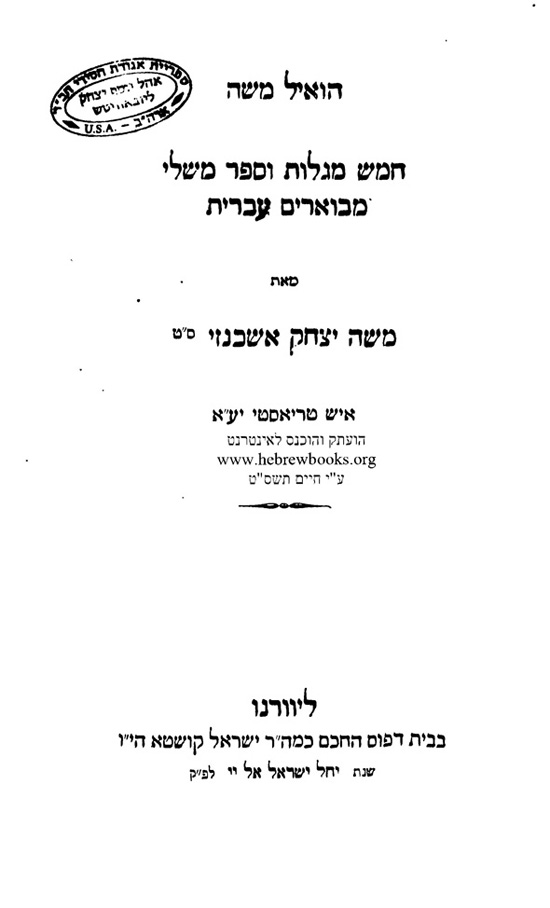
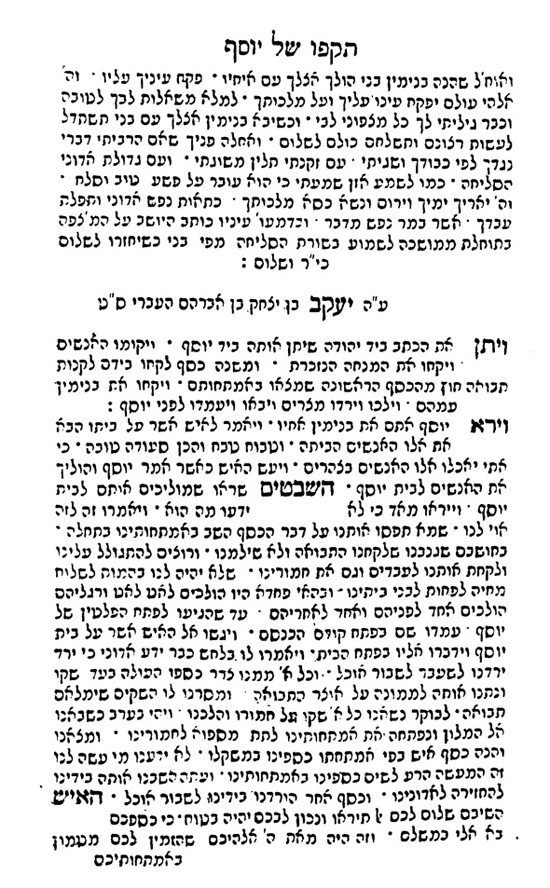
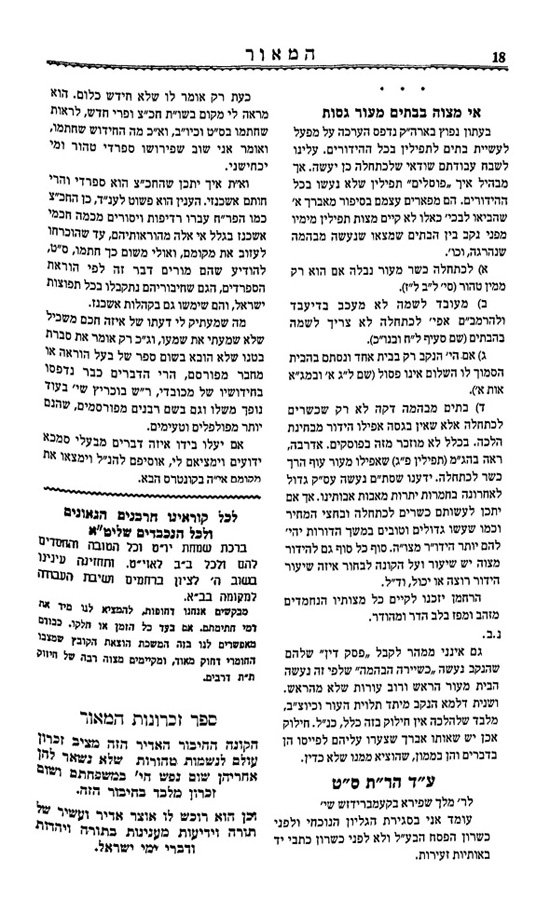
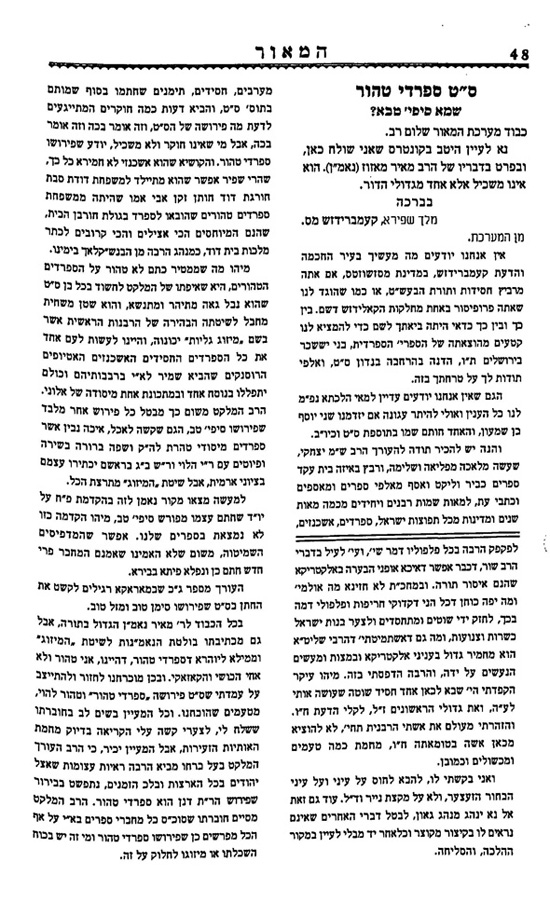
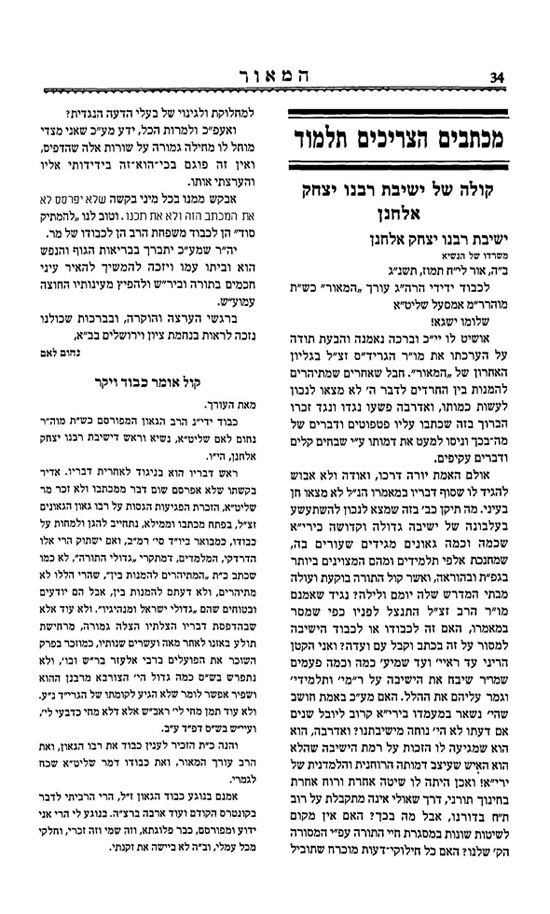
New Writings from R. Kook and Assorted Comments, part 4

New Writings from R. Kook and Assorted Comments, part 4
Marc B. Shapiro
Continued from here.
Returning to the issue of creation, I found an interesting comment in R. Hayyim Hirschensohn’s commentary on Rashi, Nimukei Rashi. For those who are unaware of this commentary, I recommend that you examine it. You can order a bound copy (even soft-cover) very cheaply at hebrewbooks.org. I think that this is one of Hirschenson’s greatest works.[1]
In his comment to Gen. 1:13 Hirschensohn writes that belief in eternity (which here apparently means eternal matter in the Platonic sense, not an eternal universe in the Aristotelian sense) is not heretical, just foolish. He explains that something foolish by definition cannot be heretical, and gives an example: If you say that 2+2=5 this is false, but it is not heretical. It would be interesting to develop this theme further, and to see to what conclusions it takes you.
Also regarding creation, see his comment to Gen. 2:6 where he explains how evolution fits in with Torah, and where he differs with Darwin.[2] He sees support for his view in Rashi, although he acknowledges that Rashi himself didn’t have evolution in mind. Rather, one can explain Rashi in accord with modern views even though Rashi himself had no knowledge of modern science. Here is an example where a book, in this case Rashi’s commentary, is explained with no concern given to original intent, the notion being that a book has a life of its own and is not bound to the interpretations of its author. I cited material on this theme in Studies in Maimonides, and there is a good deal more I can add from traditional Jewish writings. (In my Hakirah response to Buchman, I promised to explore this issue in a future Hakirah article).
Here is Hirschensohn’s passage:
אל יחשוב הקורא שדעתי שרש”י ז”ל ידע מענין ההתפתחות והי’ לו שיטה מצוינה מיוחד בזה, שאהי’ בזה לצחוק לכל שומע, אמנם דעתי שרוח הקודש הופיע בבית מדרשו ופירושו בהפסוקים מתאימים לפרש על ידיהם שיטות פילוסופיות וטבעיות לפי אמתתם
Quite apart from his main point, I find Hirschensohn’s opening words here fascinating. We get a sense of whom he felt he was writing for when he says that if he were to claim that Rashi knew of the most advanced scientific thought, that it would be regarded as laughable. I think that even today if someone were to attribute prophetic-like scientific knowledge to Rashi, there are some circles where this would not occasion laughter, but great respect, on the assumption that as with Hazal, Rashi’s knowledge in these matters is all-encompassing.
I could have an entire post on the provocative material in Nimukei Rashi, but let me just give a couple of more examples. In his commentary to Gen. 4:16, Hirschensohn says that prophets can make mistakes, just like the rest of the people of their time. He says that they can even make such errors when it comes to principles of faith:
כי לא כל הנביאים ידעו הפילוסופיא האלקות האמתית . . . יכולים לטעות בטעותים אשר בני אדם בדורם טועים
He applies this insight to prophets who lived before the giving of the Torah. However, those prophets who lived after the Revelation at Sinai and were able to study Torah in a proper philosophical fashion were spared these types of errors.
ורק נביאי ישראל אשר למדו תורת ה’ עמדו מן התורה ומן החכמה ודעת על אמתת הפילוסופיא האלקות . . . כי הנבואה לא בא להודיע רק את הדבר אשר הודיעה מפורש ובשאר דברים יכול האדם להשאר בטעותיו הקדומים ורק התורה עם החכמה והדעת המה מודיעים את האמתית [!] ועקרי האמונה והפילוסופיא . . . כי הקב”ה חפץ שהאדם יהי’ דורש למצא את האמת לא ליתן לו את האמת בנבואה בלתי דרישה וחקירה.
In a previous installment of this series I dealt with Maimonides’ view that prophets can make errors, with the proof being how Ezekiel’s prophecy was based on incorrect science. I also noted Ralbag’s claim that one of Abraham’s prophecies contained an error. In other words, Hirschensohn’s basic point has an honored precedent.
However, as far as I know, no one prior to Hirschensohn claimed that prophets could make errors in basic theological points. Yet Hirschensohn’s argument is very strong, for his proof is from Cain. Cain must be regarded as a prophet, as God spoke to him. Yet Cain also erred in a basic theological point, as he didn’t think that God’s knowledge was all-encompassing. This incidentally illustrates why according to Maimonides the entire Cain and Abel story cannot be understood as historical. While Hirschensohn is able to say that “not all prophets knew the true divine philosophy,” for Maimonides this is the basis of prophecy and the only way it comes about. The notion that Cain, or Adam for that matter, could have developed his mind philosophically in order to achieve prophecy is obviously not a serious proposition. Therefore, according to Maimonides, it is clear that God never spoke to Cain. In other words, from Maimonides’ perspective the story never actually happened, and must be understood as a philosophical or moral tale.
This interpretation of Maimonides is nothing new. Lawrence Kaplan has already noted that the standard commentaries on Maimonides’ Guide—Efodi, Shem Tov, Falaquera, Ibn Caspi, and Narboni—leave little doubt that in their mind Maimonides’ position is that the births of Cain, Abel, and Seth are to be understood allegorically.[3] When it comes to the Cain story I think the matter is fairly clear-cut, for if a brute like Cain can be regarded as a prophet this would contradict Maimonides’ entire philosophical understanding of what prophecy is.
R. Hananel Sari makes an interesting point that is relevant to what we are discussing.[4] He calls attention to the fact that matters which Maimonides does not regard as having been real historical events are treated as such, for educational or spiritual purposes, in the Mishneh Torah. Maimonides himself writes about how this was the practice of ancient courts in dealing with the Wayward Woman (Hilkhot Sotah 3:2):
ומגידין לה מעשה יהודה ותמר כלתו, ומעשה ראובן בפילגש אביו על פשטו
Sari offers two examples of this phenomenon in Maimonides’ writing. One is the story of the angels coming to visit Abraham, which Maimonides famously understands to have taken place in a dream. Yet from Hilkhot Evel 14:2 the reader would assume that Maimonides understood this event to have actually occurred. The second example Sari offers relates to Cain and Abel. According to the standard medieval commentators to Guide 2:30, Maimonides understands the Cain and Abel episode allegorically. Yet as Sari points out, in Beit ha-Behirah 2:2 Maimonides treats the Cain and Abel story as historical: והוא המזבח שהקריב עליו קין והבל
In fact, it is not only in the Mishneh Torah that we find the phenomenon Sari discusses, but in the Guide as well. Thus, while in Guide 2:42 Maimonides tells us that the entire story of Balaam and the donkey happened in a vision, in Guide 2:6 he speaks of the movements of the donkey as if this was an actual event.[5]
With regard to the story of Cain and Abel, Shalom Rosenberg has explained how Maimonides understood it allegorically:
Cain and Abel embody two types of life which epitomize the fullest development of human potential in man before he has reached his rational level. Maimonides refers here to the legend which says that before Adam begat his third son, Seth, his children for 130 years were demons.[6] For Maimonides, there is no doubt that the demons mentioned in this legend are none but Cain and Abel. Both Cain and Abel stand, for Maimonides, as symbols of types of life which have not reached their full perfection. This is the meaning of demons. For what, after all, is a demon? A demon is created when reason and thought, which are devised for protecting man’s perfection, are exploited by all sorts of devices which produce evil consequences. Thus, Maimonides sees the existence of demons as the most widespread sort of existence, the existence of human beings who are endowed with reason, but use their reason for evil purposes. Thus, a demonic existence is that of Abel, who—as one of Maimonides’ commentators remarks—stands for the fool, or for foolishness. But Cain, too, stands for man who had arrived at many technological achievements, but the purpose of these achievements is evil. When this evil predominates, it becomes the source of murder and war. These are the devices of human reason when used for evil purposes.[7]
Herbert A. Davidson writes:
Maimonides had hinted that the scriptural story of the creation of adam has in view the bringing forth of the entire human species, in other words, mankind in general; that in the rabbinic account of the formation of Eve out of Adam’s side, the male aspect of the original Adam symbolizes the human intellect, and the female aspect, man’s nonintellectual nature; that the serpent’s temptation of Eve and Eve’s temptation of Adam are an allegory for the deflection of the human intellect by the lower faculties of the human soul; that the names of Adam’s first sons, Cain and Abel, have allegorical significance, and that there is significance in Seth’s being the son of Adam from whom the entire species is descended.[8]
In 2000 R. Nissim of Marseilles’ commentary on the Torah, Ma’aseh Nissim, ed. Kreisel, was published, and it too deals with Cain and Abel. R. Nissim states explicitly (p. 271):
וכן שלשה בני אדם: קין והבל ושת – משל. או אם נמצאו ונולדו לאדם, יש בקריאת שמותם רמז והערה לשלש שלמויות האדם.
I think everyone who reads R. Nissim’s commentary will conclude that his preference is for the first possibility, namely, the non-historicity of Adam’s three children.
* * *
1. In this post I referred to what I termed an anti-intellectual comment from R. Kook’s Shemonah Kevatzim. I noted the radical nature of this comment, as it places the Jewish masses, and their natural morality, on a higher plane than the talmudic scholars.[9] I also noted that it is not surprising that R. Zvi Yehudah, recognizing the subversive nature of the comment, did not publish it.
R. Ari Chwat called my attention to the fact that, unlike R. Zvi Yehudah, the Nazir actually published the same sort of comment in Orot ha-Kodesh, vol. 2, pp. 364-365 (=Shemonah Kevatzim 1:140). While here too R. Kook speaks of how the masses need the Torah scholars, again we see that it is actually the Torah scholars who have more to learn from the masses then the reverse. Note how R. Kook privileges the masses, not only when it comes to natural morality, but in a whole host of areas. We see here how R. Kook felt that excessive book learning, with all of its details, had a negative effect on the pure Jewish soul.
הצד הבריא של היושר מצוי הוא באנשים גסים יותר ויותר ממה שהוא מצוי במלומדים ומוסריים, בעלי מחשבה. יותר מובהקים הם המלומדים בדברים הפרטיים של המוסר, בחוקיו ודקדוקיו, אבל עצם הרגשתו זאת היא מצויה באנשים בריאים טבעיים, שהם הם המון, עם הארץ. ולאו דוקא בהרגשת המוסר השרשית עולה הוא ההמון על אנשי הסגולה. גם בהרגשת האמונה, הגדלות האלהית, היופי, החושיות, הכל אשר לחיים בדרך ישרה, בלתי מסוננת על ידי הציורות המלאים שכר אגמי נפש של הדעה והחכמה הוא יותר בריא וטהור בההמון
Again I ask, is this not incredibly subversive? Since the writings of the early hasidic masters, have any of our great sages written anything that so undermines the status of the rabbinic elite? I will have more to say about this, with additional citations in R. Kook’s writings, in future installments to this series.
While not going to the extreme of R. Kook, let me mention a couple of other non-hasidic examples where book learning is “put in its place”, as it were. The late R. Mordechai Elefant told the following story: R. Chaim Ozer Grodzinski once asked R. Elijah Hayyim Meisels, the rav of Lodz, why a man of his stature didn’t publish a book. R. Elijah got up, went into the other room, and came back with ledgers full of lists of widows and orphans whom he had helped. He told R. Chaim Ozer, “This is my sefer. All my life I was like you. I thought the important thing was to write a sefer on the Rambam. But as I got older, I realized this sefer is more important.”[10]
R. Hayyim Haikel Greenberg[11] recorded the same lesson in the name of another sage:
שבעת שהיה צעיר חשב שכל העולם זהו ספרים – ועכשיו לעת זקנותו העלפען א ארימע אלמנה אוף שבת און אאידען, וויכטיקער ווי אלע ספרים.
Greenberg mentions that after publishing this he was criticized by many important rabbis, but R. Jehiel Jacob Weinberg supported him:
מי כמוני שאוהב ספרים ומחברים וכל העולם שלי זהו רק ספרים – ואני אומר בפה מלא ובלב שלם יישר כח שהדפיס והעתיק זאת.
In speaking of opposition to book learning, here is a text that is simply unbelievable, and which I have never seen mentioned in the scholarly literature.
It is from Midrash ha-Gadol on Genesis (Mossad ha-Rav Kook edition). I don’t understand how the lesson is derived from the verse, but the lesson itself is clear enough: too much Torah study will lead to heresy. This is the sort of thing that one might expect to see in a medieval Catholic source, in justification of keeping the laity ignorant. Yet here we find the same attitude in a Jewish source. There are examples in rabbinic literature where we see that Torah study can have a negative result,[12] but I don’t know of any other text that is so blatant in its opposition to “excessive” Torah study. In the highly unlikely event that there are any high school students reading this who have been slacking off in Torah study, and have been challenged by their rebbe or parents to explain their inaction, see what happens if you pull out this text to explain matters.
I had seen this text a few years ago, and wanting to include it in the post I ordered the volume from interlibrary loan. The copy sent to me was from the University of Pennsylvania, and was originally found in the personal library of the late Dr. Judah Goldin. On the page we are looking at, Goldin underlined the strange passage (and also noted it on the first page of the book). On the side he added a reference to Targum Ps. Jonathan, Num. 22:5. Here it says that Balaam (who is identified with Laban) acted foolishly “from the greatness of his wisdom.” In other words, it was Balaam’s great wisdom that led to his thinking that he could curse the Israelites. Yet this passage only refers to Balaam’s general wisdom. It says nothing of Torah knowledge leading him astray.
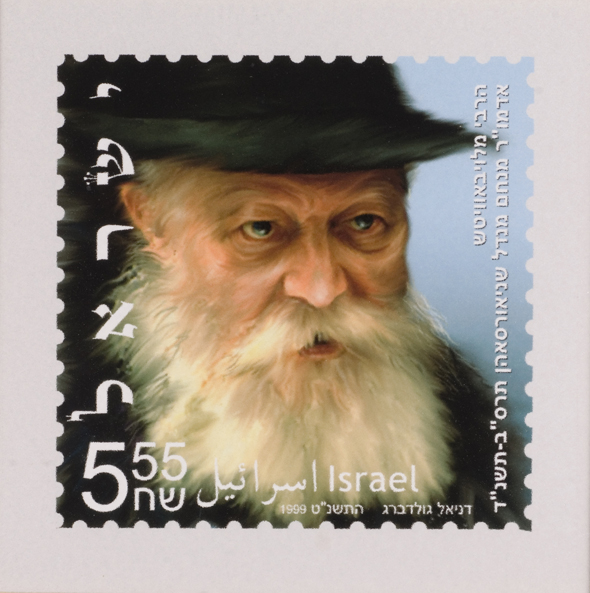
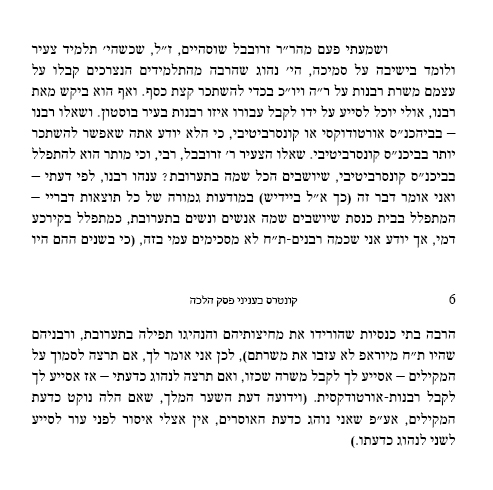
With regard to R. Kook’s comments about the natural morality of the simple Jew, Joel Rich sent me chapter 4 of R. Soloveitchik’s Reflections of the Rav, ed. Besdin. The chapter is entitled “The Profundity of Jewish Folk Wisdom,” and is well worth reading. Yet you don’t find in R. Soloveitchik the notion expressed by R. Kook, that the natural morality of the simple Jew is superior to that of the scholar. For R. Kook, the simple Jew has something that the scholar does not have, and the scholar has that which the simple Jew lacks (halakhic knowledge). In this way, each can learn, and indeed is dependant, on the other. In dialectical fashion, the result of this will be a new type of Jew who combines in himself the best of both the scholar and the simple Jew. This is parallel to R. Kook’s discussion of the role of the non-religious. In the creation of the new Eretz Yisrael Jew the non-religious have that which is lacking among the religious, namely, the attachment to the physical world and the strength which Jews used to have when they lived on the Land, but which was forgotten during the long Exile. So the non-religious will bring that to the table, and the religious Jew will obviously bring Torah and spirituality. The result with be a synthesis of the two and the creation of an Eretz Yisrael Jew who, while being both Torah observant and spiritually enlightened will also be strong physically, able to build roads and fight wars. This is how Jews lived in days of old and how they are supposed to live when they return to the Land of Israel.
While R. Soloveitchik might have been attracted to dialectical-type thinking, there was no way that he would see the masses as having anything to give the halakhic scholar. The most the Rav speaks of in this essay is that the common man, even in his speech, reflects Torah values, but not that he is superior in any way to the learned ones.[13]
In this essay the Rav offers a beautiful interpretation of the aggadah in Niddah 30b that before birth a fetus learns all of the Torah and then forgets it when he is born:
Rabbi Simlai is apparently saying that every Jew comes into the world with a natural responsiveness to Torah teaching. Every Jew begins with a share in Torah was vested him before his birth, and, though he is made to forget it, it is preserved in the deep recesses of his soul, waiting to be awakened by study and a favorable environment. Scholars, of course, convert this latent knowledge into actual living knowledge; but the simple Jew also has a share. Some members of the Massorah[!][14] community are scholars whose knowledge is well formulated and codified, while others, though unlearned, may be endowed with inspired and intuitive Torah wisdom . . . [W]hen a Jew studies Torah, he finds it native to his spiritual personality and he responds to it readily.
R. Shalom Messas[15] also offers an interpretation of this Aggadah. According to him, it means that before birth God planted in the fetus the ability to study all of the Torah. The angel, who causes him to forget, represents the yetzer hara which distracts people from studying Torah[16]:
אלא האמת דאין כאן לא מלאך ולא שו”ד, והכל רמז ומשל בעלמא, והכוונה היא כמו שאמרנו, שבשעה שיצר השי”ת את העובר, נתן בו כחות עצומים באופן שיכול לעתיד ללמוד כל התורה אם ירצה . . . ויש בכחו ללמוד את כולה, וכשיוצא לאור העולם בא מלאך הוא הטבע, שכאשר מתחיל לצמוח מתערב עמו היצה”ר ומראה לו יופי הטבע והבריאה ונמשך אחריהם, ומעכבים עליו מללמוד תורה
This, too, is a beautiful perspective. I think people will therefore be surprised to learn that R. Messas was actually criticized by two separate authors, each of whom thought that his allegorical understanding of the Talmud was incorrect. In their opinions the Talmud should be taken literally, that the child really does know all of the Torah. Both of these authors refer to a “yeshivishe story” (with minor discrepancies between them) about how a certain baby was born knowing all the Torah, and from the moment of his birth began “talking Torah.”
I always wonder when I hear Torah knowledgeable Jews repeat such nonsense as this yeshivishe story. What does this say about the Torah they learnt that they can be so gullible? I think the best we can say is that there is a difference between having book knowledge and being wise, and it is the latter that appears to be in such short supply. R. Messas replied to one of the authors in Shemesh u-Magen, vol. 2 pp. 322ff, and here is his reply to the second one, from Shemesh u-Magen vol. 3, p. 325.
I think R. Messas deserves a lot of credit for responding in such a polite fashion. Yet I have no doubt that if you spoke to him privately about this, his words would be much harsher in reflecting on how Torah students can be so foolish in believing such nonsensical stories.[17]
2. I have often been asked if I have pictures of R. Jehiel Jacob Weinberg. As a matter of fact I do, and here are two that I was given by Moshe Weisz of Zurich, who in the 1960’s was a student in the Montreux yeshiva. In the second picture, Weisz is the one handing Weinberg his coat.
There is actually an amazing picture of Weinberg from his time in the prisoner of war camp. I would have loved to include this in my book, but the person who showed it to me refused to allow me to do so. He didn’t think it was respectful to a great Torah sage for people see him in this state. Yet why is this disrespectful? How was Weinberg supposed to look in such circumstances? Was he supposed to have a black suit and hat? Obviously, Jews did not look their normal selves during the years of the Holocaust. Here, for instance, is a picture of the Belzer Rebbe, R. Aharon Rokeach, with R. Herzog. It appears in Shaul Maizlish, Rabanut be-Sa’arat ha-Yamim, p. 61.
The Belzer Rebbe was one of those rebbes who, for religious reasons, did not like to have pictures taken of himself. Yet because R. Herzog exerted so much effort in order to secure permission for the Rebbe to enter the Land of Israel, he agreed to have his picture taken when R. Herzog requested this. (Or Yisrael 21 [5761]. p. 257). This last source also records the following great story, told by R. Aharon about his father, the previous Rebbe R. Yissachar Dov.
פ”א דיבר מרן מוהר”א מענין זה בשם אביו זצ”ל שאמר שבספר יערות דבש כתוב דברים חריפים אודות עשיית תמונה, אבל היות שכל היהודים אינם מקפידים ע”ז אין ברצוני להיות פרוש מהם, שכלם יהיו בגיהנום ואני יחידי יהיה בגן עדן, טוב לי להיות עם כלל ישראל ביחד
(Yes, I know that someone will point out the irony of R. Yissachar Dov saying that he would rather be in gehinnom with the Jewish people when his son chose precisely the opposite course, and left the gehinnom of Europe. Here is not the place to go into this story. Suffice it to say that I find Monday morning quarterbacking very distasteful. In this case it is even worse, as R. Aharon’s children and grandchildren were all murdered.)
Here is a picture of R. Jacob Avigdor, whom I believe was a Belzer, from those difficult days (together with happier pictures).[18] Does anyone think this reduces him by showing how he looked during the Nazi years?
Incidentally, Moshe Weisz also told me about how in November 1965 Weinberg gave a hesped for four recently deceased rabbis, among them R. Yerucham Warhaftig and R. Eliezer Yehudah Finkel. These latter two were good friends of Weinberg, and Weinberg’s friendship with Finkel went back to their youth. After the eulogy Weinberg asked everyone in the room to stand up. They stood silently for around ten seconds and then he asked them to sit down. I presume this was intended as a show of respect rather than as a moment of silence, since the latter could be done sitting down.
Since I have spoken about pictures in this post, let me also include this picture of the Lubavitcher Rebbe. It appears courtesy of the Library of the Jewish Theological Seminary, and I thank Rabbi Jerry Schwarzbard who first showed it to me a few years ago.
As you can see, it is an Israeli stamp from 1999, and it can now be added to Shnayer Leiman’s collection of stamps of rabbis.[19] Yet for some reason the stamp was never put into circulation. I have been unable to find the reason for this, and there is no mention of the stamp in Maya Balakirsky Katz’s recently published The Visual Culture of Chabad (Cambridge, 2010). There are many Lubavitchers who read the Seforim Blog. Perhaps one of you knows the story of this stamp and why it was never released.
As for Balakirsky Katz’s book, I urge Lubavitchers to read it, without preconceptions, and offer their opinions. It appears, to me at least, to be a quite interesting book. I stress the need for no preconceptions since Balakirsky Katz has now been placed by Lubavitchers in the “enemy camp”, along with other contemporary authors such as R. David Zvi Hillman z”l, David Kamenetsky, David Berger, Bryan Mark Rigg, David Assaf, Menachem Friedman, and Samuel Heilman. Balakirsky Katz angered Chabad with her recent article in the AJS Review 34 (2010; “An Occupational Neurosis: A Psychoanalytic Case History of a Rabbi”), and this article is summarized in the new book (but is only a very small part of the book). She argued that the Rebbe R. Shalom Dov Baer Schneersohn (Rashab) was the rabbi who visited the psychoanalyst Wilhelm Stekel in 1903. In those meetings the rabbi spoke about being sexually molested from his youth until his marriage. He also told about his sexual dreams and how he masturbated,[20] and described how his own brother carried on an improper relationship with his (i.e., the rabbi’s) wife (although it does not appear to have led to actual adultery).
I understand that Lubavitchers will regard Balakirsky Katz’s argument as beneath contempt. They will also regard as scandalous the fact that her essay was published in such a prestigious journal as AJS Review. I would not even ask them to dignify the argument with a response, any more than a non-Lubavitcher should be asked to respond to such claims about a close family member; for a hasid, the feelings for a Rebbe are just like those of a close relative. Yet there is a lot more to the book than the few pages dealing with the rabbi and Stekel, and I wonder how Habad insiders will appraise the rest of what she says.
Appendix
It is common to hear among YU figures the expression “hakhmei ha-mesorah,” referring to authoritative rabbinic spokesmen. Readers can correct me if I am mistaken, but I don’t think that this expression, with the meaning currently applied to it, is part of the traditional rabbinic vocabulary. I also don’t recall ever seeing it in haredi writing. (When the words appear in rabbinic literature they refer to Masoretes.) The first mention of it that I know of appears in R. Soloveitchik’s famous attack on R. Emanuel Rackman regarding nullification of marriage. Needless to say, the expression makes an appearance in R. Schachter’s new book, Divrei ha-Rav. See e.g., p. 233.
This latter reference is part of an article that R. Schachter earlier published in Beit Yitzhak 38 (2006). The reprint in Divrei ha-Rav has two changes from the original. On p. 237 a sentence is added, according to which the Rav stated that in Europe he never heard the expression “Daas Torah.” The second change is that one entire paragraph, on pages 5-6, has been removed. Here is the paragraph.
From this paragraph we see that the Rav’s strong personal opposition to prayer in a synagogue without a mechitzah was not shared by all other rabbis, and that the Rav was willing to show some flexibility in this matter. The case discussed here was not like the other times that the Rav gave permission for a rabbi to take a position at a synagogue without a mechitzah. In those cases the heter was for a rabbinic appointment designed to be for a few years, and during that time the rabbi was supposed to try to convince the synagogue to install a mechitzah. The issue discussed in the Beit Yitzhak article was simply a High Holiday position at a non-mechitzah synagogue in order to make some money.
This paragraph provides important testimony that can balance some of the Rav’s more strident statements in this matter. If anyone can get a straight answer from R. Schachter as to why the paragraph has been removed, please share it with us. I would hate to think that we have here an example of revisionism—in other words, R. Schachter decided to delete the paragraph because he concluded that it is best that people not know this information, or he was responding to others who criticized him for including the paragraph.
With regard to the larger issue of how R. Schachter presents the Rav, Lawrence Kaplan has already noted that there are revisionist aspects of R. Schachter’s presentation of the Rav’s legacy. See his “Revisionism and the Rav,” Judaism, summer 1999, available here.
One aspect of this revisionism that Kaplan does not mention is that while Nefesh ha-Rav has an entire chapter on the State of Israel, there is no mention of the Rav’s view—which was expressed on a number of occasions, as well as publicly before hundreds of people—that there is no halakhic prohibition for Israel to return land to the Arabs.
It certainly says something about the transformation of American Orthodoxy in the last generation that R. Schachter became the one to carry on the Rav’s legacy. Unlike the Rav, R. Schachter is a talmudist and posek, and has no involvement with the broader philosophical and cultural issues of Western Civilization. Yet despite this, he is, by far, the most important and influential rabbi in Modern and Centrist Orthodoxy. When it comes to matters of halakhah, I wonder if there is anyone in the American haredi world who can compare to his wide-ranging knowledge. I have heard him in person and on tape many times, and I continue to be amazed at how he can speak for long periods, without notes, on literally any topic of halakhah. I have never seen anything like it. It is all at his fingertips, and he presents it in a fashion that keeps the audience’s attention. As for the liberal Orthodox, who oppose R. Schachter because of his strong stand against feminist innovations, even they must applaud his leading role in dealing with husbands who refuse to give their wives gittin. This has earned him the opprobrium of the Orthodox lunatic fringe, and one member of this group, Abraham Samuel Judah Gestetner, who styles himself a dayan, has even placed R. Schachter in herem (together with two well-known California rabbis). See here.
Gestetner is also the author of the ridiculous book Megilat Plaster, which attempts to show that R. Jacob Emden’s Megilat Sefer is a forgery perpetrated by the evil maskilim. Here is the title page.
His argument is completely demolished by R. Menachem Mendel Goldstein in Etz Hayyim (Bobov), no. 8(Shevat 5769), pp. 239-266. (Goldstein resides in that bastion of Haskalah known as Kiryas Yoel.). On the very first page of his article, Goldstein complains that the various publishers of Emden’s Megilat Sefer did not consult with gedolei Yisrael in order to determine what should have been censored. In other words, he takes it as a given that the masses need to be protected from what Emden has to say.
הספר מגילת ספר נדפס על ידי אינשי דלא מעלי שאין רוח חכמים נוחה מהם, ולא נתיעצו בגדולי חכמי ורבני דור דור האיך ומה להדפיס ומה להשמיט
To be continued.
[1] There is still a good deal more I plan to say about the whole Garden of Eden story. For now, let me respond to one question. We have seen the medieval philosophical approach that the episode with the snake is to be understood allegorically, and the snake represents the evil inclination. A few people want to know if we can find such an approach in Hazal. I actually think we can. In Pirkei de-Rabbi Eliezer, ch. 13 (referred to by Maimonides in Guide 2:30), it mentions that the serpent had a rider, Samael (Satan). Since at least some of the Sages identify Satan with the evil inclination, this opens the possibility that the snake in our story is also to be understood this way. Yet I think that most of the Sages probably understood the passage literally. For one example, see Bereishit Rabbah 19:1, where R. Hoshaya states that the snake stood up like a reed, and that he had feet. Whereas the medieval philosophers were reluctant to take literally a text that spoke of a talking snake (and donkey), this did not seem to bother the talmudic Sages.
[2] A fuller discussion of Hirschensohn’s view of evolution will appear in a future post. In the meantime, see his Seder la-Mikra, vol. 1, pp. 76-77:
אין השיטה הדארוונית מתנגדת כלל להתורה בדבר הבריאה בששה ימים, כי הימים בעצמם כל אחד הוא יום שכלו אורך תקופה שלמה . . . כי עדיין לא הי’ עוד השמש לאור יומם לראשון השני והשלישי ובכל זאת נקראים ימים וגם אחרי בריאת המאורות לא ידענו כמה לקח זמן התפתחותם לאותות למועדים לימים ושנים שלנו, ואריכת ימי בראשית לא נדע לנו שכל יום הוא תקופה שלמה
In another twenty years, I wonder if the younger generation will believe us when we tell them that Hirschensohn’s position was accepted throughout the haredi world, and was standard fare in the kiruv movement and in “science vs. Torah” discussions. There was a time when I, and so many others, would never have believed that “young earth” fundamentalism could ever become a binding principle of faith in the wider haredi world, precisely because it would mean rejecting a position that had been so central to the haredi Torah-science reconciliation.
[3] Link”Rationalism and Rabbinic Culture,” pp. 240ff.
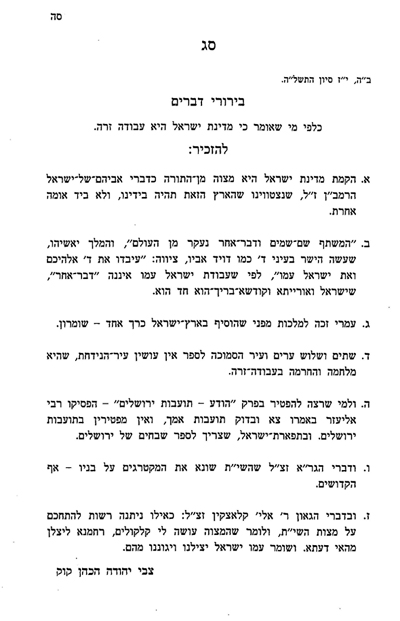
[4] Mesorah le-Yosef 4 (2005), p. 183.
[5] This point was noted by Kaplan, Link”Rationalism,” p. 300 n. 225.
[6] See Studies in Maimonides and His Interpreters, p. 111.
[7] Good and Evil in Jewish Thought (Tel Aviv, 1989), p. 63.
[8] Moses Maimonides (Oxford, 2005), p. 407.
[9] See also my post here where I noted R. Itzele of Ponevezh’s statement that how the Jewish masses feel is more important than what the rabbis think: וכלל ישראל הוא גבוה ונעלה מגדולי התורה . This is obviously diametrically opposed to the haredi conception of Da’as Torah. In my Torah in Motion lectures I discussed how R. Itzele’s conception parallels the Catholic notion of “sense of the faithful.”
In addition to the passages of R. Kook referred to in my earlier post, there are many other sources that one could quote. One that comes immediately to mind is Haym Soloveitchik’s understanding of medieval Jews committing suicide. He sees this as an example of the “sense of the faithful” which was not in line with established halakhah, but which ex post facto had to be justified. Even the murder of one’s children to prevent them from being forcibly apostatized could not be judged according to halakhic texts, or else people regarded as kedoshim would lose this status, an untenable possibility under the circumstances of medieval Jewish life. See ‘Religious Law and Change: The Medieval Ashkenazic Example,’ AJS Review 12 (1987), pp. 205-221. Soloveitchik writes (p. 209):
The magnitude of this halakhic breach is enormous. Whether one is permitted to suffer voluntary martyrdom is highly questionable; suicide is forbidden beyond question, and the permissibility of murder needs no discussion. Thus, if the law were to be followed, the scholars of these communities would have had to rule that all the martyrs—qedoshim, or “holy ones,” as they were called—were not only not “holy,” but they were “self-killers,” and murderers; that not only should they not be buried with honor, but perhaps they should even be denied burial, or at best be buried in the far end of the cemetery where the most vile criminals are interred. Such a conclusion, needless to say, was an emotional impossibility.
After speaking of the “sense of the faithful,”—or what Jacob Katz and Soloveitchik describe as “ritual instinct,” “religious intuition,” and “religious sense”—this article concludes with a couple of paragraphs that I think readers will find very interesting:
I remember my own shock when, after studying Yoreh Deah, I realized that there is no need for separate milk and meat dishtowels, separate dishracks or cabinets, and that if food is served cold, there is no need for separate dishware altogether. Again, there is all the difference in the world between not having hamets in the house (בל יראה ובל ימצא) and the house being what we call pesahdiq.
The simple truth is that the traditional Jewish kitchen and pre-Passover preparations have little to do with halakhic dictates. They have been immeasurably and unrecognizably amplified by popular religious intuition. We all know this, but our religious sense, our religious experience belies this knowledge, and our instincts reject this fact out of hand. To serve cold cuts on a “dairy” dish is treif—everything in Yoreh Deah to the contrary notwithstanding.
The prevalent has not here expanded the normative, it is the normative, and anything less is inconceivable.
Upon hearing one of my TIM lectures, R. Yonasan Rosman sent me a nice example of how the “sense of the faithful” operates independently of, and sometimes even in opposition to, halakhic particulars. It comes from Making of a Godol, p. 1188:
My father also was fond of quoting an interpretation of the Mozhirer Maggid, R. Shmuel Rabinowitz, of the gemara in Massekheth Brakhoth that
כנור היה תלוי למעלה ממטתו של דוד וכו’ ומנגן מאליו
(a fiddle hung above the bed of King David, etc., and it played on its own) to mean that Jewry senses what policy is vital for its existence and does not probe whether the course of action (or inaction) is halakhically sound or not. One of the several examples he gave was by asking rhetorically, “Who gave the Slabodka Yeshiva bahurim the halakhic permission [היתר] to marry at so late an age?” and in answer, he paraphrased the gemara (which he translated into Yiddish), “און דער פידעלע שפילט פון זיך אליין (and the little fiddle plays on its own.”) He was out to prove that when some position is of crucial importance to Jewry—such as increasing the number of intelligent Jews getting in more years of Torah study before going off into their occupations—halakhic minutiae are set aside.
It is precisely sources like this, and the others I have quoted, that are crucial for anyone wishing to challenge the pan-halakhic understanding of Judaism that has taken root in Centrism.
(Regarding yeshiva students marrying later, see R. Shlomo Sofer, Hut ha-Meshulash [Munkacs, 1894], p. 7b, that in late eighteenth-century Frankfurt, yeshiva students would sometimes wait until age thirty to marry.)
[10] For R. Jehiel Jacob Weinberg’s essay on Meisels, see Seridei Esh, vol. 4, pp. 345-352.
[11] See Ahiezer: Kovetz Rabani-Torani, vol. 4 (1969), p. 17.
[12] Sotah 21b states: “R. Eliezer says: Whoever teaches his daughter Torah teaches her obscenity. . . . Read, rather: as though he had taught her obscenity” Rashi explains: שמתוכה היא מבינה ערמומית ועושה דבריה בהצנע
Meiri, Sotah 20a explains (and as with the Ralbag quoted in a prior post, apologies to the women reading): שמתוך הבנתה ביתר מגדרה היא קונה ערמימות מעט, ואין שכלה מספיק להבנה הראויה והיא סבורה שהשיגה ומקשקשת בפעמון להראות את חכמתה לכל
[13] There are, of course, many other differences between R. Soloveitchik and R. Kook. From the excerpt printed in The Rav Thinking Aloud, pp. 155-156, we see that the Rav regarded R. Kook as a saintly figure, but not as an intellectual great. Yet this impression was derived from one short conversation. All the gedolim who knew R. Kook had the exact opposite impression. They correctly saw that R. Kook was a master of the entire Torah, in all of its facets. I think you have to go back to Maharal, or perhaps even Nahmanides, to find such a wide-ranging Torah scholar as R. Kook.
Experts on the Rav’s writings can correct me, but the only place I recall where he mentions R. Kook is in On Repentance, p. 161 (and this was not actually published by the Rav himself, but by Pinchas Peli). See incidentally, ibid., p. 224, where the Rav states, referring to the State of Israel: “Bondage to the State can also become idolatry.” When this appeared in 1975, in the original Hebrew edition Al ha-Teshuvah, R. Zvi Yehudah Kook responded with a very sharp statement (later reprinted in Le-Hilkhot Tzibbur):
The Rav in turn said about R. Zvi Yehudah: “If you follow the philosophy of Tzvi Hirsch [!] Kook a Jew outside of Eretz Yisrael is a non-Jew. And this is exactly against the passuk of כי לי כל הארץ. A Jew outside of Eretz Yisrael can be a perfect Jew. Where you accomplish more is up to the individual. . . . Kook comes out with the Ramban [who says that mitzvah observance in the Diaspora is not at the same level as in the Land of Israel] as if he is the only one to whom the Ramban has entrusted the text.” The Rav Thinking Aloud, pp. 225, 229. See also, ibid., p. 154, where he says that R. Zvi Yehudah “has an aura of kedushah about him.”
[14] See Appendix.
[15] Introduction to his Tevuot Shemesh, Even ha-Ezer, and Shemesh u-Magen, vol. 2, p. 321.
[16] See also Maharsha, Niddah 30b.
[17] With regard to what else fetuses are said to be doing in the womb (aside from learning Torah), there is a very strange passage in Otzar ha-Geonim, Berakhot 28b (p. 71). I hesitate to elaborate on it lest this post be blocked by internet filters:
כשאדם כורע במודים צריך לו לכרוע עד ברכיו לפי שהילד בעודו במעי אמו ראשו מונח בין שתי יריכיו והמילה שלו בתוך פיו ובעבור זה צריך לשוח עד ברכיו.
[18] The picture comes from Esther Farbstein’s Be-Seter Ra’am (Jerusalem, 2002).
[19] See here.
[20] With regard to masturbation, R. Simcha Ross called my attention to the responsum printed here by an unnamed talmid hakham. He argues that masturbation is permissible. When Rabbi Ross first alerted me to this (and also expressed his disagreement with the arguments of the author), I thought this was some sort of Purim Torah. But then I examined the responsum, and other responsa on the site, and I could see pretty quickly that this was a serious man, whose arguments were carefully thought out. There are so many books published today that simply repeat what others have said, without offering anything new, that it is a pleasure to see original thinking, Based on his permission to masturbate, he also concludes that homosexual activity is permissible, as long as there is no mishkav zakhur. See here.
(This anonymous author has also placed on his website his commentary on R. Baruch Ber Leibowitz’s Birkat Shmuel, and also many posts discussing talmudic sugyot.)
I showed this responsum to someone. Yet instead of examining the arguments, all he was interested in was the identity of the author, who, as can be seen from various responsa on the site, is clearly from the haredi world. Maybe some readers know who he is, but I think that someone like this has to be in “deep cover.” We all know how the powers that be would destroy anyone who argued that masturbation is permissible. Since this involves a halakhic matter, I am certain the response would be even more severe than how they dealt with Slifkin and Kamenetsky. This talmid hakham would be branded not merely a heretic and a Reformer, but also a sexually dissolute degenerate. So yes, I understand why the author chooses to remain anonymous. My request to readers is as follows: The argument permitting masturbation is so far removed from anything I have ever seen that I would like those with more halakhic learning than myself to examine his teshuvah and let us know if you think there is anything to his argument.
Also, please look at other material on his site. Is it possible that instead of a “progressive” talmid hakham we are dealing here with a Trojan Horse? That is, someone who aims to undermine traditional Judaism from within, much like Saul Berlin attempted to do.