There are those who claim the custom to celebrate Tu-beshevat as a holiday is based upon the book Hemdat Yamim. This book, according to many, was either written by Nathan of Gaza (Shabbati Zvi’s “prophet”) or one of follower of Shabbati Zvi. (This is contrary to the assertion in the Philogos that Nathan is not author, a contention which has little to no source). In Ha’aretz, an article appeared with this contention, namely the source for the Tu-beshevat custom is Sabbatian or as the headline reads “The New Year for the Trees, Isn’t is Shabbati Zvi.”
However, a closer look at the history reveals, that although some of the customs on Tu-beshevat can be traced to Hemdat Yamim the actual celebration dates much earlier. Avraham Ya’ari, the noted bibliographer, in an article traced the history of Tu-beshevat. He explains that much of the early mentions of Tu-beshevat were only in the negative, i.e. one can’t fast or say tachanun. Obviously, the first mention is in the Mishna in Rosh Hashana which states, according to Bet Hillel, Tu-beshevat is the new year for trees. The new year does not conotate a New Years like celebration, instead, this only has implications for questions of tithing. One can’t tithe fruits from one year using a different years fruits. Thus the 15th of Shevat is the cut off point.
Ya’ari, however, notes the first mention in connection to a celbration or the like is in the 16th century. Specifically, R. Issachar ibn Susan (c. 1510-1580) in Ibur Shanim, published in 1578 (the book was published earlier, in 1564, this was done without the knowledge or R. Issachar and according to R. Issachar, with numerous errors) he mentions “the Ashkenazim have the custom [on Tu-beshevat] to eat many fruits in honor of the day.” Mention of this custom also appeared in a Jedeo-German Minhagim book first published in 1590. “The custom is to eat many fruits as it is the New Year of the trees.”
In the community of Worms there was a rather interesting permentation of the custom. As R. Jousep Schammes in his Minhagim de Kehilah Kedosha Vermaysa, states:
On Purim and the 15 of Av and Shevat these were vacation days for the Rabbis, especially the 15ht and the 33rd day of the Omer for the students and their teachers. On these days the students did not go to school nor did the teachers go in. The teachers were required to distribute to the students as they left that morning, on the 15th and the 33rd day of the Omer whiskey and sweet cake from the teachers’ own pocket, they should not charge the students, this is the custom.
He repeats this in his comments to the 15th of Shevat. “One doesn’t say tehina even during the morning prayer. It is a vacation day for the students and the teachers, especailly the younger students, it is a holiday for the teachers. The custom is for the teachers to distribute whiskey to the students and make merry with them.”
While we have shown there was a custom for those Ashkenazim to celebrate Tu-beshevat, amongst the Sefardim, it is correct the source is Hemdat Yamim. Hemdat Yamim, first published in 1732 anonymously has the entire seder for Tu-beshevat. This includes passages from the Bible as well as specific foods. This in turn was popularized to a greater degree when it was included in the book Pri Etz Hadar first published in 1753 and republished an additional 29 times by 1959. This book included the entire Hemdat Yamim service.
So at the end of the day, although some of the customs of Tu-beshvat may come from the Hemdat Yamim he clearly is not the only or the first source for celebrating Tu-beshevat.
For more on the Hemdat Yamim, a controversy that has recently been stirred up again with the republication by R. Moshe Tzuriel of the Hemdat Yamim with an extensive introduction. Additionally, Ya’ari has a book Talmuot Sefer which his conclusion has been disproven by Tishbi in his Nitvi Emunah U’Minut. R. Tzuriel’s publication engendered the publication of a small pamphelet Hemdat Yosef as well as a bunch of articles in the journal Hechal HaBeshet. Rabbi Dr. Leiman in his latest article in Ohr haMizrach has a footnote with all the citations. [R. Dr. Leiman’s article collects all of R. Y. Eybeschit’s and R. Y. Emden’s approbations].
Also, anyone can get a copy of Hemdat Yamim. There are two places on the web where it is available free. The first is at the Jewish National Libraries site for rare books online here. For this one you need to download their viewer. Or at SeforimOnline.org (which for some reason is not online as I write this). Who has it in PDF format?
Additionally, Ya’ari has an article on the piyutim for Tu-beshevat here.
Assorted Matters
Assorted Matters
Marc B. Shapiro
My next post will take some time to prepare, but there are some other matters that I want to bring to readers’ attention, in particular a few books that I recently received. Due to space considerations, I couldn’t include these in my last post.
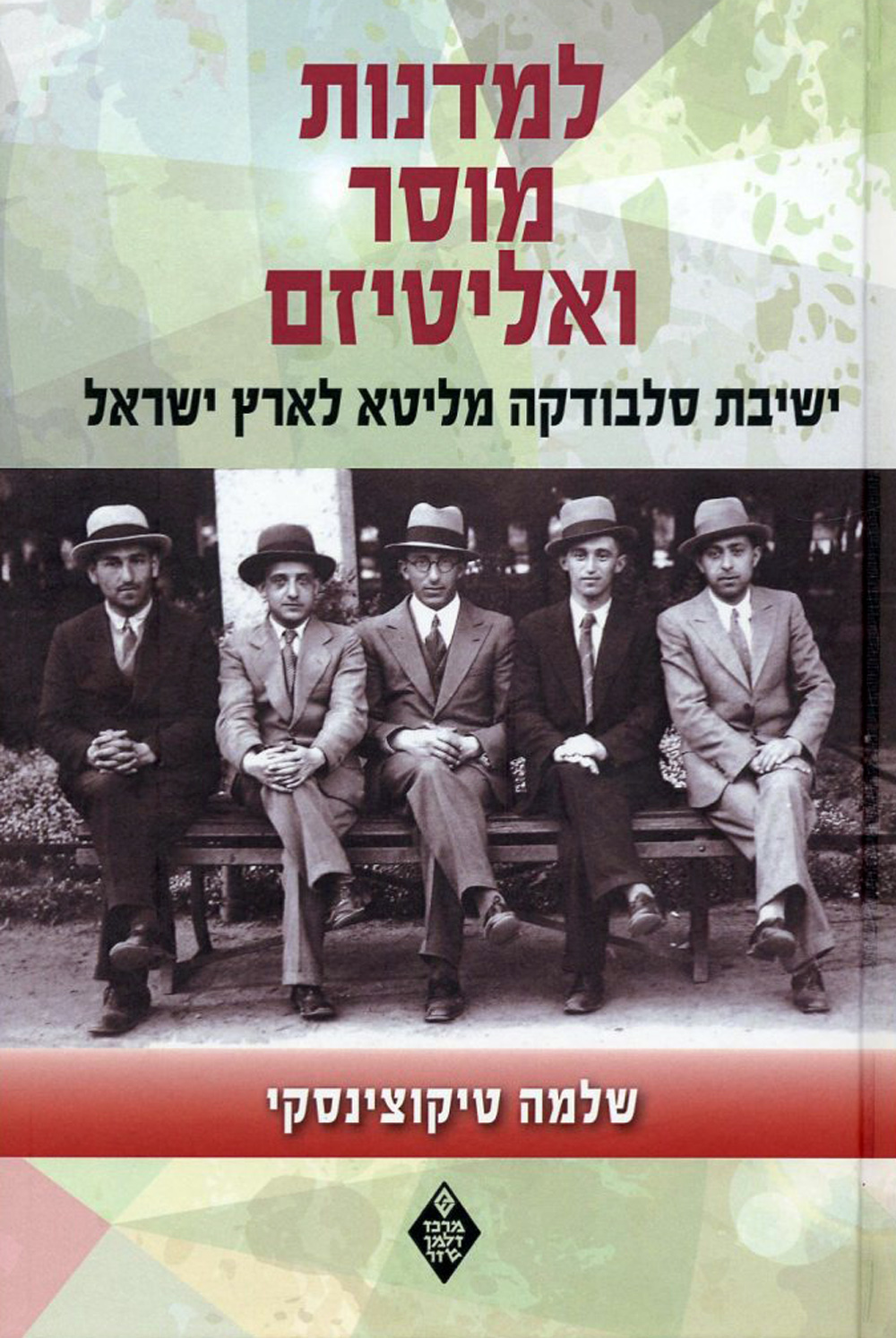
1. For those interested in the history of Lithuanian yeshivot, the last few years have been very fruitful. In 2014 Ben-Tsiyon Klibansky’s Ke-Tzur Halamish appeared. This book is a study of the yeshivot from World War I until the destruction of European Jewry. 2015 saw the appearance of Geoffrey D. Claussen’s Sharing the Burden: Rabbi Simhah Zissel Ziv and the Path of Mussar.[1]In January 2016 Shlomo Tikoshinski’s long-awaited book appeared. Its title is Lamdanut, Musar ve-Elitizm: Yeshivat Slobodka me-Lita le-Eretz Yisrael. The book can be purchased here. Eliezer Brodt is also selling the book and a portion of each sale will go to support the efforts of the Seforim Blog, so I also encourage purchasing from him.
This outstanding book is full of new information, and Tikoshinski had access to a variety of private archives and letters that help bring to life a world now lost. Lamdanut, Musar ve-Elitizm is also a crucial source in understanding the development of religious life in Eretz Yisrael in the two decades before the creation of the State.
When you read about the Slobodka students, and later the students of Chevron, it is impossible not to see how very different the student culture was then from what is found today in haredi yeshivot, including the contemporary Yeshivat Chevron. Some of this differences can be explained by the subtitle of the book where the word “elitism” is mentioned. Unlike the situation today, Tikoshinski discusses an era when very few people studied in yeshivot. Those who chose to devote themselves to Torah study were regarded by the traditional community, and more importantly they regarded themselves, as the elite of Jewish society. One should not underestimate how such a self-image impacted the lives of the students.
R. Moshe Finkel was a part of the story Tikoshinski tells. He was the son of R. Nosson Zvi Finkel and son-in-law of R. Moshe Mordechai Epstein, and taught at the yeshiva both in Slobodka and in Chevron. Unfortunately, he unexpectedly died in 1925 at the young age of 43. Here is a photo of R. Moshe Finkel with his wife Sarah. (This picture does not appear in Tikoshinski’s book.)
Among the pictures included in Tikoshinksi’s book is the following. Can anyone guess who the one on the right is?
2. In the last post I included a picture of R. Moshe Feinstein and R. Soloveitchik. Here is another picture of R. Moshe, the Rav, and R. Shneur Kotler.
Here is a picture of R. Soloveitchik walking down the aisle at a wedding. Next to him is R. Samuel Walkin, and in front of R. Walkin is R. Moshe Feinstein.. I thank Dr. Dov Zakheim for sending me this picture.
In older pictures you find rabbis walking down the aisle at weddings. Has anyone been to a wedding where this is still done?
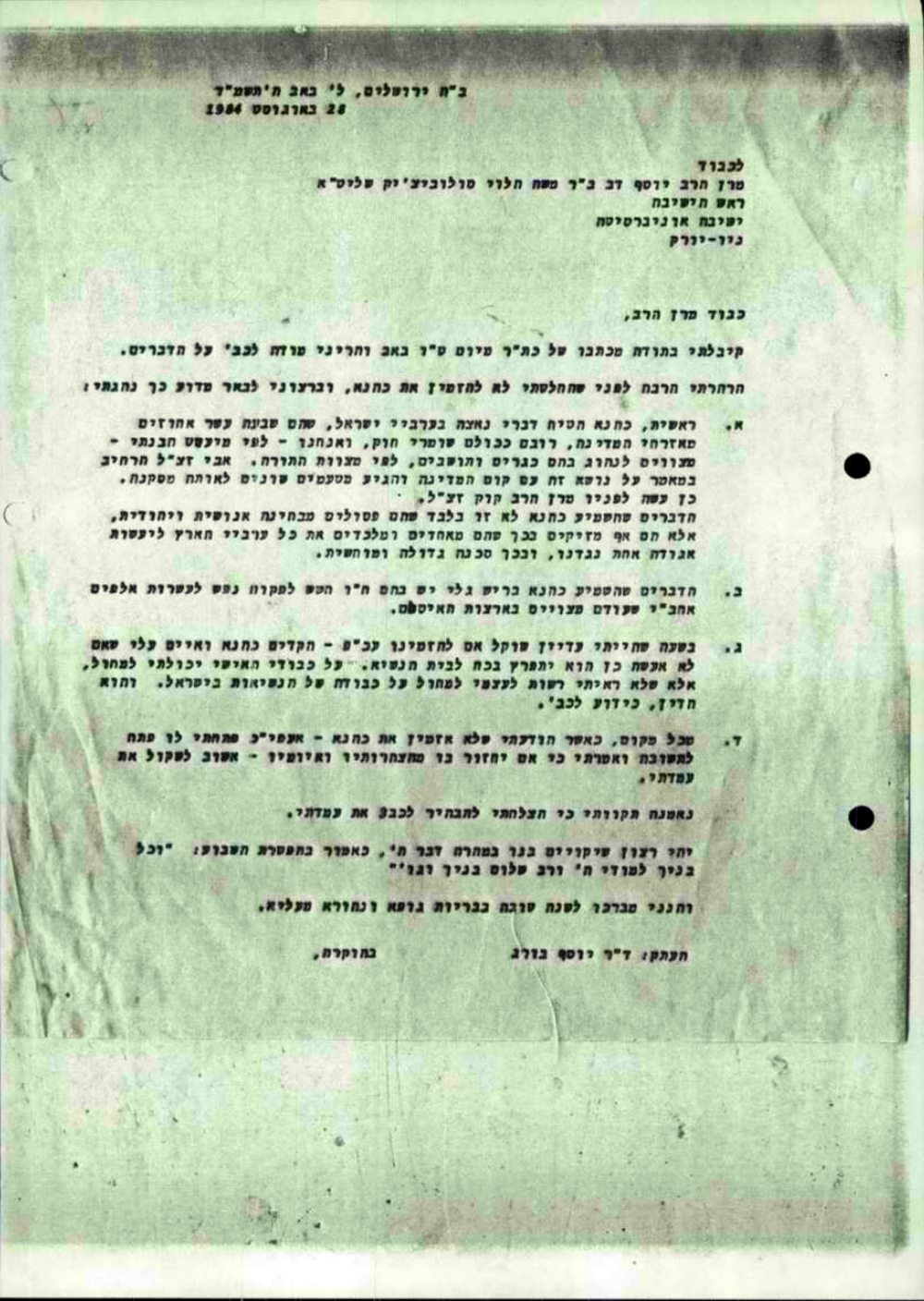
3. Yeshiva University recently acquired the archive of the late Rabbi Louis Bernstein (1928-1995), an important Modern Orthodox pulpit rabbi in the second half of the twentieth century. The collection contains an interesting letter from R. Jehiel Jacob Weinberg, in which R. Weinberg mentions that R. Soloveitchik used to sometimes come to his shiurim at the Berlin Rabbinical Seminary. R. Weinberg also speaks about how outstanding R. Soloveitchik was, and how even in his younger years his greatness was recognized by all the Torah sages of the generation.[2]
Also of interest in the collection is material relating to a controversial incident, or actually two incidents, that R. Bernstein was involved with. In 1985 R. Bernstein, who at the time was president of the Rabbinical Council of America, agreed to deliver a speech at the Conservative Rabbinical Assembly convention. That would have been controversial enough. However, things got even more heated when it was announced that the RCA would be reciprocating by having the head of the Rabbinical Assembly, Rabbi Alexander M. Shapiro, speak at the RCA convention.
This became a major dispute not just between the RCA and the more right wing elements in Orthodoxy, but within the RCA itself. The New York Times even covered the matter. See here. Unfortunately for R. Bernstein, the weight of all the opposition came down on him even though the decision for him to speak at the RA convention, and to have Rabbi Shapiro speak before the RCA, was not an individual decision but was voted on by members of the RCA’s Executive Committee.
In a future post I will discuss this matter in greater detail, and also deal with the role of R. Soloveitchik. For now, let me share this strong letter from R. Nissan Alpert to R. Bernstein, in which in addition to protesting Rabbi’s Shapiro upcoming speech, R. Alpert states that if the event goes forward he sees no way that he can remain a member of the RCA.[3]
4. Recently, Ha-Mashbir, vol. 2, appeared, edited by R. Yissachar Dov Hoffman and R. Ovadiah Hoffman. This volume, which can be purchased at Biegeleisen, is dedicated to R. Ovadiah Yosef and is full of worthwhile articles. Particularly noteworthy are the contributions by R. Meir Mazuz, R. Baruch Simon (focusing on R. Ovadiah’s shiurim at Yeshiva University), R. Pinhas Zebihi on the practice in Gibraltar that men in mourning do not wear a tallit on Shabbat (actually, this is only the case for the first month of mourning), and an important and lengthy article by R. Eliyahu Kohen on R. Ovadiah’s attitude towards Zionism, the State of Israel, and the army. The various articles in the book are supplemented by notes from the two editors, each of whom is a scholar in his own right.
I would also like to call attention to the wonderful introduction to the book by R. Ovadiah Hoffman. He speaks about the need to reject religious extremism that leads to the delegitimization of Torah scholars just because they belong to a different camp. As I mentioned in my last post, this is a great problem in Israeli haredi society, and R. Ovadiah Yosef in particular was subjected to all sorts of attacks from small-minded people who could not recognize the simple truth R. Ovadiah Hoffman speaks about.
דא עקא, קול חרדה שמענו, פחד ואין שלום. בפרי מעללינו הובלנו לעידן של מצוקת הדעת, בו דעות מיעוט ודוקטורינות דתיות של רב אחד ותלמידיו שאינן עולות בקנה אחד עם ההשקפה המסורתית המקובלת של רב אחר וקהלתו, מבוססות ככל שיהיו, לא די שאינן מופרכות לפי כללי התורה ובאופן רציונלי אלא נדחות בשאט נפש ומבוטלות כלאחר יד, ופעמים בדעת קדומה של ביטול הדברים למפרע. . . . כל יום שני שומעים על עוד אדם ש”נפסל” או “נמחק” ונרדף עד לחייו בנסיבות עלובות. מלבד שהיום אין דנין דיני נפשות, גם אין אחידות או סמכות מקובלת או מועצה מוכרת בין כל קהילות ישראל, אפילו את”ל הוא חטא בניו ובנתיו מה חטאו? כמה משפחות נהרסות על חשבון הרודנות הזאת. ברור כי עוד לא זכינו להמשך הנבואה: ושקט ושאנן ואין מחריד (ירמיה ל, י).
I thought of R. Hoffman’s point this week when I received a copy of a new book that needs to be seen to be believed. (Thanks to Meir Yosef Frankel for sending it.) The title that appears on the top of each page is שרידי-אש זרה, and the book is designed to show that R. Jehiel Jacob Weinberg was a complete heretic. Interestingly, the author doesn’t know how old I am as he refers to me as a student of R. Weinberg: פרופסור אחד מתלמידיו הותיקים. I will discuss this book in more detail in a future post.Returning to Ha-Mashbir, the second page, where it gives information on how to submit material, states as follows:
בעז”ה ית”ש בכרכים הבאים יודפסו גם מאמרים שאינם מרוכזים על משנת רבינו, הלכה מנהג ומחקר, ויפתח”ו שערי”ה תמיד לציבור הרחב. . . . גם לתגובות ולביקר”ת מבוא פתחים, כולם יתקבלו בברכה.
I have underlined certain words that have double apostrophes. This is a sign that there is a melitzah play on words, something that the editor R. Ovadiah Hoffman is quite good with. The first example, ויפתח”ו שערי”ה תמיד, is a play on Isaiah 60:11: ופתחו שעריך תמיד. The second example, ולביקור”ת מבוא פתחים, is quite clever. It is a play on Proverbs 8:3: .לפי-קרת מבוא פתחים
5. The ever-productive Menachem Kellner has just published a new book, Gam Hem Nikraim Adam: Ha-Nokhri be-Einei ha-Rambam, available here. This is not just a work of academic scholarship, but is what we can call “engaged scholarship,” in other words, scholarship that is also intent on making a difference in the real world. One of the things that troubles Kellner about contemporary Orthodox Judaism (and he specifically deals with such figures as R. Shlomo Aviner, R. Hershel Schachter, and the authors of Torat ha-Melekh) is the recent turn (or perhaps better, return) to negative portrayals of non-Jews and their spiritual worth. Kellner discusses this in the first section of the book which is titled גילוי דעת, and you can read it here. See also his interview with Alan Brill here.
In the book, Kellner argues that Maimonides sees no essential difference between Jews and non-Jews, and it is this view that Kellner wishes his readers to adopt. He refers to it as “Maimonides’ universalism.” Responses to Kellner’s book will be of two types: Those that deal with his interpretation of Maimonides and those that focus on what Kellner has to say about the contemporary scene and how Maimonides relates to it. This is a very exciting book which further establishes Kellner as an important public intellectual, and shows us once again why Kellner’s work has had a significant impact on the study of medieval Jewish philosophy. I hope to take up some of Kellner’s points in a future post.
7. R. Simcha Feuerman has recently published Et Lifrosh ve-Et le-Ehov. This small book, available at Biegeleisen, focuses on issues of shelom bayit. What makes this book significant is that R. Feuerman is also a licensed social worker with great experience in the field. This makes his book different than many previous books on the topic authored by well-intentioned people who never actually had any practical experience. As is fitting for a book like this, sexual matters are also discussed, and R. Feuerman mentions (p. 13) that the book was shown to rabbis and dayanim. Yet other than R. Gavriel Zinner, who penned a haskamah, none of the other rabbis chose to be public in their support because of their fear of being attacked by extremists who don’t think that these matters should be publicly discussed.
R. Feuerman also deals with the matter of psychological counseling and possible conflicts between the role of the psychologist, who is not supposed to be judgmental, and the traditional obligation to rebuke those who are sinning. As part of this essay (pp. 88ff.), R. Feuerman discusses the value of Freud’s insights (and notes the advances that have been made since his time). I find this significant since for many in the haredi world, and they are the ones who will be reading this book, Freud is almost up there with Darwin when it comes to objects of derision. It is also worth noting that the author uses “lomdus” to make psychological arguments.
8. For anyone who hasn’t yet picked up my new book, Changing the Immutable, the YU Seforim Sale is selling it at a great price. See here. Regarding Changing the Immutable, let me also add that because of the book’s last chapter, a number of people have been upset and have even characterized me as a haredi apologist. That is not the case at all, and Adam Ferziger, in his just-published review here, gets it right.
[1] Also worthy of note is Ernest Gugenheim, Letters from Mir: A Torah World in the Shadow of the Shoah (New York, 2014). One piece of interesting information appears on p. 106, where in a 1938 letter Gugenheim writes: “Tomorrow [the day before Purim] will be a day of fasting. Here, they are rather meikil with respect to this viewpoint, and many bachurim, too weak, do not fast completely. It is true that every day for them is a day of half-fasting, such that they are quite weakened.” Thanks to Jonathan Hirsch for calling this passage to my attention.
[2] R. Weinberg’s letter is found in the Rabbi Louis Bernstein archives, box 3. I thank the Yeshiva University Archives for granting me permission to publish it.
[3] R. Alpert’s letter is found in the Rabbi Louis Bernstein archives, box 6, Folder no.: RCA etc. 1985. I thank the Yeshiva University Archives for granting me permission to publish it.
Surrounding Independence Day
Surrounding Independence Day by Aaron Ahrend
Dr. Aaron Ahrend, a senior lecturer in the Department of Talmud at Bar-Ilan University, has published many studies on Talmudic commentary and Jewish liturgy.
The ancients established a sign by which one could determine on which days certain holidays occur. The sign is based on the pairing of the letters Aleph and Tav (א”ת) and the days of the Passover holiday.[1] Thus is the sign: Aleph-Tav (א”ת) = the day of the week on which the first day of Passover falls is the same day that Tisha B’Av falls in that year. Bet-Shin (ב”ש) = on the day of the week on which the second day of Passover falls, Shavuot falls. Gimel-Resh (ג”ר) = on the day of the week on which the third day of Passover falls, Rosh Hashanah falls. Dalet-Kuf (ד”ק) = on the day of the week on which the fourth day of Passover falls, the reading of the Torah occurs, i.e., Simchat Torah outside of Israel on the second day of Shemini Atzeret. Hei-Tzadi (ה”צ) = on the day of the week on which the fifth day of Passover falls, the fast, Yom Kippur, falls. Vav-Peh (ו”פ) = on the day of the week on which the sixth day of Passover falls, Purim falls before it. The final sign, Zayin-Ayin (ז”ע), remains unresolved: there was no holiday whose name begins with the letter Ayin that fell on the day that the seventh day of Passover falls.
And behold, when the State of Israel was established, the sign was completed: Zayin-Ayin (ז”ע) = the day of the week on which the seventh day of Passover falls is the day on which Independence Day falls, namely the 5th of Iyar (when it is not postponed or deferred). The inclusion of Independence Day within the framework of the אתב”ש signs of the holidays serves as a kind of proof or hint of its status as one of Israel’s holidays. At the entrance of the Tunisian synagogue Or Torah in Acre, a beautiful artistic creation dedicated to Independence Day was established. It was painted blue, the prominent color in the flag of the State of Israel, and it features symbols of the country, the IDF emblem, the flag of Israel, the walls of Jerusalem, the Hatikvah anthem, the blessing Shehecheyanu, excerpts of prayers, and above all these – the seven signs of אתב”ש representing the integration of Independence Day within the framework of Israel’s holidays.
There exists a great similarity between the essence of the seventh day of Passover, when the Egyptians drowned in the Red Sea while pursuing the Israelites upon their exodus from Egypt, and the essence of Independence Day: in both, there was a confrontation between the people of Israel and Egypt, and in it Israel prevailed despite having no chance of victory on its own against Egypt, with its organized army and sophisticated weapons.[2] Therefore, it was determined that the Haftarah of “Od Hayom” read abroad on the second day of the seventh day of Passover would be the Haftarah for Independence Day in the Land of Israel, as it is appropriate in content for this day.
Regarding the aforementioned sign, Rabbi Yoel Bin-Nun added:[3]
Isn’t Zayin-Ayin (ז”ע) a heavenly hint? Didn’t the British Mandate truly end on Saturday, the 6th of Iyar, at midnight, and only because David Ben-Gurion and his colleagues decided to honor the Sabbath, they advanced the declaration of independence of the State of Israel to Friday, the 5th of Iyar, which corresponds to the seventh day of Passover. This alone provides a sufficient reason for all God-fearing individuals to truly celebrate Independence Day.
In other words, the declaration of independence of the state on Friday, the 5th of Iyar, which allows for the sign Zayin-Ayin (ז”ע), occurred solely due to the consent of the heads of state, who were not religious, to consider the Sabbath. This surprising and joyful consideration alone is sufficient reason to celebrate Independence Day.
* * *
Many devout Jews do not celebrate Independence Day at all and do not acknowledge to the Holy One, blessed be He, for the establishment of the State of Israel. In contrast, Zionist rabbis believe that thanks should be given to the Holy One, blessed be He, for the wonder and great miracle of the State’s existence, even though it is not particularly a religious state.[4]
For those who do not celebrate the establishment of the state and Independence Day, we bring here the words of Rabbi Shimon Deutsch (1814? – 1878), one of the important disciples of the Hatam Sofer. This sage had a strong connection and love for the land of Israel, and even ascended and resided in Jerusalem. In his book Imrei Shefer on Tractate Berakhot, he discusses the Mishnah (54a): “One who sees a place where miracles were performed for Israel says: Blessed is He who performed miracles for our ancestors in this place.” Rabbi Deutsch asks why the Mishnah uses the plural form: “where miracles were performed,” when even a person who sees a place where only one miracle was performed for our ancestors should bless with this blessing? He answers: Sometimes the Holy One, blessed be He, performs a miracle for a person, but the one experiencing the miracle does not recognize his miracle. Therefore, it is said: “You give to those who fear You a banner to rally to” (Psalms 60:6), meaning, giving a person a miracle that he recognizes as a miracle. In other words: He will have the miracle that he recognizes and acknowledges to the Holy One, blessed be He. Therefore, when a person blesses for any miracle, there are here two miracles, since recognizing the miracle is considered an additional miracle. In light of this, it is understood why even for one miracle, the Mishnah uses the word ‘miracles’ in the plural form.
On Independence Day every year, we are obligated to thank the Holy One, blessed be He, for many miracles: the establishment of the State of Israel, the victory in the War of Independence of the few against the many, the ingathering of exiles, the development of the Torah world, and the country’s progress in many areas. Many have described the numerous achievements of the State of Israel over the years. Here is an excerpt from the words of Rabbi Jonathan Sacks in his unique formulation:
Israel has done extraordinary things. It has absorbed immigrants from 103 countries, speaking 82 languages. It has turned a desolate landscape into a place of forests and fields. It has developed cutting-edge agricultural and medical techniques and created one of the world’s most advanced high-tech economies. It has produced great poets and novelists, artists and sculptors, symphony orchestras, universities and research institutes. It has presided over the rebirth of the great Talmudic academies destroyed in Eastern Europe during the Holocaust. Wherever there is a humanitarian disaster in the world, Israel is often the first to offer aid and the most efficient in doing so — if only allowed to. It has shared its technologies with other developing countries.[5]
* * *
Following the war that broke out during Simchat Torah this year, synagogues began to increase prayers for the well-being of IDF soldiers, the wounded, and the captives, more than usual.[6] Even artists expressed their opinions on these prayers and designed them in unique forms, two examples of which are presented here.
The company A La Mode from Modi’in designed the Mi Sheberach prayer for IDF soldiers and the prayer for the peace of the State of Israel written on glass perspex within a frame creating the shape of the map of Israel.[7]
The artist Kalman Gavriel from the Jewish Quarter of Jerusalem focused on the soldier. He painted a soldier seen from his back, praying and wrapped in a blue tallit, resembling the flag of the country. The figure of the soldier is composed of words: in the center of the tallit is the Mi Sheberach prayer for the soldiers, at the hem are fitting verses from Psalms: “The Lord shall guard your going out and your coming in, from now and to eternity” (Psalms 121:8), “I will lie down and sleep in peace, for You alone, Lord, make me dwell securely” (Psalms 4:9), and the phrase “He who believes does not fear”; the soldier’s pants and boots are formed from the verse speaking of walking: “Even though I walk through the valley of the shadow of death, I will fear no evil, for You are with me” (Psalms 23:4); on the sides of the soldier there is a sort of “border” composed of symbols of the combat units of the IDF; at the bottom, planes are drawn, a soldier hangs a flag symbolizing the victory in the War of Independence, and three soldiers gaze upward symbolizing the victory in the Six-Day War.
Notes:
[This article is a translation of Aaron Ahrend, “Surrounding Independence Day,” Daf Shvui (Bar-Ilan University), no. 1568: Parashat Kedoshim (11 May 2024): 3-4 (Hebrew).]
[1] Rashi to Arakhin 9b s.v. Sheneihem; Rabbi Simcha Vitry, Machzor Vitry II, 581 (Hebrew). [2] Yaakov Shmuel Spiegel, “Allusions and Derashot on Yom Haatzmaut,” in Aaron Ahrend, Israel’s Independence Day: Research Studies (Jerusalem: Office of the Campus Rabbi of Bar-Ilan University, 1998), 244-252 (Hebrew). [3] Yoel Bin-Nun, Nes Kibbutz Galuyot (Jerusalem, 2011), 86 (Hebrew). [4] Aaron Ahrend, Israel’s Independence Day: Research Studies (Jerusalem: Office of the Campus Rabbi of Bar-Ilan University, 1998), 13-19, 38-41 (Hebrew). [5] Jonathan Sacks, Future Tense (Jerusalem: Maggid, 2021), 141 (Hebrew). In another context, he raises an interesting point: “I seriously suspect that if Herzl were to rise today for the resurrection, he would recite the Shehecheyanu blessing and also say Al HaNissim. For even he did not envision anything as impressive as the State of Israel today.” See Jonathan Sacks, “Interview with Rabbi Nahum Rabinovitch,” in Nahum Rabinovitch, Mesilot Bilvavam (Maaleh Adumim, Israel: Hotsaʼat Maʻaliyot, 2015), 505 (Hebrew). [6] Even in the Hasidic world, which does not typically pray for the well-being of soldiers, additional prayers were added as a result of the war. See Levi Cooper, “Hasidim Praying for Soldiers,” in Aviad Hacohen and Menachem Butler, eds., Praying for the Defenders of Our Destiny: The Mi Sheberach for IDF Soldiers (Cambridge, MA: The Institute for Jewish Research and Publications, 2023), 173-197. [7] In Kehillat Ahavat Tzion in Ramat Beit Shemesh Aleph, members acquired the artwork of the Mi Sheberach prayer for soldiers and placed it on a wall in the synagogue, thereby expressing solidarity with praying families whose children were drafted into the war.
Leket Yosher – A Closer Appraisal in Light of a Recent Controversy
In a recent discussion in the journal Or Yisrael concerning the permissibility of using ArtScroll gemaras — for PDFs of the articles, see here — one source deserves closer scrutiny. In particular, some authorities who are against the use of ArtScroll gemaras cite to a passage in the Leket Yosher in support of their opinion. Thus, an examination of the Leket Yosher is appropriate.
The Leket Yosher was compiled by R. Yosef ben Moshe (1423-c.1490), a student of R. Israel Isserlein (1390-1460), the author of the Terumat HaDeshen. The Leket Yosher records R. Isserlein’s customs and rulings. The Leket Yosher was the first work to base itself on the four part division of the Turim, however, only the sections on Orach Hayyim and Yoreh Deah are extant. While it appears that there was a third part on Even haEzer which is no longer extant, it is unclear whether there ever was a part on Hoshen Mishpat. [1] Leket Yosher [2] was not published until 1903 (Orach Hayyim; and in 1904 Yoreh Deah was published) by R. Ya’akov Freimann from Munich manuscript in R. Yosef’s own hand.[3] It has been published at least three times and today is typically available as part of a set of three minhagim works, Leket Yosher, Yosef Ometz and Noheg KaTzon Yosef.
The passage used by some in the discussion in Or Yisrael regarding ArtScroll, records the disapproval of R. Isserlein of the practice of “spoiled, rich kids” who used a revolving table to avoid having to get up and get a book. (vol. 2, p. 39). The passage reads in full:
“אותם הבחורים העשירים המפונקים שעשו להם שולחנות כשיושבין במקומן הופכין השולחן לאי זה צד שירצו ועליו הרבה ספרים לא טוב הם עושים, אדרבה כשמבקש אחר הספר ובא לו בטורח גודל זכור באותו מעשה מה שרוצה ללמוד, כמדומה לי שמצאתי לו סמך ב[יורה דעה] בסימן ג’ (שפח) ‘ולא כאלו שלומדין מתוך עידון’ וכו”
“Those rich, spoiled students that had made a revolving table which allowed for them to turn the table to get which ever book they wanted [without having to get up] such behavior is inappropriate. Instead, one who gets up to get a book and exerts themselves will remember that they had to look for the book [and will remember what the book said]. It seems to me [R. Yosef] that support for this position [that frowns upon the turntable] can be found in Yoreh Deah where it says “one should not study in luxury.'”
Thus, argue those you compare the turntable to ArtScroll Talmuds, Torah study should not be easy, and one should struggle in preforming that commandment. In other words, because studying with Talmud with an ArtScroll is easy, it is inappropriate for Torah study. As an initial matter, the comparison is somewhat strained in that the Leket Yosher is referring to those who are lazy and does not necessarily speak to someone who uses ArtScroll because they cannot otherwise study gemara (or the additional commentaries that ArtScroll provides) at all. But setting aside this difficulty, it does not appear that the Leket Yosher’s opinion in this regard is agreed upon by all. For example, R. Yitzchak Hutner, in his approbation to the Otzar Mifarshei HaTalmud, explains why the Otzar is a good thing. As many are aware, the Otzar collects all (or almost all) the literature on a particular passage of the gemara (or mishna as is the case with the volume on Hallah). This avoids the need to look through many books to see what, if anything, they have to say on a particular passage. R. Hutner cites to a statement from the Hazon Ish, that “people confuse looking (hipush) with study” and, according to R. Hutner, the Otzar eliminates that problem. Thus, it can be argued that both according to R. Hutner and the Hazon Ish, there is no benefit or merit per se in the act of getting a book or looking to see if that book has anything relevant. This appears in conflict with the Leket Yosher.
Similarly, when the Vilna Shas was printed many years ago, the story goes that the printers said that whoever finds a mistake in this heavily invested shas will get rewarded. In the excellent book, Derech Etz Chaim (p. 568) about R’ Isser Zalman Meltzer, they record a story that a printer of a current Yerushalmi visited the Steipler with the idea to print a Yerushalmi in a similar format to the Talmud Bavli and to have, amongst other things, many commentaries in the back. When the Steipler heard this, he said that R. Meltzer used to complain that there’s a very big printing mistake in the Vilna Shas. Specifically, that in the Vilna Shas many commentaries in the back, but each commentary is 3 pages so you have to look 50 times for the same thing. R Isser Zalman wanted that they should put it in order of the Blatt, so he recommended that they not make the same mistake and do the same for the Talmud Yerushalmi.[4]
Setting aside R. Hutner and Hazon Ish, what is worthwhile to point out is the passage immediately preceding the above quoted passage in the Leket Yosher. The Leket Yosher records the following question and answer:
“ושאלתי לו קטן שהולך בדרך לא טובה כגון משכב זכר ועובר על לאו לא תגנוב אם מותר ללמדו תורה ואמר הן”
“And I asked [R. Isserlein] a student who sin, with sins such as homosexuality or stealing should they be taught Torah? Answer, Yes.”
To be clear, the the Leket Yosher allows for the teaching of homosexual students. Now, obviously this passage, although immediately preceding the discussion about the revolving table, is not germane to the later topic, but I have never seen this passage quoted anywhere else, even though it appears to be espousing a fairly unique position both in the realm of Jewish education and attitudes towards homosexuality. [I have been informed that it is mentioned in R. M. Ashkenazi, Hilkhot Talmud Torah, however, even so it is not well-known by any definition.]
Since we are on the topic of the Leket Yosher it is also worthwhile to point out some of the other interesting observations related to the Leket Yosher. Perhaps the most important fact to come from the Leket Yosher is that the assumption, first espoused by the Taz and expanded upon by others, that the Terumat HaDeshen was not the product of actual questions and answers and instead R. Isserlein made up the questions himself and therefore, according to some, the Terumat HaDeshen is not authoritative. As R. Freimann demonstrates, however, this is incorrect. Instead, actual events as recorded in the Leket Yosher can be matched with teshuvot in the Terumat HaDeshen thus demonstrating that the questions in Terumat HaDeshen were based upon actual events and were not fabricated.[5]
Perversely, the criticism of the Terumat HaDeshen was turned on its head and applied to the Leket Yosher. Specifically, the Sanzer Rebbi in his Divrei Yatziv (E.A. 39), claims that one cannot rely upon the Leket Yosher as it records actual events and one cannot decide halakha from events. This is inapposite of those who complain that the Terumat HaDeshen is not reliable because the questions do not relate to real events. It appears that the position of the Sanzer Rebbi has not been accepted as R. Moshe Feinstein (which is especially noteworthy in light of his general disapproval of newly discovered works), R. Ovadiah Yosef, Daayan Weiss, R. Shlomo Zalman Auerbach and many others all cite with approval the Leket Yosher. Moreover, the Sanzer Rebbi himself is at least five other places[6] in Divrei Yatziv cites with approval the Leket Yosher. In only one other instance does he couch his citation of the Leket Yosher (E.A. 78) with a disclaimer “that is is unclear whether the Leket Yosher is reliable.”
Other interesting comments in the Leket Yosher include: R. Yosef, in 1456, records that he saw Halley’s Comet [7] (vol. 2, pp. 17-8), R. Isserlein used to tell Torah riddles on the first days of Pesach and Shavous and Purim (vol. 1, pp. 103-4), R. Isserlein’s daughter-in-law, Redel, studied Torah (vol. 2, p. 37), and the restriction against walking behind a woman is no longer applicable (id.).
Notes:
[1] See Freimann’s introduction XIII. Friemann’s introduction appears at the beginning of volume two on Yoreh Deah. The first volume, on Orach Hayyim has no introduction.
[2] Aside from being unique in it use of the Turim’s division, the Leket Yosher, has another unique attribute. As Professor Y.S. Spiegel has pointed out the title employed, Leket Yosher, hints not only to the authors own name (as is a a somewhat common practice – see Spiegel for more on this practice) but also to R. Yosef’s teacher, R. Isserlein as well. Specifically, the numerical value of Leket Yosher and is ישראל יוזלין Yisrael is for R. Isserlein Yozlin is for Yosef. See, Y.S. Spiegel, Toldot Sefer haIvrei, vol. 2 p. 411.
[3] For additional biographical and bibliographical information see generally Freimann’s introduction. For some reason neither R. M.M. Kasher in Sa’arei HaElef or Glick in Kuntres HaTeshuvotHaHadash or in the earlier version by Boaz Cohen has an entry for Leket Yosher.
[4] It is, however, worth pointing out that R. Isser Zalman Meltzer held that part of ameilus batorah is getting up a taking a sefer out of the bookshelf. Thus he would never allow anyone to get him a sefer. He would get it himself. According to R’ Shach explained that there were 2 reasons for this. One is because he didn’t want anyone to help him, and two because of his ameilus batorah.
Likewise, in the same book (p. 181) they record that R. Aharon Kotler uses the Gemara in Menochot where Avumy forgot something that he said. He turned to his talmid R. Chisda to remind him how he explained a certain topic. The gemara asks why he didn’t send his talmid to come to him. Rashi says that it’s because of yegata u’motzasa (he worked and he found). R’ Aharon deduces that going yourself is part of the learning.
In an effort to avoid having to get up to get books R. Teichtel writes to his father R. Yissachar Teichtel, author of Am habonim Semacha, that when R. Yissachar visited R. Menachem Zemba, he had sitting on the table in front of him, a gemara with Rambam and all of chazal so that way he wouldn’t have to waste time and get up every time he needed to look up something. (letters in Tal Talpios, mentioned here, on page 44).
R. Meir Bar-Ilan, in a beautiful chapter of his classic MiVolozhin l’Yerushalayim (p. 269), in describing how his uncle, the R. Yechiel Michel Epstein, author of the Arukh HaShulhan, wrote his work said that R. Epstein also had a Rambam, shas and Shulchan Orach on the table and reference everything without having to move.
[5] See id. at XIV and id. note 40 discussing those who make the claim that the Terumat HaDeshen was not addressing actual cases and thus cannot be relied upon and specific statements in Leket Yosher that connect to the Terumat HaDeshen. R. Freimann discussed most of the literature on this topic only a few further cites should be added. To wit, Y.A. Dinari, Hakhme Ashkenaz be-Shelei Yemi HaBenayim, Jerusalem, 1984, pp. 303-5; Zevin, Soferim veSeforim, vol. Teshuvos, p. 14; R. P. Horowitz, Sefer HaBrit, p. 162, discussing the phenomenon of fictional responsa.
See also the comments of R. Munk in Pa’as Sadecha, who specifically rejects the notion that the Leket Yosher is not a reliable work. Instead, R. Munk states that the Leket Yosher was written with extreme care and can be relied upon.
In the newest edition of the Terumat HaDeshen, edited by Shmuel Avitan (Jerusalem, 1991), the editor is completely dismissive of R. Freimann. Although Avitan neither mentions Freimann by name nor explains why Freimann is wrong. This attitude is particularly striking in that R. Freimann devotes some 50 pages to an extensive and well documented introduction of the Leket Yosher as well as related topics. Avitan, on the other hand, is satisfied with a two page introduction that adds almost nothing to either the Terumat HaDeshen the work or R. Isserlein the person and in fact borrows heavily, many times without citation, from R. Freimann’s introduction. [It appears Avitan was not even aware of Dinari’s work.] For example, Avitan deals with when R. Isserlein refers to “one of the great ones – אחד מהגדולים” if R. Isserlein is referring exclusively to the Maharil. Freimann was the first to demonstrate that this reference is not exclusive to the Maharil. Avitan, also comes to the very same conclusion, without mentioning Freimann or even as Avitan is wont, “the introduction to the Leket Yosher.”
Aside from claiming that the responsa are fictional, others have made a distinction between the “teshuvot” and the “pesakim” of R. Isserlein. See Dinari, Hakhme Ashkenaz, p. 303-4 n. 223.
[7] For a later mention of seeing a comet see Glikel Zikhronot, ed. C. Turnyanski, Jerusalem, 2006, p. 605 n. 314.
How much Greek in “Greek Wisdom”? On the Meaning of Hokhmat Yevanit
How much Greek in “Greek Wisdom”? On the Meaning of Hokhmat Yevanit
by Eliyahu Krakowski
In the medieval controversies over the study of philosophy, one of the major points of contention was the Talmudic prohibition against hokhmat yevanit. Modern historians, who are generally well-disposed toward the Maimonidean proponents of philosophy (often at the expense of the anti-rationalists), nevertheless often assume that the anti-rationalists had the better of this particular argument. The Maimonidean defense of philosophy against the Talmudic stricture, if not an outright distortion, was at least a forced explanation.[1] However, the truth seems to be the opposite—it was not the defenders of philosophy who “redefined” the Talmudic passages, it was philosophy’s opponents. The success of this redefinition indeed put the proponents of philosophy on the defensive, but without good reason. To demonstrate this thesis, we will briefly consider the Talmudic evidence, and then turn to the history of the interpretation of the phrase hokhmat yevanit. Most contemporary scholars who have discussed the Talmudic passages have concluded, with varying degrees of certainty, that hokhmat yevanit incorporates Greek philosophy. Gerald Blidstein, noting the indeterminacy of the sources nevertheless concludes, “Though no Talmudic source indicates what is included in this wisdom, it is likely that literature, rhetoric, and philosophy are what is meant, while language instruction in a matter of further debate.”[2] Louis Feldman likewise claims that, “when the Talmud imposes a curse on those who instruct their sons in Greek wisdom, a good guess is that this wisdom is philosophy,” and “that the rabbis were strongly opposed to the study of philosophy may be inferred from the fact that … its teaching is cursed together with swine herding, and hence is associated with the antithesis of Judaism.”[3] Noah Efron claims unambiguously that, “if one wants still more evidence of rabbinic indifference toward philosophy of nature, it is worth considering that, in many places in the Talmud (and then for centuries after the Talmud), a synonym for philosophy of nature was ‘Greek wisdom.’”[4] David Shatz formulates his position more carefully: Regarding Talmudic and Midrashic literature, Shatz says, “we find no evidence of extensive involvement with philosophy… and we even encounter statements that could be construed as opposed to ‘Greek wisdom,’ ‘the wisdom of the nations,’ and ‘logic.’[5]
However, when we turn to the Talmudic passages in question, the evidence for the identification of hokhmat yevanit with philosophy is lacking. In context, these passages support a narrower definition of hokhmat yevanit:
בבא קמא (פב ע”ב – פג ע”א): תנו רבנן: כשצרו בית חשמונאי זה על זה, היה הורקנוס מבפנים ואריסטובלוס מבחוץ. ובכל יום היו משלשים להם בקופה דינרין, והיו מעלים להם תמידין. היה שם זקן אחד שהיה מכיר בחכמת יוונית, אמר להם: כל זמן שעוסקין בעבודה אין נמסרים בידכם. למחר שילשלו דינרין בקופה, והעלו להם חזיר. כיון שהגיע לחצי החומה נעץ צפרניו בחומה, ונזדעזעה ארץ ישראל ארבע מאות פרסה על ארבע מאות פרסה. באותה שעה אמרו: ארור האיש שיגדל חזירים, וארור האדם שילמד את בנו חכמת יוונית… וחכמת יוונית מי אסירא? והתניא, אמר רבי: בארץ ישראל לשון סורסי למה? או לשון הקדש או לשון יונית! … אמרי: לשון יוני לחוד, חכמת יונית לחוד. וחכמת יונית מי אסירא? והאמר רב יהודה אמר שמואל משום רשב”ג: (איכה ג) עיני עוללה לנפשי מכל בנות עירי – אלף ילדים היו בבית אבא, חמש מאות מהם למדו תורה, חמש מאות למדו חכמת יונית, ולא נשתייר מהם אלא אני כאן ובן אחי אבא בעסיא! אמרי: שאני בית רבן גמליאל, שהיו קרובים למלכות; וכדתניא: המספר קומי הרי זה מדרכי האמורי, אבטולמוס בר ראובן התירו לו לספר קומי, מפני שהוא קרוב למלכות; של בית רבן גמליאל התירו להם לספר בחכמת יונית, מפני שקרובים למלכות.
In this passage, the knowledge of hokhmat yevanit enables communication with the Greek enemy. Furthermore, the initial confusion between “lashon yevani” and “hokhmat yevanit” and the use of the verb “lesapper”—to speak—regarding hokhmat yevanit indicate that we are discussing a linguistic phenomenon. The next Talmudic relevant passage is more problematic, and seemingly presents a prohibition on everything but Torah study:
מנחות צט ע”ב: שאל בן דמה בן אחותו של ר’ ישמעאל את ר’ ישמעאל: כגון אני שלמדתי כל התורה כולה, מהו ללמוד חכמת יונית? קרא עליו המקרא הזה: לא ימוש ספר התורה הזה מפיך והגית בו יומם ולילה, צא ובדוק שעה שאינה לא מן היום ולא מן הלילה ולמוד בה חכמת יונית.
However, in light of the prohibition on hokhmat yevanit, it would seem more likely that R. Yishmael’s response should not be construed as a prohibition on all non-Torah pursuits, but as a rhetorical enforcement of the existing ban on hokhmat yevanit. This reading receives support from a parallel in the Jerusalem Talmud:
ירושלמי סוטה פ”ט הט”ו: שאלו רבי יהושע מהו שילמד אדם את בנו יונית. אמר להן ילמדנו בשעה שאינה לא יום ולא לילה דכתיב והגית בו יומם ולילה. מעתה אסור לאדם ללמד את בנו אומנות בגין דכתיב והגית בו יומם ולילה. והתני רבי ישמעאל ובחרת בחיים זו אומנות. רבי בא בריה דרבי חייה בר בא בשם ר’ יוחנן מפני המסורות.
Turning now to the medieval commentators, Maimonides addresses the definition of this term in his commentary on the Mishnah (Sotah 9:15):
ואמרו יונית, רוצה לומר חכמה יונית, לפי שהיו מכנים את הרמזים שבדבור, וכן דברים שאינם כפשוטם אלא יש להן ענין נסתר חכמה. ובתלמוד אמרו ר’ משתעי לשון חכמה והזכירו דברי חידה כמו שנתבאר בגמר עבודה זרה. והיה אצל היונים דברים מעין אלה מיוחדים אצל אומה זו שמשוחחים בהם מה שרוצים כעין רמזים וחידות, וטעם אסור דבר זה לפי שבזמן בית שני צר אחד ממלכי בני חשמונאי על ירושלם והיו אנשי ירושלם משלשלין להם למחנה קופה דינרין בכל יום ונותנין להם בהם שני תמידין לקרבן והיה שם איש היודע אלו הרמזים שהמציאו היונים ודבר עמהם בהם, וכך הוא לשון התלמוד לעז להם בחכמה יונית שכל זמן שהם מקריבין לא תוכלו לכבשם והפסיקו מהם הקרבן, באותה שעה אסרו שילמד שום אדם אותם הרמזים שהמציאו היונים לדבר בהם. ודבר זה אין לי ספק שנשתקע ולא נשאר ממנו בעולם היום לא מעט ולא הרבה.
According to Maimonides, hokhmat yevanit has nothing to do with Greek philosophy, and Maimonides adds emphatically, whatever coded language intended by this term is undoubtedly no longer in existence. In accordance with his position here, Maimonides makes no mention of what is now an obsolete prohibition in his code. A number of contemporary scholars have assumed that Maimonides’ explanation is the result of his predetermined position on the merit of Aristotelian philosophy, and therefore an attempt to redefine a problematic prohibition.[6] Yet if we look at Maimonides predecessors, his position is hardly novel. Rashi in his Talmudic commentary takes a position essentially identical to Maimonides. In his commentary to Menahot (64b) Rashi defines hokhmat yevanit in one word: “רמיזות”. In the Sotah passage (49b), Rashi explains further: חכמת יוונית – לשון חכמה שמדברים בו בני פלטין ואין שאר העם מכירין בו. This position is not unique to Rashi. Tosafot likewise assume as self-understood that hokhmat yevanit refers to a coded language. Thus in explaining the Talmudic passage according to which Babylonia has no “ketav,” Tosafot (Avodah Zarah 10a) cite R. Isaac of Dampierre who explains this to mean that Babylonia lacks its own “important language” akin to hokhmat yevanit:
לכך פירש ר”י כתב לשון חשוב שהמלכים משתמשין בו כעין חכמת יונית והיינו דאמרינן במגילה (דף י: ושם( והכרתי לבבל שם ושאר שם זה לשון ומאי קאמר דהא בלשון ארמי הם מספרים ועודם משתמשין בו אלא בודאי לשון מלכות קאמר.[7]
Nor is this view of hokhmat yevanit limited to Ashkenazi predecessors of Maimonides. An anonymous Gaon (quoted in R. Betzalel Ashkenazi’s Shitah Mekubetzet to Bava Kama 83a) also explains: חכמת יונית לחוד. דחכמת יונית אסורה והאי חכמת יונית ברמיזה הוה. גאון ז”ל. Likewise, later halakhists who believed that it is prohibited to sudy Greek philosophy nevertheless did not understand the prohibition of hokhmat yevanit as a prohibition against philosophy. For example, R. Isaac b. Sheshet (Rivash) was asked whether hokhmat yevanit refers to Aristotle’s Physics and Metaphysics. Although he forbids study of these works, Rivash argues that they are not prohibited as hokhmat yevanit:
ומה ששאלת: מה היא חכמת יונית אשר יתרחק האדם? ואם הם אותם ספרים המפורסמים בעולם כשמע טבעי, ומה שאחר הטבע? … נראה, שאין הספרים ההם בכלל גזרה זו, שאם מצד שהם כתובים בלשון יוני, הלשון לא נאסר, וכלם היו בקיאין בו… ואם מצד החכמה בעצמה, מהו זה שלעז להם הזקן ההוא? ולכן נ”ל, שחכמת יונית היא לדבר בלשון יוני בחידות ובלשון סתום, שלא יבינו אותו ההמון, רק אותם שלמדו והורגלו באותן החידות. דמיון מ”ש (בפרק כיצד מעברין נג:): אמהתא דבי רבי, כי הוו משתעון בלשון חכמה, אמרין הכי: עלת נקפ’ בכד ידאון נשריא לקיניהון. ור”ל שהכלי הקטן ששואבין בו היין מן החבית, מנקפת בשולי החבית, לפי שכבר כלה היין, ולכן שיעופו וילכו התלמידים למקומם… וחידות כאלו, כשנאמר בלשון יוני, נקראים חכמה יונית… אמנם, ספרי הטבע המפורסמים, לא מן השם הוא זה, אבל ראוי לימנע מהם, אם הם מתאמצים לעקור עקרי תורתינו הקדושה. ובפרט שני עמודי התווך אשר היא נכונה עליהם, שזהו, חדוש העולם, והשגחת השם יתברך בפרטי המין האנושי. והם מביאים ראיות ומופתים לפי דעתם לקיים קדמות העולם, ושהוא מחוייב מן השם יתברך, כמו שהאור מחוייב מן השמש, והצל מן האילן, ואין יכולת לשם יתברך לשנות דבר מטבעו, ולא להאריך כנף הזבוב, ולא לקצר רגל הנמלה; כמו שאין יכולת בשמש לשנות האור הנמשך ממנו, ולא האילן הצל. וכן, שהשגחת השם יתברך לא תהיה במה שהוא למטה מגלגל הירח. וכתבו בספריהם, שאין ידיעה שלמה רק אותה שהיא מצד החקיר’, לא מצד הקבלה. ואנחנו מקבלי האמת, דעתנו, שהתורה שלנו שלמה, שבאה אלינו במעמד הר סיני מפי הגבורה ובאמצעות אדון הנביאים ע”ה, היא למעלה מהכל, וכל חקירתם אפס ותהו לערכה.[8]
It is not hard to see the reason for this commentatorial consensus. The Talmudic account refers to an old man communicating with the enemy in hokhmat yevanit as the cause for this prohibition. It is hard to see how Greek philosophy could have served as an effective mode for secret communication.[9] But there is another reason to prefer this identification as well. The Talmud consistently refers to hokhmat yevanit, not to hokhmah yevanit. The latter should indeed be translated as “Greek wisdom”; the former, however, means instead “wisdom of Greek.” Here the word “Greek” is not an adjective describing the kind of wisdom, but a noun, meaning the Greek language. This nuance is reflected in the commentaries which understand hokhmat yevanit not as Greek wisdom but as a cryptic language based on Greek. If not from the traditional Talmudic commentators, where then does the identification of hokhmat yevanit with “Greek wisdom” come from? As far as I can tell, the first to identify “hokhmat yevanit” with Greek philosophy is R. Yehudah Halevi. In a well-known poem, Halevi warns a friend not to be seduced by hokhmat yevanit: ואל תשיאך חכמת יונית אשר אין לה פרי כי אם פרחים. ופריה – כי אדמה לא רקועה וכי לא אהלי שחק מתוחים. ואין ראשית לכל מעשה בראשית ואין אחרית לחדוש הירחים.[10] Halevi alludes to the Aristotelian doctrine of eternal matter, which he sees as flower without fruit, or appearance without substance. Were Halevi’s anti-Aristotelian poem the first source for this explanation, we would have reason to remain skeptical about its veracity. However, despite Halevi’s use of the term “hokhmat yevanit,” there is little reason to assume that Halevi really believes this is the meaning of these words in the Talmud. Using a poetic license, it would be hard for an anti-Aristotelian like Halevi to pass up the rhetorical opportunity granted by the Talmud’s curse on teaching hokhmat yevanit, which, even if not literally the same, at least provides a negative association for the accursed ‘Greek wisdom.’[11] Bernard Septimus notes what he views as use of this term by a twelfth century proponent of Aristotelian philosophy, Abraham ibn Daud.[12] In his Sefer ha-Qabbalah, ibn Daud describes the positive attributes of some of his predecessors:
והיה [האמורא, שמואל] חכם גדול בכל חכמה יונית מוסף על תורתו.[13] ומוסף על חכמתו ותורתו היה פייטן גדול ויודע בחכמה יונית ורבץ תורה הרבה והעמיד תלמידים הרבה.[14] היה רב ברוך זה יודע בחכמה יונית מוסף על תורתו וחכמתו והעמיד תלמידים הרבה ואני קטן שבכלם. [15] ר’ משה בר’ יעקב בן עזרא מזרע המשרה וחכם גדול בתורה ובחכמה יונית.[16]
However, in all these cases, ibn Daud refers not to hokhmat yevanit, which is the term used by the Talmud for the prohibited subject matter, but hokhmah yevanit, which indeed must mean “Greek wisdom.” As a proponent of Greek philosophy, it is hard to imagine ibn Daud would not have made this distinction. For if hokhmah yevanit is identical with the Talmud’s prohibited subject, ibn Daud, at very least has some explaining to do, which evidently he does not feel to be the case. Thus, instead of support for the theory that hokhmat yevanit refers to Greek philosophy, ibn Daud provides indirect support for the difference between “Greek wisdom”—hokhmah yevanit—and that which the Talmud calls hokhmat yevanit. If we are correct, we have yet to find the first usage of hokhmat yevanit to refer to Greek philosophy in an unambiguously literal sense. Interestingly, it seems that the first documented examples of this usage occur in rapid succession during the controversy over the study of Greek philosophy in the 1230s. R. Yehudah Alfakar, in his letter to R. David Kimhi in opposition to the pro-philosophic faction, refers to hokhmat yevanit a number of times:
ואינו כדאי מופת חכמת יונית לעקור את הכל שנאמר ובא האות והמופת וגו’ וכתוב בתריה לא תשמע אל דברי הנביא, ועוד שאפילו לדבריהם שהם מדברי סופרים ולא מפי ספרים, כי כל מופת שלם צריך עיון גדול עד מאד מפני שפעמים יתערב בו דבר מתעה מאותה חכמה שקרנית שנקרא בלשון יון סופיסטיק”ה ובהתחברות אליו יעשה מרמה ללכוד חכמים בערמה כגון שיהיה באות ובמופת או בהקדמות מהקדמותיו עד סוף כל העולם אחד מן המומים הפוסלין המחפפים משותפים או טענות מחופות מזוייפות צנומות דקות שדופות ונמצאים תולדותיהם כיוצא בהם שאינן משיחין לפי תומם כי זנתה אמם לפי דרכנו למדנו שהסומך על דבריהם בדברי תורתו לא יצא ידי חובתו וכל שכן לענין מופת הקדמות שהוא פוסל את השבת במומו… מפני שהיתה כונתו שלא לשנות מנהגו של עולם למען העמיד התורה עם חכמת היונית יחד לחבר את האהל להיות אחד ודימה היות הראשונה עם השניה כשתי עפרים תאמי צביה והיתה תאניה ואניה ולא נשא אותם הארץ לשבת יחדו להיות כשתי אחיות כי לא כנשים המצריות העבריות ופוסחים על שתי הסעיפים והם חושבים כי הם לכאן ולכאן והם באמת יורדים ואינם עולים אלא עומדים בתוך לנדה ביניהם לא אור התורה נגה עליהם ולא שם חכמה יונית נקרא בהם.[17]
According to Alfakar, all philosophy risks sophistry, and should therefore not be relied on for religious purposes. In light of Alfakar’s hostility toward ‘Greek wisdom,’ it is interesting that he does not refer directly to the Talmud’s prohibition. If this is out of respect for the “Andalusian tradition,” his fellow Spanish anti-Maimonidean, R. Joseph ben Todros Abulafia, feels no such constraint:
והנה איך יתחמץ לב אדם על רבותינו הצרפתים וכליותיו ישתוק אשר גזרו לבל ילחם אדם בלחם חכמי יונים בצלם אל יתלונן דהא ודאי קדמום רבנן ואסור ללחום בלחמם שחטיהם שחטי מנית(?) [מינות?] ואמרו ארור המלמד בנו חכמה יונית והנה גם מלכי הערב בתחלת מלכותם חכמו השכילו זאת הבינו לאחריתם ושמו בראשית חקיהם ודתם לבל יהגה אדם בכל חכמת ההגיון ובכל חכמות יונים מפני שבדבריהם דברי מינים, ואתם בעקבות חכמי הקבלה לא יצאתם וכמשפטי הגוים אשר סביבותיכם לא עשיתם, ואם לחשך אדם לומר דע מה שתשיב את אפיקורס: לקומם חרבות האמונה יאמרו, לא להרוס, כי תשובת חכמי היונים הם האפיקורסים הם המינים, ודבריהם הם נכוחות למשמע אזנים ולחפצים לפרוק מעליהם עול מלכות שמים ודבריהם קרובים להבין ואזני הפתאים קשובות להאזין אם ימתק בפיהם ענינם יכחידו תחת לשונם, ואף אם ישמעו עליהם דברי רבנו בספר המורה בתשובות נצחות ולשון מדברת צחות קרובים דבריו בפיהם ורחוקים מכליותיהם.[18]
Unsurprisingly, this position was also taken by an Ashkenazi polemic at the time of the controversy: כל גאוני צרפת ואשכנז אשר לא שתו לבם לשעות בדברי שוא ולעזוב מקור חיים הלכות ואגדות לעסוק בחכמה יונית אשר אסרו חכמים ללמד את בנו חכמה יונית[19]
This term occurs again in the controversy of the 1230s in the conciliatory letter of Nahmanides to the French rabbis:
הביטו וראו היש מכאוב כמכאובינו, כי גלו בנים מעל שלחן אביהם ויתגאלו בפת בג המלך וביין משתיהם ויתערבו בגויים וילמדו ממעשיהם אף כי חרב השמד אשר בעוונותינו שרד בגלות ירושלים אשר בספרד והותר לקרובי מלכות ללמוד חכמת יווניתלהבין במלאכת הרפואות לשער כל מדה ולדעת כל תבניתויתר החכמות ותחבולותם להחיות נפשם בחצרות המלכים ובטירותםאףכי אלה חכמות מותרות [ו]רבותינו ז”ל הזהירונו בהם וצוונו עליהםוכאשר אבדו ספרי חכמותנו באבדן מולדתנווהוצרכ[נ]ו ללמד בהם מספרי היונים והעמים שוניםנמשכו הלבבות אחר המינות התחילו בשבח וסיימו בגנות[20]
Nahmanides argues that the Ashkenazi rabbis must recognize the plight of Spanish Jewry, who in her exile was contaminated. In this context, he makes use of the Talmud’s leniency for kerovim la-malkhut to study hokhmat yevanit—clearly this does not refer to the coded language of earlier commentators, but Nahmanides’ exact position regarding Greek wisdom here remains somewhat unclear. The fact that the interpretation of hokhmat yevanit as Greek philosophy first arose in the controversy over the legitimacy of the study of this subject, by the opponents of such study, should alert us to the possibility that this is not the original intent of the Talmudic passage. Yet to participants in the controversy, even to the proponents of philosophy, this point was not so obvious. R. Yaakov Anatoli, author of the philosophical Malmad ha-Talmidim addresses the question of “foreign study” in the introduction to his work:
גם אם אחד בדור ימלאנו לבו ללמוד החכמות הנמצאות בלשון אחרת המועילות להשלים כונת התורה, יחשב הלמוד ההוא לעון אצל רוב בני דורו. ונותנים טעם לדבריהם ממה שאמרו רז”ל: מנעו בניכם מן ההגיון וכן ממה שהזהירו שלא ללמוד חכמת יונית. ואין ספק למי שבוחן שאר דבריהם שאותה המניעה אינה כוללת אבל היא לנערים וכיוצא בם, לפי שהחכמה ההיא אם לא יקדים לה למוד התורה ותלמודה ובלבד שיהא הלומד ההוא איש נעים ובעל מדות טובות הנכללות ביראת שמים היא בלא ספק גורמת להוציא האדם מן הכלל. לפי שהחכמה ההיא עמוקה מאד וכל ראיותיה משקול הדעות ומעט הם הראויים לה, כי היא צריכה אנשי לב נבונים ירא אלהים יודעי התורה ותלמודה, והם שנכנסים לפרדס בשלום ויוצאים בשלום לפי שמטים ספיקותיהם אחר האמת המקובלת אצלם מצד התורה הנטועה בלבם אבל חסר לב יקצץ נטיעות לפי המבוכה היוצאת לו בקצת ענינים ומקשים לבם ומגלים פנים בתורה ומטים הספיקות אחרי יצרם ושרירות לבם ולפיכך היתה המניעה ראויה אל הרוב. [21]
Anatoli accepts the anti-philosophic definition of hokhmat yevanit, but argues that anyone familiar with the corpus of Hazal must recognize that this prohibition cannot be construed as a blanket prohibition, but as a limitation on those who are unprepared. Likewise, R. Samuel b. Abraham Saporta, a defender of the philosophic camp, does not reject this interpretation of hokhmat yevanit but rather argues that the prohibition could not have been based on heretical content, because then the dispensation for kerovei malkhut would be incomprehensible:
והנה אפילו לאומרים שהחכמות האלה הן החכמה היונית, לא גזרו עליהם מפני שישי בה מינית, אלא מפני מעשה שהיה כאשר הוא מפורש באותה שאמרו ארור אדם שיגדל חזירים וארור שילמד את בנו חכמה יונית, והרי חכמה יונית הותרה לקרובי מלכות ואם היה בה שמץ מינות אפילו להבין ולהורות נאסר ללמדה, כמו שאמרו הלמד דבר אחד מן המכשף מן המגושי חייב מיתה, ואלו הם לא התירוה לקרובי מלכות ומצינו למדין שהחכמה היונית לא נאסרה מפני צד מינות.[22]
Although the “philosophical” interpretation of hokhmat yevanit was born during the first Maimonidean controversy, it did not die with the controversy’s end. The Spanish kabbalist Abraham Abulafia, active during the second half of the thirteenth century, uses this definition in a discussion of the relationship between divine, revealed wisdom and “human” wisdom, including mathematics, logic and dialectics:
ועל דרך האמת אשר אין בה ספק למי שחננו חונן הדעת מדע והשכל, כי החכמה העליונה האלהית התוריית אינה חכמה היוונית הנקרא לימודית ושמה בלשון יון מתימתיק”א, ולא החכמה אשר שמה הגיון ובלשון יון דיאליטיק”א וגם לוגיק”א, שעל החכמה ההיא אמרו מקבלי האמת מנעו בניכם מן ההגיון. [ור’ שמואל בן תיבון ז”ל אמר עליו פירושים זרים מהאמת, שאמר כי על כן אמרו מנעו בניכם מן ההגיון] ולא עצמכם, כלומר שבניכם אינם יכולים לקבל החכמה. ולפי דעתי מהחכמה האלהית, דבר נראה בעיניי פירושו מעולה מאד ואין ספק כי הוא טעם טוב לבעלי ההגיון אבל לא לנו, שכבר ידענו באמת עיקר המאמר הנכבד הנבואי ההוא, והוא בלא ספק שהזהירונו חכמי האמת מהשתדל בחכמות היווניות ההן, מפני שאנחנו עם הקודש עם יי’, יש לנו תורה קדושה מורה אמיתת שתי החכמות אשר הם מקדימים החכמה הלימודית להן כדי לאמתן במופתים לפי סברת שכלם, כי לא השיגו מה שראוי להשיג עד שידעו אמיתתן מבלי הקדמת ספריהם. ובאמת כי הם עשו דבר גדול במה שעשו, ולפי מה שקראתיו אני מספריהם ראיתיו שהשיגו דברים רבים שמספיק להשגתם כח השכל האנושי, אבל בדברים שהוצרכו אל השכל האלהי לאמתם, לא השיגו להם עניין כלל, ועל כן טעו ברובם כמו שנודע מספריהם. ושתי החכמות ההן הן חכמת הטבע וחכמת האלהות, שהן כוללות כל עצמות המציאות ונקראו בלשוננו מעשה בראשית ומעשה מרכבה. וההבדל אשר בינינו לבינם שאנחנו קראנום בשמות מורים חידוש מעשים נבראים בכוונה וראשון, והם קראום בשמות מורים קדמות מעשים נמצאים בחכמה תמידית בלתי כוונה רצונית, ודעתם הפך מדעתנו בלא ספק… אבל אין ספק אצלנו אנחנו בעלי התורה אשר קבלנו ממנה הקבלות האלהיות, שהתורה השלמה היא מגדת לנו כל מה שסופק להם.[23]
Abulafia recognizes the achievements of human reason, but denies their necessity for a people possessed of divine revelation. Abulafia also accepts the Maimonidean definition of ma’aseh bereishit and ma’aseh merkavah as hokhmat ha-teva’ and hokhmat ha-elohut—but says the terminological distinction between the Greeks and the Hebrews points to their essential difference, namely creation vs. eternity. This fundamental difference is based on the power of revelation to solve the doubts which philosophy cannot resolve. In contrast to the opponents of philosophy, for Abulafia, the Torah and Greek wisdom have a hierarchical relationship. The results of philosophical inquiry are valuable, but incomplete. R. Abba Mari ha-Yarhi, the primary instigator of the “Maimonidean controversy” of 1303-1305, took a position similar to Abulafia’s. In his Minhat Kena’ot, R. Abba Mari defends Aristotle for his belief in eternity of the universe:
על כן אני אומר על ארסטו כי עינו הטעתו בראותו עולם כמנהגו נוהג גזר ואמר כי כל חלוף דבר מטבע נמנע והביא ראיות על הקדמות ואין לענשו על כך כי אין זה מכלל ז’ מצות שנצטוו בני נח אך על זה יזכר לטוב כי הביא ראיות על מציאת האל יתברך ואחדותו והיותו בלתי גשם ולא ישיגהו הפעלות ושינוי ובזה הלך אחרי עקבות אברהם ע”ה שהיה תחלה לגרים, וכן נמצא כתוב בספר התפוח כי הוא תשתדל לבטל הדעות הנפסדות כמו שעשה אברהם ראש לפלסופים אשר בטל עבודת שמש וירח בחרן ע”כ.[24]
According to R. Abba Mari, Aristotle cannot be faulted for his belief in the eternity of the world, because after all, that is not one of the seven Noahide commandments.[25] Instead, Aristotle should be credited for following in the footsteps of Abraham, a view supported by Aristotle’s own alleged recognition of Abraham as the father of philosophy. At the same time, R. Abba Mari expresses his deep ambivalence about philosophy as a legitimate enterprise for Jews:
באמת ובברור בקושי גדול ובהכרח התירו ללמוד מספרי החכמות, ואפי’ לשבח המאמרים שלהם אע”פ שאין בהם דבר רע כלל… וארז”ל בספרי: ודברת בם, עשה אותן עיקר ואל תעשהם טפלה, שלא יהיה משאך ומתנך אלא בהם, שלא תערב בהם דברים אחרים, שמא תאמר למדתי חכמת ישראל אלך ואלמד חכמת האומות, ת”ל ללכת בם ולא להפטר מתוכם, וגרסינן במנחת פ’ שתי הלחם, שאל בן דמא בן אחותו של ר’ ישמעאל את ר’ ישמעאל אני שלמדתי כל התורה מהו שאלמוד חכמת יונית? קרא עליו המקרא הזה, לא ימוש ספר התורה הזה מפיך והגית בו יומם ולילה, צא ובדוק שעה שאינה לא מן היום ולא מן הלילה. ולאותם שהם קרובים למלכות, התירו להם ללמוד חכמת יונית מפני שהם קרובים למלכות.[26]
R. Abba Mari’s ambivalence about philosophy, together with his respect and admiration for Maimonides himself, mark the contrast between this episode of the Maimonidean controversy and its previous outbreak in the 1230s. This time, the debate was not over the legitimacy of Maimonides, but over the true legacy of Maimonides.[27] R. Abba Mari, like Abulafia, did not deny the efficacy of philosophy but argued that the Jewish people, in possession of revelation, were not in need of its benefits. Another participant in the controversy, R. Menahem ha-Meiri, a moderate Maimonidean, took two opposing views of hokhmat yevanit in his Talmudic commentaries. In his commentary on Hagigah, Meiri takes the traditional view of hokhmat yevanit as a secret language:
בית הבחירה (חגיגה ז.): יש דברים שאין להם מן התורה שיעור למטה וחכמים נתנו שיעור בקצתן וכלן יש בהוספתן מצוה עד שאין להם ג”כ שיעור למעלה ואלו הן … ותלמוד תורה שלמטה אף בקריאת שמע שחרית וערבית קיים והגית בו יומם ולילה ואין צריך לומר שאין לה שיעור למעלה ואמרו עליה בתלמוד המערב שאלו לר’ יהושע מהו ללמד את בנו חכמה יונית אמר להם כתיב והגית בו יומם ולילה צא וראה אי זו שעה שאינה לא מן היום ולא מן הלילה, כלו’ ואך אפשר בכך? מעתה יהא אסור ללמדו אומנות, והא תני ר’ ישמעאל ובחרת בחיים זו אומנות, א”ר יוחנן מפני המסורות. ופירשוה חכמי נארבונאה שלא אסרה ר’ יהושע אלא מפני המסורות שלא יהו בקיאים בה וכמו שאמרו בפרק מרבה (פ”ב ע”ב) על אותו זקן שלעז להם בלשון יוני ולמדו מכאן שחכמת רמיזה בלבד הוא שאסרו. ושנו עוד שם ר’ אבהו בשם ר’ יוחנן מותר ללמד את בתו תורה מפני שתכשיט הוא. שמע שמעון ברבא אמר בגין דו בעי מילפא לבנתיה תלי ליה בר’ יוחנן, יהא עלי אם שמעה מר’ יוחנן.[28]
However, in his commentary to Bava Kama (82b), Meiri adopts the newer view of hokhmat yevanit as philosophy, while giving a new interpretation to the scope of the prohibition:
לשון יוני כבר בארנו במגלה שהוא ממאושרים שבלשונות ומ”מ חכמה שלהם אסור ללמדה מפני שמושכת לבו של אדם והורסת הרבה מפנות הדת וקרובי מלכות שלהם מצד שהם צריכים בה לכמה דברים בתכסיסי מלכיהם שהיו נמשכים אחר חקירת החכמה עד להרבה ולא היו מקרבים כל כך אלא מי שהוא שלם בחכמות ודעתו צלולה בכל הדברים הותר להם ללמדה ואף החכמים השלמים שכבר מלאו כרסם בשר ויין ר”ל התורה ותלמודה וסודות מצותיה אין לך קרובים למלכות יותר מהם והרי נאמר בי מלכים ימלוכו ומותר להם ללמדה כדי להשיב עליהם ולחזק ענין הדת במסמרים לא ימוט.
Perhaps this second interpretation, in which Meiri abandons the tradition of Talmudic commentators in favor of the “polemical” view, reflects Meiri’s newfound awareness of the dangers of unrestricted philosophic engagement. Not all the opponents of philosophy in this wave of the controversy shared R. Abba Mari’s moderate position. R. Asher b. Yehiel, the great Ashkenazi Talmudist who left his native Germany in 1303, arriving in Spain via Provence in 1305, only reluctantly supported the Rashba’s ban on philosophy—because it did not go far enough. According to the ban, philosophy was only forbidden until the age of twenty five, but according to R. Asher, alluding to the Talmudic passage in Menahot, it is never permitted: ועוד כי החרימו על דת משה דכתיב והגית בו יומם ולילה, ולאותה חכמה צריך שעה שאינה לא מן היום ולא מן הלילה.[29] ,[30] Yisrael Ta Shma pointed to another dispute in which R. Asher argued against philosophy, this time against using “philosophical reasoning” in determining halakha. R. Yisrael b. Yosef ha-Yisraeli, a member of R. Asher’s beit din, argued that in a case of communal decrees, questions must be decided not on the basis of Talmudic knowledge, but by possession of sound logic and knowledge of the literary Arabic in which the decrees were composed:
מאחר שהכל מודים שיש לנו להתנהג בירושת האשה על פי תקנת הנישואין, ואין חולק בדבר הזה, מעתה אין לנו עסק בדין זה עם הגמרא כלל, ואין ראוי שיפסוק אלא מי שיש בו שני הדברים הללו, האחד שיהיה בעל סברא נכונה, והשני שיהיה בקי בלשון ערב האמיתית, וכשיהיה בתכלית השלימות בשנים הללו, ראוי לסמוך עליו ולעשות על פיו, ואפילו אם יבא רב אשי ויחלוק עליו אין שומעין לו.
This position earned the fierce denunciation of R. Asher:
הצעה הראשונה שכתבת שאין ראוי שיפסוק דין זה אלא מי שיש בו שני דברים הללו, שיהיה בעל סברא נכונה… תהלה לאל חנני אלקים ויש לי כל בסברא אמיתית של תורת משה רבינו ע”ה ככל חכמי ספרד הנמצאים בימים האלה, ואע”פ שלא ידעתי מחכמה החיצונית שלכם בריך רחמנא דשיזבן מינה כי בא האות והמופת להדיח האדם מיראת השם ותורתו… ועל שכתבת מגזרת השכל וגזרת הדת, מה אשיב על זה, לא תהא תורה שלנו כשיחה בטילה שלכם, חכמת הגיונכם אשר הרחיקו כל חכמי הדת נביא ממנה לחייב ולזכות, לאסור ולהתיר, והלא חוצבי מקורה לא האמינו במשה ובמשפטים ובחוקים צדיקים אשר נתנו על ידו בכתב ובקבלה, ואיך שואבי מימיה יביאו ראיה מהם לחוקים ומשפטים של משה רבינו עליו השלום ולפסוק דינין במשלים שהורגלו בהם בחכמת הגיונם? האף אין זאת וכי בימי ובמקומי יפסקו הדינין על פי המשלים, ת”ל בעודי חי עוד יש תורה בישראל להביא ראיה מהמשנה וגמרא, בבלית וירושלמית, ולא יצטרכו להביא משלים לפסקי הדינים, כי חכמת הפילוסופיא וחכמת התורה והמשפטים אינן על דרך אחת, כי חכמת התורה היא קבלה למשה מסיני, והחכם ידרוש בה במדות שנתנה לידרש בהם ומדמה מילתא למילתא, אע”פ שאין הדברים נמשכים אחר חכמת הטבע אנו הולכין על פי הקבלה. אבל חכמת הפילוסופיא היא טבעית וחכמים גדולים היו והעמידו כל דבר על טבעו ומרוב חכמתם העמיקו שחתו והוצרכו לכפור בתורת משה לפי שאין כל התורה טבעית אלא קבלה… ועל זה אמר החכם כל באיה לא ישובון, רוצה לומר כל הבא ונכנס מתחלה בחכמה זו לא יוכל לצאת ממנה להכנס בלבו חכמת התורה, כי לא יוכל לשוב מחכמה טבעית שהורגל בה כי לבו תמיד נמשך אחריה. ומחמת זה לא ישיג לעמוד על חכמת התורה שהיא ארחות חיים כי יהיה לבו תמיד על חכמת הטבע ותעלה ברוחו להשוות שתי החכמות יחד ולהביא ראיה מזו לזו ומתוך זה יעוות המשפט כי שני הפכים הם צרות זו לזו ולא ישכנו במקום אחד.[31]
The ideological background of this dispute becomes clearer when we keep in mind R. Asher’s position on philosophy in general, and compare it to that of R. Yisrael:
ראוי לאדם להקדים תחילה לימוד התורה והתלמוד והלכותיו ולהגות בו ולדקדק עד אשר ישקע בלבו וידע כלליו ופרטיו ודיניו ומשפטיו ואח”כ ילמוד החכמות החיצוניות כדי לדעת תשובות הטועים וינצחם וטענותיהם. ולכן אחז”ל, “מנעו בניכם מן ההגיון” (ברכות כח ע”ב) ולא אמרו מנעו עצמכם, לפי שהבנים לא ריוו צמאון שכלם בתורה ובתלמוד, ואם ילמדו מיד ההגיון, והוא ההקדמה ללימוד שאר החכמות, אולי ישתבשו בסברתם ויצאו מהרה מן הכלל בר מינן, וכן אמרו ארור המלמד את בנו חכמה יוונית, ולא אמרו ארור שילמוד חכמה יוונית… לא הזכירו רק את בנו.[32]
R. Yisrael adopts the position of Shmuel ibn Tibbon, and R. Asher does not take kindly to that position.[33] A new argument against the identification of hokhmat yevanit with philosophy appears in the work of R. Levi b. Avraham, a prime target of the anti-philosophy camp in the controversy of 1303-1305. In a recently published section of his work Livyat hen, R. Levi distinguishes between two forms of hokhmat yevanit, one which is forbidden because it falls under the prohibition of hukkot ha-emori, and another form which is forbidden because it is a waste of time:
יודע לך כי חכמה יוונית הם שני מינין: המין האחד הוא ספרי דתם ונימוסיהם שהם כחקות האמורי, וזה אסור להתעסק בו… המין השני סיפורי מלכיהם ודברי הימים, בכלל זה ההתמדה במלאכת השיר, בהשתמשו בו בדברים דלים פחותים… וזה המין אין בו איסור אבל כליון הזמן, וכן הענין בספר בן סירא, ועל זה שנינו במסכת מנחות פר’ שתי הלחם: שאל בן דמה בן אחותו של ר’ ישמעאל את ר’ ישמעאל כגון אני שלמדתי כל התורה מהו שאלמד חכמה יוונית, קרא עליו מקרא הזה והגית בו יומם ולילה… כלומ’ כי ראוי לעסוק תמיד בתורה ובחכמה שהיא בכלל התורה… אבל לא דיברו בספרי החכמה שחיברו הפילוסופים האמתיים כסוקראט ואפלטון וארסטו ודומיה’, כי חדשים היו בימים ההם ועדיין לא התפשטו בכל, כי זה המין מן החכמה היה מצוי בין חכמי ישראל בספרים עבריים מיוחדים לזה, וכל חכמה מפוארת לא היו מייחסים רק [=אלא] לישראל, כמו שאמ’ כי היא חכמתכם ובינתכם. וצווי למנוע דברים אלה מן הילדים, גם מן ההגיון שהוא התחלה לשאר החכמות, להיותם דברים מושכים את הלב, ויהיה זה גורם להם לעזוב הקבלה, ועוד כי לתגבורת החומר בהם יטו אל דעת הכופרים דשאני מינות דמשכח [צ”ל דמשכה—א.ק.]…[34]
R. Levi objects to the classification of the philosophy known to us by means of Socrates, Plato and Aristotle as “Greek wisdom” because the sages would not have attributed such wisdom to the Greeks, but “only” to the Jews, from whom this wisdom was lost. The same argument is presented by R. David ha-Kokhavi, a Provencal Maimonidean and halakhist, in his Sefer ha-batim:
כבר כתבנו בהקדמתנו בחלק השני כי ראיות רבות יש מדברי התורה והנביאים ומאמרי רבותינו שידיעת ה’ על דרך האמת בראיות מופתיות הוא העקר, אשר ההתחלה הצריכה לזה היא מלאכת ההגיון, כדי לדעת דרכי ההקש ועשיית המופת ועניני הנצוח ההטעאה. ומה שטענו החולקים על זה בקצת הענות מדברי רבותינו, אחת מהם אמרם כי רבותינו אסרו להתעסק במלאכה הזאת והביא ראיה מאמרם מנעו בניכם מן ההגיון והושיבום בין ברכי החכמים, וכן אמרו שאסרו חכמה יונית, ואומרים כי “חכמת הטבע” והאלקות היא המיוחסת לחכמה יונית ואסורה. נאמר כי מה שאמרו רבותינו מנעו בניכם מן ההגיון בארוהו קצת מהמפרשים שלא נאמר על מה שאנו קורין היום “הגיון” שהוא כלי לחכמות, אך כוונו אל דרכי חידות הדיבור אין תועלת בו, והוא מפעל הבטלה כמו שבאר הר”ם בחכמה יונית כמו שאבאר… ומה שאמרנו [צ”ל: שאמרו] שהחכמה יונית היא חכמת הטבע והאלוקות, הנה הם רחוקים מכוונתנו. כי ידוע הוא כמו שהורנו הר”מ מורה צדק שמעשה בראשית ומעשה מרכבה הם חכמת הטבע והאלקות, וחכמה זו איננה יונית, וחלילה שתתיחס רק [=אלא] לזרע קדש והיא חכמת משה והנביאים והמדברים ברוח הקודש, וזה יתבאר לאשר יתן לו ה’ לב לדעת דברי תורה והנביאים.[35]
Both of these Provencal Maimonideans object to describing Greek philosophy as Greek, when it should properly be described instead as Jewish. Abraham Bibago, in his Derekh Emunah, gives this argument a universalist twist. Hokhmat yevanit cannot refer to philosophical speculation, because such inquiry belongs no more to one nation than another—it is the property of mankind as a whole:
ולהתיר הספקות נאמר כי החכמה היונית איננה חכמת החקירה המופתית הנאמרת, כי חכמת החקירה היא חכמה שכלית והיא לאדם במה שהוא אדם, אם כן היא חכמה אנושית לא חכמה יונית, והחכמה הנקראת חכמה יונית היא דבר מיוחד לאומת יון לא לאומה אחרת. וכבר נודעה חכמת שלמה ע”ה שקובל ממנו היות אלו החכמות באות מספריו, כי נאבדו לאורך הזמנים, ונעתקו ללשונות האומות הזרות, אם כן אלו החכמות הן הנה חכמות אנושיות לא חכמות יוניות… ולמה שהוא מצד צורתו הכוללת שהוא בה אדם, יהיה בעל שכל וישכיל וישלם בהשכלה, הנה ראוי לו ומחוייב ללמוד החכמה, כי בה יהיה אדם ויבדל מיתר בעלי חיים היותר חסרים ממנו…
For Bibago, the tradition of the Solomonic origins of philosophy proves that philosophy belongs neither to the Greeks nor to the Jews, but to mankind. R. Meir ibn Gabbai, the post-expulsion Spanish kabbalist, uses Bibago’s argument about the universality of philosophy as its own undoing. If philosophy is as universal as Bibago suggested, as no doubt it is, it cannot be the same as Solomon’s wisdom:
הפלוסופיא, והיא הנקראת חכמה יונית לרז”ל, ונתיחסה ליונים לפי שמהם יצאה והם המציאוה בעולם ובדוה מלבם, לפי שנתנו דעתם לחקור על הנמצאות ולשקלם בשקל שכלם ונקראת בלשון פלוסופי בני עמנו חכמת הנמצאות, לפי שהתחכמו בהן לפי דעתם, ובלשון יון פלוסופיא, היא אסורה לכל אשר בשם ישראל יכנה, ואיסורה מבואר ממה שאמרו בסוטה פרק עגלה ערופה, ובקמא פרק מרובה, אמרו שם בזה הלשון תנו רבנן כשצרו בית חשמונאי זה על זה, היה הורקנוס מבפנים ואריסטובלוס מבחוץ, ובכל יום ויום היו משלשלים להם בקופה דינרין, והיו מעלים להם תמידים, היה שם זקן אחד שהיה מכיר בחכמה יונית, אמר להם כל זמן שעוסקין בעבודה אין נמסרים בידכם, למחר שלשלו דינרין בקופה והעלו להם שועל, כיון שהגיע לחצי החומה נעץ צפרניו בחומה, נזדעזעה ארץ ישראל ארבע מאות פרסה על ארבע מאות פרסה. באותה שעה אמרו אסור לאיש מישראל שיגדל שועלים, (!) וארור האדם שילמד את בנו חכמה יונית… והחכם ר’ אברהם ביבאגי’ ז”ל יצא לישע הפלוסופיא והליץ בעדה והתירה לבא בקהל, ולהרים מכשול מדרך עם הקדש אביא דבריו בזה בקצרה, ואם הוא האריך והשיב עליהם ואשוב להוכיח כי הפלוסופיא והיא החכמה העיונית המופתית, אסורה לבא בקהל וגזרת רז”ל היתה עליה בייחוד… וכבר הארכתי בזה בפרק י”ו מהחלק הב’ מזה הספר בסייעתא דשמיא יבוקש משם, כי הוא פלא וחלילה שתיוחס החכמה השכלית לישראל, אבל היא חלק שאר האומות להיותה אנושית, ולזה נמצאו באומות חכמים ונבונים בה יותר ויותר הרבה ממה שנמצאו בישראל, בזמן שנתפתו אחריה גדולי פלוסופי בני עמנו, אבל חכמת ישראל פנימית אלהית מקובלת מפי הגבורה לא זכו בה האומות, וכמו שכתוב מגיד דבריו ליעקב וגו’ לא עשה כן לכל גוי, וחכמת שלמה ע”ה אלהית נתונה לו במתנה שנאמר ויי’ נתן חכמה לשלמה ומעולם לא יצא חוץ לאומה והיא מיוחדת לישראל, ומעולם לא זכו בה שום אומה ולשון,ואלו היתה שכלית אנושית היתה שוה לכל… ויראת יי’ היא חכמת האלהות שהיודעה הן הוא ירא הש”י וכו’, אמת כי היודע חכמת האלהות ירא את יי’ ואוהבו, אבל אינה החכמה שבדא היוני מלבו לאלהות כי לא השיג האמת ואיך איפשר שתמשך היראה ממנה.[36]
Ibn Gabbai was preceded in this argument by R. Shem Tov b. Shem Tov, who objected to the identification of ma’aseh bereishit and ma’aseh merkavah with physics and metaphysics because, “If that were so then these mysteries are available to all, to the pure and the impure, to the believer and the heretic, to the Canaanite, Hittite, Amonite and Moabite.”[37] Whereas R. Levi b. Abraham and R. David ha-Kokhavi are indignant at the thought that philosophical wisdom should be ascribed to the Greeks and not to the Jews, ibn Gabbai and Shem Tov are equally horrified that such universal wisdom be ascribed to the Jews. Ibn Gabbai (unlike Shem Tov) also rejects the notion of the Jewish roots of philosophy, so favored by proponents of philosophy. Philosophy as a discipline is properly named “Greek wisdom” because it is an invention of the Greeks. The true wisdom of Solomon is not the product of the Socratic method, but of divine revelation. Warren Harvey has noted that for medieval Jewish Aristotelians, Aristotle is simply “ha-filosof,” which means not merely that he is the Philosopher, but that his identity transcends the bounds of nationality and religion such that he needs no accompanying description. In contrast, anti-Aristotelians such as Halevi, Nahmanides and Crescas refer to Aristotle as “ha-yevani”—he is not a universal figure who escaped the bounds of his culture and place, he is a Greek, and his philosophy is not universal, it is Greek. [38]What is implicit in one’s choice of titles for Aristotle becomes explicit when it comes to classifying his philosophy. Bibago, foreshadowed by his Provencal predecessors, disputed the “Greekness” of philosophy. Ibn Gabbai, on the other hand, argued that the Greekness of philosophy is inseparable from its essence. [39] In the twentieth century, the argument that “Greek wisdom” is universal wisdom was challenged as itself being based on Greek premises. Philosophy following Plato seeks to move from the world of matter to the world of forms, to discover the universal essence which lies behind the particular instance. This underlies the idea that Greek philosophy expresses universal truth. However, there is a paradox in the idea that Greek philosophy represents universal wisdom. For the Greeks, the only things worthy of consideration is the unchanging essence, because only that is universal—but the idea that only universals are worthy of consideration is particularly Greek. Instead of the opposition of faith and reason, the philosopher Horace Kallen argued that the source of the ancient dichotomy between Athens and Jerusalem, or between Hebraism and Hellenism, is their respective interpretations of existence. For the Greek, the world represents “structure, harmony, order immutable, eternal; for the Hebrew, flux, mutation, imminence, disorder… In a word, for the Greeks, change is unreal and evil; for the Hebrews the essence of reality is change.”[40] William Barrett likewise contrasts Hebraism and Hellenism, where the “Hebraic” viewpoint is a precursor for existentialist philosophy’s shift of perspective to the individual: Hebraism does not raise its eyes to the universal and abstract; its vision is always of the concrete, particular, individual man. The Greeks, on the other hand, were the first thinkers in history; they discovered the universal, the abstract and timeless essences, forms, and Ideas… [For the Greeks,] the ‘really real’ objects in the universe, ta ontos onta, are the universals or Ideas. Particular things are half real and half unreal—real only insofar as they participate in the eternal universals. The universal is fully real because it is eternal; the fleeting and changing particular has only a shadowy kind of reality because it passes and is then as if it had never been. Humanity, the universal, is more real than any individual man.”[41] With this backdrop, we can now answer the following question: If the evidence for hokhmat yevanit as Greek philosophy is so weak, how did the anti-philosophy interpretation become so prevalent? The answer, in part, is because of the rationalists’ rejection of the dichotomy between Athens and Jerusalem. For them, the project of reconciling philosophy and Judaism was one of recovery, of reinstituting the lost Jewish tradition of philosophy. For the medieval rationalists, the content of Jewish revelation had to be understood in light of Greek reason. It was the anti-rationalists who challenged this identification. Of course, in the history of Western thought, the anti-rationalists won this argument, and the dichotomy of Athens and Jerusalem or Hebraism and Hellenism became firmly entrenched. To the eyes of history, there was no question—the anti-rationalists won the argument about the opposition between Athens and Jerusalem. This “victory” explains the readiness of modern authors to accept the anti-rationalist interpretation of hokhmat yevanit as Greek philosophy, despite the lack of evidence for this conclusion. The broad interpretation of hokhmat yevanit aligns perfectly with the Athens-Jerusalem dichotomy so well-ingrained for moderns. In fact, however, this interpretation which was created during the controversies over philosophy in the thirteenth and early fourteenth centuries, subsequently waned. Forged as a polemical weapon, it is withdrawn again only by authors like R. Shem Tov b. Shem Tov and R. Meir ibn Gabbai for whom philosophy is an enemy to be combated by all means. [42]
[1] The typical position is concisely summarized by David Berger, “Judaism and General Culture in Medieval and Early Modern Times,” in Judaism’s Encounter with Other Cultures: Rejection or Integration, ed. Jacob J. Schacter(Northvale, NJ: Jason Aronson, 1997), p. 92: “The rationalists were clearly uncomfortable with the Talmudic prohibition of ‘Greek wisdom’ and we find efforts at redefinitionthat limit the meaning of the term to a kind of coded language that has not survived and that therefore poses no limitation whatever to the philosopher’s intellectual agenda.” See further for some additional examples of this view, which prevalent in most of the recent discussion of this topic.
[2] Gerald Blidstein, “Rabbinic Judaism and General Culture: Normative Discussion and Attitudes,” in Judaism’s Encounter with Other Cultures, p. 9.
[3] Louis H. Feldman, Judaism and Hellenism Reconsidered (Brill, 2006),pp. 22-23. Cf. Feldman, Jew and Gentile in the Ancient World: Attitudes and Interactions from Alexander to Justinian (Princeton University Press, 1996), p. 467 n. 82.
[4] Noah J. Efron, Judaism and Science: A Historical Introduction (Westport, CT and London: Greenwood Press, 2007), p. 44. See also R. Isaac Herzog, Judaism: Law and Ethics (London, 1974), pp. 183-191, who accepts a definition of hokhmat yevanit that includes Greek philosophy.
[5] David Shatz, “The Biblical and Rabbinic Background to Medieval Jewish Philosophy,” The Cambridge Companion to Medieval Jewish Philosophy (Cambridge University Press, 2003), p. 29. Interestingly, Saul Lieberman, in his frequently referenced article “The Alleged Ban on Greek Wisdom,” Hellenism in Jewish Palestine, (New York, 1962)remains agnostic as to the definition of what he calls “Greek Wisdom”—see p. 105 and n. 35. See also W.Z. Harvey, “Rabbinic Attitudes Toward Philosophy,” in Blumberg et al., eds., “Open Thou Mine Eyes”: Essays on Aggadah and Judaica Presentedto RabbiWilliam G. Braude (Ktav, 1992), p. 89. According to Harvey, “it would be an exaggeration to say that the Rabbis considered philosophy to be subversive. However, they certainly did have an ambivalent attitude toward what they called ‘Greek Wisdom,’ whatever this cryptic term means.”
[6] Isadore Twersky refers to Maimonides’ “special definition” which “helps clear the way for his exaltation of philosophy” (Introduction to the Code of Maimonides, p. 366 n. 25; cf. Twersky, Halakha ve-hagut: kavei yesod be-mishnato shel ha-rambam, pp. 91-92). Others are less charitable: Adolphe Franck, referring to Maimonides’ interpretation, says, “This opinion is utterly ridiculous, and does not deserve further consideration” (Franck, The Kabbalah: The Religious Philosophy of the Hebrews [New York, 1926], p. 230).
[7] This view is also cited by R. Isaac’s brother, R. Samson of Sens, in his Tosafot to the same passage: תוספות הר”ש (בשיטת הקדמונים) עבודה זרה דף י’ ע”א: וי”מ דכתב ולשון דהכא היינו כתב ולשון של מלכות שמשתמשין בו המלכים כעין חכמת יונית דסוף מרובה.
[9] This point has been noted by the one recent author I have seen who accepts this definition of hokhmat yevanit: “We are at first sight on familiar terrain: to us, Greek wisdom evokes the founding figures of Western philosophy, Socrates, Plato and Aristotle. However these philosophers are nowhere mentioned in rabbinic writings; it is clear that the rabbis’ awareness of Greek philosophy must have differed considerably from ours. Moreover, it is unlikely that ‘Greek wisdom’ refers… to philosophy, for the phrase ‘he informed on them in Greek wisdom’ would then be nonsensical” (Sacha Stern, Jewish Identity in Early Rabbinic Writings [Leiden, New York & Köln, 1994], pp. 176-177).
[10]Ha-shirah ha-ʻivrit bi-Sefarad uve-Provans: mivhעar shirim ve-sipurim mehעorazim, ed. J. Schirmann(Jerusalem: Bialik Publishing, 1960), vol. 1b, pp. 493-494. This passage is cited by B. Septimus (Hispano-Jewish Culture in Transition: The Career and Controversies of Ramah,Harvard University Press, 1982, p. 85), D. Schwartz (“Hokhmah yevanit: behinah mehudeshet be-tekufat ha-pulmus ‘al limmud filosofiah,” Sinai vol. 104, p. 149) and Berger (pp. 77-78).
[11] Shmuel ha-Naggid, who did not share Halevi’s antipathy for Greek philosophy, avoids this potential trap when in an autobiographical poem written in the third person he acknowledges God who והודיעך תבונת היונים והשכילך בחכמת הערבים (Diwan Shmuel ha-Naggid, ed. D. Yarden, vol. 1 p. 58).
[13]Sefer ha-Qabbalah: The Book of Tradition, ed. G. Cohen (Philadelphia, 1967),p. 24.
[14] Ibid., p. 61. Gerson Cohen notes that, “The enumeration of secular learning (lit., wisdom) and Greek wisdom as discrete categories alongside that of Torah may be intended to correspond to the three fold division of philosophical sciences adopted by medieval Jewish philosophers, among them ibn Daud: mathematics (‘secular learning’; cf. Abot 3.18); physics (‘Greek wisdom’), theology (‘Torah’).”
[17] ר’ יהודה אלפאכר, קובץ תשובות הרמב”ם, הובאו לדפוס ע״י אברהם ליכטענבערג, לפסיא, תרי״ט, אגרות קנאות, עמ’ ב.
[18]Kevutzat mikhtavim be-‘inyanei ha-mahloket ‘al devar sefer ha-moreh ve-ha-madda (Bamberg 1875), S.J. Halberstamm, ed., p. 14, qtd. in Berger, 90. Compare R. Yosef’s brother, R. Meir Abulafia (Ramah), cited in R. Betzalel Ashkenazi, Shitah Mekubetzet, Bava Kama 83a: והרמ”ה ז”ל כתב בפרטיו דחכמת יונית היינו כגון אלה חוזים בכוכבים מודיעים לחדשים ע”כ.
[19] י’ שצמילר, “לתמונת המחלוקת הראשונה על כתבי הרמב”ם”, ציון לד (תשכ”ט), עמ’ 139
[20]Kitvei ramban, ed. C.D. Chavel, Vol. 1, p. 339, with modifications based on J. Perles, MGWJ 5 (1860), p. 186.
[21] Anatoli’s conclusion ולפיכך היתה המניעה ראויה אל הרוב is noteworthy in light of Maimonides well-known description of Torah law (Guide III:34) as directed toward the majority, without exceptions for the minority for whom it may be harmful (ibn Tibbon translation): מה שצריך שתדעהו גם כן, שהתורה לא תביט לדבר הזר, ולא תהיה התורה כפי הענין המועט, אבל כל מה שירצה ללמדו מדעת או מדה או מעשה מועיל, אמנם יכוון בו הענינים שהם על הרובולא יביט לענין הנמצא מעט ולא להזק שיבא לאחד מבני אדם מפני השעור ההוא וההנהגה ההיא התורייה, כי התורה היא ענין אלהי, ועליך לבחון הענינים הטבעיים אשר התועלות ההם הכוללות הנמצאות בהם יש בכללם, ויתחייב מהם נזקים פרטים כמו שהתבאר מדברינו ודברי זולתנו, ולפי זאת הבחינה גם כן אין לתמוה מהיות כונת התורה לא תשלם בכל איש ואיש, אבל יתחייב בהכרח מציאות אנשים לא תשלימם ההנהגה ההיא התורייה.
[23] אבולעפיה, סתרי תורה, ירושלים תשס”ב, עמ’ לה-לז, צוטט ע”י מרדכי ברויאר, “מנעו בניכם מן ההגיון”, בספר מכתם לדוד: ספר זכרון הרב דוד אוקס (רמת גן, תשל”ח), עמ’ 254; Jellinek, Philosophie und Kabbalah (Leipzig, 1854), p. 38. The bracketed passage was omitted in the version cited by Breuer and Jellinek, (probably because of a טעות הדומות). Significantly, this means that R. Jacob Anatoli’s father in law, R. Shmuel ibn Tibbon, was likely the uncredited originator of the distinction between teaching children and independent learning of these subjects. Ibn Tibbon, in turn, was likely responding to his own opponents. His defensive posture reflects his self-perception as a member of a beleaguered pro-philosophic minority, although this preceded the major controversy of the 1230s—see Aviezer Ravitzky, “Samuel ibn Tibbon and the Esoteric Character of the Guide of the Perplexed,” in History and Faith: Studies in Jewish Philosophy (Amsterdam, 1996), pp. 206-208.
[24] R. Abba Mari of Lunel, Minhat Kenaot, (Pressburg, 1838), qtd. in D. Schwartz, “Changing Fronts in the Controversies over Philosophy in Medieval Spain and Provence,” Journal of Jewish Thought and Philosophy Vol. 7 (1997), p. 73. Sefer ha-tappuah is a medieval pseudo-Aristotelian work.
[25] This passage is relevant to the debate between Maimonides and Mendelssohn over the question of whether Noahides are obligated to keep their commandments because they were revealed to Moses or because they are required by reason (see, e.g., S. Schwarzschild, “Do Noachites Have to Believe in Revelation,” in The Pursuit of the Ideal: Jewish writings of Steven Schwarzschild, ed. M. Kellner, pp. 29-60.) In R. Abba Mari’s (overlooked) view, Noahides are not obligated to believe in creation, because unlike Jews, they are not responsible for the contents of revelation.
[26] ר’ אבא מארי, ספר הירח (בתוך מנחת קנאות) פרק י”ג
[28] Meiri apparently had a variant text of the Yerushalmi, according to which instead of R. Abbahu permitting one to teach his daughter Greek, he permits teaching her Torah; although this makes little sense contextually, it has far more contemporary resonance.
[29] רא”ש, מנחת קנאות, מכתב צט (עמ’ 178). This position was also espoused by the fourteen Provencal rabbis who wrote to support the Rashba, seeמנחת קנאות מכתב צג .
[30] The Rashba himself apparently did not agree with the Rosh about the scope of the Talmudic prohibition, and felt that his decree was based on the needs of the time (cf. Lieberman, p. 103 n.24). Interestingly, the Rashba’s student R. Bahye b. Asher follows the position of the Rosh against that of his teacher (Commentary, Deuteronomy 30:12): …ומכאן שאין להתעסק בשאר החכמות אלא בעיקר שהיא תורתנו. צא ולמד משמואל שלא היה מתעסק בהם אלא במקום האסור לדבר שם דברי תורה, והוא מקום בלתי טהור, וכן אמרו רז”ל (מנחות צט ב): צא ובקש שעה שאינה לא מן היום ולא מן הלילה ולמד חכמת יונית. והטעם מפני שמתוך עסק שאר החכמות יבא האדם לפעמים בדת לידי נטיה מדרך האמת, כי אין לך שום חכמה בעולם שאין בה פסולת וסיג, כי לכך נמשלות החכמות כלן לכסף, כי הכסף ברוב יש בו סיגים ואינו כסף צרוף, אבל תורתנו כסף שאין בו סיג כלל, ולכך נמשלת לכסף צרוף, הוא שכתוב: (תהלים יב, ז) “כסף צרוף בעליל לארץ מזוקק שבעתים. This becomes more perplexing in light of R. Bahye’s own hermeneutical method which includes philosophical interpretation as the third of the four levels of Pardes (which R. Bahye often refers to as derekh ha-sekhel). In fact, R. Bahye was criticized harshly for his incorporation of philosophy by the 16th century anti-philosophical reactionary R. Joseph Ashkenazi: ומה ארבה לדבר הלא מוטב היה לו לרבינו בחיי להניח דרך השכל שהוא דרך השקר ולכתוב דרך הקבלה שאמר הוא עצמו שהוא דרך האמת… מי התיר לו לפרש התורה בדרך חיצוני אשר לא דרכו אותה אבותינו כי הלא לא מבני ישראל הוא … (ג’ שלום, “ידיעות חדשות על ר’ יוסף אשכנזי, ה’תנא’ מצפת”, תרביץ שנה כח, עמ’ 85-86). Obviously, R. Bahye’s philosophical interpretation does not contradict his position on external wisdom, because for R. Bahye philosophic interpretation is not ‘external wisdom’ but one of the layers of Torah meaning. It is nonetheless discordant.
[31] שו”ת הרא”ש כלל נ”ה; תא שמע, “שיקולים פילוסופיים בהכרעת ההלכה בספרד”, ספונות 18, עמ’ 101-102.
[32] ר’ ישראל בן יוסף, פי’ לאבות ב:יד,תא שמע, עמ’ 105. This position received the endorsement of Saul Lieberman, pp. 102-104. Jacob Howland argues that the prohibition according to this interpretation, “bears comparison to Socrates’ assertion that no one under thirty years of age should be exposed to dialectical argumentation, lest he be ‘filled with lawlessness’ (Republic 537e)” (Howland, Plato and the Talmud, Cambridge University Press, 2011, p. 8).
[34] לוי בן אברהם: לוית חן, דב שוורץ: “‘חכמה יוונית’—בחינה מחודשת בתקופת הפולמוס על לימוד הפילוסופיה”
[35] ספר הבתים: ספר מצוה, בעריכת מ’ הרשלר (ירושלים, תשמ”ב), מ’ ל”ת א (עמ’ רפד-רפה)
[36] ר”מ אבן גבאי, עבודת הקודש, חלק התכלית פרק ט”ז-י”ז
[37]Sefer Ha-Emunot, qtd. in Jacobs, “Attitudes of the Kabbalists and Hasidim Towards Maimonides,” The Solomon Goldman Lectures 5 (1990), p. 46. Interestingly, R. Shem Tov adopts the “moderate” position of Meiri (and Nahmanides) with regards to the prohibition of hokhmat yevanit: ויען וביען בארך הגלות נסגרו דלתי האמונות הנכוחות במשלים וחדות הנביאים והחכמים בספריהם ואי אפשר לעמוד על עקר האמונות מתוך חבור אחד על כל דיני התורה והמצות וגם בזה נפלו מחלוקות גדולות בכל הדורות הוצרכו רבים ונכבדים בספרד ובמלכיות אחרות מחשובי בני הגולה לחקור ולדרוש בדרכי היונים והישמעלים והנוצרים ויתר האומות הנמשכים אחריהם בדרכי החקירה, ואף שרבותינו הקדושים גזרו על חכמה יונית, מהם שהיו קרובים למלכות והוצרכו לעיון בדרכי הכבוד ופתחו להם פתח ועלו בסולם לאמונות… (ספר האמונות, בתוך: עמודי הקבלה, ירושלים, 2001, עמ’ ג).
[38] W. Z. Harvey, R. Hעasdai Kעresלkעasל (Jerusalem: Merkaz Zalman Shazar, 2010), p. 46 [Hebrew].
[39] Reflecting these two views, the Maharal takes two opposite views on the question of the identity of hokhmat yevanit. In his Hiddushei Aggadot (Menahot 64b), the Maharal adopts the view of ibn Gabbai, in which external wisdom is unequivocally forbidden: באותה שעה אמרו וכו׳… ארור מי שמלמד בנו חכמת יונית וכו׳.פי׳ ‘חכמת יונית’ היינו חכמת הטבע, וכל חכמות הטבע הם בכלל חכמת יונית כל אשר הוא חוץ מן התורה… ואין מותר רק חשוב תקופות ומזלות שיביט פועל השם, אבל שאר החכמות אסור ללמוד אם לא ע״י התורה, ועל זה אמרו: הפוך בה והפוך בה דכולה בה, שהכל יוצא מן התורה, ובענין זה יש ללמוד אותם, אבל בעצמם מבלי שיצא מן התורה אסור ללמוד חכמת יונית, כך יראה והוא נכון. ומכ״ש שיש דברים באלו חכמות שהם קוצים גמורים והם דברי סרה על ה׳ ועל תורתו, ומזה לא דברו חכמים, רק דברו מן הדברים אשר אינם מגיעים אל האמונה כמו ספר הטבע וספר חוש ומוחש וספר אותות עליונות וכיוצא בהם אלו דברי׳ נקראו חכמת יונית. However, in his Netivot ‘Olam, the Maharal argues at length against the interpretation which he accepted in his Hiddushei Aggadot. Here, the Maharal accepts Bibago’s argument that knowledge of nature cannot be described as Greek inasmuch as it is the property of all mankind: ומה שאמרו שחכמת הטבע נקראת חכמה גמורה… מזה נראה כי יש ללמוד חכמת האומות, כי למה לא ילמד החכמה שהיא מן השם יתברך, שהרי חכמת האומות גם כן מן השם יתברך שהרי נתן להם מחכמתו יתברך. ואין סברא לומר כי אף שהחכמה היא חכמה גמורה, מכל מקום אין לו לסור מן התורה כדכתיב “והגית בו יומם ולילה”, ויש להביא ראיה אל סברא זאת ממסכת מנחות (צט ע״ב): שאל בן דמא בן אחותו של רבי ישמעאל: כגון אני שלמדתי כל התורה כולה מהו שאלמד חכמת יונית? קרא עליו המקרא הזה “לא ימוש ספר התורה הזה מפיך”, צא ובדוק איזה היא שעה שלא מן היום ולא מן הלילה ולמוד בה חכמת יונית, ואם כן מוכח דחכמת יונית אסורה ללמוד מפני שכתוב “והגית בה יומם ולילה”. אבל נראה דחכמת יונית דהתם איירי חכמה שאין לה שייכות אל התורה כלל, כמו חכמה שהיא במליצה או משל, וחכמה זאת אין לה שייכות כלל אל התורה וכתיב (יהושע א׳) “והגית בו יומם ולילה”. אבל החכמות לעמוד על המציאות וסדר העולם, בודאי מותר ללמוד. והכי מוכח דפירוש ‘חכמת יונית’ היינו מליצה ולשון, דבפרק מרובה (ב״ק פב ע״ב) אמרינן: באותה שעה אמרו ארור האיש שיגדל חזרים וארור האדם שילמד את בנו חכמת יונים, של בית ר״ג התירו להם לספר בחכמת יונית מפני שקרובים למלכות, ומדאמר ‘לספר’ שמע מינה שהוא שייך אל הלשון. ומפני כי דבר זה אין בו תועלת להבין חכמת התורה, ולכך אסרוה. אבל דברי חכמה אינו אסור כי החכמה הזאת היא כמו סולם לעלות בה אל חכמת התורה. ועוד כי למה היו קוראין אותו ‘חכמת יונית’, אם היא לעמוד על המציאות שהוא בעולם, הלא החכמה הזאת היא חכמת כל אדם? (נתיב התורה פרק יד נתיבות עולם א עמוד נט-ס)
[40] H.M. Kallen, “Hebraism and Current Tendencies in Philosophy,” in Judaism at Bay (Bloch Publishing Co., 1932), p. 9. See also H.A. Wolfson, “Maimonides and Halevi: A Study in Typical Jewish Attitudes toward Greek Philosophy,” JQR, NS, Vol. 2, No. 3 (Jan., 1912), pp. 297-330.
[41] William Barrett, Irrational Man: A Study in Existential Philosophy (Anchor Books, 1962), pp. 77, 85.
[42] At the close of the fourteenth century, the classification of philosophy as “hokhmat yevanit” is no longer the commonplace that it was during the thirteenth and early fourteenth centuries. R. Shem Tov ibn Shem Tov and R. Meir ibn Gabbai are two exceptions which prove the general rule, that Talmudists and kabbalists opposed to philosophy do not classify it under the prohibition of “hokhmat yevanit.” We have already mentioned the case of R. Isaac b. Sheshet who, despite his opposition to philosophy, does not classify it under this Talmudic prohibition. Rivash’s senior colleague, R. Shimon b. Zemah Duran, whose position on the merit of philosophy is rather ambivalent, also rejects this classification. See his Magen Avot to Avot 2:19 and 5:26. In the sixteenth century, R. Solomon Luria (Maharshal), in his letter rebuking R. Moshe Isserles for his study of philosophy, likewise fails to cite this prohibition (She’elot u-teshuvot ha-Rema, 6). See also שו”ת רדב”ז מכתב יד (חלק ח’) סימן קצא (בני ברק, תשמ”ב). (The attribution of this responsum to Radbaz has been called into doubt. See David Tamar, “Al teshuvah be-inyanei filosofia ha-meyyuheset be-ta’ut la-radbaz,” Sinai vol. 78, pp. 66-71. According to Tamar, the responsa is the product of R. Eliyahu Halevi, another 16th century Egyptian rabbi, who was a student of R. Eliyahu Mizrahi. Tamar’s position appears to have been ignored by subsequent authors. See e.g.,אבי שגיא, “הפולמוס על החכמות החיצוניות בספרות השו”ת: עיון בשלוש גישות בשאלת היחס לתרבות שב’חוץ'”, – available at <http://lib.cet.ac.il/pages/item.asp?item=16868>; Introduction to Radbaz, Metzudat David, ed. Moshe Tzuriel (Jerusalem, 2003), pp. 14-15.)
1. In the last post I wrote: “R. Hayyim Soloveitchik is reported to have said that if the messianic era will bring even one Jewish death, then he doesn’t want it, and if we had a choice in the matter the halakhah would require us to reject the Messiah in such a circumstance.” A perspective quite different than that of R. Hayyim was offered by R. Menahem Mendel of Rimanov. He thought that it would be good if Jews, even many Jews, were killed during Napoleon’s war against Russia, as he believed that this loss of life would bring the redemption.[1]
ואמר כי לדעתו טוב שישפכו דם ישראל ומפריסטיק עד רימנוב ילכו עד ארכבותיהם בדם ישראל כדי שיהי’ הקץ לגאולתנו
R. Moshe Sternbuch has an interesting passage, the upshot of which is that we shouldn’t be so anxious for the Messiah to come, as from at least one perspective, namely, the reward given those who observe the Torah in the pre-messianic era, it is better for us without the Messiah.[2]
וקבלה שמעתי שכמה צדיקים וקדושי עליון לפני פטירתם אמרו כשיעלו למרום לא ינוחו אלא יתחננו ויפצירו שמשיח יבוא ונזכה כבר לגאולה, ובאו אח”כ לתלמידיהם בחלום וגילו שבעולם האמת רואים את הכל אחרת, כשרואים את השכר הגדול הגנוז לעולמים למי ששומר אמונים כראוי לתורה ומצוות בסוף הגלות בזמן הסתר תוך הסתר, אינו [!] מפציר כ”כ לביאת המשיח שאז לא יהא כבר נסיונות ושכר רב, וכ”ש בני תורה בזמנינו שהם כצבא ה’, שכר כפול ומכופל
There are a few more things about the Messiah that I could not include in the last post. I mentioned reasons why rabbinic leaders offered dates for the Messiah’s arrival even though the Talmud, Sanhedrin 97b, states: “Blasted be the bones of those who calculate the end (i.e., the Messiah’s arrival).” I neglected to quote the even stronger passage in Derekh Eretz Rabbah, ch. 11:
רבי יוסי אומר הנותן את הקץ אין לו חלק לעולם הבא
An interesting perspective is suggested by R. Isaac Abarbanel who claims that the opposition to calculating the date of the Messiah was only directed against those who do it by astrological means. However, the talmudic sages did not oppose those who calculate the end by using biblical texts. He also adds that this lack of opposition is only when those who offer predictions are clear that their predictions are not absolute.[3]
I mentioned the concept of Messiah ben Joseph. It is worth noting that Samuel Feigenzohn argues that any passage in rabbinic literature that mentions Messiah ben Joseph, such as Sukkah 52a-b, is a heretical insertion by the early Christians and refers to Jesus (son of Joseph)![4]
Regarding R. Akiva and Bar Kokhba, it is significant that R. Jonathan Eybeschuetz writes that R. Akiva declared Bar Kokhba the Messiah, not because he really believed this – although presumably he had hope that it might be the case – but in order to give strength to the Jewish people, so that they not despair in the face of all their difficulties. In doing so, R. Akiva was following in the path of earlier sages and even prophets who also proclaimed that the Redemption was near even though they did not believe this, or at least were not certain of this. R. Eybeschuetz even sees the rabbinic obligation to observe certain agricultural laws in parts of the Diaspora as part of this plan to keep Jews believing in the soon-to-come Redemption.[5]
ואמר במדרש [איכה פ”א נד] קראתי למאהבי המה רמוני, הם נביאים שתקנו תרומה וחלה בבבל, וכי חייב חוץ לארץ בתרומה, אלא שרמוני. והקשה היפה ענף, ודאי שאמרו להם כי מהתורה פטור רק הם תקנוהו, כי ח”ו לומר להם דין שקר על דבר שמהתורה . . פטור, ולהורות שלא כהלכה, ועל כן תפוג תורה, וכמה מכשולים יבואו על ידי כך, ולאין ספק שאמרו להם שהוא רק חומרא וגזירה שלהם, וא”כ מה רמוני, ומה ערמה יש בזה . . .
אבל הענין, כי אילו ידעו ישראל ההולכים בגולה שיהיה קץ כל כך ארוך, וישבו זמן רב כזה בעוונותינו הרבים בגולה, היו מאבדים עצמם לדעת לרוב השבר, והיה נאבד שארית יעקב, ובפרט בזמן השמדות, בעו”ה לא היו אוזרים חיל כל כך לעמוד בנסיון. ולכך התחכמו תמיד לקרב הקץ, לומר חזו דאתא, חזו דאתא, ובזה חזקו ידים רפות וברכים כושלות אמצו. ותמיד בבוא עקא וגזירא לישראל, תלו אותו בחבלי משיח לומר, הנה מלכנו יבא ויושיענו. ולכך רבי עקיבא תיכף אחר חורבן התחיל לומר משיח על בן כוזיבא וכדומה, כולם כדי לחזק ומבלי להכניע לבבות בני ישראל. ולכך נסתם ונסתר הקץ, שלא ידעו אריכות הגלות.
ועל זה צווח ירמיה (ירמיה יג, יז) במסתרים תבכה נפשי, וכוונתו על קץ שהוא נסתר כל כך עד שלבא לפומא לא גליא, על זה תבכה נפשי, כי זהו לאות שיהיה לזמן ארוך למאוד מאד. והנה לכך הנביאים וחכמי קדם התחכמו לתקוע בלבב ישראל כי קרובה ישועת ה’ לבוא, ובל יתייאשו מן רחמים, ולכך תקנו תרומות ומעשרות בחוץ לארץ באומרם הטעם, מחר ישובו לארץ ישראל ויאמרו כמו שאכלנו בחוץ לארץ בלי תרומה כן בארץ ישראל נאכל בלי תרומה, ושם חיוב גמור, ולכך תקנו אף בחוץ לארץ, והרגל נעשה טבע, וזהו אם הגאולה מהר מהר, אבל אם היא לזמנים ארוכים, ויעברו קרוב לב’ אלפים שנה, מה צורך לתיקון הזה, הלא דורי דורות לא יצטרכו לזה, והנח לחכמים שיהיו בדור אחרון, ואם כן ברואים ישראל שתיקנו כך, ישפטו לאות אמת כי תהיה מהר הגאולה, וזו היתה עורמת נביאים וחכמים.
וזהו אמרו, קראתי למאהבי המה רמוני, כי תקנו תרומות ומעשרות בחוץ לארץ, שאחשוב שישועה תהיה מהר, ובעו”ה עברו דורי דורות, ואין קול ישועה.
In terms of hoping for the Messiah’s arrival, R. Moses Sofer makes a fascinating point. He claims that to pray for the Messiah to come shows a lack of faith, because God has already promised that we will be redeemed. Therefore, he says that one should pray that the Messiah come speedily as this is something extra that has not been promised.[6]
אע”פ שבטוחים אנחנו בביאת המשיח והמתפלל עליו הוא מחסרון אמונה אבל מ”מ יתפלל שימהר ויחיש במהרה בימינו
Once the Messiah arrives, he stills needs to be accepted by the people. Thus, R. Yaakov Kamenetsky stated that the Messiah will have to be a real Torah scholar so that the Litvaks accept him, he will have to pray with enthusiasm so the hasidim accept him, he will have to fight against the evildoers so the zealots accept him, and he will have to rebuild the Land of Israel and work on its behalf so the Religious Zionists accept him.[7]
Let me make another point about the Messiah. The Jerusalem Talmud, Kilayim 9:3 states:
רבי מאיר הוה אידמך ליה באסייא אמר אימורין לבני ארעא דישראל הא משיחכון דידכון
ArtScroll translates:
R’ Meir was dying in Asia. He said [to those surrounding him], “Tell the residents of Eretz Yisrael, ‘This your great one [who has passed away here. Please assist in bringing him to Eretz Yisrael for burial].’”
The first thing I should mention is that there should have been a note on the word “Asia,” as most people who see this word this think about territory such as Russia or China. However, as Jastrow points out, when the word appears in rabbinic literature it usually refers to what we call Asia Minor, which is today part of Turkey.[8] Interestingly, Jastrow himself, following Adolphe Neubauer, assumes that in this case what the Talmud refers to is a town called Essa, east of the Sea of Galilee.[9] However, the commentators, both traditional and academic, generally agree that the Talmud here refers to Asia Minor.
The last part of the sentence has R. Meir saying הא משיחכון דידכון. What does this mean? The literal translation is “This is your Messiah.” Is it possible that R. Meir would refer to himself this way? ArtScroll thinks not and in its note justifies its translation as follows:
The term משיחה is used sometimes in the sense of authority and greatness [and not anointment] (Rashi to Exodus 29:29, from Sifri, Korach §2). That seems to be its sense here.
ArtScroll’s approach is found in the standard commentaries to the Yerushalmi, including that of R. Hayyim Kanievsky, but other approaches have also been suggested.[10]
2. Returning to the passage from R. Hayyim quoted at the beginning of this post, R. Joseph B. Soloveitchik had a different perspective than his grandfather.[11] Here is what he writes in Kol Dodi Dofek, available here
Second, the knock of the Beloved was heard on the battlefield. The tiny defense forces of [the State of] Israel defeated the mighty Arab armies. The miracle of “the many delivered into the hands of the few” materialized before our eyes, and an even greater miracle happened! God hardened the heart of Ishmael and commanded him to go into battle against the State of Israel. Had the Arabs not declared war on Israel and instead supported the Partition Plan, the State of Israel would have remained without Jerusalem, without a major portion of the Galilee, and without some areas of the Negev.
R. Soloveitchik sees it as a positive thing that God hardened the hearts of the Arabs so that they went to war against Israel, allowing Israel to conquer more territory than it was given in the Partition Plan. Yet this war brought about many deaths, so wouldn’t R. Hayyim say, “How can we see this as a good thing, and a miracle no less, that God ‘hardened the heart of Ishmael’?”
In a talk after the Six Day War, R. Soloveitchik offers what appears to be a different perspective than what I just quoted, as he stresses the importance of human life over territory, including the Western Wall. The following appears on the Mesora.org website here and was originally posted here.[12] I have underlined the crucial words for the purposes of this post.
Rav Joseph B. Soloveitchik on Territorial Compromise
[Translation of a five-minute segment of the Rav’s 1967 Teshuva drasha (although the drasha was summarized in “Al Hateshuva”, this portion never appeared. From Arnold Lustiger)
I don’t intend here to engage in politics, but this is a matter that has weighed heavily upon me since last June. I am very unqualified to assess the extent of the deliverance that the Ribono Shel Olam accomplished on behalf of Klal Yisrael and the Jewish victory over those who hate Israel. But in my opinion, the greatest deliverance, and the greatest miracle, is simply that He saved the population of Israel from total annihilation. Don’t forget that the Arabs were Hitler’s students, Amalek, and in regard to the Arabs there is a Mitzvah of utterly blotting out Amalek’s memory. Today, they are Hitler, they want to uproot the Jewish people, and it is possible that Russia is together with them in this regard, so the status of Amalek falls upon Russia as well. The blood congeals when one considers what would have happened to the Yishuv, to the hundreds of thousands of religious Jews, of gedolei Yisrael, or to all the Jews in Israel for that matter — “there is no difference” — all Jews are Jews. This is the greatest salvation — but also that the State itself was saved. Because even if the population would remain alive, but if God forbid the State of Israel would fall, there would be a wave of assimilation and apostasy in America as well as in all Western countries. In England I heard that Rothschild said that Israel’s victory saved Judaism in France. He is 100% correct — this was better articulated by him than many Rabbis in Israel regarding the ultimate significance of the victory.
But one thing I want to say. These reasons constitute the primary salvation behind the Six Day War. Indeed, we rejoice in the [capture of] the Western Wall, in the Cave of the Patriarchs, in Rachel’s tomb. I understand the holiness of the Kotel Hamaarovi. I studied Kodshim since I was a child: Kidsha le’asid lavo, kedushas makom, kedushas mechitzos, lifnei Hashem — these are concepts with which I grew up in the cradle. The Kotel Hamaarovi is very dear, and the Har Habayis is very dear to me: I understand the kedusha perhaps much more than many religious journalists who have written so much about the Kotel Hamaarovi. But we exaggerate its importance. Our Judaism is not a religion of shrines, and it seems from this that it lies in the interests of the Ministry of Religions to institute a [foreign] concept of holy sites in Judaism — a concept we never had.
We indeed have the concept of kedushas mokom, this is the Bais Hamikdash, [but] graves are not mekomos hakedoshim. As important as kivrei tzaddikim are, they are not holy. Perhaps there is a different halacha. To visit kivrei tzaddikim is important, like mekomos hakedoshim. I will tell you a secret — it doesn’t matter under whose jurisdiction the Kotel Hamaarovi lies — whether it is under the Ministry of Parks or under the Ministry of Religions, either way no Jew will disturb the site of the Kotel Hamaarovi. One is indeed on a great spiritual level if he desires to pray at the Kotel Hamaarovi. But many mistakenly believe that the significance of the victory lies more in regaining the Kotel Hamaarovi than the fact that 2 million Jews were saved, and that the Malkhut Yisrael was saved. Because really, a Jew does not need the Kotel Hamaarovi to be lifnei (in front of) Hashem. Naturally, mikdash has a separate kedusha which is lifnei Hashem. But there is a lifnei Hashem which spreads out over the entire world, wherever a Jew does not sin, wherever a Jew learns Torah, wherever a Jew does mitzvos, “minayen sheshnayim yoshvim ve’oskim beTorah hashechinah imahem” — through the entire world.
I want you to understand, I give praise and thanks to the Ribono Shel Olam for liberating the Kotel Hamaarovi and for liberating and for removing all Eretz Yisrael from the Arabs, so that it now belongs to us. But I don’t need to rule whether we should give the West Bank back to the Arabs or not to give the West Bank to the Arabs. We Rabbis should not be involved in decisions regarding the safety and security of the population. These are not merely Halakhic rulings. These decisions are a matter of pikuach nefesh for the entire population. And if the government were to rule that the safety of the population requires that specific territories must be returned, whether I issue a halakhic ruling or not, their decision is the deciding factor.
If pikuach nefesh supersedes all other mitzvos, it supersedes all prohibitions of the Torah, especially pikuach nefesh of the yishuv in Eretz Yisrael. And all the silly statements I read in the newspapers — one journalist says that we must give all the territory back, another says that we must give only some territory back, another releases edicts, strictures and warnings not to give anything back. These Jews are playing with 2 million lives. I will say that as dear as the Kotel Hamaarovi is, the 2 million lives of Jews are more important.[13] We have to negotiate with common sense, as the security of the yishuv requires. What specifically these security requirements are, I don’t know, I don’t understand these things. These decisions require a military perspective, which one must research assiduously. The borders that must be established should be based upon that which will provide more security. It is not a topic appropriate for which rabbis should release statements or for rabbinical conferences.
3. In the last post I mentioned a couple of great rabbis from earlier eras, and how the praise they were offered for mastering the Talmud is nowhere near what is said about great rabbis in more recent years. A few people emailed me with examples of how different rabbis in modern times are praised for having completed Shas twenty or thirty times. R. Kook’s father stated that when his son, R. Abraham Isaac Kook, was in Volozhin he completed 60blatta day be-iyun.[14] Chaim Meiselman, whose videos about seforim can be seen here, called my attention to R. Samuel Darmstadt of Mannheim (died 1782),[15] who is reported to have completed Shas 112 times.[16] But this is nothing compared to what R. Shlomo Lorincz writes about R. Moshe Feinstein. He reports in the name of R. Reuven Feinstein that R. Moshe completed Shas over two hundred times. (R. Reuven denies having said this.) If that is not enough to impress you, he also states that R. Moshe finished Tractate Shabbat every week, and he quotes an unnamed member of R. Moshe’s family who claims to have been at a siyum where R. Moshe completed Shabbat for the thousandth time.[17] One would think that a member of the Kenesset for over thirty years would know enough not to repeat such an obviously ridiculous and impossible story.
4. In June 2018 Yaacov Sasson published a letter, found in the Israel State Archives, from R. Joseph B. Soloveitchik to President Chaim Herzog dealing with R. Meir Kahane. See here. In two later posts it was claimed that this letter is a forgery. See here and here. After careful analysis, I, too, agree that the letter is a forgery. (I also know that had I discovered the letter, I would have been very excited to publish it and would have never considered the possibility of forgery.)
Sasson does not mention that the Chaim Herzog archive also contains Herzog’s reply to the Rav upon receipt of the letter. One can only wonder what the Rav’s reaction was when he received this correspondence responding to the forged letter.
I found an interesting letter from Kahane in the Israel State Archives.[18] R. Dov Katz’s reply to Kahane is from December 22, 1954, which means that Kahane’s letter was written when he was 22 years old. Kahane’s letter was not addressed to an individual chief rabbi, but the Chief Rabbinate as a whole. It deals with something he was concerned with his entire life, namely, the place of non-Jews in the State of Israel. In his later years, Kahane was adamant that it was against halakhah for non-Jews to have any political role in Israel, including serving in the Knesset. Here we see that he was not sure about the matter, and wonders if the Meiri’s more liberal view on these sorts of issues should be our guide. It is not surprising that in his response R. Katz dodges the issue.
Regarding Kahane, a few days before his November 5, 1990 assassination, he delivered a public lecture at Brandeis University. I uploaded the video to YouTube.
In 1985 Kahane debated Brandeis Hillel Director Rabbi Albert Axelrad. Only a portion of this debate survives, and I have uploaded it to YouTube.
For R. Shear Yashuv Cohen’s response to Kahane, referring to him as an am ha-aretz, see here. Among other things he writes:
כל מי שחושב, שאפשר לקחת את הסעיפים מ”משנה-תורה” לרמב”ם ולהפוך אותם לחוק המדינה כמות שהם, בלי להתחשב בנסיבות, הוא לא רק עם-הארץ, הוא יותר מזה, הוא טועה ומטעה את הרבים. משום שהרמב”ם לעצמו היה כותב את הלכותיו בפני המדינה, עם בעיותיה העכשוויות, אחרת מאשר הוא כתב אותן בזמנו. לא שהתורה משתנית, חלילה, אלא המושגים החברתיים הם אחרים ולכן הניסוח של ההלכה מוכרח להיות מחודש. ניסוח של הלכה נצחית צריך להתמודד עם בעיות חדשות שעולות לפני הפוסק. אי אפשר לפסוק היום על סמך ניסוח קדום ומבלי להביא בחשבון את השינויים שחלו מאז ועד היום
4. During the Rosh ha-Shanah and Yom Kippur prayers there are times when we prostrate ourselves. Many people use a cloth for this even though technically, if the floor is not stone, there is no need. Where are people supposed to put the cloth, under their head or under their knees? I have looked around and also asked people from a variety of synagogues, including Modern Orthodox, yeshivish, and Hasidic. What I have learned is that while many put the cloth under their head, many also, in all sorts of Orthodox shuls, put it under their knees. In some shuls, almost everyone puts it under their knees.
The ArtScroll Machzors for Rosh ha-Shanah and Yom Kippur state the following in Musaf before Alenu (and I have underlined the relevant sentence):
The Torah forbids one to prostrate himself (i.e., with outstretched arms and legs) on a floor of hewn stone (Leviticus 26:1). The Sages forbade complete prostration even on a floor not of hewn stone, and they forbade even kneeling (without outstretched limbs) on a stone floor. Therefore, if the synagogue has a stone floor, one must cover the surface upon which he will kneel (Rama, Orach Chaim 131:8; Mishnah Berurah §40). There are some views, however, that it is preferable to cover the floor no matter what it is made of. This is the source of the general practice to put something on the floor when kneeling, even if the floor is surfaced with linoleum or carpeting.[19]
ArtScroll states that if there is a stone floor then you must cover the surface upon which you kneel. It doesn’t say to cover the surface upon which you place your head. This means that according to ArtScroll the cloth should be under your knees.
Yet this is mistaken, and the sources ArtScroll cites do not support this claim. Rama, Orah Hayyim 131:8 states:
וכן אסור לכל אדם ליפול על פניו בפישוט ידים ורגלים אפילו אם אין שם אבן משכית אבל אם נוטה קצת על צדו מותר אם אין שם אבן משכית וכן יעשו ביו”כ כשנופלין על פניהם אם יציעו שם עשבים כדי להפסיק בין הקרקע וכן נוהגין
The Rama says nothing about covering the surface where you kneel, and neither does the Mishnah Berurah. The point of the Rama is that on Yom Kippur, when you bring your head entirely to the ground – he does not mention doing this on Rosh ha-Shanah – that you need to have something separating between your head and the ground. The Mishnah Berurah, in the section directly after the one referred to by ArtScroll, 131:41, is explicit that the issue is one’s head touching the floor not one’s knees.
ודוקא כשפניו דבוקים בקרקע אבל אם שוחה בתפלה אפי’ יש שם רצפה שרי
A complete discussion of this issue, with the point of correcting the widespread error, is found in R. Elhanan Printz, Avnei Derekh, vol. 4, no. 99.[20]
5. Since theMishnah Berurah just quoted mentions the word רצפה, let me say something about this as well. There is a common mistake that many readers of Megillat Esther make. From speaking to people, and watching online videos, it seems that at least 75 percent of Ashkenazim who read the Megillah make this mistake. Among Sephardim it is significantly less.
The fifth word from the end of the sentence reads רִֽצְפַת. However, when the Megillah is read this word is usually pronounced as ritzpat. This is a real mistake, the sort that should be corrected. Since it is not pleasant to correct the Megillah reader during the reading, the best thing is to speak to him (or her) beforehand.
The reason this mistake should be corrected is that if you read the word as ritzpat, it is actually a different word, with a different meaning, than the word that appears in the Megillah: רִֽצְפַת. In the Bible, the word for floor or pavement is רִֽצְפָה. There is no dagesh in the פ. For example, II Chron. 7:3 reads:
People make the mistake in reading the Megillah since in modern Hebrew, unlike biblical Hebrew, “floor” is ritzpah, with a dagesh in the פ. Eliezer Ben Yehudah in his dictionary, s.v. רצפה, already noted the mistake of Hebrew speakers (כטעות המדברים) who put a dagesh in the פ of רצפה when saying “floor”. Languages change so today we would not say that this is a mistake, but when reading from the Megillah on Purim it certainly is an error, and one that should be corrected.
Some people who are careful readers see that there is no dagesh in the פ and therefore read the word in the Megillah as ritzfat. However, this is also incorrect. If you look in the Bible you will find that all the times the words רצפה and רצפת appear there is a gaya after the ר. You can also see this in the two examples given above. This indicates that the shewa under the צ is a vocal shewa. There are different traditions as to how exactly to pronounce the vocal shewa, but all are in agreement that pronouncing this word as ritzfat is a mistake (though it is not a mistake that needs to be corrected). You can hear the outstanding ba’al keriah R. Jeremy Wieder read the verse here.
6. Since the publication of Changing the Immutable, I have discovered many more instances of censorship, almost enough for a volume 2. Readers have also alerted me to a number of examples, and let me now share one that I was recently sent.
In the Ralbag’s commentary on the Torah, for each parashah he includes all sorts of lessons under the heading תועלת. Here is a page from parashat miketz (in the Birkat Moshe edition).
In no. 13 Ralbag states that the Torah teaches us to avoid inappropriate sexual relations, which only people lacking in intelligence fall into. He adds that Reuben, who slept with Bilhah, is portrayed in the Torah as a חסר דעת, which I guess could be translated as “imbecile.” He gives another example of Reuben’s foolishness in that when attempting to reassure Jacob that he would bring Benjamin back to him after taking him down to Egypt, Reuben states: “Thou shalt slay my two sons, if I bring him not to thee.” Ralbag sees this as unbelievable stupidity, since if Jacob were to lose Benjamin, how would he be comforted by killing two of his own grandchildren?
Here is the corresponding page from the work Toaliyot ha-Ralbag (Jerusalem, 2006). This volume is a collection of all the Ralbag’s “lessons” from the parashiyot of the Torah.
As you can see, lesson no. 13 has been deleted. I am actually surprised that the publisher did not simply renumber the lessons, so people would not realize that no. 13 is missing. The “problem” with what Ralbag wrote is not simply his judgment about Reuben’s intelligence, but that he also understands Reuben to have slept with Bilhah, following the simple meaning of Genesis 35:22 as opposed to the talmudic explanation (Shabbat 55b) that the verse is not to be understood literally.[21]
Once again, we can only wonder where a 21st century editor gets the idea that it is OK for him to censor the writings of one of the great rishonim.
7. In the past, I have shown how material I have posted on the Seforim Blog has appeared in other places, sometimes with acknowledgment and other times without. I also have shown how pictures posted here have become public domain and understandably no one even remembers where they first appeared, and this is indeed the case with all images posted online. Here is another example which I recently came across. In an earlier post I included this picture of myself with the late Rabbi Aharon Felder.
Both The Yeshiva World here and the Keystone-K Kashrus organization here have the following picture of R. Felder on their websites.
I am happy that in looking for a picture of R. Felder they thought that the one he took with me was nice enough to use. In a circumstance like this, there is nothing wrong with cropping the picture (unlike, for instance, in pictures of historical significance, like when R. Soloveitchik was removed from a picture with R. Aaron Kotler or the Hafetz Hayyim’s wife was removed from the famous picture of her standing behind her husband).
I had thought that in this post I would discuss R. Mordechai Elefant’s memoir and offer my take on it, but I see that the post is already long enough so I will return to this in the future.
***************
[1] R. Zvi Ezekiel Michaelson, Ateret Menahem, pp. 35b-36a (no. 182).
[2] Teshuvot ve-Hanhagot, vol. 4, p. 206.
[3] Ma’aynei Yeshuah, printed in Abarbanel’s commentary to the Prophets, p. 283.
[4] Elbonah shel Torah (Berlin, 1929), pp. 24a-b. See similarly Joseph Judah Leib Sossnitz, Ha-Maor (Warsaw, 1889), p. 103.
[5] Ye’arot Devash, vol. 2, Derush 6 (p. 95 in the Jerusalem 1988 edition). See R. Chaim Rapoport, “Shitat ha-‘Ye’arot Devash’ be-Inyan Rabbi Akiva u-Ven Koziva,” Kovetz Divrei Torah 27 (5770), pp. 101-105. The words I have underlined were previously emphasized by R. Rapoport. Elsewhere, R. Eybeschuetz presents a different perspective and states that R. Akiva erred in declaring Bar Kokhba the Messiah. By saying that R. Akiva erred it means that R. Akiva really believed what he said. See Elyasaf Frisch in Ha-Ma’yan 57 (Nisan 5777), pp. 84-85. Because he views R. Eybeschuetz’s opinion as shocking, R. Yaakov Koppel Schwartz suggests that the passage, or at least the section dealing with Bar Kokhba, is not authentic but is either a “mistake” (whatever that is supposed to mean) or was inserted by an unknown heretic. See Yekev Efraim: Mikhtevei Torah, vol. 5, p. 215.
In discussing R. Akiva’s belief that Bar Kokhba was the Messiah, Maimonides writes (Mishneh Torah, Hilkhot Melakhim 11:3):
והוא היה אומר עליו שהוא המלך המשיח ודמה הוא וכל חכמי דורו שהוא המלך המשיח עד שנהרג בעוונות
R. Zvi Yehudah Kook claimed that out of respect Maimonides did not use the wordטעהwith reference to R. Akiva and the other sages. Instead, he used the word דמה. See Yosef Badihi, Yosef Lekah (Jerusalem, 2012), p. 224. See, however, R. Chaim Rapoport, “Be-Inyan Ben Koziva ha-Melekh ve-ha-Lekah Mimenu le-Dorot,” Kovetz Hearot u-Veurim 920 (5766), pp. 11ff., who cites passages from the Mishneh Torah that show that when Maimonides uses the word דמה it means טעה.
One other point about the word דמה is worth noting. In the Bible you find this word, but you also find a similar word whose root is דמם. (There is a another word which also has the root דמה, and means “to cease”, see e.g., Lamentations 3:49. But I will not deal with it at present). The difference between דמה and דמם is seen clearly in a verse that we all know, as it is a part of the daily prayers (Exodus 15:16):
בִּגְדֹל זְרוֹעֲךָ יִדְּמוּ כָּאָבֶן
In this verse, the word ידמו comes from the root דמם. As noted by R. Seraya Deblitsky, in his haskamah to R. Yehudah Aryeh Gutman, Kelalei Ta’amei ha-Mikra (Brooklyn, 2001), it is vital that the ba’al keriah reads the word ידמו with a vocal shewa on the ד (indicated by the dagesh). The words then mean: “By the greatness of thine arm, they are as still as a stone.” If, however, ידמו is read with a silent shewa, it means that the word comes from the root דמה. In that case, the verse means that the Egyptians “appear like a stone”. Correct me if I’m wrong, but it appears clear to me that if ידמו is read this way that the ba’al keriah should be corrected, as the word has a different meaning than what it should have.
[6] Torat Moshe ha-Shalem, vol. 2, p. 66 (parashat Be-Shalah, s.v. מה תצעק אלי). See R. Yaakov Koppel Schwartz, Likutei Diburim, vol. 3, p. 179.
[7] Emet le-Yaakov al Nevi’im u-Ketuvim (Jerusalem, 2015), p. 424 n. 4.
[8] Regarding this place, see Michael Guttmann, Mafteah ha-Talmud, vol. 3, s.v. אסיא.
[9] Neubauer, La géographie du Talmud (Paris, 1868), p. 38.
[10] See e.g., R. Zechariah Frankel, Darkhei ha-Mishnah (Leipzig, 1859), p. 155 n. 7, who suggests a textual emendation. For other suggestions, see R. Jacob Brill, Mavo ha-Mishnah (Frankfurt, 1876), pp. 162-163; R. Judah Leib Landesberg, Hikrei Lev (Satmar, 1909) vol. 4, p. 44; R. Hayyim Fishel Epstein, Teshuvah Shelemah, vol. 2, Yoreh Deah,no. 15.
R. Elijah ben Solomon ha-Kohen,Mizbah Eliyahu(Izmir, 1867), p. 229b, writes:
שרבי מאיר הכיר בעצמו שאם הדור היה זכאי היה ראוי הוא להיות משיח. וכשמת וראה שלא זכה הדור גילה להם הדבר ומה שגרמו עוונותיהם
Interestingly, in the days of R. Saadiah Gaon there was a Karaite scholar named Hasan ben Mashiah, who generally is referred to as simply בן משיח. Ibn Ezra mentions him in the introduction to his commentary on the Torah. In this case משיח must have been an actual name. The nineteenth-century rabbinic scholar R. Israel Moses Hazan, author of Kerakh shel Romi, would occasionally sign his name משי”ח (the letters of his name), but more often he would use המשי”ח (the ה standing for הרב). You also find him writing about himself: אמר המשי”ח
[11] Although he idealized his grandfather, R. Soloveitchik was not a blind follower. See Zorah Warhaftig, Hamishim Shanah ve-Shanah: Pirkei Zikhronot (Jerusalem, 1998) pp. 100-101, who reports that he was told by R. Soloveitchik that his grandfather made three mistakes: 1. He opposed the new aliyah to Eretz Yisrael, as he was worried that it would lead to a religious decline among the settlers. 2. He did not grasp the significance of Jewish immigration to America. 3. He thought that the religious life of Brisk would not be affected by the societal changes sweeping Europe.
[12] See also the recently published letter of the Rav to Prof. Ernst Simon in Yair Kahn and Kalman Neuman, “A Rabbinic Exchange on the Disengagement: A Case Study in R. Aharon Lichtenstein’s Approach to Hilkhot Tsibbur,” Tradition 47 (Winter 2014), pp. 161-162, 185-186, available here.
[13] The Rav has often been quoted as saying that it if it cost even one life to recapture the Kotel, it was not worth it.
[14] See R. Yehoshua Kaniel’s eulogy for R. Kook in Me-Avnei ha-Makom 11 (2000), p. 57. I wonder how many pages a day this amazing kid is doing? At age 11 he already knew the entire Mishnah by heart.
[15] See Isak Unna, Die Lemle Moses Klaus-Stiftung in Mannheim (Frankfurt, 1908), pp. 13-14.
[16] Unna, Die Lemle Moses Klaus-Stiftung in Mannheim, p. 63.
[17] Shlomo Lorincz, Bi-Mehitzatam shel Gedolei ha-Torah, vol. 2, p. 610. He also reports that R. Moshe reviewed fifty pages of Talmud a day, and that he had a siyum upon completing the Shulhan Arukh for the seven hundredth time.
[18] File 8564/4, new call no.: 000i8nt. The file can be seen here.
[19] Is this indeed the general practice? In my experience it seems that many people do not put something on the floor if there is a carpet. See also R. Aharon Leib Steinman’s Ke-Ayal Ta’arog be-Inyanei ha-Moadim, p. 423:
הרה”ג רבי דוד הילמן שלח לשאול את רבנו האם בבתי כנסת שהרצפה מעץ צריך לכרוע בהפסק על פניהם או לא, דהרי כל החסרון הוא באבן דמחזי כאבן משכית ולא בעץ. וענה רבנו שבעיר בריסק הרצפה היתה מאבן וע”כ כולם עשו כורעים עם הפסק, אבל במשך השנים יצא לו להתפלל גם בבתי כנסת מעץ ושם רוב האנשים עשו כורעים בלי הפסק מלבד כמה יחידים (מפי נכדו הרה”ג ר’ אשר שטינמן. ועי’ הליכות שלמה תפילה יט, ו [צ”ל ח] שבשטיח מחובר שהוא קבוע המנהג להחמיר, אם כי מעיקר הדין מותר
[20] Regarding ArtScroll, someone I know mentioned that he thinks it is surprising that ArtScroll does not have יתגדל ויתקדש with a tzere under the ד in accord with the Mishnah Berurah’s opinion (56:2), or at least mention that this is the opinion of the Mishnah Berurah. As he put it, in yeshivish circles, the Mishnah Berurah is king and ArtScroll comes from that world.
I don’t think it is surprising that they did not change the text (although I would have expected them to note the different vocalization in a note). ArtScroll is producing a siddur for the Jewish community as a whole, and the overwhelming majority of people pronounce the words with a patah under the ד. In fact, I am sure that there are a number of other examples where ArtScroll does not follow the Mishnah Berurah’s opinion. I found one such case: In 8:10 the Mishnah Berurah states that when putting on one’s Tallit, in the blessing להתעטף בציצית, there should be shewa under the ב in the word בציצית. Yet ArtScroll places a patah under the ב which is the standard Ashkenazic practice. In fact, other than Tehillat Hashem (Chabad), are there any other current Ashkenazic siddurim that have a shewa under the ב?
[21] For other rishonim who reject the talmudic reinterpretation of the verse, see Changing the Immutable, p. 5.