Rav Shmuel Ashkenazi: a Hidden Genius

Rav Shmuel Ashkenazi: a Hidden Genius
By Eliezer Brodt

This Monday night is the first yahrzeit marking the passing of a unique Talmid Chacham, R’ Shmuel Ashkenazi of Yerushalayim, at the age of ninety-eight. R’ Shmuel was one of the hidden giants of the seforim world, in both ultra-orthodox and academic circles. I had the Zechus to learn much from him and in this article, I wish to describe this fascinating but hardly known Gaon and what we can learn from his life. An earlier abridged version of this article appeared in the Ami Magazine last year. IY”H in the future I will expand this essay.

One day back in 2000, while learning in the Mir as a Bochur, I was having a conversation with a friend, R’ Yaakov Yisrael Stahl, and R’ Shmuel Ashkenazi’s name came up, R’ Yaakov described him as an extraordinary Talmid Chacham. A little while later, during one of my daily seforim store trips I noticed a recent arrival, a very heavy sefer (844 pp.) with a peculiar title, Alfa Beta Kadmita de-Shmuel Zeira. I opened it up and immediately put two and two together, realizing that the author is the same R’ Shmuel Ashkenazi I just heard about. Upon purchasing it, I could not put it down. Learning through it I was immediately able to tell that my friend had not exaggerated in the slightest way. It appeared that this person knew literally everything about anything connected to Torah.

First Meeting

At the time, I had been working on researching and publishing my first article which dealt with tracing everything about the custom of not sleeping on Rosh Hashanah. One of the earliest sources quoted was in the name of a Yerushalmi which appeared to have been lost at some point. I had been searching all over for any information on this topic, and it was then that I noticed that R’ Ashkenazi was planning on writing about this topic in the next volume of his. I am not sure why but at the time I did not make an effort to speak with him about this. I returned to the US for a few years, and while in the US I drafted a letter to him listing all of my issues on this topic but I never got around to sending it. When I returned to Eretz Yisroel in 2004, one of the first of my planned stops was to visit R’ Shmuel Ashkenazi. Almost immediately upon returning a newly made friend, R’ Duvid Vieder, a Toldos Aharon Chossid who was close to R’ Ashkenazi, brought me into him to visit. From then on, I began to visit him regularly, this custom continued until a few weeks before the 2020 coronavirus lockdowns. At times I visited him once a week for an hour or so, other times once a month, other times I would speak to him on the phone.

I must preface my reminiscences by saying that, sadly, I did not heed the advice of the Chasam Sofer who told his children and talmidim that since he won’t be around forever, they should “chap arein” and listen to his stories. Unfortunately, this is not the first person with whom this has happened to me. I took for granted that Rav Ashkenazi would be around forever, (he did die at the age of 98!) and assumed I would always be able to ask him again for a particular story or an idea that he mentioned.

What was the connection?

Basically, each visit I would prepare lists of questions to ask him. I would also bring him new seforim or articles (printed out in big letters, to help him read it easier). Sometimes when I would ask him something, he would say he is old and his head does not work, other times it was amazing what he remembered – on the spot. Sometimes he would pull down a file of material stored in – no jokes here – old cornflakes boxes.
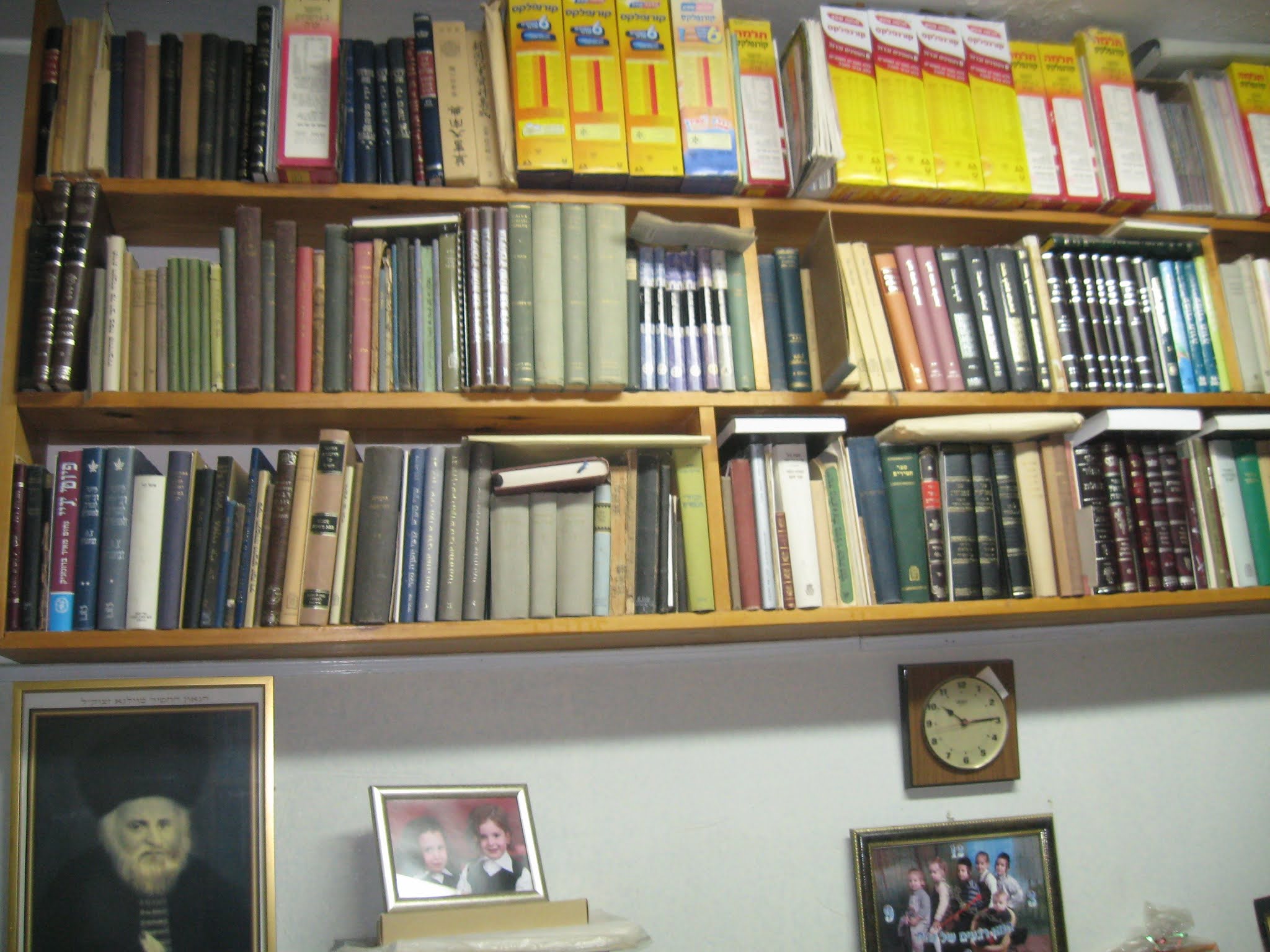
I would then scan some of the material. Other times he offhand did not have anything to add on a particular topic but when looking at a particular sefer I would find a note written on the side or in a paper stored in the sefer that would be related to what I was searching. Other times I would find something else which was of great importance. Rarely did I leave his house empty handed. We both shared a love for seforim and information on a wide range of topics.

Love of Seforim

What drew me to him, and particular developed my relationship with him, was our shared love of seforim. I would update him on new seforim. At times he would ask me to purchase it for him or would borrow my copy for a bit. He told me numerous times how he enjoyed visiting and buying seforim from various shops for many years and that he started collecting when he was seven years old! Now he could not go to stores as he was too old; I got to know him when he was over eighty.

When I joined the editorial board of the journal Yeshurun, I would bring him each new volume as it was printed. Each visit he would ask me to check on the shelf where he kept them, to see if he was up to date and if needed, to update him with any missing volumes. A true lover of seforim, his face would lit up at each new volume. I would then point out some of the articles I thought he would enjoy and he would put in markers to read them.

I always wondered if he read the various volumes of Yeshurun I brought him. After he was niftar, while going through his seforim, I found inserted in one rare book a small paper which he wrote: “for more information about this author see the article in Yeshurun”. Then in a different pen he added another cite from another issue from Yeshrun from a few years later.

This small story also demonstrates a bit of his methodology; he would collect all kinds of information and store them at times in a related sefer and would constantly update these notes.

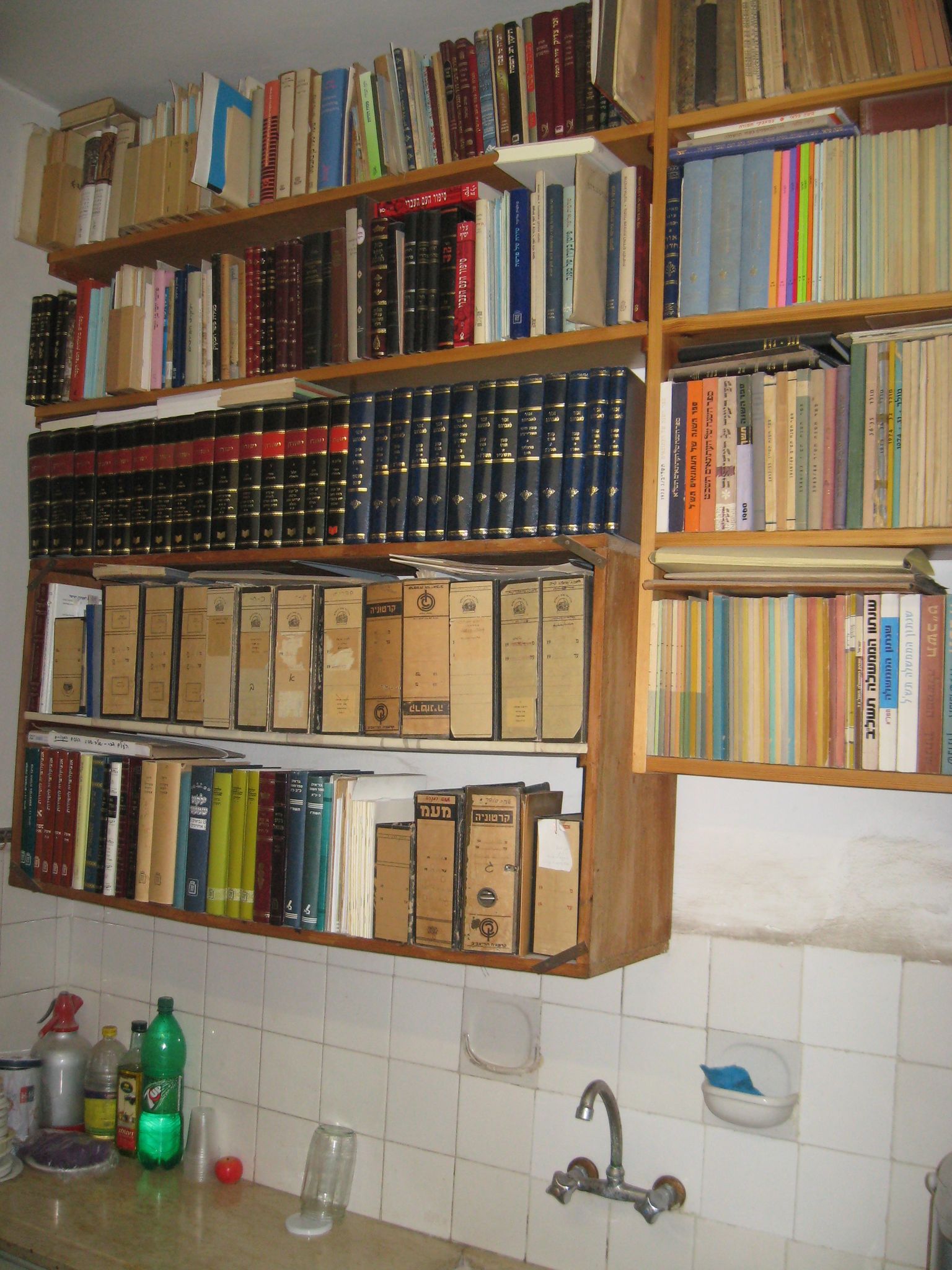
His love for seforim was something unique, the glow on his face when he opened up a new sefer, especially of someone he was into, was simply priceless. He would look carefully at the Shaar and if it was a reprint of an older sefer he would immediately check if they included the front page of the older edition to compare. He had seforim in every space possible in the four rooms of his apartment, including his porch. Many visitors noticed how even his kitchen was lined with seforim!
Dikdueki Sofrim Haskomot

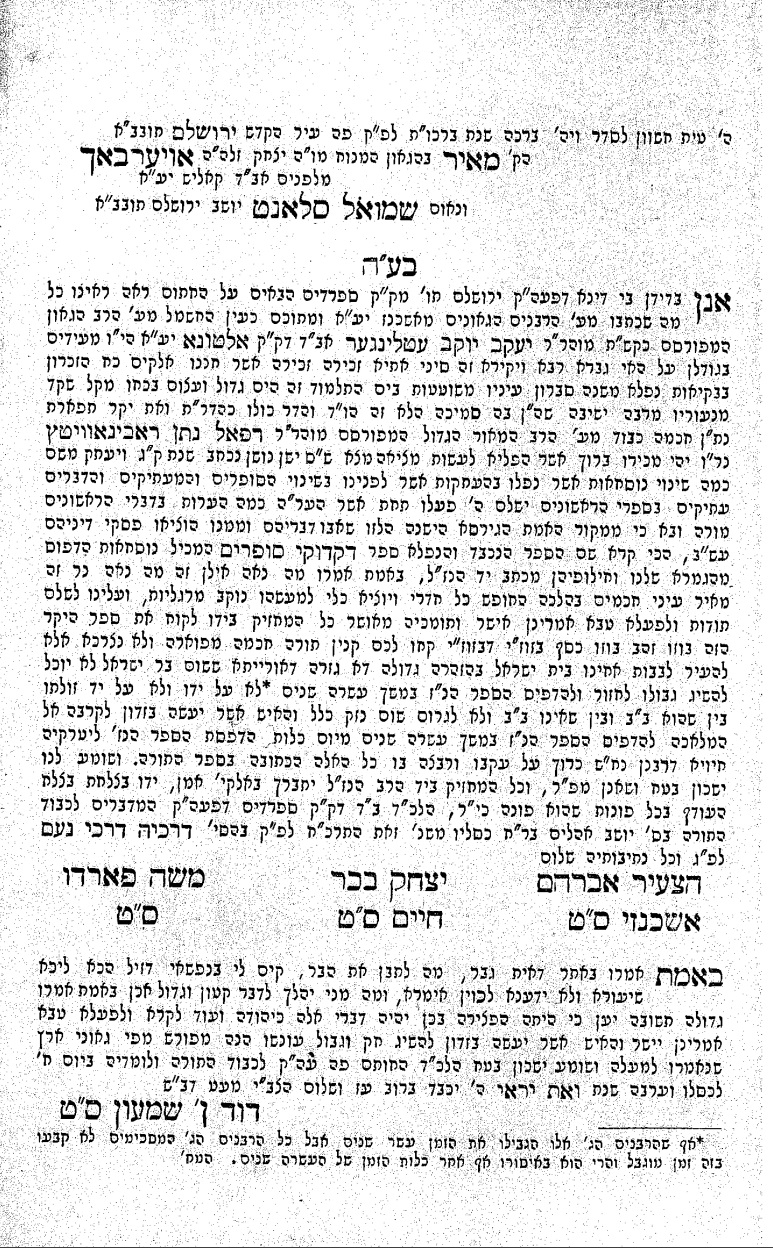
An interesting story happened with me and his library. While working on an article about the Dikdueki Sofrim I was unable to track down some recorded Haskomot that the author R’ R.N.N. Rabinowitz had received for the first edition of his work. I, along with other scholars, had searched numerous copies of the first edition, but with no luck. Late one night, I came to R’ Ashkenazi’s house and mentioned to him my problem. He said “show me the issue inside,” keeping with his custom to take care to always view the source material firsthand (Osiosi Machkemios – a topic he wrote a lot about). I took down his copy of the sefer, and lo and behold it was a first edition with the missing Haskamot! I published these missing Haskamot in my article on the Didukei Sofrim, and attributed this rare and miraculous find to his extraordinary library.

His History:

Where this unique Talmid Chacham came from is simply a mystery. He was born in Yerushalayim and lived in Batei Ungarn. He learned by Rav Yosef Tzvi Dushinsky of the Edah HaChareidis. Originally, his name was Deutsch but, at some point changed it to Ashkenazi. He had four children with his wife who died over forty years ago. Since then, he lived alone in his apartment near some of his children. His son did an excellent job of Kibud Av bringing him food every day and looking on him a few times a day. Yom Tov and Simchos he spent time with his family.

When I and others asked him, who was his Rebbe, he would just smile and say no one in particular. The truth is the Mishnah in Avos states: Knei Lecha Chaver. Aside from the simple peshat, Rashi explains this Mishnah by citing some who say it means via Seforim others commentators explain this as ‘buying a pen’ (see R’ Ashkenazi’s in-depth article on this for sources). R’ Ashkenazi employed all of these methods; his friends and teachers were his seforim and his pen.

R’ Ashkenazi was a short, quiet and unassuming person. Most, having seen him walking on the street, would never believe he was such an erudite Gaon. Many times, R’ Ashkenazi did not express much emotion except to give a pleasant smile and was friendly and polite in conversation. But there were times he got very excited; for example, when he recalled a good story from his younger years or something unique that he discovered years ago. He was very polite and was a real Yekeh; for example as soon as they bentched Rosh Chodesh Kislev his Menorah was already prepared in the window.

R’ Yechiel Goldhaber, a Talmid Chacham and author of numerous articles and seforim had a close relationship with R’ Ashkenazi for many years. He recalled when he was introduced to R’ Ashkenazi for the first time by his father-in-law, he thought to himself who is this simple looking man? He soon learned that this man was a master of all of Torah and swiftly became a close Talmid of his.

Many times, he would tell me he wishes he could come visit my library. In Later years he would spend his Yomim Tovim at his daughter. One Chol Hamoed Succos, when he was over ninety, he made the difficult trek from her house to mine in order to spend time in my library.
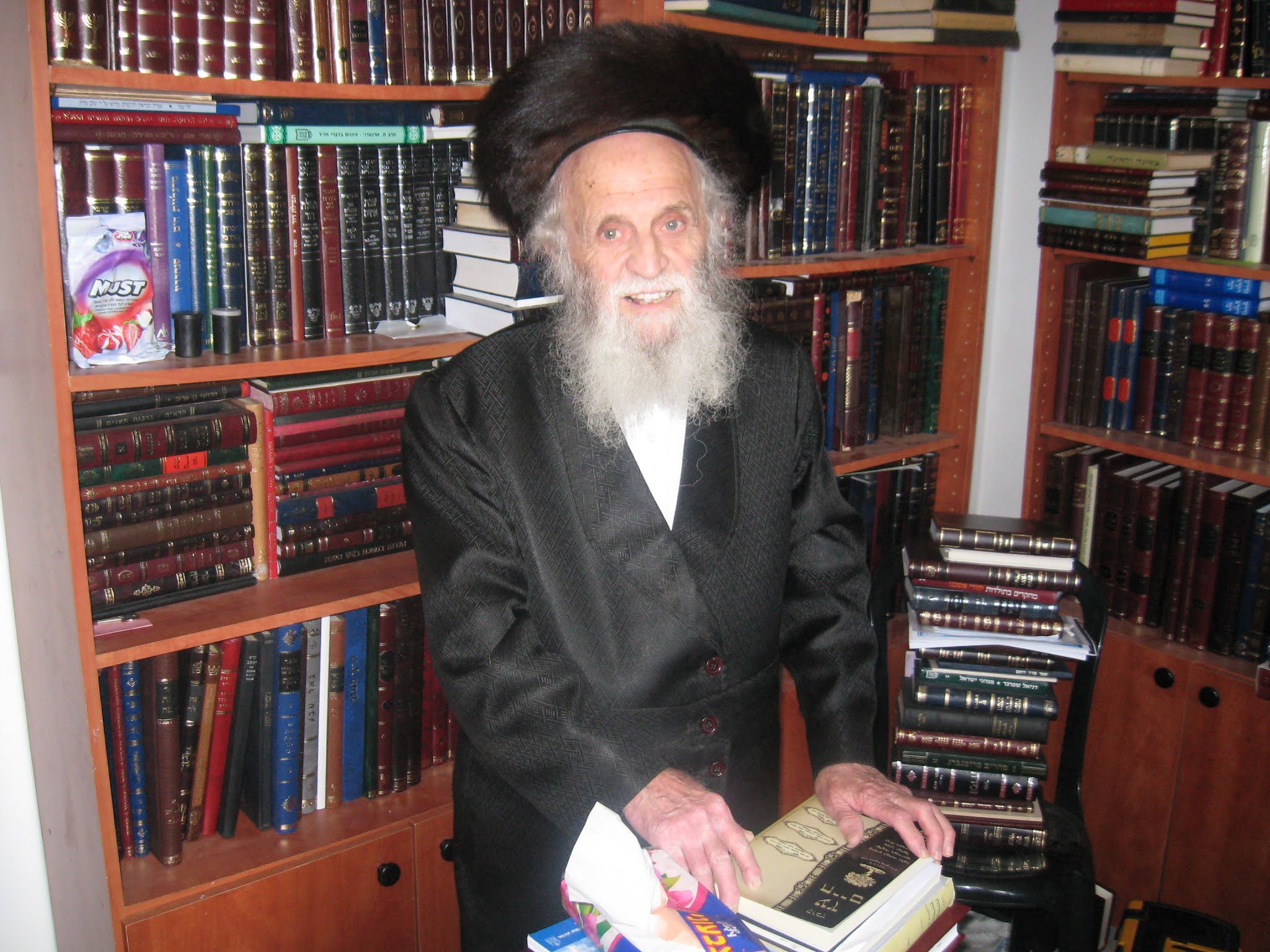
He would love to read everything he could get his hands on. I visited him at many different times of day, even late at night and I always found him learning a sefer – even when he was over ninety. He read everything newspapers, books – he was just curious about everything with an incredible thirst for knowledge.

I recall visiting him a few times when he eighty-five and noticed he was learning the Shelah Hakodosh very carefully. I asked him why (of course he had learned through this sefer numerous times before!) and he responded that someone is reprinting the sefer and asked him to go through the sefer and send comments. He therefore sat down to learn the whole sefer, line by line, after which he wrote a ten-page letter with his comments on the sefer.

Over time, I learned again and again that R’ Ashkenazi personally believed his purpose in this world was to help people with the incredible amounts of information that he had gathered over the years of intense learning. This incredible Middah can be seen in this light; he did not feel that he was the “owner” of this extraordinary wealth of information he had collected, and thus gave very willingly without any conditions. He never asked me to cite him when he gave me some rare source even – although I always told him I would; he just was so happy to help someone else.

He would collect and catalog much of what he read. He had all kinds of systems to file the information he had gathered over eighty plus years of learning. When he would read an important article in a magazine or journal, he would cut out the parts and store them in their appropriate place. He gathered information on thousands and thousands of subjects (not an exaggeration in any form) which had some connection to our rich heritage. What’s more astounding is that R’ Ashkenazi never used a computer or the internet; all of his erudition came about simple by learning through thousands of seforim; a great many of them rare or unknown.

Over the years he helped so many people and for many years after he retired, he would visit the National Library of Israel on Tuesdays, where throngs of people would line up in wait to speak with him about all kinds of subjects.

Many years ago, he received a call from a young chassidish Talmid Chacham living in Monsey who was starting to work on publishing a new edition of the classic historical work Seder Hadorot. He started asking him questions about various issues he had. Over many phone-calls R’ Ashkenazi answered many of his difficulties while training him in proper research and writing skills. This year some volumes finally were published (see here). And this was not a onetime occurrence – he helped so many more people. He used to remark to me that when he was younger so many people would come to visit him – until the late hours of the night.

He was an expert in so many different topics, whether it was the standard ones like Tanach, Chazal, Halacha, Minhag or Chassidus or less commonly studied subjects such as Tefilah, Piyut, Dikduk, Kabbalah, Philosophy, Machshavah, History and Bibliography. In all of these areas his expertise was remarkable.

His Uniqueness

A sample of his bekius; one time I noted that the Maharsha often quotes a “Sefer Yoshon Noshon” and asked if we have any idea which sefer this is? He immediately responded that he found it usually refers to R’ Todros Abulafiah’s Otzar Hakavod.

His incredible Bekius was bolstered by an almost photographic memory, as the following story demonstrates. Once someone used the Bar-Ilan Responsa search engine to locate a passage in the Tana DeBei Eliyahu to no avail. He went to ask R’ Ashkenazi who immediately told him where the passage could be found. Checking the Bar-Ilan text, it was discovered that when the sefer was being entered into their database the passage in question had been mistakenly omitted. I first heard this story from someone else, so to make sure it was accurate I asked him about it and he confirmed it. A similar story happened with him and a passage from the Shut Chasam Sofer.

A few years back a friend was working on publishing out an esoteric Rishon on Mesechet Megillah. He thought no one ever heard of this author and randomly mentioned this to R’ Ashkenazi – without batting an eyelash – replied “of course, and one can find material by this author in the work of Rav Shlomoh Alkabetz on Megillas Esther (Manos Halevi). The fellow was stunned in elation; he had just been gifted new and important material for his project.

This remarkable Bekius which even beat out computer search engines, was just one aspect that made him remarkable. He would receive numerous calls and letters from all over the world from people of all walks of life seeking his assistance in tracking down a statement. He had an incredible knowledge of all of Chazal. I do not just mean the “standards”; Bavli, Yerushalmi and Midrash – even all the numerous and very often almost unknown Midrashim printed over the years. He was also expert in what is known as the lost Midrashim. Over the years many Midrashim we had were lost but some traces of them can be found in various Piyutim, cited by Rishonim or in other obscure places. Through his incredible amounts of learning and his phenomenal memory he was able to recall so much in this field.

To illustrate this with some samples. A few years back someone who was editing for publication a never before printed pirush of a Rishon on Avos came across a few statements in the name of Chazal. This person, a Talmid Chacham in his own right and familiar with tracking down such material, could not locate sources for these statements. Immediately he penned a letter to R’ Ashkenazi. A few days after he received a letter from R’ Ashkenazi with various incredible sources for his questions. This was a very common occurrence.

Piyut, Tefilah and language

Earlier, I mentioned his expertise in Piyut, Tefilah and language. A bit of background is needed to explain this. Rabbi Joseph B. Soloveitchik, when describing Rabbi Elazar Hakalir’s greatness, (Koren Mesorat Harav Kinot (pp. 386-388) wrote the following:

The piyutim of Rabbi Elazar HaKalir, including his kinot, serve two purposes. The first is limmud, learning. Every sentence of the piyut quotes m’aamarei Chazal… The second purpose is tokhaha, rebuking the people for their misdeeds and instructing them in the proper way to act. These piyyutim deal with… repentance… acknowledgment of God’s justice. The shali’ah Tzibbur was not merely a chazan…, but was one of the great scholars of the generation who was the principal… moral critic of the people… Rabbi Elazar HaKalir was (also) a master of the Hebrew language and very creative in his use of Hebrew. If not for him, modern Hebrew could not have come into existence. Before HaKalir, the Hebrew language was very rigid. For example, the noun and verbs were fixed in their form… But HaKalir made a critical contribution to the development of the Hebrew language by endowing the language with flexibility… Rabbi Elazar haKalir’s piyutim served two purposes: limmud, study… As for the element of study, one of the dimensions of HaKalir’s piyyutim is that they are compilations of the statements of the sages. Most of us, who are expert in neither Hebrew nor aggadot Hazal, find HaKalir’s corpus of piyutim boring. But it is not boring at all; it is like a gold mine. His piyutim for Yom Tov explain the essence of the Yom Tov. The midrashim concerning Sukkot are replete with information about the sukka, etrog and lulav, and all the explanations in the Midrash, all the ta’amei sukka, the reasons for the sukka, all of the ma’amarei Hazal, are together in the HaKalir’s piyutim for the first day of Sukkot… If one were to study carefully and thoroughly the piyutim of Rabbi Elazar HaKalir for Rosh HaSahana, Yom Kippur, Sukkot, and Pesah, one would find many applicable halakhot and the entire pertinent Midrash, including many midrashim that are unknown to us from any other source.

Rav Ashkenazi was an expert on everything related to Tefilah and Piyut. He somehow read it all and retained it. But in addition, he was able to use his expertise in Chazal and Hebrew language to understand it on a much higher level and as a result was often contacted by the world experts on Tefilah and Piyut for his assistance. These requests came from experts such as Professor Shalom Speigel, Chaim Schirmann, Avraham Haberman, Ezra Fleischer and Daniel Goldschmidt who constantly sought his assistance while working on their Tefilah and Piyut related projects.

In an interview with Ami Magazine printed a few years back, Professor Shulamit Elitzur mentioned:

“there’s another amazing thing I find when doing research. I am constantly coming across midrashim that were lost to the ages… example, everyone knows that Haman was referred to as ‘the Agagi’ because Shaul allowed Agag to live one extra night, which allowed Haman’s ancestor to be born. However, the earliest makor we find in writing in the 16th century; this fact was discovered by Rav Shmuel Ashkenazi of Yerushalayim. But I found a ktav yad of a piyut about Purim that describes this very story and explains how Haman’s ancestor was born, which gives us a source from 1,000 years earlier! And there are many similar examples of lost midrashim being kept alive through unknown piyutim.”

R’ Ashkenazi wrote some articles on Piyut and Tefilah, but we have found much more among his papers and hopefully if I can raise enough funding all his fascinating material on Tefilah will come to light.

When the important Siddur Ezer Eliyahu (sponsored by his late friend Yeshaya Vinograd) was first printed, one can see R’ Ashkenazi’s name in the introduction, thanking him for his assistance (he assisted them for some of the later additions) and his great knowledge in this field.

I mentioned that he had an incredible knowledge of Dikduk and the Hebrew language and used it towards better understanding Piyut and Tefilah. He also authored articles on these subjects and in 1967, when reviewing an important dictionary, wrote a long article demonstrating this very point – and article that garnered much praise. He was very proud of this essay and mentioned it to me many times. A few years ago, I reprinted it with additions he had made in his own copy and a nine-page topical index.

One of the ways he developed this expertise was via learning Tanach so many times. He was an expert in Tanach and all the Rishonic commentaries (including the unknown ones); he even authored a small book of Riddles of Tanach.

He also used his extraordinary skills to become a master editor. However, in addition to the work he was born with an incredible innate sensitivity for text and language which made him one of the best editors out there. For many years he worked at the famous publishing house Mossad HaRav Kook, editing various works. He told me more than once how there was an expert there who would brag (jokingly) that after he read through an article it was impossible to find mistakes. The only person who could still find mistakes was R’ Ashkenazi. He had razor-sharp vision and could immediately spot a mistake.

Many times, I would bring an edited piece of mine to read. As soon as I put it down in front of him, he would take out a red pen and start marking it up and say to me “are you sure it’s been edited?”. He told me he had to mark up everything before he could read it properly, errata were so painful for him to see that it was hard for him to read something on Shabbos! He told me he was punished; when his work Alfa Beta Kadmita de-Shmuel Zeira came out, although he had edited it numerous times, he still found mistakes.

During his learning over the years, he found many people, great Gedolim as well as famous academics, had made mistakes, sometimes quite basic ones. At one point he printed two articles about this. However, he prefaced his articles that his intent was not to mock those who erred but to vividly illustrate that people are human and mistakes will happen. He was a master of humility and never held it over anyone that they did not know what he knew.

He was not only a great expert in all aspects of the Hebrew language but was an expert in Aramaic and Yiddish, both of which he displayed in various publications of his. Related to his expertise in Aramaic, which is very important for learning Gemara, is a very unique essay which he authored related to the Rambam as a translator of the Gemara. One of the world experts in old Yiddish is Professor Chava Turniansky, who has noted on many occasions that one of the people who have always helped her from her days as a student, was R’ Ashkenazi.

Related to this was another talent of his, which at first appears trivial; he was an expert on acronyms. This led to authoring a thesaurus of acronyms together with Dov Yardan, called Otzar Roshei Tevot, with a multitude of obscure and often almost impossible entries. His sensitivity to the text and work in the field of editing drew him to this field. Anyone who learns a lot, especially older material comes across abbreviations, and many times they cause great difficulty in understanding various passages. Abbreviations were employed in writing, sometimes as mnemonic devices and other times simply to save on printing costs. But over time many meanings were forgotten. This work is an extremely useful tool for solving this issue.

Ghostwriting

One day I was in a used bookstore and I noticed a small sefer titled Harif Umishnaso about the Rif. I recalled that this title appeared in the list in beginning of his work, Alfa Beta Kadmita de-Shmuel Zeira which listed out the various works he helped with over the years. I asked R. Ashkenazi if it’s worth buying and what his connection to the book was, as a different name appears on the cover.

R’ Ashkenazi replied “I can tell you it’s an important sefer and worthwhile to buy.” I noticed he was hesitant to continue the conversation. He then said “I will tell you something I did not tell anyone in over forty years – I wrote the whole sefer from beginning to end and it was one of the most important works I ever wrote.” The original plan was to for him to write a series of biographies on various Rishonim – in this book he already references a work on the Ri Migash – but due to a lack of funding this series was discontinued. However, not all of this remained unpenned; he wrote numerous entries in various encyclopedias. It turns out that R’ Ashkenazi had over fifteen different pen names!

I would like to elaborate on this work a bit more and thus cast further light upon R’ Ashkenazi’s uniqueness and greatness. The Rif’s Halachic work is one of the most important sources in Halacha, but what exactly makes it so unique has remained a mystery. R’ Ashkenazi sought to answer this question by collecting and collating all the authentic information we have about the Rif, from the Rif and from other Rishonim. He went through the Rif carefully examining what he did to each Gemara evaluating if remarks or material was added or not and to figure out why, allowing the reader to begin to understand the Rif’s significance. R’ Ashkenazi’s writing methods were honed to precision. He had an uncanny ability to utilize every piece of information without writing an extra letter and assemble it all in perfect order sans speculations commonly found in historical works. At times one does not need grand theories to understand something; just seeing all the known material in proper order helps one understand things. The wealth of material that Rav Ashkenazi commanded in producing this work is outstanding; this book was written in 1967 – long before any of the various search engines used today.

Haggadah Sheleimah

Similar to this is another work by R’ Ashkenazi, Haggadah Sheleimah. I hope to publish an article about this work in the near future, including the numerous additions R’ Ashkenazi found over the years and kept in his files. This work is highly unique for the following reasons. The collected bibliographies by Avraham Ya’ari and Yitzchak Yudlov bear witness to thousands of Haggados written throughout the generations in a multitude of styles, such as Pilpul, Peshat, Kabbalah, Derush and more. However, until 1955 there was no one work on the Haggadah which collected all the sources for each and every Halacha and minhag related to the Seder night. There was no volume which dealt with the various manuscripts of Geonim and Rishonim and at the same time to deal with the exact text of the Haggadah. Haggadah Sheleimah set out to fill those needs, and at the same time offer a running collection of Pirushim culled from over fifty different commentators focusing just on Peshat. In order to produce such an exacting work, it’s not good enough to just be a talented writer, one must also possess a keen understanding of all the material and relay this with incredible clarity. R’ Ashkenazi was such a person; one who sought out the simple Peshat, able to put this myriad of information together in so beautiful a fashion, and with tremendous clarity. His work in Haggadah Sheleimah is so clearly organized and always straight to the point that it is no wonder that to this day Haggadah Sheleimah remains a classic in both the Torah and Academic worlds.

Rav Ashkenazi once explained to me that one has to write precisely and to the point, not lengthily. He said he believed that one of the reasons Rashi’s works survived was due to his concise way it was written, as opposed to various works of Geonim which did not really survive as they were written in a much lengthier format.

Why didn’t he publish his material?

A few years ago, a partial bibliography of his writings was printed in his Alfa Beta Kadmita de-Shmuel Zeira. The listing is close to three hundred articles and seforim that he wrote or assisted in on some level. He started writing under various pen names over eighty years ago. The background to the publication of this volume was, as I mentioned previously, R’ Ashkenazi had been writing and collection information on thousands of topics for over eighty years. Unfortunately, he did not print much of what he gathered. The main reason for this was R. Ashkenazi’s “weakness”; he demanded incredible levels of perfection from himself. Although he strived for great perfection, nonetheless he stressed to me numerous times that he was mistaken in that approach and that I should not follow in his path. In his words it is better I print my work to the best of my current abilities and that worse comes to worse you can always reprint with additions and corrections. Over twenty years ago, R’ Teflinsky somehow convinced R’ Ashkenazi that his material needed to be printed. Together they began compiling some of his material for print, resulting in a volume over eight hundred pages!

After that experience both R’ Ashkenazi and R’ Teflinsky stopped, with no plans of continuing this project. A few years later my good friend, R’ Yaakov Yisrael Stahl and myself were able to convince him to continue. R’ Stahl took upon himself the daunting task to prepare the material for publishing; since, than three more volumes were printed.

Here is a small video clip of R’ Ashkenazi, when we brought him copies of the second and third volumes of his writings, ten years ago.

The topics that these works deal with cover, on some level, virtually everything; sources for expressions and idioms, for minhag, Halacha, the evolution of famous stories, bibliography, corrections of authors’ errors, encyclopedic style information on thousands of topics culled from thousands of seforim – many of them very rare or unknown. (A PDF of the Table of contents of this work is available upon request).

His Letters

Earlier I mentioned the story of someone who wrote him a letter seeking help. This was not a one-time occurrence. He authored well over a thousand such letters in response to such questions. Some requests were for sources to various Halachos or Minhagim, numerous others are various queries related to out rich literature. R’ Ashkenazi always invested his time to answer properly and clearly. Recently, R’ Stahl and I collected these letters for publication and the result is a three-volume set, available for purchase.

Over seventy years ago he purchased a typewriter which he used until his passing.

In an article written by the late Gaon R’ S. Deblitsky, he writes out various proper actions a Rav should “observe.” One of them is to respond to people who write to him, whether the issues are big or small. R’ Ashkenazi was very careful to try to respond promptly. Many people would send him their seforim after they were printed asking him for his comments. He would usually respond with a multi-page letter, beginning by thanking the author for sending it to him, then listing out some criticisms, usually written delicately, while adding all kinds of comments. He always tried to look to say something positive. Some people who heard of him through various channels over the years contacted him before they printed their works. Many times, he would write a collection of comments and corrections to such works. A sample listing of some of those works that benefited from him before going to print include recent editions of: Sefer Zechirah, Kav Hayasher, Sefer Hachayim and many others.

Thanks to the efforts of my special friend Menachem Butler, various academics wrote some praises about the significances of these letters; to partially quote one letter written by the esteemed Professor Shnayer Z. Leiman:

Reb Shmuel was

“bibliographer, bibliophile, and book collector, and his encyclopedic knowledge of all of Hebrew and Yiddish literature remains unparalleled in our time.” His collected writings are an intellectual treasure trove, “covering a wide range of topics in the field of Jewish Studies. Aside from his scholarly distinction, R. Shmuel Ashkenazi wrote in an elegant Hebrew with its own special charm. Not only did he advance discussion, but he did so in an aesthetically pleasing manner. Let it be said openly: this… set will enlighten every reader and will significantly advance scholarship. Anyone concerned with advancing the cause of quality Jewish scholarship will take special delight in the publication of these volumes…During his lifetime [Ashkenazi] corresponded with the greatest Jewish scholars and bibliographers the world over. They wrote to him, for only he could solve the countless historical and literary problems that stumped them…”

Another person to whom Menachem Butler reached out to via his numerous contacts was former editor of Mekizei Nirdamim’s journal Kabez Al Yad, Professor Shulamit Elizur of the Hebrew University of Jerusalem. In her aforementioned interview in Ami Magazine several years ago she said this:

“I am unequal to the task of adequately singing the praises of Rabbi Shmuel Ashkenazi, an erudite bibliophile. His familiarity with rabbinic writings from throughout Jewish history is unparalleled, and he is well-versed in the research literature of academic Jewish studies as well. I first met Rabbi Shmuel Ashkenazi through my teacher, the late Professor Ezra Fleischer. Prof. Fleischer, who was one of the greatest scholars of all time, would often chat with Rabbi Ashkenazi on scholarly topics, and he was careful to send Ashkenazi every article or book he published, knowing that in return he would receive enlightening comments on his work. When I began my own research, Prof. Fleischer instructed me in turn to send my publications to Rabbi Ashkenazi, and I too was privileged to learn a great deal from his comments. It once happened that I was searching for a particular midrashic theme which was alluded to in a liturgical poem (piyut), and although I consulted the leading scholars of Jerusalem who responded that it was a well-known homily, I was unable to locate its specific source. In my hour of need, I turned to Rabbi Ashkenazi, who immediately gave me several references. It emerged that every one of these references post-dated the piyut by almost a thousand years, and that this ancient tradition alluded to in the poem had been transmitted orally for that long period before being committed to writing in the later midrashim. Rabbi Shmuel Ashkenazi’s correspondence is a tremendous resource of Torah and scholarship. Every paragraph encapsulates a great deal in just a few words, and sometimes even with allusions whose explication require deep learning.”

Here is a short letter from Professor Gershom Scholem to R’ Ashkenazi:

Expressions and famous stories

In his writings some of the topics of these are about tracing expressions or the evolution of famous stories. Based on his knowledge, he was able to contribute a lot to these areas even editing some works on these topics.

One such story related to a supposed legend of a portrait of Moshe Rabbeinu which caused a great controversy over a century ago. In 1830, Rav Yisroel Lipschutz started printing his magnum opus, a commentary on the Mishnah titled Tiferes Yisroel. In the section on Maseches Kiddushin first printed in 1843, he brings a story about a king who lived in the time of Moshe, who, after hearing incredible things about this great leader, hired a painter to paint a picture of him so he could have his features analyzed by experts. The people who analyzed the picture reported that the person pictured was evil. The king went in person to visit Moshe Rabbeinu in the midbar and asked him how was it that an analysis of his pictures showed him to be of such wicked character. Moshe told him that the analysis was indeed true; however, after much work, he changed his character and became the great Moshe Rabbeinu.

In 1894 a booklet by the Vilkomir Maggid was printed railing against this story. This booklet presented numerous sources stating that Moshe Rabbeinu was born a kadosh and it was unthinkable to print such a story about him. Indeed, this story was censored out of the 1956 edition of the Tiferes Yisroel. In truth, this ancient legend can be found in various sources and in regard to different luminaries, some claiming it about Aristotle others, Socrates. In fact, R’ Ashkenazi documented it was long used in various Musar and Chasidus sefarim cited as an important lesson that one can change one’s born nature for the good, but not that it actually was true about Moshe Rabbeinu.

Another such story relates to a famous legend about the site where the Beis Hamikdash was built. Told in short, two brothers inherited a field, one brother had a family one did not. At the end of the harvest they divided up the wheat equally. That night the childless brother felt bad for his brother with a large family and said to himself “it’s unfair that while my brother needs more than I, we shared equally”, so he brought over from his pile to his brothers. The other brother thought that since his brother was childless, he should have a larger share of the crop, as consolation, so he added from his share to his brother’s. In the morning each brother realized their piles remained the same and this went on for two more nights. On the third night they met, realized each of their intentions was out of deep consideration for the other and hugged. Numerous people have searched for the early sources for this story. I decided to ask R’ Ashkenazi if he had any material on the subject. He found his file on the story and within was a letter from R’ Yudlov who had been asked by someone in the Education Ministry for the sources on this story. R’ Ashkenazi traced its first appearance in print to 1832 and from there he traced it to other sources.

Bibliography

I would like to conclude with just one more area in which R’ Ashkenazi was truly a legendary master: Bibliography. For many years, R’ Ashkenazi worked in the (now) National Library’s Bibliography of the Jewish Book Project. He also contributed to some of the important bibliographical works and journals written in the past century such as Kiryat Sefer, Otzar Sefer Haivri (Vinegrad) and Sifrei Yerushalyim Harishonim.

A few years back, while working on an article about the origins of eating Hamantaschen (see here), I found an important article from Dov Sadan containing sources on this topic. One of the sources was the interesting, controversial work Machberet Emanuel. I had a nice conversation with R’ Ashkenazi about this work – he had helped Dov Yardan prepare a critical edition of the work and even wrote a long book review on it (which he said he received a lot of Kovod for).

He mentioned two points of interest which will serve as a sample to some of his expertise. One, he noted that Emanuel of Rome wrote a commentary on sefer Mishlei. Interestingly, the preface to the Mishlei commentary sefer is signed Emanuel son of Yaakov, whereas Emanuel’s father’s name was Shlomo. Some have noted that this discrepancy and explained it is a mistake. R’ Ashkenazi suggested this was not a mistake, rather an intentional typo intended by the author to hide his connection to his controversial Machberes Emanuel. The second point he made to me was how the Chida writes in Shem Hagedolim that the best commentary to learn on Mishlei that by Emanuel of Rome. R’ Ashkenazi said he checked into the words of the Chida and he learned through all the works on Mishlei and concluded that the Chida was quite correct. He once had a dream to write a whole work on Mishlei, he even started to pen his comments in a special notebook, but the plans never worked out.

One final last story about R’ Ashkenazi’s bibliographic acumen. In 2009 my special friend Dr. S. Sprecher z”l (about him see this article on the seforim blog here) wished to reprint and distribute a small work called Tshuvah Be’Inyan Kriat HaKetubah, in honor of his son’s upcoming wedding, under that assumption that, just as the title page and the publisher’s introduction indicated, it represented an actual Halakhic Responsum issued in 1835 by the Chief Rabbi of Bialystok, one Rabbi Nechemiah. Sprecher wrote:

However, our close reading of this Tshuvah led us in an entirely different direction. To us, the work’s style manifested clear Maskilic echoes, and its arguments rejecting the binding nature of centuries-old Minhagim were clearly not in accord with 19th–century Halakhic thought. Our reaction was that the work must certainly be pseudepigraphal and could not have arisen from the pen of the Chief Rabbi of Bialystok. In fact, a quick perusal of the reference literature demonstrated that there never was any Chief Rabbi of Bialystok named Nechemiah.

At an impasse, we reached out to Professor Shnayer Z. Leiman, who suggested that the scholar most likely to solve the mystery would be the doyen of Israeli bibliographers, Rabbi Shmuel Ashkenazi. We were rewarded thanks to the tireless efforts of Eliezer Brodt who, on our behalf, pestered the aged Jerusalem sage until he successfully unmasked the name, but not quite the identity, of the author. Rabbi Ashkenazi concluded that the first line of the introductory poem that prefaced the Halakhic query contained the acrostic – “Meir Ish-Shalom”. (His initial contention was that this could not be the noted 19th–century Viennese scholar, Meir Ish-Shalom, because his heretofore known literary output began only some five years later, with his publication of the Sifre in 1864.)

Once Rabbi Ashkenazi had provided the key to the author’s name via the acrostic, it became apparent that all along the title page had been proclaiming that very same message. Let us recall the passage in Bavli Eruvin 13b where it is recorded that the celebrated Tanna, known to us as Rabbi Meir, was actually named Nehorai, according to one opinion; or alternatively, that both Meir and Nehorai were laudatory appellations reflecting his enlightening wisdom, whereas his actual name was Nechemiah. Recall also that the query first originated with Rabbi “Shalom” of Novgorod, and the word “shalom” appears twice more on the title page and is highlighted by the placement of a circle above one of its appearances.

In his copy of this work that Dr Sprecher printed for the Chasunah which I brought him, I found this paper inside:

A few weeks after R’ Ashkenazi’s Petirah the national library held a session devoted to him where Professor Zev Gries, Professor Chava Turniansky and R’ Yechiel Goldhaber spoke about him (here is a link to the whole session). I too had the privilege of being interviewed about him that night (Here is a link to my interview).

Publication of his writings

Last year, immediately after Rabbi Shmuel Ashkenazi was niftar I, along with my special friend Menachem Butler, initiated a campaign to raise funds to publish R. Ashkenazi’s letters via the Seforim blog. Baruch HaShem, and thanks to the help of some readers, enough money was raised to go to print and in the beginning of this past January copies of the book, coming in at over 1,700 pages, (three volumes!) arrived as announced (here). The Letters sold out in a few days. A second edition was printed right before Pesach (see here). Currently copies of the second edition are available for sale.

Future volumes

Already during the Shivah, R’ Stahl began going through the materials of R’ Ashkenazi to sort out what materials are print worthy.

Here is a picture of R’ Stahl taken during one such session which a friend of his humorously put side by side a famous picture of Solomon Schecter when working on Geniza documents.
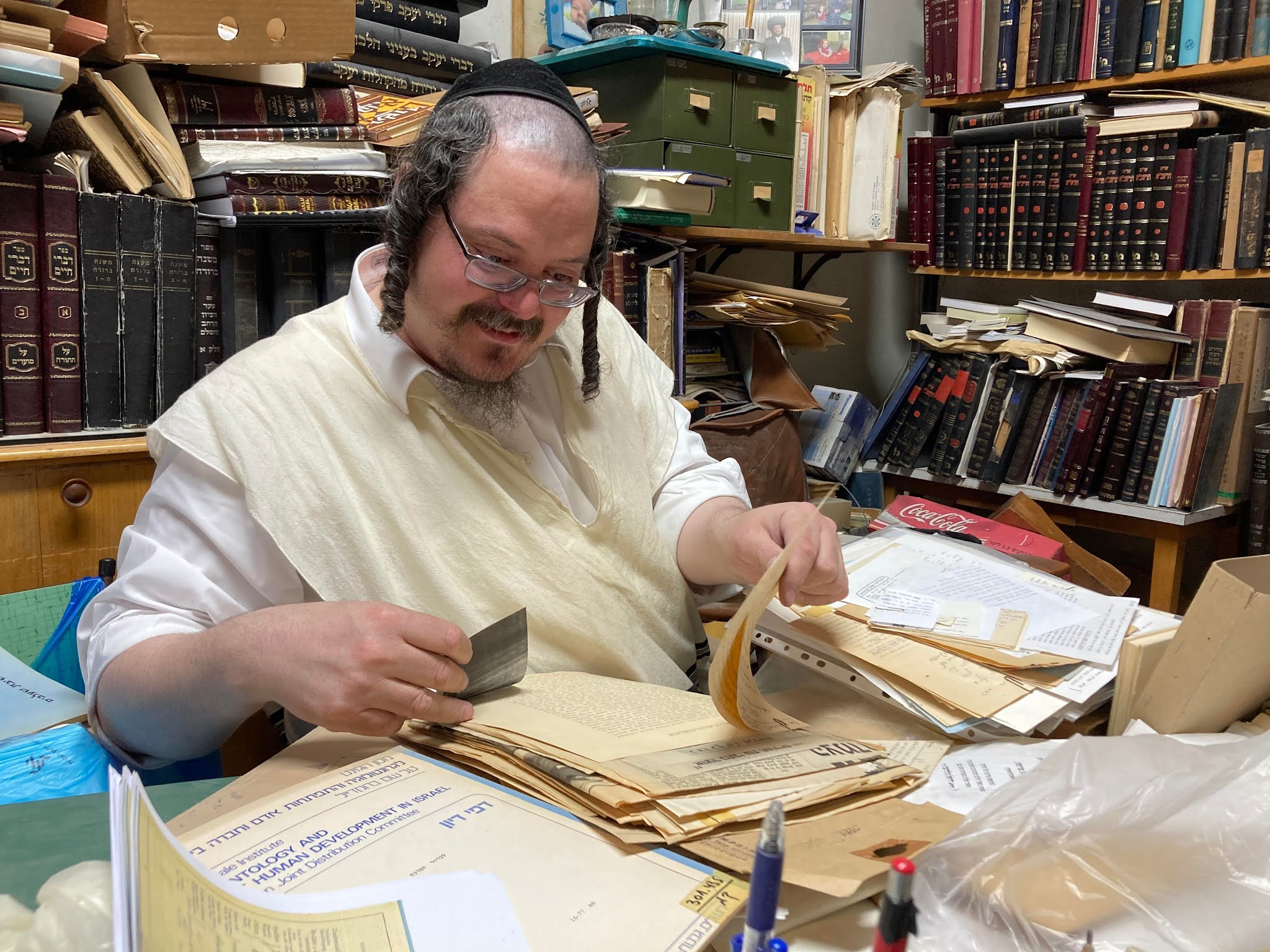
We never imagined we would find so much print-worthy material that we were not previously aware of; at least eight volumes’ worth of prepared writings which we hope to print. Currently, we are in the process of categorizing the material. Among the topics are: Tefilah, Minhag, articles on Seforim and authors – and much, much more. As we sort and scan R’ Ashkenazi’s legacy, some material is already being sent out to be typed up for publication. Each of the above endeavors comes at a price, and every contribution to the cause helps greatly. IY”H in the near future I will make a more formal announcement with precise details regarding the works slated for print. Anyone wishing to help with funding this project can contact me at Eliezerbrodt@gmail.com


Soloveitchick’s Act of Selfless Heroism, 1785

Soloveitchick’s Act of Selfless Heroism, 1785[1]
Michael K. Silber, New Haven
Michael K. Silber is the Cardinal Franz Koenig Senior Lecturer in Austrian Studies in the Department of Jewish History and Contemporary Jewry at Hebrew U.  He has taught at Harvard, Stanford and the Central European University and during the 2013-2014 academic year, he is the Jacob Perlow Visiting Professor of Judaic Studies at Yale. He also serves as the Chair of the Board of the Central Archives of the Jewish People, Jerusalem. His researches focus on the Jews of Central Europe, Hungary and the Habsburg Empire in particular, from the end of the seventeenth century until World War I and he has written on a variety of topics in particular on enlightened absolutism, Jewish military service, Orthodox Judaism and Jewish nationalism. Lately, he has also been intrigued by the history of the Jewish beard in modern times. 
“In 1761,” we read in Dov Levin’s entry on Kaunas in The YIVO Encyclopedia of Jews in Eastern Europe,” there were violent attacks on Jews and their property, and Jews were once again expelled from the town. This time, Slobodka’s rabbi, Mosheh Soloveichik, responded by suing the municipality before the royal court. The case was not resolved until 1782 after intervention by Karol Stanisław Radziwiłł (1734–1790). In the end, the city’s mayor, who had directed the events, was sentenced to a short imprisonment, and the municipality was required to pay restitution and an indemnity to the Jewish community. Megilat Kovno, a recounting of the story, was read annually on Purim in the old study hall—the first place of prayer established in Kovno.”
Referring to this incident, Shulamit Soloveitchik Meiselman wrote that Moshe Soloveitchik and his brother Abraham, the sons of Isaac, were honored by the Jews of Kovno: Moshe by being appointed rabbi of the town, and his brother Abraham elected as the head of the community. “Because of the family’s firm stance against the Polish government’s oppressive decrees, the name Soloveitchik became known throughout Eastern Europe. It was identified with honor, respect, aristocracy, strength of character, philanthropy, courage, and fearlessness.” The Soloveitchik Heritage: A Daughter’s Memoir (Hoboken, NJ, 1995), p. 43.
While the skeptical may dismiss this high praise as no more than filial piety, I came across recently an unprejudiced testimony by happenstance, a contemporary report from 1785 published in a Viennese weekly that records an incident that involved the lesser known of the two brothers, Abraham. It testifies to just these virtues and made the name Soloveitchik known if briefly not only in Eastern Europe, but in lands far beyond. This may very well be the first time that the family name appeared in print, albeit in German and mildly distorted.

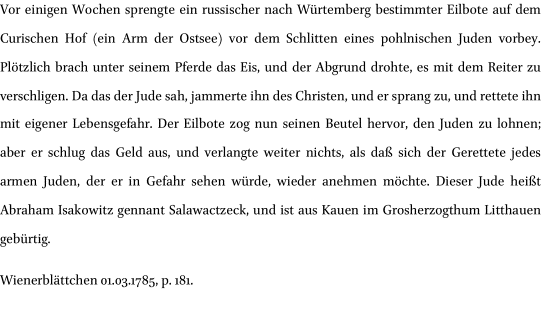
A few weeks ago, on the Courland coast (a bay of the Baltic Sea), a certain Russian courier on route to Würtemberg burst before the sleigh of a Polish Jew. Suddenly the ice broke under his horse and the abyss threatened to swallow horse and rider. The Jew saw this and heard the Christian wailing, he jumped in and saved him at the risk of his own life. The courier then pulled out his bag to reward the Jew, but he turned down the money, and asked for nothing more than that every poor Jew that the rescued man would see in danger he would take under his wing. This Jew, Abraham Isaac’s son, is called Soloveitchick and is a native of Kovno in the Grand Duchy of Lithuania.


Wienerblättchen 01.03.1785, p. 181.

[1] On the eve of the inauguration of a scion of the family, Peter Salovey (http://www.tabletmag.com/jewish-arts-and-culture/books/119176/soloveitchik-jesus), as the 23rd president of Yale University.


Elliott Horowitz – Modern Amalekites From Adolf to Avigdor

In a previous post at the Seforim blog, Prof. Elliott Horowitz of Bar Ilan University and co-editor of Jewish Quarterly Review, described Isaiah Berlin on Meir Berlin (Bar-Ilan) and Saul Lieberman [see here].  This is his fourth contribution to the Seforim blog. We hope that you enjoy.
Modern Amalekites: From Adolf to Avigdor
by Elliott Horowitz
     Well before the outbreak of World War II the Nazi regime in Germany came to be associated by many Jews with Israel’s ancient arch-enemy, Amalek. Perhaps the first to do so was the noted historian Simon Dubnow who in a 1935 (Hebrew) letter from Riga to his disciple Simon Rawidowicz bemoaned the recently promulgated Nuremberg Laws, and then prophetically exclaimed “We are at war with Amalek!” During that same decade some ultra-Orthodox European rabbis were using the epithet of “Amalek” with reference to their more secular coreligionists who adhered to such modern ideologies as Communism or Zionism. This was true, for example, of the great Talmudist R. Elhanan Wasserman, one of the leaders of Agudat Yisrael, who like Dubnow was to meet his death in 1941 at the hands of the Nazis. Wasserman, who had studied in Volozhin and Telz before joining the kollel of the Hafetz Hayyim (R. Israel Meir Ha-Kohen, 1838-1933), cited the latter’s confident opinion that the Soviet Jewish communists (known as the Yevsektzia) were “descendants of Amalek.” Ironically, his even more ultra-Orthodox Hungarian contemporary R. Hayyim Elazar Spira of Munkacz (1872-1937) included among the ranks of modern Amalekites not only the Zionists, but also the members and leadership of Agudat Yisrael.[1]  In September of 1941 Joseph Hertz, the Chief Rabbi of (what was then still) the British Empire, delivered a thundering sermon at a public “intercession service” held on the ruins of London’s Great Synagogue, which had just been destroyed by German bombs. Drawing upon the previous week’s scriptural reading from Deuteronomy 25, which is also the “additional” reading for Shabbat Zakhor, Hertz referred to Nazi Germany as “Amalek’s latest spiritual descendant; he fears not God; he closes the gates of mercy on those who cannot resist his might.” The Chief Rabbi stressed that God’s war with Amalek was not to be left in divine hands, but was to be “carried out by…men and nations filled with an endless loathing of Amalek and all his works and ways.” He also praised those Jews who had shown support for “our beloved country in her struggle to blot out the memory of Amalek from under the heavens of the Lord.”[2]  Hertz, who had studied at New York’s City College (where he received a gold medal for English composition) before attending the Jewish Theological Seminary of America (of which he was the first rabbinical graduate), was not the first British clergyman to portray the Germans as contemporary Amalekites. Early in October of 1939, shortly after his arrival in Jerusalem to serve as chaplain of St. Andrew’s Scottish Church (and a month after Germany’s invasion of Poland), Dr. Norman Maclean chose as the text for his Sunday sermon the account (in Exodus 17) of Amalek’s attack at Rephidim. The prayer by Moses on the adjacent hill-top, asserted Maclean (1869-1952), who had earlier served as minister of St. Cuthbert’s Church in Edinburgh, “described our duty in the grim conflict now being waged.” Then as now “the nations which abolished God or reduced Him to a tribal deity confronted the nations that held fast to the faith of their fathers.” In the balance, both at Rephidim and in the present, lay nothing less than “the fate of the world’s soul.”[3]  The connection between the world’s soul and the Jewish people had concerned Rev. Maclean (to whom I hope to return in a future post) well before his arrival in Jerusalem, which he first visited in 1934. During the First World War, while still serving at St. Cuthbert’s he contributed a foreword to Leon Levison’s The Jew in History (1916) which opened with the words: “The world owes its soul to the Jews.” In consonance with that position Maclean shared the hope of Levison, his Safed-born brother in Christ,[4] that the war’s end “may be the restoration of the Jews to Palestine,” which Maclean saw as “the only lasting reparation that Christendom can make for centuries of wrong,” adding that “it was a disgrace that the holy places of Christianity should be in the hands of Mohammedans.”  Not surprisingly, Rev. Maclean, whose views were not quite in consonance with those of Britain’s Mandatory representatives, did not last very long at St. Andrews in Jerusalem. Early in January of 1941 the Palestine Post laconically reported that “Dr. Norman Maclean and the Hon. Mrs. Maclean are planning to return to Britain shortly.” Several months later he completed his tenth book, His Terrible Swift Sword: On the Problem of Jewish Immigration to Palestine (1942), which he had begun writing “on the summit of one of the hills of Judah looking down on Ain Karem,” but completed in Portree on the Island of Skye. As the Palestine Post reported, it was prohibited for importation into Palestine by the High Commissioner (Harold MacMichael) who may not have approved of such passages as: “Nine months after we declared war on Hitlerism, victims of Hitlerism are still in Athlit (p. 16).” Shortly after the book’s publication Maclean spoke at an event sponsored by the Jewish National Fund at London’s Dorchester hotel.[5]  At that event he may well have met Chief Rabbi Hertz, who was a fervent Zionist – a position of which not all prominent British Jews then approved. Had Maclean crossed the ocean to visit New York City he could, of course, have met many rabbis who shared his criticisms of British immigration policy, including Israel Levinthal of the Brooklyn Jewish Center. The Vilna-born and Columbia-educated Levinthal, like many of his coreligionists and fellow clergymen on both sides of the Atlantic, saw Hitler as a modern-day Haman and the Nazis as Amalekites, but by 1947 he was also willing to add others to the list. In a sermon delivered on Shabbat Zakhor of that year (and later published in his collection Judaism Speaks to the Modern World) he asserted that the British, who earlier “pretended to be friends of Jewish Palestine” now “suddenly reveal themselves as the modern Amalek,” and that Ernest Bevin, the Labour government’s foreign secretary, “is just like Haman himself.”[6]  It is unlikely that such ardent religious Zionists as Hertz and Levinthal were able to imagine that in the Jewish state they hoped and prayed for chief rabbis would emerge who would hurl the epithet of “Amalek” at fellow Jews, including members of parliament. Yet as many readers will recall, less than a decade ago R. Ovadia Yosef compared then-education minister Yossi Sarid to Haman, adding that “he is wicked and satanic and must be erased like Amalek.” Although the office of then-attorney general Elyakim Rubinstein pursued a criminal investigation on grounds of possible incitement to violence the redoubtable Rishon le-Zion was never charged. He was thus understandably less reluctant to make use of the same rabbinical WMD during the recent elections, when many Shas supporters showed signs of leaving the Sephardi Sage of Har Nof for the Russian Rage of Nokdim. At the same Saturday night live broadcast at which R. Ovadiah had in 2000 asserted that Sarid “must be erased like Amalek” he turned his rhetorical rifle to the right and aimed it at MK Avigdor Lieberman, announcing that “a vote for Lieberman was a vote for Amalek.”


[1] See Elliott Horowitz, Reckless Rites: Purim and the Legacy of Jewish Violence (Princeton: Princeton University Press, 2006), 140-41, and the sources cited there.

[2] See Joseph H. Hertz, Early and Late: Addresses, Messages, and Papers (Hindhead: The Soncino Press, 1943), 67-69.

[3] Palestine Post, 2 October 1939. Maclean’s imminent arrival, together with that of his wife, was reported in the same publication on 9 May of that year. The couple had previously been living on the Island of Skye.

[4] On Levison see Frederick Levison, Christian and Jew: The Life of Leon Levison, 1881-1936 (Edinburgh: The Pentland Press, 1989).

[5] idem., 4 June 1942, 17 September 1942.

[6] Israel H. Levinthal, Judaism Speaks to the Modern World (London: Abelard-Schuman, 1963), 77-84. On Levinthal see Kimmy Caplan, “The Life and Sermons of Israel Herbert Levinthal (1882-1982),” American Jewish History 87:1 (March 1999): 1-27.


R. Nathan Nata ben Reuben David Tebele Spira and his Works: Among them Ma’amar Yayin ha-Meshummar, on the Prohibition against Drinking Stam Yeinam (gentile wine), and Contemporary Books on that Subject

R. Nathan Nata ben Reuben David Tebele Spira and his Works:
Among them Ma’amar Yayin ha-Meshummar, on the Prohibition against Drinking Stam Yeinam (gentile wine), and Contemporary Books on that Subject[1]

By Marvin J. Heller

Wine gladdens the hearts of men,
to make the face shine from oil,
and bread that sustains man’s life (Psalms 104:15).

The life and works of the seventeenth century rabbinic figure, R. Nathan Nata ben Reuben David Tebele Spira (Shapira), his books, among them Ma’amar Yayin ha-Meshummar, on the prohibition of stam (setam) yeinam (gentile wine), and other contemporary works by rabbis on that controversy are the subject of this multi-part article. Concerning the dispute over stam yeinam it should be noted, emphasized, that this article is not a halakhic study nor does it, in any way, intend to provide decisions in Jewish law. It is an overview, from the perspective of Hebrew bibliography, Jewish literature, and history, of an issue that does involve those subjects, but, again, from a literary and historical perspective, and that only.

I

R. Nathan Nata ben Reuben David Tebele Spira (d. 1666) was born in Cracow, where his father served as a dayyan. His grandfather, R. Nathan Nata ben Solomon Spira (Shapira, c. 1585-1633) after whom he is named, was the renowned kabbalist and author of Megalleh Amukkot (Cracow, 1637), two hundred fifty-two explanations of Moses’ prayer, at the beginning of parashat Va-Ethannan, to cross the Jordan and see Eretz Israel (Deuteronomy 3:23 ff.). Our Nathan Nata Spira served as rabbi in several cities in Poland, subsequently going up to Eretz Israel when already elderly. He became, in Jerusalem, the rabbi of the Ashkenaz community.

The Chmielnicki massacres of 1648-49 (tah-ve-tat) in Europe and the ensuing devastation resulted in a severe reduction in the financial aid provided by the Jews of Eastern Europe to the Jewish community of Jerusalem.[2] This necessitated Spira traveling to Europe as a communal representative to seek increased support for the needy Jews of Jerusalem.[3] His journey, begun in 1655, took him to Italy, Holland, and Germany. Among the communities Spira visited was Amsterdam, where his influence caused Menasseh Ben Israel to bring the plight of Polish Jewry to the attention of Oliver Cromwell. Although Spira returned to Jerusalem, the needs of his community necessitated his returning to Europe, where he passed away in Reggio, Italy in 1666. Parenthetically, two of his son-in-laws subsequently served in that city’s rabbinate.[4]

It was in Italy that Spira published his books, all at the Vendramin press.[5] That press, established by Giovanni Vendramin in 1630, broke the monopoly enjoyed until then by Alvise Bragadin. For the first ten years the press operated under the name of its founder, but after his death it became known by the names Commissaria Vendramina and Stamparia Vendramina. The press eventually joined with that of Bragadin, and the combined presses continued to operate well into the eighteenth century.[6] Spira had formed a close relationship with R. Moses Zacuto (c. 1620–1697), among the foremost contemporary exponents of Lurianic kabbalah in Italy, who encouraged and was instrumental in assisting Spira in both his agency and in printing his books. Spira also edited the writings of such kabbalists as R. Chaim Vital (1542-1620), the foremost disciple of R. Isaac Luria (ha-Ari ha-Kadosh, 1534-72), R. Moses Cordevero (Ramak, 1522-70), and R. Abraham Azulai, 1570-1643).

II

The first of Spira’s titles is Tuv ha-Aretz (Venice, 1655), a relatively small kabbalistic work (80: [4] 76 ff.), on the holiness of the land of Israel. The title page of Tuv ha-Aretz has an architectural frame and is dated “the holy הקדושה (415 = 1655) land” It describes the contents which include praise of Eretz Israel, segulot (formulaic remedies), Tikkun Hazot (midnight prayers recited in memory of the destruction of the Temple), tikkun for the night of Shavu’ot, and tikkun for Hoshana Rabbah. These tikkunim are according to the rite of the kabbalists in Eretz Israel. There is also a kinah (dirge) on the exile of the Shekhinah (Devine presence).

Zacuto, who encouraged Spira to print this work, wrote a versified preface, the initial letters of lines forming an acrostic of his name. This is followed by introductions from the author and from Zacuto, who was the editor, and who also added prefatory remarks to some of the tikkunim. Spira, in his introduction, writes that Tuv ha-Aretz is based on the writings of R. Isaac Luria (ha-Ari), R. Hayyim Vital (including the tikkun from his Etz Hayyim, with glosses from the author), R. Moses Cordovero (Remak), and R. Abraham Azulai, concerning the holiness of the land, the need to sustain its inhabitants, and rebuking those whose criticism results in reduced support. He concludes that those who hearken, “shall eat the good of the land (tuv ha-Aretz)” (Isaiah 1:19).


1655, Tuv ha-Aretz
Courtesy of the Library of Agudas Chassidei Chabad Ohel Yosef Yitzhak

Tuv ha-Aretz is recorded in Shabbetai Bass’ (1641-1718) Siftei Yeshenim (Amsterdam, 1680), the first bibliography of Hebrew books by a Jewish author. His description of Tuv ha-Aretz states that it is “in praise of Eretz Israel and explains its ten levels of holiness. It also includes tikkun hatzot and tikkun for the night of Shavu’ot according to Kabbalah.”[7]

Tuv ha-Aretz has been republished several times. The first reported reprint is Constantinople (1706).[8]

In 1660, two additional works by Spira, Mazzat Shemurim and Ma’amar Yayin ha-Meshummar. were published. Mazzat Shemurim was published by Antonio Rezzin, Vendramin in quarto format (40: 8, [4], 9-12, 21-84 ff.). Its name notwithstanding, Mazzat Shemurim מצת שמורים, despite the allusion to Pesah (Passover) and mazzah in its’ title, the word mazzat מצת does not, as its name implies, have anything to do with the festival, but rather is a kabbalistic work on the laws of mezuzah מ, zizit צ, and tefillin ת, the initial letters spelling Mazzat מצת.


1660, Mazzat Shemurim
Courtesy of the National Library of Israel

The text of the title page, which has an outer frame of florets and an inner border; comprised of verses on all four sides, primarily related to the subject matter, the bottom verse including the publication date, “You shall be blessed above all other peoples ברוך תהיה מכל העמים” ([5]420 = 1660)” (Deuteronomy 7:14). The text of the title-page states that it is:

Mazzah, “a commandment of men learned by rote” (Isaiah 29:13), kept with all honor, according to the arcanum of mezuzah, zizit, and tefillin. Also, the morning benedictions according to the order of service, most precious to all “men of stature” (Isaiah 45:14) and to “all delightful craftsmanship” (Isaiah 2:16). . . .

Be-mizvat ha-Sar ha-Gadol Morisini

in the year, “And this is the Torah of the sacrifice of peace offerings השלמים ([5]420 = 1660)” (Leviticus 7:11) from the creation.

There is a brief introduction, and below it prefatory remarks, of which each line begins with an acrostic from Vintorin ben David. The text follows, in two columns in rabbinic type, excepting headers and initial words, which are in square letters. It begins with Sha’ar ha-Berakhot, set in a decorative frame, the initial words being minhagei ha-Ari. Hilkhot Tefillin has illustrations as to the proper order of placing tefillin according to Spira. Mazzat Shemurim is also recorded by Bass, who writes “on the deep meanings of of mezuzah, zizit, and tefillin and the order of their writing, letter by letter, and all their rules, according to Kabbalah.[9]

Mazzat Shemurim was reprinted in Amsterdam (1776) and Zolkiew (1865).[10]

III

Our next Spira title is Ma’amar Yayin ha-Meshummar, on the prohibition against drinking Stam Yeinam (gentile wine). Before discussing Ma’amar Yayin ha-Meshummar an introduction to the issue of prohibitedwine and the dispute that occurred concerning that wine is necessary. Stam Yanim is defined by OU Kosher as:

Stam yainum refers to wine which might have been poured for an idolatrous service, but we did not see it happen. In the days of the Mishnah, there was a pagan ritual to pour off some wine from every bottle in honor of an idol. Because of the uncertainty, the rabbis decreed that wine that was produced by a nachri [non-Jew], or even kosher wine which was left unattended with a nachri, is forbidden for drinking and benefit because it may have been poured for idolatry. After the rabbinic decree was enacted we treat stam yainum as if we saw it being poured (Tur Y.D. 123).

Even if the nachri who touched the wine was a monotheist, and he would therefore certainly not serve an idol, the rabbis still forbade the wine, for another reason—because sharing wine can lead to intermarriage. However, in this case, it is only forbidden to drink the wine, but one may benefit from this wine in other ways (e.g., it may be bought and sold). (See Shulchan Aruch Y.D. 123:26 and Shach 123:51.)[11]

The Talmud and Shulhan Arukh address stam yeinam as follows:

R. Asi says in the name of R. Yoḥanan who says in the name of R. Yehuda ben Beseira: There are three kinds of prohibited wines: yein nesekh (libation wine) from which it is prohibited to derive any benefit from the wine and which imparts severe ritual impurity when it has the volume of an olive-bulk.

stam yeinam, the ordinary wine of a gentile which is prohibited for benefit which imparts the ritual impurity of liquids when it has the volume of one-quarter of a log.

With regard to the wine of one who deposits his wine with a gentile, one is prohibited from drinking it, but one is permitted to derive benefit from it.

And thirdly, if one deposits his wine with an idolater, for safekeeping it is prohibited from drinking, but permitted for benefit. (Avodah Zarah 30b-31a)

stam yeinam of gentiles, idol worshippers, is prohibited from benefit and similarly, our wine which is touched by them is prohibited. Hagah (Notations of Rema) Because of the decree of wine poured out as a libation for idols. In contemporary times we do not find that wine is poured out for a libation. There are those who say that wine touched by a gentile is not prohibited from benefit and therefore it is permissible to take gentile wine to fulfil an obligation (repayment of a debt) as it is saving (from a loss). That is also the case for other instances in which there would be a loss, for example, if one transgresses and purchases or sells. However, initially it is prohibited to acquire or to sell in order to profit (Shulhan Orah Y. D. 123:1)

Given the above, an unlikely dispute arose roiling Jewish communities in the late sixteenth and early seventeenth centuries. It involved rabbinic participants from Eretz Israel through Italy to Poland, and concerned stam yeinam, wine prohibited for consumption from Talmudic times. Among those who were lenient on the prohibition of stam yeinam was R. Samuel Judah Katzenellenbogen (1521-97). The son of R. Meïr of Padua (Maharam of Padua, 1482-1565), Samuel Katzenellenbogen served as rabbi in Venice and was highly regarded. His responsa are included in the responsa of several rabbis. According to Avraham Yaari, it was well known that Katzenellenbogen was lenient on the prohibition, as it concerned drinking with non-Jews which could lead to intermarriage. However, to acquire wine and drink it where weddings are not a concern, what does it matter?[12]

Also, as noted above, no less an authority than R. Moses Isserles (Rema, c. 1530-1572) the halakhic decisor for Ashkenazim, was apparently lenient on the prohibition of stam yeinam. He expressed a somewhat lenient view in his responsa, (no. 124) (Cracow, 1640), permitting Jews to do business with non-Jewish wine, vital to them to make a living. Rema noted that there was not a concern that it had been used for idolatrous purposes. Nevertheless, “what he has proposed is not in accord with settled halakhah and should not be relied upon.”

In that responsa, Rema permitted non-Jewish wine to be consumed by someone who was ill, not dangerously so, “and even those who while in perfect health drink such wine—as many did in the sixteenth century in France and as is now commonly done in nearly all countries—are not to be considered as neglecting any ritual requirement, and consequently are not to be suspected in regard to other commandments or are not to be considered as neglecting any ritual requirement, and consequently are not to be suspected in regard to other commandments or invalidated as witnesses.”[13]

Marc B. Shapiro informs that this was “quite shocking to later halakhists” who feared that this would weaken to consumption of such wine. Shapiro writes that as a result “it was too dangerous for publication. It was then censored out of the Amsterdam 1711 edition of Isserles’ responsa . . .” Shapiro relates that in contrast, R. Judah Loew of Prague (Maharal, 1525-1609) writes that in Moravia the masses and even rabbis did drink such wine. Maharal adopted a different and more severe approach, instituting “a special prayer (mi sheberakh) for those who abstained from such wine.” Lastly, Shapiro reports that more recently, R Sheftel Weiss of Nagysimonyi, Hungary (1866-1944) held that given a choice of eating pork or drinking non-Jewish wine, the former would be preferable.[14]

IV

We turn now to Ma’amar Yayin ha-Meshummar, Spiras’s work on the prohibition against drinking gentile wine (stam yeinam) as well as addressing the issue of shaving one’s beard. It too was published by the Vendramin press, this in quarto format (40: [8], 38 ff.). Spira’s approach is kabbalistic, as is that of many of the other contributors to Ma’amar Yayin ha-Meshummar.


1660, Ma’amar Yayin ha-Meshummar, Venice
Courtesy of the Library of Agudas Chassidei Chabad Ohel Yosef Yitzhak

The title page has an attractive frame comprised of an outer border of florets belonging to the Vendramin press, although that printer’s name does not appear in the book. The inner frame is comprised of four lines of biblical verses between them on all four sides – all associated with wine, all from song of Songs:

“He brought me to the banquet room (lit. house of wine) and his banner of love was over me (Song of Songs 1:4)
“Oh, give me of the kisses of your mouth, for your love is more delightful than wine” (1:2)
“How much more delightful your love than wine, Your ointments more fragrant than any spice!” (Song of Songs 4:10).
“The king has brought me to his chambers . . . Savoring it more than wine” (Song of Songs 1:4).

The text of the title-pages states that it is a comprehensive work on the grave prohibition of drinking stam yeinam (gentile wine) or destroying “the corner of their beard” (Leviticus 21:5), and that it was printed be-seder ve-zot Hukat ha-Torah in the year “the holy הקדושה (420 = 1660) land.”

R. Spira’s lengthy introduction follows, in which he recounts how “Fear of God” (Genesis 20:11, Nehemiah 5:15) has caused him to leave his place and go out as an emissary, traveling through many places, where they have changed their ways and drink in a manner not in accordance with halakhah, a situation he bemoans in strong language. He includes the “reproofs of instruction” (Proverbs 6:23) of other rabbis, some deceased נוחי עדן, who over a period of time have inveighed against these serious iniquities, some previously printed, others not, and included here.

The text is set in two columns in rabbinic type, excepting headers, introductory text, and initial words. Eminent rabbis whose works on these subjects are printed here for the first time from Salonika are R. Samuel de Medina (Maharashdam, 1506–1589), R. Jacob Taitazak, R. Solomon le-Bet ha-Levi (1532-1600), R. Solomon ha-Kohen, R. David ben Nahmias, R. Moses Garshon, R. David ibn Sasson, R. Hiyya de Boton; from Constantinople are R. Meir ben Shango, R. Hananiah ben Yakar, R. Shem Tov Atiah, R. Hayyim Bassan, R. Eliezer Nahmias, R. Samuel Jaffe, and R. Isaac Ashkenazi. A comparable number of rabbis whose writings were published previously are also included in Ma’amar Yayin ha-Meshummar.

Two brief examples of Spira’s approach, exemplified by his multi-faceted concern with wine, is the attribution (f. 5a) of the sin of Adam ha-Rishon and Eve (Genesis 3:6), where Spira writes that “the sin was that Eve squeezed grapes and gave it to him [Adam].” He continues attributing Leah taking the crown of Rachel with wine, relating that the numerical value of grapes ענבים (172) is equal to effect עקב (172), concluding that “The effect of humility is fear of the LORD” (Psalms 22:4), and that wine in grapes is the judgement resulting from this.

Further on (6b), he continues with the attribution of the prohibition on wine touched by a non-Jew to Adam and Eve, writing that Eve ate from the tree of knowledge for she added to the original command “thou shalt not touch it’ (Genesis 3:3) causing [the demonic angel) Samael to come and touch the tree and make it yayin nesekh (libation wine). Therefore, the sages enacted that the touch of a gentile makes it nesekh and prohibit benefit from it.

Contemporary Italian Jewry was considered lax in their observance of these mitzvot, stam yeinam, a rabbinic decree based on the Talmud, noted in detail above, the latter, a biblical decree, also codified in the Shulhan Arukh. Ma’amar Yayin ha-Meshummar has been reprinted several times.[15]

In addition to the above works, Spira also wrote Torat Natan, published posthumously (Lemberg, 1884). Torat Natan is an elucidation of passages in the Zohar, and Me’orot Natan, a large work in three parts on kavvanot in prayer and the order of festivals with glosses by Zacuto, R. Samuel David Ottelenghi, and others, still in manuscript.[16]

V

The prohibition of stam yeinam has been addressed in numerous rabbinic works in addition to Spira’s Ma’amar Yayin ha-Meshummar. It was not only Spira and those rabbis included in Ma’amar Yayin ha-Meshummar who expressed concern and disapproval over the slackness in observance of these mitzvot. Most of the sixteenth and seventeenth century volumes concerned with the subject of gentile wine did so as part of a considerably larger subject matter, including it as one of numerous topics in responsa. Ten works from that period addressing the proscription have been identified.[17] The majority are not primarily concerned with stam yeinam.

Several examples of those works, one primarily concerned with our subject, others noting stam yeinam as just one of numerous issues, are described below in a relatively concise manner. The subject of gentile wine, as noted above, is included in works comprised of a very wide and varied subject matter, as evident from the following works. The sole book described here that directly address the issue of stam yeinam is our first work, that is, Dimyon Aryeh.

Dimyon AryehR. Judah Leib ben David Pisk (Pisek) of Nikolsburg’s (d. c. 1644) Dimyon Aryeh (1616, Prague) is a collection of responsa on the issue of leniency on setam yeinam (gentile wine). A small work, it was printed at the press of Moses ben Joseph Bezalel Katz in quarto format (40: [18] ff.).

Pisk’s censure of stam yeinam, the drinking of gentile wine, is such that he compares it to a Torah prohibition on yein nesekh (libation), even criticizing early prominent sages for not being sufficiently emphatic on the prohibition.


1616,
Dimyon Aryeh, Judah Leib ben David Pisk, Prague
Courtesy of the Valmadonna Trust Library

At the end of the book is an approbation from R. Moses ben David Levi and then the editor’s introduction, who writes that this book, small in size but of great value, came to hand. When he saw Pisk’s great erudition and sharpness in Talmud and poskim, he entitled it

Dimyon Aryeh, from the verse, “He is like a lion (dimyon aryeh) that is greedy [for its prey]” (Psalms 17:12), for as his name so he too is like a lion in the Torah, for his heart is as the heart of a lion. His intent is not to instruct in practical halakhah but rather his intent, which is pure, is to compare one case to another מילתא למילתא, one side to another, until at the end “selecting the food from the waste” (cf. Shabbat 74a) bringing to light the correct way, as the one who sees can see. . . .

Below the introduction is verse in praise of the author, in two columns, the initial letters in both columns forming an acrostic of Joseph Prague. The verso of that page lists the contents, consisting of eleven responsa, all erudite, none immediately evident that they are on the book’s subject matter. The responsa are from leading contemporary rabbis, among them R. Ephraim Luntshits, R. Isaiah Horowitz, and R. Yom Tov Lipmann Heller. Dimyon Aryeh concludes with three brief responsa on the subject from R. Mordecai Lipshitz, R. Phineas Horowitz, and R. Lippman Segal.

For example: 5) on the obligation to spend money in order to not transgress a negative or positive precept from the Torah and what that entails: 7) explaining for which transgressions one should die rather than violate [a commandment] and on which transgressions one should violate and not transgress. This last responsum deals with the sotah (errant wife), and, with great erudition, quoting several Talmudic tractates, it is connected to the prohibition on stam yeinam. Below the approbation of R. Moses ben David Levi ([17b]) is a crowned, two-tailed lion, passant, the symbol of Bohemia.[18]

Dimyon Aryeh has been reprinted once only (Monsey, NY, 2006).

Gevurot ha-Shem
– An example of the former is the Maharal’s Gevurot ha-Shem (1581-82, Cracow); Maharal was among the preeminent rabbinic sages of the late sixteenth and early seventeenth centuries; his position on stam yeinam was noted above. Gevurot ha-Shem is on the Exodus, the Haggadah, Divine providence, exile and redemption, and consists of seventy-two chapters, fifty-one to sixty-five a commentary on the Haggadah. The volume concludes, with kizzur hilkhot Pesah and hilkhot yein nesekh ve-issuro, that is, the prohibition on gentile wine. At the beginning of that section Maharal refers to the prohibition due to socializing, noting that by drinking four cups of wine from yayin nesekh at the Passover seder sin one is adding to sin and is performing a mitzvah through a transgression. They are “The people who provoke My anger, continually, to My very face” (Isaiah 65:3).

Sefer ha-Zikhronot – Another example is R. Samuel ben Abraham Aboab’s (1610–94) Sefer ha-Zikhronot (1631-51, Prague). Born in Hamburg, Aboab was sent by his father at the age of thirteen to study with R. David Franco, whose daughter he married after the latter’s death. He initially served as rabbi in Verona, but in 1650 became rabbi in Venice, where he headed a yeshivah and rabbinic court. Aboab, who was known for his erudition, piety, and humility, fasted frequently.


c. 1631-51, Sefer ha-Zikhronot
Courtesy of Virtual Judaica

Despite his reputation for halakhic stringencies, Aboab was widely turned to, receiving numerous inquiries on matters of Jewish law. Published as an anonymous work, the title page not giving the author’s name, date or place of publication, it is attributed to Aboab and placed by bibliographic sources between 1631-51 in Prague.

Sefer ha-Zikhronot is a halakhic work explicating enactments, customs, and laws on contemporary issues. Sefer ha-Zikhronot is divided into ten zikhronot which are further sub-divided into chapters. The zikhronot are ethical principles arranged according to positive and negative precepts, dealing with those commandments, the observance of which individuals are lax in or fail to observe properly. The third of the zikhronot, comprised of three chapters, is on the prohibition of stam yeinam.

She’elot u’Teshuvot – Again, stam yeinam is addressed but is not the subject of R. Moses ben Joseph di Trani’s (Mabit, 1500-1580) She’elot u’Teshuvot (1629, (Venice). This collection of responsa consists of eight hundred and six entries. There is an index; Examples of the headings include laws of festivals (10 entries), laws pertaining to women (7) with such subheadings as betrothal (19), divorce (21), yibbum (levirate marriage) and halizah (4) ketubbot (21), dowries (7), stipulations in the ketubbot (3), support (3), and rebellious wives (3). The heading issur ve-heter has ten subheadings, among them food that is not kosher and prohibited wine, usury, Sefer Torah and parapet (ma’akeh), excommunication, vows and nazirite oaths, dedicated things, sabbatical year, prozbul, and mourning.

Masat Binyamin – The subject of stam yeinam is also addressed in R. Benjamin Aaron ben Abraham Slonik’s Masat Binyamin (1632-33, Cracow). The author was rabbi in Silesia and Podhajce. Masat Binyamin, authoritative responsa and brief halakhic novellae was published by Slonik’s grandson, R. Israel Isaac ben Hayyim Menahem Man. The title is from “Benjamin’s portion” (masat Binyamin, Genesis 43:34).

The title page is followed by Israel Isaac’s introduction, comprised of six paragraphs, each beginning Benjamin. He remarks that he has so carefully edited the work that errata are unnecessary. Next is a summary index by subject of the 112 responsa, on such subjects as gittin and halizah (12 responsa); ketubbah and dowry (7); kiddushin (5); agunah (10); business issues (8); mourning (11); other (2); zizit, prayer, and synagogue (6); Sefer Torah and its reading (6); Shabbat and eruvin (3); hamez (5); shofar, lulav, Purim, and fast days (6); forbidden foods (19); yein nesekh and usury (4); hallah, firstling of animals, and charity (3); and niddah and ritual immersion (2).


1632-33, Masat Binyamin, Benjamin Aaron ben Abraham Slonik, Cracow
Courtesy of Virtual Judaica

One responsa suggests a close relationship between Jews and their Christian neighbors. May a Jew loan clothing and jewelry to a non-Jew to wear to church on their holidays (86)? Slonik permits it as the clothes are worn for pleasure and prestige, not for religious purposes. On the sanctity of a printed Bible as opposed to a codex Bible, he rules that they have equal sanctity (99). May the margin of a Bible, trimmed when the printer binds the volume, be discarded (100)? Slonik writes that since all books are so bound it is as if the original intent was to do so and no sanctity adheres to the trimmings.

In an extensive responsa (29) Slonik deals with yein nesekh (gentile wine) where a Jew, Moses, entrusted sealed barrels of new wine to be delivered by non-Jewish waggoners under the supervision of Jews traveling on the wagon. The latter left the wagon, leaving the wine unsupervised. Moses found the wagon with the seals unbroken. Slonik writes that normally two seals are required as the seller will not see his wine again, not the case here. He permits the wine where great loss will occur with the caveat that if the wine bubbles through the tar sealing the barrel, as often happens with new wine, it is forbidden.

Davar she-bi-Kedushah – A popular kabbalistic work to arouse repentance is R. Abraham Reuben ben Hoeshke Katz (d. 1673) Davar she-bi-Kedushah. Katz is best known as the author of Yalkut Re’uveni and Oneg Shabbat. Davar she-bi-Kedushah was printed in Sulzbach (1684), at the press of Moses ben Uri Shraga Bloch. A small work, Davar she-bi-Kedushah was printed in octavo format (40: 12 ff.).


1684, Davar she-bi-Kedushah
Courtesy of the Library of Agudas Chassidei Chabad Ohel Yosef Yitzhak

There is an introduction by Abraham Reuben, in which he informs that the work is entitled Davar she-bi-Kedushah because there are ten ma’amorot for each het (sin), which is a davar shel kedushah; the initial and final letters of the title spell derasha; and for “those who seek (dorshei) the Lord shall not lack any good thing” (Psalms 34:11). It concludes with a list of twenty-two categories of sins in alphabetic order expressed as the viddui (confession of sins) on Yom Kippur, that is, the al het (for the sins that we have sinned before you). These are sins people customarily transgress and should be confessed daily.

Each sin begins with a heading of the sin, repeated as the viddui, for example, א eating and drinking, “for the sin that we have sinned before you through eating and drinking,” and then ten paragraphs from a wide selection of kabbalistic, Midrashic, and aggadic sources on that entry, the subject matter including: ב birkat ha-mazon; ג pride; ד vows and oaths: ה thoughts; י wine and yein nesekh; כ honor of sages; לevil talk and slander; מ tithes and charity; נ netilat yadayim (hand washing); צ zizit, tefillin, and mezuzot; and ת Torat Moshe. Examples from wine (3, 7) are:

3. Also these erred with wine for in that they drank wine they “fashioned a calf” (Exodus 32:4) and said “These are your gods” (Exodus 32:4, 8) and these also erred with wine. (Tanhuma)

7. The wine that Isaac gave to Jacob to drink Michael brought from Gan Eden and one does not find such wine as this for blessing except by Abraham and Melchizedek. (Midrash)

VI

R. Nathan Nata ben Reuben David Tebele Spira was, in his time, a rabbi of repute, but like many other prominent individuals is not well remembered today. His works, albeit highly regarded, are not well recalled today. While that is the case for many early rabbis of import, in Spira’s case that might be attributed to the specialized and esoteric nature of his works, as well as their kabbalistic content. Moreover, what might be considered his most important work, Ma’amar Yayin ha-Meshummar, on the prohibition against drinking Stam Yeinam (gentile wine), is on a subject that is not as prominent, or sensitive today.

The subject of stam yeinam (gentile wine) was, as noted above, a topic of some discussion in Spira’s time. There were rabbis who permitted the consumption of gentile wine that was not designated for ritual use (libations), while others were adamant that there were no leniencies where stam yeinam was concerned. Spira was clearly on the stricter side of that dispute, as expressed in Yayin ha-Meshummar. That the dispute over the admissibility of such wine was widespread and of concern is clearly demonstrated by the number of works that address the issue.

Today, stam yeinam is no longer an issue, being clearly forbidden in strictly religious circles, and no longer a matter of concern among more liberal Jews. R. Nathan Nata Spira clearly expressed the strict negative opinion on the subject.

Again, his other works, which are not controversial, are most certainly of value. R. Nathan Nata ben Reuben David Tebele Spira was, in his time, a prominent rabbi who wrote significant kabbalistic works. In addition to Ma’amar Yayin ha-Meshummar, Tuv ha-Aretz on the holiness of the land of Israel and Mazzat Shemurim on the laws of mezuzah and tefillin are valuable works that deserve to be better remembered today.

[1] I would like to express my appreciation to Eli Genauer for his several comments and emendations.
[2] The most well-known chronicle of the tribulations of tah-ve-tat is R. Nathan Nata ben Moses Hannover’s Yeven Metsulah. Concerning that work and Hannover’s other titles see Marvin J. Heller, “R. Nathan Nata ben Moses Hannover: The Life and Works of an Illustrious and Tragic Figure,” Seforim.blogspot.com, December 28, 2018, reprinted in Essays on the Making of the Early Hebrew Book (Brill, Leiden/Boston, 2021), pp. 256-72.
[3] Aryeh Leib Frumkin (Toldot Hakhme Yerushalayim II (Jerusalem, 1927-30, reprint Jerusalem, 2002), p. 40 [Hebrew]) quotes Divrei Yimei Shemu’el informing that of seven hundred widows and indigent who dwelled in Jerusalem four hundred died of famine.
[4] Hersh Goldwurm, ed. The Early Acharonim (Brooklyn, 1989), pp. 173-74; Frumkin, pp. 38-40; Mordechai Margalioth, ed., Encyclopedia of Great Men in Israel IV (Tel Aviv, 1986), cols. 1184-85 [Hebrew]; Avraham Yaari, Sheluhei Eretz Yisrael (Jerusalem, 1951, reprint Jerusalem, 1997), I p. 153 [Hebrew].
[5] The narrative of the following books is from Marvin J. Heller, The Seventeenth Century Hebrew Book: An Abridged Thesaurus, ( Leiden/Boston, 2011), var. cit.
[6] David Amram, The Makers of Hebrew Books in Italy (Philadelphia, 1909, reprint London, 1963), p. 372; Joshua Bloch, “Venetian Printers of Hebrew Books,” in Hebrew Printing and Bibliography (New York, 1976), p. 86).
[7] Shabbetai Bass, Siftei Yeshenim, (Amsterdam, 1680), p.26, tet 2. Concerning Shabbetai Bass see Marvin J. ller, “Bass, Shabbetai ben Joseph Meshorer,” The YIVO Encyclopedia of Jews in Eastern Europe, Gershon David Hundert, ed. I (New Haven & London, 2008), pp. 129-30.
[8] Yeshayahu Vinograd, Thesaurus of the Hebrew Book. Part II Places of print sorted by Hebrew names of places where printed including author, subject, place, and year printed, name of printer, number of pages and format, with annotations and bibliographical references (Jerusalem, 1993), pp. 611 no.366.
[9] Bass, p, 48, mem 293.
[10] Menahem Mendel Slatkine, Shemot ha-Sefarim ha-Ivri’im: Lefi Sugeihem ha-Shonim, Tikhunatam u-Te’udatam (Neuchâtel-Tel Aviv, 1950-54), p. 143 [Hebrew].
[11] https://oukosher.org/halacha-yomis/yayin-nesech-stam-yainum-difference/
[12] Avraham Yaari, “An unknown document pertaining to the dispute in Rovigo,” in Studies in Hebrew Booklore (Jerusalem, 1958), p. 424 [Hebrew].
[13]
 Wilhelm Bacher  Jacob Zallel Lauterbach, “Nesek,” Jewish Encyclopedia, IX (1901-06), pp. 227.
[14] Marc B. Shapiro, Changing the Immutable: How Orthodox Judaism Rewrites Its History (Oxford: Portland, Oregon, 2015), pp.81-2, 95-98. For a more detailed discussion of the controversy over setam yeinam see Gershon Kohen, “On the History of the Controversy over Stam Yayin in Italy and its Sources,” Sinai 77 (Jerusalem, 1975), pp. 64-88.
[15] Ch. B. Friedberg, Bet Eked Sepharim, (Israel, n.d), yod 542 records three additional editions after the above printing, Levon 1867, and Munkatch 1887 and 1902 records [Hebrew].
[16] Mordecai Samuel Ghirondi and Hananel Neppi, Toledot Gedolei Yisrael u-Ge’onei Italyah ve-Hagahot al Sefer Zekher Tzadikim li-Berakhah (Trieste, 1853, reprint Brooklyn, 1993), p. 276 [Hebrew].
[17] Among the works noted for this period and the list is not necessarily comprehensive, are, in chronolofical order, R. Judah ben Bezalel Loew (Maharal), Gevurot ha-Shem (1581-82, Cracow); R. Mordecai ben Gershom ha-Kohen, She’ilot u-Teshuvot ha-Geonim (1590, Prague); R. Solomon ben Abraham ibn Adret (Rashba), Avodat ha-Kodesh (1601-02, Venice); R. Judah ben Moses Saltero of Fano: Mikveh Yisrael // Palgei Mayim Moses ben Jehiel ha-Kohen Porto-Rafa (Rapaport) Judah ben Moses Saltero of Fano: (1607-08, Venice); R. Judah Leib ben David Pisk, Dimyon Aryeh (1616, Prague); R. Moses ben Joseph di Trani (Mabit), She’elot u’Teshuvot (1629, Venice); R. Samuel ben Abraham Aboab, Sefer ha-Zikhronot (1631-51, Prague); R. Benjamin Aaron ben Abraham Slonik, Masat Binyamin (1632-33, Cracow); R. Abraham Reuben ben Hoeshke Katz Davar she-bi-Kedushah (1684, Sulzbach); and R. Yom Tov ben Moses Zahalon, She’elot u’Teshuvot Yom Tov Zahalon (1694, Venice). Concerning these titles see Marvin J. Heller Marvin J. Heller, The Sixteenth Century Hebrew Book: An Abridged Thesaurus (Leiden, 2004; and ibid. The Sixteenth Century Hebrew Book: An Abridged Thesaurus. Brill, Leiden, 2004, The Seventeenth Century Hebrew Book. op. cit. var. cit.
[18] Concerning the widespread use of the lion image as a pressmark with Hebrew books see Marvin J. Heller “The Lion Motif on Early Hebrew Title-Pages and Pressmarks” Printing History, NS 22 (Syracuse, 2017), pp. 53-71, reprinted in Essays on the Making of the Early Hebrew Book. Brill, Leiden/Boston, 2021, pp. 30-61.


Partnership Minyanim and More

Partnership Minyanim and More
Marc B. Shapiro

1. A few people have wanted me to comment on the recent debate between Rabbis Barry Freundel and Zev Farber about the so-called Partnership Minyanim in which women lead Kabbalat Shabbat. See here. The issue goes back to R. Freundel’s article in Tradition 44:2 (2011) on the topic. I was planning to respond to this article when it first appeared, and even wrote some pages, but I never completed the piece. Since the issue has once again surfaced, now is a good time to deal with it. Some of what I will say was also stated by an anonymous commenter on the Torah Musings blog, but both R. Zev Farber and Lazer Kaganovitch can testify that I sent them these points before the commenter posted anything, so I see no reason not to record my thoughts. (I should also note that this anonymous commenter, while pointing out errors and misreadings by R. Freundel, did not show proper respect in recording his criticisms.)
In his article, R. Freundel argues against the Partnership Minyanim with an original approach. Rather than summarize his viewpoint in my own words, this quotation sets forth his thesis, which the article attempts to prove:

In those communities which do not employ a Hazan for Kabbalat Shabbat, that lack would indicate that they view this liturgy as neither mandatory nor communal. Nonetheless, putting a woman (and maybe a child) into the role of Hazan would still be problematic. Adding a Hazan makes the prayer mandatory and communal but women and possibly children cannot lead a mandatory communal prayer. As a result, even in a setting that currently has no Hazan, the innovation of using a Hazan who cannot serve as a Hazan for communal prayer creates a halakhic dissonance that is unsustainable.
This is quite an argument and if it could be sustained, then it would be a significant contribution to the debate. However, in my opinion, and the opinion of everyone I know who has examined the issue, R. Freundel’s argument is completely unconvincing. There is simply no way that having a person read a few paragraphs of Psalms or more recent compositions before some other people makes the prayer “mandatory” and “communal.”
Before getting into some particulars of R. Freundel’s piece, let me offer a more general criticism. Reading the article I was troubled by the author’s need to come up with a halakhic argument to forbid that which pretty much everyone can see is not a halakhic matter at all (apart from possible halakhic concerns of tzeniut). Those who are in favor of Partnership Minyanim devote great efforts to show that there is no halakhic objection, and therefore these minyanim should be instituted, and R. Freundel is playing the same game, but from the other side. He feels that he needs to show why Partnership Minyanim are halakhically forbidden, and therefore shouldn’t be instituted.
The truth of the matter is that many of the most important things traditional Jews do and don’t do have nothing to do with halakhah. Something can be a bad idea, even a very bad idea, and deserve to be rejected even if there is no technical halakhic objection to it. As the Steipler wrote (Karyana de-Igarta [2011 ed.], vol. 2 no. 581):

יש כמה דברים שאין בכח החכם להורות איסור אע”פ שבאמת אינו נכון כלל
There are good reasons people can offer in opposition to Partnership Minyanim without falling into the “pan-halakhic” trap that everything you oppose has to be shown to be halakhically improper. Opponents of the Partnership Minyanim should be able to acknowledge that if non-bar mitzvah age boys are permitted to serve as a hazan for pesukei de-zimra or Kabbalat Shabbat then, apart from issues of tzeniut (in which I include kol ishah), there is no “technical” halakhic objection with women doing so as well. But as mentioned already, lack of a prohibition doesn’t necessarily make something a good idea. Plenty of synagogues will not let someone serve as a hazan if he is wearing jeans (or if he is not wearing a jacket or hat), yet this doesn’t mean that we need to find a technical halakhic objection for something which is at essence a matter of synagogue custom and propriety, and therefore does not need to be supported by halakhic sources. By the same token, I think we have reached the point whereby the typical Orthodox rabbi acknowledges (privately, at least) that there is no real halakhic objection to a woman rabbi, while at the same time continuing to oppose the concept (much like many oppose yoatzot halakhah). They oppose it because of how women rabbis will change the structure of traditional Judaism, change it in way they view as negative. This point can be made without using halakhic arguments that after a little investigation people will see don’t carry any weight. This is especially so in the Modern Orthodox world where there are women principals of Jewish day school, women synagogue presidents, women teachers of Talmud, women learning advanced halakhah, and no one bats an eye when a woman speaks in front of men.
For those who oppose things like women leading Kabbalat Shabbat, a weak halakhic argument is worse than no argument at all. The best tactic for the opponents is simply to keep the issue focused on what direction is best for Judaism. It is known that a number of great rabbis refused to provide halakhic reasons for particular decisions they gave, especially when the halakhic justification was weak. They chose this path precisely because they didn’t want these issues to become matters of halakhic debate, as there were other, even more important considerations guiding them. (In a future post I will give examples.) What R. Freundel’s article does is empower the proponents of Partnership Minyanim because they can rightfully say, “If this is the best our opponents can muster in terms of halakhic objections, then there really is no reason to oppose what we are doing.”
Now let’s turn to some particulars, as there are a couple of points in R. Freundel’s article that I would like to comment on. He writes:
The second oft-cited opinion in Rishonim is that of Nahmanides, who argues for obligatory twice a day recitations of the Amidah by women at Shaharit and Minha. The problem is that, despite the fact that the Mishna Berurah quotes this approach in the name of Ramban, I cannot find this opinion anywhere in Nahmanides’ writings. An examination of the section of Shulhan Arukh where Mishna Berurah makes this statement indicates that he is quoting R. Akiva Eiger.
There is a misunderstanding here. Here is the passage from the Mishnah Berurah 106:4 referred to by R. Freundel.

What the Mishnah Berurah is saying is that Nahmanides’ view is that prayer is a rabbinic commandment. The part about Anshei Keneset ha-Gedolah requiring the Amidah to be recited twice a day and that women are also obligated in this is not from Nahmanides. This is the Mishnah Berurah speaking. Contrary to what R. Freundel writes, the Mishnah Berurah is not quoting R. Akiva Eger.
           
In the next paragraph, Freundel writes:
R. Eiger cites Nahmanides from section 89 of Responsa Besamim Rosh. At one time this book was attributed to a variety of important scholars including Ramban, but now it is known to have been written by Isaac Molina in the 16th century. . . . Section 89 of Besamim Rosh tells us that women “in our area” are required to pray twice a day because “they have accepted this practice upon themselves.” This is hardly an indication that all Jewish women are required to recite the formal liturgy at Shaharit and Minha as Mishna Berurah claims.
Here is the responsum from Besamim Rosh.

It never uses the words “in our area”, and furthermore, the responsum is not from Nahmanides. It seems that R. Freundel makes the false assumption that at one time this book was attributed to Ramban because he thinks that R. Akiva Eger is citing a responsum of Ramban in Besamim Rosh. Yet Besamim Rosh was never attributed to Nahmanides nor to Isaac Molina.[1] The latter supposedly gathered the teshuvot (that is what it says on the title page, but this is part of Saul Berlin’s forgery). This means that R. Freundel’s critique of the Mishnah Berurah falls by the wayside, since the responsum in Besamim Rosh has nothing to do with the Ramban and thus nothing to do with the Mishnah Berurah’s point, which is derived from the Ramban. .

Here is the text from R. Akiva Eger.


In his heading he cites Ramban, but that is simply a quote from the Magen Avraham, and has nothing to do with the Besamim Rosh that he cites immediately following this. All R. Akiva Eger is doing by citing Besamim Rosh is providing another relevant text dealing with the issue under consideration, i.e., women and prayer. In R. Akiva Eger’s responsa, vol. 1, no. 9, he cites this same responsum in Besamim Rosh. (R. Akiva Eger thought that Besamim Rosh was an authentic work.[2]) 

However, how did R. Freundel ever assume that Besamim Rosh was citing Nahmanides? He never could have concluded this if he used the Machon Yerushalayim edition, which is the text I just used. He also could not have concluded this if he used one of the older editions of the Shulhan Arukh in which R. Akiva Eger’s note doesn’t even refer to Ramban. See here:

Yet here is the text as it appears in what used to be the standard edition of the Shulhan Arukh. In this edition there is a mistake in R. Akiva Eger’s text and it indeed has him stating that Nahmanides’ view is found in Besamim Rosh.

R. Freundel writes:
While all agree that women do not count towards adding Elokeinu, there is some debate about whether women can count among the three for zimmun. Nonetheless, even for those who say that women do count for the three no one suggests that a woman can lead if there are both men and women present. This is either because women’s obligation is rabbinic while men’s is Biblical or because the formal text of Birkat ha-Mazon contains references to certain mitsvot (e.g., circumcision) which are not applicable to women (emphasis added).
The passage I have underlined is incorrect. Ritva writes as follows[3]:

נשים חייבות בברכת המזון מן התורה, ולפיכך אשה מברכת לאיש על ידי זימון, או אם הוא עם הארץ להוציאו ידי חובתו כדרך שהאיש מוציאו.
See also R. Asher Ben Hayyim, Sefer ha-Pardes, ed. Blau (New York, 1984), pp. 176-177, and also the Hazon Ish, Orah Hayyim 30:8, who mentions that according to one approach in the rishonim גם הנשים רשאות לזמן כה”ג אם אין אנשים בקיאין . 

R. Yitzhak Yosef, Yalkut Yosef, Orah Hayyim 186:5, writes:
אשה שבירכה ברכת המזון ונתכוונה להוציא את האיש ידי חובתו, ושניהם אכלו כדי שביעה, בדיעבד יצא ידי חובה, ואינו צריך לחזור ולברך
A good discussion of the issue is found in R. Yehudah Herzl Henkin, Bnei Vanim, vol. 3, no. 1.[4]
R. Freundel writes:
The presence of a Hazan was essential to Magen Avot becoming a mandatory tefillah be-tsibburMagen Avot became mandatory with a Hazan. . . . If the presence of a Hazan makes a prayer mandatory, then Kabbalat Shabbat, which today has a Hazan in the vast majority of synagogues, is also mandatory.
I think R. Freundel has it all backwards. The presence of a hazan never made Magen Avot mandatory. Rather, when Magen Avot was made mandatory, it was required that there be a hazan. But what does this have to do with Kabbalat Shabbat which was never made mandatory by anyone?
R. Freundel writes:
R. Kook maintained that one who has heard the repetition of the Amidah on Rosh Hodesh thereby fulfilling his tefillah be-tsibbur requirement, but who must repeat his silent Amidah because he forgot Ya’ale ve-Yavo[,] counts among the six to whom four who previously prayed are added for recitation of devarim she-bi-kedushah. His repeat prayer constitutes tefillat rabbim in that venue, which is sufficient to count him in the majority of a tsibbur that has not yet prayed. Tefillat rabbim is, therefore, not a larger form of individual prayer, rather it is a diminished form of tefillah be-tsibbur and therefore, he counts because his is a minor act of communal prayer.
This description is incorrect as R. Kook does not “maintain” that which is being attributed to him. In his responsum, Orah Mishpat, no. 23, R. Kook presents both sides of the matter and concludes וצריך בירור. What this means is that he does not make a final decision. In any event, what does this have to do with someone such as a minor or a woman leading a prayer that is not obligatory?
The larger problem of R. Freundel’s article is that he makes assumptions which are simply not in accord with the practice of Jewish communities. For example, his argument leads to the conclusion that it should be forbidden (not just inappropriate, but forbidden) for someone under bar mitzvah age to lead any part of the service. Yet this is the practice in communities all over the world. Doesn’t every Modern Orthodox synagogue have a child lead Adon Olam? R. Freundel assumes that the only reason this can be permitted is because of hinnukh considerations. That is possible, but it is just as likely permitted precisely because there is no prohibition, and it is a nice thing to do. In other words, there is no default position that it is prohibited, from which one then needs to then find a way to permit.
The Beit Yosef, Orah Hayyim 53, discusses the practice of children leading the congregation in maariv and those who objected. He explains that the practice can be defended since there is no repetition of the Amidah, the hazan is not fulfilling anyone’s obligation for him, and maariv is also reshut. In other words, there are no considerations of hinnukh raised here, and for the Beit Yosef there is no default position that it is prohibited, and certainly no concept of tefillat rabbim, (which is mostly a hiddush of R. Freundel). It seems to be entirely a matter of synagogue etiquette, i.e., kevod ha-tzibbur, and if this can be overcome, then there is no halakhic problem. R. Yitzhak Zilberstein even argues that in an extreme circumstance (the particular case concerned a prison) one need not protest if a non-Jew leads the maariv service![5]
Let me stress that there is nothing wrong with R. Freundel coming up with a hiddush dealing with tefillat rabbim. However, a hiddush such as this cannot be the basis for forbidding a practice such as Partnership Minyanim. To see how far R. Freundel’s model takes him, in response to criticism he even stated that it is forbidden for a woman to recite tefillat ha-derekh on behalf of men and also to lead a communal recitation of Psalms. R. Freundel assumes that this is all tefillat rabbim and therefore forbidden for a woman to lead.
I have no doubt that if you ask the typical posek about a woman reciting tefillat ha-derekh or reading a Psalm before a mixed group of men and women, he will say it should not be done, for reasons of tzeniut or mesorah. But if you ask him if it is forbidden on account of tefillat rabbim, he won’t have a clue what you are talking about. Speaking historically, there is simply no such halakhic framework, and I find it hard to believe that people are going to be convinced that if some men and women sit down to read a few Psalms together (or a liturgical text of more recent vintage) that there is a prohibition for a woman to lead the recitation. (Again, I am not referring to tzeniut issues here.). Let me just remind readers that R. Ovadiah Yosef, relying on numerous rishonim, has ruled that if necessary a woman can read the Purim megillah for men (which might arise if no men know how to read it).[6] If the halakhically obligatory Megillah can be read by women for men, with none of the poskim saying a word about a concept of tefillat rabbim, then why should people accept that there is a prohibition for a woman to lead a group of men and women in recitation of a Psalm? (I realize that one can respond that reading the Megillah is not tefillah, but it would nevertheless be strange to permit a woman to read an entire book of the Bible before a group of men, and at the same time not allow her to read even a few verses from another book, i.e., Psalms.)
There is a good deal more to say about the phenomenon of Partnership Minyanim and the strange way they came about. Before Prof. Daniel Sperber got involved, the basis for them was an article written by an otherwise unknown rabbi in the Edah Journal. I can’t help but wonder about the halakhic methodology of changing traditional Jewish practice simply because a rabbi writes an article with some suggestions. If tomorrow a rabbi, any rabbi, writes an article arguing that in today’s day and age when men and women mix freely, that there is no need for a mehitzah in prayer (after all, it is not mentioned in the Shulhan Arukh), would that then give people carte blanche to remove the mehitzah? Had this not already been an issue between the Orthodox and Conservative, and thus of great symbolic significance, I am sure the mehitzah would already have been removed in liberal Orthodox synagogues. And what about counting women in the minyan? Halakhic arguments can be advanced for this as well. Is the only reason the liberal Orthodox don’t accept R. Ethan Tucker’s and R. Micha’el Rosenberg’s arguments[7] because of their non-affiliation with Orthodoxy? If an Orthodox rabbi had advanced the same argument as them, would it then be OK to move to complete halakhic egalitarianism?[8]
2. In a previous post I wrote about the dispute over whether there is pesak in hashkafah. Only recently did I see the following relevant statement of R. Soloveitchik, The Emergence of Ethical Man, p. 6 (emphasis added).
It is certain that the fathers of the Church and also the Jewish medieval scholars believed that the Bible preached this doctrine [the separateness of man from nature]. Medieval and even modern Jewish moralists have almost canonized this viewpoint and attributed to it apodictic validity. Yet the consensus of many, however great and distinguished, does not prove the truth or falseness of a particular belief.
In my article, I discussed some of the difficulties with the Hatam Sofer’s position that principles of faith can change with time, and are determined in a fashion no different than typical halakhic decisions. I argued that this understanding diverges from that of the rishonim. In R. Dovid Cohen’s recently published Ha-Emunah ha-Ne’emanah (Brooklyn, 2012), p. 41, he appears troubled by the Hatam Sofer’s approach.
                       
וקשה מאד להתאים דברי הח”ס שעיקרי הדת חשובים עיקרים שהכל צריכים להאמינם מפני ההכרעה שאז י”ל שהפורק עול שאינו רוצה לקבל ההכרעה נענש מטעם זה, אבל איך זה שייך לסברת האברבנאל והגרי”ז שמי שאינו מאמין אין לו התפיסה שיוכל להשיג עולם הבא האם ההשגה תלויה בהכרעה או במציאות של האמת והאם שייך לומר שלרב הלל יש חלק בעוה”ב והבא אחריו שסובר כוותיה אין לו חלק לעולם הבא שאינו יכל להשיג. . . . ועיין לקמן בעיקר ז’ שהערתי שמשמע מהאריז”ל ומבעל התניא שהם חולקים על החתם סופר ודו”ק.
What does the last word (abbreviation) mean, as it does not stand for ודוחק קצת, which is how it is usually understood? Furthermore, what are we to do with the expression והדברים ברורים ודו”ק that appears in Maharsha and elsewhere? I remember how in yeshiva we didn’t know what to make of this, since it obviously doesn’t  mean  ודוחק קצת. One rebbe told us that the abbreviation mark is a mistake and it should be read as  ודוק, that is, “examine it carefully” (like ודייק). It is also possible that the abbreviation stands for ודיק וקרא, although this meaning is not mentioned in Otzar Rashei Tevot. R. Meir Mazuz recounts that in Tunis they explained it: ואחר דרישה וחקירה קל. (Otzar Rashei Teivot has ודייק ותמצא קל). See his Lo Tashikh (Bnei Brak, 2005), p. 8 (first numbering). But he assumes that the real meaning is as I mentioned, i.e., ודייק.
Returning to R. Cohen’s book, it really requires a post of its own, as it contains all sorts of interesting things. Here is one example, from p. 127, where he suggests an interpretation of the Twelfth Principle of Maimonides according to which belief in a personal Messiah and other details in the Principle are not really  required beliefs.
וצ”ל שהעיקר הי”ב הוא גאולה באחרית הימים והכופר בזה הוא כופר גמור והפרטים שכתב הרמב”ם שיהיה משיח והוא מיו”ח של שלמה בן דוד אין זה מהעקרים שהכופר בהם אינו נחשב ככופר והוא חידוש עצום.
I only quote this for its novelty, as it is contradicted by Maimonides’ explicit words in the Principle. With reference to the detail of the Messiah’s genealogy, Maimonides states: “Included in this fundamental principle is that there will be no king of Israel except from David and from the seed of Solomon exclusively. Anyone who disputes concerning this family denies God and the words of His prophets.”
On p. 162 R. Cohen states that according to Maimonides even non-Jews are obligated to believe in the Thirteen Principles. He concludes his paragraph with ודו”ק, and again, it does not mean ודוחק קצת.
ועיין סוף פ”ח ממלכים שכתב וז”ל כי [כל] המקבל שבע מצות ונזהר לעשותן הרי זה מחסידי אומות העולם ויש לו חלק לעולם הבא. והוא שיקבל אותן ויעשה אותן מפני שצוה בהן הקב”ה בתורה והודיענו על ידי משה רבינו שבני נח מקודם נצטוו בהן. אבל אם עשאן מפני הכרע הדעת אין זה גר תושב ואינו מחסידי אומות העולם ולא מחכמיהם עכ”ל. ומשמע מכאן שהרמב”ם בא לכלול הגוים שהם חסידי אומות העולם שמאמינים בתורה, אבל אינם מאמינים בי”ג עיקרים שאין להם חלק לעוה”ב . . . הרי מוכח כנ”ל שגוי צריך להאמין בי”ג עקרים ודו”ק
Contrary to R. Cohen, when Maimonides speaks of righteous non-Jews being required to believe in the revelation at Sinai, this has nothing to do with acceptance of the complete Thirteen Principles.
One more point about R. Cohen’s book is that it is obvious that at times he is responding to what I wrote in The Limits of Orthodox Theology (and he also makes use of many of the sources I cite). While I am not mentioned by name (no surprise there) I am apparently included among the משמאילים referred to on p. 5 (see Limits, pp. 7-8).
Finally, let me add more comment about the Thirteen Principles. Just when I was about send in this post, I received the latest issue (Spring 2013) of the journal Conversations, published by Rabbi Marc Angel’s Institute for Jewish Ideas and Ideals. Each issue is a great read as it includes material from both well-known scholars as well as talented newcomers who have a lot to contribute and whose writings have often been real eye-openers for me.
Among the established writers in the new issue is R. Nathan Lopes Cardozo. If there is any contemporary writer in the Orthodox world who reminds me of the early Hasidic masters, the Kotzker, or even R. Jehiel Jacob Weinberg in his private moments,[9] it is R. Lopes Cardozo. Reading him one can sense how difficult it is for R. Lopes Cardozo to live in a world in which spiritual authenticity is in such short supply. As with his similar-minded predecessors, he too must protest, and the real perplexity is why so many others don’t join in this protest. The questions he asks, and what keeps him up at night, are exactly what should be on the mind of all thinking Orthodox Jews, even if one may disagree with the answers he gives.
His latest article, which appears in Conversations, is entitled “Lonely but Not Alone: An Autobiography by a Jew Who Should Never Have Been.” On p. 10 he writes:
It became clear to me that Judaism is based on the need for absolute questioning. I discovered that there are no absolute dogmas in Judaism, at least not in the way they are found within the Catholic Church. Maimonides’ famous Thirteen Principles of Faith, which are sung in nearly every synagogue on Friday nights, were never accepted as the final version of Jewish belief and were in fact heavily attacked and challenged by the greatest rabbinical authorities. Today, I see that Maimonides’ thirteen principles caused major damage to Judaism. It was the famous Professor Leon Roth who once remarked: “For this Hebrew of Hebrews had in many respects a Greek mind and through his sense of logic and his passion for precision, he brought Judaism into a doctrinal crisis, the echoes of which are with us yet” (Judaism, A Portrait, 1960, p. 122). How true! Judaism, while surely consisting of certain beliefs, is open to self-critique, debate, and ongoing discussions that have almost never been resolved. This spoke to my imagination. A religion with no dogmas, always open to new ideas! What could be better than that!

3. In a previous post I called attention to a bizarre segulah from R. Zvi Hirsch Kaidonover which I didn’t translate and which I suggested the police might regard as a form of sexual abuse. The text is as follows:
ועוד סגולה נפלאה לתינוק הנולד שלא יקרה עליו חולי נכפה בר מינן, מיד כשנולד ישימו בפיו ברית קודש של תינוק ויהיה ניצול כל ימיו מחולי נכפה
If you thought that this was strange, I guarantee that you will find the following, which was sent to me by a friend, even stranger.


The text comes from Meir Benayahu, Toldot ha-Ari (Jerusalem, 1967), pp. 224-225, and describes a “cure” recommended by R. Isaac Luria. The passage is too bizarre to translate. If the man who “came to the rescue” was just a man off the street it would be one thing. However, we see that it was none other than R. Moses Galante, a great sixteenth-century Torah scholar of the land of Israel who was given real semikhah by R. Joseph Karo. Even though the pre-modern mind was able to come up with all sorts of strange “cures”,  I would like to believe that the entire story is a fiction. But even if it never happened, the fact that people believed it happened tells us a great deal about their mindset.

On p. 110 n. 4, Benayahu cites the following text from R. Hayyim Vital (and note the shocking passage I have underlined):

בענין לילית ההורגות את הילדים מבן שמונה ימים ללידתם . . . נטיתי אז ושמתי אבר מילת נער קטן בפי הילד תכף כשנולד טרם שיינק . . . ואמנם פעמים אחרות עשיתי כל הנ”ל וגם דברים אחרים, שנבאר עתה, ולא ניזוק. ואלה הם: לשים אבר מילת אבי הנולד עצמו בפי הילד טרם שיינק
On p. 111 he records a story that once when a lion was about to attack R. Hayyim Ben Attar

גילה בריתו ברית קדש, וכשראה אותה האריה ברח מפניו . . . שמעולם לא ראה טפת קרי

All of these texts relate to the power of circumcision, a topic that is relevant to an earlier post here where I discussed the notion that Eliezer took an oath to Abraham by placing his hand on Abraham’s circumsision.

Returning to the first story quoted from Benayahu, there is no doubt that people can believe all sorts of strange things. There is currently a situation in London where a leading rabbi is charged with inappropriate contact with women. This rabbi denies the charges. However, he has admitted, so I am informed, that he did touch women in non-sexual ways, but this was done as part of his “therapy” which he claims was halakhically permitted. Now obviously we can’t have a situation where a male therapist, or  “therapist”, is arm wrestling or massaging his female patients. In fact, after everything we have seen these last few years, I think we can all agree that there can’t be any touching.

Imagine my surprise, therefore, when in the most recent volume of Ma’ayan Omer I came across the following text:


R. Ovadiah gives permission for a kabbalist to touch a woman as part of his kabbalistic healing. R. Ovadiah requires that he wear gloves when touching her, but this is still surprising, as once such a heter is given it is not too difficult to see where this can lead..

I didn’t know what to make of the words צריכה להתפשט. Does this mean that a woman can remove all her clothes if that’s what the kabbalist needs in order to complete the healing process? (According to news reports, the Breslov figure currently in the news for sexual impropriety operated in this way). I was certain it couldn’t mean this, but then what does it mean? I wrote to R. Avraham Yosef and here is his reply.

Even with R. Avraham’s explanations, both regarding the nature of the pesak and the limited removing of clothes, it is still very difficult to stomach. But I acknowledge that this is only because of my rationalist perspective and my assumption that virtually all of these “kabbalists” are more snake oil salesmen than anything else. (R. Yitzhak Kaduri, a real kabbalist, said that an authentic mekubal does not charge money for helping people, so that immediately knocks out some of the most popular “kabbalists” who make a very good living at their craft.) However, for one who believes that a kabbalist can heal just like a doctor, then all the heterim that apply to a male doctor, including touching a woman while healing her, would also apply to a kabbalist. Skeptical as I am, I wonder why such a powerful kabbalist can’t do his healing without touching the woman.[10]

[1] This information is available simply by googling “Besamim Rosh”, and the first two results are from Seforim Blog posts. The third result is Wikipedia which also states that Besamim Rosh is an eighteenth century forgery.
[2] This can be seen from how he cites the source, and see also his note to Shulhan Arukh, Even ha-Ezer 117, where he is explicit (this source was noted by one of the commenters on Torah Musings).
[3] Hilkhot Berakhot 7:2 (p. 106 in the Mossad ha-Rav Kook edition).
[4] R. Baruch Gigi, one of the roshei yeshiva of Yeshivat Har Etzion, believes that women saying birkat ha-mazon together with their families can be counted towards a mezuman. See Yonatan Gershon, “On Women Joining in a Zimmun,” Meorot 9 (2011), available here. I have yet to see this acted on in practice.
[5] Hashukei Hemed, Berakhot 51b. R. Zilberstein’s books contain some of the strangest cases. I don’t know whether these are actual cases or if people just ask him the strange questions knowing he will respond, or if perhaps even he makes up the questions so that he can then discuss the matter להגדיל תורה ולהאדירה
[6] See Yalkut Yosef, Dinei Keriat ha-Megillah, no. 12.
[7] See here.
[8] David Berger has recently alluded to Partnership Minyanim in his “Texts, Values, and Historical Change: Reflections on the Dynamics of Jewish Law,” in Michael J. Harris, et al., eds., Radical Responsibility: Celebrating the Thought of Chief Rabbi Lord Jonathan Sacks (Jerusalem, 2012). In referring to Haym Soloveitchik’s thesis in “Rupture and Reconstruction,” Berger writes (p. 204): “[S]ome of those who lionize the mimetic society as they savour the anti-haredi uses of Soloveitchik’s analysis are simultaneously impelled by feminist convictions to change generations of synagogue practice on the basis of textual analysis far more tenuous than the considerations that lead the traditionalist Orthodox to their usually more stringent deviations from the practices of the past. Affirmation or rejection of a mimetic ideal can depend very much on whose ox is being gored.”
[9] I think readers will appreciate this letter of R. Jehiel Jacob Weinberg. It first appeared in Mordechai Eliav and Yitzhak Rafael, eds., Sefer Shragai (Jerusalem, 1981), p. 275, and was reprinted in Ba’ayot Aktualiyot le-Or ha-Halakhah (Jerusalem, 1993), pp. 58-59. We are now sixty years after R. Weinberg wrote his letter, and not only have things not gotten better, but they have actually gotten much worse.

[10] In the recently published Mesorat Moshe, p. 612, it records that R. Moshe Feinstein responded as follows, after being told of a dentist who sexually assaulted female patients while they were sedated: אמר רבינו שממש פלא, דהלא זה כנגד החזקה שאומן לא “מרע אומנותו”. I don’t understand R. Moshe’s surprise, as he could say the same thing about teachers or anyone else who engages in this sort of behavior. Since we are dealing with people who are sick, there is no rational calculation for which you can apply the concept of מרע אומנותו. We have already seen numerous people who have destroyed their lives and their families by engaging in the sort of behavior, and taking the sort of risks, that simple self-interest would be enough to deter normal people from. (In a future post I will discuss other passages in Mesorat Moshe.) Also regarding sexual (and physical) abuse, R. Yosef Shalom Elyashiv writes, in discussing whether to inform the authorities (Kovetz Teshuvot, vol. 4, no. 198):
יש גם לשקול בגדר של ההתעוללות, שבהשקפה שלהם היא אחרת לגמרי משלנו
What does this mean? In what way is the religious Jewish approach to this matter superior to that found among non-Jews and non-religious Jews?

And finally, I found what I thought was a strange passage in R. Abraham Bornstein, Avnei Nezer, Even ha-Ezer no. 44. Much like Todd Akin, the Avnei Nezer thought that a woman couldn’t get pregnant through rape (unless . . . actually I would rather not explain it).

ואם היתה אנוסה מתחילה ועד סוף ולא רצתה בו כלל אי אפשר שתתעבר, רק שיש חשש שמא תחילה באונס וסופו ברצון . . . אלא ודאי כמ”ש משום דבאונס מתחלה ועד סוף אי אפשר שתתעבר

I have not found such a notion in any earlier rabbinic source. However, S. of On the Main Line called my attention to Rachel P. Maines, The Technology of Orgasm (Baltimore, 2009), pp. 51-52, from which we see that there was indeed a long-standing view that conception was not possible without female orgasm or at least desire.


Eliezer Brodt: The Chanukah Omission

The Chanukah Omission
by Eliezer Brodt

Every Yom Tov we celebrate has different questions relating to it which become famous and are discussed from all different angles. Chanukah too has its share of famous questions. In this post I would like to deal with one such question which is famous but the answers are mostly not. The question is why is there no special Meshecta devoted to Chanukah as opposed to all other Yom Tovim [1]. Over the years many answers have been given some based on hassidus, others based on machshava, and still others in a kabablistic vein [2]. In this post I will try to discuss a few different approaches to answer the question. In dealing with this question I will touch on some other topics amongst them what is Megilat Taanis, when was it written, and what Rabbenu Hakodesh did in regard to the writing of the Mishna.   One of the answers given to this question of why there is no Mishna on Chanuka is based on the famous Rambam who writes:

אבל דיני הציצית והתפלין והמזוזות וסדר עשייתן והברכות הראויות להן וכן הדינים השייכים לכך והשאלות שנתעוררו בהן אין ממטרת חבורנו לדבר בכך לפי שאנחנו מפרשים והרי המשנה לא קבעה למצות אלו דברים מיוחדים הכוללים את כל משפטיהם כדי שנפרשם, וטעם הדבר לדעתי פרסומן בזמן חבור המשנה, ושהם היו דברים מפורסמים רגילים אצל ההמונים והיחידים לא נעלם ענינם מאף אחד, ולפיכך לא היה מקום לדעתו לדבר בהם, כשם שלא קבע סדר התפלה כלומר נוסחה וסדר מנוי שליח צבור מחמת פרסומו של דבר, לפי שלא חסר סדור אלא חבר ספר דינים

(פירוש המשנה, מנחות פרק ד משנה א).

Thus, according to the Rambam, things that are well known were not required to be mentioned in the Mishna.  There are those who posit that this rationale applies to Chanukah.  That is, Chanukah was also well known that’s why it was not necessary to be written. [3] [Regarding the Rambam’s comments in general see R. Reuven Margolis in Yesod Hamishna Vearichasa pp. 22-23].   The problem with this answer would be best illustrated with R. Yakov Shor’s comments on this statement of the Rambam. [See R. Y. Shor, Mishnas Ya’akov Jerusalem:1990; 33-34]. R. Shor questions the entire premise of the Rambam that the laws and details of teffilin were well known when these mitzvot are very complicated with many details.  Indeed, they are arguably much more complex than kriyat Shema which does have its own mesechtah. To answer this, R. Shor suggests that there was a Mesectah Soferim devoted to the laws of teffilin – this is lost but forms the basis of our Mesectah Sofrim which we have today.   With this introduction we can perhaps understand the following answers to the question about Chanukah, of which the assumption is there was a Mescatas Chanukah but has been lost.   The Rishonim refer to “Seven Minor Meschetot,” however, the earlier Achronim did not have these Meschetot.  Today, we do have “Seven Meschetot,” although as we shall see not all agree that these are the same that the Rishonim had.  During the period these Meschetot were unknown there was some speculation as to what they contained.  R. Avraham Ben HaGra quotes his father about which were the titles of the שבע מסכות  אמנם שמעתי מאדוני אבי הגאון נר”ו שהשבע מסכות קטנות המה חוץ מאשר נמצא לנו והן מסכת תפלין ומסכת חנוכה ומסי’ מזוזה.

(רב ופעלים, הקדמה דף ח ע”א)

He repeats this in his introduction to Medrash Aggadah Bereshis (see also Yeshurun 4:228).   We see that the Gra held that there was a Mesechet titled Chanukah. Now as far as we know today none of the seven Meschetot are about Chanukah. [4]But it could very well be there was such a Mesechet which was lost.  R. David Luria (Radal) [5] assumes as much and uses this assumption to understand the Teshuvos Hageonim which states:

ובא אלינו איש חכם וחסיד זקן ודרש בישיבה כתיב ופן תשא עיניך השמימה וראית את השמש זה נדר ואת הירח זו שבועה… וסדר משנה תוספת על סדרי שלנו ראינו בידו שהיה מביא ולא זכינו להעתיק שסבתו גדולה ונחפז ללכת ואתם אחינו הזהרו בענין זה וטוב לכם.

(שערי תשובה, סימן קמג)

That is, this Geonic statement evidences additional Meschetot that are no longer extant.A different answer given by many [6] is that the reason why Rebbe did not have a whole Mesechet about Chanukah was because there was one already Megilat Tannis!   The Pirish ha-Eshel on Megilat Tannis (p. 58) wants to suggest that the Gra did not mean that there was a Mesechet titled Chanukah.  Instead, the Gra mean to reference Megilat Tannis.  Indeed, in earlier printings of the Shas it was included with the Meschetot Ketanyot. [7]   Whether or not the Gra meant Megilat Tannis many do say that Megilat Tannis is really Mesechet Chanukah as the most important chapter and lengthy entry is about Chanukah and therefore the question why Rebbi did not include a Meschet about Chanukah was simply because there was one already – Megilat Tannis.    This answer was backed up with a statement found in the Behag which says:

זקני בית שמאי ובית הלל,… והם כתבו מגילת תעניות

The problem with this answer is that while Megilat Tannis is our earliest written text (besides for Pirkei De-Reb Eliezer, see Radal’s introduction to his edition of the Pirkei De-Reb Eliezer) dating from much before our Mishnayot, Migilat Tannis contains significant additions from a later time. To clarify, in the standard Megilat Tannis there are two parts one written in Aramaic which are various fast days and one part written in Hebrew which includes a lengthier description of the topic. The Mahritz Chiyus and Radal say that the Aramaic part was written very early when it was not permissible to really write Torah Shel Bal Peh but at a later point when it was permitted to write than the Hebrew parts were added. Mahritz Chiyus says it was after the era of Rabenu Hakodesh. Earlier than him R. Yakov Emden writes in his introduction to his notes on MT that it was completed at the end of the era of the Tanaaim. Now, the bulk of the discussion regarding Chanukah that appears in MT is in the Hebrew part. Thus, historically, it doesn’t make sense that Rebbi did not include Chanukah in the Mishna because of sections of MT that had yet to be written.Indeed, the Gedolim who first suggested that MT is the reason why Rabbenu Hakodesh did not include it in Mishnayois were not aware of this point that it was written at two different time periods. However R. D. Horowitz in an article in Haples turns the historical difficultly on its head when he argues that the person who wrote those Hebrew parts was Rabbenu Hakodesh. [8] In fact, in one of the editions of Megilat Tannis it says on the Shar Blat Megilat Tannis which is Mesechet Chanukah (the original edition with the Pirush ha-Eshel). The problem with R. Horowitz point is that it seems most likely that it was later than Rabbenu Hakodesh.[9]

Another answer in the same vein as above was suggested by R. Schick (Torah Shleimah 3:156a).  R. Schik argues that there was a Sefer Hashmonaim which recorded the nissim etc written by Shamei and Hillel and therefore there was no separate Mishna. This seems to be based on the quote (quoted partially earlier) mentioned from the Behag which says:

זקני בית שמאי ובית הלל, הם כתבו מגלית בית חשמונאי

Others say this might be a reference to Sefer Makabeyium or Megilat Antiyucus. However although it is likely what we have is from early times but it is not clear at all how early it is from. [See Radal in his introduction to Pirkei De Reb Eliezer, Binu Shnos Dor Vedor, pp. 121-150; N. Fried in Minhaghei Yisroel, vol. 5, pp. 102-20; Areshet vol.4 p. 166; Y. Tabori, Moadei Yisroel Betekufos Hamishna Vehatalmud, p. 390; Moadim le-Simcha p. 253-265, and Hasmonai U-Banav p. 21].

Just for its bibliographical purpose in truth there is a book bearing the title Mesechet Chanukah but it was written in a parody form similar to Mesechet Purim of R. Klonymus the manuscript was printed in Areshet (3:182-191) [See also I. Davidson in Parody in Jewish Literature pg 39].  One of the things we see from this parody is the widespread custom of playing cards on Chanukah.     There is a interesting unknown correspondence on this topic between the Aderes and R. Yakov Kahana (Shut Toldos Yakov, Siman 29) about the topic of a Mesechet Chanukah.  The Aderes wrote to R. Kahana:

ומה שתמה על הש”ס למה לא הביאו האי בבא דמגילת תעניות גם אנכי הערתי בזה ומצאתי תמי’ זו בהגהת הרצ”ה חיות ז”ל ובימי עולמו כתבתי מזה בס”ד ולא אדע אנה. ואשר התפלא מדוע לא נמצא הא דחנוכה בירושלמי באמת גם במשנה לא נמצא אולם בסוף פ”ו דב”ק שם נמצא וגם מעט בירושלמי בשלהי תרומות. ואנכי מתפלא מאד דגם מצות כתיבת ספר תורה לא נמצא במשנה…

R. Yakov Kahana wrote a lengthy response.  He explained that it does not bother him that the Mishana does not mention this story of Chanukah from MT as the Bavli does not mention any of the incidences in MT. He is more bothered by the omission of the Yerushalmi of this story as the Yerushlmi does mention other incidences of MT.  As to writing a sefer Torah not being mentioned in the Mishana R. Kahana  gives a lengthy list of all the Mitzvos that are not discussed in the Mishna (and the list is long).     L. Ginsburg (Ginzei Schechter 2:476) writes :

וראוי להעיר שבתלמוד ארץ ישראל כמעט לא נזכרו דיני חנוכה כלל לא בדברי התנאים ולא בדברי האמוראים ורק בבבל שעובדי האש גזרו על מצוה זו וככל מצוה שמסרו ישראל נפשם עליה נתחזקה מאד בידיהם…

Another answer based on historical information is from the Edos Beyosef (2:15) who quotes the following Yerushalmi which says:

בימי טרוגיינוס הרשע נולד לו בן בתשעה באב והיו מתענין מתה בתו בחנוכה והדליקו נירות שלחה אשתו ואמרה לו עד שאת מכבש את הברבריים בוא וכבוש את היהודים שמרדו בך חשב מיתי לעשרה יומין ואתא לחמשה אתא ואשכחון עסיקין באורייתא בפסוקא ישא עליך גוי מרחוק מקצה הארץ וגומ’ אמר לון מה מה הויתון עסיקין אמרון ליה הכין וכן אמר לון ההוא גברא הוא דחשב מיתי לעשרה יומין ואתא לחמשה והקיפן ליגיונות והרגן אמר לנשיהן נשמעות אתם לליגיונותי ואין אני הורג אתכם אמרון ליה מה דעבדת בארעייא עביד בעילייא ועירב דמן בדמן והלך הדם בים עד קיפרוס באותה השעה נגדעה קרן ישראל ועוד אינה עתידה לחזור למקומה עד שיבוא בן דוד

(תלמוד ירושלמי, סוכה, פרק ה)

Based on this he [10] writes:

וכתיבת דיני נר חנוכה יש בה פירסום יותר מהדלקה מפני שהדלקה היא בבתי ישראל בזמן מועט חי’ ימים בשנה חצי שעה בכלל לילה ואפ’ זה סמיה בידן להדליק בפנים אם יש חשש סכנה אבל דבר בכתב קיים כל הימים ומתפשט בעולם על ידי כל אדם המעתיקם כל מה שרוצה… ומפני זה השמיט רבי כתיבת דיני חנוכה..

Another answer based on historical information is from R. Yeshouyah Preil in Eglei Tal who writes (pp. 17-18)

כי הנה אנדריונוס קיסר אחרי הכניעו את המורדים בביתר שפך כאש חמתו על כל ישראל וישבת חגם, חרשם ושבתם כי גזר על שבת ויום טוב מלה ונדה וכיוצא בו, אולם בימי המלך הבא אחריו אנטוניוס פיוס ידידו של רבי רוח לישראל כמעט, אך כנראה לא השיב את גזרת ההולך לפניו בדבר חנוכה, כי באמת יקשה גם על מלך חסיד כמוהו להניח חג לאומי כזה לעם אשר זה מעט הערה למות נפשו ואך בעמל רב נגרע קרנו זה שנות מספר, ועל כן לא היה יכול רבינו הקדוש נשיא ישראל לדבר בזה בפומי

R. Reven Margolis [11] has a very interesting answer to this question:

ובכן כאשר תלמי המלך בזמנו צוה להעתיק לו התורה שבכתב לידע מה כתיב בה כן התענייה הנציבות לידע תוכן התורה שבעל פה … דרישה כזאת היא אשר יכלה להמריץ את נשיא ישראל להתעודד ולערוך בספר גלוי לכל העמים תורת היהודים וקבלתם יסודי התורה שבעל פה להתודע ולהגלות שאין בה הטחת דברים נגד כל אומה ולשון ולא כל תעודה מדינית. ואחר אשר חשב רבי שספרו יבוקר מאנשי מדע העומדים מחוץ ליהודת שיחרצו עליו משפטם לפני כס הממשלה המרכזית ברומא. נבין למה השמיט ממשנתו דברים חשובים עקרים בתורת ישראל … כן לא שנה ענין חנוכה והלכותיה במשנה, בעוד אשר להלכות פורים קבע מסכת מיוחדת, שזהו לאשר כל כאלו היו למרות רוח הרומיים שחשבום כענינים פוליטיים חגיגת הנצחון הלאומי ותוקת חפשיותו.

R. Alexander Moshe Lapidos answers:

לא נכתבה מגילת חנוכה, לפי שנתקנה להורות תוקף תורה שבעל פה, ותולדתיה כיוצא שלא נכתבה… חנוכה המורה על תורה שבעל פה ע”כ לא ניתנה להכתב…
(תורת הגאון רבי אלכסנדר משה, עמ’ רנו).

Another answer given by R. Alexander Moshe Lapidos [12]:    דבקושי התירו לכתוב תורה שבעל פה והיו פסקי פסקי. מתחלה סתימת המשנה בימי רבנו הקדוש. ואחר זה בימי רבינא ורב אשי חתימת התלמוד, והשאר היו נוהגין במגלת סתרים עד שלאחר זה הותר לגמרי לפרסם בכתב כל מה שתלמיד ותיק מחדש. ורבנו הקדוש לא הרשה רק מה שהוא לפירוש לתורה שבעל פה ומה שיש לו סמך בכתוב, או מה שהוא לסייג, כמו הלל וברכות, ערובין, נטילת ידים, נר שבת ומגלה (מחיית עמלק). אבל חנוכה שאיננו לא פירוש ואין לו סמך בכתוב, ולא לסייג, לא היה נהוג רק במגלת סתרים בבריתות דר”ח ור”א… רק נרמזה במשנה ב”ק סוף פ”ו ואחריה הורשה לפרסם בכתב בתלמוד.

An interesting addition to this could be based on R. Shlomo Zalman Auerbach [13] who said:

 יש להבין אם מצוה זו כ”כ חביבה היא לנו, כמו שכתב הרמב”ם שמצוה חביבה היא עד מאד, למה באמת לא ניתנה ליכתב, אולם עיקר כריתת ברית שכרת הקב”ה עם ישראל הוא רק בעבור תורה שבעל פה כמו שכתב בגיטין ס’ ע”ב ומשום כך הואיל ומלכות יון הרשעה רצתה שלא יהי’ לנו ח”ו חלק באלקי ישראל, לכן נתחבבה מצוה זו ביותר שנשארה כולה תורה שבעל פה אשר רק על ידי תורה שבעל פה איכא כריתת ברית בינינו ובין ה’ ולכן אפילו במשניות לא נזכר כלל דיני חנוכה וכל ענין חנוכה כי אם במקומות אחדים בדרך רמז בעלמא.

R. Dov Berish Askenazi writes:

ולכן לא נכתב נס חנוכה בכתבי קודש רק הוא מקובל לנו מאבותינו הקדושים שכל עצמו של אותו נס לא בא רק להורות על אמתת הקבלה אשר מורשה היא לנו איש מפי איש עד משה רבינו מסיני…
(נודע בשערים, דף קי ע”ב).

Another answer suggested by R. Chanoch Ehrentreu [14]is that:

שגוף המשנה על חלקיה העיקריים הוא מעשה אנשי כנסת הגדולה… לאחר ימי אנשי כנסת הגדולה השלימו תנאים במקום שהיה טעון השלמה והוסיפו בשעה שנזקקו להוסיף, וחלקו על פירושה של משנה ראשונה וגם מסרו מחלוקות אלה לדורות. אך המשנה עצמה עתיקה מהלכות חנוכה. לכן ברור שתנאים שנו הלכות בענין חנוכה ונר חנוכה, אך כיון שכבר לא נמצא להם מקום בגוף המשנה נאספו אלה בברייתות.

This answer is assuming that there were parts of the Mishna that existed earlier than Rebbe and he was just an editor, this leads us to the next explanation.One of the most famous answers given to this question was by the Chassam Sofer who is quoted to have said:

מרגלא בפומי’ כי נס חנוכה לא נזכר כלל במשנה ואמר טעמו כי רבנו הקדוש מסדר המשנה הי’ מזרע דוד המלך ונס חנוכה נעשה על ידי חשמונאים שתפסו המלוכה ולא היה מזרע דוד וזה הרע לרבנו הקדוש ובכתבו המשנה על פי רוח הקודש נשמט הנס מחיבורו (חוט המשולש, דף נ ע”א).

Others bring this answer without saying a source [15]. This statement generated much controversy where many went so far as to deny that the Chasam Sofer said such a thing.[16] The bulk of the issues with this answer were dealt with by R. Moshe Zvi Neriah in an excellent article on the topic [17]. The most obvious being that Chanukah is mentioned in the Mishnah a few times the question is just why there isn’t a complete mesectah devoted to it.  The explanation in the Chasam Sofer seems to be based in part on the Ramban (not everyone agrees to this Ramban [18]) who writes:

זה היה עונש החשמונאים שמלכו בבית שני, כי היו חסידי עליון, ואלמלא הם נשתכחו התורה והמצות מישראל, ואף על פי כן נענשו עונש גדול, כי ארבעת בני חשמונאי הזקן החסידים המולכים זה אחר זה עם כל גבורתם והצלחתם נפלו ביד אויביהם בחרב. והגיע העונש בסוף למה שאמרו רז”ל (ב”ב ג ב) כל מאן דאמר מבית חשמונאי קאתינא עבדא הוא, שנכרתו כלם בעון הזה. ואף על פי שהיה בזרע שמעון עונש מן הצדוקים, אבל כל זרע מתתיה חשמונאי הצדיק לא עברו אלא בעבור זה שמלכו ולא היו מזרע יהודה ומבית דוד, והסירו השבט והמחוקק לגמרי, והיה עונשם מדה כנגד מדה, שהמשיל הקדוש ברוך הוא עליהם את עבדיהם והם הכריתום: ואפשר גם כן שהיה עליהם חטא במלכותם מפני שהיו כהנים ונצטוו (במדבר יח ז) תשמרו את כהונתכם לכל דבר המזבח ולמבית לפרכת ועבדתם עבודת מתנה אתן את כהונתכם, ולא היה להם למלוך רק לעבוד את עבודת ה’: (בראשית מט,י)

R. Weinberger [19]says that what the Chasam Sofer meant was:

 דגם זה עשה רבינו הקדוש לשם שמים כמו דכל מעשיו היו לשם שמים, כלומר מאחר דחשמונאים דעל ידיהם נעשה הנס, והמה עי”ז עשו שתפסו המלוכה מזרע דוד, ולהכי לא הזכירם במשנה ולא מחמת כבודו וכבוד בית אבותיו.

Interestingly enough the Chasam Sofer in his Chidushim on Gittin (78a) writes:

ואל תתמה שהרי בשום מקום במשנה לא נזכר שיניח אדם תפלין… ולא תנן חייב אדם להדליק נר חנוכה אל גץ… ונר חנוכה גופא היכי הוזכר במשנה אלא רגילים הי’ בכך ולא הזכיר…

Whether the Chasam Sofer did say it or not we have testimony from a reliable source that another godol said it as is recorded by Chasdei Avos [20]who is citing the Chidushei Harim:

דבשביל שהי’ לבם של בית הנשיא מרה על החשמונאים, שנטלו מהם המלוכה, והוא נגד התורה דלא יסור משבט יהודה, כמו שכתב ברמב”ן ויחי, לכן לא הזכיר רבנו הקדוש דיני חנוכה במשנה.

This explanation of the Chasam Sofer (nothing to do with him saying it) was the accepted explanation in most of academic literature for many years  as to why the Mishna omits the story of Chanukah. A while back G. Alon wrote a now classic article proving that this was not true at all. A little later on S. Safrai backed this up. They both showed that there is positive mention of the Chasmonim in Halacha.[21] To conclude this recently a very through and important article was written on the topic by M. Benovitz  printed in Torah Lishmah (pg 39-78) showing how the Yom Tov of Chanukah developed over time. But due to lack of time I can not discuss what he says. [Thanks to M.M. Honig for this source]. This whole issue was a small part of a famous debate started a while back. In 1891, Chaim Slonimski wrote a short article in Hazefirah (issue #278) questioning why there is no mention in Sefer Hasmonaim and Josephus of the miracle of the oil lasting eight days. Furthermore, he questioned why the Rambam omits the miracle of the oil when detailing the miracles of Chanukah. [The truth is this general question was raised much earlier by the Meor Eynayim (ch. 51, p. 429)] As can be expected this article generated many responses in the various papers and journals of the time and even a few seforim. A little later while defending his original article Slonimski wrote:

וכל דיני הלכות חנוכה לא מצינו בדברי בעל המשנה רק מן האמוראים שגמרא שבת…

R. Ginsberg in his Emunat Chachimim (pg 4a-4b) already points out that it is mentioned in Baba Kama. But I think his point was more about sefer Chashmonim and Yosefin. R. Lipshitz in Derech Emunah defended this based on MT as quoted above. R. Y. Sapir (Nes Pach Shel Shemen, pg 30) also wrote such a defense. But Slonimski said that the MT is a late addition.[22]


Notes: *I would like to thank to Professor Spiegel, M.M. Honig and Dan Rabinowitz for their help with this post.

[1] Chanukah is mentioned a few times in Mishnayos but the issue here is why isn’t there a whole Mesechet devoted to it. See Machnayim 34:81-86 [See Tifres Yeruchem pg 60, 414]. As an aside, in the Zohar there is also no mention of Chanukah see Tifres Zvi (3:397,465) and R. Yakov Chaim Sofer in Beis Aron ve-Yisroel (18:2, pg 110) and his Menuchos Shelomo (11: 43). [2] Chasidus sources: see Bnei Yissaschar , Ohev Yisroel and Moadim le-Simcha p. 38. For machashava sources see Sifsei Chaim (2:131); Pachad Yitzchak (pp. 29-32); Alei Tamar (Megilah p. 87); R. Munk, Shut Pas Sadecha, (introduction, p. 7). As to Kabblah the Yad Neman writes (p. 2b) that when he met R. Dovid Pardo author of the classic work on Toseffta Chasdei Dovid he told him a reason based on kabblah.     [3] The earliest sources who says this answer is R. Hayyim Abraham Miridna, Yad Neman, Solonika, 1804, p. 2b.  Subsequently, many others give this answer (all on their own) such as the Mahritz Chiyus (Toras Haneviyim p. 105), R. Yakov Reiffmann (Knesses Hagedolah (3:90)), Pirish ha-Eshel on Megilat Tannis (p. 58b) Beis Naftoli son (#28), Yad Yitchach (#295) R. Hershovitz in Minhagei Yeshurun (pg 48) Dorot Harishonim (4:46a) [see also R. Eliyhu Schleiseinger in Moriah (25:123) and in his Ner Ish Ubeso pg 338-339].  [4] See Heiger in his introduction to Mesechtot Ketanot p. 6 and M. Lerner in The Literature of the Sages volume one pg 400-403 (thanks to P. Roth for this source).    [5] Radal notes to Midrash Rabbah Emor (22:1). See R. Nachman Greenspan, Pilpulah Shel Torah p. 60 and his Melechet Machshevet p. 6. See also the Radal’s comments in Kadmus Hazohar at the end of section two;  R. Dovid Hoffman, Mishnah ha-Rishonah, pp.12-13;Yesod Hamishna ve-Arechsa  p. 29 (and nt.15) & 17.  [6] The earliest source who says this is R. Yosef Hayyim ben Siman, Edos Beyosef, Livorno, 1800 (2:15). The Chida quotes this explanation in his dershos Devarim Achadim (derush 32) R. Lipshitz in Derech Emunah p. 24 also provides this explanation.  [7] Pirush ha-Eshel p. 58 see also his introduction to MT. The piece on pg 58 is not found in the new Oz Vehadar edition as the Pirish Haeshel was printed only partially see this post. It would appear that the Gra held there was a real meschatah called Chanukah like the Radal seems to understand him as his great nephew brings in his introduction to his work on Avos Beis Avos writes:   ואמר לי איך ששמע מדו”ז הגאון מו”ה אלי’ ז”ל שהיו כמה וכמה מסכות על המדות כמו מסכתא ענוה ומסכתא בטחון וכדומה רק שנאבדה ממנו.   [8] Mahritz Chiyus, vol. 1, pp. 153-54; Radal, Kadmus Hazohar, p. 269.  Haples vol. one pg. 182[9] The time period of the MT and the two versions (and the nature of the work in general) have been discussed by many just to cite some of the important sources: see Y. Tabori, Moadei Yisroel Betekufos Hamishna Vehatalmud, pp. 307-22; Yesod Hamishna ve-Arechsa , p. 12 & n.26, p. 20 ;R. N. D. Rabanowitz, Beno Shnos Dor Vedor, pp. 28-46; V. Noam in The Literature of the Sages volume two, pp. 339-62; see also the introduction to her excellent edition of Megilat Tanit. See the nice introduction to the Oz Vehadar edtion of MT. See also M. Bar Ilan, Sinai 98 (1986) pp. 114-37. See also the important points in Yechusei Tanaim ve-Amorim (Maimon edition) pp. 398-399.  [10] R.Y. Buczvah in Shut Beis Halachmei (#4) does not like this answer as than other yom tovim also should not be included. Regarding this Yerushalim, see: Yesod Hamishna ve-Arechsa p.22 nt.5; Ali Tamar, Sukkah p. 152; Y. Tabori, Moadei  Yisroel be-Tekufat ha-Mishna ve-HaTalmud, p. 373; Tzit Eliezer, 19:26.  [11] Yesod Hamishna ve-Arechsa pp. 21-22. See also R. Freidman in Machanayim 16:12 and R. M. Cohen in Machanayim 37:43. [12] This answer is brought by R. Yakov Reiffmann in Knesses Hagedolah (3:90) where he brings that R. Alexander Moshe Lapidos wrote this answer to him. This is historically interesting as it shows that there was a connection between the two even though he was a known maskil (for more on R. Yakov Reiffmann ties with Litvish Gedoilm see here ). As an aside this piece of R. Alexander Moshe Lapidos is omitted from the otherwise excellent, recently printed, collection of all of R. Alexander Moshe Lapidos Torah in Torat Hagoan Reb Alexander Moshe.  A similar idea to this is found in Tifres Zvi (3:465). [13] Halechot Shlomo (p. 306 n.42). See also Shalmei Moed p. 254.[14] Iyunim B’divrei Chazal Ubileshonam pg 117. This explanation and this whole issue in general gets involved with the famous discussion of what was Rebbe’s role in the writing of the Mishna. Just to list a few basic sources on the topic see:R. Dovid Hoffman, Mishnah ha-Rishonah; Y.N. Epstein, Movo le-Nussach ha-Mishnah, 2: 692-706; C. Elback Movo le-Mishna pg 99-116; R. Margolis Yesod Hamishna ve-Arechsa pp.59-64. See also the excellent doctorate of C. Gafni, The Emergence of Critical Scholarship on Rabbinic Literature in the Nineteenth-Century:Social and Ideological Contexts, pp. 41-111. [15] Shut Beis Naftoli (# 28); Machanyim issue # 17:11. [16] See Mishmar Halevi (Chagigah #46-47) and Or Torah (1991 p. 156) Zikhronos u-Mesoros Al ha-Chasam Sofer pp. 13-14; Otzros ha-Sofer (10:96); Hasmonai u-Banov pp. 111-12. This is dependent on another general topic about the credibility of the sefer Chut ha-Meshulash see the excellent introduction of R. B. Hamburger to his Zikhronos u-Mesoros Al ha-Chasam Sofer where he shows that Chut haMeshulash is an authentic and reliable sefer. In the recent sefer Me-pehem (p. 171) they reproduce a passge from the Chatam Sofer’s daughter against the Chut ha-Meshulash: דע לך כי מה שכתוב הרב ר’ שלמה סופר, רבה של בערעגסאס בספרו חוט המשולש על אבא שלי זה מלא הגוזמות.[17] Shana Be-shanah 1988 (pp. 159-68). It was than included in his Tznif Melucha pg 177- 182.  R. Yona Metzger brings most of this piece in his Mayim Halacha (siman 111) [Thanks to my friend Yisroel Tzvi Ickovitz for this source]. R. Freund in Moadim Lisimcha relied heavily on this article of R. Neriah as he drops a hint in middle of his piece on this topic (p. 34 n.74). It seems that R. Neriah was not aware that it was in the Chut ha-Meshulash as he cites only to the Ta’emi ha-Minhagaim (p. 365).  [18] For some sources see Yad Neman (p. 2b); Tzitz Eliezer (19:26),  R. Yakov Kamenetsky, Emes le-Yakov pp. 239-40, 271-73 and Chasmonai U-Banav pp.106-113.  [19] Shut MaHaryitz (#78) interestingly R. B. Hamburger quotes this in his Zichronis u-Mesoros Al ha-Chasam Sofer pg 14 but attributes this incorrectly to R. Dushintsky.  [20] Chasdei Avos (#17). In general on this passage from the Chasdei Avos see Benu Shneos Dor Vedor pg 52-71.[21] G. Alon, Mechkarim Betoldos Yisroel, 1:15-25; S. Safrai, Machanyim issue # 37 p. 51-58; M. Cohen, Machanyim issue #37 p. 43; Ben Zion Luria, in his introduction to his edition of MT p.20-32. See also  Y. Tabori, Moedei Yisroel Betekufos Hamishna Vehatalmud, pp.372-373.[22] This controversy generated much discussion. See the article in Sinai, 100:202-09. Amongst those who responded about this was R. Alexander Moshe Lapidos printed in Torat Hagoan Reb Alexander Moshe p. 456-58. A very sharp response against Slonimski was written by R. Yakov Reiffmann, printed from manuscript by M. Hershkowitz in Or Hamizrach (18:93-101). Hershkowitz wrote a bibliography on the topic which, unfortunately the editors Or Hamizrach did not include and, to the best of my knowledge, was never printed. A response (from manuscript) on the topic from the Aderes was printed where he wrote to his friend R. Reiffmann after seeing Reifmann’s response here  הנני למלא רצונו להגיד לו דעתי על מאמרו הערות בעניני חנוכה, כי כל דבריו כנים ונאמנו בדבר הזה הייתי בר מזלי’, וחלילה לעלות על הדעת כי הרמב”ם לא האמין כלל בגוף נס השמן, וראיותיו צודקות ונאמנות, והחושב על הכהנים מחשבת פיגול במומו פוסל, כפי שידענו מן התורה נביאים וכתובים היו הכהנים העומדים בראש כל ישראל ומהם יצאה תורה לכל העם כולו והם הם שהיו המורים והשופטיםובכל זאת עליהם היו ממונים סנהדרין גדולה ששפטה אותם, ושטות ואולת גדולה לחשוב מה שכתב פלוני על אודות החשמונאים, והיא רק שיחה קלה להשיב לקלי דעת המאמינים לכל דבר ולא לתורתינו ועבדי’ חכמי התלמוד הנאמנים לד’ ולתורתו, אין ספק שמידי מעתיקי הרמב”ם בא אשמת החסרון בדבריו, ואין לדון מאומה מדברי ידידי מעכ”ת שי’ שהר”מ ז”ל האמין בלבבו הטהורה פשוטו כמשמעו, ככל המון בית ישראל, כפשטות ד’ הגמ’, וחלילה לנו להשליך דברי אלקים חיים מבעלי התלמוד אשר מימיהם אנו שותים אחרי גיוינו ולנוע אחרי ספרים חיצונים אשר לא בא זכרם בתלמוד הקדוש ומוקדש קודש הקדשים, ואין המאמר שוה להפסיד העת בבקורתו ילך לו בעל המאמר בשיטתו ואנחנו בשם אלקינו ועבדיו נזכיר אנחנו ובנינו אותו נעבוד כל ימינו לטוב לנו סלה”.