A Response to Dr. Shapiro: A Defense of the Torah Temimah

A Response to Dr. Shaprio: A Defense of the Torah Temimahby: Y. Lander (of the Ishim v’Shitot blog)

I read with interest Dr. Shapiro’s recent post questioning the accuracy of R’ Baruch Epstein’s tale concerning his dialogue with the Netziv’s first wife, Rayna Batya. Dr. Shapiro points to several discrepancies in R. Epstein’s account and based on those discrepancies posits that R’ Baruch deliberately contrived the story in order to call attention to the plight of women in his time. I would like, however, to present a more prosaic but equally plausible interpretation of the discrepancies that Dr. Shapiro notes.
Dr. Shapiro refers to the “the well-attested fact that Epstein was a plagiarizer” [1] and therefore one must be suspicious of anything he writes. That Epstein frequently fails to provide proper attribution when quoting other authors is certainly irrefutable but I am not at all certain that this was due to conscious plagiarism. I found that only two of Epstein’s works show significant signs of plagiarism – Torah Temimah and Tosefes Bracha[2] – whereas the chiddushei Torah cited in Mekor Baruch and Baruch She’Amar (Tefillah and Pirkei Avot) are original.
If Epstein was indeed a plagiarizer then from where did he get the sudden burst of originality that appears in the latter two works? Why would he plagiarize in Torah Temimah, stop for Mekor Baruch and then continue in Tosefes Bracha?
Further, Y. Bezek, in the article cited by Shapiro, points out that among the sources that R’ Epstein plagiarizes is Maimonides Sefer Hamitzvos. Is it really logical to assume that Epstein intentionally tried to pass of a Rambam as his own chiddush? Or that he could get away with plagiarizing a Gra in Mitnaggdic Vilna heavily influenced by the Gra and his teachings. [2a]
It seems far more logical to simply take Epstein’s words in his Introduction to the Torah Temimah at face value. There he writes, (roughly translated) “this work has taken me 15 years to write and has gone through many drafts. During the course of this time much information has gathered in my mind and although I have made an earnest attempt to provide proper attribution the reader is requested to judge me favorably in this.”
Given the large volume of information Epstein was dealing with and the limited time he had at his disposal [3] it is not surprising that he had not the ability to properly identify the sources for all the hundreds (if not thousands) of interpretations he provides in his commentary. I suspect that Tosefes Bracha is based on those notes that he did not incorporate into his Torah Temimah [4] and would therefore have the same defects as the former.
Shapiro also uses Mondshine’s study on R’ Epstein. But, Mondshine brings very little proof to support his assertion that the story of the Aruch HaShulchan’s meetings with the Tzemach Tzedek was simply fabricated out of “whole cloth.” Rather, Mondshine points out that R’ S. Y. Zevin who received Semicha from the Aruch HaShulchan never mentioned any of these conversations. This omission, according to Mondshine is key, as R’ Zevin was an adherent of Chabad it is only natural that the AS should have mentioned these meetings to him.
It is a pity that Mondshine didn’t read Zevin’s K’sav Horaah (printed in the new Kitvei Aruch Ha-Shulchan). If he had he would have seen that R’ Zevin never met the Aruch HaShulchan. It is written there that “I recognize that this is man is indeed a Talmud Chachamim based on the many letters I exchanged with him.” Those who have read the AS’s correspondence in the Kitvei will see that the AS rarely goes into any extra detail in his letters focusing solely on the question at hand.
But all this is unnecessary, R’ Y. L. Maimon (Fishman), a Talmud of the AS, wrote a series of books with various “Gedolim” stories entitled Sarei HaMeah. In the last volume (vol. 6 pg. 101) he mentions the conversations that “the Aruch Hashulchan himself told me that at the request of some of the (Chassidic) townspeople he went to visit the Tzemach Tsedek.” Their first conversation involved a discussion of the disagreements between Chassidim and Misnagdim….” [5]

Dr. Shapiro finds it impossible to believe that the Tzemach Tsedek should have said “Had it not been for the great dispute about Hasidism, and the Gaon’s strident opposition, the new movement might have led its followers out of the ranks of halakhic Judaism.” I beg to differ. The Tzemach Tsedek’s grandfather the Baal HaTanya held the Gra in great esteem [6] thus he might have tried to find a justification for the Gra’s opposition. Second, the Tzemach Tsedek waged an intense battle against the Maskilim in their attempts to “reform” traditional Jewish education [7]. To this end, the disagreements between the Chassidim and Mitnaggdim were ignored in order to more effectively battle this new greater menace [8]. It is not unlikely that in order to cement this new found alliance [8a] that the Tzeamach Tsedek would have made this kind of conciliatory remark to the Aruch Ha-Shulchan (brother-in-law of the Netsiv who was one of the most influential of the Mitnaggdim) in order to downplay the conflict between the Chassidim and Mitnaggdim
Dr. Shapiro introduces his post admitting that – “When Mekor Barukh was published there were still plenty of people alive who had known her and it would have been impossible to entirely fabricate her personality.” This being the case the report that- “It was her habit to sit by the oven in the kitchen—even in the summertime—next to a table piled high with seforim. These included a Tanach,(Mishnayos) Ein Yaacov, various midrashim, Menoras HaMaor, Kav HaYashar, Tzemach Dovid, Shevet Yehudah, and many other books of this nature.” [9]- must also have been true. This is an important point that is the cornerstone of the whole story.
Dr. Shapiro wonders how “the rebbetzin, sitting in Volozhin, would just so happen to come across this volume on her husband’s bookshelf.” Here is one possibility. We know that there were several large libraries (for example the Strashun Library in Vilna [10]) in the area and it is certainly possible that a copy of Mayin Ganim might have made its way to the intellectual center in Volozhin.
A similar example of a very rare Sephardi book circulating is mentioned in Mekor Baruch (pg. 1224). There he mentions a Maggid who recalled seeing an alchemical recipe in a rare book. The name of the book was Nifla’ot Elokim by Abraham Shalom Chai printed in Livorno. As Shapiro writes “There would have only been a few copies of this book in all of Lithuania.” But we see that it did circulate.
I agree with Shapiro that the TT obviously copied the letter from HaTzefirah. But all this proves is that at the time of the writing of Mekor Baruch he no longer had access to a Mayin Ganim and therefore had to copy from “HaTzefirah”. We do not have any proof that years before, as a student in Volozhin, he had no access to this book.
I also would like to point out that the TT refers to Mekor Baruch in manuscript [11] (Malki BaKodesh vol. 6 pg. 45) in his letter to Hirschenson. It is clear from the letter that the passage on Rayna Batya had already been written before he wrote this letter so he could not have “uses the language in his letter to Hirschensohn to create the following reply to Rayna Batya” as Shapiro writes.
As to the addition of the term “Ulai”, a commenter has correctly noted that the TT must have conflated the term “Efsher L’ Chalek” that appears in the letter with the term “Ullai”. Erroneous readings such as these are fairly common in TT as Kasher has shown in the addendum to Torah Shelemah v. 26.
We have then two possible ways of interpreting the various discrepancies that appear in R’ Epstein’s works. Either as Dr. Shapiro contends he engaged in fraudulent behavior, including intentional plagiarism, and fabricating historical accounts, or as I contend he simply failed to approach his work systematically, meaning he didn’t keep detailed notes, relied overly much on a faulty memory (See Psalms 19:13), and perhaps engaged in some artistic license in order to heighten the effect of his stories.
I leave it to the reader to decide which of the two is more plausible.
[1] On this see the sources cited in D. Rabinowitz – “Rayna Batya and other learned woman: A realuation Rabbi Barukh Halevi Epstein’s sources” Tradition – footnote 4.
[2] Many of the Chiddushei Torah cited in Tosefes Beracha have been previously attributed to the Gr”a. Compare “HaMeor HaGadol” – A collection of the Gra”s Torah from rare source by Yissocher Kreuser to almost any Parsha in Tosefes Bracha.
[2a] Note that in Tosefes Bracha (Gen. 31,1 Exodus 8,17) he writes that “after I thought of this chiddush a sefer of the Gra’s chiddushim (D’var Eliyahu) came out containing the same idea.” It seems that he genuinely thought that these were entirely his own ideas.
[3] He had a full time employment as a bookkeeper. See also M. M. Kasher’s description in a note to Torah Shelemah 26 (300-301)
[4] TB is for the most part a repetition of his Chiddushim in Mekor Baruch and an expansion of some of his writings in Torah Temimah. It gives the impression of a collection of ideas haphazardly “thrown together” rather then following any specific writing plan.
[5] See also the study of the AS’s unique use of Kabbalah here. It is not unlikely that he was influenced in this by the Tsemach Tzedek.
[6] See Iggeret Kodesh pg 86 ff. In another place he refers to the Gra as a חד בדרא
[7] See “The Tzemech Tsedek and the Haskalah Movement” – available here.
[8] Mekor Baruch describes the enthusiasm with which the Tsemach Tsedek was greeted in his visit to Lithuania. Cf. the comments of Eliach in HaGaon Vol. 3 Pulmas HaChassidus. See also “B’Mechitasam Shel Gedolei Torah” – Y. Mark on R’ Chaim Soloveitchik for a further description of the Tsemach Tsedek’s actions at the conference.
[8a] In Mekor Baruch he writes that the Tsemach Tsedek begged the AS to make every effort to prevent the rise of Reform (pg. 1291).
[9] Taken from “My Uncle the Netziv” with the addition of one word.
[10] Although the Strashun Library was only officially opened to the public in 1892, (see here), the very existence of a private collection of so many rare seforim leaves open the possibility that some of these rare books may have circulated among the intellectual “elite” in Volozhin.
[11] Specifically he refers to a passage demonstrating that Archivolti was in fact a Talmudic scholar. Since this passage is part of the Rayna Batya story it is not unlikely that the whole passage had been completed before he sent the letter.


Crafting the Commandments

Albert D. Friedberg’s Crafting the Commandments has just appeared. The Seforim Blog is happy to present the following excerpt from the book’s conclusion.
Scholars have ascribed far too much importance to Maimonides’ enumeration of the commandments and far too little to the motivations that lay behind his appropriation of R. Simlai’s aggadah as the basis for the enumeration and to the significance that Maimonides attached to this aggadah. The proximate reason for creating an enumeration was his need to have a reasoned and methodical outline of all Torah legislation in front of him, a reminder of topics to guide his preparation of the upcoming code of law, a massive and unique undertaking. Thus we find him saying in the introduction to the ShM [Sefer ha-Mitzvot]:
All this [I would do] in order to guard against omitting any topic [emphasis added] from discussion, for only by including them in the enumeration of the commandments [heading the various treatises] would I insure against such omission.
This sense is reinforced by some of the Rules, especially Rules 7 and 10-14, which are essentially taxonomic rules rather than definitions of what constitutes a mitsvah. I posited that the logically unnecessary identification of this outline with R. Simlai’s count of 613 commandments owed its existence to Maimonides’ desire to incorporate the two fundamental beliefs of the Jewish faith, God’s existence and His oneness, into the legal realm, and thus transform their intellection into obligations, a dramatic departure from the preceding geonic paradigm. I inferred this conclusion from a dispassionate and unapologetic assessment of the mitsvah count. Maimonides stretched the meaning of mitsvat ‘aseh well beyond its common rabbinic usage, relying uncharacteristically on an aggadah of questionable legal worth, a homiletic creation with didactic aims and no pretensions of being precise, and resorted to a contrived and hardly compelling logic to arrive at the numerical target, likely fully aware of the variant results that could be legitimately obtained.
The enumeration, qua a reasoned list of commandments, has diverted the attention of the countless students of his works ever since the ShM left his hands. But I posit that it was not R. Simlai’s dictum that 613 commandments were given to Moses at Sinai that was significant, but rather R. Hamnuna’s accompanying exegesis. Maimonides used R. Hamnuna’s midrashic exegesis that the verses I am the Lord thy God and Thou shalt have no other God before Me specifically formed part of the count of 613 commandments to prove that to intellect the existence of God and His oneness constituted a positive, performative obligation. The credibility of R. Hamnuna’s exegesis was even more firmly established when Maimonides inferred from its language what he believed was a theological truth: the nature of the commandments to believe in the existence of God and to believe in His oneness was categorically distinct from the nature and motivation underlying the rest of the commandments. He explained this distinction by averring that the former were philosophically demonstrable truths, capable of being apprehended without the medium of revelation, while the latter were only conventions, necessitating the mediation of a lawgiver and prophet.
The two articles of faith occupy the most prominent position in the MT, appearing in the opening lines of the Sefer ha-Madda’. In a letter to his disciple, Joseph b. Judah, Maimonides wrote that he undertook to compile a code of law in his zeal for the glory of God, “in seeing a nation bereft of a truly comprehensive book (diwan) of law, and bereft of clear and correct [theological] notions.”  Only the inclusion of these two beliefs in the canon of law could have satisfied the requirements of “a truly comprehensive book (diwan)” containing “correct theological notions.”  In sum, the unequivocal and unique statement found in R. Simlai’s aggadah, that the beliefs in God’s existence and His oneness constituted positive obligations, led Maimonides to appropriate the aggadah, adopt its numerical value of 613, and conflate it with the outline that he was preparing—all despite the constraints that it imposed.
In the second half of the book, I turned my attention to the sub-section of positive commandments and drew some conclusions from the way they are described and defined in the Halakhot. While my readings hinged on what Maimonides actually wrote, I recognized that, being human, Maimonides was bound to make the occasional mistake. That said, the exceptional (but more than occasional) omission of the formulaic phrase “X is a mitsvat ‘aseh” at the start of a topical discussion held my special attention because of the implausibility of it being forgotten: the phrase is rich, bold, highly informative, and consistent with Maimonides’ sustained interest for making categorical distinctions. Additionally, and just as importantly, my readings focused on how Maimonides expressed himself. The rhetoric, the literary presentation of his ideas, and the logic of composition mattered as much to me as the slight inferences one could arrive at by noting the absence or presence of a particular term, elements which have constituted the more traditional way of studying his works.
I began the book’s second section by noting that in the Halakhot, Maimonides moves away from the contrived artificiality adopted in the ShM of using the term mitsvat ‘aseh to designate all types of legal themes: here he applies the term to a very specific case, that of an absolute and unconditional obligation. Combing scriptural and rabbinic sources, Maimonides searches for clear indications of unconditional commands and imperatives to perform well-defined acts. These he designates boldly and prominently at the commencement of each topical
discussion, with a formulaic phrase that states that the directive at hand is a mitsvat ‘aseh. Where Maimonides withholds the mitsvat ‘aseh designation, I theorized that he must have done so because the scriptural and/or rabbinic evidence was insufficient to make such a determination. I tested for this evidentiary insufficiency, and when confirmed, I theorized further that under the influence of reigning Islamic legal theory (which was also heavily if not wholly influenced by rabbinic thinking), Maimonides opts for a softer definition. As a result, certain scriptural directives are categorized as recommendations rather than orders, wise pieces of advice rather than commands. Supporting these with scriptural proof texts, he labels them with the solo term mitsvah, a label that he also uses to designate rabbinical directives. The scriptural mitsvot include such prominent directives as to love and fear God, to imitate Him, to appoint a king, to heed the call of a prophet, to rebuke the sinner, to honor the wise, to testify in court, and a few others.
I conjectured further that Maimonides deliberately withheld the scriptural designation from certain commandments that had been labeled as scriptural in the ShM when the plain reading of the scriptural text did not appear to provide sufficient evidence for them, even when rabbinic interpretation suggested otherwise. To this end, he chose an artful but somewhat concealed literary device to designate them as such, the participle of correct practice. This is the case with such prominent practices as the recitation of the Shema, the binding of the tefillin, the writing and placing of the mezuzah and the study of Torah.
In the heavily politicized atmosphere of Cairo, where Rabbanites were both assiduously courted and continuously attacked by sectarian groups (largely Karaites) over the role of the oral law in interpreting Scripture, Maimonides chose to keep his radical opinions hidden yet recoverable. When applied to the legal sections of the Torah, Maimonides’ peshateh di-qera hermeneutics would likely raise hackles among his own co-religionists and, worse yet, give comfort to the deniers of the oral law. His carefully planted literary cues could lead the reader who is familiar with rabbinic terminology and unburdened by popular and superficial conclusions to discover the Master’s true opinion or at the very least sense his ambivalence.
Maimonides was informed by a hermeneutics of peshateh di-qera that was firmly and demonstrably anchored in the Andalusian tradition. His insistence on presumed philological validity, however, left him uneasily placed, uncomfortably close to sectarian investigation and interpretation. Ironically, this led him at times to mount a struggling defense of his own traditional Rabbanite views, well aware that the plain sense of Scripture did not lend convincing support for such a stance.
Consciously or unconsciously, Maimonides navigated his legal system between the Rabbanites and the Karaites, upholding the former’s respect for authoritative tradition and the latter’s insistence on relying only on philologically informed readings. Maimonides’ extraordinarily novel application of peshateh di-qera to the halakhic corpus threatened the very foundations of a Rabbanism, one that was intimately intertwined with the Talmud and its authority. Nahmanides understood this too well when he criticized Rule 2:
[F]or this book of the master, its content is delightful, full of love [based on Song of Songs 5:16] except for this principle, which uproots great mountains of the Talmud and throws down fortified walls of the Gemara. For the students of the Gemara, this notion is evil and bitter. Let it be forgotten and not said.
Of course, Maimonides would not have conceded this point: he would have maintained that his paradigm flowed quite naturally from the pages of the Talmud. Did not the Talmud’s quest for peshateh di-qera support the distinction between divine and man-made law? Did not the rabbis of the Talmud acknowledge that explicitly stipulated scriptural laws enjoyed an epistemic advantage over and a distinction from man-made laws? To Maimonides the answer to these two questions was a resounding yes.


Thanks to his remarkable codification, Maimonides left an indelible mark on Jewish law. Unfortunately, an important part of his jurisprudence, the exquisitely fine distinctions he made between divine and human law and between command and advice, was never fully appreciated, perhaps because of its radical import—or perhaps because Maimonides, for his own good reasons, hid many of these contributions behind formulaic omissions, terminological nuances, and subtle literary devices. It is this rich and layered nuancing that in some modest way I have tried to recover.


Kitniyot and Stimulants: Coffee and Marijuana on Passover

Kitniyot and Stimulants: Coffee and Marijuana on Passover
One of the more interesting customs for Pesach in that of refraining from kitniyot. There is much discussion regarding the origins of this mysterious custom.  That is, the exact time this custom began, as well as it initial rationale is cloaked in mystery. That is not to say that numerous reasons haven’t been offered, only that we probably will never know for certain why this was enacted.  Moreover, what exactly is encompassed in this custom is similarly cloaked in mystery.  We have food items running the gamut.  Aside from the standard fare of rice, we have those prohibiting such seemingly odd foods as garlic and carrots.  Thus, it should come as no surprise that many have included foods that there is no legitimate reason for doing so. Indeed, as we shall see, in some instances the foods in question are prohibited although it is clear that the persons prohibiting them have no idea what exactly the foods are.  This hearkens to the idea espoused by Dr. Daniel Sperber, discussed in this article, and expanded upon in this book, that if one understanding of history, bibliography and other relevant areas is lacking this may lead one to make grievous errors in halakhic matters. In this post we will deal with two foods, both of which were prohibited under the rubric of kitniyot, and, apparently, those who made these decisions were unaware of the actual characteristics of the foods in question.  The two items we shall deal with are coffee and cannabis (hemp, hemp seed, and marijuana). [Our discussion below is with the recognition that one must always comply with all relevant federal and state laws and we limit our discussion to what position Jewish law takes regarding this topic.]
Coffee
Coffee was introduced to Western Europe in the 17th century. [See David Liss’s excellent fictionalized account of the burgeoning coffee trade in Jewish Amsterdam, The Coffee Trader. (Avner Gold has an Artscroll book, A Scandal in Amsterdam, that uses much of the same material, one wonders if it was “influenced” by Liss’s book.)]  With its introduction, some rabbis began dealing with its halakhic status, which blessing is required and, as relevant here, whether it is permissible on Passover.  R. Ya’akov Reischer (1670-1733), in his Shevut Ya’akov (vol. 2 no. 5), deals with both these questions.  Regarding the first, he holds a shehakol is the correct blessing.  Regarding the issue of Passover, he permits coffee.  He is skeptical that coffee would be considered kitniyot because “he has been told” that coffee is grown on trees, and whatever one may think about the scope of kitniyot, it does not encompass tree fruits.  But, R. Reischer hedges a bit and notes that even if coffee would be deemed kitniyot, as coffee is roasted, or, as he refers to it “burnt prior to Passover” this renders coffee unfit for even a dog and permissible on Passover.
R. Yosef b. David of Breslau, in Hok Yosef (no. 457, first published in 1730), however, disagrees.  He first questions the argument regarding roasting or burning the beans and notes that the roasting process is an integral part of coffee process.  More fundamentally, he argues that indeed coffee is kitniyot. He notes that his father-in-law, R. Abraham Broda, similarly held that coffee is kitniyot and prohibited.
R. Hayyim Yosef David Azulai (HIDA), disputes this holding in very strong terms.  HIDA explains (Shu”t Tov Eyin, no. 8) that these rabbis “should be forgiven [for holding coffee is prohibited as kitniyot] because coffee is the fruit of a tree.”  Regarding this classification HIDA is not speaking from second hand accounts like R. Reischer, rather HIDA notes that “a few years ago I saw a coffee tree in Amsterdam in the botanical gardens, as well as in Pisa and thus there is no reason to be strict regarding coffee.”  HIDA in his travelogue describes in detail his visit to the Amsterdam botanical gardens, Hortus Medicus. On the 18th of Iyar, 1778, in the afternoon,  HIDA went to the gardens. He says “that these gardens are truly indescribable they are so beautiful, all the plants and grasses are in rows, and everything is so clean, it is a testament to human intelligence.  Every plant is labeled. There are plants from America, Portugal and Turkey all in rows according their nationalities.  The wall have holes where fires can be lit to control the temperature of the gardens and ensure that the plants can survive even in the cold climate of Amsterdam.  Among the plants I saw was the coffee plant.”  (Ma’agel Tov ha-Shalem p. 150-51 ) While HIDA is unwilling to accede that these rabbis were completely unaware that coffee is tree fruit, it begs the question what those who prohibit coffee were thinking in considering coffee kitniyot.
It is not only those who prohibit coffee who seem to be unaware of exactly what they are discussing.  More recently, R. Yitzhak Isa’ak Weiss (1875-1944), one of the Spinka Rebbis, discusses “two” types of coffee, one grown on trees and the other grown “in gardens.”  He ultimately holds that both types of coffee are permitted, but the issue is that coffee always grows on tress.  There are two major types of coffee, arabica and robusta, both of which grow on trees.  Perhaps what R. Weiss is discussing is another type of coffee – one that was commonly substituted for coffee – but is not in fact coffee.  The common substitute, which has its own history and own halakhic issues, is chicory. [See. R. Y. Goldhaver’s excellent articles regarding chicory and its treatment under Jewish law in Yeshurun 19:792-834, 20:839-864] Chicory is indeed a bush and not a tree and perhaps is what R. Weiss is discussing.
Today, for most (with Passover, one can almost always find a group that prohibits something) coffee is not deemed kitniyot and is Kosher for Passover.  Indeed, one of the more common haggadot is the one produced by the Maxwell House Coffee company. (For more on the Maxwell House haggadah see our  post, “On The Maxwell House Haggadah.”)  One scholar has commented on this phenomenon: “As always, entrepreneurs, Jewish and otherwise, capitalized on wives’ and mothers’ desires to have just the right foods on the table for Passover, that longest standing of traditions.  Maxwell House coffee, reportedly, caused a stir at many seder meals when it introduced a new ‘tradition’ of drinking coffee rather than tea at the end of the sumptuous holiday banquet. A decade or so later, the company would print its own Haggadah to insure a ‘unique relationship between a product and a people.” (Jeffrey S. Gurock, Orthodox Jews in America (Bloomington: Indiana University Press, 2009), p. 151.) Maxwell House even advertised in Yiddish in HaPardes: [Thanks to M. Butler for these two sources.]


Marijuana
In 2007, the Green Party in Israel made headlines in coming out that Ashkenzim should not smoke marijuana on Passover.  There were articles from the Jerusalem Post on the topic as well as other publications.  Most are notable only in that how poor they are in substance.  Indeed, another recent example can be found here.  Although from reading these articles one may get the sense that rabbis haven’t discussed the marijuana, indeed there is at least one responsa on cannabis, the plant from which marijuana is derived, and its status on Passover.
R. Yitzhak Ya’akov Weiss (1902-1989), in Shu”t Minhat Yitzhak (vol. 3 no. 138(b)), discusses cannabis on Passover.  Specifically, he is dealing with two foods, cannabis and cotton-seed oil, but we will focus on cannabis. Prior to engaging in this discussion we should note that the cannabis plant produces three things: (1) hemp which is fibrous and can be used to make clothing, and was commonly used to make strong rope; (2) hemp seed, which is used in food and in some homeopathic remedies; and (3) as a narcotic referred to as marijuana. [See also Y. Felix, Marot ha-Mishna, Jerusalem: 1977, p. 131; and Z. Amar, “Hashish and the Hashishim in Eretz Yisrael and Syria During the Medieval Period,” in Ariel 120 (1997), pp. 277-282 (he discusses, among other topics the band of assassins that are associated with the narcotic).]  R. Weiss first notes that cannabis shouldn’t be questionable at all for Passover as Rambam, in the laws of prohibited mixing of seeds, labels cannabis as a vegetable and not kitniyot.  However, R. Weiss points out that there is an internal problem with the Rambam, one that many of commentaries on Rambam have dealt with, but not to R. Weiss’s satisfaction. It should be noted that one commentary, Radbaz (1479-1589 or 1463-1573), in his discussion of this issue makes it apparent that he is aware of cannabis’s narcotic use.  He explains that “in Egypt they eat [smoke?] cannabis and become high and those who do report that it makes them very happy . . . in other places they use cannabis to make clothing like linen.” Returning to the conflict in Rambam, R. Weiss’s solution is that there is no conflict and instead Rambam is referring to two distinct plants both of which are called cannabis.  He arrives at this conclusion by noting that cannabis is defined differently.  Some define cannabis as a fiber and others refer to it as a food item.  Thus, he concludes that there must be two different plants which share the same name.  This conclusions is of course wrong.  There are not two distinct plants but a single plant that has a variety of uses.  [Additionally, it should be noted that R. Weiss “proves” his point by referencing a Mishna that contains nikkudot.  He doesn’t identify which edition he is referring to – Kehati or some other, but using such a source is highly questionable. The Kaufmann Mishna, one of the oldest examples of a nikkud mishna doesn’t contain both mentions of cannabis in the Mishna and therefore it is impossible to determine if the nikkud follows that advocated by R. Weiss.]
R. Weiss, based upon his non-existent two plant types, concludes that hemp would be included in the prohibition of kitniyot. In so doing, R. Weiss provides yet another example of someone incorrectly categorizing a food based on lack of knowledge of the plant itself. In all events, this responsum of R. Weiss, even though it is incorrect, is not referred to in any of the above cited articles.  Indeed, the Star-K reaches the opposite conclusion and lists hemp and hemp seed as permitted on Passover (so long as one ensures there are no errant grains mixed in). Thus, it appears that marijuana would equally be deemed non-kitniyot.
Even if one accepts that marijuana is kitniyot, there is another reason that smoking it on Passover would be permitted.  This is so as R. Ya’akov Emden, (Mor u-Kitziya no. 511) discusses using tobacco on Passover where there is a fear that the tobacco may have been soaked in beer.  R. Emden explains that using such tobacco poses no problem on Passover for many reasons.  In fact, he is so sure that such tobacco is permitted he “would have announced that Jew can affirmatively soak his tobacco in beer prior to Passover, but for the fact that am haratzim would view this as wrong.” [In part this sweeping permission is due to the fact that tobacco is inedible and thus immediately after the beer is mixed in it is no longer edible.]  R. Emden concludes that he “remembers that his father [R. Tzvi Ashkenzi, Hakham Tzvi] used to laugh at those who displayed piety (mit-hassdim) and purchased Kosher for Passover tobacco.”  R. Emden’s rationale applies with equal force to marijuana.  In particular, R. Emden explains that smoking is merely deriving benefit and not considered ingesting the item in question.  This is so even if one derives benefit through one’s mouth.  R. Emden goes further to allow one to use snuff where one is partially ingesting the tobacco.  Thus, according to R. Emden, smoking something that contains hametz (beer) is not a problem, surely something that is kitniyot would pose no problem. Therefore, presuming one is smoking marijuana, this would be allowed on Passover even according to those who consider it kitniyot.
What is particularly surprising is that if one is resorting to Jewish law to determine the status of marijuana, this question is not limited to Passover.  Indeed, irrespective of marijuana’s status vis-à-vis Passover, various Rabbis have opined that using marijuana is always prohibited. For example, R. Moshe Feinstein (Shu”t Iggerot Moshe, Y”D vol. 3, no. 35) was asked about “the Yeshiva bochorim that have begun to smoke hashish (marijuana)” and if this is permissible.  R. Feinstein replies unequivocally that according to Jewish law the practice is prohibited. Similarly, R. Shlomo Zalman Auerbach prohibits the use of marijuana.  (Nishmat Avraham, O”H no. 155, no. 4)  He also deals with the issue of if one is under the influence what is their halakhic status. (Shulchan Shelmo, Refuah, vol. 2, p. 223).
Additional Sources Regarding Kitniyot Generally:
Israel Ta-Shma, “Prohibition of Kitniyot on Pesach,” Early Franco-German Ritual and Custom (Jerusalem: Hebrew University Magnes Press, 1992), p.271-282 (Hebrew)
R. Shlomo Yosef Zevin, Ha-Mo’adim be-Halakha, pp. 305-312
Simcha Emanuel, Deroshot ha-Rokeach le-Pesach, Mossad Bialik, pp. 51-53 (reviewed here)
Shut Beis Mordecai (Fogelman) #23
R.Yakov Chaim Sofer, Menuchas Sholom 7, 93-99, Menuchas Sholom, 8, p. 219-230
Minhag Avotenu be-Yadnu, 2, Chapter 20
There is also a chapter on kitniyot in Mo’adim le-Simcha although there are some inaccuracies contained therein.  Additionally, some of those inaccuaries are the same that appear in the early article in Minhag Yisrael Torah vol. 2 no. 457, thus providing yet another example of plagiarism on the Mo’adim le-Simcha‘s part.  


Marc B. Shapiro – Clarifications of Previous Posts

Clarifications of Previous Posts

by Marc B. Shapiro
[The footnote numbers reflects the fact this is a continuation of this earlier post.]

1. I was asked to expand a bit on how I know that R. Barukh Epstein’s story with Rayna Batya is contrived. In this story we see her great love of Torah study and her difficulty in accepting a woman’s role in Judaism. Certainly, she must have been a very special woman, and I assume that she was, for a woman, quite learned. When Mekor Barukh was published there were still plenty of people alive who had known her and it would have been impossible to entirely fabricate her personality. The same can be said about Epstein’s report of the Netziv reading newspapers on Shabbat. This is not the sort of thing that could be made up. Let’s not forget that the Netziv’s widow, son (R. Meir Bar-Ilan) and many other family members and close students were alive, and Epstein knew that they would not have permitted any improper portrayal. It is when recording private conversations that one must always be wary of what Epstein reports.

A good deal has been written about the Rayna Batya story, and Dr. Don Seeman has referred to it as “the only record which has been preserved of a woman’s daily interactions with her male interlocutor over several months.”[15] When challenged about the historical accuracy of Epstein’s recollections, Seeman replied “that there is no evidence to indicate that R. Epstein invented these episodes out of whole cloth.”[16]

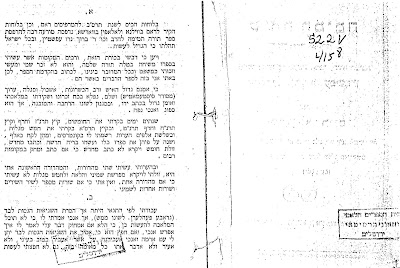
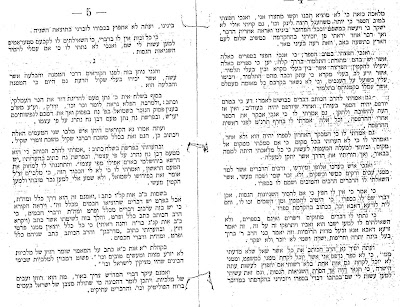
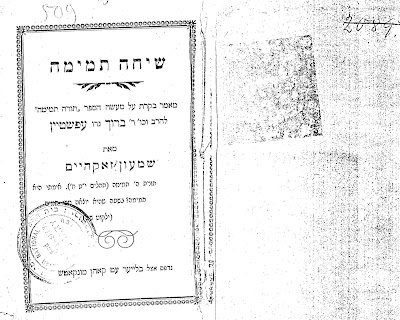
I will therefore explain how I concluded that the story is fictional. Let’s begin with the well-attested fact that Epstein was a plagiarizer. My assumption is that when dealing with someone who is not a reputable scholar, one must be very suspicious of what he or she writes when there is no outside evidence to back it up. In fact, when the Torah Temimah first appeared, the editor of this work published a booklet, Sihah Temimah, accusing Epstein of fraudulent behavior.[17] Here are the first few pages of this booklet.
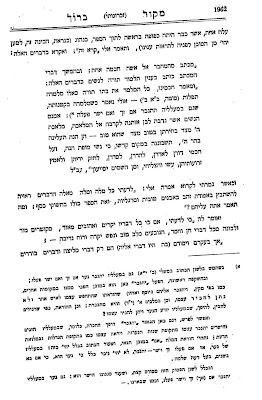
A central feature of his dialogue with Rayna Batya is her producing the book Ma’ayan Ganim by R. Samuel Archivolti. Here it states that mature women who have a desire to study Torah are to be encouraged (Mekor Barukh, p. 1962). Epstein, a young teenager, then attempts to refute her by arguing that the passage from Ma’ayan Ganim is not halakhic, but rather divrei melitzah. The whole dialogue, and in particular the part about her discovering the winning passage in Archivolti, is contrived and designed to lead the reader to sympathize with the fate of the poor woman.

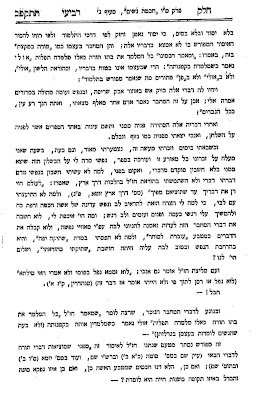
In his Torah Temimah (Deut. ch. 11 n. 68) he cites the passage from Ma’ayan Ganim that as a teenager he supposedly argued against. Anyone reading Torah Temimah would assume that Ma’ayan Ganim is a regular halakhic work, as Epstein refers to it as She’elot u-Teshuvot.[18]

Although at the end of the passage he says that he doesn’t know who the author is, and that Tosafot Yom Tov calls him a grammarian, I believe that this is all part of the literary game he is playing. In other words, he wants to publicize Archivolti’s view, and then to “cover” himself cites Tosafot Yom Tov. In Mekor Barukh, after telling his story, he points out that Archivolti was also a great talmudist and that the only reason the Tosafot Yom Tov refers to him as a medakdek was because he was referring to him in his youth.[19]

Dan Rabinowitz, in his discussion of the issue, writes:

The entire famous Rayna Batya incident must now be called into serious question. Was Rayna Batya so ignorant as to confuse Ma’ayan Gannim with a legitimate book of halakha? How, then, do we reconcile this with her supposed profound learning? It cannot be that R. Epstein was unable to recognize the Ma’ayan Gannim for what it was, for he himself writes that he told his aunt of the true nature of Ma’ayan Gannim. But if he did know what it was, how is it that in his Torah Temima he refers to Ma’ayan Gannim as responsa—and yet in the same paragraph in the Torah Temima he seems to backtrack and wonder how it is that the Ma’ayan Gannim could innovate “new laws about women with reason alone?” The entire Rayna Batya episode is a highly problematic one, raising one perplexing question after another.[20]

As far as the first few questions are concerned, I can only say that the entire report of Rayna Batya discovering the relevant text in Ma’ayan Ganim was made up by Epstein. This book, which was published in Venice in 1553, is an extremely rare volume. There would have only been a few copies of this book in all of Lithuania. (In Torah Temimah Epstein also says that it is a rare book.) It is therefore impossible to imagine that the rebbetzin, sitting in Volozhin, would just so happen to come across this volume on her husband’s bookshelf. Of this, there can be no doubt, and I assumed that Epstein, who was a great bibliophile, later in life came across the book and in his desire to publicize its contents, created the dialogue with Rayna Batya.

Yet thanks to R. Yehoshua Mondshine’s recent article,[21] I see that I was mistaken in my assumption. The truth is that Epstein never even saw the book and thus did not know the true nature of Ma’ayan Ganim. He learnt of the relevant passage, which he places in Rayna Batya’s mouth, from an article that appeared in Ha-Tzefirah, 7 Tishrei, 5656. We see this from the fact that the Ha-Tzefirah quotation mistakenly omits some words, and the same words are omitted in Mekor Barukh. This shows that his knowledge of this book came in 1894 and that he never discussed it with Rayna Batya, who died many years prior to this.

Now that we know where Epstein copied the text from, we can see another element of the literary game he played. He cites Ma’ayan Ganim as follows:
ומאמר חכמינו כל המלמד את בתו תורה כאלו מלמדה תפלות אולי נאמר כשהאב מלמדה בקטנותה.
Yet in Ha-Tzefirah it states:
מאמר רבותינו ז”ל כל המלמד בתו תורה כאלו מלמדה תפלות אינה צריכה לפנים דאיתתא חזינא ותיובתא לא חזינא כי אפשר לחלק שחכמים ז”ל לא דברו אלא כשהאב מלמדה בקטנותה.
Leaving aside the words Epstein omits, he has substituted אולי for אפשר לחלק. In doing so he softened Archivolti’s point. Whereas Archivolti was stating that one can distinguish between teaching a grown woman and a small girl, Epstein has Archivolti prefacing this idea with “perhaps”. I think this is part of Epstein’s confusing game. He wants to bring this view to the public’s attention, but he doesn’t want to come off as too radical. In fact, this אולי, which is his own creation, assumes a life of its own. Thus, in his letter to R. Hayyim Hirschensohn (Malki ba-Kodesh, vol. 6, p. 47), criticizing the latter’s view of teaching women Torah, Epstein writes:

צר לי כי לא אוכל להסכים עמו בזה הן הוא (הרש”ק בעל המכתב הידוע) אינו בטוח בעצמו בדבריו אלה, כנראה מלשונו שכתב “ומאמר חכמינו כל המלמד את בתו תורה וכו’ ‘אולי’ נאמר כשהאב מלמדה בקטנותה” וכו’ ועתה הגע עצמך האם בסברא “פן ואולי” אפשר להתיר מה שנאמר בגמרא מפורש לאיסור. כך דעתי בזה.

In other words, Epstein invents the word אולי and inserts it into Archivolti’s letter, and then he uses this to criticize Hirschensohn! The chutzpah on Epstein’s part is astonishing, but as I see it this is all part of his game.

No one who has discussed Epstein and Rayna Batya was aware of his letter to Hirschensohn, so they could not point out the following obvious fact: When one looks at Mekor Barukh, which was published after his letter to Hirschensohn, one finds him telling Rayna Batya the exact same thing. It is obvious that he uses the language in his letter to Hirschensohn to create the following reply to Rayna Batya, that supposedly occurred some fifty years prior.
והן המחבר בעצמו כמו ‘מודה במקצת’ בזה, באמרו: ‘ומאמר חכמינו’ כל המלמד את בתו תורה כאלו מלמדה תפלות ‘אולי נאמר כשמלמדה בקטנותה’; הרי שבעצמו אינו בטוח בדבריו, וכהוראת הלשון ‘אולי’ ולא ב”אולי” ולא ב”פן” מתירים מה שנאמר מפורש בתלמוד.
(It is possible that I am wrong in assuming that it was his positive view towards women studying Torah which explains why he created the story and cited Ma’ayan Ganim. Perhaps he was simply attempting to create a good story, or even some controversy, and that explains why he seems to be on both sides of the issue, as Dan Rabinowitz points out in the passage cited above.)

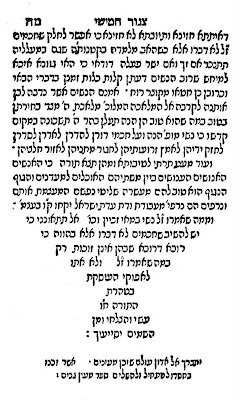
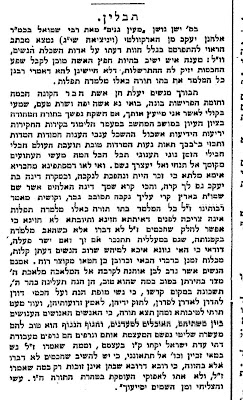
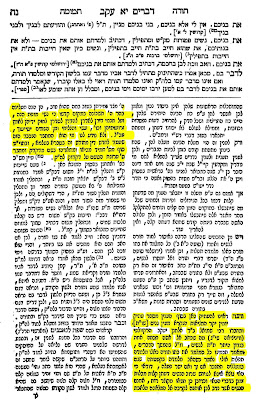
Here are the relevant pages in Ma’ayan Ganim, Ha-Tzefirah, Mekor Barukh, and Torah Temimah.
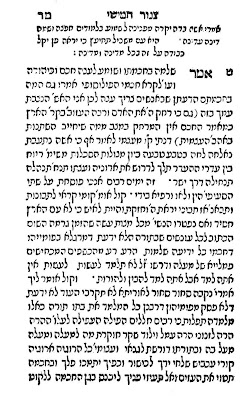
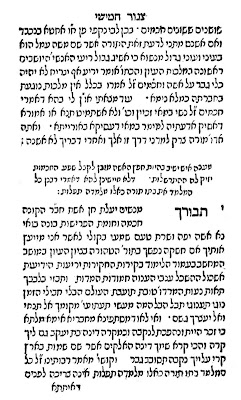
I know that there are people who are very upset at me, believing that I have given ammunition to those who chose to censor and withdraw My Uncle the Netziv. I make no apologies. We must combat falsehoods and plagiarism no matter where they emanate from. If, in the process, some of our own sacred cows are slaughtered, that is the price we must pay.

Returning to Mondshine, he is most concerned with the supposed dialogue between Epstein’s father, R. Yehiel Michel (the author of the Arukh ha-Shulhan), and the Tzemach Tzedek, R. Menachem Mendel Schneersohn. He sees it as an opportunity for Epstein to put all sorts of ideas, including criticisms of Hasidism, into the mouth of the great hasidic leader, something that if he did on his own would have brought down storms of criticism upon him. For example, he has the Tzemach Tzedek say that the hasidim have to be grateful for the opposition of the Vilna Gaon. Had it not been for the great dispute about Hasidism, and the Gaon’s strident opposition, the new movement might have led its followers out of the ranks of halakhic Judaism. (p. 1237). This idea was expressed by R. Kook (Ma’amrei ha-Re’iyah, p. 7) and was probably a common non-hasidic notion. But it is impossible to think that the Tzemach Tzedek would have ever expressed himself this way.

At the time that R. Yehiel Michel is said to have had his conversations with the Tzemach Tzedek, he was the rav of the Habad town Novozypkov.[22] In later years R. Abraham Chen and R. Shlomo Yosef Zevin served as rabbis of the town.[23] I know about this place because my grandmother’s second husband (who was like a grandfather to me) was from there. In fact, during World War One word came to the town that a certain group of Jews was being moved and would be passing through, and that among them was an outstanding young scholar named Shlomo Yosef Zevin. The townspeople came up with the necessary money to remove him from the group. He was chosen as the town’s rabbi and lived in my step-grandfather’s house for about six months. I read somewhere that the townspeople were followers of Kopys/Bobruisk, rather than Lubavitch. As R. Zevin was himself a Bobruisker, this would make sense. R. Yehiel Michel was himself born in Bobruisk, as was his son R. Baruch.

I always tell this story to Habad people in order to impress them with my yichus, that the great R. Zevin lived in my family’s house. Yet on two separate occasions after I told the story to young Habad shluchim, they replied, “Who is Rav Zevin?” It is also very rare to find a young Habadnik who has even heard of Kopust/Bobruisk. Yet without knowing about this it is impossible to understand how R. Zevin could have been a Zionist when the Lubavitcher rebbes were all anti-Zionist. After all, who ever heard of a hasid not following his Rebbe? The answer is that all Lubavitchers were Habad, but not all adherents of Habad were Lubavitch. The ignorance among some in Habad of their own movement probably shouldn’t surprise me, as I have met many hasidim who don’t have a clue about the history of the hasidic movement. And of course, how many Modern Orthodox know the first thing about Hirsch and Hildesheimer?

Mondshine assumes that one of the purposes of Epstein’s stories about his father and the Tzemach Tzedek is to build up his father’s halakhic reputation. His pesakim were subject to attack as being too liberal, and certainly in the hasidic world he was not accepted. In the Lithuanian world he was a much more important posek, and R. Joseph Elijah Henkin stated that in a dispute between the Mishneh Berurah and the Arukh ha-Shulhan, the Arukh ha-Shulhan is to be preferred.[24]

Yet many did not share R. Henkin’s viewpoint. A number of years ago I saw in one of R. Yitzhak Ratsaby’s books that he heard from some gedolim that one should not rely on the Arukh ha-Shulhan. I wrote to him objecting to this lack of respect for the Arukh ha-Shulhan, and also expressing my near certainty that the gedolim he referred to must have been Hungarian, for the Hungarian poskim never accepted the Arukh ha-Shulhan as an authoritative work. On Nov. 22, 1990, Ratsaby wrote to me:
בענין הגאון בעל ערוך השולחן, דוקא הדברים נובעים מליטא, והנני מפרש, הגר”י כהנמן זצ”ל מפוניביז’ (כמדומני שלמד בעצמו יחד עם הערוה”ש) והגר”ח גרינמן שליט”א בן אחותו של החזו”א. זכורני אמנם באגרות משה במקום אחד כתב על ערוה”ש כבר הורה זקן, ובמקום אחר דוחה דבריו. נראה לענ”ד אמנם שבעל ערוה”ש מחדש הרבה סברות ובזה כחו גדול, מאידך בעל משנ”ב מעמיק בעיון היטב הדק. והאמת ניתנה להיאמר שבהרבה מקומות בערוה”ש ראיתי דברים מתמיהים והיפך כוונת הדברים, וכבר הערתי עליו בדרך כלל במקומות שעסקתי בהם בחבורי הנדפסים. ופוק חזי שבישיבות לומדים בקביעות ההלכה מספר משנ”ב, וגם כמעט אין בית היום אשר אין שם משנ”ב. והחזו”א אעפ”י שחולק בהרבה מקומות על המשנ”ב, מ”מ החשיב אותו כהוראה מפי הסנהדרין ומנה אותו בנשימה אחת עם מרן הב”י והמג”א.
(Ratsaby’s recollection is correct. In Iggerot Moshe, Orah Hayyim vol. 1 no. 39, which is his famous responsum on the proper height of a mehitzah, R. Moshe quotes the Arukh ha-Shulhan and uses the expression כבר הורה זקן. Regarding R. Joseph Kahaneman, he actually received semikhah from R. Yehiel Michel.)

The reputation of the Arukh ha-Shulhan has today fallen to such an extent that in a recent publication of the work the rulings of the Mishneh Berurah are included as well. The message of this is that while the Arukh ha-Shulhan is a Torah volume that should be studied, in terms of practical pesak it is the Mishnah Berurah that must be followed. See here for an earlier discussion at the Seforim blog of the recent reprint of the Arukh ha-Shulhan.

2. I was asked if there are any medieval poems in which there is explicit homosexuality. I am unaware of any, and it is precisely because they are ambiguous that there has been controversy about their meanings. This poem by Moses Ibn Ezra is as explicit as I could find
תאות לבבי ומחמד עיני

עופר לצדי וכוס בימיני

רבו מריבי ולא אשמעם

בוא הצבי, ואני אכניעם

וזמן יכלם ומות ירעם

בוא, הצבי, קום והבריאני

מצוף שפתך והשביעני

למה יניאון לבבי, למה

אם בעבור חטא ובגלל אשמה

אשגה ביפיך אד-ני שמה

אל יט לבבך בניב מענני

איש מעקשים, ובוא נסני

נפתה, וקמנו אלי בית אמו

ויט לעול סבלי את שכמו

לילה ויומם אני רק עמו

אפשט בגדיו ויפשיטני

אינק שפתיו וייניקני

כאשר לבבי בעיניו נפקד

גם עול פשעי בידו נשקד

דרש תנואות ואפו פקד

צעק באף, רב לך, עזבני

אל תהדפני ואל תתעני

אל תנף בי, צבי, עד כלה

הפלא רצונך, ידידי, הפלא

ונשק ידידך וחפצו מלא

אם יש בנפשך חיות, חיני

או חפצך להרג, הרגני

Desire of my heart and delight of my eyes –

A fawn beside me and a cup in my hand!

Many admonish me, but I do not heed;

Come, O gazelle, and I will subdue them. Time will destroy them and death shepherd them. Come, O gazelle, rise and feed me With the honey of your lips, and satisfy me.
Why do they hold back my heart, why? If because of sin and guilt, I will be ravished by your beauty – God is there! Pay no attention to the words of my oppressor, A perverse man – come and try me!
He was enticed and we went up to his mother’s house, And he gave his shoulder to my burden. Night and day I was only with him. I undressed him, and he undressed me; I sucked his lips and he sucked mine.
When I left my heart as a pledge in his eyes, The burden of my guilt was also weighted in his hand. He sought enmity, and inflicted his anger, And angrily cried, “Enough; leave me! Do not force me, and do not entice me.”
Do not be angry with me, gazelle, to destruction – Extraordinary is your will, my dear, extraordinary! Kiss your beloved and fulfill his desire. If it is in your soul to give life, revive me – Or if your desire is to kill, kill me![25]

3. When dealing with problematic texts of recent times, the preferred approach is simply to censor them. But with the medievals, there is a simpler method: Say that the text was written by a mistaken student, or even worse, by someone interested in undermining Judaism. In a previous post I mentioned that R. Joseph Zvi Duenner even stated so with regard to the Talmud itself.[26]

Since in modern times we don’t generally have students copying their master’s handwritten texts, the first approach doesn’t make much sense. Yet in a previous post at the Seforim blog,[27] I noted that R. Menasheh Klein used this very argument with regard to R. Moshe Feinstein, even though he was dealing with a responsum published in R. Moshe’s own lifetime. I found another example where Klein uses this exact same approach. He saw something in one of the Steipler’s books, but since it didn’t make sense to him, Klein wrote to the Steipler as follows (Mishneh Halakhot, vol. 7, p. 142a):
היות כי אני מכיר את מעכ”ק וצדקתו נגמר בדעתי שבודאי לא יצאו דברים מפי כ”ק או שיש שם איזה טעות בדפוס מהבחור הזעצער וטעה מעתיק ולא שם על לב כ”ק.
However, here I don’t think Klein should be taken literally. I believe this was just his respectful way of saying that the Steipler was wrong. This is not the case with regard to R. Ovadiah Yosef when he writes that one cannot rely on the responsa in R. Ben Zion Abba Shaul’s Or le-Tziyon, vol. 2.[28] Even though R. Ben Zion was alive, R. Ovadiah claimed that he was powerless to stop his students from taking liberties with the book: הוסיפו וגרעו כפי שעלה בדעתם, וסברו שכן דעת רבם. Not surprisingly, one of R. Ben Zion’s students responded very strongly to this statement.[29]

Prof. Yaakov Spiegel, in his book Amudim be-Toldot ha-Sefer ha-Ivri: Ketivah ve-Ha’atakah, pp. 244ff., discusses the phenomenon of denying the authenticity of responsa. Sometimes the strategy used to reject a responsum is to attribute it to an “erring student.” While on occasion there are scholarly reasons for this assumption, it is almost always the case that the author simply cannot accept that an earlier authority said something. Usually this has to do with halakhah, but there are plenty of examples in theology. For example, R. Issachar Baer Eylenburg assumes that while resurrection is a principle of faith, one is not obligated to believe that this doctrine is found in the Torah. As he puts it (Be’er Sheva to Sanhedrin 90a).
מי שמודה ומאמין על פי הקבלה בתחית המתים אע”פ שהוא אומר דלא רמיזא באורייתא אין ראוי לקראו כופר חלילה ויש לו חלק לעוה”ב.
Although the Mishnah, Sanhedrin 10:1, includes the point that one must believe that resurrection is found in the Torah, Eylenburg assumes that this is a textual error, and indeed, Rambam never mentions this. However, Rashi had this text and explains:
שכופר במדרשים דדרשינן בגמרא לקמן מנין לתחיית המתים מן התורה ואפילו יהא מודה ומאמין שיחיו המתים אלא דלא רמיזא באורייתא כופר הוא הואיל ועוקר שיש תחיית המתים מן התורה מה לנו ולאמונתו וכי מהיכן הוא יודע שכן הוא הלכך כופר גמור הוא.
Eylenberg didn’t like what Rashi said, i.e., it didn’t make sense to him, so he concluded:
לפי דעתי לא יצאו דברים אלו מפה קדוש רש”י אלא איזה תלמיד טועה פירש כן בגליון ונכתב בפנים.
Eylenberg would have been happy to learn what we now know, namely, that the commentary to Perek Helek is, in large measure, not really by Rashi.

I found another example of this in a book that just appeared, R. Menasheh Matloub Sutton’s Mateh Menasheh. (Sutton, who died in 1876, was the rav of Safed.) The second part of the book is a reprint of Sutton’s earlier published Kenesiah le-Shem Shamayim. This work is devoted to a superstitious practice whereby women would burn incense to demons and this was thought to be a help to people who were in various states of distress (e.g., sick, barren, etc.) He includes letters from many great rabbis who agree with him that this is a form of avodah zarah. The problem he has, which he confronts in ch. 2, is that one of the rishonim, R. Isaiah ben Elijah of Trani, is quoted by R. Hayyim Benveniste as follows:
ונראה בעיני המתוק שעושים הנשים מדבש וחלב לרפואה, וכן העישון שמעשנים מותר, שלא חייבה תורה בבעל אוב אע”פ שמקטר לשד אלא מפני שמעלה המת, וכן מעשה כשפים לא נאסרו אלא כשעושים מעשה או כשאוחזים את העיניים כמ”ש, אבל בעישון ומתוק אין בהם כל אלה, וגם אין בהם משום חובר חבר שאינם מתכונים לחבר השדים אלא לרצותם על רפואת החולה ושלא יזיקוהו.
Now it is certainly possible for Sutton to reject R. Isaiah, but it becomes very hard to label the practice as nothing less than idolatry when an outstanding rishon justified it and this rishon is also quoted by Benveniste and the Shiltei Giborim. What to do in such a case? Sutton adopts the tried and true method of declaring that since the position is (in his mind) so objectionable, R. Isaiah could never have said such a thing. It must originate with the “mistaken student” who often makes his appearance when a strange opinion is confronted.
אמינא בקושטא דמלתא כד ניים ושכיב רב אמרה להא שמעתא ועל הרוב שלא יצאו דברים הללו מתחת ידו וקולמוסו אלא שאיזה תלמיד טועה כתבם בגליון קונטריסו והרב שלטי הגבורים אגב ריהטא העתיקם בשמו ובחושבו דתורה דיליה היא מוצאת מעמו ולא פנה לעיין בעיקר הדין נמוקו וטעמו.
Sutton’s book was put out by one of his descendants, Rabbi Harold Sutton, who was a student in the late and much lamented Beit Midrash le-Torah (BMT) together with me. He later went on to become a student of R. Ovadiah Yosef, whose haskamah (together with that of R. Meir Mazuz) adorns the book.

Harold Sutton should not be confused with another young Syrian rabbi, David Sutton. The latter is the author of the ArtScroll book Aleppo: City of Scholars (and from the introduction I learned that he is a son-in-law of R. Nosson Scherman). Zvi Zohar has recently written a very sharp critique of this book. See here.

David Sutton is also the one who delivered the much-talked about lecture “We Believe in Midrashim.” This lecture is the subject of a very harsh attack by Roni Choueka in Hakirah 4 (2007). Choueka sees Sutton’s lecture as a bizayon ha-Torah of the worst sort. When listening to it I didn’t know whether to laugh or to cry. How else is one to respond when one hears a rabbi claim that the fossils are remnants of the giant pets that belonged to Og, who was 800 feet tall and lifted up a stone the size of Manhattan, or that the polar bears came to Egypt complete with their blocks of snow in order to devour the Egyptian children?

Incidentally, in speaking of the Aggadah which describes the great height of Og, the Rashba (commentary to Berakhot 54b) notes that although there is a deep meaning conveyed in this Aggadah, the form in which it is expressed also had a very practical application:
לעתים היו החכמים דורשים ברבים ומאריכים בדברי תועלת והיו העם ישנים, וכדי לעוררם היו אומרים להם דברים זרים לבהלם ושיתעוררו משנתם.
In other words, in order to prevent people from dozing off, the Aggadist would convey his message with outlandish statements. R. Zvi Hirsch Chajes elaborates on this in his Introduction to the Talmud, ch. 26.

4. I have to thank those who have written to me calling my attention to things I did not know. I hope to acknowledge all of you at the proper time. However, many people who send me things have misinterpreted the sources (or the sources they send have been in error).

In the forward of H. Norman Strickman and Arthur M. Silver’s translation of Ibn Ezra to Deuteronomy, p. xiv, the following appears:

It should also be noted that I.E. [Ibn Ezra] was not the only medieval rabbi who believed that there are some glosses or slight changes in the text of the Torah. Thus Rabbi David Kimchi (c. 1160-1235) notes that the word Dan in Gen. 14:14 is post-Mosaic. He argues that the original reading of Gen. 14:14 was “and pursued as far as Leshem.” Rabbi Kimchi maintains that after the tribe of Dan conquered the city of Leshem and changed its name to Dan (Josh. 19:47), the reading of Gen. 14:14 was changed to read “and pursued as far as Dan” as in our texts of Scripture (Radak on Gen. 14:14).

The mention of “Dan” in Gen. 14:14 is used by all critical biblical scholars to prove that the verse must be post-Mosaic. The reason is that since the city would only be conquered in the days of Joshua, and only then be given the name Dan, how could the Torah refer to it this way? Even M. H. Segal, the strong defender of Mosaic authorship, acknowledges the problem. Unlike other scholars he assumes that the verse as a whole is Mosaic. But he also believes that the name “Dan” is a “modernized substitute for the antiquated names Laish or Leshem (Jud. viii, 29, Jos. xix, 47) which stood in the original.”[30]

Yet I was skeptical of what Strickman and Silver wrote as I was aware of Radak’s introduction to his Torah commentary where he is emphatic that the entire Torah is of Mosaic authorship.[31] I looked up Radak to Gen. 14:14 and saw that my skepticism was warranted. Here are Radak’s words:
וירדף עד דן: על שם סופו, כי כשכתב משה רבינו זה לא נקרא עדיין כן, אלא לשם היה נקרא וכשכבשוהו בני דן קראו לו דן בשם דן אביהם.
All Radak says is that the Torah refers to the place as Dan in anticipation of what it will be called in the future. Radak says nothing about the original reading of the Torah being “Leshem” and nothing about the text being changed after Leshem was conquered. As such, Radak cannot be added to the list of those who believe that there are post-Mosaic additions in the Torah.

5. In response to my earlier post at the Seforim blog discussing the meaning of ס”ט, Rabbi Yitzhak Oratz called my attention to Kitvei Ha-Arukh ha-Shulhan, pp. 50-51. In an 1892 letter from R. Yehiel Michel Epstein to R. Hayyim Hezekiah Medini, the author of the Sedei Hemed, we see that R. Yehiel Michel doesn’t know what the acronym stands for, as he writes חכם חיים חזקיאו [!] ס”ט הי”ו. Since the last two acronyms basically mean the same thing one would not put them next to each other, and he must have assumed that the first one meant sefaradi tahor. Yet by 1896 he had learned what it meant and he addresses the Sedei Hemed as מוהר”ר חכם חיים חזקיאו מודיני סופ”י טב טבא הוא וטבא ליהוי.

This is a rare example of an Ashkenazi who knows what the acronym means. For those who have not yet been convinced there is not much more I can say other than that there is a living tradition among the Sephardic scholars for hundreds of years now as to the proper meaning. This is certainly authoritative. Let me also call attention to the end of the introduction of the Peri Hadash on Yoreh Deah (found in the new Machon Yerushalayim edition). He signs his name as follows: חזקיה בן לא”א איש צדיק תמים היה בדורותיו דוד די סילוה נ”ע סופיה טב טבא הוא וטבא להוי אמן.
Also, see R. Yehudah ben Attar’s haskamah to R. Hayyim Ben Attar’s Hefetz Hashem (Amsterdam, 1732). R. Yehudah signs his own name סיל”ט. It is obvious that this is an alteration of ס”ט and means סופיה יהא לטב. 6. Some want to know if any of the letters Chaim Bloch published in Dovev Siftei Yeshenim are authentic. I haven’t carefully investigated every letter, so it is possible that a couple of them are also found in other books. If that is the case, then Bloch included them simply to give the work as a whole a sense of authenticity. There is, however, no doubt that everything that appears for the first time in the work is, in its entirety, a creation of Bloch. Interestingly, when Bloch sent the first volume to the Lubavitcher Rebbe, the Rebbe immediately recognized that the letters from the Rogochover were forged. He wrote to Bloch (Iggerot Kodesh, vol. 19, p. 69):
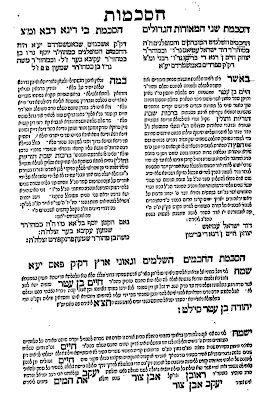
כן מאשר הנני קבלת הס’ “דובב שפתי ישנים”. ולאחרי בקשת סליחתו נצטערתי על שצויין על כמה מכ’ שהם להגאון הרגצובי – וכל הרגיל בסגנונו יראה תיכף שאינו . . .
The three dots are from the publisher, and I would be very interested to know what was taken out.

Bloch wrote to the Rebbe to defend his publication and the Rebbe responded very strongly. He tells Bloch that originally he thought that it was an innocent error or perhaps someone had misled Bloch as to the Rogochover’s letters. It now surprises him that Bloch continues to earnestly defend their authenticity. The Rebbe is so convinced that they are forgeries that he writes (Iggerot Kodesh, vol. 19, p. 159):

שבאם היתה מציאות, שיבוא הרגצובי ויעיד שהוא כתב המכתבים לא יאמינו לו ולא ישמעו לקולו

I assume that the Rebbe didn’t know that Bloch forged the letters himself, or that the rest of the collection was also forged. If he did know this, then I don’t think he would have been so polite to Bloch. He either wouldn’t have engaged in correspondence with him, or he would have told him that he is a liar and a scoundrel. Instead, after explaining why the Rogochover couldn’t have written the letters, the Rebbe concludes:
ואתו הסליחה על ביטוים אלו, שאולי אינם דיפלומטים ביותר.
One certainly doesn’t need to speak “diplomatically” to frauds, so I would assume that the Rebbe wasn’t aware of the extent of Bloch’s deception.

While on the topic of Bloch (who was previously mentioned at the Seforim blog [32]) I should note that his last Hebrew publication was Ve-Hayah Mahanekha Kadosh (New York 1965), which is directed against R. Moshe Feinstein’s permission for a married woman to be artificially inseminated from a non-Jewish donor. Bloch also wrote to R. Moshe about this, harshly rebuking him for this ruling. R. Moshe’s response (Iggerot Moshe, Even ha-Ezer vol. 2 no. 11) includes the following, which became one of the most famous passages in the Iggerot Moshe:
הנה קבלתי מכתבו הארוך מאד המלא דברי תוכחה על כל גדותיו על מה שלפי דעתו נדמה לו שתשובותי סימן י’ וסימן ע”א מספרי אגרות משה על אה”ע יגרמו איזה פרצה בטהרת וקדושת יחוס כלל ישראל. וניכר ממכתב כתר”ה שהיה סבור שיהיה לי קפידא על דברי התוכחה שלו, ואני אדרבה אני נרגש מזה שאני רואה שנמצאים אנשים בעלי רוח שאינם יראים ולא מתביישים מלומר תוכחה. אבל האמת שאין בדברים שכתבתי ושהוריתי שום דבר שיגרום ח”ו איזה חלול בטהרת וקדושת ישראל אלא תורת אמת מדברי רבותינו הראשונים, והערעור של כתר”ה על זה בא מהשקפות שבאים מידיעת דעות חיצוניות שמבלי משים משפיעים אף על גדולים בחכמה להבין מצות השי”ת בתוה”ק לפי אותן הדעות הנכזבות אשר מזה מתהפכים ח”ו האסור למותר והמותר לאסור וכמגלה פנים בתורה שלא כהלכה הוא, שיש בזה קפידא גדולה אף בדברים שהוא להחמיר כידוע מהדברים שהצדוקים מחמירים שעשו כמה תקנות להוציא מלבן. ואני ב”ה שאיני לא מהם ולא מהמונם וכל השקפתי הוא רק מידיעת התורה בלי שום תערובות מידיעות חיצוניות, שמשפטיה אמת בין שהוא להחמיר בין שהוא להקל. ואין הטעמים מהשקפות חיצוניות וסברות בדויות מהלב כלום אף אם להחמיר ולדמיון שהוא ליותר טהרה וקדושה.
7. Since I mentioned some stories from Halakhic Man that show that the Rav did not have a Modern Orthodox ethos, I will also say something about the following story, which some have wondered about.

Once my father entered the synagogue on Rosh Ha-Shanah, late in the afternoon, after the regular prayers were over, and found me reciting Psalms with the congregation. He took away my Psalm book and handed me a copy of the tractate Rosh Ha-Shanah. “If you wish to serve the Creator at this moment, better study the laws pertaining to the Festival.”

I understand that some people are very troubled by this story, as it bespeaks a real intellectual elitism. Yet, to use an expression popular among the younger generation, I can only say “get over it” (or become an adherent of one of the non-intellectual branches of Hasidism). For better or worse, traditional Judaism has always been a fundamentally elitist religion, dividing the haves (i.e., those who have knowledge) from the have-nots. (Although today we are accustomed to think in terms of bringing Torah study to all, in a future post at the Seforim blog I hope to mention some sources that speak of the danger of allowing the ignorant access to Torah knowledge.) Precisely because we have a notion of ein am ha-aretz hasid we can understand why, in contrast to Christianity, we don’t have women “saints” in our history. Since women have (until recent times) been kept ignorant of Talmud and halakhah, there was no way they could achieve any renown in the area of saintliness.

Regarding the passage from Halakhic Man quoted above, the Rav himself makes reference to R. Chaim of Volozhin’s Nefesh ha-Hayyim, and the ideology of that book is the basis for the Soloveitchik approach. In Nefesh ha-Hayyim 4:2 R. Chaim writes
הרי שהעסק בהלכות הש”ס בעיון ויגיעה הוא ענין יותר נעלה ואהוב לפניו יתברך מאמירת תהלים.
Yet I must also note that one needn’t be a Litvak to have this approach. Here is what R. Eliezer Papo writes (Pele Yoetz, s. v. yediah):
וכבר כתבו הפוסקים שמי שיוכל לפלפל בחכמה ולקנות ידיעה חדשה ומוציא הזמן בלימוד תהלים וזוהר וכדומה לגבי דידיה חשיב בטול תורה.
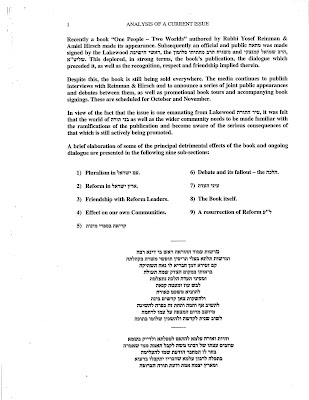
8. Many people have written to me about Ibn Ezra and post-Mosaic verses, a subject I dealt with in The Limits of Orthodox Theology. Let me therefore point out something in this regard that appears in One People, Two Worlds by Yosef Reinman and Ammiel Hirsch. As I am sure everyone recalls, this was the joint work by the Orthodox Reinman and the Reform Hirsch. What made this so significant is that Reinman is from Lakewood and never before had anyone from that community engaged in such a religious dialogue. The response was fast and furious, and here are the first three pages and the last page of an anonymous attack on him that appeared in Lakewood. In fact, One People, Two Worlds is much worse – or much better, depending on your outlook – than anything done in this area by the Modern Orthodox. The Modern Orthodox who were part of organizations like the Synagogue Council of America and the N.Y. Board of Rabbis never engaged in interdenominational theological dialogue on an equal footing the way Reinman does. Furthermore, it is shocking that a haredi would have co-authored this book for another reason: What will happen if someone reads the book and is more convinced by the Reform rabbi? One would think that this would make the book a possible stumbling block.
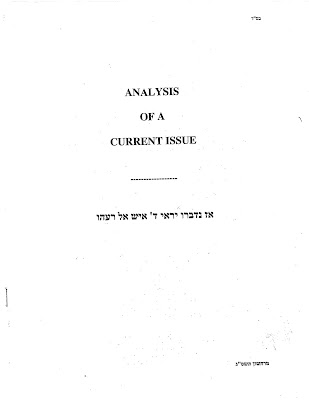
I have not read the book cover-to-cover, yet the word on the street is that the debate is pretty one-sided as the Reform rabbi is out of his league. But in glancing through the book I found that in one area it is actually the Reform rabbi who is correct. On p. 16 Hirsch refers to Ibn Ezra’s commentary to Gen. 12:6 and states that Ibn Ezra’s “secret” is a hint to his belief that the verse is post-Mosaic. On pp. 23-24 Reinman writes:

I do not understand how you can represent Ibn Ezra, the illustrious Orthodox commentator, as a closet Reformer. I personally have no idea of the nature of Ibn Ezra’s secret; he has successfully concealed it from me. But be that as it may, how can you ascribe non-Orthodox beliefs to Ibn Ezra? What about all the thousands of pages of solid Orthodox commentary he wrote? Don’t they stand for anything? You obviously need to connect to the time-hallowed texts, but you are grasping at the wind.

They go over this issue a couple of more times and Reinman’s responses are similarly dogmatic. Had Hirsch read my article on the Thirteen Principles (my book hadn’t yet appeared) he could have pointed out that plenty of “Orthodox” commentators and scholars have read Ibn Ezra exactly as Hirsch explained. In other words, it was incorrect for Reinman to respond as if Hirsch was asserting an outrageous canard against an “illustrious Orthodox commentator.”

When I saw this I asked a friend, who studied in Lakewood for many years, if is it possible that Reinman, who has been learning Torah for many decades, is completely ignorant about something that every YU student who takes Intro. to Bible learns in the first few weeks. His reply was that this is exactly the case, and that until he started reading works outside of the typical yeshiva curriculum he too never heard about an issue with Ibn Ezra and post-Mosaic additions. In fact, I would assume that R. Moshe Feinstein also never heard of it, and in his attack on the commentary of R. Yehudah he-Hasid he ironically cites Ibn Ezra condemnation of Yitzchaki’s biblical criticism. (Why Ibn Ezra would condemn Yitzchaki for suggesting that some verses are post-Mosaic, when he does that himself, is explained by R. Joseph Bonfils in his Tzafnat Paneah: Ibn Ezra was willing to accept individual verses as being post-Mosaic but not entire sections, which is what Yitzchaki is referring to. Thus, there is no Documentary Hypothesis in Ibn Ezra’s writings.)

This phenomenon, of great scholars not being aware of things that most people reading the Seforim blog learned years ago, should not surprise us. The traditional yeshiva curriculum is very narrow, and you can spend your life in a yeshiva and unless motivated to expand your horizons, will have no knowledge of entire areas of Jewish thought and history. A good example[33] is seen in this announcement by Agudas ha-Rabbonim, which appeared in Ha-Pardes, November 1975. Yet the beautiful saying which the learned rabbis assume was stated by Hazal was actually stated by Ahad ha-Am, and is perhaps his most famous saying (although the concept can be found in traditional sources, see Taz, Orah Hayyim 267:1)[34] However, for one whose only Jewish knowledge comes from the yeshiva, this information would be unknown, and it is easy to see how such a statement (“more than the Jews have kept the Sabbath the Sabbath has kept the Jews”) could “infiltrate” this closed world and become just another ma’amar hazal.[35] It reminds me of how when I was a kid and my friends and I went to Boro Park for Shabbatons we would have been able to hum niggunim which came from popular songs and commercials, and our hosts wouldn’t have known a thing. At the Rutgers Chabad house in the 1980’s they even had a niggun to the tune of the theme song for Bumble Bee tuna. For those too young to remember it, see it here.
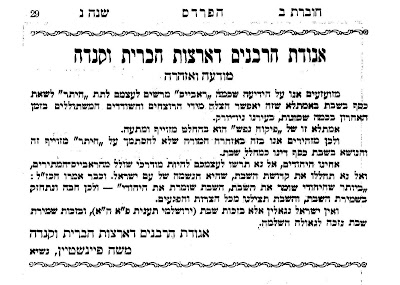
Of course, Ahad ha-Am’s statement is sound Jewish doctrine, as should be expected from one who had a hasidic upbringing (he was born in Skvira). I don’t even think that the saying was original to him. Rather, he was repeating a hasidic idea that he heard in his youth. I say this because Rabbi Uri Topolosky – who is currently rebuilding Orthodox life in New Orleans[36] – called my attention to the following passage in the Sefat Emet to parashat Ki Tisa (from 1873; p. 198 in the standard edition):
ואך את שבתותי כו’ פי’ שלא להיות רצון ותשוקה לדבר אחר בעולם, רק להשי”ת שהוא שורש חיות האדם שתתדבק בו בשבת קודש . . . גם מה שמירה שייך לשבת אדרבה שבת שומר אותנו.
NOTES:
[15] “The Silence of Rayna Batya: Torah, Suffering, and Rabbi Barukh Epstein’s ‘Wisdom of Women.'” Torah u-Madda Journal 6 (1996): 127, n. 62.
[16] Torah u-Madda Journal 7 (1997): 197. Since I mention the fine scholar Don Seeman, let me also call attention to his article “Ethnographers, Rabbis, and Jewish Epistemology: The Case of the Ethiopian Jews,” Tradition 25 (1991): 13-29. In this article he deals with the issue I touched on in two earlier posts, namely, does “halakhic truth” need to correspond to what academics regard as “scholarly truth.”
[17] I thank Eliezer Brodt for calling it to my attention (it is not mentioned in Beit Eked Sefarim). Subsequently, I saw that it is mentioned by Yaakov Bazak, “Al Derekh Ketivat ‘Torah Temimah,’” Sinai 66 (1969): 97.
[18] Thus, R. Moshe Meiselman could write: “In the volume of responsa, Maayan Ganim, the author not only permits motivated women to study the Torah but praises them and urges his audience to encourage them in their work.” See Jewish Woman in Jewsh Law (New York, 1978), 38.
[19] R. Menahem Kirschbaum, Tziyun li-Menahem (New York, 1968), 263, points out that contrary to what Epstein states, Tosafot Tom Tov referred to him as a grammarian when Archivolti was quite old.
[20] Rayna Batya and other Learned Women: A Reevaluation of Rabbi Barukh Halevi Epstein’s Sources,” Tradition 35 (2001): 61.
[21] See here
[22] See Kitvei ha-Arukh ha-Shulhan, part 2, p. 142, where he addresses someone as נכד איש אלקים גדול בעל התניא זי”ע ועל כל ישראל אמן. [23] See ibid., p. 154, for R Yehiel Michel’s 1906 letter of recommendation for R. Zevin. [24] See R. Yehudah Herzl Henkin, Beni Vanim, vol. 2, no. 8. In the introduction to Kitvei ha-Arukh ha-Shulhan one finds the following:
על מעמדו של הערוך השולחן כרבן של ישראל ופוסק הדור [שיש הסוברים שהוא הראשון במעלה ואחרון בזמן והלכה כמותו בכל מקום. עי’ בני בנים] אין כאן המקום להרחיב. What kind of reference is this? Most readers won’t even know what Bnei Vanim is. Why is the author, the volume, and page number not given? Why is R. Joseph Elijah Henkin’s name not mentioned? Furthermore, R. Henkin never said that the halakhah is always in accord with the Arukh ha-Shulhan. (Let’s not forget, the Arukh ha-Shulhan thought you could use electricity on Yom Tov.). His comment dealt only with the Arukh ha-Shulhan vs. the Mishneh Berurah.

For Eliezer Brodt’s review of this work, see here.

I have only skimmed part 2 of this important volume, but since it will probably be reprinted, let me make a few corrections and one addition.The transcription of R. Yehiel Michel’s handwriting on the first page is incorrect.

P. 79 s. v. והנה: The word הארוך should be האריך.

P. 146 s.v. גי”ק. The sentence reads: ורבות נצטערתי והמו מעי לו שירדפו גאון מובהק כמו”ב.

The abbreviation should be כמי”ב – כמותו ירבו בישראל. See p. 152, top line.

P. 173 no. 137: R. Aryeh Jacob Katznelson was the son-in-law of R. Yehiel Michel’s brother-in-law.

P. 193 n. 17: The quotation does not appear in no. 39.

According to Glick, Kuntres ha-Teshuvot he-Hadash, vol. 1 (Jerusalem and Ramat Gan, 2007), 582 (no. 2186), material from R. Yehiel Michel appears in R. Moses Spivak, Mateh Moshe (Warsaw, 1935).
[25] Hayyim Schirmann, Ha-Shirah ha-Ivrit bi-Sefarad u-ve-Provence (Jerusalem, 1954), vol. 1, no. 143; translation in Norman Roth, “‘Deal Gently with the Young Man’: Love of Boys in Medieval Hebrew Poetry of Spain,” Speculum 57:1 (1982): 45.
[26] See here.
[27] see my “Obituary: Professor Mordechai Breuer zt”l,” the Seforim blog (Monday, 11 June 2007), available here.
[28] See Yabia Omer, vol. 9, Orah Hayyim no. 108 (p. 269).
[29] See Shmuel Glick, Kuntres ha-Teshuvot he-Hadash, vol. 1 (Jerusalem and Ramat Gan, 2006), 57.
[30] The Pentateuch: Its Composition and Its Authorship (Jerusalem, 1967), 33.

[31] ואומר בתחלה כי משה רבינו כתב כל התורה כלה מפי הגבורה, מ”בראשית” עד “לעיני כל ישראל” . . . וכן צריך להאמין, כי הכל נאמר ברוח הקודש ומפי הנבואה למשה רבינו עליו השלום

[32] See here.
[33] See Avraham Korman, Ha-Tahor ve-ha-Mutar (Tel Aviv, 2000), 99.
[34] See Al Parashat ha-Derakhim, ch. 51, available here. The actual quote is

יותר משישראל שמרו את השבת שמרה השבת אותם.

[35] R. Herzog was well aware of whose saying he was adapting when, in an article on Taharat ha-Mishpahah published in Ha-Pardes (September 1947, p. 15), he wrote:

לצערנו העמוק והמחריד נפרצו בימינו פרצות גדולות, ואף בארץ הקודש, בחומה זו של טהרת המשפחה, שאפשר להגיד עליה, שיותר ממה ששמרו ישראל עליה שמרה היא על ישראל

[36] See here.


R. Isaac Arama, R. Kook, Mordecai Kaplan, and more

R. Isaac Arama, R. Kook, Mordecai Kaplan, and more
by Marc B. Shapiro
1. In the last post I discussed R. Isaac Arama. In his Conversos, Inquisition and the Expulsion of the Jews from Spain, p. 53, Norman Roth states that Arama was not a “great scholar.” If he means to say that Arama wasn’t a great talmudist (as has been stated about Ibn Ezra and Abarbanel), then perhaps he has a point (although I am sure this would be debated). But I don’t see how the title “great scholar” can be denied to Arama whose Akedat Yitzhak is a classic of Jewish literature and shows his vast knowledge.
Because the style of Akedat Yitzhak does not make it an easy read, many people avoid the work which is a shame as it is full of fascinating insights. One of his views that has often been quoted is that while it is true that individuals have free will, this is not the case for the Jewish people as a whole. It is built into the nature of the Jewish people that there can never be a time when the entire Jewish population rejects God.[1]
I think readers will also find it interesting that in discussing the role of women, he says that their second purpose (which he terms the lesser purpose – התכלית הקטן) is to have children.[2] However, the primary purpose of women is seen in the following quote, which I think is incredible when one considers how most medievals viewed women.
האחד מה שיורה עליו שם אשה כי מאיש לוקחה זאת וכמוהו תוכל להבין ולהשכיל בדברי שכל וחסידות כמו שעשו האמהות וכמה צדקניות ונביאות . . . ודאי עקר תולדותיהם של צדיקים מעשים טובים
How many contemporary Orthodox writers advocate the viewpoint that the primary purpose of women is to bear children, and that is where they find their fulfillment? Yet Arama rejects this completely. Arama’s understanding allows him to explain why Jacob was angered with Rachel when she said to him, “Give me children, or else I die.” (Gen. 30:1). Rachel didn’t realize that the main purpose of the righteous, and this also includes women, is good deeds. She mistakenly thought that her primary goal in life was to have children, and without that her life had no value. Jacob became angry since Rachel didn’t understand the basic point that the value of women is not simply dependent on how many children they can produce.[3]
It is well known that R. Meir Arama accused Abarbanel of plagiarizing from his father, R. Isaac. Abarbanel made heavy use of R. Abraham Bibago, and this also might be considered plagiarism (although much what we would regard as plagiarism today was not regarded as such in medieval times).[4] Abarbanel also used other writings without acknowledgment, such as R. Eleazar Ashkenazi ben Nathan ha-Bavli’s Tzafnat Paneah,[5] R. Nissim of Gerona’s Derashot,[6] and the medieval work Zekhut Adam.[7] R. Azariah de Rossi even accused Abarbanel of plagiarizing from Jerome.[8]
 מן הנראה כי גנוב הוא את החכם דון יצחק מדעת המעתיק לנוצרים בפרוש דניאל
In the introduction to his edition of Akedat Yitzhak, R. Hayyim Joseph Pollak mentions Abarbanel’s unacknowledged use of Arama’s work, and he is not sure what to make of it. In one case he refers to it as שגגה שיצא מלפני השליט. In general, he assumes that Abarbanel copied material from Arama for his own use, without intending to publish it. Yet by the time he published his own biblical commentaries he had forgotten that some sections of this work had come from Arama. Pollak also suggests, without any evidence whatsoever, that originally Abarbanel did mention Arama, yet these references were removed by others who had access to the manuscript. They did so in order to give greater glory to Abarbanel, so that he be given the credit for everything in the commentary.
השמיטו הם (או המעתיקים הבאים אחריהם) את שם בעל עקיד’ ז”ל מהמאמרים הלקוחים מאתו, בחשבם להרבות בזה כבוד הר”א ז”ל, אם יראו כל דברי ספרו כאילו הם ממנו לבד
Pollak’s defenses do not make much sense, and the best explanation is as mentioned, namely, that current standards of plagiarism are not like those found in medieval times.
Speaking of R. Isaac Arama, there are a number of references to him in the new edition of R. Raphael Berdugo’s commentary on the Torah, Mei Menuhot (I have mentioned R. Berdugo in a few prior posts). Here is the title page.

Here is page 918 of the commentary, where you can see that he quotes the Akedat Yitzhak who is criticizing Narboni.

On the top of the second column he refers to המדברים. The problem is that the editor doesn’t know what this term means (or for that matter, the word ההעברה),[9] and provides some fanciful explanation. However, just a little investigation would have revealed that the “Medabrim” are the Mutakallimun, that is, the followers of the Kalam. (Kalam means “word,” “conversation,” or “discourse”.) All one needs to do is open Ibn Tibbon’s translation of the Guide, and you will find lots of references to them. There is also a reference to them in Ibn Tibbon’s translation of Shemonah Perakim, ch. 6. 
The following appears in Guide 1:73 (Ibn Tibbon translation):
ההקדמה העשירית הוא זאת ההעברה אשר יזכרהו וזהו עמוד חכמת המדברים

The problem I am focusing on is not just that the editor did not recognize the term המדברים. It is that he should have been able to see that this was something he didn’t know, which in turn would lead him to investigate. This is a common problem, namely, it is not just that people don’t know, but that they don’t know that they don’t know.[10] What we should be able to expect, however, is that when an editor sees a term or expression that he doesn’t recognize, rather than engage in fanciful speculation he should actually consult with someone who might be able to understand the text.

Let me give another example of what I am referring to from the haredi world. This should not be taken as a general criticism of haredi editors. On the contrary, most of the best editions of rabbinic texts are edited by haredi scholars. They are experts in what they do and we all benefit. They, more than anyone else, are embarrassed when amateurs try to edit texts with all the errors they bring. (In a future post I will bring examples of mistakes by academic scholars in texts they edited, errors that could have been avoided had they consulted with real talmidei hakhamim.)

A few years ago a new edition of Maimonides’ ethical will, with an extensive commentary, was published. Here is a page from the work.

The only problem is that this supposed ethical will is a forgery, a fact recognized by R. Jacob Emden.[11] Actually, let me more exact; only the second part is a forgery, the part where Maimonides addresses his son R. Abraham and among other things tells him that the French scholars “don’t appear to recognize the Creator, blessed be He, except when they are ingesting boiled ox meat, seasoned in vinegar and garlic. . . . Generally, they have two wives, so that their minds are invariably fixed on sex, eating and drinking, and other sensual pleasures.”

The first part of the ethical will, before you come to דע בני אברהם, is not a forgery, but a case of mistaken identification. As noted by Israel Abrahams,[12] and more recently by R. Yitzhak Sheilat,[13] this first part is actually an ethical will of an Italian Jew directed towards his sons. He directs his words to them in the plural. Somehow, this ethical will got attached to the forged document of Maimonides, which of course is directed towards his son in the singular.[14]

In the introduction, the editor, R. Hillel Copperman, deals with the matter of the document’s authenticity.[15] He reports that he went to an unnamed great talmid hakham who told him in no uncertain terms that the ethical will was not written by Maimonides. When challenged that both R. Solomon Luria and the Hatam Sofer assumed that it was indeed written by Maimonides, this talmid hakham was not moved, and stated that they were both in error. It is not clear why the editor does not reveal the name of this talmid hakham. It could be that he is R. Shlomo Fisher, as later in the introduction the editor cites him by name, showing that R. Fisher was consulted in this matter.

After quoting from the anonymous talmid hakham, Copperman refers to numerous earlier sources that assume that the document was written by Maimonides, including various Mussar figures and also R. Aaron Kotler. He then cites R. Moses Samuel Shapiro that even though there might be difficulties with the work, one does not reject a tradition (that the document was authored by Maimonides) based on difficulties. Copperman then tells us that he asked R. Shmuel Auerbach who was uncertain about the matter. That is, the fact that earlier scholars assumed that the ethical will was written by Maimonides did not convince him of its authenticity.

Following this, Copperman went to R. Chaim Kanievsky. He was surprised to hear from R. Kanievsky that the latter had never seen or even heard of the ethical will! To say that this is difficult to believe is to put it mildly. It is indeed impossible to believe. One doesn’t need to be a great scholar to know of this work, which appears in various books and is referred to by numerous authors. Anyone who has been exposed to R. Kanievsky’s unparalleled wide-ranging knowledge knows that he is well aware of the ethical will and must also have reached an opinion about its authenticity, which for some reason he did not want to share with Copperman. Copperman himself raises this possibility but rejects it, seeing it as unlikely that R. Kanievsky would not tell him the truth.

חשבנו שמא לא רוצה הוא להיכנס לסוגיא זו, ומשנה מפני השלום. אך זה רחוק מאד בעינינו

All I would say is that while Copperman might regard this as unlikely, it is much more unlikely (actually, impossible) that a walking encyclopedia like R. Kanievsky has never even heard of the famous ethical will attributed to Maimonides.

Copperman then went to R. Steinman, and he tells us that it was clear to him that R. Steinman does not believe that the problems with the ethical will are enough to refute its authenticity. Yet he also tells us that R. Steinman referred to the matter of the Yerushalmi Kodashim, in order to show that something that even great rabbis originally regarded as authentic could later be shown to be a forgery. This latter point would appear to show that R. Steinman is not certain about the matter.

In seeking to determine if a document attributed to Maimonides is authentic, Copperman turns to the gedolim, the ones who determine Da’as Torah. Yet there are a number of people, some in the haredi world, who are experts in Maimonides’ writings, in particular, his letters and manuscripts. Shouldn’t they be the people to turn to? Shouldn’t Copperman have consulted with R. Yitzhak Sheilat or R. Shlomo Zalman Havlin, to give just two names? This is just one example of how some editors in the haredi world are simply not doing their job properly. It would be one thing to just reprint the ethical will without comment, but once Copperman writes an introduction to discuss its authenticity, how can he possibly assume that the matter will be settled simply by citing R. Steinman’s opinion, especially since R. Steinman would agree that he has no expert knowledge of this issue?

Let me return to Norman Roth, mentioned above and from whom the Seforim Blog recently had the privilege of publishing a post. He is a well-known expert in Spanish Jewish history. His footnotes in particular are always worth reading, as he uses them to correct all sorts of misconceptions. There are many supposed facts, continuously repeated, that actually have nothing to stand on, and throughout Roth’s works errors such as these are corrected. I mention this because I too might be a future subject of one of these footnotes. My book on censorship is currently with the publisher and I can’t make any further changes. In this book I deal with Ibn Ezra’s Iggeret Shabbat and discuss the controversy over whether it was directed against Rashbam. In a recent article which I just read, and thus could not refer to in my book, Roth sums up his position (which I think is unique) as follows: “In my opinion, it is highly unlikely that he [Ibn Ezra] ever went to England, and the “Sabbath letter” is surely a forgery.”[16] I am curious to hear what Ibn Ezra scholars have to say about Roth’s argument.

2. In my post here I quoted R. Nathan Lopes Cardozo’s rejection of dogma. He continues this theme in his recent article in Conversations 19 (Spring 2014). The article is titled “God is Relocating: A Critique of Contemporary Orthodoxy – Four Observations,” and I offer here a selection from it. Are there any other Orthodox (a term Cardozo rejects) rabbis who agree with the sentiments that follow?

The truth is that Jewish Orthodoxy (from the Greek orthos [“true” or “right”) and doxa (“opinion” or “belief”) never existed. Originally Judaism was highly unorthodox. Although it always believed in God and Torah, it never offered any specifics of what God meant or what Torah consisted of. That was left to speculation, never to be determined. The early Sages, as testified by the Talmud and philosophers, disagreed on some of the most fundamental issues of faith.

But over the years we wanted more certainty. We wanted it handed to us on a silver platter, so that we could avoid debates and live a life of religious comfort, apathy, and mediocrity. Influenced by other religions, we adopted the need for cast-iron certainty and psychological security. So we began to rewrite Judaism in a way that would fit into the notions of established religions – well-structured, with a good dose of dogma. What we did not realize is that by doing so, we misrepresented Judaism by losing sight of the plot, thus doing it a great disservice.

We need to realize that our epoch of uncertainty is in fact much more conducive to authentic Judaism than all the conviction we’ve had in previous generations. It forces us to rediscover what Judaism is really about and gives us the opportunity to rebuild where rebuilding is required and leave untouched what should remain untouched.

Tamar Ross is another liberal Orthodox thinker. Here are three separate passages from a recent article.[17]

It is precisely because of the importance of everyday “realist” assumptions in cementing religious commitment that so much effort is expended by religious conservatives in cordoning off some religious beliefs as off-bounds to demythologizing or re-interpretation. Because the notion of “truth” and religious commitment are so intimately connected in the human psyche, critical scrutiny of beliefs that appear indispensable to the system is sometimes held back by upholding the remote possibility that future investigation will overturn current impressions. When scientific discoveries or deeply felt moral intuitions render even such eventualities incredible, religious adherents may resort to deliberate bifurcation, conducting themselves in accordance with reason in the laboratory and in their everyday lives while preserving professions of faith in the synagogue and in formal allegiance to what are regarded by current halakhic consensus as unavoidable halakhic constraints. Irrespective of the difficulty some may have in granting legitimacy or persuasive value to such policies, it would be fair to say that a religious world-view lacking any claims of attunement to a reality beyond its self-contained universe of discourse will never match traditional belief in its ability to preserve the intensity of feeling generated by its models and paradigms and to transmit the passion of its message to future generations.

Given these precedents, we would do will to rid ourselves once and for all of the misnomer of Orthopraxy, often invoked in a pejorative sense in order to dismiss halakhically conformist behavior that is not grounded on acceptance of dogma in its literal sense. Any behavior externally conforming to that which is historically and sociologically identified with traditional halakhic practice indicates some form of belief or justification though it may not tally with the naive objectivism of strict correspondence theory.

Postmodern language theory can redeem modern Orthodoxy from its counter-productive attachment to naive objectivism. The epistemological modesty of non-foundationalism can help religious adherents move away from overly rigid definitions of doctrine and allow them to return to the pre-modern function of religion as providing a valuable universe of discourse and a compelling way of life. It can extricate them from a mindless and stultifying triumphalism and encourage the willingness to refine religious convictions by listening carefully to other points of view.

After reading Cardozo, Ross, and numerous others I have quoted in the past, the only conclusion that can be reached is that, despite what Centrist rabbis like to claim, it is certainly not dogma, Maimonidean or otherwise, that holds wider Orthodoxy together. 

In thinking about the place of dogma, people should pay close attention to the following passage from R. Kook (Shemonah Kevatzim 1:765). R. Kook tells us that even “heretics” can have a more profound belief than so-called Orthodox Jews, and are thus described by the verse from Habakkuk 2:4  צדיק באמונתו יחיה.

לפעמים ימצא כופר שיש לו אמונה חזקה, פנימית, מאירה, נובעת ממקור הקדושה העליונה, יותר מאלפי מאמינים קטני אמנה. דבר זה נוהג באישים פרטיים וכן בדורות, ועל כולם נאמר צדיק באמונתו יחיה
R. Kook’s new published volumes contain many important texts dealing with belief, and I have quoted a number of them in prior posts. Here are some more significant passages.

Kevatzim mi-Ketav Yad Kodsho, vol. 1, p. 182: R. Kook explains that there are two types of faith, one which is based on absolute truth, and one which he refers to as אמונה הסברית. This latter type of faith is not absolute but changes with the times. For example, in one generation one can base a belief on a certain notion (scientific, moral, etc.) while in another generation, such an approach cannot be used, because the underlying notion is no longer accepted, and to use it will be dangerous to faith. We can all think of examples where this is so, i.e., where an explanation used to strengthen faith, and which was successful in its time, today will turn people off from Judaism (for example, explanations for kashrut and circumcision, or various descriptions of women’s nature and their necessary subservience to men, used to explain women’s position in Judaism). Similarly, there are examples where years ago an explanation could not have been used because of its negative impact, while today it can have a positive impact (for example, using evolution in explaining Torah). R. Kook sees the notion he is expounding upon as alluded to in Maimonides’ famous conception of “necessary truths” (Guide 3:28). 

R. Kook’s point is very important as it tells us that while the core of belief remains absolute and unchanging, the way it is understood and expressed must change with the times. This explains why earlier rabbinic conceptions of Judaism are not always satisfying to moderns. Some people assume that the reason for this is because we are at a much lower level than earlier rabbinic greats. R. Kook’s point, however, is that everyone, in every era, is subject to the times, and even the earlier examples of אמונה הסברית  are only to be regarded as provisional. As mentioned, this is a very important point and it could be expanded at great length.

שתי דרכים לאמונה, האחת האמיתית המוחלטת, והשנית ההסברית. האחרונה משתנה היא לפי הזמנים. ישנם זמנים שאם יהיה איזה עיון מתפרסם ומוחזק, היה מזיק ליסוד דברי אמונה ברורים מצד האמת המוחלטת. ואחרי אשר העולם המדעי קבל צורה אחרת בהמשך הזמן, אבדה האמונה ההסברית ההיא את ערכה, וכבר לא מזיק כלל לשום רעיון אמוני מוחלט הפרסום של אותה ההנחה בעצמה, שהיתה בזמן העבר מזקת בפרסומה. והדברים הולכים עוד יותר, שמזדמן הדבר שצורה הסברית אחת היתה מחוייבת באיזה פרק מפרקי הזמן, עד שקבעה לה אז האמונה ההסברית את צורתה באופן מיוחד, ואחר כך יזיק דוקא אופן זה להאמונה המוחלטה, ושיש חיוב אז לפרסם את ההפך מהאמונה המוסברת אז. יסוד החילוק בין שני חלקי האמונה כבר רמז הרמב”ם, אמנם צריך אומץ לב מיוחד לעמוד בניסיון בעת חשיכה כזאת.

Tied in with this is R. Kook’s comment (Kevatzim, vol. 2, p. 167) that certain great truths can only be revealed together with falsehood, which protects the truth as it were.

ישנן אמתיות גדולות, שאינן יכולות להתגלות בעולם כי אם דוקא במעטה של שקר, ומעטה של שקר השומר את האמת נעטר גם הוא באור האמת. ופקוחי עינים יודעים להבדיל בין המעטה לעוטהו, ופחותי הנפש מביטים באור האמת בשביל מעטה השקר שלה, ונמוכי הדעת אינם מכבדים את האמת יותר מהכבוד הראוי למעטהו הנאהב אצלם לפי תכונתם הנמוכה.
One can easily come up with a number of examples of this. Just think of all the foolish talk about God and His nature. It seems that every preacher feels it is OK to talk about what God “wants”, about how God gets “angry”, or is “upset”, or is “pleased”, etc. A little thought will reveal that none of these descriptions of God can be true in an absolute sense, but since these descriptions are thought necessary in order for people to believe in the ultimate truths, i.e., the existence and providence of God, they are tolerated. (See Guide 3:28 for Maimonides’ discussion of “necessary truths”.)

Since I mentioned R. Isaac Arama earlier in this post, let me give an example of this from his writings.[18] Arama asks what is the point of the commandment to build a mishkan. It is not as if God is a physical being who needs a place to live. Yet in order that the masses have a God with whom they could feel connected, that is, a God who exercises providence, the Lord was prepared to compromise and allow them to believe that he actually was found in the mishkan. Here are some of Arama’s words:

כי באומרו ולא יכול משה לבוא אל אהל מועד ויתר להם הרחקת הגשמות למה שיורה שהיה שם דבר ממשיי המעכבו לבא לשם. וזה לפי שלא יראה להמון דבר של מציאות זולת זה. ובאומרו כי שכן עליו הענן ויתר אצלם ענין ההעתק ממקום למקום לקבל מהם שירות ועבודה כי בזה יסמוך לבם על השגחתו עליהם. ובאומרו וכבוד ה’ מלא את המשכן לא נשמר מהתקוממות במקום והיותו כמלך הקובע ישיבתו באמצע המלכות

Kevatzim mi-Ketav Yad Kodsho, vol. 2, p. 129: R. Kook tells us that true belief cannot exist without the possibility of unbelief
.
האמונה בטהרתה תצא דוקא על ידי אפשרות של כפירה בלא שום הגבלה

This is very similar to the sentiments expressed by R. Jehiel Jacob Weinberg.[19] What it means is that true faith is stormy, on the edge, as it were. There are easier paths, where one is perhaps guaranteed “peace of mind.” However, this cannot be regarded as authentic religious faith. Paradoxically, true faith, the faith that keeps you up at night, can easily turn into unbelief. R. Kook also explains, ibid., p. 149, that this true faith can only be developed through freedom of thought. That is, while obedience can be assured by closing off thought, one can never reach what R. Kook terms אור א-להים if one’s thought is controlled.

Even when unbelief does arise, R. Kook does not see this as all bad. As a kabbalist, he believes that there are sparks of holiness in everything, even in unbelief. According to R. Kook, when the unbelief is directed in an ethical direction, then this too can be seen as part of the search for God (ibid., p. 151). In other words, even the atheists are engaged in derishat ha-Shem when they work for the betterment of humanity, and it unfortunate that they do not realize this.

המהומה הכפרנית כל זמן שהיא עסוקה במגמות מוסריות הרי היא ממש דרישת ד’. המוסר והרחבתו, הגדלת ערכם של החיים, ענוגם ושאיפותיהם, הוא בעצמו דרישת ד’, יותר משארי דרישות הבאות ברחשי לב המתעוררים על פי איזה דמיונות פנימיות שאין בהם הטבה מעשית לסדרי החיים. מכל מקום אומללים הם בני אדם כל זמן שאינם יודעים שכל מה שהם עסוקים לרדוף אחריו במובן המוסרי ובקשת הטוב זהו דרישת ד’, ונהרה רבה תופיע עליהם כשיגלה להם רז זה.

R. Kook also sees other positive elements in unbelief (pp. 166, 167). There are people who assume that there is no afterlife, or any reward and punishment. The positive aspect of these mistaken beliefs is that the unbelievers’ good works are not performed in order to receive reward, but for their own sake. This is a very high level of service, something Jews realized long before Kant.

יצר הרע בא לאדם לפעמים להוכיח לו שאין לו תקוה לעולם הבא. – ידע נאמנה, שהוא עומד להתעלות במעלה גדולה מאד, עד שיהי’ עובד ד’ שלא על מנת לקבל פרס, כי אם מאהבה שכלית טהורה.

הכפירה בשכר ועונש מחנכת את הבריות לעשות טוב מצד עצם הטוב. וכל מה שיתרבו עושי טוב באמת, כן יתמעט ההכרח של מציאות רעיון הכפירה, שאיננו כי אם אמצעי תרבותי לזה המצב.

Even the very thought of God when engaged in the good is not the highest level, so again, paradoxically, unbelief prepares the ground for service on the highest level (ibid., p. 166).

הצורך לחשוב על דבר א-להים היא ירידה גדולה, שהיא דרושה לאדם בתור רפואה. הכפירה היא הכנה שלילית לצורך העילוי העליון שלא יהיה שום צורך לחשוב על דבר א-להות, כי אם עצם החיים יהיה אור א-להים

Finally, let me call attention to one more interesting point about faith. R. Jacob Wreschner, Seder Yaakov (Jerusalem, 2010), vol. 2, p. 425, records that he heard from his father that R. Yerucham Levovitz had religious doubts in his youth, and R. Isaac Blazer helped him overcome these. R. Wreschner states that it is no insult to a great figure to reveal this information, though he notes that R. Judah Zev Segal, when he tells this story, does not reveal who the subject is.[20]

Anyone who thinks about the place of belief in traditional Judaism is aware of the phenomenon called, for a lack of a better term, “orthopraxy.” Many people assume that this is a fairly recent phenomenon. Yet already in the nineteenth century R. Solomon Kluger wrote about people who were completely observant but did not have proper beliefs.[21] He sees these people as worse than typical sinners who actually violate prohibitions (he specifically mentions sexual prohibitions).

בימים הראשונים היה הרשעות במעשה. אם ראו באיש אחד שאינו פרוץ בעריות וכדומה ידעו שהוא כשר. לא כן עתה הרשעות תלוי בלב ויתכן שיהי’ מקיים כל התורה ובלבו ישים ארבו ויש בלבו שמץ אפיקרסת [!] והוא גרוע מן הרשעים הראשונים שהי’ בהם כמה חטאים

Someone who is attuned to R. Kook’s way of thinking will approach matters from a completely different perspective, and see the phenomenon of orthopraxy in a much more positive light. Consider the following: The so-called orthoprax individual does not have a traditional view about the Torah. Yet he does not use this as an excuse to live a secular life, what in yeshivah we referred to as a life of “hefkerut”. On the contrary, this individual chooses to bind himself to the Torah, to observe mitzvot, to “inconvenience” himself when it would be much easier to abandon it all. How is one to judge a person who, whatever his theology, makes enormous financial sacrifices to send his children to Jewish schools and happily gives to a variety of Orthodox causes? How is one to judge such a person who when stuck in a strange place for Shabbat asks the hotel clerk to open his door (as it is electronic) and refuses to carry a map on the unfamiliar street, a person who chooses to live on fruit because there is no kosher restaurant in the city he is visiting (to give just a few typical challenges that Orthodox and orthoprax Jews confront)?

R. Kook’s insights about the religious significance of the non-observant who were building the land of Israel must be multiplied many times over when dealing with completely observant Jews who sacrifice in so many ways for Torah and halakhah, even though their beliefs are not “Orthodox”. Yet this is a phenomenon which, as far as I know, R. Kook does not mention. Rather, he refers to those who because of their belief in biblical criticism rejected all observance. They assumed that if you don’t accept the divine origin of the mitzvot that there is no need to observe them. R. Kook rejected this assumption and argued that there is a good reason to observe mitzvot even if one does not have a traditional view of the Torah’s authorship.[22] I will flesh out R. Kook’s argument in the next post.

3. In an earlier post I referred to Mel Scult’s new book, The Radical American Judaism of Mordecai M. Kaplan. Scult discusses the burning of Kaplan’s siddur at an Agudas ha-Rabbonim gathering on June 12, 1945, at which Kaplan was himself also put in herem. The significance of this event can be seen in that there were over two hundred rabbis in attendance.[23]

Here is the text of the herem from Ha-Pardes, July 1945.

The sentence immediately before the text of the herem clearly implies that the burning of the book was part of the ceremony (and see also Ha-Pardes, Nov. 1945 p. 23). Thus, Jeffrey S. Gurock and Jacob J. Schacter had good reason to write as follows:

Scult, Judaism Faces the Twentieth Century, p. 420, n. 38, suggests that the act of book burning was unintentioned and not directed by the rabbinic leaders themselves, but all evidence cited above points to the contrary. This was clearly an official act, sanctioned by those assembled as a fitting and appropriate conclusion to a most serious and solemn deliberation.[24]

Zachary Silver, who has recently written a very nice article on the episode, available here, writes as follows:

Mel Scult’s biography of Kaplan mentions that the event occurred, but he does not believe that Agudat HaRabbanim burned the book as part of the formal ceremony. Rather, he says that the burning occurred incidentally at the back of the room. However, Agudat HaRabbanim’s documents illustrate that it was a previously scripted formula.[25]

This burning of a Jewish book, coming so soon after the end of the Holocaust and so much at odds with the American tradition of freedom of expression, horrified both Jews and non-Jews. The fact that the excommunication and burning were covered in The New York Times only made matters worse, and everyone assumed that this was an officially sanctioned action of Agudat ha-Rabbanim.

In writing about the event in his diary, Kaplan referred to “rabbinical gangsters who resort to nazi [!] methods in order to regain their authority.”[26] He later publicly stated as follows:

It is just too bad that men who call themselves rabbis should in this day and age resort to the barbarous procedure of outlawing a man without giving him a hearing, and to the Nazi practice of burning books that displease them. God save us from such leadership and from the disgrace it is likely to bring upon Jews.[27]

Responding to the horror aroused by the book-burning, Agudat ha-Rabbanim publicly declared that it had nothing to do with this action. It claimed that the burning was done independently by one of its members. Silver writes:

The Union of Orthodox Rabbis later disavowed responsibility for the book burning, claiming that the event was not a scheduled part of the ceremony but rather the act of one rabbi from the audience who acted on his own, after the service was completed. This version seems unlikely, however, since the article about the excommunication in HaPardes, the unofficial magazine of Agudat HaRabbanim, gives specific justification for the book burning as part of the ceremony and does so in halakhic terms. The more likely scenario is that, after witnessing the heated public reaction, Agudat Harabbanim chose to disavow responsibility for burning the siddur as a face-saving public relations move. Thus, by saying that the burning was not part of the planned activities, the Union of Orthodox Rabbis could attempt to refocus public attention on the greater issues of the heresy of Kaplan and the Conservative movement, rather than on a particularly unsettling segment of the ceremony, which itself evoked memories of Nazi ritual book burnings. Of course, the uproar implies that Agudat Ha-Rabbanim did not realize that most Americans would be troubled by a book burning in 1945 – a lapse of judgment that would manifest the extent by which the Union of Orthodox Rabbis had lost touch with contemporary currents in American culture.[28]

Years after the event, R. Norman Lamm reflected on the book burning.

If we want to win people over to Orthodoxy, we need to present ourselves as measured, mature, and moderate people with deep faith and the right practice, but we do not insult others and we do not damage or condemn them. Coming out with issurim [decrees that forbid particular actions] against everyone else is like another Fatwa. When I was younger there was a heretic by the name of Mordecai Kaplan, and the Agudas Harabbonim had this whole big book burning party. I thought it was ridiculous to have a book burning in the twentieth century. It didn’t make anybody decide to become more religious observant. Nobody who was reading his books said[,] “If important Orthodox rabbis burned them, we’re not going to read them.” If anything, it aroused interest in people who otherwise would not have wanted to read these books. But in addition, what it accomplished was that it got people to look at the Orthodox as fanatics. That’s no way to make friends and win people over to Orthodoxy.[29]

What we see from what I have quoted is that there is agreement that it was Agudat ha-Rabbanim that sanctioned the burning of the siddur.[30] Silver adds, “It is unclear who actually burned the siddur, as the report in HaPardes uses the passive voice.”

In fact, we do know who burnt the siddur, Based on this information, we can also determine that the other point that “everyone” knows, that it was Agudat ha-Rabbanim that sanctioned the burning, is incorrect.

In 1945 The Jewish Reconstructionist Foundation published a booklet, A Challenge to Freedom of Worship. I don’t know why, but this is a very rare publication. I have therefore uploaded it here. From this booklet, you get a sense of the great ill-will produced by the excommunication of Kaplan and the burning of his siddur. This is what appears on the very first page of the booklet.

I first saw this booklet shortly before R. Joseph Ralbag passed away. At that time he was not well and I could not schedule a time to speak with him. However, at my request R. Aryeh Ralbag asked his father some questions about the episode, and I can report the following from the late R. Joseph Ralbag. R. Ralbag did not decide on the spur of the moment to burn the siddur. Rather, he knew he was going to do this ahead of time and even discussed it with his future wife. Yet the other members of Agudat ha-Rabbanim were unaware of his plans until he lit the siddur on fire. In other words, this was an individual act by R. Ralbag and, as Agudat ha-Rabbanim would later state, it was not sanctioned by them. This testimony, from the main protagonist of the event, should finally settle the matter. (Although R. Ralbag denied burning the siddur in the telephone call referred to on the page printed above, this was obviously only said to protect himself after the controversy broke out. As indicated, hundreds of people saw him burn the siddur.[31])
One more interesting point about this episode is that Rav Tzair (Chaim Tchernowitz) claimed, in the course of an attack against Kaplan’s siddur, that according to halakhah it was forbidden to burn the work.[32] I would be curious to hear what some of the readers make of this.

שמה שהחכמים גזרו על ס”ת שכתבו מין שישרף, אינו אלא מפני שהשמות לא נכתבו בקדושה, ואפשר שנכתבו לשם ע”ז, אבל בנידון דידן הרי לא את כה”י של קפלן שרפו, אלא את הסידור, שסידר אותו יהודי תמים, שבידוע שלא כוון לשום דבר אחר כשסידר את אותיות השם, ובכן אסור היה לשרוף את האזכרות שבו. ובזה עשו הרבנים שלא כדין ששרפו את הסידור (אולם הם הודיעו שלא גזרו שריפה על הסידור אלא שצורבא מרבנן אחד שרפו על דעת עצמו)
4. Before his passing, R. David Hollander asked if I could review the memoir he had written. At the time he asked me, I was too busy to do so, but hoped that I would later have the opportunity. After Hollander’s death I was unable to find out what became of the memoir. (Hollander did not have any children who would have inherited it.) Perhaps a reader will be able to help in this matter.

5. Last year Yisrael Kashkin produced a nice poster of religious Zionist rabbis. You can see it here. He has recently produced the following poster of German rabbis.

You can order framed 8.5 x 14″ and laminated 8.5 x 14″ copies. The former are meant for a wall and the latter for a sukkah. Anyone interested should write to thetidesociety@gmail.com 

[1] Akedat Yitzhak, parashat Nitzavimsha’ar 99 (pp. 105ff). Speaking of free will, see also R Meir Simhah of Dvinsk, Meshekh Hokhmah, Introduction to Exodus, who states that Moses’ free will was also taken away from him.
שהשי”ת שלל ממנו הבחירה לגמרי ונשאר מוכרח כמלאכים.
See also his Or Sameah, Hilkhot Teshuvah, ch. 4, at the end of his lengthy essay on divine knowledge and free will. In his Introduction to Exodus, R. Meir Simhah also claims that Joshua’s free will was taken away.
גם ממנו שלל השי”ת הבחירה לגמרי כמו ממשה, שלא ישלול חלילה דבר מתורת משה
[2] Akedat Yitzhak, parashat Bereshit, sha’ar 9 (p. 92b).
[3] For another fascinating idea from Arama, see here that he did not believe that the book of Esther was written with ruah ha-kodesh. Rather, the work is a completely secular (i.e., pagan) text, translated into Hebrew, and this explains the omission of God’s name. The ruah ha-kodesh is only seen in the fact that Anshei Keneset ha-Gedolah removed all falsehood from the work. This passage from Arama comes from his introduction to the book of Esther which appears in the standard edition of Akedat Yitzhak, first published in the nineteenth century with a commentary by R. Hayyim Joseph Pollak. If you look at this edition you will find that while the introduction is by Arama, the actual commentary is by his son, R. Meir. This is also what is found in the 1573 Venice edition of Akedat Yitzhak. R. Isaac’s commentary to Esther appeared in the Constantinople, 1518 edition, and was not reprinted again until 1990. In 2005 Mossad ha-Rav Kook also published an edition of this commentary.
[4] Regarding both of these matters, see Menachem Kellner, trans. Principles of Faith (Rosh Amanah) (East Brunswick, N.J., 1982), p. 219 n. 65.
[5] See Abraham Epstein, Mi-Kadmoniyot ha-Yehudim, pp. 117 n. 2, 120.
[6] See R. Yehiel Goldhaber’s Purim 5773 article, “Bitul ha-Ra ha-Nif’al bi-Yemei ha-Purim,” p. 2
[7] See Senior Sachs’ introduction to Yehiel Brill, Yein Levanon (Paris, 1866).
[8] Meor Einayim (Vilna, 1866), vol. 2, ch. 38 (p. 25). Regarding Abarbanel, see also my post here where R. Soloveitchik is quoted as saying that he wouldn’t want Abarbanel as president of Yeshiva University. I have been informed that R. Ruderman did not like Abarbanel and that is why his biblical commentaries are not found in the Ner Israel beit midrash. I was told that the reason for this dislike was that Abarbanel rejects certain aggadic statements (sometimes in a harsh manner). Some have argued that Abarbanel was not a talmudist by pointing out that he apparently didn’t realize that Bnei Brak was a place, instead thinking that מסובין בבני ברק refers to the furniture the Sages were sitting on. See his commentary to the Passover Haggadah, s.v. מעשה בר’ אליעזר. Yet it is hard to imagine that Abarbanel did not know what Bnei Brak is, for it is mentioned a number of times in the Talmud, including the famous statement in Gittin 57b and Sanhedrin 96b that descendants of Haman studied Torah in Bnei Brak. It is also mentioned in the book of Joshua 19:45. Interestingly, R. Shem Tov Ibn Shem Tov, in his commentary on the Haggadah, seems to say that the name of the city is Brak, and Bnei refers to its inhabitants. See Otzar ha-Rishonim al Haggadah shel Pesah, ed. Holzer (Miami Beach, 2006), p. 20. As with Abarbanel, it is hard to imagine that R. Shem Tov did not know the earlier biblical and rabbinic passages from which it is clear that the city’s name is Bnei Brak. For more regarding Abarbanel, see the interesting discussion in R. Yisrael Veltz, Divrei Yisrael, vol. 2, Even ha-Ezer, no. 14, and see also Pardes Eliezer: Erusin ve-Nisuin (Brooklyn, 2010), pp. 176-177.
[9] In Pines’ translation from the Arabic (Guide 1:73) this is rendered “affirmation of admissibility,” and Maimonides explains (Guide 1:73): “They [the Mutakallimun] are of the opinion that everything that may be imagined is an admissible notion for the intellect.” In his note to the passage, R. Kafih states that Ibn Tibbon’s translation as ההעברה is inaccurate, and his version has ההתכנות.
[10] Plotinus refers to this as “two-fold ignorance”, which is also the “disease of the multitude.” See Yehudah Avida, Midrash ha-Melitzah ha-Ivrit (Jerusalem, 1938), p. 49. Of course, the one who has knowledge but because of this thinks that he knows it all is a fool. Here is the formulation of R. Yedai’ah ha-Penini, Mivhar ha-Peninim (Warsaw, 1864), p. 2 (no. 21):
ואמר האדם חכם בעודנו מבקש החכמה. וכאשר יחשוב שהגיע אל תכליתה הוא סכל
For the Arabic source of this formulation, see Yehudah Ratsaby, “Mekorotav ha-Araviyim shel ‘Mivhar ha-Peninim,’” Sinai 102 (1988), p. 113. In the years after Maimonides, the term כת המדברים was used by many, with a few different meanings. For example, in a letter to R. Solomon Luria, R. Moses Isserles writes as follows (She’elot u-Teshuvot ha-Rama, no. 7):

אינני מכת המדברים בעלי הלשון כי כבד פה ולשון אנכי

R. Pinhas Horowitz also refers to the Medabrim and provides this fanciful explanation of its meaning (Sefer ha-Berit, vol. 1, sec. 19, ch. 3):

מדברים ולא מבינים מה שמדברים
[11] See Mitpahat Sefarim (Lvov, 1870), pp. 71-72.
[12] Hebrew Ethical Wills (Philadelphia, 1926), pp. 101-102.
[13] See Iggerot ha-Rambam, vol. 2 pp. 697ff.
[14] In at least one letter Maimonides addresses a man in third person singular feminine, which was a respectful way of speaking in Arabic. See Iggerot ha-Rambam, ed. Sheilat, vol. 1, p. 420. Sheilat “corrected” the original so that the feminine references are now masculine. See also R. Joseph Zechariah Stern, Beur Hadash me-ha-Rav Yosef Zechariah Stern al Shir ha-Shirim (Vilna, 1875), pp. 7b-8a.
[15] Copperman tells us that it was only towards the completion of the project that some people mentioned to him that the work might not be authentic, and this is what led him to consult with various “gedolim”. This, too, is a sign of a problem, for if he had done his homework he would have learnt of this at the beginning of the project, not at the end.
[16] “Abraham Ibn Ezra – Highlights of His Life,” Iberia Judaica 4 (2010), p. 35.
[17] “Religious Belief in a Postmodern Age,” in Avi Sagi and Dov Schwartz, eds., Faith: Jewish Perspectives (Boston, 2013), pp. 217-218, 218 n. 32, 239.
[18] Akedat Yitzhak, Terumahsha’ar 48, pp. 148ff. The Hebrew quotation I cite comes from p. 152b. See the discussion of this text in Louis Jacobs, Judaism and Theology (London, 2005), pp. 60-61.
[19] See here.
[20] See Segal, Yir’ah ve-Da’at (Lakewood, 1989), vol. 2, p. 146 n. 14.
[21] Tuv Ta’am ve-Da’at, series 3, vol. 2, no. 87.
[22] See Kevatzim, pp. 124ff., 132ff.
[23] See Zachary Silver, “The Excommunication of Mordecai Kaplan,” American Jewish Archives 62 (2010), p. 23.
[24] A Modern Heretic and a Traditional Community (New York, 1997), p. 206 n. 14
[25] Silver, “The Excommunication of Mordecai Kaplan,” p. 40 n. 2.
[26] Quoted in Silver, “The Excommunication of Mordecai Kaplan,” p. 23.
[27] Quoted in Silver, “The Excommunication of Mordecai Kaplan,” p. 32.
[28] Silver, “The Excommunication of Mordecai Kaplan,” p. 24.
[29] Quoted in Silver, “The Excommunication of Mordecai Kaplan,” p. 39.
[30] Other sources could also be quoted in support of this assertion. The only source I have found that states otherwise is Simon Noveck, Milton Steinberg: Portrait of a Rabbi (New York, 1978), p. 183.
On June 12, 1945, a few days after the appearance of the Bublick review, the Union of Orthodox Rabbis of the United States and Canada held a special meeting at the McAlpin Hotel in New York to protest the new prayer book. Attended by more than two hundred rabbis, the gathering unanimously voted to issue a writ of excommunication against Mordecai Kaplan as the principal editor of the prayer book. With solemn ceremony, the entire audience rose and repeated, word by word, the text of the first psalm, after which the traditional ban was promulgated. Immediately thereafter, one member of the group suddenly took a copy of the “new heretical prayer book,” placed it on the speaker’s stand, and set fire to it. The Union later disavowed responsibility for the burning, maintaining that the action had been taken by a single rabbi after the formal meeting was over. All admitted, however, that no effort had been made by those present to prevent the prayer book from being burned.
The first Psalm begins “Happy is the man that hath not walked in the counsel of the wicked.”
[31] The page printed above quotes a text from the June 21, 1945 New York Times disavowing R. Ralbag’s action. However, there is no such passage in the New York Times. Perhaps it appeared in the Yiddish Jewish Morning Journal which also covered the event.
[32] Siddur Tefilah shel To’im u-Mat’im (New York, 1946), p. 4. This work used to be on hebrewbooks.org but was removed. You can now find it here.


Who Wrote the Mekore Minhagim?

As I have previously discussed, there is a well known work on the sources and rationale for various customs titled Mekore Minhagim. Indeed, there are two works with that very same title – by two different authors – that cover the same material. The question is which author stole from the other? I hope that I can clear this up as there still appears to be a misconception about who is the plagiarizer.

First, a brief history about prior attempts to decipher who is the real author of Mekore Minhagim is in order. As I noted in my original post, the first edition of the sefer to come out was published in Berlin in 1846 with the author listed as R. Avrohom Lewysohn (1805-1861). That edition contained 100 questions and explanation about various customs. Then, in 1851, R. Yosef Finkelstein published under the same title a work with the very same information, but that contained only 41 of the 100 questions and explanations from the work published in 1846. Almost immediately, it was claimed that Finkelstein had plagiarized his work from Lewysohn. And if one had to guess – absent any additional information –it would appear that this is the case simply because Lewysohn’s work came out first; that is, unless Lewysohn could have read Finkelstein’s mind, the latter must be the plagiarizer.

But, this is not a simple case. Instead, the appearance of the plagiarism claims in a German periodical did not settle the issue. Thus, R. Lewysohn’s brother, Yehudah Leib Lewysohn, a Rabbi in Stockholm, after seeing Finkelstein’s name mentioned in a different capacity in the journal ha-Maggid, again pointed out that Finkelstein had plagiarized Mekore Minhagim from Lewysohn. R. Y.L. Lewysohn gave a run down of the controversy and included the fact that, eventually, the dispute was taken to court, which ultimately concluded that Finkelstein had plagiarized from Lewysohn. But, it seems that Finkelstein had someone swear on his behalf that he was indeed the author.

After R. Y.L. Lewysohn published that account, including the court case coverage, Finkelstein himself answered the charge in a later issue of ha-Maggid. Finkelstein claimed that he was indeed the author and Lewysohn had stolen from him. But, how to account for the fact his sefer came out later? Finkelstein claimed that as he was traveling through Germany, he stayed with Lewysohn and eventually showed him his (Finkelstein’s) manuscript of Mekore Minhagim. Lewysohn was extremely taken by this book. According to Finkelstein, Lewysohn must have copied his version and published it before Finkelstein was able to.

R. Y.L. Lewysohn responded – with a point by point rebuttal – that Finkelstein’s account was all untrue and challenged Finkelstein to go in front of a court again – but this never happened.

That is more or less a summary of the written record with respect to the controversy. So it seems there remains the possibility that Lewysohn did copy Finkelstein’s manuscript when they met in Berlin. And, in fact, many have come to Finkelstein’s defense. For instance, R. Tzvi Efraim Babad in Der Yid has an article where he uses the ha-Maggid article to show that Finkelstein was indeed the author. In particular, it seems that R. Babad didn’t like Lewysohn, as he was a German Rabbi and university educated, while Finkelstein was from a distinguished rabbinic Hungarian family. There is also an article in the latest Or Yisrael about this incident of plagiarism.

I think, however, that I can prove who the real author is. I can do so by using Finkelstein’s own defense from ha-Maggid to demonstrate that he, in fact, is the plagiarizer. As is many times the case, he created the noose by which to hang himself.

Finkelstein, in his defense, states as follows:

When I was in Prague I wrote the work “Rivid ha-Zahav” which discusses the laws of ritual slaughter and checking for imperfection of the lungs. Many great Rabbis praised this work amongst them the famous Gaon R. [Shlomo] Yehuda Leib Rapoport and, because so many people liked it, the book sold out and I had to publish it again. After this I published another book “Tzafnas Panach” on blemishes in the lungs [of an animal].

He then continues and discusses the “Mekore Minhagim” and how Lewysohn got it:

When I traveled to Germany to sell my book I stayed with [R. Lewysohn] . . . when he saw my work the ‘Mekore Minhagim,’ which I wrote in 1839, he asked to look at it.

From there Finkelstein posits that Lewysohn eventually copied it and printed it as his own.

So, now, in order to see who is actually right, we need to see if R. Finkelstein’s story works. The way to do this is to check the books that Finkelstein actually was selling. First, it is important to know that Finkelstein published three books aside from Mekore Minhagim. As mentioned above, he wrote Rivid ha-Zahav and Tzofnas Panach. In addition he published a book his father- in–law, R. Meir Avraham Csaba, wrote – Pri Tzadik. Pri Tzadik was published in 1839, Finkelstein’s first published work. Now, according to Finkelstein, in his response in ha-Maggid, he published Tzofnas Panach after he published Rivid ha-Zahav for the second time. So, that would make Tzofnas Panach the last book published. Also, according to Finkelstein there were two editions of Rivid ha-Zahav (these are the only editions of Rivid ha-Zahav) but when was Rivid ha-Zahav published? According to the title pages, one was published in Prague (1846) and the other in Ofen (1845). But, according to Finkelstein’s own testimony, these dates must be wrong — or at least one. The reason being, if you recall, is that Finkelstein said Rivid ha-Zahav was written in Prague and was praised by R. Rapoport -which you can see as there is an approbation from R. Rapoport. In particular, the first edition of Rivid ha-Zahav has this approbation according to Finkelstein’s own words. But, the only edition which has this approbation is the one with 1846 on the title page and the approbation itself is even dated the 6th of Av 5606 (1846). That means that, although the other edition of Rivid ha-Zahav states was published in 1845, in fact, it was published after the 6th of Av 5606. Which also means that Tzofnas Panach was also published sometime after the second edition of Rivid ha-Zahav was published.[1]

Now, for Finkelstein’s story to be true, he states that he was selling “his books” -“ספרי” that means his personal books. That means we can rule out Pri Tzadik as that was his father-in-law’s book and Finkelstein wouldn’t have called it “his.” So when did he travel to Germany to sell his books and to which books did he refer? Well, let’s take the earliest of his books – which according to what we have figured out – is the first edition of his Rivid ha-Zahav. That edition of the Rivid ha-Zahav had to have been published sometime after the 6th of Av, the time of the approbation. That doesn’t leave that much time in the year 5606, being that Av is the second to last month in the Jewish calendar. But, let’s say he had Rivid ha-Zahav published really fast and during the month of Av he was able to publish it and was already in Germany meeting up with Lewysohn. Well, and here comes the funny part, Lewysohn’s introduction to Mekore Minhagim (which is copied in Finkelstein’s as well) is dated 16th of Kislev 5606, which would be around December 1845. This, of course, means that if our calculations are correct and we take all of Finkelstein’s story as true, Lewysohn wrote the introduction at least ten months before Finkelstein ever came to town to sell his then, unpublished, Rivid ha-Zahav. Which means Finkelstein is a liar.

Thus, it would appear that we can now conclude who is the plagiarizer – Finkelstein. And, the fact is that Lewysohn is the real author of Mekore Minhagim.

Note:
[1] There is another reason the Tzafnas Panach must be the final book published although again according to the title page there is an earlier date. According to the title page it was printed in 1845, but now that we know the 1845 edition of Rivid ha-Zahav was in fact published after 1846 the Tzafnas Panach must also be published after that. This is so, because in the Rivid ha-Zahav with the title page which claims 1845 it also says the approbations for this will be published in my future work Tzafnas Panach (which in fact Tzafnas Panach includes). Thus, Tzafnas Panach must be after this second edition and thus must be after 1846 even though it claims an earlier date.

Sources: ha-Maggid No. 24 June 17, 1863 p. 192; No. 27, July 8, 1863, pp. 211-12; No. 36, September 9, 1863 pp. 283-84; No. 40, October 14, 1863, p. 316 (which are all available online here); R. Tzvi Ephraim Babad, “Printers, Copiers, Shasin, and Censor,” Der Yid 25 (Friday, September 22, 2000), section 2.