A Mild Case of Plagiarism: R. Abraham Kalmankes’ Ma’ayan Ha-Hokhmah

A Mild Case of Plagiarism:  R. Abraham Kalmankes’ Ma’ayan Ha-Hokhmah
by Shnayer Leiman
1.  The Accusation.

Rabbi Joseph Samuel ben R. Zvi (d. 1703) – more popularly known as ר’ שמואל ר’ חיים ר’ ישעיה’ס – served as a member of the rabbinic court in Cracow for some 26 years, after which he was appointed Chief Rabbi of Frankfurt in 1689.1 An avid collector of books and manuscripts, he made good use of them in listing in the margins of his copy of the Talmud variant readings, emendations, and annotations to the text of, and commentaries on, the Babylonian Talmud. These were published posthumously in the Amsterdam and Frankfurt editions of the Talmud, 1714-21. Today, they are incorporated in every edition of the Vilna Talmud, and every student of the Talmud benefits from the efforts of this great rabbinic scholar.2
One of the many tasks of the leading rabbis in the 17th and 18th centuries was to write letters of approbation on behalf of mostly young rabbinic scholars seeking to publish their manuscripts. R. Joseph Samuel wrote some 40 such letters of recommendation during his lifetime, not an insignificant number in those days.3 This, despite the fact that he looked askance at the recommendations that many of his colleagues were writing, and was less than impressed by the quantity and quality of books being published. Indeed, at one point he called for – and apparently instituted – a moratorium on the publication of rabbinic works in Germany, claiming that many of them were superfluous and some were even harmful.4
On January 2, 1701, R. Joseph Samuel wrote a letter of approbation for a kabbalistic work by R. Mordechai Ashkenazi, an otherwise unknown author (then) who was a protégé of the distinguished Italian rabbi and kabbalist, R. Abraham Rovigo (d. 1713).5 The book, entitled אשל אברהם, and the letter of approbation, were published later in 1701 in Fürth. After a lengthy critique of the proliferation of works on Kabbalah in the late 17th century, the letter reads, in part:6
They [the new authors of kabbalistic works] are guilty of two evils. First, they neither know nor understand the deeds of God. Second, they cause the common folk to slight the rabbis expert in the exoteric Torah. The common folk assume that rabbis not expert in Kabbalah are not true scholars. So they cast away their expert rabbis, listening instead to the enchanters, whose wisdom is borrowed from others. I can testify that this is true [i.e., that the enchanters’ wisdom is borrowed from others], for I was involved in such a case. I recall vividly how some fifty years ago I owned a copy of a delightful kabbalistic work entitled התחלת חכמה. Some upstart student, a novice with no knowledge based on accumulated learning, printed the book under his own name. He simply plagiarized the entire book.

2.  The Identity of the Plagiarized Book.
No book entitled התחלת חכמה has ever appeared in print. It therefore could not have been plagiarized by anyone. Moreover, R. Joseph Samuel did not reveal the name of the plagiarist and the title of the book in its plagiarized form. This literary riddle was first raised in print early in 1976 by the noted bibliophile, Abraham Schischa of London.7 The solution was not long in coming. That same year, R. Shmuel Ashkenazi, also a noted bibliophile, solved the riddle.8 He correctly identified התחלת חכמה as the title of a kabbalistic book in manuscript form, still available in a variety of contemporary libraries.9 In book form, it was entitled מעין החכמה and it first appeared in print in Amsterdam in 1652.10 The plagiarist who published מעין החכמה under his own name was R. Abraham Kalmankes of Lublin. Ashkenazi provided other useful information as well, but all that is important for our purposes is that he clearly identified R. Abraham Kalmankes as a plagiarist. As such, he agreed fully with R. Joseph Samuel’s characterization (in his letter of approbation) of the novice upstart student. The  late Professor Gershom Scholem also identified R. Abraham Kalmankes as a plagiarist. He would write:11
והוא [ר’ אברהם קלמנקס] הדפיס ס’ התחלת חכמה הגניבה [כך כתוב] על שמו,
וכבר יש רמז לדבר בהסכמת הרב מפרנקפורט לס’ אשל אברהם.

“He [R. Abraham Kalmankes] published the pirated book entitled Hathalat Hokhmah under his own name. The matter is alluded to in the letter of approbation by the rabbi of Frankfurt to the book entitled  Eshel Avraham.”

It is our contention that R. Abraham Kalmankes has received less than a fair hearing in the court of modern scholarship. If we reopen the investigation, it is because much of the evidence has either been misconstrued or overlooked. The reader will have to decide for himself whether or not Kalmankes was, in fact, a  plagiarist, and whether or not he should be better remembered for his seminal contribution to Jewish teaching and literature.
3. מעין החכמה.
            a) Claims of the Author/Editor
מעין החכמה, the first book to appear under R. Abraham Kalmankes’ name, is a short introduction to Lurianic Kabbalah. Indeed, it was among the earliest such works to appear in print. The title page of the quarto sized volume is followed by a one-and-a-half page introduction (pages 2-3). The introduction is followed by the text (pp. 4-22), which consists of 78 tightly-knit chapters (פרקים), perhaps more properly labeled today as paragraphs. Thus, several of the “chapters” consist of no more than15 lines of print (and, sometimes, even less). Scattered throughout the book are occasional comments in parentheses. These may reflect an educational tool used by the original author to clarify a difficult term by means of a gloss, creating — in effect — what we would call today a footnote. Or, as appears likely, these may reflect a second hand, i.e., material added to the base text by someone other than the author, e.g., a later editor of the original manuscript. Our immediate concern, however, will not be with the book’s content or structure, but rather with its authorship. What are the claims of the title page and the introduction? What do they tell us about the authorship of
מעין החכמה?
The title page basically announces the content of the book.12 It is a kabbalistic manual, we are informed, the likes of which has yet to appear in print. It provides the kabbalistic underpinning upon which all of R. Isaac Luria’s teachings rest. The title page then indicates that the book’s secret teachings are being  brought to press [ Hebrew:תעלומים  הוציא לאור] by “the exceedingly wise and young divine kabbalist, R. Abraham, son of the Gaon, Chief Rabbi and Head of the Yeshiva, R. Aryeh Leib, scion of the Kalmankes family of Lublin.” Note that the phrase “being brought to press by” is ambiguous. It is unclear from the title page whether R. Abraham Kalmankes is being presented as the author, editor, or publisher of מעין החכמה.
We perforce turn to the introduction, which – if read carefully – resolves much of the ambiguity of the title page.13The introduction, written and signed by R. Abraham Kalmankes, begins with a justification for the book’s publication. Briefly, Kalmankes, himself a victim and survivor of the Chmielnitzki massacres, informs the reader that he was puzzled by the seemingly endless exile of the Jews, with redemption nowhere in sight. After much reflection – and deeply influenced by kabbalistic teaching – Kalmankes concluded that it was faulty prayer that was prolonging the exile of the Jewish people. Jewish prayer was not piercing the heavens and reaching God on high. He compared the state of the Jewish people to a ship adrift at sea, with no one on board who knows how to steer the ship to safety. Nothing will change, argued Kalmankes, until kabbalistic teaching spreads throughout the Jewish communities. The seeds of redemption were planted by R. Isaac Luria, the master of proper kabbalistic prayer. Alas, he died before redemption set in, but he left a successor, R. Hayyim Vital, who in turn left “a basket full of manuscripts,” i.e. he reduced to writing the kabbalistic teachings of R. Isaac Luria, especially those relating to prayer. Once these teachings were mastered by Jews the world over, redemption would be at hand.
Unfortunately, “the basket full of manuscripts” was not being made available to the Jewish community at large. Kalmankes explains that those who horde the manuscripts refuse to publish them. This, for two reasons. First, for reasons of vanity. By retaining the manuscripts for themselves, they became the masters of esoteric teaching and the power brokers to whom all had to turn for guidance. Second, for reasons of profit. The owners of the manuscripts charged a hefty price for those who wished to view and copy them. Kalmankes decided to put an end to this scandalous state of affairs by acquiring and publishing one of the manuscripts that preserved some of the key esoteric teachings of R. Isaac Luria. Moreover, he “added a few comments of his own, in order to benefit the many readers,” almost certainly a reference to the comments in parentheses mention above. He gave the manuscript a new title, מעין החכמה [Wellspring  of Knowledge], for “just as a wellspring begins with a narrow opening that ultimately widens as it fills with water, so too this book begins with nuggets of wisdom that broaden and deepen as one grows in wisdom.” Kalmankes concludes the introduction with the following signature: “These are the words of the youngest
member of the group, Abraham, son of my father and teacher Rabbi Aryeh, son of the Gaon, our teacher and rabbi, the honorable R. Joseph Kalmankes Yaffe of Lublin.”
            b) Editions
Some of the confusion surrounding מעין החכמה relates to the multiplicity of published kabbalistic works with the title מעין החכמה, some of which have been mistakenly ascribed to Kalmankes in library catalogues throughout the world.
Confusion surrounding Kalmankes’ alleged plagiarism is also due, in part, to variant readings that appear in the later printed editions of מעין החכמה, for which Kalmankes can hardly be held responsible. After brief mention of some unrelated kabbalistic works with the title מעין החכמה, we will list and describe each of the printed editions of Kalmankes’ מעין החכמה.
An anonymous kabbalistic treatise entitledמעין חכמה  (ascribed in part to Moses) is included in the collection entitled ארזי לבנון (Venice, 1601).14 It is unrelated to Kalmankes’ מעין החכמה. The Ashkenazic printing house of the partners Judah Leib b. Mordecai Gimpel and Samuel b. Moses Ha-Levi published yet another anonymous kabbalistic treatise entitled מעין החכמה (Amsterdam, 1651).15 Frequently reprinted, it too is unrelated to Kalmankes’ מעין החכמה.
Four different editions of Kalmankes’ מעין החכמה have appeared in print. They are:
1. מעין החכמה, Amsterdam, 1652. Printed by the Immanuel Beneviste publishing house during the lifetime of its author/editor Abraham Kalmankes, it is the only reliable edition of Kalmankes’ מעין החכמה. As such, we will claim that Kalmankes can be judged only on the basis of this, and no other, edition of מעין החכמה. For a detailed description of the book, its title page, and introduction, see above.16
2. מעין חכמה, Koretz, 1784. This edition was printed by the Johann Anton Krieger publishing house which, in Koretz, was devoted to the publishing of kabbalistic and hasidic works.17 Although Kalmankes’ title of the book is retained, the title page ascribes the book to R. Isaac Luria and makes no mention of Abraham Kalmankes. More importantly, this edition omits Kalmankes’ introduction to the book. The text is a slightly revised and updated version of the Kalmankes edition. It incorporates most of Kalmankes’ parenthetical notes, with slight revision.18 The text was edited in its present form sometime between 1698 and 1784, i.e. well after Kalmankes’ death.19
3. מעיין חכמה, Polonnoye, 1791. Printed by the Samuel b. Yissokhor Baer Segal publishing house, this edition of מעין החכמה  appears at the end of a collection of kabbalistic works whose title page reads: ספר הר אדני.  מעיין חכמה is accorded no title page of its own. It begins with a skewed version of Kalmankes’ introduction, entitled: הקדמת המחבר ספר מעיין חכמה. No such title is applied to Kalmankes’ introduction in the first edition. We have already indicated (see above) that the introduction is omitted entirely from the second edition, so no such title appears there. The introduction to this, the third edition, closes with the name of the author:  אברהם בן מהו’ ארי’ בן הגאון מה’ משה יוסף קלמן מלובלין. In the first edition, however, Kalmankes’ grandfather’s name is given as: הגאון מורנו ורבנא כמוהר”ר יוסף קלמנקס ייפה מלובלין, with no mention of either משה or קלמן. The text that follows is entitled: התחלת החכמה האלהות כפי דרך האר”י אשכנזי ז”ל הנקרא ספר מעיין החכמה. It differs considerably from the text published in the first two editions. It  mostly lacks Kalmankes’ parenthetical comments strewn throughout the first two editions. It regularly omits readings that appear in the first two editions, and often adds material that is lacking in the first two editions. Indeed, it is a different manuscript version of the Lurianic digest that was first published by Kalmankes in 1652.20
4. מעין החכמה, Lvov, 1875. No publisher’s name is given. This is a hybrid version drawn from two earlier printed editions. Kalmankes’ introduction is drawn from the skewed version that accompanies the Polonnoye, 1791 edition. The text is drawn from the Koretz, 1784 edition.21 As such, this edition has no independent value and requires no further discussion.
            c) Relationship of the Published Editions to the Extant Manuscripts
No one has written more intelligently about the history of Lurianic kabbalistic manuscripts than Yosef Avivi.22 What follows is essentially a brief account of the relationship between the published editions of Kalmankes’מעין החכמה and the extant manuscripts, based largely (but not entirely) upon the results of Avivi’s investigations.
Numerous manuscripts copies of the kabbalistic treatise entitled התחלת החכמה, most of them dating to the 17th and 18th centuries, are extant in libraries throughout Europe, Israel, and the U.S. While they vary slightly from each other, they clearly reflect a single recension of an early 17th century kabbalistic treatise. The anonymous treatise, whose original title is unknown, was written by a disciple of Luria in Damsascus and then sent to Italy. There, the manuscript was copied and circulated under a variety of names such as קונטרס ההיכלות, כללי חכמת שיעור קומה, התחלת החכמה, and התחלת חכמה. It was precisely because a manuscript copy of התחלת חכמה came into the possession of R. Joseph Samuel b. R. Zvi of Cracow sometime prior to 1652, that he was so startled when he saw Kalmankes’ printed edition of מעין החכמה. Even after the printed edition made its debut in 1652, new manuscript copies of the kabbalistic treatise were written and circulated under a variety of titles, now including the title מעין החכמה.
Avivi has shown that the  התחלת החכמה manuscripts formed the first part of a larger Lurianic treatise that originally included a second part as well. Whereas the first part focused entirely on עולם האצילות, the second part focused  on עולם הבריאה — and is extant in manuscript form only. The two parts were separated from each other, and largely due to Kalmankes’ publication, the first part became an independent work entitled מעין החכמה. In sum, Kalmankes’ מעין החכמה is an accurate copy (with the addition of occasional glosses by Kalmankes) of an anonymous early 17th century Lurianic treatise that circulated widely under a variety of titles, including the title התחלת החכמה.
4. R. Abraham Kalmankes.
            a) Family History
The accusation of plagiarism leveled against R. Abraham Kalmankes by R. Joseph Samuel b. R. Zvi, and seconded by both R. Shmuel Ashkenazi and  Gershom Scholem, was not accompanied by any discussion of R. Abraham Kalmankes himself. When and where did he live? How did he make a living? What other books did he author? Was he an inveterate plagiarizer?23 Had such an investigation been conducted, we suspect that the accusation of plagiarism would not have been leveled at all.
In a brief biographical account of Kalmankes published in 1992, the author of the account bemoans the fact that so little is known about Kalmankes’ life history.24 Nonetheless, much more is known about him – and his family — than the meager snippets of information recorded in the 1992 biographical account or in the standard discussions of מעין החכמה. We will take as our point of departure the clear reference in Kalmankes’ introduction to מעין החכמה to his distinguished grandfather, “the Gaon, our Teacher and our Rabbi, R. Joseph Kalmankes Yaffe of Lublin.” For our purposes, what is most important about the grandfather is that after an illustrious rabbinic career in Lublin, he spent his last years in Prague, where he died, and remains buried to this day.25 The elaborate epitaph on his tombstone informs us that he died at the age of 56 on Sunday,13 Tishre, in the year 5397 (= October 12, 1636).26 The significance of this information will become apparent shortly, but first we need to turn elsewhere.
In 1678, at the family owned printing press in Lublin, R. Abraham Kalmankes published the only other work he would publish in his lifetime. Entitled ספר האשל, it is a masterful (and typical seventeenth century) rabbinic commentary on the book of Genesis.27It was the first installment of a planned commentary on the entire Torah, but apparently the rest of the commentary either never materialized or was never published.  The commentary is essentially a midrashic-halakhic work, replete with citations from the Midrash, Talmud, Codes (especially R. Joseph Karo’s שלחן ערוך), and kabbalistic literature. The volume itself is accompanied by a series of letters of recommendations by rabbis from Kremenitz, Lublin, Brisk, Pinsk, Grodno, Vilna,28 and more, all attesting to Kalmankes’ rabbinic scholarship. Once again, Kalmankes prefaced his work with an informative introduction. Kalmankes alludes to the many trials and tribulations that accompanied him through life, including hazardous trips to Egypt and the land of Israel. He was near death on several occasions during his travels, but managed to make his way back safely to Lublin.29 Upon his return, he undertook to publish two works in his lifetime. This, in order to fulfill the talmudic dictum: “Happy is he who arrives here [i.e., on High] with his talmudic teaching in hand.”30 Since according to biblical teaching, a matter is established by “two witnesses,” Kalmankes was determined to author two books and publish them, so that he would have them “in hand” when necessary. The first book, ספר האשל, intended for a more or less popular audience, took the form of a commentary on the book of Genesis. The second book, entitled ברכת אברהם, was intended for talmudic scholars only. Kalmankes informs us that the manuscript copy of ברכת אברהם was completed and that he looked forward to its publication. Sadly, it was never published. What  needs to be noted immediately is that Kalmankes never imagined that his earlier publication of מעין החכמה could count as one of his “two witnesses”! (And this was in 1687, long before R. Joseph Samuel b. R. Zvi leveled his accusation of plagiarism in 1701.) Indeed, מעין החכמה is not mentioned at all in Kalmankes’ introduction to ספר האשל. Clearly, he did not consider it a book that he had authored.
Elsewhere in the introduction, Kalmankes notes that he will make a special effort to cite דברי תורה from his grandfather, R. Joseph Kalmankes, who he describes as: “א”א זקני מ”ו הגאון מוהר”ר יוסף קלמנקס, זצ”ל, אשר מנוחתו כבוד בק”ק פראג.”  Kalmankes adds that upon his grandfather’s death in Prague, all of his writings were lost, and that he – Kalmankes – will therefore record his grandfather’s teachings as he heard them from his disciples. “For,” explains Kalmankes, “I merited to sit at his feet only until the age of ten. Thus, I was a child, and have no real knowledge of his novellae.” We, of course, cannot be certain whether Kalmankes sat at his grandfather’s feet in Lublin or Prague (or both). If only in Prague, and if Kalmankes was ten years old when his grandfather died, we have the latest possible date of birth for Kalmankes, namely 1626, for we have already established that Kalmankes’ grandfather died in 1636. Kalmankes, of course, could have been born earlier than 1626, and we have reason to believe that this was the case.
At the other end of the spectrum, it seems likely that R. Abraham Kalmankes died somewhere between 1678 and 1701. That he was still alive in 1678 is attested by the publication of ספר האשל in that year, and by several of the letters of recommendation dated 1678, all of which describe Kalmankes as alive and well. Since Kalmankes never responded to the devastating accusation of plagiarism made against him in 1701 by a leading rabbinic contemporary, it is probably safe to assume that he died before the accusation appeared in print. Though we cannot pinpoint the year of his death with precision, the most likely candidates are either 1692 or 1693. Kalmankes died in Lvov, where he served on its rabbinic court as דיין.31 The text of the epitaph on his tombstone was copied and published in 1863 and reads:32
שנת תתן אמת ליעקב
                          ביום טוב נהפך כי טוב פעמים ואבל ומספד ונהי בכפלים
ט”ו בחודש ניסן נגנז צנצנת המן המאיר באספקלריא המאירה
כבוד מורינו ורבנו ומאורנו נתבקש בישיבה של מעלה
הגאון האלוף עין הגולה מו”ה אשר יעקב אברהם בן הרב מוהר”ר אריה קלמנקש
צלל במים אדירים של תורה וחיבר ס’ אשל אברהם על שמו נקרא
ובשביל שזיכה את הרבים יבוא שלום וינוח על משכבו בשלום
תנצב”ה
Thus, Kalmankes died on 15 Nisan on a Tuesday.33 But in which year? The text states unequivocally that it was in the year whose numerical value was embedded in the biblical phrase תתן אמת ליעקב.34 But the copyist (in 1863) informed his readers that, due to an erasure, he could no longer determine which letters from the phrase were enlarged or highlighted on the original tombstone. This makes it difficult, but not impossible – as we shall see – to calculate Kalmankes’ approximate year of death. Since Kalmankes died on the first day of Passover which fell on a Tuesday, seven candidates (between the years 1678 and 1701) present themselves: 1679, 1686, 1689, 1692, 1693, 1696, and 1699. The Hebrew equivalents for these years are: [5]439, [5]446, [5]449, [5]452, [5]453, [5]456, and [5]459. Now the numerical value of a combination of letters from the phrase תתן אמת ליעקב must add up exactly to one or more of the above Hebrew dates. Only two solutions are possible: [5]45235 and [5]453.36 These are 1692 and 1693, respectively.37 In sum, if we had to give mostly approximate dates for the three generations of the Kalmankes family mentioned by R. Abraham Kalmankes in both of his publications, they would be:
R. Joseph Kalmankes:    1580-1636
R. Aryeh Kalmankes:      1600-167038
R. Abraham Kalmankes: 1620-169339
b) Citation from מעין החכמה in ספר האשל
Critical for our discussion is the fact that R. Abraham Kalmankes cites מעין החכמה in his ספר האשל!40 It is the only reference to מעין החכמה in ספר האשל.The passage reads:41
       או יאמר מאמר הר”י ז”ל באשר נקדים מאמר מהאר”י לור”י[א] הנזכר בספר מעיין החכמה
אשר הביאותיו לבית הדפוס בפ’ י”ד שבשעת הבריאה…
Or we can explain this by citing a passage from R. Isaac of blessed  memory, i.e., by first introducing a passage by R. Isaac Luria Ashkenazi — which is mentioned in chapter 14 of the book מעיין החכמה, which I brought to press [literally: to the publishing house] — which states that during the period of creation…
If one examines chapter 14 of מעין החכמה, the passage cited by Kalmankes in ספר האשל appears exactly as referenced, but Luria’s name appears nowhere in the text of chapter 14! This is precisely because מעין החכמה was a repository of Lurianic teaching which he – Kalmankes – brought to press. Kalmankes never claimed authorship of the book, and he tells us so in his own words in 1678, long before any accusation was leveled against him.
5. Conclusions.
Ultimately, whether or not Kalmankes is viewed as a plagiarist will depend largely on one’s definition of plagiarism.42 In terms of literary (as distinct from oral) plagiarism, a reasonable definition would seem to be:
Plagiarism is the act of appropriating in print another person’s ideas,          writings, or words, and passing them off as one’s own by not providing proper attribution to their original source.
Even aside from the definition itself, the moral opprobrium attached to any specific act of plagiarism will depend on a variety of factors. Thus, it seems to me, that the more literal and lengthy the borrowing, the more heinous the offense. Motive too will surely play a role in determining the severity of the offense. We turn to the specifics of the Kalmankes case.One can certainly sympathize with R. Joesph Samuel’s outrage when, in the 1650’s, he chanced upon a copy of the recently published מעין החכמה. He leafed through its pages and realized instantaneously that it was virtually word for word a printed copy of a manuscript he owned under the title התחלת חכמה. Worse yet, prominently displayed on the title page of the pirated book was the name of the “divine kabbalist,” R. Abraham Kalmankes, a name otherwise unknown to R.Joseph Samuel. He could only conclude that this was a blatant case of plagiarism that called for condemnation. Indeed, he was still upset about the matter some fifty years later!
But, as we have seen, the title page of מעין החכמה is somewhat ambiguous about Kalmankes’ role in its authorship and publication. It simply states that Kalmankes הוציא לאור the תעלומים, i.e., he published the secret or hidden digest of Lurianic teaching. One suspects that R. Joseph Samuel never examined Kalmankes’ introduction to מעין החכמה. Had he done so, he surely would have noticed that Kalmankes admits openly that he is publishing a manuscript that contains a digest of Lurianic teaching, authored by a disciple of Luria – and not by him. Kalmankes’ states unequivocally that his contribution to the volume is limited to the few comments he added (almost always in parentheses) and to the new title, מעין החכמה, he provided for it. It is only in the third edition of מעין החכמה, published in Polonnoye, 1791 – long after Kalmankes’ death – that a skewed version of Kalmankes’ introduction is labeled: הקדמת המחבר ספר מעיין חכמה, in effect suggesting that Kalmankes was the author of מעין החכמה. Anyone who reads this skewed version of Kalmankes’ introduction, and compares it to the original, will realize at once that it is was created in 1791 in order to harmonize its content with that of a different manuscript version of the Lurianic digest (one that lacked Kalmankes’ comments) that was being attached to it.43
 We have also the clear evidence from Kalmankes’ introduction to ספר האשל, published by him in 1678, that he sought to author and publish two books in his lifetime, so as not to be embarrassed when he was called “on High.” He provides the titles of both books, yet makes no mention of the fact that he had authored and published a book called מעין החכמה. He knew full well that this was a book written by others, which he had brought to press. Indeed, as we have seen, he cited מעין החכמה in his ספר האשל. When doing so, he stated openly that it was a Lurianic work that he had brought to press.
            There doesn’t seem to be much evidence here for plagiarism, as defined above. Kalmankes’ מעין החכמה was based upon a Lurianic manuscript that was anonymous and was circulating under a variety of titles. Kalmankes never claimed authorship of the manuscript, and indicated clearly that all he did was to provide the manuscript with a new title and some brief annotation. This he did for the best of motives, namely to bring about the ultimate redemption of the Jewish people. He did not pass off the work as his own (other than the title and the annotations, which were legitimately his own creation); he withheld no proper attribution.
On the other hand, three distinguished scholars, R. Joseph Samuel of the seventeenth century, and R. Shmuel Ashkenazi and the late Professor Gershom Scholem of the twentieth century, were persuaded that Kalmankes was a plagiarist. Perhaps they felt that the appearance of Kalmankes‘ name on the title page of מעין החכמה,  preceded by the words “אב בחכמה ורך בשנים המקובל האלוהי כמוהר”ר,” with no mention of any manuscript or attribution to others, was sufficiently misleading – and, perhaps, even deliberately intended – to create the impression that Kalmankes was the author of the book. If so, they would argue, he deserves to be listed among the plagiarizers. I am not persuaded that this is the case, but in deference to the three distinguished scholars mentioned above, I have allowed the title of this essay to read as it does. At best (or: worst), it is a mild case of plagiarism, if even that.44
NOTES
1 For biographical studies of R. Joseph Samuel b. R. Zvi, see H.N. Dembitzer,
כלילת יופי (Cracow, 1893), vol. 2, pp. 144b-152b; M. Horovitz, Frankfurter Rabbinen (Jerusalem, 1969), ed. J. Unna, pp. 94-97 and 296-297; and idem,
רבני פרנקפורט (Jerusalem, 1972), ed. J. Unna, pp. 67-69 and 212. For the epitaph on his tombstone, see idem, אבני זכרון (Frankfurt, 1901), p. 151. For legendary accounts of R. Joseph Samuel, see E. Sternhell, “,תולדות יצחק” p. 2b, in Y.I. Billitzer, באר יצחק (Paks, 1898); and Y.L. Maimon, שרי המאה (Jerusalem, 1955), vol. 1, pp. 231-233.
2 For an assessment of R. Joseph Samuel’s contribution to the printed text of the Talmud, see Y. S. Spiegel, עמודים בתולדות הספר העברי: הגהות ומגיהים (Ramat-Gan, 2005), second edition, pp. 404-407.
3 See L. Loewenstein, מפתח ההסכמות (Lakewood, 2008), ed. S. Eidelberg, pp. 99-100.
H.N. Dembitzer, op. cit., vol. 2, p. 150a.
See G. Scholem, חלומותיו של השבתאי ר’ מרדכי אשכנזי (Jerusalem, 1938); and Y. Tishby, נתיבי אמונה ומינות (Jerusalem, 1964), pp. 81-107. Cf. the historical vignette in Rabbi P. Katzenellinbogen, יש מנחילין (Jerusalem, 1986), ed. Y.D. Feld, pp. 74-75.
The original reads:
ושתים רעות עושים כי לא ידעו ולא יבינו אל פעולות השם,  גם גורמים להשניא  בעיני המון את חכמי תורה שבנגלה, כסבורים העם דמאן דלא ידע האי לאו גברא רבה הוא, ומשליכים אחרי גיום חכמים חרשים ושומעים לקול מלחשים, אשר בטליתות שאינן שלהם מלבשים, כאשר בקושטא קא אמינא בדידי הוה עובדא, נהירנא זה חמישים שנה שבידי ספר נחמד כתוב על חכמת הקבלה נקרא תחלת חכמה, והנה קם מאן דהו תלמיד חדש שישן אין בו והדפיסו על שמו, והנה גנוב הוא אתו.
A. Schischa, “שלושה ספרים נעלמים,” עלי ספר 2(1976), pp. 237-240.
S. Ashkenazi, “שתי הערות,” עלי ספר 3(1976), pp. 171-173. For an expanded version of Ashkenazi’s comments in עלי ספר, see his אסופה: ארבעה מאמרים מאוצרות הר”ש אשכנזי שליט”א (Jerusalem, 2014), pp. 49-53. Cf. S.Z. Havlin, “הערת העורך,” עלי ספר 11(1984), p. 134.
These include the National Library in Jerusalem, the Bodleian Library at Oxford, and a host of other libraries in Europe and the United States. For an early description of two such manuscripts in the National Library in Jerusalem, see G. Scholem, כתבי יד בקבלה (Jerusalem, 1930), p. 63, manuscript 2512, and p, 117, manuscript 47. The Bodleian Library lists some 10 manuscript copies of התחלת חכמה in its collection. See A. Neubauer, Catalogue of the Hebrew Manuscripts in the Bodleian Library and in the College Libraries of Oxford (Oxford, 1886), column 1001. Cf. the corrections to these listings in M. Beit-Arie and R.A. May, eds., Catalogue of the Hebrew Manuscript in the Bodleian Library: Supplement of Addenda and Corrigenda (Oxford, 1994), passim. A manuscript copy of התחלת חכמה was in the private library of R. Joseph Solomon Delmedigo in 1631. See his נובלות חכמה (Basel, 1631), p. 195a. The precise title of the book varies in the manuscripts, with the most common titles being התחלת חכמה  and
התחלת החכמה.
10 See L. Fuks and R.G. Fuks-Mansfeld, Hebrew Typography in the Northern Netherlands 1585-1815 (Leiden, 1984), vol. 1, pp. 176-177, entry 233.
11 See the undated loose page, in Scholem’s hand, appended to Scholem’s copy of מעין חכמה at the National Library in Jerusalem. Cf. ספריית גרשם שלום בתורת הסוד היהודית: קטלוג (Jerusalem, 1999), vol. 1, p. 312, entry 4188.

12 See the scan of the title page.


13 See the scan of the introduction.
14 The title is so listed on the pages of the treatise itself in ארזי הלבנון, pp. 46b-47a. On the title page of ארזי הלבנון, it is listed as מעיין החכמה. The frequent and easy interchange between the spellings מעין and מעיין and the spellings חכמה and החכמה characterizes virtually all the printed editions of the various books bearing these titles.
15 L. Fuks and R.G. Fuks-Mansfeld, op. cit., vol. 1, p. 195, entry 270,
16 Only a handful of copies are extant world wide. To the best of my knowledge, the first edition of Kalmankes’ מעין החכמה has not been photo-mechanically reproduced, and it is not available online (as of the date this note was recorded). Nor is it available on any of the standard electronic collections of rabbinic literature, such as HebrewBooks, אוצר החכמה, or אוצרות התורה. I am indebted to the National Library in Jerusalem and the Jewish Theological Seminary in New York for making their copies available to me. The scans of the title page and the introduction are reproduced here courtesy of the Bibliotheca Rosenthalia, now in the Special Collections of the University of Amsterdam (online catalogue: http://permalink.opc.uva.nl/item/001748453).
17 H. D. Friedberg, תולדות הדפוס העברי בפולניא (Antwerp, 1932), p. 61.
18 One key revision appears on p. 1, chapter 2, where ספר ויקהל משה is referenced. The book is not mentioned in the first edition of Kalmankes’ מעין החכמה, nor could it have been, since ספר ויקהל משה was not published until 1698. The reference is to R. Moshe Graf, ויקהל משה (Dessau, 1698). It does not appear likely that Kalmankes saw Graf’s work in manuscript form, since מעין החכמה was published in 1652 and Graf was born in 1650.
19 For the date of Kalmankes’ death, see below. The Koretz, 1784 edition was photo-mechanically reproduced in Jerusalem, 1970.
20 The Polonnoye, 1791 edition of מעיין חכמה was photo-mechanically reproduced in Jerusalem, n.d. (circa 1998), in a thin, dark blue, hardbound volume whose spine and outer cover read צדיק יסוד עולם, and whose title page reads הר אדני. (In other words, when seeking a copy in a bookshop of the reprint of the Polonnoye, 1791 edition of מעיין חכמה, whatever else you do, don’t ask for a copy of מעיין חכמה.)
21 As noted by S. Ashkenazi (see above, note 8), the title page of the Lvov edition indicates that its text is based upon the Koretz edition, and reproduces the very biblical phrase used by the Koretz edition for indicating its original date of publication in 1784. But by highlighting a different set of letters within the same biblical phrase, the Lvov edition announces to the reader that its date of publication is 1875.
22 Y. Avivi, קבלת האר”י (Jerusalem, 2008), 3 volumes, passim. See especially vol. 1, pp. 204-208, 443; and vol. 2, pp. 565-568, 840-841. See also, idem, “כתבי האר”י באיטליה עד שנת ש”פ”,” עלי ספר 11(1984), pp. 91-134; and “הערה,” עלי ספר 12(1986), p. 133.
23 “Plagiarism is something people may do for a variety of reasons but almost always something they do more than once.” So T. Mallon, Stolen Words: Forays into the Origins and Ravages of Plagiarism (New York, 1989), preface, p. xiii.
24 Rabbi M.Y.S. Goldenberg, “פתח דבר,” to the reissue of R. Abraham Kalmankes’ ספר האשל (Brooklyn, 1992).
25 On R. Joseph Kalmankes Yaffe of Lublin, see J. Kohen-Zedek, שבת אחים ( St. Petersburg, 1898), pp. 59-76; S. B. Nissenbaum,  לקורות היהודים בלובלין, (Lublin, 1920), second edition. pp. 36-37; S. Buber, אנשי שם (Cracow, 1895), p. 89, entry 217;  and S. Englard, “צפונות יוחסין (א), “ ישורון 3(1997), p. 680, note 6 and p. 694, note 36a.
26 See K. Lieben, גל עד (Prague, 1856), German section, p. 46; Hebrew section, pp. 34-35.
27 R. Abraham Kalmankes, ספר האשל (Lublin, 1678). Few copies have survived. For the copy at the Bodleian Library, see M. Steinschneider, Catalogus Librorum Hebraeorum in Bibliotheca Bodleiana (Berlin, 1860), vol. 1, column 752, entry 4458:1; and A.E. Cowley, A Concise Catalogue of the Hebrew Printed Books in the Bodleian Library (Oxford, 1929), p. 45. For the copy at the British Library, see J. Zedner, Catalogue of the Hebrew Books in the British Museum (London, 1867), p. 14. For the copy at Yeshiva University’s Mendel Gottesman Library, see B. Strauss, אהל ברוך (London, 1959), p. 31, entry 534. To the best of my knowledge, the first edition of Kalmankes’ ספר האשל has not been photo-mechanically reproduced, and is it not available online (as of the date this note was recorded). Nor is it available on any of the standard electronic collections of rabbinic literature, such as HebrewBooks, אוצר החכמה, or אוצרות התורה. A new edition of this exceedingly rare volume was made available by Rabbi M.Y.S. Goldenberg (Brooklyn, 1992) and we are indebted to him. Nonetheless, one needs to use this new edition with caution; the text has been “improved” for the modern reader. A comparison of the texts of the title page, as they appeared in 1678 and 1992, serves as an indicator of the occasional liberties taken with the text. A seemingly enigmatic woodcut (opposite the opening page of the commentary on Genesis) depicting a Jew (Kalmankes?) drawing water from a well (מעין החכמה?) – and framed in an elaborate frame marked by two angelic beings holding up a crown inscribed with the words כתר תורה – was not reproduced in the 1992 edition. See the attached scans:
 
28 The letter of recommendation from Vilna, dated 1673, was written by its Chief Rabbi, R. Moses b. David Kramer (d. 1687), the paternal great-great-grandfather of the Vilna Gaon.
29 These vicissitudes of life may account for the additional first names of Kalmankes, who in ספר האשל is identified as אשר יעקב אברהם קלמנקס. For the practice of changing names and/or adding additional first names when confronted by difficult circumstances, see R. Judah He-Hasid, ספר חסידים (Jerusalem, 1957), ed. R. Margulies, p. 214, paragraph 245 and notes. Cf. A. Teherani, כתר שם טוב (Jerusalem, 2000), vol. 1, pp. 293-315.
30 B. Pesahim 50a and parallels.
31 S. Buber, op. cit., p. 45, entry 101.
32 G. Suchestow, מצבת קודש (Lemberg, 1863), second edition, vol. 1, no pagination, entry 32.
33 The opening line ביום טוב נהפך כי טוב פעמים signals that Kalmankes died on a holiday that fell on the day when כי טוב was said twice. The next line identifies the holiday as 15 Nisan, i.e., the first day of Passover. The day כי טוב was said twice refers, of course, to the third day of creation, i.e. Tuesday. See Gen. 1:10 and 12.
34 Buber, loc. cit., writes with confidence that the highlighted letters are אמ”ת, which would indicate that Kalmankes died in [5]441 or 1681. But in 1681, the first day of Passover fell on a Thursday, not on a Tuesday. Suchestow was more circumspect, indicating it was no longer possible to determine which of the engraved letters were enlarged or highlighted. He left the problem unresolved. The usual practice for highlighting was the placement of a protruding dot over the engraved letters that were to be used for reckoning the year of death. The problem cannot be resolved by emending the second line to read ט”ז בחודש ניסן instead of ט”ו בחודש ניסן, since the second day of Passover can never fall on a Tuesday. See שלחן ערוך, אורח חיים, סימן תכח: א.
35 By highlighting the letters תתן אמ’ת’ לי’עקב’.
36 By highlighting the letters תתן א’מ’ת’  לי’עקב’.
37 These dates are based upon the assumption that the text of Kalmankes’ epitaph, as copied and published by Suchestow in 1863, is an accurate copy of the original. But this may not be the case. Suchestow’s מצבת קודש is marred by egregious errors. He sometimes copied and published as many as four different versions of the same epitaph! In another instance, he divided an epitaph into two parts, creating two dead persons when only one was called for. See the critiques of Suchestow in S. Buber, op. cit. (above, note 25)pp. vi-viii and in R. Margulies, “”,לתולדות אנשי שם  סיני 26(1949-50), p. 113 ( and throughout the later installments to this essay published in סיני between 1950 and 1952). Given that Kalmankes’ tombstone was close to 200 years old when it was copied in 1863, it is likely that the epitaph could be read only with great difficulty. While any attempt at emending the received text is speculative, a slight emendation of the first lines of the epitaph yields the following text:
שנת תתן אמ”ת ליעקב
ביום טוב נהפך טוב פעמים ואבל ומספד ונהי בכפלים
ט”ו בחודש ניסן נגנז צנצנת המן המאיר באספקלריא המאירה
The sense would be that Kalmankes died on 15 Nisan, on יום טוב, on a day when טוב was twice overturned. It was overturned first, because every day of the week of creation was described as  טוב(with the exception of the second and seventh days); and second, because it was יום טוב, a holiday. This would allow for 15 Nisan to fall on a Thursday, and indeed in 1681 (the numerical equivalent of אמ”ת), the first day of Passover fell on a Thursday. If so, Kalmankes may well have died in 1681.
38 These dates are an approximation. We know only that R. Aryeh Kalmankes died in 1671 or earlier, as his name appears with ברכת המתים in several letters of approbation dated 1671 and appended to ספר האשל.
39 These dates, as well, are an approximation. For possible evidence that R. Abraham Kalmankes died in 1681, see above, note 37. If Kalmankes was born in 1620, he would have been 32 years old when מעין החכמה was published in 1652. This fits well with his description on its title page as a רך בשנים. It also fits well with R. Joseph Samuel’s characterization of him (at the time) as an “upstart student.” It would also mean that he was nearing 60 years of age in 1678, when he published ספר האשל. This fits well with his bemoaning the fact – in the introduction to the volume – that the hair on his head and beard had turned gray and that old age was overtaking him.
40   It is astonishing that the author of the most comprehensive study of the Kalmankes family, J. Kohen-Zedek, שבת אחים (see above, note 25), concluded on pp. 67-68, that the authors of מעין החכמה and ספר האשל were two different people named Kalmankes (cousins, of course)! Among his proofs is the alleged fact that the author of ספר האשל was unaware of the existence of מעין החכמה. Alas, Kohen-Zedek overlooked the passage cited here. So too Gershom Scholem, who wrote: “המחבר [של ספר מעין החכמה] לא הזכיר את הספר בספריו הוא, כגון ספר האשל.” See the loose page in Scholem’s hand and the Scholem Library Catalogue, referred to above, note 11. Scholem, however, did not conclude with Kohen-Zedek that the authors of מעין החכמה and ספר האשל were two different people. Even more astonishing is the fact that the late bibliophile, R. Reuven Margulies, cited Kohen-Zedek’s conclusion approvingly. See R. Margulies, “לתולדות אנשי שם בלבוב,” סיני 26(1949-50), p. 219. It appears likely that Scholem (in part) and Margulies were misled by Kohen-Zedek.
41 ספר האשל (Lublin, 1678), p. 8b. We have printed the text as it appears
  in the first edition. In the 1992 edition, it appears on p. 29 as follows:
או יאמר באשר נקדים מאמר הר”י לוריא הנזכר בספר מעיין החכמה אשר הביאותיו לבית הדפוס בפ’ י”ד, שבשעת הבריאה…
 42 In general, see A. Lindey, Plagiarism and Originality (New York, 1952); T. Mallon, op. cit. (above, note 23); and J. Anderson, Plagiarism, Copyright Violation and Other Thefts of Intellectual Property: An Annotated Bibliography with a Lengthy Introduction (Jefferson, North Carolina, 1998).
43 Thus, in the introduction to the first edition of מעין החכמה, Kalmankes states:
וגם מעט מזער מדעתי הוספתי אך לזכות הרבים היא כוונתי (I added but a few comments of my own; my only intention is to benefit the many). In the Polonnoye, 1791 edition this was radically changed to: וגם מעט מזער מדעתי לא הוספתי אך לזכות הרבים היא כוונתי (I added not even the fewest of comments of my own; my only intention is to benefit the many). This change was made necessary because the kabbalistic manuscript now appended to Kalmankes’ introduction, and being published together with it for the first time, did not contain Kalmankes’ additional comments.   
44 I am deeply grateful to Rabbi Menachem Silber for reading and commenting on an earlier draft of this essay. The errors that remain are entirely mine.


Plagiarism, Halakhic Paradox, and the Malbim on Kohelet

Plagiarism, Halakhic Paradox, and the Malbim on Kohelet
by
Marc B. Shapiro
1. A story recently appeared alleging plagiarism in the writings of R. Yonah Metzger.[1] Such accusations are nothing new and the topic of plagiarism in rabbinic history is of great interest to me. Many of the scholars of Jewish bibliography have also written about the phenomenon,[2] and a good deal on the topic has appeared on the Seforim Blog.[3] Suffice it to say that every generation has had problems in this regard, and we see even see apparent instances of it in the Talmud.[4] The examples range from taking another’s ideas (including one’s teacher[5]), to copying sections of another work, to reprinting an entire book and changing the title page.[6] It is interesting that R. Moses Sofer, unlike others, is reported not to have been troubled by people plagiarizing from him. As he put it, he doesn’t mind if they attach his hiddushim to their names, as long as they don’t attribute their own hiddushim to him.[7]
R. Isaac Sternhell, in the introduction to his Kokhvei Yitzhak, vol. 1, gives a good illustration of how widespread the problem of plagiarism has been in explaining why R. Joseph Karo and R. Moses Isserles don’t mention anything in the Shulhan Arukh about the obligation to repeat a Torah teaching in the name of one who said it (itself of great importance, not to mention the geneivat da’at involved if one doesn’t give proper credit [8]). R. Sternhell states that that since so many people plagiarize, including תלמידי חכמים שיראתם קודמת לחכמתם, therefore, just like it is a mitzvah to say that which people will listen to, so too it is best to be quiet about something they won’t pay attention to [9]. R. Sternhell reports that this reason was actually given by R. Yissachar Dov Rokeah of Belz in explanation of why there is nothing in the Shulhan Arukh about the prohibition of leshon hara.[10]
והם מתוך שחששו מלהביא קטרוג על כלל ישראל התעלמו מדינים אלה בפסקי הלכה והשמיטום. ובכך קיימו דברי הנביא עמוס (ה’ ג’) והמשכיל בעת ההיא ידום
R. Sternhell then lists a few books that plagiarized, and the books from which they stole. The problem is that he only identifies the plagiarizing books by their initials, which makes identifying them quite hard.
Today we have Otzar ha-Hokhmah which makes spotting plagiarism easier. Let me share with you one example. I am a long time reader of the journal Or Torah, which is where so many of R. Meir Mazuz’s writings have been published. In Tamuz 5758 an article appeared by a certain R. Daniel Weitzman. Here are the first two pages. On the second page there is something suspicious, which I don’t know if anyone other than me would take notice of. He cites R. Weinberg’s famous responsum on abortion but instead of citing it from Seridei Esh, he refers to an earlier appearance in Ha-Pardes. This sort of thing immediately sets off bells for me, since how would a rabbi in Israel in the pre-hebrewbooks.org and pre-Otzar ha-Hokhmah era have access to a thirty-year-old issue of Ha-Pardes? How would he ever come to that? In fact, if you look at the article, it seems that he doesn’t even know what Ha-Pardes is, referring to it as Pardes. The title he gives to R. Weinberg’s article is also not correct and is taken from the source he plagiarized from.


Now compare what Weitzman wrote with what appears in R. Shmuel Hayyim Katz’s Devar Shmuel (Los Angeles, 1986).


Weitzman has not just plagiarized, but he has copied word for word from Katz. Needless to say, I was quite distressed when I saw this. Since it is rare that someone plagiarizes only once, I decided to check Weitzman’s other articles that appeared in Or Torah.

Here is an article from Tamuz 5757 (first page, but here is a link to the complete article).

This article is also plagiarized from R. Katz’s Devar Shmuel.

And here Weitzman’s article from Or Torah, Av 5758, and it too is plagiarized from R. Katz’s Devar Shmuel.


Here are the pages from Devar Shmuel:

With the aid of Otzar ha-Hokhmah I was able to find the following. Here is the first page of Weitzman’s article that appears in Or Torah, Heshvan 5761.

It is taken almost word for word from R. Mordechai Friedman’s Pores Mapah (Brooklyn, 1997).


Pores Mapah is not a well-known book (although it has much to recommend it), and having been published in the U.S. was probably hard to come by in Israel. This is the perfect sort of book for an Israeli to plagiarize from, and years ago it would have been virtually impossible for anyone to realize what had happened. Yet with Otzar ha-Hokhmah I was able to locate the plagiarism in a matter of seconds.
I think the explanation for plagiarisms like this is simply because people are greedy. They not only want that which they can achieve, but want to take from others as well. To once again cite the Gaon R. Mizrach-Etz, “a man’s got to know his limitations.”
Yet I must also note are cases of men who plagiarized in their early years but later became great Torah scholars, showing that a youthful error need not determine the course of one’s subsequent development.[11]
Sometimes, what appears to be a plagiarism has a much simpler explanation.[12] Here is a page from R. Moses Teitlebaum’s Heshiv Moshe, no. 87.

Compare this responsum with what appears in R. Abraham Bornstein, Avnei NezerHoshen MishpatLikutei Teshuvot no. 101. The responsa are basically identical except for the dates and addressee.

What is going on here? I think it is obvious that R. Bornstein had a handwritten copy of the responsum, which he presumably copied out of Heshiv Moshe, a work published in 1866. After his death the one who put together his responsa did not realize that this was a responsum of R. Moses Teitelbaum, so he published it adding Bornstein’s signature and a new date. He also assumed that when the original responsum referred to the questioner as ש”נ it meant שינאווי when in fact it means שיאיר נרו or שיחיה נצח. Furthermore, in the original responsum it states דבר זה מתורת משה ילמדני which is an allusion to the one being asked the question, R. Moses Teitelbaum. Yet this was overlooked when the responsum was included in the Avnei Nezer.

Here is another example of what has been alleged to be plagiarism.[13] It is a passage from the Beur Halakhah, 494, s.v. מבחודש השלישי.


Now look at the Shulhan Arukh ha-Rav, 494:8-11, and you can see that it has been copied word for word, even though at the end of the Beur Halakhah it states: זהו תמצית דברי האחרונים


What to make of this? One of the commenters on the site that calls attention to this text sees here an indication that the Hafetz Hayyim’s son was also involved in the writing of the Mishnah Berurah (as he claimed), since the Hafetz Hayyim himself would not do such a thing. Yet matters are more complicated than this, as there are also other places where the Mishnah Berurah copies word for word from the Shulhan Arukh ha-Rav (and presumably from others sources as well).[14] Are we to assume that these were all inserted by his son?

It appears that the Hafetz Hayyim’s conception of what was proper in using earlier sources differed from what is accepted today, much like standards were also different in medieval times. Furthermore, since the Hafetz Hayyim writes זהו תמצית דברי האחרונים, even from a contemporary perspective we are not dealing with plagiarism. But the question is – and I don’t have the answer – why in some places the Hafetz Hayyim did not indicate when he was taking material from the Shulhan Arukh ha-Rav. He does mention in the introduction that the Shulhan Arukh ha-Rav is one of the sources from which his own commentary derives its material, and he constantly refers to it, so why in this case is there no indication of his source? Maybe one of the readers can answer if the Shulhan Arukh ha-Rav is unusual in this regard, or if this is done with other sources as well. As far as I know, we don’t yet have an edition of the Mishnah Berurah that provides all the sources used in the text.
2. In Ha-Ma’ayan, Tishrei 5771 and Tevet 5771 there are articles on the idea of “Halakhic Paradox” by R. Michael Avraham and R. Meir Bareli. You can see Ha-Ma’ayan online here.
Here is another halakhic paradox that I found in the journal Ohel Yitzhak, Sivan 5668, p. 4b. Take a look at R. Menahem Ratner’s second question. I tried to actually put what he is asking into English but was unsuccessful as my mind kept going in circles. As with all such cases, and one immediately thinks of Zeno’s paradoxes, the problem is to determine if we are indeed dealing with a real paradox or if the paradox is only apparent. So I ask those readers who want to try to get their head around what Ratner is saying, is this a real paradox or is he missing something?

3. In the past few years there were many topics I wanted to get to, but simply didn’t have the time. These matters are not much in the news now so I won’t discuss them in detail as I had originally hoped to. However, I will make a few comments as I think readers will still find the topics of interest.
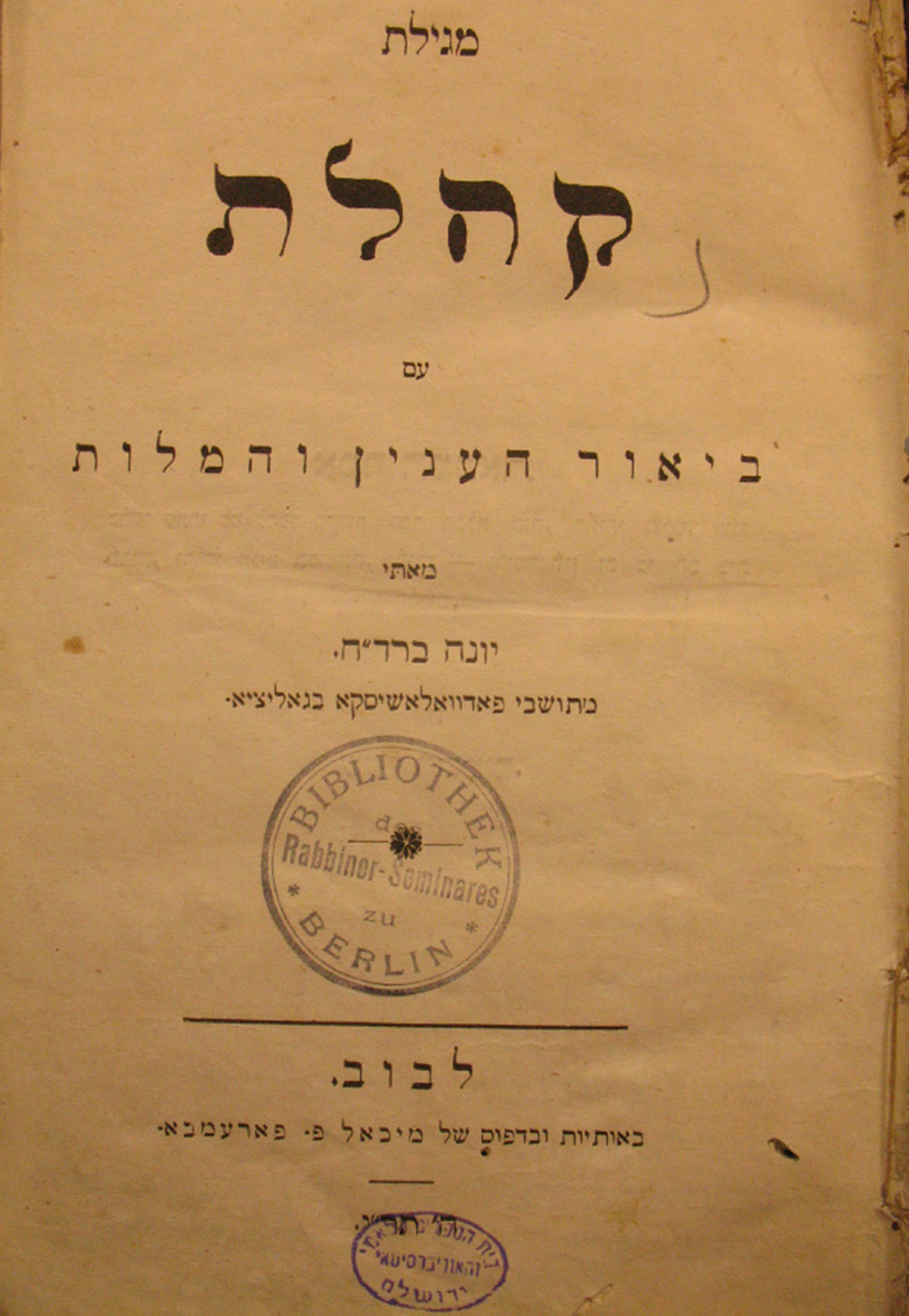
Let’s start with the commentary of the Malbim on Kohelet that was published in 2008. Here is the title page.

Understandably, there was much excitement when this book appeared since it is quite an event when an unknown commentary of such a major figure is discovered. However, the excitement was short-lived, as it soon became known that the commentary was not by the Malbim but by a nineteenth-century maskil, Jonah Bardah. Even more embarrassing for the publisher, Machon Oz ve-Hadar, is that Bardah’s commentary even appeared in print in 1850. Here are the title pages.


This would be bad no matter who the publisher was, but the fact that Machon Oz ve-Hadar is from New Square, which is as far removed from Haskalah imaginable, makes the mistake drip with irony.
How did such a blunder happen? Today, it seems that everyone is looking for unknown material to publish. There are a number of journals that devote a good deal of space to this, and I often wonder what will happen when we run out of unpublished documents. With this mindset you can imagine how excited the publisher was when he was informed that someone had located a previously unknown commentary by the Malbim. The assumption that this was the Malbim’s text was due to the similarity between the method of commentary in the newly discovered work and other commentaries of the Malbim. Without careful examination, the Kohelet commentary was published and this would in turn lead to great embarrassment, not to mention a lot of wasted time and money.
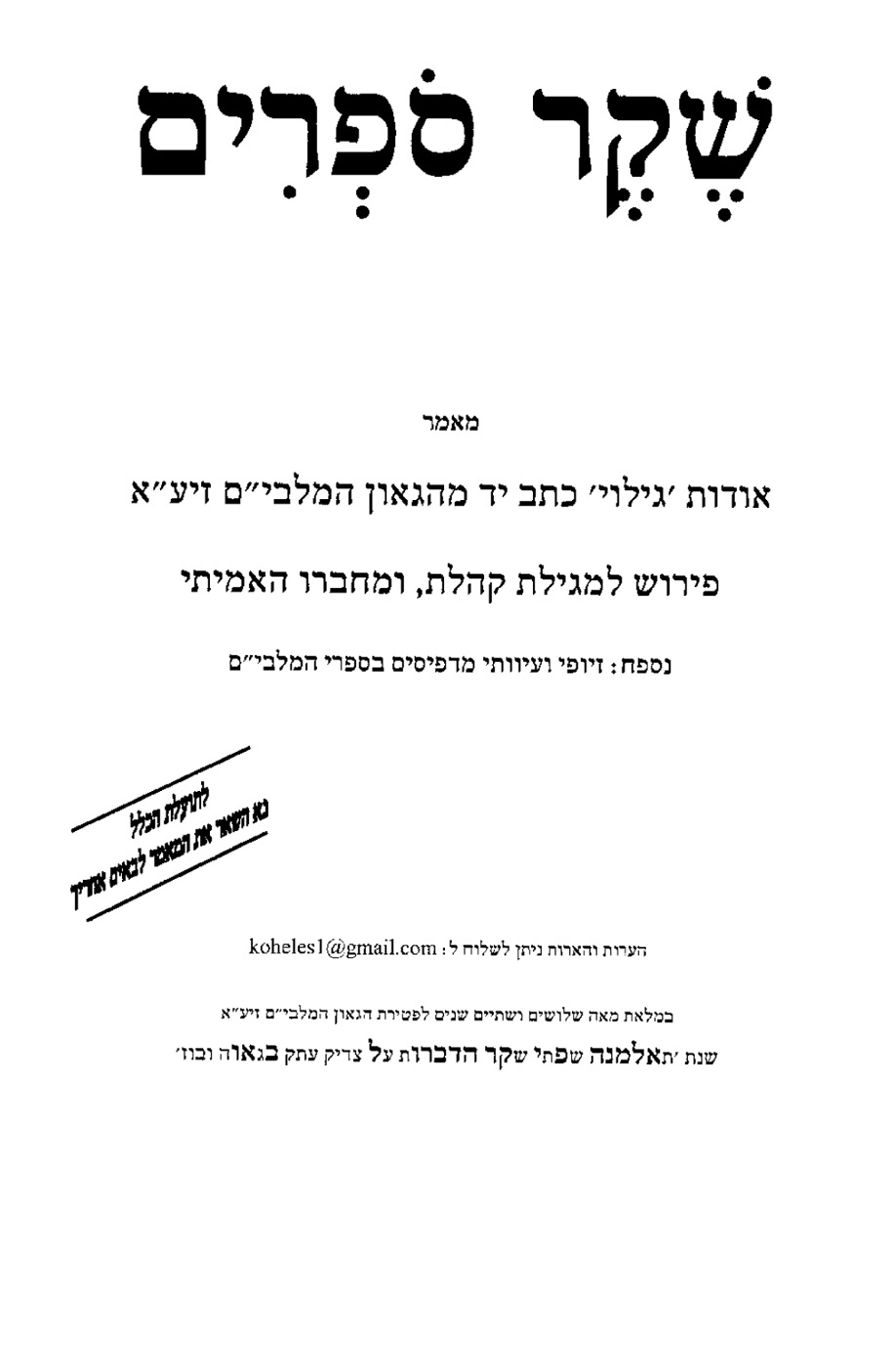
The story of this mistake is found in a document entitled Sheker Soferim. Here is the title page.

(A softened version of this article appeared in Yeshurun 25 [2011], pp. 724ff., and there the author’s name is revealed: R. Avraham Yeshaya Zecharish.[15]) This is really a damning document as it shows that the publisher had already been told that the handwriting of the commentary was not that of Malbim. I am not going to say that the publisher knowingly printed a fraud in order to profit by the Malbim’s name. But I think it is obvious that that the publisher’s great desire to publish the work caused him ignore what he had been told and to instead rely on his own “experts.” Whoever edited the work also showed his (their?) ignorance, since when the commentary referred to רמבמ”ן , not knowing that this referred to Mendelssohn the text was “corrected” to read רמב”ן!
Despite my sense that there was no intentional fraudulence in this publication, I don’t entirely discount the possibility that the publisher knew the commentary was not by Malbim but printed it anyway. I say this because as shown in Sheker Soferim there is one passage in the commentary where the “Malbim” claims that there is a mistake in the biblical text. The editors censored this passage, and this to be expected as from a haredi perspective such a comment is heretical. But if so, could the publisher actually believe that the Malbim wrote that which was censored?
Lest people think that things like this don’t have real effects in the world, let me just note that, as pointed out by Eliezer Brodt, an entire chapter of a doctoral dissertation is devoted to the false Malbim commentary on Kohelet.[16] Just think of how many hours were devoted to this dissertation chapter, all of which were wasted.
While Zecharish points to various “problematic” elements of the commentary that the publisher should have been aware of, he misses one right on the first page.

The notes at the bottom of the page are found in the original manuscript and publication. Here is the page.

In the commentary to the first verse the “Malbim” explains how the beginning of biblical books, where the author is introduced, is written by a later person.
.ואדמה כי לא יטעה כל משכיל לחשוב אשר המחבר בעצמו דיבר אלה הדברים
In the note the “Malbim” adds:
.עיין בהראב”ע בהתחלת ספר דברים
The beginning of Deuteronomy states: “These are the words which Moses spoke unto all Israel beyond the Jordan.” Upon these words Ibn Ezra introduces his “secret of the twelve” which focuses on post-Mosaic additions to the Torah. It is incredible that while the “Malbim’s” intention is crystal clear, namely, that the beginning of Deuteronomy was written after Moses, the editors didn’t catch this and see anything problematic in the comment, a comment that would never have been made by the Malbim.[17]
——

[1] See here. For former French Chief Rabbi Gilles Bernheim’s plagiarism, see the statement in First Things available here.
I think this sentence, from the article, is particularly apt:

One of the perversions of our era is to make a god of intellectual property. Most commentators described Bernheim as “stealing” words and sentences. This is wrongheaded. Plagiarism is a sin against truth, not property. It’s first and foremost a kind of lying, not a kind of stealing. He violated our trust by speaking in a voice that was not his own, which is why in this and other cases of plagiarism the writer loses intellectual and moral authority broadly.

The importance of our spiritual leaders speaking the truth cannot be stressed enough. R. Kook writes about how forces of heresy were strengthened when people saw unethical behavior among בעלי תורה ואמונה. See Eder ha-Yekar, p. 43.
R. Joseph Ibn Caspi explains at length how a prophet, who models himself on God who is called א-ל האמת, always speaks the truth, even when speaking to his wife and children (!). See Shulhan ha-Kesef, ed. Kasher (Jerusalem, 1996), pp. 146, 163. This is so important to Ibn Caspi that he deals with a number of biblical examples where it appears that a prophet did not speak truthfully, and he argues that the meaning is not what appears at first glance. The one case where he acknowledges that we are dealing with a lie is Jacob telling Isaac, “I am Esau your firstborn” (Gen 27:19). Yet this does not affect Ibn Caspi’s thesis because he claims, p. 150, that when Jacob told this lie he was not yet a prophet.
.הנה כחש אבל עדין לא הגיע למדרגת הנבואה עד היותו בדרך חרן וראה הסולם
After his discussion about prophets and how they were always truthful, Ibn Caspi concludes, p. 163, that this is also how a חכם should behave. Our rabbis now stand in place of the prophets of old, thus they too much be paragons of truth.
With regard to Ibn Caspi’s Shulhan ha-Kesef, I would like to make one further point. In a previous post, see here, I discussed how, according to Ibn Caspi, the Torah contains statements that are not actually true, but were believed as such by the ancients. We see another example of this in Shulhan Kesef, p. 147, where he writes, in seeking to explain an example where it appears a prophet lied:
.כי הנביא שם משותף וכבר הרחיב הכתוב ואמר “חנניה הנביא” בסתם
What Ibn Caspi is saying is that even though the Bible refers to someone as a prophet, this doesn’t mean he was really a prophet. It could be that he is referred to as such because this is what the people believed, even though the people were incorrect. In other words, the Bible incorporates the incorrect view of the people in its narrative. The proof he brings is from Jeremiah 28 where Hananiah is referred to as a prophet but in reality he was a fraud.
[2] See most recently Shmuel Ashkenazi, “Ha-Gonev min ha-Sefer,” Yeshurun 25 (2011), pp. 675-690.
[3] See here.
[4] See e.g., Bekhorot 31b, Menahot 93b; R. Moses Zweig, Ohel Moshe, vol. 1, no. 41. The fact that the Sages had this problem in their own day is probably also why they stressed the importance of proper attribution. This is pointed out by R. Nathan Neta Olevski, Hayei Olam Nata (Jerusalem,1995), p. 241:
מזה נראה כי גם בימיהם כבר פשתה המספחת להתגדר בגנבי גנובי את תורת אחרים ולכן ראו חז”ל להגדיל ערך המשתמר מזה ולחשוב דבר זה בין המ”ח דברים שהתורה נקנית בהן
[5] See e.g., R. Yekutiel Yehudah Greenwald, Mekorot le-Korot Yisrael (n.p., 1934), p. 48.
[6] See e.g., Nahum Rakover, Zekhut ha-Yotzrim bi-Mekorot ha-Yehudi’im (Jerusalem, 1991), pp. 38ff.
[7] Otzrot ha-Sofer 14 (5764), p. 91:
.זה אני מוחל לכם אם אתם אומרים חידושיי בשמכם, אבל אם אתם אומרים חידושים שלכם בשמי זה אינני מוחל לכם
For a communal rabbi, who was expected to prepare his own derashot, it was unacceptable to inform his listeners that he was using material from others. However, R. Asher Anshel Yehudah Miller, Olamo shel Abba (Jerusalem, 1984), p. 187, reported one tongue-in-cheek justification of this practice if due to circumstances beyond his control the rabbi was unable to properly prepare for his Shabbat ha-Gadol derashah. Since the Talmud, Pesahim 6a, states שואלין ודורשין בהלכות פסח, one can derive from this that מותר “לשאול” מאחרים בשעת הדחק ולדרוש בהלכות פסח
[8] I mention geneivat da’at, yet according to some one who plagiarizes actually violates the prohibition against actual geneivah. See R. Yaakov Avraham Cohen, Emek ha-Mishpat, vol. 4, nos. 2, 24; R. Yaakov Hayyim Sofer, Hadar Yaakov, vol. 5, no. 38. R. Isaiah Horowitz, Shenei Luhot ha-BeritMasekhet Shevuot, no. 71, writes about plagiarism:  יותר גזילה מגזילת ממון
R. Eleazar Kalir states that the plagiarizer violates a positive commandment. See Havot Yair (Vilna, 1912; printed as the second part of the Malbim’s Eretz Hemdah), p. 26a:
ואומרים חידושי תורה מה שלא עמלו בו רק מפי השמועה שמעו ואומרים משמיה דנפשם ועוברים על עשה . . . שכך אמרו כל האומר דבר בשם אומרו מביא גאולה לעולם
See also the very harsh comments of R. Joseph Hayyim David Azulai in his Berit Olam to Sefer Hasidim, no. 224, which should be enough to scare away at least some of the plagiarizers:
אם כותב ספר וגנב תורת אחרים . . . בחצי ימיו יעזבנו ואחריתו יבא בגלגול אחר ויהיה נבל ויהיה מזולזל כי נבל הוא ונבלה עמו. רחמנא ליצלן
[9] Robert Klein called my attention to the final part of R. Solomon Ephraim Luntshitz’s introduction to his Keli Yekar, where he suspects that some of the commentators who preceded him were guilty of plagiarism. See also his Olelot Ephraim, at the end of the introduction, where he claims that all the plagiarisms are delaying the arrival of the Messiah. He plays on the verse עשות ספרים הרבה אין קץ  and explains that since so many new books are full of plagiarisms, עשיית ספרים הרבה גורם איחור קץ הימים.
R. Solomon Alkabetz, Manot ha-Levi (Lvov, 1911), p. 91b, also refers to the plagiarizers of his day. I called attention to R. Eliyahu Schlesinger’s plagiarism in my review of Avi Sagi’s and Zvi Zohar’s book on conversion, available here. See p. 9 n. 29. See also my post from June 25, 2010, available here, where I cite another case of plagiarism from Schlesinger. I found these examples by chance, and I am sure that if I were to carefully examine the latter’s writings I would come up with more. Yet there doesn’t seem to be much point in doing so, since in the haredi world there simply is no accountability in matters like this.
A number of scholars have discussed plagiarism with regard to Abarbanel, and I hope to return to this. For now, let me just note the following. In his introduction to Trei Asar, p. 13, Abarbanel explicitly denies that he plagiarized, while at the same time accusing R. David Kimhi of doing so.
שהמובחרים והטובים מהפירושים שזכר רבי דוד קמחי מדבר [!] הראב”ע לקחה [!], עם היות שלא זכרם בשמו ואני איחס כל דבר לאומרו פן אהיה ממגנבי דברים
At the end of his commentary to Amos, he repeats the accusation:
ומה שפירש עוד בהלא כבני כושיים בשם אביו הנה הוא לקוח מדברי הרב רבי אברהם בן עזרא ומה לו לגנוב דברים
See R. Dovberish Tursch, Moznei Tzedek (Warsaw, 1905), p. 195; Abraham Lipshitz, Pirkei Iyun be-Mishnat Rabbi Avraham Ibn Ezra (Jerusalem, 1982), p. 131.
[10] It is hard to take this explanation seriously. Talking during the repetition of the Amidah has always been common, yet rather than omit mention of this matter, the Shulhan ArukhOrah Hayyim 124:6, writes:
לא ישיח שיחת חולין בשעה שש”צ חוזר התפלה ואם שח הוא חוטא וגדול עונו מנשוא וגוערים בו
R. Zvi Yehudah Kook reported that his grandfather, R. Shlomo Zalman Kook, once strongly rebuked someone for talking during the repetition of the Amidah. When it was pointed out to him that דברי חכמים בנחת נשמעים, he replied that the Shulhan Arukh uses the word גוערים and that does not mean a gentle suggestion but a sharp rebuke. See R. Yair Uriel, Be-Shipulei ha-Gelimah (n.p., 2012), p. 32. (The story immediately following this one is also of interest. It records that R. Zvi Yehudah opposed the common practice [at least in America] of singing אשמנו בגדנו:
יש לומר את הדברים ברצינות, בצער ובכאב, ולא מתאימה לזה שירה 
It seems that R. Abraham Isaac Kook followed in the path of his father. See ibid., pp. 58-59, for the famous story of how R. Kook, while rav in Bausk, once slapped a “macher” in the face when he insulted R. Zelig Reuven Bengis. (The story is told in great detail in R. Moshe Zvi Neriyah, Sihot ha-Re’iyah [Tel Aviv, 1979], ch. 22.) R. Kook later explained that he did not slap the man in a fit of anger, but was of completely sound mind and did it in order to follow the Sages’ prescription of how to respond to one who degrades a Torah scholar:
“וכך אמר: “דינא הכי, מי ששומע זילותא של צורבא מרבנן צריך למחות
All I would say is that one must be careful with who one slaps. R. Yekutiel Yehudah Greenwald, Li-Felagot Yisrael be-Ungaryah (Deva, 1929), p. 25, records a story from mid-eighteenth-century Hungary where in the synagogue and in front of the congregation the head of the community slapped the rabbi in the face. This was the last straw for the rabbi (who was really a phony), and he, his wife, and children converted to Christianity.
R. Naphtali Zvi Judah Berlin would occasionally slap a student in the face. On one occasion it even led to a noisy protest by the students. Because the students refused to back down, the Netziv unable able to deliver his shiur. This led to him making a public apology to the students, which they happily accepted. See M. Eisenstadt, “Revolutzyah bi-‘Yeshivah,’” Ha-Tzefirah, June 2, 1916, pp. 1-2 (referred to by Shaul Stampfer, Lithuanian Yeshivas of the Ninteenth Century [Oxford, 2012], p. 113).
Since we are on the subject of slapping in the face, and since I mentioned R. Yitzhak Zilberstein in my last post, here is something else from his Hashukei Hemed on Bava Kamma, pp. 492-493.


I think it is quite interesting that he takes it as a given that policemen in Israel will beat thieves until they confess. Is there any truth to this at all? He himself thinks it is good that thieves be given a good slap in the face.

There are many more examples I could cite of people being slapped in the face, including by rabbis. One thing that is clear is that face-slapping has gone out of style.. It is like fainting, which was common in old movies. But when was the last time you saw a woman faint? It just doesn’t happen anymore.
Returning to R. Bengis, it is noteworthy that he and R. Kook were great friends from their days in Volozhin.  See the booklet Or Reuven (Jerusalem, 2011), which is devoted to their relationship R. Bengis’ letters to R. Kook in Iggerot la-Rei’yah show that he regarded R. Kook as rav of Jerusalem and chief rabbi of the Land of Israel. Only after R. Kook’s death did R. Bengis become Rosh Av Beit Din of the Edah Haredit in Jerusalem. His life-long admiration for R. Kook, even in his new position with the Edah Haredit, is, of course, not usually mentioned in haredi discussions of him. Since in the past I have criticized Yeshurun for its conscious distortions (all in the service of the haredi cause), let me now praise it for including the following in vol. 12 (2003), p. 156 n. 35.

Rabbi Nathan Kamenetsky, Making of a Godol, pp. 305-306, reports in the name of R. Yosef Buxbaum that R. Bengis knew the poetry of Pushkin. (He also quotes a report that R. Bengis did not know Russian and when tested by a government official to ensure that secular studies were being taught in Volozhin, he just repeated the page of Pushkin from memory which he had prepared ahead of time by having another student read it for him. This strikes me as an apologetic attempt to “kasher” R. Bengis, as followers of the Edah Haredit will not take kindly to the knowledge that R. Bengis knew Russian poetry.)
For a recent discussion of R. Bengis and his brother, who went by the name of “Ben Da’at”, see here.
According to an unpublished collection of Brisker stories in my possession, R. Velvel Soloveitchik said about R. Bengis that just because one is a great talmid hakham does not mean that he is also a leader. Perhaps R. Velvel had this view of R. Bengis because the latter’s extremist credentials left something to be desired.
[11] Marvin J. Heller, Studies in the Making of the Early Hebrew Book (Leiden and Boston, 2008), p. 204, writes as follows about R. David Lida: “I would suggest, and this is highly speculative and certainly not a justification, that Lida’s acts of literary piracy were youthful improprieties, albeit of a most serious nature. A young man, inexperienced, perhaps immature, from whom much was expected, hoping to impress others and to further a burgeoning career, erred and claimed authorship of works he had not written, but rather discovered in manuscript.”
[12] The following example, with some of the explanations I give, is found here.
[13] This too was noted here.
[14] In a comment to my last post, someone wrote:

“The part about Anshei Keneset ha-Gedolah requiring the Amidah to be recited twice a day and that women are also obligated in this is not from Nahmanides. This is the Mishnah Berurah speaking.”

Actually, these are the words of the Shulchan Aruch HaRav (או”ח קו,ב), quoted here verbatim.

This practice of the MB citing whole paragraphs from the SAH – without attributing the author – is common throughout the his work, in leads many times to run-on sentences and disambiguation such as the one at hand.

[15] See also the online discussion here.
[16] “Ha-Sinonomyah bi-Leshon ha-Mikra al Pi Shitat Malbim,” (unpublished doctoral dissertation, Bar Ilan University, 2009).
[17] See here where I mention how R. Yosef Reinman also didn’t know anything about Ibn Ezra’s “critical” views. In the post I also discuss the controversy regarding Reinman co-authoring a book with a Reform rabbi. In the introduction to his Avir Yosef (Lakewood, 2008), Reinman defends himself.


Plagiarism, Citation, and Redemption

Plagiarism, Citation, and Redemption
 By Jeremy Brown
Jeremy Brown is
the author of New Heavens and a New
Earth; the Jewish Reception of Copernican Thought
. He
writes on science, medicine and the Talmud at Talmudology.com
Plagiarism, it
seems, has never been so widespread. Remember How Opal Mehta Got Kissed, Got
Wild and Got a Life
, the 2006 debut novel from Harvard
undergraduate Kaavya Viswanathan? The author had plagiarized several
passages from others (including Salman Rushdie) and the publisher Little
Brown recalled
and destroyed all its unsold copies. It’s not just authors;
politicians plagiarize too. In 2013 the German minister for education
resigned amid allegations
she had plagiarized
her PhD. thesis, and last year Senator Jon
Walsh of Montana had his Master’s Degree revoked by the US Army
War College, which determined that it
had been plagiarized
. (Walsh dropped
out
of the Senate race as a result of the scandal.)  
Plagiarism is
not just for politicians; academics do it to. Retraction Watch has reported at least
268 academic papers that were plagiarized. In fact plagiarism has become
so pervasive in academia (and the need to report it has become so
important) that a recent
paper
paper in Ethics & Behavior gives advice for academics
considering becoming plagiarism whisleblowers. 
This seems
to be a very good time in which to remind ourselves that the full and proper
attribution of the work of others is a core Jewish value.  When authors of
ideas are properly acknowledged, the Talmud (Yevamot 97a) states that “their
lips move in the grave.” Life is briefly restored to the author when his
teachings are recalled.
Sadly, Jewish
literature has a many examples of plagiarism, improper attribution, and other
infractions of publication etiquette. So widespread is the plagiarism of
Jewish texts that it might even be considered a separate genre of Hebrew
literature. Some examples have already been examined in the virtual pages of
this Seforim Blog, but we will focus on
three. They are each different, and their ethical breaches are not to be
equated, but they are reminders of the responsibility of those who publish to
check, double check, and attribute. 
1. PARTIAL
OR INACCURATE CITATION
Inaccurate
citation is a relatively lightweight problem, but it’s a problem
nevertheless. The English language Schottenstein Talmud, published by
ArtScroll, chose a censored text of the Talmud as the basis for its
translation project. (Full disclosure: I enjoy the Schottenstein
Talmud, and study from it each day, God bless it).  As I’ve
pointed out before on
this blog,
this was a sad choice, and a missed opportunity to return the
text to its more pristine (and more challenging) state. 
One example of
ArtScroll’s decision is found very early on in Berachot
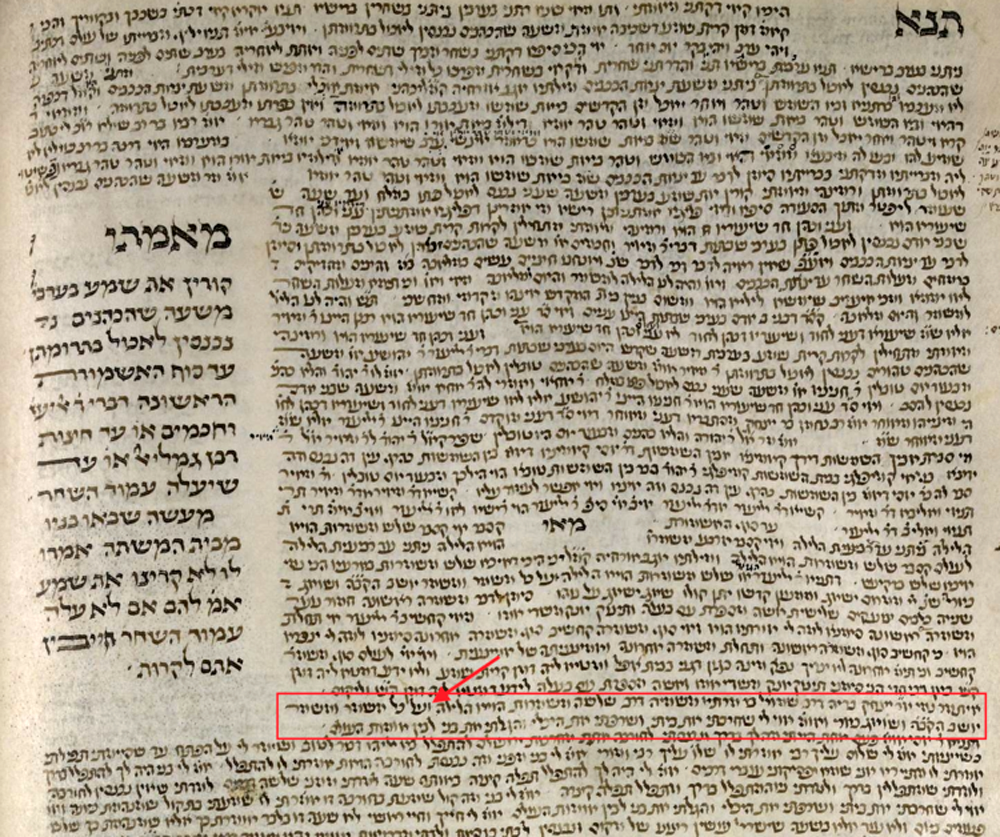
(3a). There, the original uncensored text records a statement said in the
name of Rav:
 אוי
לי שהחרבתי את ביתי ושרפתי את היכלי והגליתים לבין אומות העולם
Woe is me
[God], for I destroyed my home [the Temple], burned my Sanctuary,
 and sent [the Jewish People] into exile among the nations of the
world. 
However, the
editors of the English ArtScroll Talmud chose to use a censored text in which
an additional phrase was slipped in by the censor:
Woe to my
children who sinned, [and hence made me, God] destroy my home
[the Temple], burn my Sanctuary, and send them into exile among
the nations of the world. 
Here is
a version of the uncensored text- the one that ArtScroll could have
used.  As you can see, the censor’s additional text is not there:
Then, to
compound the error, the ArtScroll Talmud adds a footnote explaining the
metaphorical meaning of this erroneous text!

To be clear:
ArtScroll did not plagiarize anything, but they should have done a better
job of quoting the text accurately. After all, isn’t that what Rabbi Yochanan
taught us to do? Had they done so, the lips of the great sage Rav, whose
teachings were improperly amended by the censor, would again
“move in his grave”.
Now on to
more egregious issues – hard-core plagiarism.
2.  PLAGIARISM
IN PART

Copying a chunk
of text or some choice word phrases without proper attribution is also
plagiarism. One example of this is found in the 500 year-long debate over
whether Jews could believe in the Copernican model of the solar system in which
the sun was stationary.  In the late nineteenth century Reuven Landau (c.
1800-1883) took a conservative position against this model. He found it to be
existentially threatening, and argued that because humanity was the center of
the spiritual universe, it must live in the very center of the physical one.
But rather than outline his claims in his own words, he stole from the very
-widely read Sefer Haberit, an encyclopedic work that had been published
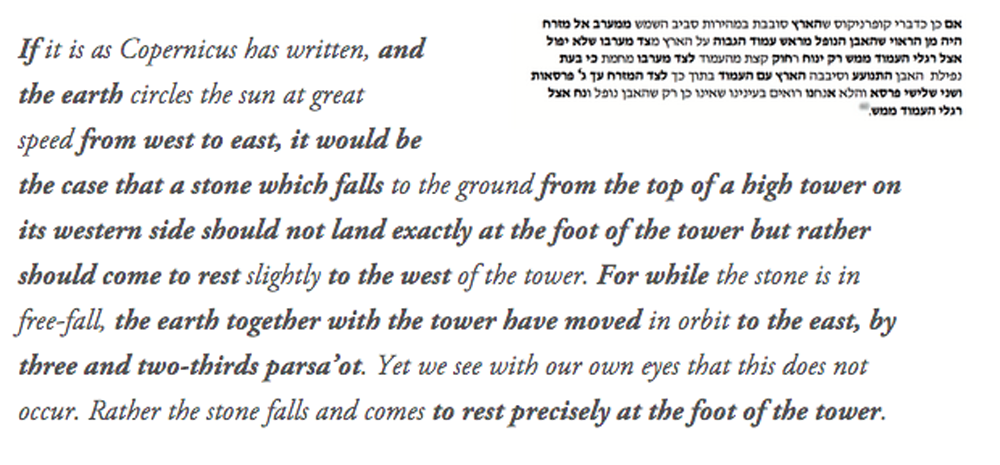
some one hundred years earlier. Here is an excerpt from Landau’s text, in which
he raises what he believes to be scientific objections to the Copernican model.
The bold text shows where the text is identical to Sefer Haberit,
first published in 1798. 
Quite simply
put, Landau stole from Sefer Haberit. A simple attribution was all that
was needed. And it was not there. (You can read more about this plagarism here,
and more about Sefer Haberit in my
book
, and in this
recently published work
from David Ruderman.)


Finally, let’s
look at an example of full, unadulterated plagiarism: the stealing, word for
word, of paragraphs – and then an entire book.
 3.
PLAGIARISM IN FULL: STEALING AN ENTIRE CHAPTER, WORD FOR (ALMOST) WORD
In 1788 in
Berlin, Barukh Linda (not to be confused with the plagiarist Reuven Landau)
published a small encyclopedia for children called Reshit Limmudim. In
it, Linda carefully explained the heliocentric model of Copernicus and how the
planets moved around the sun. This book became, in the words
of the historian Shmuel Feiner the “most famous, up-to-date book on the
Hebrew bookshelf at the end of the eighteenth century,” And then, a year
after it was published a Rabbi Shimon Oppenheimer, living in Prague, stole from
it.
Oppenheimer
(1753-1851) objected to the claim that the earth revolved around the sun, and
in 1789 in Prague he published Amud Hashachar in which he detailed his
opposition. But rather than use his own words, he stole, word for word,
the descriptions of the solar system from the pro-Copernican Reshit Limmudim,
carefully leaving out the bits that supported Copernicus. In a move that pushes
hutzpah to a new level, Oppenheimer even published a moving dedicatory
poem as if it had been written to him, though he changed a few awkward phrases
here and there, since the original poem mentioned Linda by name. However, the
poem plagiarized from one written as a dedication to the real author Linda –
from the great man of letters Naphtali Herz Wessely. 
When it came to
plagiarism, this Rabbi Oppenheimer was a repeat offender.  Because in 1831
he published Nezer Hakodesh,
a book on religious ethics (I’ll say that again in case you missed it – it’s
a book on religious ethics
)…which he plagiarized from the 1556 work Ma’alot
Hamidot
!  Here’s an example so you can see the scale of the
plagiarism.
There is a
fascinating end to the story. The famous Rabbi Yechezkel Landau (that’s
the third Landua/Linda in this little post –sorry), head of the Bet Din in
Prague, banned Oppenheimer from printing further copies of Amud Hashachar,
but not because it was plagarized.  Rather, Chief Rabbi Landau
objected to the book’s frontispiece, in which Oppenheimer described himself as
“The great Gaon, sharp and famous, the outstanding investigator Shimon”.
Read it for yourself:


First edition of השחר עמוד, Prague 1789. From
the Jewish National and University Library, Jerusalem

Remarkably, in
his rebuke, the head of the Bet Din made no mention of the fact that sections
of the book were plagiarized, even though this information was widely known.
Oppenheimer proceeded undeterred, and published a second edition of his
plagiarized and anti-Copernican work – although he was “honest” enough to
remove the stolen poem praising his book – the poem that had originally been
written by Naphtali Herz Wessely in praise of Lindau’s Reshit Limmudim.
In his recently
published autobiography
, the British comedian John Cleese (of Monty
Python
and Fawlty Towers fame) recalls how he reacted the very
first time that he was recognized after a stage performance. As he walked home,
a family who had been in the audience pointed at him and waived. It was by all
accounts a small gesture, but Cleese recalled its effects in
detail even fifty years later:
I can still
remember the sudden feeling of warmth around my heart that swelled and swelled
and lifted my spirits. It is as though I had been accepted into a new family,
and acknowledged as having brought them something special that they really
appreciated. It was only a moment but  it was wonderful, and they didn’t
even know my name…in today’s celebrity culture it must be hard to imagine
that a tiny moment of recognition like that could feel so uncomplicated and
positive…
The need for
recognition is not a vice or a character flaw, but a profound human need.
To ignore it is not just an oversight but an act of neglect.  The rabbis
of the Mishnah and the Talmud understood the corollary: that to attribute
is to nourish. To acknowledge the creative act of another person is a kind
of blessing, like those required before eating, or on seeing a beautiful vista.
 Blessings and citations acknowledge the creative impulse in others, and
so make the world a little bit better. They are redemptive. As we approach
Pesach, the festival of our redemption, we should remember one final text about
the power of correct citation. It was, after all, a citation that saved the
Jewish people:
“Whoever cites
something in the name of the person who originally said it, brings redemption
to the world. As the prooftext states – “And Esther told the King in the name of Mordechai…”  (Pirkei Avot 6:6)


Book Sale: Bar Ilan University Press

Book Sale: Bar Ilan University Press
Eliezer Brodt
The following list is a special sale of books from Bar Ilan University Press. The offer is for the next 3 days [until 12.27.18] for the readers of the Seforim Blog. The prices are as listed below, but do not include shipping costs. For more information contact me at EliezerBrodt@gmail.com Payment is with Pay Pal, but other arrangements can be made. Shipping is not included in the price; that depends on the order and size of the book. All books will be air mailed out after I receive payment. There are other shipping possibilities.
For more details about specific works, or recommendations contact me at the above email.
Part of the proceeds of this sale will be going to help support the efforts of the Seforim Blog.
שם
הספר
מחיר
ספרים
1
אבדן
אוריינטציה ריגושית
/
ר.
צור
$18
2
אבן
אל
ערבי
מסביליה
מסע
בא
י
/
י.
דרורי
$10
3
אברהם
בכבשן האש
/
ו.
טוהר
$13
4
אגודות
חשאיות ותנועות מרד בסהר הפורה
/
א.
טאובר
$10
5
אוצר
הלשון הערבית בתפסיר ר

סעדיה
גאון
/
י.
רצהבי
$18
6
אוצר
המנהגים והמסורות לקהילות תאפילאלת
/
סגלמאסא
/
מ.
נזרי
$24
7
אוריינות
היסטורית וטיפוח הביקורתיות
/
ע.
שרמר
$10
8
אזן
מלין תבחן
(מהד
שנייה)
/
א.
סימון
$24
9
אי
וסוריה
/
ז.
עמר
$10
10
אי
קרוב
רחוק
/
י.
בןארצי
$13
11
אלא
משל היה
/
ח.
מאק
$10
12
אלברט
איינשטיין והמפעל הציוני
/
נ.
גולדשטיין
$24
13
אמונה
רדיקלית
/
ר.
בר
לב
$18
14
אנציקלופדיה
של הסיפור היהודי ב

/
א.
ליפסקר
(ע)
$10
15
אנציקלופדיה
של הסיפור היהודי ג

/
א.
ליפסקר
(ע)
$18
16
אנציקלופדיה
של הסיפור היהודי ד

/
א.
ליפסקר
(ע)
$24
17
אסטרולוגיה
ומגיה בהגות היהודית
/
ד.
שוורץ
$24
18
אצות
החוף של ישראל
/
ר.
עינב
$18
19
אשה
במזרח
אשה
ממזרח
/
ט.
כהן,
ש.
רגב
(ע)
$18
20
אתגרים
בטחוניים ומדיניים במבחן המציאות
/
מ.
לסקר,
ר.
יצחק
(ע)
$18
21
באור
חדש
/
נ.
זהר
$10
22
בארצות
המקרא
/
ש.
ורגון
$13
23
בואו
לתקון
הספרות
החסידית
/
י.
אלשטיין
(ע)
$8
24
בין
אורתודוקסיה לציונות
/
י.
צור
$10
25
בין
הלכה להשכלה
/
י.
פרידלנדר
$10
26
בין
מסורת לחידוש
/
א.דוןיחיא
(ע)
$10
27
בין
ניצוץ לשלהבת
/
ד.
לוין
$10
28
בין
קנאות לחסד
/
ד.
ברזיס
$24
29
בין
שיוויון למצויינות
/
מ.
שמידע
$10
30
בין
שפה לפילוסופיה
/
נ.
בסמןמור
$18
31
בכבשונו
של פולמוס
/
י.
פרידלנדר
$24
32
במסתרי
הסאטירה
/
י.
פרידלנדר
*
כרכים
א

ג
*
כל
כרך
$10
33
בסוד
יחיד ועדה
/
י.
הלוי
$10
34
בסימן
טראומה
/
מ.
אלברשטין,
נ.
דוידוביץ
(ע)
$10
35
בעקבות
הפסיכואנליזה
/
ל.
פרידמן
$18
36
ברוך
קורצווייל כפרשן תרבות
/
מ.
גולצין
$10
37
בשבילי
העבר
/
א.
גראוויס
קובלסקי
$18
38
בשבילי
התחיה
/
מ.
אליאב
*
כרכים
ב
‘,
ג
*
כל
כרך
$10
39
בת
המזרח החדשה
/
י.
הלוי
$10
40
בתי
הדין בימי התלמוד
/
ש.
אלבק
$10
41
גאולה
תימנית ועבריות חדשה
/
א.
דרורי
$10
42
גווילין
נשרפין ואותיות פורחות
/
ש.
ז.
כהנא
(
ז.
מאורע)
$24
43
גלגמש

גיבור
מיתולוגי
/
נ.
אברבנאל
$10
44
גם
הם קרויים אדם
/
מ.
קלנר
$18
45
גם
יהודי גם פולני
/
פ.
מיזליש
$10
46
דרכי
דניאל
/
א.
פרזיגר
(ע)
$24
47
דרכי
קניין ומנהגי מסחר
/
ר.
קליינמן
$18
48
דרכים
במקרא ובהוראתו
/
מ.
ארנד,
ש.
פויר
$8
49
דרכים
בפרשנות החדשה
/
ה.
ברזל
$10
50
דרשות
ר

יצחק
קארו
/
ש.
רגב
$10
51
האביר
והרעיה השבויה
/
ש.
רפאל
$10
52
האנשים
מכאן
/
י.
זלטנרייך
$18
53
האפיפיור
היהודי
/
י.
במברגר
$13
54
האקסטאזה
והסיפור החסידי
/
י.
אלשטיין
$10
55
הארבה
במסורת ישראל
/
ז.
עמר
$13
56
האשכנזים
/
י.
שוורץ
$10
57
הבדחן
/
א.
קרסני
$10
58
הגותו
של הרב סולובייצ
יק
ב
/
ד.
שוורץ
$18
59
הגותו
של הרב סולובייצ
יק
ג
/
ד.
שוורץ
$24
60
הגותו
של ר

יוסף
אלבו
/
ד.
ארליך
$13
61
הגרא
ובית מדרשו
/
חלמישריבליןשוחט
(ע)
$13
62
ההתיישבות
היהודית בהרי חברון
/
י.
כץ
$10
63
הוועידה
השביעית של הפועל המזרחי בא
י
/
י.
אבנרי
(ע)
$8
64
הוריות
/
צ.
א.
שטיינפלד
$13
65
החורבן
והחשבון
/
י.
טובי
$13
66
החינוך
הממלכתי דתי
/
י.
שורצולד
$10
67
הטרגדיה
בחיים האתיים
/
פ.
איפרגן
$18
68
היה
היה פעם
/
א.
אזולאי
$10
69
היהדות
על פרשת דרכים
(מרדכי
מקס יוסף
)
/
י.
קולר
(ע)
$24
70
היזמה
הפרטית בבנין א
י
/
י.
כץ
$10
71
היחידות
הדתיות בהגנה ובפלמ
ח
/
מ.
פרידמן
$10
72
הכיתה
ההטרוגנית
/
י.
ריץ
$10
73
הלכה
בתמורות הזמן
/
א.
משיח
$18
74
הלל
לביאליק
/
ה.
ויס,
י.
יצחקי
(ע)
$10
75
המאה
של המונאדות
/
ר.
אלבקגדרון
$10
76
המילים
המתבקשות
/
מ.
אפרת
$24
77
המסה
בספרות העברית
/
ר.
לפידוס
$10
78
המסורת
הפוליטית היהודית
/
מ.
הלינגר
(ע)
$10
79
המסע
האנושי למשמעות
/
א.
שגיא
$13
80
המקרא
בפרשנות חז
ל
:
הושע
*
יואל

עמוס
*
כל
כרך
$24
81
המשפט
בישראל
מבט
לעתיד
/
י.
זילברשץ,
י.
שטרן
(ע)
$10
82
המתכונת
והדמות
/
ה.
ויס
(ע)
$10
83
הספרות
כמעבדה מוסרית
/
ע.
מעוזמנדלסון
$18
84
העת
הזאת
/
א.
שגיא
$24
85
הפואמה
המודרניסטית ביצירת אלתרמן
/
ז.
שמיר,
צ.
לוז
(ע)
$10
86
הפסוקים
הסמויים מן העין
/
י.
יצחקי
$10
87
הפסיכולוגיה
של ההתנגדות לשינוי
/
ש.
פוקס
$18
88
הפסיכולוגיה
של השליטה על התודעה
/
ש.
קניאל
$18
89
הפסיכולוגיה
של השקר
/
א.
אלעד
$18
90
הפרטת
חברות בישראל ובעולם
/
אקשטיין,
זילבר
(ע)
$10
91
הפשטות
המתחדשים בכל יום
/
א.
טויטו
$13
92
הקבלה
ביצירת שי עגנון
/
א.
שילה
$24
93
הקבלה
בתפילה בהלכה ובמנהג
/
מ.
חלמיש
$24
94
הרעיון
המשיחי בהגות היהודית
/
ד.
שוורץ
$24
95
הרשויות
האישיות
/
ע.
עינתנוב
$10
96
השפה
העברית בראי חכמת ההיגיון
/
מ.
קהן
$24
97
התמימות
השנייה
/
א.
שגיא,
ד.
שוורץ
$24
98
ואלה
שמות

מחקרים
באוצר השמות
/
א.
דמסקי
,
כרכים
א
ה
*
כל
כרך
$10
99
ובלכתך
בדרך
/
ל.
וינר
דאו
$24
100
זהות
כפולה
/
א.
בלפר
$13
101
חולף
עם הרוח
/
נ.
רונאל
(ע)
$18
102
חומרי
מרפא בספרות היהודית
/
א.
שמש
$24
103
חוסיין
עושה שלום
/
מ.
זק
$10
104
חוקה
אחת ומשפט אחד לאיש ולאישה
/
כתבן,
שילה,
הלפריןקדרי
(ע)
$24
105
פנחס
חורגין

חזון
ומורשת
/
ברנשטיין,
ינקלביץ
(ע)
$10
106
חינוך
יהודי בחברה פתוחה
פרקי
עיון
/
מ.
ארנד
$10
107
חינוך
יהודי בחברה פתוחה
ציוני
דרך
/
מ.
ארנד
$10
108
חקרי
עגנון
עיונים
ומחקרים
/
ה.
ויס
$10
109
טרור
בשירות המהפכה
/
מ.
לסקר,
ח.
באזוב
$13
110
יהדות
צרפת
/
א.
כהן
(ע)
$13
111
יהודי
איראן
/
ש.
רגב
(ע)
$18
112
יהודי
סוריה
/
י.
הראל
$24
113
יהודי
עיראק בישראל
/
בנסקי
,
דון
,
קראוס
(ע)
$13
114
יהודי
עיראק בכלכלה
/
ת.
דרויש
$10
115
יהודים
על פרשת דרכים
/
ג.
מירון
(ע)
$10
116
יומן
יצחק למדן
/
א.
ליפסקר
$13
117
יומרה
ומעש
/
א.
קניאל
$10
118
יופי
של צריכה
/
א.
ברודרמן
$10
119
ייעודה
של אוניברסיטה דתית
/
עירם,
פרידלנדר,
אוחיון
(ע)
$10
120
יסודות
בדיני ממונות
/
ש.
אלבק
$18
121
יסודות
בהוראת המקרא
/
מ.
ארנד
$10
122
יסודות
דיני הנישואין בתלמוד
/
ש.
אלבק
$10
123
יסודות
העבירה בדיני התלמוד
/
ש.
אלבק
$10
124
יצחק
ברויאר

עיונים
במשנתו
/
ר.
הורביץ
$10
125
יצירת
דקר האימפריאלית
/
ל.
ביגון
$10
126
יש
סדר למקרא
/
י.
גוטליב
$18
127
ישראל
והמקרא
/
י.
אליצור
$24
128
כינור
נשמתי
/
ד.
שוורץ
$13
129
כיצד
לקרוא את ספרות חבד
/
א.
רוט
$18
130
כיריעה
ביד הרוקמת
/
נ.
קרן
$10
131
כנישתא
/
י.
תבורי
*
כרכים
2
-4 *
כל
כרך
$10
132
כתב
ידו של דוד פוגל
/
ל.
נתנאל
$10
133
לא
ידענו מה היה לו
/
א.
מרינברגמיליקובסקי
$24
134
לאות
זיכרון
מחקרים
בשירה העברית
/
א.
חזן
$10
135
לבוש
ותוך

המוסיקה
בחוויית היהדות
/
אביצור,
ריצרב,
סרוסי
(ע)
$10
136
להיפגש
עם הצלילים
תרפיה
במוסיקה
/
ד.
אמיר
$18
137
לעצור
את הדחפור
/
י.
כץ
$10
138
לפניך
דרכיים
/
ה.
שייט
$10
139
לשון
הקודש
גרסת
הקומדיה
/י.
ליפשיץ
$10
140
לשון
חכמים
/
א
חזן
$13
141
לשמש
/
צ.
לוז
$10
142
מאה
שנות ציונות
/
א.שגיא,
ד.שוורץ
(ע)
*
כרכים
א
,
ג
*
כל
כרך
$13
143
מאמר
מטפיסי

ג.ו.
לייבניץ
/
א.
יקירה
$18
144
מאסר
על תנאי
/
א.
אנקר
$10
145
מבוא
למשפט העברי בימי התלמוד
/
ש.
אלבק
$13
146
מבוא
לספרי שיבת ציון במקרא
/
ש.
הכהן
$10
147
מדרשי
הלכה של האמוראים בתלמוד הבבלי
/
עצ
מלמד
$18
148
מדרשי
הלכה של האמוראים בתלמוד ירושלמי
/
עצ
מלמד
$10
149
מודיעין
וריגול בסוריה לבנון וארץ ישראל
/
א.
טאובר
$10
150
מוטיבים
שאולים בספרות ישראל
/
י.
רצהבי
$13
151
מוריס
מרלו
פונטי
והחינוך הסביבתי
/
ש.
תמרי
$10
152
מחאה
ציבורית בישראל
1992-1949
/
ש.
ליימןוילציג
$10
153
מחברות
ליהודית
/
א.
חזן
ש
.
רפאל
(ע)
$10
154
מחלום
למציאות
/
ט.
כהן
$10
155
מחקרים
בהלכה ובמחשבת ישראל
/
מ.
בר
$10
156
מחקרים
בהלכה ובתולדותיה
/
ש.
אלבק
$10
157
מחקרים
בלשון העברית העתיקה והחדשה
/
ש.
שרביט
(ע)
$10
158
מחקרים
במדרשי ההלכה
/
ח.י.
לוין
$10
159
מחקרים
במשפט העברי
/
ז.
ורהפטיג
$10
160
מחקרים
בספרות עם ישראל ובתרבות תימן
/
חזן

דישון
(ע)
$10
161
מחשבות
על עגנון
/
א.
ליפסקר
$18
162
מחשבות
על עגנון ב

/
א.
ליפסקר
$24
163
מחשבת
חבד
/
ד.
שוורץ
$13
164
מחתרת
הצלה
בני
עקיבא בהונגריה
/
נ.
בלנק,
ח.
גניזי
(ע)
$10
165
מטמון
משלים
/
ר.
רפאלויוונטה
$24
166
מי
ישמור על שומרי המשפט
/
נ.
זיו
$10
167
מלאכת
מחשבת
/
א.
עמית
א
.
שמש
(ע)
$10
168
מליצת
ישרון

לשלמה
לויזון
/
ט.
כהן
$10
169
ממזרח
וממערב
*
כרכים
ד

ח
*
כל
כרך
$10
170
ממשל
המנדט בא
י
/
י.
ראובני
$10
171
מן
החדר אל המחשב
/
מ.
גיליס
$10
172
מסורת
הפיוט
/
ב.ברתקוה,
א.חזן,
*
כרכים
א

ד
*
כל
כרך
$10
173
מסורת
הפיוט ה
ו:
דבר
תקווה
/
א.
חזן
א
.
שמידמן
(ע)
$13
174
מסורת
ושינוי
/
י.
בלאו,
ד.
דורון
(ע)
$10
175
מעשה
סיפור
/
ר.קושלבסקי,
א.ליפסקר
(ע)
*
כרכים
א
ג
*
כל
כרך
$10
176
מעשה
סיפור ד

/
א.
ליפסקר
(ע)
$13
177
מפתחות
לשו
ת
רשד
ם
/
ל.
בורנשטיין
$10
178
מקוה
ישראל ר

ישראל
נאג
רה
/
ש.
רגב
$18
179
מקצבים
משתנים
/
ו.
קרתי
שם
טוב
$10
180
מראות
סדוקות
/
י.
אשכנזי
$10
181
מרד
ויצירה בהגות הציונית הדתית
/
מ.
בן
אדמון
$13
182
מרדכי
רוכב על סוס
/
ח.
שוהם
$13
183
מרעיון
למעש
/
דב
שוורץ
(ע)
*
כרכים
א

ב
*
כל
כרך
$10
184
משנת
ארץ
ישראל
מועד קטן וחגיגה
/
ז
.ספראי
$13
185
משנת
ארץ
ישראל
מסכת חלה
/
ז.ספראי
$18
186
משנתו
של הרב עובדיה יוסף
/
א.
פיקאר
$13
187
משפט
ותרבות
/
מ.
מאוטנר
$13
188
נאמנות
הלכתית
/
א.
שגיא
$18
189
נבואה
קטנה
/
ר.
כצמן
$10
190
נשים
יהודיות במרוקו
/
א.
בשן
$13
191
סארטראקסיזטנציאליזם
ורומנטיקה
/
ר.
קלי
$10
192
סדר
תעניות
כיצד?/
נ.
בארי
$18
193
סוגיות
בחקר הציונות הדתית
/
ארנון,
פרידלנדר,
שוורץ
(ע)
$10
194
סימנים
של התענגות
/
ע.
רזברקין
$10
195
סיפורי
בדים
נרטיב
ומבט בציור
/
א.
ביברמן
$18
196
סיפורי
יבנה
/
ע.
בייטנר
$10
197
ספר
יצחק אנגלרד

ד.ברקארז,
ג.ספיר
$18
198
עבריינות
וסטייה חברתית
/
מ.אדד,
י.וולף
(ע)
$13
199
עיוני
מקרא ופרשנות
*
כרכים
ג

ז,
ט
י
*
כל
כרך
$10
200
עיונים
במשפט עברי
דיין
ודיון
/
י.
חבה
(ע)
$10
201
עיונים
במשפט עברי ובהלכה
/
אנקר
דויטש
(ע)
$10
202
על
והיה
העקוב למישור

/
י.
פרידלנדר
$10
203
על
גבול האור
/
ח.
שחם
$24
204
על
גילוי וכיסוי בלשון
/
צ.
לוז
,
ז.שמיר
(ע)
$10
205
על
הנסים ועל הטבע
/
ע.
גולד
$18
206
על
התשובה ועל הגאולה
/
א.גרוס,
ד.שוורץ
(ע)
$10
207
על
מתי מדבר
/
צ.
לוז
$10
208
על
ספיח לביאליק
/
צ.לוז
,ז.שמיר
(ע)
$10
209
על
פי רש
י
/
א.סולטמן,
ש.קמין
$10
210
עם
לבדד
/
צא
שטיינפלד
$13
211
ערבות
יהודית במבחן
/
ח.
אשכולי
וגמן
$10
212
עשרים
וארבע קריאות לאפלפלד
/
א.
ליפסקר,
א.שגיא
(ע)
$10
213
פאס
וערים אחרות במרוקו
/
בראשר,
עמאר,
שרביט
(ע)
$24
214
פיוטי
ר

יצחק
השנירי
/
ב.
ברתקוה
$18
215
פירוש
אברהם בן שלמה התימני
/
א.
שלוסברג
$18
216
פירוש
יפת בן עלי להושע
/
מ.פוליאק,
א.
שלוסברג
$13
217
פירוש
לשיר השירים

רלבג
/
מ.
קלנר
$10
218
פירוש
קדמון על מורה נבוכים
/
ד.שוורץ,
א.
אייזנמן
$24
219
פירוש
קדמון על ספר הכוזרי
/
ד.שוורץ
$24
220
פירוש
קדמון על ספר יסוד מורא
/
ד.שוורץ
$10
221
פירוש
ר

יהודה
אבן בלעם
/
פ.
מערבי
*
יחזקאל,
ישעיהו,
ירמיהו
*
כל
כרך
$10
222
פצועי
תפילה
/
א.
שגיא
$13
223
פרקי
שירה
/
א.
חזן,
י.דישון
(ע)
*
כרכים
ב

ד
*
כל
כרך
$10
224
פרקמטיא
/
י.
מנירב
$13
225
צדיק
יסוד עולם
/
ס.
שרלו
$24
226
ציונות
דתית כרך א
/
ד.
שוורץ
(ע)
$13
227
ציונות
דתית כרך ב
/
ד.
שוורץ
(ע)
$18
228
צעדים
ראשונים למורה
/
א.
פרידלנדר
$8
229
קהילות
תפילאלת ב
/
מ.
נזרי
$24
230
קול
הנשמה

חקר
הדום
וכסא

/
ה.
ויס
$10
231
קולנוע
אופציונלי
/
ג.
ברזל
$10
232
קורצווייל
עגנון אצ
ג:
חילופי
אגרות
/
ל.
דביגורי
$10
233
קריאה
ספרותית במקרא
/
א.
סימון
$13
234
קרל
יאספרס
מהעצמיות
אל ההוויה
/
ר.
מירון
$13
235
ר
יוסף
בן אברהם חיון
/
א.
גרוס
$10
236
ראש
אמנה לדון יצחק אברבנאל
/
מ.קלנר
$13
237
רוח
חדשה בארמון התורה
/
ר.
עירשי,
ד.
שוורץ
(ע)
$18
238
רחובות
הנהר
/
א.
ליפסקר,
ת.
וולף
(ע)
$10
239
רטורנו
/
נ.
רונאל,
ג.
חן,
א.
תימור
(ע)
$10
240
ריהוט
הבית במשנה
/
ק.
קירשנבום
$13
241
ריח
גן עדן
/
א.
שמש
$24
242
רצון
חירות והכרח
/
א.
מלכיאל
$13
243
שטרי
קהילת אליסאנה
/
י.
ריבלין
$10
244
שי
עגנון

רב
סגנון
/
מצ
קדרי
$10
245
שיר
אדום שיר כחול
/
א.
ליפסקר
$10
246
שירה
ומסתורין
/
י.
אלשטיין,
ח.
שוהם
$8
247
שירי
עם יהודים ברוסיה
/
ד.
נוי
$10
248
שירת
ההגות
/
ד.
שוורץ,
א.
חזן
(ע)
$13
249
שירת
ההלכה
/
א.חזן,
ב.
ברתקוה
$10
250
שירת
מקרא
/
ה.
פיש
$10
251
שיתוף
בצל עימות
/
ת.
גורן
$13
252
שכלתנות
בלבוש חסידי
/
י.
גוטליב
$24
253
שני
חיבורים על תחיית המתים
/
א.
גורפינקל
$24
254
שקיעים
מתרגומי המקרא
/
גושןגוטשטיין
*
כרכים
א

ב
*
כל
כרך
$10
255
שרידי
תשובות רבני האמפריה העות
מאנית
/
י.
גליק
*
כרכים
א
ב
*
כל
כרך
$24
256
תולדות
הצורות של השירה העברית
/
ב.
הרשב
$10
257
תוספתא
עתיקתא
מסכת
פסח ראשון
/
ש.
פרידמן
$10
258
תורה
ועבודה בבניין הארץ
/
י.
כץ
$10
259
תורה
לשמה
/
ד.גולינקין,
מ.
פרידמן,
ד.שפרבר
(ע)
$18
260
תחביר
וסמאנטיקה בעברית שלאחר המקרא
/
מצ
קדרי
*
כרכים
א
ב
*
כל
כרך
$10
261
תלמוד
ירושלמי מסכת מעשרות
/
י.
פליקס
$10
262
תרבות
וביקורת התרבות
/
ד.
שוורץ
(ע)
$18
263
תרבות
חומרית בא
י
ב

/
ד.
שפרבר
$10
264
תרשיש
/
א.
חזן,
ח.
סעדון
(ע)
$13
כתבי
עת
265
אוריינות
ושפה
*
כל
כרך
$8
 266
בדד
*
כל
כרך
(במלאי)
$8
267
בלשנות
עברית
*
כל
כרך
(במלאי)
$8
268
בלשנות
עברית כרכים מיוחדים
*
כל
כרך
(במלאי)
$10
269
בקורת
ופרשנות
*
כל
כרך
(במלאי)
$8
270
בראילןספר
השנה
*
כל
כרך
(במלאי)
$10
271
דעת
*
כל
כרך
(במלאי)
$8
272
דעת
כרכים
74-75,
83, 84, 85 *
כל
כרך
$24
273
מחקרי
משפט
*
כל
כרך
(במלאי)
$8
274
מחקרי
משפט יח

1-2 /
ליפשיץ
איתי
(ע)
$10
275
סידרא
*
כל
כרך
(במלאי)
$8
276
סידרא
/
ד.
הנשקה
*
כרכים
כד
כה,
כוכז
*
כל
כרך
$10
277
עבודה
סוציאלית ומדיניות
*
כל
כרך
(במלאי)
$8
278
עבריינות
וסטיה חברתית
*
כל
כרך
(במלאי)
$8
279
עלי
ספר
*
כל
כרך
(במלאי)
$8
280
עלי
ספר
*
כרכים
כד
כה,
כוכז
,
כח
*
כל
כרך
$10
281
תרבות
דמוקרטית
*
כל
כרך
(במלאי)
$8
282
תרבות
דמוקרטית
10-
מגדר
בישראל
/
א.שגיא,
י.שטרן
(ע)
$10
ספרים
בלועזית
283
A
Commentary on Derech Erez Zuta / D. Sperber
$10
 284
Addenda
et corrigenda – Jewish Life Cycle / D. Sperber
$8
285
Addenda
– Dictionary of Jewish Palestinian Aramaic / M. Sokoloff
$8
286
Aesthetic
Experience in Creative Process / M. Alexenberg
$10
287
Agnon
& Germany / H.-J. Becker & H. Weiss (eds.)
$13
288
American
Apathy / H. Genizi
$10
289
Bar-Ilan
Studies in History –
כרכים
1-5
*
כל
כרך
$10
290
Between
Jerusalem & Hebron / Y. Katz
$13
291
Biblical
Names / M. Garsiel
$13
292
Classical
Studies / R. Katzoff (ed.)
$13
293
Common
Pottery /D. Bayewitz
$18
294
Conflict
and Consensus / E. Don-Yehiya & S. Cohen (eds.)
$10
295
Contemporary
Israeli Music / Z. Keren
$10
296
Conversion
– Halakhah and Practice M. Finkelstein
$24
297
Enhancing
Education / R. Ben-Ari, Y. Rich (eds.)
$10
298
Greek
in Talmudic Palestine / D. Sperber
$24
299
Iconotextual
Studies Vol. 2 S. Tamari
$24
300
Introduction
to Jewish Law in Talmudic Times / S. Albeck
$24
301
Israel
and Diaspora Jewry / E. Don-Yehiya (ed.)
$10
302
Jewish
Society & Culture / N. Kahana, T. Lecker-Darvish, C. Chiswick
(eds.)
$10
303
Jews
and Other Minorities in Byzantium / E. Sharf
$18
304
Love
Songs in Sumerian Literature / Y. Sefati
$13
305
Military
Resistance in Late Mandatory Palestine / E. Tauber
$13
306
On
Ethnic and Religious Diversity in Israel / E. Krausz (ed.)
$10
307
Philosophic
Mysticism / D. Blumenthal
$13
308
Public
Life in Israel and the Diaspora / B. Zisser & S. Lehman-Wilzig
(eds.)
$10
309
R.Eliezer
ben Hyrcanus / Y. Gilat
$18
310
Roman
Palestine $100-400: Money and Prices / D. Sperber
$18
311
Scripturally
Enslaved / S. Rudoff
$10
312
Stephen
Langton:Commentary on the Book of Chronicles / A. Saltman
$10
313
Studies
in Arabic and Islamic Culture Vol. 2 / B. Abrahamov
$10
314
Studies
in Judaica, Karaitica and Islamica / S. Brunswick, J. Greenfield,
W. Braude (eds.)
$10
315
Studies
in Socio-Musical Sciences / Y. Braun & U. Sharvit (eds.)
$10
316
The
“Business” of Settlement / Y. Katz
$10
317
The
Eichmann Trial in the Eyes of Israeli Youngsters / A. Deutsch
$8
318
The
Failure of British Military Strategy within Palestine (1939-1947)
/ B. Hoffman
$10
319
The
Historical Prologue of the Hittite Vassal-Treaties / A. Altman
$13
320
The
Jewish Question in 1655 / A. Saltman
$13
321
The
Mediterranean and the Jews Vol. 2 / M. Orfali & E. Horowitz
(eds.)
$13
322
The
Old Babylonian Loan Contract / A. Skaist
$13
323
The
Religious Kibbutz Movement in the Land of Israel: 1930-1948 / Y.
Katz
$13
324
The
Writing was on the Wall / G. Cromer
$10
325
Three
Sulgi Hymns / J. Klein
$13
326
Tsarfat
: mutations de l’identité juive à l’époque modern et
contemporaine / Erik Cohen (ed.)
$13
327
Who
Knows One? / H. Fisch
$10
328
329


R. Avraham ben haGra: A Victim of Plagiarism?

R. Avraham ben haGra: A Victim of Plagiarism?

In several previous posts at the Seforim blog, I have discussed instances of plagiarism and, in this post, I would like to mention one of the more famous instances of plagiarism within Jewish literature. To be clear, the issues of plagiarism under discussion lack any ambiguity, these discussed are limited to when the entire book is republished with the only difference being the authors name at the beginning.

One of the smaller and lesser known Midrashim is one titled Midrash Aggadat Bereishit. This Midrash was originally published in a collection of other small works by R. Menachem de Lonzano titled Shetei Yadot (Venice, 1618).[1]

This Midrash languished in obscurity until 1802, until it was brought to light by R. Avraham, the son of R. Elijah, the Gaon of Vilna.[2] R. Avraham had an intense interest in Midrashic literature and published a bibliography on the topic, entitling the work Rav Pealim.[3] R. Avraham decided to reprint this Midrash in its own edition, although he included other small Midrashim at the end, the focus is on the Aggadat Bereishit. R. Avraham includes an extensive introduction – the subject of a minor critique by R. Matityahu Strashun of Vilna[4] — where R. Avraham also quotes from his father, R. Elijah, the Gaon of Vilna.

It appears that R. Avraham did too good of a job. Not two years later, in 1804, R. Yaakov b. Naftali Hertz published Midrash Aggadat Bereishit. Now, obviously, the Midrash itself was not copyrighted and both note that they are merely republishing what originally appeared in Lonzano’s work, but Hertz’s work did not only republish the text of this obscure Midrash, as was common within Vilna rabbinic circles at that time,[5] but Hertz also included with small exception (discussed below) the entirety of R. Avraham’s introduction.

There are, to be sure, several additional problems with Hertz’s 1804 reprint. On the most basic of levels, the title page is the same as that of R. Avraham’s 1802 edition [reprinted below], including the sentence which implies that this is but the second printing and that it hasn’t been republished since Lonzano. The title page (in both edition) reads:

נדפס פעם ראשון בעיר ויניציא שנת שע”ח וברוב הימים נתמעטו זו אבידה שאין לה שיעור וחליפין לכן קוי ה’ יחליפו כח בהתחדש העטרה ליושנה ונדפס עוד הפעם

This book was first printed in Venice in 1618 and over time this has been lost, a loss which is difficult to quantify, therefore with the help of God who gives strength to the weak, I have renewed this old crown [to its glory] and reprinted it once more.

Obviously, this assertion would be applicable to the first publication after close to two hundred years, not to a volume republishing something which had been published just two years prior.

The second issue of plagiarism, however, is a much bigger one. As mentioned above, R. Avraham didn’t just republish the text of Aggadat Bereishit itself; instead, he included an introduction quoting his father, R. Elijah, the Gaon of Vilna. In Hertz’s edition the same introduction similarly appears, but with several differences. Instead of ending with R. Avraham’s signature, as it does in the 1802 edition, Hertz’s is unsigned although the introduction is the same. Additionally, R. Avraham, as mentioned above, quotes from his father noting “ושמעתי ממר אבא הגאון,” (I have heard from my father the Gaon); as Hertz’s father wasn’t the Gaon, he needed to change this or otherwise reveal his plagiarism and thus his only says “ושמעתי” (“I have heard”).[6]

Finally, there is one additional distinction that is most indicative of the two personalities. R. Avraham finishes his introduction by minimizing his contribution he states

כי לא עשיתי פה מאומה רק קבצתי ברייתות איידי דזוטרא מרכסי’ וחברתי לאחד בכרך הזאת

I did not do all that much, rather all I did was gather the small berisot and placed them together in this book.

In Hertz’s edition, however, he decided to edit this sentence – this sentence which implies humbleness – out. Perhaps one can suggest that as Hertz’s intention in plagiarizing from R. Avraham was to make it appear he had done something worthwhile, including such a statement would undermine his plan.

To conclude, although one may assume that a plagiarizer would typically steal from someone lesser known to minimize his chances of being found out. This instance demonstrates that no one, even the son of the Vilna Gaon, is immune from this type of behavior.

Sources:
[1] On R. Menachem de Lonzano, see the bibliography collected in David Loewinger, “Lonzano, Menahem ben Judah de,” Encyclopaedia Judaica 13 (2007): 187-188; On his recovery of obscure Midrashic texts, see Isidore Epstein, “Books and Bookmen: A Lost Midrash,” London Jewish Chronicle (March 9, 1934), 24.
[2] On R. Avraham, the son of R. Elijah, the Gaon of Vilna, see R. S.Y. Finn, Kiryah Neemanah (Vilna, 1905), 210-221; and, more recently, see R Shlomo Gottesman, “Kuntres Chomat Avraham,” Yeshurun 4 (1998): 123-154.
[3] Published posthumously in Warsaw, 1894.
[4] See R. Matityahu Strashun, Mivchar Ketavim (Mossad ha-Rav Kook, 1969), 229-230. On the famed Strashun family of Vilna, see here and, earlier, Zvi Harkavy, “Rabbi Matityahu Strashun,” Areshet: An Annual of Hebrew Booklore 3 (1961): 426; and Rabbi Shmuel Strashun mi-Vilna (Jerusalem, 1957).
[5] For an excellent and significant survey of nineteenth century rabbinic scholars who researched and published the Midrashic literature, see Gil S. Perl, “Emek ha-Neziv: A Window into the Intellectual Universe of Rabbi Naftali Zvi Yehudah Berlin,” (PhD dissertation, Harvard University, 2006), 145-146.
[6] As is too often the case, the individuals who republish works are unaware of the bibliographic history, this case is no exception. In the Warsaw 1866 reprint and photomechanical reproduction (Jerusalem, 2000[!]) with numerous commentaries on this Midrash, the editors reprinted Hertz’s 1804 introduction with just the שמעתי with the proper attribution that in fact this comment is from the Vilna Gaon. For a listing of the various editions of this Midrash and commentaries composed on it, see R. Menachem Mendel Kasher, Sari ha-Elef (Jerusalem, 1984), 22-23.

Appendix:

Title page 1802 edition (of R. Avraham)

Title page 1804 edition (R. Yaakov b. Naftali Hertz)

Introduction, 1802 edition (of R. Avraham)

Introduction, 1804 edition (of R. Yaakov b. Naftali Hertz)


Tevie Kagan: The Enigmatic R. David Lida

The Enigmatic R. David Lida
by Tevie Kagan
Tevie Kagan works in the Seforim industry.  This is his first post for the TraditionOnline Seforim blog.
Part I: R. David of Lida and Plagiarism
R. David ben Aryeh Leib of Lida (c.1650-1696) is a fascinating and enigmatic figure. He was the rabbi of multiple communities over the course of his lifetime including Lida, Ostrog, Mainz, and the Ashkenazic community in Amsterdam. He was forced to leave Amsterdam under a cloud of alleged plagiarism and possible Sabbatean beliefs; though he was acquitted of these charges by the council of the four lands (Va’ad Arba Ha-Aratzot), he never recovered from the various accusations. He is not a well-known individual today, yet many of his works survive and are still available in print. This post (the first of two) will present a detailed account of his life and will attempt to see if both the accusations of plagiarism and heretical beliefs have merit.
R. (David) Lida was born in Zwollen, Lithuania into a prominent rabbinical family. His uncle was R. Moshe Rivkes, author of the Be’er Ha-Golah. Other family members that Lida cites within his works include R. Yeshaya Horowitz, author of the Shnei Luchos Habris (Shelah), R. Yosef of Pozna, R. Naftali Hertz of Lemberg, and R. Yaakov Cohen of Frankfurt. He was married to Miriam the daughter of R. Wolf Yuspef of Lvov (Lemberg) and had two sons, Nathan and Pesachya, and two daughters. One of the daughters was married to R. Yerucham b. Menachem, who helped prepare Shomer Shabbos (one of Lida’s early works) for printing, and the other was married to R. Abraham b. Aaron, who helped with the printing of Shomer Shabbos in Amsterdam. In his work Ir David, Lida testifies[1] that his primary teacher was R. Joshua Hoeschel b. Jacob of Cracow (c.1595-1663), who was one of preeminent rabbis of the time.[2]
From 1671 until 1677, R. David was rabbi in Lida. He then served as a rabbi in Ostrog and Mainz, replacing R. Samuel David b Chanoch of Lublin, the author of Divrei Shmuel who had passed away. In 1681, Lida left Mainz and became a rabbi in Amsterdam. After being forced out of Amsterdam, Lida appealed to the council of the four lands. By doing so he succeeded in getting himself reinstated in Amsterdam. However, his position was untenable, so he reached a financial agreement and moved to Lvov, where he lived until his death in 1696.[3]

The following is a list of Lida’s works (with the topic covered in parentheses):
¨ Beer Esek – Frankfurt on the Oder/Lublin, 1684 (apologetic)
¨ Beer Mayim Chaim- lost, never printed (on Code of law)
¨ Chalkei Avanim– Fuerth, 1693 (on Rashi’s commentary on bible) reprinted in Yad Kol Bo under the title Migdol Dovid
¨ Divrei David– Lublin, 1671 (ethics)
¨ Dovev Sifsei Yesheinim- lost, never printed (mishnah)
¨ Ir David– Amsterdam, 1683 (incomplete), 1719 (complete) (Homiletics)
¨ Ir Miklat – Dyhernfurth, 1690 (613 commandments)
¨ Migdol David –Amsterdam,1680 (Ruth)
¨ Pitschei She’arim – Pirush Tefilos- partially printed in Yad Kol Bo (prayer)
¨ Shalsheles Zahav
¨ Shir Hillulim– Amsterdam, 1680 (poem in honor of dedication of a new Torah)
¨ Shomer Shabbos – Amsterdam, 1687 printed with Tikkunei Shabbos, reprinted in Yad Kol Bo, and reprinted separately in Zolkolov, 1804 (laws of Sabbath)
¨ Sod Hashem Sharbit Hazahav– Amsterdam, 1680 (on circumcision)
¨ Tapuchei Zahav kitzur reishis chochma – Fuerth, 1693
¨ Yad Kol Bo- Amsterdam/Frankfurt on the Oder, 1727(Collection)
While in Amsterdam (about 1694), Lida was accused of libel, plagiarism and Sabbatean leanings. Since many of the documents surrounding both controversies no longer exist, we can only attempt to recreate what happened.
Lida is Accused of Libel

R. Yaakov Sasportas (c.1610-1698) has a series of responsa[4] that refer to the libel case. One of the prominent members of the Sephardic congregation, R. Nissan ben Judah Leib, the brother in law of R. Isaac Benjamin Wolf ben Eliezer Ashkenazi (Chief Rabbi in Berlin and the author of the Nachlas Binyomin (Amsterdam, 1682)), claimed that on a trip to Wessel R. Nissan had found defamatory letters about himself and R. Isaac Benjamin Wolf, which R. Nissan alleged were written by Lida. Lida denied having written these letters. R. Nissan submitted copies of the letters to the Sephardic court, presided over by R Yitzchak Abuhav, R Yaakov Sasportas and R Shmuel Deozida. The court requested the original letters, and when they could not be produced, the court decreed that Lida did not write the letters and that he was an upstanding rabbi of the community. The court also demanded that R. Nissan apologize, which he did. Subsequently the Sephardic court sent a letter to both R Wolf Lippman and the Council of the Four Lands requesting they revoke all bans against Lida and to forgive both themselves and Lida. This letter included the signatures of many prominent rabbis of the time, though many of these rabbis may have been influenced by Lida’s famous brother-in-law, Yitzchak b. Abraham of Posnan, who was the first signature on the list.
Additionally, Lida himself wrote a work entitled Beer Esek,[5] in which he attempts to clear his name.The work begins with an introductory homily, after which Lida then proceeds to defend himself from the charges of plagiarism. Lida’s letter ends off with letters and signatures of approbation..
Charges of Plagiarism

Charges of plagiarism hounded Lida regarding many of his works. The first work that this charge was leveled at was Divrei David (Lublin, 1671), an ethical treatise broken up into seven parts, corresponding to the days of the week. On the title page of this work, Lida states that it is culled from the words of Rishonim upon which he added his own additions. The bibliographer, Joseph Zedner (1804-71), in his Catalogue of the Hebrew Books in the Library of the British Museum (London, 1867), was the first to note that the text of the Divrei David is identical to a part of the text of the Sefer Yirah published by Aryeh Judah Loeb ben Aryeh Priluck.
The work itself contains information that is inconsistent with Lida’s biography. For example, the author talks about trips to Israel (nos. 6, 77, and 85), serving as rabbi in Israel (no. 46), and refers to a work that he wrote called Zer Zahav on the Bible (no.72). At the time Divrei David was published Lida was 21 and, as far as we know, never visited Israel, as he never mentions it anywhere else in any of his works. Even more puzzling is that he never authored a work on the Bible called Zer Zahav! Interestingly, Gershom Scholem argues that whoever the author of Divrei David was the author had Sabbatean leanings as there is a possible Shabbati Zevi reference in the beginning of the section on Shabbos.[6] Was this work stolen from a previous work? It would appear so; but, in defense of Lida, he admits that he culled his work from other sources. Nevertheless, this would not account for his borrowing of accounts of positions, travels or works written.
The Sefer Yirah was first published from manuscript in 1724 (Lida had published Divrei David in 1671). The publisher of the Sefer Yirah, Priluck, clearly states on the title page that he found a manuscript and had no idea as to whom was its author. Priluck adds statements and revises the original work where he saw fit. One example is in the “morning half” of the “first day,” where he adds (in the fifth section) that he already printed a prayer book which was grammatically correct. Most of the other additions are merely clarifications of the earlier work [for example, in the “night section” of the first day he clarifies that the Shema referred to is the one said in bed before sleep (Kriat Shema al Ha’Mita)]. Within the section of the fourth day Lida mentions (part 77) that he was in Jerusalem, and he concludes that one should cover their head with a hat when saying grace (birkat ha’mazon); yet this last item is not found in the Priluck version of Sefer Yirah. In total, there are about twenty slight differences, but most are stylistic, with Priluck changing particular words and verses. The Sefer Yirah concludes with a statement that this is where the manuscript ends and that he does not want to add from other sources. The Warsaw edition of 1873 of the Divrei David adds an entire section of good traits (minhagim tovim). Interestingly the most recent reprinting (Brooklyn, 2006 by R. N.M., German) adds 2 more pages of character traits not found in the Warsaw edition. This would not be the only work that would come under suspicion that Lida wrote.
Lida’s most famous work that is under the suspicion of plagiarism is his Migdol David, published in 1680 while Lida was still rabbi in Mainz. The work was published with 17 approbations (haskamot). While some of the approbations do not mention the work Migdol David specifically, by reading them one gets the idea that many felt it was an original work. In his Beer Esek, Lida alludes to R. Nisan’s claim that accused Lida of stealing the work (R. Nisan did so by saying that Lida “wears the talis of another”). Many believe that this work was really a copy of R. Hayim Ben Abraham Ha-Kohen’s (c.1585-1655) [7]Toras Chessed. For instance, R. Hayyim Yosef David Azulai, ,writes “truthfully [Migdol David] is the work of R. Hayim Kohen, author of the Tur Barekes…” (Shem ha-Gedolim, Marekhet Seforim, s.v. Migdol David). ,Azulai also cites the Yaavetz (R. Yaakov Emden) and his charge in Toras Hakanaos (see below). The Menachem Tziyon attempts to clear Lida’s name by showing that many great rabbis attested to his kabalistic knowledge, but ultimately he too leans towards the plagiarism charge. [8]

The Yaavetz, in his Toras Hakanaos, lists a group of works that he charged with having Sabbatean leanings and allusions. He includes Lida’s work, not as a potential Sabbatean work,[9] but rather as a plagiarized one, and, more specifically, to support his claim that Lida’s character was suspect, and even possibly Sabbatean. Sabbateans were known to have “double natures,” one being outwardly righteous, while the inner being corrupt and immoral (more about this to come in part 2 of this post, R. David of Lida and Sabbatianism). The Yaavetz shows that Lida took the work but left an allusion to Hayim Kohen’s name in the introduction, which states, “ממקור מיים בריכה העליונה כה”נא רב”א” Lida’s choice of words is suspect, as Lida was neither a Kohen nor named Hayim.
More recently, Marvin Heller[10] has argued that a parable in the introduction to Lida’s work alludes to the fact that it is not an original work. The allegory (from the Zohar) regards a rooster who finds a pearl while searching for food. Startled by the pearl’s beauty, the rooster recoils and wonders what caused the pearl to be hidden. A man, seeing the rooster recoil, stops to see what caused the reaction; when he sees the pearl, he proceeds to give it to the king. As a result, the king honors the rooster. Lida writes: “So to I found in this scroll blossoms and fruit which give forth a brightness, delightful to the sight and desirable to the eye, ‘its fruit is good for food’ (Genesis 2:9)…when this distinguished book comes to the hand of one who appreciates its value … and also who publishes it will be remembered for good before the King, King of the universe” (emphasis added). This choice of language seems to be referring to a publisher not an author. In Lida’s Ir Miklat, in the glosses where Lida mentions “my book Migdol David,”[11] Azulai (in his comments) interjects: “He printed it.” Eisner seeks to defend Lida, even though he had never seen a copy of the rare Migdol David. Eisner argues that since all the charges were found to be groundless in the first case against Lida, so too the plagiarism charges must be false. He attempts to buttress this by showing that Lida had a reputation for being a Kabbalist. In 1681, the notorious anti-Semite Johann Andreas Eisenmenger (ca.1654-1704) visited Amsterdam and wrote about meeting Lida in his Entdecktes Judentum (Frankfurt am Main, 1700). He speaks of Lida and how he was a great scholar and Kabbalist. Interestingly, towards the end of the introduction of Ir David, Lida states that he hopes that this work will be printed without the mistakes and errors that the printers added to his work Migdol David, which he was unable to fix. Is Lida attempting to lay the groundwork for the argument that any troubling pieces within Migdol David are not his, but rather the work of the printers?
Slightly more telling about both of the works that are suspected of being stolen is that Lida references them in his other works very infrequently. In contrast, Ir David is referenced quite frequently within his other writings. When themes or interpretations are referenced in Chalkei Avanim that are supposedly printed in Lida’s other works (specifically Migdol David) he does not give the work’s name, but just the statement “and it is understood.”[12]

Even after his death Lida’s works have encountered problems. His son Pesachya printed a collected volume of his works entitled Yad Kol Bo (Amsterdam 1727) in which was included a work on Psalms called Assarah Hillulim. According to Brill, this was actually written by the Calvinist-Hebraist, Heinrich Jacob van Bashuysen (1679-1750) and published in Sefer Tehilim im Pirush ha-Katzar, Hanau, 1712.[13]
[1] Ir David, First Sermon
[2] See Dembitzer Kelilas Yofi Krakow:1893 pg59a-59b
[3] For the date of Lida’s death, see Solomon Buber, Anshei Shem (Krakow, 1895), where he recreates the correct date based on approbations Lida had given, which are marked after the date on his tombstone.
[4] Ohel Yaakov 75-76
[5] Reprinted in Abraham Eisner, Toledot Hagaon R. David Lida (Breslau,1938) and in Aaron Freimann, Sefer Hayovel for Nahum Sokolow (Warsaw, 1904)
[6] See Warsaw edition that actually puts Lida as author and includes that he wrote Zer Zahav and Bris Yitzchok, which Lida did not.
[7] See Encyclopedia Judaica entry where Scholem states that Lidas plagiarism was well known in Kabalistic circles before H.J.D. Azulai made it public. Scholem offers no source or examples for this statement. Also interesting to note is that whatever Azulai’s thoughts on Lida’s character may have been, he still wrote glosses to Lida’s work Ir Miklat.
[8] See also Ohr Hayim (Hayim Michael), where he unequivocally states that it is a stolen work from R. Hayim Kohen.
[9] Yehuda Liebes, in “Sefer Tzadik Yesod Olam- Mythos Shabetai” (reprinted in On Sabbateanism and its Kabbalah: Collected Essays (Jerusalem, 1995), pg. 303-304, note 22) shows that even Migdol David is not free of possible Sabbatean leanings. These could not have come from R Hayim Kohen as he died before Sabbateanism grew to the movement that it later became.
[10] Marvin J. Heller, David Ben Aryeh Leib of Lida and his Migdol David: Accusations of Plagiarism in Eighteenth Century Amsterdam, Shofar (Jan. 1, 2001) (translation of text is his).
[11] Commandment 190
[12] For examples see Brooklyn edition 2006-pg. 5, fn 1; pg. 8, fn 8.
[13] For more on Bashuysen, see Encyclopaedia Judaica under his name entry. Eisner strongly disagrees and says that it clearly is not a Christian work, and that it includes many ideas from Lidas other works.