New Book List December 2007

December 2007 New Book List
By Eliezer Brodt

As previously mentioned before from time to time we hope to write up lists of new seforim with a short description. Here is a list of some new seforim that came out in the past few weeks [some of these seforim will be the subject of their own longer posts].

Iggeret Hamussar (Jerusalem, 2007); 269 pages. This sefer is the last will and testament of the Rambam (with nikkud) that he wrote to his son R. Avraham. This work has a lengthy commentary from R. H. Kupperman – 269 pages. The authenticity of this work will be discussed in a future post at the Seforim blog.

Tosaot Chaim from R. Eliyahu De Vedasch author of the Resheis Chochmah. This edition is 437 pages and contains 183 chapters from R. Akiva Yitzchak about various topics in this sefer mostly relating to Orach Chaim topics.

The Sefer Mitzvot Tefillen by R. Yeshaya Horowitz, author of the Shelah HaKadosh, was reprinted. This work was first printed by R. Kreizer over thirty years ago with notes from manuscript for the first time. It’s a complete work on the halakhot of tefillen written by the Shelah. Now R. Kreizer reprinted it with almost double amount of material in the notes than the original printing.

Yerushateinu vol. 2 (Beni Brak: Machon Moreshet Ashkenaz, 2007); 462 pages. Machon Moreshet Ashkenaz released the second volume. This journal will soon be reviewed at greater length at the Seforim blog.

R. Yadler has just printed his fourth volume of the popular work Meor HaShabbas. This work focuses on electrical products and Shabbas.

A new volume of R. Tzvi Pesach Frank’s Har Tzvi has been printed. This work is a collection of his notes on various classical acharonim, many of which have been printed before.

A new sefer called Nasiach BeChukechah was just printed by the Rosh Kollel of the kollel in Palo Alto, California, Rabbi Avi Lebowitz. This work is an excellent basic work on the klalaei hamitzvos. The volume is very organized and clear, but not overly exhaustive or encyclopedic. The author focuses on the kelalim that the Chayei Adam brings (in siman 68) and Nasiach BeChukechah has chapters on each of these kelalim, providing citations for the basic sources and relevant discussions on the various kelalim. He also has some chapters on some of the Kelalim that the Chayei Adam omitted. For some samples of this work see here.

Another volume from the Eitz Hadas Tov by R. Hayyim Vital was printed for the first time from manuscript. The introduction to this volume deals with, among other topics, the time when this work was written by R. Vital — before or after R. Vital studied kabbalah. [A topic which has already been sharply debated between R. Y. Hillel and R. Montzur]. This edition of Eitz Hadas Tov also includes a hundred page work on the history of R. Hayyim Vital and his writings.

Ahavat Sholom released two more volumes, numbers seven and eight, of their set of seforim of the Aderet. Other publishers are putting out other volumes of the Aderet’s writings as well. Amongst the seforim in these two volumes is a work of the Aderet’s father and a work on klalei Hamitzvot. All the works of the Aderet will be reviewed shortly at the Seforim blog.

HaMeor HaGodol, R. Meir son of R. Jacob Emden, ed. R. Shmuel Dovid Friedman (Brooklyn, NY, 2007), [30], 352, [6]. This is a commentary on Mishnayos Seder Nashim and the Rambam’s Mishneh Torah by R. Meir, the first born son of R. Jacob Emden. Included is a biography of R. Meir.


Gelatin, Abraham Goldstein, R. Moses Isserles, and More, Part 2

 Gelatin, Abraham Goldstein, R. Moses Isserles, and More

Marc B. Shapiro

Continued from here

Among the matters I discussed in the previous post were gelatin and consumption of the human body as part of a medical cure. Believe it or not, consumption of human parts not in the context of medicine is mentioned in a short responsum of R. Joseph Kafih. R. Kafih was asked if it permissible to drink various non-Jewish milk products and also gelatin produced from non-kosher animals. He is strict when it comes to milk—and apparently unaware of the widespread rabbinic approval in the United States for regular milk—but lenient regarding gelatin.[1] Incredibly, he assumes that some gelatin comes from human bones, and he believes that it is halakhically preferable to consume this instead of gelatin from animals (although the latter is kosher as well).

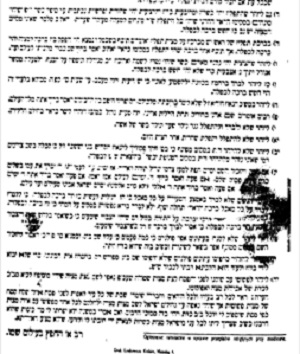
Here is an image of the letter sent to R. Kafih and his reply, followed by a transcription of the relevant sections.

האם מותר לאכול כיום:

חלב עכוםאבקת חלב עכוםחמאת עכוםגלטין המיוצר מנבלות וטרפות (במיוחד במוצרים המיובאים מחול בהשגחת הרבנות הראשית)?

חלב גוים נאסר במניןואין להתירואמנם רבני אמעריקא התירו אבקת חלב בשעתווהרבנות כאן סמכה על כך בזמנואך אין להתיר חלב גוי על סמך התר זהחמאת גוים מותרת כמש הרמבם מפני שכבר הלכו צחצוחי חלב שבה. ”ג”לטין‟ לדעתי אין להחמיר בובפרט העשוי מעצמות אדםכי בשר האדם עצמו בעשה להרמבםולאחרים אפלו מצות ”פרוש‟ אין בווכל שכן עצמותיו.

In the comments to the last post, two people referred to the responsa of R. Nahum Zvi Kornmehl as a source regarding gelatin. In the first part of R. Kornmehl’s Tiferet Tzvi, vol. 1, there is a long discussion about gelatin, and it is here that R. Aharon Kotler’s responsum on the topic first appeared. R. Kotler’s letter and other letters found in the sefer also deal with a “kosher gelatin” that was produced by Barton’s candy. R. Kornmehl was the mashgiach of Barton’s so it makes sense that he would be involved in this halakhic issue. What many people might not realize is that R. Kornmehl’s brother-in-law was Stephen Klein, the owner of Barton’s. (Everyone over 50 can certainly remember Barton’s, especially on Passover. Many children, myself included, went house to house taking Barton’s Passover orders. Depending on how much you sold, there were all sorts of great prizes.)

While it was obviously perfectly acceptable for R. Kornmehl to involve himself in the halakhic research regarding Barton’s gelatin, would any of our rabbis today accept a situation where the mashgiach of a factory is a close relative of the owner? I think they would say that this defeats the entire purpose of a mashgiach, whose job is to ensure that kashrut standards are at the highest level, and he is therefore not supposed to have any close personal connections with the owner.

Here is a picture of R. Kornmehl at the Barton’s factory, from Rabbi A. Leib Scheinbaum, The World that Was America 1900-1945 (Brooklyn, 2004), p. 415.

Returning to Abraham Goldstein, one can imagine what he would have said had he been told about R. Moses Isserles’ responsum, no. 54. Here R. Isserles states that there is no halakhic problem consuming olive oil that was stored in containers in which they used pig lard to smooth the surface. (He later notes that there is even stronger support for this ruling if there is only a suspicion, but no certainty, that they used lard on a particular barrel). This ruling by R. Isserles is the exact sort of thing that today we would be told is absolutely forbidden, and Goldstein certainly would have attacked any hashgachah that followed the Rama in this matter.

Interestingly, R. Hanokh Henoch Meyer of Sassov could not accept that the Rama would allow us to eat something that might have pork residue, and he therefore adopted the old approach when confronted with “problematic” texts, namely, asserting that this responsum was not written by R. Isserles. Rather, some student must have been responsible for it, as it is impossible for R. Meyer to believe that R. Isserles would write something that in his mind is so obviously incorrect.[2] R. Judah Leib Landau, in his well-known work Yad Yehudah, Yoreh Deah 103:20 (Perush ha-Arokh), also has his doubts that R. Isserles could have written the responsum:

ובאמת הדבר הוא לפלא מאוד אם יצאו כלל דברים אלו מפי קדשו של הרמא זל

This is the exact approach that was adopted by some in explaining another responsum of R. Isserles, where he justified those in his day who drank non-Jewish wine.[3] There is also another difficult and controversial responsum of R. Moses Isserles—see the discussion on the Seforim Blog here—and in this case R. Yitzhak Hutner also denies that the responsum was written by R. Isserles.[4]

R. Isserles’ opinion in responsum no. 54 is based on the fact that any pork residue would be less than 60, and also that the pork taste is to be regarded as something detrimental to the dish (noten ta’am lifgam). This is indeed a difficult point to understand, as why should pork be noten ta’am lifgam? You can look around and see that lots of people enjoy it. R. Shimon Grunfeld goes so far as to say that it was only because of R. Isserles’ great holiness, which caused him to view pork with such disgust, that he could make the error of seeing pork as noten ta’am lifgam.[5]

עוד דבר אחד חידוש פלא שכתב ששומן חזיר הוא פוגם בכל דבר כמו נבלה מוסרחת עיין שםוהיא תמיה גדולה שהרי אנו רואין כל העכום וכל השרים אוכלים אותו והוא עולה על שלחן מלכיםהן אמת שנפש איש ישראל קצה באכילת חזיר אבל הוא רק משום איסורי של תוהק שאסרה אותו ולכן כל איש ישראל כשרואה חזיר הוא מואס אותו אבל בשביל זה לא חשוב נטלפג דנטלפג היינו שמצד עצם הדבר הוא פוגם . . . ופשוט דאין לסמוך בזה על התשו‘ הנלובודאי שומן חזיר אוסר עד ס‘ או יותר כפי הרגשת הטעםוהרמא זל ברוב קדושתו מחמת איסור התורה על בשר חזיר הי‘ קצה ממנו ככ עד שפלטה קולמסו לכתוב שאינו אוסר משום שהוא פוגם

In his discussion about how pork is noten ta’am lifgam, R. Isserles also says something which I found strange. He writes:

דשאני חזיר דדבר מאוס הוא ביותר מכל שרצים שבעולםעד שאמרו לא יאמר אדם אי אפשי בבשר חזיר וכו‘ ולא אמרו שאר שרציםשמ דזה גרע טפי

R. Isserles cites a passage from Sifra, Kedoshim 9:10, which is quoted in Rashi, Leviticus 20:26, that one should not say that he is repulsed by pork, and that is why he doesn’t eat it, but rather he doesn’t eat it because of the Torah’s command. (Rashi’s version is different than what is found in our versions of the Sifra, and also what is quoted by R. Isserles, but the point is the same.) R. Isserles sees it as significant that of all the non-kosher foods that could have been cited, it is pork that is used as an example, which he believes shows that it is the most repulsive of the non-kosher foods.

The reason I find R. Isserles’ point strange is that R. Isserles’ understanding is the exact opposite of how the passages in Sifra and Rashi are usually understood. The common way of understanding, and I don’t know of anyone who has a different approach, is that you should not say that you are disgusted by pork, and that is why you are not eating it. On the contrary, there is nothing wrong with pork and it is undoubtedly quite tasty. However, we do not eat it because God commanded us not to. This reading appears explicitly in both the Sifra and Rashi, Here is what Rashi states:

רבי אלעזר בן עזריה אומר מנין שלא יאמר אדם נפשי קצה בבשר חזיראי אפשי ללבוש כלאיםאבל יאמר אפשיומה אעשה ואבי שבשמים גזר עלי

This is very different than R. Isserles’ understanding that the rabbinic teaching reinforces the point that we should have a natural aversion to pork, even though the reason for abstaining from it is due to God’s command.

After mentioning how we don’t eat pork, the passage continues in Rashi (and this is also how it is quoted in the Rambam, Shemonah Perakim, ch. 6, but not in our version of the Sifra) that the same lesson is applied to the wearing of sha’atnez. We shouldn’t say that we have no desire to wear it, but on the contrary, we should feel that it would be nice to wear it but we cannot because of the divine command. The Sifra also adds the same point about sexual relations, that we do not avoid it because we are repulsed. Rather, we would enjoy this but abstain because of the divine command. Since the passage cites both pork, sha’atnez, and forbidden sexual relations to teach the same lesson, and there is no natural aversion to sha’atnez and sexual relations, it is clear that just as we might wish to wear sha’atnez and have forbidden relations but avoid them because of the mitzvah, so too one should assume that eating pork would be enjoyable. However, we avoid it because of the mitzvah.

The Rambam elaborates on this point in Shemonah Perakim, ch. 6, and he specifically cites the rabbinic passage we have been discussing. He goes so far as to say “that a man needs to let his soul remain attracted to them [pork, sexual relations, etc.] and not place any obstacle before them other than the Law.” What this means in practice is next time you see lobster in the supermarket, don’t be repulsed by it and think it is disgusting. The Rambam, following the Sages, is telling us that we should say “wow, that looks good. I would really enjoy eating it but the Torah says I can’t.” Easier said than done, I realize, but that is what the Sages and the Rambam have told us.

Returning to R. Moses Isserles, the Taz, Yoreh Deah 108:4, quotes another ruling of his that today would not be regarded as acceptable. R. Isserles testifies that the practice was to buy certain food items cooked by non-Jews in their non-kosher pots (Torat ha-Hatat 35:1):[6]

המנהג להקל לקנות מן הגוים דברים המבושלים בכליהם שאין בהם משום בישול גוים (הוא) [הואילוסתם כליהם אינן בני יומןואעפ דנותן טעם לפגם אסור לכתחלהמכל מקום לא חשבינן הקנייה לכתחלהלכן נוהגים היתר פה קראקא לקנות האגוזים של מים שמבשלים הגויםאו שאר דברים

Regarding other leniencies of R. Isserles, R. Zerach Eidlitz[7] is quoted as saying that it would have been OK for R. Isserles to have omitted all the humrot he records if he also omitted two particular kulot: non-glatt meat (Yoreh Deah 39:13) and that it is permitted to eat worms found in cheese (Yoreh Deah 84:16):

נוהגים בתולעים של גבינה לאכלן אעפ שקופצין הנה והנה על הגבינה אבל אם פירשו לגמרי אוסרין אותן

Returning to Goldstein, he would have been outraged by other halakhic leniencies mentioned by outstanding poskim, but again, he approached matters using logic and intuitive feelings, while the halakhic rules do not always fall into line with this. For example, R. David Ibn Zimra, She’elot u-Teshuvot ha-Radbaz, no. 1032, defends eating meat together with sugar that was cooked with milk. He states that this is permissible because the milk is batel. R. Hayyim Vital testifies that R. Isaac Luria would himself eat such sugar with meat.[8] Not only would Goldstein have protested against this leniency, but to my knowledge there is no kashrut agency today that would give a hashgachah to a meat product that includes sugar cooked with milk.

Another famous responsum which Goldstein would not have been able to accept—and I know that many Orthodox Jews today also would not be able to accept it—is Noda bi-Yehudah, Yoreh Deah, tinyana,[9] no. 56. Here R. Yehezkel Landau permits a drink produced by non-Jews that included a small amount of non-kosher meat (assuming the meat is 1/60 or less). The meat did not add a taste, and R. Landau ruled that it was batel, meaning that the drink was kosher. I could go on with other such examples but I think you get the point, which is that when it comes to kashrut, great halakhic authorities have come to conclusions that are far from what the average Orthodox Jew would regard as acceptable.

The phenomenon of the masses sometimes having stricter views than the rabbis is an old story. In fact, I once spoke to R. Aharon Felder about kitniyot. At the time, R. Felder was the halakhic authority for the KOF-K. As is well known, kitniyot is batel be-rov (see e.g., Mishnah Berurah 453:9), so I asked him why the KOF-K does not put a hashgachah on products with corn syrup since it is batel. He replied: “The people don’t want it.” In other words, the people will not accept that something with kitniyot can be kosher for Passover, even if it is batel be-rov.[10]

R. Felder also told me that if he was asked he would tell people that there is no problem eating a product with kitniyot if it is batel be-rov. According to this approach, one is permitted to drink regular Coke on Passover, and this is indeed the pesak of R. Yitzhak Abadi. (The other issue that comes up with regular Coke is whether kitniyot derivatives are forbidden on Passover.) I realize that if you extrapolate the “halakhot” of kitniyot from Yoreh Deah halakhic principles about when bitul can be applied, there are sources that would be strict in dealing with kitniyot (as the kitniyot is put in as part of production, rather than accidentally falling in). But what is interesting, I think, is that pretty much all the rabbis I have asked about this have replied in the same way. Rather than explain why we don’t follow the principle that kitniyot is batel be-rov, they have stated simply that when it comes to Passover we are extra strict. (R. Hershel Schachter is an exception, and he told me that kitniyot intentionally put in the product is not to be regarded as batel.)

This issue was raised by R. Alfred Cohen a number of years ago:

With this in mind, we should take another look at the furor which in the past few years has arisen concerning chocolate and candy manufactured in Israel under the supervision of the Rabbinate. Many candies contain corn syrup as the sweetener: Should this be considered a problem for Ashkenazic Jews? Based on the principle that if kitniyot are less than half of the total the food may be eaten, many people see no reason why such candy should be avoided.[11]

Returning to the gelatin issue, we saw in the previous post that R. Yehuda Gershuni was one of the rabbis who gave the hashgachah on Jello. This is noteworthy, as in 1952 he wrote a lengthy article in support of the position of his father-in-law, R. Eliezer Silver, that gelatin is forbidden.[12] Either he later changed his mind or perhaps he never really thought gelatin was forbidden, but it was only out of respect for his father-in-law that wrote his lengthy article. It seems that only after his father-in-law died in 1968 did R. Gershuni publicly express his lenient opinion about gelatin. In addition to his hashgachah on Jello, R. Gershuni also gave the hashgachah to Hormel gelatin.[13]

Incidentally, I found another example where R. Gershuni significantly changed his position. In Ha-Pardes, June and August, 1957, R. Gershuni discusses Yom ha-Atzmaut. Surprisingly, knowing how Zionist he was, in these articles he is not very positive about Yom ha-Atzmaut. He even says that according to Nahmanides establishing this holiday is a violation of bal tosif. As for saying Hallel on Yom ha-Atzmaut, R. Gershuni brings a variety of sources according to which this is improper. Yet in 1961 he published an article with the exact opposite perspective, in which he writes of the great significance of Yom ha-Atzmaut and that Hallel should be recited on this day.[14]

Those who wish to see a video of R. Gershuni can view it here. As far as I can tell, this is the only video of him available online. It is from the 1990 Yom Yerushalayim celebration at Merkaz ha-Rav. You can also see R. Shlomo Fisher in attendance.

In addition to gelatin, my previous post dealt with some of the history of hashgachot in America in the 1930s. In those days, no one could have imagined all the different hashgachot we currently have, as well as the various products that are under kosher supervision. In previous posts here I already mentioned how you can now get toilet bowl cleaner with a hashgachah. Here is an American hashgachah.

And for those who live in Israel, here is one with an Israeli hashgachah (thanks to Stanley Emerson for the picture).

I also noted how in Israel you can buy lettuce with no less than six different hashgachot. See here. But it gets even better, as Shimon Steinmetz sent me this image which shows that you can now get romaine lettuce with seven different hashgachot. Do I hear eight . . . ?

Yet I don’t think Israel has what we have, namely, ant and roach killer under hashgachah. (It is pareve.)

(For those who are wondering, the date on upper right of the OU letters is the date that you view the document, not when the contract was signed.)

You can even get enzyme replacement injections under OU supervision. See here.

According to the OU, when they are “approached by companies whose products would not inherently need a hechsher, the OU tells them that certification is not necessary. But some companies request kosher certification because that will make Orthodox Jews more likely to buy them.”[15]

Interestingly, since today we take it for granted that all sorts of unnecessary hashgachot are found on various non-food items, in previous years this was seen in a very different light. In 1896 the New York newspaper Ha-Ivri, in an attack on the rabbinical board headed by R. Bernard Drachman, noted how the board had given hashgachot to salt, soap for washing clothes, and stove polish.[16] This scandalous charge was denied by R. Drachman, who noted that these hashgachot were given by a private individual, not his organization. R. Drachman writes as follows, and look how he describes the unnecessary hashgachot:[17]

ההכשרים המוזרים והמעוררים שחוק אשר רמזת עליהם לא מעשי הועד המה כי אם מעשי ידי איש יחיד

While we are on the subject of hashgachot, I think readers will find it of interest that the OU did not accept all the products certified by R. Soloveitchik in Boston, as his hashgachah did not always meet OU standards which had been established by R. Alexander Rosenberg. R. Berel Wein, who succeeded R. Rosenberg as rabbinic administrator of OU Kashrut, reports that he was constantly criticized for this as people thought it very disrespectful to the Rav that the OU did not accept his hashgachah in all matters. R. Wein, however, explains as follow:

In all my meetings with the Rav. I never discussed this sensitive matter with him. However, he once said to me, “As the rabbi of Boston, it is my duty to grant kashrut certification to products that are kosher, even if they don’t necessarily reach the highest standards of kashrut. I know you have to operate under a different set of rules. Don’t be troubled that the OU doesn’t use certain products I certify. I’m not troubled by it.” I never revealed that conversation to the Kashrut Committee, nor did I change OU policy.[18]

However, my question would be, how is the role of OU kashrut different than what the Rav was trying to do? Isn’t the goal of the OU also to ensure kashrut for all types of Jews? How is the role of a communal rabbi in giving a hashgachah for his community different than that of the OU, which is a nonprofit organization that exists to serve the larger Jewish community?

Since part 1 of this post discussed the OK hashgachah, it should be noted that at one time there were actually two hashgachot identified with the OK symbol. Here is an early OK symbol used by R. Harold Sharfman’s Kosher Overseers Association of America. (A different looking OK symbol was actually first used by his father, R. Hyman Sharfman, in 1927.)[19]

It later developed into what was called the Half-Moon K, surrounded by a circle.

This led to a lawsuit by the OK in the 1990s, with the result that the Half Moon K had to appear without the circle.[20] (I don’t know why, as we have seen on other occasions as well, a dispute between Orthodox rabbis was decided in a secular court instead of in a beit din.) After Rabbi Sharfman’s death, the Half-Moon K was taken over by the OU and its symbol was retired.

Sharfman authored a few interesting works focusing on American Jewish history. He also wrote the book, Global Guide to Kosher Foods and Restaurants (Malibu, 1990), from which the above pictures of the OK symbol were taken. The book’s title is not going to interest many, although the subtitle is more intriguing: “An Illustrated History of Kashruth in 20th Century United States.” This is a very rare book and I recently was able to acquire a copy. I was surprised to find that it is really a fascinating work with some great pictures. Because it is so rare I have made a PDF of the book which you can see here.

When it comes to kashrut supervision in the United States, Roger Horowitz mentions an interesting point that in the 1950s there were rabbis who opposed supermarkets selling kosher meat as they claimed that it was forbidden for the meat to be sold on Shabbat.[21] The real reason for the opposition was presumably to protect the kosher butchers from competition, but the argument was not framed in this fashion. I think most will be surprised by such a stringent approach. After all, we don’t want Sabbath violators to also consume non-kosher meat, so why prevent them from buying kosher if they are in the supermarket on Saturday? Yet when asked by R. Yitzhak Zilberstein, R. Elyashiv ruled that if people are going on a trip on Shabbat, and want to order kosher food from a caterer for the trip, that the caterer should not provide them with the food even though this means they will eat non-kosher.[22]

Another surprising development in the kashrut world is that the OU has recently refused to give a hashgachah to a vegetarian product called Impossible Pork. See the Yeshiva World article here, and see also the Wall Street Journal article here. As the Yeshiva World reports, “[Rabbi Menachem] Genack clarified that although [the] OU certifies items related to pork such as Trader Joe’s ‘spicy porkless plant-based snack rinds,’ the agency decided that certifying a product called ‘pork’ was a red line they aren’t willing to cross right now.” 

In the Wall Street Journal article Rabbi Genack is quoted as follows: “The decision was based on the emotional reaction some kosher eaters have had to kosher-certified pork-related products in the past that also had no actual pork in them.” So now company kashrut decisions are based on people’s emotional reactions? Sounds crazy to me. The article continues: “Rabbi Genack of OU Kosher says he suspects that doubters might one day come around and allow faux pork to be certified as kosher.” I don’t understand this at all. Since when does the OU have to get approval from “doubters” to put a hashgachah on a product? Furthermore, I must note, there are already OU certified products that have the name “bacon” in them and are said to taste like the real thing. This includes Bacos (see here), Bacon Flavored Bits (see here), and even a product called Bacon Bits Milk Chocolate (see here). And of course, the Talmud, Hullin 109b, talks about the shibuta fish whose brain tastes like pork.[23]

Since we have been speaking about kashrut in America, let me make one final point about this. Many people are under the impression that it was Jewish emigration to America that led people to give up kashrut, I must therefore call attention to a fascinating article by Asaf Kaniel that shows that in the years 1937-1939 only one third of the Jews of Warsaw bought kosher meat. Granted, this was a very difficult period for the Jews of Warsaw, and had economic circumstances been different I have no doubt that most of these people would have been buying kosher. However, from the large number who abandoned kashrut, we can get a sense as to how tenuous their attachment to this mitzvah was, as it is always the case that during difficult times the ones who are not so attached to something are the first to give it up.[24] (Kaniel also has another valuable article that shows the growth of irreligiosity in Vilna in the early twentieth century.[25])

I know people will be shocked by hearing this, about Warsaw of all places. So let me note that in a 1937 interview given when he was in the United States, R. Elhanan Wasserman stated that religious life in Poland was worse than in America.[26]

2. In my last post I cited something from R. Shmaryahu Shulman who unfortunately recently passed away. In 1951 R. Shulman published his Be’er Sarim which contains hiddushim on the Talmud.

In R. Yitzhak Ruderman’s approbation he states that this is the first book of hiddushim on Shas published by an American-born author. Is this true? I am not aware of anything earlier. As far as I know, the first traditional rabbinic sefer (not hiddushim on Shas) published by an American-born author is R. Eliezer Zvi Revel’s Otzar ha-Sotah (New York, 1941).

R. Eliezer Zvi was the son of R. Bernard Revel.

Is there an even earlier sefer published by an American-born author? There is another sefer that I am aware of, but as it is not an original sefer, I gave Revel the honors. The other sefer was published by R. Bernard Drachman, who was born in New York in 1861. In 1907 he published an edition of Divrei ha-Rivot by R. Zerahiah ha-Levi and R. Abraham ben David, together with his commentary.

Who was the first American-born author to publish a book in Hebrew? This would appear to be Reuven Grossman (1905-1974; he later took the last name Avinoam). Born in Chicago, Grossman spoke Hebrew as his first language. His first book, Mi-Pi Olel (New York, 1915), containing essays, poetry, and the beginnings of a commentary on the Torah, appeared when he was ten years old. As far as I know, this makes him the youngest published Jewish author in history. One of the essays in the book was earlier published in a newspaper when Grossman was only eight years old. (I wonder how much help he had from his father who was a Hebraist.) You can find Mi-Pi Olel here.

The book contains a picture of the young author .

His next book, Ibim (New York, 1918), appeared when Grossman was thirteen years old. You can find it here.

Ibim also includes a picture of Grossman.

You can learn more about Grossman here and here, and in Yosef Goldman, Hebrew Printing in America (Brooklyn, 2006), p. 325.

3. In my last post, I gave a link to my Torah in Motion classes on Saul Lieberman. I also did a 53-part series on the sefer I published, Iggerot Malkhei Rabbanan. You can see it here. My four-part series on the escape of the Mir Yeshiva can be viewed here. My class on Torah study on Christmas eve is here; my class on kitniyot is here; my discussion of the Hazon Ish and R. Zvi Yehuda is here.

4. I can’t end the post without calling attention to an important new publication by Seforim Blog contributor, R. Bezalel Naor. Navigating Worlds is a collection of Naor’s essays that appeared from 2006-2020, including those that appeared on the Seforim Blog. As is to be expected, there are essays on R. Kook, further solidifying Naor’s standing as the leading expositor of R. Kook’s thought in English. There are also essays on a wide range of other topics including Maimonides, Kabbalah, and Hasidism, as well as discussions of passages in the Torah and Talmud, and book reviews.

In addition to the broad themes discussed, Navigating Worlds is full of individual items of historical and bibliographical interest. To mention just one of the many things I learned from the book, on p. 554 Naor cites a report from R. Uri Moinester in the name of R. Joseph Alexander, that R. Hayyim Soloveitchik told the latter that it had taken him two years to study Maimonides’ Guide.[27] This source should be added to what I mentioned in a previous post  here about R. Hayyim’s study of the Guide.[28]

* * * * * *

[1] In reply to a question from Tamir Ratzon, R. Kafih said that one should only eat a product with gelatin if there was no non-gelatin alternative. See Teshuvot ha-Rav Yosef Kafih le-Talmido Tamir Ratzon, ed. Itamar Cohen (Kiryat Ono, 2019) p. 306. This reply is more stringent than R. Kafih’s letter published in this post.
[2] Yad Hanokh, no. 23.
[3] See my Changing the Immutable, pp. 80ff., 95.
[4] See Sefer ha-Zikaron le-Maran Ba’al “Pahad Yitzhak, p. 334.
[5] She’elot u-Teshuvot Maharshag, vol. 1, Yoreh Deah, no. 68. This source and the two prior sources I mentioned, Yad Hanokh and Yad Yehudah, are noted by R. Yaakov Hayyim Sofer, Zikhron Moshe, vol. 3, no. 38.
[6] See R. Hayyim Oberlander’s article in Or Yisrael 56 (Tamuz 5769), pp. 58-59.
[7] See Literaturblatt des Orients, August 12, 1848 (no. 33), p. 525.
[8] Sha’ar ha-Mitzvot, parashat Mishpatim (end).
[9] In this context, where it means “second,” the word תנינא is pronounced tinyana. See Daniel 7:5 where the word appears. In the Talmud, the word appears as תניינא so the pronunciation is obvious. Onkelos, Gen. 1:8, has תנין, and all the editions I checked vocalize it correctly as tinyan. Yet if you google “Orah Hayyim Tanina” or “Yoreh Deah Tanina” you will find lots of examples where the word תנינא is written as “tanina”. Yet this is an error as tanina is a completely different word and means serpent or sea monster.
[10] I heard a shiur from R. Asher Weiss, and in explaining why things became so strict with kitniyot, he quoted R. Shlomo Zalman Auerbach who once gave a heter that the people did not want to accept. R. Auerbach joked that it was a kula she-ein ha-tzibbur yakhol la’amod bah. In speaking about the standards of the Triangle K hashgachah, Timothy D. Lytton quotes one kashrut professional as follows: “It’s permissible under Jewish law, but it’s a standard that many people are not willing to accept.” Kosher: Private Regulation in the Age of Industrial Food (Cambridge, MA, 2013), p. 83. In speaking of how the Jewish masses will not listen to the greatest rabbis if they tell them to stop observing even a small custom, R. Reuven Katz refers to the German expression that the rabbi is a rabbi, but the regular Jew is a chief rabbi (Oberrabbiner, lit. “above the rabbi”). “Der Rabbiner ist ein Rabbiner, aber der Jude ist ein Oberrabbiner.” Dudaei Reuven, vol. 1, p. 32a, and see also R. Katz’s letter published in R. Avraham Yudelevitz, Hiddushei Beit Av (New York-Jerusalem, 2012), pp. 18-19.
[11] “Kitniyot,” Journal of Halacha and Contemporary Society 6 (Fall 1983), p. 71.
[12] See his article in Kerem, Tishrei 5713, pp. 9ff.
[13] In my prior post I published a responsum on gelatin by R. David Telsner. As Menachem pointed out in his comment to the post, this responsum (with some changes at the end) was mistakenly included in R. Gershuni’s Hokhmat Gershon, pp. 405ff., as if it were written by R. Gershuni. As the editor notes in the preface, because of R. Gershuni’s ill health he was not able to review the book before publication, and this explains how the Telsner responsum could end up in the book (a phenomenon we also know from other books of responsa).
[14] “She’elat Yom ha-Atzmaut,” in R. Shimon Federbush, ed., Torah u-Melukhah (Jerusalem, 1961), pp. 180-192.
[15] Kenneth Lasson, Sacred Cows, Holy Wars (Durham, 2017), pp. 135-136. Lasson also writes (p. 113): “The OU requires that at a minimum all of its mashgichim have Orthodox ordination (semicha) from a recognized rabbinic individual or institution and pray only in Orthodox synagogues.” Yet I know of people in out of the way places who have checked on factories for the OU and they are not rabbis.
[16] See Ha-Ivri, Sep. 11, 1896, p. 1; Harold Gastwirt, Fraud, Corruption and Holiness (Port Washington, N.Y., 1974), pp. 82-83. I once had a rebbetzin insist to me that laundry detergent requires a hashgachah as we put tablecloths in the wash.
[17] Ha-Ivri, Oct. 23, 1896, p. 1.
[18] Wein, Teach Them Dilgently (New Milford, CT, 2014), pp. 97-98. R. Wein also mentions that R. Moshe Feinstein sometimes favored the immigrant rabbis who offered private hashgachot—which was an important source of income for them—over the OU’s more “practical and progressive directions in kashrut” (p. 99).

In earlier years, there were Agudas ha-Rabbonim rabbis who criticized the OU’s hashgachah because there were many synagogues in the OU that did not have mehitzot. These rabbis claimed that you cannot trust an organization that allows non-mehitzah shuls to be part of it. In the 1930s the Agudas ha-Rabbonim rejected the kashrut reliability of the OU after it agreed to work with representatives of the Conservative movement in establishing reliable kashrut in America. See Gastwirt, Fraud, Corruption, and Holiness, pp. 166-167. As for Agudas ha-Rabbonim rabbis, there were those who gave hashgachot—this was how they made a living— but they personally did not eat from all the food under their hashgachah. (Growing up there was a rabbi in my town who told my father not to buy from a certain butcher, even though this butcher was under his hashgachah. The rabbi’s attitude was that the butcher was good enough for non-Orthodox Jews, but Orthodox Jews should not shop there, as he was not able to visit the store as much as he would have liked.) R. Nachum Eliezer Rabinovitch, Siah Nahum, p. 171, completely rejects such an approach.

ברור שאם הרב אינו אוכל מן המאכלים שהוא אמור להשגיח עליהםדבר זה יגרום לזלזול וחילול השם חו

[19] See Harold Sharfman, Global Guide to Kosher Foods and Restaurants (Malibu, 1990), p. 68.
[20] For the lawsuit, see here. Another example of the OK involved in controversy was when it put in a bid to control the proposed “dot-kosher” suffix for Web addresses. The OU, Star K, CRC, and KOF-K opposed the OK’s bid, with the OU stating: “We think that if the term kosher, which has important meaning in the Jewish religion, is commercialized, it will do a disservice to how religion in general should be treated and will harm the kosher public specifically.” See here, and Lasson, Sacred Cows, Holy Wars, pp. 146-147.
[21] Kosher USA (New York, 2016), pp. 190-191.
[22] Zilberstein, Avnei Esh, pp. 892-893.
[23] See here for Ari Zivotofsky and Zohar Amar’s attempt to identify this fish.
[24] Kaniel, “Bein Hilonim Mesorati’im ve-Ortodoksim: Shemirat Mitzvot bi-Re’i ha-Hitmodedut im Gezerat ha-Kashrut,” Gal Ed 22 (2010), pp. 75-106.
[25] “Al Milhamah u-Shemirat ha-Mitzvot: Vilna 1914-1922,” Gal Ed 24 (2015), pp. 37-74. Regarding Kashrut in Vilna, Kaniel notes that due to the difficult economic circumstances, there were occasions when the rabbis permitted butchers to sell non-kosher meat to non-Jews, as long as they were careful to keep the kosher meat separate from that which was non-kosher. See ibid., p. 61.
[26] See R. Wasserman’s Morgen Zhurnal interview included in Mi-Pihem shel Rabbotenu (Bnei Brak, 2008), p. 345.
[27] Moinster, Karnei Re’em (New York, 1951), p. 104 n. 1.
[28] Another source that should be added is Shulamith Soloveitchik Meiselman, The Soloveitchik Heritage: A Daughter’s Memoir (Hoboken, 1995), pp. 109-110, where in addition to discussing R. Hayyim’s interest in the Guide, she also mentions that he had R. Moses Soloveitchik promise never to read this work. “Even years later, when his children were attending the university and the book was part of the family library, Father never touched it. Father always kept a promise” (p. 110).


Is there a rotten apple in the Tu-BeShevat Fruit Basket?

Is there a rotten apple in the Tu-BeShevat Fruit Basket?

By Dan Rabinowitz and Eliezer Brodt

[This post is heavily updated from an earlier Seforim Blog post – here]

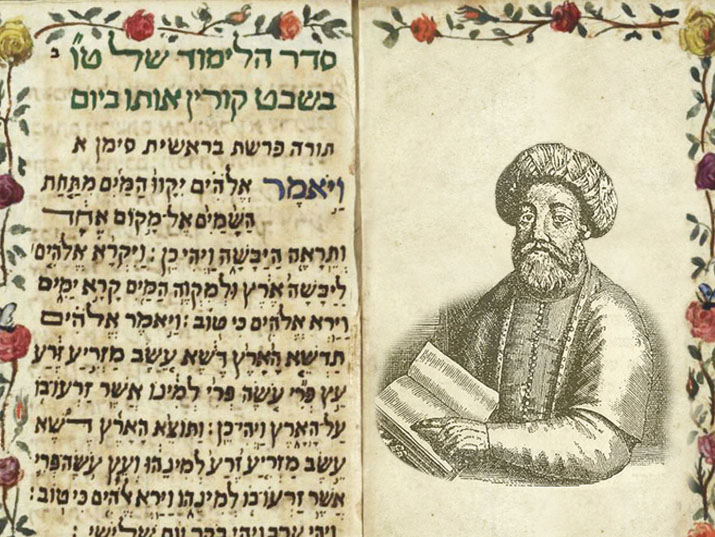
Some claim that the origins of the custom to celebrate Tu-beShevat as a holiday that includes eating fruits and other rituals, is Sabbatean. In the main, this assertion is based upon identifying  the work Hemdat Yamim as the source for Tu-beShevat as a holiday and eating fruit and other rituals.  Thus, an article in Ha’aretz trumpets, “The New Year for the Trees, Isn’t it for Sabbatai Zvi.” And the National Library of Israel’s blog includes a post “The Holiday of Tu-beShevat is an Auspicious Time to Pray for the Only (?!) Jewish False Messiah.”  They even include this photoshopped image.

However, a closer look at the history reveals, that although some of the customs on Tu-beShevat can be traced to Hemdat Yamim the actual celebration dates much earlier. Contrary to the popular song, Tu-beShevat hegihu hag ha-ilannot, the 15th of Shevat was not a “chag” of the trees.  Instead, the earliest discussions regarding Tu-beShevat do not mention any holiday associated with the day.  The first Mishna in Rosh Hashana, identifies the 15th of Shevat as the new year for trees.  This designation merely defines how to calculate annualized tithes and is otherwise silent as to the significance of the date.  One can’t tithe fruits from one year using a different year’s fruits. Thus the 15th of Shevat is the cut-off point. [For other contemporaneous examples see Safrai, Mishnat Erets Yisrael, Mesekhet Rosh HaShana (Jerusalem:  Mehlelet Lifshitz, 2011), 305-06]. It was not until R. Gershom’s time that there were any of the traditional holiday markers, but only that fasting is prohibited.

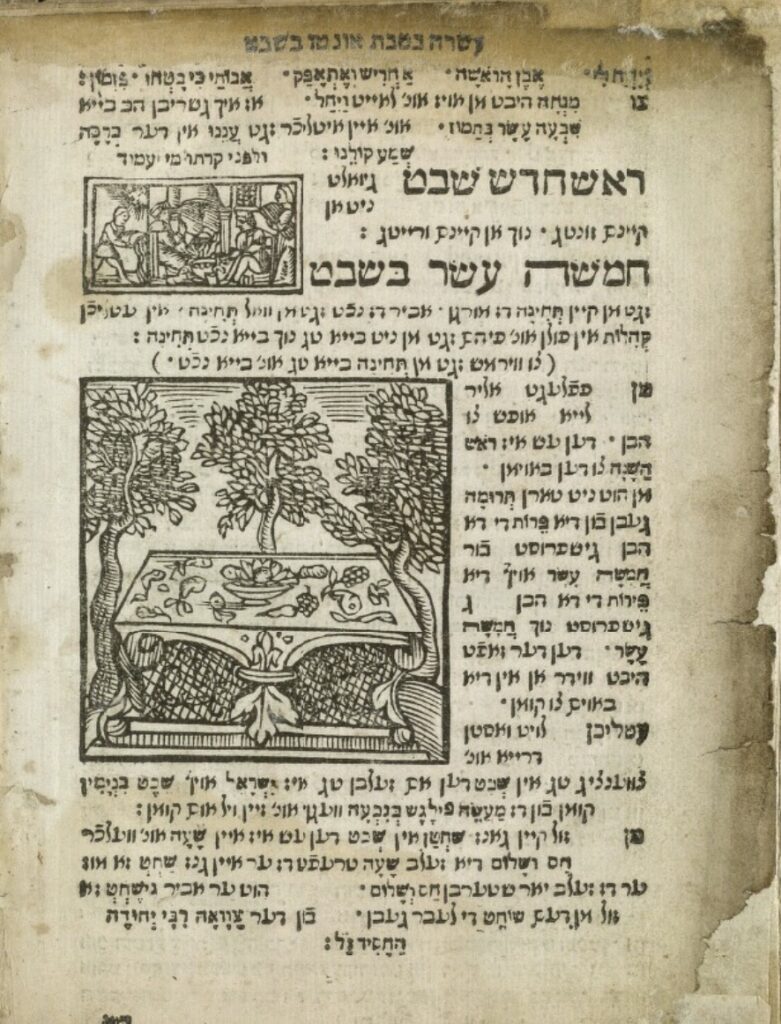
The first mention of the custom to eat fruit and other holiday rituals appears in 16th century Machzor, published between 1548 and 1550. 

That Machzor follows the Ashkenazi rite and includes a discussion of customs according to that rite and the commentary of R. Benyamin ha-Levi Ashkenazi, Ma’aglei Tzedek. He was the rabbi of the Ashkenazi community in Saloniki (of contemporary interest is that he records the death of four of his sons during a plague).   This source, however, was not well-known, and, historically, a different, later, source is identified.  For example, Avraham Ya’ari in his otherwise comprehensive article claims that R. Issachar ibn Susan (c. 1510-1580) is the first mention.  Susan, in his Ibur Shanim, published in 1578, provides that “the Ashkenazim have the custom [on Tu-beShevat] to eat many fruits in honor of the day,” confirming the custom recorded in the Machzor.  1578 was the first authorized printing of R. Susan’s work but not the first time this custom is associated with him.  In 1564, Shlomo Rie published Susan’s Tikkun Yissachar.  (Ibur Shanim 48b and Tikkun Yissachar 62a).  Susan, in Ibur Shanim, accuses Rie of publishing an unauthorized edition, one that contains errors and unacknowledged additions by Rie. Ibur Shanim includes a corrected and otherwise only slightly modified version of Tikkun Yissachar.  [See Susan’s introduction; see also Yaakov Shmuel Spiegal, Amudim be-Tolodot Sefer ha-Ivri: Hadar Mechaber (Jerusalem, 2018), 321-22.]

Mention of this custom also appeared in a Judeo-German Minhagim book first published in 1590. “The custom is to eat many fruits as it is the New Year of the trees.”

Venice, 1593 edition


In the community of Worms, there was a rather interesting variation of the custom. As R. Jousep Schammes (1604-1678) in his custom-book states:

On Purim and the 15 of Av and Shevat these were vacation days for the Rabbis, . . . [on the 15th of Shevat] one says tehina even during the morning prayer. It is a vacation day for the students and the teachers, especially the younger students, it is a day of feasting and joy for or the teachers and their students. The custom is for the teachers to distribute whiskey to the students and make merry with them.”  Minhagei [de-Kehilah Kedosha] Vermisai le-Rebi Joszpa Shamesh (Jerusalem:  Machon Yerushalim, 1988), 249-50, no. 211.

The first mention of Tu-beShevat in a Sefardic source appears in R. Hayyim Benveniste’s (1603-1673) Kenneset ha-Gedolah, first published in Livorno in 1658, where he quotes Susan from the Tikkun Yissachar.  Although Benveniste would later be associated with the Sabbatian movement, his inclusion of this custom in 1658, long pre-dates the movement. Benveniste’s source does not include a seder, nor does it testify to any adoption amongst Sefardim.

Kabbalah first enters the picture in 1728 with a somewhat obscure source. In 1728, Eliyahu Malhlenov published, Birkat Eliyahu, his commentary on the Talmud.  Amongst his papers,, he had a few pages of materials from R. Moshe Hagiz and appended those to Birkat Eliyahu. These materials include responsa and discussions regarding customs.  Hagiz records a custom from his grandfather, R. Moshe Galante.  R. Galante was also Hagiz’s teacher as his father died when Hagiz was a boy.  According to Hagiz, his grandfather had “the custom that on the 15th of Shevat he would eat many fruits that required many blessings and prayed to God that he should decree for us and them a good year. He ate the following 15 fruits, and on each one would recite … a chapter of Mishna…”  Hagiz then provides the order to eat the fruits.

Hagiz might technically be the first to describe a specific ceremony associated with eating fruits, but the source that popularized Tu-beShevat amongst Sefardim, and that incorporated a seder is Hemdat Yamim. Hemdat Yamim, first published in 1732 anonymously has the entire seder for Tu-beShevat. This includes passages from the Bible as well as specific foods. This in turn was popularized to a greater degree when it was included in the book Pri Etz Hadar first published in 1753 and republished an additional 29 times by 1959, and now digitized on Sefaria.

National Library of Israel

The author of Hemdat Yamim concedes that this is not a custom that originated with the Ari or his students.  Nonetheless, the author provides his own kabbalistic ideas and wrote his own kabbalistic prayers for the occasion, and a specific order to the ceremony.  According to many scholars, Hemdat Yamim is not reflective of the kabbalah of the Ari but that of Sabbatai Tzvi and his disciples.  Indeed, Boaz Huss has identified specific prayers in the Hemdat Yamim Tu-beShevat liturgy that allude to Sabbatai Tzvi. Whether or not this assertion is correct, because we can trace this custom, that of eating fruits, to over 100 years prior to the Sabbatian movement as already a pre-existing custom, it is likely unrelated to Sabbatian theology or custom.

Plagiarism

Avraham Ya’ari, the noted bibliographer, wrote a comprehensive article tracing the history of Tu-beShevat.  That article appeared in Machanim and is available at Daat.  This article, at times entire paragraphs, are reprinted verbatim, without any attribution, in a recent book ostensibly authored by Tuvia Freund, Moadim le-Simchah.  Published in six volumes between 1998-2010, this work is replete with such examples of plagiarism.  Here, however, Freund did something arguably even more egregious.  In the pages of materials he steals, Freund cites Yaari and his article by name.  Not for the fact that all the above material comes from there but a small tangential item, the number of times a book was printed.  Indeed, Freund is so unwilling to give Yaari any credit in a paragraph lifted word for word from Yaari, the work Hemdet Yamim is discussed.  Freund provides in a footnote, “see the long discussion regarding this work in Sefer Talmumot Sefer page 134 and on.”  Freund doesn’t reveal the author of Talmumot Sefer, who is none other than Yaari.  Freund doubly removed Yaari from the picture.


Magen Avraham

The Magen Avraham cites the Tikkun Yissachar as the earliest source for the custom to eat fruits on the 15th of Shevat.  This, despite the fact that he had accessed, and indeed quotes on many occasions, the Machzor with the Maageli Tzedek commentary. See, e.g.,

נה:יז, פח:ג, קלא:י, תכז:א, תלא:ה, תלז:יז, תכז:א, תנ:יב, תנג:יא, תקפא:ד, תקפא:ז, תקפא:ח, תקפב:ח, תקפג:ב תקפד:ג, תקפט:ד, תרכד:ז, תרכט:ה, תרנא:יט, תרנא:כא, תרנח:יב, תרסא:, תרע:ב [2X], תרעב:ה, תרעג:ז, תרפא:א, תרפח:יא, תרצ:יט, תרצא:ח

While he had access to the Machzor, he did not have access to the Tikkun Yissachar.  The Magen Avraham quotes the Tikkun Yissachar on a few occasions, but always via a secondary source. See Brodt Halachic Commentaries to the Shulchan Aruch on Orach Chayim from Ashkenaz and Poland in the Seventeenth Century (PHD Bar Ilan 2015), pp. 68-69. The Mekor Chaim in O.C. 686:1 is the first to point to the Machzor for this minhag.

The halachot in the Machzor were collected by  Yitzhak Hershkowitz ed., Maglei Tzedek (Jerusalem, 2000), pp. 156-157.  Regarding R. Benyamin see Y.S. Emmanuel, Matsavos Saloniki, vol. 1 (Jerusalem, 1973), 36, 68-69; Meir Benayahu, “Rebi Shmuel Yaffa Ashkenazi,” in Tarbiz, 42 (1973), 423-24 and note 37; M.S. Molcho, Matsevot Bet ha-Olamin she Yehudi Saloniki (Tel Aviv, 1975), 59-60; Yitzhak Rivkin, “Dikdukei Soferim,” in Kiryat Sefer 4 (1927), 278 no. 32; Daniel Goldschmidt, Mehkerei Tefillah u-Piyyut, 252-65, Meir Benayahu, Defus ha-Ivri be-Kremonah (Jerusalem, 1971), 141-78. About Knesset Hagedolah and being a Sabbatean see Brodt, Halachic Commentaries to the Shulchan Aruch on Orach Chayim from Ashkenaz and Poland in the Seventeenth Century, pp. 56; Brodt, Yeshurun 35 ( 2016 )p. 775; See also the recent work, R. Shmuel Ashkenazi, Igrot Shmuel (2021)-, 1, pp. 4-5. 

R. Shmuel Ashkenazi

As the Seforim Blog just published Iggrot Shmuel from R. Shmuel Ashkenazi (see here and here) we reprint two letters from his collection, one discussing the origins of the holiday of the 15th of Shevat and the other Hemdat Yamim.


Notes:

Additional sources discussing the 15th of Shevat, see  Meir Rafeld, Netivi Meir, (2013), 185-189; R Mandelbaum, Tehilah Ledovid (Jerusalem, 1993);  Guttman, Otzar TuBeshvat.

Tikkun Yissachar was republished in 1988 with an excellent introduction from R. Betzalel Landau.  Most recently, in 2019, it was reprinted and re-typeset, with additional notes. This edition also includes R Landau’s introduction and another introduction of material about the work. See also Elisheva Carlebach, Palaces of Time: Jewish Calendar and Culture in Early Modern Europe (London: Belknap, 2011),  51-58; יוסף הקר, ‘יששכר אבן סוסאן עליית כוהנים לתורה בשמחת חתנים’, בתוך: ‘מנחה למנחם’, קובץ מאמרים לכבוד ר’ מנחם כהן, בעריכת חנה עמית, אביעד כהן וחיים באר, ירושלים תשס”ח, עמ’ 79-97

Regarding Hagiz, see Elisheva Carlebach, The Pursuit of Heresy (New York: Columbia University Press, 1990).

After the Birkat Eliyahu was published it was attacked by some rabbis.  See Meir Benayahu, “Sefarim she-Hiburum R. Moshe Hagiz she-Hotsyim le-Or,” in Ali Sefer 4 (1977), 143, 150-52; see also Shlomo Yaakovovitch, “Sefer Shehitot u-Bedikot le-R’ Yaakov Weil,” in Tsefunot 4 (1989), 112; Carlebach, Pursuit of Heresy, 247-49. Regarding R. Eliyahu see Y. Halpern, Pinkas Vaad Arba Arotsot (Jerusalem, 1990) 362; Tzvi Horowitz, Le-Tolodot ha-Kehilot be-Polin (Jerusalem, 1989), 1.

The literature on Hemdat Yamim is substantial and we hope to return to the work in an upcoming post.  For the most recent discussion see Y. Goldhaber, “Le-Birur Zehuto shel Mehaber Hemdat Yamim,” in  Sefer Zikhoron le-Professor Meir Benayahu, vol. 2 (Jerusalem: Karmel, 2019), 873-908.

Huss’s article appears as Boaz Huss, “Ha-Ets ha-Nehmad ben Yishi Hayi al ha-Adama: al Mekoro ha-Sabbatai shel Seder 15 Shevat,” in Sefer Zikhoron le-Professor Meir Benayahu, vol. 2 (Jerusalem: Karmel, 2019), 909-20.


Rav Aryeh Tzvi Frommer HY”D: סנגורם של ישראל

 Rav Aryeh Tzvi Frommer HY”D: סנגורם של ישראל

A Closer Look At One of the Greatest Defenders of the Common Jew in Modern Times[1]
Rosh Yeshiva of Yeshivat Chochmei Lublin, Av Beit Din of Kozoglov, Author of Responsa Eretz Tzvi, Siach Ha-Sadeh, Doreish Tov Le’amo[2]

     By Alon Amar

הכל מלמדין זכות” – משנה סנהדרין ד:א”

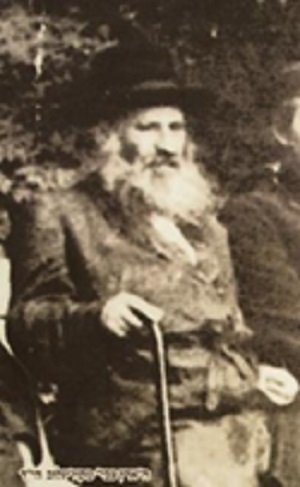
In the fall of 1933, immediately after the death of Rabbi Meir Shapira zt”l – Rosh Yeshivat Chochmei Lublin, an article appeared in the “Lubliner Tugenblatt” newspaper. The title reads “Who will be the next Rosh Yeshiva?” The article references multiple distinguished candidates for the prestigious appointment, including Rav Menachem Zemba hy”d and Rav Dov Berish Weidenfeld zt”l – The Tchebiner Rav. Interestingly enough, the eventual successor to Rabbi Meir Shapira, was not even mentioned in the article, though his greatness in Torah learning and piety was on par with those aforementioned geonim. Rav Aryeh Tzvi Frommer Hy”d (RATF), also known as The Kozoglover Gaon, was chosen as the next Rosh Yeshiva of Yeshivat Chochmei Lublin and served at its helm until it’s closure during World War II. His unique legacy expanded beyond the four walls of the yeshiva where he inspired and taught students. Through his responsa he engaged real-life issues creatively defending many customs of questionable halachic standing and created the mishna yomi program allowing all Jews, both scholars and laymen, to complete the entirety of Torah Sheb’al peh. His preoccupation with the spiritual needs of the full spectrum of jewry, and the creativity he employed for this task remain defining hallmarks of his inspiring legacy.

Brief Biography

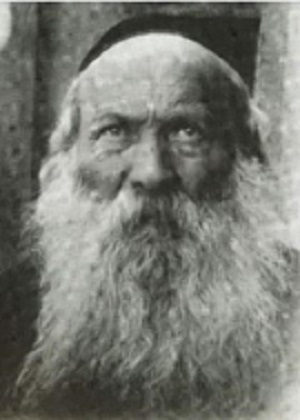
RATF was born in Czeladź, Poland in the year 1884[3]. His father Hanoch-Hendel made his living as a tailor[4] and RATF’s mother Miriam-Kayla passed away when he was three years old.[5]He was sent to study in heder in the town of Wolbrum, residing by relatives of his mother. Some of his formative years of development in Torah learning occurred after leaving Wolbrum to study in the Yeshiva Ketana of Amstov, Poland[6]. The dean of the yeshiva, Rabbi Efraim Tzvi Einhorn zt”l recognized the unique abilities and challenges of the young orphan and took great care in supporting the young boy’s spiritual & physical development.[7] [8]

Rabbi Efraim Tzvi Einhorn Zt”l – Rosh Yeshiva Amstov, Poland

At the age of thirteen, RATF made his way to the court R’ Avraham Borenstein known as the “Avnei Neizer”[9] in Sochaczew (Sochatchov), Poland. Reb Leib Hirsch as RATF came to be known (Yiddish translation of Aryeh Tzvi), studied assiduously under the Avnei Neizer for five years developing a reputation as notable young Torah scholar in Poland and a close student of the venerable Avnei Neizer.[10] RATF was exposed to the unique combination of halacha, gemara, kabbalah and chassidut interwoven in the thought of the Avnei Neizer. At the time the Avnei Neizer was one of the leading poskim of the generation. RATF subsequently married Esther Shweitzer and spent the next eight years studying in the home of his father-in-law. Despite moving  away from his beloved rebbe, RATF maintained close ties with the Avnei Neizer, visiting on holidays as well corresponding on Torah topics.[11]

When the Avnei Neizer passed away in 1910, his son R’ Shmuel Borenstein[12], the “Shem Mi’Shmuel” was crowned the heir to his father’s chassidic court; becoming the second scion of the Sochatchov dynasty. On his father’s first yahrzeit, the Shem Mi’Shmuel established Yeshivat Beit Avraham in his memory. The Shem Mi’Shmuel appreciated the unique talents of RATF, and invited him to be the Rosh Yeshiva of Beit Avraham at the age of 27[13]. It was during this period of learning & teaching that RATF published his first work; Siach Ha’Sadeh. In it, RATF dealt with various talmudic topics with central themes of hilchot berachot & tefillah. The work came with laudatory approbations from leading scholars of the time including: Rav Meir Arik,[14] Rav Yosef Engel[15] and others.[16]RATF remained the Rosh Yeshiva of Beit Avraham, until the city of Sochatchov was destroyed in World War I.

Rabbi Shmuel Borenstein Zt”l – (Shem Mi’Shmuel) The second Sochatchover Rebbe

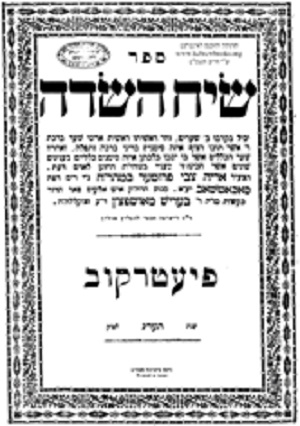
Cover page of Siach Hasadeh; Pietrikov 1912

The Frommer family had grown to a total of six children, relying on RATF as he sought his next job opportunity. His uncle, Rabbi Yitzchak Gottenstein, the rabbi of a small town in Poland, Koziegłowy (Kozoglov), had passed away and the community needed a new Rabbi. The community was small, and the financial opportunity was no greater. However, due to lack of alternatives this would be RATF’s next stop. There, RATF established a small yeshiva and continued his learning and teaching, jump-starting an environment of Torah learning and scholarship in the small town. Although his tenure there did not last particularly long, he would be forever known by the appellation; “The Kozoglover Gaon”.

After leaving Kozoglov[17], RATF headed to Zbeirtza, Poland. The community of Sochatchover chassidim that lived in the city of Zbeirtza, were “laymen” of an extraordinary caliber. Many of them students of the Avnei Neizer, providing context to appreciate the uniqueness and caliber of RATF and his erudition. RATF had developed into a combination of a classical scholar, chassid and tzadik that made him such a sought-after leader. He was knowledgeable in all areas of the revealed Torah as well as kabbalah and chassidut as is evident from his works. Additionally, he would arise at midnight to recite “tikkun chatzot” and study kabbalah late into the night away from the public eye. It was in Zbeirtza that his students began to compile notebooks with the teachings that RATF would share on shabbat & yom tov.[18]

Once again, the time came for RATF to migrate to the nearby town of Sosnovitz[19]continuing to gain admirers and students. It was at this time that Rabbi Meir Shapiro zt”l, founder of Yeshivat Chochmei Lublin and Rav of Lublin, expressed an interest in having RATF join the faculty of the yeshiva[20]. RATF deflected the requests due to his desire to remain close to his existing students and admirers. However, after Rabbi Meir Shapiro’s untimely death in October 1933, Yeshivat Chochmei Lublin was left without a leader. RATF decided to move to Lublin and became the second Rosh Yeshiva of Yeshivat Chochmei Lublin.

The funeral of Rabbi Meir Shapiro Zt”l at the Yeshiva of Chochmei Lublin

In a fascinating interlude in RATF’s life, he witnessed one of his lifelong dreams materialize; visiting Eretz Yisrael. RATF had a great yearning for the land of Israel.[21]He once remarked to his confidant and host in Tel Aviv, Rabbi Dovid Landa, that “a regular day in Eretz Yisrael contains the same holiness as yom tov sheni shel galuyot in the diaspora”.[22] His trip lasted four months while he visited Jerusalem, Meiron[23], Tel Aviv & Bnei Brak.[24] Afterward, he returned to his new position at the Yeshivat Chochmei Lublin. RATF experienced some of his most productive years of Torah learning & creativity at the helm of the yeshiva. After many years of narrowly avoiding personal financial collapse and constantly being forced to migrate throughout Poland, he had finally arrived at a place where his only concern was Torah.

It was during his tenure as Rosh Yeshiva of Yeshivat Chochmei Lublin that he published his second work, Responsa Eretz Tzvi,[25]in 1938. Eretz Tzvi, is a work of collected responsa, mostly concentrated on the orach hayim section of the Shulchan Aruch with certain discussions regarding Yoreh Deah and Even He’ezer as well. The volume was first published in Lublin, at a printer only steps away from the Yeshivat Chochmei Lublin.[26] A second printing was done in America in 1963 and a third re-printing by RATF’s nephew, Rabbi Dov Frommer in 1975 in Tel Aviv[27]. It is worth noting that a fourth edition including never before collected writings, as well as Siach Hasadeh, became the “second & third cheilek” of the responsa Eretz Tzvi as separate volumes. The collection includes responsa, letters &  glosses on various masechtot, and was printed in 2000 by Rabbi David Abraham Mandelbaum[28] [29]. Throughout Eretz Tzvi, RATF corresponds with many scholars including The Gerrer Rebbe, The Shem Mi’Shmuel of Sochatchov, Rabbi Meir Arik and the Bianer Rebbe on various topics of halacha. It is in this work that his unique approach combining halacha, aggadah and kabbalah is showcased. His creative methodology allowed for uncovering defenses of questionable customs, providing a limud zechut for the masses in many cases. In this way he served as a “Defender of Israel”[30].

Cover page of Responsa Eretz Tzvi; Lublin 1938

In 1938, on the occasion of the second completion of the Daf Yomi cycle, RATF introduced a study program that would complement Daf Yomi: Mishna Yomi[31]. Two mishnayot studied every day; enabling a participant in the Daf Yomi program to finish the entirety of the mishnah, even those tractates which did not include bavli commentary.

The second world war began, and Poland was overrun by the Nazi army. In 1939 RATF together with his family were forced to relocate to the Warsaw Ghetto[32]. It was reported[33] that RATF was leading Torah learning initiatives for the younger students in the ghetto. Additionally, even while in the ghetto he continued to comprise Torah novella as many of his glosses on his own responsa Eretz Tzvi were written during his time in the Warsaw Ghetto.

RATF was forced to take a job making shoes for the German soldiers on the Russian front provided by the “Shultz” company.[34] He worked alongside the third Sochatchover Rebbe – Rabbi Dovid Borenstein and the  Piasetzna Rebbe Rabbi Kalonymus Kalman Shapira[35] along with other great rabbis and scholars .[36]

RATF alongside his Rebbe. Rabbi Dovid Borenstein Zt”l – The third Sochatchover Rebbe

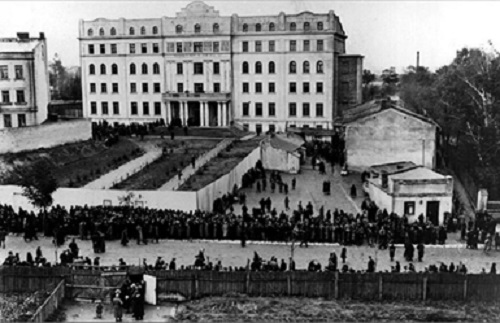
After the liquidation of the Warsaw Ghetto in the spring of 1942 the Frommer family was sent to the Majdanek death camp in Lublin, Poland only 123km away from his beloved Yeshivat Chochmei Lublin. It is documented that as he entered the gas chambers, the holy Kozoglover Gaon exclaimed “Thank G-d, for I am included in the sanctification of G-d’s great name!”.[37]

A newspaper article describing the experiences of Torah scholars in the Warsaw Ghetto.

Key Themes In The Thought of The Kozoglover Gaon

  1. הכל מלמדין זכות – סנגורם של ישראל 

The central theme in the halachic thought of RATF, is his focus on defending existing customs which are at odds with normative practice, often utilizing various non-traditional halachic arguments. RATF not only included kabbalistic and chassidic sources in normative talmudic & halachic discussions, but even allowed them to inform practical decisions in the realm of halacha. Eretz Tzvi strives to support rather than tear down shaky customs. RATF notes in his introduction to Eretz Tzvi when discussing his approach:

“That which we observed, that the students of the Baal Shem Tov zt”l abolished the practice of fasting and self- affliction [to atone for sins], and I am not worthy to enter into this discussion. Rather, I base myself on the mishna ”All may argue in favor of acquittal”[38]

[From this example, one could suggest that RATF saw himself as a halachic expositor of the way of the Baal Shem Tov, utilizing his halachic knowledge to apply the chassidic outlook of focusing on positive actions, rather than becoming mired in the guilt of sin.] Naturally, the very first responsa in Eretz Tzvi begins with this exact objective, foreshadowing the central theme of his halachic work:

“In defense of the widespread custom of wearing a tallit kattan which is smaller than the halachic size delineated in the Shulchan Aruch[39] which ostensibly precludes any fulfillment of the mitzvah tzitzit as many great scholars have protested about…as well as providing a limud zechut regarding the required length of tzitzit”[40]

One common conflict between chassidim and mitnagdim is their opposing halachic attitudes within the area of zmanei hatefillah. Perhaps the most well-known example of RATF’s limud zechut is the defense of the custom of some chassidim for beginning shacharit after 4 halachic hours into the day. The problem being the recital of berachot kriat shema, after their preferred time.  This poses a potential transgression of beracha levatala[41]. RATF defends this custom with various arguments. In the first part of the responsa in Eretz Tzvi[42], RATF begins by neutralizing the potential issue of beracha levatalah by positing that the prayer is considered a tefillat nedava, a voluntary prayer similar to the voluntary offering in the beit hamikdash. A voluntary tefilla is not bound by the common restrictions of an obligatory tefilla.

However, RATF is challenged to explain how one could put aside the halachically preferential time for praying and engage in a seemingly lesser level of voluntary prayer [chovah vs. nedavah]? To answer this secondary question, RATF utilizes the Shulchan Aruch Harav of Rav Shneur Zalman of Liadi – The Ba’al Hatanya.[43] The gemara[44]states that someone who is constantly engrossed in Torah learning (Torato um’nato [Rashbi V’chaveirav]) is not obligated to stop at the proper time and pray shemoneh esreih while engrossed in learning. Additionally, the Ba’al Hatanya adds that praying with the highest level of deveikut (divine cleaving) would take precedence over Torah learning, even for those who are described as torato um’nato.

RATF points out that from the Shulchan Aruch Harav we see that only a prayer with extraordinary intent and focus [A] trumps the Torah learning of someone who’s primary occupation is Torah learning [B] while an ordinary tefillah [C] would not obligated him to interrupt his studies to pray. ([A]>[B]>[C]) Utilizing a similar line of reasoning, we can assume that an individual who delays praying to attain the higher level of prayer will supersede the usual obligation of prayer service at the proper time. ([A]>[C])

Perhaps a more ambitious attempt at justifying the practice of some of the great chassidic masters with respect to zmanei tefillah, is another point in the same responsa. RATF quotes from the Ruzhiner Rebbe[45]who explains that prior to the sin of adam harishon in gan eden, the entire day was equally fit for prayer. However, the post-sin world is not fit for such a structure so the forefathers; Avraham (Shacharit), Yitzchak (Mincha) and Yaakov (Arvit) designated timeframes for each prayer. When the world reaches the ultimate redemption, the framework of zmanei tefillah will revert to their undefined framework similar to pre-sin existence. Utilizing a concept from the Rashba in Masechet Menachot[46] [regarding the halachic status of korban ha’omer], RATF suggests that since prayers of the tzadikim are focused on delivering the ultimate redemption (when the typical time boundaries will cease to exist) these prayers in and of themselves (even in our current pre-redemption era) are not bound by the usual rules and regulations.[47] Additionally, in two separate places RATF defends the practice of regular chassidim (not only great tzadikim as discussed above) who begin to pray Mincha in the time of bein hashmashot[48]employing the concept of safeik d’rabanan lkula.

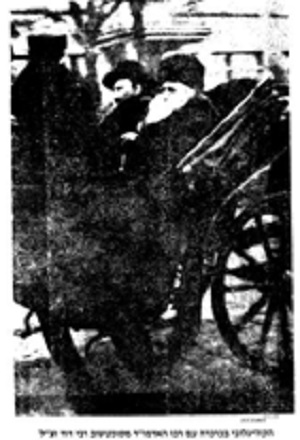
Rabbi Avraham Mordechai Alter zt”l (seated)  – The “Imrei Emet” of Ger along with his grandson.. A common correspondent of RATF. (Hakira.org)

In another example of limud zechut RATF defends the custom of delivering mishloach manot late in the day of Purim such that it is already past nightfall. While this practice ostensibly has no grounds in halacha as the halachic day has ended, as RATF himself admits, he still uncovers a halachic reasoning for the custom.[49] RATF quotes an explanation from Rabbi Yaakov Yitzchak Rabinowitz, the Yid Hakadosh of Pshiske,[50] who defends the practice of beginning to pray mincha when the prayer will extend past the proper halachic time of shkiah. Rabbi Rabinowitz justifies it based on the gemara and Tosafot in Berachot[51]regarding the curse of Bilaam towards the Jewish people. It is mentioned in the Gemara that Bilaam knew the precise split-second at which Hashem became angry during the day and could fit in a quick curse at that opportune time. However, Tosafot asks “What curse could you fit in a split-second?” and answers that the word kalem (כלם) meaning “they should be cursed” could fit the time allotment. Tosafot offers a second explanation: “even if it was a longer curse, if Bilaam would begin his cursing of the Jewish people in the split-second that Hashem’s anger appears each day even if he would continue after that time it would take effect as well.” Therefore, proves the Yid Hakadosh quoted by RATF, we see from here that beginning a prayer or a mitzvah at the right time will allow one to finish after the allotted time.[52] [53]

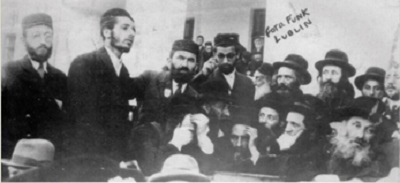
RATF (Third from left) administering a bechina at Yeshivat Chochmei Lublin

A limud zechut which came in an alternate form is RATF’s insistence on separating the strict halacha from that of middat hassidut or virtuous behaviour. In a correspondence[54] between RATF and the Imrei Emet of Gur (Rabbi Avraham Mordechai Alter), RATF discusses a specific type of lashon hara treated by the Hafetz Hayim in his work Shemirat Halashon. The Hafetz Hayim discusses the prohibition of speaking negatively about a person “even if he [the speaker] himself saw him [the transgressor] from close proximity doing something that is inappropriate according to the law”.  As a source, the Hafetz Hayim cites Rabbeinu Yonah in Shaarei Teshuva[55]:

”…perhaps the transgressor already repented from his evil ways, is distressed in his thoughts, and the heart knows the bitterness of his soul, and it is incorrect to reveal it.”

RATF points out that the exact words of Rabbeinu Yonah namely, “It is incorrect”, smack of middat chassidut and not strict halachic prohibition, and therefore takes issue with the Hafetz Hayim supporting his halachic decision on such grounds. RATF continues and writes “And since many people fail in this, one ought to find them a defense”.

It is interesting to note, that the work of Rabbeinu Yonah being discussed is the Shaarei Teshuva – a work not typically categorized as halachic. RATF did not object to the use of Rabbeinu Yonah’s “Shaarei Teshuva” on the grounds that it is a mussar work as opposed to a halachic one. One possible explanation is that RATF himself relies on and includes non-halachic sources to inform halachic decisions. RATF employs the full gamut of Torah thought in order to come to the defense of common practices and customs even if they infringe on pietistic sensibilities.[56]

Limud Zechut in Other Writings

As a young Rabbi, RATF published a short letter delineating the basic requirements of hilchot tefillah enabling his fellow Jews to fulfill the obligation of daily prayer. He published this letter anonymously, seemingly to avoid the appearance of haughtiness in a younger scholar lecturing the public.

Part of the letter that RATF published anonymously to remind the general public about the basic requirements of Teifillah in hopes  of zikui harabim

Lastly, in addition to his published works RATF published a kuntres or small pamphlet called Doresh Tov le’amo[57]. The work remained in manuscript and included a defense of “most Jews” who don’t have the requisite intent during the opening birchat avot of shemoneh esreih.  RATF writes that even if a person doesn’t understand the meaning of the words, if they are aware of the fact that they are praying “in front of Hashem” bedieved they fulfill their obligation. [RATF’s position is seemingly in opposition to the well-known position held of Rabbi Chaim Brisker[58]that in the first beracha of shemoneh esreih both the intent of standing in front of Hashem as well as the meaning of the words are necessary even bedieved.]


  1. Innovation Through Connecting all Areas of Torah

RATF utilized existing logic and concepts while applying them to previously unexplained passages and problems providing a framework of creativity that remains in line with tradition. We have already seen from the above mentioned responsa that RATF was open to utilizing kabbalistic and chassidic concepts in order to provide a limud zechut. RATF’s works do indeed draw from chassidut, kabbalah as well as gemara and rishonim. RATF describes his philosophy regarding new interpretations in Torah and their purpose: [59]

“As it is explained in the work Maayan Chaim as he discusses at length to provide support to those who produce Torah novella although it is not clear whether they are true & correct which would be a transgression according to the Zohar. In my humble opinion, the Zohar prohibits writing such novella only in a case where the logic being applied is not true, however if the logic and approach is true and found in earlier works, even if it is being applied in a novel way to explain a certain passage, even if the explanation is not correct this is not a transgression. For this is the honor of Torah and to demonstrate that there is nothing that is not hinted to in the Torah and everything can be “clothed” in Torah.”

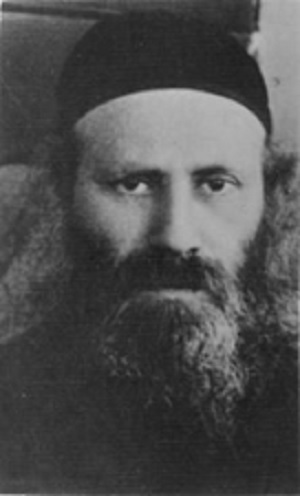
RATF in his later years

A great example of his propensity to cross-pollinate between disciplines is a discourse on Sukkot[60]. Regarding the libations of wine and water that took place on Sukkot he writes:

“One could suggest that the libations of wine and of water represent two separate ideas, oneg & simcha. The water libations represent oneg, as the concept of water is the source of all enjoyment as explained in Shaarei Kedusha[61]while wine represents simcha as [the Talmud] says “ein simcha ela b’yayin”. Additionally, we know that oneg & simcha are two separate ideas as explained in the Chatam Sofer’s novella (Shabbat 111a)[62] that on Shabbat there is an obligation of oneg while on Yom Tov there is an obligation of simcha…it would seem that the difference between these two emotions is that oneg involves the five senses while simcha involves only the heart/mind [lev]…and from simcha one arrives at dancing as is written in the Sefer Hakuzari, and the Maharal explains that our custom to raise our feet during Kedushah is to show that our soul naturally longs to take flight and similarly dancing which is initiated by simcha…on the other hand oneg is specifically in the engagement of the five senses as it says in Sefer Yetzira[63] which corresponds to oneg…and this is why all year round the only libation is that of wine representing simcha in the heart/mind however specifically on Sukkot after the forgiveness of sins [Yom Kippur] the body [and senses] are purified we are then given the libations of water representing the enjoyment of the senses as now these too can be used in cleaving to Hashem.”

In this passage RATF quotes from Talmud and a classical commentary as well as kabbalistic and chassidic sources interchangeably and unapologetically. The breadth and depth of RATF’s references adds a layer of relevance as he finds common themes in sifrei kabbalah along with classical rishonim and achronim. [64] In another passage, RATF describes his affinity for combining the hidden and revealed disciplines of Torah learning. He states:[65]

“It is my “way”, myself the pauper, to uncover (l’hamtzi) a source in the revealed Torah for the hidden…”

The word he uses is l’hamtzi which has double connotation of uncovering & creation. Through utilizing the spectrum of Torah literature RATF essentially creates new sources previously unrelated to the topic at hand through exposing them to his unique thought process.

See Responsa Eretz Tzvi[66] where he was asked by someone who accidentally turned on a light on shabbat and wanted to understand how much money he should give for atonement (kaparah). At the end of the discussion, [after finding a lenient opinion in estimating the modern equivalent of the monetary sums discussed in the gemara] RATF adds a reminder lest the questioner miss out on the true purpose of giving the symbolic amount to achieve “kaparah”.

However, the crux (ikar) of teshuva is the remorse and humility and lowliness that a person should be heartbroken that he desecrated the holy Shabbos. Additionally, it would be appropriate to take up oneself to assist the “Chevra Shomrei Shabbos” …for this is considered a tikkun of desecrating Shabbos.”       

RATF’s halachic thought utilized a maximalist approach in finding prooftexts and sources. Besides for the revealed and esoteric areas of Torah, we see from this last example that his responsa took the full religious experience into account.

RATF (bottom right corner) at a an unspecified event in Yeshivat Chochmei Lublin. To his right, Rav M, Ziemba

  • Centrality of Torah for All Jews & Mishna Yomi

In a related theme to limud zechut & providing access to all areas of Torah, it is clear that RATF strived to include the full population of Jewry in his philosophy of learning Torah. It is interesting to note, as Rabbi S.Y. Zevin does in his review of Eretz Tzvi[67], that although RATF was the dean of a yeshiva which was typically focused on the abstraction of talmudic law, Eretz Tzvi is comprised entirely of questions that are practical in nature. He utilized his training in the disciplines of pilpul and sevara as a tool for dealing with everyday people & problems.

An initiative of RATF aiming to elevate the religious experience of common Jewry, was the Mishna Yomi program that he instituted. Upon the second inaugural Siyum Hashas in 1938, RATF created a new study program allowing every Jew to appreciate and complete the entirety of Torah. His initiative was both  complementary and supplementary to the Daf Yomi that was already instituted by Rabbi Meir Shapira zt”l. An adherent to the Daf Yomi schedule would complete the entire Talmud Bavli over the course of the seven-year cycle. However, there are many aspects of torah sheb’al peh left untouched due to the significant amount of mishnayot that have no Bavli commentary. RATF suggested that the geulah (ultimate redemption) is dependent on the Jewish people learning the entirety of the oral Torah. See below for his inspirational words when introducing the program explaining an interpretation provided by the gemara for a cryptic passage in Hoshea.[68]

“Though they hire among the nations, now I will gather them up” (Hoshea 8:10)

“Should they learn it all; then, “now I will gather them up” [the Geulah will come immediately]”(Bava Batra 8a)

One could understand the words of the gemara “It all” in two ways. Either A. All of Bnei Yisrael or B.  Each individual should learn all the mishnayot as they encompass all of the oral law. And there is support for this from the Zohar[69] that one of the methods of teshuva is to learn the entirety of Torah …as every part of Torah has a unique ability to offer salvation for a specific area in one’s life, however the ultimate geulah is the entirety of all individual salvations at once and therefore all areas of the Torah must be covered in order to glean all the unique salvations to arrive at the ultimate collective salvation [of the Jewish people]. It therefore says “אי תנא כולהו” [if they learn it all], utilizing both understandings [A. all of the Jewish people and B. the entirety of the oral Torah] …and this is the purpose of the “Mishna Yomi”, that every Jew young and old, scholar and layman, wealthy & poor can all take part in this great mitzvah.”

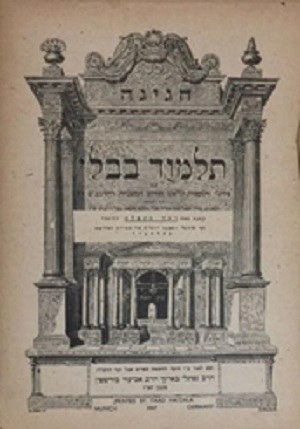
RATF felt that the geulah could be hastened through the entirety of the Jewish people learning all the mishnayot which encompasses the oral Torah.[70] It was seen as a great complement to the Daf Yomi, to the extent that there were printings of Talmud with both the Daf Yomi & Mishna Yomi schedule to allow for combined study.[71]

Although RATF conceived the Mishna Yomi prior to WWII, the concept needed a reaffirmation amongst post war Jews. Rabbi Yonah Stenzel, who was a student of RATF in the town of Sosnovitz and eventually emigrated to Tel Aviv and joined its rabbinate, re-instituted the concept of Mishna Yomi & Halacha Yomi in remembrance of those Jews that perished in the holocaust. In a few articles he is credited with creating the Mishna Yomi format, however RATF clearly introduced the concept before the war.

It is noteworthy that the specific vehicle chosen by RATF for bringing the ultimate redemption was Torah study. The gemara mentions other potential deeds that can bring the ultimate redemption in somewhat simpler ways.[72] The accessibility of Talmud Torah to the masses and the potential for each and every Jew to experience the entirety of Torah was RATF’s preferred initiative for bringing about greater spirituality in the community at large. It was through Torah that RATF saw his contribution in hastening the geulah.

Tamud Bavli, Tractate Hagigah and Mo’ed Katan and Mishnayot Shvi’it – special edition for the students of the Daf Yomi and the Mishnah Yomi – Munich 1947

Conclusion

Halachically speaking, any city which is entirely idolatrous is classified in the gemara as an ir hanidachat and condemned to destruction. However, the gemara[73]mentions that if one of the houses within the city maintains a mezuzah on its doorpost the city should not be destroyed. An apocryphal story describes a city facing imminent destruction due to its idolatrous practices that had permeated every household. On the eve of the final verdict there was a Jew who arrived from another city and ran from door to door affixing mezuzot to all bare doorposts. I believe that on a symbolic level, one of the rabbis affixing figurative mezuzot to various embedded customs requiring limud zechut in the last century was the Kozoglover Gaon, Rabbi Aryeh Tzvi Frommer Hy”d.

The concept of limud zechut, that was RATF’s raison d’etre, allowed for needed leniency within the structure and framework of Orthodox Torah observance. At times, we need a limud zechut on our own individual behavior as well as for our various practices and customs as a community. Perhaps, even if the halachic conclusions of RATF aren’t the accepted practice, his willingness to defend questionable practices with the breadth of his learning utilizing both the revealed and esoteric sections of the Torah remind us the importance of limud zechut and our responsibility to engage others and ourselves through it’s lens.

**I would like to dedicate this article in memory of my grandparents:

    Norman Sebrow                                                              Jo Amar

יוסף בן מזל ז”ל                                               נחמן דוד בן צבי אייזק ז”ל

     Jeanette Sebrow                                                    Raymonde Amar

רוחמה בת אסתר ז”ל                                             יוכבד בת אשר זעליג ז”ל

[1] I am grateful to Rabbi Hershel Schachter שליט”א, who introduced me to the Torah of the Kozoglover Gaon amongst a variety of unique thinkers as a student in his shiur. Additionally, I would like to thank the following people for their insight and help in bringing this project from idea to reality: Rabbis Dovid Bashevkin, Yaacov Sasson, Danny Turkel as well as Moshe Rechthand. Lastly, R’ Eliezer Brodt for his insight and breadth of knowledge that he offered to help complete this project.

[2] RATF’s collected writings and teachings can also be found in Eretz Tzvi (Moadim & Al Ha’Torah)  compiled by Erlich, Yehuda; Tel Aviv, 1984. Additionally, his students in Yeshivat Chochmei Lublin compiled a collection of insights called Mekabtz’el.

[3] Frommer, Aryeh Tzvi. Eretz Tzvi, Bnei Brak, 1976, pp. 5–6.

[4] Soreski, Aharon. Geonei Polin Ha’achronim, Bnei Brak, 1982, pp. 182 According to other opinions his father was a coal salesman.

[5] Ibid.

[6] Ibid. pp. 184 RATF’s personality is described as being exceptionally bright while at the same time a שובב or a bit of a “troublemaker”. It was in the yeshiva in Amstov that Rabbi Efraim Einhorn, paid special attention to the young orphan and provided him with the fundamentals for development in learning. It was this special attention that RATF attempted to repay when Rabbi Einhorn’s grandson, Rabbi Moshe Krohn came to study with RATF in Zbeirtza. RATF took extra care to attend to all of Rabbi Moshe Krohn’s physical and spiritual needs.

[7] Regarding the level of studies at the Amstov yeshiva – see Ibid. pp. 185-186 The day began with a shiur from 5AM until 10AM when the yeshiva would pray shacharit.

[8] Some of the other well-known students of the yeshiva; Rabbi Shlomo Stenzel and the Rebbe of Radomsk: Rabbi Shlomo Henich Hacohen Rabinovitz.

[9]1838 -1910. A chassid and son-in-law of the Kotzker Rebbe, after the Rebbe passed away he became a Gerrer chassid. In 1883 he moved to Sochatchov where he founded his own branch of chassidut named after the city, and which gave him the title of “the Sochatchover Rebbe.” His responsa were collected posthumously and published as the Responsa – Avnei Nezer hence his title. He published the sefer Eglei Tal as well, which covers the 39 melachot of Shabbat.

[10] Geonei Polin Ha’achronim, pp.182

[11] Ibid. – As a testament to the esteem regarded by the Avnei Neizer for his student, see Responsa Avnei Neizer, Orach Chaim, 109 where his teacher writes the following. “Greetings to my beloved student, the Harif and Baki our teacher, Rabbi Leib Hirsch. From your letter I see that you have been meditating on my work…You said well and spoke truth. Wishing you great strength and courage in Torah and G-d willing, may you develop into a vehicle for chassidut and fear of Heaven…Abraham”

[12] 1855-1926. Published the work “Shem Mi’shmuel”. The only son of the Avnei Neizer, was both a son and close student of his father and maintained an extremely close relationship with his father until his death. After his father’s death, he was accepted as the next Socatchover Rebbe. He published his father’s works and led Socotchov Chassidut. He died at the age of 70. He was brought to burial in the same ohel (covered grave) as his father, the Avnei Nezer, in Sochaczew. His son, Dovid, succeeded him as third Sochatchover Rebbe.

[13] Bergman, Ben-Tzion. Michoel B’Achat, pp.44 – RATF was not the only one asked to lead the yeshiva. Rav Michoel Forschlager another prized student of the Avnei Neizer was sought along with RATF to lead the yeshiva. It was RATF who served as the dean of the yeshiva while Rav Forschlager was more directly involved with directing the studies of the young students. Among Rav Forschlager’s students were Rabbi Avraham Aaron Price, Rabbi Mordechai Gifter, Rabbi Yitzchak Hoberman and Rabbi Pinchas Hirschprung. Additionally, see the newly reprinted Toras Michael (Machon Avnei Choshen, 2016) a collection of Rav Forschlager’s torah novella.

[14] 1855-1926 – One of the great galician Torah scholars with works such as Imrei Yosher, Tal Torah. His students include the prolific Rav Reuven Margolies and founder of Daf Yomi and Chochmei Lublin Yeshiva – Rabbi Meir Shapiro.

[15] 1858-1920 – Rabbi and Av Beis Din in Krakow, Poland. Author of Gilyonei Ha’Shas, Beit Ha’Otzar. Himself a fascinating Torah scholar who utilized abstract thinking in his conceptual approach to Talmudic study. At the bris of RATF’s first born son, Rabbi Yosef Engel served as the sandak, while RATF himself was the mohel.

[16] Including Rabbi Moshe Nachum Yerushalimsk, 1855-1916. Another of the great Torah luminaries in Poland at the time.

[17] See “Rabbi Aryeh Tzvi Frumer From Kozhiglov: Head of the Rabbinical Court and Rosh Yeshiva: Center for Holocaust Studies” – the reason for his departure from the city as being due to a disgruntled wealthy man that RATF slighted by deciding against him in a din Torah. For another version of the story involving his neighbor being a priest see the introduction to the third printing of Reponsa Eretz Tzvi.

[18] Specifically, Rabbi Yitzchak Yaakov Erlich whose son R’ Yehuda ended up publishing the works of RATF Rav in Israel many years later.

[19] It is in Sosnovitz where Rabbi Yonah Stenzel (1904-1969) became a devoted student of RATF. Rabbi Stenzel, who also studied in Chochmei Lublin, eventually migrated to Tel Aviv where he re-stablished the study of Halacha and Mishna Yomit in memory of all those who perished in the Holocaust.

[20] It is important to emphasize the honor and prestige that even joining the student body of the yeshiva brought along with it. It was said that each student needed to know 200 folio of Talmud by heart to gain admission.

[21] See Responsa Eretz Tzvi I:25 in his letter to the Gerrer Rebbe “Who will give me wings of a dove, I will fly and settle (in the land of Israel), kiss its earth, embrace its stones may it be hastily in our days”

[22] See Geoneil Polin Ha’achronim pp.250

[23] See Eretz Tzvi I:27 where he mentions that a certain hiddush occurred to him in Meiron on Lag Ba’omer

[24] Geoneil Polin Ha’achronim pp.252: It is said that he after meeting with the Chazon Ish zt’l in Bnei Brak, the Chazon Ish praised his brilliant Torah mind saying that he had not met such a brilliant mind in many years.

[25] The name is used as a description of the land of Israel, in the book of Daniel for example (Chapter 11), from which he had recently returned. Additionally, Tzvi for his middle name.

[26] Yeshivat Chochmei Lublin was located at Lubitrovska 57, initially a vacant lot which Rabbi Meir Shapira secured from a wealthy donor. Eretz Tzvi’s first printing was at a press located footsteps away at Lubitrovska 62 as seen on the cover page.

[27] Geonei Polin Ha’achronim, pp 271. Reportedly, the copy used for the third printing was amongst many works that survived the destruction of the holocaust and arrived as part of a larger delivery to the misrad hadatot of Israel. It was this specific copy that had the glosses of the author in the margins. Among other works saved is RATF’s personal copy of Responsa Imrei Yosher with RATF’s glosses.

[28]Rabbi Mandelbaum is a notable scholar of all topics related to Yeshivat Chochmei Lublin and many of the great minds of Polish origin. Rabbi Mandelbaum added a new dimension to the Torah of RATF and many other geonim by collecting their dispersed writings and organizing them while also providing noteworthy glosses and footnotes in various reprintings. Rabbi Mandelbaum’s father was a student of RATF in Yeshivat Chochmei Lublin. Additionally, Rabbi Mandelbaum thanks Rav Shmuel Halevi Vozner Zt”l and other for sharing many of the items found in this second volume as he was in possession of various manuscripts and writings of RATF.

[29]  ‘ שו”ת ארץ צבי, חלק ב ה, Bnei Brak, 2000

[30] סניגורם של ישראל – This term is also used in reference to the great Rav Levi Yitzchak of Berditchev (1740-1809) who repeatedly strove to portray both Jews and Jewish issues in a positive light. For more on this topic see; Luckens, ‘Rabbi Levi Yitzhak of Berdichev’, Ph.D. thesis (Temple University, 1974) pp. 38 citing M. Wilensky, I, 122-131.

[31] His words were recorded and can be found in Eretz Tzvi Moadim pp. 276

[32] ארץ צבי עה”ת pp. 14

[33] Hidden in Thunder: Perspectives on Faith, Halachah and Leadership …, Volume 1, Esther Farbstein,

[34] ארץ צבי עה”ת pp. 14

[35] See http://www.daat.ac.il/daat/shoah/biton37.pdf  based on the daily journals of Hillel Zeidman

[36] [The Last Path for Torah Leaders in the Warsaw Ghetto]. Bais Yaakov (in Hebrew) (47): 7 – Testimony of Avraham Hendel. An additional story is told about Rabbi Aryeh Tzvi that he was desperately searching for someone to help him conduct a chemical experiment with the margarine that was given out at meals in the shoe factory – to test for any treif fat that could have been mixed in and thus prohibited to eat.

[37] Ibid.

[38] Reponsa Eretz Tzvi, Introduction

[39] Siman 17

[40] Eretz Tzvi,

[41] See Shulchan Aruch 58:6

[42] Responsa Eretz Tzvi I:36

[43] Talmud Torah 4:5

[44] Shabbat 10a

[45] Israel Friedman of Ruzhyn (1796 –1850), also called Israel Ruzhin, was a Hasidic rebbe in 19th-century Ukraine and Austria. Friedman was the first and only Ruzhiner Rebbe. However, his sons and grandsons founded their own dynasties, collectively known as the “House of Ruzhin”. These dynasties, which follow many of the traditions of the Ruzhiner Rebbe, are Bohush, Boyan, Chortkov, Husiatyn, Sadigura, and Shtefanesht. The founders of the Vizhnitz, Skver, and Vasloi Hasidic dynasties were related to the Ruzhiner Rebbe through his daughters.

[46] Menachot 4a

[47] It should be noted however, that RATF concedes that this line of reasoning would specifically apply to the great tzadikim whose prayers can be assumed bring the ultimate redemption closer vs. those of the typical petitioner.

[48] See Eretz Tzvi 1:1, 1:60

[49] 1:121

[50] Rabbi Yaakov Yitzchak Rabinowitz (1766–1813). A student of the Chozeh of Lublin (Ya‘akov Yitsḥak Horowitz) with whom he eventually parted ways. See Buber, Martin: Gog und Magog (1949; first published in English translation as For the Sake of Heaven, 1945). The Yid Hakadosh would become the teacher of Rabbi Simcha Bunem of Pshiskhe. See Rosen, Michael: The Quest for Authenticity.

[51] 7a s.a

[52] See Piskei Teshuvot, Purim, Siman 695:5 Note 24. Where this responsa of RATF is brought as an example of an opinion that defends the practice of starting the Purim feast close to the end of the day where most of it will take place after Purim although it was begun before the end of the day.

[53] Additionally, regarding the proof from Tosafot in Berachot referencing Bilaam. See Nefesh Harav (pp.114) that when Rav Joseph B. Soloveitchik heard this proof he laughed and Rabbi Shachter שליט”א explains that it was evident that he was not comfortable with this type of proof.

[54] See “From Principles to Rules and from Musar to Halakhah: The Hafetz Hayim’s Rulings on Libel and Gossip”, for Rabbi Dr. Brown’s discussion the works of the Hafetz Hayim at length and who discusses RATF’s discussion as well.

[55] Shaarei Teshuva, Sha’ar 3

[56] See below for further examples (non-exhaustive list) of limud zechut:

1.See Eretz Tzvi 34 – in defense of the custom for women of the time that didn’t daven everyday, when seemingly this is against the clear gemara (Berachot 20b) & Shulchan Aruch (O”C – 106:2) that women are obligated in tefillah. Rabbi Aryeh Tzvi provides additional support via comparison of tefillah to korbanot thus re-affirming the position of magen Avraham (ibid.) that suggests that the women will at some point request something from G-d and therefore fulfill their Torah obligation according to the Rambam.

  1. See Eretz Tzvi 53 54 – in defense of the common custom to make a borei pri hagefen on wine that includes significant amounts of water which are 6x the wine although this is seemingly at odds with the normative halacha as both the Shulchan Aruch YOD (siman 134) & Rama (YOD 204:5) conclude that one should not make a borei pri hagefen on such a wine.
  2. Eretz Tzvi 75 – in defense of the common custom in an area without an eiruv on Shabbat to use a minor to perform hotzaah.
  3. See Eretz Tzvi 94-95 with respect to finding support for those kohanim who fly on an airplane which might fly directly over graves of Jews thus exposing them to tumas kohanim
  4. Eretz TZvi 96 – in defense of the common custom to make seltzer on Shabbos –
  5. Eretz Tzvi 97 – in defense of the custom of certain chassidim to sit in the sukkah and make a bracha on shmini atzeret – though ostensibly at odds with the gemara.
  6. Eretz Tzvi 125 – finding support for creating a mikvah using snow in a place that no other type of mikvah would be possible.
  7. Eretz Tzvi 30 – in defense of the custom of the Ashkenazim in the diaspora who refrain from reciting the daily birchat kohanim
  8. Eretz Tzvi 35 – in defense of the custom for those washing netilat yadaim and the water does not cover most of their hand

[57] See Geonei Polin Ha’achronim, pp. 262

[58] See Chiddushei Rabbeinu Chaim Halevi al Harambam, Hilchot Tefillah as well as the he’arot of the Chazon Ish

[59] Eretz Tzvi (Torah commentary) Introduction

[60] Eretz Tzvi, Moadim, pp. 110, Sukkot תרפ”ה

[61] Kabbalistic work of the Ari’zal

[62] ד”ה ודע

[63] Chapter 2:7

[64] Another notable exchange is one that appears in the second volume of Eretz Tzvi where RATF engages in correspondence with none other than the Ishbitzer Rebbe, Rabbi Mordechai Yosef Leiner zt”l. It was in 1934 that the Ishbitzer Rebbe sent a question that was bothering him regarding a specific comment of Maimonides related to Hilchot Shevuot. RATF goes on to cite various chassidic and Kabbalistic sources and their bearing on the halachic issues. Thank you to Rabbi Josh Rosenfeld for pointing out this source, in his Sunday Responsa Series.

[65] Responsa Eretz Tzvi, I:12

[66] Siman 62

[67] Sofrim U’Sfarim, Tel Aviv, 1959, pp.189.  [Thank you to Rabbi Eliezer Brodt who brought this source to my attention]

[68] The discourse can be found in it’s entirety in Eretz Tzvi Moadim pp. 276.

[69] Zohar Chadash, Rut

[70] See also Eretz Tzvi, II: 72, 73

[71] This unique edition was printed in the framework of daily Daf Yomi and daily Mishnah. A combined calendar of Daf Yomi and the daily Mishnah is printed at the beginning of the book for the years to come: 5767-1912. The tablet is spread over four columns. Beneath the calendar of Daf Yomi, a special prayer was printed “after the end of a chapter from a daily mishnah.” This prayer was composed by Rabbi Yonah Stenzel zt “l, in memory of the Holocaust victims” who were killed for the sanctification of God … by the German oppressors. [Seen at Tzolman’s auctions (Bidspirit.org)]

[72] See Shabbat 118a – “If only [Bnei] Yisrael would keep two consecutive Shabbatot they would be immediately redeemed”

[73] Sanhedrin, 71a


Jacob ben Elhanan Heilbronn – A Multi-faceted Erudite Scholar

Jacob ben Elhanan Heilbronn – A Multi-faceted Erudite Scholar

By Marvin J. Heller[1]

Jewish history and literature is replete with individuals of stature, men of repute, leaders in their generation, whose memory has not fared well over time. Their reputations and accomplishments notwithstanding, they are not well remembered today, excepting in rabbinic or academic circles. This is, of course, not only a Jewish phenomenon, but our concern is with one individual in particular, prominent in his time in the Jewish community, justifiably so, but, outside of the aforementioned circles is, for the most, forgotten today. Among those who were prominent in their time but are not well known by the general public is R. Jacob ben Elhanan Heilbronn.

Heilbronn (or Halpron), a late sixteenth and early seventeenth century rabbi, was a highly regarded Talmudic scholar, evident from the esteem in which he was held by his correspondents and in the approbations to his work, as well as being a mathematician. Heilbronn was the author, compiler, and translator of several varied books on different subjects, indicative of his erudition. In this article we will briefly recount Heilbronn’s life and career and then, in somewhat greater detail, describe his literary works. Mordecai Samuel Ghirondi and Hananel Neppi, suggest that Heilbronn was a student of R. Samuel Judah Katzenellenbogen (1521-97) the son of R. Meir Katzenellenbogen (Maharam of Padua, 1473–1565).[2] Born in Italy to an Ashkenaz family, Heilbronn studied in Prague, afterwards traveling through cities in Germany and Italy, earning his livelihood from teaching. Heilbronn was also a tutor, among his students were the children of R. Nehemiah Luzzatto in Venice, for whom Heilbronn included a eulogy in his Nahalat Ya’akov (below).[3]

Jacob Heilbronn’s brother was R. Joseph ben Elhanan Heilbronn, who eventually settled in and became a resident of Posen. Also a person of repute, today Joseph Heilbronn is considered a German Jewish scholar. However, not only is he also poorly recalled, when Joseph Heilbronn is remembered, it is often as Jacob Heilbronn’s brother. Joseph Heilbronn was the author of Em ha-Yeled (Prague, 1597) a popular elementary Hebrew grammar, among the earliest of children’s grammar books, reprinted several times. The title-page of Em ha-Yeled informs that it is concerned with the grammar of words, for a child of seven, to familiarize him with word structure, the letters comprising word structure, tenses, future and past, singular and plural, male and female. The purpose is so that he will be able to speak the holy tongue (Hebrew) clearly and to write grammatically. Joseph Heilbronn’s other works are Me’irat Einayim (Cracow or Prague, c. 1600), an index of the taryag mitzvot according to Maimonides; and Kol ha-Kore (Cracow c. 1602), brief rules of grammar for schools based on the work of R. Elijah Levita (Bahur, 1469-1549).[4]

Jacob ben Elhanan Heilbronn, after teaching Torah in several communities, eventually settled in Padua where he was engaged as rabbi. Padua, a city of some distinction, counted among its residence such distinguished sages as R. Samuel Archivolti (Arugat ha-Bosem, c. 1515–1611), R. Simhah Luzzatto (1583–1663), and was home to a medical school which admitted Jewish students and therefore attracted Jews throughout Europe.[5]

I

Turning to Heilbronn’s literary activity. His works are in Yiddish (Judeo-German), Hebrew, and even in Italian, reflecting the composition and needs of contemporary Jewry. The Yiddish texts, three are noted here, were all printed at the press of Giovani di Gara. That press, active from 1564 to 1611, printed more than 270 books, primarily in Hebrew letters, and only infrequently in non-Jewish languages. Of that number, almost a third are seventeenth century imprints. Di Gara published a wide variety of books, encompassing liturgical works, Bibles, responsa, haggadot, and important first titles by authors. Given the positive reputation of the di Gara press it is not surprising that Heilbronn chose to print several of his titles with the di Gara press.

Heilbronn’s Yiddish titles are set in Vaybertaytsh, a semi-cursive type generally but not exclusively reserved for Yiddish books, so named because these works were most often read by the less educated and women.[6] These books were clearly meant for an Ashkenazi audience, for books in Vaybertaytsh were certainly not directed or intelligible to a market outside that community, but also evidence that that market was sufficiently large enough to justify the publication of works for a particular element of rather than for the entire Jewish community.

Orech Yamim – We begin our review of Heilbronn’s literary activity with his translations into Yiddish of several short but substantial works. The first of these titles is Orech Yamim, an ethical work by R. Samuel ben Jacob Benveniste, one of the sages of medieval Spain. The words Orech Yamim appear in several biblical verses, but based on Benveniste’s references, the appropriate verse appears to be “With long life (orech yamim) I will satisfy him, and show him My salvation” (Psalms 91:16).

Orech Yamim is an ethical manual for parents and children emphasizing the education of children, as well as addressing the subjects of haughtiness and humility.[7] There is a dedication by Heilbronn to Rosa, wife of the official קצין R. Nehemiah Luzzatto of Venice.[8]

First printed in Constantinople (c. 1580), Orech Yamim has proven to be a relatively popular work; it has been reprinted several times in various locations and translated into different languages, most often Yiddish, beginning with this Venice edition in 1599. Approximately a year after this edition appeared a Hebrew edition was published, also in Venice.[9] The 1599 Yiddish edition was printed as an octavo (80: 16 ff.) at the Venetian press of Giovanni di Gara. This is in contrast to the c. 1600 Hebrew edition, also printed in Venice, but at the press of Daniel Zanetti as a sixteenmo (160: 7ff.).[10] There was, three centuries later, even an Arabic edition (Baghdad, 1929).

1599, Orech Yamim

1602, Dinnim ve-Seder

Courtesy of the National Library of Israel[11]

Keter Malkhut – In 1600, the di Gara press published Keter Malkhut, Heilbronn’s Yiddish translation of R. Solomon ben Judah Ibn Gabirol’s (Arabic Abu Ayyub Sulayman ibn Yahya ibn Gabirul; Latin Avicebron, c. 1021-1057) Keter Malkhut. issued in octavo format (80: 24 ff.) Keter Malkhut has been described as,

rhymed prose dealing in high style with the essence of God, the work of the creation, with a description of the “spheres,” and a confession of the low condition of man, prone to sin. . . ;.

Keter Malkhut opens with praise for the Creator and an account of His attributes: His unity, existence, eternity, and life and His greatness, power, and divinity. God is also described as “Light,” according to the neoplatonic image of the deity, “Thou art the supreme light and the eyes of the pure soul shall see thee” (tr. Lewis, 31). Nevertheless, Gabirol stresses that God and his attributes are not distinguishable: we refer to attributes only because of the limited means of human expression.[12]

There is a dedication to Kilah, the wife of the official קצין R. Mendel Ottolenghi, presumably a member of the renowned Italian family of that name.[13]

Dinnim ve-Seder (Seder Meliḥah) – In 1602, Heilbronn published Dinnim ve-Seder (Seder Meliḥah), an important work on the principles of salting meat. This edition, in Yiddish, is based on R. Moses Isserles’ (Rema, c.1525/30–1572) Torat Hattat, which in turn follows the Sha’arei Dura of R. Isaac ben Meir Dueren (late 13th century) with additions according to the customs of Polish and German Jewry. The Rema, among the foremost halakhic authorities and the leading decisor for Ashkenazim, is best known for his Haggahot or ha-Mappah, glosses on the Shulhan Arukh. Dueren, a German halakhic authority, resident in Dueren in Germany, was an authority on the laws of issur ve-hetter (dietary laws)..

The Rema’s purpose in writing Torat Hattat was that due to the popularity of Sha’arei Dura, a work of considerable brevity, people wish to learn it while [standing] on one foot. Torat ha-Hattat is not, however, merely a clarification of Sha’arei Dura, although arranged according to and following the former work, but its purpose, as Rema writes, is not only to add contemporary customs, to which Rema placed great weight, but to teach practical halakhah. Furthermore, many of the laws, particularly in the area of issur ve-hetter, as explained by R. Joseph Caro (1488 –1575) in his Shulhan Arukh, which had become widespread, are not applicable in these lands, that is Poland and other Ashkenazi communities.

Torat Hattat was first printed in Cracow in 1569, and reprinted in 1577 and 1590. This, the first Yiddish edition, was published by the di Gara press in octavo format (80: 8 ff.). It has a dedication to Moskita, daughter of R. Hezkiah Perinto. There is also a memorial address on the death of R. Avigdor Cividal (Zuidal, d. 18 Heshvan, [5]362 = November 18, 1601), rabbi in Venice.[14]

These three titles, translations of distinguished works into Yiddish by Heilbronn, are varied. Orech Yamim and Dinnim ve-Seder, while quite different in subject matter, the former an ethical manual emphasizing the education of children, as well as addressing the subjects of haughtiness and humility, the latter dealing with the principles of salting meat, are eminently practical works, addressing that part of the community that was less learned but had a serious need for the books’contents. In contrast, Keter Malkhut, while unquestionably a work of great value does not appear to fit the practical pattern of the two other works. Heilbronn’s motivation is publishing Keter Malkhut is unclear.

Even less clear is Heilbronn’s purpose in dedicating each of these works to apparently unrelated women, even if married and women of great virtue. That would appear, unless with good reason or of close relatives, to be inconsistent with Jewish values. One needs assume that Heilbronn, a respected rabbi, translator of an ethical work, had good reason for doing so, even if for reasons that are unclear, but were appropriate.

II

Kizzur Abrabanel – We turn now to Heilbronn’s Hebrew works.[15] The first of Heilbronn’s three Hebrew titles is Kizzur Abrabanel, an abridgement of Don Isaac ben Judah Abrabanel’s (1437–1508) commentaries on Pirkei Avot and the Pesah Haggadah. A noted statesman, biblical exegete, and philosopher, Abrabanel’s works encompass commentaries on the Torah, most books of the Bible, and philosophical works. Abrabanel served as an advisor and financier to kings in Portugal and Spain, electing to go into exile at the time of the expulsion of the Jews from Spain in 1492. Among his books are these commentaries on Pirkei Avot, entitled Nahalat Avot, and on the Pesah Hagadah, entitled Zevah Pesah.

Kizzur Abrabanel is an abridgement of Nahalat Avot and Zevah Pesah; it was published in 1604-05 in Lublin at the press of Zevi ben Abraham Kalonymous Jaffe as a quarto (40: 79, [1] ff.). Both titles, apart from the abridgement, were printed in Constantinople in 1505 and reprinted several times in the sixteenth century; Nahalat Avot was reprinted in Venice (1545, 1567) and Zevah Pesah was reprinted in Venice (1545), Cremona (1557), Riva di Trento (1561) and Bistrowitz (1592). Both works have proven popular, were republished several times, particularly Zevah Pesah.

Abrabanel’s style in those works, as in his other commentaries, is lengthy, deep and thorough, but eminently readable. Nevertheless, it is the length of his commentaries that made an abridgement attractive.

The title page describes Kizzur Abrabanel as having been written by Heilbronn, known by all as Hertzkes, who diligently sat in the tent of Torah where sat the sages full of mitzvot like a pomegranate and saw that lengthiness hindered others from doing so. Heilbronn, therefore, for the public good, abridged these works so that they could be quickly read. The title page is dated Wednesday, 25 Sivan 364 (June 2, 1604). The colophon dates completion of work to Friday, Rosh Hodesh Adar “and Jacob had scarcely gone out from the presence of Isaac ויהי אך יצא יצא יעקב מאת פני יצחק (365 = 30 Shevat = February 18, 1605) his father” (Genesis 27:30). On the verso of the title page is an approbation signed by eight geonim in Jaroslav. Next is Heilbronn’s introduction

the commentary of the great Rav, wonder of the generation [Don Yitzhak] Abrabanel on Avot and the Pesah Haggadah, a truly wonderful commentary, accepted by everyone, joining all the Mishnayot and ma’amarim together into one tent which was not done by other commentators, before and after. It was the desire of all to continually delve into and delight in it daily and “find rest for their souls” (cf. Jeremiah 6:16). . . .

1604, Kizzur Abrabanel

Courtesy of the National Library of Israel

Heilbronn continues that due to the lengthiness of Abrabanel’s commentary, perhaps excessively, people are unable to read and complete it, and therefore but “one from a city, and two from a family” (Jeremiah 3:14) even begin it and it lays in the corner of the house “all grown over with thorns, and nettles had covered it over” (Proverbs 24:31). He has therefore prepared this abridgement and taken the queries with which the Abrabanel customarily begins each section and placed them at the end of the work.

The text of Kizzur Abrabanel follows, in two columns, the text of each work in a square unvocalized font, followed by Abrabanel’s commentary in rabbinic letters. Kizzur Abrabanel is comprised of the commentary to Pirkei Avot, from 46b the commentary on the Pesah Haggadah, and at the end the queries with which the Abarbanel began topics in Avot (69a-75b) and the Haggadah (76a-79b).[16]

Despite being an attractive and functional volume, Kizzur Abrabanel has not, unfortunately, been reprinted, this being the only edition of Kizzur Abrabanel.

Nahalat Ya’akov – Our second Hebrew title is Nahalat Ya’akov, responsa and halakhic novellae. Nahalat Ya’akov was published in Padua in 1622 at the press of Gaspare Crivellari in quarto format (40: 51 ff.).

The title page of Nahalat Ya’akov has a six-part frame comprised of floral patterns. The text states that Nahalat Ya’akov is responsa on halakhic matters (dinim) concerning monetary issues, dietary laws (issur ve-heter), and commentary on various subjects in Tosafot and Rashi. These were collected and assembled from “elderly rabbis רבנן קשישי (Berakhot 30a, 46b) who were in his days,” and to whom he submitted queries and received responses, טו”ב (17) in number and enumerated by name on the following page. The title page has the Hebrew date שפ”ג ([5]383) and the Arabic numeral date 1622, indicating that it was printed in the final months of 1622, when the new Jewish year has begun and the secular year had not yet concluded.

1622, Nahalat Ya’akov

Courtesy of the Fales Library and Special Collections, New York University

The verso of the title page is blank. Folio 2a has the names of the rabbis, all distinguished, with whom Heilbronn corresponded, and whose responses make up a substantial portion of Nahalat Ya’akov. Among them are R. Abraham Menahem Kohen Rapa Porto (Rapaport, Minhah Belulah), Judah Katzenellenbogen, Avigdor Cividal, Mordecai Jaffe (Levush), and Isaiah Horowitz (Shelah ha-Kodesh), the last, along with R. Kalonymus ben Samuel ha-Kohen, providing approbations. There is an introduction in a single column in rabbinic type from Heilbronn, who writes that “‘Nahalat Ya’akov (the heritage of Jacob, Isaiah 58:14) your father,’ this is my portion from all my labors and exertions.” There is a dedication to his benefactor R. Simḥah Luzzatto.

Heilbronn entitles it Nahalat Ya’akov for two reasons: it is all that he has accomplished to be an inheritance to the children of Jacob; and secondly, all will see that in it are “words of delight; [and words of truth] written in proper form.” (Ecclesiastes 12:10). The text is set in two columns in square type. The volume concludes with an index. This is the only edition of Nahalat Ya’akov.

Shoshannat Ya’akov – Our final Hebrew title, Shoshannat Ya’akov, Heilbronn’s introduction to arithmetic with mathematic puzzles. It was published together with R. Eliezer ha-Gadol’s (R. Eliezer ben Isaac of Worms, 11th cent.) Orhot Hayyim. The combined work, with the title-page heading Orhot Hayyim, was published in Venice at the press of Giovanni Caleoni in 1623 as a sixteenmo (160: 12 ff.). Orhot Hayyim is a popular ethical will often erroneously credited to R. Eliezer ben Hyrcanus (1st-2nd cent.), but also appearing with R. Asher ben Jehiel (Rosh, c. 1250-1327as the author.

Shoshannat Ya’akov, our title of interest, is, as, noted above, an introduction to arithmetic with mathematic puzzles. The title-page emphasizes Orhot Hayyim, stating,

is the testament of R. Eliezer ha-Gadol, which he commanded his son Hyrcanus at the time of his passing. It was brought to press by R. Jacob Heilbronn for the public good. He has added at the end an addition of his own from his “wisdom and knowledge” (Ecclesiastes 1:16, 2:26) in arithmetic to be able to understand his fellow’s calculations and to write with allusions in the manner of esotery and appetizers of wisdom. This addition is entitled Shoshannat Ya’akov to instruct to teach the youth of the children of Israel knowledge and stratagem in concealed secrets. . . .

Shoshannat Ya’akov, includes, in addition to its arithmetic content, riddles and epigrams. Both works are set in a single column in rabbinic type, with Shoshannat Ya’akov beginning on 8a. It does not have a separate title page but rather a one-line header giving the title. At the end of the volume is verse by R. David ben Shemariah Morpurgo. An example of the contents in Shoshannat Ya’akov is the last entry (11a),

To speak in allusions so that those standing by the speaker will not understand except for his companion who knows the matter as do you but none other.

First, I will instruct you in the alef bet and afterwards how to arrange words with the five fingers of the right hand beginning with the thumb. . . .

1623, Orhot Hayyim / Shoshannat Ya’akov,

Courtesy of the Library of Agudas Chassidei Chabad Ohel Yosef Yitzhak

Moritz Steinschneider, likely referring to this work, writes informs that “arithmetical puzzles were framed in Germany by JACOB BEN ELIAKIM (613 [sic]) for primary instruction and an exercise of subtlety.”[17]

Orhot Hayyim has been frequently reprinted. This is, however, the only edition of Shoshannat Ya’akov.

III

Mitzvot Nashim – We conclude with Heilbronn’s most popular (successful) work, based on the number of times it was reprinted, that is, Mitzvot Nashim, or, in Italian,

Precetti da esser
imparati
dalle donne hebree

The above meaning precepts to be learned by Hebrew women, and continuing that it was composed by Rabbi Bini amin D’harodono (R. Benjamin Aaron ben Abraham Slonik, Solnik, c. 1550 – c. 1619) and that it was translated by Rabbi Giacob Halpron (Jacob Heilbron) into Hebrew for women with a fear of God. Precetti da Esser Imparati is a translation into Italian of R. Benjamin Slonik of Grodno’s (c. 1550 – c. 1619) Yiddish Seder Mitzvot Nashim (a lovely booklet for women). Precetti da Esser Imparati was published in Venice in 1616 at the press of Giacomo Sarzina as a 20 cm. book ( [10], 3-101, [11] pp.).

The title-page is followed by a dedication to Alla Molta Magnifica et Nobilissima Signora Osservandissima, La Signora Bona Consorte Delmolto Magnifico, & Nobelissimo Signor Lazero d’Italia Hebreo in Mantova (below, left). Again, a dedication to a woman, with the comment noted earlier.[18] It should be noted, however, that there is no impropriety suggested, as the dedications are not only done publicly but in books with approbations from highly regarded rabbis.

1616, Mitzvot Nashim – Precetti da esser imparati dalle donne hebree

Courtesy of the National Library of Israel

Mitzvot Nashim is on the three mitzvot specific to women, the laws of niddah, hallah, and lighting of Sabbath candles, which, if not observed, “are the three transgressions for which woman die in childbirth” (Shabbat 31b). The text, in Italian with occasional Hebrew, is comprised or one hundred thirty-seven chapters followed by a listing (below, right) of the mitzvot; 76 for niddah, 77-87 for hallah, and 88-101 for lighting Sabbath candles.

In his detailed work on Seder Mitzvot ha-Nashim, Edward Fram suggests Slonik’s efforts were educational rather than legislative in insuring proper observance of commandments. He had to consider that the book was for both readers and listeners, for both the pious and rebellious. Israel Zinberg, in his brief description of this title, describes it as being “in a tender, gentle tone ‘the little book for women’ teaches the Jewish wife and mother how she ought to conduct herself in her family life and religious-social life.” Most chapters are brief but several are quite lengthy and, in addition to the halakhic detail, include ethical, motivational and homiletic supporting material which certainly enhanced the books popularity.[19]

Slonik’s Mitzvot Nashim been a popular and much reprinted work. Four editions, beginning with a Cracow 1577 edition, are known for the sixteenth century, three printed in Slonik’s lifetime, and six are recorded for the seventeenth century, beginning with a Yiddish edition, Ein Schon Frauen Buchlein (Basle, 1602). Heilbronn’s Italian translation (Venice, 1616) has also proven to be popular and has been republished.[20]

IV

We began by noting that Jewish history and literature is replete with individuals of stature, whose accomplishments notwithstanding, are not well remembered today. Among those who were prominent in their time but are not well known by the general public today is R. Jacob ben Elhanan Heilbronn. A review of his life and accomplishments, particularly the books he authored and printed, suggests that he indeed was a person of accomplishment, deserving more than a passing glance. A peripatetic individual, Heilbronn appears in several locations in Europe before finally accepting a position as rabbi and settling in Padua.

It is his books that are of greatest interest and set him aside from many of his contemporaries. While his works, in most cases, are not original, they are of merit, being tri-lingual, in Yiddish, Hebrew, and Italian. They are generally adaptations of the successful and important works of others. In translating and abridging those works, Heilbronn has made them available to a much larger public, one that likely might not otherwise have had access to them. His books encompass ethical and halakhic subjects, even a mathematic work, in Yiddish, abridgements in Hebrew, and finally in Italian, making it clear that Heilbronn, in his selection of these works was erudite, and in his preparing them for a larger readership shows his concern for that public.

Admittedly, these books, abridgments and translations into Vaybertaytsh, are not such as to capture the imagination of intellectuals and academics, yet they demonstrate a concern and interest in the needs of the wider community that was, is often overlooked. Heilbronn did not do so. Indeed, Heilbronn, a rabbi in the fullest sense of the word, was, of a surety, a person of accomplishment and erudition, one concerned with the needs of his public.

[1] I would, once again, like to express my appreciation to Eli Genauer for reading the article and his comments.

[2] Mordecai Samuel Ghirondi and Hananel Neppi, Toledot Gedolei Yisrael u-Ge’onei Italyah ve-Hagahot al Sefer Zekher Tzadikim li-Berakhah (Trieste, 1853, reprint Brooklyn, 1993), p. 173 [Hebrew].

[3] Jacob Hirsch Haberman, “Heilbronn, Jacob ben Elhanan,” Encyclopaedia Judaica vol. 8, (2007) p. 766.

[4] Jacob Elbaum, Openness and Insularity. Late Sixteenth Century Jewish Literature in Poland and Ashkenaz (Jerusalem, 1990), pp. pp. 48, 264 [Hebrew]. Concerning Joseph Heilbronn’s Em ha-Yeled see Marvin J. Heller, The Sixteenth Century Hebrew Book: An Abridged Thesaurus II (Brill, Leiden, 2004), pp. 872-73.

[5] Concerning Hebrew printing in Padua see Marvin J. Heller, “‘There were in Padua almost as many Hebrew printers as Hebrew books.’ The Sixteenth Century Hebrew Press in Padua,” Gutenberg-Jahrbuch (Mainz, 2003), pp. 86-92, reprinted in Studies in the Making of the Early Hebrew Book (Brill, Leiden/Boston, 2008) pp. 121-30.

[6] Concerning the early use of Vaybertaytsh see Herbert C. Zafren, “Variety in the Typography of Yiddish: 1535-1635,” Hebrew Union College Annual LIII (Cincinnati, 1982), pp. 137-63; idem, “Early Yiddish Typography,” Jewish Book Annual 44 (New York, 1986-87), pp. 106-119. In the former article, Zafren informs that the first book in which Yiddish was a segment was major was Mirkevet ha-Mishneh (Sefer shel R. Anshel), a concordance and glossary of the Bible (Cracow, 1534/35). In the latter article he suggests that the origin of Vaybertaytsh, which he refers to as Yiddish type, was the Ashkenaz rabbinic fonts, supplanted by the more widespread Sephardic rabbinic type which prevailed in Italy (p. 112).

[7] Shimon Vanunu, Encyclopedia Arzei ha-Levanon. Encyclopedia le-Toldot Geonei ve-Ḥakhmei Yahadut Sefarad ve-ha-Mizraḥ IV (Jerusalem, 2006), p. 2175 [Hebrew]

[8] A. M. Habermann, Giovanni di Gara: Printer, Venice 1564-1610. ed. Y. Yudlov (Jerusalem, 1982), p. 92 no. 186 [Hebrew].

[9] Yeshayahu Vinograd, Thesaurus of the Hebrew Book. Listing of Books Printed in Hebrew Letters Since the Beginning of Printing circa 1469 through 1863 II.(Jerusalem, 1993–95), p. 261: nos. 870, 890 [Hebrew].

[10] Sixteenmo (sextodecimo) refers to the size of book page resulting from folding each printed sheet into sixteen leaves (thirty-two pages).

[11] The images of Orech Yamim and Dinnim ve-Seder were reproduced from the library site from microfilm, accounting for their darker appearance.

[12] Angel Sáenz-Badillos and Shlomo Pines, “Gabirol, Solomon ben Judah, Ibn,” Encyclopaedia Judaica, vol. 7 pp. 321-327.

[13] A. M. Habermann, Giovanni di Gara, p. 97, no. 196.

[14] A. M. Habermann, Giovanni di Gara, p.105, no .213.

[15] The description of the Hebrew books in this section are extracted, with modifications, from Marvin J. Heller, The Seventeenth Century Hebrew Book: An Abridged Thesaurus (Leiden/Boston, 2011), var. cit..

[16] Isaac Yudlov, Ginzei Yisrael, The Israel Mehlman Collection in the Jewish National and University Library (Jerusalem, 1984), p. 39 no. 125 [Hebrew with English Appendix]; idem, The Haggadah Thesaurus. Bibliography of Passover Haggadot From the Beginning of Printing until 1960 (Jerusalem, 1997), p. 6 no. 42 [Hebrew].

[17] Moritz Steinschneider, Jewish Literature: from the eighteenth century with an introduction on Talmud and Midrasch: A historical Essay (Hildesheim, 1967), p. 261.

[18] In all fairness, while these dedications do seem to stand out, particularly given seventeenth century and Jewish sensibilities, I must note that I too have dedicated books to women. My first book is dedicated to my wife, Shoshana; my second book is dedicated to my parents and to my in-laws, mention being made by name of both my mother and of my mother-in-law.

[19] Edward Fram, My Dear Daughter. Rabbi Benjamin Slonik and the Education of Jewish Women in Sixteenth-Century Poland (Cincinnati, 2007), pp. xvi-xvii, var. cit.; Israel Zinberg, A History of Jewish Literature VII (New York, 1975), translated by Bernard Martin, pp. 142.

[20] The  popularity of this work can be seen by recent auction history. Two editions of Mitzvot Nashim, Precetti da Esser Imparati, the 1616 Venice and the 1625 Padua, editions were sold at auction by Kedem Auction House on May 23, 2017 for $3300. An auction for the Italian 1616 edition by Kestenbaum & co on November 17, 2017, Auction 74 lot 204 estimated. price: $600 – $900 and realized $1,300. Three additional auctions, for the 1717 edition beginning with Virtual Judaica, February 25, 2014, Lot 38646, price realized 200.00; by Winner’s Auctions on November 29, 2017, Lot 357, estimate $200-300, price realized $180; and again by Kedem Auction House, Auction 013, on May 2, 2018, price realized $150.00.


Dorshei Yichudcha: A Portrait of Professor Elliot R. Wolfson

Dorshei Yichudcha:
A Portrait of Professor Elliot R.
Wolfson[1]
by Joey Rosenfeld
Joey Rosenfeld is a
psychotherapist in St. Louis where he recently moved with his family. He
recently published his first sefer, sc’hok
d’yitzchak
on the Kabbalistic theme butzina d’kardinusa, or darkened light.
More of his writing can be found online at Residual Speech.
לאו כל
מוחא סביל דא[2]
Tasked with the formidable project of recounting Franz Rosenzweig’s life, Emmanuel Levinas apologized in advance
for speaking, as well, about Rosenzweig’s opus, The Star of Redemption. The reason for this, Levinas wrote, was not due to lack of distinction, rather it would be nearly impossible to separate the man from his work.[3] This sentiment can be applied equally to Elliot R. Wolfson and his vast oeuvre. Professor Wolfson’s breathtaking breadth of scholarship – starting from his Through a Speculum that Shines: Vision and Imagination in Medieval Jewish Mysticism[4] to his recent Giving Beyond the Gift: Apophasis and Overcoming Theomania[5] – can be said to touch upon every field within the Humanities, as well as significant areas within the Sciences. Trained in Philosophy and the field of Jewish Studies, with a focus on Jewish Mysticism, Wolfson’s erudition, astonishing at times, covers diverse fields such as Hermeneutics, Anthropology, Sociology, Bible, Literary
Criticism, Gender Theory, Psychology and Psychoanalysis, Poetics, Neuroscience, and Comparative Religious studies.[6] While many authors share a similar output as that of Wolfson; ten books, four edited volumes, and tens of essays; few share the unique and apparent unity-of-thought that flows through his body of work. Whether it is an in-depth analysis of occularcentrism within Medieval Jewish mysticism, the dynamics of truth as refracted through the temporal presence of beginning-middle-end, or the Eros of poesies and the poesies of Eros in Jewish Mysticism and Philosophical hermeneutics, Wolfson’s presence as an author, delicately weaving together a tapestry of sources is felt through his texts. This presence, however, is present through its absence. Wolfson occludes himself through and within his texts, thus coloring each of his works with the dialectical dance of concealment and disclosure. Through a speculum of sources, culled from all arenas of thought – ranging from the thirteenth-century masters of Ecstatic Kabbalah to the current leaders of Haredi-Mysticism; from the annals of Greek Philosophy to the most current Hermeneutic- Phenomenologists – Wolfson speaks through and beyond the language of his sources.
Born on the 19th of Kislev,[7] a day pregnant with mystical significance within the Hasidic community of Chabad,[8] Elliot R. Wolfson was raised in a traditional Orthodox Jewish home. With an Orthodox rabbi as his father who was both a pulpit rabbi and a Rosh Yeshiva,[9] young Elliot Wolfson “was surrounded by Jewish textuality” and “was exposed as a teenager to the Hasidic works of Nachman of Bratslav and Chabad. And both of those sects were quite present physically in my environment, so it wasn’t just book study, but I interacted with Hasidim from both of these groups. And that was really my initial entry into kabbalah, or Jewish mysticism,” as he explained in a 2012 interview.[10] Beginning with the Tanya at age thirteen, Wolfson recalls his first experience with the texts of Breslov at a Tikkun Leil Shavuot at the age of fifteen. After that, he began attending classes of the well-known mashpiah of Breslov, Rabbi Zvi Aryeh Rosenfeld.[11] At sixteen, Wolfson began studying Rav Kook’s Orot ha-Kodesh, along with the various works of The Ramchal, including Kelach Pitchei Hokhmah, Derekh ha-Shem, and Da’at Tevunot, etc., and a year later, at age seventeen, he began studying the works of The Maharal.[12]
Wolfson spent three semesters at Yeshiva University, where he had the privilege of hearing Rabbi Joseph B. Soloveitchik, at his “public lectures, which were masterful in their philosophical exegesis of Jewish texts. Indeed, I would have to say that it was from Soloveitchik that I drew inspiration for the possibility of rendering traditional sources in a philosophical key,” remembered Wolfson.[13] After his time at Yeshiva University, Wolfson transferred to a program at the CUNY Graduate Center in conjunction with Queens College. It was there, under the tutelage of Professors Henry Wolz and Edith Wyschogrod that he first immersed himself in philosophical study. The relationship with Wyschogrod, whom Wolfson considers to be “one of my most important teachers,” opened up new vistas in the world of continental philosophy, and continued to bear fruits, even after her passing in 2009.[14] It was at CUNY Queens that Wolfson focused his studies to the fields of hermeneutics, phenomenology and existentialism; three registers of thought that would influence his subsequent foray into the field of Jewish mysticism.
After finishing his studies at CUNY Queens, Wolfson made the decision to pursue graduate studies at Brandeis University in the field of Jewish studies with a focus on Jewish mysticism. It was there, under the tutelage of Professors Alexander Altmann, Marvin Fox, and Michael Fishbane, that Wolfson completed his dissertation work on the thirteenth-century Spanish kabbalist Moses de Leon.[15] Regarding Wolfson’s dissertation, one can glean from the following anecdote the deep sense of hermeneutical secrecy already stirring. Wolfson recounts, “an episode that occurred in one of the doctoral qualifying exams. The topic was Perushei Ma’aseh Bere’shit and Perushei Ma’aseh Merkavah in twelfth- and thirteenth-century philosophic and kabbalistic literature. At the end of the exam Professor [Alexander] Altmann asked, “So Mr. Wolfson, what is the secret of the chariot according to Maimonides?” And I said, “The secret is that there is no secret,” and he clapped his hands as a sign of approval.”[16] His dissertation became his first published work, The Book of the Pomegranate: Moses de Leon’s Sefer ha-rimmon.[17] Upon the completion of his graduate work, Wolfson eventually joined the faculty at New York University’s Skirball Department of Hebrew and Judaic Studies in 1987, and was awarded the Judge Abraham Lieberman Professor of Hebrew Studies at New York University in 1993, where he served until early 2014, when he moved to California and currently serves as the Marsha and Jay Glazer professor of Jewish Studies at the University of California, Santa Barbara.
On a more personal note, I have been gifted the opportunity to form a close relationship with Professor Wolfson over the past few years. While he was still in New York, I had the chance to sit and learn on two separate occasions of which I would like to recall. Through the help of my dear friend, Menachem Butler, a meeting was set up in Professor Wolfson’s NYU office.[18] Having previously read numerous works of his, I was prepared to meet a removed and rightfully proud scholar. Entering into Professor Wolfson’s cramped office, I was immediately taken-aback by the sheer amount of books and seforim that lined the shelves, desk and window sills. What was most wonderful, however, was not the quantity of books, but the quality, the difference and the scope of the works scattering his office. On Wolfson’s desk one could find the most current in haredi kabbalah, Heideggerian studies, gender theory as well as recently published works of Hasidut and the students of The Vilna Gaon. These contradictory volumes were not organized by topic, rather they sat, interspersed, erasing the imaginary demarcations separating one stream of thought from its other.
Having prepared a ma’amar from Rav Yitzchak Hutner’s Pachad Yitzhak (Pesach 74) to study, we quickly descended into the textual landscape wherein I experienced, for the first time, the embodiment of what Rosenzweig called sprachdenken, or speech-thinking.[19] The text, in which Rav Hutner describes the constitutive lack within language, opened the door to the inherent gap between what Levinas refers to as the ‘saying’ and the ‘said’. The evasiveness of the perfect word, the impossibility of speech to say what it truly means to be saying, opened the conversation to various overlaps and influences that jumped out from the text before us. Unbeknownst to me, we had encountered one of the fundamental issues at play in Wolfson’s hermeneutics. What stands out most in my memory, however, is not the depth and fluidity of his thinking, but rather a seemingly insignificant incident that occurred during our learning. Having been asked to read the text, I stumbled with the reading of various words. These were not mistakes, in which the word could be misconstrued for a different out-of-context word; these were slight mispronunciations which in no way affected the meaning of the text. While reading, Wolfson, in his quiet and humble voice corrected my pronunciation to ensure that the word be read carefully and correctly. Only afterwards did I recognize the hyper-focus to detail that Professor Wolfson highlighted in his corrections. It is this insistence on the truth, the guardedness with which he approaches each and every text, which marks Wolfson’s works through and through. This attention, what Benjamin (quoting Malebranche) called “the natural prayer of the soul,” has enabled Wolfson to truly-read as he reads-truly.[20]
On another occasion, shortly before he left for the West Coast, I had the merit of accompanying Wolfson on his last pilgrimage to the gravesite of the late Lubavitcher Rebbe, Rav Menachem Mendel Schneerson, known as the ohel. Arriving at the ohel wherein lay the graves of the Rebbe and his predecessor Rav Yosef Yitzhak Schneerson, in what appeared to be a preparatory pause, Wolfson turned around and gazed at the graves of the holy women of Habad, Rebetzeins Chaya Mushka and  Shterna Sarah. Mid-gaze, Wolfson whispered, “She was the wife of the RaShab.” Those words are what I remember most. Uttered with a sense of melancholic yearning, I believe Wolfson was taken back to a space beyond memory, to a place where thinkers like Shalom Dov-Baer Schneerson walked the earth. After spending some time inside the ohel itself, Menachem and I left to give Professor Wolfson privacy with the giants who so deeply impacted his life’s work. Afterwards we sat down to learn a ma’amar from the RaShab,[21] chosen at random. Learning the text – which was written by the RaShab himself – we continuously came across the notation ve’chu, similar to “etc.,” signifying the absence of some extended textual statement. What bothered Professor Wolfson was that seemingly, everything that needed to be expressed was already written. There was no apparent reason for the text to end in the open-ended manner of ve’chu. As Wolfson later explained to me, “Usually this notation is used as an abbreviation so that one does not have to repeat the conclusion of a biblical verse or a rabbinic dictum. The author assumes that the reader can fill in the unstated text. But in the Habad context this notation refers to the inference that the reader must make from what is stated, not a marker of something previously stated.”[22]
Professor Wolfson’s impact on the field on Jewish studies cannot be overstated. In a practical sense, Wolfson has taught and mentored numerous students who have subsequently become significant scholars in the field of Jewish Mysticism.[23] Professor Daniel Abrams, an early Wolfson student, has noted the multifaceted significance of Wolfson’s scholarship as an, “approach to mythopoesis (that) explores such major topics as gender and ontology, entering into dialogue with studies and concepts from philosophy, religious studies (and comparative religions), theology and feminist theory… This history and the various text editions and major studies Wolfson has published in recent years have unfolded into a very complex matrix of methodologies which are unique to his writing and which build upon various disciplines to which few have sufficient access. From rabbinic and kabbalistic anthropology to the ontological and symbolic status of the feminine, Wolfson has shown the tacit assumptions that define the hermeneutic horizons of kabbalistic literature.”[24]
In addition, the various themes that mark Wolfson’s scholarship reverberate throughout much of the current literature and scholarship on Jewish mysticism. His constant presence at conferences and various publications testifies to the massive impact he has had in the field. On a more personal level, his vast contribution to the study of Jewish mysticism is twofold. On the one hand, Wolfson has consistently shown a continuous flow of thought, uninterrupted by the temporal fissures between one publication to the next. Indeed, as it will be shown below, one could posit certain ideas that seem to serve as the foundational stone, the even ha-shisiya, throughout all of Professor Wolfson’s scholarship. On the other hand, Wolfson manifests the true rabbinic ideal of creativity, or hiddush within each work, thus creating a stream-of-thought that is coincidental in its opposition as it is oppositional in its coincidence. Regarding the latter aspect of Wolfson’s thought, Professor Jonathan Garb makes note of “[t]he sheer scope of hiddush, of innovation, in theory, in comparative study and in textual analysis, eclipses any sense of continuity. One may say that there are two ideal types of scholars: One who unfold their earlier conceptions, even if in interesting and deep ways, and those who constantly create new domains, thus becoming one of the founders of discourse that Michel Foucault has both described and personified.”[25] In agreement with Garb’s perception of Wolfson’s capacity to unfold new creases within Jewish studies and beyond, I respectfully disagree with the notion that “the sheer scope of hiddush” diminishes, or “eclipses any sense of continuity.” Wolfson’s scholarship is marked by a unique form of radical hermeneutics which creates a repetition that is interrupted by the incessant sense of re-creation.[26]
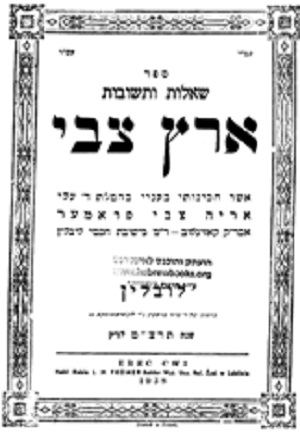
This radical creativity, which includes the grafting together of disciplines ordinarily assumed to be separate and distinct, has- at times- been met with a sense of resistance from others in Wolfson’s field. In a more insidious sense, Professor Wolfson’s work in the field of Jewish mysticism has been met through non-meeting, or what seems to be a conscious repression of the often uncomfortable themes that Wolfson textually uncovers. Recognizing this phenomenon early on in Wolfson’s career, Professor Pinchas Giller wrote: “[t]he focus of Wolfson’s work presents challenges to the status qua of the field, and these challenges have not gone unremarked. In addition to challenging scholarly peers, Wolfson has also consistently rejected the glib, platitudinous understandings of Jewish mythology and symbolism prevalent in work written for popular audiences. This eschewing of cant and easy cliché is consistent with the restless searching spirit evident in his scholarship.”[27]
In addition to the challenges Wolfson has engaged other scholars in; his erudition in all areas of Jewish thought has also impacted the reception and engagement with his scholarship. As opposed to the static status many thinkers hold within their area of expertise, Wolfson has consistently crossed the artificial demarcations separating one area from another. Professor Wolfson is equally erudite in modern Hasidic thought – evidenced by his work Open Secret on Rabbi Menachem Mendel Schneerson[28] – as he is in Zoharic scholarship as seen in his numerous articles devoted to questions of origin and the Zohar’s evocative mystical hermeneutics.[29] The dynamic ability to live, simultaneously, in the worlds of Maimonides[30] and Abraham Abulafia,[31] for example, has both elevated and alienated Wolfson from within the static walls of the academy, particularly in Israel. In this regard, Giller wrote: “Few scholars are so brazen as to speak authoritatively about more than one genre or time period. Wolfson seems to have violated the spirit of this social compact. The scope and volume of his writings have been viewed as evidence of a certain presumption, an ambition to rise to eminence without the sanction of Jerusalem.”[32]
Although the claim is authentic, namely, that Wolfson’s erudition stretches beyond the temporal limits of one time period or genre, the sense of “presumption” or academic arrogance is unfounded. Both in his scholarship and personal life, Wolfson exudes a certain lived-sense of humility.[33] The nullification of authorial-sense that allows Wolfson to speak through his sources as his sources speak through him is rooted in the modesty that marks both his life and his scholarship. As will be explained below, this modesty is deeply connected to Wolfson’s primary treatment of Jewish mysticism. The dialectic of concealment and disclosure, modesty and expression, reveals the chiasmic[34] sense of concealment as disclosure and disclosure as concealment. To reveal is to occlude that which cannot be disclosed, as concealment is to disclose that which must remain concealed. Wolfson’s work, far from being a “presumptuous” or arrogant expression of erudition, operates as a manifestation of modesty, secrecy and concealment that marks the nature of Jewish mysticism.
            Another critique aimed at Wolfson’s scholarship is the accusation of philosophical anachronism. The engagement of thinkers temporally removed from the time and space of early kabbalists has led some to claim that Wolfson’s work operates under a certain “obvious charge of anachronism.” In this regard, Wolfson notes that the vast body of his work is contained in “The field of my vision, so to speak, has been leveled, to the degree that is possible, by a focus on kabbalistic sources ranging from the twelfth to the twenty-first centuries, a large temporal swatch by anyone’s account. The use of German and French philosophers primarily from the nineteenth and twentieth centuries to interpret texts of traditional kabbalah, whose ideas may be ancient but whose incipient articulation in a Hebrew idiom is to be traced to a rich creative period from the twelfth to fourteenth century, demands a defense against the obvious charge of anachronism.”[35]
Regarding this claim, it is appropriate to paraphrase a notion depicted by Reb Zadok HaKohen of Lublin, a nineteenth century Hasidic thinker, regarding the nature of the accusatory gaze.[36] Often when an accusation is leveled against a particular individual, it is assumed that the accusatory claim points to a character defect. Through an act of psychological inversion, however, R. Zadok posits that the accusation- far from pointing to a defect in character- points towards the uniqueness of that individual.[37] This may be applied to Professor Wolfson’s creative capacity of posing thinkers, vastly removed by time and space, in dialogue with one another. The weaving of new constellations between thinkers hitherto unassociated marks Wolfson’s work with polyphonic sprachdenken, or speech-thinking.[38]  In this sense, Wolfson has paved new clearings along the path of Jewish mysticism. The utilization of philosophers, poets and religious thinkers from separate domains has given Wolfson the opportunity of translating[39] ancient kabbalistic ideas into a modern academic idiom. Far from the self-serving act of philosophical name-dropping, Wolfson’s engagement with these thinkers is an essential aspect of his thought’s unfolding. Equally erudite in the fields of continental philosophy as he is in Jewish mysticism, the often astonishing ease with which Wolfson weaves through the intertextual landscapes creates a vortex in which the kabbalists speak through the philosophers as the philosophers speak through the kabbalists.
Among the various thinkers with whom Wolfson has engaged in the infinite conversation, a select few stand out as constant presences in his scholarship.
First and foremost, Martin Heidegger’s philosophy and poetics have served as a speculum through which Wolfson has peered, moving through and beyond the Heideggerian notions of ontology, temporality, language, poetics, eschatology and dialectics of concealment and disclosure. Deeply aware of the controversies surrounding Heidegger’s dishonorable past; Wolfson has engaged the German philosopher’s thought while simultaneously recognizing his personal, political and even philosophical failures.[40] Wolfson has even hinted to the possibility of Heidegger manifesting certain traits of the biblical nemesis of the Jewish people, Balaam.[41] Much like Balaam who blessed the Jewish people through his attempt to curse them, Heidegger’s thought has provided fertile ground for Jewish thinkers, even as he was engaged in an insidious form of anti-Semitism.[42]
 Emmanuel Levinas is another thinker with whom Wolfson engages in philosophical dialogue, often resulting in the appreciation and acceptance of certain Levinasian notions while concurrently moving beyond the limit of his ethical and ontological premises. Critical of Levinas’s rhetorical and absolute renunciation of Heidegger’s thought, Wolfson clears a middle path through which the demarcations separating Levinas and Heidegger are written under erasure.[43]
 Another philosophical muse of Wolfson’s is Jacques Derrida. The Jewish father of deconstruction marks the pages of Wolfson’s scholarship, as well as his personal philosophical stance. Derrida’s utilization of James Joyce’s enigmatic statement, “Jewgreek is Greekjew, extremes meet?”[44] has given Wolfson a predecessor in his chiasmic dance of exclusion as inclusion and distance as closeness.[45] Derrida’s discussions on language, writing, absence, and negative theology have deeply influenced Wolfson’s scholarship.[46] In particular, the notion of the Derridian differance, or trace – a presence that is present through absence as it is absent through presence- has played a significant role in Wolfson’s development of such topics as zimzum and secrecy that play a central role in the Jewish mystical tradition. Professor Wolfson has stated that the Derridian trace plays a key and central role throughout most of his philosophical hermeneutics.[47] In addition to the philosophical themes wherein these thinkers overlap, the sociopolitical critiques that Derrida has leveled against Western ontotheology have impacted Wolfson’s approach to the Jewish mystical tradition.
The area in which this is most apparent is Wolfson’s claim that Jewish mystical texts and traditions operate within a closed, phallocentric system.[48] Echoing Derrida’s claim that Western thought has consistently worked within the economy of binary oppositions, while simultaneously privileging the masculine sense of presence and speech over the more feminized forms of absence and writing, Wolfson sees the Jewish mystical tradition as being a phallocentric discourse spoken through the mouths of male mystics. Wolfson has received much attention, not always positive, as a result of his stance.[49] Numerous scholars have attempted to take Wolfson to task, claiming that Jewish mysticism gives precedence to the feminine aspect of the Godhead, namely the shkina, and thus manifests a certain mystical feminism in which the patriarchal sense of privileging the masculine is overturned.[50] As Wolfson points out, the masculine in Jewish mystical texts represents the capacity to overflow, while the feminine reflects the passive capacity to receive. In this regard, Wolfson utilizes various thinkers within the French feminist movement, first and foremost the thought of the psychoanalyst and philosopher, Luce Irigaray, to elucidate his stance on gender-valence. Quite aware of the source material in which Jewish mystical texts apply an elevated, eschatological notion to the feminine, Wolfson has consistently pointed out that the inversion of hierarchal status is not equivalent to the undoing of essentialist and binary views of gender.  While the feminine may be elevated to its initial space of origin, in the spirit of the rabbinic dictum, “a woman of valor is the crown of her husband,” implying an overcoming of the diminution of the feminine vis-à-vis the masculine, the feminine is still endowed with masculine traits, thus maintaining the hierarchal status of gender even in its collapsing. While Wolfson is aware of the difficulty in accepting such an essentialist approach to gender performativity in the Jewish mystical tradition, he has stressed the need of critically analyzing texts through their anthropological and philological counterparts.[51] It is important to note, however, that while affirming the masculine-oriented nature of the tradition, Wolfson is by no means closing the text off beyond any redemptive stance.  In his later work,[52] Wolfson has shown that certain Jewish texts do clear a path through which the patriarchal, male-dominant notions inherent within the Jewish mystical tradition can be overcome. This eschatological advent of an undifferentiated state of non-duality, in which the feminine is no longer considered other, due to the fact that the masculine loses its privileged stance as the same, is rooted in the highest manifestation of the Divine-Plemora, namely Reisha-d’lo-ityada, or the unknown, or unknowable head. It is here, in this yet undefined state, not due to lack of definition, but rather inherently tied up in its own indefinability, that the promise of redemption lays.
In order to understand Wolfson’s concentration on the nature of the feminine, and the totalized system of Jewish mystical thought which appears to operate within a patriarchal framework, one needs to view his scholarly contributions through the lens of his personal and philosophical attitudes.  In this sense it is important to note the comments of Professor David Novak, in which he stated: “I have been trying to goad Elliot Wolfson, whom I consider to be the most philosophically interesting of today’s kabbalah scholars, into explicating kabbalah philosophically, that is, doing when speaking in the first person, because a philosopher has to speak in the first person. A philosopher has to say, “‘This is what I think is true.’ Wolfson’s explication of kabbalah is philosophical, but it has to be stated more clearly in his own voice, rather than in the voice or voices of his sources.”[53]
Although I categorically disagree with Novak’s claim that “a philosopher has to speak in the first person,” or that Wolfson’s thought need be “stated more clearly in his own voice,” the notion that Wolfson renders kabbalah in a philosophical key, as well as philosophy through a kabbalistic key is noteworthy. Throughout Wolfson’s writings, one senses a personal journey- perhaps even a wandering – through the labyrinthine pathways of text, context and pretext.[54]  Grafting together thinkers, divided by the fissures of temporal sway, Wolfson allows his “still small voice” to murmur beneath the magnificent edifices he erects. This voice, pregnant with a suffering unique to the mystical-hermeneutical quest, dances between the black and white fires that have become Wolfson’s plaything. The delicate balance between Wolfson’s personal, philosophical outlook and the scholarly body-of-text creates a third, wholly new path within the field of Jewish mysticism. Returning to the emphasis on the role of the feminine in Jewish mysticism, one theme- erupting from the silent voice- marks the pages of Wolfson’s scholarship, namely- an ethically and ontologically driven concern for the other.
In Wolfson’s own words: “If I were to isolate a current running through the different studies, it would be the search to resolve the ontological problem of identity and difference, a philosophic matter that has demanded much attention in various contemporary intellectual currents, to wit, literary criticism, gender studies, post-colonial theory, social anthropology, just to name a few examples. Indeed, it is possible to say, with no exaggeration intended, that there has been a quest at the heart of my work to understand the other, to heed and discern the alterity of alterity…What has inspired the quest for me has been the discernment on the part of the kabbalists that the ultimate being-becoming becoming being- nameless one known through the ineffable name, yhwh- transcends oppositional binaries, for, in the one that is beyond the difference of being one or the other, light is dark, black is white, night is day, male is female, Adam is Edom.”[55]
Wolfson’s concern for the other, the subject removed from the philosopher’s gaze, transcends the everyday concern for the sociopolitical standing of various groups. Disquieted by the hierarchies of power on a practical level,[56] Wolfson sees the othering of the other as a symptom of a more fundamental, philosophical issue. The feminine, for Wolfson, speaks for all that which has been relegated to the margins of alterity. These specters of presence, repressed by Western ontotheological discourse, have engaged Wolfson in a lifelong quest to disclose that which has been concealed from sight. Operating from within the position of kabbalistic texts, Wolfson has shown that “the ontological problem of identity and difference” rests at the center of the Jewish mystical tradition. Whether it is the dialectic of zimzum which discloses through concealment as it conceals through disclosure; the contradictory essence of the sefirot that operate concurrently as the finitude-of-infinity and the infinity-of-finitude; the eschatological hope for the advent of the messiah that is disclosed-through-its-foreclosure as it is foreclosed-through-its-disclosure; the speaking of the Name that is no-Name that may only be spoken through non-speaking; or the duality of secrecy that is secret-in-exposure as it is exposed-in-secret; Wolfson clears a path in which the identity of the same can only take root through the difference of the other, and vice versa.
 It is important to note, that although Wolfson employs a certain dialectical logic to highlight the oppositional relation between one thing and its other, by no means does he allow the dialectical pressure to find relief in a totalized synthesis. Like many philosophers engaged with continental or post-modernist thought, Wolfson is no longer comfortable relying on transcendentally prescribed truths, or “meta-narratives” to enclose the open-endedness of thought in the post-Hegelian epoch.[57] In contradistinction to many self-proclaimed post-Hegelian’s, however, Wolfson’s disavowal of the “synthesis which reconciles the two” does not stem simply from an external adherence to the populist philosophical zeitgeist. Rather, Wolfson’s insistence on keeping the dialectical movement in play stems from uncovering the limit of thought in which the identity-of-difference can only be expressed through the difference-of-identity. In other words, the divergent paths of separation may only unite through the separateness of their divergence. In this space of the excluded middle, each thing and its other remain distinct, with neither pole swallowing its other in an act of metaphysical violence. This limit of thought as Wolfson notes,[58] is representative of, “‘the mystery of the light of infinity’- which is predicated on the supposition that A and not-A are the same in virtue of their difference, or…shnei hafakhim be-nose ehad, ‘two opposites in one subject’.” Viewed in this light, Wolfson enters into, “the scandal of the coicidentia oppositourm such that the Yes can become a No and the No, a Yes, not by way of conflation but by juxtaposition, the disappearance of the very possibility of difference in the nonidentity of the identity of opposites; that is, opposites are identical by virtue of their opposition.”[59] It is at this limit-of-thought which is simultaneously the thought-of-limit where Wolfson sees the root of the mystical experience, or in the language of Maurice Blanchot, ‘the limit experience’.[60]
To enter into this paradoxical ‘place that is no place’[61] where opposites coincide in their opposition, Wolfson travels ‘a path from the side’ in which the necessary delimitations of logic are necessarily circumvented. In this sense, one may locate Wolfson’s thought within the sefirotic-space of keter, the super-rational will, or desire in which limits collapse while paradoxically upholding their limitations. Seen through the (dark)light of keter, Wolfson’s feverish[62] obsession with Nothingness becomes an essential aspect of his thinking, as well as lived-experience.[63]
 In the space of a Nothing that is a something that is no-thing, the normative, restrictive nature of language and thought must be transgressed. This transgression, however, is not a simple disavowal of language and thought, rather- it is the movement through and beyond the limit of these phenomenological modes-of-being. The dialectical play of keter – in which Nothing and Something, Ayin and Yesh, coincide so that the something-of-nothing, Atik Yomin, becomes the nothing-of-something, Arich Anpin – enables Wolfson to speak through the nothingness-of-language which is concurrently the language-of-nothingness, as he thinks imaginatively through imaginative-thinking. In other words, as opposed to the normative response to that which transcends identification, namely the Wittgensteinian ‘not-speaking’, Wolfson engages in a hermeneutics of ‘speaking-not’.[64] Deeply aware of language’s limit, Wolfson speaks through language towards its (n)ever receding horizon, thus transforming the nihilistic tendency of language’s shattering into an affirmation of that that which can never be affirmed.[65] The same can be said regarding Wolfson’s approach to rational thinking. Operating within the Aristotelian laws-of-logic, the Western ontotheological tradition has engraved a deep boundary separating that which can be thought and that which transcends the human capacity of thought. Wolfson, however, reaching the limit of thoughts interiority, “breaks on through to the other side,” wandering into the recesses of exteriorities (un)thought space. At the threshold, Wolfson relinquishes the bonds of ‘mental slavery’ and enters the luminous space of imaginal thinking.[66] Wolfson’s imaginative faculty enables him to think otherwise, beyond positivistic and perceivable reality. However, Wolfson’s approach to imaginationmuch like his approach to languageis far more complex than the mere denial of rational thought’s efficacy. Rigorously avoiding the fantastical flight into irrationality, Wolfson’s imaginal gleanings are marked by a strict set of laws, thus enabling the paradoxical play of imaginative-thinking and thinking-imaginatively. Similar to a dream in which the imaginary is grounded by the factual as the factual is grounded by the imaginary, Wolfson’s hermeneutics transform the black and white texts into a polyphonic expression of all that remains inexpressible.
Arriving again at the beginning, we can now comment on an essential aspect of Wolfson’s life-work, that is, the two forms of expression that walk along the path of his scholarship. The poetic hermeneutics that mark Wolfson’s theoretical work manifest, suddenly “with the turn of a breath” in his personal poetry.[67] In the ruins of language, Wolfson finds the openings through which his poetic breath may enter. Following in the trace of the poet Paul Celan, Wolfson speaks ‘every word through destruction’. The poems, often times difficult to read- not due to their opacity, but rather, due to the imaginal stirrings that are evoked- are an embodiment of the rabbinic idiom, “miut ha-machazik et ha-meruba,” the diminutive that encompasses the enormous.  The exilic nature of the poems leads the reader down the path that is no path, into the silent and lonely clearing where presence and absence dance. Reading Wolfson’s poetics along the furrows of his scholarship enables the reader to behold the embodied nature of Wolfson’s lived-thought. Along with his poetry, Wolfson is a seasoned artist whose paintings have been featured at various showings.[68] If poetry is the response to language’s limit, art is born from within rationalities foreclosure. Wolfson’s paintings depict the evanescence of color, the fleetingness of forms that get caught in the horizon of the frame. The kol of Wolfson’s poetics and the ohr of his aesthetics escort his philosophical hermeneutics into the space of the mystical experience.
Much like Wolfson’s triadic expression of scholarship, poetics and aesthetics, the written or marked space can only take the reader so far. The reader must engage with the texts through an act of hermeneutical inquisitiveness, opening themselves to what murmurs beneath the surface of the text. In this sense Elliot R. Wolfsons’s work not only opens upon a new path, but beckons the reader to join him.
Notes:
[1] The title of this essay, “Dorshei Yichudcha,” is taken
from the Ana BeKoach prayer attributed to R. Nechunya ben HaKanah. Translated
by Louis Jacobs as “Seeker of Unity,” this appellation is easily applied to
Professor Elliot R. Wolfson. The full context of this phrase in the prayer is
as follows, “nah gibor dorshei yichudcha ki-vavat shamrem” (“please protect the
seekers of Your unity like the apple of Your eye”). In his monograph on the
Hasidic mystic R. Aaron haLevi Horowitz of Starosselje, “The Seeker of Unity,”
Louis Jacobs records from R. Chaim Meir Hillman’s Beis Rebbe (1:26 fn.1) that when R. Dov Ber Schneerson, the
Mitteler Rebbe of Habad would repeat this verse, he would have his dear friend
and study partner, R. Aaron haLevi in mind. The reason, explained R. Dov Ber
was because R. Aaron delves so deeply into the secret of faith, “the raza
di-meheimanusa,” to the point where the demarcations of reality and Godliness
dissolve. See Louis Jacobs, Seeker of
Unity: The Life and Works of Aaron of Starosselje
(London: Vallentine
Mitchell, 1966), 7. See also Immanuel Etkes, “The War of Lyady Succession: R.
Aaron Halevi versus R. Dov Baer,” Polin
25 (2013): 93-133.
“Dorshei,” from the root darash, represents the
hermeneutical quest, the textual journey into that which lay within the words
themselves. “Yichudcha,” from the root yichud, represents the unity of all, the
source beneath the fragmentation of things that unites all that is different
within the difference-of-unity. The hermeneutical path that seeks to uncover
the unity of all is a proper description of Elliot R. Wolfson’s life and work.
[2]
Tanya, Chapter Twenty-Three.
[3] Emmanuel Levinas, Difficult
Freedom: Essays on Judaism
, trans. Seán Hand (London: The Athlone Press,
1990),  181.
[4] (Princeton: Princeton University Press, 1994).
[5] (New York: Fordham University Press, 2014).
[6] A complete listing of his articles and book chapters are
available on his personal website here, as well as here.
[7] See Elliot R. Wolfson, Open Secret: Postmessianic Messianism and the Mystical Revision of
Menahem Mendel Schneerson
(New York: Columbia University Press, 2009),
xii-xiii, where Wolfson recounts a conversation held between himself and an
older Lubavitcher Hasid at 770 Eastern Parkway regarding the significance of
this birthdate. Wolfson quotes the Hasid as ending the conversation with, “Pay
attention, this day bears your destiny.”
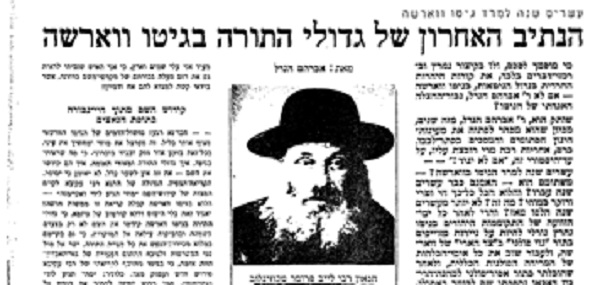
[8] Amongst all streams of Jewish thought, it is possible to
say that Habad Hasidus has played one of the most significant roles in Wolfson’s
thought. His Elliot R. Wolfson, Open
Secret: Postmessianic Messianism and the Mystical Revision of Menahem Mendel
Schneerson
(New York: Columbia University Press, 2009)  is considered by many the authoritative and
definitive work on the role of kabbalah in the late Lubavitcher Rebbe’s thought
and political/theological weichenstellung. See as well Elliot R. Wolfson,
“Revisioning the Body Apophatically: Incarnation and the Acosmic Naturalism of
Habad Hasidism,” in Chris Boesel, and Catherine Keller, eds., Apophatic Bodies: Negative Theology,
Incarnation, and Relationality
(Fordham: Fordham University Press, 2010),
147-199. For his in-depth discussion on the fifth rebbe of Habad, R. Sholom Dov
Ber Schneerson’s thought, see Elliot R. Wolfson, “Nequddat ha-Reshimu-The Trace
of Transcendence and Transcendence of the Trace: The Paradox of Simsum in the
RaShaB’s Hemshekh Ayin Beit,” Kabbalah
30 (2013): 75-120.
[9] Rabbi Wilfred Wolfson was an early student of Rabbi
Yaakov Yitzchok Ruderman at Yeshivas Ner Yisrael ( (Ner Israel Rabbinical
College), Baltimore, in the 1940’s. According to his son, Rabbi Wolfson was the
first rabbinic student from Ner Israel to be given permission to attend Johns
Hopkins University, where he studied with Professor William Foxwell Albright.
See Wilfred Wolfson, “Review of William Foxwell Albright, The Archaeology of Palestine,” The
Jewish Horizon
(March 1950): 18.
Rabbi Wilfred Wolfson served as the longtime rabbi of
Congregation Sha’arei Tefillah in Brooklyn and was a popular Rosh Yeshivah at
Yeshiva University/BTA in Brooklyn. Upon his death, Rabbi Wilfred Wolfson’s
collection of seforim was sent to the library at Ner Israel.
[10] Interview With Elliot R. Wolfson, July 25, 2012, in
Hava Tirosh Samuelson and Aaron W. Hughes, eds., Elliot R. Wolfson: Poetic Thinking (Leiden: Brill, 2015), 195.
[11] Rabbi Zvi Aryeh Rosenfeld is the one who is
single-handedly responsible for introducing the teachings of Breslov on the
American scene from the 1950s until his death in 1978.
[12] Email correspondence with Elliot R. Wolfson (16 July
2015). Teachings from Rav Kook, Ramchal, and Maharal are to be found throughout
Wolfson’s work.
[13] Interview With Elliot R. Wolfson, July 25, 2012, in
Hava Tirosh Samuelson and Aaron W. Hughes, eds., Elliot R. Wolfson: Poetic Thinking (Leiden: Brill, 2015), 196. For
his recent (and extensive) treatment of R. Joseph B. Soloveitchik’s thought,
see Elliot R. Wolfson, “Eternal Duration and Temporal Compresence: The
Influence of Habad on Joseph B. Soloveitchik,” in Michael Zank and Ingrid
Anderson, eds., The Value of the
Particular: Lessons from Judaism and the Modern Jewish Experience – Festschrift
for Steven T. Katz on the Occasion of his Seventieth Birthday
(Leiden:
Brill, 2015), 196-238.
[14] See Elliot R. Wolfson, A Dream Interpreted Within a Dream: Oneiropoiesis and the Prism of
Imagination
(New York: Zone Books, 2011), in which he dedicates the work,
“To the memory of Edith Wyschogrod, for showing me the way to the way of
nonshowing.” Wolfson adds the evocative Latin phrase, “somnium somnia quasi semper vives. Vive
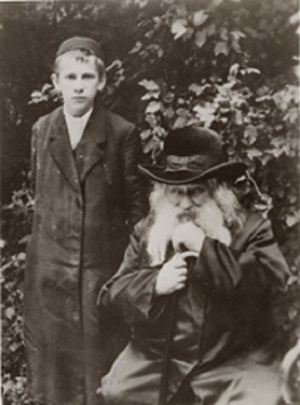
quasi hodie moriebar
– ‎Dream as if
you’ll live forever. Live as if you’ll die today.”
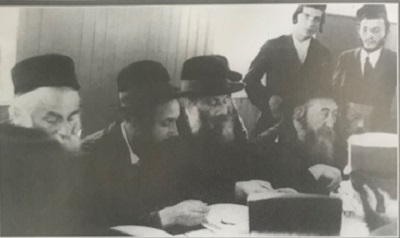
For his extensive treatment of Wyschogrod’s thought, see Elliot
R. Wolfson, Giving Beyond the Gift:
Apophasis and Overcoming Theomania
(New York: Fordham University Press,
2014), 201-227. For Wolfson’s earlier work on Wyschogrod, see Elliot R. Wolfson,
“Apophasis and the Trace of Transcendence: Wyschogrod’s Contribution to a Postmodern
Jewish Immanent A/theology,” Philosophy
Today
55:4 (Winter 2011): 328-347; and for his article published in a
memorial festschrift for Wyschogrod, see Elliot R. Wolfson, “Kenotic Overflow
and Temporal Transcendence: Angelic Embodiment and the Alterity of Time in
Abraham Abulafia,” in Eric Boynton and Martin Kavka, eds., Saintly Influence: Edith Wyschogrod and the Possibilities of Philosophy
of Religion
(New York: Fordham University Press, 2009), 113-149.
[15] Wolfson published the following essays in honor of his
doctoral advisors, see Elliot R. Wolfson, “Mystical Rationalization of the
Commandments in the Prophetic Kabbalah of Abraham Abulafia,” in Alfred L. Ivry,
Elliot R. Wolfson & Allan Arkush, eds., Perspectives
on Jewish Thought and Mysticism
[=Alexander Altmann Memorial Volume]
(Reading: Harwood Academic Publishers, 1998), 311-360; Elliot R. Wolfson,
“Female Imaging of the Torah: From Literary Metaphor to Religious Symbol,” in
Jacob Neusner, Ernest S. Frerichs, and Nahum M. Sarna, eds., From Ancient Israel to Modern Judaism,
Intellect In Quest of Understanding: Essays in Honor of Marvin Fox
, vol. 2
(Atlanta: Scholars Press, 1989), 271-307; Elliot R. Wolfson, “‘Sage Is
Preferable to Prophet’: Revisioning Midrashic Imagination,” in Deborah A. Green
and Laura S. Lieber, eds., Scriptural
Exegesis: The Shapes of Culture and the Religious Imagination: A Festschrift in
Honor of Michael Fishbane
(Oxford: Oxford University Press, 2009), 186-210.
[16] Email correspondence with Elliot R. Wolfson (16 July
2015). Wolfson’s response confirmed the approached first taken by Professor
Altmann in his earliest essay, in Alexander Altmann, “Das Verhältnis Maimunis
zur jüdischen Mystik,” Monatsschrift für
Geschichte und Wissenschaft des Judentums, 80 Jahrgang
(1936): 305-330
(German), which appeared in English translation in Alexander Altmann,
“Maimonides’ Attitude toward Jewish Mysticism,” Alfred Jospe, ed., Studies in Jewish Thought: An Anthology of
German Jewish Scholarship
(Detroit: Wayne State University Press, 1981),
200-219. See Lawrence Fine, “Alexander Altmann’s Contribution to the Study of
Jewish Mysticism,” Leo Baeck Institute
Yearbook
34:1 (1989): 421-431, as well as Wolfson’s extensive discussion on
the Maimonidean secret in Elliot R. Wolfson, Abraham Abulafia — Kabbalist and Prophet: Hermeneutics, Theosophy and
Theurgy
(Los Angeles: Cherub Press, 2000).
[17] Elliot R. Wolfson, The
Book of the Pomegranate: Moses de Leon’s Sefer ha-Rimmon
(Atlanta: Scholars
Press, 1988). About this edition, Daniel Abrams has written: “No Hebrew word
processing paragraph today can link the base-text to the line numbers of the
edition, to the variant readings and to the editor’s notes. Such linkage has to
be done manually. See the most complex page layout of any camera-ready edition
prepared by a single scholar in the field of Jewish mysticism: Elliot Wolfson’s
The Book of the Pomegranate.” See Daniel Abrams, Kabbalistic Manuscripts and Textual Theory: Methodologies of Textual
Scholarship and Editorial Practice in the Study of Jewish Mysticism

(Jerusalem: Magnes Press, 2010), 69n169.
[18] I would like to thank yedidi Reb Menachem Butler for
his help in preparing this essay. More importantly, Menachem has played a
uniquely important role in my life, opening space for relationships otherwise
inaccessible. Echoing the sentiment expressed to me by Professor Michael
Fishbane shlita, Menachem is a shadchan in the truest sense of the word,
uniting worlds otherwise disparate. The indelible mark Menachem has imparted
onto and into the world of Torah and Jewish studies is unparalleled. It is
through Menachem that I came to meet Professor Wolfson, and through Menachem is
this essay possible.
[19] See below for Wolfson’s usage of Rosenzweigian sprachdenken.
[20] See Walter Benjamin, “Franz Kafka,” trans. Harry Zohn,
in Michael W. Jennings, Howard Eiland, and Gary Smith, eds., Selected Writings, vol. 2, 1927-1934
(Cambridge, Mass.: Harvard University Press, 1999), 812.
[21] I do not recall the exact ma’amar studied, but the topic was the paradoxical nature of simsum
in which concealment is disclosed through the disclosure of concealment.
[22] Email correspondence with Elliot R. Wolfson (17 July
2015).
[23] Among the numerous students Wolfson has supervised,
Professors Daniel Abrams, Jonathan Dauber and Hartley Lachter have become
scholars of Jewish Mysticism, often building upon the themes in Wolfson’s work.
See, for example, Daniel Abrams, The
Female Body of God in Kabbalistic Literature: Embodied Forms of Love and
Sexuality in the Divine Feminine
(Jerusalem: Magnes Press, 2004); Jonathan
Dauber, Knowledge of God and the
Development of Early Kabbalah
(Leiden: Brill, 2012); Hartley Lachter, Kabbalistic Revolution: Reimagining Judaism
in Medieval Spain
(New Brunswick, NJ: Rutgers University Press, 2015), and
others. Aside from his official students, Wolfson has mentored various scholars
in the field as well.
[24] Daniel Abrams, Kabbalistic
Manuscripts and Textual Theory: Methodologies of Textual Scholarship and
Editorial Practice in the Study of Jewish Mysticism
(Jerusalem: Magnes
Press, 2010), 13-14.
[25] Jonathan Garb, “In Honor of Elliot R. Wolfson, A Dream Interpreted Within a Dream,” NYU-Humanities Initiative (28 February
2012), available online here.
[26] This sense of radical hermeneutics is borrowed from
John D. Caputo, Radical Hermeneutics:
Repetition, Deconstruction and The Hermeneutic Project
(Bloomington: Indiana
University Press, 1987) and on his usage of this terminology, see Elliot R.
Wolfson, Language, Eros, Being:
Kabbalistic Hermeneutics and Poetic Imagination
(New York: Fordham
University Press, 2005), 473fn27.
[27] See Pinchas Giller, “Elliot Wolfson and the Study of
Kabbalah in the Wake of Scholem,” Religious
Studies Review
25:1 (January 1999): 23-28.
[28] Elliot R. Wolfson, Open
Secret: Postmessianic Messianism and the Mystical Revision of Menahem Mendel
Schneerson
(New York: Columbia University Press, 2009).
[29] For a compilation of Wolfson’s work on the Zohar, see
Elliot R. Wolfson, Luminal Darkness:
Imaginal Gleanings from Zoharic Literature
(Oxford: Oneworld, 2007).
Regarding the importance of Wolfson’s Zoharic scholarship see, Daniel Abrams, Kabbalistic Manuscripts and
Textual Theory: Methodologies of Textual Scholarship and Editorial Practice in
the Study of Jewish Mysticism
(Jerusalem: Magnes Press, 2010): 132-133,
353-359.
[30] On Maimonides, see, Elliot R. Wolfson, “Beneath the
Wings of the Great Eagle: Maimonides and Thirteenth-Century Kabbalah,” in Görge
K. Hasselhoff and Otfried Fraisse, eds., Moses
Maimonides (1138-1204): His Religious, Scientific, and Philosophical
Wirkungsgeschichte in Different Cultural Contexts
(Würzburg: Ergon Verlag,
2004), 209-237; and regarding the impact of Maimonidean negative theology on
early Jewish mysticism, see Elliot R. Wolfson, “Negative Theology and Positive
Assertion in the Early Kabbalah,” Da’at
32-33 (1994): V-XXII (English); Elliot R. Wolfson, “Via Negativa in Maimonides
and Its Impact on Thirteenth-Century Kabbalah,” Maimonidean Studies 5 (2008): 363-412. For a recent discussion on
the Maimonidean influence on the Neo-Kantianism of Hermann Cohen, see Elliot R.
Wolfson, Giving Beyond the Gift:
Apophasis and Overcoming Theomania
(New York: Fordham University Press,
2014), 14-33.
[31]  On Abraham
Abulafia, see Elliot R. Wolfson, Abraham
Abulafia—Kabbalist and Prophet: Hermeneutics, Theosophy, and Theurgy
(Los
Angeles: Cherub Press. 2000).
[32] See Pinchas Giller, “Elliot Wolfson and the Study of
Kabbalah in the Wake of Scholem,” Religious
Studies Review
25:1 (January 1999): 23-28.
[33] For an extensive treatment of humility in Jewish
thought, see Elliot R. Wolfson, Venturing
Beyond: Morality and Law in Kabbalistic Mysticism
(New York: Oxford
University Press, 2006), 286-316. See also the brief letter by Rav Aryeh
Kaplan, “The Humility of God,” The Jewish
Press
(27 January 1967): 45, called to my attention by Menachem Butler.
Regarding modesty as the prerequisite for truly engaging
Jewish mystical texts, see Elliot R. Wolfson, “From Sealed Book to Open Text:
Time, Memory, and Narrativity in Kabbalistic Hermeneutics,” in Steven Kepnes,
ed., Interpreting Judaism in a Postmodern
Age
(New York University Press, 1995), 145-178; and Elliot R. Wolfson,
“Secrecy, Modesty, and the Feminine: Kabbalistic Traces in the Thought of
Levinas,” in Kevin Hart and Michael
A. Signer, eds., The Exorbitant: Emmanuel
Levinas Between Jews and Christians
(New York: Fordham University Press,
2010), 52-73.
[34] On the usage of poetic-chiasmus in Wolfson’s work, a
motif that can be found countless times throughout his oeuvre, see Aaron W. Hughes, “Elliot R. Wolfson: An Intellectual
Portrait,” in Hava Tirosh Samuelson and Aaron W. Hughes, eds., Elliot R. Wolfson: Poetic Thinking
(Leiden: Brill, 2015), 1-33.
[35] See the prologue “Timeswerve/Hermeneutic
Reversibility,” in Elliot R. Wolfson, Language,
Eros, Being: Kabbalistic Hermeneutics and Poetic Imagination
(New York:
Fordham University Press, 2005), xv-xxxi, where he combats the claim of
anachronism through an in-depth depiction of hermeneutical temporality; Elliot
R. Wolfson, Wolfson, Alef, Mem, Tau:
Kabbalistic Musings on Time, Truth and Death
(Berkeley: University of
California Press, 2006), 1-55. For a similar approach to this issue, see Elliot
R. Wolfson, “Structure, Innovation, and Diremptive Temporality: The Use of
Models to Study Continuity and Discontinuity in Kabbalistic Tradition,” Journal for the Study of Religions and
Ideologies
6:18 (2007): 143-167. See the comments of Sergey Dolgopolski, The Open Past: Subjectivity and Remembering
in the Talmud
(New York: Fordham University Press, 2013), 342fn6.
[36] On Reb Zadok ha-Kohen of Lublin, see the various
scholarly studies by Professor Yaakov Elman, which are all noted in Dovid
Bashevkin, “In Your Anger, Please Mercifully Publish My Work: An Honest Account
of a Contemporary Jewish Publishing Odyssey” the Seforim blog (26 June 2015), available here, and earlier in Dovid Bashevkin, “Perpetual Prophecy: An
Intellectual Tribute to Reb Zadok ha-Kohen of Lublin on his 110th Yahrzeit,”
(with an appendix entitled: “The World as a Book: Religious Polemic, Hasidei
Ashkenaz, and the Thought of Reb Zadok,”), the
Seforim blog
(18 August 2010), available here.
[37] See Tzidkat ha-Tzadik, no. 70.
[38] Regarding Wolfson’s usage of Rosenzweigian sprachdenken, see Elliot R. Wolfson,
“Introduction,” to Franz Rosenzweig, The
Star of Redemption
, trans. Barbara E. Galli (Wisconsin: University of
Wisconsin Press, 2005), xvii-xx. See as well, Elliot R. Wolfson, “Foreword,” to
Yudit Kornberg Greenberg, Better Than
Wine: Love, Poetry, and Prayer in the Thought of Franz Rosenzweig
(Atlanta:
Scholars Press, 1996),  xi-xii.
For an extensive treatment on Rosenzweig’s thought, see
Elliot R. Wolfson, Giving Beyond the
Gift: Apophasis and Overcoming Theomania
(New York: Fordham University
Press, 2014), 34-89. For an earlier approach see, Elliot R. Wolfson, “Facing
the Effaced: Mystical Eschatology and the Idealistic Orientation in the Thought
of Franz Rosenzweig,” Zeitschrift für
Neure Theologiegeschichte
4 (1997): 39-81. See, as well, Elliot R. Wolfson,
“Light Does Not Talk but Shines: Apophasis and Vision in Rosenzweig’s
Theopoetic Temporality,” in Aaron W. Hughes and Elliot R. Wolfson, eds., New Directions in Jewish Philosophy
(Bloomington: Indiana University Press, 2009), 87-148.
[39] Regarding the central role translation as a hermeneutic
form of interpretation, see Elliot R. Wolfson, Language, Eros, Being: Kabbalistic Hermeneutics and Poetic Imagination
(New York: Fordham University Press, 2005), 1-45. For an earlier approach, see
Elliot R. Wolfson, “Lying on the Path: Translation and the Transport of Sacred
Texts,” AJS Perspectives 3 (2001):
8-13. For the influence of Hans Georg-Gademer’s interpretation theory on
Wolfson’s thought, see, Elliot R. Wolfson, Pathwings:
Philosophic and Poetic Reflections on the Hermeneutics of Time and Language
(Barrytown,
NY: Barrytown/Station Hill Press, 2004), 227-233.
[40] Regarding Heidegger’s Nazism, see Elliot R. Wolfson, Language, Eros, Being: Kabbalistic
Hermeneutics and Poetic Imagination
(New York: Fordham University Press,
2005), 420fn241 and for a recent approach to the publications of Heidegger’s
infamous “Black Notebooks,” see the interview with Elliot R. Wolfson by Aubrey
Glazer, “What does Heidegger’s Anti-Semitism mean for Jewish Philosophy?” Religion Dispatches (3 April 2014),
online here. For a similar approach deeply influenced by Wolfson’s
thought, see Michael Fagenblat, “The Thing that Scares Me Most: Heidegger’s
anti-Semitism and the Return to Zion,” Journal
for Cultural and Religious Theory
14:1 (Fall 2014), 8-24. For an earlier
attempt to reconcile Heidegger’s thought with Jewish thought, see, Marlène Zarader, The Unthought Debt: Heidegger and the Hebraic Heritage (Stanford:
Stanford University Press, 2006) and Jean-Francois Lyotard, Heidegger and ‘the Jews’, trans. Andreas
Michel and Mark Roberts (Minneapolis: University of Minnesota Press, 1990).
Regarding Wolfson’s engagement with Heidegger, see Aaron W.
Hughes, “Elliot R. Wolfson: An Intellectual Portrait,” in Hava Tirosh Samuelson
and Aaron W. Hughes, eds., Elliot R. Wolfson:
Poetic Thinking
(Leiden: Brill, 2015), 1-33. See also the
multi-page-footnote in Elliot R. Wolfson, “Eternal Duration and Temporal
Compresence: The Influence of Habad on Joseph B. Soloveitchik,” in Michael Zank
and Ingrid Anderson, eds., The Value of
the Particular: Lessons from Judaism and the Modern Jewish Experience –
Festschrift for Steven T. Katz on the Occasion of his Seventieth Birthday
(Leiden:
Brill, 2015), 208-212fn37.
It would be difficult to speak of all the places in which
Wolfson engages Heidegger’s thought, however see Elliot R. Wolfson, “Not Yet
Now: Speaking of the End and the End of Speaking,” in Hava Tirosh Samuelson and
Aaron W. Hughes, eds., Elliot R. Wolfson:
Poetic Thinking
(Leiden: Brill, 2015), 127-193; and Elliot R. Wolfson,
“Undoing the (K)not of Apophaticism: A Heideggerian Afterthought,” in Giving Beyond the Gift: Apophasis and
Overcoming Theomania
(New York: Fordham University Press, 2014), 227-260.
The specific impact Heidegger’s thought has had on Wolfson will be discussed in
a future essay.
[41] Elliot R. Wolfson, “Achronic Time, Messianic
Expectation, and the Secret of the Leap in Ḥabad,” in  Jonatan Meir and Gadi Sagiv, eds., Habad Hasidisim: History, Theology and Image
(Jerusalem: Merkaz Zalman Shazar, forthcoming in 2016), 27fn28.
[42] On Heidegger’s impact on Jewish thinkers, see Richard
Wolin, Heidegger’s Children: Hannah
Arendt, Karl Löwith, Hans Jonas, and Herbert Marcuse
(Princeton: Princeton
University Press, 2003).
[43] See Elliot R. Wolfson, Giving Beyond the Gift: Apophasis and Overcoming Theomania (New
York: Fordham University Press, 2014), 90-154; Elliot R. Wolfson, A Dream Interpreted Within a Dream:
Oneiropoiesis and the Prism of Imagination
(New York: Zone Books, 2011),
32-38, 297-302fn59-74; and Elliot R. Wolfson, Open Secret: Postmessianic Messianism and the Mystical Revision of
Menahem Mendel Schneerson
(New York: Columbia University Press, 2009),
251-252.
For an earlier approach to the influence of Jewish mysticism
on the thought of Emmanuel Levinas, see Elliot R. Wolfson, “Secrecy, Modesty,
and the Feminine: Kabbalistic Traces in the Thought of Levinas,” in Kevin Hart
and Michael A. Signer, eds., The
Exorbitant: Emmanuel Levinas Between Jews and Christians
(New York: Fordham
University Press, 2010), 52-73. See also Elliot R. Wolfson, Language, Eros, Being: Kabbalistic
Hermeneutics and Poetic Imagination
(New York: Fordham University Press,
2005), 432fn362. The specific impact that Levinas’s thought has had on
Wolfson’s will be discussed in a future essay.
[44] On Derrida’s Jewishness and the Jewishness of Derrida,
see John D. Caputo, The Prayers and Tears
of Jacques Derrida
(Bloomington: Indiana University Press, 1997), 230-263;
see Bettina Bergo, Joseph Cohen, and Raphael Zagury-Orly, eds., Judeities: Questions for Jacques Derrida
(New York: Fordham University Press, 2007); Gideon Ofrat, The Jewish Derrida, trans. Peretz Kidron (Syracuse: Syracuse
University Press, 2001); Geoffrey Bennington and Jacques Derrida, Jacques Derrida (Chicago: University of
Chicago Press, 1993), 292-297. For Derrida’s own treatment of the Jewishness of
his thought, see Jacques Derrida, Archive
Fever: A Freudian Impression
, trans. Eric Prenowitz (Chicago: University of
Chicago Press, 1996); and Geoffrey Bennington and Jacques Derrida, Jacques Derrida (Chicago: University of
Chicago Press, 1993).
[45] Wolfson utilizes the Derridian notion of
inclusion-through-exclusion to describe his relationship with the organized
aspect of Jewish religion. While this dialectic of presence/absence demands a
more significant treatment, see Wolfson’s autobiographical comments in Elliot
R. Wolfson by Aubrey Glazer, “What does Heidegger’s Anti-Semitism mean for
Jewish Philosophy?” Religion Dispatches (3
April 2014), online here; and Interview With Elliot R. Wolfson, July 25, 2012, in
Hava Tirosh Samuelson and Aaron W. Hughes, eds., Elliot R. Wolfson: Poetic Thinking (Leiden: Brill, 2015). For an
exhaustive treatment of antinomianism and hypernomianism as it relates to the
Jewish mystical tradition see, Elliot R. Wolfson, Venturing Beyond: Morality and Law in Kabbalistic Mysticism (New
York: Oxford University Press, 2006).
[46] On Derrida, see Elliot R. Wolfson, Giving Beyond the Gift: Apophasis and Overcoming Theomania (New
York: Fordham University Press, 2014), 155-200. For an earlier approach on the
influence of kabbalah on Derrida’s thought, see Elliot R. Wolfson, “Assaulting
the Border: Kabbalistic Traces in the Margins of Derrida,” Journal of the American Academy of Religion 70:3 (September 2002):
475-514. For an analysis of Derrida’s famous phrase, “there is nothing outside
of the text,” see Elliot R. Wolfson, “From Sealed Book to Open Text: Time,
Memory, and Narrativity in Kabbalistic Hermeneutics,” in Steven Kepnes, ed., Interpreting Judaism in a Postmodern Age
(New York University Press, 1995), 145-178.
[47] In private discussion with the author.
[48] Regarding the role of gender in Jewish mysticism, see
Elliot R. Wolfson, Circle in the Square:
Studies in the Use of Gender in Kabbalistic Symbolism
(Albany: State
University of New York Press, 1995). Aside from the essays compiled in this
volume, Wolfson has continued to devote much time and effort to this aspect of
his scholarship, see for example, Elliot R. Wolfson,  “Woman—The Feminine As Other in Theosophic
Kabbalah: Some Philosophical Observations on the Divine Androgyne,” in Lawrence
J. Silberstein and Robert L. Cohn, eds.,
The Other in Jewish Thought and
History: Constructions of Jewish Culture and Identity
(New York: New York
University Press, 1994), 166-204; Elliot R. Wolfson, “Crossing Gender
Boundaries in Kabbalistic Ritual and Myth,” in Mortimer Ostow, Ultimate Intimacy: The Psychodynamics of
Jewish Mysticism
(London: Karnac Books, 1995), 255-337; and Elliot R.
Wolfson, “Occultation of the Feminine and the Body of Secrecy in Medieval
Kabbalah,” in Elliot R. Wolfson, ed., Rending
the Veil: Concealment and Revelation of Secrets in the History of Religions
(New
York and London: Seven Bridges Press, 1999), 113-154. Many more sources could
be cited.
[49] Wolfson has responded to the various critics of his
stance in numerous places within his scholarship. See for example, Elliot R.
Wolfson, A Dream Interpreted Within a
Dream: Oneiropoiesis and the Prism of Imagination
(New York: Zone Books,
2011), 439fn65; Elliot R. Wolfson, Luminal
Darkness: Imaginal Gleanings from Zoharic Literature
(Oxford: Oneworld,
2007), 254fn26; Elliot R. Wolfson, Language,
Eros, Being: Kabbalistic Hermeneutics and Poetic Imagination
(New York:
Fordham University Press, 2005), 136, 486fn191; Elliot R. Wolfson, Pathwings: Philosophic and Poetic
Reflections on the Hermeneutics of Time and Language
(Barrytown, NY:
Barrytown/Station Hill Press, 2004), 248fn53; and most recently in Elliot R.
Wolfson, “Patriarchy and the Motherhood of God in Zoharic Kabbalah and Meister
Eckhart,” in Ra’anan S. Boustan, et al., eds., Envisioning Judaism: Studies in Honor of Peter Schäfer on the Occasion
of his Seventieth Birthday
, vol. 2 (Tübingen: Mohr Siebeck, 2013),
1049-1088, esp. 1058-1059fn30.
[50] See for example, Arthur Green, “Kabbalistic Re-Vision:
A Review Article of Elliot Wolfson’s Through
a Speculum That Shines
,” History of
Religions
36:3 (February 1997): 265-274; Melila Hellner-Eshed, A River Flows from Eden: The Language of
Mystical Experience in the Zohar
(Stanford, CA: Stanford University Press,
2009), 347-356.
[51] See Elliot R. Wolfson, Language, Eros, Being: Kabbalistic Hermeneutics and Poetic Imagination (New
York: Fordham University Press, 2005), 1-45.
[52]  See Elliot R.
Wolfson, Open Secret: Postmessianic
Messianism and the Mystical Revision of Menahem Mendel Schneerson
(New
York: Columbia University Press, 2009), 200-223; for the most recent
explication of Wolfson’s stance on this issue, see Elliot R. Wolfson, “Phallic
Jewissance and the Pleasure of No Pleasure” (forthcoming in 2015). It is
important to note that this is a rudimentary treatment of one of the more
complex areas in Wolfson’s thought. The potential capacity of undoing the gender-valence
inherent within the mystical tradition has yet to be fully unfolded. This will
be addressed in a future essay.
[53] Interview with David Novak, in Hava Tirosh Samuelson
and Aaron W. Hughes, David Novak: Natural
Law and Revealed Torah
(Leiden: Brill, 2013), 118-119.
[54] On the significance of walking/wandering in Jewish
mystical thought, see Elliot R. Wolfson, “Walking as a Sacred Duty: Theological
Transformation of Social Reality in Early Hasidism,” in Ada Rapoport-Albert,
ed., Hasidism Reappraised (London:
Littman Library, 1997), 180-207.
[55]  Elliot R.
Wolfson, Luminal Darkness: Imaginal
Gleanings from Zoharic Literature
(Oxford: Oneworld, 2007), xvi. For an
extended treatment of this theme, see Elliot R. Wolfson, Language, Eros, Being: Kabbalistic Hermeneutics and Poetic Imagination (New
York: Fordham University Press, 2005), 46-111. See also Elliot R. Wolfson,
“Ontology, Alterity, and Ethics in Kabbalistic Anthropology,” Exemplaria 12:1 (January 2000): 129-155.
[56] Wolfson has consistently avoided engaging current
sociopolitical issues in his scholarship. This stems from a focus on the
subterranean themes of the dynamic as opposed to the symptomatic expression of
current events.
[57] See Elliot R. Wolfson, “Not Yet Now: Speaking of the End
and the End of Speaking,” in Hava Tirosh Samuelson and Aaron W. Hughes, eds., Elliot R. Wolfson: Poetic Thinking (Leiden:
Brill, 2015), 182.
[58] Elliot R. Wolfson, “Nequddat
ha-Reshimu-
The Trace of Transcendence and Transcendence of the Trace: The
Paradox of Simsum in the RaShaB’s Hemshekh Ayin Beit,” Kabbalah 30 (2013): 92, and for an
in-depth analysis of this (non)logic, see 92-98.
It is possible to say that this form of logic that is not
one, the middle excluded by the formal laws of logic, rests at the center of
Wolfson’s thinking. This logic inherent to Wolfson’s treatment of Jewish
Mysticism – in which the identity of opposites is affirmed by the opposite of
identity- is inspired in part by the logic of the Middle Path, or ‘the logic of
not’ expressed in the Mahayana Buddhist tradition. See Elliot R. Wolfson, Open Secret: Postmessianic Messianism and
the Mystical Revision of Menahem Mendel Schneerson
(New York: Columbia
University Press, 2009), 109-114, 247-250; Elliot R. Wolfson, A Dream Interpreted Within a Dream:
Oneiropoiesis and the Prism of Imagination
(New York: Zone Books, 2011),
179-219; Elliot R. Wolfson, Wolfson, Alef,
Mem, Tau: Kabbalistic Musings on Time, Truth and Death
(Berkeley:
University of California Press, 2006), 158-170; Elliot R. Wolfson, Venturing Beyond: Morality and Law in
Kabbalistic Mysticism
(New York: Oxford University Press, 2006), 170-176,
232-247.
[59] Elliot R. Wolfson, Giving
Beyond the Gift: Apophasis and Overcoming Theomania
(New York: Fordham
University Press, 2014), xxiii.
[60]  Wolfson expands
on this notion in a lecture at the historic Rothko Chapel in Houston, “The Path
Beyond the Path: Mysticism and the Spiritual Quest for Universal Singularity,”
delivered on 7 April 2011), available online here.
See as well, Elliot R. Wolfson, Language,
Eros, Being: Kabbalistic Hermeneutics and Poetic Imagination
(New York:
Fordham University Press, 2005), 288-289.
[61]  See Elliot R.
Wolfson, Language, Eros, Being:
Kabbalistic Hermeneutics and Poetic Imagination
(New York: Fordham
University Press, 2005), 233-234.
[62]  The usage of the
word ‘feverish’ is inspired by the Derridian notion of fever as unending memory
of the immemorial futurity; see Jacques Derrida, Archive Fever: A Freudian Impression, trans. Eric Prenowitz
(Chicago: University of Chicago Press, 1996).
[63]  The topic of
Nothingness is found too frequently throughout Wolfson’s scholarship to source
exhaustively; for example, see Elliot R. Wolfson, “Nihilating Nonground and the
Temporal Sway of Becoming: kabbalisticly envisioning nothing beyond nothing,” Angelaki 17:3 (2012): 31-45; Elliot R.
Wolfson, “Negative Theology and Positive Assertion in the Early Kabbalah,” Da’at 32-33 (1994): V-XXII (English);
Elliot R. Wolfson, Open Secret:
Postmessianic Messianism and the Mystical Revision of Menahem Mendel Schneerson
(New York: Columbia University Press, 2009), 75-82, 113-115; Elliot R.
Wolfson, Giving Beyond the Gift:
Apophasis and Overcoming Theomania
(New York: Fordham University Press,
2014), 75-87; Elliot R. Wolfson, Language,
Eros, Being: Kabbalistic Hermeneutics and Poetic Imagination
(New York:
Fordham University Press, 2005), 173-186; Elliot R. Wolfson, Venturing Beyond: Morality and Law in
Kabbalistic Mysticism
(New York: Oxford University Press, 2006), 212-215;
Elliot R. Wolfson, Wolfson, Alef, Mem,
Tau: Kabbalistic Musings on Time, Truth and Death
(Berkeley: University of
California Press, 2006), 36-39, 167-168, 234fn12; and Elliot R. Wolfson, A Dream Interpreted Within a Dream:
Oneiropoiesis and the Prism of Imagination
(New York: Zone Books, 2011),
229-239.
[64]  See Elliot R.
Wolfson, “Nihilating Nonground and the Temporal Sway of Becoming: kabbalisticly
envisioning nothing beyond nothing,” Angelaki
17:3 (2012): 31-45.
[65]
To condense Wolfson’s thought on language into a paragraph, or even a
footnote is as impossible as it is improper. Few thinkers have engaged in the
linguistic path of (un)showing the limit of language while simultaneously
utilizing language in its own disavowal, as Wolfson has. Speaking from within
and beyond the philosophers of language, including but not limited to
Heidegger, Wittgenstein, Derrida, Levinas, Blanchot, Celan, Buber, Foucault,
Jabes, Kristeva, and Lacan; Wolfson has uncovered new, impossible vistas in
which the hermeneutics of language may be thought anew. To attempt a listing of
Wolfson’s thought on language would be to miss the liminal nature of what can
properly be called “Wolfsonian Language.” For an introduction, see Elliot R.
Wolfson, Language, Eros, Being:
Kabbalistic Hermeneutics and Poetic Imagination
(New York: Fordham
University Press, 2005), 1-44.
[66]  The primacy of
imagination in Wolfson’s scholarship has already been noted in Aaron W. Hughes,
“Elliot R. Wolfson: An Intellectual Portrait,”
in Hava Tirosh Samuelson and Aaron W. Hughes, eds., Elliot R. Wolfson: Poetic Thinking (Leiden: Brill, 2015), 1-33. See
as well Jeffrey J. Kripal, “The Mystical Mirror of Hermeneutics: Gazing into
Elliot Wolfson’s Speculum,” in Roads of Excess, Palaces of Wisdom:
Eroticism and Reflexivity in the Study of Mysticism
(Chicago: University of
Chicago Press, 2001), 258-298. This is testified by the fact that nearly all of
Wolfson’s published books contain some reference to the imaginative faculty.
For example, Elliot R. Wolfson, Language,
Eros, Being: Kabbalistic Hermeneutics and Poetic Imagination
(New York:
Fordham University Press, 2005); Elliot R. Wolfson, Luminal Darkness: Imaginal Gleanings from Zoharic Literature (Oxford:
Oneworld, 2007); Elliot R. Wolfson, A
Dream Interpreted Within a Dream: Oneiropoiesis and the Prism of Imagination
(New
York: Zone Books, 2011). For an overview of Wolfson’s thoughts on imagination,
see Elliot R. Wolfson, Giving Beyond the
Gift: Apophasis and Overcoming Theomania
(New York: Fordham University
Press, 2014), 1-14. The primary treatment of imagination can be found in Elliot
R. Wolfson, A Dream Interpreted Within a
Dream: Oneiropoiesis and the Prism of Imagination
(New York: Zone Books,
2011).
[67] Elliot R. Wolfson has published two poetry collections
thus far. Elliot R. Wolfson, Pathwings:
Philosophic and Poetic Reflections on the Hermeneutics of Time and Language
(Barrytown,
NY: Barrytown/Station Hill Press, 2004), and Elliot R. Wolfson, Footdreams & Treetales: Ninety-Two Poems
(New York: Fordham University Press, 2007). Wolfson’s third collection of
poetry, On One Foot Dancing, can be
found online here. For an in-depth analysis of Wolfson’s poetics, see
Barbara Ellen Galli, On the Wings of
Moonlight: Elliot R. Wolfson’s Poetry in the Path of Rosenzweig and Celan
(Montreal:
McGill-Queen’s University Press, 2007). For the sake of space, a discussion on
Wolfson’s poetry will be treated in a future essay.


[68] For an in-depth treatment of Wolfson’s aesthetics seen
through his scholarship, and vice versa, see, Marcia Brennan, Flowering Light: Kabbalistic Mysticism and
the Art of Elliot R. Wolfson
(Houston: Rice University Press, 2009). A
selection of Wolfson’s art are online here, which is prefaced with: “elliot wolfson has long been
preoccupied with the insights of jewish mystical traditions that approach an
imageless god through the mediation of an intensely visual symbolic imaginary.
his painted canvases communicate a corresponding sense that vision hovers ever
on the borders of appearing and disappearing, disclosure and hiddenness. as the
imagination seeks to give form to what remains nonetheless formless, the
quintessentially human endeavor of hermeneutics is already caught up in the
transcending eros of a divine creativity.”