Further Comments by Marc Shapiro

Further Comments
By Marc B. Shapiro
I had thought that this would be my last post of the current batch, but it turned out to be too long. So I have divided it into two parts. Here is part no. 1.
The volumes Shomrei Mishmeret ha-Kodesh, by R. Natan Raphael Auerbach, have just appeared. Here is the cover.

This book is devoted to the Auerbach family, which was one of the great rabbinic families in Germany. They were the “A” in what was known as the ABC rabbinic families (the others being Bamberger and Carlebach). Over 150 pages are devoted to R. Zvi Benjamin Auerbach, who was the most prominent of the Auerbach rabbis. He was also the publisher of Sefer ha-Eshkol, to which he added his commentary Nahal Eshkol. In a number of posts I dealt with Auerbach’s edition of Sefer Ha-Eshkol, and discussed how both academic scholars and traditional talmidei hakhamim have concluded that the work is a forgery.1 Readers who are interested in the details can examine the earlier posts. In this newly published volume, which was called to my attention by Eliezer Brodt, the author speaks briefly about the Sefer ha-Eshkol controversy and responds to those who, in his words, continue to defame a gadol be-Yisrael (p. 382):
הממשיכים לבזות גדול בישראל ולהכפישו באופן אישי

In the note the author refers to Moshe Samet, who earlier had dealt with Sefer ha-Eshkol, and also to one of my posts on the Seforim Blog. While Seforim Blog posts have been cited in English scholarly writings, as far as I know this is the first time that there has been citation in a Hebrew volume.

I understand why members of the Auerbach family might feel obliged to defend him. (Yet one of my college suitemates was a descendant of Auerbach, and it didn’t seem to trouble him when I told him about the controversy.) Why a respected rabbi would forge a book is not something I want to get into now. In the earlier post I assumed that he was schizophrenic, as when it comes to Sefer ha-Eshkol I can’t think of any ideological reason for his actions. (Samet, He-Hadash Assur min ha-Torah [Jerusalem, 2005], p. 152 n. 235, identifies as one of Auerbach’s motivations: מגמה אורתודוקסית).

As for the argument that since he was a leading rabbi we must therefore assume that he couldn’t have done such a thing, this is disproven by all  the recent examples of well-known rabbis who were involved in a variety of types of improper behavior. Before they were exposed, no one could ever have imagined what we learnt, and everyone would have been 100 percent sure that these rabbis could not possibly have been involved in such activities. This simply shows that that just because someone is a well-known rabbi we don’t have to automatically conclude that he is innocent no matter what the evidence says.

In many of the recent cases, at least the ones dealing with sexual abuse, the rabbis no doubt suffered from some sort of mental illness, as I can’t imagine that men who did so much to influence people positively and help them were complete frauds. I think that Auerbach must also have had some psychological issues, and this is actually the best limud zekhut. For once we assume this, it means that we don’t have to view the rest of his illustrious career and achievements as fraudulent. In short, he had a problem and it manifested itself in his forgeries. Yet I admit that I can’t prove my supposition, and at the end of the day we will probably never be able to explain definitively why Auerbach would forge the text any more than we can explain how another great figure, Erasmus, forged a patristic work and attributed it to Saint Cyprian.2 Anthony Grafton, who has written an entire book on the subject, sums up the matter as follows: “The desire to forge, in other words, can infect almost anyone: the learned as well as the ignorant, the honest person as well as the rogue.”3

Unfortunately, Shomrei Mishmeret ha-Kodesh does not seriously deal with any of the evidence that has led to the conclusion that we are dealing with a forgery. (For reasons I can’t get into now, I find it completely implausible that someone in medieval times forged the work and Auerbach was duped. But let me make one point: Auerbach claimed to be working from a very old manuscript, and yet this “manuscript” contains material from the 17th and 18th centuries.). Since the author mentions Sefer ha-Eshkol vol. 4, which was published in 1986 together with the Nahal Eshkol, I once again renew my call for this manuscript to be made public and for some explanation to be given as to where it comes from, since Auerbach’s many defenders were unaware of it. The fact that a portion of Auerbach’s manuscript (i.e. his copy of the supposed medieval manuscript) mysteriously surfaced so many decades after Auerbach’s death, and that we are told nothing about it or even shown a picture of it, certainly raises red flags. As I noted in one of my previous posts, the Nahal Eshkol published here has a reference to a book that only appeared after Auerbach died. This means that quite apart from Sefer ha-Eshkol, we also have to raise questions about whether the Nahal Eshkol published here is itself authentic. It could be that it is indeed genuine, and the reference to the later book is an interpolation, but that is why we have to see the manuscript. After all, if the manuscript is written in one hand, and it includes the reference to the later book, then there is no doubt that it too is a forgery. So let the evidence about Sefer ha-Eshkol vol. 4, together with the manuscript, be placed on the Seforim Blog for all to see. Perhaps then we can begin to understand the mystery of this volume.

As long as the topic has been brought up, let me call attention to Shulamit Elitzur’s new book, Lamah Tzamnu (Jerusalem, 2007). On p. 115 n. 2, she gives an example where the Sefer ha-Eshkol forgery was perpetrated by using a quotation from the Shibolei ha-Leket, and cites a comment in this regard from the noted scholar Simhah Emanuel. On p. 235 n. 3,8 she mentions another example of forgery in the Auerbach Sefer Ha-Eshkol. For further instance, see Israel Moshe Ta-Shma’s posthumously published Keneset Mehkarim, vol. 4 (Jerusalem, 2010), p. 183 n. 28.4 In an article in Atarah le-Hayyim (Jerusalem, 2000), p. 292, Neil Danzig also points to a non-authentic interpolation in Auerbach’s Sefer ha-Eshkol. Yet I am surprised to see that he follows Ta-Shma in thinking that R. Moses De Leon might have had something to do with this.

In terms of traditional Torah scholars, I came across a comment by R. Avigdor Nebenzahl in R. Yaakov Epstein’s recently published Hevel Nahalato, vol. 7, p. 157. (Epstein is the grandson of Prof. Jacob Nahum Epstein.5) Nebenzahl comes from a German Orthodox background, so one might expect him to come to the defense of Auerbach, as did a number of prominent German Orthodox figures. Yet that is not what we find. Epstein had cited a passage from Auerbach’s Sefer ha- Eshkol to which Nebenzahl added that it is well known that some question the authenticity of this edition and claim that it is a forgery. In case you are looking for any non-scholarly motivations for this comment, I should mention that Nebenzahl’s sister was Plia Albeck (died 2005), the daughter-in-law of Hanokh Albeck and a significant person in her own right. (She paved the way for most of the Jewish settlements in the West Bank.) Hanokh Albeck, together with his father, Shalom Albeck, published the authentic Sefer ha-Eshkol, and were both very involved in exposing Auerbach’s forgery. In other words, Nebenzahl’s comment shows that families stick together. (Just out of curiosity, does anyone know if there have been any marriages between the two important families, the Auerbachs and the Albecks?)

In a previous post, I mentioned R. Yehiel Avraham Zilber’s belief that the Auerbach Sefer ha-Eshkol is forged. To the sources I referred to, we can add Birur Halakhah, Orah Hayyim 75. Also, R. Yisrael Tuporovitz, who has written many volumes of Talmudic commentaries, is not shy about offering his opinion. Here is what he writes in Derekh Yisrael: Hullin (Bnei Brak, 1999), p. 8:

וכבר נודע שספר האשכול הנדפס עם ביאור נחל אשכול הוא מזוייף ואין לסמוך עליו כלל

He repeats this judgment on pages 38, 53 and 345.

In one of the earlier posts I mentioned that R. Yitzhak Ratsaby denies the authenticity of Auerbach’s edition. I also quoted from his letter to me. At the time,  I was unaware that portions of this letter also appear in his haskamah to R. Moshe Parzis’ Taharat Kelim (Bnei Brak, 2002). Another new source in this regard from Ratsaby is his Shulhan Arukh ha-Mekutzar (Bnei Brak, 2000), Yoreh Deah 138:3 (p. 287), where he accuses Auerbach of taking something from the Peri Hadash and placing it in Sefer ha-Eshkol

Ratsaby discussed the Sefer ha-Eshkol in his haskamah to Parzis’ book because the latter had called attention to the defense of Auerbach in Tzidkat ha-Tzaddik. Here is the title page of the latter work.

Among the defenders of Auerbach was R. Jacob Schorr of Kuty, Galicia. Schorr was a genius and is best known for his edition of the Sefer ha-Itim.6 He also wrote the responsa volume Divrei Yaakov (Kolomea, 1881), and a second volume, culled from various sources, both published and manuscript, appeared in 2006.  Here is his picture, taken from Aharon Sorasky’s Marbitzei Torah me-Olam ha-Hasidut, vol. 3, p. 11.

It is an unfortunate oversight that this incredible scholar does not have an entry in the Encyclopaedia Judaica. A list of all of his works can be found in the introduction to his Mavo al ha-Tosefta (Petrokov, 1930). This introduction also contains R. Zvi Ezekiel Michaelson’s biography of Schorr. As with everything written by this amazing bibliophile,7 one learns a great deal, not only about the subject he focuses on, but about all sorts of other things.8 Michaelson was killed in the Holocaust and numerous unpublished manuscripts of his were lost. His grandson was Prof. Moshe Shulvass, and a responsum is addressed to him in Michaelson’s Tirosh ve-Yitzhar, no. 158.

Schorr’s son was Dr. Alexander Schorr, who translated many classic Greek and Latin texts into Hebrew.9 Alexander Schorr’s grandson is the well-known Israeli film director, Renen Schorr.10

Since Prof. Leiman has just written about the Maharal, it is worth noting that Schorr tells an incredibly far-fetched story, which he actually believed, about the Maharal and Emperor Rudolph. According to the tale, Rudolph’s biological father was a Jewish man. What happened was that Rudolph’s mother, the queen, could not have children with the Emperor. She therefore asked a Jewish man to impregnate her or else she would unleash persecution on the Jews in the kingdom. Upon hearing this, the beit din gave the man permission to accede to her wishes. I don’t want to repeat any more of this nonsensical story, but those who are interested can find it in R. Abraham Michaelson’s Shemen ha-Tov (Petrokov, 1905), pp. 60a-b. (R. Abraham was R. Zvi Ezekiel’s son.)

Returning to Schorr, one of the most astounding examples of self-confidence—others will no doubt call it arrogance or foolishness—ever stated by a rabbi (in print, at least) was penned by him. In his Meir Einei Hakhamim, reprinted in Kitvei ve-Hiddushei ha-Gaon Rabbi Yaakov Schorr (Bnei Brak, 1991), p. 177, we find the following:

ואני מעיד עלי שמים וארץ כי לא היה ולא יקום עוד אחרי שום חכם אשר יהי’ בקי בטוב [!] בפלפול תנאים ואמוראים כמותי

This text is often quoted by R. Yaakov Hayyim Sofer in his various works.11 This is not the only time Schorr expressed himself this way. On page 129 he writes
ודע דהופיע רוח הקודש בבית מדרשי

(This expression can also be found in other books, and originates in Rabad’s hassagah to Hilkhot Lulav 8:5. But to see this type of language in a sefer written by a someone very young [see below], even a genius like Schorr, is a bit jarring.) Sofer, Shem Betzalel, p. 28, also points to Meir Einei Hakhamim, p. 209, where Schorr writes about one of his ideas:

וזה נכון יותר מפירוש רש”י

(On this page, Schorr alludes to R Zvi Hirsch Chajes, referring to him as אחד מחכמי הזמן. Sofer claims that Schorr’s general practice is to not mention Chajes by name. Sofer wants the reader to think that he doesn’t know why Schorr acts this way. Yet the reason is obvious, and Sofer himself certainly knows that some talmudists were not fans of Chajes.)

Perhaps we can attribute Schorr’s over-the-top comments to his own immaturity. After all, as Sofer, Shem Betzalel, p. 29, points out, Schorr began writing the book  I am quoting from at age thirteen, and completed it by the time he was sixteen. A genius he certainly was, yet I think we should assume that his excessive comments were the product of youthful exuberance. Sofer sees Schorr’s youthfulness as also responsible for the very harsh way he criticizes the writings of various gedolim, which is something that is more understandable, and forgivable, in a teenager than in a mature scholar. I think all writers are embarrassed of things their penned in their youth, and that is to be expected.12 An example I often mention in this regard (when not referring to myself) is Hirsch’s harsh criticism of Maimonides. This appeared in Hirsch’s first book, the Nineteen Letters, published when he was 28 years old. Never again in Hirsch’s many writings does he ever express himself this way. My assumption is that he regretted what he wrote, and in his mature years he would not have used such strong language. Similarly, I wonder if in his mature years R. Soloveitchik would have commented to R. Weinberg—as he did in his twenties—that his grandfather had a greater understanding than even the Vilna Gaon. (I have printed Weinberg’s letter where this appears in a few different places, most recently on the Seforim Blog and in the Hebrew section to my Studies in Maimonides.)

In terms of young achievers in the Lithuanian Torah world, I wonder how many have ever heard of R. Meir Shafit. He lived in the nineteenth century and wrote a commentary on the Jerusalem Talmud, when not many were studying it. Here is the title page of one of the volumes, where it tells us that he became rav of a community at the age of fifteen. 

The Hazon Ish once remarked that the young Rabbi Shafit would mischievously throw pillows at his gabbaim!13

Returning to Schorr and Sefer ha-Eshkol, Ratsaby is not impressed by Schorr’s defense. He notes that in R. Yaakov Hayyim Sofer’s Torat Yaakov, Sofer states that the ideas of Schorr “צריכים בדיקה.”

I found the comment in Torat Yaakov (2002 edition) p. 880. Here Sofer claims that despite his brilliance, Schorr often puts forth unsustainable suppositions, and he calls attention to R. Reuven Margaliot, Ha-Mikra ve-ha-Mesorah, ch. 12. Here Margaliot cites a suggestion by Schorr that the text of Kiddushin 30a should be emended because the vav of גחון is not the middle letter of the Torah. Schorr further states that the editor of Masekhet Sofrim was misled by the error in the Talmud. The implication of Schorr’s comment is that all of our sifrei Torah are mistaken, for they mark this letter as special. Margaliot responds:
ותמה אני על תלמיד חכם מובהק כמוהו איך הרשה לעצמו לחשוב על מסדר מסכת סופרים שהוא טועה ומטעה וגם בודה מלבו מנהגים בכתיבת ס”ת. ב”הגהות” כאלו יכולים לעשות כל מה שרוצים, וכאשר כתב הגר”א [אליהו] פוסק בפסקי אליהו שם: רעדה אחזתני לעשות טעות כזה בגמרא ולחשוב על כל הס”ת שגיונות בדקדוקים דו’ דגחון ודרש דרש.

With regard to Ratsaby, I should also note that his dispute with R. Ovadiah Yosef continues unabated. In his recent Ner Yom Tov (Bnei Brak, 2008), pp. 20-21, he goes so far as to accuse R. Ovadiah of plagiarism.
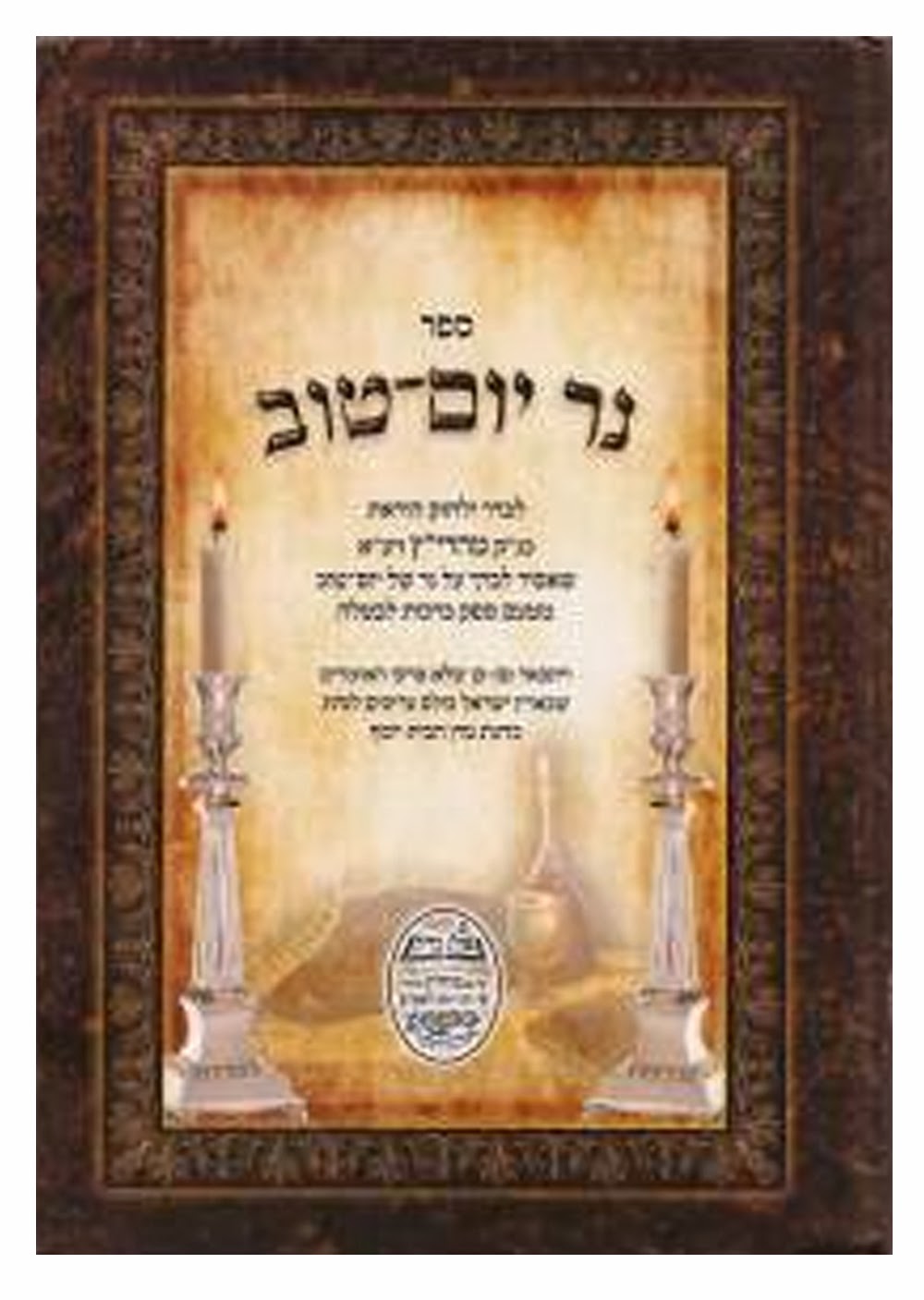
He also states, with regard to R. Ovadiah (p. 100):

 שכבוד התורה אצלו, הוא רק למי שמסכים לדבריו

Ratsaby’s book was written to defend the Yemenite practice of not making a blessing on Yom Tov candles against the criticism of R. Ovadiah. He also deals with R. Ovadiah’s larger point that the Yemenites must embrace the Shulhan Arukh’s rulings now that they are in the Land of Israel. The entire Yemenite rabbinate agrees with Ratsaby’s position, but upon seeing how he attacked R. Ovadiah, the condemnation of him from other Yemenite rabbis was swift. All I can say in defense of Ratsaby is that R. Ovadiah has been criticizing him in a less than respectful way for some time now. But in a sense, Ratsaby got what was coming to him, because for many years he has been writing very disrespectfully about R. Kafih.

In this new book, p. 98, Ratsaby goes so far as to repeat the legend that when Kafih was appointed a dayan in Jerusalem he swore to R. Ovadiah that he accepted the Zohar, and Ratsaby claims that Kafih swore falsely. Kafih, however, denied that he ever took such an oath.14 For a long time Ratsaby has been proclaiming that it forbidden to use Kafih’s books, as he is a member of the kat, i.e., the Dardaim who don’t accept the Zohar or Kabbalah in general. Yet R. Ovadiah has declared that the Dardaim are not to be regarded as heretics.15 This is in contrast to R. Chaim Kanievsky who holds that the Dardaim are heretics who cannot be counted in a minyan.16  R. David Teherani states that since the Dardaim reject the Zohar, their wine is yein nesekh.17 According to Aaron Abadi, R. Shlomo Zalman Auerbach also ruled that rejection of the Zohar and Kabbalah is heresy.18

I can understand those who assert that one must believe that the Zohar was written by Rashbi or at the very least that it was written be-ruah ha-kodesh, and if you deny this it is heresy. Yet what is one to make of the following statement, which greatly enlarges the realm of heresy (R. Menasheh Klein, Mishneh Halakhot, vol. 7, no. 160):
ואם הוא אינו מאמין שהמ”ב [משנה ברורה] נכתב ברוה”ק אזי הוא בכלל אפיקורוס וכופר בתורת ה’ . . . יש בזמן הזה שאין מאמינים שגם בדורינו אנו ישנם חכמי הזמן שיש להם רוה”ק . . . ומי שלא מאמין בזה הרי הוא אפיקורוס וכופר בלי ספק.

Based on this definition, I think the entire Lithuanian rabbinate until World War II would be regarded as heretics. Would such a statement even have been imaginable before twenty years ago? It is, of course, no secret that the Lithuanian rabbinate has been transformed along hasidic lines. This change is undeniable and I can point to many examples of this. Here is one (which was sent to me by R. Yitzhak Hershkowitz).

Would any Jew in Lithuania ever fall for such a thing as magic (or holy) wine? Anyone who tried to peddle this stuff would have been thrown out of the beit midrash. I was actually told an anti-hasidic joke with regard to this picture. I ask all Hasidim not to be offended as neither I nor the management endorse the joke. Yet it deserves to be recorded for posterity, for as we all know, jokes are simply jokes, but the history of jokes (even bad ones), well that is scholarship. The joke goes as follows: “It is incredbible. We now see great Lithuanian Torah scholars doing things that until now only hasidic rebbes did. But even more incredible would be to see the reverse, that is, to see hasidic rebbes write seforim on Shas and poskim.”

With regard to the Zohar, I must mention an amazing point called to my attention by David Zilberberg, from which we see that R. Joseph B. Soloveitchik did not believe that R. Simeon bar Yohai wrote the Zohar, or at least that he didn’t write all of it. I always assumed as much, but as far as I know there was never any proof, until now. In The Lord is Righteous in All His Ways, pp. 206-207, the Rav discusses the Western Wall and says that there is no mention of it in Chazal and very little mention in rishonim. The Wall is mentioned in Shir ha-Shirim Rabbah 2:2219, where it states that the Kotel will never be destroyed, but the Rav says about this Midrash:

I will tell you frankly that I am always suspicious about this midrash, because the classical sources, the Bavli and the Yerushalmi, do not mention the Kotel ha-Ma’aravi. The midrash cited earlier is, perhaps, a later insert. Apparently, Rabbi El’azar ha-Kalir knew the midrash. To my mind, this kinah of Rabbi Elazar ha-Kalir is one of the earliest documents to mention the Kotel ha-Ma’aravi.

Earlier in this book the Rav tells us when Kalir lived:

I do not know why historians have to explore when Kalir lived when he himself states that nine hundred years have passed and the Messiah has not yet arrived. It means that Kalir lived in the tenth century.

Yet as Zilberberg correctly points out, the Western Wall is seen as quite significant in the Zohar (II, 5b), and is referred to as Rosh Amanah.20 The Rav knew the Zohar very well, and therefore, when he tells us that Chazal do not mention the Western Wall, and it is only during the time of the rishonim that we begin to see references to it, he is also telling us that the Zohar (or at least this section of the Zohar) was written in the days of the rishonim.

Returning to Auerbach, let me add in conclusion that he is not the only great rabbi and Torah scholar who was involved in forgery. An earlier case is R. Benjamin Ze’ev of Arta (sixteenth century), author of the well known responsa volume Teshuvot Binyamin Zeev. Here is the title page from the first edition (Venice, 1539):

In the midst of a dispute he was involved in, he forged the signature of the Venetian rabbi, R. Baruch Bendit Axelrad, placing it on a document that supported himself. He also forged an entire letter in R. Baruch Bendit’s name. When all this was discovered, it helped lead to R. Benjamin’s downfall.21

Quite apart from the forgery, R. Solomon Luria, Yam Shel Shlomo, Bava Kamma, ch. 8 no. 72, also accuses R. Benjamin Zev of plagiarism. Here are some his words: 
כל דבריו גנובים וארוכים בפלפול שאינו לצורך וכנגד פנים מראה אחור . . . ושרי לי מרי אם הוא צדיק למה הביא הקב”ה תקלה על ידו הלא הוא היה הכותב ונתן לדפוס הספר מידו ומפיו.
One big question that needs to be considered is how far removed is forgery from false attribution? When it comes to false attribution there is a long rabbinic tradition supporting it, and in the book I am currently working on I deal with this in great detail. If you can falsely attribute a position to a sage, perhaps you can forge a document in his name as well (assuming it is not done for personal gain). Could that be what was driving Auerbach?
*        *        *

A few people have sent me a question about my Monday night Torah in Motion classes, so I assume that there are others who have the question as well. Here is the answer: If you cannot be with us at 9PM and you are signed up, the classes are sent to you so that you can watch or listen at your convenience. This is much cheaper than downloading the classes individually.

Notes

1 From my post here you can find all the links.
2 See Anthony Grafton, Forgers and Critics: Creativity and Duplicity in Western Scholarship (Princeton, 1990), pp. 44-45.
3 Ibid., p. 48.
4 As has been noted by many, Auerbach’s edition of Sefer Ha-Eshkol has misled countless talmidei hakhamim. There is another way in which Auerbach misled a scholar, but in this case it was accidental. In the introduction to his edition, p. xv note 9, Auerbach reports in the name of a supposedly reliable person that the Yerushalmi Kodashim was to be found in the Vatican library. This false report led R. Mordechai Farhand to travel there from Hungary in search of this treasure, and he describes his journey. See Farhand, Beer Mordechai (Galanta, 1927), pp. 154ff. Farhand was a gullible fellow. See ibid. p. 152, where even though it had been a number of years since Friedlaender’s Yerushalmi forgery had been established, he didn’t want to take sides. The legend that there was a copy of the Yerushalmi Kodashim in the Vatican had been disproven already in the nineteenth century. See R. Baruch Oberlander in Or Yisrael (Tamuz 5761),  p. 220.
5 In his review of my edition of Kitvei ha-Rav Weinberg, vol. 2, R. Neriah Guttel, Ha-Maayan (Nisan 5764), pp. 82-83, writes that it was improper for me to publish Weinberg’ judgment of Epstein (p. 430). Although they were friends, and Weinberg thought that Epstein was a great scholar, he also pointed out that that Epstein wasn’t a lamdan. What Weinberg meant is that Epstein wasn’t a traditional talmid hakham but an academic Talmudic researcher. As such, while his publications had great value, in Weinberg’s eyes they didn’t get to the heart of what Talmudic scholarship should be about. In Weinberg’s words:
סוכ”ס אפשטיין אינו למדן, ואיננו אלא פילולוג בעל חוש חד. בלא לומדות אי אפשר לחקור לא את המשנה ולא התלמוד.
Statements like these are vital for evaluating Weinberg’s approach to academic scholarship, and I never would dream of censoring such things.
6 In his Shaar Yaakov (Petrokov, 1922), no. 16, there is a responsum to “Abraham Joshua Heschel.” Shmuel Glick, Kuntres ha-Teshuvot he-Hadash, vol. 3, s.v. Shaar Yaakov, assumes that this is the famous A. J. Heschel, but I don’t think we can conclude this based only on the name, which was shared by a number of others.
7 Eleh Ezkerah (New York, 1957), vol. 2, p. 196 (repeated in the Encylopaedia Judaica entry on Michaelson), states that in Michaelson’s Degan Shamayim (Petrokov, 1901), there are responsa written when he was twelve and thirteen years old. This is a mistake. The earliest responsa dates from when he was seventeen years old. See pp. 10a, 11a.
8 On p. 23 he prints a letter that Schorr wrote to Michaelson’s son, who wanted to translate the Sefer ha-Hinukh into Yiddish. Schorr was strongly opposed to this. He explained as follows, using words that won’t make the women very happy:
רבינו הרמב”ם והחינוך אחריו שהודיעו ברבים טעמי מצות וכו’ יכשלו בזה קלי הדעת לבטל המצוה כפי סכלות דעתם אשר לפי הטעם אין לחוש עוד בזמנינו וכיוצא שבטל בהם טעם זה וכו’ איך ניתן לגלות טעמי מצות גם בפני נשים ועמי הארץ אשר יקראו בו, חלילה לרו”מ לעבור על לפני עור.
9 See here
10 See here
11 Sofer often refers to a similar type of comment by R. Shlomo Kluger, Ha-Elef Lekha Shlomo, Orah Hayyim 367:
אם הייתי זוכר כל מה שכתבתי מעולם לא הי’ שום הערה בעולם שלא הרגשתי בזה.
(I cited both Schorr and Kluger in a footnote in my article on the Hatam Sofer in Beerot Yitzhak: Studies in Memory of Isadore Twersky. Although other writers also cite this comment of Kluger, as with much else, I believe that I first saw the reference in one of Sofer’s writings.) Kluger wrote so many thousands of responsa, that it is not uncommon for him to contradict himself and forget what he wrote previously. See R. Yehudah Leib Maimon, ed., Sefer ha-Gra (Jerusalem, 1954), p. 99 in the note. R. Solomon Schreiber, Hut ha-Meshulash (Tel Aviv, 1963), p. 19, claims that R. Nathan Adler’s reason for not recording his Torah teachings was due to a belief that the permission to put the Oral Law into writing only applies if one is not able to remember this information. Since, according to Schreiber, R. Nathan claimed that he never forgot any Torah knowledge, he was not permitted to take advantage of this heter.
12 Regarding Schorr being a childhood genius, this letter from him to R. Shlomo Kluger appeared in Moriah, Av 5767. 

As you can see, the letter was written in 1860 (although I can’t make out what the handwriting says after תר”ך). We are informed, correctly, that Schorr was born in 1853, which would mean that he was seven years old when he wrote the letter. This, I believe, would make him the greatest child genius in Jewish history, as I don’t think the Vilna Gaon could even write like this at age seven. Furthermore, if you read the letter you see that two years prior to this Schorr had also written to Kluger. Are there any other examples of a five-year-old writing Torah letters to one of the gedolei ha-dor? Furthermore, from the letter we see that the seven-year-old Schorr was also the rav of the town of Mariompol! (The Mariompol in Galicia, not Lithuania.) I would have thought that this merited some mention by the person publishing this letter. After all, Schorr would be the only seven-year-old communal rav in history, and this letter would be the only evidence that he ever served as rav in this town. But the man who published this document and the editor of the journal are entirely oblivious to what must be one of the most fascinating letters in all of Jewish history. Yet all this assumes that the letter was actually written by Schorr. Once again we must thank R. Yaakov Hayyim Sofer for setting the record straight. In his recently published Shuvi ha-Shulamit (Jerusalem, 2009), vol. 7, p. 101, he calls attention to the error and points out, citing Wunder, Meorei Galicia, that the rav of Mariampol was another man entirely, who was also named Jacob Schorr.
13 A. Horowitz, Orhot Rabbenu (Bnei Brak, 1991), vol. 1, p. 364.
14 See Avivit Levi, Holekh Tamim (Jerusalem, 2003), p. 133 n. 161.
15 See R. Yosef Pinhasi, Yefeh Toar, p. 116.
16 See his response in Mordechai Alemkayas, Va-Yikhtov Mordechai (Jerusalem, 2009), p. 340.
17 Yayin le-Nesekh (Betar Ilit, 1996), p. 70.
18 See here.  According to Abadi, R. Shlomo Zalman’s decision was made with regard to a well-known scholar who is very involved with Artscroll.
19 The Rav doesn’t note that there is a mention of the Wall in Shemot Rabbah 2:2 as well, but his judgment would no doubt be the same. Contrary to the Rav, since these midrashim are found in so many parallel sources, I don’t think there is any question that they indeed originate with Chazal.
20 See Pinchas Giller, Reading the Zohar (Oxford, 2001), pp. 12-13.
21 The event is described in Meir Benayahu, Mavo le-Sefer Binyamin Zeev (Jerusalem, 1989),  pp. 120ff. Once the dispute got going, all sorts things were said. R. Benjamin was even accused of purchasing his semikhah. See ibid., p.140. The source for this is R. Elijah ha-Levi,  Zekan Aharon (Constantinople, 1534), no. 184.


Yehuda Azoulay’s Maran: The Life and Scholarship of Hacham Ovadia Yosef

Yehuda Azoulay’s Maran: The Life and Scholarship of Hacham Ovadia Yosef has just appeared. The Seforim Blog is happy to present this excerpt.

Chapter 17: Back to Jerusalem

In 1958, Hacham Ovadia was invited to serve as a judge on the Jerusalem bet din, beside Rabbi Waldenberg and Rabbi Qafih.[1] His gratitude for being able to move back to Jerusalem is displayed in his third volume of Yabia Omer, published in 1960, and his joy and satisfaction at serving on this prestigious bet din with first-class scholars is evident in a number of places where he mentioned this job.
Rabbi Waldenberg,[2] author of the Tzitz Eliezer responsa, was the head of the bet din and he became Hacham Ovadia’s study partner at this time. Despite their disagreements on many issues of practical halachah,[3] the two enjoyed each other’s company very much. Rabbi Waldenberg was very pleased with the addition of Hacham Ovadia to the bet din; he referred to Yabia Omer in the warmest of terms.[4] Hacham Ovadia as well mentioned Rabbi Waldenberg endearingly throughout his works. He learned much in this forum regarding working on a bet din.[5]
In Petah Tikvah, though Rabbi Katz accorded him great respect and placed him in charge of writing the Sephardic divorces, Hacham Ovadia was frustrated that the court did not see the significance of following Rabbi Yosef Karo for the Sephardic population. Finding himself – the one Sephardic judge – always the minority in the court of three, he could not always convince the two Ashkenazic judges of the importance of his approach.[6] In Jerusalem, he usually served beside the Yemenite Rabbi Qafih, finally creating a majority of Sephardic-Eastern scholars in the courtroom. Rabbi Waldenberg understood early on that, so long as the litigants were Sephardic, the pair could not be swayed by his Ashkenazic leanings and traditions.
In 1964, the issue of ethnic name spellings came up again. This time, however, Hacham Ovadia did not have to resign in protest.
Rabbi Yehezkel Abramsky[7] had been the Av Bet Din of London until his retirement in 1951, when he moved to Bayit Vegan. His bet din in London, who followed his instructions and was still in touch with him for guidance, wrote a divorce with Ashkenazic spelling of the husband’s name “George” for a Sephardic couple; the wife lived in Jerusalem and Hacham Ovadia was on the bet din that reviewed it. The couple themselves preferred the Ashkenazic spelling, but Hacham Ovadia refused to deliver the bill of divorce to the woman, and wrote to the London bet din asking for it to be rewritten. The bet din, however, had followed Rabbi Abramsky’s guidelines in writing the names, so they called Rabbi Abramsky with the story.
Rabbi Abramsky called Rabbi Waldenberg for a meeting and the two agreed that they thought the Ashkenazic spelling correct, but Rabbi Waldenberg was familiar with the tenacity of the two Sephardim on his bet din, and since they were the majority, he explained to Rabbi Abramsky that there was no way they could get the divorce approved without changing the spelling. Eventually, Rabbi Abramsky recognized that he had no recourse but to ask the London bet din to rewrite it.
Maran concluded, “Rabbi Abramsky is indeed a brilliant man, but when it comes to Torah we do not let the honor of any man color our rulings. Our Torah is a Torah of truth.”[8]
Hacham Ovadia’s confidence in and loyalty to his own approach in halachic matters shows up throughout his work on this bet din. Just as he felt it a holy mission to teach halachah without giving precedence to the Ben Ish Hai or the Arizal, he would not change his mind for the honor of teachers, mentors, or peers once he was convinced of his position. In 1962, for example, his bet din had ruled that a husband should not have to pay child support for his stepdaughter in a certain case. The appeals court, which had the final say, overturned the ruling, and sent back the file requesting that their court determine the amount of child support. Hacham Ovadia refused to deal with the procedure, because he continued to maintain that the man should not have to pay. The other members of the court backed him up. He refused to listen to the appeals court against his better judgment, even though it consisted of Rabbi Yaakov Ades – his former teacher, Rabbi Elyashiv – the Torah giant whom Hacham Ovadia held in high esteem, and Rabbi Zolty – a friend and colleague whom he respected as well.[9]
Rabbi Yitzhak Nissim was the Sephardic chief rabbi at that time, following Rabbi Benzion Meir Hai Uziel’s passing in 1953. Sometime during those first few years, Hacham Nissim made it clear to Hacham Ovadia that “I know you will take over for me.” In 1960, as Rabbi Nissim was completing a five-year term, the Sephardic Community Council, headed by the committee’s heads, Elyashar and Sitton, nominated Hacham Ovadia as a candidate for the position.[10] Rabbi Tzvi Pesah Frank pushed him unremittingly to submit his candidacy. At the end of 1962, the rabbis of the Sephardic Council declared Hacham Ovadia the chief rabbi, but in the end, even after postponing the elections twice, Hacham Ovadia did not submit his candidacy, but lingered a few years longer in the world of writing and teaching, his labor of love.

Kol Sinai Magazine[11]

While Hacham Ovadia’s status was steadily rising among the Sephardic sector of Jerusalem through the few hundred who attended his lectures, his true greatness was only known by those who could read Yabia Omer, which was written for a somewhat more scholarly audience.
In 1962, the Sephardic Community Council asked Hacham Ovadia to write a column in its monthly magazine, Kol Sinai. The magazine published biographies and articles that related to Sephardic Jewry. Hacham Ovadia undertook the task, and stood by it monthly for seven years. This magazine, read by many in and out of Israel, is what positioned Hacham Ovadia as the authority and number one address for any Jew, in any area of halachah.
The writing style he adopted in Kol Sinai is nothing like that of Yabia Omer. His magazine articles were very focused and, though he brought support for all his rulings and noted all his sources, he did not go into detail. He generally followed Rabbi Yosef Karo, and noted this whenever the prevalent custom followed the Ben Ish Hai or others. There is no smattering of ethics or stories; these are encyclopedia-like entries by topic: laws of Shabbat, holidays, prayers, etc. He wrote them in language that the layman could understand and relegated any technical discussion or sources to footnotes.
The Hazon Ovadia series on the laws of the festivals, published forty years later, was based on these magazine articles.[12]

Friday Night Classes

Hacham Ovadia delivered a very popular class on Friday nights in Yeshivat Porat Yosef. His brother Naim was the manager of a synagogue, and one week in 1965, he asked his famous elder brother to come speak there. Although Naim knew it probably wasn’t feasible, as Hacham Ovadia had a commitment to Porat Yosef at that time, he nonetheless made his request, and was quite surprised when Hacham Ovadia agreed. That Friday night, he first gave the class in Naim’s synagogue and led the evening prayers there, and afterward left for Porat Yosef to deliver his regular lecture, somewhat later than usual.
While they waited for Hacham Ovadia, Rabbi Binyamin Jorgi informed the students that Hacham Ovadia would arrive late and he gave a mini class in the meantime. Hacham Ovadia arrived about half an hour later and delivered the class as usual.
Toward the end of the lecture, the third floor of the yeshivah suddenly collapsed. Chunks of concrete, iron beams, and planks of wood fell to the street on all sides of the building. The ground floor, however, was unaffected, and everyone within the building remained safe. Had Hacham Ovadia began the class at the usual time, hundreds of students would have been milling around the building at the time of the collapse, and there could have been fatal injuries.
Exiting the building by way of a shattered window and mattresses laid over the debris, the students accompanied Maran all the way home with song and dance. The building was closed off until it was safely renovated.
When Hacham Ovadia spoke to his brother on Sunday, he asked him, “You’ve been managing the synagogue for four years and you never asked me to speak. What made you do so this week, when you knew I wouldn’t be able to come without rearranging my regular class?”
When Naim had no material answer, Hacham Ovadia continued pensively, “And I wonder what made me agree. G-d performs miracles through those who have merit and both of us were fortunate to protect the participants at the Friday night class. This was a truly joyous event.”
Naim suggested that they share the story with a reporter, but Hacham Ovadia insisted there was no need.[13]
Rabbinical High Court
The Rabbinical High Court is the appellate court for Israel’s municipal rabbinical courts. One of the chief rabbis serves as its Av Bet Din. The bet din was established during the years of the British Mandate.
When Hacham Ovadia began his term there, the bet din met in Hechal Shelomo on King George Street. In 1967, it moved to the Old City. Today it shares the Frumin House on King George with the Jerusalem bet din and is headed by Chief Rabbi Yitzhak Yosef.
The Rabbinical High Court appointed new judges in 1965. Hacham Ovadia was already a favored candidate, and he joined at age forty-four. Hacham Salman Hugi-Aboudi,[14] Rabbi Eliezer Goldschmidt,[15] and Rabbi Shaul Yisraeli[16] were appointed on the same occasion.
Already on the bet din were Rabbi Elyashiv,[17] fifty-five at the time, and Rabbi Zolty,[18] who was the same age as Hacham Ovadia.[19]
Hacham Ovadia found a close friend in Rabbi Elyashiv, and said he was like a brother to him.[20] He enjoyed tackling the country’s most complex halachic issues together with Rabbi Elyashiv for he valued the latter’s extraordinary proficiency and clarity of understanding. This friendship between the two leading poskim of the generation continued after Hacham Ovadia became the chief rabbi and Rabbi Elyashiv resigned from his position.
He remained on this bet din, becoming its Av Bet Din with his election to chief rabbi in 1973. As with all his bet din jobs, many of those rulings were printed in Yabia Omer.[21] In 1984, he led the bet din, joined by Rabbi Waldenberg, Rabbi Yitzhak Kolitz,[22] and Rabbi Qafih who was promoted in 1970.[23]
The Sephardic Torah Student[24]
At the beginning of the twentieth century, Porat Yosef was the only major Sephardic yeshivah in Israel. Many Sephardic students went to the Ponevezh yeshivah in Bnei Brak, and when Porat Yosef’s building was destroyed by the Arab Legion during the War of Independence, prominent Jerusalem Sephardic families turned to Ashkenazic yeshivot, especially Kol Torah, run by Rabbi Shelomo Zalman Auerbach. In this way, many hundreds of Sephardic and Yemenite youth internalized the ideas and mentality, and adopted the unique language and dress of their teachers and peers in Lithuanian-style yeshivot.
Students of a yeshivah are in most cases expected to follow the practices of the school; thus Sephardic boys learned to pray with an Ashkenazic accent, at least for those paragraphs recited aloud, wear the garb of a Lithuanian Torah student, and generally conduct themselves according to the norms accepted within those halls. This was a very difficult as well as formative experience for many of these boys.
Hacham Ovadia dealt with the halachic issues that cropped up from this situation,[25] always with the goal of fortifying a distinct Sephardic identity, without alienating the boys from their yeshivot.
Sephardic students of the Ashkenazic Hevron yeshivah asked[26] whether it would be acceptable for them to shave until the first of Av, in accordance with Sephardic custom, or if they were obliged to follow the prevalent custom in the yeshivah and stop shaving from the beginning of the Three Weeks.
Hacham Ovadia answered that since Jews worldwide are aware that Sephardim follow the Shulhan Aruch, and since every group of Jews knows that varying customs are all holy, there is no concern that one will violate the prohibition of splitting the community[27] – a prohibition which does not apply in situations where each group is following its own custom. Everyone must follow his family customs, even within the same synagogue. Nevertheless, he recommended that the boys refrain from shaving, out of respect for and sensitivity to their environment.
Another question[28] deals with the Sephardic custom of wearing tzitzit tucked in, among their Ashkenazic friends who wear them out. According to Kabbalah, tzitzit are tucked inside the pants, to conform with the mandate to “walk modestly with your G-d.”[29] Hacham Ovadia encouraged Sephardic boys to follow this practice and Rabbi Ezra Attiya maintained that “a Sephardic boy who wears his tzitzit out may be guilty of disparaging previous generations.”[30]
Ultimately, however, Hacham Ovadia concluded that the obstacles to developing as a Sephardic yeshivah student in the genuine sense within the Lithuanian yeshivot were insurmountable, as the Ashkenazic yeshivot were fundamentally different from Sephardic ones as far as their underlying visions and goals. This will be discussed more fully in the coming chapters.
Hacham Ovadia, then, wished to reverse the trend of Sephardic boys studying in Ashkenazic yeshivot. He hoped that attracting them back to their own yeshivot would help preserve a unique Sephardic religious identity. Sociologically, he wished to present an alternate image of the ideal Torah lifestyle. Yet perhaps more importantly was the alternative he offered in actual study. He sought to reestablish a distinct Sephardic learning style, which in certain respects is markedly different from that of the Lithuanian Torah world.
Despite the religious intensity of Porat Yosef, the larger Sephardic community in Israel was losing its independent character of cultural codes and halachic customs. The 1940s in Jerusalem saw the Sephardic community join the underground resistance movements, which meant integrating into the Ashkenazic hegemony and cultural assimilation (often characterized by adopting an irreligious lifestyle).[31] Hand in hand with the experience of cultural assimilation, Jerusalem’s Sephardic Jews suffered from a shortage of Torah leadership of any stature. Outside Porat Yosef and its rabbis, few scholars carried the banner of Sephardic tradition, either in Torah study or halachah. Those years witnessed prolific Ashkenazic halachic literature, while Sephardic Jews published next to nothing. Seventy-five percent of rabbinical judges were Ashkenazic. The number of Sephardim who took the test for the judicial rabbinate was negligible and these usually hailed from Lithuanian-style yeshivot and had adopted an Ashkenazic tradition of study and halachic ruling.[32] Meanwhile, most litigants of these bate din were Sephardic.[33]
Sephardic Torah Judaism was in crisis.
Hacham Ovadia jumped in headlong to change all that. In 1965, he approached the heads of the Sephardic committee and established the Study Hall for Rabbis and Rabbinical Judges which would train young men to lead communities and serve as judges carrying the tradition of Sephardic Judaism. The committee provided him with a building that they owned in Talbieh, as well as scholarships. It opened in 1966 with fifteen students. The course provided three years of study, culminating in a test on sections Even Ha’ezer and Hoshen Mishpat, toward the judicial examinations administered by the rabbinate. After the Six Day War, the school moved to the Old City, to synagogue Tiferet Yerushalayim. Hacham Ovadia stood at its head and gave halachah classes three times a week. He tested the young men weekly and supervised their well-being.[34]
There was a yeshivah high school on the premises as well, run at the time by Rabbi Yehuda Amital. Hacham Ovadia maintained a loose connection with the high school, delivering lectures to the students periodically. Upon the graduation of the first class of the yeshivah, Hacham Ovadia pronounced this project “the crown of the Sephardic Committee in Jerusalem, which took the responsibility upon themselves of establishing a generation of rabbis and judges who shall restore the crown to its former glory.”[35]
Hacham Ovadia worked to shape the Sephardic yeshivah world into a vehicle that would continue restoring the crown to its former glory. Later joined by his sons, he established a few elite Sephardic educational institutions that adopted his learning style and halachic methodology. In 1973, when he was elected chief rabbi, he promptly set up a bet midrash for judges called “Hazon Ovadia,” and financed stipends for the married students. The kollel’s alumni serve as judges and rabbis both in Israel and abroad. In 1986, Hacham Ovadia established another kollel, Yehaveh Da’at, with his son, Rabbi David, at its helm. It is considered the premier Sephardic kollel the world over. Hacham Ovadia delivered regular lectures there and kept in close touch with its students. In 1993, Hacham Ovadia opened a yeshivah for higher learning, headed by his son, Rabbi Yitzhak, where hundreds of students were trained in his father’s methods. In 1996, the kollel Ma’or Yisrael opened. At its head stands Rabbi Moshe, Hacham Ovadia’s youngest son. Through these institutions, Maran molded the next generation of Sephardic Torah scholars.
Rabbi Zevin, quoted in the preface to Yabia Omer volume I, cheered the “redeemer” of Sephardic Jewry who will raise it from its humbled state. The editor of Kol Sinai[36] said the same: “This hero has given form to the period of history in which he lived – the period that restored the crown of Torah and glory to Sephardic Jewry – and is the artisan who molded a new spiritual period that shall be known, in the religious annals of our nation, as the period of Rabbi Ovadia Yosef.”
The day Rabbi Attiya disengaged the young man from his father’s shop and brought him back to the yeshivah, Hacham Ovadia was adopted by another world. His spiritual father was the rosh yeshivah, his closest relatives were the boys beside him on the bench, and the library, his playground. It was from the yeshivah that he embarked, protected by his spiritual father, to give his first classes. It was the rosh yeshivah who sat beside him on his first job on the rabbinical court, his intervention which brought him to Cairo, and to him Hacham Ovadia returned at the end of his mission there. His repeated attempts, almost unknown to the public, to establish a body of higher learning for Eastern spiritual leadership, point to the horizon on which his eyes were set: a generation of rabbis and judges proudly bearing the tradition of Sephardic Jews in the holy land of Israel.

[1] Pronounced Kapah; 1917-2000; born in Sana’a, Yemen, he immigrated to Israel in 1943, and worked as a judge on the Jerusalem bet din and then the Rabbinical High Court. He was the rabbi of the Yemenite community and is best known for his translations and commentaries of the Rambam’s works and the translations of other Sephardic literature of that time period.
[2] 1915-2006; Eliezer Yehuda Waldenberg was known as “the Tzitz Eliezer” after his encyclopedic halachic treatise which was one of the great achievements of halachic scholarship of the twentieth century. He was a leading rabbi and Av Bet Din of Jerusalem, and then a judge on the Rabbinical High Court, and was the rabbi of the Sha’are Zedek Medical Center in Jerusalem. He won the Israel Prize for rabbinical studies in 1976. He also wrote Hilchot Medinah, three volumes dealing with halachot regarding the State of Israel.
[3] See, for example, the discussion in chapter 7 regarding whether women should make a blessing when performing time-bound mitzvot such as lulav.
[4] Yabia Omer vol. IV, O.H. 31
[5] Yabia Omer vol. III, introduction; Hazon Ovadia – Eulogies, p. 474
[6] Ovadia Yosef, Biography
[7] 1886-1976; born in present-day Belarus, Rabbi Abramsky studied at premier Lithuanian yeshivot, particularly Brisk, and became a practicing rabbi by the age of seventeen. Following the Russian Revolution, he was at the forefront of opposition to the Communist government’s attempts to repress the Jewish religion and culture. As a result, the Russian government refused Abramsky permission to leave and take up the rabbinate of Petah Tikvah in Palestine in both 1926 and 1928. In 1928, he started a Hebrew magazine, but the Soviet authorities closed it after the first two issues. In 1929, he was arrested and sentenced to five years of hard labor in Siberia. Upon his release in 1931, he moved to London where he was the Av Bet Din until he retired and made aliyah. In Israel, he served as rosh yeshivah of Slabodka. He received the Israel Prize in 1956 for his twenty-four volume Hazon Yehezkel on the Tosefta.
[8] Yabia Omer vol. X, E.H. 34; also retold in Ma’adane Hamelech (Transcriptions of Maran’s Lectures) vol. II, pp. 370-371.
[9] Yabia Omer vol. IX, E.H. 27
[10] Although until then chief rabbis usually served until their passing, the rabbinical establishment was calling for shortening the term and holding elections.
[11] MiMaran ad Maran, pp. 86-87
[12] See introduction to Hazon Ovadia – High Holidays, Sukkot, Hanukah, Tu BeShevat, Purim, and Holidays, where he wrote that the material in those volumes are based on his articles in Kol Sinai forty years earlier.
[13] Sha’ah Tovah interview with Naim
[14] He served until his retirement in 1970.
[15] 1909-1992; born in Lithuania, he aided his teacher Rabbi Yitzhak Isaac Sher in founding the Slabodka yeshivah.
[16] 1909-1995; he was born in Belarus, studied under Rabbi Yehezkel Abramsky in Lithuania, and when he moved to Israel became a prominent religious Zionist rabbi and posek.
[17] He served on this court from 1956 until his resignation in 1973.
[18] Also elected in 1956
[19] Hazon Ovadia – Eulogies, p. 476
[20] Mishpacha, July 2012
[21] For example, a ruling written in 1980, when he was joined by Rabbi Zolty and Rabbi Shaul Yisraeli, is recorded in Yabia Omer vol. VII, H.M. 4.
[22] Yabia Omer vol. VII, E.H. 23; Rabbi Yitzhak Kolitz, 1922-2003, was a Lithuanian Av Bet Din of Tel Aviv, then joined the high court in the late seventies, and became rabbi of Jerusalem in 1983.
[23] Yabia Omer vol. X, E.H. 31
[24] Largely translated and adapted from MiMaran ad Maran, pp. 91-92 and 199-200
[25] E.g., see reply to students in Lakewood, in chapter 44.
[26] Yehaveh Da’at vol. IV, p. 190; see also Hazon Ovadia – Fast Days, p. 159.
[27] See Yevamot 13b based on Devarim 14:1 for the prohibition against forming separate groups among Israel (“lo titgodedu”).
[28] Yabia Omer vol. IX, O.H. 108:18 states that while tzitzit should be worn under the clothing, individuals in Ashkenazic yeshivot, or those new to Judaism, can wear them out.
[29] Yehave Da’at vol. II, p. 5
[30] Ohr LeZion vol. II, p. 27, note 2 by Rabbi Benzion Abba-Shaul
[31] See N. Horowitz, pp. 30-60.
[32] See report by A. Doron, Kol Sinai, 1965, p. 401.
[33] This is the case in many vicinities, as secular Ashkenazim bring their cases to the secular courts system, while the Ashkenazic haredi community is more likely use the rabbinical courts of the Edah Haharedit. Sephardic litigants across the religious spectrum more often bring their complaints to the State-regulated bet din system.
[34] Details found in Bama’aracha, Tishre 1968, p. 1.
[35] MiMaran ad Maran, pp. 91-92
[36] Shevat 1971, page 340


Book Sale: Bar Ilan University Press

Book Sale: Bar Ilan University Press
Eliezer Brodt
The following list is a special sale of books from Bar Ilan University Press. The offer is for the next 3 days [until 12.27.18] for the readers of the Seforim Blog. The prices are as listed below, but do not include shipping costs. For more information contact me at EliezerBrodt@gmail.com Payment is with Pay Pal, but other arrangements can be made. Shipping is not included in the price; that depends on the order and size of the book. All books will be air mailed out after I receive payment. There are other shipping possibilities.
For more details about specific works, or recommendations contact me at the above email.
Part of the proceeds of this sale will be going to help support the efforts of the Seforim Blog.
שם
הספר
מחיר
ספרים
1
אבדן
אוריינטציה ריגושית
/
ר.
צור
$18
2
אבן
אל
ערבי
מסביליה
מסע
בא
י
/
י.
דרורי
$10
3
אברהם
בכבשן האש
/
ו.
טוהר
$13
4
אגודות
חשאיות ותנועות מרד בסהר הפורה
/
א.
טאובר
$10
5
אוצר
הלשון הערבית בתפסיר ר

סעדיה
גאון
/
י.
רצהבי
$18
6
אוצר
המנהגים והמסורות לקהילות תאפילאלת
/
סגלמאסא
/
מ.
נזרי
$24
7
אוריינות
היסטורית וטיפוח הביקורתיות
/
ע.
שרמר
$10
8
אזן
מלין תבחן
(מהד
שנייה)
/
א.
סימון
$24
9
אי
וסוריה
/
ז.
עמר
$10
10
אי
קרוב
רחוק
/
י.
בןארצי
$13
11
אלא
משל היה
/
ח.
מאק
$10
12
אלברט
איינשטיין והמפעל הציוני
/
נ.
גולדשטיין
$24
13
אמונה
רדיקלית
/
ר.
בר
לב
$18
14
אנציקלופדיה
של הסיפור היהודי ב

/
א.
ליפסקר
(ע)
$10
15
אנציקלופדיה
של הסיפור היהודי ג

/
א.
ליפסקר
(ע)
$18
16
אנציקלופדיה
של הסיפור היהודי ד

/
א.
ליפסקר
(ע)
$24
17
אסטרולוגיה
ומגיה בהגות היהודית
/
ד.
שוורץ
$24
18
אצות
החוף של ישראל
/
ר.
עינב
$18
19
אשה
במזרח
אשה
ממזרח
/
ט.
כהן,
ש.
רגב
(ע)
$18
20
אתגרים
בטחוניים ומדיניים במבחן המציאות
/
מ.
לסקר,
ר.
יצחק
(ע)
$18
21
באור
חדש
/
נ.
זהר
$10
22
בארצות
המקרא
/
ש.
ורגון
$13
23
בואו
לתקון
הספרות
החסידית
/
י.
אלשטיין
(ע)
$8
24
בין
אורתודוקסיה לציונות
/
י.
צור
$10
25
בין
הלכה להשכלה
/
י.
פרידלנדר
$10
26
בין
מסורת לחידוש
/
א.דוןיחיא
(ע)
$10
27
בין
ניצוץ לשלהבת
/
ד.
לוין
$10
28
בין
קנאות לחסד
/
ד.
ברזיס
$24
29
בין
שיוויון למצויינות
/
מ.
שמידע
$10
30
בין
שפה לפילוסופיה
/
נ.
בסמןמור
$18
31
בכבשונו
של פולמוס
/
י.
פרידלנדר
$24
32
במסתרי
הסאטירה
/
י.
פרידלנדר
*
כרכים
א

ג
*
כל
כרך
$10
33
בסוד
יחיד ועדה
/
י.
הלוי
$10
34
בסימן
טראומה
/
מ.
אלברשטין,
נ.
דוידוביץ
(ע)
$10
35
בעקבות
הפסיכואנליזה
/
ל.
פרידמן
$18
36
ברוך
קורצווייל כפרשן תרבות
/
מ.
גולצין
$10
37
בשבילי
העבר
/
א.
גראוויס
קובלסקי
$18
38
בשבילי
התחיה
/
מ.
אליאב
*
כרכים
ב
‘,
ג
*
כל
כרך
$10
39
בת
המזרח החדשה
/
י.
הלוי
$10
40
בתי
הדין בימי התלמוד
/
ש.
אלבק
$10
41
גאולה
תימנית ועבריות חדשה
/
א.
דרורי
$10
42
גווילין
נשרפין ואותיות פורחות
/
ש.
ז.
כהנא
(
ז.
מאורע)
$24
43
גלגמש

גיבור
מיתולוגי
/
נ.
אברבנאל
$10
44
גם
הם קרויים אדם
/
מ.
קלנר
$18
45
גם
יהודי גם פולני
/
פ.
מיזליש
$10
46
דרכי
דניאל
/
א.
פרזיגר
(ע)
$24
47
דרכי
קניין ומנהגי מסחר
/
ר.
קליינמן
$18
48
דרכים
במקרא ובהוראתו
/
מ.
ארנד,
ש.
פויר
$8
49
דרכים
בפרשנות החדשה
/
ה.
ברזל
$10
50
דרשות
ר

יצחק
קארו
/
ש.
רגב
$10
51
האביר
והרעיה השבויה
/
ש.
רפאל
$10
52
האנשים
מכאן
/
י.
זלטנרייך
$18
53
האפיפיור
היהודי
/
י.
במברגר
$13
54
האקסטאזה
והסיפור החסידי
/
י.
אלשטיין
$10
55
הארבה
במסורת ישראל
/
ז.
עמר
$13
56
האשכנזים
/
י.
שוורץ
$10
57
הבדחן
/
א.
קרסני
$10
58
הגותו
של הרב סולובייצ
יק
ב
/
ד.
שוורץ
$18
59
הגותו
של הרב סולובייצ
יק
ג
/
ד.
שוורץ
$24
60
הגותו
של ר

יוסף
אלבו
/
ד.
ארליך
$13
61
הגרא
ובית מדרשו
/
חלמישריבליןשוחט
(ע)
$13
62
ההתיישבות
היהודית בהרי חברון
/
י.
כץ
$10
63
הוועידה
השביעית של הפועל המזרחי בא
י
/
י.
אבנרי
(ע)
$8
64
הוריות
/
צ.
א.
שטיינפלד
$13
65
החורבן
והחשבון
/
י.
טובי
$13
66
החינוך
הממלכתי דתי
/
י.
שורצולד
$10
67
הטרגדיה
בחיים האתיים
/
פ.
איפרגן
$18
68
היה
היה פעם
/
א.
אזולאי
$10
69
היהדות
על פרשת דרכים
(מרדכי
מקס יוסף
)
/
י.
קולר
(ע)
$24
70
היזמה
הפרטית בבנין א
י
/
י.
כץ
$10
71
היחידות
הדתיות בהגנה ובפלמ
ח
/
מ.
פרידמן
$10
72
הכיתה
ההטרוגנית
/
י.
ריץ
$10
73
הלכה
בתמורות הזמן
/
א.
משיח
$18
74
הלל
לביאליק
/
ה.
ויס,
י.
יצחקי
(ע)
$10
75
המאה
של המונאדות
/
ר.
אלבקגדרון
$10
76
המילים
המתבקשות
/
מ.
אפרת
$24
77
המסה
בספרות העברית
/
ר.
לפידוס
$10
78
המסורת
הפוליטית היהודית
/
מ.
הלינגר
(ע)
$10
79
המסע
האנושי למשמעות
/
א.
שגיא
$13
80
המקרא
בפרשנות חז
ל
:
הושע
*
יואל

עמוס
*
כל
כרך
$24
81
המשפט
בישראל
מבט
לעתיד
/
י.
זילברשץ,
י.
שטרן
(ע)
$10
82
המתכונת
והדמות
/
ה.
ויס
(ע)
$10
83
הספרות
כמעבדה מוסרית
/
ע.
מעוזמנדלסון
$18
84
העת
הזאת
/
א.
שגיא
$24
85
הפואמה
המודרניסטית ביצירת אלתרמן
/
ז.
שמיר,
צ.
לוז
(ע)
$10
86
הפסוקים
הסמויים מן העין
/
י.
יצחקי
$10
87
הפסיכולוגיה
של ההתנגדות לשינוי
/
ש.
פוקס
$18
88
הפסיכולוגיה
של השליטה על התודעה
/
ש.
קניאל
$18
89
הפסיכולוגיה
של השקר
/
א.
אלעד
$18
90
הפרטת
חברות בישראל ובעולם
/
אקשטיין,
זילבר
(ע)
$10
91
הפשטות
המתחדשים בכל יום
/
א.
טויטו
$13
92
הקבלה
ביצירת שי עגנון
/
א.
שילה
$24
93
הקבלה
בתפילה בהלכה ובמנהג
/
מ.
חלמיש
$24
94
הרעיון
המשיחי בהגות היהודית
/
ד.
שוורץ
$24
95
הרשויות
האישיות
/
ע.
עינתנוב
$10
96
השפה
העברית בראי חכמת ההיגיון
/
מ.
קהן
$24
97
התמימות
השנייה
/
א.
שגיא,
ד.
שוורץ
$24
98
ואלה
שמות

מחקרים
באוצר השמות
/
א.
דמסקי
,
כרכים
א
ה
*
כל
כרך
$10
99
ובלכתך
בדרך
/
ל.
וינר
דאו
$24
100
זהות
כפולה
/
א.
בלפר
$13
101
חולף
עם הרוח
/
נ.
רונאל
(ע)
$18
102
חומרי
מרפא בספרות היהודית
/
א.
שמש
$24
103
חוסיין
עושה שלום
/
מ.
זק
$10
104
חוקה
אחת ומשפט אחד לאיש ולאישה
/
כתבן,
שילה,
הלפריןקדרי
(ע)
$24
105
פנחס
חורגין

חזון
ומורשת
/
ברנשטיין,
ינקלביץ
(ע)
$10
106
חינוך
יהודי בחברה פתוחה
פרקי
עיון
/
מ.
ארנד
$10
107
חינוך
יהודי בחברה פתוחה
ציוני
דרך
/
מ.
ארנד
$10
108
חקרי
עגנון
עיונים
ומחקרים
/
ה.
ויס
$10
109
טרור
בשירות המהפכה
/
מ.
לסקר,
ח.
באזוב
$13
110
יהדות
צרפת
/
א.
כהן
(ע)
$13
111
יהודי
איראן
/
ש.
רגב
(ע)
$18
112
יהודי
סוריה
/
י.
הראל
$24
113
יהודי
עיראק בישראל
/
בנסקי
,
דון
,
קראוס
(ע)
$13
114
יהודי
עיראק בכלכלה
/
ת.
דרויש
$10
115
יהודים
על פרשת דרכים
/
ג.
מירון
(ע)
$10
116
יומן
יצחק למדן
/
א.
ליפסקר
$13
117
יומרה
ומעש
/
א.
קניאל
$10
118
יופי
של צריכה
/
א.
ברודרמן
$10
119
ייעודה
של אוניברסיטה דתית
/
עירם,
פרידלנדר,
אוחיון
(ע)
$10
120
יסודות
בדיני ממונות
/
ש.
אלבק
$18
121
יסודות
בהוראת המקרא
/
מ.
ארנד
$10
122
יסודות
דיני הנישואין בתלמוד
/
ש.
אלבק
$10
123
יסודות
העבירה בדיני התלמוד
/
ש.
אלבק
$10
124
יצחק
ברויאר

עיונים
במשנתו
/
ר.
הורביץ
$10
125
יצירת
דקר האימפריאלית
/
ל.
ביגון
$10
126
יש
סדר למקרא
/
י.
גוטליב
$18
127
ישראל
והמקרא
/
י.
אליצור
$24
128
כינור
נשמתי
/
ד.
שוורץ
$13
129
כיצד
לקרוא את ספרות חבד
/
א.
רוט
$18
130
כיריעה
ביד הרוקמת
/
נ.
קרן
$10
131
כנישתא
/
י.
תבורי
*
כרכים
2
-4 *
כל
כרך
$10
132
כתב
ידו של דוד פוגל
/
ל.
נתנאל
$10
133
לא
ידענו מה היה לו
/
א.
מרינברגמיליקובסקי
$24
134
לאות
זיכרון
מחקרים
בשירה העברית
/
א.
חזן
$10
135
לבוש
ותוך

המוסיקה
בחוויית היהדות
/
אביצור,
ריצרב,
סרוסי
(ע)
$10
136
להיפגש
עם הצלילים
תרפיה
במוסיקה
/
ד.
אמיר
$18
137
לעצור
את הדחפור
/
י.
כץ
$10
138
לפניך
דרכיים
/
ה.
שייט
$10
139
לשון
הקודש
גרסת
הקומדיה
/י.
ליפשיץ
$10
140
לשון
חכמים
/
א
חזן
$13
141
לשמש
/
צ.
לוז
$10
142
מאה
שנות ציונות
/
א.שגיא,
ד.שוורץ
(ע)
*
כרכים
א
,
ג
*
כל
כרך
$13
143
מאמר
מטפיסי

ג.ו.
לייבניץ
/
א.
יקירה
$18
144
מאסר
על תנאי
/
א.
אנקר
$10
145
מבוא
למשפט העברי בימי התלמוד
/
ש.
אלבק
$13
146
מבוא
לספרי שיבת ציון במקרא
/
ש.
הכהן
$10
147
מדרשי
הלכה של האמוראים בתלמוד הבבלי
/
עצ
מלמד
$18
148
מדרשי
הלכה של האמוראים בתלמוד ירושלמי
/
עצ
מלמד
$10
149
מודיעין
וריגול בסוריה לבנון וארץ ישראל
/
א.
טאובר
$10
150
מוטיבים
שאולים בספרות ישראל
/
י.
רצהבי
$13
151
מוריס
מרלו
פונטי
והחינוך הסביבתי
/
ש.
תמרי
$10
152
מחאה
ציבורית בישראל
1992-1949
/
ש.
ליימןוילציג
$10
153
מחברות
ליהודית
/
א.
חזן
ש
.
רפאל
(ע)
$10
154
מחלום
למציאות
/
ט.
כהן
$10
155
מחקרים
בהלכה ובמחשבת ישראל
/
מ.
בר
$10
156
מחקרים
בהלכה ובתולדותיה
/
ש.
אלבק
$10
157
מחקרים
בלשון העברית העתיקה והחדשה
/
ש.
שרביט
(ע)
$10
158
מחקרים
במדרשי ההלכה
/
ח.י.
לוין
$10
159
מחקרים
במשפט העברי
/
ז.
ורהפטיג
$10
160
מחקרים
בספרות עם ישראל ובתרבות תימן
/
חזן

דישון
(ע)
$10
161
מחשבות
על עגנון
/
א.
ליפסקר
$18
162
מחשבות
על עגנון ב

/
א.
ליפסקר
$24
163
מחשבת
חבד
/
ד.
שוורץ
$13
164
מחתרת
הצלה
בני
עקיבא בהונגריה
/
נ.
בלנק,
ח.
גניזי
(ע)
$10
165
מטמון
משלים
/
ר.
רפאלויוונטה
$24
166
מי
ישמור על שומרי המשפט
/
נ.
זיו
$10
167
מלאכת
מחשבת
/
א.
עמית
א
.
שמש
(ע)
$10
168
מליצת
ישרון

לשלמה
לויזון
/
ט.
כהן
$10
169
ממזרח
וממערב
*
כרכים
ד

ח
*
כל
כרך
$10
170
ממשל
המנדט בא
י
/
י.
ראובני
$10
171
מן
החדר אל המחשב
/
מ.
גיליס
$10
172
מסורת
הפיוט
/
ב.ברתקוה,
א.חזן,
*
כרכים
א

ד
*
כל
כרך
$10
173
מסורת
הפיוט ה
ו:
דבר
תקווה
/
א.
חזן
א
.
שמידמן
(ע)
$13
174
מסורת
ושינוי
/
י.
בלאו,
ד.
דורון
(ע)
$10
175
מעשה
סיפור
/
ר.קושלבסקי,
א.ליפסקר
(ע)
*
כרכים
א
ג
*
כל
כרך
$10
176
מעשה
סיפור ד

/
א.
ליפסקר
(ע)
$13
177
מפתחות
לשו
ת
רשד
ם
/
ל.
בורנשטיין
$10
178
מקוה
ישראל ר

ישראל
נאג
רה
/
ש.
רגב
$18
179
מקצבים
משתנים
/
ו.
קרתי
שם
טוב
$10
180
מראות
סדוקות
/
י.
אשכנזי
$10
181
מרד
ויצירה בהגות הציונית הדתית
/
מ.
בן
אדמון
$13
182
מרדכי
רוכב על סוס
/
ח.
שוהם
$13
183
מרעיון
למעש
/
דב
שוורץ
(ע)
*
כרכים
א

ב
*
כל
כרך
$10
184
משנת
ארץ
ישראל
מועד קטן וחגיגה
/
ז
.ספראי
$13
185
משנת
ארץ
ישראל
מסכת חלה
/
ז.ספראי
$18
186
משנתו
של הרב עובדיה יוסף
/
א.
פיקאר
$13
187
משפט
ותרבות
/
מ.
מאוטנר
$13
188
נאמנות
הלכתית
/
א.
שגיא
$18
189
נבואה
קטנה
/
ר.
כצמן
$10
190
נשים
יהודיות במרוקו
/
א.
בשן
$13
191
סארטראקסיזטנציאליזם
ורומנטיקה
/
ר.
קלי
$10
192
סדר
תעניות
כיצד?/
נ.
בארי
$18
193
סוגיות
בחקר הציונות הדתית
/
ארנון,
פרידלנדר,
שוורץ
(ע)
$10
194
סימנים
של התענגות
/
ע.
רזברקין
$10
195
סיפורי
בדים
נרטיב
ומבט בציור
/
א.
ביברמן
$18
196
סיפורי
יבנה
/
ע.
בייטנר
$10
197
ספר
יצחק אנגלרד

ד.ברקארז,
ג.ספיר
$18
198
עבריינות
וסטייה חברתית
/
מ.אדד,
י.וולף
(ע)
$13
199
עיוני
מקרא ופרשנות
*
כרכים
ג

ז,
ט
י
*
כל
כרך
$10
200
עיונים
במשפט עברי
דיין
ודיון
/
י.
חבה
(ע)
$10
201
עיונים
במשפט עברי ובהלכה
/
אנקר
דויטש
(ע)
$10
202
על
והיה
העקוב למישור

/
י.
פרידלנדר
$10
203
על
גבול האור
/
ח.
שחם
$24
204
על
גילוי וכיסוי בלשון
/
צ.
לוז
,
ז.שמיר
(ע)
$10
205
על
הנסים ועל הטבע
/
ע.
גולד
$18
206
על
התשובה ועל הגאולה
/
א.גרוס,
ד.שוורץ
(ע)
$10
207
על
מתי מדבר
/
צ.
לוז
$10
208
על
ספיח לביאליק
/
צ.לוז
,ז.שמיר
(ע)
$10
209
על
פי רש
י
/
א.סולטמן,
ש.קמין
$10
210
עם
לבדד
/
צא
שטיינפלד
$13
211
ערבות
יהודית במבחן
/
ח.
אשכולי
וגמן
$10
212
עשרים
וארבע קריאות לאפלפלד
/
א.
ליפסקר,
א.שגיא
(ע)
$10
213
פאס
וערים אחרות במרוקו
/
בראשר,
עמאר,
שרביט
(ע)
$24
214
פיוטי
ר

יצחק
השנירי
/
ב.
ברתקוה
$18
215
פירוש
אברהם בן שלמה התימני
/
א.
שלוסברג
$18
216
פירוש
יפת בן עלי להושע
/
מ.פוליאק,
א.
שלוסברג
$13
217
פירוש
לשיר השירים

רלבג
/
מ.
קלנר
$10
218
פירוש
קדמון על מורה נבוכים
/
ד.שוורץ,
א.
אייזנמן
$24
219
פירוש
קדמון על ספר הכוזרי
/
ד.שוורץ
$24
220
פירוש
קדמון על ספר יסוד מורא
/
ד.שוורץ
$10
221
פירוש
ר

יהודה
אבן בלעם
/
פ.
מערבי
*
יחזקאל,
ישעיהו,
ירמיהו
*
כל
כרך
$10
222
פצועי
תפילה
/
א.
שגיא
$13
223
פרקי
שירה
/
א.
חזן,
י.דישון
(ע)
*
כרכים
ב

ד
*
כל
כרך
$10
224
פרקמטיא
/
י.
מנירב
$13
225
צדיק
יסוד עולם
/
ס.
שרלו
$24
226
ציונות
דתית כרך א
/
ד.
שוורץ
(ע)
$13
227
ציונות
דתית כרך ב
/
ד.
שוורץ
(ע)
$18
228
צעדים
ראשונים למורה
/
א.
פרידלנדר
$8
229
קהילות
תפילאלת ב
/
מ.
נזרי
$24
230
קול
הנשמה

חקר
הדום
וכסא

/
ה.
ויס
$10
231
קולנוע
אופציונלי
/
ג.
ברזל
$10
232
קורצווייל
עגנון אצ
ג:
חילופי
אגרות
/
ל.
דביגורי
$10
233
קריאה
ספרותית במקרא
/
א.
סימון
$13
234
קרל
יאספרס
מהעצמיות
אל ההוויה
/
ר.
מירון
$13
235
ר
יוסף
בן אברהם חיון
/
א.
גרוס
$10
236
ראש
אמנה לדון יצחק אברבנאל
/
מ.קלנר
$13
237
רוח
חדשה בארמון התורה
/
ר.
עירשי,
ד.
שוורץ
(ע)
$18
238
רחובות
הנהר
/
א.
ליפסקר,
ת.
וולף
(ע)
$10
239
רטורנו
/
נ.
רונאל,
ג.
חן,
א.
תימור
(ע)
$10
240
ריהוט
הבית במשנה
/
ק.
קירשנבום
$13
241
ריח
גן עדן
/
א.
שמש
$24
242
רצון
חירות והכרח
/
א.
מלכיאל
$13
243
שטרי
קהילת אליסאנה
/
י.
ריבלין
$10
244
שי
עגנון

רב
סגנון
/
מצ
קדרי
$10
245
שיר
אדום שיר כחול
/
א.
ליפסקר
$10
246
שירה
ומסתורין
/
י.
אלשטיין,
ח.
שוהם
$8
247
שירי
עם יהודים ברוסיה
/
ד.
נוי
$10
248
שירת
ההגות
/
ד.
שוורץ,
א.
חזן
(ע)
$13
249
שירת
ההלכה
/
א.חזן,
ב.
ברתקוה
$10
250
שירת
מקרא
/
ה.
פיש
$10
251
שיתוף
בצל עימות
/
ת.
גורן
$13
252
שכלתנות
בלבוש חסידי
/
י.
גוטליב
$24
253
שני
חיבורים על תחיית המתים
/
א.
גורפינקל
$24
254
שקיעים
מתרגומי המקרא
/
גושןגוטשטיין
*
כרכים
א

ב
*
כל
כרך
$10
255
שרידי
תשובות רבני האמפריה העות
מאנית
/
י.
גליק
*
כרכים
א
ב
*
כל
כרך
$24
256
תולדות
הצורות של השירה העברית
/
ב.
הרשב
$10
257
תוספתא
עתיקתא
מסכת
פסח ראשון
/
ש.
פרידמן
$10
258
תורה
ועבודה בבניין הארץ
/
י.
כץ
$10
259
תורה
לשמה
/
ד.גולינקין,
מ.
פרידמן,
ד.שפרבר
(ע)
$18
260
תחביר
וסמאנטיקה בעברית שלאחר המקרא
/
מצ
קדרי
*
כרכים
א
ב
*
כל
כרך
$10
261
תלמוד
ירושלמי מסכת מעשרות
/
י.
פליקס
$10
262
תרבות
וביקורת התרבות
/
ד.
שוורץ
(ע)
$18
263
תרבות
חומרית בא
י
ב

/
ד.
שפרבר
$10
264
תרשיש
/
א.
חזן,
ח.
סעדון
(ע)
$13
כתבי
עת
265
אוריינות
ושפה
*
כל
כרך
$8
 266
בדד
*
כל
כרך
(במלאי)
$8
267
בלשנות
עברית
*
כל
כרך
(במלאי)
$8
268
בלשנות
עברית כרכים מיוחדים
*
כל
כרך
(במלאי)
$10
269
בקורת
ופרשנות
*
כל
כרך
(במלאי)
$8
270
בראילןספר
השנה
*
כל
כרך
(במלאי)
$10
271
דעת
*
כל
כרך
(במלאי)
$8
272
דעת
כרכים
74-75,
83, 84, 85 *
כל
כרך
$24
273
מחקרי
משפט
*
כל
כרך
(במלאי)
$8
274
מחקרי
משפט יח

1-2 /
ליפשיץ
איתי
(ע)
$10
275
סידרא
*
כל
כרך
(במלאי)
$8
276
סידרא
/
ד.
הנשקה
*
כרכים
כד
כה,
כוכז
*
כל
כרך
$10
277
עבודה
סוציאלית ומדיניות
*
כל
כרך
(במלאי)
$8
278
עבריינות
וסטיה חברתית
*
כל
כרך
(במלאי)
$8
279
עלי
ספר
*
כל
כרך
(במלאי)
$8
280
עלי
ספר
*
כרכים
כד
כה,
כוכז
,
כח
*
כל
כרך
$10
281
תרבות
דמוקרטית
*
כל
כרך
(במלאי)
$8
282
תרבות
דמוקרטית
10-
מגדר
בישראל
/
א.שגיא,
י.שטרן
(ע)
$10
ספרים
בלועזית
283
A
Commentary on Derech Erez Zuta / D. Sperber
$10
 284
Addenda
et corrigenda – Jewish Life Cycle / D. Sperber
$8
285
Addenda
– Dictionary of Jewish Palestinian Aramaic / M. Sokoloff
$8
286
Aesthetic
Experience in Creative Process / M. Alexenberg
$10
287
Agnon
& Germany / H.-J. Becker & H. Weiss (eds.)
$13
288
American
Apathy / H. Genizi
$10
289
Bar-Ilan
Studies in History –
כרכים
1-5
*
כל
כרך
$10
290
Between
Jerusalem & Hebron / Y. Katz
$13
291
Biblical
Names / M. Garsiel
$13
292
Classical
Studies / R. Katzoff (ed.)
$13
293
Common
Pottery /D. Bayewitz
$18
294
Conflict
and Consensus / E. Don-Yehiya & S. Cohen (eds.)
$10
295
Contemporary
Israeli Music / Z. Keren
$10
296
Conversion
– Halakhah and Practice M. Finkelstein
$24
297
Enhancing
Education / R. Ben-Ari, Y. Rich (eds.)
$10
298
Greek
in Talmudic Palestine / D. Sperber
$24
299
Iconotextual
Studies Vol. 2 S. Tamari
$24
300
Introduction
to Jewish Law in Talmudic Times / S. Albeck
$24
301
Israel
and Diaspora Jewry / E. Don-Yehiya (ed.)
$10
302
Jewish
Society & Culture / N. Kahana, T. Lecker-Darvish, C. Chiswick
(eds.)
$10
303
Jews
and Other Minorities in Byzantium / E. Sharf
$18
304
Love
Songs in Sumerian Literature / Y. Sefati
$13
305
Military
Resistance in Late Mandatory Palestine / E. Tauber
$13
306
On
Ethnic and Religious Diversity in Israel / E. Krausz (ed.)
$10
307
Philosophic
Mysticism / D. Blumenthal
$13
308
Public
Life in Israel and the Diaspora / B. Zisser & S. Lehman-Wilzig
(eds.)
$10
309
R.Eliezer
ben Hyrcanus / Y. Gilat
$18
310
Roman
Palestine $100-400: Money and Prices / D. Sperber
$18
311
Scripturally
Enslaved / S. Rudoff
$10
312
Stephen
Langton:Commentary on the Book of Chronicles / A. Saltman
$10
313
Studies
in Arabic and Islamic Culture Vol. 2 / B. Abrahamov
$10
314
Studies
in Judaica, Karaitica and Islamica / S. Brunswick, J. Greenfield,
W. Braude (eds.)
$10
315
Studies
in Socio-Musical Sciences / Y. Braun & U. Sharvit (eds.)
$10
316
The
“Business” of Settlement / Y. Katz
$10
317
The
Eichmann Trial in the Eyes of Israeli Youngsters / A. Deutsch
$8
318
The
Failure of British Military Strategy within Palestine (1939-1947)
/ B. Hoffman
$10
319
The
Historical Prologue of the Hittite Vassal-Treaties / A. Altman
$13
320
The
Jewish Question in 1655 / A. Saltman
$13
321
The
Mediterranean and the Jews Vol. 2 / M. Orfali & E. Horowitz
(eds.)
$13
322
The
Old Babylonian Loan Contract / A. Skaist
$13
323
The
Religious Kibbutz Movement in the Land of Israel: 1930-1948 / Y.
Katz
$13
324
The
Writing was on the Wall / G. Cromer
$10
325
Three
Sulgi Hymns / J. Klein
$13
326
Tsarfat
: mutations de l’identité juive à l’époque modern et
contemporaine / Erik Cohen (ed.)
$13
327
Who
Knows One? / H. Fisch
$10
328
329


R. Hayyim Hirschensohn, Can One Kill an Am Ha’aretz on Shabbat? Physical Punishments and Lots More

R. Hayyim Hirschensohn, Can One Kill an Am Ha’aretz on Shabbat? Physical Punishments and Lots More
by Marc B. Shapiro
1. In many earlier posts I have discussed R. Hayyim Hirschensohn, so let me pick up with him again.[1] In the Encyclopaedia Judaica’s article on R. Hirschensohn it tells us that he wrote a book Ateret Hakhamim published in 1874. Many people have been interested to see this book which was published when he was only seventeen years old. If you look at library catalogs you will not find anything. Yet if you look in Beit Eked Sefarim, the book is listed as published in Jerusalem, 1874, and this is where the EJ got its information. Beit Eked Sefarim gives the book the following subtitle:
קורות חכמת הטבע והפילוסופיה לפי השקפת אגדות חז”ל
As far as I can tell no such book was ever published in 1874 and I have no idea where the subtitle to the book came from. However, JNUL does have an unpublished manuscript from Hirschensohn with the title Ateret Hakhamim, and presumably that is where the confusion arose.
The first book by Hirschensohn is actually quite unknown, and is not mentioned by David Zohar in his list of Hirschensohn’s writings.[2] It is Ateret Zekenim, his commentary to R. Elijah Guttmacher’s Sukkat Shalom, published in 1883. While this book is not on Otzar ha-Hokhmah we are fortunate that it is on hebrewbooks.org, and here is the title page.

R. Hirschensohn published R. Guttmacher’s Sukkat Shalom from manuscript. The connection between the two was that R. Hirschensohn’s father, R. Jacob Mordechai, was close to Guttmacher and head of a yeshiva in Safed and later in Jerusalem that operated under R. Guttmacher’s auspices.[3] Sukkat Shalom was reprinted in 2000. Here is the title page.
Since this book is not on hebrewbooks.org or Otzar ha-Hokhmah, I think one can say that it qualifies as a “rare book.” In the introduction to this new printing, the editor tells us that the book was first published in 1883, but in the all too common haredi method, he does not tell the reader who first published it. He does tell us that his edition is based on the manuscript found in the New York Public Library, which must have come from R. Hirschensohn’s library.

When writing about a figure such as R. Hirschensohn, one of the central themes is developments in his thinking which is why the early writings are always so important. Therefore, this work must be studied by all who are interested in R. Hirschensohn. Ateret Zekenim shows R. Hirschensohn before he was exposed to secular studies and broadened himself. In this work, he is still a Jerusalem ben Torah with a limited curriculum, albeit more open-minded than many others in the Land of Israel during this period.[4]
Later in life he would even study Spinoza and write notes on the latter’s work. Yet he admitted that the feelings his writing on Spinoza raised in him were entirely the opposite of the spirit of religious feeling during Torah study, and he thus advised people to keep away from what he wrote, unless someone was particularly troubled by Spinoza’s ideas and needed to see a Jewish response.[5]
It is significant that even though R. Hirschensohn criticizes Spinoza, he does not relate to him as a heretic. He even attaches ז”ל after his name, as you can see from the title page of the second part of his Musagei Shav ve-ha-Emet.

I don’t know of any other rabbinic author who gives this type of honor to Spinoza, the heretic par excellence. In the preface to his discussion of Spinoza, R. Hirschensohn recounts what led him in 1903 to begin his study of the philosopher. On pp. 113ff. (second pagination, as are the other page numbers I refer to) R. Hirschensohn discusses Spinoza’s pantheism and states that he was not guilty of two of the big heresies: (1) regarding God as a corporeal being, or (2) avodah zarah. He was simply in error, and that was because he didn’t properly investigate matters. R. Hirschensohn even admires the way Spinoza stuck to his beliefs despite the persecution he suffered. He refused to give in to his opponents as from his perspective to do so would be a form of falsehood and idolatry. In other words, Spinoza and his opponents were equally well intentioned. In fact, all of them, including Spinoza, were tzaddikim! They simply had different perspectives on reality.
Here is what R. Hirschensohn writes on p. 115, words which are incredible coming from a rabbi and posek. As far as I know this is the only Orthodox defense of Spinoza.[6] (The word וברוך in the first sentence alludes to Spinoza’s name, and note also the words I have underlined.)
צדיק הוא שפינוזי לפי שטתו וברוך טעמו ונמוקו, ובצדקתו ותום לבבו סבל חרפת שונאיו ומנדיו וימסור נפשו וכבודו על קדוש השם, ולו הודה למתנגדיו אזי הי’ עובד אלהות הרבה, כאשר אנחנו היינו נחשבים לכופרים באלקים או עובדי ע”ז בשתוף לו הודינו אנחנו לשכלת שפינוזי באלוה, שני המתנגדים צדקו בדרכם ע”פ שיטתם המדעי ואת אלקים בקשו הרודף והנרדף, ושניהם צדיקים גמורים עובדי אלקים באמת ובלב שלם, כי כל המחלוקת אשר בינינו לשפינוזי היא רק מחלוקת מדעית, אשר אם כה ואם כה אין זה כפירה ונגיעה בדת ובאמונה, כאשר לא יהי’ נוגע לאמונה אם שני אנשים יחלקו שאחד יאמר שהארץ גדולה מהשמש והשני יאמר שהשמש גדולה
According to R. Hirschensohn, Spinoza made mistakes in his understanding of God, but this does not mean he was a heretic, since there is no obligation on Jews to investigate the nature of God. In other words, since there are no principles of faith regarding the nature of God, one such as Spinoza who errs in this matter cannot be regarded as a heretic as he has not uprooted any basic Jewish principles.[7] On p. 117 he writes:
לא נקרא בזה כופר באלוק ואפיקורס כי הוא לא אמר לאלוק נברא אתה הוא אומר שהוא מחויב המציאות וסבת עצמו, רק ייחס לו דבר שאין בו, נקרא בזה טועה לא כופר כי אין אנו מצווים בשום מקום לחקור ולידע מהות אלקים עלינו בדעת אלקים החוב רק לידע שיש שם מצוי ראשון ממציא כל נמצא כו’ החוב עלינו לידע ולהאמין מציאותו ולא לחקור ולידע את מהותו אפי’ מה לשלול ממנו . . . לא נצטונו בשום מקום לא בהתורה ולא בהנביאים גם לא בדחז”ל לידע ולחקור במהותו אדרבא נצטוינו שלא ללמד דברים אלו אלא לחכם ומבין מדעתו, כי לא נחוץ כלל לאמונה ודת החקירות בזה.
Following this, R. Hirschensohn states that since neither the Torah nor the Sages require that the masses educate themselves in philosophical matters, one cannot regard them as heretics for not being sophisticated in this area. The upshot of this, according to R. Hirschensohn, is that Rabad is correct in his criticism of Maimonides in Hilkhot Teshuvah 3:7. That is, an honest mistake even in basic theological matters does not render one a heretic.[8] What this means is that Spinoza also cannot be regarded as a heretic (and his mistake was not even in an ikar emunah). R. Hirschensohn concludes by saying that in Heaven both Spinoza and his opponents have made peace with one another (p. 118).
מודה הראב”ד ז”ל שההגשמה היא שבוש הדעות אבל לא נקרא על ידי זה מין רק טועה ומכש”כ מין הגשמה הזאת של שפינוזי אשר נוכל לקרא אותה בשם הגשמה רוחנית, הוא רק טועה לא מין וכופר ח”ו ומכש”כ שלא נקרא עובד ע”ז, והותר הנדר. ובעלמא דקשוט עושה שלום במרומיו יעשה שלום בין נשמתו של שפינוזי ונשמת מתנגדיו. כי לכל העם בשגגה.
This reminds me of the famous picture of Mendelssohn and his antagonist R. Ezekiel Landau embracing in the afterlife. It appeared in the book Alon Bakhut, published by Joseph Ha-Ephrati in 1793. (Mendelssohn was short and R. Landau was quite tall.)

S. also refers to the image here and notes another example of antagonists making up in the World to Come, in this case R. Jacob Emden and R. Jonathan Eybschuetz.[9]
Since I will touch on the dogma of Torah mi-Sinai in the next post, let me also note the suggestive comment of R. Hirschensohn that until parashat Va-Yigash we find stories in the Torah that took place in dreams, but after this there are no such stories in dreams. Rather, everything took place in reality.[10] Unfortunately, he does not explain which stories prior to Va-Yigash he regards as having taken place in dreams. If all he meant were the stories of Abraham and the three angels, and Jacob wrestling with the angel, which were already mentioned by Maimonides,[11] then there is not much of significance in his comment. I therefore assume he has much more in mind, but as mentioned, he doesn’t reveal the particulars.
2. In my post here I wrote “R. Asher Ben Jehiel, She’elot u-Teshuvot ha-Rosh 18:13, deals with a case of a woman who was intimate with a non-Jew and became pregnant from him. R. Asher affirms the local rabbi’s decision to cut off her nose.” This passage is referred to by Louis Epstein, Sex Laws and Customs in Judaism )New York, 1967), p. 173. In his note to this passage, Epstein writes, “Adret opposed this practice. See Besamim Rosh, 192.” This is a very surprising note. Epstein was a great talmid hakham and also a learned academic scholar. I therefore can’t understand how he assumed that the Rashba’s responsum in Besamim Rosh was authentic.
I have many notes to Besamim Rosh which I will one day turn into an article. The entire volume is one big game, meant to undermine traditional Judaism from the inside. People often assume that there are only a few “problematic” responsa, but this is incorrect, as there are loads of them, all with the same purpose in mind. Faced with the responsum of R. Asher which permitted mutilation, Saul Berlin could not put forth an alternative view in the name of R. Asher, so he attributed the forged responsum to the Rashba. In this responsum, “Rashba” responds to the very same inquiry that R. Asher was presented with, namely, was the questioner correct in ordering the removal of the nose of a woman who became pregnant from a non-Jewish man. In the question as it appears in Besamim Rosh, the pregnant woman is actually referred to as a ילדה, which is Berlin’s way of making R. Asher’s decision look even worse.
In his response, “Rashba” completely rejects R. Asher’s decision, stating that today there is no dinei nefashot, no kenasot, and certainly no mutilation. In this case, he tells us, the woman only violated a rabbinic prohibition, since there is no Torah prohibition on sex with a non-Jew. And even if it was a Torah prohibition there is no permission to mutilate her. “It is not proper to mutilate the daughters of Israel who are praised for their beauty.” It should be obvious to anyone who reads this responsum that we are seeing Saul Berlin’s attempt to put a kinder face on a troublesome aspect of medieval halakhah. The responsum anachronistically argues for a more humane approach to sinners than that presented by R. Asher, and is thus in line with Berlin’s wider struggle to reform traditional Judaism.[12]
It wasn’t just Saul Berlin who had a problem with this responsum (18:13) of R. Asher. As Zachary Grodzinski pointed out to me, and I later saw that Simhah Assaf makes the same point,[13] in the Vilna 1881 edition of R. Asher’s responsa (also reprinted in Vilna, 1885) the part about cutting of the woman’s nose has been removed. Here is how the responsum looks uncensored, where R. Asher’s questioner writes:
ומה שעלה בדעתי מפני שהענין כל כך מפורסם לחתוך חוטמה כדי לשחת תאר פניה שקשטה בפני הבועל

Here is how the passage looks in the censored edition, which takes out the point about cutting off her nose:
ומה שעלה בדעתי מפני שהענין כל כך מפורסם ליסרה כדת כדי לשחת תאר פניה שקשטה בפני הבועל

The uncensored text above comes from the Machon Yerushalayim edition. What I can’t understand, however, and I think is probably an error (because there is no note), is that the Machon Yerushalayim edition for some reason prints R. Asher’s answer in a censored form.
יפה דנת ליסרה כדת כדי שתתגנה על מנאפיה
Yet the earlier editions have a more complete answer. Here, for example, is the Venice 1552 edition, which includes the point about cutting off the nose in R. Asher’s answer.
יפה דנת יחתכו חוטמה להשחי’ תאר פניה כדי שתתגנה על מנאפיה

In responsum 17:8 R. Asher recommends cutting out the tongue of a blasphemer. This section of the responsum is also missing from the Vilna edition.[14]
On the matter of physical punishments in Spain,[15] also worthy of note is the responsum in Zikhron Yehudah, no. 75, signed by among others R. Jacob ben Asher, which reports that in Lucena, on the authority of R. Joseph Ibn Migash, an informer was executed (by stoning) on Yom Kippur that fell out on Shabbat during the time of ne’ilah. Since even official executions carried out on authority of the Sanhedrin were not permitted to take place on Shabbat,[16] presumably Ibn Migash decided that in this case there was impending danger from the individual and the execution could not be postponed.[17]
Regarding a different scoundrel, R. Asher stated (17:6):
מותר לנוחרו אפי’ ביוה”כ שחל להיות בשבת
This means that he can be killed on Yom Kippur that falls out on Shabbat.[18] In the Vilna edition the word לענשו is substituted for לנוחרו. The implication of לענשו is that the sinner be punished, but not that he be killed. As we saw with the other example where the Vilna edition made a change, there was obviously a concern by the printer in the Czarist kingdom not to publicize the physical punishments that Jews enforced in medieval Spain.[19]
The language מותר לנוחרו אפילו ביום הכפורים שחל להיות בשבת is taken from Pesahim 49b where it states that an am-ha’aretz may be killed on Yom Kippur that falls out on Shabbat. This is quite a shocking statement, one of a number of strong statements directed against the am ha-aretz,[20] and it certainly is not meant to be taken literally or as referring to what today we call an am ha’aretz.[21] A number of different interpretations have been offered, many of which have their own difficulties. For example, R. Isaac Alfasi, ad loc., explains the passage to mean that he can be killed if he is chasing after a man or an engaged woman to rape them on Yom Kippur.
The first problem with this interpretation is that if this is what the passage meant the Talmud could have easily said so, as  was pointed out by R. Asher ben Jehiel, ad loc.[22] Furthermore, the presence of an am ha’aretz in this scenario does not add anything, as even if it was a talmid hakham intent on the crime he would be killed. R. Jacob Emden, in his comment, ad loc., as usual has an original perspective in answering this problem. He notes that with regard to a typical rodef, if you can save the endangered person by only injuring the rodef then this is what you must do. However, Emden claims that when dealing with a rodef who is an am ha’aretz, one doesn’t need to be concerned with only injuring him, as you can simply kill the am ha’aretz.
דבסתם רודף אם יכולין להציל לנרדף באחד מאבריו של רודף אין רשאין להרגו, משא”כ בעם הארץ אין חוששין לו כך כך, מאחר שעל חייו אינו חס. אבל באופן אחר חלילה להרגו, דלא גרע מגויים עובדי אלילים דקיי”ל לא מעלים, גרמא בעלמא במניעת הצלה דוקא הוא דשריא, אבל אין מורידין, הריגה בידים אסירא, על אחת כמה וכמה ישראל עם הארץ.
I have no clue what led Emden to this point, which I see as quite shocking, as it legitimates what according to mainstream halakhah would be regarded as an act of murder. (The words of Emden I have just quoted are taken from the Nehardea edition of the Talmud, which uses Emden’s manuscript. The version of Emden’s comment found in the standard Vilna Shas and even in the new Oz ve-Hadar Talmud is a censored text.)
There is another surprising text in Rabad’s Temim Deim,[23] written by the Tosafist R. Isaac bar Samuel. He mentions that informers would be killed even if they only caused monetary damage to the Jewish community. In discussing how this is permitted, he refers to the talmudic passage that states that one can kill an am ha’aretz. R. Isaac explains the matter as follows: There are times when it is pikuah nefesh to kill an am ha’aretz, such as when he is unconcerned with other lives and is suspected of thievery and murder. What is really shocking is that R. Isaac continues by saying that even if you don’t know with certainty that this particular am ha’aretz has committed these crimes, since most of those he associates with are indeed suspected of this, it is permitted to kill the am ha’aretz even when he is not chasing after someone to cause harm!
How can this act be justified? R. Isaac says that perhaps the permission can be derived from a biblical verse, but even if not, he tells us that the Sages have the power to uproot commandments in the Torah, so if we kill the am ha’aretz, it is on their authority and we don’t need to be concerned with the prohibition of murder.
שאמרו רבותינו שיש עם הארץ שמותר לקורעו כדג ומותר לנוחרו ביום הכפורים שחל בשבת. אבל אין תמה דטעמא רבא איכא שפעמים שהוא פקוח לנפש כמה נפשות כגון אותו שידוע שאינו חס על חיי חבירו וחשוד ללסטם ולהרוג כשהוא יכול ואפי’ כשאינו ידוע בו בבירור כיון שרוב העושים כמעשיו הם חשודים בכך מותר ואפי’ שלא בשעת רדיפתו ואפשר שיש שום פסו’ ע”ז ואפי’ אין שם שום פ’ יש כח ביד חכמים לעקור דבר מן התורה ואפי’ בקום עשה דברי הכל כשיש טעם קצת למתיר שאז אינו דומה לעקירה
“The great novelty here is the sweeping heter to kill potential murderers, even if there is no specific knowledge that this particular am ha’aretz is a rodef.”[24] Such a view is not found among any of the other rishonim, and, it need hardly be said, if adopted would have dangerous implications. Had the authors of the controversial Torat ha-Melekh known of this text, they would certainly have cited it. (I will deal with Torat ha-Melekh in a future post.)
A different perspective is offered by the Maharal. He explains that while it is indeed forbidden to kill an am ha’aretz, he actually deserves to be killed. The only reason he is not killed is because of his potential to become something better than he is. The Maharal, in saying this, is not referring to an ignorant person, what today we call an am ha’aretz. For the Maharal, ignorance is not enough to put one in the same category of those whose existence is not “for the glory of God” and who are “lower than an animal.”[25] The Maharal also cites talmudic opinions that if one merely says the Shema or puts on tefillin or wears tzitzit, he is not to be regarded as an am ha’aretz. According to these views, an am ha’aretz is completely material. Yet one who performs the mitzvot just mentioned shows that he has a spiritual connection, and is thus removed from the category of am ha’aretz.[26]
The idea that an am ha’aretz is killed on Yom Kippur that falls on Shabbat leads to another matter. In the letter against the study of philosophy signed by R. Solomon ben Adret and many others,[27] the following sentence appears.
והספרים ההם אשר עשו ישרפו בשבת לעיניהם
At first glance, what this appears to be saying is that the books of philosophy should be burnt on Shabbat, and some scholars did understand the words in this fashion.[28] This would, however, be problematic, since there is no apparent halakhic justification for burning heretical works on Shabbat. In fact, it has been pointed out that the letter is not speaking about Shabbat at all.[29] It is simply using a melitzah based on the verse in II Sam. 23:7 which reads:
ובאש שרוף ישרפו בשבת
The final word has a kametz under the shin, and a segol under the betba-shavet. The words mean “they shall be utterly burned with fire in their place.” In other words, there is nothing about Shabbat in his verse, or in the letter signed by the Rashba.
Finally, I want to discuss a recent article by Rabbi Shalom C. Spira and Dr. Mark A. Wainberg that appeared in Hakirah entitled “Criminalization of HIV Transmission.”[30] They begin by quoting R. Zvi Spitz who argues that one who knowingly allows his illness to be passed to someone else, under Torah law he is responsible for damages.[31] Therefore, one who knowingly injects another with HIV would be regarded as responsible for the result.
Following this, the authors cite R. J. David Bleich who thinks that according to Torah law one who intentionally injects another with HIV (today we could add Ebola) would not be responsible for damages since in order for actual infection to take place, a series of chemical steps must occur placing the initial injection in the category of gerama. This is a strange position, to say the least, and R. Bleich himself quotes R. Eliezer Waldenberg’s objection to this way of thinking, as it would mean that one who puts poison in another’s drink is not biblically culpable for murder.[32] Since there is a dispute about this matter, Spitz and Wainberg conclude that “Evidently, the principle of “kim li” would serve to exculpate the murderer before a human court.” (pp. 137-138). They further say that one who intentionally injects another with HIV cannot be sued for monetary damages in a Beth Din, “but will instead be responsible before the Heavenly court, as would be the consequence for any gerama.” The one who injected an innocent person with HIV will “bear a supererogatory obligation to voluntarily offer restitution to his victim.”
Although the authors have previously cited R. Spitz as disagreeing with R. Bleich, they nevertheless state that “R. Spitz would probably concede to R. Bleich, simply because it is difficult to envisage a compelling refutation of all the countervailing authorities cited by R. Bleich.” This is a ridiculous statement as R. Spitz’s entire argument is in direct opposition to what R. Bleich states, and he cites the Steipler in support of his position. Where do the authors get the idea that because they are convinced by R. Bleich’s argument that R. Spitz would have to concede?[33] (In general, it is very rare for a halakhic authority debating an issue to concede that he was mistaken in his understanding.)
Finally, the authors note the possibility of the secular government punishing someone who injects another, but their assumption is that from a Jewish standpoint a person can go around injecting others with HIV and not pay any price, neither criminal nor civil, for his actions. If this was indeed the case, then the non-Orthodox community would be absolutely correct in their assumption that Jewish law is completely unsuited for running a modern legal system. However, that is not the case, and the problem is not with Jewish law, but with presentations of the sort just described.
Reading Spira’s and Wainberg’s article, which deals with a real life, contemporary problem, is like reading an article dealing with Jewish criminal law in which it is stressed that there is a need for someone to warn the criminal before he commits his crime as well as an absolute requirement for two male witnesses. Such a hypothetical article would conclude that if someone pulled out a machine gun at a Hadassah convention and killed 30 women, that Jewish law offers no way to punish him, as he was not warned and the action was only observed by women. At best, the author might suggest, as did Spira and Wainberg, that the murderer would be encouraged to “voluntarily offer restitution.”
The fact is that if we had a Jewish state in which Jewish law was the law of the land, the murderer described in the previous paragraph would not get away with it, and neither would the guy who injects another with HIV. As I have already discussed in prior posts, Jewish law allows the authorities vast discretion in order to do what is needed to ensure order and punish wrongdoers.[34] See here where I quote the Rashba who said that to insist on Torah law in these sorts of matters would “destroy the world.”
So in the real world, in a state run according to Jewish law, if someone purposely injected another with HIV he would not get off scot-free and encouraged to “voluntarily offer restitution,” as stated by Spira and Wainberg. What would happen is that the beit din would sentence the man to jail for attempted murder. In addition, assuming the man had any money, the beit din would confiscate a significant amount of it in order to cover the cost of medication for the man he infected. This is how Jewish law operates, and has always operated, in the real world when Jewish courts have had real authority. Any other portrayal is not only historically incorrect, but does a terrible disservice as it announces to both Jews and non-Jews that Jewish law is not equipped to handle the problems of the real world.
3. A number of people have suggested that I turn my posts into a book. Such a book would have to include many pictures and would be a large size book complete with an index. Since we are dealing with around a thousand pages so far, It would have to be at least two volumes. I think it would take quite a bit of effort to produce the book, which I am willing to do if there is an interest. I wonder how many people would buy such a book when the posts are available for free online. What do you think?
4. I will once again be leading tours this summer to Central Europe, Spain, and Italy. For more information, please go here http://torahinmotion.org/.
5. The newest work in the series I edit has just appeared: Ephraim Chamiel, The Middle Way: The Emergence of Modern-Religious Trends in Nineteenth-Century Judaism, Responses to Modernity in the Philosophy of Z. H. Chajes, S. R. Hirsch and S. D. Luzzatto. You can order it by going here here or calling 617-782-6290. By using the promotion code Chamiel30 Seforim Blog readers can get the volumes at 30% off.


[1] In my post here I refer to R. Hirschensohn’s comment that a lamdan is one for whom a difficult Rashi or Rambam keeps him up at night. I noted that this is something R. Soloveitchik would certainly agree with. I now see that R. Soloveitchik actually said that he would wake up in the middle of the night and start answering talmudic difficulties that had troubled him all day. See R. Baruch Simon, Imrei Barukh (New York, 2005), vol. 1, pp. 124-125.
[2] Mehuyavut Yehudit be-Olam Moderni (Jerusalem and Ramat-Gan, 2003), pp. 299-300.
[3] See Aryeh Morgenstern’s informative article “Mishpahat Hirschensohn u-Vesorat ha-Haskalah ve-ha-Modernah bi-Yerushalayim,” Katedra 108 (2003), pp. 105-130.
[4] For examples of his early thought, see Sukkat Shalom, pp. 149ff (Hebrew numerals), where he defends the antiquity of the Zohar; p. 153a for his belief in the existence of demons.
[5] See Hirschensohn, Musagei Shav ve-ha-Emet (Jerusalem, 1932), p. 120 (second numbering).
[6] In my forthcoming book I deal with what R. Kook says about Spinoza. While significant in their own right, R. Kook’s words cannot be regarded as a defense of Spinoza. See also R. Jacob Moses Harlap’s recently published comments on Spinoza, Mei Marom (Jerusalem, 2012), vol. 18, p. 68.
[7] See here where Steven Nadler discusses a recent unsuccessful attempt to have the ban on Spinoza lifted. This would only be symbolic since there is really no such thing as a herem on a dead person. See the earlier discussion of R. Isaac Herzog, Pesakim u-Khetavim, vol. 5, no. 111. He concludes that even if there was a ban against the books (meaning that one who read them would be placed in herem), it no longer is applicable. R. Herzog does note, of course, that the prohibition on reading heretical literature still applies.
[8] Rabbi Jeremy Wieder has stated regarding ikarei emunah: “I know that there are many who would say it’s whatever that, we poskin like the Rambam. I’m not sure who poskins like the Rambam. I don’t know that the Shulhan Arukh ever issued such a pesak.” He then states that it is not certain that we accept the Rambam’s view that one who thinks God has physical characteristics is a heretic, as it could be that Rabad is correct.
Listen here beginning at minute 12:50.
In Limits and in previous posts I have cited authorities who, while they accept Maimonides’ ikarim, reject his view that someone who doesn’t believe in one of his principles, because he doesn’t know any better, is a heretic. They assume that there is a concept of kefirah be-shogeg, and believe that this is what Rabad’s point is in his hassagah to Hilkhot Teshuvah 3:7. R. Chaim Rapoport has called my attention to the fact that the Lubavitcher Rebbe also accepted this position. See Iggerot Kodesh, vol. 22, pp. 33-34.
[9] The example comes from R. Abraham Hayyim Michelson, Ohel Avraham, p. 28b. See also R. Aryeh Zev Ginzberg, Divrei Hakhamim, pp. 286-287.
[10] Apiryon 2 (1925), p. 100 (no. 67).
[11] Guide 2:42.
[12] See Simhah Assaf, Ha-Onshin Aharei Hatimat ha-Talmud (Jerusalem, 1922), p. 69, who points out that the event described by R. Asher took place ten years after the Rashba died, thus proving that the responsum is a forgery. See also José Faur, In the Shadow of History (New York, 1992), p. 227 n. 82, who surprisingly assumes that Besamim Rosh, no. 301, is authentic. This responsum is actually one of the most notorious of Berlin’s forgeries.
[13] Ha-Onshin, p. 69.
[14] For a discussion of this responsum, see Jonathan Ray, The Sephardic Frontier (Ithaca, 2006), pp. 119ff. On p. 173 Ray writes: “Frustrated with their relative powerlessness against Jews who pursued relations with Gentile women, rabbinic authorities called for others to attack transgressors who they caught in such activity.” His sources for this statement are Zikhron Yehudah, no. 63 and R. Jonah Gerondi, Sha’arei Teshuvah, Gate 3, no. 131. Yet Zikhron Yehudah is explicit that the punishment has to be carried out by the beit din. On the other hand, R. Jonah quotes the law of kana’in pog’in bo and does not say that it is no longer applicable. This could indeed be seen as a call to kill transgressors.Israel Zinberg, A History of Jewish Literature, vol. 7, p. 164, quotes R. Isaac ben Elyakim’s (17th century) Yiddish book Lev Tov, which indeed does give license to kill transgressors:

For the sin of lying with a gentile woman is more grievous than adultery with a Jewess, and anyone who finds a man lying with a gentile woman may freely kill him. Indeed, it is a great mitzvah to slay him immediately, and it is like bringing him as a sacrifice, as Pinehas did. There is no need to give him any warning. Also, there is no need to obtain permission from any rabbi or from any judge or from any leader of the community, but whoever finds him . . . should kill him at once. One who slays him without judgment and without legal proceedings does a great mitzvah.
[15] Although in the current post and in the earlier post I deal with physical punishments (other than execution and lashes) in Spain, this was not the only place where this was done. The Bible, Judges 1:6, already mentions cutting off the thumbs and large toes of the defeated Canaanite king. R. Moses Isserles, Shulhan Arukh, Hoshen Mishpat 388:10, refers to blinding a moser or cutting out his tongue. R. Shalom Shachna, R. Isserles’ father-in-law, had an actual case in which he permitted blinding and cutting out the tongue of an evildoer. See She’elot u-Teshuvot Maharam Lublin, no. 138. This responsum is deleted from the Warsaw, 1881 edition of the responsa, but is found in the earlier editions which have the title Manhir Einei Hakhamim. R. Meir of Lublin tells us that R. Shalom Shachna’s ruling had a negative result in the end, as the man ended up apostatizing and marrying a Christian, and he and his children caused problems for the Jewish community. R. Solomon Luria was also a student of R. Shalom Shachna and he too reports this case and how after the punishment the man caused problems. See Yam Shel Shlomo, Yevamot 10:20:
ראיתי בימי שתקלה גדול’ בא לישראל ממעשה כזה שנקרו עניו [!] וחתכו לשונו שיצא אחר כך מן הכלל, מבוכה גדולה בישראל לולי רוב רחמיו וחסדיו שנתן לנו יתברך חנינה.
In order to prevent such occurrences, both R. Meir of Lublin and R. Luria reject the punishments of blinding and cutting out tongues, believing that when necessary the wicked one should simply be killed. R. Luria writes:
ונראה לי הלכה למעשה לדון כל מוסר רבים ומגזם לרבים ומוחזק לכך לאבדו אפי’ בידים ולא לחוס עליו בנפש אבל לא לחתוך לשונו ולנקר עיניו אלא לאבד הרע מקרבנו ואדרבא בזה איכא למיחש וקרוב לודאי שיתפקר ביותר ויפרוק עול ויצא חוץ לדת כדי לנקום נקם ויעליל ח”ו על ישראל ליבדה מלבו דברים שלא היו
R. Meir of Rothenburg stated that it is permitted to amputate the arm of one who continuously beats his wife. See She’elot u-Teshuvot Maharam Rothenburg, ed. Bloch (Budapest, 1895), no. 81. The same ruling is quoted in the name of R. Simhah of Speyer in Beit Yosef, Even ha-Ezer 154 (end). Already R. Huna recommended cutting off the hand of one who continuously struck others. See Sanhedrin 58b.
R. Jacob Weil (fifteenth century) of Germany ruled that it was permitted to gouge out someone’s eyes who violated Shabbat and Yom Kippur. See She’elot u-Teshuvot Mahari Veil (Jerusalem, 1959), section Dinin ve-Halakhot (at the end of the volume), no. 58.
R. Tzemah Gaon tells us that with a kohen who married a divorcee and there was a fear that he would perform the priestly blessing (which he was now forbidden to do), they would cut off the top of his fingers. See Halakhot Pesukot (Cracow, 1893), no. 84.
ואי הוו חיישין דאזיל לדוכתא אחריתא ופריס ידיה הוו קצין ליה לראש אצבעותיה וקבעין ביה מומא דלא ליפריס ידיה
See also Sha’arei Teshuvah (Leipzig, 1858), no. 177. This ruling is recorded in Beit Yosef, Even ha-Ezer 6 (citing Orhot Hayyim).The penalty of blinding a murderer is mentioned in Sanhedrin 27a (see Rashi who assumes that this is the meaning of the passage). Blinding oneself was also occasionally used as a preventative measure to keep one from sin. A geonic source tells us that R. Joseph and R. Sheshet blinded themselves for this reason. See Sha’arei Teshuvah, no. 178. According to Yalkut Shimoni, Bereshit, parashah 49, remez 161 (p. 848 in the Mossad ha-Rav Kook edition), R. Matya ben Heresh blinded himself for the same reason.

Regarding cutting a tongue out, see also R. Moses Hagiz, Mishnat Hakhamim (Czernowitz, 1864), no. 405, who tells the story of a rabbi and martyr who was tortured before being killed. When it was decreed that his tongue would be cut out, he stated that this was a punishment for him having learnt Latin and other non-Jewish languages.
While we are on the subject of harsh physical punishments, let me call attention to R. Yitzhak Nahman Eshkoli, Tza’ar Ba’alei Hayyim be-Halakhah u-ve-Aggadah (Ofakim, 2002), p. 261, who cites a contemporary opinion that when dealing with an eved kena’ani who has not yet had milah and tevilah, if necessary one can remove one of his limbs! (Obviously, this is no more than a theoretical point resulting from a “hiddush”.)
שישראל שקנה נכרי כדי שיהא עבדו, אך עדיין לא מל ולא טבל לשם עבדות, יהא מותר הישראל לחתוך את יד הנכרי כדי לכתוב עליה גט
We all know that you need to do everything you can to save another’s life. Let’s say an evil ruler tells you that he is going to kill another Jew, and if you agree to let him chop off your arm he will spare the person’s life. Are you obligated to give up your arm to save another? R. David Ibn Zimra, She’elot u-Teshuvot ha-Radbaz, no. 1052, discusses this question and concludes that you are not obligated, although to do so would be an act of hasidut. (This responsum is often cited in halakhic discussions of living organ donations.) I am sure readers are not surprised with this answer, yet R. Menahem Recanati records that some did think that he would be obligated to sacrifice a limb. See Sefer Recanati (Petrokov, 1894), no. 470. Radbaz’s responsum is actually in response to what Recanati writes, and Radbaz states the following important point, which is simply a matter of “sevara”.
דכתיב דרכיה דרכי נועם וצריך שמשפטי תורתינו יהיו מסכימים אל השכל והסברא ואיך יעלה על דעתנו שיניח אדם לסמא את עינו או לחתוך את ידו או רגלו כדי שלא ימיתו את חבירו
However, I wonder, is it really true what Radbaz says, that the laws of the Torah have to be in accord with sekhel and sevara?
[16] See Sanhedrin 35b.
[17] See R. Jacob Meshulam Ginzberg, Mishpatim le-Yisrael  (Jerusalem, 1956), p. 23 n. 158. See, however, this page from R. Reuven Margaliyot, Margaliyot ha-Yam, vol. 1, p. 91b (to Sanhedrin 46a), which reports the killing of a moser in the nineteenth century, and this indeed took place on Yom Kippur. The rabbi mentioned in this report, R. Joshua Kluger, served as rav in Greiding, Poland, from 1850-1885. See Zvi Horowitz, Le-Toldot ha-Kehilot be-Polin (Jerusalem, 1978), p. 194.
Now that you have had a chance to read the passage from R. Margaliyot, please look at the following pages from R. Moshe Blau’s Mishnat Moshe on Sanhedrin (Bnei Brak, 1989), pp. 152-153. It is completely lifted from Margaliyot ha-Yam, including the story that R. Margaliyot heard from his father!


Here is a page from Mishnat Moshe on Rosh ha-Shanah, p. 89. Blau writes
והנה מ”ש בדברנו בס’ משנת משה על מסכת סנהדרין
and then once again prints the same text from Margaliyot ha-Yam, without any indication of where it comes from.

I understand plagiarism, but I don’t understand how Blau can refer to אבי מורי ז”ל when the person who told the story is not his father?
[18] R. Asher also states that the person in question, who caused Jewish monetary losses, could be killed without witnesses or warning or any ruling by a beit din.
אין צריך עדים והתראה למסור אלא רק השומע מפיו שהוא מגזם להפסיד ממון של ישראל ולמסור בידי ע”א
[19] The entire section of the responsum I discuss here was not included in the first edition, Constantinople 1517, or in the second edition, Venice 1552. It is included in the Venice 1607 edition.
[20] For detailed discussion of the halakhic status of the am ha’aretz, see R. Nahman Shlomo Greenspan, Mishpat ha-Am ha-Aretz be-Sifrut ha-Halakhah be-Khol Tekufoteha (Jerusalem, 1946). See also Eliezer Zweigel, Sanegor (Warsawk 1885), pp. 164ff., and Adolph Buechler, Am ha-Aretz ha-Gelili (Jerusalem, 1964). For my earlier comments about the am ha’aretz, see my post here.
R. Solomon ben Adret, She’elot u-Teshuvot ha-Rashba, vol. 3, no. 314, goes so far as to say
וכולי עלמא השתא כעמי הארץ שהרוב אינן בני תורה
See also Beit Kelm (Bnei Brak, 2014), vol. 3, pp. 174-175.
[21] As part of his effort to delegitimize rabbinic Judaism, the notorious missionary Alexander McCaul referred to this text in his Netivot Olam (London, 1870), ch. 1. R. Isaac Margulies, Maoz ha-Talmud (Vilna, 1869), responded that it doesn’t mean that one can kill an am ha’aretz.
“ע”ה מותר לנוחרו” משמעו כך, שהע”ה מצד עצמו הנהו מותר, כלומר מתחייב בנפשו, אבל אין אדם בארץ שיהיה מותר להרגהו
[22] See also Hiddushei ha-Ran, ad loc.
[23] No. 203.
[24] Dov Halbertal, Erekh ha-Hayyim ba-Halakhah (Jerusalem, 2004), vol. 1, p. 232.
[25] Netivot Olam, ed. Pardes (Jerusalem, 1982), Netiv ha-Torah, ch. 15, p. 153.
[26] Ibid., pp. 158ff.
[27] She’elot u-Teshuvot ha-Rashba, vol. 1, no. 416. This doesn’t mean that the Rashba never cited philosophers. One of the places he cites Aristotle is in his Mishmeret ha-Bayit, printed in Torat ha-Bayit, ed. Brun (Jerusalem, 2010), vol. 1, cols. 360-361. Readers might recall that in my last post I spoke about people who not only don’t know, but don’t know that they don’t know, and referred to Plotinus in this regard. I neglected to mention that the Rashba refers to Aristotle as mentioning this phenomenon.
אמר הכותב המחבר בקי ברפואות יותר ממנו שיודע שאינו יודע אבל הוא אינו יודע ואינו יודע שאינו יודע וכבר אמר החכם ארסטו כי מי שאינו יודע שאינו יודע, אינו יודע
Samuel David Luzzatto also refers to the concept. See his letter quoted in Ephraim Chamiel, Ha-Derekh ha-Memutza’at: Reshit Tzemihat ha-Datiyut ha-Modernit (Jerusalem, 2011), p. 318:
הנה זה יתרון גדול שמצאתי לאיש ההמוני על האיש אשר התפלסף, כי הוא מכיר בעצמו שלא ידע, והאחר חושב שידע מה שלא ידע
See also R. Simhah Zissel of Kelm quoted in Beit Kelm, vol. 3, pp. 12, 214.
[28] See R. Avraham Hayyim Dov Levin,  Otzar Iggerot Kodesh (Jerusalem, 1952), no. 84 (who compares this to killing an am ha’aretz); R. Yeshayah Asher Zelig Miller in Or Yisrael 44 (Tamuz 5766), pp. 241-242; R. A. Biener in Or Yisrael 45 (Tishrei 5767), p. 247. R. Abraham Bornstein of Sochatchov wrote that the forged Besamim Rosh should be burnt on Yom Kippur that falls on Shabbat, but this was censored from his published responsa. See Z. Y. Abramowitz, “’Besamim Rosh’ be-Aspaklaryah Hasidit,” Tagim 3-4 (5732), p. 56, and Dan’s post here regarding a later censorship of this comment.
[29] See R. Yeshayah Asher Zelig Margolies, Amudei Arazim (Jerusalem, 1932), p. 10a in the note
[30] Hakirah (Winter 2013), pp. 133-143.
[31] There has recently been a lot of discussion about R. Shmuel Kamenetsky’s statements against vaccination, even against the polio vaccine(which he sees as a money-making scam). Understandably, there have been many negative comments about R. Kamenetsky, including assertions that he will be responsible for any children who get sick or even, God forbid, die. I think this is going too far. People have to take responsibility for their own actions. If people are foolish enough to ignore their pediatricians and instead listen to R. Kamenetsky’s dangerous advice in this matter, and something bad happens as a result, only they can be blamed. (Just like if they allow metzitzah ba-peh and something goes wrong.) So yes, R. Kamenetsky’s view about vaccination must be publicly rejected, in order that unsophisticated people not be led astray, but parents, and only parents, are responsible for the health of their children. If a child is not vaccinated and then contracts polio it is the parents who must be blamed.
[32] Contemporary Halakhic Problems, vol. 6, p. 163 n. 76. R. Waldenberg’s comment is found in Tzitz Eliezer, vol. 4, no. 13:2 (Bleich mistakenly has 13:3).
[33] While I have enormous admiration for R. Bleich’s erudition, not all of his conclusions are widely shared. For example, in a 9/11-type scenario R. Bleich argues that it is forbidden to shoot down an airplane which is going to crash into a building and the innocent passengers will die anyway. See “Sacrificing the Few to Save the Many,” Tradition 43:1 (2010), pp. 78-86. Without getting into the possible halakhic refutations of R. Bleich’s position, and why this case is not parallel to talmudic examples which speak of killing one innocent person to save many others, my approach in such matters is first to see if a conclusion leads to absurd results, and if it does, that would generally be a proof that it is not a tenable ruling. (This was exactly the approach followed by the Maccabees when they concluded, after many were killed, that not fighting on Shabbat, even in self-defense, cannot be what God wants. See 1 Maccabees 2: 29-41)If terrorists hijack an airplane, place a nuclear bomb on it, and fly to New York City or Tel Aviv, can it possibly be the halakhah that the plane cannot be shot down, and instead we will have to watch the city with all of its millions be killed? If I put an innocent person in my car trunk, load the car with explosives, and start driving the car to the middle of the city to explode it and kill hundreds, can it be that according to halakhah the military can’t blow up the car since an innocent person will be killed? If so, then in a state run according to halakhah terrorists will have a major new weapon: simply bring an innocent person along with them and this will prevent lethal attacks against the terrorists. In fact, they already do this in places like Gaza, and would anyone suggest that the State of Israel can’t defend itself even if it knows that an innocent person will be killed? It is thus not surprising to me that R. David Lau, when asked about shooting down a hijacked airplane to prevent it being crashed into a building, replied that it would be permissible. See here. When dealing with a 9/11-type scenario, Dov Halbertal refers to the innocent passengers as רודפים מאונס, thus meaning that it is permitted to shoot down the place. See Erekh ha-Hayyim ba-Halakhah, vol. 2, p. 382. R. Yitzhak Zilberstein states that during war the various rules about killing innocents to save others don’t apply. See Tefilah u-Refuah (Bnei Brak, 2011), pp. 58ff. He also suggests that one who is being held by terrorists intent on killing him (which is obviously the case with a hijacked plane) has the status of a גברא קטילא. This leads to the following conclusion (pp. 59-60):

ולכן יתכן שאין בהריגתו חידוש מצב של מיתה
This is in line with R. Elyashiv’s opinion that if terrorists are holding an innocent hostage, and are intent on killing him, it is permitted to drop a bomb on the terrorists even if you know that the innocent person will be killed at the same time. R. Elyashiv sees the action of killing the terrorists as a מעשה הצלה for future innocents. This pesak was given to R. Yaakov Wiener, and as R. Wiener notes, and contrary to R. Bleich’s opinion, this means that one can also shoot down a hijacked airplane in a 9-11-type scenario, since by doing so you save those currently on the ground from the intended assault. See R. Wiener, “She’elot u-Teshuvot be-Hilkhot Pikuah Nefesh,” Yeshurun 13 (2003), p. 552.
[34] See also R. Bleich, Bi-Netivot Ha-Halakhah, vol. 2, p. 158 n. 10. One source I haven’t yet quoted is R. Joel Ibn Shuaib, Olat Shabbat (Venice, 1577), parashat Shoftim (no page numbers; cited in Zweifel, Sanegor, p. 210).

 שאין ראוי לשפוט הדברים בכל זמן באופן שוה כי כבר יקרה בזמן מה ובעת מה שראוי להקל בדבר מה ולהחמיר בזמן אחר כפי מה שיגזור הוראת העת ולזה ב”ד מכין ועונשין כדין ושלא כדין לצורך השעה וכב’ באו בגמרא בזה דברי’ רבי’ הלכה למעשה וזאת המדה היא נק’ אצל החכמים חסד והיא תקון הצדק הדתי כי צריך באופן מה לצדק אותו ולתקן בו דבר מה ואין זה הפך המניח הדת אבל המשכות אל רצונו וכונתו ואם לא אל דבורו


Benefits of the Internet: Besamim Rosh and its History

Benefits of the Internet: Besamim Rosh and its History
By: Dan Rabinowitz & Eliezer Brodt
    In a new series we wanted to highlight how much important material is now available online.  This, first post, illustrates the proliferation of online materials with regard to the controversy surrounding the work Besamim Rosh (“BR”). 

[We must note at the outset that recently a program has been designed by Moshe Koppel which enables one, via various mathematical algorithims, to identify documents authored by the same author. We hope, using this program, to provide a future update that will show what this program can demonstrate regarding the authorship of the BR and if indeed the Rosh authored these responsa.]

Background

    Before turning to the BR and discussing its history we need to first discuss another work.  R. Raphael Cohen the chief rabbi of triple community, Altona-Hamburg-Wansbeck (“AH”W”), [1] published a book, Torat Yekuseil, Amsterdam, 1772 regarding the laws of Yoreh DeahTorat Yekuseil is a standard commentary and is unremarkable when compared to other works of this genre.  While the book is unremarkable in and of itself, what followed is rather remarkable. 

    Some years later, in 1789, a work with the putative author listed listed as Ovadiah bar Barukh and titled Mitzpeh Yokteil [2] was published to counter R. Raphael Cohen’s Torat Yekuseil (“TY”)Mitzpeh Yokteil (“MY”), was a vicious attack both against the work TY as well as its author, R. Raphael Cohen.  R. Raphael Cohen was a well-known and well-respected Rabbi. In fact, he was the Chief Rabbi of the triple community of AH”W.  The attack against him and his work did not go unanswered.  Indeed, the beit din of Altona-Wansbeck placed the putative author, Ovadiah, and his work, under a ban.

    The Altona-Wansbeck beit din could not limit the ban to just Altona-Wansbeck as the attack in the MY was intended to embarrass R. Raphael Cohen across Europe.  Indeed, the end of the introduction to MY indicates that copies were sent to a list of thirteen prominent rabbis across Europe.  Specifically, copies were sent to the Chief Rabbis of Prague, Amsterdam, Frankfort A.M., Hanover, Bresslau, Gloga, Lissa, etc., “as well as The Universally Know Goan haHassid  R. Eliyahu from Vilna.”  Thus, the intent of the book was to diminish R. Raphael Cohen’s standing amongst his peers. 

    The Altona-Wansbeck beit din, recognizing the intent of the book, appealed to other cities courts to similarly ban the author and book MY – the ban, entitled, Pesak mi-Beit Din Tzedek, the only known extant copy was recently sold at Sotheby’s (Important Judaica, Nov. 24, 2009, lot 136).[3]


These concerns lead the ban’s proponents to the Chief Rabbi of Berlin, R. Tzvi Hirsch Berlin, and to solicit him to join the ban. Initially, it appeared that R. Tzvi Hirsch would go along with the ban.  But, as he was nearing deciding in favor of signing the ban, someone whispered in his ear the verse in Kings 2, 6:5, אהה אדני והוא שאול – which R. Tzvi Hirsch understood to be a play on the word “שאול” in the context of the verse meaning borrow, but, in this case, to be a reference to his son, Saul. That is, the real author of MY was Saul Berlin, Tzvi Hirsch’s son.  Needless to say, R. Tzvi Hirsch did not sign the ban. [4]

    Not only did he not sign the ban, he also came to his son’s defense.  Aside from the various bans that were issued, a small pamphlet of ten pages, lacking a title page, was printed against MY and Saul. [5]  Saul decided that he must respond to these attacks.  He published Teshuvot ha-Rav. . . Saul le-haRav [] Moshe  Yetz,[6] which also includes a responsum from R. Tzvi Hirsch, Saul’s father.  Saul defends himself arguing that rabbinic disagreement, in very strong terms, has a long history.  Thus, a ban is wholly inappropriate in the present case. 

    R. Tzvi Hirsch explained that while MY disagreed with R. Cohen, there is nothing wrong with doing so.  The author of MY, as a rabbi – Saul was, at the time, Chief Rabbi of Frankfort – Saul is entitled to disagree with other rabbis.  Of course, Saul’s name is never explicitly mentioned. Moreover, in the course of R. Tzvi Hirsch’s defense he solicits the opinions of other rabbis, including R. Ezekiel Landau.  R. Landau, as well as others, noted that aside from the propriety of disagreement within Judaism, the power of any one particular beit din is limited by geography.  Thus, the Altona-Wansbeck’s beit din‘s power is limited to placing residents of Hamburg under a ban but not residents of Berlin, including R. Saul Berlin, the author of MY.[7]

    The controversy surrounding the MY was not limited to Jewish audiences. The theater critic, H.W. Seyfried, published in his German newspaper, Chronik von Berlin, translations of the relevant documents and provided updates on the controversy.  Seyfried agitated on behalf of the maskilim and editorlized that the Danish government should take actions against R. Cohen. It appears, however, that Seyfried’s pleas were not acted upon.[8] 

The Publication of Besamim Rosh


    With this background in mind, we can now turn to the Besamim Rosh.  Prior to publishing the full BR, in 1792, Saul Berlin published examples of the responsa and commentary found in the BR – a prospectus, Arugat ha-Bosem.  This small work whose purpose was to solicit subscribers for the ultimate publication of BR. It appears that while Saul may have been trying for significant rabbinic support, the majority of his sponsors were householders. 

    In 1793, the BR was published.  The BR contains 392 responsa (besamim equals 392) from either R. Asher b. Yeheil (Rosh) (1259-1327) or his contemporaries.  This manuscript belonged to R. Yitzhak di Molina who lived during the same time period as R. Yosef Karo, the author of Shulchan Orakh.  Additionally, Saul appended a commentary of his own to these responsa, Kasa de-Harshana

    The BR contains two approbations, one from R. Tzvi Hirsch Berlin and the other from R. Yehezkel Landau.  R. Landau’s approbation first explains that Rosh’s responsa need no approbation.  With regard to R. Saul Berlin’s commentary, he too doesn’t need an approbation according to R. Landau.  This is so because R. Saul’s reputation is well-known.  R. Landau’s rationale, R. Saul’s fame, appears a bit odd in light of the fact that among some (many?) R. Saul’s reputation was very poor due to the MY. 

    R. Tzvi Hirsch’s approbation also contains an interesting assertion. Saul’s father explains that this book should put to rest any lingering question regarding his son.    

    In addition to the approbations there are two introductions, one from di Molina and the other from Saul. Di Molina explained the tortured journey of the manuscript. He explains that, while in Alexandria, he saw a pile of manuscripts that contained many responsa from Rosh that had never before been published. He culled the unpublished ones and copied and collected them in this collection.  What is worthy of noting is that throughout the introduction di Molina repeatedly asks “how does the reader know these responsa are genuinely from Rosh.” 

    R. Saul, in his introduction, first notes that the concept of including introductions is an invention long after Rosh, and is not found amongst any of the Rishonim. 

    As mentioned previously, the BR is a collection of 392 responsa mostly from Rosh or his contemporaries.  Additionally, R. Saul wrote his own commentary on these responsa, Kasa diHarshena. [9]  This commentary would contain the first problem for Saul and the BR.  In responsum 40, Rosh discusses the position of Rabbenu Tam with regard to shaving during the intermediate days (ho ha-moad).  While Rosh ultimately concludes that one is prohibited from shaving on hol ha-moad, R. Saul, in his commentary, however, concludes that shaving on hol ha-moad is permissible.  In so holding, R. Saul recognized that this position disagreed with that of his father.  Almost immediately after publication, R. Saul printed a retraction regarding this position allowing for shaving on hol ha-mo’ad.  This retraction, Mo’dah Rabba, explains that Saul failed to apprise his father of this position and, as Saul’s father still stands behind his negative position, Saul therefore retracts his lenient position. [Historically, this is not the only time a father and son disagreed about shaving on hol ha-moad.  R. Yitzhak Shmuel Reggio (YaSHaR)and his father, Abraham, disagreed on the topic as well.  As was the case with Saul and his father, the son, YaSHaR took the lenient position and his father the stringent.  Not only did they disagree, after YaSHaR published his book explaining his theory, his father attacked him in an anonymous response.  For more on this controversy see Meir Benayahu, Shaving on the Intermediary Days of the Festival, Jerusalem, 1995.] 

    This retraction, while may be interperated as evidence of Saul humbleness in his willingness to admit error and not stand on ceremony, others used this retraction against him.  The first work published that questioned the legitimacy of BR is Ze’ev Yetrof, Frankfort d’Oder, 1793, by R. Ze’ev Wolf son of Shlomo Zalman.  (This book is very rare and, to my knowledge, is not online.  Although not online, a copy is available in microfiche as part of the collection of books from the JTS Library, and on Otzar Hachomah see below)  The author explains that eight responsa in BR are problematic because they reach conclusion that appear to run counter to accepted halahik norms. In addition, the author states in his introduction, “that already we see that there is something fishy as it is known that the author [Saul Berlin] has retracted his position regarding shaving.” It should be noted that no where does R. Ze’ev Wolf challenge the authenticity of the manuscript for internal reasons – it is incorrectly dated, incorrectly attributed etc.  Apparently, Ze’ev Yetrof, was not well-known as it is not cited by other contemporaries who too doubted the authenticity of BR.  Samat theorizes that either wasn’t printed until later or, was destroyed.[10]  

    The second person to question the legitimacy of BR was R. Rafael Hamburg’s mechutan, R. Ya’akov Katzenellenbogen.  In particular, he wrote to R. Cohen’s student, R. Mordechai Benat. As was the case with Wolf, R. Katzenellenbogen located 13 responsa where he disagreed with the conclusions.  R. Katzenellenbogen indicated that R. Benet shold review the BR himself and apprise R. Katzenellenbogen regarding R. Benet’s conclusions. 

    R. Katzenellenbogen also wrote to Saul’s father, Tzvi Hirsch, and Tzvi Hirsch eventually responded in a small pamphlet.  R. Tzvi Hirsch first deals with the predicate question, is the manuscript legitimate. That is, prior to discussing the conclusions of particular responsum, regarding the manuscript, R. Tzvi Hirsch testifies that he is intimately familiar with this manuscript. He explains that for 11 years, the manuscript was in his house.  In fact, R. Tzvi Hirsch created the index that appears in BR from this manuscript.  Additionally, he had his other son Hirschel (eventual Chief Rabbi of London) copy the manuscript for publication.  Thus, R. Tzvi Hirsch argues that should put to rest any doubt regarding the authenticity of the manuscript.

    R. Tzvi Hirsch then turns to the issue regarding conclusions of some of the responsa. He first notes, that at most, there are a but a small number of questionable responsa.  Indeed, it is at most approximately 5% of the total responsa in BR.  That is, no one questions 95% of the responsa (at least not then).  Second, with regard to the conclusions themselves, that some conclusions are different than the halahik norms, that can be found in numerous books, none of which anyone questions their authenticity.  Thus, conclusions prove nothing.

Leaving the history and turning to the content of BR.  One of the more controversial responsa is the one discussing suicide.  In particular, according to the responsum attributed to Rosh, the historic practices that were applied to a suicide – lack of Jewish burial, no mourning customs – are not applicable any longer.  This is so, because suicides can be attributed to the poor conditions of the Jews and not philosophical reasons.  Thus, we can attribute the motivations of a suicide to depression and remove the restrictions that applied to suicides. 

    This responsum was what lead some, including R. Moshe Sofer (Hatam Sofer), to conclude that the entire BR was a forgery.  Indeed, this responsum was one of the two that were removed in the second edition.  Others, however, point out this responsum and its conclusions are not in any conflict with any accepted halakhic norms.  And, instead, while providing new insight into the current motivations of a suicide, the ultimate conclusion can be reconciled with all relevant laws.  [11]  

This particular example illustrates the problematic nature of merely relying upon a particular conclusion to demonstrate the authenticity or lack thereof of a work. Although R. Sofer was certain this responsum ran counter to a statement of the Talmud, others were easily able to reconcile the Talmudic statement with the conclusion of the responsum.

    Another controversial responsa deals with someone who is stuck on the highway as the Shabbat is fast approaching.  The traveler is thus faced with the following dilemma, stop in a city where he will require the charity of strangers or continue on and get home.  The BR rules that the traveller can continue and is not required to resort to charity.  This, like the responum above, was similarly removed from the second edition. These are the only two responsa removed from the second edition.  Of course, this removal isn’t noted anywhere except that the numbers skip over those two.  In fact, the index retains the listing for the two responsa. 

    Other controversial responsa include one dealing with belief in the afterlife and messianic era, kitnoyot – BR would abolish the custom, and issues relating to mikvah. 

Today, common practice regarding suicide appears, for the most part, to conform with the position of BR.

Status Today

    After its publication in 1793, it would be almost one hundred years before the BR would be reprinted.  In 1881, the BR was reprinted in Cracow.  This edition was published by “the well-known Rabbi Yosef Lazer from Tarnow'” R. Lazer’s was part of a well-known Hassidic family.  His grandfather, R. Menachem Mendel Lazer was the author of Sova Semochot, Zolkiov, 1845.[12] It appears that the BR was the only controversial book that R. Yosef Lazer published.  Although he published approximately 30 books, the are mainly run-of-the mill works, Machzorim, haggadot, as well as some standard rabbinic works. It is unclear what prompted R. Lazer to republish the BR.  Lazer provides no explanation.  Although Lazer’s publishing activities are difficult to reconcile with his publication of the BR, the printers, Yosef Fischer and Saul Deutscher, other publications indicate that they were more open to printing all types of books. For example, the same year they published BR, they published a translation of Kant, Me-Ko’ach ha-Nefesh, Cracow, 1881.  In all events, it appears that Lazer (or perhaps the printers) was aware of the controversy surrounding the BR as he removed Saul Berlin’s introduction as well as two of the more controversial responsa, one discussing suicide and the other allowing one to continue to travel home after sunset on Friday to avoid having to rely upon the charity of strangers.  In addition, one responsa was accidentally placed at the end of the volume, not in its proper order.[13]  Although the two responsa were removed in the text, they still appear in the index. A photo-mechanical reproduction of this edition was published in New York in 1970, and a copy is available on Hebrewbooks. 

    In 1984, the BR was reprinted for only the third time.  This edition, edited by R. Reuven Amar and includes an extensive introduction, Kuntres Yafe le-Besamim, about BR.  Additionally, commentary on the BR by various rabbis is included.  The text of this edition is a photo-mechanical reproduction of the first edition.  This edition contains two approbations, one from R. Ovadiah Yosef, who in his responsa accepts that BR is a product of R. Saul Berlin, but R. Yosef holds that doesn’t diminish the BR’s value.  The second approbation is from R. Benyamin Silber.  But, R. Silber provides notes in the back of this edition and explains that he holds the BR is a forgery and that he remains unconvinced of Amar’s arguments to the contrary.

    In his introduction, Amar attempts to rehabilitate the BR.  Initially, it should be noted that Amar relies heavily upon Samet’s articles on BR, but never once cites him.  Samet had complied a bibliography of works about BR as well as where the BR is cited, Amar also provides the latter in a sixty four page Kuntres, ריח בשבמים, in the back of his edition. In his introduction Amar relates the history of the BR and attempts to demonstrate that many accepted the BR and those that did not, Amar argues that many really did accept BR.  This introduction contains some very basic errors, many of which have been pointed out by Shmuel Ashkenazi in his notes that appear after the introduction.  

Difficulties in Authentication   

    Today, various theories have been put forth to demonstrate that the BR is a forgery.  Specifically, some have pointed to “hints” or “clues” that R. Saul left for the careful reader which would indicate that BR is a carefully created forgery.  For example, some note that the number of responsa, 392, the Hebrew representation of that number is שצ”ב which can be read to be an abbreviation of Saul’s name – Saul ben Tzvi.  Others take this one step further and point to the was R. Asher (Rosh) is referenced – רא”ש – which again can be read R. Saul.  Obviously, these clues are by no means conclusive.  In the academic world, the BR is written off as a “trojan horse” intended to surreptitiously get R. Saul’s masklik positions out in the masses or something similar.  All of these positions, however, rely upon a handful of responsa at best and no one has been able to conclusively demonstrate that the entirety of BR is a forgery. At best, we are still left with the original criticisms – that a few of the responsa’s conclusions espouse positions that appear to be more 18th century in nature than 13th century. [14]   

 R. Yeruchum Fischel Perlow aptly sums up much of what has been written regarding the question of authenticity of BR:

Just about all who have examined [the question of the authenticity of BR] walk around like the blind in the dark, and even after all their long-winded essays, they are left with only their personal feelings about the BR without ever adducing any substantive proofs in support of their position. And, on the rare occasions that they actual do provide proofs for their positions, it only takes a cursory examination to determine that their is nothing behind those proofs. [R. Yeruchum Fischel Perlow, “Regarding the book ‘Besamim Rosh,'” Noam 2 (1959), p. 317. For some reason this article is lacking in some editions of Noam]

    Assuming that one discounts the testimony of Saul and his father regarding the manuscript, it is not easy to determine if the BR is authentic or not.  For example, responsum 192, according to R. Moshe Hazan, one of the defenders of BR, this responsum “is clear to anyone who is familiar with the language and style of the Rishonim, from the Rishonim.” Responsum 192, is attributed to R. Shlomo ben Aderet (Rashba), and discusses the opinion of Rosh that allowed for capital punishment for pregnancy out of wedlock.  Thus, according to R. Hazan, 192 is conclusive proof that BR is authentic. 

    Simcha Assaf, however, has shown that responsum 192 is a forgery – or there is a misattribution.  Assaf explains that if one looks at the date of this incident, responsum 192 could not have been written by Rashba.  Rashba died 10 years prior to this event.  Simcha Assaf, Ha-Onshim Ahrei Hatemat ha-Talmud, Jerusalem, 1928, pp. 69-70.  Thus, the very same responsum whose “language and style” demonstrated that it was from the times of the rishonim has attribution problems.  To be sure, Assaf isn’t saying this responsum isn’t necessarily from the rishonim period, however, it surely isn’t from Rashba.[15]

    Or, to take another example. Talya Fishman argues that “[halakhic literature of the seventeenth and eighteenth centuries . . . climbed to new (and fantastic) heights of theoretical speculation, creating, in effect, a body of non applied law.”  Talya Fishman, “Forging Jewish Memory: BR and the Invention of Pre-emancipation Jewish Culture,” in Jewish History and Jewish Memory, ed. Carlbach et al., Hanover and London: 1998, pp. 70-88.  Based on this understanding of seventeenth and eighteenth century literature, as contrasted with literature from the period of Rosh, she turns to the BR and finds such speculative responsa.  This, according to Fishman, implicitly demonstrates that BR is a product of the seventeenth or eighteenth century. Indeed, Fishman concludes “[i]n short, [BR], has an unusually high concentration of eyebrow-raising cases.”  Id. at 76. 

    But, if one subjects Fishman’s argument to even a minimal amount of scrutiny, her argument, as presented, is unconvincing.  First, in support of Fishman’s “high concentration” of odd responsa, Fishman provides three examples.  That is, Fishman points to three out of 392 responsa that contain “eyebrow-raising cases” and concludes this represents “an unusually high concentration.”  I think that most would agree that less than 1% does not represents an unusually high concentration.  Second, of the three examples Fishman does provide, one is from Kasa deHarshena, which everyone agrees is a product of the eighteenth century.  Third, one of the examples, no. 100, it appears that Fishman misread the responsa.  Fishman provides that responsa 100 is a “bizarre question about whether a one-armed man should don tefilin shel yad on his forehead alongside tefilin shel rosh.”  Id. at 76.  Indeed,  responsa 100 is about a one-armed man and whether because he cannot fulfill the arm portion of tefilin if that absolves him of the head portion.  Nowhere, however, not in BR or Kasa de-harshena, does it mention the possibility of putting the tefilin shel yad on one’s forehead.  Thus, if we discount these two responsa, Fishman is left with a single responsum to prove her generalization about BR.[16]   

    Regarding the manuscript, that too is an unsolved mystery.  We know that a manuscript that may have been the copy which R. Hirschel made is extant but the manuscript from di Molena is unknown.  Additionally, although we know that the Leningrad/St. Petersberg library had Tzvi Hirsch’s copy with his annotations, the current location of that book is unknown. See Benjamin Richler’s post regarding the manuscript here.

    The BR’s most lasting effect may be in that this was to be the first of many newly discovered manuscripts to be accused of forgery because of the conclusions reached.  Subsequent to the BR, responsa or works in other areas of Jewish literature were tarred with cry of forgery because of their conclusions. [See Yaakov Shmuel Spiegel, Chapters in the History of the Jewish Book, Writing and Transmission, Ramat-Gan, 2005, 244-75, (“until the publication of BR, there were no questions raised regarding the authenticity of a book”) Spiegel also demonstrates that we now know that in many instances that the charge of forgery was wholly without basis and today there is no question that some of the books that are alleged forgeries are legitimate.]

Other Works by Saul Berlin

    One final point.  While we discussed Saul’s work prior to BR, there was another book that he wrote, that was published posthumously.  This work, Ketav Yosher, defended Naftail Wessley and his changes to the Jewish educational system.  Indeed, Ketav Yosher, is a scathing attack on many traditional sacred cows. [17]  Ketav Yosher, like MY, was published without Saul’s name, but again, we have testimony that Saul was in fact the author.  In light of the position Ketav Yosher takes, it is no surprise that this book doesn’t help Saul’s standing among traditionalists.  

    Saul may have written additional works as well, however, like the BR itself, there is some controversy surrounding those additional works.  R. Saul’s son, R. Areyeh Leib records an additional 11 works that Saul left behind after he died.  The problem is these very same works – although all remaining in manuscript – have been attributed to someone else.  But, before one jumps to conclusions, it should be pointed out that this story gets even more complicated.  The book which attributes these works to another is itself problematic.  Indeed, whether this list attributing the books to another even exists is a matter debate.  And, while that sounds implausible, that, indeed is the case.  Ben Yaakov, Otzar ha-Seforim (p. 599 entry 994) says there is a 1779 Frankfort Order edition of Sha’ar ha-Yihud/Hovot ha-Levovot that includes an introduction (and other material) that lists various manuscripts which the editor, according to Ben Ya’akov, was a grandson of Yitzhak Yosef Toemim, ascribes to his grandfather – and not Saul. Weiner, in his bibliography, Kohelet Moshe, (p. 478, no. 3922) says that Ben Ya’akov is wrong – not about the edition, Weiner agrees there was a 1779 Frankfort Oder edition, just Weiner says there is no introduction and Toemim wasn’t the editor (and other material is missing). Vinograd, Otzar Sefer ha-Ivri lists such a book – 1779 Frankfort Oder, Hovot ha-Levovot/Sha’ar ha-Yichud, but there is no such edition listed in any catalog that we have seen including JNUL, JTS, Harvard, British Library etc. It appears that Samat couldn’t locate a copy either as although he records the dispute between Weiner and Ben Yaakov, he doesn’t offer anything more.  Thus, Saul’s other writings, for now, remains an enigma.

    It is worthwhile to conclude with the words of R. Matisyahu Strashun regarding Saul and the BR:

“After all these analyses, even if we were able to prove that the entire BR from the begininning to end is the product of R. Saul, one cannot brush the work aside . . . as the work is full of Torah like a pomegranate, and the smell of besamim is apparent, it is a work full of insight and displays great breadth, the author delves into the intricacies of the Talmud and the Rishonim, the author is one of the greats of his generation.”  Shmuel Yosef Finn, Kiryah Ne’amanah, notes of R. Strashun, p. 93.

The Internet


    As hopefully should be apparent, most of the books discussed above or referenced below are available online.  These include the rare retraction that R. Saul published regarding his position on shaving on hol ha-ma’od, Ketav Yosher, the prospectus for BR, as well as the BR itself.  Indeed, not only is the BR online but both editions are online. And, the BR exemplifies why one should be aware of multiple internet sources.  Hebrewbooks has a copy of BR which they indicate is the first edition “Berlin, 1793,” however, in reality it is the later, 1881 Warsaw edition of the BR.  As noted above, that edition, however, is lacking two responsa.  This highlights an issue with Hebrewbooks, the bibliographical data is not necessarily correct.  The JNUL, has the first edition. Indeed, in the case of the JNUL, the bibliographical information is much more reliable than Hebrewbooks. Thus, one needs to use both the JNUL as well as Hebrewbooks if one wants to get a full picture of the BR. Or, another example.  Both the JNUL site as well as Hebrewbooks has MY online; but, the JNUL version was bound with two rare letters at the end and those appear online as well.  Additionally, when it comes to Hebrewbooks, one must be aware that they have removed books that someone presumably finds objectionable so although MY and KY are there now, there is no guarantee it will be in the future.  Similarly, although not online, and unlike the MY the JNUL has, Otzar haChomah has the Ze’ev Yitrof with additional material bound in the back. Besides for all these rare seforim mentioned, many of the other seforim quoted in this post, as is apparent from the links, can now be found on the web in a matter of seconds instead of what just a few short years ago would have taken a nice long trip to an excellent library.

Saul’s Epithet, he was buried in the Alderney Road Cemetery in London, next to his brother, Hirschel, Chief Rabbi 
Notes

[1] For more on R. Raphael Cohen see the amazingly comprehensive and insightful bibliography by the bibliophile R. Eliezer Katzman, “A Book’s Luck,” Yeshurun 1 (1996), p. 469-471 n.2. See also R. Moshe Shaprio, R Moshe Shmuel ve-Doro pp.103-110 especially on the BR see 108-09. C. Dembinzer, Klielas Yoffee, 1:134b, 2:78b writes that the work on TY caused R. Saul to lose his position as Chief-Rabbi of Frankfort and his wife divorced him because of it. See also, S. Agnon, Sefer Sofer Vesipur, p.337. On R. Raphael Cohen and his connection with the Gra and Chasidus see D. Kamenetsky, Yeshurun, 21, p. 840-56. As an aside this article generated much controversy for example see the recent issue of Heichal Habesht, 29, p.202-216 and here.
[2] Regarding the correct pronunciation of this title see Moshe Pelli, “The Religious Reforms of ‘Traditionalist’ Rabbi Saul Berlin,” HUCA (1971) p. 11.  See also R. Shmuel Ashkenzi’s notes in the BR, Jerusalem, 1983 ed., introduction, n.p., “Notes of R. Shmuel Ashkenzi on Kuntres Yefe le-Besamim, note 6.  
Additionally, MY was not Saul’s first literary production, nor was it his first that was critical of another’s book.  Instead, while he was in Italy in 1784, he authored a kunteres of criticisms of R. Hayyim Yosef David Azulai’s Birkei Yosef.  See R. R. Margolis, Arshet pp. 411-417; Moshe Samat, “Saul Berlin and his Works,” Kiryat Sefer 43 (1968) 429-441, esp. pp. 429-30, 438 n.62.  On Chida’s opinion of the BR see for example Shem Hagedolim:

עתה מקרוב נדפס ספר זה בברלין… ועוד יש הגהות כסא דהרסנא. ואשמע אחרי קול רעש כי יש בספר זה קצת דברים זרים ואמרו שהמעתיק הראשון בארץ תורגמה מכ”י הרב יצחק די מולינא ז”ל יש לחוש שהוסיף וגרע. ולכן הקורא בסי’ זה לא יסמוך עליו דאפשר דתלי בוקי סריקי בגדולים עד אשר יחקור ויברר הדברים ודברי אמת ניכירים ודי בזה… (שם הגדולים, ערך בשמים ראש, וראה שם, ערך מר רב אברהם גאון)

See also the important comments of R.Yakov Chaim Sofer, Menuchas Sholom, 8, pp. 227-230 about the Chida.
[3]  Eliezer Landshut, Toldot Anshei Shem u-Puolotum be-Adat Berlin, Berlin: 1884, 89-90 for the text of the ban as well as its history.  Additionally, for the proclamation read in the main synagogue of Altona see id. at 90-1. This proclomation has been described as “one of the harshest condemnations” of the time.  See Shmuel Feiner, The Jewish Enlightenment in the Eighteenth-Century, Jerusalem: 2002, p. 310. 
[4]  Id. at 91. Samat, however, notes that neither Saul nor his father ever admitted Saul’s authorship of MY.  Samat, “Saul Berlin and his Works,” p. 432, 4.  
[5] According to A. Berliner, the author of this pamphlet is R. Eliezer Heilbot. See Samat, id. Saul and MY were not the only ones attacked. The publisher of MY, Hinukh Ne’arim, was also attacked and, not only MY but all the books they published were prohibited by some. The publishers, however, defended their decision to publish MY.  They argued that the whole point of MY was to ascertain if R. Raphael Cohen’s book was riddled with errors or, the author of MY was mistaken.  The publishers pointed to the above mentioned introduction to MY wherein the MY’s author explains that he has sent copies of the book to leading rabbis to determine the question regarding R. Cohen’s book. Thus, MY is either right or wrong, but there can be nothing wrong with merely publishing it.  See id. at 92-3.
Additionally, it should be noted that according to some, Saul authored a second attack on R. Raphael.  R. Raphael published Marpeh Lashon, Altona, 1790, and was soon after attacked in the journal Ha-Meassef by someone writing under the pen-name EM”T.  Many posit that this is none other than Saul.  Katzman, Yeshurun 1, 471 n.3, disagrees and points to internal evidence that it is unlikly that Saul is the author of this critique. 
According to Feiner, these attacks were not one-sided.  Feiner argues that R. Cohen criticizes Saul, albeit in a veiled manner, in Marpeh Lashon.  See Feiner, Jewish Enlightenment, op. cit., 314-15.  
[6] Landshuth, id., suggests that Moshe is a non-existent figure like MY’s putative author Ovadiah. See also, Samet, “Saul Berlin and his Works,” 432 n.4 who similarly questions the existence of Moshe.  Carmilly-Weinberg makes the incredible statement that his Moshe is none other than Moses Mendelssohn.  Carmilly-Weinberg, Sefer ve-Seiyif,  New York, 1967, p. 215, (Carmilly-Weinberg’s discussion about both MY and BR are riddled with errors).  As Pelli notes this is impossible as the letter is signed 1789, the same year MY was printed, and Mendelssohn died three years prior. Pelli resurrects Moshe and links him with a known person from Amsterdam, Saul brother-in-law. See Pelli, HUCA (1971) p. 13 n.75.  Ultimately, however, Pelli rejects this and demonstrates that Moshe is indeed a pseudonym but a well-selected one.  See id.  
[7]  See Landshuth, 93-9; Pelli, 13-15.  See also R. Alexander Sender Margolioth, Shu”t ha-RA”M, Lemberg, 1897, no. 9.    
[8] See Feiner, The Jewish Enlightenment, op. cit., 312-13.  This newspaper is online here, and Feiner provides the relevant issues which are 1789 pp. 484-88, 520-24, 574-81, 680-82, 768-74, 791-802, 867-92, 932-72.   
One of which includes this portrait of R. Cohen.
Which is a very different portrait, both in time and look, to the one appearing in E. Duckesz, Ivoh le-Moshav, Cracow, 1903.

[9] For the deeper meaning of the title Kasa de-Harshena, see Moshe Pelli, The Age of Haskalah, University Press of America, 2006, 183 n.51.
[10] See Samat, who discusses the exact progression of the ban.

[11] See Yechezkel Shrage Lichtenstein, Suicide: Halakhic, Historical, and Theological Aspects, Tel-Aviv, 2008, pp. 438-44. See also,Yeshurun 13:570-587 especially pp.578-581; Marc B. Shapiro, “Suicide and the World-To-Come,” AJS Review, 18/2 (1993), 245-63. 
On the issue of suicide there are others who similarly reach the same holding as the BR see Strashun in his מתת-יה pp. 72a-72b (this source is not quoted by Samet or Amar).
[12] Biographical information on R. Yosef Lazer is scant.  For information on his father and grandfather, see Meir Wunder, Me’orei Galicia, Israel, 1986, vol. III, pp. 456, 462-3. See also T.I. Abramsky, “‘Besamim Rosh’ in the Hassidic Milieu,” Taggim, (3-4), 56-58.   
[13] Samat only notes the removal of one responsum, he fails to note that exclusion of the second.  He does, however, note the misplaced responsum.  Additionally, Kuntres ha-Teshuvot ha-Hadash, fails to record that any are missing or that one responsum was moved to the end. 
[14] See Pelli, Age of Haskalah, pp. 185-89, comparing a few responsa with 18th century haskalah literature.
[15] Assaf was not the first to use this responsa and note its historical anacronisms.  Leopold Zunz, also highlights the issues with this responsum (as well as others).  Leopold Zunz, Die Ritus des Synagogalen Gottesdienstes, Geschichtlich Entwickelt, Berlin: 1859, 226-28.  Zunz’s critique is quoted, almost in its entirety by Schrijver, but Schrijver appears to be unaware of Assaf’s additional criticisms of the responsum (and others).
Assaf provides one other example where he shows through internal data that there is a misattribution.  Assaf concludes that he has other examples of historical anacronisms in BR but doesn’t provide them here or, to our knowledge, anywhere else.
[16] For another critique of Fishman’s position see Emile G.L. Schrijver, “Saul Berlin’s Besamim Rosh: The Maskilic Appreciation of Medieval Knowledge,” in Sepharad in Ashkenaz, Netherlands: 2007, pp. 249-259, esp. pp. 253-54. 
[17] Regarding Ketav Yoshor see Pelli, Age, 176-79. See also here and here.

Additional Bibliography:
M. Samet has two articles on the topic, R. Saul Berlin and his Writings, Kiryat Sefer, 43 (1969) 429-41; “Besamim Rosh” of Saul Berlin, Kiryat Sefer 48 (1973) 509-23, neither of which are included in the recent book of Samet’s articles.

To add to Samet’s and Amar’s very comprehensive lists of Achronim who quote BR: (I am sure searches on the various search engines will show even more): Malbim in Artzos Hachaim, 9:41 (in Hameir Learetz); Shut Zecher Yosef,1:32b; Keter Kehunah p. 30; Matzav Hayashar 1:2a; Pischei Olam 2:218,228; Birchat Yitchcak (Eiskson), pp. 6,14,24; Maznei Tzedek, p.26,45,254; R.Yakov Shor, Birchat Yakov, pp.212  Sefer Segulos Yisroel pp.116b; R. Rabinowitz, Afekei Yam 2:14; R. Leiter, Zion Lenefesh Chayah# 43; Shut Sefas Hayam, OC siman 14; R Meir Soleiveitck, Hameir Laretz 45a, 45b, 54b, 55a; Emrei Chaim p.26; R. Sholom Zalman Auerbach, Meorei Eish p. 108 b

In general on BR see: R.Yakov Shor,Eytaim Lebinah (on Sefer Haeytim) p. 256; Pardes Yosef, Vayikrah 220b Pardes Yosef, Shelach p. 517; R.Yakov Chaim Sofer, Menuchas Sholom, 8, pp. 222- 230; Shar Reven p. 54; A. Freimann, HaRosh ; Y. Rafel, Rishonim Veachronim, pp. 123-130; B. Lau, MeMaran Ad Maran, pp.133; S. Agnon, Sefer Sofer Vesipur, pp.337-339.

R. Pinhas Eliyahu Horowitz writes:

ולפעמים תולים דבריהם באילן גדול וכותבים מה שרוצים בשם איזה קדמון אשר לא עלה על לבו… כספר בשמים ראש שחיבר בעל כסא דהרנסא לא הרא”ש וזקני ישראל תופסי התורה יעלו על ראשם… (ספר הברית, עמ’ 232).

The Steipler was of the opinion in regard to the BR that:
שבאמת ניכר מהרבה תשובות שהם מהרא”ש ז”ל רק כנראה שיש שם הרבה תשובות מזויפות שהמעתיק הכניס מעצמו כי ישנם שם דברים מאד מזורים ואיומים  (ארחות רבנו, א, עמ’ רפה)

R Zevin writes in Sofrim Veseforim (Chabad) p.354 :
אלא שבתשובות בשמים ראש המיחוס להרא”ש ושכידוע נמנו וגמרו שמזוייף הוא

R. Yakov Kamenetsky said: “Do you think Just we (he meant people of his own caliber) were fooled? Even R. Akiva Eiger was fooled.” (Making of a Godol, pp.183-184)

About Rav Kook and the BR see: http://www.biu.ac.il/JS/JSIJ/5-2006/Gutel.pdf

R. Avigdor Nebensal writes:

כשמביאם את הבשמים ראש ראוי להזכיר שיש מסתייגים חריפות מהספר הזה (השתנות הטבעים, עמ’ 16).
R Zalman Nechemiah Goldberg writes:
אכן בעיקר הענין אם להביא דברי בשמים ראש בודאי צדק הג”א נבנצל שליט”א שיש להביאו בהסתייגות, ובפרט בענינים אלו שהוחזק למזייף ולמביא עקומות וכוזבות (השתנות הטבעים, עמ’ רסד).


Yaakov Mark and Two Episodes from Vilna’s Great Synagogue Related to Yom Kippur

Yaakov Mark and Two Episodes from Vilna’s Great Synagogue Related to Yom Kippur

David Livni was born in Vilna in 1870. He was educated in traditional Orthodox schools and joined the proto-Zionist Hovevi Tzion movement. In 1906, he and his wife and five children moved to Israel. The children were among the first students of Herzliya Gymnasium, and David was one of the founders of Tel Aviv and its Great Synagogue. He served on its board until he fell out with its leadership regarding financial matters. Construction of the synagogue began in 1920. Delays, design challenges, and a lack of funding caused the construction to proceed at a snail’s pace, well behind schedule. According to Livni, a significant issue was the board’s leadership. In a pamphlet he self-published in early 1927, Binyan bet-ha-keneset ha-gadol be-Tel-Aviv: ṿe-taʻalule ha-gabaʼim, he accused the chairman and his son-in-law (who was also on the board), of gross mismanagement and even misappropriation of construction funds. Additionally, Livni alleges that the chairman filled the board with “yes men” and could rule unchecked. Construction was finally completed in 1930, although with all the changes, the resulting building is a hodgepodge of architectural styles.

Courtesy of the Hebraica Section of the Library of Congress’ African and Middle Eastern Division

In 1928, he began publishing a series in Ha’aretz newspaper describing the Vilna that he remembered. These were eventually collected and published in book format, Yerushalayim de-Lita, in 1930, in two volumes (available here and here). On September 23, 1928, the day before Yom Kippur, his article, “Yom ha-Kippur in Vilna Over Forty Years Ago,” appeared in Ha’aretz. He describes a unique custom of the Great Synagogue of Vilna. The Magid Mesharim would give a sermon the night before Erev Yom Kippur. Livni relates one of those occasions when “R. Yankel Charif (the Gaon R. Yaakov Yosef),” delivered the sermon. R. Yaakov Yosef is best known for his later sojourn to the United States to take up the position of the “Chief Rabbi of New York,” he initially served as rabbi in three Lithuanian towns and, in 1883, was selected as Vilna’s official Maggid, preacher. The moniker “charif” referred to his quick mind and was bestowed upon him during his time in Volozhin Yeshiva.

Title Page of Yerushalim de-Lita from the copy Livni gifted to Dr. Moshe Glickson, the founder and editor of Haaretz, where the articles originally appeared.

Jacob Mark, in his collection of biographies from 1927, originally in Yiddish, Gedoylim fun unzer tsayt: monografyes, karakter-shtrikhen un zikhroynes, and partially translated into Hebrew in 1957, Bi-meḥitsatam shel gedole ha-dor : biografiyot, sipurim, imrot ve-sihot holin shel gedole Yisraʼel ba-dor ha-kodem, devotes a chapter to R. Yosef. According to Mark, by the time R. Yosef arrived in the United States, he was well into his decline, and when he arrived, he had “lost his harifus, the power of his sermons, and his power of Torah.” Mark, therefore, limits his discussion to R. Yosef’s European years.

Mark knew R. Yosef personally. They met when R. Yosef moved to Zhagory and assumed the position of the town’s rabbi where Mark lived. R. Yosef was a student of R. Yisrael Salanter and “among the first young rabbis to spread R. Yisrael’s approach – that a rabbi’s purpose is not to decided legal issues and engage in intellectual debates with scholars – rather to relate to the people and improve their character and bring them closer to Judaism; in fact, this might be [the rabbi’s] fundamental purpose.” Consequently, R. Yosef devoted considerable time honing his sermonic skills and deliberately sought out the commoner. Mark suggests that R. Yosef was particularly suited for this role because he did not come from a rabbinic lineage. Instead, his family was poor and seeing his father struggle to make a living and yet spend freely on R. Yosef’s education impressed upon him that simple Jews have a special love of the Torah and sacrifice even more than middle-class Jews. R. Yosef incorporated these themes in his sermons.

R. Yosef published some of his sermons in 1888 in Vilna. But they are of the more traditional rabbinic type and do not necessarily display the unique nature of his speaking style. However, the Erev Yom Kippur sermon Livni recounts preserves an example of R. Yosef’s oratory emphasis on the people and expresses his love and appreciation of them.

Rabbi Yaakov Yosef’s Sermon on the Eve of Yom Kippur

Livni begins by describing R. Yosef’s humility and that he conveys that despite his lofty position, he is uncertain of his worth,

and is not sure of his life, like our brothers. The Israelites in Romania and Morocco (he means Russia) are not sure of their lives; they make a living like a dog picking up bones under the table of strangers, rolling in the garbage, being deported, and being beaten like dogs.

At that moment, it was as if the spirit of God was hovering in the space above the synagogue, over the crowd of three thousand heads, all turned and lifted their eyes toward the speaker. They were crowded and glued side by side, standing on their feet and swallowing every word from Rabbi Yankili’s mouth. And Rabbi Yankili is standing next to the Aron Ha-Kodesh, his palms outstretched towards the people, his eyes closed, his mouth producing pearls, … his sharpness dripping from his mouth like pure gold, worshiping the heart, going down the stomach chambers, coming out of the heart and entering the heart sometimes like hot coals, sometimes like life-giving dew. At that time, he appears like Ish Elokhim – his face is holy. Rabbi Yankili does not provoke the people to revenge, and he does not sow hatred toward the nations of the world, who shed the blood of Israel like water. He neither absolves them from sin for money nor pecuniary reward….

Yom Kippur itself is the most reliable bill of forgiveness and atonement for transgressions between a person and a guarantor – Erev Yom Kippur is the surest deed for transgressions between a person and his friend. All the fasts, ha-chagim, ha-mo’adim, whether of Shabbat or Shabbat Shabbaton – Yom Ha-Kippurim – [pale in comparison to Erev Yom Kippur]. No nation or language can imitate one day a year – the eve of Yom Kippur.

Morai ve-Rabbosai! The world’s nations reconcile with each other and ask for forgiveness through fire and blood, through the war between themselves. And us? – Through asking for forgiveness between a man and his friend on the eve of Yom Kippur. The world’s nations accepted the statement: “By your sword, you will live!” And we: “ve-chai bahem,” “and live by them,” and you shall not die by them. Morai ve-Rabbosai! It is written: ‘ve-amcha kulum tzadikim ‘and among you all are righteous,’ and who is called righteous? The one who annuls the decrees of the Almighty! The Almighty decrees on the human beings: that they will starve for bread, that they will get sick, that they will die of hunger [], that their children will roll in the streets without the Torah, that their babies and their sucklings will wallow in the open air, that their sons and daughters will be subject to another people, to an immoral culture. The Almighty decrees, and the righteous person comes and cancels: he distributes his bread for hunger, builds a hospital, a nursing home, Talmud Torah, yeshivot, children’s homes, and evening classes for craftsmen. The man who sits within the four cubits of the Halacha, wrapped in a Talis crowned with tefillin, is not called a righteous person but a hasid. Tzadki HaShem be-kol derakhav ve-hasid. He starts as a tzaddik and eventually a Hasid. Every Jew is considered a Tzadik. Who is the Jew who has not given and will not give charity to people experiencing poverty tomorrow? Who is the nation, and what is it, that distributes charity in one day, in a quarter of a day, like the Jewish nation on Erev Yom Kippur, with a generous hand and pure heart?

Rabbi Yankili stands and pleads and calls the people to repent of regret for the past and to accept the future; he does not demand asceticism, does not impose fines, does not decree haramos, does not step on the head of the people with arrogance or ego. He stands and beseeches for the good of the people of Israel before our Father in Heaven, like the Kohen Gadol in his time, in the holiest of holies. He asks for mercy on behalf of the people of Israel – a life in which there is no shame and a dignified livelihood, neither by smuggling the border customs nor by despicable and dangerous businesses, which blacken the face of the Israeli nation like the rim of a cauldron, a year of salvation and comfort without the pain of raising children.

Morai ve-Rabbosai! Hear our voice, God and God… the voice of the drowning son in a sea of ​​troubles, troubles from the outside: persecutions, evil decrees, riots in Romania and Morocco (that is, Russia), and internal troubles: the pains of raising children, hatred for nothing, seeking honor, whistleblowers.”

Morai ve-Rabbosai! Rather than asking our holy Torah to advocate on our behalf, we will ask for forgiveness from her for hurting her honor. Morai ve-Rabbosai! We will bow our heads before our Torah, our Mother, the Mother of all religions and teachings. We will appease our Mother with our Torah, have mercy on the only son, on the people of Israel, and grant that we may fulfill all the Torah’s commandments, including those that depend on the land. And we will be able to return to our country and renew our days as before, as before, as before”!!!

Lately, I must ask for forgiveness from you, teachers, and gentlemen: I woke up and woke you up from your deep slumber like the sun with its hammer that makes the summer sleepy and awakens the sleepers. How bitter, how many vain words I poured over your heads, like vomit. As Kohelet repeats: “This too is vanity, and this too is striving after nothing,” saying and repeating and saying: “vanity vanity vanity vanity.” Why does he have to repeat several times vanity, vanity, all vanity? Wasn’t it enough for him at the end of the book: “Vanity, vanity said Ecclesiastes everything is vain!” Because the sum of zeros, whether one or many, is still zero. But there is a big difference between one zero and many if you add one number before them – all of the meaningless things, the zero, can be elevated and become significant when you add “the One” before them. Ultimately, everything is heard (all of the zeros) – fear God!

Livni finishes by saying, “When Rabbi Yankili Harif opened the Ark of the Covenant, a loud howl erupted in the audience, and the entire building was filled with courage and trembling.”

Cholera and Yom Kippur: 1848

Some forty years earlier, another dramatic event occurred in Vilna’s Great Synagogue, this one on Yom Kippur itself. Like the one above, we are indebted to Yaakov Mark and his book. In this instance, it provides the only eyewitness account of an episode that, in its various retellings, underwent unverifiable and imprecise metamorphoses.

There were at least four major cholera outbreaks during the nineteenth century in the Russian Empire. One of the most severe began in 1847, and by the time it subsided in 1851, it killed over one million in the Empire. By 1848, it had reached Vilna, and the question arose of whether one should fast on Yom Kippur. The structure of the first two major surveys of Vilna Jewish history are biographies of significant personalities interlaced with historical research and expositions. The first, Shmuel Yosef Fuenn’s Kiryat Ne’amanah, published in 1860, with an introduction and extensive endnotes by R. Mattityahu Strashun, and the second, Hillel Noach Steinschneider’s Ir Vilna, published in 1900. Steinschneider’s begins where Fuenn’s ends. Fuenn’s second wife was among those who perished of cholera in 1848.

Imaging of the podium at the Great Synagogue of Vilnius, İmage: UAB Inlusion Netforms.

An archeological team recently uncovered the floor of the Bimah.  See here for a description of their find as well as earlier findings. Loïc Salfati produced a full-length documentary on the history of the Great Synagogue and the excavations.

The 1848 episode first appears in Steinschneider, and he provides that before Yom Kippur, broadsides were posted throughout Vilna proclaiming that one can eat on Yom Kippur, the piyyutim should be shortened and that people should spend time outdoors to get fresh air. According to Steinschneider, on Yom Kippur, after Shachris, in the Great Synagogue, where there were some three thousand congregants, R. Yisrael Salanter ascended the Bimah with a piece of cake and made the boreh mineh mezonos blessing and ate it. In a footnote, he records that one of the congregation’s leaders objected to R. Yisrael’s unilateral decision to publicly violate Yom Kippur without the consent of the leading Rabbis. Despite Steinschneider’s general reliability, this is one instance where the details are apparently incorrect. Steinschneider does not cite anyone or any source for his retelling of this episode. Indeed, the description is internally inconsistent. If the widely distributed broadsides before the holiday explicitly declared that “one should not fast on Yom Kippur,” what was the objection to R. Yisrael’s behavior and the rationale that the Rabbis did not otherwise agree? Moreover, even one permitted to eat on Yom Kippur generally can only less than a shiur, pachos pachos, and Reb Yisrael allegedly ate “a cake” without regard to size.

Mark, unlike Steinschneider, presents the episode differently, which is more consistent with the legal details and, most critically, from an eyewitness. Mark acknowledges other versions — including Steinschneider’s — and argues that these “are not factually accurate,.” They are only “legends.” Mark’s source was R. Shimon Strashun, a prominent member of Vilna’s Jewish community (and a distant relative of R. Shmuel Strashun), “who was an eyewitness in the shul.” Strashun told Mark that “prior to Yom Kippur, Reb Yisrael, with the agreement of the Moreh Tzedek, placed broadsides in all the shuls, that because of the cholera epidemic, they would not say the additional piyutim and, instead sit outside in the fresh air. In the foyers of the shuls, they should put out small amounts of cake, less than a shiur, to use when necessary. On Yom Kippur, after Shachris, R. Yisrael ascended the Bimah of the Great Synagogue and announced to the congregation that anyone who feels weak does not need to ask a doctor and may go to the foyers to eat, but to only eat with breaks [i.e. pachos pachos] and avoid violating the Biblical prohibition. Immediately after R. Yisrael descended from the Bimah, the chief Moreh Horaah, Reb Betzalel, went up to the Bimah and protested, in the name of the Moreh Horaah, [Reb Yisrael’s position] that one is not required to first consult a Rabbi before eating. But the truth is that Reb Yisrael never ate anything.”

Mark’s retelling is consistent with the general legal principles governing a person who is ill, albeit with a controversy regarding consulting a rabbi before breaking someone’s fast during a communal plague. There is no explicit contradiction between the broadsides and Reb Yisrael’s or Reb Betzalel HaKohen’s positions. Instead, it appears that the broadsides, whether due to oversight or that it was unnecessary, did not specifically address whether one must consult a rabbi.

Notes: I am grateful for Sharon Horowitz of the Hebraica section at the Library of Congress for providing the scans of Livni’s pamphlet.

The Hebrew translation of Mark’s work is a substantially abridged version that omits the second portion devoted to “masklim,” with the exception of R. Mattityahu Strashun. Additionally, even the translated portion is shortened, and, in some instances sections and words are omitted that censor potentially controversial materials. But there are no significant changes in the Hebrew version for both episodes discussed here.

The various versions of the Reb Yisrael Salanter episode are collected by Nathan Kamenetsky, in Making of a Godol, vol. I, (2002), 1104-1121. Nonetheless, his attempts to reconcile the discrepancies and harmonize the various versions is unconvincing. Dr. Leiman discusses this at length in his speech that is available here.

For a general discussion regarding plagues and the Jewish responses see Jermey Brown, The Eleventh Plague: Jews and Pandemics from the Bible to COVID-19 (Oxford University Press, New York: 2023) (see pp. 151-53, for his discussion of the Reb Yisrael Salanter episode); see also Eliezer Brodt, “Towards a Bibliography of Coronavirus Related Articles & Seforim Written in the Past Month (Updated): Black Wedding and Other Segulot,” Seforim Blog, May 4, 2020.