Gelatin, Supposed Retractions, and Abraham Goldstein, Part 1
Marc B. Shapiro
In my last post I quoted something from Mesorat Moshe and wondered whether R. Moshe Feinstein could have actually said that which is attributed to him. While the Mesorat Moshe series is quite valuable, whenever one deals with “table talk” there is always going to be the issue of how much authority do you give to such reports, especially compared with written texts of R. Moshe. Here is an example of what I am talking about.
In the new Mesorat Moshe, vol. 4, p. 191-192, R. Moshe Feinstein is asked why gelatin is forbidden, and he replies that it is because gelatin tastes good. Unfortunately, R. Moshe was given false information, as gelatin has no taste whatsoever. If this was all we had, then I think we could assume that R. Moshe should not be regarded as strict in this matter (since the strict ruling was based on an error). Yet in R. Moshe’s responsum forbidding gelatin, Iggerot Moshe, Yoreh Deah 2, no. 23, there is no mention of gelatin having a taste, so clearly this was not an important consideration for him in coming to a stringent decision. In other words, one whose only source of information in this matter comes from Mesorat Moshe will be misled. (In Iggerot Moshe, Yoreh Deah 2, no. 27, we see that R. Moshe did not know if gelatin has a taste.)
The gelatin issue has long been an interest of mine, both the halakhic and also the sociological angles. Those interested in how the gelatin controversy played out in the United States should examine Roger Horowitz’s wonderful book, Kosher USA. Chapter 3 is titled “The Great Jell-O Controversy”. The hashgachah on Jell-O was first given by Rabbis Samuel Baskin and Shimon Winograd. They later removed the hashgachah after being pressured by R. Eliezer Silver and other members of Agudas ha-Rabbonim. See R. Baskin and R. Winograd’s public statement here.
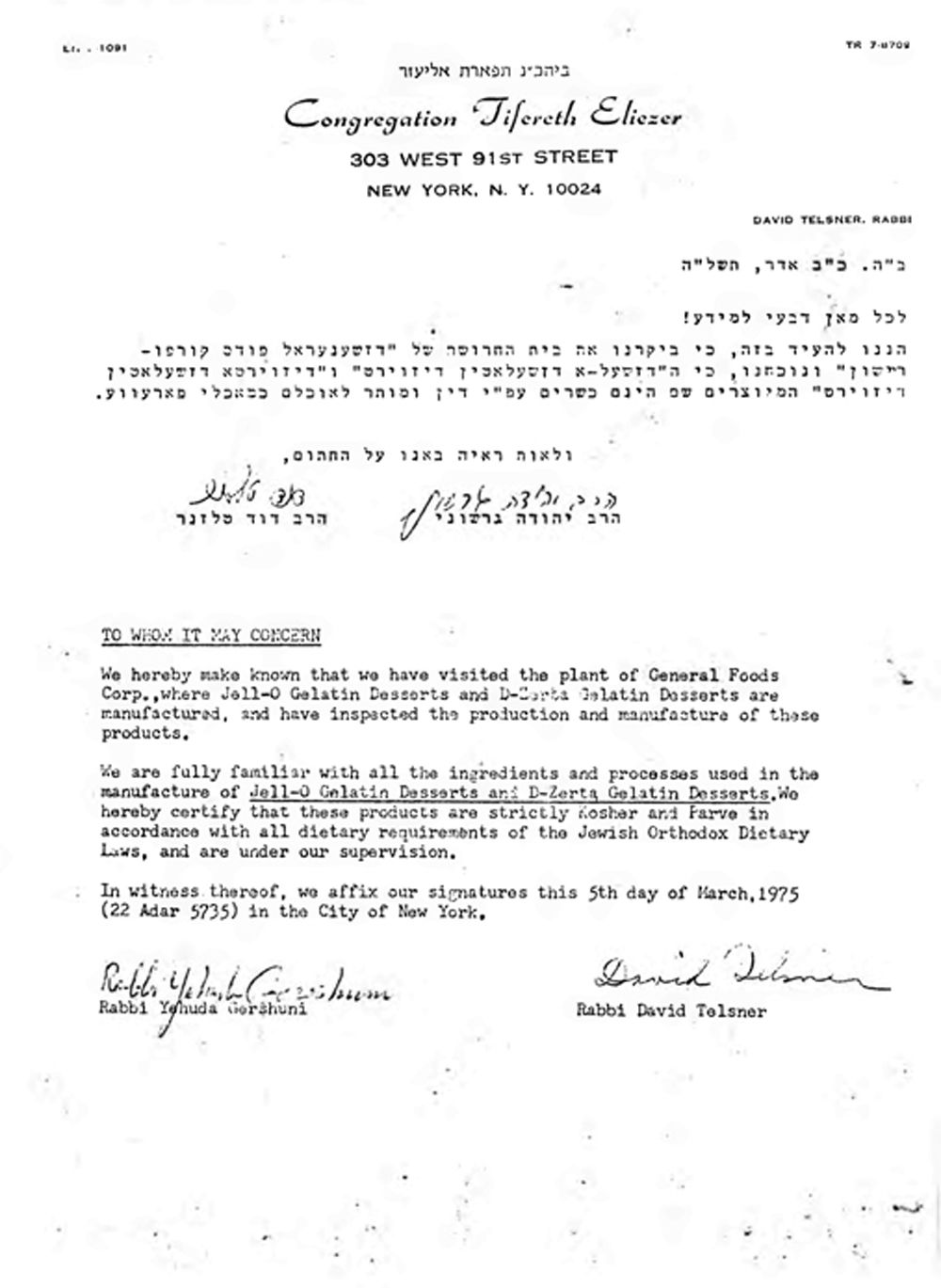
By the 1960s R. David Telsner was giving the hashgachah, and he was later joined by R. Yehuda Gershuni. (Incidentally, R. Telsner was the one who translated R. Soloveitchik’s Hamesh Derashot into Hebrew.) Here is a letter from 1975 in which these rabbis affirm that Jell-O is kosher.

Here is R. Telsner’s responsum permitting gelatin. This was printed by R. Telsner and distributed to those who wanted to know the basis for his permission. As far as I know, this responsum never appeared in any publication and it is not found on the internet.


When it comes to gelatin, there were great rabbis on both sides of the issue, and those who permitted it were able to point to the lenient position of R. Hayyim Ozer Grodzenski. Even among those rabbis who were lenient, there were disputes as to whether all gelatin is OK, including from pigskins, or only gelatin made from bones or hides of kosher animals. Not so well known is the report that R. Kook permitted gelatin.[1] Also of note is that in 1952 R. Simhah Elberg testified to the wide acceptance of gelatin in the Orthodox community:[2]
שכבר נתפשט היתר והותר ע”י גדולי וגאוני ארץ
R. Noah Sheinkopf has prepared the following list of poskim who permitted bovine gelatin. (I have not checked the sources.)
1) Rabbi Dovid Tzvi Hoffmann, Melamed L’Hoil, Y.D., #24 and #35 (By Inference)
2) Rabbi Mordechai Leib Winkler, Levushei Mordechai, Yoreh Deah Tineyna, #60
3) Rabbi Yehuda Leib Tzirelson, Lev Yehuda #39
4) Rabbi Ze’ev Bidnovitz, Divrei Ze’ev, vol. 18. #12
5) Rabbi Y.L. Graubart, Chavalim Baneimim, vol. 4. #23; (See also HaPardes, Aug. 1942, p. 19)
6) Rabbi Shmuel Pardes, Avnei Shmuel, Berurei Halacha, #19
7) Rabbi Yosef Konvitz, Divrei Yosef, vol. 1, p. 172
8) Rabbi Hayyim Ozer Grodzenski, Achiezer, vol. 3, #33, sec. 5; see also Avnei Shmuel, pp. 10-11
9) Rabbi Simcha Zelig Regeur (Brisker Dayan), printed in Kovetz Moriah, issue 400-402, p. 76-77
10) Rabbi Yitzchak Burstein, Mataamei Yitzchak, vol. 2, chap. 24-25
11) Rabbi Yosef Eliyahu Henkin, HaPardes, July 1952; Edus L’Yisrael, p. 177
12) Rabbi Yehuda Leib Seltzer, HaPardes, July 1952; Vezos L’Yehuda, O.C. #26
13) Rabbi Simcha Elberg, HaPardes, July 1952; HaPardes, October 1952
14) Rabbi Nissen Telushkin (Chabad), Taharas HaMayim, vol. 1, chap. 54
15) Rabbi Nachum Weidenfeld, Chazon Nachum, #61
16) Rabbi Tzvi Pesach Frank, Har Tzvi, Y.D., #83
17) Rabbi Yechezkel Abramsky, introduction to Tzitz Eliezer, vol. 4; Chazon Yechezkel, Zevachim, Sh“ut #6
18) Rabbi Eliezer Waldenberg, introduction to Tzitz Eliezer, vol. 4; Tzitz Eliezer, vol. 20, #33
19) Rabbi Koppel Kahana, Teshuva B’Inyan Gelatin, 1966 (By Inference)
20) Rabbi Moshe Nosson Nota Lemberger, Ateres Moshe, vol. 1, Y.D., # 42-43
21) Rabbi Yitzchak Glickman, Kol Torah, Shana 13, Choveret 4
22) Rabbi Yosef Shalom Elyashiv, Kovetz Teshuvos, #73, sec. 3 (In terms of practical halakhah, for R. Elyashiv the crucial point is if some taste remains, but as long as it is rendered completely tasteless, then he identifies with the R. Hayyim Ozer Grodzenski’s lenient decision.)
23) Rabbi Ovadya Yosef, Yabia Omer, vol. 8, Y.D., #11
24) Rabbi Ben Tzion Abba Shaul, Ohr L’Tzion, vol. 5, #32, sec. 6 (By Inference)
25) Rabbi Shlomo Amar, Shema Shlomo, vol. 5, Y.D., #12
26) Rabbi Yechezkel Roth, Emek HaTeshuva, vol. 3, #67 (By Inference)
27) Rabbi Yisroel Yaakov Fisher, Even Yisroel, vol. 8, #56
28) Rabbi Yirmiyahu Menachem Kohen, V’Heirim Kohen, vol. 2, Y.D., #31; vol. 4, Y.D., #40
29) Rabbi Moshe Levi, Tefilla L“Moshe, Y.D., #4
30) Rabbi Almog Levi, Avnay Levi, Y.D., #1
31) Rabbi Yitzchak Mekayis and Rabbi Yaakov Mekayis, Ohr HaHalacha, Kuntres #3
32) Rabbi Amit Chadad, Pri Eitz Chaim, p. 529
33) Rabbi Moshe Dan Sheinkopf, a Vice President of the Agudas HaRabbonim, who certified Kojel until the late 1970s.
To this list from R. Sheinkopf, we can add R. Yaakov Ariel, Be-Oholah shel Torah, vol. 5, pp. 76-77, R. Eliezer Melamed, Peninei Halakhah: Likutim 3, pp. 352-353, R. Shlomo Aviner (see here) and R. Yitzhak Abadi (as seen on learn.oheltorah.com and prior to this on the old site, kashrut.org). R. Abadi’s view is particularly interesting as his teacher, R. Aharon Kotler, was one of the major forces behind the general rejection of gelatin in the United States. It is also noteworthy that for a short time in the 1950s the OU also approved of gelatin.[3] R. Avraham Vilner, in an earlier post at the Seforim Blog here, provides evidence that the Hazon Ish felt that one could rely on R. Hayyim Ozer Grodzenski’s heter for gelatin.
כשאמרתי למו”ר [הרב שמריה שולמאן] שראיתי הרבה חולקים על פסקו של רבי חיים עוזר בענין הג’אלאטין, וגם אלו שבדרך כלל לא היו פוסקים נגדו כמו הרב אליעזר סיבלר, בזה פסקו אחרית ממנו, אמר לי שהראש ישיבה הרב רודערמאן זצ”ל אמר לו, שהחזון איש אמר שעל כל פסקי רבי חיים עוזר אפשר לסמוך בלי שום פקפוק, חוץ ממה שהתיר לשמש במוך היכא שהסיבה לשימוש במוך הוא מצד האיש, שבזה א”א לסמוך
Ironically, it was Conservative Rabbi Louis Ginzberg who was mahmir, writing with great certainty:
I am convinced that no rabbinical scholar who is in a position to comprehend a problem in chemistry would ever permit the use of gelatin. . . . The late Rabbi Chaim Ozer Grodzinski was well known to me personally; as a matter of fact, his wife was a close relation to me, and I would certainly attach great weight to any decision by him on Jewish Law, but not in a case for which some knowledge of chemistry or physiology is necessary.[4]
On the other hand, Conservative Rabbi Isaac Klein, who was one of only three people to receive private semikhah from Ginzberg—the other two being Louis Finkelstein and Boaz Cohen—permitted gelatin.[5]
Returning to Mesorat Moshe and the problems with oral reports, I saw something relevant in R. Yehuda Spitz’s comprehensive new book, Food: A Halachic Analysis. The matter under discussion is whether one can use the same dishwasher for meat and milk utensils. R. Moshe has a number of responsa where he says that this is permissible as long as you have separate dish racks. His first responsum on the topic appears in Iggerot Moshe, Orah Hayyim 1, no. 104, and is from early 1957. It is the second part of one of his famous responsa on bat mitzvah, and was sent to R. Baruch Aharon Poupka of Pittsburgh. (For some reason, the heading of the responsum only mentions bat mitzvah, not the dishwasher question). R. Moshe’s answer is short and to the point:
ובדבר הכלי החדשה [!] לרחץ את הכלים שנקרא בשם “דיש וואשער” אם יכולין לרחוץ שם כלי בשר וכלי חלב זה אחר זה. הנה צריך שמה שבתוכו שהוא על מה שמניחין הכלים, שיהיה לכלי בשר אחרים ולכלי חלב אחרים, ועצם הדיש וואשער שמשימין בתוכו הדבר שמניחין עליו הכלים שהוא רק הדפנות שסביבותם יכולין להשתמש בו לשניהם בזה אחר זה
This is a very simple reply, and it is not possible to misunderstand what R. Moshe is saying. R. Moshe later sent two other responsa where he explains his reason for requiring separate dish racks (Iggerot Moshe, Yoreh Deah 2, nos. 28, 29). In the latter responsum, he mentions that different water should be used for the milk and meat washings. (In the earliest dishwashers you could use the same water more than once.) He states that he did not mention this point in the original responsum because in any event those who have a dishwasher change the water between cycles. He specifically tells us that he is referring to householders, not that anyone would have any doubt about this.
ובפרט שזמן גדול בהרבה שעות יש לכל בעה“ב מרחיצת כלי חלב עד רחיצת כלי בשר ולא ישאירו שם המים סרוחין זמן כזה
In this responsum, R. Moshe also recommends running an empty rinse cycle between milk and meat dishes. R. Moshe repeats his basic position in a couple of other responsa,[6] and a simple internet source will reveal that lots of people have discussed R. Moshe’s view and there is no room for misunderstanding.
R. Spitz, Food: A Halachic Analysis, p. 70, quotes someone who spoke to R. Moshe about his “dishwasher leniency.” According to this person, R. Moshe explained that everyone misunderstood what he wrote, and his view that one can use the same dishwasher with separate racks was only stated regardingcommercial dishwashers. However, when it comes to the home, one cannot use the same dishwasher, even with separate racks. Based on this report, R. Spitz writes, “If so, there is ample reason to be stringent, certainly lechatchilla, regarding using the same dishwasher for both milk and meat dishes.”
I have to say that testimony such as this has absolutely no halakhic significance. There is indeed reason to be stringent, based on the views of other poskim (and most people do not seem to follow R. Moshe’s heter of two dish racks). However, if all we had was this report, it would not lead us to ignore R. Moshe’s explicit position in his responsa.
We have many examples of such statements, where a posek supposedly said something privately that completely contradicts what he said in print. In such cases, one cannot rely on these supposed retractions or statements of clarification, except in very rare cases where the author makes his opinion widely known or the person reporting the retraction is a universally recognized Torah scholar[7] (although even in the latter case we cannot always rely on the scholar reporting the supposed retraction).[8] I have no way of knowing what the man R. Spitz quotes was told by R. Moshe. It could be that he completely misunderstood what R. Moshe said. It could also be that R. Moshe had a reason for telling this person what he did, as perhaps R. Moshe thought that this man should hold to a higher level. But it is simply incorrect to suggest that R. Moshe was not referring to a home dishwasher when all can see that he certainly was. R. Spitz himself, p. 71 n. 23, recognizes that R. Moshe was referring to home dishwashers. He also cites R. Baruch Moskowitz, Ve-Dibarta Bam, vol. 2, no. 244, that R. Dovid Feinstein also explained his father’s position as referring to home dishwashers. You can also listen to R. Shmuel Fuerst, a leading student of R. Moshe, explain the matter here.
Quite apart from my point just mentioned, that reports of private conversations that contradict a posek’s written opinion do not have halakhic significance, I must again stress the larger problem raised by books like Mesorat Moshe which is how much significance we should give to works that report oral teachings of great rabbis. Since we have so many examples of contradictory reports and incorrect statements in such texts, I think it is obvious that even such a wonderful work as Mesorat Moshe has to be used carefully, and in no way can it be seen as rising to the level of authority of what R. Moshe himself wrote.
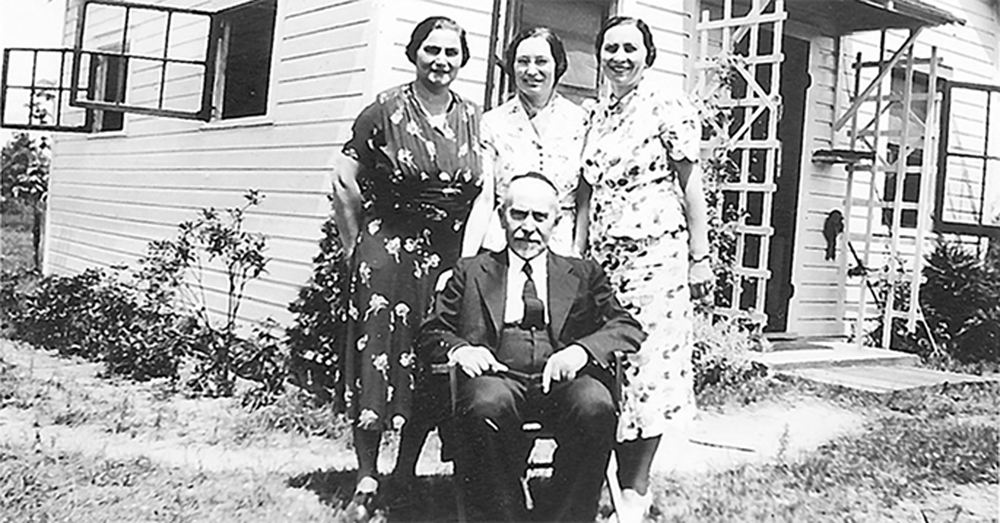
Returning to the gelatin issue, Horowitz tells the story of Abraham Goldstein (1861-1944), who really should be given the title of originator of industrial hashgachot in the United States. Here is his picture.[9]

It was Goldstein who was behind the OU’s kosher certification program and who established the agreements with the early companies. He was also the OU’s “chemical expert,” yet as Horowitz notes, he has been completely erased from the OU’s institutional memory.[10]
In 1935 he broke with the OU and founded the OK Laboratories. This would be sold in 1969 to Rabbi Berel Levy, and would then become a universally recognized hashgachah. However, this was not the case when Goldstein was in charge, and it is when Goldstein founded the OK that the controversial period of his life begins. This was because Goldstein, who was not a rabbi and had no expertise in Jewish law, set out to determine what was kosher and what was not. He made it clear that in determining what was kosher, chemists (such as himself) were a more reliable source than rabbis, as the latter did not understand food technology and were mistakenly giving approval to non-kosher food items. Goldstein had a very simple approach to the matter: If a product had any non-kosher element in it, it was treif and forbidden to be eaten. The notions of bitul or that the non-kosher food had so changed its form were not considerations he paid any attention to.[11] He also did not rely on rabbis whom he felt were not careful in such matters. Thus, he refused to accept the hashgachot issued on Coke by R. Samuel Pardes, editor of Ha-Pardes, and later by R. Tuvia Geffen.[12]
As Horowitz notes, R. Geffen was not happy with R. Pardes’ hashgachah on Coke because the drink included 0.09 percent glycerin from a non-kosher source. This is a very tiny amount—less than 1 in 1000—which according to halakhah is batel, and thus of no halakhic significance. Yet there are some fundamental questions involved here. One is if the tiny amount of non-kosher is put in as part of production, rather than accidentally falling in, do we still say that it is batel? Most authorities assume yes, so from this angle R. Pardes would have been on firm ground to declare the drink kosher. However, there is another issue, and that is can you officially give a hashgachah to an item relying on bitul, especially when the company will then be advertising the product as kosher? This can certainly be seen as distasteful and perhaps even bringing us to a situation of ein mevatelin issur lekhathilah (as the kashrut organization is now involved with the company).
R. Geffen believed that Coke should not be given a hashgachah as long as the non-kosher glycerin was not replaced with a kosher alternative. In fact, as far as I can see, R. Pardes himself never argued that it is acceptable to rely on bitul in issuing a hashgachah, since he flatly declared—mistakenly it turns out—that there were no non-kosher ingredients in Coke (that is, he was not saying that the non-kosher ingredients were of no halakhic significance).[13]
Goldstein had nothing but contempt for the way the old-time rabbis went about issuing hashgachot, and R. Pardes’ hashgachah on Coke was just another illustration of this. In speaking of R. Pardes, Goldstein wrote that “such men undermine the very foundation of our religion” and “there is no room for such scoundrels in decent company.” To reiterate, this was not a dispute between two rabbis but rather a layperson with no yeshiva training declaring that a learned rabbi did not understand the basic laws of kashrut. As far as the rabbis were concerned, the chutzpah here was unbelievable, and this was doubled by the fact that Goldstein’s Kosher Food Guide, which included all sorts of important information about kosher food together with Goldstein’s attacks on various rabbis, had a circulation of 150,000.[14] Significantly, Goldstein refused the OU’s demand that his publication be reviewed by rabbinic scholars.[15] Goldstein believed that when it came to modern food technology, he should be the one telling the rabbis what was kosher, not the reverse.
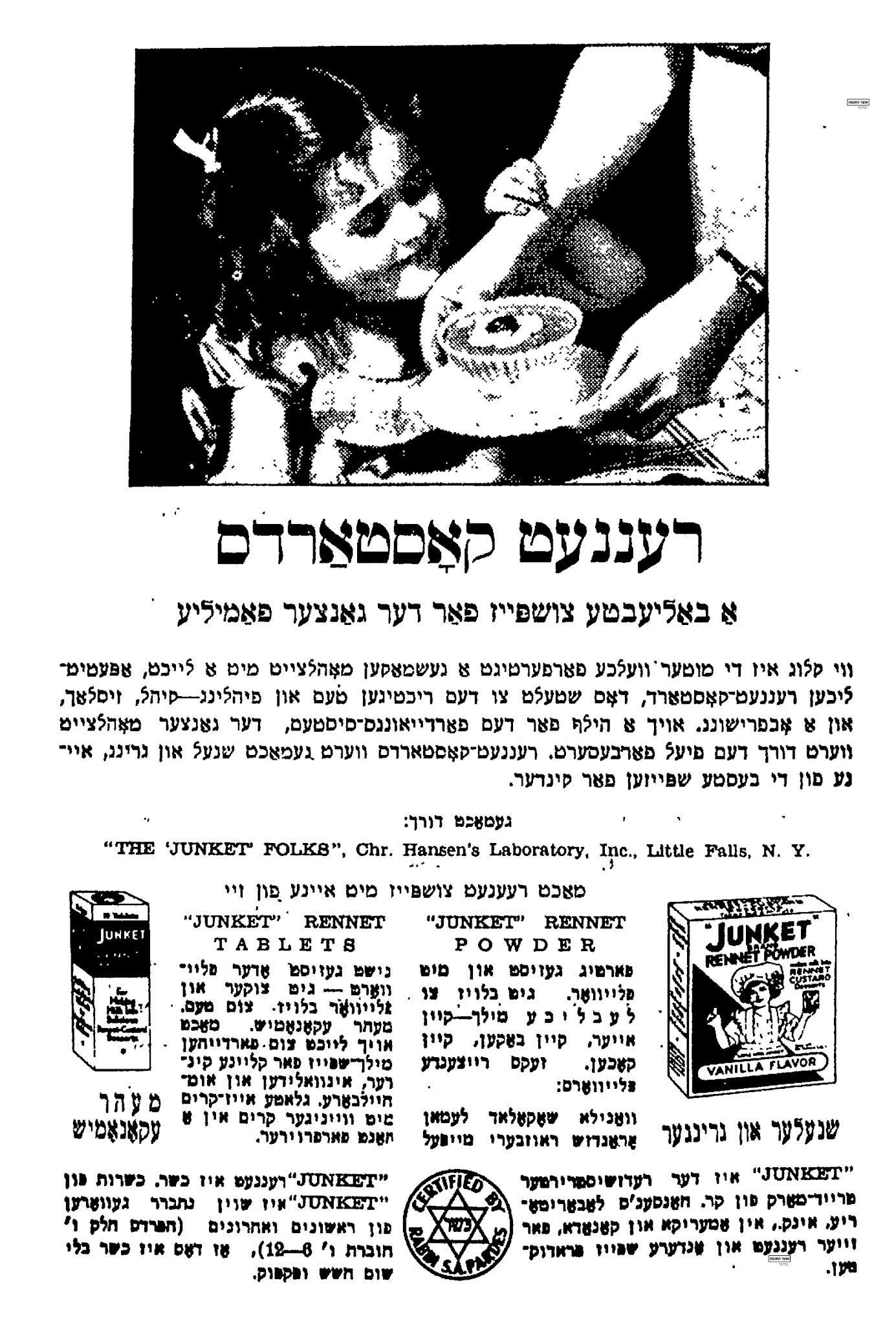
As Horowitz describes, Goldstein ratcheted up his attacks on R. Pardes after the latter gave a hashgachah to Junket, a product that was used to make a custardlike desert but which contained rennet that came from calves that were not ritually slaughtered. R. Pardes also received the backing of the OU for both his Junket hashgachah and his hashgachah on gelatin. (In 1952, after R. Eliezer Silver’s expressed a stringent opinion regarding gelatin, the OU removed its endorsement.[16])
Here is an ad from Ha-Pardes, April 1938, for Junket, with R. Pardes’ hashgachah.

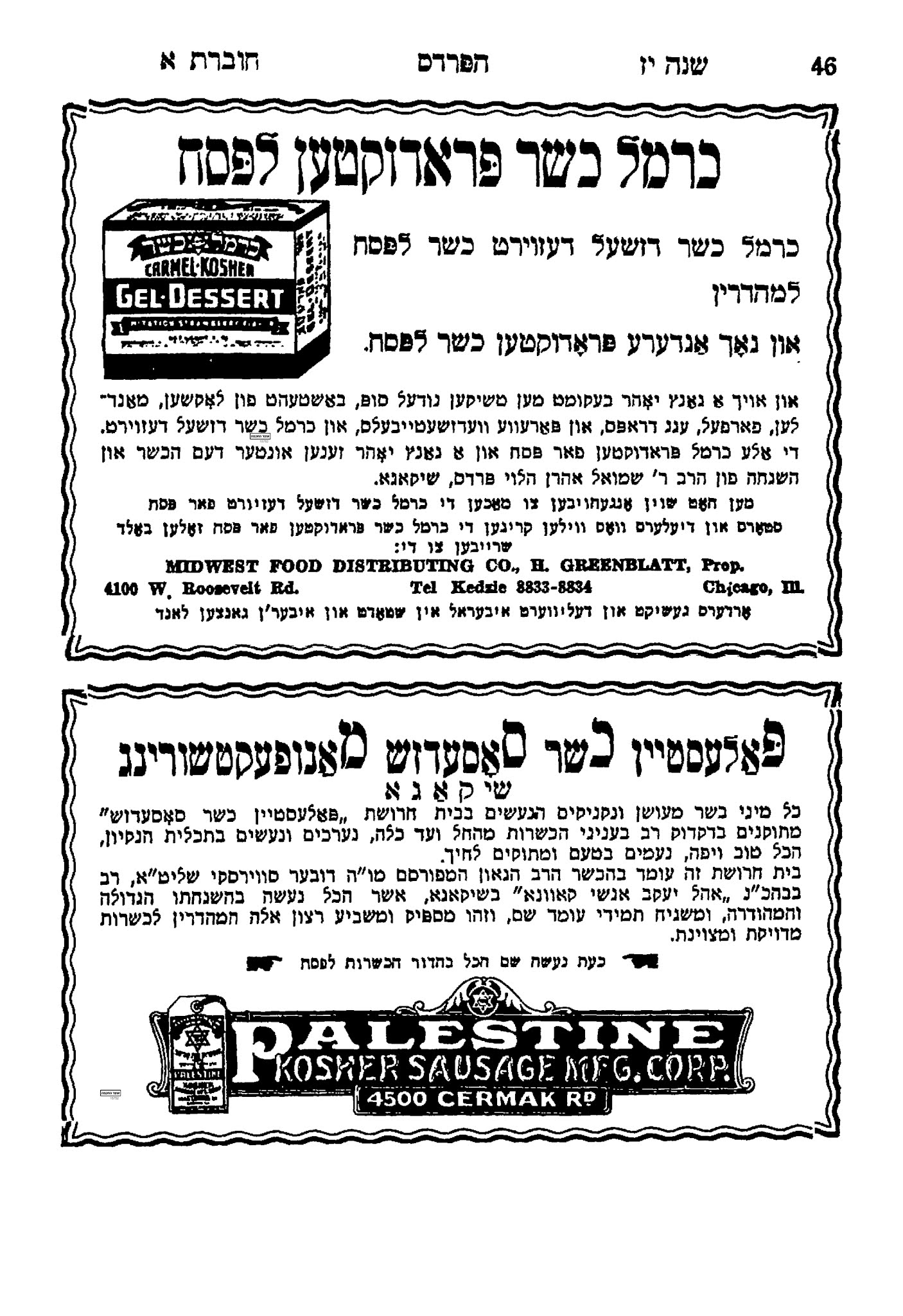
Here is an ad from Ha-Pardes, April 1943, for Carmel gelatin, with R. Pardes’ hashgachah.

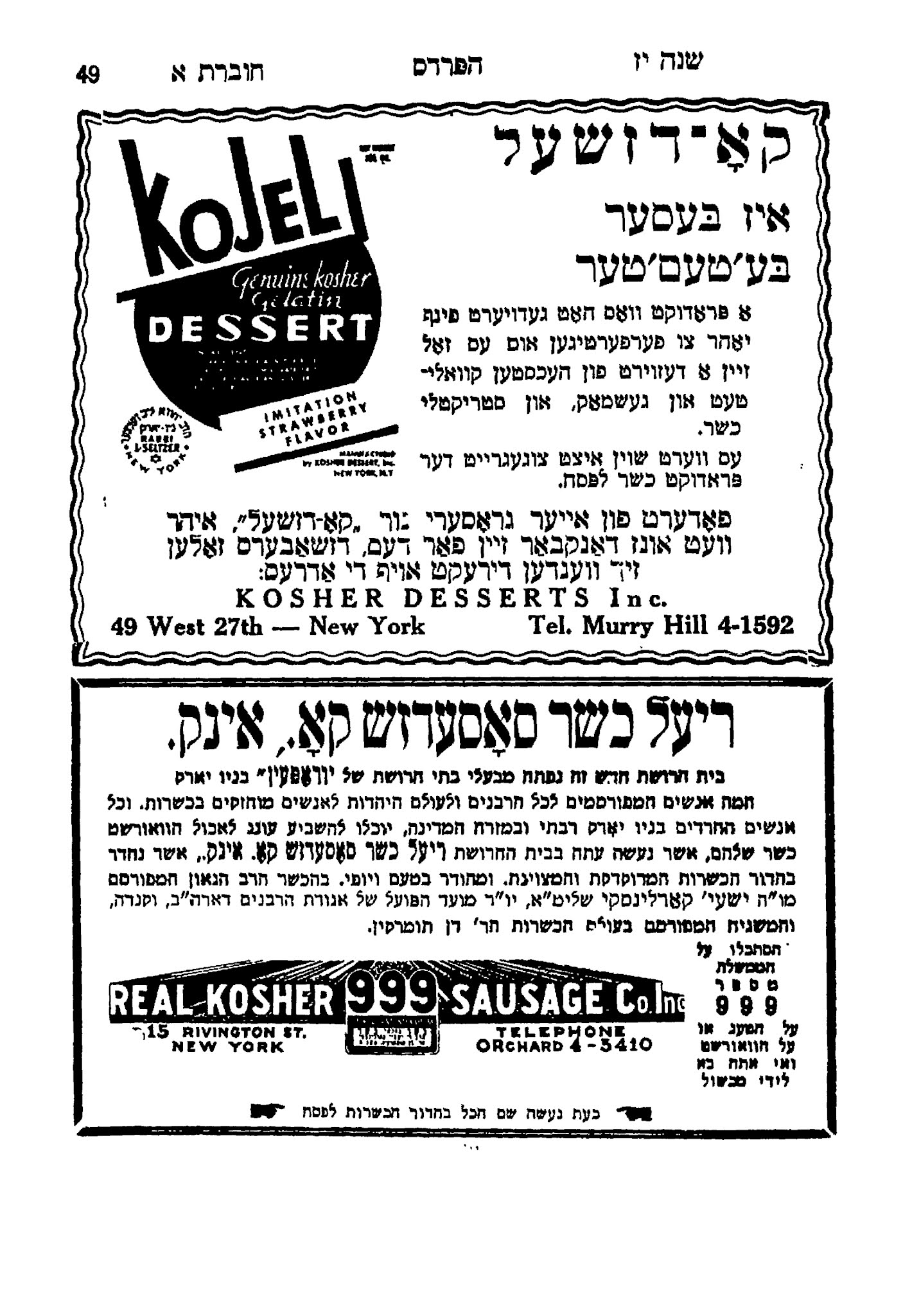
Here is an ad from Ha-Pardes, April 1943, for Kojel gelatin, with R. Judah Leib Seltzer’s hashgachah.

In Goldstein’s opinion, the fact that the OU would support R. Pardes when it came to Junket—he was no longer alive when the OU approved of gelatin—only showed how low his former organization had fallen and how little it understood of food technology. For Goldstein, it was not only a sign of ignorance on the part of R. Pardes and the OU, as he also wondered if there was financial corruption involved. Addressing R. Pardes, Goldstein asked, “How much money has been paid for this false Hekhsher.” Turning to the OU, he asked if any them “participated in the division of this money.”[17] When it came to the issue of gelatin—which had great rabbis on both sides of the issue—Goldstein expressed his ire over Jello-O advertisements in the Jewish press, stating that these advertisements “are not only deplorable from a Jewish religious standpoint,” but were “an outrageous attempt to smuggle an absolutely trefa article into Jewish homes.”[18] He later repeated his warning regarding other brands of gelatin: “Neither Carmel, Emes, or Kojel gelatines can be used in Orthodox homes. They are trefa gelatines, despite the Rabbinical Heckshers.”[19] So here we have a layperson declaring that a product endorsed by leading American rabbis was “absolutely trefa.”
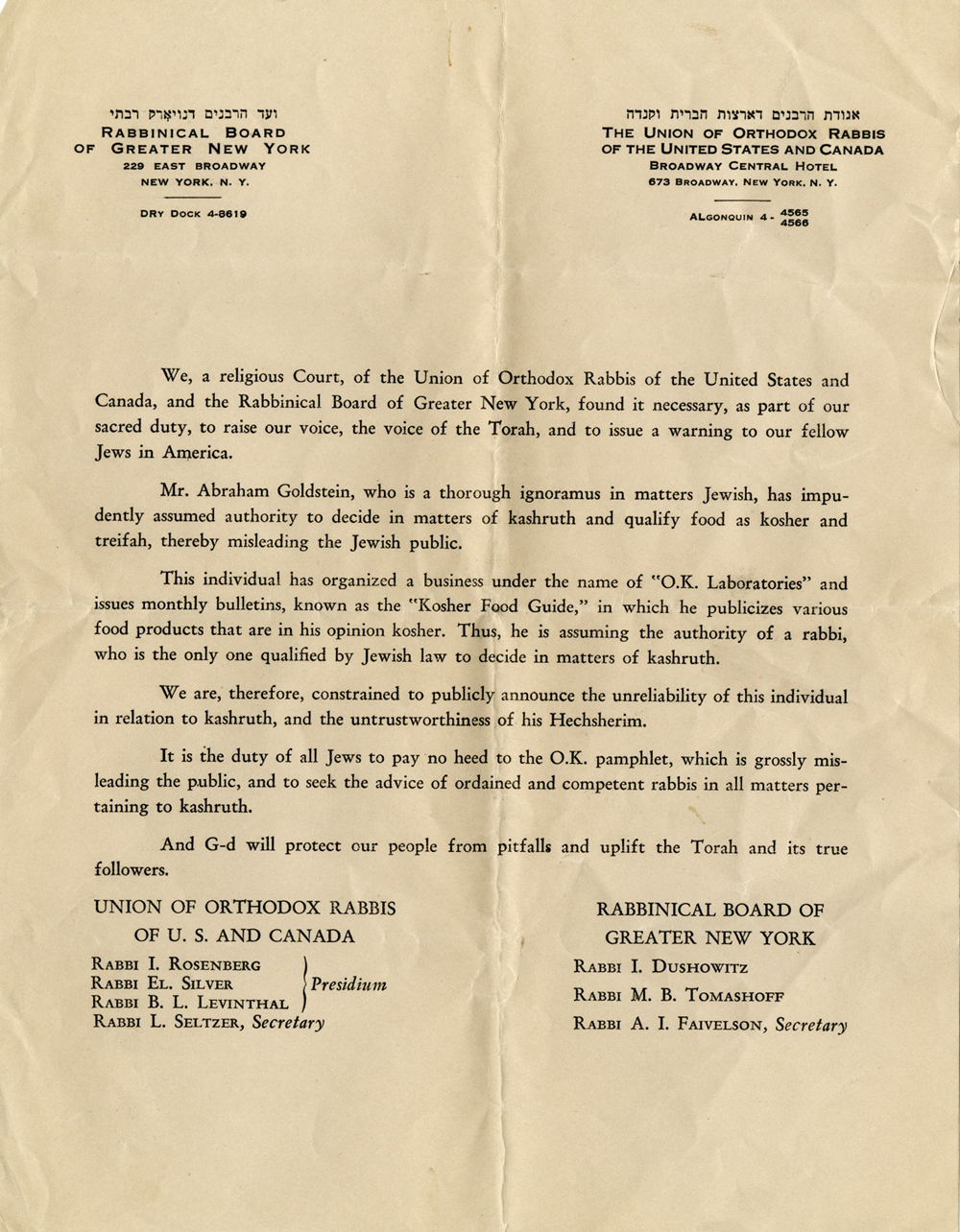
It was one thing for a rabbi who opposed the kashrut of gelatin to say such a thing, but to have a halakhically unlearned layperson setting himself up as the arbiter of what is, and is not, kosher was too much for the rabbinic leadership in the United States. Now it was no longer a question about the kashrut of Junket and gelatin—both of which R. Eliezer Silver himself would later reject—but respect due to talmidei hakhamim. As far as the rabbis were concerned, it simply was unacceptable for a layperson to establish himself as an authority when it came to kashrut. The most that he could do was supply information to the rabbis so they could make the proper halakhic decisions, but to publicly challenge the rabbis about their scientific facts and halakhic interpretations went over the line, and it was time for the rabbis to put Goldstein in his place. Here is the public statement issued by Agudas ha-Rabbonim and the Rabbinical Board of Greater N.Y.[20]

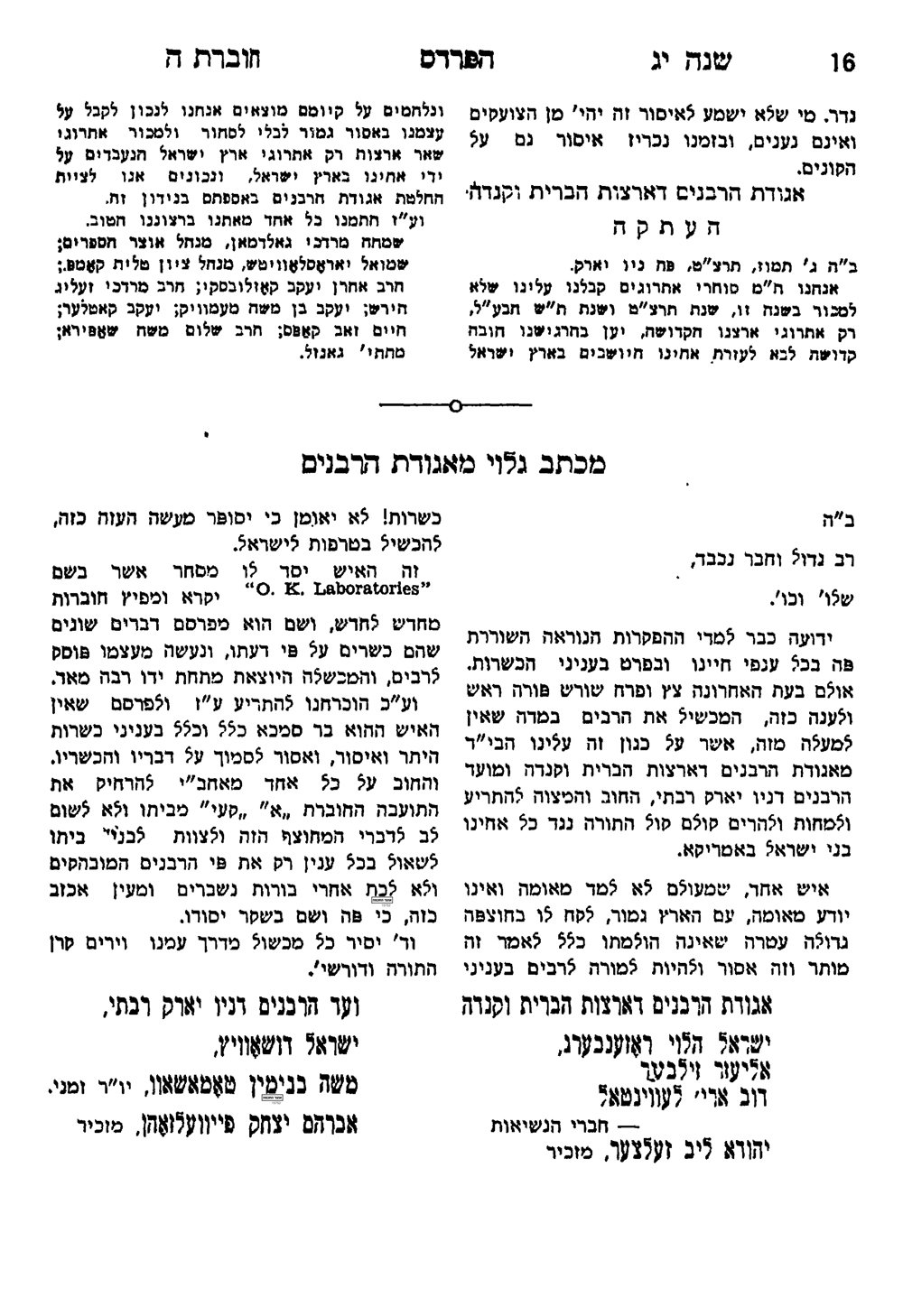
This is the English translation of the following Hebrew proclamation that appeared in Ha-Pardes, August 1939, p. 16.[21]

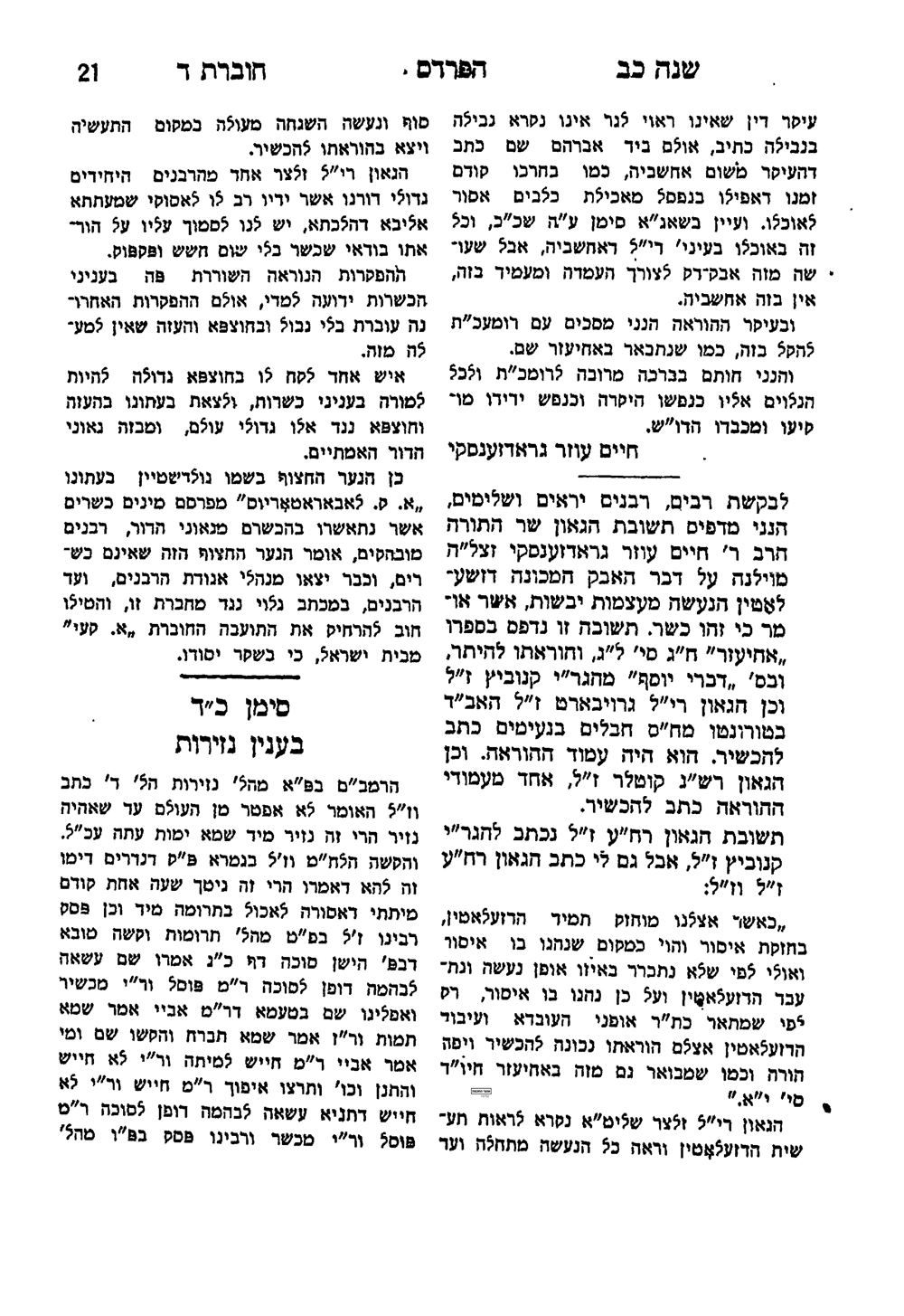
Almost ten years later it was Goldstein’s son, George, who was running the OK after the death of his father. He too was causing problems for R. Pardes. In Ha-Pardes, January 1948, p. 21, R. Pardes attacked the younger Goldstein, referring to him as הנער החצוף.

Despite the virtual herem on Abraham Goldstein, I agree with Horowitz[22] that at least to some extent Goldstein was posthumously vindicated. While the notion that a layperson could challenge learned rabbis in halakhic matters was never countenanced (and this is presumably the reason why Goldstein is completely absent from the OU’s institutional memory), Goldstein’s other point, that knowledge of chemistry and food technology is vital for kosher supervisors, has been accepted by all the mainstream hashgachot. Furthermore, despite the opposition of the rabbis to Goldstein’s OK, it remained a popular hashgachah with a wide following. In fact, until the mid-1950s, the OK supervised more products than the OU.[23]
One can only imagine Goldstein’s reaction had he heard of a pesak of the famed R. Ishmael ha-Kohen of Modena (1723-1811) in his Zera Emet, vol. 2, no. 48. The question is as follows:
נשאלתי מהו ליתן רפואה לחולה שאין בו סכנה חתיכות עגולים קטנים שקורין בוקונ”י בלע”ז מרוקחים בהרבה מינים ובכללם יש ג”כ עצם גולגלות אדם שרוף וכתות
R. Ishmael was asked about using a medicine for someone who was sick but not in serious danger. The issue was that the medicine contained pieces of a ground up human skull. This is what has been called “powdered skull,” and was a common medicine in the eighteenth century.[24] R. Ishmael permits one to consume this “medicine”.
A few centuries earlier, R. David Ibn Zimra was also asked about medicine that was made from flesh of non-Jewish dead bodies (מומ”יא — mummies).[25] R. Ibn Zimra focuses his responsum on the issue of benefiting from a dead body, since when it comes to eating the flesh, he sees no problem at all in this, as its form has been entirely changed:
איסור אכילה לא הוצרכת לשאול דודאי מותר באכילה שהרי נשתנה צורתו וחזר להיות עפר בעלמא וכ”ש ע”י סמים שהרי המומי”א היא בשר החנוטין שחונטין אותם בכמה מיני סמים כדי להעמיד צורתו וגופו וחזר להיות כעין זפת ואין בו איסור אכילה
For those interested in learning more about the subject of “corpse medicine”—which included much more than the skull—and if your stomach can handle it, I recommend Richard Sugg, Mummies, Cannibals and Vampires: The History of Corpse Medicine from the Renaissance to the Victorians (London and New York, 2016). What passed for medical cures in pre-modern times is shocking, and often downright disgusting.
As late as 1907, the Adeni Rabbi Samuel Yeshuah[26] discusses sick people who consume “mummy medicine,” what he refers to as
רפואת ההבל שנתפשט בין העם . . . באמת המומיא הזו לא יועיל ולא יציל והיה כלא היה
I assume many readers will be shocked to learn that great poskim permitted what I have just described. Today, of course, it would turn our stomachs to even think about consuming part of a corpse, much like Goldstein was outraged that anyone could think that it is permissible to consume something from a non-kosher animal, even from a pig no less. Yet this revulsion does not arise from halakhah. Speaking personally, I can’t imagine that anyone I know would eat a piece of meat from a pile if he knew that a non-kosher piece had fallen into the group of kosher pieces, despite what the halakhah says; all the more so if a piece of pork fell into a kosher dish even if it was nullified by 60. Again, our revulsion has its origin in feelings that have little to do with pure halakhah. In fact, some authorities feel that to be strict in such cases is akin to heresy, as it is in practice (but not in theory) a denial of the halakhic principle of bitul.[27]
If I could have spoken to Goldstein, I would have tried to explain to him that the halakhic system does not work in accord with what has been called “da’at baalei batim,” and those who forbid gelatin also acknowledge that not everything from a non-kosher animal is forbidden. The gelatin dispute concerns the role of gelatin in the finished food product, not with the existence of non-kosher per se. Thus, even one who is strict in the matter of gelatin would not start screaming if he saw his son standing in right field chewing on his non-shechted leather baseball mitt.
To be continued
*************
My Torah in Motion trips are starting again. I am leading a group to Morocco in January, and there is a full line-up for next summer. You can see details here.
*************
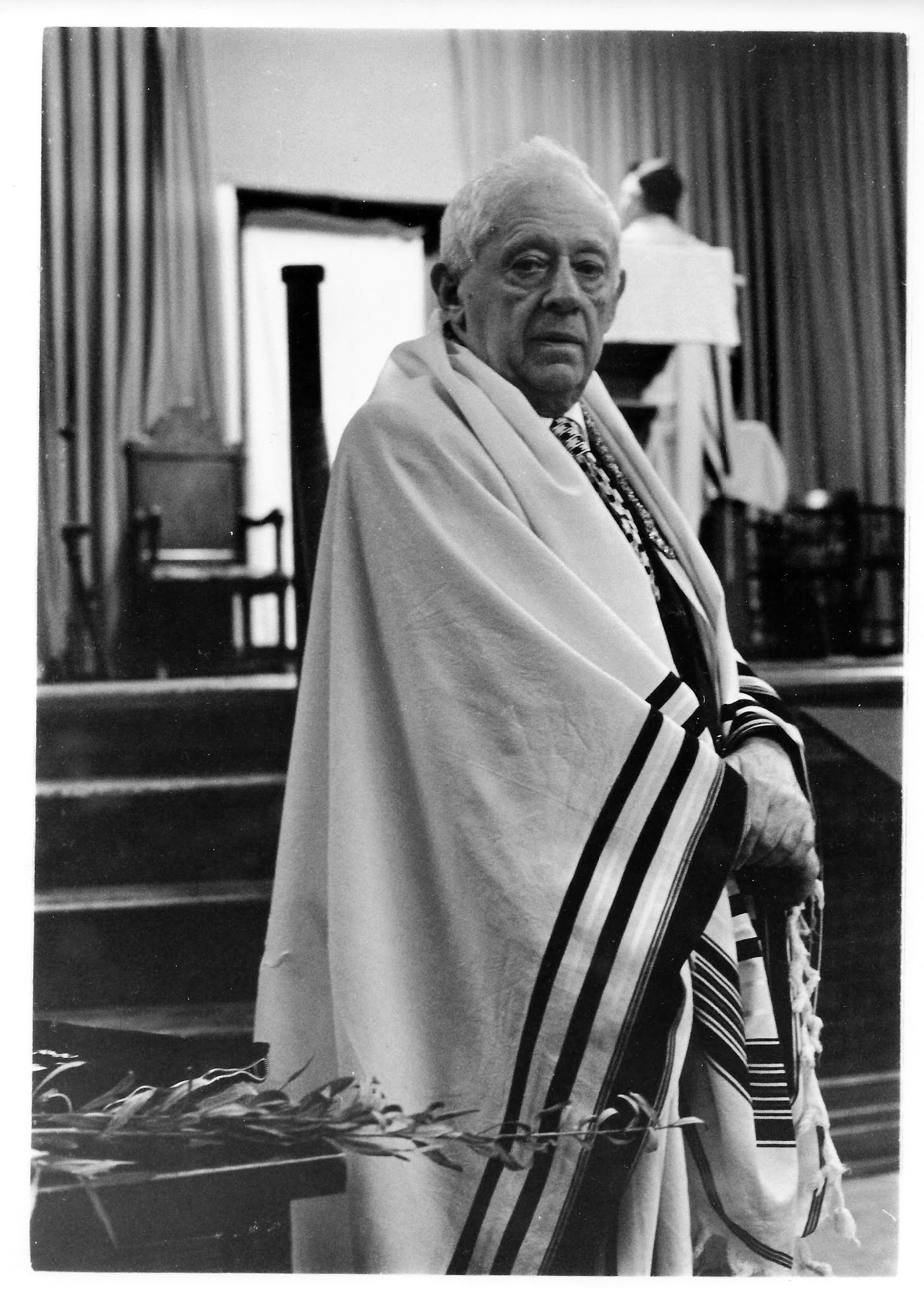
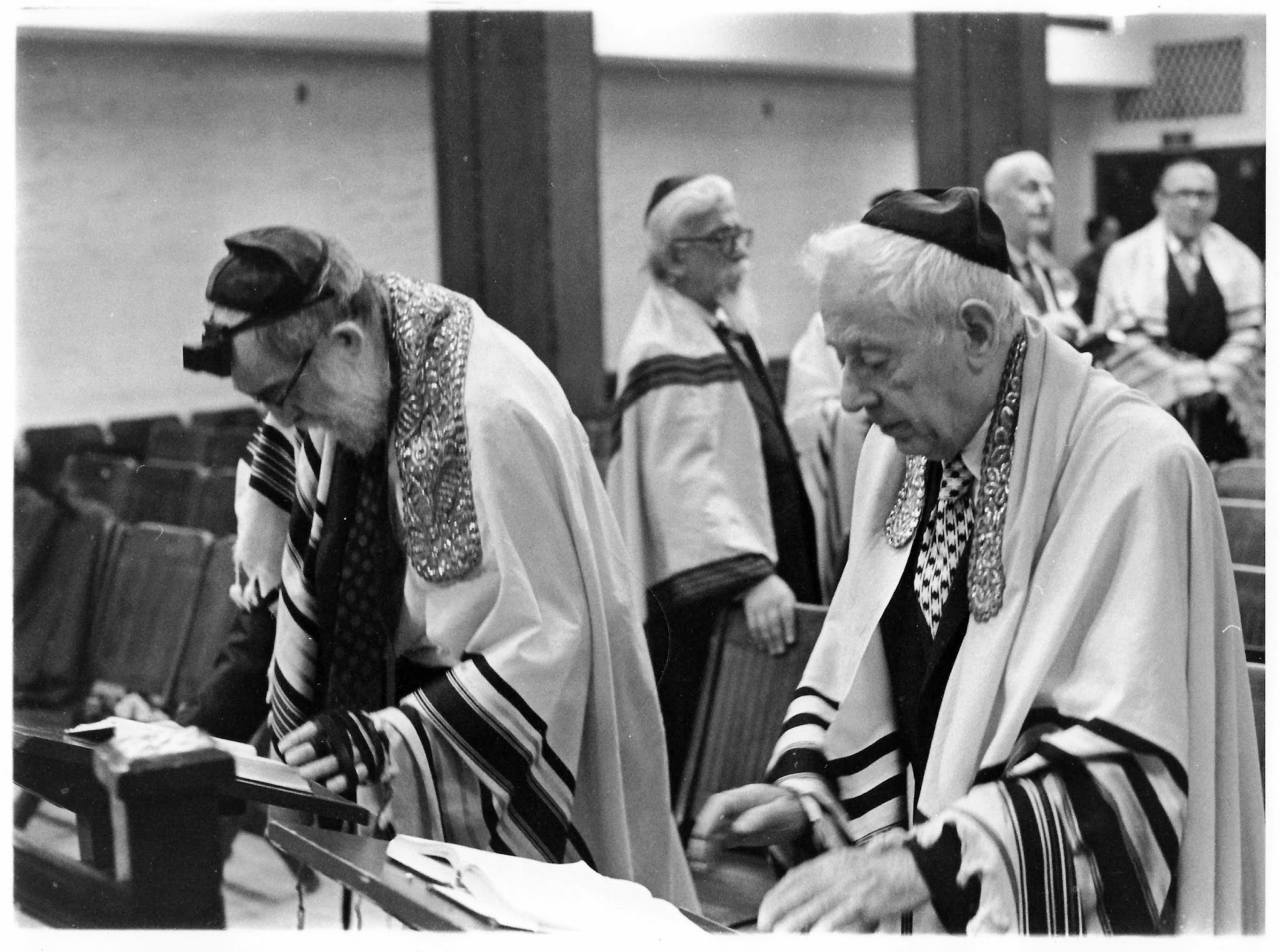
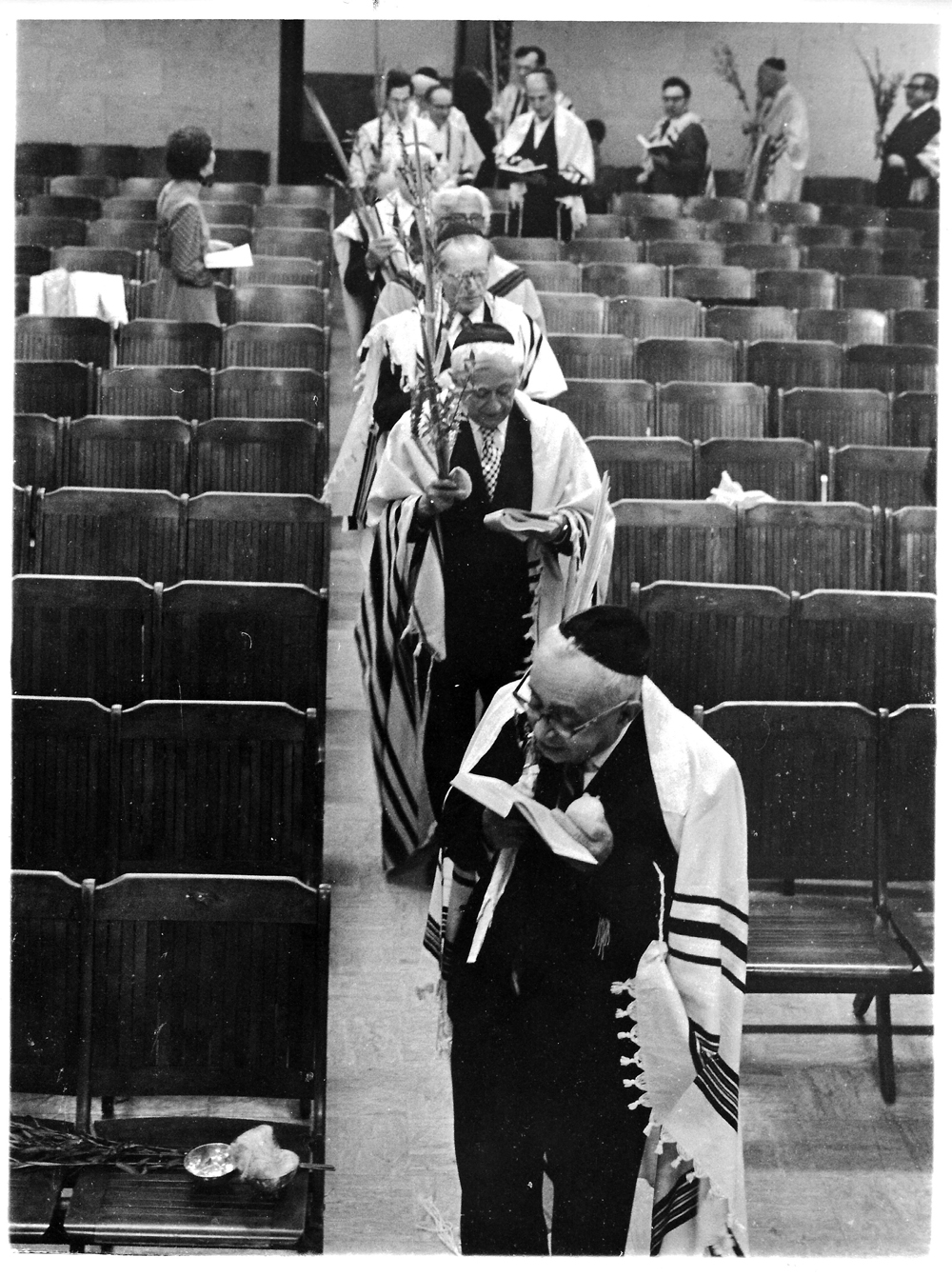
I am currently doing a series of classes for Torah in Motion on R. Saul Lieberman. You can see them here on YouTube. Here are some pictures that were taken at the Jewish Theological Seminary minyan in Unterberg Auditorium on Hoshana Rabba 1971. (At this minyan there was separate seating but no mechitzah.) The pictures were taken by Joel Mandelbaum, son of R. Bernard Mandelbaum who held many positions at the Seminary, including serving as president from 1966-1973 under Chancellor Louis Finkelstein.
Here is Lieberman.

Here is Lieberman and Louis Finkelstein. Abraham Joshua Heschel is standing between them and Bernard Mandelbaum is on the far right.

In front of Lieberman, leading the procession, is Moshe Zucker. Behind Lieberman is Simon Greenberg.

*************
[1] See Ha-Pardes, August 1942, p. 19. It also states here that R. Shlomo Natan Kotler permitted gelatin.
[2] Ha-Pardes, October 1952, p. 31.
[3] See Horowitz, Kosher USA (New York, 2016), pp. 59-60.
[4] The Responsa of Professor Louis Ginzberg, ed. David Golinkin (New York and Jerusalem, 1996), p. 152.
[5] Responsa and Halakhic Studies (n.p., 1975), ch. 7.
[6] Iggerot Moshe, Yoreh Deah 3, nos. 10, 11.
[7] For example, the Shulhan Arukh, Yoreh Deah 201:75, famously forbids heated mikvaot. (R. Karo cites the stringent view as יש מי שאוסר and he does not offer a lenient alternative). However, R. Eliezer ben Arha of Hebron (died 1691) reported that R. Karo abandoned this stringency and permitted the heating of a mikveh.
ואפילו בזמן הרב מוהרי”ק זלה”ה עשה מעשה נגד מה שפסק שחשש וכתב סברת האוסר, כי רבים מבני עליה הם המתירין, ועלייהו קא סמכינן
See She’elot u-Teshuvot Rabbenu Eliezer ben Arha (Jerusalem, 1978), no. 18, and see note 1 for the impact of this reported change in R. Karo’s position.
Another interesting phenomenon, which I will not discuss in this post, is when a posek refuses to put a leniency into writing. How authoritative is this posek’s oral ruling? A classic example of this is R. Moshe Feinstein’s opinion about turning off the flame of a gas stove on Yom Tov. In Iggerot Moshe, Orah Hayyim I, no. 128, R. Moshe writes that he doesn’t wish to put his opinion in writing, but it is known that he permitted this.
[8] See e.g., here where I discuss the false claim that R. Ezekiel Landau retracted his view that sturgeon is kosher. For the claim that R. Joseph Hayyim retracted his permission to ride a bicycle on Shabbat where there is an eruv (Rav Pealim, vol. 1, Orah Hayyim, no. 25), see R. Ovadiah Hadaya, Yaskil Avdi, vol. 3, Orah Hayim, no. 12:5:4, vol. 5, Orah Hayyim, no. 40. For a rejection of this claim, see R. Ovadiah Yosef, Yabia Omer, vol. 9, Orah Hayyim, no. 108:189. See also here where R. Doniel Neustadt writes: “Several sources report that the Chafetz Chayim eventually changed his ruling and exempted cooked fruits served for dessert from a blessing; see Orchos Rabbeinu 66 and Vezos ha-Berachah, pg. 78. Others dispute that the Chafetz Chayim changed his ruling.” The forger Chaim Bloch, Ha-Maor, Dec. 1951, p. 7, who was himself opposed to the gelatin heter, claims to have discussed the matter with R. Hayyim Ozer Grodzenski. Not surprisingly, Bloch records that R. Grodzenski told him that he never actually gave a ruling on the question of gelatin. Rather, he was only stating that his opinion inclined in this direction. For a rejection of Bloch’s false testimony, see R. Samuel Baskin and R. Shimon Winograd in Ha-Maor, Aug. 1952, pp. 7-8. Here is some of what they write:
אם הגאון רח”ע באמת חזר מתשובתו ומהיתרו על תוצרת הנ”ל, איך לא הודיע זאת ברבים, כדי שלא יכשלו ח”ו ויסמכו על פסקו ותשובתו בשו”ת אחיעזר, ויעשו מעשה לכתחילה בדבר שלא נתן הגאון הנ”ל היתר מוחלט, ועוד אם הגאון רח”ע ז”ל דיבר עם הרב ח”ב בשנת תרצ”ה כאשר כותב בהירחון “המאור”, איך כתב הרב הגאון רח”ע ז”ל להרב הגאון ר’ יוסף קאנוויץ ז”ל בחודש אייר שנת תרצ”ו שנה או יותר לאחר שיחתו עם הרב ח”ב, שמסכים עמו על היתרו בדבר הכשר הז’לטין
[9] The picture is found here and comes from the Ezra and Monica Friedman collection.
[10] Kosher USA, p. 26.
[11] See Spitz, Food: A Halachic Analysis, p. 459: “Dr. Goldstein . . . publicly maintained that any food item whose origins lie in a non-kosher source may not be considered kosher, no matter how “changed” it may currently appear.”
[12] Horowitz, Kosher USA, pp. 33ff.
[13] See Adam Mintz, “Is Coca-Cola Kosher?” in Rafael Medoff, ed., Rav Chesed: Essays in Honor of Rabbi Dr. Haskel Lookstein (Jersey City, 2009), vol. 2, p. 80; Horowitz, Kosher USA, p. 36.
[14] Horowitz, Kosher USA, pp. 29, 37.
[15] Horowitz, Kosher USA, p. 41.
[16] Horowitz, Kosher USA, p. 64.
[17] Horowitz, Kosher USA, pp. 38, 41.
[18] Horowitz, Kosher USA, p. 50.
[19] Horowitz, Kosher USA, pp. 54-55. Kojel is no longer is made with problematic gelatin and is currently under the OU hashgachah.
[20] Document provided courtesy of the Israel Rosenberg Archive, The Library of the Jewish Theological Seminary, New York, NY, ARC 98, Box 6, Folder 23.
[21] This proclamation was reprinted in Ha-Pardes, October 1939, p. 29. For other attacks on Goldstein see Ha-Pardes, August 1942, p. 17; Ha-Mesilah, Adar 5702, p. 20, sections ב, ה.
[22] Horowitz, Kosher USA, p. 42.
[23] See here.
[24] See here.
[25] She’elot u-Teshuvot ha-Radbaz, vol. 3, no. 548.
[26] Nahalat Yosef (Jerusalem, 1907), pp. 15a-b.
[27] For one discussion, see here.