Another Obvious Mistake, More Grammatical Points, Bubbe Mayseh, Apostates and the Zohar

Another Obvious Mistake, More Grammatical Points, Bubbe Mayse, Apostates and the Zohar
 
Marc B. Shapiro
1. In my last post here I gave an example of an obvious error in a recent book focusing on the letters of R. Kook. I found another example of an obvious error in R. Dov Eliach’s new book, Be-Sod Siah.

This is quite an interesting volume as it contains interviews with a number of leading haredi rabbis. I could have an entire post on the material in this book, but let me just call attention to a couple of things related to R. Jehiel Jacob Weinberg before dealing with the error. One of the rabbis interviewed is the late R. Moshe Shapiro. In discussing R. Weinberg, he states (pp. 126-127):
דוגמא לתלמיד שהסבא הרבה להשקיע בו לפי טיבו וכישרונותיו – הגר יחיאל יעקב ויינברג בעל השרידי אש“. עלוי וכוח גדולשהיה מה שנקרא אאוטסיידר” – חריג ויוצא דופן באופיושבקלות היה יכול להחליק ולמצוא עצמו בין המשכילים“. ובזכות חכמתו ויגיעתו של הסבא הוא נשאר בבחינת שלומי אמוני ישראל“.
R. Shapiro tells us that R. Weinberg was an “outsider” and that he could have easily gone the way of Haskalah. It is fascinating that a haredi figure says this, because this is precisely the sort of comment that I think might have angered R. Weinberg’s now deceased right-wing students. Yet I have to say that R. Shapiro is exactly correct in his description. I don’t know if his knowledge of R. Weinberg’s life comes from my book or from R. Nathan Kamenetsky’s Making of a Godol – I only spoke to R. Shapiro once, and it was not about R. Weinberg – but he obviously knew something about the ups and downs of R. Weinberg’s life.
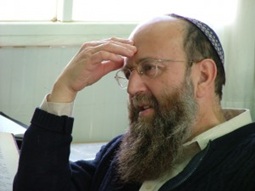
Here is p. 273 in the book, which includes a picture of R. Weinberg.
  
Not noted by Eliach is that this picture comes from my post herewhere I published it for the first time (and thanked the person who gave it to me). I realize that once the picture is on the internet it is there for anyone to use it, but it would still be nice if people would acknowledge where it came from.
Eliach also includes a lengthy interview with R. Bezalel Rakow of Gateshead which understandably has a good deal about R. Weinberg. (I have previously discussed R. Rakow here and here.) What I find fascinating is how people like Eliach simply can’t get a handle on R. Weinberg. On the one hand, they know that he was a great scholar and posek. On the other hand, they know that his views were not in line with the haredi world. Eliach asks R. Rakow the following (p. 274):
בשורה התחתונה – שאלתי את הרב ראקוב – האם הרב ויינברג מוגדר על ידכם כמנהיג תורני חרדי?
Eliach wants to know if R. Rakow regards R. Weinberg as a haredi Torah leader. R. Rakow responds very diplomatically:
בודאיהגאון הרב ויינברג היה ירא וחרד לדבר ה‘. איש ההלכה הצרופה שחרד על כל סעיף בשלחן ערוך!
R. Rakow knew perfectly well that he was dodging the question, and if the definition of haredi is one who is completely halakhically observant, then R. Soloveitchik and R. Lichtenstein (and endless others) should also be regarded as haredi leaders. Only in the continuation of the interview does R. Rakow acknowledge that R. Weinberg’s views were not all in line with the haredi approach (p. 276):
ועדיין ניתן לומרשאי אלה ממחשבותיו לא עלו בקנה אחד עם הדרך המקובלת לנו מרבותינו.
Now for the obvious mistake in Eliach’s book. Here is pp. 66-67.


He begins by mentioning that in his book on the Vilna Gaon he told a story that before World War II, R. Aaron Kotler was not sure where he should go, Eretz Yisrael or the United States. He therefore performed the goral ha-Gra and Exodus 4:27 came up: “And the Lord said to Aaron: ‘Go into the wilderness to meet Moses.’” He understood this to refer to R. Moses Feinstein, who at the time was living in the spiritual wilderness of New York.
Eliach states that it has been established that this story is not correct, and he cites the grandsons of R. Kotler who told him that their grandfather was never in doubt about where he was to go. They also pointed out that there is no way that the name “Moses” could have been seen as a reference to R. Moses Feinstein who was not well-known at that time.
So far so good (and these points are so obvious that one wonders how Eliach fell for a typical yeshiva bubbe mayse[1]). However, Eliach continues, and it must be that he is citing something that he was told by one of the current Kotlers, but he has completely mangled it. He writes:
אם היה מקום לסיפורהרי שהפוסק היותר ידוע בימים ההם באמריקההיה הגר יוסף רוזיןנשיא אגודת הרבנים דארצות הברית וקנדה“, ומחבר ספרי “נזר הקודש“.
Eliach tells us that if the story is true, it would have been with reference to R. Joseph Rosen, who was the most well-known posek in America at the time, the honorary president of Agudat ha-Rabbonim, and the author of the books entitled Nezer ha-Kodesh.
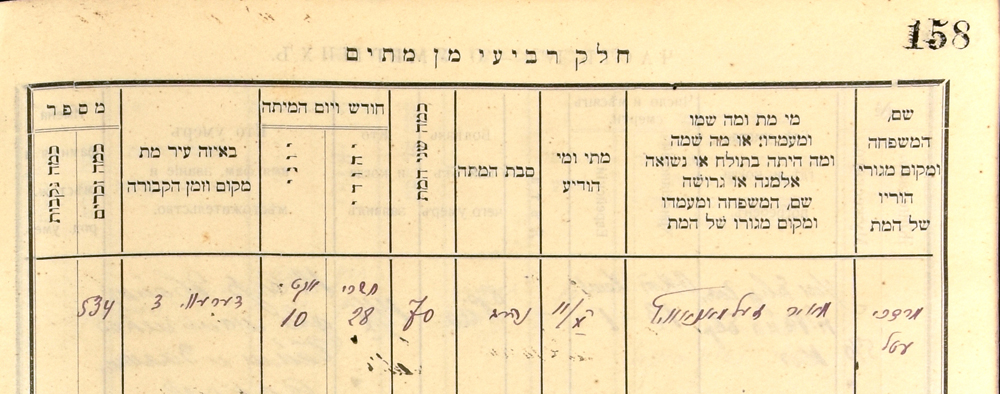
The first thing to ask is how could the goral ha-Gra performed by R. Kotler have anything to do with R. Joseph Rosen when the verse that came up mentioned “Moses”? How Eliach did not see this is beyond me. Furthermore, R. Joseph Rosen not only was not a well-known posek, he was not even a little-known posek. He was also not the president of Agudat ha-Rabbonim, and he never wrote a book called Nezer ha-Kodesh. The only thing of interest, and accurate, in Eliach’s discussion is that he somehow got a copy of the document appointing Rosen rabbi of Passaic, New Jersey, and he includes a picture of this in the book.
Here is what happened: Eliach was told that if the story of R. Aaron Kotler performing goral ha-Gra had any truth to it, the “Moses” referred to would have been R. Moses Rosen, who indeed was a great rav, author of Nezer ha-Kodesh, and served for a time as president of Agudat ha-Rabbonim.[2] R. Rosen is most famous for being the rabbi of Chweidan, Lithuania, where the Hazon Ish’s wife was from and where the Hazon Ish lived after getting married. R. Rosen and the Hazon Ish became close, and supposedly it was R. Rosen who first told R. Hayyim Ozer Grodzinski about the unknown genius, R. Abraham Isaiah Karelitz.[3] The Hazon Ish also proofread the volume of Nezer ha-Kodesh on Zevahim. This was published in Vilna in 1929 when R. Rosen was already living in the United States.[4] While R. Rosen is famous for his connection to the Hazon Ish, not so well known is that he was also a Zionist.[5]
3. My last post here gave examples of grammatical mistakes in the ArtScroll and Koren siddurim, which are the most popular in the English-speaking world. I received a lot of feedback about this, and I did not realize that so many people are interested in the often arcane points of grammar. (While I myself am quite interested in this, I am hardly an expert.) Here are a couple of more examples (and interested readers should consult the comments to the last post for additional instances).
In Ashrei we read עיני כל אליך, which comes from Psalms 145:15. The correct way to read עיני is with the accent on the ע, not on the נ. This word is commonly mispronounced, and neither ArtScroll nor Koren place the accent where it should be.[5a]
I found another mistake in the ArtScroll Machzor for Rosh ha-Shanah and Yom Kippur. In the prayer of the chazzan before Musaf, he says הפך [נאלנו ולכל ישראל. Some versions have the first word as הפוך. In both cases, since this is an imperative there needs to be a hataf patah under the ה. Yet in the ArtScroll Machzor there is a patah under the ה and the accent in הפך is mistakenly put on the first syllable, the ה. [After writing this I checked the second edition of the Machzor and was happy to see that it has been corrected. This shows that any errors we point out are valuable, as ArtScroll is prepared to correct them in future editions.]

Btzalel Shandelman wrote to me about ArtScroll’s comment on Genesis 39:8, which explains why there is a pesik following the word וימאן

The adverb adamantly is suggested by the staccato and emphatic Masoretic cantillation of this word: the shalsheles, followed by a psik [disjunction], both of which set off the word and enhance the absoluteness of its implication. It indicates that Joseph’s refusal was constant, categorical, and definite. He repulsed her with absolute firmness. Haamek Davar notes that the Torah gives no reason for his rejection; his sense of right and wrong was so clear that he did not even consider her pleadings. To her, however, he gave an explanation, trying to convince her to stop pestering him.

Shandelman correctly points out that this explanation is based on a mistake, as the vertical line found in the Torah after word וימאן is not a real pesik, as a pesik can never follow a shalshelet in the Torah (or the other sixteen biblical books that use the Torah’s system of cantillation). The reason for this is that a pesik is only found after conjunctive te’amim, and in the Torah shalshelet is always disjunctive. So why is there a vertical line after shalshelet if it is not a pesik? Joshua R. Jacobson explains:

In the te’amim of the three books (ספרי אמת), the shalshelet sign can serve as both a conjunctive and a disjunctive accent. To distinguish one from the other, a vertical line was added after the disjunctive shalshelet. Even though in the twenty-one books the shalshelet sign has only one use – as a disjunctive accent – nevertheless, the Masoretes retained the vertical line. . . . The vertical line after the shalshelet word is not a pasek: it does not indicate an extra pause.[6]

Another way to put this is that in the Torah the vertical line that always follows the shalshelet is not a separate symbol, but rather part of the shalshelet.
Nevertheless, pre-modern Hebrew texts that deal with masoretic matters seem to have no other way to refer to the vertical line, so it is called a pesik even by those who recognize that it does not function as a pesik. Thus, in the Masorah Gedolah to Lev. 8:23 it states:
ז‘ מלין בטעמא מרעימין ומפסיקין
מרעים is another word for shalshelet.
Returning to the example noted by Shandelman, I replied to him that the mistake is not that of ArtScroll. Although it is not clear in the excerpt printed above, the comment about a pesik following the shalshelet has its origin in R. Naphtali Zvi Judah Berlin’s Ha’amek Davar.[7] This is actually a common mistake, as the rules of trop are not well known. Unless someone has studied these rules, he will have no reason to assume that a vertical line is not a real pesik. The next step is to offer explanations of verses based on this assumption that the vertical line represents a real pesik after the shalshelet.
I don’t think that any of the following explanations are based on the mere appearance of the vertical line. Rather, the authors assume that it is a real pesik and one can therefore base interpretations on it.
R. Tuviah ben Eliezer (12th century) writes:[8]
וימאן מיאון אחר מיאון הרבה פעמים דכתיב בפסיק ובשלשלת
Solomon Buber, the editor of the text, explains R. Tuviah’s words:
דורש הטעמיםכי על וימאן הוא שלשלת ואחכ הוא בפסיק
R. Yeruham Levovitz stated as follows:[9]
ועל כן תיכף לוימאן” יש פסיקכי הופסק אצלו כל הענין אף טרם ניתח העולה על הרוחאף טרם נתן כל טעם וביאור על המיאוןכי טרם כל וכל הוא ממאן על הדבר וחסלוהטעמים והביאורים יתן אחרי כןוזהו אמרו אחרי הפסיקואומר אל אשת אדוניו וגו‘.
R. Samuel Borenstein writes:[10]
וימאן מוטעם בשלשלת ופסיקכדי להפרידו בפעוהיינו שהמיאון לא הי‘ מחמת הטעם אלא מצד עצם הנפש למעלה מהטעם.
R. Shlomo Zvi Schueck leaves no question that in his mind the vertical line is a real pesik.[11]
ואמרתי שחכזל דרשו זאת מן הטעם שלשלת העומדת על תיבת וימאן אם רצו להודיע בטעם שלשלת להפסיק שם בדיבור למה בחרו בניגון זה דוקאהא כמה טעמים מפסיקין הםועוד הא אחר תיבת וימאן הוא עומד הקו פסיקולמה לן תרי מפסיקין כאן?
R. Shlomo Amar writes:[12]
תיבת וימאן” הכתובה בפסוק מוטעמת בטעם שלשלתומיד לאחריה מופיע טעם פסקונראה דזה בא ללמדשיוסף הצדיק מיאן במיאון אדיר וחזקוגם מיאונו היה פסוק וחתוך.
I would only add that it is very difficult to say about so many great sages, ועפר אני תחת רגליהם, that they are wrong about the function of the pesik following a shalshelet. What I have written is based on the standard works on the topic. However, if anyone knows of an authentic tradition in which there is a pesik after shalshelet, please let me know. 

Finally, as I am writing this post not long after Hanukkah, here is an example of a translation where ArtScroll gets it right and pretty much everyone else I have checked gets it wrong (though we can understand why they intentionally get it wrong). In Maoz Tzur we read:
לעת תכין מטבח מצר המנבח
אז אגמור בשיר מזמור חנכת המזבח
ArtScroll translates:
When you will have prepared the slaughter for the blaspheming[13] foe,
Then I shall complete with a song of hymn the dedication of the Altar.[14]
Here is Koren’s translation of the first line:

When you silence the loud-mouthed foe.

This a much more comfortable rendering, and if you examine other siddurim you will find similar “softer” translations. Given the choice between “slaughter” and “silence,” most people will pick the latter. Yet unfortunately for them, the text does not say “silence.” It says “slaughter,” and the words תכין מטבח are based on Isaiah 14:21: הכינו לבניו מטבח, “Prepare ye slaughter for his children.” Koren’s translation is thus a politically correct distortion of the text’s meaning.
This is not a matter that started with Koren. For a long time now, translators have been afraid that if people knew what the text actually said that they would not want to sing the song. Yet how can you have Hanukkah without Maoz Tzur? It is even recited publicly at the White House Hanukkah party. (It is amazing to me that no one has yet made an issue of publicly singing these politically incorrect words.) So, a little bit of creative “translating” was thought necessary. Isn’t it interesting that ArtScroll – which has shown us many times that it has no difficulty censoring and distorting texts it finds problematic – has the courage to give us the correct, uncensored translation?
Interestingly, R. Joseph Hertz in his siddur, p. 950 in the note, tells us what the words mean. Yet was uncomfortable with this, and therefore instead of תכין מטבח he changed it to תשבית מטבח. This is not a version attested to in any old text. It was simply made up by Hertz or perhaps suggested by an unnamed collaborator on his siddur commentary. Hertz writes: “By a slight change, this is now ‘when Thou shalt cause all slaughter to cease, and the blaspheming foe, I will complete, etc.’”[15]
4. Since I have been discussing the ArtScroll and Koren siddurim, it is only right for me to mention that there is a new siddur on the market. The new RCA siddur, called Siddur Avodat Halev, has just appeared. For decades, Modern Orthodox synagogues had to make do with the RCA ArtScroll siddur. However, other than including the prayer for the State of Israel, there was nothing in that siddur that made it a good fit with Modern Orthodox synagogues.
The new RCA siddur, which will come to be the standard at hundreds of synagogues for decades to come (especially as the RCA ArtScroll siddur is no longer being sold), is a siddur that the Modern Orthodox community can embrace. The commentary and essays – including essays by R. Jehiel Jacob Weinberg, R. Joseph B. Soloveitchik, R. Aharon Lichtenstein, and R. Yehudah Amital – include both traditional learning and historical scholarship, something that is not found in any siddur on the market. There is also an attention to the role of women that is welcome.[16] Relevant to my last post, this siddur tells women to say מודה אני with a kamatz under the ד. The siddur also offers the option of women forming a mezuman and reciting חברותי נברך. Of particular importance is the inclusion of prayers for Yom Ha-Atzmaut and Yom Yerushalayim. In the instructions before Tahanun, we are informed that Tahanun is omitted on these two days. For Hallel, readers are given the option of reciting with a berakhah or without. I will return to discuss this siddur in a future post, as there is something in it that will be of particular interest to Seforim Blog readers.
Excursus
Earlier in this post I used the expression bubbe mayse. The origin of these words is not “grandmother’s tale,” although that is what is commonly thought. Bubbe mayse is a later corruption of what was originally Bove mayse. I can do no better than quote from the Wikepedia entry here.
The Bovo-Bukh (“Bovo book”; also known as Baba Buch, etc.; Yiddish: בָּבָאבּוּךבּוֹבוֹבּוּך ‬), written in 1507–1508 by Elia Levita, was the most popular chivalric romance in Yiddish. It was first printed in 1541, being the first non-religious book to be printed in Yiddish. For five centuries, it endured at least 40 editions. It is written in ottava rima and, according to Sol Liptzin, is “generally regarded as the most outstanding poetic work in Old Yiddish”. [Liptzin, 1972, 5, 7]
The theme derives from the Anglo-Norman romance of Bevis of Hampton, by way of an Italian poem that had modified the name Bevis of Hampton to Buovo d’Antona and had, itself, been through at least thirty editions at the time of translation and adaptation into Yiddish. The central theme is the love of Bovo and Druziane. [Liptzin, 1972, 6], [Gottheil] The story “had no basis in Jewish reality”, but compared to other chivalric romances it “tone[s] down the Christian symbols of his original” and “substitute[s] Jewish customs, Jewish values and Jewish traits of character here and there…” [Liptzin, 1972, 8]
The character was also popular in Russian folk culture as “Prince Bova”.
The Bovo-Bukh later became known in the late 18th century as Bove-mayse “Bove’s tale”. This name was corrupted into bube mayse “grandmother’s tale”, meaning “old wives’ tale”. [Liptzin, 1972, 7]
Here is the title page of the Bovo Bukh.

R. Elijah Levita (1469-1549), who thought it worth his time to produce Yiddish romances – in addition to the Bovo Bukh he published Paris and Vienna – is also the well-known author of, among other works, the Tishbi, the Hebrew dictionary that is still used today.[17] It was recently reprinted by Yeshivat Kise Rahamim together with comments by later authors including R. Meir Mazuz. Here is the title page.
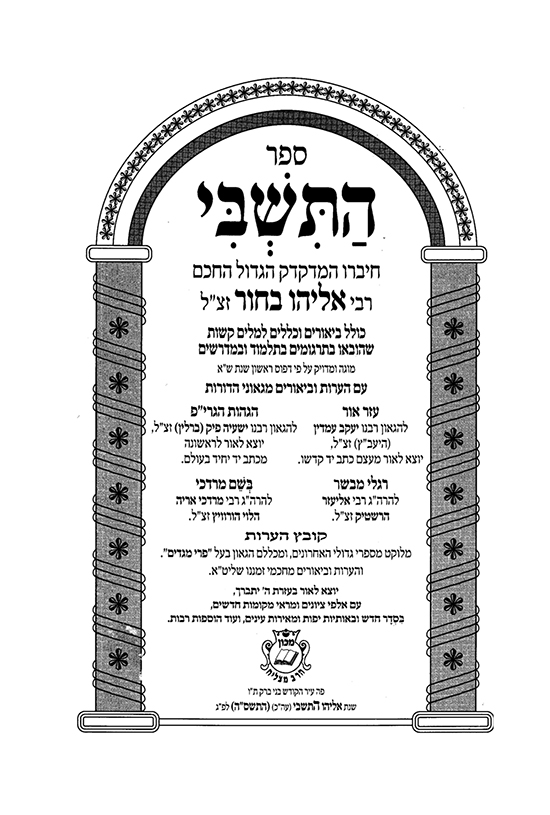
At the end of the volume, there is a collection of critical comments on the Tishbi by R. Solomon Zvi Schueck, and responses to R. Schueck by R. Aryeh Mazuz. Interestingly, there were two printings of the Kise Rahamim edition of the Tishbi. The one intended for sale in certain haredi neighborhoods did not include the comments of R. Schueck, as he is persona non grata among extremist haredim. Regarding the two editions, see Dan Rabinowitz’s earlier Seforim Blog post here.
For more on Levita, who even has a street named after him in Tel Aviv, see the Seforim Blog post by Dan Yardeni here. It is also worth noting that former British Prime Minister David Cameron is descended from Levita. See here.
I would be remiss in not mentioning that two grandsons of Levita also played a role in Jewish history. One was named Vittorio Eliano (which means “from the house of Elijah”), and the other was his brother Giovanni Battista. They were both apostates. Eliano became a priest as did Battista, who was actually a Jesuit.[18] Battista testified before the Inquisition in Venice and stated that “the Talmud teaches them [Jews] that it is legitimate to orally swear false oaths, even if they do not come from the heart, along with hundreds of thousands of other things which are injurious to Christianity.”[19]
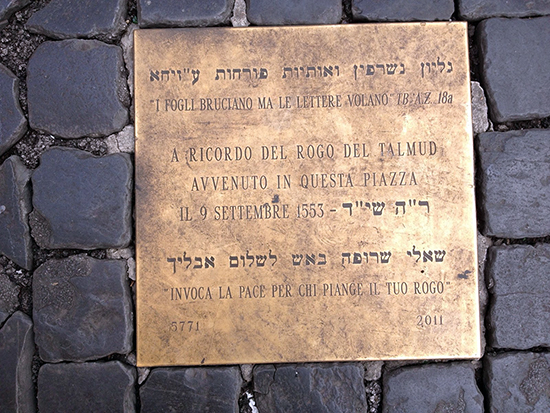
During the great sixteenth-century dispute in Venice between two Christian printers of Hebrew books – a dispute that also involved R. Meir Katzenellenbogen and R. Moses Isserles – both Christian sides denounced the other to Rome “for producing works which contained matter offensive to the Holy Catholic Faith.”[20] Eliano and Battista ended up giving testimony about supposedly blasphemous material in the Talmud, which in turn led to the Talmud being burned in Rome, in the Campo de Fiori, on September 9, 1553. Soon after that the Talmud was burned in Venice and in other places in Italy, and the work itself became an illegal text.[21]
In 2011 the following plaque was placed on the ground in the Campo de Fiori in commemoration of the burning of the Talmud.
Although the Talmud was illegal, the Zohar was not. It was none other than the apostate Eliano who had a central role in the second printing of the Zohar in Cremona in 1559-1560, as he was a proof reader.[22] (The first printing was in Mantua in 1558-1560.) This edition “was the preferred of the two editions by eastern European kabbalists.”[23] Contrary to what appears in many books, the Cremona Zohar was published by Jews (although the actual printing was done by a non-Jew, which was standard practice in Italy).[24]
Here is the title page of the Cremona Zohar. You can see at the bottom the statement that the publication was approved by the Inquisition.

Here is the last page of the Cremona Zohar. You can see that Eliano is mentioned as one of the two people who prepared the text for publication.


הבחור כמר ויטוריי אליאנו נכדו של ראש המדקדקים החר אליהו המדקדק סגל זצל
You can also see the actual Latin approval from the Inquisition.
Seeing how Eliano made sure that he was referred to as הבחור כמר, one who did not know better would assume that he was Jewish. Meir Benayahu chalks this up to one of the paradoxes of Jewish Italy:[25]
משומד שמשתבח במלאכת קודש זו ומזכיר שמו בנוסח רבני ועולה על כך שייקרא בתואר כמר” (בקולופון הזוהר), הוא מן הנפלאות שרק הפאראדוכסים המצויים אצל יהודי איטליה יכולים להסבירם.
Graetz,[26] followed by others, states that Eliano wrote the following Hebrew introduction to the Cremona Zohar.
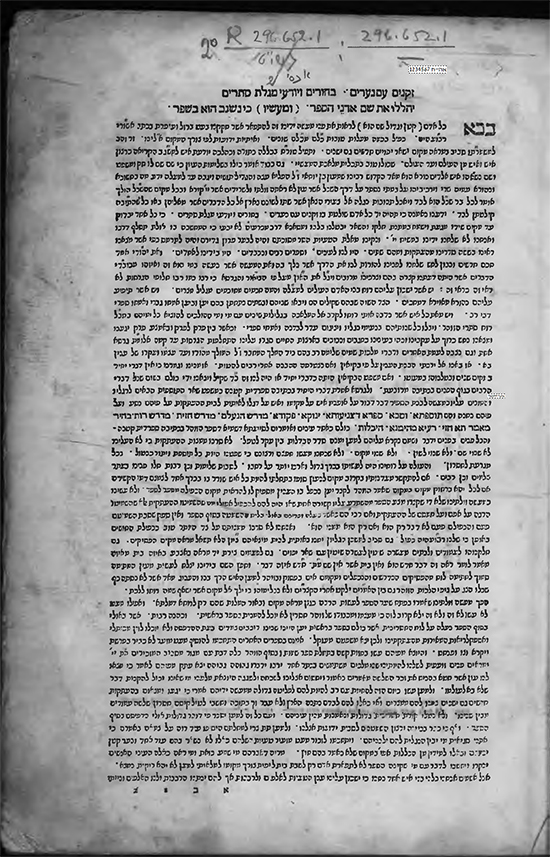
Graetz does not tell us how he knows that Eliano wrote the introduction, and I find it difficult to believe that this is the case. As we can see from the last page of the Cremona edition (printed above), a Jew was also involved with preparing the text for publication. So why not assume, with Isaiah Tishby,[27] that the Jew wrote the introduction, which is a typical pious introduction that one would expect for the Zohar?
In fact, there is evidence that Eliano did not write it. Avraham Yaari called attention to the fact that in the introduction it subtly tells us that there are printing errors because the book was also prepared for publication on Shabbat, a time when Jewish proofreaders would not be able to examine it.[28]
וחסרון חלוף או השמטת אות יוכל להמנות על היות דבר הדפוס נחוץ לכל שומרי שבת כהלכתה ודל.
The word נחוץ here means something along the lines of “harried”. (See I. Sam. 21:9, for the use of the word in the Bible, which has a different meaning than in modern Hebrew.) He is saying that the reason there are mistakes in the text is due to the problems confronted by shomer Shabbat proofreaders (who do not work on Shabbat). In other words, the mistakes in the text are due to the one who did work on Shabbat. Such a line, criticizing the proofreader who worked on Shabbat, could not have been written by the apostate Eliano. On the contrary, it must be seen as directed against Eliano. This is an important point which I have not seen anyone make. There is another point which no one has made, and that is that on the second line of the introduction the author left an allusion to Eliano:
ואותיות ידועות לפי צורך המקום אלינו
Another book Eliano was involved with was Hizkuni,[29] printed in Cremona in 1559.[30] Here is the last page of the book which states:
הוגה ברוב העיון עי הבחור ויטוריו אליאנו נכד ראש המדקדקים החר אליהו בחור אשכנזי סגל זצל

While on the topic of apostates and the Zohar, here is another interesting point. The Soncino Press of London published a translation of the Zohar. For some of this translation they had the assistance of Paul Levertoff. Here is the title page of one of the volumes.

What makes this so significant is that Levertoff, who began life as a Habad Hasid and later studied in Volozhin, was an apostate.[31] If you search on the internet you will find that Levertoff continues to have a real influence among Messianic Jews.
I find it astounding that the Soncino Press, which was identified with British Orthodoxy, chose to collaborate on the Zohar translation with an apostate, especially an apostate who was a “true believer,” not simply an opportunist like Daniel Chwolson. Supposedly, late in life Chwolson was asked what he came to believe that led him to adopt Christianity. He replied: “I believed that it was better to be a professor in St. Petersburg than a melamed in Anatevka [insert whatever shtetl name you wish].” He also famously said about himself, punning on the words from the Yom Kippur liturgy,[32] “Ve-Akhshav she-Notzarti [= converted to Christianity] ke-Ilu lo Notzarti.”[33]

________________
[1] See Excursus.
[2] See Ha-Pardes (January 1953), p. 52.
[3] Shlomo Kohen, Pe’er ha-Dor, vol. 1, p. 191. As far I as I know, the report in Asher Rand, Toldot Anshei Shem (New York, 1950), p. 62, that R. Rosen and the Hazon Ish established a yeshiva together, is without foundation.
[4] Orhot Rabbenu (2014 edition), vol. 5, p. 138. This source does not mention which volume of Nezer ha-Kodesh it was, but the volume on Zevahim was the only one printed in Vilna. Since R. Rosen was living in the United States, this explains why it would have been much more convenient for for the Hazon Ish to do the proofreading. According to Cohen, Pe’er ha-Dor, vol. 1, p. 270, some of the material in the book in brackets is from the Hazon Ish. Cohen also states regarding these comments:

רובן פותחות במיהו” ולפעמים צויין בראשיתיבות שור (שוב ראיתי). כששאלו אותואיך זה תואם את האמתהשיב החזוןאיש באירוניהלא שוב ראיתי“, כי אם שוב וראה“.
For מיהו see pp. 69, 82, 88. For שו”ר see pp. 84, 86.
[5] See Entzyklopedia shel ha-Tziyonut ha-Datit, vol. 5, cols. 597-598.
[5a] It could be that עיני is not to be read with full stress on the ע, but only a partial stress, with the real accent on the connected word כל (in the Aleppo Codex עיני is joined to כל with a makef). Yet there certainly is no accent on the נ of עיני. See R. Yedidyah Solomon Norzi, Ma’amar ha-Ma’arikh in Norzi, Ha-Nosafot le-Minhat Shai, ed. Zvi Betser (Jerusalem, 1997), pp. 97ff.
[6] Chanting the Hebrew Bible: The Art of Cantillation (Philadelphia, 2002), p. 105 n. 14, 107. See also ibid., p. 233 n. 2, and Mordechai Breuer, Ṭaʻamei ha-Miḳra be-Khaf-Alef Sefarim u-ve-Sifrei Alef-Mem-Taṿ (Jerusalem, 1982), p. 19.
[7] See the Jerusalem, 2005 edition, p. 534. 

ומשום הכי איתא פסיקכדי שלא נפרש דמשום הכי מיאן בשביל ויאמר וגו‘”, אבל הפסיק מלמד שהמיאון היה בפני עצמו.

This comment was not part of the original commentary but was added later by the Netziv. In this edition, the editors have inserted the comment in the text of Ha’amek Davar, but inside brackets that look like this {} to show that it is a later addition.

[8] Lekah Tov, ed. Buber, p. 198.

[9] Da’at Torah: Bereshit (Jerusalem, n.d.), p. 230.
[10] Shem mi-Shemuel (Jerusalem, 1992), parashat Va-Yeshev, p. 69.
[11] Torah Shelemah (Satmar, 1909), vol. 1, p. 179a.
[12] Birkat Eliyahu (Jerusalem, 2007), vol. 1, p. 260.
[13] The word נבח, which literally means “bark” (see Isaiah 56:10, Eruvin 86a), had an anti-Christian connotation in medieval Hebrew. See Eli Yassif, ed. Sefer ha-Zikhronot (Tel Aviv, 2001), p. 404 n. 87; Daniel Goldschmidt and Avraham Frankel, eds., Leket Piyutei Selihot me-et Paytanei Ashkenaz ve-Tzarfat (Jerusalem, 1993), vol. 1, p. 398. Thus, in Maoz Tzur the “blaspheming foe” refers to the Christians.
R. Shlomo Fisher, Derashot Beit Yishai (Jerusalem, 2004), p. 234 writes:
ויבואר עפ כל זהדברי הפייטן בזמר לחנוכהתכון בית לתפלתי ושם תודה נזבחלעת תכין מטבח מצר המנבחדהיינו טביחת היצהר
This would make a very nice derashah on Hanukkah, and had Hertz known of it, he could have offered this perspective in his commentary and kept the original version of the song. Yet in its historical context, this is hardly what the author is referring to. Similarly, R. Raymond Apple is not correct when he writes that the words refer to “the defeat of Gog and Magog who will attempt to overcome Israel before the coming of the Messiah.” See here. When Maoz Tzur speaks of the destruction of the “barking [i.e., blaspheming] foe,” it is referring to a real flesh and blood enemy of the Jewish people, which in the medieval Ashkenazic context means the Christian world. The word “barking” is used in this song as throughout pre-modern Jewish literature dogs were portrayed in a negative way. See also here.
[14] I do not know why ArtScroll capitalizes “Altar”.
R. Meir Mazuz recently commented that while Maoz Tzur is a wonderful song, “it contains small [grammatical] errors, as is the practice with the Ashkenazim who do not know Hebrew well.” Bayit Ne’eman, no. 139 (30 Kislev 5779), p. 1 n. 1. One example he gives is לעת תכין מטבח מצר המנבח. It should say לצר המנבח. He adds:
מאיפה אני לומד את זהמפסוק בישעיה הכינו לבניו מטבח בעוון אבותם” (יד כא), לא מבניו אלא לבניו.
Regarding Hanukkah, I recently found that R. Naphtali Zvi Judah Berlin suggests the possibility that when the Maccabees entered the Temple they did not light the menorah, as we are accustomed to think, but rather only lit one candle. See Ha’amek She’alah, Va-Yishlah, no. 24, p. 173:
ולכאורה הי‘ אפשר לומר שלא היו מדליקים אז במנורה כלל . . . ואכ הי‘ מקום לומר שלא השתמשו באותם שמונה ימים במנורה כלל משום שלא הי‘ להםוהדליקו באותו פך הטהוראו בכלי גללים וכלי אבנים וכלי אדמהואכ לא הי‘ אלא נר א‘ כדי לקיים להעלות נר תמיד

Also of interest is R. Joseph Messas, Otzar ha-Mikhtavim, vol. 2, no. 1305, who cites midrashic sources that there will not be a menorah in the future Temple.

 
I have vocalized the title of the Netziv’s book as Ha’amek She’alah, which is how scholars have been accustomed to write it, based on Isaiah 7:11 where these words appear.
However, Gil S. Perl argues that the correct pronunciation is Ha’amek She’elah. As he puts it, if the pronunciation in Isaiah was intended, “the title would mean ‘sink to the depths,’ the ‘depths’ (from the word she’ol) being a reference to the netherworld or Hell—a rather strange title for a work of halakhic commentary.” Perl therefore suggest that the Netziv “intended his title as a play on those words from Isaiah pronounced Ha’amek She’alah, meaning ‘delve into the question’ or perhaps ‘delve into the She’ilta.’” See Perl, The Pillar of Volozhin (Boston, 2012), pp. 17-18, n. 37.
[15] Regarding how Maoz Tzur appears in British siddurim, see John D. Rayner, “Liturgical Emendation: The Case of the Ma’oz Tzur,” available here.
[16] For more on the new RCA siddur and women, see the anonymous post here.
[17] The Tishbi was first printed in Isny, Germany in 1541. It is one of the first Jewish books to cite biblical passages by chapter. As most people know, the chapters are a Christian innovation. According to Abraham Berliner, the first Jewish scholar to publish a book using the chapter divisions was R. Isaac Nathan, who published a biblical concordance between 1437 and 1448. See Berliner, Ketavim Nivharim (Jerusalem, 1969), vol. 2, p. 134. On this page Berliner also writes:

החלוקה לפרקים של כל ספרי המקרא נתקבלה ונתפשטה רק עם הדפסת המהדורה השניה של המקראות הגדולות (ויניציא רפד).
Yet the first edition of the Mikraot Gedolot, published in Venice, 1518, is on Otzar ha-Hokhmah, and you can see that it too has the chapter divisions.
[18] See Heinrich Graetz, Geschichte der Juden (Leipzig, 1907), vol. 9, p. 320; Encyclopaedia Judaica, vol. 6, col. 615; Meir Benayahu, Ha-Defus ha-Ivri bi-Kremona (Jerusalem, 1971), pp. 95ff.. For sections of an autobiography written by Battista, in which he describes his apostasy, see Isaiah Sonne, Mi-Paʾulo ha-Reviʻi ad Piyus ha-Hamishi (Jerusalem, 1954), pp. 150-155.
[19] See Amnon Roz-Krakotzkin, The Censor, the Editor, and the Text: The Catholic Church and the Shaping of the Jewish Canon in the Sixteenth Century, trans. Jackie Feldman (Philadelphia, 1007), pp. 42-43.
[20] Cecil Roth, The History of the Jews of Italy (Philadelphia, 1946), p. 291.
[21] See Roth, The History of the Jews of Italy, p. 292. For detailed discussion of this matter, which shows all the other factors that were present, see Kenneth Stow, “The Burning of the Talmud in 1553, in the Light of Sixteenth Century Catholic Attitudes Toward the Talmud,” Bibliothèque d’Humanisme et Renaissance 34 (1972), pp. 435-459.
[22] Regarding Allessandro Franceschi, another sixteenth-century Italian apostate who supported the printing of the Zohar, see Yaakob Dweck, The Scandal of Kabbalah (Princeton, 2011), pp. 166-167.
[23]  Marvin J. Heller, The Sixteenth Century Hebrew Book (Leiden and Boston, 2004), vol. 1, p. 503.
[24] See Yitzhak Yudelov, “Al Sefarim, Madpisim, u-Mo”lim,” in Yosef Eliyahu Movshovitz, ed., Ha-Sefer (Jerusalem, 2008), vol. 2, p. 557 n. 22.
[25] Ha-Defus bi-Kremona, p. 97.
[26] Geschichte, vol. 9, p. 345.
[27] “Ha-Pulmus al Sefer ha-Zohar,” Perakim 1 (1967-1968), p. 147 n. 54.
[28] Mehkerei Sefer (Jerusalem, 1958), pp. 170-171. Yaari also mentions other Hebrew books that were printed on Shabbat.
[29] Regarding how חזקוני is to be pronounced, see my post here.
[30] For other examples of Hebrew books whose printing Eliano was involved with, see the index of both Roz-Krakotzkin, The Censor, the Editor, and the Text and Benayahu, Ha-Defus ha-Ivri bi-Kremona.
[31] See Elliot R. Wolfson, “Paul Philip Levertoff and the Popularization of Kabbalah as a Missionizing Tactic,” Kabbalah 27 (2012), pp. 269-320. On p. 272, Wolfson states that Levertoff received semikhah from R. Naphtali Zvi Judah Berlin. He provides no evidence for this assertion so I cannot judge its accuracy. As far as I have been able to determine, Levertoff never received semikhah.
[32] The passage originates in the Talmud, Berakhot 17a, where it is attributed to Rava, and Yoma 87b, where it is attributed to R. Hamnuna.
[33] See Zvi Hirsch Masliansky, Memoirs, trans. Isaac Schwartz and Zviah Nardi (Jerusalem, 2009), p. 138.


Screen for the Spirit, Garment for the Soul

Screen for the Spirit, Garment for the Soul
by Josh Rosenfeld
Josh Rosenfeld is the Assistant Rabbi at
Lincoln Square Synagogue and on the Judaic Studies Faculty at SAR High School.
This is his third contribution to the Seforim blog. His first essay, on “The
Nazir in New York,” is available here, and his second essay, “The Princess and I: Academic Kabbalists/Kabbalist
Academics,“ is available here.
ב״ה
אור לנר
ג׳, חנוכה ה׳תשע״ו
            Recent years have
witnessed a remarkable trend in the widespread study of Hasidic texts within
Orthodox communities that themselves do not self-identify as traditionally
Hasidic. Whether in much-discussed Modern Orthodox neo-Hasidic circles or
amongst the National-Religious in Israel, Hasidic texts canonical and obscure
merit serious teaching, engagement, and even reverence in these communities.
One of the earliest expressions of this trend was the introduction of such
texts into the curricula of Hesder Yeshivot, and arguably the man most
responsible for this was R. Shimon Gershon Rosenberg (Shagar; 1949-2007).
R. Shagar began his career in the Hesder Yeshivot first as a student
at Yeshivat Kerem b’Yavneh, eventually returning from the Yom Kippur war to
become a popular RaM at Yeshivat
Hakotel, even filling in as interim Rosh ha-Yeshiva when R. Yeshayahu Hadari
took a sabbatical. R. Shagar, known as a Talmudic prodigy, branched out to both
found and direct other institutions on the cutting edge of the National
Religious educational framework, such as Beit Midrash Ma’aleh and Beit Morasha,
and finally, Yeshivat Siach Yitzchak in Efrat, with his longtime friend and
study partner, R. Yair Dreyfuss (1949- ). After a difficult period of
suffering, R. Shagar passed away from Pancreatic cancer on June 11, 2007, a
month after the announcement of a committee to begin preparing his voluminous
writings for publication.
R. Shagar wrote and taught on a level characterized as “extremely
deep”, and despite the resurgence of interest and posthumous publications of
his writings, a close student of his once told me “it was not always such a
great honor to be counted amongst his students.” There was some opposition to
some of his ideas, especially those relating to education and Talmud
pedagogy.[1] R. Shagar’s writings exhibit a sustained engagement with, in my
opinion, three central themes: postmodernism and its challenge to traditional
religion, spirituality and faith in the Modern Orthodox and National Religious,
and the development of a viable language, a discourse
– based upon traditional texts – to think and talk about the aforementioned
themes. R. Shagar’s writings are as quick to quote R. Schnuer Zalman of Liadi
as Slavoj Zizek, the Slovenian cultural critic and philosopher.
For English speakers, much of R. Shagar’s oeuvre remains a closed
book,[2] despite the rapid pace with which new material of his – developed from
the reportedly hundreds of files he left behind – is being published, and the
resurgence in his popularity in Israel. Despite that, a few articles and
introductions to his thought have appeared in English.[3]
What follows is an attempt at translation of an excerpt from one of
the most recent of R. Shagar’s works, To
Illuminate the Openings
(להאיר את הפתחים).[4]
The book is primarily a collection of R. Shagar’s discourses on the holiday of
Hanukkah, part of the “For This Time” (לזמן הזה)
series of R. Shagars derashot on the
cycle of Jewish holidays and festivals.[5]
This particular essay, “Screen for the Spirit, Garment for the Soul”
is an expansion and presentation of R. Schneur Zalman of Liadi’s[6]
phenomenological discourse on the candles of Hanukkah. R. Shagar uses the
language of philosophy, Maimonides, and Lacanian psychoanalysis to explain the
two religious paths that R. Schneur Zalman sees as represented in the candles,
wicks, and flames of Hanukkah. In doing so, a rich tapestry of religious
thought is woven, with R. Shagar characteristically bringing such diverse
thinkers as the founder of Chabad Hasidism and Professor Yeshayahu Leibowitz in
conversation with each other.[7]
“Screen for the Spirit, Garment for the Soul”
{A Translation and Annotation of R. Shimon Gershon Rosenberg, “To
Illuminate the Openings” (Machon Kitve ha-Rav Shagar: Efrat, 2014),
53-61}[8][9]
כִּי אַתָּה תָּאִיר
נֵרִי יְהוָה אֱלֹהַי יַגִּיהַּ חָשְׁכִּי (תהילים י״ח, כט).
כִּי נֵר מִצְוָה
וְתוֹרָה אוֹר (משלי ו׳, כג).
נֵר יְהוָה נִשְׁמַת
אָדָם (שם כ׳, כז).
The Soul and the Commandment
There is a well-known custom of many Hasidic
rabbis on Hanukah to sit by the candles after lighting and to meditate upon
them, sometimes for hours. This meditation washes over the spirit and allows
the psyche to open up to a whole host of imaginings, gleanings, thoughts, and
emotions – that afterward blossom into the ‘words of the living God’, to use
the Habad formulation. Therefore, it is instructive for us to look at the
physical entity, the elements of the candle and its light as crucial elements
in the development of these words of exegesis – the meditation upon the
candlelight. For example, in one stage of the discourse of R. Schneur Zalman of
Liadi[10] (1745-1812; henceforth, Admor ha-Zaken) that we shall discuss, Admor
ha-Zaken distinguishes between two different types of light emanating from the
candle: and the fact of the matter is
that the candle consists of both the oil and the wick – two types of light: a
darkened light directly on the wick, and the clarified white light
.[11]
This differentiation acts as a springboard for a discourse upon two pathways in
religious life. To a certain extent, it is possible to posit that the discourse
is the product of the Admor ha-Zaken’s meditation upon the different colors of
light in the candle’s flame, and without that, there would be no discourse to
speak of.
The motif of the candle and the imaginings it
conjures are a frequent theme in scripture and in rabbinic writing – The Mitzvah Candle; Candle of the Soul; The
Candle of God
– in its wake arise many Hasidic discourses seeking to
explain the relationship between ‘The Soul’ [נר נשמה]
and ‘The Commandment’ [נר מצוה], and between ‘The
Commandment’ and God [נר ה׳]. In our study of
the discourse of the Admor ha-Zaken, we will most importantly encounter the
tension between the godly and the commanded – the infinitude of the divine as
opposed to the borders, limits, and finitude of the system of commandments [תרי״ג מצוות]. However, prior to doing so, we will
focus our attention for a moment on the tension between the soul and the
commandment – the internal spiritual life of the believer relative to the
externalized performance of the commandment.
The emergence of Hasidism brought to the fore
the following challenge – does the fact of an increased individual emphasis
upon internal spiritual life mean that they will of necessity distance
themselves from the practical framework of Halakha? In a different formulation,
does the focus of Hasidism upon the ‘soul-candle’ mean that the light of the
‘commandment-candle’ will be dimmed? The tension between the two is clear: one’s
obligation to do specific things affixed to specific times stands in opposition
to one’s attunement with and attention to their own inner voice. Our own eyes
see, and not just in connection with Jewish religious life, but that when one
prefers their own personal truth, they do not behave according to the dictates
and accepted norms of society at large. For example, one who desires to be
‘more authentic’ may be less polite, as the rules of etiquette are seen as
external social constructions that dull one’s inner life. Similarly, for this
type of individual, when it comes to Halakha, it will be approached and
understood as a system that holds him back from his own truth, and not only
that, but it sometimes will be perceived as a lie: from a Halakhic point of view,
he must pray at specifically ordained times, but in his heart of hearts he
knows that right now his prayers will not be fully sincere – but rather just
‘going through the motions’. Must this individual now answer the external call
to prayer, or should they rather hold fast to their inner calling, thereby
relaxing the connection to the outer Halakhic reality?[12]
In truth, this question has yet another
dimension, within which we may be able to sharpen our understanding – the chasm
between objective and subjective experience. Should an individual seek out ‘The
Truth’ through their own subjective experience, or should they rather find it
in the absolutist objective realm of reality? Once a person apprehends ‘The
Truth’ as a construction of their own subjective internal experience, the
concept of truth loses its totality and becomes relativized. Truth instead
becomes dependent upon one’s specific perspective, their emotions, feelings,
and personal experiences. In this sense, Halakha is identified with the absolute
and fixed sphere of reality – within which God commanded us, and this type of
relativism is untenable in relation to it. (א)
It is possible to argue that the ideal state
is when the internal, personal truth is identified with the objective, external
truth.[13] The meaning of this situation is that on one hand, the individual’s
internal life is strong, on fire, and yet his sense of obligation to this
internality is unassailable. This leads to a perspective where the inner life
is understood as objective reality, absolute. A person in this type of
situation loses their sense of relativity and their inner directives obtain the
strength of an outside command, possessing no less force of obligation or
truth.
The problem with the situation within which we live is that our inner lives lack
strength and force; Our inner lives are prone to ups and downs, steps forward
and back. Because of the dullness of our internal lives, they are susceptible
to all kinds of outside influences, and thus there is a subsequent lack of
authenticity. This is the reason the Shulhan
Arukh
– not internal spirituality – is the basis for our religious
obligations, it is the absolute cornerstone of our lives.
To be sure, divine truth is revealed on a
number of different levels and planes in our lives, and it is forbidden for an
individual to think that this truth is obtainable only in one dimension – not
in the internal or external life alone. An encompassing, total reality takes
both lives into account and unifies them – both the internal and external;
however, in an incomplete, non-ideal reality, to every dimension and
perspective there are benefits and detriments, and we ignore either at our own
peril. To this end, our rabbis taught us that we must serve God through both
‘fear’ [יראה] and ‘love’ [אהבה]:
and so Hazal said, serve out of fear,
serve out of love
.'[14]
Admor ha-Zaken
Until now, we have seen the apposition between
the mitzvah candle and the neshama candle, to wit – the conflict
between the formal Halakhic system and the unmediated spirituality sought by
Hasidism. This is a spirituality that has as a central prerequisite the
authenticity of action, an authenticity that stands in opposition to the fact
that the believer stands commanded to perform certain actions at appointed,
limited times. In his discourse for Hanukkah, Admor ha-Zaken deals with yet
another tension addressed by Hasidism, especially in the system of Habad
Hasidism: What is the connection of physical actions – the performance of the
commandments – with the metaphysical, spiritual ‘payoff’ they are supposed to
engender, such as an attainment of closeness with God?
Furthermore, the commandments, as they are
sensed and experienced through action, are part of the world of tangibility [יש] – the finite and created human reality.
Therefore, what connection can these have with faith in the divine infinity? As
it appears, the progression of the Admor ha-Zaken is a dialectical approach:
one on hand, he presents the commandments in a strictly utilitarian manner without
any truly inherent value, but on the other, it is this very groundedness of the
commandments in our reality that accords to them their roots in the pure divine
will:
It is written: ‘A Mitzvah is a candle and
the Torah is Light,’ that the Mitzvot are called ‘candle.’ And it is also
written: ‘the candle of God is the soul of Man’, that the soul is called
‘candle’. And in the Zohar it is explained that the Mitzvot are called
‘garments’… and in order to be fully clothed, the soul must fulfill all 613 Mitzvot…
and to explain the matter of the soul’s garments…
[that]
there are boundless illuminations… for there are countless understandings of
the light and the glow, which is an emanation of the infinite light of
[God] Blessed
be He…
The delights that derive from the
infinite light, which is the source of all delights, are without end. Just as
we perceive with our senses even… physical delights are also without measure,
for there are infinite ways to experience pleasure… Because of this, the soul –
which is in the aspect of the finite – is unable to fully apprehend the
revelation of this glow, which is the very being of the divine, except through
a garment – a filter – and through that garment and filter
[the soul] is able to receive the light and the glow.[15]
The soul requires ‘garments’, for without
these garments and filters, there is no comprehension. I will try to explain
what I mean here: for example, when we speak of ‘eternal memory’ [זכרון נצח], are we talking about remembering the
content of that person’s life, as if we are recording into a computer a
reporter’s notes that are now being entered into the system? Of course that is
not what we are referring to. All these moments of a person’s life are
‘garments’, a medium for the real
that occurred in them. This real is
not something specific, not a definable factor, but rather is the thing that
grants meaning to the content of those experiences, even though it itself is
undefinable.[16] Thus, ‘eternal life’ is life that retains with it the meaning
of these experiences – something which can never be quantified or simply
entered into a computer.[17]
This undefinable thing that grants meaning,
the ‘lifeforce’ to everything else, is what Admor ha-Zaken calls the ‘glow of
the infinite light’ [זיו מאור אינסוף].
It is not simply ‘meaning’, but rather the ‘meaning of all meaning’. In the
discourse before us, as well as in other discourses of his, Admor ha-Zaken
draws a line, a parallel, between this glow and the actual substance of delight
and pleasure that in our world always appears via a medium, some physical
object. Pleasure will never materialize in this world in its pure state – like delight in the earthly realm that
always devolves from something outside it, like when we take pleasure in some
delicious food or in the study of some wisdom
.[18] If so, the commandments
are garments through which our world obtains its substance and standing – its
meaning. In the language of Admor ha-Zaken, the commandments act as a conduit
for the infinite light to penetrate into our world. That is to say, the
commandments as an entire system of life form a space within which a person may
experience the eros of true meaning. (ב)
Through them, an individual may feel alive, that is sensations of satisfaction,
excitement, longing, the joy of commandment, and intimacy – all these we may
incorporate metonymically into the word ‘light’ or ‘holiness’, that which Admor
ha-Zaken would call ‘delight’ or ‘pleasure’.
In order for this light to be apprehended, it
must be garbed in the outer trappings of the commandments. This is to say, that
the commandments themselves are not the essence of the light and de-light, that
they are not the meaningful point of existence, but rather only a garment, that
receives its light only by dint of the fact that the subjective experience of
holiness and pleasure are felt through it. As Admor ha-Zaken explains in the
discourse we are studying: behold, the
Mitzvah act… is not the way of the divine infinite light to be infused in them
[Mitzvot] unless it is through… the Godly soul itself that performs the Mitzvah,
and draws forth through them a revelation of the divine infinite light. As it
is written
[about Mitzvot]: ‘that the individual shall perform them’ –
that it is the individual that makes them into Mitzvot, in drawing forth
through them the infinite light
.[19]
The Source of The Commandments
To be sure, it is possible to say that any way
of life or cultural system is but a garment for the infinite light, for it is
this system which bears the weight of the meaning of life and the essence of
reality [for its adherents]. An individual experiences life through cultural
constructs and the social systems – especially the most critical ones such as
love, longing, lower/higher fears, loyalty, etc. – all these things grant to
life meaning and purpose, something we wouldn’t trade for anything. Therefore,
in Hasidism, recognition of this truth is related to the fact that the world
was created through ‘ten utterances’ [עשרה מאמרות] – that is to say, even without a specifically
religious language, such as the ‘ten
statements’ [עשרת הדיברות] through which the divine light is
revealed. For Admor ha-Zaken’s part, there remains a difference between these
systems and the system of the commandments: while it is true that the
commandments are a ‘human system’, ideally/from their very inception they are
rooted in the infinite reality from which they devolved. At this point, Admor
ha-Zaken ceases to see the commandments as merely a garment or tool alone, but
rather that they themselves represent constitute a direct encounter with the
presence of the divine in our reality. This is to say that the commandments are
a system meant to signify and symbolize the infinite itself.[20] They don’t
simply give expression to it, but direct us to it as well. How do the
commandments symbolize? As a system, they point to the divine will itself, for
as a closed system, they lack resolution, purpose. One might even say that it
is not that we have here a symbol signifying something that we are meant to
understand, but rather that the signified is incomprehensibility itself, the ‘void within the void’ [חור שבחור]. In order to understand these things, we
must pay attention to the differentiation Admor ha-Zaken makes between ‘the
infinite light’ [אור אינסוף] and the ‘essential
will of the infinite light’ [עצם רצון אא״ס]
:
It is impossible for the essential will
of the infinite light to be revealed to any created being, unless that divine
will is embodied in some physical act, the performance of the Mitzvah… and the
root of the Mitzvot is very lofty, rooted in the uppermost realms of the
supernal crown, ‘Keter’… until it devolves into our realm through physical
actions and things, Tzitzit and Sukkah, and it is specifically in these things
that the divine will is revealed, ‘the final in deed is first in thought’
[סוף מעשה במחשבה תחילה]… In action heaven was [created] first… but
in thought physicality came first… for the light is revealed from the aspect
of divinity that encompasses all realms… Thus the performance of Mitzvot,
whose root lies in this encompassing aspect of divinity – the supernal ‘Keter’
– cannot be expressed below in the aspect of ‘inner light’
[אור פנימי],
[in finite and internal experience], but rather must find their expression in
exterior, physical actions, as it is well known that that which in its essence
is more lofty and elevated falls to the deeper depths.
Therefore, through the performance of
Mitzvot, there is created a covering, an encompassing screen, so that through
the Mitzvot the [soul] may be able to delight in the delight of the infinite
light…
[21]
Admor ha-Zaken locates in the commandments a
type of dual identity based on the system he constructs: as a garment [לבוש], they are only a vessel through which the
infinite divine light finds expression – the delight of the soul, holiness, all
that is perceived as the essence of this world. The commandments themselves are
not the inner aspect of life but rather a medium for this interiority. On the
other hand, Admor ha-Zaken identifies them with the ‘encompassing’ lights [מקיפים]; a reality that cannot be truly
apprehended or experienced within ours. This is to say that the root of the
commandments are as vessels, conduits of a reality beyond ours – ‘the essential
will of the infinite light’. Manifest in this is a classic HaBaD teaching,
which Admor ha-Zaken formulates thusly: that
which in its essence is more lofty and elevated falls to the deeper depths
.
We locate the root of the commandments, which in reality are purely utilitarian
and without their own essential, inherent meaning, in the very essence and core
of the divine.
The claim of Admor ha-Zaken is that the source
of the commandments is to be found in the the divine will itself. The meaning
of the commandments is not resolved through adhering to some system of rules,
some ethical or moral ideal, or some historical-progressive idea through which
they were conceived.[22] In the most simple sense, God ‘wanted’
commandments, and through this there developed a system with meaning and sense,
which we might call ‘wisdom’ [חכמה],
but that system does not fully define the will of the creator, nor is it necessary in the absolute sense. In the
aforementioned discourse, Admor ha-Zaken holds that the actual ‘end’ action
precedes the thought that somehow explains and gives it meaning, because in
truth it is the action, the physical performance of the commandment is affixed
to the divine will that warrants it to be done this particular way and no
differently – for no humanly discernable reason. This is the way of the divine
will, to ‘desire’ without dependence upon any externally motivating factor. One
might say that as they [the commandments] are affixed in the divine will, the
commandments as such signify a degree
of arbitrariness and happenstance.[23] The commandments serve as a reminder of
the ultimate unknowability of the divine will that tautologically ‘desires
because it desires’. This is also the reason why the commandments primarily
take the form of actions and not intentions. As actions, the commandments
manifest themselves as closed, sealed objects, their meanings not easily teased
out nor defined by the meanings attached to them – ultimately, there is just
the [darkness and] light and the delight that we are able to attain through it.
______
Notes:
[1] For example, see “Shnayim
Ohazin
: A Conversation Between R. Aharon Lichtenstein and R. Shagar”, Shma’atin Journal vol. 136 (Nissan
1998); also appearing in Meimad, Vol.
17, August 1999; see further the synopsis and translation by Rachel Schloss for
the Lookstein teacher’s resource archive here; See also questions posed to R. Uri Sherki,
a popular National Religious lecturer and teacher on the topic of R. Shagar and
postmodernism, here.
[2] Two of R. Shagar’s monographs have been released in English: Chance and Providence (פור היא הגורל), trans. Naftali Moses (Efrat: Yeshivat
Siach Yitzchak, 2005), 108 pp. and The
Human and the Infinite: Discourses on the Meaning of Penitence
(על כפות המנעול), trans. Naftali Moses (Jerusalem: Toby
Press, 2010), 88 pp.
[3] To my knowledge, the most extensive study of R. Shagar in English
to date has been conducted by Miriam Feldmann Kaye of the Van Leer Institute
and Hebrew University in Jerusalem. Dr. Kaye holds a PhD from the University of
Haifa, and her doctoral dissertation deals extensively with the encounter of
Judaism and postmodernism in the thought of R. Shagar and Tamar Ross. It is
forthcoming as Jewish Theology in a
Postmodern Age
published by The Littman Library of Jewish Civilization
[2017]. Kaye’s draft study, “Hasidic Philosophy in the Age of Postmodernism and
Relativism: The Case of Rav Shagar” was discussed at the March 2015 Orthodox
Forum, “The Contemporary Uses and Forms of Hasidut” chaired by R. Shmuel Hain
and R. Shlomo Zuckier. Hopefully Kaye’s fascinating paper will see light in the
upcoming volume of in the Orthodox Forum series.
Ilan Fuchs deals, inter alia,
with R. Shagar’s perspective on Torah learning for women and Orthodox feminism
in Women’s Torah Study: Orthodox
Education and Modernity
(Routledge press: New York, 2014), 209-220
See Alan Jotkowitz, “And Now the Child Will Ask: The Post-Modern
Theology of Rav Shagar,” Tradition 45:2
(2012); R. Yair Dreyfuss, “Torah Study in Contemporary Times: Conservatism or
Revolution?”, Tradition 45:2 (2012);
Admiel Kosman, “A Letter in Search of a Destination” [review of The Remainder of Faith] in Ha’aretz, 2/27/15, available here;
R. Zvi Leshem, “Book Review: B’Torato
Yehageh: Limud Gemara Kibakashat Elokim
,” available here;
Alan Brill has dedicated several fascinating posts to R. Shagar, his thought,
and its larger ramifications for Israeli society on his blog, ‘The Book of Doctrines
and Opinions’. A good starting point is his discussion of a curious film about
R. Shagar produced by the Ma’aleh film school, available here.
[4] l’Ha’ir et ha-Petahim
(Efrat: Makhon Kitve ha-Rav Shagar, 2014) 242 pp.
[5] Other volumes that have already been released include In the Shadow of Faith (בצל האמונה) on Sukkot, A Time for Freedom (זמן של חירות)
on Passover, and On That Day (ביום ההוא) on Israeli national holidays.
[6] In general, see Roman A. Foxbrunner, Habad:
The Hasidism of R. Shneur Zalman of Lyady
(Jason Aronson, 1993); Immanuel Etkes, Rabbi Shneur Zalman of Liady: The Origins of
Chabad Hasidism
(Brandeis University Press, 2015); Naftali Loewenthal, Communicating the Infinite: The Emergence of the Habad
School
, (Chicago: Chicago University Press, 1990).
[7] R. Shagar is accused of a certain naivete with regard to the
possibility and rigor of this type of thinking, see Kosman, idem. and see also
the editor’s introduction to R. Shagar, Luhot
ve-Shivrei Luhot
(Yediot Ahronot, 2013); 407 pp. for a discussion of the
autodidactic nature of R. Shagar’s engagement with general philosophy,
specifically postmodern thought.
[8] לכב׳ ראש השנה לחסידות יום שיחרור אדמוה״ז
זיע״א י״ט כסלו ה׳תשע״ו.
[9] Thanks is due to R. Eli Rubin for his insight and comments.
[10] R. Hershel Schachter once quipped that perhaps the name “Schneur”
was a portmanteau of שני אור (= two lights), in
the naming after two different people with the name “Meir” – quite appropriate
for one who was able to draw such deep meaning from even the two lights within
the candle’s flame.
[11] Torah Ohr, Miketz 33a.
[12] A prime example of this would be the controversy surrounding the
practice of postponing prayer times. During the formative years of Hasidism,
many Hasidic leaders (such as the the Seer of Lublin, The Holy Jew, and The
Kotzker Rebbe) held that in order to focus the heart properly for prayer it is
permissible to delay the time for prayer, despite violating the clear Halakhic
guidelines governing it in the Shulhan
Arukh
.
[13] Thus we reduce conflict between the soul-life and the
practical-life. See further torah no.
33 in Lectures on Likkutei Moharan
vol. 1, 295-310; torah no. 6, ad
loc., 68.
[14] Commentary of R. Ovadia Bartenura on the Mishnah, Avot 1:3. I
will point out, however, that it is basically impossible to impose upon someone
a completely external commandment, and so in this way even the ability to
follow an external command is a matter of personal prerogative, and therefore
related to the realm of personal freedom. This is to say that the internality
of a person itself transitions between many different phases – sometimes
appearing as the freedom to be unfree/limited and inauthentic.
[15] Torah Ohr, ad loc. 32d.
[16] We must differentiate between ‘sense’ and ‘meaning’ [english in
the original; JR]. As we shall soon see, ‘the glow of the infinite’ [that is to
say, the ‘spiritual background radiation’, the reflection of the infinite
source of light illuminating our moon-world; JR] is what gives ‘sense’ to
‘meaning’ [without it, the slip into nihilism begins; JR]. As long as ‘sense’
is completely attached to the level of content – words, actions, situations –
‘meaning’ becomes the internal, animating force behind these, granting these
things spiritual ‘weight’.
[17] There is a touch of autobiography here. R. Shagar worked
extensively on notes and files from his oeuvre, hundreds of which were saved on
his computer, from which the Institute for the Publication of the Works of R.
Shagar compiles, edits, and publishes his voluminous writings posthumously.
[18] R. Schneur Zalman of Liady, Likkutei
Torah
, addenda to Parshat Vayikra,
52a.
[19] Torah Ohr, ad loc. 33c.
[20] This may be likened to the Lacanian idea of the real. [see Jacques Lacan, Symbol and Language: The Language of the
Self
(Baltimore: The Johns Hopkins University Press, 1956); Dylan Evans, An Introductory Dictionary of Lacanian Psychoanalysis (London: Routledge,
1996), entry: “real”. JR]
[21] Torah Ohr, ad loc. pp.
32d-33a.
[22] The position of the Admor ha-Zaken here parallels in a certain
sense the positions of Yeshayahu Leibowitz with regards to the commandments.
See further R. Shagar, “Faith and Language According to the Admor ha-Zaken of
Habad,” Nehalekh b’Regesh, pp.
175-178.
[23] See R. Shagar, Pur hu ha-Goral;
32-37 (בענ׳ את יעקב אהבתי ואת עשו שנאתי).


Eliezer Brodt – The Origins of Hamentashen in Jewish Literature

The Origins of Hamentashen in Jewish Literature:
A Historical-Culinary Survey
By Eliezer Brodt

I. Introduction

As Jews, most of our holidays have special foods specific to them; and behind each culinary custom, lays enveiled the reasoning behind them. Shavuot brings with it a vast array of customary dairy delicacies – in some parts of the world, cheesecake is practically obligatory – not to mention different customs in regard to how and when to eat them. Rosh Hashanah in renowned for the different fruits and vegetables eaten as physical embodiments symbolizing our tefillot; Chanukah has fried foods (no trans-fats please); whether latkes sizzling in the frying pan, or the elusive Israeli sufganiyot (jelly doughnuts) seen for a month before but not to be found a minute after Chanukah’s departure, and on the fifteenth of Shevat a veritable plethora of fruits are sampled in an almost ‘Pesach Seder’-like ceremony. Of course, on Purim we eat hamentashen.

Hamentashen. Those calorie-inflated, Atkins-defying, doughy tri-cornered confections filled with almost anything bake-able. The Mishpacha reports that this year in Israel alone, an astounding 24.5 million hamentashen will be sold, weighing 1225 tons, and yielding an approximate 33 million NIS in sales.[1] The question that many will be asking themselves is “where did this minhag to eat hamentashen come from?”

Recently I started researching this topic; thus far (and I hope to find more) my results are as follows.

II. Origins

The earliest source I have located so far is in a liturgical parody from the seventeenth century, where it includes a reference to eating hamentashen.[2] In an 1846 cook book called The Jewish Manual by Lady Judith Cohen Montefiore we find a recipe for “Haman fritters.”[3]

R. Barukh ha-Levi Epstein, in his Mekor Barukh, relates the following interesting anecdote which highlights the importance his grandfather placed on eating hamentashen:

One year in the beginning of the month of Adar he [my grandfather] noticed that the bakeries were not selling hamentashen. When he inquired as to why this was so, he discovered that there was a shortage of flour. He promptly went ahead and gave the biggest bakers in the city a large sum of money to enable them to buy flour to bake hamantsashen.[4]

In a Nineteenth Century Lithuanian memoir again the import of hamentashen is apparent. The author recalls that “my sister spent the day preparing the baked delicacies of Purim. Most important were the hamentashen.”[5] A. S. Sachs in his memories on shtetl life notes that his “grandma would add a Haman-tash for the kiddies” in the meshloach manot.[6] Professor Simha Assaf, in an article describing Purim, also writes that people made special foods called hamentashen.[7] Shmarya Levin recollects in his autobiography with great detail the hamentashen:

The much-loved little cakes, stuffed with nuts and poppy seed, which are called ‘Haman’s ears’ – sometimes ‘Haman’s pockets’ – had been prepared for us in vast numbers. Their shape alone was a joy. They were neither round, like rolls, nor long, like the loaf; with their triangular shape they were like nothing else that we ate during the year. The stuffing was made of poppy-seeds fried in honey, but there was not enough of it, so we used to eat the cake cagily, in such wise that with every mouthful we got at least a nibble of honeyed poppy seed.[8]

We also find hamentashen being eaten in Amsterdam[9] and Jews from Bucharia, as well, make אזני המן, similar to hamentashen. [10] לאה אזני המן מנין is a comedy listed in Avraham Yari’s bibliographical listing of comedies.[11]

As we can see, the custom of eating hamentashen is widespread and common from at least the 17th century. In fact, R. Shmuel Ashkenazi pointed to some sources which may demonstrate that hamentashen were eaten even earlier. Ben Yehuda in his dictionary claims that as early as the time of the Abarbanel (1437-1508), hamentashen were consumed. The Abarbanel, discussing the food which fell from heaven, the Mon, describes these cakes as:[12]

וצפיחית הוא מאכל הקמח מבושל בשמן כצורת צפחת המים הנאכל בדבש והוא כמו הרקיקים העושים מן הבצק כדמות אזנים מבושלות בשמן ויטבלו אותם בדבש ויקראוהו אזנים

This sounds like our hamentashen although there is no reference to eating them on Purim. But R Ashkenazi pointed out to me that if this is the source, you might then be able to suggest that hamentashen was already eaten much earlier, as this piece of the Abarbanel is word for word taken from R Yosef ibn Kaspi who lived several hundred years earlier (Kaspi was born in 1298 and died in 1340)! Ben-Yehudah, in his dictionary also cites to a manuscript excerpt of a Purim comedy penned by R Yehudah Aryeh de Modena, where he writes יום שבו שלחן ערוך ומזומן בני ישראל הכו את המן יום שבו עשרת בניו תלו ואת תנוך אזניו אכלו and in the comments to this manuscript, it connects these foods to hamentashen.[13]

III. Ta’am ha-Hamentashen

Irrespective when the custom of eating hamentashen began, the question we need to now explore is why hamentashen, what connection do hamentashen have with Purim? Hayyim Schauss explains that in actuality the origins of the hamentashen are not Jewish, rather, we originally appropriated them from another culture. He explains that:

“the hamentashen are also of German origin. Originally they were called mohn-tashen, mohn meaning poppy seed and tashen meaning pockets and also signified dough that is filled with other food stuffs. The people therefore related the cake to the book of Esther and changed the mahn to Haman [due to its similarity]. In time the interpretation arose that the three cornered cakes are eaten because Haman wore a three cornered hat when he became prime minister to Ahasuerus. The three corners were also interpreted as a symbolic sign of the three patriarchs whose merit aided the Jews against Haman.”[14]

Another reason offered for eating hamentashen also deals with the meaning (more correctly a pun) of the word – hamentashen, because Haman wanted to kill us out and Hashem weakened him, preventing him from doing evil to us. Thus, the treat is called המן תש (Hamen became weakened). Eating these pastries is representative of our faith that the same result will befall all our antagonists.[15]

The next reason offered by Menucha u-Kedusha has to do with the pastry itself, more specifically, how the filling is hidden. Until the events which occurred on Purim, the Jews were accustomed to open miracles like those in their battle with Sisra, whereas the Purim miracle appeared to be through natural events – only Mordechai knew that this was a miracle. To remember this, we eat pastries that the main part – the filling – is hidden in the dough, similar to the miracle which was hidden in nature. The filling chosen was specifically zeronim (seeds – poppy seed – mahn) to remind us of Daniel having eaten only seeds (and not non-kosher food) while in captivity at Nevuchadnezar’s court. Furthermore, according to this source the triangular shape also has meaning. The Talmud (Megillah 19b) records a three way argument from where to start reading the megillah. As the halakhah is to follow all three opinions and start from the beginning, we cut the pastries in triangular shape to symbolize our accordance to all three opinions. Another reason mentioned in Menucha u-Kedusha for the filling is based on the writings of R. Moshe Alsheikh, who states the Jews did not really think they were going to get completely wiped out until Mordechai finally convinced them so. The possibility arises that Mordechai was afraid to keep on sending out letters, so pastries were baked and the letters hidden therein. These pastry-letters saved the Jews; in turn we eat filled pastries. This reason is a bit interesting for itself, but what is even more interesting is that he never calls the pastries hamentashen.[16] A possibility might be kreplach, meat filled pockets boiled in soup, but the theory is unlikely as kreplach are not something special eaten exclusively for Purim – we eat it other times such as Erev Yom Kippur and Hoshana Rabah.

R. Yaakov Kamenetsky offers yet another reason for eating hamentashen on Purim. As we eat the hamentashen and eating is a form of destroying the item being eaten. Therefore, in eating hamentashen, we are fulfilling the commandment (figuratively) of destroying Amalek we are eating Hamen.[17]

Yom Tov Lewinsky and Professor Dov New both suggest that the reason for eating the hamentashen is because the custom in the Middle Ages was to cut off the ears of someone who was supposed to be hung,[18] to remember that we eat pastries from which a part had been cut off. Another point mentioned both by these authors is an opinion that the filling in the pastries [this is specific to poppy seeds] is in remembrance to the 10,000 silver coins that Haman offered to contribute to Achashverosh’s coffers.[19]

Aside from the general merrymaking on Purim, there is also a long tradition of written fun. Specifically, since the famous Massekhet Purim of R. Kalonymus ben Kalonymus (1286-1328), there have been many versions of these type of comedies written throughout the ages. One such was R. Avraham Mor, Kol Bo LePurim (Lemberg, 1855), which is a complete sefer all about Purim written to be humorous. Included therein is a question regarding changing the way hamentashen should be made from a triangle to make them square shape! He answered that it would be terrible to make hamentashen square. If the hamentashen are square they would have four corners which in turn would obligate the attachment of tzitzet like any clothes of four corners.[20]

One last interesting point in regard to hamentashen can be found within Prof. Elliott Horowitz’s recent book-length discussion related to Purim[21] where he notes that as recent as 2002, a Saudi ‘scholar’ Umayna Ahamad al Jalahma claimed that Muslim blood can be used for the three cornered hamentashen.[22] Horowitz also notes that in middle of the Damascus affair in 1840, a work from 1803 was discovered which claimed that Christian blood was used in the ingredients for Purim pastries.[23] Again in 1846, Horowitz writes that “on the holiday of Purim it was claimed the Jews would annually perform a homicide in hateful memory of Haman, and if they managed to kill a Christian the Rabbi would bake the latter’s blood in triangular pastries which he would send as mishloach manot to his Christian friend.”[24] In 1938 the Jews were once again accused of murdering an adult Christian and drying his blood to be mixed into the triangular cakes eaten on Purim.[25]

Thanks to Rabbis Y. Tessler, A. Loketch and Yosaif M. Dubovick, and the two anonymous readers, for their help in locating some of the sources.

Sources:
[1] Mishpacha (27 Shevat 5767), 30.
[2] שתו אכלו אזני המן – Israel Davidson, Parody in Jewish Literature (New York, 1907), pg. 193; Davidson also suggests eating twenty-seven dishes on Purim (see p. 22).
[3] Lady Judith Cohen Montefiore, The Jewish Manual (London, 1846)
[4] R. Barukh ha-Levi Epstein, Mekor Barukh (vol 1, pg. 974)
[5] Pauline Wengeroff, Rememberings: The World of a Russian-Jewish Woman in the Nineteenth Century, ed. Bernard Dov Cooperman, trans. Henny Wenkart (University Press of Maryland, 2000), pg. 29.
[6] A. S. Sachs, Worlds That Passed (Jewish Publication Society of America, 1928), pg 229.
[7] Simha Assaf, Sefer Hamoadim, p. 29.
[8] Forward from Exile: The Autobiography of Shmarya Levin, ed. and trans. Maurice Samuel (Jewish Publication Society of America, 1967)
[9] Minhagei Amsterdam pg 149 # 12
[10] Yalkut ha-Minhagim, pg. 210
[11] Hamachazeh Ha-Ivri, p. 76 n.654.
[12] This source is also quoted in the Otzar ha-Lashon ha-Ivrit, however the editors simply describe it as a phrase from the Middle Ages (vol 1 pg 59).
[13] Parashat Beshalach, end of chap. 16; Though I was unable to pin-point the comedy, it might be the one called La Reina Esther; see Mark R. Cohen, The Autobiography of a Seventeenth-Century Venetian Rabbi: Leon Modena’s Life of Judah (Princeton University Press, 1988), p. 235.
[14] Hayyim Schauss, The Jewish Festivals (Random House, 1938; Hebrew, 1933), pg. 270. The source for the first reason can be found in Judah David Eisenstein, Otzar Dinim u-Minhagim (New York, 1917), p. 336, and for the last reason in Yitzhak Lifshitz, Sefer Ma’atamim (Warsaw, 1889), p. 86.
[15] Avraham Eliezer Hershkowitz, Otzar Kol Minhaghei Yeshrun (St. Louis, 1918), p. 131.
[16] R. Yisrael Isserl of Ponevezh writes in his Sefer Menucha u-Kedusha (Vilna, 1864), pg 271-272.
[17] Yaakov Michoel Jacobs, Bemechitzas Rabbeinu: Hagaon Rav Yaakov Kamenetzky, zt”l (Feldheim, 2005), p. 142.
[18] Yom Tov Lewinsky, Sefer Hamoadim (153-154); Dov New, Machanaim # 43; See also the forthcoming post at the Seforim blog about Hanging Haman.
[19] Ibid.
[20] R. Avraham Mor, Kol Bo LePurim (Lemberg, 1855), pg. 6.
[21] Elliott Horowitz, Reckless Rites: Purim and the Legacy of Jewish Violence (Princeton University Press, 2006)
[22] Ibid, pg. 9.
[23] Ibid, pg. 218.
[24] Ibid, pg. 219.
[25] Ibid, pg. 228.


The Origins of Hamentashen in Jewish Literature (Revisited)

The Origins of Hamentashen in Jewish Literature: A Historical-Culinary Survey Revisited*
By Eliezer Brodt

I. Introduction

As Jews, most of our holidays have special foods specific to them; and behind each culinary custom, lays enveiled the reasoning behind them. Shavuot brings with it a vast array of customary dairy delicacies – in some parts of the world, cheesecake is practically obligatory – not to mention different customs in regard to how and when to eat them. Rosh Hashanah in renowned for the different fruits and vegetables eaten as physical embodiments symbolizing our tefillot; Chanukah has fried foods (no trans-fats please); whether latkes sizzling in the frying pan, or the elusive Israeli sufganiyot (jelly doughnuts) seen for a month before but not to be found a minute after Chanukah’s departure, and on the fifteenth of Shevat a veritable plethora of fruits are sampled in an almost ‘Pesach Seder’-like ceremony. Of course, on Purim we eat hamentashen.

Hamentashen. Those calorie-inflated, Atkins-defying, doughy tri-cornered confections filled with almost anything bake-able. The Mishpacha reports that this year in Israel alone, an astounding 24.5 million hamentashen will be sold, weighing 1225 tons, and yielding an approximate 33 million NIS in sales.[1] The question that many will be asking themselves is “where did this minhag to eat hamentashen come from?”

Recently I started researching this topic; thus far (and I hope to find more) my results are as follows.

II. Origins

The earliest source I have located so far can be found in the first Jewish comedy called Ztachus Bedechusa Dekidushin. This play was written in Hebrew by Yehudah Sommo (1527- 1592) from Italy. He was a friend of R. Azariah Men Hadomim and is even quoted in the Meor Eynamim (at the end of chapter eighteen). This comedy was written for Purim as he writes in the introduction:

הוא ספר חדש מדבר צחות אשר בדה מלבו פ’ בימי בחרותו לצחק בו בימי הפורים ובשעת חדוה

In one of the scenes the following conversation take place:

יאיר: אם בדברים כאלה אכפרה פניו, כבר יש לי קושיא אחת אשר ייעפו כל תוספי התורה להתירה, כי הנה כתוב במגלת פורים “ויתלו את המן” ובפרשת בלק נכתב בפירוש “ויאכלו בני ישראל את המן”. ואיך יאכלו היהודים הנשמרים מכל רע את נבלת התלוי ההוא ואל הכלב לא ישליכו אותה?

יקטן: גם זה ראיתי אני וכבר תרץ הקושיא הזאת רב בלעם בן בבי בשם אביו: כי מה שאמרה התורה “ויאכלו את המן” היא אזהרה וציווי לנו שנאכל בימי הפורים האלה מאזני המן – הן המה הרקייקם הנעשים בסולת בלולה בשמן, וזהו שאמר אחרי כן “וטעמו כצפיחית בדבש”.

יאיר: יפה פירוש בן ביבי זכור לטוב!

Professor Schirman who printed this play from manuscript notes that רב בלעם בן בבי is the name of one of the characters in the Massekhet Purim of R. Kalonymus ben Kalonymus. [2] In connection with Yehudah Sommo’s play, it is possible to understand an engmatic statement in the Tishbi. Specifically, R. Elijah Bocher writes:

ערך “מנלן”- מנלן להמן מן התורה שנאמר ויאכלך את המן, גם זו מלה מורכבת מן ב’ מלות אן ולן
R. Yeshaya Pick in his notes on the Tishbi asks, the Gemarah in Chulin which asks this same question has a different source for Haman min Hatorah where does the Tishbi get this Chazal from? He suggests that maybe he had different chazal which we do not have. However in the new edition of Tishbi they printed notes of R. Mazauz who suggests that it is highly probable that there was no such Chazal rather the Tishbi was referring to the famous lezunuot about eating hamntashen. This suggestion is all the more probable after seeing the words of Yehudah Sommo in his play written a little after the Tishbi.[3]

The next source I have located is in the poetry of the brothers Yakov and Emanuel Pranosish (1618- 1703) in one piece [4] they write:

אמנם נזרק העט ונקצר ענינים,

כי יום פורים זה בא, נכין לו מעדנים,

נכין מרקחות ממתקים מכל מינים,

נגדיל אזני המן מאזני השפנים,

Ben-Yehudah, in his dictionary also cites to a manuscript excerpt of a Purim comedy penned by R. Yehudah Aryeh de Modena, where he is supposed to mention this food Hamantashen.[5]
Mention can also be found in some liturgical parodies [6] from the seventeenth-century, where it includes references to eating hamentashen:

שתו אכלו אזני המן

Thus, from the above, it seems that the original word was aznei Haman the name Hamantashen only came later.

In an 1846 cook book called The Jewish Manual by Lady Judith Cohen Montefiore we find a recipe for “Haman fritters.”[7] R. Barukh ha-Levi Epstein, in his Mekor Barukh, relates the following interesting anecdote which highlights the importance his grandfather placed on eating hamentashen:

One year in the beginning of the month of Adar he [my grandfather] noticed that the bakeries were not selling hamentashen. When he inquired as to why this was so, he discovered that there was a shortage of flour. He promptly went ahead and gave the biggest bakers in the city a large sum of money to enable them to buy flour to bake hamantsashen.[8]

In a nineteenth-century Lithuanian memoir again the import of hamentashen is apparent. The author recalls that “my sister spent the day preparing the baked delicacies of Purim. Most important were the hamentashen.”[9] R. Michael Braver in his excellent memoir of Galicia written in the mid 1800’s also describes the sending of Hamantashen on Purim. [10] A. S. Sachs in his memories on shtetl life notes that his “grandma would add a Haman-tash for the kiddies” in the meshloach manot.[11] Chaim Hamburger also mentions the baking of Hamantashen on purim in his memoirs. [12]. Professor Simha Assaf, in an article describing Purim, also writes that people made special foods called hamentashen.[13] Shmarya Levin recollects in his autobiography with great detail the hamentashen:

The much-loved little cakes, stuffed with nuts and poppy seed, which are called ‘Haman’s ears’ – sometimes ‘Haman’s pockets’ – had been prepared for us in vast numbers. Their shape alone was a joy. They were neither round, like rolls, nor long, like the loaf; with their triangular shape they were like nothing else that we ate during the year. The stuffing was made of poppy-seeds fried in honey, but there was not enough of it, so we used to eat the cake cagily, in such wise that with every mouthful we got at least a nibble of honeyed poppy seed.[14]

Similarly, David Zagier in his memoirs of Botchki writes about his childhood there: We commemorated Purim . . . Lesser Miracles came in the wake of the Purim miracle . . . the invention of Hamentashen, the best cakes one could dream of, all poppy seed and honey (p. 69).[15] We also find hamentashen being eaten in Amsterdam[16] and Jews from Bucharia, as well, make אזני המן, similar to hamentashen. [17] לאה אזני המן מנין is a comedy listed in Avraham Yari’s bibliographical listing of comedies.[18]

III. Other possible early origins for Hamentashen

As we can see, the custom of eating hamentashen is widespread and common from at least the 16th century. In fact, R. Shmuel Ashkenazi pointed to some sources which may demonstrate that hamentashen were eaten even earlier. Ben Yehuda in his dictionary claims that as early as the time of the Abarbanel (1437-1508), hamentashen were consumed. The Abarbanel, discussing the food which fell from heaven, the mon, describes these cakes as:[19]

וצפיחית הוא מאכל הקמח מבושל בשמן כצורת צפחת המים הנאכל בדבש והוא כמו הרקיקים העושים מן הבצק כדמות אזנים מבושלות בשמן ויטבלו אותם בדבש ויקראוהו אזנים

This sounds like our hamentashen although there is no reference to eating them on Purim. But R. Ashkenazi pointed out to me that if this is the source, you might then be able to suggest that hamentashen was already eaten much earlier, as this piece of the Abarbanel is word for word taken from R Yosef ibn Kaspi who lived several hundred years earlier (Kaspi was born in 1298 and died in 1340)!

Another possible early source for our Hamentashen could perhaps be found thru the words of Emanuel Haromi. In Machbres Emanuel [20] he writes:

מה אומר המן? לכל זמן

וזרש? לא תקלל חרש!

And then again:

ואם אמר: ארור המן וזרש! ישיבון: אל תקלל, דוד, לחרש!

Dov Yardan when he was preparing his excellent critical edition of Machbres Emanuel composed a list of statements of Emanuel that Yardan was unable to locate sources for. One of these was this line regarding Haman’s deafness. Yaran suggests that this maybe this has to do with why we eat aznei Haman! And maybe that is also tied to the banging and using of gragers when we say Haman name. [21] Interestingly Dov Sadan also writes in his youth he used to hear that Haman was deaf.

So to conclude it seems from all this that the original word was aznei Haman the name Hamantashen only came later and earliest origins are from Italy. [22]

IV. Ta’am ha-Hamentashen

Irrespective when the custom of eating hamentashen began, the question we need to now explore is why hamentashen, what connection do hamentashen have with Purim?

Hayyim Schauss explains that in actuality the origins of the hamentashen are not Jewish, rather, we originally appropriated them from another culture. He explains that “the hamentashen are also of German origin. Originally they were called mohn-tashen, mohn meaning poppy seed and tashen meaning pockets and also signified dough that is filled with other food stuffs. The people therefore related the cake to the book of Esther and changed the mahn to Haman [due to its similarity]. In time the interpretation arose that the three cornered cakes are eaten because Haman wore a three cornered hat when he became prime minister to Ahasuerus. The three corners were also interpreted as a symbolic sign of the three patriarchs whose merit aided the Jews against Haman.”[23]

Another reason offered for eating hamentashen also deals with the meaning (more correctly a pun) of the word – hamentashen, because Haman wanted to kill us out and Hashem weakened him, preventing him from doing evil to us. Thus, the treat is called המן תש (Hamen became weakened). Eating these pastries is representative of our faith that the same result will befall all our antagonists.[24]

The next reason offered by Menucha u-Kedusha has to do with the pastry itself, more specifically, how the filling is hidden. Until the events which occurred on Purim, the Jews were accustomed to open miracles like those in their battle with Sisra, whereas the Purim miracle appeared to be through natural events – only Mordechai knew that this was a miracle. To remember this, we eat pastries that the main part – the filling – is hidden in the dough, similar to the miracle which was hidden in nature. The filling chosen was specifically zeronim (seeds – poppy seed – mahn) to remind us of Daniel having eaten only seeds (and not non-kosher food) while in captivity at Nevuchadnezar’s court. Furthermore, according to this source the triangular shape also has meaning. The Talmud (Megillah 19b) records a three way argument from where to start reading the megillah. As the halakhah is to follow all three opinions and start from the beginning, we cut the pastries in triangular shape to symbolize our accordance to all three opinions. Another reason mentioned in Menucha u-Kedusha for the filling is based on the writings of R. Moshe Alsheikh, who states the Jews did not really think they were going to get completely wiped out until Mordechai finally convinced them so. The possibility arises that Mordechai was afraid to keep on sending out letters, so pastries were baked and the letters hidden therein. These pastry-letters saved the Jews; in turn we eat filled pastries. This reason is a bit interesting for itself, but what is even more interesting is that he never calls the pastries hamentashen.[25] A possibility might be kreplach, meat filled pockets boiled in soup, but the theory is unlikely as kreplach are not something special eaten exclusively for Purim – we eat it other times such as Erev Yom Kippur and Hoshana Rabah.

R. Yaakov Kamenetsky offers yet another reason for eating hamentashen on Purim. As we eat the hamentashen and eating is a form of destroying the item being eaten. Therefore, in eating hamentashen, we are fulfilling the commandment (figuratively) of destroying Amalek we are eating Hamen.[26]

Yom Tov Lewinsky and Professor Dov New both suggest that the reason for eating the hamentashen is because the custom in the Middle Ages was to cut off the ears of someone who was supposed to be hung,[27] to remember that we eat pastries from which a part had been cut off. Another point mentioned both by these authors is an opinion that the filling in the pastries [this is specific to poppy seeds] is in remembrance to the 10,000 silver coins that Haman offered to contribute to Achashverosh’s coffers.[28]

Aside from the general merrymaking on Purim, there is also a long tradition of written fun. Specifically, since the famous Massekhet Purim of R. Kalonymus ben Kalonymus (1286-1328), there have been many versions of these type of comedies written throughout the ages. One such was R. Avraham Mor, Kol Bo LePurim (Lemberg, 1855), which is a complete sefer all about Purim written to be humorous. Included therein is a question regarding changing the way hamentashen should be made from a triangle to make them square shape! He answered that it would be terrible to make hamentashen square. If the hamentashen are square they would have four corners which in turn would obligate the attachment of tzitzet like any clothes of four corners.[29]

One last interesting point in regard to hamentashen can be found within Prof. Elliott Horowitz’s recent book-length discussion related to Purim[30] where he notes that as recent as 2002, a Saudi ‘scholar’ Umayna Ahamad al Jalahma claimed that Muslim blood can be used for the three cornered hamentashen.[31] Horowitz also notes that in middle of the Damascus affair in 1840, a work from 1803 was discovered which claimed that Christian blood was used in the ingredients for Purim pastries.[32] Again in 1846, Horowitz writes that “on the holiday of Purim it was claimed the Jews would annually perform a homicide in hateful memory of Haman, and if they managed to kill a Christian the Rabbi would bake the latter’s blood in triangular pastries which he would send as mishloach manot to his Christian friend.”[33] In 1938 the Jews were once again accused of murdering an adult Christian and drying his blood to be mixed into the triangular cakes eaten on Purim.[34]

Thanks to Rabbis Y. Tessler, A. Loketch and Yosaif M. Dubovick, and the two anonymous readers, for their help in locating some of the sources.

* This article has been heavily updated from last year’s version with many important additions and corrections.

Notes
[1] Mishpacha (27 Shevat 5767), 30.
[2] This play was printed for the first time from manuscript by C. Shirman in a critical edition in 1946 and than reissued by him with additions in 1965. This piece with the quote of aznei Haman can be found in the second edition on page 67. This particular passage was also reprinted by Shirman in his Letoldos Hashira vHadrama Haivrit, 2, pg 52-53. Shirman includes a nice introduction and background on Yehudah Sommo printed in both these places.

This play is the first known play performed for Purim. From this time period and onwards we have a very rich literature of plays and musicals. They were performed especially on Purim but on other occasions such as Simchas Torah and weddings (Shirman, Ibid, pp. 63-67; 80 -85). To be sure these plays were also met with opposition most notable by R. Samuel Abhuv [See, Shu”t Davar Shmuel, siman daled and Shirman, ibid pg 47, 56]. This is the one and the same that was against Meschtas Purim and cross dressing. However, it could be there was not so much out rage against it as the Rabonim felt it was a lost battle or the lesser of two evils to go to ones of Gentiles. Of the many play writers some were very famous gedolim most notable the author of Ikrei Dinim, R. Moshe Zechuto and the Ramchal. This whole topic has been dealt with very much in depth by C. Shirman in his Letoldos Hashira VHadrama Haivrit, 2, pgs 44-94. On the Ramchal see: Shirman, ibid, pg 84-85 and 161-175.

This era in Italy was followed by a long period of Yiddish plays many of which were collected by C. Shmirk. Until today in many circles especially yeshivas plays are performed on Purim. In Europe some of the plays were performed by the bochrim to raise money for themselves. In many memoirs we have accounts of how much the masses enjoyed these plays. Just to list a few of the very many sources on this topic. See the accounts in Pauline Wengeroff, Rememberings: The World of a Russian-Jewish Woman in the Nineteenth Century pp. 31- 32; A. S. Sachs, Worlds That Passed, pp. 232-234 ; Zechronot Av Ubeno, p. 356.

On purim plays in general much has been written see: Israel Abrahams, Jewish life in the Middle Ages, pgs 260- 272; H. Pollack, Jewish Folkways in Germanic Lands (1648-1806), pp. 184- 190 and 332-335; Sperber, Minhagei Yisroel,6, p. 201 who writes this was from outside influences; M. Breuer, Ohele Torah, pp. 418-419; E. Horowitz, Reckless Rites, pp. 84-87;
[3] New edition of Tishbi p. 162.
[4] Printed in Kol Shirei Yakov Pronsish p. 363. On these brothers see the Introduction printed in this edition. See also: C. Shirman, Letoldos Hashira vHadrama Haivrit, 2, pp. 57, 138.
[5] Though I was unable to pin-point the comedy, it might be the one called La Reina Esther; see Mark R. Cohen, The Autobiography of a Seventeenth-Century Venetian Rabbi: Leon Modena’s Life of Judah (Princeton University Press, 1988), p. 235. This play was written in Italian and is extremely rare. Recently Marina Arbib wrote an excellent article called ‘The Queen Esther Triangle: Leon Modena, Ansaldo Ceba and Sara Copio Sullam’, printed in the book Aryeh Yeshag pp. 103-135. See also C. Schirman, Letoldos Hashira vHadrama Haivrit, 2, p. 55.
[6] Israel Davidson, Parody in Jewish Literature (New York, 1907), p. 193.
[7] Lady Judith Cohen Montefiore, The Jewish Manual (London, 1846)
[8] R. Barukh ha-Levi Epstein, Mekor Barukh (vol 1, p. 974)
[9] Pauline Wengeroff, Rememberings: The World of a Russian-Jewish Woman in the Nineteenth Century, ed. Bernard Dov Cooperman, trans. Henny Wenkart (University Press of Maryland, 2000), p. 29.
[10] Zechronot Av Ubeno, p. 24.
[11] A. S. Sachs, Worlds That Passed (Jewish Publication Society of America, 1928), p. 229.
[12] Shlosha Olmos, 3, p. 22.
[13] Simha Assaf, Sefer Hamoadim, p. 29.
[14] Forward from Exile: The Autobiography of Shmarya Levin, ed. and trans. Maurice Samuel (Jewish Publication Society of America, 1967).
[15] Botchki, p. 69.
[16] Minhagei Amsterdam p. 149 # 12
[17] Yalkut ha-Minhagim, pg. 210
[18] Hamachazeh Ha-Ivri, p. 76 n.654.
[19] Parashat Beshalach, end of chap. 16; [This source is also quoted in the Otzar ha-Lashon ha-Ivrit, however the editors simply describe it as a “phrase from the Middle Ages” (vol 1 p. 59).] When I first wrote this suggestion from R. Askenazi, R. M. Honig pointed out to me that it is more likely that they were referring to Sufganyuos as it is evident from the words of Rav Mamion the father of the Rambam where he says:

אין להקל בשום מנהג ואפילו מנהג קל. ויתחייב כל נכון לו עשית משתה ושמחה ומאכל לפרסם הנס שעשה השם יתברך עמנו באותם הימים. ופשט המנהג לעשות סופגנין, בערבי אלספינג, והם הצפחיות בדבש ובתרגום האיסקריטין הוא מנהג הקדמונים משום שהם קלויים בשמן לזכר ברכתו (כלומר לנס שבפך שמן)

(See my earlier post on this). This could be further supported with the words of Emanuel Haromi in Machbres Emanuel where he writes (p. 168):

בכסליו… ואחרת תבשל הרקיקים, וצפחית ומעשה החבתים.
This could be another early source for Sufganyuos. However in light of these words of Yehudah Sommo where he says:

לנו שנאכל בימי הפורים האלה מאזני המן – הן המה הרקייקם הנעשים בסולת בלולה בשמן, וזהו שאמר אחרי כן “וטעמו כצפיחית בדבש”.
So it could very well be that the Abarbanel and Kaspi were referring to Hamantashen.
[20] Machbres Emanuel pp. 109, 169. According to this that the possible source for eating aznei Haman comes from Emanuel Haromi! It is not clear if he had a source from Chazal for this statement that Haman was deaf as much of what he says is based on Chazal. However there is a good chance that this was just a joke of his. This would not be the first time that a joke of his became accepted in our regular literature. R. Askenazi pointed out to me one such example in the Tur Al Hatoroah, Bresheis (pg 7) where he writes as follows:

ויאמר האדם האשה אשר נתתה עמדי הוא נתנה לי מן העץ ואכל. לפי הפשט שהכתני בעץ עד כי שמעתי לדבריה.
The source for this is really Emmanuel Haromi (pg 400) where he writes:

ויגש העשרי ויאמר: אמר נא, פלא יועץ מה רצה הכתוב באמרו היא נתנה לי מן העץ והיה לו לומר מפרי העץ, לפי הנראה ועתה אמר נא, בחסדך מה פרוש בו אתה רואה? ואען ואמר: חייך, ידידות נפשי! פרוש הפסוק הוא: היא נתנה לי מן העץ על ראשי ודכאה לארץ חיתי עד שאכלתי על כרחי, שלא בטובתי.

R. Askenazi noted that this pirish which was meant as a joke was accepted by many besides for the Tur amongst them the Moshav Zekanim R. Yakov Meveinia.
[21] Yedah Haam, 3, p. 70.
[22] See the excellent article of Dov Saden printed in his work Shay Olomos (pp. 25-38) on the development of this word hamantashen, based on an incredible wide range of sources. This piece helped me find some of the rather unknown sources. See also Yehudah Avidah in his work on Yiddish Foods ‘Yideishe macholim’ pp. 46-49. See also Dov New, Machanaim (# 43) and the recent issue of the Kulmos (#60) p. 17.
[23] Hayyim Schauss, The Jewish Festivals (Random House, 1938; Hebrew, 1933), p. 270. The source for the first reason can be found in Judah David Eisenstein, Otzar Dinim u-Minhagim (New York, 1917), p. 336, and for the last reason in Yitzhak Lifshitz, Sefer Ma’atamim (Warsaw, 1889), p. 86.
[24] Avraham Eliezer Hershkowitz, Otzar Kol Minhaghei Yeshrun (St. Louis, 1918), p. 131. See also R. Cohen in his book Puirm VChodesh Adar, pp. 116-117 and R. Kamile, Shar Reveun, p. 206.
[25] R. Yisrael Isserl of Ponevezh Sefer Menucha u-Kedusha (Vilna, 1864), pp. 271-72.
[26] Yaakov Michoel Jacobs, Bemechitzas Rabbeinu: Hagaon Rav Yaakov Kamenetzky, zt”l (Feldheim, 2005), p. 142.
[27] Yom Tov Lewinsky, Sefer Hamoadim (pp. 153-154); Dov New, Machanaim # 43. New quotes a piece from Yashar which I have been unable to locate on this topic if any one knows its location please be so kind as to let me know. This source is also quoted by Ben Yehuda in his dictionary under the entry aznei.
[28] Ibid.
[29] R. Avraham Mor, Kol Bo LePurim (Lemberg, 1855), pg. 6. See Israel Davidson, ibid. pg 234-235, #191.
[30] Elliott Horowitz, Reckless Rites: Purim and the Legacy of Jewish Violence (Princeton University Press, 2006)
[31] Ibid, p. 9.
[32] Ibid, p. 218.
[33] Ibid, p. 219.
[34] Ibid, p. 228.


Armin Wilkowitch about Shabbes Shekolim in his youth in Russia

Armin Wilkowitch about Shabbes Shekolim in his youth in Russia

by Gabriel Wasserman and Phillip Minden

Shabbes Shekolim (Shabbat Sheqalim) is the first of the four special Sabbaths in or near the month of Adar, when special passages are read from the Torah. In addition to the special readings from the Torah, Ashkenazic Jewry has distinguished these four Sabbaths with the inclusion of special piyyutim in the Sabbath service; these piyyutim – most, and perhaps all – are by Eleazar b. Qallir (or Qillir) of sixth- to seventh-century Eretz Yisrael, and they have been part of the liturgy of Ashkenazic Jewry ever since there has been such a thing as Ashkenazic Jewry, since before the year 1000 CE. Although many Ashkenazic communities today omit the piyyutim for Shekolim, happily there are still many Ashkenazic communities that maintain them through today, unlike many piyyutim for other occasions in the year, which have suffered almost complete extinction in living usage.

(As an aside: In the middle ages, many non-Ashkenazic communities, as well, recited piyyutim, different from the Ashkenazic ones, on the four special Sabbaths of Adar. These have fallen into complete disuse today, other than the piyyut “Mi Khamokha” by R. Judah Hallevi for Shabbat Zakhor. These piyyutim will not be the subject of this post.)

In the past, Shabbes Shekolim and the recitation, or singing, of these piyyutim had an aura of great emotional significance for many Ashkenazic communities. As an example of this, the Seforim Blog will present here a piece by Cantor Armin Wilkowitsch, originally published in the Österreichisch-Ungarische Cantoren-Zeitung (supplement to Die Wahrheit), vol. 24 no. 10 (4 March 1904), p. 10. Wilkowitsch writes here about the composition of a setting for the piyyut “Eshkol Ivvuy” (אשכל אווי), the opening of the piyyutim for Musaf of this Sabbath. Wasserman’s research, in a project to collect musical settings for all Ashkenazic piyyutim for special Sabbaths, has uncovered thirty different musical settings for “Eshkol Ivvuy,” and further research may discover far more; this piyyut was clearly very important to cantors, and communities, in generations preceding ours.

According to the biography on Geni.com, Cantor Wilkowitsch, was born in Kalvarija, in the Russian Empire (see map here), today in Lithuania. He lived most of his adult life in the Austro-Hungarian empire, and served as chief cantor of a community in Eger (Erlau, Cheb), in Hungary, for 32 years. In 1939, under Nazi occupation, Wilkowitsch got a visa to escape to America, to join his wife and children who were already there. He boarded the ship, but, in light of the terrible events going on in Europe at the time, he lost the will to live and committed suicide by jumping off the ship. Very sad, and creepy.

In his youth, Wilkowitsch was a meshorer in his native Russia. Meshorerim were a standard phenomenon in pre-modern Ashkenazic synagogues: a group of men and small boys who would accompany the cantor as a kind of choir, though without the Western rules of four-part counterpoint that define modern choirs.

Perhaps the most picturesque line in the story is: “the Special Sabbaths are coming, which are soon bound to chase the polar bear out of the land” (es kommen die ausgezechneten Sabbathe, die den Eisbären bald aus dem Land verjagen).

Wilkowitsch refers to a species of fish, eaten at shalleshuddes, by the Yiddish word shtinkes. This word may be familiar to some readers of this blog from halakhic literature (see, e.g., the commentary of Rashash on Sukka 18a, and here).

The text of Wilkowitch’s piece will be presented here, first in the original German (the educated language throughout the Austro-Hungarian Empire) and then in English translation. Hopefully it will give the readers a sense of what Shabbes Shekolim was like in those bygone days – as Wilkowitsch writes, in the Italian expression that concludes his story, tempi passati.

Jugenderinnerungen.
Von Kantor Armin Wilkowitsch.

Jüngst suchte ich unter meinen alten, längst ad acta gelegten Notenblättern herum. Wie pochte da plötzlich mein Herz, und als begegnete ich meinen besten Jugendfreunden, die mir Grüße von meiner Heimat brachte und längst vergangene und verschollene Geschichtchen auffrischten, so sprachen mich diese vergilbten, nach Moder riechenden Notenblätter an. Es waren hunderte von ein- und mehrstimmigen Kompositionen, die ich mir von verschiedenen Chasanim auf meinen Meschorer-Wanderungen mit vieler Mühe erworben hatte. Darunter auch russische und jüdisch-deutsche Liedlein, selbst Sabbathsemiroth, wie Zur mischelo ochalnu, oder Joh, ribbon olam, die ich in meinem Elternhause, im Vereine mit meinen Geschwistern, allsabbathlich sang. Später, als ich Einblick in die Harmonielehre gewann, gab ich den Semiroth regelrechte Rhythmen und bearbeitete sie für zwei Soprane und Klavierbegleitung.

Unter diesen losen Blättern fand ich u. a. für Sabbath-Schekolim einen Eschkol, welcher als Introduktion eine längere, polonaiseartige Melodie vorgespannt hatte und in einer „phrygischen“* Tonart sich bewegte. Herr Oberkantor Singer-Wien nennt, wenn ich nicht irre, diese Skala  „jüdische Tonleiter.“ Den russischen Chasanim ist aber meines Wissens keine jüdische Tonleiter bekannt und, wie gerne ich auch uns Juden eine Eigenart in der Musik einräumen möchte, muß ich trotzdem gestehen, daß ich dieser Skala schon bei mehreren kleinrussischen Volksliedern begegnete; auch das rumänische Volkslied dürfte wohl diese Tonart sich zu eigen gemacht haben.** Daß Anton Rubinstein die Melodie für die Worte:  „und der Sklave sprach“, in seinem  „Asra“ einem jüdischen Chasan abgelauscht hat, möchte ich stark bezweifeln. Das eine ist jedoch gewiß, daß den Deutschen diese Intervalle fremd sind, aber deswegen sind sie noch nicht speziell „jüdisch“.

Bei diesem Eschkol verweilte ich lange, lange…. Habe ich doch denselben  „mitkomponieren“ geholfen.

Der Kantor in Rußland betet nicht jeden Sabbath vor, höchstens, daß er am Sabbath-meworachim Jehi rozôn und Jechadschehu absingt, das weitere betet ein Balbos oder der Schammes, und hat der Chasan Chanukalichtlein mit den Meschorerim und Klesmorim entzündet, dann hält er seinen Winterschlaf, bis Sabbath-Schekolim, der erste von den ausgezeichneten Sabbathen, ins Land zieht.

Hui, wie tobt draußen der Sturm! Neue Schneeflocken häufen sich auf die längst zu Eis erstarrten und der grausame Winter herrscht noch mit unbeschränkter Macht. Was gilt ihm die Armut? Was die Not? Despot ist Despot! — Aber im Herzen regt sich die Hoffnung: es kommen die ausgezeichneten Sabbathe, die den Eisbären bald aus dem Lande verjagen, und ein Frühlingsahnen überkommt die geplagte Menschheit.

Es war Sabbath vor Schekolim. Wir, Meschorerim, saßen beim Chasan und halfen ihm zum Scholasch-sudos die länglichen, schmalen Stinkes (Fischlein) vertilgen. Da sprach Schimschon, der Tenor:  „Nu, Chasanleben, was wird sein mit eppes a neuen Eschkol? Wieder und aber die alten Trallalaikes?!“ Der Chasan ließ sich Majim-acharonim zum  „Benschen“ geben und machte dann eine Handbewegung, die soviel heißen sollte, wie:  „Bleibt alle hier!” Nach dem Tischgebet sprach er:  „Paßt auf!“ und fing leise eine Melodie zu singen an. Diese Melodie sangen wir, Soprane, einigemal nach, der Chasan sang indessen mit den Altisten die zweite Stimme, während die Tenöre und Bassisten sich nach eigenem Gutdünken ihre Stimmen bildeten. Und so entstand in zirka einer Stunde ein Eschkol fix und fertig, mit dem wir dann „die Welt eingenommen haben.“ Tempi passati!

Childhood memories

By Cantor Armin Wilkowitsch

Recently, I leafed through my old sheet music I had long filed away. How did my heart suddenly pound, and these yellowed sheets with their fusty odour talked to me as if I were meeting my dearest boyhood friends, who brought greetings from my homeland and revived stories long past and lost. There were hundreds of compositions for one and for several voices, which I had acquired with great effort from several chazzanim during my meshorer wanderings. Among them also Russian and Jewish-German songs, even Sabbath zemiroth such as Tzur mishelo ochalnu or Yoh, ribbon olam, which I used to sing every Sabbath in my parental home together with my siblings. Later, having gained some insight into harmonics, I gave regular rhythms to the zemiroth and arranged them for two sopranos with piano accompaniment.

Among other things, I found an “Eshkol” for Sabbath Shekolim in these unbound leaves, which was preceded by a longer polonaise-like tune as an introduction and moved in a “Phrygian”* mode. If I am not mistaken, Chief Cantor Singer of Vienna calls this scale “Jewish mode”. As far as I know, though, the Russian chazzanim are not aware of any Jewish modes or keys, and much as I should like to grant an original feature in music to us Jews, I have to concede that I’ve met this scale in several Little Russian [=Ukrainian] folk songs already, and it can be stated that the Roumanian folk song has embraced this mode as well.** I strongly venture to doubt that Anton Rubinstein overheard a Jewish chazzan and copied the tune for the words “und der Sklave sprach” [“and the slave said”] in his “Der Asra”. These intervals are certainly alien to Germans, but that does not make them specifically “Jewish”.

I dwelled long on this “Eshkol”… After all, I helped compose it.

A cantor in Russia doesn’t lead the prayers every Sabbath; at most he will sing “Yehi rotzon” and “Yechadshehu” on Sabbath Mevorachim, and a balbos or the shammes will lead the other prayers. As soon as the chazzan has kindled the Chanukkah lights with the meshorerim and the klezmorim, he goes into hibernation until Sabbath Shekolim, the first of the Special Sabbaths, comes round.

Oh, how does the storm rage out there! Fresh snowflakes pile onto those long frozen to ice, and grim winter still rules with unlimited power. What does it care about hardship? About affliction? A despot is a despot! But hope is rising in the hearts: the Special Sabbaths are coming, which are soon bound to chase the polar bear out of the land, and a hunch of spring spreads in plagued humankind.

It was the Sabbath before Shekolim. We meshorerim were sitting with the chazzan, helping him to devour the oblong, narrow shtinkes (little fish) during sholash-sudos. Shimshon, the tenor, then said: “So, my dear chazzan, is there maybe going to be a new ‘Eshkol’? Again and again the old trallalaikes?” The chazzan had mayim acharonim given to him for “benshen” and then waved his hand in a sense of “Everybody stay here!” When Grace After Meals was finished, he said “Listen!” and started to sing a tune in a low voice. We, the sopranos, repeated this melody a few times, the chazzan added the second voice with the altos, while the tenors and basses formed their voices as they seemed fit. And so, an “Eshkol” came into being, all done and ready in the course of approximately one hour, with which we then “conquered the world”. Tempi passati!

[1] d, es, fis, g, a, b, cis, d. Warum die Chasanim diese Skala  „phrygisch“ nennen, weiß ich freilich nicht, vielleicht aber findet sich ein Kollege, der uns Aufschluß zu geben vermag.
[2] Ich hatte einst Gelegenheit, in Wien eine Familie kennen zu lernen, die mehrere Jahre in Bukarest gelebt hatte. Eine Tochter des Hauses, die sich dem Gesangsstudium widmen wollte, trug mir ein rumänisches Lied mit Klavierbegleitung vor, in welchem ich wieder derselben Tonleiter begegnete.
[3] D, E flat, F sharp, G, A, B flat, C sharp, D. Why the chazzanim call this mode “Phrygian”, I cannot tell, however. But maybe a fellow cantor will be found who can enlighten us there.
[4] Once I had the opportunity to make the acquaintance of a family in Vienna who had lived in Bucharest for several years. The daughter of the house, who intended to dedicate herself to voice studies, performed a Roumanian song with piano accompaniment for me, in which I again encountered the same mode.


In Praise of Ephemera: A Picture Postcard from Vilna Reveals its Secrets More than One Hundred Years after its Original Publication

In Praise of Ephemera:
A Picture Postcard from Vilna Reveals its Secrets
More than One Hundred Years after its Original Publication*

by Shnayer Leiman

I belong to a small group of inveterate collectors of Jewish ephemera. We collect artifacts that many others consider of little or no significance, such as postage stamps; coins and medallions; old posters, broadsides, and newspaper clippings; outdated New Years cards; wine-stained Passover Haggadot; Jewish ornaments, objects (e.g., Chanukkah dreidels) and artwork of a previous generation; photographs and postcards; and the like. The items we collect – all of Jewish interest – take up much space in our homes; they can also be costly at times. Often, we end up paying much more for an item than it is really worth, especially if it completes a set. Collectors of ephemera suffer from a disease that has no known remedy. The only respite we have from the disease is when we write scholarly essays about what we have collected, for – as I know from experience – it is not possible to write scholarly essays and actively collect ephemera at the same time.

The Picture Postcard.

Several years ago, I acquired the following postcard. It measures 5½ inches by 3½ inches, a standard size for its time. It is a mint copy, meaning that no message was penned on its back and it was never mailed. Thus, I cannot date the postcard by a recorded date or postmark on its reverse side (but see below). We present the obverse and the reverse of the postcard for the benefit of the reader:

Obverse. The obverse presents a black and white photograph, also standard for its time. It features a tombstone with a Hebrew inscription; a mausoleum behind the tombstone, with a brief Hebrew inscription; and what appears to be a cemetery attendant, with his hand atop the tombstone. Most important, it contains a German heading under the photograph, which reads in translation: “From the Eastern Front of the Theater of War, Wilna, An Old Jewish Tombstone [with Inscription].”

Reverse. The reverse prints the name of the publishing company that produced the postcard: “The Brothers Hochland in Koenigsberg, Prussia.”

Historical Context.

In terms of historical context, the information provided by the postcard (a German heading; Vilna is defined as the eastern front of the theater of war; the postcard was produced in Koenigsberg) can lead to only one conclusion, namely that the postcard was produced on behalf of the German troops that had occupied, and dominated, Vilna during World War I. German troops occupied Vilna on September 18, 1915 and remained in Vilna until the collapse of the Kaiser’s army on the western front, which forced the withdrawal of all German troops in foreign countries at the very end of 1918. Thus, our photograph was taken, and the postcard was produced, during the period just described. Its Sitz im Leben was the need for soldiers to send brief messages back home in an approved format. The ancient sites of the occupied city made for an attractive postcard. (This may have been especially true for Jewish soldiers serving in the German army.)

Due to a wonderful coincidence, a distinguished scholar of Yiddish and a dear colleague, Professor Dovid Katz, recently published a copy of the very same postcard we publish here.[1] Unlike my copy, his copy includes on the reverse side a dated message penned by the German soldier who mailed it, as well as a dated postmark. The message was written on December 3, 1917 and postmarked the next day, on December 4. Thus, we can narrow the timeline somewhat, and suggest that the postcard was almost certainly produced circa 1916 or 1917.

The Old Jewish Cemetery.

The old Jewish cemetery was the first Jewish cemetery established in Vilna. According to Vilna Jewish tradition, it was founded in 1487. Modern scholars, based on extant documentary evidence, date the founding of the cemetery to 1593, but admit that an earlier date cannot be ruled out. The cemetery, still standing today (but denuded of its tombstones), lies just north of the center of the city of Vilna, across the Neris River, in the section of Vilna called Shnipishkes (Yiddish: Shnipishok). It is across the river from, and just opposite, one of Vilna’s most significant landmarks, Castle Hill with its Gediminas Tower. The cemetery was in use from the year it was founded until 1831, when it was officially closed by the municipal authorities. Although burials no longer were possible in the old Jewish cemetery, it became a pilgrimage site, and thousands of Jews visited annually the graves of the righteous heroes and rabbis buried there, especially the graves of the Ger Zedek (Avraham ben Avraham, also known as Graf Potocki, d. 1749), the Gaon of Vilna (R. Eliyahu ben R. Shlomo, d. 1797), and the Hayye Adam (R. Avraham Danzig, d. 1820). Such visits still took place even after World War II.

The cemetery, more or less rectangular in shape, was spread over a narrow portion of a sloped hill, the bottom of the hill almost bordering on the Neris River. The postcard captures the oldest mausoleum and rabbinic grave in the old Jewish cemetery, exactly at the spot where the bottom of the hill almost borders on the Neris River. It was an especially scenic, and historically significant, site in the old Jewish cemetery, and it is no accident that the photographer chose this site for the postcard.

The Tombstone and its Hebrew Inscription.

The tombstone is that of R. Menahem Manes Chajes (1560-1636). He was among the earliest Chief Rabbis of Vilna. Indeed, his grave was the oldest extant dated grave in the Jewish cemetery, when Jewish historians first began to record its epitaphs in the nineteenth century. R. Menahem Manes’ father, R. Yitzchok Chajes (d. 1615), was a prolific author who served as Chief Rabbi of Prague. Like his father, R. Menahem Manes published several rabbinic works in his lifetime, and some of R. Menahem Manes’ unpublished writings are still extant in the Bodleian Library at Oxford University. His epitaph reads:[2]

The Mausoleum and its Hebrew Inscription.

In the old Jewish cemetery, many of the more famous rabbis were buried in mausoleums. All rabbis buried in mausoleums were buried underground. The mausoleum itself served as an honorific place of prayer that a visitor could enter and then pray at the grave of the rabbi of his choice. All tombstones were placed outside the mausoleum, and were affixed to its outside wall, directly opposite the body of the deceased rabbi named on the tombstone (but buried inside the mausoleum). Often, the names of famous rabbis were painted on the outside wall of the mausoleum (much like street signs) identifying who was buried in it. The mausoleums sometimes contained the graves of several famous rabbis. R. Menahem Manes Chajes was buried in the mausoleum that can be seen behind his tombstone. A famous rabbi buried in the same mausoleum was R. Moshe Rivkes (d. 1672), author of באר הגולה on the Shulhan Arukh.[3] The inscription on its wall, and above the tombstone of R. Menahem Manes, reads:

פה מצבת הגאון הגדול ר‘ מאנש חיות

Here is the tombstone of the great Gaon, R. Manes Chajes

The Cemetery Attendant.

What has remained a mystery for more than one hundred years is the identity of the cemetery attendant. We shall attempt to identify him, and to restore him to his proper place in Jewish history.

The reader will wonder how I know that the person in the photograph was a cemetery attendant. Perhaps he was a tourist who just happened to be there on the day the Hochland Brothers Publishing Company arranged for a photograph to be taken for its postcard collection?

Initially, it was simply a hunch, largely due to ephemera, that is, other photos of visitors to the old Jewish cemetery in the interwar period. I have a collection of such photos, and either they feature the tourist (who handed his camera to the tour guide or to the cemetery attendant, and asked that his picture be taken in front of the Vilna Gaon’s tombstone or at the Ger Zedek’s mausoleum), or they feature a cemetery attendant who stands in those places, while the tourist, who knows how to use the camera, takes the photo. The tourists can always be recognized by their garb, which matches nothing worn by anyone else in Vilna. The cemetery attendants, functionaries of a division of the Jewish Kehilla (called Zedakah Gedolah at the time), all wear the same dress, a “Chofetz Chaim” type cap and a long coat, both inevitably dark grey or black. While I am not aware of another old Jewish cemetery photograph featuring the specific cemetery attendant seen in our postcard, his dress is precisely that of all the other cemetery attendants whose photos have been preserved.

But there is no need for guesswork here. Sholom Zelmanovich, a talented artist and Yiddish playwright, published his דער גרצדקווילנער גראף פאטאצקי  in 1934.[4]

This three-act play commemorates the life and death of the legendary Ger Zedek of Vilna in a new and mystical mode.[5] The volume includes sixteen original drawings by Zelmanovich. Several of the drawings preserve details of Vilna’s old Jewish cemetery with seemingly incredible accuracy. Thus, for example, Zelmanovich depicts the northern entrance gate to the old Jewish cemetery, as well as the nearby Jewish caretaker’s house on the cemetery grounds, even though few photographs are extant that even begin to capture the details of those sites. His depiction of the Ger Zedek’s grave (and the human-like tree that hovered over it) is perfectly located in the south-eastern corner of the old Jewish cemetery, and is surrounded by the wooden fence that existed in that corner prior to 1926. Only someone who spent quality time in Vilna’s old Jewish cemetery could have known exactly where to place the entrance gate, the caretaker’s house, and the Ger Zedek’s grave.

One other matter needs to be noticed. Zelmanovich dedicated the volume in memory of his deceased parents, Meir Yisrael son of Mordechai and Sheyne daughter of Broyne.[6]

In the summer of 1935, the municipal authorities of Vilna, then under Polish rule, announced their plan to demolish Vilna’s old Jewish cemetery and replace it with a soccer stadium. Vilna – and worldwide – Jewry did not stand idly by. Instead, they engaged in an extensive, and ultimately successful, battle against the municipal authorities. As part of its efforts to win over the municipal authorities, the Vilna Jewish community charged a young Jewish scholar, Israel Klausner,[7] with writing a history of the old Jewish cemetery. It would offer clear documentation and prove beyond doubt that various Polish kings and municipal authorities throughout the centuries had authorized the Jewish community to construct the cemetery and maintain it. The cemetery was legally the property of Vilna’s Jewish community. Klausner’s monograph, entitled קורות בית-העלמין הישן בוילנה (Vilna, 1935), includes a discussion of the Ger Zedek’s grave. In a footnote,[8] Klausner mentions in passing Sholom Zelmanovich’s “recently published drama on the Ger Zedek,” and adds that Zelmanovich was the son of the caretaker of the old Jewish cemetery (Hebrew: בן בעלהקברות ), Meir Yisrael Zelmanovich! The plot thickens.

The full force of the Hebrew term בעלהקברות is not really captured by the English term “caretaker.” There were a variety of cemetery attendants who worked in the old Jewish cemetery in various capacities (such as guiding visitors and leading them to the graves they wished to visit, reciting prayers at the graves, ground-keeping, repairing broken tombstones and re-inking their inscriptions, and guard duty). But one cemetery attendant was in charge of all the other attendants, and as we shall see, he and his family lived in the house on the cemetery grounds. He was called: בעלהקברות, perhaps best rendered as: “Cemetery Keeper” or “Managing Director” of the old Jewish cemetery. We have established that Meir Zelmanovich served in that capacity. But who was he when did he live?

Meir Zelmanovich.

Sadly, almost nothing is known about the life of Meir Zelmanovich. He published no books and wrote no essays. As best I can tell, only one newspaper report mentions his name during his lifetime.[9] The report itself is significant. It records a complaint made by Meir Zelmanovich in 1919 that the Polish legionnaires had desecrated the old Jewish cemetery. But it would be Zelmanovich’s tragic death in 1920 that would perpetuate his memory. Here, we need to provide some historical context. Israel Cohen begins his discussion of the impact of World War I on Vilna, as follows:[10]

Within the small space of eight years, from 1914 to 1922, the Jews of Vilna tasted of the blessings of nine different governments, and suffered from a combination of other evils even more noxious. They became a prey to economic depression, military requisitions, unemployment, famine and disease; thousands of them were subjected to forced labor, imprisonment, plunder and brutal attacks; and physical and material deterioration inevitably engendered a certain degree of social demoralization. All the variegated differences of principle, of religious outlook and sociological doctrine, were now forgotten in the inferno created by the common foe. The long protracted fight for civil and political rights had to yield to the more primitive and desperate struggle for mere existence.

Almost certainly, the greatest concentration of Jewish suffering in this period came in April of 1919, when the Polish legionnaires unleashed a pogrom against Vilna’s Jews. Israel Cohen describes the horrors that followed:[11]

The [Polish] legionnaires[12] defiled and desecrated the [old Jewish] cemetery, smashed the tombstones, and opened the graves (including some of Vilna’s earliest rabbis) in the belief that they would find in them arms and money. Disappointed in their search, the Poles transferred their attentions from the dead to the living and ran amuck in the Jewish quarter. For three days they seized Jews in the streets, dragged them out of their homes, bludgeoned them savagely, and looted their houses and shops. About 80 Jews were shot, mostly in the suburb of Lipuvka, where some were ordered to dig their own graves; others were buried alive, and others were drowned, with their hands tied, in the Vilia [now: Neris] River… All sorts of outrages were committed in those days by the Poles in celebration of their victory. They tied a Jew to a horse and dragged him through the streets for three miles. They took a sadistic delight in cutting off the beards and earlocks of pious Jews. They even arrested, assaulted and humiliated Rabbi Rubinstein and Dr. Shabad. Altogether, thousands of Jews in Vilna, as well as in Lida and Bialystock were imprisoned in various concentration camps where they were ill fed and beaten, and where they suffered from hunger and typhoid. Moreover the total loss due to destruction and pillaging of Jewish people in the pogrom, in Vilna alone, was estimated at about 20 million roubles (about $10,000,000).

Polish rule of Vilna came to an end when the Russians recaptured Vilna on July 14, 1920. Russian rule lasted for six weeks, after which the Russians retreated and left Vilna in the control of the Lithuanians. Lithuanian rule lasted until October 8, 1920, when the Poles once again recaptured Vilna. One can only imagine the fear that gripped the Jewish community in Vilna, when they heard the sounds of the approaching Polish legionnaires. In fact, hundreds (some claim: thousands) of Vilna’s Jews fled on October 8 to Kovno, then part of Independent Lithuania.[13] Indeed, there was what to fear, for the Polish legionnaires were free again to wreak havoc with Jewish lives. And although the severity of the pogrom of 1919 did not repeat itself, the indiscriminate murder, rape, and looting of Jews that took place in Vilna between October 8-10, 1920 was, at least in the eyes of the victims, yet another pogrom.[14] Briefly, eye-witness Yiddish accounts[15] record that at least 6 Jewish men and women were murdered, numerous women were raped, and some 80 Jews were mugged and robbed. No one was brought to justice for committing these crimes! On October 10, 1920 Meir Zelmanovich, Cemetery Keeper of the old Jewish cemetery in Vilna was murdered by the Polish legionnaires. He was 70 years old when he died. The official Jewish record of his death lists his home address as “Derewnicka 3.” This is the address of the house on the grounds of the old Jewish cemetery. It is no wonder that Sholom Zelmanovitch could depict so vividly the northern entrance gate to the cemetery, its nearby caretaker’s house, and the human-like tree hovering over the Ger Zedek’s grave. His childhood playground was the old Jewish cemetery in Vilna.

On the picture postcard from 1916-1917, one sees an elderly Jew. One possibility is that it depicts none other than Meir Zelmanovitch, the Cemetery Keeper of the old Jewish cemetery until his death in 1920 at age 70. I suspected that this was the case, but could not prove it until recently — when a small miracle occurred.

Miracles Sometimes Do Occur.

In March of this year, out of the clear blue sky, I was contacted by Laurie Cowan, who introduced herself as a great-granddaughter of Meir Zelmanovich! She basically was interested in any information I could provide about her great-grandfather that she didn’t already know. I was delighted to make her acquaintance, but wondered what led her to me. It turns out that both of us were seeking information about the same person – Meir Zelmanovich – from the Lithuanian State Historical Archives in Vilnius. An alert researcher at the Archives noticed this, and made the “shidduch” between us. I shared with Laurie whatever I knew about her great-grandfather. In turn, I asked her to send me copies of whatever documents she had relating to her great-grandfather. She sent me a scan of the following photograph of her great-grandmother and great-grandfather, Sheyne[16] and Meir Zelmanovich:

Never has it been so easy to identify an unidentified picture on a one-hundred year old picture postcard! One suspects that the picture postcard company representative, and a photographer, met with the Cemetery Keeper Meir Zelmanovich at the old Jewish cemetery in Shnipishok. He led them to the mausoleum of R. Menahem Manes Chajes, and was asked to pose at the tombstone just outside it. He graciously accepted the invitation. This may well have been the last photo taken of Zelmanovich, and it preserves, together with the photo provided by Laurie Cowan, the likeness of a martyr who fell during the October 1920 mini-pogrom in Vilna.[17]

At least six Jews were murdered between October 8-10 in 1920 in Vilna. They died for one reason only, namely, because they were Jews. Such Jews are regarded as martyrs and their names, at the very least, deserve to be recorded and remembered. Until now, none of the names of the Vilna martyrs of 1920 have been published in any public Jewish record, whether in a contemporary Jewish newspaper, or a Jewish historical essay or book, or an online posting. Having examined the extant records in the Lithuanian State Historical Archives, I have been able to retrieve the 6 names of the Jewish victims who were murdered in Vilna in October of 1920. In each case, the Jewish Kehillah records of Vilna in 1920 state clearly in Hebrew that the cause of death was either נהרג or נהרגה (i.e., murdered). The names are:

1. Shmuel ben Mendel Katz, age 56, died October 9.

2. Etel Natin, age 36, died October 9.

3. Basya Natin, age 32, died October 9.

4. Rokhl Blume Shuster, age 45, died October 9.

5. Meir Zelmanovich, age 70, died October 10.

6. Shlomo Abramovich, age 17, died October 12.[18]

May the memory of these martyrs be forever for a blessing! [19]

NOTES:

עם הספר, the People of the Book the world over, mourn the death of R. Shmuel Ashkenazi in Jerusalem, at the age of 98. He was שר הספר, the consummate master of the Hebrew book. Bibliographer, bibliophile, and book collector, his encyclopedic knowledge of all of Hebrew and Yiddish literature remains unparalleled in our time. His most recent contributions appeared in three massive volumes, replete with some 1,794 pages of immaculate scholarship. He never wasted a word; he wrote with precision and parsimony. Among his many accomplishments, he edited the Kasher Passover Haggadah, one of the most significant scholarly editions of the Passover Haggadah ever published. He was largely responsible for the single most accurate bibliography of Hebrew books ever produced, מפעל הביבליוגרפיה העבריתThe Bibliography of the Hebrew Book 1473-1960. Aside from his scholarly distinction, R. Shmuel Ashkenazi wrote in an elegant Hebrew with its own special charm. Not only did he advance discussion, but he did so in an aesthetically pleasing manner. For those of us who knew him personally, he evinced the same charm in his personal relationships that he did in his writings. He set a standard of excellence that we can only strive to emulate, but never really replicate. יהא זכרו ברוך!

This essay is dedicated to his memory, a token of appreciation for all he has taught me.

[1] Dovid Katz, “World War I Postcard of the Grave of Rabbi Menachem Manes Chayes (1560-1636) in the Old Vilna Jewish Cemetery,” Defending History (11 March 2020), available here) A copy of our postcard can also be seen online at ‘YIVO 1000 Towns’, record ID 10743 (http://yivo1000towns.cjh.org).
[2] For a fuller discussion of R. Menahem Manes Chajes and his epitaph, see S. Leiman, “A Picture and its One Thousand Words: The Old Jewish Cemetery of Vilna Revisited,” The Seforim Blog, January 14, 2016, especially notes 7-11, online here.
[3] Aside from his pivotal commentary on R. Joseph Karo’s Shulhan Arukh, R. Moshe Rivkes was a great-great grandfather of the Vilna Gaon.
[4] Precious little is known about Sholom Zelmanovich (1898-1941). See the brief biographical entry in לעקסיקאן פון דער נייער יידישער ליטעראטור (Martin Press: New York, 1960), vol. 3, column 670, which mistakenly lists him as being born in a town near Kovno, circa 1903. He was born in Vilna in 1898 (JewishGen) and died during one of the first Nazi aktions in the Kovno Ghetto.
[5] In general, see Joseph H. Prouser, Noble Soul: The Life and Legend of the Vilna Ger Tzedek Count Walenty Potocki (Gorgias Press: Piscataway, 2005). Prouser’s excellent monograph is a study of the many literary reworkings of the legends surrounding the Vilna Ger Zedek, with primary focus on 20th century Jewish literary contributions. Strangely, he offers no discussion of Zelmanovich’s contribution.
[6] On the feminine Yiddish name “Broyne,” see Alexander Beider, Dictionary of Ashkenazic Given Names (Avotaynu: Bergenfield, 2001), pp. 484-486.
[7] Klausner (1905-1981) settled in Palestine in 1936 and continued to be a prolific author of studies and books on the history of Vilna’s Jewish community. Aside from several important monographs, like his history of the old Jewish cemetery, he wrote a two-volume history of Jewish Vilna entitled 1939-1881 וילנה ירושלים דליטאדורות האחרונים (Ghetto Fighters’ House: Tel-Aviv, 1983), to which a third volume treating 1495-1881 was added posthumously, based largely on studies previously published by Klausner.
[8] קורות ביתהעלמין הישן בוילנהp. 45, note 1.
[9] See Vytautas Jogela, “The Old Jewish Cemetery in the Nineteenth and Twentieth Centuries,” Lituanus, vol. 61, no. 4 (2015), pp. 81-82.
[10] Israel Cohen, Vilna (Jewish Publication Society: Philadelphia, 1943), pp. 358-359.
[11] Ibid., pp. 378-379.
[12] Cohen regularly spells the word: “legionaries.” For the sake of consistency, I have spelled the word “legionnaires” throughout this essay.
[13] See, e.g., Boaz Wolfson, “מיטלליטע” in פנקס פאר דער געשיכטע פון ווילנע אין די יארן פון מלחמה און אקופאציע (B. Zionson: Vilna, 1922), column 387.
[14] There are probably as many definitions of “pogrom” as there are scholars and politicians. Since it is unclear whether the crimes committed on October 8-10, 1920 were planned and implemented by either a government or a political action committee, and since the duration of the attacks was short and rather swiftly brought under control, historians are reluctant to refer to the events that occurred on October 8-10, 1920 as a pogrom. On the other hand, to label those events a mere “disturbance” does not begin to capture the malevolent intent of the perpetrators directed specifically against Jews, and does not address the intensity of Jewish suffering at the time. For some of the different views regarding the definition of “pogrom,” and how the term has been manipulated by political interests, see Szymon Rudnicki’s forthcoming essay “The Vilna Pogrom of 19-21 April 1919,” to appear in Polin 33 (2020). Professor Rudnicki kindly allowed me to see a pre-publication copy of his lucid and informative essay.
[15] Wolfson, loc. cit. Cf. Jacob Wygodski, אין שטורם (B. Kletzkin: Vilna, 1926), pp. 217-221.
[16] Sheyne Zelmanovich died in Vilna on October 26, 1921, at age 68 (JewishGen). She lived in her home on the old Jewish cemetery grounds until her death. In a personal communication, Laurie Cowan informed me that the Zelmanoviches had 10 children who survived to adulthood. The 6th child, Beirach (popularly called: Berik; and later, Ben), was her grandfather, an older brother of Sholom mentioned above.
[17] The only other extant likeness of Meir Zelmanovich (known to me, and recovered on July 15, 2020) is an undated passport photo (circa 1916) preserved in the Lithuanian State Historical Archives. During the German occupation, all residents of Vilna were required to have – and to carry at all times – a German passport (we would call it: an Identity Card). Meir Zelmanovich’s German passport photo confirms the identity and authenticity of the photos of Zelmanovich published in this essay. All three photos are of one, and the same, person.
[18] One suspects that Abramovich may have been shot or beaten on October 9 and 10, like the others, but did not die from his wounds until the 12th.
[19] This essay could not have been written without the help of Regina Kopilevich, researcher (and tour guide) extraordinaire, who located whatever documents I sought at the Lithuanian State Historical Archives (Lietuvos Valstybes Istorijos Archyvas) in Vilnius. I am indebted to the librarians at the Archives for allowing her and me to examine these and other documents during my visits to Vilnius. Next to Google, JewishGen is a modern Jewish historian’s best friend, and we are grateful to all who contribute to making JewishGen the great historical resource that it is. Matt Jelen’s careful reading of an earlier draft has significantly improved the final version. I alone am responsible for whatever errors appear in this essay.