The Custom of Playing Cards on Channukah

One of the more interesting customs relating to Chanukah is that of a relaxation of the restriction against gambling. As Menachem Mendel has pointed out, this relaxation was not limited, as some think, to those of Hassidic decent. Rather, some of the earliest mentions come long before the creation of the Hassidic movement, in places such as Worms and Frankfort. Further, this custom has continued to be almost universal (amongst Ashkenazim) irrespective of origin.

To demonstrate this point, it is worth mentioning a lesser known book, which although lesser known is rich in the history of customs of Lithuanian Jews during the 19th century. This book, Rememberings: The World of a Russian-Jewish Woman in the Nineteenth Century, (which I have previously mentioned at the Seforim blog) is the memoir of Pauline Wengeroff. She grew up in Lithuania and eventually moved to St. Petersburg Russia (along with many detours). Her book, originally written in Yiddish, was translated into English (and abridged, you can download the full translation here).

In the course of discussing how she celebrated the Jewish holidays as a child she discusses card playing.

“On the fifth night [of Chanukah] my mother invited all our friends and relatives. That was the night she gave us Chanukah gelt . . . You stayed up later than usual that evening, and played cards longer. . . . It was a day of rejoicing for us children. Even we little ones were allowed to play cards that night. . . . On such evenings my father skipped even learning Talmud and sat down to cards although, like my mother, he had no idea of the rules of any game.”

She is not the only Lithuanian to record such a practice. R. Yosef Hayyim Sonnenfeld, the Rabbi of Jerusalem and the leader (of his time) of the Yishuv haYashan was asked why do so many people, some of which spend their days learning Torah, neglect Torah study and play cards on Chanukah? R. Sonnenfeld responded that not everyone can learn all the time and people need a break and playing cards is better than doing nothing. The questioner, however, was unsatisfied with this response, and questioned the notion that card playing could be considered a legitimate necessary break. The questioner allowed that exercise would be allowed but couldn’t understand how card playing could be considered an allowed break from Torah study. R. Sonnenfeld refused to back down regarding his original pronouncement and said, while some at some times may value exercise at other times people have other needs which apparently cards fulfill.

Sources: Rememberings: The World of a Russian-Jewish Woman in the Nineteenth Century, pp. 65-66; R. Yosef Hayyim Sonnenfeld, Simlat Hayyim, nos. 48-49; for more on the custom of dreidel see my post from last year here.


Rav Gorelick, the Rav, and Revision by Omission

Rav Gorelick, the Rav, and Revision by Omission

By: Yaacov Sasson

Many readers of the Seforim Blog no doubt remember Dr. Shapiro’s post from 2009, in which he documented a back-and-forth from the pages of the journal Or Yisrael, regarding whether Rav Yerucham Gorelick zt”l taught Gemara at Yeshiva University.[1] As a refresher, Or Yisrael (Num. 50, Tevet 5768, p. 39) published a summary of a shiur given by Rav Mordechai Leib Gorelick (son of Rav Yerucham), regarding the publication of the Talmud with translation and elucidation (presumably referring to Artscroll). Rav Gorelick argued that such translations are inappropriate, as they make learning Gemara too easy, and learning Gemara requires hard work and toil (ameilus). Furthermore, Talmud study had always been reserved for the elite, not the masses, who studied other topics like Mishnayos and Ein Yaakov; daf yomi study for the masses was only approved reluctantly by the Chafetz Chaim. But it is inappropriate to print these crutches to enable the masses to study the Talmud, which they are incapable of studying on their own.[2]

In a follow up in that same issue of Or Yisrael (p. 42), Rav Yehuda Heller of London raised some doubt about whether Rav Leib Gorelick really said what was attributed to him in Or Yisrael. In the course of attempting to show that Rav Leib never made these claims against English translations and daf yomi, Rav Heller mentioned that Rav Leib’s father, Rav Yerucham, taught Gemara in YU for many years, even though the students there did not meet the very rigorous conditions that Rav Leib required to qualify for learning Gemara. From this, Rav Heller attempted to demonstrate that Rav Leib did not actually say what was attributed to him.[3]

Rav Heller wrote a further follow-up in a later volume of Or Yisrael (Num. 57, Tishrei 5770, p. 255), in which he said that Rav Leib Gorelick told him that his father did not teach Gemara in YU, and he only taught hashkafa there.[4] This statement understandably prompted quite a response, as Dr. Shapiro criticized Rav Leib and these revisionist comments rather harshly. A number of other websites also made note of this episode and added their own criticisms.[5] A follow-up letter written by a former student of Rav Yerucham was also published in Or Yisrael (Num. 58, Tevet 5770, p. 248), titled איך החי יכול להכחיש את החי , in which the writer states that he studied Gemara, Rishonim and Acharonim with Rav Yerucham, as did thousands of other students.

The claim that Rav Yerucham never taught Gemara at YU/RIETS is clearly false. Yet, it would appear that no one followed up with Rav Leib to clarify his statement, or to confirm that he actually made the seemingly impossible statement that had been attributed to him. In a conversation I had with Rav Leib Gorelick this past summer, I took the opportunity to ask him about this claim that his father never taught Gemara there, and only taught hashkafa. Rav Leib immediately informed me that he was misquoted, and his father certainly taught Gemara at YU/RIETS. What he said was that his father’s goal in teaching Gemara at YU was not to teach Gemara per se, but was to impart hashkafa, mussar, and emuna to the talmidim; in Rav Leib’s own words, “He wasn’t teaching them daf yomi.” Recall that the original context of these statements was regarding the propriety of Artscroll English translations enabling the masses to study daf yomi. It was in this context that Rabbi Heller brought Rav Yerucham’s position in YU as a proof, and Rav Leib was responding to this argument, all in the context of English translations and daf yomi. Regarding this point, he was arguing that his father’s position at YU is not relevant to teaching daf yomi to the masses, because his father was using the Gemara as a vehicle to impart mussar and hashkafa.

Interestingly, Rav Hershel Schachter has expressed similar sentiments, but from the perspective of a student (academic year 1957-1958) of Rav Yerucham Gorelick[6]:

Rabbi Gorelick used to give a shiur in the yeshiva, a regular shiur in Gemara, and he used to pepper his shiur with a lot of hashkafa, and a lot of mussar, emunah, he would say over a lot from the Nefesh Hachaim…The year that I was in Rabbi Gorelick’s shiur we learned Sanhedrin, I don’t remember anything that Rabbi Gorelick said about Sanhedrin, but I do remember all the Nefesh Hachaim’s that he said in the course of the year…I remember vertlach that he said from Rav Velvele on chumash…That’s what I remember from the year of learning by him. What he said on Gemara Sanhedrin I don’t remember. I remember what Rav Soloveitchik said, I don’t remember what Rabbi Gorelick said. But I remember all the Nefesh Hachaim’s that he said, and all the vertlach from Rav Velvele on the hagada, and all the vertlach on chumash that he said, and the stories that he told about Rav Velvele, that I remember, he used to tell over stories…”

If we could generalize from Rav Schachter’s experience, it would appear that Rav Yerucham Gorelick’s lasting impact on talmidim was mostly in line with how Rav Leib presented Rav Yerucham’s goals in teaching Gemara in YU.

There have been instances, however, in which Rav Gorelick’s association with YU has been omitted or glossed over. As an example, see the journal U’lYishrei Lev, volume 11, published in honor of the marriage of a son of Rav Shmuel Yeshaya Keller (son of the late Rav Chaim Dov Keller), to a granddaughter of Rav Chaim Ozer Gorelick, a great-granddaughter of Rav Yerucham.[7] This journal contains two letters from Rav Gorelick, which originally appeared in YU/RIETS Torah journals. One of them, shown below, בענין חש בתרומה וריחא מילתא , was originally printed in Beis Yitzchak volume 25 p. 241, and was discovered and arranged for publication by the late Rabbi Joshua (posthumously known as The Hoffer) Hoffman.[8]

There is no mention in U’lYishrei Lev that this letter was found and published in Beis Yitzchak. Similarly, the other letter in U’lYishrei Lev, במצות הפרשת תרומות ומעשרות, was originally published in Kol Zvi volume 2 page 107. It is noteworthy that, in addition to the more recent family connection by marriage, Rav Yerucham Gorelick was Rav Chaim Dov Keller’s rebbe in YU. It was Rav Gorelick who encouraged Rav Keller to go to Telz, and arranged for Rav Keller to learn b’chavrusa with Rav Mordechai Gifter.[9]

The aforementioned letter בענין חש בתרומה וריחא מילתא also appears in Mishor’s 5768 printing of חידושי הגרח על השס on page 32, surprisingly with the disclosure that the piece is taken from Beis Yitzchak.[10] I say surprisingly, because this volume does engage in revision by omission in other cases, specifically those having to do with the Rav, Rav Yosef Dov Soloveitchik. Here is a piece from that volume (page 302) on the topic of אין שליח לדבר עבירה, which is attributed to the very nebulous “Reshimos Talmidim”, but is copied word-for-word from Igros Ha-Grid Halevi, page 9, דה אכן, shown below.

Similarly, the piece in the Mishor volume (page 97) on מצות תקיעת שופר is once again attributed to the nebulous “Kisvei Talmidim”, yet is taken from Igros Ha-Grid Halevi, this time an amalgam of the pieces on page 33-34 and page 91, shown below. Most of the verbiage is taken from pages 33-34, while the phrases “אינו חל לגביה“ and “בכלל מתעסק“ are taken from page 91.

Another recent example of revision by omission as relates to Rav Soloveitchik appears in Yishurun, volume 41 (Elul 5779), in a biographical article on Rav Elya Baruch Finkel, on p. 388. There we are told of Rav Elya Baruch’s safek regarding Erev Shabbos Chanuka. The halacha (Rambam Chanuka 4:12) is that someone who does not have candles must even sell his garment in order to purchase Ner Chanuka. Rav Elya Baruch understood that there is no such requirement for Ner Shabbos according to the Rambam (see Yishurun volume 18 p. 675.[11] The article in Yishurun volume 18 also appears in Mishulchan Rabi Eliyahu Baruch- Moadim, volume 2, p. 283, where a note mentions that it was prepared for print by Rav Elya Baruch’s son.) The halacha (Rambam Chanuka 4:14) also states that someone with one candle on Erev Shabbos Chanuka should use it for Ner Shabbos, as Ner Shabbos takes precedence to Ner Chanuka. In the event that someone has no candles or money on Erev Shabbos Chanuka, he is obligated to sell his garment to buy a Ner Chanuka, but once he has the candle, he is supposed to give precedence to Ner Shabbos over Ner Chanuka, even though he is not obligated to sell his garment for Ner Shabbos. Rav Elya Baruch raised the question – should he use the candle for Ner Chanuka or for Ner Shabbos?

We are told in Yishurun that Rav Elya Baruch presented this question to גאון אחד who was נודע בכשרונותיו העילויים. This Gaon stated that there are three logical possibilities, and these possibilities are laid out in Yishurun volume 18 p. 677.[12] 1) He need not sell his garment, because even if he does he will be unable to fulfill Ner Chanuka, and it is as if he knows that if he buys the Ner Chanuka a lion will eat it, in which case he certainly need not sell his garment. 2) He should sell his garment and use the candle for Ner Chanuka 3) He should sell his garment and buy a candle for Ner Chanuka, but then use it for Ner Shabbos. This Gaon rejected the third possibility out of hand, and he was unsure how to decide between the first two possibilities.

This anonymous Gaon is none other than Rav Soloveitchik. I know this because the same story appears in the name of Rav Elya Baruch Finkel in the book “Read and Remember” by Rabbi Yirmiyahu Cohen, and there it names Rav Soloveitchik as the Gaon who laid out the three possibilities and rejected the third possibility.[13]

Ironically, “Read and Remember” has itself been the object of revision by omission. On p. 161, Rabbi Cohen relates that Rav Nochum Partzovitz was asked if a resident of chutz laaretz who is in Israel for the second night of Pesach could fulfill his mitzva by telling the story of Yetzias Mitzrayim to a resident of Israel, for whom it is not the seder night.

It seems to me that this piece from “Read and Remember” is obliquely referenced in Kuntres B’lev Yam Siman 41 number 2, page 629[14], by the current-day Rav Yaacov Moshe Shurkin, which is appended to the Shiurei Rabi Yaacov Moshe Shurkin of his grandfather (the magid shiur from Chaim Berlin); although this question is attributed to אחד מספרי מחברי זמנינו, with no more precise reference.

In this case, I imagine the omission of a specific reference is not due to hashkafic concerns, nor to the author cited being too modern, as R. Cohen is quite a kanai who is affiliated with Satmar and Natruna, and has written several books espousing anti-Zionism. I think it’s more likely in this case that the reference is obscured because it doesn’t “pas” to quote halachic material in a sefer from an English book.

Another example of revision by omission as relates to Rav Soloveitchik appears in R. Shimon Yosef Meller’s Harav MiBrisk volume 4, p. 17. The story about the Brisker Rav refusing to speak to a Rav who had helped Solomon Freehof is clearly taken without attribution from Rav Schachter’s Mipninei Harav, and Echad Mibnei Mishpachas Maran is obviously the Rav.

Rav Schachter’s omission of this particular Rav’s name is a different kind of omission, as that omission is because the story is rather critical of him. Rav Schachter often omits the names of Rabbanim towards whom Rav Soloveitchik expressed criticism. (This is in contrast to the prior examples of omission, where the omission is meant to prevent someone else from looking bad due to their association with the person or institution whose name is omitted, or because it doesn’t “pas” to cite that person or give him publicity.) I will follow suit and not mention the name of the Rav who helped Freehof, although his identity was first pointed out to me by my good friend Rabbi Dovid Bashevkin, and should be known to those who have thoroughly read through Dr. Shapiro’s “Saul Lieberman and the Orthodox.”

In R. Meller’s new biography of Rav Chaim Soloveitchik, Raban Shel Kol B’nei HaGolah (volumes 1 and 2), he appears to have reversed course somewhat, and does cite many times from Rav Schachter’s Nefesh Harav series, as well as from Ish Hahalacha, and other sources from Rav Soloveitchik. However, some sources still appear be out of bounds for citation. For example, the material from the government archive cited in Raban Shel Kol B’nei HaGolah volume 1 p. 396-399 appears to be taken without attribution from the updated version of Dr. Shaul Stampfer’s Hayeshiva Ha-Litait Be-Hithavuta. The Yesh HaSvurim mentioned on p. 400 who attribute the closing of Volozhin to the government’s concern about the chaos and machlokes in the yeshiva, rather than the government’s desire for secular education, would appear to be referring to Dr. Stampfer.

Another recent example of omission was brought to my attention by my father-in-law, R. Dovid Grosser, and is found in a recent appreciation of Rav Moshe Bick that appeared in Hamodia on September 9, 2020. “Immediately upon his arrival in New York, the young Rav Moshe spent his days in the “Poilishe shtiebel,” learning diligently. Eventually, he joined a suitable yeshivah, led by outstanding Gedolei haTorah… At that time, the renowned Gaon, Harav Shimon Shkop, zt”l, Rosh Yeshivah of Grodno, was in America for a fundraising visit and briefly served as a Rosh Yeshivah there… Subsequently, Harav Moshe Halevi Soloveitchik, zt”l, son of Harav Chaim of Brisk, zt”l, served as Rosh Yeshivah.”

I admit that I am perplexed by the purpose of this omission, as the references to Rav Shimon Shkop and Rav Moshe Soloveitchik make clear that this is referring to Yeshivas Rabeinu Yitzchak Elchanan. I don’t know what is gained by not mentioning the name, when it is clear which yeshiva Rav Bick attended. More misleading, however, is an Editor’s note about Rav Bick that appeared in the Jewish Observer (January 1991).

While it may be true that Rav Bick initially enrolled in Yeshivas Rabeinu Yitzchak Elchanan on the Lower East side before there was a college program, he certainly continued to learn there in Washington Heights, after the college was already operating. The move uptown occurred in January 1929, and Yeshiva College was founded in March of 1928, and graduated its first class in June of 1932.[15] Rav Moshe Soloveitchik only departed from Europe for America on September 18, 1929.[16] For Rav Bick to have learned under Rav Moshe, as the Jewish Observer mentions, he had to have been learning in RIETS in the uptown campus, and after the establishment of the college program. (I am not claiming that Rav Bick himself attended the college program, only that he learned in RIETS after the establishment of the college program, contra to the implication of the Jewish Observer.)

Returning to Rav Soloveitchik, one of the more well-known examples of revision by omission as relates to Rav Soloveitchik is Rav Chaim Dov Altusky’s Chiddushei Basra Al Chiddushei HaMasbir. As is well known, the “Masbir” refers to Rav Soloveitchik. (This has been documented previously on the Seforim Blog by Rav Nosson Kamenetsky.[17] See also Rav Shlomo Pick’s “The Rav: Biography and Bibliography” fn. 6, in BDD volume 6, where Rav Pick sharply criticizes Rav Altusky’s behavior.) As mentioned earlier in this post, Rav Schachter says he does not remember anything that Rav Gorelick said about Sanhedrin from his time in Rav Gorelick’s shiur. However, he did preserve many interesting haaros from Rav Gorelick at the time in his notes, and these have been published in the footnotes of my Shiurei Harav on Sanhedrin. Rav Schachter told me that Rav Gorelick would often ask him what the Rav said about a certain topic, and would then comment on what the Rav said, and these are the comments that Rav Schachter recorded at that time. Some of these comments are also reproduced in Rav Altusky’s Chiddushei Basra Al Chiddushei HaMasbir on Sanhedrin, which is based on Rav Schachter’s notes from the Rav’s shiur, without attribution to either. Rav Altusky, however, misunderstood some of Rav Schachter’s citations of Rav Gorelick. For example, on Sanhedrin 3a (p. 11), he cites an explanation in the name of “Rabeinu Yerucham”, but this is actually Rav Yerucham Gorelick’s explanation.

Rav Schachter attributed the explanation to רירוחם in his notes, and Rav Altusky misunderstood the reference.[18] By Sanhedrin 5b (p. 18), Rav Altusky apparently realized that these references were to Rav Gorelick, and he cites דודי הרהג רירוחם זל. (Rav Altusky’s mother was Rav Gorelick’s sister.)

For more on Rav Gorelick and his family, Rav Simcha Elberg wrote a beautiful appreciation of Rav Gorelick in his Einei Ha-eida. On p. 119, Rav Elberg writes that Rav Gorelick’s home was not an apartment with rooms; his home was a beis medrash. And the crowning achievement of Rav Gorelick’s life’s work was his home, in which he raised all of his sons to be Gedolei Torah Ve-yirah, as well as great marbitzei torah.

I would add that the aforementioned Rav Leib Gorelick is a great talmid chacham and lamdan. In my interactions with him, I have been astonished at his wide-ranging knowledge of even obscure rishonim and other seforim, as well as his analytic abilities. Listen here at approximately 1:35:15 to 1:38:13 where Rav Schachter cites a lomdish explanation from Rav Leib to explain the Rama in 472:4 who says that only women rely on the opinion of the Ravyah that heseiba is no longer required.[19] (Rav Leib has been suffering from some health problems lately and readers are asked to daven for Mordechai Leib ben Chana.[20])

Besides for Rav Leib, another son, Rav Tzvi Abba Gorelick was a Rosh Yeshiva at the Yeshiva Gedolah Zichron Moshe in South Fallsburg. Another son, Rav Chaim Ozer Gorelick, is author of sefer Otzar Chaim, and is currently Rosh Yeshiva of Yeshiva Gedolah of Spring Valley. I think the blog readers will find interesting this excerpt about Rav Chaim Ozer Gorelick, and the continuation about Rav Aharon Lichtenstein, from Alt un Nay in Yisrael, by Nissan Gordon, in 1964.

I will translate the excerpt for those readers who don’t read Yiddish:

The young bochurim and yungeleit who learn by Rav Berel, as Rav Velvel’s bechor is called in the Yerushalmi yeshiva world, sit and learn b’kvius in the Achva neighborhood shul, and to shiur they come to the Rosh Yeshiva’s house. And indeed here, in the illuy’ish chabura, who learn by Rav Soloveitchik, a cousin of our American Rav Soloveitchik from Boston and New York, I found a bochur’l from the Bronx, on whom the Yerushalmi lomdim testified, that he is among the best, if not the very best, student in the Brisker chabura. The bochur’l is called Chaim Ozer Gorelick, a name after the great Rav of Vilna, and a son of Rav Yerucham Gorelick from the Bronx, a Rosh Yeshiva in Yeshivas Rabeinu Yitzchak Elchanan and himself one of the b’nei aliyah in the world of lomdus and actions for Torah in America.”

It seems the original “best bochur in Brisk” was Rav Chaim Ozer Gorelick, who indeed became a great talmid chacham. The following is a translation of the ensuing conversation with Rav Berel about Rav Aharon Lichtenstein:

Do you correspond with your famous cousin in America?”, I asked a quick question to Rav Soloveitchik of Yerushalayim.

In Brisk we don’t write letters[21]”, came a fast answer with an addition, that he did meet with his cousin’s son-in-law, Rav Dr. Aharon Lichtenstein, when the young Rosh Yeshiva and scholar was on a visit in Israel. “We spoke in learning and he is a great lamdan”, did the Yerushalmi Soloveitchik notice about his cousin’s son-in-law, who is an assistant Rosh Yeshiva to his father-in-law in Yeshivas Rabeinu Yitzchak Elchanan, and a professor in Stern College.

Meaning that there is room for both, for Torah and worldly knowledge”, I tried asking Rav Berel, knowing the strong speaking out of the house of Brisk in Yerushalayim against learning anything other than Torah.

Sometimes succeeds…an exception…and from an exception we don’t bring a raya”, he didn’t leave me to wait long for his answer.

One final recent example of revision by omission that I want to call attention to, is from the journal Hamaor (Nissan-Iyar 5779, p.5). A piece from Rav Chaim Soloveitchik’s chiddushim is published there, which was written down in 1932 by his nephew Rav Yisrael Soloveitchik. The piece is an alternate version of the piece that was eventually published in Rav Chaim’s sefer, on Hilchos Chametz U’Matza Perek 6 about greira. We are told that Rav Yisrael attached the divrei torah to a letter from Erev Pesach 1932, and that he wrote to the recipient that it would be an Oneg Yom Tov for him to read.

What we are not told, however, is that this letter and accompanying divrei torah were sent to Rav Herzog, and are found in Rav Herzog’s archive.[22] (I had not yet come across this letter when I wrote my Seforim Blog posts on Rav Herzog’s archive.) Here is the first page of the letter, addressed to Rav Herzog, with the mention of the divrei torah from Rav Chaim, and then the first page of the divrei torah.

Additionally, the transcription in Hamaor contains numerous errors. I plan to publish an accurate transcription in my forthcoming sefer שש אנכי.

These are some examples of revision by omission that I have come across recently. I am certain that there are many more waiting to be discovered.

Regarding Rav Herzog, here are a few photos that the blog readers will enjoy, of Rav Herzog being mesader kiddushin at the wedding of a young Shlomo Gorenczik. The entire photo album is available in Rav Goren’s archive.[23] It is also noteworthy that the wedding seudah was separate seating.

Appendix: The Rav and Professor Saul Lieberman on the Langer Case

Related to Rav Goren’s archive, I know that the blog readers are especially interested in the Rav and Professor Saul Lieberman, so I thought I would make note of their positions on the Langer case, which to the best of my knowledge have not been noted yet.

The Rav addressed the Langer case in his well-known speech in 1975 on the topic of the Rabbi Rackman’s aguna plan.[24]

However, if you think that the solution lies in the reformist philosophy, or in an extraneous interpretation of the Halacha, you are badly mistaken. It is self-evident; many problems are unsolvable, you can’t help it. For instance, the problem of these two mamzerim in Eretz Yisrael – you can’t help it. All we have is the institution of mamzer. No one can abandon it – neither the Rav HaRoshi, nor the Rosh HaGola. It cannot be abandoned. It is a pasuk in Chumash: “לא יבא ממזר בקהל ה‘”. It is very tragic; the midrash already spoke about it, “והנה דמעת העשוקים“, but it’s a reality, it’s a religious reality. If we say to our opponents or to the dissident Jews, “That is our stand” – they will dislike us, they will say that we are inflexible, we are ruthless, we are cruel, but they will respect us. But however, if you try to cooperate with them or even if certain halachic schemes are introduced from within, I don’t know, you would not command love, you would not get their love, and you will certainly lose their respect. That is exactly what happened in Eretz Yisrael! What can we do? This is Toras Moshe and this is surrender. This is קבלת עול מלכות שמים. We surrender.[25]

The Rav is clearly referring to the Langer case, and he considered Rav Goren’s heter to be illegitimate. He refers to the Langers as two mamzerim, and he uses the Langer case as an example of something “unsolvable” and that “you can’t help it.” He seems to be using Rav Goren’s heter as an example of “an extraneous interpretation of the Halacha.” And according to the Rav, the more appropriate response would have been to surrender to halacha; that the attempted heter was a futile attempt to coax love out of dissident Jews. I have not seen this speech of the Rav mentioned in the context of the Langer case and I thought it appropriate to mention here.

It appears that Professor Lieberman felt differently. This is a heretofore unknown, and very fascinating letter that he wrote to Rav Goren supporting the heter, found in Rav Goren’s archive, with my transcription below.[26] (Rav Goren’s response to this letter is printed in “Saul Lieberman and the Orthodox, Hebrew section p. 9.) Lieberman’s cynicism in this letter is biting, and he seems to be rather hurt and bitter. The advice and observations that he shares with Rav Goren are obviously informed by his own experiences. I would ask if any readers (or Dr. Shapiro) have any idea which Gedolei Torah asked Lieberman to review Rav Goren’s psak. I am also not entirely clear on Lieberman’s explanation at the beginning of the letter as to why he is not offering a bracha. I think it is related to what he writes in his postscript from his wife, and that he viewed Rav Goren’s appointment with ambivalence because of the difficulty in the position, but any further suggestions from readers would be appreciated.

בעהי אור ליום גפרוישלח תשלג

לידינ הגאון הגדול וכווכומוהרר שלמה נרו

לא כתבתי לך ברכה מפני שלא היה לבי שלם אתי, אבל התפללתי בלב שלם שהיצליח את דרכך. היום קראו לי מרדיו ירושלים ובקשו ממני לחוות את דעתי על הפסק שלך ולמרות הלחץ עמדתי בשלי ואמרתי שלא חקרתי את הדבר ואין לי מה לומר. אבל לך אכתוב את האמת: יברך אותך הויישר כוחך. אני מכיר גם את תורתך ואת יראת שמים שלך, ובטוח אני שצדקת. לא אמרתי להם כן, מפני שחששתי שאגרום לך רעה. יאמרו הקנאים נמצא עוד רב קונסרבטיבי שמסכים להרב הראש—[27], מצא מין את מינו.

בהיותי בקיץ בירושלים לחצו עלי גדולי תורה מן הרבנים שאקרא את תשובתך בענין, וסרבתי בהחלט. אמרתי: אין לי פנאי. הבינותי את כוונתם. דע לך שבמקום שיש קנאה ושנאה שום דבר אינו מועיל. אף פעם לא תפייס את הקנאים, ובעיקר את המקנאים. אם תכנע להם תאבד את עולמך. אני מכיר יפה מה שעשית בצבא, ולוא נוצרת רק לשם זה כבר קנית את עולמך. אדם ירא שמים אמיתי יחשוב עשר פעמים לצאת נגדך אפילו אם יהיבטוח שלא כיוונת לאמת. עליך להחזיק בידידים שלך יפה, יפה, מפני שקל מאד לאבד ידיד (בפרט אם הוא איננו גדול בתורה ואינו בר דעת), ושונא מקנא לעולם לא תהפוך לידיד, וכל מה שתעשה בשבילו אינו אלא לשעה קלה. יבטל את תורתך ויכפור ביראתך. לך והצלח וישמור שומר ישראל עליך.

בכבוד ובאהבה,

שאול ליברמן

הגבשלי מבקשת למסור דרש להרבנית שתחי‘. רצתה גם היא לכתוב אלא שעדיין אינה מרגישה את עצמה בטוב. היא באמת שמחה על בחירתך, שהרי היא אינה יודעת מהו להיות רב בירושלים.

[1] https://seforimblog.com/2009/10/some-assorted-comments-and-selection-2/
[2] https://www.hebrewbooks.org/pdfpager.aspx?req=50519&st=&pgnum=39
[3] https://www.hebrewbooks.org/pdfpager.aspx?req=50519&st=&pgnum=42
[4] https://www.hebrewbooks.org/pdfpager.aspx?req=50521&st=&pgnum=255
[5] See R. Gil Student’s criticism here: https://www.torahmusings.com/2009/10/reb-yerucham-and-yu/. See also: http://theantitzemach.blogspot.com/2008/01/blog-post_13.html and https://machshavos.wordpress.com/2013/01/02/r-yerucham-gorelick-and-talmud-vs-hashkafa/.
[6] https://www.yutorah.org/lectures/lecture.cfm/741763/rabbi-hershel-schachter/remembering-rav-yeruchim-gorelik/ at approximately 5:08, 11:57 and 18:09
[7] https://matzav.com/engagement-of-grandchildren-of-rav-chaim-dov-keller-and-rav-yitzchok-sorotzkin/
[8] For a full collection of Rabbi Hoffman’s own divrei torah, see http://yeshivasbrisk.freeservers.com/netvort.html. For Rabbi Hoffman’s thesis on Rav Gavriel Zev Margolis, see http://repository.yu.edu/handle/20.500.12202/4899
[9] See Yated Ne’eman (English), August 21,2020, page 46-47
[10] My thanks to Rabbi Menashe Mazurek and Rabbi Avi Harari for bringing this reference to my attention
[11] https://hebrewbooks.org/pdfpager.aspx?req=46424&st=&pgnum=672
[12] https://hebrewbooks.org/pdfpager.aspx?req=46424&st=&pgnum=674. Here, the three possibilities, as well as the rejection of the third possibility, are attributed to “Gedolei Torah”.
[13] My thanks to my good friend Rabbi Nosson Rich for providing the scans from “Read and Remember”.
[14] https://www.hebrewbooks.org/pdfpager.aspx?req=50479&st=&pgnum=629
[15] https://www.yu.edu/about/history
[16] The Rav, volume 1, p. 9
[17] https://seforimblog.com/2012/12/a-letter-from-r-nathan-kamenetsky/
[18] Another error is on 7b (p.30), where Rav Altusky has a discussion about whether דינו לבקר משפט applies to ”אומות העולם”. This entire section is mistaken, because the Rav spoke about “איסור והיתר”, not ”אומות העולם”. Rav Schachter had written אוה in his notes and Rav Altusky opened the abbreviation incorrectly.
[19] See here.
[20] https://www.thelakewoodscoop.com/news/2020/12/tehllim-reb-leib-gorelick-to-undergo-emergency-surgery.html
[21] I assume he was referring specifically to social correspondence that they don’t write in Brisk, not torah correspondence.[22] https://www.archives.gov.il/archives/Archive/0b07170680024756/File/0b071706806d9fc7 on p. 49-53.[23] https://www.archives.gov.il/archives/Archive/0b07170684e17c68/File/0b07170687520f3c
[24] https://www.yutorah.org/sidebar/lecture.cfm/767722/rabbi-joseph-b-soloveitchik/gerus-mesorah-part-1/ at approximately 39:00 to 40:53.
[25] Transcription from https://www.torahweb.org/torah/special/2019/ryds_rietsalumni.html
[26] https://www.archives.gov.il/archives/Archive/0b07170684e17c68/File/0b07170685459764 on p. 281.
[27] I was expecting this word to be הראשי but there appear to be two hyphens at the end. Does it say הראשיי with two yud’s? I don’t believe that is a common spelling. I would be indebted to any reader who can explain what this means.


New Books by Rabbi Mandelbaum

New Books by Rabbi Mandelbaum

By Eliezer Brodt

This post serves a dual purpose; first, to describe some new seforim, thereby making the Seforim Blog readership aware of their recent publication. Second, to make some of these works available for purchase for those interested.

Part of the proceeds will be going to support the efforts of the Seforim Blog.

Earlier this year I wrote about two new editions of the Chida’s famous travel diary. A few weeks ago, a third edition of this diary was published (533 pp.). This edition is the complete travels in one volume. Here too, the editor has two sections of notes. One is devoted to deciphering all of the Chida’s melitzos מליצות. The second deals with the people whom he met, what he saw and much more.

The editor of this new edition is the legendary & prolific Rabbi Dovid Avrohom Mandelbaum of Bnei Brak. Both sections of notes are very valuable for those interested in the Chida.

As I have mentioned in the past about this travel diary:

On a personal note (for whatever that is worth) this work that has a special place in my heart as I have, to date, authored five articles about Ma’agal Tov and hope to IYH publish more.

I hope to write about the various new editions of this work in the future IYH. [Listen to this interview on Seforim Chatter about them].

Rabbi Mandelbaum’s edition is a very limited one, with only a small run of copies, as there are already a few other editions on the market.

Contact me at Eliezerbrodt@gmail.com for more information about purchasing or for sample pages of this new work.

For those not as familiar with Rabbi Mandelbaum’s work. [See here for a recent interview with him]. I will just highlight briefly some of the older ones and some of the newer ones.

Rabbi Mandelbaum has collected, edited and published numerous works, especially those related to Polish Jewry. At times, the material is from manuscript, others it’s from a wide range of sources that he gathers. He has been doing this for many years, long before the various computer programs have come out. Lots of his work focusses on collecting the Torah of a particular Godol, at times he publishes historical works about a particular Godol. He is famous for his work on Yeshivat Chachmei Lublin in general, especially for his work on R’ Meir Schapiro, including collecting all of R’ Schapiro’s Torah on Chumash and Halacha. He has also written extensively about the History of Daf Yomi, tracing everything about it from its inception.

In recent years he has also republished R’ Schapiro’s grandfather’s work Shut Minchat Shay.

One of his most famous works is his completion of the magnificent work on Chumash Pardes Yosef which, due to the author’s death in the Holocaust, was never completed (or if it was, it was lost). He first republished the 3 volumes of the work (with more thorough indexes) and then completed Chumash Bamidbar and Divarim in a similar style.

Another person Rabbi Mandelbaum has spent lots of time working on is Rav Aryeh Tzvi Frommer HY”D, Rosh Yeshiva of Yeshivat Chachmei Lublin [See this earlier post on the seforim blog all about R’ Frommer]. He reissued R’ Frommer’s Eretz Tzvi, and his Siach Ha-Sadeh with notes and indexes. In recent years he has reissued R’ Frommer’s work on Chumash and Mo’adim in two volumes (great material).

A few months ago, R’ Mandelbaum released a beautiful biography on R’ Frommer (447 pp.) Toldot Baal Eretz Tzvi Zal HYD, which I highly recommend.

Another work of R’ Mandelbaum which he published a few months ago from manuscript was from R’ Shimshon Wertheimer (484 pp. plus a 32 pp. index), titled Chidushei Upirushei Rabbenu Shimshon Wertheimer TZ”L Mi-vien:

A recent project of his has been documenting (with illustrations) the Mesirat Nefesh of Jews during the Holocaust. The first volume was devoted to learning during the Holocaust, including learning Daf Yomi. The next volume in the series (454 pp.) was devoted to all aspects of Mesirat Nefesh in trying to observe Chanukah during the Holocaust. There are also chapters devoted to Jews trying to observe it in Spain during the Spanish Inquisition era and more recently to Jews in Soviet Russia. The Hebrew version sold out right away.

This year he has released it in English titled Jewish Heroism: Lighting Candles in Troubled Time.

One last item of Rabbi Mandelbaum related to Chanukah and the Chida is his work Pardes Hachida which is a collection of everything the Chida wrote related to Chanukah (345 pp.). This work just came out a few weeks ago. This is another one of the many seforim related to the Chida published in recent years.

Sample pages are available upon request.


Mitzvat Ner Ish uBeto: When A Revised Edition is Not Revised:

What follows is a guest post discussing a “revised” edition of the sefer Mitzvat Ner Ish uBeto, a work devoted to the laws and customs of Chanukah. For an earlier post on Chanukah see here, here, and here.

על ספרו של הרב אליהו שלזינגר:

מצות נר איש וביתו, חנוכה בהלכה ובאגדה

מאת: עקביא שמש

אחד המאפיינים את הספרות הרבנית ההלכתית בדורנו הוא חיבור ספרים סביב נושא הלכתי אחד.[1] העובדה שהמחבר מרכז את כל הידוע לו סביב אותו נושא, הופכת את הספר למבוקש ושימושי ביותר, לא רק ל”עמך”, אלא גם לציבור הלומדים.[2] חלק מספרים אלו יוצא לאור במספר מהדורות, דבר המלמד על חשיבותו הרבה של הספר, ועל הצורך הרב שיש בו. הנה כי כן בהתקרב חג מסוים, אנו עדים להופעת מספר ספרים הלכתיים על ענייני החג, או אף על הלכות מיוחדות בודדות הקשורות עם אותו חג. אחד מהספרים הללו הוא ספרו של הרב אליהו שלזינגר: מצות נר איש וביתו, חנוכה בהלכה ובאגדה. ספר זה, היוצא לאור במספר מהדורות החל משנת תשל”ח, דבר המעיד על חשיבותו הרבה של הספר, יצא לאור זה עתה במהדורה נוספת, ירושלים, תשס”ח. ברצוני לייחד את הדיבור על ספר זה אך ורק בענייני צורה, מבנה וסגנון, ותו לא. מובן מאליו שאין בכל האמור לקמן לגרוע ולו במשהו מערכו וחשיבותו הרבה של הספר. נהפוך הוא, דווקא מפני חשיבותו הרבה של הספר, ודווקא מפני ריבוי המשתמשים בו, ראוי הוא שידקדקו בו.

א. תיאור קצר של הספר

הספר מורכב מארבעה חלקים. חלק ראשון: הלכות חנוכה. חלק שני: בירורים הלכתיים. חלק שלישי: מאמרים ודרשות. חלק רביעי: מדרש לחנוכה. בשערו נאמר: “מהדורה ראשונה יצאה בשנת תשל”ח, מאז נדפסו מהדורות רבות, מהדורה חדשה מורחבת ומשוכללת, עם הוספות וחידושים רבים י”ל בשנת תשס”א ועתה פנים חדשות באו לכאן, מהדורה חדשה ומחודשת עם עוד הוספות וחידושים רבים”.

ואכן מהדורה זו היא בת תקפג (583) עמודים, ואילו המהדורה הקודמת שיצאה לאור בשנת תשס”א היא בת תסד (464) עמודים. אין ספק שלפנינו גידול מרשים של כמאה ועשרים עמודים בהיקפו של הספר, וכדברי המחבר בשער הספר שהובאו לעיל: “עם עוד הוספות וחידושים רבים”. השוואה בין שתי המהדורות מלמדת כי החלק שלישי והחלק רביעי אינם שונים בשתי המהדורות, ונמצא כי גידולו של הספר הוא בשני החלקים הראשונים.

ואכן בחלק השני נוספו עוד יג בירורים חדשים. היינו, כז בירורים היו בשנת תשס”א, לעומת מ’ בירורים במהדורת תשס”ח. סידרם ותוכנם של הבירורים בשתי המהדורות זהה עד לסימן כה. סימן כו וסימן כז במהדורת תשס”א, הם סימן לט וסימן מ במהדורת תשס”ח. כך שהבירורים החדשים הם סימנים כו-לח.

ומה ביחס לחלק הראשון? בחלק זה יש הלכות, וגם מקורות ודיונים בהלכות הללו שנדפסו בהערות. במבט ראשון קשה לדעת מה נוסף בו. אכן מצאתי בו אגב עיוני הוספות בהערות, ועל כך אדבר עוד לקמן. לא בדקתי אם יש תוספת בהלכות עצמן.

בדיקת גודלה של תוספת הבירורים החדשים מראה שהיא בת 65 עמודים, ונמצא כי זו היא רק בערך מחצית מכמות העמודים שנוספה במהדורה זו. מכאן עולה כי שאר העמודים שנוספו הם בחלק הראשון. נמצא כי בשני החלקים הראשונים שבספר נמצאים כל החידושים הרבים, והם מתחלקים כמעט באופן שוה בין שני החלקים הללו.

ב. הערות על הספר

1. גופן הספר

בארבע המהדורות האחרונות של הספר, שיצאו לאור בשנים: תשנ”ג, תשנ”ח, תשס”א, תשס”ח, לא נדפס הספר באותו גופן (פונט), אלא כל מהדורה הודפסה בגופן אחר. נכון הוא שלפעמים יש אילוצים מסוימים לשינוי הגופן, אבל דומה כי מן הראוי להשתדל להדפיס את הספר באותו גופן, כך שאדם שרכש את הספר במהדורה קודמת יוכל לראות בצורה נוחה, מה נתחדש במהדורה שאחריה. לא ברור מדוע יש לשנות את הגופן, או את גודלו, ממהדורה למהדורה. כך לדוגמה במהדורה האחרונה הוגדל הגופן בעיקר בחלק הראשון של הספר, וההגדלה היא רק בחלק העליון של העמוד שבו נמצאות ההלכות, אבל בהערות נשאר הגופן הקודם. הגדלה זו הגדילה את מספר הדפים של הספר, אם כי, כאמור, עיקר הגידול של הספר הוא בתוכן עצמו.

2. כפילויות בספר

לספר יש שתי הקדמות, האחת בשם: “דברים אחדים”, והשניה בשם: “הקדמה”. הראשונה דומה מאוד לזו של מהדורת תשס”א, אלא שנוספה בה פיסקה בתחילה שאינה ענייננו כאן. בשתי המהדורות הללו כותב הר”א שלזינגר: “במהדורה זו נוספו ענינים חדשים רבים. כמו”כ הרבה מהמאמרים שנדפסו במהדורות קודמות בחלק “בירורי הלכה”, הוכנסו הפעם בתוך הספר עצמו למען הקל את העיון”.

מהדברים הללו עולה כי כל מה שהיה במהדורת תשנ”ח נשאר גם במהדורה החדשה (אלא שנוספו בה הרבה דברים חדשים). אולם השוואת שתי המהדורות מלמדת אחרת.

המעיין במדור בירורי הלכה במהדורה הקודמת לה, היא מהדורת תשנ”ח, ימצא כט עניינים. כז מהם נמצאים ככתבם וכלשונם במהדורת תשס”א, ושניים מהם: ו, כח, חסרים. בירור ו כולל שני מכתבים של רא”י הופמן ביחס לחובת הדלקה בחוץ. בירור כח מכיל מכתב מרי”ש שרגא הלוי, ושני מכתבים מרח”צ אוללמאנן, ובהם הערות שונות על האמור בספר. על פי דברי המחבר ב”דברים אחדים”, היה מקום לצפות כי שני הסימנים שהושמטו ממדור הבירורים, יודפסו עתה במהדורת תשס”א בחלק הראשון, או בהלכות עצמן או בהערות. אבל בחלק ראשון של הספר, סי’ ה סוף הערה ה, נאמר: “וראה עוד אריכות דברים בח”ב מספרינו זה סימן ו’ וסימן כ”ח”. אבל אין מובן למשפט זה, שהרי שני סימנים אלו נמצאים אמנם במהדורת תשנ”ח, אבל הושמטו במהדורת תשס”א, וכיצד יכול המעיין לראותם? נמצא אם כן כי במהדורת תשס”א, חסרים שני בירורים שהיו במהדורה הקודמת.

עתה נבדוק מה כוונתו של המחבר באומרו ש”הרבה מהמאמרים שנדפסו במהדורות קודמות בחלק “בירורי הלכה”, הוכנסו הפעם בתוך הספר עצמו”.

עיון בחלקו הראשון של הספר מגלה כי סימנים שלמים מתוך מדור בירורים, נדפסו גם בתוך ההערות עצמן, כדמותן וכצלמן. לדוגמה, בירור ב: פרסומי ניסא – הידור מצוה או חלק מהמצוה, נדפס בחלק ראשון בהערות בעמ’ יא-יח. כמו כן, בירור ג: הדלקת נר חנוכה – חובת הבית או חובת הגוף, שיש בו מכתב ארוך החתום: א. א. ירושלים, ותשובת המחבר שארוכה הרבה יותר, נדפס כולו בעמודים צ-צד (הערה לד). כדי לא להאריך לא אביא דוגמות נוספות, והמעיין ימצא עוד כהנה וכהנה.

נמצא כי יש בירורים שהודפסו פעמיים. פעם אחת במדור בירורים עצמו, ופעם אחת גם בהערות. נמצא אפוא שכוונת המחבר במשפט דלעיל ש”הרבה מהמאמרים שנדפסו במהדורות קודמות בחלק “בירורי הלכה”, הוכנסו הפעם בתוך הספר עצמו”, שונה לחלוטין מההבנה הפשוטה. הקורא לתומו משפט זה סבור כי יש בירורים שהוצאו ממדור בירורים והודפסו רק בהערות. ואילו אנו רואים כי כוונתו שונה לגמרי. לאמור, דברים שנדפסו קודם רק בבירורי הלכה, נדפסו הפעם גם בתוך ההערות. השאלה היא אם על דבר זה ניתן לומר, כפי שכתב המחבר, שעשה כן “למען הקל את העיון”. איני יודע אם יש כאן הקלה, אבל ודאי הוא שיש כאן יותרת הכבד. יש כאן דברים מיותרים שמגדילים את נפח הספר. דומה בעיני שיש כאן צורה חדשה של סידור ספר, שלא ראינוה עד הנה.

מעניין הדבר שגם במהדורת תשס”ח המשיך המחבר באותה שיטה. חלק מבירורי ההלכה נדפסו פעמיים – גם בחלק הראשון בתוך ההערות, וגם בחלק השני הנקרא בירורי הלכה. הדוגמות שניתנו לעיל ביחס למהדורת תשס”א, שרירות וקיימות גם ביחס למהדורת תשס”ח. נתייחס לשתי הדוגמות שניתנו לעיל: בירור ב נדפס כולו בהערות בדפים יא-יח. בירור ג נדפס כולו בדפים קכא-קכד (הערה לד).[3]

ואם תאמר שמא מצאנו כפילות זו רק בבירורים של מהדורת תשס”א, שאותם משום מה הדפיס המחבר בכפילא, אבל בשלושה עשר הבירורים החדשים שנוספו במהדורת תשס”ח אין הדבר כן. ולכאורה סיוע לכך ניתן למצוא בהקדמה למהדורת תשס”ח, שבה אכן יש דברים מסוימים השונים מההקדמה של מהדורת תשס”א. הנה מצאנו בהקדמה, בעמ’ 28, את המשפט הבא, שאינו במהדורת תשס”א: “בחלק השני שבספר זה הבאנו “בירורי הלכה”, בו נתבררו הרבה מן ההלכות שבגוף הספר הובאו בקצרה וכאן נתבררו בהרחבה ובפירוט, וגם בפלפולא דאורייתא כדרכה של תורה”. מכאן מתקבל הרושם כי במהדורה הזו שינה המחבר את דרכו, והקדיש את החלק השני של הספר, “בירורים”, להרחבה ודיון מפורט בהלכות שונות, בעוד “שבגוף הספר הובאו בקצרה”.

אבל לא כך הם פני הדברים. גם ביחס לבירורים החדשים חוזרת התופעה של הדפסה כפולה. צא וראה, לדוגמה, את בירור כו במהדורת תשס”ח: חיוב ברכה על נר שמדליק מחמת חשד, שהוא בירור חדש שנדפס רק במהדורה זו. והנה כל הבירור כולו נדפס כדמותו וכצלמו גם בחלק הראשון, סימן ה, בהערה לב, בעמודים קנא-קנד. כן הדבר ביחס לבירור כז, שנדפס כולו גם בחלק הראשון, סימן ד, בהערה לא, בעמודים קיז-קכ. גם בירור כח נדפס כולו גם בחלק הראשון, סימן ו, בהערה טז*, בעמודים קפ-קפה.[4] הגדיל לעשות המחבר בבירור כט, שהכניסו כולו בחלק הראשון, סימן ג, הערה א (פרט לשתי הפיסקאות הראשונות), והוא בן שלושה עשר עמודים! (סוף עמ’ סג ועד עמ’ עו). והמעיין ימצא עוד בכגון אלו.

3. משפטים שאינם בהירים

כפילות זו, שאותו עניין נזכר הן בהערות והן בבירורים, גורמת שקיימים משפטים שאינם מובנים ואינם בהירים די הצורך.

הנה בסוף בירור ל נאמר: “ובכל זה הארכנו בדברי מרן הגר”ש ואזנר שליט”א בספרינו [5] “מצות נר איש וביתו” חלק בירורי הלכה (סימן ז)” וכו’. המשפט תמוה. הרי אנו נמצאים בספר “מצות נר איש וביתו”, ומלשון המחבר עולה כאילו עלינו לפנות לספר אחר. זאת ועוד, הרי אנו נמצאים בחלק “בירורי הלכה”, ואם כן די היה לכתוב: ובכל זה הארכנו… לעיל סימן ז, ללא המלים: חלק בירורי הלכה. אלא נראה שהסיבה לכך היא, שבירור זה כולו נדפס גם בחלק ראשון בהערה כח, בעמודים קצב-קצד, ושם הסיומת: “ובכל זה הארכנו בדברי מרן הגר”ש ואזנר שליט”א בספרינו “מצות נר איש וביתו” חלק בירורי הלכה (סימן ז)”, מתאימה קצת יותר, כי המחבר מפנה אותנו מההערות הנמצאות בחלק הראשון, לחלק השני שהוא “בירורי הלכה”.[6]

הבה נראה דוגמה נוספת שהיא מלמדת על עניין נוסף. בחלק הבירורים סוף סימן ה, עמ’ שנו, נאמר: “בספרי [7] ציינתי בהערות שישנן גם דעות אחרות… והבאתי כאן את הדברים למען יראה הקורא דישנן כמה דעות בנושא”. הקורא מבין מדבריו שבחלק הראשון של הספר קיצר המחבר בהערות, ואילו כאן הביא את הדברים בהרחבה. אלא שהבנה זו שלנו בדבריו אינה נכונה, שהרי כל האמור כאן בחלק הבירורים, נמצא ככתבו וכלשונו בחלק הראשון, בסוף הערה לד, בעמ’ קסא-קסב. אם כן, כבר הובאו הדברים קודם, וכבר ראה אותם הקורא, ואין זה נכון לומר “והבאתי כאן את הדברים למען יראה הקורא”, שמשתמע שרק כאן הם הובאו, ורק כאן יראה אותם הקורא לראשונה. נראה שהיה לו לומר: והבאתי כאן שוב את הדברים.

4. הפניות שאינן מעודכנות

מכיון שאנו נמצאים בבירור ה, נוסיף בו עוד עניין. בפתח בירור ה, עמ’ שנה, נאמר: “בספרי [8] סימן ה’ סעיף ט’ אות כ”ד הבאנו דעה” וכו’. אלא שהמחפש את העניין, אליו רומז כאן המחבר, לא ימצאנה בהערה כד. זאת משום שעניין זה אכן נמצא בהערה כד במהדורת תשנ”ח, אבל במהדורת תשס”א, ולאחריה במהדורת תשס”ח, עניין זה נמצא בהערה לד. לפי דרכנו למדנו מדוגמה זו, כי לא כל ההפניות עודכנו ממהדורה למהדורה.

בהקשר לכך אנו יכולים להוסיף, כי את הבירורים אשר השמיט במעבר ממהדורת תשנ”ח למהדורת תשס”א, הלא הם בירורים ו, כח, וכבר הזכרנו השמטה זו לעיל, המשיך להשמיט גם במהדורה זו. אבל גם כאן המשיך לציין אליהם, וכפי שעשה כן גם במהדורת תשס”א. כך כתב בחלק ראשון, סי’ ה, סוף הערה ה: “וראה עוד אריכות דברים בח”ב מספרינו זה סימן ו’ וסימן כ”ח”. מובן שהמעיין באותם סימנים במהדורת תשס”ח, לא ימצא קשר בינם לבין האמור בהערה זו. היינו, חוסר העידכון ממהדורת תשס”א, נמשך גם כאן.

אכן ידוע הוא, שעידכון של הפניות ממהדורה למהדורה, כרוך בטירחה יתירה ובבדיקת כל מראי המקומות, ולכן כמעט אין לך ספר שיצא במספר מהדורות, שלא ימצאו בו הפניות שאינן מעודכנות.

אסיים במה שפתחתי. כל האמור כאן לא בא אלא להצביע על מספר עניינים של צורה, מבנה וסגנון בספר הנדון, שנראה לי כי מן הראוי לתת עליהם את הדעת. אכן ברור לכל, שחשיבותו של הספר אינה נגרעת במאומה מכל האמור.

הערות
[1] ראה עוד י”ש שפיגל, ‘משהו על כיווני היצירה התורנית בדורינו’, סיני, קז (תשנ”א), עמ’ צב-צד.

[2] ר”ג ציננער, שפירסם ספרים רבים בשם “נטעי גבריאל”, כשכל אחד מהם מוקדש לנושא הלכתי מסוים, כתב בספרו המוקדש לפורים המשולש, וערב פסח שחל בשבת, ירושלים, תשס”ה, בהקדמה עמ’ כג: “בשנת תשנ”ד, בהיותי בארה”ק בשלהי חודש אדר, והבאתי ספרי על ער”פ שחל בשבת לגאון ישראל הגרש”ז אויערבאך זצ”ל… ואז גם מסר לי איזה הלכות והנהגות, כאשר הובא בפנים הספר. ובנו הרה”ג רבי ברוך זצ”ל מסר לי בשעתו שאביו עיין רבות בספרי הנ”ל ונהנה מזה”. אם זכרוני אינו מכזב לי, דומני גם שראיתי באחד מהספרים מסוג זה, שמחברו כתב בשם אחד מגדולי הדור שאמר שיש לעיין בספר מסוג זה, כי רבה בו התועלת, משום שהמחבר הקדיש עצמו לנושא אחד, ומסתמא הקיף את כל האמור בזה.

[3] אנו רואים כי קיים אי שויון בעימוד שבין שתי המהדורות. הרי הסיבה לכך: כפי שאמרנו הגופן של ההלכות במהדורת תשס”ח גדול במעט יותר מזה של מהדורת תשס”א. לכן בתחילת החלק הראשון ההשפעה עדיין אינה ניכרת כל כך, ומספרי העמודים של שתי המהדורות תואמים זה לזה. אבל בהמשך נוצר לאט לאט הבדל, ואנו רואים כי מספרי העמודים של ההערה המתאימה לבירור ג, אינם מתאימים בשתי המהדורות. בספרנו.

[4] במהדורת תשס”ח זהה מיספור ההערות למיספור שהיה במהדורת תשס”א. השמירה על המיספור הקודם גם במהדורה זו, יצרה למחבר בעיה בכל מקום שבו הכניס בירור חדש. ברוב המקרים הוכנסו הבירורים החדשים לתוך הערות קיימות. אבל יש מקרים שבהם נאלץ המחבר ליצור הערה חדשה, כמו בדוגמה זו. נמצא כי הערה טז, שהיתה במהדורה תשס”א, נשארה כפי שהיא גם במהדורת תשס”ח, ואילו הערה טז*, נוצרה במיוחד רק כדי להכניס בתוכה את כל הבירור החדש – בירור כח.

[5] היינו: בספרנו.

[6] אם כי ההפניה לספר “מצות נר איש וביתו” עדיין אינה מובנת, שהרי בספר זה קיימינן.

[7] נראה לי שהיה עדיף לנסח: בספר, או: בספר זה, או: בחלק ראשון של הספר. והניסוח שלפנינו אולי יכול להטעות שכוונתו על ספר אחר, וכפי שאראה כן בהמשך.

[8] ראה הערה קודמת על הניסוח הזה.


A Young Man Holding a Torah Scroll and a Young Woman Holding a Book: The Life and Afterlife of Two Illustrations

A Young Man Holding a Torah Scroll and a Young Woman Holding a Book:
The Life and Afterlife of Two Illustrations

By Rachel Manekin

Rachel Manekin is Professor Emerita of Jewish Studies at the University of Maryland. Her area of specialization is the social, political, and cultural history of Galician Jewry. She is the author of The Jews of Galicia and the Austrian Constitution: The Beginning of Modern Jewish Politics (Zalman Shazar Center for Jewish History, 2015, Hebrew), and most recently, The Rebellion of the Daughters: Jewish Women Runaways in Habsburg Galicia (Jerusalem: Magnes Press, 2024; Hebrew). Her previous essay at The Seforim Blog was in Rachel Manekin and Charles (Bezalel) Manekin, “The Ḥafetz Ḥayyim’s Statement on Teaching Torah to Girls in Likutei Halakhot: Literary and Historical Context,” The Seforim Blog (27 May 2020), available here.

The 1922 illustration below of a young man holding a Torah scroll has gained a new life within the context of recent Bais Yaakov scholarship and a partial image of it appears on the main page of the Bais Yaakov Project website.[1]

This article calls into question this use of the illustration and shows that it has no connection to the Bais Yaakov movement, or Orthodox women, at least in interwar Poland. The article first traces the origin of the illustration and the context in which it was used after its first publication, and then examines the campaign proposed in 1933 to mobilize Bais Yaakov students in Poland to support financially the writing of a Torah scroll. Finally, the article presents an interwar illustration of a young woman holding a book with a tall Hanukkah menorah in the background. The latter was used as a symbol of Bais Yaakov in Viennese publications in the German language, but never appeared in Polish Yiddish publications of the Bais Yaakov movement. The article suggests a possible reason for that.

The illustration of the young man holding the Torah scroll appeared first on a postcard, one in a set of ten “art postcards” drawn by Uriel Birnbaum, the son of the general secretary of Agudath Yisrael, Nathan Birnbaum. The postcards were produced by the Viennese Tseirei Agudath Yisrael organization (Agudas Jisroel Jugendgruppe) and sold for fundraising purposes. The price of each set was 500 krone. Indeed, in May 1922 the Austrian Orthodox weekly Jüdische Presse published advertisements for this set.[2]

In 1924 the Viennese Menorah Journal published two of the postcards in a long article dedicated to Uriel Birnbaum.[3]

Each postcard had a black and white illustration of a Biblical theme with a Biblical verse under it. One can see the original envelope and some of the postcards (including the youth with the Torah scroll) in an advertisement published on February 28, 2023, on the website of Kedem Auction House:[4]

The postcard with the illustration of the youth holding a Torah scroll as if rescuing it from the whirlwind in the background (perhaps symbolizing the First World War) appears with the verse from Jeremiah 1:7, “Do not say I am a youth, for to whomsoever I shall send thee thou shalt go and whatsoever I shall command you thee thou shalt speak” (אַל תֹּאמַר נַעַר אָנֹכִי כִּי עַל כָּל אֲשֶׁר אֶשְׁלָחֲךָ תֵּלֵךְ וְאֵת כָּל אֲשֶׁר אֲצַוְּךָ תְּדַבֵּר). The import in this context is that one should not excuse himself from obeying God’s commandment, interpreted here as spreading Torah study, by claiming to be a youth.

The youth is wearing a long kapota reaching his feet, as did many at the time, and his head, especially the back of it, is all colored in black and so one cannot see the skullcap. Still, it is obvious that this is a young male, not only because of the Biblical verse under it, but also because it is absolutely inconceivable that a female carrying a Torah scroll would appear in an Agudath Yisrael sponsored postcard in the 1920s (or, for that matter, today).

After its original publication as a postcard, the illustration was used always in the context of male Torah study. To the best of my knowledge, it first was featured in the 1925 booklet of Keren ha-Torah (חוברת של קרן התורה) which included several other of Uriel Birnbaum’s postcard illustrations.[5] The illustration appears at the top of a rabbinical appeal (קול קורא) that was published in the wake of the First Assembly of Agudath Yisrael (1923) to support Keren ha-Torah. It stretches over several pages and is signed by major Agudah rabbinical figures of the time, with the afetz ayim and the leaders of the Czortków and Ger Hasidic dynasties appearing first. The illustration was edited to include only the image and not the Biblical verse. Keren ha-Torah was established during the First Assembly in the purpose of supporting yeshivas, many of which collapsed during the First World War.

It should be noted that contrary to claims in recent scholarship on Bais Yaakov, there is no evidence that the First Assembly of Agudath Yisrael in 1923 mentioned the Bais Yaakov schools, and the published reports of the assembly included nothing about the support of religious education for girls.[6] During the 1924 meeting of the Central Council of Agudath Yisrael in Kraków, several delegates called for actual steps to be taken by Keren ha-Torah to support Bais Yaakov schools. Indeed, after major rabbinical figures supported this idea, the participants at a special meeting in the winter of 1925 drew up a plan to financially support the establishment of a teachers’ seminary and improve professionally the Bais Yaakov school system, all under the leadership of R. Dr. Shmuel Leo Deutschländer, the director of Keren ha-Torah. It was only during the Second Assembly of Agudath Yisrael (1929) that Bais Yaakov was mentioned.[7]

Birnbaum’s illustration of the youth with a Torah scroll later appeared in Luach Blätter der Agudas-Jisroel Jugendgruppe-Wien, the periodical of the Viennese Tseirei Agudath Yisrael, for the year 1931, this time with the Biblical verse.

A 1937 publication of Keren ha-Torah also included this illustration, albeit without the Biblical verse. It appeared on the title page of the first chapter which was dedicated to the discussions on male Torah education in the Second Assembly of Agudath Yisrael (1929).[8]

The same 1937 publication included a chapter with supplements the largest of which discussed in detail the Bais Yaakov schools. The heading of this chapter had an illustration of a young woman holding a book to which we will return below.

First, however, I wish to discuss the aforementioned campaign for writing a Torah scroll which was introduced in a Bais Yaakov Journal article in the Hebrew month of Iyar, 1933, titled: “The ‘Yehudis’ Camp’s Own Torah Scroll Will Be Written Through the Students of the Bais Yaakov Schools in Poland.”[9]

The article describes the plan for purchasing letters by Bais Yaakov students for a Torah scroll to be written for the Yehudis summer camp.[10] Camp Yehudis, according to articles published in the 1933 journal, was the first permanent summer camp built for Orthodox children, boys and girls. The journal includes two photographs of children in the camp, one of boys and another of girls.

Clearly, this summer camp was not intended exclusively for Bais Yaakov girls as can be seen also in a photograph kept in the YIVO archives of boys in the camp playing chess.[11]

The plan to have Bais Yaakov students raise money for writing a Torah scroll was proposed by Yoel Unger, a Warsaw Agudah activist and the director of one of the Bais Yaakov schools in the city. Unger was in charge of the Yehudis association,[12] and it was he who came up with the initiative to build a summer camp. Indeed, the camp was built in 1931 in the village of Długosiodło, 73 km north-east of Warsaw.[13] In the years prior to that, the Yehudis association rented camp facilities for the summer, first in 1929 in Marązy and then in 1930 in Otwock. The aim of the summer camp was to provide children, many of whom came from impoverished families, with an opportunity to enjoy fresh air and water as well as physical exercises in a country setting. In doing that, it followed what was already a norm for non-Orthodox Jewish organizations in interwar Poland. In later years the summer camp added a sanatorium for children who were at risk of tuberculosis.[14]

The number of girls in the new camp exceeded the number of boys,[15] perhaps because boys went to cheder also in the summer months.

Why was obtaining a Torah scroll necessary for a summer camp for children that apparently did not even have its own synagogue?[16] The girl campers, according to Esther Goldshtof, prayed on Friday night and on Sabbath morning in the forest surrounding the camp while sitting on benches.[17] It is not clear from the articles in the Bais Yaakov Journal whether the boys – all younger than 13 – did the same or whether they prayed in the town’s synagogue. Of course, one could place a Torah scroll in one of the rooms and have the boys pray and hear the Torah reading there. But it is more likely that Unger intended to use the money raised also for the camp itself, which struggled with a deficit because of the high expenses of running it.[18] Only a small number of children paid the full tuition, while the rest received a discount or went there for free.[19] The camp did receive financial support from the Viennese Keren ha-Torah, the Warsaw Jewish community, German Jewish organizations, the American Joint, as well as some large donations from rich Jews. Small donations from individuals also helped as those apparently accumulated to large sums.[20] In addition, Bais Yaakov raised money from their students to support the camp, mostly with the help of teachers in the three Bais Yaakov schools in Warsaw and some from Bais Yaakov schools in Rzeszów, Sosnowiec, Częstochowa, Wolbrom, Szydłowiec, Bychawa, Płock, Bełchatów, and Pińczów. Those were small sums amounting to 10-60 zlotys.[21]

This was the context of Unger’s somewhat ambitious plan to recruit Bais Yaakov teachers to raise money for writing a Torah scroll, as explained in the 1933 Bais Yaakov Journal article.

Reaching Bais Yaakov teachers would be relatively easy since one could use advertisements in the Bais Yaakov journal to which all teachers were required to subscribe, or contact Bais Yaakov schools directly, the addresses of which were kept in the central Bais Yaakov office in Kraków. There was no parallel journal or a central office with the addresses of all cheders and Talmud Torahs. The 1933 Bais Yaakov Journal article explained that “the mitzvah of writing a Torah scroll, which only individuals are able to fulfill, will be done now through the Bais Yaakov students with their own efforts.” Unger refers here to the positive commandment obligating every individual Jew to write a Torah scroll for himself or hire a scribe to do it for him. Since this is an expensive endeavor, it is allowed to pay for it in partnership with others.[22] At the same time, the article added, the money collected would also support Bais Yaakov students who cannot afford the camp tuition. Clearly, Unger himself explained that the money raised was meant not only for writing the Torah scroll.

Unger proposed that the Yehudis association would send to all Bais Yaakov schools signature forms with a picture of a Torah scroll. The price of purchasing a letter to be written in the scroll would be 25 groshen (pennies), and the names of all those who purchased a letter would be inscribed in a special book. However, each Bais Yaakov student would need to purchase a letter and sell at least one additional letter. A student who sold at least ten letters would receive gratis an additional letter in her name. The teachers responsible for selling 200 letters would have their names etched forever on a special board, and in addition they would be able to have a whole word in the Torah scroll on their name with a great discount.

But Unger proposed even more than this. The day that the writing would commence would be declared a holiday (יום טוב) in all Bais Yaakov schools. On this day the teachers would deliver lectures about the mitzvah of writing a Torah scroll,[23] and organize celebrations and special programs. When the writing of the Torah scroll would be completed – scheduled for 15th of the Hebrew month of Av – a three-day Siyum celebration would take place in Długosiodło with the participation of all Bais Yaakov teachers, students’ delegations, the central administrations of Yehudis and the Bais Yaakov schools in Warsaw, Kraków, and Łódź. Unger also proposed that at the time of the Siyum celebration a special conference for Bais Yaakov teachers and operatives (‘askanim) would take place in Długosiodło to discuss all the problems of the movement. It is to be expected, he wrote, that the Bais Yaakov teachers would understand the important significance of this campaign, which would for sure be a wellspring of joy and enthusiasm for Bais Yaakov children and would unite them into one family that owned its own Torah scroll. It would also help the camp financially and enable it to develop so it could accept more children in need. “That is why our teachers,” Unger envisioned, “will work for the campaign with energy and dedication.” Unger added that in the following days the Yehudis association would send out the first circular with instructions regarding this important campaign.

But this ambitious and elaborate plan never came to pass, as is clear from two articles published in the Agudah newspaper, Dos Yudishe Togblat, a month after the death of Sarah Schenirer, which provided an opportunity to relaunch the project.[24] The first article, written by Abraham Mordechai Rogovy, who was involved in many aspects of Bais Yaakov, reports that the Education Center (מרכז החינוך) of Agudath Yisrael has now proclaimed for Benos and Bais Yaakov girls a campaign of writing a Torah scroll for the summer camp to memorialize Sarah Schenirer. The initiator was Yoel Unger, who had already made a name for himself as an expert fundraiser. Rogovy does not mention purchasing letters or fulfilling the mitzvah of writing a Torah scroll (the word “mitzvah” does not appear at all), but rather that there is not a more beautiful monument for Schenirer “than a Torah scroll written in partnership (בשותפות) with tens of thousands of Jewish religious girls.” The life-ideal of Schenirer, he continues, was always to connect Jewish girls to the Torah, so that their entire being and every thread of their gentle souls would feel the connection of Israel and the Torah (ישראל ואורייתא). He also writes that “there is no better manifestation of the wish to remain loyal to the teachings of Sarah Schenirer a”h than to join a common Torah campaign that should include all the Benos and the Bais Yaakov students,” or that the “Torah campaign will be transformed into a great manifestation of the Benos and Bais Yaakov idea.” Interestingly, there is no mention of the role of Bais Yaakov teachers; rather Rogovy calls on the (male) ‘askanim of Bais Yaakov and the (female) activists of Benos “to throw themselves with energy in the collection.” According to Rogovy, the writing of the Torah scroll is expected to start on 33 of the ‘Omer )May 21) and be completed on the 15th of Av (August 14). Like Unger’s original plan, Rogovy also talks about a “grandiose” Siyum celebration after which everyone will travel to Schenirer’s tombstone in Kraków, where they will announce that a Torah scroll in her memory was completed.

The second article presents an undated letter that Schenirer wrote to Bais Yaakov girls, presumably following Unger’s 1933 article in the Bais Yaakov Journal, encouraging them to buy letters for the Torah scroll. The article explains that although the project was not carried out then “for various reasons” it has now been renewed by the initiators. “‘Keren ha-Torah’ with Agudath Yisrael are about to write a Torah scroll named after Sarah Schenirer, may she rest in peace.”

Schenirer’s letter, which has hitherto been unnoticed, reveals an important point not indicated in any of the articles cited above, namely, the audience for the Torah scroll. Ascribing to the Warsaw ‘askanim the establishment of the Yehudis summer camp, Schenirer explains that they thought that the boys who benefit from the camp should have a Torah scroll of their own so they would not have to use a Torah scroll that was already donated to some “bais midrash” [in the area]. By buying letters, Schenirer writes, the girls would not only be “fulfilling the mitzvah of writing a Torah scroll,” but also be participating in writing a Torah in which it is written עֵץ חַיִּים הִיא לַמַּחֲזִיקִים בָּהּ וְתֹמְכֶיהָ מְאֻשָּׁר. In short, Schenirer saw the goal of the project to provide a sefer Torah for the boys in the camp, and to involve girls in the mitzvah of its production by buying letters.

While the article does not explain why the first campaign never got off the ground, one may speculate that the sum collected just was not enough for the project. (Schenirer writes in the beginning of her letter that she knows that more than one will complain about being asked again for money, especially at such difficult time.) Perhaps the initial project was frowned upon by some parents or rabbis. After all, the idea that Bais Yaakov girls would be fulfilling the mitzvah of writing a Torah scroll made little sense since according to most religious legal opinions, women are exempt from this mitzvah, not to mention that most girls were minors.[25] Indeed, Unger’s 1933 article does not mention rabbinical support for his proposal. The second initiative avoided, as we have seen, mentioning buying letters or referring to it as the mitzvah of writing a Torah scroll, and instead talked simply about a “collection.”

Apparently, the second initiative did not materialize either; had a Torah scroll in memory of Schenirer been written, it would have surely been reported in the Bais Yaakov journal or in Dos Yudishe Togblat.

We now come to the illustration mentioned above of the young woman holding a large book with a tall Hanukkah menorah in the background that is found in the 1937 Keren ha-Torah publication.[26]

In fact, this illustration had appeared already in 1935 on the title page of a Keren ha-Torah booklet containing a report written by Deutschländer on the activities of the central office of the Bais Yaakov schools.[27]

Although the publications where this illustration appeared do not have the name of the artist, the style of the illustration suggests that it might also have been Uriel Birnbaum.

The unusually large book that the young woman is holding and the tall menorah in the background are not explained. We may speculate that the young woman in the illustration portrays a Bais Yaakov teacher as a modern “Judith”, a heroine who saves the Jewish people. Whereas the classical Judith held in her arms the head of the decapitated enemy general, Holofernes, this Judith holds a book (ספר, בית ספר). European artists have painted the scene of Judith carrying the head of Holophernes for centuries.

Connecting the illustration to Judith would explain the Hanukkah menorah in the background, for in the Jewish medieval tradition, Judith was associated with Hanukkah.[28] Moreover, Sarah Schenirer, who established the first Bais Yaakov school, records in her 1933 published memoir that she was inspired by the sermon delivered by R. Moshe David Flesch in Vienna on the Sabbath of Hanukkah which described the greatness of Judith and called contemporary Jewish women to take as an example the historical Jewish women heroines.[29] Schenirer subsequently wrote a dramatization of the story of Judith for girls.[30]

Starting on December 13, 1920, after Schenirer and her students staged the play in the Orthodox Warsaw avazelet high school during a visit there, the published version was advertised on the front page of the Warsaw daily newspaper of Agudath Yisrael, Der Yud, for several weeks (first as the most beautiful present for “children” and later as a present for “girls”).

However, the above illustration of the young woman did not appear in the Bais Yaakov Journal or in any other Polish Agudath Yisrael publication. The illustrator for the Viennese publication was apparently unaware of the modesty requirements in the Polish Bais Yaakov movement, especially the style of the dress and the length of the sleeves. In illustrations of women and girls appearing in textbooks for school age Bais Yaakov students, the women were portrayed with long sleeves reaching the wrist.[31]

* * *

To sum up: we began by mentioning that Birnbaum’s illustration of the young man holding the Torah scroll appears prominently in recent academic forums where Bais Yaakov is discussed.[32] We have claimed that this illustration was neither appropriated nor used by the Bais Yaakov movement in any of its publications. In fact, it is inconceivable that it would do so. But it is understandable why some today would like the illustration to have been of a woman, or at least be relevant to women. Such an interpretation accords nicely with the narrative in recent scholarship that Bais Yaakov provided Orthodox women in Poland, for the first time, the opportunity to have a strong connection with Torah study. The same is true of the aforementioned proposed campaign to write the Torah scroll. That interpretation bolsters the contemporary reading of the Bais Yaakov movement in interwar Poland as a movement that brought Torah to women by involving them in the mitzvah of writing a Torah scroll and by teaching them classical texts and commentaries (albeit not of the Talmud) in the Kraków seminary. In various writings I have shown this reading to be mistaken.[33]

In fact, the Bais Yaakov movement was from its inception a deeply conservative movement of religious revival aimed at Polish Orthodox girls and young women, in an age when various ideologies (Zionism, Socialism, Bund, etc.) competed for their attention. Through mostly supplementary education and youth activities, the movement promoted a model of a Jewish woman that emphasized piety and modesty in dress, and that educated girls to accept with pride and joy their traditional roles as Orthodox women. This is why it enjoyed and benefited from broad rabbinic support from the outset.[34] The small number of zealous Hasidic leaders who opposed the Bais Yaakov schools did so only after Agudath Yisrael, their ideological foe, took it under its auspices. It also explains why of all the Polish and Lithuanian innovations in Orthodox Jewish female education during and after the First World War (e.g., the Warsaw avazelet high school or the girls’ Yavneh high school in Telz), Sarah Schenirer’s afternoon school in Kraków, which taught young girls prayer, strict Orthodox observance, and Biblical stories, was adopted by the Polish Agudath Yisrael as the model for the development of the Bais Yaakov school network. The Bais Yaakov teachers’ seminary provided the teachers for these schools. Schenirer, a pious woman with a burning zeal for bringing Jewish women back to Orthodoxy, played a major role as the public face of the movement, primarily as its chief promoter in the towns and Polish countryside, and as the “spiritual mother” of the movement.[35] But the portrait of her as instituting women Torah study for its own sake, or of encouraging life-long study of Torah, a portrait that accords with modern progressive sensibilities, does not stand up to sober historical inquiry.[36]

Notes

[1] The illustration appears as a frontispiece of a chapter in Naomi Seidman, Sarah Schenirer and the Bais Yaakov Movement: A Revolution in the Name of Tradition (Liverpool: Littman Library, 2019), 226.
[2] Jüdische Presse, May 12, 113; Jüdische Presse, May 19, 120.
[3] Menorah: jüdisches Familienblatt für Wissenschaft, Kunst und Literatur, May 1924, 17. See also Der Israelit: Ein Centralorgan für das orthodoxe Judentum, October 6, 1930, 22.
[4] See the auction site here.
[5] Shabtai Scheinfeld (ed.), Ḥoveret shel Keren Ha- Torah, Vienna 1925, 24. For a digitized copy see https://hebrewbooks.org/43310.
[6] For a detailed discussion on this issue see Rachel Manekin, “Torah Education for Girls in the Interwar Bais Yaakov School System: A Re-Examination,” Zion, vol. 88, no. 2 (2023): 219-262, esp. 238-244, 238n71 (Hebrew). In 1929 Leo Deutschländer recounted that “just a few months” after the First Assembly, Keren ha-Torah took up its task “according to five main directions,” the fifth of which was to establish and expand the Bais Yaakov organization of schools for girls. If that is the case, then the decision of Keren Ha-Torah to support the Bais Yaakov schools was taken at its first founding meeting on December 25, 2023. But no practical steps were taken until the September 1924 meeting of the Central Council of Agudath Yisrael in Kraków.
[7] Der Israelit: Ein Centralorgan für das orthodoxe Judentum, Blätter, September 19, 1929, 2, §2c.
[8] Programm und Leistung: Keren Hathorah und Beth Jakob 1929-1937: Bericht an die dritte Kenessio Gedaulo, London/Vienna 1937, 5.
[9] See Naomi Seidman’s blog post, “When Bais Yaakov Girls Commissioned a Sefer Torah,” available here. The illustration of the youth with the sefer Torah (including the Biblical verse) accompanies the blog post giving the impression that it is part of the original 1933 article on the campaign. The following corrects inaccuracies in the blog post and adds details concerning the proposed campaign that did not come to fruition. Cf. Seidman, Sarah Schenirer and the Bais Yaakov Movement, 166.
[10] “An-eigene sefer-torah far der kolonye ‘yehudis’ vert gishribn durch di shilerins fun di beis yakov shuln in Poyln” (The ‘Yehudis’ camp’s own sefer Torah will be written through the students of the Bais Yaakov schools in Poland), Bais Yaakov 104 (1933), 15-16.

[11] YIVO Archives, ID: RG 120 / yarg120po705.01, “Description: Dlugosiodlo, 1920s-1930s. Boys playing chess at the Yehudia summer camp for religious children. Photographed by Leo Forbert.” The description erroneously calls the camp “Yehudia”.
[12] The Yehudis association was founded in 1928 for the purpose of religious education of girls. Among its aims it listed also the establishment of summer camps for girls from religious schools and ensuring that poor children attend school. Its organizing committee included Alexander Zusha Friedman, Yoel Unger, Yehudah Leib Orlean, and others. See “Oyfruf funem ferband far relig. yudishe techter ertsihung in varsha ‘yehudis’” (call of the association for a religious education for girls in Warsaw “Yehudis”), Der Yud, April 2, 1928, 4.
[13] “Gilaygt a yesod… fun der gruntshtayn chagigah in dlugashadle” (placing a foundation… about the cornerstone celebration in Długosiodło), Bais Yaakov 69 (1931), 2-3. Gershon Eliezer Friedenson, who wrote the article, says that when he visited the socialist Medem sanatorium five years earlier he was ashamed and jealous for not having a truly-Jewish similar institution. See also “Fayerleche grunt-shtayn leygn fun der ershter ortodoksisher zumer-kolonye ‘yehudis’ in dlugat-shadle” (the festive cornerstone placing of the first orthodox summer camp ‘Yehudis’ in Długosiodło), ibid., 14; “Der fayerliche chanukat-habayis fun der ershter ortodoksisher zumer-kolonye ‘Yehudis’” (The festive opening celebration of the first Orthodox summer-camp ‘Yehudis’), Dos Vort, June 26, 1931, 4.
[14] See the article in a Yiddish newspaper on a visit of journalists organized by the camp, “A bezuch in der chasidisher… ‘medem-sanatarye’ in dlugashadle” (A visit in the chasidic ‘Medem-sanatorium’ in Długosiodło), Unzer Białystoker Expres, January 13, 1939, 14. ‘Medem’ was the famous Tsysho sanatorium for children named after the Bundist leader Vladimir Medem. The article, which praises the camp and includes two photographs, also mentions the physical exercises as well as the play and the songs performed by the girls for the journalists. See also the photographs published in the art section supplement, Forverts, March 26, 1939.

[15] A[lexander] Z[usha] Friedman, “Di arbit far der zumer kolonye ‘Yehudis” in licht fun tsifern” (the work for the summer camp ‘Yehudis’ in light of numbers), Bais Yaakov 104 (1933), 9-11.
[16] An article by Unger written after the camp was built lists the rooms in the building in the following manner: six rooms for sleeping, a dining hall, an office, a lounge for the [female] teachers, an isolation room [for the sick], two washrooms, pantry, kitchen with separate facilities for milk and meat dishes, wardrobe room, porches, “etc.” Had there been a synagogue in the building it would have certainly been listed. see Yoel Unger, “Fir yohr ‘yehudis’ arbit” (four years of the ‘Yehudis” work), Bais Yaakov 104 (1933), 5-6, especially 6.
[17] Esther Goldshtof, “Dos leben oyf unzere kolonye” (the life in our camp), Bais Yaakov 104 (1933), 8.
[18] The deficit in the summer of 1933 amounted to 8,000 zloty, and in addition the camp needed to complete things like running water and electricity, see A[lexander] Z[usha] Friedman, “Di arbit far der zumer kolonye ‘yehudis” in licht fun tsifern” (the work for the summer camp ‘Yehudis’ in light of numbers), Bais Yaakov 104 (1933), 11.
[19] Twenty-five children paid full tuition in 1931 and 100 in 1932. 310 children received a discount in 1931 and 180 in 1932 while 55 children went for free in 1931 and 75 in 1932, ibid., 9-10.
[20] “Der fayerlicher chanukat-habayit fun der ershter ortodoksisher zumer-kolonye ‘yehudis’” (the festive dedication celebration of the first Orthodox summer camp ‘Yehudis’), Dos Yudishe Togblat, June 22, 1931, 5.
[21] “Reshimeh fun menadvim letovas der ‘yehudis’ kolonye in dlugashadle”, (a list of contributors for the benefit of ‘Yehudis’ camp in Długosiodło), Bais Yaakov 104 (1933), 15-16.
[22] For the mitzvah obligating individuals to write a sefer Torah and the question whether it applies also to women see the article by R. Eliezer Melamed, available here; and the sources presented by Barry Gelman, here.
[23] This mitzvah is not about the laws of the Torah scribe or about the mechanisms of inscribing a Torah, but rather about the mitzvah that applies to each individual Jew.
[24] A[braham] M[ordechai] Rogovy, “Di heyntige hatcholah (tsu di shloyshim fun froy scheniere a”h) (Todays beginning: at the shloshim of Mrs. Schenirer, may she rest in peace), Dos Yudishe Togblat 169, April 2, 1935, 3; “A brief fun Sarah Schenirer a”h tsu di Bais Yaakov kinder vegen koyfn otiyos in der sefer-Torah far der ‘yehudis’ kolonye (A letter from Sarah Schenirer, may she rest in peace, to the Bais Yaakov children regarding buying letters in the Torah scroll for the Yehudis camp), Ibid., 6. The issue number is different on every page, but the correct date and issue number is as written on the front page.
[25] According to the “Sha’agat Aryeh” there is no reason to exempt women, see Aryeh Leib Gintsburg, Sha’agat Aryeh, 69-70 (https://hebrewbooks.org/14616), but his is a minority opinion.
[26] Programm und Leistung: Keren Hathorah und Beth Jakob 1929-1937: Bericht an die dritte Kenessio Gedaulo, London/Vienna 1937, 295.
[27] L[eo] Deutschländer, Tätigkeitsbericht der Beth Jacob Zentrale, Vienna 1935.
[28] On Judith, see Kevin R. Brine at al. (eds.) The Sword of Judith: Judith Studies across the Disciplines, open access, 2010, especially chapter 2, “The Jewish Textual Traditions” by Deborah Levin Gera.
[29] Sarah Schenirer, Gezamelte Shriftn, New York 1955, 9. This is the American edition (with some corrections to the original Polish 1933 edition) available online, see https://hebrewbooks.org/41613.
[30] The image below comes from the Moreshet auction house, which can be accessed here.
[31] See Eliezer Gershon Friedenson at al., Yiddish loshn: ilustrirte alef-bais un layen-buch far ershtn shul-yor, Lodz 1933.
[32] Cf. the website of the 2023 international conference on Bais Yaakov held at the University of Toronto, available here. The illustration also adorns the cover of the conference program, available here.
[33] See, for example, Manekin, “Torah Education for Girls.”
[34] The claim that Bais Yaakov was “controversial among the Orthodox at the outset,” and that Schenirer herself aroused orthodox opposition initially, is made among others by Seidman, Sarah Schenirer and the Bais Yaakov Movement, 5; its basis is the author’s interpretation of a story circulating in Bais Yaakov when she was a student there: “When she [Schenirer] would walk around the towns of Poland in her efforts to found Bais Yaakov schools, Jewish boys would throw stones at her. She would bend down, pick up the stones, and say to her assailants, ‘From these stones will I build my school.’”

According to Seidman’s interpretation of the story, Schenirer “was seen by some in the Orthodox community as a dangerous innovator, and had thus faced opposition (stones), which she turned into support (schools).” Seidman cites for this E. G. Friedenson’s 1936 children’s anthology about Schenirer, Di mamis tsavoah: Zaml-buch far kinder un yugnt (The Mother’s Last Will: An Anthology for Children and Youth), 35-36. However, the story in Friedenson, which appears in the chapter on “Stories and Bon Mots” (mayselach un gute verter) and not in the chapter on “Life and Deeds,” differs significantly: “Mrs. Schenirer once visited a shtetl accompanied by its teacher. At that time, the idea of Bais Yaakov was not yet well known and fully developed as today, and its leaders and teachers were mocked at. When Sarah Schenirer had arrived in the city, a few young rascals (לאבוזיס; the Yiddish term comes from the Polish łobuz, ‘rogue’. See also Alexander Harkavy’s Yiddish dictionary for לאבוסעס) threw stones into [the classroom] (איר ארנגיווארפן) and one stone hit the teacher who, because of this, felt upset. We will have not just one stone – Schenirer said with a smile – they will throw stones and we will build with the stones our Bais Yaakov.” For a Hebrew translation see Em be-Yisrael, vol. 2, Yechezkel Rotenberg (ed.), Bnei Berak 1960, 41-42.

The story, apparently the first time to appear in print, and which may or may not have any basis in fact, refers to one incident in which ignorant rascals threw stones into somewhere, presumably, the school, and struck a teacher – providing Schenirer in the story with an occasion for a bon mot. Decades later, the story appears to have morphed into a tale of “violent opponents” throwing stones at Sarah Schenirer herself. See Chava Weinberg Pincus, “An American in Cracow,” in Daughters of Destiny: Women who Revolutionized Jewish Life and Torah Education, compiled by Devora Rubin, Brooklyn 1988, 189-208, esp. 200: “It was her courage and idealism that made her pick up the rocks thrown at her by violent opponents to Bais Yaakov. Rocks in hand, she would turn to her talmidos saying, ‘We will take these rocks and turn them into bricks with which we will build Bais Yaakow’.” See Shoshanah Bechhofer, “Identity and Educational Mission of Bais Yaakov Schools: The Structuration of an Organizational Field as the Unfolding of Discursive Logics,” Ph.D. Dissertation, Northwestern University, 2005, 121-122.

Clearly, לאבוזיס are not simply “Jewish boys,” nor can they represent Orthodox opposition to Schenirer as a “dangerous innovator,” since such opposition to her did not exist, even among the zealots who opposed Bais Yaakov as an Agudah project.
[35] Schenirer’s travel to towns throughout Poland was aimed to convince local Agudah askanim to spend the money needed to open an afternoon Bais Yaakov school (housing and salary for the teacher, an appropriate space for the school, school expenses, etc.), as well as to convince parents to send their daughters to the school. As described in Yehudah Leib Orlean’s eulogy after Schenirer’s death, convincing ‘askanim was not always easy, although the people felt for her and the gedolei yisroel understood her, both placing their greatest trust in her. See Bais Yaakov journal 125 (1935), 6, and in Hebrew translation Em be-Yisrael, vol. 3, 49-50. According to Schenirer, many parents did not understand the importance of the Bais Yaakov education or were satisfied with sending their daughters to the school for one year, just enough for them to learn to pray and write in Yiddish. Even then, girls were occasionally late or missed school with all kinds of excuses. Other parents thought it was too difficult to attend two schools. See Sarah Schenirer, Tsu vos darf men Bais Yaakov shulen? Populare agitatsye-broshur far’n Bais-Yaakov-gedank )’Why Does One Need Bais Yaakov Schools? A Popular Agitation Brochure for the Bais Yaakov idea’), Warsaw 1933, 25-31. The brochure includes a proclamation by Agudath ha-Rabbanim signed by many rabbis (among them Ḥayim Ozer Grodzinski, Zalman Sorotzkin, and Aharon Walkin) calling parents not to send their daughters to Jewish secular schools, which were “akin to Molekh” (e.g., the Tarbut schools), but rather to Bais Yaakov. Clearly, such an endorsement was needed not to support Schenirer herself, but rather to convince parents of the importance of sending their daughters to Bais Yaakov. It should be noted that annual statistics of Bais Yaakov students do not take into account the number of years they attended the school.
[36] See Manekin, “Torah Education for Girls.” The memorial issue of the Bais Yaakov journal published after Schenirer’s death which includes about three dozen articles about her written by different personalities and students, praised her dedication, idealism, enthusiasm, piety, warmth, charity, modesty, and teaching yidishkeit rather than her learning or teaching Torah, something that was not even mentioned. One of the articles emphasized her simplicity (פשטות), explaining that “when she decided to devote her efforts to the education of girls, she did not make herself important as dealing with the problems of the education of daughters, did not aggrandize her mission, did not try to win personalities for her plan; in general, she avoided any advertisement or propaganda noise, but rather simply sat down to learn yidishkeit with children with seriousness and honesty, so her path did not only not arouse opposition (because of the fear of teaching girls Torah etc.), but on the contrary, it only aroused great satisfaction and approval of all circles.” See A. Y. Lipmanovitch, “Der Koyech fun Pashtus” (the power of simplicity), Bais Yaakov 125 (Iyar/Sivan 1935), 18.

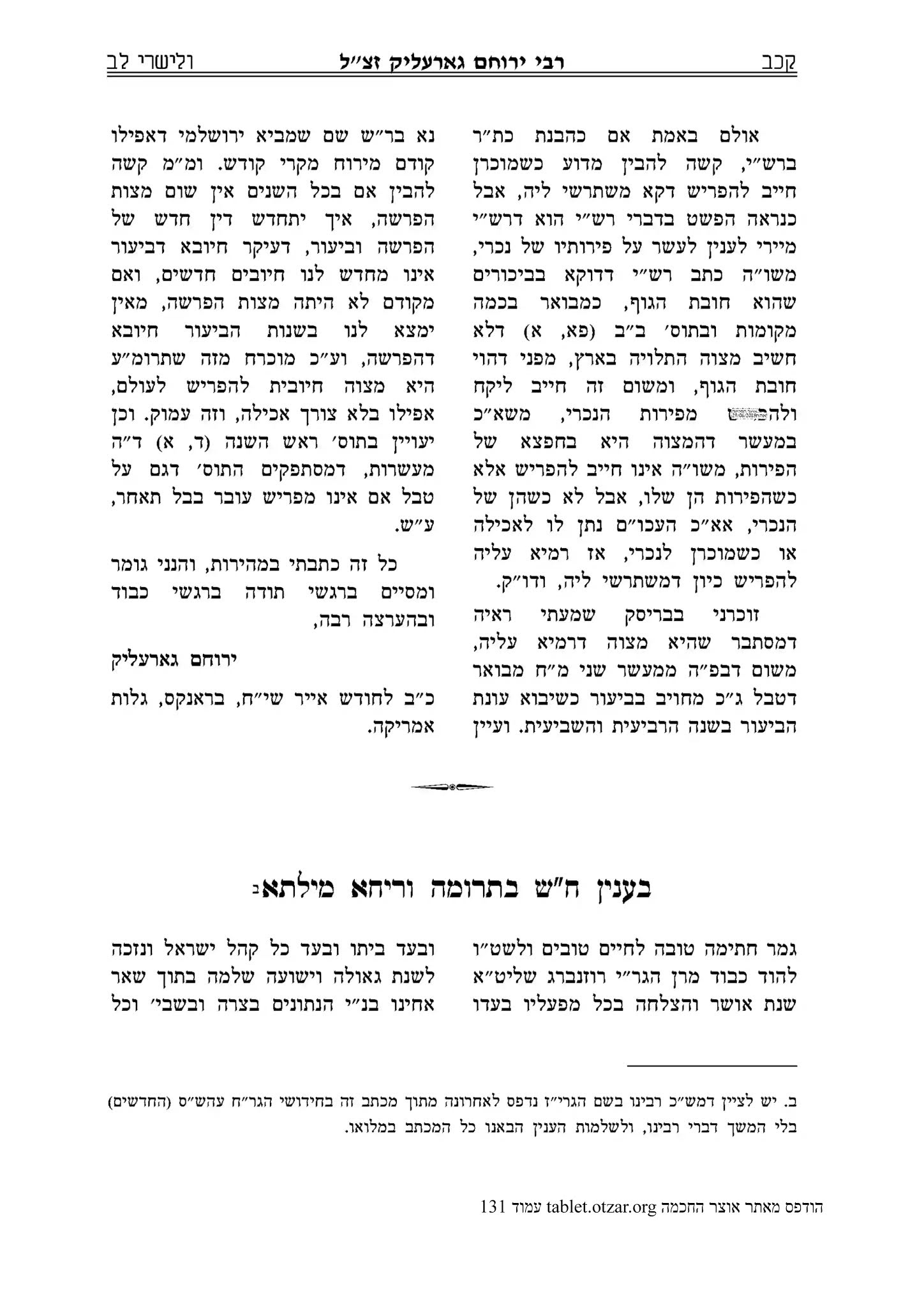
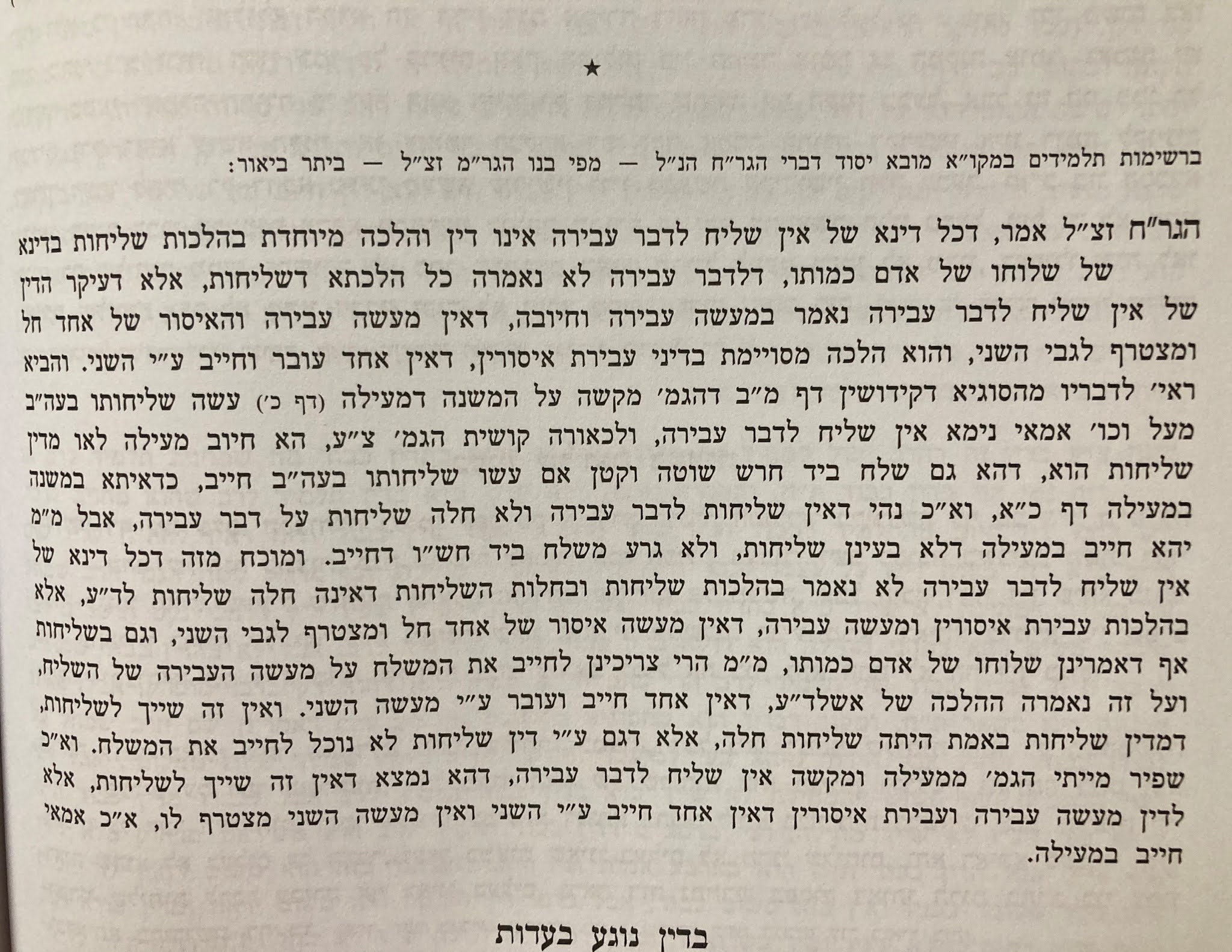
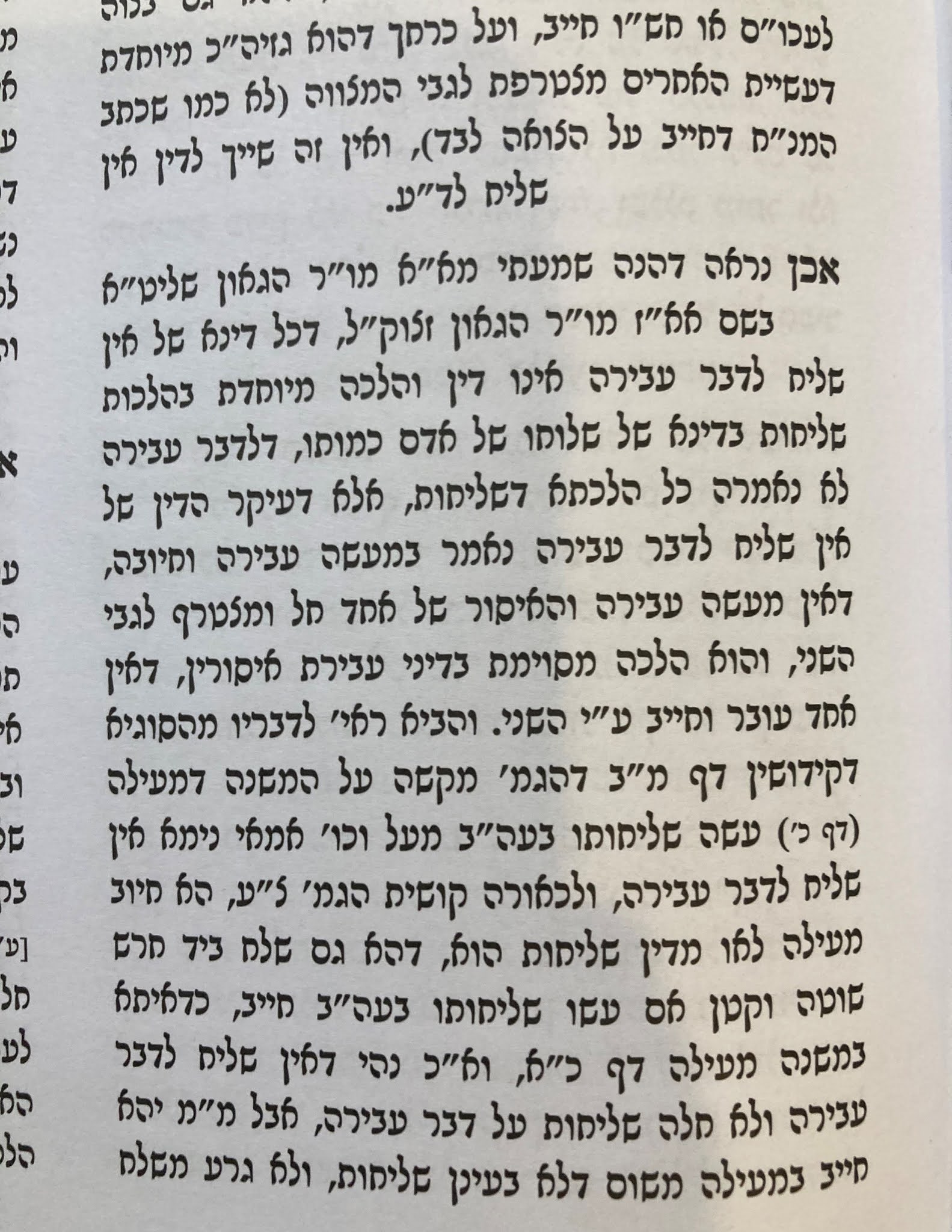
New Writings from R. Kook and Assorted Comments, part 2

New Writings from R. Kook and Assorted Comments, part 2
Marc B. Shapiro
Continued from here.
I must now deal with R. Joseph Ibn Caspi, who is often described as holding a view similar to what we have seen already, but more radical in that he saw it as a general principle of interpretation. I refer to the notion that the Torah incorporates all sorts of untruths because these were what people believed at the time. It is said that this is how Ibn Caspi understands the rabbinic phrase “The Torah speaks in the language of men.” Here is a lengthy quotation from the late Isadore Twersky taken from his classic article on Ibn Caspi.[1]
Kaspi frequently operates with the following exegetical premise: not every Scriptural statement is true in the absolute sense. A statement may be purposely erroneous, reflecting an erroneous view of the masses. We are not dealing merely with an unsophisticated or unrationalized view, but an intentionally, patently false view espoused by the masses and enshrined in Scripture. The view or statement need not be allegorized, merely recognized from what it is. . . . Many scriptural statements, covered by this plastic rubric, are seen as errors, superstitions, popular conceptions, local mores, folk beliefs, and customs (minhag bene adam), statements which reflect the assumptions or projections or behavioral patterns of the people involved rather than an abstract truth. In its Kaspian adaptation, the rabbinic dictum may then be paraphrased as follows: “The Torah expressed things as they were believed or perceived or practiced by the multitude and not as they were in actuality.” Leshon bene adam is not just a carefully calculated concession to certain shortcomings of the masses, that is, their inability to think abstractly, but a wholesale adoption of mass views and local customs. . . . The Torah did not endorse or validate these views; it merely recorded them and a proper philosophic sensibility will recognize them.
Many people have understood Twersky to be saying that the Torah includes within it all kinds of superstitions and folk beliefs that were shared by the masses. (According to Ibn Caspi, the Torah does contain “necessary beliefs” that are not true, but these are of a different sort, as they relate to the masses’ inability to grasp philosophical truths.) While it is true that according to Ibn Caspi these beliefs are included in the Torah, they are not advocated by the Torah, but are to be understood as mistaken beliefs of the masses. In other words, Ibn Caspi does not say that the Torah itself, that is, when it is God speaking to Moses or in general narrative sections, should be regarded in this fashion.
So, for example, in the story of Rachel, Leah and the mandrakes (Gen. 30: 14-17), Ibn Capsi suggests that Rachel and Leah shared a common superstition that these mandrakes would help one conceive, and the story in the Torah is from these women’s perspective.[2] Yet the Torah itself never states that the mandrakes have magical properties. That is, the Torah does not incorporate a superstition because this is what people believed, but rather records a superstition that was believed in by some. Another example is that the Torah mentions that God told the Israelites (Ex. 12:13) to put blood on their doorposts. Ibn Caspi explains that this was due to the ancient superstition that blood had magical qualities.[3] The Torah thus commanded an action that took into account the masses’ superstition, but it was not the Torah itself advocating the superstition.
I am unaware of any place in his writings where Ibn Caspi states that the Torah itself is expressing a superstitious belief, that is, where it affirms the efficacy of a superstition or a folk belief because it is reflecting the views of the masses.
Readers will recall that in part 1 I quoted examples where the Bible, including the Torah, includes incorrect scientific information because this was what was believed at the time. Someone who wishes to remain anonymous called my attention to Samuel David Luzzatto’s commentary to Gen. 1:6. Shadal offers another example of what he thinks is the Torah using incorrect science because of what was the common ancient belief, and he includes this example under the rubric of “the Torah speaking in the language of men”. The Torah speaks of a rakia, and describes it as standing between the waters, that is, the water on earth and the water in the heavens. Shadal explains, and brings other biblical verses to show that this conception of water being found in the heavens was later rejected.
Because the term rakia was based on the belief in higher waters, “the waters that are above the heavens” (Ps. 148:4) and which the rakia supported, and because this belief became obsolete and forgotten, the term rakia itself became obsolete. . . . Hence the Torah spoke on a human level and according to human belief when it said, “let there be a rakia.” However, its intended message remains true and settled: God set the waters in nature to be lifted up and then to fall to earth.[4]
R. Samuel Moses Rubenstein offers another example of what he thinks is the Torah using language that is not accurate but reflects the mistaken beliefs of the masses.[5] He refers to the fact that the Torah speaks of God in a way that implies that there are also other gods in existence, a phenomenon scholars refer to as “monolatry”. This means belief in many gods but worship of only one.
Monolatry was clearly the belief of much of Israel throughout the biblical period. When Israelites worshipped the Baal or other gods, it is not that they rejected the existence or power of the God of Israel. It is just that they were hedging their bets, and if they were in need of rain it made sense to them to also worship Baal, the storm god. The question is, does the Bible itself assume a monolatrous world? Traditional commentators assert no, while many academic scholars believe that it does. (Yechezkel Kaufmann was a notable exception.)
The academic biblical scholars argue that the Bible takes the existence of other gods for granted, and cite many biblical verses in support of this assumption. For example, Ex. 15:11: “Who is like thee, O Lord, among the gods.” See also Deut 4:19: “And lest though lift up thine eyes unto heaven, and when thou seest the sun and the moon and the stars, even all the host of heaven, thou be drawn away and worship them, and serve them which the Lord thy God hath allotted unto all the peoples under the whole heaven.”
As mentioned, traditional commentators offer alternative interpretations of verses such as these. Yet Rubenstein concluded that the Bible reflects the mistaken monolatrous views of the masses. In Kadmoniyot ha-Halakhah (Kovno, 1926), pp. 44-45, he writes:
מקומות אין מספר בכתה”ק מתארי ה’: “הא-ל הגדול הגבור והנורא”, א-להי האלהים”, “ה’ א-ל רחום וחנון” ודומיהם המראים שה’ א-להי ישראל לא היה גם אצל ישראל לא-לוה יחידי מוחלט לכל העמים והארצות רק לא-להי ישראל והארץ ובעל תארים נכבדים שאין כמוהם לאלהים אחרים.
He is careful to point out—contrary to critical biblical scholars— that this was not the belief of Moses or of the wise men of Israel. Yet he also insists that the peshat of the Torah and other parts of the Bible indeed reflects the mistaken views of the masses (ibid., pp. 44-45, n. 1):
אין מספר להמקומות המתבארים ומובנים על אמתתם בכתה”ק על פי זה. אבל יש לדעת כי אמונה זו היתה רק אמונת ההמון. והגדולים וגם המחוקק בעצמו הוכרחו לדבר לפי רוח ההמון ואמונתם. אבל אין לחשוב בשום אופן כי כן היה גם אמונת ראשי העם והגדולים. ולזה א”א שתמצא חוק בתורה שתחזק אמונה זו.
The notion that the Torah records things that are incorrect actually goes back to Maimonides. In Limits of Orthodox Theology, pp. 68-69, I noted how according to Maimonides the corporeal descriptions of God were intended to be taken literally by the masses. This was the way to educate then about God’s existence. Only after His existence was certain in their minds were they able to move beyond the corporeal conception of the Deity.
There is also Maimonides’ famous conception of “necessary truths” in Guide 3:28. For example, the Torah describes God as expressing anger. Yet God has no emotions, so why does the Torah describe Him this way? Maimonides says that this is a “necessary belief” and as explained by Efodi, Shem Tov and many others, this means that even though the belief is not true, the Torah teaches it so that the masses will be led to obedience of God. Only the elites can be expected to understand that God doesn’t have emotions and thus interpret the verses figuratively. However, and this is the novelty of Maimonides (as explained by many of his interpreters), the Torah intended for the masses to adopt an untruth that the Torah itself taught. In other words, according to this interpretation, not everything in the Torah is “true”, that is, factually true. However, these untruths are contained in the Torah because they accomplish an important goal. Here are Shem Tov’s words:
ועוד צותה התורה להאמין קצת אמונות שאמונתם הכרחית בתקון עניני המדינה כמו שצוה להאמין שהשם חר אפו ויכעס על עוברי רצונו, וזאת האמונה אינה אמתית כי הוא לא יתפעל ולא יחר אפו כמו שאמר אני ה’ לא שניתי, וצריך שיאמין זאת האמונה האיש המוני שהוא יתפעל ואף שהוא שקר הוא הכרחי בקיום המדינה ולכן נקראו אלו אמונות הכרחיות ולא אמתיות, והחכם יבין כי זה נאמר בלשון דברה תורה כלשון בני אדם.
While on the subject of “necessary beliefs,” I want to call attention to an error that was very common for decades. In Guide 3:28 Maimonides gives as one of the necessary beliefs the notion that God responds immediately to the prayer of someone wronged or deceived. (He obviously means one whose prayer is expressed in a proper fashion.) Now I don’t think that any of the masses today really believe this, though you can correct me if I am wrong. I think that even the masses today are sophisticated enough to realize that you can pray all you want, with the best kavvanah, and you still might not be answered. For example, if it is your time to die, then all the prayer in the world will not prevent this.
Maimonides, however, saw this as a “necessary belief”, something that it was important for the masses to accept. In other words, it was vital to their spirituality to think that if they only prayed better, they would be spared whatever bad thing was upon them. As mentioned already, I have never met people who think like this. However, it could be that even today there are those who are convinced that if only he or she would have prayed with more kavvanah then the evil decree would have certainly been averted. Yet anyone with some degree of sophistication knows that this isn’t always the case. Even complete believers in divine providence are aware that sometimes, when God has made a decision (such as to destroy Sodom and Gomorrah), nothing you do can change this.
With this in mind, which appears obvious from so many Jewish sources, I was surprised to find that the Tur, Orah Hayyim 98, has a different perspective. He writes, after describing how one should pray: ואחר שיעשה כל זה מובטח לו שתתקבל תפלתו
R. Joseph Karo must have also found this formulation strange, because in his comment in the Beit Yosef he writes: הם דברי עצמו. In other words, there is no rabbinic source for the Tur’s notion, which Maimonides sees as a primitive belief, namely, that proper prayer will automatically bring about a good result.
Returning to Maimonides in Guide 3:28, I have often seen articles where people write that in Maimonides’ opinion it is a “necessary belief” that God responds to prayer. In fact, within the last year I read a manuscript from a contemporary scholar who made the same comment. My reply to him was that Maimonides nowhere says that God does not respond to prayer. If you want to argue that this is his esoteric teaching, and the only reading that makes sense when speaking of an unchanging God, that is one thing. But to say that Maimonides regards the notion that God responds to prayer as suitable only for the unsophisticated, and to give as a source Guide 3:28, is incorrect. As mentioned already, all Maimonides says in this chapter is that the “necessary belief” is that God responds immediately to prayer. Yet he says nothing about God responding to prayer per se.
It always bothered me that so many people, including scholars, had made such an error. I never knew what to make of it, since anyone who looks in the Guide can see clearly what Maimonides is talking about. Just a few months ago I stumbled across the answer to my problem. If you look at Michael Friedlaender’s translation of the Guide, which is found online and was the standard English translation for some seventy years, this is how he translates the end of Guide 3:28: “[I]n other cases, that truth is only the means of securing the removal of injustice, or the acquisition of good morals; such is the belief . . . that God hears the crying of the oppressed and vexed, to deliver them out of the hands of the oppressor and tyrant.” In other words, according to Friedlaender’s rendering, which is in opposition to all the other translations, Maimonides is denying that God ever responds to prayer. It is based on this translation that so many were led astray.
Returning to R. Kook’s Li-Nevokhei ha-Dor, in chapter 5 he tells us that there comes a point when the events at the beginning of Genesis move from a general story of humanity’s development to the actual historical tale of one man, whom he refers to as .האדם ההיסטורי This is the one of whom the Torah lists his descendants in precise detail. R. Kook is not prepared to read the genealogies given in Genesis in a non-literal fashion.
The genealogy beginning with Cain in Gen. 4, as well as the detailed genealogy of Seth’s descendants in Gen. 5, are obviously a difficulty for those who want to read more than the first few chapters in a non-literal fashion. In fact, it was the children that Eve is said to have bore (and for two of these children there follows genealogical lists) that convinced Gersonides that both Eve and Adam of Gen. 2-3 were real people.[6] His comment is directed against Maimonides, whom he identifies by name,[7] for he understands Maimonides to regard Eve as an allegory. Gersonides cannot accept this approach, for what then are we to do with the genealogy beginning with Eve that the Torah provides? While Gersonides asserts that the story with the snake must be understood allegorically,[8] he is equally certain that Adam and Eve are historical.[9]
The same question about genealogy that Ralbag asks with regard to Maimonides can also be asked of Ibn Caspi, who explains Maimonides as saying that the Torah does not speak of a historical Adam.[10] According to this reading, the “Adam” described in the opening chapters of Genesis is really speaking of Moses who is the first “man,” that is, the first human to reach the heights of intellectual perfection.[11] As Lawrence Kaplan has further pointed out,[12] Ibn Caspi states that according to Maimonides the account of creation continues through Gen. 6:8. This means that the detailed genealogy of Gen. ch. 5 is also not to be regarded as historical, and the first real genealogy we get is in ch. 10, with the descendants of Noah..[13]
Returning to ch. 5 of Li-Nevokhei ha-Dor, there is one other point that is noteworthy. R. Kook describes how life would have continued in Paradise, had it not been for human sin. There would have been the potential for all sorts of things, including space travel and settlement in outer space!
כי ברב ההשתלמות ההדרגית יתגלו עוד בנקל דרכים להתיישב בכוכבים רבים ועולמות אין מספר.
* * * *
1. Someone sent me the following page from R. Aharon Feldman’s new book, The Eye of the Storm.

My correspondent asked me if there is any truth to this story. I have to say that it is a complete fiction. R. Weinberg did not know Ben Gurion from his youth, and he never met him after he became Prime Minister. I am also certain that the Ben-Gurion never met the Chafetz Chaim.
2. With all that has been in the news recently, I am sure that I am not the only one looking at the writings from the Spinka dynasty. I recently found a passage that I don’t understand. I understand the words, but I don’t understand how the Rebbe could have said it, and if anyone can explain the passage I will be grateful. It appears in Hekel Yitzhak, parashat Toldot, p. 30b:
ושמעתי מאאמו”ר זצוק”ל שמקובל מרבותינו שמעולם לא נתגייר גר מישמעאל כי הוא כולו ערלה ר”ל . . . אבל מעשו נתגייר כמה גרים כדאי’ בדחז”ל, ולעת”ל כולם יתגיירו משום דשרשם בקדושה כדאי’ בהארי ז”ל.
My concern is not with the notion that Esau and his progeny are superior to that of Ishmael. Rather, how could he possibly state that there have never been Arab converts?
To be continued
[1] “Joseph Ibn Kaspi: Portrait of a Medieval Jewish Intellectual,” in Twersky, ed., Studies in Medieval Jewish History and Literature (Cambridge, 1979), pp. 239-241.
[2] Matzref Kesef, p. 74. The same approach is adopted by Radak in his commentary to Gen. 30:14. This is only one possible answer given by Ibn Caspi, and he also suggests that perhaps mandrakes do indeed have special properties that help a woman to conceive.
[3] See Matzref Kesef, p. 137. Based on this Ibn Caspi explains why Tziporah circumcised her son (Ex. 4:25):
ותקח צפורה וכ’. אין עלינו עכ”פ לתת טעם הכרחי מה זאת הרפואה לחולי משה, כי לא כתבה התורה שציוה לה משה שתעשה כן, ואיך שהוא, מבואר כי בימים ההם היה דעת פשוט בהמון העם, כי הדם יש לו סגולה לכל חרדה והתגעשות, ולכן צוה השם שישימו דם על המשקוף ועל המזוזות בבתי ישראל, בחרדתם והתגעשם על צעקת כל מצרים . . . לכן ותקח צורה צור ותכרות את ערלת בנה.

The example of the mandrakes and Tziporah circumcising her son are cited by Isaiah Dimant, “Exegesis, Philosophy and Language in the Writing of Joseph Ibn Caspi” (unpublished doctoral dissertation, UCLA, 1979), pp. 55-56
[4] Translation in Daniel A. Klein, The Book of Genesis: A Commentary by Shadal (Northvale, 1998).
[5] Rubenstein began as a traditional rabbi, as can be seen from his Avnei Shoham (Warsaw, 1902), which includes correspondence between him and R. Joseph Zechariah Stern. However, he later adopted an approach that today we would term “academic”. There is a great deal that can be written about Rubenstein, but as of yet only one article has appeared: Hanan Gafni, “R. Shmuel Moshe Rubenstein, ha-Hoker ha-Rabani mi-Shavli (1870-1943),” Moreshet Yisrael 5 (2008), pp. 139-158. To give an example, not mentioned by Gafni, of how Rubenstein’s later thought broke with tradition, see his Ha-Rambam ve-ha-Aggadah (Kovno, 1937), p. 103, where he claims that the story of the miracle of Hanukkah is almost certainly a late aggadic creation, and like many other miracle stories in aggadic literature was not originally intended to be understood as historical reality:
ספק הוא אם הנס של “פך השמן” הוא אפילו הגדה עממית קדומה, קרוב שהוא יצירה אגדית חדשה מבעל הברייתא עצמו או מאחד מבעלי האגדה, ונסים אגדיים כאלו רבים הם בברייתות וגמרא ומדרשים ע”ד ההפלגה כדרכה של האגדה. ולבסוף הובן נס זה למעשה שהיה. עיין שבת כ”ג א’. [טעם ברייתא זו הובא גם במגילת תענית (פ”ט) אבל כמו שנראה היא הוספה מאוחרת, ועיין (שם) ובפסיקתא רבתי (פיסקא דחנוכה) עוד טעם להדלקת נרות חנוכה].
During the most recent Hanukkah I was using R. Joseph Hertz’ siddur, the Authorized Daily Prayer Book. Based upon how he describes the holiday and the lighting of the menorah, omitting any mention of the miracle of the lights (pp. 946-947), I assume that he also didn’t accept it literally. Note how he states that the lights were kindled during the eight-day Dedication festival, and this is the reason for the eight days of Hanukkah, rather than offering the traditional reason that the eight days of Hanukkah commemorate the eight days that the menorah miraculously burnt.
Three years to the day on which the Temple was profaned by the blaspheming foe, Kislev the 25th 165, Judah Maccabeus and his brethren triumphantly entered the Holy City. They purified the Temple, and their kindling of the lights during the eight-day festival of Dedication—Chanukah—is a telling reminder, year by year, of the rekindling of the Lamp of True Religion in their time.
There is no mention of this passage in Benjamin J. Elton’s recent wonderful discussion of Hertz’s theology and religious policy. See Britain’s Chief Rabbis and the Religious Character of Anglo-Jewry, 1880-1970 (Manchester, 2009), chs. 7-8. (He also doesn’t mention Hertz’s comment that those Jewish commentators who understand aggadah literally are “fools.” See Hertz’s Foreward to the Soncino Talmud, printed at the beginning of tractate Berakhot.)
[6] Commentary to Gen. 3 (end of chapter).
[7] Lawrence Kaplan, ”Rationalism and Rabbinic Culture in Sixteenth Century Eastern Europe: Rabbi Mordecai Jaffe’s Levush Pinat Yikrat” (unpublished doctoral dissertation, Harvard University, 1975), p. 246 n. 139, comments that when Ralbag later in this passage criticizes those who understand Cain, Abel and Seth allegorically, he has Maimonides in mind, but avoids mentioning him out of respect.
[8] Regarding Eve and the serpent, R. Chaim Hirschensohn speaks of רעיוני ההתפתחות במליצי המיטלאגי
In other words, he sees the Torah as using mythological language in the Creation story. See Penei Hamah, p. 6, which is part 2 of Hirschensohn’s Musagei Shav ve-Emet (Jerusalem, 1932). Dov Schwartz has recently discussed this passage. See his “Maimonides in Religious-Zionist Philosophy,” in James T. Robinson, ed., The Cultures of Maimonideanism (Leiden, 2009), p. 399:
Hirschensohn assumes as self-evident that the Bible had been influenced by mythological language. The author of the Creation story “couches the ideas of development in mythological metaphors.” How did Hirschensohn explain these mythological stories? He separated paganism from the “original” mythology. In his view, the mythological stories had been, from the start, a description of a class struggle for which the narrators resorted to symbolic language, just as the Bible refers to the sons of God and the daughters of men (Gen. 6:2). Only later, then, did their deference and their fear of their ancestors lead Greeks to literal interpretations of their mythology: “But before philosophy became dominant there, the later Greeks had mistakenly revered their ancestors and thought of them as gods” [Penei Hamah, p. 36]. The Bible, then, uses a mythological style but its messages are social and ideological.
[9] When one sees how Ralbag describes Eve, I think many readers would wish that he had interpreted her allegorically. Here is his comment earlier in Gen. 3 (p. 110 in the Birkat Moshe edition):
והנה קרא האדם שם אשתו “חוה”, כאשר השיג בחולשת שכלה, רוצה לומר שלא עלתה מדרגתה על שאר הבעלי חיים עילוי רב, ואם היא בעלת שכל, כי רוב השתמשותה אמנם הוכן לה בדברים הגופיים, לחולשת שכלה ולהיותה לעבודת האדם, ולזה הוא רחוק שיגיע לה שלמות השכל.
Ralbag’s view of Eve was also transferred to women in general. One of my teachers once referred to him as the first advocate of the kollel philosophy, for as Ralbag explains in a number of places, the role of women is to enable men to reach their intellectual perfection. That is, their essence is entirely utilitarian. All the relevant references can be found in Menachem Kellner’s essay comparing Ralbag’s and Maimonides’ view of women, which has now appeared in English in his just published Torah in the Observatory. (This book was published by Academic Studies Press, which in the last few years has published a number of important volumes by top scholars including José Faur, David Berger, David Shatz, and Zvi Mark.)
Take a look at this passage referring to women and tzitzit, from towards the end of Ralbag’s commentary on Shelah (p. 188a in the old edition):
למדנו שאין הנשי’ חייבות בציצית וראוי היה להיות כן כי הענין אשר העיר עליו זאת המצוה הוא רב העומק ולא יתכן שיגיע אליו שכל הנשים לקלות דעתן
I wonder, if a haredi spokesman quoted this Ralbag as part of his attack on Orthodox feminism, would he take any flak in his own community? Would the haredi women protest? I have another question and I am curious to hear readers’ responses. (I have my own view, but also want to hear from others.). Do leaders of the haredi world believe in separate but equal when it comes to men and women? This is what is often claimed, but I wonder, do they really hold a Ralbag-like position?
The same question I asked at the beginning of the previous paragaph with regard to Ralbag can also be asked about Radak. Here is what he writes in his commentary to Gen. 3:1:
ואמר אל האשה ולא אמר לאדם, האשה קרובה להתפתות יותר מן האיש, כי דעתה קלה
If this explanation appeared in say the English Yated, independently offered by a contemporary rabbi with no mention of Radak, would haredi women be offended?
And would women be offended if the following passage, from R. Zvi Travis’ Pirkei Hanhagat Bayit, ch. 2 (which I am told used to be a popular sefer), appeared in an English newspaper (called to my attention by Dr. Yitzhak Hershkowitz; emphasis added):
אף אחר בריאת האשה אין כאן שותפות. אלא, וטול כלל זה בידך, תכלית הבריאה היא האיש, והקדוש ברוך הוא נתן לאיש מתנה שתעזור לו, והיא האשה.
Another good example is found in R. Avraham Blumenkrantz’ Gefen Poriah, p. 352, where he quotes approvingly another rabbi who states as follows (emphasis added):
Her tears are ever ready to flow at the most miniscule suggestion of being dealt with as a maidservant. She will concede you the service of והוא ימשל בך. She will consent to call you בעלי, but don’t accent the דגש in the בית too heavily. She must constantly be reassured that there is honor and dignity in her subservience. Honor her more than you honor yourself. She must be compensated for her subjugation, and be made to feel that she has a genuine share in the dignity of the throne.
Do haredi women really feel that they are subservient or subjugated? Do haredi men feel this way about their wives? Haven’t the masses in haredi society (American haredi society at least) also accepted the notion of separate but equal when it comes to men and women?
[10] Commentary to Guide 1:2:
רמז המורה על קצת נסתר במעשה בראשית כי האדם הנזכר שם לא היה אחד רמוז לבד אבל על הכלל
[11] Commentary to Guide 1:14.
[12] “Rationalism,” p. 251 n. 150.
[13] In his commentary to Guide 2:30, Ibn Caspi also discusses the creation story, and records what was apparently a popular saying in his day. For those of you who sometimes get frustrated with some of your co-religionists, it is worth bearing in mind: אלמלא המשתגעים יהיה העולם חרב. Regarding the saying, see also R. Judah Leib Zlotnick, Midrash ha-Melitzah ha-Ivrit (Jerusalem, 1938), p. 57. The saying is also found in Maimonides’ introduction to Nezikin.

ftn