Rabbi Yitzhak Hutner’s View of Torah Im Derekh Eretz and a Hidden Haskamah Rediscovered

Rabbi Yitzhak Hutner’s View of Torah Im Derekh Eretz and a Hidden Haskamah Rediscovered
Shmuel Lesher

Shmuel Lesher is the assistant rabbi of the BAYT (Toronto). He can be reached at shmuel.lesh@gmail.com

*Thanks to my father-in-law, Rabbi Hanan Balk, for sharing many of the works used to research this topic with me from his vast and eclectic personal library. Thank you to Rabbi Dr. Jacob J. Schacter, Rabbi Moshe Lieber, Rabbi Daniel Korobkin, Ezer Dienna, and Rabbi Ken Stollon for greatly improving this article. Thank you to Simmy Zieleniec for connecting me with the Levi family.

Rabbi Yitzhak Hutner: A Brief Biographical Sketch

R. Yitzhak Hutner (1906-1980), the longtime dean of Yeshiva Rabbi Chaim Berlin of Brooklyn, New York had a unique and eclectic approach to Torah, spirituality, and Orthodox society life in the 20th century. A student of the famed Lithuanian Rabbi Nosson Tzvi Finkel, the Alter (Elder) of Slabodka, and influenced by Rabbi Avraham Yitzchak HaKohen Kook, R. Hutner brought a blend of Hasidic and Lithuanian creative spirituality when he made his way to America. He shared his poetic and philosophical ideas with his students through his maamarim (discourses) which were later recorded, edited, and presented in his magnum opus Pahad Yitzhak (1964-1982).

Published biographical material about R. Hutner is sparse and scattered.[1] Even more difficult to come by are definitive statements of policies or positions made by R. Hutner. Therefore when determining his position on the question of the admissibility of a Torah Im Derekh Eretz curriculum, an educational program designed for the combined study of Torah and secular studies, one has to piece together bits and pieces of evidence in order to arrive at even an approximation of his view.

In one of the few biographical works on R. Hutner, R. Dr. Hillel Goldberg begins by citing an anonymous student’s recollection of R. Hutner saying, “Regardless of what you hear quoted in my name, do not believe it unless I have told it to you personally.”[2]

Ironic as this quotation may be, I understand why R. Goldberg chose it to begin his biographical sketch. The citation — however accurate or “believable” — captures the challenge the persona of R. Hutner poses to the genre of biography. It seems as though R. Hutner intentionally obscured his public position on a number of issues, preferring to share his outlook with his students and others personally.

The Yeshiva Community’s Approach to Secular Studies

To appreciate the nuances of R. Hutner’s position on Torah Im Derekh Eretz, it is important to understand the American Yeshiva community of which he was part. In his study of the early and mid-20th century American Yeshiva world, William Helmreich describes three basic approaches that American yeshivas took to secular studies.

On one hand, Yeshivas Rabbeinu Yitzchak Elchanan (RIETS), from its inception took a more open approach to secular studies. On the other extreme, yeshivas like Beth Midrash Gavoha of Lakewood, New Jersey and Telshe of Cleveland, Ohio completely forbade college attendance, notwithstanding that it is likely that many of their alumni did attend some level of advanced educational institution. A third group of yeshivas, including Ner Israel of Baltimore and Yeshivas Chofetz Chaim of New York landed somewhere in the middle of these two extremes. Although they discouraged college attendance, these yeshivas recognized that a college degree can be a necessary step for a yeshiva student to make a living. Because of this reality, many yeshivas took a more moderate stance on college attendance.[3]

It appears that Yeshiva Rabbi Chaim Berlin would most likely fit into the third category of yeshivas which discouraged college attendance but did not forbid it. R. Hutner, who had a powerfully personable and dominating personality, encouraged his students to devote themselves completely to Torah study. As one student put it:

I went to college and, while permitted, college was looked down upon. With some exceptions, the top fellows didn’t go. The strength of Rav Hutner’s personality-my feet trembled whenever I spoke to him-drew us all in. It enabled you to resist your more modern parents who often wanted you to go to college. He built up your ego and made you feel you were great.[4]

R. Hutner had a broader vision for the American Jewish community than just his own yeshiva’s success “It is only a matter of time,” R. Hutner commented to Shmuel Avigdor when asked in an interview in the 1960’s what he thought about the future of the American Jewish community he inhabited and helped create and foster. R. Hutner told Avigdor:

It is obvious that it will not be exactly the same as the European Judaism that existed before the Shoah. It will have its own unique character. It will have its own ‘kineitch’ (personality or character). But it will be a Judaism that is complete and authentic — A Judaism not embarrassed of our former generations. Even today we already have American-born avreikhim (married kollel fellows) who are gedolei torah (great Torah scholars) in the original and authentic sense of the word. It is true that their greatness in the Torah is currently measured by the greatness in the style of Poland and Lithuania and there is no ‘greatness’ in the American style yet. But this will come with time, it’s all a matter of time.[5]

The American Yeshiva community, in R. Hutner’s eyes, although it would be “American” with its own flavor and identity, must be modeled after the same idealism and single-minded focus on gadlus (greatness) in Torah that characterized the European community of the previous generations. In fact, Helmreich reports that R. Hutner was critical of Yeshiva University’s synthesis of Torah and secular studies, stating that “When they put the word ‘University’ in, they spoiled everything.”[6]

Notwithstanding the above evidence which suggests a less sympathetic view towards the combination of Torah and secular studies, R. Goldberg, one of R. Hutner’s biographers posits:

Rabbi Hutner rejected synthesis but not secular study, at least for a select few. The unexceptional Talmud student would be unable to cope with intellectual challenges to tradition that Western philosophy, historiography, and other branches of learning pose. For Rabbi Hutner himself, secular study was less central than for Rabbi Soloveitchik…To Rabbi Hutner’s unitive mind, secular study identified a domain of the sacred within itself, a procedure that amounted to Torah’s reclaiming what rightfully belonged to it; for Torah, said Rabbi Hutner, was the sovereign source of all that is sacred. Hence he saw neither a moral nor a technical justification for the citation of secular sources in his writings.[7] 

R. Goldberg’s depiction implies that R. Hutner did, in fact, have a good deal of sympathy for secular studies, albeit only for the select few. Clearly, the evidence for R. Hutner’s position is somewhat mixed. R. Hutner’s view on Torah Im Derekh Eretz and secular studies is characteristically nuanced and even appears at times to be contradictory.

The Primary Sources

Understanding this, in order to best determine R. Hutner’s true perspective, I thought it wise to focus not on secondary sources and analysis, but on R. Hutner himself, the choices he made for himself and for his community, and his own writings. In addition to many years of intensive and single-minded yeshiva study, R. Hutner chose to study at the University of Berlin. However, it is hard to evaluate this choice as indicative of a worldview as it was only a short 4-month stint.[8] Although it does indicate some level of interest in secular and/or academic knowledge and the granting of some legitimacy to its study, albeit not necessarily for the masses.

When it comes to communal policy it appears that R. Hutner did, at least initially, support the study of secular subjects at the high school level. In the biography of Rav Dr. Joseph Breuer, the authors write:

Both R. Moshe Feinstein- rosh yeshiva of Mesifta Tiferes Yerushalayim on the East Side – and R. Yitzchok Hutner – rosh yeshiva of Yeshivas Chaim Berlin in Brooklyn – had been a part of the planning process [in assisting Rav Breuer to open some form of a Torah Im Derekh Eretz Yeshiva High School for the Jewish community of New York].[9]

Because of opposition from other gedolim to the prospect of such a yeshiva high school, the school never actually got off the ground.[10] However, R. Hutner’s early support of a yeshiva high school that would have included a dual curriculum modeled after the Hirschian approach suggests a more sympathetic view of Torah Im Derekh Eretz.

R. Hutner not only supported the founding of a yeshiva high school with a dual curriculum, there is evidence that he even supported the founding of a form of yeshiva college. William Helmreich documents a fascinating development almost totally unknown today:

In 1946 a petition was submitted to the Regents of the University of the State of New York requesting a charter for a new institution to be known as the American Hebrew Theological University. The proposed college was to be formed by the merger of Yeshiva Torah Vodaath and Yeshiva Rabbi Chaim Berlin.[11]

The Board of Trustees of this institution included Rabbi Shraga Feivel Mendlowitz (1886-1948), the menahel (principal) of Yeshivas Torah Vodaath, and, none other than, Rabbi Yitzchok Hutner. As with the yeshiva high school, although Yeshiva Torah Vodaath and Yeshiva Rabbi Chaim Berlin were granted a provisional charter on July 18, 1946, about a year later the application was withdrawn and the college was never formed. 

It appears that the person responsible for this major reversal was Rabbi Aharon Kotler. According to Helmreich’s interview with Rabbi Harold Leiman,[12] then the principal of Yeshiva Rabbi Chaim Berlin high school and the person chosen as dean of this new college, after a long conversation between R. Shraga Feivel Mendlowitz and R. Aharon Kotler in which the latter expressed his strong opposition to the idea, the decision was made to abandon the project.[13]

Even though these schools never came to be, it appears from these accounts that R. Hutner did support the idea of founding a high school as well as a college founded upon the values of Torah Im Derekh Eretz. It is even clearer in the case of the proposed American Hebrew Theological University that R. Hutner was serious about the implementation of a dual-curriculum. The fact that a dean was selected and a formal request for a charter was submitted and granted indicates how far along in the process they were in bringing the school into existence even if they ultimately withdrew the application.

Evidence From R. Hutner’s Writings 

The other area to look for evidence regarding our question is R. Hutner’s writings, primarily his letters. In a well-known letter (no. 94) to a student struggling with his transition from yeshiva into the workforce, R. Hutner emphasizes the ideal of bringing Torah values into the outside world. In his words:

Someone who rents a room in one house to live a residential life and another room in a hotel to live a transient life is certainly someone who lives a double life. But someone who has a home with more than one room has a broad life, not a double life.[14]

Although this letter does not directly support the study of secular subjects, it is clear from the content of his message that R. Hutner sees his student’s involvement in the world outside of the yeshiva as a broadening of horizons and not merely a necessary evil. 

In another letter (no. 102) included in Igros Ukesavim, R. Hutner writes negatively about a certain kind of approach to a dual yeshiva curriculum (see below). First, R. Hutner praises a work he received, presumably written by his interlocutor. Afterwards, he refers to a particular passage in this work in which the author describes an ideal in which yeshiva students, in addition to many years of Torah study, engage in “yishuv” — agricultural work or the development of land. R. Hutner notes that this outlook of “Torah Umelakhah” — Torah study and work — appears to the [American] public as a “fifty-fifty” form of a dual curriculum and is completely the opposite of the vision of the author.[15] The thrust of the letter is that, in R. Hutner’s view, despite its popularity in the American Jewish Community, a dual curriculum is not an ideal for which to strive.[16]

Notwithstanding the skepticism found in the above letter, there is another significant piece of evidence that R. Hutner did in fact approve of the Torah Im Derekh Eretz approach. R. Hutner gave his own written endorsement of the ideal of Torah Im Derekh Eretz in the form of a haskamah — a formal rabbinic letter of approbation.

Yehuda (Leo) Levi’s Work and the Case of a Missing Haskamah

In the very first footnote of the very first article of The Torah Umadda Journal, effectively launching the entire publication, the editor, Rabbi Dr. Jacob J. Schacter, cites a letter written by R. Avraham Bloch. This letter, along with three other letters of European Gedolim regarding Torah Im Derekh Eretz was first published by Rabbi Prof. Yehuda (Leo) Levi. These letters were written in response to R. Shimon Schwab’s queries regarding the admissibility of a curriculum that included secular subjects in a yeshiva outside of Germany. R. Schacter writes that R. Bloch’s response was first published by R. Levi in 1966.[17][18]

In 1959, R. Levi wrote an earlier work, Vistas From Mount Moria, published by the Gur Ayeh Institute, the same institution that published Rav Hutner’s Pahad Yitzhak. It was his first published work on the topic of Torah and General Culture.[19] In the introduction to this book, the author makes reference to two endorsements, one of which, to my knowledge, has not yet been published.

In the introduction, R. Levi thanks “Rabbi Dr. Joseph Breuer” and “Rabbi Isaak Hutner” for their endorsements and constructive criticism. However, neither of these endorsements are printed in the volume but are said to be “available upon request.”

Almost 20 years later, R. Levi did include rabbinic endorsements for his work Shaarei Talmud Torah (1981). Endorsements are given by R. Yaakov Kaminetsky (Nissan 5740), R. Pinchas Menachem Alter of Gur (5740), R. Avraham Farbstein (5741), R. Aaron Soloveitchik (not dated), and R. Ovadiah Yosef (5747).[20]

Although both R. Breuer’s and R. Hutner’s endorsements of his other work are not included, R. Levi does write in his foreword to his 1990 work Torah Study (a translation of Shaarei Talmud Torah) that the Hebrew edition was published in 1981, when his “unforgettable mentor, HaRav Joseph Breuer, had explicitly expressed the wish that the author’s notes and essays be presented in a comprehensive and coordinated Sefer.” No mention of R. Hutner is made.[21][22]  

I thought the story ended there. But to my great surprise and joy, in the course of researching this topic, I was connected to Yosef Levi, a son of Yehuda Levi who graciously shared the missing haskamah with me which I include along with a translation below.

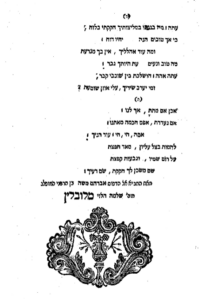
The following pages, 155-157 (below), include the haskamah given by R. Dr. Breuer and R. Hutner:

Translation of Rav Hutner’s Endorsement 

LETTER OF ENDORSEMENT

From the rabbi who is great in wisdom and fear [of heaven], the man to whom hidden things are revealed, my rabbi and teacher, Moreinu Harav Yitzhak Hutner, may his light shine, Rosh Mesivta Yeshivas Rabbi Chaim Berlin and Kollel Gur Aryeh  

20 Elul 5719

My dear, honorable, and beloved Mr. Yehuda the son of R. Yosef Aharon Halevi, may his light shine,

Peace and blessings,

I remember when I was younger, I once had the opportunity to be within the orbit of one of the elder gedolim of the previous generation. Our conversation led to a discussion about Rabbi Samson Raphael Hirsch zt”l. This gadol then told [me] what he had heard in the year 5630 (1869-1870) from one of the unique [people] of the generation before him. In that year of 5630, news of R. Hirsch and his activities had reached Russia. There were those who had concerns about his approach, because it appeared that the study of Torah had not gained a proper footing within his activities and his educational approach. However, these concerns were not accepted by the gedolei hador of those days. And despite these doubters (naysayers), an attitude of loyalty towards R. Hirsch was established and his approach was deemed akin to [spiritual] rescue from the fire. In relation to this, this gadol then expressed the following: “The clearest proof that the intentions of Rav Hirsch were for the sake of Heaven will be found in the near future, that the desire for Torah study in the soul of the next generation of Rav Hirsch’s community will increase, and many of them will attempt to acquire additional Torah beyond what was taught by of the community’s educational system.” So were the words of that gadol.

This gadol’s words were right on the mark because we can see with our [own] eyes that during the period between the two World Wars, many benches in the yeshivas in Eretz Yisrael, Hungary, Lithuania, Poland, and Galicia were filled with the descendants of R. Hirsch’s followers. 

These recollections come up out of my memory when I encounter you, my dear. In terms of ancestry, you descend from a well-pedigreed family of German Jewry (from the descendants of the Maharal).[23] Accordingly you received your education in the ways of the great teacher of this [form of] Judaism. Your gifts have made you famous in the field of physics to the point that you have caught the eye of the government, which, because of the times, is now in need of first-rate scientific resources. At the same time, the hopes of that righteous man (referred to above) have been fulfilled in you; your heart is deeply inspired to commit yourself to Torah study in order to quench the great fire that burns within your soul. To this end, you have limited “derekh eretz” pursuits to only that which is absolutely necessary, and have established a place for yourself in our Beis Medrash Gur Aryeh. Because you have accomplished the dictum, “Make your occupation incidental and your Torah study primary” (Avos 1:15) we have witnessed your ascent in Torah study with great success. 

However, even as you were planted in the Bais Medrash, you did not forget about those whose portions [in Torah] did not fall to them pleasantly, and who did not merit to be enhanced through entering into the tent of Torah. Because of your upbringing and background, you can sense the difference between the one whose perspective is from within the Temple courtyard and the one who is from a distance. When one drinks from the nearby springs and is able to place his lips to the flowing waters, the life essence of the water enters his very being and irrigates the “marrows of his bones.” His soul is renewed and his breath invigorated. 

Not so for the person who is sustained by the water of the spring from a distance. He has to use pipes and various vessels that draw from different kinds of vessels (Esther 1:7) in order to access the water. The nature of running water is that it loses its freshness  when it passes through the pipes. What’s more, by passing through pipes, the water picks up sediment and dirt on the way. 

We know well that large group of people who, despite being prepared to accept the yoke of Torah and mitzvos, nevertheless, fail to have the water penetrate them with their normal purity and freshness, due to the fact that their lives have positioned them at a distance from the wellspring. They can only draw water that is blocked, occluded, and which has other ingredients mixed in.

Therefore, when you felt the spiritual distress of this group, your spirit pushed you into being their helper and assistant. It is for this purpose that you wrote a survey of topics in the realm of hashkafos and deos (Torah outlooks and doctrines), in order to preserve, in some way, the purity of the water for those who find themselves far away from the springs.

When you gathered together these different essays into one pamphlet with the title, Vistas from Mount Moria, you gave it to me with the request for an endorsement — I deem it correct to grant your request because I think it serves a great purpose for people of the group mentioned above as well as many who occupy the Beis Hamedrash. 

Just as you have been successful in the study of Torah, so shall you be successful in the pillar of kindness to bring close those who are far and to reveal the beauty of the Torah which you have found in the Beis Hamedrash to those who are found to be still outside of it. 

With the hopes of raising the esteem of those who toil in Torah, 

Yitzhak Hutner[24]

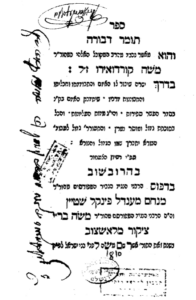
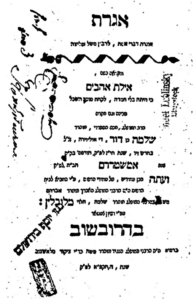
See Appendix for a different version of Vistas From Mount Moria. Both were published in 1959 (see facsimiles of both editions below) Although, if you compare the same pages (154-157) beginning from the back of this book, you will find that there are exactly the same amount of pages between page 154 and the Hebrew title page, however, they are all blank. Note the publication and year appear to be the same as the original version but the endorsements of both Rabbi Dr. Joseph Breuer and Rabbi Yitzchok Hutner are removed. This supports Yosef Levi’s explanation as to why the haskamah was hidden as I will address below.


Analysis of the Endorsement

R. Hutner’s letter of endorsement can be divided into two sections. In the first part of the letter, R. Hutner grants legitimacy to R. Samson Raphael Hirsch’s educational approach. In the second part of the letter he focuses on his student R. Levi and the importance of his work.

In the first part of the letter, in typically cryptic form, R. Hutner does not quote the gedolim who he is citing as approving of the Hirschian method. However, he clearly sees this positive view of R. Hirsch and his Frankfurt Kehillah as the definitive view. In his opinion, the descendants of the Frankfurt community joining the yeshivas outside of Germany in between the two world wars as a sign of the authenticity of R. Hirsch’s approach of combining Torah and worldly knowledge. One might argue though, that this reveals R. Hutner not to be a staunch proponent of the Hirschian philosophy as he only sees its legitimacy based on the Yeshiva Community’s criterion or a “Torah Only” standpoint and not a viable independent approach. R. Hutner praises the Frankfurt educational model not on its own merits but because it produced yeshiva students who eventually made their way to “Torah Only” institutions outside of Frankfurt. 

Moreover, although R. Hutner grants legitimacy to R. Hirsch’s program and although he himself endeavored to create dual-curriculum institutions, it would be difficult to argue that he viewed Torah Im Derekh Eretz the same as did R. Hirsch. 

Dr. Shnayer Z. Leiman, in his “Rabbinic Openness to General Culture,” cites a number of passages from R. Hirsch’s writings proving that R. Hirsch believed in the intrinsic value of Torah Im Derekh Eretz as an ideal for which to strive.[25] One citation from R. Hirsch’s work will suffice:

Culture starts the work of educating the generations of mankind and the Torah completes it; for the Torah is the most finished education of Man…culture in the service of morality is the first stage of Man’s return to God. For us Jews, Derekh Eretz and Torah are one. The most perfect gentleman and the most perfect Jew, to the Jewish teaching, are identical. But in the general development of mankind culture comes earlier.[26]

R. Hutner, who rejected the synthesis of Yeshiva University, presumably would not subscribe to R. Hirsch’s formulation of “Derekh Eretz and Torah being one.” That being said, and notwithstanding R. Hutner’s use of an external assessment of the Hirschian approach, I still believe R. Hutner personal admiration for R. Hirsch as well as for R. Levi does come through in this letter. The nameless gadol from the previous generation he cites approvingly, clearly saw R. Hirsch’s opponents as incorrect and not how the “leaders” of the previous generations viewed the issue.

The second part of the letter expresses clearly his deep appreciation, pride, and personal interest in R. Levi whom he saw as a future “thought leader” on how to approach the issues of Torah engaging with science and general culture. R. Hutner shares his concern about a particular subset within the Jewish community who have erred in their understanding of Torah. R. Hutner believed that R. Levi, a true Torah scholar of the first degree, someone who had an intimate knowledge of Torah as well as a deep understanding of culture, was uniquely equipped for guiding this group in approaching the proper balanced synthesis of Torah and worldly values.

It is of great significance that although all identifying information was removed, much of the contents of the haskamah was in fact published in Igros Ukesavim as Letter no. 127. This shows that, in the view of the publishers of Igros Ukesavim, this letter belongs in the Pahad Yitzhak corpus, R. Hutner’s written legacy. To my mind, this indicates that the letter reflects R. Hutner’s authentic position regarding the value of secular studies and R. Hirsch’s approach.

The Story Behind The Haskamah and its Removal 

The question remains, why was R. Hutner’s haskamah pulled from some editions of Vistas From Mount Moria? Yosef Levi shared with me an excerpt of the text of his yet to be published biography of his father in which he records the story which I have paraphrased below:[27]

Before the book was published some copies were distributed. Apparently, R. Aharon Kotler received a copy because he approached R. Levi and told him that he should not publish the book because he found some of the passages in the book problematic. R. Levi responded that he would consult with his rabbis. Apparently, R. Kotler shared some written comments with R. Levi because Yosef Levi records that his father reviewed Rabbi Kotler’s comments and found that they concerned only two pages related to studying science. He then decided to go ahead with publishing the book after removing the two pages from the book that R. Kotler saw as problematic.

He then asked his two rabbis, R. Breuer and R. Hutner, whether he should proceed with this plan to publish the book without these pages. R. Breuer told him to continue to publish the book along with the two pages because in his view there was nothing wrong with them. However, R. Hutner, although he agreed with R. Breuer, asked R. Levi to remove his haskamah from the book. He felt the honor of R. Kotler, whom he saw as his Rebbi, demanded that he not publish his endorsement. R. Levi agreed and R. Hutner paid to have his haskamah removed from the book. The way that this book was printed, there were one thousand copies that were bound (which R. Hutner’s haskamah was removed from) and there were another thousand unbound copies that still had R. Hutner’s endorsement. R. Levi asked R. Hutner what he should do with those copies. R. Hutner told him not to remove his haskamah from them. “Ask me again when they are ready to be bound,” he told Levi. Once the first thousand copies were sold and they were ready to bind the second thousand, R. Kotler had already passed away. At this point, R. Hutner instructed Levi to bind the second batch of books with his endorsement. Later, R. Levi was told,[28] many people had called R. Hutner asking him to withdraw his endorsement from the book. With his characteristic wit, R. Hutner told the person who answered the phone (probably his daughter, Rebbetzin Bruriah Hutner-David) to tell these callers that he was unable to take their call as he was taking a course at New York State University.

Conclusion 

I believe the context of R. Hutner’s letter and its subsequent removal is of historical significance because it provides the student of history with a hitherto unknown understanding of R. Hutner’s nuanced view of Torah Im Derekh Eretz. It appears that although he supported and advocated for R. Levi bringing a Torah Im Derekh Eretz perspective to those “outside of the Bais Hamedrash,” he chose ultimately not to advocate for this approach formally for the larger American Jewish community. He decided not to publish his endorsement for R. Levi’s book and not to establish a yeshiva high school or college based on the principles of Torah Im Derekh Eretz. Why was R. Hutner’s public position so drastically different from his personal one?

First, and perhaps most significant of all, was R. Aharon Kotler’s role in both the abandonment of the dual-curriculum college as well as the removal of the haskamah should not be underestimated. It is likely that the power and force of R. Kotler’s personality and his Torah-stature prevented R. Hutner from even entertaining the possibility of deviating from his position. Once R. Kotler made his position known, R. Hutner, despite his own view being more amenable to secular studies, was compelled to comply out of his deep respect for R. Kotler, or simply because it would be impossible to succeed at the communal level without his support.

Second, I believe in order to appreciate R. Hutner, one has to understand that in addition to being a talmid hakham, innovative thinker and Rosh Yeshiva, he was a pragmatic leader with an eye towards communal policy. I believe the reason for his choices not to move forward with an American Yeshiva College and not to publish his haskamah has much to do with R. Hutner’s vision for the development of the post-war American Jewish community. 

R. Hutner fully believed in the success of a new American Yeshiva community even when it was not at all obvious it would succeed. In America, the Conservative and Reform movements were seen by many as the way of the future. However, R. Hutner remained determined to create a strong and vibrant American Yeshiva community fully dedicated to greatness in Torah and mitzvos.[29] Although it would be an “American” Judaism, different from the European world from which he emerged, it would not be founded upon compromises. I believe this lay at the heart of R. Hutner’s ultimate opposition to a formal synthesis of Torah and secular studies. In R. Hutner’s mind, for the fledgling American Yeshiva community, a dual curriculum would be seen more as a compromise than an ideal.

As historian Zev Eleff has noted, much of the ideological battles in the American Orthodox community during the post-war years can be seen as a debate over what was “authentic Orthodoxy.” R. Hutner was determined to ensure that the newly forged post-war American Jewish community would be an authentic Judaism devoid of compromises. It is likely that in R. Hutner’s view, R. Hirsch’s program of Torah Im Derekh Eretz, although an admirable one, was perceived as more of a balancing act. Just as it was a legitimate and valiant attempt in Frankfurt to bridge the world of the Yeshiva and the outside world, so too in America, it was valuable for those “outside the walls of the Beis Hamidrash.” However, R. Hutner, not just a Rosh Yeshiva but a communal visionary, believed that in order to shape the future of the American Yeshiva community and achieve the creation of an “authentic Orthodoxy,”[30] the face of the community had to be authentically and exclusively Torah-based. If this is correct, unlike R. Ahron Kotler, R. Hutner’s endorsement of a “Torah-only” approach was less of his own personal view and more of a pragmatic vision of what he assessed would effectively capture the hearts and minds of the American Jewish community. 

It appears that history has come out in favor of this vision. Against all odds and all critics, the American Yeshiva community has continued to grow by leaps and bounds beyond anyone’s wildest dreams. Although the Jewish community is currently in a new era, with its own set of challenges and opportunities, the early growth of the Yeshiva community was vital for American Orthodoxy’s success. Although not a direct heir to the Hirschian Frankfurt educational model, the American Orthodox community has certainly benefited from yeshivas that embraced a dual curriculum model as well. As the American Orthodox Jewish community grew in the 20th century against all odds and predictions, it became clear that in the new world of America, more than one approach can prosper. 

Appendix

[1] For biographical information on R. Hutner see R. Dr. Hillel Goldberg, Between Berlin and Slobodka: Jewish Transition Figures From Eastern Europe (Ktav, 1989), pp. 63-87; “Zikhronos,” in R. Yosef Buxbaum (ed.) Sefer Hazikaron Limaran Baal Pahad Yitzhak (Gur Aryeh Institute for Advanced Jewish Scholarship, 1984), pp. 3-66 translated with additions by Rebbitzen Bruriah David and R. Shmuel Kirzner (ed.) An Inner Life: Perspectives on the Legacy of HaRav Yitzchok Hutner zt”l (Gur Aryeh Institute for Advanced Jewish Scholarship, 2024); Yaakov Elman, “Rav Yitzchok Hutner and the Meaning of Hanukkah,” Tablet (December 4, 2015). In Hebrew see Alon Shalev, “Orthodox Theology in the Age of Meaning: The Life and Works of Rabbi Isaac Hutner (Hebrew University Doctoral Dissertation, 2021); Uriel Benar, “Hatifaso shel harav Yitzhak Hutner Vishahruro,” Hamayan Gilyon 61:2, Tevet 5781(Machon Shelomo/Yeshivat Shalavim), pp. 31-47; Shlomo Kiserer, “Hateshuva Bihaguto Shel Harav Yitzhak Hutner,” (Bar Ilan University Doctoral Dissertation, 2008); Yisrael Besser, “Hamahapkhan,” Mishpacha (17 Kislev 5781).

Notwithstanding these works, generally, there has been little biographical material published on R. Hutner. Some may suggest the reason for this is R. Hutner’s general disapproval of biographies. R. Dovid Bashevkin notes in his “Letters of Love and Rebuke From Rav Yitzchok Hutner,” Tablet (October 9, 2016), that R. Hutner laments the often hagiographic nature of rabbinic biographies in an often quoted letter in Pahad Yitzhak, Igros Ukesavim, Letter no. 128 (Gur Aryeh Institute for Advanced Jewish Scholarship, 1981). However, there is evidence that R. Hutner did in fact greatly appreciate the genre of “gedolim biographies.” Zikhronos, p. 88 states, “[R. Hutner] chose [to study] not only complete periodical history, he also [studied] biographical works of the gedolim of the generations.” (translation is my own).

For more on R. Hutner’s groundbreaking work see Steven S. Schwarzschild, “An Introduction to the Thought of R. Isaac Hutner,” Modern Judaism 5:3 (1985), pp. 235-277; R. Dr. Hillel Goldberg, “Rabbi Isaac Hutner: A Synoptic Interpretive Biography,” Tradition 22 (Winter 1987), pp. 18-46; R. Dr. Yaakov Elman, “Autonomy And Its Discontents: A Meditation On Pahad Yitshak,” Tradition 47.2 (Summer 2014), pp. 7-40.
[2]
Between Berlin, p. 63.
[3]
William Helmreich, The World of the Yeshiva: An Intimate Portrait of Orthodox Jewry (Free Press, 1982), pp. 220-224.
[4]
Ibid., p. 35.
[5]
 Shmuel Avigdor, Mipihem Shel Raboseinu (Bnei Brak, 2007), pp. 458-459. [Hebrew]. The interviews were conducted on 15 Kislev 5725 and 23 Shevat 5727. Translation is my own.
[6]
 Helmreich, p. 234. Interview conducted on July 9, 1978. It can be noted that although the students at Yeshiva Rabbi Chaim Berlin did have secular coursework as part of their high school curriculum, when R. Hutner had the opportunity to found his own yeshiva in Jerusalem, Israel, Yeshivas Pahad Yitzhak, to my knowledge, he never implemented any form of secular studies into the students’ curriculum. However, this may not be completely indicative of R. Hutner’s worldview as much as a practical consideration. The implementation of a dual curriculum in Eretz Yisrael was historically more contentious than in the United States. For example see Yaacov Lupu, “Haredi Opposition to Haredi High-School Yeshivas,” The Floersheimer Institute For Policy Studies (2007) [Hebrew] and Christhard Hoffmann and Daniel R. Schwartz, “Early but Opposed — Supported but Late: Two Berlin Seminaries which Attempted to Move Abroad,” Leo Baeck Institute Year Book, 36 (1991), pp. 267-283.

It should be noted that of late, things are beginning to change on that front. See for example the work of Rabbi Yehoshua Pfeffer of the Iyun Institute (Herut Israel Liberty Center) and Rabbi Karmi Gross, Rosh Yeshiva of Yeshivat Derech Chaim to foster greater Haredi involvement in Israeli society which includes more openness to secular studies in Haredi yeshivas.
[7]
Between Berlin, p. 78.
[8]
 Ibid., p. 65.
[9]
 Dr. David Kranzler and R. Dovid Landseman, Rav Breuer: His Life and His Legacy (Feldheim, 1998), p. 135.
[10]
 The authors (Ibid.) note that R. Mendel Zaks and R. Aharon Kotler were opposed to the founding of the school.
[11]
 Helmreich, pp. 46-47. According to the charter application (Petition for American Theological University, pp. 1-10, prepared for The Regents of the University of the State of New York on March 30, 1946) the school would offer a basic liberal arts program “equal to that of other junior colleges chartered by the Regents. The petition also proposed to establish a number of graduate schools, for which a B.A. would be required.
[12] Dr. Shnayer Z. Leiman’s father.
[13] Helmreich, p. 50.
[14]
Pahad Yitzhak, Igros Ukesavim, Letter no. 94. Translation adapted from R. Dovid Bashevkin, “Letters of Love and Rebuke.”
[15]
 It should be noted that here R. Hutner uses the term “Torah Umelakhah” to describe a combination of Torah study and other occupations. This term connotes engagement with the secular from a more pragmatic and practical perspective.
[16]
Although the recipient of this letter is not named (as is the case with all of R. Hutner’s responsa in Igros Ukesavim), according to R. Moshe Lieber, it is R. Michoel Ber Weissmandl and the work, which was removed from the letter, was his Min Hameitzar.

Clear proof of this can be seen in Sefer Zikaron (p. 44) which makes explicit reference to a letter R. Hutner wrote to R. Weissmandl. Personal correspondence with Rabbi Moshe Lieber (May-June 2021). For more on R. Weissmandl and his historical role in rescuing Jews from the Holocaust see Avraham Fuchs, Karasi V’Ein Oneh (Jerusalem, 1983) translated in The Unheeded Cry (Artscroll/Mesorah, 1984).
[17]
 See Yehuda (Leo) Levi, “An Unpublished Responsum on Secular Studies,” Proceedings of the Association of Orthodox Jewish Scientists 1, pp. 106-112. These four responsa were reprinted by Levi in his “Shetei Teshuvos Al Limud chokhmos chizoniyos,” Ha-Ma’ayan 16:3 (1976), pp. 11-16, and in his Sha’arei Talmud Torah (Jerusalem, 1981), pp. 296-301 and in Ha-Pardes 64:8 (May 1990): pp. 9-12. For more see Jacob J. Schacter, “Torah u-Madda Revisited: The Editor’s Introduction,” The Torah Umadda Journal 1 (1989): pp. 1-2, and nn 1-3.
[18]
There are some discrepancies between the different publications of these letters. See Marc B. Shapiro, Between The Yeshiva World and Modern Orthodoxy: The Life and Works of Rabbi Jehiel Jacob Weinberg (Littman Library, 1999), p. 152n77; Yehuda (Leo) Levi, “Rabbi Samson Raphael Hirsch-Myth and Fact,” Tradition: A Journal of Orthodox Jewish Thought, Vol. 31, no. 3 (Spring 1997), 11; Marc B. Shapiro, “Torah im Derekh Erez in the Shadow of Hitler,” Torah Umadda Journal, Vol. 14, (2006-2007), pp. 85-86,95; my “Hirschian Humanism after the Holocaust,” Seforim Blog (April 2021), footnote 15.
[19]
 In this work, he refers to some of these gedolim’s statements although without noting the context in which these statements were made. It is unclear if the author was aware of the backstory of these letters at the time he published this work in 1959. See Leo Levi, Vistas From Mount Moria: A Scientist Views Judaism and the World (Gur Aryeh Institute for Advanced Jewish Scholarship, 1959), p. 94.
[20]
Haskamos are available here:

על הספר שערי תלמוד תורה לר”י לוי <פתיחות לדעות שונות> – פורום אוצר החכמה (otzar.org). There appears to be some changes made to R. Pinchas Menachem Alter’s haskamah. See below for the original which shows clearly that some text was removed from the printed version.
על הספר שערי תלמוד תורה לר”י לוי <פתיחות לדעות שונות> – פורום אוצר החכמה (otzar.org).

To explain these discrepancies, Yossi Levi (Personal correspondence, May 6, 2024) shared with me that in Yehuda Levi’s (father) archive there exists a correspondence between his father and R. Alter in which R. Alter accepts R. Levi’s comment that his position is more clearly reflected in haskamah that was printed and not the initial written version.
[21]
Yehuda Levi, Torah Study: A Survey of Classic Sources on Timely Issues (Feldheim, 1990), p. xxix. This is not the first time R. Hutner was associated with a missing haskamah. See R. Eitam Henkin, “Eiduto shel Harav Hutner Odot Harayah Kook Vihauniversitah Haivrit,” Hamayan 53:3 (Nisan 5773), pp. 61-69 translated in R. Eitam Henkin, Studies in Halakhah and Rabbinic History, (Maggid, 2021) p. 316n16 who notes that Toras Hanazir, R. Hutner’s first work printed in 1936, was subsequently published a number of times missing the haskamah of R. Avraham Yitzhak Kook.
[22]
 Although he did not write a haskamah which appears in the book, R. Shimon Schwab wrote a very positive review of Shaarei Talmud Torah in which he states it is “a most remarkable work, to say the least. It combines erudition, scholarship, and great reverence for Torah and Gedoley Torah… It would be a great service to the English-speaking public to have this Sefer translated as soon as possible. See R. Shimon Schwab, Mitteilungen (Tishri/Kislev 5743), adapted from the back cover of Torah Study.
[23]
The Levi family has an oral tradition of descendancy from the Maharal (Personal Correspondence, Yosef Levi, July 15, 2024).
[24]
Yosef Levi believes that the name was penciled in by his father although a signature was clearly meant to be there. This claim is supported by the correction made in pencil (again, presumably made by the author) to R. Breuer’s haskamah.
[25]
 Shnayer Z. Leiman, “Rabbinic Openness to General Culture,” in Jacob J. Schacter, ed., Judaism’s Encounter with Other Cultures – Rejection or Integration? (Maggid, 2017), pp. 234-248.
[26] R.
Samson Raphael Hirsch, The Pentateuch, Genesis 3:24.
[27] Yosef Levi (Email correspondence, May 6, 2024).
[28]
Yosef Levi shared that he was told this by his father.
[29] See his “Our Attitude Toward Public Opinion,” Jewish Observer 6 (March 1970): 11-13 where he advocates for a confident “Torah-conscious Jew” who rises above the sway of public opinion.[30] Zev Eleff, Authentically Orthodox (Wayne State University Press, 2020).


Hayyim ben Benjamin Ze’ev Bochner: Kabbalist, Talmudist, and Grammarian

Hayyim ben Benjamin Ze’ev Bochner: Kabbalist, Talmudist, and Grammarian

by Marvin J. Heller[1]

Hayyim ben Benjamin Ze’ev Bochner (c. 1610–84), a multi-faceted individual, was the author of varied works reflecting diverse contemporary intellectual interests. His books are both independent works and commentaries on earlier titles. A Kabbalist, Talmudist, and grammarian, Bochner wrote on these subjects as well as annotating numerous other works.

Born in Cracow, Bochner’s family was one of that city’s wealthiest Jewish families, owners of a stone mansion and two adjoining stores on Casimir place, a street otherwise without Jews. A student of R. Israel Seligman Ganz (1541-1613) in nigleh (revealed Torah) and of R. Jacob Temerls (Jacob Ashkenazi, d. 1666) in nistar (concealed Torah – Kabbalah), Bochner married the former’s daughter. Upon his father’s death in 1647, Bochner inherited a share in the family business and property. He elected, however, in order to further pursue his studies, to forgo his portion of the business and the properties in lieu of a life-long weekly allowance, selling his share to his three brothers a a sister. Initially, Bochner opened a free rabbinical school and associated with several renowned scholars, among them R. Lipmann Heller. Bochner, however, was subsequently called to serve as rabbi and head of the bet din in Ebenfurth and afterwards in Lackenbach in Austria, maintaining a yeshiva in both locations. He later relocated to Vienna, remaining there until the expulsion of the Jews from that city in 1670. His final residence was in in Fürth, Bavaria, where he passed away on Feb. 2, 1684.[2][3]

Bochner was a Talmudic scholar, reflected in his works. His primary lifetime occupation was writing, editing, and publishing books.[4] In this article we first address books which Bochner authored or seriously annotated, followed by other titles which he edited or annotated to a lesser extent. We begin with Orhot Hayyim published in 1654.

I

Orhot Hayyim – Bochner based his first composition of consequence, Orhot Hayyim, on the Minhagim of R. Isaac Tyrnau (1c. 1380/85-1439/52); it is an abridgment and annotation of that popular work. Orhot Hayyim was published in Cracow in 1654 at the press of Menahem Nahum ben Moses Meisels. It is a small book, a quarto in format (40: [10] ff.). The Meisels’ press was established in 1630, acquiring the typographical equipment that had previously belonged to the Prostitz press. In addition to that acquisition, Meisels had new letters cast in Venice. Meisels’ publications reflect the Prague style, likely due to the influence of his manager, Judah ha-Kohen of Prague. Meisels received a privilege from King Sigismund III Vasa, later reconfirmed by King Ladislaus IV Vasa and the town authorities.[5]

Isaac Tyrnau’s Minhagim was very popular at its time and remains so today. In the Bet Eked Sepharim, Ch. B. 2Friedberg records thirty-two editions of that work, beginning with a 1566 Venice printing though an 1880-88 Munkatch edition, including commentaries and Yiddish translations.[6] Minhagim, a compilation of customs written in the mid-fifteenth century, records the religious conventions and practices of central European Jewry for the entire year.[7]

Tyrnau was born in the Hungarian city of Tyrnau (now in Slovakia) or in Vienna, but later resided in Tyrnau, Austria. He was a student of R. Abraham Klausner, R. Shalom ben Isaac of Neustadt (Sar Shalom), and R. Aaron of Neustadt (Blumlein). Tyrnau later served as rabbi in Pressburg. An interesting digression. It is reported that Tyrnau’s beautiful daughter was kidnaped by the crown prince of Hungary who fell in love with her and subsequently renounced the crown and converted to Judaism. The prince went to study Judaism with Sephardic rabbis, returned to Hungary and had a clandestine marriage with Tyrnau’s daughter. He continued to study, with Tyrnau. Catholic priests, however, accidentally became aware of the prince’s situation, and demanded that he return to Catholicism. Upon his refusal, he was burned at the stake and the Jews were expelled from Tyrnau.[8]

The title page of Orhot Hayyim notes the inclusion of material from the Zohar and is dated, in the year, quiet השקט in the month Menahem (Av) (414 = July/August, 1654). Bochner’s abridgment of Tyrnau’s Minhagim is described on the title page as:

Abridged Minhagim of the gaon R. Eizek Tyrnau with the annotations and many laws collected from the work of the great gaon R. Moses Isserles (Rema, Shulhan Arukh) of which the eyes of all Israel behold and from whose waters they drink and according to whom the halakhah is determined everywhere in these lands and by whom we live and from other poskim who have gathered in their hands the spirit of God. . . . All the customs and laws of the entire year done and mentioned, all the order of prayers and [birkat ha-mazon], piyyutim and yozerot (liturgical poetry), reading of the parashiot and haftarot, all explained. This book includes only that which every man does not know well. . . .

On the verso of the title page is Bochner’s introduction, where he writes that he has written this work because he has seen that the hearts of people are much troubled due to the many hardships and bitterness that have befallen us in our exile, harsh and bitter, in which we have forgotten many customs which are not so frequent. Bochner continues that the gaon [R. Isaac Tyrnau] ז”ל arranged them correctly albeit in a new order, found in most siddurim (prayer books). Nevertheless, it appears to him that they are not understood by all due to their length and errors occur in many matters. Bochner remarks that many entries are not arranged in order but rather are scattered here and there so that it is not easy to locate them. Also, in some instances, they are located in a new entry, others in the applicable laws. With the result that many people, of varying stature, lesser and greater “are astray in the land” (cf. Exodus 14:3) and in doubt about many customs and laws, as Tyrnau brings different opinions that are inconsistent with each other. Furthermore, the gaon, the Rema (R. Moses Isserles, 1530-72) who came after Tyrnau, made great effort as to “search Jerusalem with lamps” (cf. Zephania 1:12) for all the customs related to Ashkenazim. Many customs are found in the Shulhan Arukh that are not among the customs of Tyrnau. Bochner notes that the world is accustomed to follow the decisions of Tyrnau when in truth they should follow the Rema whose rulings they have “ordained and taken upon” (Esther 9:27) themselves to follow. So that there should not be two Torahs he has therefore arranged it with that in mind. He has entitled the book Orhot Hayyim so that one should know the way of life (Orhot Hayyim).

1654, Orhot Hayyim, Cracow

Courtesy of the Jewish National and University Library

There are approbations from R. Gershon Saul Yom Tov, called Lippman ben Nathan ha-Levi Heller, and R. Isaac ben Abraham Moses Israel Eilenberg, a listing of the contents, and the text in two columns in rabbinic type, excepting 7a-b which are primarily in one column. Pages have the heading dinei from the book Orhot Hayyim. Isaac Yudlov observes that the text, as suggested above, is an abridgement of Isaac Tyrnau’s Minhagim with annotations and additions from the Rema’s Shulhan Aruk.[9]

There is only one incomplete edition that survives. It was part of Mehlman and now in NLI. Thus, all of the reprints are also incomplete. It was also republished in 2003, (Zikhron Aaron, Jerusalem), with Or Hadash. It is preceeded by a of part of Yudolov’s article that appeared in Moriah discussing the unicum and Bochner. Apparently Orhot Hayyim was not reprinted for several hundred years. the Jewish National and University Library catalogue records two later editions, that is Jerusalem 1994 and Brooklyn 2006. The former is incomplete, that is, selected portions of Orhot Hayyim, the second not seen.

Luah ha-HayyimOur next Bochner title is Luah ha-Ha-Hayyim, a popular medical work on dietetics. Published in 1669 in Prague by Judah ben Jacob Bak. It too is a small work, quarto in format (40: 4 ff.). The Bak press was a printing house of note, founded by Jacob ben Gershom Bak (d. 1618) in 1605; eight generations of the Bak family printed Hebrew books in Prague until the beginning of the nineteenth century. Jacob Bak was succeeded by his sons Joseph and Judah who, from 1623, printed under the name Benei (sons of) Jacob Bak. After Joseph left the firm in 1660, Judah printed alone until August, 1669, when a libel suit caused a temporary cessation in printing. Two years after Judah’s death (1671), in October, 1673, his sons Jacob and Joseph were permitted to restart the press, afterwards publishing books with Hebrew letters until 1696 under the name Benei Judah Bak.

1669, Luah ha-Hayyim, Prague

Courtesy of the Jewish National and University Library

The first text page has a heading and introductory paragraph in place of a title page, stating that:

It shall be health to your navel” (proverbs 3:8), etc. For to the Lord, “For they are life to those who find them, and health to all their flesh” (Proverbs 4:22).

Concise rules of behavior for a person for medical purposes, to maintain bodily health. This is a great principle in the service of the Rock, may His name be blessed. For the public good it is being published anew by R. Hayyim Bochner of Cracow. And it is ישקיט (429 = 1669). “For this was the custom in former times in Israel” (Ruth 4:7) and it has received approbations from the leading physicians. All these things are correct, “and right to those who find knowledge” (Proverbs 8:9) and thereby merit.

Below this brief header are approbations of two doctors, Dr. Solomon and Dr. Mattathias, both of Lublin, followed by the text, in two columns in rabbinic type with enlarged initial words in square letters. Luah ha-Hayyim, brought to press by Bochner, is frequently attributed to a R. Raphael by distinguished bibliographers such as Isaac Benjacob and Moritz 4Steinschneider, who note that Raphael’s name is formed by an acrostic of the initial letters of the first line, רבות פעמים אשר לקטתי .[10]

Luah ha-Hayyim provides dietary advice, such as not eating or drinking until one is hungry or thirsty; nor immediately after exertion; recommends wheat bread and pure sweet white wine, but in limited measure; strong drink made from wheat is also good but should be aged, pure, and clear, that being a sign that it has been properly and sufficiently cooked. One should eat more in the winter and in those long nights additional sleep is beneficial. It warns against harmful foods, among them fruit from trees, limiting those that are dried and especially those that are more juicy, which if eaten when not ripe are like a two-edged sword; and lists foods that are diarrheic. An example of the text is:

It is beneficial to let blood in the first three hours of the day, for the blood prevails over a person during the first three hours of the day. In the winter bloodletting should be done from the left arm, in the summer from the right arm, indicated by, “Length of days is in her right hand” (Proverbs 3:16). Bloodletting should not be done on a day when one returns from traveling nor on a day when one is intending to leave, nor should one go to the bathhouse that day. Also, on the day before and after one should refrain from marital relations.

At the end of the volume is the following tail-piece.

Luah ha-Hayyim was a popular work. It was also printed in Cracow in 1669 and reprinted by Johann Wagenseil in Altdorf, 1687, is one of four Hebrew translations in Exercitationes sex varii agumenti. [It appears on pp. 78-98.], accompanied by a Latin translation entitled Tabulae vitae…brevis introductio hominis, in viam sanitatis. In that edition the Hebrew text and Latin translation are set in parallel columns. In Prague in1688, Altdorf in 1697, and Berlin in 1699, as well as several later editions.[11] is Menorat Zahav Tohor (4 ff.), a kabbalistic commentary on Psalm 67 attributed to R. Solomon ben Jehiel Luria (Maharshal, c. 1510-64). The Berlin edition is printed together with R. Ze’ev Wolf ben Judah Leib of Rosienie’s Gefen Yehidit, an ethical work based on the memorial prayer El Malei Rahamim, and that commemorates what befell the Jews of Podhajce (Podgaitsy), Ukraine in 1677 during a Tartar incursion and massacre of the Jews.

Parenthetically, Bochner is also credited with a Luah Hayyim, extant as a 12ff. unicum in manuscript only. Written in 1684, shortly before his death, it is in the National Library of Israel, as a 12 ff. The subject matter of Luah Hayyim, in contrast to Luah ha-Hayyim described above, is the calendar.[12]

Or Hadash – Our next Bochner title, Or Hadash, was published in Amsterdam at the press of Uri Phoebus ben Aaron ha-Levi in c. 1671-75 in quarto format (40: [6], 53, [3] ff.). Uri Phoebus ben Aaron Witmund ha-Levi, who had previously worked for Immanuel Benveniste, established his own print-shop in 1658. He would print about one hundred titles, from 1658 to 1689, the period he was active in Amsterdam, generally traditional works for the Jewish community, encompassing Bibles, prayer-books, halakhic works, haggadot, aggadot, and historical treatises (Yosippon). In 1689, Uri Phoebus ceased printing in Amsterdam, in order to relocate to Poland. He established a Hebrew press in Zolkiew in 1691. His descendants continued to operate Hebrew printing-presses in Poland into the twentieth century.

The title page of Or Hadash has an architectural frame. The text notes that it is a very small volume:

“full with the blessing of the Lord” (Deuteronomy 33:23) specifically birkat ha-mitzvot and birkat ha-nehenin, as “men of renown” (Genesis 6:4) testify. Therefore, we said it should be printed, perhaps it will be a refuge in time of trouble for us, “to be enlightened with the light of the living Or ha-Hayyim” (Job 33:30), “and he shall plant the tents of his palace” (Daniel 11:45) . . .

The title-page is dated בו יגדל שלום (in which peace will grow, 431 =1661). The colophon is dated, Monday, Rosh Hodesh Shevat תל”ה (435 = January 28, 1675). It has been suggested that the colophon is a typesetter’s error and should read תל”א (431 = January 12, 1671), both days are Mondays, which would be consistent not only with the title page but also with the dates of the approbations, which were given in 1671 or earlier. The title-page is followed by Bochner’s preface with a border of verses, the first line is from the prayer book “Shine a new light (Or Hadash) upon Zion, and may we all soon be privileged to [enjoy] its brightness.” In the center is an acrostic of Bochner’s name, חיים באכנור Hayyim Bochner (above).[13] This is followed by twenty-six approbations from prominent Ashkenaz and Sephardic rabbis, among them among them R. Yom Tov Lipmann Heller (1579-1654) and R. Jacob Temerls (d. c. 1667).[14] The approbations are followed by a note of appreciation from Bochner (5b), his introduction (1a-6b), and then the text (7a-52b).


c. 1671-75, Or Hadash, Amsterdam

Courtesy of Hebrewbooks.org

The text of Or Hadash encompasses all the blessings of birkat ha-mitzvot and birkat ha-nehenin, excepting those pertaining to prayer. Or Hadash incorporates Or Yisrael, by Bochner’s teacher R. Israel Ganz, as well as his Birkat ha-Nehenin, which is from Bochner’s Orhot Hayyim (Cracow, 1654) on R. Isaac Tyrnau’s Minhagim, as well as other small works.[15]Among its contents, in addition to the blessings over food, are benedictions for a talit katan, tefillin, talit gadol, fixing a mezuzah, lulav, Hanukkah lights, dam betulah, sanctification of God’s name, visiting the ill, comforting mourners, and accompanying a body to its burial. As alluded to on the title-page there is an appendix entitled Or ha-Hayyim, also on dietary issues.

There are copies of Or Hadash in which the title page has a variant arrangement of the text. The text of Or Hadash is set in two columns in rabbinic type, excepting headers and initial words. There are several attractive woodcut tail-pieces, among them one, appearing several times, with a hand pouring water from a lave and two fish on each side, all symbols of a Levi, which here would be the printer, Uri Phoebus.[16] Reprinted and re-typeset in the 2003 Zikhron Aaron edition discussed above.

Or Hadash is recorded in Shabbetai ben Joseph Bass’s (1641-1718) Siftei Yeshenim (Amsterdam, 1680), the first bibliography of Hebrew books by a Jewish author, the only one of the above works so noted.[17]

Tozot Ḥayyim – This is the only edition of Tozot Ḥayyim (the Issues of Life), an abridged grammatical work on the popular Perek Shira by the renowned grammarian R. Elijah Levita (Bahur, 1468-1549). Published together with Perek Shira is Bochner’s Ma’amar al Shimoneh Beninim im ha-cenu’im ha-peshutim ve-ha-Mercovim (Essay on the construction of simple and complex pronouns). Tozot Ḥayyim was published in Hamburg at the press of Isaac Hezekiah di Cordova, one of the first publications of that press, established in 1710-11. Tozot Ḥayyim was issued in duodecimo format (120: 20 ff.).

1710, Tozot Ḥayyim

Courtesy of the Jewish National and University Library

The title-page dates beginning of the work to Tuesday, 23 Adar in the year “In an hour of favor I answer you בעת רצון עניתיך (470 = 23 February, 1710)” (Isaiah 49:8).[18] The text begins that Tozot Ḥayyim is an abbreviated essence of Perek Shira, divided into thirteen stanzas and with the addition of Ma’amar al Shimoneh Beninim im ha-cenu’im ha-peshutim ve-ha-Mercovim.

Perek Shira, the first of four parts of a larger work by Levitas entitled Pirke Eliyahu, was first published in Pesaro in 1520. It discusses in thirteen stanzas the laws of letters, vowel-points, and accents.[19] Ma’amar al Shemoneh Beninim, Bochner’s contribution to Tozot Ḥayyim is a small work, beginning on 12b. The text is bi-lingual, comprised of both Hebrew and Yiddish (Judeo-German) entries, the former in a square vocalized font, the later in rabbinic (Rashi) letters, explaining the rules of Hebrew grammar.

II

Midrash Konen – Our first Bochner title which he edited or annotated to a lesser extent than in the above works is Midrash Konen, printed in 1648 in Cracow at the press of Menahem Nahum Meisels, noted above. It as a small 20 cent. work (8, 5, 4 ff.) published together with Ma’in Hochmah, at the end of the volume.


1648, Midrash Konen

Courtesy of the Jewish National and University Library

Midrash Konen deals with creation, heavens, paradise, and hell. It reflects apocalyptic sources of the Second Temple period and mystic literature of the beginning of the Middle Ages. It was composed in about the 11th century and first published in Venice in 1601.[20] The title-page begins that Midrash Konen is based on the verse “He established the heavens by understanding” Proverbs 3:19). The title-page notes that it was edited by Bochner,

Sefer ha-Nikud vi-Sod ha-HashmalAlso printed in 1648 is Sefer ha-Nikud vi-Sod ha-Hashmal, also in Cracow, also by the Meisels press, in octavo format (80: 13ff.). These are kabbalistic works. Sefer ha-Nikud is a mystical explanation of the vocalization and deeper meaning of the twenty-two letters of the Hebrew alphabet; Sod ha-Hashmal is on the vision of Ezekiel. Both titles, written by R. Joseph ben Abraham Gikatilla (1248–c. 1325), were first published in Venice at the press of Giovanni di Gara in Arzei Levanon, a compendium of seven small independent works.21

1648, Sefer ha-Nikud vi-Sod ha-Hashmal

Courtesy of the Jewish National and University Library

Additional works that Bochner contributed to are Tikkunei Shabbat (Cracow, 1660) based on R. Isaiah Horowitz’s (Shelah ha-Kodesh, 1555-1630) Shenei Luḥot ha-Berit. It was published in octavo format (80: [25] ff.), the press is uncertain. At the conclusion of Tikkunei Shabbat are prayers to be recited at the conclusion of Shabbat. Another small title that Bochner added to is R. Ḥayyim Rashpitz’s (Raschwitz) Iyyun Tefillah (Amsterdam, 1671) on meditation in prayer based on the persecutions and the martyrdoms of Prague. Yet other titles to which Bochner is credited [he lists these, and others at the beginning of Or Hadash as written but yet unpublished] with having contributed to but not seen by this writer include Mayim Ḥayyim, containing homilies on Bible and Talmud according to the peshat, remez, derush, and sod; Beit Tefillah (Arba’ah Roshim), a grammatical and mystical commentary on the prayer-book, the laws concerning prayers; and Patora di Dahaba, a compendium of the Shulḥan Aruk unpublished [a portion (or whole?) was published on circumcision in 2003 as part of Sefer HaBrit].[22]

III

R. Hayyim ben Benjamin Ze’ev Bochner was, as noted above, a multi-faceted individual. He was the author of varied works reflecting diverse contemporary intellectual interests. His books are both independent works and commentaries on earlier titles. A Kabbalist, Talmudist, and grammarian, reflected in the titles he wrote and annotated. In summary, the works addressed in this article, all relatively small, are Orhot Hayyim on minhagim; Luah ha- Hayyim, a medical work; Or Hadash on the blessings birkat ha-mitzvot and birkat ha-nehenin; Tozot Ḥayyim, an abridged grammatical work; Midrash Konen dealing with Creation, heavens, paradise, and hell; and Sefer ha-Nikud vi-Sod ha-Hashmal, kabbalistic works a mystical explanation of the vocalization and deeper meaning of the twenty-two letters of the Hebrew alphabet and on the vision of Ezekiel as well as additional works.

These works were written while Bochner was occupied with communal issues and Torah, for which he gave up his share in a successful family business. Not well remembered today, Bochner led a meaningful and fruitful life, and should be recalled for his lifestyle and personal achievements.

[1] Once again, I would like to express my appreciation to Eli Genauer for reading the article and his constructive comments. I would also like to thank Dan Rabinowitz for his review and additive annotations.
[2] Kaufmann Kohler, S. Roubin, “Bochner, Hayyim b. Benjamin Ze’eb,” ”Jewish Encyclopedia vol. 3 (New York, 1901-06), p. 280; Mordechai Margalioth, ed., Encyclopedia of Great Men in Israel II (Tel Aviv, 1986), col. 492 [Hebrew].
[3] The order of expulsion was issued on Monday, March 1, 1670. By August 1 no Jews remained in Vienna. Soon after there was a reported deficit amounting to 40,000 florins a year in the state tax as well as a loss of 20,000 florins reported in the Landstände due to the departure of the Jews. The citizens of Vienna had agreed to pay the annual Jews’ tax of 14,000 florins but were now unable to pay their own taxes. On Sept. 26, 1673, in a conference in Wischaw, Moravia between government and Jewish representatives, it was agreed that upon payment of 300,000 florins and the former yearly tax of 10,000 florins 250 Jewish families could return to Vienna and occupy fifty business places in the inner city. (Joseph Jacobs, Meyer Kayserling, Gotthard Deutsch, Theodor Lieben, “Vienna,” Jewish Encyclopedia vol. 2 pp. 430-32).
[4] Hayyim Michael, Or ha-Hayyim (Frankfurt am Main, 1891, reprint, Jerusalem, 1965), p. 385 no. 861 [Hebrew].
[5] Krzysztof Pilarczyk, “Hebrew Printing Houses in Poland against the Background of their History in the World,” Studia Judaica 7:2 (Cracow, 2004), pp. 210-11.
[6] Ch. B. 3Friedberg, Bet Eked Sepharim, (Israel, n.d.), mem 2174 [Hebrew].
[7] Chaim Tchernowitz, Toledoth ha-Poskim, II (New York, 1946), pp. 260-61 [Hebrew].
[8] Shmuel Ashkenazi, “Tyrnau, Issac” vol. 20, Encyclopedia Judaica (Jerusalem, 2007), pp. 219-20). Another somewhat similar affair, is that the ruler of Poland, King Casimir the Great (1333-70) fell in love with Esterka, the Jewess daughter of a tailor from a small town. Later generations took this as the reason for Casimir’s noteworthy friendship for his Jewish subjects. However, when the clergy became aware of Casimir’s very close friendship towards Jews, they incited the population against them, resulting in several riotous anti-Jewish outbreaks (Moses A. Shulvass, Jewish Culture in Eastern Europe: The Classical Period (New York, 1975, pp. 4, 6).
[9] Isaac Yudlov, Ginzei Yisrael, The Israel Mehlman Collection in the Jewish National and University Library (Jerusalem, 1984), pp. 135-36, no. 808 [Hebrew].
[10] Isaac Benjacob, Otzar ha-Sefarim (Vilna, 1880), p. 257 no. 92 [Hebrew] and Moritz 5Steinschneider, Catalogus Liborium Hebraeorum in Bibliotheca Bodleiana (CB, Berlin, 1852-60), cols. 825-26 no. 4679.
[11] Yeshayahu Vinograd, Thesaurus of the Hebrew Book. Listing of Books Printed in Hebrew Letters Since the Beginning of Printing circa 1469 through 1863 I (Jerusalem, 1993-95), p. 203 [Hebrew].
[12] I would like to thank R. Eliezer Brodt for bringing it to my attention. Concerning this see the National Library of Israel Jerusalem Israel Ms. Heb. 6678=28 Hekhal Shlomo Jerusalem Israel Ms. Goldschmidt 28
[13] Bochner’s name in the works described here as well as on the title-page of Midrash Konen (below) is spelled באכנור, that is, with an א. For reasons that are not clear, several bibliographic works, including some descriptive entries in the JNL catalogue, spell it בוכנר, that is with a ו.Yet another spelling באכנער is in Isaac Benjacob, Otzar ha-Sefarim, p. 24 no. 487 [Hebrew].
[14] For a complete list of the approbations see L. Fuks and R. G. FuksMansfeld, Hebrew Typography in the Northern Netherlands 1585 – 1815 II (Leiden, 1984-87), pp. 264-65 no. 325.
[15] Benjacob, op cit.; Michael, op cit.
[16] Concerning the fish motif in Hebrew books see Marvin J. Heller “The Fish Motif on Early Hebrew Title-Pages and as Pressmarks” http://seforim.blogspot.com/, September 25, 2019, reprinted in Essays on the Making of the Early Hebrew Book (Brill, Leiden/Boston, 2021), pp. 62-84.
[17] Shabbetai Bass, Siftei Yeshenim (Amsterdam, 1680), p. 5 no. 93 [Hebrew].
[18] Problematically, 23 February, 1710 was a Sunday.
[19] Joseph Jacobs, Isaac Broydé, “Levita, Elijah,” Jewish Encyclopedia vol. 8, pp. 46-49.
[20] Moshe David Herr, “Midrashim, Smaller,” vol. 14 Encyclopedia Judaica (Jerusalem, 2007), p. 189.
[21] Concerning R. Joseph Gikatilla see Marvin J. Heller, “R. Joseph ben Abraham Gikatilla: A Medieval Sephardi Kabbalist,” Sephardic Horizons (Forthcoming). The other titles in Arzei Levanon are Midrash Konen, on the origin of the world, the heavens, paradise, and hell; Ha-Emunah ve-ha-Bittahon, a kabbalistic work generally attributed to R. Moses ben Nahman (Ramban, 1194–1270) but now believed to have been written by R. Jacob ben Sheshet Gerondi (13th century); Pirkei Heikhalot of R. Ishma’el Kohen Gadol, on Merkavah mysticism; Ma’ayin ha-Hokhmah, attributed to R. Jacob ben Sheshet Gerondi; and Klalei Midrash Rabbah, an abridged form of the methodological treatise on the Midrash Rabbah by R. Abraham ben Solomon ibn Akra.
[22] Kaufmann Kohler, S. Roubin, op. cit.


Regarding Haftarah on Simchat Torah and the daily obligation to recite 100 blessings

Regarding Haftarah on Simchat Torah and the daily obligation to recite 100 blessings
Chaim
Sunitsky
It is well known that
Simchat Torah is not mentioned anywhere in the two Talmuds or Midrashim[1]. In
fact we have no proof that in the times of Talmud they used to finish the Torah
cycle reading on Simchat Torah. The prevalent minhag in the land of Israel was
to read the Torah not in one year but approximately in three[2]. In
fact it seems that every synagogue read at its own speed[3]
without any established cycle, so speaking of the specific “day” when they
would finish the reading is meaningless[4].
However in Babylon
where they read Torah in one year, it is important to establish when did they
finish? One would assume that reading in one year meant finishing on Shabbat
before Rosh Hashanah[5] or
Shabbat before Yom Kippur (since the 10 days between Rosh Hashanah and Yom
Kippur while technically being already in the next year are also related to the
previous year[6].)
Indeed R. Rueben Margolis[7]
claims that the original custom was to finish reading the Torah cycle on
Shabbat before Yom Kippur[8]. One
of his proofs is the statement in the Talmud[9] that
R. Bibi bar Abaye wanted to finish reading all parshiyot on the eve of
Yom Kippur, and when he was told this day should be reserved for eating, he
decided to read earlier. Had they finished the cycle after Yom Kippur, why
didn’t R. Bibi bar Abaye instead postpone it for later[10]?
This idea also explains the tradition that there are altogether 53 parshiyot
in the Torah[11],
and therefore Nitzavim and Veyelech[12]
should be counted as one. According to this all 53 parshiyot were always
read on Shabbat and there never was a special parsha that is read only
on Yom Tov[13].
Even though the Talmud
(Megilah 31a) mentions that on Simchat Torah, “Vezot Habracha” is read,
there is absolutely no proof that they read the entire parsha till the
end of Torah. What is more likely is that this parsha was chosen for
this particular day of Yom Tov, just as all other parshiyot chosen for
various holidays in the same sugia. Maybe the reason is that they wanted
to finish Sukkot with the general blessing of all the Jewish tribes[14].
This also explains the
Haftorah for this day. According to the Talmud (ibid) it is from the prayer of
Shlomo (Melachim 1:8:22) right before the Haftorah of the previous day
(1:8:54). The prayers and blessings of Shlomo fit perfectly with the prayers
and blessings of Moshe[15].
However our custom is to say the Haftorah from the beginning of Yehoshua.
Indeed the Tosafot (Megilah 31a) ask why our custom this contradicts the Talmud[16]?
However according to the assumption that only during Gaonic times did we start
reading the entire last parsha of the Torah on the second day of Shmini
Atzeret[17], it
makes sense that this caused the change in Haftorah, as the beginning of Sefer
Yehoshua is a natural continuation of the Torah and it starts with the death of
Moshe.
The second topic of
this post is regarding the obligation[18] to
make 100 blessings every day. This is codified as halacha in the
Shulchan Aruch[19].
However the common practice seems to be not to count[20] the
number of blessings and make sure to say 100 every day. Indeed on the holiest
day of our year – Yom Kippur[21] it’s
virtually impossible to make so many blessings. Indeed the Brisker Rav – R.
Yitzchak Zev Soloveitchik is quoted as counting the blessings he made every day
except on Yom Kippur since making 100 blessings on Yom Kippur is impossible
anyway, he did not even try to make as many as he could[22].
Another problem is that
most women who don’t pray 3 times a day almost never pronounce 100 blessings per
day. This led some poskim to write that women are not obligated in this
mitzvah[23].
All of this led some Rishonim
to look for alternative ways one can be considered to have made 100 blessings.
One of approaches it to count some of the blessings one hears as if he made
them[24].
Another approach is to count the prayer “Ein Kelokenu” as a number of
blessings[25].
This approach obviously seems somewhat farfetched[26].
In this short article
we will try to see if the is a different reason why the practice of 100
blessings was not originally followed by the majority of Jews. It is known that
not all halachik obligations are treated equally[27].
There are various reasons for this[28] but
at least one has to do with traditionally following what our ancestors did. If
the Jews originally resided in areas where the majority of grain was “yashan[29]” and
later moved to northern countries where the crop is planted after Passover and
all the grain of that crop is “chadash”, they continued ignoring the
prohibition against it[30].
Similarly the Brisker Rav said the reason very few people ever ask a rabbi
questions regarding trumot and maaserot is because they never saw
their parents who lived outside the Land of Israel do so[31].
At times however it
seems that the Jewish people originally followed an alternative opinion in halacha
and later when the Shulchan Aruch paskened according to a different
opinion the old custom did not change[32]. In
my humble opinion it seems the custom of making 100 blessings a day was also
originally not obligatory[33], and
even when the Rambam and the Shulchan Aruch effectively made it so, the people
continued not to “count their blessings”.
The wording of the
Talmud (Menachot 43b) is as follows:
תניא
היה רבי מאיר אומר חייב אדם לברך מאה ברכות בכל יום שנאמר ועתה ישראל מה ה’ אלקיך שואל
מעמך רב חייא בריה דרב אויא בשבתא וביומי טבי טרח וממלי להו באיספרמקי ומגדי

It was taught[34]: R.
Meir used to say, a man is bound to say one hundred blessings daily, as it is
written, “And now, Israel, what doth the L-rd thy G-d require of thee[35]”? On
Sabbaths and on Festivals R. Hiyya the son of R. Awia endeavored to make up
this number by the use of spices and delicacies.

The obvious question is
why does the Talmud mention only R. Hiyya ben Awia as making a special endeavor
to compensate the missing blessings[36]?
What did everyone else do? It would seem logical that if there was a legal obligation
for everyone to make 100 blessings, the Talmud should have asked: and how do we
make up for missing blessings on Shabbat and Yom Tov[37]? It
would seem that R. Meir does not actually require to count the blessings one
makes during the day and make sure there are 100, and only one sage went out of
his way to always make 100 blessings. We similarly find other laws of the
Talmud that are stated as actual prohibitions but are possibly only
stringencies. These examples may include the prohibition of entering a business
partnership with an idolater or the prohibition of lending money without
witnesses[38].
Similarly the Rashba[39]
considers the prohibition against drinking bear with idolaters to be just “the
custom of holy ones (minhag kedoshim)”.
Even more compelling is
the version of the statement of R. Meir in Tosefta and Yerushalmi (end of Berachot)
implies that one would just normally end up[40]
making 100 blessings on regular weekdays:
תני
בשם רבי מאיר אין לך אחד מישראל שאינו עושה מאה מצות בכל יום. קורא את שמע ומברך לפניה
ולאחריה ואוכל את פתו ומברך לפניה ולאחריה ומתפלל שלשה פעמים של שמונה עשרה וחוזר ועושה
שאר מצות ומברך עליהן

We learned in the name
of R. Meir that every Jew does [at least] 100 mitzvot [by making 100 blessings]
every [week]day. He reads Shma with blessings before and after[41],
eats bread with blessings before and after[42], and
prays 3 times 18 blessings[43] and
does other mitzvot[44] and
makes blessings on them.

I found the same proofs
in the Metivta edition of the Talmud in the name of R. Yerucham Fishel Perlow[45]. He
also brings that R. Meir’s statement in our Talmud Bavli is according to some versions:
 מאה ברכות חייב
אדם לברך בכל יום[46] and he suggests it can be translated as “100 obligatory
blessings does one make per [week]day” rather than “100 blessings is one
obligated to make per day”. He also brings some Gaonim and Rishonim
who understood that the mitzvah of making 100 blessings a day is not a full
obligation[47].
In conclusion I’d like
to mentions that obvious: this article was only meant to explain why many are
not as careful about the law of making 100 blessings per day as they are
regarding other laws contained in the Shulchan Aruch right next to this law
(i.e. the laws of morning blessings). This short essay is definitely not meant
as a halachic guide. We certainly should try to fulfil the letter of the law by
either listening carefully on Shabbat and Yom Tov to the blessings on the Torah
and Haftorah as well as the repetition of Shmone Esre[48], or
eat a few snacks which contain foods that require different blessings[49].


[1] It is however
mentioned in the Zohar 3:256b.
[2] Megilah 29. It
was already linked to their general dividing many of the sentences into much
smaller verses (Kidushin 30a).We may actually have this preserved in Devarim
Rabbah where each new chapter starts with: Halacha, Adam MeYisrael and we have
21 such beginnings instead of 10 or 11 for parshiyot of Sefer Devarim. 
[3] See Hiluke
Minhagim between Eretz Yisrael and Babel.
[4] Although they
would presumably make the “siyum” and celebrate when they did indeed finish the
Torah (see Kohelet Rabbah 1:1).
[5] See Levush, 669
who gives a somewhat strange explanation that the reason we don’t finish the
cycle of Torah reading by Rosh Hashanah is to “deceive the Satan”.
[6] GR”A to Sifra
Detzniuta, see also a similar idea in TB Rosh Hashanah 8b.
[7] Shaare Zohar,
Megilah 30b, Nitzutze Zohar 1:104b, 3rd note.
[8] He seems to
claim this for Eretz Yisrael but it seems more reasonable to say this is true
regarding Babel.
[9] Berachot 8b.
[10] Indeed for us
the halacha is that someone who didn’t read the parsha on time, should finish it
before Simchat Torah.
[11] See for example
Tikune Zohar, 13th Tikun, GR”A there.
[12] Indeed at the
end of these two parshiyot we have one Masoretic note that counts all their
verses together – 70, rather than 30 verses for Nitzavim and 40 for Vayelech as
is usual for other parshiyot that are sometimes joined. Regarding their
splitting see also Tosafot, Megilah, 31b and Magen Avraham, 228.
[13] According to
this on certain years, when there was no Shabbat between Yom Kippur and Sukkot,
two other parshas were joined.
[14] See Sefer
Hamanhig, Sukka.
[15] See also Rashi,
Megilah 31a that Shlomo sent away the people on the eight day and this is why
the Haftorah for Shmini Atzeret was taken from this chapter.
[16] See also Rosh
and Tur that claim our custom is based on Yerushlami, but this is found not in
our Yerushalmi.
[17] Note that one
can’t bring any proof for this from the fact that the Talmud (Megilah 30a) does
not mention that on Simchat Torah 3 Sifrey Torah are taken out as it mentions
regarding Hanukkah that falls on Shabbat and Rosh Chodesh, and regarding Rosh
Chodesh Adar that falls on Shabbat. Aside from being an argument from silence,
the custom to read a passage regarding the mussaf sacrifice from Parshat
Pinchas is not of Talmudic, but of Gaonic origin (see Bet Yosef, 488). So we
would at most expect there to be two Torah Scrolls on the second day of Shmini
Atzeret, but if our argument is correct, they read only from one scroll.
[18] Talmud,
Menachot 43b. There are some sources that seem to attribute this law to King
David (Bemidbar Rabbah 18:21).
[19] Orach Chaim
46:4.
[20] On a typical
weekday one pronounces 100 brachot anyway due to large number of blessings in 3
Shmone Esre prayers (3*19=-57). However on Shabbat and Yom Tov the 4 Amidahs
with 7 blessings each make only 28 blessings, and the only way to make 100
blessings is by eating fruits and snacks and smelling fragrances throughout the
day.
[21] Even though we
pray five Amidahs on Yom Kipur, each has only 7 blessings and since there are
no meals throughout the day we can only compensate the missing brachot by
smelling various fragrances and making blessings on them.
[22] See Tshuvot
Vehanhagot 4:153.  Others say one should
still try to maximize the number of blessings even if you can’t reach 100 (R.
Haim Kanevsky quoted in Dirshu edition on Mishna Berura, 46).
[23] Shevet Halevi
5:23, Tshuvot Vehanhagot 2:129. However R. Ovadia Yosef (Halichot Olam,
Vayeshev) obligates women in making 100 blessings.
[24] See Orach Chaim
284:3.
[25] See Machzor
Vitri,1; Sidur Rashi,1; Rokach; Kol Bo, 37.
[26] See Sefer
Hamanhig, Dinei Tefillah (page 31) ולפי דעתי אין שורש וענף
לזה המנהג.
[27] The GR”A explains
that the statement in the Talmud (Shabbat 155b): “there is no one poorer than a
dog or richer than a pig” hints to two prohibitions: eating pork and speaking
lashon hara (evil speech). While every Jew is careful about the former (this
mitzvah is “rich”), very few people fully keep the latter (and this mitzvah is “poor”).
[28] Some mitzvot
are just very difficult to keep, like the obligation for every man to write his
own Sefer Torah.
[29] The five main
grains that took root after Passover are forbidden to be eaten until the day
after next Pesach and are called “chadash” – new [crop]. The grain from the
old, permitted crop is called “yashan” – old. Some poskim hold that the
prohibition does not apply outside the land of Israel, but the GR”A thought
these laws are applicable everywhere.
[30] See the GR”A
Yore Deah 293:2 אלא שנמשך ההיתר שהיו זורעין קורם הפסח.
[31] Similarly the
Chofetz Chaim says the reason most people ignore the prohibition against evil
speech is also because their parents did not stop them from speaking Lashon
Hara from childhood (Haga in the end of his 9th chapter of Chofetz
Chaim).
[32] I brought an
example of this in an article about mezuza, where it seems there used to be an
opinion followed that a house with more than one entrance only requires one mezuza.
[33] It is
interesting that according to the Manhig (quoted above) ונראין
הדברי’ שאחר שיסדן משה רבינו ע”ה שכחום וחזר דוד ויסדם לפי שהיו מתי’ ק’ בכל יום Moshe first instituted this law and it was
later “forgotten” and reinstituted by David. I am not sure how it’s possible
that this law would ever be “forgotten”.
[34] I am quoting
Soncino’s translation.
[35] There are a few
different interpretations regarding how this verse hints to 100 blessings, see
Rashi and Tosafot.
[36] See Hida,
Machazik Beracha to Orach Chaim 290.
[37] See similar
logic in Tosafot Baba Metzia 23b that we don’t pasken like Rav that meat that
was not watched becomes forbidden since the Gemora asks: “how does Rav ever eat
meat” and does not ask: “how do we eat meat”. See also Rosh, Pesachim 2:26 that
only one sage was careful to start the “Shmira” of matza so early, and
therefore the halacha for us does not follow him (Yabia Omer 8:22:24).
[38] See for example
Ritva, Megillah 28a, see also Ran on the Rif, end of first perek of Avoda Zara.
[39] See Bet Yosef,
Yore Deah 114 in the name of Torat Habayit.
[40] It’s also
possible R. Meir’s statement is in realm of agada rather than halacha.
[41] That’s 7
blessings.
[42] If he eats 2
meals a day and makes Birkat Hamazon with a cup of wine, he will make 2+4+2
blessings during each meal, i.e. 16 blessings a day.
[43] 57 blessings.
[44] The blessings
on tefillin and tzitzit make 2 or 3 blessings, blessing on the washing hands
and two or three blessing on the Torah add another 5-7 blessings. Altogether we
get 7+16+57+5/7=85/87 blessings. If we add all the morning blessings we will
get more than 100.
[45] Commentary to
R. Saadia’s Sefer Hamitzvot (Aseh 2).
[46] This is the
Girsa of Tur and some other Rishonim.
[47] See R. Perlow
on Sefer Hamitzvot quoted above.
[48] At any rate one
should listen carefully and if there is a small minyan, when people don’t pay
attention to the blessings on the Torah or to the repetition of Shmone Esre,
they cause a “bracha levatala”.
[49] For example an
apple, some watermelon, a piece of chocolate and some cake will add 4 blessings
before and 2 after.


Parshat Ki Tisa. The Anointing Oil Revisited.

Parshat
Ki Tisa. The Anointing Oil Revisited.
 By Chaim Sunitsky
In this parsha we have
the instructions of how to make anointing oil:
וְאַתָּה
קַח לְךָ בְּשָׂמִים רֹאשׁ מָר דְּרוֹר חֲמֵשׁ מֵאוֹת וְקִנְּמָן בֶּשֶׂם מַחֲצִיתוֹ
חֲמִשִּׁים וּמָאתָיִם וּקְנֵה בֹשֶׂם חֲמִשִּׁים וּמָאתָיִם וְקִדָּה חֲמֵשׁ מֵאוֹת
בְּשֶׁקֶל הַקֹּדֶשׁ וְשֶׁמֶן זַיִת הִין
All the proportions of
the ingredients are clearly explained except the second. Moshe had to take 500
(shekalim[1]) of
Mar Dror. Kinamon (probably cinnamon) “its half, 250”, K’ne – 250 and Kida –
500. The peculiar expression “its half, 250” is explained in the Talmud (Kritot
5a) to mean that 250 shekalim is taken twice. According to this the expression
“its half” is explaining the half of the weight of Kinamon and that it is
“gezeriat hakatuv” that this spice is not taken at once but rather as two
halves, 250 shekalim each. The total weight of the spices is then
500+250*2+250+500=1750.
Needless to say this
explanation does not seem to be the straightforward meaning of the verse. It is
a lot simpler to consider that mahatzito (its half) is explaining the previous
weight: while Mar Dror is 500, Kinamon is only half of that – 250. Still
practically all the commentators follow the view of our Talmud and even Rashbam
who usually explains according to what he believes to be the pshat. The words
of Rabeinu Bahya (30:23) are that this explanation is the kabala of Hazal
(presumably from Sinai) and that we already knew that half of 500 is 250, so if
we explain the Torah according to the simple meaning, these words are
redundant. However it was noticed already in Biur of Mendelssohn[2] that
our taamim don’t support this explanation, as they should have used a mesharet
to connect “mahatzito” to the next words[3]. He
leaves this as a question of why Baal Hataamim didn’t follow Hazal[4].
However Shadal in his
Chumash commentary brings from Yerushalmi Shekalim[5] (6:1)
that the total weight of the 4 spices was 1500. This implies that the weight of
Kinamon was only 250 as is the straightforward meaning of the verse[6]. We
thus find support for our Mesorah that followed a different tradition and there
was no clear “Mesorah from Sinai” that this verse should be read as the Bavli
suggests[7] but
rather this was one of possible interpretations in out Gemora.

[1] All the weights
are in shekalim although in some sources (Yerushlami Shekalim 6:1) the weights
seem to be in “mane” and not shekalim, it is probably based on a scribal error
[2] See also “Vikuach”
of Shadal (page 96) where he tries to prove from here that the tradition of
taamim is not from Ezra otherwise our Mesorah would not contradict this.
[3] Instead we have
a “tipcha” that connects this word to the previous phrase.
[4] In general the
Tosafot on Shabbat 55b already noticed that our Mesorah sometimes doesn’t
follow the Talmud. We usually follow the Mesorah in regards to the laws of
writing of the Torah. Moreover, the opinion of Masoretic scholars may have
influence on other laws like writing a “get” (see Bet Shmuel at the end of the
laws of writing names of men and women printed after siman 129 of Even Haezer;
see also GR”A, Even Haezer 129:51).
[5] Another
interesting contradiction between Bavli and this perek of Shekalim is the
number of tables in the Second Temple. The Mishna in Shekalim seems to imply
that there was only one table in the Heichal (and therefore presumably one
Menorah), but Talmud Bavli (Yoma 51b) implies that the Second Temple had 11
tables and 11 Menorot just like the First Temple (see Tosafot Rid ad loc who
notices this contradiction). Maybe at the time after the victory of Hanukkah
when the Jewish people were poor, there was only one Menorah and one table, and
at some later time more were made.
[6]Most
commentaries to Yerushalmi say this except for R. Shlomo Sirilio who changes
the girsa in Yerushalmi so as not to contradict the Bavli.
[7] While we are at
it, I’d like to add that regarding Ketoret, where the Torah mentions only 4
species, and Hazal add 7 more, that maybe the remaining 7 spices are not a Sinaic
tradition, see Shir Hashirim Rabbah 3:7 and Ramban (30:34). This would explain
why R. Natan could add Kipat Hayarden and not break the prohibition of “Bal
Tosif”. Maybe the Torah allows taking small quantities of various other spices
as long as the main ingredients were the 4 enumerated in the Torah in equal
proportion.  


Do you recall Hrubieszow? Hrubieszow, Home to an Active Early Nineteenth Century Hebrew Press

Do you recall Hrubieszow?

Hrubieszow, Home to an Active Early Nineteenth Century Hebrew Press[1]

Marvin J. Heller

A barely remembered Hebrew press, one credited with as many as forty books, although that number is uncertain, was active in Hrubieszow (Hrubyesho), Lublin district, in southeastern, Poland from 1816 to1821 and then intermittently until 1827. The variance in the number of titles printed may be attributed to the manner in which books are recorded, some titles being a composite of three works. In some instances, the town or the printers’ names are omitted from the title-page due to censorship or book tariff payment. The books published by the press are relatively small varied books, designed to meet the community’s needs and interests. The first works printed include several Yiddish titles. Most of the books are small format, ranging from duodecimo (120) through quarto (40) formats. The article describes a small portion of the Hrubieszow imprints to give a sense of the press’s publications, their variety, indicative of the community and how, through their books, the press served it. The selected works are generally of a scholarly and specialized nature, primarily Hasidic works on the weekly parasha (Torah reading), ethical, and halachic tomes, although varied within each category. These works reflect both the composition and interests of the community.

A barely remembered Hebrew press, one that is credited by the Thesaurus of the Hebrew Book with as many as forty books in the early nineteenth century, was active in Hrubieszow (Hrubyesho), Lublin district, in southeastern, Poland.[2] Jewish presence in Hrubieszow dates to the first half of the fifteenth century, Jews being recorded there as tax farmers and merchants, doing business in such diverse areas as Walachia, Turkey, the Crimea, and Kiev.

In the 10th century, the Hrubieszow district had been part of the Polish state. In 981, however, it was seized by the Kievan Rus’, subsequently changing hands several times, even falling to the Mongol Empire in the mid-13th century. Even earlier, the founding of Hrubieszow dates to the early Middle Ages when there was a defensive ‘gord’ (a medieval Slavonic fortified settlement) on the Huczwa river island. Hrubieszow is mentioned as early as 1254, as a hunting settlement amid forests. In 1366, Hrubieszow, then known as Rubieszów, was recaptured by King Casimir III the Great, again becoming part of the Kingdom of Poland (see banner of early Polish monarchy, right). In about 1400, the town received a charter from Polish king, Władysław II Jagiełło. Hrubieszow (Rubieszów) was destroyed several times by Crimean Tatars, who raided the area in the 15th, 16th and 17th centuries, and by rebellious Cossacks.
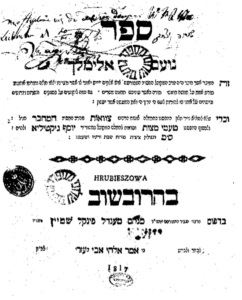
In 1772, After the First Partition of Poland, Hrubieszow was annexed by Austria. In 1800, Stanisław Staszic founded the Hrubieszow Agricultural Society, the first cooperative organization in Europe, which existed until 1945. In 1802, the name Rubieszów was changed to Hrubieszow, the name by which it is known today. Seven years later, in 1809, after the Austro-Polish War, Hrubieszow became part of the short-lived Polish Duchy of Warsaw, subsequently becoming, in 1815, by the Congress of Vienna ,part of the Russian-controlled Congress Poland, within the Lublin Governorate.[3]

As noted above, Jews were active in Hrubieszow from the first half of the fifteenth century. At some point in that century, Jews in Hrubieszow received several privileges for wine trade and management of the town tax chamber. By 1551, thirteen Jewish residents occupied four houses, that number rising to 40 Jews living in 5 houses by 1560. That number continued to increase, so that from the 18th century until the beginning of the 20th century Jews comprised a considerable majority of Hrubieszow’s population, controlling trade, industry, and craft. In 1578, King Stephen Bahory granted the Jews in Hrubieszów extensive rights. Less than a century afterwards, during tah-ve-tat (the Chmielnicki massacres of 1648-49), the Jewish community was almost entirely destroyed. Soon afterwards, however, the Jewish community was reestablished – a yeshivah was opened, headed by R. Isaac ben Judah Charif. Hrubieszow would subsequently be home to a number of prominent rabbis and became influential in the Arba’ah Artzot (Council of the Four Lands).[4] In the 18th century the Hasidic movement became active in Hrubieszow, the city becoming a center of Berdichev Hasidism. Among its leaders was R. Joseph ben Mordecai Katzenelboigen (R. Mordechai of Neszhchiz), who relocated there in the 1790s.[5]

We now turn to our subject, Hebrew printing in Hrubieszow. As noted above, the Hrubieszow press is credited by the Thesaurus with as many as forty titles, although that number may be uncertain; in contrast, Avraham Yaari records only thirty-four titles for Hrubieszow.[6] Those works are relatively small varied books, designed to meet the community’s needs and interests, published from 1816 to1821 and then intermittently until 1827. This article will describe a small portion of those works, to give a sense of the press’s publications, their variety, indicative of the community and how, through their books, the press served it. To address a greater number would be tedious for both the reader and the writer.

Dr. N. M. Gelber and Avraham Yaari inform that attempts to establish a Hebrew press in Hrubieszow were made from 1792 through 1804, in the Austrian period, but that the matter was delayed, the privilege to do so not granted. In late 1816, a Hebrew press was established in Hrubieszow, now part of Congress Poland. The founder of the press was R. Menahem Mendel Finkelstein (Finkel Stein). He had partners, namely R. Moses Tzikor and R. Saul Moss Goldstein of Łaszczów. Finkelstein provided the financing, the latter two the necessary skills, being experienced printers, having been partners in the Hebrew press in Łaszczów. Management of the press changed in the following years. Goldstein left the press in 1819, returning to Łaszczów, Finkelstein left the press in 1821, leaving Tzikor in charge. Tzikor then took Solomon ben David as a partner. Eight master printers were employed by the press as compositors and press operators, namely Daniel Ze’ev ben Segal, Baruch Abraham ben David, both from Hrubieszow, Isaac ben David from Łaszczów, Hayyim ben Eliezer from Zhovkva, Israel ben Raphael, Menachem Mendel ben Baruch, Pesach Joseph from Łęczno, and Eliezer Segal, perchance from Hrubieszow.[7]

Printing began shortly after the privilege was granted, the first works being published, including several Yiddish titles. Vinograd records ten titles for 1816-17, beginning with Shir ha-Shirim (1816), Orhot Zaddikim, Gedolus David u-Malchus Shaul, Haggadah shel Pesah, Sefer Hasidim, Lekah Tov, a siddur Tefillas Nehora, Noam Elimelekh, Shivhei ha-Ba’al Shem Tov, and Tanna de-vei-Eliyahu. These are all small format books, ranging from duodecimo (120) through quarto (40) formats. These works are indicative of the variety of the Hrubieszow imprints and the community the press served. For example, R. Judah ben Samuel he-Hasid’s (c. 1150-1217) Sefer Hasidim, an ethical, mystical, and halakhic work; Tanna de-be-Eliyahu is an aggadic midrash attributed to Elijah the prophet as dictated to the third century amora Anan bar Rav: Noam Elimelekh by R. Elimelech of Lizhensk; Shivhei ha-Ba’al Shem Tov, collection of Hasidic tales about the founder of Hasidim, and in contrast to the prior works, Joseph ha-Efrati’s Gedolus David u-Malchus Shaul, a maskilic (enlightened) drama.[8]

Noam Elimelekh – We begin with R. Elimelech ben Eliezer Lippman (Lippa) of Lizhensk’s (1717-87) Noam Elimelekh, a classic and primary Hasidic work, representative of the press’s output and the communities’ interests. R. Elimelech was a student of R. Samuel Smelke Horowitz (Rebbe Reb Shmelke, 1726-78), and afterwards a disciple of R. Dov Baer the Maggid of Mezhirech (1704–72), as well as meeting by the latter R. Levi Yitzhak of Berdichev (c. 1740-1809). After the Maggid’s passing, Elimelech became the acknowledged head of the Hasidic movement and is considered the theoretician and creator of “practical zaddikism.”[9]
Noam Elimelekh was published as a 23 cm. work ([1], 94 ff.) The title-page begins with honorifics of Elimelech of Lizhensk and informs that in order that there should not be blank paper at the beginning of the book and for benefit of the public, they have published the testament of the author (see below), and at the end of the volume is R. Joseph Gikatilla’s Tamei Ha-Mitzvot. Not noted but also at the end of the volume are Likkutei Shoshana and Iggeret ha-Kodesh. The title page is dated with the chronogram “[for he said] the God of my father’s [house] was my help כי אמר אלקי אבי בעזרי (577 = 1817)” (cf. Exodus 18:4). Elimelech’s testament, entitled conduct (הנהגות) of a man is on the verso of the title-page and consists of twenty-one admonitions for a person.
The title-page states that Noam Elimelekh was published at the press of Menahem Mendel Finkelstein. According to Ch. B. Friedberg the references to the publisher on the title-page varies between books. He notes that initially references to the printer stated Menahem Mendel Finkel Stein and associates. Afterwards, however, he does mention the names of his partners.[10]

1817, Noam Elimelekh

The text, a hasidic Torah commentary on the weekly Torah portion, follows. It emphasizes the role of the zaddik in worship and divine service. At the end of the concluding section of the book are two decorative tail-pieces. These tail-pieces, particularly the one on the left, appear on title-pages of several Hrubieszow books.

Noam Elimelekh is a classic Hasidic work. First printed by his son after his death in Lvov 1788, Noam Elimelekh has proven to be an immensely popular work. This, the Hrubieszow printing, is the sixth edition. It is reported that more than 50 editions of Noam Elimelekh have been printed.[11]

Sefer Hasidim – R. Judah ben Samuel he-Hasid’s (c. 1150–1217) Sefer Hasidim, a different but computable work is, as noted above, an ethical, mystical, and halakhic work. Judah was a disciple of his father, R. Samuel (ben Kalonymous) he-Hasid (c. 1120-75) an eminent kabbalist and ascetic; portions of Sefer Hasidim are attributed to Samuel he-Hasid. They are among the most renowned members and leaders of the Hasidei Ashkenaz, the influential Jewish pietist movement in medieval Germany.

It is reported that when Judah’s mother was pregnant with him, she was walking along a path by a bet medrash (Torah study hall) when a wagon came bearing down upon her, with no place to turn, neither to the right nor to the left. Just as she was about to be crushed by the horses’ hoofs, the walls of the bet medrash opened saving her and her son. It is also told that Samuel he-Hasid witnessed the heavens opening; asked what kind of son he wanted, he replied, one of exemplary piety. Judah reputedly hosted the prophet Elijah, was able to revive the dead, and performed miracles, particularly saving Jews from oppressors. He practiced an ascetic form of mysticism, fasting two days for Yom Kippur, throughout the week, eating at night only, and often fasted on Shabbat, claiming that the change would cause him pain, detracting from his pleasure in Shabbat. It was said by a contemporary that if Judah had lived in the times of the prophets he would have been a prophet.

1817, Sefer Hasidim

The title-page of Sefer Hasidim, published is octavo format (80: [64] pp.) is in Yiddish, excepting the names of the printers and the publication date. All of the printers are cited here in bold letters, that is, Menahem Mendel Finkel Stein, Moses Tzikor and Saul Moss Gold Stein. The date in the chronogram, “Let the faithful exult in glory;
let them sing joyously upon their beds יעלזו בכבוד ירננו על משכבותם )577 = 1817).” (Psalms 149:5)

Sefer Hasidim is foremost an ethical manual, practical rather than theoretical, encompassing all aspects of life, including the minutiae of personal, family, and business matters. Numerous examples are cited, containing, considerable information about contemporary Jewish life. Advice is detailed and pragmatic, with the goal of achieving strict adherence to an ethical and pious life. These instructions, often based on kabbalistic teachings, have been influential because of the author’s great piety. Sefer Hasidim is also a mystical work, explaining biblical and talmudic passages.[12]

Gedolus David u-Malchus Shaul – A very different work is Joseph Ha-Efrati of Tropplowitz’s (c. 1770–1804) Gedolus David u-Malchus Shaul, a drama in Yiddish. Among the smallest Hrubieszow imprints, it was printed in duodecimo format (120) 29 ff.

1817, Gedolus David u-Malchus Shaul

The author, born in Tropplowitz, Silesia, was a Hebrew poet, dramatist, and tutor. While working in the last capacity he wrote the first acts of the drama Melukhat Sha’ul from Melukhat Sha’ul completed in Prague in 1793. Gedolus David u-Malchus Shaul is a Yiddish translation, retitled. This version, that is the Yiddish translation, has been described as “part of the traditional Purimshpil (“Purim play”) in many Lithuanian and Polish towns . . . the first modern Hebrew drama of the Haskalah period, is noteworthy for its new egalitarian and humanistic ideas.” In writing Melukhat Sha’ul Ha-Efrati was reputedly influenced by Shakespeare, Goethe, Schiller, and von Haller, as well as M. H. Luzzatto. The primary characters, Saul. David, Jonathan, and Michal reputedly signify abstract ideas rather than lifelike characters, representing “the pathos of a suffering hero, ridden with envy and guilt, torn by fears and loneliness, and not merely a proud and jealous king.”[13]

The title-page is misdated, the date, given in a straightforward manner, is תקלז (= 1777). Depending on when the misdating was caught, it may have been corrected with a stop-press correction, that is, when an error was found the press would be stopped, the error would be quickly corrected and printing resumed. As one copy only of Gedolus David u-Malchus Shaul was seen it not known if that was done or if this is the sole uncorrected title-page for that work.[14] Friedberg writes that he has seen several of the press’s books that are misdated[15] For other examples, see below.

The text is in Yiddish excepting paragraph headers and, similarly, except here vocalized, the names of the participants in the drama on the verso of the title-page. This is the third edition of Gedolus David, the first having been printed in Lvov in 1801; It is a popular work, as many as fourteen editions are recorded for Gedolus David in the Bet Eked Sefarim and only twelve editions for Melukhat Sha’ul.[16]

The following year, 1818, saw the publication of five titles, primarily Hasidic works, among them such classics titles as R. Menahem Nahum Twersky of Chernobyl’s Me’or Einayim, homilies on the weekly Torah portions; R. Samuel ben Nathan Ha-Levi Loew Kolin’s Maḥaẓit ha-Shekel on the Shulḥan Arukh Oraḥ Ḥayyim and Yoreh De’ah; R. Jacob ben Solomon Habib’s Ein Ya’akov, collection of aggadah in the Talmud; R. Levi Yitzhak of Berdichev’s Hasidic classic Kedushat Levi discourses on the weekly Torah readings, and, in Vinograd’s listing, a second Hrubieszow edition of Noam Elimelekh.

Kedushat Levi – R. Levi Yitzhak of Berdichev’s Kedushat Levi, a classic Hasidic work of weekly discourses. was published in quarto format (40: [1], 78, 27, 15 ff.) in the year “Isaac pleaded [with the Lord] ויעתר יצחק (571= 1818)” (Genesis 25:21). R. Levi Yitzhak of Berdichev, who defended Hasidus against its opponents, settled in Berdichev, in 1785, residing there for the rest of his life. When he passed away, it seemed, to R. Nahman of Bratslav that “the light of the world had been extinguished.” Levi Yitzhak was held in the highest regard and affection by Jews. An example of his sensitivity, even to transgressors, is the following incident,

When he happened to meet “a young man eating in public on the fast of Tisha B’Av (the anniversary of the day on which both the first and second Temples were destroyed) the rabbi asked him mildly, “Have you forgotten that today is the Ninth of Av? Or are you perhaps unaware that it is forbidden to eat on the Ninth of Av?” “I have not forgotten what day it is and I am well aware of the prohibition,” answered the young man. “Possibly, my son, you are not in good health and have been advised by your doctor to eat?” the rabbi of Berdichev inquired further. No, I am in excellent health,” was the reply. “See, O Lord,” exclaimed the sage with joy, “how admirable Your children are! Even when they transgress Your Commandments, they do not stoop to falsehood.” [17]

Levi Yitzhak’s first published work, also entitled Kedushat Levi, is discourses on Hanukkah and Purim, printed in Slavuta in 1798. It was subsequently included in later editions of Kedushat Levi on the weekly Torah readings.

1818, Kedushat Levi

The title-page of this edition of Kedushat Levi begins with honorifics for R. Levi and then informs that it also includes additional material on various subjects. On the verso of the title pages is an approbation from four rabbis from Berdichev; R. David Shalit, R. Aaron Isaac ha-Kohen, R. Nathan Aryeh Davir, and R. Mordecai באאימו son of my lord, my father, teacher, and rabbi David Shalit. Below the approbation is the standard disclaimer that the people among whom the Jews reside today are not like those in the time of the Talmud, immoral idol worshippers, but today show respect for Torah and do justice and righteousness in their lands, The text follows, primarily on the weekly parsha, but also addressing other biblical books, festivals, and concluding with a final section addressing various subjects, including Pirke Avot. Kedushat Levi.

First published in Berdichev in 1811, this, the Hrubieszow edition, is the third printing of Kedushat Levi. A popular work, it has frequently been republished.

Sefer ha-Yashar – Among the books published in 1819 is R. Zerahiah ha-Yevani’s (13th or 14th century) popular ethical work Sefer ha-Yashar (Book of Righteousness). The title-page attributes the work to R. Jacob ben Meir Tam (Rabbenu Tam, c. 1100-1171), a not infrequent error, as well as it being attributed to R. Jonah Gerondi (13th century). The former did author a Sefer ha-Yashar (Vienna, 1811), but that is another work, consisting of responsa and novellae, while the style of the latter, who wrote ethical works, differs from this book. A number of manuscripts, however, name Zerahi ha-Yevani’s as the author. While many now accept him as the author, that attribution is not definite. Little is known about Zerahiah, except that he was a resident of the Byzantine Empire and that he is credited with Sefer ha-Yashar.

Sefer ha-Yashar was published in octavo format (80: [2], 40 ff.). The title-page begins that it is “the path of life and moral reproof, to go on a straight path. It is dated “it is [very] indeed upright וישר הוא מאוד (579 = 1819)” (cf. Deutronomy 32:4; Psalms 21:29). The printers names are given on the title-page as Menahem Mendel F. Sh. and Moses Tzikor,

1819, Sefer ha-Yashar

There is an introduction, in which Zerahiah brings proof for the Torah and its precepts from both reason and from the prophets, and bemoans the pursuit of pleasure, wealth, and honor in his time, rather than religion and morality. Sefer ha-Yashar, with the purpose of directing one’s soul towards the correct worship of God, piety, and ethical content, is written in an easy style so that it will influence others to right conduct. Sefer ha-Yashar is comprised of material from earlier ethical works, although they are not mentioned in the text by name nor directly quoted. It is evident, from the book, that he was familiar with Jewish philosophic works. The most significant of the prior works, acknowledged in the introduction, is Bahya ibn Paquda’s Hovot ha-Levavot, studied by Zerahiah, but too long and complex for the average reader. It provides, in summary, the essence of several chapters. Another important influence, evident in the text, is Maimonides.

The text, divided into eighteen chapters which address, beginning with the creation of the world, worship, repentance, knowledge of God, the will of God, the world to come, complete repentance, the significance of the righteous, accountability of a person, remembrance of the day of death, and the distinction between the righteous and the wicked. Zerahiah’s primary subjects are the need to imitate God, conditions of proper prayer, both theoretical and practical; correct conduct and obstacles to be overcome to achieve it; and repentance.[18]

A popular work Sefer ha-Yashar was first printed in Constantinople (1540); this is the twenty-second edition, of slightly more than fifty recorded by the Bet Eked.Sefarim.[19]
Levushe Serad – Another different work, also published in 1819, is R. David Solomon Eybeschuetz’s (Eibenschutz) halachic Levushe Serad on the Shulhan Arukh Yoreh Deah, particularly on the laws pertaining to shechita (ritual slaughter). Printed as a folio (20: [2], 2-102 ff,) in the year “attired as thin beast לבושי השרד בהמה דקה (561 = 1801).” This date is certainly incorrect, a bet ב at the head of the word בהמה (beast) which make the verse meaningful but gives a date in error, as opposed to a kafכ which would read כהמה and would give the correct value of (579 = 1819) but be meaningless. I would suggest, and this is entirely speculative, that the printer wanted the meaning of beast even if that threw the date off. Support for this conjecture can be found in the correct date, immediately below the Hebrew date, in Arabic numerals, that is, 1819. This is the only title-page seen among the Hrubieszow imprints with an Arabic numeral date.

The author, R. David Solomon ben Yerachmiel Eybeschuetz, was born in Russia and studied under R. Moses Ẓevi Heller. He served as rabbi in several locations, among them Buzhanow, Soroki (Volhynia), and Jassy, (Rumania). Eybeschuetz made aliyah, that is, he went up to Eretz Israel, residing in Safed, where he died in 1812. Eybeschuetz was also a kabbalist as well as a Talmudist. His other works include responsa, Ne’ot Deshe (part one, Lvov, 1861), part two and manuscripts, including a commentary on the Torah and discourses.[20]

The title-page describes Levushe Serad as being comprised of three parts, the first explaining the laws pertaining to laws of falling and broken bones in cattle and fowl; the second, laws applying to lungs; and the third, applying to Yoreh De’ah. The printers are given here as Menahem Mendel Finkel Stein. and Moses Tzikor.

The verso of the title-page has an approbation from R. David Shalit. The text is comprised of the commentary in two columns. The text of this volume on Yoreh Deah varies from the previous volume on Orah Haim. Chaim Tchernowitz describes this volume as following R. Alexander Sender Shor’s (d. 1737) influential Simla Hadasha, also on shechita; Levushe Serad being described as the most important commentary on that work [21] It does not include the text of Yoreh De’ah, on which Levushe Serad comments and elucidates.

1819, Levushe Serad

Levushe Serad on Orah Haim was first published in Mohilev (1805). This volume, on Yoreh Deah is the third edition, it too having been printed previously in Mohilev (1812).[22]

Havvat Da’at – Among the books printed in 1820 was another work on Shulhan Arukh Yoreh Deah, but considerably different from Levushe Serad, that is, R. Jacob ben Jacob Moses Lorbeerbaum of Lissa’s (c. 1760–1832) Havvat Da’at. It was published as a folio (20: [1], 37 [should say 36], [34] ff.) in the year “Day to day makes utterance, night to night speaks out יום ליום יביע אומר ולילה ללילה יחוה דעת (470 = 1805) 19:3), This chronogram is also misdated, as is noted by the NLI catalogue, which records it as a circa 1820 imprint; which also states that the printer, who is not identified on the title-page, is unknown.

1820, Havvat Da’at

Jacob Lorbeerbaum of Lissa was a distinguished rabbi, who served in several communities, writing, in addition to Havvat Da’at other valued works. [23] However, his early days were difficult and troubled. His father, rabbi of Zborow, passed away prior to Lorbeerbaum’s birth; he was raised by R. Joseph Te’omim (Pri Megadim, 1727–1792), a relative. He initially combined learning and business, being a partner in a brewery but, when that failed, Lorbeerbaum became rabbi in Monasterzyska, founding a yeshivah there. He subsequently became rabbi of Kałusz writing many of his earliest works there, including Havvat Da’at which, reflecting his great humility, was originally published anonymously. When his authorship was subsequently identified ,Havvat Da’at became the name by which he is known.[24]

In 1809, Lorbeerbaum became rabbi of Lissa. Lorbeerbaum was an opponent of the Haskalah movement, their influence resulting in his leaving Lissa in 1822 and returning to Kalisz. Disputes there forced him, in 1830, to again relocate again finally settling in Stryj, serving there as rabbi until his death.

The title-page of Havvat Da’at states that it is on Shulhan Arukh Yoreh Deah, which is a tree of knowledge “desirable as a source of wisdom” (Genesis 3:6), for the pure and the impure. It continues that it is comprised of two parts, Biurim, explanations in depth based on prior commentaries and Hiddushim, novellae, interpretative explanations of statutes and critical analysis. On both sides of the pressmark is the standard disclaimer that the contemporary peoples among whom the Jews dwell today are not immoral idol worshippers as in the past.

The commentary, as described on the title-page, is in two parts, about the text of the Shulhan Arukh. Chaim Tchernowitz describes the subject matter of Havvat Da’at as being on such subjects as salting of meat, meat and milk, mixtures, interest, niddah, and other halakhot dealing with prohibitions such as Stam Yeinam (gentile wine), and treifus. He concludes that according to Havvat Da’at even with laws dealing with permitted and prohibited foods there is room for critical and analytical critique.[25]

Given the title-page variations of this edition, described above, it is not surprising that Avraham Yaari questions, concisely, whether Havvat Da’at is a Hrubieszow imprint. He suggests that it was published elsewhere, writing “one more book that is listed as having been published in Hrubieszow was actually published in Polonne. This is Chavat Da’at by Ya’akov of Lissa.”[26] While we have noted a number of variations in Havvat Da’at, such as the dating error in the chronogram, albeit not that unusual for Hrubieszow publications, the absence of the printers’ names, and a pressmark that is not common to Hrubieszow title-pages, there is also the fact, in contrast to these varoiances, that the place of printing is clearly given on the title-page as Hrubieszow. Furthermore, other bibliographic sources, such as Friedberg’s Bet Eked Sefarim and Vinograd’s Thesaurus record Havvat Da’at as a Hrubieszow imprint. An examination of a sample of Polonne and Sudylkow (also suggested) title-pages did not show any like images. The question of whether Havvat Da’at was a Hrubieszow imprint or was published elsewhere is a teku (u nresolved).

Another Hrubieszow imprint by Jacob Lorbeerbaum of Lissa is a folio edition of Beit Ya’akov, novellae and commentary on Shulchan Aruch, Even Ha–Ezer and tractate Ketubot. The printers are given as Moses Tzikor, of Laszczow, and Solomon, ben David Lev, of Laszczow, Menahem Mendel Finkel Stein having already left the press.

This is the fourth printing of Havvat Da’at. The first edition was published in Lvov (1799).

Avodat ha-Kodesh – Among the books printed in Hrubieszow in 1820 is Avodat ha-Kodesh by R. Ḥayyim Joseph David ben Isaac Zerachia Azulai (Hida, 1724-1807), a prominent kabbalist, rabbinic scholar, bibliophile, and prolific author. More than eighty works are attributed to him, sixty in print, on a wide variety of subjects on Torah, halachah, aggadah, and kabbalah.[27] Avodat ha-Kodesh, an 18 cm. octavo(80: 40 ff.) is comprised of three related works, Vinograd records each independently, that is, Avodat ha-Kodesh, Moreh be-Etzba, and Ziporin Shamir as separate entires. All three titles, kabbalistic explanations of customs, are in octavo format (80) and relatively small works. Shimon Vanunu, describes Avodat ha-Kodesh as a compilation of several of Hida’s prior works.[28]

Hida was born in Jerusalem to a prominent Sephardic family, descendant from exiles from Spain, and his great-grandfather was the kabbalist R. Abraham Azulai (c. 1570–1643, Hesed le-Avraham), originally from Fez, Morrocco and on his maternal side from R. Joseph Bialer, a German scholar. He was educated by leading rabbinic figures, among them R. Isaac ha-Kohen Rapoport, R. Shalom Sharabi, and R. Haim ibn Attar (Ohr ha-Haim). He served as rabbi in several communities and beginning in 1755, served as an emissary from Eretz Israel to Jewish communities in Europe.

1820, Avodat ha-Kodesh

The title-page has the heading Avodat ha-Kodesh in large bold type and below notes the other two works, and then that the book was brought to press by R. Jacob ben Naphtali Hertz of Brod and that it had been printed previously in Livorno. The title-page is dated in a straightforward manner as (תק”פ = 1820). The verso of the title-page has the disclaimer that the non-Jews among

whom the Jews noted above that contemporary nations are unlike the earlier nations who were immoral idol worshippers, but today show respect for Torah and do justice and righteousness in their lands. It is followed by the tailpiece noted above that appears on the title-pages of several books. Examples of the text are:

147: all who say shirat ha-yam (Exodus 14:30 – 15:19) with joy as if he himself had been delivered from the sea, Pharoh, and his army, when they drowned in the sea, and says Shira with great feeling is forgiven his iniquities.

148: all who weep and mourn for a person who was kosher is forgiven his iniquiites.

149: all who pray erev Shabbat and say [the prayer] ויכלו “the heavens and earth were completed” (Genesis 2:1), two angles say to him turn your eyes and your sins will be atoned for.

The pressmark appears at the end of the book as a tail-piece.

Tomer Devorah – Another work published in 1820 is R. Moses ben Jacob Cordovero’s (Ramak, 1522-1570) popular and much reprinted Tomer Devorah. A small kabbalistic, ethical, and inspirational treatise, it was published as a 19 cm. octavo (14 ff).

Moses ben Jacob Cordovero was the first to describe the dialectical process through which the Sefirot pass in their development and to interpret the various stages of their emanation as manifestations of the Divine mind.[29] Based on his name, Cordovero appears to have been descended from Jewish exiles from the city of Cordova. It has been suggested, but this is uncertain, that he was born in Safed. Cordovero was a student of R. Joseph Caro (1488-1575) in nigleh (revealed, literal Torah) and, after heeding a heavenly voice that urged him to study Kabbalah, of his brother-in-law, R. Solomon Alkabez (Lekhah Dodi) in nistar (esoteric Torah, Kabbalah). Cordovero became a leader of the ascetic mystical community of Safed, preparing for it a list of rules of conduct, primarily instructions and commands. He served as a dayyan in Safed and founded a yeshivah there in about 1550, which he headed until his death in 1570.

Among Cordovero’s students were R. Elijah de Vidas (Reshit Hokhmah), R. Abraham Galante (ha-Kadosh), R. Samuel Gallico (Asis Rimmonim, an abridgement of Pardes Rimmonim), R. Hayyim Vital, and R. Isaac Luria (ha-Ari). Although Luria was Cordovero’s student for a short while only, and his system of Kabbalah would supplant that of Cordovero, Luria refers to Cordovero as his master and teacher, testifying that Cordovero was completely free of sin, that both the sages of the Mishnah and Elijah the Prophet appeared to him, and that at Cordovero’s funeral a pillar of fire preceded his coffin. Others, such as R. Menahem Azariah da Fano, although in Italy, considered themselves disciples of Cordovero. A prolific writer, he is responsible for several of the classics of Kabbalah.[30]

Tomer Devorah is entitled from “And she sat under the palm tree of Deborah (Tomer Devorah) between Ramah and Beth‑El in Mount Ephraim” (Judges 4:5). The title-page urges man to follow a straight path, to end his isolation and reflect on his ways, to cleave to the order of the sephirot. The printers are given as Menahem Mendel Finkel Stein and Moses Tzikor of Łaszczów, their names preceded by honorifics. The title-page is dated with the chronogram in the year “This is the Teaching that Moses placed before the children of Israel זאת התורה אשר שם משה לפני בני ישראל (580 = 1820)” (Deuteronomy 4:44).

1820, Tomer Devorah

The text is comprised of ten chapters describing Divine qualities and how man should strive to emulate them. They are, 1) the Supernal Crown (Keter) and the thirteen attributes of higher mercy which belong to it; 2) the qualities of the crown, such as humility and kindness, eradicating pride from the heart; 3) wisdom (Hokhmah), love and care for all creatures; 4) understanding (Binah) and repentance; 5) on mercy (Hesed), the methods of performing mercy and assisting the Sefirot to function harmoniously; 6) power (Gevurah), utilizing the evil inclination to serve God; 7) beauty (Tiferet), the study of Torah and behavior appropriate to a scholar; 8) Endurance, Majesty and Foundation (Netzach, Hod and Yesod), support of Torah students and purity of life; 9) Sovereignty (Malkut), sacrifices for Torah and performing marital duties with holiness; 10) Man’s conduct so that he is never separated from the world of the Sefirot. An example of the text, from Keter, is:

Keter – Some major activities that are the main governance: Further for a person to resemble his Creator from the secret of the trait of the Crown (Keter), he must [do] some major activities – which are the main governance. The first: The trait of humility – which includes everything – because it is dependent on the Crown. As behold, It is a trait over all of the Traits, but it does not raise itself and become proud above [the others]. Indeed, It goes down and always looks downwards. And that is from two reasons: The one is that It is embarrassed to look at Its Cause, rather Its Emanator always looks down upon It to benefit It; and It looks down to the lower ones. So [too,] must a person be embarrassed from staring upwards, to be proud. Rather, he must always stare downwards, to diminish himself all that he can.[31]

The title page is followed by a brief introduction from R. Moses Basola, with the pressmark. He found the manuscript of Tomer Devorah in the library of R. Menahem Azriah, who gave it to Basola, in order to bring it to press to merit Israel.

Tomer Devorah is replete with allusions from Talmudic and kabbalistic sources, systemizing and vividly presenting abstruse concepts. It has been frequently republished and translated into other languages, among them English. Tomer Devorah was first published in Venice (1588); this the Hrubieszow edition, is the fourteenth. The Bet Eked Sefarim records thirty-two editions, several with annotations, and not recording translations.[32]

Ayyelet Ahavim – A rhetorical and poetic treatise on the Akedah (sacrifice of Isaac) by R. Solomon de Oliveyra (1633-1708). Ayyelet Ahavim was printed as a 19 cm. octavo (80: [4], 20, [1] ff.). It is dated in a straightforward manner as תקפ”א,ה ([5]581 = 1821).

R. Solomon de Oliveyra is accounted among the Sephardic sages of Amsterdam.[33] Oliveyra’s place of birth, whether Lisbon or Amsterdam, is uncertain. Albert Van Der Heide suggests that as Oliveyra’s parents were fugitive co1nversos, as documented in Amsterdam in 1628, he must have been born in the latter location. Also, based on the marriage certificate issued by the city of Amsterdam, Oliveyra married Rached Dias in 1660, when twenty-seven years old, again attesting to Amsterdam as his place of birth.[34] Oliveyra served as rabbi (hakham) and teacher in the Talmud Torah Etz Haim of the Keter Torah association of the Amsterdam Portuguese community, of which he later became president. He was a member of the rabbinical council, over which he presided after the death of R. Jacob Sasportas (c. 1610-98). In addition to these rabbinic positions, Oliveyra worked as a corrector in the printing-house of Uri Phoebus.[35] Oliveyra was the author of a number of varied multi-lingual works on grammar, lexicography, other philological subjects, poetry, and riddles. Van Der Heide has described Oliveyra as “the preeminent and omnipresent Hebrew poet of Jewish Amsterdam.” Oliveyra became, for a time, an adherent of Shabbetai Zevi, composing liturgical verse in his behalf as well as writing approbations

The primary publisher of Oliveyra’s books was David de Castro Tartas (c. 1625–c. 1700), active from 1662 to 1698 in Amsterdam. Their relationship began in 1665, when our subject work, Ayyelet Ahavim ws published. The title-page begins that it is Igeret: words of truth, “to understand a proverb, and a figure” (Proverbs 1:6). It is entitled Ayyelet Ahavim for it was “a precious vessel” (Hosea 13:15, Nahum 2:10, II Chronicles 32:27), “To receive the instruction of wisdom” (Proverbs 1:3), “He established it and searched it out” (Job 28:27), by the rav, the Sephardic sage SOLOMON ben DAVID Oliveyra, in the month of Ziv in the year תי”ז (1657, printed in Amsterdam in the year תכ”ה (1665). It adds that it has now been brought to press by R. Abraham Moses ben Solomon ha-Levi of Lublin: with the permission of the censor in Hrubieszow at the press of Moses ben Tzikor of Łaszczów.

1821, Ayyelet Ahavim

Oliveyra’s introduction follows (2a-b) in which he states that he does not wish to delve into deep explanations nor to go up to the heights of discourse, but rather his heart wishes to speak of the greatness of that “righteous man, who quarried the fetters of love, of that which he formed יצורו for the love of the One Who formed him יוצרו.” Oliveyra’s intent is to investigate this holy and wondrous deed. Among the several reasons that he entitled this work Ayyelet Ahavim is that it is on the love of Abraham and his soul for God “As the hart longs for water streams” (cf. Psalms 42:2). The wide-ranging text is comprised of numerous aggadot, and including riddles and parables. In one section the alternating paragraphs of verse are between father and son. The prose text is accompanied by infrequent marginal references.

First printed in Amsterdam (1665) this is the third and last published edition Of Ayyelet Ahavim.[36]

Summation – Ten books have been described. The selected books give an insight to the type of works published by the Hrubieszow press. They are generally of a scholarly and specialized nature, primarily Hasidic works on the weekly parasha (Torah reading), ethical, and halachic tomes, although varied within each category. These works reflect both the composition and interests of the community. One book, Gedolus David u-Malchus Shaul, stands out, being of a contrary nature, that is, it has maskilic overtones. The provenance of one other work, Havvat Da’at, has been questioned. Also published were two editions of Shir ha-Shirim (1816, 1827), the former not seen, the latter (1820) with the commentaries of R. Eliezer ben Judah (Rokeah) and R. Moes ben Nachman (Ramban).

A lacuna in the press’s publications is the absence of Mishnaic and Talmudic volumes, attesting to the press’s emphases on small books, perchance the nature of its’ operations, a small publisher catering to and meeting a small market’s needs. It did, however, print an Ein Ya’acov, on the aggadot in the Talmud, this with the commentary Kotnot Or. The emphasis on small works does not in any way detract from the value of the press’s publications. Indeed, the books were well printed and attractive. Yaari, however, while approving of their appearance is not so positive as to the titles printed, writing “The books printed in Hrubieszow were elegant in appearance, but not of significant content. Most had been printed previously by other presses. These books were in great demand, such as popular Yiddish books.”

As noted above, the Thesaurus credits the Hrubieszow press with as many as forty titles, although that number appears uncertain, or perhaps exaggerated; Avraham Ya’ari recorded thirty-four titles only. Perchance, the difference in number can be attributed to the manner in which books are recorded. Avodat ha-Kodesh, for example, is a composite of three works, each listed independently in the Thesaurus but one entry only in Yaari’s listing. Summerly, there are three entries in the Thesaurus for Siddur Tefillat Nehora, a two-part prayer book designed so that it can be used for both Ashkenaz ads Sephardic rites. There is one listing only by Yaari, but more detailed. The entries in the Thesaurus for Tefillat Nehora are several years apart (1817, 1821, [1824]). To complicate matters, Yaari has several entries for Kotnot Or but the Thesaurus has one entry only for the Ein Ya’acov. The exact number of publications must remain then a teku (unresolved).

We have noted misdates and censors’ remarks. Yaari comments on this writing:

The names of the town or the printers are omitted from the title pages of several of the books printed in Hrubieszow. This is probably due to censorship, or book tariff payment. Sometimes the printers mentioned their names in some copies but not in others; sometimes they even inserted the name of a different town or stated a different year, to deceive the censor or the tariff–collector

No books omitting Hrubieszow were seen or noted.[37] Why then, printing with the censors’ approval they would omit their names is unclear. Indeed, the books described above, all, with the exceptions of Havvat Da’at all have the printers’ names. In conclusion, as already noted, the Hrubieszow press published small varied books covering a variety of subjects. The books served communal needs, were works of value, and attractively printed. A press only active for a brief period, it served the Hrubieszow community well. It deserves, should be remembered, in addition entries in bibliographic and historical records.

  1. I would like to express my appreciation to Eli Genauer for reading the article and his corrective comments, and Eli Amsel for his additional insights. All the title and text page images are courtesy of the National Library of Israel. The Polish monarchy banner is a public domain image.
  2. Vinograd, Yeshayahu. Thesaurus of the Hebrew Book. place, and year printed, name of printer, number of pages and format, with annotations and bibliographical references II (Jerusalem, 1993-95), p. 167 [Hebrew].
  3. https://en.wikipedia.org/wiki/Hrubiesz%C3%B3w
  4. The Encyclopedia of Jewish life Before and During the Holocaust, editor in chief, Shmuel Spector; consulting editor, Geoffrey Wigoder; foreword by Elie Wiesel I (New York, 2001), pp. 532-34; Polin: Virtual Shtetl https://sztetl.org.pl/en/towns/h/266-hrubieszow/99-history/137366-history-of-community; Dr. N. M. Gelber, Notes on the History of the Jews of Hrubieszow, tr. Yael Chaver, https://www.jewishgen.org/yizkor/Hrubieszow/hru021.html.
  5. Hurvitz Tzvi Ha–Levi Ish Hurvitz, “The Town of Hrubieszow and its Rabbis,” translated by Yael Chaver, Columns 51-52. https://www.jewishgen.org/yizkor/Hrubieszow/hru051.html
  6. Avraham Yaari, “The Hebrew Printing Press in Hrubieszow,” Kiryat Sefer, (Jerusalem, 1943–4), pp. 219–228 [Hebrew], tr. by Yael Chaver https://www.jewishgen.org/yizkor/Hrubieszow/hru051.html#Page57
  7. Dr. N. M. Gelber, Notes on the History of the Jews of Hrubieszow, tr. Yael Chaver, https://www.jewishgen.org/yizkor/Hrubieszow/hru021.html..
  8. Ch. B. Friedberg, History of Hebrew Typography in Poland from the bginning of the year 1534, and its development up to our days . . . Second Edition, Enlarged, improved and revised from the sources (Tel Aviv, 1950), pp.150-52 [Hebrew].
  9. Mordechai, Margalioth, ed., Encyclopedia of Great Men in Israel I (Tel Aviv, 1986), cols. 179-80 [Hebrew].Tzvi M. Rabinowicz, The Encyclopedia of Hasidism (Northvale, 1996), pp.111-12.
  10. Ch. B. Friedberg, History of Hebrew Typography in Poland, op. cit.
  11. Arnold Green, “Elimelekh of Lizhensk, “The Yivo Encyclopedia of Jews in Eastern Europe, Gershon David Hundert, ed. I (New Haven & London, 2008), p. 467; Rabinowicz, op. cit.
  12. Marvin J. Heller, The Sixteenth Century Hebrew Book: An Abridged Thesaurus II (Leiden, 2004) p. 697: Simcha Kogut, “The Language of Sefer Hasidim, Its Linguistic Background and Methods of Research,” in Studies in Medieval Jewish History and Literature, ed. Isadore Twersky, II (Cambridge, 1984), pp. 95-108; Reuben Margaliot, ed., Sefer Hasidim (Jerusalem, 1973), pp. 3-9 [Hebrew].
  13. https://www.encyclopedia.com/religion/encyclopedias-almanacs-transcripts-and-maps/ha-efrati-tropplowitz-joseph
  14. To replace a sheet with a single error would necessitate replacing several pages, the number depending on the book format. The normal practice, therefore, was to retain the original defective sheet and use both it and the corrected sheet in copies of the book. Due to cost factors, both of paper and labor, the sheet with the error would be replaced only if the error was substantial or substantive. It is therefore possible for books to consist of non-uniform copies, having several sheets with variant readings. For examples of such errors see Marvin J. Heller, “Who can discern his errors? Misdates, Errors, and Deceptions, in and about Hebrew Books, Intentional and Otherwise” Hakirah: The Flatbush Journal of Jewish Law and Thought 12 (2011), pp. 269-91, reprinted in Further Studies in the Making of the Early Hebrew Book, (Brill, Leiden/Boston, 2013), pp. 395-420.
  15. Friedberg, History of Hebrew Typography in Poland, p, 151 n. 1.
  16. Ch. Friedberg, Bet Eked Sefarim, (Israel n.d.), gimmel 128, mem 1922 [Hebrew].
  17. Rabinowicz, p. 61.
  18. Margalioth, Great Men, II col. 465-66; Meyer Waxman, A History of Jewish Literature (1933, reprint Cranbury, 1960), II pp. 276-79.
  19. Friedberg, Bet Eked.Sefarim, yod 1152.
  20. Louis Ginzberhg, N. T. London, “Eibenschutz, David Solomon,” Jewish Encyclopedia V (1New York, 901-06), pp. 75-78.
  21. Itzhak Alfassi “Schor, Alexander Sender ben Ephraim Zalman” v. 18 Encyclopedia Judaica (Jerusalem, 2007), p. 161; Chaim Tchernowitz, Toledoth ha-Poskim, III (New York, 1946), pp. 206-08 [Hebrew].
  22. Friedberg, Bet Eked.Sefarim, lamed 108.
  23. Lorbeerbaum’s other published works are Ma’aseh Nissim (Zolkiew, 1801), on the Passover Haggadah; Mekor Ḥayyim (ibid., 1807), novellae and expositions of the laws of Passover in the Shulḥan Arukh together with the glosses of R. David ben Samuel ha-Levi and Abraham Abele Gombiner on Oraḥ Ḥyyim and novellae to tractate Keritot; Netivot ha-Mishpat (ibid., 1809–16), on Ḥoshen Mishpat; Torat Gittin (Frankfurt on the Oder, 1813), the laws of divorce and novellae on tractate Gittin; Kehillat Ya’akov (1831), on Even ha-Ezer and sections of Oraḥ Ḥayyim; Derekh ha-Ḥayyim, an anthology of liturgical laws, first published with the prayer book (1828) and then separately (1860 or 1870); Naḥalat Ya’akov (1849), expositions of the Pentateuch; Emet le-Ya’akov (1865), expositions of talmudic aggadot; Imrei Yosher, commentaries on the five megillot, each published independently; his ethical will (1875); and Millei de-Aggadeta (1904), sermons and responsa (EJ, op. cit.). In a private correspondence Eli Amsel noted other such works, writing “Another Hrubieszow imprint by Jacob Lorbeerbaum of Lissa is a folio edition of Beit Ya’akov, novellae and commentary on Shulchan Aruch, Even Ha–Ezer and tractate Ketubot.”
  24. Haim Gertner, “Lorbeerbaum, Ya‘akov ben Ya‘akov Mosheh of Lissa, Yivo Encyclopedia, I pp. 1087-88; Ephraim Kupfer, “Lorbeerbaum, Jacob ben Jacob Moses of Lissa” Encyclopedia Judaica XIII pp. 191-92.
  25. Tchernowitz, Toledoth ha-Poskim, III, p. 258.
  26. The Polonne (Polonnoye) press was active from 1789 to approximately 1830, publishing as many as130 titles. Among them three editions of Havvat Da’at. An accompanying note in the Polonnoye entry references it as a Sudylkow imprint (Vinograd, p. 502). Two [1834] editions of Havvat Da’at are listed for that location.
  27. Yaakov Amsalem and Yisrael A. Groweiss, “The Hida’s Riddle,” Mishpaha, March 22, 2022.
  28. Shimon Vanunu, Encyclopedia Arzei ha-Levanon. Encyclopedia le-Toldot Geonei ve-Hakhmei Yahadut Sefarad ve-ha-Mizrah II 649-(Jerusalem, 2006), pp. 649-69 [Hebrew]. The works noted by Vanunu are Moreh be-Etzba, Ziporin Shamir, Kesher Gadol, Kaf Ahas, Yosef be_Seder, Sensen le-Ir, and Shomir Yisrael.
  29. Heller, The Sixteenth Century Hebrew Book, var. cit. ; Gershom S. Scholem, Major Trends in Jewish Mysticism (New York, 1960). Pp. 252-53.
  30. Concerning other works by Moses Cordovero see Marvin J. Heller, “His Hand did not Leave Hers Until he was Grown: Two Little Known Works from Moses Cordovero (Ramak)” Los Muestros no. 44 (Brussels, 2001), pp. 44-46, reprinted in Studies in the Making of the Early Hebrew Book (Leiden/Boston, 2008), pp. 278-83.
  31. https://www.sefaria.org/Tomer_Devorah.2.2?lang=bi&with=SidebarSearch&lang2=en.
  32. Friedberg, Bet Eked Sefarim, tav 484.
  33. Concerning see Marvin J, Heller, ” Solomon de Oliveyra:
    A Seventeenth Century Sephardic Sage,” Sephardic Horizons (v. 13: 1-2 Winter-Spring 2023), https://www.sephardichorizons.org/.
  34. Albert Van Der Heide, “Poetry in the Margin: The Literary Career of Haham Selomoh d’Oliveyra (1633-1708),” Studia Rosenthaliana 40 (2007-08), pp. 14.
  35. L. Fuks and R. G. Fuks-Mansfeld, Hebrew Typography in the Northern Netherlands 1585-1815 2 (Leiden, 1987), p. 247; Margalioth, col. 1264 [Hebrew].
  36. Friedberg, Bet Eked.Sefarim, alef 1626.
  37. While I did not see any such works, Eli Amsel also wrote “I have several in my collection, only TWO without the city mentioned in title, Bet Ya’akov, cityless; Pri Etz Chaim, with koretz as the city in very small font!!!”


R. Yitchak Al-fasi’s Anti-Qaraite Legislative Activity

R. Yitchak Al-fasi’s
Anti-Qaraite Legislative Activity
By Tzvi H. Adams
R. Yitchak Al-fasi (1013 – 1103) lived in North
Africa and Spain during the Golden Age of Qaraism. It is quite natural that we
find many instances of anti-Qaraite legislation in his writings.
Below are four such cases:
1) R. Al-fasi had the shofar blown on Shabbos
Rosh HaShanah in his beth din in Fez, Morocco. (See
discussion here: here). This
ruling and practice baffled many later authorities as it seems to contradict
the Talmud Rosh HaShanna 29b. R. Zerachiah Ha-Levi wrote about R. Al-fasi’s
opinion – וזה אחד מן המקומות המתמיהים הנמצאים בהלכות  (המאור הקטן ר”ה פ”ד).

When we consider that the Qaraites (of whom existed a large community in Fez)
did not blow a shofar at all on this holiday because such blowing is not
clearly written in the Torah, it is understandable why R. Al-fasi would desire
to have shofar blowing take place. Refraining from blowing the shofar would be
like surrendering to Qaraite views. We should also recall that Rosh HaShanah
can fall out on Shabbos as often as five times in ten years.
Aaron ben Elijah (1328-1369), a prominent
Qaraite theologian wrote:

The Rabbanites draw an analogy between the Day
of Trumpeting and the Day of Atonement which precedes the Year of the Jubilee,
of which it is written: Then shalt thou sound the horn of trumpeting in
the seventh month… on the Day of Atonement
(Lev. 25:9). They say
just as this trumpeting was done with horn, so also must the trumpeting on the
Day of Trumpeting have been done with a horn. (However), we have already
explained…. The Day of Trumpeting, therefore,
signifies nothing but the raising of the voice in song and praise, inasmuch as
there is no mention of a horn in connection with it. Moreover, why should we
draw an analogy between a thing which is obligatory every year, and one which
is obligatory only once in fifty years, the year of the
Jubilee?…                   
(from Leon Nemoy’s Karaite Anthology (1980) pg 173)

Read more on the Qaraite halacha here
2) R. Al-fasi was a key player in the
transition of the evening prayer from reshut to chova:
Summary: Since the close of the Talmud, the
accepted halacha had been תפילת ערבית רשות.
Towards the end of the tenth century the custom solidified amongst Qaraites to
pray only twice a day. To create a social divide, Rabbanite authorities
responded by requiring every Rabbanite follower to pray three times each day.
By attending synagogue three times a day one affirmed his allegiance to the
Rabbanite camp; also by praying more often than Qaraites, Rabbanites
distinguished themselves as being more holy and religious. The Franco-German
sages, distant from the Qaraite-Rabbanite scene, upheld the original halacha of
תפילת ערבית רשות.
Explanation: All early Gaonim ruled aravit
is optional (עיין בראשונים ברכות פרק תפלת השחר).
In early Qaraite times there were different views as to how many times a day
one should pray. Anan ben David, the early sectarian schismatic, believed that
only two prayers should be said: “Anan rejected the maariv – service, as being
only a Rabbinic innovation (See Brochos 27b), and prescribed two daily services
only in accordance with the times on which the Temidim were sacrificed” (Jacob
Mann, “Anan’s Liturgy and his half-yearly cycle of the reading of the law”, Karaite
Studies
(1971) edited by Philip Birnbaum pg. 285). R. Saadya Gaon
(882- 942), who had many interactions with Ananites, responded by requiring
Rabbanites to pray three times- he made maariv mandatory (chova).
This was only the opinion of the Ananites;
other sectarian Qaraite-like groups had other views as to the number of daily prayers
required. Later, in the mid-tenth century, R. Sherira Gaon (906-1006)
maintained the early gaonic psak that maariv
is reshut, but
wrote that one who does not daven maariv is a “poretz
geder
” (here).
Late in R. Sherira’s lifetime and in subsequent
years, the view among Qaraites was solidifying that only two daily prayers were
required. The Qaraite scholar, Levi ben Yefet, writes in his Sefer
ha-Miswot
(latter half of the 10th century),II pp.  501-502:
הדבור
בכמה זה השער- כבר נתחלפו בו ואשר עליו ההמון, כי הנה שתי תפלת בכל יום בקר וערב
שנאמר “ולעמוד בבקר בבקר להודות ולהלל ליוי וכן לערב”,… אשר יהיה זולת אלה הוא
נדבה…
ואמרו
מקצת חכמים כי חובה גם היא…ואלה הג’ תפלותיהם אשר זכר אותם דוד ע”ה “ערב ובקר
וצהרים אשיחה…” …. והקרוב עמי כי אלה הכתובים לא יורו על חיובה…
Shortly thereafter, R. Al-fasi (1013 – 1103)
further enforced the tri-daily prayer system by stating “והאידנא
נהוג עלמא לשוייה כחובה”. A Jew who belonged to the Rabbanite camp
distinguished himself from the Qaraites by attending synagogue three times a
day. I am preparing a lengthy paper on this topic – “The Transition of Aravit
from Reshut to Hova
a Rabbanite Response to Qaraism”.
3) R. Al-fasi participated in the anti-Qaraite
transition of minor fast days from being voluntary to mandatory.
Though the Gaonim and R. Chananel (990-1053)
explicitly say that not eating on the three minor fast days is the individual’s
choice (as per the Talmud’s ruling RH 18b- אין שמד ואין
שלום – רצו – מתענין, רצו – אין מתענין), R. Al-fasi chose to overlook this detail
about fast days in his halachic writings. The purpose of this intentional
omission was almost certainly to separate Rabbanites from the Qaraite community
who did not observe the Rabbanite fasting calendar.
Briefly, here is the sugya
in Rosh HaShannah 18b:
אמר ר”ש
חסידא מאי דכתיב (זכריה ח) כה אמר ה’ צבאות צום הרביעי וצום החמישי וצום השביעי
וצום העשירי יהיה לבית יהודה לששון ולשמחה קרי להו צום וקרי להו ששון ושמחה בזמן
שיש שלום יהיו לששון ולשמחה אין שלום צום אמר רב פפא הכי קאמר בזמן שיש שלום יהיו
לששון ולשמחה, יש (גזרת המלכות) שמד צום, אין (גזרת המלכות) שמד ואין שלום רצו
מתענין רצו אין מתענין
אי הכי ט”ב נמי אמר רב פפא שאני ט’ באב
הואיל והוכפלו בו צרות
The Gaonim:
– בזמן
הזה, בדורות הללו, שאין שמד ולא שלום, רצו מתענין לא רצו אין מתענין…. הילכך שלושת
צומות, מי שאינו
רוצה לצום אין בכך כלום
ואינו מחוייב בהן. (תשובות הגאונים גנזי
קדם ח”ג עמ’ 43)
R. Chananel:
שיש שלום
– כלומר כל זמן שבית המקדש קיים יהיה לששון ולשמחה. יש שמד – צום.  אין שמד
ואין שלום –  כגון עתה בזמן הזה, רצו מתענין רצו אין מתענין. וכיון שאם רצו
שלא להתענות בהן אין חובה עליהן
, לפיכך אין שלוחין יוצאין בהן.
(רבינו חננאל – ראש השנה יח, ב)
הרב
ברג’לוני ז”ל כתב מ”ט קבעום האידנא חובה? מפני שהם דברי קבלה … (שערי תשובה
סימן עז)

By the time of Ramban (1194–c. 1270) and later
authorities mandatory fasting was well established in Spain. (Rashba, though,
is an exception- he still considered the fasts optional.)
About the practice of the Qaraites, Levi ben
Yefet, writes in his Sefer ha-Miswot (latter half of the
10th century),III pg 452: Levi be writes
“צום הרביעי וצום החמישי וצום השביעי” וגו’. … והוא
העשירי מן החדש העשירי… והוא היום אשר סמך בו נבוכדנצאר על ירושלם והצר עליה
ובנה עליה דיק, שנאמר “ויהי בשנה התשיעית למלכו בחדש העשירי בעשור לחדש בא
נבכדנאצר מלך בבל וכל חילו” וגו’
והיום השני – והוא יום פתיחת המדינה, והוא היום התשיעי מן החדש הרביעי
שנאמר “בחדש הרביעי בתשעה לחדש ויחזק הרעב בעיר ולא היה לחם לעם הארץ ותבקע
העיר”.
והצום השלשי – הוא היום השביעי מן החדש החמישי מפני כי אמר בו
“בחדש החמישי בשבעה לחדש היא שנת תשע עשרה שנה למלך נבוכדנצר בא נבוזראדן רב
טבחים עמד לפני מלך בבל בירושלם, וישרוף את בית יוי”.
והצום הרביעי – הוא היום העשירי מזה החדש הה’ שנאמר “ובחדש
החמישי באחד לחדש” וגו’. והגרמתו וגם הגרמת היום הז’ הוא שריפת בית יוי מפני
כי אמר אחרי כל אחד מהם ” וישרוף את בית ה’ 
שני פעמים.
והצום הה’ – הוא יום כד’ מן החדש השביעי שנאמר “וביום עשרים
וארבעה לחדש נאספו בני ישראל בצום ובשקים” וגו’.
… ויש באלה הצומות חלוף. מהם בין הרבנים ובין הקראים, ומהם בין
הקראים ובין העננים,…
הדבור בצומות אשר יצומו אותם הרבנים … והוא יום
יז’ בתמוז ויום ט’ באב, ויום עשרה בטבת… ואולם לא נצום אותם עמהם…
Dr. Isaac Gottlieb summarizes (here):
The Karaite calendar does not take note of our
holidays of Hanukkah, Tu-b’Shvat… because these days are not mentioned in the
written Torah. Three of the four fast days associated with the destruction of
the First Temple are observed in Karaite tradition, but on different days from
us: the “fast of the fourth month,” which we observe on the 17th of Tamuz, they
mark on the 9th of Tamuz (cf. II Kings 25:3-4); instead of the Ninth of Av the
Karaites fast on the 7th and the 10th of Av (II Kings 25:8; Jer. 52:12-13);
instead of the Fast of Gedaliah, which we observe on the 3rd of Tishre, the
Karaites fast on the 24th of Tishre (Neh. 9:1). The fast on the 10th of Tevet
is the only one which they observe on the same date (Jer. 52:4-5). They do not
observe the Fast of Esther but celebrate Purim for two days, and on leap years
they only observe it in the first month of Adar.
Rabbi David Bar-Hayim’s view is that the
transformation from optional to mandatory fasting occurred because later
rishonim believed they lived in time of שמד
– hence fasting was obligatory. More recent authorities only cited the words of
these late rishonim and that perspective became the norm. Here is his
discussion of this topic: “The Four
Fasts and their Halakhic Status Today”.
Rabbi Bar-Hayim suggests that the situation
today (the political climate – war vs. peace) is not different than that of the
Gaonim and R. Chananel – אין שמד ואין שלום. 
This assessment has practical halachic implications. I suspect, though, that
the transformation was not only because of ‘wartimes versus peaceful times’ but
was also political and anti-Qaraite.
Rambam also omits this Talmudic leniency of רצו מתענין רצו אין מתענין. The Halachot
digest of R. Al-fasi and Mishnah Torah of Rambam were both intended
to replace Talmud study for the lay population. By ignoring the leniency of
permissibility of skipping the minor fasts, these sages made sure their general
readers would assume fasting is obligatory- thereby segregating them from the
Qaraite communities who did not fast on Rabbanite fast days.
The language used by R. Y Barzillai, “קבעום האידנא חובה”, is similar to that employed by R.
Yitzchak Al-fasi and others – “והאידנא נהוג עלמא לשוייה
כחובה” – in explaining why, in the eleventh century, Jews were
required to pray the evening prayer every night (עיין
ברכות פרק תפלת השחר). This may hint at the same reason for
change- to separate Rabbanites from Qaraites. See Case#2.
Furthermore, Sma”k 96 (R. Yitchak Corbeil- 13th
century France) and Kolbo Laws of Taanith (Provence
14th century) cite the Gemara רצו מתענין רצו אין מתענין
. These authors only cite practical matters- it is clear they still considered
the minor fasts optional. The great R. Tam was asked if a pregnant woman needs
to fast on the minor fasts. He responded by citing the Talmud – that these
fasts are optional (cited in Hagaath Maimoni Laws of Taanith 5).

These European sages lived far from Qaraites and therefore had no need to
respond to sectarian practices.
My suggestion – that the transformation of the
three minor fasts from being optional to mandatory was a reaction to Qaraism –
is novel and requires some more investigation and research…והמשך יבוא.
4) R. Yitchak Al-fasi, and his teacher, R.
Chananel, created a six hour waiting requirement between meat and dairy in the
early eleventh century – thereby limiting the social participation of
Rabbanites with Qaraites. This was not the common practice in Judaism until
their new legislation. I elaborated on this in “Waiting Six Hours for Dairy- A
Rabbanite Response to Qaraism” –  here.