A Few Comments Regarding The First Woodcut Border Accompanying The Prague 1526 Haggadah
A Few Comments Regarding The First Woodcut Border Accompanying The Prague 1526 Haggadah
The Prague 1526 edition of the Haggadah is one of the most important illustrated haggadot ever published. It is perhaps the earliest printed illustrated haggadah for a Jewish audience and served as a model for many subsequent illustrated haggadot.[1] The earliest printed haggadah with illustration was published in 1512 in Latin and for a non-Jewish audience. That haggadah contains six woodcuts, and was intended as a response to the infamous anti-Semite Pfefferkorn’s screeds against Judaism.[2]The woodcut accompanying the first page shows three Jews around the seder who have four cups in front of them. Although the Talmud explicitly states that one is not required to have four distinct cups of wine, presumably the image is a crude method of indicating the four-fold nature of the wine during the seder rather than prescribing custom.
The Prague 1526 edition was published by Gershom and his brother Gronom Katz on Sunday, 26th of Tevet 5287 or December 30, 1526.[3] This detailed publication information does not appear on the title page, rather it appears at the end of the book and is referred to as a colophon. The colophon is a manuscript convention that was incorporated into earlier printed books. The Prague 1526 edition does not have a title page at all. At that time, the usage of the title page was only in its early stages.[4]
The Earliest Hebrew Title Pages
As with non-Hebrew titles, the title page developed over time, both in terms of content as well as usage.[5] The first Hebrew title page is that of the Sefer Rokeah published in Fano in 1505.[6] But that title page is really one of the more basic forms of the title page, known as a “label title page” providing only the title and author and no other ornamentation or information.[7] In that same year, an edition of Abarbanel’s Zevah Pesach was published in Constantinople. This edition was the first to contain a border with the title and author, but no place or date of publication.[8] The first Hebrew book containing all the elements of a traditional title page, border, title, author, place and date is likely the 1511 Pesaro edition of the Talmud published by Soncino.[9]
Traditionally, the Hebrew title page is referred to as a “sha’ar” or gate. The theory behind this description is that many title page borders are comprised of “gates,” the most common are the pillars that adorn many Hebrew books and are assumed to be those at Saint Peter’s Basillica in Rome. Their inclusion in Hebrew books is perhaps linked to the (discredited) notion that the Catholic Church maintains certain portions of the Jewish Temple, and these pillars were actually in the Temple. The first Hebrew book to use an architectural border is Daniel Bomberg’s edition of the Jerusalem Talmud published in 1522.[10]
Illustrations in Hebrew Books
Returning to the Prague 1526 haggadah, as mentioned previously, this edition was copiously illustrated, including the first page of the book. This is not the first example of Hebrew printed illustrations. The earliest illustration to appear in a Hebrew book is that of a lulav and a handful of other explanatory images accompanying the Rome edition of the Sefer Mitzvot Gedolot dated to before 1480.[11]
The first fully illustrated Hebrew book was published in the incunabula period as well, it is Isaac ben Solomon Ibn Sahula’s Meshal ha-Qadmoni, printed in Italy, circa 1491, by Gershom Soncino.[12]
The border surrounding the first page of the Prague 1526 incorporates both Jewish as well as non-Jewish elements. First, it is obvious that a Jew had a hand in the border as, in the inset, it displays someone performing bedikat hametz (searching for the bread) where he is using the traditional implements of a candle and chicken feather. The outside border is less Jewish, and as many have noted, appears to be a copy of Italian/German renaissance borders. The two most likely candidates for models for Prague are the border first used in the 1518 edition of Sacri Doctoris by Raymond Lulli (available here) or a border first used in 1519 for Paolo Ricci’s, Lepida et litere in Augsburg and reused in an Augsburg 1522 edition of Erasmus, Ad reverendum (available here). Although we cannot pinpoint exactly which of these, if any, served as a model, what is clear is that among the images included in this border are bare-breasted women.
The use of bare breasted women to illustrate the haggadah is not limited to Prague. Both Charles Wengrov and Elliot Horowitz have pointed to earlier manuscript antecedents for Prague’s usage of such illustrations.[13] Aside from the printed example of the Prague 1526 Haggadah, this convention continued in manuscripts as well illuminated after 1526. There are at least four such 16th century examples.[14] Additionally, and contrary to Horwitz’s contention that Spanish Jews were less accepting of such displays,[15] the Sarajevo Haggadah, which originated in Spain around 1350, includes two panels of Adam and Eve both depicting a bare-breasted Eve.
Likewise, the Golden Haggadah, 1320 Spanish manuscript includes the same form of illustration of the Adam and Eve scene. Additionally, the Golden Haggadah includes images of nude bathers when it depicts Miriam standing from afar to see what will become of baby Moses.[16]
III. Censorship in Modern Reprints of Prague 1526
These historical antecedents notwithstanding, recent reprints of Prague 1526 have not been as accepting. This initial border has been altered to airbrush and removes the bare breasts. In 1989, a facsimile edition of Prague 1526 was published with the commentary of the Prague rabbi, Rabbi Yehuda Loew (Maharal). This border has been “touched up.”
Similarly, in 1998, a colorized facsimile edition of Prague 1526 was published. Although the publishers took great pains to provide color where before there was black and white, they also altered this border.
Oddly enough, although they found this image offensive, they decided to reproduce it in two other places in this reprint even though this image only appears once in the original. Here is the original:
Not only is the first border altered, but other instances of bare breasts have been removed; most notably the image accompanying the verse from Ezekiel 16:7 “I made you grow like a plant of the field. You grew up and developed and became the most beautiful of jewels. Your breasts were formed and your hair grew, you who were naked and bare.”
(As discussed previously here a later, Venice 1609, edition also altered this page.) Again in 2001, a facsimile of Prague 1526 “published by the Religious Council of Efrat in honor of the settlement’s twentieth anniversary . . . . two illustrations are surreptitiously deleted: the bare breasted woman” accompanying the verse from Ezekiel.[17] Most recently, in 2009, the airbrushed image of this woman was reproduced in The Schechter Haggadah: art, history; commentary.[18]
[1] There may be an earlier illustrated print haggadah, however, only 12 leaves of this haggadah are extant making it difficult to date (or identify the country of origin). For a bibliography regarding this fragment haggadah see Y. Yudlov, Otzar haHaggadot, Magnes Press, Jerusalem:1997, entry 9; and most recently, Eva Frojmovic, “From Naples to Constantinople: The Aesop Workshop’s Woodcuts in the Oldest Illustration Printed Haggadah,” in The Library, Sixth Series, Vol. XVIII, No. 2, June:1996, pp. 87-109.
[2]See R. Cohen, Jewish Icons: Art & Society in Modern Europe, University of California Press, CA:1998, pp. 21-22; see also Y.H. Yerushalmi, Haggadah; History: A Panorama in Facsimile, Philidelphia:1978, plates 6-8.
[3] Aside from the edition discussed herein, there is at least one copy of another haggadah that is also published by Cohen in Prague that same year. While both versions are substantially similar, some of the images and borders have been changed. Relevant for our purposes, is that the image accompanying “Sefokh” which is a full
page border with images of bare breasted women, has been replaced with a more innocuous border found elsewhere in the haggadah. See Yudlov, Otzar, entry 8; A. Ya’ari, Bibliography of the Passover Haggadah,
Bamberg & Wahrman, Jerusalem:1960, entry 7; Rabbi Charles Wengrov, Haggadah & Woodcut: an Introduction to the Passover Haggadah Completed by Gershom Cohen in Prague, Shulsinger Bros., New York:1967, pp. 78-9.
[4] The first Prague imprint to include a separate title page is in a 1526 edition of Yotzrot published by Cohen. See Wengrov, Haggadah & Woodcut, p. 82 n.238.
[5] Although, with regard to the adoption of the title page, Jews appear to adopt this convention at or near the time as society at large, that was not the case with other literary advances. While the majority of the western world adopted the codex and discarded the scroll some time in the third century, the first recorded Jewish reference to the codex does not occur until the late
eighth or the early ninth centuries. See Anthony Grafton, “From Roll to Codex: A Christian Initiative,” in Crossing Borders, Hebrew Manuscripts as a Meeting-place of Cultures, ed. Piet van Boxel & Sabine Arndt, Bodleian Library:2012, pp. 15-20.
[6] A.M. Habermann, Title Pages of Hebrew Books, Museum of Printing Art, Safed:1969, pp. 8-9.
[7] For a discussion of the development of the title page as well as the different types, i.e., label, border, end-title, see M.M. Smith, The Title-Page its early development 1460-1510, The British Library & Oak Knoll Press, London & Deleware:2000.
[8] See M.J. Heller, The Sixteenth Century Hebrew Book: An Abridged Thesaurus, Brill, Leiden & Boston:2004, vol. I, pp. 6-7.
[9] The border used for the Pesaro Talmuds first appeared in Decachordum Christianum (The Christian Ten String Harpsichord) published in Fano, 1507 by Gershom Soncino. See M.J. Heller, Printing the Talmud, pp. 104-117 Additionally, see Heller’s discussion, id. p. 113, regarding Soncino’s reuse of the Dechachaordum‘s frames. In reality, although the frames were originally cut for Decachordum, they were first used on Gershom’s edition of Bahya ibn Pakua’s commentary on the Torah, published four months prior to Decachordum. See M.J. Heller, The Sixteenth Century Hebrew Book: An Abridged Thesaurus, Brill, Leiden & Boston:2004, vol. I, p. 41; Smith, The Title-Page, supra, pp. 47-59 (discussing the use of the blank title page).
[10]See A.M. Habermann, “The Jewish Art of the Printed Book,” in Jewish Art, An Illustrated History, ed. Cecil Roth [revised ed. by B. Narkiss], New York Graphic Society Ltd., Connecticut:1971, pp. 167-68. In Habermann’s earlier work, Title Pages of Hebrew Books, p. 9, he erroneously asserts that the earliest works to include architectural title pages were Soncino’s Melitza le-Maskil and Bomberg’s Tanach, both published in 1524/25.
[11]See Joshua Bloch, “The Library’s Roman Hebrew Incunabula,” in Hebrew Printing & Bibliography, ed. Charles Berlin, New York:1976, p. 140. For a description of this work see S. Iakerson, Catalogue of Hebrew Incunabula from the Collection of the Library of the Jewish Theological Seminary of America, JTS, New York & Jerusalem:2005, entry 7.
[12] See A.M. Habermann, “The Jewish Art of the Printed Book,” supra, at 169. Habermann appears to argue that this is first printed Hebrew book containing illustrations, is incorrect. As discussed above, the first was the Rome edition of Sefer Mitzvot Gedolot. He is not alone in this error. Ursula Schubert makes the same error. See Ursula Schubert, Jewish Book Art, From the Renaissance until Emancipation, [Hebrew], Kibbutz hami-Uchad, Tel Aviv:1994, p. 27. Habermann, id., notes that the great Hebrew bibliographer, Mortiz Steinschneider, was tricked with regard to one of the illustrations contained in Meshal
ha-Qadmoni. Steinschneider, in a discussion about the alleged Christian origins of these illustrations, called attention to the fact that in one of them contains a monk wearing a crucifix. But, in the interim we have learned “that this last embellishment was a
practical joke played by a Christian scholar. . . [the crucifix] having been added by [a later] hand!” Regarding the history and origins of the images included in Meshal ha-Qadmoni, see César Merchán-Hamann, “Fables from East to West,” in Crossing Borders, pp. 35-44; Ursula Schubert, Jewish Book Art, pp. 27-8.
[13] Rabbi Charles Wengrov, Haggadah & Woodcut, p. 47 nn.112-13;Elliot Horowitz, “Between Cleanliness and Godliness,” in Tov Elem: Memory, Community & Gender in Medieval & Early Modern Jewish Societies, ed. E. Baumgarten, et al., Bialik Institute, Jerusalem:2011, *38-*39.
[14] Mendel Metzger, La Haggada Enluminée, E.J. Brill:1973, plate LIV, nos. 303-305; Chantily Haggadah, Musée Condé, Ms.
732, fol. 13, reproduced in Index of Jewish Art, eds. B. Narkiss & G. Sed-Rajna, Jerusalem-Paris:1976, vol. I, card no. 36.
[15] Horowitz, “Between Cleanliness,” at *38, (“One suspects that a Spanish Jew coming to Germany in the early 15th century would have been equally surprised to see an image of a naked woman” in a Hebrew manuscript.).
[17]Id. n.37. Horowitz only notes the 2001 example of censorship of Prague 1526, and apparently is unaware of the earlier
examples. Additionally, he chastises the Efrat reproduction for erroneously indicating a 1527 publication date. Efrat is not only in erring regarding the secular date. The first facsimile edition (Berlin:1925), which includes a scholarly introduction, full title
is: “Die Pessach Haggadah Des Gerschom Kohen Gedruckt Zu Prag 5287/1527.” Perhaps one can excuse the error as, in reality, it was completed on the eve of 1527, December 30, 1526.
[18] The Schechter Haggadah: Art, History & Commentary, [illustrations selected and annotated by David Golinkin], Schechter Institute of Jewish Studies, Jerusalem:2009, p. 36, fig. 16.1.
Kitniyot and Stimulants: Coffee and Marijuana on Passover
Kitniyot and Stimulants: Coffee and Marijuana on Passover
One of the more interesting customs for Pesach in that of refraining from kitniyot. There is much discussion regarding the origins of this mysterious custom. That is, the exact time this custom began, as well as it initial rationale is cloaked in mystery. That is not to say that numerous reasons haven’t been offered, only that we probably will never know for certain why this was enacted. Moreover, what exactly is encompassed in this custom is similarly cloaked in mystery. We have food items running the gamut. Aside from the standard fare of rice, we have those prohibiting such seemingly odd foods as garlic and carrots. Thus, it should come as no surprise that many have included foods that there is no legitimate reason for doing so. Indeed, as we shall see, in some instances the foods in question are prohibited although it is clear that the persons prohibiting them have no idea what exactly the foods are. This hearkens to the idea espoused by Dr. Daniel Sperber, discussed in this article, and expanded upon in this book, that if one understanding of history, bibliography and other relevant areas is lacking this may lead one to make grievous errors in halakhic matters. In this post we will deal with two foods, both of which were prohibited under the rubric of kitniyot, and, apparently, those who made these decisions were unaware of the actual characteristics of the foods in question. The two items we shall deal with are coffee and cannabis (hemp, hemp seed, and marijuana). [Our discussion below is with the recognition that one must always comply with all relevant federal and state laws and we limit our discussion to what position Jewish law takes regarding this topic.]
Coffee
Coffee was introduced to Western Europe in the 17th century. [See David Liss’s excellent fictionalized account of the burgeoning coffee trade in Jewish Amsterdam, The Coffee Trader. (Avner Gold has an Artscroll book, A Scandal in Amsterdam, that uses much of the same material, one wonders if it was “influenced” by Liss’s book.)] With its introduction, some rabbis began dealing with its halakhic status, which blessing is required and, as relevant here, whether it is permissible on Passover. R. Ya’akov Reischer (1670-1733), in his Shevut Ya’akov (vol. 2 no. 5), deals with both these questions. Regarding the first, he holds a shehakol is the correct blessing. Regarding the issue of Passover, he permits coffee. He is skeptical that coffee would be considered kitniyot because “he has been told” that coffee is grown on trees, and whatever one may think about the scope of kitniyot, it does not encompass tree fruits. But, R. Reischer hedges a bit and notes that even if coffee would be deemed kitniyot, as coffee is roasted, or, as he refers to it “burnt prior to Passover” this renders coffee unfit for even a dog and permissible on Passover.
R. Yosef b. David of Breslau, in Hok Yosef (no. 457, first published in 1730), however, disagrees. He first questions the argument regarding roasting or burning the beans and notes that the roasting process is an integral part of coffee process. More fundamentally, he argues that indeed coffee is kitniyot. He notes that his father-in-law, R. Abraham Broda, similarly held that coffee is kitniyot and prohibited.
R. Hayyim Yosef David Azulai (HIDA), disputes this holding in very strong terms. HIDA explains (Shu”t Tov Eyin, no. 8) that these rabbis “should be forgiven [for holding coffee is prohibited as kitniyot] because coffee is the fruit of a tree.” Regarding this classification HIDA is not speaking from second hand accounts like R. Reischer, rather HIDA notes that “a few years ago I saw a coffee tree in Amsterdam in the botanical gardens, as well as in Pisa and thus there is no reason to be strict regarding coffee.” HIDA in his travelogue describes in detail his visit to the Amsterdam botanical gardens, Hortus Medicus. On the 18th of Iyar, 1778, in the afternoon, HIDA went to the gardens. He says “that these gardens are truly indescribable they are so beautiful, all the plants and grasses are in rows, and everything is so clean, it is a testament to human intelligence. Every plant is labeled. There are plants from America, Portugal and Turkey all in rows according their nationalities. The wall have holes where fires can be lit to control the temperature of the gardens and ensure that the plants can survive even in the cold climate of Amsterdam. Among the plants I saw was the coffee plant.” (Ma’agel Tov ha-Shalem p. 150-51 ) While HIDA is unwilling to accede that these rabbis were completely unaware that coffee is tree fruit, it begs the question what those who prohibit coffee were thinking in considering coffee kitniyot.
It is not only those who prohibit coffee who seem to be unaware of exactly what they are discussing. More recently, R. Yitzhak Isa’ak Weiss (1875-1944), one of the Spinka Rebbis, discusses “two” types of coffee, one grown on trees and the other grown “in gardens.” He ultimately holds that both types of coffee are permitted, but the issue is that coffee always grows on tress. There are two major types of coffee, arabica and robusta, both of which grow on trees. Perhaps what R. Weiss is discussing is another type of coffee – one that was commonly substituted for coffee – but is not in fact coffee. The common substitute, which has its own history and own halakhic issues, is chicory. [See. R. Y. Goldhaver’s excellent articles regarding chicory and its treatment under Jewish law in Yeshurun 19:792-834, 20:839-864] Chicory is indeed a bush and not a tree and perhaps is what R. Weiss is discussing.
Today, for most (with Passover, one can almost always find a group that prohibits something) coffee is not deemed kitniyot and is Kosher for Passover. Indeed, one of the more common haggadot is the one produced by the Maxwell House Coffee company. (For more on the Maxwell House haggadah see our post, “On The Maxwell House Haggadah.”) One scholar has commented on this phenomenon: “As always, entrepreneurs, Jewish and otherwise, capitalized on wives’ and mothers’ desires to have just the right foods on the table for Passover, that longest standing of traditions. Maxwell House coffee, reportedly, caused a stir at many seder meals when it introduced a new ‘tradition’ of drinking coffee rather than tea at the end of the sumptuous holiday banquet. A decade or so later, the company would print its own Haggadah to insure a ‘unique relationship between a product and a people.” (Jeffrey S. Gurock, Orthodox Jews in America (Bloomington: Indiana University Press, 2009), p. 151.) Maxwell House even advertised in Yiddish in HaPardes: [Thanks to M. Butler for these two sources.]
Marijuana
In 2007, the Green Party in Israel made headlines in coming out that Ashkenzim should not smoke marijuana on Passover. There were articles from the Jerusalem Post on the topic as wellasotherpublications. Most are notable only in that how poor they are in substance. Indeed, another recent example can be found here. Although from reading these articles one may get the sense that rabbis haven’t discussed the marijuana, indeed there is at least one responsa on cannabis, the plant from which marijuana is derived, and its status on Passover.
R. Yitzhak Ya’akov Weiss (1902-1989), in Shu”t Minhat Yitzhak (vol. 3 no. 138(b)), discusses cannabis on Passover. Specifically, he is dealing with two foods, cannabis and cotton-seed oil, but we will focus on cannabis. Prior to engaging in this discussion we should note that the cannabis plant produces three things: (1) hemp which is fibrous and can be used to make clothing, and was commonly used to make strong rope; (2) hemp seed, which is used in food and in some homeopathic remedies; and (3) as a narcotic referred to as marijuana. [See also Y. Felix, Marot ha-Mishna, Jerusalem: 1977, p. 131; and Z. Amar, “Hashish and the Hashishim in Eretz Yisrael and Syria During the Medieval Period,” in Ariel 120 (1997), pp. 277-282 (he discusses, among other topics the band of assassins that are associated with the narcotic).] R. Weiss first notes that cannabis shouldn’t be questionable at all for Passover as Rambam, in the laws of prohibited mixing of seeds, labels cannabis as a vegetable and not kitniyot. However, R. Weiss points out that there is an internal problem with the Rambam, one that many of commentaries on Rambam have dealt with, but not to R. Weiss’s satisfaction. It should be noted that one commentary, Radbaz (1479-1589 or 1463-1573), in his discussion of this issue makes it apparent that he is aware of cannabis’s narcotic use. He explains that “in Egypt they eat [smoke?] cannabis and become high and those who do report that it makes them very happy . . . in other places they use cannabis to make clothing like linen.” Returning to the conflict in Rambam, R. Weiss’s solution is that there is no conflict and instead Rambam is referring to two distinct plants both of which are called cannabis. He arrives at this conclusion by noting that cannabis is defined differently. Some define cannabis as a fiber and others refer to it as a food item. Thus, he concludes that there must be two different plants which share the same name. This conclusions is of course wrong. There are not two distinct plants but a single plant that has a variety of uses. [Additionally, it should be noted that R. Weiss “proves” his point by referencing a Mishna that contains nikkudot. He doesn’t identify which edition he is referring to – Kehati or some other, but using such a source is highly questionable. The Kaufmann Mishna, one of the oldest examples of a nikkud mishna doesn’t contain both mentions of cannabis in the Mishna and therefore it is impossible to determine if the nikkud follows that advocated by R. Weiss.]
R. Weiss, based upon his non-existent two plant types, concludes that hemp would be included in the prohibition of kitniyot. In so doing, R. Weiss provides yet another example of someone incorrectly categorizing a food based on lack of knowledge of the plant itself. In all events, this responsum of R. Weiss, even though it is incorrect, is not referred to in any of the above cited articles. Indeed, the Star-K reaches the opposite conclusion and lists hemp and hemp seed as permitted on Passover (so long as one ensures there are no errant grains mixed in). Thus, it appears that marijuana would equally be deemed non-kitniyot.
Even if one accepts that marijuana is kitniyot, there is another reason that smoking it on Passover would be permitted. This is so as R. Ya’akov Emden, (Mor u-Kitziya no. 511) discusses using tobacco on Passover where there is a fear that the tobacco may have been soaked in beer. R. Emden explains that using such tobacco poses no problem on Passover for many reasons. In fact, he is so sure that such tobacco is permitted he “would have announced that Jew can affirmatively soak his tobacco in beer prior to Passover, but for the fact that am haratzim would view this as wrong.” [In part this sweeping permission is due to the fact that tobacco is inedible and thus immediately after the beer is mixed in it is no longer edible.] R. Emden concludes that he “remembers that his father [R. Tzvi Ashkenzi, Hakham Tzvi] used to laugh at those who displayed piety (mit-hassdim) and purchased Kosher for Passover tobacco.” R. Emden’s rationale applies with equal force to marijuana. In particular, R. Emden explains that smoking is merely deriving benefit and not considered ingesting the item in question. This is so even if one derives benefit through one’s mouth. R. Emden goes further to allow one to use snuff where one is partially ingesting the tobacco. Thus, according to R. Emden, smoking something that contains hametz (beer) is not a problem, surely something that is kitniyot would pose no problem. Therefore, presuming one is smoking marijuana, this would be allowed on Passover even according to those who consider it kitniyot.
What is particularly surprising is that if one is resorting to Jewish law to determine the status of marijuana, this question is not limited to Passover. Indeed, irrespective of marijuana’s status vis-à-vis Passover, various Rabbis have opined that using marijuana is always prohibited. For example, R. Moshe Feinstein (Shu”t Iggerot Moshe, Y”D vol. 3, no. 35) was asked about “the Yeshiva bochorim that have begun to smoke hashish (marijuana)” and if this is permissible. R. Feinstein replies unequivocally that according to Jewish law the practice is prohibited. Similarly, R. Shlomo Zalman Auerbach prohibits the use of marijuana. (Nishmat Avraham, O”H no. 155, no. 4) He also deals with the issue of if one is under the influence what is their halakhic status. (Shulchan Shelmo, Refuah, vol. 2, p. 223).
Additional Sources Regarding Kitniyot Generally:
Israel Ta-Shma, “Prohibition of Kitniyot on Pesach,” Early Franco-German Ritual and Custom (Jerusalem: Hebrew University Magnes Press, 1992), p.271-282 (Hebrew)
R. Shlomo Yosef Zevin, Ha-Mo’adim be-Halakha, pp. 305-312
There is also a chapter on kitniyot in Mo’adim le-Simcha although there are some inaccuracies contained therein. Additionally, some of those inaccuaries are the same that appear in the early article in Minhag Yisrael Torah vol. 2 no. 457, thus providing yet another example of plagiarism on the Mo’adim le-Simcha‘s part.
Who was Reb Shlomo?
Who was Reb Shlomo? by Natan Ophir (Offenbacher)
Natan Ophir’s book, Rabbi Shlomo Carlebach: Life, Mission, and Legacy, has just appeared. This is a complete biography of Carlebach’s life (not a hagiography) and is essential for anyone with an interest in Carlebach. The Seforim Blog is happy to include this excerpt from the book, pp. 413-419.
1. Who was Reb Shlomo?
Who was Reb Shlomo Carlebach? This question was deliberated in the obituaries after his death. Elli Wohlgelernter of The Jerusalem Post tried to describe Shlomo’s elusive uniqueness:
The obituaries referred to Rabbi Shlomo Carlebach as the “Singing Rabbi,” but that’s like describing Yankee Stadium as just some ballpark in the Bronx…. To have spent any time with Shlomo – that’s all he was called, never Rabbi Carlebach – was to understand this: he was his own kind of rabbi and they were his own songs, and they will be sung for as long as Jews gather to sing and dance….He was part hippie, part yippie, part beatnik, and part New Age. He was Dylan, Elvis, Arlo and Seeger all rolled into one, with a touch of Sholem Aleichem and Mark Twain.[1]
Indeed, Shlomo just didn’t seem to fit into any restrictive defining label. Menachem Daum, in a video report for Religion News and Ethics,labeled Rabbi Carlebach as the “most unorthodox Orthodox rabbi.” Moshe Stern, the internationally renowned cantor, characterized Carlebach as a combination of “a prodigal tzaddik, a musical genius, perhaps a religious exegete, a hippie in religious-ultra-orthodox garb.” Stern highlighted the all-encompassing nature of Reb Shlomo’s personality which defied categorization:
His greatest strength was and remains chiefly his ability to be all encompassing, a kind of prototype for felling the divides,for blurring the borders. This, it seems, is what the ears and souls of many in that younger generation latched onto, seeking as they did an escape path from the rigid categorizing enforced on them by the split reality of Israeli life.[2]
Similarly, Robert L. Cohen asks: Was there ever such an “embodied paradox, a bundle of contradictions?”[3] Cohen enumerates some of the seemingly contradictory aspects of Shlomo’s life. For example:
A thoroughgoing traditionalist, with Orthodox yeshiva education and rabbinical ordination, he outraged the Orthodox; a man for whom “pluralism” was an alien, ill-fitting concept, he was an implicit pluralist – teaching and singing everywhere, honoring rabbis of every denomination and encouraging others’ unorthodox paths.[4]
Shlomo was equally at home with the Admor of Amshinov, the homeless in Riverside Park, and Hadassah women. But there were subtle differences in how he presented himself. It was a different type of Shlomo comforting soldiers in hospitals during the Yom Kippur War, and another Shlomo singing for Christians in Poland and Germany.
A 1994 obituary by Yossi Klein Halevi in The Jerusalem Report used the term “Pied Piper of Judaism” to describe how Shlomo “taught an orphaned generation numbed by the Holocaust and assimilation how to return to joy.” Halevi captured the uniqueness of Shlomo’s concerts:
A Shlomo concert was part 60s-style happening, part Hasidic revival…. Shlomo always appeared with an entourage – strung-out street people, rebellious yeshivah boys, spiritual seekers, groupies… The only constant was Shlomo himself: his beautiful melodies; his deep, sure voice; his at-once profound and hokey rap ranging from Hasidic stories to exhortations for people to love each other, to mocking and very funny critiques of both ultra-Orthodoxy and Reform Judaism.[5]
The question of who was Reb Shlomo was often a reflection of how people related to him. Sometimes, it was Rabbi Shlomo Carlebach officiating in rabbinical functions such as weddings. Most disciples preferred the appellation “Reb Shlomo” to indicate a Hasidic closeness and warmth.[6] But for many followers, it was simply “Shlomo,” the best friend, informal confidant, eschewing titles or other artificial barriers. He was the rabbi poised at the entrance to his shul on West 79th St. to welcome all with a bear hug. In the setting of Manhattan’s street corners, he was a “holy brother” to many a “holy beggar.”
With a natural ease, Reb Shlomo also assumed the role of a charismatic prayer leader. For example, on Hoshana Rabbah services at West 79th St., wearing a white kittel and black gartel, he was like a choirmaster orchestrating the musical accompaniment of trumpet, violin and
singing congregation. In the full hour-long video dated September 26, 1994 at the Carlebach Shul, one can see the epitome of the new religious structure invented by Reb Shlomo: integrating a selection of his songs for the Hallel, each setting a different mood and spiritual direction; the symbolic waving of the lulav and arava with joyful dancing, and interjections in English creating a thoughtful direction.[7]
This is the Shlomo leading a new form of religious experience specifically adapted to the Orthodox community.
Shlomo was able to blend in to so many different types of communities because he reflected sundry images to diverse audiences. Prof. Shaul Magid uses the metaphor of a mirror:
Most remember him as a mirror: They saw in him what they wanted him to be, or what they imagined themselves to be…. each of his followers heard what he or she wanted and constructed him in their image. The Orthodox offer one reading, the neo-Hasidim another, Diaspora Jews another, Israeli Jews another; leftists read him one way, Jewish militants another. The point is none of them really know… He bequeathed a “Judaism of uncertainty” (“what do we know?” was his catchphrase) so that everything could be reviewed and revised, in the spirit of love and not separation, on compassion and not exclusion.[8]
Nonetheless, of all the images of Shlomo, the most well-known is that of the Singing Rabbi, the father of modern Hasidic music.
2. The Foremost Songwriter in Judaism?
Ari Goldman,in The New York Times obituary in 1994, designated Shlomo Carlebach “the foremost songwriter in contemporary Judaism.”[9] Recently, Goldman reiterated this statement, adding that it has never been disputed.[10] In 1997, music historian,Robert L. Cohen, referred to Shlomo as “the most prolific composer of liturgical folk melodies in this, perhaps any, century.”[11] In a later article, Cohen explained that Carlebach “opened the gates for a new generation of niggun makers” by creating music with a Hasidic flavor that could be accessible to young Americans:
Shlomo Carlebach had a phenomenal gift for melodies that conveyed yearning and joy, sweetness and exultation all at once… His
example inspired an entire generation to set traditional, and some original, verses to their own new melodies… The result has been a garland of new Jewish music – of new wings for our prayers.[12]
This type of recognition recurs in various Jewish encyclopedias and year books.Mark K. Bauman in the 2011 Jewish American Chronology, recognized Shlomo as “the twentieth century’s most prolific and influential composer of Jewish music and a key ambassador of spirituality,
especially to Jewish youth.”[13] Judah M. Cohen, in the Encyclopaedia Judaica entry, defined Carlebach’s extraordinary influence:
At the time of his death, Shlomo Carlebach had become a legend of sorts, having recorded over 25 albums, composed up to 5,000 songs, performed on five continents, released two official songbooks, amassed a broad following, granted semikhah to both male and female students, and given away nearly all his earnings. Several of his songs, moreover, had become “traditional” during Jewish events; revelers would sing such songs as “Esa Einai,” “David Melekh Yisrael,” “Am Yisrael Chai,” and “Od Yeshoma.”[14]
Mark Kligman, professor of Jewish Musicology at Hebrew Union College in New York, in his survey of contemporary Jewish music in the American Jewish Year Book (2001) stated: “Jewish musical artists of today consider Shlomo Carlebach the father of contemporary Jewish music.”[15] Kligman explains that the most innovative part of Shlomo’s musical success was “the blending of Hassidic song with folk music”:
Combining the participatory ease of folk music, the energy of the newly created music from Israel, and the religious fervor of the Hassidic niggun,he succeeded in moving liturgical music out of the synagogue and into a wide range of other settings, including concert halls and night clubs, and used his music to educate and inspire Jews to renew their Jewish identity and discover the beauty of Jewish life.[16]
Nonetheless, not all Jewish musicologists have recognized Shlomo’s importance. Cantor Macy Nulman in his 1975 comprehensive encyclopedia of Jewish music does not have an entry for Shlomo Carlebach.[17] Similarly, in his 1992 masterful survey of Jewish musical traditions, Hebrew University Professor of Musicology, Amnon Shiloah, does not mention Shlomo.[18] Presumably, part of the reason is that popular Hasidic folk songs are not on the same level as professional music. Indeed, Shlomo’s musical success is remarkable considering that he never really trained as a professional musician, and apart from a few voice lessons in Manhattan, was not an expert cantor. Or as Shlomo self-effacingly explained in an interview to Elli Wohlgelenter:
I don’t think I have a good voice. I think my voice is just good enough to inspire people to sing with me. If I would have a gevalt voice like, let’s say, Moshe Koussevitzky, then nobody would want to sing with me, because then they’ll think they don’t want to miss my voice, but my voice is just good enough to make them sing.[19]
Shlomo’s self-comparison to the renowned cantor Moshe Koussevitzky highlights a key ingredient of his musical success. Rather than impress an audience by a beautiful recital, Shlomo led a sing-along of catchy tunes. A typical Carlebach tune is easy to follow.[20] At Shlomo events, participants quickly learned his new songs thus furthering their popularity.
MusicologistVelvel Pasternak explained that if judged by objective musical standards, Shlomo was not the most outstanding composer, singer or guitarist, but his success was due to an uncanny ability to strike an immediate responsive chord in the ears of his listeners:
Even a seemingly banal sounding melody became a hypnotic and mesmerizing chant. The simplicity of his melody line, the intensity of his performances, the charisma of his personality, served to create a worldwide musical following.[21]
Furthermore, by adapting the form and fervor of a Hasidic farbrengen (see above, Chapter 6), Shlomo constructed a new hybrid of folk singing and semi-prayer. To quote the insightful appraisal of Motti Regev and Edwin Seroussi:
Armed with a guitar, dressed like an “orthodox hippie,” and using the most basic harmonies and short, repetitive melodies, Carlebach appeared at concerts that became a kind of unorthodox prayer that recalled the traditional Hassidic tish, an assembly of Hassidim around the table of the rebbe, held on special dates, and characterized by singing and dancing.[22]
In sum, the amalgamation of a Hasidic tish, inspirational storytelling, emotional insights, and ethical exhortations created the innovative Carlebachian musical experience. Samuel C. Heilman, professor of Sociology at Queens College CUNY, describes Shlomo Carlebach as a product of a synergy between Hasidic, Israeli, and American trends:
He attached himself to Hasidic prayer styles from which he took the idea of expressive enthusiasms in prayer and devotional ecstasy as part of Jewish outreach. From American new folk idioms, he took the guitar, rhythms, the practice of sing-alongs, the “talking blues,” concertizing, and the idea of making recordings. From Israeli culture, he borrowed the idea of shirah b’tzibbur, i.e., choral singing as a tool of social solidarity. All these he mixed syncretistically to develop his particular style.[23]
Indeed, this description sums up the secret of the appeal to Reb Shlomo’s music. He was able to bring together the popular folk music of the 1960s and the fervor of Hasidic niggunim to create a new genre of music. But Heilman goes further and explains:
Contemporary Carlebach minyanim have elevated him and his approach to a kind of mythic status. Reb Shlomo, as devotees refer to him these days, is the modern Jew’s counterpart to the Hasidic rebbes and other immortals that the Haredi world has enshrined. Like these rebbes, he is frequently resurrected in stories, songs, aphorisms, and teachings that are meant to shape the attitudes and religious character of those who invoke his memory.[24]
.
[1] Elli Wohlgelernter, “Simply Shlomo,” The Jerusalem Post, April 20, 1995.
[2] Ronit Tzach in Yediot Aharonot, Seven Day Magazine, Feb. 4, 2005, 34. Cited in Shmuel Barzilai, Chassidic Ecstasy in Music (Frankfurt am Main: 2009), 152.
[3] This witty aphorism is a quote from Charles Caleb Colton (1780–1832), Lacon or Many things in Few Words: Addressed to Those Who Think,vol.1, CCCCVII, p. 1980.
[4] Robert L. Cohen, “Jewish Soul Man.” Moment, August 1997, 59–64, 83.
[6] Shlomo explained the advantages of using the designation “Reb” rather than “Rabbi” by playfully distinguishing the letters. “Rabbi” is a combination of Ra (Hebrew for “bad”) and Bi (“he gets by”), whereas “Reb” is a shortened form of “Rebbe,” and in Hebrew means “Rabbi” with the letter yod, signifying the Divine Presence – “God is so tremendous inside” – God’s Light in you. Shlomo’s explanation can be heard on segment 4:53–5:11 in part 4 of “Rabbi Shlomo In Concert”, YouTube, http://bit.ly/1bq3rE0. This is from his concert in Feb. 1994 in Miami Beach.
[12] Robert Cohen, “New Wings for Our Prayers: On American Jewish Music,” Open the Gates!, vol. 1, 2005, excerpted in Tikkun, March 27, 2008, Tikkun.org, http://bit.ly/17Qyw1k. Cohen’s essay accompanies the CD American-Jewish Music for Prayer and describes Jewish religious folk music, its inspiration in the Hasidic movement and its cultural roots in American folk music. The CD includes 18 different composers and performers of prayerful melodies and #17 is “Ein Keilokeinu” of Shlomo Carlebach.
[13] Mark K. Bauman, Jewish American Chronology: Chronologies of the American Mosaic (Santa Barbara, California: 2011), 119.
[15] Mark Kligman, “Contemporary Jewish Music in America,” in David Singer and Lawrence Grossman (eds.), American Jewish Year Book. New York: 2001, vol. 101, 88–140.
[17] Macy Nulman, The Concise Encyclopedia of Jewish
Music (New Zealand: 1975).
[18]Amnon Shiloah,Jewish Musical Traditions (Detroit: 1992). His book is based on a course in Hebrew that Shiloah prepared for the Open University in the years 1985–1987.
[20] A typical Carlebach tune has two contrasting sections of only eight bars each, with the second one in a higher register, melodic sequences, and constant syncopation (with the rhythm accenting a normally weak beat) – see Motti Regev and Edwin Seroussi, Popular Music and National Culture in Israel (Berkeley–Los Angeles–London: 2004), 129.
[21] Velvel Pasternak, “A Musical Legacy,” Aquarian Minyan Newsletter, Autumn–Winter, 1995, reprinted in David Wolfe-Blank (ed.), The Aquarian Minyan KhaZak! Khazak!, 388–389.
[23] Adapted from Samuel C. Heilman, Sliding to the Right: The Contest for the Future of American Jewish Orthodoxy (Berkeley and Los Angeles: 2006), 291.
The Anonymous Author of Tikkunei Zohar and Ra‘ya Mehemna: An Antinomian or a Radical Maimonidean?
The Anonymous Author of Tikkunei Zohar and Ra‘ya Mehemna: An Antinomian or a Radical Maimonidean?
By Bezalel Naor
Today, it is an accepted fact in scholarly circles that Tikkunei Zohar and Ra‘ya Mehemna form a single unit that postdates the main body of Zohar.[1] More than one reader has been scandalized by statements in Tikkunei Zohar and Ra‘ya Mehemna likening the Mishnah to a shifhah or maidservant.[2] Predictably, in response, there grew an apologetic literature that attempts to justify how such shocking statements are compatible with normative Halakhah.[3]
One cannot rule out altogether the assertion by various secular historians that these pejorative statements betray an antinomian streak,[4] though to be certain, such statements of Tikkunei Zohar and Ra‘ya Mehemna are not situated in the present but deferred to the future. With this proviso, they are no more “antinomian” than the statement of Rav Yosef in the Talmud: “Mitsvot (commandments) are nullified in the future.”[5]
I wish to present a hitherto unexplored possibility. It seems likely that the anonymous author of Tikkunei Zohar and Ra‘ya Mehemna (which surfaced in Spain in the first decades of the fourteenth century)[6] was not so much an antinomian as a radical Maimonidean. It is in this light that we should understand negative statements issuing from the author regarding the study of Mishnah or those comparing the various Talmudic exercises and mental gymnastics to the backbreaking labor to which the Children of Israel were subjected in Egyptian exile.[7] These do not spring from an anti-halakhic mindset but rather from taking at face value Maimonides’ syllabus as laid out in his introduction to Mishneh Torah:
Hence, I have entitled this work Mishneh Torah (Review of the Law), for the reason that a person, who first reads the Written Law and then this [compilation], will know from it the whole of the Oral Law, without having need to read any other book between them [italics mine—BN].
We should be asking ourselves: Are there any historical grounds to assert that in Spain in the early 1300s there were halakhic Jews who openly—we should add, brazenly—promulgated the Maimonidean curriculum to the exclusion of Talmudic studies and the concomitant exercise of pilpul?
I offer the words of Joseph Ibn Kaspi:
Therefore my rabbis, listen to me and God will listen to you! I see that it is the intention of those among you who engage in Gemara, novellae and opinions (shitot),[8] to know proofs for the practical commandments, for you are not satisfied with the tradition from Mishneh Torah composed by Rabbenu Moshe [i.e. Maimonides], though he said: “And one shall have no need of any other book between them [Italics mine—BN].”
Here is an example. Ha-Rav ha-Moreh [i.e. Maimonides] wrote in his laws: “A sukkah that is higher than twenty ammah is invalid.”[9] Yet you despair and are without comfort until you know whether the reason is because “the eye does not rest upon it,” or because “one is not sitting in the shade of the sekhakh (overhead boughs) but of the walls,” or because “the sukkah must be a temporary dwelling,” as written in the Gemara.[10] Even this will not satisfy the very punctilious (mehadrin min ha-mehadrin) until they have added problems and opinions (shitot)[11]: “If you should say,” “one may say,” etc.
Truly, I admit that this is good, but why is the knowledge of proofs an obligation in regard to practical commandments, while not [even] an option,[12] but an outright prohibition when it comes to commandments of the heart? What sin has been committed by these four commandments of the heart (that I mentioned) that you do not treat them in the same manner but are satisfied by a weak tradition of few words, wanting comprehension?[13]
Who was Joseph Ibn Kaspi? Born either in Arles, Provence or Argentière, Languedoc,[14] around the year 1280, he passed in 1345 on the island of Majorca. His was a peripatetic life. The first period of his life was spent in the south of France. Later he gravitated to Barcelona, where his married son David resided. At approximately age thirty-five he travelled to Egypt for several months,[15] hoping to acquire there the intellectual legacy of Maimonides from the Master’s fourth and fifth generation descendants but was sorely disappointed in this respect. He even entertained the thought of traveling to Fez, Morocco in search of wisdom,[16] but that particular journey never materialized.
Ibn Kaspi’s reputation is that of an ultra-rationalist. His naturalistic explanations of events in the Bible far exceed even those of Maimonides; for that reason his opinions were marginalized. Though there is an abundance of manuscripts, it was only in the nineteenth century that Ibn Kaspi’s works were published from manuscript. (A few still remain in manuscript.) To this day, his interpretations have yet to “mainstream.”
My juxtaposing the Maimonidean enthusiast Joseph ibn Kaspi to the anonymous author of the kabbalistic works known as Ra‘ya Mehemna and Tikkunei Zohar may strike the reader of this essai as bizarre. Besides their contemporaneity, what basis is there for this juxtaposition?
Geographically, there are certainly grounds for relating the two authors to one another. Though separated by the Pyrenees, there was much traffic, intellectual and otherwise between Provence and Northern Spain. Some of the greatest families of Provencal scholars originated in Spain: the Kimhis, Joseph and his son David, who excelled as grammarians and Bible exegetes; and the Tibbonides, Judah and his son Samuel, who were the premier translators of classic philosophic works from Judeo-Arabic to Hebrew. And the traffic was two-way. Prominent Provencal families wended their way to Sefarad. The halakhist Rabbi Zerahyah Halevi (“Ba‘al ha-Ma’or”), a native of Gerona, established his career in Narbonne, only to return to Gerona at the end of his days. (His great-grandson was the Talmudist Rabbi Aharon Halevi of Barcelona.)[17] Ibn Kaspi is an example of a Provencal scholar who relocated to Catalonia: Barcelona, and eventually, the Balearic isle of Majorca. Thus, there could easily have been a sharing of ideas between southern France and northern Spain.[18]
In terms of mindset, the border between rationalist philosophy and kabbalah was especially porous at this time. Whoever authored Ra‘ya Mehemna and Tikkunei Zohar, carried with him much Maimonidean baggage. Linguistically, it is apparent to any student of the Ra‘ya Mehemna and Tikkunim that they are rife with the philosophic jargon made popular by the Tibbonides’ translations from Judeo-Arabic.[19] And let us not forget that the very backbone of Ra‘ya Mehemna is an enumeration of the commandments à la Maimonides’ Sefer ha-Mitsvot. (Rabbi Reuven Margaliyot isolated these commandments and presented them in orderly fashion in the introduction to his edition of the Zohar.)
*
When we put it all together it makes perfect sense. As shocking as some of its bold statements may be, the literary oeuvre of Ra‘ya Mehemna and Tikkunei Zohar cannot be construed as issuing from the mind of an antinomian. An antinomian would not go to the bother of constructing a Book of Commandments after a fashion. Rather, I maintain that the downgrading of the study of Talmud in general, and Mishnah in particular, should be attributed to a radical adoption of Maimonides’ curriculum of studies, whereby his halakhic magnum opus Mishneh Torah has superseded the study of Mishnah and Gemara.
In this respect, Maimonides’ devotees in Provence and Spain ventured beyond the Master himself. Maimonides penned a convincing letter to Rabbi Pinhas, the Dayyan (Justice) of Alexandria,[20] that regardless of what he wrote in the introduction to Mishneh Torah, the traditional study of the Talmudic tractates (albeit as summarized in Alfasi’s Halakhot) continues unabated in his beit midrash.[21] The curriculum that Maimonides once proposed remained an abstraction. It seems that Egyptian Jewry was not overly receptive to this innovation. Only well over a century later, did this great intellectual experiment of Maimonides, Mishneh Torah, a “hivemind of halakhah,”[22] designed to replace the “dialectics of Abayye and Rava,” find foot soldiers in the likes of Ibn Kaspi and the anonymous author of Ra‘ya Mehemna and Tikkunei Zohar. They launched their campaign from the soil of Provence and Spain.
Our thesis does not ride on the reputation of Joseph ibn Kaspi. Ibn Kaspi’s statement is perhaps the most outspoken and provocative call for adoption of Maimonides’ Mishneh Torah as a way of bypassing Talmudic studies, yet there are other testimonies (from the least expected quarter) that the exclusive study of Mishneh Torah was starting to gain traction in medieval Spain.
The great halakhist Rabbi Asher ben Yehiel (Rosh) emigrated from Germany to Spain at the turn of the fourteenth century and eventually emerged as the Rabbi of Toledo, Castile, where he left his stamp on the shape of Castilian Halakhah.[23] Evidently, Rabbi Asher had cause to fulminate against authorities who decided questions of practical Halakhah based solely on the rulings of Mishneh Torah without recourse to Talmud.
Rabbi Asher writes:
I heard from a great man in Barcelona who was eminently familiar with three orders [of the Talmud, i.e. Mo‘ed, Nashim and Nezikin]. He said: “I am amazed at people who have not studied Gemara and adjudicate based on their reading in the books of Maimonides, of blessed memory, believing that they understand them. I know myself, when it comes to the three orders that I studied, I am able to understand when I read Maimonides’ books. However, his books that are based on Kodashim and Zera‘im—I do not understand at all. And I know that it is that way for them regarding all his books![24]
*
Rabbi Yahya Kafah (1850-1931) was not wide of the mark when he asserted that those statements in Zoharic literature that undercut the Talmud (comprised of Mishnah and Gemara) were designed to enhance the prestige of the Kabbalah. (By the same token, one may safely say that Ibn Kaspi’s desire to streamline the study of Halakhah, stemmed from his valorization of Philosophy.)
Logically, our next question should be: What was Maimonides’ own stake in proposing that his compendium Mishneh Torah take the place of protracted Talmudic studies? Maimonides provides a simple answer to this question in his introduction to Mishneh Torah:
At this time, severe vicissitudes prevail, and all feel the pressure of hard times. The wisdom of our wise men has disappeared; the understanding of our prudent men is hidden. Hence, the commentaries of the Geonim and their compilations of laws and responses, which they took care to make clear, have in our times become hard to understand so that only a few individuals properly comprehend them. Needless to add that such is the case in regard to the Talmud itself—the Babylonian as well as the Palestinian—the Sifra, the Sifre and the Tosefta, all of which works require a broad mind, a wise soul and lengthy time, and then one can know from them the correct practice as to what is forbidden or permitted, and the other rules of the Torah.
On these grounds, I, Moses the son of Rabbi Maimon the Sefardi, bestirred myself…[25]
While perhaps not the ideal curriculum, the exigencies of the time demanded the production of a bold new work on the order of Mishneh Torah that would preserve the practice of Halakhah for the masses ill-equipped to make their way through the labyrinthine discussions of the Talmud or even the decisions of the Gaonica (originally intended to clarify the canons of Jewish Law).
But was there perhaps another purpose of Mishneh Torah that Maimonides kept to himself and was not willing to divulge in writing? In Hilkhot Talmud Torah (Laws of the Study of Torah), Maimonides would proceed to sketch the traditional trivium of Mikra (Bible), Mishnah and Talmud, [26]such that Pardes (the esoteric teachings of Judaism) comes under the rubric of “Talmud”[27]; and that furthermore, the mature scholar who has covered the requisite literature and is thus no longer bound by the daily trivium, “will devote all his days exclusively to Talmud, according to the breadth of his mind and the composure of his intellect.”[28]
Was the condensing of Talmud into Mishneh Torah Maimonides’ master plan to free time for the study of Pardes or esoterica? Should that prove true, then Ibn Kaspi’s interest,[29] and mutatis mutandis that of the Tikkunei Zohar and Ra‘ya Mehemna, was not so very different from that of HaRav HaMoreh.[30]
[1] This fact was recognized two and a half centuries ago by the discerning eye of Rabbi Jacob Emden. See Emden’s Mitpahat Sefarim, Altona 1768, Part 1, chap. 3 (6b); chaps. 6-7 (16b-17b); Lvov 1870, pp. 12, 37-39.
Whereas Zohar itself has come to be associated with the name of Rabbi Moses de Leon, no single name surfaces in regard to Tikkunei Zohar and Ra‘ya Mehemna (though there are some who would attribute the latter to a yet unidentified disciple of De Leon).
It should be mentioned in passing that even in regard to the authorship of the Zohar there has been a sea change in scholarly thinking. Unlike Scholem, who was convinced that the single author of the Zohar was Rabbi Moses de Leon, current thinking (spearheaded by Yehuda Liebes) rejects this notion of single authorship and assumes the Zohar to be a collaborative or composite work on the part of a mystic fraternity or haburah.
[2] See Zohar I, 27b. This is actually a segment of Tikkunei Zohar that the Italian printers in 1558 mistakenly embedded in Zohar. See Editor Daniel Matt’s note to the Pritzker edition of the Zohar, vol. 1 (Stanford, California: Stanford University Press, 2004), p. 170, note 499. See also the Introduction to Tikkunei Zohar (Vilna, 1867), 15b and gloss of the Vilna Gaon, s.v. shalta shifhah.
And see the Tikkunim appended to Tikkunei Zohar (Margaliyot ed.), tikkun 9 (147a).
By the same token, there are passages where the Mishnah is related to Metatron, the “‘eved” (male servant). See e.g. Ra‘ya Mehemna in Zohar III, 29b; and The Hebrew Writings of the Author of Tiqqunei Zohar and Ra‘aya Mehemna (Hebrew), ed. Efraim Gottlieb (Jerusalem: The Israel Academy of Sciences and Humanities, 2003), p. 1, line 3.
Moshe Idel has demonstrated that this motif whereby the Mishnah is juxtaposed to Metatron is to be found in the obscure work of Rabbi Abraham Esquira, Yesod ‘Olam (Ms. Moscow, Günzburg 607, 80a-b). See Idel’s introduction to The Hebrew Writings of the Author of Tiqqunei Zohar and Ra‘aya Mehemna, pp. 23-24, 27-28. Inter alia, Esquira’s text makes mention of “six hundred orders of Mishnah.” This is a reference to b. Hagigah 14a. See Rashi there s.v. shesh me’ot sidrei Mishnah. Thus, p. 23, n. 76 of Idel’s introduction is in need of correction. By the same token, Esquira’s “seven hundred orders of confusion” (“shesh me’ot sidrei bilbulim”) is a parody of the “seven hundred orders of Mishnah” in b. Hagigah 14a. See Idel, ibid. p. 28, n. 105.
Concerning the juxtaposition of the six-lettered Metatron, the servant, to the six days of the work week, see the Vilna Gaon’s gloss to Tikkunei Zohar (Vilna, 1867), tikkun 18 (33b), s.v. be-gin de-Metatron. There is precedent in a Teshuvat ha-Ge’onim (Gaonic responsum) for restricting the activity of the angelic realm to the six days of the week and reserving the seventh Sabbath day for Israel’s sphere of influence. See Tosafot, Sanhedrin 37b, s.v. mi-kenaf ha-’arets zemirot shama‘nu; and Rabbi Reuven Margaliyot, Margaliyot ha-Yam ad locum, and idem, Nitsutsei Zohar to Ra‘ya Mehemna in Zohar III, 93a, note 2.
Later, in sixteenth-century Safed, Rabbi Isaac Luria advised reserving the Sabbath day for the exclusive study of Kabbalah (“as was the custom of the early ones”), while relegating the study of Halakhah to the six work days. This is hinted to in the two verses “Hishtahavu la-Hashem be-hadrat kodesh” (whose initials form the word “Kabbalah”) and “Hari‘u la-Hashem kol ha-’arets (initials “Halakhah”). See Rabbi Hayyim Vital, Peri ‘Ets Hayyim (Dubrovna, 1804), Sha‘ar ha-Shabbat , chap. 21 (103c); Rabbi Jacob Zemah, Nagid u-Metsaveh (Lublin, 1881), 25b. And see Peri ‘Ets Hayyim, Sha‘ar Hanhagat ha-Limmud, s.v. kavvanat keri’at ha-Mishnah (85a): “Know that the Mishnah is Metatron in Yetsirah…”
In the Ra‘ya Mehemna in Zohar III, 279b, the Mishnah is referred to as the “shifhah…the female of the ‘eved, na‘ar (“lad”). “Na‘ar” or “lad” is yet another epithet for Metatron; see b. Yevamot 16b (based on Psalms 37:25) and Tosafot ad loc. s.v. pasuk zeh sar ha-‘olam amaro. Just as Metatron is referred to as “‘eved,” “for his name is like that of his Master” (b. Sanhedrin 38b). Both Metatron and Shadai have the numerical value of 318. (In Ra‘ya Mehemna in Zohar III, 82b it is spelled out that “Metatron is a good servant, a faithful servant to his Master.”)
In Ra‘ya Mehemna, in Zohar III, 276a, three of the most difficult tractates of the Mishnah are singled out for derision, ‘Eruvin, Niddah and Yevamot, as they are assigned the acronym ‘Ani (poor man). The Vilna Gaon points out that the derogation of the rabbis, students of the Mishnah, is not absolute, but only relative to the “ba‘alei kabbalah” (“masters of the Kabbalah”). See Yahel ’Or, ed. Naftali Hertz Halevi (Vilna, 1882), Tetse, 276a, s.v. ve-i teima.
Earlier in that passage (Zohar 275b) we have the underhanded compliment, “Hakham Mufle Ve-Rav Rabbanan” (“Outstanding Sage and Rabbi of Rabbis”), whose initials spell the word “hamor” (jackass). (This cynical remark found its way into the modern mystery novel by Richard Zimler, The Last Kabbalist of Lisbon [Woodstock, NY: The Overlook Press, 1998], p. 44.)
One who found absolutely outrageous the labeling of the Mishnah as a “shifhah” was the Chief Rabbi of Sana‘a, Yemen, Rabbi Yahya ben Shelomo (Sliman) Kafah (1850-1931). See his ‘Amal u-Re‘ut Ru’ah va-Haramotu-Teshuvatam (Tel-Aviv, 1914; limited facsimile edition Jerusalem 1976), p. 12. Available at hebrewbooks.org.
‘Amal u-Re‘ut Ru’ah va-Haramotu-Teshuvatam is Rabbi Kafah’s rejoinder to the bans placed upon him by the various batei din (courts) of Jerusalem—Ashkenazic, Hasidic and Sefardic. It struck Rabbi Kafah as highly ironic that he, a staunch defender of Talmudic Judaism, was placed under the ban, while the Zohar, with its numerous derisions of Talmud and its students, was upheld and, what is more, sanctified. Ibid. p. 14.
The constraints of space do not allow us to explore the controversy regarding the Zohar that erupted in Yemen in the early part of the twentieth century between Rabbi Kafah and his disciples, the self-styled Darda‘im, on the one hand, and their opponents, to whom they referred as ‘Ikeshim. (The first label is based on the Midrashic pun on Darda‘ [1Kings 5:11] as Dor De‘ah, “a generation of knowledge”; the second comes from Deuteronomy 32:5, “dor ‘ikesh u-petaltol,” “a perverse and twisted generation.”) At the instigation of his critics, Rabbi Kafah was jailed on more than one occasion by the Muslim authorities. (Rabbi Kafah alludes to this in ‘Amal u-Re‘ut Ru’ah va-Haramot u-Teshuvatam, p. 14.)
The man who acted as a peacemaker between the warring factions was none other than Rabbi Abraham Isaac Hakohen Kook. While upholding Rabbi Kafah’s status as an unusual Torah scholar, Rabbi Kook conveyed to him that he had erred in taking literally passages that were intended to be understood metaphorically. See Igrot ha-Rayah, vol. 2, ed. RZYH Kook (Jerusalem: Mossad Harav Kook 1961), no. 626 (pp. 247-248); Haskamot ha-Rayah, ed. Y.M. Yismah and B.Z Kahana (Jerusalem, 1988), no. 41 (pp. 46-47); Ma’amrei ha-Rayah, vol. 2, ed. Elisha Aviner (Langenauer) (Jerusalem, 1984), pp. 518-521. An incomplete variant of the letter in Haskamot ha-Rayah was published by Rabbi Moshe Zuriel, Otserot ha-Rayah, vol. 1 (Rishon LeZion, 2002), no. 76 (p. 447). See further Rabbi Zevi Yehudah Hakohen Kook, Li-Sheloshah be-Ellul I (Jerusalem, 1938; photo offset Jerusalem, 1978), par. 107 (p. 46).
For Rav Kook’s involvement with the Yemenite community and facilitating their ‘aliyah at the beginning of the twentieth century, see ibid. par. 42 (p. 21); and recently Ben Zion Rosenfeld, “Yahaso shel ha-Rayah Kook le-Hakhmei ha-Mizrah bi-Tekufat Yaffo 5664-5674 (1904-1914)” [“HaRav Avraham Isaac HaCohen Kook and his Attitude Regarding the Sephardi Sages During His Stay in Jaffa 5664–567 4(1904–1914)”], Libi ba-Mizrah (My Heart Is in the East) 1 (2019), pp. 287-290.
[3] See Rabbi Hayyim Vital, introduction to Sha‘ar ha-Hakdamot (printed as an introduction to the standard editions of ‘Ets Hayyim); Rabbi Shneur Zalman of Liadi, Iggeret ha-Kodesh (4th section of Tanya), chap. 26 (especially 143a). And see Rabbi Dov Baer Shneuri, Bi’urei ha-Zohar (Brooklyn, NY: Kehot, 2015), Bereshit (to Zohar I, 27b), 5a-8d.
[4] Heinrich Graetz, History of the Jews, cited in Gershom G. Scholem, “The Meaning of the Torah in Jewish Mysticism,” in idem, On the Kabbalah and Its Symbolism (New York: Schocken Books, 1970), p. 70, n. 1.
Contra Graetz, Scholem, referring to “the ambiguity of certain statements about the hierarchical order of the Bible, the Mishnah, the Talmud, and the Kabbalah, which are frequent in the Ra‘ya Mehemna and the Tikkunim, and which have baffled not a few readers of these texts,” states categorically: “It would be a mistake to term these passages antinomistic or anti-Talmudic” (op. cit. p. 70). Rather, to describe the peculiar posture of the Ra‘ya Mehemna and the Tikkunim, Scholem coins the term “utopian antinomianism” or “antinomian utopia” (op. cit., pp. 80, 82).
Other secular scholars who objected to Graetz’s judgment concerning the controversial passages in the Zohar (or to be more precise, Tikkunei Zohar) were Bernfeld and Zinberg. See Heinrich Graetz, Geschichte der Juden, 7, Beilage 12; Shim‘on Bernfeld, Da‘at Elohim, Part 1 (Warsaw, 1897), pp. 396-397, note 1; Israel Zinberg, A History of Jewish Literature, vol. 3, transl. Bernard Martin (Cleveland: The Press of Case Western Reserve University, 1973), pp. 55-56.
[6] Scholem and Idel would date Tikkunei Zohar and Ra‘ya Mehemna as early as the end of the thirteenth century (bringing the work in contact with Rabbi Moses de Leon). See Idel’s introduction to The Hebrew Writings of the Author of Tiqqunei Zohar and Ra‘aya Mehemna, pp. 10, 25-26, 29. Tishby established the years 1312-1313 as the terminus ad quem for the composition of Tikkunei Zohar based on its Messianic expectations for those years. Cited in Idel, ibid. p. 10, n. 7. See also p. 23. Idel, relying on Liebes, would make the terminus ad quem a year earlier, 1311. (Ibid.)
They embittered their lives with hard labor (‘avodah kashah)—with kushya (difficulty);
with mortar (homer)—with kal ve-homer (a fortiori);
and with bricks (levenim)—with libun hilkheta (clarification of the law);
and with all [manner of] labor in the field—this is Beraita;
all their labor—this is Mishnah.
Though mistakenly embedded by the Italian printers back in 1558 in the text of the Zohar, this is actually a segment from the later work Tikkunei Zohar. See above note 2.
This same anachronistic interpretation of the verse in Exodus 1:14 is found (with slight variations) in the Ra‘ya Mehemna, again embedded in Zohar III, 153a, 229b (though in this case explicitly identified as Ra‘ya Mehemna). See also Tikkunei Zohar, tikkun 21 (Margaliyot ed. 44a); the additional Tikkunim appended to Tikkunei Zohar, tikkun 9 (147a); and the Tikkunim appended to Zohar Hadash (Margaliyot ed.), 97d (where the end of the verse is interpreted, “be-pharekh—da pirkha”), 98b, 99b.
And see now, The Hebrew Writings of the Author of Tiqqunei Zohar and Ra‘aya Mehemna (Hebrew), ed. Efraim Gottlieb and Moshe Idel (Jerusalem: The Israel Academy of Sciences and Humanities, 2003), pp. 39-40.
This degradation of Talmudic hermeneutic was duly noted by Rabbi Kafah (see above note 2). Kafah believed that the not so hidden agenda of the anonymous writer was to promote the study of Kabbalah at the expense of the study of Talmud. See ‘Amal u-Re‘ut Ru’ah va-Haramot u-Teshuvatam, p. 12: “The entire purpose of the author of the Zohar is to cause the Mishnah and the Talmud to be forgotten from Israel, to stop up the mouth of the well of living waters from which flow the ways of the Oral Law, and have them occupy themselves with his new Torah.”
[8] The primary meaning of the Hebrew word shitah is a line; hence, a line of thought. For its derivative usage in medieval rabbinical literature, see Mordechai Breuer, ’Ohalei Torah (Jerusalem: Shazar Center, 2004), pp. 109, 510; Ya‘akov Spiegel, ‘Ammudim be-Toledot ha-Sefer ha-‘Ivri, vol. 2 (Ramat Gan: Bar Ilan, 2005), p. 442; and lately, Hayyim Eliezer Ashkenazi, “Heker ve-‘Iyun be-Sifrei Rishonim (4),” Yeshurun, vol. 40 (Nisan 5779), p. 930, n. 7.
In the London Beth Din Ms. 40 (designated in the microfilm collection of the National Library of Israel, F4708), f.30, this word reads “mishnayot,” rather than shitot, but the reading is unlikely, to say the least. Cf. below n. 11.
[10] The three opinions are found in b. Sukkah 2a.
[11] In the London Beth Din ms. for “shitot” there occurs the grotesquerie “shtuyot” (foolishness).
[12] The London Beth Din ms. has the superior reading “eino reshut o makom patur.”
[13] Joseph ben Abba Mari ibn Kaspi, Sefer ha-Mussar/Yoreh De‘ah, chap. 15.
Ibn Kaspi’s Sefer ha-Mussar was published in a couple of collections: Eliezer Ashkenazi of Tunis’ Ta‘am Zekenim (Frankfurt am Main, 1854); and Isaac Last’s ‘Asarah Klei Kesef (Pressburg, 1903). Our particular chapter (15) appeared earlier in the introduction to Ibn Kaspi’s ‘Ammudei Kesef u-Maskiyot Kesef, ed. Salomo Werbluner (Frankfurt am Main, 1848), p. xv. In Ta‘am Zekenim our quote appears on 53a; in ‘Asarah Klei Kesef on p. 70.
Sefer ha-Mussar was written for Ibn Kaspi’s twelve year old son Shelomo residing in Tarascon (Provence). According to the colophon, it was completed in 1332 in Valencia (Catalonia).
[14] Moshe Kahan is of the opinion that Joseph himself was born in Arles, and that it was his ancestors who hailed from Argentière (hence the Hebrew surname Kaspi). See M. Kahan, “Joseph ibn Kaspi—From Arles to Majorca,” Iberia Judaica VIII (2016), pp. 181-192.
[15] Kahan dates the journey between the years 1313-1315, and writes that Ibn Kaspi stayed in Egypt for about five months. Op. cit. p. 182.
In Mishneh Kesef I, ed. Isaac Last (Pressburg, 1905; photo offset Jerusalem, 1970), chap. 14 (pp. 18-19), Ibn Kaspi writes that about two years ago, at approximately age thirty-five, he went down to Egypt. The colophon of the book (p. 168) is datelined Arles, 1317, which would mean that the Egyptian expedition took place about the year 1315.
In Sefer ha-Mussar, which according to the colophon was completed in Valencia in 1332, we receive a slightly different picture. In the introduction, Ibn Kaspi writes that twenty years previous he wandered to Egypt; the total trip, from beginning to end, lasted five months. If we take him at his word, the trip to Egypt was in 1312. What is clear is that the actual sojourn in Egypt was less than five months.
[16] Introduction to Sefer ha-Mussar. In chap. 15, Ibn Kaspi spells out his fascination with Fez: “The Jews find repulsive and abandon today the Guide…the Christians respect and exalt it, and have translated it [to Latin]. All the more so the Ishmaelites; in Fez [italics mine—BN] and other lands, they established study-houses to learn the Guide from the mouth of Jewish scribes.”
[17] See Israel Ta-Shma, Rabbi Zerahyah Halevi (Ba‘al ha-Ma’or) u-B’nei Hugo (Jerusalem: Mossad Harav Kook, 1992), pp. 2, 16; Hayyim Eliezer Ashkenazi, “Heker ve-‘Iyun be-Sifrei Rishonim (4),” p. 933, n. 17.
[18] Though scholars assume a Castilian—rather than a Catalonian—provenance for Tikkunei Zohar and Ra‘yaMehemna, I do not see that as a major obstacle. Surely, the main flow of traffic was between Provence in the south of France and Catalonia in the north of Spain, but for Jews, Sefarad was an overarching unity, no matter the local potentates into which it was fragmented. Thus, in 1305, the Rabbi of Barcelona, Catalonia, Rabbi Solomon ben Abraham ibn Adret (Rashba) was able to place a newly arrived German émigré, Rabbi Asher ben Yehiel (Rosh) in the rabbinate of Toledo, Castile. (See Avraham Hayyim Freimann, Ha-Rosh ve-Tse’etsa’av, trans. Menahem Eldar [Jerusalem: Mossad Harav Kook, 1986], pp. 28-29.)
Sometimes, within a single family one finds both strands of Kabbalah, Castilian and Catalonian. Isaac ibn Sahula, native of Guadalajara, Castile, author of the bestiary Meshal ha-Kadmoni (1281), as well as a kabbalistic commentary to Song of Songs, was a disciple of Rabbi Moses of Burgos, as well as an assumed associate of Rabbi Moses de Leon. (The first reference to the Midrash ha-Ne‘elam, an early stratum of the Zoharic literature, is found in Ibn Sahula’s Meshal ha-Kadmoni.) His brother, Meir ibn Sahula, on the other hand, prided himself on his Catalonian and Provencal pedigree, being a disciple of “Rabbi Joshua ibn Shu‘aib and of Rabbi Solomon ben Abraham ibn Adret (Rashba), who received from Nahmanides, who in turn received from Rabbi Isaac the Blind, son of Rabad of Posquières, who in turn received from Elijah the Prophet.” So writes Meir ibn Sahula at the conclusion to his commentary on the Bahir, “’Or ha-Ganuz.”
(Yehuda Liebes speculated that the especially acerb remarks that precede this peroration are directed against recent developments in Castilian Kabbalah, namely the Zohar. See Y. Liebes, Studies in the Zohar [Albany: State University of New York Press, 1993], pp. 168-169, n. 50. However, in all fairness, the description of those “who expound books and books of the nations, and transcribe therein their gods, and call them ‘Secrets of the Torah’ [Sitrei Torah],” sounds more like an attack on Maimonides and his followers who construe Aristotelian philosophy as Sitrei Torah, than an assault upon the Zohar. At the end of his lengthy footnote, Liebes conceded this distinct possibility.)
Thus, the division of Spanish Kabbalah into discrete units of Castilian versus Catalonian traditions need not prejudice us against the possibility of penetrations and influences that defy this dyadic model. One needs to complexify the general picture of Spanish Kabbalah in order to appreciate the multiplicity of forces at work. Binaries are helpful as historic guidelines but they can never do justice to the complexity of lived reality.
[19] Tishby collected some of these Tibbonide neologisms, starting with “nefesh ha-sikhlit” or “intellectual soul” (Ra‘ya Mehemna in Zohar III, 29b). See Isaiah Tishby, Mishnat ha-Zohar, vol. 1, 2nd printing with corrections (Jerusalem: Mossad Bialik, 1949), pp. 77-78.
One can well appreciate how the Chief Rabbi of Sana‘a, Yemen, Yahya ben Shelomo Kafah, a most outspoken opponent of the Zohar, typified its author as “the philosopher, author of the Zohar” (“ha-philosoph mehabber ha-Zohar”). See his ‘Amal u-Re‘ut Ru’ah va-Haramot u-Teshuvatam, pp. 12-16.
Besides the obvious use of Maimonidean terminology, there is the subtle copying of categories. An example would be the way in which the author of Tikkunei Zohar patterned his “hamesh minim” (“five species” or “five sects”) of the ‘Erev Rav (Mixed Multitude) after Maimonides’ “hamishah minim” (“five sectarians”). The passage from Tikkunei Zohar was incorporated by the printers in Zohar I, 25a. (The note in Derekh Emet alerts the reader that the material correlates to Tikkunei Zohar, tikkun 50. In the new Pritzker edition of the Zohar, the passage from Tikkunei Zohar has been removed.) Maimonides’ “hamishah minim” are found in MT, Hil. Teshuvah 3:7. This is just a random sample of the pervasive influence of Maimonides on the author of Tikkunei Zohar and Ra‘ya Mehemna.
Cf. the direct quote from Maimonides, Hil. Teshuvah 3:6 in Isaac ibn Sahula’s Meshal ha-Kadmoni (Venice, 1546), Sha‘ar ha-Rishon (10a), s.v. va-yo’el ha-tsevi le-va’er. And see now Sarah Offenberg, “On Heresy and Polemics in Two Proverbs in Meshal Haqadmoni” (Hebrew), Jewish Thought 1 (2019), pp. 64-65. Recently, Hartley Lachter has attempted to demonstrate that the general tenor of Meshal ha-Kadmoni is esoteric; see H. Lachter, “Spreading Secrets: Kabbalah and Esotericism in Isaac ibn Sahula’s Meshal ha-Kadmoni,”Jewish Quarterly Review, Vol. 100, No. 1 (Winter 2010), pp. 111-138.
[20] It should be noted, for whatever it is worth, that Pinhas ben Meshullam was a Provencal rabbi who took up the post of Dayyan of Alexandria, Egypt. It would be pure conjecture on my part to posit that his critique of Maimonides reflected the way in which Mishneh Torah had been received in Provence. It is equally possible that Pinhas’ critique was not based on actual observation of the Provencal reception of Mishneh Torah.
[21] See Igrot ha-Rambam, ed. Yitzhak Shilat, vol. 2 (Jerusalem, 1988), pp. 438-439; quoted in Bezalel Naor, The Limit of Intellectual Freedom: The Letters of Rav Kook (Spring Valley, NY: Orot, 2011), pp. 297-298.
[22] The term “hivemind” referred originally to the coordinated behavior of a colony of insects (bees or ants) which to an outside observer, appears the workings of a single mind. In the age of the Internet, it refers to the collectivity of the users who function as a single mind in expressing their thoughts and opinions. This is, in effect, what Maimonides created in Mishneh Torah. As he stated it so eloquently in the introduction to that work:
I…intently studied all these works, with the view of putting together the results obtained from them in regard to what is forbidden or permitted, clean or unclean, and the other rules of the Torah—all in plain language and terse style, so that thus the entire Oral Law might become systematically known to all, without citing difficulties and solutions or differences of view, one person saying so, and another something else [italics mine—BN]—but consisting of statements, clear and convincing, and in accordance with the conclusions drawn from all these compilations and commentaries that have appeared from the time of Rabbenu ha-Kadosh [i.e. Rabbi Judah the Prince] to the present, so that all the rules shall be accessible to young and old, whether these appertain to the (Pentateuchal) precepts or to the institutions established by the sages and prophets, so that no other work should be needed for ascertaining any of the laws of Israel, but that this work might serve as a compendium of the entire Oral Law…
(Moses Hyamson translation with correction)
[23] See A.H. Freimann, Ha-Rosh ve-Tse’etsa’av, chap. 4 (pp. 32-41).
[24]She’elot u-Teshuvot ha-Rosh 31:9; quoted in Bezalel Naor, The Limit of Intellectual Freedom, pp. 300-301.
[25] Translation of Moses Hyamson with slight alterations.
[26]b. Kiddushin 30a. See Tosafot there s.v. lo tserikha le-yomei.
[29] In Sefer ha-Mussar, chap. 10, Ibn Kaspi lays out a study plan for his twelve year old son, Shelomo. He advises Shelomo to spend the next two years studying Bible and Talmud. From fourteen to sixteen, he should turn his attention to ethics: Proverbs, Ecclesiastes, Avot with the commentary and introduction of Maimonides, Hilkhot De‘ot of Sefer ha-Madda‘, as well as Aristotle’s Nicomachean Ethics. Starting at age sixteen, for the next two years, he should tackle the Halakhic codes of Alfasi, Rabbi Moses of Coucy [i.e. Sefer Mitsvot Gadol or SeMaG] and Maimonides, and pursue the study of logic. At age eighteen, he would be well advised to study natural science for two years. Finally, at age twenty, Shelomo should commence studying Aristotle’s Metaphysics and Maimonides’ Guide. (He is also advised to take a wife at that time.)
[30] See Maimonides’ famous parable of the King’s palace in Guide of the Perplexed III, 51.
Beyond the Masthead of the Beys Yaakov Journal, 1923-1980 – Part 2: ‘Abomination’ or Scandal? Mistranslation, Journalism, and the Halivni Controversy
Beyond the Masthead of the Beys Yaakov Journal, 1923-1980 – Part 2:
‘Abomination’ or Scandal? Mistranslation, Journalism, and the Halivni Controversy
By Dan Rabinowitz and Menachem Butler
In Part 1 of this study, it was argued[1] that the Beys Yaakov Journal cannot be understood simply as an ideological mouthpiece of Agudath Israel, nor as an instrument of Orthodox withdrawal. Across decades, its editors repeatedly confronted intellectual challenges in public, publishing voices and materials that lay beyond the formal boundaries of Agudah authority and resisting the impulse toward protective silence. That does not mean it adopted liberal positions; rather, its conclusions fit squarely within the traditions of Ultra-Orthodox theology. The journal’s Orthodox commitments were genuine, but they were not understood to require insulation from controversy or the suppression of methodological dispute. In this second installment of “Beyond the Masthead of the Beys Yaakov Journal, 1923-1980,” the controversy surrounding Rabbi Professor David Weiss Halivni serves as an especially revealing test case for these dynamics.
Rabbi Professor David Weiss Halivni passed away on June 28, 2022. On July 17, the New York Times published a lengthy obituary under the headline and subheadline:
“David Weiss Halivni, Controversial Talmudic Scholar, Dies at 94. He was considered too radical by many Orthodox rabbis and too regressive by many Conservative Jewish leaders. But his work was widely praised.”[2]
NY Times July 17, 2022 Obituary
The framing is revealing. Halivni is positioned between two opposing camps, too radical for one and too regressive for the other. This symmetrical construction reduces a complex methodological dispute to a narrative of ideological extremity and obscures the substantive nature of Orthodox objections. The obituary further characterized Halivni’s scholarship as grounded in the “controversial idea” that the Talmud is “riddled with inconsistencies and incongruities” resulting from the vulnerabilities of largely oral transmission, “subject to the flaws resulting from fallible memories.” It reproduced Agudath Israel’s denunciation of his work as an “abomination,” accusing him of daring “to enter the domain of the holy” and to suggest that the transmitters of the Talmud altered the text unknowingly. At the same time, Halivni was quoted defending his position: “divine origin does not preclude critical study, since critical study seeks to purge the text of human error.”
Beyond this polemical exchange, the obituary devoted substantial attention to Halivni’s innovative approach to Talmudic study, illustrating it through an extended discussion of a sugya in Mo’ed Katan. What was “pioneering” about Halivni’s work, the obituary explained, was his effort to “burrow[…] deeply into the history of how the Talmud … came to be compiled,” and to argue that its transmission, “for generations, largely oral,” was inevitably “subject to the flaws resulting from fallible memories.” Halivni therefore sought to “restore the pristine state of the Talmud,” in one student’s formulation, by identifying “incorrect editorial surmises” and exposing moments in which later transmitters resorted to “forced readings” in order to reconcile contradictions. As the obituary emphasized, Halivni’s method aimed to “iron out the inconsistencies and gaps and restore logical coherence” by tracing a concept’s provenance and, where necessary, reconstructing earlier textual strata. This methodological claim entailed a far-reaching reassessment of traditional assumptions about the formation and internal coherence of the Talmud.[3]
David Weiss Halivni (1927-2022) was born in Poljana Kobilecka in interwar Czechoslovakia and received rabbinic ordination in Sighet at the age of fifteen. Deported to Auschwitz in 1944, he survived the camps as the sole remaining member of his family.[4] After immigrating to the United States in 1947, he combined advanced yeshiva learning with formal academic study, ultimately joining the faculty of the Jewish Theological Seminary and later Columbia University.[5] In his later years he made aliyah and taught at Bar-Ilan University. Beginning in 1969, he published the first volume of his monumental Mekorot u-Mesorot,[6] which developed a sustained program of source-critical Talmudic interpretation,[7] aimed at distinguishing between tannaitic dicta and later amoraic and editorial strata.[8] It was this methodological ambition, more than questions of biography or institutional affiliation, that made Halivni a focal point of Orthodox critique.
Such sustained engagement with technical Talmudic scholarship is unusual for The New York Times. Yet this was not the paper’s first encounter with Halivni’s work. On the eve of Rosh Hashanah in 1977, The New York Times Magazine published a lengthy profile of Halivni by Israel Shenker under the title “A Life in the Talmud.”[9] There, Shenker described Halivni as “a respected public enemy at the pinnacle of modern scholarship” and reported that “The ultra-Orthodox Israeli political party Agudath Israel called it an ‘abomination,’” citing an editorial in Beys Yaakov Journal. The juxtaposition of scholarly daring and religious denunciation supplied the dramatic architecture that the 2022 obituary would later reprise.
The New York Times narrative, however, is fundamentally flawed. It misidentifies the institutional character and editorial posture of the Beys Yaakov Journal, misconstrues the nature of its engagement with contested scholarship, and rests on a tendentious, if not deliberate, mistranslation of a pivotal passage. More importantly, it mislocates the center of Orthodox resistance to Halivni’s work. The critique in that article in Beys Yaakov Journal, and the journalistic distortions surrounding it, should not be mistaken for the principal arena of Orthodox opposition. The more consequential controversy unfolded within the American Modern Orthodox world, particularly at Yeshiva University and among its associated intellectual networks, circles far more familiar to the Times readership and far more central to the internal struggles of American Judaism during the period under review. As we will demonstrate in a subsequent installment of this series, it was there, rather than in Israeli party politics, that the most sustained and institutionally significant resistance to Halivni took shape.
Israel Shenker: A Scholar “Trapped in a Newsman’s Body”
To grasp the significance of Israel Shenker’s mischaracterization of the Beys Yaakov Journal, one must first understand Shenker himself. He was no ignorant sensationalist, no journalist stumbling blindly into a world he did not understand. On the contrary, he was widely (and aptly) described as “a scholar trapped in a newsman’s body.”[10] Fluent in Hebrew and Yiddish and possessed of formidable erudition, Shenker moved comfortably among texts, languages, and learned worlds that lay beyond the reach of most reporters.
That independence was visible early. While enrolled at the University of Pennsylvania, Shenker reportedly completed his degree without attending classes, preferring to work alone in the library and appearing only for examinations. As his niece later recalled, he “did not attend classes because he did not need to,” a habit that remained a defining feature of his intellectual life: self-directed, book-centered, and impatient with institutional mediation.[11]
Across several decades at The New York Times, Shenker profiled an extraordinary range of cultural and intellectual figures. Yet the range was not random. He gravitated toward individuals who combined mastery with eccentricity, authority with paradox: Groucho Marx,[12] whose comic persona masked a sharp literary intelligence; Jorge Luis Borges,[13] blind yet hyper-lucid; Noam Chomsky,[14] the dissident linguist who destabilized both politics and grammar; Vladimir Nabokov,[15] the aristocratic stylist and relentless classifier; Pablo Picasso,[16] whose genius lay in permanent disruption. Alongside them appeared scientists and system-builders such as Isaac Asimov, polymaths of prodigious output and explanatory ambition.[17]
Shenker brought the same sensibility to Jewish intellectual life. He wrote about scholars such as Uriel Simon,[18] Salo Wittmayer Baron,[19] and Solomon Zeitlin,[20] figures whose authority derived not from popular appeal but from textual mastery and historical depth. He became one of the Times’ principal correspondents on Jewish culture, though with telling selectivity: the Jewish Theological Seminary consistently dominated his institutional coverage,[21] while nearly every other yeshiva or rabbinical seminary in New York went largely unremarked[22]; the Second Avenue Deli became his emblem of Jewish urban life,[23] while nearly every other Jewish restaurant remained invisible.[24] Shenker’s choices reveal a consistent pattern: he favored sites and figures that condensed Jewish meaning into legible symbols.[25]
Much of his Jewish writing was light in tone but not trivial. He reported on a snobbish kosher hotel in England[26]; obscure and declining Jewish communities[27]; the phenomenon of “miraculous” pareve cheesecake[28]; the Twerski rabbinic dynasty[29] and other Hasidic groups[30]; itinerant soferim repairing pesul Torah scrolls[31]; Hebrew book publishing[32]; dreydl manufacturers[33]; the economics of yarmulkes and skullcaps[34]; the professional culture of kosher certification and supervision[35]; and prayer groups on El Al flights so numerous they gathered at the rear of the plane and disrupted its altitude.[36] These were not throwaway curiosities. They were chosen because they dramatized ingenuity, adaptation, and excess.
Other pieces were more substantial. Shenker produced one of the most comprehensive journalistic profiles of Isaac Bashevis Singer,[37] wrote with open admiration about Harry Austryn Wolfson, the legendary Harvard scholar of Jewish philosophy,[38] and reported sympathetically on the Lubavitcher Rebbe’s public call for kindness on the occasion of his seventieth birthday.[39] He covered Holocaust conferences, theological debates, Jewish cultural institutions, and scholarly gatherings with genuine seriousness.[40] Many of these essays were later revised and collected in his 1985 volume Coat of Many Colors, a book that stands as the fullest expression of his intellectual commitments.[41]
Shenker’s first sustained engagement with talmudic scholarship came in 1971, with a profile of Rabbi Adin Steinsaltz,[42] then deeply immersed in producing a new edition of the Talmud.[43] The article was largely respectful, yet it included a pointed dismissal attributed to Rabbi Louis Finkelstein, chancellor of the Jewish Theological Seminary, belittling Steinsaltz’s achievement.[44] The move is revealing. Even where admiration was warranted, Shenker could not resist inserting institutional tension, foregrounding controversy where extended methodological explanation might have sufficed.
That instinct became even more pronounced in Shenker’s 1975 feature, “Responsa: The Law as Seen by Rabbis for 1,000 Years,” based on interviews with Rabbi Moshe and Rabbi Solomon B. Freehof.[45] The pairing itself was astute, recognizing responsa as a transdenominational genre spanning Orthodox and Reform authority. Yet the article in The New York Times was framed by a prominent callout box – “A Responsum Sampler” – that juxtaposed grave contemporary questions, such as homosexuality and women wearing pants, with deliberately quirky cases,[46] including ritual slaughter under hypnosis[47] and a woman who swallowed a fly.[48] Responsa appeared less as a discipline of burdened responsibility than as a theater of ingenuity and oddity. The irony is that Rabbi Feinstein explicitly rejected such a portrayal. “You can’t wake up in the morning and decide you’re an expert on answers,” he insisted, stressing that authority emerges only through long recognition of sound judgment. More pointedly, he framed pesak as religious accountability: “A rabbi who replies to people’s questions works harder than a doctor dealing with a case of life and death. The doctor is responsible only to his patient, but the rabbi is responsible to God.” This ethic of burdened responsibility, articulated in the interview itself, stands in tension with the broader journalistic framing. Rabbi Feinstein articulated the same conception programmatically in the introduction to the first volume of Iggerot Moshe,[49] where he repeatedly describes his rulings not as demonstrations of mastery but as obligations imposed by circumstance. His responsa, he writes, emerge from “darkness,” composed only because he felt compelled to give instruction; the decisor must rule according to “what his eyes see and what appears true to him,” even amid doubt and fear of error. Authority, in this account, lies not in brilliance or certainty but in the willingness to assume responsibility for guidance. This was an ethic that closely parallels his insistence in the Times interview that “the rabbi is responsible to God,” not to ingenuity or acclaim. [50]
Shenker was plainly fascinated by the genre; he devoted nearly thirty pages to responsa literature in Coat of Many Colors. Whether the emphasis on eccentricity reflected his own priorities or editorial intervention is difficult to determine. Shenker’s own reflections offer some guidance. In a 1986 profile, he described himself as writing “as a reporter more than anything else,” insisting that he was “not interested in arguing any ideas of [his] own.”[51] Baruch Halpern’s account is especially suggestive. A leading scholar of the Hebrew Bible and ancient Israel, he explains that when Shenker worked for Time in postwar Europe, managing its Paris bureau, Shenker deliberately forwent by-lines out of a “corporatist sense of mission,” valuing collective authorship over individual credit.[52] Only later, at The New York Times, did Shenker embrace what Halpern memorably termed “that sacred by-line,” situating his career within a broader shift toward intellectual individuation.[53]
Shenker openly admired religious intellect even while identifying as a nonbeliever. He spoke candidly of his fascination with rabbinic literature – not for its piety, but for what he called “the determination to find excuses for impossible things.” Talmud and responsa were, in his words, “endlessly fascinating.” This posture, respectful yet detached, drawn to paradox rather than normativity, helps explain both his genuine engagement with Jewish learning and his recurrent tendency to foreground eccentricity or scandal at the expense of internal meaning.[54]
That stance was reflected not only in Shenker’s writing but also in the manner in which he chose to live. In his later years he withdrew from institutional journalism altogether and settled in rural Scotland, where his wife Mary, born into the Sagman family of Glasgow, had familial roots. There he described himself as a solitary reader moving from library to library, drawn to places that functioned as what he called “intellectual hospices.”[55] Writing in 1985 about a residential library in Wales founded by William Gladstone, Shenker offered an implicit self-portrait: a scholar without a pulpit, a journalist without a platform, committed less to intervention than to observation, and to books rather than communities. From that deliberately marginal and proudly nonconfessional vantage point, Judaism appeared not as a living system governed by internal norms, but as a repository of endlessly fascinating textual ingenuity. This orientation is also visible in Shenker’s books. Beyond Coat of Many Colors, Shenker published a series of substantial monographs that further attest to the breadth and seriousness of his intellectual interests, including studies of lexicography and the history of language,[56] literary travel[57] and eighteenth-century intellectual culture,[58] and contemporary Jewish and Israeli public life.[59]
Seen against this background, Shenker’s treatment of David Weiss Halivni cannot plausibly be dismissed as a product of ignorance or linguistic incapacity. He possessed the philological competence to read the Hebrew of the Beys Yaakov Journal accurately and the cultural literacy to recognize the specifically Orthodox stakes of Halivni’s project. The resulting mischaracterization was therefore interpretive rather than inadvertent: a reframing of a bounded intramural methodological dispute in the idiom of public scandal. In this instance, Shenker’s erudition did not guard against distortion but conferred authority upon it.
To see why this reframing proved so consequential requires closer attention to the article itself and to the broader Orthodox debate over the academic study of the Talmud in which it intervened. Only within that broader context does the inadequacy of the binary framework later imposed upon Halivni come into focus. In a subsequent installment of this series, we will examine specific episodes in his life, consider his distinctive approach to Talmudic study, and then turn to the controversy it provoked. His trajectory across worlds often presumed to be mutually exclusive, including the traditional yeshiva culture of Eastern Europe, the postwar Orthodox institutions of America, and the emerging academic study of rabbinic literature, forms an essential backdrop to that debate.
The 1969 Beys Yaakov Journal Article: Engaging the Challenge
In early 1969, the Beys Yaakov Journal published “A Cry of Alarm Concerning the New School of ‘Talmud Critics’!”[60] by “Harav Yitzhak M. Shmueli” (almost certainly a pseudonym).[61] The article appeared in issue no. 116, shortly after the publication of the first volume of Halivni’s Mekorot u-Mesorot (1969).[62] It was not a reflexive polemic or an immediate rebuttal, but a considered response to a scholarly methodology that had already begun to exert influence within academic and semi-academic Jewish discourse.[63] Shmueli’s article reflects the Journal’s longstanding editorial posture: the intellectual challenges of modernity, particularly those circulating in print and academic venues, cannot be met with silence or denial. Rather than ignoring them, the Beys Yaakov Journal insisted on direct and public engagement.[64]
The article offers a sweeping critique of the Jewish Theological Seminary (JTS) and its Talmudic scholarship, with Halivni serving as the central exemplar. After briefly dismissing academic biblical criticism as a spent and methodologically compromised enterprise, Shmueli turns to what he presents as a more urgent danger: the emergence of academic Talmudic criticism within the Jewish Theological Seminary. He notes that Mekorot u-Mesorot bears the subtitle Biʾurim Talmudiyim and explicitly links this nomenclature to the Biʾur associated with Moses Mendelssohn, whom he identifies, in conventional Orthodox polemic, as a progenitor of German Reform Judaism.[65] The terminological parallel is presented as symptomatic rather than incidental.
Shmueli’s extended polemic against biblical criticism should be read less as his operative argument than as a genealogical warning. By tracing “Ḥokhmat Yisrael” back to German biblical criticism and Wissenschaft des Judentums, he establishes a historical cautionary tale rather than mounting a detailed refutation.[66] Once the discussion turns to Talmud, however, the tone shifts markedly: denunciatory generalizations give way to named books, cited introductions, concrete methodological claims, and extended quotation of traditional authorities. The rhetorical genealogy sets the stage; the argument itself unfolds as a focused dispute over the limits of legitimate Talmudic method.
Beyond an Internal Scholarly Debate
Shmueli’s concern, however, was not confined to an intramural scholarly dispute that might otherwise have remained limited to a narrow academic readership. The urgency, he argued, arose from Halivni’s entry into the broader intellectual public. In 1963, Halivni authored the Encyclopaedia Britannica entry “Source Criticism,” appended to the encyclopedia’s discussion of the “Talmud.” There he did not merely note philological problems in passing, but presented “source criticism” as a discrete scholarly method whose central task was to distinguish between the original statements of rabbinic authorities and the forms those statements assumed through oral transmission. A paragraph from that Britannica entry was later reprinted on the inside cover of Mekorot u-Mesorot: Seder Nashim (1969) under the heading, “From the author’s statement in the Encyclopaedia Britannica.” It reads:
“Source criticism seeks to differentiate between the original statements as they were enunciated by their authors and the forms they took as a consequence of being orally transmitted; that is, between the sources and their later traditions. It is not to be confused with the kind of analysis – frequently carried out by the rabbis or the Talmud – which merely traces the historical sources of a given passage without judging whether or not the passage faithfully reflects these sources. Source criticism claims that the transmission of the Talmud was not, and perhaps could not have been, verbatim, and that the text became altered in transmission, with the result that many statements in the Talmud have not come down in their original form. Instead, what survives is the form assumed in the last phase of transmissional development. While such a study is pertinent to most ancient texts, it is particularly relevant to the Talmud, which primarily consists of quotations and their interpretations.”[67]
On Halivni’s account, talmudic transmission “was not, and perhaps could not have been, verbatim,” with the result that many passages survive only in the form assumed in the final phase of transmissional development. The Talmud, he argued in that encyclopedia entry, is therefore particularly susceptible to such analysis, since it largely consists of quotations and interpretive strata. By articulating this claim in the idiom of general textual criticism and situating it within a major English-language reference work addressed to a broad, non-confessional readership, Halivni effectively relocated questions of talmudic authority from the internal norms of the beit midrash to the evaluative jurisdiction of modern academic scholarship. What might otherwise have remained an internal scholarly controversy was thus recast as a public representation of the Talmud within a wider intellectual culture.
It is precisely this public and methodological self-positioning that made the volume contentious. By placing the critical premise at the threshold of the book, Halivni indicated that the issue at stake was not merely philological refinement but the conceptual framework within which the Talmud itself would be understood. The decision to reproduce this paragraph prominently on the inside cover of Mekorot u-Mesorot was therefore more than bibliographic notice. It framed the book from the outset as an intervention in the academic discourse of textual criticism and positioned its central thesis as a methodological claim rather than an incidental observation. Before encountering Halivni’s detailed readings, the reader is confronted with a declaration about the nature of talmudic transmission and the legitimacy of critical reconstruction. In this sense, the reprinted Britannica passage functions as a programmatic preface, signaling that the project’s claims about the Talmud’s layered development are not ancillary but foundational.
This concern about public legitimation was not new. Long before the appearance of Halivni’s Mekorot u-Mesorot, Orthodox critics had already accused JTS, particularly under Finkelstein, of attempting to translate rabbinic tradition into a civic idiom aimed at American elites, a trajectory that would later culminate in highly visible episodes such as the Seminary’s 1957 convocation attended by Chief Justice Earl Warren.[68] This dynamic can already be seen by the early 1930s, such critiques had evolved from responses to discrete initiatives into a sustained indictment of Finkelstein’s leadership. In a widely circulated Yiddish pamphlet responding to the accumulated controversy surrounding the Seminary,[69] Dr. Aaron Rosmarin retrospectively gathered earlier charges, first voiced in The Jewish Forum,[70] Der Tog,[71] and The Jewish Spectator ,[72] into a comprehensive critique of what he presented as a coherent institutional strategy: the deliberate public repositioning of JTS through interfaith initiatives and universalist ethical rhetoric, designed to render Judaism intelligible and respectable to Christian and civic authorities while eroding the internal boundaries of rabbinic tradition.[73] Read in this longer perspective, the anxieties later articulated by Shmueli in the late 1960s appear not as episodic reactions to a single event, but as the continuation of an established polemical grammar through which the Seminary had long been contested within Haredi and Orthodox circles.
Yet the controversy did not unfold solely in the register of political denunciation or institutional suspicion. It also took the form of an internal methodological dispute over the norms of Talmudic scholarship.
Substantive Scholarship, Not Political Condemnation
Shmueli did not confine his critique to rhetorical denunciation. The article prominently featured, in a separate callout box at the top center of the page, the complete four-paragraph letter of the Ḥazon Ish addressing the use of manuscripts and textual emendation in Talmudic interpretation.[74] Given the Ḥazon Ish’s stature as one of the most authoritative scholars of his generation, his methodological positions were widely regarded as normative and were adopted, explicitly or implicitly, by many traditional Orthodox rabbis and scholars. Crucially, the Ḥazon Ish does not reject manuscript evidence as such; rather, he rejects its elevation into a corrective authority over the received text as transmitted and interpreted through the classical rabbinic canon. By foregrounding the Ḥazon Ish’s objections instead of invoking partisan rhetoric or institutional polemic, Shmueli cast the controversy as a serious methodological dispute internal to the discipline of Talmud study.
The letter reads in full:
“To interpret a sugya and to emend the Gemara on the basis of the ‘Munich’ manuscript – does this mean that all the sages of the generation, from the time of the Rishonim until now, all failed to apprehend the truth, because a single scribe erred and added material to the Gemara of his own accord, thereby causing all the sages to stumble?
I am not of them nor of their multitude. The manuscripts that were in the hands of the early authorities of blessed memory – they gave their lives for them, and the providence of the Blessed One, that the Torah not be forgotten from Israel, hovered over them. And when they began to print the Gemara, the sages of the generation gave their lives for its refinement and correction. And even if, at times, one may benefit from manuscripts to cleanse corruptions that arise over the course of time, with regard to a matter that issued from the hands of all our masters without any hesitation – Heaven forbid to disturb it.
Consider this yourself. When there are three manuscripts before us and two agree, we follow the two and set aside the one. And who can say to us that the ‘Munich’ manuscript is not from that one that was nullified by the majority in its own time? And who can say that it was not known to those lacking precision? In any case, it is null and void, like a broken potsherd, in the face of the received version.
And because a scribe erred and omitted a few words, as scribes are wont to err – shall we build towers? Perhaps indeed it is so, that the scribe omitted them and it is not from the sages, but when we rely on the tradition, the Torah of Rashi and Tosafot and all the sages – certainly this is the Torah. And I have almost never seen any benefit in arriving at the truth through variant readings uncovered from the genizot. Rather, they are all a benefit for distorting judgment and perverting the truth. It would have been fitting to consign them to burial, for the loss outweighs the gain.”
By reproducing this letter in full, Shmueli makes clear that his opposition to Halivni’s methodology rests on principled epistemological and methodological grounds rather than on ideological reflex. The Ḥazon Ish’s critique does not deny the existence of manuscript variation or the occasional value of textual witnesses; rather, it rejects the privileging of isolated manuscripts over the cumulative authority of the received tradition as transmitted and interpreted through generations of rabbinic scholarship.[75]
Crucially, Shmueli explicitly acknowledges that multiplicity, difficulty, and textual variation are intrinsic features of Torah she-baʿal peʿh. He concedes that variant readings and unresolved tensions have always belonged to the tradition, and he invokes major figures such as the Ḥatam Sofer and R. Israel Salanter to underscore that truth in Torah does not reside in surface simplicity. This concession sharply distinguishes his position from any naïve textual absolutism. What he rejects is not complexity itself, but the elevation of conjectural reconstruction into a corrective authority over the received text and its interpretive canon. In this way, Shmueli situates his argument squarely within a substantive Talmudic debate. He contends that even academically rigorous methods, supported by extensive philological evidence, remain subject to serious internal critique from within the Orthodox scholarly tradition itself. The article therefore represents intellectual engagement rather than political denunciation or fundamentalist rejection.
A full reading of Shmueli’s article makes clear that his deepest concern is not the existence of critical hypotheses as such, but their translation into public authority. Again and again, the danger he identifies lies in institutional legitimation: a book published by a major Israeli press, authored by a faculty member of the Jewish Theological Seminary, and disseminated to a broad readership through venues such as the Encyclopaedia Britannica. For Shmueli, the methodological question becomes urgent precisely at the point where speculative reconstruction threatens to become normative representation. The issue, in other words, is not academic experimentation behind closed doors, but the public pedagogy of Judaism to Jews and non-Jews alike.
Acknowledging Lieberman’s Authenticity
One of the most revealing features of Shmueli’s polemic is his careful distinction between Halivni and Saul Lieberman. Despite the breadth and intensity of his critique of the JTS approach, he is markedly restrained in his treatment of Lieberman. This restraint is deliberate. Lieberman’s Orthodox credentials were exceptionally strong and widely recognized across multiple sectors of the Orthodox world.[76] Upon his arrival in Palestine in 1928, he was appointed director of Machon Harry Fischel, a flagship Orthodox research institute devoted to advanced talmudic and halakhic scholarship, an appointment facilitated by leading rabbinic figures, including R. Isser Zalman Meltzer and R. Avraham Yitzhak Hacohen Kook.[77] At the same time, Lieberman pursued rigorous academic training at the Hebrew University under Prof. Jacob Nahum Epstein, the foremost architect of modern academic Talmud. Far from disqualifying him, this dual formation reflects the still-open willingness of segments of the Orthodox rabbinic elite in the interwar period to recognize exceptional Torah mastery even when pursued through unconventional scholarly frameworks.[78]
This standing remained intact even as Lieberman later contemplated accepting a position at the Jewish Theological Seminary. Before doing so, he consulted major Orthodox authorities, among them R. Isser Zalman Meltzer and R. Yaakov Moshe Charlap. Their responses ranged from principled refusal to issue a ruling to cautious, conditional acquiescence, but none denied Lieberman’s stature as a preeminent talmid ḥakham.[79] As Marc B. Shapiro has shown, Lieberman’s move to JTS did not erase his reputation within elite Orthodox circles; rather, it exposed unresolved tensions within Orthodoxy itself concerning the boundaries between institutional affiliation, scholarly method, and personal halakhic authority.[80] Lieberman thus occupied a liminal position: fully embedded in the Lithuanian rabbinic elite, deeply shaped by its intellectual ethos, yet operating at the outer limits of what Orthodoxy could comfortably accommodate.
It is precisely this status that explains Shmueli’s careful tone. To indict Lieberman directly would have required confronting not a marginal figure but a scholar whose legitimacy had been affirmed – explicitly or tacitly – by many of Orthodoxy’s leading authorities. Shmueli’s restraint therefore reflects less an endorsement of Lieberman’s methodology than an acknowledgment of the exceptional difficulty of dislodging a figure whose authority derived not from institutional politics alone, but from recognized and formidable Torah greatness. Shmueli’s own rhetoric reflects this distinction with care. He refers to Lieberman explicitly as a “renowned scholar, erudite in Torah she-baʿal peh,” even as he directs his most sustained and forceful criticism toward Halivni and the methodological program embodied in Mekorot u-Mesorot. This differentiation is significant. It underscores the Beys Yaakov Journal’s capacity for discriminating judgment rather than indiscriminate rejection of academic scholarship.
This, despite the fact that Lieberman’s earliest major work, Al ha-Yerushalmi, had already exemplified a disciplined form of textual criticism, drawing on manuscripts, parallel traditions, and internal philological analysis to clarify and correct the text of the Jerusalem Talmud. This could easily have provided fodder for Shmueli, yet he remained silent regarding Lieberman’s method. Recently published letters show that even the Ḥazon Ish engaged Lieberman seriously on these questions. Their correspondence reveals a principled disagreement over method, particularly regarding emendations grounded in manuscript evidence, while also demonstrating that such philological argumentation could be treated as a legitimate subject of rabbinic dispute rather than dismissed outright as heresy. Of course, since this correspondence had not yet been published, it cannot explain Shmueli’s silence on Lieberman’s approach.[81]
Copy of Al ha-Yerushalmi Gifted to R. I.Z. Meltzer from Lieberman
This nuance is essential for understanding the Beys Yaakov article’s invocation of the Ḥazon Ish. Lieberman is not cast as a theological threat or ideological provocateur, but as a formidable talmid ḥakham whose methods, though troubling to some, remained bounded within an elite scholarly discourse. Halivni, by contrast, is portrayed as extending those methods in a more expansive and publicly consequential direction, one that, in Shmueli’s view, exceeded the implicit safeguards that had contained earlier forms of academic intervention. The result is a portrait of Orthodox engagement with academic Talmud that is internally differentiated, historically self-aware, and intellectually serious, far removed from caricatures of reflexive or indiscriminate rejection.
That differentiation, however, depended upon the boundaries of scholarly containment. It held only so long as the debate remained internal to a learned community. Nowhere does Shmueli’s anxiety emerge more sharply than in his discussion of Halivni’s contribution to the Encyclopaedia Britannica.[82] Written in English for a general readership unfamiliar with the internal conventions of Talmudic study, Halivni’s article marks, in Shmueli’s view, the point at which an intramural scholarly debate enters the public register. At that point, silence becomes irresponsible. What is at stake is no longer a disputed method within a learned guild, but the public representation of the Talmud itself: its authority, coherence, and standing before a wider audience.
Yet the subsequent reception of the controversy would hinge less on Shmueli’s carefully drawn distinctions than on the interpretation of a single line in the Beys Yaakov article itself.
The Mistranslation That Changed Everything
After developing its substantive critique, the Beys Yaakov article closes with a pointed rhetorical question:
!?האפשר לשתוק נוכח שערוריה נוראה מעין זו
The phrase is best rendered: “Is it possible to remain silent in the face of such a terrible scandal?”
Here we arrive at Shenker’s most consequential error. Shenker isolated the noun שערוריה (sha’aruriyah) and translated it as “abomination.” This was not a neutral lexical choice, but a serious mistranslation with far-reaching interpretive consequences.
In classical and rabbinic Hebrew, as well as in modern Hebrew, שערוריה denotes a scandal or public outrage, an event or claim that provokes alarm, indignation, and moral disquiet. Rooted in the semantic field of סער and סערה, it evokes turbulence and upheaval, suggesting commotion and protest rather than ritual pollution or theological deviance.[83] The term therefore belongs to the register of public scandal and polemical critique, not to the technical vocabulary of halakhic or theological condemnation. It conveys gravity, even urgency, but it does not imply that the object in question lies beyond the bounds of religious legitimacy. By contrast, Biblical and rabbinic Hebrew possess precise and well-established terms for “abomination,” most prominently תועבה (toʿevah) and the ש־ק־ץ family (שקץ, sheqets; שיקץ, shiqets). These terms function as technical markers of religious repugnance and exclusion.[84] תועבה denotes what is abhorrent before God, a term reserved for practices that are religiously intolerable, most prominently idolatry and acts explicitly proscribed as violations of the divine order. שקץ, by contrast, marks what is ritually defiling and categorically repugnant, designating objects or acts that are not merely objectionable but intrinsically contaminating within the cultic and halakhic system. In such usage, these terms do not merely register protest or indignation. They function as categorical markers of religious illegitimacy, designating acts or objects as intrinsically defiling and wholly intolerable within the normative order of divine law.
An Orthodox polemicist seeking to convey that level of categorical condemnation would almost certainly have employed one of these terms. Shmueli does not. His diction is emphatic but restrained, signaling moral alarm and scholarly urgency rather than theological excommunication. Translating שערוריה as “abomination” imputes to the article a category of judgment absent from the Hebrew. The difference is not rhetorical but semantic: the mistranslation shifts the text from protest to proscription, from scandal to heresy. One is reminded of the rabbinic topos of qotzo shel yod, the barely perceptible stroke of the yod (understood by Rashi as its right leg and by Rabbeinu Tam as its curved crown) whose alteration can overturn an entire halakhic construction.[85] Shenker’s substitution performed precisely such a transformation. There is no plausible pathway by which the language of “abomination” could have entered the public narrative surrounding Halivni other than through this mistranslation. In doing so, it recast an argument urging engagement with a grave scholarly challenge as a declaration of religious intolerance and obscured the article’s actual posture, which was not to brand Halivni’s work as heretical but to insist that a development of profound intellectual and communal consequence cannot responsibly be met with silence.
The consequences of this lexical substitution extended far beyond Shenker’s 1977 profile. Once “abomination” entered the New York Times archive as the purported Orthodox verdict on Halivni, it became available for repetition as journalistic fact. Thus, when the Times published its 2022 obituary of Halivni, it reproduced Shenker’s framing and relied on the same source. The obituary’s headline, casting Halivni as a “controversial” scholar rejected by “many Orthodox rabbis,” thus rested in part on a mistranslation that had already transformed a bounded Hebrew critique of scholarly method into a sweeping theological denunciation. In this way, a single erroneous word became the pivot of a durable public narrative.
The Effect of Sensationalism
Israel Shenker’s mistranslation did not merely distort a phrase; it altered the character of the intellectual activity in which the Beys Yaakov Journal was engaged. The original article undertook a demanding and careful task: it presented a sophisticated academic methodology to an Orthodox readership, explained why that methodology posed serious difficulties within the traditional epistemology of Talmudic study, marshaled substantive scholarly objections, above all the position of the Ḥazon Ish, acknowledged internal differentiation within Orthodoxy, and articulated strong disagreement grounded in textual and methodological analysis. By rendering the article’s culminating language as invoking an “abomination,” Shenker recast sustained scholarly critique as fundamentalist denunciation, collapsing methodological dispute into theological outrage and substituting caricature for argument.
This inversion is especially consequential in light of the documented record of the Beys Yaakov Journal of reflective engagement with modernity, both in its prewar Polish incarnation[86] and in its postwar Israeli continuation.[87] Beys Yaakov was not a polemical broadsheet but an educational and intellectual forum that repeatedly confronted modern scholarship rather than retreating from it. Shenker’s portrayal effaced that history and compounded the distortion by mischaracterizing the journal as “an official publication” of Agudath Israel. It was not. Published by the “Central Beys Yaakov of Israel” and later by the “Bais Yaakov Women’s College,” the journal functioned as an educational organ aligned with Agudah but not as a party instrument. The distinction is substantive. Educational journals cultivate explanation and debate; party organs enforce discipline.
The encounter with Rabbi Professor David Weiss Halivni was therefore neither a reflexive ban nor an eruption of obscurantism, but a serious internal reckoning with a scholarly development understood to carry public and pedagogical consequences. The episode demonstrates how readily Orthodox intellectual life in the mid-twentieth century has been recast through external narratives that confuse methodological dispute with theological denunciation. To understand the controversy properly requires moving beyond journalistic distortion to the jurisprudential problem Halivni’s scholarship forced into view. The debate was not about temperament or piety, but about first principles: whether historical reconstruction can be insulated from normativity; whether halakhic authority rests on procedural continuity or on claims of historical transparency; and whether Orthodox institutions possess mechanisms capable of absorbing critical candor without destabilizing the structures of authority they seek to preserve. It is to that institutional and conceptual terrain that we now turn.
[to be continued…]
Appendix 1: Yitzhak M. Shmueli, “A Cry of Alarm Concerning the New School of ‘Talmud Critics’!” Beys Yaakov, vol. 10, no. 4 [#116] (1969): 4-5 (Hebrew), available here:
Yitzhak M. Shmueli,
“A Cry of Alarm Concerning the New School of “Talmud Critics”!
“Ḥokhmat Yisrael” – that enterprise which was founded and ardently desired at the initiative of the various exponents of “Reform,” in all its forms – there is no falsehood and distortion more dreadful than it. This “root that bears gall and wormwood” – its earliest growth began in Germany, and there it affixed to itself the flattering yet deceptive name: “Wissenschaft des Judentums” (“the Science of Judaism,” in a literal translation from German). Within the bosom of this poisoned “science” arose all the movements of assimilation and derision away from Judaism. Generations of upright Jews fell into this trap. Many – far, far too many – this very “Ḥokhmat Yisrael” led all the way to the gates of apostasy, Heaven forfend.
All the venomous “wisdom” of the founders and disseminators of this “science” concerning “Judaism” in fact drew its sustenance from the sources of malice inherent in German, gentile “Biblical Criticism.” There were German scholars who regarded themselves as immense experts in the knowledge of the “East” (“Orientalistics,” in the foreign tongue), and, being afflicted with hatred of Israel, jealousy and the impulse of enmity toward the Book of Books burned within them. From this was born their aspiration “to criticize the Bible” in the most bizarre forms. And the matter is well known to the discerning. Several of the Christian researchers in Germany, foremost among them the orientalist Wellhausen – notorious for his attacks and his arrogant “discoveries” against the integrity and originality of the Bible – in fact founded the modern school of “Biblical Criticism.” And to our shame, even a few scholars from among our brethren, the Children of Israel, adhered to this path, taking hold of the seeds of self-directed malice, and lent their hand and their strength to the expansion and dissemination of this poisonous “science,” whose very point of departure was permeated with hatred of Israel.
This is neither the place nor the proper hour to display publicly all the falsehoods and malicious distortions that have accumulated around this discipline of “Biblical Criticism,” which, from the moment Jews too began to engage in it, cloaked itself in the new guise of “Ḥokhmat Yisrael.”
The historical truth is that this entire “science” known as “Biblical Criticism” has long since been exposed as false – and of all the mountains of nonsense and all the towers of lies that were heaped up and constructed by the celebrated “Biblical critics,” there remains no longer one stone upon another, one brick upon another, most evidently so. Indeed, it is precisely the scientific discoveries of the most recent period – and first and foremost the discovery of the “hidden scrolls” – that have decisively demolished the foundations of this deceptive “science.”
From time to time, modern Israeli archaeologists burst forth in cries of astonishment: Behold and see, to what degree everything found in the Holy Scriptures is precise!
And the historical truth is being clarified from every perspective. For these “Biblical critics,” not a few of whom are in fact complete ignoramuses regarding the Torah of Israel as a Torah of life and as the Torah of eternity, are accustomed to “correcting” the books of the Bible in accordance with whatever arises from their most confused and wildly unrestrained imagination. And suddenly, from ancient caves, hidden scrolls are found dating from nearly two thousand years ago, and everything written within those original and authentic scrolls – which renowned scholars examine and scrutinize – contradicts and refutes those sophistic vapidities and heaps of nonsense that were crowned with the title “Biblical science.”
And beyond this, the archaeologists engaged in excavations at historical sites in the Land also have something to say. And they demonstrate – as, for example, the Israeli archaeologist Dr. Moshe Kochavi recently demonstrated, who organized and directed the excavations in the Negev and in the Judean Mountains:
“The geographical record in Scripture has been proven by the discoveries in our excavations to be an exceptionally precise and reliable measure! In the Book of Joshua, chapter 15, there is found a detailed delineation of the boundaries of the tribe of the sons of Judah, their cities and their settlements, and all the discoveries made by our archaeological unit, which encompassed approximately twenty-five sites from the period of the kings of Judah, definitively confirmed that the entire division into districts – in the wilderness, in the hill-country, in the lowland, and in the Negev – is completely accurate; it accords with the standards demanded by every rigorous modern geographer!”
Ḥazal already said: “Yehudah ve-‘od la-qera” – that is, is there any further need whatsoever to confirm what is written in the Torah? In this generation, therefore, the whole-hearted faithful of Israel – loyal to the Torah and continuers of the heritage of Judaism – can, for their part, dispense with all those “authoritative confirmations” as well as the “scientific corroborations” of those “rigorous modern geographers.” But those great “sages” of Biblical Criticism – what answer can they possibly offer in the face of all the archaeological discoveries?
II.
And behold, there has emerged the newest fashion of “Talmud Criticism,” as a link integrated into the chain of distortions of “Ḥokhmat Yisrael” – which contains no “wisdom,” and whose association with “Israel” is exceedingly dubious.
It is a sacred obligation to raise a mighty voice of protest against the new “school” of the pretentious “Talmud critics,” who are liable to mislead pure souls among the Children of Israel. It is a double obligation to sound the alarm and to warn, since the dangerous initiative to harm – Heaven forbid – the foundational sources of the Oral Torah has now issued forth from a group of scholars concentrated around the “Schechter Seminary” in New York, whose official name is the “Jewish Theological Seminary,” and which is known as the “spiritual center” of the Conservative (“traditionalist”) movement in America.
As the first swallow heralding the emergence of the new method, there has now appeared, published by “Dvir” in Tel Aviv, a book entitled Sources and Traditions – Explanations in the Talmud. Its author, David Halivni, presents himself as an “expert in Talmudic research” who grew up within the walls of the “Schechter Seminary” in New York, in the company of Professor Louis Finkelstein, head of the Seminary, and Professor Saul Lieberman, the Seminary’s chief scholarly authority.
A public alarm must be sounded regarding the dangerous and destructive tendency of these “Talmudic explanations,” for of itself there surfaces the characteristic comparison with that famous “commentary” on the Torah by Moses Mendelssohn, the founding father of Reform in Germany! And if one extends this historical comparison further, the author of this “Talmudic research” likewise employs an innocent formulation and continually lifts his eyes heavenward…
“‘Blessed is the Omnipresent’ – thus opens the book’s ‘Preface’ – ‘who has merited me to see in print my explanations… May it be His will that just as He has merited me to see in print my explanations on the Order of Nashim, so may He merit me to see in print my explanations on the other orders and other books.’”
As it appears, the destructive hand is raised openly, and the plan is rather broad: to attack all the orders of the Shas and the other sources of Ḥazal, by means of that rusted and poison-saturated weapon called “Sources and Traditions”…
In the author’s scientific idiom this is called “textual truth,” since he strives to demonstrate that the Talmud is supposedly filled and replete with “inaccuracies,” “changes in sources,” “deviations from the simple interpretation,” and the like – claims and arguments that were habitual upon the tongues of all the “Biblical critics.”
From the words of the “Introduction” it is plainly evident that the author knows the truth, and merely intends to rebel against it! He himself writes that variations in textual versions, together with the difficulties bound up with them, have long since become part of the traditions… and indeed, one who has grown accustomed to this – precisely in this he perceives the distinctiveness of the Torah, and that its very diversity is its superior virtue…
The author even knows how to cite the words and opinions of the great Torah authorities, the giants of spirit of the later generations, such as the Ḥatam Sofer or Rabbi Israel Salanter, who explained that the essence of the distinctiveness of the Oral Torah lies precisely in this: that not everything appears revealed and simple at first glance…
This was the considered view of the author of the Ḥatam Sofer (in his novellae to tractate Ketubbot):
“The forced explanations (the resolutions offered to account for the difficulties arising in the comparison of the words of Ḥazal) – most of them are true… however, the rationalizations and inventions – most of them are false, and they are what cover over the face of truth.”
And Rabbi Israel Salanter, founder of the Mussar movement, stated this explicitly (in the introduction to his work Tevunah):
“What is truth? Truth does not live by simplicity alone, for simplicity is but one branch among the ways of proof; and for the most part the cherished difficulties stand ready to wage war against simplicity and to dislodge it…”
And despite all this, the arrogant audacity of a young scholar such as he has not been satisfied – a man who presents himself as a survivor of the Holocaust and as a remnant of the Auschwitz camp – to the point that he dared to approach the holy and to voice such a venomous and destructive notion, as though “the tannaim who transmitted the baraitot and dicta” altered much and did not even sense the alterations… whereas this “new star” from the Talmudic factory of the “Schechter Seminary” knows how to decipher “the truth in its truest sense” and to “correct” very many passages in the Talmud, by inserting “corruptions” and “errors” into the accepted and sanctified text!
Is it possible to remain silent in the face of such a terrible scandal?
III.
The source of a great danger has been exposed – one that is public-spiritual in character, and not merely literary-scholarly. We have no dispute with the author of this “collection of explanations,” who, notwithstanding everything, is himself compelled to concede that this is in essence not a new invention of his own, and that there have already been such researchers within the domain of “Ḥokhmat Yisrael” who attempted to “explicate” the sugyot of the Shas by a textual “critical method”…
The gravity of the danger is inherent in this fact: that it is an “official product” of the “Schechter Seminary,” and consequently it will be recognized and accepted as a “scientific discovery,” and perhaps even as a “scientific challenge” on the part of the Conservative movement in America.
Several years ago, the heads of the “Schechter Seminary” in America made numerous efforts to confer upon themselves a name and standing as a “Talmudic” research institution. Above all, they relied upon the personality of Professor Saul Lieberman, a renowned scholar and master of knowledge in the disciplines of the Oral Torah. It was not difficult to grasp that the spiritual leadership of the Conservative movement could not remain indifferent to the mighty historical phenomenon that became apparent in America with the establishment and flourishing of several advanced yeshivot for Torah study and rabbinic instruction. The “rabbis” of the Conservatives were truly alarmed by the rise of the power and influence of Haredi Judaism (Orthodox Judaism) in America, and they sought to demonstrate that among them too a “spiritual revival” was taking place, and that they too intended to return and to revivify the connection with the heritage of Judaism.
In accordance with the manner of the Conservatives and of all varieties of Reform, who are oriented primarily outward and whose chief concern is to find favor in the eyes of the gentiles, so they then arranged (some years ago) a grand celebration “in honor of the Talmud,” to which the Chief Justice of the Supreme Federal Court in Washington, Earl Warren, was invited. And the great surprise of the celebration was that the Chief Justice of the highest judges in America delivered an enthusiastic address concerning “the ethics of the Talmud,” and set forth several of the principles of Talmudic ethics as a model and exemplar of justice and uprightness!
The speech of the Chief Justice was not an isolated occurrence in America, where in recent times interest in the sources of Judaism has grown. Thanks to authoritative English translations, Christian scholars obtained some access to the treasures of the Talmud. One scholar, an expert in international law, a gentile from birth, published in the pages of an important scholarly journal a special study on the “spirit of true democracy” which he discovered in the Talmud.
And it is an interesting matter that the scholar paid attention there to that foundational principle in halakhic clarification in the Talmud: that “these and those are the words of the Living God.” The expert in international law translated this into his own terms, as an expression of democracy and freedom of expression – that one does not silence the “minority opinion” and does not disregard the rational arguments of the “opposing side,” but rather grants (as is done in the Talmud!) full right even to the minority opinion to explain its outlook. Even after the ruling has been decided on the basis of the majority view – which precisely accords with formal democracy – the “Talmudic sage” continues to voice and present his opinion upon the pages of the Talmud!
In various forms and through various channels, some of the perspectives of the Talmud began to penetrate American society. The growth in the number of yeshiva students in America – many of whom are regarded as authoritative experts in the domains of modern science – transmitted many of the moral principles of the Oral Torah into the broader world.
Until there arose a young “Talmudic researcher,” among the trainees of the “Schechter Seminary,” and proclaimed from every possible platform that fidelity to the text of the Talmud is doubtful, and that one must begin “Talmudic criticism”…
This matter did not suffice with the preparation of the anthology of “Sources and Traditions,” whose entire purpose is to obscure the sources and to undermine the traditions, but he even offered his “merchandise” (apparently upon the recommendation of the heads of the “Schechter Seminary”) to the editorial board of the world-renowned Encyclopaedia Britannica.
From his pen emerged the article “Source Criticism,” appended to the entry “Talmud” in volume 21 of the Encyclopaedia Britannica. What is the entire tendency of this article – particularly when it appears in English and is directed to the general public and to scholars for whom both the sources of the Talmud and the spirit of the Talmud are foreign – what can it lead to? Destructive views such as these: “that one should not lose one’s reason because of the analyses of the sages of the Talmud, who were not precise in the historical sources.” Both absolute ignorance is embedded in them, and an evil spirit of slander and self-degradation drips from them!
IV.
This figure did not emerge merely to testify concerning himself; rather, he also serves to testify concerning the entire “Schechter Seminary.” And the matter exceeds the limited framework of “literary activity” in the domain of “Talmud Criticism.” The “Schechter Seminary” embodies the “fortress of spirit” of the Conservative movement in America – and not only in America.
In recent years, the “Conservative” leaders have revealed an aspiration for “conquest,” and they seek precisely to transform themselves into a “global spiritual movement.” Concurrently, part of their leadership issues “public declarations,” as though their entire purpose is “to preserve and to draw from the sources of Judaism.”
It is indeed true that the great Torah authorities in America, foremost among them the Gaon Rabbi Aharon Kotler, of blessed memory, related from the outset with great suspicion to all “signs of rapprochement” on the part of the Conservatives, since, according to da‘at Torah, even their “tendencies” bear a pronounced character of Reform. The great Torah authorities in America therefore warned that rabbinic organizations in the United States should not blur the “dividing line” between the Jewish communities and the Conservative associations. A fierce spiritual campaign was waged on this matter in the public consciousness of American Jewry. And now one sees plainly what may be expected even from the learned “masters of sources” within the Schechter Seminary.
Appendix 2: Menashe Unger, “A Survivor of Auschwitz Creates a New Method in Talmudic Interpretation,” Der Tog (10 March 1969): 5-8 (Yiddish)
Menashe Unger,
“A Survivor of Auschwitz Creates a New Method in Talmudic Interpretation”
Der Tog (10 March 1969): 5-8 (Yiddish)
Dr. David Halivni Weiss, a survivor of the Nazi extermination camp at Auschwitz, has developed a new method in the study of the Talmud, a method that has aroused wide and serious interest.
In an earlier article we described how the fifteen-year-old Eliyahu David Weiss Halivni was sent to the death camp at Auschwitz already possessing rabbinic ordination; how, under conditions of mortal danger, he studied Gemara together with fellow Jews in Auschwitz and in other death camps; and how, after liberation, he arrived in America. At the age of eighteen he began studying at the Rabbi Chaim Berlin Yeshiva, where he again received rabbinic ordination, this time from Rabbi Moshe Binyamin Tomashov. He later pursued studies at New York University and at the Jewish Theological Seminary, under the guidance of the eminent scholar Rabbi Professor Saul Lieberman. He ultimately became professor of Talmud at the Jewish Theological Seminary and at Columbia University.
His book has now appeared: Mekorot u-Mesorot: Biʾurim ba-Talmud (Sources and Traditions: Explanations in the Talmud), on the Order Nashim, published by Dvir in Tel Aviv. The volume comprises 728 pages, with an introduction of nineteen pages. The book has made a powerful impression in the world of Talmudic scholarship.
What constitutes the new method of Rabbi David Halivni Weiss?
Rabbi Halivni Weiss first emphasizes that more than four hundred Tannaim and more than three thousand Amoraim lived under widely differing historical and social conditions over a period of approximately six hundred years. It is therefore understandable that at times an Amora did not fully comprehend a teaching of a Tanna transmitted to him. There were Tannaim who possessed extraordinary memories and transmitted the teachings of earlier authorities in the academies. Yet even when their memory was exceptional, they were not always able to convey the precise wording exactly as the original Tanna had formulated it. As a result, discrepancies arose, and the Amoraim were compelled to discuss these matters in the academies in order to reconcile the transmitted teachings.
The Amoraim even leveled accusations against such Tannaim, declaring: “The Tannaim are destroyers of the world” (Sotah 22a), because they failed to transmit the halakhah of the Mishnah exactly as the earliest Tanna had stated it. Accordingly, one must strive to return to the original formulation of the halakhah, or to the original statement of the earliest Tanna.
How is this accomplished? By making systematic use of variant manuscripts of the Talmud, Midrash Halakhah, the Tosefta, and the interpretations of many early authorities that have been discovered in recent times in various libraries. We know that Rabbi Judah the Prince, the redactor of the Mishnah, himself sometimes transmitted a halakhah according to his own conceptual framework, and not exactly as the Tanna had originally stated it, in order to render it more intelligible.
To clarify this approach, we will offer one example, drawn from the first Mishnah in Tractate Berakhot. The Mishnah opens: “From when does one recite the Shema in the evening?” It states that from the time the priests enter to eat their terumah one may recite the Shema until the end of the first watch, according to Rabbi Eliezer. The Sages say until midnight, and Rabban Gamliel says “until the rise of dawn.” However, in Avot de-Rabbi Natan it is stated that Rabban Gamliel says “until the rooster crows.”
This raises a difficulty: why did Rabbi, the redactor of the Mishnah, transmit Rabban Gamliel’s opinion as “until the rise of dawn,” whereas Avot de-Rabbi Natan reports it as “until the rooster crows”? One might assume that these refer to the same point in time, that the crowing of the rooster coincides with the appearance of the morning star. Yet from the Tosefta in Tractate Taʿanit (1:6) we see that these two temporal markers are not identical.
The discussion there concerns a fast that begins in the morning, as distinct from fasts such as the Ninth of Av, which begin in the evening. A dispute is recorded between Rabbi and Rabbi Eliezer ben Rabbi Shimon. Rabbi maintains that one may eat “until the rise of dawn,” meaning until the appearance of the morning star, which is still considered night, whereas Rabbi Eliezer ben Rabbi Shimon rules “until the rooster crows.” From this it is evident that the two times are not the same.
Rabbi Halivni Weiss therefore concludes that Rabban Gamliel originally stated only that one may recite the Shema “throughout the entire night,” without specifying any precise endpoint. The later Tannaim then debated how long the measure of “the entire night” extended. Since Rabbi held that night ends with the rise of dawn, and since Avot de-Rabbi Natan indicates that he indeed held this position, Rabbi incorporated into the Mishnah the formulation that Rabban Gamliel says “until the rise of dawn.” In Avot de-Rabbi Natan, however, both views were preserved: Rabbi’s position, “until the rise of dawn,” and that of Rabbi Eliezer ben Rabbi Shimon, “until the rooster crows,” because the redactor of Avot de-Rabbi Natan apparently accepted the latter view and therefore recorded both.
A similar phenomenon appears in the text of the Passover Haggadah, where it states: “They would recount the exodus from Egypt all that night,” without specifying an endpoint. By contrast, the Tosefta at the end of Tractate Pesahim states: “They recount the exodus from Egypt until the rooster crows.”
Rabbi David Halivni Weiss has thus developed a method that may be described, in a certain sense, as Talmudic textual criticism, but in a positive and constructive manner. Already the Netziv writes in his Haʿamek Sheʾelah (Sheʾiltah 136, section 1) that “it is the way of the Talmud to reinterpret the Mishnah so as not to uproot the halakhic ruling.” That is, the Sages did not wish the accepted halakhah to stand in contradiction to an explicit Mishnah, and where necessary they even corrected the wording of the Mishnah so that it would conform to the accepted halakhah.
Rabbi Halivni Weiss presents a striking illustration from Tractate Taʿanit (26b). The Mishnah there states that on three occasions during the year the priests raise their hands in blessing four times a day, and it enumerates Shaharit, Musaf, Minhah, and the closing of the Temple gates. These occasions are fast days, Maʿamadot, and Yom Kippur. The Gemara asks: is there a Musaf prayer on a fast day? It answers: “Something is missing, and this is how it should read: On three occasions during the year the priests raise their hands whenever they pray.” We thus see that the Gemara itself emended the Mishnah.
Why did the Amoraim do this? Rabbi Halivni Weiss explains that Musaf was recited only on a communal fast. In Babylonia there was never a communal fast, as the Gemara itself notes, because only the Nasi could proclaim such a fast, and Babylonia lacked a Nasi, unlike the Land of Israel. In the Land of Israel, communal fasts did exist, but after the abolition of the Nasiate in the year 425 they ceased there as well. In the Mishnaic period, however, Rabbi correctly included Musaf among the prayers recited on such days.
Later Amoraim, who lived in Babylonia and knew no communal fasts even in the Land of Israel, were perplexed by the Mishnah’s implication that Musaf was recited on a fast day. In order to harmonize the Mishnah with the accepted halakhah, they therefore emended its wording and inserted the phrase “whenever they pray.”
Rabbi David Halivni Weiss places primary emphasis on the textual foundations of the Mishnah and the Gemara. He demonstrates, on the basis of early sources, that there existed variant versions of the Mishnah, such as the Mishnah of Rabbi Meir and the Mishnah of Rabbi Akiva, which differed in wording.
As an example, he points to the opening Mishnah in Tractate Kiddushin: “A woman is acquired in three ways: by money, by document, and by intercourse.” The Gemara in Kiddushin (9a) asks: “By document, how?” and answers that if a man writes, “You are betrothed to me,” the woman is betrothed. Rabbi Halivni Weiss asks how the formulation “your daughter” enters the discussion, when the Mishnah speaks of a woman. He explains that this baraita originally referred not to Kiddushin but to Ketubbot, chapter four, where the Mishnah states that a father has rights over his daughter’s betrothal by money or by document. The redactor of the Gemara in Kiddushin apparently possessed such a version and connected the baraita to the Mishnah in Kiddushin because it was the closest relevant context.
This, then, is the path of study of Professor David Halivni Weiss. He proceeds through all the tractates of the Order Nashim, Yevamot, Ketubbot, Nedarim, Nazir, Sotah, Gittin, and Kiddushin, offering on every folio his elucidations and explanations, thereby clarifying many passages that have long remained obscure. At times a single incisive observation resolves a complex Talmudic difficulty and causes an entire accumulation of questions, which scholars had struggled to answer, to fall away.
Rabbi David Halivni Weiss is an outstanding disciple of the eminent Rabbi Professor Saul Lieberman, who takes great pride in his student. Professor Rabbi David Halivni Weiss is the youngest professor of Talmud at the Jewish Theological Seminary. He is engaged in a monumental scholarly undertaking that will be appreciated by all the leading Torah scholars of the generation. Having published his major work on the Order Nashim, he is already preparing a commentary on the Order Moʿed, with the aim of completing a comprehensive work on the entire Talmud.
Rabbi David Halivni Weiss emerged from the valley of death as a fragile child, a living remnant who endured the years of torment in the death camps while preserving his Jewish identity. He has remained a deeply observant Jew, meticulous in every detail of halakhic observance. Through his new method he has conferred a great benefit upon the world of Torah scholarship with his work Mekorot u-Mesorot, which will surely be highly esteemed by all students of Torah throughout the world.
Appendix 3: The 1957 Warren Convocation and the Circulation of Talmudic Self-Incrimination Discourse
Shmueli notes in his article in the Beys Yaakov Journal the wider efforts of JTS to translate talmudic discourse into a public idiom of modern legal and ethical relevance, and specifically a visit by Chief Justice Earl Warren.[88] During the 1950s, under the leadership of JTS Chancellor Louis Finkelstein, the Seminary promoted what it termed an “ethics of the Talmud,” presented as a normative program rather than antiquarian scholarship. Finkelstein described this enterprise as a kind of “fifth Shulḥan Arukh,” positioning the Talmud as a source of authoritative guidance for contemporary life.
The scope and aims of this project are documented in a substantial exchange between Finkelstein and Saul Lieberman in the mid-1950s.[89] In a detailed letter dated July 22, 1955, Finkelstein outlined his ambition to develop what he explicitly termed a “fifth Shulḥan Arukh,” by which he meant a systematic exposition of rabbinic ethics derived from the talmudic corpus. The letter makes clear that the two had discussed the matter repeatedly and that Finkelstein regarded Lieberman as indispensable to its realization. He credited Lieberman not only for scholarly guidance but for shaping his understanding of the ethical dimensions of rabbinic literature, remarking that he sought to render “Professor Lieberman as an institution” into a durable intellectual framework. Lieberman’s reply articulates a distinctive conception of legal-ethical obligation. Jewish law, he argued, establishes only the minimal standards necessary for social existence; genuine ethical responsibility begins beyond that threshold. Ethical expectations vary according to intellectual and moral stature. Conduct that might be considered blameless in an ordinary individual could be ethically culpable in a scholar. Rabbinic literature, he maintained, preserves numerous episodes illustrating such graduated responsibility, and only a sustained analytical study of the entire corpus could yield a systematic code of rabbinic ethics. He wrote:
“I might have stated to you my position on Jewish law and legal ethics. I believe that they are only the minimum without which no society can exist. The real legal ethics begin beyond this minimum. Each individual is legally bound by an ethical system conditioned to his individual character, temperament and general stature. A certain behavior on the part of an ordinary man may rightly be considered blameless under the circumstances, but the same behavior on the part of a learned man should be considered ethically criminal. In between the ignorant small man and the learned great man there are numerous gradations of ethical principles which correspondingly should guide the individual according to his status. Rabbinic literature abounds in episodes which highly illuminate the particular ethical principles with which we are concerned. The general idea is that none is exempt from the moral duty to aspire for perfection, thus raising the standards of the ethical principles required by the law for the particular individual.”[90]
This initiative took institutional form in September 1957 with the inauguration of the Lehman Institute of Ethics,[91] marked by a scholarly convocation on “Law as a Moral Force,”[92] attended by Chief Justice Earl Warren and described by one speaker as graced by the presence of “the most beloved citizen of our land.”[93]
Contemporary coverage makes clear that the convocation was designed not only as an internal scholarly gathering but as a publicized civic event. Reporting on the occasion, The New York Times noted that Warren had “enrolled” at the Seminary for a three-day convocation held over the weekend of September 13-14, 1957, devoted to Jewish law and its relevance to contemporary legal problems, and described both his participation in scholarly discussions and his attendance at Sabbath eve services. Finkelstein was quoted as framing the event as a gesture of civic-cultural deference: the Seminary, he declared, sought to honor Warren by sharing with him “our most treasured possession – the Talmud and its teaching.”[94] The report further translated rabbinic jurisprudence into American legal idiom, describing the Mishnah’s interpretive authority as “analogous to a Supreme Court decision,” and noting that Saul Lieberman’s Friday night lecture addressed procedural doctrines, especially self-incrimination and double jeopardy, that resonated directly with American constitutional discourse.[95] A contemporaneous Jewish Telegraphic Agency report similarly quoted Warren as remarking that several American constitutional safeguards, including those against self-incrimination and double jeopardy, appeared to derive from talmudic law. While noting that protection against self-incrimination was “perhaps not as sacred now as in ancient times,” Warren nonetheless affirmed its continuing place within American jurisprudence.[96] The episode illustrates the dynamic that Shmueli sought to resist: talmudic law presented as a moral-jurisprudential resource whose public legitimacy is ratified through elite American recognition.
According to Louis Finkelstein’s later recollection, Warren was so struck by Lieberman’s lecture that, despite an understanding that he would not speak publicly, he insisted on addressing the assembled audience. Warren reportedly expressed astonishment that such teachings were “almost a secret,” asking how it was that “nobody knows about it.” Public attention followed quickly. Finkelstein recalled that former President Harry S. Truman, then visiting New York, read the New York Times account of the event and declared, “If it is good enough for him, it is good enough for me,” before arriving at the Seminary together with Judge Samuel Rosenman, himself not merely a jurist but a leading Democratic insider and former presidential adviser closely associated with Roosevelt and Truman. Shmueli’s polemic thus draws upon a real and widely publicized episode in which the Talmud was presented to prominent representatives of the American political and legal establishment as a jurisprudential and ethical resource.[97]
Although the text of Lieberman’s lecture, “Law as a Moral Force in Rabbinic Literature,”[98] has not been preserved (and no recording was made, as it was delivered on the Sabbath eve), the intellectual aims of the convocation inaugurating the Herbert H. Lehman Institute of Ethics are articulated with unusual clarity in the published preface to Professor Shalom Spiegel’s address, Amos versus Amaziah.[99]
The conclave was explicitly convened to explore the moral dimensions of law as articulated in ancient Hebrew sources and to assess their relevance to contemporary legal and civic problems. Chief Justice Earl Warren and former President Harry S. Truman were among the featured participants, and Warren was quoted as remarking on the “sense of humility” that follows from recognizing that “most of the good things that we find in our law and in our own institutions come from the wisdom of men of other ages.” Spiegel’s address, identified in the prefatory material as one of the principal lectures of the weekend, framed prophetic confrontation and biblical justice through the idiom of constitutional adjudication and judicial review; Truman reportedly described it as “one of the best [lectures] I have ever heard in my life.”[100] In this respect, Spiegel’s published address offers a reliable index of the conceptual register within which Lieberman’s now-lost lecture was heard.
The episode circulated widely beyond the English-language press. Coverage in the Yiddish press highlighted the unusual image of the Chief Justice of the United States Supreme Court sitting in the Seminary, wearing a yarmulke and studying Talmud together with Finkelstein and Lieberman.[101] It was largely through this reportage that the episode entered the retrospective memory of circles associated with Yeshiva University. Decades later, Rabbi Hershel Schachter recalled in writing that R. Joseph B. Soloveitchik reacted sharply to Yiddish newspaper accounts of Lieberman’s talmudic exposition, particularly the suggestion that repentance could nullify liability to punishment in an earthly court, a claim difficult to reconcile with Makkot 13b. He reportedly dismissed such reports as devarim betelim (‘idle talk’) and invoked the Ra’avad’s critique of Maimonides.[102]
Samuel J. Levine has recently suggested that Chief Justice Warren’s later invocation of Jewish law in Miranda v. Arizona (1966) may be traced to his widely reported 1957 visit to the Jewish Theological Seminary. According to Levine, the JTS encounter helped prepare the conceptual ground for Miranda, as contemporary accounts of the visit already portrayed Jewish law as an antecedent to Anglo-American constitutional protections, particularly in the area of self-incrimination.[103] That framework, however, was already in circulation at least a year earlier and cannot be attributed solely to the 1957 Seminary visit.
Newly available correspondence complicates any linear account of influence running from Warren’s 1957 visit to the Seminary to Miranda (1966). In early 1956, Rabbi Norman Lamm, then a pulpit rabbi in Springfield, Massachusetts, published in Judaism a substantial essay written at the height of public controversy over the Fifth Amendment, explicitly framing ein adam mesim atzmo rasha (“no man can render himself legally wicked”) as the halakhic analogue of the constitutional privilege against self-incrimination.[104] Far from offering a casual comparison, Lamm argued that halakhah went beyond the Fifth Amendment by rendering all criminal confessions inadmissible, even if voluntarily offered.[105] This was the argument Warren would later cite in his majority opinion.
On March 19, 1956, more than a year before Warren’s appearance at the Seminary, Justice William O. Douglas wrote to Lamm that he had read the essay and found it “uncommonly suggestive,” praising its “penetrating analysis.”[106] The letter demonstrates that Lamm’s comparative formulation had already circulated within the Court at the moment of its publication, independently of the later public staging of the JTS symposium. Although the precise circumstances under which Warren first encountered the essay remain unknown, Douglas’s correspondence establishes that the argument had entered the Court’s intellectual orbit well before the 1957 visit.[107]
Contemporary Jewish press coverage of Miranda indicates that Warren’s footnote was promptly read in genealogical terms. An editorial in the Wisconsin Jewish Chronicle, titled “Grandpappy of the Fifth Amendment,” presented the decision as evidence that “the ancient Talmudic law” lay at the root of modern constitutional protections. Citing Lamm’s formulation of ein adam mesim atzmo rasha, it described the Talmud as the “great, great, great grandpappy” of the Fifth Amendment and treated the Court’s ruling as a contemporary reaffirmation of an ancient legal principle.[108] Similarly, the St. Louis Jewish Light interpreted Warren’s reference to “ancient times” as an acknowledgment of Lamm’s 1956 formulation, stressing that halakhah not only anticipated but surpassed the Fifth Amendment in stringency.[109] In both instances, a comparative footnote was taken as evidence of a historical lineage linking Jewish jurisprudence to American constitutional doctrine.
The JTS episode should therefore be understood not as the origin of Warren’s engagement with Jewish law, but as a conspicuous public moment that consolidated and legitimated a line of juridical reflection already underway.
This pattern of influence and circulation is also visible, albeit indirectly, in the later secondary literature produced within the Seminary’s own intellectual milieu. Aaron Kirschenbaum, whose Self-Incrimination in Jewish Law emerged from the JTS faculty orbit,[110] neither mentions Warren’s widely publicized 1957 visit to the Seminary nor notes Warren’s later reliance on Norman Lamm’s 1956 essay in his majority opinion in Miranda v. Arizona. He does, however, call attention to Warren’s use of other secondary legal scholarship.[111] The omission is striking, since Enker and Elsen themselves cite Lamm’s essay on the halakhic analogue to the Fifth Amendment,[112] thereby situating Lamm’s argument squarely within the very body of legal literature on which Warren drew.
Indeed, Kirschenbaum explicitly situates his own engagement with self-incrimination in the political and legal climate of the early 1950s. Reflecting on his years at JTS, he recalls how he and his fellow students felt an almost compulsive need to render Moses, Hazal, and Maimonides “relevant,” reading classical sources through the selective lens of modern rights discourse. Under the pressures of the McCarthy era, he writes, congressional investigations and compelled testimony rendered the constitutional privilege of silence a matter of urgent moral significance. The formula “I refuse to answer… because my response would constitute self-incrimination” became, for him, not merely a legalism but a moral idiom. It was precisely this Fifth Amendment protection, he explains, that “captivated” him and first drew him into the surrounding legal literature.[113]
Whatever the precise channels through which Jewish legal analogies entered American constitutional discourse, the Lehman Institute convocation represented a highly visible attempt to stage talmudic law as a public moral resource within elite American civic culture, and it was precisely this institutional posture that drew Orthodox critique. Yet the controversy surrounding the Lehman Institute and the 1957 Warren convocation was not without precedent. From the mid-1930s onward, Louis Finkelstein’s efforts to reposition the Jewish Theological Seminary as a locus of public moral and cultural authority had already provoked sustained criticism from Orthodox and right-wing observers, who viewed such initiatives as compromising rabbinic integrity in pursuit of external validation. Programs aimed at engaging Christian intellectuals or framing Judaism in universal ethical terms were repeatedly denounced in the Orthodox and Yiddish press as apologetic accommodation, and at times as missionary entanglement. Figures such as Aaron Rosmarin cast these projects as oriented less toward the cultivation of internal rabbinic tradition than toward securing legitimacy before non-Jewish audiences and American cultural elites.
Notes
Throughout this article, individuals are occasionally referred to by surname alone, in keeping with established scholarly convention. This practice is adopted solely for stylistic consistency and carries no implication of disrespect. ↑
Joseph Berger, “Rabbi David Weiss Halivni, Scholar Devoted to the Talmud, Dies at 94,” The New York Times (18 July 2022): A17. ↑
See David Weiss Halivni, The Book and The Sword: A Life of Learning In The Shadow of Destruction (New York: Farrar Straus and Giroux, 1996); and Netiʻot Ledavid: Jubilee Volume for David Weiss Halivni, eds. Yaakov Elman, Ephraim Bezalel Halivni, and Zvi Arie Steinfeld (Jerusalem: Orhot Press, 2004). ↑
For the fullest methodological exposition of his theory of Talmudic redaction, see David Weiss Halivni, The Formation of the Babylonian Talmud, trans. Jeffrey L. Rubenstein (Oxford: Oxford University Press, 2013). See also H.A. Alexander, “David Halivni and Shamma Friedman: Conflicting Trends in Talmud Criticism,” Conservative Judaism, vol. 39, no. 3 (Spring 1987): 45-57; Ari Bergmann, Halevy, Halivni and the Oral Formation of the Babylonian Talmud (PhD diss., Columbia University, 2014) and Ari Bergmann, The Formation of the Talmud: Scholarship and Politics in Yitzhak Isaac Halevy’s Dorot Harishonim (Berlin: de Gruyter, 2021); and earlier in Irwin H. Haut, The Talmud as Law or Literature: An Analysis of David W. Halivni’s ‘Mekorot Umasorot’ (New York, Bet Sha’ar Press, 1982). A fuller treatment of Halivni’s method and its reception will be presented in subsequent essays in this series. ↑
For the subsequent editions in this series, see David Weiss Halivni, Mekorot u-Masorot: Seder Nashim (Tel-Aviv: Devir, 1969; Hebrew); David Weiss Halivni, Mekorot u-Masorot: Seder Moed, from Yoma to Hagiga (Jerusalem: Jewish Theological Seminary, 1975; Hebrew); David Weiss Halivni, Mekorot u-Masorot: Shabbat (Jerusalem: Jewish Theological Seminary, 1982; Hebrew); David Weiss Halivni, Mekorot u-Masorot: Eruvin-Pesahim (Jerusalem: Jewish Theological Seminary, 1982; Hebrew); David Weiss Halivni, Mekorot u-Masorot: Seder Nashim, second edition (Toronto: Otsereinu, 1992; Hebrew); David Weiss Halivni, Mekorot u-Masorot: Bava Kamma (Toronto: Otsereinu, 1993; Hebrew); David Weiss Halivni, Mekorot u-Masorot: Bava Metzia (Jerusalem: Magnes, 2002; Hebrew); David Weiss Halivni, Introduction to ‘Mekorot u-Masorot’, first edition (Jerusalem: Magnes Press, 2009; Hebrew); David Weiss Halivni, Introduction to ‘Mekorot u-Masorot’, second edition (Jerusalem: Magnes Press, 2012; Hebrew); David Weiss Halivni, Mekorot u-Masorot: Sanhedrin, Shavu’ot, Makot, Avodah Zarah, Horayot (Jerusalem: Magnes, 2012; Hebrew); David Weiss Halivni, Mekorot u-Masorot: Zevahim-Menahot (Jerusalem: Magnes Press, 2023; Hebrew); and see David Weiss Halivni, The Formation of the Babylonian Talmud, ed. and trans. Jeffrey L. Rubenstein (Oxford: Oxford University Press, 2013). ↑
A comprehensive bibliographical listing of Halivni’s writings, including digitized scans, is available on the Academia.edu page (here) curated by Menachem Butler in collaboration with Professor Halivni’s family. ↑
Israel Shenker, “A Life in the Talmud,” The New York Times Magazine (11 September 1977): 44-45, 74-82, available here. ↑
Margalit Fox, “Israel Shenker, 82, a Reporter With the Instincts of a Scholar,” The New York Times (17 June 2007): 23. ↑
Israel Shenker, “Groucho, at 81, Discusses Favorite Topic- Women,” The New York Times (4 May 1972): 50; Israel Shenker, “Groucho Marx Uses Room Service to Press Suit,” The New York Times (5 June 1975): 40. ↑
Israel Shenker, “Borges, a Blind Writer With Insight,” The New York Times (6 April 1971): 48. ↑
Israel Shenker, “Former Chomsky Disciples Hurl Harsh Words at the Master,” The New York Times (10 September 1972): 70. ↑
Israel Shenker, “The Old Magician at Home,” The New York Times Book Review (9 January 1972): 2. ↑
Israel Shenker, “Picasso, 90 Today, Assayed By Critic, Curator, 3 Artists,” The New York Times (25 October 1971): 42. ↑
Israel Shenker, “Asimov, ‘on Fire to Explain,’ Writes 100th Book – About Himself,” The New York Times (18 October 1969): 35; Israel Shenker, “I.B. Singer As Traveler,” The New York Times (13 March 1983): 66-70. ↑
Israel Shenker, “A Religious Zionist Urges Compromise on Occupied Lands,” The New York Times (15 June 1978): 12. For contemporaneous coverage of the Oz V’Shalom movement – founded in response to Gush Emunim – see “Orthodox Group in Israel Forming Peace Movement to Oppose Gush Emunim,” The Jewish Week (11 June 1978): 24. ↑
Israel Shenker, “Professor, 80, Looks to Volume 18 of Jewish History,” The New York Times (26 May 1975): 31. ↑
Israel Shenker, “Solomon Zeitlin, Long a Professor of History and Rabbinics, Dies,” The New York Times (30 December 1976): 26. ↑
Israel Shenker, “Shabuoth Group Sifts Gossamer Threads of Torah, Particularly the Ten Commandments,” The New York Times (24 May 1969): 25; Israel Shenker, “Rabbi Gives Views on Birth Control: Cites Jewish Law and Bible on Marital Ethics,” The New York Times (30 November 1969): 50; Israel Shenker, “Rabbi Finkelstein to Retire; Joy of Study Undiminished,” The New York Times (28 September 1971): 41; Israel Shenker, “Two Are Named as Heads of the Jewish Theological Seminary,” The New York Times (28 October 1971): 43; Israel Shenker, “Rabbi to Give Nixon a Kingly Blessing,” The New York Times (19 January 1973): 16; Israel Shenker, “Adele Ginzberg, at 90, Says, ‘So What?’,” The New York Times (16 May 1976): 50; Israel Shenker, “Japanese Christian Is Awarded A Doctorate by Jewish Seminary,” The New York Times (31 May 1977): 33. ↑
See also Shenker’s profile of Rabbi Benjamin Kamenetzky, son of the renowned Torah scholar Rabbi Yaakov Kamenetsky, who fielded religious inquiries through a public telephone ‘Hot Line to the Rabbi’, in Israel Shenker, “On Wednesday, the Rabbis Answered the Phones,” The New York Times (19 May 1978): B1. ↑
See also Israel Shenker, “Deli Waiters Turn Polite for the 4th,” The New York Times (5 July 1969): 38; Israel Shenker, “Delicatessen Puts Clock Back 20 Years,” The New York Times (12 March 1974): 41; Israel Shenker, “For Customers Over 65, The Food Is Half-Price,” The New York Times (25 September 1974): 46; and Israel Shenker, “In Delis, 2d Ave. Is a Palace,” The New York Times (22 April 1977): C19. ↑
There were, of course, rare exceptions. See, for example, Israel Shenker, “Knishes and Latkes, Yes! But Chicken Wellington?” The New York Times (10 March 1971): 45; Israel Shenker, “Taste for Business Builds Brooklyn Knish Empire,” The New York Times (9 May 1971): 80; and Israel Shenker, “They Sing in Praise of Matzoh Brei,” The New York Times (19 November 1973): 44. ↑
Including, for example, Israel Shenker, “Ideological Labels Changing Along With the Label-Makers,” The New York Times (12 November 1970): 45,48; Israel Shenker, “Man and Machine Match Minds at M.I.T.: 5th Conference on Artificial Intelligence Seeks Ways to Smarter Computers,” The New York Times (27 August 1977): 8; Israel Shenker, “Lowell’s Sacco-Vanzetti Papers Are Opened After 50 Years,” The New York Times (10 December 1977): 12; Israel Shenker, “Freiheit Editor’s 75th Birthday Party Is in a Class by Itself: ‘Preserving the Language’,” The New York Times (12 February 1978), 48; Israel Shenker, “Webster, Noah (1758-1843): A Clearly Defined Reputation,” The New York Times (14 April 1978): B1, B5. ↑
Israel Shenker, “Behind the Scenes at the Savoy,” The New York Times (23 June 1985): 19, 36. ↑
Israel Shenker, “Lonely Sea Gate’s Streets Still Belong to Its People,” The New York Times (2 January 1972): A6; Israel Shenker, “Despair Fills Lower East Side Synagogues,” The New York Times (19 March 1974): 4; Israel Shenker, “What’s Nu? Bagel-and-Bus Tours of Jewish New York,” The New York Times (5 May 1976): 89. ↑
Israel Shenker, “The Miraculous Cheeseless Cheesecake: The Cheesecake Without Cheese,” The New York Times (5 July 1978): C1, C7. ↑
Israel Shenker, “The Twerski Tradition: 10 Generations of Rabbis in the Family,” The New York Times (23 July 1978): 38. See also Edward Reichman and Menachem Butler, “The Medical Training and Yet Another (Previously Unknown) Legacy of Rabbi Dr. Abraham J. Twerski, zt”l,” The Seforim Blog (2 February 2021), available here. ↑
Israel Shenker, “Hasidic Group Marks Its 100th Year,” The New York Times (2 June 1971): 46; Israel Shenker, “Hasidic Feat: Simple as Aleph, Beth, Gimel,” The New York Times (3 November 1977): A18. ↑
Israel Shenker, “Brooklyn Brothers Use Scribes’ Ancient Art in Torah Repairs,” The New York Times (27 July 1977): B1. ↑
Israel Shenker, “It’s Onward and Uptown For Hebrew Publishing,” The New York Times (1 August 1976): 40. ↑
Israel Shenker, “Dreydl Makers in City Preparing for What’s a Dreydl? You Shouldn’t Ask,” The New York Times (28 September 1970): 45; and Israel Shenker, “C.C.N.Y’s President Loses Dreydl Crown in Spin-Off,” The New York Times (7 December 1972): 106. ↑
Israel Shenker, “Brides and Bar Mitzvahs Bring a Rush on Yarmulkes,” The New York Times (20 June 1977): 31 ↑
Israel Shenker, “The Day the Waldorf Went Kosher,” The New York Times (23 Dec 1977); 20; and Israel Shenker, “With Them, It’s Always Strictly Kosher,” The New York Times (15 April 1979): 32-33, 36-38, 40, 42. ↑
Israel Shenker, “On El Al, They’d Rather Walk: It’s Up and Down the Aisles, Even at Meal Times,” The New York Times (15 November 1968): 93. ↑
Israel Shenker, “Isaac Singer’s Perspective on God and Man,” The New York Times (23 October 1968): 49, 94; Israel Shenker, “A Bit of Reality by I.B. Singer and Son,” The New York Times (17 April 1970): 44; and Israel Shenker, “The Man Who Talked Back to God: Isaac Bashevis Singer, 1904-91,” The New York Times Book Review (11 August 1991): 11. ↑
Israel Shenker, “Harvard’s Resident Sage Marks 85th Birthday Today,” The New York Times (2 November 1972): 45, 86, available here. He later wrote Wolfson’s obituary in Israel Shenker, “Harry Wolfson, 86, Philosopher of Religion at Harvard, is Dead,” TheNew York Times (21 September 1974): 32, available here. For another contemporaneous tribute, see Mark Jay Mirsky, “Our Greatest Sage: Elegy for Harry Wolfson,” The Village Voice (13 January 1975): 39-41, available here. ↑
Israel Shenker, “Lubavitch Rabbi Marks His 70th Year With Call for ‘Kindness’,” The New York Times (27 March 1972): 39. ↑
Israel Shenker, “Israeli Historian Denies Jews Yielded to the Nazis ‘Like Sheep’,” The New York Times (6 May 1970): 2; Israel Shenker, “How Yiddish Survives At 2 New York Schools,” The New York Times (16 January 1974): 68; Israel Shenker, “An Awesome Reliving of Auschwitz Unfolds at St. John’s,” The New York Times (4 June 1974): 39; Israel Shenker, “The Holocaust: Did God Want It?” The New York Times (6 June 1974): 38; Israel Shenker, “The Holocaust Was ‘Radical Counter-Testimony’ to Religion,” The New York Times (9 June 1974): E5; Israel Shenker, “Scholars at Holocaust Conference Here Seek Answers to the Unanswerable,” The New York Times (4 March 1975): 13; Israel Shenker, “Jewish Cultural Arts: The Big Debate,” The New York Times (13 January 1976): 42; Israel Shenker, “Diverse Views Given on U.S. Jewish Experience,” The New York Times (22 March 1976): 55; and Israel Shenker, “Conference Ponders Who’s a Jew and Why,” The New York Times (26 May 1976): 18; ↑
Israel Shenker, Coat of Many Colors: Pages from Jewish Life (Garden City, NY: Doubleday, 1985). ↑
Israel Shenker, “Israeli Scholar Preparing New Edition of Talmud,” The New York Times (19 September 1971): 78. ↑
And on the controversy two decades later on Rabbi Adin Steinsaltz’ edition of the Talmud, see Haim Shapiro, “Talmudist Continues Down Path of Peace,” The Jewish Week (25 August 1989): 2, 31; Leon Wieseltier, “Unlocking the Rabbis’ Secrets: Review of ‘The Talmud’, by Adin Steinsaltz,” The New York Times Book Review (17 December 1989): 3, 31; Haim Shapiro, “Moving Up The Charts: Rabbi Adin Steinsaltz’s English Translation of the Talmud is Becoming A Surprisingly Hot Seller Abroad,” The Jerusalem Post Magazine (9 March 1990): 7-8; Jonathan Sacks, “Steinsaltz the Polymath,” The London Jewish Chronicle (2 March 1990): 27; Jacob Neusner, “Letter – Steinsaltz’s Say-So,” The Forward (7 December 1990): 6; Jacob Neusner, “Along with the Sizzle, Plenty of Beef: Review of ‘The Talmud: The Steinsaltz Edition, vol. 1: Tractate Bava Metzia. Part 1’, by Adin Steinsaltz,” in Jacob Neusner, ed., Approaches to Ancient Judaism: New Series, vol. 2 (Atlanta: Scholars Press, 1990), 57-65; Emanuel Rackman, “Carved in Stone: Some Powerful Rabbis Won’t Accept New Talmud Interpretations,” The Jewish Week (22 February 1991): 31; and Chaim Rapoport, “On Publishing the Talmud in Translation and With New Commentaries,” Ohr Yisroel, vol. 13, no. 2 (December 2007): 53-88 (Hebrew). ↑
Israel Shenker, “Israeli Scholar Preparing New Edition of Talmud,” TheNew York Times (19 September 1971): 78. Professor Louis Finkelstein held a very different view on another aid to Talmudic study, a concordance of the Talmud. In that instance, he praised the work describing it as “important as the Dead Sea Scrolls,” because “except for the rare scholar” it was nearly impossible to identify parallel, and potentially related, Talmudic terms. Perhaps JTS sponsorship of the concordance may account for the different treatments of the two works. See Harry Gilroy, “Index to Talmud is Reported Half Finished,” TheNew York Times (1 April 1968): 42. As well, JTS was involved in the publication of the El Am Talmud. See Moses Eskolosky, “New Key to Talmud’s Treasure Trove,” The United Synagogue Review, vol. 18, no. 1 (July 1965): 14-17; and Elie Wiesel, “A Proposal on How to Learn Talmud with Children,” Forverts (22 September 1967): 2, 5 (Yiddish). ↑
Israel Shenker, “Responsa: The Law as Seen by Rabbis for 1,000 Years,” The New York Times (5 May 1975): 33, 61. ↑
Israel Shenker, “Hats Are Off to Kremlinologists, an Endangered Species in Era of Détente,” The New York Times (20 September 1974): 41, 77. ↑
Israel Shenker, “When a Patient’s Dreams Put Him to Sleep, He May Defy Analysis,” The New York Times (17 December 1976): 29. ↑
Israel Shenker, Coat of Many Colors: Pages from Jewish Life (Garden City, NY: Doubleday, 1985), 74. ↑
Moshe Feinstein, “Introduction,” in Iggerot Moshe, vol. 1 (New York: New York: Noble Book Press Corp., 1959), 3-4 (Hebrew).↑
See also Tovia Preschel, “Profile of Rav Moshe Feinstein,” The Jewish Press (27 July 1962): 3; Emanuel Rackman, “Halachic Progress: Rabbi Moshe Feinstein’s Igrot Moshe on Even ha-Ezer,” Judaism: A Quarterly Journal, vol. 13, no. 3 (Summer 1964): 365-373; Aaron Kirschenbaum, “Rabbi Moshe Feinstein’s Responsa: A Major Halachic Event,” Judaism: A Quarterly Journal, vol. 15, no. 3 (Summer 1966): 364-373, available here; “Orthodox Jewish Leader Points To A Remedy For Today’s Many Problems,” The American Examiner (16 April 1970): 1-2; Marvin Schick, “Rabbi Moshe Feinstein: A Genius in Learning, Service and Loving Kindness,” The Long Island Jewish World (17 April 1986): 6-7; Harel Gordin, “Torah Sage of America: Rabbi Moses Feinstein,” in Benjamin Brown and Nissim Leon, eds., The Gedolim: Leaders Who Shaped the Israeli Haredi Jewry (Jerusalem: Magnes Press, 2017), 430-455 (Hebrew); and Aviad Hacohen, “Everything Is according to the American Custom: A New Custom for a New Country,” in Joseph Isaac Lifshitz, Naomi Feuchtwanger-Sarig, Simha Goldin, Jean Baumgarten, and Hasia Diner, eds., Minhagim: Custom and Practice in Jewish Life (Berlin: de Gruyter, 2019), 235-324, available here. ↑
Ira Wolfman, “Israel Shenker, A Jewish Writer, Sweet and Sour,” The Long Island Jewish World (24 July 1986): 16. ↑
Baruch Halpern, From Gods to God: The Dynamics of Iron Age Cosmologies (Tübingen: Mohr Siebeck, 2009), 7. ↑
Margalit Fox, “Israel Shenker, 82, a Reporter With the Instincts of a Scholar,” The New York Times (17 June 2007): 23. ↑
Ira Wolfman, “Israel Shenker, A Jewish Writer, Sweet and Sour,” The Long Island Jewish World (24 July 1986): 16. ↑
Israel Shenker, “In Wales, A Bookworm’s Holiday,” The New York Times (2 June 1985): 32. ↑
Israel Shenker, Words and Their Masters (Garden City, NY: Doubleday, 1974); Israel Shenker, Harmless Drudges: Wizards of Language: Ancient, Medieval, and Modern (Bronxville: Barnhardt, 1979). ↑
Israel Shenker, Following Tocqueville through Joyce’s Dublin (New York: Random House, 1972). ↑
Israel Shenker, In the Footsteps of Johnson and Boswell (Boston: Houghton Mifflin, 1984). ↑
Israel Shenker and Mary Shenker, As Good as Golda: The Warmth and Wisdom of Israel’s Prime Minister (New York: Random House, 1970). ↑
Yitzhak M. Shmueli, “A Cry of Alarm Concerning the New School of ‘Talmud Critics’!” Beys Yaakov, vol. 10, no. 4 [#116] (1969): 4-5 (Hebrew), available here, with translation in Appendix 1 below. ↑
See Shmuel Ashkenazi, Iggeret Shmuel, vol. 1 (Jerusalem, 2021), 404 (Hebrew), who subjects another article by “Rabbi Yitzhak M. Shmueli” to sustained critique, describing it as a conspiratorial construction lacking evidentiary support. Through close examination of manuscripts, historical context, and philological detail, Ashkenazi argues that Shmueli’s claim of deliberate textual manipulation for anti-Hasidic purposes is unsupported and rests on conjecture rather than demonstrable proof; see ibid., 401–404. The episode is instructive insofar as it illustrates a broader feature of Shmueli’s polemical style. Apart from this case, Shmueli published only a small number of additional essays on the same figure, most of which are similarly rhetorical and accusatory in tone rather than analytically substantiated; see Beys Yaakov, nos. 113–114 (September 1968): 28-30, 36 (Hebrew); and Beys Yaakov, nos. 160–161 (May 1973): 4-6 (Hebrew). ↑
Yitzhak M. Shmueli’s article against Halivni in Beys Yaakov constitutes an explicit counter-intervention to the laudatory presentation of David Weiss Halivni’s work published days earlier in Menashe Unger, “A Survivor of Auschwitz Creates a New Method in Talmudic Interpretation,” Der Tog (10 March 1969): 5-8 (Yiddish), translated below in Appendix 2. Unger’s review introduced Mekorot u-Mesorot to a broad Yiddish-reading public, highlighting Halivni’s Holocaust biography, his punctilious Orthodox observance, and, above all, his standing as a distinguished disciple of Professor Saul Lieberman. Framed in these terms, the article suggested that Halivni’s method warranted acceptance within Orthodox circles, treating Lieberman’s imprimatur and Halivni’s personal piety as sufficient markers of legitimacy. It is precisely this public strategy of legitimation, rather than the mere circulation of a scholarly monograph, that the Beys Yaakov article appears designed to contest. ↑
See, for example, the Dan Rabinowitz, “Between Authority and Inquiry: Beyond the Masthead of the Beys Yaakov Journal, 1923-1980 – Part 1,” The Seforim Blog (22 December 2025), available here. ↑
On this motif, see Zev Eleff and Menachem Butler, “Moses Mendelssohn and the Orthodox Mind,” The Lehrhaus (9 January 2017), available here; see, now, Yoav Schaefer, “Haskalah in Berlin: Moses Mendelssohn, Immanuel Kant, and the Foundations of Reform Judaism,” in Stanley M. Davids and Leah Hochman, eds., Re-forming Judaism: Moments of Disruption in Jewish Thought (New York: CCAR Press, 2023), 147-164. ↑
For a more differentiated historical account of Wissenschaft des Judentums and its complex relationship to modern biblical criticism, see Edward Breuer and Hanan Gafni, “Jewish Biblical Scholarship between Tradition and Innovation,” in Magne Sæbø, ed., Hebrew Bible-Old Testament, The History of Its Interpretation, vol. 3: From Modernism to Post-Modernism (The Nineteenth and Twentieth Centuries) (Göttingen: Vandenhoeck & Ruprecht, 2013), 262-303.These studies present a more differentiated genealogy than the schematic lineage invoked by Shmueli. ↑
David Weiss Halivni, “Talmud: Source Criticism,” Encyclopedia Britannica, vol. 21 (1963): 645, available here. ↑
For documentation of the 1957 Lehman Institute convocation inaugurating the Lehman Institute of Ethics, including Chief Justice Warren’s participation, contemporaneous press coverage, later recollections, and the subsequent circulation of talmudic self-incrimination discourse within Supreme Court circles, see Appendix 3 (“The 1957 Warren Convocation and the Circulation of Talmudic Self-Incrimination Discourse”). ↑
Aaron Rosmarin, An Answer (To the Polemic surrounding the Jewish Theological Seminary) (New York: 1943; Yiddish). ↑
Aaron Rosmarin, “Whither the Jewish Theological Seminary?” The Jewish Forum, vol. 17, no. 8 (September 1934): 239-246; Aaron Rosmarin, “Whither the Jewish Theological Seminary?” The Jewish Forum, vol. 17, no. 10 (November 1934): 315-319; Aaron Rosmarin, “Whither the Jewish Theological Seminary?” The Jewish Forum, vol. 18, no. 1 (January 1935): 6-8. ↑
Aaron Rosmarin, “‘Hold-up’ on Sukkot,” Der Tog (28 September 1934): 9 (Yiddish). ↑
Aaron Rosmarin, “American Jewry Awake,” The Jewish Spectator, vol. 4, no. 1 (November 1938): 18-21; Aaron Rosmarin, “Editorial: Missionaries in a Rabbinical Seminary,” The Jewish Spectator, vol. 7, no. 2 (December 1941): 4-5; Aaron Rosmarin, “Is The Jewish Theological Seminary of America Becoming A Den of Missionaries?” The Jewish Spectator, vol. 7, no. 3 (January 1942): 13-16; Aaron Rosmarin, “Editorial: ‘Honors’ for Dr. Finkelstein,” The Jewish Spectator, vol. 13, no. 2 (December 1947): 5; Louis Feinberg and Aaron Rosmarin, “Post-Scripts to the Finkelstein Controversy,” The Jewish Spectator, vol. 13, no. 4 (February 1948): 29-30. ↑
Dr. Aaron Rosmarin’s polemical posture is further complicated by the later fact that he refused to grant his wife a gett, a biographical episode that bears directly on the themes of halakhic coercion and moral accountability that animate his broader critique of rabbinic authority. See Marc B. Shapiro, “Saul Lieberman and his Ketubah, Driving on Shabbat, an Unusual Marriage Practice, Girls born on Friday, and More,” The Seforim Blog (28 January 2026), available here, and the forthcoming essay by Aviad Hacohen and Menachem Butler, “Trude Weiss-Rosmarin as a Philosopher of Halakhic Accountability: The Agunah Crisis and the Lieberman Clause in Postwar America,” which situates Weiss-Rosmarin’s polemic against rabbinic institutional impotence within the longer history of Orthodox–Conservative conflict over authority, jurisdiction, and moral responsibility in Jewish divorce law. Although Rosmarin’s anti-JTS campaign spanned more than a decade and generated a substantial polemical corpus across Yiddish and English venues, it has not yet been reconstructed systematically as an object of intellectual or institutional history; a full study of his sustained polemic against the Seminary remains a scholarly desideratum. ↑
For extended discussion of the Ḥazon Ish’s approach to manuscripts and textual emendation, see Moshe Bleich, “The Role of Manuscripts in Halakhic Decision-Making: Hazon Ish, His Precursors and Contemporaries,” Tradition: A Journal of Orthodox Jewish Thought, vol. 27, no. 2 (Winter 1993): 22-55; Benjamin Brown, “The Method of Study of the Ḥazon Ish in Contrast to the Approach of Critical Scholarship,” in The Ḥazon Ish: Halakhist, Believer and Leader of the Haredi Revolution (Jerusalem: Magnes Press, 2011), 384-397 (Hebrew); and Hannah Kehat, “Fortifying the Status of Torah in the Thought of the Ḥazon Ish,” in Aviad Hacohen, Yitzchak Avi Roness, and Menachem Butler, eds., Milḥemet Mitzvah, vol. 2: Religious Leadership and Halakhic Responsibility in the Military Service Debate (Cambridge, MA: The Institute for Jewish Research and Publications, 2025), 157-241. ↑
The Ḥazon Ish’s position will be analyzed in greater detail in our forthcoming article at The Seforim Blog. ↑
See David Golinkin, “Was Professor Saul Lieberman ‘Orthodox’ or ‘Conservative’?” The Seforim Blog (2 December 2014), available here; and Tuvia Preschel, “R. Saul Lieberman and His Scholarly Work,” in Ma’amarei Tuvia: Reshimot u-Ma’amarim, vol. 2 (Jerusalem: Mossad HaRav Kook, 2017), 155-56. Preschel’s study remains, to date, the most reliable biographical treatment of Lieberman, albeit partial. By contrast, Elijah J. Schochet and Solomon J. Spiro, Saul Lieberman: The Man and His Work (New York: Jewish Theological Seminary of America, 2005), authored by two of Lieberman’s students, fails to do justice to either the man or his scholarship. Despite its publication by an academic press, the volume is largely hagiographic in character, relying heavily on unverified anecdotes and making little effort to reconcile these with the historical record. The authors’ uncritical devotion to Lieberman results in significant apologetic distortion, aimed at rehabilitating his standing among his students and within segments of the Orthodox world. For a more balanced and methodologically rigorous analysis of Lieberman’s complex relationship with Orthodox Judaism, see Marc B. Shapiro, Saul Lieberman and the Orthodox (Scranton: University of Scranton Press, 2007).A comprehensive critical biography of Lieberman and a full assessment of his scholarly legacy remain a desideratum. For now, see the Festschriften for Saul Lieberman in ha-Doar, vol. 43, no. 23 (5 April 1963; Hebrew); Researches in Talmudic Literature in Honor of the Eightieth Birthday of Saul Lieberman (Jerusalem: Israel Academy of Sciences and Humanities, 1983), (Hebrew); Saul Lieberman Memorial Volume (Jerusalem: Israel Academy of Sciences, 1983; Hebrew); Saul Lieberman Memorial Volume, ed. Shamma Friedman (New York and Jerusalem: The Jewish Theological Seminary of America, 2005; Hebrew); Saul Lieberman (1898-1983): Talmudic Scholar, ed. Meir Lubetski (Lewiston: The Edwin Mellen Press, 2002), and see also Elijah J. Schochet and Solomon Spiro, Saul Lieberman: The Man and His Work (New York: The Jewish Theological Seminary of America, 2005), and Marc B. Shapiro, Saul Lieberman and the Orthodox (Scranton: University of Scranton Press, 2007).Professor Aviad Hacohen is at work on a biography of Professor Saul Lieberman; for now, see Aviad Hacohen, “Two Scholars Who Were in Our City: Correspondence between Saul Lieberman and Jacob David Abramsky,” ha-Tsofeh Literary Supplement (21 April 1984): 5 (Hebrew), available here; Aviad Hacohen, “Schlemiel, Schlimazel, and Nebbich: Letters from Saul Lieberman to Gershom and Fania Scholem,” Haaretz Literary Supplement (25 April 2000): H1 (Hebrew) , available here; Aviad Hacohen, “The Tannah from New York: A Selection of Professor Saul Lieberman’s Letters,” Jewish Studies, no. 42 (2003): 289-301 (Hebrew), available here; Aviad Hacohen, “Six Days and Seven Gates: Between Israeli President Izhak Navon and Professor Rabbi Saul Lieberman,” Oneg Shabbat (9 June 2023), available here; Aviad Hacohen, “Lieberman Kifshuto: Personal Letters Revealing the Sensitive and Playful Side of a Talmudic Genius, On the 40th Yahrzeit of Professor Saul Lieberman,” Makor Rishon, Sabbath Supplement, no. 1338: Parashat Tzav (31 March 2023): 8-11 (Hebrew), available here; Aviad Hacohen, “The Generation Did Not Appropriately and Duly Appreciate Mr. Schocken [Eulogy by Rabbi Prof. Saul Lieberman for Shlomo Zalman Schocken, March 1960],” Haaretz Literary Supplement (28 April 2024): 1 (Hebrew), available here; Aviad Hacohen, “The Story of the Rabbi Who Rejected the Maxim: ‘Torah Scholars Increase Peace in the World’,” Haaretz Literary Supplement (25 May 2023): 8 (Hebrew), available here; and Aviad Hacohen, “‘A Lithuanian Mind in Its Lithuanian Essence, From Volozhin to Jerusalem’: R. Shaul Lieberman’s Intellectual Kinship with the Legacy of Lithuanian Torah & Its Bearers,” in Martin S. Cohen, ed., Essays in Jewish Studies in Honor of Rabbi Prof. David Golinkin (Jerusalem: Schechter, 2025), 101-139 (Hebrew), available here. ↑
See Ari (Yitzchak) Chwat, “‘Hokhmat Yisrael in Its Holiness’: Rav Kook’s Vision for True Critical-Scientific Study,” Talelei Orot, vol. 13 (2007): 943-976 (Hebrew); and Ari (Yitzchak) Chwat, “Rabbi Kook’s Connections with Prof. Rabbi Saul Lieberman as a Model for His Attitude Towards Critical Torah Research,” Tzohar, vol. 35 (2009): 59-66 (Hebrew), among other sources. ↑
Aviad Hacohen, “‘A Lithuanian Mind in Its Lithuanian Essence, From Volozhin to Jerusalem’: Rabbi Shaul Lieberman’s Intellectual Kinship with the Legacy of Lithuanian Torah and Its Bearers,” in Martin S. Cohen, ed., Shir Ha-Ma’alot L’David: Essays in Jewish Studies in Honor of Rabbi Prof. David Golinkin (Jerusalem: Machon Schechter, 2025), 101-139, available here. ↑
Saul Lieberman, “Letter to S.A. HaLevi and the editors of ha-Pardes,” in Jehiel Jacob Weinberg, Kitvei ha-Gaon Rabbi Yehiel Ya’akov Weinberg, vol. 2, ed. Marc B. Shapiro (Scranton: University of Scranton Press, 2003), 449-450 (Hebrew). ↑
Marc B. Shapiro, Saul Lieberman and the Orthodox (Scranton: University of Scranton Press, 2006), esp. chs. 2-4. ↑
See Shmuel Glick and Menachem Katz, “‘A Threefold Cord’: On Saul Lieberman and His Relationship with the Hazon Ish and Jacob Nahum Epstein,” in Shmuel Glick, Evelyn M. Cohen, Angelo M. Piattelli, et al., eds., Meḥevah le-Menaḥem: Studies in Honor of Menahem Hayyim Schmelzer (Jerusalem: Schocken, 2019), 269-289 (Hebrew). ↑
David Weiss Halivni, “Talmud: Source Criticism,” Encyclopedia Britannica, vol. 21 (1963): 645, available here. ↑
See Ludwig Koehler and Walter Baumgartner, The Hebrew and Aramaic Lexicon of the Old Testament (Leiden: Brill, 1994), s.v. סער, סערה; cf. modern Hebrew dictionaries, s.v. שערוריה, which define the term as scandal, public outrage, or moral tumult. ↑
Koehler and Baumgartner, Hebrew and Aramaic Lexicon, s.v. תועבה (denoting what is religiously abhorrent, especially in contexts of idolatry or forbidden practice); s.v. שקץ (a detestable or ritually impure object, frequently in cultic contexts). ↑
See b. Menahot 29a, Rashi and Tosafot ad loc., s.v. Qotzo shel yod. For the modern afterlife of this rabbinic proverb, see Ben-Ami Feingold, “Kotzo Shel Yod: The Anatomy of a Satire,” Jerusalem Studies in Hebrew Literature, vol. 2 (1983): 73-103 (Hebrew); and Michael Stanislawski, For Whom Do I Toil? Judah Leib Gordon and the Crisis of Russian Jewry (New York: Oxford University Press, 1988), 125-128. ↑
See Yossef Fund, A Banner for Youngsters: The Agudat Israel Children’s Press (Jerusalem: Carmel, 2021), 67-71 (Hebrew). ↑
See Yossef Fund, Separation or Participation? Agudat Israel Confronting Zionism and the State of Israel (Jerusalem: Magnes, 2009; Hebrew); and Yossef Fund, Assemble Youngsters of Yehuda!: The Youth Movements of Agudat Israel (Jerusalem: Carmel, 2023; Hebrew). ↑
For a foundational analysis of the internal intellectual dialectic at JTS, between an elite philological-textual tradition and a more publicly engaged mode of scholarship oriented toward translating rabbinic learning into contemporary civic and ethical discourse, and for an account that explicitly situates Finkelstein’s mid-century initiatives within that institutional tension, see Jonathan D. Sarna, “Two Traditions of Seminary Scholarship,” in Jack Wertheimer, ed., Tradition Renewed: A History of the Jewish Theological Seminary, vol. 2: Beyond the Academy (New York: Jewish Theological Seminary of America, 1997), 54-80. ↑
See Elijah J. Schochet and Solomon Spiro, Saul Lieberman: The Man and His Work (New York: The Jewish Theological Seminary of America, 2005), 197-199. ↑
Harvey E. Goldberg, “Becoming History: Perspectives on the Seminary Faculty at Mid‑Century,” in Jack Wertheimer, ed., Tradition Renewed: A History of the Jewish Theological Seminary, vol. 1: The Making of an Institution of Jewish Higher Learning (New York: The Jewish Theological Seminary of America, 1997), 355-437, esp. 371. ↑
Louis Finkelstein, “Earl Warren’s Inquiry into Talmudic Law,” in Earl Warren: The Chief Justiceship (Berkeley: The Regents of the University of California, 1977), 1-24, esp. 4-5, recalling Warren’s weekend at JTS and describing Saul Lieberman’s lecture on the talmudic prohibition of self-incrimination and its relevance to Anglo-American constitutional protections. ↑
For the address delivered by the event’s principal patron, emphasizing the civic and moral framing of the convocation, see Simon H. Rifkind, “The Law as a Moral Force,” The Reconstructionist, vol. 23, no. 13 (1 November 1957): 8-12; reprinted in full, including the complete opening remarks, in Simon H. Rifkind, One Man’s Word: Selected Works of Simon H. Rifkind, vol. 1, eds. Adam Bellow and William Keens (New York: Keens Co., 1986), 367-374. Rifkind opened: “The annual convocations of this institution of higher learning are always grand occasions. To this convocation, however, I should like to attribute special virtues. First, because it is graced by the presence of the Chief Justice of the United States, who is also the most beloved citizen of our land. Second, because of its theme, since it is dedicated to the concept of the ‘law as a moral force.’ I feel obliged to recite the traditional prayer of gratitude. She-heḥeyanu ve-kiyyemanu ve-higgiʿanu la-zeman ha-zeh.” ↑
Richard Amper, “Warren Studies Talmudic Law Here,” The New York Times (14 September 1957): 1, 10, reporting that Chief Justice Earl Warren “enrolled” at the Jewish Theological Seminary for a three-day program on Jewish law and its contemporary relevance, including lectures by Louis Finkelstein and Saul Lieberman and Warren’s attendance at Sabbath services. ↑
Ibid.; and see Harvey E. Goldberg, “Becoming History: Perspectives on the Seminary Faculty at Mid‑Century,” in Jack Wertheimer, ed., Tradition Renewed: A History of the Jewish Theological Seminary, vol. 1: The Making of an Institution of Jewish Higher Learning (New York: The Jewish Theological Seminary of America, 1997), 355-437, esp. 371-372. ↑
For contextual discussion of the Warren-JTS episode as part of a broader mid-century encounter between American legal culture and Jewish studies, see Shira Billet, “Harry S. Truman’s Bible and Earl Warren’s Talmud: A Forgotten Story in the Encounter between American Law and Jewish Studies,” Dine Israel, vol. 38 (2024): 11*-36*, available here. ↑
The title of this lecture was noted in “To Discuss Moral Force,” New Jersey Jewish News (13 September 1957): 2, available here. ↑
Shalom Spiegel, Amos versus Amaziah: Address Delivered at the Jewish Theological Seminary of America Weekend Convocation on “Law as a Moral Force,” September 14, 1957 (New York: Jewish Theological Seminary of America, 1957). ↑
See also Harry S. Truman’s letter to Louis Finkelstein, Sept. 17, 1957, as found in the Library of the Jewish Theological Seminary of America, in which Truman wrote that he had long known Amos 7 “word for word” and added: “I wish you would tell that able and distinguished rabbi [Shalom Spiegel] that I have never had a more pleasant experience than listening to his lecture.” This letter is quoted in Shira Billet, “Harry S. Truman’s Bible and Earl Warren’s Talmud: A Forgotten Story in the Encounter between American Law and Jewish Studies,” Dine Israel, vol. 38 (2024): 11*-36*, esp. 12*n9, available here. ↑
“Earl Warren, Chief Justice of the Supreme Court, Studies Gemara at the Jewish Theological Seminary,” Der Tog (15 September 1957): 1-2 (Yiddish). ↑
See Hershel Schachter, MiPninei HaRav (Jerusalem: Flatbush Beth Hamedrosh, 2001), 223 (Hebrew), and then further in Hershel Schachter, “In a Court of Law, a Person Cannot Render Himself an Evildoer,” in Eretz ha-Tzvi (New York: The Michael Scharf Publication Trust of Yeshiva University Press, 1992), 237-240 (Hebrew). In an essay at The Seforim Blog, Yaacov Sasson notes that Lieberman’s reported explanation is difficult to square with Makkot 13b, which states explicitly that repentance does not absolve one from liability to capital punishment administered by an earthly court. He suggests a possible distinction between repentance prior to gmar din and repentance after sentencing, but stresses that such a harmonization is strained, departs from the plain sense of the sugya, and sits uneasily with the dominant trajectory of later halakhic interpretation. See Yaacov Sasson, “Gems from Rav Herzog’s Archive (Part 1 of 2): Giyus, Professor Lieberman and More,” The Seforim Blog (23 May 2018), available here. ↑
Newton M. Roemer, “Chief Justice Warren Studies Talmud,” New Jersey State Bar Journal, vol. 1, no. 1 (Fall 1957): 15. ↑
Norman Lamm, “The Fifth Amendment and Its Equivalent in the Halakha,” Judaism: A Quarterly Journal, vol. 5, no. 1 (Winter 1956): 53-59. ↑
Rabbi Norman Lamm’s engagement with Fifth Amendment discourse predates his 1956 essay and can already be traced in his public sermonic rhetoric during the height of McCarthy-era investigations. In 1954, the Springfield Union reported on a Sabbath sermon delivered by Lamm on the occasion of Albert Einstein’s seventy-fifth birthday, in which he praised Einstein’s resistance to Senator Joseph McCarthy and explicitly invoked the Fifth Amendment as a constitutional idiom of principled restraint under political pressure. The report describes Lamm’s interpretation of Einstein’s guarded response to congressional inquiry (“probably he was wrong”) as a lesson in the moral and civic meaning of the privilege against self-incrimination. See “Einstein’s Courage in Challenge to ‘Demagogue’ McCarthy Hailed,” Springfield Union (13 March 1954): 23. ↑
William O. Douglas to Norman Lamm, “Letter from Justice Douglas about Article on the Fifth Amendment and Halacha,” (19 March 1956), The Lamm Legacy, available here. ↑
Alan M. Dershowitz, Chutzpah (Boston: Little, Brown, 1991), 365 n.4, points that both Miranda v. Arizona, 86 S. Ct. 1602, 1619 n.27 (1966), and Garrity v. New Jersey, 87 S. Ct. 616, 627 n.5 (1967), cited Rabbi Norman Lamm’s article. In each instance the reference appears in a comparative-law footnote and serves an illustrative rather than doctrinal function. The citations demonstrate that Lamm’s argument was known to members of the Court and regarded as jurisprudentially suggestive, but they do not, standing alone, establish that halakhic doctrine exerted a determinative influence on the Court’s constitutional analysis. ↑
“Editorial: Grandpappy of the Fifth Amendment,” Wisconsin Jewish Chronicle (5 August 1966): 6. ↑
“Editorial: Jewish Law Revisited,” St. Louis Jewish Light (3 August 1966): 4. ↑
Aaron Kirschenbaum, Self-Incrimination in Jewish Law (New York: The Burning Bush Press, 1970). ↑
Specifically, to Arnold N. Enker and Sheldon H. Elsen, “Counsel for the Suspect: Massiah v. United States and Escobedo v. Illinois,” Minnesota Law Review, vol. 49, no. 1 (November 1964): 47-91. ↑
Ibid., 67n66, they cite Norman Lamm, “The Fifth Amendment and Its Equivalent in the Halakha,” Judaism: A Quarterly Journal, vol. 5, no. 1 (Winter 1956): 53-59. See the retrospective in Samuel J. Levine, “Rabbi Lamm, the Fifth Amendment, and Comparative Jewish Law,” Tradition: A Journal of Orthodox Jewish Thought, vol. 53, no. 3 (Summer 2021): 146-154. ↑
Yet his autobiographical account of those same years, when he was at JTS, makes no reference to Earl Warren’s 1957 visit, an omission that bears directly on the interpretive frame through which his work might otherwise plausibly be read. Aaron Kirschenbaum, Self-Incrimination in Jewish Law (New York: The Burning Bush Press, 1970), which emerged from the Seminary’s intellectual orbit, could easily be situated within the narrative of Warren’s celebrated encounter with rabbinic jurisprudence. Kirschenbaum himself, however, locates the origins of his interest elsewhere: in the political and legal pressures of the McCarthy era and in the contemporaneous moral salience of the Fifth Amendment privilege against self-incrimination. See Aaron Kirschenbaum, Autobiography (Tel Aviv: Olam Hadash, 2014), esp. 92 (Hebrew). ↑
The Pew Report and the Orthodox Community (and Other Assorted Comments), part 2
The Pew Report and the Orthodox Community (and Other Assorted Comments), part 2
Returning to the matter of Jewish men and non-Jewish women, it is noteworthy that the Spanish scholar R. Solomon Alami (14th-15th centuries), in his ethical will to his son, specifically warns him to abstain from sexual relations with non-Jewish women.[1] Note how in the following passage he also assumes that Reuben actually had sexual relations with his father’s concubine (an opinion also shared by talmudic sages, though in my experience the alternative view, that he didn’t actually do this, appears to be the standard approach among contemporary darshanim).
בבת אל נכר אל תחלל בריתך. היה גבור כארי למשול בתאוותך, תהי צדיק מושל יראת א-להים להטיבך באחריתך. השמר ממר ממות ופרוש מן הזימה. טמאת השם רבת המהומה. וזכור דבר זמרי ורעתו. וחרפת שבטו ברדוף נשיאם תאוותו. הלא אל אלה חטא שלמה מלך ישראל ונחלקה מלכותו. וזכור צדקת יוסף אשר גבר על יצרו ולא נתן מאוויי גבירתו. ותשב באיתן קשתו. עם גודל יופיו ועדונו והוא בבחרותו. והיה זה סיבה לשום במרום מדרגתו. וכל בית אביו חיו בזכותו. ונתנה לו הבכורה ונדחה ראובן בחללו יצועי אביו מבכורתו. כי לא יאות הכבוד לנקשר בזימה בכחשו.
An Italian list of takkanot from 1418 also speaks about this problem, that Jewish men thought that there was nothing wrong with having sex with non-Jewish women[2]: הנשים הנכריות מותרות בעיניהם. The fact that the various moralists speak about this issue shows that it was a real problem. While suggestions were offered to help men overcome sexual temptations, there was a recognition that, as the Talmud, Hullin 11b, states, “There is no guardian against unchastity,” אין אפוטרופוס לעריות. This principle is quoted by R. Joseph Karo in Shulhan Arukh, Even ha-Ezer 22:15.[3] Yet interestingly enough, in R. Karo’s Magid Meisharim[4] he is told that since he is entirely involved with service of God he cannot be seduced even by a naked woman.
מאחר שלבך תמיד אינו מהרהר אלא בעבודתי אפילו תפגע באשה ערומה לא תבוא לידי חטא
We know that there were some who argued that it was better for men to use Jewish (single) prostitutes so that they not come to having sex with married women or engage in homosexual acts.[5] (I am referring to places where Jews could not avail themselves of non-Jewish prostitutes, as the punishment for this was often execution.) R. Moses Hagiz[6] argues against this position, stating that we do not permit a lesser offense to prevent one from violating a more severe offense. He even calls this approach hukot ha-goyim.
והלכו בחוקת הגיום שזו היא טענת פטור אצלם אכן אנו בני ישראל הקדושים כשהשני איסורים הם מדאורייתא או תרי דרבנן אין לנו להתיר הא’ מחשש שלא יבא לעשות האחר
This passage is quoted by R. Isaac Lampronte, Pahad Yitzhak, s.v. boel aramit. He then adds that he heard from a hakham that sex with a Jewish prostitute is worse than sex with a non-Jew because of the possibility that that one will violate the niddah prohibition.
דיכול לבוא לאיסור נדה שהיא בכרת
Notice how he doesn’t say that one will certainly violate the niddah prohibition, only that it is a possibility. What this means is that even the Jewish prostitutes were expected to go to the mikveh, but that one can’t assume that they would indeed do so, and this explains why sex with a non-Jewish woman is preferable.[7]
But he adds that this should not be said publicly or to an ignorant person as this knowledge could lead men to have sex with non-Jews since they will mistakenly conclude that the prohibition is not so serious.
אין אומרים דבר זה בפרהסיא או בפני עם הארץ, כדי שלא ינהגו פריצות בביאות גויות.
What we are discussing was not simply theoretical since R. Isaac Arama, writing in fifteenth-century Spain, tells us that not only did the Jewish community leaders (שופטי ישראל) not take prostitution seriously, but in a few (קצת)[8] communities Jewish prostitutes were welcomed and even supported with Jewish communal funds (!).[9] This was done as the prostitutes were thought to be performing a public service, since without them it was thought that men would be led to have sex with married women or non-Jewish women (which as mentioned already could lead to execution). From a responsum of R. Judah ben Asher,[10] we see that even in an earlier era this point had been made with regard to “loose women” (and was rejected by R. Judah who thought it was better to have sex with a non-Jewish woman for whom the niddah prohibition did not apply):
ומוטב שיסתכנו הגופים מן הנפשות
Arama tells us that on different occasions he argued with the communal leaders, and also before גדוליהם which I assume means their rabbis, that it is one thing if someone commits a sin in private. In such a case, Arama would probably agree that it would be better for a man to have sex with a Jewish prostitute than with a with a non-Jew. (It must be that these prostitutes went to the mikveh, as Arama doesn’t mention anything about the niddah prohibition.) But Arama is firm that it is absolutely forbidden for the community – and he includes in this בתי דיניהם showing that the rabbis were complicit – to countenance any sin whatsoever, in this case welcoming in Jewish prostitutes, even if this strict stance leads to people committing greater sins or being executed by the non-Jews.[11]
R. Isaac Bar Sheshet (Rivash) had earlier also testified to the fact that the “gedolei ha-dor” had acquiesced to the existence of Jewish prostitutes in order to prevent men from visiting non-Jewish women, with all the dangers this entailed.[12] Contrary to Avraham Grossman,[13] the Rivash is not saying that this is what the “gedolei ha-dor” should do when faced with such a circumstance. Rather, he is decrying what they did. I am curious to hear if readers agree with me. Here are the words of the Rivash:
והרמב”ן ז”ל כתב בפ’ התורה שהיא אזהרה לב”ד שלא יניחו בנות ישראל להפקיר עצמן לישב בעינים על הדרך או בקובה של זונות לזנות לכל יבא. בואו ונצווח על דורנו שאין דומה יפה, וגדולי הדור העלם יעלימו את עינים פן יכשלו בני פריצי עמנו בנכריות ותצא אש ומצאה קוצים ונאכל גדיש
Returning to intermarriage, we see something very interesting in Pirkei de-Rabbi Eliezer, ch. 39. According to this text (which is paralleled by other midrashim[14]), Jacob’s sons married their sisters. The explanation given is that they did so in order not to marry the local inhabitants:
כדי שלא יתחתנו בעמי הארצות
This is quite an incredible assertion, since incest is forbidden under the Noahide code. If there were no eligible marriage partners, one would have expected Jacob’s sons not to marry at all rather than marrying their sisters. R. David Luria, in his commentary on the passage, does not even deal with this problem, instead noting that elsewhere in rabbinic literature one finds that Jacob’s sons did marry the local women. (For some reason, R. Luria’s edition does not include the words כדי שלא יתחנתו בעמי הארצות, which comes right after the text stating that Jacob’s sons married their sisters. This does not appear to be an act of censorship, since the real issue is not the explanation for their marriages, but the incestuous marriages themselves, and this is still found in R. Luria’s edition.)
The Tosafists have a simple response to this problem: Since the Torah had not yet been given Jacob’s sons only observed what they wanted.[15]
מאחר שלא נצטוו על התורה אע”פ שידעוה ברוה”ק מה שהיו רוצין היו מקיימין ומה שלא היו רוצין היו מניחין.
Nahmanides, Commentary to Gen. 38:2, assumes that each of the brothers married one of the twins of the other brothers, but not their own twins. Furthermore, no one actually married a complete sister, i.e., sons of Leah did not marry daughters of Leah. Thus, they did not violate Noahide Law. (I think this is probably also what the Tosafists assumed in the passage mentioned above.) While Nahmanides’ understanding works with some of the midrashim, it cannot be fit into the language of Pirkei de-Rabbi Eliezer, ch. 36, which states explicitly that each son was borntogether with his future wife:
וכולן נולדו זווגן עמם חוץ מיוסף שלא נולדה זווגה עמו
Furthermore, Bereshit Rabbah 80 states that Simeon married Dinah, and she was his sister from the same mother. It is precisely in order to answer this problem that a Tosafist cites the Aggadah[16] that Dinah was actually first impregnated in Rachel, and God later transferred her to Leah, meaning that Simeon and Dinah were really not from the same mother.[17] (Many have pointed out that this has implications to the debate about the status of children born from surrogate mothers.[18])
The Maharal explains that the situation of the brothers marrying their sisters was an exceptional case, since if they did not marry them the only available marriage partners would have been pagan women.[19] As the Maharal notes, the parallel is to the sons of Adam who were permitted to marry their sisters since there was no one else for them to marry. This permission to marry their sisters was known to Jacob through ruah ha-kodesh, and the Maharal adds that one should not think that this contradicts the Torah, “for the one who gave the Torah forbade [it] and the one who gave the Torah [also] permitted [it].” In other words, God is the source of the law so he can choose to alter it if he chooses.
This approach can also explain the story of the akedah which troubles so many. If the reason not to murder is because God says so, then God can, if He wishes, permit murder in certain cases. I don’t want to get into the issue of Natural Law and the Euthyphro problem. Suffice it to say that most people would assume that the prohibition against incest is indeed part of Natural Law and not simply because God forbids it. Yet it must be noted that Sanhedrin 58b records a view that the Noahide code does not forbid marriage between brothers and sisters. According to Sanhedrin 58b, and this is followed by pretty much all commentators and halakhists, a non-Jew is permitted to marry his daughter. See also Mishneh Torah, Hilkhot Melakhim 9:5.[20] That at least some of the prohibitions on incest are not part of Natural Law would also seem to be a necessary conclusion of the Sifrei,[21] which states that the Children of Israel were driven to tears when Moses told them that they could no longer marry their sisters (from their fathers).[22]
וישמע משה את העם בוכה למשפחותיו . . . שהיו ישראל מצטערים בשעה שאמר להם משה לפרוש מן העריות מלמד שהיה אדם נושא את אחותו ואחות אביו ואחות אמו ובשעה שאמר להם משה לפרוש מן העריות היו מצטערים.
R. Ari Chwat has made the following interesting point.[23] The fact that the Sages state that the sons of Jacob married their sisters, something forbidden under Noahide law, illustrates how important it was for them to show that the brothers did not marry Canaanite women. In order to free them from the stain of intermarriage, the Sages were even prepared to claim that they had incestuous marriages. This shows how bad intermarriage was regarded by them.
נראה שכך יש להבין גם את המדרש (פרקי דר’ אליעזר פל”ה [צ”ל ל”ו] וב”ר פ, יא) שבני יעקב נשאו את אחיותיהם, למרות שיש בכך משום האשמתם בגילוי עריות, דבר שאסור אפילו לבני נח מלפני מתן תורה. אלא שרצו חז”ל ללמד זכות על אבותינו עצמם, ולנקותם מעבירת נשואי תערובת, עבירה בעייתית בדורם של חז”ל. כלומר: היות ועבירת נשואי אחיות לא עמדה על סדר יומם של חז”ל, ממילא האשמה זו תפגע בכבודן של אבותינו פחות מאשר להאשימם בנשואי תערובת, מעשה המתאים רק לשפלים ביותר בעם.
Regarding intermarriage, take a look at the following fascinating responsum from R. Meir of Rothenburg that appears in Teshuvot Ba’alei ha-Tosafot, ed. Agus, no. 72 (pp. 152-153).
It begins by referring to the widow of a man “who was not pure”. What does this mean? From the responsum it would appear that this woman was “married” to a non-Jew. Based on the answer, it seems that she was claiming that she had done nothing wrong with this “marriage”, as she had received rabbinic permission, and therefore she should not suffer any stigma.[24] R. Meir tells us that he knew a woman of whom it was said that the rabbis permitted her to have sexual relations with a non-Jew. He also states that he heard that in France the rabbis permitted this for several women. What this appears to mean is that the rabbis permitted the Jewish women to live with non-Jewish men (since the rabbis were certainly not permitting promiscuous sexual relations). Irving Agus reasonably suggests that the reason these “intermarriages” were permitted is that refusal to allow them would have endangered Jewish lives.[25]
R. Meir does not accept this permission at all, and points out that the talmudic examples of Jewish women having sexual relations with non-Jews were when they were forced. Yael’s sexual encounter with Sisera was intended to weaken him out so she could then kill him. Following R. Meir’s responsum, there is an additional note, apparently from R. Mordechai ben Hillel, stating that it is not certain that had Esther and Yael consulted with halakhic authorities that they would have been given permission for their actions. The copyist rejects this point, noting that since the actions of Esther and Yael were done in order to save the Jewish people, what they did was certainly permitted. Howewver, one cannot use these cases to also permit other women to have sexual relations with non-Jews.
On the general matter of sex, I would like to call readers’ attention to a book that recently appeared. It is called Devar Seter and no author is given. You can see the book here.
This book is, as far I know, the most liberal work on the halakhot of sex ever to appear. I am worried that if I get too explicit and explain what I mean by “liberal” that some readers’ internet protection will prevent them from accessing this post. Therefore, I won’t say any more about the book except than I find it interesting that a number of rabbis who praise it only feel comfortable doing so anonymously.
Another book on sex recently appeared, this time in English, which also has a very liberal perspective, although it is not focused on halakhah but is a self-help book. It is authored by Rabbi David Ribner and Jennie Rosenfeld and is titled The Newlywed’s Guide to Physical Intimacy.[26]
A reader alerted me to an article on the book available here, and asked if I could comment on the following excerpt.
It is widely believed that ultra-Orthodox Jews are so concerned about modesty that they have sex through a hole in a sheet.
But this is a total myth, says Ribner: “There has never been a group of Jews anywhere in the world that has advocated having sex through a hole in a sheet. That has never happened. It doesn’t happen today, it never happened in history. It’s not advocated in any text within the Jewish community.”
I have no idea if there is anyone today who uses a sheet for sexual intercourse. There is certainly no community that insists on this (not even the Gur Hasidim, whose sexual behavior is extremely ascetic). However, it is simply incorrect to say that this action is not advocated in any text. Usually, when you have a widespread rumor like this, there is some basis for it, even if the original source has been distorted.
What is the origin of the idea of sex through a sheet? The Jerusalem Talmud, Yevamot 1:1, states that R. Yose ben Halafta, who performed the levirate marriage with his sister-in-law, had sex in this fashion: דרך סדין בעל. In case the words דרך סדין were not clear to readers, R. Baruch ben Isaac explains in Sefer ha-Terumah, Hilkhot Halitzah (Jerusalem, 1983), p. 46a, that it means that R. Yose ben Halafta made a hole in the sheet[27]:
נקב עשה בסדין דרך מקום ביאה
This was done so that his personal pleasure be reduced and the focus be on the mitzvah.[28] The Talmud records that he had five children with this woman, and it is not clear if he used the sheet throughout their marriage or only in conceiving the first child (see Korban ha-Edah, ad loc., and also R. Hayyim Kanievsky’s commentary).[29]
If this was all we had, it would not be of great significance. All it would show was that one talmudic sage used the “hole in the sheet” method. There is no implication from the passage that anyone else adopted this approach. Yet based on this text, R. Meir of Rothenburg indeed assumed that when it came to levirate marriage this was the general practice among the pious during tannaitic times.[30]
ואפי’ חסידים הראשונים דור התנאים כשהיו מיבמין היו בועלין דרך סדין כדמשמע בירושלמי (פ”ק דיבמות ה”א) ר’ יוסי בר’ חלפתא הי’ בועל יבמתו דרך סדין
R. Jacob Emden, whose writings include a good deal about sexual matters, assumes that this type of hasidut is only applicable with levirate marriage, but not with one’s wife.[31]
דווקא ביבמה יש מקום לחסידות כזה לא זולת
There is also another significant passage, and it comes from the Vilna Gaon. He comments on the following text from the Shulhan Arukh, Orah Hayyim 240:8:
וי”מ מגלה טפח ומכסה טפח שלא היה ממרק האבר בשעת תשמיש כדי למעט הנאתו
The point of this text is that even during sex one should attempt to lessen the pleasure. In his note on this passage, the Gaon ties R. Joseph Karo’s words to what we have just seen in the Jerusalem Talmud. He then states that although one can say that R. Jose ben Halafta acted this way only because he was performing a religious ritual (levirate marriage), nevertheless, “it is also proper to act this way with one’s wife.” In other words, in contrast to what R. Jacob Emden wrote, the Gaon tells us that the practice of sex through a sheet is according to one opinion a valid and even recommended method of lessening sexual pleasure. A well-known talmid hakham who examined this text at my request wrote to me that since the Gaon does not object it implies acceptance, meaning that the Gaon would have approved of the proverbial hole in the sheet.
Use of a sheet would appear to be contradicted by the following passage in Ketubot 48a:
R. Joseph learnt: Her flesh [שארה] implies close bodily contact, viz., that he must not treat her in the manner of the Persians who perform their conjugal duties in their clothes. This provides support for [a ruling of] R. Huna who laid down that a husband who said, ‘I will not [perform conjugal duties] unless she wears her clothes and I mine’, must divorce her and give her also her ketubah.
Yet this text, which rejects the approach of the Persians, is itself opposed by R. Gamaliel who stated: “For three things do I like the Persians: They are temperate in their eating, modest in the privy, and chaste in another matter [i.e., sexual behavior]” (Berakhot 8b).[32]
Another interesting point related to sex and seforim is the following. Megillah 13b states: “R. Johanan said: Bigthan and Teresh were two Tarseans and conversed in the Tarsean language. They said: From the day this woman came we have been able to get no sleep. Come, let us put poison in the dish so that he [Ahasuerus] will die.”
Bigthan and Teresh couldn’t get any sleep since they could not go to sleep as long as the king was awake. But why was the king not going to sleep? Rashi explains that he found Esther so attractive that he had lots of sex with her, and this was keeping him up at night.
מתוך שהיתה חביבה עליו היה מרבה בתשמיש
R. Baruch Epstein, Torah Temimah, Esther 2:23, offers a different explanation of the Talmud. He claims that Ahasuerus was up at night because he so enjoyed taking walks with and talking to Esther.
כי היה מטייל ומשוחח עמה הרבה
What I can’t figure out is why R. Epstein expects us to prefer his understanding, which turns Ahasuerus into a perfect gentlemen, over that of Rashi.[33]
Finally, let me offer an example of distortion when it comes to sex. R. Israel Yanovski, Taharat Yisrael, vol. 2, p. 100b, no. 33, states:
מי ששם אצבעו בתורף אשה פריצות גדולה היא ויש בו איסור
The source offered for this surprising invasion of the marital bedroom is R. Yerucham, Toledot Adam ve-Havah, vol. 1, netiv 23 (p. 192d in the standard edition). Yet R. Yerucham says something very different.[34]
מי ששם אצבעו בתורף אשת איש פריצות גדולה היא ויש בו איסור ואפילו המסתכל אבל אינו חייב מלקות
The only question is if R. Yanovski’s quotation was a careless error (copied perhaps from R. Dovber Karasik, Pithei Olam, Orah Hayyim 240:16, who uses the same mistaken wording) or an intentional distortion due to puritanical feelings.[35] R. Moshe Stern, Be’er Moshe, vol. 3 p. 204, assumes the former while I think the latter is also possible. I say this because Taharat Yisrael is quite an extreme work when it comes to sexual matters, which R. Yanovski wants to limit as much as possible. Thus, he praises those tzadikim whose children, we are told, equal exactly the number of times these tzadikim had sexual relations. In other words, if a certain tzaddik only had three children, then in his entire life he only had sex three times.[36]
As for other pious people, R. Yanovski,based on kabbalistic sources, tells them to avoid sexual relations on Rosh Ha-Shanah (and tavo alav berakhah if one can abstain for the entire Ten Days of Penitence), Hoshana Rabbah, the three days preceding Shavuot and also on Shavuot, from Rosh Hodesh Av until the 11th of Av, the first and second night of Passover, the nights of Shemini Atzeret and Simhat Torah, and hol ha-moed Pesah (unless it falls on Shabbat). If this wasn’t enough, he also assumes that sex is forbidden on Hanukkah and Purim and any day that you don’t recite tahanun (!).[37]
בחנוכה ופורים נראה דאסור וכ”ש שאר ימים שאין נופלין על פניהם בהם דאסור בלי ספק
Finally, let me call attention to Berakhot 57b which states that three things resemble the World to Come, “the Sabbath, sunshine, and tashmish.” What does tashmish mean? Normally you would assume it to mean tashmish ha-mitah, i.e., sexual relations. However, the Talmud explains that it doesn’t mean this but refers to “tashmish of the orifices.”R. Samuel Alexandrov claims that the original rabbinic saying indeed meant what it said, i.e., that sex resembles the pleasure of the World to Come. However, the later sages didn’t want people to focus on sexual matters so they explained the passage in a different way.[38]
Regarding the connection between sex and the World to Come, R. Solomon Alkabetz quotes “the kedoshim” that sexual pleasure is one sixtieth of “the true pleasure”, i.e., the World to Come.[39] To be continued
* * * * * *
Most of R. Yanovski’s Taharat Yisrael (mentioned in this post) focuses on the laws of niddah and mikveh. It was printed twice in Europe and then was reprinted in the United States in 1952. This latter publication was dedicated to the memory of R. Judah Leib Forer, the rabbi of Holyoke, Massachusetts. This page appears at the beginning of the book.
Here is the page of American haskamot added for this edition. This is one of a handful of haskamot from R. Soloveitchik, and I think is the first to appear in print.
Regarding R. Forer, who was an outstanding student of R. Hayyim Soloveitchik, there is a good deal of information from family members available on a website here. Among the points noted was that R. Shach was a student of his.
Here is the title page of Milei de-Igrot, consisting of Torah letters between R. Forer and R. Mordechai Gifter. There is also one letter from R. Shach to R. Forer. On p. 181 we also see that R. Forer delivered a shiur at RIETS. (There is another volume of Milei de-Igrot and this contains letters between R. Gifter and his teacher R. Moses Aaron Poleyeff. There is a good deal of biographical information about R. Gifter in this latter volume, including his difficult relationship with R. Bernard Revel.)
The one point I would like to add to all the recollections that appear on the website I have referred to is that R. Forer was unique in that he was the spiritual leader of both the Orthodox and Conservative communities. That is, the membership of the Conservative synagogue liked R. Forer so much that while they wanted a mixed pew congregation, they also wanted him as their rabbi. This information was confirmed to me by elderly members of the Orthodox and Conservative synagogues. What is not known is if R. Forer ever actually attended the Conservative synagogue or if he was ever officially recognized as their rabbi. He was, however, the only spiritual leader in the town, recognized by all, and I don’t know of another example in history where there was one rabbi for both the Orthodox and Conservative congregations.
[1] Iggeret Musar, ed. Haberman (Jerusalem, 1946), p. 33. It is interesting that later in this work, in giving an example of an anti-Semitic decree in Spain, Alami mentions that Jews were forced to grow their beards. See p. 40. This shows that going clean-shaven was common in medieval Spain. Alami sees this as an example of midah ke-neged midah, i.e., since the Jews were improperly cutting off their beards, it was the non-Jewish authorities who forced them to grow the beards.
[2] Jubelschrift zum siebzigen Geburtstag des Prof. Dr. H. Graetz (Breslau, 1887), p. 60 (Hebrew section). Both this source and Alami are cited in Israel Abrahams, Jewish Life in the Middle Ages (New York, 1975), p. 94 (he mistakenly dates the Italian document as 1413). Louis Finkelstein, Jewish Self-Government in the Middle Ages (New York, 1964), ch. 10, reprints the Italian document (mistakenly dating it as 1416). The passage I have referred to appears in Hebrew on p. 286, but is missing, together with much else, in what is supposed to be the translation on p. 294. Among the other Italian takkanot is one stating that a man can only wear one gold ring. See Jubelschrift, p. 59. I mention this only because some have the mistaken perception that Jewish men never wore rings. See also S’s post here which has a painting of R. Bernard Illowy wearing a ring.
[3] In the days of the Talmud we find that plenty of betrothed, but not yet married, couples were having sex, or at least suspected of it. See Ketubot 9b, 12a.
[4] Parashat Miketz, mahadura kama.
[5] R. Moses Sofer, She’elot u-Teshuvot Hatam Sofer, Even ha-Ezer no. 133, writes:
ועוד דזנות דפנויה קיל לאינשי ולא משמע להו איסורא כל כך אע”ג שהם נדות, ועינינו רואות דרובן פרוצות בפנוייתן ונעשות צנועות אחר נישואי[הן]י
Understood as written, the second part of this sentence is quite incredible, as the Hatam Sofer is stating that most unmarried Jewish women are sexually active. Yet there is no question in my mind that what he is really means is that most of those who are sexually active before marriage, behave properly after marriage. See here.
[6] Leket ha-Kemah (Amsterdam, 1707), p. 29a.
[7] R. Jacob Kamenetsky was adamant that it is worse for a man to marry a non-Jew than to marry a Jew who won’t observe taharat ha-mishpahah. See Emet le-Yaakov, parashat Ve-Yehi, p. 237, translated here.
[8] Perhaps this should be better translated as “some communities”, but I am dan le-kaf zekhut. See also Abraham Neuman, The Jews in Spain (Philadelphia, 1944), vol. 2, p. 279 n. 42.
[9] Jewish prostitutes definitely felt that they were part of the community. See R. Raphael Ankawa, Karnei Re’em (Jerusalem, 1910), no. 225, for a responsum sent to Brazil, regarding whether it was permissible for the synagogue to accept charity from the prostitutes, as well as a parochet they made for the synagogue. See also R. Moses Isserles, Shulhan Arukh, Orah Hayyim 153:21. R. Raphael Aaron ben Shimon, Nehar Mitzrayim (Alexandria, 1908), vol. 1, p. 12a, discusses a case where not only did the prostitute donate a parochet, but she also inscribed her name into it in golden letters. As R. Raphael notes, this is especially problematic since if allowed then people praying in synagogue would see her name staring down upon them and this would invariably lead to improper thoughts. (He adds that this particular prostitute had been with a lot of the young Jewish men.) Therefore, he ruled that the parochet could not be used and any gifts from prostitutes to the synagogue could not have their names on it. He also mentions a prostitute who donated a sefer Torah to the synagogue (!), and this was accepted on the condition that her name not appear on it..
Regarding Jewish prostitutes, see also the documents from the Russian archives recently published in ChaeRan Y. Freeze and Jay M. Harris, Everyday Jewish Life in Imperial Russia (Waltham, 2013), pp. 337ff., and see also Dan’s earlier post here. In 1611 the Prague Jewish community ordered the Jewish prostitutes to leave. See Simhah Assaf, Ha-Onshin Aharei Hatimat ha-Talmud (Jerusalem, 1922) p. 114. Any prostitute found plying her trade after this time would have a mark of shame branded onto her skin!
וזו שתזנה ח”ו מהיום והלאה יתוו עליה תו-קלון על ידי ברזל לוהט
See also Takanot Kandia, eds. Cassuto and Artom (Jerusalem, 1942), no. 31.
Pimps also felt that they were part of the community. See R. Joseph Hayyim, Rav Pealim, vol. 2, Orah Hayyim, no. 18, who rules that it is forbidden to give a pimp an aliyah, even if he only deals with non-Jewish prostitutes and non-Jewish clients. R. Hayyim Palache ruled that pimps must be expelled from the Jewish community. See Masa Hayyim, p. 14a. R. Solomon Kluger discusses Jewish pimps in Ha-Elef Lekha Shlomo, Yoreh Deah, no. 192, and see also R. Hayyim Palache, Hayyim be-Yad, no. 19, and R. Hayyim Hezekiah Medini, Sedei Hemed, Pe’at ha-Sadeh, ma’arekhet alef, no. 152 (s.v. apotropos le-arayot) .
[10] Zikhron Yehudah, no. 17.
[11] Akedat Yitzhak, Bereshit, sha’ar 20.
[12] She’elot u-Teshuvot ha-Rivash, no. 425.
[13] Hasidot u-Mordot, p. 240 n. 96:
הוא סבר שעל “גדולי הדור” להעלים עיניהם מקיומן של זונות יהודיות מחשש לתגובה קשה של הסביבה הנוכרית, אם יהודים יקיימו יחסי מין עם נשים נוכריות
[14] See Torah Shelemah, Gen. 37, note 200, and see also Rashi, Gen. 37:35.
[15] See Da’at Zekenim mi-Ba’alei ha-Tosafot, Gen. 37:35
[16] See Berakhot 60a.
[17] Tosafot ha-Shalom, ed. Gellis, to Gen. 46:8.
[18] See R. Avraham S. Avraham, Nishmat Avraham (Jerusalem, 2007), vol. 3, p. 32.
[19] See Gur Aryeh, Gen. 46:10.
[20] The one exception I know of is Meiri, Sanhedrin 58b, who states that a non-Jew cannot marry his daughter. Even though the Talmud rejects this opinion, Meiri does not see this rejection as the Talmud’s final word on the subject. אפשר שדרך דחיה הוא וסוגיא בעלמא. However, just a few lines below this Meiri writes that if a Jew’s daughter (through a non-Jewish woman) converts to Judaism, he can marry her! While R. Abraham Sofer doesn’t comment on this seeming inconsistency, in R. Yitzhak Ralbag’s edition of Meiri on Sanhedrin, published in Sanhedrei Gedolah, vol. 4, he writes:
ק”ק לשיטת רבינו שב”נ אסור בבתו איך מותרת לו אחר הגירות.
Before you reply that the convert is like a “new person” and thus has no connection to her father, recall that in Yevamot 22a it explains that the incest prohibitions that are applicable for a non-Jew remain forbidden (rabbinically) even after conversion. So how then, according to Meiri, can a father marry his converted daughter?
[21] Ba-Midbar 90. See also Shabbat 130a.
[22] See also Maimonides. Hilkhot Melakhim 9:5, that this is permitted for non-Jews. I will return to the matter of incest in a future post.
[23] See his article “Ha-Zakaim be-Mikra ve-Hayavim be-Hazal,” available here.
[24] See Irving Agus, Rabbi Meir of Rothenburg (New York, 1970), vol., 1, p. 279.
[25] Teshuvot Ba’alei ha-Tosafot, p. 33. See also Agus in Jewish Quarterly Review 49 (1959), pp. 217-218.
[26] A number of years ago two of my friends got married. One of them met with his rabbi for “the talk”, and was told that when it comes to sex, pretty much everything is permitted. The other friend attended a “hatan class” in New York City. He called me one night, surprised at being told that in sexual relations only one position is permitted. This was stated as a matter of halakhah and the directly opposing statement of R. Moses Isserles, Shulhan Arukh, Even ha-Ezer 25:2, was never even mentioned. R. Isserles writes:
ויכול לעשות עם אשתו מה שירצה . . . ובא עליה בין כדרכה בין שלא כדרכה או דרך איברים ובלבד שלא יוציא זרע לבטלה. ויש מקילין ואומרים שמותר שלא כדרכה אפילו אם מוציא זרע אם עושה באקראי ואינו רגיל בכך. ואף על פי שמותר בכל אלה כל המקדש עצמו במותר לו קדוש יאמרו לו
Note R. Isserles’ last sentence. In other words, my friend’s hatan teacher decided (without asking his students) that all the future grooms sitting before him were going to be called קדוש.
[27] See also R. Moses of Coucy, Sefer Mitzvot Gadol, pos. no. 52. R. Hayyim Ozer Grodzinski, She’elot u-Teshuvot Ahiezer, vol 3, no. 24:4-5, has a different understanding.
[28] R. Nahman of Bratslav stated that not only does the tzaddik not experience any sexual pleasure, but he suffers during sex, even more than a boy suffers during circumcision. See Arthur Green, Tormented Master (Woodstock, VT, 1992), p. 39. Regarding sexual pleasure, there is an old question as to why one does not recite a blessing over it. R. Zvi Elimelech Shapira of Dinov stated that before sex one should make a shehakol on food or drink and include in thisalso the anticipated sexual pleasure. See his Magid Ta’alumah (Bnei Brak, 2006), to Berakhot 40a, 43a. Recognizing that people will find this suggestion quite strange, especially as no one before him ever had this idea, R. Zvi Elimelech adds:
כתבתי זה מסברתי והמשכיל לא ישליך דברי אחרי גיוו כי דברי טעם הם
Elsewhere, R. Zvi Elimelech writes that optimally one should not have any pleasure from sex. See Igra de-Firka (Jerusalem, 1973), p. 28b (no. 197):
ובאמת עפ”י התורה יותר טוב שלא ליהנות
[29] See also Tosafot, Shabbat 118b, s.v. eima, that R. Yose ben Halafta performed yibbum with five different women.
[32] It is also worth noting that R. Isaac Luria held that one’s tallit katan should remain on during marital relations. See R. Hayyim Joseph David Azulai, Birkei Yosef, Orah Hayyim 8:7. See also Magen Avraham, Orah Hayyim 240:22, and R. Avner Afgin, Divrei Shalom, vol. 5, pp. 417ff. R. Mordechai Eliyahu, Darkhei Taharah ha-Shalem, p. 278, writes:
והמקפידים ללבש טלית טקן כל הזמן חוץ משעת רחצה, יניחו בשעת התשמיש את הטלית על צוארם שלא יחצץ ביניהם
[33] A friend pointed out to me that R. Ovadiah Yosef adopted R. Epstein’s explanation. See Hazon Ovadiah: Purim, p. 279.
[34] R. Yerucham’s formulation is also quoted by R. Moses Isserles, Darkhei Moshe, Even ha-Ezer 21:2.
[35] R. Yanovski’s “revision” of R. Yerucham relates to the matter of female sexual pleasure. There is a good deal to say about this, especially with regard to the approach of the Gur hasidim which forbids any foreplay from the husband. However, for now, let me just note that R. Joseph Hayyim says the exact same thing, and unlike the Gur hasidim who see this as an added stringency, he sees it as an actual prohibition (which for many women would mean that in their entire lives they would never experience any sexual pleasure ומפני הצניעות אקצר.) See Ben Yehoyada, Niddah 13a:
גם הנשים אסורות להשחית הזרע שלהן, כמ”ש רבינו האר”י ז”ל. מיהו נראה גם באשה אם בעלה עושה משמוש ידים באותו מקום דרך שחוק והתעוררות תאוה ודאי גורם לה בזה הזרעה לבטלה, ואיכא איסור של השחתת זרע
(See, however, Torah li-Shmah, no. 504, where he does not regard this as an actual prohibition.)The Lehem Mishneh, Hilkhot Ishut 15:18, says the exact same thing as appears in Ben Yehoyada without using any kabbalistic sources:
כשהבעל ממשמש באותו מקום דודאי מן הדין אסור לעשות כך דאסור למשמש שם
Lehem Mishneh’s view is accepted by R. Isaac Palache. Yafeh la-Lev, Even ha-Ezer 25:8.
R. Yitzhak Abadi, Or Yitzhak, vol. 2, p. 65, is very disturbed by the Lehem Mishneh and states:
הוא תמוה לחדש כן בדברי הרמב”ם מכח קושיא בדבריו . . . ובכלל עצם הענין הזה לחדש דברים כאלה בלי שום ראיה הוא דבר תמוה, ובפרט שרש”י אומר בפירוש שמותר, ועוד שמצוותו בכך
Regarding the talmudic statement, Niddah 13a, נשים לאו בנות הרגשה נינהו, R. Moshe Malka, Mikveh ha-Mayim, vol. 6, p. 57, writes as follows, in surprisingly strong language:
כמה קשה עלי שמועה זו שהיא נגד הטבע, וכי נשים לאו בני הרגשה נינהו? וכי אינן נהנות גם הן מתשמיש כמו הגברים?
I was surprised to see that R. Shlomo Aviner does not regard female sexual pleasure as having any real significance. Here are passages from two separate letters (quoted in Yakir Englander and Avi Sagi, Guf u-Miniyut be-Siah ha-Tziyoni-Dati he-Hadash [Jerusalem, 2013], p. 108).
מה שאין אשתך נהנית בשעת החיבור אין זה אסון, זה קורה לנשים רבות, והעיקר שהיא אינה סובלת מזה. היא נהנית הנאה רגשית פנימית מעצם הקרבה, מעצם האהבה האחווה השלום והרעות, ואינה זקוקה להנאה גופנית
בעניין ההנאה – מה שאינך נהנית, אינו קריטי, ישנן נשים שלא נהנו כל ימי חייהן אפילו פעם אחת ולא הפריע להן, אלא הכול היה באהבה גדול
I hope to return to this very interesting book. But for now I can’t resist citing a passage from R. Eliezer Melamed (quoted ibid., p. 128). Not only could an American Modern Orthodox rabbi never express such sentiments (if he wants to keep his job), but I am convinced that even if such a passage appeared in an American haredi publication, the women would be quite offended.
איזו אישה כשירה? העושה רצון בעלה, זה הסדר. כאשר יש החלטה כזו או אחרת, בנהוג שבעולם שהאיש הוא הקובע, כך מקובל. כאשר זה לך כך, בדרך כלל שני בני הזוג לא מרוצים. אפילו אם האישה שמחה שהיא מחליטה בלבד ומשפיעה על מהלך העניינים, בסוף היא מתמרמרת שהיא לא נשואה לבעל, לא לגבר, אלא לסמרטוט. כמובן שיכולים להיות דברים מסוימים שבהם האישה קובעת, “נו, תחליטי את איזה צבע נבחר לספה”. הבעל ג’נטלמן, בבקשה, תחליטי את. אבל הוא נותן לה את המנדט להחליט, כך מקובל
R. Aryeh Leib Steinman, Ayelet ha-Shahar, Kiddushin 30b, also states that a wife is obligated to obey her husband. It is easy to find plenty of earlier sources that say this, but I wonder how many haredi women today have such an understanding of their position in a marriage.
Regarding R. Melamed’s point that a man has to be a “man”, it reminded me of an interesting Meiri to Kiddushin 82b. The Talmud, ibid., states: “Happy is he whose children are males, and woe to him whose children are females.” Meiri suggests the following explanation: “Woe to him whose sons are like females,” with all the negative implications this implies:
שבניו נקבות שהזכרים פחותים וחסירים, ואשרי מי שבניו זכרים שנמצא בהם השלמות המכוון בהם
R. Yoel Schwartz, Ben Torah vi-Yeshivah (Jerusalem, 1978), p. 143, mentions this Meiri in the course of his discussion of male and female roles in Judaism. Schwartz makes the following very enlightened comment about how men should relate to “women’s work”, i.e., housework.
טיפוח הבית, הוא חלק האשה כמו שביארנו לעיל, מאחר שכאמור שטח זה הוא בתחום האשה, מי שמתעסק בטיפוח הבית מפסיד את כל ערך התועלת של קנין תורה
I shouldn’t mock it, however. If these guys can get their women to go along, who am I to protest? It wasn’t that long ago that pretty much all men had this Archie Bunker-like attitude.
[36] Taharat Yisrael, vol. 2, p. 97b.
[37] Taharat Yisrael, vol. 2, p. 97a.
[38] Mikhtevei Mehkar u-Vikoret (Vilna, 1907), vol. 1, p. 51. See also David Biale, Eros and the Jews (Berkeley, 1997), pp. 42-43, who sees here a conflict between the Sages and popular belief, with the latter assuming that there is a place for sexuality in messianic days. (When the Talmud refers to the World to Come it means the messianic era.)
[39] Shoresh Yishai (Sziget, 1891), to Ruth 3:7 (p. 56a).
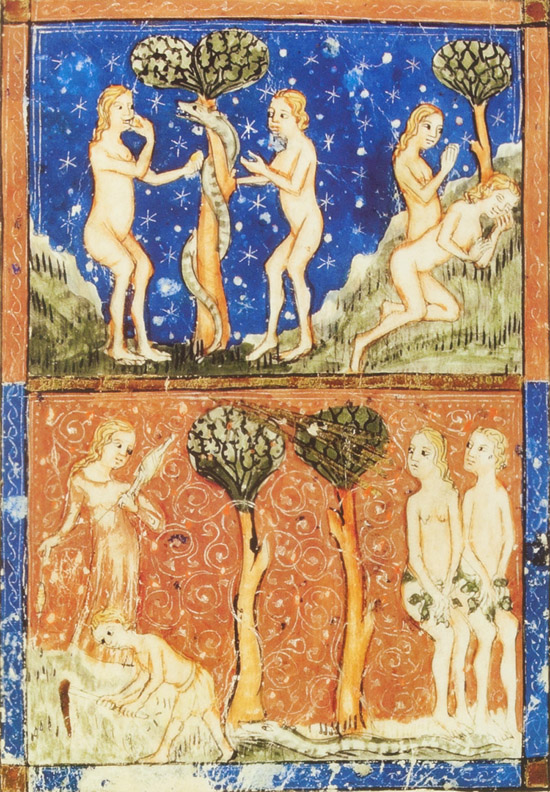
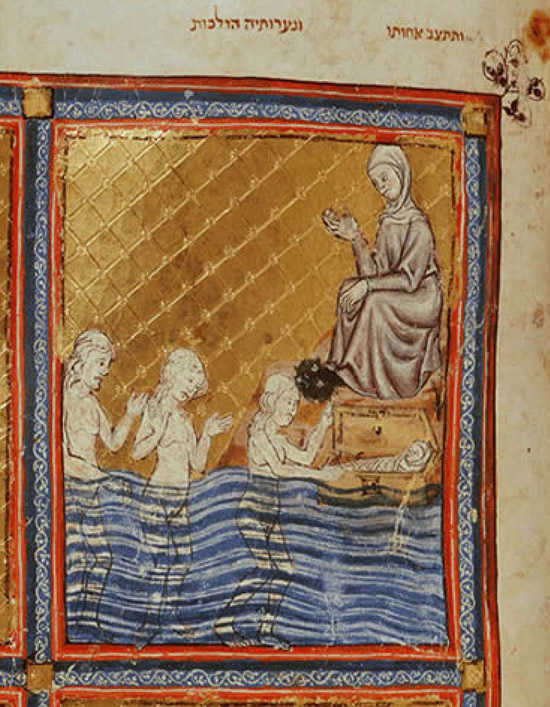
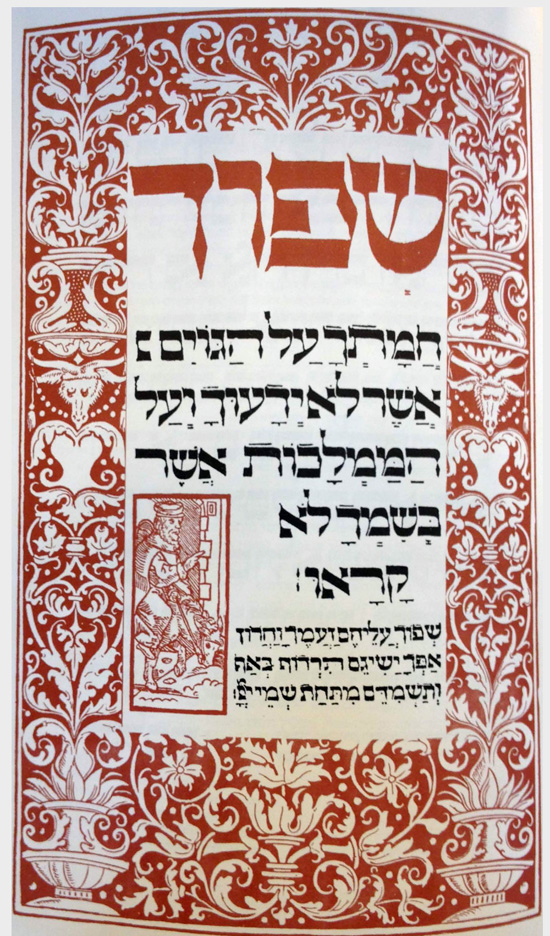
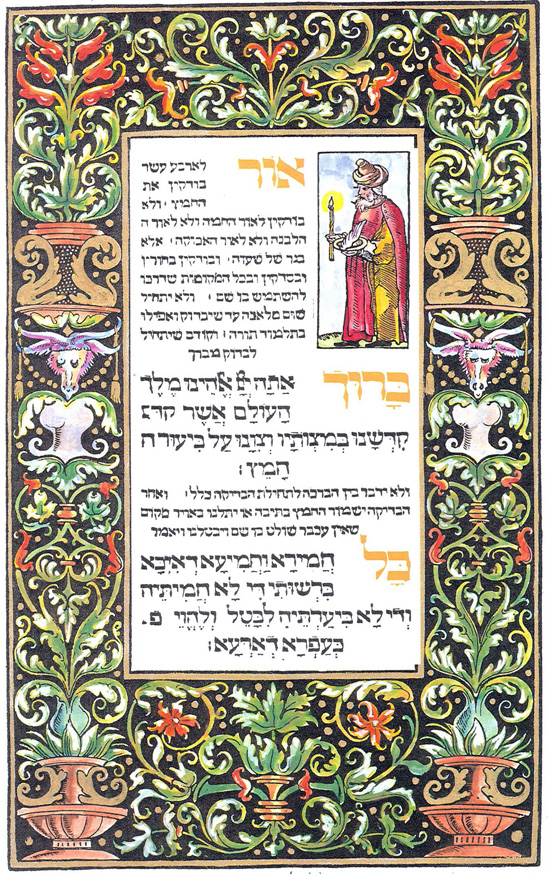
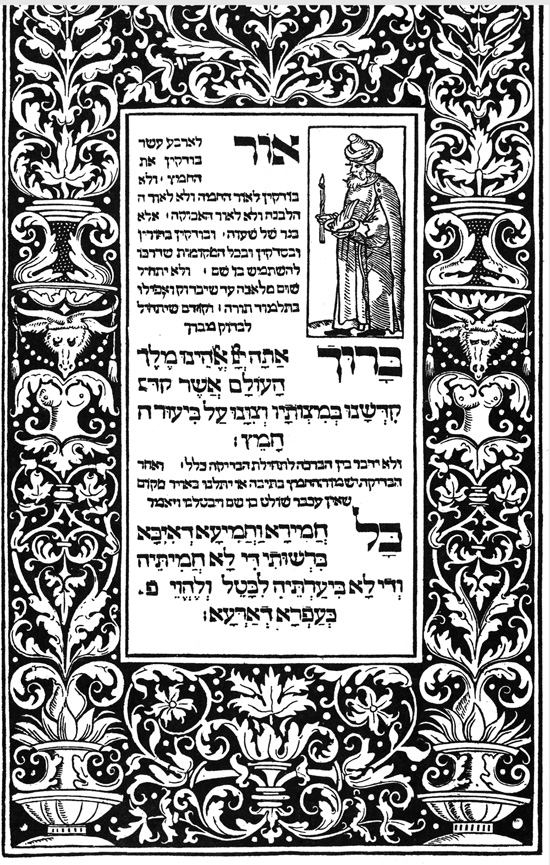
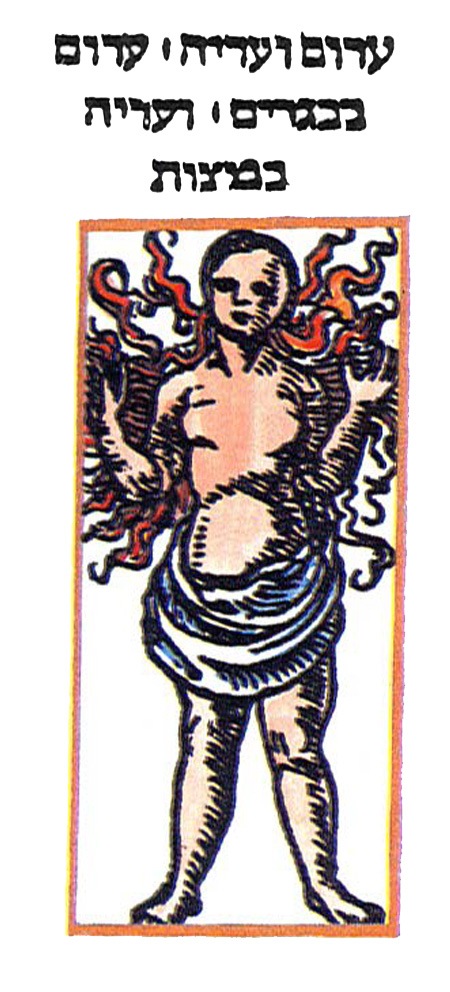
 CCCCVII, p. 1980.
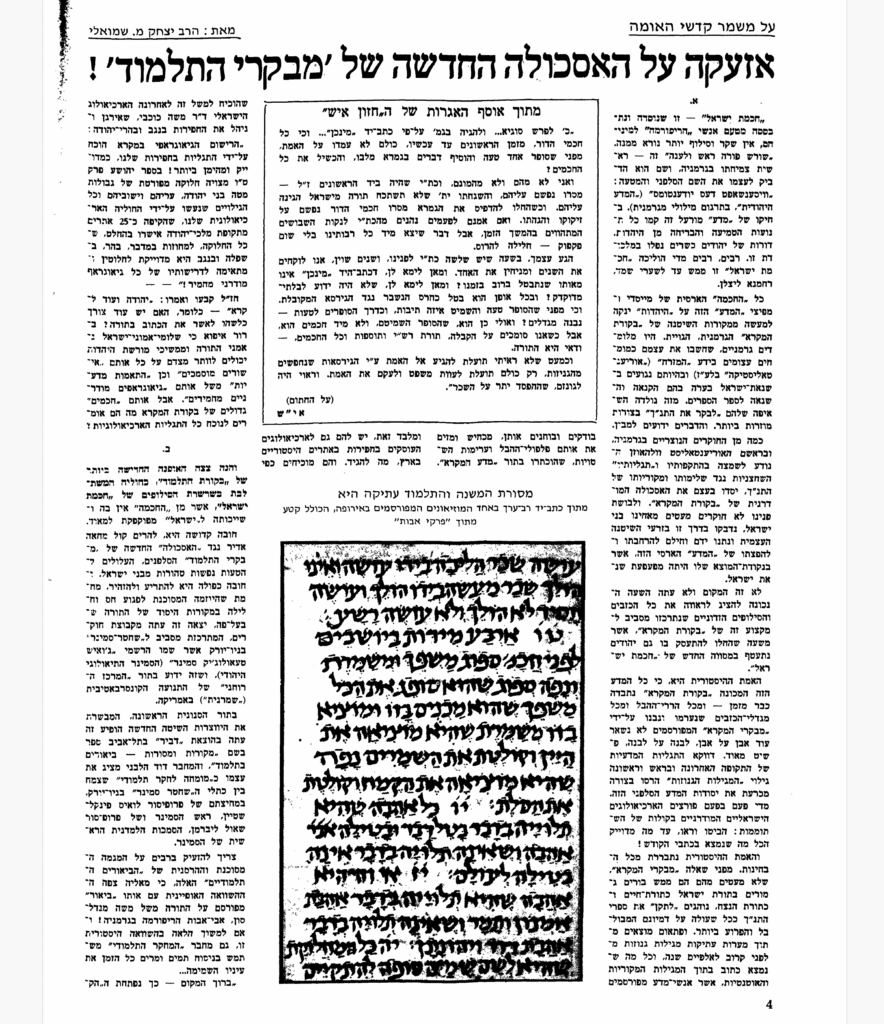
 This, despite the fact that Lieberman’s earliest major work, Al ha-Yerushalmi, had already exemplified a disciplined form of textual criticism, drawing on manuscripts, parallel traditions, and internal philological analysis to clarify and correct the text of the Jerusalem Talmud. This could easily have provided fodder for Shmueli, yet he remained silent regarding Lieberman’s method. Recently published letters show that even the Ḥazon Ish engaged Lieberman seriously on these questions. Their correspondence reveals a principled disagreement over method, particularly regarding emendations grounded in manuscript evidence, while also demonstrating that such philological argumentation could be treated as a legitimate subject of rabbinic dispute rather than dismissed outright as heresy. Of course, since this correspondence had not yet been published, it cannot explain Shmueli’s silence on Lieberman’s approach.