What is wrong with Artscroll?

What is wrong with Artscroll?
by Eliezer Miller
A better question would be is what is right?
The latest work produced by Artscroll in the Milstein Series is Isaiah[1]. Written by Rabbi Nosson Scherman, the general editor of Artsrtscroll himself, it is the inaugural volume of the interpretation of the Later Prophets.
Firstly, one must praise Artscroll for a completely new typesetting of the Rashi, Radak, Metzuadas David and Metzudas Zion. But to what purpose?  If was to give us a clear text, has not a clearly superior work of this kind has been done by Keter? They, at least, addition, edited these works using ancient manuscripts.  If, then, they are printed in this series is to help us with the translation and commentary – is that not the very purpose of Artscroll’s English translation and commentary? Perhaps, then, they are included to keep the tradition of Mikraos Gedolos?  If so why are many other parts of Mikraos Gedolos commentators like Gr’a and Toldos Aharon missing?  The space taken by these commentaries could have surely been used for a lengthier, more comprehensive, English commentary.
Secondly, one can understand why the editors ignored the extensive archeological work that has been done in the past few years. Archeology in the City of David and Samaria shed much light on the realia that is part of the prophecy[2].
The discovery of the Dead Sea scrolls has changed the whole of the study of Isaiah.  The Isaiah scrolls are the only complete text of a sefer in Tanach from that time. They have revealed multiple variants and commentaries.
However, to include these studies in the sefer would have negated the principles on which “Mesorah” publication stands, that of strict adherence to the received tradition.
Similarly, the incredible amount that has been learnt from etymological studies by Semitic language scholars is hard to ignore. Because non-traditional scholars do this work, they are ignored by Rabbi Scherman – to his, and to his readers, loss.
Thirdly, one could also understand the “bowlderisation”[3] involved in the translation.  The great poetic masterpiece that was achieved by the Revised Authorized Version has inspired myriads of readers; the majestic language gave, at least faint echoes of Isaiah’s monumental use of his imagery and metaphors.  That translation surely has Christological inferences and counter-Halachic tendencies.[4] Their exclusion is understandable.
On the other hand, Artscroll’s awkward phraseology, mistranslations, and incorrect insertions make one, literally, cringe.  Their translation has managed to change one the worlds greatest literary work into a children’s eighth-grade reader, unworthy of the text.
Lastly, one must feel that Rabbi Scherman is forced to ignore the obvious parallels to the rebuilding of Zion in our days. The Return to Israel, the re-establishment of the State of Israel and the foretold “footsteps of the Messiah” are apparent to any reader of the prophecy. This omission is so enormous, that it is difficult for the modern reader to swallow.  Has the orthodox world been so influenced by the rejectionist in the Satmar- Neture Karta – Brisk axis, that they have accepted the absurd notion that that the State of Israel has no theological significance?
Given all the above critiques, and understanding the reasons, the real problem is internal. The real problem of this work is that it contradicts the very basis of the credo of Mesorah Publications.
There are a number of examples as how Mesorah publications has disregarded their mandate.
1) The Prophecy of Isaiah was a focal point in the Talmud and Midrash.  There is hardly a Pasuk that is not quoted and explicated in the classical sources.  One would venture to say, that percentage wise, in the Talmud and Medrash, many more pasukim from Isaiah are mentioned than pasukim from Chumash[5].  Indeed works that cite these sources are widely available.[6] Yet these citations are few and far between in the commentary[7].  When they are cited, the accompanying commentaries by the Rishonim are rarely mentioned.
This lacuna is distressing.  Did Rabbi Scherman not make an effort to use them, or was he oblivious to their existence?
A few random examples:
I) 42:5 ….Who gives a soul to the people upon it, and a spirit to those who walk upon it Artscroll pg.323: He gives a soul equally to all the people on earth (Radak) A spirit of sanctity (or prophecy- Abarbanel) to those who walk in his ways.
Yet: Yerushalmi[8]: Rashbal in the name of Bar Kapra:  The land on which I placed life first, will be the first for the coming of the Messiah.  What is the reason “He gives a soul to the people upon it.   Thus the Rabbis of Babylon have lost.  Rabbi Simai said:  The Almighty makes the land slippery in front of them and thus they slide like bottles.  When they reach the land of Israel their souls are with them….
ii) 27:13 ….It shall be on that day a great shofar will be blown… Artscroll pg. 209: On that great day of ingathering, all the exiles will be gathered together (as if –Radak) by the blast of a great shofar Abarbanel, R’ Hirsch
Yet: Talmud[9]:  The ten tribes have no place in the world to come… these are the words of Rabbi Akiva.  …Rabbi Simon said: if their actions are (still) like today, they will not return.  If not, they will return.  Rebbi said: They will come to the world to come as it said “On that day a great shofar will be sounded”.
(One feels that these random examples, among many, are teaching fundamentals of Jewish thought. Why were they not mentioned?  In their place Artscroll quotes two Chassidic Vortlach!)
2) There are comparatively few extant works by the Rishonim on Isaiah.  One would suppose that the Christian censors either cut them severely[10] or discouraged their publication. However, a few such works have been found and published.[11]  In these sefarim are important ideas that have not found their way into Artscroll, once again to its, and our loss.
A few random examples;
I) On that day (people) will sing about (Israel), “A vineyard of fine wine”. I am Hashem who guards it: I water it frequently, lest it be held account against it, night and day I will guard it.
Artscroll pg.203: From the cup of punishment I shall pour on them only a little at a time, because if I were to deliver the full of retribution all at once, they would not survive it. (Rashi)
Yet: Ibn Ganach:  It comes to tell us that Israel will not be included in the punishment, that is to say; I will revisit their sins on the nations, but I will not revisit (Israel’s) sin
ii) 52:2 Formerly he grew like a sapling ….
Artscroll (pg. 401): Before the redemption raises Israel to its new eminence, the nations will regard it with contempt…
Yet: Rambam: The quality of the ascent (of the Messiah) is that not that we will know at all before his ascent whether he is or not the Messiah, even if it is said of him that he is the son of so-and-so from so-and-so’s family.   Rather an unknown man shall rise before his identity is revealed, with signs and miracles, which we will see that it is he that performs them.  This will prove the truth of his claims and the truth of his patrimony.
(Again One feels that these are basic to our beliefs, and are puzzled by their omission)
3) The truth that even a casual reader will note that there are at least two different styles of commentaries of Isaiah in this work.  The first 40 or so chapters were written in one style, and the last chapters by a different commentator.  (Perhaps the same author wrote them at different times of his life.)
The first Chapters are basically a summary of the classical commentators.  These summaries are widely available[12], albeit in Hebrew[13]. If he wished to improve on these works, one wonders why Rabbi Scherman ignored Rav Eliezer MiBalgantzi, Rabbi Yishaya Mitrani, Ibn Kaspi and Ayin Hamesorah (published from manuscripts in Keter).
Remarkably, the style of commentaries in the second part of the Sefer are completely different.  No longer only the classical commentaries are mentioned. Mari K’ra, Orchos Chaim, Shem Shmuel, Artscroll’s own edition of Rav Schwab, and many other commentaries suddenly make an appearance.  Rabinowitz masterful Daas Sofrim[14] and Hirsch’s Essays are mentioned.
One, however, wonders how Rabbi Scherman chose whom to exclude.  Rav Schwab’s, somewhat idiocentric ideas are often quoted while Sorotzkin’s Rinat Yitchak[15], Rav Dovid Cohen’s many works [16]are ignored.  One understands (but does not condone) the omission of Mossad Harav Kook’s Daas Mikra[17] because of its “modern” leaning, but what could be wrong with Hatorah Hatemimah[18]? Emek Hanetziv is Kosher (pg. 385) but the G’ra does not make the cut[19]!  Additionally there are many commentaries of the Haftorahs, which are similarly ignored
A few random examples:
I) 41:2 Who inspired (the one) from the East, at whose  (every) footstep righteousness attended….
Artscroll pg.311: This is a reference to Abraham, who came from Aram, which is east of Eretz Israel…
Yet: Rinat Yitzchak[20] explains this verse as the dispute between Rashi and the Gr’a.  In Shabbat 156a uses this verse to prove that there is no Mazal (Astrology) for Israel. Rashi explains that prayer and repentance can change the mazal.  The G’ra explains that Mazal only applies to the nations, whereas Israel is above the stars and independent of Mazal.
ii) 28:7 …the kohen and the (false) prophet have erred because of liquor and corrupted by wine, they have strayed because of liquor, erred in vision.
Artscroll pg. 211: Rather than refer to the drunkenness and hedonism of the people, Isaiah refers to the drunkenness and the hedonism of the leadership, the Kohen and the prophet.
Yet: Rabinowiz[21]: To claim that this refers to the kohanim in the beis hamikdash and to the prophets, contradicts all accepted opinions.
…. Nowhere does Isaiah mention false prophets, for no one would dare to call himself a prophet in the days of Isaiah…. It is unlikely that Isaiah would refer to the priests of Baal as Kohanim.  It is certain that Isaiah was referring to himself.  He was not able to communicate with people that were immersed in wealth and success, indulging in feasts and parties.  It is unlikely that he speaks of gross drunkenness.
4) Perhaps the most important criticism is that, as in many of Artscrolls biblical works, there is the tendency to trivialize Judaism.  In the Schottensten Talmud, (especially the Jerusalem Talmud) Artscroll has shown that they are able to do extensive research, and to explicate almost all fundamentals[22]. Not so in the Artscroll Tanach series. There is little attempt to explain the fundamental concepts of Judaism.
Instead we are fed homilies, “Vortlach”, Hassidic Meiselach and childish moralisms.  We miss the scholarly discussions, the Machlokes and textual variations that are so beautifully presented in the Schottenstein Talmud.
Yishayahu speaks to the generations.  To portray him as a medieval sermonizer is, to sat the least, disrespectful and trite.  The Milstein Series could, and must, do a better job.  They owe this to modern reader.
Artscroll’s job is to sell books.  Apparently, in their eyes, the public is not interested in serious scholarship, nor keen to hear Isaiah’s biting criticism of the hypocrisies of institutions. They perhaps feel that to try to sell a sefer that practically tells the buyer that Hashem does not support these institutions would make no sense.  One hopes that this is not true.
But at least let Rabbi Sherman fulfill his mandate by presenting us with a traditional comprehensive commentary equal to the Schottensten scholarly commentaries on the Talmuds.


[1]
The Later Prophets: Isaiah, Mesorah Publications 2013
[2]
We can see the upper pool and the lower pool, etc.
[3]
To modify by abridging, simplifying, or distorting in style or content
[4]
“Unto us a child is given.”Etc.
[5]
In an unscientific count in Ayn Hamesorah, about 30% of Chumash pasukim are cited compared to 98% of Isaiah’s pasukim.
[6]
Stern, Menachem: Torah SheB’al Peh, Jerusalem 2001. Neusner, Jacob: Isaiah in The Babylonian Talmud and Medrash, , NY 2007.
[7]
A cursory reading counts only a few dozen citations.
[8]
Kesubos 12:3
[9]
San: 110b
[10]
See Neubauer’s edition of the  ‘hine yaskil avdi”
[11]
Kovetz Perushim Lesefer Yishayahu, Jerusalem 5731.  Tafsir Saadia Gaon, S. Ratzabi Bnei Brak 2004
Laniado Shlomo: Keli Paz, , 1637, Reprinted Jerusalem 5731
[13]
An adequate work by Rosenberg, A. J.: Mikraos Gedolos, The Judaica Press, 1992 has long been available
[14]
Rabinowitz, Chaim Dov, Daas Sofrim, Jerusalem 1980
[15]
Rinat Yitzchak, Yitzchak Sorotzkin, Wikliff 1998
[16]
Cohen, David: Ohel David,  1998 –
[17]
Chacham, Amos: Daat Mikra, Jerusalem 1988
[18]
Stern, Yechiel Michal: Hatorah Hatemimah, Jerusalem 5732
[19]
Katzenelenbogen, S.:Biur Hagr’a Neviim, Jerusalem 2002
[20]
ibid pg. 144
[21]
Ibid
[22]
See however: Our Torah, your Torah and their Torah: An evaluation of the Artscroll phenomenon by B. Barry Levy and Tradition 19(1)(Spring 1981): 89-95 and an exchange of letters in Tradition 1982;20:370-375.

Some Highlights of the Mossad HaRav Kook Sale of 2017

Some Highlights of the Mossad HaRav Kook Sale of 2017
By Eliezer Brodt
For over thirty years, starting on Isru Chag of Pesach, Mossad HaRav Kook publishing house has made a big sale on all of their publications, dropping prices considerably (some books are marked as low as 65% off). Each year they print around twenty new titles. They also reprint some of their older, out of print titles. Some years important works are printed; others not as much. This year they have printed some valuable works, as they did last year. See here and here for a review of previous year’s titles.
If you’re interested in a PDF of their complete catalog, email me at eliezerbrodt@gmail.com
As in previous years, I am offering a service, for a small fee, to help one purchase seforim from this sale. The sale’s last day is Tuesday. For more information about this, email me at Eliezerbrodt-at-gmail.com. Part of the proceeds will be going to support the efforts of the Seforim Blog.
What follows is a list and brief description of some of their newest titles.
1.      הלכות פסוקות השלם, ב’ כרכים, על פי כת”י ששון עם מקבילות מקורות הערות ושינויי נוסחאות, מהדיר: יהונתן עץ חיים.
This is a critical edition of this Geonic work. A few years back, the editor, Yonason Etz Chaim put out a volume of the Geniza fragments of this work (also printed by Mossad HaRav Kook).
2.      ביאור הגר”א לנ”ך, שיר השירים, ב, ע”י רבי דוד כהן ור’ משה רביץ
 This is the long-awaited volume two of the Gr”a on Shir Hashirim, heavily annotated by R’ Dovid Cohen.
3.      עיון תפילה, לר’ יעקב צבי מקלנבורג בעל ה’כתב והקבלה’, מהדיר ר’ משה צוריאל
This is a new edition of the beautiful work on Siddur from the Kesav V’Hakabalah, which has not been available for a while.
4.      על התפילה, ר’ דוד צבי הופמן, מאמרים על תהפילה ובית הכנסת שתורגמו ונערכו מהרצאותיו ע”י ר’ יהושע ענבל, קסה עמודים
 This is a small work based on R’ Dovid Tzvi Hoffman’s lectures on Tefilah (translated from German). Of course, being that it’s from R’ Hoffman it’s important to own.
5.      העיקר חסר, ר’ צבי רון, אוצר פירושים על החסרות ויתרות בתנ”ך, תקעד עמודים
This is a large collection from a wide range of sources on the interesting topic of Chasairos V’yeseiros in Tanach.
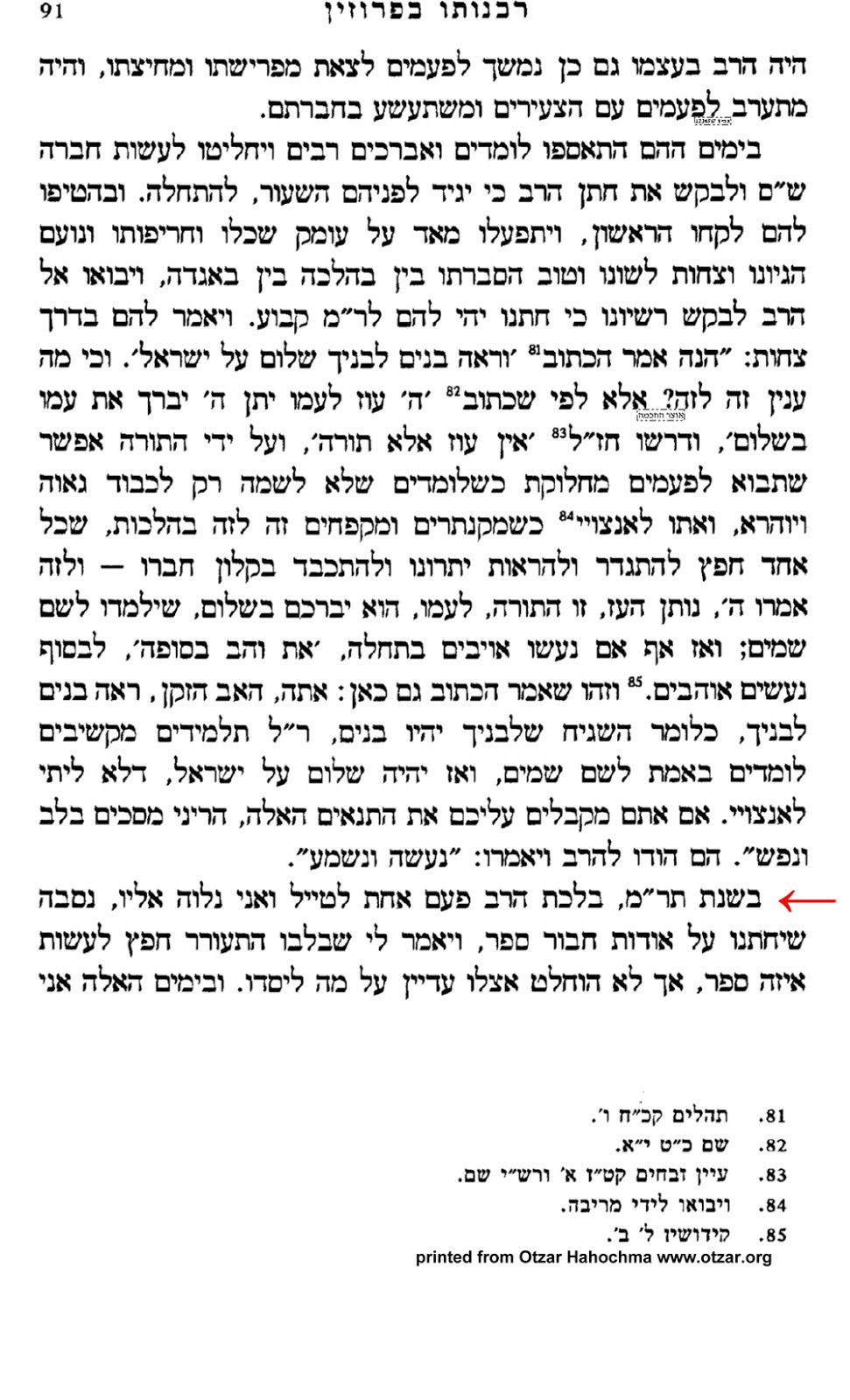
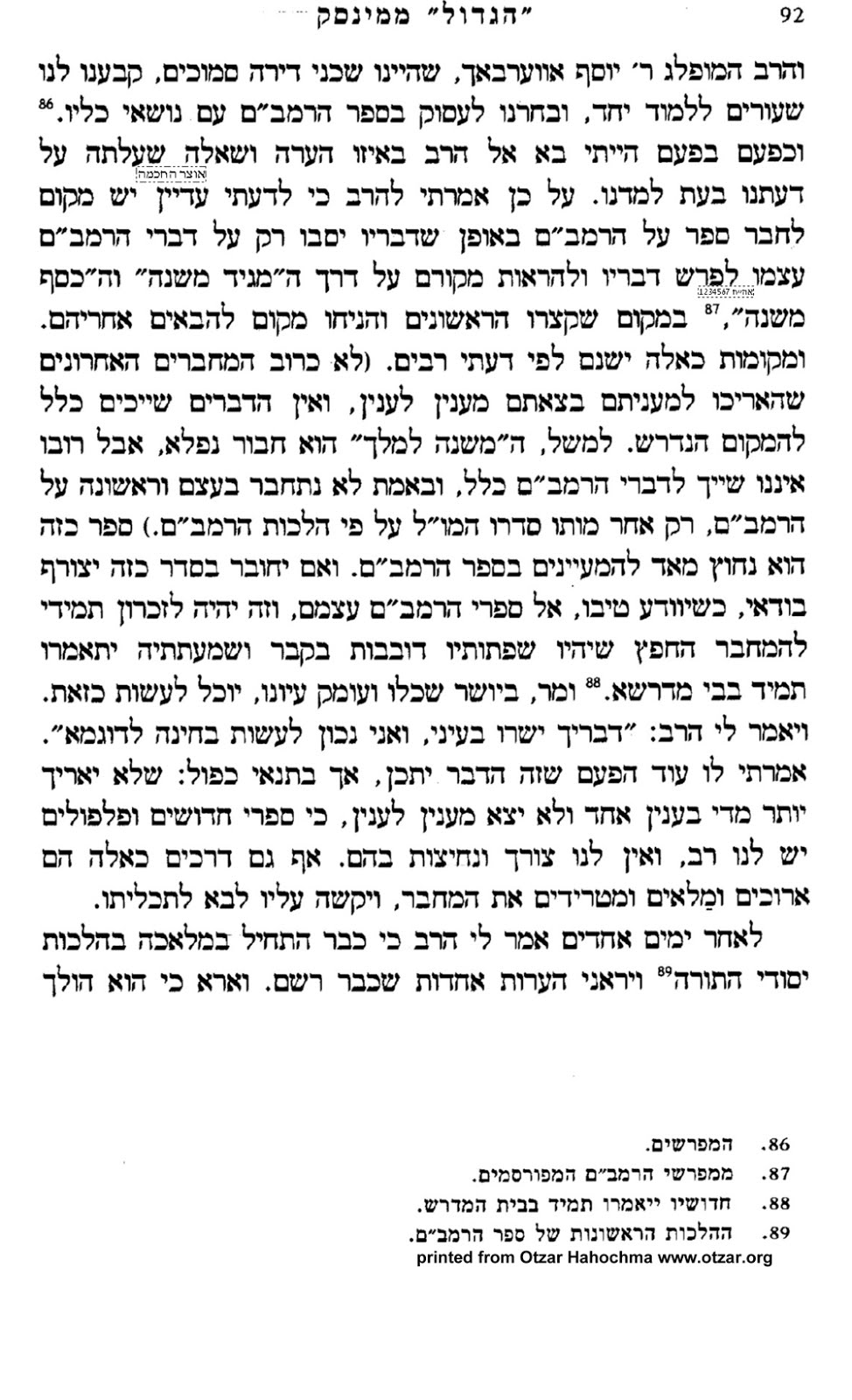
6.      קונטרס קידוש השם, ר’ ירוחם יהודה ליב פרלמן, הגדול ממינסק, על סדר הרמב”ם הל’ יסודי התורה, עם מראה מקומות, ביאורים ומפתחות ע”י ר’ הלל דוצי’ן, רנד עמודים.
This is an annotated edition of the small work of the Minsker Godol on Kiddush Hashem. For the back story behind why this work was written, see the following passage from R’ Meir Halperin’s classic and extraordinary biography, Hagodol MiMinsk.


7.      וזאת התורה, ר’ דר’, חיים טלבי, מנהגי קריאת התורה בעדות ישראל, 640 עמודים
This is an extremely useful and well organized work, based on the author’s PhD dissertation, dealing with many aspects of K’reiyas Hatorah before, during and after, such as Hagbah, the amount of Aliyos called, standing, selling of Aliyos and Shenayim Mikrah V’echad Targum.
8.      מבית לפרוכת, ר’ אברהם סתיו, פשט, עיון ומשמעות בעבודת יום הכיפורים.
9.      עולם הקרבנות, ר’ צבי אינפלד, ניתוח מעמיק ומקיף עניין הקרבנות.
10.  משפטיך תהום רבה, תגובות הגותיות אורתודוקסיות לשואה, עורכים: גרשון גרינברג אסף ידידיה, 355 עמודים.
This is a very useful collection of fifteen essays of Orthodox Theological Responses to the Holocaust. In 2007, Oxford University Press printed a book in English titled Wrestling with God: Jewish Theological Responses during and after the Holocaust edited by Steven T. Katz, Shlomo Biderman, and Gershon Greenberg (689 pp.). The Oxford volume includes almost of all the essays that appear in this new volume and a few additional important orthodox responses not found in this new Hebrew volume. Its rather strange that there is no mention of the Oxford volume in the various introductions and notes, even though Gershon Greenberg, one of the editors of the Hebrew volume was also one of the editors of the English volume. Moreover, in the Hebrew edition, Greenberg  never cites the Oxford volume; only his essays about each response.
I would just like to add one source to the bibliography about the essays of R’ Kalonymos Shapiro from his Eish Kodesh. Recently, Dr. Daniel Reiser published a beautiful facsimile edition of R’ Kalonymos’ autograph manuscript of this classic  work alongside an annotated transcript. (TOC available upon request).
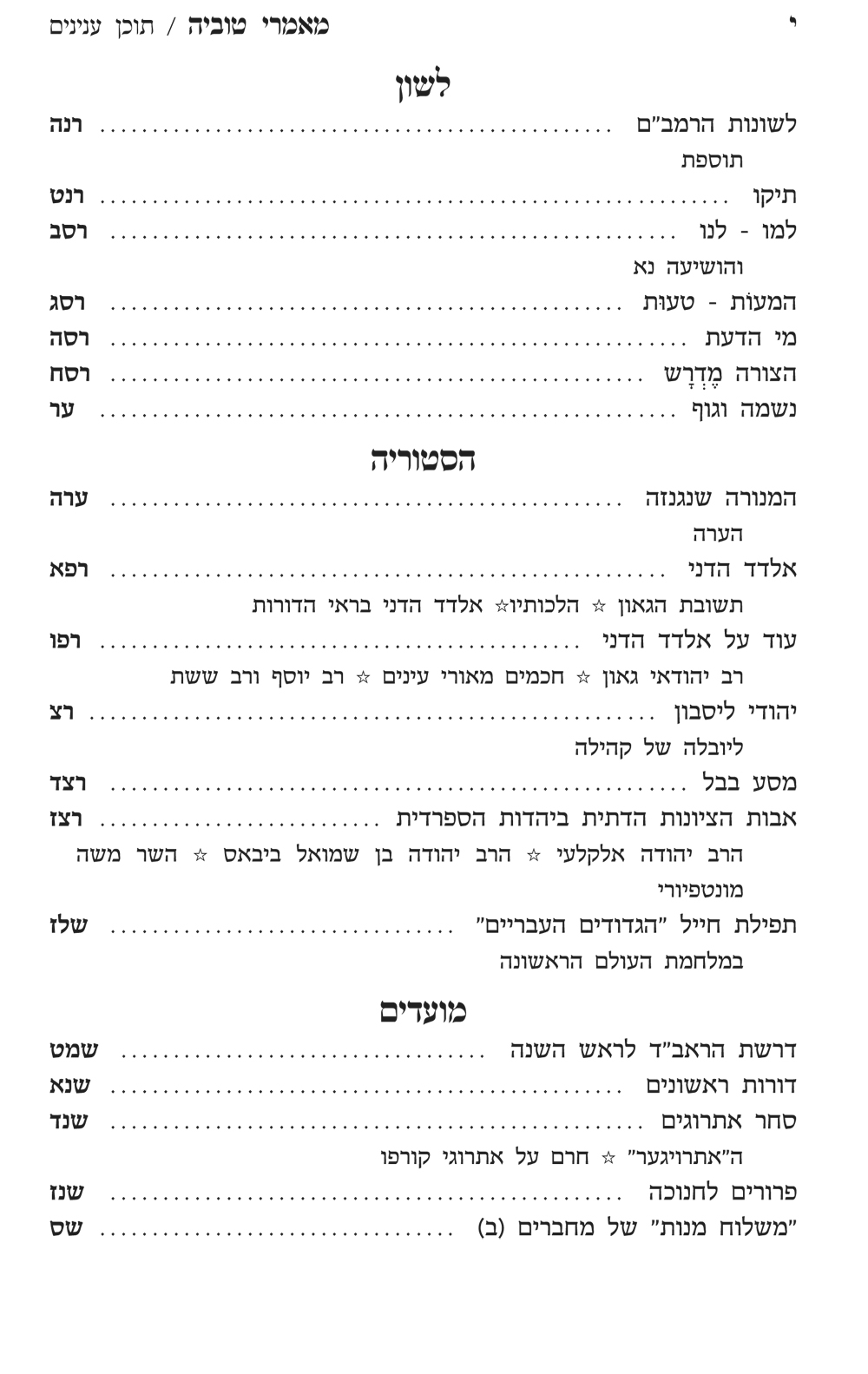
11.  מאמרי טוביה, רשימות ומאמרים לר’ טוביה פרשל, א-ב.

Just a few years ago, the great Talmid Chacham, writer and bibliographer (and much more), R’ Tovia Preschel, was niftar at the age of 91. R’ Preschel authored thousands of articles on an incredibly wide range of topics, in a vast array of journals and newspapers both in Hebrew and English. For a nice, brief obituary about him from Professor Leiman, see here. Upon his passing, his daughter, Dr. Pearl Herzog, immediately started collecting all of his material in order to make it available for people to learn from. Already by the Shloshim a small work of his articles was released. A bit later, she opened a web site devoted to his essays. This website is constantly updated with essays. It’s incredible to see this man’s range of knowledge (well before the recent era of computer search engines). A few months ago, Mossad HaRav Kook released volume one (424 pp.) containing some of his essays, and right before Pesach volume two was released (482 pp.) This is an extremely special treasure trove of essays and articles on a broad variety of topics. It includes essays related to Halacha, Minhag, bibliography, Pisgamim, history of Gedolim, book reviews, travels and personal encounters and essays about great people he knew or met (e.g.: R’ Chaim Heller, R’ Abramsky, R’ Shlomo Yosef Zevin, R’ Meshulem Roth, R’ Reuven Margolis, Professor Saul Lieberman). Each volume leaves you thirsting for more. At least another two volumes are in preparation by his daughter, Dr. Pearl Herzog. I wish her much Hatzlacha in this great service for readers of all kinds all over the world. Here is a table of contents of the two volumes.
Vol. I:
Vol  II:


There is No Bracha on an Eclipse

There is No Bracha on an Eclipse
By Rabbi Michael J. Broyde

Rabbi Michael Broyde is a law professor at Emory University School of Law and the Projects Director in its Center for the Study of Law and Religion.  His most recent Torah sefer is entitled “A Concise Code of Jewish Law For Converts”.  This letter was written to someone after a shiur in 2017 on why there is no bracha on seeing a solar eclipse.

1.     You are correct that I said that I thought there was no bracha on an eclipse.  I had not seen Rabbi Linzer’s teshuva at the time that told that to you this, as it was not circulating on the internet at the time that I prepared for my shiur and I did not see it until Sunday, the day after the shiur.  I try to cite as much as relevant in these classes and his thoughts are clearly relevant.  He is a stellar writer on interesting topics of halacha and I read his material consistently.  I had seen that Rabbi Eliezer Melamed in Peninei Halacha Laws of Brachot 15:6 and note 5 which does permit a bracha on an eclipse.
2. Having said that, I would not change my mind at all in light of Rabbi Linzer’s teshuva and remain opposed to reciting a bracha over an eclipse for many reasons explained below.
3.  First, as many have noted, the giants of halacha are quite divided over the question of whether the listing in the Shulchan Aruch is paradigmatic or particular.  Some make no blessings other that for matters listed in the codes and other treat them as examples.  That dispute alone inspires me to be cautious, although I could be persuaded that the paradigmatic approach is correct and one could then make a bracha on a waterfall.  I have yet to see a clear proof that such a view is correct, but it does seem more intuitive.[1]  Yet, safek brachot lehakel is present.
4.  Second, and more importantly, if you look closely in the classical achronim, you see not a single achron who actually endorses saying a bracha on an eclipse.  Not a single one.  It is true that there is a dispute about whether the list in the Mishna is all inclusive or not (as many note, see Shar HaAyin 7:6), but even those who are of the view that the Mishnah’s list is merely examples, not a single achron actually endorses making a bracha on an eclipse as opposed to a volcano or some other natural wonder, which some clearly do permit a bracha on.  The group that favors expansive brachot on natural wonders endorse stalagmite caves, waterfalls, water geysers, volcanoes and many more: but not eclipses.  If you look, for example in Shar HaAyin 7:6 (the classical work on this topic) one sees this most clearly: even those who endorse making brachot on waterfalls, or other amazing facets of creation are uncertain נסתפק)) if one make a bracha on an eclipse, and we all know that when a posek is נסתפק, that posek does not make a bracha.[2]
a.      This contrast is made clear in the context of Rabbi Shmuel Halevi Wosner — who is the most clear and direct articulator of the view that list of wondrous sightings in the Shulchan Aruch are just examples, and one makes the bracha of oseh maaseh bereshit even on other wonders.  In Shar HaAyin page 431 he states directly that one makes a blessing on many wondrous things unlisted in the codes and he explains that “Volcanos are not present in our lands and thus are unmentioned in the Shulchan Aruch” and that it is “obvious” that one makes a blessing on them.  However, on eclipses he states “solar eclipses are mentioned a few times in the Gemera, and thus on the question of whether one needs to make a bracha when one sees them, needs more thought.[3]”  He does NOT endorse making a bracha on an eclipse. In fact, I am unaware of anyone other than Rabbis Melamed and Linzer who actually endorse the view in favor of making a bracha on an eclipse, (rather than merely ponders the possibility of such a bracha).  Rabbi Wozner’s point is important: this is not a modern issue – eclipses were well known for a few millennium, and silence in the Jewish Law codes is telling.  To the best of my knowledge the dispute about the eclipses is between two views: (1) Absolutely Not and (2) Maybe.  There is no (3) Yes view in the classical rabbinic literature for eclipses.  (That is why the listing of reasons why an eclipse might be different from other wonders below is important.)

5.     Why is an eclipse different from a stalagmite cave or a volcano?  I could think of a few reasons from a halachic perspective, even to those who believe that the Mishna’s list is not inclusive.
a.   Many perceive them to be a siman raah – a bad sign, either because of superstitious reasons or because darkness in the middle of the day is practically bad – and there is no blessing on bad omens (as Rabbi Moshe Feinstein is quoted in Mesorat Moshe 2:51).
b.     Because one sees nothing in an eclipse (as it is an absence of light, rather than a presence) and we do not make brachot on absences.
c.      Because the bracha of oseh maaseh breseshit does not apply to things whose existence can be mathematically predicted, but are merely rare: eclipses are not anomalies, but a product of the universes’ cycle of life, and more under the berkat hachama rule.
d.     Because full eclipses are exceedingly rare and partial eclipses are almost impossible to “see” without modern eclipse glasses (a 75% eclipse hardly is noticed on a functional level) and are naturally invisible.
e.      For other reasons that are less obvious related to the fact that these have to be wonders from “creation” and these are not from creation.
f.     Because some thought that eclipses were punishments and thus no blessing was ordained.[4]
6.     Based on all this, one can say that eclipses could be different from all other created natural anomalies as a matter of Jewish law and are not covered by the general idea of a wonder such that a blessing should be made. To my surprise, even as the primary source of the view that one can make a bracha on wonders beyond the Mishna’s list is Rabbi Wozner and he explicitly notes that eclipses are different from volcanoes, waterfalls, geysers and many other rare natural phenomena, the secondary codifiers of the last generation have completely missed this distinction.  Instead both Shar HaAyin 7:6 and Penenia Halacha Laws of Bracha 15:5 link the dispute about volcanoes and waterfalls with eclipses and state that one who permits a bracha for volcanoes and waterfalls would do so for eclipses as well, when in fact that is incorrect.  Eclipses were known in Talmudic times and yet no bracha was noted: that bothers Rabbi Shmuel Wozner, who permit a bracha on an erupting volcano, not to permit a bracha to be recited on an eclipse, by noting that he is uncertain if a bracha is proper.[5]
7.     Additionally, let me add a thought of my own about modern times and bracha’s over wonders.  The Shulchan Aruch OC 228:3 limits even the mountains that one can make a bracha on to such mountains in which the hand of our Creator is clear and apparent. (ולא על כל הרים וגבעות מברך, אלא דווקא על הרים וגבעות המשונים וניכרת גבורת הבורא בהם.)  I think in our modern times, with modern science explaining all of these events, no mountains or valleys ever meet the criterial of make it clear (to normal people) that God is in charge of the universe.  Based on this, I would not make any extensions of this halacha beyond its minimums recorded in the Shuchan Aruch because I think that the test for determining whether we can add to this list is and make a bracha is וניכרת גבורת הבורא בהם.  Given the secular environment we live in, I think no natural astrological events meets that bill in modern times so I only – at most — make such brachot on the things that the halachic tradition directly directs me to do, like lighting or thunder or great mountains and certain rivers. I would not make such a bracha on an erupting volcano or a solar eclipse, as seeing such does not cause normal people in my society to experience God.  (There are two formulations of my claim, each slightly different.  The first is experiential, in that I think that most people in my society do not sense any awe of God at an eclipse.  Second, even if any particular person does (and I do not doubt that some do), they cannot make the bracha since most people in America do not so sense God through these events and that is the halachic test found in the Shulchan Aruch.  The sense of wonder has to be obvious to normal people and that is lacking in the world we live in.
8.     Finally, all attempts to actually endorse making a bracha on an eclipse run directly against the combined force of both (1) the minhag, which is not to make a bracha and (2) the rule of ספק ברכות להקל. These two together make it difficult for any moreh horah to argue convincingly that there is clear proof that bracha should be made.
9.     I have consciously not engaged with Rabbi Linzer’s very worthwhile point (which I more or less agree with) that “we strive to bring our religious lives and our halakhic lives in sync” exactly because (as he himself notes) this calculus is limited to cases where there is a dispute between poskim about what to do.  Here, to the best of my knowledge, there is no dispute and since there is no classical halachic authority who actually says “yes make a bracha on an eclipse” there is no grounds to examining very important meta issues used to resolve disputes (since there is no dispute).
10. Based on all of this, I would not make a bracha on an eclipse.
11. Having said that, I am happy to endorse other forms of religions veneration for one who feels such wonder.
a.     One can certainly say this bracha without שם ומלכות.
b.   I am also somewhat comfortable with someone making this blessing in Aramaic (see Shulchan Aruch OC 167:10, 187:1 and 219:4) although I am aware of the view of Iggrot Moshe OC 4:20:27, but find the view of the Aruch Hashulchan OC 202:3 more analytically compelling.
c.      Both the suggestions of Rabbi Chaim David Ha-Levi (Responsa Aseh Lecha Rav, 150) that one recited va-yevarech david (Chronicles. 1:29:10) and adding “who performs acts of creation” at the end and of Rabbi David Lau, current Ashkenazic Chief Rabbi of Israel, to recite Tehillim 19 and 104 are completely reasonable as well.
d.     Other innovative non-bracha based solutions are also reasonable.
12. On the other hand, those who attended an eclipse – I myself traveled to Rabun, Georgia, an epicenter for the total eclipse and sat in total darkness at for three minutes in the middle of the day and did not feel any closer to the Almighty as Creator of the World during the eclipse than I did after or before — can feel free to engage in no innovative religious observance at all without feelings that they are deficient in any way.
13.  I welcome readers to direct me to a source written by an achron which directly discusses eclipses and permits a bracha.  (Please feel free to email me.) So far, I have only seen that the group that permits a bracha for an eclipse does so based on a putative ruling of Rabbi Wozner and others to permit such a bracha, which upon closer examination is not present.  I am willing to ponder the possibility that there is an achron who permits such a bracha even as others do not – that posek argues that all wonders deserve a bracha and the listing in paragraph 5 above about why eclipses are different from other wonders is incorrect – To the best of my knowledge, that is a theoretical position that is not actually adopted.

[1] I am inclined to the more expansive view because the formulation in the Beit Yosef in Tur OC 228.
[2] This is an important point.  Rabbi Wozner has the right as a morah horah to assert that he rules that the mishna’s list is not inclusive and that volcanoes get a bracha (which is exactly what he says, as does Rabbi Nissan Karletz in the same work on page 466).  When one asks him “how can he rule that a bracha needs to be recited, others disagree, and then the matter is in doubt”, Rabbi Wozner responds by stating that he sees no doubt and thus he feels a bracha should be recited.  When Rabbi Wozner states that he has doubt about this matter, he is being clear that this is exactly a case of doubt and no blessing should be recited.
[3] Let me add that eclipses are discussed in the rishonim and codifiers as well, with no mention of a bracha.  See Darchai Moshe on Tur OC 426 and the works cited by Rabbi Linzer in footnote 2 of his teshuva (see here).
[4] It is clear from the recounting of the Chafetz Chaim that he did not say a bracha on an eclipse.  See here.
[5] This is found both Shar HaAyin and Penine Halacha as well as Rabbi Linzer’ teshuva.  Shaar Haayin 7:6 is strict on the whole matter and does not permit a bracha practically on even volcanoes an water falls, so the mistake in that work – linking volcanoes and eclipses — is merely one of conceptual classification, but Peninia Halacha rules that המברך לא הפסיד (“one who makes the blessing is doing nothing wrong” for “volcanic eruptions, geyser, waterfalls and both lunar and solar eclipses” when it is clear to this writer that the source he is sighting – he cites Rabbi Wozner! – does not adopt that view.  (On page 466 of Shar HaAyin, Rabbi Nissan Karlitz is asked “Is the blessing oseh maaseh bereshit similar in that things that are wonders and not found in the Shulchan Aruch like an erupting volcano or a spouting geyser or other similar phenomena, also requiring a bracha” and Rabbi Karlitz answer “Logic indicates that such is the case also,” but no explicit discussion of eclipses, which could be different.


A Note on the הסכמות of the חפץ חיים

A Note on the הסכמות  of the חפץ חיים
By Shnayer Leiman

All the comments to the previous posting (“A Note on R. Bezalel Alexandrov’s משכן בצלאל and its Prenumeranten”) are deeply appreciated. It’s what makes the Seforim Blog required reading for anyone interested in serious scholarship. I cannot possibly address all the comments. The references in the notes to the essay address some of the issues raised. To Yisrael Dubitsky’s important  comments, one should add that privately owned copies of the two parts of משכן בצלאל  are available, at the very least, in New York and Silver Spring, Maryland. Having said that, the fuller editions of  משכן בצלאל  and  ילקוט בצלאל  remain rare books. Hopefully, online resources such as Hebrew Books and Otzar Ha-Hokhmah will scan the fuller texts and make them available to all. Lest Yisrael’s comment about YU’s copy of   משכן בצלאל  be misunderstood by an uninformed reader (“Mishkan Betsalel is available at 4 libraries that reported to OCLC [YU is not one of them]”), rest assured that the Mendel Gottesman Library at YU owns a full edition of  משכן בצלאל. The Gottesman Library lists some 200,000 volumes of Judaica on its on-line catalogue, and these are reported to OCLC. Those 200,000 volumes form the basic books necessary for a Jewish Studies research library. But like many Jewish Studies research libraries, YU has many other collections of Judaica, catalogued and uncatalogued. One of those catalogued collections (not on-line) lists the full edition of  משכן בצלאל , which, courtesy of the YU librarians, I was able to consult when preparing the essay.

While the focus of the essay was not on  הסכמות , since the bulk of the comments focused on the  הסכמות of the  חפץ חיים  , I shall attempt to address that issue, and only briefly.
1. Whether one chooses to recognize the letter of the  חפץ חיים  as a הסכמה  or not, the letter remains one of the three reasons for bringing  משכן בצלאל  to the attention of the public. Any letter of the  חפץ חיים  is a treasure. This particular one is published only in משכן בצלאל   (and in the secondary sources based upon  משכן בצלאל).
2. It should be noted that   משכן בצלאל  contains three letters of approbation. Aside from the letter of the    חפץ חיים, it includes a letter of approbation from R. Avraham Yoffen (1887-1970), Rosh Yeshiva of Nevarodok in Nevarodok, and then of Nevarodok in Bialystok.  The letter is dated 13 Tishre 5680 [October 7, 1919] and was written in Minsk. A third letter of approbation, from R. Yitzchak Isaac Eliezer Hirshowitz (1871-1941), then a Resh Mesivta in the Slabodka section of Kovno, is dated 5 Tishre 5680 [September 29, 1919] and was also written in Minsk. (Rabbi Hirshowitz is famous, in part, for publishing an early translation into Hebrew of the teachings of Rabbi Samson Raphael Hirsch. His book, מיטב הגיון   [Vilna, 1913] was intended for Lithuanian Jewry and carried an enthusiastic הסכמה from R. Chaim Ozer Grodzenski.) The letters of approbation by Rabbis Yoffen and Hirshowitz not only praise R. Bezalel Alexandrov’s learning and piety, they also indicate that both rabbis examined and approved the manuscript of R. Bezalel Alexandrov’s book. All three letters of approbation are printed together immediately following the title page. All three letters are introduced (separately) with the exact same title: מכתב תעודה מהרב הגאון… To consider the last two letters  הסכמות  ,and the first a private letter that has absolutely nothing to do with the book, seems almost ludicrous. A form-critical analysis leads to the ineluctable conclusion that all three letters of approbation are הסכמות. Moreover, it seems highly unlikely that R. Bezalel Alexandrov, a musar enthusiast, would have placed a letter (by the חפץ חיים) that had absolutely nothing to do with the book, in its הסכמות section and thereby mislead potential buyers and readers of the book. Worse yet, he published the “misleading” letter during the lifetime of the חפץ חיים, and after the חפץ חיים was kind enough to be among the first subscribers to the book! In terms of the nature of the הסכמה by the חפץ חיים, it is paralleled by many others that he wrote in response to specific requests for a הסכמה. He was impeccably honest, and did not want to praise a book he did not read, and was not likely to read. Instead, he showered priestly blessings on the author, מעומקא דלבא.
3. If one examines the first page of prenumeranten in משכן בצלאל (posted with the essay), one will notice that the חפץ חיים’s name appears under the general rubric: אלה שמות הפרענומעראנטין דק”ק ווילנא, שליט”א. This seems awkward, since the חפץ חיים lived in Radin, some 85.6 kilometers from Vilna. The names of no other residents of Radin appear on the four- page list of subscribers. Indeed, the likelihood that anyone would attempt to gather subscriptions from the residents of Radin was probably as high as the likelihood of a Jewish book dealer seeking a copy of the first edition of the נועם אלימלך (one of the rarest of Jewish printed books) in the Serengeti in Tanzania. (Berel Kagan has no entry for Radin.) It is well known, however, that the חפץ חיים frequented Vilna in the 1920’s in particular, and often stayed with relatives in Shnipishok (a Vilna suburb), and would meet with R. Chaim Ozer Grodzenski in order to address the needs of כלל ישראל. Similarly, R. Bezalel Alexandrov was not a resident of Vilna. He was there in 1923 for one purpose only (staying at the home of one of the Vilna subscribers, Shmuel Melamed, at 39 Breite Gass), in order to publish his book. And the letter of the חפץ חיים was written in 1923! It seems likely that the two met in Vilna in 1923 and R. Bezalel asked for a הסכמה, and received the letter he printed at the start of משכן בצלאל.
4. It should be noted that the author of מאיר עיני ישראל (cited in note 7 of the essay), in a chapter entitled “הסכמות מרן החפץ חיים זצ”ל לספרי מחברי תקופתו,” includes the הסכמה  by the חפץ חיים  given to R. Bezalel Alexandrov’s משכן בצלאל.  Also, מפעל הביבליוגרפיה   lists 3  “הסכמות”  for  משכן בצלאל.  It did not imagine that one of the letters was a personal letter unrelated to the book being published.
5. Ultimately the issue is one of definition. What is the definition of a הסכמה ? Or to phrase it another way: what elements must be present in a  הסכמה in order for it to be recognized as a legitimate הסכמה? Here are some possibilities. (I will not bring proofs or disproofs for any of these definitions; in fact, these – and many more – have been suggested as possibilities by leading rabbis throughout the generations.)
1.    A הסכמה  is a legal document by an authorized rabbi that provides copyright protection for the author of a ספר. A הסכמה without such a provision is not a הסכמה.
2.    A הסכמה must be written by an authorized rabbi and he must attest to the integrity of the author and to the integrity of the ספר being published . If the הסכמה lacks the one or the other, it is not a הסכמה.
3.     The  הסכמה  must be written by an authorized rabbi and he needs only to attest to the integrity of the author. Nothing else is significant.
4.    A הסכמה is a promotional document, signed by an authorized rabbi, and necessary for sales. The content of letter is of little consequence.
Whichever definition one chooses, a host of questions will remain to be answered. Who is an authorized rabbi? What if the author of the book, an authorized rabbi, writes the הסכמה for himself? Can a father write a  הסכמה for a son? What shall we do with the many הסכמות that do not fit any of the definitions listed above? Thus, there are censored הסכמות, forged הסכמות, reluctant הסכמות, הסכמות  written under duress, and retracted הסכמות, just to list a few of the many categories. Even aside from these questions, many great rabbis (in all periods) refused to seek הסכמות, and published their books without them. Some stated unequivocally (about their books): מעשיך יקרבוך ומעשיך ירחקוך .
In sum, given the uncertain (and changing) definitions of the term הסכמה through the ages, I cannot speak with confidence that I know precisely, in every case, what is and what isn’t a  הסכמה. And I certainly have no monopoly on wisdom. Nonetheless, for the reasons listed above, I am persuaded that R. Bezalel Alexandrov asked the חפץ חיים for a הסכמה in 1923, and printed the one he received. Readers will have to decide for themselves the precise status of the חפץ חיים’s letter printed at the beginning of משכן בצלאל. But whatever they decide, they need to bear in mind the variety of definitions of הסכמה through the ages, they need to examine all the evidence, and they need to realize that their conclusion will be only one opinion among many others, and not necessarily the correct one.


A Note on R. Bezalel Alexandrov’s משכן בצלאל and its Prenumeranten

A Note on R. Bezalel Alexandrov’s משכן בצלאל and its Prenumeranten
By Shnayer Z. Leiman
            Not much appears to be known about R. Bezalel Alexandrov (circa 1850-1930). Born in Grodno, he would ultimately come under the influence of the teachings of R. Yisrael Salanter (1809-1883), largely through the efforts of R. Yitzchak Blazer, i.e., R. Itzel Peterburger (1837-1907). R. Bezalel considered R. Itzel to be his primary teacher, especially during the period they both resided in Kovno. R. Bezalel was a close associate of R. Yosef Yozel Horowitz (1847-1919) of Nevarodok, perhaps the last of the disciples of R. Yisrael Salanter. A musar enthusiast, R. Bezalel served as a moreh zedek (i.e., a dayyan) in Minsk, where he also founded a kibbutz (a kind of kollel for advanced – and mostly married — students) in the Minsk suburb of Kamerovka.[1]
            R. Bezalel published two books in his lifetime, משכן בצלאל (Vilna, 1923) and ילקוט בצלאל (Piotrkow, 1927-9). Both are significant, rarely seen, and often miscatalogued by the few bibliographers who managed to hold copies in their hands. Here, we shall focus primarily on משכן בצלאל.
            מפעל הביבליוגרפיה lists only part 1 of משכן בצלאל, with 40 pages. Doubtless, מפעל הביבליוגרפיה’s bibliographer recorded exactly what he saw, a bound volume with 40 pages. But, in fact, aside from the 40 page edition, an edition including parts 1 and 2, and totaling 136 pages, was published in a bound volume, also in Vilna, 1923.[2] The book is largely a polemic against young Jewish men who insist on postponing marriage beyond the age of 20.[3] R. Bezalel’s second book, ילקוט בצלאל expands the polemic to other public manifestations of disregard for the rules of the Shulhan Arukh , such as the disregard of the mitzvot of ציצית, תפילין, מזוזה, and Sabbath observance.[4] In brief, R. Bezalel was a musarnik who was addressing the Jewish confrontation with modernity in Lita. At one point in his writings, he summarizes the confrontation as follows:[5]
Even aside from their general content, משכן בצלאל and its companion volume ילקוט בצלאל are of special interest for three reasons:
1.      They were accorded a letter of approbation from R. Yisrael Meir Ha-Kohen, the חפץ חיים.[6]
For the most part, the חפץ חיים wrote הסכמות with the greatest of reluctance. Generally, he refrained from writing הסכמות, offering a wide range of excuses why he could not do so. These included: he was not worthy to do so; he had not the time to do so; his failing eyesight and old age made it difficult to do so; he feared that by acquiescing to one request, he would be inundated with requests from others; and – most importantly – he had resolved long ago not to write הסכמות. After offering one or the other of these excuses, he would invariably close his letter with words of blessing and encouragement for the author – without a word said about the quality of the book. Nonetheless, it cannot be denied that the חפץ חיים did write a handful of genuinely enthusiastic הסכמות where he praised the books themselves.[7]

It is difficult to categorize the הסכמה written by the חפץ חיים for R. Bezalel Alexandrov’s משכן בצלאל. Not a word is said about the content of the book, but much is said about the author. Moreover, the חפץ חיים offers his blessing to all who come to the aid of the author. In context, this clearly means a blessing to all who buy a copy of his book.[8] Indeed, the חפץ חיים himself is listed as the first subscriber to the book (see below, item 3)! Nevertheless, the sense one has from reading the הסכמה is that it was an act of חסד by the חפץ חיים, rallying to the aid of a colleague in need.
2.      They record teachings of R. Itzel Peterburger (and other musarniks, such as R. Yisrael Horodner, the Maggid of Minsk[9]) not recorded elsewhere.
Here, one sample will suffice. Although we have many accounts of R. Itzel Peterburger’s “vow of silence” during the 40 day period from Rosh Hodesh Elul through Yom Kippur,[10] R. Bezalel’s account offers details not recorded elsewhere:[11]
3.      A lengthy list of subscribers is appended to משכן בצלאל that sheds light on the history of Vilna’s kloyzen.[12]
Lists of subscribers, known as prenumeranten,[13] are significant for a variety of reasons. Often, they tell us how far and wide authors traveled in order to raise the funds necessary for the publication of their books. They tell us who bought the books, and when and where they were purchased. Our list is particularly significant because it is mostly kloyzen driven, i.e., the books were acquired for the libraries of the various synagogues, בתי מדרשים, and kloyzen in Vilna. Indeedour list includes several kloyzen not listed in the most recent and most comprehensive list of Vilna kloyzen published in 2012![14] Our list also lists key members of the various kloyzen in 1923. There are more such lists of Vilna subscribers and their kloyzen, and they all need to be examined.[15]

Notice that our list includes among the subscribers the חפץ חיים, R. Chaim Ozer Grodzenski, R. Menachem Krakowski (maggid mesharim of Vilna), and R. Boruch Ber Leibowitz (then serving as Rosh Yeshiva of Yeshivas Kneses Beis Yitzchak in Vilna, and as a moreh zedek in Vilna). Each is accorded the title הגאון הגדול. Also among the subscribers (fourth on the list) is R. Isaac Rubinstein, listed is the רב מטעם, i.e., “the crown rabbi.” It is surely no accident that he is listed as הגאון, but not as הגאון הגדול. He was a distinguished – and tragic – rabbinic figure,[16] and it seems quite clear that R. Bezalel Alexandrov wanted to make a distinction between the various rabbis listed as subscribers.

In sum, the list reproduced here serves as a reminder to scholars that it is not enough to examine archival lists and history books. One often needs to examine other kinds of evidence – such as prenumeranten – that shed much light on Jewish social and intellectual history.[17]

Notes:

[1] See S. Even-Shoshan, ed., מינסק עיר ואם (Tel-Aviv, 1975), vol. 1, pp. 99-100. Cf. S. Weintraub, נובהרדוק (Bnei Brak, 2014), vol. 1, pp. 255- 257.
[2] A copy of the 136-page edition is available at the Mendel Gottesman Library of Yeshiva University. Neither the 40-page edition nor the 136 page edition is available online on HebrewBooks.org, אוצר החכמה, and אוצרות התורה.
[3] In general, see the sources cited in S. Stampfer, “Marital Patterns in Interwar Poland,” in Y. Gutman, ed., The Jews of Poland Between Two World Wars (Hanover, 1989), pp. 173-197. Cf. his “The Social Implications of Very Early Marriage,” in S. Stampfer, Families, Rabbis and Education (Oxford, 2010), pp. 7-25. None of the social historians seem to have been aware of משכן בצלאל.
[4] ילקוט בצלאל consists of two parts, the first contains 86 pages, and the second contains 102 pages. Part 1 is available online on Hebrew Books and אוצר החכמה, but not on אוצרות התורה. Part 2 is not available online. A copy with parts 1 and 2 is available at the National Library in Jerusalem.
[5] ילקוט בצלאל, part 1, p. 71.
[6] The letter of approbation was designated for משכן בצלאל, where it first appeared. The author took the liberty of reprinting it (together with two other letters of approbation that first appeared in משכן בצלאל) in his ילקוט בצלאל.
[7] See מאיר עיני ישראל (Bnei Brak, 2003), vol. 6, pp. 782-801.
[8] So, apparently, it was understood by R. Bezalel Alexandrov himself. See משכן בצלאל, p. 2.
[9] See, e.g., משכן בצלאל, p. 66. On R. Yisrael, see M. Heilprin,הגדול ממינסק (Jerusalem, 1994), pp. 96, 121-122, and 201.
[10] See, e.g., D. Katz, תנועת המוסר (Tel-Aviv, 1954), vol. 2, pp. 232-235; Ch. E. Zaichyk, המאורות הגדולים (Brooklyn, 1953), pp. 149-165; and M. Blazer, רבי איצלה (Bnei Brak, 2014), pp.475-540. None stresses the fact that R. Itzel, aside from his frequent hortatory Musar talks throughout Yom Kippur eve and day, also led the Kol Nidrei, Musaf, and Nei’lah services! It may well be that R. Itzel didn’t do this ordinarily on Yom Kippur (or in his old age), but R. Bezalel offers eyewitness testimony to what he experienced as a youth in Kovno.
[11] ילקוט בצלאל, pp. 31-32. A lengthy דבר תורה by R. Itzel follows the passage excerpted here.
[12] On Vilna’s kloyzen, see in general Khaykl Lunski, מהגיטו הוילנאי (Vilna, 1921), pp. 48-65, and the much fuller and more comprehensive listing of 135 (and more) kloyzen in A. Cohen-Mushlin et al, eds., Synagogues in Lithuania N-Z (Vilnius, 2012), pp. 281-353.
[13] On prenumeranten, see Berl Kagan, ספר הפרענומעראנטן [Hebrew Subscription Lists], New York, 1975; Shlomo Katzav, ספר החותמים (Petah Tikvah, 1984), vol. 2; and idem, ספר החותמים (Petah Tikvah, 1992), vol. 3. [See the late Tovia Preschel’s review of Berl Kagan’s ספר הפרענומעראנטן in the Jewish Press, May 30, 1975, p. 40; I am indebted to Menachem Butler for bringing the review to my attention. More importantly, see the recently published מאמרי טוביה, vol. 1 (Jerusalem, 2016) for a treasure trove of reviews and essays by Tovia Preschel, bibliophile and bibliographer par excellence. No Judaica library – public or private – should be without this volume, and without the full set when brought to completion.] These volumes provide indices to all Hebrew books that include prenumeranten by listing alphabetically all the towns and cities where the authors solicited subscriptions. Under each place listed, appear the titles of all Hebrew books that include subscribers from that place. Thus, if your great-grandfather was from Jaroslaw in southeastern Poland, you would locate the entry “Jaroslaw” in the Kagan or Katzav volumes, and immediately see the appended list of Hebrew books that include prenumeranten from Jaroslaw. You would then have to examine (online or at the library of your choice) each of the titles listed to see if your great-grandfather’s name appears on its list of prenumeranten. Cf. below, note 17.
[14] Cf. above, note 12. Thus, for example, בהמ”ד חורשי עצים, בהמ”ד קו”ק, and בהמ”ד פועלי צדק are either not mentioned or not properly identified in Synagogues in Lithuania. בהמ”ד שומר אמונים is mentioned in Synagogues in Lithuania (p. 340) but not identified.
[15] See, e.g., the highly informative list of prenumeranten and kloyzen in Vilna in R. Ch. S. Gluskin, רחשי לב (Bilgoray, 1934), pp. 271-272.
[16] On Rabbi Rubinstein, see G. Bacon, “Rubinstein vs. Grodzinski: The Dispute Over the Vilnius Rabbinate and the Religious Realignment of Vilnius Jewry 1928-1932,” in I. Lempertas and L. Lempertiene, eds., The Gaon of Vilnius and the Annals of Jewish Culture (Vilnius, 1998), pp. 295-304, and the references cited in Bacon’s note 4.
[17] It is with great joy and much anticipation that we welcome the recent publication of the first volume of קונטרס שמות החותמים (Brooklyn, 2016).

Unlike the indices listed above in note 12, it reproduces the full lists of prenumeranten exactly as they appeared when first printed. The volume contains 670 pages of prenumeranten from lists that appeared in books printed between 1790 and 1840. Presumably, the volumes to follow will print all lists from 1840 through the mid 20th century, when such lists mostly fell into desuetude. If brought to fruition, the entire set will probably consist of four volumes. The advantage of the קונטרס שמות החותמים volumes, of course, is that here we have the names of all the subscribers before our very eyes. The first volume is surely a gold mine of information, but questions remain. Lacking an introduction, we are not informed who is really responsible for the volume; what are its goals; whether or not there will be a full index of titles, names, and places; which libraries are providing the material that is being scanned; and which books are being included and which are being excluded. It seems obvious that either all or most of the books scanned by קונטרס שמות החותמים are from the Lubavitch Library in Brooklyn, certainly one of the world’s greatest collections of Judaica. But no single Judaica collection (not even the National Library in Israel) has copies of every Hebrew (and Yiddish) book. Any project attempting to gather all lists of prenumeranten will, by definition, have to be a universal project, involving the great Judaica libraries the world over. It is, for example, unclear, why the first list of prenumeranten in קונטרס שמות החותמים is from 1790, when such lists were quite common throughout much of the last quarter of the 18th century (e.g., יסוד עולם, Berlin, 1777; שבילי דרקיע, Prague, 1784). Despite these misgivings, קונטרס שמות החותמים is certainly a welcome addition to every Jewish bibliophile’s bookshelf. What ultimately needs to be done is to have all the lists of prenumeranten gathered together in one place, digitized and OCRed, so that the information contained in them (especially names of persons, names of towns and cities, and dates and places of publication) becomes searchable and retrievable. The yield for תלמידי חכמים, social historians, genealogists, and linguists (spelling of Hebrew and Yiddish names and places, history of surnames) is inestimable.

As a sample of some of the treasures that one can find in the new volume, we reproduce the title page of R. David Friesenhausen’s מוסדות תבל (Vienna, 1820), and two of its 14 pages of prenumeranten. These appear on pp. 331, 332, and 345-346 in קונטרס שמות החותמים. [ We have reproduced the pages from the original Vienna, 1820 edition, since the editor of קונטרס שמות החותמים sometimes divides a single page into two parts, presenting them as two pages.]

It will be noticed that the opening page of the prenumeranten lists the
ישמח משה, R. Moshe Teitelbaum (d. 1841) of Ujhely as one of the subscribers to מוסדות תבל. A later page of the prenumeranten lists the חתם סופר, R. Moshe Sofer (d. 1839) of Pressburg as a subscriber to מוסדות תבל.  The appearance of these two distinguished names (and there are more) – arguably the two greatest rabbinic leaders of Hungarian Jewry – on the same list of prenumeranten surely attests to the reputation of the author of מוסדות תבל in 1820. On R. David Friesenhausen, an early advocate of the Copernican theory, see my introductory note to the late Chaim Reich’s reissue of מוסדות תבל (Brooklyn, 1997), and the fuller discussion, with references, entitled “R. David Friesenhausen: Precursor of Torah and Derekh Eretz,” in Jacob J. Schacter, ed., Judaism’s Encounter with Other Cultures (Northvale, 1997), pp. 158-164. See also the bibliographical note in Eliezer Brodt, “יחסה של הספרות היהודית לקופרניקוס במשך הדורות,” Hakirah 13 (Spring 2012), Hebrew section, p. 17, n. 33; and Jeremy Brown, “Rabbi David Friesenhausen’s Zemirah for the Solar System,” Hakirah 14 (Winter 2012), pp. 249-271. I am deeply grateful to Eliezer Brodt for bringing these references to my attention. The haunting account in David Schoen’s שוחרי השם בהרי הקרפטים (Jerusalem, 2005), pp. 43-50, is embedded in a historical novel, and cannot be accorded more esteem and historicity than the esteem and historicity accorded to the best of historical novels. They remain novels. 


Chanukah books and Etymology, Miracles (?), Dreidel, Cards and Christmas: A Roundup of Previous Posts

Zerachya Licht, “חז״ל ופולמס חנוכה,” and Marc Shapiro, “The Hanukkah Miracle,” discuss the 19th-century controversy regarding the polyglot, Chaim Zelig Slonimsky, and the connection, or lack thereof, the miracle of the candles burning for eight days. Licht discusses Slonimsky in more depth in a two-part post, “Chaim Zelig Slonimsky and the Diskin Family,” part 1 and part 2.   Marc also discusses a potential Maccabean Psalm in his article here.

Mitchell First traces the history and spelling of two terms associated with Chanukah,  “The Identity and Meaning of the Chashmonai,” “The Meaning of the Name Maccabee,” for an earlier post by Dan Rabinowitz, on the latter term, see here.  First recently published his latest book, Words for the Wise: Sixty-Two Insights on Hebrew, Holidays, History and Liturgy.

A recurring theme of articles in the secular and Jewish presses is whether playing dreidel has any sources and if it is even fun. For example, Howard Jacobson, who won the 2010 Man Booker prize in a New York Times editorial, isn’t a fan. “How many years did I feign excitement when this nothing of a toy was produced? The dreidel would appear, and the whole family would fall into some horrible imitation of shtetl simplicity, spinning the dreidel and pretending to care which character was uppermost when it landed. Who did we think we were – the Polish equivalent of the Flintstones?” Marc Tracy, in Tablet Magazine, expressed his sentiment in his post, “The Unbearable Dumbness of Dreidel.” Although this year, two articles in Tablet, “Adapt, Adopt, Subvert, Survive” and “The Miracle of the Dreidel,” argue for the contemporary relevance of the custom.  For our discussion, see “Chanukah Customs and Sources.” For another discussion regarding dreidel and other Chanukah customs, see “The Customs Associated with Joy and their More Obscure Sources.” Another form of Chanukah gameplay, cards, is dealt with in “The Custom of Playing Cards on Chanukah.” The post highlights an important, often overlooked, source for Jewish customs, the memoir of Pauline Wengeroff, Rememberings: The World of a Russian-Jewish Women in the Nineteenth-Century.

Eliezer Brodt tackles the missing tractate for Chanukah in “The Chanukah Omission,” and with an update in his recent talk, available here.  (And a discussion of the other lesser known tractate that implicates Chanukah and an example of censorship.)The Seforimblog, in 2006, published his first post, “A Forgotten Work on Chanukah, חנוכת הבית,” discusses an obscure Chanukah-related work, Chanukas ha-Bayis, cited by Magen Avraham. Subsequently, Eliezer wrote dozens of articles for the Seforimblog and his Ph.D. dissertation on the Magen Avraham. The serious deficiencies of another work on Chanukah, Mitzva Ner Ish u-Beyoto, are highlighted in a review by Akiva Shamesh.  Shamesh deals with the “famous” question of Bet Yosef, why there are eight and not seven nights of Chanukah, in another book review, “Yemi Shemonah.

Finally, the subject of Greek Wisdom is apprised in Eliyahu Krakowski’s article, “How much Greek in ‘Greek Wisdom.'”

This year, as many, Chanukah coincides with Christmas. For our original bibliography on the topic of the Jewish response to Christmas, otherwise referred to as Nitel, see here. That post should be updated to include Rebecca Scharbach, “The Ghost in the Privy: On the Origins of Nittel Nacht and Modes of Cultural Exchange,” Jewish Studies Quarterly 20 (2013), pp. 340-373. Marc Shapiro’s lecture on the topic is available on YouTube. And for an interesting Christmas card by Edmund Wilson, see Elliot Horowitz’s post, “Edmund Wilson, Hebrew, Christma, and the Talmud.” Horowitz’s other posts include one on Bugs Bunny, Isaiah Berlin on Meir Berlin (Bar-Ilan) and Saul Lieberman, non-Jewish reactions to the synagogue, a discussion of the historical application of Amalek, and regarding reading Biblical books to children.