Rabbis &amp: History A Review of the Koreh HaDorot, Ahavat Shalom ed

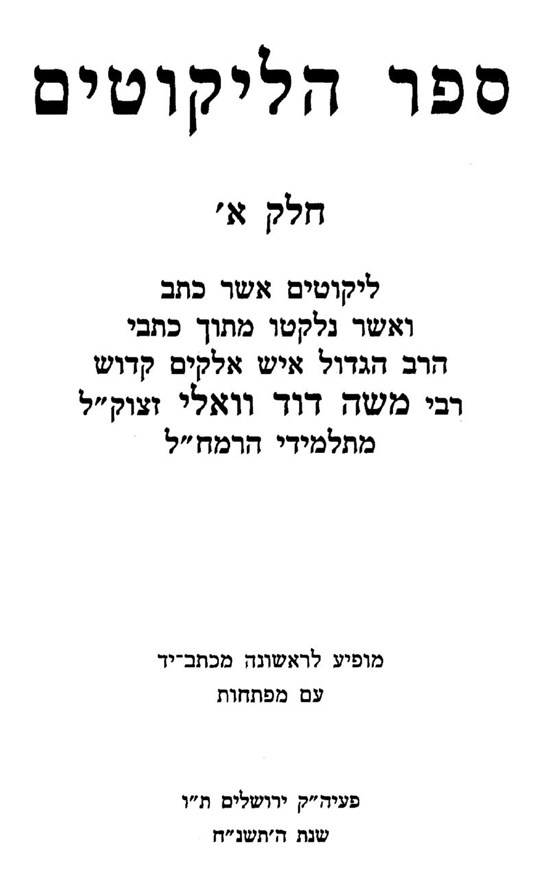
Rabbis & History: A Review of the Koreh HaDorot, Ahavat Shalom ed. by Eliezer Brodt  This is the first post in what I hope to be a series on various attitudes towards studying history.  The prism through which we will examine this issue is that of the many works written by gedolim discussing history.  The subject of this post is a new edition of the classic work Koreh Hadoros (KH) by R. Dovid Conforte (printed recently by Ahavat Sholom).  After discussing the actual sefer and its author,  I will conclude with a few comments about this recently printed edition.   R. Conforte was born in Salonika around 1617 and died sometime after 1678. Throughout his life he traveled to many places (including Eretz Yisroel), and in KH he describes his meetings with many great personalities, including R. Menachem Lonzano, author of Sheti Yadot, and R. Hayyim Benevisti, author of the Keneset Hagedolah. As he enumerates throughout the book, R. Conforte studied with R. Moredcahi Kalai and many others (see, for example, pg. 163, 175, 176, 179; all page references are to the new edition).  At times he also emphasizes with whom and when he studied Kabalah (pg. 172-73), which he started to learn at the young age of seventeen (p. 150). He seemed to have authored a few other works, most of which are lost. Recently, a responsum of his was printed in the journal Yeshurun (vol. 7, pg. 55ff). [In that article, the authors write of a plan to collect all R. Conforte's torah as well as to reprint the KH]. In Sinai (28:279-295), R. Toledano published a manuscript called Zikhron Yerushalim about gravesites in Eretz Yisroel, which the author proves was written by R. Conforte.   The KH is one of the most famous historical works written by a talmid chacham and continues to be studied to this day. This sefer was printed a few times (once even under a mistaken name –  see R. M. Strashun, Mivchar Kesavim, p. 240), and remains very popular amongst gedolim and scholars alike. Most notably, the Chida quotes this work extensively in all his seforim (as an aside, it's rather strange that his entry on R. Conforte in Shem Hagedolim is very small and uninformative). Indeed, when, many years ago, R. Meshulam Roth created a curriculum for his yeshiva, he included the Koreh Hadoros as an essential sefer for his talmidim to read (among other interesting things in the program; see Mivasar Ezra, pg. 176, and Mivasar Vomer, pg. 119); R. Meir Shapira even asked R. Roth if he could use the latter's curriculum for Yeshivat Chachemei Lublin (see Mivasar Ezra, pg. 172).  Even today scholars use this work extensively; check the index of almost any of the works of Meir Benayhu and one can see how often he quotes the KH.    KH begins with the era of the Rabbonan Savorei ("Saboraim"), continues with the geonic period and the rishonim, and ends with R. Confotre's own generation, in total covering a period of a few hundred years. The idea of this work is to list the different gedolim from each period and include basic information about them, such as when they were born and died, with whom they stiudied, and what they wrote. At times the KH includes a more lengthy entry on a specific person. Much of this information, especially that of R. Conforte's own period, is very important,  as we have no other such sources for it.  Much of the other material is taken from other classic "history" works, as R. Conforte himself notes (e.g. Igerres R. Shreriah Goan, Sefer Hakablah l'Ha'Ra'avad, Sahlsheles Hakablah, and Sefer Yuchsin, all of which will hopefully be subjects of their own posts in the future); yet, though R. Conforte uses these works extensively, he will at times disagree with these works. One work which, for some unknown reason, R. Conforte does not use, and which R. D. Kassel already pointed out, is the Zemach Dovid, obvious from the fact that the section on Askenaz achronim is quite weak. Finally, throughout the sefer he quotes many interesting things he heard from purportedly reliable sources, rare seforim, and manuscripts which he saw. In the recent Ahavat Sholom edition, they discuss about fifty such works which R. Conforte mentions. Indeed, Koreh HaDoros shows an incredible bikiyut in shas, rishonim, and achronim (and all of this in the pre-Bar-Ilan days!).   In 1842, D. Kassel printed an annotated version of KH. Though he included many short notes on various points in the sefer, his additions included nothing extensive. Among the reasons Kassel provides for this is that he was told Leopold Zunz was working on his own edition.  However, Zunz never ended up publishing his own edition and, as such, Kassel's edition, which still left room for much work, became the standard edition. More recently, this sefer was reprinted by Ahavat Sholom. One of the benefits of the Ahavat Shalom edition is that it collects all the Chida's comments on the sefer (scattered throughout his writings) and prints it here in the proper places. The truth is that Kassel already references when and where the Chida discusses particular points in KH; still, the Kassel edition only includes citations to the Chida's works without reproducing what the Chida says.  The Ahavat Shalom edition, on the other hand, includes the full text of the Chida's relevant comments. To be sure, even a cursory Bar-Ilan project search shows that the Ahavat Shalom edition missed a few of the Chida's comments, and I am sure that this is true of the many other seforim of the Chida not included the in the Bar-Ilan database.  Another plus of their edition are the indexes, which are very extensive- over a hundred pages (which include every time any sefer or name is mentioned)! Finally, the edition also has a retyped set,  making the sefer  more readable and clearly marking paragraph and topic breaks. They were also kind enough to reference pages numbers of the first edition, a useflul tool in tracking down quotes from the original edition. Another positive aspect of this edition is a very thoroughly researched introduction about the author and the sefer. The Ahavat Shalom printing includes an entire section devoted to many of the manuscripts and seforim that R. Conforte may have seen (discussing what happened with the seforim if they were printed since then, etc.). Just to point out some additions to their discussion: The KH mentions a sefer from R. Yisroel Nigra which is a collection of his derashos called Mikveh Yisroel. They write (p. 35) that it exists in many manuscripts and that one derasha was printed already in Yeshrun (10:134). The truth is that this manuscript was printed partially in the early 1900s, but, more recently, S. Regev printed all the dershos (Bar Ilan Press, 2004) in a critical edition (675 pgs.), including an excellent introduction to the work Interestingly, R. Y. Goldhaver seems not to have been aware of this edition as he only quotes the manuscript (see his Minhaghei Hakehilos, 1:287). Another sefer that the KH mentions, also authored by R. Yisroel Nigra, is Sheris Yisroel, which is a collection of Nigra's songs. In the Ahavat Sholom introduction they mention that it exists in manuscript. It is interesting to note that the manuscript was in the collection of R. Aryeh Lipshiz, as mentioned in his Avos Atrah Lebanim (p. 109).                                                                                                             The main weakness of this new edition are the notes. Aside for putting in all the comments of the Chida taken from Shem Hagedolim, there is almost nothing as far as notes go. On the one hand, one could argue that Ahavat Shalom did not feel it is necessary to put in more notes than they did. However, in a recent issue of a journal called Mikabsel (# 32) – published by Ahavat Shalom – the editors include the introduction to KH, including the history of the author and a sampling of over fifty notes on various topics in the sefer. Even these notes, too, could have been more comprehensive, they are still very useful. For some odd reason, most of these notes were not included in the published edition of KH. In sum, Ahavat Sholom should be thanked for printing an important sefer which has not been around for some time; nevertheless, a critical edition is definetely still needed and eagerly awaited.  I would just like to give a list of some of the many points and discussions which R. Conforte brings up in the sefer. As previously mentioned, he deals with the Geonic period, mostly basing himself on the earlier works available to him such as Iggerot R. Sherirah Gaon and Sefer Hakablah of the Ra'avad.     He records the famous puzzling statement about the death of R. Sherirah Goan that: ונתלה רב שרירא מידו אחת והוא כבן מאה שנה, ולא הוסרו מגאונות.   For a recent summary of the discussions of this statement and a new suggestion as to its interpretation, see R. Nosson Dovid Rabonvitz, Rishumot Teshuvos R. Sherirah Gaon, pp. 42-45.   Another one of the interesting things R. Conforte brings up, and which is rather famous (and hopefully the subject of its own post shortly), is the dictum:  ומצאתי כתוב שיש אומרים כי הגאונים נקרא כל אחד מהם בלשון גאון על שם שהיה יודע שם ס' מסכתות כמנין תיבת גאון (עמ' יח).   In a footnote of the Ahavat Sholom edition, the editors note that the Meiri makes the same point in his Seder Hakablah. In the introduction, they note (p. 31) that the KH probably saw this in the Meiri's  manuscript. However, from R. Conforte's discussion of the Meiri, it appears to me that he never saw the sefer (see p. 83). Furthermore, if he had seen this particular sefer of the Meiri (which, parenthetically, could have helped him much in this work), he would have quoted it as he quoted from his other sources. A more likely source where R. Conforte could have seen this phrase is from the Sefer HaTishbi (pg. 122), which he did see and from which he often quotes.    He includes a nice amount of information on the Rambam, including the famous legend regarding him being buried in Tevariah (Tiberias) and why the Ra'avad wrote a critical work on the Rambam. One of the things R. Conforte points out (as do many others) is that the Rambam studied under the Ri Migash (though the Chida comments that this is not chronologically possible).  What is less well known is what R Avraham Ben Ha-Rambam wrote about this:  ואבא מארי זצ"ל למרות היותו נמנה עליהם וקורא להם בחיבורו הגדול רבותי משום שאביו שהוא רבו הנו תלמידו של רבינו יוסף ז"ל  (המספיק לעובדי השם מהדורת נ' דנה עמ' 177-178).  KH mentions the famous legend about the death of R. Yehudah Halevi (already discussed previously here ). He also includes many interesting points about Rashi. Amongst them, he deals with a famous question that many ask: if Rashi died in middle of writing his work on Baba Basra, how is it that others say he died while working on Makos? R. Conforte's seemingly obvious answer is that Rashi must have been working on both at the same time (p. 56).  He includes an extensive list (almost fifteen pages) of all the various Rishonim quoted by Tosofos, including places where they quote from the Rambam and Ibn Ezra., further portraying the author 's tremendous bekiyut in Shas. In the new Ahavat Sholom edition, the editors actually provide the exact sources for all these pages.   The KH writes a very interesting possibility about the authorship of the Kol Bo: ושמעתי אומרים שאשה חכמה חברה ספר זה, אבל אין דעתי נוטה לזה, מפני שחכמת הספר ההוא אינו מדעת אשה אלא מדעת איש חכם גדול ורב מובהק, ומחמת ענוה יתירה שהיה בו לא רצה להזכרי ולפרסם שמו בתוך הספר. For more on this point, see Y. Levine in her introduction to Simchat Torah L'yad Rivkah Tiktiner, pg. 17 (as well as my Ben Keseh Lassur, pg. 143). Although the possibility is mentioned (and dismissed) by the KH that a woman wrote this work, A. Grossman's excellent book Chasidos U'morodos (pp. 282-289) does not mention it at all, though he provides a lengthy list of many of the learned woman in times of Rishonim (as an aside, I did not see a discussion of this list in the Sefer Toras Emechah, which deals with at length with the issur to teach Torah to women).   The KH has a lengthy discussion of the authorship of the Sefer Tanya, as it is well known that it appears to be a direct copy of the Shibbolei Ha-leket (pg. 76-77). In the latest volume of Yeshurun (20:696-697), R. Yakov Chaim Sofer goes so far as to discuss whether a similar point made by both the Shibbolei Ha-leket and the Sefer Tanya can "count" as two Rishonim or only as one. He proves at the end that the Eliyahu Rabah (in many places) counts them as two Rishonim. R. Conforte concludes that the author was most likely R. Yecheil, the author of the Malos Hamidos, and perhaps more famous as the sofer who copied the Yerushalmi Leiden. Throughout the past few centuries, the authorship of this sefer has been constantly aruged and discussed. Recently, Profesor Feintuch (Mesoros Venuscos B'talmud, pp. 65-76) proved conclusively that the KH is certainly correct (see also, I. Ta-Shma, Creativity and Tradition, pp. 77-79).   When discussing the place where the Reshis Chochma is buried, he mentions, as an aside, that the Matnes Kehunah is buried next to him (p. 146). Others disagree on this point, showing that the Matnes Kehunah was actually buried in Poland (see Zev Gris, Safrus V'hanhagos, pp. 41-42).   When talking about R. Shlomo Halevi, R. Conforte writes (p. 165):  וצוה בשעת פטירתו… שהספסל שהיה משים עליו הספרים כשהיה לומד, שיעשו ממנו ארון כדי לקוברו בו.     On this topic of burying one using the table on which one studied, see the many sources of R. S. Askenazi in his notes on the Kav Hayashar, and his updates in his Alpha Beta Kadmidta Deshmuel Zeria, pp. 487-93.   When discussing the Lechem Mishna, R. Conforte brings down an incredible story which he heard (pg. 153):  ושמעתי מפי זקנים כי נפטר בערב שבת במגפה ונקבר בין השמשות ובא השמש, והתחילו מצטערים לומר שחללו את השבת. וכשחזרו מבית הקברות לבתיהם זרחה השמש והאיר להם היום ושמחו על שלא חללו את השבת.   As D. Tamar notes (Areshet, Vol. 1, p. 474), the KH is the first historical sefer (p. 127) to attribute the Magid Mesahrim to R. Yosef Karo (contrary to what R. Y. Greenwald writes in his book R. Yosef Karo Ve'doro, pg. 192). Of course today we have much earlier and excellent proof as to the authenticity of this work; see, in partiuclar, the works of R. J.Z. Werblosky and M. Benayhu (in Yosef Becherei).   The KH also brings (p. 128) an incredible tidbit about the Beis Yosef which he heard from the Beis Yosef desendants:  ספר לנו קצת משבחי זקנו ז"ל, ובכלל שבחיו אמר לנו שהרב זקנו אמר בשעת פטירתו שזכה ללמד התלמוד כלו שלשה פעמים.    In the introduction to the Ahavat Sholom edition, the editors note that this sefer was also used to learn halacha, such as in the discussion of teaching torah to Karaties. They reference, for example, how the first source on this topic in the Sdei Chemed is the KH (Sdei Chemed, Klal Beis, Siman 34:13). While it is true that the Sdei Chemed does quote the KH, in reality he is only quoting Shut Mizrachi as brought in the KH. However, a Bar-Ilan search does show a few cases where the Shut Minchat Yitzcahk uses this sefer in his works. As far as Halachos of Klalei Ha'pesak, I am certain that KH could play a role.   In the recent ("controversial") book Reckless Rites Elliot Horowitz has a excellent extremely comprehensive chapter on local Purims throughout history. One of the Purims he discusses is the Purim of Cairo (pp. 286-89) he mentions that we have various sources showing it was observed over several centuries. Another source, not mentioned by Horowitz, is that a reference to this Purim can be found in the KH where he mentions that in his times it was also celebrated (p. 119).   One last point of great interest about R. Conforte is that although he lived in the time of Shabetai Tzvi, no mention of Shabetai Zvi can be found in the entire sefer. This point was made by B. Deblitski in his article in Mekabseil (pg. 606); however, the introduction of the Ahavat Sholom edition omits this very important and interesting point.        


Ofeq Institute and the New (English) Version of the Messilat Yesharim

Ofeq Institute and the New (English) Version of the Messilat Yesharim
by Eliezer Brodt

The Messilat Yesharim, by R. Moshe Chaim Luzzato (Ramchal), is one of the foundational works of mussar. [1] The Gra, among others, praise the Messilat Yesharim.[2] As such, any addition to its oeuvre is important in its own right. The Ofeq Institute* has recently published an English translation of an alternative version of the Messilat Yesharim. This version is fundamentally different than the standard edition of Messilat Yesharim. The standard edition is divided into chapters based upon various character traits. The second, this new version, eschews the chapter divisions and instead is arranged in a conversation or dialogue format. Specifically, a dialogue between a “wise man” and a “pious person” is the format of this version. This second version comes from a manuscript in the Baron Ginzburg collection in the St. Petersberg Library. The manuscript is in the Ramchal’s own hand and is substantially larger than the other version. Although the Hebrew edition of the dialogue version has been available for a bit (also from Ofeq),[3] this version has now been published in an English edition and this edition will be the focus of this post.

First a word about the Ofeq Institute. Over the past twenty years Mechon Ofeq has released many editions of the works of the geonim, rishonim and achronim covering all genres of Jewish literature. All these works are critical editions with extensive notes and introductions. Almost all their editions include extensive footnotes. (One of the only complaints some have is that there’s simply too much information in the footnotes). Much like the novel version of Ofeq’s Messilat Yesharim, many of the works are based on manuscripts from the Ginzburg collection, a collection that was only recently released to the public.

To highlight but a few of their other titles. A work on Iyov from the bet midrash of Rashi and a commentary on Yecheskel from R. Yosef Heyun. They begun to publish a critical edition of the rishonim on Torat Kohanim as well as a commentary on Tosefta. They have printed works from geonim like R. Natronai Goan. Many works of rishonim on shas, most well-known being the Tosafas HaRosh on Pesachim and Haggigah, and Tosafos Yeshanim on Yevomos. A facsimile edition of Rambam on Madda and Ahava in the Rambam’s own hand. They have printed hagadahs from rishonim an excellent critical edition of the Seder Hakabalah of the Meriei. Another work of note is Meah Shaearim a two volume edition on hilchos kibud av v’em.

Ofeq, run by R. Avraham Shoshana and based in Cleavland Ohio utilizes not only Torah scholars (read products of Yeshiva education) but experts who are academics as well. For their editon of the R. Natronai Goan they used Professor Brody a leading expert of the geonim period. For other works of rishonim they have used Professors Emanuel, Hevlin and Speigel all experts in their respective fields. Or, in the case of the Messilat Yesharim, Professor Septimus was involved. That is, Ofeq ensures that the works they put out are of a high caliber. To some, this is an anathema. They view the inclusion of non-Torah scholars to be unconscionable. Most recently objections of this nature were expressed by R. Yehuda Liba ben Dovid in Bes HaVaad (see post here ). As I pointed out, however, R. ben Dovid’s position is in the minority.

Aside from Ofeq’s Hebrew publications they also have published some books in English. The Messilat Yesharim, however, is their most ambitious English translation to-date.

This English translation includes an introduction discussing the Messilat Yesharim, the two versions, and the English translation employed. The translation does not skimp in the sense that it is annotated with English notes – something that does not appear in all English translation. Instead, many English translations provide the footnotes in Hebrew. While this seems counter-intuitive as if the person wants to read the work in English, they would like to read the whole work including the footnotes. This edition does not suffer from that and instead, almost everything is in English. Additionally, although Ofeq has published the “dialogue” edition, they also include the original version in translation as well. There are, however, two parts that remain in Hebrew. The first are citations to verses, talmudic passages and the like, the second is the final work included which compares the dialogue version with the standard chapter version. This last section, titled Bein HaMesilot, is in Hebrew.

When it comes to English translations, there are typically two options. The first are academic presses which are typically expensive and not aimed at a popular audience. The second, are the traditional Orthodox presses, while these are typically more readable, they (although not always) don’t provide some of the scholarly detail. Ofeq’s translation of the Messilat Yesharim
strikes a nice balance between these two – they have produced a highly readable yet include the scholarly detail as well.

As mentioned above, what is unique about this copy of the Mesilat Yesharim is that is is written in a completely different style than the current Mesilat Yesharim. This new version is written in a debate form. The Ramchal wrote other works in debate form as well. For example, his work on defending kabbala. For whatever reason, he chose to print the other, standard, version and the debate version remained in manuscript. It’s unclear, however, why the Ramchal chose to do so. Many feel that a debate version is much better for 2 reasons: One, it keeps the reader much more interested and two, it brings out the various points much better as is always in a debate form.

For many years, the sefer Messilat Yesharim was learned as a mussar sefer, becoming one of the classics. Many people used to take it into a dark room and learn it in special tunes saying the words again and again until they penetrated. However, many people have a fear of mussar, having bad memories from yeshiva, forcing themselves to read mussar sefarim during mussar seder that they felt did not talk to them. I would like to suggest a new way to read this sefer. Read it as a regular sefer. Concentrate on the ideas discussed in it, not only focused on the mussar, but rather on the pshatim, aggada and statements throughout the sefer. Just to list a few of these lesser appreciate portions of the Messilat Yesharim:
והנה ודאי שיעזרהו לזה רוב התמדה והעיון במזמורי דוד המלך והתבונוות בם במאמריהם וענינים כי בהיותם כולם מלאים אהבה ויראה וכל מיני חסידות. הבנה בהתבוננו בם. לא ימנע מהתעורר בו התעוררות גדול לצאת בעקבותיו וללכתב בדרכיו. (פרק כא)
Or highlighting the value of reading gedolim books or at least the aggadic section of the gemarah
וכן תועיל הקריאה בסיפור מעשה החסידים באגדות אשר באו שם. כי כל אלה מעוררים את השכל להתיעץ ולעשות כמעשיהם הנחמדים… (פרק כא) In this passage, the Ramchal takes a positive view vis-a-vis working at least if learning remains a main focus
כי הנה העסק מוכרח הוא לאדם לצרוך פרנסתו, אך ריבו העסק אינו מוכרח שיהיה כל כך גדול עד שלא יניח לו מקום אל עבודותו. על כן נצטוינו לקבוע עתים לתורה. (פרק ה וראה פרק כא) And, on keeping chumros he has an intresting point
הוא להחמיר בהם תמיד לחוש אפילו לדברי יחיד במחלקות אם טעמו נראה אפילו שאין הלכה כמותו(פרק יד) Elsewhere he expands on this thought a bit more
באשר כבר יחשבו שהחסידות תלוי בדברי הבל או דברים נגד השכל והדיעה הנכונה. ויאמינו היות כל החסידות תלוי רק באמירת בקשות רבות ווידוים גדולים ובכיות והשתחויות גדולות ובסיגופים הזרים שימית בהם אדם את עצמו כטיבלת הקרא והשלג וכיוצא בדברים אלה… אך מציאות החסידות עצמו הוא דבר עמוק… כי הנה המצות המוטלת על כל ישראל כבר ידועות הן וחובתן ידועה עד היכן היא מגעת. אמנם מי שאוהב את הבוראית”ש אהבה אמתית לא ישתדל ויכון לפטור עצמו במה שכבר מפורסם מן החובה אשר על כל ישראל בכלל… אלא אדרבא… יהיה לי לעינים להרבות בזה הענין ולהרחיב אותו בכל הצדדין שאוכל לדון שרצונו יתברך חפץ בו… נמצא כלל החסידות הרחבת קיום כל המצות בכל הצדדין והתנאים שראוי ושאפשר… (פרק יח)
In the introduction the Ramchal has a puzzling remark, that many have taken issue with, but, in reality, the Ramchal was following in the path of Chovos haLevovvos
היתכן שיגע ויעמול שכלנו בחקירות אשר לא נתחייבו בם, בפלפולים אשר לא יצא לנו שום פרי מהם, ודינים אשר אינם שייכם לנו.
Here R Shoshanah has a nice comment (p. 18) of sources discussing this point.
When he wrote this work the Ramchal wrote a puzzling remark in the beginning showing his humility he writes

אמר המחבר החיבור הזה לא חיברתיו ללמוד לבני אדם את אשר לא ידעו אלא להזכירם את הידוע להם כבר ומפורסם אצלם פרסום גדול

R. Sarna writes in his notes on Messilat Yesharim that this statement is the most puzzling statement in the entire sefer to him.

One more nice piece from Messilat Yesharim is:

והפרישות… הוא התבודדות וההבדל מן החברה המדינית לפנות לבו אל העבודה והתבוננות בה כראוי ובתנאי שלא יטה גם בזה אל הקצה האחר שכבר אמר ז”ל לעולם תהא דעתו של אדם מעורב עם הבריות… (פרק יד)

Turning back to the Ofeq edition in particular, it is important to highlight the footnotes included. While much has been written on the Messilat Yesharim before this edition, especially worthy of mention is the edition of R Sarna. This edition that includes notes by R. Shoshana has included that aside from explaining the text and the concepts therein and providing sources that the Ramchal’s comments are based on in Hazel and the rishonim (as R. Shoshana notes that he has spent many years learning this sefer very carefully) also offers historical info such as on page 6 when dealing with learning pilpul or on page 127 about a custom in those days in Italy where there were large plays and comics played before Jewish audiences.

The end section, Bein HaMessilot, is a great section discussing at length a few topics of the Messilat Yesharim and comparing and contrasting how the two different versions with them. This shows, that at times, the debate version is much lengthier than the current version we have. Another thing that was done in this edition is that they fixed up the original version of Messilat Yesharim from all the mistakes that crept in since its printing. This sefer, which the author was subject to much opposition in his lifetime by many great gedolim, as is documented in the Iggeres Ramchal, was zoche that one of his works became a classic until today.

The only criticism I can think of on this edition is that they should have included all their appendices and introductions that they printed in the Hebrew edition previously printed by them. But, with this new edition it should be much easier to learn And I am sure one will enjoy this all time classic even today.

As Ofeq has extensively utilized manuscripts in both this edition of the Messilat Yesharim as well as in the rest of their publications. We should highlight another book, published by Ofeq, that is on the topic of Hebrew manuscripts. Benjamin Richler’s book, Hebrew Manuscripts: a Treasured Legacy, (this is available to readers of the Seforim blog for a special price of $24.95 including postage – please contact Ofeq their information is provided below) is a great introduction to the world of manuscripts for anyone. The book contains a lot of information and pictures of all types of handwriting. The book traces and describes briefly many manuscript collections, both private and public including the Ginzburg collection – the collection where the dialogue version of MessilatYesharim as well as other important manuscripts were found. It even lists the numbers that some of these seforim have in the very big collections. Besides for this, the book contains some nice descriptions with pictures of many manuscripts. Of interest is on page 50, a picture of a manuscript of a machzor from 1290 that has pictures of malachim with faces of dogs. The book also includes a bit of a history of the various catalogs of manuscripts that have been written until today. Interestingly enough, Richler writes that the JTS and Hebrew University collections are not completely cataloged. (maybe by now, they are – for an update on the JNUL collection see Richler’s post here). He has a chapter discussing the importance of manuscripts besides for ones not printed, which there are many. It also is to check the accuracy of previous editions. This book was written before the Ginzburg collection was released (p. 110). In addition, there’s a excellent chapter on the Cairo Geniza from one of the biggest experts on the geonic era, Professor Robert Brody. Here too, Brody discusses many of the basic questions one has about this topic, such as why all this is in the geniza in the first place. He also discusses where all the documents are location today and the progress of the study of these documents.

NOTES
[1] In an earlier post discussing the content and censorship of the sefer Menuchah u-Kedushah, and I note that according to the author of Menucah u-Kedushah, the Messilat Yesharim was written with ruach ha-kodesh.

[2] For a discussion about the Gra and his views towards R. Moshe Hayyim Luzzato and the Messilat Yesharim, see Y. Eliach, HaGra, vol. 1 pp. 240-45, where Eliach devotes a chapter to this issue. There is even a statement attributed to the Gra that there are no extra words in the sefer Messilat Yesharim, until chapter 11. This statement sparked a discussion as to exactly which word in chapter 11 is the extra one that the Gra was referring to. Additionally, it seems that the Gra even had some of the Ramchal’s works in manuscript.

[3] The Hebrew edition includes an extensive introduction enumerating all the differences between the versions by R. Yosef Avivi, an expert on kaballah and especially the Ramchal’s writings.
*As Ofeq’s website is a bit dated, those wishing to obtain a catalogue of Ofeq’s publications should contact them at: Ofeq Institute, 27801 Euclid Ave., Suite 430, Euclid, OH 44132, fax (216) 731-5567; email ofeqinst@core.comTheir contact information in Israel is 02-653-5920, or e-mail: ofeq@013.net


ArtScroll and More

ArtScroll and More
Marc B. Shapiro
In an earlier post here I discussed ArtScroll’s use of a censored talmudic text.[1] This happens quite a bit and it is not always clear if the translators were aware that they were working with an inauthentic text. However, for many passages there is no question that they realize that what they are translating is not authentic but was added because of fear of non-Jewish reaction. Here is a chart someone drew up showing how the various new Talmud editions deal with the matter of censorship.

It is significant that even in the Hebrew ArtScroll the text that is used is censored. ArtScroll has never publicly explained why they have adopted this approach, but I think it is obvious that unlike other publishers, ArtScroll is still worried about creating anti-Semitism and thus continues to print a censored Talmud. While I think everyone agrees that the ArtScroll Talmud translation is a masterpiece, opinions will obviously differ as to whether ArtScroll made a mistake in not restoring the Talmud to its pre-censorship state.[2]
ArtScroll’s approach is different than that of other publishers who are very happy that they can now include the complete uncensored words of the Talmud. Ezra Chwat’s words express the feeling of every publisher other than ArtScroll.[3]
אין צורך להדגיש את החשיבות של הנגשת הסוגיה המקורית לעשרות אלפי הלומדים את הגמרא כפי שיצא מפיהם הקדושים של האמוראים, ושלא יסתפקו ב”גירסא” שאושרה על ידי הכנסייה.
Yet R. Leopold Greenwald had the exact opposite approach, and he was upset when he heard that a new Talmud was being printed that reinserted the censored texts. His words reflect the approach later adopted by ArtScroll [4]:
ומה מאד דאבה נפשנו בראותנו, כי מכריזים גם עכשיו על “המציאה הגדולה”, כי בירושלים מדפיסים כעת תלמוד עם כל ההשמטות שהשמיטו הצנזורים במשך מאות שנים. ועל זה אנו קוראים: שקול טובתך! בני ישראל לא ישבעו עונג מהטובה הזאת, לא ספרותנו ולא חכמתנו יתעשרו מהשמטות הללו, לא בזמננו ולא בהדורות שאחרינו. כבר שבענו צרות ומכאובות. ולהיות בפי כל מחבל בודאי אסון הוא. איפוא הם חכמי ירושלים? האם אינם רואים כי מזה לא תושע יהודה וכי צוררי ישראל ישיגו חומר מסוכן חדש?
For those who are unaware of the details, let me just mention that I am not referring to a word here or there that was censored and has not been restored by ArtScroll. Sanhedrin 43a has a number of lines dealing with the execution of Jesus and his disciples. While the entire section is found in Soncino (in translation), Steinsaltz, Wagshal and Oz ve-Hadar, it is not to be found in ArtScroll. Both the English and Hebrew editions of ArtScroll tell the reader that a section has been deleted from the Vilna Shas. However, in Sanhedrin 67a, where another section has been deleted and is found in the other editions just mentioned, ArtScroll does not inform the reader of the deletion.
An allusion to the Sanhedrin 67a text is found in Va-Avo ha-Yom el ha-Ayin, attributed to R. Jonathan Eybeschuetz. This explosive text, which remained in manuscript for almost three hundred years, has just appeared in print, edited by Pawel Maciejko.[5] Va-Avo ha-Yom el ha-Ayin is very important to understanding the controversy over R. Eybeschuetz. (I hope that the manuscript Gahalei Esh, a treasure trove of documents dealing with eighteenth-century Sabbatianism, will also soon appear in a scholarly edition.) Quite apart from the radical theological notions found in Va-Avo ha-Yom el ha-Ayin, Maciejko describes the work as follows: “[I]t is blatantly pornographic (in fact, it is possibly the only truly pornographic text ever written in the rabbinic idiom.)”[6]
Speaking of pornography let me add the following. Not long ago I was visiting a certain synagogue for Shabbat. When it came time for Torah reading I took out the chumash that was near me. It happened to be the one published by R. Aryeh Kaplan. I actually am not a fan of this chumash for use in synagogue as its focus is entirely philological, and doesn’t deal with any of the issues that a typical person would want explained in reviewing the Torah portion. But this was what I had so I used it. In Exodus 35:22 an unusual word appears: כומז. It means some sort of golden bodily ornament. The word also appears in Numbers 31:50. According to the Exodus passage, this was one of the items the Israelites in the desert donated at the time of the building of the Tabernacle. The passage is Numbers refers to booty taken from the Midianites. Among the different interpretations Kaplan offers for כומז is “a pornographic sculpture.” This is quoted in the name of R. Aaron Alrabi (fifteenth century). I was quite shocked when I saw this and later saw that this interpretation is also quoted by R. Kasher in Torah Shelemah, which must have been where Kaplan saw it.
Alrabi wrote a commentary on Rashi which was published in Constantinople in 1525. In this work, on Exodus 35:22, Alrabi writes:
יראה לי שהוא תכשיט מצוייר צורת רחם האשה כדי שישתוקק רואהו לפועל המשגל והצנועות היו מביאות אותו עליהן בחדריהם לתת תשוקה לבעליהן העין רואה והלב חומד בו, והיה זה לכונה טובה לכן הותרו לשרת בקדש
What this means is that the item in question had a picture of a woman’s private parts. The Israelite women would have their husbands look at it in order to sexually excite them before they had marital relations. Since this pornographic viewing was for a good purpose, it was permitted for these items to be donated for use in building the Tabernacle. Here is the original text.
Those who want to see the book in its entirety can view it here.
I find this explanation quite strange. I don’t know what led Alrabi to his original understanding and why he did not find any of the prior explanations compelling.
Incidentally, one of the other explanations cited by Kaplan is that כומז means a chastity belt. R. Ephraim ben Shimshon (12th-13th centuries) writes[7]:
הכומז היה כלי כמנעול שקושרת האשה פתחה שלא יודעו להם שם אדם, כי אם בעלה לבד, והוא גודר הערוה.
This is how he understands Shabbat 64a which states that כומז means דפוס של בית הרחם. Soncino translates this as “cast of the womb” and ArtScroll translates it the exact same way. Koren translates “a mold [in the shape] of the womb.” In general I would say that disagreeing with these three translations is not a smart thing to do, yet in this case I must do just that. The translations I have cited are incorrect as they do not reflect what the Talmud is saying. בית הרחם in Shabbat 64a does not mean “womb” but rather something else. In order not to cause problems for those with internet filters I won’t spell it out completely, but I think the reader already understands.[8]
Rashi, Exodus 35:22, in summarizing the Talmud leaves no doubt in this matter:
כלי זהב הוא נתון כנגד אותו מקום לאשה
The very text in Shabbat 64a also lets us know that this matter has nothing to do with a “womb”, as immediately following the explanation of דפוס של בית הרחם the Talmud explains that the wordכומז  is an acronym of כאן מקום זימה “here is the place of lewdness”, and there is no issue of lewdness with the womb. ArtScroll itself, in its note on this latter passage, explains the matter well: “The place encased by this ornament is the part of the body which is the focus of lewdness.” In other words, in its commentary ArtScroll tells us that we are not dealing with the womb at all, but with another part of a woman’s anatomy. As such, it was a mistake for ArtScroll in its translation to adopt Soncino’s rendering of כומז as “cast of the womb”.
In his commentary to Berakhot 24a s.v. תכשיטין שבפנים, Rashi explains that a כומז is a chastity belt. From the context of this talmudic passage we see that it also had ornamental significance:
כומז דפוס של בית הרחם שהיו עושין לבנותיהן ונוקבין כותלי בית הרחם כדרך שנוקבין את האזנים ותוחבין אותו כדי שלא יזדקקו להן זכרים
In its commentary, ibid., ArtScroll summarizes Rashi as follows: “The kumaz was an ornament that covered a woman’s private parts.”
Let me return to Shabbat 64a where כומז is explained as being an acronym for כאן מקום זימה. The Maharal, Gur Aryeh, Ex. 35:11, writes:
מפני שהוקשה להם לרז”ל שאין דרך לשון הקודש לקרא שם מיוחד לדברים שהם ערוה . . . כל דבר ערוה אין הכתוב נותן לו שם מיוחד . . . וכאן למה קרא כומז שם מיוחד אל הכלי הזה שהוא דפוס בית רחם, ולכך דרשו רז”ל שהוא כאן מקום זימה והשתא אין שם מיוחד לכלי זה רק כאילו נקרא כאן זימה.
I don’t understand the Maharal’s point. Just because there are no words in leshon ha-kodesh for sexual organs, why should we assume that there is no name for an item designed to cover a sexual organ?
Returning to the matter of “pornographic viewing” as described by Alrabi, I wonder if this could also have halakhic significance. I mention this only because of the controversy some years ago by an answer given by R. Shlomo Aviner that in a she’at ha-dehak (i.e., there are serious marital sexual issues) it would be permitted for a husband and wife to together view explicit pictures in a book. See here.
The entire conversation with R. Aviner was a set-up, and the anti-Aviner website used it to attack R. Aviner, and portray him as permitting viewing of pornography. Yet it is obvious that he was referring to sexual self-help books (which would have explicit pictures) since he refers to books found in Steimatzky. R. Moses Feinstein had earlier permitted a soon-to-be-married man to read sexual self-help books.[9] There is no indication in R. Feinstein’s responsum that he is also including the viewing of pictures in such books, but I do not know if he would regard this as a problem if the pictures are not of real people but are drawings.
Let us return to the subject of chastity belts. In the Wikipedia entry for “Chastity Belt” one finds the following:
Gregory the Great, Alcuin of York, Bernard of Clairvaux and Nicholas Gorranus all made passing references to ‘chastity belts’ within their exhortatory and public discourses, but meant this in a figurative or metaphorical sense within their historical context.
The first detailed actual mention of what could be interpreted as “chastity belts” in the West is in Konrad Kyeser von Eichstätt’s Bellifortis (1405), which describes the military technology of the era.
As we have seen, Rashi and R. Ephraim are not referring to chastity belts in a metaphorical sense. Thus, their mention of the item is of general historical significance, and Rashi (1040-1105) might be the earliest recorded example of someone referring to a chastity belt. Eric John Dingwall wrote an entire book on the subject of chastity belts entitled The Girdle of Chastity (Scranton, 1959). On p. 14 he writes: “There can be little doubt that the idea of such a device, at least in a somewhat modified form, was current at least as early as the second half of the twelfth century.” He then cites the late twelfth-century Guigemar Epic, written by Marie de France, as a source of this. Yet Rashi’s mention of the chastity belt predates this source by around a century.
See also here where as part of a museum exhibition on chastity belts it states:
Until the 12th century, there are no textual memories related to chastity belts at all (not even any allusions without actually using the term) where the reference is not in a theological or mythological context.
This sentence is incorrect, for as we have seen Rashi referred to chastity belts many decades before Marie de France, who is also cited in the museum exhibition as the first one to refer to the item. What we have here is a good example where scholars make judgments based exclusively on their knowledge of medieval Latin, Romance and Germanic literature. Exposure to what appears in medieval Hebrew texts would have caused them to alter these judgments.
Returning to ArtScroll, here is an example where I believe that ArtScroll has printed something that they know is incorrect, but did so in the interest of good Jewish-Gentile relations. I think it is a noteworthy example as it has nothing to do with a censored text, but focuses on the explanation of the Talmud. Avodah Zarah 6a states that according to R. Yishmael it is forbidden to do business with idolaters because of Sunday. Rashi explains that this means that one can never do business with idolaters since one cannot do business with them three days before and three days after their holiday, and this includes the entire seven-day week.
It doesn’t take much imagination to realize what the Talmud is referring to by “Sunday”, and in the uncensored text it actually has  נוצרי, נוצרים or  יום הנוצרי instead of “Sunday”. Yet ArtScroll in its translation states that the Talmud is referring to “Babylonian pagans who observe a sun-worshiping festival every Sunday.” It is true that Meiri states as much.[10] Meiri also claims that when the Talmud uses the word נוצרים it does not mean followers of ישו הנוצרי, but refers to the use of the term in Jeremiah 4:16, which Meiri claims is derived from the word נבוכדנצר.[11] While it is true that R. David Kimhi also sees the word in Jeremiah 4:16 as related to נבוכדנצר, it is Meiri alone who claims that this is also intended when the Talmud refers to נוצרים.
It is certainly appropriate that ArtScroll cited Meiri’s explanation in a note, but how is it that this is the only explanation cited, when other than Meiri everyone else has assumed, with good reason, that נוצרים refers to Christians? This can only be an example of ArtScroll shading the truth for apologetic reasons. People can debate the appropriateness of this, but there can be no doubt that ArtScroll is not being frank in its presentation here.
In the ArtScroll Hebrew edition it also quotes Meiri and states the that Talmud is not referring to Christians. Yet unlike in the English edition, in the Hebrew ArtScroll there is a note which states: “See Rambam, Hilkhot Avodat Kokhavim 9:4”. If you open up the Mishneh Torah what you find is that the Rambam states:
הנוצרים עובדי עבודה זרה הן ויום ראשון יום אידם הוא
In other words, by referring to the Mishneh Torah after mentioning Meiri, ArtScroll is alerting readers to the fact that the Rambam does not agree with Meiri and believes that the passage in Avodah Zarah 6a indeed refers to Christians. Yet this is never spelled out in ArtScroll, and you need to take their suggestion to consult the Mishneh Torah in order to learn that not everyone agrees that when the Talmud mentions those who make Sunday their holiday that it is referring to Babylonian pagans. (In fact, as already mentioned, only Meiri advocates this position.) Does the average person who learns daf yomi realize this?
In case anyone has any doubts as to what I am saying, please note the following. After referring to Maimonides, the note in the Hebrew ArtScroll calls attention to the Venice edition of the Talmud with Rashi, and to Dikdukei Soferim. Again, only one who examines these sources will learn that they offer an interpretation at odds with Meiri. If you look at the Venice Talmud or Dikdukei Soferim (or even Steinsaltz) you will find that in Avodah Zarah 6a Rashi explains:
נוצרי, ההולך בטעותו של אותו איש שצוה להם לעשות להם יום איד בא’ בשבת
In other words, Rashi tells us, just like Maimonides, that when the Talmud refers to those who celebrate נוצרי יום it means the Christians who follow Jesus.I find it significant that even in the Hebrew edition ArtScroll feels the need to only allude to the explanation of Rashi and Maimonides, while presenting Meiri’s explanation as the standard understanding of the text. ArtScroll certainly knows that this is not the standard understanding, and ArtScroll itself cannot believe that Meiri’s understanding is what the Talmud really means. After all, every other medieval commentator agrees with Rashi and Maimonides. In this case, the only explanation is that ArtScroll is following a long apologetic tradition, which was based on fear of what the non-Jews would say if they knew the true meaning of certain talmudic passages.

Another example of this tendency was called to my attention by R. Moshe Maimon. Ketubot 15a discusses the case of A killing B, when A actually intended to kill another person. In its discussion the Talmud refers to “Canaanites”, which in the current context simply means non-Jews. In fact, in all manuscripts and early printings what appears is not “Canaanites” but “goyim”.[12] “Canaanites” is simply a “correction” of the censor. Yet ArtScroll has a note explaining that “The Canaanites were the pagan people who lived in Eretz Yisrael before the Israelites entered the land.” The implication of this comment is that the halakhah stated in the Talmud was only applicable with the ancient Canaanites but not with regard to other non-Jews. This is false and ArtScroll knows it is false, but it is no different than the “note to reader” found in many seforim that all the halakhot about non-Jews only refer to the pagans in faraway places. In the latter case everyone knew (and knows) that these words are not to be taken seriously, but I would assume that the typical user of the ArtScroll English Talmud does not realize this. It is noteworthy that the ArtScroll Hebrew Talmud does not include the note about the Canaanites.[13]
In 1728, an era in which Jewish-Gentile relations were not the best, R. Jonathan Eybeschuetz printed Tractate Berakhot with many deletions, as this was the only way he was given permission to publish the volume. Here is the title page.
The volume can be found at hebrewbooks.org here. True to form, R. Jacob Emden accused R. Eybeschuetz of being in league with the bishop of Prague and intent only on making money from his new printing.[14] There was also a lot of controversy about this edition, not only because of the many deletions but even more so because of the instances where the talmudic text was rewritten. While non-Jewish censorship has a long history, this latter practice, of Jews agreeing to rewrite sections of the talmudic text, was a new and more dangerous phenomenon. Other tractates were later printed, but R. Eybeschuetz had nothing to do with them, and in any event the controversy focused on Berakhot as the other tractates simply printed the censored text from the earlier Basel edition, but did not add anything new.[15]
In his recent outstanding study of this episode, which makes use of manuscript sources, Pawel Maciejko writes:
In both academic scholarship and Jewish collective memory, the best-known controversies concerning Rabbi Jonathan Eibeschütz (1690-1764) are those about his kabbalistic tract Va-avo ha-yom el ha-‘ayin . . . and about the allegedly Sabbatean amulets that he distributed to the members of the communities of Metz and Altona, Hamburg, and Wandsbeck in the 1750s. However, during his early years, the most important controversy concerning Eibeschütz was not the dispute surrounding his suspected Sabbateanism and the heterodox writings attributed to him but rather the outrage engendered by his friendly relations with the local Catholic clergy and his alleged involvement in the publication of heavily censored editions of the Pentateuch, the Talmud, and the prayer book. In the eyes of many contemporaries, the damage caused by the appearance of these latter publications vastly overshadowed any harm stemming from the heretical views expressed in Eibeschütz’s kabbalistic works and amulets.[16]
Maciejko notes that R. Moses Hagiz was so outraged by R. Eybeschuetz’s Talmud that he asked other rabbis to issue a ruling that it be burnt!
Shortly after the publication of R. Eybeschuetz’s Talmud someone wrote a defense of it, explaining why it was necessary to print a censored Talmud.[17] Raphael Kirchheim, who published this document, cites another who states that its author was none other than R. Eybeschuetz, since the author refers to R. Abraham Broda as his teacher.[18] R. Broda had served as rosh yeshiva in Prague, and later rav of Metz and Frankfurt.
While Maciejko also accepts this view,[19] the reference to R. Broda as the author’s teacher, מורי ורבי, would appear to show that R. Eybeschuetz could not have written the letter, since he was not a student of R. Broda.
We have good information about R. Eybeschuetz’s life, but there still is a lot we don’t know. Even though R. Eybeschuetz is not recorded as R. Broda’s student in the standard biographies, one could claim that it is possible that he studied for a short time under him, and for some reason this fact was not known to the biographers.[20] Yet in this case we can indeed make the definitive statement that R. Eybeschuetz did not study with R. Broda since R. Eybeschuetz tells us this himself. Some thirty years after R. Broda’s death in 1717 his Eshel Avraham was published (Frankfurt, 1747). Here is the title page.
Among those who provided an approbation was R. Eybeschuetz, who at that time was in Metz. His respect for R. Broda is great, but he leaves no doubt that he never studied with him:
ממש רובי חכמי ישראל בדור הזה השלימי’ המה שותי מימיו ואף אני אם לא זכיתי לאורו לחזות לרבי מקמא כי בבואי לפראג שנת תע”ל כבר חמק דודי ופנה הודו לכאן ק”ק מיץ היא העיר אשר כעת אני יושב בה בתוך עמי, מ”מ נפתולי נפתלתי עם גדולי תלמידיו הרבני’ וחכמי’ מובהקים ושלימים במדע אשר נשארו שם ושמעתי’ תמיד בבי מדרשי’ בדיבוק חברי’
Returning to the document published by Kirchheim, it describes the history of the banning of the Talmud in the years before R. Eybeschuetz printed his volume. Interestingly, it tells about the confiscation of Jewish books from the Jews of Prague, which were then handed over to the Jesuits to be examined for anything against Christianity. From other sources we know that the Jesuits burnt the copies of the Talmud they confiscated, and “[i]n the 10 years from 1715 to 1725, very few copies (according to some sources, none) of the Talmud existed in Bohemia.”[21]
This need for copies of the Talmud explains why R. Eybeschuetz had to take the step he did. The document also tells of the punishment of a man from Nikolsburg who was caught smuggling Talmuds into the Prague ghetto. He was forced, in chains, to clean the streets for a year. The smuggled Talmuds were supposed to be burnt, but this was somehow prevented (probably with a good bribe).
The only way to print a Talmud in Prague was to remove everything the Jesuits viewed as offensive to Christianity. They also viewed certain aggadot as objectionable, such as the description of God wearing tefillin in Berakhot 6a, and these too had to be removed.[22] The document tells us that having the Church agree to publication of the Talmud, even with these restrictions, was regarded as a great achievement. It also tells us that all the important rabbis in Prague permitted the publication of the bowdlerized Talmud.[23]
וכאשר הגיעו לידינו רשימה אספנו להגאון מורנו ורבנו האב”ד ור”י נר”ו בצירוף כל חכמי רבינו [!] עירנו אשר ת”ל המה גדולים בחכמה ובמנין וטבעם יצא בכל ארץ לעיון במילין אם כשר ונאות לעשות כן אם לא ואחר הלנת דין פעמים ושלש ומשא ומתן עלתה הסכמה להדפיס מס’ ברכות הנודע הגהתן וסדר זרעים אשר לא יחסר בו דבר, אך ממסכת שבת והלאה לא עבר הסכמתן כי לא נודע עדיין טיב הגהות נוצרים בו אם מעט אם רב
The document then quotes a statement issued by the scholars of Prague defending their decision, a statement that was only intended to be viewed by other learned Jews. In justifying their decision to publish a censored Talmud – since this was all they were permitted and it was a censored Talmud or nothing – we find the following very interesting passage:[24]
ודאי שנכון הדבר לעשות לבלי כושל ועיכוב כלל כי ודאי שניתן הש”ס להצילו באחד מאיבריו ולא יהיה הש”ס חמור מג”ע וש”ד אשר ק”ל יהרג ואל יעבר קימו לן אם מיחדים על אחד ימסר להם ואל יהרגו וכ”ש הדבר בש”ס שבזמן שמיחדים לומר השמיטו דא מאתכם שיהא הנשאר לפליטה שישמיטו זאת ולא יצאו כולם לבית השריפה מבלי שריד באהלינו אהל תורה ובפרט כי חז”ל שיסדו התלמוד לא על זה יסדו להיותו בדפוס גלוי לכל עמים כי אם כתבוהו בכתיבה תמה ומסרו זאת לזרע אמונים להנחיל לבניהם אחריהם לחלקם ביעקב ולהפיץ בישראל.
The last sentence is making the point that there are certain things in the Talmud that should not be published for all to see, as these are the sorts of things that could create great problems with non-Jews. The Prague scholars then state that it is actually a good thing to cut out certain passages from the Talmud. In other words, they are acknowledging that even without Christian demands, it would be best in internally censor certain passages so as to prevent problems from arising. This is exactly what ArtScroll is doing today. No one is forcing them to self-censor, but they see matters as the sages of Prague who wrote (emphasis added)[25]:
וזה לערך ר’ שנה שהחל להתפשט ספרינו בדפוס לתקנות אחינו למען יהיו להם הספרים בנקל ומצוי, אמנם בדברים כאלו תקנתם קלקלתם שגורמים סכנה לכל ספריהם ומטילים איבת הנוצרים עלינו ודאי ראוים שדברים אלו יהיו חוזרים לאיתנם הראשון מבלי לחוקקם בעט ברזל ועופרת.
They are not saying that the censored matters should be forgotten about. Rather, they should be only be passed on in a non-published form (“Torah she-Ba’al Peh”) to advanced students who study the Talmud; they should not be put down in print for all to see and thus create a Christian backlash. The sages of Prague make the same point about strange Aggadot that are not to be taken literally and can only be understood by a few, and which have become subject to Christian mockery. These too should be omitted[26] להציל דברי חז”ל. When possible, the Prague sages state, one should not delete an entire passage but simply change certain words. In this way the sense of the passage is not changed for any learned person, but problematic words are removed thus helping to blunt anti-Semitic attacks:[27]
ומכ”ש לשנות הלשון במילות ושמות נרדפים באופן שלא ישתנה הענין פשיטא שמותר
The Prague sages then state that if necessary it is even permitted to alter (i.e., falsify) halakhic rulings that appear in the Talmud in order to prevent anti-Semitism (which obviously could lead to real danger). They note that R. Solomon Luria disagrees but that the accepted practice is not in accord with what he wrote, a point that was later made by R. Moses Feinstein:[28]
דעת מהרש”ל להחמיר אף במקום סכנה. אמנם מעשים בכל יום שמהפכין הדין ומשנין מדרכי השלום בהפקעת הלואה וכדומה ולא שמענו פוצה פה לעולם וכן נראה היפוכו בדברי מהר”ם רבק”ש בש”ע ח”מ סי תכ”ה ודברים המה מועתקים בספרים רבים.
It is interesting that the Prague sages quoted the famous words of R. Moses Rivkes in his commentary to Shulhan Arukh, Hoshen Mishpat 425:5, who responds to a particular anti-Gentile law as follows:
The Rabbis said this in relation to the pagans of their own times only, who worshipped stars and the constellations and did not believe in the Exodus or in creatio ex nihilo. But the people in whose shade we, the people of Israel, are exiled and amongst whom we are dispersed do in fact believe in creatio ex nihilo and in the Exodus and in the main principles of religion, and their whole aim and intent is to the Maker of heaven and earth, as the codifiers have written. .  . . So far, then from our not being forbidden to save them, we are on the contrary obliged to pray for their welfare.[29]
Some, such as Jacob Katz,[30] have seen R. Rivkes’ words as reflecting a new tolerant approach. However, the sages of Prague, who were closer to the time R. Rivkes lived, saw his words as merely designed for non-Jewish eyes and not to be taken seriously by Jews. R. Rivkes’ comment would therefore be no different than the declarations found at the beginning of many seforim that all negative statements about non-Jews are only directed towards pagans but have nothing to do with the Christians of Europe who worship God and allow the Jews to dwell among them.
Unlike what has been described by the Prague sages, Maciejko does not view the “corrections” in R. Eybeschuetz’s Talmud as simply defensive. He writes:
Eibeschütz believed that there was no final, fixed, and canonized text of the Talmud. . . . Eibeschütz put himself in the shoes of the ancient sages and saw himself not as expurgating but rather as creating the text of the Talmud.[31]
Maciejko further writes:
Eibeschütz seems to have been the only early modern Jewish author who believed that the talmudic sages needed to be edited for style. For themselves, such changes were only possible thanks to the editorial freedom Eibeschütz granted himself in his “Apology and Answer of the Rabbis Prague”: Eibeschütz considered the talmudic text open and unfinished and therefore felt free to “correct” it even in instances in which he experienced no external pressure from the church or from any other powerbrokers. As for the character of these changes, one thing can be said with certainty: most of them aimed to create a neater and simpler text of the Talmud, one that avoids intricate grammatical constructions or potentially misleading expressions.[32]
It is hard for me to accept that R. Eybeschuetz could have viewed himself as “updating” the Talmud. Yet Maciejko is correct that we are confronted with the fact that R. Eybeschuetz’s Talmud contains linguistic and stylistic changes that were not required by the censor. Unlike Maciejko, I would explain matters in the following way: Since the Talmud was already being published in a censored fashion, with numerous passages deleted or rewritten, R. Eybeschuetz saw no reason not to make other changes that would create a more user-friendly text. However, this has nothing to do with the talmudic text being “open and unfinished” as Maciejko puts it. It wasn’t that he was improving on the original Talmud or seeking to replace it, but since the Talmud he was publishing was already “damaged”, as it were, he did not see a problem making other changes if these changes could be of assistance to the reader. Furthermore, everyone who bought this Talmud knew that it was a she’at ha-dehak publication and that it was only to be used if one had no access to an uncensored text. I have no doubt that R. Eybeschuetz felt the exact same way, and thus I would need more evidence before accepting Maciejko’s theory.
Maciejko makes a further claim that R. Eybeschuetz’s “editing” of the Talmud hints to his secret universalist religious views that are also found in Va-Avo ha-Yom el ha-Ayin. This is a much more provocative claim than what I discussed in the previous paragraph, and I am curious as to what other scholars will have to say about it.
In addition to being given permission to print an expurgated Talmud, the non-Jewish authorities also permitted “strange” aggadic passages to remain if a good explanation could be provided for them. In R. Eybeschuetz’s edition of Berakhot such explanations are found at the back of the volume, and the reader is alerted to them by a note on the talmudic page.[33]
Until Hebrewbooks.org put the Prague edition of Berakhot online, it was a very rare book, and Maciejko knows of only three copies in existence.[34] In 1981 Professor Shnayer Leiman republished R. Eybeschuetz’s explanations to Berakhot.[35]
To be continued


[1] See also Jeremy Brown’s post here and regarding Brown’s post see David Zilberberg’s earlier post here.
[2] Only in the last year or so have I started to examine the ArtScroll Talmud on a regular basis and I am continuously impressed. This has to be one of the most significant Torah publications of the twentieth century. Since that is the case, I don’t see why such effort is being put into producing the new Koren Talmud. While it sometimes has points that do not appear in ArtScroll, I don’t know why anyone would prefer it over ArtScroll. I have had a chance to use both ArtScroll and Koren in reviewing some sugyot in Berakhot with my son, and in my mind ArtScroll always comes out on top. I even found one place where Soncino is to be preferred to Koren (although generally this is not the case). In Berakhot 29a it states: “Corresponding to what were these twenty-four blessings of the Amida prayer of the fast days instituted?” Unlike Soncino, Koren provides no note to this sentence and most people who read it will have no clue what it is talking about since when they look in the siddur they will not find twenty-four blessings in the Amidah on fast days (as they will assume that the fast days referred to are Yom Kippur, Tisha be-Av, etc.). ArtScroll helpfully explains as follows: “On certain public fast days decreed in times of drought, an additional six blessings, enumerated in the Mishnah in Taanis 15a, are added to the eighteen regular blessings of the Shemoneh Esrei, for a total of twenty-four blessings.” I would only add that the proper transliteration of עשרה is esreh, not esrei.
[3] See here where Chwat also posts a page of R. Hananel from the censored Sanhedrin 43a.
[4] See his letter in Moshe Chaim Ephraim Bloch, Heikhal le-Divrei Hazal u-Fitgameihem (New York, 1948), p. 8. For more opposition to publishing the censored talmudic texts, see Eliezer Zvi Zweifel, Saneigor (Warsaw, 1885), pp. 265-266
[5] (Los Angeles, 2014). Regarding the Sanhedrin 67a text, see Maciejko’s English introduction, pp. xlviii-xlix.
[6] P. xix.
[7] Perush ha-Torah (Johannesburg, 1950), p. 69.
[8] David Brodsky also discusses בית הרחם as a synonym for “va–na”. See A Bride Without a Blessing (Tübingen, 2006), pp. 55, 65, 84. In Alcalay’s English-Hebrew dictionary, s.v. va–na, it gives three Hebrew definitions, one of which is .בית הרחם
[9] Iggerot Moshe, Even ha-Ezer 1, no. 102. This appears in the second to last paragraph of the responsum. The last paragraph is where R. Moshe presents his famous view that living in the Land of Israel is not an obligatory mitzvah, a mitzvah hiyuvit, but rather a mitzvah kiyumit.Here is a good time to cite an email I received from a Lakewood scholar which I think is quite insightful, and relates to the “immodest” title pages I discuss in my recent book. This scholar writes:

There is one comment that I want to make right now regarding the pictures of the topless women that appeared and then disappeared in seforim. In addition to a point that I already once made that perhaps in earlier times the breasts were associated more with breastfeeding than with romance (it certainly was associated with that as well as can be seen from the Song of Songs, but not exclusively as today; perhaps it was more like a woman’s hair which can be seen in pictures), I would like to add a stronger point regarding these pictures.

It would seem to me that before photography when it wasn’t possible to produce real live looking pictures, people would be inclined to consider drawing an ערוה. But after the advent of real photographs, one gets the feeling that he is looking at a real image of a woman. It is for this reason, perhaps, that pictures of topless women became taboo. Once photographs began to be associated with ערוה, paintings and drawings followed since they are so similar to photographs. In other words, they became guilty by association.

If there is any merit to this argument (or speculation) then one can go a step further and say that the advent of color motion pictures which is more alive caused further stringency in this area. A picture of a woman is not that “problematic”, but to watch her video is already more like “mingling without a mechitza”. Once the women are struck from the videos, it is natural that they should be expunged from the magazines as well. It is worth noting that both the laws outlawing pornography and the invention of photography coincided with one another. It would seem that it wasn’t outlawed as long as it was only in the form of a drawing, painting, or sculpture.

While it is true that earlier sources do speak of the sexual nature of breasts (see my post here note 19), I think that my correspondent has put his finger on a very important point. It would appear that breasts were more commonly associated with breastfeeding which meant that it was not problematic to show them in pictures. We even find such a portrayal on two tombstones in the old Sephardic cemetery in Altona. Here are the pictures as they appear in Michael Studemund-Halevy and Gaby Zuern, Zerstoert die Erinnerung Nicht. Der Juedische Friedhof Koenigstrasse in Hamburg (Munich, 2002), p. 109.

There are also a whole series of paintings and sculptures showing the Virgin Mary breastfeeding, obviously showing that this was not regarded as immodest in Christian circles.

The non-sexual nature of breasts also explains Shabbat 13a:

 עולא כי הוי אתי מבי רב הוה מנשק להו לאחוותיה אבי חדייהו
(Perhaps because he found this text so strange, the Hatam Sofer interpreted it allegorically: היה מנשק החכמה. See Hiddushei Hatam Sofer, ad loc.)In response to the email from the Lakewood scholar, S. commented as follows

Another point which I think needs to be brought up about nude art is just how ubiquitous it was in Europe, statues, frescoes, and title pages in books, etc., very much influenced by Classical culture, which was of utmost importance in European learning and culture. If you’re in Venice or Prague or any major city in Europe you can’t avoid seeing it. The style of title pages may have changed, as styles do, so it is not surprising that Jewish printing culture changed as well. And eventually these seforim became one, two, and three centuries old and were only seen by individuals. Nudity in art was not ubiquitous in Eretz Yisrael and America, and it is not surprising that we woke up in the 20th century in American and EY and found these things surprising. My point is that it doesn’t necessarily have to do with them seeing breasts as sexual or not (what about thighs and bare midriffs? And seforim even depicted nude women bathing in the mikveh.) It is also important to note that in the writing of many great people they refer to specific editions they used, and it is clear that they saw it and neither defaced or said anything about it. So attitudes might be a European city vs. non-European city thing as well.

In an earlier post here I dealt with this picture which appears in the Venice 1574 edition of the Mishneh Torah.

Jacob D. called my attention to Shlomo Zalman Havlin’s comment in Yeshurun 29 (2013), p. 791 n. 7. Here Havlin states that when he attended the Chevron yeshiva its library had the Venice 1574 Mishneh Torah, but the yeshiva attempted to keep this edition from students due to the “immodest” picture reproduced above. Havlin also notes that some great rabbis were involved in the publication of this edition of the Mishneh Torah, including R. Menahem Azariah of Fano and R. Moses Provencal.

[10] Meiri to Avodah Zarah p. 4.

[11] Meiri to Avodah Zarah p. 4, Ta’anit 27b (p. 97). Regarding Meiri’s claim, see Lawrence Zalcman, “Christians, Noserim, and Nebuchadnezzar’s Daughter,” JQR 81 (1991), pp. 411-426. Zalcman argues that Meiri did not just make up his interpretation for apologetic reasons, but was aware of Mandaeans who were known as natzurai and were linked to Nebuchadnezzar.
[12] See Dikdukei Soferim ha-Shalem, ad loc.
[13] The Talmud pages used by ArtScroll in its most recent printings are taken from Oz ve-Hadar’s edition (minus certain notes that appear only in the Oz ve-Hadar Talmuds). This means that ArtScroll omits the Shitah Mekubetzet, citing Meiri’s and R. Jonathan of Lunel’s tolerant comments, which appears in the standard Vilna edition, Bava Kamma 38a and 113a.
[14] Hit’avkut, p. 2a.
[15] See R. Raphael Rabbinovics, Ma’amar al Hadpasat ha-Talmud, ed. Haberman (Jerusalem, 1952), pp.112ff.; David Leib Zuenz, Gedulat Yehonatan (Petrokov, 1930), vol. 1, pp. 12ff.
[16] “The Rabbi and the Jesuit” On Rabbi Jonathan Eibeschütz and Father Franciscus Haselbauer Editing the Talmud,” Jewish Social Studies 10 (Winter 2014), pp. 147-148.
[17] The defense was published in installments in Ha-Magid, May 9, 16, 23, 30, 1877. Sections of the document appear in  Zweifel, Saneigor, pp. 264-265, and in Saul Pinchas Rabinowitz’s edition of H. Graetz, Divrei Yemei Yisrael, vol. 8, p. 464 in the note. The complete document was published in Zuenz, Gedulat Yehonatan, pp. 135ff., but he does not identify its source, leading the reader to assume that he is quoting from a manuscript.
[18] See Ha-Magid, May 9, 1877, pp. 170-171. (The reference to R. Broda as his teacher appears on p. 171.) As we shall see, R. Eybeschuetz had a great deal of respect for R. Broda. Yet R. Jacob Emden’s father, the Hakham Zvi, had a different perspective. See Yehezkel Duckesz, Ivah le-Moshav (Cracow, 1903), p. 14.
[19] “The Rabbi and the Jesuit,” p. 166.
[20] S. points out an interesting source which gives an unknown, but presumably true, biographical detail of R. Eybeschuetz’s life in the spiritual autobiography of an apostate Jew named Salomon Duitsch, A Short Account of the Wonderful Conversion to Christianity of Solomon Duitsch … Extracted from the Original Published in the Dutch Language (London 1771).S. wrote to me as follows:

Prone to mystical visions and ascetic practices like fasting, he was regarded locally as a tzadik, but he eventually became convinced of Christianity. When this became known was forced to divorce his wife. After a period of wandering he ended up in Altona. He still looked Jewish and his issues were unknown there. He writes of meeting and staying the night at R. Eybeschuetz, who was very delighted to host him on account that R. Eybeschuetz was educated and taken care of as an orphan in the house of his great-grandfather in Nikolsburg. This information about a Nikolsburg period in R. Eybeschuetz’s life, and who this great-grandfather might be, is not mentioned in the biographies, and is a reminder that much information about people’s lives is not necessarily in books.

[21] Maciejko, p. 150.
[22] For details see ibid., pp. 169ff.
[23] Ha-Magid, May 16, 1874, p. 180.
[24] Ibid., May 23, p. 188.
[25] Ibid.
[26] Ibid., May 30, 1877, p. 199.
[27] Ibid. In my post here I discussed how R. Jehiel Michel Epstein engaged in self-censorship in the Arukh ha-Shulhan in order not to have problems with the non-Jewish authorities. Rabbi Shalom Baum called my attention to Arukh ha Shulhan, Orah Hayyim 480:1, for another example of this. I have underlined the words which any educated reader would understand were not to be taken seriously (since how could contemporary Jews ask God to pour out his wrath on the Babylonians who departed the historical stage over two thousand years ago?):
ואחר ששתו הכוס השלישי נוהגין לומר שפוך חמתך וגו’ ולפתוח הדלת כדי לזכור שהוא ליל שמורים ובזכות אמונה זו יבא משיח וישפוך חמתו על הבבליים שחרבו בהמק
[28] Ha-Magid, May 30, 1877, p. 199. Regarding the views of R. Luria and R. Feinstein, see my Changing the Immutable, p. 42.
[29] I have used the translation in Jacob Katz, Exclusiveness and Tolerance (Oxford, 1961), p. 165.
[30] Ibid., pp. 164ff.
[31] “The Rabbi and the Jesuit,” p. 167.
[32] Ibid., pp. 173-174.
[33] I don’t know why this procedure was not required for the other tractates published in Prague.
[34] “The Rabbi and the Jesuit,” p. 179
[35] Or ha-Mizrah 29 (1981), pp. 418-428. Leiman’s publication remains valuable because of his introduction and notes.


New Writings from R. Kook and Assorted Comments, part 3

New Writings from R. Kook and Assorted Comments, part 3

Marc B. Shapiro

Continued from here.
As I have dealt in this post with Maimonides and the Genesis story, it is as good a time as any to mention what I believe it to be an error that is repeated very often. I saw it most recently in Nathan Aviezer’s article “When Torah and Science Collide” (Tradition, Fall 2009). He writes as follows:

Did God create the universe? Seemingly a simple question, with the answer given in the very first verse of the Torah. Not so, writes Rambam (Guide 2:25), asserting that Torah hashkafa does not require one to believe that God created the universe. But what about the first chapter of Bereshit, which clearly states that God did create the universe? Rambam writes that one may interpret this chapter metaphorically, as an allegory that never happened, because “the paths of interpretation are not closed to us.”

What Maimonides actually says in Guide 2:25 is that it is a religious requirement to believe that God created the universe. He goes so far as to say that if it could somehow be proven that God did not create the universe, this would give the lie to miracles and Torah itself. In Maimonides’ words: “If the philosophers would succeed in demonstrating eternity as Aristotle understands it, the Law as a whole would become void.” In other words, Torah Judaism stands or falls on this issue, for acceptance of Aristotle’s view means the end of miracles, prophecy, and Torah. Fortunately for Rambam, he believes that eternity of the universe cannot be proven, because if it could be proven, that would be the end of Torah Judaism.[1]

What else does Maimonides say in this chapter? He says two things. 1. If Plato’s view, that the world was created from eternal matter,[2] were to be proven, then this would not destroy the Torah, and in fact the Torah could be interpreted in accordance with this.[3] 2. Even Aristotelian eternity of the world could be reinterpreted in accordance with the biblical verses, just as the verses that speak of God’s corporeality are reinterpreted. This is the context in which Maimonides says that “the paths of interpretation are not closed to us.” Maimonides then explains that because of this, we do not reject eternity of the world because of the simple meaning of the biblical verses (which could be reinterpreted). Rather, we reject it because 1. It has not been proven (and indeed Maimonides does not think that it can be proven). 2. Eternity of the world destroys the foundation of the Torah.

In truth, Aviezer’s understanding is not unique to him but is shared by many. They all assume that if Aristotelian eternity was proven, Maimonides would then reinterpret the Torah in accordance with this, for he says that he is indeed able to do so. This viewpoint is held by some of the top Maimonides scholars alive today. From greats of previous years who hold this position, I can add R. Elijah Benamozegh:[4]

ומה מאד הפריז על המדה הרמב”ם שכתב במורה (ח”ב פרק כה) שאלו נתבאר הקדמות במופת הגיוני היינו מחויבים לפרש הכתובים באופן שלא יכחישו המופת
Centuries earlier, Ralbag advanced the same (what I believe to be incorrect) viewpoint.[5] See Milhamot ha-Shem 6:2:1:
גם כן אמר שאם היה מתבאר חיוב קדמות העולם מדרך העיון שכבר יוכרח לפרש מה שבא בתורה שיראה חולק עם זה הדעת באופן שיאות אל העיון.
As I mentioned, all Maimonides says is that if eternity is proven, the words of the Torah could be reinterpreted to accord with eternity. But according to Maimonides, there would be no reason for doing so. This is so for if eternity could somehow be proven, that would be the end of Judaism, as it would be the end of both miracles and divine providence and thus no possibility of a revelation of the Torah. Thankfully, Maimonides believes that eternity cannot be proven.

I don’t understand why so many scholars—whose knowledge of Maimonides is much greater than mine— interpret this chapter to mean that Maimonides would accept Aristotelian eternity when he says specifically that he wouldn’t. (Again, I am speaking of the exoteric meaning of Maimonides’ words, not about any esoteric interpretation of Maimonides.) When I challenged a number of these scholars on this point, they all acknowledged that Maimonides doesn’t actually say that he would accept eternity. However, in defense of what they wrote they stated that if eternity really was proven, what choice then would Maimonides have? He would have to reinterpret the Torah to agree with eternity since we can never imagine him rejecting the Torah. In this, I agree with them. Faced with the reality that eternity has been proven, and despite what he says in Guide 2:25, he would be forced to reinterpret the Torah. Of this, I have no doubt, simply because Maimonides was a very religious man and I can’t imagine him living without the Torah. Yet my point is that he does not say this in the Guide. In fact, he says the exact opposite, that the Torah cannot co-exist with eternity.[6]
Since I have mentioned Aviezer’s article, let me discuss some other things he says. Aviezer writes:

[Stephen J.] Gould was preceded in this approach by Galileo, who is credited with the famous aphorism: “The Bible teaches us how to go to heaven, whereas science teaches us how the heavens go.” (I can’t believe that Galileo really said these words because, while snappy in English, they make no sense in Latin or Italian.)
I don’t know on what basis Aviezer insists that these words don’t make sense in Latin or Italian. If someone said them in Latin or Italian, why shouldn’t they make sense? In fact, the original text is Italian, and is found in Galileo’s “Letter to Grand Duchess Christina.” In it, Galileo writes:

I would say here something that was heard from an ecclesiastic of the most eminent degree [Cardinal Baronius]: ‘That the intention of the Holy Ghost is to teach us how one goes to heaven, not how heaven goes.’”[7]

Here is the original Italian, and one can indeed see that the words are snappy:

“Io qui direi che quello che intesi da persona ecclesiastica, costituita in eminentissimo grado, ciò è l’intenzione delle Spirito Santo essere d’insegnarci come si vadia al cielo, e non come vadia il cielo.”

Even Pope John Paul II adapted this saying, in a passage that looks like it could have been written by R. Hirsch,[8] R. Kook, or R Natan Slifkin:

The Bible itself speaks to us of the origin of the universe and its make-up, not in order to provide us with a scientific treatise, but in order to state the correct relationships of man with God and with the universe. Sacred scripture wishes simply to declare that the world was created by God, and in order to teach this truth it expresses itself in the terms of the cosmology in use at the time of the writer. The Sacred Book likewise wishes to tell men that the world was not created as the seat of the gods, as was taught by other cosmogonies and cosmologies, but was rather created for the service of man and the glory of God. Any other teaching about the origin and make-up of the universe is alien to the intentions of the Bible, which does not wish to teach how heaven was made but how one goes to heaven.[9]

Chief Rabbi Jonathan Sacks, whose prolific writing continues to astound, has recently said the same thing: “There is a difference between science and religion. Science is about explanation. Religion is about interpretation. The Bible simply isn’t interested in how the universe came into being.”[10] R. Chaim Navon put the matter as follow[11]:

התורה אינה מתעניינת במידע מדעי, אלא בערכים רוחניים. לא כך כך אכפת לתורה מנוסחאות מדעיות; אכפת לה הרבה יותר מדרכי התנהגותו של האדם, מאורחות חייו ובעיקר מעבודתו של האדם את בוראו. משום כך, לא כל כך חשוב לדעת האם האדם היה שייך פעם לעולם החיות; מה שחשוב באמת הוא האם האדם הצליח להיחלץ משם.

In other words, the Torah has nothing to tell us when it comes to science. Therefore, there can be no such thing as a conflict between Torah and science.[12] With such an approach, all of the reconciliations between science and the Book of Genesis (e.g., a “day” is really an eon, the dinosaurs are from prior worlds, etc.), which for awhile were popular in Orthodoxy, are really missing the point. The old apologetics assumed that the Torah was in accord with science, and was even teaching scientific truths. It was just that we had to read the text differently than it had been read until now. Yet as with R. Kook, from Sacks’ and Navon’s perspective the creation story is a myth, namely, a tale designed to impart cosmic truths.[13] Although this position has been argued most forcefully by Slifkin, and has found a very receptive audience at synagogues (as I can attest, having tag-teamed with Slifkin as scholars-in-residence), are there any high schools that teach the Creation story in this fashion?

Returning to Aviezer, he writes:

But what about the geocentric theory of the solar system? Wasn’t that scientific theory universally believed for nearly 1500 years, until finally shown by Copernicus and Galileo to be wrong and then replaced by the very different heliocentric theory? The answer is “no!” The geocentric theory was not a scientific theory at all; it was pure theology, unsupported by any scientific evidence. The theory was universally accepted for over a millennium on religious grounds alone. The beliefs of the Church demanded that man’s place must be at the center of the universe.

This is completely incorrect. First of all, the Ptolemaic system of geocentrism was as much science as the Copernican system, and had nothing to do with theology.[14] Secondly, geocentrism long predates the second-century Ptolemy. Aristotle himself was a geocentrist, and in Aristotle’s view, the most important part of the world is not the center! “For the medieval mind, under the influence of Aristotle, the earth as the center of the world was not a position of honor. On the contrary, as Prof. Lovejoy put it, it was ‘the place farthest removed from the Empyrean, the bottom of creation, to which its dregs and baser elements sank. The actual center, indeed, was Hell; in the spatial sense, the medieval world was literally diabolocentric.’”[15]

Aviezer “blames” geocentrism on the Church, and yet Maimonides (and every other Jewish and Islamic thinker of his day) was a geocentrist. Maimonides also had a strong anti-anthropocentric view, as he did not regard man as the central purpose of the universe. This view of Maimonides was an important source for Norman Lamm in his famous article “The Religious Implications of Extraterrestrial Life.” [16] Only those who are convinced that they are the center of the universe would be troubled by the discovery of other inhabited worlds, and that is why Maimonides’ outlook came in so handy for Lamm.

Returning to Maimonides and creation, I want to call attention to a very interesting article by R Meir Triebitz. It appears in Reshimu, vol. 1 no. 2 (2008), the journal of the so-called Hashkafa Circle. See here.

As explained in the preface to the first volume, this “Circle” aims to fill a gap in haredi yeshiva education by focusing on the classics of medieval Jewish philosophy which are pretty much ignored in contemporary haredi society. We thus have a situation where great talmudists and halakhists ignore major themes of Jewish philosophy, which were dealt with at length by the medieval sages. When there are theological discussions in haredi literature, they invariably reflect a very conservative position, often at variance with the major rishonim. I already touched on this issue in my conclusion to The Limits of Orthodox Theology, and if Triebitz and his group are successful this situation could be reversed.

However, they won’t be successful for the simple reason that the outlook of the medieval Jewish philosophers is opposed in so many ways to haredi ideology that it will never become part of the haredi curriculum. In fact, I don’t think it is possible to be a serious student of medieval Jewish philosophy and at the same time identify with any of the regnant haredi worldviews. (You might dress the part and send your children to haredi schools, but that is not the same thing as identifying with a worldview.) This is so for many reasons, primary of which is that medieval Jewish philosophy is about the search for truth. The papal model of haredi society, where the quest for truth is subordinated to the dictates of the religious authority figure, is diametrically opposed to what our great medieval philosophers taught.

Furthermore, the haredi notion that contemporary gedolim can sit in judgment of the views of the Rambam and other greats, and determine that their views are no longer “acceptable”, will be rejected out of hand by all followers of the philosophic tradition. It is therefore not surprising that when Artscroll was presented with a plan to publish Maimonides’ Guide in English, the response was a resounding no, with the explanation given that the Guide should not be found in a haredi home.[17]

Until now, three issues of Reshimu have been published, all available on its website, and it is refreshing to see haredi writers grappling with important philosophical problems. While in many cases the writers are unaware of basic academic studies in these areas, and the journals could be edited in a better fashion (eliminating typos and stylistic problems), there is a great deal to learn from some of the essays. This is especially the case for Rabbi Triebitz, who because of his wide-ranging knowledge and keen insight deserves to be better known. I encourage all to read his articles and those who have time can also watch numerous videos of his shiurim here.

In his article referred to above, Triebitz offers a commentary on Guide 2:13, where Maimonides discusses the various views of creation. It is a very challenging essay which, unless I have overlooked an academic article, presents a new perspective, not an easy task in Maimonidean scholarship. In this essay Triebitz takes his place with the esoteric readers of Maimonides. He concludes that Maimonides does not really believe in creation ex nihilo, since for Maimonides this is a mental concept, not a scientific fact. From a scientific perspective, Maimonides adopts Aristotle’s view of the eternity of the world, but this is not something that could be communicated to the non-sophisticated reader. However, those who grasp what Maimonides is saying will realize that “Creation ex nihilo is not a contending theory of creation . . . but rather a product of man’s thought which introduces a dimension other than the objective physical world pictured by Aristotelian physics.” (p. 145)

Needless to say, this approach of Triebitz also turns Maimonides’ fourth principle, which insists on creation ex nihilo (including the creation of time), into a “necessary belief.” Here is another selection from the essay:

Rambam is therefore intimating that in order to posit God’s complete incorporeality it is necessary to extend the physical world ad infinitum. Since physical infinity is impossible, it is time which must be infinite. Monotheism demands eternity. Law and ethics, however, are based upon Divine free will and Divine free will in turn demands creation ex nihilo. Since creation ex nihilo, as Rambam has already pointed out, cannot have taken place at any time, it cannot be a theory of creation. The antinomy between eternity theories, particularly Aristotle’s, and the irreducible creation ex nihilo is in fact no other than the dichotomy between ontology and ethics (p. 161).

Triebitz returns to Maimonides and creation in Reshimu vol. 1 no. 3 (2009) and once again explains that in his opinion Maimonides doesn’t really believe in creation ex nihilo.

As a consequence, while Rambam’s discussion of creation begins by asserting that the opinion of Torat Moshe is that the world was created by God ex nihilo, by the time that discussion concludes eighteen chapters later (II. 30), he makes the subtle point, casually dropped as if merely incidental, that one of the terms referring to creation in the Torah (qinyan, qeil qoneh) itself “tends toward the road of the belief in . . . eternity” (71b/358). To the astute ear honed to his method of paradoxical exposition, the underlying thrust is clear: He begins with the assertion he believes to be obvious and most fundamental—namely, creatio ex nihilo—after which, following long diversions, he introduces the contrary premise—creatio continua aeterna—by which time the less aware, less initiated reader will likely not notice the subtle discrepancy and the controversial nuance therein entailed: that creation ex nihilo is not creation in time, chiddush nifla. (p. 82)[18]

I now want to return to the Creation story, and how some have argued that it should not be taken literally. I dealt with this in my previous posts and received some e-mails by people referring to other sources that say so, including R. Gedaliah Nadel. I am grateful for all the e-mails, but the reason I didn’t mention these sources, including R. Nadel, is because all of these sources are well known. Since I was not trying to write a comprehensive study of approaches to creation, I didn’t see any need to cite them. In general, my posts here are not like my articles or books, in that I am trying to call attention to interesting ideas and texts, rather than producing complete studies of any topic.

Yet since people are obviously interested in this topic, and took the time to send me the sources, let me thank you by citing a source that has never been referred to in all of the discussions of creation and biblical literalism. It is R. Shlomo Zalman Shag’s Imrei Shlomo, published in Frankfurt in 1866. (I have transliterated his last name as “Shag”, since that is how the Harvard catalog has it.) Here is the title page, where you can see that he identifies himself as a student of R. Isaac of Volozhin.

Worthy of note is that among the subscribers one finds, right next to each other on the list, R. Marcus Lehmann, Abraham Geiger, and Ludwig Philipson.

On p. 5 Shag refers to the trees in the Garden of Eden and the snake and says that it is obvious that none of this can be taken literally:

ואם נקח הפרשה הזאת במאזני השכל, ונפלס את הדברים נראה בעליל שהוא רק דברי רמז וחידה, וכפשוטו לא יכנסו כלל בגדר השכל.

On page 10 he explains how the snake represents the evil inclination, an identification pretty standard among the medievals, and he beautifully explains the connection between the two:

והנחש הוא היצר הרע והתאוה . . . היצה”ר נמשל לנחש מה הנחש כשהולך להזיק אינו ברעש ובהלה רק זוחל על הארץ בלחש ומזיק כן הוא היצר הוא בא לאדם בעצה ותחבולה ומראה עצמו כאוהב עד שיפתה, ואח”כ רובץ על צווארי בני אדם כנחש הסובב על הדבר מכל צדדיו.

On p. 21 he even understands the Tower of Babel in non-literal fashion:

ונאמר לראות את העיר ואת המגדל. את העיר זו יושבי העיר כמו העיר ננוה, העיר שושן, הכונה הוא על יושביה, והמגדל הוא המעשים שעשו, נגד רצון השי”ת, כי הם היו מתגאים לעשות להם שם בארץ. והשי”ת שונא גאים ומשפיל אותם, לכן ויפץ ה’ אותם משם על פני כל הארץ.

There have been many understandings of the Tower of Babel, and I don’t want to go into that now, but let me at least mention one of the strangest interpretations out there. R. Menachem Tziyoni (fifteenth century), in his commentary on the episode, claims that the Tower was actually a flying object[19]:

והמגדל הוא הפורח באויר אשר ראו בשמים

At least this is how Tziyoni is usually understood. Yet it is possible that it is not to be taken literally, and I found a post that says precisely this. See here.

Pre-modern man had many stories of those who were able to rise above the ground, either by flying or being transported by God. We find this in Jewish literature as well. See, for example, Bereishit Rabbah 44:8 which focuses on the words in Gen. 15:5 ויוצא אותו החוצה. What does it mean that God brought Abraham outside? The Midrash first quotes R. Joshua in the name of R. Levi:”Did he then lead him forth outside of the world . . . It means, however, that He showed him the streets of heaven.” In response to this R. Judah b. R. Simeon said in the name of R. Johanan: “He lifted him up above the vault of heaven.” Seen in context, as a response to R. Joshua’s explanation, it seems to me that R. Judah b. R. Simeon’s statement must be understood literally. In other words, Abraham was literally transported into the Heavens. See Etz Yosef ad loc: ס”ל דהחוצה כמשמעו שהוא ממש חוץ לעולם

The most famous example of human flight in Jewish literature is that of Jesus. As described in Toledot Yeshu, Jesus was able to use God’s holy name in order to fly, and was brought down by Judas Iscariot who could also fly and defiled Jesus (which caused Jesus to lose his special powers). According to one tradition, he defiled Jesus by urinating on him, but another version has him engaging in homosexual sex while in the air, which in context certainly means rape.

וטנפו במשכב זכור . . . שטנפו במשכב זכור וכיון שטנפו ונפל הזרע על יש”ו הרשע נטמאו שניהם ונפלו לארץ שניהם כאחד

Incidentally, according to Toldot Yeshu this explains why Judas Iscariot is so hated in Christianity:

וכל חכמי הגוים יודעים סוד זה וכופרין אותו ומקללים ומחרימים יהודה אסקריוטו

See Samuel Krauss, Das Leben Jesu nach Juedischen Quellen (Berlin, 1902), pp. 48, 74.

As Morris Goldstein has noted, the second century Acts of Peter describes how Simon Magus flew over Rome, astounding all the onlookers. But Peter, through his prayer to God, was able to force Simon down, a crash landing that caused him to break his leg.[20]

Samael (Satan) can also fly, at least so we are told in the Targum to Job 28:7: סמאל דפרח היך עופא

This should not surprising as according to Isaiah 6:2 the Seraphim fly (with wings), and Hagigah 16a tells us that both angels and demons fly (also with wings).

Midrashic texts speak of two Egyptian magicians who created wings for themselves that enabled them to fly.[21] Rabbinic sources also tell us that Balaam knew how to fly.[22]

With reference to Jesus, it is interesting to note that many Jews actually believed that he performed wonders. However, they attributed it to his knowledge of God’s holy name. Why didn’t they simply assume that all the stories about him were fiction, as modern Jews do? I think the answer is that since all of their neighbors believed the stories, and the miracles Jesus performed are said to have been done before crowds of people, many Jews therefore assumed that these tales must be historically accurate.

In general, it is a common pre-modern assumption that if a group of people, even a group from generations ago, claimed to have witnessed something, that this is a sign that it indeed took place. Today, however, we know how false this argument is. We can cite many examples of mass delusion, not to mention the fact that stories of what people in previous generations witnessed are not actually examples of many people testifying to something, but of one person, the writer, claiming as much.

The stories of Jesus that are found in Toldot Yeshu do not appear in the Talmud, but there are other stories of him found there. However, these stories place Jesus a good 150 years before he actually lived. I say this because the Talmud identifies Jesus as a student of R. Joshua ben Perahyah, who lived circa 120 BCE. In Nahmanides’ disputation, paragraphs 22, 57, he points out that the Christians are wrong on their dates. (R. Judah Halevi, Kuzari 3:65 mentions that Jesus was the student of R. Joshua ben Perahyah and says nothing about the chronological problem. The standard Hebrew edition of the Kuzari is censored [self-censored?], but the reference to Jesus can be seen in the original Arabic published in Kafih’s edition, and also in Hirschfeld’s English translation.)

Others, such as R. Jehiel of Paris in his debate, used the chronological discrepancy to argue not that the Christians are wrong on their dates, but that the Jesus of the Talmud is not Jesus of Nazareth. I used to think that no one actually believed this, but resorted to this argument because it was a good way to deflect the Christian attacks that the Talmud defamed Jesus. However, I recently saw that Tosafot ha-Rosh, Sotah 47a, in a completely non-apologetic comment, assumes that the Talmud refers to two different men named Jesus. See also Meiri, Seder ha-Kabbalah, ed. Havlin (Jerusalem-Cleveland, 1992), pp. 69-70, and especially Havlin’s lengthy note. This was also Rabbenu Tam’s opinion, although it has been censored out of our Talmud. Take a look at Shabbat 104b, Tosafot s.v. Ben Stada in the Bomberg Venice 1520 edition, and compare to the standard Vilna edition.


Why does the Babylonian Talmud identify Jesus as a student of R. Joshua ben Perahyah if Jesus lived more than a century later? I think the answer is obvious, namely, that the Talmud had very little knowledge of who Jesus was, and thus did not know when to date him.[23] In fact, the famous story of R. Joshua ben Perahyah pushing Jesus away (Sanhedrin 107b, found in the Soncino translation) is actually a later development of an earlier story that is found in the Jerusalem Talmud. The Jerusalem Talmud’s version does not mention Jesus.[24]

This raises the question of the Talmud as a source of history, which is too large to go into here. But I do want to call attention to what R. Hershel Schachter states in a recent shiur, which I am sure will be surprising to many. The shiur (“Jewish Heritage Tour of Italy, part 2) can be found here.

Beginning at minute 66 R. Schachter acknowledges that the Talmud can err in matters of history. In support of this viewpoint, he cites R. Zerahyah ha-Levi (the Baal ha-Maor) at the beginning of Rosh ha-Shanah and R. Solomon Luria to Sanhedrin 52b. Here is an excerpt:

Today you have people [who] are considered Orthodox and they say [that] the Gemara made a mistake in history. There are a lot of people like that. . . . This is an ongoing debate. Just seventy years ago, before the Second World War, some of the rabbanim in Europe wrote in their seforim [that] it’s a well known fact that the bayit sheni was much more than 420 years. There is 150 years missing there. . . . We are used to this already. When Rabbenu Azariah min ha-Edomim (De Rossi) came out with his sefer Meor Einayim . . . and he said that maybe the chachmei ha-Gemara were wrong in history . . . many rabbanim were so upset they wanted to make a herem against him. I think they did make a herem; I am not sure. . . . Today, everybody is used to this. We assume that the Gemara is not necessarily expert on history, The Gemara can make mistakes in history. Today it’s not assumed to be apikorsus to say [this]. . . . If Azariah De Rossi would have printed his sefer today, no one would have been so excited about it.

For a hasidic perspective on this matter, which is very much in line with modern approaches to Aggadah, see R. Shlomo of Radomsk, Niflaot ha-Tiferet Shlomo (Petrokov, 1923), nos. 73-74. R. Shlomo stresses that when the Talmud tells a story, it does not matter if the facts are contradicted by other talmudic stories, because what is important is not the story itself, which need not be historically accurate, but rather the lesson to be instilled.

ובזה יש ליישב פליאה גדולה אשר יש לשאול, מה זה שמצאנו בכל הש”ס ומדרשים מסופרים מעשיות ומופתים מתנאים ואמוראים בשינוי נוסחאות מאד, זה יאמר כן היה המעשה, וזה יאמר כן . . . דאין אנו דנין על החומר, רק על הצורה, ולפי הצורה המוכנת בענין הזה, באופן זה מספרים חז”ל את המעשה והסיפור, וממ”נ אם להלל ולשבח ולפאר את התנא, או בהיפוך לגנות הרשע, הלא הצורה מוכנת לכ”א . . . ואם להשיג מטרת ותכלית ענין הנרצה בהסיפור הזה לעורר רושם ורעיון להשומע להבין דברי תורה ולעורר אמונת השגחה וכחן וגבורתן של הצדיקים, ג”כ האיכא, ומאי איכפת לן אם החומר מונע, החומר בטל לגבי הצורה, לכן אין נ”מ בין אופן זה לנוסחא אחרת כי הכל תורת אמת.

Returning to the subject of Jesus and R. Joshua ben Perahyah, I think readers might find another text interesting. It is by the kabbalist R. Moses Valle, who was an older colleague of R. Moses Hayyim Luzzatto in Padua. (Although Luzzatto was the leader of their circle, and Valle was thus subservient to him, I don’t know if it correct for the title page to describe Valle as a “student” of Ramhal. I grant that even Italian texts describe Valle as such. See R. Mordechai Samuel Ghirondi, Toledot Gedolei Yisrael [Trieste, 1853], p. 230.)

Without seeing the actual text, I don’t think people will believe me if I tell them what he writes, so here is the relevant page from Sefer ha-Likutim p. 242.

According to Valle, Jesus was meant to be Mashiach ben Joseph, but the needless hatred of the Jewish people prevented him from assuming this role. This is such a strange passage that I am impressed that the editor did not censor it prior to publication. For discussion of it, see here.

Interestingly, R. Abraham Abulafia appears to also have identified Jesus as Messiah ben Joseph. See Moshe Idel, Studies in Ecstatic Kabbalah (Albany, 1988), p. 53.

To be continued.


[1] I have explained Rambam according to the exoteric meaning, which is the level that Aviezer is arguing on. Aviezer makes no reference to a possible esoteric teaching.
[2] In the recently published The Rav Thinking Aloud on the Parsha: Sefer Bereishis, p. 8, the Rav misspoke and referred to this conception as the Aristotelian theory.
[3] Thus, I believe that both Rabad in his hassagah to Hilkhot Teshuvah 3:7 and also Kafih in his commentary ad loc., are mistaken in thinking that Maimonides, in listing different types of heretics, is referring here to one who believes in creation from eternal matter. When Maimonides writes about one who does not believe that God is ראשון וצור לכל he is not referring to time but causation. In fact, this formulation of Maimonides is also in accord with Aristotle’s view (that is, how Aristotle was understood by the medievals) that the world is both eternal and ontologically dependant on God. Nowhere in the Mishneh Torah does Maimonides affirm creation, ex nihilo or otherwise. This was recognized by R. Jacob Emden who sees the Mishneh Torah as more radical in this regard than the Guide. See Mitpahat Sefarim (Lvov, 1870) pp. 64-65 (where he also accuses Ibn Ezra of believing in eternity). See also Emden, Otzar ha-Tov (in Birat Migdal Oz [Zhitomir, 1874], p. 22a, who writes, regarding Maimonides’ use in the Mishneh Torah of a proof that assumes the world’s eternity:

לו ידעו הרבנים התלמודיים בפלוסופיא לא היה [!] שותקים לו בכאן

The Maharal, Netivot Olam,p. 224, writes:

והנה בנה עיקר ראייתו על התנועה הנצחית וזהו הפך האמונה שאין אנו מודים בזאת ההנחה. וא”כ כבר נפל הבנין בכללו

That the Guide is actually a theologically more conservative work than the Mishneh Torah has recently been argued by Charles Manekin, “Possible Sources of Maimonides’ Theological Conservatism in His Later Writings,” in Jay M. Harris, Maimonides After 800 Years (Cambridge, 2007), pp. 207-230. One should not forget that the Maimonidean controversy was precipitated by the Mishneh Torah, in particular Sefer ha-Mada, not the Guide.

[4] See the passage quoted from him in Yitzhak Shouraqui, Masoret be-Idan ha-Moderni (Tel Aviv, 2009), p. 34. On p. 44, Benamozegh writes that Ralbag, R. Hasdai Crescas, and R. Nissim did not believe in creation. What he means is that Ralbag did not believe in creation ex nihilo. Crescas did not really believe in creation at all, seeing the universe as eternal, that is, eternally created by God. This means eternal ontological dependence of all existence on the Creator. However, Crescas does believe that our world, as opposed to the universe as a whole, was created at a certain instant. See Warren Zev Harvey, Physics and Metaphysics in Hasdai Crescas (Amsterdam, 1998), pp. 18-19. As I pointed out in Limits, both Ralbag and Crescas stand in opposition to Maimonides’ Fourth Principle. Yet I am unaware of R. Nissim expressing a radical view regarding creation. Does anyone know what he is referring to?
[5] R. Judah Alfakhar also seems to make this error. See Kovetz Teshuvot ha-Rambam ve-Iggerotav (Leipzig, 1859), vol. 3, p. 1b.
[6] I thank Lawrence Kaplan for discussing this matter with me, although this should not imply that he agrees with what I have written.
[7] See here.
[8] Here is what Hirsch writes in Collected Writings, vol. 7, p. 57 (cited by Slifkin, here):

Jewish scholarship has never regarded the Bible as a textbook for physical or even abstract doctrines. In its view the main emphasis of the Bible is always on the ethical and social structure and development of life on earth; that is, on the observance of laws through which the momentous events of our nation’s history are converted from abstract truths into concrete convictions. That is why Jewish scholarship regards the Bible as speaking consistently in “human language;” the Bible does not describe things in terms of objective truths known only to God, but in terms of human understanding, which is, after all, the basis for human language and expression
[9] See here.
[10] See here.
[11] See here.
[12] On this issue, I find mid-twentieth-century Orthodox reconciliations of Torah and science very interesting in that the authors do not seem to be looking over their shoulders, worried about the reaction of the more literalist segment of Orthodoxy. R. Joseph Hertz’s essays following the book of Genesis in his edition of the Pentateuch are a good example of this. Another is R. Samuel Rosenblatt, Our Heritage (New York, 1940), pp. 174-181, in essays entitled “How the World Came Into Being” and “The Garden of Eden, Fact or Fiction.” You can see the essays here, or below.


While reading Rosenblatt’s essays, ask yourself if they could be published in an Orthodox newspaper or shul bulletin today. Note in particular Rosenblatt’s assumption that the Torah makes use of “theories about the nature of the physical world and the details of its generation that were current at the time the Bible was written.” Also relevant to the general issue are his essays on Noah and the Flood, and the Tower of Babel.
[13] For more on “myth”, see my earlier post.

There I wrote:

While in the popular mind myth often is identical with fairy tale, this is not how scholars understand myths. For them, myths communicate cosmic truths in non-historical story form, and they are not synonymous with legends. My dictionary explains myth as “a usually traditional story of ostensibly historical events that serves to unfold part of the world view of a people or explain a practice, belief, or natural phenomenon.”

S. of On the Main Line called my attention to Shadal’s letter in Iggerot Shadal, p. 661, where he speaks about the religious value of “illusions,” that is, matters that are not factual, but nevertheless have great religious value. In this letter we see Shadal, the great opponent of Maimonides, nevertheless adopting his own version of “necessary truths.”

שאין הריליגיאון חביבה לא-ל בשביל אמתתה, רק בשביל תועלתה בתקון המדות, ועל כן אין צורך שיהיו כל דבריה אמתיים, ושאין לנו עכ”ז להרחיק א-להיותה, ושאין להרחיק מהא-ל הגדת דברים בלתי אמתיים כי להגיד כח מעשה בראשית לבשר ודם א”א, ולא יתכן קיום החברה והצלחת האדם בידיעת האמת, אלא באיללוזיון, כי כן הטבע (אשר הוא בלא ספק רצון הא-ל) מרמה אותנו בענינים הרבה.

[14] Rather than refer to any number of books on the history of astronomy, here is what the Wikipedia entry on “Geocentric Model” has to say:

Adherence to the geocentric model stemmed largely from several important observations. First of all, if the Earth did move, then one ought to be able to observe the shifting of the fixed stars due to stellar parallax. In short, if the earth was moving the shapes of the constellations should change considerably over the course of a year. If they did not appear to move, the stars are either much further away than the Sun and the planets than previously conceived, making their motion undetectable, or in reality they are not moving at all. Because the stars were actually much further away than Greek astronomers postulated (making movement extremely subtle), stellar parallax was not detected until the 19th century. Therefore, the Greeks chose the simpler of the two explanations. The lack of any observable parallax was considered a fatal flaw of any non-geocentric theory. Another observation used in favor of the geocentric model at the time was the apparent consistency of Venus’ luminosity, thus implying that it is usually about the same distance from Earth, which is more consistent with geocentrism than heliocentrism. In reality, that is because the loss of light caused by its phases compensates for the increase in apparent size caused by its varying distance from Earth. Once again, Aristotle’s objections of heliocentrism utilized his ideas concerning the natural tendency of earth-like objects. The natural state of heavy earth-like objects is to tend towards the center of the earth and to not move unless forced by an outside object. It was also believed by some that if the Earth rotated on its axis, the air and objects in it (such as birds or clouds) would be left behind.

[15] Norman Lamm, “The Religious Implications of Extraterrestrial Life,” Tradition 7 (Winter 1965) pp. 27-28.
[16] A more academic version of this article appeared in JQR 55 (Jan. 1965), and some points in it were subjected to strong criticism by Harry Wolfson, ibid., 56 (Jan. 1966). Lamm told me that he felt it was a great honor for a young scholar like himself to be criticized by Wolfson. Similar sentiments have been expressed by students who were criticized in class by the Rav and Saul Lieberman.
[17] See here and here (note how the mention of R. [David] Feinstein has been removed from the first source).
[18] One reader asked me if there are traditional sources that speak of God creating things in the world after the initial creation. As a matter of fact, Isaiah 65:17 reads: “For, behold, I create new heavens and a new earth; and the former things shall not be remembered, nor come into mind.” A midrash quoted in R. Kasher’s Torah Shelemah, vol. 1, p. 123, reads as follows:

באותה שעה [כשעברו את הים] ברא להם הקב”ה ארץ חדשה כמו בבריאת העולם בששת ימי בראשית.

These two sources are cited by R. Judah Leib Zlotnick, “Bereishit” bi-Melitzah ha-Ivrit (Jerusalem, 1938), p. 27.

[19] Interestingly, R. Jonathan Eybschuetz, Tiferet Yehonatan, parashat Noah (p. 11a in the standard edition), claims that the builders of the tower were trying to make it so high that they could then launch a spaceship from it that would reach the moon (or perhaps I should say “the sphere of the moon”). This would then become their new home!

וזה היה כונת דור הפלגה ג”כ שבקשו לקבוע מושבם בכדור ירחי ששם יהיו נצולים ממבול וחשבו לעשות ע”י ספינה הנ”ל אפס כיצד יגביהו אותו הספינה למעלה מאויר העכור ולזה חשבו לבנות מגדל גבוה כל כך עד למעלה האויר ההוא ומשם יוכלו להשתמש בספינה הנ”ל לשוט באויר עד כדור הירחי.

[20] See Goldstein, Jesus in the Jewish Tradition (New York, 1950), p. 302 n. 34.

[21] See Louis Ginzberg, Legends of the Jews, vol. 3, p. 28.
[22] See Targum Ps.-Jonathan, Numbers 31:8, Zohar, vol. 3, pp. 194a-194b, Ginzberg, Legends, vol. 6, p. 144.
[23] For more on R. Joshua and Jesus, see Markham Judah Geller, “Joshua B. Perahyah and Jesus of Nazareth: Two Rabbinic Magicians” (unpublished doctoral dissertation, Brandeis University, 1974).
[24] See Peter Schäfer, Jesus in the Talmud (Princeton, 2007), ch. 3. Some readers might also enjoy Herb Basser’s lecture, “How Reliable are the Talmudic Teachings on Jesus,” available here.

The original version of Sanhedrin, which mentions Jesus, is not found in the Artscroll edition. In other words, the Artscroll Talmud, including the Hebrew version, is still a censored, and thus defective, edition. I find this quite amazing. Is there a valid reason why Artscroll has not returned the Talmud to its pristine text? Speaking of internal censorship, here is another amazing example. Gittin 57a has a reference to Jesus, and this is preserved in the Munich manuscript and other uncensored mss. (and recorded in the Soncino translation). Here is a copy of the Munich manuscript. Look three lines above the large word אתרנגול

It states that Jesus was raised from the dead through incantations: אסקי’ לישו בנגיד’. In the standard text this has been altered to read, instead of Jesus, לפושעי ישראל. Now here is a copy of Meir S. Feldblum’s Dikdukei Soferim on Gittin. See how he wouldn’t even record what the Munich edition stated, and instead advises the reader to examine Hashmatot ha-Shas!


This book was published in 1966 and he was afraid to give us the reading in the Munich ms., yet Rabbinovicz in nineteenth-century Germany has no problem giving us the correct reading in the earlier mentioned story from Sanhedrin (as well as in the other talmudic passages where Jesus is mentioned). Does Feldblum’s action make any sense? I wonder if some future historian will be led to mistakenly conclude that anti-Semitism was more of a problem in 1966 America than nineteenth-century Germany. Fortunately, last year a new edition of Dikdukei Soferim on Gittin was published. Here is the relevant page where we are told what the Munich ms. really says.


Some Recently Published Seforim

Some Recently Published Seforim
by: Eliezer Brodt

Here is short list of some recently published seforim on the market. This is only a partial list but we wanted to highlight some notable seforim.
1. The Safari commentary, Mishnayot Mishnat Eretz Yisroel, on Meschect Yoma. This is but one of the many new volumes of this commentary that are coming out at a rapid speed. I hope they continue coming out at such speeds.
2. Zohar Amar’s Esrogei Eretz Yisroel. This volume is a continuation of his work, published last year, Arbat ha-Minim. As the title suggests, the new book focuses on the Etrog in particular and especially the various etrogim on the market today.
3. R. Yitzchack Shilat has retranslated the Kuzari from Arabic.
4. R. Hamberger, of Mechon Morshet Ashkenaz, has just written a beautiful three volume masterpiece on Yeshivat Fuerth, Ha-Yeshiva ha-Rahma be-Fiord.
5. R. Nebentzal on Chol Hamoed.
6. R. Weiss author of Megadim Chadashim on various volumes of Shas, (the works are well-known for containing interesting things) has put out a volume on Chumash Breshis (673 pp.).
7. R. Y. Weiss, Binah le-Etim, two volumes on Tishrei (from Mechon Shem Olam).
8. Volume 23 of Yeshurun. This volume is beautiful; although smaller in size than previous volumes in content it is better (in my opinion). The main highlights are the articles regarding R. N.N. Rabinowich, author of Dikdukei Sofrim, including many letters of his (many of which had not been printed), his notes on Shem ha-Gedolim and a section on Geniza Charsoin. I will be returning to this volume in its own post hopefully very soon.
9. A reprint, and retypeset edition of Chibat Yerushalayim, all about Eretz Yisroel.
10. As far as other Torah journals there are new issues of Or Yisroel, Hamayan (it’s even already upon line), Eitz Chaim and Heichel Ha-Besht.
11. Volume three of Iggerot R. Hayyim Ozer.
In the academic world there also has been some activity. Of note from Ben Tzvi is three volumes of collected article of E. Fleischer on Piut and a marriage guide for Chasanim from the 1700s. From Magnes there is a nice book from A. Melamaed, Rehokot ve-Tavahkot.


Seforim for Sale, List II

Seforim for Sale, List II
by: Eliezer Brodt
This is the second list of out-of-print seforim.  At the end of the list I provide suggestions, divided by subject matter.  Additionally, where appropriate I have provided information about specific titles.
Most of the titles mentioned here are out of print and, for some of the listed titles; there are only a few copies available. For example, for-some of the titles there are only two copies available for sale while others there are many more available. Thus, these books are on a first come first serve basis. These books will not be available much longer. All these books are brand new and are in mint condition.

Special: If one buys five books he will receive a ten percent discount off that total (not including the shipping). If one buys ten or more books he will receive twenty percent off that total (not including the shipping).
How to Order:  E-mail your order to EliezerSeforim-at-gmail.com. I will than send you a bill based on what is available, sale is first come first serve. Payment has to be done Via Pay Pal. Shipping is available, it’s about $5 a sefer (on average size seforim, some of the books are over sized so they cost a little more to mail). If one buys 5 seforim the price on shipping, goes down a bit. All books will be air mailed out shortly after I receive the money. All questions about information of the seforim should be sent to the above e-mail address. I will be putting up another list or two soon enough. Enjoy!

 I received requests to give a bit of details on the seforim. I will try to in this list for some of the titles. I will also give some details for the ones I mentioned in the first list.

Second list:
Philosophy:

פילוסופיא: א. תורת העיקרים מאת מנחם קלנר, 238 עמודים, כריכה רכה,  $10This is a translation of his book Dogma in Medieval Jewish Thought  ב. עמודי המחשבה הישראלית, שמחה בונם אורבעך- חלק ג' מנשתו הפילוסופית של ר' חסדאי קרשקש 442 עמודים, $14This work is very important if one wants to make a brave attempt to understand R. Crescas complex Philosophy. ג. המחשבה היהודית בימי הביניים, המשך או מפנה, ד"ר נחום אריאלי, תשנ"ה, כריכה רכה, 293 עמודים $11The author is the son of R. Yitzchak Arielie, author of Eynayim Lemishpat (in yeshiva world terms he is the uncle of R. Asher Arielie).

 
Minhag/Halacha

מנהגהלכה
ד. מנהג אשכנז הקדמון ,ישראל תא שמע, ספר חשוב מאוד, $16For anyone involved on any level with the topic of development of Minhaghim this is a very important work. The book includes an in depth overview on Minhag Askenaz and has nineteen chapters dealing with specific topics, ten related to Shabbas, four related to Pesach and five related to Tefilah.

 
Biblical Period

תקופת המקרא:ה. איורי תנ"ך עבריים מלנינגרד, כריכה רכה, $15This work is ILLUMINATIONS FROM HEBREW BIBLES OF LENINGRAD originally published by Baron Ginsburg includes an introduction and New Descriptions by Bezalel Narkiss, 220 pages. [The facsimile editions of the paintings are sold for a few hundred dollars if someone is interested I can get a very reduced price for them.]
ו..תרגום ואגדה בו – אביגדור שנאן $16
This is an important book related to the agadah statements found in Targum Yonason Ben Uziel.

ז.מחקרים בתולדות ישראל – תקופות המקרא, 508 עמודים, כריכה רכה, $15This is a collection of twenty six articles focusing on many aspects related to Tanach.ח.מיהושע ועד יאשיהו $17
Talmudic Period
תקופת התלמוד
ט. הקהילה היהודית בארץ-ישראל בתקופת המשנה והתלמוד– זאב ספראי  $17
י.מחורבן לתקומה, $17
יא.מחקרים בתולדות ישראל, תקופות המשנה והתלמוד, 408 עמודים, כריכה רכה, $15

This is a collection of twenty articles focusing on many aspects related to the Mishana and Talmud
 
Geonic Period

  תקופת הגאונים:יב.לתולדות נוסח השאילתות ירחמיאל ברודי $9
יג.משלי סעיד בן באבשאד, מכון יצחק בן צבי, מהדיר: עזרא פליישר, 319 עמודים, $14 (ספר זה נכתב בסוף תקופות הגאונים, והוא בא מקארו גניזה).
Medieval Period
תקופת הראשונים -ימי הבינים
יד. תרבות וחברה בתולדות ישראל בימי הבינים $20This is an excellent collection of articles related to history of Middle ages, 734 pages featuring articles from many big Guns of the academic world.

טו. מורשת ספרד $20

This work is an excellent collection of articles related to Spanish Jewry, 760 pages.טז.מחובות הלבבות לשירת הלבבות $17Haskalah
השכלה
יז. מגמות וצורות בספרות ההשכלה, $16

יח. השכלה והיסטוריה: תולדותיה של הכרת-עבר יהודית מודרנית, 523 עמודים, ש. פיינר $17.
יט.הקרע שלא נתאחה: פרישת האורתודוקסים מכלל הקהילות בהונגריה ובגרמניה– יעקב כ"ץ $15

This is a hard cover edition the edition being sold currently by Shazar is paperback.
 
Biography

אישים:
כ.החכם המופלא – הרב שלמה הכהן אהרנסון הרב הראשי הראשון של תל אביב חייו ופעלו- יצחק אלפסי, 224 עמודים, $14

כא.בקורות ומסה, דוד תמר, אישים וספרים, – מקובלי צפת וירושלים צרפת מיורן וטבריה, יוצרים ויצירות בחכמת ישראל ובספרות העברית. ראובן מס תשל"ג, 203 עמודים, $12
Misc.
נושאים שונים
כב.ארוס אירוסין ואיסורים: מיניות ומשפחה בהיסטוריה 427 עמודים, $17
כג. קורות – כרך ט חוברת יא-יב תשנ"ב, בטאון לתולדות הרפואה ולמדעי הטבע 270 עמודים, כריכה רכה, חלק בעברית וחלק באנגליש $12This particular volume has a collection of very nice articles. Some are related to Milah, one on Leprosy and some on other very interesting medical topics.
כד. קדושת החיים וחירוף הנפש: קובץ מאמרים $15This is a hard cover version the version being sold currently by Shazar is paperback. This is an excellent collection of articles related to Kiddish Hashem throughout Jewish history.
שואה:כה. האנציקלופדיה של השואה ה' חלקים (סט) $85

פיוט -שירה:
כו.השירה העברית בצפון אפריקה $16
כז.עיונים בשירת המזמורים העברית והאוגריתית $15
כח.השיר דבור על אופניו מאת דן פגיס עריכה עזרא פליישר $17
כט. יסודי צורות הפיוט $8

לשון:
ל.עיונים בבלשנות עברית $17
לא. צורות הקשר והפסק בעברית שבמקרא $18

שונות:

לב. ספרייה וספר בארץ-ישראל בשלהי התקופה העות'מאנית $17

לג. ברנר, אסתרקה, וייצמן השני $12

לד. מנחה לשרה, מחקרים בפילוסופיה יהודית ובקבלה מוגשים לפרופסור שרה א' הלר וילנסקי, $17

לה. תרבות והיסטוריה, עורך יוסף דן, 201 עמודים, כריכה קשה,$11

1. The Elders in Ancient Israel $14
2.Historical Geography of the Bible: The Tribal Territories of Israel  Special price for this book is $75

3.Anthology of Hassidic music Special price for this book is $90

4. Chess in Jewish History and Hebrew Literature $35

5. The Land That Became Israel: Studies in Historical Geography $15

In my first list I tried to include books on wide ranging topics.
Chazal:
If one is interested in Works of Chazal than I recommend item number eighteen. This is a critical edition of the work Pisron Torah, a pretty unknown lost likut of medrashi Chazal (which has been unavailable for a while). The Medrashim are related to Chumash Vayikra, Bamedbar and Devarim. [As an interesting note, R Chaim Kanievsky quotes this work in his writings.] This edition was annotated by E.E. Auerbach and includes a extensive introduction about the work from him. Yakov Zussman refers to this Medrash in his article where he deals with E.Aurbach and his works:ליקוט המדרשים המיוחד במינו מבחינות הרבה (מוסף מדעי היהדות, תשנ"ג, עמ' 107). Rishonim:Three works of critical edition of Rishonim are items number fourת fourteen and fifteen. Item number four is a critical edition of the Kimchi Family on Mishlei the most famous of them being the Radak, it is 569 pages. Number fourteen is a very important collection of Shut from the Rishonim. In an article about the editor of this work E. Kuffer, Professor Ta Shema writes:יותר מכל אלה נתפרסמה בין הלומדים מהדורת תשובות ופסקים מאת חכמי אשכנז וצרפת ספר זה רב הכמות ורב האיכות, לא מש משולחנם של העוסקים בספרות הרבנית של ימי הביניים, לא רק משום תוכנו המקורי והחשוב, אלא גם על שום הערותיו המחכימות של המהדיר המלוות את הספר לכל אורכו, ומפנות את המעיין אל הקשרן הרחב יותר של התשובות (כנסת מחקרים עיונים בספרות הרבנית בימי הביניים כרך ד, עמ' 349).PiyyutIf one is interested in Piyyut I included six titles, 3 of them being texts with critical editions (# 8-10), (#16) a work of a Rishon related to Piyyut (very hard to find for a while) and two volumes of academic works on the topic from some of the experts in the field (# 7,27). Especially worth noting is #27 as it is a very nice size volume (683 pps.) of the collected writings of M. Zulai on the topic of piut which has been out of print for some time.
History Of Chazal era:
If one is interested in the history of Chazal (specifically Mishna era) and time of the Beis ha-Mikdash I highly recommend the excellent work of collected articles from S. Safrai. These two volumes (# 5) have been out of print for some time. For another book related to Talmud see item number three.
Another very important title is the collected writings of E. Auerbach. This valuable collection of two volumes of articles includes many of the over three hundred articles which he wrote of all fields related to his many areas of expertise. Starting from the time period of Chazal and going through Rishonim and Achronim. Dealing with various specific incidents, some texts of Rishonim and of course some of his famous book reviews. These volumes have been out of print for some time and were expensive when they were in print. Another important and useful book is number twenty this is a nice collection of articles related to many different aspects revolving around the Asres Hadebros.
Dead Sea Scrolls:
If one is interested in the Dead Sea scrolls there are two titles (# 17,26). Of special interest in this area is book number seventeen as it includes three works in one volume of Lawrence Schiffman on the topic a renowned expert in this field. It has been unavailable for some time.
History of Sixteenth century:
If one is interested in the history of the Jews in the sixteenth and seventeenth century especially in Poland and Germany I highly recommend this now classic work in the field from Yakov Elbaum (#1). It has not been available for some time it includes a wealth of information about this very important time period. Another important title (#2) also from Yakov Elbaum is Teshuvos Halev Vekabalos Yisurim. This is a very useful book on the topic of Teshuva in the writings of the Chachmei Poland and Ashkenaz from 1348-1648. Another book on Poland and Lithuania is item number nineteen.
Kabbalah:
If one is interested in a book related to history of Kabbalah I recommend the volume Al Hakedusha from Joseph Dan. Of course I must point out item number twenty eight, Binyan Ariel related to the Kabalah of Arizal and R Chaim Vital which has caused much controversy in the past.
Aleph Beis:
If one is looking for works on the development of the writing of the Aleph beis there are two out of print works from Yosef Nevah items number twenty two and twenty three on the list.
Folklore:
If one is interested in Jewish Folklore I highly recommended item number twenty five a collection of some articles of the famous Dov Sadan on the topic (one nice chapter is related to Hamantaschen).
If one is looking for a nice work of short articles on various Achronim I recommend item number twenty four.
Item number twenty one is a book from R Yechazkel Abramasky son for some reason I could not find mention of him in the recent book on Rav Abramsky (perhaps I did not look hard enough).