Eliyahu Drinking from the Cup

I hope to have a few posts in the coming days discussing some of the artwork found in various haggdah. While for hundreds of years artwork played an integral part of the haggadah recently this has fell into disuse. While there are few notable exceptions to this, Raskin, Moss Haggadahs, this practice of richly illustrating the haggdah has been replaced with a focus on commentaries.

One of the reasons, however, the practice of illustrating the haggadah, can be found in the discussion which sheds light on the custom of pretending or assuming that Eliyahu, who according to legend, visits each home on Pesach night.

The last cup of wine poured is for Eliyahu. While originally this cup was not necessarily connected to Eliyahu, today it has become associated with him. The cup of Eliyahu is not mentioned until the 15th century. Various reasons are given. The Gra explains as there is a controversy whether one must drink 4 or 5 cups, a controversy which will be resolved only when Eliyahu comes. (Divrei Eliyahu, Parshat Va’arah p. 35). The earliest source to discuss the cup, R. Zeligman Benga (student of Mahril), says that the custom to pour a cup for Eliyahu is as the night of Passover is an auspicious night for redemption, we await Eliyahu’s coming and therefore we need a cup for him.

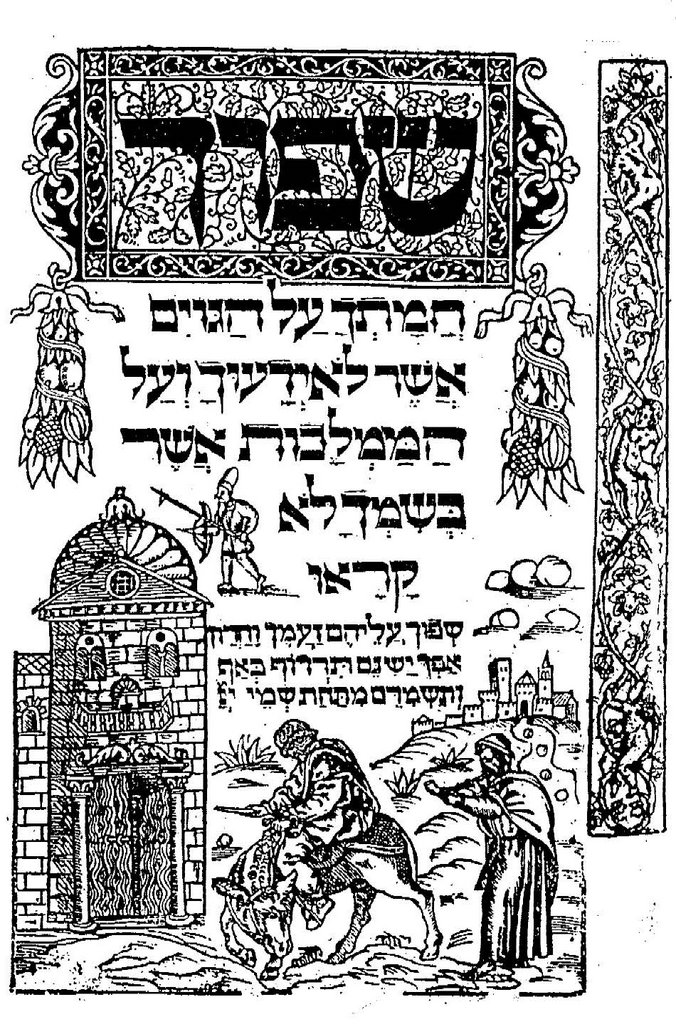
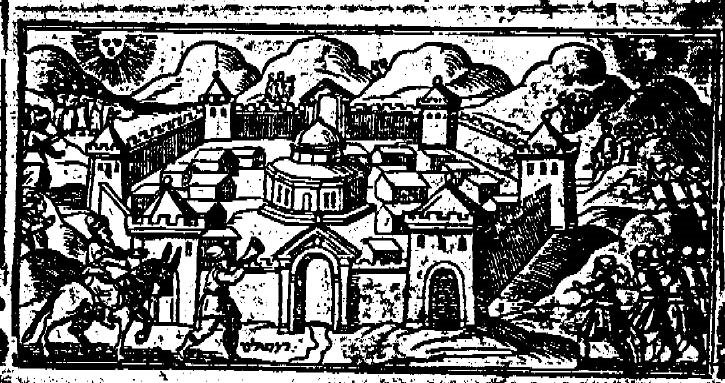
A rather interesting custom sprang up in connection with Eliyahu’s visit on Pesach night. R. Jousep Schammes (1604-1678), records that the custom in Worms was to draw depictions of Eliyahu and the Messiah in order to bring to life the belief in these figures. As you can see from the pictures on the side, this was common in the Haggadah. The first picture is a depiction of Messiah on his donkey. This was originally depicted in smaller format in the Prague 1526 haggadah, but in this edition, Mantua, 1560 is greatly enlarged. The second picture comes from the Venice 1629 hagaddah. As you can see it is again the Messiah coming in to Jerusalem, but note the prominence of the Dome of the Rock in the center.

In Frankfort they went one step further than just drawing Eliyahu and the Messiah. R. Yosef Jousep Hahn (1570-1637) says they used to hang a dummy who looked like Eliyahu or the Messiah behind the door. When they would open the door for Eliyahu the dummy would drop down and seem as if he had appeared. (He then goes on to record a long story of a dybuk who invaded the body of a women who questioned whether the Exodus happened.) It is worthwhile noting that not everyone was thrilled with these depictions. R. Yair Hayyim Bacharach (1639-1702) who became the Rabbi in Worms at the very end of his life, says these types of things only make a mockery of the seder.

However, we see from the above, that there was, at least among some, an effort to create a feeling that Eliyahu actually would visit the seder. Some did it through pictures, others through reenactments. Although today those have fallen to the wayside, it would seem the idea that Eliyahu actually drinks from the cup is a form of those methods.

Sources: Yerusalmi, Haggadah and History; Shmuel and Zev Safrai, Haggadah of the Sages, p 177-78. Minhagei Vermisai, p. פז; R. Y. Bacharach, Mekor Hayyim.


The “Holy Woman” in Jewish Literature

Any discussion regarding prostitution in Jewish literature starts with the various mentions in Tanach. Obviously, some are clearer than others, compare the case of Rachav with that of Tamar. But we will leave those comparisons for the readers of the Seforim blog who consider themselves biblical exegetes. Additionally, we will not focus on the Talmudic or overly legalistic discussions regarding prostitution. Instead, starting in Medieval times, we will attempt to document some of the mentions of prostitution and its effect, prevalence and general history amongst Jews.

Of late, much has been made of high governmental officials and their use of prostitutes. A striking parrall can be found in the writings of R. Yaakov Emden. R. Emden records that one of the parnasim, a representative of the Altona Jewish community, who went to Copenhagen for the inauguration of the king [Frederick III?] on behalf of the Altona Jews. While he was there, he squandered “thousands” from the community funds to engage prostitutes. Similarly, R. Emden relates that in Hamburg in 1764, after Kol Nidrei, a non-Jewish woman made a scene in shul claiming that her three children’s father was a Jew, and that he should take the children and support them.

Prostitution, much like today, appears to be a fascination of the public. It appears this is not a new phenomenon, instead, R. Hayyim Yosef David Azulai, in his travelogue Ma’agel Tov, records his impressions of Paris when he was there in 1777. [The Hida really liked Paris, and although this was not his first visit there, he still provides many interesting details.] He states:

Paris is a huge city, some 15 miles wide, with wide streets so wide that two carriages can pass each other even with people hanging on the sides, and the Seine river flows through Paris and that is where Parisians get their water. There is a bridge, the Pont Neuf, and this bridge is so busy that day or night there are always people on it . . . In fact the saying goes at any hour one can find on the Pont Neuf a white horse, a priest, and prostitute. The city of Paris is beautiful and one can find everything there, however, it is all expensive, the one exception being prostitutes – and it is known that there are 30,000 prostitutes that are available for anyone. That number does not include the thousands that are specialized for particular persons.

Throughout the middle ages, in the Iberian peninsula, there was a debate whether having prostitutes available was better on the whole. Two rationales were offered as a justification for prostitution. The first, that if people use prostitutes they won’t fall prey to adultery, a much more serious sin. And second, that there was in various times and places laws that punished by death Jewish and non-Jewish intercourse. Without Jewish prostitutes, Jews may violate that prohibition and be subject to death – typically burning. Thus, having Jewish prostitutes was allowed for the very pragmatic reason as a balance of harms, or the greater good, that is, it avoided these two other negative outcomes.

R. Yitzhak Arama famously decried these justifications. In explaining the sin of the people of Sedom, he put forth the notion that although individuals may sin, any time a community sanctions sins, that creates a much more serious communal crime. And that, he says, was why Sodom was unique in being utterly destroyed although there were numerous other instances of serious sin throughout Tanach that did not suffer the fate of Sodom. R. Armama then continues and applies the explanation for the destruction Sodom to his own times. He explains that for this reason he fought against those communities that sanctioned prostitution. While it may be correct that there is some way to justify prostitution, a community can never sanction illegal behavior. He offered that the ramifications of not having prostitutes was not to be considered, in no way could a community allow for such behavior. [This holding of R. Arama is used by many in many varied instances, see R. Ovadiah Yosef, Yabeah Omer, Orach Hayyim vol. 1, no. 30:15).]

R. Yitzhak ben Sheshet Perfet (Rivash) speaks of the “Gedoli Ha-Dor” who used the very rationale rejected by R. Arama to justify prostitution:

“The Gedolei Ha-Dor averted their eyes [from Jewish prostitution] based on the rationale that if we do not allow the sinners to utilize prostitutes they will sin with non-Jews and they will be subject to burning.”

Similarly, R. Yehuda ben Ha-Rosh received a similar query in that he was asked whether the position “of some people who say that they should force the prostitutes out of the Jewish area as they are in violation of the prohibition against kadasha and further they do not go to the mikveh thus causing people to be punished with karet, however, there are those who say that it is better to have the prostitutes remain in the city so that Jews will not resort to going to non-Jews thereby putting their lives in danger.” R. Yehuda responded, like R. Arama, that “the law does not follow ‘those who say’ and they should remove the prostitutes. A Latin document records a troubling incident from 1404 where, “a German speaking Jew visited a non-Jewish prostitute on Shabbat and he refused to pay her, he explained that he could not pay her as it would violate the Shabbat.”

Skipping ahead a few years to 1675, we come to the Takkanot of Frankfurt which states “that one is required to remove the prostitutes within six month from the Jewish area . . . And they cannot remain even as servants, even if they are kept for free. But, if the householder is willing to pay a two Reichthaller a week fine, then they can be kept, however, should they miss even a week’s payment then they must leave.” In Fuerth, a law was required to be enacted that single mothers could not circumcise their sons in the shul.

Finally, we turn to R. Yechezkel Landau, author of Shu”t Noda B’Yehuda, and although he is not discussing prostitution in general, but it is worthwhile to mention a specific case of Havah Bernstein, wife of the Chief Rabbi of Brody, R. Areyeh Leib Bernstein. According to the testimony of two people (and perhaps others), Havah was accused of acting as a prostitute. After this testimony came to light there was a celebrated controversy regarding the status of this woman vis-a-vis her husband. It appears, due to the Chief Rabbi’s powerful secular connections he was able to shut down any discussion about his wife (although there are several responsa on the topic). And specifically, there was a decree that anyone who called the Chief Rabbi’s wife a prostitute would be subject to a fine of 100 adumim for each statement to that effect. So, R. Landau showed up to court and made the following announcement:

“Everyone should know that the wife of the Chief Rabbi is a prostitute and there is a fine, 100 adumim for each utterace that she is a prostitute, and you should also all know that if I had more money I would call her a prostitute again, however I currently do not have the money I will have to satisfy myself with the fact that I have already called her a prostitute.”

Thus, R. Landau was able to call her a prostitute four times for the price of one. (Mofes Ha-Dor p. 9).

Sources: For the medieval sources see Grossman, Hassidut U-Morodot Jerusalem, 2003), 229-56 (see also where Grossman cites to those who question the truth of the Latin account and discusses other areas during the medieval period); R. Arama, Akedat Yitzhak, parshat Veyerah, Gate 20; Hida, Maagel Tov, p. 120; for the 16th and 17th sources, including R. Emden, see Azreil Shohet, Im Halufei Tekufot (Jerusalem, 1960), 166-73. For more on the Havah Bernstein incident, see David Katz, “A Case Study in the Formation of a Super-Rabbi: The Early Years of Rabbi Ezekiel Landau, 1713-1754,” (PhD dissertation, University of Maryland, 2004), 228-51; and Matthias Lehmann, “Levantinos and Other Jews: Reading H. Y. D. Azulai’s Travel Diary,” Jewish Social Studies 13:3 (Spring/Summer 2007): 1-34.


Women and the Recitation of Kaddish by Rahel Berkovits – A Review Essay (Hebrew with English Synopsis) by Yael Levine

Women and the Recitation of Kaddish – A Review Essay

Rahel Berkovits, A Daughter’s Recitation of Mourner’s Kaddish, New York: JOFA 2011, 102 pp.

By Yael Levine

The author holds a Ph.D. from the Talmud department at Bar Ilan University. She is the author of numerous articles related to women in Judaism.
Rahel Berkovits has written a work about the recitation of kaddish by daughters and women generally. The main texts appear in Hebrew alongside an English translation. The publication was issued by JOFA.
The topic itself is of notable interest, and Berkovits attempts to deal with the issues at hand. Her main purpose is to show that the recitation of kaddish by women is permissible, and that this is the opinion of the American rabbis (“Rabbanei Artzot Ha-Brit”).
However, essential problems may be detected with the analysis presented in this work. Even if there is a basis for the opinions permitting women to recite kaddish, the author does not provide an objective discussion of the sources. She shows a clear preference towards those sources which permit women to recite kaddish, and belittles the opposing sources. Berkovits mainly presents those opinions which permit women to recite kaddish, and writes that these opinions are the majority opinion (p. 85). However, this assertion is incorrect. There is a large pool of sources on the topic, to which the author preferred not to relate.
The first and classic responsum on the topic was written by R. Yair Hayyim Bacharach in Havvot Yair. The author based herself on the text in the Bar Ilan responsa project, which contains several corruptions, and didn’t corroborate the text with the book itself. There is an overt mistake concerning her discussion of “Sefer Ha-Hayyim”, and other mistakes are prevalent within the publication. Berkowits failed to list among the early sources two important texts. This work by Berkovits was not worthy of publication in its present state, not even for the use of women. Women also have the right to publish Divrei Torah, but Divrei Torah that are devoid of any error.
מונחת עתה באמתחתנו חוברת המבקשת להציג ולנתח את המקורות העיקריים בנושא אמירת קדיש על ידי הבת והאישה. החיבור נכתב בידי רחל ברקוביץ, שמלמדת במכון פרדס בירושלים. הוא כתוב אנגלית והטכסטים הראשיים מופיעים בעברית לצד תרגום אנגלי. ציטוטים שונים בעברית מופיעים גם במסגרת הערות השוליים, אם כי מרביתם אינם מתורגמים. הפרסום מונה תשעים-ושלושה עמודים ממוספרים, אולם בשל הופעת מקורות רבים בתבנית דו-לשונית, מדובר בכמות מצומצמת יותר של חומר.
החוברת יצאה בהוצאת ארגון הנשים האורתודוקסי-פמיניסטי JOFA בניו יורק. היא התפרסמה תחילה במהדורה ניסויית שהושקה בשלהי הקיץ האחרון, ובמסגרת זו קיימה המחברת סדרת שיעורים המיוסדים על הנכתב בו. מלבד זאת, ארגון JOFA הכשיר נשים אחדות להורות את החומר במוקדים שונים ברחבי ארה”ב.
בחוברת שפרסמה ברקוביץ מצוי ניסיון להתמודד עם הנושא של אמירת קדיש בידי הבת והאישה. וכך נפרסת תחילה שורת מקורות בדבר המנהגים השונים הקשורים באמירת קדיש יתום. לאחר מכן מתקיים דיון במקורות המוקדמים בנושא, החל משו”ת חות יאיר, ולאחריו מובאים מקורות מאת אחרונים מאוחרים יותר. בהמשך נידונים עמדותיהם של פוסקי ארץ ישראל מראשית המאה העשרים ועד לזמננו, והחלק האחרון נדרש לפסיקת רבני ארה”ב במחצית השנייה של המאה העשרים. המגמה והמתכונת המרכזיות הן החתירה להראות שאמירת קדיש בידי נשים מותרת וכי זו היא פסיקת רבני ארה”ב.
לצד העניין המתגלה בנושא גופו, ניכרת בפרסום זה בעייתיות מסוגים שונים, בכלל זה בעניינים מהותיים ועקרוניים. נקודה עקרונית היא שהמקורות המדברים בשבח אמירת קדיש בידי נשים מועמדים במרכז, ומקורות סמכותיים שהם חוליות מרכזיות בשלשלת המקורות מופיעים בהערות שוליים משום שהמחברים הביעו בהם השקפה המתנגדת לאמירת קדיש. המקורות מסוג זה מובאים בגוף החיבור בעיקר כשהם נחוצים להבנת המקורות בשבח אמירת קדיש, כגון שהמקורות המתירים מצטטים אותם, או שמצויה בהם התייחסות לדעות המתירות.
בקטע הבא מחקתי את מספר העמוד, כי הרעיון מבוטא גם בעוד מקומות:
יתרה מכך, ברקוביץ עצמה מציינת כי הדעות המתירות הן בחזקת דעת הרוב (עמ’ 85). ברם, קביעה זו אינה נכונה בעליל. קיים מאגר גדול של מקורות האוסרים אמירת קדיש בידי הבת או האישה, עד לימינו, אולם ברקוביץ כמעט ולא הביאתם וגם הפחיתה מֵעֶרְכָּם. וכך התמונה המצטיירת בלתי מאוזנת, ואינה משקפת את פני הדברים לאשורם. גם אם יש מקום לצדד בעמדה המתירה אמירת קדיש לנשים בזמננו, עדיין קיימת חובה לנהל דיונים נכונים ואמיתיים במקורות, ללא הטייתם וללא משוא פנים.
שו”ת חות יאיר

התשובה הקלאסית בנושא נשים ואמירת קדיש מופיעה בשו”ת חות יאיר לרב יאיר חיים בכרך (שצ”ח-תס”ב; 1638-1702). בתשובה זו נדון מקרה שהתרחש באמשטרדם באדם אשר הורה קודם הסתלקותו כי בתו הקטנה תאמר אחריו קדיש במניין שהיה אמור להתקיים בביתו. רבני הקהילה לא מיחו כנגד אמירת הקדיש בידי הבת. אולם המחבר עצמו הביע את הסתייגותו מנוהג זה. הוא מציין כי אף שאישה מצווה על קידוש ה’ והגם שמצד הסברא קיים מקום לומר שגם הבת גורמת נחת רוח לאביה באמירת קדיש, אם כל אחד יבנה במה לעצמו על פי סברתו יש לחוש להיחלשות כוח המנהגים, ודברי חכמים ייראו כחוכא ואיטלולא. על תשובה זו נסמכו ונסמכים פוסקים מאוחרים יותר בדיוניהם בנושא, הן לקולא והן לחומרה.
והנה, בחיבורה של ברקוביץ מצויה טעות בולטת למדי בנוסח ה”חות יאיר”. חיבור זה התפרסם בשלוש מהדורות, לראשונה בפרנקפורט דמיין בשנת תנ”ט (1699), בשנייה בלמברג תרנ”ו (1896), ובשלישית ברמת גן בשנת תשנ”ז ובמהדורה מעודכנת בשנת תש”ס. נודעים שינויים שונים בין נוסחי המהדורה הראשונה והשנייה, ובמהדורה האחרונה נפתחו ראשי התיבות. ברקוביץ לא ציינה באיזו מבין המהדורות הסתייעה. השינוי המשמעותי בגרסת הטכסט כהבאתה אצל ברקוביץ הוא הנוסח “ומחזי מילי דרבנן כחוכא ואטלול’ ויבואו לגלגל בו”, חלף הגרסה “לזלזל” המצויה בדפוסים. והנה, הגרסה שהביאה ברקוביץ נמצאת בפרויקט השו”ת. עיון ברשימת הספרים שעליה מתבסס מפעל זה מלמד שנעשה שימוש במהדורת למברג. בנוסח התשובה בפרויקט השו”ת קיים שיבוש נוסף בהשוואה למקור; הנוסח בנדפס הנו “שהוא תקחז”ל [=תקנת חז”ל] כנזכר”, והגרסה בפרויקט השו”ת היא “ונזכר” .וישנם שינויים אחדים נוספים. בנוסח התשובה בפרויקט השו”ת מצויים אפוא שיבושים אחדים בהשוואה למקור. ברקוביץ עצמה מביאה חלקים נבחרים מהתשובה בלבד. מחד גיסא, הקטע השני אינו נכלל, אולם הגהת גרסת הטכסט שהיא מביאה מעלה שהיא מיוסדת על למברג ווארשה. אם כן, מתברר שברקוביץ נשענה על גרסת התשובה כהווייתה במאגר הנזכר, ולא ערכה כלל הגהה עם הנוסח המודפס.
אין זה המקום להרחיב את היריעה בדבר מצב הגרסאות במאגרים הממוחשבים השונים. גם אם חלו טעויות אחדות בנוסחי טכסטים שונים בפרויקט השו”ת, עדיין מושתתת על המחבר החובה הגמורה לבדוק את הנוסחאות בספרים גופם. באשר לתקליטור התורני DBS, אפשר להזכיר כי הבעלים מקפידים על זכויות יוצרים, ולאור מדיניותם זו הם עצמם הכניסו במודע טעויות שונות שבאמצעותן יהיה אפשר להכיר שאדם העתיק חלקי יצירות או ספרים שלמים. למיטב ידיעתי אין מדיניות דומה בפרויקט השו”ת, הגם שהמקרה הנוכחי מורה שאם מצויות טעויות כלשהן בנוסחי מקורות, אף בשגגה, צריך למצוא את הדרך להגיה את כלל הטכסטים. אולם בבוא אדם לפרסם ספר, על המחבר רובצת האחריות להגיש חיבור בעל תכנים נכונים, המנוקה מכל טעות, כשם שקיימת חובה הלכתית ומוסרית על מורים ללמד בצורה נכונה ובלא שגיאות. בהנחה שברקוביץ הורתה את התשובה המדוברת בפורומים שונים קודם פרסום החוברת ולאחריו, הרי שנלמדו לכל אורך הדרך דברים שגויים. אין זו הבמה לדון בשימוש שעשו אחרים בנוסח השגוי.
נקודה זו בדבר החובה לאשש גרסאות בתוך הספרים עצמם, איננה דבר חיצוני בלבד, אלא עניין מהותי. גם כשמדובר בפרסום לא מדעי, יש תנאי סף מינימליים. כל עוד אין בירור והעמדה נכונה של גרסאות, אין אפשרות לקיים דיון ראוי בנושא העומד על הפרק, והעדרו של תנאי בסיסי זה מעיב על מהימנות הפרויקט כולו. כמה צדקו גדולי ישראל שהורונו ש”אותיות מחכימות”, כי עיון בספר עצמו הנו הכרח. ענייננו צורם ביותר נוכח העובדה ששתי המהדורות הראשונות של ה”חות יאיר” נגישות, בהיותן מוצבות באתר “היברו בוקס”. אולם המחברת לא טרחה לכל אורך הספר למסור מידע לגבי מהדורות החיבורים שבהם הסתייעה – או לא הסתייעה.
לו היה מדובר במקרה בודד ויחידאי במהלך החיבור, אזי החרשתי. אולם הבעייתיות בהצבת נוסחי המקורות אינה שמורה למקור המרכזי של ה”חות יאיר”, אלא מצויה במקומות נוספים ברחבי החוברת. בנוסף, המחברת נהגה לפתוח בסוגריים את ראשי התיבות המובאים במקורות. בשו”ת חות יאיר מצויה טעות בפתיחת אחד מהם; הצורה “והנלפענ”ד” שמשמעה “והנראה לפי עניות דעתי”, פוענחה אצל ברקוביץ בתור “והנה לפי עניות דעתי”.
מקורות מוקדמים
ברקוביץ מקדישה הערת שוליים בחומר הנוגע לשו”ת חות יאיר להתייחסותו של הרב שמעון פרנקפורט (שצ”ד-תע”ג; 1634-1712) בחיבורו “ספר החיים” לאמירת קדיש בידי הבת, שבו התנגד בנחרצות לתופעה. חיבור זה התפרסם בשנת תס”ג (1703), שנים אחדות לאחר ה”חות יאיר”. ברקוביץ מביאה בין היתר את עמדתו המתנגדת לאמירת קדיש בידי הבת: “כי אין לבת בקדיש לא דין ולא דת ואין זה אלא שטות חסידי’ אף שיש לו לשון למודים כי הוא כחוכה וטלולא” (כך במקור). בהערת שוליים המופיעה מעט קודם לכן, מציינת ברקוביץ חלק מהידרשותו של “בית לחם יהודה”, אחד מנושאי כלי השולחן ערוך, ל”חות יאיר”: “ואין לבת בקדיש לא דין ודת ואין זה אלא שטות, כי הוא כחוכא ואיטלולא”. אולם המעיין ב”בית לחם יהודה” נוכח שדבריו אלה הם ציטוט מ”ספר החיים”, וניכרים שינויי נוסח אחדים בהשוואה למקור. בפתיחת הקטע ב”בית לחם יהודה” נדונו דברי ה”חות יאיר”, אולם בהמשך עבר המחבר לצטט מ”ספר החיים”. מצב עניינים כזה של הנחלת טעויות, שֶׁתֵּאַרְנוּ עד כה את מקצתו, הוא בבחינת בכייה לדורות.
לגופו של עניין, ההתייחסות לאמירת קדיש בידי הבת ב”ספר החיים” היא בעלת חשיבות מרובה משום שהמחבר התגורר באמשטרדם, והיה רבה של “חברה קדישא” בעיר. והרי במקום זה התרחש המעשה המתואר ב”חות יאיר”, שממנו משתמע כי רבני אותה הקהילה לא מיחו בידי הבת. אולם מדברי “ספר החיים” עולה שהיו התנגדויות לאמירת קדיש בידי הבת בתוככי העיר, אף כי אין בידינו האפשרות לקבוע בבטחה שדבריו מתייחסים לאותו המקרה. מכל מקום, אין סייג מפורש המתייחס למניין בבית בלבד, ואפשר שהמחבר נדרש לתופעה הכללית. אין גם להוציא מכלל אפשרות שדבריו נכתבו על רקע היכרותו עם ה”חות יאיר”. השקפה דומה מובעת בחיבור נוסף פרי עטו של הרב שמעון פרנקפורט, ספר יתנו, שרובו ספון בכתב יד. אם כן, הידרשותו של בעל “ספר החיים” היא חוליה חשובה בשלשלת המקורות הקדומים בדבר אמירת קדיש בידי הבת. אין מקומה בהערת שוליים, אלא ראוי היה לכוללה בין המקורות הראשיים ולא לדוחקה לקרן זווית, גם אם הפסיקה אינה עֲרֵבָה.
לאחר הדיון הראשי בשו”ת חות יאיר, ברקוביץ מסתייעת במקורות מוקדמים אחדים נוספים. המקור הבא הנדון בגוף החיבור הוא שו”ת שבות יעקב לרב יעקב ריישר (ת”ך-תצ”ג; 1660-1733), שנדפס בשנת תע”ט (1719). המחבר התיר, במקרה המתייחס לקהילת גריינזך, לבת קטנה בת ארבע לומר קדיש במניין שנערך בבית. לאחר מכן דנה המחברת בשו”ת כנסת יחזקאל לרב יחזקאל קצנלבויגן (תכ”ח או תכ”ט–תק”ט; 1667 או 1668–1749), שראה אור בשנת תצ”ב (1732), ובו מגלה המחבר התנגדות לאמירת קדיש בידי בת קטנה אפילו במניין הנערך בבית. מקור זה הובא משום שהוא מסתמך על דעתו האוסרת של ה”חות יאיר”. במהלך דיונה המחברת מעלה את ההשערה שהמחבר לא ראה את ה”חות יאיר” עצמו, וזאת כדי לומר כי היה פוסק אחרת לו הטיעונים להיתר היו מונחים לנגד עיניו. אולם אין הדברים מוכרחים כלל.
והנה, חיוני להזכיר כי נעדר מחיבורה של ברקוביץ מקור המהווה חוליה חשובה בשלשלת המקורות המוקדמים והמכוננים. הכוונה לקטע ב”נוהג כצאן יוסף” לר’ יוסף יוזפא קאשמן, שיצא לאור בדפוס בשנת תע”ח (1717), המופיע בהלכות אבלות. ר’ יוסף יוזפא פותח את הידרשותו לעניין בכותבו כי בספרו “דבר שמואל” לרב שמואל אבוהב (ש”ע-תנ”ד; 1610-1694) מציין המחבר שאין דעתו נוחה מכך שיתומים קטנים אומרים קדיש וברכו. בהקשר זה מתייחס ר’ יוסף יוזפא לנוהג שהיה מצוי בקהילות אחדות, “באיזו מקומות” כלשונו, לפיו מי שמת בלא בנים, בנותיו הקטנות הולכות לבית הכנסת לומר קדיש. יוער שהמחבר אינו כותב אם הן שהו בעזרת הנשים או הגברים. המחבר מציין בְּקוֹרַת רוח כי מנהג זה לא היה קיים בפרנקפורט דמיין. החשיבות הטמונה בדברי “נוהג כצאן יוסף” היא גם בעובדה שאנו שומעים כי במקומות שונים אמרו בנות קטנות קדיש בבית הכנסת גופו.
ברקוביץ מתייחסת במהלך דבריה לשלושת המקורות הקדומים בנושא אמירת קדיש בידי נשים כשו”ת חות יאיר, שבות יעקב וכנסת יחזקאל (עמ’ 84). אולם קביעה זו אינה למעשה נכונה. לפי שיטתנו יש למנות חמישה מקורות מוקדמים: חות יאיר, שיצא לאור בדפוס בשנת 1699; ספר החיים, שהתפרסם בשנת 1703, וספר יתנו; נוהג כצאן יוסף, שנדפס בשנת 1717; שבות יעקב, שנדפס בשנת 1719; וכנסת יחזקאל, שראה אור בשנת 1732. חשוב גם לאזכר בנוגע למקורות המוקדמים שאין לנו ידיעות בדבר מועדי כתיבתם או התרחשות המאורעות המתוארים בהם, ועלינו להסתמך על תאריכי פרסום החיבורים.
נקודה הראויה לציון קשורה לדבריו של הרב אליעזר זלמן גרייבסקי בחיבורו “קדיש לעלם”, שבו הוא מגלה דעה המתירה לבנות לומר קדיש. המקור הזה זוכה למקום של כבוד בגוף חיבורה של ברקוביץ. אולם נפרסת כאן תמונה חלקית בלבד שכן הרב גרייבסקי עצמו מוסר שהוא הראה את דבריו לרב שלמה אהרן וורטהיימר, רב נודע וחוקר יהדות דגול. הרב וורטהיימר חלק בנקודות מסוימות על הרב גרייבסקי, והלה פרסם את דבריו ב”קדיש לעלם” עצמו. עוד ראוי להעיר כי ברקוביץ מזכירה את המעשה ברבי עקיבא ששימש יסוד לאמירת קדיש יתום ומביאה אחדות מהמקבילות. המעשה הזה זכה למחקרים חשובים, אולם בשנים האחרונים זכה למחקרה החשוב ביותר של פרופ’ רלה קושלבסקי, “התנא והמת הנודד”, ב”אינציקלופדיה של הסיפור החסידי”, מחקר שאינו זוכה להתייחסות. מבין הטעויות הטכניות בספר אפשר להזכיר עוד כי ישנה טעות כתיב בשמה של הרבנית ציפורה הוטנר, שאמרה קדיש על אביה בשעה שאחיה לא היו בביתם, וכן שמו של החוקר טוביה פרשל נכתב באנגלית בצורה שגויה לגמרי.
רבני ארה”ב
כאמור, ברקוביץ מקדישה יחידה להעלאת דעותיהם של רבני ארה”ב כלפי סוגיית אמירת קדיש בידי נשים, דעות המשקפות עמדה מתירה. הרבנים שדעותיהם מוזכרות הם בעיקרם הרב יוסף אליהו הנקין, הרב יהודה הרצל הנקין, הרב יוסף דב סולובייצ’יק, הרב אהרן סולובייצ’יק והרב משה פיינשטיין. בדורנו זוכות הדעות המתירות להבלטה בקרב הציבור האורתודוקסי. גם אם יש מקום לסבור שיש ממש בטיעוני המתירים, המקורות הללו אינם משקפים את התמונה כולה, לא בארה”ב ולא בארץ. הפסיקה המתירה אינה נחלת כלל הרבנים האורתודוקסיים, וכן הציבור החרדי מוסיף בעיקרו לדבוק בגישה האוסרת, אולם פסיקה זו כמעט ולא הובאה אצל ברקוביץ והיא גם זכתה להמעטת ערכה. וכך נוצר הרושם השגוי שהדעות המתירות לנשים לומר קדיש – הן כיום העמדה ההלכתית השלטת.
בהקשר לדעתם של רבני ארה”ב חיוני להעיר נקודות אחדות. הרב יוסף אליהו הנקין כתב תשובה פרטית בנושא הנדון בשנת תש”ז, תשובה שנדפסה בכתביו לראשונה בשנת תשמ”ט. לתשובה זו לא נודעו מהלכים רבים בפועל; היא לא פורסמה בשעתה, והעדות היחידה כמעט לגביה – אפשר שנשתמרה באזכור קצר בשו”ת משנת בנימין. הרב הנקין פרסם בשנת תשכ”ג בכתב העת הפרדס תשובה מנומקת בנושא. היא נדפסה אף היא מחדש בשנת תשמ”ט, אם כי אוזכרה במקורות משניים, בין היתר ב”ספר הקדיש” לרב דוד אסף, שיצא לאור בשנת תשכ”ו. תשובה זו לא הביאה בזמן אמת להתחוללות של שינוי המוני שבעקבותיו נהרו נשים לומר קדיש, אף לא בציבור האורתודוקסי.
המקורות הקשורים לרב יוסף דב סולובייצ’יק הם עדויות שבעל פה משנות השישים ואילך, בעקבות מקרים ספציפיים שעליהם נשאל. הרב התיר לנשים לומר קדיש, בין היתר בעקבות מקרה שראה בווילנה של אמירת קדיש בידי בת, נוהג שהתברר לרב שהיה מנהג המקום. הרב לא ערך בפסיקתו הבחנה בין בת לבין אישה. בתשובה מאת הרב משה פיינשטיין משנת תשמ”ב, שהתפרסמה בשנת תשנ”ו, מוזכרת אגב אורחא העובדה כי באירופה אירע לפרקים שאישה אבלה נכנסה לבית המדרש לומר קדיש. הרב פיינשטיין מתעד נוהג זה, ואינו מגלה כלפיה התנגדות. פרופ’ יהודה אייזנברג ציין שישנן עדויות אחדות בדבר נשים שאמרו קדיש בבית הכנסת של הרב, אם כי לא פֵּרֵט. והנה, אפשר להביא מקור כתוב שאינו כה מוכר, שהתפרסם בשנת תשס”ז בספר “רָחַשׁ לִבִּי” לרב שמואל מנחם סרלואי. המחבר מציין שהרב פרופ’ זאב לב אמר לו שבהזדמנות אחת “הגאון רבי משה פיינשטיין זצ”ל השתיק את הקהל ואמר להם להקשיב ולענות על אמירת קדיש שאמרה בת בעזרת הנשים”. מועד התרחשות המעשה לא נזכר, ולא נאמר אם מדובר בבת קטנה או גדולה.
הנקודה המשמעותית הקשורה לדיוננו היא שגם אם החלו נשמעות דעות מתירות אחדות בקרב רבני ארה”ב, עד אמצע שנות השבעים של המאה העשרים לא הייתה נהירה מצד נשים אורתודוקסיות גופן לומר קדיש, והתופעה היתה מצומצמת בהיקפה. רק עם התגברות גלי הפמיניזם בשנות השבעים, החלו הדעות הללו לצבור תנופה והן מצאו לעצמן עדנה. לחלופין, הן הביאו בעקבותיהן להידרשויות נוספות לנושא; אלה של הרב יהודה הרצל הנקין ושל הרב אהרן סולובייצ’יק, שדעתו המתירה נובעת מפורשות מהחשש להרחקתן של נשים אורתודוקסיות אל עבר הזרמים האחרים. הפמיניזם האורתודוקסי בראשיתו הוא שניכס לעצמו מקורות המתירים לנשים לומר קדיש, ובכלל זה דעותיהם של הרב יוסף אליהו הנקין ושל הרב יוסף דב סולובייצ’יק, שהשפעתן בפועל עד לאותה עת היתה קטנה.
החיבור מאת רחל ברקוביץ על אמירת קדיש בידי נשים לא היה ראוי להתפרסם במצבו הנוכחי, מצב שאינו ראוי אפילו לעיונן של נשים. אולם משפורסם באופן שטעויות יכולות להכות שורשים בציבור המעיין בו, מוטב לגונזו עד שאפשר להוציא מוצר שיהיה קב ונקי. הבעייתיות שהצבעתי עליה מעמידה בסימן שאלה את האפשרות להסתייע בו כמקור אמין ומהימן. גם לנשים יש זכות לפרסם דברי תורה, אולם דברי תורה שאין בהם רבב.
© כל הזכויות שמורות למחברת


Aaron the Jewish Bishop

Aaron the Jewish Bishop

The exodus from Egypt was led by Moses and Aaron. Moses, however, does not appear in the Passover haggadah (with one exception that is likely a later interpolation).[1] Aaron does make two appearances in the hallel section.  That said, in numerous illuminated haggadahs, from the medieval period to present, both appear in illustrated form. Additionally, in printed haggadot, most notably the 1609 Venice haggadah, one of the seminal illustrated haggadot, Moses and Aaron appear on the decorative border.

Generally, conclusively determining Jewish material culture, especially from the biblical period, is nearly impossible.  Regarding Moses, other than his staff, the bible provides no additional information.[2]  Aaron is a different story.

The Torah expends a significant amount of verses discussing the details of the Kohen Gadol’s (the high priest) garments but while the descriptions are detailed, we still struggle to determine what these special clothes looked like.  Rashi, for example, has to resort to anachronistic parallels for the “me’il” comparing it to a medieval French equestrian pant.  Similarly, by the Talmudic time, the details of the headband were subject to dispute. We should briefly pause here to correct a common misconception – that the Vatican or the Catholic Church still retains items related to the Jewish temple.  Unfortunately, this misconception is so prevalent, that a number of Israeli officials have requested that the Vatican repatriate the temple vessels.  Briefly, while the Talmud mentions that sometime between the 2nd and 5th centuries, temple vessels may have resided in Rome, there is no indication whatsoever of them since the 5th century. In addition, due to the numerous sackings that Rome underwent, or the reality that the Catholic Church is an entirely different sovereign than the Roman ruler Vespasian who sacked Jerusalem, it must be regarded as highly unlikely at best that any former temple vessels remain (assuming they were ever there) within the Vatican. For additional discussion regarding this issue, see here.
The ambiguity about the clothing has not stopped many from attempting to depict what they believe is the correct version.  Thus, depictions of Aaron the High Priest appear in Hebrew books. Hebrew manuscripts did not shy away from including illuminations and illustrations to create a more aesthetically pleasing product.  All sorts of shapes and images are employed to this end, on page borders, end pages, or just sprinkled throughout a manuscripts and – geometric patterns (Hebrew manuscripts are the first to use micrography), animals, people or combinations thereof of half-human-half-beast.  Noticeably, however, biblical figures are not included in this category. While biblical scenes appear in Hebrew manuscripts it is only to actually illustrate the content, and not independently for aesthetic purposes.
With printing, however, this slowly changed. Printing began in 1455 with Gutenberg and Hebrew books followed soon after.  These early books, however, did not follow all the conventions that we associate with books today.  Title pages did not begin until the 16th century and it wasn’t until the early 17th century that title pages were de rigueur.  Apart from information relevant to the books contents, title pages also began to included aesthetic details.  Sometimes these are architectural, pillars etc. other times flowers or some other flower or fauna.
Generally, printers did not explain why certain images were included on title pages, the assumption is that it was simply for aesthetic purposes.  At least in one case, this was made explicit.  The Shu’’t Ma-harit”z, Venice, 1684, by Yom Tov Tzalahon, includes an illustration of the temple on the title page.  The publisher, Tzalahon’s grandson, provides that this was included as “it makes it more beautiful” and he was so enamored with the illustration – even though it is very rudimentary he included it three times in the book (this likely speaks more about the publisher’s exposure – or lack thereof – to art in general).[3]
There are, however, at least a few examples of a title page illustration serving a purpose beyond the aesthetic. Some illustrations are including because of allusions to the author’s name, but at least in one instance a Hebrew title page illustration was used to illustrate the title.
The most common form appearing “on the frontispiece of countless printed books,” were biblical figures Moses, Aaron, David, Solomon, nearly always coupled, and “became the accepted heraldic figures.”[4]  The first biblical figures to appear in Hebrew books were was a woodcut by Hans Holbein of David and Solomon, flanking one, among other biblical scenes, in the Augsburg 1540 Arba’ah Turim. This illustration, however, did not appear on the title page, which is plain, instead it appears on folio 7.[5]  See Heller, 242-43.
The first frontispiece to include a biblical figure is the Tur Orach Hayyim, Prague, 1540, that includes, at the top of the page, a depiction of Moses holding the tablets.[6] The first frontispiece to include the coupling of biblical figures – the most ubiquitous form of biblical figures – is Jacob Moelin’s She’elot u-Teshuvot Mahril printed in Hanau in 1610. That frontispiece depicts Moses on the left in one hand the tablets and the other hand he grasps his staff.  Aaron is wearing the garments of the high priest:  the tunic, bells, breastplate and and is carrying the incense.
 
The usage of Moses and Aaron on Hebrew frontispieces thus began with Hanau, 1610.  By way of comparison, the first appearance of Moses and Aaron on the frontispiece of a book in English was the King James Bible, published a year after Hanau in 1611. The Hanau printer reused the Moses/Aaron frontispiece on two more books:  Nishmat Adam by Aaron Samuel ben Moshe Shalom of Kremenets, 1611 and Joseph ben Abraham Gikatilla’s, Ginat Egoz, Hanau 1615.[7]  The illustration best fits the Nishmat Adam, and may have originally been the book for which this illustration was intended and not Molin’s.  Unlike Jacob Molin’s work that has no direct connection with Aaron or Moses, the author of Ginat Egoz’s name includes both Moses and Aaron, and while Samuel is not captured in the illustration, the year of publication is derived from “Samuel.”
Moses and Aaron became the most common biblical figures on frontispieces, but not the exclusive ones.  In some instance, a mélange of biblical figures is presented.  The Amsterdam printer, Solomon Proops, included the image of Moses, Aaron, David, and Solomon, each wearing a crown, and a Moses carrying not the tablets but instead the Torah scroll.

A deviation from the coupling of Moses and Aaron appears in Beit Aharon, Frankfurt am Oder, 1690, which displays Aaron and Samuel.  In that instance, however, the deviation is explained because the figures are allusions to the author’s name, Aaron ben Samuel.  The use of coupled figures was not exclusive to Biblical figures; in many Hebrew books a variety of mythical and pagan figures and scenes are commonplace on title pages.  A partial list of pagan deities include:  Venus, Hercules, Mars and Minerva that appear on ennobled works such as Rambam’s Mishne Torah, Venice 1574, and Abarabenel’s commentary on Devarim, Sabbioneta 1551, and were reused many times.[8]  The use of pagan figures in Jewish items is not limited to Hebrew books and these images appear on the Second Temple menorah, and the Dionysus, Poseidon are inscribed on Palestinian mezuzotSefer Raziel mentions Zeus and Aphrodite, Dionysus and Poseidon reappears in a common prayer said during the priestly blessings, and Dionysus appears individually in the additionally yehi ratzon that some recite during Aveinu Malkanu (helpfully Artscroll and other siddurim direct that for the prayers that include these names, they should “only be scanned with the eyes and concentrated upon, but should not be spoken,” as they are “divine names”).[9]
Returning to the use of Moses and Aaron on frontispieces of Hebrew books, as mentioned above, the basic form of the illustrations remained fairly static with Moses appearing with his staff and/or the tablets or the Torah and Aaron in his priestly clothing.  And, these are prevalent throughout the 17th century, across the Europe and the Middle East.  In Europe the coupling appears in Altona, Amsterdam, Venice, Furth and Izmir, on diverse works – Talmudic commentaries, Mendelssohn’s commentary to the bible, and a commentary on the zemirot (which includes a heliocentric depiction of the constellations).  

A slightly different version appears in the Ma’ashe Rokeakh that has Aaron holding a slaughter knife.

There is, however, one notable exception to this depiction both in terms of the items displayed in addition to the “coupling.”  Aaron ben Hayyim Perachia’s Perekh Matteh Aaron, published in Amsterdam, 1703, includes a coupling but rather than Moses and Aaron, in this instance both images are that of Aaron.  Additionally, the Aaron on the left is the standard depiction of items, but the one on right is distinct in that it has Aaron holding a budding almond branch – perach mateh Aaron.  Of course, these deviations are understandable as the “second” Aaron and his unique “staff” is not merely aesthetic but is illustrative of the title of the book, the first time an title page illustration illustrates the title.[10]

 
A final note regarding the frontispiece depictions of two items Aaron’s clothing.  First, in many instances, including the Hanau prints, Aaron’s hat is not the traditional wrapping or turban associated with the mitznefet, but a bishop’s mitre.  At times, the mitre is horned, for example, Zohar, Amsterdam, 1706.  The horned mitre, however, is based upon “the mistaken belief that the horned mitre descended from the Jewish high priest” when in reality the bishop’s mitre is related to “Moses’ horns and their symbolic meaning within the context of the medieval Church.”[11]
The frontispiece is not the only time that the kohen’s headgear is interpreted contrary to Jewish tradition.  In a recent illustrated edition of Mishna Tamid, the editors depict the Kohen not only wearing the turban but also a yarmulke.  The Torah enumerates the priestly garments and any addition to those items is subject to the death penalty.  Thus, a Kohen wearing a yarmulke – as illustrated and that is not included in the Torah’s description of the Kohen’s outfit – commits a capital crime.[12] Here is another example of Aaron, looking very much like a bishop. This illustration is from a 15th century manuscript called המשכן וכליו by Simon ben Joel.

Unlike Aaron’s head-covering that appears from time to time as a bishop’s mitre, the second odd item that Aaron carries appears almost universally. Specifically, Aaron holds the incense in his hand, but unlike the Rabbinic interpretation that the incense was delivered in a shovel, Aaron is always depicted with the incense in a ball or  censer.  There is no Jewish source that records that form of the incense ritual and is an exclusive non-Jewish understanding of the Torah.
Ironically, the only person to take issue with the depiction of Moses and Aaron (and other biblical figures) argues against their use does not raise these issues nevertheless counsels against these biblical depictions.  His rationale, however, is counter-factual.  Specifically, Samuel Aboab, decries the depiction of biblical figures because the depictions are anachronistic and but for non-Jewish influences would never have been included in Jewish items.
While there is no doubt that some elements of the depictions are non-traditional, since at least the second century, biblical figures are found in a variety of Jewish contexts.  For example, the second century synagogue of Dura Europos and a few years later at the Bet Alpha synagogue contain biblical images. Dura Europos contains numerous illustrations of biblical figures and scenes, including Moses and Aaron.  And, while Abaob is correct that both Moses and Aaron are depicted anachronistically – in typical clothing of that time period, a toga-like garment – this is simply explained by the fact the purpose of the illustrations was to remind the viewers of the people and stories.  Therefore, had Aaron “been depicted with the biblical clothing that were no longer in use, the viewer might not know what they are looking at.”[13]  Thus, the anachronisms are not to make these seminal biblical figures in our image, but to simply ensure that the art clearly transmit its message.

[1] David Henshke, “The Lord Brought Us Forth from Egypt: On the Absence of Moses in the Passover Haggadah,” AJS Review, Vol. 31, No. 1 (Apr., 2007), pp. 61-73.
[2] The lack of information has not stopped the theorizing as to Moses’ visage.  The most notable example is R. Yisrael Lipschutz’s comments at the end of Kiddushin.  See Shnayer Z. Leiman, “R. Israel Lipschutz and the Portrait of Moses Controversy,” in Isadore Twersky, ed., Danzig, Between East and West: Aspects of Modern Jewish History (Cambridge, Mass., 1985), pp. 51-63, and for a different version, “R. Israel Lipschutz: The Portrait of Moses,” Tradition 24:4 (Summer 1989): pp. 91-98 (available here). See also the important chapter on this subject in R’ Shmuel Ashkenazi, Alpha Beita Kadmeysuh, Jerusalem:2000, pp. 337-371. For additional sources on this story see R’ Dov Turish in his various works; Maznei Tzedek, p.149, 310; Ginzei Ha-Melech, p. 38, 40, 43,48, 56; MiArat haMchpeilah, p. 101 and onwards.
[3] Shmuel Glick, Kuntress ha-Teshuvot he-Hadash, Schechter Institute of Jewish Studies, Jerusalem & Ramat Gan, 2007, n. 2120.  For more on Glick’s work see here and  here.
[4] Richard I. Cohen, Jewish Icons, Art & Society in Modern Europe, University of California Press, Berkley & Los Angles, 1998, 127.
[5] Marvin J. Heller, The Sixteenth Century Hebrew Book, An Abridged Thesaurus, Vol. I, Brill Leiden & Boston, 2004, 242-43.
[6] That is not to say the first to contain, rather than appear on the title page illustration, figures of living persons.  The Prague 1526 haggadah depicts, Adam, Eve, David, Goliath, Judith, and Samson in the woodcuts accompanying internal pages.  For a list of Hebrew books containing Moses with horns and without see Two Prague Haggadahs, Valmadonna Trust Library, 1978, 16-18 n.16
[7] An examination of the haskamot (approbations) accompanying the early Hanau prints also provides evidence of “the breakdown of central rabbinical authority in Germany during this period.”  Stephan G. Burnett, “Hebrew Censorship in Hanau: A mirror of Jewish-Christian coexistence in Seventeenth-century Germany,” in Raymond B. Waddington and Arthur H. Williamson, eds., The Expulsion of the Jews: 1492 and After, Garland Studies in the Renaissance, Vol. 2. New York & London: Garland Publishing Inc., 1994, pp. 202-03 (available here).
[8] Marvin J. Heller, Studies in the Making of the Early Hebrew Book, Brill NV, Leiden, 2008, 1-17.
[9] See Daniel Sperber, Magic & Jewish Folklore in Rabbinic Literature, Bar Ilan University Press, Ramat-Gan, 1994, 97-98 and n. 29; Yosef Shaposhnik, Siddur im Revid ha-Zahav, Chief Rabbi of the Rabbinical Association, London, 1929, 63.
[10] By way of comparison, a few years after the Perach Matteh Aaron, the frontispiece of the haggadah with the commentary Mateh Aaron, Frankfort A.M., 1710 does not include any depiction of Aaron or his staff. Instead it reuses a non-Jewish woodcut that depicts the Eye of Providence – an allusion to the all seeing eye of “god” –  the trinity as it is depicted within a triangle or three sided object, as it does on the back of the US dollar bill.  But, notably, the eye appearing on the Mateh Aaron is not within a triangle.  Perhaps this was deliberately changed or the original woodcut for some other reason elected not to use the triangle, but to arrive at any definitive conclusion requires additional research into the history of the particular woodcut which is outside the scope of this article.

[11] Ruth Mellinkoff, The Horned Moses in Medieval Art & Thought, University of California Press, Berkley, 1970, 105,94-96.
[12] Dan Rabinowitz, “Yarmulke: A Historic Cover-up?,” akirah: The Flatbush Journal of Jewish Law and Thought, 4 (2007): 231-32.
[13] E.L Sukenik, The Synagogue of Dura-Europos and its Frescoes, Bialik Foundation, (Jerusalem, Palestine):1947, 97.


Bibliography, Why It’s Important

In Professor Daniel Sperber’s latest book, Netivot Pesikah (Jerusalem, Reuven Mass, 2008), one of the areas he discusses the importance of having an awareness of is bibliography. As Eliezer Brodt noted in his review at the Seforim blog, Sperber provides examples where people have gone wrong due to their lack of bibliographical knowledge. Of course, long before Sperber, the importance of Jewish bibliography was already noted by R. Shabbatai Bass, most well-known for his super-commentary on Rashi, Siftei Hakahmim, but also the author of the earliest Jewish bibliography, Siftei Yeshanim.[1] In the introduction to Siftei Yeshanim, Bass discusses generally why bibliography is important. Then, in Ben-Jacob’s bibliography of Hebrew books, Otzar haSeforim, R. Shlomo haKohen of Vilna in his approbation lists numerous examples where people erred due to lack of bibliographical knowledge.

A particularly illustrative example was the republication of the work on the laws of Shabbat, Madanei Asher. A kollel had a group of people working on to study the book and then republish it. Although they studied the book in depth they failed to look up the bibliographical information on the book. Had they done so, they would have discovered that the book is plagiarised from another book, Shulhan Shitim by R. Shlomo Chelm, the author of the Merkevet HaMishnah. Instead, they invested considerable time and effort in ensuring that the wider public has access to a plagiarized work.[2]

Another such example of an egregious error due to lack of bibliographical information can be found in the Machon Yerushalayim edition of the Shulhan Arukh. Included in this edition is the commentary of R. Menachem Mendel Auerbach, Ateret Zekeinim. In Orah Hayyim, no. 54, R. Auerbach discusses whether the word “Hai” – het, yud – should be punctuated with a patach or a tzeri.[3].R. Auerbach states “one should have a tzeri under the letter het . . . and this in accord with what R. Shabbatai writes in his siddur, however, the Maharal of Prague says to use a patach.” Now, when R. Auerbach references R. Shabbatai and his siddur, the Machon Yerushalayim edition includes an explanatory note “Siddur haArizal in the Barukh She’amar prayer.” Thus, according to Machon Yerushalayim, R. Auerbach is quoting the Siddur haArizal compiled by R. Shabbatai Rashkover. That, in and of itself, is a bit odd as this Siddur is more interested – as the title implies – in the Ari and his kabbalistic ideas, rather than on grammar. Therefore, to use it in a discussion of grammar, which the quote in question is dealing with, is a bit odd! Setting that aside, there is a more fundamental mistake here, as the Siddur compiled by R. Rashkover was only published for the first time in Koretz in 1795. R. Auerbach lived from 1620-1689. Thus, he was dead for over 100 years prior to the publication of the Siddur of R. Rashkover. Moreover, the Ateres Zekeinim was first published in 1702 in Amsterdam, also long before the Siddur in question was ever published. The Rashkover’s Siddur was only first written in 1755 and not published until 1797.[4] What is particularly striking about this example is that if one actually examines Rashkover’s siddur, he doesn’t even have a tzeri in the word in question!

Instead, the siddur in question from “R. Shabbatai” is that of R. Shabbatai Sofer, the well-known grammarian. As this R. Shabbatai is a grammarian, and his siddur was written specifically to correct and highlight the proper grammatical readings, – see the lengthy introduction to this siddur, where R. Shabbatai bemoans the carelessness of people towards proper grammar – it makes perfect sense to quote this siddur from this “R. Shabbatai.” This is not the only place R. Auerbach quotes R. Shabbatai, one quote in particular is important as it dispels who the “R. Shabbatai” Auerbach is referring to. In Orah Hayyim, no. 122, Auerbach gives R. Shabbatai’s full name in another discussion about proper grammar. Auerbach refers to “I also saw this in the Siddur of R. Shabbatai of Przemysl.” R. Shabbati of Przemysl is otherwise known as R. Shabbatai Sofer (1565-1635)[5] and that is who is referred to earlier as well.

In conclusion, it is worthwhile noting that the text in question – the correct pronunciation of the word het yud – how R. Sofer actually pronounced that is unclear. There are two versions, but for the details of that one should see the edition of R. Sofer’s Siddur (Baltimore, 1994), vol. 2, p. 56.

Notes:
[1] First printed in Amsterdam in 1680 and in an expanded edition in 1806.

[2] This was pointed on by Y. Tosher in Moriah 7:83-84 (1978): 79. This claim of plagiarism was examined by Yonah Burstein, “Shulhan ‘Arukh by R. Shlomo Chelm (Review),” Ali Sefer 16 (1990):177-179.

[3] See the work Yashresh Ya’akov where he has a very comprehensive discussion about the this word and its punctuation.

[4] See Pinchas Giller, “Between Poland and Jerusalem: Kabbalistic Prayer in Early Modernity,” in Modern Judaism 24:3 (2004): 230, and see Geller’s general discussion regarding the importance of Rashkover’s edition for the development of Lurianic kabbalah on the siddur.

[5] On R. Sofer see Stefan C. Reif, Shabbethai Sofer and His Prayer-Book (Cambridge & New York: Cambridge University Press, 1979).


Anonymous Sefarim

Although, taken for granted today, there is a rather interesting discussion regarding putting ones name on one’s sefer. The early Jewish books we have- Tanak, Mishna and Talmud, the authors or compliers did use their names. It appears that this practice started in the times of the patanim. R. Yehuda haHasid says

In the early days, the patanyim – the ones that appear in Tanakh – did not use acrostics. Further, early blessings that were fashioned by the Great Assembly do not either have such attributions. However, when wicked people began creating songs of nothing . . .and people could not discern what the righteous people had written and what these wicked people wrote, the righteous people began putting their names in the acrostic . . . and with this the wicked could no longer take credit for poems that were not theirs.

Sefer Hasidim (ed. Wistinetzki), Frankfort 1924, no. 470, p. 133.

Thus, the practice of taking credit for one’s written came in order to allow the reader to know the provenance of the work. Others claim the use of the acrostic was just borrowed from non-Jewish sources. Be it as it may, these claims only date the usage of the writing the authors name to the time after the Talmud.

Some, however, go to some length to show that even in the books of Tanakh and the Mishna the authors or compliers did, at the very least, hint to their name. The Midrash Tanchuma explains why the letter Hey in the verse in Hazenu (Devarim 32:6) H-l’shem tigmilu zot (ה-לה’)is separate from the name of God. The Midrash explains that this unusual separation is to “tell the reader to take the first letters of the verses up until this verse. The Hey (ה) from האזינו, the Yud (י) from יערף, the Kuf (כ) from כי שם, the Hey (ה) from הצור, the Shin (ש) from שחת לו, and finally the Hey (ה) from ה-לה’. Those letters numerical value equal the name of Moshe as this is Moshe signing his name just as a person who finishes his book signs his name to it.” (Tanchum Hazenu 5). Though some note that this quote may have actually been inserted later, it does demonstrate that at a fairly early time people felt it was important to claim authorship to their own work.

At times, however, there were some even long after the Talmud who wrote works in an anonymous fashion. One book provoked a discussion that sheds some light on the above discussion. R. Shmuel Aboab (1610-1694), wrote the ethical work Sefer HaZikronot, first published in 1631 in Prague, recently reprinted in 2001. However, the book was published anonymously. R. Hayyim Yosef David Azulai (Hida) in his bibliographical work, Shem HaGedolim, has an extensive discussion on the entry for the Sefer HaZikronot whether one should or should not note that one is acatully the author of a book. Hida quotes another passage in the Sefer Hasdim that offers an explanation why some do not note they are the author. “The early ones did not write their names on their works for example who wrote Torat Kohanim, Mehilta etc. so that they would not derive benefit from this world and lose any reward they will have in the world to come.” Sefer Hasidim, ed. R. R. Margolis no. 367. However, Hida notes that although for the “early ones” such as the those before the time of the Geonim, they did not reveal their authorship, from the times of the Geonim this has become common practice and thus in today there is no longer a reason to hide who the author is. Hida explains that the nature of R. Aboab’s book was the reason he did not reveal his authorship. The Sefer HaZikronot is a book of exhortations, a mussar book, as R. Aboab did not want to appear as more righteous in giving ethical direction he decided to remain anonymous.

Interestingly, the Hida nor anyone else, ever mention any prohibition in revealing the name of an anonymous work.

Sources: Yakov Shmuel Speigel, Amudim b’Toldot HaSefer HaIvri – Kitiva V’Hatakato, Ramat-Gan 2005, pp. 307-317; R. Hayyim Yosef David Azuali, Shem HaGedolim, Jerusalem 1997, vol. 2 Sefarim, 46-49.

ADDITIONAL NOTE: for further on the pronunciation of the word ה-לה’ see David Yishaki, in R. Jacob Emden, Luah Eres, 2000, appendix.