Summary of Jordan Penkower on reading Zekher or Zeikher Amalek
Summary of Jordan Penkower on reading Zekher or Zeikher Amalek
This post originally appeared here. It is a summary of Prof. Jordan Penkower’s Minhag u-Mesorah: ‘Z-kh-r Amalek’ be-hamesh o be-shesh nekudot by his student Yosef Peretz. It appears here with permission, with some additions by the Seforim Blog editor.
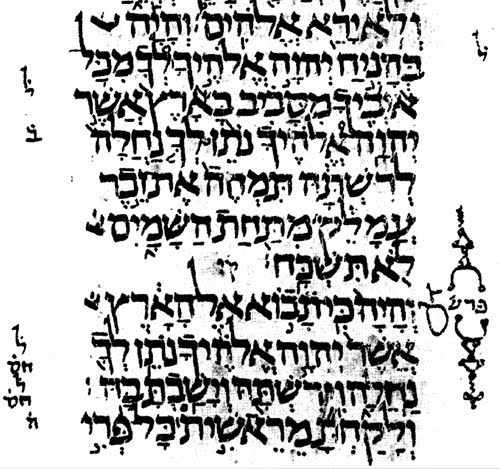
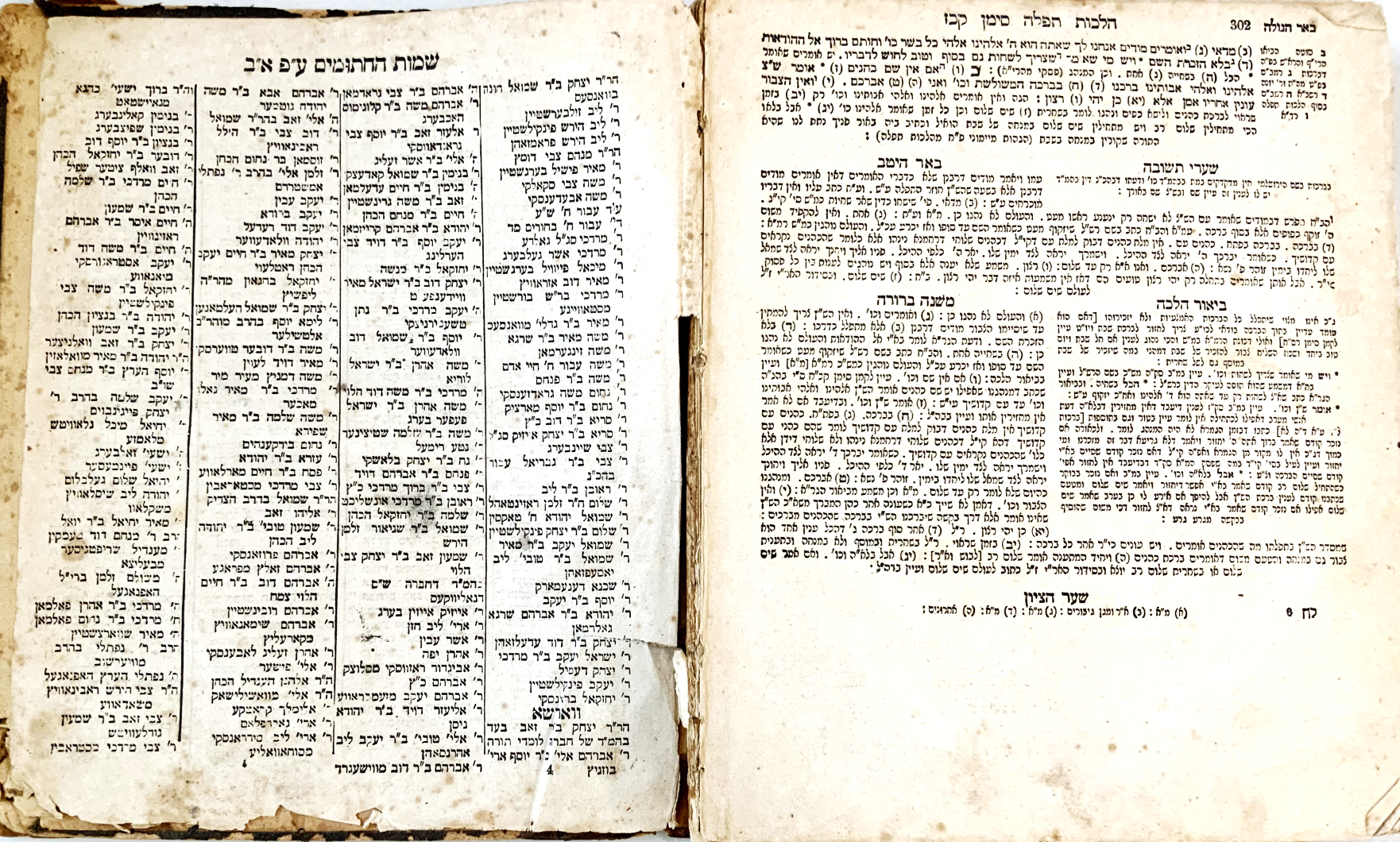
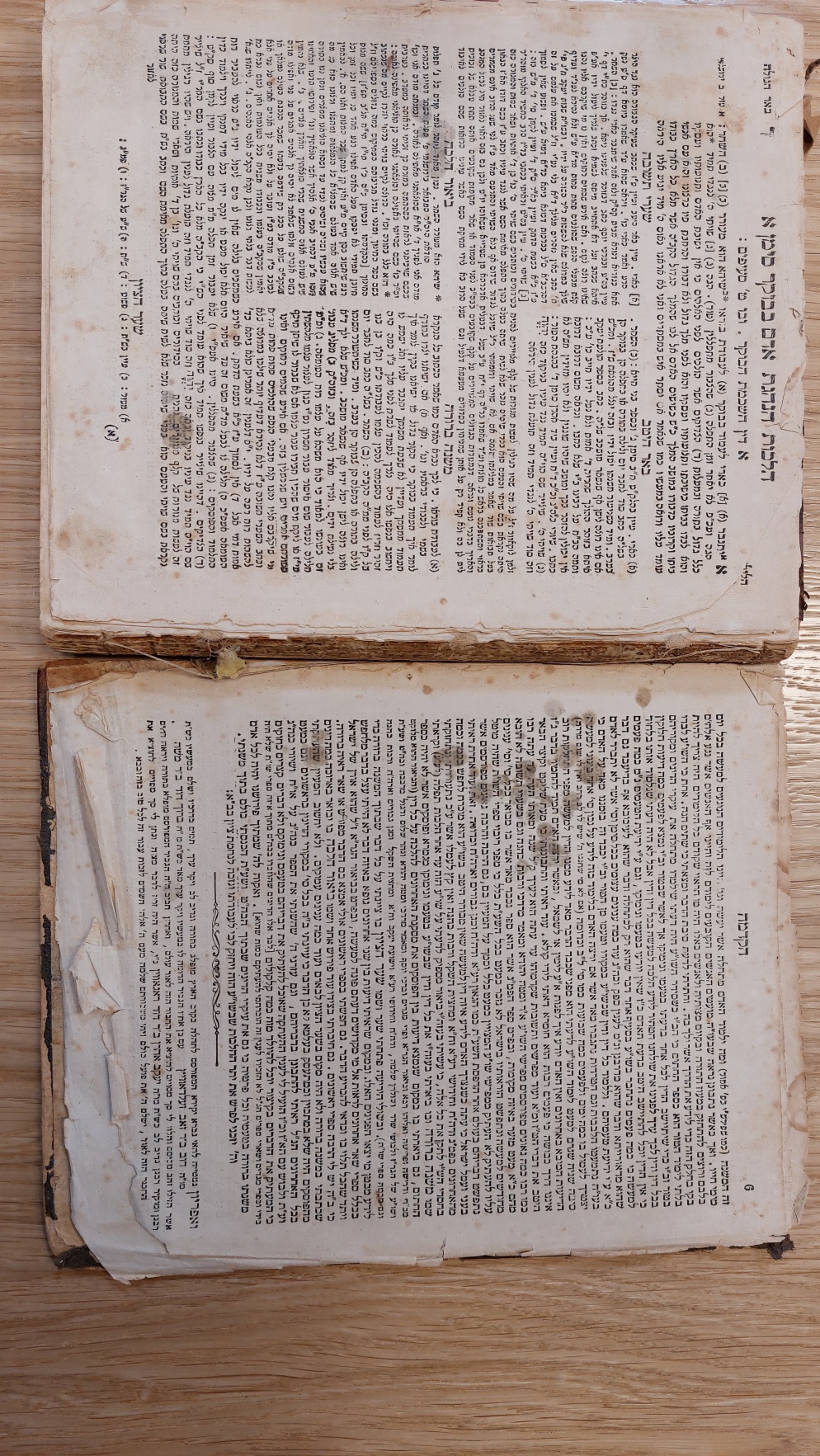
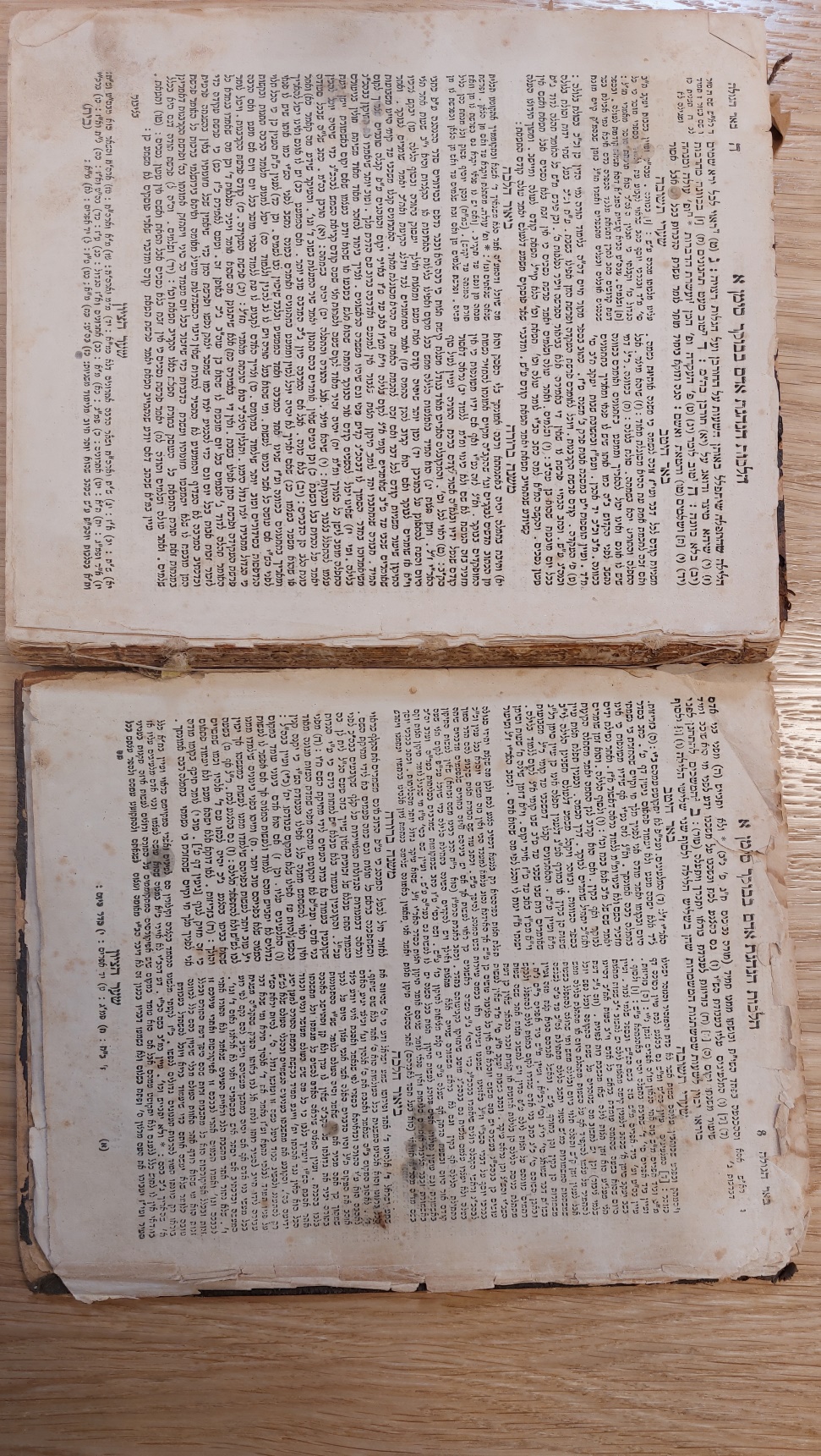
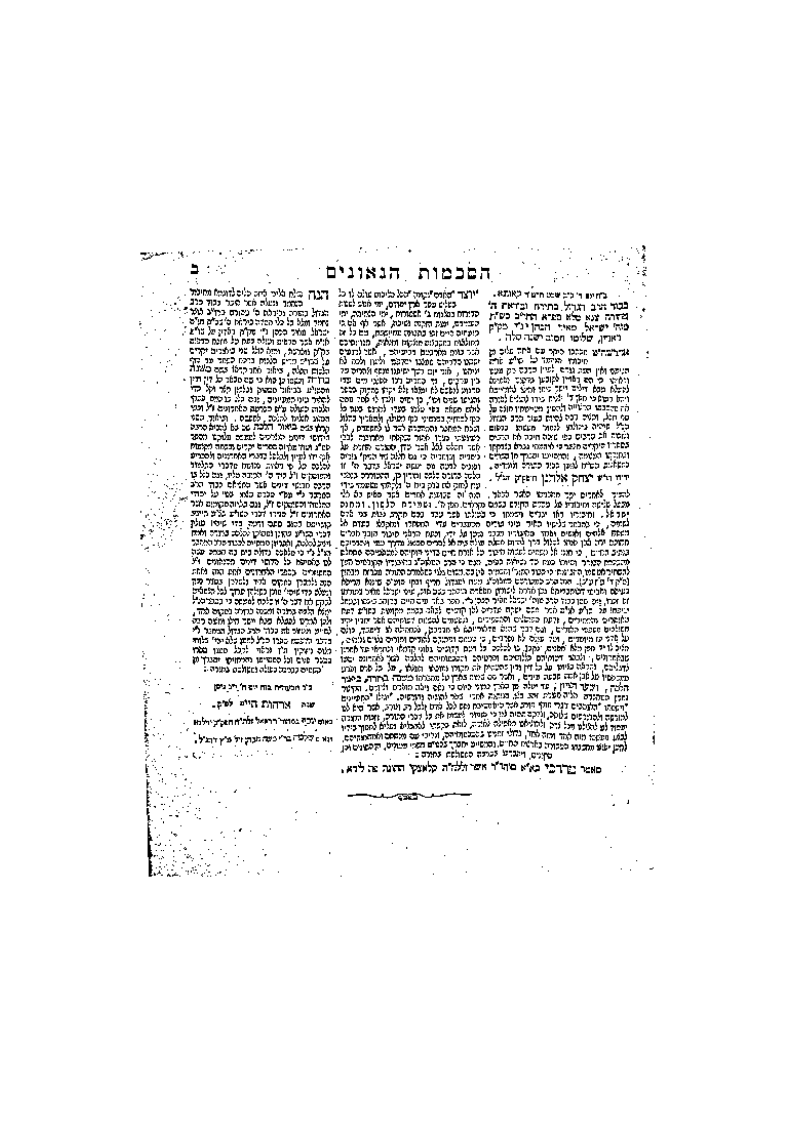
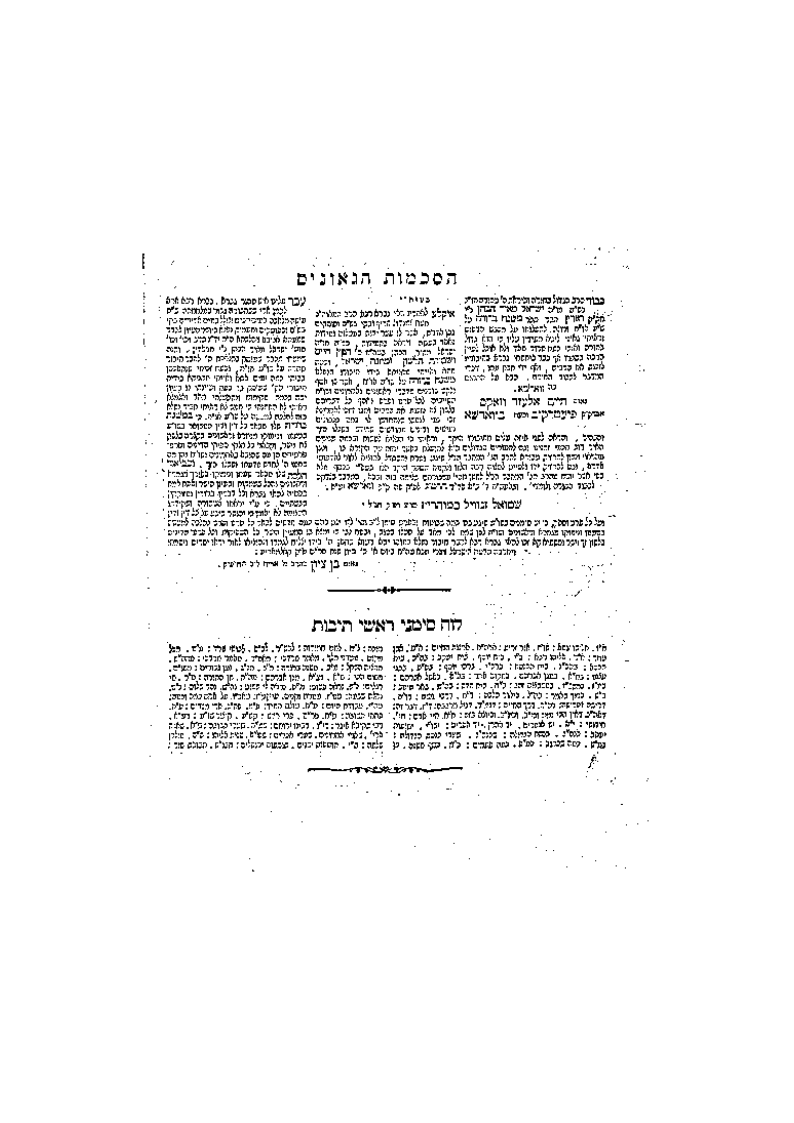
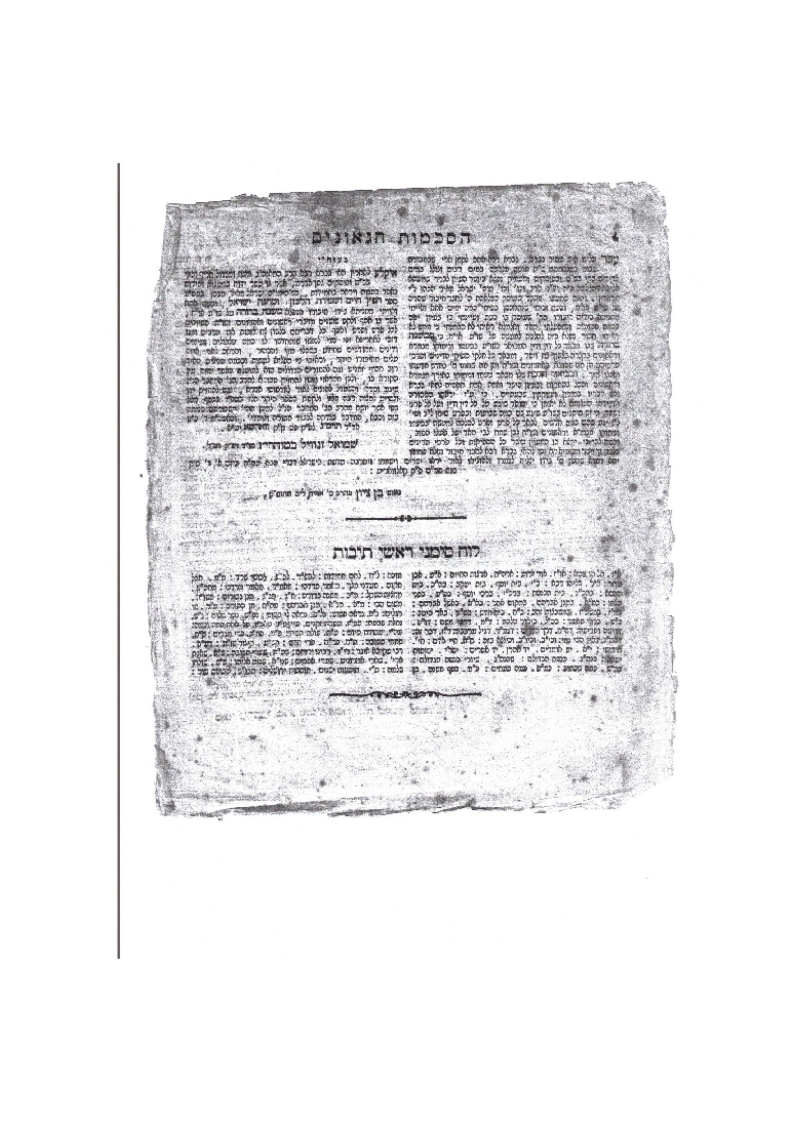
It is common practice in most Ashkenazi congregations to read the words z-kh-r Amalek, in Deut. 25:19, twice: once with a tzere under the zayin (zeikher) and once with a segol (zekher). Sephardic congregations, however, who do not distinguish between the pronunciation of these two vowels, read it only once, and they point it with a tzere. What is the origin of this practice, when did it begin, and is this double reading necessary to fulfill the command of reading these verses of Parshat Zakhor, the special reading on the Sabbath before Purim? These questions are discussed in several articles by R. Mordechai Breuer and Dr. J. Penkower,[1] two of the most eminent among contemporary scholars of the masorah and Biblical text. In their opinion, zeikher with a tzere is beyond a shadow of doubt the original and correct pointing of the text; and that is how the verse should be read in Parshat Zakhor. It must be stressed that the custom itself of a double reading is quite surprising and completely unique in Torah reading, for it was customary to decide in favor of one reading or another whenever there was a conflict between variant readings, pointing of vowels, or assignment of cantillation marks (as in cases of kri and ktiv, where a word is written one way but read another). R. David Kimhi, in his Sefer ha-Shorashim (in the manuscript versions), was the first to note the discrepancies regarding the pointing of these vowels in Sephardic biblical manuscripts. Under the root z-kh-r he says: “‘blot out the memory (zekher) of Amalek’ (Deut. 25:19), with six dots (i.e., segol twice), but ‘praise [in remembrance of (le-zekher)] His holy name’ (Ps. 30:5), with five dots (i.e., a tzere and a segol), and this occurs nowhere else; thus it appears in some books [i.e. manuscripts of the bible containing the Masorah]. But in others, z-kh-r is always pointed with five dots.” In other words, Radak noted that in some books he found z-kh-r pointed with segol and in others, with tzere. In printed editions of Sefer ha-Shorashim, however, beginning with the Venice edition and carrying through the 19th century, Radak’s remark concludes with the words “and this occurs nowhere else.” In other words, he found zekher in Parshat Zakhor always pointed with double segol.[2] Here is a typical example in a manuscript (from 1481): And here is the Venice edition:Here is the manuscript text restored in Biesenthal and Lebrecht’s Berlin 1847 edition: Various prayer books and Pentateuchs published in the 16th, 17th and early 18th centuries were redacted according to Radak’s remark as it appears in these printed editions; for example, the siddur of R. Shabtai Sofer (in the word zekher in the Ashrei prayer and in the prayers on the eve of the New Year), and Meor Einayim, the Pentateuch published by R. Wolf Heidenheim.* The Basel 1579 Seder Tefillot Mi-kol Ha-shanah (Ashkenaz): The manuscript of R. Shabtai’s siddur: In 1832, about fifteen years after publication of Heidenheim’s edition, a book by R. Issachar Baer appeared, entitled Ma`aseh Rav, containing a description of the practices of the Vilna Gaon. The author mentions that the Gaon’s disciples disagreed over the way their teacher used to read the word zekher in Parshat Zakhor. The author attested as follows: “When he would read Parshat Zakhor, he would say zekher, with a segol under the letter zayin. R. Hayyim of Volozhin, however, whose endorsement is on the book, wrote there, `As for his writing that in Parshat Zakhor one should read [z-kh-r] with six dots, I heard from the saintly person [i.e., the Gaon of Vilna] that he read with five dots (=zeikher).’ I do not know whether those hearing him were mistaken, and thought they heard segol twice, or whether he changed his practice in his later years.” Here is the text, with the footnote referring to R. Hayyim of Volozhin’s testimony:
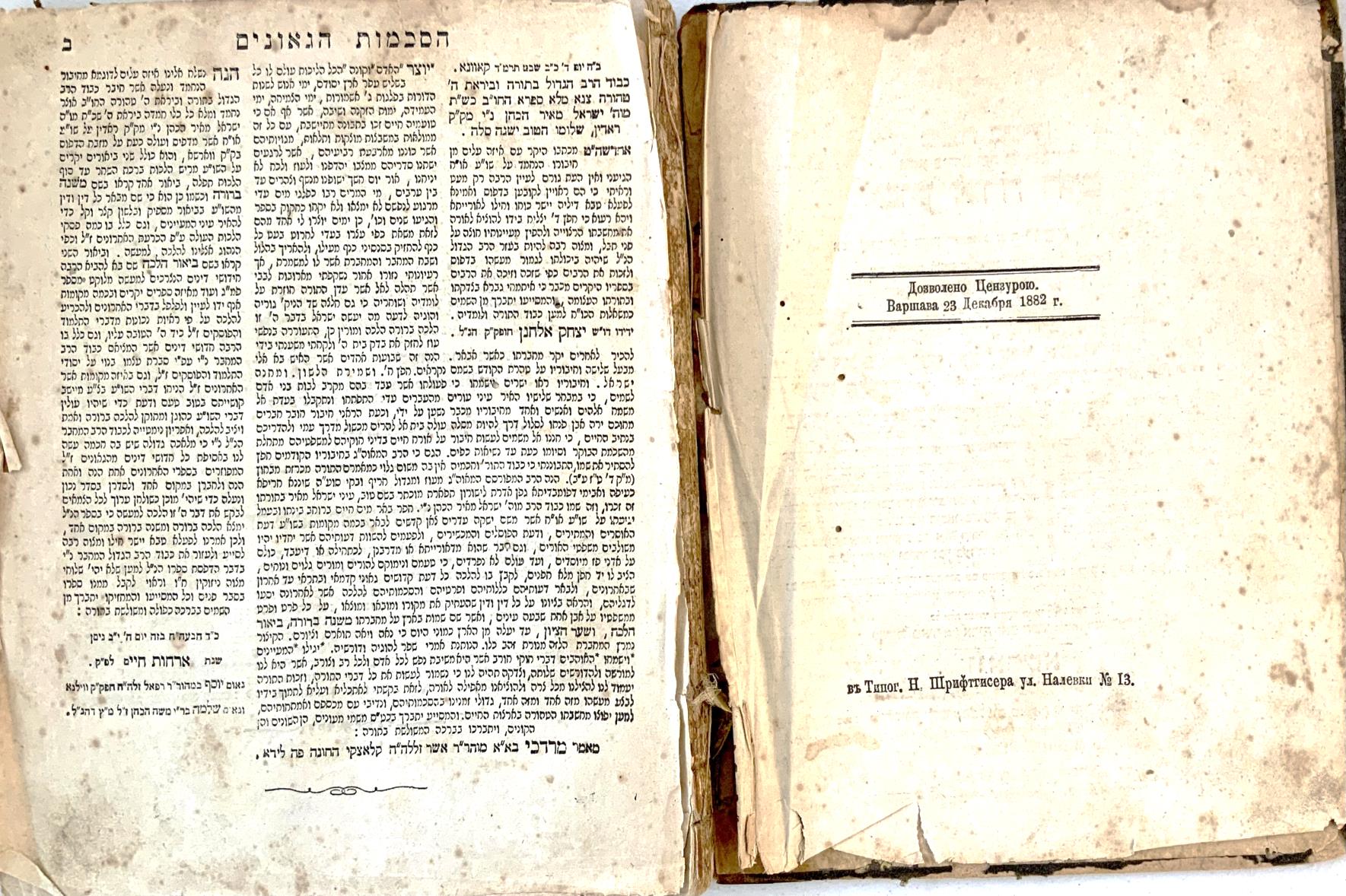
Here is R. Hayyim’s testimony in his approbation at the beginning of this work:
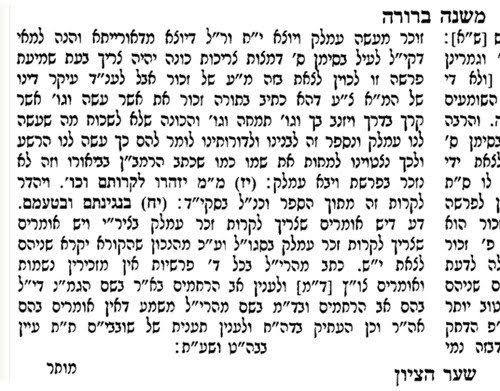
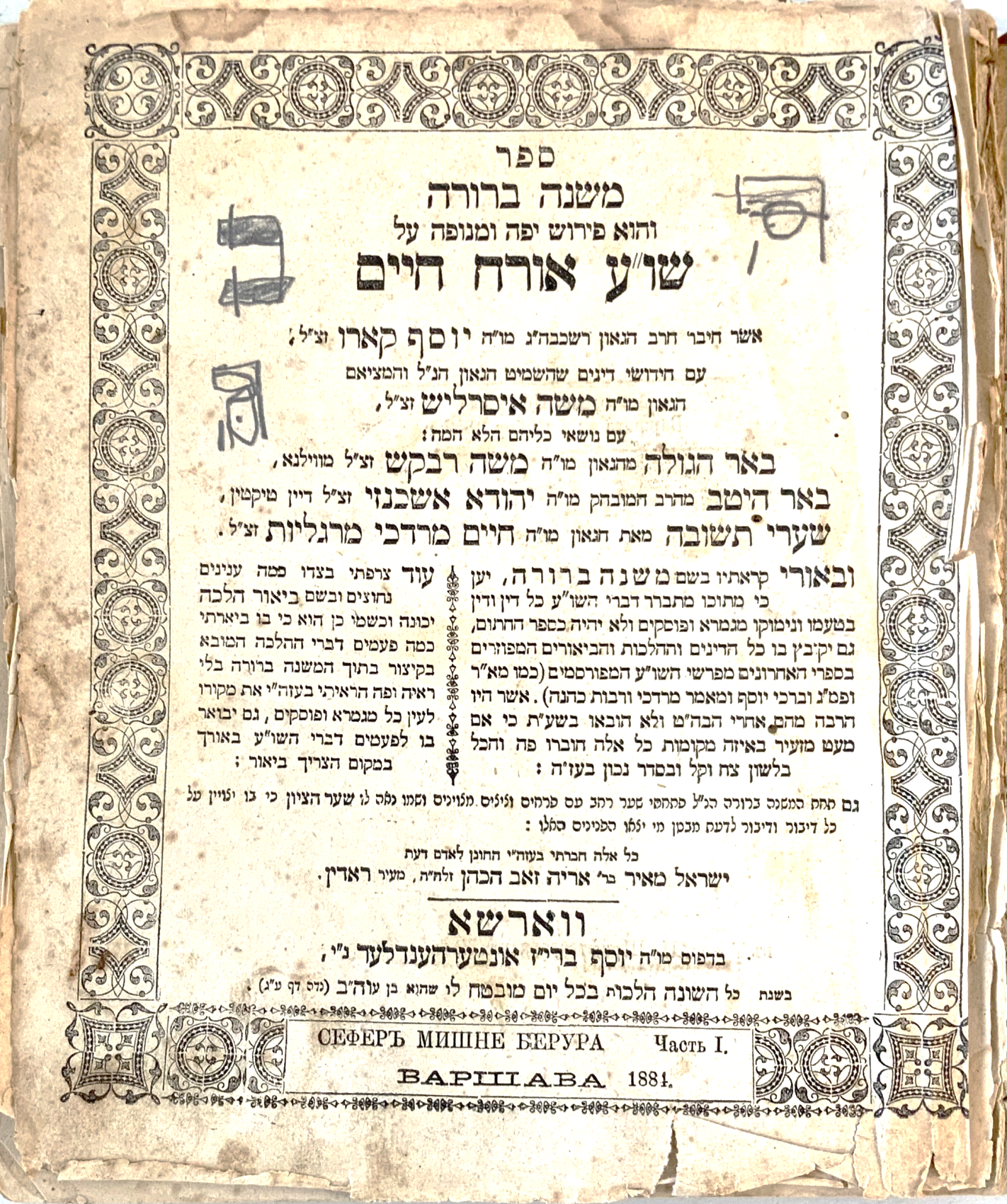
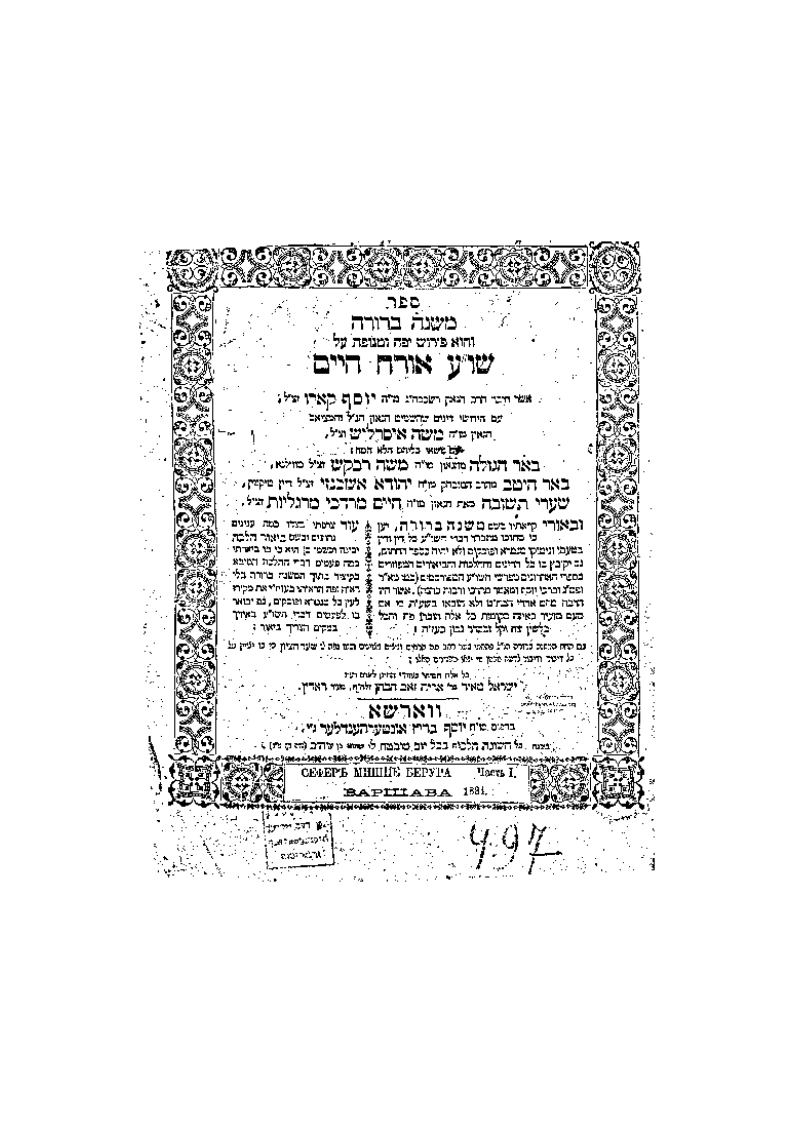
Approximately eighty years later, R. Israel Meir Ha-Cohen, otherwise known as the Hafetz Hayyim, came out with his Mishnah Berurah on the Shulhan Arukh. Since the special reading of Parshat Zakhor is a command from the Torah, and there was some doubt as to the correct reading, he ruled that the words z-kh-r Amalek should be read twice. In his own words, “Some people say it should be read as zeekher Amalek (Deut. 25:19) with a tzere, and others say that it should be read as zekher Amalek with a segol; therefore the correct practice is to read both ways, to satisfy them both” (Mishnah Berurah 685.18). Later, a variety of customs emerged in this regard. Some readers only repeat the two words, z-kh-r Amalek, while others repeat the entire phrase, timhe et z-kh-r Amalek, and still others repeat the entire verse.[3] Here is the Mishnah Berurah: As mentioned above, Rabbi Breuer and Dr. Penkower note that the correct pointing of z-kh-r is with a tzere and the custom of double reading is unfounded. This follows from the arguments they cite from the masorah, from the ancient and highly precise Tiberian manuscripts and teachings of the Masoretes. R. Jedidiah Solomon Norzi, a seventeenth century masoretic scholar, held to be the final arbiter on the text of the Bible,[4] wrote a work entitled Minhat Shai, in which he remarks on inaccuracies that entered all the books of the Bible in the 1547-1548 Venice edition of Mikraot Gedolot and other editions published around then.[5] He says nothing about zekher ,which is pointed with a tzere followed by segol, from which it follows that he agreed with this pointing and had no doubts about it being correct.[6] Minhat Shai from the first edition (Mantua 1742-4): The most conclusive proof is found in ancient manuscripts, dating to the time of the masorah, and held to be very precise in their pointing and cantillation marks: the Leningrad manuscript (known as B19),[7] the Sassoon 1053 manuscript and others. All point z-kh-r with a tzere under the zayin.[8] Leningrad manuscript: Today we have in our hands a famous ancient manuscript, the Keter Aram-Tzova,[9] the most ancient and best authorized text of the entire Bible. The pointing and masoretic annotation of this manuscript were done in Israel over one thousand years ago by Aharon Ben-Asher, considered the greatest Masorete of all generations. Due to Ben-Asher’s precision and reputation, Maimonides chose to base his Hilkhot Sefer Torah on Ben-Asher’s work.[10] In the 15th century, at the latest, the Keter manuscript was transferred to Aleppo, Syria, where it was stored in the Sephardic synagogue until the riots against the Jews of Aleppo (Aram Tzova) that broke out in 1948, during which the manuscript was damaged, most the entire Pentateuch being lost, including Parshat Zakhor. Because the Keter manuscript was so special, the Jews of Aleppo did not allow others to photograph the manuscript or to examine it. Whoever wished to clarify a question of variants in the text had to write down the query and the person in charge would relay the version found in the Keter. The most famous of those addressing queries was R. Jacob Saphir, who submitted over five hundred questions, seeking to find out what variant appeared in the Keter. Fortunately, one of his questions pertained to the pointing of z-kh-r in Parshat Zakhor. The question and response were as follows: “(Deuteronomy) 25:19 z-kh-r h”n [question]. Yes [response].” In other words, is the word z-kh-r pointed in the Keter with five dots [h”n = hamesh nekudot, five dots,i.e., tzere followed by segol]? The answer provided by the keeper of the manuscript, R. Menashe Sitton, was” yes”.[11] The entry in the published version of this manuscript (Rafael Zer Meorot Natan Le-rabbi Ya’akov Saphir, Leshonenu 50:3,4 Nisan-Tamuz 5746): Dr. Penkower examined the pointing of z-kh-r in dozens of medieval manuscripts and found that in those manuscripts reputed to be more precise (some of the Sephardic ones) it was pointed with a tzere, and in those reputed to be less precise (some of the Sephardic ones and most of the Ashkenazi ones) it was pointed with a segol. These findings led him to note, “If we were to start taking into account the pointing in manuscripts far removed from the precise Tiberian ones, and were to begin reading doubly all instances of variation between them and the precise manuscripts, the Torah reading each week would last an inordinately long time.”[12] All editions of the Bible today point z-kh-r with tzere followed by segol, leaving no vestige of the double segol variant. One cannot but agree with R. Breuer and Dr. Penkower that there is no need for Ashkenazim to read zekher, for zeikher will suffice. To sum up: * R. David Kimhi mentions two methods of pointing which he observed in Sephardic manuscripts: zekher and zeikher. * The disciples of the Vilna Gaon disagreed about how their Rabbi used to read this word in Parshat Zakhor, whether with a tzere or a segol. * Because of uncertainty as to which was correct, the Mishnah Berurah ruled that z-kh-r Amalek should be read twice, once with tzere and once with segol. * The findings presented by R. Breuer and Dr. Penkower prove conclusively that the correct and original pointing of this word is zeikher (with a tzere). Therefore, in their opinion, one should return to the ancient practice, and all Jewish communities ought to read the word only once, as zeikher. [1] M. Breuer, “Mikraot she-yesh lahem hekhre`a,” Megadim 10 (1990), pp. 97-112; J. S. Penkower, “Minhag u-Mesorah: ‘Z-kh-r Amalek’ be-hamesh o be-shes nekudot” (with appendices, in R. Kasher, M. Tzippor and Y. Tzefati, eds., Iyyunei Mikra u-Farshanut, 4, Bar Ilan University Press, Ramat Gan 1997, pp. 71-127. [2] Penkower (loc. cit., p. 80 ff.) discusses at length the differences between manuscript and printed versions of Sefer ha-Shorashim. [3] On other practices, see Penkower, loc. sit., p. 71, n. 1. [4] Y. Yevin, Mavo la-Masorah ha-Tverianit, Jerusalem 1976, p. 101 ff. [5] J. S. Penkower, Ya`akov Ben Hayyim u-Tzmihat Mahadurat ha-Mikraot ha-Gedolot I-II (Dissertation), Jerusalem 1982. [6] R. Jedidiah Solomon Norzi was preceded by another important masoretic scholar, R. Menahem de Lonzano, author of Or Torah. In his book, he remarks on the same editions of Mikraot Gedolot on the system of vowel pointing and cantillation marks, but also says nothing about z-kh-r being pointed with a tzere followed by segol. [7] The printed Bible published for the IDF, prepared by Prof. A. Dothan, is based on this manuscript.[8]For further detail, see R. Breuer’s article (cited in n. 1), p. 110, and Penkower’s article (cited in n. 2), p. 101. [9] This manuscript is also known as the Aleppo Keter, or simply the Keter for short. [10] Several printed Bibles based on the Keter are available today. The most important of these is undoubtedly the Mikraot Gedolot- ha-Keter, redacted and edited by Prof. Menahem Cohen, Bar Ilan University Press, Ramat Gan 1992 and following years. Thus far five volumes have been published, covering the following six books of the Bible: Joshua-Judges (including a general introduction to the edition), Samuel I and II, Kings I and II, Isaiah, and Genesis vol. 1. [11] The manuscript containing these questions and responsa is known as Meorot Natan. See here. [12] At the Project on Bible and Masorah at Bar- Ilan University, headed by Prof. M. Cohen, dozens of medieval manuscripts of the Bible were examined, and the findings of these studies reinforce Penkower’s conclusions regarding variant pointings in the manuscripts. * Seforim Blog editor note: the issue is discussed in the En Hakore commentary included by Heidenheim in Humash Meor Einayim, only in the parashah of Amalek in Exodus 17, not in Deuteronomy. En Hakore is a masoretic commentary by R. Yekutiel (or Zalman) Ha-nakdan who lived in Prague in the 13th century. Here is how it appears in Heidenheim’s Humash Meor Einayim. However, it appears to be a misstatement to say that Heidenheim was among those whose work was “redacted according to Radak’s remark,” for while there is no example of Zekher from Psalms to compare with in his Humash Meor Einayim, Zekher is also pointed with tzere , rather than segol, in the Ashrei prayer included in Humash Moda Le-vina. This would seem to indicate that he did not follow the Radak. He merely published En Hakore, which dealt with the issue raised by Radak.
Review of Jay R. Berkovitz’s The Pinkas of Metz
Review of Jay R. Berkovitz’s The Pinkas of Metz
By Eliezer Brodt & Dan Rabinowitz
Jay R. Berkovitz, Protocols of Justice: The Pinkas of Metz Rabbinic Court 1771-1789, (2 vol., 222 pp. +1084 pp.), Brill 2014
Jay R. Berkovitz, Law’s Dominion, Jewish Community, Religion and Family in Early Modern Metz,(404 pp.) Brill 2022
A decade ago, Professor Jay Berkovitz, a Professor and Chair of Judaic and Near Eastern Studies at the University of Massachusetts, Amherst, published the Pinkas (record book or register) of the Rabbinic Court in Metz. Jews began living in Metz, a town in Northeast France near the Moselle River, in the 16th century. These records require a reassessment of the Jewish legal process and procedure, especially concerning the secular legal system. In 2022, Berkovitz published a self-standing monograph, Law’s Dominion, to fully describe and explicate the impact of the Pinkas. Both works mark significant advancements in modern Jewish history and the theory of the Jewish legal system. Yet, they have not received the proper attention they deserve in the Hebrew book world. The lack of recognition can partially be attributed to the publisher, the distinguished publishing house of Brill. Brill’s publications are not generally available for sale in local Seforim stores, and many are priced outside the reach of laymen (or even scholars). Nonetheless, both are worth seeking out, and we intend to bring these vital works to the attention of Seforimblog readers and describe their significance.
The Pinkas of the Metz Rabbinic Court covers just 18 years, 1771-1789, yet it is a massive amount of material. Berkovitz’s transcription (albeit with notes) is over one thousand pages. This is truly what one would call a labor of love. Not only did he publish a huge manuscript (over one thousand pages) with valuable indices, but he also mined the work extensively. In 2014, he wrote a volume (222 pp.), in English, dealing with many aspects of the Pinkas (as I will elaborate on below), demonstrating his command of everything possibly imaginable related to this work.
A few years later, in 2022, Berkowitz revisited the Pinkas and published another book, Law’s Dominion, Jewish Community, Religion and Family in Early Modern Metz, updating his previous book with a few more hundred pages.[1]
Berkowitz describes his project as follows:
Though certainly never intended to become a complete history of the Jews of Metz, Protocols of Justice grew to become much larger in size and complexity than originally expected. Despite its expanding into a self-standing monograph, I am very much aware that work on this project is still in its early stages. I present these volumes as an invitation to scholars to continue what has commenced here (p. 25).
Introduction: Pinkasim and their Historic Value
By way of introduction, many people seek out new niches where they can contribute valuable studies about otherwise unknown topics. One such untapped area is the world of Pinkasim. Over the years, numerous kinds of Pinkasim have been published, some in extensive critical editions. But there remains plenty of work in this “field.”
What is a Pinkas?
These records, typically in the form of a notebook or book, transcribe the materials of a particular group, society, or entity. They can be marriage or divorce records, Synagogue protocols, or numerous “Chevrah books.” Even though many have been lost or destroyed, numerous volumes have survived in libraries worldwide. In recent years, some have even ended up in private collections. (After the Holocaust, “Pinkas” is also used to describe a different form of communal books. Survivors from towns in Europe published “memorial books” to document their history and memorialize the murdered Jews. Many of those use Pinkas in the title, for example, Pinkas Zetel, Pinkas Galicia. Although collectively, the genre is referred to as “Yizkor books. New York Public Library collected these, and they are available on its site: Yizkor Book Collection.)
Historians have long recognized the valueof Pinkasim generally. When reading the works of various prominent historians before World War Two, they often cite something like this: “In the Pinkasim of the town or city, I found…” One of the more well-known examples of a Pinkas is the Pinkas of the Vilna Gaon Kloyz. This manuscript is currently in New York and has a fascinating story regarding its survival (See David Fishman, The Book Smugglers, 52-55 for more details). R. Shlomo Zalman Hevlin published of the text of this Pinkas in the journal Yeshurun. Shlomo Zalman Hevlin, “The Pinkas of the Gaon’s Kloyz,” Yeshurun 16 (2005), 746-60; “The Kloyz of the Gaon of Vilna Zts”L, Ketayim me-Pinkas ha-Kloyz,” Yeshurun 6 (1999), 678-85.[2]
This Pinkas provides invaluable information regarding ownership of one of the homes where the Vilna Gaon resided. After his death, his children claimed it was part of the estate, while his students argued that it belonged to the community. After some machinations, including changing the board composition that held the property in trust, the court ruled in favor of the children. Some scholars view this property dispute as an attempt to resolve a larger issue of whether Gaon’s children or his students would control his intellectual legacy. After this decision, the children determined which Gaon’s manuscripts would be published rather than the students. (See Dan Rabinowitz, The Lost Library, Brandeis University Press, Massachusetts, 2019, 55-58.)
The Significance of the Bet Din Pinkas.
A subset of Pinkasim are those of Be’tai Din, taking the form of a register of the various disputes and decisions. These, too, are of critical importance. These documents shed light on individuals’ relationships to communal takanot, the power and authority of the Bet Din, and many other areas.
Yet, today, many of the Pinksim no long survive. Sometimes this was deliberate as in the case in the 1600’s of the Frankfurt Bet Din.
כתוב ביש נוחלין… וזה לשונו, קבלה ישנה מאבותי ז”ל שלא להשליך שום חשבון ישן אף על פי שנחשב הכל, כי אולי תבוא עת להוכיח דבר מה מאותו. עד כאן ולדידי הכותב הוה עובדא בזה כמה פעמים שבא לי לאחר ההשלכה לכלל היזק, כי כמעט הייתי מוכרח בכל פסח לשרוף כתבים ופתקאות, לפי שריבויים מפסקי דינים והשלישות וכיוצא ישתרגו עלו על צוארי, שלא היה המועט מחזיק את המרובה. וגם מפני שלא יהיה לי הטורח גדול ביותר בחפשי בחפש מחופש אחר כתב אחד, כאשר גם עתה אחר כל שריפת הכתבים נלאיתי עד כמה שעות בחפשי אחר איזה כתב [יוסף אומץ סי’ שע, עמ’ קח]
Rabbinic scholars eventually recognized the significance of pinkasim.[3] For example, the Nodeh BeYehudah uses one to determine the spelling of names in a get:
הנה אהוביי להיות שאין הגדול מעיד בגדלו על מה שראה בקטנו כ”א דברים ידועים שחשבו רז”ל ולכן אין אני יכול להעיד. אבל אעפ”כ אני אומר לכם נהירנא כד הוינא טליא כבר תשע או כבר עשר ראיתי אצל א“א הרב ז“ל פנקסאות של הגליל קראקא וראיתי פנקסאות משנים קדמוניות היו חתומים בו גאוני עולם זקני הגאון רשכב”ה מוהר”ר העשיל זצ”ל ואחריו דודי זקני הגאון המפורסם מוהרר”ל וגם ראיתי חתימת הגאון בעל תוספות י”ט שמה וכמדומה שבכל מקום שנרשם שם השומא חדשה שעשו שמאים באסיפת הגליל היה נכתב פילטץ עם טי”ת, ואף שאין אני יכול להעיד בבירור כי טליא הוינא וגם מלתא דלא רמיא וכו’ אבל תדעו שהפנקסאות הנ”ל דומה אני שהיה אח”כ ביד המאוה”ג מוהר”ר שלמה ז”ל אב”ד דק”ק פינטשוב שהיה סופר הגליל דרשו שם בק”ק הנ”ל ותמצאו אבל עכ”פ המפורסמות א”צ ראיה וזה דבר ידוע ששם העיר בכל מדינת פולין קורין פילטץ עם טי”ת וכן כותבים בכל האגרות והרי הוחזק שם העיר בלשון היהודים עם טי”ת. [נודע ביהודה, קמא, אבן העזר, סי’ פז].
Basically, one man’s junk became another’s treasure.
At first glance, a Pinkas of the Bet Din might appear to be dry material only of interest to specialists and technicians. But in reality, these contain information that can elucidate and enrich larger Jewish history. Nonetheless, little work has been done with the Pinkasim of rabbinical courts. Recently, however, some have begun publishing and analyzing these records to great effect. Edward Fram’s book, A Window on Their World: The Court Diaries of Rabbi Hayyim Gundersheim Frankfurt Am Main 1773-1794 (2012), inaugurated this approach.
A more focused usage of a Bet Din Pinkas is an article by Moaz Kahana. He identified a short and somewhat cryptic entry in the Pinkas of the Bet Din of Prague regarding a fine levied on two people. From that citation Kahana provides a sweeping exposition on Jewish coffee culture in Prague in the 18th century. Among other details, in 1765 (during the period that R. Yehzkel Landau was the Chief Rabbi), there were at least six coffee houses in the Jewish quarter, owned by Jews, open on Shabbos, that Jews frequented and sanctioned by the Rabbinate. (Moaz Kahana, “Shabbos be-Beyes ha-Kaffe shel Kehilah Kedosha Prague,” in Zion, 2013 (78), 5-50).
A few years ago, in the prominent journal Yeshurun (24 (2011), pp. 235-297), R’ Dovid Kamenetzky published material from the Pinkas of Frankfurt from the Haflah.[ Avalaibel here and here] R’ Zalman Nechemiah Goldberg commented to the volume editors that he was so excited to read this material. In the course of this post, we hope to explain what his excitement was about. It is safe to imagine that had he seen this material from the Pinkas of Metz, he would have been beyond excited.
What can we learn from this Pinkas?
This Pinkas of the Bet Din of Metz is of especial importance. Berkowitz cites Anthony Grafton that “…courtroom and the lawyer’s study have turned out to be historical alembics where the methods of social and intellectual historians can be mingled in new forms, producing results of unsuspected richness.” that “In the last quarter-century, especially, the courts have been identified as a dynamic arena of social change and as a valuable source for understanding economic history and the changing function of law in society.” Recognizing this value, many scholars have used medieval Jewish records to elucidate those periods’ history. Yet there is a lacuna when it comes to the early modern era. Consequently, the potential of beit din records remains largely untapped (p.3).[4]
Berkowitz acknowledges that, in part, the lack of use of bet din records is due to the many technical challenges, including “proficiency in Hebrew paleography and expertise in the largely unfamiliar territory of Jewish civil and family law. As a result, we know virtually nothing about the kinds of cases that came before rabbinic courts and even less concerning jurisprudence and dispute resolution methods employed there. This is rather ironic in light of the heightened interest in law shown by historians working on late medieval and early modern Europe.” (p. 3)
As mentioned, Berkowitz did two important things: he transcribed this massive work carefully and studied it as a historian of Halacha; he “mined” this work very carefully.
The transcription alone is not a small feat; we are talking about a volume that, in print form, is almost 1000 pages of Hebrew text! The Pinkas also includes obscure words in French and Yiddish, which Berkowitz also deciphers, provides a useful glossary of foreign terms.
An important feature of Berkowitz’s edition of the Pinkas is the extensive indices based on topics, names, and places.
Berkowitz writes:
The economic data contained in the proceedings of the Metz Beit Din will doubtless prove invaluable in gauging the range and intensity of Jewish commercial activity in the pre-revolutionary era… (p. 30)
Then Berkowitz elaborates on this, listing out what exactly one can learn from this Pinkas:
The Metz court records are also filled with resources for investigating the economic complexities of marriage, family, and kinship relations. A profusion of details concerning the social and economic importance of betrothal agreements, dowries, marital property division, and inheritance arrangements represent a treasure trove of historical data. Particularly fascinating are cases that reveal the degree to which law, family, property, and business interests were tightly interwoven. On occasion, the human story comes into view with unusual poignancy, especially in cases of abandoned wives, young widows, and tales of deprivation… Legal mechanisms that came into play in response to evolving social and economic trends in the eighteenth century produced a measure of equality between husbands and wives that is apparent in quite a number of cases that came before the Beit Din. Accordingly, the picture that emerges… to the work women performed beyond their domestic responsibilities. There is abundant evidence suggesting that wives borrowed and extended loans, occasionally without their husbands’ authorization, to help support their families… (pp. 30-31)
Sources for the Law
What do we Know about the Jewish Community of Metz at the time?
Berkowitz writes:
Metz was the western-most outpost of Yiddish-speaking Ashkenazic Jewry in the early modern era (p. 7) With a population of over 46,000, Metz was the tenth largest city in France. During the seventeenth century the Jewish population in Metz increased dramatically and by the end …it numbered nearly 3000 individuals. Slightly less than seven percent of the city’s total population, it constituted the largest Jewish community in France prior to the Revolution (p.8).
In general, there is also great significance to Metz in the world of Halacha at this time, as Berkowitz writes:[5]
The major halakhic works that were produced in Metz or in nearby communities in the eighteenth century and were significant from a regional standpoint include Yaʾir Ḥayyim Bacharach, Resp. Ḥavvot Yaʾir (Frankfurt, 1699); Jacob Reischer, Resp. Shevut Yaakov, pts. 1–3 (Halle, 1710), pt. 2 (Offenbach, 1719), and (Metz, 1789); Joseph Steinhardt, Resp. Zikhron Yosef (Fürth, 1773)[6]; Gershon Coblentz, Resp. KiryatḤannah (Metz, 1789); and Aaron Worms, Meʾorei Or (Metz, 1790–1793) (p. 25)[7]
Why was this Pinkas written in the first place?
Berkowitz explains:
Precious little is known about the production of the Metz Beit Din records. We cannot state with certainty under whose direction these records were produced, for whom they were intended, and toward what end they were preserved in written form. Nevertheless, there was nothing novel or uncommon about providing litigants with written copies of its rulings. Documents issued by the court were intended to confirm an admission of debt, the withdrawal of a claim, the exoneration of an individual from unsubstantiated accusations, or the severance of a widow from her husband’s estate, to name only several of the more common types of validation provided by the Beit Din. In some instances, the court was asked to issue a maʾaseh beit din (a formal judgment) that confirmed ownership over property or established the legality of a particular transaction. Written rulings of this sort were frequently produced as evidence in cases that continued over the course of months or even years. Although the communal register does not contain an explicit directive concerning the actual preservation of judicial records, article 109 of the 1769 community bylaws stated that “every ruling of the Beit Din must be written and signed… It was stipulated, further, that “it is prohibited for either of the litigants to pay the other even a perutah until they have seen the written and signed judgment. (p. 39)
While there is little doubt about the value of the Pinkasim, especially as they relate to the Jewish legal system, they do not offer a complete record of the judicial process. Despite containing hundreds of legal decisions predicated on Jewish law, the Pinkasim do not provide the underlying rationale of those decisions. The decisions distinguish between those based on Jewish law, internal takanas, and custom. But the specifics of the which sources and rationales are compelling are left unsaid. This, however, is unsurprising as most Bet Din decisions, whether recorded in Pinkasim or other sources, seemingly rely upon Rema’s statement that “there is no need to write the rationales and proofs, we only write for them [i.e., for the litigants] the claims and the ruling.”
Who transcribed the Pinkas?
Precisely what role scribes played in determining the content, form, and language of the cases they recorded is unclear. Variations in handwriting, in addition to the assorted signatures affixed at the ends of collations of cases, reveal that several different court stenographers were commissioned to record the judicial proceedings during the eighteen years chronicled in the Pinkas. The largest number of entries appears to be in the hand of a single scribe, Juspa Katz, whose name is recorded in seven cases that span fifteen years (pp. 43-44).
Elaborating on this, Berkowitz adds:
In each of these instances, the document was approved by the av beit din, by the judges, or in some instances by the presiding syndic (parnas ha-ḥodesh). Overall, the stylized prose used in recording the proceedings, which are punctuated by the inclusion of biblical phrases and technical expressions drawn from talmudic and halakhic literature, suggest that the text of the Pinkas was the product of meticulous preparation by erudite scholars and well-trained scribes.
The function of the Beis Din
Berkowitz describes: “As a communal institution, the Metz Beit Din filled three principal functions. First and foremost, it was a judicial body that represented the primary, though certainly not the exclusive, public venue for the resolution of disputes among residents of the greater Metz community. Litigants regularly came from the towns and villages of the Moselle countryside as well, and in some instances from more distant localities when business dealings brought them into contact with Moselle residents. Second, as in the case of the French lower courts, the Beit Din performed bureaucratic functions that included the confirmation of legal documents and contracts, the execution of wills, and the appointment of guardians. Third, it enjoyed certain institutional powers related to social control and supervision. Although this range of functions may have resembled the merging of judicial, legislative, and executive tasks in early modern French courts, the Beit Din acted more as an arm of the Kahal executive and coordinated itself with the general policy guidelines set forth by the community’s governing body. Furthermore, on a much smaller scale, the centralized authority of the Kahal was more pronounced than that of the state and, as a result, the independence of the rabbinic court could be expected to be more narrowly circumscribed (pp. 65-66).
Who were the Dayanim on this Beis Din?
One of the critical insights of this volume is the identification of the dayanim of the Beis Din. These are generally not recorded elsewhere. Berkowitz identifies:
Rabbis Moses Narol Cohen, Gershon Ashkenazi, Jacob Reischer, Abraham Broda, Joshua Jacob Falk, Jonathan Eibeschütz, Shmuel Hilmann, and Aryeh Loeb Günzberg. Günzberg… best known as a renowned Talmudist and author of the celebrated Shaʾagat Aryeh (p. 14)
The Shagas Aryeh is well-known as a posek, but this identifies in a lesser-known role, Av Beis Din. (See Oriel Touitou, The Methods of Rabbi Pinhas Ha-Levy of Horwitzand Rabbi Aryeh Leib in Talmud Study and Halachic Decisions, (PhD) Bar Ilan University 2012; R. Peretz Risenberg, Yeshurun 30 (2014) pp. 772-824; Eliezer Brodt, Yeshurun 24 (2011), p. 463.
How many cases did this Beis din Deal with?
Berkowitz writes:
Serving as the primary communal forum where legal disputes were adjudicated, the Beit Din typically met two or three times a week and averaged roughly sixty cases per year. In accordance with standard procedure in Jewish law, three judges (dayyanim) heard each case; in virtually every instance the tribunal consisted of the av beit din (Günzberg) together with two adjunct dayyanim. In the course of the eighteen years that are chronicled in the Pinkas, fifteen rabbinic judges rotated on the Beit Din alongside the chief justice. Of these sixteen judges, four sat on the bench for the entire period and several others performed their duties for most of those years (p. 15).
Methods of the Beis Din
They did not just give verdicts. They personally investigated the facts.
Concerning a dispute over the suitability of the living space in which an orphan resided together with his uncle, the Beit Din decided to pay a visit to investigate whether the physical conditions in the home were as required. It also hired a nurse to provide a medical perspective, and two more to corroborate the opinion of the first. After taking these steps the Beit Din was persuaded that the orphan was not mistreated and there were no grounds for legal action against the guardians (p. 70)
What do we know about the “reach of this Beis din”?
Berkowitz writes:
These are strong indications of the stability and continuity that characterized the work of the court during nearly two decades of service to the community. Equally impressive is the long geographical reach of the Metz Beit Din. Litigants came from near and far, from Augny located just 8 kilometers southwest of Metz and as far as Frankfurt, which was a distance of 260 kilometers. To accommodate individuals who were unable to travel to Metz from distant communities in the Moselle, the rabbinic court occasionally made special arrangements… In order to reduce expenses, the local cantor was deputized by the Metz Beit Din to administer the widow’s oath… in the presence of one witness. Altogether, more than one hundred villages throughout the Moselle countryside and beyond are mentioned in the court proceedings. These distances reveal much about the far-flung commercial and financial dealings of Metz residents and the centralization of authority in the Moselle region and in areas of Lorraine (pp. 15-16).
The Metz Beis Din and Secular Law
Berkowitz writes:
Without surrendering its own authority, the Beit Din regularly acknowledged the interdependence of cases brought before the rabbinic judges and those taken to the French civil court system. But on numerous occasions the Beit Din made it clear that it would need to await the judgment of the French court before it could issue its own ruling. In a case concerning the division of living space, it declared that its decision was valid “so long as the gentile courts do not object.” It is striking that even in matters that were presumably of minimal interest to the authorities, the Beit Din was hampered by contingencies of this sort… the Metz Beit Din enjoyed substantial independence from state interference and control. Whether they were considering contractual matters, offenses against the public order, or the civil consequences of strictly religious affairs, municipal and royal courts firmly imposed their jurisdiction and exercised the right to overturn the decisions of the ecclesiastical courts when there was evidence of a procedural irregularity. Moreover, the powers of ecclesiastical courts were limited to canonical penalties. The Beit Din, with the full support of the Kehillah leadership, was granted greater latitude by the state to resolve internal differences on the basis of Jewish legal traditions that extended primarily to civil matters. Nevertheless, neither the Kehillah nor the Beit Din was able to ignore pressures to coordinate with and adapt to general law…. How the Metz Beit Din functioned alongside the French civil courts may be the crucial question, but, as will become apparent, it is exceedingly difficult to answer. Complicating the issue is the fact that recourse to French civil courts appears to have accelerated as the eighteenth century wore on. Individuals who took their disputes to gentile courts, known in rabbinic and halakhic literature as ʿarkhaʾot shel goyim, were consistently denounced by medieval and early modern rabbinic authorities (pp. 107-108)
Berkowitz continues:
The present study addresses a different set of questions: How did jurists within the rabbinic court system respond to the challenges to Jewish law that were posed by non-Jewish legal systems? Is there any evidence that judicial procedure in the Beit Din, or the interpretation of the law itself, was influenced by French law or by the possibility of recourse to French civil courts? How did the phenomenon of legal pluralism influence the methods of adjudication and jurisprudence employed in the Metz rabbinic court? The impact of legal pluralism may be discerned in the court’s adoption and adaptation of legal perspectives and mechanisms from general jurisprudence, both in the realm of procedure and in substantive areas of law such as the division of marital property. Invariably, the Beit Din’s method of adjudication reveals tensions between its role as guardian of communal autonomy and the political demands imposed by legal centralism—tensions between its role as arbiter of Jewish law and agent of the Kahal, on the one hand, and its awareness of the contingent nature of the relationship between Jewish law and general law, on the other (pp. 109-110).[8]
Power of the Jewish courts in Early Modern France:
The proceedings of the Metz Beit Din provide elaborate details concerning Jewish civil autonomy. Under the aegis of the governing authority of the Kehillah, the Beit Din was authorized by the state to resolve differences among members of the community on the basis of Jewish customs and legal traditions. In this respect the Beit Din enjoyed a level of authority that far exceeded that granted to the ecclesiastical courts… Overall, the Metz proceedings contain little evidence, either direct or indirect, of resistance to its juridical authority (p.53)
Related to this, a case in the Pinkas is worth citing. As Berkowitz summarizes:
In Metz, as in other communities, the authority exercised by the Beit Din and the scope of its jurisdiction were a reflection of the latitude extended to it by royal and municipal authorities. Owing to limitations on the power of the Kehillah to enforce judicial rulings, the Beit Din found it necessary on certain occasions to caution recalcitrant litigants that failure to respond to a summons carried severe consequences. In the case of Gershon Coblentz, who refused to appear before the Beit Din to settle a dispute with Yozel Cahen, the Beit Din threatened to serve him with a contempt of court order (pequdat ḥerem) and to employ “other forms of coercion.” How effective these threats could have been without the backing of the state is questionable. Coblentz remained adamant in his “rebellion and refusal, holding up the words of the rabbis to ridicule,” whereupon Yozel proceeded to seek authorization from the Beit Din to bring his claim to the French court. The Beit Din informed Gershon that it had approved the transfer of the case to the civil court, and following their response that they did not object, the rabbinic court authorized Yozel to take hold of the written documentation, in French, so that he could sue in the civil court (p. 54).
Who represented the people for the Beis Din?
In more than a third of the cases that were brought to the Metz Beit Din, litigants were represented by their own attorneys. This is likely to have been a (sic) commonplace in rabbinic courts in other communities as well. The scope of legal representation in rabbinic courts had widened considerably in the sixteenth to the eighteenth centuries (p. 60)
Implications for Jewish History from the Pinkas
Knowledge of French
Berkowitz writes:
Although the foregoing examples suggest that French literacy was more prevalent among Metz Jews than has been generally assumed, there is little doubt that facility in French was far less extensive in the countryside than among the urban elite. Even fifty years after the Revolution there were still Jews in the small towns and villages of Alsace and Lorraine who could not speak French. The records of the Beit Din suggest that although the scribes who had been assigned the task of recording the case summaries were familiar with a wide range of technical French vocabulary pertaining to judicial procedure and financial instruments, their fluency may have been limited to oral proficiency. (pp. 93-94)
In addition to gleaning information regarding the legal and judicial practices, the Pinkas also provide information regarding the day-to-day life of the Jews in Metz and beyond. Some of these lead to the important conclusion that “confirm[s] that even prior to the Revolution, cultural influences transcended social barriers, and this appears to have been true for a larger segment of the Jewish population than is commonly assumed.” (p. 95). Others, however, point to more prosaic elements of the lives of the Jews. Nonetheless, the Pinkas is a primary source for assessing their lifestyle and everyday trials and tribulations, and is essential to paint objective picture of their lives.
Some Interesting cases which show life was rather colorful:
On one occasion, when informed that a woman who was engaged to be married had become pregnant, the Beit Din summoned her and her fiancé in order to ascertain whether he was the father and, assuming he was, to ensure compliance with Jewish law if the couple intended to marry. According to Talmudic law, a man is forbidden to marry a woman who was either pregnant by another man or who is nursing another man’s child until the child is twenty-four months old. In response to a husband’s claim that his wife’s pregnancy was not his doing, the Beit Din proceeded to investigate the matter thoroughly. Based on the wife’s acknowledgment of her extra-marital affair, as well as the testimony of witnesses confirming the utter lack of affection between husband and wife, the Beit Din absolved the husband of all financial responsibility for the child and ordered him to divorce his wife; she, in turn, was required to accept the get, even against her will, on account of her confession. Because marriage and sexuality were matters of vital interest to the public, the Beit Din acted swiftly, in some instances before litigants came forward (pp. 68-69)[9]
Another colorful case discussed by Berkowitz regarded:
Reichle Cahen… approached the Kahal in its meeting room and openly accused Hirtz Oulif of fathering her child; she demanded that he marry her and provide birth expenses and child support. Initially heard by the Kahal, the case caused something of a furor because of the public nature of the young woman’s accusation and owing to her family’s elevated status within the community. The Beit Din was invited to join the Kahal in its effort to stave off the worrisome trend, and the head of the rabbinic court, R. Günzberg, was asked to lead the new initiative. Although ill-health prevented Günzberg’s participation, members of the Beit Din proceeded, together with several syndics, to examine the arguments and testimony presented by Reichle and Hirtz… the Beit Din demanded that Reichle and Hirtz address each other directly, without legal representation. Hirtz proceeded to deny each of Reichle’s claims as utterly false. Aiming “to uphold the bylaws of the community,” the Beit Din responded by imposing the ḥerem on both the young woman and the young man, undoubtedly to convey the message that promiscuous behavior would not be tolerated under any circumstances. But when it came out that there were witnesses willing to testify that the young man was heard boasting of his exploits, the Kahal and the Beit Din altered their approach. They recorded the statements in writing, assembled additional oral testimony attesting to the accuracy of the earlier statements, and subsequently set about to erect “a fence and barrier against the promiscuity of the generation and so that daughters will not act wantonly or be treated as such.” At this point the Beit Din imposed the ban directly on Hirtz until such time as he had appeased Reichle by agreeing either to marry her or present her with monetary compensation. It further required him to deposit 1200 livres with the Kahal until the birth, at which point it would be determined whether Reichle’s paternity claim was plausible. If it was, then the money would be turned over to Reichle; if not, the money would be returned to him. In any event, the Beit Din required him to pay a fine of three hundred lives that would be distributed to the poor…(pp. 147-148)[10]
Seats in Shul
In one instance, the Beit Din authorized a widow to sell two synagogue seats and to collect the total value of her ketubah, even though a lien had been placed on the property of the orphans, earmarking it as a charitable bequest. Selling the seats enabled the widow to remove the lien on her ketubah and tosefta, in accordance with both Jewish and general law. (p. 71)[11]
Looking at the index will show that the Beis Din had to deal with many issues with seats in shul.
Gorel: Lotteries
Numerous cases were resolved via lotteries, as listed in the index. These provide additional materials related to lotteries in Jewish culture. See Yechiel Lash, The Attitudes of Halachic Decisors to the Casting of Lots Within a Decision-Making Process and Their Implications, (Ph.D. Bar Ilan Talmud Department 2012); Shraga Bar-On, Lot Casting, God and Man in Jewish Literature: From the Bible to the Renaissance (heb.), Ramat Gan 2020; Eliezer Brodt, Likutei Eliezer, pp. 56-58; Fram, pp. 47-49.
We learn about the Beis Din’s involvement in helping people experiencing poverty:
… details of charitable giving, including laws regulating confraternities and poor relief, particularly when complications demanded the court’s legal expertise. In nearly a dozen cases, the Beit Din was approached concerning the practice of supplying the itinerant poor with billets, known in Yiddish as pletten. Each Metz householder, in proportion to his wealth, was required by communal law to deposit pletten, inscribed with their names, in a chest. Poor travelers would then draw tickets in order to secure meals and a night’s lodging offered at the homes of community members. Questions ranged from the basis upon which the pletten obligations were to be determined for each resident to how to contend with individuals who refused to share the responsibility… (p. 72)
Another interesting case:
In a parallel dispute concerning the administration of a charitable gift bequeathed by an estate, the Beit Din was asked to decide whether the Kahal had the right to exercise control against the wishes of the heirs. Ẓadok Grumbach objected to the Kahal’s insistence that one of twelve rooms in the beit midrash established with funds donated by his grandfather, Abraham Grumbach, ought to be designated for elementary instructional purposes. His attorney argued that this would violate the will of the deceased and contradict prior judgments of the court. It had been understood that the rooms in the upper level were intended for lomdim (scholars) who had been appointed through the generosity of the benefactor and in whose merit they dedicated their efforts; the noise caused by younger students would arguably create a disturbance for the lomdim. Grumbach therefore sued the Kahal for breach of contract.
The attorney for the Kahal responded that the placement of a teacher and students in the room in question would be preferable to leaving it empty, and that in so doing the Kahal would remain in compliance with previous agreements and legal rulings. As a matter of policy, he argued further on the basis of talmudic law that the seven tovei haʾir (the talmudic term used to refer to the lay communal executive council) had the authority to alter a communal ordinance if the intent was to increase learning and expand Torah instruction. The Beit Din upheld the position of the Kahal, arguing that the placement of a teacher and five students in a room on the first level was consistent with the original intent of the testator. It maintained that it was fair to assume that Abraham would have wished the room to be used for instructional purposes rather than to remain empty and that such use would be in the merit of the soul of the deceased… (pp.76-77)
Sins and daily life:
Berkowitz writes:
As traditional barriers separating Jews and non-Jews began to fall after midcentury, communal leaders responded with new attempts to slow the pace of acculturation. Their efforts, though perhaps not religiously motivated, recognized the dangers implicit in excessive exposure to French culture. Games of leisure and chance had become so popular that any person found engaged in these pastimes without the authorization of the community council could be barred from attending synagogue for three years. Paternity suits and extramarital pregnancies were routinely recorded in the communal register and in the protocols of the Beit Din, and the repeated condemnation of extravagance over the course of the eighteenth century suggests that these trends were on the rise. (p.13)
Card Playing & Gambling
There are numerous sources of this kind in various documents throughout Jewish history. One of the most well-known personal accounts appears in R. Yehudah Areyeh Modena’s autobiography. (See generally, Yitzhak Rivkin, Der kamf kegn azartshpiln bay Yidn, (YIVO, 1940).
In the Pinkas we find:
שאמת הוא שהי׳ עובר חרם ע״י שחוק רק שאין כוונתו כמו עוברי חרמים המשחקי׳ בקובי׳ וקארטין רק שהי׳ משחק שחוק אחר שקורין לאדי אצל חתן אחד ושחוק זה ג״כ חרם וב״ח הנ״ל השיב שאין חוששין ללעז ורבי׳ הי׳ אומרי׳ לו שרגיל בעיני המון עם לשחוק [שחוק 192 ] זה אצל חתנים [עמ’ 514]
Other kind of cases which demonstrate a bit about daily life:
In the same vein, the numerous disputes brought before the Beit Din that pertained to building construction and repairs, water damage, and privacy concerns bring to light otherwise hidden aspects of everyday life in the eighteenth century. In a case that concerned the management of public space, residents of a building were fined by the civil court for failing to keep the rear of the property free of litter; the court instructed them to hire a non-Jewish gardener to keep the property clean in accordance with the requirements of the law.
A dispute regarding the relocation of an outhouse, specifically concerning the claim that the work was not performed correctly, was brought to the police-court and was subsequently resolved to the satisfaction of the residents. In a similar case, the placement of an outhouse adjacent to a separation wall between two properties became a contested matter; in this instance it was the Beit Din that was asked to settle the question of the potential physical harm that might result. Disputes pertaining to construction, plumbing, and shared space reveal that it was quite common for Jews to hire non-Jewish workers and to seek the opinion of non-Jewish experts. Such patterns ought to be viewed as a natural consequence of the dependence of the Jewish community on the larger French population to help meet its ordinary, everyday needs… (p. 96)
Jewish Financing of the Military.
Another interesting tidbit found in the Pinkas described by Berkowitz is typical of other Rich Jews:
A probate inventory detailing the property left by Rabbi David Hertzfeld in 1776 lists among those who owed money to the deceased seven heads of military regiments: Orléans, Poitou, La Couronne, Royal Roussillon, Touraine, Auvergne, and Navarre. Although the total amount still owed was modest—approximately 12,000 livres—the lending network had a long reach and its success no doubt demanded extraordinary efforts in earning and maintaining the trust of this specialized clientele (p. 103).
Commercial enterprises at the time in Metz:
In the Pinkas, we find:
For sources in the Beit Din records on commercial enterprise, see the following: Horse trade… sheep trade… cows… Forage… partnership for forage, straw, and oats… Wax… Brokerage… Gems…Cheese: Vol. 1, pt. 2, 30b, no. 122; in Vol. 2, 46b, no. 149, the sale of cheese beneath a shop prompted the storeowner to complain that the pungent smell was harming his business; he asked the Beit Din for a restraining order on the cheese maker. For partnerships with non-Jews, see Vol. 2, 28b, no. 194 (p.11)…
Material Culture & Contemporary style in Metz
Fabrics, clothing, jewelry and valuable gems, as listed in various types of registers, particularly collateral and probate inventories, provide strong indications of the affinity of Metz Jews with French culture. An impressive variety of fabrics is recorded in the Pinkas; these include drap d’or (cloth woven with gold) and drap d’argent (cloth woven with silver); drap d’Elbeuf (fabric produced in Elbeuf, a town in Normandy specializing in weaving wool); drapde Sicile (a silk fabric produced in Sicily); gros de Tours …
And Berkowitz’s list goes on for a while (p. 94)
Berkowitz then adds an essential point to the significance of all this:
The numerous references to luxurious fabrics, ornate clothing, housewares, and precious stones that punctuate cases throughout the Pinkas reveal a strong attraction to contemporary styles. Jewish merchants who imported fine fabrics to Metz from various producers in northern and central France were responsible, at least in part, for the sophisticated taste in the Jewish community, as were pawnbrokers who accumulated and sometimes sold silver and gold tableware received in pledges. These examples confirm that even prior to the Revolution, cultural influences transcended social barriers, and this appears to have been true for a larger segment of the Jewish population than is commonly assumed. The allure of fine fabrics, clothing, dinnerware, and jewelry is recorded in extraordinary detail throughout the Pinkas. Taken together in its totality, the fascination with luxury assists in sketching the portrait of an acculturated minority… (p. 95)
As mentioned, the Pinkas has material related to the related to the Shages Aryeh. It even provides a list of the seforim he owned. (p. 270).
רשימה מהספרים שהמה למשכון ביד פו״מ הקצין כ׳ שמואל לוי מהרבנות של אדמ״ו הגאון אב״ד דקהילתינו מיץ יע״א זצ״ל ספר רב אלפס ד׳ אמשטרדם פ״ד ליוור יוד זוהר סמך ליוור מדרש רבה ד׳ אמשטרדם י״ב ליוור טורים ד׳ ווילמרשטארף ך״ד ליוור טורי׳ ד׳ וויניציאה ח״י ליוור יוד פרי חדש על א״ח י״ב ליוור רמב״ם ד׳ אמשטרדם עם הלחם משנה סמך ליוור אשלי רברבי ח״י ליוור פני יהושע על סדר נשים ד׳ אמשטרדם טית ליוור מכלל יופי
הספרים אלו כפי הרשימה הנ״ל המה למשכון ביד פו״מ הנ״ל מהרבנות הנ״ל. וכפי מאמרו מגיע לו מן הרבנות הנ״ל סך שלשה מאות שלשים וחמשה ליוור י״ד סוא ו״ד. ונישום המשכון הנ״ל עפ״י בקיאין בעד סך שלשה מאות ליוור. ועפ״י הבירור שנתברר ע״י עדים כשרים שהזוהר ופרי חדש שנתנה הרבנות הנ״ל לפו״מ הנ״ל שייכי׳ לחתנה מו״ה ליב כאשר כבר יצא מפי ב״ד מקדמת שפו״מ הנ״ל מחויב להחזיר לאשת מו״ה ליב הזוהר ופרי חדש
It should not be strange to see the Zohar listed among his books. Although not as well known, he was also an expert in Kabbalah.
Elsewhere we find about his seforim (p. 911):
לפ״פ דמיין ומשם לקיניגשבערג. ומספר הספרים שבתוך ארגזי׳ הנ״ל המה קכ״ה שו״ת שאגת ארי׳ וארבעה מאות ועשרים טורי אבן שחבר המנו׳ זצ״ל. ושני מאות ושמני׳ ספרי רשב״א על נדה שנדפסו פה. נמצא לאחר נכוי מדמי מכירה הנ״ל שעולה שבעה אלפים וששה מאות ותשעים וששה ליוור ד״י סוא כנ״ל את מה שהחזיק מו״ה יצחק
Today it is commonplace for everyone to acquire their own esrog. Yet, historically, it was very difficult and expensive to obtain an esrog. In the Pinkas, we find:
… גם לא באתרוג… וע״ד דמי האתרוג השיב כ׳ מאיר באשר שהי׳ מתיירא שידחו אותו חוצה ולא יתנו לו חלק באתרוג של הקהל הי׳ מוכרח לקנות לו לעצמו אתרוג מיוחד בכן אינו מחויב ליתן כלום לדמי אתרוג של הקהל… ((pp.471-472
In the Pinkas of Cracow, we find the same:
הסופר בפקודתם כל ההכנסות מכל בתי כנסיות ומן כל החברות דפה… גם החשבונות מכל ההוצאות שהוציאו מקופת הצדקה… וכן לקנות אתרוגים לחלקם לכל בתי כנסיות…” [כלילת יופי, ב’ דף סז ע”א]
R’ Dovid Nieto in his Kuzari Hasheni (p.25), writes related to this:
“בחג הסוכות אמר הכתוב ולקחתם… פרי עץ הדר… ואפשר שהכוונה היא על רמון נאה… אבל הם ז”ל פירשו שהוא אתרוג דווקא ופסלו כל מה שאינו אתרוג ממש כפי הסימנים אשר מסרונו אף על פי שיהיה מאותו המין, וזה גורם הוצאה רבה ועגמת נפש גדולה ליושבי ארצות ואקלים הקרים לפי שצריך שיביאו להם אתרוג מארץ הרחוקים לחוג בו את חג הסכות בהוצאה רבה. ולא עלתה תלונותי כי אין ציבור עני, אלא שלפעמים יש להם ההוצאה אבל לא השבח של המצוה כגון כשלא הגיע לידם אלא בתוך ימי החג או אחריו התאמין אדוני המלך שאנשים חכמים ונובנים בדו כל זה מלבם טעם ויסוד אחר אלא להתשרר על הצבור”.
A Possible Alternative Use of the Pinkas: Testing Rabbinical Candidates
As mentioned above, while the Pinkas is an invaluable source of Beis Din decisions, the rationale of those decisions is left unstated.
Fram writes:
Even in communities where such records do exist, such as Metz, whose rabbinic court records have recently been published in a monumental volume by Jay Berkovitz, there are over a thousand rulings but no rationales for judgments.This is not surprising. Ashkenazic tradition did not require rabbinic courts to rationalize their decisions. As Rabbi Moses Isserles expressed it in Shulhan `Arukh, basing himself on an earlier source: “There is no need to write the rationales and proofs, we only write for them [i.e., for the litigants] the claims and the ruling.”
Berkowitz writes:
The Beit Din was guided in its rulings by several types of law of Jewish and general provenance. Jewish law comprised talmudic principles… Traditional Jewish law, based on the Talmud and medieval / early modern codes, is the legal foundation of the Pinkas. However,no texts of the Jewish legal tradition are ever referenced by name in therabbinic court proceedings, and even oblique references to the views of poseqimor to rabbinic responsa are extremely rare. Nevertheless, the occasionaluse of a talmudic phrase or of a halakhic argument that presumably guidedjudges in their decisions offers unmistakable clues as to the sources upon whichthe Beit Din relied (p. 57)
Earlier Berkowitz writes:
To appreciate the interaction of Metz Jews with French law and society will require a careful examination of the legal discourse that is submerged deeply in the rabbinic court records. That goal is not readily within reach, however, owing to the Beit Din’s routine omission of the sources upon which it relied and because of its failure to indicate the reasoning that informed its decisions. This was standard practice in cases reported by rabbinic courts in almost every locality. In sharp contrast with rabbinic responsa, no effort was made by rabbinic courts to document their engagement of earlier and contemporary sources or to define the technical-legal issues under review… (p.33)
The lack of rationale provides for a creative usage of these Pinkasim for pesak. They can be used as a “Jeopardy-type” test for future Dayanim, and similar to a modern law school exam where one is only presented a fact pattern but is required to elucidate the rationale and law behind those. Examiners could provide the Pinkas ruling and require students to articulate the reasoning. Let them read the case, etc., and the conclusions and try to document, as a test of their knowledge, the possible sources that they would suggest could be the rational for the Dayanim’s pesak.
Indeed, there are historical antecedents to this form of examination. For example, R’ Efrayim Zalman Margolis describes in his youth what his father did with him:
זכורני כשהייתי תינוק שהגיע לעונת הפעוטות לקחני אבי מורי הגאון ז”ל וחינך אותי לשעות… וכשהייתי כבן תשע היו עמי שעשועי… אשמורת הבוקר יעיר לו משנתי ולפניו שניתי כמה סדרים עד שהיו בפי שנונים ושגורים ובידי סדורים והגעתי ליותר מחצי הש”ס בזמן קצר וכמעט לאומרם בע”פ ממני לא יבצר ובכל זמן ועידן עמי היו מתעדן לטייל עמי בהלכות ושמעי לאזני חדושים באגדות ומדרשים… היה עורך דין דאיתא בשאלה בספרי שו“ת ודרש ידרוש מעמי אם אשמע לפתור על אתר… [בית אפרים, על הלכות טריפות הריאה, בסוף הקדמה שניה].
There are also a number of seforim that are composed of riddles to sharpen the student’s mind.
In 1545 R’ Yakov Landau published one in the back of his Sefer HaAgur called Sefer Chazan. R’ Efrayim Heksher published another one called Divrei ChachamimVeChedusim in 1743. Another one worth mentioning is in the excellent work Kerem Shlomo published in 1840. One last one to mention is R’ Yosef Zechariah Stern in Shut Zecher Yosef, Orach Chaim 2, at the end has two pages with an introduction of earlier sources for this. This is part of his much larger work on the subject, which was not published. Most recently, they published R’ Chaim Kanievsky’s Tests that he gave on Shas; the questions are also like riddles [See, for example, Kovetz Eitz Chaim 37 (2022), pp. 393-433]. These riddles are very unique in their approach. Of course, similar to the Metz Pinkas, R. Kanievsky provided little in the way of the underlying rationale his pesakim. (See also Yakov Shmuel Spiegel, “Academies in Italy and the Permission to hold Academia on Shabbos Day: The Responsa of R. Isaac Ben Asher Pacifico,” in Mekhilta, 3, 79-124).
In conclusion, Berkowitz’s work is a tour de force. The transcription, notes, and excurses provide a unique window into the judicial process and have implications beyond the law. While the contents are not a complete record of Metz, it is a sufficiently large data set that provides a wealth of avenues for exploration. All of these volumes are worth reviewing in-depth and, no doubt, will considerably enrich Jewish scholarship on Jewish courts and related subjects.
[1] Berkowitz also devoted numerous articles to this work many of which are available here. [2] See also R. Dovid Kamentsky Toras Hagra, pp.134-137, 183-199. [3] See Refael Kroizer, The Literature of “Shemot Gittin”: Formation, Meaning and Implication, M.A. TAU University (2019), pp.6-20. [4] On Beis Din in Germany in the Middle Ages see: Moshe Frank, KeHilot Ashkenaz Ubatei Dinahen, Tel Aviv 1938: For a General overview of the Topic of Beis din See the Classic work of Louis Finkelstein, Jewish Self Goverment in the Middle Ages, (1964). See R’ Chaim Benish, השיפוט היהודי בראי ההיסטוריה מבית שני ועד ימינו. On Going to Non-Jewish courts see R. Uri Teiger, Kuntres Mishapat Aseh; R’ Chaim Benish, Arkot BeHalacha. [5] Another collection of Metz rabbinic discussions, including those of the Sha’gas Areyeh was published in 2013. See Sefer Toras Chachmei Metz, (Jerusalem, 2013). [6] For an excellent collection of material regarding Steinhardt, see Binyamim Hamburger, HaYeshiva ha-Ramah vi-Fyorda: ‘ir Torah vi-derom Germanyah u-Ge’oneha, vol. 2, (Bene Berak, 2010), 127-238). [7] On this fascinating person, see earlier studies by Berkowitz (here) and Yakov Shmuel Speigel, “`Al ha-Yehus le-Chiburav shel R’ Ahron Vorms,” in Yerushaseinu 3 (2009), 269-309. [8] See also, pp. 123-134 for Berkowitz’s careful documented discussion. [9] See also p.119 for another similar such case. See Fram, p. 43 for similar kind of cases. [10] These kind of “issues” can be found in numerous Teshuvah literature for example see R. Joseph Steinhardt, Zichron Yosef which was published in 1773:
א. נשאל נשאלתי על איש אחד רך בשנים מבלי בנים פה במדינות עלזוס סמוך לנהר רינוס שכבר נודע ונתפרסם שזינתה אשתו עם בחור אחד ואח”כ המירו שניהם ונשאו זה לזו היוכל בעלה הראשון לקחת אשה אחר’ עלי’ בלתי זיכוי גט לאשתו הראשונ’ שהמירה יען כי כבד עליו הדבר לעשותו לזכות לה גט מכמה טעמים ידועים והעיקר מפאת דאגתו כי יהי’ מוכרח לפיזר ולהוציא הון רב אחרי עשותו כן לזכות לה גט: נער אחד שהתקשר לישא נערה אחת שהי’ מצוי ורגיל עמה תמיד שנתעברה היא אמרה ממנו והוא כפר מתחלה ולבסוף הודה האם רשאי רשאי לקחתה תוך ימי ההנקה: [סי’ א]
ב. שאלה נער אחד הי’ רגיל ומצוי תמיד אצל בתולה אחת ולבסוף נעשה קישור תנאים ביניהם ואח”כ בא עליה נער החתן בזנות ונתעברה ממנו וכאשר הגידה לו פסולה הנ”ל שהיא מעוברת הבטיחה כי ח”ו לא יבגוד בה רק ישאנה כדמו”י. אכן אחרי בואו לאחיו ובית אביו סיפר להם איך כי כלתו לפ”ד מעוברת מן איש אחר בלעדו ושהוא לא בא עליה מעולם [סי’ ב]
ג. שאלה נער אחד בשמו ראובן העיד לפני הב”ד על פלונית א”א בפני’ ובפני בעלה איך שביקש’ ממנו לבוא לביתה בליל שלמחרתה הוכנס לברית בן זכר שנולד לאחיו וכן עשה ובבואו לביתה ונתיחד עמה הרגילתו ממש ותובעתו לבוא עלי’ וכן עשה שבא עלי’ אמנם האשה הכחישתו ואמרה מעולם לא נגעת בי ואפי’ באצב’ קטנה. ואח”כ בא הנער שמעון והעיד גם הוא איך שפעם אחת ביקשה ממנו האשה שיבוא לביתה בליל שבועות וישכוב שם ובאשר שבעלה איננו בביתו ורק אצל הח”ק ישכוב עמה והוא שמע אלי’ ובא ושכב עמה והאשה הכחישה גם אותו בפנינו ואמרה מעולם לא נגעת בי ועוד עברו ביניהם שם במעמד הב”ד דברים מכוערים רבים כהנה ויען כי לפ”ד אין נפקותא בהם לענין דינא לא העתקתים… [סי’ ז]
[11] See also Fram p. 47.
Eliezer Brodt – A Lively History of Reprinting Rabbeinu Yeruchem
A Lively History of Reprinting Rabbeinu Yeruchem Rabbi Eliezer Brodt
In recent years, a host of critical editions of works on various rishonim have been published on all topics – some seeing the light of day for the very first time – on topics related to halakha, kabbalah, and chiddushim on the Talmud. These works have been made available via the major printing presses such as Mossad HaRav Kook, Machon Yerushalyim, Machon Talmud Yisraeli, Machon Harry Fischel and others.[1] However, one very important work has noticeably been omitted from being reprinted, except for a photomechanical off-set of the second printing. This work is Sefer Toledot Adam ve-Chava and Sefer Meisharim, the halakhic works of Rabbeinu Yeruchem Meshullam (c. first half of the 14th century) who was a student of R. Asher ben Yechiel (Rosh), R. Shlomo ben Aderet (Rashb”a), and R. Abraham ibn Ismaeil – author of Chiddushei Talmid HaRashb”a on Baba Kamma. In this post I would like to discuss the story behind why it was never retype-set, until a few weeks ago.
Rabbeinu Yeruchem authored his works many years ago, in years of the range of צד (1334). He was a student of the Rosh and his works are quoted extensively by the Beit Yosef throughout Tur and Shulhan Arukh. The Maggid (an angel who learned torah with the Beit Yosef) of the Beit Yosef told him ואוף ירוחם טמירי רחים לך אע”ג דאת סתיר מלוי בגין דמלאכת שמים היא (מגיד משרים פרשת צו).
Rabbeinu Yeruchem’s work contains three parts one called Meisharim and the remaining two parts entitled Toledot Adam ve-Chava. The part Adam contains everything relating to the man from birth until marriage; whereas Chavah contains everything from after marriage until death. This work was first printed in Constantinople in רעו (1517) and is extremely rare; only two complete copies are known to be extant. It was reprinted a second time in שיג (1553) in Venice; this is the version available today in photomechanical off-set editions. But, the Chida already notes that “this edition is full of mistakes.”[2] He also writes that he saw a manuscript of this sefer and was amazed as to the large amount of missing text as well as gross errors in the printed edition. The question remains as to why this work was never retype-set as opposed to the works of other Rishonim?
The answer might be found in the words of the Chid”a[3] where he brings as follows:
שמעתי מרבנן קשישאי בעיר הקודש ירושלים שקבלו מהזקנים דספר העיטור וספר רבינו ירחום הם מבחינת סוד עלמא דאתכסיא וכל מי שעושה באור עליהם או נאבדו הביאור או ח”ו יפטר במבחר ימיו”
I have heard from old Rabbi in the holy city of Jerusalem that they have a tradition that the books, Sefer haIttur and Sefer Rabbeinu Yeruchum, they are a high secret and anyone who writes a commentary on these books either the work will be lost or they will die in the prime of their life.
He than goes on to list a few people who started working on expounding the sefer, and either died in middle or the work was lost. In a different place the Shem Hagedolim brings the words of the Maggid to the Beit Yosef in the Maggid Meisharim (end of parashat Vayakhel) where he writes as follows:
וכן במאי דדחית מילוי דירוחם טמירי שפיר עבדת וכן בכל דוכתא דאת משיג עליה יאות את משיג עליה וקרינא ליה ירוחם טמירי דאיהו טמיר בגינתא דעדן דאית צדיקייא דלא משיג זכותא דילהון למהוי בגינתא דעדן בפרסום אלא בטמירו אבל במדריגה רבא ויקירא איהו
This, says Professor Meir Benayahu, is the reason why there is a curse on retype setting the work. What is not understood is that this is a completely halakhic work, not kabbalistic in any way, so why was there such a curse?[4]
One such work, which the Chida already mentions, is R. Hayyim Algazi’s Netivot Hamishpat.[5] The title page already records with regard to R. Algazi, “תנוח נפשו בעדן” (may his soul rest in heaven) intimating he died in the process of writing this commentary.
Another work in this category is that of R. Reuven Chaim Klein’s Shenot Chaim.[6] Unfortunately, he also died amidst writing the sefer, at the age of 47. The title page also records that the author did not want his name to appear, one can suggest that perhaps he thought if his name did not appear, he would not be subject to the curse. What’s interesting to note is in the haskamah of R. Joseph Shaul Nathenson, author of Shu”t Shoel u-Meshiv, to R. Klein’s work, as he makes no mention of any cherem to this work, but does quote the Maggid Mesharim cited earlier. Additionally, R. Chaim Sanzer, in his haskamah to this sefer, makes no mention of any cherem.
The other work which the Chidah brings was under this curse was the Sefer HaItur. This sefer was privileged to be reprinted with a critical edition by the great R. Meir Yonah, who called the glosses ‘Shar Hachadash and Pessach Hadiveir.’ Dr. Binyamin Levine, author of the Otzar Hagaonim series, writes in his short biography on him – as he used this work in many his own seforim – that he also suffered many tragedies; i.e. he lost many children.[7]
Interestingly enough, I found a nice size work on Rabbeinu Yeruchem and the author did not die young. His name was R. Yehudah Ashkenazi (1780-1849) the work is called Yisa Bracha (available at HebrewBooks.org), printed in Livorno 1822. He authored many famous seforim such as the Geza Yeshai (klallim) (Livorno, 1842), Siddur Beit Oved (Livorno, 1843), Siddur Beit Menucha (Livorno, 1924), Siddur Beit HaBechirah (Livorno, 1875), and Siddur Shomer Shabbat (Livorno, 1892).
In spite of all the above, a portion of the Rabbeinu Yeruchum has now been printed based of the first printing as well as manuscript, by on R. Yair Chazan.
Based on the above, we find ourselves asking the question ‘why did this R. Yair Chazan decide to reprint this work?’
The answer is found in the haskamah to the sefer from R. Ovadiah Yosef, who wrote that the whole curse is only if one is writing a pairush/commentary – expository text – on the work. But if one’s whole intent is to just fix the printing mistakes, which is R. Chazan whole intention here, it’s not a problem. Besides for the haskamah of R. Ovadiah Yosef, there are a few other haskamot; amongst them R. Shmuel Auerbach and R. Chaim Pinchus Scheinberg.
Just to give a brief overview of this work, as mentioned before the earlier editions of the Rabbeinu Yeruchem are full of printing mistakes and is missing many pieces. What R. Chazzan did was to track down the existing manuscripts of the sefer and try to fix the mistakes and put in the missing pieces. He also puts in the sources of Rabbeinu Yeruchem and he brings down where it is quoted in various poskim. He retype-set it beautifully making it a pleasure to read and use in compared to the old print.
So far only the third volume (the חוה section) has been printed I hope to see the rest of R. Yerucham printed soon.
Notes: [1] See here for Marc B. Shapiro’s appreciation for R. Yosef Buxbaum, founder and director of Machon Yerushalayim, posted at the Seforim blog. [2] Shem Hagedolim, Mareches Gedolim, letter yud, number 382, quoting the Ralbach, (siman 109); see also R. Chaim Shabtai HaKohen, Shu”t Mahrch”sh, Even HaEzer p. 153,b (“it is already known that the book of Rabbenu Yeruchum has many errors and unnecessary wordage”); R. Y. Sirkes, Bach Y.D. no. 241 s.v. U’mah Sechatav Avor Aviv (“I have already studied this work [Rabbenu Yeruchum] and it is full of error – too many to count”); Y.S. Speigel, Amudim B’Tolodot Sefer HaIvri : Hagahot U’Magimim p. 247 n.121 for additional sources. [3] idem. [4] Pirush Sifri, Rabbenu Eliezer Nachum, Meir Benayahu, ed., (Jerusalem, 1993), Introduction. [5] (Istanbul, 1669; reprinted by Pe’er HaTorah in Yerushalyim, circa 1975) [6] (Lemberg, 1871; reprinted by Machon Yerushalayim, Jerusalem, 1985) [7] Binyamin Levin, Mesivos: Talmud Katan leSeder Mo’ed, Nashim, u-Nezikin (Jerusalem, 1973), end of this book.
Review of Amudim be-Toldot Sefer ha-I…
Review of Amudim be-Toldot Sefer ha-Ivri Haghot u-Maghimby Eliezer Brodtand Dan Rabinowitz Yaakov S. Spiegel, Amudim be-Tolodot Sefer ha-Ivri Haghot u-Maghim (Chapters in the History of the Jewish Book Scholars and their Annotations), Ramat Gan, 20052, 689 pp.
In 1996, Bar Ilan Press published Amudim be-Toldot Sefer ha-Ivri Haghot u-Maghim from Professor Yaakov S. Spiegel. Shortly thereafter, this edition sold out due to its popularity. A few years later Amudim be-Toldot Sefer ha-Ivri Kitevah ve-haTakah (volume two) was published. More recently, Amudim be-Toldot Sefer ha-Ivri Haghot u-Maghim was reprinted with over seventy five pages additional pages full of many important additions. In this new edition, Spiegel apologizes to the people who purchased the first edition of his work and would now have to buy the new one if they want the updates. Spiegel offered that the requirement for a completely new edition rather than an addendum was out of his control. Although the importance and quality of the book will be obvious shortly, it has not been reviewed or discussed properly in academic journals except for a short review on Hamayan (37, 3: 69-75). This post hopefully is a start in rectifying this omission. This volume is the first of two (current) volumes discussing the History of the Jewish book – specifically the creation and alteration of the Jewish books. That is, this volume covers annotating or editing texts. Essentially, this work is divided into two parts, (Spiegel divides it into four parts) the first, discusses the permissibility of editing texts and the second discusses annotators and editors. The first portion begins with the sugyah of editing texts in the time of the Mishana (sifrei torah) and moves into the topic of the prohibition of having a unedited sefer. These two chapters play an important role in the background of this topic of editing seforim. Spiegel then moves into the era of the geonim and rishonim dealing at great length with there methods of editing or annotating texts. He discuses at great length the methods of Rabbenu Gershom, Rashi and Rabbenu Tam. As is well known Rabbenu Tam prohibited the editing or annotating texts Spiegel discusses the complete background of Rabbenu Tam's opinion going through the myriad of sources when Rabbenu Tam's restriction applies. This discussion includes an analysis of Rabbenu Tam's work Sefer Hayashar and his famous disagreement with R Meshulem. Spiegel, as he does in each of the chapter, quotes all the previous sources on the topics and rechecks it all carefully and comes out with many new important conclusions. Spiegel then proceeds to deal with the different works of haghot in the times of rishonim and the nature of these works. Of particular interest is his sections on the Haghot Ashrei (pp. 183-90) and on the Ravad's comments on the Ramabam discussing if those comments are plain haghot or hasaghot (pp. 198-207). The second section of the book surveys the story of Haghot u-Maghim from the beginning of the printing press, in approximately 1456, until 1840. He begins with chapters on the importance of the printing press (see also pp. 300-06) and moves in to the job of the annotators and editors and their methods. Dealing with topics such as, did Rabbenu Tam only speak to instances where one is erasing the text and substituting another but if one merely notes an alternative reading and preserves the original that is OK? Or, is it only applicable to manuscripts or does it apply to printed works as well? The distinction being, in the case of a manuscript, that manuscript may be the only copy and, if one alters the text, the original is forever lost. Additionally, Spiegel discusses at length the important question of whether one can correct texts based on logic or textual support. An interesting section is where he brings a bunch of sources that there is a special will from God that these mistakes happened and should remain (pg 262-269). There are chapters on the various 'editors' such as R. Betzalel Ashkenazi, R. Yoel Sirkes (Bach), Maharshal, Maharsha, Maharam, R. Jacob Emden, R. Y. Pick, Gra, Rashash, and a host of others. For each one Spiegel discusses which version of the Talmud they were addressing their emendation and whether their emendations were based on manuscript evidence or their own determination that the text was corrupted. These questions are very important. For example, Spiegel notes that the Maharshal (p. 315) and Maharsha (p. 323) did use manuscript evidence many times whereas the Maharam (p. 325) did not use manuscript evidence frequently. As to the Bach's emendations, Spiegel notes that weren't published until the 19th century, but the Bach's comments were addressed at earlier, different version of the Talmud. Thus, at times, it is unclear what the Bach is changing. Indeed, Spiegel shows how some commentaries have misunderstood the Bach's comments. Spiegel deals with at length what the Bach's goals were. Spiegel also shows that there were additions to the work after the Bach's death. As to the Bach's usage of manuscripts Spiegel shows it's still not proven that the Bach used them as most of the changes can be found in Ein Yakkov. Spiegel devotes a long chapter dealing with the Gra notes amongst the topics he discusses are what was the Gra's point in his comments, and to why there are contradictions in his notes on Shas to his other writings (pg 450). As to the question of whether the Gra used manuscripts Spiegel concludes that it appears that he did not [although he did visit libraries and saw old seforim (pg 454-457)]. Another whole section Spiegel devotes to is discussing Rabinowich's Dikdukei Soferim at length. This is especially important in that Dikdukei Soferim is a collection of variant readings of the Talmud. As many great Rabbis of Rabinowich's time praised this work, this tends to show these Rabbis' position on emending texts. Spiegel shows the may people who used it and how those who did not use it could have benefited from availing themselves to Dikdukei Soferim. Spiegel deals with various theories why it was not used widely. He concludes that it appears that the Dikdukei Soferim is becoming more widespread. He even quotes recent sales of Dikdukei Soferim and notes how quick it sold out after being reprinted after being out of print for quite a while. Although a Otzar haChochma search comes up with well over 2000 hits in over a thousand seforim (of course not all this are good hits as there search engine is still limited although useful). It still does not appear that the Dikdukei Soferim is used widely in the main yeshiva circles. Perhaps that will change. Spiegel deals extensively with the position of the Hazon Ish regarding manuscripts. This topic, one which has gotten much attention (see, e.g. the Shnayer Z. Leiman, Kook, Moshe A. Bleich articles in Tradition, Hevlin in Meah Shearim as well as the articles in Beis HaVaad), is discussed in detail with the backdrop of all the nuances Spiegel raises throughout this work. Spiegel discusses the curious fact that the Chazon Ish himself did sometimes use the manuscripts of Gemarah when learning (p. 567 n.126). Spiegel concludes this section with a discussion on to more recent printings of the Shas such as the shas Vilna, Frankel and Oz veHadar. It appears that the methodology of both Shas Vilna (the original one) and Oz veHadar in deciding which texts to use etc are not clear. This is especial important to know with Oz veHadar what the methods that they use as they advertise as if they are making incredible important changes but one only wonders what they are ad on what basis they are made. The last section of the sefer is devoted to the various annotators and editors to various editions of the Ramabam including the editions of Bragadin and Justintine. Spiegel also deals with when were the divisions of halachot put into the Rambam (pp. 637-638). He also deals at length with the Amsterdam edition and the comments of R. Sholom Leon and showing its influence on later editions. R. Sholom Leon authored other seforim including Mesectas halacha Le moshe miSinia which was recently printed in a annotated edition including a nice introduction. The editor of this new edition was not aware of Spiegel discussion regarding R. Leon. Spiegel has an interesting discussion about a third work called Merkevet ha-Mishna by R. Leon that was not known to many people and thus people made a mistake attributing a source (pp. 648-49). It is amazing to see Spiegel's mastery of the Talmud and the sources with all its nuances throughout the book. The amount of classical seforim quoted and discussed is breathtaking many very rare works are quoted. Another point is the respect and tone he uses when he speaks about all the authors, a problem some have with many academic books. Another thing is he is not embarrassed to admit mistakes he made – he could have easily left out a specific footnote instead he writes it and explains that he made a mistake (see, e.g., p. 259). From the above, it should be apparent that this book contains a wealth of information regarding the issue at hand, emending texts. While that alone would be enough to recommend in the strongest terms this book, it must be noted that Spiegel, mainly in the many footnotes, covers an amazing amount of tangential topics. Here are some examples:p.29 n. 8 Spiegel has a discussion about the sefer Kol Dodi quoted by Agnon (for more on this work see this post ).p. 41 n.12 sources regarding the custom of placing a possul sefer torah in the ark and whether this violates the prohibition of "al tiskon be-ohelkha" (one should not have uncorrected texts in their home). p. 65 n.105 testimony from R. Yaakov Katz that Rav Hai Goan was a copyist. p. 75 n.153 noting that la"z the term used to indicate a translation should not contain the quote mark as it is not an abbreviation. p. 80 n.177 noting that Krochmel in his Moreh Nevukeh haZeman quotes the Mahritz Heyos only as "Hakham Eched." p. 89 n.29 discusses R. Zevin's offhanded comment that the rishonim did not use "nusach aher." p. 102 n.110 discusses "nusach Sefard" and whether it is more reliable. p. 103 n.115 notes that although a statement from the Rosh (responsa, klal 20, no. 20) is used by multiple authors to show that Ashkenazik customs have a long history, those many authors ignored the other implication of the statement regarding the "nusach haTalmud shel beni Ashkenaz." p. 105 n.123 who authored rashi on Horyois.p.105 n. 126 if one learnsa small daf is it considered a Complete daf.p.107 n.132 discussing the issue of when the Talmud records a pusuk differently than our Sifrei Torah. p. 131 n.14 corrections of rashi that were later added into the printed edition of Shas.p. 142 n.55 when Rashi says Hachei Garseninon did he have a different version in front of him. p. 170 n.64 the common meaning of the word "sefer" – as in yodeah sefer which sefer? p. 218 n.7 Spiegel explains the melitza used by the printers of the 1494 Nevim to describe what they did. The melitza includes the line "lower the high and raise the lower" (Ezekiel 21:31). Dr. M. Glaser explained that in the early printing presses the letters would be set and they faced upwards, the printer would coat them in ink and then place the paper on top. This is in contrast to how writing was done previously – from above. p. 230 n.67 citing examples of books where the Soncino press accused the Bomberg press of using (illegally?) Soncino editions. p. 234 n.79 discussing the alleged apostasy of Yakkov ben Hayyim Ibn Adoniyahu, the editor of the Mikrot Gedolot and other seminal texts. p. 268 n.95 many sources that say the Havah Minah of the gemarah is true and important. p. 318 -21 he discusses the methods of R Dovid Meubin a talmid of the Maharshal in annotating the Gemarah including many general rules that he mentions in his sefer.p. 329 -35 discuses the notes of the Levush on shas if they were really from him and dealing with R. Zechariah criticism on this.p. 426 n.18 discuses about Fogelman work on R. Menasha Milyah.p. 464 n.167 the Gra's opinion on the laining on Rosh Chodesh.p. 540 n.29 the plagiarism of the Tolodos Adam.p. 587 n.41 deals with a bit if Chaim Bloch was a forger.p. 652 n.185 Kapach opinon on the Teshuvos of Rambam to Chachemei Lunel. In the academic world Spiegel work has gotten some attention for his discussion of the Chazon Ish and manuscripts. Specifically, Benny Brown in his unpulished dissertation, The Hazon Ish Halakhic Philosophy, Theology and Social Policy As Expressed in His Prominent Later Rulings (Hebrew) pp. 129-40, & Appendix pg 111- 113 deals with Spiegel's discussions with comments and additions. As has been noted here Sperber in his recent work Nesivos Pesikah uses Spiegel's discussions on this topic. And, in his doctorate on R. Betzalel Askenazi B. Toledano uses Spiegel's comments on R. Betzalel. Finally, others have used Spiegel's work, but as Spiegel notes only sometimes do they give Spiegel credit, (see here for more and see the introduction p. 13 and the notes therein and page 183 n.132). Finally, although Spiegel's work is very comprehensive, there are some additions to some of the topics discussed in the sefer: In the beginning of the book Spiegel has a chapter about אין כותבין ספרים תפלין ומזוזות במועד ואין מגיהין אות אחת אפילו בספר העזרה בספרים אחרים גורסים ספר עזראTo add to his long list of sources see Archaei Tanamim Vamorim (Rebbe of Rokeach) (Blau edition 2:666-67) and R. Meshulam Roth, Shut Kol Mevaser 2:2823. For the chapter (pp. 39-83) about המחזיק בספר מוטעה אל תשכן באהליך עולה see Efodi in his Maseh Efodie p. 18 in the introduction. For his chapter about Rabbenu Tam's methods of amending texts see also R. Yakov Shor (intro to Sefer haIttim p. vii) where he says he followed Rabbenu Tam's method in his edition of the Sefer haIttim and did make corrections on the actual text. In chapter twelve where he discusses the Mesectos which are not learned (407-414) Spiegel mentions Nedarim as not being learnt (p. 407). See also the Merei in his Seder Hakabbalah (p. 128 Ofek Edition) where he writes דעו בעדות נאמנה שלא נשנית מסכת נדרים בישיבה זה ק' שנהOn Nedarim see also R. Reven Margolis, Mekharim beDarkei HaTalmud, pp. 81-84; R. Zevin, Sofrim Veseforim (geonim) pp. 46-48; the extensive discussion of R. Zev Rabanovitz in his Shaerei Toras Bavel (pp. 299-310). About Meschates Moed Koton see the important comment of R. Yissacar Tamar, Alei TamarMoed Koton pg 312; and Yeshurun 20:702. Another mesectah not really learnt in the time of the Rishonim was Mesectas Avodah Zarah see; Professor Chaim Solovetick, Hayayin Byemei Habenyaim pp. 133-36. When discussing Meshtas Chagigah (pg 409) he brings the famous story from the Menorot haMeor that:מעשה בתלמיד אחד, שהיה מתייחד במקום אחד, והיה למד בו מסכת חגיגה. והיה מהדר ומהפך בה כמה פעמים, עד שלמד אותה היטב והיתה שגורה בפיו, ולא היה יודע מסכתא אחרת מן התלמוד זולתה, והיה שונה בה כל ימיו. כיון שנפטר מן העולם הזה, היה לבדו באותו בית שהיה לומד בו מסכת חגיגה, ולא היה שום אדם יודע פטירתו. מיד באה אשה אחת, ועמדה עליו, והרימה קולה בבכי ובמספד, ותרבה אנחתה וצעקתה, כאשה שהיא סופדת על בעלה, עד אשר נקבצו ההמון, ואמרה להם, ספדו לחסיד זה, וקברוהו בכבוד גדול, וכבדו את ארונו, ותזכו לחיי העולם הבא, שזה כבדני כל ימיו ולא הייתי עזובה ולא שכוחה בימיו. מיד נתקבצו כל הנשים וישבו עמה סביב למטתו ועשו עליו מספד גדול, והאנשים נתעסקו בתכריכיו ובכל צרכי קבורתו, וקברו אותו בכבוד גדול. ואותה אשה בוכה במר נפש וצועקת. אמרו לה, מה שמך. אמרה להם, חגיגה שמי. וכיון שנקבר אותו חסיד נעלמה מן העין אותה אשה. מיד ידעו שמסכת חגיגה היתה, שנראית להם בצורת אשה, ובאה בשעת פטירתו לספוד לו ולבכותו ולקברו בכבוד, מפני שהיה שונה בה ושוקד עליה ללמוד אותה. והלא דברים קל וחומר, ומה חסיד זה שלא למד אלא מסכתא אחת בלבד כך, הלמד תורה הרבה ותלמוד הרבה ומעמיד תלמידים הרבה על אחת כמה וכמה. It should be noted that there are eleven versions of the story see S. Askenazi notes to Kav Hayashar and updated to 15 versions in his Alpha Beta Kadmita Deshmuel Zeria pp. 331-36. [These sources were not know to Y. Hacohen in his new annotated edition of the Magid Mesharim (p. 292). The Otzar Yad Chaim (pg 198) goes so far as to say that because of this story some say it's a segulah to learn this Mesechtah on a yarzheit. [See also Megedaim Chadashim introduction to Chaggiah.] In regard to The famous abrevation ענ"י which Mescetas were hard add R. Emden who writes on the Zohar which says עני איהו תמן בסימן עירובין נדה יבמות "בנה סוד על הלצה בעלמא, שהיתה מצויה בפי עוסקי התלמוד בישיבה, שלא יכלו לירד לעמקן של מסכתות הללו החמורות מאד, מחמת ריבוי החלוקות החדודות שבהן, הודו ולא בושו בעניות דעתם וקוצר יד השגתם, שלא יכלו להשוות כל הסוגיות השונות והסתירות הנמצאות בהן, לתרצם וליישבם כדרך שעשו בשאר כל המסכתות, חוץ מאלו קשות ולא מצאו כל אנשי חיל ידיהם. ונתנו בהן סימן על דרך הצחות, שלא יתפלא אדם, גם אם יאמר החכם למצוא פשר דבר לא יוכל, שכבר צווחו בהן קמאי דקמאי ולא אסקו בידייהו, אלא כמאן דמסיק תעלא מבי כרבא ועניא דקרי אבבא, היאומן שדברים כאלה יצא מפי תנא, אין צריך לומר מפי משה רבנו וא משאר נשמות מעולם הנעלם". (מטפחת ספרים עמ' מו). See also S. Askenazi, Alpha Beta Kadmita Deshmuel Zeria pp. 422-24. For General sources on this topic of which Mesctas were learnt (partially based on Spiegel) see M. Breuer, Ohelehi Torah, pp. 90-94. On page 280 Spiegel discusses the famous correction of a godal that the beracha of Pidyon Haben is אשר קרש עובר and not אשר קדש he brings some attribute it to R. Chaim Berlin. In the Zecher Daver, the Aderes has a fascinating chapter showing fifty seven examples how a kutzo shel yud makes a difference. The Aderes cites his friend, R. Chaim Berlin, who told him this (p. 20). On this see also R. Chanoach Erentru in his Eiyunim Bdevrei Chazal Vleshonoim pp. 144-45; R. Yissacar Tamar, Alei Tamar Shekalim (p. 17) writes he does not believe it's a mistake.Additionally, although Spiegel cites to one of Prins' books discussing this issue, פרנס לדורו p. 460 a discussion regarding this topic appears on page 455 of the same book as well as the other book from Prins, פרנס לדורות on page 270. On pp. 287-88 Spiegel discusses the Tana De be Eliyeahu with the perish Zikukin Denoroah Ubiyorin. But, see the strong words of the Radal against this pirish in his intro to Pirkei de Reb Eliezer p. 11 saying how this is what the Cherem against changing texts was referring to. See also A. Epstein (Kesavim vol 2, pp. 368-69); M. Ish Sholom, intro to his edition of Tana De be Eliyhu (pp. 4-7). Although Spiegel writes at the outset of his list of those who used Dikdukei Soferim that its not complete – the following can be added: R Sholom Albeck in his incredible sefer, Mishpachet Sofrim where he used the Dikdukei Soferim on almost every page (this sefer has a very warm haskamahs from the Maharsham and R Eleyahu Meisles amongst others). Another work well worth mentioning is the Shaerei Toras Bavel from R Zev Rabanovitz he also used Dikdukei Soferim extensively [in his work on Yerushalmi he also amends texts – but according to R Zevin in Sofrim Vseforim a bit to much]. Another person who used the Dikdukei Soferim was R. Greubart in Chavalim Beniymim (last page of volume 3, he also mentions seeing a shas from 600 hundred years ago in Chicago). Another person who used it was R. Yeruchem Leiner in his Tifres Yeruchem (pp. 115, 189). Another is R. Elyashiv in his teshuvot (1: p. 478) and in his work on Sotah he uses the Munich ed. in the Talmud HaYisraeli edition (p. 234). A Bar Ilan search shows that others not included in Spiegel list use or used it such as Beis Mordechaei and Shevet haLevei (four times), the latter being very interesting as he is close to the camp of Chazon Ishnicks. Bar Ilan search also shows that some of the Gedolim which Spiegel shows used it used it even more than he shows such as R Zodok and the Or Someach. In Spiegel's discussion of the Adres using Dikdukei Soferim Spiegel does not have too many sources (p. 491). To add to this: first in Knesses haGedolaih the Adres uses it in at least two places – these two pieces are now printed in back of his Har haMorieah printed by Ahavat Sholom pp. 253 and 254. In his sefer Megilat Simanim which explains all the Simanim in Shas he used the Dikdukei Soferim numerous times (see index) this work was printed after Spiegel printed his sefer. In his Tefilah leDovid (Ahavat Sholom edtion pp. 8-9,23, 25, 121, 125, 137) (which is the best edition of thos work) we see he was involved in switching texts some times based on manuscripts of Rishonim. On page 500 Spiegel leaves one thinking that A. Epstein was not pro the Dikdukei Soferim, which is not true at all (see Epstein's Kesavim vol 2 p. 354) where he criticizes Halevei for בכל ספרו לא נמצא זכר החיבור הנחמד דקדוקי סופרים, שנאספו ובאו בו נוסחאות כתבי יד שונים וספרים עתיקים. (see also pgs 83,51,357). Another very interesting passage in regarding Dikdukei Soferim was written by A. Berliner:בדרכי לברלין השתמשתי בשעת הכושר לבקר במינכן את ידידי המלומד רבינוביץ ולהציץ למעבדתו הרחונית בה נעשית היצירה הגדולה דקדוקי סופרים שהכרך הששי מאותו הספר הענקי יצא בזמן האחרון. כאן השתוממתי והתפעלתי מאוסף כתבי היד ודפוסים יקרי המציאות, המשמשים יסוד לרבינוביץ בעבודתו. ובאמת ניתן לומר, שאותו מפעל גדול ונהדר, להוציא את התלמוד הוצאת ביקורתית על יסוד כתבי היד ואינקונאבלים הוא מפעל לאומי, הראוי לתמיכה מצד כל אלה, שיש להם הבנה למדעי היהדות ולב פתוח ועד לקידומם. איני יודע חתימה נאה לפרשת מסעי מאשר להביע את משאלתי מי יתן ואותו מפעל גדול יוכתר בהשלמה וסיום מוצלחים". (ששה חדשים באיטליה עמ' עב). On page 426 Spiegel deal with the reliability of M. Fogelman (Plungin) see the interesting piece by A. Korman in Musagim Behalcha p. 203. See also the recent article from D. Kamentsky in Yeshurun vol 20. On pages 428-29 Spiegel deals a little with the Kol Hatohar. It should be added the recently printed work Olam Nistar Bemaddei Hazman by R.Shucat pp. 262-91 (see also this post discussing Shucat's work generally.) To the disscusion of Chazon Ish and manuscripts see also Maseh ish 1:93; 2:72, 218; 3:92 Finally to add to Spiegel's sources on pages 555, 569 regarding the yarhzeit of Yehoshua bin Nun. R. Hamburger, in his Shorshei Minhag Ashkenaz (3:262) points to one such source that Lag b'omer is the yarzeit. Additionally, in the Megillas Ta'anis, the last section, there's a section called Megilas Taanis Basra. In many versions of this text, the death of R' Yehoshua bin Nun is on Lag b'omer. Professor Shulamis Elitzur, in a recent incredible book, Lama Tzamnu, deals with this at great length and brings many early sources from ancient piyutim which verify this (pp. 18, 26, 34, 39, 66, 120, 126, 172).
A Letter from R. Nathan Kamenetsky
A Letter from R. Nathan Kamenetsky
In response to my last post on the Seforim Blog, R. Nathan Kamenetsky sent me a long e-mail. Because of its value to those with an interest in the Lithuanian Torah world, I asked Rabbi Kamenetsky for permission to post it here, and he graciously agreed – Marc Shapiro
The central figure, albeit a mostly passive one, in the story I shall tell below is R’ Maisheh Finkel, one of the twin sons who were the youngest children of the Alter of Slabodka, born around 1887. The other twin was R’ Shmuel Finkel, whose son became a caterer in Chicago and is the father of the recently deceased son-in-law of R’ Bainish Finkel (son of the the Alter’s oldest son R’ Laizer-Yudel), R’ Noson-Zvi Finkel, a namesake of his great-grandfather the Alter of Slabodka who served as the Rosh of the mighty Yeshivat Mir of Jerusalem for about thirty years.
R’ Maisheh was far superior in Torah talent to his twin R’ Shmuel. Someone described to me R’ Maisheh’s learning pose; he would pace back and forth the length of the beit midrash, and if someone asked a good question, R’ Maisheh would give him one reply as he passed the questioner on the first time he transversed the beit midrash, then give him a second answer when he passed by him a second time, and a third answer when he passed him by for the third time. Raised by his mother – the Alteh lived in Kelem, not Slabodka, till the latter part of the first decade of the 20th century: see MOAG pp. 594-596 — the Alter had at first sent him to learn under R’ Baruch-Ber Leibowitz in Hlusk, and then brought him to Slabodka. R’ Maisheh married Zlateh, the daughter of the Slabodka Rosh Yeshiva, R’ Moshe-Mordkhai Epstein, in 1913, and was appointed as a maggid shiur in the Slabodka Yeshiva.
When the Slabodka Yeshiva opened a branch in the city of Chevron in the winter of 1925, R’ Maisheh was sent along with the first talmidim to be a maggid shiur there. The Alter himself came to Palestine in the summer of 1925 – not as the mashgiach, but as a retiree – and three months later, R’ Maisheh died. Chiddushei Torah of R’ Maisheh Finkel were published beginning in 1986 by R’ Chaim-Dov Altusky, Rabbi Pinchas Scheinberg’s late son-in-law, under the name “Chiddushei Hagram Mislabodka” (together with “Chiddushei Hamasbir”, with the last word created from the acronym of Harav Morainu Soloveitchik Ber Yosheh, Reb) on various massekhtot. Rabbi Altusky had gotten R’ Maisheh’s manuscripts from a (posthumous) daughter-in-law of R’ Maishe’s.
Before we go on with the story, I will quote Rabbi Altusky from one of the introductions of “Chiddushei Hagram Mislabodka” where he quotes R’ Yeruham Levovitz, celebrated Mashgiach of the Mirrer Yeshiva, as having written about R’ Maisheh: “I always said that in a generation which has a great timber as he (ilan gadol kamohu), Israel is not yet widowed (od lo alman Yisrael), and in his light shall we see radiance (b’oro nir’eh or).” Rabbi Altusky points out that R’ Yerucham wrote this when such greats as R’ Chaim-Ozer, R’ Shimon Shkop, R’ Baruch Ber Leibowitz and the Kovner Rav fully functioned; but Rabbi Altusky does not explain why it was R’ Maishe Finkel’s presence that assured R’ Yeruham that lo alman Yisrael. The Alter and his talmid R’ Yeruham saw the ideal gadol baTorah, the ilan hagadol, as one who is equally great in Torah and in Musar – and this combination was very rare to find. They both saw that R’ Maishe filled that prescription – also cf. MOAG pp. 805-806 on what the Alter thought of his son.
Verily, according to one of Altusky’s introductions, R’ Maisheh was “designated (m’yu’ad)” to succeed both his father as Mashgiach and his father-in-law as Rosh Yeshiva; this is surely something that his daughter-in-law had heard within the family and passed on, together with the manuscripts, to Rav Altusky. Also see MOAG pp. 756 and 765 that R’ Maisheh would be his father’s agent to carry through sensitive matters. [Do you, R’ Mailech, have my Improved Edition or only the original MOAG? The Improved Edition has a asterisked footnote on page 1278 regarding the Alter’s high estimation of his son and also pertains to the subject of your landmark book, viz., to R’ Yehiel-Yankev Weinberg.]
Now to the body of the story. I shall tell it in the way it came to me. My father had said several times, “The (Slabodka) Yeshiva was so dear to the Alter, that he would be willing to sacrifice a child for it.” I never understood what he meant by this Aqaidah metaphor (nor did I question my father about it) until I arrived in Israel and repeated it to R’ Laizer Goldschmidt, a dayyan on the Beit Din Hagadol and husband of Miriam nee Plachinsky, a granddaughter of the Alter of Slabodka, asking him what my father had meant. He explained that Slabodka talmidim attributed R’ Maisheh death at so early an age to his having broken his engagement to another girl in order to marry R’ Moshe-Mordkhai’s daughter. He had been engaged to Chava-Leah Hutner of Warsaw (who later became the wife of R’ Tzvi-Yehudah Kook). (You may look up MOAG pp. 791-798 where I conjecture that this breakup brought about [in a convoluted way] R’ Hatzqel Libshitz’s decision to turn down the rabbanut of Kovno – thus opening the door for R’ Avraham-Dober Kahana-Shapiro’s appointment.) Incidentally, when R’ Yitzchak Hutner, later of Yeshivat Rabbenu Chaim Berlin, came to study in Slabodka after WWI, the Alter was ill at ease with him because he was closely related to the jilted young lady, and had his major talmid R’ Avrohm Grodzinsky, by then part of the Musar-hanhalah – see MOAG p. 806 – deal with the neophyte.
And why did R’ Maisheh break up? Because the wife of the Rosh Yeshiva, R’ Moshe-Mordkhai, insisted on it: she insisted that R’ Maisheh marry her daughter Zlateh. The Alter of Slabodka felt that if he would enter into bad relations with (Menuhah Epstein, and hence with) R’ Moshe-Mordkhai, the yeshiva would suffer. And he was willing to sacrifice his son on the altar of Yeshivas Slabodka. It is said that when the Alter was told of his son’s demise, he repeated Job’s words (3:25) “What I greatly feared is come upon me; what I had apprehended has come on me.” In MOAG, I have an excursus on pp. 1061-1064 about the power certain wives of rashei yeshiva wielded in some old yeshivot – especially the Netziv’s (niece, who became his) second wife, sister of R’ Baruch Epstein. When R’ Maisheh broke his engagement, R’ Hayyim Soloveichik was angry with the Alter, saying, “For politics one does not embarrass a Jewish daughter” – see MOAG pp. 419-420.
But I had a problem: if Menuha Epstein was intent enough on having the ‘iluy Maisheh Finkel marry her daughter that she would have him break his earlier engagement, why did she allow him to get engaged to someone else to begin with? Why didn’t she interfere with Maisheh Finkel’s proposed shiddukhim immediately?. This was bothering me for a long time – until I heard another story about R’ Avrohm Kalmanowitz, of Va’ad Hatzalah fame, from a son of his sister, R’ Osher Katzman, an author of many popular articles in the Aguda monthly “Dos Yiddisheh Vort” (and whose son Eli’ezer is on the editorial board of “Yeshurun”).
R’ Avrohm Kalmanowitz had learned in Slabodka, having come there from the town of Aishishok (the town perpetuated by Yaffa Eliach) where he learned with its rav, Reb Zundel Hutner. In his famous speeches in the United States after WWII, Rav Kalmanowitz would often refer to his study sessions with Reb Zundel and would recall that they studied through the long commentaries of the Shakh in Section 25 of Hoshen Mishpat (about the laws of a judge who erred in his ruling) – and that Reb Zundel lamented that there is no one “nowadays” who learns thoroughly through the subject at which the Shakh had toiled so hard. R’ Avrohm then studied under Reb Laizer Gordon in Telz (see fn. t on p. 964 of MOAG), and, by the time he came under the wing of the Alter of Slabodka, he was already close to 20 years of age. By that time he had already completed the 4 Sections of the Shulkhan ‘Arukh. In fact, when he arrived in Slabodka, he would look down upon a bachur his age who had not completed covered as much Torah as he had. He was considered a ‘iluy in the yeshiva, and there was an ongoing debate among the talmidim of the Yeshiva on who was the greater ‘iluy, Avrohm Kalmonowitz or Aaron Sislovicher (later Kotler). In fact, when R’ Avrohm died, in 1964, two years after R’ Aaron Kotler, my father za”l remarked, “The last member of our chabhurah in Slabodka is gone.”
According to “Kulmos Hallev”, a volume about Rav Kalmanowitz and “his Da’ath Torah and spiritual fervor (sa’arot ruach)” (published by his family in Jerusalem, 1996), p. 4, R’ Zundel had spread his pupil’s fame as a “wondrous ‘iluy” and the Alter sent a wagon to fetch him and bring him to Slabodka; the Alter then arranged that he should learn together with his talented son R’ Maisheh. R’ Avrohm’s father,
who served as rav in Volhyn, in the town of Barashi, near Rogachov, once came to Slabodka to see how his son was faring. When the Alter told him, “He can already lead half the world,” he became upset, and said, “I sent him here to learn, not to lead.”
The story Katzman told was as follows: R’ Avrohm had gone home for Pesach, at a time when two shiddukhim were being proposed to him; one was a daughter of his rosh yeshiva R’ Moshe-Mordkhai Epstein, and the other was an orphaned daughter of the Rav of Rakov, a town between Volozhin and Minsk, and he had already met both young ladies. From home, he wrote out two envelopes addressed to the two female candidates, and then sat down to write out the letters he was planning to send them. First he wrote the letter to the Rakov girl and he put her letter into an envelope and took it to the post office. He then wrote a letter to the Epstein girl, and as he was putting the letter into the remaining envelope — woe is him! – he saw that the remaining envelope was the one addressed to Rakov. This meant that the letter to the Rakov girl would arrive at the home of the Epstein girl. He rushed to the post office and asked the postman to return the letter he had given him, but the postman refused. R’ Avrohm went on to offer the postman up to 10 Rubles to get his letter back, but the postman explained that the law is that once a letter is in his hand he must deliver it only to the addressee. In short, when the Rakov girl’s letter arrived in Slabodka, and the daughter of R’ Moshe-Mordkhai saw that Avrohm had even considered another shiddukh but herself, the proud granddaughter of the famous Kovno philanthropist R’ Shraga-Feivel Frank (cf. MOAG Index), was beside herself, and decided she would hear no more of Avrohm Kalmanowitz.
When I heard this story I pieced two and two together, to wit: in the winter of 1913, Rebbitzen Epstein was not interested in Maisheh Finkel because she had as good a catch, if not a better one, for her Zlateh in Avrohm Kalmanowitz, the latter being not only a great ‘iluy, but a tall, handsome and charismatic leader as well. So why should she care if R’ Baruch-Ber Leibowitz, by-this-time the Rosh Yeshiva of Knesset Beit Yitzchak, the “other”, non-Musar, yeshiva in Slabodka, had cast his eye on Maisheh for his daughter (see MOAG p. 525), and why should she care if Maisheh gets engaged to Chava-Leah Hutner of Warsaw? At the beginning of that winter, R’ Moshe-Mordkhai presented R’ Avrohm with an effusive Certificate of Ordination (Smikhah) testifying that he is “a wondrous baqi in all of Shas with Tospoth, and in the posqim, rishonim v’acharonim, as one of the greats of the generation.” The Certificate manuscript is pictured on the page facing page 1 of “Kulmos Hallev”, and is laid out in print on p. 5, together with ordinations by R’ Elya-Barukh Kamai, Rav of Mir, and R’ Rephael Shapiro of Volozhin, both awarded to R’ Avrohm about a month later than R’ Moshe-Mordkhai’s, the manuscripts of which are pictured on the page following p. 220 of “Kulmos”, the last page of the volume.
It is worth noting that in transcribing the manuscript of R’ Moshe-Mordechai, the family misread one word, for, after praising the ordainee as “yet from his youth he stood out as a wondrous ‘iluy,” the end of the fifth and beginning of the sixth written lines read: “Va’yiph va’yigdal va’yehi l’erezmay’arzei Hatorah (he became beautiful and grew to become a cedar among the cedars of Torah),” while the printed transciption misreads the beginning of the quotation, that is, its first word, to: “Aph va’yigdal va’yehi (he also grew and became).” The family obviously did not realize that R’ Moshe-Mordkhai used the language of Ezekiel 31:7 which describes “a cedar of Lebanon, that is Assyria (Verse 3)” which “Va’yiph b’godlo (became beautiful in its greatness)” to describe R’ Avrohm who, after being a wondrous ‘iluy in his youth, grew to become a cedar-like tall and handsome young man and one of the Torah cedars of his generations. (I had seen the manuscript Smikhah before “Kulmos Hallev” was published, and I immediately connected R’ Moshe-Mordechai’s expression to Ezekiel. I’ll just add that R’ Moshe-Mordechai used the expression from his by-heart knowledge of the verse, and did not look up the verse in a Tanakh before penning it, else he would have spelled the word “va’yiph” with two Yoddim – and the family would not have been mislead to read his Vav and single Yod as an Aleph, “aph” instead of “va’yiph“.)
I believe that R’ Moshe-Mordkhai wrote the extremely flattering Smikha when R’ Avrohm was a candidate to become his son-in-law, but R’ Avrohm obtained the other two smikhot soon thereafter because he was also interested in the Rakov girl whose hand was offered together with her late father’s rabbanut of the town of Rakov – as you know from the case of R’ Yehiel-Yankev Weinberg of Pilvishok, a town would keep its rabbinical post vacant until their deceased rav’s daughter would find a match suitable to take over the rabbinate. Therefore, R’ Avrohm sought out ordinations from well-known rabbanim who served in towns close to Rakov, not in faraway Slabodka. During the same winter that the Epsteins were sure that R’ Avrohm would close a shidduch with their Zlateh, R’ Maishe became engaged to the well-to-do and pedigreed Chava-Leah, daughter of R’ Yehudah-Laib Hutner, a Motz in Warsaw who also owned a printing company. After Avrohm’s Pesach blunder, Zlateh was left with a second-choice mate, one who was already engaged, Maisheh Finkel: her mother took care of the rest. Under the hand of the daughter-in-law who supplied Rav Altusky with R’ Maishe’s Torah manuscripts, I saw the ketubah of Zlateh and Maisheh: they were married two months after the Pesach debacle, in Sivan 5673 (June 1913), and one of the two witnesses thereon is my grandfather, R’ Bereh-Hirsh Heller, the “younger” mashgiach of the Slabodka Yeshiva. Rav Kalmanowitz went on to wed the Rakov girl and its rabbinate, and became known throughout his lifetime as “the Rakover Rav”. It is said that R’ Laizer Rabinowitz, who succeeded his father-in-law the Minsker Godol, R’ Yeruham-Yehudah-Laib Perlman, as Rav of Minsk, took no major action in that metropolis without first discussing it with Rav Kalmanowitz. The latter verily became a great Torah leader as the Alter had predicted.
I’ll end by doing justice to the historically underrated Rav Kalmanowitz. During the First World War, Rav Kalmanowitz organized aid for the refugees who streamed from Poland into Russia, as recorded at length in “Kulmos Hallev”. He also went on to become close to the Chafetz-Chaim and followed the latter’s guidance in klal Yisrael activism. When the Mirrer Yeshiva underwent a financial crisis, he became the major fundraising representative of the Mirrer Yeshiva in Europe, and then traveled to America on behalf of that yeshiva. Because he was not a simple executive director but a great talmid chakham, he was given the title of “Nasi” of that yeshiva, and was promised that he would eventually deliver shiurim therein. (Nowadays, many religious institutions raise their stature by claiming to be uner the “n’si’ut” of one gadol or another. But the first to hold that title was Rav Kalmanowitz, who not only contributed his good name to the Mirrer Yeshiva, but earned the title by literally saving it from collapse.)
But delivering shiurim in the Mirrer Yeshiva never worked out for R’ Avrohm. I conjecture that it was due to the opposition of Reb Yeruham Levovitz, the Mashgiach who shared at least equally with the Rosh Yeshiva, R’ Laizer-Yudel Finkel, the adulation of the talmidim. As a ba’al Musar who sought to raise the stature of bnai Torah who devoted themselves exclusively to Torah study, R’ Yeruham felt that super-activist Rav Kalmanowitz was an improper role model. (See MOAG pp. 573-576 that R’ Yeruham disagreed strongly with the Chafetz-Chaim’s approach to the training of yeshiva students.) Instead, the Mirrer Yeshiva fulfilled its obligation by providing a group of its outstanding talmidim to set up a kolel in Otwotzk (near Warsaw) for its Nasi to head. The Kalmanowitz family told me that R’ Avrohm always looked back at that time in his life when he sat and learned in the Mir-sponsored kolel as the happiest period of his lifetime.
In spite of this, Rav Kalmanowitz could not bring himself to shun the public arena for long. He returned to his activism and became Rav of Tiktin, an ancient and highly prestigious rabbanut. His many activities on behalf of Jewry and his prolific writings about them are recorded in “Kulmos Hallev”, a book which should be read by all bnai Torah. When the Second World War broke out, he happened to be fundraising in the United States, and there became the linchpin of the Vaad Hatzalah organization. Among other accomplishments, he raised the monetary means to sustain the Mirrer Yeshiva throughout its Shanghai exile. In connection with this supreme achievement, there is a famous vortwhich R’ Avrohm expounded. He asked: why did the lion claw and injure Noah when he was once late feeding it in the Ark, when, after all, he had fed it in time all the other meals? And he answered: there can be no excuse for treating the very last lion in the world in any manner less than royally. Rav Kalmanowitz used this bon mot when asking people to contribute to saving the last yeshiva remaining when the Jewish world was destroyed with the onset of the war.
I’ll end with an exchange between gedolim that R’ Yankel Leshinsky witnessed and relayed to me. The three Slabodka talmidim, R’ Reuven Grozovsky, R’ Avrohm Kalmanowitz, and R’ Aaron Kotler were meeting in the Vaad Hatzalah office, and a heated argument broke out between Rav Kalmanowitz and Rav Aaron Kotler as to which course of action to take. Rav Kalmanowitz lost his composure and said, “Listen R’ Aaron, if I had sat and learned all the years as you did, I would have been greater than you.” To which R’ Reuven retorted, “Yes, R’ Avrohm, but R’ Aarondidlearn!” The point is that Rav Kalmanowitz sacrificed the pinnacle of personal rank in favor of the public needs: and he was never properly appreciated for it.
תיובתות דחפץ חיים תיובתות – עלומות בשולי ההדפסה הראשונה של המשנה ברורה חלק א
תיובתות דחפץ חיים תיובתות – עלומות בשולי ההדפסה הראשונה של המשנה ברורה חלק א
מנשה קפלן, רחובות
Copies of the 1884 of the Mishnah Berurah first printing aren’t identical. Working from several surviving exemplars, Menashe Caplan documents the variants: Rav Chaim Elazar Wacks’s haskama appears in some copies but not others; the last line of the introduction comes in three versions (blank, a halakhic gloss, or thanks to three specific donors); a printing warning appears sporadically; three different subscriber lists circulate in different combinations. Nothing is accidental. The Chafetz Chaim sat in the Warsaw press daily for months, and had to personally orchestrate which bundle of haskamot, acknowledgments, and subscriber lists went to which community.
Along the way Caplan raises questions the Chafetz Chaim never addressed: why isn’t financing print runs listed among forms of Torah support in Shem Olam? Why is ribbit devarim absent from Ahavat Chessed? Which edition of the Shulchan Arukh did he copy the base text from? Each puzzle gets the Talmudic refrain teyuvta de-Chafetz Chaim teyuvta — an unanswered challenge.
The piece is dedicated to Rabbi Eitam Henkin הי”ד, (see here and here) who was planning to write a doctorate about the Chafetz Chaim (see here), and would have probably addressed these questions. R’ Eitam HYD was cruelly murdered with his wife Na’ama on the third day of Chol Ha-Mo’ed Sukkos (1 October 2015).
לזכר הרב איתם הנקין הי”ד. חסרונו חי עימנו. אנקדוטות דפוס, ומסביבן, שבאופן טבעי, אותו היינו משתפים, עימו היינו מתייעצים, וממנו היינו לומדים. “ספר משנה ברורה – תהליכי כתיבתו, הדפסתו והפצתו” היה פרק מתוכנן בהצעת הדוקטורט שהרב איתם תכנן לכתוב על הח”ח ואין שום ספק, שכדרכו, היה נכנס לפרטים ולפרטי הפרטים. חבל על דאבדין. המקום ימהר עמידתו בקרוב, יחד עם כל נשמות חללי הטרור האזרחים, חללי צה”ל ומערכות הבטחון – ההרוגים על, ובשביל, עם ישראל ומלכות ישראל – המעלים את חימת המקום, במחיצת פפוס ולולינוס. הרחמן יקום נקמת דמיהם בקרוב.
את ספר משנה ברורה, והמקום המרכזי שתפש ותופש בחיי היהודים שומרי תורה ומצוות אין צריך להציג. מהדורות המשנה ברורה נסקרו היטב ע”י גב’ ברמה (ראו בהמשך) אך עדיין יש פרטים ביבליוגרפים הטעונים בירור ורישום (ולהעיר, אף מקור נוסח המחבר והרמ”א שבספר מ”ב טעון בירור, וכן כמה הערות מתודה1 ).
למען ירוץ בו הקורא נא ראו ראשי תיבות עותקי המ”ב המוזכרים במאמר2.
בתשמ”ד יצא ספרון: כתבי “החפץ חיים”: הרב ישראל מאיר הכהן מראדין: רשימה ביבליוגרפית, הרב משה גליס ואביעד הכהן, בצירוף תעודות ומסמכים לתולדות “החפץ חיים” (המשנה ברורה בעמ’ 76) – אך הוא קצר, ואין בו תיאורים או הערות.
בעבודת המ”א החשובה של גב’ מרב ברמה3: לדרכו של ה”חפץ חיים” בספר “משנה ברורה”, עבודת גמר (מ”א) – אוניברסיטת בר אילן, תשס”ח 2008 – המחברת רשמה, בנספח ו’ (עמ’ 119 ואילך) את מהדורות המשנה ברורה, באופן די מפורט, והוסיפה הערות כהנה וכהנה. הרשימה כוללת את המהדורות הרגילות (מה שקרוי הסטריאוטיפיות) שהן הקשות לרישום. המחברת לא נכנסה לפרטי ההדפסה של חלק א’ – נשוא רשימתנו.
המחברת מציינת (עמ’ 122, הערות למהדורות השונות, הערה 1) שההדפסה הראשונה נדירה ביותר, ומן הסתם, ההדפסה הראשונה אינה מצויה, נכון לאז. אך משנת 2008 נוסף מקור לא אכזב בדמות המכירות האינטרנטיות הפומביות, בעיקר באתר בידספיריט. בציון המהדורות הסטריאוטופיות נפלו שגיאות רישום, כפי שהמחברת ציינה, בצדק, שם בהערה, וגם בבידספיריט יש מוכרים ששוגים ברישום. להלן, בעזרת מפעל הביבליוגרפיה של הספריה הלאומית, יובהר מהי ההדפסה הראשונה ומה סימניה, ובעז”ה נעמוד על וואריאנטים נוספים.
עיקר עבודתה החשובה של הגב’ ברמה עוסקת במתודיקה של החפץ חיים בחיבורו המשנה ברורה, ולא בהיבטים – הצדדיים לתוכן החיבור – שאנחנו מעלים כאן. אגב אורחא, ובשולי עבודתה, בעמ’ 15, המחברת התייחסה להיעדר הסכמת ר’ ישראל סלנטר לספר חפץ חיים, והיא משערת, שההסכמה ניתנה – למרות הסתייגות הרב סלנטר ממתן הסכמות – אך בשל ריבוי שבחי הח”ח, הח”ח הוא זה שנמנע מלהדפיסה (ראה המקור לזה שם בהערה 43). המעיין בהסכמות הקיימות במ”ב יראה די שבחים. סיבה אחרת, ומרתקת, שההסכמה כלל לא ניתנה, הביא הרב אהרן סולוביציק, מהרב הוטנר (פרח מטה אהרן, ספר המדע, תשנ”ז, עמ’ 88, ועמ’ 187)4.
מכיוון שמן השמיים זימנו לנו עותק מההדפסה הראשונה של המשנה ברורה חלק א’ (אמנם לא עותק יפה – תן עיניך למהדורה), וחלק ב’ הראשון שיצא, הלכות שבת (ראו בהמשך), הזדמן לנו לבחון מקרוב, ומשם רשימתנו צמחה. כמעט שלא מדובר על התוכן ההלכתי של החיבור עצמו, אלא על עניינים בדפים שלפני גוף החלק ההלכתי שבספר, ולאחריו, שאף בהם, הלכה, הנהגה, ותלמוד מעורבבים.
מלבד גאונותו ומידותיו, החפץ חיים היה אינדיבידואליסט ו”קנאי” של ממש בכל הנוגע להכנת ספריו לדפוס, מכירתם והפצתם. הערותינו הביו-ביבליוגרפיות נוגעות, איפוא, בו, ובאישיותו הגדולה.
ולהערה שמקומה כאן: בתחילת הדרך כשכבר ידעתי לאן פניי מועדות, החלפתי דברים עם ביבליוגרף מוערך מאוד. הוא העירני שחלק מהשאלות שלי על הח”ח מוגזמות וכי אני מדייק בו, ומפלפל בו, בהגזמה רבתי – משל היה הלכה סתומה ברמב”ם – הרי מדובר בסך הכל בהליכי הדפסה, ובחלק מהמקרים, פכים קטנים, ושוליים, וזה “לא כ”כ מקצועי”. הביקורת במקומה, ממקומה. האומנם שאני הקטן, בע”ב פשוט – איני מסכים לה. הח”ח היה דייקן בכל דבר שכתב ועשה, כתפיים רחבות לו להכרעות פסיקה, קפדן גדול בכל הליכותיו, קפדן טקסטים, קפדן בפרטים, שישב פיזית בבית הדפוס, מדי יום, זמן ממושך, על חשבון לימודיו הקבועים. כל זיז ורז דפוס לא אניס ליה, והיה איכפת לו. איש גדול, שאופיו אופי פרטים – גם בפרטים קטנים וגם בפרטים “קטנים”, וזה חותמו. ברור לנו לגמרי שהח”ח חשב על הכל. אין כאן “פרומקייט”, ואף לא “האדרה” מלאכותית. כי זה האיש הגדול הזה, וזה אופיו. הקורא החושש שהמאמר יעסוק במופלג, שולי ומוגזם, יוכל לפרוש עכשיו.
יובל מאה וחמישים שנה להתחלת הדפסת המשנה ברורה יארע בעז”ה בעוד שנים ספורות (תשצ”ג-ד, 2033-4). היובל צפוי לעורר הד גדול בעולם היהודי, למשוך תשומת לב מכל גווני העולם היהודי, בכתב ובע”פ. כולם יכנסו לטרקלין ההשפעה העצומה של החיבור, ולשיטת עבודתו. רשימתנו אינה אלא סנונית קטנה ב”עטיפה” וב”פרוזדור” של החיבור. משגיאות ושגגות נקני.
סימני ההדפסה ראשונה
נקודת התחלה ראויה, תהיה במפעל הביבליוגרפי של הספריה הלאומית, על מנת לדעת שהיו שתי הדפסות של המשנה ברורה חלק א באותה שנה לועזית – 1884. באשר להדפסה הראשונה נרשם כך:
המדפיסים שבלועזית – במקור באותיות קיריליות.
5 הסכמות5: ר’ יצחק אלחנן [ספקטור], קאוונא, כב שבט תרמ”ד, ר’ מרדכי קלאצקי לידא, רבני ווילנא: ר’ יוסף ב”ר רפאל [סאקוביץ] ור’ שלמה בר”י [ב”ר ישראל] משה הכהן, יב ניסן תרמ”ג , ר’ בן ציון ב”ר אריה ליב [שטרנפלד], קאלוואריע, כ סיון תר”ם, ו- ר’ שמואל זנוויל במוהרי”ז [יעקב זאב קלפפיש], ווארשא, כא אדר א תרמ”ג
משה מאיר ישר בספרו “החפץ חיים, חייו ופועלו”, כרך א, בני ברק תשנ”ז, עמ’ 222, כותב: ’בקיץ של שנת תרמ”ג הופיע הראשון לששת חלקי ה”משנהברורה“’. אך בנו של המחבר, ר’ אריה ליב פופקא, כותב “בשנת תרמ”ד הדפיס אבי את חיבורו משנהברורה ח”א” (מכתבי הרב חפץ חיים, וורשה תרצ”ז, עמ’ 30(
1 דף בסוף: “שמות החתומים”
שער משנה ברורה חלק א’ מהדורה ראשונה הדפסה ראשונה– עותק מ”קהדפסה ראשונה עמודים 2-3 – אישור הצנזור 23 לדצמבר 1882הדפסה ראשונה עמודים 4-5.הדפסה ראשונה, עמ’ 6, העמוד השני של ההקדמה, בתחתית, ההודאה לתורמים – עותק מ”קהדפסה ראשונה העמוד השני של ההקדמה, בתחתית, הערה הלכתית – עותק ס”ל
ובאשר להדפסה השניה נרשם כך:
בשער: 1884. הפרט משנת תרמ”ג. מעבר לשער צנזורה מתאריך 1 למאי 1884 וכן שם הספר, שמו של המחבר ברוסית, ושוב התאריך 1884.
לעומת הוצאת 1884 המקורית, יש כאן השינויים הבאים: אין כאן שמו של המדפיס, לא בשער ולא מעבר לשער; תאריך רשיון הצנזורה שונה; בהוצאה המקורית אין שם הספר והמחבר ברוסית, ועוד. כמו כן נשמט כאן הדף האחרון עם רשימת החותמים. בשולי העמוד האחרון נוספה אזהרה מאת המחבר שלא להדפיס הספר ללא רשותו.
בעמ’ 192 יש שינויים בתוכן (ב”ביאור הלכה”): נוספה הערת-כוכב בשולי העמוד; באמצע דבור-המתחיל ’יצא’, במקום “בלבדו שלא הוציא בשפתיו”, תוקן ונדפס : “בלבו שלא השמיע לאזנו משמע”. [להעיר שבטופס ההדפסה הראשונה שתח”י כתוב “בלבו שלא הוציא בשפתיו”, לא “בלבדו” – שמא זו ט”ד של המפעל?]
עם הסכמות ר’ יצחק אלחנן ספקטור, ר’ מרדכי קלאצקי, ר’ יוסף סאקוביץ, ר’ שלמה ב”ר ישראל משה הכהן, ר’ בן-ציון שטרנפלד ור’ שמואל זנוויל קלפפיש, מההוצאה הקודמת (אף היא משנת 1884).
הסכמת הרב וואקס אינה רשומה במפעל הביבליוגרפיה בשתי ההדפסות. בעותק ה”ב ההסכמה מופיעה. בעותק ההדפסה השניה של 1884 היא מופיעה בעותק לג/2 (מכירה 3.11.24 פריט 45). עכ”פ יש לנו כמה סימנים להדפסה הראשונה: תאריך הצנזור 23 לדצמבר 1882, שם המדפיס נמצא, והפרטים האחרים. כנראה שעורכי מפעל הביבליוגרפיה ראו רק דף חותמים אחד, בעותק שלפניהם, ולא ידעו שיש עוד שניים.
צילומי עותק ה”ב ביחס להסכמת הרב וואקס הבאנו בהערה 5. אמנם הוספה או גריעה של הסכמה היא שינוי, אך לא מסוג עלומות הדפוס שנצביע עליהם. זה לעיתים תלוי-מקום, או תלוי שוק, ודבר טבעי. לעניין אחד השינוי הזה מתווסף: הצורך לסדר ולנתב את העותקים לאנשים וקהילות, באופן שההסכמה “תתאים”, או היעדרה.
מעורבותו העמוקה של הח”ח בהדפסת ספריו
פרטים על מעורבותו של הח”ח, בהדפסת ספריו, מצויים בספר של בן הח”ח, הרב אריה ליב הכהן: תולדות וקורות חייו של החפץ חיים שיצא בשנת 1927 והדפסה חוזרת 1952. חזר ונדפס בראש ספרו האחר של הרב אריה: מכתבי הרב חפץ חיים זצ”ל, מהדורה שניה ניו יורק תשי”ג, אך המדפיס לא שמר על העימוד המקורי, צופף את הדפוס, ועימד מחדש. התיחסותנו תהיה, איפוא, למהדורה המקורית שנמצאת באתר היברובוקס.
ליקטנו כמה פרטים מתוך הספר – בסוגריים עגולות מספר העמוד, והערותינו בסוגריים מרובעות באותיות קטנות יותר. בסוף המאמר הבאנו נספח צילומי הדפים הרלבנטים.
הח”ח נסע בעצמו לגייס חותמים – פרענומערנטן – לספרו החפץ חיים (עמ’ י”א), [כנראה בשנת 1872 שכן הספר יצא בתרל”ג], הוא גייס כמה אלפי ! חותמים (י”ב), [בסוף הספר הדפיס 8 עמודים עם כ- 1,200 שמות], ובשנת תרל”ח הדפיס בווילנה 4,000 עותקים ונסע לחלק לחותמים (י”ב) [זו המהדורה השניה ולא ראינו שיש בה רשימות חותמים].
הנה הקישור למהדורת תרל”ג שבסופה נמצאים 8 עמודי הפרענומערנטן – עמ’ 161-168 לפי עמודי היברובוקס:
על המשנה ברורה הח”ח עבד 28 שנים (י”ז). בשנת תרמ”ד הדפיס חיבורו משנה ברורה חלק א’ (כט) [רישום האותיות בשער הוא תרמ”ג. יתכן שהשער הוכן עוד בתרמ”ג אך ההדפסה גלשה לתרמ”ד – עדיין 1983 – והלאה לשנת 1884 ככתוב בתחתית השער. האם יתכן שכתבו את השנה הלועזית מראש? באופן שהספר אכן יצא בקיץ תרמ”ג – 1883 – כפי שהרב ישר כתב בספרו: החפץ חיים חייו ופועלו, הוצאת נצח, תל אביב, תשי”ח – 1958, כרך ראשון, עמ’ ריד? וכמצוטט במפעל הביבליוגרפיה? איננו יודעים6].
בעת ההדפסה ישב בוורשה ונכנס יום יום לבית הדפוס להשגיח שלא יצא קלקול, לא בטח בשום אדם, ביטל בשביל זה כמה חודשים מלימודיו התמידיים, וכך נהג בכל חלק וחלק בעת הדפסתו (ל).
מקום תפילתו בורשה היה בבית המדרש של הליטאים שעזרו לו בקיבוץ הפרענומערנטן (ל), ונקבצו חתימות הרבה והדפיסם בדפים האחרונים בספרו (לא) [“דפים” גרסינן ולא דף אחד. הגבירים שעזרו לח”ח באופן מיוחד אינם מוזכרים אצל הרב אריה. לכאורה, נעדר אצלו פרט משמעותי, שמא לא מקרי, כי ההודאה לתורמים הללו אינה מופיעה בכל ספרי המהדורה, ועל כך בהמשך דברינו].
אחרי צאת ספר משנה ברורה, הח”ח חילק למנויים בוורשה, ונסיעותיו הראשונות היו למעזריץ ולובלין. נסיעותיו עם ספריו היו כמעט רק בפלכי ליטא. לפלכי פולין הרחוקים שרוב הקהילות חסידים לא נסע מעולם עם ספריו (ל”ג) [“מעולם” ! זו קביעה קטגורית די מפתיעה ומעוררת השתאות. וכי למה לא? הלוא גם חסידים רכשו ולמדו את המ”ב. מ- 1883 ועד 1933, שנת פטירת הח”ח, יחלפו חמישים שנה, וכי לא נסע עם ספריו ל”כרכי פולין הרחוקים” בכל חמישים השנים הללו? טעון בדיקה]
החלק הבא של משנה ברורה דילג להלכות שבת, מפני שראה דחיפות לעורר את הדור על השבת, ורק לאחר הדפסת הלכות שבת התפנה לחזור להלכות נ”כ וברכות הנהנין, לפיכך נדפס על השער של הלכות שבת, בהדפסה הראשונה, “חלק שני”, אם כי כבר בהדפסה הבאה, ועד היום, הוא חלק ג’ (ל”ח). כותרת “חלק שני” היא איפוא סימנה המובהק של ההדפסה הראשונה של הלכות שבת.
מהדורה ראשונה ויחידאה – תרנ”א – שהלכות שבת הוא חלק שני (מהמהדורה הבאה הלכות שבת הוא חלק שלישי)
ממה שאנחנו יכולים להתרשם, הח”ח לא בטח באיש והשגיח יום יום בבית הדפוס על מלאכת ההדפסה, ביטל מלימודו הרוטיני חודשים רבים, בכל חלק וחלק מהמשנה ברורה שהדפיס. אין ספק שהיה “קנאי” וקפדן גדול בכל הנוגע לתהליכי ההדפסה, והמכירה. לאור מעורבותו המלאה של הח”ח בהדפסה ובהגהה, פשיטא שלא ניתן לייחס מקריות בשינויים שנציג, ואין לנו שום ספק שחותמו של הח”ח, טבוע, על כל שינוי ושינוי, ועל הכל חשב.
“מוגה”
הח”ח הוציא הרבה הוצאות למגיהים ועל כל ספר היה כתוב מוגה, והקפיד על זה מאוד (אצל בנו, עמ’ ל”א)7.
בתי המכירות מציינים בהבלטה, כאשר המלה “מוגה” כתובה, בעט או עיפרון, כי כולי עלמא מאמינים שזה סימן מובהק שהספר יצא מידיו של הח”ח בכבודו ובעצמו, וכי המלה “מוגה” נכתבה על ידו. למרות שהשוואה אקראית של המילה “מוגה” נראית אולי דומה לעין רגילה, לא מקצועית, אך, ככל הנראה, על זה אין לסמוך כלל.
היות והרב אריה היה דייקן גדול והשתתף בכתיבת המשנה ברורה – ברא כרעא דאבוה – הוא מציין שאביו שכר מגיהים, וכי אביו הקפיד שעל כל ספר – “היה כתוב מוגה” גרסינן – ולא “היה כותב”. מדובר, כנראה, באלפי ספרים, ולכאורה, אם הח”ח היה כותב, אישית, על כל ספר “מוגה”, היינו מצפים שטרחה כזו, שלוקחת הרבה זמן ומאמץ, תהיה די חשובה, מרעישה ובולטת, שבנו יציין זאת.
לאחר העלאת הספיקות בשורות הללו, ראינו שגב’ ברמה, הוסיפה בעבודתה החשובה, מקור מפורש יותר (פסקה 3 בעמ’ 122), מבת הח”ח, פייגע זקס, שהמלה “מוגה” נכתבה ע”י הח”ח, או בני משפחתו או המגיהים ששכר. על פי שני ילדי הח”ח, יקום דבר.
בעותקים שבידינו (מ”ק) של הדפסה הראשונה של חלק א’, ובחלק שני המקורי – הלכות שבת תרנ”א – המלה “מוגה” איננה. אין לנו הסבר להיעדר “מוגה” בחלק שני-הלכות שבת (אם נכתב בעיפרון אולי נמחק?). ביחס להיעדר “מוגה” בחלק א’ אולי חסר עמוד חוצץ ששם היה כתוב, או שמא ההיעדר מכוון? איננו יודעים. עיון אקראי בבידספיריט יראה שלא תמיד נמצא את המלה “מוגה”. כנראה שההקפדה לא הייתה מאה אחוז, על אף עדות ילדי הח”ח.
בכל אופן, ולאור ורסיות הדפוס של ההסכמות, ההודאה המיוחדת לתורמים, ודפי החותמים שנעסוק בהמשך – האם “מוגה”, והיעדרו, הם יד המקרה? לאור דברינו צריך להניח שאין מקריות אצל הח”ח. מה הטעם? לא נדע. על כן גם זו תיובתא דח”ח תיובתא, מדוע לא נרשם “מוגה” בכל העותקים, במיוחד שהיה צוות שעסק בזה. על רקע הווריאציות השונות של עמודי הפתיחה של הספר, ודפי החותמים בסוף – “מוגה” מקבל משנה חשיבות. האם “מוגה” שימש אות: הרכב ספר זה דווקא לפלוני? או לקהילה פלונית? אין לנו אפשרות היום לראות כמות גדולה ומייצגת של ספרי ההדפסה הראשונה, ולא נוכל לבדוק ולהיווכח מה היה ה-“כלל ופרט” של הח”ח, או בלשון העידן שלנו, מה היה “תו התקן” של הח”ח.
בתי המכירות והקונים ישימו לב כאשר רואים את המלה “מוגה”. אך אדרבה, יזהר הקונה שרואה את המלה “מוגה”. ממש לא בטוח שזה כתב ידו של הח”ח, והסיכוי הסטטיסטי שכתב ידו הוא זה, הוא, נניח, אחד לעשר בערך, במקרה הטוב, בלקיחה בחשבון את בני המשפחה והמגיהים. תשע כתיבות “מוגה”, ו”מוגה” אחד כת”י הח”ח בעצמו, כמחצה על מחצה דמי?
צילומים של המשנה ברורה ח”א
הספר מצולם במספר אתרים, ונחזור על הסימונים.
עותק הספריה הלאומית סימנו ס”ל, יש לחפש לפי הרשומה:
990011055150205171 , השלישי ברשימה (דרך הקטלוג מגיעים לטופס ה”ב שלהלן ולא לטופס המצולם של הספריה הלאומית).
עותק בית המכירות Legacy Judaica עם צילומים בודדים סימנו ל”ג/1 – מכירת 13.9.20 פריט 64.
עותק נוסף ממכירה אחרת של Legacy Judaica עם צילומים בודדים ל”ג/2 – מכירת 3.11.24 פריט 45.
העותק ברשותנו סימנו מ”ק.
השינויים בשורות לאחר ההקדמה
אנחנו רוצים להצביע על שינוי מעניין. בטופס ה”ב לאחר סוף ההקדמה המשך העמוד ריק. בעותק מ”ק מופיע הודאה לתורמים. בעותק ס”ל בסוף ההקדמה מודפסות שתי שורות של הערה הלכתית בנוגע לסימן ס”ו:
“א”ה [אמר המחבר מ.ק.] בבה”ל סי’ ס”ו כתבתי דבין ויאמר לאמת ואמונה דינו כבין הפרקים, ולאחר העיון נ”ל דדינו כמו בין ויאמר לאו”י עיין ברכות י”ד חייא בר רב אמר אמר אני ה’ אלהיכם צ”ל אמת וע’ ברש”י שם”.
גירסה קמא מופיעה בביאור הלכה בסימן ס”ו, בד”ה *ואלו הן בין הפרקים וכו’, עמ’ 200, פיסקה שניה.
לפחות בעותק מ”ק נוכל להעיד שמדובר באותו קטע קמא ללא השינוי. ואכתי קשיא מדוע ההערה ההלכתית אינה מופיעה בכל ההדפסה ראשונה? תיובתא דחפץ חיים תיובתא.
ועוד שינוי. בעותק מ”ק, לאחר ההקדמה, מודפס קטע של כמה שורות הודאה, לשלושה תורמים שעזרו בהדפסה: דוב ב”ר זאב זעלדאוויץ, בן אחיו ברוך דוד זעלדאוויץ ו- יעקב אהרן ב”ר דוד ראגאווין. השניים הראשונים “הלוו לי סך מסויים”, והשלישי “נתן לי סך מסויים”. לא מצויין מהיכן הם. הקטע הזה אינו נמצא בעותקים האחרים שראינו. זה מעורר תמיהה. וכי מדוע יישמט נדבתם בעותקים אחרים? ותמיהה כפולה – הכיצד בעל ספר החפץ חיים (שקדם למשנה ברורה) – לא יוקיר להם תודה בכל מהדורת ההדפסה? גם זה תיובתא דחפץ חיים תיובתא.
ההודאה לתורמים – עותק מ”ק
אי אזכור מקום מושבם מושך תשומת לב, במיוחד על רקע ציון ערי חותמי הפרענומערנטן. בגוגל לא מצאנו עליהם פרטים, אבל באתר המצויין עיתונות יהודית היסטורית, נמצאו, כפי הנראה, קצת פרטים על שניים מהם, ונקווה שקלענו, ואכן הם המה. הג’ [הגביר] דוב זעלדאוויץ מוזכר ב”הצפירה” 7.7.1885 כתושב מינסק, וב”המליץ” 8.7.1894 הוא עדיין תושב מינסק. ב- 1896 הוא תושב אודיסה, וב- 1900 כתורם לספריה שיסד ד”ר חזנוביץ (לימים הספריה הלאומית), והוא מהעיר יליסובטגרד (כיום קרופיבניצקי) דרום מזרח לקייב. ז”א שבזמן הקרוב להדפסת הספר, דוב זעלדאוויץ הוא תושב מינסק. המרחק בין מינסק לראדין הוא 192 ק”מ, והמרחק בין מינסק לוורשה הוא 557 ק”מ. גם אם המרחק לא כ”כ רחוק מראדין – הוא מספיק רחוק מוורשה.
הצפירה 7.7.1885
בהמליץ 9.3.1899 מופיעה ידיעה על פטירת [יעקב] אהרן ב”ר דוד ראגאווין, במינסק. “זה כשנה שב מטאמסק”, ז”א 1898. הוא היה כנראה נדבן גדול, וצויין שישב בטומסק חמש עשרה שנה. זה מביא אותנו לשנת 1883, כך שכנראה היה בעיר טומסק בזמן הדפסת חלק א’ של המשנה ברורה. העיר טומסק היא בירת מחוז טומסק, המחוז הפדרלי בסיביר, במערב סיביר. המרחק בין טומסק לראדין הוא 4,581 ק”מ, והמרחק בין טומסק לוורשה הוא 4,938 ק”מ ! רחוק ממש.
המליץ 9.3.1899
אם כנים דברינו, והאנשים הם המה, הנדבנים רחוקים מוורשה, ומקהילתה, והרבה. לפי הדברים היפים שהח”ח כתב עליהם, הם הלוו לו, והרימו תרומה משמעותית, שכנראה הייתה נחוצה מאוד לח”ח בהדפסת הספר, על כן בדין יזכירם לטובה. ולמה לא יזכירם בכל עותקי ההדפסה הראשונה? מוכרח להיות לזה סיבה, וסיבה כזו שתעמוד במבחן מחבר ספר החפץ חיים. האם יכול להיות שהח”ח לא רצה לציין את תרומתם כדי לא לבייש אחרים, או את אנשי וורשה? הנה נדבנים רחוקים מוורשה, האחד במרחק 557 ק”מ, והשני במרחק 4,938 ק”מ, הם שעזרו, ומתוך שבחם יבוא לגנות את אנשי וורשה חותמי הפרענומערנטן שלא הרימו די? מצד שני, בעותק מ”ק (ראה להלן) מצורף דף חותמי וורשה, ובתחילת העותק ההודאה לתורמים. תיובתא דחפץ חיים תיובתא.
עם סגירת הגליון, ראינו שבית המכירות Winner`s במכירה 148, פריט 174, מיום 30.3.25, מכר עותק של חלק א’ הדפסה ראשונה הכוללת את ההודאה לתורמים, ובסופה עמוד פרענומערנטן מסוג לג/2.
הוצאות הדפסת ספרי לימוד – בכלל החזקת התורה?
הח”ח כתב ספר בשם: שם עולם [חלק ראשון] 1895, וחלק שני 1897. על פי שער הספר, תעודתו, בין היתר, לעודד את החזקת התורה. בחלק ראשון, פרק ט”ו, שכותרתו היא: “בו יבואר גודל חיוב החזקת התורה וגודל שכרה”. בעמ’ 40, עמודה ראשונה, מונה הח”ח את סוגי החזקת התורה: לשלם שכר לימוד התורה של עניים, החזקת ישיבות ות”ת שלא יתמוטטו, החזקת תלמידים ורבנים הלומדים תורה, נתינת סחורה לת”ח להשתכר, ולהשיא בתו לת”ח. בחלק שני, עמ’ 14, בהערה השניה בעמוד, שנמשכת לעמוד 15, הח”ח מרחיב על תמיכת זבולון ביששכר, באופן שסוחר יקח מופלג בתורה ויתן לו כל צרכי חיותו בשלמות, והאופן השני של החזקת תורה, להחזיק ישיבות.
על פי שניים עדים יקום דבר, ועל פי שניים עדים יעדר דבר. די מפתיע, לכאורה, שמימון להדפסת ספרים אינו ברשימה. בשנת 1895, הח”ח הרי כבר אחרי הדפסת שמירת הלשון, ואחרי הדפסת שתי הדפסות מ”ב חלק א’, וגם חלק שני הלכות שבת – בודאי בשנת 1897. קשיי המימון – הרי חש היטב. על כן גם זו – תיובתא דחפץ חיים תיובתא. ודו”ק: אמנם אולי אפשר להסתפק האם סיוע במימון הדפסת ספר היא צדקה במובנו הממוני, אך כאן ההדגשה היא על החזקת התורה, ולכאורה עזרה במימון הדפסת ספר – בודאי ספר יסוד הלכתי – היא החזקת תורה במובן הכי קלסי, ללמוד ולקיים, בין בהלוואה ובין בתרומה. וגם זו – תיובתא דח”ח תיובתא. ומה זה אומר על הנדיבים? מה המצווה שהם קיימו? חסד ודיו?
מחיר הספר לחותמים מראש
הרב ישר (בספרו: החפץ חיים חחיו ופועלו, הוצאת נצח, תל אביב, תשי”ח-1958, כרך ראשון, עמ’ ריג) מצטט מכתב שהח”ח כתב לר’ חיים ליב הכהן מטיקטין, מיום ד בשלח תרמ”ג (ט’ שבט – 17.1.1883) , ובו בקש ממנו להשיג פרענומערנטן לספרו החדש המשנה ברורה. הח”ח צרף דפים לדוגמה של הספר, וכמו בספרו “חפץ חיים” שהיו לו יותר מאלף חותמים, התשלום יהיה כשיקבלו את הספר, במחיר רובל כסף, ושמותיהם יודפסו. אין אנו יודעים מה היה מחיר הספר לקונה הרגיל שלא חתם מראש – אותו מחיר? תמצאו את שמו של ר’ חיים הכהן רשום בעמוד הראשון של דף החותמים השני (טיקטין) – עותקים ס”ל, ה”ב ו- ל”ג/1, עמודה ימנית שורה 17 למטה, ראו להלן התמונה.
באשר למחיר הספר לחותמים מראש, יש אי בהירות. במכתב המצוטט המחיר רובל כסף אחד. הרב אריה, בנו, כותב בעמ’ ל”א (ראה בנספח) שהמחיר היה 1 רובל כסף ו-15 קופייקות (עם כריכה?). עכ”פ בנו מציין שם בעמ’ ל”א שהוצאות ההדפסה היו כאלף וחמש מאות רובל (לשתי הדפסות שנת 1884? לא נראה – רק להדפסה הראשונה). לפי שלושה דפי החותמים הידועים לנו, היו כאלף חותמים. אזי למחיר הפרענומערנטן יש משמעות כלכלית גדולה. לאלף חותמים, ההפרש משמעותי: אלף רובל או רק חמש מאות רובל. אפילו תאמר אלף רובל עדיין השלמת חמש מאות רובל זה סכום נכבד, וההודאה המיוחדת לשלושה מתבררת כמשמעותית ביותר. עכ”פ התיובתא – באשר להיעדר תמיכה בהדפסת ספר בגדר החזקת התורה – ממקומה, לא יצאה.
אין כאן ריבית דברים
דבר אחד ניתן להגיד בבטחה: ציון שם חותם מראש (למרות שמשלם רק עם קבלת הספר), ציון שם המלווה, וציון שם תורם – כולם אינם בכלל ריבית דברים לדעת הח”ח. על רקע ההלכות של ריבית דברים, היה מעניין לדעת מה דעת הח”ח מתי מותר לשבח בדברי ברכה החמים למי שהלווה לו, ולמי שתרם לו8. אגב אורחא, חיפשתי אצל הח”ח בספר אהבת חסד התייחסות לריבית דברים. לא מצאתי, ופניתי לצאט איי אי (בתשלום). בתחילה מסרו קטעים עם ציון לספר. בבדיקות במהדורות שונות שהם ציינו, לא נמצאו הקטעים. חזרתי לצאט, הם בדקו בדיקה חוזרת, חזרו בהם והתנצלו (ומכאן משנה זהירות בשימוש בצאט. אך אדרבה, שימוש מושכל והעמדת הצאט על התיקון מועילה לכלל המשתמשים, וחשובה, כי הצאט מתגבש, למעשה, לסטנדרד עולמי. יש להקפיד לרשום לצאט בצורה ברורה שהציטוט אינו נכון ולבקש, בנימוס, שיתקנו על אתר. הצאט מודה בטעות, מודה לתיקון, ומתקן על אתר. במקרה אחר ביקשנו מאדם אחר שיבדוק אחרי כמה ימים, וראינו שתיקנו הכל. והרי הכל במהירות “תוך כדי דיבור”). אכן אין באהבת חסד התיחסות לריבית דברים, וזה, לכאורה, המקום הטבעי להתייחס לזה. מכיוון שאין מקריות אצל הח”ח, ההשמטה, גם היא תיובתא דח”ח תיובתא.
דפי הפרענומערנטן
חותמים מראש על ספרים – פרענומערנטן – היא תופעה די מוכרת9. יש בזה עזרה כלכלית בקבלת תשלום מראש, אולי גם הנחה מהמחיר המלא לאחר ההדפסה וההפצה, ושוברו בצדו – הוקרה מודפסת. הח”ח, דווקא הקפיד שלא לקבל שום תשלום מראש אלא רק עם קבלת הספר. יש בזה הכרה שהספר ראוי, ומעלין בקודש אם משיגים גם שמות ת”ח חשובים, דבר העוזר לקונה להחליט לקנות. מלבד ההיבטים הללו, אגב אורחא, יש עיסוק גדול סביב עצם רשימות השמות למקצוע הגניאולוגיה, וזיהוי מקומם של אנשים. ספר יסודי הוא ספרו של בערל כהן: פרענומערנטן (1975), שיש בו הקבלת שמות, ערים, וספרים. הוא הקיף הרבה ספרים, ויש לקוות שיום אחד הספר יושלם בספרים שכהן לא רשם.
חשבנו שאנחנו יודעים על שני דפי רשימות חותמים – ארבעה עמודים של שמות. בית המכירות ל”ג/1 ציין בהגינות, בתארו את העותק שהעמיד למכירה – שבעותק הנמכר יש דף אחד משני דפים, וצילם את הדף. מדובר בדף אחד שבראשו אנשי העיר טיקטין (וכן נובוגרד, סטוויסק ו-קאלנע). דף טיקטין מופיע גם בעותק ס”ל וגם בעותק ה”ב. בשני העמודים של דף טיקטין מופיעים 325 שמות בשבעה טורים.
בעותק מ”ק יש רק את הדף השני. בסוף העמודה הימנית בעמוד הראשון מנויי וורשה (והעיר שציצין), 8 עמודות עם 322 שמות. 5.5 עמודות לאנשי ורשה, ועמודה וחצי לאנשי שציצין. הדפים הם בסדר אל”ף בי”ת “כדי שלא לנגוע בכבוד שום אדם” ככתוב בכותרת דף טיקטין. השם החותם בסוף עמ’ 2 בדף טיקטין הוא: ר’ דוב ב”ר מאיר מארקעוויץ, ושם החותם הבא בעמודה הראשונה בדף השני הוא: הר”ר יצחק ב”ר שמואל חונה בוואנסעס (לא איתרנו). אומנם קפיצה מאות דל”ת-דוב, לאות יו”ד-יצחק, אבל הרצף, אפשרי.
עם סגירת המאמר, מצאנו שבית המכירות ל”ג העמיד למכירה עותק מההדפסה הראשונה עם דף שמות חותמים שלישי, השונה משני הדפים שהכירונו. על רקע הערת הרב אריה ליב בן הח”ח (עמ’ ל”ג) שהבאנו לעיל, על כך שהח”ח לא נסע לקהילות החסידים הרחוקות בפולין לחלק את ספריו – היה מעניין לראות שבצילום עמוד החותמים שבאתר בידספיריט ל”ג/2 – עמודה רביעית, שורה 18 מלמטה מופיע: ר’ חיים יצחק לוריא בעד בהמ”ד חסידים. הערים המנויות בדף שלישי זה הם (העתקנו ככתבם): נאיישטאט, גרעאייעוי (גריבה), מייאגוסטאוו, זעלווע, ו-דערעטשין.
האם מותר להעלות השערה שהח”ח הפריד את דפי החותמים, במכוון? באופן שדף חותמי וורשה יהיה צמוד לעותקים שחילק בוורשה ושציצין, דף טיקטין צמוד לעותקי חותמי טיקטין והערים שנמנו, ובשאר המקומות לא צרף את דפי החותמים האחרים10? מדוע לא יצרף את כל שלושה הדפים לכל עותק? מטעמי חיסכון? לא מסתבר. אולי זה נעשה כדי שלא לבייש מי שלא היה בין החותמים? אולי טפסים שנמכרו אחרי ההדפסה לקונים שלא חתמו מראש, לא כללו שום רשימת חותמים? ולמי הלכו ספרים שכללו את התודה לנדבנים בסוף ההקדמה? מצד שני, על המשקל, תודה לחותמים מראש מראש! דבר אחד ברור לנו: היות ואין מקריות אצל הח”ח, על כן תיובתא דחפץ חיים תיובתא.
העמוד הראשון של דף החותמים – עותק מ”קהעמוד השני של דף החותמים – עותק מ”קעמוד ראשון של דף החותמים השני (טיקטין) – עותקים ס”ל, ה”ב ו- ל”ג/1עמוד שני של דף החותמים השני (טיקטין) – עותקים ס”ל, ה”ב ו- ל”ג/1עמוד ראשון של דף החותמים – באדיבותLegacy Judaica–לג/2עמוד שני של דף החותמים – באדיבותLegacy Judaica–לג/2
ביחד, בששת העמודים, מופיעים כאלף שמות. היות ואין לנו ידיעה על דפי חותמים נוספים (אולי עוד נגלה!) מעניין ומוצדק לתהות מדוע הח”ח ציין, פחות חותמים למשנה ברורה מספר חפץ חיים? האם מפני שהיו, יחסית, פחות חותמים למשנה ברורה? האם ששת העמודים משקפים את כל החותמים? הזכרנו לעיל שבספר חפץ חיים, מהדורה ראשונה, תרל”ג, הודפסו כ-1,200 שמות של חותמים. מדוע מוצאים פחות במשנה ברורה? האם היו יותר חותמים מהמודפס? ואם היו מדוע נפקד מקומם? אם נכונה השערתינו שהח”ח בחר בקפידה את דף החותמים המסויים, להפצה אישית, באזור או קהילה, ובכלל זה את התודה המיוחדת לשלושה התורמים שבסוף ההקדמה – אין מנוס, וכל השאלות מוצדקות. אם איכשהוא יישבנו בדוחק את התמיהה על השמטת קטע התודה לנדבנים – מה נאמר כאן? ועל כולנה מרחפת התיובתא הגדולה – מדוע הח”ח לא כלל בכל עותקי ההדפסה גם את ההערה ההלכתית, גם את התודה לשלושה התורמים וגם את ששת עמודי החותמים? תיובתא דחפץ חיים תיובתא. ותיובתא בתוך תיובתא: ראינו לעיל שהרב אריה ציין שהנסיעות הראשונות של הח”ח לאחר הדפסת המשנה ברורה חלק א’, היו למעזריץ ולובלין – ולפלא ששתי הערים אינן ברשימת חותמי הספר (אולי אכן עוד יתגלו דפי חותמים?).
גליונות הדפוס
כדאי להתעכב על פרט טכני של הדפוס. בתי דפוס משתמשים בגליונות דפוס בגדלים שונים כדי שקיפולם, וחיתוכם יביא לכמות דפים הדרושים, ולגודל הפיזי של ספר. איש הדפוס, היה מקפל ומסדר את הקונטרסים המודפסים זה אחר זה. כדי למנוע בלבול ושיבוש מקום הגליון כסדרו, בטעות, לעיתים הודפס בצד התחתון של העמוד הראשון בקונטרס, בצד, סימון מספר הקונטרס והדף, למען יקופל, ויונח במקומו הרץ, הנכון. לאחר מכן הספר מוכן לחיתוך, שיפריד את הדפים, ומשם לכריכה. כשהוצאות דפוס ונייר יקרים, עושים חשבון בבחירת גודל הגליון ע”מ להתאימו לגודל הדפים הרצוי, ומשתדלים שהגליונות ינוצלו באופן מלא ללא עודפים, במיוחד כשמקבלים תרומות להדפסה.
גודל הדף של המ”ב הדפסה ראשונה שבידינו הוא: 21.8 על 18 ס”מ. בתחתית העמוד בצד ימין (ראה בתמונה הבאה), בעמוד האחרון של ההלכות, מסומן “לח 6” – עמוד שישי בגליון 38. נוצר עודף לא מנוצל של דף אחד (שני עמודים). כך בשני העותקים (לג/2 לא ראיתי). יש סימונים לגליון לכל החלק ההלכתי מסימן א’ ואילך, אך לא בעמודים הפותחים או בדפי החותמים. בדיקה בדפי הספר תראה שמכל גליון יוצאים 4 דפים, יחד 8 עמודים. היוצא הוא, שלהשלמת הגליון, נשאר דף אחד ריק (2 עמודים), שהיה יכול להתאים, בהנחה שצורף רק דף חותמים אחד. אך דף אחד לא יספיק, שכן דף השער וההקדמה גם הם מחוץ לחשבון, וממילא יש שלושה דפי חותמים. את החשבון ננסה לערוך בהמשך.
העמוד האחרון של ההלכות ולידו העמוד הראשון של החותמים – עותק מ”ק ללא שורת האזהרה שלא להדפיס ללא רשות. ראה סימון גליון הדפוס בעמ’ 302 צד ימין למטה “לח 6”.
לפעמים רואים ספרים, שנייר דפי ההפרדה, בתחילה וסוף, הם אותם דפי הדפסה, ולפעמים רואים דפי הפרדה מאיכות שונה של דפי הספר, שכנראה באים מנייר זול, או משאריות נייר של בית הדפוס, ולא מגליונות הדפוס של הספר.
לאור שלוש וורסיות של תחתית העמוד האחרון של ההקדמה, ורסיית הסכמת הרב וואקס, ושלושה דפים שונים של חותמים, תכף ננסה לעשות חשבון לגליון הדפוס. היות ובכל הדפים הללו אין סימן גליון, מתחזקת מאוד הנחתנו שהח”ח ברר את כל הדפים הללו בנפרד, וסדר להם צירופים שונים, כנראה בהתאם למקומות, לאנשים ולקהילות ששלח את עותקי ההדפסה הראשונה, או שנסע לשם בעצמו. ושוב, אין מקריות אצל הח”ח. מאי טעמא? איננו יודעים – תיובתא דח”ח תיובתא.
בטרם ניכנס לחשבון, נכון לציין כי בחלק שני (הלכות שבת), שתחת ידינו, דפי הספר קצת יותר גדולים – 22.4 על 18.3 ס”מ, וכל גליון דפוס הכיל 8 דפים-16 עמודים, כאשר הגליונות מסומנים החל מהשער. הגליון האחרון היה רק 3 דפים-6 עמודים. כאן רואים שנייר, כנראה, בוזבז, אך סימון הגליון הוא, על הסדר, מתחילה ועד סוף.
שורת האזהרה שלא להדפיס ללא רשות
בטרם ניכנס לחשבון הגליונות, עלינו להתייחס לואריאציה נוספת. בחלק מעותקי ההדפסה הראשונה מופיעה אזהרה בסוף ההלכות:
“אזהרה בל יזיד איש לחזור ולהדפיס את הספר משנה ברורה בלתי רשותי או רשות ב”ב, המחבר”
אצל כמה מוכרים בבידספיריט מודגשת ההערה הנכונה, שהשורה הזו לא חזרה ונדפסה אח”כ. בעותקי ס”ל, ה”ב, ו- מ”ק היא לא נדפסה. יתכן שהשורה הושמטה בטעות ממטריצת הדפוס הראשונה, וכשהח”ח גילה, הוסיפה. על כן יימצאו טפסים ללא האזהרה, עד ששמו לב, הוסיפוה, והח”ח לא רצה לחזור ולהדפיס את הגליון האחרון של ההלכות – גליון לח – מחדש, בכל הטפסים, כדי לא להטריח ולהכביד על ההוצאות. בהנחה זו, לא מדובר בהשמטה מכוונת. או דילמא שלכתחילה דווקא סבר שלא להגביל, ולא הדפיס את האזהרה, ואח”כ חזר בו והוסיף את השורה למטריצת הדפוס. או איפכא שבמטריצת הדפוס הראשונה ההגבלה הודפסה, והח”ח חשב שנית, והחליט שלא תודפס משם ואילך, ומחק את השורה ממטריצת הדפוס. תיובתא דח”ח תיובתא.
כך או כך, שוברו בצידו. הסכמות כוללות לעיתים איסור הדפסה ללא רשות המחבר, ובדר”כ הגבלה למספר שנים. ההסכמות, לרבות הסכמת הרב וואקס, אינן כוללות הגנה כזו, וכאן, לאו מקרה הוא. מותר לנו להניח שהמסכימים שאלו את הח”ח אם הוא חפץ בהגנה כזו, והח”ח, כנראה השיב בשלילה. אם כך הוא, והרי הח”ח הדפיס את האזהרה – מדוע לא בקש גם מהמסכימים שיציינו את האזהרה? יתכן להסביר שההגנה בהסכמות בדרך כלל נקובה בזמן של כמה שנים, והגבלת הח”ח, ללא הגבלת זמן, לא הייתה נוחה למסכימים.
אפשר והח”ח חשב קדימה (על יסוד הצלחת הספר חפץ חיים?), ודעתו הייתה, שלמחבר, מותר באופן כזה להגביל את ההדפסה, ללא הגבלת זמן, שתהיה רק “בלתי רשותי או רשות ב”ב”. אך נוסח ההגבלה, מעומעם למדי, דבר, שלא היינו מצפים שיצא תחת הח”ח, המדקדק הגדול. “ברשותי” – ניחא שהתכוון לחייו הוא, אך “בני ביתי”? גם אחרי לכתו מהעולם? או במקביל לחייו? מיהם? הכוונה לכל ילדיו? או שמא כל צאצאיו החיים כאן היום, או אף לאחריהם? ניתן להניח שלא נחה דעתם של המסכימים, והם לא חשבו שזה ראוי, וחששם בידם. כשמדקדק בשיעור קומה של הח”ח משאיר הוראה מעומעמת – תיובתא דח”ח תיובתא, בדינא היא.
באופן כללי, הגבלה שלא להדפיס למספר שנים, תסתיים במועדה, כי תלמוד תורה ולימוד תורה חייבים להמשיך, וללא ספרים קשה. אולי רבנים-מסכימים לא ימהרו להטיל הגבלה שיתכן ותמנע תלמוד תורה בעתיד, כי לך תערוב מה יחשבו “בני ביתו” בעוד דור – ובכלל, כמה שני תקופת “בני ביתו”? – הן לעצם הרשות להדפיס והן לשמירת מחירו העממי (ובדומה, אף בימינו, למרות עושר הספרות במאגרים, עדיין יש ספרים שבעלי-זכויות או יורשיהם אינם מרשים להעלות לרשת). גם כך הייתה, אז, מצוקת ספרים קשה11 – מצוקה שאינה קיימת היום כלל.
סוגיית ההסכמות לספרים נדונה הרבה ואכמ”ל. אך הערתנו צריכה תלמוד של הח”ח, לרבות משמעות השמטת השורה במהדורות הבאות. לכתחילה מאי קסבר? ולבסוף מאי קסבר? ולמה חזר בו? ההגבלה הרי יצאה מהח”ח (לא בדקנו את מכתבי הח”ח המרשים להדפיס את הספרים). תהא מסקנת הדין איך שתהא, זה יכול, אולי להתאים, לתשובה שהח”ח נתן, כששאלוהו מדוע אינו ממשיך לחבר את המשנה ברורה על חו”מ (הרב ישר: החפץ חיים, כרך ראשון, הוצאת נצח, תל אביב תשי”ח -1958, עמ’ רח’ הערה 4), והוא ענה: בנוגע לחו”מ אי אפשר לסדר הלכה ברורה מיוסדת על רוב הפוסקים, יען כי כידוע, המוחזק יכול לטעון קים לי כמיעוט פוסקים, ולפיכך הדבר תלוי בהכרעת דיין, לכן לא שייך לכתוב ספר הלכות על כך. מה היה איפוא ה”קים לי” קמא של הח”ח? אפשר והסתמך על “תקנת הקדמונים”12 אם כי לא ראינו ש”בני ביתו” בכלל התקנה.
כך או כך, בין אם שורת ההגבלה הודפסה בתחילה והושמטה, או איפכא, לא הודפסה ונוספה, במכוון, ואף אם נשמטה בטעות והוספה, תיובתא דח”ח תיובתא.
גליונות הדפוס של תחילת הספר וסופו
כעת נחזור לתחתית עמוד מספר 6 בחלק א’ שיש בו שלוש ורסיות: ריק (עותק ה”ב), עם הערה הלכתית קצרה לאחת ההלכות (עותק ס”ל), ו- ההודאה לתורמים (עותק מ”ק). נזכור שגם הייתה ורסיה של תוספת הסכמה של הרב וואקס בעמוד 4, אם כי ניתן לשער שזו הייתה בכל ההדפסה השניה של חלק א’ באותה שנה, אך רק בחלק מההדפסה הראשונה, לפי שמצאונה רק בעותק ה”ב.
הממצאים זהים בעותקים (מלבד לג/2 שלא ראיתי). גיליון א מתחיל בדף ראשון של ההלכות, הוא דף ד’, הרביעי לספר, ובצדו השני עמ’ 8 (2 עמודים). מהדף הבא, עמ’ ה’ לספר, מתחיל גליון ב’ 4 דפים-8 עמודים, במתכונתו, עד סוף ההלכות בספר. זה ממצא מעניין. הרי יש 4 דפים מהשער ועד דף ההלכות הראשון (כולל), וזו הרי מתכונת הגליון של הספר. ולא היא. גליון א הוא של שני עמודים, והוא מתחיל לאחר שלושה הדפים ראשונים (6 עמודים) ללא ציון גליון. זה מתאים מאוד, כאמור, למי שעושה שינויים, ומתכוון לעשות צירופי דפים שונים. בנוסף, לא ברור מדוע גליון א’ הוא 2 עמודים, והספר מסתיים בעמ’ 6 לגליון לח. הרי 2 עמודים זה בדיוק מה שחסר לניצול מלא של גליונות הדפוס, של פנים הספר.
העמוד הראשון של גליון א – דף ד’ התחלת ההלכותעמ’ 8 העמוד השני של גליון א. דף ה’ מתחיל גליון ב כסדרו
בואו חשבון לגיליון:
דף ראשון – 2 עמודים: עמוד שער ועמוד אישור הצנזורה. העותקים שווים בזה = דף אחד (ושני העמודים הללו אפשר להדפיס 4 פעמים בכל גיליון דפוס).
דף שני – הסכמות. היות והסכמת הרב וואקס נמצאת בהדפסה הראשונה בעותק ה”ב, לזה צריך 2 דפים שונים = 4 עמודים.
דף שלישי – העמוד הראשון של ההקדמה שווה בכולם. אך בעמוד הבא, לאחר ההקדמה יש שלוש ורסיות: ריק, הערה הלכתית, ו- הודאה לתורמים. לזה צריך 3 דפים = 6 עמודים (כדי להדפיס דף אחד עם כל ואריאציה).
עד כאן מנינו 6 דפי דפוס שהם גליון וחצי של דפוס.
לו הח”ח היה מדפיס את ההסכמות באופן אחיד, ובסוף ההקדמה היה מאחד את ההערה ההלכתית ואת ההודאה לתורמים היה לו 4 דפים, שהוא גליון אחד שלם, והיה חוסך חצי גליון דפוס. על רקע זה תמיהתנו מתחזקת, וכי מה הפריע לח”ח שלכל הקונים תודפס ההערה ההלכתית וגם ההודאה לתורמים. התיובתא, איפוא, חוזרת וניעורה.
3 דפי החותמים – 6 עמודים. לזה צריך להדפיס 3 דפים שונים.
לו הח”ח היה מפרסם את כל 6 עמודי הפרנומערנטן יכול היה לצמצם לגליון אחד. ואם היה מדפיס את העמודים הראשונים בשלמותם כאמור לעיל, היה יוצא עם שארית של דף אחד בלבד. מה היו שיקוליו בהפרדת דפי התורמים ולמה לא יזכיר את כולם לכל עותק? התיובתא חוזרת וניעורה מהכיוון הזה.
ומכיון שלא עשה כך, הפיזור יצא לו 9 דפים שהם 18 עמ’. על כן במתכונת הרגילה של גליונות הדפוס המסומנים – 4 דפים שהם 8 עמודים – 9 דפים הם 2.25 גליונות, נוצר “בזבוז” של 3 דפים. מכיוון שאיננו יודעים את כלל הרכבת הואריאציות, תמיד קיימת אפשרות של הכנת סוגי גליונות שונים, באופן שלא יהיה בזבוז. חזקה על הח”ח שחסך ולא בזבז את כספי התורמים. לפי השערתנו לעיל לא נצרכו לשתי מאטריצות דפוס בשל השמטת אזהרת הדפוס של הח”ח, אלא הוסיפו או החסירו שורה למאטריצה, אחרת היה בזבוז נוסף.
נראה לנו שניתן להסיק מכל הממצאים, שליטה וגמישות מלאה של הח”ח בתהליך הדפוס, ושליטה מלאה של הח”ח בסידור הדפים הראשונים והאחרונים של הספר, הדפים שיש בהם שינויים, וצירופיהם. את סידורם לא ניתן להניח ליד המקרה של עובדי בית הדפוס, או עובדי הכריכה. בסבירות גבוהה מאוד, נדרשה השגחה צמודה לסידור הדפים בספרים, לפי הואריאציות השונות, לאחר חיתוך הגליונות והכנסת הדפים, עובר לכריכה, וסידור כל סוג בנפרד.
כל החשבון שעשינו לדפים הוואריאנטים הוא על בסיס ההנחה שצריכת הדפים הוואריאנטים שווה. הנחה זו, כמובן אינה מבוססת, כי איננו יודעים מה הייתה הכמות המדוייקת של הצריכה, ויכול מאוד להיות שהיא הייתה לא שווה. אולי טפסים עם הסכמת הרב וואקס היו רק 20%, או טפסים עם ההודאה לנדבנים היו רק 18%, או טפסים עם דף חותמים פלוני היו רק 15%, וכן הלאה. זאת אומרת שהיה ויסות. יכול מאוד להיות שעבור 9 הדפים הווארינטים, הח”ח השתמש בכל 3 גליונות הדפוס ללא שאריות וללא בזבוז, כי הכפילו דף בגליון, שהיה צריך יותר.
כך או כך, הח”ח היה צריך לדעת ולתכנן מראש כמה טפסים יהיו בהרכב דפים כזה או אחר, ולהתאים את החשבון, מראש, על מנת לעשות שימוש יעיל בגליונות. זו אופרציה מהותית, ארגונית וטכנית גדולה, שבודאי דרשה זמן ומאמץ. זאת אומרת שהנוכחות של הח”ח בבית הדפוס הייתה לא רק להשגחה על ההגהה, אלא, גם, לתכנן, עד הפרט האחרון, את הרכב הטפסים, והכמויות. מכיוון שמלכתחילה הח”ח תכנן שיהיו הרכבי טפסים שונים, היה עליו גם להקפיד להימנע מטעויות. היה צריך לסמן את הערימות הממוינות, ולהשגיח שהם ילכו לחיתוך הדפים ואח”כ לכריכה, ויישארו מסומנים, גם אחרי הכריכה (או ללא כריכה שכן ראינו שמכר טפסים ללא כריכה). מכיוון שהיה חשוב לח”ח הרכב הדפים הוואריאנטים, הייתה צריכה להיות השגחה קפדנית על המיון והסימון של החבילות, ע”מ שלא תהיינה טעויות. אין ספק שהוא ידע היטב שזה מחייב הרבה זמן ומאמץ, שאינו דומה לשום ספר “אחיד” אחר. לא פלא שהיה יום-יום בבית הדפוס. הח”ח היה איפוא איש פנטסטי גם בארגון וסדר.
לא קשה איפוא לדמיין את הח”ח, בני ביתו ומגיהיו, עומדים טרודים ודרוכים בבית הדפוס ביום סידור הטפסים, מול ערימות של גליונות מקופלים ולא חתוכים, של כל החלק ההלכתי, ולפניהם 9 דפים שונים מופרדים וחתוכים לבודדים, בשורה על השלחן, כשהח”ח נותן הוראות: כך וכך עותקים לסדר כאשר דף אחרון של ההקדמה ריק, כך וכך עותקים עם דף חותמים מסויים בסופו, וכך וכך עותקים עם ההודאה לתורמים ודף חותמים כזה או אחר בסופו, וכך וכך עותקים עם סיום ההערה ההלכתית עם דף חותמים מסויים, הסכמת הרב וואקס, וכן הלאה כל האפשרויות השונות שהח”ח תכנן, לפי תוכנית סדורה מראש. הארגון הקפדני הזה המשיך למסעותיו למכירת הספרים, שהיו צריכות להיות מתוכננות עד הפרט האחרון, לאן נוסעים, איזה הרכבי טפסים לוקחים, וכמה. הצורך הארגוני הקפדני הזה כנראה הצריך שהח”ח יסע, אישית, לחלק את הטפסים למנויים, ולמכור את היתר לאחרים. זה מסביר למה הוא טרח לנסוע ולא שלח שליחים. יכול להיות ששלח אחרים לקהילות שהחלוקה הייתה פשוטה – של טופס מסויים, או שניים, אבל לא במקומות המורכבים. איננו יודעים אם יש עלומות הדפסה מסוג זה גם במהדורות הבאות של המ”ב חלק א’, וכן בחלקים הבאים. אם יש תיעוד מסודר של כל הנסיעות של הח”ח להפצת ספריו, בשנים הראשונות, אולי יהיה אפשר לנסות לבנות “תוכנית התאמה” של הרכבי טפסים למקומות. עכ”פ מ- 1884 ועד 1891, השנה בו הוציא את “חלק שני” הלכות שבת – במשך 7 שנים של מכירת חלק א’, לכאורה היה צריך לנדוד למכור את הספר, אישית, כדי להימנע מטעויות, על פי ההרכב ה”מתאים” שהח”ח החליט, די בכל אתר ואתר.
נדמה (דל”ת קמוצה) לעצמנו: מה נכבד המעמד הזה. שולחן ארוך, מעברו, או מאחור, כמה אנשים מסדרים את הדפים הוואריאנטים לפי הוראות הח”ח, זה לכאן וזה לכאן, מעל ומתחת לחלק ההלכתי הלא כרוך. מצרפים את הדפים, כל אחד לפי יעדו או יעודו הוא, מסדרים בערימות, מסמנים, הלאה לכריכה, ומשם בחבילות מסומנות. מחזה גדול ומרשים. מן הסתם בני ביתו ומגיהיו שאלוהו באותו מעמד: רבינו החפץ חיים על מה ולמה צרפתם כך? ועל מה ולמה צרפתם אחרת? והח”ח השיב להם אחת לאחת. ואולי לבסוף, היה גם מי ששאל, לתדהמת כל הסובבים – שמא נער קטון בבית הדפוס או בכריכיה – רבינו הגדול, ולמה לא כל העותקים יהיו מלאים ושווים? והח”ח נשקו על מצחו, נצחתני בני נצחתני. מי יתננו.
כמות ההדפסה הראשונה
בכמה עותקים הח”ח הדפיס את חלק א של המשנה ברורה? איננו יודעים. אפשר לשער שמדובר באלפים – דבר שחייב את הח”ח להתכונן ולהיערך, כלכלית, והפצתית (ובודאי כשהוא מקפיד למי הספרים יגיעו לפי הדפים הוואריאנטים!), ולאותה כמות היה עליו להיערך לחלקים הבאים של המ”ב. כנראה שלא נדפסו די עותקים בהדפסה הראשונה והיה ביקוש גדול להדפסה שניה או שהח”ח חיכה לקבל את ההכנסות מההדפסה הראשונה כדי לממן את ההדפסה השניה. הזכרנו לעיל את דברי הרב אריה בן הח”ח שספר חפץ חיים מהדורה שניה, 1878, הודפס בארבעת אלפים עותקים, בנקל, אפשר לשער שהודפסו אלפים רבים של ספרי משנה ברורה בשנת 1884, בשתי ההדפסות. הח”ח הרי כבר היה ידוע, והיה פעיל במכירת ספריו.
אין לדעת כמה עותקים מההדפסה הראשונה של חלק א’ נמצאים כיום בעולם. אף אם יימצאון חמישים, מאה, מאתיים או אפילו ארבע מאות עותקים, ונדע בכמה מהם מופיעה ההסכמה הנוספת, בכמה ההודאה לתורמים, ההערה ההלכתית או היעדרה, שורת ההגבלה, ובכמה דפי חותמים, או דף חותמים אחד – לא יהיה בזה די כדי לבסס ממצא כללי, אלא רק ממצא מדגמי. לעניינינו, אם מעט ואם הרבה, תיובתות דח”ח תיובתות, במקומן עומדות.
אגב אורחא, מעניין לציין שבערל כהן בספרו פרענומערנטן (1975), שהזכרנו, רשם את המשנה ברורה ורשה 1884 ומציין את אנשי ורשה (עמ’ 88-89, 316), ז”א שדווקא ראה את דף חותמי ורשה, אך את דף טיקטין לא ציין, ולא ראהו, כמו גם את דף החותמים ל”ג/2.
סיכום הוואריאנטים
נסכם את הוואריאנטים:
עם או בלי הסכמת הרב וואקס
בסוף ההקדמה, אחת מאלה:
ריק
ההערה ההלכתית
ההודאה לתורמים
בסוף ההלכות, עם או בלי, ההערה על קבלת רשות
אחרי ההלכות: 3 דפים (6 עמודים) של שמות חותמים
נסכם את הוואריאנטים (מלבד דפי החותמים שסוקרו במאמר) בעותקים הפתוחים לציבור (לא של בתי המכירת):
עותק ס”ל – ללא הסכמת הרב וואקס, בסוף ההקדמה ההערה ההלכתית, אין אזהרת הדפסה
עותק מ”ק – ללא הסכמת הרב וואקס, בסוף ההקדמה הודאה לתורמים, בסוף ההלכות אין אזהרת הדפסה
עותק ה”ב – הסכמת הרב וורקס קיימת, בסוף ההקדמה ריק, בסוף ההלכות אין אין אזהרת הדפסה
סוף דבר
דבר אחד אי אפשר להגיד על הח”ח והדפסת ספריו – מקריות. כל רז הדפסה לא אניס ליה. העולם התורני מתנהל על פי המשנה ברורה מזה 140 שנה באורח החיים. ער, מודע, ומנסה להיזהר בשמירת הלשון מזה 150 שנה. הח”ח כתב עוד חיבורים. את כולם הדפיס תחת השגחתו הקפדנית. כדאי וראוי הח”ח שנדקדק בדרכי הדפוס שלו, כי הוא היה איש גדול גם בזה.
תיובתות דחפץ חיים תיובתות, ואידך זיל גמור. הרב איתם, אייכה?
תודה להרב יוני וידר, הרב הראשי של יהודי אירלנד, העסוק, גם, בכתיבת דוקטורט על החפץ חיים, שהתפנה לקרוא את המאמר, האיר והעיר.
לא היה באפשרותי לעיין בסדרה מאיר עיני ישראל.
1. א. אגב אורחא למאמר, לעת עתה לא מצאנו התייחסות הח”ח מאיזה מהדורה, או מהדורות הש”ע, העתיק הח”ח את טקסט המחבר והרמ”א לספר מ”ב. אין ספק שהח”ח היה חייב להחליט על כך, ולהחזיק בידיו את מהדורת הש”ע או מהדורות הש”ע, שממנו ציווה להדפיס. מה היו כל המהדורות שהיו לפניו לבחירה? אף זו איננו יודעים. מדוע הח”ח לא ידבר על זה? האין זה טבעי ובסיסי? הרי בסוף ההקדמה (תשע שורות מהסוף) יכתוב הח”ח “כי ב”ה יש לי הרבה ספרי ראשונים” והוסיף כמה חשוב להעתיק במדוייק כל ספר שציטט. הלוא, לכאורה, ק”ו, עאכ”ו היה מצופה שיפרש מהיכן העתיק את נוסח השו”ע והרמ”א?! לא כן? תעלומה, ותיובתא דח”ח תיובתא.
ב. באשר לדפוסי השולחן ערוך, ראו בקובץ החשוב: רבי יוסף קארו, בעריכת יצחק רפאל, מוסד הרב קוק, תשכ”ט-1969, במאמרים של הרב ראובן מרגליות (עמ’ פ”ט), של נפתלי בן מנחם (עמ’ ק”א), ובמיוחד במאמר של הרב יצחק ניסים: ההגהות על שולחן ערוך (עמ’ ס”ד). נוסח המחבר והרמ”א מחייבת בחירת מקור, ק”ו ההגהות והמקורות שבסוגריים, שכולם נכנסו למהדורות לאחר פטירת המחבר והרמ”א.
ג. אציג הלכה מאתגרת מהרמ”א שנקרתה בדרכנו, המראה, עד כמה צריך עיון מתודי בנוסח הח”ח במ”ב: או”ח סימן נ”ג סעיף כ”ה עוסק בהעברת חזן ממקומו עקב התנהגות לא הולמת. המחבר כותב: “אין מסלקין חזן מאומנותו אלא אם נמצא בו פסול“. הרמ”א הרחיב גם לחזן המזמר מוסיקה או שירה מסויימים, וכך זה מנוסח במהדורה הראשונה של הרמ”א, קראקא ש”ל-1570, שיצאה בחיי הרמ”א: מרנן בשירי הגויים עובדי עבודה זרה. במהדורת קראקא 1646 כשבעים שנים אחרי פטירת הרמ”א: מרנן בשירי עכו”ם (ז”א מה שאינו ע”ז מותר). בדומה, בהגהת הרמ”א בשולחן ערוך שתילי זיתים של התימנים – מרנן בשירי אלילים (זו מהדורה סלקטיבית של הגהות הרמ”א. המחבר, הרב דוד משרקי, הביא נוסח השולחן ערוך ללא הגהות הרמ”א, ונהג להוסיף את הגהות הרמ”א רק במקום שבו הן מסכימות לשיטת השולחן ערוך ולמנהגי תימן על מנת להקל על הלומד!). בגוף השולחן ערוך שבספר משנה ברורה: מרנן בשירי עגבים. ועכשיו לאתגר: בדבור המתחיל של המשנה ברורה (ס”ק פ”ב): מרנן בשירי הנכרים. רואים כאן דבר די פנטסטי. הח”ח שינה את נוסח הגהת הרמ”א באופן שאיננו מתאים לטכסט הרמ”א למעלה. כמה פעמים במ”ב יש כזה? אם הרבה ואם מעט, מכל האמור, המתודה של הח”ח בקביעת נוסח המחבר והרמ”א – היא משימה בפני עצמה.
ד. ראה דיון אקראי: https://forum.otzar.org/viewtopic.php?t=33844, המביא, מקור, שלח”ח היה עותק המהדורה הראשונה של הש”ע שיצאה בחיי רבי יוסף קארו, שכ”ה – 1565. העורך ר’ אליעזר בראדט – ותודה לו – הפנה אותי למכתב הח”ח לר’ אליעזר פרינץ המזכיר שהיה לח”ח עותק דפוס ראשון שנדפס בחיי המחבר (פרנס לדורו, התכתבות אליעזר ליפמן פרינץ עם חכמי דורו. הוצאת כתב, תשנ”ב, עמ’ 310). ומכאן, נראה שהמהדורה הראשונה של הרמ”א קראקא ש”ל-1570 לא הייתה לפניו. היות ולח”ח היה עותק דפוס ראשון של הש”ע הנ”ל, בודאי שם לב שאין שם שום הערות למקורות בסוגריים וברוך שכיווננו לדעת הרב איתם הי”ד להלן (וכנ”ל אין הערות מקורות במהדורה הראשונה של הרמ”א).
ה. בכתבי הרב איתם הי”ד נמצאה ההערה הבאה – ברשות הרבנית חנה הנקין באמצעות העורך ר’ אליעזר בראדט – תודה לשניהם:
“המשנ”ב השתדל והשיג שולחן ערוך דפוס ראשון, והשתמש בו כמה וכמה פעמים כדי לתקן את הגירסאות: במשנ”ב סי’ תנ”א שעה”צ ס”ק ע”א הוא כותב: “וכן ראיתי בספר השולחן ערוך שהדפיס המחבר ז”ל בחייו, שזכני השם יתברך להשיגו”, ובדומה לזה בסי’ שפ”א שעה”צ ס”ק ה’, “וכן מצאתי הגירסא בשו”ע הראשון שהודפס בחיי המחבר”, ובמשנ”ב סי’ תצ”א ס”ק א’, “וכן מצאתי בשו”ע הראשון שהדפיס המחבר בחייו”, ובסי’ תמ”ז ס”ק כ’, “וכן מצאתי הגירסא בשו”ע הנדפס עם נחלת צבי ובשו”ע הראשון שהדפיס המחבר בעצמו (ובדפוסים האחרונים נשתבש הגירסא)”. ושוב הזכיר בקצרה דפו”ר זה בסי’ תקל”ה במשנ”ב ס”ק ג’, ובסי’ תקל”ג בביה”ל ד”ה ואם לקטן, ובסי’ תקל”ו במשנ”ב ס”ק ג’, ובסי’ תקנ”א ס”ק כ”ח. הכל בחלקים ד’-ו’ של משנ”ב. ובקצת מקומות בדק את הגירסה מול “דפוס ישן”, בביה”ל בסי’ תרנ”ו ד”ה אפילו, וראה גם בסי’ תכ”ז ביה”ל ד”ה כשראש – מעניין שגם דוגמאות אלה הם בחלקים ד’-ו’. ואגב את מה שהציונים ברמ”א אינם ממנו, למד המשנ”ב ממה שהם חסרים בשו”ע במהדורות הראשונות – עיין ביה”ל סי’ ת”ח ד”ה ויש לו. — במקום אחד ציין המשנ”ב כראיה את גירסת השו”ע שנדפס בספר עולת שבת, “במחבר שבעולת שבת” (סי’ שנ”ח ס”ק כ’)”.
עד כאן הערת הרב איתם הי”ד. העורך ר’ אליעזר בראדט העירני גם לאזכור כללי לדפוסים אחרים בסימן תכ”ח, שער הציון ס”ק ב’ “ויש ספרי שו”ע ישנים שכתוב בהן…”.
ו. כאמור, נחוץ יהיה לזהות את הדפוסים שהח”ח השתמש בהם להגהות הרמ”א, והדפוסים שהשתמש בהם למקורות שבסוגריים הן במחבר והן ברמ”א (עיין היטב במאמר הרב ניסים בקובץ רבי יוסף קארו שהזכרנו לעיל). לכאורה, לא פחות חשובה השאלה, האם יש משמעות לכך ביחס לפוסק מובהק כמו הח”ח, שלא היה לפניו דפוס ראשון של הגהות הרמ”א, קראקא ש”ל-1570, שנדפס בחיי הרמ”א. וגבוה מעל גבוה, מה, אם בכלל, יש להסיק, היום, הלכה למעשה, בעקבות דיון-המהדורות. האם יתכן בזה נ”מ לדינא? בין לחלוק, ובין השערה שאם המ”ב היה יודע על שינוי אולי היה פוסק אחרת? או דילמא, זה לא משנה כלום, כי המ”ב חוק חקק לנו, על כן אין שום משמעות לדיון-מהדורות. השאלה נכונה בין אם נמצא מעט מקרים של שינוי, ק”ו אם יש מקרים הרבה. קשה לקבל שהח”ח לא היה מוטרד מנוסחים, ומדפוסים, ומי שטוען כך, עליו, להבנתנו, להביא ראיות מובהקות. ושתיקתו, תיובתא דח”ח תיובתא.
ז. פן נוסף שיש להבין במתודיקה של המ”ב: מתי, ומה המשמעות, כאשר הח”ח לא התייחס לדין של פוסק מובהק, במקום מובהק. בביאור הלכה ובשער הציון יש התייחסויות לדעות אחרות בשפע. הנה הלכה שנקרתה בדרכנו. הח”ח מזכיר את שלחן ערוך הרב בעל התניא (“הגר”ז”) לעיתים קרובות, וגם בסימן תמ”ח, “דין חמץ שעבר עליו הפסח” (ובערוה”ש הוסיף לכותרת: “ודיני מכירת חמץ”), הגר”ז מוזכר. הח”ח בביאור הלכה (ד”ה דבר מועט – עמ’ 63) כתב שלאחר תשלום מקדמה במכירת חמץ, היתרה היא בזקיפת מלווה, אך הח”ח נמנע מכל התייחסות לשיטה המיוחדת של בעל התניא, שהקדיש לה פרק מיוחד וסוער בשו”ע הרב (יחד עם דין מכירת בהמה מבכרת), שיתרת התשלום במכירת חמץ אינה יכולה להיות בצורת זקיפת מלווה על החוב (דין חוב-מכר ולא זקיפת הלוואה ויש נ”מ ביניהם). בעל התניא כתב קונטרס על שיטתו, שאבד בשריפה. נכתב ספר מקיף על הנושא ע”י הרב יצחק יוסף בעלינאוו: ספר מכירת חמץ בערב קבלן, תשמ”ה – ואין להשיגו. לשיטת שו”ע הרב, מחוייבים למכור חמץ (וצריך להשאיר חמץ למכירה). ובדווקא מכירת החמץ חייבת להתבצע באמצעות ערב קבלן יהודי, שיהיה ערב לחוב הלא-יהודי שקנה את החמץ, ולנתק את הקשר בין מוכר החמץ לגוי. במהדורת משנה ברורה דרשו (תשפ”ב) חשו בזה, והעירו: “ומשמע מדברי הביה”ל [יותר נכון משתיקת הביה”ל! מ.ק.] שאין לחוש לדברי השו”ע הרב”. זו הנמקה לא מוצלחת, שהרי יכול היה ללא קושי להזכירו ולחלוק או לציין בעצמו “ואין לחוש”. זה דין מובהק של פוסק מובהק במקום מובהק. נחוץ לברר, איפוא, מה משמעות ההתעלמות, וכמה פעמים זה קורה בחיבור כולו. לטעמנו, אין מקריות אצל הח”ח, והוא היה איש גדול שירד היטב לפרטים. ואגב הלכת בעל התניא, מוזר ומפתיע לראות שטופסי הרשאה למכירת חמץ של חב”ד שראינו, לא מצאנו תנאי, שהמכירה תיערך בשיטת ערב קבלן. שאלתי מומחה גדול ומובהק של חב”ד, והוא לא חשב שהשאלה רצינית. הקשיתי עליו: הרי שטרי הרשאת מכירת חמץ מתגלגלים עד שמגיעים לאחרון שמבצע את המכירה, ומי יודע אם יתגלגל לידי למדן משנה ברורה, שאינו ער לשיטת בעל התניא וימכור בזקיפת מלווה – והרי שיטת בעל התניא היא, שאין בלתה, ומכירה בזקיפת מלווה אינה תקפה?! הלה ענה: אכן אם יארע כזה, כל החמץ הזה הוא חמץ שעבר עליו הפסח! הדרא קושיא לדוכתא. מה יותר פשוט מלציין תנאי שיהיה בערב קבלן? כמו כל תנאי אחר? לבעל בית פשוט כמוני, התשובה אינה מתיישבת.
ח. בערוך השלחן (תמ”ח ס”ק כ”ב) לאחר שכתב שהיתרה, מעבר למקדמה, זוקף עליו במלווה, הזכיר את דינו של שו”ע הרב ללא ציון שמו, ובאופן טבעי יישם: “ויש מהגדולים שאמר דמקצת מעות לא מהני ותיקן שהקונה יעמיד ערב קבלן בעד המעות וכבר בארנו שם סעיף ג’ [חו”מ סימן ק”צ] דאין שום חשש בזה וכל רבותינו הראשונים והאחרונים סוברים דמקצת כסף קונה ע”ש ומ”מ טוב גם לעשות ערב קבלן וכן אנו נוהגים”. זה דינו של שו”ע הרב, שמיושם אצל ערוה”ש ללא קושי, למרות שלדעתו אין שום חשש בזה. א”כ התחזקה הקושיה על הח”ח שהתעלם – וגם זו תיובתא דח”ח תיובתא. אמרנו שמיושם באופן טבעי, כי רבנותו של ערוך השולחן הייתה בתחילת דרכו בנוביזיבקוב – עיירה של חסידי צ’רנוביל וחב”ד, והייתה קירבה וכבוד בינו לאדמו”ר חב”ד הצמח צדק. ראה ספרו המונומנטלי של הרב איתם הנקין הי”ד: תערך לפני שלחן, תשע”ט, שעורך האתר, ר”א בראדט התקין, בעמ’ 51-58. פרשת נסיעת הרב אפשטיין ללובביץ’ לפגישה המפורסמת עם הצמח צדק, טופלה לכל פרטיה ודקדוקיה שם בנספח א’, עמ’ 321-348.
ט. העבודה המצויינת של הגב’ ברמה שנציין בהערה 3, טיפלה, ביסודיות, בשיטת הליקוט והעיבוד של הח”ח במשנה ברורה. כאן הוספנו כמה פירורים, שהרב איתם הי”ד היה בודאי מעלה ומפצח אחד לאחד. ↩
2. העותקים שהמאמר מתייחס אליהם: עותק הספריה הלאומית – ס”ל, עותק היברו בוקס – ה”ב, עותק בית המכירות Legacy Judaica – ל”ג/1, עותק נוסף של Legacy Judaica – ל”ג/2, ועותק המחבר – מ”ק. ↩
3. תודה גדולה לעורך ר’ אליעזר בראדט שהפנה אותי לעבודה. הנה הלינק לעבודה המצויינת של גב’ ברמה – וממש כדאי לקרוא ולעיין בה: ↩
4. הח”ח פסק (ח”ח חלק א’ כלל ד’ סעיף י”ב) שצריך לפייס אדם שדבר לשון הרע נגד חבירו, אפילו אם האיש שדבר נגדו אינו יודע מזה. כשגמר הח”ח לכתוב את ספר ח”ח, נסע לרבי ישראל סלנטר לבקש הסכמה. רי”ס אמר לו שלא יוכל לתת הסכמה אלא אם יקרא את כל הספר. הח”ח השאיר את הספר לכמה ימים וחזר לרי”ס. רי”ס אמר לו שעבר על כל הספר בעיון גדול והכל נכון מלבד פסק הח”ח על האיש שאינו יודע שדברו עליו לה”ר שהמדבר חייב לפייסו, ולדעת רי”ס זה אינו נכון, ואם לא יוציא את ההלכה מהספר לא יתן הסכמתו. הח”ח ענה לו שכך הוא הבין את רבינו יונה בשערי תשובה סעיף ר”ז. רי”ס טען שמוכרחים להניח שרבינו יונה מדבר על איש שדברו נגדו, היודע שדברו עליו, אך אינו יודע מה דברו, ולא מדובר על איש שאינו יודע מאומה על כך שדברו עליו, כי אז המפייס רק יצער אותו לחינם. האחד לא הצליח לשכנע את השני. הח”ח הציע, איפוא, שרי”ס יכתוב הסכמה ויסתייג מההלכה הזו. רי”ס השיב שאינו יכול לעשות זאת משום שיש הרבה אנשים שקוראים את הספר, לא מסתכלים בהסכמות, או לא יקראו את ההסכמה היטב, ואז הוא עובר על “לפני עוור”. ההסכמה, איפוא, לא ניתנה. ↩
5. בעותק ה”ב קיימת ההסכמה הנוספת של הרב חיים אלעזר וואקס (זה איות שמו בהסכמה) של ההדפסה הראשונה (צנזור 23 לדצמבר 1882 ושם המדפיס מופיע). כדי שהקורא יראה שמלבד עמוד ההסכמות יתר הדפים זהים להדפסה הראשונה, הבאנו כאן את צילומי ארבעת העמודים הראשונים, ואת עמוד ההדפסה ללא הסכמת הרב וואקס מעותק מ”ק, וסליחה על איכות הצילום. רואים בבירור שהעמוד – ובמלאכת הדפוס הדף משני צדדיו – סודר מחדש. ↩
עותק ה”ב עמוד השער – זהה להדפסה ראשונהעותק ה”ב העמוד מעבר לשער – זהה להדפסה ראשונה (צנזור 1882)עותק ה”ב עמ’ 3 – הסכמות, זהה להדפסה ראשונהעותק ה”ב עמ’ 4 – הסכמות,כולל הסכמת הרב וואקסאותו עמ’ 4 בהדפסה ראשונה ללא הסכמת הרב וואקס – מעותק מ”ק (סליחה על איכותו, צילמתי מהמקור הגם שכך הנראה העמוד בהוצאות המשוכפלות). רואים בבירור שהעמוד נסדר מחדש
ההסכמה והיעדרה היא פרשה בפני עצמה. הרב וקס היה בעל רקע חסידי מובהק, וישב בוורשה, ובאופן טבעי עולה מחשבה שההסכמה כוונה לעודד את הציבור החסידי לרכוש את הספר. נקדים במעט את המאוחר, בשולי הדיון על דפי החותמים בהמשך המאמר בפרק דפי הפרענומערנטן. מעניין לציין, שלעותק הזה, היינו אולי מצפים לראות את דף החותמים מוורשה מצורף, אך לא היא, ודווקא דף חותמי טיקטין נמצא בעותק זה. לכאורה, הציפייה אינה במקומה, שכן ההנחה היא שהחותמים מוורשה הם הליטאים הקשורים לח”ח, ואכן בנו של הח”ח העיד שמקום תפילתו בוורשה היה בבית המדרש של הליטאים שעזרו לו בקיבוץ הפרענומערנטן (ראו בהמשך בפרק: מעורבותו העמוקה של הח”ח בהדפסת ספריו). שמא, ע”מ שזה לא ייראה מוזר שהרב החסידי נותן הסכמה והחותמים הם מתנגדים, צורף דף חותמי טיקטין הרחוקה 180 ק”מ מוורשה ע”מ לעודד לקנות? לאור דברינו במאמר, קשה לשלול את האפשרות. עכ”פ אין באפשרותנו לערוך בירור, ולא בירור על השמות ולוודא את היותם כולם או רובם מתנגדים. אומנם, הרוצה קצת לחדד, יוכל לעורר ספק-ספיקא שמא תמיד צורפו שני דפי החותמים ודף אחד או שניהם נשרו, אך על החידוד להתאים לממצאים ולהערות להלן בדיון סביב גליונות הדפוס, וסביב דף החותמים השלישי. לבסוף נעיר שהסכמת הרב וואקס אינה רשומה במפעל הביבליוגרפיה. גם כאן עשה הח”ח שימוש בשתי ואריאציות – עם ובלי ההסכמה.
6. אגב אורחא, ראינו דבר קצת דומה בעוד ספר: מסכת סנהדרין דפוס וילנה המפורסם שהיה במחלוקת (עותק ת”י). בשער הראשון: תר”ד, בתחתית השער 1844, ומעבר לעמוד השער (מתחת לאישור הצנזור לב בורובסקי מיום 18 לפברואר 1835!), מודפסת הערה על דינא דמלכותא, של חיים דוד זאהן מוורשה (הוא הרב דוידזון אב”ד והרב הראשי של וורשה) מיום כ”ז תמוז תר”ה! הוא יום 1.8.1845, כשנה אחר כך! ובמסכת עבודת כוכבים שת”י (בספר מאמר על הדפסת התלמוד, עמ’ קל”ו, רשם הכותרת “עבודת כוכבים ומזלות”) לאותו דפוס וילנה, בשער: תר”ד (ובספר הנ”ל עמ’ קל”ד רשם תר”ג). בתחתית השער 1843, ומעבר לעמוד השער מודפסת אותה מודעה הנ”ל של הרב דוידזון מאותו תאריך (מתחת לאישור הצנזור פרופ’ איבן אשקביץ מיום 31 למרץ 1843). זה לשונה: ↩
“הנני מודיע לאחי בני ישראל, כי פסקי התלמוד לענין דיני ממונות, עונש בידי אדם וכדומה, אין להם בזמן הזה כח בפועל, כי לפי התלמוד בעצמו דינא דמלכותא דינא, בלי שום שינוי והתנגדות. ווארשוי יום ה’ כ”ז תמוז תר”ה לפ”ק הק’ חיים דוד זאהן חונה פה ק”ק ווארשויא” [ההגדלות במקור – מ.ק.]
מה גרם למדפיסי וילנה להוסיף את המודעה של הרב דוידזון? לא ברור על רקע איזה חשש. שמא כדי להשקיט את קוני ש”ס וילנה בוורשה שהכל כשר וישר? אולי זו הייתה דרישת הצנזורה? או שזו הייתה מעין “הסכמה נסתרת”? איננו בקיאים בכל פרטי הפרשה הסוערת. עכ”פ רנ”נ רבינוביץ: מאמר על הדפסת התלמוד, מוסד הרב קוק, תשי”ב, עמ’ קלו (והברמן לא העיר על כך), כתב:
“…בחודש אדר שנת ת”ר נשרף בית הדפוס בווילנא, ועל ידי כך ירדו המדפיסים ממצבם ולא עצרו כוח להדפיס עוד אלא רק לאט לאט. ובראשית שנת תר”ג השתתפו עמהם בהדפסה הגביר מו”ה יוסף עלישבערג וחתנו הרה”ג מו”ה מתתיהו שטראשון מווילנא, וקיבלו עליהם שישלימו הדפסת התלמוד על הוצאותיהם. אבל הצענזור מווארשא היה בעוכרם, שלא הניח להביא את הכרכים הנדפסים בכל ממלכת פולין, ושם היו להם שמונה מאות חותמים, ועל כן התנהגה המלאכה גם אצלם בכבדות עד שנשבתה ההדפסה לגמרי בשנת תר”ה, אחרי שהיה חסר להם עוד כל סדר קדשים. וקרוב לאותו הזמן מת המדפיס ר’ מנחם מן, ונשאר הדפוס בידי בנו ר’ יוסף ראובן, והוא שכר מן הממשלה את הזכות להדפיס ספרים עברים לבדו בלי שותף, ובזמן קצר התעשר מזה, והתחיל בשנת תרי”א להשלים את התלמוד אשר לא זכה אביו לגומרו”.
האם יתכן שהדפסת ההערה של הרב דוידזון הייתה מעין הסכמה נסתרת, או אות לאנשי וורשה ופולין, שהגבלת הצענזור מוורשה – “שהיה בעוכרם” – הוסרה או הסתיימה? וכי ניתן לרכוש את הכרכים שכבר נדפסו, לפני תר”ה, ללא חשש? על הבקיאים בפרשה הסוערת, המלאכה לגמור.
בחזרה לשינויי הזמנים, יש כאן קצת “אין מוקדם ומאוחר” שיכול לנבוע מחישובי המדפיס או הצנזורה, או הגבלות שיווק וכיוצ”ב. בעותקי אוסף ליובאוויטש, המצולמים בקטלוג המאוחד, הערת הרב דוידזון איננה מודפסת בשתי המסכתות, ולא ראינום בשום מסכת אחרת המצולמת שם. לעת עתה לא מצאנו מי שהעיר בזה. מעניין שהן בטופס לובביץ’ והן בטופסים שת”י, ספירת הגליונות מתחילה בדפי התלמוד, ולא מהשערים. זה מעורר את האפשרות ששערים הודפסו בנפרד וכך התאפשר לצרף דף אחר, שונה או “מעודכן” יותר, מאוחר יותר. נרחיב את הדיבור בהמשך המאמר בנוגע לתופעה דומה בהדפסת המ”ב. מרחק הזמן מאישור הצנזורה הוא ג”כ פרט מעניין, בכלל, ובמסכת סנהדרין הנזכר 9 שנים! בהדפסה הראשונה של המ”ב האישור הוא מדצמבר 1882, ז”א לפחות שנה וחצי עד להתחלת ההדפסה, ובהדפסה שניה של 1884 האישור הוא ממאי 1884, ז”א קרוב להדפסה. מדוע היה נחוץ אישור חדש? איננו יודעים.
7. גם בזה הח”ח היה יוצא דופן שהקפיד שיהיה כתוב “מוגה” – תופעה לא כל כך מוכרת אצל מחברים (למרות שלא רואים “מוגה” בכל עותקי המ”ב). מחברים השאירו את ההפצה לבית הדפוס או למו”ל, שלעיתים היה רחוק מהמחבר (למשל ר”י קארו היושב בצפת וספריו יוצאים בויניציאה). ואילו הח”ח עסק בהפצה ובמכירה בעצמו, וגם משפחתו. לפעמים נמצא מדפיס שמציין שאם ספר אינו חתום בחתימה או חותמת, הוא נגנב מבית הדפוס, אך זה לא מקרה הח”ח. ↩
8. תיתי לו להרב דוד גוטפרב מח”ס אהבת חסד עם ביאור תורת חסד, תשע”ד. העליתי בפניו את השאלה היאך השבחים שהח”ח העטיר על אלה שהלוו לו, מתיישב עם ריבית דברים, ומה דעתו על השמטת ריבית דברים בספר אהבת חסד, שלכאורה זה מקומו הטבעי. הרי התופעה של שבחים נפוצה והיינו מצפים שהח”ח יעיר. שאלת ריבית הדברים נמצאה ראויה על ידו ומאתגרת. הרב גוטפרב שיתף ת”ח ופוסקים אחרים, והם הציעו כמה כיוונים, אלא שלבעל בית פשוט כמוני, מסופקני: א. נפסק דריבית דברים היא באיסור דרבנן ומבואר ביו”ד קס ס”י דהותרה לצורך תלמוד תורה (מסופקני, כי העירונו במאמר שהוצאות דפוס אינן בגדר החזקת תורה לדעת הח”ח). ב. בספר דרכי אבי מבן המחבר שהח”ח לא היה לו רווחים מספריו ולכן כולו קודש ללמד דעת את העם ולכן הותר לו בזה ריבית דברים (זה צריך חיזוק. ראו במאמר, בדיון סביב ההערה, בסוף ההלכות של ההדפסה הראשונה, שנותן רשות לבני ביתו להדפיס, וכי ההגנה הזו, או כל הגנה אחרת, אינה מופיעה בהסכמות. הח”ח לא סייג את עניין הרווחים. אמנם ההערה לא חזרה על עצמה בהדפסות הבאות, וממ”נ לא ברור מה הייתה כוונתו כפי הדיון שעוררנו, שהרי במחשבה קמא, איך ישלוט בדורות אחריו? על כן צריך חיזוק מפורש). ג. דברי המרדכי, והרמב”ם פ”ה הי”ב דריבית דברים אחר הפירעון מותרת ויתכן שהספר הודפס אחר שח”ח פרע כבר חובו (מסופקני מאוד. הרי הח”ח נסע לחלק הספרים, ומהחותמים קבל, רק אז, את התשלום. כל המכירה התנהלה אחרי ההדפסה. כדי שההשערה תתפוס נצטרך ראייה ברורה שאכן החוב נפרע, ואיך ייפרע לפני ההדפסה? מהלוואה אחרת? מתרומה?). ד. יתכן שלא ניתן כהלוואה ממש אלא כפיקדון עד שיקבל תמורת הספר מהקונים שבזה אין איסור ריבית כלל (אינו נראה, שכן הח”ח קבל תשלום מהחותמים רק עם מסירת הספר, ופשיטא שמי שהלווה לו לא לקח ספרים תחת ההלוואה, ואם מדובר על שני המלווים שהזכירם, היה מציין זאת…). ה. המציאות היתה אז, כנראה, שהח”ח קיבל את ההלוואה כעיסקא, דהיינו שאם לא יהיו רווחים ההלוואה תהיה כתרומה ואם יהיו רווחים ישולם רק מכספי הריווח (כנ”ל אינו נראה. וכי לא חזקה על הח”ח שהיה כותב כך במפורש? הרי אם יש ספק הלכתי, וכי הח”ח לא יהיה הראשון להגיד: עשיתי על פי הכללים?). קיצורו של דבר איני רואה כיצד “הוברח” הח”ח מהבעיה, מקום בו היינו מצפים להתייחסות מפורשת. אולי מוטב להישאר ב”תיובתא”. גם היעדר התייחסות לריבית דברים, צמוד להערות על ריבית, בספר אהבת חסד, תיובתא היא. הרב גוטפרב לא מצא מקום אחר בו דבר הח”ח על ריבית דברים. היות וברור לנו שאין מקריות אצל הח”ח, התיובתות במקומן. לאחר הדברים האלה נתוודענו לקונטרס שפת תמים של הח”ח שהוא מדריך ליושר בעסקים, ואזהרות גזל. כאן גם היה, לכאורה, מקום טבעי לעסוק בריבית, אך לא מצאנו שם התייחסות לריבית. תיובתא דח”ח תיובתא. ↩
9. סביב חותמים מראש, ומסכימים, יש אנקדוטות מעניינות. העירונו על שניים, ברשימה בבלוג הספרנים – הערות על ספרים – גיליון כ”ג, שיצא ע”י הספרן, הביבליוגרף, והידען הגדול רבי אבישי אלבוים (ובהזדמנות זו נודה לו על עזרתו בכל עניין, תמיד, ותכף לבקשה, מענה). בקצרה, הראשון – בספר אבן משה, ווארשא תרי”ט – 1859, כותרתו “הסכמה”, היחידה שיצאה מהרבי מקוצק, שנעשתה ע”י שמשו, בשמו, ובחייו, שיקח ספר אחרי שיודפס (ואין לך הסכמה גדולה מזו!). עד שהספר יצא, הרבי מקוצק נפטר, וברשימת הפרנומערנטן מופיע שמו ולצידו ז”ל. השני – ספר נחלה לישראל, נא אמון (אלכסנדריה), מצרים תרכ”ב – 1862 (ובמקרה הספר הראשון שיצא בעיר זו ראה A Gazetteer of Hebrew Printing, Aron Freimann, New York 1946) – שתי הסכמות שניתנו ע”י שני כמרים (!) נוצרים לספר תורני מובהק. ביבליוגרפים ואספנים יכולים בודאי להוסיף כהנה וכהנה אנקדוטות לרוב. ↩
11. ראו, אקראית, הערה 14 במאמרו של יצחק ריבקינד: ראש ישיבה אלמוני בוולוזין ר’ יחיאל-מיכל מנשויז, עמ’ 236 בספר טורוב, בוסטון, 1938 – שכאשר המחבר למד בישיבת וולוזין סחו לו סבי-וולוזין, שמלמדים בעיירות הסמוכות היו באים מדי שבוע בשבוע לישיבה כדי להעתיק לעצמם דף או שני דפי גמרא ע”מ ללמד לתלמידיהם. ↩
12. לאחרונה ראיתי הסכמה מעניינת שיכולה, אולי, ללמד על דעת הח”ח. הספר הוא: “קיצור שלחן ערוך מהדורא חדשה וסביב לו ספר מסגרת השלחן והפירוש החדש הנקרא בשם לחם הפנים”, לובלין תרמ”ח – 1888. זו המהדורה השניה של מסגרת השלחן והמהדורה הראשונה של לחם הפנים (ראה הרב יהודה רובינשטיין: תולדות הגאון רבי שלמה גאנצפריד זצ”ל וביבליוגרפיה של ספריו, המעין, ניסן-תמוז תשל”א. בעמ’ 20 ציין שלא ראה מהדורה זו, לובלין תרמ”ח). שם במאמר, הביא את ציטוט הרב גאנצפריד בהסכמתו לספר מסגרת השלחן תר”מ – 1880 שיצא ללא טקסט הקש”ע: ↩
“אך את אשר עלה בדעתו להדפיסו אצל ספרי קצור שו”ע לא ניחא לי מכמה טעמים, אם יש את נפשו הטובה להדפיס חיבור בפני עצמו יהי ה’ עמו, יגדיל תורה ויאדיר”.
שניים מהמסכימים למהדורת לובלין 1888, הוטרדו מכך שהרב גאנצפריד (שנפטר 1886), לא הסכים, בחייו, שהמחבר ידפיס את התוספות הללו יחד עם גוף הספר. ואכן יש לשאול שתיים: א. מדוע לא רצה? ב. אם הרב גאנצפריד לא רצה בחייו אזי למה אחרי מותו הצירוף נכון? השניים – הרב אברהם רויטנברג מתלמיד הרב יוסף שאול נתנזון, והרב יהודא ליביש ליכט – העירו על כך. הרב ליכט כתב:
“אמנם כן כי עתה אשר הרב ר’ שלמה ז”ל הוא בעולם האמת ודאי ניחא ליה למלאות רצונו” (!).
הרב רויטנברג כתב:
“והאומנם כי לא אדע טעמו מדוע אז לא חפץ בזה להיותם נצמדים יחד ספר מסגרת השלחן עם הקיצור שלחן ערוך ויכול להיות יען כי יש להמחבר זכות בהדפסת חיבוריו לכן לא רצה לאבד זכותו אם יבואו פנים חדשות על ספרו.”
רושם פרשת מחלוקת הדפסת הש”ס סלאוויטא-וילנה, עודנו פועם אצלו. הרב רויטנברג, בכנות רבה יש לומר, הוטרד והתלבט מאוד באשר לעצם הלגטימיות להסכים להגבלה על הדפסת הספר מסגרת השלחן שהודפס עכשיו – 1888 – פעם שניה תוך זמן יחסית קצר, והוא די נדחק. נעתיק את דבריו:
“אמנם אודה ולא אבוש כי לפע”ד לא אדע על פי הדין למה יש להמחבר הספר הכח הזה לעצור בעד הרוצה להדפיס חיבורו עוד הפעם אחרי אשר מכר חיבוריו אשר הדפיס המחבר בפעם הראשון. ולא יבוא לידי הפסד. ועיין בחו”מ סימן רצ”ב סעיף כ’ ובסמ”ע ובש”ך שם לענין העתקת ספרים שלא מדעת בעלים דשרי מטעם לא יבוזו כו’. ובאמת יש לדון בזה אם המחבר ספרים לזכות הרבים הוא בכלל לימוד תורה לרבים ויהיה מחויב להיות בחנם משום מה אני בחנם וכו’. אמנם עיקר מה שיכול להנות הוא משום שכר בטילה בעד העת שעוסק בהדפסת החיבור. והדברים ארוכים. וגם לענין פסק דין מבואר בש”ע חו”מ סימן כ”ג דאחרי אשר יצא הפסק דין מתחת יד הדיין הרי הוא כאיש אחר [?-מ.ק.]. וכבר נודע תשובות הגאונים המפורסמים דק”ק ווילנא להדפיס ש”ס בשם טרם כלות הזמן מהסכמות על הש”ס סלאוויטא. אמנם הש”ס סלאוויטא היה נמכר. ולא באו לידי הפסד. רק רצו להדפיס ש”ס עוד הפעם עם הסכמות הראשונים. והאריכו הגאונים בתשובותיהם שהכח שיש בזה ביד הרבנים לעצור בעד המדפיסים עוד הפעם הוא רק תקנת הקדמונים להרבות תורה בישראל. ולא יהיו נמנעים המדפיסים לעשות הוצאות על הדפסת ספרים פן יסיגו גבולם. ועיין בליקוטי שו”ת חתם סופר סימן נ”ז. ולפע”ד גם הזכות שיש להמחבר הספר שלא להדפיס בלתי רשותו הוא ג”כ תקנת הקדמונים מטעם הנ”ל”.
כאן רואים גישה מאוד דומה לאזהרת החפץ חיים, אם כי הח”ח הוסיף את בני ביתו. ז”א, לכאורה, תקנת הקדמונים, אינה מוגבלת בזמן, אלא לאדם. אפשר שזה מקור אזהרת ההדפסה של הח”ח, שאולי לא הייתה מוסכמת על דעת המסכימים. לא ראינו דיון על הגבלת זמן בתשובה הנ”ל של החתם סופר, ואף לא בתשובתו, הוא, שהפנה אליו בליקוטי שו”ת סימן נ”ז: חו”מ מ”א, אם כי עסק שם גם בהגבלת הגבול הגאוגרפי. בין השורות של ההתלבטות של הרב רויטנברג, יוצא, לכאורה – דבר מתוך דבר – שכשם שפטירת הרב גאנצפריד עשתה שינוי, כך תנאי מתן הרשות הוא לחיי המחבר בלבד, ולזה אין הגבלת זמן מוגדרת – כל ימי חייו. זה יתאים לאזהרת הח”ח על קבלת רשות ממנו, אך לא בקבלת רשות מבני ביתו. אם כן בני ביתו מנין? תיובתא דח”ח תיובתא.
נספח – העמודים הרלבנטים מהספר: תולדות וקורות חייו של החפץ חיים, 1927

 Here is the manuscript text restored in Biesenthal and Lebrecht’s Berlin 1847 edition: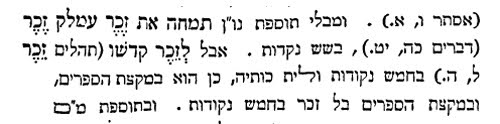
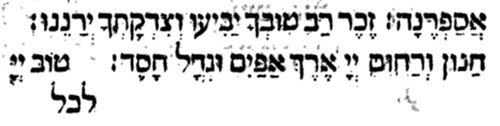
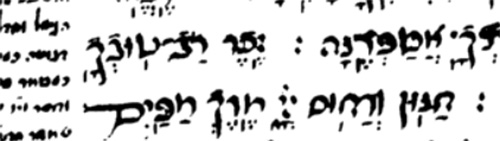 In 1832, about fifteen years after publication of Heidenheim’s edition, a book by R. Issachar Baer appeared, entitled Ma`aseh Rav, containing a description of the practices of the Vilna Gaon. The author mentions that the Gaon’s disciples disagreed over the way their teacher used to read the word zekher in Parshat Zakhor. The author attested as follows: “When he would read Parshat Zakhor, he would say zekher, with a segol under the letter zayin. R. Hayyim of Volozhin, however, whose endorsement is on the book, wrote there, `As for his writing that in Parshat Zakhor one should read [z-kh-r] with six dots, I heard from the saintly person [i.e., the Gaon of Vilna] that he read with five dots (=zeikher).’ I do not know whether those hearing him were mistaken, and thought they heard segol twice, or whether he changed his practice in his later years.”