Towards A Reappraisal of the Recent Works of Rabbi Shelomoh Luriah (Maharshal)

Towards A Reappraisal of the Recent Works
Of Rabbi Shelomoh Luriah (Maharshal)
By Rabbi Eliezer Brodt

As previously mentioned on the Seforim blog by myself and others, our generation is privileged to something no previous generation has seen, a sheer volume of Jewish books being printed and reprinted. Many of these works are seeing print for the first time – works of Rishonim and Achronim on all sorts of topics brought to the public eye from manuscript form. Some of these printings are beautiful editions, critically edited, and even glossed with illuminating marginal annotations. Other times the only benefit is to see the change from an illegible typeface to a clear block print (oft as not without any particular in the editing). In many cases, specific institutions are founded solely to deal with works from a particular religious group, while at other times, entire publishing houses are established that deal with the writings of one particular author. Recently one Godol, the great prolific writer, the Aderet (Rabbi Eliyahu David Rabinowitz-Teomim), famous for, amongst many things, being the father-in-law of R Kook, has had over five distinct groups working on printing his writings although almost none of his writings were published in his lifetime.

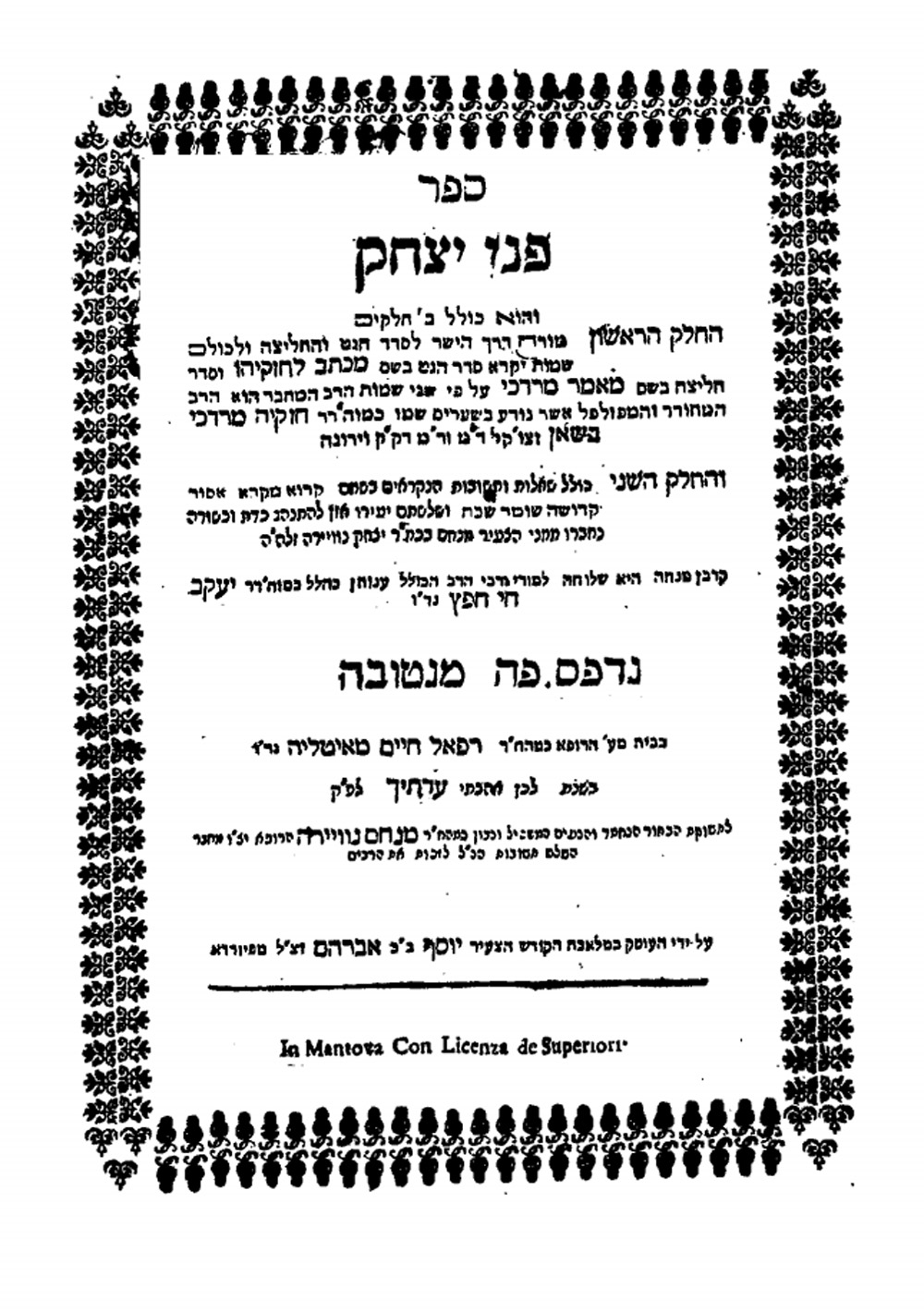
Recently, a rather modest institute called Makhon Iyay HaYam has begun reprinting as well as publishing for the first time, the many writings of the great gaon R. Shelomoh Luria, Maharshal. To date, this Makhon has already printed a few of his works and is currently working on many more. In this post, I would like to discuss this great person, the Maharshal, some of his printed works, and the current and future projects of this particular Makhon. As much has already been written on this great goan, including several biographical sketches, as well as a dissertation by Dr. Meir Raffeld on the Maharshal’s magnum opus, Yam Shel Shelomoh (more later), I have limited myself to but a few highlights.

The Maharshal was born circa 1510 (most likely in the city of Brisk or Posen), and died in 1573 in Lublin. He was a Rav in many cities, including Brisk,[1] Ostra and Lublin.[2] Alongside the rabbinate, the Maharshal established and ran yeshivot, training many famous students. Amongst these students are, notably, R. Yehoshuah Falk Katz (author of the Preisha), R. Moshe Meis (author of Mateh Moshe on minhagim as well as Hoel Moshe on Rashi; more on him later), R. Shelomoh Efrayim Lunschitz (author of the Kli Yakar), R. Chayim of Friedberg (author of Sefer HaChayim and brother of the famous Maharal of Prague), and R. Eliyahu of Chelm (the great-great-grandfather of the Hakham Zvi and Rabbi Jacob Emden, famous for being the only latter day Godol to have created a documented golem (see here for Prof. Shnayer Z. Leiman’s post, “Did a Disciple of the Maharal Create a Golem?” at the Seforim blog) all studied in the Maharshal’s Yeshiva. As an historical aside, it is worth pointing out that in the biography printed by R. Chechik, Sefer Chasdei Hashem (Yerushalayim, 5767, pg. 3), R. Chechik makes the claim that the major talmidim of the Maharshal studied in his yeshiva in Lublin. This appears highly implausible as the Maharshal only came to Lublin in 1569, and by then most of his talmidim were already accomplished poskim. More likely these students studied in one of the Yeshivot the Maharshal headed prior to the Maharshal’s Yeshiva in Lublin.

R. Shelomoh Luria was a contemporary of and related to R. Moshe Isserles, the Rama. In his Maalot Hayuchsin (Yerushalayim, 5764), p. 15, R. Efraim Zalman Margolis traces the various ways in which the Rama and the Maharshal were related. Among those was through the marriage of Maharshal’s daughter Miriam to Rama’s brother Eliezer. Additionally, these two Gedolim carried on extensive correspondence between themselves, some taking a rather sharp tone (most noted are those letters regarding the study of philosophy and dikduk). Yet, as R. Efraim Zalman Margolis notes, the utmost respect and esteem was maintained between the two. In fact, they seem to have been keenly interested in the other’s works, there is evidence that they read the other’s work prior to publication. (See Klilas Yoffe p. 9b and Maalot Hayuchsin of R. Efraim Zalman Margolis, pp. 27-28.) [3]

While both the Rama and the Maharshal were well respected and many of the Poskim of that generation were the Maharsha’s students, in a choice between the two regarding how to decide halakha, the Rama is the clear winner. The Shelah HaKadosh, however, bemoans the fact the Maharshal’s decisions were not accepted. This is so as the Maharshal followed the Rama (i.e. the Maharshal died later) and, as such, should have been awarded consenting rulings out of principle (halachisha k’basrayi). As a result, the Shelah HaKadosh calls upon those who fear Hashem to take upon themselves all stringent dissenting opinions of the Maharshal in opposition to the Rama (Shnei Luchot HaBrit, Shaar Ha’Otiyot, #100, Kedushah).

The Maharshal is well-known for his caustic tone in his writings. Many biographers note his use of rather sharp epithets in his works concerning other Gedolim. R. Chaim Dembitzer cites many instances where the Maharshal writes sharply against various Rishonim (Klilas Yoffe p. 11). But, some have questioned the focus on the Maharshal’s tone. For instance, Shmuel Abba Horedesky, who authored a biography on the Maharshal, Kerem Shlomo, included a discussion of the Maharshal’s caustic tone. Horedesky sent his book to the Sdei Chemed, and in a recently published letter, the Sdei Chemed sharply critiques Horedesky’s inclusion of that portion on the Maharshal.[4] (Dr. M. Raffeld, in his dissertation also bemoans the misguided focus of previous historians at these caustic remarks instead of researching the more unknown eras of the Maharshal’s life).

Aside from his goanus, the Maharshal was an extremely prolific writer, writing on many areas. Some of his more famous works include an outstanding work on Shas called Yam Shel Shelomoh. For itself, the work is pretty well known, unfortunately it is not used to its full potential in today’s yeshivah world (this due to many reasons, most importantly the current mahalach halimud) although of late it has been reprinted in a nice block print edition. The style of the Yam Shel Shelomoh is oriented toward halakha. Typically, each topic is examined systematically from its beginning sources, through the Rishonim and through (the then) current minhag (see further Dr. M. Raffeld). This work has not reached us in its entirety, as parts are missing from those mesechtos present. Furthermore, it is clear from many places in his writings as well as quotes from his talmdim that he wrote more than what we have. (To date we have volumes on seven masekhtot, but according to various sources, the Maharshal wrote on sixteen masekhtot. Dr. Raffeld attempts to construct a list of the remaining nine; not all agree to this listing and several substitutes have been suggested). I seem to recall that recently they discovered the volume of Yam Shel Shelomoh on masekhet Baba Batra, but the collector who owns it does not allow anyone to print it and is only willing to sell it for a very large sum of money. Likewise, rumors of Yam Shel Shelomoh on masekhet Shabbat have been circulating among professional circles, without any concrete evidence.

In addition to the Yam Shel Shelomoh on the Gemara, the Maharshal penned many other notes on many masekhtot, dealing with, among his personal novella, the correct girsa’ot of the Gemara. Known today as Hagahot Hokhmat Shelomoh, this work was originally printed as a separate volume. Present-day editions of Gemara find some of the comments having added into the text of the Gemara and Rashi over time, and the authorship erased along with the original gloss. The remaining glosses are printed in the back of almost all recent editions of the Gemara. In his editing, the Maharshal used old manuscripts, as well as variant texts. In a lengthy article in Alei Sefer, vol. 15, Y. Ron deals with this work. Later on Professor Yaakov Shmuel Spiegel dealt with this work in his classic Amudim be-Toldot ha-Sefer ha-Ivry, Hagot u-Maghim (pp. 279-285). Hokhmat Shelomoh on Masekhet Gitten has been recently reprinted by R. Y. Satz, (Toronto: Otzreinu, 1990). The foreword includes a detailed article elaborating on the need to reprint this work, basing the glosses on the exact comments of the Gemara used by the Maharshal. Large amounts of the glosses have been deleted by editors who mistakenly attributed them to lines already corrected, while in fact the Maharshal had another point in mind.

A partial list of the Maharshal’s other famous works include Teshuvot Maharshal, responsa quoted by all poskim; glosses on Rashi al haTorah called Yerios Shlomo, reprinted several times of late; glosses to Sefer Shaarey Dura by R. Yitzhak of Duren called Ateret Shelomoh. He also wrote glosses on the Sefer haMitzvot haGadol (SMaG) by R. Moshe of Coucy, called Amudei Shelomoh. Makhon Yerushalayim has issued a critical edition of this work, in three volumes, based on manuscripts and first prints, replete with footnotes by R. Yosef Luban. In addition to stand-alone volumes, the Makhon has also included the Maharshal’s valuable glosses in their critical edition of the Sefer haMitzvot haGadol.

Now for the works printed by Makhon Iyay HaYam:

As previously mentioned, the Maharshal routinely wrote marginal notes on a vast number of seforim. Of the most popular, were his glosses on the side of the Tur. In large, these notes are quoted by his talmid, R. Yehoshua Falk Katz, the Preisha, as well as the Bach (Sefer Bayit Chodosh) and many other Poskim, but until this century, these notes were never printed. In 1957, the editors of Tur Hotzaat ‘El Hamikoros’ commissioned R. S. Werner to ‘liberate’ these notes from manuscript ‘captivity,’ allowing for a tremendous find for the halakhic world. Unfortunately, thirty simanim in Yoreh Deah were lost from the copyist, and were listed as missing in the manuscript. In 1995, R. A. Chavatzelet published these simanim in a Sefer Zikaron for R. Werner, with the intention of completing the sefer on Yoreh Deah.

While researching another work, R. Y. M. Dubovick found citations to glosses not printed in R. Chavazelet’s addendum. Further perusal revealed the existence of more manuscripts in libraries worldwide that R. Werner was unaware of, and of which R. Chavatzelet had not availed himself. With more accurate texts, and numerous additional pieces not found in the manuscripts R. Werner had been given, it was clear of the need to edit the hagahot from the beginning. R. Dubovick decided to print this whole work again with all the corrections and missing pieces. First, R. Dubovick published an expository article in the journal Yeshurun (vol. 11) listing many missing parts on Yoreh Deah. In 2000, he issued a limited printing of the hagahot on Even HaEzer (including hagahot on the last ten simanim, a notable lack in R. Werner’s edition). More recently, he released a critical print of the first sixty simanim of Tur, Yoreh Deah with footnotes, surrounding the text of the Tur (Crimea, 1558) as used by the Maharshal. Therein, he references all the relevant writings of the Maharshal and his talmidim to the glosses on the Tur, as well as citations of these glosses by the poskim.

R. Dubovick intends to conclude the rest of Yoreh Deah in the near future and deal with Orah Hayyim and Hoshen Mishpat next, and finally, a reissue of Even HaEzer.

The focus of this recent volume on Yoreh Deah is the Sefer Ateret Shelomoh a commentary on the Shechitos u’Bedikos of R. Yaakov Weil, the hagahot on Tur an addendum to this rare work. As little as less than a hundred years ago every shochet had been tested specifically on this work, and virtually every small-town rav had to be an expert in this area as well. Many of the she’elot presented to a local rav were on these very topics and could not be referred to another Rav, as by than the animal would spoil. Nowadays, a shochet is tested on Sefer Beit David (R. David Tschechovitz), and unfortunately, the shechitot and bedikot of R. Yaakov Weil are almost unknown by anyone today, save for the occasional excerpt in other seforim.

Seeing how this valuable work has not been reprinted with the Maharshal’s notes in the past 400 years, Makhon Iyay HaYam recently undertook this project to enrich the public with yet another one of the Maharshal’s many invaluable works, reprinting the text based on the only two printings, and a manuscript fragment. R. Dubovick set himself to the task, painstakingly annotating along the way with extremely thorough notes on the entire sefer. Albeit some times his notes are a bit lengthy, there is a wealth of singular information contained in them, both on the halakhic field as well as the bio-bibliographic, which the editor could not deny the public, and did not omit them from print. A few examples; when the Maharshal quotes his grandfather, R. Yitzchok Klauber, noted are many of the places where the Maharshal cites his grandfather, throughout his many seforim (p. 3, n.6), along with a brief biographical sketch. [5] The same style note can be found when the Maharshal mentions his father-in-law R. Kalonymus (Kalman) Havarkstein-Yerushalmi; a listing of other citations, along with a thumbnail bio, including the Maharshal’s wife’s name (p. 38, n.28). With an eye on the halakhic ramifications of reprinting this sefer, R Dubovick notes that R. Efraim Zalman Margolis highlighted the importance of studying this sefer for those learning shechita, and yet, due to the sefer having been published as an addendum to the sefer, Sha’arei Dura, and not having a distinct title page from the Sha’rei Dura, remained unknown. (Introduction to Ateres Shlomo, see also Ma’alos haYhuchsin, p. 35) Additionally, regarding R. Efraim Zalman’s work on treifus in lungs (Rosh Efraim), R. Efraim Zalman states that Shechitot u’Bedikot were written last, even after Yam Shel Shelomoh, and the Halakha should be fixed accordingly, even against a dissenting opinion in Yam Shel Shelomoh (p. 38, n.27). In addition, he includes interesting sources to the practice of watering cattle before shechita (p. 55, n.92), as well as bringing to light a fascinating source to the puzzling minhag of peeling off sirchos (lesions) from the lung (p. 64, n.129).

The Maharshal’s extreme regard for maintaining minhagei Ashkenaz and their halakhic impact are spread throughout both his and his talmidim’s many writings. One can especially find this true with regard to R. Moshe Meis’ classic work Mateh Moshe. A while back, a manuscript was discovered of some minhaghim of the Maharshal called Hanhagot HaMaharshal. Dr. Y. Refael printed this work in a Sefer Hayovel and then later on as a separate pamphlet. These minhagim were written anonymously, and the editor attributes them to R. Moshe Meis, author of Mateh Moshe, and known to have been a personal member of the household of his teacher, R. Shelomoh Luria. As these minhagim do not cover the whole year, Dr. Refael concludes that the text is only a segment of a much larger work, which had unfortunately been lost. Interestingly enough, R. Shmuel Ashkenazi told me recently he did all the work in annotating this sefer and preparing it for print, although for some reason he wasn’t credited for it. (While this edition was printed from a manuscript, copied expressly for R. Nachum Ber Friedman of Sadigura (Areshet, vol. 1 397-98), there is another, variant edition, printed in the back of some copies of Nagid uMitzaveh (Sinai, vol. 63, p. 96)).

Among the interesting minhagim included in here is: [6]

מורי מוהר”ש אמר שקצת מינות באמירת י”ג עיקרים שתקנו באני מאמין שיש בו י”ג עיקרים, כי קצת אומרים וחושבים בלבם כשמאמינים בי”ג עיקירים אף על פי שעשו כל התועבות שבעולם ר”ל מכל מקום יש להם תקנה ואינו כן אלא אפילו מדברי חז”ל הוא עיקיר אחד, כמו שמצינו שאמר מה נאה הלכה זו ולא משבח האחרות גם כן אינו עושה כהוגן. ולא נתקנו אלו הי”ג עיקירים רק בשביל פילסוף מימים הקדמונים שהיו עושים עיקרים בכללים ולא עשו כמנין הללו באו חז”ל ותקנו גם כן בכלליהם וכן ביגדל אלקים חי נתקן י”ג עיקירם גם כן ולא אמר מורי אחד מהם ולא יגדל ולא אני מאמין”.

Also, the Maharshal discusses the Shir HaYichud, and offers a rather radical explanation of who the author of Shir HaYichud was: [7]

ביום טוב אחרון של פסח ביום ב’ אירע שנפל נר על דף של סידור ואמר בחור אחד בבית הכנסת של מורי מהר”ש לכבות אותו ולהציל ספרי קודש מדליקה. ואמר אפשר מותר ובפרט ביום ב’ של יום טוב שהוא דרבנן ובחור אחד אמר שהוא משיר היחוד ואמר מורי מהר”ש אל תבכו, גם זה לטובה שנשרף, שהוא סובר שלא בר סמכא עשאו, שמין עשאו

Similarly, in the Siddur Siddur Shabtei Sofer, vol. 1 pp. 89-90, R. Shabtei records in the name of the Maharshal:

והנה נוהג’ ברוב קהלות אשכנז לומר שיר היחוד הזה בכל יום רק במדינת רוסיא בקהלות אשר נהג בהם רבנות הגאון מהר”ר שלמה לוריא ז”ל אין אומרים אותו כל עיקר. ושמעתי מפי רבים מזקני הדור שהגידו לי ששמעו את מהרש”ל שהיה דורש בק”ק לבוב ובק”ק לובלין בתחלת בואו לנהוג שם רבנות ואמר בדרשותיו שאין לומר שיר היחוד מפני שמצא שחיבר אותו מין, ובעבור זה היה מוחה בכל הקהלות מושבותיו מלאמרו

Another rather unknown work of the Maharshal, is his Zemirot for Shabbat. While this work has been printed many times, not one of these editions has been reprinted based on the first printing and manuscript and many of the modern printings have actually detracted from the sefer’s integrity. This rare sefer is comprised of songs the Maharshal composed for Shabbat and Motzei Shabbat, with the author’s commentary to those songs. Included in his explanations are many halakhot and minhagim of Shabbat. Some examples of which are; women should wear a special garment when lighting the Shabbos candles; a reference to the custom of wearing a kittel on Shabbos. Another example, he praises the people of Ashkenaz for having a set system with regard to hosting yeshiva students for Shabbat meals. (Interestingly enough, while Prof. Simha Assaf mentions this minhag in his biographical sketch of the Maharshal printed in Sefer haYovel Lichvod Prof. L. Ginzburg, he makes no note of it in his Mekorot LeToldot HaChinuch biYisrael, even though he does mention several other sources to this custom pp. 229, 236, 633). [8]

Here too, R. Dubovick is working on reprinting these zemirot, along with an excellent commentary of his own on this work. A few samples of his efforts have been published in the journal Yeshurun (vol. 16). Here, I was simply amazed at the sources and comments of R. Dubovick regarding the various points of the Maharshal. One only hopes he will finish this work soon along with all his many projects relating to the Maharshal.

Notes:
I would like to thank R Y. M. Dubovick and Dan Rabinowitz in for their extremely helpful suggestions and sources in writing this post.

[1] On the Maharshal’s tenure in Brisk see the letter of R. Nosson Rabinovitch (author of Dikdukei Sofrim) in Eyur Tehilah p. 198.

[2] On the Maharshal’s time in Lublin, see the story brought in Simchas Hanefesh (see here for an earlier post, “Simchat ha-Nefesh: An Important But Often Ignored Work on German Jewish Customs,” at the Seforim blog) from R Yehudah Chassid pg 109-110. A similar story is quoted by the Chida in Shem haGedolim, erech R Avrhoum Mocher Yerokos.

[3] For a recent lengthy discussion of these correspondences, see Y. Elbaum in his Pisichut Vehistagrot (pg 156 and onwards), as well Dr. Asher Siev’s biography of the Rama (1972). For the exchange of letters between Rama and Maharshal on philosophy, as part of the appendix of translations of primary texts from 16th-century East-European Jewish Thought, see Leonard Levin, “Seeing With Both Eyes: The Intellectual Formation of Ephraim Luntshitz,” (Ph.D., Jewish Theological Seminary of America, 2003), 299-284, esp. 299-311.

[4] On the caustic comments of the Maharshal see Iggerot S’dei Chemed, vol. 1, siman 11, pp. 24-25; see also R. Barukh haLevi Epstein, Mekor Barukh, Introduction, pp. 89-93.

[5] For more on the Maharshal’s grandfather see M. Rafeld, in Daniel Sperber, Minhagei Yisrael (Jerusalem: Mossad Harav Kook, 2007), 8:174-96.

[6] For more on Ani Manmin see HaSiddur, pp. 232-36; Marc B. Shapiro, The Limits of Orthodox Theology: Maimonides’ Thirteen Principles Reappraised (Oxford: Littman Library of Jewish Civilization, 2004), pp. 19-20 (citing opinion of the Maharshal).

[7] For more on this topic see: A. Berliner, Kesavim Nevcharim, vol 1 pg 145-170; R. Dovid Hanazir , Kol Haneveha pgs 124, 143-144; H.J. Zimmels, Askenazim and Sephardim, pp. 132-134; A Haberman, Shiur Hayichud Vhakovod (intro), Y. Dan, Shiur Hayichud (facsimile edition) with the commentary of R. Yom Tov Muelhausem, Introduction; R.Y. Stal, Sefer Gematryios L’Rabenu Yehudah Hachassid, vol 1 pg 32-38; R. Y. Golhaver Minhaghei Hakehlos, vol 1 p. 132: and my forthcoming article in the Yerushasenu volume two.

[8] Another person who missed this source while discussing this topic is Mordechai Breuer, in his comprehensive book on the Yeshivot, Oholei Torah: The Yeshiva, Its Structure and History (Merkaz Zalman Shazar 2003), pp. 405-409.


Review of Kedushat Aviv: Rav Aharon Lichtenstein zt”l on the Sanctity of Time and Place

Kedushat Aviv:
Rav Aharon Lichtenstein ztl on the Sanctity of Time and Place
Rav Elyakim Krumbein
(Translated
by David Strauss)
Rav Elyakim Krumbein studied with Rav Soloveitchik at YU and made aliya in 1973. He has been a ram at Yeshivat Har Etzion since 1981 and heads its Tochnit Bekiut. He also served as a Pedagogic Advisor at Herzog College. Rav Krumbein’s guides for self-study on the Bavot, Ketubot and other tractates are widely used by Yeshiva students, and he has also written two volumes of study guides on Gittin and Kiddushin entitled Sho’el K’inyan. He is the author of Musar for Moderns and several courses on the Yeshivat Har Etzion’s Virtual Beit Midrash, as well as many articles on Talmud, Halakha, and Jewish thought, including seminal studies on the methodology of Brisk.
Review of Rav Aharon Lichtenstein, Kedushat Aviv: Iyyunim BeKedushat HaZeman VehaMakom, edited and adapted by R. Shai Lichtenstein, asst. ed. R. Chaim Navon (Maggid and Yeshivat Har Etzion, 2017; Hebrew); 512 pp., available here.
Kedushat Aviv: Iyyunim BeKedushat HaZeman VehaMakom consists of previously unpublished writings and lectures of Rav Aharon Lichtenstein ztl. Rav Aharon would periodically carve out time from his enormous duties as a teacher of Torah in order to cultivate this scholarly endeavor, the study of the concept of “sanctity.” He had hoped and planned that the work would develop into a book of three parts, discussing the sanctity of time, place, and personalities. Unfortunately, this dream was not fulfilled during his lifetime. Now, however, Rav Aharon’s son, R. Shai Lichtenstein, has edited and published the present volume, with the help of family members, disciples, and generous donors. (The book’s introduction details which chapters were written by Rav Aharon himself and which are based on recordings and notes.) The volume covers two topics – the sanctity of time and the sanctity of place.
A Book of Thematic Studies
This volume belongs to the genre of thematic studies. It is not a collection of novella on the Talmud or the Rambam or the like, but rather an examination of the various aspects of a particular topic. Such works take upon themselves a formidable task – collecting passages from all across the Talmud in which a particular issue is discussed by Chazal, arranging the principles arising from the sources, and clarifying the inner relationships between the various parts.
These works can be classified according to their various approaches. Some authors attempt to turn an obscure topic into a “Shulchan Arukh” (e.g., the Minchat Kohen on the laws of forbidden food mixtures). Others strive primarily to deal
with the difficulties of the topic and to rule about matters that are subject to doubt (e.g. Shev Shemateta), and, in recent generations, the goal may be to define the concepts in depth (e.g. Shaarei Yosher). Rav Aharon, as a prominent scholar of the Brisker approach, belongs to the latter group. The author immerses himself in the depths of Halakha and takes advantage of his mastery of the Talmudic passages, the Rishonim, and the Acharonim (attested to by indices at the end of the volume).

We were already able to benefit from the essays published in Rav Aharon’s previous book, Minchat Aviv (here), which was previously reviewed at the Seforim blog by Professor Aviad Hacohen (here) some of which constitute comprehensive thematic studies in themselves (see, for example, his examination of the issue of “lishmah”).

The current volume, however, is an entirely new development. The scope is astounding, and the imagination and ambition are inspiring. Leafing through the main headings, most of which are dealt with at length, reveals that the book covers the major issues relating to the sanctity of time and place.

The first part deals with the sanctity of Shabbat and Yom Tov, Kiddush, the sanctity of Yom Kippur, the Sabbatical and Jubilee years, the sanctification of the months, and the intercalations of the calendar. The second part opens with the sanctity of Eretz Yisrael, and then moves on to the sanctity of walled cities, Jerusalem, the Temple Mount, and the Temple and its various parts.

In Kedushat Aviv, Rav Aharon applies the unique scholarly approach that characterizes all of his teachings in order to elucidate the topic of sanctity. We will note below several points relating to the author’s methodological approach.

The grand plan of the work allowed Rav Aharon to give free rein to the fullness of his originality. This originality stems not necessarily from flashes of brilliance, but rather from the author’s fundamental and thorough examination of the material under study.

To illustrate this, let us examine one small element of a discussion concerning the sanctity of Eretz Yisrael, a classic subject in Talmudic scholarship. The chapter opens with a review of some of the well-known doctrines, as taught by the sages of Brisk – first and foremost the distinction between the “sanctity” of Eretz Yisrael and the “name” of Eretz Yisrael. This duality regarding the unique status of the land has a number of practical ramifications, which are quite familiar to anyone at home in the beit midrash.

Thus, for example, the geographical scope of the “name” of Eretz Yisrael extends to the broad boundaries of the land conquered by those who came out of Egypt (as opposed to the narrower borders achieved by the returnees under Ezra). Also, it is never cancelled, even according to those who say that the initial sanctification of Eretz Yisrael did not hold for the future. Thirdly, it obligates only some of the commandments connected to Eretz Yisrael (for example, egla arufa, but not terumot and ma’asrot). Rav Aharon considers these classical matters and declares that “Heaven has left me room to illuminate another facet of the issue.” From here he continues with novel clarifications and further developments that greatly broaden the halakhic concept of Eretz Yisrael, as the traditional dichotomy is restrictive and there is no reason to assume that it is necessarily true.

Rav Aharon argues that in addition to the sanctity of the land of Eretz Yisrael (which obligates the setting aside of terumot and ma’asrot), we can speak of three different concepts that underlie the “name” of Eretz Yisrael:

  1. the chosen land in which the Shekhina rests;
  2. the place where the sanctity of the Temple spreads out gradually (as explained in the first chapter of Keilim), this being reflected in the laws governing the removal of the ritually impure from the camp;
  3. the land where the people of Israel become a united community and in which they fulfill their public duties (e.g., egla arufa).

It is, of course, possible to attribute all of these things to the “name” of Eretz Yisrael and assume that they all apply within the borders of the land conquered by those who left Egypt. But Rav Aharon writes, in his characteristic language, that “one can distinguish between the different aspects.” It is possible, for example, that the indwelling of the Shekhina sanctifies the land independently of any connection to the Temple. It is also possible that neither of these is necessary for regarding the people of Israel as a community dwelling in their own land.

This approach allows for a certain flexibility when we attempt to define the geographical entity of Eretz Yisrael. It may be argued that the covenantal boundaries of Abraham are the determining factor regarding a particular matter, but regarding a different matter, it is the boundaries mentioned in Parashat Mas’ei or the boundaries of the conquests of Yehoshua. This discussion is entirely independent of the idea of the “sanctity” of Eretz Yisrael regarding terumot and ma’asrot, which relates to the land settled by those who ascended from Bavel.

Thus, we are liberated from the fixed idea that anything unrelated to terumot and ma’asrot depends on the boundaries of the land conquered by those who left Egypt. The dichotomous approach is indeed convenient, and it may, in fact, be implicit in the words of the Rambam. However, dissociating from it is important, for example, when we discuss Transjordan. This area was certainly subject to the laws of terumot and ma’asrot during the First Temple period by Torah law, but it is referred to as an “impure land” in Scripture. From this, the Radbaz learns that in Transjordan there is “sanctity of mitzvot,” but no “sanctity of the Shekhina.” We see, then, that the sanctity of the Shekhina is not found in all places conquered by those who left Egypt, despite their possessing the sanctity of the land with respect to mitzvot. According to the conventional terminology, this situation is difficult to explain, to say the least. In this context, Rav Aharon cites the Sifre Zuta: “Transjordan is not fit for the house of the Shekhina.”

Another example relates to the sanctification of the month. It is generally assumed that the sanctity of time depends on human action, as expressed in the blessing, “Mekaddesh Yisrael veha-zemanim, He sanctifies Israel, who sanctify the appointed times.” In Rav Aharon’s chapter on the topic, this statement is treated thoroughly, systematically and in detail.

First of all, we may ask: Who is “Israel” in this context? Does it refer to a court of three, the Great Sanhedrin, the leaders of the people (“Moshe and Aharon,” according to Scripture), the nation of Israel as a collective, or the people of Israel as individuals? The fact that there are so many possibilities necessitates precision in definition, and, as mentioned above, a readiness for liberation from convenient dichotomous thinking.

The added value in this discussion is significant. Some of the options mentioned appear in the existing literature, usually in a narrower and more localized version. For example, the controversy about whether the sanctification of the month requires a Sanhedrin is well-known and has been amply discussed. But here it plays a role not in a “closed” two-sided investigation, but in an open inquiry: Who is “Israel” with regard to the sanctification of the moadim? The horizons of consideration and understanding have thus been greatly broadened.

As for the fundamental question, a distinction must be made between the law in practice and the law in principle; it is possible that in practice the mo’adim are determined by a court, but as representatives of the people. It must also be kept in mind that the process of establishing the mo’adim is complex and has stages that can be distinguished from one another – the deliberations, the final decision, and the actual sanctification. We may propose, for example, that in principle the decision is in the hands of the community, but the court acts on their behalf; regarding the actual sanctification, however, the court acts independently. The practical ramification is that the decision itself must be made in Eretz Yisrael (the place of the people of Israel as a national entity), whereas the actual sanctification can take place anywhere. The identity of the body that performs the actual sanctification is also a central question when it comes to exceptional situations in which human involvement is in doubt – for example, when the month is not sanctified at its appointed time, but is rather “sanctified by Heaven.” Is there still a role for the court in such a case? Rav Aharon demonstrates that this issue is subject to a dispute.

The proceeding discussion turns to the manner in which the calendar is determined in our times, in the absence of a Sanhedrin and authorized judges. Does this prove that in the end the human factor is dispensable? Once again, the answer depends upon differing opinions – whether the calendar in our day is determined in practice by the inhabitants of Eretz Yisrael (Rambam), by an earlier decision made by R. Hillel II and his court (Ramban), or “in Heaven” (Ri Migash). The Ramban’s view is ostensibly the “conservative” one, as according to him, the mechanism for sanctifying the month remains in principle as it was throughout history, with one “slight” deviation – the matter was settled long in advance. Rav Aharon, however, with his penetrating observation, discerns a great difference between projective astronomical calculations and what took place during the time of the Temple. The latter was a direct sanctification of the current month in present time, whereas the court of Hillel established a calendar as a long-term directive, which dictates the mo’adim in advance based on how they fit the pre-determined framework. Thus, it turns out that, contrary to what we might have thought, the Ramban actually agrees with the Ri Migash, and not with the Rambam, that in our time the mo’adim become sanctified on their own, without any direct sanctification on the part of the court.

The volume under discussion is unique in its creative use of biblical verses. The window to this methodology was opened wide by the founder of the Brisker approach of Talmud study, who relied heavily on the idea of “gezeirat ha-katuv,” “Scriptural decree,” beyond what is generally found in the literature of the Acharonim. As a rule, this Brisker approach demonstrates sensitivity and precision with regard to the meaning arising both from the wording and from the context of the biblical text.

For example, we mentioned earlier that Rav Aharon distinguishes between two levels of human involvement in determining the calendar: establishing a system of dates, which can be done in advance, as opposed to immediate and direct sanctification. According to the Ramban, the calendar of R. Hillel II fulfills the first component, but it lacks the direct sanctification. R. Aharon identifies these two aspects in two different passages of the Torah. In Parashat Emor, we read: “These are the appointed seasons of the Lord… which you shall proclaim in their appointed season.” This describes a “proclamation” of a calendar as a framework, which can be done on a comprehensive scale and even long in advance. In contrast, in Parashat Bo we read: “This month shall be to you the beginning of months” – the source for the sanctification of each month in its time based on a sighting of the new moon. Thus it may be suggested that in our time, according to the Ramban (as well as the Ri Migash), we fulfill the command in Emor, but we are unable to carry out what is stated in Bo. From this it may be concluded that this element is not indispensable. On the other hand, according to the Rambam, who maintains that even in our time, the sanctification of the appointed times is executed in a direct manner, we fulfill both elements – the proclamation and the sanctification.

Rav Aharon uses the same method in his comprehensive discussion of the sanctity of Shabbat and Yom Tov, with which the book opens. Here the recourse to biblical texts is more extensive and is consistently present in the discussion. This is already apparent at the beginning of the essay, which is devoted to an examination of the Torah passages dealing with Shabbat, to the distinctions between them, and to their halakhic ramifications.

Rav Aharon’s main argument is that the verses in the passage of “Ve-shamru Bnei Yisrael et ha-Shabbat” in Parashat Ki-Tisa constitute a change with respect to the discussions of Shabbat in Yitro and in Mishpatim. Parashat Ki-Tisa introduces the concept of desecrating the Shabbat, as well as the death penalty for that offense. Prior to these verses, the foundation of Shabbat lay in its being a reminder of the act of Creation, and this foundation gave rise to the melakhot as prohibited actions.

But in Parashat Ki-Tisa, the Torah presents Shabbat as a sign of the covenant and as a focus of the resting of the Shekhina, which is why these verses are found in the context of the commandment regarding the building of the Tabernacle. Only now does performing a forbidden action on Shabbat become its desecration – after it has been established that it has sanctity that is subject to desecration (just as the sanctity of the Temple is desecrated by the entry of something that is ritually impure). The liability for the death penalty is not for the performance of the prohibited labor itself, but for its consequence – the desecration of the sanctity.

Thus, there are “two dinim” regarding the sanctity of Shabbat, and the attribution of various details of the laws of Shabbat to one or the other aspect of the sanctity of the day has halakhic ramifications.

Rav Aharon further explains why the prohibited labor of kindling is mentioned separately in Parashat Vayakhel (on the assumption that there is no halakhic difference between it and any other prohibited labor, on the Tannaitic view that its specification is a mere illustration of separate culpability for each transgression of Shabbat law). Kindling is fundamentally a labor connected to food preparation, and such a labor is prohibited only because of the “covenant” aspect of Shabbat. Therefore, it could not have been prohibited before Parashat Ki-Tisa. Hence the difference in the definition of the sanctity of the day between Shabbat and Yom Tov.

We have presented here only a few fundamental ideas on which the author proceeds to expand and build entire edifices.

Much of the richness of Rav Aharon’s writings derives from his commitment to the truth. By virtue of this commitment, he avoids adherence to conventional ideas and often raises doubts about commonly accepted matters, and thus he entertains many varied possibilities. Some readers will be frustrated by the fact that so much is left in question. In their view, Torah novellae are measured according to their success in clarifying and proving from the sources the opposing sides of the various investigations – “there is no greater joy than the clarification of doubt.” However, from Rav Aharon’s point of view, the ability to maintain a conceptual space in which different possibilities are open is a source of satisfaction. According to the atmosphere of the book, successfully removing a threat to one of the options, thus “proving” that everything is still possible, is a source of relief. This tendency is expressed in phrases such as “it may be argued” or “it may be suggested.” The fact that these possibilities are not directly supported by the views of any of the Rishonim is not a reason to ignore them.

For example, according to the well-known position of the Rambam, the opinion that maintains that a gentile’s purchase of land in Eretz Yisrael cancels the sanctity of the land for the purpose of terumot and ma’asrot further argues that the exemption continues even if the land is bought back by a Jew. This is because the Jew’s purchase falls into the category of “the conquest of an individual,” as opposed to a national acquisition. Rav Aharon explains at length why this is not necessarily so, despite the ruling of the Rambam. It is possible that even according to the view that the gentile’s ownership cancels the sanctity, that sanctity returns when Jewish ownership of the land is restored.

First of all, the Rambam assumes that “the conquest of an individual” is a problem even in Eretz Yisrael itself, and not only in Syria, a matter that is subject to dispute. Second, it may be suggested that when all of Eretz Yisrael is in Jewish hands, the private purchase of a particular field joins the collective ownership and becomes part of the conquest of the community, despite the fact that the purchaser himself is interested only in his private ownership. It is further possible that even if the purchase is the conquest of an individual and it cannot sanctify the land directly, it is able to join the field to the part of Eretz Yisrael that is already holy, and thus is endowed with automatic sanctity. It is also possible that even if the gentile’s purchase of the land cancels its sanctity, it is not fully cancelled (as would be in a situation of destruction or of general foreign occupation), but is rather temporarily frozen, and it is therefore liable to reveal itself once again without another act of sanctification.

In a related matter, the author discusses the view of R. Chayim Brisker regarding the status of the laws relating to the sanctity of the land when the majority of the nation is not found in Eretz Yisrael. According to the Rambam, during the time of the Second Temple, there was no obligation to set aside terumot and ma’asrot, since there was no return of all (or most) of the people of Israel in the days of Ezra, “bi’at kulkhem.” R. Chayim explains that this deficiency is not an independent condition for obligation, but rather a deficiency in the sanctity of the land. In accordance with this understanding, he assumes that the criterion of “bi’at kulkhem” refers to the moment of the sanctification of the land (the time of Ezra’s arrival). If it fails at that point, the situation is irrevocable despite subsequent immigration.

Rav Aharon raises doubts about this in light of the Rambam’s statement, “The Scriptural commandment to separate teruma applies only in Eretz Yisrael and only when the entire Jewish People is located there,” which does not mention this limitation. Even according to R. Chayim’s fundamental assumption, Rav Aharon asks, why not consider the later joining of most of Israel to be a continuation of the conquest, despite the fact that they did not arrive in the days of Ezra? Rav Aharon then proposes a different understanding that undermines the position of R. Chayim.

It is possible that what was suggested above regarding gentile ownership is also true of gentile conquest. In other words, even at a time of destruction, the sanctity of the land is not totally cancelled, but only frozen. This is because the sanctity of the land stems from its designation as the inheritance of the people of Israel. When the people of Israel are not there, the sanctity exists in potential. The people of Israel’s realized possession of and control over the land actualizes this sanctity. It is therefore possible that what is referred to as an “act of sanctification” of Eretz Yisrael is in fact merely the fulfillment of a condition for revealing this sanctity in actuality.

Even if we do not accept this understanding concerning the sanctification of Ezra, it is possible to accept it with regard to the condition of “bi’at kulkhem.” And even if Ezra had to perform some formal act of sanctification, after him – and even in our time, when the second sanctification is still in force – we certainly do not need “bi’at kulkhem” as part of the act of sanctification, but, as stated, as a reality that actualizes the destiny of the land and reveals its full sanctity.

These musings and their like open many theoretical avenues regarding concepts of sanctification and the sanctity of Eretz Yisrael, as well as their application in practice.

What Is Sanctity

Thus far we have noted some of the scholarly qualities of the book, but attention must also be paid to its contents. Given that the book encompasses so many facets of the laws of sanctity, does it also have something important to say about the nature of sanctity in the eyes of Halakha?

The editors of the book have done us a service by appending an essay that addresses this question, and we will make use of it here to deal with the issue, however briefly. The chapters of this volume reveal a conception of sanctity that is not only multi-faceted in itself, but is the object and background for human activity that reciprocally alters its nature. The Torah does not view sanctity as a guest from another world that lands in the human-natural world and transforms its order. On the contrary, it is integrated into the life of the individual, who responds to it with reciprocity and creativity.

Sometimes a person will find himself reacting to the appearance of sanctity with a declaration and with recognition, this in order to receive and integrate it into his earthly life, but without creating a new dimension. On the other hand, a person often does add a new dimension to existing holiness, what Rav Aharon calls its human “stratum.” Another possibility is not to add a new dimension to sanctity, but to “deepen” the existing dimension. These two latter options are certainly distinct, and illustrate once again the author’s close attention to precise definition and classification.

Finally, of course, there are cases in which man’s activity is the primary source of sanctity – whether deliberately initiated or spontaneously generated. At the same time, on the negative side, we must examine the situations in which a person can cancel holiness, or desecrate and impair it without abolishing it altogether, and when existing sanctity is completely indifferent to human actions. The editors illustrate these various avenues using detailed examples from the book.

The pages of Kedushat Aviv faithfully reflect the image of the author, who invested his heart and soul in this work. The volume exemplifies his love of Torah and his passion for truth, and provides an inspiring model of personal creativity. These are the foundations of Rav Aharon’s heritage, now bequeathed to his disciples.


A Half Slave, Ber Oppenheimer, the Reliability of R’ Shlomo Sofer, and Other Comments

A Half Slave, Ber Oppenheimer, the Reliability of R’ Shlomo Sofer, and Other Comments
By Brian Schwartz
When I was in my early yeshiva years studying tractate Shabbos, I came across a Rashba which I found to be most intriguing.  During its discussion of the first mishna, the gemara in Shabbos 4a makes the statement, “וכי אומרים לו לאדם חטא כדי שיזכה חבירך,” which means, “do we really say to a person, ‘sin in order that your friend should merit?’” A notion which suggests that a person should not sin in order that others can fulfill a mitzvah. Tosafos[1] has a long discussion addressing the multiple places in the Talmud which seem to contradict this concept.  One of the sources discussed, is the mishna in the fourth chapter of Gittin. The mishna states that if one owns a חצי עבד חצי בן חורין, (a half slave half free man, a phenomenon which happens when two partners own a slave and one partner frees him of his share), one must free him on the account that as a half slave he cannot fulfill the mitzvah of procreating, as a half slave cannot marry a slave or a free woman.  Tosafos also notes that freeing a slave is a transgression of the positive commandment of לעולם בהם תעבודו, as expressly stated previously in Gittin 38b.  Tosafos asks, how can a master be obligated to free his half slave so that the half slave can fulfill his mitzvah of procreating, does that not contradict the above statement in Shabbos of וכי אומרים לו לאדם חטא כדי שיזכה חבירך by violating a positive commandment? 
The Rashba[2] answers this question with the novel idea that the commandment of לעולם בהם תעבודו doesn’t apply to a half slave. Therefore, in this situation one isn’t transgressing any commandments when enabling someone else fulfill a mitzva. The problem with this approach is that there seems to be a gemara in Gittin 38a which suggests otherwise:

“ההיא אמתא דהות בפומבדיתא דהוו קא מעבדי בה אינשי איסורא אמר אביי אי לאו דאמר רב יהודה אמר שמואל דכל המשחרר עבדו עובר בעשה הוה כייפנא ליה למרה וכתיב לה גיטא דחירותא רבינא אמר כי הא מודה רב יהודה משום מילתא דאיסורא ואביי משום איסורא לא האמר רב חנינא בר רב קטינא אמר ר’ יצחק מעשה באשה אחת שחציה שפחה וחציה בת חורין וכפו את רבה ועשאה בת חורין ואמר רב נחמן בר יצחק מנהג הפקר נהגו בה .”
“There was a slave-woman in Pumpedisa, with whom men did sinful acts.  Abaye said: Were it not that Rav Yehuda has said in the name of Shmuel, that anyone who frees his slave transgresses a positive commandment, I would force her master, and he would write her a contract of freedom.  Ravina said:  In such a case Rav Yehuda would agree because of the sinful acts.  And Abaye, would not agree due to sinful acts?  Did not Rav Chanina Bar Rav Ketina say in the name of R’ Yitzchak:  There was once an incident involving a woman who was a half slave-woman and half free-woman, and they forced her master, and he made her a free woman; And Rav Nachman Bar Yitzchak said, men acted with her in a promiscuous manner.”

The gemara clearly suggests that if it wasn’t for the promiscuity of the half-slave woman, freeing her would be forbidden under the positive commandment of לעולם בהם תעבודו, clearly contradicting the Rashba.  This question bothered me very much, so I began a search through the acharonim[3] to see if anyone dealt with this problem.  While I was perusing through the yeshiva’s library, I happened upon an old torn up copy of the Chiddushei Maharam Barby by R’ Meir Barby, the Av Beis Din of Pressburg before the Chasam Sofer and R’ Meshullam Igra.  R’ Barby asks the question in the name of one of his students and attempts to give an answer[4].  At the time, I gave no specific significance to this source, other than the fact it was the earliest mention of this question that I could find.  I continued to gather sources until I found this question asked in the sefer Mei Be’er.  The Mei Be’er was authored by Ber Oppenheimer, a resident of Pressburg and a talmid chacham.  What is so interesting about this sefer is that Oppenheimer corresponds with many of the gedolim of his time.  Examples include; R’ Shmuel Landau, R’ Baruch Frankel Teomim, R’ Moshe Mintz, R’ Mordechai Banet, R’ Yaakov Orenstein, and many others[5].  All these personalities do not hold back on writing titles and honorifics to Oppenheimer that would suit any other great rabbi of their time. 
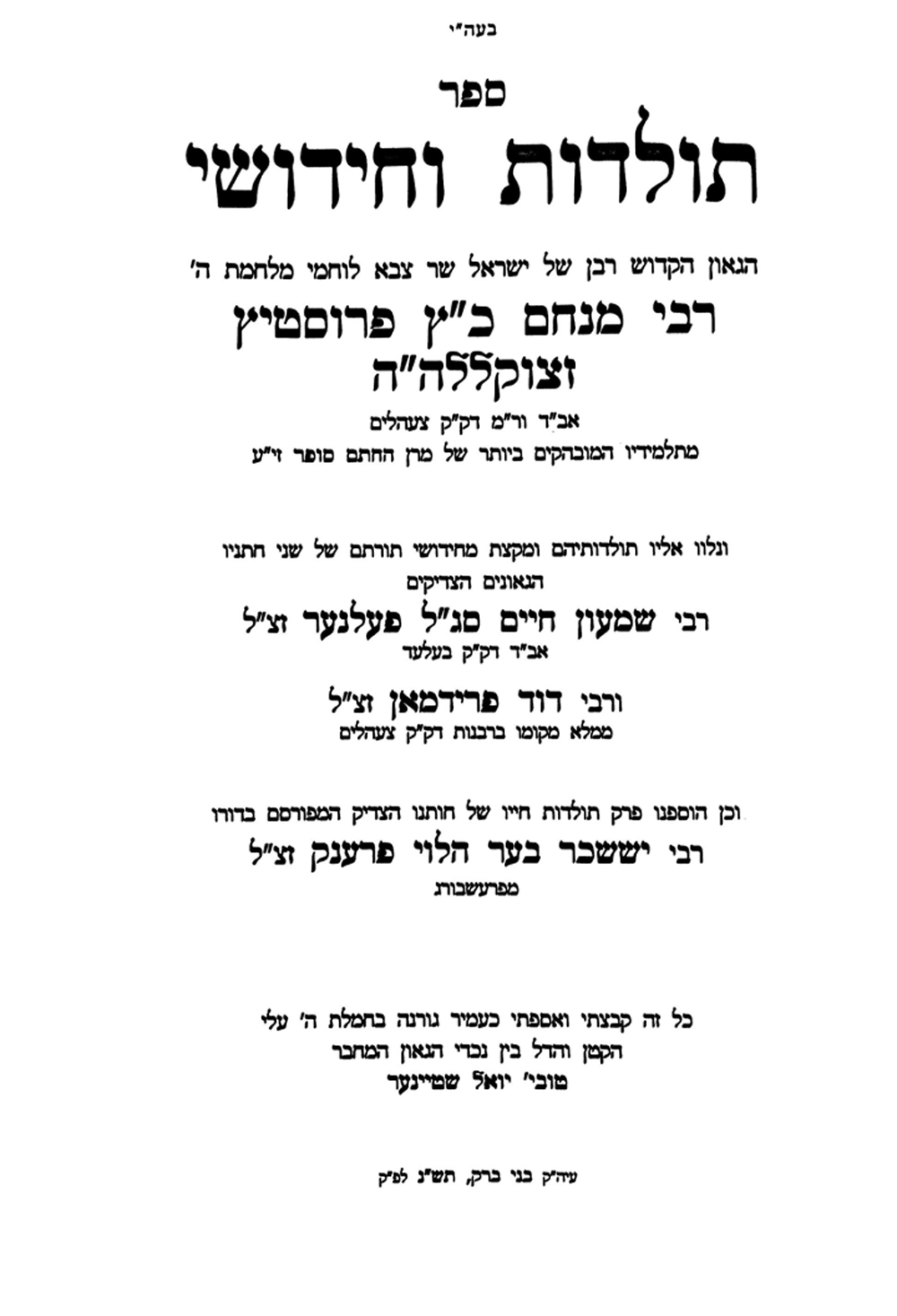
After a response to the above question from the author of the Ketzos Hachoshen[6], Oppenheimer writes that he found this question in the name of one of R’ Meir Barby’s students,  in the newly printed Chidushei Maharam Barby, and that student happened to be Oppenheimer himself.[7]  From there he proceeds with his own answer.  Here is the title page of the Mei Be’er:
While I was discussing this question with one of my rebbeim in yeshiva, I brought up the topic of the Mei Be’er and how the sefer impressed me with all the correspondence with the gedolim of the time.  To my surprise, my rebbe told me that R’ Moshe Sofer, known as the Chasam Sofer after the seforim he authored, supposedly quipped about the sefer, “מי באר לא נשתה” (a pun of the verse in Bamidbar 21:22).  This tidbit of information intrigued me to learn more about Ber Oppenheimer, and to find out if there was any truth to the hearsay of what the Chasam Sofer allegedly said. 
Ber Oppenheimer

            Ber Oppenheimer, a descendant of the famous R’ Dovid Oppenheim, was born in 1760 to his father Yitzchak in Pressburg.  Together with his brother Chaim, young Ber went to study in the Yeshiva of Fürth.  Sometime later, Oppenheimer left Fürth for Berlin so that he could fulfill his desire to learn secular knowledge.  When he completed his studies in Berlin, he returned to Pressburg where he would become one of the leaders of the community.
            In 1829, Oppenheimer published his seferMei Be’er.  Besides for the Mei Be’er, Oppenheimer published material in the Bikkurei Haitim and Kerem Chemed journals, and in 1825 he printed a prayer service in Honor of the ascension of Caroline Augusta of Bavaria to the Austrian throne[8].  Oppenheimer certainly was a maskil, though it seems he was traditional enough for all the gedolei hador he corresponded with.  The question is, what exactly did the Chasam Sofer think of him?  Did he know something the other gedolim did not, being that he lived in the same community as him?  In the Mei Be’er, there are a few teshuvos from the Chasam Sofer to Oppenheimer[9]. Devoid of of any titles and praise for Oppenheimer, the Chasam Sofer’s teshuvos to him leave off an impression of a seemingly cold relationship compared to his other correspondents; however, from this alone one can hardly gauge exactly what the Chasam Sofer really thought of Oppenheimer. 
            The start of the trail begins with the line “מי באר לא נשתה” that the Chasam Sofer allegedly said.  I found several sources which report the Chasam Sofer as the originator of the line[10], but without any context.  One source, R’ Shimon Fuerst in the preface to his Shem MiShimon,[11] does make a story out of it.  He tells of a story where once Oppenheimer came to speak to the Chasam Sofer in the latter’s house.  Sofer’s sons, R’ Shimon and R’ Avraham Shmuel Binyomin (the Ksav Sofer), noticed that their father made him wait a very long time.  They objected to their father’s treatment of Oppenheimer; protesting that it was not right to keep a talmid chacham such as Oppenheimer waiting so long.  Their father replied that every time Oppenheimer comes to speak to him in learning, it causes him bittul torah, since afterwards he must learn for a half hour in a musar sefer – since Oppenheimer’s head is full of heretical books.  Fuerst continues with another anecdote: once a talmid in his yeshiva asked a question to the Chasam Sofer, and when Sofer realized it was taken from the Mei Be’er, he then told the talmid, “מי באר לא נשתה”. 
            There are other reports of similar reactions and encounters of the Chasam Sofer with an anonymous talmid chacham from Pressburg who happened to also author a sefer.  I think we can safely assume that the intended person is Oppenheimer. 
            R’ Yitzchak Weiss of Varbó, writes to R’ Yosef Schwartz in the latter’s biographical anthology of the Chasam Sofer, Zichron L’Moshe[12], of a story he heard from his uncle, R’ Yaakov Prager.  In 1828, the Ra’vad of Pressburg, R’ Mordechai Tausk, was making a siyum hashas.  Tausk never liked making long pshetlach, so he prepared his dvar torah on just the last page of tractate Niddah.  However, the Chasam Sofer was present, and he started himself to say a large pilpul, explaining Tausk’s thesis, based on the references Tausk prepared.  Also present at the time, was a great talmid chacham who wrote a sefer, though a heretic.  In middle of his pshetle, the Chasam Sofer turbulently cried out, “ מה מועילים כל החידושים וחילוקים, העיקר הוא ליראה את השם הנככד והנורא ית״ש להיות על כל אדם מורא שמים מפחד הי״ת והדר  גאונו,” ואמר תוכחה נוראה בזה.
            
Though here Weiss chose to keep this talmid chacham anonymous, in his Alef Kasav[13] he identifies him as Oppenheimer.
            R’ Akiva Yosef Schlesinger in his Lev Ha’Ivri[14]tells of a story where the Chasam Sofer gave a eulogy. In attendance was “an important person, who was also a great talmid chacham and a great apikores.” During the eulogy, the Chasam Sofer quoted a gemara.  This talmid chacham proceeded to comment to his friends that there is no such gemara.  When someone by the name of Sender Leib happened to hear what the talmid chacham said, he quickly ran home to get a gemara.  With his gemara in hand, Sender Leib waited outside the shul for the Chasam Sofer to finish the eulogy. “When this important talmid chacham and apikores, author of the sefer…” came out, Sender Leib called out to him in public, “you said it wasn’t a gemara, here is the gemara,” and before he could even look at the gemara, Sender Leib slapped him on the face. He says that he received a public humiliation for publicly humiliating the Chasam Sofer – and he never opened up his mouth like that again.
            R’ Schlesinger was from the extreme factions of Hungarian Jewry, and was not without controversy to say the least.  Before taking this story at face value, we should certainly recall that he has been accused of fabrications in his Lev Ha’Ivri by the kehillah of Pressburg, in the polemical Ktav Yosher V’Divrei Emes[15]; written against him and his father in law R’ Hillel Lichtenstein. 
            Another anecdote can be found in R’ Shlomo Sofer’s biography of his grandfather the Chasam Sofer, Chut Hameshulash[16].  Sofer recalls his father, R’ Avraham Shmuel Binyomen Sofer (the Ksav Sofer), telling him about a wealthy talmid chacham in Pressburg, who also wrote a sefer.  This talmid chacham would frequently visit his father the Chasam Sofer. Once, the Chasam Sofer told his son, “every time that man leaves the house I immediately learn mussar, for what comes out of that man’s mouth is impure.” 
            There is no doubt that Sofer is referring to Oppenheimer.  Besides for dropping the clues about the man that he was a wealthy talmid chacham who wrote a sefer, Sofer also divulges a few more clues in his footnotes[17] with another two stories he writes about this man. 
The first story is about a student of the Chasam Sofer from Moravia.  Before travelling home to visit, the student went to the Chasam Sofer, to ask him permission to leave and for a dvar torah, so he would be able to share with the rabbi of his hometown something he heard from his rebbe.  The student also stopped by the anonymous person’s house to see if he wanted him to get regards from the rabbi, who happened to also be the person’s relative.  When the student came to the man’s house, the man asked him for a dvar torah that he heard from his rebbi the Chasam Sofer.  The student told him what he just heard.  Shlomo Sofer goes on to tell the story of how this man stole the dvar torah from the Chasam Sofer and said it over as if it was his own.[18]
            Sofer revealed in this story that this man had a relative who was a rabbi of a town in Moravia.  Oppenheimer had two relatives that served as the rabbi of Dresnitz in Moravia, Chaim his brother, and his nephew, Chaim’s son whose name was also Ber.
            Sofer recalls a second anecdote about this man that he heard from his uncle R’ Shimon Sofer.  R’ Shimon heard from his father the Chasam Sofer, that while he was still a student of R’ Nosson Adler, this man was still a bachur who was learning close to Frankfurt.  R’ Adler warned his young protégé to stay away from the bachur, as he was from the “Avi Avos Hatumah.”
            As stated before, Oppenheimer was a student of the yeshiva of Fürth in his youth.  Fürth is not too far from Frankfurt, about 70km.  All these clues, certainly point to identifying Sofer’s subject as Oppenheimer.  However, the reliability of the Chut Hameshulash has been called into question many times before, and I will return to this issue later.
            Should we assume that the Chasam Sofer’s supposed contempt for Oppenheimer was a result of the latter’s knowledge and interest in secular subjects and haskalah?  The Chasam Sofer was on cordial terms with many learned maskilim such as, Wolf Heidenheim[19], Tzvi Hirsch Chajes[20], Shlomo Yehuda Rappaport[21], and Zachariah Jolles[22].  So, what was behind this perceived animosity, and is there any truth to it? 
            The most definitive biography of Oppenheimer was written by Isaac Hirsch Weiss in his memoirs, Zichronosai.  The relevant pages were not included in the original edition, and were later printed in the compilation, Genazim (Tel-Aviv,1961).  Weiss was the son-in-law of Ber Oppenheimer, the nephew of our subject who happened to bear the same name as him.  In his memoirs, Weiss gives a detailed monograph of Oppenheimer, which includes very interesting material about his relationship with the Chasam Sofer.
            Weiss confirms the existence of the disparaging remark against Oppenheimer’s sefer, and attributes it not to the Chasam Sofer, but to people who didn’t like him; while describing it in its original form of the verse, “לא נשתה מי באר”.  However, also according to Weiss, the Chasam Sofer wasn’t exactly Oppenheimer’s best friend either. 
Weiss describes a cold relationship between the Chasam Sofer and Oppenheimer. To Oppenheimer’s face he was pleasant and cordial, but behind his back he would badmouth him.  Weiss is baffled by the Chasam Sofer’s conduct towards a talmid chacham like Oppenheimer, especially since Oppenheimer was one of the original supporters of the Chasam Sofer, and his son the Ksav Sofer after him, for the position of rabbi of Pressburg.
What was their point of contention?  Weiss heard from Oppenheimer himself that though the Chasam Sofer did not approve of his affinity towards secular subjects, the main reason the Chasam Sofer held a grudge against him was because he supported educational reforms; mainly by being involved in establishing a school in Pressburg, the Primaerschule, which taught secular subjects.  There were two attempts to establish the Primaerschule during the Chasam Sofer’s tenure in Pressburg.  The first attempt in 1811 was met with failure, however the proponents of the Primaerschule succeeded with their second attempt in 1820[23]. 
One interesting remark about Oppenheimer was made by Leopold Greenwald in correspondence with Meir Herschkowitz in Hadarom[24].  There, Greenwald writes to Herschkowitz that Oppenheimer was known as an informer.  Though Greenwald gives no basis for this accusation, what he is probably referring to is the attempt of the maskilim to shut down the Yeshiva of Pressburg.  In 1826, the Rosh Hakahal Wolf Breizach and his fellow maskilim, protested to the government authorities that the education offered by the Pressburg Yeshiva was insufficient, leaving its students uneducated and boorish.   This accusation prompted the government to ask a series of questions on the nature of the studies which took place in the yeshiva.  The Chasam Sofer gave a written reply, answering each question point by point.  The maskilim then followed up with a rebuttal to the Chasam Sofer’s answers[25].  By just reading the content of the rebuttal, one realizes how radical these maskilim really were and what the Chasam Sofer had to deal with.  The government authorities then proceeded with an ultimatum; the yeshiva was to shut down within two weeks. Ultimately, the decree was rescinded through the efforts of one of the members of the Pressburg community.    
What was Oppenheimer’s role in all of this?  Though he was involved in opening the Primaerschule, to my knowledge there is no evidence that he was also involved in the effort to close the yeshiva.  As stated before, Oppenheimer certainly was a maskil.  Nonetheless, I find it difficult to classify Oppenheimer as a radical maskil who would have had such a rabid disposition against the yeshiva as to try to close its doors, like the maskilim who almost succeeded in doing so.   One need only to point to his Mei Be’er which shows his great love for learning in the traditional sense, and the fond relationships he shared with the premier rabbis and talmudists of his time.  Another episode which reveals his true predilections, was his involvement with the selection of a replacement for R’ Moshe Mintz, the previous rabbi of Obuda, who passed away in 1831.  Two of the candidates for the position were R’ Tzvi Hirsch Chajes and R’ Aharon Moshe Taubes, author of the Karnei Re’aim[26].  
One would think that if Oppenheimer were such an ardent maskil he would support someone like Chajes, who not only was a friend of Oppenheimer[27], but was also a maskil himself.    However, in a letter to Shlomo Rosenthal, Shlomo Yehuda Rappaport writes much to his surprise and chagrin, that Oppenheimer supported Taubes[28].  Taubes was a traditionalist rabbi of the old school, and Oppenheimer’s support for his candidacy shows he was far from the radical maskilim of his day who wanted to totally remove the old guard of rabbis and replace them with new enlightened ones.
Another reason I find it hard to believe that Oppenheimer wanted to shut down the Yeshiva of Pressburg, is the fact that there is a Michtav Bracha from Oppenheimer printed in Ber Frank’s Ohr Ha’Emunah Part II, which was printed in 1845, almost 20 years later.  Ber Frank was a close confidante of the Chasam Sofer and an integral part of the Pressburg community.  Frank was the shamashsofer, and shochet, of Pressburg, and wrote sefarim on practical halacha and hashkafah in German for the masses[29].  If Oppenheimer was involved in closing the Pressburg Yeshiva, I find it very hard to believe that Frank would oblige himself with a letter from Oppenheimer in one of his sefarim
            However, the most convincing piece of evidence to me, is a teshuva from the Ksav Sofer filled with respect and praise for Oppenheimer[30].  It is unthinkable to me that the Ksav Sofer would have anything pleasant to say about someone who would have shut down the great institution which he inherited from his father[31]. 
So, what prompted Greenwald to accuse Oppenheimer of being an informer?  The main source for Greenwald in his account of the Primaerschule controversy and the attempt to close the Pressburg Yeshiva, is R’ Yechezkel Faivel Plaut’s Likutei Chever ben Chaim[32].  As stated earlier, there were two attempts to establish the Primaerschule in Pressburg; in 1811 which failed, and in 1820 which was successful, and thereafter in 1826 was the effort to close the yeshiva.  Plaut correctly dates the first attempt to 1811.  However, he mistakenly writes that the second attempt to open the Primaerschule took place in 1826, the same time as the effort to close the yeshiva. This chronological mistake, which was also repeated in Shlomo Sofer’s Chut Hameshulash[33], probably led to the conflation of the two events by Plaut and subsequently by Greenwald[34], leading Greenwald to think that the same people that were involved in establishing the Primaerschule, were also involved in the effort to close the yeshiva.  Thus, concluding that just as Oppenheimer supported the Primaerschule, he must have also supported closing the yeshiva. 
Another proof that Plaut and Sofer’s version of events is inaccurate, is apparent from their recounting of what happened to all the supporters of the Primaerschule.  Both Plaut[35] and Sofer[36] tell us that in reaction to the events of 1826, which according to them included the opening of the Primaerschule, the Chasam Sofer gave a sermon whereby he preached that sinners who lead others astray do not deserve G-d’s mercy in this world; finishing off the sermon with a prayer that all the evildoers should be destroyed[37].  The Chasam Sofer’s words made a profound impression on his audience and in heaven, as all those who were involved in the Primaerschule did not live out the year. 
We have already mentioned that Oppenheimer was a supporter of the Primaerschule, yet he certainly continued to live on, as is evident from the printing of his Mei Be’er in 1829.  In fact, Oppenheimer died in 1850 at the ripe old age of ninety, outliving the Chasam Sofer by eleven years.  Thus, we must conclude that the sermon the Chasam Sofer gave in 1826 was not a response to the Primaerschule[38], but to the attempt at shutting the doors of his yeshiva.  Indeed, Wolf Breizach died in August of 1827, within a year of the Chasam sofer’s sermon.
The reliability of R’ Shlomo Sofer

Shlomo Sofer continues the story, by telling us that one of the people that opposed the Chasam Sofer realized his mistake; as he saw how all those who antagonized the latter started dying off one by one.  In fear and remorse, this person fled to Vienna from where he sent a letter to the Chasam Sofer, begging him for forgiveness and to pray for him so he shouldn’t meet an untimely demise like the rest of his friends.  The Chasam Sofer replied, “I have you in mind when I say ולמלשינים אל תהי תקוה,” and it wasn’t long until this person died like the rest of his friends.
Isaac Hirsch Weiss[39] takes issue with this part of the story, saying that only a fool would believe that someone as righteous as the Chasam Sofer would reject so cruelly someone who was trying to do teshuva.  He goes so far as to say that even if the story were true, it would be an egregious sin to publicize it, giving him cause to lament over the character and temperament of Shlomo Sofer who wrote the biography of his grandfather.  Earlier, Weiss derides the Chut Hameshulash as being filled with silly stories that no rational person would believe. 
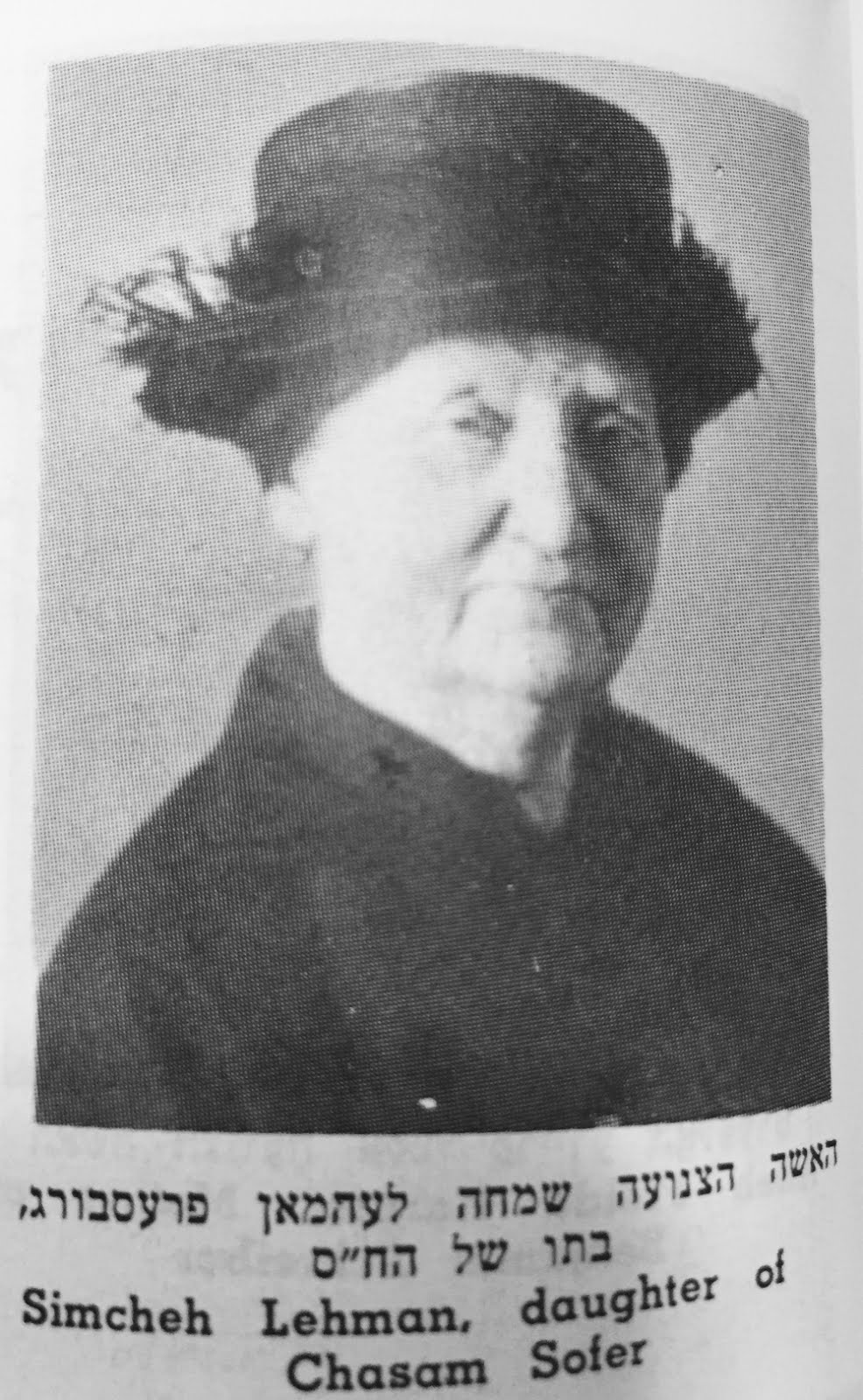
Isaac Hirsch Weiss was not the only one to criticize Shlomo Sofer and his works.  No one less than Simcha Lehman, daughter of the Chasam Sofer, was reported to have said that her nephew’s biography of her father is filled with exaggerations[40].  
R’ Shlomo Zalman Ehrenreich claims[41 ]that Sofer intentionally left out his grandfather R’ Avraham Yehuda Schwartz, author of the Kol Aryeh, from a list of students of the Chasam Sofer that Sofer made in his Iggerot Soferim[42].  Ehrenreich attributes this omission to a familial dispute between Sofer and descendants of the elder Schwartz.  Shlomo Sofer was rabbi of the town of Beregszász, where some of the Schwartz family also resided.  Apparently, they did not get along.[43]
Leopold Greenwald[44] not only accuses Sofer of deliberate omissions by the latter in his works, but also of intentional distortions, exaggerations, and fallacious story telling[45].  He specifically takes issue with Sofer’s portrayal of a strained relationship between R’ Azriel Hildesheimer and the Ksav Sofer, when not only was Hildesheimer chosen from a plethora of many other rabbis to eulogize the Ksav Sofer upon his death, the kehillah of Pressburg even postponed the Ksav Sofer’s burial for two days, awaiting Hildesheimer’s arrival[46]. Hardly something that would be done for someone supposedly in a strained relationship with the deceased[47].  Sofer makes no mention of any this when he describes his father’s funeral in his Chut Hameshulash
I couldn’t verify that the reason that Ksav Sofer’s burial was postponed was to wait for R’ Hildesheimer to arrive; however, it is true that Shlomo Sofer only specifically mentions his brother Yaakov Akiva as giving the first eulogy and leaves the rest of the eulogizers anonymous.  Nonetheless, in my opinion I don’t think the omission of Hildesheimer is so problematic.  R’ Azriel Hildesheimer himself described the levayah[48], and he reports that there were five eulogizers; R’ Feish Fishman, R’ Yaakov Akiva Sofer, R’ Shlomo Zalman Spitzer the brother-in-law of the Ksav Sofer, Hildesheimer himself, and R’ Yosef Guggenheimer.  If we were to accuse Shlomo Sofer of intentionally leaving out Hildesheimer, then we would have to say the same about him leaving out his uncle, Shlomo Spitzer who he held in high esteem.  Though I’m not sure what Shlomo Sofer thought of Feish Fishman, who was a controversial figure among the more radical Hungarian rabbis for his German-language sermons, perhaps one could speculate that Sofer only mentions the first person that gave a eulogy and not the rest, so as not to make any mention of Hildesheimer or Guggenheimer.  But again, this is entirely speculation. 
Still, Sofer specifically says that his brother Yaakov Akiva gave the first eulogy[49].  If we were to read Hildesheimer’s list of the eulogizers as happening in the specific order in which he reported them, it would seem that in actuality the first eulogy was given not by Yaakov Akiva Sofer, but by Feish Fishman.  This would not be hard to believe, as there were many in the community that wanted R’ Feish Fishman to succeed the Ksav Sofer as rabbi of Pressburg over R’ Simcha Bunim Sofer, who eventually did succeed his father.  Hildesheimer was known to be a very meticulous person, but at the end of the day, he doesn’t specifically point out if he meant the list of eulogizers to be in the order that they actually happened.
            An allegation of forgery against Sofer was made by Shimon Zusman[50], grandson of R’ Yaakov Koppel Reich who was chief rabbi of Budapest from 1889-1929.  In the Igros Soferim, there is a letter of rebuke from the Ksav Sofer to his student R’ Reich, warning him not to pander too much to secular elements in his new position as Rabbi of Verbó[51].  Indeed, R’ Reich was known to be an educated and openminded person.  Shimon Zusman reports that when the Igros Sofrim first came out, R’ Reich commented about this letter to his other grandson R’ Dovid Tzvi Zusman, “I never received this letter, and I don’t believe that my master and teacher wrote me this letter.”
            Another charge of forgery against Sofer was made by R’ Chaim Elazar Shapiro of Munkacs, in his Nimmukei Orach Chaim[52].  I won’t get into the details of Shapiro’s accusations, as they have already been debunked by extant manuscripts of the letters he claims must be forged.  It should also be noted, that Shapiro got into a dispute with Sofer over certain charity funds and their appropriation[53].  
            So, are R’ Shlomo Sofer and his works, Chut Hameshulash and Igros Soferim reliable[54]?  Though there certainly is no proof of forgery on Shlomo Sofer’s part, can we still rely on his historical accounts?  Specifically, for our purposes, how are we to take the disparaging remarks about Ber Oppenheimer he claimed to hear from his father the Ksav Sofer in the name of his grandfather the Chasam Sofer, despite there being a responsum from the Ksav Sofer to Oppenheimer conferring upon Oppenheimer praise and respectable titles?
            In my mind, there are three ways to explain the seemingly contradictory remarks of the Ksav Sofer.
            The first possible approach is to consider Shlomo Sofer’s accounts as reliable.  Therefore, we must assume that just as the Chasam Sofer did not like Oppenheimer, though he showed no overt animosity toward him, as confirmed by Isaac Hirsch Weiss, so too the Ksav Sofer also shared his father’s opinion of Oppenheimer, and dealt with him in the same manner; overtly cordial with hidden contempt.
            There are other examples in history of rabbinical correspondence contradicting what the letter writer really thought of his recipient.  And though this seemingly goes against the dictum of chazal, “אל תהי אחד [55]בפה ואחד בלב”, I assume these people felt that this was overridden by another statement of Chazal, “תעלא [56]בעידניה סגיד ליה”, given the specific circumstances in which they had to address the correspondent.
            Two such examples come to my mind.  One is the correspondence between R’ Moshe Chaim Luzzato, the Ramchal, and R’ Moshe Chagiz, where Luzzato writes to Chagiz with utmost respect[57].  Yet when Luzzato writes to his rebbi R’ Yeshaya Bassan, his opinion of Chagiz is revealed to be that of extreme contempt[58].  This is understandable, given that Luzzato was being persecuted by Chagiz, for what Chagiz felt was Neo-Sabbateanism. 
            However, the second example really sticks out to me, as it is of the Chasam Sofer himself.  There is a famous teshuva from the Chasam Sofer to R’ Moshe Teitelbaum, where the Chasam Sofer tries to alleviate some perceived strife between them which he heard of from the town of Potok, due to their differences; as Teitlebaum was a chassid and the Chasam Sofer a misnaged[59].  The Chasam Sofer is filled with praise and admiration for Teitelbaum, even as he acknowledges their differences, as you can see for yourself here:
            This letter is dated the 28th of Sivan 5578, or July 2, 1818.  The explanation to what prompted the Chasam Sofer to write to Teitelbaum, can be found in an earlier letter that he sent to the community of Potock, on the 12th of Elul of that year, or September 13th.  It can be found in the Shu”t Chasam Sofer Hachadashos, #54:
            Sometime after the Chasam Sofer wrote to Teitelbaum, on the 13th of Shevat 5579, or February 9th, 1819, he wrote another letter to two of his students who lived in Ujhely, the same town that Teitelbaum was rabbi.  In the letter, the Chasam Sofer reveals to his students what he really thought of Teitelbaum, and the true intentions behind his laudations.  The letter can be found in the Kovetz Tshuvos Chasam Sofer, #36:
            So perhaps we can suggest that the Ksav Sofer’s opinion of Oppenheimer differed from what he put in writing, just like his father before him.  However, I think that though the Chasam Sofer didn’t show any contempt for Oppenheimer in his letters to him, he was still cold, as pointed out before.  The Ksav Sofer on the other hand is overtly warm and respectful with Oppenheimer.  Consequently, I still find it hard to believe that the Ksav Sofer held Oppenheimer in contempt. 
            A second possible approach to this dilemma, is to again take Shlomo Sofer’s account at face value.  However, although the Ksav Sofer relayed to him the disparaging remarks of the Chasam Sofer against Oppenheimer, we must conclude that his opinion of Oppenheimer was different from that of his father’s contemptuous view.  Especially considering that the Ksav Sofer’s teshuva to Oppenheimer was written a few months after he was elected to succeed his father as rabbi of Pressburg.  As we earlier noted from Isaac Hirsch Weiss, Oppenheimer was a supporter of the succession of the Ksav Sofer.  Perhaps because of his support, the Ksav Sofer felt particularly grateful to him at the time. 
            The third viable approach would be to consider Shlomo Sofer’s remarks regarding Oppenheimer as unreliable, and his report in the name of his father fabricated.  What pushes me more to this approach than any other, is the combination of the teshuva of the Ksav Sofer to Oppenheimer and one other peculiarity which I found in the Chut Hameshulash
            In his biography of the Chasam Sofer, Shlomo Sofer copies for us the original Shtar Rabbanus that the Chasam Sofer received at the start of his tenure as rabbi of Pressburg.  Accordingly, at the end of the document, all the names of the signatories are present, or so it seems.  Comparing the version found in the Chut Hameshulash with the one in Likutei Teshuvos Chasam Sofer, reveals a glaring omission. Here is how Shlomo Sofer presents the Shtar:
Here it is in Likutei Teshuvos Chasam Sofer:
As you can see in the bottom of the middle column, Ber Oppenheimer was one of the signatories.  This also verifies Isaac Hirsch Weiss’s report I mentioned earlier, that Oppenheimer was a supporter of the Chasam Sofer taking the position of Rabbi of Pressburg.
            Here is a picture of the actual manuscript where you can still make out Oppenheimer’s signature:
             With a reputation for purposely omitting facts already preceding him, it does not surprise me that Sofer would also omit Oppenheimer’s name from the Shtar Rabbanus of his grandfather, given that it does not follow the narrative he wishes to portray, as evident from negative reports he gives of Oppenheimer.
            Whatever the truth may be, one thing is for sure; Ber Oppenheimer was a talmid chacham who was respected by most of the gedolei hador of his time, who had his differences with the Chasam Sofer.
Miscellaneous Ha’aros

I’d like to end off with a few divrei torah.  While I was busy with this post, Shavuos past, and like every year I read the relevant Mishna Berurah which I could never understand. Regarding the custom of eating dairy on Shavuos, the Mishna Berurah at the end of siman 494 gives a reason in the name of an anonymous gadol.  Since klal yisroel recieved the Torah on Shavuos, by default they also excepted all 613 commandments, for according to R’ Sa’adya Gaon[60] all 613 mitzvos are included in the ten commandments.  Along with that came the commandments of kosher food; shechitanikur, no blood, salting, and the need to have kosher utensils.  Thus, it was much easier at the time to forgo cooking and just eat dairy, as none of the above laws really apply.
This reason makes absolutely no sense to me.  Without getting too involved in the topic, I think that any person who’s learned through shas and chumash, even in just a cursory manner, knows that the whole torah and everything in it was not given all at once at Sinai; there is a chronology to the giving of taryag mitzvos.  I will just quote the Ramban in his hasagos to the Sefer Hamitzvos[61]:
“והנה, שתי פרשיות בתורה ובהן מצות רבות ולא נאמרו למשה בסיני, אלא לאהרן נאמרו ולא בסיני, פרשת שתויי יין ופרשת משמרות כהונה ולוייה ומתנות כהונה ולא חשש להוציאם מן החשבון הזה. ומצות רבות לא נאמרו בסיני אלא בשעת מעשה, כגון דין מקושש ובנות צלפחד ולא חששו לכך, וכו’.”
The Chazon Ish also has a discussion on the chronology of the mitzvos, in Orach Chaim #125.  So, needless to say, suggesting that bnei yisrael by matan torah were concerned with all the laws of kashrus, is simply anachronistic.  Those laws were only given afterwards. 
Also, when Sa’adya Gaon suggests that all the mitzvos are included in the ten commandments, that’s not in a literal sense, but taxonomical; all the mitzvos can be divided under ten categories under the rubric of the ten commandments.
I found another interesting tidbit in the Alfei Menashe part I, from R’ Menashe Ben Poras of Ilya, where he rails against a pshat which suggests that עם קשה עורף is a good character trait:
What I find most interesting is that after condemning this notion by saying it only comes from the koach hadimyoni[62], he brings himself support by quoting the Vilna Gaon who said that the koach hadimyoni is a part of the evil inclination.  However, the Vilna Gaon himself in his commentary to Mishlei 10:20, explains עם קשה עורף as a good character trait!  See here:


[1] ד”ה וכי אומרים.
[2] ד”ה הא דאמרינן וכי אומרים.
[3] Here are the sources that I found at the time:  שו”ת עטרת חכמים אה”ע סי’ ל”א, שו”ת טוב טעם ודעת מהדו”ק סי’ רכ”ו, חידושי חת”ס פה ובגיטין ל”ח ע”ב, שו”ת באר יצחק אה”ע סי’ א’ ענף ח’, שו”ת עונג יו”ט ס”ס נ”א, שיח יצחק חגיגה ב’ ע”ב, נחלת יעקב להגאון מליסא פה, שו”ת כתב סופר יו”ד סי’ קכ”ה, שו”ת בנין ציון השלם כרך ב’ סי’ קי”ט, שו”ת שואל ומשיב מהדורה תליתאה ח”ג סי’ ל”ד, שו”ת מהר”ש ענגל ח”א סי’ צ”ה, אור גדול סי’ ח’ אות ז’ ד”ה ויתישב בזה, שו”ת משיבת נפש אה”ע סי’ י”א, שו”ת ר”ש איגרת יו”ד סי’ ל”ד,שו”ת הרי בשמים מהדו”ק ח”א סי’ ל”ח, יד שאול יו”ד סי’ רס”ז ס”ק נ’, חידושי מהר”ם בנעט פה, שו”ת תירוש ויצהר סי’ ל”ב.
[4] Gittin 41b, Tosafos ד”ה כופין , here.
[5] Correspondence with Oppenheimer can also be found in Shu”t Noda Beyehuda Yoreh, De’ah Mahadura Tinyana here, #64, Shu”t Meshivas NefeshYoreh De’ah #67 here, Shu”t Yehudah Ya’aleh, Orach Chayim #147 HereShu”t Toafos Re’eim, Orach Chayim #9 here,  See also Shu”t Ein Habdolach #4 here where R’ Chaim Tzvi Manheimer gets sharp about Oppenheimer, though he still prefaces his name with Moreinu Harav.
[6] P. 8b here.
[7] P. 9b here.
[8] Hochgefühle bey der glorreichen Feyer der Krönung Ihrer Majestät, (Vienna 1825).
[9] #13, #39, and #103.
[10] See Leopold Greenwald, Otzar Nechmad, p.73 fn. 1, Arim V’Amahos B’Yisraelpart VII, p.74, Shlomo Zonnenfeld, Ha’Ish Al Hachoma, p.109, Shmuel Eliezer Stern, Sneh Bo’er B’Aish, p.66 fn.20.
[11] Vol. 2, P.18.
[12] P.96, here.
[13] P.25 #43.  Weiss also changes the year the story happened in to 1833.
[14] (Jerusalem 1924), part I, p.75b here.
[15] Printed by Efraim Deinard in Shibolim Bodidos, p.49 here.
[16] P.23a in the Munkacz edition here.  There were three editions of the Chut Hameshulash printed by Sofer, with the final edition being called Chut Hameshulash Hachadash due to the additional material not found in the previous editions.
[17] Ibid p.23b, here.
[18] Michael K. Silber, in his dissertation, Roots of the Schism in Hungarian Jewry, chapter2 p.26, writes similarly that there was tension between the Chasam Sofer and Oppenheimer, because of the latter supposedly stole from the former’s chidushim.  Though in his notes Silber references the Chut Hameshulash here, in the actual body of his text he brings proof from the language the Chasam Sofer uses in a short teshuva to Oppenheimer in the Mei Be’er #39, where he seemingly hints to this when he says, “גם אני אמרתי כן בחידושי לב”מ” .  Yet, I see no reason to believe the Chasam Sofer was suggesting anything of the sort by using this language, which is just a way of approving the other’s thoughts. See Shu”t Chasam Sofer Choshen Mishpat at the end of #118, where he uses the same language to R’ Meir Ash, here.  See also ibid. Even Haezer part I, #152 here, where R’ Akiva Eiger also says as such.
[19] See Shu”t Chasam Sofer, Orach Chayim #9, and ibid., Choshen MIshpat #79
[20] See ibid., Orach Chaim #54, 79, 140, and 208, and ibid., Yoreh De’ah, #6
[22] See Shu”t Chasam Sofer, Choshen Mishpat, #205, Kovetz Teshuvos Chasam Sofer, #44 and 64, Teshuvos Chasam Sofer Hachadashos #33
[23] For a thorough treatment of the events surrounding the Primaerschule, see Michael K. SilberRoots of the Schism in Hungarian Jewry, (Hebrew University, 1985) ch.2
[24] Hadarom, no.5-6, pp. 122-123
[25] See Leopold Greenwald, Otzar Nechmad, pp.72-77 here.
[26] See Meir Hischkowitz, Rebbi Tzvi Hirsch Chayos (Mossad Harav Kook, 2007), pp.91-92
[27] See Shu”t Moharatz #47, Here
[28] Leopold Greenwald, Toldos Mishpachas Rosenthal, pp. 38-39 here.  Rappaport accuses Taubes of joining the ranks of the chasidim, and for this he can’t fathom Oppenheimer’s support of Taubes, “אכן אשר אתפלא קצת הוא כפי ששמעתי גם החכם ר’ בער אפענהיימער מפר”ב הוא מתומכי ר’ משה טויבערש ומבלי דבר על תכונת הדוב הזה, הלא מדבר זה לבד יודע דרכו, כי מה מצא הוא באיש לחשבהו ראוי לעזרו וסעדו לעלות במעלה כזאת? ” I find Rappaport’s remarks about Oppenheimer particularly interesting, given the fact that a little over a year before in 1830,  there was a rumor that Oppenheimer advocated for Rappaport to take over the recently vacated position of chief rabbi of Moravia after R’ Mordechai Banet passed away.  See the letter from R’ Yaakov Orenstein to the Chasam Sofer in Igros Sofrim, letter #50, where he asks if there was any truth to this, here.
[29] Here is his picture:
In the Toldos V’Chidushei Rebbi Menachem Katz Prostitz (Bnei Brak, 1990), there is also a biography of Ber Frank, who was the father-in-law of Prostitz.  Here is the title page:  
Not surprisingly, this picture was not printed in this sefer, probably because it does not fit the standard Bnei Brak narrative of what a Jew is supposed to look like.  And though the biographer is meticulous enough to list all of Ber Frank’s publications, whether extant or not, and to list and print the text of all the haskamos and michtivei bracha, he conveniently leaves out two; the michtav from the reformer Leib Schwab printed in Frank’s Ohr Haemunah part Ihere, and the michtav from the maskil and poet Meir Letteris, in his Ohr Haemunah part IIhere.  Frank is also famous for producing the picture of the Chasam Sofer and disseminating it to support the marriage of his daughter to Prostitz. For the story behind the picture, see Igros Sofrim pp. 27-28 here.  
[30] Shu”t Ksav SoferOrach chaim #115, Here.
[31] Hirschkowitz makes the same point, ibid. note 157.
[32] Hakdamah of Part II
[33] Pp.128-131 in the Jerusalem edition from Machon Daas Sofer
[34] In Otzar Nechmad ibid.
[35] Ibid.
[36] Ibid.
[37] See the version of this sermon presented in Drashos Chasam Sofer Part II, pp.648-652, here, and Yosef Naftali Stern’s footnote on p.650.  In his footnote, Stern asks the obvious question; how could the Chasam Sofer pray for the destruction of evildoers when this seemingly contradicts the gemara in Brachos 10a, where the gemara concludes that one should not pray for their death, rather one should pray that they should repent?  I would also add to that this contradicts the gemara in Brachos 7a, where R’ Yehoshua ben Levi concludes that it isn’t proper to curse evil people either, see Tosafos there too.  Though Stern answers this by concluding that the gemara’s dictum does not apply to those that lead others astray and cause others to sin, I’m surprised he doesn’t mention that the Chasam Sofer explicitly comes to this conclusion himself in reference to the gemara in Brachos, in an earlier sermon from 1806, found in the Drashos Chasam Sofer Part I, pp.275-276, here.  I also found that the Alshich in parshas Korach 16:28, also comes to the same conclusion.  Accordingly, this would also explain why birchas haminim which we say in shmona esrei doesn’t also contradict this gemara, as one could say that it was meant only for those minim that were חוטא ומחטיא את הרבים.  See also the Diyukim B’nuschei Hatefilah V’habrachos from the Vilna Gaon, printed in the back of the Shulchan Aruch, where he says that one should say וכל הרשעה and not עושי רשעה, as he references the gemara in Brachos.
[38] Yosef Naphtali Stern makes the same chronological mistake as Plaut in his footnote, ibid.
[39] Ibid.
[40] Olamo Shel Abba, (Jerusalem, 1983) p.67.  Here is her picture:
[41] Zichron L’Moshe P.5, here.
[42] Pp.89-95, here.
[43] See Naphtali Ben Menachem, B’Shaarei Sefer (Mossad Harav Kook) p.115.
[44] L’toldos Hareformatzian Hadatis B’Germania U’bUngaria (1948), p.73 fn.30, here.  Earlier on p.19 fn.38, he also takes issue with Shlomo Sofer writing that the Chasam Sofer allegedly said his son the Ksav Sofer knows how to learn better than himself.  Elsewhere, Sofer writes that the Ksav Sofer said that he learns how to learn from his son R’ Simcha Bunim, author of the Shevet Sofer.  Thus, one may conclude the obvious absurdity, the Shevet Sofer was a greater talmid chacham than the Chasam Sofer!
[45] Though not intentional, I found an example of Sofer telling an untrue story in his final edition (see above, fn.16), Chu”t Hameshulash Hachadash p.8a in the footnotes, or in the modern edition printed in Jerusalem, p.27.  Sofer tells a story he heard about R’ Zelmeleh of Volozhin, one of the prime students of the Vilna Gaon:  When the Vilna Gaon and hs talmidim were gathering signatures for the excommunication against the chasidim, they went to R’ Zelmeleh to ask him to sign on the document.  Much to their surprise, R’ Zelmeleh declined.  R’ Zelmeleh then proceeded to explain his refusal with a dvar torah; we find that Avraham stopped himself from slaughtering his son Isaac, when he heard the angel tell him to do so.  How could Avraham listen to the angel who said not to slaughter Isaac, when he heard directly from G-d himself that he must slaughter him?  R’ Zelmeleh concluded, “for one to not kill someone, a command from an angel suffices, but a command to go ahead and slaughter someone must be heard from G-d himself.”  R’ Zelmeleh continued, “though our master, Rabbeinu Eliyahu, is like an angel of G-d, in order to slaughter someone, we must hear it from G-d himself.”
When I first read this story, I gave a little chuckle.  Here’s why: You can clearly see on the right-hand column the signature of R’ Zelmeleh on the kol koreh of the cherem of 1781.

The main character of this story was originally told as being R’ Refoel Hamburger, not R’ Zelmeleh of Volozhin.  Even so, in the torah journal Sharei Torah, part X, kunteres 1, #5, R’ Meir Dan Plotzky, while explaining that R’ Refoel Hamburger was no lover of chasidim, says he doubts the authenticity of this story.

[46] Interestingly, Greenwald criticizes this practice of postponing the burial to wait for eulogizers, in his Kol Bo Al Aveilus p.12, here.  Greenwald writes that it pained him to read in Der Morgan Journal Dec. 2, 1941, that after the death of a famous rabbi and gaon from Brooklyn early Friday morning, the burial was postponed until Sunday so more eulogizers and people could attend.  I assume Greenwald is talking about the levayah of R’ Moshe Soloveitchik which you can read about here.  Though, I don’t know why he would read about it almost a year later (R’ Moshe died in January).  R’ Simcha Soloveitchick died a few weeks prior to that issue of Morgan Journal, on November 16.  However, R’ Simcha died on a Sunday, not a Friday.
[47] Meir Hildesheimer makes the same point in Sefer Hazikaron L’Yechiel Yaakov Weinberg, p.18 fn.72.  He also adds that the Ksav Sofer pressured R’ Azriel Hildesheimer to become rabbi of Pressburg in a joint capacity with him.
[48] Tzefunos no.6, pp.63-66, Here.
[49] Ibid. p.338.
[50] See Shmuel Weingarten, Sinai no.74, p.92 fn.17.
[51] P.51-52, here.  Another interesting example of a rabbi giving rebuke to one of his peers, is the teshuva of R’ Yosef Shaul Nathanson to the son of R’ Shmuel Waldberg of Yaroslav, in Shu”t Shoel U’Mashiv, Mahadura Telisa’ah, part I #264, here.  Nathanson as an exception responds to the generic talmudic query of Yoel Waldberg even though it is not a pressing question of halacha.  Nathanson explains that he made this exception in order to foster a love for learning in Waldberg, so that he would leave his secular ways; simultaneously criticizing his father, R’ Shmuel, for being too involved in secular studies.  Indeed, R’ Shmuel Waldberg succeeded R’ Hirsch Chajes as Rabbi of Zolkiew, a city with very modern leanings, before his tenure at Yaroslav. Unfortunatley, Waldberg’s children became mechalelei shabbos (I don’t know if that includes the above mentioned Yoel), and in his later years Waldberg was filled with regret about his secular studies, railing against them in his sermons.  Waldberg authored many seforim on a plethora of subjects.  Here is his picture:
[52] Siman 243, here.
[53] See Yehuda Spiegel, Toldos Hayehudim B’Rusia Hakarpatis, pp.86-88.
[54] See Binyomin Shlomo Hamburger, Zichronos Umesoros Al Hachasam Sofer (Bnei Brak, 2013), pp.12-26 for a defence of Shlomo Sofer’s reliability.
[55] See Pesachim 113b.
[56] Literally, “Bow to the fox in its time.” Advice from chazal to act in a subordinate manner towards a person who is in an advantageous position.  See Megillah 16b.
[57] See Igros Ramchal, #10, “לגבר חכם בעוז נודע בשערים, לו שם בגבורים, גבור חיל במלחמתה של תורה עשיר מארי חיטיא קולע ולא יחטיא השערה, בר אורין ובר אבהן יאי ויאי כבוד מורנו ורבנו הרב משה חאגיש נר”ו “.
[58] Ibid. #12, “והשוטה הזה החאגיש, כאשר איש מדנים הוא, הודיע ביום כעסו גם בלא דעת ובלא השכל “
[59] See Drashos Chasam Sofer Part II, p.745, “אך מי שהגיע לכלל תכלית החסידות והפרישות ולא כחסידי הזמן ח”ו  ” , here.
[60] This is apparent from the Azharos of Saadya Gaon, where he explains each mitzva, and under which commandment it falls.  See Rashi to Exodus 24:12 and Perushei Rabbeinu Sa’adya GaonMishpatim fn.2.
[61] Soresh Rishon
[62] lit. imaginary faculty, imagination


Prof. Marc B. Shapiro response to Rabbi Chaim Rapoport

In response to Rabbi Chaim Rapoport’s recent response to Prof. Marc B. Shapiro’s response to Rabbi Zev Leff (see original review), Prof. Marc B. Shapiro has shared with the Seforim blog his original response to Rabbi Chaim Rapoport from several years ago.

ועש”ק פרשת בא תשס”ד

לכבוד ידידי אהובי הרה”ג החסיד המפואר, איש חמודות ונדיב לב, אוצר בלום לתורה ולחכמה, מוה”ר חיים ראפפורט שליט”א, אב”ד דק”ק אילפורד יע”א
אחדשה”ט באהבה נאמנה

תחילה אני מודה למע”כ על טירחתו לכתוב לי ולהעיר על דבריי הפעוטים . . . וכעת אבא לעיקר הנידן במכתבו, וטרם אתייחס לטענתו במישרין, הנני מצהיר שדבריי בזה הם כיהודה ועוד לקרא, שהרי רבנו הגר”א, אשר כל רז לא אניס ליה, כתב בפירוש שהרמב”ם מכחיש את הקמיעות והשמות, ואנן מה נענה אבתריה. וכל הנידון אינו אלא האם אפשר למצוא את זה במפורש בדברי הרמב”ם. ויאמין לי ידידי, כי אני זהיר מאד בכל לשונותי, ולפני שאני כותב דבר בשם הנשר הגדול יושב אני שבעה נקיים, ורק אח”כ הנני מעלה את הדיו על הנייר. וכמובן, מוכן אני להודות שטעיתי, כי אין אדם תחת השמש שיכול לומר שלא שגה, ולא אפונה כי יש בספרי דברים הצריכים תיקון, ושגיאות מי יבין, כל קבל דנא מחזיקנא טיבותא לך אם יעמידני על האמת, ואת הצריך תיקון אשוב ואתקן, אבל בנידון דידן, אינני חושב שטעיתי.

כתב האג”מ שהרמב”ם מודה שאיכא שמירה בשמות מלאכים ושמות קדושים ופסוקים, ובפירושו לסוטה ז, ד כתב הרמב”ם נגד אלה הטפשים שכותבים קמיעות ושמים בתוכם שמות קדושים ושמותיהם של מלאכים. זה פירושו של קמיע. וכשהאג”מ כותב “שמות קדושים” כוונתו לאלו השמות שנזכרים ע”י גדולי אשכנז, ולפי דעת הרמב”ם הכל הבל ואלו הכותבים קמיעות טפשים הם כי בדו מלבם כל השמות הללו, שמות ה’ ושמות מלאכים, ורבים הם וא”א לפורטן. ובספרי כתבתי שהרמב”ם שלל את כחם של שמות המלאכים ושמות קדושים (או “קדושים”) ואכן בפיהמ”ש ובמו”נ ברור מללו, וראה גם בפירושו של הרב קאפח להלכות מזוזה פרק ה אות יד.

נכון, כמו שכתב כת”ר, שהרמב”ם אינו שולל בפירוש את סגולת השמירה של שם המפורש או א’ משמות ה’ הנמצאים בתורה. אולם. כל מי שמכיר את דרכו של הרמב”ם יודע שמושג זה ממנו והלאה, וע”כ במבט לשעבר הנני מודה שכדאי היה לי להאריך קצת ולכתוב שאע”פ שהרמב”ם אינו שולל בפירוש את כח השמירה של שם המפורש, בכ”ז לפי הפילוסופיה שלו והשקפת עולמו אין מקום לרעיונות כאלו, כמו שהבין הגר”א ובעל שומר אמונים (א, יג) וכל אלו שהעמיקו בדברי הרמב”ם בלי יוצא מן הכלל, וע”כ תמהתי על האג”מ.

והנני בזה ידידו מוקירו דושה”ט באהבה, מודה ומכיר טובה על ענותנותו וטוב לבו לעיין ולהעיר בדברי.

מלך שפירא


Response and Rejoinder to Chaim Rapoport’s The Afterlife of Scholarship

In response to the recent review by Chaim Rapoport, “The Afterlife of Scholarship: A Critical Exploration of Samuel Heilman and Menachem Friedman’s Presentation of the Rebbe’s Life,” the Seforim blog (14 June 2010), available here, of Samuel Heilman and Menachem Friedman, The Rebbe: The Life and Afterlife of Menachem Mendel Schneerson (Princeton: Princeton University Press, 2010), available here, the editors of the Seforim blog are proud to present a response by Samuel Heilman and Menachem Friedman (submitted on Tuesday, 22 June 2010), available here (PDF) with a rejoinder by Chaim Rapoport (submitted on Tuesday, 29 June 2010), available here (PDF).


Engaged Couples, צעירים, and More

Engaged Couples, צעירים, and More
Marc B.Shapiro
Continued from here
1. Regarding engaged couples having physical contact, this is actually the subject of a section of the book Penei Yitzhak by R. Hezekiah Mordechai Bassan. Here is the title page.
This book was published in Mantua in 1744 by Menahem Navarra who was a descendant of R. Bassan. Navarra, who was at this time a doctor, not a rabbi, was nevertheless very learned in Torah matters. (He would later be appointed rabbi of Verona.[1]) Navarra included three essays of his own in the volume, the second of which is called Issur Kedushah. In this work he criticizes members of the Jewish community for allowing engaged couples to have physical contact before marriage. Here are the first two pages of the work.
Navarra and the others I have referred to are only dealing with an engaged couple touching before marriage, but not with actual sexual relations. Yet this too is mentioned many centuries before Navarra. Ezra 2:43 and Nehemiah 7:46 refer to בני טבעות. A commentary attributed to R. Saadiah Gaon[2] explains this as follows:

בני טבעות: שקלקלו אבותם גם [צ”ל עם] ארוסותיהם קודם שיכניסו אותם לחופה והיו סומכין על קדושי טבעות ומקלקלין עם ארוסותיהן.
What this means is that after kiddushin, which was effected by aטבעת  (ring), but before actual marriage (the two used to be separated, sometimes for many months), the engaged couple would have sexual relations. The children who resulted from this were referred to negatively as בני טבעות. As S. H. Kook points out,[3] R. Saadiah’s explanation is also mentioned by R. Hai Gaon.[4]
R. Hayyim Benveniste, in seventeeth century Turkey, also speaks about how engaged couples would have physical contact. This shows again that there was a divergence between what the halakhah requires and what the people were actually doing (much like you find in a large section of Modern Orthodox society today). Here are R. Benveniste’s words:[5]
להתייחד שניהם כמו שנוהגים פה תירייא ואיזמיר, שאחר השדוכין אחר עבור קצת ימים מתייחדין החתן והכלה ומכניסים אותה לחדר וסוגרין אותן הסגר מוחלט כמו שמסגרין הנשואה אחר ז’ ברכות, מנהג כזה רע ומר הוא, ואיכא איסורא מכמה פנים . . . ועוד שנכשלים באיסור נדה, וברוב הפעמים תצא כלה לחופתה וכריסה בין שיניה, וכמה מהם הודו ולא בושו שבאים עליה שלא כדרכה. אלא א-להים הוא יודע שטרחתי הרבה לבטל מנהג זה פה תיריא ועלה בידי, ועשיתי הסכמה בחרמות ונדויים על זה, ולסבת בעלי זרוע בעלי אגרופין אשר אין פחד א-להים לנגד עיניהם חזר המנהג לסורו רע.
There are a few different points that are of interest in what R. Benveniste writes. The first is that he says that in the majority of cases the bride arrives at the huppah וכריסה בין שיניה. This means that she is pregnant. Even if there is some exaggeration here, R. Benveniste is telling us that many Jewish women were getting pregnant before marriage. Readers might recall my post here where I mentioned R. Ovadiah Bertinoro’s assertion that most Jewish brides in Palermo were pregnant at the time of their wedding.
R. Benveniste mentions how he was able to improve matters by using the power of the herem to keep people in line, but that his success was short-lived as powerful members of the community were able to undermine his authority. This shows us, just as we saw in the text I quoted from R. Eleazar Kalir, that parents were often happy when their children had physical contact before marriage, and they opposed what they regarded as the overly puritanical approach of the rabbis. When R. Benveniste refers to those who באים עליה שלא כדרכה, this means that some of the couples had a sexual relationship, but wanted the woman to be a virgin at the wedding.
R. Jonah Landsofer (Bohemia, died 1712) also testified to the problem we have been discussing:[6]
בבית ישראל ראיתי שערוריה איכה נהיית’ כזאת שאין איש שם לבו להוכיח בשער בת רבים על התקלה וקלקלת שוטי’ שקלקלו והרגלו הרגל דבר עד שנעשה טבע קיים לבלתי הרגיש ברעה אשר ימצאם באחרית הימים והוא אשר נעשה בכל יום ערוך השלחן וצפה הצפית מיום שגומרין שידוכין בין בחור ובתולה מושבים אותם יחד ומוסרי’ הבתולה לזנות בית אביה בחיבוקים ונשוקים ומעשה חידודי’ וכל הקרואים והמסובי’ מחזיקי’ בידו.
Because the masses had no interest in what the rabbis had to say about this matter, R. Landsofer concludes that one need not even rebuke them, as they won’t listen anyway. Not long ago I heard a rabbi going on about the holy communities of Europe of a few hundred years ago, about their support of Torah, the respect they gave to the rabbis, and their commitment to halakhah. All of this is true, but if you look a little closer you find that these communities were actually very much like contemporary Modern Orthodox communities, in that together with a commitment to halakhah, many people also felt that they could determine which halakhot could be ignored. Or perhaps they didn’t even think they were violating halakhah. Maybe they assumed that the rabbis were making their lives difficult with extreme humrot. Either way you look at it, it is very obvious that there were many in traditional Jewish societies who created their own standards of practice which did not always correspond to what the rabbis insisted on, and they had no interest in changing their ways because of what the rabbis were saying.[7]
While the standard rabbinic view has always been that bride and groom are not to have any physical contact until after the wedding ceremony, the rabbis in Germany were a little more lenient. Sefer Maharil records that the practice was for the bride and groom to touch before marriage, but only on the morning of the wedding, a time that also included celebration.[8]
בעלות השחר ביום הששי היה קורא השמש לבא לבה”כ . . . ומביאים הכלה וחברותיה. וכאשר תבא עד פתח חצר בה”כ הלך הרב והחשובים והיו מוליכין את החתן לקראת הכלה. והחתן תופש אותה בידו ובחיבורן יחד זורקין כל העם על גבי ראשן חטין ואומרים פרו ורבו ג”פ. והולכין יחד עד אצל פתח בה”כ ויושבין שם מעט ומוליכין הכלה לביתה.
This detail, that the groom held the bride’s hand prior to the wedding, is found in a number of other German sources.[9] I don’t know how this practice of holding the bride’s hand before the wedding ceremony can be reconciled with what appears in Tractate Kallah, ch. 1:
כלה בלא ברכה אסורה לבעלה כנדה.
The word כלה here means a woman who is betrothed but not yet married.
R. Hayyim Joseph David Azulai, Kisei Rahamim, Kallah, ch. 1, comments on this passage:
כלה בלא ברכה אסורה כלומר אפי’ לחבק או ליגע בה כנדה.
I also find it noteworthy, and strange from our perspective, that Sefer Maharil tells us that for the wedding ceremony the rabbi would bring the bride to the groom, holding her by her robe:[10]
והרב היה תופס אותה בבגדיה והוליכה והעמידה לימין החתן.
R. Israel David Margulies (19th century) cites this text from Sefer Maharil and correctly notes that in medieval times the brides were much younger than in his day. He assumes that the typical bride was under 12 and a half years old, and therefore there was no problem of impure thoughts with such brides.[11]
ואיזה הירהור יהי’ בכלה קטנה או נערה כזאת, ולכן לקח אותה הרב בעצמו אצל מפתן הבית מן יד הנשים, והביאה אל החתן ושארי הנשים נשארו ולא היה להם שום עסק בבהכ”נ ולא היה חשש הרהור במקום קדשו.
2. Recently I heard a shiur where the rabbi said that if there is a Torah or rabbinic commandment to do something, only the talmudic sages can, as an emergency measure, forbid the action. The classic example is the Sages telling us not to blow the shofar if Rosh ha-Shanah falls out on Shabbat. There is nothing controversial in what the rabbi said, and I think most would agree, even if there some exceptions to this general rule. The rabbi further noted that post-talmudic authorities cannot make gezerot as this power is also reserved for the talmudic sages. This viewpoint is shared by many, yet there are important authorities who disagree, and perhaps more significantly there is evidence of post-talmudic gezerot.
I mention this now, after Passover [this post was written a few weeks ago], since those who reviewed the laws of Pesach would have seen Shulhan Arukh 453:5 which states:
האידנא אסור ללתות בין חטים בין שעורים.
“Nowadays, it is forbidden to moisten either wheat or barley [for grinding].”
If you look at the Mishnah Berurah he explains that while the Sages forbid moistening barley because it will easily leaven, according to the Talmud it is permitted to moisten wheat. In fact, according to the Talmud, Pesahim 40a, Rava held that it is an obligation to wash the grains of wheat: מצוה ללתות.
The Mishnah Berurah explains that it is the geonim who forbid moistening wheat since we are not expert at doing it properly, and it might come to be leavened, or we might delay removing the wheat after the moistening (before grinding) and this might lead to leavening. If the geonim forbid something that the Talmud permitted (or even required), isn’t this to be regarded as a gezerah?
3. Let me now mention something relating to Sukkot, which I had hoped to post closer to the holiday, but as the rabbinic saying goes, מה שהלב חושק הזמן עושק.
Shulhan Arukh, Orah Hayyim 649:4 states:
גנות הצעירים של עובדי כוכבים וכיוצא בהם מבתי שמשיהם מותר ליטול משם לולב או שאר מינים למצוה.
[Regarding what has grown in] the gardens of the צעירים of idolators and similar [gardens] of the houses [or: buildings] of their attendants, one is permitted to take from there a lulav or the other minim for the mitzvah.
Who are the צעירים of the idolators? The Taz states that he does not know:
איני יודע פירושו, אבל הוא ענין ממשרתי עבודת אלילים.
It is not just the Taz who doesn’t know, as none of the traditional commentaries have a clue. The Feldheim English translation of the Shulhan Arukh with Mishnah Berurah (which I make use of when I provide translations) doesn’t translate the word הצעירים, and instead simply transliterates it.[12]
In fact, I  am sure that R. Joseph Karo, living in the Muslim world, did not know what the צעירים are either. You might find this a strange assertion. After all, if R. Karo recorded the halakhah, how could he not know what he was writing? However, in this case R. Karo was just recording what appears in R. Aaron Hakohen of Lunel’s Orhot Hayyim (Florence, 1750), Hilkhot Lulav, no. 8, in the name of the Ritva:
כתב הר’ יום טוב אשבילי ז”ל בשם רבו ז”ל הוי יודע שגנות הצעירים והדורסים וכיוצא בהם מבתי הכומרים אינם משמשי ע”ז ולא נויי ע”ז ופירותיהם וכל אשר בהן מותרין בהנאה ומותר ליטול משם לולב או שאר מינין למצוה עכ”ל.
From a halakhic standpoint the importance of the halakhah is that it tells us that one can take a lulav and other other minim from the garden of an idolator, and it is not important exactly what type of idolator the צעירים are.
As mentioned, the halakhah in the Shulhan Arukh is taken from the Orhot Hayyim. It is first quoted in the Beit Yosef, Orah Hayyim 649, where it cited more exactly from the Orhot Hayyim than what appears in the Shulhan Arukh:
כתוב בארחות חיים ]הל’ לולב סי’ ח[ נגות הצעירים והדורסים וכיוצא בהם מבתי הכומרים מותר ליטול משם לולב או שאר מינים למצוה.
In the Beit Yosef (and also in Orhot Hayyim) it says הצעירים והדורסים. Furthermore, instead of מבתי שמשיהם that appears in the Shulhan Arukh, we have מבתי הכומרים, which means the houses (or buildings) of the priests. I have no doubt that the the word שמשיהם is a censor’s replacement of the original הכומרים. In the first printing of the Beit Yosef, Venice 1550, the sentence quoted above appears in its entirety. Yet when the Beit Yosef was next printed, Venice 1564, the entire sentence was deleted, obviously a requirement of the censor. The Shulhan Arukh was first printed in Venice, also in 1564. It thus makes sense that the deletion of the word הכומרים is due to censorship, and it could be that it was this alteration that prevented the entire halakhah from being deleted.
Before we get to הצעירים, what is the meaning of הדורסים that appears in Orhot Hayyim and is copied in the Beit Yosef? If you look at the Ritva that the Orhot Hayyim is citing, he states:[13]
והוי יודע שגנות השעירים והדוכסים וכיוצא בהם מבתי הכומרים, אינם משמשי ע”ז ולא נויי ע”ז, ופירותיהם וכל אשר בהם מותרים בהנאה, ומותר ליטול משם לולב או שאר מינין למצוה וכן קבלנו מרבותינו ז”ל הלכה למעשה.
The first thing to notice is that instead of הצעירים we have the word השעירים. This is a clear mistake, and the editor notes that the word הצעירים appears when the passage is cited in Orhot Hayyim. Unfortunately, the editor doesn’t note that are also least two other places where in speaking about benefit from avodah zarah the Ritva refers to גנת הצעירים.[14]The text from Ritva quoted above also has, instead of הדורסים which appears in Orhot Hayyim, another strange word, הדוכסים. This means “dukes” (or noblemen, princes, rulers, etc.) and makes no sense here since the context is avodah zarah which has nothing to do with a duke’s garden.

So we now have to explain not just what צעירים means but also דורסים or דוכסים. R. Hayyim Joseph David Azulai[15] suggests that צעירים is derived from Zechariah 13:7: והשבתי ידי על הצוערים, “And I will turn my hand upon the little ones.” It is hard to see how telling us that צוערים is related to צעירים helps us to understand the point of the Shulhan Arukh. R. Azulai also refers the reader to Rashi’s commentary on Zech. 13:7:
על הצוערים: על השלטונים הצעירים מן המלכים.
Perhaps I am missing something, but I don’t see what this passage adds other than showing us thatצוערים  and צעירים mean the same thing. Why does R. Azulai have to tell us this? The wordצעיר  is found elsewhere in the Bible, so we already know what it means.
R. Azulai’s short note also refers the reader to Abarbanel’s comment to Zech. 13:7. It is Abarbanel who will help us to understand what is going on with the word צעירים. (As R. Azulai was commenting on the Shulhan Arukh, he did not attempt to explain דורסים/דוכסים which is only found in the Beit Yosef. We shall return to this word soon.)
Abarbanel writes:
והשיבותי ידי על הצוערים שראוי שיפורש כפי זה הדרך על כומרי אדום הדורשים להם אמונתם וכזביהם והם עצמם נקראים אצלם צעירים להורות על ענוותנותם ושפלותם כי בעבור שאלה חטאו והחטיאו את אחרים בלמודם ודרושותיהם [!] אמר השם שישיב ידו ומכותם עליהם.
While this passage has nothing to do with the Shulhan Arukh, R. Azulai saw the relevance of it as Abarbanel makes the connection between צוערים and צעירים as we saw already with Rashi. Abarbanel also specifically connects this to Catholic priests, telling us that these priests would call themselves צעירים as a sign of modesty.
From this we can understand that when the Shulhan Arukh refers to gardens of the צעירים he means gardens belonging to Catholic priests. But who in particular are the צעירים? To answer this question let’s return to the Beit Yosef which referred to both צעירים and דורסים/דוכסים. As already noted, this entire passage is taken from the Orhot Hayyim.
In 1902 R. Moses Schlesinger published the second volume of the Orhot Hayyim. In the introduction he included a helpful list of all the times that the Beit Yosef cites the Orhot Hayyim. When he comes to our example, p. xv, he has a note in which he cites the great Abraham Berliner[16] that the proper reading is גנות הצעירים והדורשים. In other words, instead of דורסים/דוכסים, which appears in the Ritva and the Orhot Hayyim, it should say דורשים. When he wrote the Beit Yosef, R. Joseph Karo probably just copied the word דורסים that was in his copy of the Orhot Hayyim without knowing exactly what it meant (as its exact meaning, while of interest to historians and Seforim Blog readers, is not relevant to the underlying halakhah).[17]
So what does הצעירים והדורשים mean? Berliner explains this as well (and it was actually earlier explained by Leopold Zunz[18]). The two most important medieval Catholic orders were the Franciscans and the Dominicans. The actual name of the Franciscans is the “Order of Friars Minor.” They were often called “Little Brothers” or “Minorites.” Thus, when the Ritva and Orhot Hayyim refer to the צעירים this is just the Hebrew translation of “Minorites”, i.e., the Franciscans. As Abarbanel correctly pointed out, this term was adopted as a sign of humility.[19]As for the דורשים, the meaning of this is obvious (after Berliner and Zunz have enlightened us). The actual name of the Dominicans is the “Order of Preachers,” so דורשים (preachers)=Dominicans. What the Ritva and Orhot Hayyim are telling us is that when it comes to the mitzvah of lulav, one can use that which grows in the gardens of the Franciscans and the Dominicans (and the same halakhah would apply to other Catholic orders. The monasteries would often have gardens and Jews would be able to purchase things from there.)

In Nahmanides’ Disputation[20] he too refers to theצעירים  and the דורשים.
והיו שם ההגמון וכל הגלחים וחכמי הצעירים והדורשים.
In his note, R. Hayyim Dov Chavel identifies the צעירים as the Franciscans. However, he doesn’t know that the דורשים are the Dominicans, and he therefore explains that the word means הנואמים. In his English translation, Chavel writes, “Among them were the bishop [of Barcelona] and all the priests, Franciscan scholars, and preachers.”[21]
It is noteworthy that the fifteenth-century R. Solomon ben Simeon Duran, who lived in North Africa, was apparently also unaware of the meaning of צעירים, and therefore applied it to all young Catholic religious figures, not merely Franciscans. )At least, that is what I think he means, as opposed to understanding his use ofצעיריהם  to refer to young men as a whole.) After contrasting the sexual purity of the Jews with what occurs in surrounding society, he writes, in very strong words:[22]
וצעיריהם הם כולם מטונפים בעריות מנאפים עם נשי רעיהם ובאים על הזכור והטוב שבהם מוציא שכבת זרע לבטלה בידו וזה מפורסם אצלם.
4. Since in a prior post I discussed Jacob’s love of Rachel and Leah, let me share a strange interpretation I recently found, involving love and Jacob’s brother, Esau. The general understanding is that Esau loved Isaac. Indeed, it is very difficult to read the Torah and conclude differently. Therefore, I was quite surprised to find that the medieval R. Abraham Bedersi is of the opinion that, after Isaac gave Jacob the blessing intended for Esau, not only did Esau not love Isaac, but he was ready to cause his death! This would be accomplished by killing Jacob, since Isaac’s great sorrow would bring on his end. To arrive at this interpretation, Bedersi offers a novel understanding of Gen. 27:41: יקרבו ימי אבל אבי ואהרגה את יעקב אחי. The standard understanding of these words is that when the days of mourning for his father arrive, then Esau will kill Jacob. As he didn’t want to cause his father pain, he decided to wait until he was dead to kill Jacob. However, Bedersi understands ואהרגה to mean, “when I will kill Jacob” this will cause my father to die.
Here are his words from his Hotem Tokhnit:[23]
ועשו הרשע ידוע שלא היה אוהב יצחק אביו כמו שתראה שאמר יקרבו ימי אבל אבי ואהרגה את יעקב אחי וביאור נכון בו אהרגה את יעקב אחי ובאמת יקרבו ימי אבל אבי שהוא יצטער על בנו וימות.
As mentioned, this is a strange interpretation so I Iooked around to see if I could find a similar approach. I didn’t see anything in Torah Shelemah. I looked in the ArtScroll extended commentary to Genesis (not the Stone Chumash) and it does not bring any interpretations that suggest that Esau intended to cause Isaac’s death. However, the commentary states as follows:
Ralbag interprets similarly:[24] Even if it accelerates my father’s death [lit. brings near the days of mourning for my father] I nevertheless will kill my brother Jacob (cited by Tur).
I don’t know where they got this from, as Ralbag does not say what is attributed to him. All Ralbag says is that Esau wished to kill Jacob after Isaac’s death. The Tur, who was a contemporary of Ralbag, does not cite him.
R. Abraham Bedersi’s Hotem Tokhnit focuses on Hebrew synonyms and in an era before concordances and computers would have required an enormous amount of work. It found on hebrewbooks.org, but it is not on Otzar ha-Hokhmah.

Among the many interesting things you will find in Hotem Tokhnit is that he says that unlike the word יהודי, the word עברי is only used in the Bible in the context of slavery, and he provides examples of this (p. 152). With this in mind, I can see why some people would prefer the term Mishpat Yehudi instead of Mishpat Ivri.

On p. 202  he quotes an otherwise unknown comment of Ibn Ezra that the meaning of the word סלה is “truth”.
כי ענין סלה אמת ונכונה ועל זה אמר אשרי יושבי ביתך עוד יהללוך סלה (תהלים פ”ד ה’) באמת וביושר.
Beginning on p. 1 in the second section, there is a long letter from Samuel David Luzzatto. He refers to an unnamed scholar who could not accept that Rabad, in his comment to Hilkhot Teshuvah 3:7, would say that people greater than Maimonides thought that God had a physical form. He therefore suggested changing גדולים וטובים ממנו to גדולים וטובים מעמֵנו (tzeirei under the mem).
Luzzatto completely rejects this point, arguing that גדולים וטובים מעמנו means people greater than our nation, i.e., non-Jews. Furthermore, he adds, where do we find Rabad, Rashi, etc. using the word עמנו to refer to the Jewish people.
On p. 2 Luzzatto records the following lines from one of Bedersi’s poems, in which one word summarizes each of Maimonides’ Thirteen Principles:
נמצא כיִחודו והֶבדלו                    קדמות עבודתו נבואתו
משה ותורתו אֲנצחַ                       ידע גמול גואל בהחיותו
Luzzatto also publishes a long poem from Bedersi together with Luzzatto’s commentary, without which it would be very difficult to understand much of what Bedersi was saying. One of my favorite lines is found on p. 13:
ולא תבין שפת כל-עם בשירים        לבד טרחם, כפז על גב בעירי
What this means is that poems are difficult for the masses, of every nation and language, to understand. They regard them as a burden, much like an animal, if you place gold on its back, won’t appreciate what it is carrying. It will only feel the burden of the weight.
5. Since I mentioned Mendelssohn in the last post, let me note the following. I recently saw that Eliezer Segal, in his wonderful book, Introducing Judaism (London and New York, 2009), p. 110, uses a picture of Mendelssohn. You can see it here. (Copyright prevents me from posting the picture.) We are told that the image is from the 18th century, yet there is no doubt that this is not a picture of Mendelssohn. You can look at authentic pictures of Mendelssohn here and they look nothing like this image. Incidentally, in a student’s description of Mendelssohn’s 1777 meeting with Kant, he is described as  having a goatee.[25]
6. In a comment to my last post, Maimon wrote: “On the subject of R. Bachrach’s responsum – it bears noting that the pre-reform homogeneous [should be: heterogeneous] Jewish society (especially in Germany) contained people of varying levels of observance from across the spectrum and as such many behavioral patterns that would be unthinkable in contemporary Orthodox society are detailed in the Halakhic writings from that era.” Maimon is correct, and it is not only in recent centuries or in Germany that one finds communities with people of different levels of religious observance. This is how Jewish societies have always been, in every era and place, at least until the second half of the twentieth century and the creation of haredi societies. I have already cited numerous examples that justify this statement, but let offer one more that shows how even in medieval times young men and women would socialize in a way that Maimon might say “would be unthinkable in contemporary Orthodox society.” I would only add that instead of “contemporary Orthodox society,” I prefer to say “contemporary haredi society,” since as mentioned already, Modern Orthodox society still has significant variations in level of observance. (When I speak of variations in level of observance, I have in mind bein adam la-Makom halakhot. I am not referring to halakhot having to do with monetary issues and dina de-malchuta dina, regarding which I believe the Modern Orthodox community is superior to what we find in the haredi world.)
R. Meir of Rothenburg was asked about young Jewish men and women who were drinking together. As a joke, one of the young women asked one of the men if he would betroth her. He took a ring and threw it to her, and recited the text of kiddushin. (At a future time I can discuss the halakhic arguments that R. Meir used to free the woman from having to receive a get.) One cannot overlook the fact that the way the young men and women were socializing together, much like you would find among kids at Modern Orthodox high schools, shows that there was no strict separation between the sexes. Here is the question, as it appears in Irving Agus, ed., Teshuvot Ba’alei ha-Tosafot, no. 85.

R. Meir of Rothenburg’s answer is found in She’elot u-Teshuvot Maharam mi-Rothenburg, Prague ed., no. 993.7. Two people have asked me to comment on Rabbis Yitzchok Adlerstein’s and Michael Broyde’s article here arguing that hasidic schools shouldn’t be forced to offer secular education. While the Seforim Blog is not the place for commenting on these sorts of matters, after reading the article I felt I had to make one point. Adlerstein and Broyde cite the famous Supreme Court case which allowed the Amish to opt out of secular education and they apply this logic to the hasidic communities. While it is true that if it went to court the hasidic communities would probably prevail, there is a big difference between the Amish and the hasidic communities. The Amish do not take welfare, food stamps, and other forms of government assistance. Thus, they make choices and live with the consequences. However, the hasidic communities refuse to provide their children with the basic skills needed to function in the modern economy, and as a result rely heavily on the welfare state. No one who believes in limited government and is opposed to the welfare state can support a situation where kids are allowed to grow up almost guaranteed to be in need of public assistance.[26]


[1] Regarding Navarra, see Cecil Roth, “Rabbi Menahem Navarra: His Life and Times. 1717-1777,” Jewish Quarterly Review 15 (1925), pp. 427-466.
[2] Perush al Ezra ve-Nehemiah (Oxford, 1882), p. 30.
[3] Iyunim u-Mehkarim (Jerusalem, 1959), vol. 1, p. 259.
[4] Ginzei Kedem 4 (1930), p. 52. While there is no historical evidence for this explanation, it does show that the practice of using a ring for kiddushin existed already in the geonic period. For other sources from this era, see Mordechai Margaliot, ed., Ha-Hilukim bein Anshei Mizrah u-Venei Eretz Yisrael (Jerusalem, 1938), no. 25. For a very detailed discussion of use of a ring for kiddushin, see Pardes Eliezer: Erusin ve-Nisuin (Brooklyn, 2010), vol. 4, ch. 30.
Only in Yemen did the practice of using a ring not become widely accepted (though even there it was used in some places). See R. Yitzhak Ratsaby, Shulhan Arukh ha-Mekutzar, vol. 7, pp. 27-28. There is no mention of using a ring for kiddushin in the Talmud. It does, however, appear in Tikunei Zohar, nos. 5, 10 (as pointed out by R. Moses Isserles, Shulhan Arukh Even ha-Ezer 27:1), but Tikunei Zohar does not date from the tannaitic or amoraic period. The Sefer ha-Hinukh, no. 539, says that the reason we use a ring for kiddushin is so that every time the woman looks at her hand she remembers the following things (which apply to all means of kiddushin, but wearing a ring allows her to remember them).
שהיא קנויה לאותו האיש ולא תזנה תחתיו ולא תמרוד בו ותתן לו יקר והוד לעולם כעבד לאדוניו.
Regarding what I have underlined, even if today some men like being treated like that, going into a contemporary marriage expecting to get this sort of treatment is a recipe for marital disaster.
The ring for kiddushin has nothing to do with the engagement ring. I always wondered why the practice of giving a diamond engagement ring was not condemned as hukkot ha-goyim, especially by those who have an expansive understanding of this halakhah. Even if it is not halakhically forbidden, it is clearly a practice that came from non-Jewish society. How is it that people who refuse to have anything to do with things like Mother’s Day or Thanksgiving have no problem giving a diamond ring as an engagement present? R. Chaim Rapoport pointed out to me that R. Zvi Hersh Ferber of London (d. 1966) condemned the giving of engagement rings as hukkot ha-goyim. See Kerem Tzvi: Bereishit, vol. 1, p. 132.
As for wedding rings for men, R. Meir Mazuz states that there is absolutely no problem with a man wearing a ring. See Asaf ha-Mazkir, p. 194, Bayit Ne’eman, pp. 441ff. He calls attention to Shabbat 62a, וחילופיהן באיש, from which we see that this was not regarded as a problem. He also quotes Kaf ha-Hayyim 161:31 who writes (summarizing an earlier source):
דת”ח שתורתם אומנתם וכן בעלי בתים שעוסקים במו”מ ואין להם מלאכה גרועה א”צ להסיר הטבעות בשעת נט”י אע”ג דמהדקי טובא.
R. Mazuz states that on his wedding day his father, the great R. Matzliach Mazuz, gave him a ring to wear, and that in Tunisia this was the general practice, that a groom received a ring and wore it for the rest of his life. However, upon coming to Israel R. Mazuz saw that it is not accepted for talmidei hakhamim and “fearers of heaven” to wear a ring so he stopped wearing it. (This is his language in Asaf ha-Mazkir. In Bayit Ne’eman he writes that the haredim do not wear rings.) R. Mazuz adds that he does wear the ring on the night of Passover to commemorate the words of Genesis 15:14: “Afterward shall they come out with great substance.” (“Great substance” includes jewelry.)
R. Mazuz notes that in a picture of the Moroccan sage, R. Isaac Bengualid (1777-1870), author of the responsa work Va-Yomer Yitzhak, he is wearing a ring. Here is the picture.

He also mentions a picture of R. Elijah Hazan (1848-1908) of Alexandria, author of the responsa work Ta’alumot Lev, where he is wearing a ring. I have not been able to find this picture. See also here where S. has a picture of R. Bernard Illowy wearing a ring as well as a picture of R. Samson Wertheimer’s wedding ring.
R. Hayyim Amselem, here (from May 5, 2105), writes very strongly against those who oppose wedding rings on religious grounds, using the opportunity to once again blast the Ashkenazic haredim.
איפה ההגיון הבריא?
הבוקר בעתון ישראל היום ובערוץ 7 מפרסמים בהבלטה ובהתפעלות פסק הלכה “חדש” המתיר ואפילו ממליץ בעידן המודרני לגברים נשואין לענוד טבעת נישואין, בעולם הדתי והחרדי, שוללים זאת כי זה “מנהג גוים”, לדעתם וכו’ וכו’ .
מה שהם אינם יודעים שאין כאן כל חדש ובעדות הספרדים היה זה מנהג פשוט שרבים מאוד מהגברים ענדו על ידם טבעת נשואין, או טבעת בכלל ולא היה פוצה פה ומצפצף, ידועות כמה תמונות של גדולי תורה והלכה שבאצבעם טבעת כגון תמונתו של הגאון רבי יצחק בן וואליד רב ודיין בעיר תיטואן במרוקו, וכן עוד רבנים, שכך עשו מעשה, עיין בספר אסף המזכיר עמוד קצ”ד.
מה הבעיה? הבעיה היא שהרבנים האשכנזים ובעיקר החרדים, מה שהם חושבים בדעתם שזה אסור, ובמיוחד אם זה דומה להנהגה לא “חרדית” אז זה כבר אסור וחילול השם וכו’ והם לא מסוגלים להכיל בסובלנות דעה אחרת, מה גם שהם בטוחים לגמרי שהתורה היא רק שלהם ואין לאחרים זולתם כלום, וכמובן ההמון הפשוט שומע ונוהה אחריהם בעינים עוורות.
גם אם תוכיח להם שאפילו בתלמוד כך משמע [עיין מסכת שבת (דף ס”ב ע”א)] לא יעזור כלום, ואם תעיז גם להביע את דעתך, אוי ואבוי אתה חולק על גדולי ישראל? אתה נגד “ההשקופע” החרדית, דמך בראשך.
איי איי איי איפה היהדות השפויה והמתונה נעלמה?
[5] Keneset ha-Gedolah, Even ha-Ezer 66, Tur no. 1.
[6] Meil Tzedakah, no. 19.
[7] In the prior post I gave examples of takanot forbidding an engaged man to enter the house of his fiancée. For another example from 1594 in Italy, see R. Solomon ha-Levi, Divrei Shlomo (Venice, 1594), p. 299a. R. Hayyim Palache mentions that in nineteenth-century Izmir they also proclaimed such a takanah. See Hayyim ve-Shalom, vol. 2, no. 89, Masa Hayyim, ma’arekhet shin, no. 124 (p. 27a). R. Elijah ha-Levi (16th century) of Constantinople, Zekan Aharon, no. 117, discusses the matter as well. He states that in his community there is no “evil practice” of having the engaged couple spend time together at her home, which leads to all the problems that have been mentioned.However, he notes that this was an old practice in some places in the Ottoman Empire, and therefore in order to prevent serious sins the rabbis instituted that at the engagement the wedding blessings were recited and the woman would also go to the mikveh at this time.
Regarding the engaged couple before the wedding, it is also worth noting that among some hasidic groups from the Chernobyl line, there is a festive meal, called a חתן מאהל, the evening before the wedding. At this time, the future bride and groom dance together using a long handkerchief or gartel. At the wedding itself, the practice in a number of hasidic groups (and not only among the Hasidim) is that the bride and groom dance together actually holding hands. See Pardes Eliezer: Erusin ve-Nisuin, vol. 5, p. 538; Ohel Moshe 7 (Kislev 5750), p. 67. Here are two examples of this from Youtube.

Regarding dancing while holding hands, I found something quite interesting in R. Joseph Hahn (d. 1637), Yosif Ometz (Frankfurt, 1928), p. 344:
המספר מעות לאשה כדי להסתכל בה אף על פי שמלא תורה ומעשים לא ינקה מדינה של גיהנם וכל שכן הנוגע בידה ממש, ובמחול של מצוה המדקדקים כורכים סביבות ידיהם בגד שקורין וטשינלן, ואם יודע בעצמו בודאות שלא יבא לידי הרהור שרי.
R. Hahn tells us that during a Mitzvah dance, when there are men and women dancing together, those who are careful about halakhah would wear a type of glove. This means that even if they held hands with a woman they would not touch her skin. R. Hahn says that one who knows that he will not be driven to sexual thoughts is permitted to do this.
R. Ezekiel Feivel, Toldot Adam (Jerusalem, 1987), ch. 15 (p. 215), says that R. Shlomo Zalman of Vilna (the brother of R. Hayyim of Volozhin) used to dance with brides holding their hand. A handkerchief or something other covering ensured that he didn’t touch their skin::
אחז ביד החתן ודבר עמו דברי תורה אשר זורו במזור האמת והאמונה . . . אחר כן רקד עם הכלה אחוזי יד על ידי מטפחת בנועם לב ופנים מאירות ובסדר מתוקן ונעים מאד.
R. Abraham Hayyim Schorr, Torat Hayyim: Avodah Zarah 17a, was very opposed to this practice of holding the bride’s hand, even if separated by something like a handkerchief, which he says was done by some talmidei hakhamim. (He means actually holding hands with the handkerchief ensuring that skin does not touch. He is not referring to when the man and woman each hold a different end of the handkerchief. See R. Yosef Rapoport’s letter in Or Yisrael 24 [Tamuz 5761], p. 245.)
ונר’ דאסו’ ללכת במחול עם הכלה בשבעת ימי המשתה אפי’ אינו אוחז בידה ממש אלא בהפסק מטפחת כדרך שנוהגין מקצת ת”ח שבדור הזה אפ”ה לאו שפיר עבדי.
I will deal with the larger issue of mixed dancing, and the rabbinic responses, in a future post.Regarding R. Shlomo Zalman covering his hands, we are told that he never touched the pages of a sefer with his bare hands. He always turned the pages while wearing gloves or with a handkerchief. One time he didn’t have either with him, and he turned the pages with his lips. See Toldot Adam, p. 214.

We are also told that when he slept he wore gloves in order that his bare hands not touch his body. This way when he woke up he could start studying Torah immediately without washing his hands, so careful was he not to waste even a moment away from Torah study. See Toldot Adam, p. 218. This approach of R. Shlomo Zalman ignores the main reason offered for washing in the morning, namely, that it is to remove the ruah ra’ah. Therefore, R. Hayyim Eleazar Shapira could not believe that the story of R. Shlomo Zalman wearing gloves was true. See Nimukei Orah Hayyim, 4:1


על כן אין להאמין על אותו צדיק טעות ומעשה כזה

.
See also R. Ovadiah Yosef, Yabia Omer, vol. 4, Orah Hayyim no. 2:8-9; and R. Moshe Yehudah Leib Rabinovich’s letter at the beginning of R. Zev Zicherman, Otzar Pelaot ha-Torah, vol. 1 (Brooklyn, 2014)..

[8] Ed. Spitzer (Jerusalem, 1989), p. 464.
[9] See Yaakov Yisrael Stall’s note in R. Judah he-Hasid, Sefer ha-Gematriot (Jerusalem, 2005), p. 309 n. 71. (R. Judah he-Hasid states that the groom would lift up his future bride.)
[10] Sefer Maharil, p. 465.
[11] Har Tavor (Pressburg, 1861), p. 33b. Regarding the age of Jewish brides in medieval times, See Avraham Grossman, Hasidot u-Mordot (Jerusalem, 2001), ch. 2. He makes the following interesting point (Pious and Rebellious, trans. Jonathan Chipman [Waltham, 2004], pp. 47-48):
The phenomenon of beating wives may also have been exacerbated by marriage of girls at an early age. The fact that at times the wife was extremely young led the husband to relate to her as he would to his own daughter. This was particularly true in those places where young girls were married to husbands significantly older than themselves, which was, as we have seen, a common phenomenon in Jewish society, and particularly in Muslim countries. Moreover, it may well be that the beating of the wife, which was a part of the life of the young couple, also continued thereafter.
[12] R. Yihye Moses Abudi, Magen Ba’adi (Jerusalem, 1904), vol. 2, p. 30b, also doesn’t know what the word means. What he thinks is the obvious meaning is, as we will soon see, mistaken.
ול”נ פשוט כיון שהם קורין לה גנות הגדולים אנו מכנים להם שם לגנאי לקרות להם גנות הצעירים.
[13] Hiddushei ha-Ritva: Sukkah 29b, Mossad ha-Rav Kook ed., cols. 278-279.
[14] Hiddushei ha-Ritva: Avodah Zarah 51b, Mossad ha-Rav Kook ed., col. 259; Hiddushei ha-Ritva: Rosh ha-Shanah 28a, Mossad ha-Rav Kook ed., col. 264.
[15] Birkei Yosef, Orah Hayyim 649:3. R. Moses Sofer also refers to Zech. 13:7. See the Makhon Yerushalayim ed. of Shulhan Arukh, ad loc.
[16] Abraham Berliner was an outstanding representative of German Orthodoxy. He was a member of R. Azriel Hildesheimer’s separatist Orthodox community, and he taught for many years at the Rabbinical Seminary of Berlin. Nevertheless, the annual Yerushatenu, which is devoted to the study of all aspects of German rabbinic history, prayers, customs, etc., saw fit to publish a letter which attacks Berliner and places him in what the letter-writer regards as the “anti-Torah” camp. See Yerushatenu 3 (2009), p. 396. This was an unfortunate lapse in judgment by the editors of what is otherwise a fabulous publication. The editors intended to show their open-mindedness by publishing even the nonsense of an extremist, but the job of the editors is to ensure the high quality of their publication, and this means that they have to reject that which is unsuitable.
[17] Unfortunately, the Makhon Yerushalayim edition of the Beit Yosef simply points out that instead of דורסים the text should perhaps read דוכסים. In other words, the editors were unaware that דורשים is the correct reading. Hopefully, in the next printing they will correct this matter. If they do so, based on this post, it will be my second “contribution” to this magnificent edition. Here is the Makhon Yerushalayim TurEven ha-Ezer 173, p. 539.

In note 3 at the bottom of the page it refers to a קושיא גדולה printed in the journal Or Torah in 1992 (Heshvan 5753, no. 23). This was a question I asked R. Meir Mazuz and he replied that instead of ונשא בתו the text should apparently read ונשא בת אשתו .
[18] Zur Geschichte und Literatur (Berlin, 1845), p. 181.
[19] In his defense of R. Moses Hayyim Luzzatto and his circle, R. Jacob Hazak uses the phrase גנות הצעירים to make a nice melitzah. See Iggerot Ramhal u-Venei Doro, ed., Shriki (Jerusalem, 2008), p. 357:
ואל יחשבו אותנו כמורדים וכפושעים ח”ו, וכל מי שתורת אלקיו בקרבו, ואהבתו ית’ גברה בו, ילבש בגדי קנאה ולא ישמע גנ”ות הצעירים.
[20] Kitvei Rabbenu Moshe ben Nahman, ed. Chavel, vol. 1, p. 308.
[21] Ramban: Writings and Discourses (New York, 1978), vol. 2, p. 668.
[22] Milhemet Mitzvah (Leipzig, 1855), p. 14.
[23] (Amsterdam, 1865), p. 16.
[24] The word “similarly” makes no sense here, as the commentary does not previously cite an interpretation similar to the one given by “Ralbag.”
[25] See Paul Mendes-Flohr and Jehuda Reinharz, eds., The Jew in the Modern World (Oxford, 1995), p. 61.
[26] According to the last census, Kiryas Joel has a higher percentage of residents receiving food stamps than any other city or town in the entire country. See here. The taxpayer should never be required to subsidize communities when the poverty is self-imposed.