Rabbi Chaim Volozhin’s Motivation to Write Nefesh HaChaim

Rabbi Chaim Volozhin’s Motivation to Write Nefesh HaChaim

(Including a response to R. Bezalel Naor’s Review of Nefesh HaTzimtzum)

Avinoam Fraenkel

Avinoam Fraenkel’s new 2 volume work, Nefesh HaTzimtzum (Urim Publications), is a full facing page translation and extensive commentary on Nefesh HaChaim together with all related writings by R. Chaim Volozhin. It also presents a groundbreaking study on the Kabbalistic concept of Tzimtzum which is demonstrated to be the key principle underpinning all of Nefesh HaChaim. The following essay captures some of the key insights in overview from Nefesh HaTzimtzum which should be referred to for in-depth details and sources.[1]

Life is complex and our most significant actions in life are often motivated by a wide spectrum of catalysts driven by both conscious and subconscious objectives. Therefore it is a considerable challenge when looking deeply into R. Chaim Volozhin’s magnum opus, Nefesh HaChaim, to try to ascertain what may have primarily driven him to compose it and what motivated him to provide an urgent deathbed instruction to his son in 1821, to publish it as soon as possible.[2]

Was it simply a structured presentation, recording the enormously important worldview of R. Chaim’s revered master, the Vilna Gaon? Was it a manifesto to set the tone for his newfound and soon to be world famous Volozhin Yeshiva? Was it a broadside shot at the entire Chassidic establishment to attempt to bring it into line? Was it a defense for the Mitnagdic camp, to shore up their opposition to the Chassidim by providing them with its own authoritative framework to dampen any attraction to the looming specter of what for many was the compelling allure of the competing Chassidic philosophy?

In all likelihood, all of these factors and many more, both communal and personal, may have motivated R. Chaim, at least to some degree. Nevertheless, on investigation, it appears that there was indeed a single primary motivating factor that can be isolated as significantly influencing the presentation of Nefesh HaChaim. However, in order to be able to relate to this factor, it is necessary to first dispel a smokescreen of deep rooted misconception which has persisted for the last 200 years about perceived fundamental differences of faith between the Chassidim and the Mitnagdim. Once dispelled, as explained below, it becomes clear that R. Chaim aimed his urgent message in Nefesh HaChaim at many on the periphery of the Chassidic movement, but not directly at the Chassidic establishment itself. He perceived those on the periphery to be at severe risk of compromising their faith due to their mistaken adoption of practices whose sole objective was to passionately increase their piety to get closer to God at all costs even if this would ironically result in Halachic compromise.

This smokescreen was a result of raging turmoil between the Chassidim and their opponents, the extent of which was so acute that it caused many to be utterly confused as to what the fight was actually about. It prepared the ground for it to be all too easy to believe and accept that the schism was about the fundamental principles of Judaism focusing, in particular, on the Kabbalistic concept of Tzimtzum and the degree to which God is directly manifest in this physical world – and therefore to have a different perception of the required balance between the desire to get closer to God and the necessary punctilious observance of the Halacha. So, even though many equivalences can be found between statements in Nefesh HaChaim, the contemporary Chassidic literature of its time in general and Sefer HaTanya in particular, the profound importance of the key message of Nefesh HaChaim to the wider Chassidic community was entirely misunderstood and therefore totally ignored, as Nefesh HaChaim was perceived to have been based on a fundamentally different philosophical outlook that diverged from what was mistakenly thought by many to be the exclusively Chassidic view on the extent of God’s immanence.

It should be noted that this is not just of historic interest in that it was only relevant in R. Chaim’s day. Even though the acuteness of the schism between the Chassidim and Mitnagdim has abated and both camps, although with some exceptions, are generally accepting of each other nowadays, nevertheless the prevalence of Halachic practice becoming the primary casualty of a desire to get closer to God is in many ways just as rife today as it ever was. This impacts all camps across the entire spectrum of Jewish religious affiliation. The less religiously affiliated who are susceptible to possibly view Halachic compromise as sometimes being acceptable if they see it as enabling more of their activities to otherwise be closer to God. The more religiously affiliated who frequently adopt pious self-imposed practices going beyond the letter of Halachic obligation, where out of what they call “Frumkeit,” are vulnerable to possibly look down on, speak about and act disdainfully with baseless hatred towards others who they may view as less pious, flagrantly and often publicly breaching the Halacha. This phenomenon is arguably manifest in its worst form in instances of acts of open aggression in the name of God against Jews by some extremist Jews who try to enforce what they perceive to be a high level of piety, where neither the aggression nor the supposed piety conform with anything even vaguely close to any accepted standard of Halachic practice. R. Chaim’s message is therefore just as urgently required and relevant today and the fact that Nefesh HaChaim has largely been ignored for the last 200 years has prevented its critical message from being properly communicated and absorbed.

It should also be highlighted that while the Chassidic community has ignored the message of Nefesh HaChaim due to their perception of the entire work as being philosophically disconnected from their own outlook, the Mitnagdim on the other hand have had a problem accepting the widespread study of Kabbalah. No-one in the Mitnagdic community has any authority or would dare to challenge the status of Nefesh HaChaim as a seminal work that must be studied. Nevertheless, many in the Mitnagdic community have been generally guilty of attempting to rebrand Nefesh HaChaim, trying to ignore that it is a Kabbalistic work, failing to appreciate, or even denying outright, that engagement in the Kabbalistic concepts it so intentionally presents for public consumption is an absolute pre-requisite to properly relate to its message. They surreptitiously treat it as an ethical work, a work of Mussar, by only focusing study on some selected non-Kabbalistic parts of the book and thereby entirely miss the point of the book.[3]]Therefore from either the Chassidic or Mitnagdic perspective, the key burning message of Nefesh HaChaim which so badly needs to be applied to Jewish life today, has sadly and irresponsibly been ignored!

The historic smokescreen of fundamental difference between the Chassidic and Mitnagdic camps has unfortunately been propagated by many of great stature in the Jewish world and also by many in the academic world. Simply put, the general mistaken presentation of difference around the Tzimtzum process which explains why we cannot see the infinite God in this finite physical world, is that the Chassidic view is that God is present everywhere and in everything physical but His presence is concealed, i.e., God is totally immanent. Whereas the Mitnagdic view is that God is removed and absent from the physical world and merely controls all from a distance through Divine Providence, i.e., God is totally transcendent.

This unfortunate presentation was perhaps most famously captured by a letter written in 1939 by R. Menachem Mendel Schneerson, the last Lubavitcher Rebbe, which delineates a 4 position approach to the concept of Tzimtzum and presents a picture of stark contrast between each of the views of the Vilna Gaon, the Baal HaTanya and R. Chaim.[4] In this letter R. Schneerson went so far as to state “… the author of Nefesh HaChaim … disagrees with his master, the Vilna Gaon [about the concept of Tzimtzum]. In general, it appears that R. Chaim Volozhin saw the works of Lubavitch – and Sefer HaTanya, in particular – and that he was influenced by them, however, I do not have definite proof of this.” In contrast to the positions of both the Vilna Gaon and R. Chaim, R. Schneerson then continued to explain the Chassidic view, that the Tzimtzum process was only initially applied to “the lowest level of the Light [of the Ein Sof].”

R. Schneerson’s statement here explicitly highlights a diverse difference in fundamental philosophical outlook between the Chassidic world and that of the Vilna Gaon and therefore the Mitnagdic world. His suggestion, without proof, that R. Chaim was swayed somewhat towards what he describes as the Chassidic view was based on the employment of many seemingly Chassidic statements in Nefesh HaChaim.

However, on in-depth study of the positions of the Vilna Gaon, R. Chaim and the Leshem[5] it becomes crystal clear that they are identical with the Baal HaTanya, and indeed with the Arizal and the Zohar, regarding the concept of Tzimtzum. In order to see this it is crucial not to initially look at the terminology they employ but to carefully assess the substance of each of their arguments. On face value, the Vilna Gaon and the Leshem seemed to openly express strong dissatisfaction with the Chassidic perspective and there is scope to question if the Baal HaTanya aimed scathing comments on this topic directly at the Vilna Gaon. Notwithstanding this, if we are particular to examine what they actually say about the substance of the topic, and not be deflected about what they may or may not have said about each other, then it will allow us to see that they in fact all agreed.

The critical factor to appreciate the substance of each of their arguments is to understand that they all saw the arena within which the Tzimtzum process occurs as only being in the Sefira of Malchut of any level, including that of the highest level called the “Ein Sof.”[6] Malchut is the lowest Sefira of any level and is in fact in a different dimension to it. This means that any change within Malchut of any level as a result of the Tzimtzum process, does not impact the level itself in any way. Therefore, the first instance of the Tzimtzum process which occurred in the Malchut of the first level which was emanated from God’s Essence, the Ein Sof, did not impact the Ein Sof in any way. Therefore, by extension, not only does the Tzimtzum process not change the Ein Sof, it also has no impact on God’s Essence in any way.

Once this is understood then it becomes clear that the debate over whether Tzimtzum means either immanence or transcendence is simply wrong. As the Tzimtzum removal only occurs within Malchut, transcendence only applies to Malchut. Therefore, everything above Malchut, i.e., both God’s Essence and also the Ein Sof, is entirely and absolutely immanent. In other words, the Tzimtzum process itself results in a dual simultaneous combination of both immanence and transcendence. The particular stance of immanence or transcendence then becomes a matter of perspective. In the language of the Nefesh HaChaim, immanence is “Mitzido”, the perspective of the higher level (and ultimately God’s perspective) and transcendence is “Mitzideinu”, the perspective of the lower level (and ultimately that of the physical creations).[7] All discussion about the differences between levels therefore becomes relative to the level the discussion is centered upon. This point is so important that it is the key to begin to understand any discussions of the Arizal.[8]

This, in a nutshell, is the concept of Tzimtzum that was held in common by the Vilna Gaon, R. Chaim, the Leshem, the Arizal and the Zohar. Any time any one of these sources refers to a “removal”, they are therefore referring to a removal within “Malchut” only of whatever level they happen to be discussing. It is far beyond the scope of this essay to provide sources to explain the concepts and demonstrate how they translate into day to day life and the reader is referred to Nefesh HaTzimtzum.[9]

However, just to whet the appetite and demonstrate that our focus must be on the substance of the argument and to not be deflected by terminology let’s look at two simple sources. The Baal HaTanya states “… the characteristic of His Malchut is the characteristic of Tzimtzum and concealment, that conceals the light of the Ein Sof.”[10] This, unsurprisingly, is consistent with R. Schneerson’s statement that the Tzimtzum process was only initially applied to “the lowest level of the Light [of the Ein Sof].” The Leshem, on the other hand, states the following “…and therefore that place within which the Tzimtzum process occurred is called Malchut of the Ein Sof … it is exclusively in Malchut of every revelation for every Tzimtzum is exclusively in Malchut ….”[11] Therefore, very surprisingly to many, the Leshem, the staunch Mitnaged and follower of the path of the Vilna Gaon, entirely agrees with the Baal HaTanya and with what R. Schneerson presents as the Chassidic view that the Tzimtzum process is only within Malchut!

With all of the above in mind, we are now in a position to step aside and briefly focus our attention on R. Bezalel Naor’s review of Nefesh HaTzimtzum (see here). In his eloquent review, he “cuts to the chase,” as he puts it, to describe his argument against the Tzimtzum thesis of Nefesh HaTzimtzum. Unfortunately, he “cuts” out more than he “chases” and it is astonishing that in his entire review, R. Naor doesn’t even vaguely mention or make any attempt to counter the key critical factor presented above that is emphasized numerous times in Nefesh Hatzimtzum, that all the players in the Tzimtzum discussion agree with each other that Tzimtzum happens exclusively in Malchut! It seems that R. Naor, in common with many of great stature before him, has unfortunately fallen into the classic historical trap which has plagued this topic for centuries of focusing on a presumed understanding of the terminology employed by the various proponents, especially in their expressions of disagreement with their colleagues. In doing so he has failed to investigate the actual substance of their Tzimtzum argumentation and is unaware that they actually agreed with each other! (This response continues in the note.[12])

Stepping back to the main thread of this essay, historically most were severely misled and confused by a smokescreen of difference which was contributed to by two key factors. Firstly, by terminology used by some key Kabbalists, the historic context of which was misunderstood.[13] Secondly, by a famous letter forged in the name of the Baal HaTanya which explained the Vilna Gaon’s position on Tzimtzum as arguing with the view of Chassidut.[14] However, not all were misled. Rabbi Eliyahu Dessler, among many other prominent individuals, understood that the argument between the Chassidim and the Mitnagdim was not about the fundamental principles of Judaism. He wrote on the topic of Tzimtzum in 1938 that “in this generation in which there is a need to unite…it is fitting to publicize the fact that there are no differences of opinion in the essence of these issues”.[15]

After fully absorbing the fact that the philosophical outlook in relation to the Tzimtzum concept of the Vilna Gaon, R. Chaim, the Baal HaTanya and the Chassidic world are identical, the genius of R. Chaim’s presentation in Nefesh HaChaim can then be clearly seen. The Chassidic works of his day, including Sefer HaTanya, barely quoted their sources. In contrast, when R. Chaim presents his ideas in general, and the concept of Tzimtzum in particular, ideas which at the time were seen by many to be uniquely Chassidic ideas, he frames them in the context of extensive quotations from and references to traditional Jewish sources. As mentioned above, he even uses many similar expressions and sentences to those appearing in the Chassidic works of his day. He is demonstrating that there is no scope for anyone to suggest that there is a fundamental difference between the formal outlook of the Chassidic Movement and that of mainstream Judaism and that the paths for serving God of both the Chassidim and the Mitnagdim are fundamentally the same and are derived from the same Torah and the same Mesorah. Therefore, against a historic backdrop of some who erroneously thought that the new Chassidic Movement had blazed a new trail in Judaism and were using the inspiring Chassidic presentation of these concepts to compromise Halacha, R. Chaim’s key message is, there is no basis for anyone to bend these concepts out of their true context of mainstream Judaism, and as a result, there is no basis to use them to license Halachic compromise in any way whatsoever.

It is fascinating to note that R. Chaim was not alone in this quest to highlight the potential pitfalls of Halachic compromise resulting from an attempt to get closer to God. He was joined by some of the establishment Chassidic figures who expressed themselves in a very similar way.[16] Furthermore it is inconceivable that the Baal HaTanya would have sanctioned any form of Halachic compromise, as he is after all the author of the widely respected and accepted Halachic work, the Shulchan Aruch HaRav.[17]

The underlying principle guiding R. Chaim’s presentation in Nefesh HaChaim reflects the position of his master, the Vilna Gaon, that as the Kabbalah is an intrinsic part of the Torah, it cannot be that anything derived from it can prescribe any action which contradicts and is inconsistent with the Torah.[18] Any directive derived from the Kabbalah which contravenes the Torah and Halachic practice must therefore be a misunderstanding of Kabbalah. In addition, this principle was explicitly highlighted by some of the Chassidic masters who were also clearly objecting to the same phenomenon of Halachic compromise on the periphery of the Chassidic world that R. Chaim was objecting to.[19]

The outcome of all the above is that because of R. Chaim’s historic motivation to write Nefesh HaChaim, he has left us with a remarkable work, a motivational framework of how a person is to view and philosophically interact with the world, which substantiates every statement it makes by referencing many traditional Jewish sources in general, and Kabbalistic sources in particular. As a result, the highly structured presentation of Nefesh HaChaim itself is a unique gateway into the highly unstructured world of Kabbalah. It is a tremendous portal through which a genuine introduction to the world of Kabbalah and to the deeper meaning of the Torah has been made accessible to one and all. May the study of Nefesh HaChaim and R. Chaim’s Torah bring a true conscious awareness of unity in the Jewish World.

[1] Nefesh HaTzimtzum includes the following:

  • A historical and structural introductory overview.
  • A corrected Hebrew text for Nefesh HaChaim, likely to be the most accurate ever published.
  • An innovative hierarchical presentation of both the Hebrew and facing page English texts for ease of use.
  • Extensive explanatory annotations on all texts.
  • Expansion in English translation of virtually all sources quoted and referenced in Nefesh HaChaim, including all Kabbalistic sources.
  • An explanation of the concept of Tzimtzum with:
    • Full details of the positions of the Zohar, the Arizal, Yosef ben Immanuel Irgess, R. Immanuel Chai Ricchi, the Vilna Gaon, the Baal HaTanya, R. Chaim Volozhin, the Leshem, R. Dessler and the Lubavitcher Rebbe, among others.
    • Extensive source material in both the original Hebrew and facing page translation.
    • A comparison between Nefesh HaChaim and Sefer HaTanya on their key approaches to Torah study, Mitzvah performance and prayer which are all based on their common understanding of the Tzimtzum concept.
    • A demonstration of how the correct understanding of the Tzimtzum concept underpins the concept of Partzuf and therefore all of the Arizal’s Kabbalistic teachings.
    • A presentation of the Vilna Gaon’s messianic outlook which is dependent on knowing Kabbalah and Science.
  • An explanation of the concept of The World of the Malbush.
  • Facing page translation of all of R. Chaim Volozhin’s published writings related to Nefesh HaChaim, including his single published sermon, letters and his introductions to commentaries of the Vilna Gaon on Shulchan Aruch, Zohar and Sifra DeTzniyuta (which includes the largest authentic published repository of stories of the Vilna Gaon by any of his students).
  • Translated and cross-referenced extracts of all Nefesh HaChaim related sections from Ruach Chaim.
  • Yosef Zundel of Salant’s brief extract on prayer with translation.
  • Detailed outlines and extensive indexes by themes, people’s names and book references.

[2] As recorded by R. Chaim’s son, R. Yitzchak, in his introduction to Nefesh HaChaim. Nefesh HaChaim was subsequently published in 1824.

[3] Most of the Yeshivot which include the study of Nefesh HaChaim as part of their curriculum only study the last section, the Fourth Gateway. Most of the commentaries and translations that have been published to date omit comment on or even translation of the Kabbalistic material which forms a substantial part of the book.

[4] Iggrot Kodesh, published by Kehot, Volume 1, Letter 11.

[5] For a scholarly portrait of the Leshem which brings together much important biographical information, a succinct overview of the Leshem’s major works and many further sources, see Joey Rosenfeld, “A Tribute to Rav Shlomo Elyashiv, Author of Leshem Shevo v-Achloma: On his Ninetieth Yahrzeit,” the Seforim blog, 10 March 2015, available here.

[6] It is not in the scope of the discussion here to discuss what is meant by a Sefira or a level. In Kabbalistic terminology a level may be called a “World” or a “Partzuf”.  A “Sefira” is a subcomponent of the “World” or the “Partzuf”.

[7] “Mitzido”/”Mitzideinu” are also synonymous with the Zohar’s terminology “Yichuda Ilaah”/ “Yichuda Tataah,” e.g., as per end of Nefesh HaChaim 3:6 (Nefesh HaTzimtzum, Vol. 1, pp. 510-511).  Incidentally “Mitzido”/”Mitzideinu” are also synonymous with the terms of “Orot”/”Keilim”.
“Mitzideinu”, “Yichuda Tataah” and “Keilim” are all different expressions which mean “Malchut”.

[8] In particular, it is the dual simultaneous perspective which generates the concept of “Partzuf” which underpins all the discussions of the Arizal. See Nefesh HaTzimtzum, Vol. 2, pp. 145-150.

[9] In particular, to the first 2 sections of Volume 2.

[10] Sefer HaTanya 2:7:

… שמדת מלכותו היא מדת הצמצום וההסתר להסתיר אור אין סוף …

[11] Sefer Hakdamot UShearim, Shaar 7, Perek 5, Ot 1:

… ולכן נקרא אותו המקום שנתצמצם בו בשם מלכות דאין סוף … הנה הוא הכל בהמלכות של כל גילוי כי כל צמצום הוא רק בהמלכות …

There are many similar statements across the writings of the Leshem. This source is particularly explicit and the review of all of Ot 1 will be insightful.

[12] In continuation of the response to R. Naor’s review, a number of points have been picked up on as detailed below. Please note that all of these points are side issues and pale into insignificance compared to the details of R. Naor’s stark omission of the concept of Tzimtzum in Malchut as per the main essay text. These points are as follows:

(1) In note 1 of his review, R. Naor quotes Dr. Menachem Kallus and mentions that in a note to Etz Chaim, R. Meir “Poppers writes that it sounds to him as if Luria’s disciples Rabbi Hayyim Vital and Rabbi Yosef ibn Tabul understood from the Rav [Isaac Luria] that ‘the Tzimtzum is literal’ (‘ha-tzimtzum ke-mishma‘o’).”

R. Naor’s suggestion here is that the Arizal is saying that the Tzimtzum process results in total literal removal and transcendence of God from physicality. However, in the light of the fact that we now know that the Tzimtzum process that the Arizal is referring to only took place in Malchut of the Ein Sof, this point is simply not relevant as the removal and transcendence only occurs in Malchut, from the perspective of the creations, Mitzideinu, but at the same time there is a total immanence of God within the unchanged presence of the Ein Sof.

Even the Baal HaTanya agrees that there is a removal in Malchut, resulting in physicality from our perspective, as he says e.g., in Sefer HaTanya 2:3 that our “flesh eyes” only see physicality.

Also see the particularly explicit statement of the Baal HaTanya in Sefer HaTanya 4:20 which is a direct corollary of the Mitzido/Mitzideinu concept of Nefesh HaChaim: “Relative to [God – i.e., Mitzido], the created physical entity is as if it has no consequence, i.e., its existence is nullified relative to the power and the light which is bestowed within it. It is like the radiance of the sun [before it has emanated and is still] within the sun. This is specifically relative to Him, where His Awareness is from above to below. However, from the perspective of the awareness of [the created entities – i.e, Mitzideinu,] from below to above, the created physical entity is an entirely separate/disconnected entity, with this awareness and perception being [only] from below, as [from its perspective] the power which is bestowed within it is absolutely not perceived at all.”

Multiple sources from across Sefer HaTanya directly expressing the Mitzido/Mitzideinu concept are brought in Nefesh HaTzimtzum, Vol. 2, pp. 94-95, fn. 120.

(2) R. Naor quotes from R. Yitzchak Aizik of Homil, one of the greatest students of the Baal HaTanya who stated that the Mitnagdim “have no room for this faith that All is God.”

It is of interest to note that R. Dessler was a close student of R. Mordechai Duchman who in turn was a close student of R. Yitzchak Aizik of Homil (See Nefesh Hatzimtzum, Vol. 2, p. 305, fn. 474). R. Dessler was therefore intimately familiar with the works of Lubavitch and would have most certainly been aware of R. Yitzchak Aizik of Homil’s comment.  Notwithstanding this he clearly saw that Tzimtzum was not the issue of the Machloket and valiantly tried to publicize this, as quoted in the continuation of this essay.

(3) The Baal HaTanya’s rejection of “Tzimtzum Kipshuto” (Sefer HaTanya 2:7) uses scathing, derisive language to describe those who hold by that position referring to them as “scholars in their own eyes” (Yishayahu 5:21) and that “they also do not speak intelligently” (Iyov 34:35). The question is who was the Baal HaTanya referring to? Nefesh HaTzimtzum presents a number of arguments to say that it could not have been the Vilna Gaon or R. Ricchi and by a process of elimination would then be referring to the Shabbatians.  R. Naor rejects this position but in doing so starkly omits most of the argumentation from Nefesh HaTzimtzum!

A brief summary of the main Nefesh HaTzimtzum arguments is presented as follows (see Nefesh HaTzimtzum, Vol. 2, pp. 75-79 for much more detail on this).

Firstly and most importantly, even if we were to say that the Baal HaTanya was directing his statements at the Vilna Gaon and disagreed with what he may have assumed was the Vilna Gaon’s position, it doesn’t change the fact that the Vilna Gaon actually agreed with the Baal HaTanya on Tzimtzum only occurring in Malchut. So the debate about who the Baal HaTanya was referring to, while it may be interesting, is academic as far as who held what about Tzimtzum is concerned, as both the Baal HaTanya and the Vilna Gaon shared a common position.

R. Naor severely underplays the level of vitriol in the Baal HaTanya’s tone and considers that his statements are mild.  In Nefesh HaTzimtzum, Vol. 2, p. 75, fn. 80, a number of sources are brought which demonstrate that Chazal very specifically used both the expressions “scholars in their own eyes” and “they do not speak intelligently” to refer to the “wicked”, e.g., “. . . and even among the wicked there are scholars, as it says . . . ‘Woe to those who are scholars in their own eyes’” (Bereishit Rabbati, Toldot, on Bereishit 26:12). Even if one could make a (somewhat forced) argument that the Baal HaTanya is taking these expressions out of their original context, since the Baal HaTanya quotes directly from R. Ricchi’s Mishnat Chassidim twice in Sefer HaTanya, it is highly questionable to suggest that such a punctilious author would quote holy statements from anyone he directly refers to derisively as “a scholar in his own eyes” and implies that he is wicked!

The section of Sefer HaTanya which included these statements, although distributed to the Baal HaTanya’s students and is extant in manuscripts of Sefer HaTanya, was only inserted for the first time in a published edition of Sefer HaTanya in the 1900 Romm edition some 88 years after the passing of the Baal HaTanya. It should be noted that this section was not just a few lines containing caustic statements. It actually ran on for a number of pages. The majority of the information it contains is repeated from other places in Sefer HaTanya, although brought together in an effective presentation in one place. Even though this is the only place in Sefer HaTanya that the specific expression “Tzimtzum Kipshuto” is used, the rejection of this position is very clear from the presentation of Tzimtzum in other places in Sefer HaTanya. Therefore, if it were just 2 or 3 caustic statements that were not initially included in Sefer HaTanya and were later inserted in the 1900 edition, it could reasonably be argued (as R. Naor suggests) that they were not included due to the raging arguments at the time of the original printing in 1796 and that they therefore were pointed at the Vilna Gaon. However, if the Baal HaTanya wanted to include this section, it would have been trivial for him to simply edit the 2 or 3 very brief caustic statements to make them politically correct. The fact that he did not edit these statements, but omitted the entire lengthy section, suggests that there was another reason for the omission.

It should also be noted that the Vilna Gaon, never used the expression “Tzimtzum Kipshuto” in any of his writings and also, as already explained, did not actually hold this position. This means that if the Baal HaTanya was directing his vitriol at the Vilna Gaon, he was doing so based on rumor. On the Baal HaTanya’s release from prison in 1798, he wrote a letter outlining the importance of remaining silent in the face of controversy, strongly highlighting that this is a characteristic of those close to God (Sefer HaTanya 4:2). Given the devotional premium that he attached to remaining silent in the face of controversy it would have been complete hypocrisy were the Baal HaTanya to have been openly derisive about his main partner in controversy. This is accentuated by the fact that the Vilna Gaon did not actually hold this position and the Baal HaTanya’s attack would have been based on rumor.

(4) R. Naor quotes what he refers to as a key passage from Yosher Levav (Nefesh HaTzimtzum, Vol. 2, pp. 260-261): “Therefore relative to us (le-gabei didan), it is as if there was no Tzimtzum and we can say that the Tzimtzum is not literal. However, relative to the Ein Sof (le-gabei ha-Ein Sof) itself, it is literal.”  He argues that as R. Ricchi is saying that relative to the creations the Tzimtzum is not literal, how can Nefesh HaTzimtzum present R. Ricchi as saying that relative to the creations the Tzimtzum IS literal?

Unfortunately, R. Naor omits to present the very specific and complex context of R. Ricchi’s statement which appears in Yosher Levav, Ch. 15 – and as a result his statement is misleading!

The context is set at the beginning of Ch. 15, arguably the most subtle argument in the Yosher Levav’s overall Tzimtzum presentation, saying “Even though we have proven that the Tzimtzum process itself is literal, nevertheless there is scope to say that the way in which the Tzimtzum process was applied was not literal”.

R. Ricchi spent the previous few chapters explaining that the Tzimtzum process is literal and earlier (Yosher Levav, Ch. 13) he makes a key statement: “even though I cannot imagine how this could be [literal], as I have no knowledge of how He can contract Himself since there was no space empty of Him – this is my deficiency, as I have no way of knowing anything about His Exalted Unity.”  He is saying that God’s perspective is unknowable and notwithstanding God’s point of view of there being no space empty of Him, that from the point of view of the creations there is an apparent literal removal of God even though, as R. Ricchi highlig hts, he cannot logically relate to how this can be so.  Therefore R. Ricchi’s general position is that from our point of view, relative to us, Tzimtzum IS literal.

In contrast, the very specific context of the beginning of Yosher Levav, Ch. 15, is discussing a scenario after the literal Tzimtzum has already taken place. R. Ricchi explains that after the literal Tzimtzum, there still remained a residue, called a “Reshimu,” which has greater creative intensity than anything we could ever imagine – therefore relative to us, we cannot differentiate between the intensity of the Reshimu and of the Ein Sof, so we would relate to the Reshimu in the same way as we do to the Ein Sof and therefore relative to us there is scope to say that it is as if there was no Tzimtzum – however relative to the Ein Sof it is literal, because compared to the Ein Sof the Reshimu is like something physical.

This point is succinctly related to in Nefesh HaTzimtzum, Vol. 2, p. 70, fn. 65.

[13] In particular by R. Yosef ben Immanuel Ergas and R. Immanuel Chai Ricchi. See Nefesh HaTzimtzum, Vol. 2, pp. 63-71, for details.

[14] This forged letter is published in Iggrot Kodesh Admor HaZaken, published by Kehot in 1987, letter 34, p. 85. It was first published as an appendix to Metzaref HaAvodah, 1858 – which was also an entirely forged work. For extensive details and hard evidence of both the letter and Metzaref HaAvodah forgeries, see Nefesh HaTzimtzum, Vol. 2, pp. 79-88.

[15] This was from a letter written by R. Dessler expressing his position on Tzimtzum. It was R. Dessler’s position which prompted the response by R. Schneerson in his 1939 letter.  R. Dessler’s complete letter is published in Kodshei Yehoshua by his son in-law R. Eliyahu Yehoshua Geldzahler, Volume 5, Siman 421, pp. 1716–1717. It is also partially printed in Michtav MeEliyahu by R. Eliyahu Dessler, Volume 4, p. 324. This part of the letter only appeared in earlier print editions of Michtav MeEliyahu and was removed from the more recent print editions when its editor later decided to include another paragraph which was previously omitted (the complete letter could not be included at that stage as the book layout had been fixed and the contents of this letter had to be restricted to a single page).

[16] E.g., R. Tzvi Elimelech Shapira of Dinov, the Bnei Yisaschar, in Derech Pikudecha, Mitzvah Lo Taaseh 16, Chelek Hamachshava 4. Also R. Nachman of Breslov in Sichot Moharan, Siman 267. See Nefesh HaTzimtzum, Vol. 2, pp. 137-138, fn. 217.

[17] E.g., as quoted frequently by the Chafetz Chaim in his Mishneh Berurah, referring to the Baal HaTanya as “HaGraz”, “HaGaon Rabbi Zalman.”

[18] See R. Chaim’s introduction to the Vilna Gaon’s commentary on Zohar as brought in Nefesh HaTzimtzum, Vol. 2, p. 464.

[19] E.g., R. Tzvi Hirsch of Zidichov in Sur MeRah VeAseh Tov, pp. 79–80 of the Emet publication,

Jerusalem, 1996. Also R. Yitzchak Issac Yehuda Yechiel of Komarna in Zohar Chai, Hakdamat Sefer HaZohar, p. 41b. See Nefesh HaTzimtzum, Vol. 2, pp. 138-139, fn. 217.


A Final Word to Chaim Rapoport

A final word to Chaim Rapoport’s continuing need to comment on our book
by: Menachem Friedman & Samuel Heilman

While we hoped our last posting would be our last word on this subject, since the Seforim
Blog has posted Rapoport’s rejoinder simultaneously (a courtesy never offered to us), we
want to add a brief postscript, which we have been assured by the blog moderators will
be the last posting on our book.

We are happy Rapoport checked the Paris directory and found the listing of the Engineer
Schneerson. Why he failed to note this listing (which as Rapoport at last reports was
noted in our book) when he attacked us over our error on the envelope, he will have to
explain to his readers. But in his long riff on the listing Rapoport misses the point we
made, and which was lost in the laughter over our use of the envelope as the graphic
proof. What was MMS interested in announcing about himself?

Rapoport seems to think we thought that MMS used the directory in which he
listed himself not as “Rabbin” but “Ing. Elec and Mecan” was a “venue for joy and
thanksgiving.” Not at all. We say it was a sign of pride at his accomplishments (p.121),
a way of publicly identifying himself – not as a rabbi but as what he saw himself:
engineer. It was MMS who chose to put his listing in as this; not the Paris telephone
service. He wanted the public to know. As for revealing his dreams, we have already
covered that in our book (p. 119). It was in his letter to his father that he made that
abundantly clear. We urge readers to look at the letter and judge for themselves if after
years of study for this degree in 3 countries, when he wrote to his father and said in his
own words that engineering was his “dream” he meant it as a fantasy. In any case, we
did not say it was his “ultimate goal in life,” as Rapoport puts it. Apparently, the
Hasidim know best what that was; we are not nearly as categorical.

As for what ‫ חלום‬means, we’ll simply say that we believe Rapoport’s twist on this
word is actually a dream in the sense of fantasy. His explanation puts nothing to rest,
much as he might wish it to be the case.

Rapoport’s dance around MMS’s pursuit of the engineering degree is to assure us that he
wanted this only for parnassa, the classic haredi explanation for any secular studies by
those they deem religious. He adds to this that this was driven by the realization that he
could not be a rabbi in the Stalinist USSR or that he could thereby observe the Sabbath
better there. But MMS had no intentions of returning to the Stalinist regime from France
and affirmed this in his affidavit to the French when he sought French citizenship, (see
pp. 122-3 in our book). All of Rapoport’s tortured efforts to write off the long pursuit of
an engineering degree by MMS as nothing other than a quest for a side job are simply not
credible, as our book demonstrates time and again.

Rashag, he tells us was also involved in “commerce and the like.” Rashag was Rayatz’s
right-hand man, completely taken up with that task; something MMS was not. The
revision of the Gourary history continues.

We are accused of “not letting the man speak for himself.” The writings and speeches of
Menachem Mendel Schneerson are all over the internet, in countless books and distributed by Lubavitchers wherever they can. Our job is not to let the Rebbe speak for
himself. The Lubavitchers do that, and sometimes they also speak for him. No one could
accuse us of hiding his words. If anything, our book has made many more people
interested in reading his words. Our book is a framework against which those words may
now be looked at from a new perspective.

Rapoport once again tries to teach us about academic standards. We’ll simply say that on
that we shall by judged not by a Lubavitcher hasid with an axe to grind and venom to
spew but by our peers.

The discussion of the ‘local’ synagogue nearer to MMS’s residence is a new wrinkle in
Rapoport’s argument. Readers will recall he told us how much the man liked to walk and
assured us it was no problem for him to walk to the synagogues in the Pletzel. Now
suddenly he talks about this large nearby synagogue (which he wonders that we did not
mention nor did he, why?) but conveniently fails to mention that MMS was not seen
there, nor did he take any active role as teacher in this synagogue. Where is the evidence
he went there?

As for distances, as one will discover the distance from 7 Robert Lindet to the synagogue
on 10 Rue Dieu where Zalman Schneerson his cousin prayed (see our p. 140) is 8.5km or
5.3 miles one way and to Rue de Rosiers is according to Google Maps a walk of between
1 hour 18 minutes (3.8 miles via rue de Vaugirard, as we said) and 1 hour and 27 minutes
(4.25 miles via rue du Bac) one way. Apparently, in Rapaport’s thinking MMS had
kefitzat derech. We hope this puts this matter to rest, unless in Rapoport’s geography the
world shrinks when his Rebbe walks upon it.

With regard to the testimony of Mr. Shochetman’s recollection about his father’s visits,
we shall simply say that we did not find this recollection persuasive when we came upon
it in the JEM recordings. This is the same man who claimed in Yemei Melech that MMS
was a student who studied engineering at Sorbonne, something that has been shown to be
false in our book. Suffice it to say even if we accept its veracity, a report of one person
studying Torah with him in Paris does not make the case for MMS being one who was an
active teacher of Torah in his Paris years. Where is the rest of the evidence of the after-
school Toarh classes he set up for children besides this testimony? Where are the
children and their parents? The “100 witnesses” to borrow Rapaport’s expression; where
are they? And the argument that MMS spent those years as Rapaport asserts, “primarily
engaged” in his own learning of Torah simply does not persuade us. He did not have to
go to Paris for that; he could have stayed at the Rebbe’s court.

As for the letters from Levi Yitzchak to his son, we shall simply repeat our reading of
them and readers of our book can judge for themselves. Obviously, Rapoport reads them
with his special esoteric understanding. In his readings ‫ חלום‬is not dream, words take on
new meanings. Rapoport does this as well when we asked for a straight declarative
sentence in which MMS states unequivocally that he is neither immortal nor the Messiah.
Instead Rapoport refers to “the Rebbe’s vernacular” which does not use language as
others do, words he will “be happy to explain” to us. Reading Rapoport one is reminded of Humpty Dumpty: “When I use a word,” Humpty Dumpty said in rather a scornful
tone, “it means just what I choose it to mean — neither more nor less.”
“The question is,” said Alice, “whether you can make words mean so many different
things.”
“The question is,” said Humpty Dumpty, “which is to be master – – that’s all.”
(Through the Looking Glass, Chapter 6)

In his typical approach of half truth or falsification, Rapaport claims we did not mention
that Levi Yitzchak added a blessing that his son have a son but that we took this from
him. Apparently he missed p. 128 of our text where we write exactly that.

On the beard, we have said all we need to say. But we’ll just add that in his long
quotation on Rayatz’s talk at the sheva brachot about beards, Rapoport leaves out the
following words: “Then he denounced those who trimmed their beards or who shaved
them off altogether. All of this he said while his new university bound son-in-law with a
beard that for all intents and purposes looked as if it were trimmed sat there, and his two
younger daughters (one of whom was the bride), who everyone in the room likely knew
shared an outlook of modernity, were in a room nearby.” We maintain that with all he
could have talked about, Rayatz chose this not because, as Rapaport ludicrously asserts, a
few “elder Chasidim in town had been trimming their beards….”

Rapoport wants us to list accolades Rayatz gave to MMS. That is a task for him and his
hagiographers. We note the relevant communications where MMS refused to accompany
Rayatz on his missions, where he collected books for him, where he actually did things
for his father-in-law. In Rapoport’s mind, our book should, as we said in our original
response, have been a book of praises. For that, he will have to go to Chabad.

Nowhere did we write that “mamesh” was an “innovation.” We do say that when MMS
used it after the honors from President Reagan, he added the phrase “with all its
interpretations.” (p. 215). Readers would do well to see what we wrote and at the
context rather than depending on Rapoport’s twist.

We are happy that Rapoport at last acknowledges the view held by some Hasidim,
including Lubavitchers we spoke to and observed, that the “graves of the righteous” are
accepted as not being defiling of a Cohen. He of course sidesteps the issue of the lack of
curtains around the graves opposite the ohel entrance with the word that it is “awkward.”
Indeed.

Once again in his quotation of our book, Rapoport makes use of ellipses to twist the truth.
In noting why we had to be careful with Lubavitcher sources, we wrote (and he fails to
quote these words) “To believers it cannot be that the man who stands between them and
God could have had a life like any other. Even that which seems prosaic is understood as
appearing so only to the uninitiated, and therefore things can never be what they seem.
For believers, beneath the surface reality there is to be found a deeper truth. Only one
who has the key can thus unlock the whole truth, and that key is possessed only by those who are truly Hasidim,” (p. 65) Yes we did use Lubavitcher sources, but not all and not
always if we could find more reliable ones elsewhere.

The assertion that the late Barry Gourary, z’l hated his uncle “with a passion” is yet
another of the libels Rapoport perpetrates against a man who cannot defend himself
against such calumnies. The very accusation he later makes against us! Shame on you.
Where is there any evidence to support such a hateful accusation, one that has been
refuted by Zalman Alpert and others, who actually knew and spoke to him.

Our book is our final word on how we explain matters; references to earlier interviews by
one or another of us in the papers are not relevant. In the course of the book and
discussions between us the narrative evolved. By this we should be judged. Not by a
reporter’s characterization nor by a blogger’s or a hasid’s.

We “intimate” nothing. That is a word Rapoport uses to characterize our work. We are
very careful in our language. When we know something, we say it and when we do not,
we leave matters as open questions. We say Moussia and Mendel “may have” attended a
theatre (we know she did even after he became Rebbe). We never say they chose that
over attending synagogues as Rapoport accused us of saying or intimating. And yes, they
may have attended the theatre – chances are they did. Horrors.

On the matter of the purloined copy of the uncorrected galleys, Rapoport, who apparently
is in charge of the portfolio on “ethics” for Lubavitch see here:
(http://tomerpersico.com/2010/07/18/the_rebbe_book_review/) now adds yet another lie
– time for teshuva, Rabbi, teshuva. The Seforim blog was never sent a copy of the
uncorrected galleys that you claim to have received from them. We cannot vouch for
when and from whom Rabbi Rapoport received his purloined copy, but it adds insult to
injury for him to continue to claim it was all above-board. That the Seforim blog will
allow itself to be a tool of his lying and post this claim of course adds to our dismay.

Finally, Rapoport once again claims that our book constitutes an effort “to malign the
name of a great man after his death.” We believe our book does quite the opposite and
shows how this great man was a complex, fascinating and extraordinary man. We have
devoted years of our lives to this task. We believe the truth is as one person close to
Chabad who wrote us after reading the book said – and we shall quote him and if he
chooses to reveal his identity, he may and if not that is his right (having seen how people
like Rapoport attack and twist the words those with whom they disagree) and maybe a
good idea. This reader wrote:

“While I am sure that there are many within the movement who are
dissatisfied with your treatment of the Rebbe as a human being effected [sic] by
his time and human emotion, I believe that the perspective brought by you both
has done a great service to those who wish to better understand the phenomenon
of Chabad generally and the Rebbe in particular. Rather than diminish the Rebe
[sic] and his accomplishments, you have magnified both by placing them in
context. The “Great Oz” has not been shown to be a mere mortal, but rather, a
mere mortal has been shown to be the “Great Oz” (L’Havdil).”

We think this reader of ours got it right, and we hope this will be the last word on the
subject here, as we have been promised by the Seforim Blog that it would be.


The Physicians of the Rome Plague of 1656, Yaakov Zahalon and Hananiah Modigliano

The Physicians of the Rome Plague of 1656, Yaakov Zahalon and Hananiah Modigliano
Reclaiming a Long-Lost Role and the
Only Known Example of Father and Son Diplomas

By Edward Reichman

Ellen Wells of the Smithsonian Libraries wrote,[1] “The plague of Rome of 1656 was one of the best recorded medical events of the 17th century. It was referred to in most major political and ecclesiastical histories, in diplomatic correspondence and in personal memoirs. Books and pamphlets were issued in profusion. Commemorative prints were published …” The Jewish physician Yaakov Zahalon[2] contributed to this documentary phenomenon from the Jewish perspective.[3] Zahalon is one of the most famous physicians in Jewish history, and his book Otzar HaHayyim, published in Venice 1683, is one of only few original Hebrew medical treatises written in the premodern era. Therein, Zahalon added to the personal memoir genre of the plague.[4]

In the context of his discussion of pestilential fevers and plague, Zahalon records his recollections, both medical and non-medical, of the Bubonic Plague in Rome of 1656.[5] This passage is well-known and has been partially translated by Friedenwald.[6] It is in this passage that we read of Zahalon preaching from the balconies of the Rome Ghetto due to the closure of synagogues during the plague, an account recalled frequently over this past year.[7]

Zahalon was clearly present and practicing medicine in Rome during the epidemic, as he mentions a first-hand encounter with a patient, Shabtai Kohen, who died with fever and groin swelling, typical of bubonic plague. Zahalon diagnosed an intestinal hernia, despite the insistence of the non-Jewish physician that the patient had succumbed to plague. A diagnosis of plague would have necessitated quarantine of Kohen’s entire household. A postmortem exam confirmed Zahalon’s diagnosis. Yet, Zahalon’s exact role during the plague has remained elusive.

Regarding the administration of medical care in the Ghetto during the plague, Zahalon identifies a number of medical roles. An isolation house, called a Lazaretto, was set up in the Ghetto to accommodate those afflicted with plague.[8] The medical care in the Lazaretto was provided by Samuel Gabai, and his father, Ciroccio (Mordechai), who succumbed to the plague.[9]

Zahalon discusses the division of the ghetto into three sections, each with its appointed physician.[10]

The three physicians who equally divided the medical care of the city were Hananiah Modigliano, Gavriel Lariccia, and Yitzhak Zahalon. Who were these three physicians?

On Lariccia, I have found no additional information, and it is possible that this mention by Zahalon may be the only historical record of his existence. As recorded by Zahalon, Lariccia died during the plague.

On Modigliano, we are fortunate to have archival material. Hananiah Modigliano was a graduate of the University of Siena in 1628 and was one of a mere eleven Jewish graduates from this university from the years 1543 to 1695.[11] His medical diploma is extant and housed in the Jewish Theological Seminary Library.[12]

The invocation reads “In Dei Nomine Amen” (in the Name of God, Amen). While I have not seen any other diplomas of this period from the University of Siena,[13] there are a number of extant medical diplomas from this period issued by the University of Padua. The typical Padua diploma invocation reads “In Christi Nomine, Amen” (in the Name of Christ, Amen). The only diplomas that deviated from this norm were those of non-Christian students, in particular diplomas of Jewish graduates. Virtually every Jewish graduate’s diploma begins with the invocation, “In Dei Aeterni Nomine.” It is possible that the University of Siena made the same accommodations for its Jewish graduates as did Padua, few as they may have been.[14] Modigliano was also identified as a Jew in his diploma, with the word “Hebreo” appearing after his name:

This was also commonly found in the diplomas of the Jewish graduates of Padua, where the word “Hebreus” or “Iudeus” would typically, though not always, follow the name of the Jewish graduates.

We next hear of Modigliano on August 14, 1650, when upon the departure of Rafael Corcos,[15] the Roman Jewish community appointed three new worthy teachers, one of whom was the doctor Hananiah b. Rafael Modigliano.[16] As reported by Zahalon, Hananiah tragically died while serving as a physician for the Jewish community in Rome during the Bubonic Plague of 1656.

Modigliano’s son Raphael was also a physician, as well as a rabbi.[17] Extant medical diplomas of Jewish students are exceedingly rare, yet in this case, we are fortunate not only to possess a copy of Hananiah’s diploma, but we also possess the diploma of his son Raphael as well.[18] This is the only known case of extant father and son diplomas. A copy of his medical diploma from the University of Ferrara in 1662 is below:[19]

The invocation, similar to his father’s diploma, reads, “In Dei Nomine, Amen,” and he is likewise identified as “Hebreus.”

Of note, the document explicitly restricts his medical practice to Jewish patients.

We also have record of Raphael delivering weekly Shabbat sermons in the synagogue in Siena. Moses ben Samuel ben Bassa of Blanes records in his manual for preachers, Tena’ei ha-Darshan,[20] that both he and Raphael Modigliano would deliver weekly sermons, after which they would each provide constructive criticism of the other’s sermon.

What of our third and final physician, Yitzhak Zahalon? Regarding the third of the Jewish plague physicians for Rome in 1656, the author does not reveal additional details about him, despite their sharing the same last name. A few sentences later, however, Yaakov Zahalon enumerates the fatalities of the plague at around eight hundred deaths and mentions his cousin, the young skilled surgeon, Yitzhak Zahalon, amongst the casualties.

This has led at least one scholar to identify the physician in charge of one third of the city as the same Yitzhak Zahalon, the surgeon and cousin of Yaakov, the author. Sosland writes, “Three Jewish doctors are mentioned by Zahalon as having charge over the patients. One of them was a first cousin of our author, a certain Isaac Zahalon, a “skilled surgeon” who died toward the end of the epidemic.”[21]

With the physicians in charge of the medical care of the Lazaretto, as well as the different sections of the Ghetto, accounted for by name, we are left to wonder about the role, if any, the author, Yaakov Zahalon, played during the plague. As Sosland notes, “as to the exact role Jacob filled, we have no direct knowledge.”[22]

Zahalon’s medical work was published in Venice in 1683, and unlike the work of his rough contemporary, Tuviya Cohen, whose Ma’aseh Tuviya has been reprinted numerous times, has not yet merited even a second printing.[23] There is however one extant manuscript of Zahalon’s Otzar HaHayyim housed in the Vatican,[24] dated from no later than 1675, and it is in this manuscript that we find the solution to the riddle of Zahalon’s role in the administration of medical care to the Jews in the Rome Ghetto during the plague.

The manuscript appears to reflect that Otzar HaHayyim was initially part of a larger multi-section work entitled Ohalei Yaakov Otzar HaHokhmot. Zahalon’s medical work is labelled as section two, Hokhmat HaRefuah, the only section in the Vatican manuscript.

Below is the section describing the division of the city into three sections, each with its respective physician.

There is one key difference in this passage between the printed edition and the manuscript version. The physician in charge of the third section of the city is not Yitzhak Zahalon, whose identity is ambiguous, but rather, Yaakov ben Yitzhak Zahalon, none other than the author himself! A part of the name was accidentally omitted in the printed work. Zahalon refers to himself here in third person. This correction now facilitates a better understanding of the next sentence in the text, in which Zahalon continues to refer to himself, expressing gratitude to God for having rescued him from the ravages of the plague.

In this vein, I conclude with a comment on Zahalon’s conclusion to his plague passage. Despite the unspeakable tragedies experienced by the Jewish community, Zahalon ends his plague discussion by sharing a positive, though bittersweet, thought reflecting the continuity of the Jewish community:

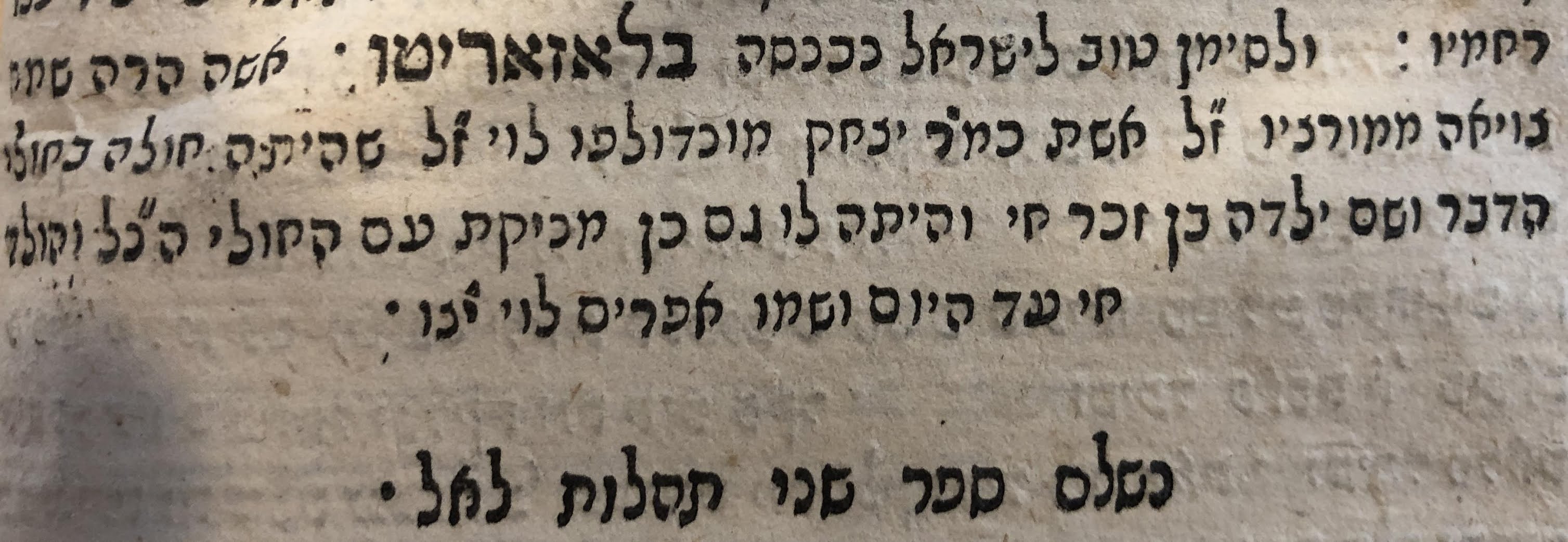
As a good sign for the people of Israel, a pregnant woman named Zivia, the wife Yitzhak Mondolfo, contracted the plague, and though confined to the Lazaretto, was able to deliver a healthy child, whom she was able to nurse for a period before her demise. In the final line of this section in the printed work, we read that the child was still alive “until today,” and that his name was Efraim Levi. Though Zahalon’s book was published in 1683, this line appears in the manuscript, thus “until today” would be some twenty years after the plague.

While this indeed is some form of consolation, the manuscript adds an additional sentence which yields a far more powerful conclusion.

“And the circumcision was performed there (in the Lazaretto), and I say to you by your blood you shall live, and I say to you by your blood you shall live.” Zahalon concludes with the phrase from Yechezkel 16:6 which is traditionally recited as part of the circumcision ceremony. The allusion here to the plague is obvious.

Omitting this last sentence denies us not only the additional factual information about the performance of the circumcision in the Lazaretto, itself a remarkable event, but also Zahalon’s homiletic flourish which marked the community’s (re)birth after the tragedies of the plague. As I write these words, we are still in this midst of the Covid 19 pandemic, though the dissemination of the vaccines portends, God willing, for its cessation in the near future. These final intended words of Zahalon resonate deeply with us today, perhaps even more so than they would have when Otzar HaHayyim was published, some three decades after the plague.

[1] Ellen B. Wells, “Prints Commemorating the Rome 1656 Plague Epidemic,” Annali dell’Istituto e Museo di Storia della Scienza di Firenze 10 (1985), 15-21.
[2] On Zahalon, see Harry A. Savitz, “Jacob Zahalon, and His Book, ‘The Treasure of Life,’” New England Journal of Medicine 213:4 (July, 1935), 167-176; Harry Friedenwald, “Jacob Zahalon of Rome: Rabbi, Physician, Author and Moralist,” in his The Jews and Medicine 1 (Ktav Publishing House: New York, 1967), 268-279; J. Ph. Hes, “Jacob Zahalon on Hypochondriasis,” (Hebrew) Koroth 4:5-7 (December, 1967), 444-447; A. Danon, A. Kadar and D. V. Zaitchek, “Physiology and Pathology of Lactation in Zahalon’s Work,” (Hebrew) Koroth 4:11-12 (December, 1968), 667-678; D. Margalit, “Shmirath Habriuth by Maimonides and Comment by R. Jacob Zahalon,” (Hebrew) Koroth 5:1-2 (September, 1969), 96-98; Yehoshua Leibowitz, “R’ Yaakov Zahalon Ish Roma uPizmono liShabbat Hannukah 1687,” Sefer Zikaron liHayyim Enzo Sereni: Ketavim al Yehudei Roma (Shlomo Mayer Institute: Jerusalem, 5731), 166-181; Jonathan Jarashow, “Yakov Zahalon and the Jewish Attitude Towards Medicine,” Koroth 9:9-10 (1989), 725-736; Zohar Amar, Maimonides’ Regimen Sanitatis: Commentary of R. Jacob Zahalon on “Hilchot Deot” – Chapter Four, With an Added Brief Preface to the Treatise Ozar ha-Hayyim (Hebrew) (Neve-Tzuf, 2002); Samuel Kottek, “Pediatrics in the work Otzar HaHayyim of Jacob Zahalon,” (French), in Gad Freudenthal and Samuel Kottek, eds., Melanges d’Histoire de la Medicine Hebraique: Etudes Choisies de la Revue d’Histoir de la Medicine Hebraique (1948-1985) (Brill: Leiden, 2003), 183-207; Eliezer Brodt, Bein Keseh Le’Asor (Jerusalem, 5768), 184-185; Eliezer Brodt, “Segulot leZikaron uPetihat haLev,” Yerushateinu 5 (5771), 337-360, esp. 352; Michal Altbauer-Rudnik, “Love For All: The Medical Discussion of Lovesickness in Jacob Zahalon’s The Treasure of Life (Otzar Ha-Hayyim),” in Asaph Ben-Tov, Yaakov Deutsch and Tamar Herzig (eds.) Knowledge and Religion in Early Modern Europe: Studies in Honor of Michael Heyd (Brill: Leiden, 2013), 87-106. For discussion of the sources of Zahalon’s medical work, see Iris Idelson-Shein, “Rabbis of the (Scientific) Revolution: Revealing the Hidden Corpus of Early Modern Translations Produced by Jewish Religious Thinkers.” American Historical Review 126, no. 1. Forthcoming, March 2021.
[3] For the response of the Italian Jewish community to plagues in this period, including the plague in Rome of 1656, see Yaffa Kohen, The Development of Organizational Structures by the Italian Jewish Communities to Cope with the Plagues of the Sixteenth and Seventeenth Centuries (Hebrew) (Doctoral Dissertation: Bar Ilan University, submitted Tishrei, 5740). I thank Naomi Abraham, librarian at Bar Ilan University, for her truly exceptional efforts in making this dissertation available to me in the midst of the Covid pandemic.
[4] For more on this passage and on the plague in the Jewish Ghetto of Rome, see Yehoshua Leibowitz, “Bubonic Plague in the Ghetto of Rome (1656): Descriptions by Zahalon and by Gastaldi,” (Hebrew) Koroth 4: 3-4 (June, 1967), 155-169; Kohen, op. cit., 72-95.
[5] Y. Zahalon, Otzar HaHayyim (Venice, 1683), 21a-21b. Elsewhere we have discussed the Jewish physicians of the 1631 plague in Padua. See E. Reichman, “From Graduation to Contagion: Jewish Physicians Facing Plague in Padua, 1631” Lehrhaus (thelehrhaus.com), September 8, 2020.
[6] See H. Friedenwald, “Jacob Zahalon of Rome,” in his The Jews and Medicine (Johns Hopkins Press: Baltimore, 1944), 268-279.
[7] On Zahalon’s abilities and reputation as an orator, see Henry A. Sosland, A Guide for Preachers: The Or HaDarshan of Jacob Zahalon—A Seventeenth Century Italian Preacher’s Manual (Jewish Theological Seminary: New York, 1987). On the plague sermons, see pgs. 23-28.
[8]  See, for example, Guenter Risse, “Seventeenth-century Pest Houses or Lazarettos: Rome 1656,” in his Mending Bodies, Saving Souls: A History of Hospitals (Oxford University Press, 1999), 190-214.
[9] On the medical members of the Gabai (and Zahalon) families, see S. Plashkes, “Two Jewish Medical Families in 17th Century Italy: Gabai and Zahalon,” (Hebrew) Koroth 3:1-2 (October, 1962), 97-99.
[10] Otzar HaHayyim 21b.
[11] Israele Zoller, “I Medici Ebrei Laureati a Siena negli Anni 1543-1695,” Revista Israelitica 10 (1913), 60-70 and 100-110. In contrast, the University of Padua counts 127 Jewish medical graduates from 1617 to 1695. See A. Modena and E. Morpurgo, Medici E Chirurghi Ebrei Dottorati E Licenziati Nell’Universita di Padova dal 1617 al 1816 (Italian) (Forni Editore, 1967). For Jewish graduates of Padua earlier than this period, see D. Carpi, “Jews who received medical degrees from the University of Padua in the 16th and early 17th centuries,” (Hebrew) in Scritti in Memoria di Nathan Cassuto (Ben Tzvi Publishers: Jerusalem, 1986), 62-91.
[12] JTS, MS 8519. I thank Sharon Liberman Mintz for bringing this diploma to my attention. As part of my research interest in Jewish medical history, I have sought out copies of medical diplomas of Jewish students from previous centuries. Sharon, aware of this interest, notified me of a medical diploma in the JTS collection. The record does not identify the graduate but lists the University of Siena as the granting institution. I had never seen a diploma of a Jewish medical student from this institution; the majority of extant medical diplomas of Jewish students are from the University of Padua. However, due to the Covid 19 pandemic, access to the original diploma, stored in the remote site of the library, has been impossible. Fortunately, the National Library of Israel had taken black and white photographs of this document some years ago, and I was able to acquire copies. Since the onset of the pandemic, I have been focusing of the history of pandemics in Jewish medical history. When I received the copies of the diploma, and read the name, Hananiah Modigliano, it sounded familiar to me. It was a short while until I realized that I had seen the name mentioned in Zahalon’s passage on the plague.
[13] As per the librarian for the University of Siena Archives, the university does not possess any diplomas of this period.
[14] On the differences in the diplomas of Jewish medical graduates of the University of Padua, see E. Reichman, “Confessions of a Would-be Forger: The Medical Diploma of Tobias Cohn (Tuviya Ha-Rofeh) and Other Jewish Medical Graduates of the University of Padua,” in Kenneth Collins and Samuel Kottek, eds., Ma’ase Tuviya (Venice, 1708): Tuviya Cohen on Medicine and Science (Muriel and Philip Berman Medical Library of the Hebrew University of Jerusalem: Jerusalem, 2019), in press; E. Reichman, “The ‘Doctored’ Medical Diploma of Samuel, the Son of Menasseh ben Israel: Forgery or ‘For Jewry’?” Seforim Blog (https://seforimblog.com) (forthcoming).
[15] The Corcos family was a prominent Jewish Italian family. Another Jewish graduate of the University of Siena was Isaac Corcos, who graduated in 1654. See Zoller, op. cit. He may have been a relative and possibly a brother of Raphael Corcos.
[16] See H. Volgstein and P. Reiger, Geschichte der Juden in Rom, 2 vol (Berlin, 1895-1896), 267.
[17] On Raphael Modigliano, see Asher Salah, La Republique des Lettres: Rabbins, ecrivains et medecins juifs en Italie au XVIIIe Siecle (Brill: Leiden, 2007), 428-429.
[18] What makes this even more exceptional is that Hananiah’s diploma is the only known Jewish diploma from the University of Siena, and Raphael’s diploma is one of only two known Jewish diplomas from the University of Ferrara, the other being from 1802 (Samuel Vita Della Volta).
[19] The diploma was originally part of the Valmadonna Trust Library, Ms. 292, and is now incorporated into the National Library of Israel, system n. 990000822160205171. See Benjamin Richler, The Hebrew Manuscripts in the Valmadonna Trust Library (Valmadonna Trust: London, 1998), n. 269.
[20] Columbia University Library, Ms. X 893 T 15, p. 15a. See Sosland, op. cit., 82-83.
[21] Sosland, op. cit., 25. Others just listed the name as Isaac Zahalon without comment. See H. Volgstein and P. Reiger, Geschichte der Juden in Rom, 2 vol (Berlin, 1895-1896), 212-213.
[22] Sosland, op. cit., 25.
[23] Some years ago, Chaim Reich, ah, of Renaissance Hebraica, produced a high-quality reproduction of Otzar HaHayyim. I thank Rabbi Eliezer Brodt, who owns one of these copies, for this information.
[24] The manuscript is available online at https://digi.vatlib.it/mss/detail/Vat.ebr.466. On this manuscript see, Malachi Beit-Arié and Nurit Pasternak, Hebrew Manuscripts in the Vatican Library (Vatican City, 2008), 405. I have only compared the manuscript to the printed edition for this brief passage. A comprehensive comparison remains to be done.


On the History of the Custom to Announce Upcoming Fasts in the Synagogue on the Shabbat Preceding the Fasts

On the History of the Custom to Announce Upcoming Fasts in the Synagogue on the Shabbat Preceding the Fasts

By Ezer Diena

About the author: Ezer Diena teaches Science and Judaics at Bnei Akiva Schools of Toronto. After studying at Yeshivas Toras Moshe for two years, Ezer received his B.Sc. in Chemistry and B.Ed. from York University.  He then joined Beit Midrash Zichron Dov of Toronto, where he studied for two years while serving as Rabbinic Assistant at BAYT and teaching in the Toronto and Thornhill communities. He welcomes any comments or feedback at ediena@torontotorah.com

Part 1: The sources of this custom

Many communities have the custom to make some type of announcement1 of a fast day on the Shabbat preceding it. In what is likely the best-known version of this custom, Shulchan Aruch (Orach Chaim 550:4) writes:

:(בשבת קודם לצום מכריז שליח צבור הצום חוץ מט”ב וצום כפור וצום פורים וסימנך אכ”ף עליו פיהו2 (ומנהג האשכנזים שלא להכריז שום אחד מהם

On the Shabbat prior to a fast, the Shaliach Tzibbur announces the [upcoming] fast, except for the 9th of Av, the fast of Kippur, and the fast of Purim [i.e. Ta’anit Esther], and the mnemonic for this is “AKaF alav pihu” [A = Av, K = Kippur, F = Purim] (Mishlei 16:26). Rema:3 And the custom of the Ashkenazim is not to announce any of them.

While the source of Shulchan Aruch’s formulation of the custom to announce fasts on the Shabbat prior is Abudarham4, this custom is described in a number of early sources. Two sources cited in support of this custom appear to be from Geonic times5, while another seven major sources span the first half of the second millennium. The Hebrew and English text of these nine sources, along with minimal analysis, follows:

Masechet Soferim (no later than 8th Century CE)

In standard printings of Masechet Soferim, Chapter 21 Halacha 36 references a custom that some individuals had to fast on Monday(s) and Thursday towards the end of the month of Nissan.7 The next passage8 reads

.במה דברים אמורים בצינעה, אבל לקרוא צום בציבור אסור, עד שיעבור ניסן

When is the above said? [When the fasting is done] privately, but to call a fast in public is prohibited, until Nissan has passed.

Rabbi Dr. Michael Higger (in his critical edition of Masechet Soferim, Volume II, p. 354, notes to line 13) notes no less than four other versions of the words that appear in the place of לקרוא צום בציבור, to call a fast in public: להטריח ציבור, to burden the community; להכריז צום בציבור, to announce a fast in public; להזכיר צום בציבור, to mention a fast in public; and להדין צום בציבור, to rule (?) a public fast. (Note as well that some of the versions lack the word צום, fast, but their meaning likely remains the same.)

Some commentaries to Masechet Soferim9 have therefore suggested that this line references this custom to announce fasts on the preceding Shabbat. While it is indeed the custom of many communities, even now, to recite a Mi Sheberach blessing on the first Shabbatot following Rosh Chodesh Iyar and Cheshvan for those who fast the Monday/Thursday/Monday fasts following Nissan and Tishrei,10 this does not seem to be the simple meaning of this passage of Masechet Soferim, for a number of reasons. Firstly, the passage in Masechet Soferim makes no mention of Shabbat, unlike all of the other sources discussing this custom. Secondly, it seems to be discussing the nature of the fast day itself as a fast of an individual, as opposed to the fast of the public. Thirdly, similar wording is used by Shulchan Aruch (Orach Chaim 429:2) to describe the prohibition of fasting during the month of Nissan, and the overwhelming majority of commentaries11 explain this phrase to refer to the act of public fasting, having nothing to do with an announcement on the Shabbat preceding the fast.12

A more plausible explanation13 of this passage in Masechet Soferim would be that this refers to the public display of fast day rituals, such as reading the Torah portion associated with a public fast day, or that there was some announcement of the fast to the public, but had nothing to do with the Shabbat preceding the fast.

In conclusion, there is no evidence from this passage in Masechet Soferim to suggest that the its author was aware of a custom to announce fast days in the synagogue on the Shabbat preceding.

Seder Rav Amram Gaon (9th Century CE)

Another early source supporting the custom of announcing fasts on Shabbat may be Seder Rav Amram Gaon. In Seder Hilchot Ta’aniyot (usually indicated as Section 57), some editions14 of this work contain the following paragraph:

ונהגו בכל המקומות שמכריז ש”ץ בשבת קודם התענית ואומר צום פלוני ביום פלוני שיהפוך אותו הקב”ה עלינו ועל כל עמו ישראל לששון ולשמחה. ככתוב. כה אמר ה’ צבאות צום הרביעי וצום החמישי וצום השביעי וצום העשירי יהיו לבית יהודה לששון ולשמחה ולמועדים טובים והאמת והשלום אהבו. תענית של צום הרביעי י”ז בתמוז, צום החמישי ט’ באב, וצום השביעי ג’ בתשרי, צום העשירי עשרה בטבת

It is the custom in all communities that the Shaliach Tzibbur announces on Shabbat before the fast and says “the fast Ploni will [take place] on the day Ploni, may Hakadosh Baruch Hu transform it for us and for His entire nation of Israel to gladness and happiness.” As it is written: “Thus said the LORD of Hosts: The fast of the fourth month, the fast of the fifth month, the fast of the seventh month, and the fast of the tenth month shall become occasions for joy and gladness, happy festivals for the House of Judah; but you must love honesty and integrity.” (JPS 1985 translation of Zechariah 8:19) The fast of Tzom Harevi’i is the 17th of Tammuz, Tzom Hachamishi is the 9th of Av, and Tzom Hashevi’i is the 3rd of Tishrei, [and] Tzom Ha’asiri is the 10th of Tevet.15

Unfortunately, this passage is not authentic. In addition to language that does not seem to fit the rest of the work16, it appears only in Manuscript Aleph (Oxford Bodleian Library Opp. Add. 4028) of this work, a manuscript known for many later interpolations based on French customs.17 Also, if such a custom was so widespread at that time, one would expect other evidence from approximately the same time period or earlier, which, if extant, has eluded this author entirely. Indeed, Professor Daniel Goldschmidt treats this section as a later addition in his edition of Seder Rav Amram Gaon.18 Therefore, it is significant as testimony to the custom in France in the 1400s, but not as a report from 500-odd years prior in a different part of the world.

Machzor Vitry (11th-12th Century CE)

Standard printings of the Machzor Vitry (Section 190), a French work composed around 1100 CE,19 read as follows:

וכשחל תענית כתוב בשבת הבאה יאמר הכי: מי שעשה כו’. עד לירושלם עיר הקודש ונאמר אמן. צום פלוני יום פלוני זה הבא עלינו יהפכהו הק’ לנו ולכל ישר’ לששון ולשמחה ולברכה ולשלום ונאמר אמן. ככת’ כה אמר י”י צום הרביעי צום החמישי צום השביעי וצום העשירי יהיה לבית יהודה לששון ולשמחה ולמועדים טובים האמת והשלום אהבו

When a “written fast” falls in the coming week, he should say as follows: “He who did…” until “to Yerushalaim, the holy city, and we say ‘Amen’!” [This text is found in the previous section as part of the prayer recited on the Shabbat before Rosh Chodesh.] “The fast of Ploni is on this day, Ploni, which is approaching. May Hakadosh Baruch Hu transform it for us and all of Israel to gladness and happiness and blessing and peace, and we say ‘Amen’!” As it is written, “Thus said the LORD of Hosts: The fast of the fourth month, the fast of the fifth month, the fast of the seventh month, and the fast of the tenth month shall become occasions for joy and gladness, happy festivals for the House of Judah; but you must love honesty and integrity.” (JPS 1985 translation of Zechariah 8:19)

Although there are various manuscripts of Machzor Vitry, and many of them have slightly different readings, the passage is considered entirely authentic. The details of this retelling of the custom, as well those which follow, will be analyzed at length later in this piece, and are brought here as a form of introduction, as well as if the reader would like to reference the full texts during other portions of this article.

Sefer Eitz Chaim (13th Century CE)

Rabbi Yaakov Ben Yehudah Chazzan lived in London in the 1200s, and produced a Halachic work called Eitz Chaim.20 Page 109 of the Brody Edition reads:

כשיארע צום21 לשבוע יאמר: צום פלוני יהיה יום פלוני, יהפכהו הקב”ה עלינו ועל כל ישראל לששון ולשמחה ולמועדים טובים, לריוח והצלה והצלחה, לברכה ושלום ונאמר אמן, כאמור: כה אמר יי [צבאות] צום הרביעי צום החמישי צום השביעי וצום העשירי יהיה לבית יהודה לששון ולשמחה ולמועדים טובים האמת והשלום אהבו

When a fast will fall in the week, he should say: “The fast of Ploni will be the day of Ploni, may Hakadosh Baruch Hu transform it for us and all of Israel to gladness and happiness and holidays, relief, deliverance and success, blessing and peace, and we say ‘Amen’!” As is said, “Thus said the LORD of Hosts: The fast of the fourth month, the fast of the fifth month, the fast of the seventh month, and the fast of the tenth month shall become occasions for joy and gladness, happy festivals for the House of Judah; but you must love honesty and integrity.” (JPS 1985 translation of Zechariah 8:19)

Kol Bo (13th-14th Century CE)

In an anonymous halachic work from around 1300, often attributed to Rabbi Aharon Ben Yaakov Hakohen22, we find the following in Hilchot Tefillat Yotzer Umussaf, Chapter 37:

.ועל ד’ הצומות שהן י”ז בתמוז וט’ באב וצום גדליה ועשרה בטבת מכריז בשבת שלפניהן ואומרים צום פלוני יהיה יום פלוני וכו’, אבל23 אין מכריזין על ט’ באב ועל צום גדליה24 לפי שהם ידועים לכל

On the four fasts, which are the 17th of Tammuz, the 9th of Av, the fast of Gedaliah, and the 10th of Tevet, he announces on the Shabbat prior to them, and they say: “The fast of Ploni will be on the day of Ploni…”. But we do not announce on the 9th of Av and the fast of Gedaliah, since they are known to all.

Orchot Chaim (13th-14th Century CE)

Standard printings of Orchot Chaim, an early 14th Century work by Rabbi Aharon Ben Yaakov Hakohen25 (Volume I, Seder Tefillat Shabbat – Shacharit, Section 8) read:

ועל ד’ הצומות שהן י”ז בתמוז וט’ באב וצום גדליה וי’ בטבת מכריז בשבת שלפניהם צום פלוני יהיה יום פלוני וכו’26 ועל ט’ באב וצום גדליה י”א שאין מכריזין עליהם לפי שהן ידועים לכל.27

On the four fasts, which are the 17th of Tammuz, the 9th of Av, the fast of Gedaliah, and the 10th of Tevet, he announces on the Shabbat prior to them: “The fast of Ploni will be on the day of Ploni…”. [Regarding] the 9th of Av and the fast of Gedaliah, some say that we do not announce them, since they are known to all.

Sefer Mitzvot Zemaniyot (13th-14th Century CE)

Rabbi Yisrael Ben Yosef Hayisraeli of Toledo, Spain, authored an Arabic work known as Sefer Mitzvot Zemaniyot around the beginning of the 14th Century. It was translated into Hebrew not long after his death by Shem Tov Ben Yitzchak Ardotial, and that translation alone remains.28 In his Hilchot Ta’aniyot, he writes:

וצריך להזהר בהם ולהזכירם ש”ץ ביום השבת הקודם אחר ההפטרה קודם שיאמר אשרי “אחינו ישראל [שמעו] צום פלוני יום פלוני. יהפוך אותו לנו29 הקב”ה לנו לששון ולשמחה, כמו שהבטיחנו בנחמות, ונאמר אמן”. והענין לזה, כדי שיקבלו עליהם הצבור קודם בואו. כי אם לא יקבלוהו ולא כיונו בו אלא אחרי בואו, יקרא תענית שעות, שאינו יום צום אלא מעת שכיון לקבלו עד תשלום היום. ואמרו אין מתענין לשעות. ואמרו עוד כל תענית שלא קבלו עליו מבעוד יום לא שמיה תענית.

One needs to be careful about them and the Shaliach Tzibbur should announce them on Shabbat Day after the haftarah before he says “Ashrei”: “Our brothers, Israel, hear: The fast of Ploni is on the day of Ploni. May Hakadosh Baruch Hu transform it for us to gladness and happiness, as he promised us in the consolations, and we say “Amen”!” The purpose of this, is so the community accepts [the fast] upon themselves before it arrives. For if they do not accept it, and only focus upon it after it arrives, it will be called a Ta’anit Sha’ot [fast of hours], which is [only considered] a day of fasting from the time that he intended to accept it until the completion of the day. And they said (Ta’anit 11b): “[One] does not fast for hours.” They also said (Ta’anit 12a): “Any fast which they did not accept while it was still [the previous] day is not considered a fast.”

Although he lived in Spain, he was tremendously influenced by Rabbi Asher Ben Yechiel (Rosh), who had lived in and travelled through various Ashkenazic communities before settling in Spain in 1306. Thus, this work may reflect an Ashkenazic custom, albeit one that may have become accepted in Spain at that time. It is also imperative to note that scholars have documented the influence of this work on the next two works listed, Sefer Abudarham and Sefer Menorat Hama’or.30

Sefer Abudarham (14th Century CE)

As mentioned above, Sefer Abudarham, a classic 14th Century Spanish liturgical work,31 served as the source for Shulchan Aruch’s ruling on this matter. The original text, found in printed versions of Sefer Abudarham (Seder Tefillat Hata’aniyot), reads:

ובשבת שקודם להם אחר קריאת ההפטורה קודם אשרי צריך שיכריז שליח צבור ולהודיע לקהל באיזה יום יחול הצום ואומר אחינו ישראל שמעו צום פלוני יום פלוני יהפוך אותו הקב”ה לששון ולשמחה כמו שהבטיחנו בנחמות ונאמר אמן. וג’ תעניות אין מכריזין עליהם ט’ באב יום הכיפורים ופורים וסימניך אכ”ף.32

And on the Shabbat before them, following the reading of the Haftarah, prior to Ashrei, the Shaliach Tzibbur must announce and notify the congregation on which day the fast falls, and he says: “Our brothers, Israel, hear: The fast of Ploni is on the day of Ploni. May Hakadosh Baruch Hu transform it to gladness and happiness, as he promised us in the consolations, and we say “Amen”!” There are three fasts which we do not announce [the date of]: The 9th of Av, Yom Hakippurim, and Purim, and the mnemonic is AKaF [A = Av, K = Kippur, F = Purim].

Sefer Menorat Hamaor (Rabbi Yisrael Al-nakawa; 14th Century CE)

Finally, at approximately the same time and place as Sefer Abudarham was written, Sefer Menorat Hama’or, a chiefly ethical work by Rabbi Yisrael Al-nakawa, was also composed.33 Standard printings of Chapter 2 of the book, entitled Hilchot Hata’aniyot (p.p.278-279 in the Anlau Edition), contain the following passage, in the context of formally accepting the “minor fasts”:

…ולפי’ נהגו להכריז ש”צ ביום השבת שהתענית חל להיות באותו שבוע הבאה אחריו. ואומר, אחינו ישראל שמעו, צום פלוני ביום פלוני, יהפוך אותו הב”ה לששון ולשמחה, כמו שהבטיחנו בנחמות, ונאמר אמן. כדי שיקבלוהו הקהל עליהם קודם שיחול, לפי שאין רובם בקיאים לקבל אותו עליהם מבעוד יום בתפלת המנחה, כמו שאמרתי.

…therefore, they have the custom that the Shaliach Tzibbur announces the fast on the Shabbat Day on which the fast falls in the week which follows it. And he says: “Our brothers, Israel, hear: The fast of Ploni is on the day of Ploni. May Hakadosh Baruch Hu transform it to gladness and happiness, as he promised us in the consolations, and we say “Amen”!” [This is done] in order that the congregation should accept it upon themselves before it arrives, since most of them are not expert enough to accept it while it is still daytime [before the fast] during the Mincha prayer, as I said.

To sum up the history of this custom, we see that it arose sometime near the start of the Second Millennium CE and was reported to be the custom of French Ashkenazic communities for at least the next few hundred years. We also see it in a distinct group of Spanish sources in the 1300s, which may have been influenced by Ashkenazic rabbis who either emigrated to Spain or were well-known in Spain, causing this to become common practice in those Sephardic communities. In the 1400s and 1500s, it appears that this custom was strong in certain Sephardic communities (especially Spanish ones), and possibly still in French communities, but virtually nonexistent in many Ashkenazic communities.

Following the dissemination of the rulings of Rabbi Yoseph Karo and Rabbi Moshe Isserles in the Shulchan Aruch and Mappah, we see significant adoption of this custom by communities that tended to follow Sephardic customs, and strong rejection of the custom by Ashkenazic communities across Europe. Ashkenazic codes of law from this point on either rejected this custom (which may be evidence that it was known to them, possibly via the ruling in Shulchan Aruch), or failed to mention it altogether, since it was not practiced.34 However, we see evidence of adoption of this custom among Yemenite Jews,35 Egyptian Jews,36 and Italian Jews.37

Part 2: Approaches to this custom

In order to properly understand this custom, we must ask the following questions:38

  1. What benefit might there be to people to announce a fast day on the Shabbat beforehand, and why would someone initiate such a custom?
  2. Why might some communities not have adopted this custom or disagreed with it?
  3. How do these reason(s) fit in with various details of the custom, as indicated in the sources noted above, including:
    1. the language of the announcement?
    2. the placement of the announcement in the prayer service?
    3. the dates which some communities do not announce?

In answering these questions, we find three distinct conceptual approaches39 to this custom, which will be outlined below. Each of these approaches finds support among the various details of this custom, as mentioned in the sources introduced above. However, rather than attempt to assign these understandings to various authorities, this article presents the general approaches and incorporates appropriate material from the primary sources. Assigning a particular approach to each source is inappropriate, since they do not fully reflect exactly how that author may have understood the custom, but rather, how it was being practiced in that locale at that time.

Approach #1: Informing the Community

Perhaps the simplest way to explain this prayer and custom is that it serves as a method of alerting the community to an upcoming fast day.40 The custom may have begun simply by necessity – members of a particular community may have not been fully aware of upcoming fast days, and as a result, it could have been decided by the community leaders that an announcement on Shabbat would be most effective to share this information with the community. Notably, around the times which we see this custom first being mentioned, there is reason to believe that there were more participants in the Shabbat prayer service than at other weekday services,41 and in addition, it provides significant time to prepare for the fast, which could be no earlier than the following day.42

One could further conjecture that in communities where the fasts were communicated otherwise, or where the general population was more aware of such dates, this announcement was simply unnecessary. Alternatively, even if there were more communities that would have benefitted from a public declaration about the upcoming fast, it is possible that while some communities incorporated this into their prayer service, others may have felt it unnecessary or inappropriate.

Such an approach is primarily taken by Abudarham43, who adds the words ולהודיע לקהל, emphasizing the element of announcement. (Truthfully, it is hard to reject this reading of virtually any source that mentions this custom.) If so, the words “אחינו ישראל שמעו44, צום פלוני [ב]יום פלוני”, serve as a crucial part of the announcement, as they serve the main goal of passing this information on to the congregation. This would also explain the proximity of this prayer to the similar announcement of when Rosh Chodesh will take place the following week.45

Commentaries to Shulchan Aruch that take this position are quite limited.46 One example is Kaf Hachaim (Orach Chaim 550:24), who cites the language of Sefer Abudarham, and in 550:26, he also cites Yafeh Lalev (Volume III, Orach Chaim 550:2), who in turn cites Orchot Chaim’s language (brought above). Since Orchot Chaim writes that according to some, we do not announce the fasts of the 9th of Av and Tzom Gedaliah “because they are known to all”, many understand this phrase to reflect an understanding that the purpose of the announcement is to make these dates known to all.47 This would be true of the passage in Kol Bo as well, which also gives that rationale without citing another view. Similarly, in Sefer Abudarham (and Shulchan Aruch), three dates are given on which we do not announce the fast on the preceding Shabbat. Yom Kippur and the 9th of Av were likely well-known, and did not need to be announced, and the Fast of Purim (Ta’anit Esther) need not be announced due to its proximity to Purim.48 However, it would be hard to understand why Tzom Gedaliah, which immediately follows Rosh Hashanah, would not fall into this category as well.49

Of particular interest50 to those who follow this approach is the custom in Egypt. Sefer Minhagei Mitzrayim (authored by Rabbi Yom Tov Ben Eliyahu Shirizali, Rabbi of Cairo in the mid-late 1800s; note 55) testifies that the custom in Egypt was not to announce any of the fasts. However, his successor Rabbi Rafael Aharon Ben-Shimon, in Sefer Nehar Mitzrayim (Hilchot Ta’aniyot 1) spoke very harshly against the custom of not announcing these fasts, since he was personally aware of complaints from G-d-fearing Jews who had unintentionally eaten on the 17th of Tammuz, and he re-instituted this custom in accordance with the view of Shulchan Aruch.51

Notably, a recent authority that takes this approach is Rabbi Mordechai Eliyahu. In Kol Tzofayich (Balak 5761), p. 3, he advocates that even in communities that do not have this custom, on the Shabbat preceding the fast, the Gabbai should announce the date on which the fast falls, as well as the start and end times for the fast.52

Approach #2: A Prayer

It is quite clear that the actual text of this addition to the Shabbat morning services contains two major components:

  1. An announcement of when the fast will be taking place
  2. A prayer that Hashem turn it into a day of happiness

When examining the various versions of this passage and the way it is described, one can see different emphases on each of these components. For example, in Orchot Chaim’s version, which reads “צום פלוני יהיה יום פלוני וכו’”, the only text mentioned outright is the announcement of the fast, although it is clear that some form of prayer was recited, since he includes וכו’, or “etc.” at the end of his statement. Thus, one would presume that the main focus of this addition is to alert the community to the upcoming fast, but we take the opportunity to also request from Hashem that these days be turned into happy occasions.53

In a second set of texts, we find the second component, the prayer, clearly written following the announcement, but it tends to be fairly short. For example, Sefer Abudarham has “יהפוך אותו הקב”ה לששון ולשמחה כמו שהבטיחנו בנחמות ונאמר אמן”.

In Machzor Vitry, we find two interesting changes. Firstly, prior to the actual announcement, there is an opening prayer which matches the opening prayer recited before the announcement of Rosh Chodesh. Secondly (and this is found in various early French records54), it concludes with a citation of the verse in Zechariah (8:19) that these days will be transformed into happy occasions. It cannot be determined if this verse was actually recited as part of the prayer at the time that these texts were written, or if the verse was printed following this prayer to explain it,55 but it clearly demonstrates a strong connection to the consolation of that verse. Additionally, in Machzor Vitry as well as Sefer Eitz Chaim, the list of blessings that we pray for is significantly longer than in other sources.

Furthermore, in Machzor Vitry we find an odd phrase – it refers to each fast that we recite this before as a “תענית כתוב”, a written fast. Different interpretations have been proposed,56 one of which is that this phrase refers to those fasts enumerated in Zechariah 8:19.57 What criterion would be only applicable to those four fast fasts, and why refer to it in this strange way? Perhaps the emphasis of Machzor Vitry was on the fact that these four fasts are enumerated in a verse which explicitly states that they will be turned into days of happiness, which according to him, would be the main purpose of this passage and custom.58

In addition to the above, many versions of Machzor Vitry omit the day of the week on which the fast will fall.59 This too serves to deemphasize the notion that this section was added to remind others of an impending fast, and perhaps further emphasizes the role of this addition primarily as a prayer.

Additionally, another text can be called upon to support this notion that the primary reason for adding this section was to pray for a reversal from sadness to happiness. Kol Bo’s language about this custom appears to be internally contradictory. It opens saying that on each of the four fasts listed in Zechariah, the fast should be announced, and the prayer text should be recited. He then writes that Tzom Gedaliah and Tish’a B’av should not be announced. Why would he open by stating that we do announce those fasts, and one line later, write that we don’t?60

Perhaps this contradiction can be resolved by noting a slight difference between the language of Orchot Chaim and that of Kol Bo.61 Kol Bo adds the word ואומרים, and they say, prior to the passage recited in the synagogue. Thus, Kol Bo opens with a statement that on these four fasts: a) one individual announces the fast to the congregation, and b) the community recites the following prayer text. Kol Bo continues by noting that on two of the aforementioned fast days, the announcement is not made, but it is possible that the prayer is still recited.62 In Orchot Chaim, however, the prayer recited is the same as the announcement, and thus, it is brought as two separate opinions as to whether the announcement/recitation takes place at all.

This suggests that the Kol Bo distinguishes between the announcement element and the prayer element of this passage, and according to him, although the announcement is recited only prior to the 17th of Tammuz and 10th of Tevet, the prayer is recited prior to each of the four fasts listed in the verse, which would also seem to indicate that its primary purpose was to ask G-d for this reversal.

If the main or sole purpose of this addition to the Shabbat morning service would be for prayer, its placement within the prayer service (as opposed to before or after, or at a completely separate time) is quite appropriate. The parallel to the mention of Rosh Chodesh, which is also surrounded by prayers for a successful month, is very easy to understand. However, as stated above, this view is limited in regards to the applicable dates on the Jewish calendar, since according to this view, the most appropriate fast day to ask for a reversal of would be the 9th of Av, yet, many sources, including Shulchan Aruch, designate that day as one that we do not recite this passage on the Shabbat prior.63 Additionally, it is hard to understand the opposition to this custom – why wouldn’t other communities have followed this custom as well?

Although there is no certain answer to this question, there are two factors worth noting:

  1. If one were to view the passage announcing the upcoming Rosh Chodesh as fulfilling a different role than a prayer for the future, this passage seems out of place. If some Ashkenazic authorities viewed the Birkat Hachodesh as either an announcement or as some ritualistic acceptance of the new month,64 they may have felt it inappropriate to add another section to the prayers which did not serve that same purpose.
  2. There is a general hesitancy to mention sad things on Shabbat;65 some have suggested that the rejection of this custom was in line with this ethic.66 Indeed, there were even communities that did not recite the general Rosh Chodesh passage during the month of Av, due to its negative nature, so as not to bring that up on Shabbat.67

While this view that this addition to the service serves primarily as a prayer is not explicitly mentioned by commentaries to the Shulchan Aruch, nor almost any writers,68 it is clear that there is certainly an element of prayer according to all views of this custom, and that it may indeed be the main purpose of the custom according to some of the authorities that we brought above.

Approach #3a: An Informal Acceptance

The final general approach brought here is the one that has been most discussed in previous sources. In particular, Rabbi Dr. Daniel Sperber’s article on the topic mainly addresses this approach, and the classic commentaries on Shulchan Aruch who take note of this custom (in this case, Be’ur Hagra to Shulchan Aruch Orach Chaim 550:4 and, following in Gra’s footsteps, Aruch Hashulchan (Orach Chaim 550:4) also follow this approach.69 However, as we will see, there is much material on this topic that has not yet been addressed, and therefore, it would be best to present the following spectrum of views within this approach, ranging from a wholly unofficial and non-halachic acceptance of the fast, to an extremely formal and legally valid acceptance of the fast.

On the less-formal side of things, Be’ur Hagra suggests that as per Talmud Bavli Rosh Hashanah 18a, the status of the fasts listed in Zechariah (likely excluding Tish’a B’av) depends on the situation of the Jewish people at that time. As the Talmud states there:

.אין גזרת המלכות ואין שלום רצו מתענין רצו אין מתענין

At a time where there is no decree of the kingdom and no peace, if they wish to fast, they should fast, and if they don’t wish to fast, they should not.”70

Based on one opinion71 that nowadays (assuming there is no persecution), or at the very least, several hundred years ago, when this custom first appeared, the status of these three72 fast days was still in the hands of the people, an announcement on the Shabbat beforehand was a form of “accepting” the fast as a community by declaring that the community wishes to fast. According to this approach, those who disagree with the institution of this custom believe that these fasts have already been formalized, and they are no longer dependent on community will at all.73

This approach does well in explaining the exclusion of Yom Kippur and the 9th of Av, since they have a status of being completely established,74 and do not require the will of the community to take effect. However, the exclusion of Ta’anit Esther is somewhat perplexing. Although it is certainly not included in the list of fasts that depend on community will, it doesn’t seem to be particularly established, especially when we contrast other halachot of the day. This led Gra to suggest that Shulchan Aruch was of the opinion that Ta’anit Esther is considered to be established in our day, that just as the Jewish people fasted as a community on the 13th of Adar, we too continue to fast each year. This is in line with Esther 9:31, as applied in Rambam Hilchot Ta’aniyot 5:5.75 On the other hand, based on Rema (Orach Chaim 684:2), Sperber suggested that Ta’anit Esther was simply a weak custom, and not obligatory to fast on at all,76 which is why it was excluded from this list.

This approach, while initially appealing, has several issues. Firstly, it is impossible to suggest this as a plausible understanding of Sefer Abudarham, the source of Shulchan Aruch, since he brings the view of Ramban that the fasts are considered absolutely obligatory and not subject to communal approval, without bringing a dissenting view. Thus, to suggest that those who support announcing the fast must disagree with Ramban would be a clear contradiction. Furthermore, a number of commentaries77 (possibly including Gra himself) understand that Shulchan Aruch also follows Ramban’s view, in which case Shulchan Aruch would also be subject to this contradiction.78

Addition issues are the lack of a clear parallel to the Rosh Chodesh announcement79, as well as language that doesn’t seem to indicate any sort of acceptance80.

Approach #3b: A formal acceptance

Many descriptions of this custom are very consistent in presenting it as a form of acceptance. Sefer Mitzvot Zemaniyot makes extensive reference to the possibility of this addition being an acceptance of the fast, and earlier in his Hilchot Ta’anit, he mentions that only the 9th of Av has status as a public fast day, unlike the other fasts. Sefer Menorat Hamaor, earlier in his Hilchot Hata’aniyot is also explicit that each individual must accept these fasts for them to be considered binding. One could certainly argue that the purpose of the announcement is to remind people to accept the fast individually, but it seems more likely that these sources viewed the mention on the Shabbat prior to be some sort of acceptance. It is also worth mentioning that this may be a more formal and individualized type of acceptance than what Gra and Sperber were referring to.

(It is also interesting to note the placement of this halacha in the various works which refer to it. In general, although it is not absolute, it seems that those authorities who place it in the Shabbat section81 tend to view it more as a prayer or announcement than an acceptance, whereas others who place it in the laws of fast days82 may view it as more of a formal acceptance.)

The question which must be posed for the adherents to this approach is by what mechanism mentioning a fast on the Shabbat prior is considered acceptance of a fast. For Mitzvot Zemaniyot (and possibly Menorat Hama’or), who view those fasts as optional, one would expect a halachically-binding acceptance.

Firstly, regarding the time gap that may occur between Shabbat and the actual fast day, it is possible that the acceptance is binding even a number of days prior to the fast. Interestingly, this halacha is derived by Ra’avyah (Ta’aniyot 857; also cited in Mordechai Ta’anit Remez 624 and Or Zaru’a Volume II, Hilchot Ta’anit 404) from the Mi Sheberach blessing of those who accept the fasts of Bahab (Monday-Thursday-Monday) around the time that the Torah is returned to the Aron on Shabbat morning on the Shabbat preceding those fats. Ra’avyah notes that if an individual answers Amen to this blessing and intends to fast on those days, they do not need an additional acceptance of the fast. Ra’avyah contends that despite the disagreement found in the Talmud (Ta’anit 12a) between Rav and Shemuel as to whether the fast must be accepted during the Mincha prayer, or simply at Mincha time, they would both agree that an agreement on the Shabbat before would be binding.83 While to lay out the specific details of accepting fasts according to all authorities is far beyond the scope of this article, it is still our custom to accept the Bahab fasts by answering to the Mi Sheberach on the Shabbat preceding, which means that practically speaking, we follow Mordechai. Nevertheless, Shulchan Aruch Orach Chaim 563:1 (based on Tur Orach Chaim 563 and Rosh Ta’anit 1:13) clearly implies that accepting a fast prior to Mincha-time on the day before the fast is insignificant, and that one would not need to fast if they accepted the fast earlier.84

Secondly, as to whether an announcement may serve as a formal acceptance of the fast, Shulchan Aruch (Orach Chaim 562:12) writes:

תענית שגוזרים על הצבור אין כל יחיד צריך לקבלו בתפלת המנחה, אלא שליח צבור מכריז התענית והרי הוא מקובל. ויש אומרים דהני מילי בארץ ישראל שהיה להם נשיא, לפי שגזרתו קיימת על כל ישראל, אבל בחוצה לארץ צריכים כל הצבור לקבל על עצמם כיחידים, שכל אחד מקבל על עצמו

A fast that they decree on the public, each individual does not need to accept it during the Mincha prayer, rather, the Shaliach Tzibbur announces the fast85, and it is accepted. And some say, that this was stated [only about] the land of Israel where they have a Nasi, since his decree is binding upon all of Israel, but in the diaspora, the entire community needs to accept the fast upon themselves as individuals, in that each [person] accepts it upon themselves.

It appears that this pronouncement of the community establishes the fast as a communal fast, which does not require any acceptance from anyone – they all must fast regardless.

If we follow the earlier view that the fasts of the 10th of Tevet, 17th of Tammuz and Tzom Gedaliah are still dependent on communal will, such an announcement might be required in order to formalize the fast. Such a view is ascribed by Sperber to Tur.86 However, one could argue that the purpose of the announcement here is to create a fast which would otherwise not exist, but for these established fasts, there is no such need. This position is explicitly taken by a number of authorities.87 Furthermore, even if there is a need to announce these fasts as a form of acceptance, as noted above, according to the second view in Shulchan Aruch, it is ineffective, so this seems to be a weak basis for announcing the fast. However, it is possible that it may be effective at continuing the custom of generations past to fast on this date,88 and despite the above challenges, Menorat Hama’or, noting that the general public was not knowledgeable and many did not formally accept the fasts as individuals, appears to suggest that this serves as a form of acceptance.89

However, both of these concerns (the acceptance of a fast not being effective prior to Mincha-time of the day before, and the potential inability of a non-Nasi Shaliach Tzibbur to affect a fast) can be addressed. Firstly, it is possible that this was not simply something announced by one individual, but that this section of the prayer service was actually recited by every individual (similar to what we find with the Rosh Chodesh announcement).90

Alternatively, one could posit that the Amen recited at the end of the passage acts as a verbal acceptance, just as it does in the case of the Mi Sheberach for those who commit to fast on the aforementioned Bahab days.91

As to the second concern, that the acceptance was made too early, it is possible that this custom of announcing the fasts was at one point practiced only in the afternoon prior to the fast. Sefer Mitzvot Zemaniyot brings up the fast in the context of the fast days which fall on Shabbat and are delayed to Sunday, and writes “therefore”, leading into his description of the custom to recite this extra passage on Shabbat. It is possible that this point in the prayer service was close enough to the time of Mincha to be considered an acceptance of the fast even by those who would require it to be accepted at Mincha-time. However, this is admittedly a very creative and innovative read of Mitzvot Zemaniyot, and various considerations make it highly unlikely that this was the author’s intent.92

The same cannot be said for Machzor Vitry. Firstly, of the four manuscript copies of this passage of Machzor Vitry, Rabbi Aryeh Goldschmidt notes that one version reads “וכשחל תענית כתוב למחר”, when a fast falls the next day.93 Additionally, he notes that three of the four manuscripts do not mention the day on which the fast falls, from which he concludes (Shinuyei Nuscha’ot note 15 and footnote 2) that the custom was not to announce the day on which it would fall, and that this indicates that the passage served more as a prayer than anything else. However, his analysis was based on looking at the sum of the manuscripts, rather than following each manuscript tradition individually. MS ex-Sassoon 535, which (as noted above) limited the prayer to when the fast fell on a Sunday, could not possibly include a day on which the fast falls, since the prayer is only recited the day before the fast! This leaves three manuscripts, two of which omitted the day. These two manuscripts94 read “וכשחל תענית כתוב לאחר השבת”, “when a fast falls after Shabbat”. This phrase, used in various places in Machzor Vitry95 refers to Sunday, which would explain why no weekday is provided in that version of the supplication text.

If so, three manuscripts of what appears to be the earliest record of this custom testify that this passage was added only on the day prior to a fast day.96 Thus, historically speaking, this addition may indeed have served as a form of accepting a fast for individuals or the community.97 This would also explain the emphasis on the verse in Zechariah, which serves as a reminder that these fasts are not as established as one might think, in that they are dependent on the will of the community, as above.

In conclusion, while many later authorities suggest that this announcement served as a form of accepting the impending fast, there is little explicit support for this notion among early records of the custom. Only Menorat Hamaor and possibly Mitzvot Zemaniyot seem to conceptualize the added passage in this way, but it may be a major factor in the origin of this custom.

Conclusion

This custom to add a short passage announcing an upcoming fast to the Shabbat morning services is multi-faceted. While many authors have tried to provide a clear conceptual framework for this custom, based in one of the three approaches outlined above, in truth, there is no clear approach to explain every detail of this custom. Rather, as we analyze the text, placement and framing of the custom over many hundreds of years across different locales, we find that it incorporates elements of each of these three understandings. Such is the richness of this custom, that we find a way to provide practical reminders to the community, properly accept these fasts upon ourselves, and simultaneously pray for G-d’s salvation, may it come speedily in our days!

[1] Note: Although this article presents three major conceptual framings of this custom, the custom itself will be often described as an “announcement” or “prayer” throughout the article, even when those approaches to the custom are not being discussed.
[2] While the mnemonic AKaF is the product of Rabbi David Abudarham, who served as Shulchan Aruch’s source for this law (see below), Rabbi Karo appears to have expanded it on his own, as when he cites Abudarham in Beit Yosef, only the mnemonic AKaF appears, not the verse. (It is possible that other versions of Abudarham included this expansion as well – in the damaged St. Petersburg Russia Ms. C 98, folio 122, there is a larger gap than would be expected at that point in the text. His selection of this verse as an expansion of this mnemonic is interesting, since one could have also chosen Michah 6:6, “אכף לאלהי מרום”. Perhaps the reference to a verse about hunger is appropriate for a fast day, or, that the compulsion of one’s mouth refers to the acceptance of the fast by pronouncing it in advance. For a kabbalistic interpretation of this hint, see text box following note 44 in Halachot Uminhagim – Hilchot Ta’aniyot (Kovetz Halacha Umesorah – Teiman).
[3] See Rabbi Dr. Daniel Sperber, Minhagei Yisrael 4 (p.p.248-9) in regards to whether this comment was actually written by Rema, or whether printers added this in accordance with Rema’s view in Darkei Moshe (Orach Chaim 550:1) that the custom of the Ashkenazim is not to announce any of these fasts on the preceding Shabbat. Early printings of Shulchan Aruch with the comments of Rema (such as the early 1600s Krakow edition) contain this comment but lack an introductory “הגה:”.

It should also be noted that the Knesset Hagedolah, whom Sperber noted brought this comment from the Sefer Hamapah (possibly as opposed to Darkei Moshe) seems to not have had a copy of Darkei Moshe on Orach Chaim, as both times he cites something from it in his works, it is a secondary citation.
[4]Seder Tefillot Hata’aniyot; p. 254 in Abudarham Hashalem, (Yerushalaim/Usha Edition). This text will be presented in full later in this article.
[5] Tosfot Yom Tov (Ta’anit 2:9) raises the possibility that this was the custom in Mishnaic times as well, but this seems to be without a firm basis.
[6] All of this is part of Halacha 1 in the Higger/Debei Rabbanan Edition of Masechet Soferim (Volume II, p. 354).
[7] See Tur, Beit Yosef, and other commentaries to Orach Chaim 429 and 492 for discussion of this custom, and interpretation of this passage of Masechet Soferim; some understood this to be referring to fasts following the conclusion of Nissan.
[8] Halacha 1, lines 12-13 in Higger’s edition, Halacha 4 in standard printings.
[9] See e.g. Be’urei Soferim (Wasserstein) to Masechet Soferim 20:4, citing Nachalat Ariel to Masechet Soferim 20:4.
[10] See e.g. Shach Yoreh Deah 22:31
[11] See e.g., the comments of Chok Ya’akov, Magen Avraham, and Mishnah Berurah to Shulchan Aruch there.
[12] It would be appropriate to note that similar phraseology appears in multiple places in Tanach, such as Melachim I 21:9, Yonah 3:5 and various other places. See Sperber, Minhagei Yisrael 1:24, footnote 5 for some sources that address this.
[13] Be’urei Soferim (Wasserstein) to Masechet Soferim 20:4 (citing Nachalat Ariel, as above) does offer an alternative explanation as well, and the Kerem Re’em Edition of Masechet Soferim (Chapter 21, note 28) concludes similarly.
[14] See e.g. Seder Rav Amram Hashalem (Frumkin), Volume 2, p. 78. As we will discuss, any printing which used the Oxford Bodleian Library manuscript of the work includes this passage.
[15] Two notes on translating this passage, which apply to the remaining translations as well: 1. Although the citations of Zechariah 8:19 found in the different sources are not identical, the same JPS translation was used throughout. 2. Whether to close the quotes before or after the citation of the verse from Zechariah was not certain; some versions of the prayer include the verse, but others do not.
[16] For example, elsewhere, the author identifies customs by locale, rather than write “all places”.
[17] See Seder Rav Amram Gaon (Goldschmidt/Mossad Harav Kook Edition), p. 12, which details the history of this manuscript.
[18] Seder Rav Amram Gaon, Mossad Harav Kook Edition, p. 96, section 57*.
[19] See e.g., the Encyclopedia Judaica entry for Mahzor Vitry and The Jewish Encyclopedia entry Simha Ben Samuel of Vitry.
[20] See e.g. The Jewish Encyclopedia entry for Jacob ben Judah Hazzan of London.
[21] This term, as opposed to Ta’anit (found in other descriptions of the custom) may indicate that it refers to the four fasts in Zechariah, which are referred to in that fashion; compare the language of Orchot Chaim and Kol Bo. For further discussion of the differences between these two terms, see The Academy of the Hebrew Language, Tzom Veta’anit (published August 4, 2014).
[22] There is a significant amount of literature devoted to the relationship between (and history of) Kol Bo and Orchot Chaim, a work authored by Rabbi Aharon Ben Yaakov Hakohen, and virtually every edition of either work addresses this issue to some degree. Rabbi Mordechai Menachem Honig (“On the new Edition of Sefer Hamaskil of Rabbi Moshe ben Rabbi Elazar Hakohen” (Hebrew), published in Yerushateinu Volume I (5767), p. 237 and footnotes 144-145) writes, based on various sources, that Kol Bo was authored in Provence in the late 13th Century, and served as an early version of Orchot Chaim, which was published in Majorca at a much later point in the author’s life.
[23] Shu”t Olat Yitzchak (Ratzabi) Orach Chaim 167 (p. 372) suggests that the words יש אומרים (and presumably the prefix of the next word) were omitted by a scribe; although this lacks manuscript support (e.g. Russian State Library, Guenzburg Collection, MS 72), it should not be discounted. This suggestion is motivated by the open contradiction in Kol Bo’s words, where he first writes that one announces the fast on all four days, then immediately writes that Tish’a B’av and Tzom Gedaliah are not announced. An alternative reading of Kol Bo will be presented later in the article.
[24] Based on the contradiction noted in the previous footnote, Rabbi David Avraham (Kol Bo Feldheim Edition, Volume 2, Column 218, footnote 59) suggests that this is a scribal error and should read “Tzom Kippur”. This is completely incorrect, as in addition to a lack of manuscript evidence, comparison to Orchot Chaim demonstrates that this is not the case, and even if one were to change this word, the contradiction in regards to the 9th of Av would still remain.
[25] See footnote 22 above, as well as the Encyclopedia Judaica and The Jewish Encyclopedia entries for Aron Ben Jacob haKohen (spellings vary slightly). It should be noted that the author of Orchot Chaim was expelled from France (likely Narbonne) in 1306 and moved to Majorca. Although it is not clear exactly when this work was written, it is likely, however, that this work represents the French custom at the time, and not necessarily the Spanish custom.
[26] The previous section in Orchot Chaim contains a prayer recited on the Shabbat prior to Rosh Chodesh Av, which is intended to be recited here as well.
[27] According to this latter view that the announcement is only made on the Shabbat preceding the 17th of Tammuz and the 10th of Tevet, Or Torah (Elul 5777, p. 1204) provides the mnemonic יאמר ד”י לצרותינו (a play on words from Bereishit Rabbah 92:1), which references the fast of the 4th (Daled) and 10th (Yud) months.
28 See Dr. Nahem Ilan, “He who has This Book Will Need no Other Book”: A Study of Mitzvot Zemaniyot by Rabbi Israel Israeli of Toledo (published in various languages in various journals).
[29] The only printed version of Mitzvot Zemaniyot (published from manuscript by Rabbi Moshe Blau in 1985) contains this word, but it is clear that it is an error. Indeed, in the manuscript that Blau used, Oxford Bodleian Library Or. 603, one can observe folio 39v and see that this word does not appear. )The same is true of National Library of France Heb. 831 manuscript, folio 386v and Oxford Bodleian Library Reg. 63 manuscript, folio 141r, although in the latter, neither occurrence of לנו appears.) The full list of manuscripts of this work is available in Dr. Ilan’s article, and many of them are available online.
[30] See Dr. Nahem Ilan, “He who has This Book Will Need no Other Book”: A Study of Mitzvot Zemaniyot by Rabbi Israel Israeli of Toledo (published in various languages in various journals), especially footnotes 80 and 81; it is quite apparent that Mitzvot Zemaniyot was used as the basis for their formulations of this custom.
[31] See Encyclopedia Judaica and Jewish Encyclopedia entries for David Ben Joseph Abudarham.
[32] Note that Shulchan Aruch appears to have completed the verse in the mnemonic (see footnote 2), as it does not appear in printings of Abudarham. It is also unclear if this mnemonic was created by Abudarham, or may have been known in communities that followed this practice. Some considerations include the usage of the term Purim as referring to Ta’anit Esther (see Sperber’s comments on this in a footnote to Minhagei Yisrael 1:24), the lack of testimony to it in other contemporary sources, and Abudarham’s general tendency towards such hints.

It is also fascinating to note that Avraham Almaliach (Meichayei Hayehudim Betripolitania, in Mizrach Uma’arav, Volume III, p. 124) writes that the custom of Libyan Jews was to refer to Tzom Gedaliah as Achi Kippur, the brother of [Yom] Kippur, since they always fall on the same day of the week, and therefore, they have a special relationship. Or Torah (Elul 5777, p. 1204) suggests that this hint, AKaF, also includes Tzom Gedaliah, interpreting the mnemonic as Achi KiPPur.
[33] See Encyclopedia Judaica and Jewish Encyclopedia entries for Israel Ben Joseph Al-Nakawa (or Alnaqua).
[34] In addition to Rema’s comments in Darkei Moshe (Orach Chaim 550:1), Levush (Orach Chaim 550:4) writes explicitly that these fasts are not announced, and the vast majority of Ashkenazic commentators/codifiers, as well as books of customs from Ashkenazic communities, make no mention of such a custom altogether.
[35] See e.g., Moshe Gavra, Mechkarim Besidurei Teiman – Shabbat Uvirchot Hanehenin, p. 216 and Shu”t Olat Yitzchak (Ratzabi), Orach Chaim 167 (p. 371).
[36] Evidence and discussion of this practice will be brought later in this article.
[37] Early versions of the Italian liturgy contain no such custom, and modern-day siddurim do. Further research is required to track exactly when these changes occurred for many of the communities influenced by Sephardim, including Italian communities.
[38] A more basic version of these questions appears in Sperber’s treatment of this topic (vis-à-vis the disagreement between Shulchan Aruch and Rema), found in Hebrew in Minhagei Yisrael Volume 1, Chapter 24 and in English in Why Jews Do what They Do: The History of Jewish Customs Throughout the Cycle of the Jewish Year, Chapter 11.
[39] These do not include kabbalistic approaches; for more on the kabbalah that relates to this, See Rabbi Chaim Ben Avraham Hakohen, Tur Bareket to Orach Chaim 550:4 (1654 Amsterdam Printing, p. 244) and text box following note 44 in Halachot Uminhagim – Hilchot Ta’aniyot (Kovetz Halacha Umesorah – Teiman).
[40] Note that such announcements (not on Shabbat) are very ancient in nature; see footnote 12 for further documentation of this practice.
[41] See e.g. Shibbolei Haleket Section 170 (a 13th Century German/Roman Rabbi), who writes in the name of his brother that some don’t always come to synagogue on weekdays.
[42] Specifically, in communities where individuals may have formally accepted the fasts at Mincha (or Mincha-time) on the day before, this would make sure that the entire community was aware in advance. The notion of accepting the fast will be discussed at great length in Approach #3.
[43] Likely, by extension, Shulchan Aruch takes this approach as well; even though the language of Sefer Abudarham is not copied in Shulchan Aruch itself, it is copied in Beit Yosef Orach Chaim 550.
[44] The addition of these three opening words, which don’t appear in many of the early versions of this custom, indicate that this was viewed as an announcement. Almost identical language is found in Talmud Bavli Ketubot 28b, also in the context of alerting the community.
[45] In his critical edition of Machzor Vitry (Tefillot Shabbat, Section 16, footnote 2, p. 287), Rabbi Aryeh Goldschmidt suggests that if the focus of the announcement of the upcoming Rosh Chodesh, in accordance with various Rishonim, is to alert the community to the upcoming day of Rosh Chodesh so that they may properly follow the associated halachot, it is logical to assume that this announcement fills a similar need. If, however, the purpose of the announcement of Rosh Chodesh is some form of Kiddush Hachodesh (as suggested by Rokeach, Section 53), this pre-fast announcement should simply be a prayer. (Interestingly, in the Nissan 5775 (Volume 70) Or Yisrael Journal, p. 240, footnote 10, Rabbi Meir Rose supports the notion that the Rosh Chodesh prayer is an announcement from this following section about fasts.)

While the main comparison to the announcement of Rosh Chodesh is certainly valid, there are two clear issues with his argument:

  1. a) Since Machzor Vitry itself follows the former view (that the Rosh Chodesh announcement is intended to alert the public to the upcoming Rosh Chodesh, so that they can properly follow the laws of the day), one would expect that the same purpose is served by the announcement of the upcoming fast. However, Rabbi Goldschmidt concludes (based on some manuscript evidence) that this section functions only as a general prayer and follows some manuscripts which remove the day of the fast from this prayer! These manuscript issues will be discussed later in the essay, but there are various possible explanations for the omission of the day of the fast in those manuscript without creating somewhat of an internal contradiction.
  2. b) In terms of Rabbi Goldschmidt’s second comparison (to a watered-down version of Kiddush Hachodesh, which establishes the date as Rosh Chodesh), it would be more natural to view this announcement as a form of accepting the fast (which establishes the date as a fast day) rather than viewing it as a general prayer, which seems to be less related.

[46] As noted above, many Ashkenazic commentaries seem to ignore this ruling altogether, so this custom is addressed primarily by Sephardic commentaries.
[47] Although one could counter that the first opinion brought in Orchot Chaim (to recite this prayer in advance of all four fasts) clearly disagrees with this reason.

Fascinatingly, the custom to avoid announcing the fast of Tzom Gedaliah was addressed at length by Rabbi Menachem Ben Yosef Chazan in Seder Troyes, a 13th Century work addressing customs of Troyes. The printed version (Section 9; Weiss Edition p. 25) reads:

ומן הזכרת צום גדליה מצאתי בשם הר”ר יהודה ז”ל וז”ל היה קשה לי מפני מה אין מזכירין צום גדליה שהוא בחדש השביעי כמו שמזכירים צום הרביעי וצום החמישי וצום העשירי, לסוף נ”ל מפני יום כפור שאינן מניחים להזכיר צום גדליה, ועוד ט”א טוב שלא יטעו העם כשישמעו צום הרביעי ויסברו זיהו צום כפור ונפיק חורב’ מיניה, מ”ר יהודה עכ”ל. ואמנם מורי אבי היה מזכירו גם מנהג ק”ק טרוייש להזכירו גם בשבת, אך שאין מזכירים חדש תשרי כשאר החדשים

In regards to mentioning Tzom Gedaliah, I found in the name of Rabbi Yehudah z”l, and these are his words: “It was troubling to me, for what reason don’t we mention Tzom Gedaliah, which is in the seventh month, just as we mention the fast of the fourth, the fast of the fifth, and the fast of the tenth? It later seemed to me because of Yom Kippur that they do not allow to mention Tzom Gedaliah, and another reason it is good that the nation should not err when they hear the fast of the fourth and think that it is the fast of Kippur, and destruction will emerge from it. Rabbi Yehudah.” However, my father would mention it, and the custom of the holy congregation of Troyes was to mention it also on Shabbat, even though they don’t mention the month of Tishrei like other months.

These words are particularly hard to understand, no doubt due to a very corrupt text. If we restore this text from available manuscripts (Cod. Parm. 1902 and JTS Rab. 1489; unfortunately, this entire chapter is missing from the copy of Seder Troyes in the Austrian National Library Cod. hebr. 175 manuscript, and the German Senckenberg Ms. Oct. 227 has been catalogued incorrectly; it contains a different Seder Troyes (usually spelled differently in Hebrew), often printed at the back of standard copies of Sefer Haminhagim – Tyrnau), we find three very significant changes to the text:

  1. מפני יום כפור שאינו נזכר מניחים להזכיר צום גדליה. Presumably, since Yom Kippur is not mentioned, it seems inappropriate to give so much honour and exposure to a minor fast that is so close in proximity.
  2. שלא יטעו העם כשישמעו צום השביעי ויסברו זיהו צום כפור. If people misunderstand the “fast of the seventh” to refer to Yom Kippur, there are various issues that may arise, including not fasting properly on Yom Kippur itself. This is an obvious emendation and should have been changed even without other manuscript evidence.
  3. גם מנהג ק”ק טרוייש להזכירו גם כשחל רה בשבת. This text may indicate that they regularly announced Tzom Gedaliah on Rosh Hashanah, even when Rosh Hashanah coincided with the Shabbat prior, or the reverse.

Both this source and general topic requires much further study and analysis and could certainly serve as the basis of another full article of its own. Some additional sources to see are Rabbi Yair Rosenfeld, Hama’ayan 56:1, #215 (Tishrei 5776), p. 17 and footnote 12, Halachot Uminhagim – Hilchot Ta’aniyot (Kovetz Halacha Umesorah – Teiman), note 44 and Shu”t Olat Yitzchak (Ratzabi), Orach Chaim 167.

[48] Mark Mietkiewicz pointed out that in some communities, there might already be changes to the liturgy on these Shabbatot that would remind any attendees of the impending fast, even without explicitly noting the date of the fast, although one would expect that the same applies to Tzom Gedaliah as well, since it follows Rosh Hashanah.
[49] Indeed, Kaf Hachaim (Orach Chaim 550:27) rules in accordance with the view that this is not recited, and a quick survey of modern-day siddurim shows that this is the accepted view.
[50] And as brought by Sperber in Minhagei Yisrael 1:24 footnote 3, as evidence that not all “classic” Sephardic communities followed this rationale. One can add that Ateret Avot (Machon Moreshet Avot Edition, Volume II, Chapter 26 footnote 1 p. 378) writes that some communities in Jerusalem, Tunis and Djerba did not have the custom to announce fasts either.
[51] He even instituted that there should be further announcement on Shabbat, not just the prayer recited in the synagogue.
[52] This does seem superfluous in a world where synagogue calendars, which generally include this information, are so well disseminated, both in print and online forms, and it is possible that now, Rabbi Eliyahu would be more lenient in this regard than he was approximately 20 years ago.
[53] Although it is more likely that Orchot Chaim did not print the full prayer to save space, since an identical prayer was mentioned in the previous section to be recited on the Shabbat prior to Rosh Chodesh Av.
[54] Sefer Eitz Chaim, the selection from Seder Rav Amram Gaon, as well as the 12th Century Provencal work, Malmad Hatalmidim (Parshat Devarim), which explores why this verse was chosen to be recited in this passage.
[55] In the versions found in Eitz Chaim and Machzor Vitry, the words ונאמר אמן, which appear to conclude the prayer, appear before the citation of the verse. However, one could argue that this was recited after the answering of amen, and the evidence from Malmad Hatalmidim (above) appears to favour this interpretation.

If one looks to modern versions of this passage, there are various customs and siddurim that include the verse as part of the prayer (e.g. Siddur Sha’ar Binyamin – Damascus, p. 402), and many others that do not (e.g. Tichlal Hamevu’ar – Baldi (Korach Edition, p. 302)). Also note the Provencal custom to recite it, as recorded in the 1762 Amsterdam printing of Seder Le’arba Tzomot Ule’arba Parshiyot according to the Provencal custom.
[56] Sperber (Minhagei Yisrael 1:24 footnote 6) assumes that this refers to any Biblical fast (which would include Yom Kippur), and this seems to be the understanding of Rabbi Dr. Alter Hilewitz in his Chikrei Zemanim, p. 375 (Ta’anit Esther). In 1954, Sefer Keter Shem Tov (by Rabbi Shem Tov Gaugin) Volume IV p. 49 suggested that this refers to any fasts listed in the verse in Zechariah, and this is also the position taken by Rabbi Goldschmidt in his commentary to Machzor Vitry (p.p. 287-8, footnote 5).
[57] In line with the latter view above.
[58] As noted in footnotes 21, 47 and 55, similar emphasis is found in Eitz Chaim, Seder Troyes and Malmad Hatalmidim.
[59]  While Rabbi Goldschmidt puts tremendous emphasis on this point, even choosing to follow the versions that do not list the weekday, we will provide an alternate reading later in the article that significantly weakens the argument from this detail.
[60]  See further footnotes 23 and 24 for suggested emendations that attempt to resolve this contradiction, which may render the following suggestion unnecessary.
[61] As outlined in footnote 22, these works are strongly related.
[62] These two elements could be roughly equivalent to the two major components of Birkat Hachodesh, one of which is to announce the day on which Rosh Chodesh actually falls, and the prayer which follows.
[63] A similar argument was made in the Sinai periodical (Tishrei-Adar 5729, 64) by Rabbi Dr. Alter Hilewitz on p. 27 of his article on Ta’anit Esther. See also his article in Chikrei Zemanim referred to in footnote 56.
[64] See the views mentioned in Rabbi Goldschmidt’s footnote 2 on p. 287 of his edition of Machzor Vitry, referred to in footnote 45.
[65] See various details relating to fasting and crying or otherwise relating to troubles on Shabbat in Tur and Shulchan Aruch (and their various commentaries) to Orach Chaim 288 and note Mishnah Berurah Orach Chaim 307:3.
[66] Rabbi Amram Aburbia, in his Netivei Am (Orach Chaim 55:2 p.p.323-324 in the 5766 edition) appears to be the first to invoke this reason, although Professor Zvi Zohar (in his article on Rabbi Aburbia, published in Harav Uziel Uvnei Zmano, p. 148) understands this not to be the rationale of Rema in his disagreement with Shulchan Aruch, but rather, an external reason which happens to support Rema. This is quoted by name in a few Sephardic works, and interestingly, appears word for word in Nitei Gavriel Hilchot Chanukah (Chapter 60, footnote 2) in the name of “Poskim”. Rabbi Yitzchak Abadi (Shu”t Or Yitzchak 1:216) also mentions this possibility.
[67] See mentions of this custom in Mordechai (Hagahot Tish’a B’av, found in Hagahot Mordechai to Moed Katan Section 934, citing Tosfot), Orchot Chaim (Seder Tefillat Shabbat – Shacharit, note 7) and Kol Bo, Chapter 37. See also Sefer Yisrael Vehazemanim (Rabbi Mordechai Hakohen, Volume II, p. 225), who writes that the custom to avoid blessing Rosh Chodesh Av is related to (if not influenced by) the hesitation to announce upcoming fasts on Shabbat.

One could argue that there is a connection between these two practices, although a less direct one. Although Mordechai (cited above) brings the custom to not announce Rosh Chodesh Av on the Shabbat prior, he also brings a number of objections to this practice, and concludes that one should announce even Rosh Chodesh Av. One objection brought is that one should specifically pray for blessing in this month, since it is “מוכן לפועניות”, or, in other words, a time of bad luck. One could make a similar argument regarding announcing the fasts, which might have been instituted specifically to pray for a reversal. Those who opposed this custom might not have felt it to be that important to pray for the upcoming month (or that mentioning these fasts would be in some way inappropriate).
[68] The various footnotes on this section list some of those who do raise this possibility.
[69] Quite shockingly, despite significant overlap between his own presentation and the presentation of Gra (and Aruch Hashulchan), Sperber does not mention their views at all throughout his article, which is especially strange since he focused on the disagreement between Shulchan Aruch and Rema, and quotes lesser-studied commentaries, such as Kaf Hachaim. This was later pointed out to him by two colleagues, Professor David Henshke and Rabbi Chaim Cohen (of Ramat Modi’in), and he noted this omission in Minhagei Yisrael 4, p.p.249-50.
[70] The details and exact parameters of this statement (e.g. which body decides whether or not they wish to fast – individuals, communities, or the entire Jewish people?) are discussed by various Rishonim and Acharonim, and are far beyond the scope of this article. Some details are discussed by Sperber in his presentation of this view, and interested parties are referred there.
[71]  See Sperber’s article (Minhagei Yisrael 1:24), which includes Mar Rav Cohen Tzedek cited in Shibolei Haleket 278, Rabbeinu Chananel (Rosh Hashanah 18a), Rashba (Rosh Hashanah 18a), and other Geonim. Be’ur Hagra to Orach Chaim 550:1 seems to identify Tosfot (Megillah 5b, d.h. verachatz) as potentially agreeing with this group of authorities, or at the very least, taking a lighter stand than Ramban (cited in the coming notes).
[72 ]The fast of Gedaliah, the 10th of Tevet, and the 17th of Tammuz. The Talmud in Rosh Hashanah continues with a discussion of the differences between the 9th of Av and the remaining three fast days. Various commentaries there address whether it is possible that the 9th of Av may also have this status; while the majority assume that the 9th of Av is not subject to the will of the public, there is a minority view which does understand that the 9th of Av is equivalent to the other “minor” fasts – see Rashba Megillah 5b, as well as Tur Orach Chaim 550 with Bach; the view of Rashba is elaborated upon by Rabbi Asher Weiss in “Gidrei Hatzomot Bazman Hazeh” (5777).
[73] This view is generally identified with Ramban (Torat Ha’adam Sha’ar Ha’evel – Inyan Aveilut Yeshanah, Chavel edition p. 243), who is widely cited by modern-day authorities, and is identified by many as the source of Tur’s comments in Orach Chaim 550.

In that passage, Ramban offers two reasons for fasting, which appear to be distinct: a) the Jewish people have accepted this as a custom, and one must not veer from that custom, b) various communities are experiencing persecution, and therefore, these fasts return to their original status, that of Divrei Kabbalah as established by Nevi’im. However, Tur omits the detail of persecution, and it is not clear if he assumes that these fasts return to their original status just through our acceptance of them. This confusion is compounded by various authorities who mix these reasons without clarifying, and who compare other views to them. It is particularly hard to understand Sperber’s classifications in Minhagei Yisrael 1:24. A much clearer classification of views is provided by Professor David Henshke, who is quoted by Sperber in Minhagei Yisrael 4, p. 249.
[74] Yom Kippur certainly does not require acceptance, and as noted in footnote 72, the vast majority of authorities agree about the 9th of Av as well. Note also Talmud Bavli Ta’anit 11b and 12b, that the only public fast day in Babylonia is the 9th of Av.
[75] Birkat Eliyahu commentary on Be’ur Hagra, p. 212, footnote 2 notes that although Gra also states that Ra’avad wrote the same, the author was unaware of a source. It is possible that Gra is referring to the second answer of Ra’avad cited in Rosh Ta’anit 2:24, which is similar to the approach detailed above. Once again, there is a lot more to be said about the status of Ta’anit Esther, but this is not the forum for it. Various authors have written excellent articles on it, and some of them incorporate this comment from Gra.
[76] See Minhagei Yisrael 1:24, footnote 28 (spanning p.p.175-177), much of which is relevant to Gra’s view as well.
[77] Only Ba’er Hagolah, Nachalat Tzvi and Gra cite Ramban by name as the source for Shulchan Aruch, and Gra also cites a dissenting view. However, Machatzit Hashekel and Ma’amar Mordechai also make reference to Ramban’s view (all commentaries are found in Orach Chaim 550:1).

Truthfully, the association with Ramban likely depends on how one understands the two statements made by Ramban (see footnote 73), since Shulchan Aruch uses similar language to both Ramban and Tur but omits their key statement that the status returns to one of Divrei Kabbalah. Sperber argues therefore that Shulchan Aruch believes that these fasts are theoretically dependent on community will, but we simply have a strong custom which cannot be violated. See Magen Avraham Orach Chaim 550:1 as well.
[78] One could resolve this contradiction by suggesting that historically the custom was intended as a form of acceptance but was later adopted and adapted by these authorities (perhaps as an announcement), despite their disagreement with the original reason.
[79] Although one could reasonably argue that this view is parallel to the minority view that the Rosh Chodesh announcement is a form of Kiddush Hachodesh, which also creates the status/sanctity of that day and informs our behaviour on it, that view is almost universally rejected; see Rabbi Goldschmidt’s notes to Machzor Vitry (Tefillot Shabbat, Section 16, footnote 2, p. 287). See further footnotes 45 and 64.
[80 Compare this to the regular prayer used to accept fasts during the Mincha prior, which explicitly mentions acceptance.
[81]  Machzor Vitry, Eitz Chaim, Orchot Chaim and Kol Bo.
[82]  The addition to Seder Rav Amram, Mitzvot Zemaniyot, Abudarham and Menorat Hama’or.
[83] This is far from being universally accepted; see Tur and Beit Yosef to Orach Chaim 562 and 563 for extensive discussion of sources on this topic. In particular, the view of Rabbeinu Tam (cited there) that an actual verbal acceptance may not be necessary at all would seem to support the notion that an announcement in advance might qualify as a formal acceptance of a fast.
[84]  Note the very strong disagreement with this view from Taz, Orach Chaim 562:16 and 563:1. For further discussion, see Magen Avraham Orach Chaim 563:1, Peri Megadim (Mishbetzot Zahav) Orach Chaim 563:1, Sha’ar Hatziyun to Orach Chaim 562, note 37, and various other sources in these two sections of Orach Chaim.
[85]  Note: there is no indication that this happens on Shabbat.
[86] Tur writes “תענית שגוזרין על הציבור אין כל יחיד ויחיד צריך לקבלו תחלה אלא ש”ץ מכריז התענית והרי הוא מקובל וכל שכן תעניות הכתובים בפסוק”. Sperber assumes that the final clause, which references the fasts listed in Zechariah, is referring to Tur’s comment that the Shaliach Tzibbur announces it, and then it takes effect. It seems more likely that Tur is referring back to the fact that it needs not be accepted, and that an announcement is necessary only when a fast is being instituted anew, but that for an established fast, there is no need for an announcement. This fits well with the usage of “כל שכן” by Tur here. Additionally, Tur himself clearly follows the stringent opinion of Ramban that these fasts have returned to their original status of Divrei Kabbalah, and also does not bring the custom of announcing the fasts on Shabbat.
[87] Sperber notes Levush (Orach Chaim 562:12) and Elyah Rabbah (note 11)/Zutah (note 4), who are followed by a number of later commentaries.
[88] See Sperber’s conclusion. See also Aruch Hashulchan Orach Chaim 562:32.
[89] Albeit with some reluctance. Rabbi Blau, in his notes to Mitzvot Zemaniyot, footnote 6, understands that Mitzvot Zemaniyot follows suit, and traces this to Rosh Ta’anit 1:13 (citing Ra’avad) that an announcement certainly works to accept a fast, and it would not require a formal acceptance. This is significant, since Mitzvot Zemaniyot (and following it, Menorat Hama’or) appears to be influenced by the school of Rosh, and such an announcement may have been far more acceptable at that time and place than at later times. On the other hand, Rosh also does not allow for early acceptance of the fast, as noted above, so this approach is hard to understand.
[90] For example, the language of Kol Bo seems to indicate that each individual recited the formula, as the printed versions read “ואומרים” prior to the text recited. Having an individual acknowledge out loud that the fast will be taking place on a specific day is tantamount to verbal acceptance. However, other (earlier) printings and manuscripts only had the word ואומר or a shortened form from which no conclusions can be drawn.
[91] See Levush, Orach Chaim 562:9, Magen Avraham 563:1 and commentaries for further discussion of this.
[92] The full citation of Mitzvot Zemaniyot is:

ואמנם שאר הצומות כשנופל ביום שבת, ואפילו ט”ב, ידחה ליום ראשון שלאחריו. וצריך להזהר בהם ולהזכירם ש”ץ ביום השבת הקודם אחר ההפטרה קודם שיאמר אשרי

However, it is far from certain that this was his intention, since those who relied upon this passage (Abudarham and Menorat Hamaor) interpreted it as referring to any fast which falls within the same week. Furthermore, the wording used includes “יום פלוני”, which would be entirely unnecessary if it was only ever practiced when a fast fell on Sunday.
[93]  Manuscript Shin, MS ex-Sassoon 535, which is the oldest, and possibly most authentic version. Rabbi Goldschmidt writes (Shinuyei Nus’cha’ot there, note 14) that this requires further study.
[94] Manuscript Nun, JTS Library MS no. 8092 and Manuscript Mem, Russian State Library, Guenzburg Collection, MS 481.
[95]  Sections 222, 499, 500, and Hilchot Pesach, Sections 23, 106, 108, albeit without the lamed prefix.
[96]  The only manuscript which does not support this reading is the British Museum MS no. 655, which contains various additions (see Rabbi Goldschmidt’s introduction to Machzor Vitry, where he dedicates Chapters 7 and 8 to discuss this manuscript). We can only speculate as to whether this was accidentally or purposefully changed, and it may have been due to a different custom at that time, or a harmonization to the custom of mentioning Rosh Chodesh.
[97]  It is still unlikely that this was the intention of Machzor Vitry, for there would be no reason to include the 9th of Av, for as part of the school of Rashi, the author would have understood that the 9th of Av does not require any form of acceptance (see Rashi to Rosh Hashanah 18a and Megillah 5b; contrast to the view of Rashba, mentioned in footnote 72). One other plausible explanation would be that this announcement was made on the day before every fast, not necessarily on Shabbat only; compare the language of Seder Troyes cited in footnote 47.

Note as well that if the fasts were originally scheduled for Shabbat, but pushed to Sunday, that may also be a basis for accepting them early (meaning, on the day that they were originally scheduled to take place on), or general leniency. This factor is discussed in Aliba Dehilchesa 97 (Haminhag Veta’amo, p. 36), in regards to the possibility of requiring an announcement prior to when the fast of Tish’a B’av falls on Shabbat, and by Rabbi Yair Rosenfeld, Hama’ayan 56:1, #215 (Tishrei 5776), p. 17 and footnote 12 in regards to Tzom Gedaliah.

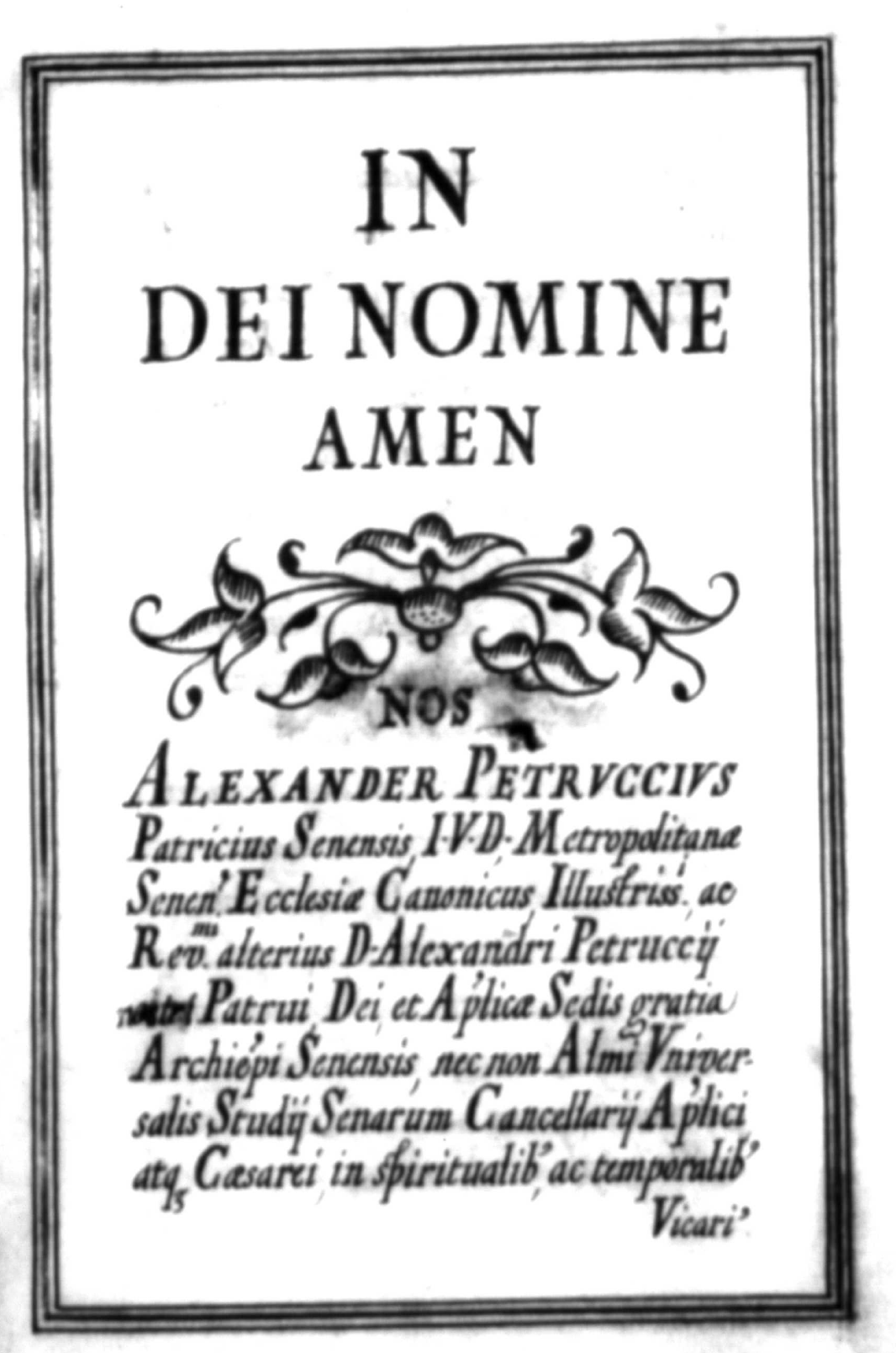


WHEN HISTORY IS HIS STORY A Review of R. Dovid Kamenetsky’s “Rabeinu Chaim Ozer: Raban Shel Kol B’nei Ha’golah”

WHEN HISTORY IS HIS STORY
A Review of R. Dovid Kamenetsky’s “Rabeinu Chaim Ozer: Raban Shel Kol B’nei Ha’golah” *
(Vol. 1, Hebrew, 671 pages)

Rabbi Jonah Steinmetz is a fellow in the Wexner Kollel Elyon and director of Asicha Seminars, an online learning program for women. This is Jonah’s first contribution to the Seforim Blog.

  1. OF HISTORY AND STORY

When asked to describe the difference between recording history and telling stories, the prolific historical fiction novelist, E.L. Doctorow responded, “The historian will tell you what happened. The novelist will tell you what it felt like.” Doctorow’s assessment is unsurprisingly insightful, highlighting the benefits and drawbacks of both historiography and storytelling; however, there are rare instances where history also tells a story.

R. Dovid Kamenetsky’s new book, Rabeinu Chaim Ozer: Raban Shel Kol B’nei Ha’goleh (Vol. 1), is one such instance. In culling almost entirely from primary sources such as letters from R. Chaim Ozer Grodzinsky and his contemporaries, newspapers, and journals, Kamenetsky unwraps the history and the story of not only the protagonist, but his entire generation.

In his introduction, the author notes that “multiple writers have published short biographies – and more are yet to come – which are filled with inaccuracies and incorrect stories, and therefore [these works] should not be relied upon.”[1] He also observes that while many of R. Chaim Ozer’s correspondences have been published, the order and fashion in which they were compiled make it “nearly impossible to discern the true greatness” of the man. In stating his objective, Kamenetsky writes,

This book… is not just a biography or a book of stories. I will leave that to others… In our book, the various events are arranged according to the [chronological] order of their occurrence, contextualized by a description of Rabeinu’s navigation – as the captain of the ship of [the] Jewish [people] – which led to the achievement of desired results.

In fact, this is not a biography. It is not a book of stories. It is a book of history through which the story unfolds. In stark contrast to rigid academic works often perceived as dry and removed, Kamenetsky’s book is refreshingly dynamic. Whereas one often relies on popular tales to discover the politics, drama, and personalities in the rabbinic world, Kamenetsky allows the reader to experience history by reading the firsthand accounts of the parties and witnesses to the events.

  1. THE KIBUTZ IN VILNA

In the third chapter, Kamenetsky discusses R. Chaim Ozer’s famous kibutz in Vilna. The kibutz consisted of a small group of young prodigies who came from across Europe to study with one of the leading gedolim of the generation. In his eulogy for R. Chaim Ozer, R. Moshe Avigdor Amiel describes how there were no set shiurim. “He simply had no time.” However,

on Shabbos during bein hashmashos (the twilight hours), was our time, only our time. We felt the presence of the Shabbos queen as [R. Chaim Ozer] sat down to discuss torah with us.[2]

The students were handpicked by R. Chaim Ozer, and Kamenetsky exposes us to R. Chaim Ozer’s charisma, wisdom, and foresight without ever resorting to hearsay by sharing reports written by alumni of the kibutz. These documents reveal R. Chaim Ozer as an extraordinarily perceptive person with a keen insight into the human psyche. In perhaps the most exciting episode, R. Chaim Ozer turned down a young man applying to the kibutz with a letter of recommendation from none other than R. Chaim Soloveitchik![3] Although R. Chaim describes the potential student as an “outstandingly wonderful” prodigy from an exceptional family, he was “rejected at the doorstep.” In what is perhaps a retroactive exhibition of R. Chaim Ozer’s intuition, this young man eventually left the torah world to become an academic.[4]

In the course of this discussion, the reader learns about famous scholars such as R. Shlomo Polachek (the Meitcheter Iluy), R. Amiel, R. Reuven Katz, R. Eliezer Silver, and others who benefited from learning in the presence of R. Chaim Ozer in Vilna. Perhaps more critically, Kamenetsky disproves commonly held mistruths about others having learned in the kibutz. R. Yechezkel Abramsky fled Telz for Vilna in 1906 to avoid conscription into the Russian army. His biographers claim that he then joined the kibutz.[5] Kamenetsky notes, however, that this claim is unfounded. He similarly dispels the rumor that R. Avraham Yeshaya Karelitz (the Chazon Ish) learned in the kibutz.[6]

Supporting and managing this group was no small task. However, relative to the drama which characterized his many public roles, one imagines that the kibutz held a special place in R. Chaim Ozer’s heart as a calm, safe space for growth in talmud torah.

  1. TORAH KNOWS NO BOUNDARIES

But life was rarely calm for our protagonist. In 1932, R. Chaim Ozer wrote a letter to his nephew, Shlomo Kosovsky, in which he describes the many stressful responsibilities which burdened him in Vilna.

Thank G-d we and our family are well. However, there is no shortage of burdens and aggravation. [T]here is a decline in the physical and spiritual condition, [causing] many [people] to come to discuss and pour their bitter hearts out, and it is upon me to listen to their sighs all day. The institutions are on the verge of closure (lit. hang on nothingness), the Rameilles Yeshiva which is my load has no foundation or basis, and the future is covered in fog.[7]

Given this description of the local hardships and pressures, one would expect that R. Chaim Ozer focused exclusively on his role in Vilna, with no time to assist elsewhere. But this is not the case. When French rabbis instituted faulty halachic procedures regarding marriage and divorce, R. Chaim Ozer was at the helm of a collaborated effort on the part of the leading Eastern European rabbis to expose the colossal distortion and demand a retraction.[8] In this context, R. Chaim Ozer wrote,

Do not be surprised that foreign rabbis are intervening in halachic decisions in France, for our torah is not restricted by space.[9] Additionally… it is our opinion… that a woman who marries [under these circumstances]… [thus] her children are illegitimate and it is forbidden for others to marry them. As such, doesn’t this matter affect the entire nation?![10]

Still more political friction is uncovered through accounts of R. Chaim Ozer’s fiery disputes with R. Yosef Shaposhnik of London.[11] In 1928, Shaposhnik, self-declared “chief rabbi of the world,” published a pamphlet announcing his plans and methods for freeing agunos worldwide. The methods were halachically unfounded. Called upon by London’s R. Shmuel Yitzchak Hillman, R. Chaim Ozer led a fierce attack against Shaposhnik’s decisions, authority, and even his mental capacity.[12]

Later chapters are replete with further examples of R. Chaim Ozer’s political tact as he deftly steers the global Jewish community through the obstacle course of the 20th century. The detailed account of R. Chaim Ozer’s intimate and devoted involvement in supporting the settlement of Israel and its rabbinate will be of particular interest to the reader.[13]

  1. THE RABBINICAL CONFERENCES OF 1909-1910

With no embellishment and limited elaboration, six of the final seven chapters invite the reader into the world of the pre-Agudas Yisroel rabbinate struggling to unify in guiding the public on critical issues. Kamenetsky’s work is chronological, so this first volume does not discuss the founding of Agudas Yisroel in Kattowitz in 1912. However, these chapters discuss the seeds of the organization.

R. Chaim Ozer emerges as the founder and leader of these endeavors, and in studying his correspondences, one is welcomed into the mind and heart of the protagonist in a surprisingly intimate fashion.[14] Descriptive newspaper reports and detailed rabbinic correspondences unveil shockingly comprehensive accounts of the formation of K’nesses Yisroel – the forerunner of Agudas Yisroel – starting in 1908, as well as the rabbinical conferences in Vilna and Bad Homburg in 1909 and St. Petersburg in 1910. Kamenetsky allows the reader to feel as though he is sitting in on the events, meeting the characters, experiencing the drama, and navigating the politics.

One example of the heated nature of the conference in St. Petersburg is the reaction to the position of R. Shalom Dovber Schneerson of Lubavitch (herein Rasha”b) regarding who is eligible to be registered as a Jew in the communal records.[15] He was of the opinion that children who were uncircumcised due to the parents’ recalcitrance should not be registered as Jews. The Yiddish newspaper, Haynt (21 Adar Beis, 5670) reported this and more of Rasha”b’s inflammatory remarks.

Due to the sharp objection… to the rebbe of Lubavitch’s statements that one who does not wear tefillin is not considered a Jew, and along with this, the decision on the part of the conference to exclude uncircumcised children from the records, I felt it necessary to turn to some of the greatest rabbinic participants to hear their halachic opinion on this burning question…[16]

The pushback to these assertions was fierce and the arguments were impassioned. In further viewing reports of the intense discussions as to which Jews are eligible for higher statuses and positions within the community, the reader is drawn into fundamental, heartfelt dialogue about the core definition of a Jew.[17]

  1. R. CHAIM SOLOVEITCHIK: LEGENDS CONFIRMED

Throughout the book, we are brought into R. Chaim Ozer’s personal world as he balances his roles as decisor, teacher, and leader. But Kamenetsky exposes us to the protagonist’s social and professional circles, as well. In providing capsule biographies for many of the characters mentioned throughout the book, the author introduces us to significant, albeit lesser known, rabbinic personalities, providing background for the letters and articles from which he draws.[18]

One unforeseen benefit of Kamenetsky’s approach is the unveiling of the persona of R. Chaim Soloveitchik as perceived by his colleagues. Stories – factual, apocryphal, and everything in between – about R. Chaim’s legendary genius, benevolence, and sagacity abound. Many have been published, still more have been orally transmitted. It is fascinating to see the aforementioned stories and still other traits be corroborated and come to life through firsthand accounts recorded in this book.

R. Chaim’s position as one of the most respected rabbinic figures in Europe is revealed time and again. In introducing the concept of what eventually became Agudas Yisroel, R. Chaim Ozer heavily stresses R. Chaim’s involvement, noting that his greatness and dominance will surely draw other colleagues to join the movement.[19] In a letter encouraging Rasha”b to join, R. Yitzchak Isaac Rabinowitz points to R. Chaim as one of the three most important, influential contemporary rabbinic figures.[20] When chief rabbi of Jerusalem, R. Shmuel Salant’s assistant, R. Eliyahu David Rabinowitz-Teomim predeceased him, the former desperately pushed R. Chaim to assume the position immediately.[21] In a letter from R. Yehuda Leib Frank to his son, R. Tzvi Pesach Frank, the writer makes the astonishing claim that the Hasidim of Jerusalem will agree to no Lithuanian rabbinic leader except for R. Chaim![22]

In one pointed display of his uniqueness, R. Rabinowitz writes that R. Chaim is unlike all other Russian rabbis in that there is “nothing in his world other than torah.” “Even the greatness of millionaires like Rothschild can not affect him even slightly.”[23] About R. Chaim, Rasha”b writes, “he literally became sick from aggravation, being that he is truly G-d-fearing.”[24] These lines aptly portray R. Chaim’s confidence and immovability and capture his intense, unyielding yiras shamayim.

It is well known that, all his greatness notwithstanding, R. Chaim was exceedingly humble. R. Yaakov Ha-levi Lifschitz corroborates this in a letter to R. Rabinowitz in which he describes R. Chaim’s aversion to hubris in the following terms: “The Gaon R. Chaim is as far from pride and self-praise as we are far from eating treifos (i.e. non-Kosher meat).”[25]

It is no wonder that the newspapers would eventually describe R. Chaim, along with one other rabbi, as the “living spirit” of the rabbinical gatherings.[26] Generally, he would listen quietly as the animated discussions carried on, waiting until the arguments subsided to succinctly summarize the points and offer a brilliant assessment and decision.[27] Often, his opinion was accepted.[28]

These commonly held truths about R. Chaim’s unique genius and character are compellingly corroborated at various junctures. The author provides important insight and perspective by bearing these facts out through presenting firsthand accounts of contemporaries.

  1. OF HISTORY, NOT STORY

Kamenetsky is allergic to mythology. To be clear, he displays no disdain for tradition and no proclivity for sniffing out and destroying hagiographical accounts.[29] Balanced by genuine reverence, Kamenetsky’s commitment to intellectual honesty and academic rigor leads him to disprove baseless stories through revealing their inconsistencies with the primary sources.[30] He has a particular penchant for noting calendric contradictions which dispel the accuracy of popular tales.[31]

In the penultimate chapter, Kamenetsky recounts the classic tale of the meeting between R. Yisrael Meir Kagan (the Chafetz Chaim) and R. Meir Simcha Ha-kohen of Dvinsk at the 1910 rabbinical conference in St. Petersburg.[32] At the behest of R. Chaim Soloveitchik, the Chafetz Chaim visited the convention to reinforce the minority’s opposition to a requirement for rabbis to learn the Russian language. R. Meir Simcha – along with R. David Friedman of Karlin, R. Chaim Ozer, R. Yitzchak Yaakov Rabinowitz of Ponovizh, and the majority of those present – asserted, however, that knowledge of the national language would ultimately strengthen the orthodox hold on the rabbinate. Kamenetsky quotes R. M.M. Yoshor’s account of the following exchange.

[The Chafetz Chaim] traveled to visit the Gaon [R. Meir Simcha] of Dvinsk in his hotel. As the Chafetz Chaim began to explain his reasoning for coming, R. Meir Simcha lightheartedly remarked: “Don’t fret. The torah will remain torah and the rabbis will remain rabbis.” And, in relying upon the letter [of support] from R. David of Karlin, he said, “You should not contend with the opinion of the eldest of the Geonim. Being that you do not serve in the rabbinate and you live in a small town, you are not expert in the ways of the world and its demands.”

Unmoved, the Chafetz Chaim calmly asked [R. Meir Simcha] if he too leads a Yeshiva, noting that only someone who is in close contact with a Yeshiva is capable of presciently sensing the impending danger [in this decision].

So as to avoid a quarrel, R. Meir Simcha bolted out of the room (this was his way) … On the way [home], the Chafetz Chaim remarked: “I am impressed by R. Meir Simcha’s refined character…”

Yoshor also recounts that R. Meir Simcha quipped,

This small Jew from a small town makes more noise across the world with his simple words than the biggest rabbis from the biggest towns with their depth and sharpness.”[33]

This meeting and its narrative is preserved in many scholarly and other works, with slight but critical tweaks to the words, tones, and cadences of the parties involved.[34] Tradition has it that the Chafetz Chaim – who rarely cites contemporaries by name – relays the opinion of R. Meir Simcha in Beur Halacha (585, s.v. v’tov l’tkoah b’yad yemin) in an attempt to show the world that he bears no grudge against his colleague, their squabble notwithstanding.[35]

While this story has all the desired trappings of conflict and resolution, Kamenetsky declares that “anyone with eyes” will notice that the ending is patently false. The alleged meeting between these two rabbis occurred in 1910. The volume of Mishnah Berurah in which this paragraph appears was published sometime between 1896 and 1899, more than ten years prior to their contentious encounter![36] Of course, this does not call the veracity of the crux of the tale into question. The intellectually honest student of history must sift through the layers of a story until what remains is only the truth.[37]

In one instance, Kamenetsky disproves Ahron Sorosky’s claim that R. Avraham Bornstein of Socatchov (the Avnei Nezer) attended the 1909 conference in Vilna.[38] Although Sorosky describes the rebbe’s journey and his meetings with R. David of Karlin, the Chafetz Chaim, and R. Chaim Soloveitchik, Kamenetsky claims they are all fantasy which never occurred. R. Bornstein was invited to the conference, but he did not end up joining. Kamenetsky explains that Sorosky confused this conference with another one in Warsaw in which a rebbe from Socatchov – either R. Avraham or his son R. Shmuel (the Shem M’shmuel) did participate. He takes this opportunity to remind the reader to “never rely on any information without cross-checking other sources.”

In yet a third example, the author uses creative resources to disprove a rumored event. R. Yosef Yitzchak Schneerson (Rayat”z), son and successor of Rasha”b, reports yet another rabbinic gathering which occurred in Vilna in 1905.[39] He claims that R. David Tevele Katzenellenbogen presided over this conference which was attended by R. David of Karlin, R. Chaim Soloveitchik, and Rasha”b. Rayat”z relays his father’s call for only ordaining young rabbis who display impeccable yiras shamayim. Allegedly, R. Chaim then penned a letter to R. Chaim Ozer, informing him of this decision to only ordain such rabbinic candidates.

Kamenetsky disputes this, declaring that such an event was simply an imagined imitation of the 1909 conference in which the aforementioned rabbis participated.[40] Aside from the nonexistence of corroborating sources, the author highlights the glaring peculiarity that a rabbinical conference occurred in Vilna in 1905 and yet R. Chaim Ozer had to be informed through a letter. Furthermore, Kamenetsky notes that Rasha”b’s passport is still extant, displaying all his travels, and there is no such trip to Vilna in 1905 signified!

  1. MEGALEH TEFACH, MECHASEH T’FACHAYIM

In some cases, Kamenetsky leaves us on the edge of our seat, wishing he would disclose additional sources or offer his insightful commentary. One such case is his passing reference to the well-known tale of R. Chaim Ozer’s alleged broken engagement. Legend has it that a young R. Chaim Ozer became engaged to the daughter of R. Eliyahu Feinstein of Pruzhin. For reasons unknown, the wedding was called off.[41] The most ambitious versions of this story append a sensational postscript. Years later, R. Chaim Ozer’s only daughter, Malka, fell fatally ill with polio. With no hope of medical salvation, the desperate father sent a message to the Chafetz Chaim, requesting that he pray for the girl’s recovery. Purportedly, the Chafetz Chaim refused to offer any hope, attributing his reluctance to the fact that R. Chaim Ozer had broken an engagement in his youth.

Twice, Kamenetsky references this story. Twice, he rejects it as unfounded.[42] Of course, the intellectually honest student of history approaches such a staggering, phenomenal story with cautious skepticism. However, being that the legend is entrenched in the Krakowsky and Soloveitchik family traditions and widely accepted, one hopes that the author will provide his reasons for disbelief. Sensing our excitement, Kamenetsky asserts his claim that this story exists “only in the imagination of the maskilic authors” who invented it, “but there is no space here to elaborate.”

The author teases us in other instances as well. In his description of the Rameilles Yeshiva, Kamenetsky discusses R. Shlomo Heiman’s role as maggid shiur.[43] In 1927, R. Chaim Ozer brought R. Heiman to teach in the yeshiva in Vilna, raising the institution to new heights.[44] In the summer of 1934, however, Mesivta Torah V’Daas recruited R. Heiman to join their staff. Much to the dismay of R. Chaim Ozer, R. Heiman accepted the offer and left for America.[45] While Kamenetsky cites R. Chaim Ozer’s letters expressing his feelings during this period, he adds,

Indeed, in a different letter, dated 8 Adar 1937, Rabeinu [Chaim Ozer] partially reveals (lit. – reveals one tefach while concealing two tefachim) the reason for [R. Shlomo Heiman’s] departure.[46]

Kamenetsky proffers that this mysterious reason is “connected to R. Heiman’s role in the Yeshiva” and announces that he has the letter in his possession, but stops short of sharing the information with us. As frustrating as it may be, the reader senses and respects that the author protects the information out of great reverence for the parties involved.[47]

  1. HISTORY AS OUR STORY

In his approbation to R. Yehuda Ha-levi Lifschitz’s Dor Yesharim, R. Chaim Ozer writes the following about the study of Jewish history.

Historically, gedolei torah never devoted their minds to delving into Jewish history or even to write books about Jewish sages of past generations. The words of our ancient and later rabbis are alive and maintained in the mouths of those who learn torah. Every study hall is brimming with rabbis and their students studying a living torah as if the words were taught that day. There is no need to memorialize tzadikim, as their words are their legacy.

However, since the decline of Judaism in Europe during the time of the Reform… there is no torah and there is no fear of G-d. As such, the remaining authors devoted themselves to memorialize the great figures and occurrences of past generations. Some of them intended to endear the wisdom of Israel and its gedolim to this generation. If they won’t receive this through knowledge, recognition, and vision (i.e. through learning torah), [at least] they should receive it through hearing stories – that they had outstanding ancestors through which they claim honor.[48]

In this first volume, R. Kamenetsky fulfills R. Chaim Ozer’s charge.[49] In drawing exclusively from firsthand accounts, he presents a compelling and exciting perspective on the life and leadership of R. Chaim Ozer as well as his rabbinic milieu. He simultaneously wears the hats of both historian and novelist, telling us what happened and showing us how it felt. Most importantly, he reminds us of our great ancestors and rich history to which we strive endlessly to connect.

*Thank you to my good friends, R. Jacob Sasson and R. Dovid Bashevkin for their encouragement and involvement. Special thanks to R. Eliezer Brodt for his willingness and efforts to publish this review.

[1] P. 4
[2] P. 147
[3] Pp. 161-2
[4] Kamenetsky (ibid., n161) assures the reader that the subject remained torah-observant throughout his life. Kamenetsky (p.139, n1) also cites Ben-Zion Dinur’s account of R. Chaim Ozer’s less than warm reception when he arrive to apply for the kibutz. “From his questions,” writes Dinur, “it was clear that he knew much more about me than expected.” Dinur was rejected. He abandoned religion for the academy. Even with his prescience, however, R. Chaim Ozer was not a prophet. Kamenetsky (pp. 163-6) brings one example of a student who was accepted into the kibutz and ultimately abandoned religion, as well.
[5] See Sorosky, Ahron, Melech B’yofyo (Jerusalem, 5764), pp. 29-31.
[6] P. 160, n41
[7] Igros R. Chaim Ozer, Vol. 1, #20
[8] See Kamenetsky, pp. 261-271.
[9] Though he rightly asserted that torah knows no boundaries, R. Chaim Ozer recognized that there were situations in which he was too far-removed to offer advice or render a decision. See, for example, Igros R. Chaim Ozer (Vol. 1, #203) regarding his hesitancy to advise Mesivta Torah v’Daas regarding whether secular studies should take place on the yeshiva grounds or at an external location. After weighing the benefits and disadvantages, R. Chaim Ozer writes,

In truth, it is difficult for me to answer from afar without understanding the local conditions… I cannot know which way is better. It is preferable to take counsel with great torah scholars and decisors who are found in your country, and they will know which path to take.

See also ibid., #14 where R. Chaim Ozer differentiates between issues on which he will and will not advise from afar.
[10] Kamenetsky, p. 269
[11] Pp. 271-300
[12] R. Chaim Ozer consistently referred to Shaposhnik as “ha-meturaf” (the madman). Kamenetsky notes that this is especially striking given the former’s generally calm disposition and aversion to strife.
[13] See chapter 16.
[14] It is important to note that R. Chaim Ozer already envisioned the concept of Agudas Yisroel – with many of the details which eventually materialized – as long as ten years before the first conference in St. Petersburg. See Kamenetsky, pp. 119-126.
[15] P. 579
[16] Ibid. The reporter interviews R. Chaim Soloveitchik, among others. See pp. 579-80 for R. Chaim’s pointed, strong objection to these statements. In this context, it is important to see R. J.B. Soloveitchik’s essay, Ish Ha-halacha (p. 79 in the 1979 publication, Ish Ha-Halacha – Galuy V’nistar). The reader should note that R. Soloveitchik does not identify any particular rabbi who held that uncircumcised babies should not be included in the records. He quotes it as a majority opinion at the St. Petersburg conference. See also R. Yosef Shaul Nathanson, She’eilot U’teshuvot Sho’el U’meishiv, Vol. 3, #64.
[17] Pp. 582-3
[18] See, for example, pp. 48-103; pp. 142-156; pp. 521-7.
[19] P. 349
[20] P. 442. The other two are R. Chaim Ozer and R. Avraham Mordechai Alter of Gur.
[21] Pp. 632-3. See also p. 636.
[22] P. 647
[23] P. 439
[24] Pp. 546-7, n75. Rasha”b claims that R. Chaim initially agreed with the majority regarding the requirement to learn Russian and that it was only after the former convinced him that R. Chaim changed course. The abovementioned “aggravation” was due to R. Chaim’s regret for his alleged near misstep.
[25] P. 440, n16
[26] P. 392. The other rabbi mentioned is Rasha”b.
[27] See p. 589. It is interesting to read of the rare instances in which R. Chaim became passionate, even heated, in his participation at the conference (ibid.). It is critical to note that, on more than one occasion, R. Chaim stressed the need for decentralization of rabbinic authority. Namely, he impressed upon his colleagues the reality of nuanced situations in each community. Accordingly, he held, it was important to allow each community to take measures to form their own leadership which would guide them on local issues. See pp. 410-11.
[28] See pp. 410, 411, and 416 for three such examples. Of course, R. Chaim did not always get the final word. See pp. 541-2, for example, regarding the requirement for rabbis to learn the Russian language and the role of the “rav m’taam ha-memshalah.”
[29] In fact, in an email correspondence regarding a myth debunked, R. Kamenetsky remarked, “I don’t know of an early source to this story… To me, historically, it does not make sense. But if I find conclusive proof, I am ready to accept.”
[30] For example, see p. 314, n16; p. 386, n16; p. 431, n86; p. 457, n8; p. 666, n98.
[31] For example, see p. 10, n14; p. 37, n9; p. 65, n35; p. 66, n38; p. 79, n64; p. 158, n37; p. 173, n1; p. 347, n63
[32] Pp. 559-61
[33] Kamenetsky (ibid., n98).
[34] See Bergman, Asher, Ha-ohr Same’ach, p. 123; see also Yoshor, Ha-Chafetz Chaim: Chayav U’fo’alo, Vol. 1, Ch. 42; see also Soffer, R. Yaakov Chaim, Lecha Na’eh Le’hodot, pp. 113-14 (here); see also Brown, Benjamin, From Principles to Rules and From Musar to Halakha, n234; see also Rapoport, Yaakov M. The Light From Dvinsk: Rav Meir Simcha, The Ohr Somayach. Southfield: Targum Press Inc. (1990), p. 98; see also Schachter, R. Hershel. Divrei ha-Rav. NY: OU Press (2010), p. 215, n33); see also Kamenetsky, Noson (Nathan). Making of a Godol: A Study of Episodes in the Lives of Great Torah Personalities. Jerusalem: Hamesorah Publishers (2002), pp. 535-7. For a comprehensive review of many of the versions, merits, and demerits of this story, see R. Yisrael Dendrowitz’s piece in Ha-pa’amon, Issue 6 (Nissan, 5777), pp. 7-23. Many thanks to Dovid Bashevkin for calling my attention to the last article.
[35] The original claim was that he never quotes from contemporaries or their books, but this has been disproven time and again. For one comprehensive example, see R. Yaakov Tribetz’s essay in Yeshurun Vol. 36 (Nissan 5776), p. 501 and p. 583.
[36] It should be noted that R. Dovid Kamenetsky is not the first to call attention to this blatant discrepancy. His uncle, R. Nosson Kamenetsky raised this issue years ago (Making of a Godol, ibid). See also Mordechai Solomon’s article in Yated Ne’eman (5766, issue 1, Hebrew), cited in Ha-pa’amon (ibid., p. 11). R. Nosson Kamenetsky and Solomon note that the Mishnah Berurah was published in 1907, based on the author’s own words at the conclusion of the work. (See also Soffer, Lecha Naeh, p. 114.) R. Dendrowitz (Ha-pa’amon, ibid. pp. 19-20) claims that he saw the first edition of the Mishnah Berurah published in 1907 with this quote from R. Meir Simcha printed there.
[37] To (over)quote Doctorow, “what most people think of as history is its end product, myth.” To say as much does not deny that there may exist certain truths in myth. It is simply a call for vigorous discernment in recognizing the point at which the history becomes a story.
[38] Pp. 386-7, n16
[39] Torat Shalom – Sefer Ha-sichos, p. 365
[40] Kamenetsky, p. 431, n86
[41] R. Hershel Schachter (here, at the three minute mark) has mentioned that R. Chaim Ozer was nervous about the Feinstein family’s openness to secular studies, which led him to break the shidduch. (Thank you to Jacob Sasson for reminding me of this detail.) The young lady went on to marry R. Menachem Krakowsky, author of Avodas Ha-melech and maggid meisharim in Vilna. For more on R. Krakowsky’s relationship with R. Chaim Ozer in Vilna, see Kamentsky, Dovid, Tevunot Vol. 2 (2018), R. Menachem Krakowsky of Vilna and His Relationship to Rabbi Hayyim Ozer Grodzinski”, pp. 805-46 (Hebrew; also accessible at Academia.edu). (Compare also to Kamenetsky, Rabeinu Chaim Ozer, pp. 375-6.) If the story is true, it is also critical to consider the generous assistance which R. Chaim Ozer provided to R. Elya Pruzhiner regarding his candidacy for the rabbinical position in Jerusalem (see Kamenetsky, R. Chaim Ozer, pp. 619-21 and p. 651). R. Moshe Soloveitchik married another Feinstein daughter, adding yet another layer to his complicated relationship with R. Chaim Ozer (see Fuss and Sasson articles referenced below).
[42] P. 27, n51 and p. 37, n69
[43] Pp. 194-7
[44] P. 194
[45] Pp. 198-200
[46] P. 200, n51
[47] Yet another case of teasing the reader appears on page 434 (n5). There, Kamenetsky references an article which contains R. Chaim Ozer’s response to the Mizrachi movement’s claim that R. Chaim Soloveitchik never supported Agudas Yisroel. He writes, “elsewhere, I will expand on this.” Although here too, we are left waiting with baited breath, the author assured me that he will deal with this in the next volume. In preparation, the reader is advised to see Moshe Ariel Fuss’s piece on the topic in volume 25 of Hakirah (here) and R. Jacob Sasson’s response in volume 26 (here).
[48] Igros R. Chaim Ozer, Vol. 1, #293. See also ibid., #306 for similar comments regarding the appropriateness of celebrating the 800th anniversary of Maimonides’ birth in America.
[49] The author has promised us a second and third volume. The work is chronological. Subsequent volumes will include rigorous research and analysis of the formation, founding, and activities of Agudas Yisrael from 1912 and on, R. Chaim Ozer’s exile from Vilna during World War I. His efforts to save yeshivos and the talmidei ha’yeshivos during World War II is another topic which will benefit serious treatment. The famed dispute over the Vilna rabbinate, R. Chaim Ozer’s efforts to fight against the shechita ban, and the preventive measures he took to keep the Berlin seminary from entering Israel are also topics about which Kamenetsky will enlighten us in the future. We excitedly anticipate the forthcoming publication of all this material and more.


R. Chaim Vital and his Unknown Work Sefer ha-Pe'ulot

R. Chaim Vital and his Unknown Work Sefer ha-Pe’ulot:
A Work on Science, Medicine, Alchemy and Practical Magic.
by: Eliezer Brodt

ספר הפעולות רבי חיים ויטאל, תש”ע, תלט עמודים כולל מבוא ומפתחות

A few years back, in a post at the Seforim blog discussing the history of plant known as baladur, I mentioned a sefer, Refuah Ma’asiyot le-Rav Chaim Vital. At the time, I only briefly touched upon this work. What follows is a more detailed discussion of the recently published edition as well as the history and substance of the work. The author is R. Chaim Vital, the most famous student of the Arizal. This work was virtually unknown, and is a collection of science, medicine, alchemy and kabbalah ma’asiyot (practical magic). In 2007, Professors Amar and Buchman published a part of this manuscript, entitled Refuah Ma’asios L’Rav Chaim Vital. A few months ago, someone printed the whole manuscript and provided a different title, Sefer ha-Pe’ulot.

As mentioned above, the author is R. Chaim Vital (1543- 1620). R. Vital is most well-known in the realm of kabbalah, and, specifically, as being the primary student of the Arizal entrusted with disseminating the Arizal’s works. R. Vital’s reputation, however, wasn’t confined to the Arizal’s teachings and kabbalah. R. Vital was well-represented in the niglah (revealed Torah) arena. R. Vital studied niglah with R. Moshe Alschich and R. Vital received (real) semikha during the time when such semikha was being given in Sefat.[1] Unfortunately, we do not have much of his writings in niglah with the few exception where his son quotes R. Vital in his son’s various works. For example, five responsa of R. Vital appear in Shu”t Baer Mayim Chaim (82-86) and the various pesakim scattered in his son’s works Chochmas Nashim, Chaim Shnayim Yeshalayim, and some of R. Vital’s other statements appear in Tosetos Chaim on Rashi. [2].

In Sefer ha-Chezyonot, R. Vital records R. Karo’s admonition to R. Alschich regarding R. Vital’s study in niglah:צוה מהר”ר יוסף קארו ז”ל למורי הר’ משה אלשיך בשם המלאך המגיד הדובר בו שיזהר מאוד ללמדני בכל יכלתו, כי אני הוא העתיד לישאר אחריו בדור ההוא ממלא מקומו של מהרי”ק (חזינות א:ג).

M. Benayhu in his work Toldos ha-Ari quotes R. Chaim Hakohen, a student of R. Vital, regarding R. Vital:וגם היה מקפיד מאוד שלא לכתוב קמיעות גם בתפילה לא הי’ מאריך כל כך רק אמר מלה במלה. והי’ אומר שאני רוצה ללמוד בשעה שאני זו שאני מאריך, וגם לא כאותן שמתפללין כל היום. והי’ לומד כל היום וכל הלילה (ספר תולדות האר”י, עמ’ 243)

For all the Kabbalah aspects related to R. Vital see Y. Avivi work’s Binyan Ariel, which caused great controversy, and his more recent three volume masterpiece Kabbalat ha-Ari. See also Lawrence Fine, Physicians of the Soul, Healers of the Cosmos.

Much has been written about Vital’s famous autobiography, Sefer ha-Chezyonot, (see here and here) G. Scholem sums up some of the history of the work:
ספר החזיונות יצא לאור מתוך כתב יד המחבר על ידי אהרן זאב אשכולי. ירושלים מוסד הרב קוק ג’ שלום כתב: אחרי הופעת הספר מיחו כמה רבנים בפני מוסד הרב קוק על שלא גנזו ספר זה וגרמו בזיון לתורה, וביניהם ראובן מרגליות מת”א שכתב להם שכתב היד בוודאי מזוויף מן האחרונים! (ספריית גרשום שלום בתורת הסוד היהודית, א, #4331)

Returning to the Sefer ha-Pe’ulot, it was first mentioned in brief by Gershon Scholem in Alchemie und Kabbala [recently translated into English by Klaus Ottman]. The alchemy section of this book was discussed by Raphael Patai in his book, Jewish Alchemists. Meir Benayahu discusses it in various places in his writings (amongst them in his book on the Ari and in two articles in Korot (9:3-17,9:91-111). Gerrit Boss, wrote an extensive article on this book called “Hayyim Vital’s Practical kabbalah and Alchemy; a 17th Century book of secretsin the Journal of Jewish Thought and Philosophy, Volume 4, pp. 54-112. In this article Boss reorders the book, as the book, as it is appears in the manuscript isn’t a model of clarity, doing an excellent job of putting each remedy into its proper categories. [Boss also criticizes the discussion of Patai on the topic of alchemy in relation to this work.]. Yosef Avivi briefly discusses in his catalog of the Musayif collection (Ohel Shem, pp.191-93) as that it where this manuscript came from. The whereabouts of the actual manuscript today are a mystery, rumors are that it is sold page by page for a segulah, and each page fetches a large sum of money.
More recently, Prof. Zohar Amar and Yael Buchman in published two articles in Sinai (121:231-38 and 125:202-215) they focus upon the various halachic aspects discussed in this work. Buchman also wrote her doctorate on this work of R. Vital, Aspects of Material Culture, Realia and Medicine in the works of Rabbi Hayyim Vital (1543-1620), Bar Ilan Univ., (Heb). Buchman’s main focus is not the kabbalah parts but rather the science and medical aspects of this work. She demonstrates, at length, that this is an excellent document to give us a picture of the medical world during that time period. She also has an additional article about this work based on her doctorate in Katedra (99:48-64). In 2007, Buchman and Amar printed part of this book, Refuah Ma’asiyot le-Rav Chaim Vital. But, they printed only the medical portion. This edition, however, is very useful in understanding the medical aspects of the sefer. They note that a volume on the realia part is being prepared.
What makes Sefer ha-Pe’olot especially interesting is that we see R’ Chaim Vital in a different light than previously known. In the first part of this work we see him as a doctor of sorts. He provides remedies to people for all kinds of illnesses, in all areas of health, asthma, infertility, headaches, toothaches and much more. Much of the advice was based on Segulos or the like. In this work he shows a familiarity with real medical procedures from that time period. He quotes various pieces of medical advice that he had had read in various medical works.
We already were aware of Vital’s interest in science as he wrote a work called Sefer ha-Techuna related to astronomy. But, in Sefer ha-Pe’olot aside from showing him to be very involved in medicine we also see him interested in other things. For example, Vital provides in-depth descriptions of how to make wine, various milk products and the making of honey. He has a lengthy discussions of how to remove stains from clothes, how to dye garments, how to make ink and reeds for writing. These discussions are a gold mind of information for those studying realia of various time periods of Eretz Yisroel. Realia is a prime topic of interest for Professor Amar and Bochman and they deal with that in their excellent introduction to Refuah Ma’asiyot le-Rav Chaim Vital. This is also the main focus of Bochman’s previously mentioned doctorate. As Bochman writes in her doctorate ”this manuscript… is the sole Hebrew source originating in 16th century EY still known today, which discusses directly and in detail different aspects of material culture, realia and medicine. He thus provides a rare insight into the daily routine of the Jewish community in EY during this period, of the problems it faced and the ways in which those problems were solved.” Gerit Bos in his above cited article (pp. 59-62) also touches a bit on this aspect of realia. Bochman suggest an interesting reason for R. Vital interest in writing about all these practical things such as wine making dyeing, cheese making etc. ”R. Chaim Vital’s purpose in writing about everyday issues is in fact a reflection of his Halachic world view. A study of his Halachic and practical teachings confirms that R. Vital preferred to make the goods he needed himself rather than buying them from gentiles. In order to do so he had to find ways of simplifying the manufacturing process of many products. He succeeded, and thus avoided the Halachic problems raised as a result form purchasing from foreign sources.”

Other Ideas Discussed in Sefer ha-Pe’olot
Another large section of this work is segulos and kabbalah masiyot. This section contains many parts, many of which R. Vital writes he tested and used successfully, other recipes he tested and they did not work and yet others which he heard from reliable sources that they worked but he had not independently tested. All these sections, however, are not in any order. He returns to the same topic than goes to another and comes back to it again and again. Bos in his previously mentioned article does a nice job of organizing some of it into topics. There are methods for all kinds of things just to list a few: methods preventing Ayin Hara, bones stuck in a throat, finding out which woman one will marry, talking to dead people, how to deal with plagues, ways to track down thieves, dealing with enemies and help having children. I will discuss a few of these ‘recipes ‘and a little about them in other sources.

She’elot Chalom – Asking Questions via DreamsHe includes many methods to find out information via dreams (pp. 11-12, 193, 250-51, 265, 276). We find many methods and instances for performing a dream question and answer from the Geonic period into the Middle Ages the process is generally referred to as שאלת חלום. One of the most famous works which was written utilizing this method is the Shu”t Min ha-Shamyim. Much has been written on this topic in general, as the use of such a procedure appears to run afoul of Rabbinic rule that Torah is not in heaven (Torah lav ba-shamayim). A nice collection of material on this topic has been collected by A. Heschel in a classic article printed in the Sefer Hayovel Lekovod Alexander Marx (see especially pp. 183-186, 195-208). R. Reven Margolis in his edition of Shu”t Min ha-Shamayim also does a great job of putting together the material on the topic. One should also read the introduction of R. Aron Marcus to his edition of Shut Min Ha-shmayim. Recently this topic has been dealt with in a doctorate by M. Goldstein called Histayos Begormim Min Hasmayim Be Hachras Halacha. See also the forthcoming article on this topic from Professor Kanarfogel called ”’For its not in heaven’: Dreams as a Determinant of Jewish Law and Practice in Northern Europe During the High Middle Ages”. See also Hagar Kahana-Smilansky, “Aristotle on Sleep and Wakefulness: A Medieval Hebrew Adaptation of an Unknown Latin Treatise,” Aleph 10:1 (2010): 67-118; (especially at the end of the piece); A. Kuyt, Hasidut Askenaz on the Angel of Dreams, in Creation and Re-creation in Jewish Thought. Yuval Harrari, “‘The Opening of the Heart’: Magical Practices for Gaining Knowledge, Understanding and Good Memory in Judaism of Late Antiquity and Early Middle Ages,” in Shefa Tal: Studies in Jewish Thought and Culture presented to Bracha Sack, eds., Z. Gries, H. Kreisel, and B. Huss (Beer Sheva, 2004), 336-344. See also. M. Idel, Mekubulim Shel Leiylah. See also the manuscript of a sefer Segulot from Italy available here p. 8,12,14,19,21,24 (of the PDF).Shadal writes about his father:ומה תאמר אם אגיד לך כי גם אדוני אבי זצ”ל היה עושה לעת הצורך שאלת חלום על פי חכמת קבלה מתות מה שלמד בס’ הברית, והשיג לפעמים חלומות צודקים כוללים הגדת עתידות שנתקיימו (ויכוח על חכמת הקבלה, עמ’ 125 [על אביו וספר הברית ראה: פרקי חיים (שולוואס) עמ’19 ]).
Interestingly to note while looking for early sources that mention the Beshet, G. Scholem (The Latest Phase, (Heb.), p. 119) found one from the Shages Aryeh where he said:
ואמר כל מה שהבעל שם טוב ידע היה הכל על ידי שאלת חלום בכל לילה.And one quoted from manuscript by S. Dubnov:
זכרתי בהיות הרב המפורסם הבקי בחכמת אלקות מוה’ ישראל בעל שם זצ”ל עשה שאלת חלום והראו לו שנשמת אבי מורי ז”ל נשמת רב אלפס, ובעבור שלא חבור הרב אלפסי בסדר קדשים בא אדמ”ו לתקן זה (תולדות החסידות, עמ’ 484).Just for bibliographical purposes G. Scholem got the exact sources wrong it was the Gra who said it and not the Shages Aryeh – he misread the source. It says:
גם אמר שהגאון אמר על השאגת אריה שהוא מרבה אחר הפלפול והשאגת אריה אמר על הגאון זצ”ל שהוא מרבה בפשטות. ועוד אמר שהבעל שם טוב מה שידע הי’ על ידי שאלות חלום בכל לילהThis is from a list of statements that R. Chaim Volzhiner told a student of his printed in the Tosfos Maseh Rav (p.18b, #113). Scholem understood that the whole statement was from the Shages Aryeh, as R. Chaim Volzhiner also studied with him. But, the statement following the period is really a new piece and is going back to the Gra which is what most of the sefer is material R. Chaim heard from the Gra. Today we have other manuscripts which contain this statement and confirm that this statement was made by the Gra and not by the Shages Aryeh, see Keser Rosh, (last chapter #13); Eliach, Kol Hakosev Lechaim, p. 239. Be that as it may it is clear the Gra held that the Beshet used this method often. But, R. A. Kemlar in his work Dor De’ah (p. 29) writes that Beshet was very anti using such methods. The source for R. Kemlar was probably R. Aron Marcus who makes this claim in his Keses Hasofer on Shut Min Ha-shmayim (p.8) and he used his works extensively.
There is another possible source of the Besht using dreams and that is regards to eating Chadash:וסיפר שהבעל שם טוב שאל בחלומו על חדש בזמן הזה איך הדין. וענו לו שלאחר פטירת הב”ח צ”ל ציינו את הגהינם ארבעים יום מחמת שהיה צריך זה לכבוד הב”ח. ובבוקר עמד הבעל שם טוב זצ”ל ושלח להביא שכר מחדש ושתהו. ואמר כדאי הב”ח שמתיר לסמוך עליו (זכרון טוב, פיעטרקוב תרנב, דף יב ע”א אות יא).This story is very famous and has been dealt with at length by Y. Mondshine here. I will quote two sources from Mondshine’s article as this leads us into this next topic. He shows that how the story developed and to when this piece of the Besht and a dream was added to it. See also Pardes Yosef, Vayikra, p. 274; R. G. Oberlander, Minhag Avosenu Beyadnu, 2, pp. 512-24.Even if The Besht did not use dreams he used other methods such as השבעת עליית הנשמה as it is clear from the famous document אגרת עליית הנשמה. For the sources on this see Y. Mondshine, Shivhei ha-Besht, pp. 233-39; Shivhei ha-Besht (Rubenstein ed.), pp. 92-3; M. Rosman in Founder of Hasidism: A Quest for the Historical Ba’al Shem Tov pp. 99-113; E. Etkes, Baal Shem, (heb.), pp. 292-301.[Completely off topic but in light of tumult of two hundred and fiftieth Yarzheit of Beshet, Scholem in the earlier quoted lecture missed another early source about the Besht- in the Shem Hagedolim the Chida writes:אור החיים… ושמענו כי עתה בפולוניא הם מחשבים אותו הרבה ונדפס עוד שני פעמים ונתעורר זה על ידי שהרב החסיד קדוש מהרר”י הגיד גדלות נשמת מהר”ח הנזכר (שם הגדולים, ערך אור החיים).How To: Exorcisms
R. Vital brings methods to remove dybukim, shedim and/or reuach rah that may attach themselves to people (pp. 176, 208, 222, 258-59). For recent discussion, on this topic see: J.H. Chajes, Between Worlds Dybbuks, Exorcists and Early Modern Judaism. See also J.H. Chajes, Jewish Exorcism: Early Modern Traditions and Transformations, pp.386-398, in Judaism in Practice, Ed. L. Fine; D. Ruderman, Kabbalah, Magic and Science, pp. 55-58; G. Nagel, Sipurei Dybuk Besafrus Yisroel; Dybbuk and Maggid: Two Cultural Patterned of Altered Consciousness in Judaism, AJS Review, 21:2(1996):341-366; Nishmat Chaim, 3:10; Ish ha-Emunah, p.45; C. Hamberger, Three Worlds, (heb.), 3:69-70. There is even a story of the Gra and a Dybbuk, see Ha-goan, pp. 499-502. For an additional story with a Dybuk in Lita, see Y. Kotick, What I saw,(Heb.), ed. D. Assaf (end of chapter eight); Etkes, Baal Shem, (heb.), p. 290; See also Emet le-Ya’akov, p.264. On the Chasam Sofer and a Dybuk see Chut ha-Mishulash, pp. 38a-38b. See also this great article from Y. Mondshine here.
Some other well-known sources on dybukim:וכבר שמענו בזמננו זה מפי מגידי אמת הגדה מפורסמת שיקרה לאנשים נופלים נרדמים בבטול חושיהם ומפיהם יצא עתק לדבר ולהשיב ושפותותיהם בלתי נעות וקול דברים יוצא מגרונם שואלים ומשיבים כענין. וכן ראיתי כתב בא מצפת תוב”ב בשנה הזאת שנת ש”ס לפ”ק לענין אשה שהיתה נופלת כן (מעשי ה’ מעשה בראשית פרק ב, עמ’ יב .).The Simchas Hanefesh writes:

ואני הכרתי בק”ק טשאכטשב ילד בן שלש שניים שהיה דובר סודות התורה גדולים, והוא עצמו לא ידע מאי קאמר. גם בק”ק ליסא היתה בתולה אחת שהיתה מגדת סודות התורה ואחר כך הוברר הדבר שהיה זה קליפה… ובהיותי מתגורר במדינות פולין אירע שם מעשה כזה, באשה cאחת שדבק השד ימים כלילות ולבסוף הרג את ילדיה (שמחת הנפש, עמ’ נב-נג).
Earlier I cited a story of the Ba’al Shem and his dream in relationship to the Bach and eating Chadash. I quoted that Y. Mondshine has demonstrated that this is not the exact story and as tends to happen stories they get additions and undergo changes over time. The Chida in Shem Hagedolim writes:
ראיתי להרב מהר”ר רפאל בספרו תוס’ שבת… בהקדמתו… דרוח אחד נתגלה באיש אחד והרוח בתוך דבריו היה מסיח לפי תומו דכאשר עלה לשמים הרב ב”ח כרוזא קרי בחיל פנו מקום לר’ יואל מקרקא (שם הגדולים, ערך הרב הגאון גדול בדורו מהר”ר יואל סירקי”ס).

Rav A. Landau brings:

וקבלתי מישישים בשם צדיקים קדושים זי”ע דהמעשה שהביא בשם הגדולים… מהכבוד הנעשה לרבינו הב”ח… היה בשביל היתר החדש שהמציא הוא ז”ל (צלותא דאברהם, ב, עמ’ תריט).
Segulot for Better Memory-Petihat Lev

Another group of ideas mentioned in this work are methods related to helping ones memory (pp. 270, 299). Some of which are for Petihat Lev (pp. 270, 329, 348). One of the methods he mentions is eating baladur (p. 348, 343) which has been the subject of its own post:
פתיחת לב לחכמי צרפת וכך היו נוהגים לעשות לבניהם וכך היו נותנין להם בכל בוקר… ונקרא בלאדור קטן… (עמ’ שמח)The subject of Petihat Lev has been discussed much in recent literature. This concept of Petihat Lev is found in many different sources where people used to do all kinds of things to help with memory and understanding Torah enabling one to understand and recall the Torah effortlessly. One example something done for Petihat Lev of this are the customs relating to the educational initiation ceremony of young boys still done today in many circles.Professor Y. Ta Shema printed a piece from manuscript (included in his Kneset Mechkarim 1:154) from a work written in 1294 called Sefer Hamaskil which gives us a little insight into this Petihat Lev it says: ומאותו היום שאכלו אדם הראשון ניתנו לו חדרדים בלבו לקבל כוח רוח עץ הדעת, שהוא רוח מעורבב מטוב ורע, ויש לו לאדם כמה חדרים בליבו, כל חדר ממונה על ממשלת חכמה אחת, חדר זה ממונה על מלאכת החרש… ובאמצעית הלב יש חדר גדול המקבל רוח שכל עץ הדעת ושותין ממנו שאר חדרים כולו. נסתם חדר אחר או שנים נסתמים ממונים עליהם, כאשר אתה רואה קצת בני אדם שהם סכלים בחכמות העולם והם חכמים גדולים בחכמת המלאכים. ובזמן שהחדר האמצעי כולו סתום, ואין הרוח יכול להתפשט מתמלא המוח עשן ומשתטה”.Some general sources on Petihat Lev can be found in: Ephraim Kanarfogel, in his Peering through the Lattices, Mystical, Magical and Pietistic Dimensions in the Tosafist Period (pp. 140-41,156, 237), Ivan G. Marcus, Rituals of Childhood, Jewish Acculturation in Medieval Europe (p. 28), and in the excellent article by Yuval Harrari, “‘The Opening of the Heart’: Magical Practices for Gaining Knowledge, Understanding and Good Memory in Judaism of Late Antiquity and Early Middle Ages,” in Shefa Tal: Studies in Jewish Thought and Culture presented to Bracha Sack, eds., Z. Gries, H. Kreisel, and B. Huss (Beer Sheva, 2004), 303–347 (available here). See also in his recent book Ha-Kishuf ha-Yehudi ha-Kodom picture 20 (at the end of the book) and the very recent Yeruschatanu 4:48. See also the manuscript of a sefer Segulot from Italy available here pp. 7,20, 30 (of the PDF).
Remedies Against Lilith Another batch of remedies discussed by R. Vital are ways to prevent Lilith (p. 203, 140, 216). R. Vital writes that he used one particular procedure over two thousand times:בענין לילות… הנה פעמים רבות לאין קץ יותר מאלפים פעמים כתבתי אותם…”During the sixteenth century, many were concerned about Lilith. For example, R. Eliyahu Bocher [Elias Levita] (1469-1549) writes in his classic work Sefer Ha-Tishbi, in his entry for Lilith:לילת… נמצא כתוב, שאותן מאה ושלושים שנה שהיה אדם פרוש מחוה באו שדים ונתחממו ממנו והוליד שדין ורוחין ומזיקין. ובמקום אחר מצאתי ארבע נשים הם אמות השדים, לילית ונעמה ואוגרת ומחלת… ובספר בן סירה בשאלה הששית ששאל נבוכדנצאר אותו, וזה לשונו מפני מה הבנים מתים כשהם בני שמונה ימים? אמר לו, מפני שלילית הורגת אותם, והאריך שם הרבה, וקצתי לכותבם כי אינני מאמין בהם, אך מנהג פשוט בינינו האשכנזים שעושין עגול סביב כותלי החדר ששוכבת בה היולדת עם נתר או גחלים וכותבין בכל כותל אדם חוה חוץ לילית, ובפתח החדר מפנים כותבין שמות שלשה מלאכים אלו… כמו שהמסרה להם לילית בעצמה בשעה שרצו המלאכים האלו להטביע אותה בים, כל זה מבואר היטב בספר בן סירה, יעיין שם מי שמאמין בו. (ספר התשבי, ערך לילית).A little later R. Chaim Me-Friedberg (c. 1520-88), the Maharal’s brother, writes: “וכן המנהג לעגל את החיות בעת לידתם אחר שם שכובים על המטה, כדי שלא ישלוט בהם רוחין ולילין, וכל כן כותבים לילית חוץ בהזכרת שלשה שמות של המלאכים (ספר החיים, ספר חיים טובים פרק ח). R. Zev Rabinowitz offers a very different perspective on this custom, after quoting the words of the Tishbi, R. Rabinowitz writes:”ועוד בזמננו מצוי בינינו קמיע זה נדפס על נייר ותולין אותו למעלה מכל דלת שבבית היולדת. והמנהג למהר לתלותו תיכף אחר הלידה מפני חשש סכנה לדעת ההמון וגדוליו. וב”ה כי בטלתי קמיע זה (אשר לא ממקור טהור נובע) מביתי… והיולדת ובניה היו שלמים ובריאים, כי שומר ישראל ישמור מכל רע את כל הבוטח בו בלי שום כלי סגולה, תמיה תהיה עם ה’ (שערי תורת בבל, עמ’ 498)There are many articles devoted to the topic of Lilith see for example R. Reven Margolis in his Malechei Elyon. Additionally, Gershom Scholem wrote a few essays in which he collected a lot of the material on the topic and for recent updated versions of these essays see his work Shedim Ruchos and Neshmos edited by E. Leibes pp. 61-102 [also printed in his Mechkrei Kabalah, pp. 201-24] Although Scholem quotes many excellent sources including many from manuscript and he was aware of the manuscript Sefer ha-Pe’olot (as mentioned earlier) of R. Vital he does not quote with regard to Lilith. He also does not quote the source from Sefer ha-Chaim. See Mivchar Kitvei Mordechai Gimpel Shnaver, pp.4-6; Y. Stal notes to his edition of R. Y. Hachassid’s Amaros Tehoros. pp. 176-77; N. Rubin, Reshis ha-Chaim, pp. 56-59. See also D. Sperber, The Jewish Life Cycle, pp. 26-31; C. Hamberger, Three Worlds, (heb.), 3:7-9; Y. Dan, Toldot Torat ha-Sod ha-Ivrit, 2:532-37. See also this recent work which is devoted to the topic available here.
Bibliomancy Another interesting method found in this sefer is the method of gorel using a Chumash to find out what to do:
ואני הצעיר הכותב קבלתי שצריך לעשות הגורל הנז’ בחומש מכתיבת יד שאין בו כי אם חמשה חומשי תורה ואפילו לא הפטרות. והשלך שבעה שביעיות שהם מט, ומן שער החמישים יוצא כזה השלך ז’ עלין… (עמ’ קפט)This concept has been used by many and is more recently the subject of two books, Gorel Hagra and Hegyon ha-Gorel from E. Martzbach. See also Bromberg’s book, Me-Gedolei ha-Torah veha-Chasidut on the Marsham, pp. 129,144; Eliach in his book Ha-Goan, pp. 1110-1127; Alei Tamar, Shabbat, pp.83-4; R. Reuven Margolis, Mekor Chesed, p.214.

How To: Kefisot ha-Derech
R. Vital provides a method for ‘Kefisios haderech’ (p.278), or traveling at hight speed (before the advent of the Concorde). Additional methods for kefisiot ha-derekh can be found in many different early documents. In the collection Teshuvos ha-Geonim ha-Chadoshot we find a teshuva to Rav Hai Goan about this topic which says:

ודבר ברור ומפורסם לאנשי ספרד ומסורת בידם מאבותיהם כי מר נטרונאי גאון ז”ל בקפיצת הדרך בא אליהם מבבל ורבץ תורה וחזר וכי לא הלך בשיירא ולא נראה בדרך. וכמה ספרים מצויין אצלינו כתוב בהם מהשמות וכמה שמות מלאכים וצורת חותמות ואומ’ הרוצה לעשות כך והרוצה להגיע לכך יכתוב כך וכך כמו זה על כך וכך ויעשה כך ויתקיים לו המעשה (תשובות הגאונים החדשות, מהד’ עמנואל סי’ קטו, עמ’ 125).This Teshuva has been printed earlier in a few places amongst them in Perush le-Sefer Yetzirah Li-Ha-Ri Barcelona (p.103). It is worth reading the most complete version of this teshuva in S. Emanuel edition as it is the most comprehensive discussion of magic etc. in a Rabbinic source from that time period. Especially, as always it is worth reading, Emanuel’s excellent notes there (pp.121-46). See also R. Brody, The Geonim of Babylonia and the Shaping of Medieval Jewish Culture, Yale University Press 1998, pp.142-147 and Tzemichat ha-Kehillah ha-Yihudit be-Artzot ha-Islam 275-78; Yuval Harrari, Ha-Kishuf ha-Yehudi ha-Kodom, pp. 258-61; J.Tractenberg, Jewish Magic And Superstition: A Study In Folk Religion, p. 88; Louis Jacobs, Theology in The Responsa, pp. 18-21; Y. Dan, Toldos Torat ha-Sod he-Ivrit, 3:154-72. Another early source where we find kefisiot ha-derekh mentioned is in Megilat Achimatz (pp. 20-21). A later source for kefisiot ha-derekh can be found in R. Katzenelenbogen’s Yeish me-Nechlin, p. 65, 96. See also the manuscript of a sefer Segulot from Italy available here p. 13 (of the PDF). See also R. Margolis in the back of his edition of Sefer Chasidim pp. 586-89 and G. Nigal, Magic Mysticism and Hasidism, Heb. ,pp. 33-42,170-77. The Chida even brings in Shem Hagedolim (entry on R. Vital) a story of R. Vital himself doing kefisiot ha-derekh.For an amusing yet unsuccessful account of an attempt to do ‘Kefisios haderech’ see A. Ber Gotliber, Zikhronot u-Maseot, p. 120:אני וחברי אמרנו ננסה הפעם אחת מנפלאותינו הנה נא ידענו לעשות קמיע על קפיצת הדרך מה לנו לשבת בעגלה רתומה לסוסים נלכה ברגלנו והקמיע על צווארנו, ונראה מה יהיה, ונעש כן… ויהי העם רצים בסוסים אחרי מרכבת הרב, ואנחנו, אני ויעקב יוסף, רודפים אחריהם ברגל, כגיבור ששנו לרוץ אורח ברגלינו, לא הלכנו עוד כל ימי חיינ… ימים רבים הייתי כלוא אחר כך בביתי ולא יכולתי צאת ובוא כי רגלי בצקו, והכאב גדול מאוד, כי לא נוסיתי באלה,
R. Yakov Emden writes about kefisiot ha-derekh:

מן המקרא נראה שאפילו הנביאים לא היו משתמשים בשם ללכת בקפיצה שהרי אליהו הנביא הגדול שבנביאים אחרי משה רבינו הלך נבוך במדבר ארבעים יום… (הגהות על עירובין דף מג ע”א).
Automatic Writing
R. Vital brings a method for ‘automatic writing’ which basically via using a Shem so that the pen writes itself (p.175).
The Chida writes in his travels that the Shach was able to perform this feat:עוד סיפור שהש”ך היה יודע שם הכותב והוא היה מדבר והקולמוס כותב מאליו ומשו”ה כתב כמה ספרים (מעל טוב השלם, עמ’ 144)
R. Luria writes about his uncle the Radal (printed in the introduction of many editions of the Radal’s Pirkei De R’Eliezer) who writes:כח מהירת הכתיבה אשר חחנו הש”י הי’ מפליא עיני כל רואי עד שהיה כמפורסם לכל שזכה להשבעת הקולמוס, ובפרט כי היה נמצא בכתב יד במגלת סתרים שלו סדר השבעת הקולמוס.
On automatic writing see also, M. Benayhu, Ha-Chida pp. 292, 563-68, and the important comments of Y. Tishbi, in Mishichut be-Dor Gerush Sefard u-Purtchagal, pp.55-56.
There is even a story with the Chida and ‘automatic writing’ see Sefer Ha-Chida p.191 where he was in Paris and he saved the King’s son from drowning and as the story goes the queen asked him what he wanted as a reward:
שתבקשי מהמלך שיתן לי רשות כדי שנוכל ליכנס ולראות הספריה של פאריס המפורסמת בכל העולם. אשת המלך עשתה רצונו מפני הטובה שקדם ועשה לה התחיה את בנה, ביקשה מבעלה ונתן לו רשות לזמן קצר, דהיינו שלושה ימים, כל יום שתי שעות, מפני שהדבר קשה עליו בפרט לאיש יהודי. לפיכך הוצרך החיד”א להשתמש בשבעות הקולמוס, כלומר שהיה משביע את הקולמוס בשמות הקדוש שיכתוב מאליו כל מה שירצה בקלות מרובה ובזמן מועט. בשלושה ימים אלה בלבד הספיק כמעט להעתיק כל מה שרצה בקיצור, ואחר כך התחיל ללמוד ולהתבונן בהם כראוי והוציא מהם כמה דברים חדשים ויקרים שהאיר את העולם בהם.Evil Eye
This work is full of methods to remove the evil eye see pp. 175, 194, 241, 298-99.Torat Chaim writes

שענין עין הרע הוא ניצוץ ושפע רע ומזיק היוצא מן העין ומגיע דבר הנראה אליו ונדבק בו… (תורת חיים, ב”מ, דף פד ד”ה מה דגים).

C. Hamberger, Three Worlds, (2:145) in his excellent chapter on the Torat Chesed writes regarding the Torat Chaim:

הרב חשש מאוד לעין הרע,, לבד שלא אמר הח”י פרק משנה בפני כל איש, עוד כשבא אליו איש שלא נתיישר בעיניו, כשהלך האיש, אמר הרב פלוני הביט עלי עין הרע, ונכנס למטבח והקיא, לפיכך בכל לילה כשהלכו כל האנשים הוצרכו שנים ממכיריו לאמר לפניו את הלחש לעין הרע של החיד”א בשמו… (שלשה עולמות, ב, עמ’ קמה)
Chazon Ish writes:
מסודות הבריאה כי האדם במחשבתו הוא מניע גורמים נסתרים בעולם המעשה ומחשבתו הקלה תוכל לשמש גורם להרבה ולחרבן של גשמים מוצקים, וכדאמר פסחים נ’ ב’ כיון דנפיש אפחזייהו שלטא בהו עינא… ובשעה שבני אדם מתפעלים על מציאות מוצלחה, מעמידים את מציאות זו בסכנה, ומ”מ הכל בידי שמים וכל שלא נגזר עלי’ בדין שמים לאבדן הדבר ניצל, אבל שכנגזר הדבר לאבד, מתגלגל הדבר לפעמים על ידי שמת עין תמהון על הדבר ועל ידי זה הוא כלה… (חזון איש, הערות מסכות ב”ב סי’ כא, עמ’ רנה ע”א)

R. Gedalih Nadel writes:

שיש מציאות של עין הרע- זה דבר ברור. זה לא מעשה שדים וכשפים, אלא זהו רגש של קנאה, ומסירת דין לשמים… (בתורתו של ר’ גדליה, עמ’ קס-קסא).

R. Y. Kamentsky writes

ענין עין הרע שיכול להזיק, הוא מציאות גמורה, וכמו שמצינו כן בדברי חז”ל, ומכל מקום מזיק רק למי שחושש לעין הרע, ולמי שאינו חושש אינו מזיק… (במחיצת רבנו, עמ’ רכט-רל).

For some additional sources on evil eye. See: Nishmat Chaim, 3:27; R. David de Silva, Pri Megadim p.50; R. Yosef Zecariah Stern, Maymar Talchoet ha-Aggadot, p.13; R. Eliyahu Gutmacher, Sukkat Sholom, pp.84-85; Seder Eliyahu, p. 21; Shu”t Kol Mevaser, 2:7; S. Ashkenazi, Avnei Chain, pp. 221-253; C. Hamberger, Three Worlds, 3:7-10; Ish HaEmunah, p. 81. See also Yuval Harrari, Ha- Kishuf ha-Yehudi ha-Kodom, pp. 298-302 and his piece in The Literature of the Sages (pp. 534-36).
It is worth quoting about this from the satirical work Ketav Yosher:

ויש לי ידיעות גם כן בחכמת הרפוא… ולא יאמין אדוני שלמדית חלילה חכמה הזאת בספרי הגוי’ ובכנסיה שלהם, שמו שיעשו פריצי בני עמונו חלילה! האם אין ספרי רפואות הרבה מאוד כמו מפעלות אלדים ושער אפרים מלאים סגולות ורפואות שאין בכל חכמי הגוים השגה לדעת דבר מהם לפי שהם למעלה מן הטבע, ואנכי ידעתי להסיר עין הרע בלחש… וכיוצא באלה (כתב יושר, דף ח ע”א).
On this work see M. Pelli, ‘Saul Berlin’s Ktav Yosher: The Beginning of Satire in Modern Hebrew Literature of the Haskalah in Germany,’’ in Leo Baeck Institute Year Book, XX (1975), pp. 109-127 see also this recent post [strangley enough KY is not listed in the classic work Parody in Jewish Literature].

Segulah of the Afikomon
Many people have the custom to save a piece of the afikomon after Pesach for various reasons R. Vital writes: לשתוק הים מזעפו כזית מצה שמורה מן האפקומין תשליך לד’ רוחות הספינה… (עמ’ רמא).This custom of saving the afikomon has been dealt with by many, most recently by Bentcy Eichorn in his Simchat Zion (73 pps.). The earliest source he found at the time mentioning this segulah was from the Tur Brekes a talmid of R. Chaim Vital. In this work we have R. Vital himself recording this custom. One famous personality who actually used this segulah was Sir Moses Montefiore. See Cecil Roth, Personalities and Events in Jewish History, p. 85. See also Abigail Green, Moses Montefiore: Jewish Liberator, Imperial Hero (Cambridge, Mass.: Harvard University Press, 2010, pp. 83 and 447 n.104. [Thanks to Menachem Butler for this last source]. See also Gamliel Ben Pedahzur, The Book of Religion, Ceremonies and Prayers of the Jews, London 1738, p. 78 where he says it is used to prevent Evil Eye. [On this work see Cecil Roth, Personalities and Events in Jewish History, p.87-90, David B Ruderman, Jewish Enlightenment in an English Key, pp. 242-49]. See also See also D. Sperber, The Jewish Life Cycle, p. 585. Another source (not cited by B. Eichorn) is found in the rare book from R. Dovid Askenazi called Beis Dovid (available here) p. 46b. This work is quoted often by H. Pollack in his Jewish Folkways in Germanic Lands (1648-1806).

Miscellaneous How Tos
Another method which R. Vital brings in this collection is how to have a angel visit you to teach you Torah (p. 299). The most famous person to have had this experience was R. Yosef Karo. For the most extensive discussion on this see J.Z. Werblowsky, Joseph Karo: Lawyer and Mystic. I hope to return to this topic shortly. For an earlier source of somone who had a angel visit him see R. Aron Marcus in his Ha-chasidut (p.242).

Another rather strange method found in this work is how to kill one’s enemy (p. 209) but later on he says:

ודע כי אין זה מותר אלא להורג שונא גוי אבל לשונא ישראל אסור אם משום לא תקלל חרש ואם מפני ששופך דמו והורגו… (עמ’ רסח).
R. Vital brings the known Segulah of saying Eliyhua Hanavi on Motzei Shabbat:
להרוויח פרנסתו בלי צער ויגיעה. בכל מוצאי שבת כשאומר ההבדלה יאמר שבעים פעמים אליהו הנביא לא פחות ולא יותר ואחר כך יכווין בלבו שם… (עמ’ רעו).
Interestingly enough when mentioning a segulah for שאלת חלום on Motzei Shabbas he also mixes in Eliyhua Hanavi.
שאלת חלום במוצאי שבת כשירצה ליישון ירחץ פניו וידיו ויאמר אליהו הנביא אליהו הנביא… (עמ’ שנג).
לדוד מזמור לה’… יאמר מזמור זה בליל ראשונה של ראש השנה ובליל יום הכיפורים קודם קדיש בתרא… ולא יחסרו לו כל ממזונותיו כל השנה ההיא… (עמ’ שכה).

On this topic see: R. Yosef Toemim (Pri Megadim) in Noam Megadim, 14b; the sources in Y. Goldhaver, Minhaghei Kehilot, 2:31; A. Brover, Zicronot Av u-Beno, p. 353, and my article in Yeruschnu 2:211.

This work has a few methods for one to use to determine the gender of a fetus (p. 214, 349, 357). R. Vital’s apparent permissive view on learning the gender of a fetus may provide support for the position which allows for one, today, to ask their doctor what one is having – as I had heard some people felt it is problematic.

R. Vital explains that reciting Parshas ha-Akieda helps for many things:להנצל מגנבים או לכל צרה תאמר כל פרשת העקידה בכונה שלימה (עמ’ קעו)

Elsewhere in this work R. Vital writes a method to help one stay up:
להקיץ בלילה ולא יאנוס אותך השינה אומר… (עמ’ רלז)Bos already points out that this probably has to do with the custom of Tikun Chatzos and staying up afterwords. See also Elliott Horowitz, “Coffee, Coffeehouses, and the Nocturnal Rituals of Early Modern Jewry,” AJS Review 14:1 (Spring 1989): 17-46.
Eating olives
About eating olives R. Vital writes:ראיתי במופת כי הרגיל לאכול זיתים הרבה… מביא שכחה גדולה לאדם ההוא (עמ’ כא).
R. David de Silva (son of the Pri Chodosh) writes in his work Pri Megadim:הזית עצמו עם היות שאמרו רז”ל בגנותו שהוא מטמטם את הלב, עכ”ז האוכל מעט מהם עם מזון בתוך הסעודה מחזק האיצטומכא וגורם תאות המאכל (פרי מגדים, עמ’ 123).

On eating olives see: Zecher Aseh, pp. 406-09 and Shmirat Ha-guf Ve-Hanefesh pp. 38-41. On olives in general see Z. Amar, Agriculture Produce in the Land of Israel in the Middle Ages, (heb.), pp.136-64.

About raising doves R. Vital writes:
יונים… המגדלים בתוך ביתו הוא בהכרח שימותו אחד או שנים מאנשי הבית בשנה ההיא. גם שאר היונים שמעתי שאינן סימן טוב לגדלם בבית לא לסבת הבנים ולא לסבת מיעוט ההצלחה בממון. ולכן טוב להתרחק גם מלגדל תורים… (עמ’ שיח) There is a nice comment from the Netziv on this topic: יש להתבונן למה שלח שני עופות הללו דווקא ערב ויונה. והלא יש הרבה עופות שפורחים טוב יותר מהם. ותו מאין היה רשות לנח להוציאם מן התבה לפני הזמן היציאה לכולם על כן היה נראה לפי הפשט דעורב ויונה הללו לא היו מן הזוגות שנכנסו להחיות זרע בדבר ה’. אלא בשביל שהיה נח לפני מי המבול כאחד מן השרים שמנהגם הי’ גם אז לגדל עורבים ויונים. כדאיתא בפ’ מפנין ונכנסו גם המה בכלל וכל ביתך כמ”ש לעיל והי’ מנהג העורב הגדל בבית שלא לשלחו במרחקים משא”כ יונה היא מלומדת לכך לשאת מכתבים למרחוק ולהביא דבר בפיה… (העמק דבר, נח, ח:ז).On this topic in general see: Tzar Balei Hachaim p. 237-40; R. Lerner in Shmirat Ha-guf Ve-Hanefesh pp. 709-11; Kovetz Eitz Chaim, 5:334-349.
R.Vital quotes about being a sandek at a Bris Milah:
גם מי שהוא סנדקוס לנימול אחד לא יהיה פעם אחרת סנדקות בשנה ההיא כי ח”ו א’ משני הנמולים ימות בשנה ההיא. אבל צוואת רבינו יהודה החסיד ז”ל היא שלא יהיה אדם א’ סנדקות לשני ילדים אחים בני איש אחד (עמ’ קמד).We see in this piece he was aware of the famous Tzavah of R. Yehudah Hachassid yet he disagreed with it.Sources of this work
As mentioned much of the material from this book is collected from many different sources one such source is R. Yeuhdah Aryeh Modena work Sod Yesharim first published in 1595. This work of Modena as described by Howard E. Adelman in “Success and Failure in the Seventeenth-Century Ghetto of Venice: The Life and Thought of Leon Modena, 1571-1648,” (PhD dissertation, Brandeis University, 1985), (p. 334) as a collection of “cures remedies and magic… was collected from Galen, a second century Greek Physician, Italian folklore and popular Italian books . . . These show no relation to Talmudic or medical rabbinic traditions.” What is a bit interesting regarding R. Vital use of this source is aside from much of Modena’s work being sourced from non-Jewish works, Modena was very anti-Kabbalah and even against the teachings of the Arizal and still R. Chaim Vital quotes a large part of this work. See also Z. Gries, Safrut Ha-Hanhagot, p.95.
Rashi and Kabbalah
R. Chaim Vital brings a method from Rashi saying certain shemot (p. 223). This would be an addition source to show that Rashi was familiar with kabbalah. For more on this see my Bein Kesseh Leassur, p.177. For additional sources on this see: Chasdei Dovid, Sotah 159a; A. Berliner, Ketavim Nevcharim, vol. 2, p. 212; Zunz, Toldot Rashi, p. 25b; M. Idel, Kabblah, New perspectives, p. 238; Shadal, Vechuach Hakabalah, p.8; Maznei Zedek, p.239. See also R. Yitchack Dimin Akko who writes:ואילו היה רש”י ז”ל מקובל בסודות התורה לא היה שותק מלומר דברי כוונת רז”ל במאמר זה ובמקומות רבים ששתק, ואע”פ שהאיר עיני הגולה בתורה שבכתב ותורה שבעל פה וכל רז ממנו לא נעלם זכרו לחיי עולם (מאירת עינים, פרשת בהר, עמ’ רכט).
Maharam Me-Rutenberg and Kabbalah
Another person R. Chaim Vital brings a method from is Maharam Me-Rutenberg saying certain shemot (p. 222). M. Gudeman in Ha-Torah ve-Hachaim (1:135) writes that the Maharam had nothing to do with kabbalah. But, R. Aron Marcus in his Ha-chasidut (p.242) demonstrates that Gudeman was wrong. More recently, Ephraim Kanarfogel, in his Peering through the Lattices, Mystical, Magical and Pietistic Dimensions in the Tosafist Period (pp. 115-24) demonstrates quite conclusively that Maharam had plenty to do with Kabbalah.
Another person R Chaim Vital brings (p.96) a method for someone having difficulty giving birth, is from the Marash Serlov. Marash Serlov was famous from his work on Mishnayois printed in many editions of Yachen Uboez called Melakhet Shlomo. But until now we did not have any sources connecting him to these kind of things.[Bos already point this out in his article (p.84)]
What Rashi and Arizal were learning when they died
A rather interesting historical statement found in this work is:
גם כל רב ישיבה שלומד בישיבתו אחד מג’ מסכתות אלו והם יבמות ונדה ובבא בתרא הוא מסוכן שימות טרם ישלים אותה לקרותה. ורש”י ז”ל נפטר במסכת בתרא ומורי זלה”ה נפטר בהיותו קורא מסכת יבמות דרך בקיאות עם תלמידיו (עמ’ קמד).There are a few points of interest here one, he lists only these three volumes, Yevamot, Niddah, and Babba Batra are dangerous omitting the ones that other earlier sources list as being dangerous like Chulin and Moed Koton. Two, he brings the well-known legend that Rashi died while writing on Bava Basra. Three, he records something which had been unknown until now that the Arizal died while teaching Yevomos. Fourth, why is it considered dangerous to learn because they died during these Mesectos other great Gedolim died while learning other ones so are they dangerous to learn to?
On Rashi dying while writing on Bava Basra Koreh Hadores brings the famous question that many ask (he brings it from R. Shlomo Algazi): if Rashi died in middle of writing his work on Baba Batra, how is it that others say he died while working on Makot? R. Conforte’s seemingly obvious answer is that Rashi must have been working on both at the same time (p.56).Another point about Rashi dying while working on Baba Batra is made by the Sredei Eish:במסכת בברא בתרא בפרק חזקת הבתים כתוב כאן מת רש”י ואחר כך מתחיל פירוש רשב”ם, והנה, אנשי המדע עמלו ולא גילו עד היום את הקבר של רש”י, הם לא מצאו אותו, האם זה בטרויש או בוורמש, החוקרים אינם יודעים אבל הלומדים יודעים! במסכת בבא בתרא נפטר, הוא מת בתוך הגמרא. וכך נאמר על משה רבינו ולא ידע איש את קבורתו אבל הוא מת בתוך התורה. הקב”ה כתב לו במצבה ולא קם עוד בישראל כמשה, ואת הזכות הזו היתה גם לרש”י, הוא מת במסכת בבא בתרא, לא צריך לחפש קברו פה הוא חי ופה הוא מת, זהו האידיאל של תלמיד חכם אמיתי”. (לפרקים, עמ’ תר).A different version of the story is:

, כאשר התחילו ללמוד מסכת בבא בתרא: בדף כט ע”א באמצע העמוד נפסק פירוש רש”י ובמקומו בא עד סוף המסכת פירוש נכדו הרשב”ם, כשלאחר סיום דברי רש”י מופיע משפט בשתי גירסאות א’ עד כאן פירוש רש”י זצ”ל וב’ כאן מת רש”י. ואמר הגר”י זצ”ל בתקיפתו, שרק הגירסא הראשונה נכונה: “רש”י לא מת הוא עדיין חי ויוסיף לחיות בתוכנו, כי אנחנו עוסקים במשנתו ובפרשנותו ומתפללים בדבריו ומתייגעים בכל עת ובכל שעה! (לפרקים, עמ’ 58)
For more on this topic of Rashi and when he died see: A. Berliner, Le-Toldos Pirushei Rashi, pp.194-195 who deals with if Rashi literally died here while writing. See also Y. Epstein, Tarbitz, 4:183,185; E. E. Auerbach, Bal’e Hatosfos, p. 39, 50; A. Grossman, The Early Sages of France, (Heb.), p.217; R. Y. Sofer, Menuchot Sholom, 4:104-105.

About this piece missing in the Pesaro edition printed by Soncino See R. N. Rabinovitz, Mamar Al ha-Dfasot ha-Talmud, p. 21; Marvin Heller, Printing the Talmud, p.119.
Influence of this work on Chida
This work clearly had an influence on the Chida as one can see in his travels, Magel Tov he writes:
ולזה הוצרכתי להזכר שם קודש משמירת הדרך… (עמ’ 47).Elsewhere in the Magel Tov he writes:ובתוכם ראיתי ספר מופלא מכ”י מהרח”ו זצ”ל בקבלה מעשית וחכמת הצירוף וענינים אחרים… (עמ’ 59).We find him using Kabblah Maasios in his travels (p. 91), performing pidyonis (p.75,87) gorel (p.70) and שאלת חלום (p.116). We have a whole collection of his שאלת חלומות printed in Ha- Chida (pp. 556-563) For more on the Chida and Kabblah Maasios see Ha-Chida pp. 134-140. It is unclear why the editor of this new edition does not assume, as many others do, that the Chida had the Sefer ha-Pe’ulot. A possible proof (but not a strong one) to the opinion of the editor of this new Sefer ha-Pe’ulot could be is that in his travels the Chida brings a segulah to prevent someone from going off the derech (p.121, p. 76). But, although Vital, in Sefer ha-Peulot, (p. 188), records one segulah for this problem, the Chida’s is different from, Chida’s is from the Rema Mepano. Now it could very well be because he knew this one worked and not because he was not aware of the one in the Sefer ha-Pe’ulot.

Alchemy
Alchemy in Jewish Sources
A large part of this work is about alchemy (pp. 98-132). For a general background on this topic See Richard Kieckhefer, Magic in the Middle Ages, pp.133-39. Steinschneider argued [as quoted by Tractenberg (Jewish Magic And Superstition: A Study In Folk Religion, University of Pennsylvania Press 2004; p.356] that alchemy is really a non-Jewish topic and only much after its inception did Jews pick it up. However, after reading Gershon Scholem study on the topic Alchemie und Kabbala, which was recently translated into English by Klaus Ottman, I would disagree with Steinschneider. [Thanks to Menachem Butler to alerting me to this translation]. More recently R. Patai has written a complete work on the topic called The Jewish Alchemist, this book is composed of most of the material on the topic in print and in manuscript form. Just to mention a few sources on the topic. See also Gershon Scholem, Shedim Ruchos and Neshmos edited by E. Leibes pp. 183-85.

For other sources on Jewish alchemists some of which are cited in the works of Scholem and Patai some not.The Kuzari writes:כבר ראינו חרפת כל מי שהשתדל בדבר מהדרכים האלה מבעלי הכמי”א ובעלי הרוחניות. ואל תשיבני ממה שיכולים עליו האנשים מבריאת בעלי חיים בעשות הדבורים מבשר הבקר, והיתושים מהיין, כי זה איננו משעורם וחכמתם, אבל הוא מנסיונות שמצאום, כאשר מצאו המשגל יהיה ממנו הולד, ואין לאדם בה יותר מהנחת הזרע באדמה, שהיא מזומנת לקבולו ולהצלחתו בה ושעור הערכים שראויה להם הצורה האנושית איננו כי אם ליוצרה יתברך. וכן שעור האומה החיה הראויה לחול הענין האלהי בינה, איננו כי אם לאלהים לבדו, וצריך לשמוע אותו השעור והערך ממנו, ואל יתחכם אדם על דברו, כמו שאמר: אין חכמה ואין תבונה ואין עצה לנגד ה’. ואיך אתה רואה התחבולה שנתדמה לאבותינו ללכת אחריהם ולא נתחכם אנחנו בתורה (כוזרי, מאמר ג אות כג)…. כמו זה טעו בעלי הכמי”א והרוחניים. הכמיים חשבו שישערו האש הטבעית במשקליהם עד שיהיה להם מה שירצו, ותהפך להם העצמים, כאשר תעשה אש החום הטבעי בחיים אשר יהפך המזון לדם ובשר ועצם ושאר האיברים, וטורחים למצוא כאש הזאת. והתעו אותם נסיונות שמצאו אותם במקרה לא משעורם (שם, אות נג).In the Cheshek Shlomo on the Kuzari (recently printed from manuscript) he writes that this passage is referring to alchemy and he then goes on describe the process (p. 312-313). See also the Kol Yehudah in both places in his work on the Kuzari. Another early source on the topic is the Ibn Ezra:מי זהב. כן שמו. והגאון אמר צורף זהב. ואחרים אמרו רמז לעושים זהב מנחושת ואלה דברי רוח (אבן עזרא, וישלח, לו:לט).Elsewhere he writes: כי יש דבר שיושם באש עם הזהב, ומיד ישרף ויהיה שחור, ולעולם לא ישוב זהב. וזה דבר מנוסה ואמת הוא (אבן עזרא, כי תשא, לב:כ)The Tzfnos Paneiach and Ohel Yosef (both commentaries on Ibn Ezra) understand these places to be refering to alchemy (see also the Michokei Yehudah). Mendelson in his Biur Nesivot Sholom writes (Shemot):וכן עמדו בעל החימ”יא הדור האחרון על הנסיון הזה, ואמרו שכשתערב מלח טר”טרי עם גפרית תוכל לפרר את הזהב באש עד אשר דק כעפר.
In the Middle Ages there was a manuscript that was supposedly authored by the Rambam containing methods to do alchemy. Scholem, in his work on alchemy (p. 18) and in his famous article on the Rambam becoming a Mekubal (Mechkarei Kabalah, p. 195) explains that it is incorrect to associate the Rambam with this manuscript. See also Y. Shilat, Igres HaRambam 2:693. But, Vital, in Sefer ha-Pe’olot (p. 345) references a method for alchemy that he attributes to the Rambam.
R. Yosef Kaspi writes:כי אין ספר שמלאכת אלכימיאה היא מלאכה אמתית, עד שהיודעה הנה תחת הנחשת יביא זהב (משנה כסף, עמ’ 18) R. Eliezer Ashkenazi in his Maasei Hashem writes (Thanks to my friend Zev Schonbrun for this source):
הצעה שביעית. שכל הידיעות נכללו תחת שני סוגים עליונים, אחת ידיעת הטבעיות, ושנית, ידיעת האלהיות אשר המה למעלה מן הטבעיות. ואמנם הידיעה באלהיות כאשר תושג על אמתותה היא אין בה רק טוב, כמ”ש (תהלים ה, ה) לא יגורך רע, אבל הידיעה בטבעיות אפילו שתשיג אותה על אמתותה בין שתדע מצד החכמה הטבעית להחריב עיר אחת או שתדע לבנותה ולהעמידה הכל יקרא ידיעה, וכן כאשר תדע לעשות באלכימיי”א מהנחשת זהב או מהזהב נחשת עם היותו רע תקראנה ידיעה בטבעיות (מעשה ה’, מעשה בראשית, פרק טז, עמ’ 49).

One of the more famous people involved with alchemy was R. Yehudah Aryeh Modena as he writes in his autobiography. See The Autobiography of a Seventeenth Century Venetian Rabbi, Leon Modena’s Life of Judah at p. 102. Modena describes how he got involved with alchemy and spent much money on it. Additionally, in his Midbar Yehuda Modena writes:

חושבי מחשבות לעשות בזהב ובכסף, יודעים כי הטביע ה’ בטבע המתחכות בפרט, יסוד דק אשר בכח אש אולאנביקו יוציאוהו מהם, ונשאר המעט מחזק את המרבה ומתקיים זמן רב בלי הפסד (מדבר יהודה, דרשה טז).
See also his Arei Noam, p. 30 And His Iggerot, p. 98. For more about Modena on this topic see Howard E. Adelman in “Success and Failure in the Seventeenth-Century Ghetto of Venice: The Life and Thought of Leon Modena, 1571-1648,” (PhD dissertation, Brandeis University, 1985), (pp. 231-32, 328-29).R. Delmedigo writes:ומשבח אני אמציאים איזו מלאכה לתעולת הרבים, ועסקי בעלי מהפכת המתכות חכמי פילוסופי הארלקימיאה המארים לעין אמתות התפלספותם (מצרף לחכמה, פרק ז).R. Emden on Alchemy
R. Yakov Emden discusses alchemy in a few places in his writings:גם מדוע החריש ממלאכת האלקימיא הנכבדת, אשר יש בה ברכה, גם למי שלא עמד בסודה התכליתי, תועלתה רב בחלק הנגלה ממנה, ממנה תוצאות רפואות הרבה, חיים ומות בקרבה, ואוהביה יאכל פריה (מטפחת ספרים, פרק ט, עמ’ קה).Elsewhere he writes:
על החלק העלם שבחכמת הטבע הנקרא אלקומיא שהיא חלק המעשי שבה להכיר ולידע הפרדת היסודות… שמא היינו מודים שהיא ססעיף ממעשה בראשית (מגדל עוז, אוצר הטוב, מוסר ד, אות י, דף כה ע”א)Additonally he writes:הרואה חכמי או”ה… ראוי לברך ברכה זו…ואפילו הגיעו למדרגה שיוכלו לשנות העצמים ממיני המתכות, כמו שאומרים בעלי האלקימיאה, מכל מקום היא מלאכה, ויוכל אדם לקבלה במסורת מבלי עיון. אמנם אשר השיג אותה על פי עיון ולימוד, שהעמיק להתחכם באותו מלאכה… כדומה שיתכן להקרא חכם (מור וקציעה, סי’ רכ”ד).In another place he writes:דוגמת זה מה שהפליגו בעלי האלקימיא לספר בשבח עוצם מעלת רפואה תעלת כללית. שאם אמת נכון הדבר בפיהם לדעתי היא באה מספר רפואות של שלמה המלך… ונראים הדברים שרבותינו חכמי המשנה והתלמוד היו בקיאין באותו חכמה וממנה נתעשרו כל העושר העצום המפולג ראב”ח… ראב”ע, ור”ע ורבי נכדו… וכיוצא בהם רבים שזכו לעושר שיעור שלא יאומן כי יספור על מלכי ארץ (אגרת בקורות, דף כו ע”א).See also his Shu”t Sheliot Yavetz (1:41, at the end). I was rather surprised to find no real discussion of this topic in Jacob J. Schacter, “Rabbi Jacob Emden: Life and Major Works,” (PhD dissertation, Harvard University, 1988). In R. Patai, The Jewish Alchemist he has a chapter on R. Emden but it is missing most of the above quoted sources.Sefer ha-Brit writes:לכן… שאסור להשתמש בקבלה מעשיית כי הקליפות מתדבקים מאד באדם העוסק… ולכן מפתין אותו ומטין אותו לדרכים לא טובים ומגלים לו ממשלת שדים ועניני הבל עולם הזה במלאכת האלכימיה… (ספר הברית, חלק ב, מאמר יא פרק א)
R. Dov Ber Torish writes:אך הכה המחקר באלפיו והסכלות ברבבותיה, ועד היום לחט חרב הסכלות מתהפכת בעולם ועצומים הרוגיה (גנזי המלך, עמ’ 79).Another intresting person who was involved in alchemy was Mordechai Levison as he helped A. Nordeskjold translate his work A Plain System of Alchemy into English. See D. Ruderman in Jewish Thought and Scientific Discovery in Early Modern Europe, pp.345-357 esp. p. 348. See also this work Mivchar Kisvei Mordechai Gimpel Shnaver put out by S. Sprecher p. 7. See also, Moshe Pelli, Mordechai Gumpel Schnaber, “The First Religious Reform Theoretician of the Hebrew Haskalah in Germany,” JQR, New Series, Vol.64, No.4, (Apr.1974), pp.289-313; Moshe Graupe Heinz, “Mordechai Gumpel Shnaber-Levison The Life, Works and Thought of a Haskalah Outsider,” Leo Baeck Institute Year Book, 41 (1996) 3-20. Thanks to on the main line for these last two sources. See also here.
R. Samuel Falk, aka “The Ba’al Shem of London,” who was a very colorful character was also a student of alchemy (his portait apears on the cover of Patai’s book-it is him and not the founder of Hassidut as been errouneously attributed). The Chida writes about him:

וסיפרו על בעל שם מלונדריס שמואל פולאק בן הרב יהושע פלאק נפלאות ולובש בגד זהב ואותיות חקוקות בו מעשה ידיו ויש לו חרב שפורחת, וכל עסקו ביערים ובשפת הים בהתבודדות והוא היה אומר שמתעסק לטובת העולם והוא משבט יהודה ומעשיו לא נתעסק אדם זה ת’ שנה והוא מלך על ארץ תבל שהלך הוא בשבילי הים… וכיוצא בזה שאר שטיות שהולך ביער שהוא מששת ימי בראשית, והנגלה הוא שיש לו ממון הרבה (מעגל טוב, עמ’ 155). [3]
Recently an entire book came out on the subject of gold from R. Yisroel Dandorovitz called Ha-Nechmadim me-Zahav. This book is twenty three chapters of different aspects related to gold. He uses many seforim, including many obscure sources, and puts together many nice original ideas. Chapter eleven is devoted to the subject of alchemy. [This chapter first appeared in the Eitz Chaim Journal (Vol. 8, 288-309)]. He brings many sources on the subject. Just to point out a few small minor points with this chapter. When discussing both Modena and R. Emden although he brings some of the sources I mentioned he does not bring all of them. When disucssing Ibn Ezra he brings the Pirish Nisvos Olam not realizing that this is Mendelssohn as he is quoting this from a secondary source. He also was not aware of neither Scholem or Patai’s work on the subject. A few additional sources worth noting that Dandorovitz didn’t include: Mekor Baruch (3:1224) where R. Epstein has a amusing story about the subject. According to the story he was going to go into partnership with someone to make gold based on a recipe he found in an old sefer. See also Pardes Yosef (2:331); Shliti Giborim, p. 399; Meor ha-Chaim, (Drashos of the Or Hachaim Hakodosh), p. 82.
Scholem already notes (ibid. p.49) that this piece is lacking in the Eshkoli edition of the Sefer ha-Chizyonot. But, it is unclear why this statement was removed. While it is clear that R. Vital engaged in the study of alchemy and that due to the Arizal’s negative views towards the topic abandoned it, it is unclear if Vital picked alchemy back up after the Arizal’s death. This newly published work, which was penned after the Arizal’s death suggests that Vital still showed an interest in alchemy even after the Arizal died. But, the editor of the Sefer ha-Pe’ulot suggests (p.1) that while R. Vital may have remained interested in the subject after the Arizal told him to stop he never returned to actually practicing it.
Kabbalah Masiyot
I would just like to point out one last very important issue about kabbalah masiyot (practical kabbalah) in general. Some feel that this sefer, Sefer ha-Pe’olot, is full of silly stuff – all kinds of weird and wacky segulos and it is even an embarrassment to R. Chaim Vital to print this work. The truth is this is not so at all and it is not an embarrassment to him at all. Furthermore, as I will demonstrate the printing of this sefer is very important. I will elaborate why and in the process give some insight into this kind of genre of seforim.
In the late 1600’s – early 1700’s we find an explosion of segulah type seforim being printed. Some of these works appeared in over seven or eight editions demonstrating great popularity. Titles of these works include: Sefer Shem Tov Koton, Amtacat Binyomin, Sefer Zechirah, Mifolot Elohyim and Tolodot Adam. These books were the subject of an excellent docotrate by C. Martus, Sefer Segulotum ve-Refuot be-Ivrit, Tachnetam u-Mekorotum, Heb, (hopefully it will be in book form shortly). Zev Gries also deals with this books in his excellent work Safrut Ha-Hanhagot. Even more recently worth mentioning is the sefer Segulot Yisroel this work is a collection full of segulot from many seforim and it is full of many nice haskomot first printed in 1905 and since than has been printed many times.
All of these seforim are full of segulot for all kinds of things, many of which were based on using methods of Kabblah Maasiot. Kabblah Maasiot is done through various methods some with saying certain shemios others using kemyios.
R. Eliyahu Bahur writes in his definition of kemyiot:
קמיע… ונראה לי שהוא לשון קימעה בדברי רבותינו.. שפירשו מעט, ולפי שמשימין בקמיע פתקין קטנים עם כתיבה מעוטה בראשי תיבות וגימטריאות של שמות קדושים והשבעות לפכיך נקרא קמיע (ספר תשבי, ערך קמיע). [4]
Many of these people were called Balei Shem as R. Dembinzer writes:
ולאלה אנשי מופת אשר קמו בתוך בני ישראל מן השרידים אשר רוח ה’ נוססה בם לפעול ישועות בקרב הארץ ע”י תפלתם או על פי קבלת מעשיות, היו רגילים לתת להם כנוי בעל נס או בעל שם (כלילת יופי, א, דף עח ע”ב).
R. Tamar writes:
והנה היו בעלי שם בדורות שלפנינו כמו רבי אליהו בעל שם, זקנו של החכם צבי שיצר גולם בכח שמות הקדושה… וכמו המהר”ל מפראג… ואחרים בדורות שלפנינו שכולם פעלו ישעות ורפואת בכח שמות הקדושים ומפני כן קראו להם בעל שם (עלי תמר, אלון שבות תשנב, א, יומא, עמ’ שנב בסוף) [5]
Now, to be sure, all these works have impressive haskamot and, as I noted above, these works were printed many times. The problem is that of what is contained in these works appear to run counter to the Mishna in Avot (1:13) which says:

“ודישתמש בתגא, חלף”The source for this is a Mishna in Avot de Rebbe Nosson which says

ודאשתמש בתגא אבד ואזיל ליה כיצד שכל המשמתש בשם המפורש אין לו חלק לעולם הבא (סוף פ’ יג) [6]

The Semak brings from R. Yehudah Hachassid

וראיה מרבינו יהודה חסיד שהזהיר לתלמידיו שלא לילך לחופה מפני לסטים שבדרך והלכו ובטחו במה שידעו להזכיר את השם הלכו והזכירו ונצולו בחזרה אמר להם אבדתם העולם הבא אם לא תשובו בלא שום הזכרת השם ותמסרו נפשכם להריג’ והלכו ונהרגו (סמ”ק, מצוה ג).
R. Yosef Gitilah writes
ואם באמת היה ביד החכמים הראשונים שמות הקדושים מקובלים מפי הנבאים…והיו יכולים לחדש בהם אותות ומופתים בעולם. לא היו משתמשים בהם לצרכם רק בעת הגזירה לפי שעה או על צד קידוש השם (שערי אורה, שער א, דף א ע”א).
In order to understand this issue, it is worth quoting the words of R. Chaim Vital

“וזהו סוד ענין קבלה מעשית… ולכן אסור להשתמש בה, כי בהכרח יתדבק גם ברע המתדבק בטוב וחושב לטהר נפשו ומטנפה בסבת הרע ההוא. וגם אפילו שישיג, הוא אמת בתערובת שקר… וטומאת הקלפות מתדבקות באדם המתקרב להשיג על ידי קבלה מעשית, ולכן שומר נפשו ירחק מהם… וקח ראיה מרבי יוסף דילא ריינ”י ורבי שלמה מולכו שנשתמשו בקבלה מעשית ונאבדו מן העולם וכל זה לסבה הנזכר כי אין טוב בלתי רע. ולא עוד אלא שמכריחים אותן בעל כרחן על ידי השבעות ואז מפתים אותן ומטין אותן לדרכים לא טובים עד שמאבדים נפשם, וגדולה מזו כי כל דרכי ההשבעות האלו העלימום הראשונים ואין אנו בקיאים היטב בדרכיהן וראוי להתרחק מהם בתכלית” (שערי קדושה, ירושלים תשמה, חלק ג שער ו, עמ’ צו ).R.Yakov Emden writes pretty much the same thing:
“טפשים מתעתעי’ כבן כוזביא… ר’ שלמה מולכו ורא”ל וזולתם המשתמשי’ בהשבעות וקבלה מעשית. פתאום עברו ונענשו אף על פי שהיתה כוונה לטובה (מגדל עוז, זיטאמיר תרלד, בית מדות, עליית הטבע, אות ז, עמ’ 242).

See also J.J. Schacter, “Rabbi Jacob Emden’s Iggeret Purim,” in Studies in Medieval Jewish History,2, p. 444. A very interesting bibliographic; piece was printed by S. Sprecher from Mordechai Levison (here) (for more on him see above):
בהיותי בעיר אלטונא בשנת תקטו לפ”ק כתבתי אגרת שלומים להרב מהור”ר יעקב חונה פה בעיר עמדין על דבר הקמיעות שכתב הרב מהור”ר יהונתן… אתם הרעשתם את הארץ על דבר הקמיעות כאילו שוא שקר ותפל, אמת הרמב”ם זצ”ל הכחיש השמות כולם באמרו הפתאים ראשונים בארו שקרים ובוא הספרים שחברו לידי אנשים רכי לבב… נזכר בש”ס… רק שכחו ובימים בא אחד ליסדו…
R. Eliyahu Gutmacher writes
אבל להיות עוסק במעשה בקבלה מעשית ודאי לא. אם לא אותן אשר הגיעו ידיעה על ידי גילו אליהו או זולת זה ממופתים ברורים שכן הוא רצון ה’ ברוך הוא שיעסקו, שבאו בשביל זה לעולם, ונשמתן מסוגל לזה. ומזה היה התנאים והאמוראים ואחרי זה בדורות שעסקו כך. אבל זולת זה לא לבד שיתרחק ממעשה, לענ”ד גם ממעשה, לענ”ד גם בדרישת הידיעה איך נעשה אין לכנס, כי קשה המעצר בעת הצורך מלחפש היתר (צפנת פענח, מאמר ט).
R. Chaim Vital explains why in the times of the Tanaim and Amoraim Kabblah Maasiot was allowed and used:
“וזהו סוד שמוש פרקי היכלות שנשתמשו בו רבי נחוניא ורבי עקיבא ורבי ישמעאל ואנשי-כנסת-הגדולה, ואחר-כך נשכחו גם דרכי השמושים ההם. ועוד אחרת, כי נאבד טהרת אפר פרה בזמן האמוראים עד זמן אביי ורבא, כנזכר בתלמוד, ולכן לא נשתמשו מאז ואילך בעלית הפרדס…” (שערי קדושה, שם, עמ’ צו).
I elaborated on this point in my sefer Bein Kesseh Leassur (pp. 97-111) and here.
But the issue we must deal with is how did all these people write methods of kabblah maasiot to use we do not have the efer Parah Adumah today and even more problematic it is against the Mishna in Avot? A partial answer for this can be found in the introduction of Mifolot Eloyhim where R. Yoel Bal Shem writes:
שיש שמות הקדושים מאד מאד שאין צריכם טררה כלל ע”ד הלא כה דברי כאש והפעולות שהם מגדר הזה אם הם אמתיות בלי טעות מותר לפועל בהם בזמן הזה בלי אפר פרה ועי”ז יש קידוש השם שרואים בחוש נפלאות השם יתברך והבקיאים בקבלה מעשיות יודעים זאת” (מפעלות אלקים, [בתוך: ספרים קדושים מחכמי ספרד], ברוקלין תשמ”ה, דף ג ע”ב- ד ע”א).
But even with this fact it still does not explain how this works out with the Mishna in Avot which provides a blanket prohibition against any use of kabbalah maasiot.

Furthermore there is a great danger in using kabbalah maasiot. Sefer Chassdim writes,

R. Vital brings some one who used it who got hurt (p. 188) See also Sefer Chasdim # 211; R. Katzenelenbogen, Yeish Manchlin, pp. 88-90; Ephraim Kanarfogel, Peering through the Lattices, Mystical, Magical and Pietistic Dimensions in the Tosafist Period, p. 209
כי כל דרכי השבעות העלימו הראשונים ואין אנו בקיאין בהם וכל מה שנמצא כתוב בספרים מן הקבלה המעשיות והשבעות ופעולות יהיה בכתב או בדפוס רובם ככלם משובשים הכל הבל ואין בם מועיל… ונאמנה תדע שכל ההשבעות ופעולות אשר תמצא כתוב בכתב יד או בדפוס ומתיחסים בשם המקובלים הראשונים המפורסמים רובם ככולם מזוייפים ומשובשים כמה מהם נשתבשו על ידי העתקות באורך הזמן וכמה מהם הראשונים בעצמם שבשו אותם בכוונה כדי שלא ישתמשו בהם כמו ספר ברית מנוחה וספר רזיאל וכדומה (ספר הברית, חלק ב, מאמרי יא, פרק א-ב).
Matzav ha-Yosher:
Based on all these sources and others, R. Yakov Hillel comes out very strongly against using kabbalah maasiot. One of his main concerns is as mentioned even if one can use kabbalah maasiot it is very possible the texts of the various Shemios are wrong. But, R. Hillel needs to then account for these collection of very popular seforim mentioned above, all of which are full of kabbalah Maasiot. But, even more problematic is this sefer, Sefer ha-Pe’olot, of R. Vital especially as mentioned above R. Vital is against using kabbalah maasiot. For this R. Hillel answers that R. Vital collected this for himself and never intended to print it (p.271). R. Yakov Hiller deals with this topic in his Shu”t va-Yeshev ha-Yam (1:13) and in his very famous and popular work Tomim Teheyeh. This sefer received numerous important haskomos and is devoted to discourage people from going to people who claim to do all kinds of miracles. The editor of the Sefer ha-Pe’ulot echos R. Hillel’s justification (intro, p.18) although he apparently was unaware of R. Hillel’s discussion regarding Sefer ha-Pe’olot. R. Hillel claims based on his reading of the diary of the Chida that the Chida saw Sefer ha-Pe’olot but then he immediately returned it (p. 59). I believe this is an incorrect reading of the diary as eventually a few years later he did go through the sefer and keep it as is clear from that very same page in the diary. But even more importantly I am not sure R. Hillel is correct in his over all picture that he is presenting as I will explain.
It is true that there are many sources against using kabbalah maasiot as I listed some of them. Now I do not have a proper explanation for this at this time. However, I would like to point out that through out our history we find many people that did all kinds of things with kabbalah maasiot. From Chazal throught Geonim [7] Rishonim until late Achronim.[8] As Y.Harari writes: “In recent decades nothing short of a revolution has taken place in the way we understand ancient Jewish magic and its place within the broad spectrum of Jewish culture in Palestine and Babylonia, in the mishna and Talmud period.”
In order to see this one just has to read through the works of: R. Thompson, Semitic-Magic its origins and Development; J. Trachtenberg, Jewish Magic And Superstition: A Study In Folk Religion, University Of Pennsylvania Press 2004; regardingthe use of magic during the times of Chazal see: S. Lieberman, Greek in Jewish Palestine, pp. 97-114; J. Naveh, S. Shaked, Magic Spells and Formulae; E. E. Auerbach, Chazal, pp. 82-88, 103-114; Y. Gafni, Yehudi Bavel Be-Tkufos Hatalmud, p. 167-176; Y. Dan, Toldot Torat ha-Sod ha-Ivrit, 2:474-505; E. Kanarfogel, Peering through the Lattices, Wayne State University, 2000; G. Bohak, Ancient Jewish Magic A History, Cambridge University, 2008 and H.J. Zimmels, Magicians Theologians Doctors, New York 1952 p.35, 194. See also the recent excellent study of Yuval Harrari, Ha-Kishuf Ha-yehudi Ha-kodom available for purchase here. See also the articles of Yuval Harrari (p.521-564) and Michael D. Swartz (p.393-420) in The Literature of the Sages. See also the bibliography in D. Ruderman in Jewish Thought and Scientific Discovery in Early Modern Europe, pp. 380-82. See also the many articles of Meir Bar Ilan some of which are avialable here see also D. Ruderman, Kabbalah, Magic and Science, pp. 102-120. See also this excellent bibliography from Scott Noegel.
There is a very nice exhibit of this currently at the Bible Lands Museum in Jerusalem (see here) “Angels & Demons, Jewish Magic Through The Ages,” which shows the acceptance of all this in to Jewish life. They even printed a very nice edition of this display with articles from the top academics of the field called Angels and Demons.
Now it is true that there were frauds amongst them [9] but many of them were great people. As I already mentioned there were many works full of kabbalah maasiot printed. These books were very popular as we know form the many times they each were printed. Some of them were written by big Mekubalim and many of these works have impressive haskomot.
Recent years has seen an explosion of studies related to the Baal Shem Tov and who he was. A while ago Professor Etkes wrote a excellent article in which he documents the phenomena of Balei Shem who were active in Europe before the Baal Shem Tov. [This article was than printed as the first chapter in his book on the Beshet.] This theory was expanded upon much more by Professor Rosman in the first chapter of his excellent work Founder of Hasidism: A Quest for the Historical Ba’al Shem Tov. The Baal Shem was continuing with this accepted path, except that he was much more successful and famous than of all the previous Balei Shem. In this article he shows that these people were known as great people and that we have reliable accounts of them. There methods were based for a large part on kabbalah maasiot and seemed to have been accepted. All this seems to show that the use of kabbalah maasiot was common practice. This article of Etkes has been accepted and used by most who have written on the topic. [10] Just to give one example of this to put the significance of this in perspective. Today there is an accepted custom to recite Ledovid during the month of Elul and Tishrei. Many groups were skeptical of this custom saying the earliest source for this custom was the Chemdat Yomim-a highly controversial work. However research has shown pretty conclusively that the first sources for this custom predates the Chemdat Yomim by a while as it is found in some of these segulah Seforim. More so based on a fascinating autobiography recently printed from Manuscript from a very learned Rav at that time period we see he writes good things about the author of the earliest source – R. Binyomin Ba’al Shem. All this shows that this minhag was started by a very special person – R. Binyomin Ba’al Shem.
Now the printing of this work of R. Chaim Vital just gives us one more work to add to such lists. The importance of this is that R. Vital was a great mekubal and a godol Hador in his time, much more famous and important than all the other authors known to have written on this subject to date. Even more so is that he obviously did not have a problem with using kabbalah maasiot. This sefer is full of examples of kabbalah maasiot many of which he says he himself tried and used one of which I quote earlier he used over two thousand times!
הנה פעמים רבות לאין קץ יותר מאלפים פעמים כתבתי אותם.
Now it is quite strange that R Chaim Vital was doing this as I previously mentioned that he was very against the use of kabbalah maasiot for a few reasons so why was he himself using it? It is even stranger because as I brought earlier R Chaim Vital’s oppsition to Shlomo Molcho because he practiced kabblah maasiot. [See M. Idel, “Shlomo Molcho as a Magician,” Sefunot, 1985, pp. 83-119]. But, according to Sefer ha-Pe’olot R. Vital himself also engaged in kabbalah masiyot! [As an aside in the otherwise excellent work of R. Hamberger Mishchei Sheker Umisnagdheim he blacklists R. Molcho because of the above statement of R. Chaim Vital. In so doing, Hamberger ignores all the rest of the positive opinions of great people about him in light of this work it is even stranger to do so. I hope to return to this issue in a full article in the near future]. So according to all this even if R. Hillel is correct that the book was not meant to be published but the issue at hand is did he practice kabbalah maasiot and the answer is from this book we see he definitely did!

Some say that he wrote this work before he met the Arizal but that is not true simply because he quotes the Arizal a few times in this work always in context of him being dead already (pp.144, 148, 265) and as I quoted earlier he even mentions when the Arizal died what he was learning (p.144). Be that as it may it is clear that his opinion on this topic needs clarification. [Amar and Buchman also address this problem in their work Refuah Maasiot le-Rav Chaim Vital, pp. 59-60].

Just a few words on this recent edition. The editor chose rather wisely not to bother putting in almost any footnotes. Rather he focused on trying to print an accurate and legible version of the complete text. On the Hyde Park forum there as a rather vicious fight about this new edition. Someone claimed that it was full of mistakes and that he did not transcribe the text of the manuscript properly. This is rather ironic as in the beginning of this new sefer the editor accuses Amar and Bochman for not transcribing the manuscript accurately (unfortunately typical of charedei work to criticize academics). The editor defended himself rather well (in my opinion) showing that the copy of the manuscript he was working with was very hard to read. After finding a clearer copy the editor went back and fixed many words he was unsure of there proper reading. These corrections are available from the editor. My personal opinion after carefully reading the whole fight was that the person who was criticizing this new version had an agenada which was because he himself was working on printing the sefer (see here). A copy of the manuscript is available on Otzar Hachochma.
The reason I say it is wise that the editor did not even attempt to put in notes is because it would have taken him years to decipher the basic sources for all the information mentioned in this work. This work is huge and is full of material in all areas as I mentioned. It would require consulting with experts in many different fields. A few years back in the journal Mekabtziel from Mechon Ahvat Sholom printed a few pages from this work. It appeared that they planned on printing the whole work with notes but it is unclear if they will publish the complete work. Although I am not sure what exactly motivated the editor of this new edition to to print this work, I thank him for it as I am sure many others do. Another thing of note is that he did make sure to consult Yosef Avivi the noted expert on Kabbalah especially of R Vital. He included a nice introduction and indexes. In truth the index could have been better but it is still very helpful. He has indexes for names of people of various shemios and of the plants brought down and the like brought in this work I do not necessarily agree with all that he writes in the introduction. For example, he claims this is not the work the Chida used I disagree (see above). He also writes the Arizal is only mentioned once this also is not true he is quoted a few times just see the index of this work which lists five times.

One rather interesting thing he writes in the beginning of the work is

מודעה ואזהרה ספר זה נועד לעיון בלבד ולא לשימוש מעשי, והעושה מפעולותיו על דעתו ובאחריותו הוא עושה. שומר נפשו וגופו ירחק מלעשותן, והיה שלום
Refuah Maasios L’Rav Chaim Vital Amar and Buchman also write this:
לשימת לב הקוראים ספר זה מסכם מידע רפואי, היסטורי ומסורתי ואין להשתמש בתרופות או בטיפולים המוזכרים בו מבלי להיוועץ ברופא. המחברים אינם אחראים לכל נזק שעלול להיגרם מהשימוש במידע הכלול בספר זה ודוחים מראש כל תביעה בנושא זה.
If one is interested in purchasing a copy of this work contact Bieleisein or the editor at hapeulot@gmail.com. It is not being sold in stores and was printed in a limited edition. If you already purchased a copy of the sefer you can get a few pages of corrections from the editor at the same e mail address.

[1] The document that attests to R. Vital’s semikha was puplished by M. Benayahu in his article on semikha in Sefer Hayovel Leyitzchak Baer, p. 266.
[2] See my Bein Kesseh Leassur, pp. 43-47. Additionally biographical information regarding R. Vital can be found in Koreh ha-Dorot, p. 149; D. Tamar, Eshkolot Tamar, pp. 81-115; M. Benayahu, Tolodt ha-Ari, index under R. Hayyim Vital; A. David, Aliyah ve-Hityashivot be-Eretz Yisrael be-Me’ah ha-T”Z, 167-69. Regarding R. Moshe Alshich see David, id. at 195; M. Benayahu, Yosef Beherei, 233-55; M. Idel, Messianic Mystics, pp. 165-69. See also the new edition of Eitz Hadas Tov of R. Chaim Vital where they printed an extensive biography on him. For a bibliography of his works see; N. Ben Menachen, Timron, 2, 265-334.
[3] Much has been written about him first by Hermann Adler, “The Baal Shem of London,” Transactions of the Jewish Historical Society of England 5 (1908): 148-173, and idem, “The Baal-Shem of London,” in A. Freimann and M. Hildesheimer, eds., Festschrift zum siebzigsten Geburtstage a. Berliner’s: Gewidmet von Freunden und Schülern (Frankfurt: J. Kaufmann, 1903), 1-9ץ Than Cecil Roth in his article, “The King and the Cabalist,” Essays and Portraits in Anglo-Jewish History (Philadelphia: Jewish Publication Society, 1962), 139-162 this was based on lectures he gave on the radio. Roth had some autobiographical material about him from Falk’s personal attendant’s diary which is what he based his article on. More recently Falks own autobiography has been discovered and a Hebrew critical edition has been printed by Mosad Bialik called ‘Me-Bal Shed Le-bal Shem’, edited by Michal Oron. An English translation of this work by the Littman Library is forthcoming.

R. Yakov Emden accused him of being a secret Sabbatian. However Oren writes based on what we have from Falk he can not find conclusive proof of this. See his Michal Oron, “Dr. Samuel Falk and the Eibeschuetz-Emden Controversy,” in Karl Erich Grozinger and Joseph Dan, eds., Mysticism, Magic and Kabbalah in Ashkenazi Judaism: International Symposium Held in Frankfurt a.M. 1991 (Berlin & New York, Walter de Gruyter, 1995), 243-256. See also on this point Marsha K. Schuchard, “Dr. Samuel Jacob Falk: A Sabbatian Adventurer in the Masonic Underground,” in Matt D. Goldish & Richard H. Popkin, eds., Millenarianism and Messianism in Early Modern European Culture: Jewish Messianism in the Early Modern World (Dordrecht: Kluwer Academic Publishers, 2001), 203-226; idem, “Yeats and the ‘Unknown Superiors’: Swedenborg, Falk, and Cagliostro,” in Marie Mulvey Roberts & Hugh Ormsby-Lennon, eds., Secret Texts: The Literature of Secret Societies (New York: AMS Press, 1995), 114-168. See also David B. Ruderman, Jewish Enlightenment in an English Key, pp.161-169 and R. Patai, The Jewish Alchemist, p. 455-462. See also R. Hamberger Mishchei Sheker Umisnagdheim, p. 694. I would like to thank Menachem Butler with his help for some of these sources. See also here and here.

One last side point related to the Baal Shem of London the famous Picture of the Baal Shem is not of him but is rather a picture of the Baal Shem of London see Richard I. Cohen, “The Rabbi as Icon,” Jewish Icons: Art and Society in Modern Europe (Berkeley and Los Angeles: University of California Press, 1998), 125-126 (figure 68) and 287n26-27. See also G. Scholem (The Latest Phase,(heb.), p. 147, 388. See also here.

[4] על קמיע: ראה י’ הררי, הכישוף היהודי, ירושלים תשע, עמ’ 167-179; שמואל וזאב ספראי, משנת ארץ ישראל, מסכת שבת, א, ירושלים תשסט, עמ’ 222-224.
[5] וראה: ח’ ליברמן, אהל רח”ל, א, ניו יורק תש”מ, עמ’ 5; ז’ גריס, ספרות הנהגות, עמ’ 50; ג’ נגאל, מאגיה, מיסטיקה וחסידות, ישראל תשנ”ב, עמ’ 13-32 וראה הערות עמ’ ו153-170; ר’ משה דוד צ’צ’יק, ישורון (שם, עמ’ תרסה הערה 6).

[6] ראה בפירושו של רבינו בחיי, בתוך: ר’ מרדכי קצנלנבוגן, (מהדיר) משנת ראובן, ירושלים תשס”ה, עמ’ קפד, ובפירוש לר’ יעקב ב”ר שמשון, שם. וראה ש’ עמנואל (מהדיר), תשובות הגאונים החדשות, ירושלים תשנ”ה, עמ’ 133. וראה בפירוש של ר’ עובדיה מברטנורא שהביא דברי האבות דר’ נתן בשם ‘שמעתי’. וראה סיכום חשוב בכל זה בדברי ר’ יעקב הלל, שו”ת וישב הים, ירושלים תשנ”ד, א, סי’ יג; ובספרו תמים תהיה, ירושלים תשנו; ור’ ראובן מרגליות בהערותיו לשו”ת מן השמים, ירושלים תשמ”ח, עמ’ נד-נו.


[[7 ראה פירש ספר יצירה לר’ יהודה ברצלוני, (מהדיר: ש’ הלברשטאם), ירושלים תשל”א, עמ’ 103: “שאלה לרבינו האי ז”ל… כי ראוי פלוני אדם ידוע מבעלי השם…”. וראה ש’ עמנואל (מהדיר), תשובות הגאונים החדשות, ירושלים תשנ”ה, עמ’ 124. וראה: ב’ קלאר, מגילת אחימעץ, ירושלים תשל”ד, עמ’ 22: “והזכיר הרב השם בכח היד…”. וראה מ’ בן-ששון, צמיחת הקהילה היהודית בארצות האסלאם קירואן, 800-1057, ירושלים תשנ”ז, עמ’ 275-278; R. Brody, The Geonim of Babylonia and the Shaping of Medieval Jewish Culture, Yale University Press 1998,
p.142-147.

[8] כמו הבעל שם טוב, [עליו ובפרט על נקודה זה ראה: ע’ אטקס, בעל השם, ירושלים תשסב; מ’ רוסמן, הבעש”ט מחדש החסידות, ירושלים תש”ס]; והבעל שם ממיכלשטאט, [עליו ראה בעל שם ממיכלשטאט, ירושלים תשמ”ג].
See also The Master of An Evil Name: Hillel Ba’al Shem and his Sefer Ha- Heshek, Yohanan Petrovsky-Shtern,AJS Review 28:2 (2004),217-248;Moshe Idel, ‘Jewish Magic from the Renaissance period to early Hasidim, Religion Science and Magic in Concert and Conflict, Ed. J. Neusner, E. Freichs, P. Flesher pp. 82-117.

Another interesting source of a great person who knew Kabblah Maasios was R. Avrhom Simcha, the nephew of R. Chaim Volzhiner. The Netziv writes in his Hesped on R. Avrhom:אבל בפטירת הגאון מוהרא”ש זצ”ל אשר היה משיירי תלמידי הגאון אביר הרועים מוהר”ח זצ”ל והי’ מקובל ממנו כמה ענינים וסודות, וגם קבלה מעשית אשר היה מועיל הרבה בזה, רחוק שיעמיד אחר במקומו, באשר כי אין בדורות אלו ממי ללמוד ומי יבוא לעסוק באלו… (דרשות הנצי”ב, דרוש יח).To make this even more interesting recently a letter of the Netziv was printed about a amulet for a woman giving birth in the letter the Netziv writes:ודבר קמיע זו קלה וקצרה כאשר הנני שולחה לך, ומסודרת היא מפי הצדיק ר’ אברהם שמחה צ”ל אמנם אמר לי שאינו יודע אם תועיל ממני, באשר אין כל הנשמות מסגולות לכאלה, והיינו אתמחי גברא כמובן. ותאמין לי מחמדי כי עוד היום איני יודע אם היא לתועלת כאשר היתה באמנה מיד חותני זצ”ל או מיד הצדיק הנ”ל. הן אמת שהנשים המילדות אומרות שמועיל בכל זה איני מאמין כל כך. ומכל מקום הנני נותנה כדי לחזק בזה לב היולדת באשר חזוק הלב הוא דבר גדול… (ספר זכרון תפארת רפאל, עמ’ פו-פז).
In the Matzav Hayashar he brings while discussing writing segulos:וכן שמעתי אומרים על הר”ר יצחק אבד”ק וואלאזין כידוע ומפורסם עוד היום מכמה מיני מעשיות אלא שאין דרכי להעלות בכתב סיפורי מעשיות והיינו שכוונתו היתה בזה שזכותו וזכות אביו הרב הצדיק ז”ל יגן על מותו האדם (מצב הישר, ב, דף ט ע”ב ).

As an aside for an interesting piece about R. Chaim Volzhiner and his knowledge in Kabbalah See what R. Eliyhu Rugler writes – printed by E. E. Auerbach, Meckarim Bmadyaei Hayehadus, 1, p. 415.

R. Eliyahu Gutmacher writes:ויש הכרח ממני לכתוב כאן בקיצור, שבל יאמר מי: הלא נשמע כמה מעשיות אשר נעשים על ידך בעזה”י להציל מצרות רבות, אין זאת רק על ידי קבלת מעשית. וכאשר הגעתי אגרת ממרחק מחכם גדול… בהיותי שאני בקי בקבלה מעשיות ארחם לעשות בבזה שנתייאש מכל הרופאים. בקראי זאת נפלה עלי להיות חשוד בכך… קודם כל אודיע כי בכל התאמצות דחיתי מעלי כל הבא, אבל ראיתי סיבות נפלאות שכן היה רצון ה’. באשר שגדולי ישראל הסיעו הנדכאים עלי. ומה היה לי לעשות אם באו אב ואם ואחד מקרוביהם והביאו לי בנם, בוכים וצועקים לרחם. ישבתי ללמוד עם בחורים בבית המדרש והובא נער מן י”א שנה בכתף אביו וצעק לרחם עליו… והנער לא היה יכול לדבר מאומה… וקולו פעמים בנביחה ככלב ופמעים כעגל…וגם כל העוברים דרך העיר בשמעם עניניו לביתו לראות הנפלאות. ואני ידעתי שאין לי מאומה במה לרפאותו. בכל זאת חשבתי הלא ד’ ברוך הוא שולחו… ולקחתי ספר תהילים ובמקום שנפל אמרתי, והבאתי לכל תיבה כוונה לענין שלפני. וכוונתי היטב בשורש האותיות, ובמיוחד בהזכרת השם הקודש… פתאום הוציא הנער קול אשר נבהלו כולם, והראה באצבע למקום אחד. ואמרתי מהר לפתוח החלון, וכן היה ודיבר הנער ואמר יצאה אחת מן המכשפות ממנו ופתחתי לראות בבטנו כי אמר עוד שלש מכשפות בו… ואמרתי כיון שיש עת רצון אתפלל עוד. וכאשר אמרתי שוב בערך ד’ מינוטין שוב צעק בקול אשר בכל השכונה ברחוב ההוא נבהלו והחלון היה פתוח ושוב אמר הנה כולם יצאו… והיה כזה עוד בכמה אשר יש לכתוב כמעט ספר מכל הענינים, והכל היה בעל כרחי שהפיל עלי בכח. ורק על ידי תפלות ובקשות ולפעמים גם סגולות השכיחות… (עי”ש עוד דברים חשובים בזה, צפנת פענח, מאמר ט).
R. Eliyahu Gutmacher became a famous Baal Mofos. Eventually he published an ad in the Ha-maggid to beg people to stop coming and sending him letters for help. See Mechitav me-Eliyahu, pp. 89-91; See also Bromberg’s book, Megedolei ha-Torah veha-Chasidut on R. Gutmacher, pp. 143-152 where he prints some letters from manuscripts of R. Gutmacher about this.

[9] ר’ משה חגיז במשנת חכמים, ירושלים תשלד, דף לה ע”א, סוף אות ר”מ כתב: “כי נשבע אני שראיתי ודברתי עם כמה וכמה אנשים שהיו מחזיקין אותם ההמון למקובלים בעל קבלה ובעלי שם ולא היו יודעין דין דק”ש ונטילת ידים… והיהו כותבין על עצמן הרב הגדול החסיד”. ר’ יעקב עמדין במור וקציעה סי’ רכד כתב: “והמודיעים חדושים בטבע על ידי קבלה מעשית… אבל כבר אבדה חכמה זו מבנים. והמתפארים בה בדור זה בארצות האלה כפי שידענו מזויפים הם רמאים, אוחזי עינים לפתאים, כמו שנתברר בימינו הרבה”.
It is worth quoting here the words of the Ketav Yashar which I brought earlier:
ויש לי ידיעות גם כן בחכמת הרפואה שהתירה התורה, ולא יאמין אדוני שלמדית חלילה חכמה הזאת בספרי הגוי’ ובכנסיה שלהם, שמו שיעשו פריצי בני עמונו חלילה! האם אין ספרי רפואות הרבה מאוד כמו מפעלות אלדים ושער אפרים מלאים סגולות ורפואות שאין בכל חכמי הגוים השגה לדעת דבר מהם לפי שהם למעלה מן הטבע, ואנכי ידעתי להסיר עין הרע בלחש… וכיוצא באלה (כתב יושר, דף ח ע”א).
[10] To show further evidence to Etkes’s theory my friend M. Checick showed me the following source:
בשו”ת גאוני בתראי (סימן סג) ישנה תשובה מאת ר’ שמשון מייזליש אב”ד זאלקווא והגליל (חתן ר’ אביגדור הורוויץ מקאמינקא חתן ר’ צבי הירש מייזליש) בענין אשה שהודתה שזינתה תחת בעלה. סיבת הודאתה היא מגפה שפקדה את העיר, ואיימו על הקהל שיביאו בעל שם שיגלה בשל מי הסער הזה, ומתוך חששה – הודתה. וכך מספר ר’ שמשון: “אירע בימות הקיץ שעבר, בהיות בעו”ה מדת הדין ר”ל מתוח על העיר הזאת במיתות הילדים ר”ל. ועל רעיונו סליקא לשלוח לק”ק ראזדיל לכבוד הרב המאור הגדול המפורסם אב”ד נ”י אשר מוחזק בהמון ישראל שלפעמים מגלה מצפונים של בני אדם, ואולי יתוודע החטא אשר כאש בערה, ומה עשה ה’ ככה ומה חרי האף הגדול הזה. ושמעה אשה אחת זאת, ואמרה לבעלה ולפני בית חמיה: אל ישלחו חנם – מאיתי יצא הרע, שבהיותי פעם אחת ישינה בבית גיסי ובא עלי גיסי…”.

ראה: ע’ אטקס, בעל השם, ירושלים תשסב, עמ’ 15-53 [=’מקומם של המאגיה ובעלי השם בחברה האשכנזית במפנה המאות הי”ז-הי”ח’, ציון, ס, תשנה, עמ’ 69-104]; 04]; מ’ רוסמן, הבעש”ט מחדש החסידות, ירושלים תש”ס, עמ’ 23-40; מ’ אורון, מ’בעל שד’ לבעל שם, תל אביב תשסג, 13-27;ח’ פדיה,הדגם החברתי דתי כלכלי בחסידות בתוך: צדק ועדה, עורך: ד’ אסף, ירושלים תשס”א, עמ’ 363-367

See also G. D. Hundret, Jews in Poland- Lithuania In The Eighteenth Century, University of California Press 2004, pp. 142-153; G. Dynner, Men of Silk, pp. 137-147.

וראה: ג’ שלום השלב האחרון עמ’ 100 ועמ’ 110;ז’ גריס, ספרות ההנהגות, ירושלים תש”נ, עמ’ יט ועמ’ 97; הנ”ל, הספר כסוכן תרבות, תל אביב תשס”ב, עמ’ 41מ’ פייקאז’ בימי צמיחת החסידות, עמ’ 136 -137 [וראה על זה א’ רובינשטין, עלי ספר, יד עמ’ 184-186

על כל ספרים אלו והשפע על ההמון ראה: ח’ מטרס, ספרי סגולתם ורפואות בעברית תכנים ומקורות, עובדה לשם קבלת תואר דוקטר, האוניברסיטה העברית, ירושלים תשנ”ז. והנ”ל, ‘מבריאת אדם- להבראתו: עיונים בספרי סגולת ורפואות’, עמ’ 147-164, בתוך ספר היובל לכבוד י’ דן,
Creation and Re-creation in Jewish Thought, Mohor Siebeck 2005.
H. Pollack in Jewish Folkway in Germanic lands pp.113-145
See also Nimrod Zinger, ‘Natural’ And ‘Unnatural’ Causes For Illness In The Writings Of Ba’alei Shem, Doctors And Patients Among German Jews In The Eighteenth Century,” in Giuseppe Veltri and Maria Diemling, eds., The Jewish Body: Corporeality, Society, and Identity in the Renaissance and Early Modern Period (Leiden: EJ Brill, 2008), 127-55; Nimrod Zinger, “Our hearts and spirits were broken: The medical world from the perspective of German-Jewish patients in the seventeenth and eighteenth centuries,” Leo Baeck Institute Yearbook 54:1 (2009): 59-9; Nimrod Zinger, “The Baal Shem and the Doctor: Medicine in the Daily Life of German Jews, 1648-1770,” (PhD dissertation, Ben-Gurion University, 2010; Hebrew). Thanks to Menachem Butler for the last three sources.