The Anatomy of an Auction: A Previously Undissected Body of Literature on the History of the Jews and Postmortem Dissection

The Anatomy of an Auction: A Previously Undissected Body of Literature on the History of the Jews and Postmortem Dissection

 Rabbi Edward Reichman, MD 

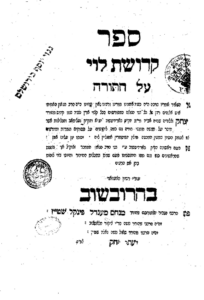
The issue of autopsy and postmortem dissection has been exhaustively explored in halakhic literature.[1] If I were to ask where and when we find the first halakhic discussion about this topic, the immediate response would invariably be the teshuva of the Noda biYehuda, from the late eighteenth century.[2] It may be time to rewrite the medical halakhah history books. On Sunday, May 21 Genazym Auction House held its fifteenth auction. Lot #133 was a work entitled Pachad Yitzchak.

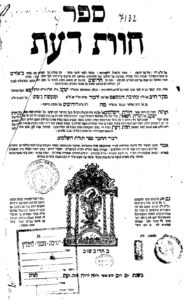
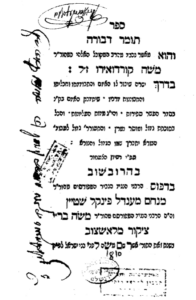
There are multiple works throughout history that bear the title Pachad Yitzchak. The modern reader will surely think of the work of Rav Yitzchak Hutner. The reader of this blog may also think of the first multi-volume halakhic encyclopedia, authored by Rabbi Dr. Yitzchak Lampronti (1679-1756). The volume offered for auction by Genazym is an earlier lesser-known composition of the same name by Yitzchak Hayyim Kohen me-haHazzanim (AKA Isaac Vita Cantarini)[3] published in 1685. 

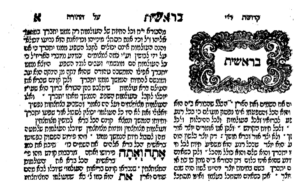
Buried in Cantarini’s obscure work, in a section peripheral to the main theme of the book, we find a vivid and poetic description of a tragic incident relating to anatomical dissection.[4] Viewed in isolation, this incident merits historical attention due to its gravity. Yet, it merely reflects a much larger historical chapter about the Jews and postmortem dissection which long preceded the time of the Noda biYehuda and has remained largely undissected until now. But first a word about this work, its provenance and its author. 

The Work- Pachad Yitzchak (Amsterdam, 1685)[5]

The main subject of this work is the tale, told in poetic fashion, of the miraculous salvation of the Jewish congregation of Padua during the Austrian-Ottoman War in the year 1684. War erupted between the Austrian and Ottoman Empires in the year 1684 over the city of Buda (today part of Budapest). The virulently anti-Semitic Christian ruler of Padua spread a libel accusing the Jews of supporting the Muslim Turks in their battle against the Austrian Empire. His incitement caused an enraged crowd to break into the Padua Ghetto, yet the Jews miraculously persuaded the Venetian government to subdue the outburst. The Jews of Padua declared the 10th day of Elul as their Second Purim in gratitude for their miraculous salvation. This holiday was celebrated for many generations thereafter. 

However, the work also includes many additional unknown details of the history of the Jewish community and its rabbis. It is from this aspect of the book that we draw our discussion. 

Provenance

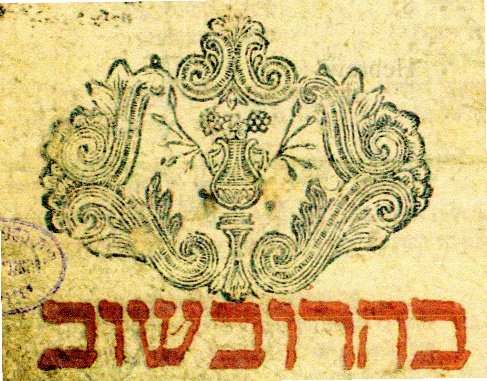
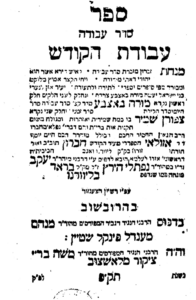
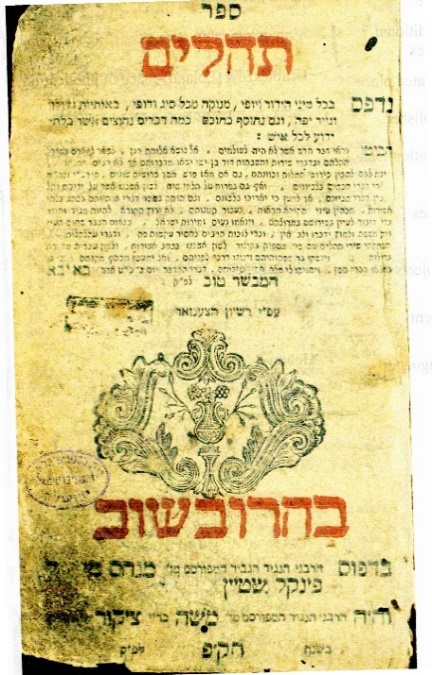
Regarding the item’s provenance, it was previously part of the William Gross Family Collection,[6] a significant portion of which has been recently sold at auction by both Kedem[7] and Genazym auction houses. Gross is a well-known prominent collector of Judaica and Hebraica and the selling of his collection is of historic significance. To see the collection of precious items united under one roof now become redistributed and disseminated across the world necessitates a moment of pause and reflection. Yet, this is the life cycle in the world of bibliophilia.[8] For centuries, passionate bibliophiles spent lifetimes amassing extraordinary and unique collections, only to have them subsequently sold piecemeal (for a variety of reasons) while still alive, or by less passionate heirs after death. Sometimes, however, collections are sold en bloc. An allusion to one such example is the image which appears on the bottom of the title page of the copy of Pachad Yitzchak sold at auction.  

This stamp, which is not mentioned in the catalogue description, indicates that this volume was previously part of the collection of Professor Lelio Della Torre. Della Torre was an Italian Jewish scholar of the nineteenth century, and prolific author, who served as a professor of Talmud and rabbinics at the rabbinical seminary in Padua, where Shadal also taught, from 1829 until his death in 1871. During this time, he was an avid collector of Hebraica. David Kaufmann, himself a renowned scholar and bibliophile, sought to procure Delle Torre’s collection upon the latter’s death. Kaufmann not only acquired Della Torre’s collection, but also that of Marco Mortara, a student of Shadal, and later Chief Rabbi of Mantua. Mortara’s collection in turn contained the library of Samuel Della Volta, whose life, work and library we discussed in this blog.[9]  All of these collections are now housed in the Hungarian Academy of Sciences Library in Budapest, to which Kaufmann bequeathed his library. This volume from Della Torre’s library somehow escaped the grasp of Kaufmann and traversed a different path, ultimately landing instead in the Gross Family Collection.[10]

The Author- Yitzchak Hayyim Cantarini (1644-1723)[11]

The Cantorini family were a prominent family of Kohanim who were also associated with the cantorial profession – hence the name Cantarini, or MinHaHazanim, as their Hebrew name reflects. Isaac Cantarini graduated from the University of Padua Medical School on February 11, 1664, one of many Cantarinis who earned their medical degrees from the university.[12] He authored a number of congratulatory poems in honor of Padua medical graduates.

After graduated from Padua, Cantarini went on to become a leading figure in Italian Jewry. He is considered one of the greatest Torah sages of his time, and his responsa have been published in both Yitzhak Lampronti’s Pachad Yitzhak and Samson Morpurgho’s Shemesh Tzedakah.[13] Cantarini wrote halakhic, historical, and homiletic works, as well as medical treatises in Latin. He was a poet, author, physician, and consummate orator; non-Jewish clergy and lay people attended his Shabbat sermons. In the year 5460 there were so many non-Jewish visitors in synagogue when he spoke that the regulars had to ascend to the women’s section (ezrat nashim) to pray.[14] He was a teacher of both Rabbi Moshe Hayyim Luzzatto (Ramchal),[15] as well as Rabbi Yitzchak Lampronti.

Non-Jews sought Cantarini’s sage advice as well, as evidenced by his correspondence with the Christian intellectual Theophilio Ungar.[16]

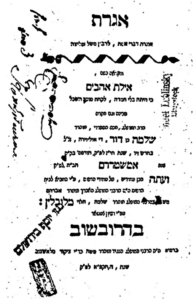
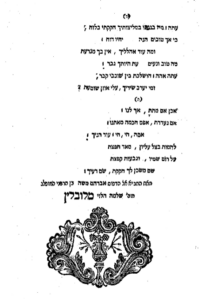
Cantarini was known by his initials יחכם. He was also quite adept at word play, and Shadal mentions but one small example of his utilizing the acronym of his name in the introduction to a kinah he composed upon the passing of Rabbi Yehuda Briel:[17]

Shadal takes a stab at solving the riddle.

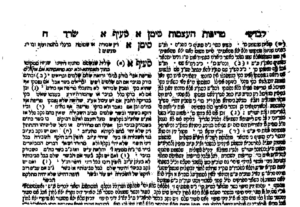
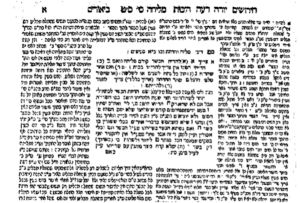
A Fearful Story in Pachad Yitzchak

The following story appears in the pages of Pachad Yitzchak.[18] On the 17th of Shevat 5440 (שנת מ”ת as per Cantarini), a young man by the name of Hananel (AKA Graziadio) Levi[19] died in the Ghetto. His body was prepared for burial, but in the interim, a band of raucous students from the University of Padua stormed the Ghetto, kidnapped the body, and whisked it away to the anatomy room in preparation for dissection and medical student instruction. The Jewish community was in an uproar, riots ensued, and all political channels were pursued to secure the return of the body. When initial efforts failed, some members of the Jewish community on their own initiative attempted unsuccessfully to enter the anatomy lecture hall under cover of night to procure the body. Ultimately, after one week, negotiations succeeded, and the Jews were promised by the University that they needn’t worry about similar infractions in the future, and that the bodies of the Jewish community would no longer be forcefully taken for anatomical dissection. 

Anatomy, the Jews, and the University of Padua- An Undissected Body of Literature

This frightening incident recounted in Pachad Yitzchak is significant in its own right, but here we situate it as part of a much larger narrative of anatomy, the Jews and the University of Padua, which began over a century earlier.

Since the Middle Ages, individual Jewish students experienced numerous hurdles to the completion of their medical training, many rooted in discrimination and antisemitism. It was sometime around the 16thcentury, however, as the result of the synchroneity of two major historical developments, that Jews, as a group, first encountered a new major challenge to their medical education. This challenge, unlike any previous, did not originate with their non-Jewish colleagues or institutions, but was self-imposed by the Jews. Its consequences however were no less severe.

In the beginning of the fifteenth century, the University of Padua became the first European university to officially allow admission of Jewish students for medical training.[20] This policy led to a gradual influx of Jewish students and the creation for the first time in history of a significant Jewish presence and recognizable entity in a consistent fashion on a university campus.[21] This positive development for the broader Jewish community[22] unwittingly evoked unanticipated consequences.

Simultaneous with the expansion of the Jewish community in Padua, a young professor on campus was quietly revolutionizing the study of anatomy. Andreas Vesalius, who arrived in Padua in 1537, began to hold frequent public and private anatomical displays and approached the study of human anatomical dissection in a systematic fashion not previously attempted.[23] He would later come to be known as the founder of modern anatomy. With his innovations came the expansion of the anatomy course in Padua. Anatomy became identified from then on as the most essential course in medical training, and Vesalius, along with the University of Padua, were leading the revolution. 

The Ramifications of Vesalius’ Contribution for the Jewish Community

Vesalius’s work formalized and expanded the teaching of human anatomy at the University of Padua, as well as at medical schools throughout the world. With the expansion of the course came the necessity to supply more cadavers for the dissection tables. To procure cadavers for the anatomy course, the university turned to both the judicial system as well as its students and their communities. Executed criminals served as one steady source of cadavers, but this did not suffice. 

Grave robbing became commonplace in order to supplement the source of bodies. The practice was even encouraged by Vesalius and, though technically illegal, was unofficially tolerated by the government. A ducal document from 1549, during Vesalius’s tenure in Padua, condemns grave robbing,[24] but the ever-present fear and reality of the practice also affecting the Jewish cemeteries.[25] Indeed, one scholar has suggested that one of the historiated letters in the Fabrica specifically depicts a scene of the grave robbing of a body from a Jewish cemetery.[26]

The scene depicts putti (cherubic figures common in Renaissance art) removing a body from a grave. The “o” on the flag held by one of the putti was the symbol Jews were required to wear on their clothing and may reflect that this was a Jewish cemetery depicted.

The emphasis on anatomy begun by Vesalius would continue long into the future. Soon the university would further invest in this venture by building the first example in the world of a permanent anatomical theater, completed in 1595 (after the death of Vesalius), created for teaching anatomy through the dissection of corpses. The theater still stands to this day. 

The supply of cadavers was a perennial challenge for the medical school, and as a result, the university sought additional creative ways to address the issue. At some stage they instituted each community which sent medical students for training at the university would be required to provide a certain number of bodies for the dissection table.[27] The Jewish community, like others on campus, was expected to provide cadavers for the yearly anatomy course. However, the Jewish students and community took issue with this expectation. As elated as Jews were to walk the halls of a premier university for the first time in history, this privilege would not compel the abrogation of ancient Torah principles. Jewish law forbids the dissection of the human body after death absent mitigating circumstances yielding direct and immediate life-saving benefit from the procedure.[28] The prohibitions of desecrating and deriving benefit from the corpse, as well as the obligation to bury the body preclude routine dissection or autopsy. 

This refusal of the Jews to provide bodies sparked outcry from both the university and its students. The tension created from this conflict would play out over centuries. It is reflected, for example, in multiple recorded incidents of Padua medical students attempting to kidnap Jewish bodies to provide for the anatomy course.[29] Although we have no starting date, already in the earliest Vesalian and post-Vesalian days in Padua a compromise was struck with the Jewish community providing a hefty financial compensation to absolve them from the cadaver obligation. However, this was not a one-time incident, and the anatomy issue persisted, with frequent renegotiation of terms over the years and increased tension resurfacing periodically. Despite the Senate’s repeated pronouncements, frequently the graves in the Jewish cemetery were violated. It was not uncommon for gravely ill patients to be transported out of Padua for fear of being dissected upon their death.[30] The Jews were compelled to construct secret hiding places in the Ghetto where the bodies could be concealed until the funeral. Often, they buried the dead under the cover of night to avoid the dissection table.[31]

One would have expected to find halakhic responsa from 16th and 17th century Italy discussing this topic, but the extant halakhic literature is silent. The first cases discussing autopsy only surface in the late 18th century. We do however find reference to this ongoing issue in the Padua Jewish community archives as well as in the administrative records of the city and University of Padua. We share these documents here, many for the first time. While not enshrined in the extant responsa literature, this community response to anatomical dissection surely reflects the considered rabbinic opinion and halakhic analyses of the local Padua rabbinate, to whom the community deferred on such matters. Prominent rabbis who served the Padua community, or were connected with the medical students during the period under discussion include Maharam Padua (1482-1565), Rabbi Yehuda Arye de Modena (1571-1648) and Rabbi Yehuda Briel (1643-1722), Rabbi Dr. Isaac Hayyim Cantarini (1644-1723), Rabbi Dr. Isaac Lampronti (1679-1756), and Rabbi Dr. Shimshon Morpurgo (1681-174), among others, and it is more than likely that they were involved, to some extent, in the discussions of the Jewish community regarding the provision of bodies to the medical school. 

The Padua Jewish Community Archives[32] 1624-1626

The Jewish community archives of Padua contain at least five entries from 1624 to 1626, discussed below, which directly address the anatomy issue. Daniel Carpi, the scholar of Italian Jewish history who transcribed and edited the archives, noted that since the Jews first settled in Padua the medical students requested from the Jewish community to provide to the university a specific percentage of Jewish bodies for use in the teaching of anatomy. The Jews refused and arranged a compromise to pay an annual ransom to absolve them from this obligation. However, the tension related to this matter never ceased, be it because the university continually raised the fee, or because they sometimes would only suffice with the supply of actual corpses for dissection. 

It is in this context that a tragic incident occurred in 1624 which frightened even the non-Jewish community. A group of students, led by a young anatomy professor, interrupted a Jewish funeral procession and attempted to kidnap the body. The agreement discussed in the first archival entry below appears to come on the heels of this incident in the hopes of preventing similar occurrences in the future.

April 19, 1624 (entry #545) compromise with the students during the season/days of dissection

In that the spirit of God has enlightened the esteemed philosopher Senior Cesare Cremonin to declare freedom (from dissection) for our deceased, through the continued annual designated payment to the students of the College of Arts, generation after generation. As a result, they are obligated to allow us to properly bury our dead during the season of dissection, lest anyone fear. Any violators will be fined, and they have coordinated with us to obtain from the government permission for a required fine for all who violate this agreement in a way amenable and sufficient for our needs. The aforementioned master Cesare and Yehudah Katz have already spoken on this matter and have begun discussion regarding the amount the Jewish community is willing to pay for this privilege. Therefore, to facilitate successful completion of these dealings, which will result in a salvation for our community, we present a parti to designate two members of our community,[33] even though they are not members of the committee, to negotiate directly with the aforementioned esteemed philosopher a sum which will then be presented to the community and the committee for a majority vote. 

Subsequent entries reflect the lengthy process of negotiation, implementation, and enforcement. A follow up entry from July 15, 1624 (entry # 554) states that the negotiations had been completed and a sum had been agreed upon with the government representative. The request is to approve the amount and facilitate payment. 

 An entry in the Padua University Archives from December 28, 1624 (pictured below) sheds a slightly different light on the negotiations, which may not have been officially ratified by the university.[34]

Here the university confirms an earlier privilege granted to the Jewish community by which those Jews studying medicine were granted free access to the anatomical theater, and the corpses of deceased Jews were to be left untouched by anatomical dissections due to strong religious objections to the procedure. For this privilege the Jews paid an annual sum of 100 Venetian pounds. The entry concludes, “the final decision on this proposal was delayed until the arrival of the “perillustris domini syndic.”[35] Parenthetically, this reveals that the agreements between the Jewish community and the university regarding Jewish cadavers date back to an earlier time.

An entry in the Jewish community archives some three weeks later (Entry # 566- January 21, 1625) corroborates the delayed decision of the university. It reiterates the need to arrive at an agreement between the Jewish community and the university to prevent the taking of Jewish bodies. A maximum fee of ten Ducat is set. This may have been a counteroffer to the much higher request of 100 ducats and explains why a specific number is mentioned here but not previously. 

May 17, 1626 (Entry #616)
Yet another entry reveals a creative solution to prevent grave robbing during the semester of anatomy.

Regarding designating two community representatives with the power to negotiate with Aharon Altarini to allow temporary burial[36] on his property (for community members) during anatomy season. They are granted permission to spend as much as necessary to appease those who oppose this practice.

While grave robbing was typically done secretly under the cover of night, some claims for Jewish bodies were more brazen. The entry of November 15, 1626 (Entry # 627) mentions a disturbing incident (mikre bilti tahor) of the interference of the medical students of Padua with the Jewish funeral procession of the wife of Moshe Fano (miPano). The incident, reminiscent of earlier similar episodes, appears to have been minor and fortunately did not escalate. Nonetheless, it precipitated another plea to find a long-term compromise with the university regarding the anatomy issue.

The Decree of 1672[37]

 On November 23, 1672, there was a decree reaffirming the Jews’ exemption from providing bodies for dissection and warning those who attempt to disturb the funerals or graves of members of the Jewish community. This decree appears in Jewish and governmental documents discussed below. It is unknown to me if or whether a specific historical event precipitated this reaffirmation.

The Case of Graziadio Levi and the Riots of 1679 

Here we position the story from Cantarini’s Pachad Yitzchak, occurring over a century after Vesalius’ expansion of the field of human anatomy with its subsequent creation of major halakhic and social problems for the Jewish community and its medical students. The event described by Cantarini which transpired in 1679[38] may have been the tipping point which led to a more serious and sustained response from the university. Following the death of a young Jew, Graziadio Levi, armed students stormed the Jewish ghetto in great numbers, kidnapped the corpse and brought it to the medical school in preparation for dissection. Riots ensued[39] and much effort was marshaled to rescue the body and provide a proper Jewish burial. The incident led to the issuance of a ducal letter dated February 27 of that year which rued the incident and emphatically reaffirmed the commitment by the university to protect Jewish corpses.[40]  As we have discussed, the events surrounding that fateful night in 1679 were recorded for posterity by Isaac Hayyim Cantarini in his Pachad Yitzchak. In the context of his recounting of the Levi affair, Cantarini mentions the earlier decree from November 23, 1672, protecting the bodies of the community from dissection. 

A record of the full 1679 decree is found in the Padua Civic Archives,[41] a copy of which I procured and present below. The name of Graziadio Levi is explicitly mentioned in the decree.

Ciscato transcribed the full text of the decree.[42]

The Central Archives of the History of the Jewish People possesses yet another record of the anatomy decrees. This unadorned document is a certified “copia” of the two decrees of 1672 and 1679.[43]

This was perhaps intended for archival records as opposed to public display. 

University (Governmental) Decrees Regarding Jewish Cadavers from 1672 to 1721

The Central Archives of the History of the Jewish People possesses yet another document, even more remarkable, related to the Padua anatomy decrees.[44] It includes not only one or even two decrees, but appears to be a summary or record of multiple decrees on the subject of cadavers, anatomy training at the medical school of Padua, and the Jewish community, spanning from 1672-1721. It includes the decrees of November 23, 1672, and February 27, 1679, as well as others. Furthermore, the presentation of these decrees, as an attractive broadside with calligraphy and illustrated header, indicates that it was likely intended for public display.[45]

Conclusion

In an obscure work published in 1685, recently offered for auction, appears an account of a tragic event involving the Jewish community and the dissection of human cadavers at the University of Padua. We have placed this seemingly isolated incident into a much broader historical context, fleshing out this chapter with new supportive archival material. For hundreds of years, beginning in the late sixteenth century, the Jewish community negotiated with the university for the right not to have Jewish bodies used for the anatomy course. There is no question that the local rabbinate of Padua must have been involved in these discussions and negotiations, though to what extent remains unknown. Refusal of the Jewish community to provide cadavers for dissection created major problems for both the many Jewish medical students who attended the university as well as for the Jewish community at large. The Jewish community’s restrictive position was premised entirely on halakhic grounds and would not have been sustainable throughout this lengthy period without significant rabbinic backing and support. Thus, while the extant published literature on autopsy begins with the Noda biYehudah in the late eighteenth century, there is little doubt that the halakhic discourse on the topic of anatomical dissection began long before.[46]

[1] For general discussions on anatomy and autopsy in Jewish law, see Kalman Kahana, “The Dissection of the Dead in Jewish Law: A Bibliography,” (Hebrew) haMa’ayan 7 (Tevet, 5727), 45-72; Avraham Steinberg, HaRefuah KiHalakhah 6 (Jerusalem, 2017), 512-550; Zev Farber and Irving Greenberg, “Autopsies I: A Survey of the Debate,” in Zev Farber, ed., Halakhic Realities (Maggid Books: Jerusalem, 2017), 323-417.
[2] For a discussion of the historical context of this teshuva, see Edward Reichman, “A Tale of Two Stones,” in The Anatomy of Halakha (Maggid/OU/YU Presses, 2022),
[3] Cantarini and Lampronti share at least one thing in common. They are both graduates of the University of Padua Medical School. Indeed, the passage in Cantarini’s work upon which I draw relates directly to the medical training at the university.
[4] This incident we describe transpired years before the so-called Purim of Buda (or Padua).
[5] The description of the work is drawn from the William Gross Collection Item Description, which is reproduced in the Genazym catalogue. See also M. Heller, The Seventeenth Century Hebrew Book (Brill, 2011), 1077.
[6] On Gross and his collection, see Shalom Sabar, Emile Schrijver, and Falk Wiesemann, Windows on Jewish Worlds: Essays in Honor of William Gross, Collector of Judaica on the Occasion of his Eightieth Birthday (Zutphen: Walburg Pers bv., 2019).
[7] In Kedem’s recent auction of items from the Gross Family Collection (Auction 92, May 2, 2023) we find two items of medical historical interest, one less obvious than the other. The first item is Mikne Avram (Venice, 1523), a Hebrew grammar work written by Avraham de Balmes (Auction 92, Part 1, Lot 4). De Balmes was a physician and his medical diploma from Naples, from the auspicious year of 1492, is the oldest extant Jewish medical diploma, now housed in the Braginsky Collection. On this diploma see, Giancarlo Lacerenza and Vera Schwarz-Ricci, “Il Diploma di Dottorato in Medicina di Avraham ben Me’ir de Balmes (Naploli 1492),” Sefer Yuhasin 2(2014), 163-193. De Balmes was also a student of Yehuda Messer Leon, who has been mentioned numerous times on this blog. Less known is that De Balmes is considered to be the first physician in history to perform a human-to-human blood transfusion. His patient was none other than Pope Innocent VIII. De Balmes transfused blood from three young boys, each of whom was paid a ducat, and infused the blood into the veins of the Pope. According to different reports, the Pontiff “either died or recovered.” See H. M. Brown, “Beginning of Intravenous Medication,” Annals of Medical History 1:2 (1917). Shortly thereafter we find him working in the printing press of Daniel Bomberg.  De Balmes was an expert in Hebrew language and grammar and was sought after by Christians for instruction. Mikne Avramwas published posthumously. A scholarly edition of this work was recently published placing it in the context of contemporaneous linguistic scholarship. See Dror Ben Arye, Mikneh Avram by Avraham de Balmes (Hebrew) (Ramat Gan, Bar Ilan University Press, 2022).

The second item (Auction 92, Part 2, Lot 115) is the spectacular medical diploma of Moshe ben Gershon Tilche from the University of Padua Medical School (1687), which we discussed in Edward Reichman, “Jews, Medicine and the University of Padua: A Behind the Scenes Tour of a New Exhibit at the Jewish Museum of Padua (November 2, 2022- December 31, 2022),” Seforim Blog (https://seforimblog.com), December 1, 2022.
[8] For a lament about the sale and loss of access to great Jewish book collections, see E. Reichman, “The Lost Library by Dan Rabinowitz and the ‘Burial of Souls’ by Yehuda Leib Katznelson: Different Expressions of the Same Sentiment,” The Seforim Blog (April 3, 2019), available at https://seforimblog.com/2019/04/the-lost-library-by-dan-rabinowitz-and-the-burial-of-souls-by-yehuda-leib-katznelson-different-expressions-of-the-same-sentiment/.
[9] E. Reichman, “Samuel Vita Della Volta (1772-1853): An Underappreciated Bibliophile and his Medical ‘Diploma’tic Journey,” Seforim Blog (https://seforimblog.com), November 5, 2021.
[10] When Kaufmann transferred Mortara’s library from Italy to Budapest a number of volumes were also “lost” on the way. See Asher Salah, “La Biblioteca di Marco Mortara,” in Mauro Perani and Ermanno Finzi, eds., Nuovi Studi in Onore di Marco Mortara nel Secondo Centenario della Nascita (Firenze: Giuntina, 2016), 149-168, esp. 157.
[11] On Cantarini, see, Harry A. Savitz, Profiles of Erudite Jewish Physicians and Scholars (Spertus College of Judaica Press, 1973), 25-28; C. Facchini, “Icone in sinagoga: emblemi e imprese nella predicazione barocca di I.H. Cantarini”, in Materia Giudaica, 7 (2002), 124–144. I thank Professor David Ruderman for this last reference. Cantarini’s Jewish legal responsa were published in both Yitzḥak Lampronti’s Paḥad Yitzḥak and Samson Morpurgo’s Shemesh Tzedakah. For his correspondence with the Christian intellectual Theophilo Ungar, see Y. Blumenfeld, Otzar Nehmad 3 (Vienna, 1860), 128-50.  For the definitive work on the Cantarini family, see Marco Osimo, Narrazione della Strage Compiuta nel 1547 Contro gli Ebrei d’Asolo e Cenni Biografici della Famiglia Koen-Cantarini (Casale-Monferrato, 1875). For a comprehensive bibliography on Cantarini, see Asher Salah, La Republique des Lettres: Rabbins, Ecrivains et Medecins, Juifs en Italie au XVIIIe Siecle (Brill: Leiden, 2007), 120-124.
[12] Modena and Morpurgo, Medici, 118; see D. Ruderman, Jewish Though and Scientific Discovery in Early Modern Europe (Yale University Press, 1995), 113-114, regarding families with multiple graduates from the university.
[13] On Morpurgo, See Edward Reichman, “The Illustrated Life of an Illustrious Renaissance Jew: Rabbi Dr. Shimshon Morpurgo (1681-1740),” Seforim Blog (https://seforimblog.com), June 22, 2021.
[14] S. Y. Glicksberg, Ha-Derashah Be-Yisrael (Mosad HaRav Kook, 5700), 203-20.
[15] Ramhal wrote a eulogy for Cantarini. See R. Moshe Hayim Luzzatto, Sefer Ha-Shirim, ed. Y. Zemora (Mosad HaRav Kook, 5710), 4.
[16] This correspondence was published by Shadal. See Y. Blumenfeld, Otzar Nehmad 3 (Vienna, 1860), 128-50.
[17] Ibid.
[18] 45a- 46a.
[19] I discovered a wedding poem written a number of years earlier Graziadio (Hananel) Levi, assumedly the same person, for the wedding of Saul Lustro and Allegra Barukh in 1676. See JTS Library B (NS)CR2.
[20] The university admitted non-Catholics, which included, for example, both Protestants and Jews. On the history of the Jews and the University of Padua, see Edward Reichman, “How Jews of Yesteryear Celebrated Graduation from Medical School: Congratulatory Poems for Jewish Medical Graduates in the 17th and 18th Centuries- An Unrecognized Genre,” Seforim Blog (https://seforimblog.com), May 29, 2022; idem, “Jews, Medicine and the University of Padua: A Behind the Scenes Tour of a New Exhibit at the Jewish Museum of Padua (November 2, 2022- December 31, 2022),” Seforim Blog (https://seforimblog.com), December 1, 2022.
[21] The University of Montpellier was sporadically frequented by Jews in the Middle Ages, but does not compare to Padua, where Jews attended in far greater numbers and had their own student organizations.
[22] To be sure there were residual discriminatory practices towards the Jews at the university. In addition, while the Italian Jewish community viewed this development in a positive light, the Jewish communities in Poland and Germany were more concerned about the possible assimilation of the Jewish students and dilution and diminution of Torah study.
[23] We discuss the relationship of Vesalius to the Jews in Edward Reichman, The Anatomy of Jewish Law (Maggid/OU/YU Press, 2022).
[24] See Ciscato, Gli Ebrei in Padova, p. 297. Later documents, as discussed below, address body snatching in the Jewish community specifically.
[25] Carpi, op. cit., parti 616, discusses a request to delay burial during the season of anatomy at the medical school to preclude grave robbing.
[26] Jeffrey Levine, “Jewish History in Vesalius’s Fabrica,” September 17, 2014 (https://jmlevinemd.com/jewish-history-vesalius-fabrica/).
[27] Paul Grendler, The Universities of the Italian Renaissance (Johns Hopkins University Press, 2004).
[28] See Steinberg, Avraham Steinberg, HaRefuah KiHalakhah 6 (Jerusalem, 2017), 512-550. I realize it may be anachronistic to mention these specific halakhic concerns or formulation, as these were developed later in history starting with Rabbi Yechezkel Landau. Nonetheless, they are halakhic prohibitions and obligations that apply to dissection.
[29] For more on the history of anatomy and graverobbing in rabbinic literature, see Edward Reichman, The Anatomy of Jewish Law (Maggid/OU/YU Press, 2022).
[30] This practice might have violated the prohibition of moving a goses, the halachic equivalent to a “dying person.” A similar question was posed to Rabbi Moshe Stern: Could one move a critically ill patient out of the hospital for fear that, upon his death, his body would be taken for autopsy and dissection without family consent? Rabbi Stern ruled in the negative. See his Be’er Moshe 8, nos. 239, 240, 241, 243. Likewise, Rabbi Moshe Lemberger was asked whether a Kohen physician could expose himself to tum’ah in order to establish cause of death and prevent a likely autopsy. Rabbi Lemberger argues that the Kohen must do so, as this case is akin to a met mitzvah (one who dies without family or friends to bury him). See Lemberger, Ateret Moshe, Yoreh De’ah 2:244.
[31] Hebraische Bibliographie 16 (1876), p. 37.
[32] See Daniel Carpi, Minutes Book of the Council of the Jewish Community of Padua Volume Two: 1603-1630 (Israel Academy of Sciences and Humanities, 1979). All references to the Padua Jewish community archives are from this source. I thank Pia Settimi for kindly bringing these documents to my attention. See also Ciscato, 209-212.
[33] According to Pia Settimi, one of these was Avraham Catalano, who would later coordinate the community response to the plague in Padua in 1631 and author the diary Olam Hafukh about the experience.
[34] ASUPd, ms. 655, f. 13r. I thank Francesco Piovan, Chief Archivist of the University of Padua Archives, for procuring a copy of this document for me.
[35] I am unsure to whom this refers.
[36] The idea of temporary burial was suggested and debated by some prominent rabbinic authorities in the nineteenth century regarding the situation in Cincinnati, OH where graverobbing was rampant. See Reichman, Anatomy of Jewish Law, op. cit., 223-226.
[37] See below for discussion of this decree.
[38] Cantarini lists the Hebrew date of the event as 17 Shevat, 5440. Standard Hebrew date converters place this in 1680, but the Italian decrees all clearly place the year at 1679.
[39] There were broader political issues at play during these riots which are discussed by Cantarini.
[40] See Ciscato, Gli Ebrei in Padova, pp. 299–300; Hebraische Bibliographie 16 (1876), 37. The latter reference discusses an unpublished manuscript by Chaim (Vital) Moshe ben Elisha Cantarini that details this incident. I have been unsuccessful in locating this manuscript. Cantarini, member of an illustrious Italian family comprising many rabbi/physicians, graduated from the medical school in Padua and apparently taught in a yeshiva there as well. As discussed in this essay, this incident is described in great detail by his relative Isaac Chaim Cantarini in the latter’s Pachad Yitzchak.
[41] Archivio civico antico Ducali volume 13 carta 3r. I thank Antonella Ortis for her assistance in procuring this document.
[42] Ciscato, 299. The date of this decree is February 27, 1679. He lists the location as Ducali, Reg. N. N. 123 c. I r.
[43] Ducale: Che sia conservata agli ebrei la facoltà di eseguire le sepolture secondo il loro rito (Emessa in seguito alle proteste degli ebrei contro gli studenti di Anatomia). IT-Pa-47-ovs, Padova – Jewish Community 1679. I thank Ariel Viterbo of the National Library of Israel for bringing this document, as well as the others from the Central Archives, to my attention, and I thank Yochai ben Ghedalia, Yael Franklin and Tami from the Central Archives of the History of the Jewish People for so kindly providing copies of these documents.
[44] 206 Pergamena interessantissima concernente le violazioni di cadaveri degli israeliti che si permettevano gli studenti col pretesto  degli studi anatomici ” =IT-Pa 126 ovs. This broadside does not appear to have been mentioned by Ciscato or Roth, though the decrees were known to them. The Central Archives has another catalogue entry on the dissection of Jewish cadavers in Padua- Sulle violazioni dei cadaveri degli israeliti che si permettevano gli studenti col pretesto degli studi anatomici.  Archivio della Comunità di Padova, n. 206. 8 frames. HM-5157. This is a (poor) microfilm copy of the above broadside, thought the Archives does not identify it as such.
[45] Though he had not seen this document before, Francesco Piovan, the Chief Archivist of the University of Padua remarked, “As far as I can tell from the image, it’s just a summary of laws and decrees. Such summaries (even in print) of private documents and legal norms were quite normal: they can be found, for example, in processual documents. The interesting fact is that your document looks like a kind of ‘manifesto’ (placard), written in beautiful handwriting, and perhaps to be displayed, hung in a frame or fixed on a wooden tablet. In short, it seems destined for public viewing.”
[46] As a postscript, despite the religious limitation of providing bodies for dissection, there was at least some evidence of the interest and fascination amongst the Jews with the new discipline of human anatomy. When Padua’s anatomical theater was first built in 1595, the benches were not only occupied by the registered Jewish medical students, there is record of Jews from the community (non-students) attending dissections. See Cynthia Klestinec, “A History of Anatomy Theaters in Sixteenth Century Padua,” Journal of the History of Medicine and Allied Sciences 59:3 (2004), n. 74. Furthermore, years after the publication of Pachad Yitzchak, when a young Abraham Levi was visiting Padua on his travels, his guide, our very same Rabbi Dr. Isaac Cantarini, as part of showcasing the highlights of the community, included a visit to an anatomy lesson where a cadaver was dissected. Shmuel Feiner, The Jewish Eighteenth Century: A Jewish Biography, 1700-1750 (Indiana University Press, 2020), 242.


The Hanukkah Miracle

The Hanukkah Miracle

Marc B. Shapiro
In an earlier post I mentioned that I hoped to write about the nineteenth-century dispute about the historicity of the Hanukkah miracle of the oil. This dispute broke out after the publication of Hayyim Zelig Slonimski’s article claiming that Maimonides did not believe in the miracle. Fuel was added to the fire when R. Samuel Alexandrov publicly supported Slonimski and argued that the miracle of the oil was intended to be understood in a non-literal fashion, with the oil representing Torah. (He later retracted this view, presumably due to public pressure.) There is no longer a need for me to write in any detail about this matter after Zerachyah Licht’s recent comprehensive Seforim Blog post here, which also includes Slonimski’s original article.[1]
However, there are a few points I would like to add.
In my post here I wrote:
To give an example . . . of how [R. Samuel Moses] Rubenstein’s later thought broke with tradition, see his Ha-Rambam ve-ha-Aggadah (Kovno, 1937), p. 103, where he claims that the story of the miracle of Hanukkah is almost certainly a late aggadic creation, and like many other miracle stories in aggadic literature was not originally intended to be understood as historical reality:[2]
ספק הוא אם הנס של “פך השמן” הוא אפילו הגדה עממית קדומה, קרוב שהוא יצירה אגדית חדשה מבעל הברייתא עצמו או מאחד מבעלי האגדה, ונסים אגדיים כאלו רבים הם בברייתות וגמרא ומדרשים ע”ד ההפלגה כדרכה של האגדה. ולבסוף הובן נס זה למעשה שהיה. עיין שבת כ”ג א’. [טעם ברייתא זו הובא גם במגילת תענית (פ”ט) אבל כמו שנראה היא הוספה מאוחרת, ועיין (שם) ובפסיקתא רבתי (פיסקא דחנוכה) עוד טעם להדלקת נרות חנוכה[.
During the most recent Hanukkah I was using R. Joseph Hertz’s siddur, the Authorized Daily Prayer Book. Based upon how he describes the holiday and the lighting of the menorah, omitting any mention of the miracle of the lights (pp. 946-947), I assume that he also didn’t accept it literally. Note how he states that the lights were kindled during the eight-day Dedication festival, and this is the reason for the eight days of Hanukkah, rather than offering the traditional reason that the eight days of Hanukkah commemorate the eight days that the menorah miraculously burnt.
Three years to the day on which the Temple was profaned by the blaspheming foe, Kislev the 25th 165, Judah Maccabeus and his brethren triumphantly entered the Holy City. They purified the Temple, and their kindling of the lights during the eight-day festival of Dedication—Chanukah—is a telling reminder, year by year, of the rekindling of the Lamp of True Religion in their time.
Ad kan my words in the prior post. Some time ago I was asked if I know of any other traditional authors who deny the literalness of the Hanukkah miracle. It could be that R. Isidore Epstein should be added to the list, as in his classic work Judaism he describes Hanukkah and the kindling of lights, but mentions nothing about the miracle. However, unlike Hertz whose comments were in a siddur and directed to Jews, Epstein’s book is directed towards a general reader, and can still be used as a college text. Understandably, one would hesitate to include in such a book anything about a miracle. Yet I think it is telling that he does not even say something like, “according to tradition a cruse of oil with enough for one day burnt for eight.”
Another traditional author who must be mentioned in this regard is R. Zev Yavetz. Here is his picture.
And to remind people of what Slonimski looked like, here is his picture.[3]

And here is a picture of R. Alexandrov.
Yavetz was one of the leaders (and founders) of the Mizrachi movement, and Kfar Yavets, a religious moshav, is named after him. After his death, R. Kook wrote about how Yavetz was able to combine Torah and secular wisdom without being negatively affected and distorting religious values.[4] Yavetz is best known for his writings on Jewish history. His magnum opus is his 14 volume Toldot Yisrael. In volume 4, pp. 89-91, he discusses the Hanukkah story.

As you can see, there is no mention of the miracle of the oil. The eight day holiday is portrayed as a commemoration of the original eight day celebration that took place when the Temple was rededicated. I don’t think there is any other conclusion that can be drawn other than that Yavetz did not regard the miracle of the oil as an actual historical event.

In 1900 R. Aryeh Leib Feinstein published his Elef ha-Magen. On p. 35b he writes that whereas R. Judah (bar Ilai) believed in the Hanukkah miracle, R. Yose and R. Judah ha-Nasi did not, and that is the reason why R. Judah ha-Nasi did not include the laws of the Hanukkah lights in the Mishnah.
חיוב נר חנוכה עתה אינו בשביל המלוכה רק מפני הנס שנעשה בפך השמן שהדליקו בו שמונה ימים, ואף שגם טעם זה תלוי במחלוקת שבין ר’ יודא ור’ יוסי בהוריות [יא ע”ב] שלדעת ר’ יודא נסים רבים אירעו בשמן המשחה, ור’ יוסי חולק עליו שלא היה בו שום נס, ומטעם זה ג”כ השמיט רבי דיני נר חנוכה, ולא הזכירו בשום משנה, רק מזכירו לענין ניזקין בשם ר’ יודא שפוטר החנוני, לפי שר’ יודא לשיטתו סובר שנר חנוכה הוא מצוה לזכר הנס שאירע בפך שמן המשחה. אבל רבי פוסק כר’ יוסי לפי שנימוקו עמו. אך התלמוד אוחז בזה כר’ יודא לפי שהנס מהשמן כבר נתפרסם בהאומה.
On p. 36a Feinstein refers to the dispute between Slonimski and the rabbis, and says that many good Jews adopted Slonimski’s position. He tells us that he informed Slonimski that the dispute between him and the rabbis was actually an old dispute.
ואחריו נמשכו עוד רבים וכן שלמים שמהרו ויחליטו כדבריו . . . והראיתיו לדעת שבאמת ענין זה כבר דשו בו רבים, ונחלקו עליו משפחות משפחות, וביחוד ר’ יודא ור’ יוסי בהוריות. אך בכ”ז רבינו הקדוש אף שנטה למלכות בית דוד ולדעת ר’ יוסי, לא ערב לבו לנגוע במנהג ישן שקימו וקבלו עליהם הדורות שלפניו.
Not long ago I was listening to some recordings from R. David Bar-Hayim of Machon Shilo. One of them is entitled “The Story of the Macabees, part 2.” You can find it here. In this lecture, beginning at minute 27, R. Bar-Hayim explains that in his opinion there was no miracle of the oil, and it is simply a legend that developed in Babylonia, “because without that Hanukkah makes no sense for a Jew in galut.” Rather than attempt to summarize his perspective, it is preferable for readers to listen to his entire shiur.
Because of his originality, I would not have been surprised had R. Chaim Hirschensohn adopted the same sort of approach. Yet this is not the case, and R. Hirschensohn writes that the Hanukkah miracle was the final open miracle in Jewish history, by which he means that after this Jewish history is to be explained in a more naturalistic way, just like the history of other peoples. However, he adds that it must also be recognized that the very existence of the Jewish people over so many years in exile is itself a miracle.[5]
נר חנוכה הוא חותם הניסים בדברי ימי עמנו, כמלאכי חותם הנביאים.
אחרי נצחון החשמונאים החלו אצלנו דברי הימים כאשר לכל העמים, אם שאין ספק שגם מקודם היה לנו דברי הימים אבל המסופר לנו המה רק מעשה ניסים ובתוכם עלינו לבקש גרעיני דברי הימים, אבל המסופר לנו אחרי מלחמת החשמונאים כלו דברי הימים אבל הדברי הימים בעצמו הוא כלו מעשה נסים כי בארצות הגולה בנס אנו עומדים.
Since Slonimski claimed that Maimonides did not believe in the Hanukkah miracle, I think it is worth noting that although Maimonides could have stated that Hanukkah commemorates the military victory or the rededication of the Temple, he actually appears to say that the entire holiday is in commemoration of the lighting of the Menorah.[6] There are many sources[7] that state that the real miracle commemorated by Hanukkah is not the oil but the military victory, but this does not seem to be Maimonides’ perspective. Here is what he writes in Mishneh Torah, Hilkhot Hanukkah 3:2-3[8]:
ב. וכשגברו ישראל על אויביהם ואיבדום בחמישה ועשרים בחודש כסלו היה ונכנסו להיכל ולא מצאו שמן טהור אלא פך אחד ולא היה בו להדליק אלא יום אחד בלבד והדליקו ממנו נרות המערכה שמונה ימים עד שכתשו זיתים והוציאו שמן טהור.
ג.  ומפני זה התקינו חכמים שבאותו הדור שיהיו שמונת הימים האלו שתחילתן מלילי חמישה ועשרים בכסלו ימי שמחה והלל ומדליקין בהן הנרות בערב על פתחי הבתים בכל לילה ולילה משמונת הלילות להראות ולגלות הנס וימים אלו הןן הנקראין חנוכה.
In fact, this is the talmudic perspective as well. Shabbat 21b asks what is the reason for the holiday of Hanukkah (מאי חנוכה), and rather than speak about the military victory or rededication of the Temple all it mentions is the miracle of the oil. Many will find this strange, since can this really be the reason for the holiday? It is one thing to say that this is the reason for the eight days of celebration, but can this be the reason for the holiday itself? The Sheiltot of R. Ahai Gaon[9] preserves another version of the talmudic text. Instead of מאי חנוכה it reads מאי נר חנוכה. With this as the question, the answer which explains about the miracle of the oil makes much more sense.[10]
Slonimski did not argue that Maimonides’ philosophy does not leave room for the Hanukkah miracle. He simply pointed out that when Maimonides records the talmudic story of the miracle he leaves out three words: נעשה בו נס. Here is the relevant section of the talmudic text in Shabbat 21b. I have underlined the crucial words:
וכשגברה מלכות בית חשמונאי ונצחום בדקו ולא מצאו אלא פך אחד של שמן שהיה מונח בחותמו של כהן גדול ולא היה בו אלא להדליק יום אחד נעשה בו נס והדליקו ממנו שמונה ימים לשנה אחרת קבעום ועשאום ימים טובים בהלל והודאה.
Here is what Maimonides writes in Hilkhot Hanukkah 3:2, and as you can see the underlined words do not appear.
וכשגברו ישראל על אויביהם ואיבדום בחמישה ועשרים בחודש כסלו היה ונכנסו להיכל ולא מצאו שמן טהור אלא פך אחד ולא היה בו להדליק אלא יום אחד בלבד והדליקו ממנו נרות המערכה שמונה ימים עד שכתשו זיתים והוציאו שמן טהור.
According to Slonimski, the omission of the words נעשה בו נס indicates that Maimonides does not believe that there was any miracle. Rather, Maimonides is telling us that since there was not enough oil to last for more than one day, they used a little of the oil on each of the eight days, until they were able to get more oil.
A weakness in Slonimski’s argument, which of course was pointed out, is that in the very next halakhah, 3:3, Maimonides appears to explicitly mention the miracle.
ומדליקין בהן הנרות בערב על פתחי הבתים בכל לילה ולילה משמונת הלילות להראות ולגלות הנס
 
It is hard to see the underlined words as referring to anything other than the miracle of the oil.
Needless to say, Slonimski would have been very happy to learn that these underlined words, although they appear in the standard printed editions of the Mishneh Torah going back to early printings, do not appear in manuscripts and are not authentic (and have thus been removed from the Frankel edition). Presumably, these words were added by someone to “correct” Maimonides’ omission of the miracle of the oil.[11] (Slonimski, who did not know that להראות ולגלות הנס was a later addition, was forced to claim that these words referred to the military victory.[12])
If this was all we had to go by, I might agree that Maimonides is hinting to us that he did not accept the historicity of the miracle of the oil. However, if we examine Mishneh Torah, Hilkhot Hanukkah, chapter 4, we find that Maimonides mentions “the miracle,” and again, the miracle he refers to appears to be that of the oil.[13]
In 4:12 he writes:
מצות נר חנוכה מצוה חביבה היא עד מאוד וצריך אדם להיזהר בה כדי להודיע הנס ולהוסיף בשבח הא-ל והודיה לו על הנסים שעשה.
In 4:13 he writes
הרי שאין לו אלא פרוטה אחת ולפניו קידוש היום והדלקת נר חנוכה מקדים שמן להדליק נר חנוכה על היין לקידוש היום הואיל ושניהם מדברי סופרים מוטב להקדים נר חנוכה שיש בו זכרון הנס.
 
Isn’t the most likely understanding that these two halakhot refer to the miracle of the oil? In 4:12 he first mentions “the miracle,” which I believe refers to the miracle of the oil, and then mentions “the miracles” in plural, which would also include the military victory. I don’t believe that Maimonides generally leaves esoteric hints in the Mishneh Torah, so I don’t think leaving out the words נעשה בו נס are intended to hint to us that he rejects the historicity of the miracle. In fact, since Maimonides denies the historicity of some events recorded in the Bible, regarding them as dreams or visions, it would not have been a theological problem for him to do so with the miracle of the oil, the source of which is a talmudic aggadah. However, as we have seen, he seems to explicitly affirm this miracle in the Mishneh Torah. Therefore, one who wants to claim that Maimonides did not believe in the miracle (despite what he says in the Mishneh Torah), will have to base this claim on an interpretation of Maimonides’ approach to miracles as set out in the Guide.
As mentioned, Slonimski’s rejection of the miracle of the oil created a great controversy, but what appears to be unknown is that he was not the first of the Hebrew writers to bring this matter to the fore. The newspaper Ha-Magid published articles by both maskilim and traditional Torah scholars. On December 9, 1868[14] Nahum Bruell[15] published an article which states: “In truth, the story of this miracle is not accepted by all sages of the Talmud and Midrash.” He then cites Pesikta Rabbati, ch. 2, which asks why we light נרות on Hanukkah. Its answer is not the story of the miracle but that after the Jews entered the Temple they took eight spears and put נרות on them.
נכנסו לבית המקדש מצאו שם שמונה שפודין של ברזל וקבעו אותם והדליקו בתוכם נרות.
Bruell also cites the medieval tosafist R. Isaac ben Judah ha-Levi who in his Pa’neah Raza,[16] in explaining why the Hasmoneans decreed lighting of the נרות, mentions nothing about the miracle:
נסמכה פרשת נרות לחנוכת המזבח וע”ז סמכו בית חשמונאי לתקן נרות בחנוכה
Although Bruell cited this text to show that not everyone accepted the Hanukkah miracle, I find it impossible to believe that R. Isaac (or any other medieval Ashkenazic sage) did not accept the traditional story of the miraculous burning of the oil. If I am correct that R. Isaac’s explanation is not in place of the Hanukkah miracle but only to offer an additional explanation, then perhaps even a text like Pesikta Rabbati cites the explanation it does, not because it did not know or accept the story of the miraculous oil, but because it wanted to offer another explanation, perhaps one not as well known.
Bruell further suggests that the talmudic aggadah about the Hanukkah miracle was never meant to be taken literally:
ואפשר גם בתשובתם על השאלה מאי חנוכה רמזו לנו כעיון גדול ועמוק כי אין מעצר לד’ להושיע ברב או במעט ואם גם נמשכו כל כוכבי התקוה ורבים חללו את ברית קדש מ”מ מפך שמן טהור המונח בחותמו של כה”ג דהיינו משארית הצדיקים אשר יחזיקו במעזם ויבטחו בד’ נעשה נס, יבא עזרם מעם ד’ עשה שמים וארץ ועוד יזרח להם אור התשועה.
One more point worth noting is about the number 8. According to the traditional story of the miracle of the oil, what is special about the number 8? Most people have probably heard the reason, also accepted by Maimonides, Hilkhot Hanukkah 3:2, that in the days of the Hasmoneans this is how long it would take for those in Jerusalem to get new olive oil.[17] I never understood this explanation as why should getting new oil be a problem. It is not like olive trees are a rare thing in the Land of Israel. In any event, this explanation does not appear in the Talmud but is first found in a geonic responsum.[18]
למה אנו עושין שמונה ימי חנוכה מפני הנס שאירע שטמאו יונים וכו’. ומה טעם יש לשמנה לילות ולא הספיקו ממנו פחות או יותר.
מפני שהשמנים באים מחלקו של אשר כדכתיב (דברים לג, כד) וטובל בשמן רגלו ומקום היה לו שנקרא תקוע כדאמרינן תקוע אלפא לשמן שממנו השמנים יוצאים ומשם עד ירושלים היה מהלך שמנה ימים בין הליכה וחזרה והכי אמרינן במנחות ולפיכך המתין להם עד שיביאו משם שמן טהור וזה שנעשה להם נס לשמנת ימים.
There are a number of difficulties with this responsum. To begin with, we are told that olive oil came from the area of the tribe of Asher which is in the extreme north of the Land of Israel. This information is based on the fact that in Moses’ blessing for the tribe of Asher in Deuteronomy 33:24, he states, “let him dip his foot in oil.” This means that there would be lots of olive trees in Asher’s territory, but since there were plenty of olive trees closer to the Temple, why did they have to travel all the way to the land of Asher which, we are told, would require an eight day round trip. Even if one supposes (without any evidence) that normally they would go there since that was where the best olive oil was to be found, if they only had enough to light the menorah for one day, it is hard to imagine that they would not set out to find olive oil closer to the Temple.
The next point in the responsum is that there was a specific place in Asher’s territory called Tekoa, and that was where the oil came from. It cites Menahot 85b where the Mishnah states that “Tekoa ranks first for the quality of its oil.” Yet as I’m sure most people reading this know, Tekoa is near Jerusalem in the territory of Judah, not in the land of Asher. II Chronicles 11:5-6 states: “And Rehoboam dwelt in Jerusalem, and built cities for defense in Judah. He built even Bethlehem, and Etam, and Tekoa.”
As proof for the statement that it would take eight days to travel to the north and back in order to get the olive oil, we are told והכי אמרינן במנחות. Yet nowhere in Menahot is this information found. In Sefer Abudarham, Seder Hadlakat Ner Hanukkah, this geonic passage is quoted, but instead of referring to Menahot, we are told that the information is found in the Jerusalem Talmud. The same reference to the Jerusalem Talmud also appears in Hiddushei R. Yehonatan mi-LunelShabbat 21b, and Sefer ha-Eshkol, ed. Auerbach, vol. 2, p. 20. For those who assume that Auerbach’s edition of Sefer ha-Eshkol is a forgery, this reference is just another example of the work incorporating passages from other writings.
I don’t have an answer as to why anyone assumed that the oil had to come from the land of Asher, but as for the city of Tekoa, it could be that there was another city also named Tekoa, in addition to the one we know about in the territory of Judah. The Soncino Talmud, Menahot 85b, informs us that both Graetz and Bacher think that the Tekoa mentioned there is in the Galilee, which could be said to include part of the territory of Asher.[19] Furthermore, Samuel Klein, the leading geographer of the Land of Israel, also argues that there was a city named Tekoa in the Galilee.[20]
What about the Tekoa that Amos came from? If you look at R. David Kimhi’s commentary to Amos 1:1, he tells us that Tekoa was a large city in the land of Asher (see also his commentary to Amos 7:10). In his commentary to II Samuel 14:2, he writes, quoting the Talmud in Menahot 85b (except for the first four words):
העיר בחלקו של אשר דכתיב ביה וטוב בשמן רגלי שמושך שמן כמעין
The biblical story Radak is commenting on is when Joab fetched a wise woman from Tekoa and told her to go to King David and pretend to be a mourner. I am surprised that Radak would assume that Joab was summoning a woman from all the way in the territory of Asher. In his response to Radak, R. Profiat Duran (Efodi[21]) states that it is obvious that the story is dealing with a city near Jerusalem.[22]
והשכל הישר ישפוט כי תקוע היה קרוב לירושלם כי איך ישלח לקרות אשה מארץ אשר היה רחוק מירושלם.
Again we have to ask, just because a city named Tekoa happened to be known for its olive oil, why should anyone assume that it is in the territory of Asher? The fact that the tribe of Asher was blessed with having a lot of olive trees in its territory does not mean that the other tribes did not also have a good supply. In fact, it appears to me that the peshat of Menahot 85b, where the Mishnah speaks of Tekoa as having good olive oil, is that it is speaking about the Tekoa near Jerusalem.[23] It is true that in the talmudic discussion Tekoa and the land of Asher are mentioned regarding olive oil, but their only connection would seem to be this, not that Tekoa has anything to do with Asher’s territory.[24]
Jeremiah 6:1 states: “Gather the sons of Benjamin from the midst of Jerusalem, and blow the horn in Tekoa.” Here Jeremiah is telling the tribe of Benjamin, who lived near Jerusalem, to blow the horn in Tekoa in order to warn the people about the danger from the approaching enemy. Malbim on this verse comments that Tekoa is part of Asher. I don’t understand how Malbim could view this as peshat. Why would the people of Benjamin travel to the territory of Asher to blow the shofar? This territory was occupied by foreign troops, the local inhabitants having been deported a long time before. Here are Malbim’s words:
העיזו אתה בני בנימין התאספו מקרב ירושלים, כי בני בנימין לא היו מבני העיר ורצו לחסות שם בירושלים, אומר כי יתרחקו משם, וגם בתקוע שהוא בחלק אשר, תקעו שופר.
Based on Jeremiah 6:1, Efodi states that Tekoa is actually in the territory of Benjamin and not, as I mentioned before, in Judah’s territory.[25]
Returning to our discussion of the Hanukkah miracle, R. Sharon Shalom recently published a very interesting book entitled Mi-Sinai le-Ethiopia (Tel Aviv, 2012). This book, which is a code of halakhah for Ethiopian Jews, has haskamot from R. Nachum Rabinovitch and R. Shabtai Rappaport. It is significant in that it takes into account that it is not so easy for the older generation of Ethiopian Jews to entirely reject their traditions in order to become modern rabbinic Jews. As such, R. Shalom permits certain things that would not make sense in the larger Jewish world but are part of what he terms “Ethiopian halakhah.” For example, R. Shalom permits Ethiopian Jews, especially of the older generation, to carry items regarded as muktzeh when this is related to holy matters, for example, bringing money to synagogue on the Sabbath for charity. This was not regarded as prohibited in Ethiopia and R. Shalom allows the practice to continue today (pp. 170-171).
This is a fascinating book as it attempts to slowly ease the Ethiopian community into the wider halakhic community rather than requiring an immediate abandonment of long-standing practices, something that would certainly be demanded by haredi poskim. You can see R. Shalom discuss his book here, and he is introduced by R. Rappaport.
While the book deserves detailed analysis, I only want to call attention to one additional point that is relevant to this post. Here is R. Shalom’s discussion of Hanukkah, from pp. 214-215 in the book. There is no mention of the Hanukkah miracle in explaining why we celebrate an eight day holiday.


I would like to call readers’ attention to a short essay by R. Nosson Fried on Megilat Antiochus.[26] Here is the title page.
R. Fried points out that in the version of Megilat Antiochus that he published in Kovetz Beit Aharon ve-Yisrael[27] there is no mention of the miracle of the oil. He is quite surprised by this for as he says, “this is the central miracle in commemoration of which they established the lighting on Hanukkah.” He adds that this miracle is not mentioned in Al ha-Nisim or in Pesikta Rabbati which has a good deal to say about Hanukkah. He then notes that all of the Eretz Yisrael paytanim, which includes Yanai and R. Eleazar ha-Kalir, and some of the European paytanim also do not mention the miracle. (Other European paytanim, such as R. Menahem ben Machir, do mention the miracle.) How can this be explained?
R. Fried’s answer is quite unexpected (p. 8): “The sages of the Land of Israel in the time of the Talmudim and Midrashim knew nothing about the miracle of the cruse of oil.” He explains that the story of the miracle is a Babylonian tradition and thus was not known in the Land of Israel, or even by some of the early European paytanim. He writes (p. 9):
שכל אותן המקורות הקודמים, החל מספרי החשמונאים וכלה בפייטני א”י ומקצת מפייטני אירופה הקדמונים, לא ידעו כלל שאמנם היה נס בשמן . . . [הנקודות במקור] לשיטתם נקבע חג החנוכה לזכר הנצחונות והנסים שאירעו לבני חשמונאי במלחמותיהם נגד היונים.
Coming from a haredi writer this is quite surprising, and let me explain why. All of the scholars who have argued against the historicity of the miracle of the oil have pointed out that none of the oldest texts dealing with Hanukkah mention this miracle. This includes 1 and 2 Maccabees, the earliest version of Megilat Ta’anit, tannaitic texts, and Josephus. Josephus even suggests a different explanation for why the holiday is called “Lights.” Those who defend the historicity of the miracle have to explain why these sources chose not to mention it.Before Fried, no traditional author had ever suggested that the miracle story was unknown to the tannaim and later rabbinic authors, and that is for an obvious reason. If you say that the tannaim did not know the miracle, to say nothing of the authors of the Book of Maccabees 1 and 2, the earliest version of Megilat Ta’anit, and Josephus, how is it possible that someone who lived a few hundred years later in Babylonia would know about the miracle? By saying that the people who lived in the Land of Israel close to the time of the events did not know the miracle, Fried is providing an argument that the miracle never happened and that the much later story recorded in the Babylonian Talmud is an aggadah which is not to be regarded as historical but rather teaches a lesson as many aggadot do. In other words, Fried’s argument leads to the same conclusion as Slonimski and R. Alexandrov, and for some reason he doesn’t see it.

R. Tuvyah Tavyomi has another approach to the matter.[28] He claims that since the miracle of the oil was only seen by a small group, the leaders of the generation were afraid that the masses, many of whom were hellenized, would not believe the story and thus not adopt the holiday. Therefore, they ordained the lighting of נרות without giving a reason, hiding the real reason from the people. The masses would believe that it was because of the military victory, while those who knew that holidays are only proclaimed for “out of the ordinary” miracles, they would find out about the story of the oil and would certainly believe it. According to R. Tavyomi, this explains why in the Al ha-Nissim prayer which is to be said by all people there is no mention of the miracle of the oil.
Finally, I was surprised that an article by Avraham Ohayon could be published in Shenaton Shaanan, the annual of Shaanan, a religious teachers college.[29] Ohayon’s article not only critically examines the story of the Hanukkah miracle, which he calls מיתוס נפ”ה (נס פך השמן)  (p. 59), but concludes that that it is most likely that the miracle never happened and was invented by the Sages for religious reasons. On pp. 58-59 he writes:
שתיקתם של המקורות ההיסטוריים, ובמידה מסוימת גם של חז”ל ומקורות הלכתיים בעניין נפ”ה – מעוררת שאלות בקשר למשמעות העובדתית של נס זה: האם הנס התרחש, וכתוצאה ממנו קבעו חז”ל את סממניו ההלכתיים, או שכדי לקבוע הלכות לדורות היה צריך קודם לסמוך להם נס?
חלק הארי של המקורות דלעיל – מחזק יותר את קיומה של האפשרות השנייה. . . .
חז”ל החילו שני שינויים במהותו של החג, ושניהם קשורים זה בזה:
האחד – שינוי עיקרו של הנס, מסגידה לניצחון הצבאי – לנס על-טבעי שהוא נפ”ה.
השני – הענקת צביון דתי לחג על-ידי קביעת איסורים שונים, תפילות מיוחדות ומצוות הדלקת הנרות שמונה ימים – כזכר לנפ”ה.
In a note on this passage, Ohayon cites Gedaliah Alon who explains what would have led the Sages to invent the Hanukkah miracle:
[אלון] תומך בדעה השנייה מן הטעם, שחז”ל רצו להשכיח את שם החשמונאים וגבורתם מזיכרון האומה, ואולם לא יכלו לעקור את חג החנוכה גופו. לכן קבעו טעם אגדי ובדרך זו “קיפלו” בו את תקופת החשמונאים, שהרי סיפור נפ”ה התחיל ממקורות חז”ל בלבד. הוא מביא גם נימוקים ליחס זה של חז”ל לחשמונאים.
Nothing Ohayon writes would be surprising if it appeared in a general academic journal, but as mentioned, his article appeared in a religious journal and that is what I find significant.
Returning to R. Samuel Alexandrov, who as mentioned at first supported Slonimski, Geulah bat Yehudah has a nice article on him[30] as does Ehud Luz,[31] and there is a master’s dissertation on him by Tsachi Slater.[32] Yet I would like to call attention to a few things that these authors have not mentioned. To begin with, R. Alexandrov reports that after the death of R. Shemariah Noah Schneersohn he was asked to take the latter’s place as rav of Bobruisk (R. Alexandrov’s place of residence), yet he refused this offer.[33]
In Mikhtevei Mehkar u-Vikoret (1932), pp. 86-87, R. Alexandrov offers a provocative suggestion in explaining why Maimonides was so opposed to rabbis taking money from the community. He calls attention to Hullin 132b which states: “R. Simeon says. A priest who does not believe in the [Temple] service has no portion in the priesthood.” Rashi explains this to mean a priest who thinks the Temple service is nonsense and rather than having been commanded by God was invented by Moses. As for having no portion in the priesthood, Rashi explains that he does not receive a portion of the sacrificial meat.
Maimonides, Hilkhot Bikurim 1:1, codifies the law as follows:
וכל כהן שאינו מודה בהן אין לו חלק בכהנים ואין נותנין לו מתנה מהן.
According to R. Alexandrov, this is the key to understanding why Maimonides opposes rabbis taking money from the community. R. Alexandrov assumes based on what Maimonides writes in the Guide of the Perplexed that he did not really believe in the value of sacrifices. )R. Alexandrov himself did not believe that there would ever be a return to the sacrificial system.[34]) He further states that Maimonides realized that if he were a kohen he would have no portion in the priestly dues. Since the rabbinate, as the religious leadership of the community, replaces the old system of the kehunah, Maimonides reasoned that just as if he were a kohen he could not receive any priestly dues, so too as a rabbi he could take nothing from the community.
בספרו המורה הלא איננו מודה בקרבנות לפי המובן המורגל, ולכן חש בנפשו הנפש היפה שאין לו חלק במתנות כהונה . . . [הנקודות במקור] ובכן על פי טבעו ורוחו אוסר לקבל שכר רבנות, כי אמנם הרבנות הוא דמות זעיר אנפין של הכהונה בימים הקדמונים, כנודע.
R. Alexandrov also says a few things that some haredi readers will appreciate. For example, he explains Avot 2:2:  וכל תורה שאין עמה מלאכה סופה בטלה וגוררת עון in a very original fashion. He understands מלאכה to mean the work of creating Torah novellae! This passage in the Mishnah is always used against the Israeli haredi approach of shunning work in favor of study, and I have never seen a good justification offered as to why the Mishnah’s words can be so easily set aside. Yet with R. Alexandrov’s explanation, this is no longer a problem.[35]
ומה שאמר “כל תורה שאין עמה מלאכה סופה בטלה וגוררת עון”, יש לכוין על מלאכת החדוש והפלפול וההגיון בתורתנו, ואומר כי תורה שאין עמה מלאכה ר”ל מלאכת החדוש סופה בטלה כי באמת רק כח החדוש הנותן פנים להתורה הקדושה בכל דור ודור לפי הרוח השורר אז, הוא הוא המקיים את התורה הישנה בעם ישראל.
* * * * *
1. Dov Weinstein called my attention to the following very significant responsum by R. Ovadiah Yosef that appeared in the journal Beit Yosef, Iyar 5776, no. 169. Over a century ago, R. Shalom Mordechai Schwadron suggested a way of “cleansing” a mamzer by having the husband send his wife a get and then void it before it is delivered. According to the Talmud, in such a case the marriage is to be regarded as annulled despite the fact that the husband voided the get. The problem the Sages had to deal with was if the husband was allowed to void a get after having sent it, the woman who received it would not know that it was invalid and would remarry. Although it would not be her fault, such a situation would result in her future children being mamzerim. The way around this was to decree that in such a case her original marriage was to be regarded as never having been actualized, something which the rabbis have authority to do. R. Schwadron’s originality comes in suggesting that this mechanism could also be used to solve the problem of mamzerut even after the fact, since if the original marriage is annulled in this fashion, by sending a get and then cancelling it before delivery, there is no subsequent adultery. This proposal, which was never put into practice by R. Schwadron, is discussed by R. J. David Bleich in Contemporary Halakhic Problems, vol. 1, pp. 162ff.
R. Ovadiah’s responsum is of great importance since his approach would solve the problem of mamzerut in many case. In earlier years, R. Isser Yehudah Unterman suggested that R. Schwadron’s approach be followed in a particular case,[36] and R. Zvi Pesach Frank actually did so in another case.[37]

2. Is it significant that a haredi website recently published an article from a woman in which she argues that women should be able to become halakhic authorities? Was the website just looking to stir up trouble or is this a sign of something afoot even in the haredi world?
3. There has recently been a problem with the commenting whereby many comments that have Hebrew in them are rejected as spam. One of the rejected comments was by R. Moshe Maimon and is very insightful. Responding to R. Hershel Schachter’s point, discussed here, that Daas Torah authorities must be poskim, R. Maimon wrote:
Here is the Rambam’s formulation of the ‘Daas Torah’ concept:

כן ראוי להמון שימסרו הנהגתם לנביאים בעלי העינים באמת, ויסמכו על מה שיודיעום שהדעת הפלונית אמתית והדעת הפלונית שקר. ואחר הנביאים – החכמים הדורשים יומם ולילה הדעות והאמונות, עד שידעו ויכירו האמת מן השקר.

I don’t recall seeing this passage from אגרת תימן (Sheilat ed. p. 149) quoted in the various articles on the subject, but at any rate it seems to serve as a clear repudiation of Rav Schachter’s view that only poskim can issue Daas Torah directives.
Regarding Daas Torah, someone challenged my statement in my post here that R. Kanievsky actually declared in a formal way that R. Steinman is to be regarded as the new leader. Readers can look at the actual words where R. Kanievsky indeed declares that everyone is “obligated” to follow what R. Steinman says. (An English translation is found here.) I don’t know of any other such declaration in Jewish history. The gedolim have always been “created” by the religious community at large, and the gadol ha-dor (when there has been such a figure) emerged from this group of gedolim based on public acknowledgment. Yet here we have a declaration from one gadol establishing who the gadol ha-dor is and obligating everyone to follow his guidance. Will this be the new model in the haredi world for how to determine who the gadol ha-dor is?

Thanks to the person who doubted what I wrote, I was motivated to find R. Kanievsky’s statement and I see that I did say something incorrect. I wrote that R. Kanievsky’s statement was made after R. Elyashiv’s death, but in fact it was made shortly before R. Elyashiv’s passing, when he was no longer in the position to serve as leader of the generation.


[1] One source not cited by Licht is a recent article by Yisrael Rozenson that focuses on R. Alexandrov and the miracle of the oil. “‘Asukh shel Shemen Ehad,’ Al Nes ve-Hukiyut be-Mishnato shel Shmuel Alexandrov,” Badad 30 (Elul 5775), pp. 103-116.
[2] There is a good deal of interesting material in R. Rubenstein’s Ha-Rambam ve-ha-Aggadah. Relevant to what I mentioned in the text is that R. Rubenstein claims that many aggadot are not intended to be viewed as historical, and he refers to a number of such examples. See e.g., p. 101, that when the Talmud states that Solomon came up with the idea of an eruv, this is not to be taken literally but only means that it is an old idea which was later attributed to Solomon.
והמצאת היתר זה נעשה בזמן מן הזמנים שלא נדעהו, ומפני שתקנה זו היא המצאה מחוכמת מאד מאנשים חכמים נתנו למיסדי התקנה שם שלמה ואמרו שבשעה שתקן שלמה ערובין וכו’ והוא מאמר אגדי.
He also mentions that some aggadot about biblical figures were created for their dramatic effect and that those who take them literally are missing the point. See p. 94:
אבל באמת ספורים כאלו אינם מעשיות שהיו לא בהקיץ ולא בחלום אלא הן יצירות דרמטיות במעלי האגדה כיד השירה הטובה עליהם. ויצירות כאלו הרבה הן בש”ס ובמדרשים וביחוד מהאנשים הקדמונים שנזכרו בתנ”ך. עיין לדוגמא האגדה ע”ד האבן שבקש עוג מלך הבשן לזרוק על ישראל (ברכות נ”ד א’ [צ”ל ב’]) [מחזה התולי משונאי ישראל המבקשים להמיט רעה על ראשי ישראל וחוזר על ראשיהם עצמם בעטים של ישראל]. והאגדה ע”ד מיתתו של דוד שבת ל’ א’ [צ”ל ב’]) [מחזה על יקרת ערך החיים]. והאגדה ע”ד מפלתו של המן (מגילה ט”ז א’) [מחזה נקמי]. והאגדה ע”ד דוד וישבי בנוב (סנהדרין צ”ה א’) [מחזה מרחמי האב על זרעיו . . .] כל אגדות כאלו אינן מעשיות שהיו אלא יצירות דרמטיות.
I know there are some people who treat aggadot as if they are historical, but when it comes to the sort of aggadot mentioned by R. Rubenstein, do any really disagree with his understanding?
[3] It is perhaps noteworthy that Slonimski’s two sons apostatized and it appears that Slonimski himself, despite being an observant Jew, deserves some blame for this. See Eliyanah Tzalah, “Tenuat ha-Hitbolelut be-Polin,” in Yisrael Bartal and Yisrael Guttman, eds., Kiyum ve-Shever: Yehudei Polin le-Doroteihem (Jerusalem, 1997), pp. 344-345. See also Avraham Aryeh Akaviah, “HaZaS, Hayyim Yehiel Bornstein, Pesah Shapira,” Areshet 5 (1972), p. 387.
[4] S. Arnst, Sefer Yavetz (Tel Aviv, 1934), pp. 34-35.
[5] Apiryon 2 (1925), pp. 99-100.
[6] He also leaves no doubt that the obligation to light the menorah dates from the Hasmonean period. I say this even though R. Moshe Sternbuch argues that Maimonides agrees with R. Sternbuch’s own view that the obligation for individuals to light the Menorah only dates from after the destruction of the Temple. See Moadim u-Zemanim, Hanukah, vol. 6, no. 89. For a rejection of R. Sternbuch’s position, see R. Simhah Lieberman, Bi-Shevilei ha-Nisim, p. 11. R. Lieberman’s many volumes encompass vast areas of Torah scholarship and show incredible erudition. Yet for some reason, I hardly ever see his works quoted, while other books which don’t approach his level of scholarship are quoted very often.
[7] See R. Simhah Lieberman, Bi-Shevilei ha-Nisim, pp. 52ff.; R. Menahem Kasher, Divrei Menahem, vol. 4, pp. 134ff.
[8] This point is made by R. Yaakov Koppel Schwartz, Likutei Diburim (Brooklyn, 2015), p. 159.
[9] Parashat Va-Yishlah, section 26 (p. 177 in the Mossad ha-Rav Kook edition with the commentary of R. Naphtali Zvi Judah Berlin). This source was noted by Nahum Bruell, “Mai Hanukkah,” Ha-Magid, Dec. 2, 1868, p. 373, and Jacob Reifman. See Reifman’s letter in Or ha-Mizrah 18 (Tishrei 5729), p. 95. Regarding this matter, R. Naphtali Zvi Judah Berlin mentions Bruell by name in Ha-Amek She’alah, vol. 1, p. 178. For some reason, the Netziv refers to Bruell as בעל המגי’ which is strange, as Bruell only contributed articles to Ha-Magid but was not the editor.
[10] The Sheiltot, vol. 1, p. 178, preserves another important alternate text of the Talmud. Our version of Shabbat 21b reads: ולא היה בו להלדיק אלא יום אחד
The Sheiltot reads:  ולא היה בו להדליק אפילו יום אחד
The word I have underlined means that the oil they found was not even enough for one day. This means that the burning of the oil for the complete first day was also a miracle, and thus provides an answer to the famous question why there is an eighth day of Hanukkah if there was enough oil for one day, meaning that the miracle was only for seven days.
Of all the answers to this question, the strangest one has to be that of R. Yerahme’el Yisrael Yitzhak Danziger (1853-1910), the Rebbe of Alexander. He claims that the cruse of oil they found was completely empty, and this empty cruse produced enough oil for eight days. He says this even though the Talmud, Shabbat 21b, states explicitly that they found .פך אחד של שמן See R. Danziger, Yismah Yisrael (Bnei Brak, 2007), vol. 1, p. 98a  (Hanukkah, no. 58).
[11] Another addition that is not found in manuscripts is in 3:2 where Maimonides writes:
ונכנסו להיכל ולא מצאו שמן טהור אלא פך אחד
The standard printed versions read:  .ולא מצאו שמן טהור במקדש Even though the word במקדש is not found in manuscripts in this case for some unknown reason Frankel includes this mistaken word in his text and only in the textual note on the page informs the reader that it is not found in the manuscripts.
[12] Ha-Tzefirah, Nov. 28, 1892, p. 1069.
[13] R. Abraham Joel Abelson, the editor of the Torah journal Keneset Hakhmei Yisrael, which appeared from 1893-1900, polemicizes against those who deny the miracle of the oil. Yet interestingly enough, he accepts Slonimski’s point that Maimonides does not mention the miracle, and even explains why Maimonides omits it. Contrary to what I have written, he assumes that the miracle Maimonides refers to in Hilkhot Hanukah, ch. 4, is the military victory, as the lighting of the candles is a commemoration of this (Keneset Hakhmei Yisrael 6 [1896], p. 131.).
אין מקום כלל להקשות על הרמב”ם מה שלא הביא ביד החזקה מהנס של פך השמן, כי אין מדרכו לכתוב בכל הלכותיו טעמים עליהן כידוע, וגם נס פך השמן הלא רק כעין טעם על מה שקבעו הזקנים ימי החנכה לדורות . . . ועיקר הנס הלא הי’ במלחמות החשמונאים שע”ז קבעו להדליק נרות חנכה גם לדורות ולהודות ולהלל לשמו הגדול.
[14] “Mai Hanukkah,” p. 382.
[15] Bruell was the grandson of R. Nahum Trebitch, chief rabbi of Moravia and predecessor to R. Samson Raphael Hirsch in this position. Bruell himself became rabbi of the Reform community of Frankfurt in 1870, succeeding Abraham Geiger.
[16] Beginning of parashat Be-Ha’alotkha.
[17] As we know, the oil in the Temple was made impure by the Greeks, as the Talmud, Shabbat 21b, states: טמאו כל .השמנים שבהיכל
What does this mean? How could the oil have been made impure and what about the halakhic principle of טומאה הותרה בציבור which would have allowed them to light the menorah even with impure oil? Daniel Sperber argues that when the word “impure” is used it does not mean טמא in a technical ritual sense. Rather, it means that the oil was uses for idolatrous purposes and in a colloquial sense it was regarded as טמא. See Sperber, “Al ha-Mesorot be-Hanukat ha-Bayit,” Sinai 54 (1964), pp. 218-225.
[18] Otzar Geonim, ShabbatTeshuvot, p. 23. See also Meiri, Beit ha-Behirah, Shabbat 21b; R. Nissim, Shabbat, p. 9b in the pages of the Rif, s.v. תנו רבנן.
[19] I haven’t found the reference in Bacher. For Graetz, see Geschichte der Juden (Leipzig, 1893), vol. 4, p. 183.
[20] Eretz ha-Galil (Jerusalem, 1967), pp. 20-21. R. Israel Horowitz also believes that there were two cities named Tekoa. See his Eretz Yisrael u-Shkenoteha (Vienna, 1923), index, s.v. Tekoa.
[21] Duran is known as Efodi because this is how his commentary on Maimonides’ Guide of the Perplexed was named by the first printer. Yet he actually referred to himself as Efod אפד, not Efodi. This is usually understood to be an acronym of אני פרופיאט דוראן. Yet Norman Roth sees this as unlikely. He assumes that the name Efod alludes to Arakhin 16a which states that the efod atones for idolatry, “i.e., he sought atonement for his own conversion and for others in his generation.” See Roth, Conversos, Inquisition, and the Expulsion of the Jews from Spain (Madison, 2002), p. 192. See also Maud Kozodoy, The Secret Faith of Maestre Honoratus: Profayt Duran and Jewish Identity in Late Medieval Iberia (Philadelphia, 2015), pp. 4-5, 20, 25-26.
[22] Ma’aseh Efod (Vienna, 1865), p. 199. See also Abarbanel, II Sam. 14:2, who cites Efodi.
[23] See R. Yehosef Schwartz, Divrei Yosef, vol. 3, pp. 14a-b.
[24] Regarding oil and the tribe of Asher, there is a theory that the Bene Israel of India, who for centuries were engaged in oil pressing, originated from the upper Galilee which was famous for its oil. See Shirley Berry Isenberg, India’s Bene Israel (Berkeley, 1988), p. 8.
[25] See Ma’aseh Efod, p. 199.
[26] Megilat Antiochus Murhevet (n.p., 1992).
[27] No. 38 (Kislev-Tevet 5752), pp. 111-121.
[28] Tal Orot  vol. 1, pp. 91ff. This source is cited by Yaakov Rosenblum in Datche 17 (27 Kislev 5768), p. 11.
[29]  “Nes Pakh ha-Shemen ve-Derekh Hatma’ato be-Halakhah,”Shenaton Shaanan 19 (2014), pp. 47-60.
[30] “Rabbi Shmuel Alexandrov,” Sinai 100 (1987), pp. 195-221.
[31] “Spiritualism ve-Anarchism Dati be-Mishnato shel Shmuel Alexandrov,” Da’at 7 (1981), pp. 121-138.
[32] “Leumiut Universalit: Dat u-Leumiut be-Haguto shel Shmuel Alexandrov” (unpublished master’s dissertation, Ben Gurion University, 2014). See also Slater’s recent article, “Tziyonut Ruhanit Datit – Dat u-Leumiut be-Haguto shel Shmuel Alexandrov,” Daat 82 (2016), pp. 285-319.
[33] Mikhtevei Mehkar u-Vikoret (Jerusalem, 1932), p. 56.
[34] See Mikhtevei Mehkar u-Vikoret (Vilna, 1907), p. 12, where R. Alexandrov writes as follows to R. Kook:
ואמנם כן היא שהמוסריות המתפתחת מעצמה באה להחליט כדעת האומר שכל הקרבנות בטלים . . . גם אנכי הנני מסכים כי כל הקרבנות בטלים מפני שלא היו קדושים רק לשעתן.
In Mikhtevei Mehkar u-Vikoret (1932), p. 24, he speaks of the abolishment of sacrifices as a natural result of humanity’s developing sense of morality:
הנה נודעה היא למדי השקפת הרמב”ם ע”ד עבודת הקרבנות איך היתה מוכרחת בזמן הקדום ואיך היא נבטלת לאט לאט מעצמה ע”י התפתחות הרוח של האדם, ובאופן שמין האדם מבטל מעצמו את מצות הקרבנות וכל אבזרייהו מבלי הופעה דתיית  משמי מרומים, והנה תקון דתיי כזה הוא תקון שהזמן עושה, כלומה זה נעשה על פי התפתחות המוסריית האנושיית התלויה בזמן, ובאופן שהכל נעשה יפה בעתו ובזמנו, ולו עמדו כעת מתקנים במין האדם הנאור שהיו חפצים להנהיג את עבודת הקרבנות מחדש אז היה החפץ הזה נדחה מפני המוסריות האנושיות המנגדת לעבודה דתיית כזאת בכל כחה, ואין כל ספק כי יד המוסרית תהיה על העליונה כי לכל זמן ועת לכל חפץ תחת השמים.
In another letter to R. Kook, Mikhtevei Mehkar u-Vikoret (1907), p. 15. Alexandrov explains that the reason why in their day so many of the Orthodox youth, including sons of rabbis, were “going of the derech,” is because they saw their fathers up close and this turned them off religion.
רואה אנכי כי הנסבה הראשית להרחקת בני הרבנים והחרדים מדרכי אבותיהם ואשר עפ”י הרוב הלכו למקום שלא ישובו עוד לנו הוא מפני שנסתכלו במעשי אבותיהם לפני ולפנים . . . כמובן מעצמו שישנם אבות ובנים יוצאים מן הכלל אבל הרוב הניכר הנראה לעינים ילמדנו דעת כי שחת ישראל דרכו מחטאת כהניו ונביאיו ודור לפי פרנסו.
[35] Tal Tehiyah (Vilna, 1897), p. 8a.
[36] Shevet mi-Yehudah, vol. 2, no. 12.
[37] Details of this will be provided in a future post.


Breaching the Walls of History with Postscript

Breaching the Walls of History

By Dan Rabinowitz

This essay first appeared in the Jewish Review of Books (Spring 2026) and is republished here. Its postscript appeared in the magazine’s Substack newsletter, which you can subscribe to here.

Last December, on the eighth day of Hanukkah, the American haredi newspaper of record Yated Ne’eman published a long, impassioned article titled “Ufortzu Chomos Migdolai Vetimu Kol Hashmanim,” by Rabbi Michoel Sorotzkin. The Hebrew title is from the fifth stanza of the famous Hanukkah standard Maoz tzur, which many of us never get to: “They breached the walls of my towers and defiled all the oils.” That is to say, the Greeks (and their Hellenized Jewish allies) broke through the defenses of the holy Temple in Jerusalem, leaving, seemingly, all its oils polluted and unusable. One might have expected that such a headline would announce a discussion of, say, the closure of haredi yeshiva day schools in New York City, or the Israeli government’s attempts to draft haredim into the military, or, perhaps, the rampant antisemitism threatening European Jewry.

But Sorotzkin’s article addressed none of these very real challenges to haredi life. The breach he identified, the defilement requiring an elaborate polemic couched in apocalyptic language, was a brief mention I had made of the Brisker Rov’s visit to a library in Vilna, in an article I published in these pages last summer (“Golden Ledgers,” Summer 2025, and republished on the Seforim blog).

The Strashun Library of Vilna was the first Jewish public library; it admitted both male and female patrons and included secular as well as religious books (sifrei kodesh). The historical question at issue itself is trivial—in fact it isn’t really a question. Rabbi Yitzhak Ze’ev Soloveitchik, who was commonly known as Reb Velvel or the Brisker Rov, visited the Strashun Library with at least one, but almost certainly two, of his sons on October 1, 1940, and they checked out the books to read in its famous reading room that the library ledger lists them as checking out.

Strashun Library Reading Room. Layzer Ran, Jerusalem of Lithuania, vol. 2, 346.

This is demonstrable beyond any remotely reasonable historical doubt. The interesting question is: Why was it so important to Sorotzkin, a prominent member of the haredi world, to tie himself up in speculative knots denying it not once but twice in one of that world’s leading newspapers? Before answering that question, I should explain how I came to write an article that breached the walls and defiled the oils, when what I was trying to do (if you’ll allow me to mix biblical metaphors) was pluck a brand from the fire.

I go to Vilna at least three times a year. Sometimes I stay at a hotel at the epicenter of the three main streets that formed the Jewish district; other times I stay near German Street where Mattityahu Strashun once lived. My mornings begin with a thirty-minute walk to Lithuania’s National Library. The route passes through streets that once hummed with Yiddish, past buildings that housed yeshivas and Jewish publishers, through spaces that sustained centuries of Jewish intellectual life before the Nazis destroyed it. My afternoons are spent walking those streets comparing what I’ve found in the archives against what I expected to find, evenings reviewing notes and planning the next day’s research. What I’m trying to do is reconstruct the ordinary moments that illuminate the extraordinary history of Jewish Vilna.

“In the Strashun Library”: a postcard from the “Vilner yidishe geto” (Vilnius Jewish Ghetto) series with illustrations by Ber Zalkind. (Ber Zalkind, Khaykl Lunski/Wikimedia Commons.)

During these walks, I often run into tour groups gathered at one of the few plaques marking the place of Jews in the city’s history. Usually, it’s the plaque noting the line of demarcation where the Nazis established the Vilna Ghetto. This is the tours’ inevitable focus: the annihilation of the Jews. What preceded the destruction—the institutions of learning and publishing, the literary circles and research institutes, the daily life that made Vilna the “Jerusalem of Lithuania”—receives far less attention. There used to be a sign marking where the Great Synagogue complex, the architectural and spiritual center of Jewish Vilna for centuries, stood. That sign is gone now. What remains are markers of death and destruction; all the complexity of Jewish intellectual life before World War II gets compressed into a prelude to catastrophe.

Those of us who study prewar Jewish culture are trying, each in our own way, to reconstruct and understand the life that preceded the catastrophe. That’s how I came to write a book on the Strashun Library several years ago. It’s why I continue to research its workings and the vibrant world of which it and its patrons, including great rabbinic leaders like Yitzhak Ze’ev Soloveitchik and ordinary Jewish readers, were a part.

The Strashun Library opened in 1902 as the first Jewish public library, built from Mattityahu Strashun’s private collection of rare books and manuscripts. From its opening, it became central to Vilna’s intellectual ecosystem. Its reading rooms welcomed everyone: rabbis and historians, secular scholars and traditional students, men and women, those seeking Yiddish literature and those researching Jewish law. By the time it was shuttered in 1940, it held roughly fifty thousand volumes and served a public that spanned the full spectrum of Jewish life.

Khaykl Lunski, Librarian of the Strashun Library in the book stacks. Postcard (undated), Private Collection.

When I discovered the library’s checkout ledgers in the National Library of Lithuania archives in 2024, I realized that their spare entries allowed us to reconstruct the day-to-day life of the library: who used it, which books they read, and how it served different strata of Jewish society.

As the first step in a project to digitize and make the ledgers publicly available to other researchers, I spent four very full days scanning thousands of pages, each holding about fifty handwritten entries. As I worked, I browsed the names and tried to quickly register patterns in the data. One of the names that jumped out at me was “Yitzchok Soloveitchik,” who requested a collection of I. L. Peretz’s Hasidic stories, Khasidish. Could this be Rabbi Yitzhak Ze’ev Soloveitchik, the son of Rabbi Chaim Soloveitchik, who founded the famous Brisker approach to talmudic study?

Yitzhak Ze’ev inherited and extended his father’s analytic method and later became one of the most uncompromising voices in Israeli haredi leadership, where he was known as the Brisker Rov. I knew that he and his family had been in Vilna at the time, because I’d found him listed among prominent rabbis in Vaad ha-yeshivos refugee housing records that show, yeshiva by yeshiva, where students, teachers, and refugees were staying. Nonetheless, it could have been another Yitzchok Soloveitchik. Then I looked more carefully at the same ledger page and saw another entry: a Raphael Soloveitchik had requested Maimonides’s Iggeret ha-shemad just a few lines above Yitzchok’s request for Peretz. Now it was clear. The Brisker Rov had a son named Raphael, and although Peretz’s short stories was a surprising choice for his father, the choice of Maimonides’s famous letter on persecution by the scion of a family fleeing persecution and famously devoted to Maimonides made perfect sense.

In short, the ledger documented that the Soloveitchiks had used the library just weeks before the Soviets would permanently close it, which is what I wrote, in passing, in my article. All that I thought I had documented in doing so was that the library served the rabbinic elite alongside ordinary Jews of all kinds, who were reading everything from talmudic commentaries to Yiddish translations of Tolstoy. But merely documenting a prewar Jewish world that was different than is generally imagined in haredi publications like Yated turned out to be an act of desecration.

Rabbi Sorotzkin’s first attack began by quoting the offending lines—or part of them at any rate—from my article: “On the afternoon of October 1, 1940, Reb Velvel came to the Strashun Library with his teenage son . . . His father’s reading for the day was more surprising: I. L. Peretz’s short stories about Hasidim.” (Sorotzkin’s ellipses will turn out to be doing a lot of work here.)

“With this passage,” Sorotzkin wrote, “Mr. Dan Rabinowitz does more than recount an archival curiosity. He stages a tableau.” He went on:

The Brisker Rov, Rav Yitzchok Zev Soloveitchik, appears before us not as generations of talmidim knew him, but as a character in a modern morality play: seated calmly in the Strashun Library of Vilna, immersed in the ironic fiction of I. L. Peretz, surrounded by secular readers, students, men and women alike.

The effect is unmistakable. The reader is invited to marvel at the distance between the “real” man and the image preserved by Torah memory. Hagiography, we are told implicitly, has concealed a richer, more complex inner life—one now revealed by the cold honesty of a library ledger.

It is an elegant narrative. It is also an edifice built on sand. What we encounter here is not historical reconstruction, but a breach—peritzas geder—in the most basic disciplines of historical inference. And once the wall is breached, all the oil may be rendered impure.

Beyond the rhetoric of righteous indignation, Sorotzkin’s argument was simple: The Brisker Rov would never have entered a “mixed, open, modern” library because his “entire being recoiled from even the faintest rei’ach [whiff] of ideological modernity.” Therefore, someone else named Yitzchok Soloveitchik must have. And here Sorotzkin had a candidate:

The Vilna region was saturated with Soloveitchiks. . . . Among them appears a Yitzchok Soloveitchik, a timber merchant, a vald-socher [from Švenčionys]—precisely the kind of educated townsman who would frequent the Strashun Library and read Peretz.

There are just three problems with this line of argument—actually there are more than that, but let’s restrict ourselves to three for the moment:

a. The same ledgers that documented the visit of a “Yitzchok Soloveitchik” also recorded several visits by Rav Pinchas Hirschprung, who would later serve as chief rabbi of Montreal. Rav Chaim Ozer Grodzinski, the preeminent Torah authority in Vilna, held special borrowing privileges at the library, and Rabbi Yisrael Meir Kagan, the renowned Chafetz Chaim, visited and signed the library’s VIP “Golden Book.” If such colleagues could visit the library, can Sorotzkin really be so certain that the Brisker Rov’s “entire being” would have prevented him from doing so?

b. Švenčionys is over eighty kilometers from Vilna, and we have no evidence this timber merchant traveled to Vilna in October 1940. Not to speak of the fact that neither Rabbi Sorotzkin nor I know anything about the reading habits of Jewish timber merchants in the area.

c. The ledger records two Soloveitchiks visiting the library on October 1, 1940. Are we to suppose that this other Yitzchok Soloveitchik also had a son named Raphael, who was also a deep Maimonidean?

This last problem—call it the “Zvei Soloveitchiks problem”—returns us to Rabbi Sorotzkin’s creative use of ellipses. When he quoted my offending lines about Reb Velvel, he elided Raphael—whom I mentioned in those sentences—right out of the picture and never acknowledged that he appeared in the ledger a few lines above his father.

Actually, unlike Sorotzkin’s conjectural Peretz-reading ironist timber merchant, the Brisker Rov had good reason to visit the Strashun Library. He was in the midst of a life-and-death halakhic controversy with his colleague Rav Aharon Kotler about whether refugees should try to flee to Eretz Yisrael or America. To support his position that they should not go to America because of the spiritual danger, the Brisker Rov turned to a passage he remembered from Maimonides’s Iggeret ha-shemad, which he wanted to quote verbatim.

Soloveitchik family memory confirms this. In a footnote to Shiurei Rabbeinu Meir ha-Levi, a collection of the Brisker Rov’s son, he is quoted as saying:

I recall that during the war years, Maran [the Brisker Rov] sought a copy of the letters from the Rambam, because he wanted to study Iggeret he-shemad, in which the Rambam has a lengthy discussion to explain the fundamental idea that a person acclimates to his surroundings and it is prohibited to live in a place which doesn’t allow one to fulfill the mitzvot properly. . . . Initially, however, he was unable to find a copy, and, in the end, he located one in the Strashun Library in Vilna. According to the library’s rules, one was not permitted to remove books from the building. And therefore his son R. Chaim copied it word for word for him.

The library ledger records Raphael as the borrower of Iggeret ha-shemad while the family testimony remembers Chaim as the copyist. Perhaps both brothers participated, or Raphael handled the checkout while Chaim copied the passage. Or perhaps the family misremembered which brother accompanied his father to the library. At any rate, there were at least two, and quite possibly three, Soloveitchiks at the Strashun Library on that day. And they were there precisely because the Brisker Rov took his obligations as a halakhic scholar and leader of Torah Jewry so seriously.

When I wrote to Yated Ne’eman to explain all this, the editors—to their credit—published my letter, but they did so alongside a reply from the unflappable Rabbi Sorotzkin. Sorotzkin not only blithely failed to acknowledge his errors of omission and commission but went on to a new and truly gobsmacking theory, titling his response “Veha’emes Vehashalom Ehavu” (Love truth and peace).

The entry for a “Yitzchok Soloveitchik” must, he now admits, refer to one of the famous Soloveitchiks rather than a random timber merchant from Švenčionys. Still, it couldn’t possibly be the Brisker Rov. So, who was it? Here I must quote Rabbi Sorotzkin at length to convey just how far he is willing to go to save Reb Velvel from having gone to a public library:

The presence of a ledger entry bearing the name “Yitzchok Soloveitchik” is taken to indicate the Brisker Rov himself, seated in the reading hall and borrowing secular literature. Yet there exists a far more coherent and internally consistent explanation, one that aligns with the testimony, the ledger itself, the halachic framework governing names and conduct, and the lived reality of the Brisker household.

According to this reading, it was the Brisker Rov’s son, Rav Chaim who entered the Strashun Library as the responsible emissary. Anyone familiar with the family dynamic knows that his keen intelligence, composure, and practical capability marked him as the natural choice for such a mission. His younger brother, Rav Rafael, accompanied him and formally requested the Iggeres HaShemad, which then had to be copied in full—a task of approximately 3,500 words, requiring a prolonged stay. Such an extended presence in a public institution would naturally invite scrutiny. To avoid unnecessary attention, it would have been prudent, even expected, to request an additional book, a routine borrowing that raised no eyebrows and normalized the time spent at the table.

Here the ledger entries themselves become illuminating rather than sensational. Immediately preceding the Soloveitchik entry, two patrons are recorded borrowing works by I. L. Peretz. . . . When Rav Chaim was offered titles by the same author, the specific work recorded — Chassidish — was accepted not as an ideological choice but as a convenient placeholder, a book taken to cover the duration required for copying the Iggeres. . . .

The use of the name “Yitzchok” in the ledger is likewise neither mysterious nor incriminating. Rav Chaim could not identify himself by his own well-known name without drawing attention, particularly given that the sefer of his grandfather, Rabbeinu Chaim Halevi, was already catalogued in that very library. Nor could he identify himself by his father’s full name. Halacha is explicit that one may not refer to one’s father by name, even after death, without alteration. . . . The use of the shortened form “Yitzchok” . . . would have satisfied both the halachic requirement and the practical need for discretion, without uttering an outright falsehood.

It is difficult to imagine anyone believing that a scholarly household in the midst of the “lived reality” of a desperate flight to safety from both the Soviets and the Nazis would strategize over the impossible “mission” of going to a library frequented by other pious Jews to copy a passage from Maimonides. And further, to think that they needed an elaborate cover story involving false names and phony book checkouts so that the Jewish librarians did not penetrate their cover (and what?—inform Rav Kotler about the killer prooftext from Maimonides?). The tradition has a term for such groundless theorizing, pilpul shel hevel, and it is a hallmark of the Brisker tradition to oppose it.

Sorotzkin closes his response on an extraordinary—and, one presumes, unconscious—note of chutzpah. “When suggestive narratives arise from thin evidentiary reeds,” he writes, “methodological restraint becomes not a courtesy but an obligation.” But perhaps I am being unfair, as George Orwell once remarked, “We are all capable of believing things which we know to be untrue, and then, when we are finally proved wrong, impudently twisting the facts so as to show that we were right.”

Sorotzkin’s initial response characterized my work as “peritzas geder,” a breach of protective walls. But what did he think needed to be protected? Not the Brisker Rov’s actual stature or commitment. That he wanted to verify the exact wording of Maimonides’s Iggeret ha-shemad from the richest collection of sifrei kodesh in Eastern Europe to guide his thinking on the refugee crisis illuminates the rigor of his approach to unprecedented questions. What Sorotzkin needed to protect was rather a nostalgic fantasy: one in which the great sages (gedolim) of that generation never entered mixed public spaces, relied on secular institutions, or read fiction. But the infrastructure of Jewish life in places like Vilna was not neatly divided into “Torah” and “secular” categories, and gedolim and their students checked out books from the Strashun Library alongside maskilim, socialists, and ordinary Jews looking for something to read.

I go back to Vilna regularly to identify, amid the destruction and absence, what can be found to resurrect, contextualize, and enrich our understanding of the astounding Jewish culture of prewar Vilna. The Jews of this city—rabbis and students, traditionalists and modernists, Hebraists and Yiddishists—created institutions, filled libraries, published journals, founded schools and research institutes, and argued about everything.

The Brisker Rov spent an afternoon in the Strashun Library in October 1940 with his sons to obtain a text he desperately needed. While his sons diligently copied Maimonides’s text, he requested Peretz’s collection of Hasidic stories. I don’t know why and, of course, it doesn’t matter—only Sorotzkin and his more credulous readers would think that it does. But there is a plausible answer. It turns out that among Peretz’s Hasidic tales is the story “Between Two Mountains,” in which a fiercely strict and intellectual rosh yeshiva called “the Brisker Rov” is taught a lesson in humanism by a former student who has become a Hasidic rebbe. Might not the Brisker Rov have been simply curious to read about his fictional counterpart?

The Holocaust destroyed the Strashun Library and most of the Jewish world of which it was a part. The Soviets shuttered its reading room; the Nazis looted its collections; after the war, the building was destroyed. Yet, the few surviving Strashun Library ledgers reveal precious little moments in the lost history of Jewish intellectual life in Vilna. The final volume documents the last gasp of Eastern European Jewry, not only the local Jewish inhabitants but also the thousands of refugees like the Soloveitchiks who, fleeing Hitler and Stalin, briefly sought safety in Vilna.

Strashun Library Building in 1945. Vilna Gaon Museum of Jewish History Archive, 1829-1

It seems to me that what we, their descendants, owe them is to see their lives, at least in glimpses, as they were, even if it is through the entries of a humble library ledger. That is a history worth recovering, even when—especially when—it complicates what we thought we knew. Such complication is not desecration; on the contrary, it honors their memories.

Postscript

After writing this response to Rabbi Sorotzkin’s pilpul shel hagiografia, I continued to return to the 1940 ledger, which hasn’t been digitized yet. As I described above, Sorotzkin’s new, and equally implausible, claim was that Chaim Soloveitchik used his father’s name rather than his own, to avoid the commotion of being recognized as the grandson and namesake of the author of one of the library’s own seforim, and to escape the notice of the authorities. In fact, it turns out Chaim checked out books under his own name at least five times in September 1940.

The first entry was on September 6, 1940, weeks before his father and Rafael appear in the ledger together. He checked out the Iggeret ha-shemad twice, on September 12 and September 14. These are, undoubtedly, the visits to transcribe Maimonides’s text, as described in the family testimony recorded in Shiurei Rabbenu Meir HaLevi. Rafael’s borrowing of the same text on October 1, when he visited the library with his father, was probably to check his brother’s transcription against the source.

That September, Chaim also read the tenth-century grammarian Dunash ben Labrat, the letters of Sa’adia Gaon and Ramban, the Abudraham’s commentary on the siddur, Samuel David Luzzatto’s essays collected in Bet ha-otzar, and a run of midrashic works, several in modern critical editions such as those of Solomon Buber. This is not the reading of a man sent on an undercover mission to copy one text. It is, rather, the reading of a wide, curious, and learned mind, and the ledger records it without comment or apology.

Of course, this isn’t surprising. As I wrote above, many well-known rabbinic figures used the library without incident. What is surprising is the pseudo-pious lengths to which Sorotzkin went to deny that the Brisker Rov and his sons simply used the Strashun Library, a fact that the family itself had no qualms about memorializing. What the ledgers allow us to do is to see, in a reader’s own name and hand, what he read in one of the great libraries of his world.

The Strashun Library Ledger Project, which is digitizing and making the ledgers publicly available, is a collaboration between the Martynas Mažvydas National Library of Lithuania, the e-Lijah Lab at the University of Haifa, Yale University’s Jewish Studies Department and Library, the Fortunoff Video Archive, and Litvak SIG.


The Vilna Gaon, part 2 (Review of Eliyahu Stern, The Genius)

The Vilna Gaon, part 2 (Review of Eliyahu Stern, The Genius)
by Marc B. Shapiro
Continued from here.
Another reference by the Gaon to the Guide – in this case it is only attributed to him – is found in his comment to Bava Kamma 92b (commenting on (בירא דשתית מיניה לא תשדי בי קלא, which has been published in a number of different sources, most conveniently in the commentary Anaf Yosef to Ein YaakovBava Kamma 92b. The Gaon quoted the Guide as saying that if you find one good thing in a book you shouldn’t deride it for any other nonsense in it.[1]

This must refer to Maimonides’ comment in the Introduction to the Guide where he writes: “All into whose hands it [the Guide] fall should consider it well, and if it slakes his thirst, though it be only one point from among the many that are obscure, he should thank God and be content with what he has understood.”
When it comes to the Guide and the Vilna Gaon, there is also a reference in the Gaon’s commentary to Esther 1:18. Here are the pages from the Mossad ha-Rav Kook edition.

As R. Meir Mazuz pointed out,[2] the Gaon is referring to Guide 1:54. However, as you can see, the editor didn’t know this and thus didn’t provide the source.[3]
Here is another example where a learned editor did not know a source in the Guide. In R. Abraham Sofer’s edition of Meiri, Hibbur ha-Teshuvah, p. 170, the Meiri quotes Maimonides, and as you can see in note 4, Sofer comments, “I don’t know where.” Maimonides words are not in any of his halakhic writings, which is why Sofer didn’t know about them, but they do appear in Guide 3:8.

Returning to the Gaon and Maimonides, when it comes to sex the Gaon’s view parallels that of Maimonides in the Guide, although I don’t know if we can speak of influence. Maimonides famously spoke of the sense of touch as being a “disgrace to us.”[4] The Gaon actually had the same opinion in that he regarded sex as something to be loathed and a necessary evil. Only with regard to the spiritual elites did he see something intrinsically positive in it.[5]

שדברי העולם הזה בעצם מאוסים, כמו האכילה, שנוטל מאכל ועושה פרש ורעי וכן המשגל, אבל התכלית, מה שבא מזה הוא טוב, כמו תכלית האכילה שיהא חזק ללמוד תורה, ותכלית המשגל להיות בנים צדיקים וטובים, וזהו תכלית ופעולה. וז”ש בהצדיקים לא מיבעי שהתכלית מזה אצלם טוב, אלא אפילו הפעולה עצמה הוא לחיים, שהן מכוונין בזה ואכילתן כקרבן ממש. וכן בכל דבר.

Yet even when dealing with the righteous, one can only imagine how the Gaon would have reacted if he had seen the following text, from R. Solomon of Karlin, Shema Shelomo (Jerusalem, 1956), p. 96 (sippurim no. 59), in which we see how an unnamed hasidic figure said that he needed sex every day, a statement that shocked his bride to be.[6]


Here is another example where the Gaon’s has the same view as Maimonides in the GuideTamid 1:1 states: “The priests kept watch [throughout the night] at three places in the Temple.” Why? In the Mishneh Torah, Hilkhot Beit-ha-Behirah 8:1, Maimonides says that this is just a matter of showing respect to the Temple, since there is no fear that anything will be stolen. In his commentary to Tamid 1:1 (found in the Vilna ed.), the Gaon explains that the guards were there to prevent unauthorized entry. In Guide 3:45 Maimonides also offers this explanation (in addition to mentioning that the watch was for glory and honor).

Regarding Meiri’s Hibbur ha-Teshuvah, mentioned above, in Saul Lieberman and the Orthodox I mentioned the notes at the end of this volume by Louis Ginzberg, notes that have not yet been removed from newer printings. I neglected to mention this dedication to Ginzberg at the beginning of the volume.

As for Ginzberg’s notes at the end of Hibbur ha-Teshuvah, A reader sent me the following, which shows how Yeshivat Ner Israel’s beit midrash copy of the book is “decorated”.


Regarding Sofer’s edition of Hibbur ha-Teshuvah, there is one other important point I must mention. The volume first appeared in 1950 and was subsequently reprinted by Sofer, with no changes to the text of the Meiri or the pagination. This reprint is what appears in the multivolume Beit ha-Behirah that everyone purchases. However, this is unfortunate, because the 1950 edition is far superior. Here is the title page of the first edition, which was published by Yeshiva University.

This edition contains a lengthy and valuable introduction by R. Samuel Mirsky, which deals with various aspects of the Meiri. Furthermore, Mirsky included thirty pages of important notes, many of them textual, that are vital for anyone who studies the Hibbur ha-Teshuvah. (Mirsky also calls attention to the passage in Guide 3:8, which as I noted above, Sofer did not know about.[7]) Quite apart from the 1950 edition, in Talpiot 4 (5710), pp. 417ff., Mirsky published a number of chapters from Hibbur ha-Teshuvah and his notes often call attention to things not mentioned by Sofer. It would therefore be helpful if a new edition of Hibbur ha-Teshuvah was published and included the notes of both Sofer and Mirsky. This new edition should also include the many pages of notes by Yehudah Preis-Horeb and R. Dov Berish Zuckerman that appeared in Talpiot 5 (5712), pp. 880ff., which are also quite valuable.

I can’t explain why Sofer did not include at least Mirsky’s notes when he republished the book. Fortunately, the first edition is available on hebrewbooks.org.

Finally, here is an example where the Gaon’s position is not merely similar to that of Maimonides in the Guide, but is clearly influenced by the latter.[8] In Yahel Or the Gaon states:[9]

כי כל השמות אינן רק משותפין ומושאלין מפעולותיו . . . רק שם הוי”ה . . . והוא שם העצם שאינו מושאל מפעולה רק (מורה) על הויותו תמיד והיותו מעצמו

Here is what Maimonides writes in Guide 1:61 (Ibn Tibbon translation). It is obvious that the Gaon was influenced in this matter by Maimonides’ words.

כל שמותיו יתעלה הנמצאים בספרים כולם נגזרים מן הפעולות, וזה מה שאין העלם בו, אלא שם אחד, והוא יו”ד ה”א וא”ו ה”א, שהוא שם המיוחד לו יתעלה, ולזה נקרא שם המפורש, ענינו, שהוא יורה על עצמו יתעלה הוראה מבוארת אין השתתפות בה . . . להיותו מורה על עצמו יתעלה, מאשר לא ישתתף אחד מן הברואים בהוראה ההיא

P. 109. Stern mentions the report that after the Gaon’s death on Sukkot, when the hasidim continued to celebrate, three hasidim were killed by mitnagdim. It is hard to know whether there is any truth to this story, or to the report of hasidim killing a mitnaged.[10] Unfortunately, in our day we have seen haredi Judaism in Israel descend to a level unimaginable even ten years ago.[11] Harsh rhetoric, which on occasion has led to real violence, is now routine, and the rabbis who use the harsh, and often hateful, speech are never called to account for their actions.[12] It is only a matter of time before we see a religiously motivated murder, and we have already had close calls, including a stabbing at Ponovezh.

Seeing what has occurred in recent months, we can understand why some people might conclude that R. Akiva was right on target when he told his son, “Do not dwell in a town whose leaders are talmidei hakhamim” (Pesahim 112a). In a previous post I already quoted Yeshayahu Leibowitz’s comment that we know the Sages had a sense of humor since they stated תלמידי חכמים מרבים שלום בעולם. Along these lines, many decades ago an unnamed rabbi explained why the blessing reads

הפורש סוכת שלום עלינו ועל כל עמו ישראל ועל ירושלים

The problem with this formulation is that there is no need for Jerusalem to be singled out after mentioning the entire people of Israel. The explanation given is that since Jerusalem has more disputes than anywhere else (and today we could add Bnei Brak) it therefore needs a special mention when asking God to spread over us his shelter of peace.[13]

R. Kook actually claims that the Jewish people are more apt to be involved in internal disputes than any other people. In Kevatzim mi-Ketav Yad Kodsho (Jerusalem, 2006), p. 43, he writes:

ישראל הם עלולים יותר לפירוד ומחלוקת מכל אומה, מפני שריבוי הצביונים שמתחלקים בעמים רבים, כלולים בישראל ביחוד.

I am writing these words not long after a man attacked R. Aharon Leib Steinman, which could easily have caused R. Steinman’s death. So as not to put all the blame on one side, does anyone have any doubt that if Degel ha-Torah was running the show that R. Shmuel Auerbach would right now be under house arrest or sitting in jail? I say this only because I assume that the rhetoric directed against him is hyperbole, because if is not hyperbole, then we should assume that if Degel ha-Torah was in charge he would have been executed by now. Can the rabbis who use this sort of rhetoric really claim that they are innocent when an individual decides to take their words literally and kill someone, even a great Torah scholar? Didn’t these rabbis learn the lesson of the Rabin assassination, that if you call someone a rodef (and thus hayav mitah), someone might very well take you up on this? As for throwing people out of kollels because they didn’t vote for Degel ha-Torah, any kollel that does so should be ineligible for Israeli government money.

Most disappointing in this matter is R. Chaim Kanievsky who seems to think that Torah Judaism has the equivalent of a papacy, and he can thus declare that all are obligated to follow R. Steinman, meaning that there is only one Torah path.[14] This approach first surfaced when R. Elyashiv was ill and R. Kanievsky declared that the torch of leadership had passed to R. Steinman whose word was now law. See here. Have we ever had such a thing in the Lithuanian Torah world where a sage’s unquestioned leadership is formally proclaimed in this manner, as if he were a hasidic rebbe taking over for his deceased father? In the non-hasidic world the people have always chosen their spiritual leaders, as the Sages tell us: עשה לך רב. Never have they been imposed on us from above.

In the booklet Kuntres Tikun Haderah, which is an attack on R. Yehoshua Ehrenberg, the Rosh Yeshiva of the Haderah yeshiva, one of R. Ehrenberg’s great sins is that he declared that “the” gadol ha-dor is not something that can be proclaimed in papal fashion. Here are two of his statements that strike me as entirely reasonable, but which for the followers of R. Kanievsky are enough to turn him into an enemy of Torah Judaism.

ר’ חיים החליט שהרב שטיינמן הוא הגדול. גדול זה לא דבר שאפשר להחליט עליו

לדעתי המושג ,הנהגה, הוא מי שהציבור בפועל שומע בקולו. כמה אחוזים צריך? ר’ חיים חושב שמספיק מה שיש לרב שטיינמן. אולי לא

And here is another statement from R. Ehrenberg, which for his opponents is the height of chutzpah simply because he doesn’t believe that there is currently one authority whose decisions bind everyone.

עוד התבטא בחוצפה עזה: “מאז שהרב אלישיב נפטר אין מנהיג אחד בעם ישראל. אין כזה מושג הנהגה. היום זה התבטל אין אחד שחייבים לשמוע לו

No one is saying that R. Kanievsky shouldn’t express his opinion that his approach is the proper one. But that is very different than what he and his followers have been doing. Declaring that supporters of R. Auerbach are behemot, invalid as witnesses, and should not be given aliyot is just the beginning. אחרי אלף גלגולי מחילות, some believe that R. Kanievsky’s language has unintentionally even verged on incitement to murder. He has followers who will do anything he says, and he has declared that R. Auerbach is a zaken mamre and deserving of sekilah (the death penalty of stoning) for not accepting the leadership of R. Steinman.[15] (Say what you will about R. Auerbach’s politics, he is certainly enough of a Torah scholar to have his own opinion on matters.) R. Kanievsky has also, playing on the word עץ which is how the Bnai Torah party is often referred to, said that its followers should be “hung on a tree”. I assume that this comment was said in a non-serious manner, but as a leader he needs to be aware that there are people who might not see it this way, and take it into their hands to fulfill his words. Was it this sort of language that led followers of Beit Shammai to kill followers of Beit Hillel, a fact attested to by the Jerusalem Talmud?[16] When vitriolic language was used in New Square, we saw how someone decided to take matters into his own hands, and his solution was to burn down a house which would have killed all the inhabitants. Unfortunately, it would no longer be a surprise if one of R. Kanievsky’s followers decided to use violence as part of this milhemet mitzvah.

Considering the shocking things R. Kanievsky has recently said, is it possible that he doesn’t really know the situation, and the people who are meeting with him and getting him to speak about certain matters are really manipulating him? R. Kanievsky has been meeting with people and providing advice for decades and until the last couple of months he never spoke like this. Is there any other explanation for his sudden change of tone? Here is the recording of R. Kanievsky referring to R. Auerbach as deserving sekilah and also referring to him as a zaken mamre and his followers as behemot. I ask the readers, does it sound like R. Kanievsky really understands what is going on? Do we have any idea what sort of information against R. Auerbach various askanim have provided him with?[17]

Let me take you back to an earlier era when we heard the type of rhetoric you can now hear. This is from the front page of the newspaper Davar, Nov. 29, 1972, and came after R. Shlomo Goren was subjected to death threats.

Should we be surprised if what R. Goren was subjected to is soon repeated with R. Auerbach? And even if it doesn’t reach this extreme, we have already seen how much damage can be caused by what the Lithuanian haredim call “השקפה”, to which one can reply:[18]

אין “השקפה” אלא לרעה (ראה רש”י בראשית יח, טז)

Now is as good a time as ever to note that the falsehoods of Yated Ne’eman begin right with the title of this newspaper. The title is derived from Isaiah 22:23 which reads

ותקעתיו יתד במקום נאמן

This means, “And I will fasten him as a peg in a sure place.”

Yet if you look two verses later (Is 22:25) you find the following words

תמוש היתד התקועה במקום נאמן

We see from this is that the word יתד is feminine.[19] Furthermore, throughout rabbinic literature יתד is feminine and it is also feminine in modern Hebrew, meaning that the title of the newspaper should be Yated Ne’emanah.[20] I say this even though there is one biblical verse, Ez. 15:3, where the word is masculine, since I don’t think the newspaper was intending to adopt the usage of one verse in contradiction to the general “Masorah” (as we know how important Masorah is to them).

יתד is a feminine word along the same model – kametz followed by tzeireh – as the following words that are also feminine[21]: חצר, גדר, ירך, כתף


While I think that the newspaper’s title is probably just a simple error, I know some of you conspiracy theorists are thinking about how the people who run Yated don’t like to give the females among us their due, and won’t even publish their pictures, so maybe they see it as disgraceful to have something feminine in the title . . .[22]

Pp. 160-161: Stern records a few of the famous, and from a contemporary perspective, shocking stories about how the Gaon related to his children. “His children divulge that Elijah never once wrote a letter to any of them. Nor when he saw them, once every year or two, did he ever ask about their work or their well-being.” Stern refers to these stories as “painful memories.” I don’t think this is accurate. If they were painful memories, his children would not have recorded them. It might be painful for us to read the stories, but we have to be careful not to project our sense of how parents and grandparents should behave onto a different culture.[23[

Aryeh Morgenstern refers to R. Hayyim of Volozhin’s comment in the introduction to Sifra di-Tzeniuta that the Gaon never asked about how his children were doing and never wrote them letters or read letters from them. According to Morgenstern, this should be seen as a veiled criticism of the Gaon by R. Hayyim, since if he wanted to show people how great the Gaon’s ascetic attachment to Torah was, he didn’t need to bring an example illustrating how the Gaon related to his family.[24] I completely disagree. To suggest that R. Hayyim intended to criticize the Gaon regarding this matter, especially in the introduction to one of the Gaon’s books, is in my mind impossible. While moderns such as Morgenstern might find the description of the Gaon problematic, it was not viewed as such by R. Hayyim, nor by those of our contemporaries who continue to cite this description (and similar ones about other great Torah scholars.)[25]

In an earlier post, available here I noted that David Singer and Moshe Sokol advance the radical view that the Rav’s descriptions of his family members is actually designed to show his opposition to their hyper-intellectualism and pan-halakhism. They write

[T]here is something strange about Soloveitchik’s tales of the Litvaks. The behavior he describes is so radical, so extreme, as to make his presumed heroes seem grotesque. Who, for example, wishing to portray Litvak intellectualism in a positive light, would boast that his father and grandfather set aside all human sentiment and refused ever to enter a cemetery, because a stark encounter with death would have distracted them from the contemplation of the law. Or again, who would tell with pride the following macabre story about his maternal grandfather [referring to the story of R. Elya and his dying daughter]. . . . Stories like this, while ostensibly presented in order to glorify the Litvak, cannot help but evoke strong disapproval in the reader. And this disapproval, it seems safe to assume, is shared in part by Soloveitchik himself, specifically by that part of him which rebels against the Litvak tradition’s spurning of the emotions. The vein of anger that runs through the anecdotal material in “Halakhic Man” is not to be missed.[26]

Again, I find it impossible to accept that the Rav was actually criticizing his father and grandfathers. I say this not because of any pieties, but simply because the Rav’s connection to these people was not merely one of admiration but idolization. It is obvious that Singer and Sokol have a different vantage point than the Rav and traditional Lithuanian Jewish society in general. But why do they assume that what they see as “grotesque” must be shared by the Rav? All one needs to do is peruse haredi hagiographies to find lots of descriptions of what, when it comes to intellect triumphing over emotion, one can call rabbinic counterparts to Mr. Spock.

Returning to Stern, he  also quotes Aliyot Eliyahu’s comment that “to love the path of God and His Torah . . . he [Elijah] had to fight against his human instincts, pause, and let go of his own love for his own children.” Stern notes Solomon Schechter’s comment that Aliyot Eliyahu was “incapable of marking the line between monster and hero,” which again reflects a modern sentiment.

Incidentally, I am sure Schechter’s comment was influenced by what appears in Aliyot Eliyahu, note 51, which is not mentioned by Stern (perhaps because it refers to a segulah?):

סיפר לי גיסי המופלג מ’ זלמן ז”ל נכד הגאון ז”ל, שאמו בת בגר”א היו בני’ מתים כשהם קטנים ר”ל, וכשהיתה מעוברת ממנו [גיסי הנ”ל]., נסעה מביתה [מק’ דיסנא], אל אביה הגר”א שיבקש רחמים שיהיה הולד של קיימא. ובבואה לפניו אמר לה במילים קצרים סגולה לקיום בנים . . . ויותר מזה לא רצה לבטל לדבר עמה.

R. Ephraim Kirschenbaum takes note of this passage and some similar ones and raises the question – which itself I find surprising in a haredi publication – is this proper Torah behavior?[27]

הנה מתיאורים הללו, מגדולים אנשי שם, מצטייר לנו הגר”א כאלו איש אשר מרוב השתקעותו בתורה דוכא כליל כל רגש כלפי ילדיו. האם האדם השלם אמור כך להיות?

The answer his gives, not surprisingly, is that there is a different standard for saintly figures than for the masses.
האמת היא שהגדולים הנ”ל בהלכות ביטול תורה וחומרתו קעסקי, ואין מדבריהם סתירה לפן נוסף.

Stern (p. 161) aptly quotes the Gaon’s suggestion[28]

that one should follow the Babylonian Talmud’s injunction (tractate Eruvin 22a) to “blacken” oneself toward one’s children as a “raven” does to her fledglings. The “raven” the Gaon explains, is “an allegory for the scholar who becomes cruel to his children [so that] he can spend all of his time studying the Torah.”

I would just add to this the quote from the Gaon in R. Samuel Maltzan’s Even Shlomo, ch. 3:4 (emphasis added):

שני מיני גבורה נמצא בעובדי ה’, ונקראים גבורים ואנשי חיל. גבור הוא הכובש את יצרו בעת שבאה העברה לידו, ואנשי חיל הם אבירי הלב בשלמות הבטחון להגות בתורה יום ולילה ושלא להשגיח על בניו ובני ביתו הצועקים ללחם, וכמו שאמרו (עירובין כב ע”א) שחורות כעורב שמשים עצמו אכזרי על בניו כעורב. ומה עושה לו הקב”ה? מזמין לו אדם להחזיקו כיששכר וזבולון.

R. Yitzhak Zilberstein quotes the story found in the introduction to the Gaon’s commentary to Shulhan Arukh according to which the Gaon was so involved in his learning that he forgot about his ill son. Rather than conclude that this is something only for spiritual elites, he seems to regard this as something everyone should strive for. He writes:[29]

וזהו דרגת חשקת התורה, שהוא למעלה מדרגת אהבת התורה, שהחושק בתורה שוכח כל אהבותיו, אפילו ממה שטבע הקב”ה בבריאה, כדוגמת אהבת אב לבן, ויתכן שזה הכונה בגמרא בעירובין (דף כב ע”א) שהתורה מתקיימת במי שמשים עצמו אכזרי על בניו ועל בני ביתו כעורב. דהיינו שחושק בתורה, עד שמשכח כל אהבה אחרת

The removal of what moderns regard as a basic emotional connection to one’s children[30] is also seen the anonymous hagiography of R. Elyashiv, Ha-Shakdan.[31]

I, for one, was quite surprised that this was included in the hagiography, as it runs so much against how people today think about such matters. I also have to say that I find some of what appears in the book very difficult to believe. R. Elyashiv probably knew the entire Talmud by heart, so how are we supposed to believe that he didn’t even know the names of his children?[32]

When Ha-Shakdan appeared I went out on a limb stating that I was sure that this sort of material would never appear in English because of the shocked reaction it would create even among haredi readers in the U.S. It is always dangerous to make predictions about the future, which is why we historians usually stick to the past, but in this case it turns out that I was correct.

In February 2013 Artscroll published an English translation (“adapted and expanded”) of Ha-Shakdan.[33] Without discussing the book or the translation in any detail, let me just call your attention to some of the material that, not surprisingly, was deleted. Here is p. 69 of Ha-Shakdan and p. 123 of the translation.


Notice how in the translation most of the paragraph beginning with the words מעבר לזה have been deleted. I think the reason is obvious, as mentioned already. But is Israeli haredi society really so different when it comes to this sort of thing than American haredi society? That is, won’t Israeli readers be saddened to see sentences such as לא היו לו דיבורים עם הבנות and כשהם באים אצלו בביקורים או בתורנות, אין להם שיחה משותפת בכלל

Here is Ha-Shakdan, pp 62-63, and the translation pp. 105-106.


Notice how the first two paragraphs on p. 62 are not translated and also the first full paragraph on p. 63. Also, in the translation on p. 106, the second paragraph (“Rav Elyashiv’s lack of involvement . . .”) does not appear in the original. The translator obviously thought that this clarification was important for the English-speaking audience.

Here are two other passages from Ha-Shakdan, pp. 96 n. 69 and 251-252, that also don’t appear in the English translation.


Regarding the story on p. 98 n. 69, this should be contrasted with how it is told that R. Avraham Shapiro took up smoking as a way of dealing with the emotional strain of some of the cases he was confronted with as a dayan.

In general, when it comes to the stories reported in Ha-Shakdan, I have to say that I don’t accept the basic message the author is trying to get across. His point is that the stories he tells of R. Elyashiv regarding his indifference to people and events are a result of his complete absorption in Torah study. Yet it should be clear to anyone who reads the book, and knows something about R. Elyashiv, that all we have in these stories are an aspect of R. Elyashiv’s personality that really has nothing to do with absorption in Torah study. There have been plenty of great Torah scholars who were people-persons and conversationalists.

It is obvious that someone who by nature is extremely introverted, as R. Elyashiv was, will be more inclined to find his place among the books than an extrovert. But to describe R. Elyashiv’s personality as a complete outgrowth of Torah study is a distortion and shows a basic ignorance of human psychology. We didn’t need R. Nathan Kamenetsky’s Making of a Godol to realize that great Torah scholars encompass all sorts of personalities and one sort is not any more “authentic” than another. All we can say is that people, including gedolim, are different.[34] While haredim who are knowledgeable about the history of Torah figures love to talk about their different personalities, it is also the case that it is harder in that world to publish something that seriously analyzes a Torah sage’s personality. Yet without such an attempt, you will never get a real biography, only hagiographies.

Here are some quotations from Ha-Shakdan, vol. 2, pp. 246, 248, and plenty more could be added:

הגרי”ש לא מתייחס לכל אחד, וכאשר הוא כן מתייחס למשהו, הוא בוחן בעין משלו כל נושא. הכרעותיו בנושאים רגישים ביותר – ענייניות וחסרות רגש. גם עם צאצאיו, ואפילו הקרובים שביניהם, נוהג הוא באותה ידה של איפוק ואדישות.

כאשר ביום השלישי למלחמה פשטה השמועה שהצבא כבש את העיר העתיקה, והכותל המערבי בידי היהודים, הדבר עורר התרגשות גדולה מאוד. בשלב זה כבר לא עצר בעצמו בעל המעשה, וניגש לרגע לפינתו של רבינו לספר לו כי הצבא כבש כבר את כל מזרח העיר מידי הירדנים! הגרי”ש פסק מהלימוד והקשיב לו עד שכילה לדבר, ולא הגיב כלל. המספר המשיך בהתלהבות: והכותל המערבי גם כן משוחרר! רבינו שמע אותו עד הסוף באדיבות ותשומת לב כדרכו, ובלא שום זיק של התרגשות שב להתנועע ולהחזיר את עיניו בחזרה לגמרא הגדולה להמשיך מהמילה שפסק בה.

There are lot of further examples I can cite from other great rabbis. Here is how the Hafetz Hayyim is described by his son:

Father had no personal friendships with anyone all the days of his life, even though he loved every Jew and especially men learned in the Torah, whom he loved as his very self. Many times did I hear him tell how the daughter of the Vilna Gaon, who lived in another town, once paid a visit to her father. The Gaon inquired after her health and that of her husband and children and then immediately returned to his studies. The daughter began to weep at her father’s apparent indifference, but he declared, “I do not have the time” [in Yiddish, nitoh kein zeit]. So it is not surprising that father, of blessed memory, had no material friendships with anyone . . . . I once heard him explain the verse “And thou shalt love the Lord thy God with all they heart” (Deuteronomy 6:5) to mean that the heart should be so filled with the love of God as to leave no room in it for any other loves.[35]

R. Joseph David Epstein, who cites this passage, hastens to add that this sort of behavior is only intended for the spiritual elites.[36] הדברים האמורים לעיל, על הסתייגות מאהבה משפחה, ועל העלמת עין מצרכי בית, הרי אך לבעלי מדרגה וקדושי עלינו המה

What is one to make of the following story, found in Meir Einei Yisrael (Bnei Brak, 2004), vol. 1, p. 274?:

שמועה התהלכה בינינו שרבי משה לנדינסקי למד שמונה שנים עם חבר בוולוז’ין ולא ידע מה שמו של הבחור. הסיפור הקטן הזה מדגיש את אישיותו העצומה, שהיה בכל הוויתו רק מתמיד, ומעבר ללימוד לא נחשב אצלו שום דבר.

Quite apart from the fact that I don’t believe such a story is possible, I wonder why this is quoted as praise. Is this supposed to be a characteristic of a Torah personality, that you can learn with someone for eight years and never even take the trouble to learn the person’s name? I can’t imagine that the Hafetz Hayyim – R. Londinsky was the rosh yeshiva in Radin – or any of the mussar teachers would think that this is appropriate bein adam le-havero behavior.

Here is another story, found in R. Moshe Sternbuch, Ta’am ve-Da’at, vol. 1, pp. 244-245.


I don’t believe such a story is even remotely possible. R. Akiva Eger was a real person, with real feelings, and he loved his daughter. The idea that he could be at her house for an entire Shabbat, after not having seen her for years, and be so engrossed in learning that he didn’t even notice that a different woman had taken her place is simply not believable. Yet it is significant that the story is told as an example of praise, and R. Sternbuch concludes by pointing to it as an example of how gedolim so involved in Torah study forget everything else in the world.  If you would repeat such a story before a Modern Orthodox crowd they would be horrified. What would the haredi masses think of such a story? Would they be inspired by the commitment to learning above all else, or would they share the Modern Orthodox negative reaction?

R. Yonason Rosman called my attention to the following passage in R. Yitzhak Zilberstein’s Tuvkha Yabiu, vol. 1, p. 38, which describes how a yeshiva student was so involved in his learning that he named a newborn daughter with the same name as one of his other daughters, forgetting he already had a child with that name!

אחד האברכים המצויינים בבני ברק, העמל ויגע בתורה, קרא לבתו שנולדה לו בשם פלוני ורק לאחר מכן נזכר שאחת מבנותיו נקראת כבר בשם זה… המדובר במשפחה ברוכה ילדים עד כדי כך שהאב הספיק לשכוח שכבר נעשה שימוש בשם זה. והוא פלא!

Whether the story ever happened is not important. What is important is that it is being told on the assumption that people will be impressed with the yeshiva student’s total absorption in his studies

To be continued

* * * *

1. In recent years, books have appeared on every possible halakhic topic. This genre keeps expanding and here is the title page of a new book, Asurei ha-Melekh by R. Mordechai Agasi of Boro Park.[37]

I thought nothing could surprise me anymore, but this book certainly did. It is a large two volume set, and the first half of volume one deals with the halakhot relevant to one who is serving time in prison (or as I told a friend, “the halakhot of being in jail”). The rest of the book contains words of inspiration, stories, prayers, etc. all of importance for the prisoner. As the author explains in his introduction, the book is needed because of the increase of haredim in the prisons.

התרבתה, לדאבונינו, האוכלוסייה החרדית בבית הסוהר, וגדלה פי כמה.

It really is incredible when one thinks about this, since not too long ago it would have been simply unimaginable that such a sefer would have been needed.

2. Many people are interested in the Rogochover, R. Joseph Rozin. There is no question that he had a fascinating personality and there are many interesting stories about him. Yet very few people actually study his works because they are so difficult. Until now, nothing of significance has appeared in English on his halakhic thought. Therefore, I am happy to recommend R. Dovber Schwartz’s new book, The Rogochover Gaon, for those seeking to learn about this significant figure.

[1] R. Abba Mari of Lunel, Minhat Kenaot, ed. Dimitrovsky (Jerusalem, 199), p. 317 (ch. 23) wrote:
ואני לא על המחזיק בספרי היונים אני כועס ולא אחשבנו ככופר לא כמחליף חק ולא כעוזב ברית ומפר ואם נמצא בהם דבר טוב אפי’ בדף אחד, מציל על כל הספר
See also R. Jacob Lorberbaum, Ma’aseh Nissim (Jerusalem, 2011), Introduction:
וכבר אמרו וידוע כי בדברי תורה אף אם ימצא דבר אחד טוב מציל על כל הספר כולו
In his Torat Gittin (Jerusalem, 2003), Introduction, he writes:
ואמר החכם כי דבר אחד טוב יציל על כל הספר כולו
See also R. Yissachar Tamar, Alei Tamar (Jerusalem, 1979), Zeraim, vol. 1, Introduction, p. 14.
[2] Or Torah, Iyar 5772, p. 741.
[3] R. Mazuz has more to say about the Mossad ha-Rav Kook edition of this commentary, which I will perhaps return to in a future post..
[4] See The Limits of Orthodox Theology, pp. 15-16.
[5] The quote that follows come from the Oxford ms. of the Gaon’s commentary to Prov. 10:16. See the Mossad ha-Rav Kook edition, p. 110, n. 56.
[6] The story originally appeared in R. Zvi Ezekiel Michaelson’s Pinot ha-Bayit, p. 78.
[7] R. Ovadiah Yosef, Yehaveh Da’at, vol. 5, no. 35, also provides the source that eluded Sofer.
[8] Credit for this example goes to R. Eliyahu Tziyon Sofer, Tziyon Eliyahu (Jerusalem, 2008), p. 273.
[9] (Vilna, 1982 ), vol. 2, p. 19a.
[10] See Mordechai Wilensky, Hasidim u-Mitnagdim (Jerusalem, 1970), vol. 2, p. 178. This report, contained in the early anti-hasidic text Shever Posh’im, includes names and places and was written not long after the event described. Nevertheless, I would not accept the story as historically accurate without confirmation from other sources, which as far as I know has not been found. See also S.’s post here which discusses another alleged murder by Hasidim. In Sippurei Niflaot mi-Gedolei Yisrael (Tel Aviv, 1969), p. 279, it reports that R. Menahem Mendel of Kotzk thought that R. Shmelke of Nikolsburg made a mistake when he forced his “enlightened” opponents to leave the city. What he should have done, according to the Kotzker, is have them killed.
[11] One positive recent development is that at least some people in Bnei Brak have woken up to the sexual abuse problem. See here where parents are advised not to send children outside by themselves. In the letter it refers to incidents related to “kedushat and taharat Yisrael”. What exactly does this mean? The English translation speaks of kedushat Yisrael being “compromised” by certain “terrible incidents”. Does this mean that the kedushat Yisrael of the victims has been compromised? If so, this is an unbelievably offensive statement, since how can the kedushat Yisrael of a victim, who did no wrong, be compromised based on the evil actions of someone else?
[12] R. Zvi Yehudah Kook wrote (Sihot ha-Rav Zvi Yehudah: Bereshit [Jerusalem, 1993], p. 242):
ר’ שלמה זלמן זצ”ל זקני היה אומר על סוג מסוים של קנאים: “הם חיות קדושות, חיות טורפות שקשה לסבול, אבל בסגנון של קדושה.” אמנם קדושים הם, אבל בגלל שנאתם לישראל, מתעכבת אהבת ד’ אליהם, כדברי הגר”א. ביחס לאף לא אחד מגדולי ישראל, לא מצאנו שבח שהיה שונא ישראל. נכון שלפעמים יש צורך במלחמה מעשית, אבל לא בשנאה, שהיא קטנות.
When R. Zvi Yehudah refers to the Gaon he has in mind the Gaon’s comment to Tikunei Zohar, 57b s.v. דבגינייהו where he writes:
דהש”י שונא מקטרג על בניו אף הקדושים
Elsewhere, R. Zvi Yehudah elaborates (Or li-Netivati [Jerusalem, 1989], p. 307:
חטא גדול הוא לקטרג על ישראל ובהרבה ספרים הוא מוזכר. הגר”א אומר :”ד’ יתברך שונא את המקטרגים על בניו – אף הקדושים,” הגר”א משתמש במילה נוראה זו “שונא” – אפילו על קדושים וצדיקים, אם הם מקטרגים על ישראל ח”ו.
See also R. Shlomo Aviner’s commentary to R. Kook, Orot ha-Tehiyah (Beit El, 2009), vol. 2, p. 175.
[13]> Moshe Aharon Perlman, ed., Mi-Pi Dodi (Jerusalem, 1935), p. 22.
[14] In opposition to this, see the continuation of the passage quoted above from Kevatzim mi-Ketav Yad Kodsho, p. 43:
שינויי דעות בכמה ענינים רוחניים וחומריים אינו מעכב, ואדרבא מועיל, מכל הטפוסים יצא הדבר הטוב הכללי. אלא שהכל צריכים להתאחד בנוגע לכללות קיומה של תורה
[15] See here where Chaim Shaulson asks why R. Auerbach as a zaken mamre is hayav sekilah. According to Sanhedrin 11:1 a zaken mamre is to be strangled (henek).
[16] JShabbat 1:4. See Tosafot, Gittin 36b s.v. אלא.
[17] In general, R. Kanievsky, whose unique greatness in Torah knowledge must be acknowledged by everyone, has made a number of astounding statements over the years. (A few years ago the internet was abuzz with his statement that Jews have a different number of teeth than non-Jews, and more recently we all heard about what he said regarding people who have iPhones.) These sorts of statements can charitably be explained by the fact that since his entire world is Torah he relies on intermediaries for knowledge about the wider world. But this raises the question of why he should be the address for questions relating to political matters.
To give an example of the problem I am referring to, here are two pages from R. Shmuel Baruch Genut, Iggeret ha-Melekh (Elad, 2013), pp. 3-4..


R. Kanievsky declares that there is no medical danger from smoking and the doctors don’t know what they are talking about. Despite his unquestioned Torah brilliance, such as answer shows a complete disregard of reality and encourages unhealthy living. I ask those readers from the haredi world, doesn’t this show that perhaps R. Kanievsky is not the best person to ask when it comes to matters outside of “pure” Torah? I don’t ask this to be disrespectful. I would really like to hear from people who follow R. Kanievsky how they see the matter.

Finally, let me say a word about askanim, since I referred to them. While in the case of the incomprehensible attacks on R. Auerbach I raise the possibility that the askanim have poisoned R. Kanievsky’s view of R. Auerbach, I am not one of those who blaime everything on the “evil askanim” The first time I ever really heard the askanim blamed in a major way was when Making of a Godol was banned. In the first few days after the ban appeared, I remember seeing various people on the internet saying that it couldn’t be true, that it was just the askanim, etc. In the last decade there have been numerous other statements and bans that upset many people, especially in the American haredi world, and we have heard over and over again that gadol x couldn’t have said that which was attributed to him, and that it was a creation of the askanim. Yet in almost every case we have seen that American haredi apologists were wrong and the gadol indeed said that which was attributed to him. 

[18] This comment was originally made by R. Yehudah Naki in his note to R. Ovadiah Yosef, Ma’yan Omer, vol. 12, p. 145.
[19] See also Deut. 23:14: ויתד תהיה לך על אזנך.
[20] This was pointed out to me years ago by R. Nathan Kamenetsky.
[21] See Yitzhak Avinery, Heikhal Rashi (Tel Aviv, 1960), vol. 4, p. 436.
[22] When I pointed out the grammatical problem of Yated Ne’eman’s title to R. Meir Mazuz, he responded:
אבל הם כותבים ביום ששי מדור “יתד חָדָה”. ולפי דעתם שהוא לשון זכר צ”ל יתד חָד (כמו קם, שב, רץ, מנחי ע”ו) אא”כ סוברים שהוא אנדרוגינוס, פעם זכר ופעם נקבה
 A few years ago it was reported that R. Mazuz was going to burn pages from Yated Ne’eman as part of the Purim festivities. See  here.
[23] Stern writes:
           
In one startling vignette, they recount that as their father was preparing to leave on a journey of self-reflection, his favorite child, Shlomo Zalman, fell gravely ill. Elijah refused to change his plans. Only after a month away “not thinking about his family or his children” did the Gaon find himself on the toilet one day wondering about the boy’s well-being (for one is not supposed to think thoughts of Torah then.) He immediately returned home.
This story comes from the Gaon’s sons’ introduction to his commentary on Shulhan Arukh, and Stern has accurately reported what appears there with one exception. According to the text, the Gaon was in the בית הרחיצה  when he recalled his son. While today people use the term “washroom” synonymously with “lavatory”, in this text the meaning is “bathhouse” not “toilet”.
The story recorded with the Gaon might also have a connection to Maimonides’ Guide, as Maimonides writes, Guide 3:51, that the time to focus on worldy things is “while you eat or drink or bathe” (emphasis added). This connection was noted by R. Meir Mazuz, Darkhei ha-Iyun (Bnei Brak, 2012), p. 194.
[24] Mistikah u-Meshihiyut me-Aliyat ha-Ramhal ad ha-Gaon mi-Vilna (Jerusalem, 1999), pp. 258-259.
[25] See ibid., where Morgenstern shows that a statement about the Gaon by his grandson was omitted from the introduction to a book. Although this statement refers to how the Gaon expressed no interest in his grandson or his family, I do not believe it was omitted because of a fear that others would regard this as criticism of the Gaon, but rather due to a general concern of how the Gaon would appear in readers’ eyes.
[26] David Singer and Moshe Sokol, “Joseph Soloveitchik: Lonely Man of Faith,” Modern Judaism 2:3 (October 1982), p. 259.
[27] “Peninim be-Mishnat ha-Gra,” Yeshurun 18 (2006), p. 890.
[28] The Gaon’s comment is in Peirush al Kamah Aggadot (Vilna, 1800), pp. 3b-4a (Stern mistakenly gives the reference as pp. 5-6.)
[29] Hashukei Hemed: Sanhedrin, Introduction, pp. 6-7.
[30] R. Yaakov Moshe Harlap describes R. Kook as having such concern for the kelal that his own relationship with his family was not in any way special to him, and he mentions an episode with R. Zvi Yehudah that illustrated this. See his letter in Me-Avnei ha-Makom 11 (2000), pp. 51-53 (part of the letter is found here):
ואף גם בצער קרובי משפחתו לא היה מרגיש בהם יותר ממה שהרגיש באחרים, שכן בכל מבטו ובחוג ידיעתו לא היה נמצא מושג של פרטים כי אם כללים, ומאי נפקא מיניה בינם לבין אחרים

R. Harlap’s description of R. Kook stands at odds with so much else we know about the special relationship between R. Kook and R. Zvi Yehudah.
[31] 3 vols. (Jerusalem, 2010-2013). All references in this post are to volume 1 unless otherwise noted.
[32] See Yeshurun 28 (5773), pp. 349ff., for three letters from the 1950s from R. Elyashiv to R. Chaim Kanievsky. In the greeting at the beginning of these letters he is careful to mention not only his daughter but also his granddaughter.
[33] The English title is Rav Elyashiv: A Life of Diligence and Halachic Leadership. This translation is also noteworthy, in that as far as I know, it is the only time that Artscroll has allowed material explicitly degrading Torah scholars to appear in its books. One does not find this in the works of Jonathan Rosenblum, Aharon Sorasky, or any of the other writers published by Artscroll. While the following sentence is typical of haredi works published in Israel, it is quite shocking that Artscroll included it, while at the same time deleting other parts of the book. P. 176 n. 5: “Rav Yoel Kluft, av beis din of Haifa, once remarked to his students, ‘If I would be offered a job today as a plumber, I would leave dayanus.’ This sharp statement expressed the bitter feelings of Torah-true dayanim toward the establishment that employed them.” So I guess the many dayanim who didn’t (and don’t) feel this way about being part of the Israeli government-funded batei din are not to be regarded as Torah-true.
[34] Yechezkel Moskowitz was kind enough to send me the booklet “עניני השקפה: Notes of a תלמיד” which appeared in 2004 and records various teachings from R. Henoch Leibowitz. The following is relevant to the matter we are discussing (nos. 5 and 24 from the booklet).

No שיחת חולין? We can’t live like that, so לשם שמים we need to keep our שמחת החיים. Some גדולים of the previous דור were able to be serious, but that may have been because of their personality. חפץ חיים did make some jokes occasionally. [RH (Rosh ha-Yeshiva) told us R. Chaim Ozer joked a lot but R. Elchonon rarely ever.] 

As a young man, R’ דוד [R. Dovid Leibowitz] was by the חפץ חיים when a man came in and began complaining to the ח”ח about a certain גדול that he felt had hurt him in a certain way. R’ דוד was sure the ח”ח would reprimand the man for speaking such about a גדול! But the ח”ח just said “Nu, that’s the גדולים of our דור!” R’ דוד learned 2 things. 1) It’s שייך for גדולים to do something wrong. 2) He’s still a גדול! The ח”ח said “that’s the גדולים of our times” meaning he’s still a גדול but he has more faults. In our youth, we think a גדול is by definition perfect — and if he’s not then he’s not a גדול. It’s not so.

See also R. Yitzhak Dadon, ed., Rosh Devarkha (Jerusalem, 2010), p. 548, where R. Avraham Shapiro is quoted about a certain Torah scholar (not R. Elyashiv, so I have been informed by the source of the story). Yet the message is also applicable with regard to Ha-Shakdan and R. Elyashiv, i.e., there isn’t just one path, and devotion to Torah study doesn’t create one identical personality.

בשיחה שהיתה לכמה תלמידים עם רבינו זצ”ל, הוזכר רב פלוני מרבני דורנו, ואחד הנוכחים הוסיף ואמר באזני הנוכחים: הוא צדיק גדול! רבינו ששמע זאת, פנה אל זה ששיבח ושאל בסקרנות: איך אתה יודע? אותו תלמיד השיב: הוא תמיד בכובד ראש, עם פנים רציניות, אף פעם לא ראיתי אותו צוחק . . . מיד דיבר [הגר”א שפירא] בשבח אותו תלמיד חכם מצדדים אחרים שהכיר בו, והוסיף באזני התלמידים ואמר: שלא תחשבו ש”צדיק” זה דוקא מי שלא יודע לחייך, לזה יש לפעמים סיבות אחרות שאינו יודע לחייך, ואפשר להיות צדיק אמיתי עם מצב רוח טוב.

[35] Mikhtevei ha-Rav Hafetz Hayyim (New York, n.d.), Dugma mi-Darkhei Avi, no. 68 (p. 37), translation in Louis Jacobs, Holy Living: Saints and Saintliness in Judaism (Northvale, 1990), p. 51.
[36] Mitzvot ha-Bayit (New York, 1972), vol. 1, p. 138. 
[37] I wonder about the title of the book, which is derived from Gen. 39:20. אסורי is the ketiv, but אסירי is the keri, so why isn’t the title Asirei ha-Melekh?


Do you recall Hrubieszow? Hrubieszow, Home to an Active Early Nineteenth Century Hebrew Press

Do you recall Hrubieszow?

Hrubieszow, Home to an Active Early Nineteenth Century Hebrew Press[1]

Marvin J. Heller

A barely remembered Hebrew press, one credited with as many as forty books, although that number is uncertain, was active in Hrubieszow (Hrubyesho), Lublin district, in southeastern, Poland from 1816 to1821 and then intermittently until 1827. The variance in the number of titles printed may be attributed to the manner in which books are recorded, some titles being a composite of three works. In some instances, the town or the printers’ names are omitted from the title-page due to censorship or book tariff payment. The books published by the press are relatively small varied books, designed to meet the community’s needs and interests. The first works printed include several Yiddish titles. Most of the books are small format, ranging from duodecimo (120) through quarto (40) formats. The article describes a small portion of the Hrubieszow imprints to give a sense of the press’s publications, their variety, indicative of the community and how, through their books, the press served it. The selected works are generally of a scholarly and specialized nature, primarily Hasidic works on the weekly parasha (Torah reading), ethical, and halachic tomes, although varied within each category. These works reflect both the composition and interests of the community.

A barely remembered Hebrew press, one that is credited by the Thesaurus of the Hebrew Book with as many as forty books in the early nineteenth century, was active in Hrubieszow (Hrubyesho), Lublin district, in southeastern, Poland.[2] Jewish presence in Hrubieszow dates to the first half of the fifteenth century, Jews being recorded there as tax farmers and merchants, doing business in such diverse areas as Walachia, Turkey, the Crimea, and Kiev.

In the 10th century, the Hrubieszow district had been part of the Polish state. In 981, however, it was seized by the Kievan Rus’, subsequently changing hands several times, even falling to the Mongol Empire in the mid-13th century. Even earlier, the founding of Hrubieszow dates to the early Middle Ages when there was a defensive ‘gord’ (a medieval Slavonic fortified settlement) on the Huczwa river island. Hrubieszow is mentioned as early as 1254, as a hunting settlement amid forests. In 1366, Hrubieszow, then known as Rubieszów, was recaptured by King Casimir III the Great, again becoming part of the Kingdom of Poland (see banner of early Polish monarchy, right). In about 1400, the town received a charter from Polish king, Władysław II Jagiełło. Hrubieszow (Rubieszów) was destroyed several times by Crimean Tatars, who raided the area in the 15th, 16th and 17th centuries, and by rebellious Cossacks.
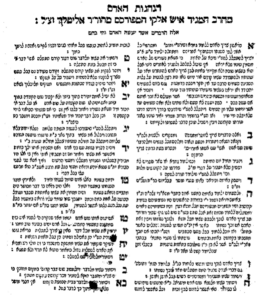
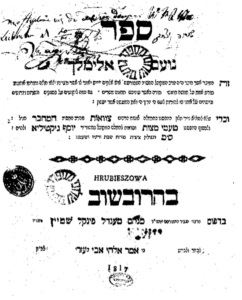
In 1772, After the First Partition of Poland, Hrubieszow was annexed by Austria. In 1800, Stanisław Staszic founded the Hrubieszow Agricultural Society, the first cooperative organization in Europe, which existed until 1945. In 1802, the name Rubieszów was changed to Hrubieszow, the name by which it is known today. Seven years later, in 1809, after the Austro-Polish War, Hrubieszow became part of the short-lived Polish Duchy of Warsaw, subsequently becoming, in 1815, by the Congress of Vienna ,part of the Russian-controlled Congress Poland, within the Lublin Governorate.[3]

As noted above, Jews were active in Hrubieszow from the first half of the fifteenth century. At some point in that century, Jews in Hrubieszow received several privileges for wine trade and management of the town tax chamber. By 1551, thirteen Jewish residents occupied four houses, that number rising to 40 Jews living in 5 houses by 1560. That number continued to increase, so that from the 18th century until the beginning of the 20th century Jews comprised a considerable majority of Hrubieszow’s population, controlling trade, industry, and craft. In 1578, King Stephen Bahory granted the Jews in Hrubieszów extensive rights. Less than a century afterwards, during tah-ve-tat (the Chmielnicki massacres of 1648-49), the Jewish community was almost entirely destroyed. Soon afterwards, however, the Jewish community was reestablished – a yeshivah was opened, headed by R. Isaac ben Judah Charif. Hrubieszow would subsequently be home to a number of prominent rabbis and became influential in the Arba’ah Artzot (Council of the Four Lands).[4] In the 18th century the Hasidic movement became active in Hrubieszow, the city becoming a center of Berdichev Hasidism. Among its leaders was R. Joseph ben Mordecai Katzenelboigen (R. Mordechai of Neszhchiz), who relocated there in the 1790s.[5]

We now turn to our subject, Hebrew printing in Hrubieszow. As noted above, the Hrubieszow press is credited by the Thesaurus with as many as forty titles, although that number may be uncertain; in contrast, Avraham Yaari records only thirty-four titles for Hrubieszow.[6] Those works are relatively small varied books, designed to meet the community’s needs and interests, published from 1816 to1821 and then intermittently until 1827. This article will describe a small portion of those works, to give a sense of the press’s publications, their variety, indicative of the community and how, through their books, the press served it. To address a greater number would be tedious for both the reader and the writer.

Dr. N. M. Gelber and Avraham Yaari inform that attempts to establish a Hebrew press in Hrubieszow were made from 1792 through 1804, in the Austrian period, but that the matter was delayed, the privilege to do so not granted. In late 1816, a Hebrew press was established in Hrubieszow, now part of Congress Poland. The founder of the press was R. Menahem Mendel Finkelstein (Finkel Stein). He had partners, namely R. Moses Tzikor and R. Saul Moss Goldstein of Łaszczów. Finkelstein provided the financing, the latter two the necessary skills, being experienced printers, having been partners in the Hebrew press in Łaszczów. Management of the press changed in the following years. Goldstein left the press in 1819, returning to Łaszczów, Finkelstein left the press in 1821, leaving Tzikor in charge. Tzikor then took Solomon ben David as a partner. Eight master printers were employed by the press as compositors and press operators, namely Daniel Ze’ev ben Segal, Baruch Abraham ben David, both from Hrubieszow, Isaac ben David from Łaszczów, Hayyim ben Eliezer from Zhovkva, Israel ben Raphael, Menachem Mendel ben Baruch, Pesach Joseph from Łęczno, and Eliezer Segal, perchance from Hrubieszow.[7]

Printing began shortly after the privilege was granted, the first works being published, including several Yiddish titles. Vinograd records ten titles for 1816-17, beginning with Shir ha-Shirim (1816), Orhot Zaddikim, Gedolus David u-Malchus Shaul, Haggadah shel Pesah, Sefer Hasidim, Lekah Tov, a siddur Tefillas Nehora, Noam Elimelekh, Shivhei ha-Ba’al Shem Tov, and Tanna de-vei-Eliyahu. These are all small format books, ranging from duodecimo (120) through quarto (40) formats. These works are indicative of the variety of the Hrubieszow imprints and the community the press served. For example, R. Judah ben Samuel he-Hasid’s (c. 1150-1217) Sefer Hasidim, an ethical, mystical, and halakhic work; Tanna de-be-Eliyahu is an aggadic midrash attributed to Elijah the prophet as dictated to the third century amora Anan bar Rav: Noam Elimelekh by R. Elimelech of Lizhensk; Shivhei ha-Ba’al Shem Tov, collection of Hasidic tales about the founder of Hasidim, and in contrast to the prior works, Joseph ha-Efrati’s Gedolus David u-Malchus Shaul, a maskilic (enlightened) drama.[8]

Noam Elimelekh – We begin with R. Elimelech ben Eliezer Lippman (Lippa) of Lizhensk’s (1717-87) Noam Elimelekh, a classic and primary Hasidic work, representative of the press’s output and the communities’ interests. R. Elimelech was a student of R. Samuel Smelke Horowitz (Rebbe Reb Shmelke, 1726-78), and afterwards a disciple of R. Dov Baer the Maggid of Mezhirech (1704–72), as well as meeting by the latter R. Levi Yitzhak of Berdichev (c. 1740-1809). After the Maggid’s passing, Elimelech became the acknowledged head of the Hasidic movement and is considered the theoretician and creator of “practical zaddikism.”[9]
Noam Elimelekh was published as a 23 cm. work ([1], 94 ff.) The title-page begins with honorifics of Elimelech of Lizhensk and informs that in order that there should not be blank paper at the beginning of the book and for benefit of the public, they have published the testament of the author (see below), and at the end of the volume is R. Joseph Gikatilla’s Tamei Ha-Mitzvot. Not noted but also at the end of the volume are Likkutei Shoshana and Iggeret ha-Kodesh. The title page is dated with the chronogram “[for he said] the God of my father’s [house] was my help כי אמר אלקי אבי בעזרי (577 = 1817)” (cf. Exodus 18:4). Elimelech’s testament, entitled conduct (הנהגות) of a man is on the verso of the title-page and consists of twenty-one admonitions for a person.
The title-page states that Noam Elimelekh was published at the press of Menahem Mendel Finkelstein. According to Ch. B. Friedberg the references to the publisher on the title-page varies between books. He notes that initially references to the printer stated Menahem Mendel Finkel Stein and associates. Afterwards, however, he does mention the names of his partners.[10]

1817, Noam Elimelekh

The text, a hasidic Torah commentary on the weekly Torah portion, follows. It emphasizes the role of the zaddik in worship and divine service. At the end of the concluding section of the book are two decorative tail-pieces. These tail-pieces, particularly the one on the left, appear on title-pages of several Hrubieszow books.

Noam Elimelekh is a classic Hasidic work. First printed by his son after his death in Lvov 1788, Noam Elimelekh has proven to be an immensely popular work. This, the Hrubieszow printing, is the sixth edition. It is reported that more than 50 editions of Noam Elimelekh have been printed.[11]

Sefer Hasidim – R. Judah ben Samuel he-Hasid’s (c. 1150–1217) Sefer Hasidim, a different but computable work is, as noted above, an ethical, mystical, and halakhic work. Judah was a disciple of his father, R. Samuel (ben Kalonymous) he-Hasid (c. 1120-75) an eminent kabbalist and ascetic; portions of Sefer Hasidim are attributed to Samuel he-Hasid. They are among the most renowned members and leaders of the Hasidei Ashkenaz, the influential Jewish pietist movement in medieval Germany.

It is reported that when Judah’s mother was pregnant with him, she was walking along a path by a bet medrash (Torah study hall) when a wagon came bearing down upon her, with no place to turn, neither to the right nor to the left. Just as she was about to be crushed by the horses’ hoofs, the walls of the bet medrash opened saving her and her son. It is also told that Samuel he-Hasid witnessed the heavens opening; asked what kind of son he wanted, he replied, one of exemplary piety. Judah reputedly hosted the prophet Elijah, was able to revive the dead, and performed miracles, particularly saving Jews from oppressors. He practiced an ascetic form of mysticism, fasting two days for Yom Kippur, throughout the week, eating at night only, and often fasted on Shabbat, claiming that the change would cause him pain, detracting from his pleasure in Shabbat. It was said by a contemporary that if Judah had lived in the times of the prophets he would have been a prophet.

1817, Sefer Hasidim

The title-page of Sefer Hasidim, published is octavo format (80: [64] pp.) is in Yiddish, excepting the names of the printers and the publication date. All of the printers are cited here in bold letters, that is, Menahem Mendel Finkel Stein, Moses Tzikor and Saul Moss Gold Stein. The date in the chronogram, “Let the faithful exult in glory;
let them sing joyously upon their beds יעלזו בכבוד ירננו על משכבותם )577 = 1817).” (Psalms 149:5)

Sefer Hasidim is foremost an ethical manual, practical rather than theoretical, encompassing all aspects of life, including the minutiae of personal, family, and business matters. Numerous examples are cited, containing, considerable information about contemporary Jewish life. Advice is detailed and pragmatic, with the goal of achieving strict adherence to an ethical and pious life. These instructions, often based on kabbalistic teachings, have been influential because of the author’s great piety. Sefer Hasidim is also a mystical work, explaining biblical and talmudic passages.[12]

Gedolus David u-Malchus Shaul – A very different work is Joseph Ha-Efrati of Tropplowitz’s (c. 1770–1804) Gedolus David u-Malchus Shaul, a drama in Yiddish. Among the smallest Hrubieszow imprints, it was printed in duodecimo format (120) 29 ff.

1817, Gedolus David u-Malchus Shaul

The author, born in Tropplowitz, Silesia, was a Hebrew poet, dramatist, and tutor. While working in the last capacity he wrote the first acts of the drama Melukhat Sha’ul from Melukhat Sha’ul completed in Prague in 1793. Gedolus David u-Malchus Shaul is a Yiddish translation, retitled. This version, that is the Yiddish translation, has been described as “part of the traditional Purimshpil (“Purim play”) in many Lithuanian and Polish towns . . . the first modern Hebrew drama of the Haskalah period, is noteworthy for its new egalitarian and humanistic ideas.” In writing Melukhat Sha’ul Ha-Efrati was reputedly influenced by Shakespeare, Goethe, Schiller, and von Haller, as well as M. H. Luzzatto. The primary characters, Saul. David, Jonathan, and Michal reputedly signify abstract ideas rather than lifelike characters, representing “the pathos of a suffering hero, ridden with envy and guilt, torn by fears and loneliness, and not merely a proud and jealous king.”[13]

The title-page is misdated, the date, given in a straightforward manner, is תקלז (= 1777). Depending on when the misdating was caught, it may have been corrected with a stop-press correction, that is, when an error was found the press would be stopped, the error would be quickly corrected and printing resumed. As one copy only of Gedolus David u-Malchus Shaul was seen it not known if that was done or if this is the sole uncorrected title-page for that work.[14] Friedberg writes that he has seen several of the press’s books that are misdated[15] For other examples, see below.

The text is in Yiddish excepting paragraph headers and, similarly, except here vocalized, the names of the participants in the drama on the verso of the title-page. This is the third edition of Gedolus David, the first having been printed in Lvov in 1801; It is a popular work, as many as fourteen editions are recorded for Gedolus David in the Bet Eked Sefarim and only twelve editions for Melukhat Sha’ul.[16]

The following year, 1818, saw the publication of five titles, primarily Hasidic works, among them such classics titles as R. Menahem Nahum Twersky of Chernobyl’s Me’or Einayim, homilies on the weekly Torah portions; R. Samuel ben Nathan Ha-Levi Loew Kolin’s Maḥaẓit ha-Shekel on the Shulḥan Arukh Oraḥ Ḥayyim and Yoreh De’ah; R. Jacob ben Solomon Habib’s Ein Ya’akov, collection of aggadah in the Talmud; R. Levi Yitzhak of Berdichev’s Hasidic classic Kedushat Levi discourses on the weekly Torah readings, and, in Vinograd’s listing, a second Hrubieszow edition of Noam Elimelekh.

Kedushat Levi – R. Levi Yitzhak of Berdichev’s Kedushat Levi, a classic Hasidic work of weekly discourses. was published in quarto format (40: [1], 78, 27, 15 ff.) in the year “Isaac pleaded [with the Lord] ויעתר יצחק (571= 1818)” (Genesis 25:21). R. Levi Yitzhak of Berdichev, who defended Hasidus against its opponents, settled in Berdichev, in 1785, residing there for the rest of his life. When he passed away, it seemed, to R. Nahman of Bratslav that “the light of the world had been extinguished.” Levi Yitzhak was held in the highest regard and affection by Jews. An example of his sensitivity, even to transgressors, is the following incident,

When he happened to meet “a young man eating in public on the fast of Tisha B’Av (the anniversary of the day on which both the first and second Temples were destroyed) the rabbi asked him mildly, “Have you forgotten that today is the Ninth of Av? Or are you perhaps unaware that it is forbidden to eat on the Ninth of Av?” “I have not forgotten what day it is and I am well aware of the prohibition,” answered the young man. “Possibly, my son, you are not in good health and have been advised by your doctor to eat?” the rabbi of Berdichev inquired further. No, I am in excellent health,” was the reply. “See, O Lord,” exclaimed the sage with joy, “how admirable Your children are! Even when they transgress Your Commandments, they do not stoop to falsehood.” [17]

Levi Yitzhak’s first published work, also entitled Kedushat Levi, is discourses on Hanukkah and Purim, printed in Slavuta in 1798. It was subsequently included in later editions of Kedushat Levi on the weekly Torah readings.

1818, Kedushat Levi

The title-page of this edition of Kedushat Levi begins with honorifics for R. Levi and then informs that it also includes additional material on various subjects. On the verso of the title pages is an approbation from four rabbis from Berdichev; R. David Shalit, R. Aaron Isaac ha-Kohen, R. Nathan Aryeh Davir, and R. Mordecai באאימו son of my lord, my father, teacher, and rabbi David Shalit. Below the approbation is the standard disclaimer that the people among whom the Jews reside today are not like those in the time of the Talmud, immoral idol worshippers, but today show respect for Torah and do justice and righteousness in their lands, The text follows, primarily on the weekly parsha, but also addressing other biblical books, festivals, and concluding with a final section addressing various subjects, including Pirke Avot. Kedushat Levi.

First published in Berdichev in 1811, this, the Hrubieszow edition, is the third printing of Kedushat Levi. A popular work, it has frequently been republished.

Sefer ha-Yashar – Among the books published in 1819 is R. Zerahiah ha-Yevani’s (13th or 14th century) popular ethical work Sefer ha-Yashar (Book of Righteousness). The title-page attributes the work to R. Jacob ben Meir Tam (Rabbenu Tam, c. 1100-1171), a not infrequent error, as well as it being attributed to R. Jonah Gerondi (13th century). The former did author a Sefer ha-Yashar (Vienna, 1811), but that is another work, consisting of responsa and novellae, while the style of the latter, who wrote ethical works, differs from this book. A number of manuscripts, however, name Zerahi ha-Yevani’s as the author. While many now accept him as the author, that attribution is not definite. Little is known about Zerahiah, except that he was a resident of the Byzantine Empire and that he is credited with Sefer ha-Yashar.

Sefer ha-Yashar was published in octavo format (80: [2], 40 ff.). The title-page begins that it is “the path of life and moral reproof, to go on a straight path. It is dated “it is [very] indeed upright וישר הוא מאוד (579 = 1819)” (cf. Deutronomy 32:4; Psalms 21:29). The printers names are given on the title-page as Menahem Mendel F. Sh. and Moses Tzikor,

1819, Sefer ha-Yashar

There is an introduction, in which Zerahiah brings proof for the Torah and its precepts from both reason and from the prophets, and bemoans the pursuit of pleasure, wealth, and honor in his time, rather than religion and morality. Sefer ha-Yashar, with the purpose of directing one’s soul towards the correct worship of God, piety, and ethical content, is written in an easy style so that it will influence others to right conduct. Sefer ha-Yashar is comprised of material from earlier ethical works, although they are not mentioned in the text by name nor directly quoted. It is evident, from the book, that he was familiar with Jewish philosophic works. The most significant of the prior works, acknowledged in the introduction, is Bahya ibn Paquda’s Hovot ha-Levavot, studied by Zerahiah, but too long and complex for the average reader. It provides, in summary, the essence of several chapters. Another important influence, evident in the text, is Maimonides.

The text, divided into eighteen chapters which address, beginning with the creation of the world, worship, repentance, knowledge of God, the will of God, the world to come, complete repentance, the significance of the righteous, accountability of a person, remembrance of the day of death, and the distinction between the righteous and the wicked. Zerahiah’s primary subjects are the need to imitate God, conditions of proper prayer, both theoretical and practical; correct conduct and obstacles to be overcome to achieve it; and repentance.[18]

A popular work Sefer ha-Yashar was first printed in Constantinople (1540); this is the twenty-second edition, of slightly more than fifty recorded by the Bet Eked.Sefarim.[19]
Levushe Serad – Another different work, also published in 1819, is R. David Solomon Eybeschuetz’s (Eibenschutz) halachic Levushe Serad on the Shulhan Arukh Yoreh Deah, particularly on the laws pertaining to shechita (ritual slaughter). Printed as a folio (20: [2], 2-102 ff,) in the year “attired as thin beast לבושי השרד בהמה דקה (561 = 1801).” This date is certainly incorrect, a bet ב at the head of the word בהמה (beast) which make the verse meaningful but gives a date in error, as opposed to a kafכ which would read כהמה and would give the correct value of (579 = 1819) but be meaningless. I would suggest, and this is entirely speculative, that the printer wanted the meaning of beast even if that threw the date off. Support for this conjecture can be found in the correct date, immediately below the Hebrew date, in Arabic numerals, that is, 1819. This is the only title-page seen among the Hrubieszow imprints with an Arabic numeral date.

The author, R. David Solomon ben Yerachmiel Eybeschuetz, was born in Russia and studied under R. Moses Ẓevi Heller. He served as rabbi in several locations, among them Buzhanow, Soroki (Volhynia), and Jassy, (Rumania). Eybeschuetz made aliyah, that is, he went up to Eretz Israel, residing in Safed, where he died in 1812. Eybeschuetz was also a kabbalist as well as a Talmudist. His other works include responsa, Ne’ot Deshe (part one, Lvov, 1861), part two and manuscripts, including a commentary on the Torah and discourses.[20]

The title-page describes Levushe Serad as being comprised of three parts, the first explaining the laws pertaining to laws of falling and broken bones in cattle and fowl; the second, laws applying to lungs; and the third, applying to Yoreh De’ah. The printers are given here as Menahem Mendel Finkel Stein. and Moses Tzikor.

The verso of the title-page has an approbation from R. David Shalit. The text is comprised of the commentary in two columns. The text of this volume on Yoreh Deah varies from the previous volume on Orah Haim. Chaim Tchernowitz describes this volume as following R. Alexander Sender Shor’s (d. 1737) influential Simla Hadasha, also on shechita; Levushe Serad being described as the most important commentary on that work [21] It does not include the text of Yoreh De’ah, on which Levushe Serad comments and elucidates.

1819, Levushe Serad

Levushe Serad on Orah Haim was first published in Mohilev (1805). This volume, on Yoreh Deah is the third edition, it too having been printed previously in Mohilev (1812).[22]

Havvat Da’at – Among the books printed in 1820 was another work on Shulhan Arukh Yoreh Deah, but considerably different from Levushe Serad, that is, R. Jacob ben Jacob Moses Lorbeerbaum of Lissa’s (c. 1760–1832) Havvat Da’at. It was published as a folio (20: [1], 37 [should say 36], [34] ff.) in the year “Day to day makes utterance, night to night speaks out יום ליום יביע אומר ולילה ללילה יחוה דעת (470 = 1805) 19:3), This chronogram is also misdated, as is noted by the NLI catalogue, which records it as a circa 1820 imprint; which also states that the printer, who is not identified on the title-page, is unknown.

1820, Havvat Da’at

Jacob Lorbeerbaum of Lissa was a distinguished rabbi, who served in several communities, writing, in addition to Havvat Da’at other valued works. [23] However, his early days were difficult and troubled. His father, rabbi of Zborow, passed away prior to Lorbeerbaum’s birth; he was raised by R. Joseph Te’omim (Pri Megadim, 1727–1792), a relative. He initially combined learning and business, being a partner in a brewery but, when that failed, Lorbeerbaum became rabbi in Monasterzyska, founding a yeshivah there. He subsequently became rabbi of Kałusz writing many of his earliest works there, including Havvat Da’at which, reflecting his great humility, was originally published anonymously. When his authorship was subsequently identified ,Havvat Da’at became the name by which he is known.[24]

In 1809, Lorbeerbaum became rabbi of Lissa. Lorbeerbaum was an opponent of the Haskalah movement, their influence resulting in his leaving Lissa in 1822 and returning to Kalisz. Disputes there forced him, in 1830, to again relocate again finally settling in Stryj, serving there as rabbi until his death.

The title-page of Havvat Da’at states that it is on Shulhan Arukh Yoreh Deah, which is a tree of knowledge “desirable as a source of wisdom” (Genesis 3:6), for the pure and the impure. It continues that it is comprised of two parts, Biurim, explanations in depth based on prior commentaries and Hiddushim, novellae, interpretative explanations of statutes and critical analysis. On both sides of the pressmark is the standard disclaimer that the contemporary peoples among whom the Jews dwell today are not immoral idol worshippers as in the past.

The commentary, as described on the title-page, is in two parts, about the text of the Shulhan Arukh. Chaim Tchernowitz describes the subject matter of Havvat Da’at as being on such subjects as salting of meat, meat and milk, mixtures, interest, niddah, and other halakhot dealing with prohibitions such as Stam Yeinam (gentile wine), and treifus. He concludes that according to Havvat Da’at even with laws dealing with permitted and prohibited foods there is room for critical and analytical critique.[25]

Given the title-page variations of this edition, described above, it is not surprising that Avraham Yaari questions, concisely, whether Havvat Da’at is a Hrubieszow imprint. He suggests that it was published elsewhere, writing “one more book that is listed as having been published in Hrubieszow was actually published in Polonne. This is Chavat Da’at by Ya’akov of Lissa.”[26] While we have noted a number of variations in Havvat Da’at, such as the dating error in the chronogram, albeit not that unusual for Hrubieszow publications, the absence of the printers’ names, and a pressmark that is not common to Hrubieszow title-pages, there is also the fact, in contrast to these varoiances, that the place of printing is clearly given on the title-page as Hrubieszow. Furthermore, other bibliographic sources, such as Friedberg’s Bet Eked Sefarim and Vinograd’s Thesaurus record Havvat Da’at as a Hrubieszow imprint. An examination of a sample of Polonne and Sudylkow (also suggested) title-pages did not show any like images. The question of whether Havvat Da’at was a Hrubieszow imprint or was published elsewhere is a teku (u nresolved).

Another Hrubieszow imprint by Jacob Lorbeerbaum of Lissa is a folio edition of Beit Ya’akov, novellae and commentary on Shulchan Aruch, Even Ha–Ezer and tractate Ketubot. The printers are given as Moses Tzikor, of Laszczow, and Solomon, ben David Lev, of Laszczow, Menahem Mendel Finkel Stein having already left the press.

This is the fourth printing of Havvat Da’at. The first edition was published in Lvov (1799).

Avodat ha-Kodesh – Among the books printed in Hrubieszow in 1820 is Avodat ha-Kodesh by R. Ḥayyim Joseph David ben Isaac Zerachia Azulai (Hida, 1724-1807), a prominent kabbalist, rabbinic scholar, bibliophile, and prolific author. More than eighty works are attributed to him, sixty in print, on a wide variety of subjects on Torah, halachah, aggadah, and kabbalah.[27] Avodat ha-Kodesh, an 18 cm. octavo(80: 40 ff.) is comprised of three related works, Vinograd records each independently, that is, Avodat ha-Kodesh, Moreh be-Etzba, and Ziporin Shamir as separate entires. All three titles, kabbalistic explanations of customs, are in octavo format (80) and relatively small works. Shimon Vanunu, describes Avodat ha-Kodesh as a compilation of several of Hida’s prior works.[28]

Hida was born in Jerusalem to a prominent Sephardic family, descendant from exiles from Spain, and his great-grandfather was the kabbalist R. Abraham Azulai (c. 1570–1643, Hesed le-Avraham), originally from Fez, Morrocco and on his maternal side from R. Joseph Bialer, a German scholar. He was educated by leading rabbinic figures, among them R. Isaac ha-Kohen Rapoport, R. Shalom Sharabi, and R. Haim ibn Attar (Ohr ha-Haim). He served as rabbi in several communities and beginning in 1755, served as an emissary from Eretz Israel to Jewish communities in Europe.

1820, Avodat ha-Kodesh

The title-page has the heading Avodat ha-Kodesh in large bold type and below notes the other two works, and then that the book was brought to press by R. Jacob ben Naphtali Hertz of Brod and that it had been printed previously in Livorno. The title-page is dated in a straightforward manner as (תק”פ = 1820). The verso of the title-page has the disclaimer that the non-Jews among

whom the Jews noted above that contemporary nations are unlike the earlier nations who were immoral idol worshippers, but today show respect for Torah and do justice and righteousness in their lands. It is followed by the tailpiece noted above that appears on the title-pages of several books. Examples of the text are:

147: all who say shirat ha-yam (Exodus 14:30 – 15:19) with joy as if he himself had been delivered from the sea, Pharoh, and his army, when they drowned in the sea, and says Shira with great feeling is forgiven his iniquities.

148: all who weep and mourn for a person who was kosher is forgiven his iniquiites.

149: all who pray erev Shabbat and say [the prayer] ויכלו “the heavens and earth were completed” (Genesis 2:1), two angles say to him turn your eyes and your sins will be atoned for.

The pressmark appears at the end of the book as a tail-piece.

Tomer Devorah – Another work published in 1820 is R. Moses ben Jacob Cordovero’s (Ramak, 1522-1570) popular and much reprinted Tomer Devorah. A small kabbalistic, ethical, and inspirational treatise, it was published as a 19 cm. octavo (14 ff).

Moses ben Jacob Cordovero was the first to describe the dialectical process through which the Sefirot pass in their development and to interpret the various stages of their emanation as manifestations of the Divine mind.[29] Based on his name, Cordovero appears to have been descended from Jewish exiles from the city of Cordova. It has been suggested, but this is uncertain, that he was born in Safed. Cordovero was a student of R. Joseph Caro (1488-1575) in nigleh (revealed, literal Torah) and, after heeding a heavenly voice that urged him to study Kabbalah, of his brother-in-law, R. Solomon Alkabez (Lekhah Dodi) in nistar (esoteric Torah, Kabbalah). Cordovero became a leader of the ascetic mystical community of Safed, preparing for it a list of rules of conduct, primarily instructions and commands. He served as a dayyan in Safed and founded a yeshivah there in about 1550, which he headed until his death in 1570.

Among Cordovero’s students were R. Elijah de Vidas (Reshit Hokhmah), R. Abraham Galante (ha-Kadosh), R. Samuel Gallico (Asis Rimmonim, an abridgement of Pardes Rimmonim), R. Hayyim Vital, and R. Isaac Luria (ha-Ari). Although Luria was Cordovero’s student for a short while only, and his system of Kabbalah would supplant that of Cordovero, Luria refers to Cordovero as his master and teacher, testifying that Cordovero was completely free of sin, that both the sages of the Mishnah and Elijah the Prophet appeared to him, and that at Cordovero’s funeral a pillar of fire preceded his coffin. Others, such as R. Menahem Azariah da Fano, although in Italy, considered themselves disciples of Cordovero. A prolific writer, he is responsible for several of the classics of Kabbalah.[30]

Tomer Devorah is entitled from “And she sat under the palm tree of Deborah (Tomer Devorah) between Ramah and Beth‑El in Mount Ephraim” (Judges 4:5). The title-page urges man to follow a straight path, to end his isolation and reflect on his ways, to cleave to the order of the sephirot. The printers are given as Menahem Mendel Finkel Stein and Moses Tzikor of Łaszczów, their names preceded by honorifics. The title-page is dated with the chronogram in the year “This is the Teaching that Moses placed before the children of Israel זאת התורה אשר שם משה לפני בני ישראל (580 = 1820)” (Deuteronomy 4:44).

1820, Tomer Devorah

The text is comprised of ten chapters describing Divine qualities and how man should strive to emulate them. They are, 1) the Supernal Crown (Keter) and the thirteen attributes of higher mercy which belong to it; 2) the qualities of the crown, such as humility and kindness, eradicating pride from the heart; 3) wisdom (Hokhmah), love and care for all creatures; 4) understanding (Binah) and repentance; 5) on mercy (Hesed), the methods of performing mercy and assisting the Sefirot to function harmoniously; 6) power (Gevurah), utilizing the evil inclination to serve God; 7) beauty (Tiferet), the study of Torah and behavior appropriate to a scholar; 8) Endurance, Majesty and Foundation (Netzach, Hod and Yesod), support of Torah students and purity of life; 9) Sovereignty (Malkut), sacrifices for Torah and performing marital duties with holiness; 10) Man’s conduct so that he is never separated from the world of the Sefirot. An example of the text, from Keter, is:

Keter – Some major activities that are the main governance: Further for a person to resemble his Creator from the secret of the trait of the Crown (Keter), he must [do] some major activities – which are the main governance. The first: The trait of humility – which includes everything – because it is dependent on the Crown. As behold, It is a trait over all of the Traits, but it does not raise itself and become proud above [the others]. Indeed, It goes down and always looks downwards. And that is from two reasons: The one is that It is embarrassed to look at Its Cause, rather Its Emanator always looks down upon It to benefit It; and It looks down to the lower ones. So [too,] must a person be embarrassed from staring upwards, to be proud. Rather, he must always stare downwards, to diminish himself all that he can.[31]

The title page is followed by a brief introduction from R. Moses Basola, with the pressmark. He found the manuscript of Tomer Devorah in the library of R. Menahem Azriah, who gave it to Basola, in order to bring it to press to merit Israel.

Tomer Devorah is replete with allusions from Talmudic and kabbalistic sources, systemizing and vividly presenting abstruse concepts. It has been frequently republished and translated into other languages, among them English. Tomer Devorah was first published in Venice (1588); this the Hrubieszow edition, is the fourteenth. The Bet Eked Sefarim records thirty-two editions, several with annotations, and not recording translations.[32]

Ayyelet Ahavim – A rhetorical and poetic treatise on the Akedah (sacrifice of Isaac) by R. Solomon de Oliveyra (1633-1708). Ayyelet Ahavim was printed as a 19 cm. octavo (80: [4], 20, [1] ff.). It is dated in a straightforward manner as תקפ”א,ה ([5]581 = 1821).

R. Solomon de Oliveyra is accounted among the Sephardic sages of Amsterdam.[33] Oliveyra’s place of birth, whether Lisbon or Amsterdam, is uncertain. Albert Van Der Heide suggests that as Oliveyra’s parents were fugitive co1nversos, as documented in Amsterdam in 1628, he must have been born in the latter location. Also, based on the marriage certificate issued by the city of Amsterdam, Oliveyra married Rached Dias in 1660, when twenty-seven years old, again attesting to Amsterdam as his place of birth.[34] Oliveyra served as rabbi (hakham) and teacher in the Talmud Torah Etz Haim of the Keter Torah association of the Amsterdam Portuguese community, of which he later became president. He was a member of the rabbinical council, over which he presided after the death of R. Jacob Sasportas (c. 1610-98). In addition to these rabbinic positions, Oliveyra worked as a corrector in the printing-house of Uri Phoebus.[35] Oliveyra was the author of a number of varied multi-lingual works on grammar, lexicography, other philological subjects, poetry, and riddles. Van Der Heide has described Oliveyra as “the preeminent and omnipresent Hebrew poet of Jewish Amsterdam.” Oliveyra became, for a time, an adherent of Shabbetai Zevi, composing liturgical verse in his behalf as well as writing approbations

The primary publisher of Oliveyra’s books was David de Castro Tartas (c. 1625–c. 1700), active from 1662 to 1698 in Amsterdam. Their relationship began in 1665, when our subject work, Ayyelet Ahavim ws published. The title-page begins that it is Igeret: words of truth, “to understand a proverb, and a figure” (Proverbs 1:6). It is entitled Ayyelet Ahavim for it was “a precious vessel” (Hosea 13:15, Nahum 2:10, II Chronicles 32:27), “To receive the instruction of wisdom” (Proverbs 1:3), “He established it and searched it out” (Job 28:27), by the rav, the Sephardic sage SOLOMON ben DAVID Oliveyra, in the month of Ziv in the year תי”ז (1657, printed in Amsterdam in the year תכ”ה (1665). It adds that it has now been brought to press by R. Abraham Moses ben Solomon ha-Levi of Lublin: with the permission of the censor in Hrubieszow at the press of Moses ben Tzikor of Łaszczów.

1821, Ayyelet Ahavim

Oliveyra’s introduction follows (2a-b) in which he states that he does not wish to delve into deep explanations nor to go up to the heights of discourse, but rather his heart wishes to speak of the greatness of that “righteous man, who quarried the fetters of love, of that which he formed יצורו for the love of the One Who formed him יוצרו.” Oliveyra’s intent is to investigate this holy and wondrous deed. Among the several reasons that he entitled this work Ayyelet Ahavim is that it is on the love of Abraham and his soul for God “As the hart longs for water streams” (cf. Psalms 42:2). The wide-ranging text is comprised of numerous aggadot, and including riddles and parables. In one section the alternating paragraphs of verse are between father and son. The prose text is accompanied by infrequent marginal references.

First printed in Amsterdam (1665) this is the third and last published edition Of Ayyelet Ahavim.[36]

Summation – Ten books have been described. The selected books give an insight to the type of works published by the Hrubieszow press. They are generally of a scholarly and specialized nature, primarily Hasidic works on the weekly parasha (Torah reading), ethical, and halachic tomes, although varied within each category. These works reflect both the composition and interests of the community. One book, Gedolus David u-Malchus Shaul, stands out, being of a contrary nature, that is, it has maskilic overtones. The provenance of one other work, Havvat Da’at, has been questioned. Also published were two editions of Shir ha-Shirim (1816, 1827), the former not seen, the latter (1820) with the commentaries of R. Eliezer ben Judah (Rokeah) and R. Moes ben Nachman (Ramban).

A lacuna in the press’s publications is the absence of Mishnaic and Talmudic volumes, attesting to the press’s emphases on small books, perchance the nature of its’ operations, a small publisher catering to and meeting a small market’s needs. It did, however, print an Ein Ya’acov, on the aggadot in the Talmud, this with the commentary Kotnot Or. The emphasis on small works does not in any way detract from the value of the press’s publications. Indeed, the books were well printed and attractive. Yaari, however, while approving of their appearance is not so positive as to the titles printed, writing “The books printed in Hrubieszow were elegant in appearance, but not of significant content. Most had been printed previously by other presses. These books were in great demand, such as popular Yiddish books.”

As noted above, the Thesaurus credits the Hrubieszow press with as many as forty titles, although that number appears uncertain, or perhaps exaggerated; Avraham Ya’ari recorded thirty-four titles only. Perchance, the difference in number can be attributed to the manner in which books are recorded. Avodat ha-Kodesh, for example, is a composite of three works, each listed independently in the Thesaurus but one entry only in Yaari’s listing. Summerly, there are three entries in the Thesaurus for Siddur Tefillat Nehora, a two-part prayer book designed so that it can be used for both Ashkenaz ads Sephardic rites. There is one listing only by Yaari, but more detailed. The entries in the Thesaurus for Tefillat Nehora are several years apart (1817, 1821, [1824]). To complicate matters, Yaari has several entries for Kotnot Or but the Thesaurus has one entry only for the Ein Ya’acov. The exact number of publications must remain then a teku (unresolved).

We have noted misdates and censors’ remarks. Yaari comments on this writing:

The names of the town or the printers are omitted from the title pages of several of the books printed in Hrubieszow. This is probably due to censorship, or book tariff payment. Sometimes the printers mentioned their names in some copies but not in others; sometimes they even inserted the name of a different town or stated a different year, to deceive the censor or the tariff–collector

No books omitting Hrubieszow were seen or noted.[37] Why then, printing with the censors’ approval they would omit their names is unclear. Indeed, the books described above, all, with the exceptions of Havvat Da’at all have the printers’ names. In conclusion, as already noted, the Hrubieszow press published small varied books covering a variety of subjects. The books served communal needs, were works of value, and attractively printed. A press only active for a brief period, it served the Hrubieszow community well. It deserves, should be remembered, in addition entries in bibliographic and historical records.

  1. I would like to express my appreciation to Eli Genauer for reading the article and his corrective comments, and Eli Amsel for his additional insights. All the title and text page images are courtesy of the National Library of Israel. The Polish monarchy banner is a public domain image.
  2. Vinograd, Yeshayahu. Thesaurus of the Hebrew Book. place, and year printed, name of printer, number of pages and format, with annotations and bibliographical references II (Jerusalem, 1993-95), p. 167 [Hebrew].
  3. https://en.wikipedia.org/wiki/Hrubiesz%C3%B3w
  4. The Encyclopedia of Jewish life Before and During the Holocaust, editor in chief, Shmuel Spector; consulting editor, Geoffrey Wigoder; foreword by Elie Wiesel I (New York, 2001), pp. 532-34; Polin: Virtual Shtetl https://sztetl.org.pl/en/towns/h/266-hrubieszow/99-history/137366-history-of-community; Dr. N. M. Gelber, Notes on the History of the Jews of Hrubieszow, tr. Yael Chaver, https://www.jewishgen.org/yizkor/Hrubieszow/hru021.html.
  5. Hurvitz Tzvi Ha–Levi Ish Hurvitz, “The Town of Hrubieszow and its Rabbis,” translated by Yael Chaver, Columns 51-52. https://www.jewishgen.org/yizkor/Hrubieszow/hru051.html
  6. Avraham Yaari, “The Hebrew Printing Press in Hrubieszow,” Kiryat Sefer, (Jerusalem, 1943–4), pp. 219–228 [Hebrew], tr. by Yael Chaver https://www.jewishgen.org/yizkor/Hrubieszow/hru051.html#Page57
  7. Dr. N. M. Gelber, Notes on the History of the Jews of Hrubieszow, tr. Yael Chaver, https://www.jewishgen.org/yizkor/Hrubieszow/hru021.html..
  8. Ch. B. Friedberg, History of Hebrew Typography in Poland from the bginning of the year 1534, and its development up to our days . . . Second Edition, Enlarged, improved and revised from the sources (Tel Aviv, 1950), pp.150-52 [Hebrew].
  9. Mordechai, Margalioth, ed., Encyclopedia of Great Men in Israel I (Tel Aviv, 1986), cols. 179-80 [Hebrew].Tzvi M. Rabinowicz, The Encyclopedia of Hasidism (Northvale, 1996), pp.111-12.
  10. Ch. B. Friedberg, History of Hebrew Typography in Poland, op. cit.
  11. Arnold Green, “Elimelekh of Lizhensk, “The Yivo Encyclopedia of Jews in Eastern Europe, Gershon David Hundert, ed. I (New Haven & London, 2008), p. 467; Rabinowicz, op. cit.
  12. Marvin J. Heller, The Sixteenth Century Hebrew Book: An Abridged Thesaurus II (Leiden, 2004) p. 697: Simcha Kogut, “The Language of Sefer Hasidim, Its Linguistic Background and Methods of Research,” in Studies in Medieval Jewish History and Literature, ed. Isadore Twersky, II (Cambridge, 1984), pp. 95-108; Reuben Margaliot, ed., Sefer Hasidim (Jerusalem, 1973), pp. 3-9 [Hebrew].
  13. https://www.encyclopedia.com/religion/encyclopedias-almanacs-transcripts-and-maps/ha-efrati-tropplowitz-joseph
  14. To replace a sheet with a single error would necessitate replacing several pages, the number depending on the book format. The normal practice, therefore, was to retain the original defective sheet and use both it and the corrected sheet in copies of the book. Due to cost factors, both of paper and labor, the sheet with the error would be replaced only if the error was substantial or substantive. It is therefore possible for books to consist of non-uniform copies, having several sheets with variant readings. For examples of such errors see Marvin J. Heller, “Who can discern his errors? Misdates, Errors, and Deceptions, in and about Hebrew Books, Intentional and Otherwise” Hakirah: The Flatbush Journal of Jewish Law and Thought 12 (2011), pp. 269-91, reprinted in Further Studies in the Making of the Early Hebrew Book, (Brill, Leiden/Boston, 2013), pp. 395-420.
  15. Friedberg, History of Hebrew Typography in Poland, p, 151 n. 1.
  16. Ch. Friedberg, Bet Eked Sefarim, (Israel n.d.), gimmel 128, mem 1922 [Hebrew].
  17. Rabinowicz, p. 61.
  18. Margalioth, Great Men, II col. 465-66; Meyer Waxman, A History of Jewish Literature (1933, reprint Cranbury, 1960), II pp. 276-79.
  19. Friedberg, Bet Eked.Sefarim, yod 1152.
  20. Louis Ginzberhg, N. T. London, “Eibenschutz, David Solomon,” Jewish Encyclopedia V (1New York, 901-06), pp. 75-78.
  21. Itzhak Alfassi “Schor, Alexander Sender ben Ephraim Zalman” v. 18 Encyclopedia Judaica (Jerusalem, 2007), p. 161; Chaim Tchernowitz, Toledoth ha-Poskim, III (New York, 1946), pp. 206-08 [Hebrew].
  22. Friedberg, Bet Eked.Sefarim, lamed 108.
  23. Lorbeerbaum’s other published works are Ma’aseh Nissim (Zolkiew, 1801), on the Passover Haggadah; Mekor Ḥayyim (ibid., 1807), novellae and expositions of the laws of Passover in the Shulḥan Arukh together with the glosses of R. David ben Samuel ha-Levi and Abraham Abele Gombiner on Oraḥ Ḥyyim and novellae to tractate Keritot; Netivot ha-Mishpat (ibid., 1809–16), on Ḥoshen Mishpat; Torat Gittin (Frankfurt on the Oder, 1813), the laws of divorce and novellae on tractate Gittin; Kehillat Ya’akov (1831), on Even ha-Ezer and sections of Oraḥ Ḥayyim; Derekh ha-Ḥayyim, an anthology of liturgical laws, first published with the prayer book (1828) and then separately (1860 or 1870); Naḥalat Ya’akov (1849), expositions of the Pentateuch; Emet le-Ya’akov (1865), expositions of talmudic aggadot; Imrei Yosher, commentaries on the five megillot, each published independently; his ethical will (1875); and Millei de-Aggadeta (1904), sermons and responsa (EJ, op. cit.). In a private correspondence Eli Amsel noted other such works, writing “Another Hrubieszow imprint by Jacob Lorbeerbaum of Lissa is a folio edition of Beit Ya’akov, novellae and commentary on Shulchan Aruch, Even Ha–Ezer and tractate Ketubot.”
  24. Haim Gertner, “Lorbeerbaum, Ya‘akov ben Ya‘akov Mosheh of Lissa, Yivo Encyclopedia, I pp. 1087-88; Ephraim Kupfer, “Lorbeerbaum, Jacob ben Jacob Moses of Lissa” Encyclopedia Judaica XIII pp. 191-92.
  25. Tchernowitz, Toledoth ha-Poskim, III, p. 258.
  26. The Polonne (Polonnoye) press was active from 1789 to approximately 1830, publishing as many as130 titles. Among them three editions of Havvat Da’at. An accompanying note in the Polonnoye entry references it as a Sudylkow imprint (Vinograd, p. 502). Two [1834] editions of Havvat Da’at are listed for that location.
  27. Yaakov Amsalem and Yisrael A. Groweiss, “The Hida’s Riddle,” Mishpaha, March 22, 2022.
  28. Shimon Vanunu, Encyclopedia Arzei ha-Levanon. Encyclopedia le-Toldot Geonei ve-Hakhmei Yahadut Sefarad ve-ha-Mizrah II 649-(Jerusalem, 2006), pp. 649-69 [Hebrew]. The works noted by Vanunu are Moreh be-Etzba, Ziporin Shamir, Kesher Gadol, Kaf Ahas, Yosef be_Seder, Sensen le-Ir, and Shomir Yisrael.
  29. Heller, The Sixteenth Century Hebrew Book, var. cit. ; Gershom S. Scholem, Major Trends in Jewish Mysticism (New York, 1960). Pp. 252-53.
  30. Concerning other works by Moses Cordovero see Marvin J. Heller, “His Hand did not Leave Hers Until he was Grown: Two Little Known Works from Moses Cordovero (Ramak)” Los Muestros no. 44 (Brussels, 2001), pp. 44-46, reprinted in Studies in the Making of the Early Hebrew Book (Leiden/Boston, 2008), pp. 278-83.
  31. https://www.sefaria.org/Tomer_Devorah.2.2?lang=bi&with=SidebarSearch&lang2=en.
  32. Friedberg, Bet Eked Sefarim, tav 484.
  33. Concerning see Marvin J, Heller, ” Solomon de Oliveyra:
    A Seventeenth Century Sephardic Sage,” Sephardic Horizons (v. 13: 1-2 Winter-Spring 2023), https://www.sephardichorizons.org/.
  34. Albert Van Der Heide, “Poetry in the Margin: The Literary Career of Haham Selomoh d’Oliveyra (1633-1708),” Studia Rosenthaliana 40 (2007-08), pp. 14.
  35. L. Fuks and R. G. Fuks-Mansfeld, Hebrew Typography in the Northern Netherlands 1585-1815 2 (Leiden, 1987), p. 247; Margalioth, col. 1264 [Hebrew].
  36. Friedberg, Bet Eked.Sefarim, alef 1626.
  37. While I did not see any such works, Eli Amsel also wrote “I have several in my collection, only TWO without the city mentioned in title, Bet Ya’akov, cityless; Pri Etz Chaim, with koretz as the city in very small font!!!”


Caught in the Act: An Unknown Admission of Plagiarism

While we have had the opportunity to discuss plagiarism on multiple occasions, it is rare in the Jewish world that a plagiarizer is caught and admits their mistake.  As such I wanted to discuss such an example. 

R. Yosef HaKohen Schwartz (1875-1944) was a veracious reader.  Many of his responsa are devoted to notes on newly printed seforim.  Indeed, the equally well-read bibliophile, R. Reuven Margoliyot, was in the habit of sending his new books for R. Schwartz's comment.  Needless to say, if one wished to pick a person's books to appropriate and remain undetected, it is probably not the best strategy to pick someone who reads much of what is published.  In this instance, however, that appears to be exactly what happened. 

One of R. Schwartz's books is devoted to yarhzeit customs, Moad Kol Hayi (Kisvarda, 1925).  It is a short book, which is made even shorter by the inclusion of a bunch of approbations, a eulogy, and a responsum.  While the book in and of itself is fairly unremarkable, what happened next is.  R. Tzvi Hirsch Friedling, who edited a Polish Torah Journal, Ha-Be'ar, published a work that was broader in scope than Schwartz's but also encompassed the same topic as Schwartz covered – yarhzeit customs.  Specifically, Friedling, some time after 1928 published Hayyim ha-Nitzchim a collection of sources related to funerary customs as well as yarhzeit.  Friedling had published similar likut seforim and, in part recycled some of the approbations he received on a different work, Kiyum ha-Olam, for Hayyim ha-Nitzchim, including an approbation from R. Abraham Isaac Kook. Indeed, we know that Hayyim ha-Nitzchim must have been published after 1928 as the approbations contain dates from 1928.  It is true that there is no date given on the title page, however, as should become apparent, the first edition of Friedling's book must have been published after 1928 and before 1936.

While Friedling readily admits that Hayyim ha-Nitzchim is not an original work, no where does he mention R. Schwartz or Schwartz's work on yahrzeit.  Although Schwartz is not mentioned, there is no doubt that the section of Friedling's book dealing with yarhzeit used Schwartz.  Indeed, as one would expect, Schwartz read Friedling's book and realized that Friedling had "borrowed" material from Schwartz.  In Schwartz's responsa, Va-Yitzbor Yosef, no. 50, Schwartz has a letter to R. Moshe Tzvi Landau discussing Landau's book Shulhan Melachim (Beregovo, 1931).  In his comments on Landau's book, Schwartz discusses  plagiarism in general and notes that he is a victim of plagiarism and specifically that Friedling had used his materials without attribution.  Schwartz writes: You should be aware that there are entire published books that were never written [by the alleged authors], that is, without changing anything except the title [people have plagiarized books] indeed I am not immune to this behavior as one Polish rabbi (and in the approbations he is refered to a Goan and a tzaddik! what a joke) who printed a book under the title "Hayyim ha-Nitzchim", however, it is all mine which he stole from my small, in size, but great in content book "Mo'ad Kol Hayi" which I spent many years gathering and collecting all the laws [that appear in the book], and now from the "well" [this is a play on the word be'er that subltly references Friedling's journal Ha-Be'er] the deer [a play on Friedling's name Tzvi] has drunk without my knowledge, and in doing so has destroyed a world, he [Friedling] failed to give me proper recognition, how terrible it is for a generation to have this happen in their time. יען כי גם ספרים שלמים קובעים בדפוס אשר לא דרו ולא ילדו, ובלי שינוי מעשה  אך בשינוי שם לבד, כאשר עשה אתי עמי רב א' מפולין (ומתארין אותו עוד בההסכמות לגאון וצדיק! אשר הוא לשחוק) כי הדפיס ס' בשם "חיים הנצחיים", וכלו שלי הוא גנוב אתו מספרי קטן הכמות ורב האיכות "מועד כל חי" אשר יגעתי בו הרבה שנים ללקט ולקבץ כל הדינים בזה, ועתה מבא"ר ההוא משקה הצבי שבור העדרים בבלי דעת, ומחריב העולם, ואת מקומי לא הערה, ואוי לדור שכך עלתה בימיו.
 

It seems that Friedling found out that R. Schwartz caught Friedling with his hand in the proverbial cookie jar and actually attempted to make amends.  In particular, I am aware of one copy of one edition of what one assumes is a reprint of Hayyim ha-Nitzchim that is at the Widener Memorial Library at Harvard University. In that copy, before the section discussing yahrzeit customs the following admission appears:To Admit and Reveal!Because most of the statements that appear in this work were gathered and collected from the work Mo'ad Kol Hayi which was written and published by the esteemed, erudite, and well-known Rabbi Yosef ha-Kohen Schwartz who lives in Grosswarden (and is the author of Tzafnat Panaech, Shu"t Genzei Yosef, and Hadrat Kodesh and previously edited the journal Va-Yelaket Yosef for twenty years).  And because of circumstances [beyond my control??] I forgot to mention this in the introduction of this work as I should have done, and when I publish this work a second time I will/have do so.  The Author  Now, although we don't know the exact date this edition with the admission was published, we do know that it, at the very least, must have been published after 1931 and probably after 1936.  This is so, as Friedling mentions three of Schwartz's other works, the last one, Hadrat Kodesh, was published in 1931 so this admission which makes mention of Hadrat Kodesh was written after that. It is also likely that this admission was published after the appearance of R. Schwartz's Va-Yitzbor Yosef where Friedling is exposed.  Va-Yitzbor Yosef was published in 1936 and therefore it is possible that this version of Hayyim ha-Nitzchim was published some time after that.  But, as with all the editions of Hayyim ha-Nitzchim we don't know for certain exactly when they were published. 

Be that as it may, we do have an example of a full admission of plagiarism, whether intentional or inadvertent based on this little know edition of Hayyim ha-Nitzchim.  In fact, as I mentioned I know of only one copy of this version of Hayyim ha-Nitzchim housed at the Widener Memorial Library at Harvard University and have never seen it in any other copies of the book. 

For more on Schwartz's biography, see Naftali ben-Menachem's article on Schwartz in Mi-Safrut Yisrael be-Ungariah pp. 330-70; Y. Y. Cohen, Hakmei Translivania, 237-40.  Both Friedling and Schwartz shared a few common facts.  They both edited journals and it appears that both were killed in the Holocaust.

Finally, I would like to thank Mr. Yair Rosenberg for sending me a scan of the above page, and for Mr. Menachem Butler for his help as well.