An (almost) Unknown Halakhic Work by Rabbi Shneur Zalman of Liadi and an attempt to answer the question: who punctuated the first edition of the Shulhan Arukh?

An (almost) Unknown Halakhic Work by Rabbi Shneur Zalman of
Liadi and an attempt to answer the question: who punctuated the first edition
of the Shulhan Arukh?

 by Chaim Katz

Chaim Katz is a
database computer programmer in Montreal Quebec. He graduated from McGill
University and studied in Lubavitch Yeshivoth in Israel and New York.

In 1980, the late Rabbi Yehoshua Mondshine
published a manuscript, which was a list of chapters and paragraphs (halakhot  and se’fim), selected by Rabbi Shneur
Zalman of Liadi (RSZ), from the Shulhan Arukh (SA) of Rabbi Yosef Karo.[1]
(RYK)

Figure 1: Part of the list of halakhot prepared by Rabbi
Shneur Zalman and the preliminary and concluding notes written by R. Isakhar
Ber.
R.
Isakhar Ber, who copied the original manuscript, explained the purpose of the
list in a preliminary remark:

A concise study method
of essential laws from the beginning of Shulhan Arukh  Orah Hayim until the end of the Shabbat laws – to know them
fluently  by heart, from Admur  (our master, teacher and Rebbe), our teacher
Zalman of Liozna.
R.
Isakhar also added an epilogue:
I copied all of the
above, from the beginning until the laws of Pesah, but I didn’t check it
completely to verify that I copied everything correctly and G-d willing when
there’s time I will check it. Prepared and researched by the Rabbi and Gaon,
the great light, the G-dly and holy, our teacher, Shneur Zalman, may his lamp
be bright and shine, to know it clearly and concisely, even for those people who
are occupied in business. Therefore I thought I won’t withhold good from the
good.  Isakhar Ber, son of my father and
master … Katz, may his lamp be bright, of the holy community of Shumilina and
currently in Beshankovichy.
The
manuscript was probably composed (or at least copied), between the years
1790-1801, when RSZ lived in Liozna. The existence of this list isn’t
acknowledged in any source that Rabbi Mondshine was aware of, and obviously the
list was never published in book form, either because RSZ
decided not to publicize it or because the list was simply put aside and
forgotten.
RSZ
wasn’t the first who envisioned a popular digest of the SA. Rabbi Yehuda Leib
Maimon lists four works that preceded the famous Kitzur Shulhan Arukh.[2]
They preceded RSZ’s work as well and are all quite similar although they also
have their differences.
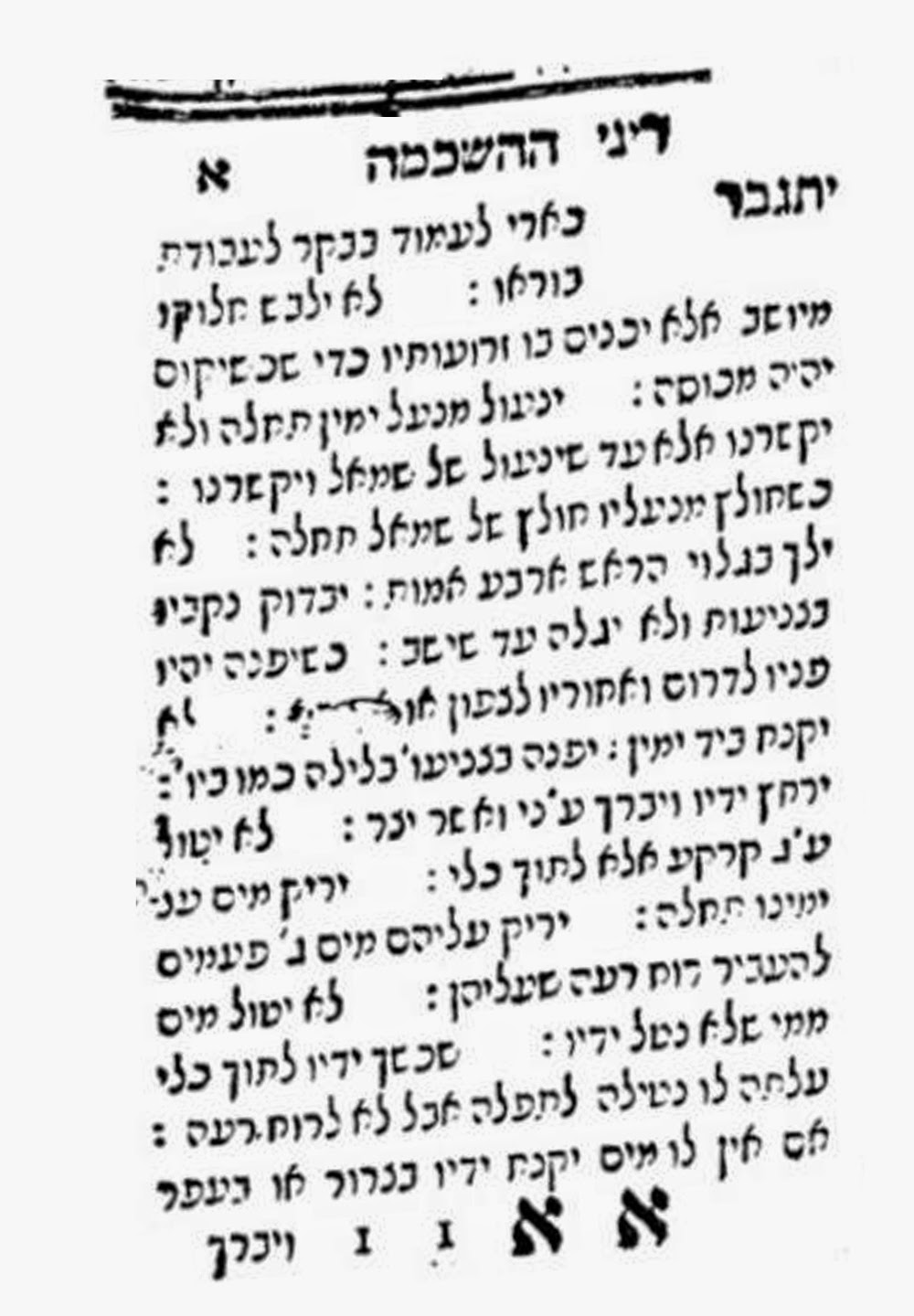

Figure 2: First edition of Shulhan Tahor by Rabbi Joseph Pardo (from
Hebrewbooks.org). The page summarizes three and a half chapters of the original
Shulhan arukh. Note how the author sometimes combines the words of RYK with the
words of Rema (line 11).
Shulhan Tahor covers Orakh Hayim and Yore Deah.
Others have a narrower scope and cover only Orah Hayim. RSZ covers even less.
Some collections are abbreviated extensively; others include more details.[3]
There are variations in the language and content; some quote opinions of later
authorities, some quote Kabbalah, some re-cast the language of the SA and some
retain the language as much as possible.
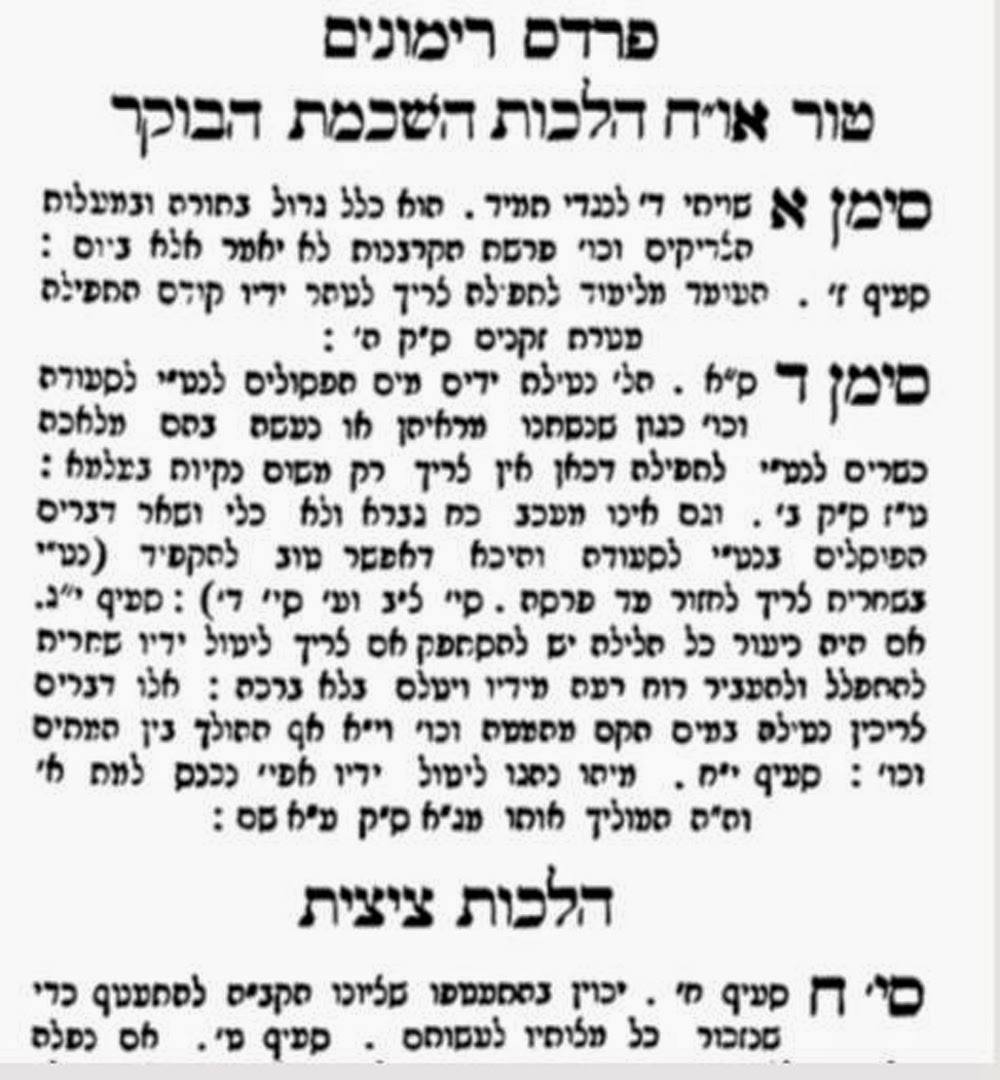

Figure 3: Pardes Rimonim by Rabbi Yehudah Yudil Berlin, (from
Hebrewbooks.org), composed in 1784. Note the author quotes Ateret Zekenim, (R.
MM Auerbach, published in 1702). The additions in parenthesis are by the
publisher of the 1879 edition.
The authors of each of these works possibly had
two goals in mind. One of the goals was to make the basic rules and practices
of the SA more accessible. To this end, certain subjects or details were left
out because they were too technical for the chosen audience. Other rules were
omitted because the situations to which they applied happened only infrequently
(בדיעבד). Many regulations
were left out because daily life and its circumstances had changed so much
since the sixteenth century.

The other goal,
and arguably the primary goal, was to provide a text of law that could be
memorized. In the introduction to Shulhan Tahor, the author’s son writes:
“every man will be familiar and fluent in these laws (שגורים בפי כל האדם)”. Likewise, the
author of Pardes Rimonim defines the purpose of his work: “so that the reader
will be fluent in these rules (שגורים
בפיו)
and will review them each month”.  In
the introduction to the Shulhan Shlomo, the author writes: “Put these words to
your heart and you won’t forget them”, and the motive of R. Shneur Zalman’s
work is:  “to know [these laws] fluently by heart”.

Figure 4: Introduction of Rabbi Yosef Karo – from the first edition
of the Shulhan Arukh, published in Venice in 1565 where memorization is
emphasized (from the scanned books at the website of the National Library of
Israel, (formerly the Jewish National and University Library.)
The
tradition of memorizing practical laws goes back to RYK himself, and probably
goes back even earlier.[4]
RYK writes in the introduction to his Shulhan Arukh:
I thought in my heart
that it is fitting to gather the flowers of the gems of the discussions [of the
Beit Yosef] in a shorter way, in a clear comprehensive pretty and pleasant
style, so that the perfect Torah of G-d will be recited fluently by each man of
Israel. When a scholar is queried about a law, he won’t answer vaguely.
Instead, he will answer:  “say to wisdom
you are my sister”. As he knows his sister is forbidden to him, so he knows the
practical resolution of every legal question that he is asked because he is
fluent in this book…  Moreover, the
young (rabbinical?) students will occupy themselves with it constantly and
recite its text by heart…
I’m
working on a phone version of RSZ’s work using the first print of
RYK’s SA for that portion of the text. However, (aside from the difficulty of
text justification in an EPUB), there is one typesetting decision that I’m
wondering about.  The first edition of
the SA is punctuated with elevated periods and colons.  The colons always separate each halakha, but
infrequently colons appear in the middle of a halakha. Sometimes followed by a
new line and sometimes not. The periods may appear in the middle of a halakha,
sometimes followed by horizontal white space and sometimes not.
Hebrew printing (of holy books) hasn’t changed all that
much in the past 450 years; the colons at the end of each paragraph are present
in most current editions of the Shulan Arukh, but the periods, colons and white
space in the middle of the paragraphs have largely been ignored in subsequent
prints.[5]
Do I try and duplicate this punctuation or not? Here are two examples where I
replaced the elevated period and colons with modern periods, but tried to keep
the original layout.
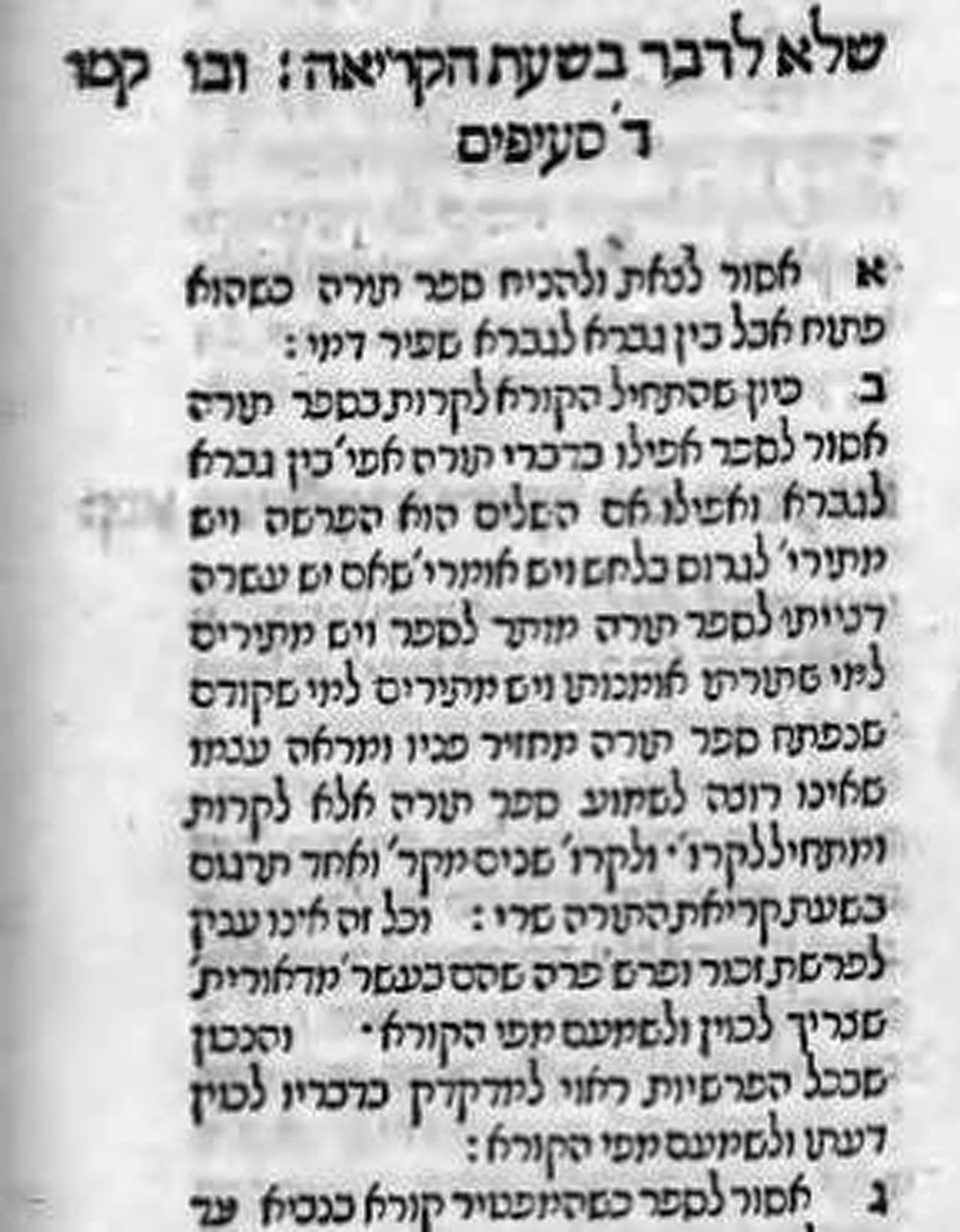
Figure 5: Note the raised periods and colons in the first print
(from the National Library of Israel web site).
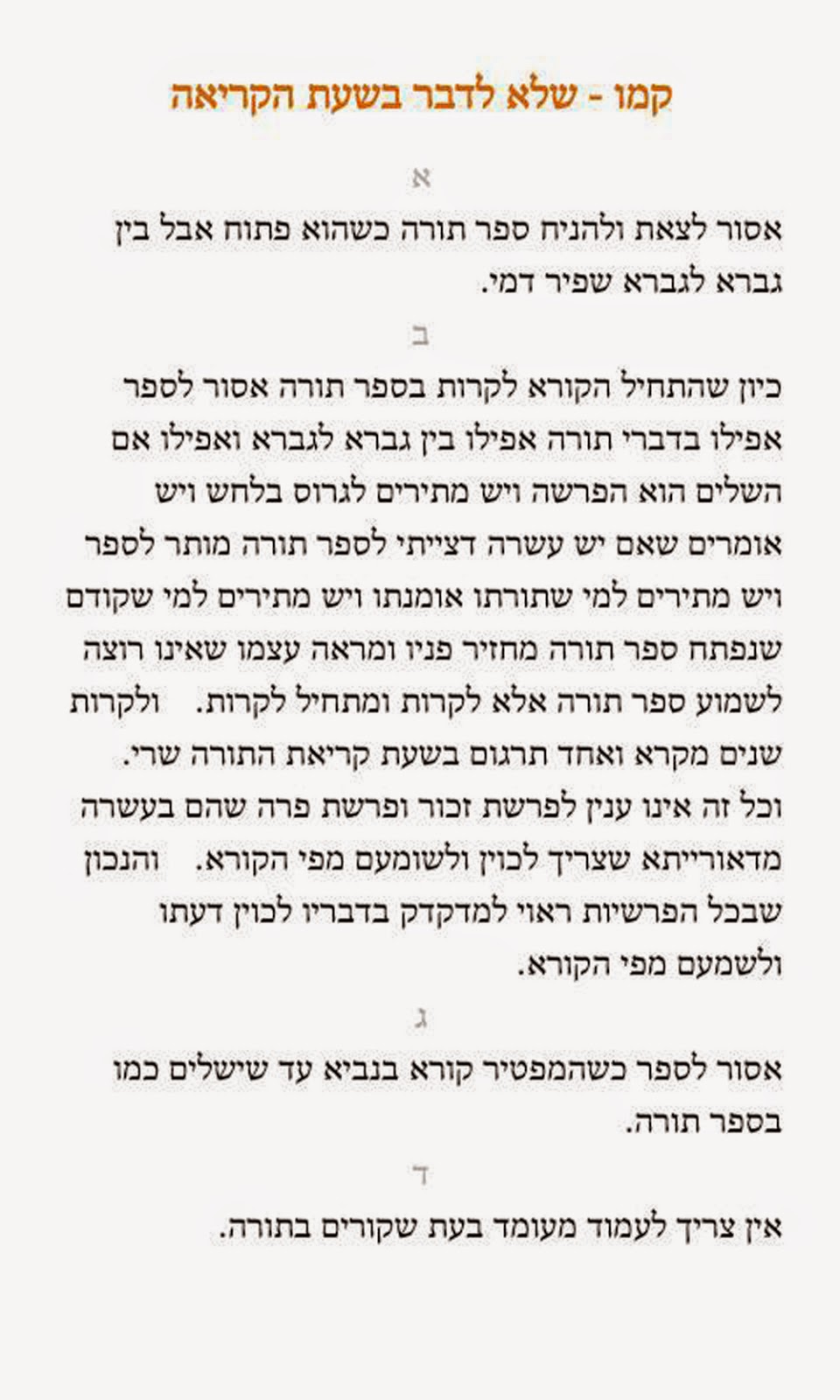
Figure 6: Screenshot of a digital version of R. Shneur Zalman’s
composition. Note periods and line feeds.
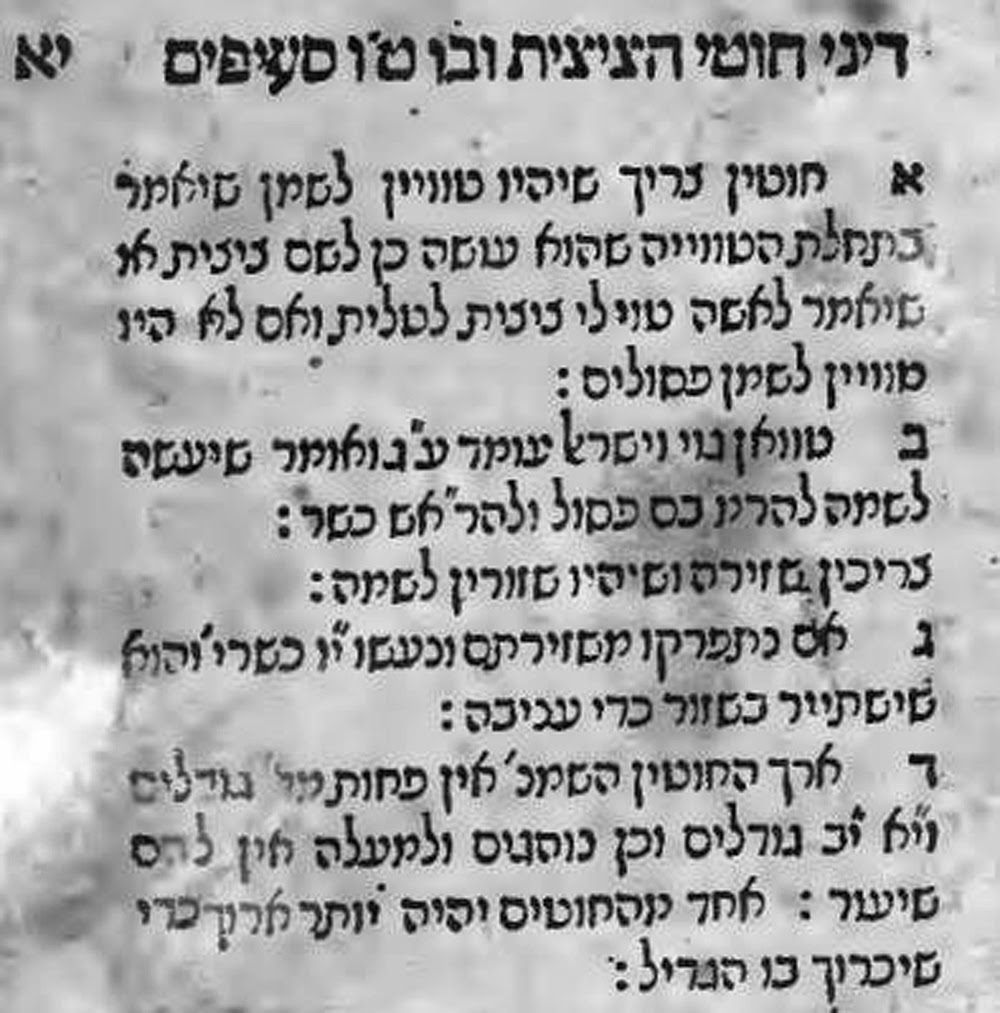
Figure 7: Facsimile of the first print of Shulhan Arukh – beginning
of chapter 11. See the colons in in the fourth halakha.

Figure 8: Screenshot of my smart phone version of R. Shneur Zalman’s
list – chapter 11

I think it’s possible that
the punctuation of the first edition of the SA was copied from RYK’s manuscript. Prof.
Raz-Krakozkin writes: He (Karo) insisted on personally supervising its
publication and made sure that the editors followed his instructions[6]. On
the other hand, I can’t explain why the punctuation marks occur so rarely.

To help decide if RYK
punctuated his manuscript before sending it to the printers, we can compare
other manuscripts that were printed then. For example, the Yerushalmi was first
printed in Venice (1523) from a manuscript, which is still extant today.
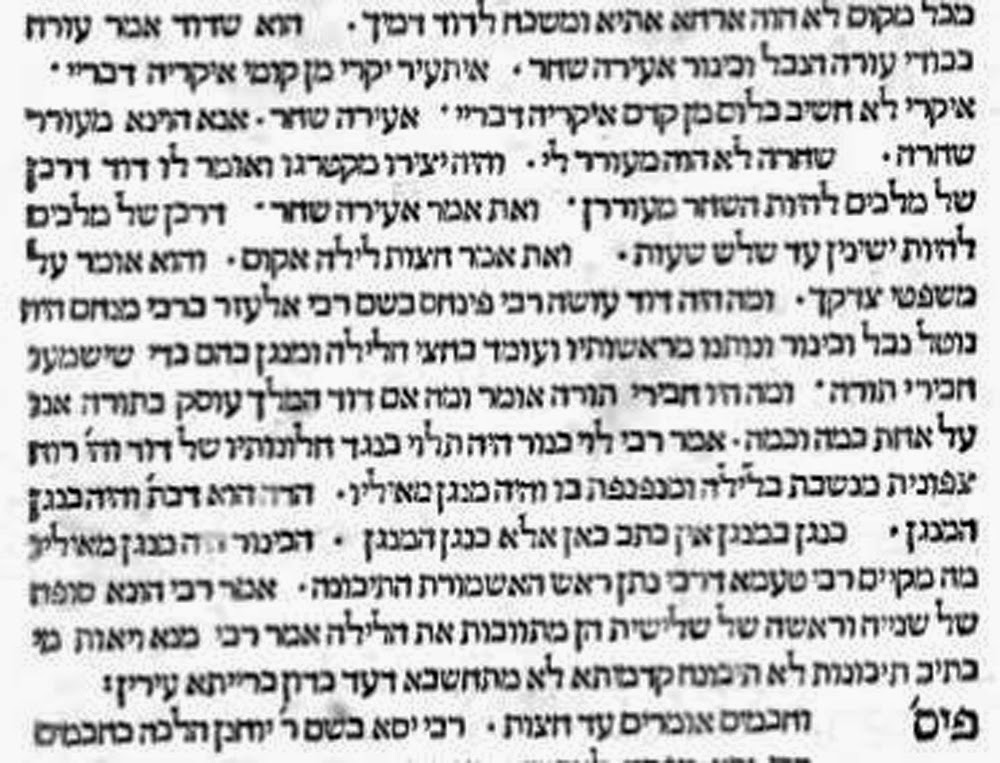
Figure 9: Facsimile of the first print of the Jerusalem Talmud
(Berakhot 1:1), with raised periods to separate word groups from the scanned
books at the website of the National Library of Israel, (formerly the Jewish
National and University Library.)

The printed version of the
Yerushalmi has elevated periods that delineate groups of words. These markings
are already found in the source manuscript in the exact same places.
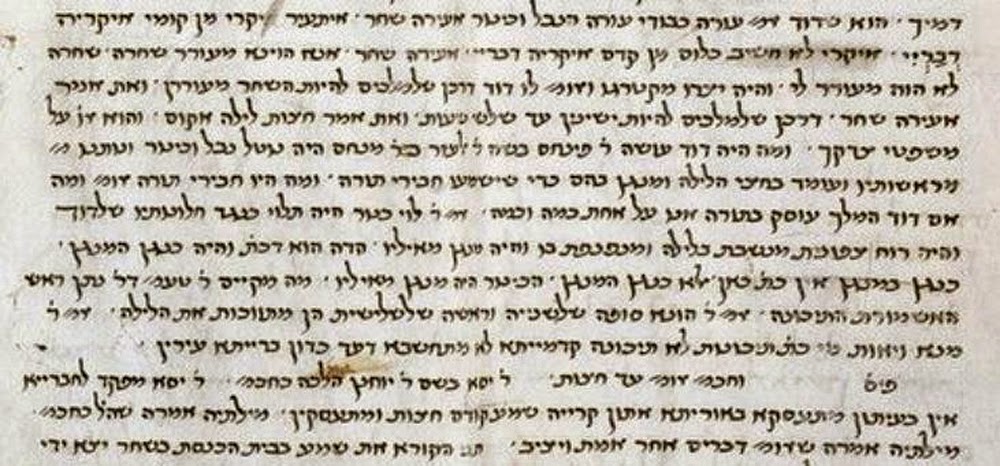
Figure 10: Facsimile of Leiden manuscript of the Jerusalem Talmud
(1289 CE), Brakhot 1:1 from the Rabbinic Manuscripts on line at the National
Library of Israel web site, (formerly the Jewish National and University
Library).

Prof. Yaakov Sussmann[7]
speaks of two possibilities concerning the origin of the
Talmud Yerushalmi’s punctuation. The punctuation may be relatively recent – the
scribe punctuated the text or the punctuation existed in the manuscript that
the scribe copied from.  Alternatively,
the punctuation might be a reduction or simplification of cantillation marks
that were common in much older rabbinic manuscripts. Either way, the printers
didn’t invent the punctuation.

Our editions of the Gemara (the Babylonian Talmud) have colons (“two
dots”) in strategic places.[8]
These colons already exist in one of the first Talmud editions – the Bomberg
Talmud (Venice 1523).

Figure 11: Facsimile of a page of Bomberg Talmud (Betza 21a) showing
colons. (The horizontal lines near the colons are either blemishes, or markings
by hand.) Note the horizontal white space after the colons.

Most volumes of the Bomberg
edition were not printed from manuscript, but were copied from the Talmud
printed by Joshua Moses Soncino in 1484[9].
In the Soncino Talmud, we find separators in the exact places as the colons of
the Bomberg edition. The Soncino Talmud had two types of
punctuation: a top comma (or single quote mark) that marks off groups of words
(like the Yerushalmi has) and a double top comma (double quote mark). When
Bomberg printed his edition (40 years later), his printers replaced the double
commas with colons (and dropped the single commas).

Figure 12: The bottom of a page in Soncino, coresponding to the same
page (21a) in Betza. Note the two elevated commas, where we have a colon and
the subsequent horizontal white space. (The Soncino Talmud does not have the
same pagination as us). From the National Library of Israel web site.
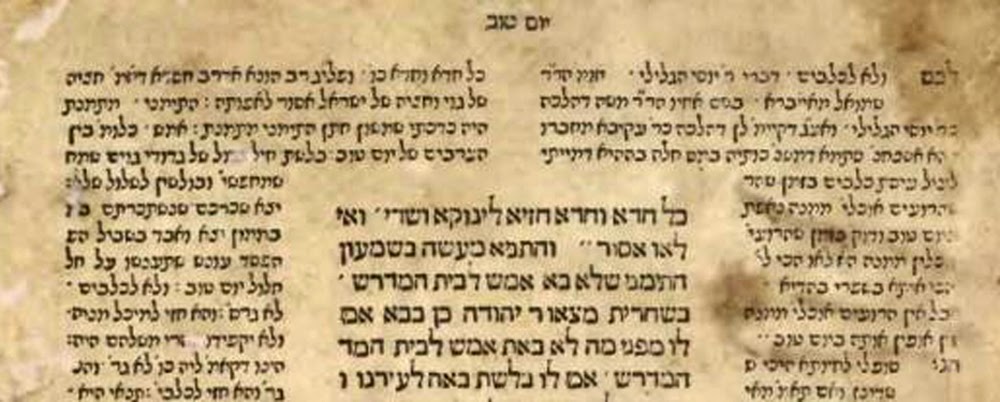
Figure 13: Top of the next page in the Soncino edition, corresponding
to our Betza 21a. Note again 2 commas where we have a colon.

It would be difficult to trace the origins of the colons much further.
We don’t know which manuscripts were used by the printers of the Babylonian
Talmud, and in any case the many Talmud burnings in the 1550’s in Italy
destroyed most of the manuscripts that were there. Nevertheless, there is at
least one old manuscript that has punctuation marks similar to what we find in
the Soncino Talmud.

Figure 14: Snippet from Gottingen University Library Talmud
manuscript showing the upper double comma separator for the same page – Betza
21a (From the Rabbinic Manuscripts on line at the National Library of Israel
web site, (formerly the Jewish National and University Library).)

The Gottingen manuscript is a Spanish
manuscript from the early thirteenth century[10] – almost three hundred years older than the Talmud printed
in Soncino. It doesn’t have the upper single commas that Soncino edition has,
but it does have the same double comma in the same places that the Soncino
print has.  Just to repeat: the pauses
represented by colons, that we see in our Talmud are at least 800 years old!
It’s at least possible (likely?) that RYK’s own SA manuscript was
punctuated just as the Talmudic manuscripts that he studied from were.
Summary
I introduced RSZ’s
abbreviated (Kitzur) SA, and discussed it in the context of other similar
works. I mentioned that the authors aimed at producing collections of relevant laws
that could be memorized. I noted that the first edition of the SA was punctuated
differently from following versions. I suggested (based on comparisons with
early printed Talmuds) that the punctuation was probably the work of RYK and
not the work of the printers.

[1] Mondshine, Y. (Ed.).
(1984).  Migdal Oz (Hebrew), Kfar Habad:  Machon Lubavitch , pp.  419-421. Dedicated to the memory of Rabbi
Azriel Zelig Slonim ob”m. Essays on Torah and Hassidut by our holy Rabbis, the
leaders of Habad and their students, collected from manuscripts and authentic
sources and assembled with the help of the Almighty.
[2] Maimon, Rabbi Yehuda
Leib, The history of the Kitzur Shulhan Arukh (Hebrew), published in Rabbi Shlomo
Ganzfried, Kitzur Shulhan Arukh, Mossad Harav Kook Jerusalem Israel 1949. The
earlier works mentioned are: Shulan Tahor by R. Joseph Pardo,edited/financed by
his son David Pardo, Amsterdam 1686. Shulan Arukh of R. Eliezer Hakatan  by Eliezer Laizer Revitz printed by his
son-in-law R. Menahem Azaria Katz, Furth 
1697. Shulhan Shlomo by Rabbi Shlomo Zalman Mirkes printed in Frankfort
(Oder) 1771. Pardes Rimonim by R. Yehuda Yidel Berlin, composed in 1784 and
printed for the first time in Lemberg (Leviv) 1879. 
[3] RSZ’s digest from the
beginning until the end of chapter 156 contains 18,000 words while the same
portion of the big Shulhan Arukh contains approximately 40,000 words. A word is
loosely defined as a group of characters separated by a space or by spaces.
[4] In the introduction to
the Mishne Torah, Maimonides writes: “I divided this composition into legal
areas by subject, and divided the legal areas into chapters, and divided each
chapter into smaller legal paragraphs so that all of it can be memorized.”  See: Studies in the Mishne Torah, Book of
Knowledge Mossad Harav Kook, Jerusalem (Heb.) by Rabbi José Faur for a
discussion and explanation of the study methods of Middle Eastern Jews (page 46
and following pages, especially footnote 60).
[5] The National Library of
Israel, (formerly the Jewish National and University Library) has the edition
of the Shulhan Arukh printed in Krakow in 1580. This is the second version with
the notes of the Rema (which was first printed in 1570) and it doesn’t have the
original punctuation marks.
[6]  “From Safed
to Venice: The Shulhan ‘Arukh and the Censor” (in: Chanita Goldblatt, Howard
Kreisel (eds.), Tradition, Heterodoxy and Religious Culture, Ben
Gurion University of the Negev  (2007)
91-115). 
A.M. Haberman, The First Editions of the Shulhan Arukh
(Heb.) on the daat.ac.il web
site, (from the journal Mahanaim # 97 1965 p 31-34.) suggests that the
editor/corrector of the first edition, Menahem Porto Hacohen
Ashenazi created its table of contents.
See also the discussion about who created the chapter headings, (a
pre-requisite for the table of contents), in Gates in Halakha (Heb.), Rabbi
Moshe Shlita, Jerusalem 1983, page 100. He argues that the chapter headings of
the Shulhan Arukh could not be the work of Rav Yosef Karo. 
[7] Talmud Yerushalmi
According to Ms Or 4720 of the Leiden University Library, Academy of the Hebrew
Language Jerusalem 2001 Introduction by Yaakov Sussmann.
[8] Cf. Rashi in the
beginning of Leviticus “What is the purpose of the horizontal white-space (in
the text of the Torah)? It gives Moshe some space to contemplate between a
section and the next section, between a topic and the next topic.  (Rashi Lev. 1:1 s.v. vayikra el Moshe (2nd)
from the Sifra.
[9] Raphael Nathan Nata
Rabbinovicz. Essay on the printing of the Talmud  (Hebrew).
[10]  M. Krupp in The Literature of the Sages,
Oral Torah, Halakha, Mishna, Tosefta, Talmud, External Tractates (Compendia
Rerum Iudaicarum Ad Novum Testamentum)
 Fortress Pr; 1987 Part 1 Shmuel Safarai ed,  p 352. 


Rambam’s Response to the Inclusion of Chicken, Duck and Quail in Qaraite Cuisine

Rambam’s Response to the Inclusion
of Chicken, Duck and Quail in Qaraite Cuisine
By Tzvi H. Adams

In “Waiting
Six Hours for Dairy- A Rabbanite Response to Qaraism” (here)
I posited that Rabbeinu Chananel initiated the practice of waiting six hours
between meat and dairy in order to protect Rabbanite values. This association
was inspired by Dr. Bernard Revel’s studies of 
Rabbanite leaders’ efforts to counter sectarian influences during the
early Middle Ages[1], as well as a shiur by
Rabbi David Bar-Hayim. I then
suggested that Rambam furthered this anti-Qaraite motion by including poultry
into the required six hour waiting category. Rambam’s poultry innovation was intended
to protect Rabbanites from influence of their Qaraite neighbors who cooked meat
and poultry with dairy. Briefly, this latter suggestion was based upon two observations:

a) The simple reading of the Talmud Chullin
104b -עוף וגבינה נאכלין באפיקורן – בלא נטילת ידים ובלא קינוח הפה- as interpreted
by the Gaonim and rishonim for five centuries until Rambam, allowed poultry and
dairy to be consumed consecutively without even kinuach ve’hadacha in
between. Unless we imagine that Rambam possessed a secret hitherto unheard-of
tradition which understood the Talmud’s words in some other fashion, we can
assume that Rambam actually changed the Talmudic halacha in his Yad. Being
the strong proponent of Rabbanite halacha and tradition that he was, Rambam
surely had a compelling reason to make this drastic alteration.

b) There are many instances of
anti-Qaraite creativity in Rambam’s writings and rulings. Examples include:

§ 
Rambam was the first rishon to
disqualify a get (divorce document) written in a Qaraite court by a
Qaraite scribe[2].
§ 
Though the Gaonim and R. Chananel
explicitly say that not eating on the three minor fast days is the individual’s
choice (as per the Talmud’s ruling RH 18b- אין שמד ואין
שלום – רצו – מתענין, רצו – אין מתענין), Rambam chose to
overlook this detail about fast days in his halachic writings. The purpose of
this intentional omission was almost certainly to separate Rabbanites from the
Qaraite community who did not observe the Rabbanite fasting calendar[3].
§ 
Most rishonim recognized the
rabbinic origins of the Yom Kippur afflictions other than not eating or
drinking. Rambam, however, led readers to believe that all five afflictions are
biblically proscribed. It seems that Rambam presented the Yom Kippur restrictions
in this way only to protect the halacha from the Qaraite perspective[4]. 

Other examples were cited in my previous article. It is therefore reasonable to
say that the required waiting period between poultry and dairy, found first in Yad
HaChazaka
, is one more instance of Rambam’s anti-Qaraitic halachic
reformation.

An
analysis of the historical development of Qaraite rules of kosher birds strongly
supports my suggestion[5].
Qaraite halacha did not rely on the Rabbanite Oral Law. Therefore, the kosher
signs of the Mishna Hullin 59a –
 וסימני העוף לא נאמרו אבל אמרו
חכמים כל עוף הדורס טמא כל שיש לו אצבע יתירה וזפק וקורקבנו נקלף טהור ר’ אלעזר
בר’ צדוק אומר כל עוף החולק את רגליו טמא
and the statement of the Talmud Hullin
63b, עוף
טהור נאכל במסורת, were of little
significance to Qaraites. That chicken, duck, quail and other fowl were eaten in
Rabbanite tradition[vi] was
unreliable evidence for these strict Scriptualists. Because the identity of most birds mentioned in the Torah
was ambiguous, Qaraites had no reliable means of recognizing birds as kosher other
than the pigeon and turtledove; they were confident that the correct
translation of תור and יונה had been preserved. The devout Qaraite, therefore, could not
partake of chicken, quail, or duck. Over time, some Qaraites communities became
lenient and found legal rationale to permit these commonly eaten birds. Slowly
over the 12th Description: https://ssl.gstatic.com/ui/v1/icons/mail/images/cleardot.gifand 13th
centuries a lenient policy was adopted by the broad Qaraite community. Because
from the inception of Qaraism its scholars read the passuk, “לא
תבשל גדי בחלב אמו” literally[7],
they had no hesitations against eating and cooking the newly accepted fowl and
dairy together. 

            The
Rabbanite and Qaraite communities were very much interconnected politically and
socially[8];
the divide between the parties was often blurred[9].
Rabbanite leaders sought to protect the integrity of their tradition from sectarian
influence. I demonstrated previously how R. Chananel (990 -1053) and his
disciple, R. Yitchak Al-fasi[10]
(1013
– 1103), created a six hour waiting requirement
between meat and dairy in the early eleventh century – thereby limiting the
social participation of Rabbanites with Qaraites. During the years of the legislating
activity of these sages it was not common practice amongst Qaraites to eat
chicken, duck, and quail, birds on the daily North African Rabbanite menu[11]. R.
Chananel and R. Al-fasi, therefore, did not see a need for demanding a wait
after poultry as there was little concern that Rabbanites and Qaraites would be
dining together over such fowl. Furthermore, it was difficult to reread the
obvious permitting statement of the Talmud, עוף וגבינה
נאכלין באפיקורן. During the century between these sages
and the rise of Rambam (1135-1204) to prominence, Qaraites widely allowed
themselves to eat the same fowl consumed by the Rabbanite community. Now a
Qaraite-Rabbanite poultry dinner was possible and influence from the cooking
practices of “the eaters of milk with meat” (the nickname for Qaraites) was
real. Rambam, seeking to protect Rabbanite tradition from Qaraite values by
building social barriers, creatively placed fowl alongside meat in the
requirement to wait six hours before dairy:
מִי
שֶׁאָכַל בָּשָׂר בַּתְּחִלָּה, בֵּין בְּשַׂר בְּהֵמָה בֵּין בְּשַׂר עוֹף–לֹא
יֹאכַל אַחֲרָיו חָלָב עַד שֶׁיִּשְׁהֶה בֵּינֵיהֶן כְּדֵי שֵׁעוּר סְעוֹדָה
אַחֶרֶת, וְהוּא כְּמוֹ שֵׁשׁ שָׁעוֹת:  מִפְּנֵי
הַבָּשָׂר שֶׁלְּבֵין הַשִּׁנַּיִם, שְׁאֵינוּ סָר בְּקִנּוּחַ
(רמב”ם משנה תורה מאכלות אסורות פרק ט’
הלכה כז)
This addition did not
go unnoticed. In the two generations following Rambam, the greatest rishonim
criticized the Rambam’s reform as it reversed the ruling of the Bavli. Ramban
(1194-1270) was the first to challenge Rambam’s alteration:


אבל הרמב”ן ז”ל כתב דאגרא אפילו עוף ואחר כך גבינה שרא דלישנא הכי משמע
דקאמר עוף וגבינה…(ר”ן על הרי”ף חולין דף לז’)
R. Aaron Halevi
(1230-1300) also challenged Rambam’s ruling:
…ואפילו
הכי שרינן בעוף בלא נטילת ידים משום דקיל דלא מיתסר אלא מדרבנן, ודאי לא שני לן
בין עוף ואחר כך גבינה בין גבינה ואחר כך עוף… הוא הדין לקנוח הפה דלא בעינן
אפי’ בין עוף לגבינה…. ולהוציא קצת מדברי רבי’ ז”ל (=הרמב”ם) שפרשו
דההיא דאגרא דאמר עוף וגבנה נאכלין באפיקורן דוקא גבינה תחילה ואחר כך עוף…
(חידושי רא”ה לחולין דף קד’)
However, within a
century of the publication of Mishna Torah, creative ways of
reinterpreting the words of אגרא were created to fit
this new reform into the Talmud[12].
Tur (1275-1340) YD 89 cites Rambam’s ruling on poultry as if none other exists.
Professor Daniel Frank has thoroughly examined the historical
development of the laws of kosher birds in Qaraite halacha in his monograph,
“May Karaites Eat Chicken? Indeterminacy in Sectarian Halakhic Exegesis”[13].
My chiddush is that the inclusion of chicken, duck, and quail in Qaraite
cuisine in the 12th century provoked Rambam’s tightening of the
poultry and dairy separation laws. Unless noted otherwise, the following
sources and translations are summarized from Frank’s article:

Views of Early Qaraite Scholars
Anan ben David
In his Book of Commandments[14], the early learned schismatic, Anan
ben David (c. 715 – c. 795) writes the following:
Now we do not find any birds were
used for burnt offerings save turtledoves and pigeons, as it is written… (in
lev. 1:14). The juxtaposition of the words ‘of every clean bird’ and ‘he
offered burnt offerings’ thus proves that the only clean birds are turtledoves
and pigeons.
Benjamin Nahawandi
One
of the greatest of the Qaraite scholars of the early ninth century, Benjamin Nahawandi, states:
The only clean birds that can be
eaten are the pigeon and its kind. There are many clean and unclean varieties…
but they cannot be identified by means of physical criteria, since Scripture
does not make these explicit. … The pigeon is (the bird) that makes the cooing
noise in is throat, as it is stated: We coo like doves (Is. 59:11)….
Therefore the only clean bird that is mentioned is the pigeon and its kind[15].
The identification of other clean birds remains uncertain
because the Torah provides no physical description of the birds. Pigeons (and
their turtledove subspecies) are an exception because the Scriptural verse, We
coo like doves
(Is. 59:11), gives a physical sign to identify the
bird.  
Daniel al-Qumisi
Daniel al-Qumisi (d. in Jerusalem 946), founder of the Qaraite
“Mourners of Zion” movement, likewise insisted that because Biblical Hebrew is no longer
the vernacular, the meaning of most of the birds of the Torah has been
forgotten; “for God-fearing people, the only permitted birds are turtledoves,
pigeons and wild pigeons- at least until the coming of the Righteousness”[16].
He attacks the Rabbanites for having invented physical criteria for identifying
kosher birds- as Scripture does not supply these.
Jacob Al-Qirqisani
The
early tenth century Qaraite dogmatist and exegete, Jacob Al-Qirqisani writes similarly
in his Kitabal-Anwar (written in 937):
Should someone say, “The people
already knew these signs via oral tradition from the prophet…” He may be
answered: “As for your statement that the people used to know these signs via
oral tradition from the prophet- this is (but) a claim. You have no proof of
this….”[17]
Japeth ben Ali
The maskil
ha-Golah
and
foremost Qariate Bible commentator, Japeth ben Ali (10th century, born in Iraq
and died in Jerusalem), emphasized that pigeons and turtledoves are the only
unquestionably permitted birds; all other species should be avoided.
Of all the birds, those which are
demonstrably permitted are turtledove and pigeon…. As for chicken, mountain
quail, partridge, duck, goose, crane, sparrow, and others- we must suspend
judgement concerning them all- “until he comes and teaches righteousness”
(Hos.10:12)[18]
Rabbanite Rishonim


The rishonim were very familiar with Qaraite claims.

R. Saadya Gaon
In response to Qaraite scholars, R. Saadya Gaon (882-942) addresses the topic
of the identification of the birds of the Torah in his writings[19],
delivering anti-sectarian polemics.

Targum Psuedo-Yonathan[20]

Dr. Bernard Revel proved in his “תרגום יונתן על
התורה” (here) that the Targum Yonathan (ben
Uziel) was really an early ninth century targum commissioned by the Torah sages
of Eretz Yisroel. He demonstrated that this targum is filled with views of the
Talmud Yerushalmi as well as interpretations aimed at countering sectarian
movements. (here)

וית אלין מינייא תשקצון מן עופא דלית
להון ציבעא יתירא ודלית ליה זפקתא ודקורקבניה ליתוהי מקליף לא יתאכלון (תרגום
יונתן ויקרא יא:יג)
The Targum’s author included the physical criteria for
kosher birds to imply that these signs are contained within the Torah itself
and valid- unlike the views of early Qaraites who disregarded these signs only
known by rabbinic tradition.
Mah-Yedidut [21]

The popular Friday night zemer, Mah-Yedidut, by Menachem (possibly ben
Saruq[22],
920-980 Spain), highlights the differences between the Rabbanite and Qaraite
Sabbath. Menachem emphasizes the obligations of kavod  ve’oneg Shabbos (לְבוּשׁ
בִּגְדֵי חֲמוּדוֹת
and עֹֽנֶג קְרָא לַשַּׁבָּת[23],
וְהַשֵּׁנָה מְשֻׁבַּֽחַת)
and kindling Sabbath lights ([24]לְהַדְלִיק
נֵר בִּבְרָכָה),
the permissibility of thinking of post-Sabbath work ([25]הִרְהוּרִים
מֻתָּרִים)
and gives an allusion to marital relations        (כַּשּׁוֹשַׁנִּים
סוּגָה[26],
בּוֹ יָנֽוּחוּ בֵּן וּבַת וְלָנֽוּחַ בְּחִבַּת) – all points of contention between
Qaraites and Rabbanites.
מַה
יְּדִידוּת מְנוּחָתֵךְ, אַתְּ שַׁבָּת הַמַּלְכָּה, 
בְּכֵן נָרוּץ לִקְרָאתֵךְ, בּֽוֹאִי כַלָּה נְסוּכָה, 
לְבוּשׁ בִּגְדֵי חֲמוּדוֹת, לְהַדְלִיק נֵר בִּבְרָכָה, 
וַתֵּֽכֶל כָּל הָעֲבוֹדוֹת, לֹא תַעֲשׂוּ מְלָאכָה. 
לְהִתְעַנֵּג בְּתַעֲנוּגִים בַּרְבּוּרִים וּשְׂלָו
וְדָגִים. 
מֵעֶֽרֶב מַזְמִינִים, כָּל מִינֵי מַטְעַמִּים, 
מִבְּעוֹד יוֹם מוּכָנִים, תַּרְנְגוֹלִים מְפֻטָּמִים
וְלַעֲרֹךְ כַּמָּה מִינִים, שְׁתוֹת יֵינוֹת מְבֻשָּׂמִים, 
וְתַפְנוּקֵי מַעֲדַנִּים, בְּכָל שָׁלֹשׁ פְּעָמִים. 
לְהִתְעַנֵּג בְּתַעֲנוּגִים בַּרְבּוּרִים וּשְׂלָו
וְדָגִים.  

חֲפָצֶֽיךָ
בּוֹ אֲסוּרִים, וְגַם לַחֲשֹׁב חֶשְׁבּוֹנוֹת, 
הִרְהוּרִים מֻתָּרִים, וּלְשַׁדֵּךְ הַבָּנוֹת, 
וְתִינוֹק לְלַמְּדוֹ סֵֽפֶר, לַמְנַצֵּֽחַ בִּנְגִינוֹת, 
וְלַהֲגוֹת בְּאִמְרֵי שֶֽׁפֶר, בְּכָל פִּנּוֹת וּמַחֲנוֹת. 
לְהִתְעַנֵּג בְּתַעֲנוּגִים בַּרְבּוּרִים וּשְׂלָו וְדָגִים. 
הִלּוּכָךְ תְּהֵא בְנַֽחַת, עֹֽנֶג קְרָא לַשַּׁבָּת, 
וְהַשֵּׁנָה מְשֻׁבַּֽחַת, כְּדָת נֶֽפֶשׁ מְשִׁיבַת, 
בְּכֵן נַפְשִׁי לְךָ עָרְגָה, וְלָנֽוּחַ בְּחִבַּת, 
כַּשּׁוֹשַׁנִּים סוּגָה, בּוֹ יָנֽוּחוּ בֵּן וּבַת. 
לְהִתְעַנֵּג בְּתַעֲנוּגִים בַּרְבּוּרִים וּשְׂלָו
וְדָגִים.

The poet sings of Rabbanite dishes: stuffed chicken (תַּרְנְגוֹלִים
מְפֻטָּמִים),
duck or goose (בַּרְבּוּרִים),
and quail (שְׂלָו)[27]
– poultry one would not find at Qaraite meals. By mentioning these items
Rabbanite tradition is strengthened and cherished.

Byzantium 


Constantinople was a thriving
center of Qaraism during much of the Middle Ages. The Byzantine Rabbanite, Tobiah ben Eliezer (late 11th – early 12th
centuries), often attacks Qaraite ideas[28]
in his Medrash Lekach Tov (written in 1097 and revised it in 1107 or
1108). In Vayikra[29],
Tobiah emphasizes that “generation after generation” birds eaten by the
Byzantine Rabbanites have been permitted: ועוף טהור נאכל
במסורת דור אחר דור כגון האווז ואווז בר ותרנגולת. This indicates that in
his lifetime Byzantine Qaraites refrained from eating the chicken, goose, and
duck.

However, only half a century later, the Byzantine Qaraite scholar, Judah Hadassi, tells that many of
his landsmen allowed themselves to partake of these fowl. In his Eshkol
ha-Kofer
(1148), Hadassi notes this transition in Qaraite law with
disapproval:
Now some of the (Karaite) teachers
approved those domestic fowl, which are customarily raised in their home. (They
did so) because this was the choice of the entire nation, not because there are
any scriptural allusions that justify or confirm (this practice). Happy is he
who guards himself wholeheartedly against uncertainties so that he is stringent
in all (matters pertaining) to ritual slaughter! For knowledge of the Holy
Tongue has disappeared from our midst, and we no longer know the names of (the
birds) so as to recognize which is permitted and which is forbidden to us.
Therefore we will remain silent until (Elijah) comes and teaches us
righteousness. But if we rely upon custom (minhag) and tradition, does
this tradition not take away from and add to our Torah, even contradicting it
in part?
Eventually, the lenient approach to the kosher status of
chicken and duck became the norm and the Qaraite Nicomedian theologian, Aaron ben Elijah
(1328-1369), states definitely in his Gan
Eden
(1354):
Since knowledge of our language has
now become deficient during our exile, we do not know the clean species. All
that remains in fact, is knowledge of several of the names (mentioned) in
Scripture and those known via the tradition (sevel ha-yerushah[30]),
such as pigeon, turtledove, quail, partridge, swan, chicken, and goose. For it
has been transmitted, one person from the next, that these are raised
domestically and that they are permitted…[31]
Spain


These transformations in Qaraite halacha were taking place in the Byzantine
Empire during Rambam’s lifetime though geographically removed from him. The
Rambam did correspond with students and scholars from France to Syria and even
had knowledge of a Jewish community in India. We also see in Rambam much
anti-Qaraite activity. It can be assumed that Rambam had his finger on the
pulse of nuances in Qaraites halachic and cultural development. However, Rambam
may have had an even more intimate knowledge of these developments. There is
evidence that the Qaraite fowl ‘kosherification’ process was taking place in
Rambam’s very own mother country, Spain, while Rambam was yet a young man:
R. Yehuda Halevi (1075 – 1141) writes
in his Kuzari (completed
around 1140):
והייתי
רוצה כי ישיבו לי הקראים תשובה מספקת על זה… ועוד רוצה הייתי כי יבארו לי מה בין
העוף המותר לבין העוף האסור (זולת העופות המפרסמים כיונה ותור) ומנין להם כי
התרנגלת והאוז והברוז והתכי אינם מן העופות הטמאים (כוזרי ג:לה)
 I wish the Qaraites would give me a
satisfactory answer to questions of this kind… I desire an explanation of the
lawful and unlawful birds, excepting the common ones, such as the pigeon and
turtledove. How do they know that the hen, goose, duck, and partridge are not
unclean birds?” (Kuzari 3:35)
This passage indicates that by the 1130s, (note- Rambam was
born in 1135), Qaraites in Spain permitted the consumption of the same fowl
eaten by the Rabbanites[32].

Rambam lived at the end of the Qaraite Golden Age. He observed many Rabbanites
leave the fold for Qaraism and a weakened respect for the Oral Torah in the
Rabbanite community[33].
Witnessing Qaraites begin to consume many birds eaten by the Rabbanite
community, Rambam feared that his followers would be influenced by Qaraite
meat/poultry and milk cooking practices. He tightened baasar be’cholov
laws – a process begun a century earlier by R. Chananel – by requiring a six
hour wait for poultry as well.

Many people ask, “If the political anti-Qaraite origins of
the six hour wait are correct, why was this fact not expressed by rishonim and
medieval writers?” In “Waiting Six Hours for Dairy- A Rabbanite
Response to Qaraism”, I cited the opinion of R. Tam and others that R.
Chananel’s six hour ruling was instituted merely because בקעא
מצאו
וגדרו
בה
גדר. There was indeed some awareness of
social-political causation. However, the anti-Qaraite purpose of Rambam’s
poultry-wait innovation went unnoted. Rambam had discreetly inserted fowl
alongside genuine meat in his Mishna Torah. Many later authorities may
have assumed that Rambam, the scion of an illustrious rabbinical family,
possessed an alternative method of interpreting the Talmud. The reason why R.
Chananel, R. Al-fasi, and Rambam did not disclose the reasons for their
halachic reforms is readily understood in light of the following passage:
…דאמר
עולא כי גזרי גזירתא במערבא לא מגלו טעמא עד תריסר ירחי שתא דלמא איכא איניש דלא
ס”ל ואתי לזלזולי בה (ע”ז לה ע”א)
In
Eretz Yisroel when a decree was issued its purpose was not revealed for twelve
months. This is because many people would not accept the meaning, and
consequently would show a negative attitude toward the decree.  (Avodah Zara 35a)
The general Rabbanite
populace may not have adhered to the new strict laws if they realized they were
merely enacted for social-political reasons.  
HaRav David Bar-Hayim of Machon Shilo has already noted in
his “Meat and Milk” series (here) that Rambam was the first to
require any waiting between poultry and dairy. He therefore opines that one may
eat poultry and then dairy without even kinuach ve’hadacha as clear from
the Talmud, Gaonim, and early Baalei Tosfos[34]. 
For more interesting articles visit www.UncensoredJudaism.com

I
would like to thank Pe’er Barzilai for reading and commenting on this essay. His insights
greatly improved its quality.


[1] A Torah luminary of the last century, Dr. Bernard Revel,
devoted many studies to the relationship between rabbinic authorities and
Qaraism. In his”פרקים
בחילופי המנהגים”  (here)
and
“תרגום
יונתן על התורה” (here), Dr. Revel revealed how much of the rabbinic
writings of the early Middle Ages
were aimed at separating the Rabbanite community from sectarian influence.
Dr.
Revel wrote his 1911 doctoral dissertation
on the origins of Qaraite halacha- “The Karaite Halakhah and Its
Relation to Sadducean, Samaritan, and Philonian Halakhah” (here). Here is a sample from Dr. Revel’s article: The Gaonim (see Beit
Yosef
O.C. 24) opposed holding and gazing at the tzitit during the
recital of the Shema only because this was Qaraite practice in accordance with
the literal understanding of וראיתם אותו. (here)
[2] Responsa 2:628-29 http://hebrewbooks.org/pdfpager.aspx?req=1731&st=&pgnum=351
See Rustow, Heresy and the Politics of Community: the Jews of the Fatimid
Caliphate
(2008), pg. 345.
[3] This topic deserves a comprehensive
discussion. For a preview see “R. Yitchak Al-fasi’s Anti-Qaraite
Legislative Activity” here Case #3.
[4] Rambam writes:
 וכן למדו מפי השמועה, שאסור לרחוץ בו או לסוך או לנעול את הסנדל
או לבעול.  ומצוה לשבות מכל אלו, כדרך ששובת מאכילה ושתייה:  שנאמר
“שבת שבתון”
שבת לעניין מלאכה, ושבתון לעניינים
אלו.  ואין חייבין כרת או קרבן, אלא על אכילה ושתייה בלבד; אבל אם רחץ או סך
או נעל או בעל, מכין אותו מכת מרדות.
Later authorities were perplexed by
Rambam’s view and much ink was spilled trying to resolve it. See Beit
Yosef
O.C. 611 and acharonim there.

Often
Rambam precedes modern academic research by eight and a half centuries. It is
unlikely that he was unaware of the late origins of the Yom Kippur laws. See
Dr. Israel Drazin’s article “Yom Kippur is Not a Biblical Holiday
(here).
Rambam may have lead readers to
believe all five afflictions were biblical only to counter Qaraite views. 

A century ago, Bernard Revel made an identical argument about Targum Pseudo-Yonathan (here). The early ninth century Targum on Lev. 15:29 mentions all
five afflictions as being implicit from the Torah itself. Revel concluded that
the Targum had but one purpose – to oppose the Qaraites and strengthen belief
in the Oral Torah. 

For a thorough analysis of what Rambam meant when he wrote למדו
מפי השמועה, see Albert D. Friedberg’s “An
Evaluation of Maimonides’ Enumeration of the 613 Commandments, With Special
Emphasis on the Positive Commandments” pgs. 275- 281 here (-also in his
recent 2014 Crafting the
Commandments
). 

Another
anti-Qaraism in Mishna Torah may be in Hilchot Chamets u-Matzah where
Rambam describes how chametz is forbidden from midday of the fourteenth
of Nisan:
מצות עשה מן התורה להשבית החמץ קודם זמן
איסור אכילתו
שנאמר “ביום הראשון, תשביתו שאור מבתיכם” (שמות יב,טו)
מפי השמועה למדו שראשון זה, הוא יום ארבעה עשר.  וראיה
לדבר זה
מה שכתוב בתורה “לא תשחט על חמץ, דם זבחי” (שמות לד,כה)
כלומר לא תשחוט הפסח והחמץ קיים; ושחיטת הפסח, הוא יום
ארבעה עשר אחר חצות

(הלכות חמץ ומצה פרק ב:א)

Friedberg
(pg. 282, note 53) suggests that
Rambam adds the emphasis of “from Scripture” – “מן התורה” – only to polemicize with his Qaraite
adversaries who held that chametz could be kept until the beginning of
the first day of the festival.

Another
interesting point Friedberg makes (pgs. 298-302) is that a very careful reading
of Maimonides shows that he regarded tefillin and mezuza as
practices which began with the lay population and were later sanctioned by the
rabbis, or possibly originated by the rabbis, but were certainly not biblical.
In the his conclusion to Crafting
the Commandments
, Friedberg explains why Rambam was
so careful to conceal his view:      
            I conjectured further that Maimonides deliberately withheld the
scriptural designation from certain commandments that had been labeled as
scriptural in the ShM (=Sefer HaMitzvoth) when the plain reading of the
scriptural text did not appear to provide sufficient evidence for them, even
when rabbinic interpretation suggested otherwise. To this end, he chose an
artful but somewhat concealed literary device to designate them as such, the
participle of correct practice. This is the case with such prominent practices
as the recitation of the Shema, the binding of the tefillin, the writing and placing
of the mezuzah and the study of Torah.
In the heavily politicized atmosphere of Cairo,
where Rabbanites were both assiduously courted and continuously attacked by
sectarian groups (largely Karaites) over the role of the oral law in
interpreting Scripture, Maimonides chose to keep his radical opinions hidden
yet recoverable. When applied to the legal sections of the Torah, Maimonides’
peshateh di-qera hermeneutics would likely raise hackles among his own
co-religionists and, worse yet, give comfort to the deniers of the oral law.
His carefully planted literary cues could lead the reader who is familiar with
rabbinic terminology and unburdened by popular and superficial conclusions to
discover the Master’s true opinion or at the very least sense his ambivalence.

[5] I
thank Sam Kahan. His comments on my previous “Waiting Six Hours for Dairy”
article prompted me towards further investigation and discoveries and the
writing of this article.

[6] These birds were eaten by
Jews around the Mediterranean for centuries. See Zohar Amar’s מסורת
העוף 
Tel Aviv (2004).

[7] Al-Qirqisani,
Kitab al-AnWar, XII, 25:4 “‘in its mother’s milk’ refers only to the
milk of its mother”.
[8] I wrote more on this here.
[9] Marina Rustow argues in Heresy and the Politics of
Community
that there was more tolerance of Qaraism in
Rabbanite communities outside Spain. The likelihood of influence was thus also
increased.
[10]
R. Al-fasi may have changed Talmudic halacha in many areas for political
anti-Qaraite reasons. See many examples in “R. Yitchak Al-fasi’s Anti-Qaraite
Legislative Activity” (here).
[11] Correction:

In  “Waiting Six Hours for Dairy- A
Rabbanite Response to Qaraism” I wrote the following:
This Qaraite
breach of the Oral Law earned them the nickname “the eaters of meat with milk”.
This transgression of the Qaraites became symbolic of the entire conflict
between the Rabbanite and Qaraite camps. 
Throughout this period, the two camps were very connected socially,
politically, and economically. There were Rabbanite-Qaraite marriages, joint
business ventures, and joint communities. The lines between the two camps were
not as distinct as we may imagine. At some point in the early eleventh century,
the Rabbanite rishonim devised a way to create greater division and social
split between the two camps. Choosing the very topic which represented the
heart of the schism, they reinterpreted Talmudic passages in a manner which
requires waiting six hours between eating red meat and dairy products, further
separating the Rabbanites from the Qaraites both halachically and socially. However,
Rabbanites and Qaraites could still enjoy a poultry-dairy meal together during
community gatherings or business meetings
. It was more difficult to
redefine an explicit statement in the Talmud allowing poultry and dairy
together without any separation in between (אגרא’s statement). Maimonides was the first to
attempt to further widen the gap by including poultry in the six-hour wait
category. (Italics added for emphasis.)
This is a mistake. Besides for the
occasional pigeon or turtledove, there were no birds which Qaraites could have
eaten with Rabbanites.
[12] See Rashba and Ritva on Hullin 104. They probably
assumed that Rambam had a tradition that this was the way the Talmud is
interpreted.
[13] Daniel Frank,“May Karaites Eat Chicken? Indeterminacy in Sectarian
Halakhic Exegesis”, Jewish Biblical Interpretation and Cultural Exchange
ed. Natalie B. Dohrman and David Stern, (2008) Philadelphia: University of
Pennsylvania Press pgs.124-138.
[14] Harkavy, Zikhron la-rishonim 67-68.
[15] Harkavy, Zikhron la-rishonim 179.
[16] See al-Qirqisani, Kitab al-Anwar 1.16 vol I pg
57. Trans. in W. Lockwood,  Ya’qub
al-Qirqisani on Jewish Sects and Christianity
(Frankfurt am Main: Peter
Lang, (1984) 150. Also Karaite Anthology: Excerpts from the Early
Literatur
e  (1980) ed. By Leon Nemoy
pgs 32-34.
[17] Al-Qirqisani, Kitabal-Anwar XII.2.3-6. Qirqisani also mentions that- “One allows chicken,
another forbids it, while yet another asserts that he does not know whether it
is permitted or forbidden.” (Al-Qirqisani, Kitabal-Anwar
I.19.3 vol.1 pg 61). This tells that though the leading Qaraite scholars
forbade most birds, there were existent alternate views and practices amongst
early sectarians. These lenient views did not become the norm until much later.
[18] Yapheth ben Eli, Comment on Dt 14,11-20
[19] See Frank’s
article for relevant citations. An interesting passage in R. Avraham ibn Ezra’s
commentary discusses R. Saadya:
שם האחד. אמר
הגאון (=ר’ סעדיה) כי פישון יאור מצרים… ואין ראיה על פישון שהוא היאור, רק
שתרגם החוילה כפי צרכו, כי אין לו קבלה. וכן עשה במשפחות, ובמדינות ובחיות ובעופות
ובאבנים. אולי בחלום ראם. וכבר טעה במקצתם כאשר אפרש במקומו. א”כ לא נשען על
חלומותיו, אולי עשה כן לכבוד השם, בעבור שתרגם התורה בלשון ישמעאל ובכתיבתם, שלא
יאמרו כי יש בתורה מצות לא ידענום.
(אבן עזרא בראשית
ב:יא)
R. Saadya Gaon may have fabricated
translations for uncertain names of birds in the Torah only to protect
Rabbanites from Qaraite ridicule. By supplying translations, Saadya saw to it
that Rabbanite Torah readers would not easily sympathize with Qaraite scholars
by thinking that, indeed, their Rabbanite tradition knows very little about the
meaning of words in the Torah.
[20] This source I add
to Frank’s list.
[21] This source I
add to Frank’s list.
[22] R. Yaakov Emden
writes in his סידור בית יעקב pg 154
ובראשי הבתים חתום מנחם (אולי הוא בר מכיר). I suggest that Menachem is not Menachem ben Machir of 11th
century Germany, but Menachem ben Saruq (10th century Spain) or
another early Spanish poet. That this piyut, in recent times, is
traditionally sung mainly in Ashkenazi homes does not disprove Sephardic
anti-Qaraite origins.
[23] See Judah
Hadassi’s words- לאכול ולשתות די מחייתו וקיום נפש ולנוח
מעט במשכבך in Haym
Soloveitchik’s  Collected Essays II,
pg 391.
[24] The blessing
said before kindling the Sabbath lights was likely initiated to strengthen this
rabbinic practice in response to the Qaraite custom. See Naftali Vieder,  התגבשות נוסח התפילה במזרח ובמעריב Volume I (1998), pg. 343-346.

[25] See O.C. 306:8.
Judah Hadassi writes in Eshkol HaKofer 145 (here):
המחשבות והדמיונות הלב ומשפטים
ודקדוקים ועסקים שאין מתורת אלהים אסור לחשוב בימי קודש בדעתך

I
thank R. Shimon Szimonowitz for this source and association.

[26] From Shir
HaShirim
7:3. The literal context in Shir HaShirim is erotic and
sensual. Good poetry has multiple layers of meaning.
[27] וְדָגִים is added
merely so the “im” will rhyme with בְּתַעֲנוּגִים.
[28] See here.
[29] Here
(Shemini pg 31). Also see Devarim Re’eh pg 44- here.
[30] Sevel
ha-yerushah
is a Qaraite term for ‘commonly accepted tradition.’
[31]  Gan Eden, “Inyan shehitah,” chapter 2, 82d
[32]
R. Avraham ibn Ezra (1089–1167), Halevi’s contemporary and
landsman, makes an interesting comment:
הדוכיפת. אמרו הצדוקים שהיא התרנגולת,
ואלה טפשי עולם, כי מי הגיד להם. (אבן עזרא ויקרא יא:יט)
These Qaraite Bible interpreters may have intended to
ridicule Rabbanites by arguing that chicken is the non-kosher דוכיפת bird. It is
apparent that these particular Qaraites still refrained from chicken. If so,
the reality reported in Kuzari may not have yet been uniform throughout
Spain. Or perhaps Ibn Ezra was recording Qaraite views he encountered along his
many global travels.
[32] Qaraites and
Rabbanites lived in adjacent quarters in Cairo—Harat al-Yahud and Harat
al-Yahud al-Qarain. (here
)
[34] Rambam in Moreh Nevuchim 3:48 writes:
אבל אסור בשר בחלב הרי עם היותו מזון גס מאוד בלי
ספק, וגורם מילוי רב אין הדבר רחוק לדעתי שיש לעבודה
וממה שמחזק את זה לדעתי, שאסור בשר בחלב הזכירו פעמים
בתחילת הציווי בו כאשר הזכיר מצוות החג, שלוש פעמים בשנה וגו וכאילו יאמר בחגכם
וביאתכם לבית ה’ אלוהיך לא תבשל מה שתבשל שם בצורה פלונית כפי שהיו הם עושים, זהו
המתקבל יותר לדעתי בטעם איסורו, אלא שלא ראיתי את זה כתוב במה שעיינתי מספרי
ה”צאבה.

Ibn
Ezra:
והנה קדמונינו ז”ל החמירו להסיר כל ספק, ואסרו בשר
בחלב, והשם שנתן להם חכמה, הוא יתן משכורתם שלימה. (ר’ אברהם אבן עזרא שמות כג:יט)
Ibn
Ezra’s view is that meat cooked in the milk of an animal other than its mother
was only forbidden by Rabbinic law (unlike what is understood from Talmud
Chullin and Shulchan Aruch Yoreh Deah).
Accordingly,
we see a three stage development of changes in biblical law. 

First, the early rabbis expanded the Torah’s prohibition against the pagan
practice of cooking a kid in its mother’s milk. They said cooking milk in any
meat is forbidden. Some rabbis even forbade fowl cooked with dairy. This view
eventually became the normative halacha. At this early stage kinuach
ve’hadacha
was required between meat and dairy- though, not between poultry
and dairy.
Second,
in the beginning of the eleventh century, the rabbinic meat-milk prohibition
was expanded by Rabbeinu Chananel to require a separation of six hours between
consuming meat and dairy. About this time Qaraites had loosened their mourning
customs and began eating meat; they did not hesitate to cook that meat with dairy.
R. Chananel created this new law to protect and separate rabbinically-oriented
Jews who accepted the concept and binding force of the Oral Torah from
influence of the Qaraites.
Third,
in the century following R. Chananel’s enactment, Qaraites included chicken,
duck and and other birds on their kosher list and cooked these fowl with dairy.
Now that Rabbanite and Qaraite Jews shared the same list of kosher birds they
could eat poultry meals together. Rambam responded by requiring a six hour wait
for poultry as well, to assure that the two groups would not overly socialize –
so as to avoid Rabbanite Jews being drawn to and accepting Qaraite views.


Ariel Evan Mayse – Kindler of Hearts and Illuminator of Letters

Kindler of Hearts and Illuminator of Letters:
An Essay in Memory of Reb Levi Yitzhak ben Sara Sasha of Berdyczów
by Ariel Evan Mayse
For my wife Adina,
whose illuminating words never fail to inspire.

Relatively few Hasidic masters have enjoyed the enormous and enduring popularity of Reb Levi Yitzhak ben Sara Sasha of Berdyczów (1740-1809), perhaps with the exception of the Ba’al Shem Tov himself. Beginning in the nineteenth century and continuing to the present day, written texts and oral stories have consistently portrayed Reb Levi Yitzhak as a charitable folk hero and beloved communal leader. In these traditions he is an unwavering advocate for the Jewish people who intercedes on their behalf with temporal authorities below, and never fails to plead their case before the Divine tribunal above. In the early twentieth-century, two interesting volumes solely devoted to recalling the inspiring stories of Reb Levi Yitzhak were printed just one year apart, together spanning over one hundred pages of hagiographical tales.[1] Though one of these works was composed in Yiddish and the other in Hebrew, both were obviously intended for a popular readership extending beyond the scholarly elite. Martin Buber also devoted a significant portion of his later collection of Hasidic tales to bringing Reb Levi Yitzhak’s charitable deeds to an even wider audience.[2] Finally, the charismatic image of Reb Levi Yitzhak as a beloved leader, one who was willing to indict the Holy One and put God Himself on trial for His insensitivity to Jewish suffering, has even spilled into the non-Jewish world: a lyrical text traditionally attributed to the Hasidic master inspired American singer and polymath Paul Robeson to write the moving piece “Hassidic Chant” and, on 9 May 1958, even performed “The Hassidic Chant of Levi Isaac” at Carnegie Hall.[3]
The popular memory of Reb Levi Yitzhak of Berdyczów seems only to have increased and expanded from one generation to the next. However, aside from his unforgettable reputation for being an incandescent public leader, it should also be noted that Reb Levi Yitzhak was a brilliant scholar and innovative religious thinker. His homilies, which are framed as a running commentary on the Torah and holidays, were combined with a number of longer, more abstract philosophical excurses to fill the eponymous volume Kedushat Levi. This text is atypical amongst the majority of other early Hasidic works, for a sizable portion of this text was penned by Reb Levi Yitzhak himself and published within the master’s lifetime.[4] The remainder was collated and reprinted alongside it within a few years after his death.[5] It has also been suggested that he had an important role in editing and disseminating the posthumously assembled volume of teachings attributed to his teacher Reb Dov Ber, the Magid of Mezritch (Magid Devarav le-Ya’akov), though this point has not been irrefutably proven.[6] Reb Levi Yitzhak wrote a tremendous number of haskamot, rabbinic approbations that served as temporary copyrights for new printings, for a wide variety of books, and was involved in running a Hebrew-language publishing house.[7] Furthermore, his scholastic efforts were not limited to Hasidic philosophy: in what is perhaps amongst the more humorous machinations of the literary Fates, Reb Levi Yitzhak’s lesser known commentary to the Mishnah was published alongside that of the Gaon of Vilna in some nineteenth century Polish printings.[8] With these accomplishments in mind, it is safe to say that any comprehensive understanding of Reb Levi Yitzhak of Berdyczów must synthesize the scholastic acumen clearly visible in his philosophical teachings with the popular image of an inspiring and emotional communal leader.[9]
Over the past several decades there has been a tremendous outpouring of critical research exploring the theological and mystical facets of Hasidic thought, as well as new studies that reexamine the socio-economic and historical aspects of the Hasidic movement. However, with the exception of the Ba’al Shem Tov,[10] Nahman of Bratslav,[11] and Israel of Ruzhin,[12] nearly all of the Hasidic masters (early or late) still await a critical biography. There are no holistic scholarly accounts of the lives of great Hasidic luminaries such as the Magid of Mezritch (d. 1772), Ya’akov Yosef of Polnoye (d. 1783), Yehudah Aryeh Leib Alter (Gerer Rebbe, and author of Sefat Emet, d. 1905),[13] or, most recently, even Reb Sholom Noah Berezovsky (Slonimer Rebbe and author of Netivot Shalom, d. 2000),[14] to say nothing of the dozens of other important Hasidic rebbes and leaders who contributed to the spread Hasidism and creative energy of Hasidic thought.[15] Writing critical biographies of great men of spirit like these must necessarily include the difficult task wading through hagiographical traditions that are in some cases nearly two centuries thick, as well as examining archive materials in multiple languages aside from the Hebrew and Yiddish in which most chroniclers of Hasidism are used to working. Yet the value of these studies is paramount, and let us hope for the continued expansion of this burgeoning and exciting new field of research, in which individual Hasidic masters are the subject of academic studies that integrate historical fact, intellectual thought, and popular memory.
Given this general desideratum, it should be unsurprising we still lack a comprehensive scholarly analysis of Reb Levi Yitzhak of Berdyczów’s life and philosophy reflecting these historiographical values. This is not to say, however, that he has been marginalized or ignored by the academic community.[16] Samuel Dresner and Michael Luckens have both devoted excellent monographs to examining the figure of Reb Levi Yitzhak, and it is to their works that I defer the reader interested in the specifics of his biography.[17] Yet neither of these works fully satisfies the lacuna noted above. Dresner’s book, although quite detailed and painstakingly researched, was not written solely (or even primarily) with an academic audience in mind, and the majority of his most interesting points are necessarily exiled to the endnotes. Lucken’s dissertation, which remains unpublished, was written nearly four decades ago and must be updated to reflect methodological and technical advances in the study of Hasidism. An illustrative article by Yohanan Petrovsky-Shtern has helped to contextualize our understanding of Reb Levi Yitzhak within the social and cultural background of Eastern Europe, but in a bibliographical footnote reviewing the literature about this Hasidic master, he does not hesitate to remark that Reb Levi Yitzhak’s biography has not been adequately chronicled.[18] Regarding the analysis of his actual teachings, Moshe Idel has convincingly refuted Scholem’s thesis attributing eschatological and even antinomian sentiments to Reb Levi Yitzhak, demonstrating that Reb Levi Yitzhak’s theological philosophy was decidedly traditional (at least, within the context of early Hasidism).[19] To my knowledge, Arthur Green’s entry in the new YIVO Encyclopedia of Jews in Eastern Europe is the most recent detailing of Reb Levi Yitzhak’s biography, and while this lucid and succinct article will provide an excellent starting point for a full-length academic study, the final word on Reb Levi Yitzhak’s life has not been written.[20]
It is true that no critical examination of the life or philosophy of Hasidic rebbe can avoid dealing with the pitfalls of historical memory. At this point we should ask ourselves the following question: is the image of an altruistic Hasidic leader who inspired the common people and broke down barriers between the rabbinic elite and the downtrodden laity is indeed an accurate picture of the “historical” Reb Levi Yitzhak? Though it is nearly impossible to definitively resolve this quandary in one direction or the other, and while we must certainly be wary of basing our opinions solely on late hagiographical collections of tales or posthumous publications,[21] it seems quite unlikely that this portrait is a late attribution fabricated ex nihilo. Just the opposite is the case: the image of Reb Levi Yitzhak as a popular figure and dynamic leader appears to have been forged quite early on in the history of Hasidism. Indeed, he even received positive mention in early anti-Hasidic polemics and was praised as a learned scholar, but was at the same time bitterly criticized for fraternizing overmuch with the common people.[22]
It is my contention that the image of Reb Levi Yitzhak as an inspirational pneumatic leader on one hand, and the evidence that he was accomplished Hasidic exegete and author on the other, should not be framed as inherently contradictory or mutually exclusive. In fact, I suggest that the theoretical groundwork for the popular image attributed to Reb Levi Yitzhak is clearly anticipated by his homiletic teachings. In other words, a model of ideal spiritual leadership nearly identical to the portrait of Reb Levi Yitzhak found in the later hagiographical traditions is already visible in his own theological writings. Examining a few key passages of Kedushat Levi will help us to illustrate this point, and allow us synchronize the images of the Hasidic master as a popular charismatic as well as an gifted intellectual and talented writer.
Reb Levi Yitzhak of Berdyczów devoted a significant portion of his magnum opus to formulating his conception of the exemplary leader. To employ the terminology of the Hasidic masters, much of his work outlines the function of an ideal tzadik (alt. rebbe) – a righteous spiritual guide who is the heart of any given Hasidic society and the focal point around which the entire community rotates.[23] There is scarcely a homily contained in our volume that does not address this theme in some way. Let us begin with a passage in which Reb Levi Yitzhak compares two fundamentally disparate styles of religious service in relation to the archetypical Hasidic leader:
There are two types of tzadikim who serve the Creator: one of them worships God with great fervor, but does so entirely for himself. [This type of tzadik] serves God in isolation, without [seeking] to draw in the wicked and allow them to serve Him as well. Yet there is another kind of tzadik who worships the Creator, [while also] inspiring the wicked to return [from their folly], so that they too may serve Him. Such was the case with the patriarch Abraham, who converted idolaters.[24] It is taught in the writings attributed to Rabbi Isaac Luria that Noah was punished because he did not rebuke the wayward ones of his generation.[25] Therefore, it was necessary for him to be reborn as Moses, who constantly reproved Israel [and returned them to worshipping God].[26]
The binary distinction drawn between the two kinds of tzadikim in this passage is crucial for understanding Reb Levi Yitzhak’s conception of an ideal religious leader. The first of the models is that of a righteous individual who has achieved much in the realm of personal spiritual devotion, but whose accomplishments are solely limited progressing along his own religious path. This model is immediately contrasted with a second type of tzadik, viz. a leader whose fundamental approach to Divine service includes reaching out to people who are on much lower spiritual plane, leading them away from sin and enkindling their sense of piety. An individual of the first, more self-centered model is still considered a saintly person and deserving of the title “tzadik,” but he is clearly of a lower order. Even in this basic comparison it is not difficult to see the author’s thinly veiled displeasure with a religious individual who neglects communal responsibility and focuses solely upon his own journey.
Reb Levi Yitzhak’s critique becomes even more explicit in the final lines of our passage, as the same typological distinctions between tzadikim are hermeneutically mapped onto biblical characters. He compares an individual who follows the self-absorbed model of religious devotion to the decidedly negative image of Noah presented in some rabbinic understandings of the flood story. These accounts suggest that the post-diluvial Noah incurred Divine wrath because he was unable (or perhaps simply unwilling) to adequately reprove the wicked of his generation, or inspire them to repent.[27] The analogy drawn by Reb Levi Yitzhak between this picture of Noah and the first type of tzadik is quite clear, and the author’s underlying position is unmistakable: spiritual fulfillment at the expense of aiding one’s compatriots is both aloof and errant. He then contrasts this mode of piety with the figure of Moses, a leader remembered (even within biblical text itself) for having consistently reproached the infelicitous Israel and returned their allegiance to God. Moses is here presented as the antipathy of Noah and the embodiment of the second, higher model of tzadik, namely a leader who does not shy away from connecting with and ministering to even the wrongdoers of his community.
Elsewhere Reb Levi Yitzhak employs even stronger terms in articulating the preeminence of a tzadik whose religious service includes the people around him. He explains that drawing in prodigal individuals is not only a praiseworthy effort, but an absolute prerequisite for the tzadik’s own experience of Divine favor:
The core of the High Priest’s spiritual level is that he atones for all of Israel, and therefore he must be on a higher rung than them. The Shekhinah rests upon one who is a worldly leader, engaging with every person and returning him to the service of God – each according to his particular level. [This tzadik] merits the Divine Presence because of the merit of his interaction with the masses in helping them to return. The Shekhinah does not dwell with a tzadik who is only for himself and does not bring people near to the worship of God, since he lacks their merit.[28]
This forceful teaching reinforces the preferred model of religious service outlined in the previous passage, but adds that the Divine Presence resides only with those leaders who uplift the fallen and encourage the wicked to repent. According to Reb Levi Yitzhak, bringing the fallen back into the fold should not be considered mere altruistic outreach by the tzadik on their behalf – it strengthens and even adds to the tzadik’s spiritual acumen as well. Indeed, the tzadik’s own experience of the Divine Presence hinges upon his willingness and ability to help others.
The strength of the argument in the text above is by no means sui generis – Kedushat Levi is full of similarly emphatic formulations. To cite but one other example:
This is the meaning of the Tanna’s statement, “do not withdraw from the community”[29] – do not back down from instructing them in the path of divine service, and [showing them] the way of His awe and fear, and cleaving to Him. The explanation of his words: that although it is certainly fitting and proper to do this out of love for the Creator … I will show you that [helping others] is of great importance for yourself as well. The teaching of our Sages, “anyone who confers merit upon the masses, no sin shall come about through him,”[30] is well known. Perhaps you may say that you have no need for this, since you have already reached a very high level of awe. In that case, he [the Sage] has taught that you do not see things as the really are – don’t believe in yourself! That is, when you are just for yourself alone, not assisting the masses and [thus] lacking their merit with you in this world, do not believe in yourself.[31]
Reb Levi Yitzhak recognizes that it may be tempting for some individuals to withdraw away from the world and strive to attain their own spiritual goals wholly undistracted. However, he explains that such an effort will doubtless prove totally futile, for the tzadik’s capacity to reach the heights of religious service is totally dependant upon having the merit of those around him.
Reb Levi Yitzhak is not unaware of the dangers that come along with a model of leadership in which the leader must wholeheartedly engage with persons of much lower spiritual caliber. However, despite the perils inherent in descending to their level, Reb Levi Yitzhak’s admonition is clear: it is the duty of the tzadik to uplift the fallen and wayward, thereby returning them to the service of God. In one passage he writes:
The essence of the tzadik’s service is to uplift the lowest levels to the Creator, as it is written in the Tikkunei Zohar: “[the lower waters say,] we want to stand in front of the Supernal King!”[32] Yet there is great danger for the tzadik to descend in order to raise them up – [while doing this], he must cleave to the Ein Sof.[33]
It is the tzadik’s permanent state of attachment to the Infinite Divine that enables him to descend to the lower levels and uplift them without becoming permanently ensnared below. Note that he uses the superlative term “essence” (ikar) in describing the role of uplifting the fallen in a tzadik’s spiritual regimen. Similarly, Reb Levi Yitzhak writes:
It is known that all of the holy sparks yearn to worship the Creator, just as the angels and holy serafim wish to fulfill the desire of their Creator in fear and awe. However, we must understand why a tzadik may sometimes experience a corporeal desire for something like money, or any other desire of this world. How is it that a tzadik could crave something physical, since a tzadik’s only [true] longing is to worship the Creator? … It is because the tzadik is a servant of the Divine, going after the wicked to reprove them and bring them under the wings of the Shekhinah. Since [such leaders] uplift the wicked ones to serve their Master, a tzadik must wage a sacred battle against the external forces by removing the holy sparks from the husks into which the deeds of the wicked have cast them. The tzadik raises them up to holiness, and it is from this [engagement with the lowest rungs] that he experiences desirous thoughts for things of this world.[34]
Descent to the lower levels has an undeniable effect upon the tzadik, since it allows him to be accosted by the physical desires that would ordinarily have no purchase. However, rectifying the fractures of this world by uplifting fallen sparks and ingathering his wayward coreligionists is an essential component of his raison d’etre.
We have seen that Reb Levi Yitzhak enjoins the tzadik to descending to the lowest levels in order to uplift the wicked, despite the accompanying risks to himself, but we are still left wondering exactly what sort of a process the master has in mind. In his attempts to inspire piety, should the tzadik violently rebuke his fellows with fiery words meant to strike fear into the hearts of the listener and transform them into quaking penitents? Or, perhaps the author imagines another manner of reproach that might prove more effective than accosting them. In this matter the Reb Levi Yitzhak’s answer is unequivocal: the tzadik must use kind words in his effort shepherd the fallen back to a life of religious devotion. Furthermore, it will become clear that both components of this formula are crucial. It is necessary for the tzadik to be warm and compassionate, but it is equally so that words serve as his primary tools for engendering piety:
There are two types [of leaders] who rebuke Israel and exhort them to do the will of the Creator. One reproves [the wicked] with kind words, explaining to each person the greatness of their spiritual rung, and reminding him of the Source from which his soul was hewn, since the souls of the Jewish people are fashioned from the Throne of Glory on high.[35] [He tells him of] the great pleasure, as it were, that the God receives from the mitzvoth he performs, and the great joy in all of the worlds when a Jewish person does one of the Creator’s commandments. In this way he inspires the hearts of all Israel to do His will … the other [kind of leader] reproaches them with harsh words and shameful statements, until they are forced to obey the Creator. The difference between them is that the one who reproves with pleasant words uplifts the Jewish soul higher and higher. He recounts the righteousness and greatness of Israel, and how tremendous is their power above – such [a person as this] is fitting to be a leader, [but] one who rebukes with caustic words is not of this caliber.[36]
Reb Levi Yitzhak has once more outlined a dyadic hierarchy of religious leaders. The lower of these two models is an individual who rebukes the Jewish people by means of invectives and fierce castigation. True, he is able to force them into a state of contrite repentance, but he does totally without enlivening or uplifting them. In contrast, Reb Levi Yitzhak’s then describes a much higher sort of leader who can reproach Israel with supportive encouragement and accolades. Elsewhere he reinforces this by explaining that proper tzadik never uses anger in his reproof.[37] Indeed, since he is by definition already quite spiritually refined, the words of the tzadik are so potent that he must be particularly careful about never speaking unjustly.[38] The ideal spiritual guide has the capacity to utter gentle words with that enkindle the hearts of those who have gone astray, inspiring them to return under the most positive of terms.
As mentioned above, I believe that it is no accident that the tzadik must guide and inspire his community through the sublime medium of language. To be sure, ideal tzadikim also use words in their private devotions to bring themselves to the state of mystical nothingness.[39] However, in the following passage the unique nexus between language and leadership is made most explicit:
The rule is thus: a tzadik should reprove the sinners [and enjoin them] not to act against the Holy Blessed One or against the Torah … [However,] there is another kind of tzadik – when he rebukes the iniquitous, the letters of reproach exiting his mouth illuminate the eyes of the sinner, who is then able to return [to God] and repent. This person has merited the experience of the [tzadik’s] letters shining upon his face and inspiring him, enabling him repent with ease.[40]
It is the role of all tzadikim to reprove and rebuke their wayward comrades, specific method notwithstanding. However, tzadikim of the highest level have the capacity to inspire wicked individuals to change their ways through speech alone. That is, the both the content and the numinous quality of the tzadik’s words incline the heart of the listener towards repentance. In another passage he writes:
There are two types of tzadikim who admonish Israel to follow in the ways of God. One kind of tzadik uses his speech [alone] to influence [others], subduing the heart of the wicked and inspiring him to the way of God. He does not need to give lengthy justification to explain himself, nor must he be a gifted orator – he states the upright path and his [very] words make an impression, entering the heart of the listener.[41]
It is clear that Reb Levi Yitzhak has outlined a strong performative component to the tzadik’s speech acts. That is, the inspirational nature of his words derives not only from their literal message and the information conveyed therein, but perhaps even more importantly from the method of their delivery and the refined spiritual nature of the one who has spoken them. Elsewhere Reb Levi Yitzhak concedes that some tzadikim must provide inspiration through their deeds and physical action, but insists the most exalted spiritual leaders can accomplish this goal with nothing but words alone.[42] When operating within the plane of language, even sharing a mundane conversation with ordinary people is an opportunity for the tzadik to uplift them – his holy thoughts during their interactions raise fallen sparks.[43]
It should be noted that Reb Levi Yitzhak’s attribution of such power to the speech of the tzadik is based on a more fundamental theological perspective in which the animative force of language itself lies at the very core of existence. God created the world through speech, and although He Himself cannot be apprehended or understood through any letter or semantic symbol,[44] His divine words continue to animate all existence.[45] According to the worldview in which perceivable reality is actually an imprint created from the midst of the holiest of all texts, each and every Jewish person represents (or instantiates) a letter of the Torah.[46] Language is the primary method by which humankind (both tzadikim and ordinary people) are able to channel God’s effluence into this world.[47] However, as is evident in the following teaching attributed to Reb Levi Yitzhak, above all the task of the tzadik is intrinsically bound up with harnessing the tremendous potential of language:
There are two categories of tzadikim: one type of tzadik receives illumination from the letters of the Torah and prayer. The other, greater kind of tzadik is one who imbues the letters with brilliance drawn from above. Although the letters are in the supernal world, this greater type of tzadik brings new a luminosity into the world which cannot enter except through being enclothed in the letters – without this garment of the letters, the world would be unable to bear the [raw intensity of the] illumination. Verily, the letters soar upwards once the luminosity has descended, and the illumination remains below. This tzadik achieves such a high spiritual level because he speaks with all his might and with great devotion, entering into the words that he utters with all two hundred and forty-eight limbs and bringing new illumination into them.[48]
The lower type of tzadik is himself inspired by the holy incandescence that exists within the letters used in religious service. Put differently, he appears to be a rather passive recipient of the divine energy concealed within language. However, Reb Levi Yitzhak’s second model of a tzadik is far more dynamic: he is an active leader whose command of the linguistic aspects of prayer and Torah study gives him the power to reinfuse the world with a store of brilliance drawn from on high. When spoken by a tzadik with this type of mastery over them, words are transformed into vessels for focusing new channels of divine energy and effluence into this world.
Reb Levi Yitzhak’s conception of the ideal tzadik, clearly expressed in these passages and in the myriad others throughout Kedushat Levi examining this same theme, is that of a communal leader who does not demur from interacting with people of a lower spiritual grade. Not only is he permitted to engage with the wicked in an effort to draw them back to a life of pious observance, but Reb Levi Yitzhak demands that this be one of his foremost goals, and even describes it as a precondition for experiencing the Divine presence. He accomplishes this task not so much by setting a good example with his actions, though this is undoubtedly crucial as well. The tzadik’s capacity to inspire those around him is rather manifested primarily in his words, since the very letters he articulates have the power to draw down energy from the supernal worlds and illuminate those in need of religious guidance and spiritual reorientation. Though there are undeniable dangers of mutual influence associated with descending to their level, the tzadik’s spiritual abilities grant him the capacity to uplift his wayward coreligionists out of their erroneous ways without becoming mired in their corruption. With all of these points in mind, I hope that the following story, transcribed by one of Reb Levi Yitzhak’s disciples shortly after his master’s death, will serve as a poignant way of summing up our discussion:
Sometimes the tzadik needs to bring in the wicked more than fitting persons, for a iniquitous person allowed to do as he wishes will be consumed by his degeneracy, God forbid, and never repent. However, one who is already walking along the upright path might become conceited, and for this reason it is appropriate [for the tzadik] to send him away at times. Such was manner in which the holy rabbi [Reb Levi Yithak], his soul is at rest in the treasuries on high, rabbi of the holy congregation of Berdyczów, conducted himself: he drew near other people more than his own students.[49]
Zekher tzadik livrakhah,
may the memory of Reb Levi Yitzhak ben Sara Sasha of Berdyczów be a continued blessing.

Ariel Evan Mayse (emayse@fas.harvard.edu) is a third-year doctoral candidate in Jewish Studies at Harvard University, where he is studying with Prof. Bernard Septimus and Prof. Arthur Green (of Hebrew College). His research focuses primarily on the question of language in Hasidut and Kabbalah. Special thanks to the editors (and readers) of the Seforim blog for their gracious consideration of this essay.
[1] Tiferet Beit Levi (Jas: 1910), available here (http://hebrewbooks.org/3935); Nifla’os Beis Levi (Warsaw: 1911), available here (http://hebrewbooks.org/43354).
[2] Martin Buber, Tales of the Hasidim (New York: Schocken, 1991), 203-234.
[3] See Jonathan Karp, “Performing Black-Jewish Symbiosis: The ‘Hasidic Chant’ of Paul Robeson,” American Jewish History 91:3 (March 2003): 53-81. As noted by Karp, The “Hassidic Chant”… is a version of the Kaddish (Memorial Prayer) attributed to the Hasidic rebbe (master), Levi Yitzhak of Berditchev … a piece also known as the “Din Toyre mit Got” (“The Lawsuit with God”). According to tradition, Levi Yizhak had composed the song spontaneously on a Rosh Hashanah as he contemplated the steadfast faith of his people in the face of their ceaseless suffering. He is said to have stood in the synagogue before the open ark where the Torah scrolls reside and issued his complaint directly to God,” and the author used a translation adapted from arranger Joel Engel’s version originally published, in 1923, by the Juwal Publication Society for Jewish Music, under the title “Kaddisch des Rabbi Levi-Jitzchak Barditzewer,” and reprinted as “Rabbi Levi-Yizchok’s Kadish,” in Nathan Ausubel, ed., A Treasury of Jewish Folklore: Stories, Traditions, Legends, Humor, Wisdom and Folk Songs of the Jewish People (New York: Crown Publishers, 1948), 725–727.
[4] Kedushat Levi al Chanukah u-Furim (Sławuta: 1798).
[5] Kedushat Levi al ha-Torah, (Berdyczów: 1811). All citations in this study refer to Kedushat Levi ha-Shalem (Brooklyn: Mekhon Kedushat Levi, 1995).
[6] Rivka Schatz-Uffenheimer, Maggid Devarv le-Ya’akov (Jerusalem: Magnes Press, 1990), xiv-xxiii.
[7] See Samuel Dresner, Levi Yitzhak of Berdichev (New York: Shapolsky Books, 1986), 202-213, n28); Glenn Dynner, Men of Silk: The Hasidic Conquest of Polish Jewish Society (Oxford: Oxford University Press, 2006), 203; Zeev Gries, “The Hasidic Managing Editor as an Agent of Culture,” in Ada Rapoport-Albert, ed., Hasidism Reappraised (London: Littman Library of Jewish Civilization, 1997), 151-152.
[8] (Warsaw: 1860/1861).
[9] I would like to thank Arthur Green our shared conversations in which he helped me to formulate this point.
[10] See Moshe Rosman, Founder of Hasidism: A Quest for the Historical Ba’al Shem Tov (University of California Press, 1996), the early review by Immanuel Etkes, “The Historical Besht: Reconstruction or Deconstruction?” Polin 12 (1999): 297–306, followed by Immanuel Etkes, Ba’al ha-Shem (Merkaz Shazar, 2000), translated as Immanuel Etkes, The Besht: Magician, Mystic, and Leader, trans. Saadya Sternberg (Waltham: Brandeis University Press, 2004). For a recent overview of the state of “Beshtian studies,” see Prof. Yohanan Petrovsky-Shtern, “Hasidei de’Ar’a and Hasidei Dekokhvaya’: Two Trends in Modern Jewish Historiography,” AJS Review 32:1 (April 2008): 141-167.
[11] See the early and important scholarly biography by Arthur Green, Tormented Master: The Life of Rabbi Nahman of Bratslav (Alabama: The University of Alabama Press, 1979), as well as the recent volume by David Assaf, Bratslav: An Annotated Bibliography – Rabbi Nahman of Bratslav, His Life and Teachings, the Literary Legacy of His Disciples, Bratslav Hasidism in Its Context (Jerusalem: Merkaz Zalman Shazar, 2000; Hebrew), third updated edition available here (http://www.tau.ac.il/~dassaf/), and see the important collection of articles on Bratslav in Shaul Magid, ed., God’s Voice from the Void: Old and New Studies in Bratslav Hasidism (New York: State University of New York Press, 2002), as well as the recent article by Batsheva Goldman Ida, The Birthing Chair: The Chair of Rabbi Nahman of Bratslav – A Phenomenological Analysis,” Ars Judaica 6 (2010): 115-132.
[12] David Assaf, The Regal Way: The Life and Times of Rabbi Israel of Ruzhin, trans. David Louvish (Stanford: Stanford University Press, 2002)
[13] Though see the studies by Yoram Jacobson, “Exile and Redemption in Gur Hasidism,” Da’at 2-3 (1978-1979): 175-216 (Hebrew), and Yoram Jacobson, “Truth and Faith in Gur Hasidic Thought,” Jerusalem Studies in Jewish Thought 3 [= Studies in Jewish Mysticism, Philosophy and Ethical Literature Presented to Isaiah Tishby] (1986): 593-616 (Hebrew); Mendel Piekarz, “‘The Inner Point’ of the Admorim of Gur and Alexander as a Reflection of their Ability to Adjust to Changing Times,” Jerusalem Studies in Jewish Thought 3 [= Studies in Jewish Mysticism, Philosophy and Ethical Literature Presented to Isaiah Tishby] (1986): 617-660 (Hebrew); and Michael Fishbane, “Transcendental Consciousness and Stillness in the Mystical Theology of R. Yehudah Arieh Leib of Gur,” in Gerald J. Blidstein, ed., Sabbath: Idea, History, Reality (Beer-Sheva: Ben-Gurion University of the Negev Press, 2004), 119-129.
[14] See Shaul Magid, “The Holocaust as Inverted Miracle: Shalom Noah Barzofsky of Slonim on the Divine Nature of Radical Evil,” in Howard Kreisel, Boaz Huss, & Uri Ehrlich, eds., Spiritual Authority: Struggles over Cultural Power in Jewish Thought (Beer Sheva: Ben-Gurion University of the Negev, 2009), *33-*62; Shaul Magid, “In Search of a Critical Voice in the Jewish Diaspora: Homelessness and Home in Edward Said and Shalom Noah Barzofsky’s Netivot Shalom,” Jewish Social Studies: History, Culture, Society n.s. 12:3 (Spring/Summer 2006): 193-227; Allan Nadler, “The Synthesis of Hasidism and Mitnagdic Talmudism in the Slonimer Yeshivot,” in Immanuel Etkes ed., Yeshivot u-Batei Midrashot (Jerusalem: Merkaz Zalman Shazar, 2006), 395-415 (Hebrew), and Mordechai Meir, “‘On the Miracles and Wonders’: The Slonimer Rebbe After the Release of the Western Wall,” Tzohar 14 (2003): 81-89 (Hebrew).
[15] On the contemporary difficulties of writing Hasidic history, see David Assaf, Untold Tales of the Hasidim: Crisis and Discontent in the History of Hasidism, trans. Dena Ordan (Waltham: Brandeis University Press, 2010), a translation of David Assaf, Ne’ehaz ba-Sevakh: Chapters of Crisis and Discontent in the History of Hasidism (Jerusalem: Merkaz Zalman Shazar, 2006; Hebrew), and see Ada Rapoport-Albert, “Hagiography with Footnotes: Edifying Tales and the Writing of History in Hasidism,” History and Theory 27:4 (Beiheft 27: Essays in Jewish Historiography) (December 1988): 119-159.
[16] For examples of early scholarly work dealing with Reb Levi Yitzhak, see: Shimon Dubnov, Toledot ha-Hasidut (Tel Aviv: 1959), 151-159. See also: Yisra’el Halperin, “Reb Levi Yitsḥak mi-Berdits´ev ve-Gezerot ha-Malkhut be-Yamav,” in Yehudim ve-yahadut be-Mizra Eropah (Jerusalem, 1969), 340–347; Hayim Liberman, Ohel Rahel (New York: 1980), 1:66–68; Mordekhai Nadav, Pinkas Patua: Mekarim be-Toldot Yehude Polin ve-Lita’ (Tel Aviv: 2003), 79–82; Yohanan Twersky, Haye Reb Levi Yitsak mi-Berdits´ev (Jerusalem: 1960). This list has been reproduced for the readers convenience here, but originally appeared as “suggested reading” at the end of Arthur Green, “Levi Yitsḥak of Barditshev,” in Gershon David Hundert, ed., YIVO Encyclopedia of Jews in Eastern Europe (New York: 2010), available here (http://tinyurl.com/27z9j46). The only study of Reb Levi Yitzhak currently underway of which I am aware is Or Rose’s forthcoming dissertation on the concept of leadership in Kedushat Levi.
[17] Samuel Dresner, Levi Yitzhak of Berdichev (New York: Shapolsky Books, 1986), and Michael Luckens, “Rabbi Levi Yitzhak of Berdichev,” (PhD dissertation, Temple University, 1973).
[18] Yohanan Petrovsky-Shtern, “The Drama of Berdichev: Levi Yitshak and His Town,” Polin 17 (2004): 83-95, esp. 83n1.
[19] Moshe Idel, “White Letters: From R. Levi Isaac of Berditchev’s Views to Postmodern Hermeneutics,” Modern Judaism 26:2 (May 2006): 169-192.
[20] Arthur Green, “Levi Yitsḥak of Barditshev,” in Gershon David Hundert, ed., YIVO Encyclopedia of Jews in Eastern Europe (New York: 2010), available here (http://tinyurl.com/27z9j46).
[21] See Joseph Dan, “A Bow to Frumkinian Hasidism,” Modern Judaism 11:2 (May 1991): 175-193
[22] See Samuel Dresner, Levi Yitzhak of Berdichev, 209; Mordechai Wilensky, Hasidim u-Mitnagdim (Jerusalem: Mosad Bialik, 1970), 1:116, 2:358.
[23] See Arthur Green, “The Zaddiq as Axis Mundi in Later Judaism,” Journal of the American Academy of Religion 45:3 (1977): 327-347.
[24] Cf. Bereishit Rabbah 39:14.
[25] Based on Sha’ar ha-Gilgulim, Hakdamah 29.
[26] Kedushat Levi, Noah, 13.
[27] Cf. Zohar, 1:67b, Devarim Rabbah 11:3.
[28] Kedushat Levi, Shemini, 273-274.
[29] Pirkei Avot 2:5.
[30] Pirkei Avot 5:18.
[31] Kedushat Levi, Pirkei Avot, 636-637.
[32] Tikkunei Zohar,19b.
[33] Kedushat Levi, Lekh Lekha, 39.
[34] Kedushat Levi, Noah, 15.
[35] See Zohar, 3:29b.
[36] Kedushat Levi, Hukat, 344-345.
[37] Kedushat Levi, Bereishit, 7; Cf. Likutim, 471-472.
[38] Kedushat Levi, Lekh Lekha, 32.
[39] Kedushat Levi, Likutim, 444.
[40] Kedushat Levi, Va-Yera, 51.
[41] Kedushat Levi, Va-Era, 153.
[42] Kedushat Levi, Korah, 341.
[43] Kedushat Levi, Hayeh Sarah, 62.
[44] Kedushat Levi, Rosh Ha-Shanah, 411.
[45] Kedushat Levi, Bereishit, 6; Shavu’ot, 326.
[46] Kedushat Levi, Likutim, 474.
[47] Kedushat Levi, Shekalim, 255-6; cf. Matot, 364.
[48] Toledot Aharon, Noah (Benei Brak: 1999), 40a. In his article mentioned above, Moshe Idel has presented a brilliant exposition of this passage from a somewhat different angle. Though for reasons of maintaining conceptual and stylistic consistency within this study I have elected to provide my own somewhat freer translation of the passage, this English rendering of the text and my interpretation is based on that of Moshe Idel.
[49] Toledot Aharon, Toledot, 12b. I wish to offer a special thanks to my father-in-law, Prof. Nehemiah Polen, for pointing out the significance of this story.


Simchas Torah and its Customs Including an Appendix from: R’ Chaim Zev Malinowitz Zt”l Celebrating Simchas Torah All Year Round

Simchas Torah and its customs
Including an Appendix From R’ Chaim Zev Malinowitz Zt”l
Celebrating Simchas Torah All Year Round

By Eliezer Brodt

At the end of the Yom Tov of Succos there is a special Yom Tov called Simchas Torah. While in Eretz Yisroel it’s celebrated on the eighth day of Succos, Shmini Atzeret; in Chutz L’Aretz it’s celebrated the day after Shmini Atzeret. Simchas Torah is a day of great Simcha and like all of our Yom Tovim is replete with its own unique customs. This article is in no way an attempt to cover all of the many aspects of this Yom Tov, but rather to touch upon some of its rich minhaghim, an intellectual smorgasbord of sorts.[1]

The Name of the Chag

The Tur and other Rishonim write that the reason behind the name Simchas Torah is that on this day we complete our weekly reading of the Torah and as such it is proper to be BeSimcha. The Tur also points out that the custom is to begin reading Parshos Bereishis on this day to prevent the Satan from denigrating the Jewish people.

The Hagahos Haminhagim on R’ Issac Tirnah’s Sefer Minhagim expands this point thusly: the Satan berates the Jews before Hashem with the claim that they study Torah but never complete it, and even when they finish the Torah, they do not begin their study anew.[2] Therefore, the minhag is to begin the Torah anew immediately upon its completion in order to preemptively silence the Satan from offering any critique.

The Tur continues by noting that in some communities many Piyutim are said, some of them having the custom to take out all of the Sifrei Torah from the Aron Kodesh while doing so. Other communities make a big Seudah to celebrate the Simcha of completing and starting the Torah anew.[3] From other Rishonim it appears that those responsible for the Seudah are the Choson Torah and Chosson Bereishis.[4]

The Rama adds to above explanation of the Simcha on Simchas Torah as a celebration of completing reading the Torah by correlating the minhag to circle the Bima with the Sifrei Torah to that with the Daled Minim on the earlier days of Succos.[5]

However, in a late-antiquity work called Chilukim Bein Bnei Bavel L’bein Bnei Eretz Yisroel we find that while Bnei Bavel celebrated Simchas Torah every year, the custom in Eretz Yisroel was to finish the Torah once every three and a half years (or so), and only then did they celebrate ‘Simchas Torah’.[6] This custom is mentioned by the Rambam who notes that most communities finished once a year but some had a custom to do so only once every three and a half years. The famous traveler, R’ Binyomin of Tudela, mentions[7] seeing these two customs still in practice in Egypt in the 1160’s-1170’s, as does R’ Avraham ben HaRambam a few years later.[8] [I deal with this last aspect in my Presentation on All Daf Here.]

Additional insight into this special day can be found in the Netziv who writes:

ובהעמק שאלה סוף סימן קע”א הראינו לדעת דסיום התורה הוא גם כן יום שמחה לישראל, ובסימן קמ”ו אות ה’ הכרחנו משיטת רבותינו התוספות, דזה שאומרים הלל ומברכים ביום שמחת תורה, אינו משום ספיקא דיומא של שמיני עצרת, אלא משום שמחת גמרה של תורה, והיינו משום דזהו כעין חנוכת בית המקדש. ונראה דמשום הכי משונה קריאת התורה דזה היום מדיני קריאת התורה בכל השנה, והיינו משום דהוא כמו יום חנוכת המזבח דמשונה הבאת הקרבנות מדיני הקרבנות בכל השנה, כמו שכתבתי לעיל ז’ י’ עיין שם, כן היום ביום סיום התורה משונה מנהגיה מכל השנה. ובאמת הוא זה בעת שאנחנו בגלות והשגחת ה’ עלינו על ידי ד’ אמות של הלכה הוא דבר אחד עם חנוכת המזבח בזמן שישראל בארץ ישראל ובית המקדש קיים, שהשגחת ה’ עלינו ושכינתו היה תלוי בעבודת בית המקדש, שמשום הכי כתיב בכרובים שעשה שלמה ופניהם לבית, ללמדנו שגם עיני ה’ וגם עינינו תלויות על הבית כמש”כ בפרשת תרומה ובפרשת פקודי. כך בזמן הזה סיום התורה והתחלתה הוא שמחת לבבנו. דרך כלל אין שמחת ישראל כמו בזמן שאנחנו עושים סיבה להשכין את אלהי ישראל בקרבנו, כי הוא חיינו הרחב דבר, פרשת בהעלותך, י:י אות (ב) ]9

Simcha and Dancing

One of the ways to find data and get a glimpse of how Yom Tovim were celebrated in the past is through personal memoirs and autobiographical accounts.

Rabbi Elozor Reich described Simchas Torah in Eretz Yisroel in 1953, while he was learning there, thus:

On Simchas Torah in Yerushalayim, Chevron is the center of attraction and hundreds of people pack the beis hamedrash for hakafos and the actual dancing is a showpiece here. The queue of spectators waiting to get into the gallery stretches for a distance. So as to enable them to dance with energy the oilam makes kiddush and has a snack straight after maariv, and in the morning session the hakafos are also preceded by dinner! Even though the chevron performance was outstanding with special shticklech and minhagim I must say that the simchah in Yeshivas Hamasmidim with a heimishe oilam appealed to me more. Just before Yom Tov ends the yeshiva makes a rekkidah which is joined by hundred’s and watched by hundreds more in a square near the yeshiva called Kikar Shabbos. It is near to the entrance to the Meah Shearim area and has been the scene of many battles against chillul Shabbos.[10]

Further on R’ Reich describes[11] Simchas Torah in 1954:

“On Simchas Torah all, or nearly all, Yerushalayim comes to Chevron. The art of singing and dancing has been developed to a fine degree and it is one of the sights of the year. One of the specialties is “Se’u she’arim rasheichem” when the sifrei Torah are taken out. The is a block of about a hundred jumping up and clapping over their heads in front of the aron kodesh, whilst behind them are seim-circle and semi-circle charging backwards and forwards to the magnificent tune. The hakafos ended at 2 a.m. but singing continued until 3:30. You must be wondering when we ate – well, Kiddush was made before Maariv and dinner was served all through the night and the oilam went down in groups. To return to Simchas Torah. In the morning the seder was davening until after mussaf and then dinner followed by hakafos which carried on until four, when after mincha the ulam went out to the main crossroads and several hundred watched by many more, continued enthusiastic rekidos (if not without alcoholic support) until well after nightfall, when the crowd danced up to the Brisker Rav shlit”a and back. What a sight!

Rabbi Reich’s lengthy descriptions grant us a rare glimpse of the Yerushalayim Yeshivah world in the 1950’s.

Rav Chaim Stein, Rosh Yeshivah of Telz kept a diary throughout his travels during World War II. It chronicles his great mesiras nefesh for whatever mitzvos he was able to perform during that bleak period. The entry on Simchas Torah in his home town in 1940 relates Yom Tov was celebrated with great simcha despite the foreboding and funereal atmosphere.[12]

In an account about Mir Yeshivah before the war we find:

בשמחת תורה היה שמח משהו משהו! ר’ ירוחם היה נוהג לתת בשמחת תורה שיחה קצרה בין כל הקפה להקפה. הבחורים רקדו ורקדו זמן ממושך, ואז בתום כל הקפה היו נאספים ליד הבימה, ור’ ירוחם התיישב ודיבר כעשר דקות עד רבע שעה… [שמך לא שכחנו, א, עמ’ 190-191].

In a different account of pre-World War Two life, we find many very familiar details:

Simchat Torah begins, there were processions… the reins are almost completely released. We start with the verse “You have learned to know” and at times the right of distributing to prominent townsmen the honor of reciting the appropriate selections, verse by verse, was sold for the benefit of the synagogue.Sometimes this led to quarrels and to a diminution of the honor, since the person buying the right would privilege only his own relatives and friends, which the town considered to be spiteful. Eventually, selling the right to distribute these verses was abandoned in our town. Then the synagogue official or officials begin to distribute the honor of carrying the Torahs in procession: First the kohanim and Levites, then the town dignitaries, and after them the others. And woe to the official who does not follow the rules of precedence, especially with the procession during which the verse “Helper of the weak” is recited.The cantor leads those holding the Torah scrolls and the children follow them, holding flags. They circle the bimah, then stop before the ark to sing and dance, and the first circuit is completed. And we dare not stop until seven circuits around the synagogue are completed. After the processions, members of the congregation are honored by being called up for the reading of the Torah,… and then people disperse to their homes to eat and to rejoice in the spirit of the holiday.”[13]

A Galician author details the tremendous Simcha felt on Simchas Torah, relating how everyone would visit the Chasan Torah, Chasasn Bereishis and other important members of the city to take part in a kiddush… and how during the Hakafah of ‘Ozer Dalim’ the simcha felt was incredible; in the main shul people from all backgrounds dancing together…[14]

Why is Dancing Permitted?

An important Halachic question that needs to be addressed is, how is all aforementioned dancing etc. permitted if the Halachah rules[15] is one may not dance on Yom Tov?

The Rama, in his Darchei Moshe (OH 699), cites a Maharik who quotes the Geonim as having ruled to permit dancing on Simchas Torah since it is for the Kovod of the Torah.[16]

It is worth noting that the original German Minhag was not[17] to perform any sort of Hakofos with the Sifrei Torah[18] or dancing on Simchas Torah, neither by night or by day!

However, The Arizal and Gra did dance with great Simcha with Sifrei Torah.[19] As the Chayay Adam writes:

והגר”א היה מקיף שבע פעמים ואמר הנוסח שנדפס בסידורים ואחר כך אתה הוא אלהינו, והאדרת והאמונה כמו שנדפס במחזורים, והיה מקיף ומרקד לפני הספר תורה בכל כחו [כלל קנג]

R’ Nochumka of Hordona would also show tremendous simcha on Simchas Torah and even sang special niggunim.[20]

R’ Yaakov Ettlinger writes that one should not say that it’s not befitting my Kovod and Kovod Hatorah, to dance as this was exactly the sin of Michal, Shaul’s daughter.[21] Since the Mishna Berurah cites this ruling,[22] it is quite interesting to find in his son R’ Aryeh’s glowing biography of his father, the Chafetz Chaim, a description of the Chafetz Chaim’s display of intense Simcha during the Hakofos; encouraging all present to take an active part, he himself danced with the Sifrei Torah each Hakafah… he also wanted everyone to get a chance to dance with the Torah and avoid fights.[23]

In Rav Chaim Stein’s World War II diaries (quoted above) he describes how in 1941 he and his friends danced with great simchah; having no Sefer Torah, they danced instead with Chumashim.[24]

In a similar vein, it is reported that R’ Meir Shapiro of Lublin would dance with Gemaras printed by the Slavita publishing house.[25] R’ Aryeh Kagan, son of the Chafetz Chaim, recalls how in his youth the children would dance with the Megilot of Neviyim, but this lead to physical fights among the children at which point the Chafetz Chaim gave his son R’ Aryeh a copy of the Semag to dance with, explaining to him this is an important work that included both the written and oral Torah.[26]

Which brings us to point regarding children and Simchas Torah.

Children and Simchas Torah[27]

It hardly bears saying that this Yom Tov was extremely special for children all over, and they took an active part in the singing and dancing. Thus we find quoted in the account above “the cantor leads those holding the Torah scrolls and the children follow them, holding flags”.

In another account we find:

Every child carried a paper flag or banner on which were painted a lion and hare and the words: “Be swift as a hare and strong as a lion to carry out the commandments of the Torah.” On the flag was perched a large red apple and on top of the apple a lit candle. I still picture all the townspeople gathered in the Beis Medrash , the Torah Scrolls taken out of the Holy Ark, the seven Hakafot (processional circuits) around the synagogue, the men taking turns in carrying the Torah Scrolls and the singing and the dancing. We children joined the processions and heard the Yiddish expression “Derlebt iber ah-yohr” (may you have a good year and be privileged to celebrate again next year) repeated over and over again.[28]

This minhag is noted as early as the Orach Hashulchan.[29] In 1824 a parody called the Sefer Hakundas (trickster) printed in Vilna. Through this parody we get a very interesting glimpse into Jewish life in those days. When talking about Simchas Torah he mentions the big flags carried by ‘the trickster’.[30]

There is a special minhag in Stolin that before the Hakofot they say the 13 Anei Mamin with the children in Yiddish. Rabbi Abish Shor points to early origins for this minhag.[31]

Children participated in numerous other ways and even receive Aliyot; some chicken out or are too young and just stay under the Talis during Kol HaNe-Aryim!

Dancing around a Bonfire

The Magan Avraham rules the following: it is prohibited to light Pulvyer to produce Noise as a form of Simcha. What is he referring to?

The answer is ‘Pulvyer’ is gunpowder and the sentence refers to a custom of making a fire, leaping over it and shooting gunpowder. As mentioned earlier, the custom in many German communities was not to dance with Sifrei Torah or to perform any sort of Hakofos. However, in an early account of life in Worms by Rav Yuzpeh Shamash (1604-1678) we find a lengthy description at how later on in the day, when the Chasan Torah and Chasan Bereishis would make their Seudah, they would light a big fire and eventually they would dance around it. The hagahos to R’ Yuzpeh sefer describe how the Pnei Yehoshua took part in one such fire, during his temporary residence in the city (1753-4).[32]

Interesting enough the Maharil (already quoted by the Darchei Moshe) relates how some children would take apart the Sucah and burn it on Simchas Torah in this fire. The Maharil’s father did not let him do it but the Maharil himself did allow the children do it because of simchas Yom Tov.[33]

Another item that was burned in this fire, according to R’ Pinchas Katzenelenbogen’s account in his fascinating autobiography, was the Shul’s sheimos.[34] Apparently at some point they began adding gun powder to the fire and this is what the Magan Avhrhom is referring to in his aforementioned prohibition.[35]

These are not the only minhaghim the children were involved in.

Fruit and Fruit throwing[36]

In R’ Binyamin Halevi’s Machzor Maagalei Tzedek (first printed in 1550) we find that the adults would give out fruits to the children.[37] Much later, we find this custom mentioned by Y. Gibralter in his memoirs of pre-World War II Kovno, describing how the Gabbai would give out fruit to the children.[38]

Certain Rishonim mention that the adults would through the fruit at the children. Eliyahu Raba says that Rabbenu Bechayah was against this, but he says there is a source for this custom in the Midrash. Although he does not give precise details to his source, it appears that he is referring to a midrash quoted in the Targum Sheini on Esther (3:8), which says that on Atzeres they would go to the roofs of their shuls and they would throw down stuff, which is then gathered. In Amsterdam in 1770 a commentary on this Targum was printed, which added in a few words to this Midrash, to wit that they threw down apples and grass. This is the source for many to show that spreading out grass on Shavuos is a very early minhag. However, the words apples and grass are absent in all earlier editions of Targum Sheini; neither do they appear in other midrashic works that quote this same midrash. Still, there are numerous early sources in the Rishonim to throw apples on Simchas Torah; some chassidim still do so today, understanding the word ‘Atzeres’ as referring to Sukkos-Shemini Atzeres and not Shavuos. Thus, this midrash is not a source for Shavuos but rather for Simchas Torah.[39]

In Rav Yuzpeh Shamash’s work on Worms, while discussing throwing fruit at the children, he describes how a non-Jewish woman bequeathed the Jewish Community her garden upon her death, on condition that they use her garden for the Simchas Torah fruit. R’ Yuzpeh writes that he saw fruit from this garden used.[40]

Related to this last point, this is not the only “involvement” of Goyim with Simchas Torah.

One of the more famous accounts is the British diarist Samuel Pepys’ unexpected visit to Congregation Shaar Hashamayim in London on Simchas Torah in 1663. In his diary entry for Wednesday, October 14th, he writes:

after dinner my wife and I, by Mr. Rawlinson’s conduct, to the Jewish Synagogue: where the men and boys in their vayles, and the women behind a lattice out of sight; and some things stand up, which I believe is their Law, in a press to which all coming in do bow; and at the putting on their vayles do say something, to which others that hear him do cry Amen, and the party do kiss his vayle. Their service all in a singing way, and in Hebrew. And anon their Laws that they take out of the press are carried by several men, four or five several burthens in all, and they do relieve one another; and whether it is that everyone desires to have the carrying of it, I cannot tell, thus they carried it round about the room while such a service is singing. And in the end they had a prayer for the King, which they pronounced his name in Portugal; but the prayer, like the rest, in Hebrew…”.[41]

Women

We now return our focus to the custom to throw fruit; according to some accounts, it was the women who threw the fruit. This in turn leads our attention to the role of women and Simchas Torah.

Rebbetzin Ginsburg, R. Yechezel Levenstein’s daughter, while describing Simchas Torah in Yeshivas Mir in Europe said: “the woman stood behind the mechitzos and watched”. However, I had heard that other witnesses of Simchas Torah in the Mir in Europe had said that the women were not relegated behind the Mechitzah.[42] While checking up the source of Rebbetzin Ginsburg’s interview, I saw that it’s a Hebrew version of an article originally printed in English in the book Daughters of Destiny (Artscroll). However, in the original English version it says, as I had heard from others: “The woman would stand in a corner of the bais medrash separated from the men and wait excitedly for the Hakofos to begin” (p.76). No mention of the woman standing behind a Mechetziah.

Elsewhere I found someone write about the Mir;

בשמחת תורה היה… מעמד זה היה מאד יפה… כל העיירה היתה באה גם נשות העיירה באו לחזות בשמחת תורה מעזרת הנשים… [שמך לא שכחנו, א, עמ’ 190-191].

There are few other sources from other communities that woman came in to the Beis hamedrash on this night to watch the dancing up close.[43] Rav Yuzpeh Shamash of Worms describes how the woman would gather in a circle outside of shul and sing with the wives of the Chasan Torah and Chasan Bereishis.[44] In Baghdad, R’ David Sasson relates a local custom involving woman; all of the shuls would leave the Sifrei Torah out and men and woman would go from shul to shul to kiss them.[45] We find a similar custom mentioned a bit earlier, in his letters, R’ Ovadia Bartenurah relates seeing women doing so on Yom Kippur and Hoshanah Rabah night.[46]

In yet another account we find as follows:

“Simhat Torah is considered the most joyous day in the Hebrew calendar. It is the holiday to commemorate the occasion when the reading of the Pentateuch is finished. On the eve of this day the cantor leads the hakafot as it encircles around the almemer, and girls as well as married women are permitted to take part in some of the exercises usually reserved for men in the bet hamidrash. Everyone lines up to kiss the Torah and to participate in the singing when the hakafot changes hands. The services of the following morning were a repetition of those of the evening before and were characterized by singing and dancing”.[47]

In an Italian work from 1801 we find:

חיפוש דשלושה ס”ת, שאנו עושים תכף אחר ערבית, וכשגמר… פותחים הארון הקודש ומוציאים הג’ ס”ת, וס”ת נותנים אותו למע’ הרב ויוצא עם הס”ת לעזרה, עם זקן א’ ללוות הס”ת כדי לזכות את הנשים שבאות לנשק התורה… [פינקסי קהילות אשכנזיות באיטליה, עמ’ 89]

One other point regarding woman and Simchas Torah; Rivkah Tiktiner (died in 1605), the first Jewish woman to write a complete work (Minkes Rivkah) composed a Yiddish song for Simchas Torah. Yaari suggested that this song was sung while the woman decorated the Sifrei Torah.[48]

Excessive Drinking[49]

By way of introduction to this topic, the Mishna Berurah writes here in his introduction to the Siman about Simchas Torah

מה שנוהגין באיזה מקומות שאחר מנחה של יום טוב ראשון קובעין עצמן לשתות עד הערב ולפעמים נמשך ד”ז עד שעה ויותר בלילה שלא כדין הוא מפני כמה טעמים א) דקי”ל בסימן צ”ט דאם שתה יין כדי רביעית אל יתפלל אף שיכול לדבר עדיין בפני המלך וה”ה אם שתה שאר משקין המשכרין עי”ש בסק”א ואפילו אם שותה שאר משקין שאין משכרין כיון שהגיע ספק חשיכה חל עליו חובת קידוש ואסור לטעום עד שיקדש ואפילו לאחר קידוש הלא מעוכב לאכול מחמת ק”ש של ערבית ואינו מותר רק טעימה בעלמא דהוא מיני פירות או פת כביצה ולא יותר אכן יש לחפש עליהם זכות דרבים מדכרי אהדדי ולא יבואו לשכוח תפלת ערבית אבל עכ”פ יש ליזהר שלא לשתות אז משקה המשכר ומבואר הכל לעיל בסצ”ט ס”ק א’ וב’:

The Source for this (even though the MB does not cite it here) is the Shulchan Shlomo (1771) who writes:

מה שנוהגין בכל י”ט אחר מנחה של יום ראשון שותין ומשתכרין מאוד שאסור לקבוע לשתות דבש או יין ע”ש לעיל ועוד דמשתכרין ואין יכולים לעשות הקידוש ובפרט בשמחת תורה כי אז אחר המנחה מסורין הפתקין מה שנחתם על כל כל השנה ואין להשיב לכן יזהר ללמוד באותו הזמן א”א או להתפלל או לדבר צרכי מצוה…

Then the Shulchan Shlomo writes: that when they would dance around the Bima there were many fights, oftentimes leading to violence especially as some offenders were drunk and people were jealous who got to hold the Torah first. To prevent any altercations, he suggested assigning the honors through Gorel.[50] He then concludes this siman by again encouraging people not to get drunk and fight.[51]

As mentioned, the Chosson Torah and Chosson Bereishis made a Kiddush for the town or shul. In different accounts it was held in shul before Mussaf. Numerous sources describe how the participants would become a bit tipsy and even drunk.[52]

Drunkenness had “Halacha ramifications” too. The Levush writes that although the Kohanim normally Duchen on Yom Tov[53] but as drunkenness is common on Simchas Torah, we do not Duchen on Simchas Torah!

The Mishna Berurah writes:

בא”ר כתב שבפראג נוהגין לעלות במוסף ויש עולין בשחרית וכל מקום לפי מנהגו ויזהרו שלא ישתו [סק יז]

The Menucha uKedusha writes:

תקנו לקדש על יןן טוב המשמח… לעבוד ה’ בשמחה, וכל זה לשתות מעט יותר מהרגלו עד לשמחה, וחס ושללום להשתכר אף בשמחת תורה, ואסור הוא! אבל המתקבצים בבית היין וששים ושמחים ומרקדים בשירים על מלוי תאותם, ובפיהם יתברכו לאמר לכבוד התורה, גונבים דעת של מעלה וסוברים שאין הקדוש ברוך הוא יודע עשתונותיהם [מנוחה וקדושה, עמ’ רעא].

Others got tipsy later on in the day. Pauline Wengeroff (b. 1833 in Minsk), writes:

“On simkhas torah this joy burst all bounds. On this day, you saw drunken Jews in the streets, something we otherwise only very rarely had occasion to experience. In our house, too, there was plenty of excitement. All kinds of drinks were prepared; the Jewish kitchen had to offer the best foods. Many guests were invited to lunch; the children and servants, too, were given full freedom, and strict discipline was abolished. My father, like all the guests, considered it a mitsve (a religious deed) to get tipsy at the table. My parents did not stop the young men when they danced and sang playfully, indeed wildly; Father even sang gaily along with them. Only the notes of the fiddle were missing, since the Jew was never allowed to touch a musical instrument on the festivals. There were also many religious table songs that made allusion to this joyful day and were sung in chorus. For my father, simkhas torah day had particular significance. As I have already said, my father’s main occupation was Talmud study, which he was even more eager to pursue whenever his business suffered losses. He would turn his back to the world, escape into his study room, and live only al hatauro ve‘al ho‘avaudo, as the Jew put it succinctly, that is, only in learning the laws and in prayer, which was the chief purpose of his life. Thus, from time to time, he would make a siyyum; such an event was celebrated very joyously and brought respect and honor, especially when it was a siyyum over the whole shas, that is, completing study of the entire Talmud, whose extent and unfathomable depth our sages compared to the ocean! My father used to keep his siyyum for a simkhas torah”.[54]

This account is of particular significance, as her father was R’ Yehudah Epstein, a talmid of R’ Dovid Tevel, author of Nachalas David; who was a talmid of R’ Chaim Volozhiner.[55]

In another account we find:

“After the processions, members of the congregation are honored by being called up for the reading of the Torah, … and then people disperse to their homes to eat and to rejoice in the spirit of the holiday. Again, the reins are loosened. People go from house to house and drink no end of liquor. Even those who have taken a vow of abstinence don’t abide by it strictly on this day; they get drunk and engage in all sorts of childish behavior, all in the name of rejoicing over the Torah”.[56]

See this special letter of R’ Zundel of Salant, Talmid of R’ Chaim Volozhiner from 1865 who wrote asking for Mechilah from a friend of his which happened when he was younger due to drinking in Yeshiva. The original letter was recently sold by Genazym Auction 8 (2020) item #90 for $4000.

While the Mishna Berurah is against getting drunk, he does encourage A seudah with Simcha quoting the Bikurei Yakov and others:

כתב הא”ר מבואר מהפוסקים דיש לשמוח לרבים בכל מה דאפשר בשמחה של מצוה ודלא כיש שמכין ודוחין אלו לאלו עד שהשמחה נהפך לתוגה ח”ו גם מתוך כך מונעין משמחה של מצוה ולכן יש לגעור בהן עכ”ל גם מהרי”ק בשורש ט’ האריך מאוד שלא לבטל שום מנהג שנהגו לכבוד שמחת התורה ע”ש ולכן רעה עושין בהרבה מקומות במה שביטלו מקרוב שלא לעשות משתה ושמחה בשמחת תורה אף גם ששמחין בשארי ימים וכל ימיהם כחגים ובעו”ה ביזוי כבוד התורה גרם זה שהתורה מונחת בקרן זוית ואין דורש ואין מבקש ומי יתן ישיב וירחם שבר ב”י ב”ב [בכורי יעקב]

R’ Avhrhom Zakheim writes in his memoirs, about Simchas Torah of Volozhin in 1874:

בשמחת תורה נערכה סעודה לכל התלמידים. אם מספרם לא היה גדול עשו את הסעודה בבית הנצי”ב, ואם היו תלמידים רבים ערכו את הסעודה בבית הישיבה. והנצי”ב היה נוהג ביום זה לשרת בעצמו את התלמידים, מגיש להם משקאות, עוגות ופרות. בסעודה היו מאריכים עד השקיעה. תיכף אחר הסעודה מהרו כל התלמידים לתפוס את החזקות. וזה דבר החזקה: כל תלמיד קנה לו זכות על מקום קבוע ללמודיו, והתפיסה נכללה מזה שהוא מהר על המקום שנתן עיניו בו, הניח את הגמרא על השלחן פתחה ולמד בה שעה קלה, וע”י כך קנה לו חזקה על מקומו לכל השנה. ומחר התחדשו הלמודים כסדרם על פסח… [נטעי איתן, ה, עמ’ 50]

Strange custom of Bowing

In 1921, Yitzchak Rivkind described a strange custom he saw when he was learning in Volozhin (after it was reopened and headed by R’ Rephael Shapiro); they would open the Aron when saying Aleinu and then, with the Niggun reserved for Mussaf of Yom Kippur, they would sing and bow on the floor exactly like we do on Rosh Hashonah and Yom Kippur. When he asked for the source of the Minhag he was told it comes from the Gra. Upon visiting Vilna, sometime after, he found the only place where this unique Minhag was observed was in the Gra’s Kloiz, and nowhere else in Vilna.[57]

In 1933, R’ Meir Bar-Ilan printed his memoirs in Yiddish; there he describes the great Simcha in Volozhin on Simchas Torah, both his father, the Netziv’s and the Talmidim’s. Amidst this recollection he relates that when they reached Aleinu the Aron was opened and then, with the Yom Kippur Mussaf Niggun, they would sing and bow on the floor exactly like we do on Rosh Hashona and Yom Kippur – just as Rivkind described.[58] Curiously, this custom is not mentioned in the Maaseh Rav or any of the other collections of the Gra’s Minhagim.

Recently, R’ Dovid Kamenetsky printed a very important manuscript related to the Maaseh Rav, which sheds light on how this important sefer of the Gra’s Minhaghim was written. The Gra had a very close talmid named R’ Saadyah who wrote down various customs he witnessed by his Rebbe, which formed the basis of the Maaseh Rav. He then embellished his work with material from other sources. The original work was recently discovered by Rabbi Kamenetsky who subsequently published it Within, we find that R’ Saadyah writes that on Rosh Hashonah and Yom Kippur the Gra would prostrate fully when saying Aleinu and did the same when saying Aleinu Simchas Torah night.

בר”ה וי”כ וש”י כשאומר הש”ץ זכרנו:… כשהגיע לכורעים הי’ כורע ונופל על אפיו בפשיטת ידים ורגלים וכן בשמחת תורה בלילה היו אומרים מזמורים ותפילות …בים ואח”כ היו נופלים על אפיה’ כנ”ל באימ[ה] בעלינו

Thus for the first time we have the exact source of the Gra’s and Volozhin custom in regards to Simchas Torah.[59]

In an incredible manuscript called Sefer LiKutim written in Vina during the life time of the Gra we find about RH and YK But not about ST:

הנה ראיתי הרבה ב”א מתמיהים על מנהג החסיד דקהלתינו בענין ההשתחואה ברה וביוהכ – שהוא משתחוה בפישוט ידים, לא כמנהג העולם. אבל אדרבה, הם מן המתמיהים, שהחסיד הנ”ל קיים דינא דגמרא, דאי’ בדף הנ”ל [מגילה ד’ כב] ע”ב דיליף מקרא, ד’השתחואה’ זו פישוט ידים ורגלים, ע”ש. רק על כל ישראל יש לדונו ג”כ לכף זכות, שא”א להם לעשות כן אא”כ נעשה לנו נס כמו שהיה בזמן שבהמ”ק היה קיים, שהיו עומדים צפופים ומשתחוים רווחים כי סדנא דארעא חד הוא, שבימים נוראים שחיוב להתפלל בכנופיא ובפרט ע”פ זוה”ק ובכל המדינות בב”כ ובבתי מדרשות דחוק מאוד [ספר הליקוטים, הובא ב’ישורון ו, עמ’ רמז-רמח].60

A possible explanation for this Minhag is when things were getting a bit wilder, i.e. too Lebidick, this served to remind those gathered of Kedushas Yom Tov. This is not the only Simchas Torah minhag based upon the Yomim Noraim; in one account we find: “The Musaf was chanted with the music of the New Year’s ritual”.[61]

Interesting we find in the memoirs[62] of R’ Avrohom Zakheim about Volozhin in 1874, where he describes the Simchas Beis HaShoeva as follows:[63]


Leining at night

Returning to the Night of Simchas Torah. After the dancing and after the Sifrei Torah are returned, Rav Isaac Tirna writes in his Sefer Minhagim that the custom was to again take out the Sifrei Torah and make sure they are prepared for the next day’s leining. However, the Rama both in his Darcei Moshe and in his Mapa writes they the minhag is not so; rather Parshas Nedarim was read. This statement is very puzzling for a few reasons: One there does not appear to be any early sources that mention such a custom; in point of fact, we never find any Leinig from the Torah at night the rest of the year.[64] Two, what does he mean by ‘Parshas Nedarim’? Three, does he mean to do so with a Beracha and call up others.

The Chayay Adam writes that in Prague they did not lein at night. In the various numerous collections of Minhaghim of German Jews we do not find any of them mentioning such a Leining. Neither did the Chasam Sofer Lein in his minyan.[65] The Orach Hashulchan says it’s a strange custom and thus many do not lein at night.[66] However, the Gra did do s [67] and R’ Efrayim Zalman Margolis brings it down in his classic work, Sharei Efrayim.[68]

A possible suggestion as to where this Minhag came from could be based on the fact that some Rishonim bring a custom that some had to finish leining the whole Torah on Simchas Torah night while some had the custom to do so Hoshana Rabbah at night (others did just Sefer Devaryim).[69] In a recent manuscript printed for the first time just a a year ago called Emek Succos we find that at the beginning of the fourteenth century there was a custom in Provence to Lein the whole Torah on Simchas Torah at night in front of the men, woman and children.[70] Most possibly this Minhag has to do with what the Rama brings and eventually they just leined only a small part.

Some other Halacha Questions

What happens when there are only Kohanim and Yisraelim that did not get an Aliyah do we call up a Levi that already got one?

So the Netziv writes once we do the five Aliyot than we do not need to call up the Levi again.

בעזהי”ת יום ה’ ה’ ניסן, תרמ”ג: להרב וכו’ מ’ אליהו ליבאן נ”י מו”צ בקאלאניע זאטישאק מכתב מע”כ מיום ב’ תזריע הגיע במועדו, ומחמת טרדות הימים נתאחר תשובתו, ועתה באתי בעזרו יתש

עוד שאל מע”כ נ”י בשמחת תורה שמרבים לקרות את כל הנמצאים בביהכ”נ, וקורין כ”פ כהן, ואם אין שם לוי שלא עלה לתורה אם יותר טוב לקרות עוד הפעם אותו לוי, או לקרות הכהן במקום לוי, זה הדין מבואר באו”ח (סי’ קל”ה ס”י) נהגי לקרות כהן אחר כהן בהפסק ישראל ביניהם, והקשה הב”י הרי יש לחוש לפגם השני, ויישב דקורא עוד הפעם ללוי בין הכהן וישראל, והקשו האחרונים אם אין שם לוי מה יעשו, ויישב המג”א דקורא הכהן פעמים, וסיים ואפשר לומר דכולי האי לא שרינן לקרות כהן באמצע ושיקרא פעמים, והט”ז יישב בא”א. הא כו”ע מודו שא”א לקרות את הלוי שקרא בראשונה עוד הפעם, והכי מוכח בטור שם שכתב בשם רב עמרם ובתר דקרי כהן לוי וישראל קרי מאן דבעי אי בעי כהן למיתני ומיקרי שפיר דמי, וכשאין שם כהן וקורא לישראל במקומו אומר במקום כהן כדי כו’, אבל העולה במקום לוי א”צ לומר במקום לוי כו’. ולכאורה אינו מובן היאך אפשר לעלות במקום לוי הלא הכהן קורא פעמים, אלא צ”ל דמיירי בפעם השני אחר שקרא ישראל שקורין כהן ואח”כ ישראל במקום לוי, כיון שאין שם לוי שלא קרא עדיין, וכך המנהג אצלנו בשת… ומרוב טרדא הנני בחותמי שים שלום וברכה יאושר חילו ויושבי בצלו ישאו ברכה לרגלו כנפשו ומשאלו וכנפש העמוס בעבודה: נפתלי צבי יהודא ברלין. [שות משיב דבר, ב ,סי’ מח].71

In addition, see the Mishna Berurah

במקום צורך ודחק וכו’ – כגון בשמחת תורה וכה”ג יש לסמוך דמיד שקרא ג’ קרואים הראשונים כהן לוי וישראל מותר לקרות אח”כ כהן או לוי וכמ”ש לעיל בדעת המחבר… [קלה ס”ק לז]

Chasan Torah

Much has written about different aspects of the Chasan torah.

Just to mention two sources:

R’ Efrayim Zalman Margolis writes in his, Sharei Efrayim

יש מקומות שנהגו לעשות חתן תורה אף הקטן פחות מבן יג שנה אך ברוב המקומות נוהגין סלסול בעצמם לכבוד גמרה של תורה ומהדרי’ שיהיה ת”ח הגון ועכ”פ אדם נכבד וגדול במקומו מחמת חשיבתו ועשרו וכך ראוי לעשות [שערי אפרים, שער ח’ אות סא].

Here is a Takanah from Prague 1823 from R’ Eleazar Fleckeles and his Beis Din[72]

Appendix:

By R’ Chaim Zev Malinowitz Zt”l

Celebrating Simchas Torah All Year Round[73]

Yes, I know that Sukkos is already over. Sorry, I am simply not ready to get back to the weekly parshah just yet. The month of Elul, Rosh Hashanah, Aseres Yemei Teshuvah, Shabbos Shuvah, Yom Kippur, preparing for Sukkos, Sukkos, Simchas Beis Hashoeivah, Hoshanah Rabbah, Shemini Atzeres, tefillas geshem, Simchas Torah… It is no small feat to return to “plain ordinary” life. On the other hand, that is exactly what Hashem wants of us. Moreover, the true test of what the Yamim Tovim did for us —did to us— is, of course, the manner we return to what most of our lives consist of —the routine, the standard, the customary. Are we different, did we gain anything more than pounds or inches to our waistlines? It is told that a Rebbe of mine, Hagaon Harav Mendel Kaplan zt”l, was asked the inevitable question, “Nu, Rebbe, how was Yom Tov?” His answer? “I don’t know, come back to me in about a year and I’ll be able to tell you.” Clearly, Reb Mendel had a definitive grasp of what a Yom Tov is and what is supposed to be accomplished through it.

Let us at least dwell on the last day of Yom Tov, Simchas Torah, on which we rejoiced with the Torah and our accomplishments in learning Torah.   This is a universal celebration, encompassing the more learned, the less learned, men, women and children. We rejoice with our communion with the wisdom and ratzon of Hashem, and with our ability to understand it with our human, finite minds and intelligence. Let us delve into this a bit deeper, and try to understand it on a more profound level.

It is really quite interesting that we are so insistent on immediately starting Bereishis after finishing Vezos Haberachah and Sefer Devarim. However, we do so, barely giving the ba’al koreh a chance to catch his breath. We have a Chasan Bereishis, as we have a Chasan Torah. The poem we sing to the Chasan Bereishis when we call him to the Torah speaks darkly in one line of the Satan trying to trip us up in the Heavenly Court if we would dare not start again upon finishing. What is that all about?

Hashem is perfect. That premise is absolutely true by definition, not by happenstance. Which makes it quite peculiar to find as we go through the Torah that —ostensibly— everything He seemed to want to happen —did not! From Adam’s original sin which changed the course of all of history, to Cain’s  inability to share a world with just four other people, to the Flood (which apparently has Hashem saying, “Ok, let’s try this again…”), to Bnei Yisrael’s sin at the very giving of the Torah, which resulted in the breaking of the original Tablets of the Ten Commandments resulting in their having to be “re-given.”, to the sin of the spies which irrevocably changed the history of Bnei Yisrael’s entry into their land, the land of Israel… Why is our history so peppered with doing it over again? Why is Hashem’s world always developing through second chances?

The answer lies in the very purpose of the world’s creation. Hashem said, “Na’aseh Adam,” “Let us make man.” This can be interpreted to mean that man actually shares in the creation. It is man’s input, humankind’s struggles, in which Hashem wants to be a partner in the development of history and humankind. We struggle, we attempt, we try, we fail, and we try again. Hashem is interested in the human struggle. Therefore, imperfection is perfect —for it is exactly and precisely what Hashem is looking for— for that indeed is human nature.

We do not have Torah in an ex-post facto situation. Hashem’s world is not a world of ex-post facto. Eretz Yisrael was not obtained in a second-class way. The failures of mankind are in effect their successes —if, of course, they repair that which they have wrought. For such a world manifests the handiwork of humankind, rather than one handed to humankind on a silver platter.

The Rambam (Hilchos Tefillah 13:8) makes clear that the reading of Vezos Haberachah on Simchas Torah is not simply because that is the end of the Torah and, after all, we are now concluding the Torah and celebrating Simchas Torah.  Rather, there is some aspect of parshas Vezos Haberachah that is inyana deyoma —a timely topic, having to do with the celebration of Simchas Torah. What would that be though?

I would suggest that the answer lies in the famous passuk at the beginning of the parshah, “Torah tzivah lanu Moshe, morashah Kehillas Yaakov.” “Moshe Rabbeinu commanded us concerning the Torah; it is a heritage for the Congregation of Jacob.” Rashi provides some context for this verse, explaining that despite the many persecutions, pogroms, expulsions, killings, attempted forced baptisms and all of the other forms of oppression that the Jewish people have endured; we still maintain the Torah, understanding that it is our heritage.

Now, the word morashah is closely related to the word yerushah —an inheritance. And what is a morashah if not an inheritance of sorts? However, the difference between the two is that an inheritance that I have received is mine, and I am free to do with it as I please. A heritage, a morashah, on the other hand, implies that I have something very unique and special to a particular group. Thus, even when I get it, I have a responsibility to future generations to maintain it and treasure it and make sure that it survives me, and is handed over intact to the future. Truly, the Torah is our morashah.

It is truly our Torah; it is ours to treasure, ours to maintain. Na’aseh —we too have a share in the Torah’s existence in this world. We had to go through the ordeal of the Golden Calf to get the luchos sheniyos (the second tablets). We had to survive centuries of persecution… but the reading of Simchas Torah is the statement that the Torah is indeed our morashah —and we have it in our peculiarly human way. We finish it and we immediately start it again. We may never relinquish our diligence in studying it and maintaining it. We have it as our morashah.

This is a truly inspiring and practical message to take with us into the sometimes cruel, sometimes just cold and indifferent world. Something to teach to and a message with which to inspire our children.

[1] This piece was originally written but not published in 2018. I updated it since then and hope to elaborate on it more in a future Hebrew version IYH.

For useful collections on this topic, the most comprehensive work on this day was written by the legendary expert on Seforim, Avraham Yaari, Simchas Torah (530 pp.) See also the Recently published comments of R’ Shmuel Ashkenazi, in Igrot Shmuel pp. 273-274, 291-293 to his Friend Avraham Yaari. Many later authors who wrote on the Chag seem to have “borrowed” material from Avraham Yaari and “forgot” to attribute it to him. A more recent, comprehensive work, written in a different style is called Simchas Torah from Rabbi Tzvi Varshner.

For general information see R’ Y. Reifmann, Shulchan HaKriyah, Berlin 1882, pp. 92a-99b; Rav Zvi Hirsch Grodzinsky, Mikraei Kodesh, 2, pp. 61-74; R’ S.Y. Zevin, HaMoadim BeHalacha, pp. 158-164; R’ Yechiel Goldhaber, Minhagei Hakehilot 2, pp. 153-182; R’ Ovadiah Yosef, Chazon Ovadiah (Sukkos), pp. 455-478; Luach HaHalachos Uminhaghim; R’ Deblitsky, Kitzur Hilchos HaMoadim (Sukkos), pp. 244-281; R’ Tchezner, Sharei Chag HaSukkos, pp. 273-305, 472-491; Rabbi Tuviah Freund, Moadim L’Simchah, 1, pp. 452-529; R’ Y. Mondshine, Otzar Minaghei Chabad, pp. 345-400; R’ Cohen, Olat Cohen (2014). See also the recently published manuscript by R’ Yakov Stahl [from 1359-1390] published in Yeshurun 37 (2017), pp. 167-199.
[2] In regards to when to do Shnayim mikra ve-echad targum See R’ Yismach, HaOtzar 20 (2019), pp. 244-289.
[3] Tur, no. 669. See Beis Yosef ibid.
[4] See Darchei Moshe ibid.
[5] For recent discussion about the Rama See R’ Shaul Bar ilan, HaMayan 239 (2022), pp. 54-68; Ibid, HaMayan 243 (2023), pp. 44-53.
[6] Chilukim Bein Bnei Bavel, no. 48. See R’ Ezra Altshuler’s comments on this chiluk. See also R’ Greenspan, Melches Machsheves, 2, pp. 353-355; R’ Greivisky, Bris Halevi, p. 480; the final piece of Meshech Chochma, V’Zos Habracha. For the most current bibliography on this work, see Rabbi Y.M. Dubovick, Yeshurun, 34, pp. 15-24.
[7] The Itinerary of Benjamin of Tudela, (Adler Ed.), p. 70.
[8] HaMaspik (Dana Ed.), p. 180.
[9] The following ideas were sent to me by my friend, R’ Benish Ginsburg based on ideas he heard from R’ Chaim Malinowitz (and can be found in his book R’ Benish Ginsburg, Ki BaSukkos Hoshavti, Insights into Sukkos, 2016, pp. 299-307): “Shemini Atzeres is a day on which one can achieve tremendous closeness to HaKadosh Baruch Hu... After achieving kedusha and tahara on Rosh Hashana and Yom Kippur, we experience the simcha of Sukkos, when we feel the hashra’as hashechina in the sukka. In the sukka, one is in the same dwelling, so to speak, as the Shechina. He is very close to Hashem. But there is an even higher level, and that level can be reached on Shemini Atzeres. I heard a mashal… from Rav Chaim Malinowitz… If you have a roommate in yeshiva, that creates closeness. After all, you share a room. But if your roommate is a family member, there is an extra level of love and connection. On Sukkos, we share a dwelling with Hashem, but on Shemini Atzeres, we become, in a sense, family with Hashem, “בנים למקום.” You don’t need any ma’aseh mitzva to help you focus on your simcha and closeness when you are with a family member, because the closeness is just there… However, Chazal understood that this is difficult for us. To focus on the special closeness without doing anything special… That is why the minhag developed to complete the Torah reading cycle so that we celebrate Simchas Torah on Shemini Atzeres. The way we express our highest level of closeness to HaKadosh Baruch Hu is through limud Torah and our dedication to limud Torah. On Shavuos, we celebrate kabbalas haTorah and the opportunity to learn. Shemini Atzeres is when we celebrate learning itself, as that is what helps us develop this direct connection with Hakadosh Baruch Hu. This is why we dance with the sifrei Torah on Simchas Torah. We are celebrating the special closeness with HaKadosh Baruch Hu that results from our limud Torah.
[10] A Treasure of Letters, pp. 57-58
[11]  A Treasure of Letters, pp. 148-149
[12] Mi-Telz Ad Telz, pp. 147-148.
[13] A Jewish Life on Three Continents, pp. 160-161
[14] Zichronos Av Ubno, p. 352
[15] See Rabbi Gedaliah Oberlander, Minhag Avoseinu B’yadeinu (Shonot), pp. 134-147.
[16] See Bikurei Yakov, 669:5,6,9; Rabbi Tzvi Varshner, Simchas Torah, pp. 41-46. See also VaYishma Koli, (Yaakov Spiegel Ed,) pp. 165-166.
[17] See R’ Geiger, Divrei Kohlet, p. 340. See Yerushaseynu 10 (2019), pp. 654-655.
[18] About the Amount of Sifrei torah and the origins of this aspect of ST See Yari, pp. 287-290; Yakov Spiegel, Moriah 37:7-9 (2019), pp. 49-61.
[19] See Maseh Rav, #232-233.
[20] Toldos Menachem, p. 41 see also ibid, p. 128. See Yari, pp.259-318.
[21] Bikurei Yakov, 669:9.
[22] Shar HaTzion, 669:10.
[23] Dugmah MeDarchei Avi, p. 33.
[24] Mi-Telz Ad Telz, p. 277. See also p. 319.
[25] Eleph Kesav, 2, p. 44.
[26] Dugmah MeDarchei Avi, p. 33. See also See also R’ Benish Ginsburg, Ki BaSukkos Hoshavti, Insights into Sukkos, 2016, pp. 328-331; R’ Asher Weiss, Minchas Asher, Sichos al HaMo’adim, pp. 225-226 (cited by R’ Ginsburg).
[27] See Yari, pp. 243-250; Tali Berner, Al Pi Darkom, pp. 237-240, 268-273.
[28] A. Gannes, Childhood in a Shtetl, p. 94-95.
[29] 154:11.
[30] Sefer HaKundas, p. 66. See also Hugo Mandelbaum, Jewish Life in the Village Communities of Southern Germany, p. 69. On flags, see R’ Shevat, L’Harim Es Hadegel; Aron Arend, Pirkei Mechkar LeYom Ha’atzmaut (1998), pp. 103-117.
[31] Ketavim, pp. 1216-1219.
[32] Minhaghim D’Kehal Vermeiza, (1988), pp. 229-232.
[33] See MaHaril, pp. 376-377; Bikurei Yakov, 669:5. On the significance of this passage in the MaHaril see R’ Peles, Sifri Maharil, p. 38, 399.
[34] Yesh Manchilin, pp.319-320. On the author see Maoz Kahana, From the Nodeh Be-Yehudah To the Chasam Sofer, pp.53-60,77-79.
[35] See Herman Pollack, Jewish Folkways in Germanic Lands (1648-1806), pp.174-177.
[36] This custom has been the subject of a many recent articles. See: A. Yaari, Toldos Chag Simchas Torah, pp.231-237; D. Sperber, Minhaghei Yisroel, 6, pp.140-154; R’ S. Hamberger, Shorshei Minhag Ashkenaz, 4, pp. 430-461; R’ Y. Goldhaver, Minhaghei Hakehilos, 2, pp. 147-152; R’ Y. Tessler, Hiechiel Habesht, issue 20, pp. 75-100; Or Yisroel, 41, p. 187.
[37] See Maglei Tzedek, p. 142.
[38] Yosor Yasrani, p. 110. See also Hugo Mandelbaum, Jewish Life in the Village Communities of Southern Germany, p.72.
[39] See My article in Ve-Hinneh Rivkah Yotzet, (2017), pp. 215-217.
[40] Minhaghim D’Kehal Vermeiza, (1988), pp. 228-229.
[41] The Diary of Samuel Pepys, vol. 4: 1663, eds. Robert Latham and William Matthews (London: HarperCollins, 2005), 334-336. My thanks to Menachem Butler for this source. See also Yaari, pp. 255-258 for more sources on this.
[42] Mi-pehem (p. 199) which is a collection of interviews with various Gedolim.
[43] See also Toldos Chag Simchas Torah. pp.251-252.
[44] Minhaghim D’Kehal Vermeiza, (1988), p. 220.
[45] Masseh Bavel, p. 227.
[46] Igros Eretz Yisroel, p. 106.
[47] Between Worlds, p. 93
[48] Toldos Chag Simchas Torah, p.464. This song was recently reprinted by Y. Levine with an introduction and a translation in Hebrew (Simchat Torah Leyad). On Rivkah Tiktiner, see Levine’s Introduction (ibid); Z. Gries, Hasefer Kesochen Tarbut, p.172. Meneket Rivkah, with Introduction of Frauke Von Rohden (2009).
[49] See the results of drunkenness in R’ Avhrhom Zakheim, Nitei Eytan 3 (1927), pp. 11-12.
[50] Shulchan Shlomo, 669:3-4
[51] About this important work see Yeshurun 35 (2016), pp. 788-814
[52] See Kotik, Ma Sherueti, p.330; David Daiches, Two Worlds, p. 127; A. S. Sachs, Worlds That Passed (Jewish Publication Society of America, 1928), pp. 198-204.
[53] See Zichronos Umesoras Al HaChasam Sofer, p. 203; Aderet, Tefilas Dovid, p. 147; R’ Yechiel Goldhaver, Minhagei Hakehilot 2, pp.169-170; Yaari, pp. 237-240; Rabbi Akiva Males, Friends Don’t Let Friends Drink and Dukhen: Birkat Kohanim and Simhat Torah in the Diaspora, Tradition 49:2 (2016), pp. 53-64. See also Hugo Mandelbaum, Jewish Life in the Village Communities of Southern Germany, p.71.
[54] Memoirs of a Grandmother, pp. 167-168.
[55] Her father authored an important work called Minchas Yehudah. On this work see S. Abramson, Sinai, 112 (1993), p. 1-24; N. Steinschneider, Ir Vilna, pp. 248-249.
[56] A Jewish Life on Three Continents, pp. 160-161.
[57] HaIvri, 10:35, (1921), pp. 6-7. See Yaari, p.366.
[58] MeVolozhin Ad Yerushlayim, 1, p. 115. See also Yeshurun 40 (2019). P. 775; HaTzadik R’ Shlomo Bloch, pp. 112-113, (cited in the Yeshurun article).
[59] See Toras Hagra, p. 212. On this work see: Toras Hagra, pp. 127-226.
[60] See also R’ Slutzki, Etz Efrayim, p. 4A; Yakov Spiegel, Moriah 38:10-12 (2023). Pp. 43-54.
[61] Between Worlds, p. 93
[62] Nitei Eytan 5 (1931), p. 50, quoted by Rabbi Feffer, Simchas Beis HaShoeva LeHagra, pp. 216-217.
[63] For discussion about the Gra and the tremendous Simcha in regards to the Simchas Beis HaShoeva See Rabbi Feffer, Simchas Beis HaShoeva LeHagra.
[64] See Yaari, pp. 194-203; Bikurei Yakov, 669:13; R’ Yechiel Goldhaver, Minhagei Hakehilot 2, pp.161-165, 271-277; Rabbi Gedaliah Oberlander, Minhag Avoseinu B’yadeinu, 1, pp.164-184; Rabbi Tzvi Varshner, Simchas Torah, pp. 47-49.
[65] Zichronos Umesoros Al HaChasam Sofer, p. 202.
[66] 669:2.
[67] Maaseh Rav, #230.
[68] See also Aderet, Tifelas Dovid, p. 110, 146.
[69] See my previous article in Ami Magazine “The Mysteries of Hoshana Rabbah”, for sources about this.
[70] See R’ Yakov Stahl, Ginzei Chag HaSuccos, p.95, 152.
[71] See the Luach Halachos Uminhaghim who brings this down, p. 155 and Rabbi Tzvi Varshner, Simchas Torah, pp. 208-212 challenges the Pesak of the Netziv.

This Particular Teshuvah of the Netziv is special to me. I heard it mentioned many times by my Rav, R’ Yisroel Reisman, growing up as a Teenager, along with the following beautiful story. R’’ Reisman was a Levi, he related:

“Twenty years ago, as I began developing a relationship with Rabbi Pam, an incident tozok place, on a Simchas Torah night at the Yeshiva. I had a she’eila, which would come up the next day. At a break in the hakafos, I asked Rabbi Pam this query. He replied that the question had been addressed by the Netziv, in his Meishiv Davar, but struggled to remember the response. (The sefer was then out of print, and not available at the Yeshiva.) After a few moments, his face lit up. He remembered the Netzivs ruling, and the Tur on which it was based. I was certainly satisfied, and returned to the hakafos. A little while later, as I was dancing, I felt a tap on my shoulder. It was Rabbi Pam. “Do you have a raincoat? Come. I have a Meishiv Davar at home. Let’s look up the teshuva (responsum).” I was surprised, and very excited to have the opportunity for such a close personal experience. I rushed to get my coat. As we were leaving, Rabbi Avrohom Talansky, a member of the Yeshiva staff, approached us. He had heard of my question. He told us that Rabb Yaakov Kamenetzky had been asked the she’eila, and had responded in the same manner. My heart sank. I thought our walk home was lost. Rabbi Pam politely thanked Rabbi Talansky and then – together -we went to his home, where we learned through the teshuva. It was exactly as he had said. Rabbi Pam’s Meishiv Davar was full of notations. Numerous teshuvos were marked off; he had listed others in the back cover. (Rabbi Pam enjoyed learning teshuva sefarim. His personal notes contain many pages of she’eilos tha crossed his path and the sefer in which he had come across a p’sak.) We learned through two other teshuvos before heading back to Yeshiva It was a wonderful experience but quite unusual. During the walk back to Yeshiva, I gently asked Rabbi Pam what had prompted him to walk home during the hakafos. Was he unsure if he had remembered the teshuva correctly? Rabbi Pam answered that the bachurim from the dorm had visited his home that day for a Simchas Yom Tov. Rabbi Pam had spoken of dedication to learning, and in particular, mentioned Reb Zalmen of Volozhin’s mesiras nefesh in traveling a distance to look up a teshuva. He explained, “Initially, I could not remember the teshuva. It disturbed me that, at that moment, I didn’t plan to go home to check the teshuva. I had just spoken about this! This is why I had to walk home to check the sefer. “A person must always be honest with himself. (Jewish Observer, 2001, pp. 15-16).”

[72] Published in Kerem Sholomo 8 (1985) (80), pp. 46-47. I found this in R’ Shmuel Ashkenazi’s copy of Avraham Yaari, Simchas Torah which he had received as a gift from Yaari in 1965.
[73] This is an article of the Rav’s published in a Local Newspaper a few years ago. Published here with Permission from the Malinowitz Family.


Ancient Jewish Poetry & the Amazing World of Piyut: Interview with Professor Shulamit Elizur

ANCIENT JEWISH POETRY & THE AMAZING WORLD OF PIYUT: Professor Shulamit Elizur explores the Cairo Genizah and other obscure places for hidden gems


BY BATSHEVA SASSOON


Just as the mountains surround Jerusalem, so G-d surrounds his people, from now to all eternity —Tehillim 125:2

This piece originally appeared in14 TISHREI 5778 // OCTOBER 4, 2017 // AMI MAGAZINE #337
Thanks to Ami for permission to publish this here.This version is updated with a few corrections and additions


Inside the Old City of Jerusalem one cannot see the mountains that surround it, only its many confining walls. Yet even for someone who has a phobia of confined places, as I do, this part of the Holy City is liberating. Many years ago, the great Jewish poet Rabbi Yehudah Halevi wrote longingly about Jerusalem, “I wish I could fly to you on the wings of an eagle, and mingle my tears with your dust.” Today, one can readily fly to Jerusalem, but to have a chance to explore its poetic and emotional underpinnings is a rare treat.


Professor Shulamit Elizur, whom I am visiting this morning in her book lined apartment, is not only one of the foremost experts in the world on piyut but she is also a talmidah chachamah and scholar, whose fear of sin precedes her wisdom.


“I was around 16 years old when I realized that if you want to learn something, it isn’t wise to try to absorb too much at one time,” she shares with me without a hint of pretension. “I decided to study the Mishneh Torah of the Rambam, so I learned one perek a day until I got to the end. I did the same thing with Nach, learning two perakim a day, and I’ve gone through the entire Shishah Sidrei Mishnah numerous times. The same applies to piyutim: If you divide them up and study them over time, you will eventually succeed in understanding all of them.”


She then asks me not to mention some of her other scholarly undertakings so that she doesn’t come across as if she were bragging. And she’s not; she is simply a brilliant scholar who loves to learn every spare minute, and the world has been tremendously enriched by that. As the head of the Fleischer Institute for the Study of Hebrew Poetry, a member of the Academy of the Hebrew Language and a member of the editorial board of the Mekitze Nirdamim publishing house, she has her hands full. But she still finds time to write books and study, as well as to talk to me this morning about her ongoing research. Indeed, her energy is laudable as she keeps on getting up to fetch one book after the other to prove a point.


GENIZAH


Anyone who is familiar with contemporary Israeli culture knows that there has been a revival of the singing of piyut. Jewish liturgical poems that were composed to be recited during tefillah are now being performed by Israel’s top singers in clubs and at concerts. But Shulamit Elizur insists that what she does has nothing to do with this trend.


“The modern performers are mainly interested in the piyutim that have tunes, and those that are printed in our siddurim. But I’m involved in doing research into the piyutim that were lost and haven’t been said in many years. My field is kitvei yad, primarily those that were found in the Cairo Genizah.”


I ask her if after all these years it’s still possible to find new things.


“We have an organization that takes all the fragments and deciphers them. For example, I found a fragment of a page and then much later I found another piece of the same page. It turns out that the page is part of a sefer written by Rabbeinu Saadyah Gaon against the Kara’im. We don’t have the entire book, but the two pieces I was able to put together are from a previously unknown part of that sefer, which was very exciting for me.”


“So it’s all about putting pieces together,” I state.


“Yes, although we do sometimes find complete pages as well. For example, I discovered a piyut for Tefillat Geshem on Shemini Atzeret that isn’t found in our siddurim and predates the great paytan Rabbi Elazar Hakalir, who lived in Eretz Yisrael close to the Muslim conquest. It is very unique and I published it in one of my articles.


“When we go through the Genizah, we examine each piece individually to try to understand what it is. We have a catalogue with over 160,000 entries. That doesn’t mean that there are that many piyutim, because if we find the same piyut five times it gets five separate entries. But there are tens of thousands of them, most of which are unknown, and we are constantly finding more. The next step is to upload them onto a website to make them accessible to the public, but right now we don’t have the funds to complete the project.


“We still have a few years of research left, because even though we’ve gone through every fragment found in the Genizah that was known to be a piyut, there are still many more that weren’t known to be parts of piyutim. In Cambridge, the Genizah was organized according to category: There are contracts, letters, parts of Tanach, Talmud and piyutim. My teacher, Ezra Fleischer, began the work of examining all the other categories for fragments that were previously unrecognized as piyutim, and the work is not yet finished. For example, when a contract was no longer needed, the other side of it could then be used to write piyutim, but it was still categorized as a contract. So we still need to find all of those fragments of lost piyutim and piece them together.”


“How many fragments are in the Genizah?”


“Tens of thousands, and sometimes there can be as many as 50 piyutim on a single one. This is a very large undertaking. Ezra Fleischer worked on it for 40 years, and before he passed away he asked me to continue his work.”


“So you’re his successor.”


“For this project, but I don’t claim to come close to his stature. He was unbelievably knowledgeable in piyut, nusach hatefillah, secular poetry and languages; he spoke more than ten.”


“Was he born in Eretz Yisrael?”


“No. That’s another story, which is really deserving of its own article. He was born and raised in Romania. His father was Yehuda Leib Fleischer, who did research on Rav Avraham ibn Ezra, which is why he named his son Avraham Ezra.


“As a bachur, Ezra was an activist for immigration to Eretz Yisrael, so he was arrested and put in jail under extremely dangerous conditions. He was kept in solitary confinement for a number of years, so during that time he composed a number of Hebrew songs and poems in his head. When he was finally freed, he wrote three books of songs and poems from memory.


“He also wrote a book against the Communists, which he was able to put into the hands of the Israeli ambassador, who sent it to Israel and had it printed under a pen name. It received such wide acclaim that he received the Israel Prize for it anonymously while he was still in Romania. But he couldn’t reveal to anyone that he was the author, because he knew that the Romanians would kill him if word got out.


“A year later he was allowed to go to Israel, where he became friends with my parents. I was five years old when I first met him. He told me that he had studied law in Romania because that was the only exam that wasn’t held on Shabbat. He actually hated law, but he had to study something in university so he chose that. Still, even after he graduated he couldn’t get a job in a prestigious law office, which would have necessitated working on Saturdays, so he became the official secretary of the kehillah under Rav Rosen. He really had unbelievable mesirat nefesh to keep Shabbat.”
ACADEMIA


“How did you become interested in the study of piyut?”


“When I went to university I wanted to study the Hebrew language. But because I was required to add another subject I decided to add Hebrew literature, which my mother taught. Then Professor Fleischer invited me to join his project and I loved it. I took several courses with him and became more and more interested. I finished my bachelor’s degree after only two years and had to decide what to do next.


“In the meantime I had gotten married, and I wanted to make sure that whichever professor I learned under would help me advance in my studies. I also had a choice between studying for a master’s and a more difficult program that would allow you to start working towards your doctorate after a year of study. By then I was expecting, and I realized that the harder program would actually be easier for me because it allowed for much more study to be done at home. The problem was that the language department didn’t want to work with me within the parameters of this program. Since I loved the piyutim, I decided to try to do my doctorate with Ezra Fleischer and he agreed. After the initial year of post-graduate study it took me another three and a half years to receive my doctorate. So the whole thing from undergraduate to PhD took six and a half years, which was also when I gave birth to my third child.”


“Did you find that you had a harder time as a woman in a man’s field?”


“There were never any problems because of that.”


“Are you the highest-ranking professor of piyut in Hebrew University?”


“Yes. There are professors emeritus, but I’m the only one left who is still teaching. Aaron Mirsky, who was related to me, and Ezra Fleischer have both passed away. Then there’s Yosef Yahalom, but he is now retired.”


“Aaron Mirsky internalized the language of the paytanim, but people don’t write like that anymore.”


“That’s true, and sometimes it wasn’t easy to understand him. I remember that my mother once won a prize and Aaron Mirsky was one of the judges who gave a speech. He used the word ‘shigush,’ and throughout the entire evening my aunt kept asking what it meant. I told her that it was an Aramaic word from the piyutim. Incidentally, having a knowledge of targum is also very helpful when trying to understand the piyutim. I make sure to learn shnayim mikra v’echad targum every week. My father taught me Targum Onkelos when I was a young girl, and I taught it to my children as well.”


“Are most of your doctoral students at the university secular?”


“No. Most of them are religious.”


“Do your secular students look at all of this as simply another subject, or does it bring them closer to Yiddishkeit?”


“I really don’t know. Sometimes it does bring them closer. I’ve had students who told me that they weren’t familiar with any Tanach, so I told them to study two perakim a day to catch up. But only one person actually took my advice. I remember that it really bothered me at the time that she was the only one, because she wasn’t Jewish, but in the end she became a giyoret kahalachah and is a shomeret mitzvot.”


“Do you face any difficulties as a woman in this field in the world at large?”


“It’s a bit more complicated. I never go anywhere I’m not wanted.


TORAH KNOWLEDGE


“You must really have a lot of Torah knowledge for all of this,” I tell her.


“I need to learn all the time, so I do.”


“There certainly aren’t many women in the world who know as much Torah as you do,” I insist.


“Baruch Hashem, there are many women who are very knowledgeable today, although they might not be familiar with piyutim. At the last Siyum HaShas, the organizers realized that a lot of people were bringing their wives along, so they decided to have a separate women’s program and asked me to speak. I talked about a mesorah that emerges from the piyutim that Hillel and Shammai were actually brothers, and I explained what it really means. The paytan says that just as the Torah was originally given to two brothers, Moshe and Aharon, so too was it later given to Hillel and Shammai, who were also brothers. Then I showed them how Hillel is a continuation of Aharon and Shammai is a continuation of Moshe, and I brought many mekorot showing how each one had his own direction and how the two of them coming together b’achvah is the epitome of the entire Torah.”


“Where did you find all of those sources? In midrashim?”


“Some of them are from the Midrash, but there are a lot in chasidut as well.”


“In order to understand piyutim a person would have to study them for many hours, but we usually say them too quickly to really understand them.”


“That’s true. That’s why they should be learned properly before Yom Tov. But you don’t have to learn everything in a single year. You can do it gradually. I apply the same principle to the kinot of Tishah B’Av; each year, two should be studied properly. While we’re on the subject, I’d like to share something very interesting. The first kinah we say in the morning is alphabetical in order, but it only starts from the letter samech. What happened to the previous letters? Well, if you look in the machzorim of Nusach Italia you’ll find that they recite a krovetz for each brachah of Shmoneh Esrei. The paragraphs are arranged alphabetically from alef through nun, but they end at Bonei Yerushalayim. That’s because the original place to say kinot was in the middle of the brachah of Bonei Yerushalayim during Shmoneh Esrei! They didn’t say as many kinot as we do, though; they’d recite a few piyutim of kinot and then a few piyutim of nechamot. Similarly, the original minhag in Ashkenaz for Selichot on a taanit was to say it during the brachah of Slach Lanu.


“Studying piyutim reveals minhagim that have been forgotten. For example, on Rosh Hashanah they would blow the shofar in the Beit HaVaad (where the Sanhedrin of Eretz Yisrael sat) even when it occurred on Shabbat. But how was it actually done? There’s a piyut, published by Ezra Fleischer in Tarbiz 54 (reprinted in a volume of his collected writings, Statutory Jewish Prayers) that describes how they would bring the shofar before Shabbat and tie it securely to an amud so that it couldn’t move at all. When it came time to blow the shofar, the baal tekiah would blow the shofar with his mouth without touching it so there would be no issue of carrying.”


“There are many other minhagim as well. In the foreword to every sefer I write, after I describe the literary points, I go into the tochen and the many lost midrashim and so on. I also write about lost minhagim, but what minhagim could I write about for Rosh Hashanah? However, as everyone knows, the way we often find things we’re looking for is through hesech hadaat. You just have to be aware that there’s a problem, because otherwise you might see it without understanding what you’re seeing.


“There’s a question that has bothered researchers for many years. In Masechet Megillah (30b) there is a machloket as to whether to read the parshat hashavua on the arba parshiyot and take out two sifrei Torah—as we do—or to take out only one sefer Torah and read just the special kriah for that week. The question is, according to the second opinion, how could they call up seven people to the Torah on Parshat Shekalim, for example? This question has been examined and much has been written about it.


“The researchers found kitvei yad that say that they simply read longer parshiyot for the arba parshiyot. For example, it says that according to that opinion they would read from Zachor until ba’eir heiteiv in the next parshah [Devarim 27:8]. It says that for Hachodesh they would also read more and Parah is long enough. However, it doesn’t say what they would do for Shekalim.


“A couple of years ago I found a piyut for Parshat Shekalim that I wanted to work on for something else. As I was working on the peirush, I began to wonder why it talks so much about the ketoret if it’s supposed to be about shekalim. Then I realized that it goes from the kiyor to the shemen hamishchah and the ketoret and concludes with ‘V’shamru Bnei Yisrael et haShabbat.’ So I suddenly realized that it must have been the kriah for Parshat Shekalim according to the second opinion—until V’shamru. This piyut was able to help me find a minhag without even searching for it.


“Similarly, the piyutim can give us a picture of what the nusach hatefillah was like. I wrote a paper saying that the nusach of Shmoneh Esrei used to have pesukim before the end of every brachah, just as there are pesukim before the end of birchot kriyat Shema. I proved this from the piyutim, although I was strongly criticized. Then I showed it to one of my former students who told me he’d heard something similar from a researcher who had found a Christian prayer in Greek from the fourth century that was based entirely on Shmoneh Esrei and also had pesukim at the end of each brachah. Another researcher subsequently found a papyrus from that era that also showed one of the brachot with pesukim. There are researchers who still disagree, but I feel that there are now three proofs for this idea.


“I also wrote a sefer called Piyutei Pinchas Hakohen. Pinchas Hakohen was a rosh yeshivah and paytan in Eretz Yisrael during the eighth century. There are many minhagim that can be found in his piyutim as well. He has many beautiful piyutim for Rosh Chodesh, one nicer than the next. However, he also has piyutei kiddush yerachim that are very difficult. In that group, there is a kiddush for each month. But when would kiddush be said on Rosh Chodesh?


“In Masechet Sofrim [19:7] it says that the zekeinim and the talmidim would make a seudah on the night of lamed and after Birkat Hamazon they would pour a cup of wine, say the brachah of Hagafen, and then they would say a brachah that concluded with Baruch atah Hashem, mekadeish Yisrael v’roshei chodashim. So he composed a special nusach of kiddush to be said each month with that brachah. In Masechet Sofrim it says that this wasn’t a regular kiddush but a special praise of Hashem, which had to include something about the tuvei ha’ir, the shevatim, the months of the year and the mazalot.


“You can see in his piyutim that each month contained something about its mazal, the corresponding sheivet, its stone in the Choshen and so on. He goes through it in alphabetical order, and in each month when he reaches the letter tzaddik he discusses the tzom, the fast that occurred in that month. They had a list of fasts that were observed in commemoration of whatever took place in that month. I did some research and eventually found the list in a kinah for Tishah B’Av written by Rabbi Elazar Hakalir. Then I started looking through kitvei yad and found a lot of them describing these fasts. I ultimately wrote a whole book on these fasts, because there are a number of different versions, including one that’s quoted in Shulchan Aruch [Orach Chayim 580:2]. I even gave a full seminar on this topic. One of my students told me she expected it to be boring, but in the end it was the most interesting one she’d ever taken!


“Not everyone observed those fasts; only the talmidei chachamim fasted. Eventually it turned into a list of yahrtzeits of tzaddikim that grew longer and longer, because once they weren’t fasting anyway it didn’t really matter how long the list was. But the original list was quite short. This was something I only found out about thanks to the piyutim of Pinchas Hakohen. I’ve also learned a lot of other interesting things, including some gezeirot the Jews suffered from in those days. The first part of the sefer on the fasts is just texts with philological explanations. The second part is a discussion of all the fasts.


“Are they all yahrtzeits?”


“Most of them are, but some of them commemorate other events that took place. For example, the fast of 8 Teves is observed to commemorate the writing of the Torah in Greek, which is mentioned in Shulchan Aruch.


“Incidentally, I wrote a sefer for the bar mitzvah of each of my sons—although not for my grandsons, because that would be too much for me, ka”h! One son’s bar mitzvah was on Parshat Hachodesh so I wrote about the piyutim of the arba parshiyot. Another one was in Parshiyot Acharei Mot-Kedoshim, so I wrote about a paytan who wrote a lot for Acharei Mot and Yom Kippur.”


ANCIENT HISTORY


“How far do the piyutim go back?” I inquire.


“We have some that go back to the fifth century and maybe a bit earlier, but probably not much earlier than that. The sixth century has quite a lot of piyutim, and by the tenth century we find an explosion, to the extent that every small community had its own piyutim. They were very important to each kehillah. Think about what happens now during chazarat hashatz. People don’t listen with the proper kavanah, and it’s only natural because the chazan is simply repeating what everyone just finished saying. But if the tzibbur expected to hear a new piyut, it would cause everyone to concentrate much better. In those days they didn’t simply repeat the piyutim of the previous year; every year they came up with something new. Just for Shachris of Shavuot we have six piyutim that were written by Rabbi Elazar Hakalir to be said before Kedushah. One of those reached Ashkenaz, but the Genizah has more.”


“Many cultures have been built on the oral transmission of tradition through song. Is that something that existed in our history as well?”


“The paytanim originally knew their songs b’al peh, because as the Gemara says [Shabbos 115b], ‘Kotvei brachot k’sorfei Torah,’ those who write the brachot of Shmoneh Esrei are considered to have burned the Torah [because they are not allowed to be saved if there is a fire on Shabbos]. And the piyutim were actually said within chazarat hashatz instead of the nusach of the middle of the brachot and then they concluded with the matbei’a of the brachah.


“We know this because some piyutim are meshorsharim, linked together by beginning each one with the last word of the previous piyut, which means that nothing was said between the ending of the brachah and the beginning of the next piyut. Additionally, we see that the piyutim mentioned tal and geshem, depending on the time of the year, because that was the only way to mention them. They also said all of the piyutim by heart, which is why they are usually arranged alphabetically to make them easier to remember.


“As we know, it was forbidden to have written siddurim in those days. They only started writing them down much later. If they were written down, it was usually done in secret. But of course, if they hadn’t been written down at all we would never know about them, so they were at least sometimes written down, but the typical person didn’t have one. We have a letter from a chazan to a friend asking him to send him piyutim before the chagim, and to do so quickly, so he would have enough time to learn them by heart.”


“Why did they have to be recited from memory?”


“It’s a matter of kavod not to read words that are meant to be coming from the heart from a piece of a paper. To use a modern example, until the last 20 years or so it was accepted that the President of the United States doesn’t give a speech by reading from a paper. The same applies to a chazan.


“I have a student who is blind. He just sits and listens to my courses, and he’s one of my top students. He knows a lot of midrashim b’al peh. I’ll read a piyut, and he’ll interrupt every couple of words and point out which midrash it’s referring to. He’s used to knowing everything b’al peh, and the same was true for everyone when these piyutim were written. This only changed in the middle of the Geonic period.


“In those days everyone was trained to remember everything. Today, with computers, it’s only getting worse. Everyone relies on the computer and on Bar Ilan’s Responsa Project. The worst part is that without remembering, we don’t even know what to search for. That’s why it’s still so important to commit things to memory. Children used to know the entire Tanach b’al peh before they even began to learn mishnayos, and then they learned that by heart as well.”


CHAZANIM


“What do you think was the point of the piyutim?”


“To sing beautiful praises of Hashem, although they were also educational.”


“Did they have special melodies?”


“Not exactly songs with actual notes, but they had tunes in the same way that when we daven or learn Gemara there are certain tunes to the words; we don’t just say them. For example, my grandfather would work in the orchards all day long, come home, open a Gemara and chant the words in his special tune. He would also pay his workers to take a break to learn Torah, so anyone who loved to learn wanted to work for him! We don’t really know the melody to which piyutim were chanted, but there was definitely a tune.”


“Did any women write piyutim?”


“No, because the paytan had to be the shliach tzibbur, which obviously precludes women.”


“Rabbi Elazar Hakalir was a shliach tzibbur?”


“Yes, he and the great early paytan Yanai even sometimes signed their works with the word ‘chazan.’ They wrote their piyutim for themselves. When they stood at the amud, the tzibor had no idea what they would say before they heard it.”


“The piyutim of Rabbi Elazar Hakalir are very similar to those of the German Rishonim.”


“That’s because the Germans copied his style. A number of his piyutim made their way from Eretz Yisrael to Italy and from there to Germany, where they imitated him.”


“It takes a real talmid chacham to be able to understand the depth hinted at in his piyutim.”


“That’s true. I am working right now on his piyutim, so I can show you some. There’s a book I published together with Dr. Michael Rand. I wrote the peirush and he examined the kitvei yad. The book consists only of piyutim written by Rabbi Elazar Hakalir for Rosh Hashanah. It was very difficult, because it requires careful examination of all of the midrashim to be able to understand what he’s saying. Interestingly, there are very few piyutim said today that don’t have additional parts that are no longer recited.”


“In other words, they were abbreviated?”


“Yes, in later generations. For example, Ta’ir V’taria, which is said during Shachris of Rosh Hashanah, is just the refrain of a lengthy piyut that is no longer said. Another example is Melech zechor achuz keren. You can see what a great poet the author was, as in those four words he was able to mention malchiyut, zichronot and shofarot, as well as the remembrance of Akeidat Yitzchak. After that we say Melech Elyon, which we can see was censored because each line originally had a corresponding line about the melech evyon—the poor king of flesh and blood—of which we now only say two lines at the end. However, if we look at the kitvei yad we find that there was an additional piyut before Melech Elyon, which apparently was never brought to Germany and isn’t said by any community in the world to our knowledge.”


“I would imagine that if we were to say all of Rabbi Elazar Hakalir’s piyutim for Rosh Hashanah it would probably take us an entire week.”


“Or it could take us an entire year to choose which piyutim we wanted to say in a particular year! He didn’t say everything he’d ever written each year; he apparently alternated.”


LOST MIDRASHIM


“There’s another amazing thing I find when doing research. I am constantly coming across midrashim that were lost to the ages. Sometimes I’ll only find the source years later. For example, there’s a piyut that says that the moon disappears on Rosh Hashanah so that we should not be reproved in judgment. What does that mean? I looked and looked but could not find any such midrash. Eventually I found that Machzor Vitry and others write that Hashem established Rosh Hashanah on Rosh Chodesh so that when the Satan will try to prosecute the Jews by saying they sinned, Hashem will tell him to bring witnesses. The Satan then says, ‘Who should I bring? I can’t bring the sun and the moon, because the moon is in hiding and the sun can’t testify on its own.’ When the Satan comes back on Yom Kippur, Hashem tells him that it’s too late because Bnei Yisrael already did teshuvah. Here we see a source for it in 11th-century Germany, but Rabbi Elazar Hakalir lived in the seventh century. Another paytan, Yannai, who lived in the sixth century, also mentions this idea in a piyut. So without these piyutim we would have thought it was a chiddush of rabbanei Tzarfas, but now we know that it probably originated in a lost midrash.


“Another interesting example: Everyone knows that Haman was referred to as ‘the Agagi’ because Shaul allowed Agag to live one extra night, which allowed Haman’s ancestor to be born. However, the earliest makor we find in writing in the 16th century; this fact was discovered by Rav Shmuel Ashkenazi of Yerushalayim. But I found a ktav yad of a piyut about Purim that describes this very story and explains how Haman’s ancestor was born, which gives us a source from 1,000 years earlier! And there are many similar examples of lost midrashim being kept alive through unknown piyutim.”


“Is it possible that the later chachamim wrote things based on these lost piyutim?”


“That’s very unlikely, because these kitvei yad were never disseminated. But what these piyutim prove is that there was a mesorah that people knew about and may have even been set down in midrashim that were subsequently lost, and the later chachamim who did write about them were familiar with the original mesorah.”


“Do you give shiurim on the meanings of the piyutim?”


“Only in the university, although tonight there will be an event in preparation for Rosh Hashanah where I will be speaking about Unetaneh Tokef.”


“Let’s talk about Unetaneh Tokef for a moment.”


“Everyone knows the story of Rabbeinu Amnon and his mesirat nefesh that led to his writing this piyut. Everyone also knows that he lived in the city of Mainz, Germany, which means that he had to have lived towards the end of the tenth century, because we don’t find any piyutim from that region before that time.”


“He is also a personality about whom we know almost nothing.”


“Exactly. We don’t know anything about him except this story. However, we found Unetaneh Tokef in the Genizah near a collection of piyutim by Yannai. We even began to think that maybe Unetaneh Tokef was written by Yannai, which I still think is true, but at the very least it seems to have come from the era of Yannai. Other researchers argued and said that because of its length and the lack of rhymes and verses it was really from Ashkenaz. Then we found incontrovertible proof that it did not originate in Ashkenaz: a very long piyut from Rabbi Elazar Hakalir to be said right before Kedushah of Musaf that takes the words of Unetaneh Tokef and enlarges upon each line. This clearly shows that while he was not the composer of Unetaneh Tokef, he was familiar with it and it was significant enough in his lifetime that he felt it worthy of being adapted and enlarged upon.”


ELIZUR’S WRITINGS


“I see that you enjoy the piyutim of Rabbi Elazar Hakalir very much, but it would seem that most people appreciate Rabbi Yehudah Halevi more because his style is easier to understand.”


“We’ve found new things from Rabbi Yehudah Halevi as well. Incidentally, not everything he wrote is so easy to understand. Everyone knows Tziyon Halo Tishali, which is easy to understand, particularly in contrast with Rabbi Elazar Hakalir. But many of his piyutim also require study.


“I wrote an article a number of years ago about the piyutim that were written to be said before Kedushah. With all those references to hidden midrashim, they could not have been intended for just anyone sitting in a beit knesset. As I tell my students, ‘You’re all sitting in front of me right now, but when it comes to the test, some of you will get 100% while others might only get 70%.’ The paytanim understood this as well, so in the beginning of those piyutim you’ll find the references hinted at very obliquely. Then, as the piyut continues, those remazim will be fleshed out a bit more, and by the time you get to the end there are concepts that can be understood by anyone. In this way, more and more people can feel a connection.”


“Are all of your books on piyut?”


“Yes.”


“But your sefer on the parshah, Shirah Shel Parashah, is something that is accessible to everyone, not just scholars.”


“Absolutely. I wrote another book like that on secular poetry from Spain.”


“How long did it take you to write the sefer on the arba parshiyot for your son’s bar mitzvah?”


“A couple of months. I work very quickly.”


“Which sefer do you consider your biggest accomplishment— your magnum opus?”


“The one I’m in the middle of writing right now. It’s a sefer on the history of the kedushta, which are the piyutim composed to be recited right before Kedushah. There are many chiddushim in that sefer and also things about Rabbi Elazar Hakalir that I discovered.”


“From examining his kisvei yad?”


“We don’t have any kitvei yad from him personally. He passed away in the middle of the seventh century, and the earliest kitvei yad we have are from the ninth century. However, I was able to figure these things out from the style and verses of his piyutim. It’s very complicated; I’ve been working on this for decades.


“Which ones are nicer? The ones he wrote when he was younger, or the ones he wrote when he was older?”


“Although the two styles are very different, they are both very nice, and I wouldn’t say that one is nicer than the other. In between there was a time when his style was very complicated, and I don’t really appreciate it, but I like to say that he was engaged in developing his later style. His later style is much easier to understand and is very lyrical. He wrote piyutim for chatanim and for the seven weeks of nechamah after Tishah B’Av. I wrote a sefer on those. I’m currently working on Rabbi Elazar Hakalir’s piyutim for Yom Kippur, and I daven that Hashem should give me the koach to finish it.”


BACKGROUND


“Was your father a learned person?”


“Yes. He was a talmid chacham who had studied in Yeshivas Chevron as a bachur, but after that he learned entirely on his own.”


“What was his name?”


“Meir Chovav. My grandfather, father and uncle were all very interested in piyut and zemirot. They had special tunes for all of the zemirot of Motza’ei Shabbat. I don’t know many people who sing all of the zemirot in the siddur, but my grandfather did. When I got married I asked my mother to teach me all of her father’s tunes so I’d be able to pass them onto the next generation, and now all of my children know them as well.”


“I’ve heard of your father. He wrote many sefarim.”


“Right, and he was also an editor. He taught me piyutim as soon as I started to read. He davened in Yeshivat Eitz Chaim and I used to sit next to him as a young girl. They would say the piyutim for the Arba Parshiyot after davening rather than during chazarat hashatz. As they said them, my father would show me the words and explain them to me. My mother was also a teacher of literature and she wrote her master’s thesis on the Selichot of Rabbi Shimon ben Rabbi Yitzchak. So I grew up in a home where piyutim were of the utmost importance. My father had a theory in chinuch that the world needs to hear: When you tell children that if they learn you’ll give them candies, you’re teaching them that the goal is the candies, and that Torah is something that needs to be paid for and isn’t good on its own. My father’s approach was the exact opposite. If you do something correctly, I will stay and learn Torah with you. If you are dressed and ready to go to school early, you can come to my room and I will learn with you. This taught us that Torah itself was the reward. I did the same thing with my children and I’ve seen amazing results.


“Last week we went on vacation up north. When we arrived at the hotel, there was a beit knesset there. Whoever hadn’t davened Minchah yet went and davened, and then they needed a minyan for Maariv, so they waited for a minyan. Our family has seven men over bar mitzvah between our children and grandchildren, so they only had to wait for three more people. In the meantime, I walked in to see what was happening and found my son-in-law learning with a group of children and teaching them the story of tanur shel Achna’i [Bava Metzia 59a]. One of my sons was sitting and learning Gemara with his ten-year-old son. Two grandchildren—cousins—were learning Gemara; everyone was learning. They all know that whenever there’s free time it’s for the purpose of learning. I felt so fortunate. This was exactly my father’s shitah in chinuch. Whenever I see things like this it makes me really happy. Seeing the grandchildren laughing and playing during the vacation was very nice, but seeing them learning like that was so much better.”


“I’m sure the fact that they have a mother like you also helps.”


“And it’s not just my sons; my daughter is also very learned. She is now finishing her doctorate on how to teach family purity in today’s day and age.”


“How many children do you have?”


“I have four, baruch Hashem; one daughter and three sons. My daughter and her 17-year-old daughter daven in the beit knesset three times a day, sitting bitzniut in the ezrat nashim.”


“How long have you been living here in the Old City?”


“Forty-one years.”


“This is a very nice house. Are all the homes here similar?” “Each one is different. No two are the same.”


“Are there any problems with the Arabs in the neighborhood?”


“Almost none.”


“Do people who live here go to the Kotel every day?”


“Some do. There were years when I went every day, but I want to be able to daven properly with a minyan and that’s very difficult to do from the ezrat nashim of the Kotel, so I go to the Churva. I’ve been davening there every day since they renovated it. There are many women in the neighborhood who daven with a minyan every day and even three times a day. Between the Kotel and the Churva, it’s very easy. My husband goes to the Kotel because on the men’s side it’s much easier to daven.”


“What does your husband do?”


“He works at the Academy for the Hebrew Language. They are working on a historical dictionary of the Hebrew language. They have a collection of every word used by Chazal, all of the midrashim, all of the piyutim, megillot genuzot and more. They want to upload as many texts as possible into the computer and then analyze where and how many times every single word can be found. What’s unique is that they don’t just put up every word on the website; they dissect them. So, for example, as I’m working and come across a certain word, I can search for it and see every context in which it is used. They check each text according to the most accurate kitvei yad and give an explanation for every word. This is my husband’s biggest project. They also publish sefarim of the kitvei yad from time to time. For example, they printed the Talmud Yerushalmi from the only full ktav yad in existence. If there are mistakes in the ktav yad they point them out. Right now my husband is working on an index that explains each mistake; he’s constantly working on the Yerushalmi.”


“Was your husband also born in Yerushalayim?”


“Yes. His mother was a Holocaust survivor and his father was a survivor of the Chevron massacre; he was learning in Yeshivat Chevron at the time. My husband was their only son.”


“And now, to sum things up…”

“What can I really say in summary? I thank Hashem for ‘placing my portion among those who sit in the beit midrash,’ and for giving me the ability to teach and explain piyutim. I daven that Hashem should give me the koach to continue with my work.”


Nachmanides Introduced the Notion that Targum Onkelos Contains Derash

Nachmanides Introduced the Notion that Targum Onkelos Contains Derash

By Israel
Drazin

People today read Targum
Onkelos
and search it for derash, halakhah, and homiletical
teachings. The following will show that the rabbis in the Talmuds and Midrashim
and the Bible commentators who used the Targum before the thirteenth
century recognized that the Aramaic translation only contains the Torah’s peshat,
its plain meaning, and not sermonic material. It will survey how the
pre-thirteenth century rabbis and scholars used Onkelos and how
Nachmanides changed the way the Targum was understood. It was only after
this Nachmanides change that other interpreters of Onkelos read derash
into this Targum. The article also introduces the reader to Onkelos
and explains why the Talmudic rabbis required that it be read and why many
Jews failed to observe this rabbinic requirement.
The Law
The Babylonian
Talmud and the later Jewish codes mandate that Jews read the Torah portion
weekly, twice in the original Hebrew and once in Targum Onkelos.[1]
Moses Maimonides and Josef Karo, whose law codes are regarded in many
circles as binding, felt that it is vital to understand the Bible text through
the eyes of its rabbinically accepted translation Targum Onkelos, and
many authorities agree that no other translation will do.[2]
This raises some questions.
What
is Targum Onkelos?
The word Targum
means “translation,” thus Targum Onkelos means a translation by Onkelos.
Targum Onkelos is a translation of the five books of Moses, from the
Hebrew into Aramaic. The rabbis placed their imprimatur upon Targum Onkelos[3]
and considered it the official translation. Although there are other
Aramaic translations[4]
and ancient Greek ones,[5]
and latter translations into other languages, Targum Onkelos is the most
literal. Yet despite being extremely literal, it contains over 10,000
differences from the original Hebrew text.[6]
The
Significance of Onkelos
Onkelos was
extolled by all the Bible commentaries. Rashi states that the Onkelos
translation was revealed at Mt. Sinai.[7] Tosaphot[8]
made a similar statement and contends that there are places in the Torah that
simply cannot be understood without the Onkelos translation.
Some people
consider these comments as hyperbolic or metaphoric – that the authors meant
that Onkelos is so significant that it is as if it were a divine gift
handed to Moses at Sinai. But whether literal or metaphoric, it is clear that these
sages are expressing a reverence for Onkelos not accorded to any other
book in Jewish history, a reverence approaching the respect they gave to the
Torah itself. This veneration continued and is reflected in the fact that for
many centuries every printed edition of the Pentateuch contained an Onkelos
text that was generally given the preferential placement adjacent to the Torah.
Why
did the rabbis require Jews to read Targum Onkelos?
It is significant
that the Talmudic dictum was written when there were many important exegetical
rabbinical collections, the Talmuds, Genesis Rabbah, Mekhilta,
Sifra,
and Sifrei, among others. Remarkably, the rabbis did not
require Jews to read these books, filled with interesting derash,
explanations written by the rabbis themselves. They only mandated the reading
of Onkelos when reviewing the weekly Torah portion.
Furthermore,
by the time the Shulchan Arukh was composed in the sixteenth century and
the Talmudic law was stated in it, most of the classical medieval biblical
commentaries, which included derash, were already in circulation. While
Joseph Karo, its author, suggests that one could study Rashi on a weekly basis
in place of the Targum, he quickly adds that those who have “reverence
for God” will study both Rashi and Onkelos. The explanation offered by
TAZ, a commentary on the Shulchan Arukh, is that while Rashi enables the
student to read the Bible and gain access to Talmudic and Oral Law insights, Onkelos
is still indispensable for understanding the text itself.
Thus, the
rabbis, who composed books containing midrashic interpretations, felt that it
was so important for Jews to know the plain meaning of the Torah that they
mandated that Jews read Targum Onkelos every week.[9] When
did people stop seeing that Onkelos contains the Torah’s plain meaning
and read derash into the wording of the Targum?
The Earliest Understanding of Targum Onkelos
There was no
problem understanding the intent of Targum Onkelos until the
thirteenth century, close to a millennium after it was composed. At that time,
Nachmanides was the first commentator to introduce the concept that people
should read Onkelos to find deeper meaning, meaning that went beyond the
plain sense of the text. These included mystical lessons, what Nachmanides
called derekh haemet, the true way.
The conclusion that Onkelos contains only the simple meaning of
the Torah is supported by an examination of how the ancients, living before the
thirteenth century, consistently and without exception, used Onkelos only
for its peshat. Although many of these Bible commentators were
interested in and devoted to the derash that could be derived from
biblical verses, and although they were constantly using Onkelos for its
peshat, they never employed the Targum to find derash or
to support their conclusion that the verse they were discussing contained derash.
This situation changed when for the first time Nachmanides mined the Targum to
uncover derash.[10]
Nachmanides used Onkelos to support his interpretation of the Torah.
This is significant since many of these
rabbinical commentators were far more interested in derash than in peshat.
If they felt that Onkelos contained derash, they would have
used this translation, which they extolled, as Nachmanides later did, to
support their midrashic interpretations of the Torah. The following are the
ancient sources.
Midrashim and Talmuds
The first
references to a Targum are in the Midrashim and the Babylonian Talmud. A
Targum is mentioned 17 times in the Midrashim[11]
and 18 times in the Babylonian Talmud.[12]
Each of the 35 quotes is an attempt to search the Targum for the meaning
of a word. Although these sources were inclined to midrashic explanations, they
never tried to draw midrashic interpretations from the Targum. Thus, the
Midrashim and the Babylonian Talmud understood that the Targum is a
translation and not a source for derash.
Die Masorah Zum Targum
Onkelos
A volume of
targumic traditions collected in Die Masorah Zum Targum Onkelos is said
to have been composed in the third century but was most likely written a couple
of centuries later,[13]
after the Talmuds. It also has no suggestion that Onkelos contains derash.
The book attempts to describe the Targum completely, but contains only
translational traditions about Onkelos. If the author(s) believed that Onkelos
has derash, he/they would have included traditions about it.
Saadiah Gaon
The works of
Saadiah Gaon, born in 882 C.E., also contain no indication that Onkelos has
derash.
Saadiah composed a translation of the Bible into Arabic and used Targum
Onkelos
extensively to discover the plain meaning of words. He never even
hinted that his predecessor’s work contains derash.[14]
This is significant since Saadiah emphasized the Torah’s plain meaning and
used Onkelos frequently in his Arabic translation.[15]
He quotes Onkelos on every page without attribution. His uses Onkelos
as a translation so extensively that if readers have difficulty
understanding Onkelos, they can look at the Saadiah translation and be
able to see what the targumist is saying.
Menachem ibn Saruq
Menachem ibn
Saruq, a tenth century Spanish lexicographer, was explicit on the subject. He
called Onkelos a ptr, a translation.[16]
Samuel ben Hofni Gaon
Samuel Ben Hofni Gaon headed the
Babylonian Academy at Sura in Babylonia during the years 997-1013 and wrote a
biblical commentary. He refers to Targum Onkelos on several occasions,[17]
uses the Targum to understand the meaning of words, and always treats it
as a literal translation without derash.
Rashi
No biblical commentator relied
more on Onkelos than Rabbi Shlomo Yitzchaki, better known as Rashi, born
in 1040. He extols Onkelos, as stated above, mentions the targumist by
name hundreds of times,[18]
and incorporates the targumic interpretation without attribution in hundreds of
other comments. He has a non-rigid blend of peshat and derash in
his commentary,[19] and
frequently quotes the Talmuds and Midrashim as the origin of his derash.
He never uses Onkelos as a source for his derash or treats the Targum
other than as a translation. It should be obvious that since Rashi relied on Onkelos,
whom he considered holy, for peshat, if he saw derash in the Targum
he would have said so.
Rashbam
Rashi’s grandson Samuel ben Meir
(also known as Rashbam, about 1085 – 1174) wrote his Bible commentary in large
measure to liberate people from derash and to show his disagreement with
Rashi’s frequent use of derash.[20]
He seldom mentions his sources, but draws from Onkelos with respect,
usually by name. In Genesis, for example, where Rashi is only named in
37:2, Onkelos is quoted in 21:16, 25:28, 26:26, 28:2, 40:11, and 41:45.
In Deuteronomy, to cite another example, Onkelos is mentioned in
4:28, 16:2, 16:9, 17:18, and 23:13. While he criticizes his grandfather with
and without attribution for his use of derash,[21]
and occasionally disagrees with Onkelos, he never rebukes the targumist
for using derash.[22]
Like his predecessors, he saw no derash in Targum Onkelos.
Abraham ibn Ezra
Abraham ibn Ezra (1089 -1164),
like Rashbam, was determined to distance himself from derash and
establish the literal meaning of the biblical text in his Bible commentaries,
as he states in his two introductions. He uses Onkelos frequently as a
translation, and only as a translation, to prove the meaning of words.
Ibn Ezra was the first to note
some few isolated instances of derash in the Targum. This first
observation of derash in Onkelos, I believe, is because derash
did not exist in the original Targum text.[23]
Various over-zealous well-meaning scribes embedded it at a later period,
probably around the time that Ibn Ezra discovered it. Ibn Ezra recognizes that Onkelos
purpose is to offer peshat because he states that the targumist is
following his (ibn Ezra’s) own method, the “straight (or right) way” of peshat
to interpret the Hebrew according to grammatical rules.[24]
Maimonides
Shortly
thereafter, Maimonides, born in 1138, supported part of his rationalistic
philosophy by using Onkelos. Maimonides recognized that the targumist
deviated frequently from a literal rendering of the biblical text to remove
anthropomorphism and anthropopathisms to avoid portraying God in a human
fashion, for this is “a fundamental element in our faith, and the comprehension
of which is not easy for the common people.”[25]
Maimonides never uses Onkelos for derash. 

Joseph Bechor Schor
Joseph Bechor Schor (born around 1140) adopted the literal methodology of Rashbam.[26] However, he is not as consistent as Rashbam. He inserts homiletical comments along with those that are literal. He mentions Rashbam only twice by name but quotes Onkelos dozens of times to support his own definition of a word when his interpretation is literal. Although he used Onkelos and derash, he never states or even suggests that Onkelos contains derash [27] and never uses Onkelos to support his homiletical remarks.

Radak
David Kimchi
(known as Radak, about 1160 – 1235) wrote biblical commentaries using the
text’s plain sense in contrast to the homiletical elaborations that were
prevalent during his lifetime. He followed the methodology of ibn Ezra and
stressed philological analysis. He refers to Onkelos frequently and
always treats the Targum as a translation. He, like ibn Ezra,
occasionally inserted homiletical interpretations into his commentary from
midrashic legends to add zest and delight readers, but he never used Onkelos
for this purpose.

Conclusion from Reading the Ancient
Commentators

The consistent
history of all the commentators using Onkelos only for the plain
meaning of the Torah and never mentioning seeing derash in the Targum
is quite persuasive that no derash was in the original Onkelos
text. If any of the commentators who lived before the mid-thirteenth
century believed that Targum Onkelos contained derash, especially
those who delighted in or who were concerned with derash, they would
have said so. None but ibn Ezra did, and he called attention to only a very
small number of probably recent unauthorized insertions.
Where, then, did the derash
that many people today think that they see in Targum Onkelos come from?
First of all, I am convinced that most of the targumic readings that
individuals read as derash were really intended by the targumist as peshat,
the text’s simple meaning; people differ is what they see. Second, Ch. Heller
has shown us many examples where most, if not all, of the presently found derash
did not exist in the original Targum text.[28]
His findings are supported by the previously mentioned history showing that ibn
Ezra was the first to observe any derash at all in our Targum.
Nachmanides was the first Bible commentator to read derash into Onkelos
Nachmanides was
influenced by kabala, Jewish mysticism. He equated kabala with truth[29]
and felt[30] that
since Torah is truth, it must contain kabala. He stated that no one can attain
knowledge of the Torah, or truth, by his own reasoning. A person must listen to
a kabalist who received the truth from another kabalist, generation after
generation, back to Moses who heard the kabalistic teaching from God.[31]
He decided to disseminate this truth, or at least hint of its existence, and
was the first to introduce mystic teachings of the Torah into a biblical
commentary.[32]

He extended his
exegetical methodology into his interpretations of our Targum.[33]
He felt this was appropriate. Onkelos, he erroneously believed, “lived
in the age of the philosophers immediately after Aristotle,” and like the
philosopher was so interested in esoteric teachings that, though born a high
placed Roman non-Jew, he converted to Judaism to learn Torah and later teach
its secret lessons through his biblical translation.[34]
Examples of Nachmanides’
problematical interpretations of Onkelos
In a detailed separate study,
which is still in draft, I studied all the instances where Nachmanides interprets
Onkelos. I found that Nachmanides mentions Targum Onkelos in his Commentary
to the Pentateuch
while analyzing 230 verses. Most of his attempts to
see the targumist teaching homiletical lessons and mysticism seem forced. He
reads more into the Aramaic than the words themselves state.
There are 129 puzzling
interpretations of Onkelos in these 230 verses. This represents about 56
percent of the total 230. However, 55 of the 230 Nachmanidean comments are only
references to the Targum without any analysis. When these 55 comments
are subtracted from the total of 230, we are left with 175 times that
Nachmanides analyzes the Targum. The 129 problematical interpretations
represent about 75 percent of the 175 times that the sage discusses Onkelos and
uses it to support his interpretation of the biblical verse. The following are
seven examples.

1. Genesis 1:31 states: “And
God saw everything that He made, and, behold, it was very good (Torah: tov
meod
Onkelos: takin lachada).

This verse
describes the results of the sixth day of creation as “very good.” The Onkelos
translator, who prefers to clarify ambiguous biblical phrases with more
specificity (good is which way), renders it “well established,” implying that
the world was established firmly. He may have recalled Psalms 93:1, “the
world also is established that it can not be moved” and Psalms 96:10,
“the world also shall be established that it shall not be moved.”
Nachmanides
reads into the Onkelos words “well established” than the targumist is teaching
that creation contains evil, “the order (of the world) was very properly
arranged that evil is needed to preserve what is good.”[35]
This interpretation is a good homily, but is not the plain meaning of the
verse. It is problematical because “well established” does not suggest “containing
evil,” nor does it imply that evil is necessary to preserve what is good.
2. After creating man,
God, according to Genesis 2:7, “breathed into his nostrils the breath of
life, and man became a living being.” The bible uses nefesh for “breath”
and “being.” In later Hebrew, nefesh came to mean “soul,” a meaning it
did not have in the Pentateuch. Since the Hebrew “breath of life” does not
indicate how humans excel other creations, Onkelos alters the text and
clarifies that “man acquired the power of speech,” ruach memalela
(literally, “speaking breath”). Thus humans transcend animals by their
intelligence in general and their ability to speak, communicate, and reason in
particular. This is the Aristotelian concept, accepted by Moses Maimonides
(1138-1204), that the essence of a human is intelligence and people have a duty
to develop that intelligence.[36]

Nachmanides, the mystic, disagreed
with Maimonides, the rationalist, and interprets the biblical nefesh
anachronistically as “soul.” The Hebrew verse, he declares, alludes to the
superiority of the soul that is composed of three forces: growth, movement, and
rationality.[37] Onkelos,
he maintains, is reflecting this concept of the tri-partite soul and that the
rational soul that God breathed into man’s nostrils became a speaking soul. How
the two Aramaic words, literally meaning “speaking breath,” suggests this
elaborate tri-partite theology is problematical. Again, Nachmanides seemingly
desired to have Onkelos, which he admired, reflect his own idea even
though what he reads into the Targum is not its plain meaning.

3. Genesis 4:1 states that
when Eve gave birth to Cain, she exclaimed, “I have acquired a man with the
Lord.” Since this statement has an anthropomorphic sound, suggesting physical
help from God, our Targum adds qadam, “before (the Lord),”
thereby supplanting, or at least softening this implication of physical aid by
distancing God from the birth.

The term qadam
was inserted in Onkelos in verse 4, and in seventy other instances in Genesis
for the same reason as well as 585 additional times in the other volumes of Targum
Onkelos
to the Pentateuch.[38]
Nachmanides ignores the targumist’s frequent use of qadam to avoid
anthropomorphism[39] and its
plain meaning. He states that the correct interpretation of the biblical Hebrew
is that Eve said: “This son will be an acquisition from God for me, for when we
die he will exist in our place to worship his creator.” Nachmanides assures us
that this is Onkelos’ opinion as proven by the addition of the word qadam.
Thus, Nachmanides drew a conclusion from the Targum’s single word, a
word that is used over five hundred times for an entirely different purpose and
which cannot, by itself, connote and support his interpretation. Furthermore, qadam
does not have this meaning in the hundreds of other instances where it
appears.
4. In Genesis 17:17, Onkelos
changes a significant detail in the Aramaic translation. Abraham does not
“laugh” (Hebrew, vayitzchak) when he hears he will have a child in his
old age, but “rejoices” (Aramaic, vachadi). This alteration is not made
in 18:12 where Sarah “laughed” when she heard the same news. Rashi explains
that the couple reacted differently. Abraham trusted God and rejoiced at the
good news, while Sarah lacked trust and sneered; therefore God chastised her in
18:13.

Nachmanides
states that Onkelos’ rendering in 17:17 is correct because the word tzachak
also means “rejoice,” and Abraham and Sarah’s reactions, he contends, were the
same, proper “rejoicing.”
Actually, as
defined by ibn Shoshan and others, tzachak is an outward expression, a
“laugh,” and not an inner feeling of contentment. Bachya ben Asher mentions the
Aramaic rendering, but he does not mention Nachmanides. He recognizes, contrary
to Nachmanides, that tzachak does not mean “rejoice,” but “laugh.” He
states that the targumist made the change to “rejoices” because in the context
in which the word appears here it should be understood as an expression of joy.
This example, while not expressing a theology, as in the first three instances,
also shows Nachmanides insisting by a forced interpretation that the targumist
is understanding the Torah as he does.
5. Onkelos
replaces the Torah’s “Is anything too wondrous for the Lord,” in Genesis
18:14, with “Is anything hidden from before the Lord.” The Hebrew “wondrous” is
somewhat vague and is seemingly not exactly on point with the tale of Sarah’s
laughter. The Aramaic explains the text and relates that Sarah’s laughter,
mentioned in the prior verse, although it was not done openly, was not “hidden”
from God. This is also the interpretation of Saadiah, Rashi, Chazkunee, ibn
Ezra, Radak, etc. Thus, in short, all that the targumist is doing is clarifying
the text, a task he performs over a thousand times in his translation.
However,
Nachmanides states that Onkelos uses “hidden” in the translation to teach a
mystical lesson. Nachmanides, as generally happens, does not explain the
lesson, but the explanation is in Bachya ben Asher and Recanati. Bachya writes
that God added the letter hay to Abram’s name, turning it into Abraham,
and “the letter hay alludes to God’s transcendental powers”; thus God
gave Abraham the power to have a son. Abraham, he continues, exemplified the
divine attribute of mercy and Isaac the divine attribute of justice, and now
both attributes would exist on earth. It is difficult if not impossible to read
this Nachmanidean mystical interpretation of Onkelos into the word
“hidden.”[40]
6. Genesis
21:7 quotes Sarah’s excited exclamation of joy:[41]
“Who (meaning which person) would have said to Abraham” that I would give birth
at the advanced age of ninety. The Targum renders her statement as a
thankful praise of God:  “Faithful is He
who said to Abraham,” and avoids the risk of the general population reading the
translation and misunderstanding Sarah’s reaction as one of surprise, for she
should not have been surprised. God had assured Abraham that he would have a
son a year previously.[42]
Thus, by making the change, the Targum shows that she is not only not
surprised, but is thankful that God fulfilled His prior promise.
Nachmanides
interprets the Torah’s “Who would have said to Abraham” to mean that everyone
will join Abraham and Sarah and rejoice with them over Isaac’s birth because it
is such a “surprise”; the possibility of the birth would never have occurred to
anyone. He writes that Onkelos’ rendition is “close” to his
interpretation of a community celebration. Actually as we stated, Onkelos
“Faithful is He who said to Abraham” is quite the opposite. Rather than
focusing on the people and the unexpected event, the targumist deviated from the
Hebrew text to avoid depicting Sarah being surprised. His Aramaic version
concentrates on God, not the community, and how the divine promise was
fulfilled.
7. Genesis
22:2 recounts God commanding Abraham to take his son Isaac to “the land of
Moriah” and offer him there as a sacrifice. Mount Moriah was traditionally
understood to be the later place of the Jerusalem Temple[43]
and the targumist therefore renders “Mount Moriah” as “the land of worship” to
help identify the area for his readers. This is a typical targumic methodology;
the Targum changes the name of places mentioned in the Bible and gives
its later known name.[44]
Nachmanides
contends that Onkelos is referring to a midrashic teaching that was
recorded years after the targumist’s death in Pirkei d’R. Eliezer:[45]
God pointed to the site and told Abraham that this is the place where Adam,
Cain, Abel, and Noah sacrificed, and the site was named Moriah because Moriah
is derived from the word mora, “fear,” for the people feared God there
and worshipped Him.
There are
several problems with Nachmanides’ analysis. First, as we already pointed out,
our targumist frequently updates the name of a site to help his readers
identify its location[46]
and this is a reasonable consistent explanation of the targumic rendering.
Second, the words “land of worship” do not suggest the elaborate midrashic
story that is not recorded until long after the death of the targumist. Third,
the story is a legend; there is nothing in any text to indicate that God had
such a conversation with Abraham or that the ancestors sacrificed in this area;
and it is contrary to the targumist’s style to incorporate legends into his
translation.
Summary
Thus,
if the Bible commentators before Nachmanides saw derash in Onkelos
we would have expected them to say so, but none did until Abraham ibn Ezra and
he was probably referring either to recent scribal additions to the original Targum
or he was expressing his opinion that his view of peshat on certain
verses differed with those of the targumist. Nachmanides was the first to read derash
and mysticism into the Targum just as he was the first to read
mysticism into the Torah itself. We offered some examples that show the
difficulties of his methodology.

Nachmanides’
introduction of the notion that Onkelos contains mysticism may be the
reason why rabbis,[47]
who respected Nachmanides’ teachings, began for the first time to search the Targum
for derash.
Dr. Israel
Drazin is the author of thirty-three books, including twelve on Targum Onkelos.
His website is
www.booksnthoughts.com.
This article appeared previously on
www.oqimta.org.il.

[1] Babylonian Talmud, Berakhot 8a, b, Maimonides’
Mishneh Torah, Laws of Prayer 13:25, and Shulchan Arukh, Orach Chayim,
The Laws of Shabbat 285, 1. The requirement is not in the Jerusalem Talmud
because Targum Onkelos did not exist when this Talmud was composed. See
I. Drazin, Journal of Jewish Studies, volume 50, 1999, pages 246-258,
where I date Onkelos to the late fourth century, based on the
targumist’s consistent use of late fourth century Midrashim.
[2] Although some authorities, such as the Shulchan
Arukh
, discussed below, say that a person can fulfill the rabbinic
obligation by reading Rashi.
[3] Babylonian Talmud, Megillah 3a.
[4] The two other complete Jewish Aramaic translations
are Targum Pseudo-Jonathan and Targum Neophyti.
[5] The Septuagint, composed about 250 BCE, and the
translation by Aquila, composed about 130 CE.
[6] There are many reasons for the targumic changes, such
as to clarify passages, to protect God’s honor, to show respect for Israelite
ancestors, etc. These alterations were not made to teach derash, as will
be shown below. The differences between peshat and derash is a
complex subject. Simply stated, peshat is the plain or simple or obvious
meaning of a text. Derash is the reading of a passage with either a
conscious or unconscious intent to derive something from it, usually a teaching
or ruling applicable to the needs or sensibilities of the later day, something
the original writer may have never meant.
[7] S.v, m’charef, Babylonian Talmud,  Kiddushin 49a.
[8] S.v. shnayim, Babylonian Talmud, Berakhot
8a, b.
[9] They may have also been implying that one cannot understand
their derash unless they first understood the Torah’s peshat.
[10] Our view that Onkelos was written without derash
is also supported by the following interpretation of the Babylonian Talmud,
Megillah 3a. The Talmud recalls a
tradition that the world shuttered when Targum Jonathan to the Prophets
was written. Why, the Talmud asks, did this not occur when Targum Onkelos was
composed? Because, it answers, Onkelos reveals nothing (that is, it
contains no derash), whereas Targum Jonathan reveals secrets (by
means of its derash).
[11] See M. M. Kasher, Torah Shelemah 24
(Jerusalem, 1974), pages 225-238, and J. Reifman, Sedeh Aram (Berlin,
1875), pages 12-14. The mention of a Targum in the Midrashim and Talmuds
are not necessarily references to Onkelos; the wording in these sources
and Onkelos frequently differ.
[12] See Kasher, supra pages 155-161 and Reifman, supra,
pages 8-10.
[13] See edition by A. Berliner (Leipzig, 1877). See I.
Drazin, JJS 50.2, supra, and note 15, for a summary of the
scholarly comments on this volume.
[14] See my study of Saadiah Gaon and Onkelos in
the introduction to Onkelos on the Torah: Leviticus, pages xvii-xxii.
[15] Perushei Rav Saadiah Gaon, in Torat Chaim,
Mossad Harav Kook, Jerusalem, 1986, and Daf-Chen Press, Jerusalem, 1984. The
uses of Onkelos are indexed in Genesis in the 1984 volume on page
471. See E. I. J. Rosenthal, “the Study of the Bible in medieval Judaism,” Studia
Semitica
, Cambridge, 1971, pages 244-271, especially pages 248 and 249
regarding Saadiah.
    Saadiah established Hebrew
philology as a prerequisite for the study of the literal sense of the Bible and
he used rabbinic interpretations in his translation only when it complied with
reason. He stated at the end of his introduction to the Pentateuch that his
work is a “simple, explanatory translation of the text of the Torah, written
with the knowledge of reason and tradition.” He, along with ibn Ezra and
Onkelos
, as we will see, included another meaning only when the literal
sense of the biblical text ran counter to reason or tradition. His failure to
mention that Onkelos contains derash does not prove indisputably
that he saw no derash in the commentary. However, since he copied Onkelos
interpretations so very frequently in his Arabic translation, it is likely that
if he saw derash in Onkelos he would have mentioned it.
[16] In his Sefer Machberet Menahem (H. Filipowski,
editor), London and Edinburgh, 1854, pages 14a, 16b 17a, 17b, 20a, and others.
[17] Peirush Hatorah L’Rav Shmuel ben Hofni Gaon,
Mossad Harav Kook, Jerusalem, 1978, index on page 111.
[18] See the listing in Perushei Rashi al Hatorah
by Charles B. Chavel, Mossad Harav Kook, Jerusalem, 1982, pages 628 and 629.
For Rashi’s struggle against derash, see, for example, his commentary to
Genesis 3:8. While Rashi believed he interpreted Scriptures according to
its peshat, ibn Ezra criticized him: “He expounded the Torah
homiletically believing such to be the literal meaning, whereas his books do
not contain it except once in a thousand (times),” Safah Berurah, editor
G. Lippmann, Furth, 1839, page 5a. See also S. Kamin, Rashi’s Exegetical
Categorization with Respect to the Distinction Between Peshat and Derash

(Doctorial Theses), Jerusalem, 1978; M. Banitt, Rashi, Interpreter of the
Biblical Letter
, Tel Aviv University, 1985; and Y. Rachman, Igeret Rashi,
Mizrachi, 1991.
[19] Rashi said that he was offering peshat. He
meant that his commentary frequently contains derash that seemed to him
to reflect the plain meaning of the Torah.
[20] M. I. Lockshin, Rabbi Samuel ben Meir’s Commentary
on Genesis
, Jewish Studies, The Edwin Mellen Press, 1989. See especially
Rashbam to Genesis 37:2 and 49:16 where he criticizes his grandfather
with strong language.
[21] Lockshin, supra, pages 391-399, notes that
Rashi’s Torah Commentary is the primary focus of Rashbam’s own commentary. Of
some 650 periscopes of interpretation in the latter’s commentary to Genesis,
only about 33 percent concern issues not relevant to Rashi. Of the remaining
two-thirds, in only about 18 percent does Rashbam feel Rashi is correct, and in
just over 48 percent he is in disagreement with him, consistently criticizing
him for substituting derash for peshat, exactly what Rashi
declared he would not do. With this sensitivity to and opposition to derash,
it is very telling that he did not sprinkle even one drop of his venom on the
targumist.
[22] See Genesis 25:28, for example, where Rashbam
issues the accolade: “the plain meaning of scripture is the one offered by the
Targum.” It is significant to note that although Rashbam railed against the
insertion of derash into a biblical commentary, his own commentary was
frequently adulterated, as was Targum Onkelos, by the improper
insertions of derash by later hands. See, for example, Deuteronomy
2:20, 3:23, 7:11, and 11:10 in A. I. Bromberg, Perush HaTorah leRashbam,
Tel Aviv, 5725, page 201, note 25; page 202, note 111; page 206, 7, note 9; and
page 210, note 3.
[23] Ch. Heller’s and D. Revel’s were also convinced that
the original text of Onkelos did not have derash. However, they
did not recognize that Nachmanides was the first commentator to argue the
opposite. The first is in A Critical Essay on the Palestinian Targum to the
Pentateuch
, NY, 1921, pages 32-57. The second is in Targum Yonatan al
Hatorah
, New York, 5685, page 5. See also Bernard Grossfeld in “Targum
Onkelos, Halakhah and the Halakhic Midrashim
,” in D.R.G. Beattie and M.
McNamara (editors), The Aramaic Bible , 1994,  pages 228-46.
[24] In his epigram preceding one of the recessions of his
commentary on the Pentateuch, ibn Ezra writes that he intends to mention by
name only those authors “whose opinion I consider correct.” He names Onkelos
frequently. In his commentary to Numbers, for example, the Targum is
cited in 11:5 where he gives another interpretation, but respectfully adds, “he
is also correct,” and in 11:22 he comments, “it means exactly what the Aramaic
targumist states.” See also 12:1; 21:14; 22:24; 23:3; 23:10; 24:23 and 25:4.
Asher Weiser, Ibn Ezra, Perushei Hatorah, Mossad Harav Kook, 1977.
    While he treats Onkelos
respectfully, ibn Ezra uses the strongly derogatory terms “deceivers” or
“liars,” for the derash-filled Targum Pseudo-Jonathan to Deuteronomy
24:6. See D. Revel, Targum Yonatan al Hatorah, New York, 5685, pages 1
and 2.   
[25] The “fundamental element” that Onkelos
addresses is the avoidance of a literal translation of most anthropomorphic and
anthropopathic phrases. See the listing in Moses Maimonides, The Guide of
the Perplexed
, translated and with an introduction by Shlomo Pines, The
University of Chicago Press, 1963, volume 2, pages 656 and 658, and 1:28 for
the quote.
    Maimonides based his
interpretation of negative commands 128 and 163 in part upon our Targum.
Maimonides, The Commandments, translated by Charles B. Chavel, The
Soncino Press, 1967, pages 116, 117 and 155, 156. This was not because Onkelos
deviated from the plain meaning to teach halakhah. Command 128 forbids
an apostate Israelite to eat the Passover offering. Onkelos translates
the biblical “no alien may eat thereof” as “no apostate Israelite” (Exodus
12:43). The targumist may have thought this was the necessary meaning because Exodus
12:45 and 48 state that a sojourner and an uncircumcised Israelite could not
eat this sacrifice; thus the earlier verse must be referring to someone else.
Command 163 prohibits a priest from entering the Sanctuary with disheveled,
untrimmed hair.  Maimonides notes that
Onkelos
translates Leviticus
10:6’s “Let not the hair of your heads go loose” as “grow long.” Again, the
targumist may have thought that this was the verse’s simple sense because it is
the language used by the Torah itself in Numbers 6:5 and because when
one loosens one’s hair it becomes longer. Indeed, Rashi states explicitly that
the peshat of “loose” in this instance is “long.”
[26] He is believed to have been a student of Rashbam’s
brother Rabbeinu Tam. See the source in the next note.
[27] J. Nebo, Perushei Rabbi Josef Bechor Schor al
Hatorah
, Mossad Harav Kook, 1994, page 11, Schor went beyond Targum
Onkelos
in his concern about biblical anthropomorphisms and his attempts to
whitewash the patriarchs.
[28] See note 23.
[29] Genesis 6:13, 18; 31:42; 33:20; 35:13; and
others.
[30] This could be seen as a kind of syllogism. Torah is
truth. Kabala is truth. Thus, Torah “must” contain Kabala.
[31] Ramban, Writings and Discourses, translated
and annotated by Charles B. Chavel, Shilo, 1978, page 174.
[32] Ramban, Commentary on the Torah, translated
and annotated by Charles B. Chavel, Shilo Publishing House, Inc., 1971, volume
1, XII. Chavel points out that the extensive kabalistic influences on future
generations can be traced to Nachmanides.
[33] This is my original idea. It is based on several
facts. First, we know that he was the first to read Kabala in the Torah words
and phrases. Second, we know that he had enormous respect for Onkelos;
he referred to Onkelos about 230 times in his Bible commentary; although
he criticized others, he treated Onkelos with great respect, even
reverence. He considered Onkelos to be generally expressing the
truth. Thus it is reasonable to assume that he applied the same syllogism to Onkelos
that he applied to the Torah. Finally, we know of no one before him who
read mysticism into the targumist’s words.
[34] Ramban, Writings and Discourses, supra, pages
75-76. Nachmanides’ error in dating Targum Onkelos “immediately after
Aristotle” was not his only historical mistake. He believed that the Talmud’s
implied dating of Jesus at about 100 years before the Common Era was correct. See
Judaism on Trial
, editor H. Maccoby, Associated University Presses, Inc.,
1982, pages 28 and 29.       
[35] The Midrash Genesis Rabbah 9:5, which
is the source of this teaching, mentions “death” and 9:9 “the evil inclination
in man” as examples of seemingly bad things, which are good from a non-personal
world-wide perspective. Bachya ben Asher, the student of Nachmanides’ student
Rashba, who was also a mystic, mentions 9:9, but not the Targum. He did
not see this idea in Onkelos.
[36] Guide of the Perplexed 1:1. The Greek term psyche
had a similar developmental history as the Hebrew nefesh. T. Cahill, Sailing
the Wine-Dark Sea,
Doubleday, 2003, writes on page 231.
            Psyche
was, to begin with, a Greek word for “life,” in the sense of individual human
life, and occurs in Homer in such phrases as “to risk one’s life” and “to save
one’s life.” Homer also uses it of the ghosts of the underworld – the weak,
almost-not-there shades of those who once were men. In the works of the early
scientist-philosophers, psyche can refer to the ultimate substance, the
source of life and consciousness, the spirit of the universe. By the fifth
century B.C., psyche had come to mean the “conscious self,” the
“personality,” even the “emotional self,” and thence it quickly takes on,
especially in Plato, the meaning of “immortal self” – the soul, in contrast to
the body.
[37] Bachya ben Asher also mentions the parts of the soul,
but not the Targum, again not seeing Nachmanides’ idea in Onkelos.
[38] See the five books by I. Drazin on Targum Onkelos
published by Ktav Publishing House. Each contains a listing of the deviations
by the targumist from the Hebrew original.
[39] In my discussion of Genesis 46:4, I show that
Nachmanides was convinced that Onkelos never deviates to avoid
anthropomorphisms.
[40] Bachya mentions neither Nachmanides nor Onkelos,
again not seeing the Nachmanidean interpretation in the Targum.
[41] The “joy” is mentioned in the Targum to verse
6.
[42] Genesis 17:19.
[43] See II Chronicles 3:1.
[44] Rashi gives an additional reason why “Mount Moriah”
is rendered “the land of worship.” He connected “Moriah” to “myrrh,” which was
an ingredient of the sacrificial incense and an important part of the Temple
worship. Rashi states that this is the targumic interpretation. Rashi may be
explaining why the site was called Moriah, which would not be derash,
but the plain sense of the word. Nachmanides interpretation goes far beyond a
simple definition. See Genesis Rabbah 55:7, Exodus 30:23ff, and
Babylonian Talmud, Keritut 6a.
[45] Chapter 31.
[46] This occurs twenty-three times in Genesis
alone.
[47] There are many books that explain the derash that
they see in Onkelos. The most widely known is Netina Lager by
Nathan Adler (Wilna, 1886). Others include Biure Onkelos by S. B.
Schefftel (Munich, 1888), and Chalifot Semalot  and Lechem Vesimla by B. Z. J.
Berkowitz (Wilna, 1874 and 1843).  Modern
writers using this method include Y. Maori, who generally focuses on the Peshitta
Targum,
Rafael Posen who writes a weekly column for a magazine distributed
in Israeli synagogues. One can find listings in B. Grossfeld’s three volumes A
Bibliography of Targum Literature
, HUC Press, 1972.