The Mysteries of Hoshana Rabbah

THE MYSTERIES OF HOSHANA RABBAH

By Eliezer Brodt


This article originally appeared last year in Ami Magazine (2016) This version has a many updates and corrections. I hope to revisit this subject shortly.


The sources of our Yomim Tovim are relatively easy to find, as one simply locates the relevant pesukim or Gemara and starts from there. However, one Yom Tov does not have such a starting point: Hoshana Rabbah. Its roots and numerous customs are shrouded in mystery. This article is an attempt to shed a bit of light on some of the early sources and customs behind this special day.[1]


A very early mention is in an anonymous attack against Yiddishkeit apparently written around the year 1500, where we already find Hoshana Rabbah under attack.[1a] At a later date we find in a work which records a debate about Kabbalah, written in 1825 that the origins of Hoshana Rabbah were also dealt with harshly.[1b]


The Name


Today we know this special day as Hoshana Rabbah, but it wasn’t always called by this name. In earlier sources, such as the Mishnah and Gemara, the Yom Tov is never called Hoshana Rabbah but “Yom Aravah” or “Yom Hoshana.” In a recent article, Rabbi Yaakov Stahl traces mentions of these names through numerous Geonim, Paytanim and Rishonim and concludes that the earliest known mention of the name “Hoshana Rabbah” is in the piyyutim of Rav Yosef Avitur, who passed away in 1024. However, it took a long time for the name to become popular.[2]


The Chayei Adam writes that the name Hoshana Rabbah references the many tefillos recited on this day that begin with the word “hoshana.”[3] This idea can be found as early as 1599 in the Seder Hayom. Rav Eliyahu Bachur writes in his Sefer HaTishbi that the aravos we take on Sukkos are called hoshanos because we call out hoshana, a contraction of the words hoshia na (please save), while holding them.[4]


YOM ARAVAH


In the fourth perek of Maseches Sukkah (42b-45a), the mishnayos and Gemara discuss the extra aravah that was used in the Beis Hamikdash in addition to the one included in the daled minim. Each day the kohanim would circle the mizbei’ach one time, and on the seventh day they would do so seven times. Rishonim differ as to whether they went around with both the aravah and the daled minim, or with the daled minim alone, as well as if the Yisraelim went around as well.[5]


On the seventh day, they would do chavatah on the ground with the aravos. Rashi (ibid. 44b) understands this to mean shaking the aravos, whereas the Rambam writes that it means to bang them two or three times on the floor or on a utensil[6] without making a brachah, in keeping with a minhag hanevi’im.[7] Since the destruction of the Beis Hamikdash, we go around with daled minim only, and not with the aravah, since it is not mentioned in the Torah.[8] The Rambam writes that nowadays we go around the bimah as a zecher l’Mikdash, where they circled the mizbei’ach.[9]


These mishnayos are the earliest sources for the hakafos we do once each day on Sukkos and seven times on Hoshana Rabbah. There are numerous sources from the Geonim onward about this.


It’s worth mentioning the powerful words of Rav Yosef Hahn Norlingen (1570-1637) in Yosef Ometz, first printed in 1723. He writes that one should make a great effort to go around each day with the lulav, to the extent that it’s worthwhile to spend a lot of money on the daled minim for this aspect of the mitzvah alone. He writes sharply against those who leave early and avoid hakafos and describes how he completed the circuit every day, even when there was a lot of pushing, especially on Hoshana Rabbah when the children pushed a lot.[10] A similar point is made by the anonymous work Chemdas Yomim.[11]


We see from this the great significance of completing a circuit around the bimah each day, which ties into zecher l’Mikdash, a concept that stands behind numerous halachos.[12]


But what else—besides for circling the bimah seven times and banging the aravos—is done differently on Hoshana Rabbah than the other days of Chol Hamoed Sukkos?


MISHNEH TORAH[13]


Many have the custom to hear Mishneh Torah, or Sefer Devarim, on Hoshana Rabbah night.[14]


Where did this custom originate?


Avudraham writes that in his time, a few people had the custom to read the whole Torah on the night of Hoshana Rabbah in case they didn’t complete shnayim mikra that year. He personally does not endorse this minhag and feels one should make up any missed shnayim mikra over Sukkos, or better yet, during the Aseres Yemei Teshuvah.[15] Tashbetz, a talmid of the Maharam MiRotenburg, is also wary of this custom, giving the strong opinion that it doesn’t help for anything.[16] However, the Shibolei Haleket writes that it is a worthy practice, and the Magen Avraham mentions it as well. The Shibolei Haleket links this custom to the fact that it is the yom hadin for water, and though the Gemara says one should really finish shnayim mikra before Yom Kippur, if one does not, now is a good time.[17]


The anonymous early Italian work Minhag Tov also describes this custom and says he has seen people practice it. His reasoning for it is interesting: on Rosh Hashanah, we are judged for life and death. In case death was decreed upon him, he will have reviewed his learning.[18] Agudas Eizov adds that through learning, one will be reminded to do teshuvah.[19]


Rav Yaakov Emden suggests that the reason for this custom is to remember the king’s Torah reading at Hakhel, but says that this may be a bit farfetched. He also points out that chumash is not generally to be learned at night.[20] However, he concludes “I bend my head to a custom that is already accepted.” However, he is discussing the Mishneh Torah, not the reading of the entire Torah mentioned by the Rishonim.[21] Rabbi Yosef Ginsburg also writes that the custom is to read only the Mishneh Torah.[22] What’s the source for this?


Shulchan Aruch HaArizal, first printed around 1660, writes that on the night of Hoshana Rabbah one should read Mishneh Torah.[23] Basically, the earliest source for the custom is the Arizal.[24]


The minhagim of the Arizal became widespread through various “bestseller” sefarim. [25] To point to just three “bestsellers,” that helped spread this minhag, one was the Tikunei Shabbos, first printed in 1613,[26] and another the Shaarei Tzion by Rav Nassan Hanover, first printed in 1662.[27] These two works saw dozens of editions and were extremely popular and widespread. Both contain a full Hoshana Rabbah learning seder, famously known as the Tikun Leil Hoshana Rabbah. These works inspired other versions based on Kabbalah.[28] A third work that also helped spread this seder was the very popular (and anonymous) Chemdas Yamim, first printed in 1731.


What was farfetched to Rav Yaakov Emden was fact for the Aderes, who writes in his anonymous[29] work on Hakhel that the reason behind the minhag of Mishneh Torah is for a remembrance of Hakhel.[30] Elsewhere, he writes that he himself would lein Mishneh Torah each year in his sukkah from his own sefer Torah.[31]


Rav Charlop did the same.[32] Many gedolim would also say this tikkun. For example, the Chida records this in his autobiography many times.[33] The Chasam Sofer would say tikkun and then go to sleep.[34]


Interestingly, Rabbi Chaim Benveniste (1603-1673) in Shiurei Knesses Hagedolah[35] and others[36] bring down that many have a minhag to say selichos on Hoshana Rabbah night.[37] Others say selichos during the hakafos in the morning and even blow shofar after each circuit of the bimah.[38]


By contrast, in Vilna it appears there were those who said selichos on Hoshana Rabbah night and the Gra wanted to abolish it because of Simchas Yom Tov. It’s even recorded that on Hoshana Rabbah night the Gra was noheg Simchas Beis Hashoeivah like the rest of the nights of Chol Hamoed but he stopped it after one  Hoshana Rabbah night someone died.[39a]


TEHILLIM


Other early sources, such as Rav Avraham Galante write that one should say the whole Sefer Tehillim on Hoshana Rabbah.[39] Rav Moshe Machir, in his classic Seder Hayom, cites such a custom, as does Rav Yuzpeh Shamash (1604-1678) of Worms[40] and Rav Yosef Hahn Norlingen. The Chasam Sofer would say the whole Sefer Tehillim and go to sleep,[41] as did R’ Shlomo Zalman Auerbach.[41a] Rabbi Hertz Scheir would pay people to say Tehillim the whole night.[42]


Rav Chaim Stein, Rosh Yeshivah of Telz, in his incredible World War II diary chronicling his great mesiras nefesh for whatever mitzvos he was able to do during that time, also writes that he and his friends stayed up saying all of Tehillim.[43]


The Butchasher Rav (1771-1841) gives an additional interesting reason for doing so: because Hoshana Rabbah is the ushpizin night of Dovid Hamelech. Dovid was known not to sleep for longer than sixty horse breadths,[44] and we try to emulate that.[45]


CHECKING SHADOWS[46]


Avudraham also records an elaborate Hoshana Rabbah custom: at night, some wrap themselves in sheets and go out to the shade of the moon. If they find their shadow complete, they are happy; if the head is missing, they assume they will die during the coming year. Depending on the appearance of the shadow, one can tell if other family members will survive the year. (A possible similarity can be found in Maseches Horayos.)


However, the Avudraham concludes not to do it.[47] This custom is found in numerous Rishonim—Ramban, Rav Yehudah Hachasid, Rokei’ach, Rikanati,[48] Tzioni, and Rav Aharon Hakohen Miluneil, to list a few. At the end of a manuscript written by Rav Eliyahu Bachur in 1515, he notes, “I completed this sefer on Hoshana Rabbah, when I saw my head in the shadows of the moon, so I know that I will not die this year.”[49] Rav Chaim Benveniste writes that the purpose of this custom is to do teshuvah, for if one sees that the shadows are not in his favor, he will daven for the decree to be abolished.[50]


Interestingly, Rav Yosef Karo makes no mention of this minhag, but the Rama in Darchei Moshe cites the Avudraham without giving his own opinion about it. However, in his glosses on Shulchan Aruch, he stresses not to do it,[51] writing that we do not understand exactly how to do it and in general it is not advisable to look into the future. Rav Yosef Hahn Norlingen and the Mateh Moshe[52] write the same. (It’s worth pointing out, though, that the Arizal was an adherent of this custom.)[53]


Returning to the previously mentioned minhag, that of reading the whole Torah throughout the night of Hoshana Rabbah, the Agudas Eizov adds that another reason to learn is to amass zechusim so that one’s shadow will be complete on Hoshana Rabbah. What lies behind this unique custom?


There are many more minhagim of Hoshana Rabbah, almost all for the same reason.


ECHOES OF YOM KIPPUR[54]


The Tur and numerous other Rishonim mention the lighting of candles. Leket Yosher writes that his rebbe, the Terumas Hadeshen, would use in part leftover candles from Yom Kippur.[55] Rav Zalman of St. Goar, in his work Sefer Maharil, writes that he observed his rebbe, the Maharil, doing the same.[56] Rav Isaac Tirna describes the same in his Sefer Minhagim.[57]


Another minhag echoing Rosh Hashanah and Yom Kippur is mentioned by Rav Zalman of St. Goar, who writes that he observed the Maharil wearing a kittel on Hoshana Rabbah.[58] The Rama cites a similar practice in Darchei Moshe and the Mapah. The Magen Avraham does the same, but says that the minhag in Poland is to wear Shabbos clothes, but not a kittel.[59] Rabbi Henkin writes that the minhag is only for the chazan to wear a kittel.[60]


Rav Isaac Tirna in his Sefer Minhaghim,[61] the Rama, Rav Yosef Hahn Norlingen and others bring that some go to the mikvah on the morning of Hoshana Rabbah.[62] Rav Chaim Benveniste writes in Shiurei Knesses Hagedolah that it’s better to do so in the evening. The Mateh Moshe,[63] Rabbi Yuzpeh Shamash (1604-1678) of Worms and others[64] write that it’s one of the five days of the year on which one should wake up early.[65]


The Tur and other Rishonim write that the minhag is to daven as on the morning of a Yom Tov, with a longer Pesukei Dezimrah.[66] However, it is unclear if they mean to include Nishmas. Numerous sources describe that the custom was to say it, such as in the French Work on Minhaghim written between 1360-1390 [66a], In the Zecher Yosef from 1467,[67] the Kabbalistic work Agudas Eizov,[68] Rav Chaim Benveniste’s description of Izmir, Turkey, in Shiurei Knesses Hagedolah, the Kaf Naki’s,[69] description of Morocco, and other descriptions of Italy.[70] However, the Rama says not to say Nishmas.


The Kitzur Shibolei Haleket writes that he heard some say Zachreinu L’chayim. Rav Chaim Benveniste cites others who had such a minhag.The Maharam would say Hamelech Hakadosh and Hamelech Hamishpat,[71] and in some early manuscripts, the tefillah of Unesaneh Tokef includes the words “Ub’Hoshana Rabbah yeichaseimun.”[72]


What is the common denominator of all these minhagim? The answer is simple. Hoshana Rabbah is a day of judgement. The question is, for what?


According to the Gemara (Rosh Hashanah 16a), it is a day of judgment for water. As the Taz[73] and Gra[74] point out, water is one of the most important human needs. The aravah grows by the water, says the Rokeach, so we take it up on this day. Of course it is well-known in Kabbalistic literature that this day marks the chasimah of the din handed down on Rosh Hashanah, but it is clear that sources who were not familiar with the Zohar also knew this. For example, the Manhig writes that the reason for lighting candles as on Yom Kippur, among other minhagim, is because on this day the judgment is sealed.[75] Some manuscripts of the Machzor Vitri write that we say Hashem hu haElokim seven times on Hoshana Rabbah, like we do on Yom Kippur, to symbolize the completion of judgment.[76] Others point to a cryptic line in the Yerushalmi in Rosh Hashanah to claim it as a final day of judgment.[77]


Based on these sources, it makes sense that all the many different minhagim are due to Hoshana Rabbah being a final day of judgment.[78] The question, though, is in the secrecy of it. Why are Rosh Hashanah and Yom Kippur openly discussed by Chazal as a day of judgment, while Hoshana Rabbah goes unmentioned? If it were such an important day, one would expect Chazal to let us in on the secret.[79]


Rav Yaakov Kamenetsky answers[80] this with an interesting idea, similar to one proposed by Rav Shlomo Zalman Auerbach.[81] They explain that Chazal felt that if the concept ever “got out,” it would disrupt simchas Yom Tov. At that time, the secret was only told to special people, but due to yeridas hadoros, it soon became clear that Hoshana Rabbah’s judgment would not affect simchah all that much. So the secret of the day’s tremendous significance was let out to the masses.
It is worth noting a similarly interesting statement from Rav Yehoshua Ibn Shuaib, talmid of the Rashba, that one of the reasons we do not find an open discussion of Rosh Hashanah’s judgment in the Torah is because such concepts are very hard to comprehend and discuss openly.[82]


STRANGE CUSTOM


In a letter in 1488, Rav Ovadiah miBartenura writes that in Italy, on Yom Kippur and Hoshana Rabbah nights, the aron was opened after davening and women would line up to kiss the Torah the whole night.[83] Rav Yehoshua Falk describes a similar practice in Pressburg. He links these customs, once again, to the fact of the final din.[84]


CHALLAH IN THE SHAPE OF A BIRD


Related to all of this, we find in a 19th-century Lithuanian memoir that white bread for Hoshana Rabbah was baked in the shape of a bird, because on this day, a final decision is made as to who will live or die that year. In folk tradition, this bird would fly to heaven and bring the determination on a scrap of paper.[85]  In Mattersdorf, the challahs of the Yomim Nora’im were baked in a round pan and stamped with a picture of a bird, probably for a similar reason.[86]


BANGING OF ARAVOS


After saying the hoshanos, we bang the bundle of aravos on the floor five times. The Chayei Adam[87] writes that children bang it until there are no leaves left, because of their exuberance for the mitzvah.[88] Rav Yair Chaim Bachrach of Worms (1638-1702) writes in the Mekor Chaim that fools bang it until no leaves are left. We bang it a few times, but why?


Rabbi Alexander Moshe Lapidos answers this question,[89] but to illustrate it clearly, some background is helpful. On Rosh Hashanah, we have a custom to eat various fruits and say accompanying tefillos. Numerous Acharonim [90] explain this minhag by pointing to a Ramban[91] that states that when an action is done in this world, it has an effect in shamayim, which in turn causes something to happen down here.[92] For instance, there is a custom among some to keep their hands open when reciting the words “Posei’ach es yadecha,” as though waiting to receive the parnasah.[93] This reasoning is in part what is behind the banging of the aravos.


THE FATE OF ARAVOS AFTER WE FINISH BANGING THEM


After we finish banging the aravos, what do we do with them? Many are noheg to place them on top of the aron kodesh, but it is not clear how far back this minhag can be traced, or if it is even permissible to do so.


Interestingly The Chayei Adam writes (153:3) one should burn the Aravos afterwards as does the Aruch Hashulchan (664:6).


The Munkatcher did not hold of throwing it onto the aron kodesh. However the Marsham points to a Malbushei Yom Tov which mentions that they did do so in his time. This work was written by the Tosfos Yom Tov (1579-1654) on the Levush, but was only first printed from manuscript in 1895.[94] However, this piece is already brought down by the Eliyhau Raba who had this work in manuscript and quotes from it often. [94a]


The sefer Tanya Rabbasi by Rav Yechiel HaRofei (1240-1289) records that “The custom we received from our fathers is that after we finish the mitzvah of aravah on Hoshana Rabbah, we take it home with us and put it next to our beds to show the love for mitzvos, and this is a kosher minhag.”[95] It is clear that in his time, the aravos were brought back home. The Mekor Chaim quotes the Tanya Rabbasi as saying that he heard that this practice serves as a protection when traveling.
We find segulos in numerous sefarim relating to saving a piece of the aravos, beginning with Derech Hayashar, written in Krakow in 1646. From there, it is also found in Uber Orach, Sefer Zechirah,[96] and Tzeidah Lederech, first printed in 1760.[97] It became famous in its Sefer Zechirah printing, as Rav Zechariah Simnar’s work was extremely popular in its time.[98] The custom is also found in the Chemdas Yomim.[99] All these sefarim write that one should use some of the candles of Yom Kippur for this practice to work, and that it saves one from robbery. Sefer Zechirah adds that you don’t need to carry the aravah on you for it to work, as long as you know where it is in your house.[100]


Numerous Rishonim and Acharonim advise that the aravos be saved and burned with the chametz,[101] because it is good to do mitzvos with objects already used for a mitzvah. None of these many sources mention throwing the aravos on top of the aron kodesh, even in passing.


SEGULAH WITH THE ESROG


One last famous Hoshana Rabbah segulah is the custom of women who are expecting to bite off the pitum of an esrog, daven that the birth not be painful, and then give tzedakah. The earliest source for this can be found in Rav Yaakov MiYanev’s classic Tz’ena Ur’ena.[102] This sefer, first printed around 1622, was reprinted over 200 times,[103] which explains why the minhag is so famous and popular. This practice is also cited by Rav Zechariah Simnar in Sefer Zechirah [104].


The reason for this minhag, as given by the Tz’ena Ur’ena, is because the fruit of the Eitz Hadaas that Chavah gave to Adam was an esrog. This caused the curse of painful childbirth. Since they did not pasel the esrog or eat from it all Sukkos, and do not do so even now that Sukkos is over, the tefillah of women is that they should not suffer because of Chavah’s sin, and instead have an easy labor.


May we all be zocheh to be inscribed in the sefer hachayim.


[1] For useful collections on this topic see; A. Berliner, Kesavim Nivcharim, 2, pp. 100-103; L. Zunz, Minhagei Tefah Upiut BiKhilot Yisrael, pp. 95-96,284- 288; R. Shlomo Y. Zevin, Moadim Bahalachah, pp. 142-149; Encyclopedia Talmudit, 8, pp. 527-535; Daniel Goldshmidt–Yonah Frankel, Machzor Sukkos, pp. 20-22; Daniel Goldshmidt, Mechkarei Tefillah Upiyut, pp. 392- 394; R’ Mordechai Spielman, Tiferes Tzvi, 3 pp.335-349; R’ Betzalel Landau, Machanayim 74 (1963), pp. 30-39; R’ Yechiel Goldhaver, Minhagei Hakehilot 2, pp. 136- 146; R’ Ovadiah Yosef, Chazon Ovadiah (Sukkos), pp. 438-450; R’ Ben Ish Chai, HaModiah (1999), pp. 14-15 [Thanks to R’ Menachem Silber for this source]; R’ Deblitsky, Kitzur Hilchos HaMoadim (Sukkos), pp. 224-237; R’ Tchezner, Sharei Chag HaSukkos, pp. 249-256, 450-458; Rabbi Tuviah Freund, Moadim L’Simchah,1, pp. 422- 451; Pardes Eliezer, Sukkos, pp. 227 and onwards; Luach HaHalachos Uminhaghim, pp. 102-111.I hope to return to all this more extensively in the near future in a hebrew work.
[1a] Bechinas haKabbalah, p. 50. See T. Fishman, Shaking the Pillars of Exile, 1997, p. 140; R’ Eliyahu Benamozegh, Tam LiShad, p.12, 29.
[1b] Shadal, Vikuach Al Chochmas Hakabbalah, introduction. On this work see Jordan Penkower, The Dates of Composition of the Zohar, pp.75-116.
[2] Yerushaseinu 9 (2016), pp. 155-201.
[3] 153:2.
[4] Sefer HaTishbi, Erech Hoshana.
[5] See Biur Hagra, 660;1, 664;12; R’ Shimon Horowitz, Biur Marsha (on Sefer Tanya Rabbasi), p. 198; R’ Elyukim Horowitz, Zichron Yerushalayim p. 50.
[6] See R’ Eliyahu Posek, Ki Ha’adam Eitz Hasadeh, p. 136.
[7] Hilchos Lulav 7:22. See also R’ Eliyahu Posek, Ki Ha’adam Eitz Hasadeh, p.136.
[8] See Beis Yosef, 664. See also Rama, 664:7. However the Taz (5) concludes one should hold both as does the Eliyhau Raba (11). See also R’ Henkin in Shut Gevurat Eliyahu, p.299.
[9] Hilchos Lulav 7:23. See R’ Yosef Dubovick, ‘MiTorat Rav Shmuel Ben Chafni Gaon: Inyanei Aravah Beyom Shvi’i Shel Sukkos,’Asifat Chachamim Boyan 12 (2013) pp. 13-22 R. Shlomo Y. Zevin, Moadim Bahalacha, pp. 142-146; Yosef Tabori, Moadei Yisrael Bitkufat HaMishnah V’haTalmud, 2000, pp. 190-194; R’ Shlomo Pick, Ilana D’Chaye Sarah (1986), pp. 51-61; Otzar Mefarshei Hoshanos (Machon Yerushalayim) 2003, pp. 19-34.
[10] Yosef Ometz, Siman 1048.
[11] Chemdas Yomim, 83b.
[12] See the work from the Aderet called Zecher L’mikdash, and Zichron Yerushalayim from R’ Elyakim Horowitz both devoted to this topic. See especially pp. 50-52 in Zichron Yerushalayim.
[13] R’ Yechiel Goldhaver, Minhagei Hakehilot, 2, pp. 136-137. See also R’ Weiss Binah L’itim, Tishrei, pp. 525-527 (staying up); see ibid, 527-530 (on finishing Chumash); Herman Pollack, Jewish Folkways in Germanic Lands (1648-1806), p.173; J. Lauterbach, Rabbinical Essays, pp. 328-329. For a very interesting article connecting this minhag to Coffee, see Elliott Horowitz, “Coffee, Coffeehouses, and the Nocturnal Rituals of Early Modern Jewry,” AJS Review 14:1 (Spring 1989), pp. 17-46; Assaf Nabarro, Tikkun from Lurianic Kabbalah to popular culture, Phd Ben Gurion University 2006, p. 87. See also R’ Aron Felder, Sh’eilot Aron, Siman 16 [Thanks to Menachem Butler for this source].
[14] It’s interesting that R’ Moshe Machir in Seder Hayom brings this minhag and the problems mentioned here for Simchas Torah at night. R’ Dovid Sasso writes in Masot Bavel (p. 197) that in Baghdad they would lein the whole Torah on Shmini Atzeres.
[15] Avudraham, Hoshana Rabbah.
[16] Tashbetz (Schneerson edition), siman 410.
[18] Shibolei Haleket, Siman 371.
[19] Minhag Tov, #76. On the dating of this work see Y. Ta Shema, Collected Writings 3, p. 248.
[20] p. 263
[21] R’ Henkin also raises this issue in Shut Gevurat Eliyahu, p.298
[22] Siddur R’ Yaakov Emden 2, p. 407
[23] Itim LeBinah, p. 220.
[24] The importance of this work was that it was one of the main sources for the Magen Avraham when quoting the Arizal. See Eliezer Brodt, Halachic Commentaries to the Shulchan Aruch on Orach Chayim from Ashkenaz and Poland in the Seventeenth Century, PhD, Bar Ian University) July 2015. pp. 191-198.
[25] See for example Sefer Kavanos HaYashan, Jerusalem 2014, p. 285.
[26] See also R’ Yechiel Goldhaver, Minhagei Hakehilot, 2, pp. 137-142.
[27] On the Significance and editions of this work see Eliezer Brodt, Halachic Commentaries to the Shulchan Aruch on Orach Chayim from Ashkenaz and Poland in the Seventeenth Century, PhD, Bar Ian University) July 2015, pp. 265-266. 29. [See the Appendix here]. See Assaf Nabarro, Tikkun from Lurianic Kabbalah to popular culture, PhD, Ben Gurion University, 2006, pp. 88-121. I hope to deal with this work in an article in the near future, iyH.
[28] See for example E. Landshuth, Amudei Ha’avodah pp. 218-220. See also Yosef Yahalom, Alei Ayin, pp. 130-143.
[29] He even gave a haskamah to his own work. See Yaakov Spiegel, Amudim Betoldot Hasefer Haivri, BiSharei Defus, pp. 35-36.
[30] Zecher L’mikdash, p. 19. See also Seder Eliyahu, Nefesh Dovid, p. 139.
[31] Seder Eliyahu, Nefesh Dovid, p. 139. R’ Moshe Feinstein was against leining from a Sefer Torah for Mishna Torah (Mesorat Moshe 2, p. 151).
[32] R’ Deblitsky, Binu Shnos Dor Vador, p. 63, 70
[33] Meir Benayahu, Ha-Chida, p. 533.
[34] See Zichronos Umesoros al HaChasam Sofer, pp. 205-206; Minhagei Raboseinu V’hilchosam, p. 170.
[35] He brings this from the Arizal, which is one of the only times he quotes him in his sefarim on Orach Chaim.
[36] R’ Yechiel Goldhaver, Minhagei Hakehilot, 2, pp. 138-139.
[37] See Avraham Yari, Toldos Chag Simchas Hatorah, pp. 292-295, about those who thought there was a custom to say Selichos on the night of Simchas Torah, when in reality they got confused and it was really on the night of Hoshana Rabbah. See Kaf Naki, Lud 2014, p. 108 who writes he could not find early sources for this minhag.
[38] See for example R’ Moshe Machir in Seder Hayom; R’ Meir Soloveitchick, Ha-Meir La’aretz, p. 104.
[38a] Aliyot Eliyahu, Maylot HaSulum 13, pp. 32-33.
[39] S. Schechter, Studies in Judaism, Philadelphia 1908, 2, p. 296. About this see Moshe Chalamish, HaKabbalah Betefillah Uminhag, pp. 332-355. See also Meir Benayahu, Dor Echad Ba’aretz, p. 268.
[40] Minhaghim D’Kehal Vermeiza, (1988), pp. 214
[41] See his own testimony in Sefer Zikaron, p.3 about a dream he had.
[41a] Halichos Shlomo (Tishrei), p. 241. See About R’ Moshe Feinstein, in Mesorat Moshe 1, p. 119 that he would “say” Mishnah Torah at night and finish Tehilim during the day. See also Mesorat Moshe 2, p. 151; R’ Henkin in Shut Gevurat Eliyahu, p.298.
[42] Turei Zahav, p. 16 (introduction).
[43] Mi-Telz Ad Telz, p. 276.
[44] See my Bein Kesseh LeAssur, pp. 173-215.
[45] Peninim Yekarim # 8 (printed in back of Da’as Kedoshim on Yoreh Deah, Tel Aviv 1959). Thanks to R’ Yehuda Spitz for this source.
[46] A. Berliner, Kesavim Nivcharim, 2, p. 101; R’ Eliyahu Benamozegh, Tam LiShad, p. 59, 217; Y. Weinstock, B’Maagalei Haniglah V’hanistar, pp. 245-269; Dov Sadan, Gilgul Moadim, pp. 163-178; R’ Lipshitz, Iyunim B’-Rabbeinu Bechaye, pp.327-331; Daniel Sperber, Minhagei Yisrael, 6, pp. 173-182; Daniel Speber, The Jewish Life Cycle, pp. 373-383; Ibid, Sefer Zikaron Heichal Hanefesh, pp. 369-376; Y. Ta-Shema, Ha-Niglah She-Benistar, pp. 30-31,120; R’ Yaakov Stahl, Sefer Gimatriyos, 2, Appendix pp. 866-874; Yisroel Ta-Shema, Kneset Mechkarim 4, p. 234. See this recent post.
[47] Avudraham, Hoshana Rabbah.
[48] He even mentions some trying to do it on a bird. The Mateh Moshe brings this down, but Mekor Chaim comments on this that it’s strange.
[49] About this passage see Y. Weinstock, B’Maagalei Haniglah V’hanistar, p.259; Dov Sadan, Gilgul Moadim, p.165. About R’ Eliyahu Bachur and Kabbalah see my Likutei Eliezer, pp. 71-72.
[50] Shiurei Knesses Hagedolah, 664. See also Sha’arei Tzion from R’ Nassan Hanover, p. 142. [51] See the Gilyon of the Magen Avraham here.
[52] Mateh Moshe, 957 (at the end). See the comments of R’ Chaim Ulma on Yosef Ometz (Mechon Yerushalayim ed.), p. 294.
[53] Sefer Kavanos HaYashan, Jerusalem 2014 pp. 286-287.
[54] See Herman Pollack, Jewish Folkways in Germanic Lands (1648-1806), p. 173; R’ Yechiel Goldhaver, Minhagei Hakehilot, 2, p.96,135.
[55] Leket Yosher,(2010), p. 334.
[56] Maharil, p.381.
[57] p. 125.
[58] Maharil, p. 381. See Yerushaseinu 3 (2009), pp. 90-93 about wearing a Kittel and saying Nishmas.
[59] Magen Avraham, 664;3. See Halichos Shlomo (Tishrei), p. 241 about what R’ Shlomo Zalman Auerach did.
[60] Shut Gevurat Eliyahu, p.298. See also R’ Deblitsky, Kitzur Hilchos HaMoadim (Sukkos), p. 229 Ftnt, 23 from Shar Mayim Rabim, p. 611. See also R’ Nosson Kamentsky, Making of a Godol, p. 131.
[61] p. 125.
[62] See what the Leket Yosher writes about his Rebbe the Terumas Hadeshen, p. 333.
[63] Matteh Moshe, 958.
[64] See for example the early collection of Minhagim in Genuzot 2 (1985), p. 14.
[65] Minhagim D’Kehal Vermeiza, (1988), pp. 214
[66] See Likutei Chaim (talmid of Minchas Chinuch), pp. 329-330. See also R’ Yitzchak Weiss, Shut Siach Yitzchak, Siman 318; Eishel Avraham (Butchatch) 664:1; Orchos Chaim (Spinka), about saying Mizmor Shir L’Yom HaShabbos.
[66 a] See the recent article from R’ Stahl, Yeshrun 37 (2017), p.185 where he printed parts of this manuscript for the first time. See also the additional early source from manuscript in footnote 47.
[67] Manuscript printed by Yaakov Spiegel, Moriah 30 (2011) 10-12 (358-360) p. 18. See also L. Zunz, Minhagei Tefah Upiut B’kehilot Yisrael, p. 285; Nevei Shalom, p. 27a.
[68] p. 264.
[69] Lud 2014, p. 108.
[70] Megilas Sedarim, (2002), p.85
[71] See Tiferes Shmuel end of Brachos (quoted by Da’as Torah, 664:1)
[72] A. Berliner, Kesavim Nivcharim, 2, p. 102. See the manuscript from 1560-1590 in  the recent article from R’ Stahl, Yeshrun 37 (2017), p.187 and Footnote 56.
[73] 664;1.
[74] 664:5. See R’ Dovid Cohen, Zeman Simchaseinu, pp. 87-97
[75] Sefer Hamanhig, 2, pp. 402-403.
[76] Machzor Vitri 3 (Goldsmidt ed,) , p. 876
[77] See Yerushalmi Rosh Hashanah 4:4. See also Yefeh Mareh; Mareh Panim. See R’ Meir Soloveitchik, Ha-Meir La’aretz, p. 104; R’ Zevin (above note 1), p. 147; R’ Reuven Margolis, Nefesh Chayah, 664; R’ Yissachar Tamar, Alei Tamar, Moed 2, pp. 226-227,128-129, 310; Y. Brand in B’Rosh Hashanah Yikaseivun (2003), p. 37-39 [Thanks to R’ Yakov Stahl for this source]. For more sources on it being the Gemar Din see: R’ Yaakov Emden, Shut Sh’eilat Yaavetz, 1, 33 (end); R’ Meir Don Polotzky (letter in back of Toldos HaRama Mifano, p. 87; R’ Eliyahu Posek, Shut Mor Oheles, p. 35a; R’ Dovid Hanazir, Kol HaNevuah, pp. 251-252. See also the recent article of R’ Urile Biner, HaOtzar 8, pp. 155-167; R’ Stahl, Yeshrun 37 (2017), p.184-185 footnote 44; See also his forthcoming work Minhag Avos where he deals with this at length tracing sources for this concept in early Paytanyim.
[78] See R’ Yitzchak Weiss, Shut Siach Yitzchak, Siman 315 who deals with why we say hallel if it’s a Yom Hadin.
[79] See R’ Eliyahu Nissim, Aderet Eliyahu, p. 29-30; R’ Eliyahu Benamozegh, Tam LiShad, pp. 19-21, 5; R’ Schick, Shut Rashban, Siman 252.
[80] Emes LeYaakov, pp.398-399. R’ Yaakov Kamenetsky writes an interesting language about the person who asked this question to him
הרגשתי בקושיא זו קושיא של קנטור כנגד דברי הזוהר
I once speculated that perhaps the reason for this comment was that R’ Yaakov had read the work of Shadal, VeKuach Al Chochomas Kabalah which begins with a debate between two people on Hoshana Rabba debating the origins of the Day and via this lead to a full fledged discussion of the origins of Kabbalah. However I have no evidence for the speculation that R’ Yaakov read or was familiar with this work.
[81] Halichos Shlomo (Tishrei), pp. 241, 428-435 See also Shalmei Moed, pp.169-170.
[82] Drasha L’Rosh Hashanah.
[83] Igrot Eretz Yisrael, p. 106. See also A. Grossman, Chasidus Umorodot, p. 302.
[84] Choshvei Machshavos, p. 71.
[85] Pauline Wengeroff, Memoirs of a Grandmother, 2010, p. 166. See also Herman Pollack, Jewish Folkways in Germanic Lands (1648-1806), p. 276 note 47.
[86] R’ Yechiel Goldhaver, Minhagei Hakehilot, 2, p. 28. See also R’ Yaakov Stahl, Yerushaseinu 9 (2016), p. 177.
[87] 153:3.
[88] See the Sefer Hakundos from 1824 in the 1997 edition, p. 66.
[89] See R’ Hirshevitz, Minhagei Yeshurun, p. 112; Toras Hagaon R’ Alexander Moshe Lapidos, p.430.
[90] See for example R’ Margolis in his Shut Machlos Hamachanayim, pp. 27b-28a
[91] Breishis, 12:6; 48:22
[92] See Daniel Sperber, Minhagei Yisrael, 3, pp. 113-172
[93] R’ Yosef ben Naim, Noheg BiChachmah, pp. 167-168. See Daniel Sperber, Minhagei Yisrael, 3, pp. 113-172.
[94] See Eliyhau Rabbah, 664:11: Darchei Chaim VeSholom, p. 292; Orchos Chaim (Spinka) 664:6; Luach HaHalachos Uminhaghim p. 109 – quoting Shut Marsham, 4:57 who mentions that they did this. See also  R’ Moshe Harari, Mikraei Kodesh, (Daled Minim), 2017 pp. 828-829.
[94a] This was one of many manuscripts used by the Eliyhau Rabba see R’ Tzi Leher, Yeshurn 35 (2106), pp.729-730.
[95] Siman 86, Brought in the Eliyhau Rabbah (13). See this recent article of R’ Yaakov Stal about this Minhag.
[96] p. 270-271.
[97] In 2001 edition p. 7.
[98] Sefer Zechira, p. 271. On this work see my Likutei Eliezer, pp. 13-25.
[99] Chemdas Yomim, p. 90b.
[100] See also R; Chaim Palagi, Ruach Chaim; Yifah LiLev; Segulot Yisroel, Erech Eyen, 61-62; Orchas Chaim (Spinka) 664:8; R’ Eliyahu Posek, Kie Hadem Etz haSudeh, p.139a.
[101] See for example sources brought in the Beis Yosef and Darchei Moshe here. See also my article in Yerushaseinu 2 (2008), p. 219.
[102] Bershis Jerusalem 1975, p. 34.
[103] See Introduction to Old Yiddish Literature, Jean Baumgarten, Oxford 2005, pp. 113-121; C. Shmeruk, Safrut Yiddish BePolin, pp. 147-164.

[104] Sefer Zechirah, p. 241; See also R’ Eliyahu Posek, Ki Ha’adam Eitz Hasadeh, p. 127b, 138b ; Chaim Uberachah, 228. See the extensive article from R’ Daniel Racah, Or Yisrael 41 (2006), pp. 167-188. On eating esrogim see A. Shemesh, Plants, Nourishments and ways of eating in Blessing Literature 1492-2000 (heb.) (2014), pp. 240-243.


A nay bintl briv: Personal Reminiscences of Rabbi Israel Meir ha-Kohen from the Yiddish Republic of Letters

A nay bintl briv:

Personal Reminiscences of Rabbi Israel Meir ha-Kohen from the Yiddish Republic of Letters

Shaul Seidler-Feller

Editor’s note: The present post is part one of a two-part essay. Part two can be found here.

Introduction

Beginning on January 20, 1906, Abraham (Abe) Cahan (1860–1951), the legendary founder and longtime editor of the Yiddish-language Forverts newspaper in New York, published a regular agony uncle column famously entitled A bintl briv (A Bundle of Letters; often Romanized A Bintel Brief).[1] Herein he reproduced missives sent to the daily by its largely Eastern European immigrant readership seeking advice on a range of personal issues, followed by his wise, insightful counsel.[2] While today this once-immensely-popular feature may have quietly evanesced into the mists of Yiddish journalistic history,[3] it is my intention here to revive it, if only briefly and in altered form, via transcription, translation, and discussion of two letters penned to the distinguished Forverts columnist Rabbi Aaron B. Shurin.

Shurin, born in Riteve (present-day Rietavas, Lithuania) on the second day of Rosh Hashanah 5673 (September 13, 1912)[4] to his parents Rabbi Moses and Ruth, learned in his youth at the heder and yeshivah of Riteve (the latter founded by his father) and spent the years 1928–1936 at the yeshivot of Ponevezh (present-day Panevėžys, Lithuania) and Telz (present-day Telšiai, Lithuania).[5] In 1936, he joined the rest of his family in the Holy Land, to which it had immigrated the previous year, and soon thereafter he continued his studies at the yeshivot of Hebron (as transplanted to Jerusalem) and Petah Tikva, as well as at the 1938 Summer Seminar in Tel Aviv under Prof. Yehuda Even Shmuel (Kaufman; 1886–1976).[6] The following year (1939), he received yoreh yoreh and yadin yadin semikhot from Rabbis Meir Stolewitz (1870–1949), Isser Zalman Meltzer (1870–1953), Reuven Katz (1880–1963), and Isaac ha-Levi Herzog (1888–1959) and in 1940 moved again, this time to New York, to which his father had relocated circa 1937.[7] At that point, he began studying at Yeshiva College and Columbia University, and in 1941–1942 he simultaneously taught Bible and Hebrew language and literature in YC; he would later go on to occupy a position on the Judaic studies faculty at Stern College for Women for many years (1949–1956 and 1966–2001).[8]

In the years that followed, in addition to teaching at YU, Shurin served as cofounder and vice president of Poalei Agudath Israel (1941–1947), rabbi of two synagogues (Beth Hacknesseth Anshei Slutsk at 34 Pike Street in Manhattan [1941–1945] and Toras Moshe Jewish Center at 4314 Tenth Avenue in Brooklyn [1945–1947]), and principal of a day school (Talmud Torah Hechodosh at 146 Stockton Street in Brooklyn [1949–1953]), among several other leadership positions.[9] However, it is his sixty-two-plus-year career at the Forverts on which I wish to focus here. Already in his youth, as a talmid in Telz and then in Israel, he began writing articles and studies for various Hebrew and Yiddish publications, and when he came to America (to quote him directly), “Anywhere I could write, I did […] I enjoyed it, and I compiled a portfolio of articles on a wide range of subjects. One day, a friend said to me, ‘You should write for the Forward.’ I laughed.”[10] At the time, the Forverts was by far the most widely read Jewish newspaper, with a daily circulation of over 100,000 copies, and was avowedly secular in orientation, even publishing on Shabbat and yom tov (although it was respectful of the religious).[11] Nevertheless, despite these challenges to a young, aspiring Orthodox journalist, Shurin took the idea of working at the Forverts to the famed historian and bibliophile Chaim Lieberman (1892–1991) who, after reading a sample of his work, recommended him to Harry Lang (1888–1970), a managing editor at the paper, and shortly thereafter editor Hillel (Harry) Rogoff (1882–1971) hired him.[12] From 1944 to 1983, Shurin wrote approximately two columns per week; when the Forverts became a weekly in the latter year, he, too, switched to one column per week until his retirement in 2007.[13]

For the most part, Shurin’s Forverts articles focused on religious topics, Jewish education, social-political issues in Israel (particularly those concerning the Orthodox parties), and the lives of great Jewish historical figures.[14] The aforementioned letters written to Shurin were sent in response to two of these columns, separated by eight years. His son David was kind enough to transfer them to Seforim Blog editor Eliezer Brodt (who then e-mailed scans to me) and to give full permission for their publication and translation below.[15]

First Letter

In honor of the sesquicentennial of what some consider the birth year of Rabbi Israel Meir ha-Kohen, the world-renowned Hafets Hayyim,[16] Shurin published an article in the Forverts treating the most important aspects of this great leader’s biography, focusing on his legendarily superlative piety, as well as his literary, educational, and political activities on behalf of European Jewry.[17] Not long thereafter, he received the following letter:


שיקאַגאָ, 1/31/88

!זייער געערטער הרב שורין

אייער אינטערעסאַנטער אַרטיקל וועגן חפץ חיים האָט מיר
דערמאָנט אַ פּאַסירונג אין מיין היים-שטאָט ווילנע מיט זעכציק
.יאָר צוריק, ווען איך בּין געווען אַ קינד פון קוים פינף יאָר
מיין זיידע האָט געהאַט דעם גרויסן זכות צו זיין אַ פריינט
פון חפץ חיים, ווי אויך זיין דאָקטאָר. ווען דער חפץ חיים
.פלעגט קומען קיין ווילנע פלעגט ער אונדז שטענדיק בּאַזוכן
אַ פּלימעניצע פון חפץ חיים האָט געוואוינט ״נעקסט דאָר״ פון
.אונדז און ער פלעגט נאַטירלעך איר אויך בּאַזוכן

איינמאָל ווען דער חפץ חיים איז געקומען צו אונדז אין הויז
אַריין איז מיין זיידע פּונקט ניט געווען אין דער היים, ער איז
.געווען בּיי אַ קראַנקן. מיין פאָטער איז אויך געווען בּיי אַ פּאַציענט
מיין זיידע און מיין פאָטער האָבּן געהאַט אַ געמיינזאַמע פּראַקטיק
און מיר האָבּן אויך געוואוינט צוזאַמען. מיין מוטער האָט גלייך
געוואָלט עמיצן שיקן רופן דעם זיידן, אָבער דער חפץ חיים
האָט געזאָגט, אַז ער וועט בּעסער וואַרטן בּיז דער זיידע וועט
צוריק קומען. ער האָט ווייזט אויס ניט געוואָלט דער זיידע זאָל
זיך איילן בּיים בּאַהאַנדלען דעם קראַנקן. ער איז געזעסן
אין אַ גרויסן לעדערנעם פאָטעל אין וואַרטע-צימער און ניט
אין די אינעווייניקסטע צימערן, ווייל דאָס וואָלט געמיינט צו
זיין אַליין מיט די פרויען, מיין בּאָבּע און מיין מוטער. דאָס איז
געווען אין 1927 און ער איז שוין געווען א זקן. מיין מוטער

2

האָט מיר געהייסן אַריינגיין אין וואַרטע-זאַל און בּעטן דעם
חפץ חיים ער זאָל מיר בּענטשן. איך בּין געווען אַ קליין מיידעלע
פון פינף יאָר און איך האָבּ זיך געשעמט, האָבּ איך צוערשט
זיך בּאַהאַלטן הינטער אַ דיקער סאַמעטענער פּאָרטיערע וואָס
איז געהאַנגען איבּער דער טיר. איך האָבּ געקוקט אויף אים
פון הינטערן פאָרהאַנג און געזען אַ פנים פון בּלויז
גוטסקייט, האָבּ איך זיך אָנגענומען מיט מוט און בּין
פּאמעלינקערהייט צוגעגאַנגען צו אים. איך האָבּ ניט געזאָגט
קיין וואָרט נאָר בּלויז געקוקט אויף אים און געוואַרט. דער חפץ חיים
האָט מיר דערזען און פאַרשטאַנען. מיט אַ לייכטן שמייכל האָט ער
.אַרויפגעלייגט די האַנט אויף מיין קאָפּ און מיר געבּענטשט
איך האָבּ געשפּירט ווי אַ גרויסע וואַרעמקייט און גוטסקייט
שטראָמט פון אים און איך האָבּ געפילט אַ גרויסע ליבּשאַפט
צו דעם צדיק, ווי נאָר אַ קינד קען פילן, ניט מיטן פאַרשטאַנד
.נאָר מיטן האַרץ

בּיז היינטיקן טאָג גלויבּ איך אַז אין זכות פון זיין ברכה
.בּין איך איבּערגעקומען היטלערס לאַגערן

איך דאַנק אייך געערטער הרב שורין פאַר דעם
פאַרגעניגן וואָס איר פאַרשאַפט אייערע לייענער מיט אייערע
אַרטיקלען און איך ווינטש אייך איר זאָלט זוכה זיין צו
.דערפרייען אונדז מיט אייער שרייבּן נאָך פאַר לאנגע, לאַנגע יאָרן

,מיט אכטונג
.בּעטי דיִקמאַן
1930 W LOYOLA 618

Chicago, 1/31/88

To the highly esteemed Rabbi Shurin!

Your interesting article about the Hafets Hayyim reminded me of a story that took place in my hometown of Vilna sixty years ago, when I was a child barely five years of age. My grandfather was very fortunate to be a friend of the Hafets Hayyim, as well as his physician. When the Hafets Hayyim would come to Vilna, he would always visit us. A niece of his lived next door, and he would also, naturally, go to see her.

One time when the Hafets Hayyim came to our house, my grandfather, as luck would have it, was not home; he was tending to someone ill. My father, too, was with a patient. My grandfather and father had a shared practice, and we also all lived together. My mother immediately suggested sending someone to call for my grandfather, but the Hafets Hayyim said that he preferred to wait until my grandfather returned. He evidently did not want my grandfather to rush his treatment of the sick person. He sat down in a large leather armchair in the foyer,[18] not in the innermost rooms, because that would have meant being secluded with the women – my grandmother and mother. This was in 1927, when he was already an elderly man. My mother

2

told me to go to the hallway[19] and ask the Hafets Hayyim to bless me. I was a small, shy girl of five years, so I initially hid behind a thick velvet portiere hanging over the door. But when I peered at him from behind the curtain and saw a face of pure goodness, I mustered up my courage and slowly approached him. I did not say a word; I just looked at him and waited. The Hafets Hayyim caught sight of me and understood. With an easy smile, he lay his hand on my head and blessed me. I sensed a great warmth and goodness streaming forth from him and felt much love for this righteous man, as only a child can – not with the mind but with the heart.

To this day, I believe that it is on account of his blessing that I survived Hitler’s camps.

I thank you, esteemed R. Shurin, for the joy that you bring to your readers with your columns and wish you the good fortune to continue delighting us with your writing for many, many years to come.

Respectfully,
Betty Dickman
1930 W Loyola 618

On April 14, 1997, Donna Puccini interviewed Betty Dickman about her experiences during the Holocaust on behalf of what is today the USC Shoah Foundation’s Institute for Visual History and Education.[20] From that conversation we learn that Dickman was born Isabella Margolin on April 9, 1922 in Vilna – then part of Poland and called Wilno but today known as Vilnius, Lithuania – as the only child of her parents, Mones (1893–1941) and Henya (1894–1943) Margolin. As already noted in the letter, her maternal grandparents, Chaim and Rose Bruk, lived together with them, and both her grandfather and father were physicians, while her grandmother and mother stayed home with their Polish maid.[21] Chaim Bruk was a prominent member of the Vilna Jewish community who sat on the board of directors of the Tiferes Bachurim Society (at 6 Niemiecka [present-day Vokiečių] Street),[22] helped to found the city’s Miszmeres Chojlim charitable hospital (at 5 Kijowska [present-day Kauno] Street),[23]  and served as gabbai of Zalkin’s (formerly Zemel’s) kloyz (at 2 Rudnicka [present-day Rūdninkų] Street),[24] which was located right next door to the family’s apartment building at 4 Rudnicka Street.[25] According to Dickman, when he passed away in 1936 at the age of 70, all the stores lining the streets through which the funeral procession passed were closed, and “there must have been about twenty-five thousand [!] people at that funeral.”

Aside from its value as a firsthand account of the profoundly human, down-to-earth, and kindhearted character of the Hafets Hayyim, this letter also touches on, and complicates our understanding of, at least three aspects of his biography and religious worldview.[26] First and foremost is his attitude toward medicine. The Hafets Hayyim was famous for his pure, unshakable faith in God,[27] relying on Him to heal the sick even when traditional medical interventions had not been attempted.[28] However, a number of incidents recorded by the Hafets Hayyim’s biographers point to a willingness to, and even insistence on the importance of, consult(ation) with physicians about health-related issues.[29] While I have so far not succeeded in corroborating the letter’s claim that Bruk served as the Hafets Hayyim’s personal doctor,[30] it is evident that both certain members of the Hafets Hayyim’s family and he himself had recourse to medical professionals at various stages of their lives[31] – a point that comes through clearly in Dickman’s writing.

Another interesting aspect of this story concerns the Hafets Hayyim’s willingness to bless the young girl. Though many petitioned him to pray on their behalf or offer them a blessing,[32] the Hafets Hayyim often refused on principle to do so, noting that God makes Himself equally available to every Jew, no matter his status in the community, and that He would actually prefer to hear directly from His children than from an intermediary.[33] The fact that he made an exception in this case, while certainly not unheard-of,[34] is nevertheless noteworthy, and it deepens our appreciation of his paternal conduct with this shy little girl.

Finally, attention should be directed toward the Hafets Hayyim’s halakhic stance on yihud. While most posekim assume that secluding oneself with a married woman whose husband is in town (ba‘alah ba-ir) is permissible even ab initio,[35] the letter reports that the Hafets Hayyim would not allow himself to sit together with Mrs. Bruk and Mrs. Margolin even though their husbands were not far away.[36] Interestingly, this humra, which is based on Rashi’s understanding of a passage in the Talmud,[37] seemingly contradicts the Hafets Hayyim’s own ruling on the matter in his Sefer nidhei yisra’el, intended for Jews who had immigrated to America.[38] It would thus appear that we have here an instance in which the Hafets Hayyim’s personal practice reflected a higher degree of stringency regarding halakhah than he required of others.[39]

━━━━━━━━━━━━━━━━━━━━━━━━━━━━━━━━

* I wish at the outset to express my gratitude to Eliezer Brodt for furnishing me with the opportunity to compose this essay and for his patience during its long gestation. Additional thanks go to his fellow editors at the Seforim Blog, particularly the incomparable Menachem Butler, whose bibliographical reach seems unlimited. Finally, I am indebted to my friends Eliyahu Krakowski, Daniel Tabak, and Shlomo Zuckier for their corrections and comments to an earlier draft of this piece that, taken together, improved it considerably.

[1] On the inception of A bintl briv, see Abraham Cahan, Bleter fun mayn leben, vol. 4 (New York: Forward Association, 1928), 471-478. See also “Treasures From the Forverts’ Archive – Chapter #3. A Bintel Brief (1)” (watch at about 1:13) (accessed August 19, 2019). For the historical background behind, and contemporary influences upon, this feature, see Steven Cassedy, “A Bintel brief: The Russian Émigré Intellectual Meets the American Mass Media,” East European Jewish Affairs 34,1 (2004): 104-120.
[2] After two to three years, Cahan tells us, his many other responsibilities at the paper did not allow him to continue answering the letters personally, so that he had to ask other members of his staff to compose the responses (Bleter, 483).
[3] The most recent column, published in a dedicated corner of The Jewish Daily Forward website called The Bintel Brief, is dated May 24, 2010 (accessed August 19, 2019). Anthologies of selected letters in English translation have appeared as Isaac Metzker (ed.), A Bintel Brief: Sixty Years of Letters from the Lower East Side to the Jewish Daily Forward, trans. Diana Shalet Levy with Bella S. Metzker (New York: Ballantine Books, 1971), and Isaac Metzker (ed.), A Bintel Brief: Letters to the Jewish Daily Forward[,] 1950–1980, trans. Bella S. Metzker and Diana Shalet Levy (New York: The Viking Press, 1981). More recently, some of these missives have been adapted into graphic novel form by Liana Finck as A Bintel Brief: Love and Longing in Old New York (New York: Ecco, 2014).
[4] Anon., “About the Author,” in Aaron B. Shurin, Moadim Lesimcha: Insights[,] Explanations and Stories on the Jewish Holidays (Brooklyn: Aaron B. Shurin, 2006), xi-xx, at p. xi. Some sources date his birth to 1913 or even 1914, but these are clearly mistaken given that when he died on 24 Sivan 5772 (June 14, 2012), he was just a few months shy of his one-hundredth birthday. See, e.g., David Tidhar, Entsiklopedyah la-halutsei ha-yishuv u-bonav: demuyyot u-temunot, vol. 10 (Tel Aviv: Sifriyyat Rishonim, 1959), 3474-3475, at p. 3474, translated/adapted somewhat inaccurately and laconically in Alter Levite, Dina Porat, and Roni Stauber (eds.), A Yizkor Book to Riteve: A Jewish Shtetl in Lithuania (Cape Town: The Kaplan-Kushlick Foundation, 2000), 105-106, at p. 105; Elias Schulman, Leksikon fun forverts shrayber zint 1897, ed. Simon Weber (New York: Forward Association, 1987), 90-91, at p. 90; Berl Kagan, Yidishe shtet, shtetlekh un dorfishe yishuvim in lite biz 1918: historish-biografishe skitses (New York: Berl Kagan, 1991), 556-557, at p. 556; and Alex Mindlin, “A Religious Voice in a Secular Forest,” The New York Times (November 28, 2004). I thank Chana Pollack, Archivist at The Jewish Daily Forward, for sending me a copy of the Leksikon for my personal use.

As an aside, and since I know that the Seforim Blog has a special interest in issues surrounding plagiarism, one can find (mild) examples of this phenomenon in the announcement of Shurin’s passing published by Casriel Bauman, “A Legend in His Time: Rabbi Aharon Ben Zion Shurin z”l,” Matzav.com (June 14, 2012) (accessed August 19, 2019) – subsequently reprinted with minor modifications in the Queens Jewish Link 1,12 (June 28, 2012): 89 – which fails to cite both Tidhar’s encyclopedia entry and the New York Times interview as its sources.
[5] Anon., “About the Author,” xi; see also Tidhar, Entsiklopedyah, 3474. For photographs of Shurin (at that point still going by the original family name, Mishuris) and his friends taken in Telz on 3 Adar II 5695 (March 8, 1935), see the following Ebay listings: 12 (accessed August 19, 2019). For a recent photograph of the dilapidated yeshivah building in Telz, taken by Richard Schofield as part of his photo essay Back to Shul (Vilnius: International Centre for Litvak Photography, 2018), see here (accessed August 19, 2019).
[6] Anon., “About the Author,” xi-xii; see also Anon., “Totse’ot ha-behinot be-seminar ha-kayits mi-ta‘am ha-v[a‘ad] ha-l[e’ummi],” Ha-tsofeh 3,318 (January 13, 1939): 1. (Cf. the 1940 United States Census record for Manhattan [accessed June 21, 2019], according to which Aaron, like the rest of his family, was living in “Tel-a-Viv” as of April 1, 1935. This seems unlikely given the date inscribed on the photographs mentioned in the previous note.) According to Tidhar, Entsiklopedyah, 3474, Shurin also attended a gymnasium at night while learning at the Lomzher yeshivah in Petah Tikva.
[7] Anon., “About the Author,” xii; see also Tidhar, Entsiklopedyah, 3474-3475, and the announcement of his move to America in Ha-mashkif 2,244 (January 25, 1940): 4. His younger brother, Rabbi Israel Shurin (1918–2007), followed a very similar educational path. See the biographical sketch published originally in Yated Neeman with contributions from Rabbi Mordechai Kamenetzky and Sharon Katz, entitled “Rav Yisroel Shurin, z”l: A Revered Rav and a Link to a Lithuanian Past” (accessed August 19, 2019).
[8] Anon., “About the Author,” xii. See also Anon., Columbia University in the City of New York: Supplement to the Directory Number, 1945 (New York: New York, 1945), 45; Tidhar, Entsiklopedyah, 3474; the 1967 volume of Stern’s yearbook, Kochaviah, 35 (where he is referred to as “Arthur,” rather than “Aaron,” Shurin); and YU Review: The Magazine of Yeshiva University (Fall 2005): 30. (For the record, the latest Kochaviah yearbook in which I was able to locate Shurin on the faculty pages was the 1997 volume [p. 21]; he did not appear there in the 1998 and 2000 editions, and neither the YU Archives nor Stern’s Hedi Steinberg Library held copies of the 1999 and 2001 volumes at the time I visited them [if indeed those editions were ever actually published]. I thank Shulamith Z. Berger, Curator of Special Collections and Hebraica-Judaica, for allowing me to examine the Archives’ holdings.) As noted by Tidhar and others, Shurin edited the Hebrew section of Eidenu (New York: Students of the Rabbi Isaac Elchanan Theological Seminary, 1942), a volume dedicated to the memory of YU President Rabbi Dr. Bernard Revel (1885–1940).
[9] Anon., “About the Author,” xii; see also Tidhar, Entsiklopedyah, 3474. For some of his other organizational affiliations, see Anon., “About the Author,” xviii. See also lots 169170191198200205210, and 211 from a Kestenbaum & Company auction held on April 7, 2016, which included letters written to Shurin and his father-in-law, Rabbi Moshe Dov-Ber Rivkin (1892–1976), by some of the leading lights of the Jewish world at the time (accessed August 19, 2019). It is interesting to note that Rabbis Eliezer Silver (1882–1968) and Joseph B. Soloveitchik (1903–1993) both apparently read Shurin’s columns in the Forverts.
[10] Quoted in Yisroel Besser, “Defending the Past in the Pages of the Forward: Rabbi Aaron Benzion Shurin’s Six Decades of Journalism,” Mishpacha (May 26, 2010): 26-33, at p. 29. For more on Shurin’s writing outside of the context of his work for the Forverts, including his many rabbinic publications, see Anon., “About the Author,” xiv-xvii, and Tidhar, Entsiklopedyah, 3474-3475.

Relatedly, Israel Mizrahi notes that Shurin’s personal library of approximately two thousand volumes “included many classics as well as obscure works from the last century as well as a very strong showing of newspapers, from the 19th century through the WWII period, with many bound volumes of rare newspapers present.” See “Recent Acquisitions at Mizrahi Bookstore, the libraries of Aaron Ben-Zion Shurin […],” Musings of a Jewish Bookseller (March 29, 2016) (accessed August 19, 2019). One of his books, Eliezer Ben-Yehuda’s Ad eimatai dibberu ivrit? (New York: Kadimah, 1919), comprised lot 3 of Winner’s Auctions’ July 19, 2016 sale (accessed August 19, 2019).
[11] Gennady Estraikh and Zalman Newfield, “Grandfathers against Bar Mitzvahs: Secular Immigrant Jews Confront Religion in 1940s America,” Zutot 9 (2012): 73-84, at p. 74; see also Gennady Estraikh, “A Mid-Twentieth-Century Quest for Jewish Authenticity: The Yiddish Daily Forverts’ Warming to Religion,” in Eliyana R. Adler and Sheila E. Jelen (eds.), Reconstructing the Old Country: American Jewry in the Post-Holocaust Decades (Detroit: Wayne State University Press, 2017), 111-134, at pp. 111-112. On the occasion of the Forverts’ eightieth anniversary, Shurin himself would reflect that “the Forverts has […] been very friendly to the yeshivah world throughout the years that I have been a collaborator on the Forverts editorial staff.” See Aaron B. Shurin, “Idish lebn in amerike,” Forverts (April 24, 1977): B8, B24, at p. B24.

In his interview with The New York Times, Shurin asserts that the Forverts had a quarter million readers at the time he was hired, but Estraikh and Newfield write that that number was accurate for the 1920s, not the 1940s.
[12] Besser, “Defending,” 30, explains the decision to bring an Orthodox rabbi onboard by noting that “times were changing and the Forward management perceived that they had to provide their Orthodox readership – which was immense – with a column geared to their needs, coverage and perspective of the issues that concerned them.” Similarly, Mindlin of the Times writes that “[Shurin’s] hiring reflected the feeling of the founding editor, Abraham Cahan, that the newspaper needed to speak to the religious Jews who flooded the United States in the 30’s and 40’s.” Indeed, according to Estraikh and Newfield, “Grandfathers,” 75 n. 8, based on an article published in the Forverts in February 1956, “[b]y the mid-1950s, secular readers already belonged to the minority of the Forverts audience.” See also Estraikh, “A Mid-Twentieth-Century Quest,” passim, but esp. pp. 121-122, as well as the comments cited by S. Daniel, editor of Ha-tsofeh, in an article translated as “Faithful Servant” in Shurin, Moadim Lesimcha, xxi-xxiv.
[13] Shurin’s first column appeared as A.B. Rutzon, “‘Mizrakhi’ un ‘agudes yisroel’ – vegn vos zey krigen zikh,” Forverts (November 5, 1944): B3 (Tidhar, Entsiklopedyah, 3475, notes that A.B. Rutzon was one of Shurin’s pseudonyms, a reference to his mother’s name, Ruth). The last article of his that I was able to identify was published April 20, 2007; see the table of contents of that issue here (accessed August 19, 2019). See also Anon., “About the Author,” xv.

Interestingly, Schulman, Leksikon, 90-91, writes that Shurin also managed the Fun folk tsu(m) folk (From People to People) readers’ correspondence section of the paper, although I did not find other references to this point. Also interesting, and curious, is the fact that although Shurin’s passing was mourned at the Kave shtibl and in Der moment (accessed August 19, 2019), I could find no article online in either the Forverts or the Forward reporting his death.
[14] See Anon., “About the Author,” xv; Tidhar, Entsiklopedyah, 3475; and Schulman, Leksikon, 90.
[15] I attempted to be faithful to the originals in transcribing these letters, without adjusting or correcting such features as orthography, vocalization, or punctuation.
[16] We know that he was born 11 Shevat, but the exact year is disputed, with varying accounts claiming it was either 5588 (1828), 5589 (1829), 5593 (1833), 5595 (1835), 5598 (1838), or 5599 (1839). For some of the literature on this issue, see Moses M. Yoshor, He-hafets hayyim: hayyav u-po‘olo, vol. 1 (Tel Aviv: Netsah, 1958), 25 with n. 1; Nathan Kamenetsky, Making of a Godol: A Study of Episodes in the Lives of Great Torah Personalities: Improved Edition, vol. 1, pt. 2 (Jerusalem: P.P. Publishers, 2004), 1106-1108 (Notes and Excursuses 5.1 (2) / Excursus B); and [Dan Rabinowitz], “Chofetz Hayyim[:] His Death, the New York Times and Research Tools,” Seforim Blog (October 31, 2006) (accessed August 19, 2019).
[17] Aaron B. Shurin, “Der ‘khofets khayim’, tsu zayn 150 yorikn geboyrn-yor,” Forverts (January 29, 1988): 13, 27. See also Shurin’s earlier, Hebrew-language reflection on the Hafets Hayyim’s life and works: “He-‘hafets hayyim’ – rabban shel yisra’el,” in Keshet gibborim: demuyyot ba-ofek ha-yehudi shel dor aharon, vol. 1 (Jerusalem: Mossad Harav Kook, 1964), 115-121.
[18] The original Yiddish here reads varte-tsimer, lit., “waiting room”; I take this to refer to the foyer of the home.
[19] The original Yiddish here reads varte-zal, lit., “waiting hall”; I take this to refer to the hallway off the foyer.
[20] The Institute website can be found here, and Dickman’s interview can be found either on the Visual History Archive Online site here or on YouTube here (accessed August 19, 2019).
[21] For three slightly different dappei-ed (pages of testimony) filed by Dickman with Yad Vashem about her father, see 12, and 3; for two she filed about her mother, see 1 and 2; and for two she filed about her grandmother Rose, see 1 and 2 (accessed August 19, 2019).
[22] According to Shemaryahu (Shmerele) Szarafan, “Di religyeze vilne,” in Aaron Isaac Grodzenski (ed.), Vilner almanakh (Vilna: Ovnt Kuryer, 1939; repr. Brooklyn: Moriah Offset Co., 1992), cols. 321-332, at col. 324, the Tiferes Bachurim Society was founded in 1902 by the young Rabbi Jechiel ha-Levi Sruelow (1879–1946) to combat the radical, anti-religious forces on the Jewish street by teaching young workers and craftsmen Torah and Talmud at night and on Shabbat and yom tov, when they had free time. Chaim Bruk was one of the people who did much to ensure the society’s financial security; he is pictured, together with Szarafan, Sruelow, and other members of the board of directors, in Leyzer Ran (ed.), Jerusalem of Lithuania: Illustrated and Documented, vol. 1 (New York: Vilno Album Committee, 1974), 261, and here (accessed August 19, 2019). See also Aliza Cohen-Mushlin, Sergey Kravtsov, Vladimir Levin et al. (eds.), “Appendix: Synagogues, Batei Midrash and Kloyzn in Vilnius,” in Synagogues in Lithuania: A Catalogue, vol. 2 (Vilnius: Vilnius Academy of Arts Press, 2012), 281-353, at pp. 303-304 (no. 12), and Yisrael Rozenson, “‘Ba‘avur tse‘irim kemo gam le-ovedim u-le-ozerim ba-hanuyyot’: al ha-mif‘al ha-hinnukhi ‘tif’eret bahurim’ be-vilnah,” Hagut: mehkarim ba-hagut ha-hinnukh ha-yehudi 10 (2014): 15-72, esp. p. 44. The society eventually moved into the former kloyz of the Lubavitcher Hasidim located in the Vilna shulhoyf (synagogue courtyard); see no. 12 in the diagram of the shulhoyf available here (accessed August 19, 2019).
[23] A. Karabtshinski, “Mishmeres-khoylim,” in Grodzenski, Vilner almanakh, cols. 319-320, reports that the society after which the hospital was named was founded by Rabbi Bezalel Altshuler in 1890 as a branch of Vilna’s general charity fund and that the hospital itself was built in 1913. Ran, Jerusalem of Lithuania, 161, by contrast, writes that the hospital building dedication took place in 1912. See also the photograph of the 1910 cornerstone-laying ceremony on that same page (161) in which, according to Dickman’s interview (watch at approx. 2:49:15), Bruk is pictured on the far right wearing a straw hat and holding a cane. For a photograph of the hospital building before the outbreak of World War II, see here (accessed August 19, 2019).
[24] See Cohen-Mushlin et al., “Appendix,” 317-318 (no. 60). For a photograph of Chaim Bruk praying in the kloyz circa 1935, see Dickman’s interview (watch at approx. 2:50:11); he is pictured on the far right in the first row.
[25] For maps of prewar/wartime Jewish Vilna, see Ran, Jerusalem of Lithuania, insert (in Yiddish), and here (in Polish) (accessed August 19, 2019). For a modern map of Vilna with Jewish sites (including ghetto borders) overlaid, see here (make sure to click “Explore on your own”) (accessed August 19, 2019). Most of the addresses mentioned above can be found in the vicinity of the two Vilna ghetto locations. For a photograph of a 3-D model of the Vilna ghettos created illegally by Jewish artists in 1943, see Leyzer Ran and Leybl Koriski (eds.), Bleter vegn vilne: zamlbukh (Łódź: Farband fun Vilner Yidn in Poyln, 1947; also available through the New York Public Library Yizkor Book online portal [accessed August 19, 2019]), after p. 52. Finally, for photographs of wartime and present-day Rudnicka/Rūdninkų Street, see here (accessed August 19, 2019).
[26] A definitive academic study of R. Israel Meir ha-Kohen’s life and legacy remains a scholarly desideratum. Rabbi Eitam Henkin, who, together with his wife Naama, was cruelly murdered in October 2015 by Palestinian terrorists, had made a major bid to fill the void by submitting a doctoral proposal on the topic to Tel Aviv University. Henkin’s mentor, Prof. David Assaf, posted the proposal online shortly after his death, both as a memorial for this up-and-coming scholar, whose life and brilliant career were cut all too short, and for the benefit of future researchers: “Sheloshim le-retsah eitam henkin: tokhnit ha-mehkar al ‘he-hafets hayyim’,” Oneg shabbat (October 30, 2015) (accessed August 19, 2019). The most recent attempt of which I am aware to critically assess, albeit partially, the work of the Hafets Hayyim was penned by Benjamin Brown, “Ha-‘ba‘al bayit’: r. yisra’el me’ir ha-kohen, he-‘hafets hayyim’,” in Benjamin Brown and Nissim Leon (eds.), Ha-‘gdoylim’: ishim she-itsevu et penei ha-yahadut ha-haredit be-yisra’el (Jerusalem: Van Leer Institute; Magnes Press, 2017), 105-151.

The most extensive research on the Hafets Hayyim’s life conducted outside the academic sphere is that by Rabbi Moses M. Yoshor (1896–1978), a student and eventual personal secretary of this great Torah sage. For the history of Yoshor’s various biographical studies of his revered teacher, see his The Chafetz Chaim: The Life and Works of Rabbi Yisrael Meir Kagan of Radin, trans. Charles Wengrov (Brooklyn: Mesorah Publications, 1984), xv-xviii, xxvii-xxviii, as well as the unpaginated translator’s note and note on the author in the frontmatter.
[27] On the Hafets Hayyim as one of the main Lithuanian representatives of a phenomenon Benjamin Brown has termed “the return of ‘pure faith’” within the Jewish tradition, see his “Shuvah shel ‘ha-emunah ha-temimah’: tefisat ha-emunah ha-haredit u-tsemihatah ba-me’ah ha-19,” in Moshe Halbertal, David Kurzweil, and Avi Sagi (eds.), Al ha-emunah: iyyunim be-mussag ha-emunah u-be-toledotav ba-massoret ha-yehudit (Jerusalem: Keter, 2005), 403-443, 669-683, at pp. 433-436, as well as idem, “Ha-‘ba‘al bayit’,” 143-146.
[28] See the account of his son, Rabbi Aryeh Leib Poupko (ca. 1860–1938), in Mikhtevei ha-rav hafets hayyim z[ekher] ts[addik] l[i-berakhah]: korot hayyav, derakhav, nimmukav ve-sihotav, 1st ed. (Warsaw: B. Liebeskind, 1937), 12 (third pagination): “My mother, of blessed memory, told me in my youth that during my upbringing they almost never consulted with doctors. If one of us fell ill, my father advised [my mother] to distribute a pood of bread to the poor, while he ascended to the attic and prayed, and the sickness departed” (par. 26; subsequently quoted in David Falk, Sefer ha-boteah ba-H[ashem] hesed yesovevennu [Jerusalem: n.p., 2010], 92, 250-251). In two other places, Poupko quotes his father as extolling the value of physical suffering in this world as a means of reaching the next world (ibid., 13 [third pagination; pars. 28-29]); see also ibid., 22 (first pagination). Moses M. Yoshor, Saint and Sage (Hafetz Hayim) (New York: Hafetz Hayim Yeshivah Society, 1937), 135, writes that the Hafets Hayyim refused to heed the advice of his physicians when he trekked approximately eighty kilometers from Radin (present-day Radun’, Belarus) to Vilna in early 1932, toward the end of his life, in order to attend a rabbinical conference.
[29] Several sources treat the Hafets Hayyim’s concern for others’ (particularly his students’) physical well-being: Moses M. Yoshor, He-hafets hayyim: hayyav u-po‘olo, vol. 2 (Tel Aviv: Netsah, 1959), 717; ibid., vol. 3 (Tel Aviv: Netsah, 1961), 846-847, 918; and Aryeh Leib Poupko, Mikhtevei ha-rav hafets hayyim z[ekher] ts[addik] l[i-berakhah], ed. S. Artsi, 2 vols. (Bnei Brak: n.p., 1986), 2:107. In addition, in his magnum opus, Mishnah berurah, the Hafets Hayyim discusses situations in which a doctor’s opinion is accorded halakhic significance, e.g., in the determination of whether someone should fast on Yom Kippur (see his comments to Joseph Caro, Shulhan arukhOrah hayyim 618).
[30] Strangely, I could not find mention of either Bruk or his son-in-law Mones Margolin in the essays about Vilna doctors by A.J. Goldschmidt and Zemach Shabad in Ephim H. Jeshurin (ed.), Vilne: a zamelbukh gevidmet der shtot vilne (New York: Wilner Branch 367, Workmen’s Circle, 1935), 377-437, 725-736.
[31] In his youth, while in yeshivah, the Hafets Hayyim suffered from a condition that interfered with his learning and was instructed by his doctors to take a break from his studies for a year, which he did (Poupko, Mikhtevei, 1st ed., 5 [first pagination]). On his consultation with physicians to heal his son Abraham (1869–1891), see ibid., 39 (first pagination); to heal his first wife Frieda (née Epstein), see ibid., 91 (first pagination); and to heal himself, see ibid., 19 (third pagination; par. 46). In the latter connection, see also Yoshor, He-hafets hayyim, 1:66, 3:1058, as well as Dov Katz, Rabbi yisra’el me’ir ha-kohen[,] ba‘al “hafets hayyim”: toledotav, ishiyyuto ve-shittato (Tel Aviv: Avraham Zioni, 1961), 24, 97-98.

Interestingly, Yoshor, He-hafets hayyim, 1:35-36 n. 4, also reports the following ma‘aseh li-setor: Solomon ha-Kohen (1830–1905), a friend of the Hafets Hayyim who grew up in Vilna, became sick between the ages of 13 and 17, and so the doctors instructed him to take a break from learning. He apparently replied that it would be better for him to die from limmud torah than from bittul torah, continued his studies unabated, and was healed. When the Hafets Hayyim would tell this story, he would grow very emotional and repeat his friend’s words several times. Then again, see ibid., 1:343.

As regards Chaim Bruk, a number of sources mention visits by a physician brought in specially from Vilna to treat the Hafets Hayyim, but none of them names him, and it could very well be that different doctors were called upon on different occasions; for instance, we know from Yoshor, He-hafets hayyim, 3:1058, that the Hafets Hayyim would sometimes be treated by Dr. Zemach Shabad (1864–1935). See Poupko, Mikhtevei, 1st ed., 19 (third pagination); Moses M. Yoshor, Dos lebn un shafen fun khofets khayim, 1st ed., vol. 2 (New York: Moses M. Yoshor, 1937), 481; idem, Saint and Sage, 97; and idem, He-hafets hayyim, 2:614, 624.
[32] See Anon., “Saintly ‘Chofetz Chaim’ Dead; Spiritual Head of World Jewry a Legend in Lifetime; over 100,” Jewish Telegraphic Agency (September 15, 1933); (with slight differences:) Anon., “Chofetz Chaim, 105, Is Dead in Poland,” The New York Times (September 16, 1933): 13; and Yoshor, Saint and Sage, 65.
[33] See Poupko, Mikhtevei, 1st ed., 120 (third pagination; par. 34), 75-76 (fourth pagination; par. 4); Yoshor, Saint and Sage, 131, 175; idem, Dos lebn, 403, 525; and Dov Katz, Tenu‘at ha-musar: toledoteha[,] isheha ve-shittoteha, vol. 4 (Tel Aviv: Avraham Zioni, 1967), 88-89.

Given all of this, it is most surprising, in my opinion, to find the following recorded by the Hafets Hayyim’s son: “Once, when he took ill, he sought to walk to the grave of the ga’on Rabbi Elijah in Vilna and to ask him to arouse heavenly mercy on his behalf, in the merit” of the Haggahot ha-gera that he had printed on Torat kohanim, together with his explanations (vols. 12; Piotrków: Mordechai Zederbaum, 1911). See Poupko, Mikhtevei, 1st ed., 43 (third pagination; par. 83).
[34] In fact, numerous sources testify to the Hafets Hayyim deviating at times from this policy. See Yoshor, Saint and Sage, 97, 108, 256; idem, Dos lebn, 363, 574, 610; Poupko, Mikhtevei, ed. S. Artsi, 2:100-101; and especially Anon., Sefer me’ir einei yisra’el, pt. 2, vol. 2 (Bnei Brak: Ma‘arekhet “Me’ir Einei Yisra’el,” 1999), ch. 28 (pp. 815-868), entitled “The Righteous Man Decrees – The Power of the Hafets Hayyim’s Blessings.” Indeed, even after he published a notice in the Vilna-based Dos vort newspaper in 1925 (not 1927, as some have claimed) requesting that people no longer come to him for blessings due to his weakened state, he would nevertheless warmly greet those who disregarded this plea and grant them their wish. For the text of the announcement, see Poupko, Mikhtevei, 1st ed., 77 (second pagination; no. 32). See also Yoshor, Dos lebn, 464-465, and Katz, Rabbi, 107-108.
[35] See, e.g., the comments of Tosafot to bKiddushin 81a, s.v. ba‘alah ba-ir ein hosheshin lah mi-shum yihud; David Ibn Zimra, Sh[e’elot] u-t[eshuvot] ha-radbaz, vol. 3 (Warsaw: Mordechai Kalinberg; Josefov: Solomon Zetser, 1882), 18a-b (no. 919 [no. 481]); and Solomon Luria, Yam shel shelomoh mi-massekhet kiddushin (Szczecin: n.p., 1861), 44a (ch. 4, par. 22). This would seem to be the simple read of Moses Maimonides, Mishneh torah, Hilkhot issurei bi’ah 22:1, and of Joseph Caro, Shulhan arukhEven ha-ezer 22:8, as well.
[36] Of course, the issue of the husbands’ proximity was not the only halakhically relevant factor in this case. For instance, the Hafets Hayyim’s standing in the Jewish world, his location in the apartment relative to where the women were, his elderliness, and the presence of the young Isabella could all have been brought to bear on the question of the permissibility of yihud in this situation. For a summary of some of the discussion, see Eliezer Judah Waldenberg, Sefer she’elot u-teshuvot tsits eli‘ezer, vol. 6 (Jerusalem: Mossad Harav Kook, 1961), 183-190, 228-231 (no. 40, chs. 7-8, 22).
[37] See Rashi to bKiddushin 81a, s.v. ba‘alah ba-ir ein hosheshin lah mi-shum yihud. Several prominent aharonim (following the aforementioned comments of Tosafot ad loc.) interpreted Rashi’s words as prohibiting yihud even when a woman’s husband is in the area. Probably most famously, Rabbi Joel Sirkes (1561–1640) ruled in accordance with this stringent interpretation of Rashi in his Bayit hadash commentary on Jacob ben Asher, Arba‘ah turimEven ha-ezer 22, s.v. ishah she-ba‘alah ba-ir. Interestingly, Waldenberg, by contrast, read Rashi in a lenient light (and cited others who did so as well); see Sefer she’elot u-teshuvot tsits eli‘ezer, 6:176-177 (no. 40, ch. 4).
[38] See Israel Meir ha-Kohen, Sefer nidhei yisra’el (Warsaw: Meir Jehiel Halter and Meir Eisenstadt, 1893), 62 (ch. 24, par. 6), quoting the Shulhan arukh essentially verbatim. I thank my friend, Jonathan Ziring, for this and a number of the above yihud-related references. If I have missed a relevant citation of the Hafets Hayyim’s own work, I would love to know about it; please message me about this or any other issue with this blogpost here.
[39] As a couple of friends rightly pointed out to me, what impelled the Hafets Hayyim to avoid joining the women in “the innermost rooms” of the apartment may not have been specific  halakhic considerations but rather a more general sense of propriety. The interpretation of his behavior as reflecting a reluctance to be “secluded” (aleyn in the original) with the women despite his advanced age relies on the perceptions of someone who was five years old at the time and who may not have appreciated the complexity of the Hafets Hayyim’s thought process.

One historical question raised by the letter for which I have not yet found a satisfying answer concerns the identity of the niece who lived next door to the Bruks and Margolins in Vilna and whom the Hafets Hayyim would regularly visit when he came to town. Some of the basic information on his family tree can be gleaned from Poupko, Mikhtevei, 1st ed., 2-3 (first pagination), who informs us that the Hafets Hayyim had a number of half-siblings. See also Binyamin of Petah Tikva, “He-hafets hayyim u-mishpahto,” Toladot ve-shorashim – atsei mishpahah (January 14, 2011) (accessed August 19, 2019) for a more extensive discussion of the Hafets Hayyim’s relations. More research into the various branches of his family is required.


Tracing the History of Shavuos Night Learning

Tracing the History of Shavuos Night Learning
By Eliezer Brodt
This article will trace some of the earliest sources for the Minhag observed by many to stay up learning Torah throughout the entire night of Shavuos.[1] At the outset I would like to note that the focus of this article will be not be about the exact seder that was learned i.e. Tikun Lel Shavuos.[2]
Different versions of this article originally appeared in the Kulmos Supplement of Mishpacha in 2014 and then in English in 2015. I returned to all this in my doctorate Halachic Commentaries to the Shulchan Aruch on Orach Chayim from Ashkenaz and Poland in the Seventeenth Century.[3] This post contains important additions to some of the earlier versions. One day I hope to update it properly.
That the minhag of staying up on Shavuos night to learn was observed widely in recent history is very clear. For example, the author of a nineteenth-century Lithuanian memoir describes how her brothers would stay up the entire night.[4]
In a memoir about Yeshivas Lomza, the author writes in passing “after staying up the whole night, the whole yeshiva would take part in a milchig kiddush at the Rosh Yeshiva’s house”.[5]
Chaim Grade writes: “On the First night of Shavuoth, the lamps in the Beth Medrash and the candelabra were still lit well past midnight. The benches were packed with men from the courtyard and from the neighboring streets who, as the custom on this night, came to study until dawn.”[6] Grade’s books are fiction, but his descriptions are based on life in Vilna.
A bochur describing Shavous in the Mir to his parents in 1938, writes in passing that the bnei hayeshiva had stayed up the whole night learning.[7]
Rav Chaim Stein, Rosh Yeshivah of Telz wrote an incredible World War II diary chronicling his great Mesiras Nefesh for whatever mitzvos he was able to do during that time. He also describes staying up the entire night learning.[8]
Earliest sources
But what are the earliest sources for this practice? It is not mentioned by either R. Yosef Caro or the Rama in Shulchan Aruch’s discussion of the halachos of Shavuos.
One of the earliest printed sources for this custom is a work entitled Sefer Ha-Mussar, authored by Rav Yehudah Kalatz and first printed in 1537, which states that there was a custom to stay up throughout both nights of Shavuos to learn various parts of Tanach and Kabbalah.[9] Today we know that the prior written source for this piece is Rav Dovid ben Rav Yehudah Hachassid.[10] This piece is also printed in the Mateh Moshe of Rav Moshe Meis (1591) without citing its source.[11] In 1558, the Zohar was printed for the first time, and in it we find that “righteous ones” would learn Torah during the entire night of Shavuos.[12] These words of the Zohar are already quoted in two early and important collections of material culled from the Zohar, the Mareh Cohen of Rav Yisachar Katz,[13] first printed in 1588 and in the Yesh Sachir of Rav Yisachar M’Karmintz,[14] first printed in 1609. It is also brought down in important works such as Rav Moshe Makir’s classic Seder HaYom [first printed in 1599],[15] Tikunei Shabbos (1613),[16] Tur Barekes (1650),[17] Heichal Hakodesh (1653)[18] and Sha’arei Tzion (1662).[19]
Who followed this minhag in earlier times?
From the Zohar it appears that this practice is limited to yechidei segulah, select spiritually exalted individuals. This is also how it appears that some sources that quote this Zohar, such as the Heichal Hakodesh, Magen Avraham,[20] Eliyah Rabba[21] and Me’orei Or,[22] understood it.
A number of gedolei Torah themselves wrote of having stayed up learning the whole night of Shavuos. In his Sefer Chizyonos, R’ Chaim Vital writes that he stayed up the whole night of Shavuos learning with the Arizal.[23] The Chida writes in the account of his travels[24] and in his autobiographical cheshbon hanefesh of having done so,[25] as does the Aderes.[26]
But other sources seem to have understood that this is a custom to be followed by all. Rav Moshe Makir in his Seder HaYom writes so clearly, and indeed, in a letter he wrote circa 1610 to Poland, Rav Shlumiel of Tzefas describes how everyone stayed up to learn on Shavuos night in keeping with the Seder HaYom.[27] The Shelah Hakadosh also describes how everyone stayed up learning, as did Rav Moshe Prague in a letter written in 1650 describing the scene in Yerushalayim.[28]
Thus, we see that what was originally a minhag only for the very learned evolved in a few decades into a practice observed by the broad masses. One may conjecture that the spread of the minhag occurred due to the fact that some of the seforim that mentioned it were very popular and widely read.
The promise of the Arizal
Another possible catalyst for the popular adoption of this minhag was the promise of the Arizal that “he who stays up the whole night learning will survive the year and not suffer any harm during the entire year.” This guarantee first appeared in a work called Shulchan Aruch Shel Ha-Arizal printed in 1650,[29] and was later reprinted in numerous widely-read works such as Sha’arei Tzion and Sefer Zechirah.[30]
Relatedly, R. Yosef Kapach, discussing the observance of this minhag in Teiman, writes that this night is a special time during which the gates of Heaven are open for the acceptance of tefillos. He cites a legend of a woman who was looking outside a window and she asked for her head to be made bigger. When that occurred, she could not get her head back inside through the window. It thus became necessary to feed her for the duration of the Yom Tov by means of a ladder, and it was only after Yom Tov, when the window could be broken, that she was finally extricated.[30]
The Visit of the Magid on Shavous night
Yet another reason this minhag may have become so widespread relates to the Maggid, the Heavenly emissary that would regularly visit the Beis Yosef to teach him Torah. The Shelah Hakadosh quotes from a lengthy letter that Rav Shlomo Alkabetz wrote describing the events of one particular Shavuos.[32]
Rav Shlomo Alkabetz writes that he and Rav Yosef Caro along with some others in their circle decided to stay up the whole night of Shavuos learning a specific seder limud from Tanach and Mishnayos. At about midnight, a voice was heard emanating from the throat of Rav Yosef Caro praising them for staying up to learn Torah and advising them that it would be even more praiseworthy if they were to do so with a minyan. And, indeed, the next night, the scene was repeated, this time with a minyan present.
This letter was first printed in 1646 in the introduction to the first edition of the Magid Meisharim, which records the teachings that the Magid conveyed through the Beis Yosef. It was then reprinted by the Shelah Hakadosh in 1648[33] and in the very popular and somewhat controversial anonymous work Chemdas Yomim in 1731.[34]These last two sources contributed to widespread knowledge of the story of the Magid of the Beis Yosef, which, in turn, enabled the minhag of learning throughout Shavuos night to become even more popular.
Why doesn’t Rav Yosef Caro mention this minhag?
In order to consider some possible reasons for the Rav Yosef Caro’s omission of this minhag from both his Shulchan Aruch and his commentary on the Tur, despite the fact that he was personally told by the Magid about the great importance of remaining awake throughout Shavuos night to learn Torah, it is important to first discuss some issues related to the Magid Meisharim.
Many Gedolim merited visits from Magidim who taught them secrets of Torah, but the most famous person to have been so visited was Rav Yosef Caro. Magid Meisharim, the work that emerged from those visits, is comprised mostly of Kabbalistic teachings, although there is some Halachic discussion there as well. Was that work intended only for Rav Yosef Caro or for the general Jewish populace as well? When there is a contradiction between this work and the Shulchan Aruch, according to which of these works are we to rule?
From the fact that numerous Poskim quote from the Magid Meisharim in their halachic works, it would seem that that at least some of the material was intended for everyone. One famous example concerns eating meat on Rosh Hashanah, which the Magid told Rav Yosef Caro not to do.[35] The Magen Avraham and other poskim bring this down, implying that they felt the halachic material in this work is applicable to the masses.[36] Many other examples this are collected in a series of articles written by Rav Klieres in the Torah journal Tzefunot.[37] However, the Munkatcher Rebbe held that the Magid Meisharim was intended for Rav Yosef Caro alone.[38]
A careful examination of the sefer shows that it also contains many hanhagos, practices that are not mandated by Halacha per se, but are recommended for a righteous person to adopt. Some feel that these pieces were meant for the masses, whereas others are of the opinion that these too were meant only for Rav Yosef Caro to follow.[39] Staying up on Shavuos night could be an example of such an hanhaga.[40] There is no halachic obligation to do so, but, as we have seen, it was widely practiced by righteous people, and sometimes the masses adopt such practices.
However, Rav Yaakov Emden brings from his father, the Chacham Tzvi, that the Magid Meisharim did not influence his halachic rulings in any way.[41] In his siddur, Rav Yaakov Emden writes that it is well-known that the Beis Yosef and Rav Shlomo Alkabetz stayed up Shavuos night and were visited by the voice of the Magid, but that this does not obligate the masses to follow suit.[42]
Based on the above, it becomes understandable why R. Yosef Caro did not cite the custom to stay up on Shavuos night in his halachic works despite knowing very well its importance from his Shavuos night experience with the Magid. As important a practice as it is, in his opinion it was not intended for the broader community.
The principle of Lo BaShamayim Hi and the Magid
In truth, there may well be more to the story of why Rav Yosef Caro did not bring this custom down in his halachic works. The Gemarah in Bava Metzia (59b) sets forth is the principle of “Lo BaShamayim Hi“, meaning that the halachic process is not influenced by other-worldly revelations such as a Heavenly voice telling us what to do, or the like.[43] Rav Akiva Yosef Schlesinger uses this axiom to explain why we do not find Rav Yosef Caro bringing anything he learned from the Magid in his Beis Yosef or Shulchan Aruch.[44] This general approach is found by numerous Achronim to dismiss material found in such ‘heavenly’ works to reach halachic conclusions. To list some: R. Alexander Moshe Lapidus,[45] R. Aron Mi-Pinsk,[46] R’ Yitzchack Issac Chaver,[47] and R. Yaakov Emden.[48]
However, the question remains as to why the principle Lo BaShamayim Hi did not prevent various poskim from citing works like that of the Magid in halachic discussions. For example, numerous poskim quote rulings from the Sh’ailos v’Teshuvos Min Hashamayim, in which a rishon collected the responses he received from Heaven in his dreams to questions he had posed before going to sleep.[49]
One possible explanation as to why some poskim cite these works is based on an idea found in the work Seder Mishnah by Rav Zev Wolf Boskovitz.[50] Rav Boskovitz writes that one can rely on such works when their conclusions are not contradicted by anything in Shas.
Other achronim, however, hold that the principle of Lo BaShamayim Hi is applicable under all circumstances and thus, we are not to rely on works like the Magid Meisharim and Sh’ailos v’Teshuvos Min Hashamayim for practical guidancePerhaps, then, Rav Yosef Caro held a similar position as these achronim and for this reason never quotes the Magid in his halachic works.
The Magen Avraham and the Shavuos night minhag
One final point: According to most of the early sources for this Minhag, it is based on Kabbala and was originally intended only for the most learned of the community, but eventually became the minhag of the masses too. However, it is interesting that the Magan Avraham, after quoting the Zohar as the earliest source for this minhag, gives his own reason for it.
He writes, based on the Midrash, that at Har Sinai, the Jews slept during the night before the giving of the Torah, and Hashem had to awaken them. As a form of teshuvah for our ancestors’ lack of zeal and appreciation for the Torah at Har Sinai, we stay up the entire night learning.[51]The Magen Avraham thus turned a Kabbalastically based custom into one with a basis in the revealed Torah.
Moreover, while most of the sources deal with the special seder of learning one is supposed to follow on Shavuos night, the Magan Avraham does not mention such a seder limud, choosing instead to address various halachic questions that arise for those who stay awake through the night, such as the halachos relating to Netilas YadyimBirchas Hatorah, the bracha on the Talis and Kriyas Shema Al Hamitah, thereby further giving a halachic focus to this Kabbalistically rooted minhag. In so doing, the Magen Avraham, a preeminent work on Orach Chaim, may have helped ensure the widespread adoption of the minhag of learning throughout Shavuos night.
[1] There are many collections of material on this subject. The most in depth treatment is that of R. Binyomin Hamberger, Shorshei Minhag Ashkenaz, 3, pp. 268-364. For additional useful material see : Yosef Yahlom, Alei Eyin, pp. 125-146; R’ Mordechai Spielman, Tiferes Tzvi, pp. 74-79; Meir Bar-Ilan, Mechkarei Hachag 8 (1997), pp. 28-48; Moshe Chalamish, HaKabbalah Betefilah Uminhag, pp. 595-612; R’ Yakov Hillel, Shut Shorshei Hayam, 2:12; Pardes Eliezer, pp. 70-171; Moadim L’simcha 6, pp. 420-448; Rabbi Yitzchak Tessler, P’ninei Minhag, pp. 120-166. See also Herman Pollack, Jewish Folkways in Germanic Lands (1648-1806), pp. 191-192. For a very interesting article connecting this minhag to the availability of coffeesee Elliott Horowitz, ‘Coffee, Coffeehouses, and the Nocturnal Rituals of Early Modern Jewry,’ AJS Review 14:1 (Spring 1989), pp. 17-46 and Assaf Nabarro, Tikkun from Lurianic Kabbalah to Popular Culture, PhD dissertation, Ben Gurion University 2006, pp. 87.
[2] For this see the sources in note one. See also most recently this article from Eli Stern.
[3] Eliezer Brodt, Halachic Commentaries to the Shulchan Aruch on Orach Chayim from Ashkenaz and Poland in the Seventeenth Century, PhD, Bar Ian University) July 2015, pp.354-360.
[4] Pauline Wengeroff, Memoirs of a Grandmother, 2010, p.150.
[5] See Pirkei Zichronos, (2004), p. 359
[6] Rabbis and Wives, p. 159.
[7] Letters from the Mir, p. 145
[8] Mi-Telz Ad Telz, p.212, 362.
[9] Sefer Hamusar, p. 59a. For information about this work see the introduction to the facsimile edition printed in Jerusalem 1973.
[10] Or Zarua, p. 233, first printed in its entirety from manuscript in 2009. See Chalamish (above, note 1), pp. 596-597; Eliezer Brodt, Halachic Commentaries to the Shulchan Aruch on Orach Chayim from Ashkenaz and Poland in the Seventeenth Century, pp. 355, fn. 117.
[11] Mateh Moshe 3:694.
[12] ZoharEmor p. 88a
[13] Mareh Cohen, p. 117, 280. On this work see Zev Gries, Safrut Hanhaghot, pp. 41-42, 71-75.
[14] Yesh Sachir, p. 33b.
[15] Seder HaYom, p. 183.
[16] About this work see Eliezer Brodt, Halachic Commentaries to the Shulchan Aruch on Orach Chayim from Ashkenaz and Poland in the Seventeenth Century, PhD dissertation, Bar Ian University, pp. 264-278
[17] Siman 494.
[18] Heichal Hakodesh, p. 60a.
[19] About this work see the appendix to this earlier post here.
[20] Magen Avraham, 494: introduction.
[21] Ibid.
[22] Od LaMoed, p. 33a.
[23] Sefer Chizyonos, 4:17 (end).
[24] Ma’agel Tov, p. 66, 154. See my article in Yeshurun 26 (2012), pp. 853-874 for more about this work.
[25] Sefer HaChida, 2, pp. 534, 538,539,540, 544.
[26] See his Nefesh Dovid, p. 129 [printed in the back of Seder Eliyhau]. In his work Har Hamoriah, he describes a time when he was ill on Erev Shavuos but that evening felt well enough to stay up and learn [first printed in Shnos Dor Vedor, 1. p.125 and then in Har Hamoriah, p. 59].
[27] First printed by Simcha Assaf, Kovetz Al Yad 3, p. 131.
[28] Masos Eretz Yisroel, p.300.
[29] See Eliezer Brodt, Halachic Commentaries to the Shulchan Aruch on Orach Chayim from Ashkenaz and Poland in the Seventeenth Century, PhD dissertation, Bar Ian University, pp.191-198
[30] Sefer Zechirah, p. 258. On this work, see my Likutei Eliezer, pp. 13-25.
[31] Halichos Teiman, p. 32
[32] Shelah, Shavuos, pp. 29b-30a. About this letter see: Rabbi Leopold Greenwald, Harav R’ Yosef Caro Uz’mano, pp. 197-199; Tzvi Werblowsky, Joseph Karo, Lawyer and Mystic, pp. 19-21, 108-114; A. Ya’ari, Ta’alumot Sefer, p. 106; Y. Tishbi, Chikrei Kabalah UShlucoseha, 2, pp. 391-393; Dovid Tamar, Mechkarim Betoldot Hayehudim B’Eretz Yisroel, pp.195-196; R’ Blau, Kulmos, 100 (2011), p.14,29.
[33] See Chalamish (above note 1), p. 599.
[34] On this work, see my Likutei Eliezer, p. 2.
[35-36]] On this subject see my Likutei Eliezer, pp. 90-100. For a new approach to all this see most recently Eliezer Brodt, “The Relationship of the Magen Avraham to the Work Magid MeisharimYeshurun 35 (2016), pp. 738-787. Also see Eliezer Brodt, Halachic Commentaries to the Shulchan Aruch on Orach Chayim from Ashkenaz and Poland in the Seventeenth Century, PhD dissertation, Bar Ian University, pp. 284-290.
[37] Tzefunot 6 (1990), pp. 79-86; 8 (1990), pp. 23-31; 9 (1991), pp. 25-33.
[38] Nimukei Orach Chaim, 426:1.
[39] See Meir Benayahu, Yosef Bechiri, pp. 396-401; Tzvi Werblowsky, Joseph Karo, Lawyer and MysticSee also Likutei Eliezer, pp. 100-103.
[40] This is not found in the Magid Meisharim that we have today. But the Chida has already written that the sefer that is extant today is only a small part of the original work.
[41] Torat Hakanaot, p. 48a.
[42] Siddur Rav Yaakov Emden, 2, p. 159.
[43] For a very useful summary of material about this, see Encyclopedia Talmudis, 33, pp. 869-882. M. Goldstein, The Assistance of Celestial Bodies in Halachic Decisions, (heb.), PhD dissertation, Bar Ilan University 2004.
[44] Beis Yosef Hachadash, p. 424.
[45] Toras HaGaon R’ Alexander Moshe, p. 328.
[46] Tosfos Aron, p. 42a.
[47] Magan Vtzinah, pp. 27b-28a.
[48] Torat Hakanot, p. 48a.
[49] About this work, see Rav Aron Marcus’ and Rav Reuven Margolios introductions to their respective editions of Sh’ailos v’Teshuvos Min Hashamayim. See also E. Kanarfogel, “For its not in Heaven: Dreams as a Determinant of Jewish Law and Practice in Northern Europe During the High Middle Ages,” Studies in Medieval Jewish Intellectual and Social History (2012) pp. 111-143; Unpublished lecture of Pinchas Roth, “Questions and Answers from Heaven: Halakhic Diversity in a Medieval Community”; Pinchas Roth, “Responsa from Heaven: Fragments of a New Manuscript of “She’elot u-Teshuvot min ha-Shamayim” from Gerona,” Materia Giudaica 15-16 (2010-2011) pp. 555-564; Likutei Eliezer, pp.59-63.
[50] Seder Mishnah, Madah, pp. 113-114.
[51] See the Radal’s notes to Pirkei D’Rabi Eliezer, Perek 41: 41-42.


On the History of the Custom to Announce Upcoming Fasts in the Synagogue on the Shabbat Preceding the Fasts

On the History of the Custom to Announce Upcoming Fasts in the Synagogue on the Shabbat Preceding the Fasts

By Ezer Diena

About the author: Ezer Diena teaches Science and Judaics at Bnei Akiva Schools of Toronto. After studying at Yeshivas Toras Moshe for two years, Ezer received his B.Sc. in Chemistry and B.Ed. from York University.  He then joined Beit Midrash Zichron Dov of Toronto, where he studied for two years while serving as Rabbinic Assistant at BAYT and teaching in the Toronto and Thornhill communities. He welcomes any comments or feedback at ediena@torontotorah.com

Part 1: The sources of this custom

Many communities have the custom to make some type of announcement1 of a fast day on the Shabbat preceding it. In what is likely the best-known version of this custom, Shulchan Aruch (Orach Chaim 550:4) writes:

:(בשבת קודם לצום מכריז שליח צבור הצום חוץ מט”ב וצום כפור וצום פורים וסימנך אכ”ף עליו פיהו2 (ומנהג האשכנזים שלא להכריז שום אחד מהם

On the Shabbat prior to a fast, the Shaliach Tzibbur announces the [upcoming] fast, except for the 9th of Av, the fast of Kippur, and the fast of Purim [i.e. Ta’anit Esther], and the mnemonic for this is “AKaF alav pihu” [A = Av, K = Kippur, F = Purim] (Mishlei 16:26). Rema:3 And the custom of the Ashkenazim is not to announce any of them.

While the source of Shulchan Aruch’s formulation of the custom to announce fasts on the Shabbat prior is Abudarham4, this custom is described in a number of early sources. Two sources cited in support of this custom appear to be from Geonic times5, while another seven major sources span the first half of the second millennium. The Hebrew and English text of these nine sources, along with minimal analysis, follows:

Masechet Soferim (no later than 8th Century CE)

In standard printings of Masechet Soferim, Chapter 21 Halacha 36 references a custom that some individuals had to fast on Monday(s) and Thursday towards the end of the month of Nissan.7 The next passage8 reads

.במה דברים אמורים בצינעה, אבל לקרוא צום בציבור אסור, עד שיעבור ניסן

When is the above said? [When the fasting is done] privately, but to call a fast in public is prohibited, until Nissan has passed.

Rabbi Dr. Michael Higger (in his critical edition of Masechet Soferim, Volume II, p. 354, notes to line 13) notes no less than four other versions of the words that appear in the place of לקרוא צום בציבור, to call a fast in public: להטריח ציבור, to burden the community; להכריז צום בציבור, to announce a fast in public; להזכיר צום בציבור, to mention a fast in public; and להדין צום בציבור, to rule (?) a public fast. (Note as well that some of the versions lack the word צום, fast, but their meaning likely remains the same.)

Some commentaries to Masechet Soferim9 have therefore suggested that this line references this custom to announce fasts on the preceding Shabbat. While it is indeed the custom of many communities, even now, to recite a Mi Sheberach blessing on the first Shabbatot following Rosh Chodesh Iyar and Cheshvan for those who fast the Monday/Thursday/Monday fasts following Nissan and Tishrei,10 this does not seem to be the simple meaning of this passage of Masechet Soferim, for a number of reasons. Firstly, the passage in Masechet Soferim makes no mention of Shabbat, unlike all of the other sources discussing this custom. Secondly, it seems to be discussing the nature of the fast day itself as a fast of an individual, as opposed to the fast of the public. Thirdly, similar wording is used by Shulchan Aruch (Orach Chaim 429:2) to describe the prohibition of fasting during the month of Nissan, and the overwhelming majority of commentaries11 explain this phrase to refer to the act of public fasting, having nothing to do with an announcement on the Shabbat preceding the fast.12

A more plausible explanation13 of this passage in Masechet Soferim would be that this refers to the public display of fast day rituals, such as reading the Torah portion associated with a public fast day, or that there was some announcement of the fast to the public, but had nothing to do with the Shabbat preceding the fast.

In conclusion, there is no evidence from this passage in Masechet Soferim to suggest that the its author was aware of a custom to announce fast days in the synagogue on the Shabbat preceding.

Seder Rav Amram Gaon (9th Century CE)

Another early source supporting the custom of announcing fasts on Shabbat may be Seder Rav Amram Gaon. In Seder Hilchot Ta’aniyot (usually indicated as Section 57), some editions14 of this work contain the following paragraph:

ונהגו בכל המקומות שמכריז ש”ץ בשבת קודם התענית ואומר צום פלוני ביום פלוני שיהפוך אותו הקב”ה עלינו ועל כל עמו ישראל לששון ולשמחה. ככתוב. כה אמר ה’ צבאות צום הרביעי וצום החמישי וצום השביעי וצום העשירי יהיו לבית יהודה לששון ולשמחה ולמועדים טובים והאמת והשלום אהבו. תענית של צום הרביעי י”ז בתמוז, צום החמישי ט’ באב, וצום השביעי ג’ בתשרי, צום העשירי עשרה בטבת

It is the custom in all communities that the Shaliach Tzibbur announces on Shabbat before the fast and says “the fast Ploni will [take place] on the day Ploni, may Hakadosh Baruch Hu transform it for us and for His entire nation of Israel to gladness and happiness.” As it is written: “Thus said the LORD of Hosts: The fast of the fourth month, the fast of the fifth month, the fast of the seventh month, and the fast of the tenth month shall become occasions for joy and gladness, happy festivals for the House of Judah; but you must love honesty and integrity.” (JPS 1985 translation of Zechariah 8:19) The fast of Tzom Harevi’i is the 17th of Tammuz, Tzom Hachamishi is the 9th of Av, and Tzom Hashevi’i is the 3rd of Tishrei, [and] Tzom Ha’asiri is the 10th of Tevet.15

Unfortunately, this passage is not authentic. In addition to language that does not seem to fit the rest of the work16, it appears only in Manuscript Aleph (Oxford Bodleian Library Opp. Add. 4028) of this work, a manuscript known for many later interpolations based on French customs.17 Also, if such a custom was so widespread at that time, one would expect other evidence from approximately the same time period or earlier, which, if extant, has eluded this author entirely. Indeed, Professor Daniel Goldschmidt treats this section as a later addition in his edition of Seder Rav Amram Gaon.18 Therefore, it is significant as testimony to the custom in France in the 1400s, but not as a report from 500-odd years prior in a different part of the world.

Machzor Vitry (11th-12th Century CE)

Standard printings of the Machzor Vitry (Section 190), a French work composed around 1100 CE,19 read as follows:

וכשחל תענית כתוב בשבת הבאה יאמר הכי: מי שעשה כו’. עד לירושלם עיר הקודש ונאמר אמן. צום פלוני יום פלוני זה הבא עלינו יהפכהו הק’ לנו ולכל ישר’ לששון ולשמחה ולברכה ולשלום ונאמר אמן. ככת’ כה אמר י”י צום הרביעי צום החמישי צום השביעי וצום העשירי יהיה לבית יהודה לששון ולשמחה ולמועדים טובים האמת והשלום אהבו

When a “written fast” falls in the coming week, he should say as follows: “He who did…” until “to Yerushalaim, the holy city, and we say ‘Amen’!” [This text is found in the previous section as part of the prayer recited on the Shabbat before Rosh Chodesh.] “The fast of Ploni is on this day, Ploni, which is approaching. May Hakadosh Baruch Hu transform it for us and all of Israel to gladness and happiness and blessing and peace, and we say ‘Amen’!” As it is written, “Thus said the LORD of Hosts: The fast of the fourth month, the fast of the fifth month, the fast of the seventh month, and the fast of the tenth month shall become occasions for joy and gladness, happy festivals for the House of Judah; but you must love honesty and integrity.” (JPS 1985 translation of Zechariah 8:19)

Although there are various manuscripts of Machzor Vitry, and many of them have slightly different readings, the passage is considered entirely authentic. The details of this retelling of the custom, as well those which follow, will be analyzed at length later in this piece, and are brought here as a form of introduction, as well as if the reader would like to reference the full texts during other portions of this article.

Sefer Eitz Chaim (13th Century CE)

Rabbi Yaakov Ben Yehudah Chazzan lived in London in the 1200s, and produced a Halachic work called Eitz Chaim.20 Page 109 of the Brody Edition reads:

כשיארע צום21 לשבוע יאמר: צום פלוני יהיה יום פלוני, יהפכהו הקב”ה עלינו ועל כל ישראל לששון ולשמחה ולמועדים טובים, לריוח והצלה והצלחה, לברכה ושלום ונאמר אמן, כאמור: כה אמר יי [צבאות] צום הרביעי צום החמישי צום השביעי וצום העשירי יהיה לבית יהודה לששון ולשמחה ולמועדים טובים האמת והשלום אהבו

When a fast will fall in the week, he should say: “The fast of Ploni will be the day of Ploni, may Hakadosh Baruch Hu transform it for us and all of Israel to gladness and happiness and holidays, relief, deliverance and success, blessing and peace, and we say ‘Amen’!” As is said, “Thus said the LORD of Hosts: The fast of the fourth month, the fast of the fifth month, the fast of the seventh month, and the fast of the tenth month shall become occasions for joy and gladness, happy festivals for the House of Judah; but you must love honesty and integrity.” (JPS 1985 translation of Zechariah 8:19)

Kol Bo (13th-14th Century CE)

In an anonymous halachic work from around 1300, often attributed to Rabbi Aharon Ben Yaakov Hakohen22, we find the following in Hilchot Tefillat Yotzer Umussaf, Chapter 37:

.ועל ד’ הצומות שהן י”ז בתמוז וט’ באב וצום גדליה ועשרה בטבת מכריז בשבת שלפניהן ואומרים צום פלוני יהיה יום פלוני וכו’, אבל23 אין מכריזין על ט’ באב ועל צום גדליה24 לפי שהם ידועים לכל

On the four fasts, which are the 17th of Tammuz, the 9th of Av, the fast of Gedaliah, and the 10th of Tevet, he announces on the Shabbat prior to them, and they say: “The fast of Ploni will be on the day of Ploni…”. But we do not announce on the 9th of Av and the fast of Gedaliah, since they are known to all.

Orchot Chaim (13th-14th Century CE)

Standard printings of Orchot Chaim, an early 14th Century work by Rabbi Aharon Ben Yaakov Hakohen25 (Volume I, Seder Tefillat Shabbat – Shacharit, Section 8) read:

ועל ד’ הצומות שהן י”ז בתמוז וט’ באב וצום גדליה וי’ בטבת מכריז בשבת שלפניהם צום פלוני יהיה יום פלוני וכו’26 ועל ט’ באב וצום גדליה י”א שאין מכריזין עליהם לפי שהן ידועים לכל.27

On the four fasts, which are the 17th of Tammuz, the 9th of Av, the fast of Gedaliah, and the 10th of Tevet, he announces on the Shabbat prior to them: “The fast of Ploni will be on the day of Ploni…”. [Regarding] the 9th of Av and the fast of Gedaliah, some say that we do not announce them, since they are known to all.

Sefer Mitzvot Zemaniyot (13th-14th Century CE)

Rabbi Yisrael Ben Yosef Hayisraeli of Toledo, Spain, authored an Arabic work known as Sefer Mitzvot Zemaniyot around the beginning of the 14th Century. It was translated into Hebrew not long after his death by Shem Tov Ben Yitzchak Ardotial, and that translation alone remains.28 In his Hilchot Ta’aniyot, he writes:

וצריך להזהר בהם ולהזכירם ש”ץ ביום השבת הקודם אחר ההפטרה קודם שיאמר אשרי “אחינו ישראל [שמעו] צום פלוני יום פלוני. יהפוך אותו לנו29 הקב”ה לנו לששון ולשמחה, כמו שהבטיחנו בנחמות, ונאמר אמן”. והענין לזה, כדי שיקבלו עליהם הצבור קודם בואו. כי אם לא יקבלוהו ולא כיונו בו אלא אחרי בואו, יקרא תענית שעות, שאינו יום צום אלא מעת שכיון לקבלו עד תשלום היום. ואמרו אין מתענין לשעות. ואמרו עוד כל תענית שלא קבלו עליו מבעוד יום לא שמיה תענית.

One needs to be careful about them and the Shaliach Tzibbur should announce them on Shabbat Day after the haftarah before he says “Ashrei”: “Our brothers, Israel, hear: The fast of Ploni is on the day of Ploni. May Hakadosh Baruch Hu transform it for us to gladness and happiness, as he promised us in the consolations, and we say “Amen”!” The purpose of this, is so the community accepts [the fast] upon themselves before it arrives. For if they do not accept it, and only focus upon it after it arrives, it will be called a Ta’anit Sha’ot [fast of hours], which is [only considered] a day of fasting from the time that he intended to accept it until the completion of the day. And they said (Ta’anit 11b): “[One] does not fast for hours.” They also said (Ta’anit 12a): “Any fast which they did not accept while it was still [the previous] day is not considered a fast.”

Although he lived in Spain, he was tremendously influenced by Rabbi Asher Ben Yechiel (Rosh), who had lived in and travelled through various Ashkenazic communities before settling in Spain in 1306. Thus, this work may reflect an Ashkenazic custom, albeit one that may have become accepted in Spain at that time. It is also imperative to note that scholars have documented the influence of this work on the next two works listed, Sefer Abudarham and Sefer Menorat Hama’or.30

Sefer Abudarham (14th Century CE)

As mentioned above, Sefer Abudarham, a classic 14th Century Spanish liturgical work,31 served as the source for Shulchan Aruch’s ruling on this matter. The original text, found in printed versions of Sefer Abudarham (Seder Tefillat Hata’aniyot), reads:

ובשבת שקודם להם אחר קריאת ההפטורה קודם אשרי צריך שיכריז שליח צבור ולהודיע לקהל באיזה יום יחול הצום ואומר אחינו ישראל שמעו צום פלוני יום פלוני יהפוך אותו הקב”ה לששון ולשמחה כמו שהבטיחנו בנחמות ונאמר אמן. וג’ תעניות אין מכריזין עליהם ט’ באב יום הכיפורים ופורים וסימניך אכ”ף.32

And on the Shabbat before them, following the reading of the Haftarah, prior to Ashrei, the Shaliach Tzibbur must announce and notify the congregation on which day the fast falls, and he says: “Our brothers, Israel, hear: The fast of Ploni is on the day of Ploni. May Hakadosh Baruch Hu transform it to gladness and happiness, as he promised us in the consolations, and we say “Amen”!” There are three fasts which we do not announce [the date of]: The 9th of Av, Yom Hakippurim, and Purim, and the mnemonic is AKaF [A = Av, K = Kippur, F = Purim].

Sefer Menorat Hamaor (Rabbi Yisrael Al-nakawa; 14th Century CE)

Finally, at approximately the same time and place as Sefer Abudarham was written, Sefer Menorat Hama’or, a chiefly ethical work by Rabbi Yisrael Al-nakawa, was also composed.33 Standard printings of Chapter 2 of the book, entitled Hilchot Hata’aniyot (p.p.278-279 in the Anlau Edition), contain the following passage, in the context of formally accepting the “minor fasts”:

…ולפי’ נהגו להכריז ש”צ ביום השבת שהתענית חל להיות באותו שבוע הבאה אחריו. ואומר, אחינו ישראל שמעו, צום פלוני ביום פלוני, יהפוך אותו הב”ה לששון ולשמחה, כמו שהבטיחנו בנחמות, ונאמר אמן. כדי שיקבלוהו הקהל עליהם קודם שיחול, לפי שאין רובם בקיאים לקבל אותו עליהם מבעוד יום בתפלת המנחה, כמו שאמרתי.

…therefore, they have the custom that the Shaliach Tzibbur announces the fast on the Shabbat Day on which the fast falls in the week which follows it. And he says: “Our brothers, Israel, hear: The fast of Ploni is on the day of Ploni. May Hakadosh Baruch Hu transform it to gladness and happiness, as he promised us in the consolations, and we say “Amen”!” [This is done] in order that the congregation should accept it upon themselves before it arrives, since most of them are not expert enough to accept it while it is still daytime [before the fast] during the Mincha prayer, as I said.

To sum up the history of this custom, we see that it arose sometime near the start of the Second Millennium CE and was reported to be the custom of French Ashkenazic communities for at least the next few hundred years. We also see it in a distinct group of Spanish sources in the 1300s, which may have been influenced by Ashkenazic rabbis who either emigrated to Spain or were well-known in Spain, causing this to become common practice in those Sephardic communities. In the 1400s and 1500s, it appears that this custom was strong in certain Sephardic communities (especially Spanish ones), and possibly still in French communities, but virtually nonexistent in many Ashkenazic communities.

Following the dissemination of the rulings of Rabbi Yoseph Karo and Rabbi Moshe Isserles in the Shulchan Aruch and Mappah, we see significant adoption of this custom by communities that tended to follow Sephardic customs, and strong rejection of the custom by Ashkenazic communities across Europe. Ashkenazic codes of law from this point on either rejected this custom (which may be evidence that it was known to them, possibly via the ruling in Shulchan Aruch), or failed to mention it altogether, since it was not practiced.34 However, we see evidence of adoption of this custom among Yemenite Jews,35 Egyptian Jews,36 and Italian Jews.37

Part 2: Approaches to this custom

In order to properly understand this custom, we must ask the following questions:38

  1. What benefit might there be to people to announce a fast day on the Shabbat beforehand, and why would someone initiate such a custom?
  2. Why might some communities not have adopted this custom or disagreed with it?
  3. How do these reason(s) fit in with various details of the custom, as indicated in the sources noted above, including:
    1. the language of the announcement?
    2. the placement of the announcement in the prayer service?
    3. the dates which some communities do not announce?

In answering these questions, we find three distinct conceptual approaches39 to this custom, which will be outlined below. Each of these approaches finds support among the various details of this custom, as mentioned in the sources introduced above. However, rather than attempt to assign these understandings to various authorities, this article presents the general approaches and incorporates appropriate material from the primary sources. Assigning a particular approach to each source is inappropriate, since they do not fully reflect exactly how that author may have understood the custom, but rather, how it was being practiced in that locale at that time.

Approach #1: Informing the Community

Perhaps the simplest way to explain this prayer and custom is that it serves as a method of alerting the community to an upcoming fast day.40 The custom may have begun simply by necessity – members of a particular community may have not been fully aware of upcoming fast days, and as a result, it could have been decided by the community leaders that an announcement on Shabbat would be most effective to share this information with the community. Notably, around the times which we see this custom first being mentioned, there is reason to believe that there were more participants in the Shabbat prayer service than at other weekday services,41 and in addition, it provides significant time to prepare for the fast, which could be no earlier than the following day.42

One could further conjecture that in communities where the fasts were communicated otherwise, or where the general population was more aware of such dates, this announcement was simply unnecessary. Alternatively, even if there were more communities that would have benefitted from a public declaration about the upcoming fast, it is possible that while some communities incorporated this into their prayer service, others may have felt it unnecessary or inappropriate.

Such an approach is primarily taken by Abudarham43, who adds the words ולהודיע לקהל, emphasizing the element of announcement. (Truthfully, it is hard to reject this reading of virtually any source that mentions this custom.) If so, the words “אחינו ישראל שמעו44, צום פלוני [ב]יום פלוני”, serve as a crucial part of the announcement, as they serve the main goal of passing this information on to the congregation. This would also explain the proximity of this prayer to the similar announcement of when Rosh Chodesh will take place the following week.45

Commentaries to Shulchan Aruch that take this position are quite limited.46 One example is Kaf Hachaim (Orach Chaim 550:24), who cites the language of Sefer Abudarham, and in 550:26, he also cites Yafeh Lalev (Volume III, Orach Chaim 550:2), who in turn cites Orchot Chaim’s language (brought above). Since Orchot Chaim writes that according to some, we do not announce the fasts of the 9th of Av and Tzom Gedaliah “because they are known to all”, many understand this phrase to reflect an understanding that the purpose of the announcement is to make these dates known to all.47 This would be true of the passage in Kol Bo as well, which also gives that rationale without citing another view. Similarly, in Sefer Abudarham (and Shulchan Aruch), three dates are given on which we do not announce the fast on the preceding Shabbat. Yom Kippur and the 9th of Av were likely well-known, and did not need to be announced, and the Fast of Purim (Ta’anit Esther) need not be announced due to its proximity to Purim.48 However, it would be hard to understand why Tzom Gedaliah, which immediately follows Rosh Hashanah, would not fall into this category as well.49

Of particular interest50 to those who follow this approach is the custom in Egypt. Sefer Minhagei Mitzrayim (authored by Rabbi Yom Tov Ben Eliyahu Shirizali, Rabbi of Cairo in the mid-late 1800s; note 55) testifies that the custom in Egypt was not to announce any of the fasts. However, his successor Rabbi Rafael Aharon Ben-Shimon, in Sefer Nehar Mitzrayim (Hilchot Ta’aniyot 1) spoke very harshly against the custom of not announcing these fasts, since he was personally aware of complaints from G-d-fearing Jews who had unintentionally eaten on the 17th of Tammuz, and he re-instituted this custom in accordance with the view of Shulchan Aruch.51

Notably, a recent authority that takes this approach is Rabbi Mordechai Eliyahu. In Kol Tzofayich (Balak 5761), p. 3, he advocates that even in communities that do not have this custom, on the Shabbat preceding the fast, the Gabbai should announce the date on which the fast falls, as well as the start and end times for the fast.52

Approach #2: A Prayer

It is quite clear that the actual text of this addition to the Shabbat morning services contains two major components:

  1. An announcement of when the fast will be taking place
  2. A prayer that Hashem turn it into a day of happiness

When examining the various versions of this passage and the way it is described, one can see different emphases on each of these components. For example, in Orchot Chaim’s version, which reads “צום פלוני יהיה יום פלוני וכו’”, the only text mentioned outright is the announcement of the fast, although it is clear that some form of prayer was recited, since he includes וכו’, or “etc.” at the end of his statement. Thus, one would presume that the main focus of this addition is to alert the community to the upcoming fast, but we take the opportunity to also request from Hashem that these days be turned into happy occasions.53

In a second set of texts, we find the second component, the prayer, clearly written following the announcement, but it tends to be fairly short. For example, Sefer Abudarham has “יהפוך אותו הקב”ה לששון ולשמחה כמו שהבטיחנו בנחמות ונאמר אמן”.

In Machzor Vitry, we find two interesting changes. Firstly, prior to the actual announcement, there is an opening prayer which matches the opening prayer recited before the announcement of Rosh Chodesh. Secondly (and this is found in various early French records54), it concludes with a citation of the verse in Zechariah (8:19) that these days will be transformed into happy occasions. It cannot be determined if this verse was actually recited as part of the prayer at the time that these texts were written, or if the verse was printed following this prayer to explain it,55 but it clearly demonstrates a strong connection to the consolation of that verse. Additionally, in Machzor Vitry as well as Sefer Eitz Chaim, the list of blessings that we pray for is significantly longer than in other sources.

Furthermore, in Machzor Vitry we find an odd phrase – it refers to each fast that we recite this before as a “תענית כתוב”, a written fast. Different interpretations have been proposed,56 one of which is that this phrase refers to those fasts enumerated in Zechariah 8:19.57 What criterion would be only applicable to those four fast fasts, and why refer to it in this strange way? Perhaps the emphasis of Machzor Vitry was on the fact that these four fasts are enumerated in a verse which explicitly states that they will be turned into days of happiness, which according to him, would be the main purpose of this passage and custom.58

In addition to the above, many versions of Machzor Vitry omit the day of the week on which the fast will fall.59 This too serves to deemphasize the notion that this section was added to remind others of an impending fast, and perhaps further emphasizes the role of this addition primarily as a prayer.

Additionally, another text can be called upon to support this notion that the primary reason for adding this section was to pray for a reversal from sadness to happiness. Kol Bo’s language about this custom appears to be internally contradictory. It opens saying that on each of the four fasts listed in Zechariah, the fast should be announced, and the prayer text should be recited. He then writes that Tzom Gedaliah and Tish’a B’av should not be announced. Why would he open by stating that we do announce those fasts, and one line later, write that we don’t?60

Perhaps this contradiction can be resolved by noting a slight difference between the language of Orchot Chaim and that of Kol Bo.61 Kol Bo adds the word ואומרים, and they say, prior to the passage recited in the synagogue. Thus, Kol Bo opens with a statement that on these four fasts: a) one individual announces the fast to the congregation, and b) the community recites the following prayer text. Kol Bo continues by noting that on two of the aforementioned fast days, the announcement is not made, but it is possible that the prayer is still recited.62 In Orchot Chaim, however, the prayer recited is the same as the announcement, and thus, it is brought as two separate opinions as to whether the announcement/recitation takes place at all.

This suggests that the Kol Bo distinguishes between the announcement element and the prayer element of this passage, and according to him, although the announcement is recited only prior to the 17th of Tammuz and 10th of Tevet, the prayer is recited prior to each of the four fasts listed in the verse, which would also seem to indicate that its primary purpose was to ask G-d for this reversal.

If the main or sole purpose of this addition to the Shabbat morning service would be for prayer, its placement within the prayer service (as opposed to before or after, or at a completely separate time) is quite appropriate. The parallel to the mention of Rosh Chodesh, which is also surrounded by prayers for a successful month, is very easy to understand. However, as stated above, this view is limited in regards to the applicable dates on the Jewish calendar, since according to this view, the most appropriate fast day to ask for a reversal of would be the 9th of Av, yet, many sources, including Shulchan Aruch, designate that day as one that we do not recite this passage on the Shabbat prior.63 Additionally, it is hard to understand the opposition to this custom – why wouldn’t other communities have followed this custom as well?

Although there is no certain answer to this question, there are two factors worth noting:

  1. If one were to view the passage announcing the upcoming Rosh Chodesh as fulfilling a different role than a prayer for the future, this passage seems out of place. If some Ashkenazic authorities viewed the Birkat Hachodesh as either an announcement or as some ritualistic acceptance of the new month,64 they may have felt it inappropriate to add another section to the prayers which did not serve that same purpose.
  2. There is a general hesitancy to mention sad things on Shabbat;65 some have suggested that the rejection of this custom was in line with this ethic.66 Indeed, there were even communities that did not recite the general Rosh Chodesh passage during the month of Av, due to its negative nature, so as not to bring that up on Shabbat.67

While this view that this addition to the service serves primarily as a prayer is not explicitly mentioned by commentaries to the Shulchan Aruch, nor almost any writers,68 it is clear that there is certainly an element of prayer according to all views of this custom, and that it may indeed be the main purpose of the custom according to some of the authorities that we brought above.

Approach #3a: An Informal Acceptance

The final general approach brought here is the one that has been most discussed in previous sources. In particular, Rabbi Dr. Daniel Sperber’s article on the topic mainly addresses this approach, and the classic commentaries on Shulchan Aruch who take note of this custom (in this case, Be’ur Hagra to Shulchan Aruch Orach Chaim 550:4 and, following in Gra’s footsteps, Aruch Hashulchan (Orach Chaim 550:4) also follow this approach.69 However, as we will see, there is much material on this topic that has not yet been addressed, and therefore, it would be best to present the following spectrum of views within this approach, ranging from a wholly unofficial and non-halachic acceptance of the fast, to an extremely formal and legally valid acceptance of the fast.

On the less-formal side of things, Be’ur Hagra suggests that as per Talmud Bavli Rosh Hashanah 18a, the status of the fasts listed in Zechariah (likely excluding Tish’a B’av) depends on the situation of the Jewish people at that time. As the Talmud states there:

.אין גזרת המלכות ואין שלום רצו מתענין רצו אין מתענין

At a time where there is no decree of the kingdom and no peace, if they wish to fast, they should fast, and if they don’t wish to fast, they should not.”70

Based on one opinion71 that nowadays (assuming there is no persecution), or at the very least, several hundred years ago, when this custom first appeared, the status of these three72 fast days was still in the hands of the people, an announcement on the Shabbat beforehand was a form of “accepting” the fast as a community by declaring that the community wishes to fast. According to this approach, those who disagree with the institution of this custom believe that these fasts have already been formalized, and they are no longer dependent on community will at all.73

This approach does well in explaining the exclusion of Yom Kippur and the 9th of Av, since they have a status of being completely established,74 and do not require the will of the community to take effect. However, the exclusion of Ta’anit Esther is somewhat perplexing. Although it is certainly not included in the list of fasts that depend on community will, it doesn’t seem to be particularly established, especially when we contrast other halachot of the day. This led Gra to suggest that Shulchan Aruch was of the opinion that Ta’anit Esther is considered to be established in our day, that just as the Jewish people fasted as a community on the 13th of Adar, we too continue to fast each year. This is in line with Esther 9:31, as applied in Rambam Hilchot Ta’aniyot 5:5.75 On the other hand, based on Rema (Orach Chaim 684:2), Sperber suggested that Ta’anit Esther was simply a weak custom, and not obligatory to fast on at all,76 which is why it was excluded from this list.

This approach, while initially appealing, has several issues. Firstly, it is impossible to suggest this as a plausible understanding of Sefer Abudarham, the source of Shulchan Aruch, since he brings the view of Ramban that the fasts are considered absolutely obligatory and not subject to communal approval, without bringing a dissenting view. Thus, to suggest that those who support announcing the fast must disagree with Ramban would be a clear contradiction. Furthermore, a number of commentaries77 (possibly including Gra himself) understand that Shulchan Aruch also follows Ramban’s view, in which case Shulchan Aruch would also be subject to this contradiction.78

Addition issues are the lack of a clear parallel to the Rosh Chodesh announcement79, as well as language that doesn’t seem to indicate any sort of acceptance80.

Approach #3b: A formal acceptance

Many descriptions of this custom are very consistent in presenting it as a form of acceptance. Sefer Mitzvot Zemaniyot makes extensive reference to the possibility of this addition being an acceptance of the fast, and earlier in his Hilchot Ta’anit, he mentions that only the 9th of Av has status as a public fast day, unlike the other fasts. Sefer Menorat Hamaor, earlier in his Hilchot Hata’aniyot is also explicit that each individual must accept these fasts for them to be considered binding. One could certainly argue that the purpose of the announcement is to remind people to accept the fast individually, but it seems more likely that these sources viewed the mention on the Shabbat prior to be some sort of acceptance. It is also worth mentioning that this may be a more formal and individualized type of acceptance than what Gra and Sperber were referring to.

(It is also interesting to note the placement of this halacha in the various works which refer to it. In general, although it is not absolute, it seems that those authorities who place it in the Shabbat section81 tend to view it more as a prayer or announcement than an acceptance, whereas others who place it in the laws of fast days82 may view it as more of a formal acceptance.)

The question which must be posed for the adherents to this approach is by what mechanism mentioning a fast on the Shabbat prior is considered acceptance of a fast. For Mitzvot Zemaniyot (and possibly Menorat Hama’or), who view those fasts as optional, one would expect a halachically-binding acceptance.

Firstly, regarding the time gap that may occur between Shabbat and the actual fast day, it is possible that the acceptance is binding even a number of days prior to the fast. Interestingly, this halacha is derived by Ra’avyah (Ta’aniyot 857; also cited in Mordechai Ta’anit Remez 624 and Or Zaru’a Volume II, Hilchot Ta’anit 404) from the Mi Sheberach blessing of those who accept the fasts of Bahab (Monday-Thursday-Monday) around the time that the Torah is returned to the Aron on Shabbat morning on the Shabbat preceding those fats. Ra’avyah notes that if an individual answers Amen to this blessing and intends to fast on those days, they do not need an additional acceptance of the fast. Ra’avyah contends that despite the disagreement found in the Talmud (Ta’anit 12a) between Rav and Shemuel as to whether the fast must be accepted during the Mincha prayer, or simply at Mincha time, they would both agree that an agreement on the Shabbat before would be binding.83 While to lay out the specific details of accepting fasts according to all authorities is far beyond the scope of this article, it is still our custom to accept the Bahab fasts by answering to the Mi Sheberach on the Shabbat preceding, which means that practically speaking, we follow Mordechai. Nevertheless, Shulchan Aruch Orach Chaim 563:1 (based on Tur Orach Chaim 563 and Rosh Ta’anit 1:13) clearly implies that accepting a fast prior to Mincha-time on the day before the fast is insignificant, and that one would not need to fast if they accepted the fast earlier.84

Secondly, as to whether an announcement may serve as a formal acceptance of the fast, Shulchan Aruch (Orach Chaim 562:12) writes:

תענית שגוזרים על הצבור אין כל יחיד צריך לקבלו בתפלת המנחה, אלא שליח צבור מכריז התענית והרי הוא מקובל. ויש אומרים דהני מילי בארץ ישראל שהיה להם נשיא, לפי שגזרתו קיימת על כל ישראל, אבל בחוצה לארץ צריכים כל הצבור לקבל על עצמם כיחידים, שכל אחד מקבל על עצמו

A fast that they decree on the public, each individual does not need to accept it during the Mincha prayer, rather, the Shaliach Tzibbur announces the fast85, and it is accepted. And some say, that this was stated [only about] the land of Israel where they have a Nasi, since his decree is binding upon all of Israel, but in the diaspora, the entire community needs to accept the fast upon themselves as individuals, in that each [person] accepts it upon themselves.

It appears that this pronouncement of the community establishes the fast as a communal fast, which does not require any acceptance from anyone – they all must fast regardless.

If we follow the earlier view that the fasts of the 10th of Tevet, 17th of Tammuz and Tzom Gedaliah are still dependent on communal will, such an announcement might be required in order to formalize the fast. Such a view is ascribed by Sperber to Tur.86 However, one could argue that the purpose of the announcement here is to create a fast which would otherwise not exist, but for these established fasts, there is no such need. This position is explicitly taken by a number of authorities.87 Furthermore, even if there is a need to announce these fasts as a form of acceptance, as noted above, according to the second view in Shulchan Aruch, it is ineffective, so this seems to be a weak basis for announcing the fast. However, it is possible that it may be effective at continuing the custom of generations past to fast on this date,88 and despite the above challenges, Menorat Hama’or, noting that the general public was not knowledgeable and many did not formally accept the fasts as individuals, appears to suggest that this serves as a form of acceptance.89

However, both of these concerns (the acceptance of a fast not being effective prior to Mincha-time of the day before, and the potential inability of a non-Nasi Shaliach Tzibbur to affect a fast) can be addressed. Firstly, it is possible that this was not simply something announced by one individual, but that this section of the prayer service was actually recited by every individual (similar to what we find with the Rosh Chodesh announcement).90

Alternatively, one could posit that the Amen recited at the end of the passage acts as a verbal acceptance, just as it does in the case of the Mi Sheberach for those who commit to fast on the aforementioned Bahab days.91

As to the second concern, that the acceptance was made too early, it is possible that this custom of announcing the fasts was at one point practiced only in the afternoon prior to the fast. Sefer Mitzvot Zemaniyot brings up the fast in the context of the fast days which fall on Shabbat and are delayed to Sunday, and writes “therefore”, leading into his description of the custom to recite this extra passage on Shabbat. It is possible that this point in the prayer service was close enough to the time of Mincha to be considered an acceptance of the fast even by those who would require it to be accepted at Mincha-time. However, this is admittedly a very creative and innovative read of Mitzvot Zemaniyot, and various considerations make it highly unlikely that this was the author’s intent.92

The same cannot be said for Machzor Vitry. Firstly, of the four manuscript copies of this passage of Machzor Vitry, Rabbi Aryeh Goldschmidt notes that one version reads “וכשחל תענית כתוב למחר”, when a fast falls the next day.93 Additionally, he notes that three of the four manuscripts do not mention the day on which the fast falls, from which he concludes (Shinuyei Nuscha’ot note 15 and footnote 2) that the custom was not to announce the day on which it would fall, and that this indicates that the passage served more as a prayer than anything else. However, his analysis was based on looking at the sum of the manuscripts, rather than following each manuscript tradition individually. MS ex-Sassoon 535, which (as noted above) limited the prayer to when the fast fell on a Sunday, could not possibly include a day on which the fast falls, since the prayer is only recited the day before the fast! This leaves three manuscripts, two of which omitted the day. These two manuscripts94 read “וכשחל תענית כתוב לאחר השבת”, “when a fast falls after Shabbat”. This phrase, used in various places in Machzor Vitry95 refers to Sunday, which would explain why no weekday is provided in that version of the supplication text.

If so, three manuscripts of what appears to be the earliest record of this custom testify that this passage was added only on the day prior to a fast day.96 Thus, historically speaking, this addition may indeed have served as a form of accepting a fast for individuals or the community.97 This would also explain the emphasis on the verse in Zechariah, which serves as a reminder that these fasts are not as established as one might think, in that they are dependent on the will of the community, as above.

In conclusion, while many later authorities suggest that this announcement served as a form of accepting the impending fast, there is little explicit support for this notion among early records of the custom. Only Menorat Hamaor and possibly Mitzvot Zemaniyot seem to conceptualize the added passage in this way, but it may be a major factor in the origin of this custom.

Conclusion

This custom to add a short passage announcing an upcoming fast to the Shabbat morning services is multi-faceted. While many authors have tried to provide a clear conceptual framework for this custom, based in one of the three approaches outlined above, in truth, there is no clear approach to explain every detail of this custom. Rather, as we analyze the text, placement and framing of the custom over many hundreds of years across different locales, we find that it incorporates elements of each of these three understandings. Such is the richness of this custom, that we find a way to provide practical reminders to the community, properly accept these fasts upon ourselves, and simultaneously pray for G-d’s salvation, may it come speedily in our days!

[1] Note: Although this article presents three major conceptual framings of this custom, the custom itself will be often described as an “announcement” or “prayer” throughout the article, even when those approaches to the custom are not being discussed.
[2] While the mnemonic AKaF is the product of Rabbi David Abudarham, who served as Shulchan Aruch’s source for this law (see below), Rabbi Karo appears to have expanded it on his own, as when he cites Abudarham in Beit Yosef, only the mnemonic AKaF appears, not the verse. (It is possible that other versions of Abudarham included this expansion as well – in the damaged St. Petersburg Russia Ms. C 98, folio 122, there is a larger gap than would be expected at that point in the text. His selection of this verse as an expansion of this mnemonic is interesting, since one could have also chosen Michah 6:6, “אכף לאלהי מרום”. Perhaps the reference to a verse about hunger is appropriate for a fast day, or, that the compulsion of one’s mouth refers to the acceptance of the fast by pronouncing it in advance. For a kabbalistic interpretation of this hint, see text box following note 44 in Halachot Uminhagim – Hilchot Ta’aniyot (Kovetz Halacha Umesorah – Teiman).
[3] See Rabbi Dr. Daniel Sperber, Minhagei Yisrael 4 (p.p.248-9) in regards to whether this comment was actually written by Rema, or whether printers added this in accordance with Rema’s view in Darkei Moshe (Orach Chaim 550:1) that the custom of the Ashkenazim is not to announce any of these fasts on the preceding Shabbat. Early printings of Shulchan Aruch with the comments of Rema (such as the early 1600s Krakow edition) contain this comment but lack an introductory “הגה:”.

It should also be noted that the Knesset Hagedolah, whom Sperber noted brought this comment from the Sefer Hamapah (possibly as opposed to Darkei Moshe) seems to not have had a copy of Darkei Moshe on Orach Chaim, as both times he cites something from it in his works, it is a secondary citation.
[4]Seder Tefillot Hata’aniyot; p. 254 in Abudarham Hashalem, (Yerushalaim/Usha Edition). This text will be presented in full later in this article.
[5] Tosfot Yom Tov (Ta’anit 2:9) raises the possibility that this was the custom in Mishnaic times as well, but this seems to be without a firm basis.
[6] All of this is part of Halacha 1 in the Higger/Debei Rabbanan Edition of Masechet Soferim (Volume II, p. 354).
[7] See Tur, Beit Yosef, and other commentaries to Orach Chaim 429 and 492 for discussion of this custom, and interpretation of this passage of Masechet Soferim; some understood this to be referring to fasts following the conclusion of Nissan.
[8] Halacha 1, lines 12-13 in Higger’s edition, Halacha 4 in standard printings.
[9] See e.g. Be’urei Soferim (Wasserstein) to Masechet Soferim 20:4, citing Nachalat Ariel to Masechet Soferim 20:4.
[10] See e.g. Shach Yoreh Deah 22:31
[11] See e.g., the comments of Chok Ya’akov, Magen Avraham, and Mishnah Berurah to Shulchan Aruch there.
[12] It would be appropriate to note that similar phraseology appears in multiple places in Tanach, such as Melachim I 21:9, Yonah 3:5 and various other places. See Sperber, Minhagei Yisrael 1:24, footnote 5 for some sources that address this.
[13] Be’urei Soferim (Wasserstein) to Masechet Soferim 20:4 (citing Nachalat Ariel, as above) does offer an alternative explanation as well, and the Kerem Re’em Edition of Masechet Soferim (Chapter 21, note 28) concludes similarly.
[14] See e.g. Seder Rav Amram Hashalem (Frumkin), Volume 2, p. 78. As we will discuss, any printing which used the Oxford Bodleian Library manuscript of the work includes this passage.
[15] Two notes on translating this passage, which apply to the remaining translations as well: 1. Although the citations of Zechariah 8:19 found in the different sources are not identical, the same JPS translation was used throughout. 2. Whether to close the quotes before or after the citation of the verse from Zechariah was not certain; some versions of the prayer include the verse, but others do not.
[16] For example, elsewhere, the author identifies customs by locale, rather than write “all places”.
[17] See Seder Rav Amram Gaon (Goldschmidt/Mossad Harav Kook Edition), p. 12, which details the history of this manuscript.
[18] Seder Rav Amram Gaon, Mossad Harav Kook Edition, p. 96, section 57*.
[19] See e.g., the Encyclopedia Judaica entry for Mahzor Vitry and The Jewish Encyclopedia entry Simha Ben Samuel of Vitry.
[20] See e.g. The Jewish Encyclopedia entry for Jacob ben Judah Hazzan of London.
[21] This term, as opposed to Ta’anit (found in other descriptions of the custom) may indicate that it refers to the four fasts in Zechariah, which are referred to in that fashion; compare the language of Orchot Chaim and Kol Bo. For further discussion of the differences between these two terms, see The Academy of the Hebrew Language, Tzom Veta’anit (published August 4, 2014).
[22] There is a significant amount of literature devoted to the relationship between (and history of) Kol Bo and Orchot Chaim, a work authored by Rabbi Aharon Ben Yaakov Hakohen, and virtually every edition of either work addresses this issue to some degree. Rabbi Mordechai Menachem Honig (“On the new Edition of Sefer Hamaskil of Rabbi Moshe ben Rabbi Elazar Hakohen” (Hebrew), published in Yerushateinu Volume I (5767), p. 237 and footnotes 144-145) writes, based on various sources, that Kol Bo was authored in Provence in the late 13th Century, and served as an early version of Orchot Chaim, which was published in Majorca at a much later point in the author’s life.
[23] Shu”t Olat Yitzchak (Ratzabi) Orach Chaim 167 (p. 372) suggests that the words יש אומרים (and presumably the prefix of the next word) were omitted by a scribe; although this lacks manuscript support (e.g. Russian State Library, Guenzburg Collection, MS 72), it should not be discounted. This suggestion is motivated by the open contradiction in Kol Bo’s words, where he first writes that one announces the fast on all four days, then immediately writes that Tish’a B’av and Tzom Gedaliah are not announced. An alternative reading of Kol Bo will be presented later in the article.
[24] Based on the contradiction noted in the previous footnote, Rabbi David Avraham (Kol Bo Feldheim Edition, Volume 2, Column 218, footnote 59) suggests that this is a scribal error and should read “Tzom Kippur”. This is completely incorrect, as in addition to a lack of manuscript evidence, comparison to Orchot Chaim demonstrates that this is not the case, and even if one were to change this word, the contradiction in regards to the 9th of Av would still remain.
[25] See footnote 22 above, as well as the Encyclopedia Judaica and The Jewish Encyclopedia entries for Aron Ben Jacob haKohen (spellings vary slightly). It should be noted that the author of Orchot Chaim was expelled from France (likely Narbonne) in 1306 and moved to Majorca. Although it is not clear exactly when this work was written, it is likely, however, that this work represents the French custom at the time, and not necessarily the Spanish custom.
[26] The previous section in Orchot Chaim contains a prayer recited on the Shabbat prior to Rosh Chodesh Av, which is intended to be recited here as well.
[27] According to this latter view that the announcement is only made on the Shabbat preceding the 17th of Tammuz and the 10th of Tevet, Or Torah (Elul 5777, p. 1204) provides the mnemonic יאמר ד”י לצרותינו (a play on words from Bereishit Rabbah 92:1), which references the fast of the 4th (Daled) and 10th (Yud) months.
28 See Dr. Nahem Ilan, “He who has This Book Will Need no Other Book”: A Study of Mitzvot Zemaniyot by Rabbi Israel Israeli of Toledo (published in various languages in various journals).
[29] The only printed version of Mitzvot Zemaniyot (published from manuscript by Rabbi Moshe Blau in 1985) contains this word, but it is clear that it is an error. Indeed, in the manuscript that Blau used, Oxford Bodleian Library Or. 603, one can observe folio 39v and see that this word does not appear. )The same is true of National Library of France Heb. 831 manuscript, folio 386v and Oxford Bodleian Library Reg. 63 manuscript, folio 141r, although in the latter, neither occurrence of לנו appears.) The full list of manuscripts of this work is available in Dr. Ilan’s article, and many of them are available online.
[30] See Dr. Nahem Ilan, “He who has This Book Will Need no Other Book”: A Study of Mitzvot Zemaniyot by Rabbi Israel Israeli of Toledo (published in various languages in various journals), especially footnotes 80 and 81; it is quite apparent that Mitzvot Zemaniyot was used as the basis for their formulations of this custom.
[31] See Encyclopedia Judaica and Jewish Encyclopedia entries for David Ben Joseph Abudarham.
[32] Note that Shulchan Aruch appears to have completed the verse in the mnemonic (see footnote 2), as it does not appear in printings of Abudarham. It is also unclear if this mnemonic was created by Abudarham, or may have been known in communities that followed this practice. Some considerations include the usage of the term Purim as referring to Ta’anit Esther (see Sperber’s comments on this in a footnote to Minhagei Yisrael 1:24), the lack of testimony to it in other contemporary sources, and Abudarham’s general tendency towards such hints.

It is also fascinating to note that Avraham Almaliach (Meichayei Hayehudim Betripolitania, in Mizrach Uma’arav, Volume III, p. 124) writes that the custom of Libyan Jews was to refer to Tzom Gedaliah as Achi Kippur, the brother of [Yom] Kippur, since they always fall on the same day of the week, and therefore, they have a special relationship. Or Torah (Elul 5777, p. 1204) suggests that this hint, AKaF, also includes Tzom Gedaliah, interpreting the mnemonic as Achi KiPPur.
[33] See Encyclopedia Judaica and Jewish Encyclopedia entries for Israel Ben Joseph Al-Nakawa (or Alnaqua).
[34] In addition to Rema’s comments in Darkei Moshe (Orach Chaim 550:1), Levush (Orach Chaim 550:4) writes explicitly that these fasts are not announced, and the vast majority of Ashkenazic commentators/codifiers, as well as books of customs from Ashkenazic communities, make no mention of such a custom altogether.
[35] See e.g., Moshe Gavra, Mechkarim Besidurei Teiman – Shabbat Uvirchot Hanehenin, p. 216 and Shu”t Olat Yitzchak (Ratzabi), Orach Chaim 167 (p. 371).
[36] Evidence and discussion of this practice will be brought later in this article.
[37] Early versions of the Italian liturgy contain no such custom, and modern-day siddurim do. Further research is required to track exactly when these changes occurred for many of the communities influenced by Sephardim, including Italian communities.
[38] A more basic version of these questions appears in Sperber’s treatment of this topic (vis-à-vis the disagreement between Shulchan Aruch and Rema), found in Hebrew in Minhagei Yisrael Volume 1, Chapter 24 and in English in Why Jews Do what They Do: The History of Jewish Customs Throughout the Cycle of the Jewish Year, Chapter 11.
[39] These do not include kabbalistic approaches; for more on the kabbalah that relates to this, See Rabbi Chaim Ben Avraham Hakohen, Tur Bareket to Orach Chaim 550:4 (1654 Amsterdam Printing, p. 244) and text box following note 44 in Halachot Uminhagim – Hilchot Ta’aniyot (Kovetz Halacha Umesorah – Teiman).
[40] Note that such announcements (not on Shabbat) are very ancient in nature; see footnote 12 for further documentation of this practice.
[41] See e.g. Shibbolei Haleket Section 170 (a 13th Century German/Roman Rabbi), who writes in the name of his brother that some don’t always come to synagogue on weekdays.
[42] Specifically, in communities where individuals may have formally accepted the fasts at Mincha (or Mincha-time) on the day before, this would make sure that the entire community was aware in advance. The notion of accepting the fast will be discussed at great length in Approach #3.
[43] Likely, by extension, Shulchan Aruch takes this approach as well; even though the language of Sefer Abudarham is not copied in Shulchan Aruch itself, it is copied in Beit Yosef Orach Chaim 550.
[44] The addition of these three opening words, which don’t appear in many of the early versions of this custom, indicate that this was viewed as an announcement. Almost identical language is found in Talmud Bavli Ketubot 28b, also in the context of alerting the community.
[45] In his critical edition of Machzor Vitry (Tefillot Shabbat, Section 16, footnote 2, p. 287), Rabbi Aryeh Goldschmidt suggests that if the focus of the announcement of the upcoming Rosh Chodesh, in accordance with various Rishonim, is to alert the community to the upcoming day of Rosh Chodesh so that they may properly follow the associated halachot, it is logical to assume that this announcement fills a similar need. If, however, the purpose of the announcement of Rosh Chodesh is some form of Kiddush Hachodesh (as suggested by Rokeach, Section 53), this pre-fast announcement should simply be a prayer. (Interestingly, in the Nissan 5775 (Volume 70) Or Yisrael Journal, p. 240, footnote 10, Rabbi Meir Rose supports the notion that the Rosh Chodesh prayer is an announcement from this following section about fasts.)

While the main comparison to the announcement of Rosh Chodesh is certainly valid, there are two clear issues with his argument:

  1. a) Since Machzor Vitry itself follows the former view (that the Rosh Chodesh announcement is intended to alert the public to the upcoming Rosh Chodesh, so that they can properly follow the laws of the day), one would expect that the same purpose is served by the announcement of the upcoming fast. However, Rabbi Goldschmidt concludes (based on some manuscript evidence) that this section functions only as a general prayer and follows some manuscripts which remove the day of the fast from this prayer! These manuscript issues will be discussed later in the essay, but there are various possible explanations for the omission of the day of the fast in those manuscript without creating somewhat of an internal contradiction.
  2. b) In terms of Rabbi Goldschmidt’s second comparison (to a watered-down version of Kiddush Hachodesh, which establishes the date as Rosh Chodesh), it would be more natural to view this announcement as a form of accepting the fast (which establishes the date as a fast day) rather than viewing it as a general prayer, which seems to be less related.

[46] As noted above, many Ashkenazic commentaries seem to ignore this ruling altogether, so this custom is addressed primarily by Sephardic commentaries.
[47] Although one could counter that the first opinion brought in Orchot Chaim (to recite this prayer in advance of all four fasts) clearly disagrees with this reason.

Fascinatingly, the custom to avoid announcing the fast of Tzom Gedaliah was addressed at length by Rabbi Menachem Ben Yosef Chazan in Seder Troyes, a 13th Century work addressing customs of Troyes. The printed version (Section 9; Weiss Edition p. 25) reads:

ומן הזכרת צום גדליה מצאתי בשם הר”ר יהודה ז”ל וז”ל היה קשה לי מפני מה אין מזכירין צום גדליה שהוא בחדש השביעי כמו שמזכירים צום הרביעי וצום החמישי וצום העשירי, לסוף נ”ל מפני יום כפור שאינן מניחים להזכיר צום גדליה, ועוד ט”א טוב שלא יטעו העם כשישמעו צום הרביעי ויסברו זיהו צום כפור ונפיק חורב’ מיניה, מ”ר יהודה עכ”ל. ואמנם מורי אבי היה מזכירו גם מנהג ק”ק טרוייש להזכירו גם בשבת, אך שאין מזכירים חדש תשרי כשאר החדשים

In regards to mentioning Tzom Gedaliah, I found in the name of Rabbi Yehudah z”l, and these are his words: “It was troubling to me, for what reason don’t we mention Tzom Gedaliah, which is in the seventh month, just as we mention the fast of the fourth, the fast of the fifth, and the fast of the tenth? It later seemed to me because of Yom Kippur that they do not allow to mention Tzom Gedaliah, and another reason it is good that the nation should not err when they hear the fast of the fourth and think that it is the fast of Kippur, and destruction will emerge from it. Rabbi Yehudah.” However, my father would mention it, and the custom of the holy congregation of Troyes was to mention it also on Shabbat, even though they don’t mention the month of Tishrei like other months.

These words are particularly hard to understand, no doubt due to a very corrupt text. If we restore this text from available manuscripts (Cod. Parm. 1902 and JTS Rab. 1489; unfortunately, this entire chapter is missing from the copy of Seder Troyes in the Austrian National Library Cod. hebr. 175 manuscript, and the German Senckenberg Ms. Oct. 227 has been catalogued incorrectly; it contains a different Seder Troyes (usually spelled differently in Hebrew), often printed at the back of standard copies of Sefer Haminhagim – Tyrnau), we find three very significant changes to the text:

  1. מפני יום כפור שאינו נזכר מניחים להזכיר צום גדליה. Presumably, since Yom Kippur is not mentioned, it seems inappropriate to give so much honour and exposure to a minor fast that is so close in proximity.
  2. שלא יטעו העם כשישמעו צום השביעי ויסברו זיהו צום כפור. If people misunderstand the “fast of the seventh” to refer to Yom Kippur, there are various issues that may arise, including not fasting properly on Yom Kippur itself. This is an obvious emendation and should have been changed even without other manuscript evidence.
  3. גם מנהג ק”ק טרוייש להזכירו גם כשחל רה בשבת. This text may indicate that they regularly announced Tzom Gedaliah on Rosh Hashanah, even when Rosh Hashanah coincided with the Shabbat prior, or the reverse.

Both this source and general topic requires much further study and analysis and could certainly serve as the basis of another full article of its own. Some additional sources to see are Rabbi Yair Rosenfeld, Hama’ayan 56:1, #215 (Tishrei 5776), p. 17 and footnote 12, Halachot Uminhagim – Hilchot Ta’aniyot (Kovetz Halacha Umesorah – Teiman), note 44 and Shu”t Olat Yitzchak (Ratzabi), Orach Chaim 167.

[48] Mark Mietkiewicz pointed out that in some communities, there might already be changes to the liturgy on these Shabbatot that would remind any attendees of the impending fast, even without explicitly noting the date of the fast, although one would expect that the same applies to Tzom Gedaliah as well, since it follows Rosh Hashanah.
[49] Indeed, Kaf Hachaim (Orach Chaim 550:27) rules in accordance with the view that this is not recited, and a quick survey of modern-day siddurim shows that this is the accepted view.
[50] And as brought by Sperber in Minhagei Yisrael 1:24 footnote 3, as evidence that not all “classic” Sephardic communities followed this rationale. One can add that Ateret Avot (Machon Moreshet Avot Edition, Volume II, Chapter 26 footnote 1 p. 378) writes that some communities in Jerusalem, Tunis and Djerba did not have the custom to announce fasts either.
[51] He even instituted that there should be further announcement on Shabbat, not just the prayer recited in the synagogue.
[52] This does seem superfluous in a world where synagogue calendars, which generally include this information, are so well disseminated, both in print and online forms, and it is possible that now, Rabbi Eliyahu would be more lenient in this regard than he was approximately 20 years ago.
[53] Although it is more likely that Orchot Chaim did not print the full prayer to save space, since an identical prayer was mentioned in the previous section to be recited on the Shabbat prior to Rosh Chodesh Av.
[54] Sefer Eitz Chaim, the selection from Seder Rav Amram Gaon, as well as the 12th Century Provencal work, Malmad Hatalmidim (Parshat Devarim), which explores why this verse was chosen to be recited in this passage.
[55] In the versions found in Eitz Chaim and Machzor Vitry, the words ונאמר אמן, which appear to conclude the prayer, appear before the citation of the verse. However, one could argue that this was recited after the answering of amen, and the evidence from Malmad Hatalmidim (above) appears to favour this interpretation.

If one looks to modern versions of this passage, there are various customs and siddurim that include the verse as part of the prayer (e.g. Siddur Sha’ar Binyamin – Damascus, p. 402), and many others that do not (e.g. Tichlal Hamevu’ar – Baldi (Korach Edition, p. 302)). Also note the Provencal custom to recite it, as recorded in the 1762 Amsterdam printing of Seder Le’arba Tzomot Ule’arba Parshiyot according to the Provencal custom.
[56] Sperber (Minhagei Yisrael 1:24 footnote 6) assumes that this refers to any Biblical fast (which would include Yom Kippur), and this seems to be the understanding of Rabbi Dr. Alter Hilewitz in his Chikrei Zemanim, p. 375 (Ta’anit Esther). In 1954, Sefer Keter Shem Tov (by Rabbi Shem Tov Gaugin) Volume IV p. 49 suggested that this refers to any fasts listed in the verse in Zechariah, and this is also the position taken by Rabbi Goldschmidt in his commentary to Machzor Vitry (p.p. 287-8, footnote 5).
[57] In line with the latter view above.
[58] As noted in footnotes 21, 47 and 55, similar emphasis is found in Eitz Chaim, Seder Troyes and Malmad Hatalmidim.
[59]  While Rabbi Goldschmidt puts tremendous emphasis on this point, even choosing to follow the versions that do not list the weekday, we will provide an alternate reading later in the article that significantly weakens the argument from this detail.
[60]  See further footnotes 23 and 24 for suggested emendations that attempt to resolve this contradiction, which may render the following suggestion unnecessary.
[61] As outlined in footnote 22, these works are strongly related.
[62] These two elements could be roughly equivalent to the two major components of Birkat Hachodesh, one of which is to announce the day on which Rosh Chodesh actually falls, and the prayer which follows.
[63] A similar argument was made in the Sinai periodical (Tishrei-Adar 5729, 64) by Rabbi Dr. Alter Hilewitz on p. 27 of his article on Ta’anit Esther. See also his article in Chikrei Zemanim referred to in footnote 56.
[64] See the views mentioned in Rabbi Goldschmidt’s footnote 2 on p. 287 of his edition of Machzor Vitry, referred to in footnote 45.
[65] See various details relating to fasting and crying or otherwise relating to troubles on Shabbat in Tur and Shulchan Aruch (and their various commentaries) to Orach Chaim 288 and note Mishnah Berurah Orach Chaim 307:3.
[66] Rabbi Amram Aburbia, in his Netivei Am (Orach Chaim 55:2 p.p.323-324 in the 5766 edition) appears to be the first to invoke this reason, although Professor Zvi Zohar (in his article on Rabbi Aburbia, published in Harav Uziel Uvnei Zmano, p. 148) understands this not to be the rationale of Rema in his disagreement with Shulchan Aruch, but rather, an external reason which happens to support Rema. This is quoted by name in a few Sephardic works, and interestingly, appears word for word in Nitei Gavriel Hilchot Chanukah (Chapter 60, footnote 2) in the name of “Poskim”. Rabbi Yitzchak Abadi (Shu”t Or Yitzchak 1:216) also mentions this possibility.
[67] See mentions of this custom in Mordechai (Hagahot Tish’a B’av, found in Hagahot Mordechai to Moed Katan Section 934, citing Tosfot), Orchot Chaim (Seder Tefillat Shabbat – Shacharit, note 7) and Kol Bo, Chapter 37. See also Sefer Yisrael Vehazemanim (Rabbi Mordechai Hakohen, Volume II, p. 225), who writes that the custom to avoid blessing Rosh Chodesh Av is related to (if not influenced by) the hesitation to announce upcoming fasts on Shabbat.

One could argue that there is a connection between these two practices, although a less direct one. Although Mordechai (cited above) brings the custom to not announce Rosh Chodesh Av on the Shabbat prior, he also brings a number of objections to this practice, and concludes that one should announce even Rosh Chodesh Av. One objection brought is that one should specifically pray for blessing in this month, since it is “מוכן לפועניות”, or, in other words, a time of bad luck. One could make a similar argument regarding announcing the fasts, which might have been instituted specifically to pray for a reversal. Those who opposed this custom might not have felt it to be that important to pray for the upcoming month (or that mentioning these fasts would be in some way inappropriate).
[68] The various footnotes on this section list some of those who do raise this possibility.
[69] Quite shockingly, despite significant overlap between his own presentation and the presentation of Gra (and Aruch Hashulchan), Sperber does not mention their views at all throughout his article, which is especially strange since he focused on the disagreement between Shulchan Aruch and Rema, and quotes lesser-studied commentaries, such as Kaf Hachaim. This was later pointed out to him by two colleagues, Professor David Henshke and Rabbi Chaim Cohen (of Ramat Modi’in), and he noted this omission in Minhagei Yisrael 4, p.p.249-50.
[70] The details and exact parameters of this statement (e.g. which body decides whether or not they wish to fast – individuals, communities, or the entire Jewish people?) are discussed by various Rishonim and Acharonim, and are far beyond the scope of this article. Some details are discussed by Sperber in his presentation of this view, and interested parties are referred there.
[71]  See Sperber’s article (Minhagei Yisrael 1:24), which includes Mar Rav Cohen Tzedek cited in Shibolei Haleket 278, Rabbeinu Chananel (Rosh Hashanah 18a), Rashba (Rosh Hashanah 18a), and other Geonim. Be’ur Hagra to Orach Chaim 550:1 seems to identify Tosfot (Megillah 5b, d.h. verachatz) as potentially agreeing with this group of authorities, or at the very least, taking a lighter stand than Ramban (cited in the coming notes).
[72 ]The fast of Gedaliah, the 10th of Tevet, and the 17th of Tammuz. The Talmud in Rosh Hashanah continues with a discussion of the differences between the 9th of Av and the remaining three fast days. Various commentaries there address whether it is possible that the 9th of Av may also have this status; while the majority assume that the 9th of Av is not subject to the will of the public, there is a minority view which does understand that the 9th of Av is equivalent to the other “minor” fasts – see Rashba Megillah 5b, as well as Tur Orach Chaim 550 with Bach; the view of Rashba is elaborated upon by Rabbi Asher Weiss in “Gidrei Hatzomot Bazman Hazeh” (5777).
[73] This view is generally identified with Ramban (Torat Ha’adam Sha’ar Ha’evel – Inyan Aveilut Yeshanah, Chavel edition p. 243), who is widely cited by modern-day authorities, and is identified by many as the source of Tur’s comments in Orach Chaim 550.

In that passage, Ramban offers two reasons for fasting, which appear to be distinct: a) the Jewish people have accepted this as a custom, and one must not veer from that custom, b) various communities are experiencing persecution, and therefore, these fasts return to their original status, that of Divrei Kabbalah as established by Nevi’im. However, Tur omits the detail of persecution, and it is not clear if he assumes that these fasts return to their original status just through our acceptance of them. This confusion is compounded by various authorities who mix these reasons without clarifying, and who compare other views to them. It is particularly hard to understand Sperber’s classifications in Minhagei Yisrael 1:24. A much clearer classification of views is provided by Professor David Henshke, who is quoted by Sperber in Minhagei Yisrael 4, p. 249.
[74] Yom Kippur certainly does not require acceptance, and as noted in footnote 72, the vast majority of authorities agree about the 9th of Av as well. Note also Talmud Bavli Ta’anit 11b and 12b, that the only public fast day in Babylonia is the 9th of Av.
[75] Birkat Eliyahu commentary on Be’ur Hagra, p. 212, footnote 2 notes that although Gra also states that Ra’avad wrote the same, the author was unaware of a source. It is possible that Gra is referring to the second answer of Ra’avad cited in Rosh Ta’anit 2:24, which is similar to the approach detailed above. Once again, there is a lot more to be said about the status of Ta’anit Esther, but this is not the forum for it. Various authors have written excellent articles on it, and some of them incorporate this comment from Gra.
[76] See Minhagei Yisrael 1:24, footnote 28 (spanning p.p.175-177), much of which is relevant to Gra’s view as well.
[77] Only Ba’er Hagolah, Nachalat Tzvi and Gra cite Ramban by name as the source for Shulchan Aruch, and Gra also cites a dissenting view. However, Machatzit Hashekel and Ma’amar Mordechai also make reference to Ramban’s view (all commentaries are found in Orach Chaim 550:1).

Truthfully, the association with Ramban likely depends on how one understands the two statements made by Ramban (see footnote 73), since Shulchan Aruch uses similar language to both Ramban and Tur but omits their key statement that the status returns to one of Divrei Kabbalah. Sperber argues therefore that Shulchan Aruch believes that these fasts are theoretically dependent on community will, but we simply have a strong custom which cannot be violated. See Magen Avraham Orach Chaim 550:1 as well.
[78] One could resolve this contradiction by suggesting that historically the custom was intended as a form of acceptance but was later adopted and adapted by these authorities (perhaps as an announcement), despite their disagreement with the original reason.
[79] Although one could reasonably argue that this view is parallel to the minority view that the Rosh Chodesh announcement is a form of Kiddush Hachodesh, which also creates the status/sanctity of that day and informs our behaviour on it, that view is almost universally rejected; see Rabbi Goldschmidt’s notes to Machzor Vitry (Tefillot Shabbat, Section 16, footnote 2, p. 287). See further footnotes 45 and 64.
[80 Compare this to the regular prayer used to accept fasts during the Mincha prior, which explicitly mentions acceptance.
[81]  Machzor Vitry, Eitz Chaim, Orchot Chaim and Kol Bo.
[82]  The addition to Seder Rav Amram, Mitzvot Zemaniyot, Abudarham and Menorat Hama’or.
[83] This is far from being universally accepted; see Tur and Beit Yosef to Orach Chaim 562 and 563 for extensive discussion of sources on this topic. In particular, the view of Rabbeinu Tam (cited there) that an actual verbal acceptance may not be necessary at all would seem to support the notion that an announcement in advance might qualify as a formal acceptance of a fast.
[84]  Note the very strong disagreement with this view from Taz, Orach Chaim 562:16 and 563:1. For further discussion, see Magen Avraham Orach Chaim 563:1, Peri Megadim (Mishbetzot Zahav) Orach Chaim 563:1, Sha’ar Hatziyun to Orach Chaim 562, note 37, and various other sources in these two sections of Orach Chaim.
[85]  Note: there is no indication that this happens on Shabbat.
[86] Tur writes “תענית שגוזרין על הציבור אין כל יחיד ויחיד צריך לקבלו תחלה אלא ש”ץ מכריז התענית והרי הוא מקובל וכל שכן תעניות הכתובים בפסוק”. Sperber assumes that the final clause, which references the fasts listed in Zechariah, is referring to Tur’s comment that the Shaliach Tzibbur announces it, and then it takes effect. It seems more likely that Tur is referring back to the fact that it needs not be accepted, and that an announcement is necessary only when a fast is being instituted anew, but that for an established fast, there is no need for an announcement. This fits well with the usage of “כל שכן” by Tur here. Additionally, Tur himself clearly follows the stringent opinion of Ramban that these fasts have returned to their original status of Divrei Kabbalah, and also does not bring the custom of announcing the fasts on Shabbat.
[87] Sperber notes Levush (Orach Chaim 562:12) and Elyah Rabbah (note 11)/Zutah (note 4), who are followed by a number of later commentaries.
[88] See Sperber’s conclusion. See also Aruch Hashulchan Orach Chaim 562:32.
[89] Albeit with some reluctance. Rabbi Blau, in his notes to Mitzvot Zemaniyot, footnote 6, understands that Mitzvot Zemaniyot follows suit, and traces this to Rosh Ta’anit 1:13 (citing Ra’avad) that an announcement certainly works to accept a fast, and it would not require a formal acceptance. This is significant, since Mitzvot Zemaniyot (and following it, Menorat Hama’or) appears to be influenced by the school of Rosh, and such an announcement may have been far more acceptable at that time and place than at later times. On the other hand, Rosh also does not allow for early acceptance of the fast, as noted above, so this approach is hard to understand.
[90] For example, the language of Kol Bo seems to indicate that each individual recited the formula, as the printed versions read “ואומרים” prior to the text recited. Having an individual acknowledge out loud that the fast will be taking place on a specific day is tantamount to verbal acceptance. However, other (earlier) printings and manuscripts only had the word ואומר or a shortened form from which no conclusions can be drawn.
[91] See Levush, Orach Chaim 562:9, Magen Avraham 563:1 and commentaries for further discussion of this.
[92] The full citation of Mitzvot Zemaniyot is:

ואמנם שאר הצומות כשנופל ביום שבת, ואפילו ט”ב, ידחה ליום ראשון שלאחריו. וצריך להזהר בהם ולהזכירם ש”ץ ביום השבת הקודם אחר ההפטרה קודם שיאמר אשרי

However, it is far from certain that this was his intention, since those who relied upon this passage (Abudarham and Menorat Hamaor) interpreted it as referring to any fast which falls within the same week. Furthermore, the wording used includes “יום פלוני”, which would be entirely unnecessary if it was only ever practiced when a fast fell on Sunday.
[93]  Manuscript Shin, MS ex-Sassoon 535, which is the oldest, and possibly most authentic version. Rabbi Goldschmidt writes (Shinuyei Nus’cha’ot there, note 14) that this requires further study.
[94] Manuscript Nun, JTS Library MS no. 8092 and Manuscript Mem, Russian State Library, Guenzburg Collection, MS 481.
[95]  Sections 222, 499, 500, and Hilchot Pesach, Sections 23, 106, 108, albeit without the lamed prefix.
[96]  The only manuscript which does not support this reading is the British Museum MS no. 655, which contains various additions (see Rabbi Goldschmidt’s introduction to Machzor Vitry, where he dedicates Chapters 7 and 8 to discuss this manuscript). We can only speculate as to whether this was accidentally or purposefully changed, and it may have been due to a different custom at that time, or a harmonization to the custom of mentioning Rosh Chodesh.
[97]  It is still unlikely that this was the intention of Machzor Vitry, for there would be no reason to include the 9th of Av, for as part of the school of Rashi, the author would have understood that the 9th of Av does not require any form of acceptance (see Rashi to Rosh Hashanah 18a and Megillah 5b; contrast to the view of Rashba, mentioned in footnote 72). One other plausible explanation would be that this announcement was made on the day before every fast, not necessarily on Shabbat only; compare the language of Seder Troyes cited in footnote 47.

Note as well that if the fasts were originally scheduled for Shabbat, but pushed to Sunday, that may also be a basis for accepting them early (meaning, on the day that they were originally scheduled to take place on), or general leniency. This factor is discussed in Aliba Dehilchesa 97 (Haminhag Veta’amo, p. 36), in regards to the possibility of requiring an announcement prior to when the fast of Tish’a B’av falls on Shabbat, and by Rabbi Yair Rosenfeld, Hama’ayan 56:1, #215 (Tishrei 5776), p. 17 and footnote 12 in regards to Tzom Gedaliah.
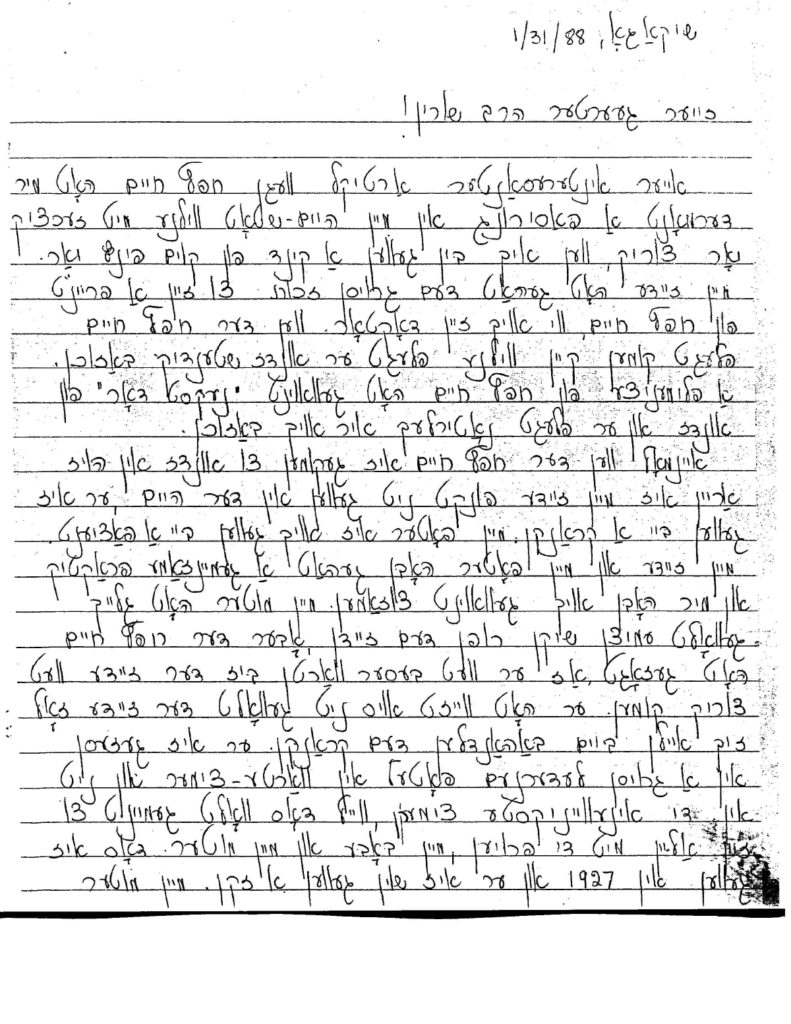
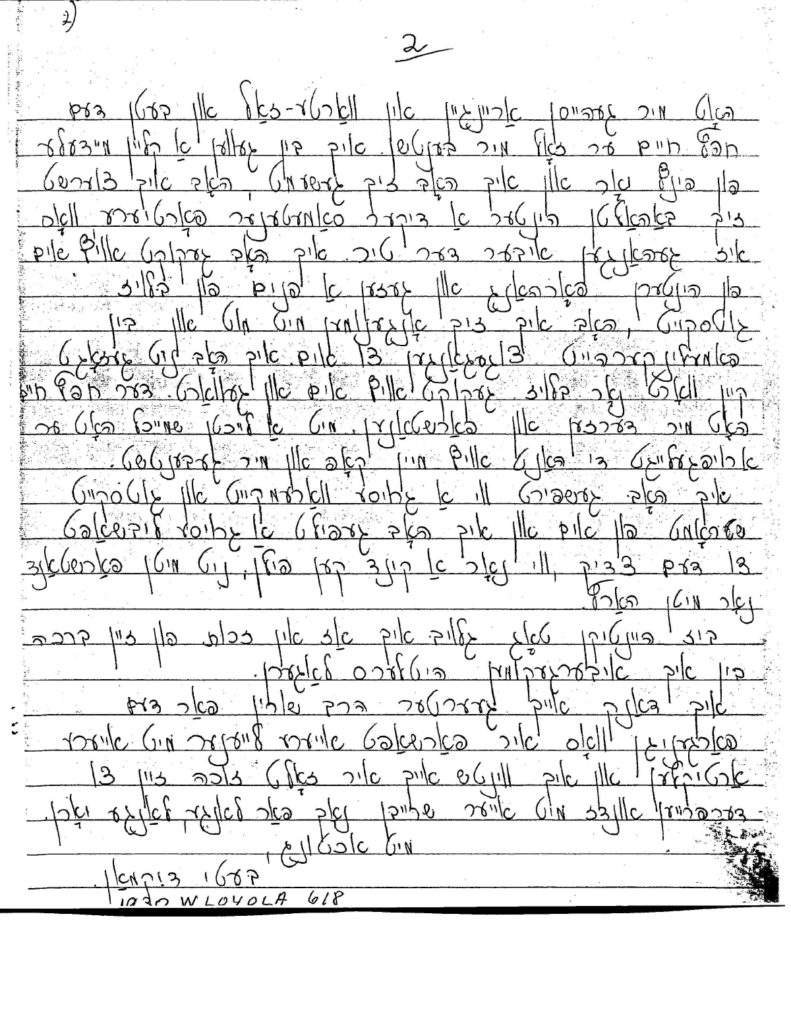


Two Editions of R. Chaim Berlin’s Responsa: An Egregious Example of Censorship

Two Editions of R. Chaim Berlin‘s Responsa: An Egregious Example of Censorship
by Eliezer Brodt

R. Chaim Berlin, Sefer Nishmat Hayyim, She’elot u-Teshuvot, R. Ya’akov Kosovsky-Shachor ed., Beni-Brak, 2002, 412 pp.

R. Chaim Berlin, Sefer Nishmat Hayyim, Mamorim u’Mechtavim, R. Ya’akov Kosovsky-Shachor ed., Beni-Brak, 2003, 424 pp.

R. Chaim Berlin, Otzar Reb Hayyim BerlinShu”t Nishmat Hayyim, Jerusalem, 2008, 4 vol., 446, 462, 449, 298 pp.

R. Chaim Berlin (1832-1912), the son of the R. Naftali Tzvi Yehuda Berlin (author of the Netziv), although well known until recently none of R. Chaim’s extensive torah has been published. To be sure, some of R. Chaim’s torah can be found scattered throughout the seforim of his time, but never in a book of its own. In 2002, R. Kosovsky-Shachor (“R. KS”) published a collection of R. Chaim’s responsa entitled Nishmat Hayyim. These responsa were collected from various manuscripts in many collections as well as correspondences which R. KS found in the Rabbinic literature from R. Chaim’s era. A year later R. KS printed a second volume of letters, derashot, articles and approbations of R. Chaim Berlin also entilted Nishmat Hayyim. In the back of the volume of responsa, R. KS includes a nice historical write up of R. Chaim Berlin’s life (corrections and additions to the biography appear in the back of the second volume).

A few months ago another collection of R. Chaim Berlin’s respona were published by Yeshivat ve-Hegaditah le-Vinkha entitled Otzar Reb Hayyim Berlin. This version was published in four massive volumes on all areas Shulchan Orach, Shas and more. In this post I will discuss a bit about the two versions, some of the interesting teshuovs found in them and many instances of censorship in the later edition. Regarding these examples of censorship, I can only assume that there are many more examples as I haven’t compared every line of the four volumes with the original. But, as will be apparent, the examples provided below are fairly egregious. Additionally, these works touch on the important topic of the reason behind the closing of Volozhin Yeshiva.

For purposes of this post, I will refer to the Nishmat Hayyim as the older edition and the Otzar Reb Hayyim Berlin as the new edition. The earlier edition contains about 200 responsa while the new version has well over 800 responsa. In the earlier edition they printed a volume of letters and haskamos which the new version did not do yet include but promises to print shortly. The newer version has an excellent index based on the order of shas and topics. Just a quick glance shows the tremendous wealth of topics discussed. They also included a list of all the people R. Chaim corresponded a veritable “who’s who” of the gedolim from that time period.

Some Highlights

Amongst the many interesting teshuvos there is one about riding on a train on Shabbas (1:171-172), creating something via the Sefer Yetzira on Shabbas (1:418), asking an agent to give a Get via a phonograph (4:39), throwing grass when one leaves the cemetery (2:359) and burning dead bodies as opposed to burial (2:353-355).

In the new edition there is a lengthy discussion (1:70-77) about answering Amen when one is in middle of davening. In the midst of this responsa (1:73) R. Berlin notes a very interesting thing :

נראה לענ”ד שאף במקום שמותר להפסיק בפשיטות ואין שם בית מיחוש כלל להחמיר כמו להפסיק מפסוקי דזמרה לקדושה, אין זה אלא רשות שמותר להפסיק אבל לא חיוב, וטעמא דידי, משום דקי”ל העוסק במצוה פטור מן המצוה….

Another interesting statement found in a correspondence between him and R. Sholomo Hakohen where R. Shlomo writes (#67 in the old edition and # 191 in the new edition):

כן שמעתי מפי אביו הצדיק זצ”ל (הכוונה להנצי”ב) שאמר בשם חמיו זקנו הצדיק מו”ה חיים מוואלזין זצ”ל שיש לומר פירוש בלשון הרמב”ם והשו”ע אם הוא עולה ע”פ ההלכה אף שבודאי לא כוונו לזה משום שרוח הקודש נזרקה על לשונם, וכן מצאתי כעין זה ממש בס’ בית אלוקים להגאון המבי”ט זצ”ל בסוף פ’ ס”ד ע”ש”

While discussing the topic of gramophones, R. Chaim Berlin (#1 in old edition) writes that they had these already in the time of Chazal:

ובזה נראה לי לפרש לשון הש”ס בפ’ ראוהו ב”ד רה”ש כ”ח ב’ דמשני הש”ס על הא דתנן הי’ עובר אחורי בית הכנסת ושמע קול שופר או קול מגילה, אם כיון לבו יצא ואם לאו לא יצא מאי לאו אם כיון לבו לצאת, ושמע מינה מצות צריכות כונה, ומשני לא לשמוע, והא שמעי, סבור חמור בעלמא הוא, ופירש רבינו חננאל בש”ס החדשים דפוס ווילנא אם כיון לבו לשמוע ולהבחין אם הוא תקיעת בן אדם או צהלת סוס, ותמוה דהא ניחא בקול שופר שיש לטעות שהוא צהלת סוס, אבל בקול מגילה דלא שייך לטעות שהוא צהלת סוס, מאי איכא למימר, ותפשוט מינה דמצות צריכות כונה, וכבר תמהו בזה הטורי אבן במקומו, והפרי חדש או”ח (סי’ תר”צ סעי’ י”ג). ונראה דבימי הש”ס הי’ כלי זו של הגרמפון עשויה כצורת חמור והליצנים היו משתמשין בו, וזהו חמרא דאכפא דאמר ר’ אבהו בפ’ במה אשה שבת ס”ו ב’ ופירש”י חמור הנישא בכתפים והליצנים עושים אותו ובמקומנו נקרא ארדפיסא, ותרגם בש”ס החדשים דפוס ווילנא שזה קומנדינט או פארשטעלונג, וביותר היו עושין כן בפורים לבדח ולשמח את ההמון, והיה הדבר מצוי לשמוע מהחמור הזה גם קול מגילה, ומבואר דאם הוא קול החמור הזה, אינו יוצא ידי חובתו, כנלע”ד, וה’ יודע האמת

Another nice point is found while dealing with the issue of reciting the tefilah of Birkat Rosh Chodesh in light of the general prohibition against praying for one’s livelihood on Shabbos. R. Chaim Berlin writes (#23 old version):

ע”ד אשר שאל, היאך מצלינן בשבת שמברכין החודש על חיים של פרנסה, לפלא שלא שאל גם על נוסח מי שברך שאומרים בכל שבת אחר יקום פורקן, דמצלינן וישלח ברכה והצלחה בכל מעשי ידיהם, וגם על נוסח בריך שמי’ שאומרי’ בהוצאת ס”ת דמצלינן יהא רעוא קדמך דתוריך לן חיין בטיבותא. אבל כבר כתבו האחרונים ליישב מנהג ישראל, שלא אסרו לתבוע צרכיו בשבת, אלא ביחיד העושה לעצמו תפלה מיוחדת על איזה מקרה, הנחוצה לו באותה שעה לפרנסה או לרפואה וכדומה, אבל נוסח תפלה הקבוע לכולם בשוה בנוסחא אחת, אין קפידא בזה, וגם זה נכלל בלשון הירושלמי טופס ברכות כך הוא

Another nice piece (# 52 old version) I found is in regard to the famous discussion for those who observe gebrucks how can they make kneidel on Chol Hamoed Pesach?

והנה, קרבו ימי המועד לבוא, אשר לא אאחוז עט בידי לכבודו משך שמונת ימים, ע”כ אמרתי להודיעו מה שעוררתי את בני עדתי בדרשת שבת הגדול העבר, ע”ד האנשים הנזהרים ממצה שרוי’ כל ימי הפסח לבד מיום האחרון, ויש גם נשים הנזהרות בזה. ואותן הנשים שנזהרות בזה ואין להם משרתת בבתיהם ואופות ומבשלות בעצמן, הנכון שיזהרו בשביעי של פסח מלהכין תבשילי מצה שרויה על יום המחרת, מאחר שאין התבשילין הללו ראויין להן ביו”ט, ואפי’ אם יקלעו להם אז אורחים ביו”ט שביעי של פסח, ג”כ לא יתנו להם מצה שרוי’, הרי לא מהני עירוב תבשילין בזה, כמש”כ הרמ”א בסי’ תקכ”ז סעי’ כ’ לענין מי שמתענה ביו”ט ועי’ מגן אברהם שם

It is also apparent from this teshuvah that R. Chaim did not even write Torah on Chol Hamoed.

Another very interesting Teshuvah (new edition 3:1-3) is where he deals with the Tzavas R. Yehudah Hachassid, as he was asked about marrying someone where it would be against one of the statements in the Tzavah. To which he replied:

.מכאן נלמוד לכל האזהרות שהזהיר רבינו החסיד ז”ל בעניני זיווגים, שאם אין בדבר זה שום מצוה, אלא שחפץ בה לשם ממון או לשם נוי, ודאי יש ליזהר בכל אזהרותיו, אבל מי שעושה מעשיו לשם שמים, ומכוין למצוה, עליו לא הזהיר החסיד כלל

Another interesting piece found (#24) is about a piece of the Netziv in the journal of Rav Kook, Iytur Seforim where the Netziv wrote that it is permissible to read newspapers on Shabbas. Regarding this point R. Chaim Berlin wrote:

ועל דבר לעיין בשבת בהרהורא בעלמא בלי קריאה בפה באגרות רשות ובמכתבי העתים לא הי’ כלל דעת מר אבא הגאון שליט”א, לקבוע מסמרים בהלכה זו ככל דבריו שבעטור סופרים, ולא בא אלא ליישב מנהג העולם שקוראים במכתבי העתים בשבת שסומכים בזה על משמעות תלמודא דידן עפ”י דעתם, שמפרשים דתלמודא דידן פליג בזה על תלמוד ירושלמי, אבל להלכה גם הוא יודה דקיי”ל כהירושלמי, וכה”ג מצינו בהרבה מקומות שכתבו הפוסקים ליישב מנהג העולם, שסומכים על דעה יחידית אף שלא כהלכה

The Netizv defends his opinion in the Shut Bikurei Shlomo (1:2). Interestingly enough there is testimony to the contrary from R. Baruch Halevei Epstein who writes how on Shabbas his uncle the Netziv used to read the Hebrew newspaper, Hamagid (Mekor Baruch 4:1794). R. Meir Bar-Ilan echoes R. Baruch Halevi’s testimony about his father the Netziv that he would read newspapers on Shabbas (Me-Volzhin LeYerushalim 1:138).

Much has been written about how the responsa literature can aid in reconstructing the history of the period, this sefer also shows us this. Just to cite one example in volume one (p. 88) of the newer version (which shockingly was not edited out) someone wrote to R. Chaim:

גלוי וידוע לכבודו עד כמה פשתה הנגע בארצינו וביתר שאת בארצות אוירפפה ושדה תיכלה כמעט בכל בנות ישראל שוע ודל אשר גם בעליהן ואבותיהן המה משלומי אמוני היהודים המחזקים בדתינו הקדוש והמה גם הנה אינן ח”ו מפורקי עול בדרך כלל, ובכל זאת עברו ושנו ונעשה להן כהתיר לילך בגליות שער ראשיהן אחת המרבה ואחת המטמעטת, עיר ועיר ומדינה ומדינה כמנהגה וכפי חוקות המאדע שלה. ולא ישמרו את נפשותיהן מזה לילך כן גם בבתי כנסיות ובבתי מדרשות ובמסיבות אנשים שרים סביב לשלחן בעת סעודות נשואין שבת ויום טוב

We see from this that the well known phenomena of woman not covering their hair in previous generations. The question which was posed to R. Chaim was what one should do about saying berokhot or Shema in front of such a woman. To which R. C. Berlin replied:

לענין קריאת שמע גופא יש מקילין בזמן הזה שכבר נהגו לגלות ראשן ודומה לשער שמחוץ לצמתן… ומעתה למעשה בזמן הזה, מי שאינו מחפש למצוא לו יתד על מה לסמוך, ומקלו יגיד לו, יוכל לסמוך על המקילין. ומי שהוא ירא חטא, ורוצה לצאת ידי שמים גם בסתר כבגלוי, ודאין אין לו לסמוך על המקילין

This is similar to the famous controversial pesak of the Aruch Hashulchan (O.C. 75:7):

עתה בואו ונצווח על פרצות דורינו בעוונותינו הרבים שזה שנים רבות שנפרצו בנות ישראל בעון זה והולכות בגילוי הראש וכל מה שצעקו על זה הוא לא לעזר ולא להועיל ועתה פשתה המספחת שהנשואות הולכות בשערותן כמו הבתולות אוי לנו שעלתה בימינו כך מיהו עכ”פ לדינא נראה שמותר לנו להתפלל ולברך נגד ראשיהן המגולות כיון שעתה רובן הולכות כך והוה כמקומות המגולים בגופה… וכיון שאצלינו גם הנשואות כן ממילא דליכא הרהור

Censorship in the New Edition

Of course this post would not be complete without mentioning some censorship in the new edition. Although I mentioned that the later edition has much more material than the first edition it seems a few teshuvos got “lost” in the later edition. [The family involved with the printing of this sefer is the same one mentioned by Dr. Gil S. Perl, in his Emek ha-Neziv, A Window into the Intellectual Universe of Rabbi Naftali Zvi Yehudah Berlin (PhD, Harvard, 2006), on pages 49-50, in light of Dr. Perl’s comments, it is of no surprise that they edited out these particular teshvot].

In the first edition (# 135, see volume 3:5 of the new edition) there is a discussion about shaking woman hands which has been a very controversial topic [See the recent Bina Ve-das p. 117]. Perhaps shockingly to many R. Chaim Berlin replied:

ואשר שאל על דבר נתינת ידו לרשעים או לנכרית, הנה ליתן יד לפושעים אין שום איסור בזה אם אין בזה הודאה וחיזוק להנהגותיהם בשרירות לבם. ולתת יד לאשה לשון הש”ס הוא ברכות ס”א א’ המרצה מעות לאשה מידו לידה כדי להסתכל בה, מבואר דאם אינו מכוין לשום דבר וכש”כ שאינו עושה כדי להסתכל בה כמו מעלתו שכל מעשיו לשם שמים אין איסור בזה לרצות מעות מידו לידה. ודאי אם יוכל להזהר בזה מה טוב, אבל אם אי אפשר לו להנצל מזה כגון אם הנכרית הקדימה והושיט לו את ידה ואין דעתו לשום הרהור ח”ו אין להחמיר בזה, ודרכיה דרכי נועם, ואהבת את ה’ אלקיך אמרו חכמים יומא פ”ו א’ שיהא שם שמים מתאהב על ידך, ולא יאמרו על יראי ה’ שהם משוגעים ואינם בעלי דרך ארץ

Two other pieces edited out from that same teshuvah in the new edition I am not sure as to why, are:

ועל דבר כסוי ראש האשה במטפחת אחת, אם אין שערה נראין אין בזה שום איסור, ועדיף טובא מפיאה נכרית, ואין צריך כלל שני כסויין, ואם אך אין השער נראה בחוץ די בכסוי אחד אף ברשות הרבים, ורשאי גם לקרות ק”ש כנגדה, ואין להחמיר עוד בזמן הזה

ולדבר עם אשה בשוק לא נאסר אלא לתלמיד חכם ולא למי שאינו מוחזק בתלמיד חכם, וכשם שתלמיד חכם המדבר עם אשה בשוק גורם בזה חלול השם כן מי שאינו מוחזק לתלמיד חכם הנזהר בזה שלא לדבר עם אשתו לעיני הבריות הוא מיחזי כיוהרא, ויש בזה גם כן חלול השם

Another very interesting statement which was edited out of the second edition is about Chasidim (# 7 in the old edition) where he writes:

ולהתפלל בבית הכנסת של החסידים אין שום חשש בזה, וגזירת רבינו הגר”א ז”ל לא הי’ אלא בזמנו שהקילו אז בכבוד תלמידי חכמים לומדי תורה, ולא כן בימינו שהחסידים חולקים כבוד לכל לומדי תורה והם יראי ה’ ושומרים תורה ומצוה. אך על דבר שינוי נוסחת התפלה, אסור לשנות בפרהסיא ממנהגיהם ומנוסחאותיהם ובנוסח הקדושה יאמר קדושת כתר בשביל שנאמרת בקול רם ויש בזה איסור לא תתגודדו, וגם שלא לעורר מחלוקת ח”ו, אבל בתפלה בלחש לא ישנה כבודו ממנהג אבותיו וממנהגו מעולם, ויתפלל שמונה עשרה בלחש כנוסח אשכנז

Another piece which was censored out although I am not sure what is so bad with it (#200 in the old edition) where he writes that there were additions to Mishnayos after Rabenu Hakadosh edited it:

שביארתי מאמרם ז”ל התמוה מאד בשלהי מס’ סוטה מ”ט ב’ על משנתינו משמת רבי בטלה ענוה ויראת חטא א”ל ר”י לתנא לא תיתני ענוה דאיכא אנא א”ל ר”נ לתנא לא תיתני יראת חטא דאיכא אנא. והתמיה מפורסמת איך אמוראים קדושים כאלה ישבחו עצמם בענוה ויראת חטא, והמלך החכם אמר יהללך זר ולא פיך. וביארתי בס”ד על פי מש”כ הרע”ב ז”ל על האי בבא משמת רבי בטלה ענוה שתלמידיו של רבי הוסיפו וכתבו זה במשנה, וכ”כ בתוס’ רע”ק בשם הרמב”ן בחי’ ע”ז ל”ז א’ שהוא תוספת שהוסיף בר קפרא או לוי במשנה, והמה היו תנאים אחרונים תלמידי רבי. ואמרתי שהוא הוא התנא שדברו עמו רב יוסף ורב נחמן, שרב יוסף א”ל לזה התנא שהוסיף במשנה משמת רבי בטלה ענוה א”ל לא תיתני ענוה שאתה מסתיר מדותיך הטובים ושונה במשנה משמת רבי בטלה ענוה ואנא ידענא שגם אתה ענוותן כרבי ועדיין לא בטלה ענוה משמת רבי, וכן א”ל רב נחמן לזה התנא שהוסיף במשנה משמת רבי בטלה יראת חטא א”ל לתנא לא תיתני יראת חטא שאתה מסתיר מדותיך הטובים ושונה במשנה משמת רבי בטלה יראת חטא ואנא ידענא שגם אתה ירא חטא כרבי, ועדיין לא בטלה יראת חטא משמת רבי, כן ביארתי זה המאמר לפי חומר הנושא

This censorship or editing goes the other way as well. In the first edition there is a piece (#120 old edition) about being a vegetarian but the whole question is not included for some odd reason but in the new version (#222) the whole question is printed out in full. R. Chaim Berlin was asked by R. Menashe Grossburg:

אם ראוי לישראל להיות מהחברה צער בעל החיים, ואם מותר לאכול בבית מרזח שלהם, שאין אוכלים אפילו חלב ובצים. לדעתי נראה לי בחפזי לפי מה שכתב הט”ז כמה פעמים דמה שמפורש התיר בתורה אין כח לשום אדם לאסור ובתורה מפורש התיר לאכול בשר מזמן נח. והם אומרים שכשם שאסור רציחה באדם גם כן אסור בבהמה אפילו בשחיטה, וזה נגד דעת תורתנו. ועוד ששמחת יום טוב מצות עשה גם בזמן הזה בבשר

To which R. Chaim Berlin answered:

נראה דעד כאן לא אמר הט”ז אלא דאין כח ביד חז”ל לגזור איסור לכל ישראל על דבר שפירשה התורה בפירוש להיתר, אבל מי שירצה לאסור על עצמו אכילת בשר, אין זה בכלל דברי הט”ז, והרי הוא ככל הנדרים שכתבה תורה בפירוש איש כי ידר נדר או השבע לאסר אסר על נפשו לא יחל דברו, אלא שחובה להתרחק מן הנדרים, והנודר כאלו בנה במה, ונקרא רשע כדתנן בפ”ק דנדרים ט’ א’ כנדרי רשעים, וביו”ד סי’ ר”ג

This teshuvah was a list of questions from R. Menashe Grossburg to R. Chaim Berlin which the old edition broke up and put it in the different places and never even included the name of R. Menashe Grossburg [at one time the editor makes it as if someone else asked the question (see p. 104)].

Some Final Points

When talking about the Malbim in a hesped (printed in volume two of R. KS Nishmat Chaim p. 14) R. Chaim Berlin said:

לחזק תורה שבעל פה כהגאון המלבי”ם ז”ל, ובענין זה לא הניח כמותו, ממלא מקומו, כי הניח כל החריפות והפלפולים שמילדותו והקדיש כל כחותיו להראות איך התורה שבעל פה מבוארת בבאר היטב בתורה שבכתב, אשר הענין הזה נחוץ ביותר בזמנינו

In another teshuvah we see how much he respected the Marsham as he (#19 old version) writes:

ואני אין רצוני להיות מדייני גזירות, אם לא שיבוא האיסור גם מרבנים זולתי כמו מהגאון ר’ שלום מרדכי הכהן מברעזאן וזולתו, אז יוכל לצרף להם גם את שמי ולא באופן אחר

His very close friend the Adres also felt the same way about the Marsham as the Adres even asked him to be his Rebbe in Halacha after R. Yitzchak Elchanan died (see Rabbosenu she-begoleh 1:13-125 and R. E. Katzman in his introduction to Chidushei Hagoan Hadres pp. 25-26).

I write that the Adres was very close to him based on two things. One, besides for the Netziv and other family members the most correspondences are with the Adres. Two, in his Tzevah he writes:

מקום קבורתי, קניתי בחיי, על יד קבר אהובי הרב ר’ אלי’ דוד ראבינאוויץ תאומים ז”ל

[On the friendship between Adres and R. Chaim Berlin see also the letter printed in the most recent volume of Shnos Dor Vedor (3:355-356).]

In a letter from the Adres (new edition 1:382) to R. Chaim Berlin the Adres describes to him when he first met the Netziv. The Netziv got up and made a Shecheaynu! [The Adres also records this incident in his now rare, autobiography Seder Eliyhu p. 85]. [On the friendship between Adres and Netziv besides for what Adres writes there in his autobiography (ibid) see the letter printed in the most recent volume of Shnos Dor Vedor (3:485-486).]

In a letter to a friend written when he first got to Yerushalim R. Chaim Berlin writes:

והנני מברך בכל יום בשמחה רבה שלא עשני עב”ד (אב”ד)

He also writes this statement in a short history of himself which he sent to R. Eisenstadt for his Doros Achronim (1:71-72). [This short history is included in the new edition of Nishmat Chaim p. 8 without providing their source.] [On this “Beracha” see R. S. Askenazi in his Alpha Beta Kadmita Deshmuel Zeria p. 469 where he shows five places where R. Yakov Emden said this.]

In the newer edition of R. Chaim Berlin they write that they did not include a biography of R. Chaim Berlin in light of R. Chaim’s opposition to such biographies or histories:

The Closing of Volozhin

But they did include one historical thing which they felt was very important to be printed, the statement of R. Chaim Berlin about the closing of the Volozhin Yeshiva (based on a copy of the manuscript) where he writes:

מה שהזהירני וצוה עלי מר אבא הגאון זצלל”ה הכ”מ קודם פטירתו. על דבר שמסר נפשו על ענין ישיבה דוואלוזי’ין, שלא להכניס לתוכה שום לימוד חול ולסיבה זו נסגרה הישיבה ומזה נחלה בחוליו אשר לא עמד ממנה. וצוה לי באזהרה שלא להסכים לענין זה בלא שום הוראת היתר בעולם. ואמר שהקב”ה רמז כל זה בתורה. שאמר להבדיל בין הקודש ובין החול היינו שכל עניני חול המתערבים בקודש בלי הבדל. לא די שאין עניני למודי חול מקבלים קדושה אלא אף זה שעניני למודי קדש מתקלקלים מהם. ע”כ לא ירע לך בני מה שהענין זה גרם לי לצאת מן העולם כי כדאי הוא הענין הגדול הזה למסור נפשו עליו. כל זה דיבר אלי ביום ג’ כ”ו מנחם אב תרנג בוורשא עכ”ל

This piece has been printed before in many places (at times even an exact picture of it see S. Roz in his Tzadik Yesod Olam pg 142 and from there R. Eliach in Hagoan pg 629; see also Yeshurun 7:675). The letter was called into question as to its authenticity see R. Ben Zion Yadler in his Betov Yerushlaim pg 388-389. [These sources escaped Professor Stampfer’s notice see his book Hayeshiva Halitais Behishavetah pg 224].

The topic of the closing of Volozhin has been the subject of much discussion especially the often quoted article of Jacob J. Schacter, “Haskalah, Secular Studies and the Close of the Yeshiva in Volozhin in 1892,” Torah u-Madda Journal 2 (1990). See even more recently the interesting discussion by R. N. Kamenetsky in his Making of a Godol (1: 442-455). Although we have this statement of R. Chaim Berlin about the closing of the Yeshiva but based on historical facts it can not be true. While it was very true that the government and maskilim had been making terrible trouble for years about learn2ing secular studies in the Yeshiva and for the most part were unsuccessful. We do have clear documentation that Secular studies were taught in Volozhin on some scale a few years before its closing. ]See Hayeshiva Halitais Behishavetah p. 223.] The various theories discussed in these articles attribute the close of the Volozhin Yeshiva to the fight of R. Chaim Berlin taking over his father’s position as the Rosh Hayeshiva. R. M. Shapiro in R. Moshe Shmeul Vedoro (an eyewitness to the closing) also writes that one factor in the closing of the Yeshiva was the rebellion against R. Chaim Berlin (p.76) [This excellent book was not used by R. KS in his writing up about R. Chaim Berlin.] Most recently all this has been reexamined by two people especially based on new evidence – documents that have been discovered after the Iron Curtain fell.

What I find interesting is how two people can see the same documents and came to completely different conclusions. A few years back R. Frank printed a book on yeshivas Volozhin called Toldos Beis Haskem Bevolozhin. This book deals with the history of the Yeshiva from the beginning until the end including a brief history of all the Roshei Hayeshiva. Although the book is weak on quoting sources it has many important discussions about the topic of Volozhin. One of the real new important things printed here is government documents dealing with the closing of the Yeshiva (pp. 274-96). Although he edits out many parts due to respect for R. Chaim Berlin and R. Chaim Solovetick he prints parts and concludes that the maskilim and a few renegade bochrim influenced by the maskilim caused the government to close down the Yeshiva and it revolved learning secular studies in the Yeshiva. A few years later Professor Saul Stampfer reissued his excellent book Hayeshiva Halitais Behishavetah with many important additions and corrections amongst the additions were these same documents but unedited. The picture one gets from these documents (as he shows pp. 245-66) is something else entirely. Specifically, the cause for the government closing down the Yeshiva was not because of learning secular studies, instead the closure was because of the whole terrible and disgusting controversy about the succession of R. Chaim Berlin for his father the Netziv to be the Rosh haYeshiva of the Yeshiva. The bochurim got the government involved and they were very unhappy how the whole thing was dealt with so they shut down the Yeshiva.

One of the things the Bochrim did was interrupt the shiur of R. Chaim Berlin constantly bombarding him with many questions. According to some, they used many seforim borrowed from R. Chaim’s vast library to stump him. This terrible act was done a few times before in Volozhin. Once when R. Alexander Moshe Lapides visited the Yeshiva the bochrim did the same thing to prove a point (see Yeshivos Lita, Pirkei Zicronos pp. 75-77). [This account is not included in the otherwise excellent edition of R. Alexander Moshe Lapides writings called Torah Hagoan R. Alexander Moshe.] When R. Yitzhkach Elchanan Spektor visited the yeshiva at a different time they tried the same thing but were unsuccessful in stumping him (see Toldos Yitchack p. 61 see also Harishon Leshalshles Beis Brisk pp. 128-32).

As an aside in researching this topic I was (and still am) horrified about this whole controversy how the bochurim (even if it was not the majority of the Yeshiva) could do all the terrible things they did during the whole fight. Ultimately causing the close of the Yeshiva and the premature death of the Netziv!

In the Derech Etz Chaim, Y. Meltzer (pp. 51-52) prints a letter of someone (he edits out the name) (see also Nishamt Chaim old edition 2:122) who asked mechilah from R. Chaim Berlin for making him trouble when he was supposed to take over Volozhin and R. Chaim Berlin writes back:

אנכי עפר ואפר ואין אני כדאי לפני המקום יתברך שמו, כי יענש חס ושלום שום אדם בסיבתי. ובר מן דין, כבר באותם הימים שצערוני אמרתי בכל לילה כמר זוטרא מגילה כח א’ שרי ליה לכל דצערן לי ואין לו לחוש כלל לדרוש ממנו מחילה כי מצדי כבר מחלתי. אמנם מאי דשקליה למטרפסי ונענש מן השמים זה בשביל שני דברים: אחד בשביל חילול ה’ הגדול שגרם… ב. בשביל צערו של רבו המובהק, מר אבא הגאון מאור הגולה זצוקל”ה, שגרם לו אז כמובן… ובפרט שיכול להיות שמהצער הגדול הזה שגרם לו היה התחלה למחלתו האחרונה, שנפטר על ידה מן העולם

Another famous piece printed in Nishmat Chaim (volume two of the old edition pp. 380-83) is the dream he had after his very close friend R. Yitchack Blazaer died and R. Chaim Berlin gave a hesped although he requested that there be no hespedim. R. Chaim Berlin described the dream as follows:

נשמע אליו בזה שלא לספר בשבחו כלל, אולם על שלא נבכה על ההעדר לא צוה כלל… בא המונח אצלי בחלום ואמר לי יישר כח על שלא הגדתי שבח. ושאלתי ממנו מה נעשה בדינו בעולם ההוא, ואמר לי שדין של מעלה הוא חמור מאד שאי אפשר לשום אדם בעולם הזה לשער כלל, וביחוד מקפידים מאד על דבורים האסורים שנדברו שלא כהוגן

Another thing which R. Chaim Berlin was very famous for was his massive library which consisted of thousands of volumes. [See R. KS in Nishmat Chaim p. 376, vol 2 pp. 398, 352]. There are even some nice letters of his to his (and his fathers) friend E. Harkavy thanking him for some recent volumes from the Mikitze Nerdamim society with some comments on the seforim. This letter was printed in the first volume of Shnos Dor Vedor (p. 199) and than again in the second volume of the Nishmat Chaim of R. Kosovsky-Shachor. In the recent version of Nishmat Chaim (4: p. 45 part two) only part of the letter was printed. In the edited out piece R. C. Berlin wrote:

זה שנתים ימים, אשר הריצותי כסף שלומים, בעד שנת מקיצי הנרדמים חמשה רו”כ שלמה ליד בחיר החכמים, ידידנו הגאון ר”מ שטראשון ז”ל, ויענני במכתב, כי הריץ את הכסף לידדנו הרב הד”ר א’ ברלינר הי”ו בברלין

I am not sure why it’s a problem to acknowledge that R. Chaim Berlin liked R. Strashun but it’s not a problem in regard to R. Harkevey. As an aside we see R. Chaim Berlin wrote respectfully about A. Berliner contrary to the recent complaint voiced by someone in the recent Yerushenu (3:396).

This library also consisted of manuscripts one of which was the Seder Hadoros with the comments of the Radal. [There is a teshuvah (new edition 1:96) of his to the Radal someone who his father was also very close with] When R. Chaim Kahana was working on the Seder Hadoros R. Chaim Berlin gave him this sefer. R. Kahana included these notes which are very valuable to the topic in his Kochvei Or (available here ).

The bulk of this library passed on to R. Isser Zalman Meltzer. In Derech Etz Chaim, Y. Meltzer brings a few stories of how R. Isser Zalman Meltzer made use with it (pp. 451-52) and even had the editors of Otzar Haposkim use it (p. 328). Although Y. Meltzer writes that in the Tzevah of R. Berlin it said that if a Talmid Chaham moves into my apartment after my death he should get it (p. 50) but in the version of the Tzevah printed in Nishmat Chaim (vol. 2 pp. 403-05) it does not say any such thing. [See Nishmat Chaim volume one (old edition p. 376).]

R. KS brings a story (2:377) to show his incredible yedios which I find hard to believe. Someone asked R. Chaim Berlin where is the first time that the name Chaim is mentioned in our literature as its not found in Talmud, Medrash or the era of the Geonim. R. Chaim Berlin replied the first time the name is found is in Tosfos and than he started listing the rest of the people with that name. The reason I find it hard to believe this story is we do find this name in the era of the Geonim. As R. Sherirah Gaon and Ravad in Sefer haKabalah [Cohen ed. p. 41] bring that Rav Zemach Goan father was Chaim. A look at the index of Moshe Gil’s Bemalchut Yishmael Betekufos Hageonim (volume 4 p. 853) shows that the name Chaim was fairly common in the era of the Geonim [thanks to M.M. Honig for this source]. R. Chaim Palgai (Kol Hachaim 8:15) cites a Medrash in Bamedbar (14) that shows an Amorah had the name Chaim. But it seems to be a printing mistake as in our edition it says Chiyah [see also Kesser Shem Tov vol 1 pg 300].

I mentioned that R. KS collected the Haskomos of R. Chaim Berlin reaching over 140 but at least one is missing a haskamah to a reissue of Seder Hadoros that R. Yeruchem Leiner brother of the Radziner Rebbe started working on with many additions.

One weakness both editions have which E. Katzman in his introduction to Chidushei Hagoan Hadres (p. 42) already complains about, is that the older edition left out all the sources for the pieces. The second edition at times does quote the sources from where they found the pieces but more often than not they do not quote their sources.

In conclusion, to obtain the full version of R. Chaim Berlin’s responsa, both edition are necessary, and definitely worth owning.


The Hafetz Hayyim’s Statement on Teaching Torah to Girls in Likutei Halakhot: Literary and Historical Context

The Ḥafetz Ḥayyim’s Statement on Teaching Torah to Girls in Likutei Halakhot: Literary and Historical Context

Rachel Manekin and Charles (Bezalel) Manekin

Rachel Manekin is Associate Professor of Jewish Studies at the University of Maryland.

Charles (Bezalel) Manekin is Professor of Philosophy at the University of Maryland.

The authors live in Jerusalem, Israel.

Dedicated to the memory of our mothers, Matel Becher ע”ה and Dorothy Manekin ע”ה

R. Israel Meir ha-Kohen Kagan’s statement in his Likutei Halakhot that it is “now” a “great mitzvah” to teach Torah to girls, has attracted a great amount of attention in recent years.[1] Benjamin Brown, dating the statement to 1911, suggests that it was instrumental in the founding of the first Bait Yaakov school in 1917 by Sarah Schenirer in Kraków.[2] Haym Soloveitchik, dating the text to 1918, views it as R. Kagan’s (late) perception of the erosion of the mimetic society in the wake of World War I.[3]

We show below that the statement was published some time in תרפ”ב (last third of 1921, first two thirds of 1922), after R. Kagan, known after his book as the Ḥafetz Ḥayyim, returned to Radin (Raduń), then Poland, on 25 Sivan [=July 1], 1921. The Ḥafetz Ḥayyim had spent the previous six years in Russia at a time of revolution, civil war, and the beginnings of communist policy toward Jewish religious institutions.[4] The timing of the statement on Torah education for women is significant. Several months before his arrival in Radin, a gymnasium (high school) for Orthodox girls had been established in Telz, with the direct involvement of the rosh yeshiva, R. Yosef Leib Bloch, his son, and his son-in-law.[5] Girls were taught there ḥumash and nevi’im. A primary school for girls was also established there. This was the latest in a series of Orthodox initiatives for the formal Torah education of women in Lithuania. In Kovno, a Jewish realgymnasium for Orthodox boys and girls had been established already in 1915 through the efforts of the Neo-Orthodox R. Dr. Leopold Rosenak, a brother-in-law of Emanuel Carlebach, and Joseph Carlebach, Emanuel’s brother. These initiatives were introduced as responses to the requirement of mandatory primary education, first by the German military occupying Lithuanian and later by the government of independent Lithuania. Also, in Kovno, at the initiative of Ze‘irei Yisrael, which was composed of representatives of Agudat Yisrael and the Mizrahi, the Yavne Central School System was founded in 1920; in its first year, forty schools were founded; some included girls.[6] In Kraków, then in Habsburg Galicia, Sarah Schenirer founded her afternoon supplementary school in 1917 with the blessing of the Belzer rebbe; several other schools followed in 1921 and 1922. In Warsaw, formerly in Congress Poland, R. Emmanuel Carlebach founded the Chavatzelet Orthodox women’s gymnasium in the same year, with the blessing of the Gerer rebbe. Chavatzelet taught girls ḥumash and nevi’im in the Hirschian spirit of Torah ‘im derech ’ereẓ.[7] In the 1930s the school was attended also by Hasidic girls, including the Gerer rebbe’s granddaughter.[8]

Moreover, in late January, 1922, the year in which the Ḥafetz Ḥayyim’s statement was published, the assembly of the Agudat ha-Rabbanim of Poland issued a series of calls upon its members that included the following:

11. To educate the daughters in the spirit of yiddishkeit and to learn with them from their early childhood some words of Torah and musar, and commensurate with their age to continue to learn with them their obligations in such a manner that when they reach the age of marriage, they will easily accept the obligations pertaining to the purity of the daughters of Israel. And the members are obliged to establish in their towns for this purpose a special school for the young women.[9]

As we shall see below, the resolution that called upon all communal rabbis in Poland to establish schools for women followed an impassioned speech on the challenges facing Torah education in Poland by the Galician rabbi, R. Meir (Maharam) Shapira, then the Rav of Galina, and shortly to become one of Agudat Yisrael’s representatives to the Polish Sejm and the Rosh Yeshiva of Yeshivat Ḥakhmei Lublin.

In light of the above, the Ḥafetz Ḥayyim’s statement on teaching Torah to Jewish daughters should be read as a hekhsher of formal Jewish education for women after and while schools for Orthodox girls were established in Poland and especially in Lithuania. All the aforementioned schools had strong connections with Agudat Yisrael operatives in their various locales. As is well known, the Ḥafetz Ḥayyim was a major rabbinical authority for the Agudah; several months after his return to Poland (which now incorporated parts of Lithuania), he and R. Ḥayyim Ozer Grodzinsky of Vilna, called for the strengthening of the Lithuanian Agudah.[10] He was most likely informed about these schools, certainly the women’s gymnasium in Telz, upon his return to Radin, if not earlier.

In any event, the 1924 decision to have Keren ha-Torah, the education fund of Agudat Yisrael, support a network of Jewish schools for girls was sanctioned by the Ḥafetz Ḥayyim’s aforementioned statement, according to Dr. Leo Deutschländer, the head of Keren ha-Torah, and subsequently one of the administrators of the Bait Yaakov seminary in Krakow.[11]

It is important to emphasize that the educational policies of all Orthodox schools in Poland-Lithuania were subject to rabbinical authority, and that no pedagogical steps were taken without consultation with, and approval, by rabbinical leaders.[12]

Part One. The Literary Context of the Ḥafetz Ḥayyim’s Statement on Women’s Education

The Ḥafetz Ḥayyim’s comment does not appear as a formal response to a halakhic question of the permissibility of teaching Torah to women. Rather it appears as a footnote to the halakha that women should not be taught written Torah ab initio cited in his Likutei Halakhot on Sotah. Likutei Halakhot is a condensation of the halakhic sections of the Gemarah in the manner of R. Isaac Alfasi’s Halakhot Gedolot. Initially a project to provide students with a halakhic digest to sugyot having to do with kodeshim, the study of which the Ḥafetz Ḥayyim considered to be unduly neglected and of capital importance,[13] the project was ultimately expanded to provide a halakhic digest of all sugyot on which there was no Rif or Rosh (R. Asher b. Yehiel). Unlike the Rif, the Ḥafetz Ḥayyim’s’s aim was not to decide the halakha, but rather to provide student with an abridged description of the development of the halakha through the Rambam.[14] The Ḥafetz Ḥayyim believed that by reading halakhic condensations of the Rif with Rashi, and Likutei Halakhot with Rashi, the students would be able to master the fundamental halakhot of the Talmud – something that he felt could not be easily accomplished by reading the Mishneh Torah with its commentaries.[15] In later years he recommended such a program of study for those who lacked the time for in-depth study of the Gemarah.[16]

Before we analyze the footnote, we need to justify dating Likutei Halakhot on Sotah to תרפ”ב. Unfortunately, determining the publication history of Likutei Halakhot is complicated. The work was published serially, beginning with Zevaḥim, in 1899/1900,[17] in the form of kuntresim, which could be bound and published as seen fit by the Ḥafetz Ḥayyim; the published volumes did not carry a separate title page from the individual kuntresim comprising them. The title pages of the kuntresim often do not mention all the titles of the individual tractates contained therein, and, like many Torah publications, their dates of publication on the title page have to be derived from gematriyot of rabbinic statements in which certain letters are in bold typeface. Sometimes tractates that were published earlier were republished with the same title page. The individual tractates themselves have their own pagination. An edition of the entire work was published by the Ḥafetz Ḥayyim’s son-in-law, R. Menaḥem Mendel Yosef Zaks, in Brooklyn in 1960, and in Jerusalem 10 years later. The edition contains, dispersed throughout the work, some of the original title pages, but not always with their original dates. The order of the tractates in the R. Zaks edition is also not always according to the order of publication; sugyot from the same tracate that appeared in different kuntresim are placed together.

As noted above, two dates for Likutei Halakhot on Sota appear in the secondary literature, 1911 and 1918. We have found no textual basis for either date. The 1911 date appears in M. Gellis’s bibliography of the Ḥafetz Ḥayyim’s writings without explanation.[18] We do not know what is the source for the 1918 date.[19]

The volume of Likutei Halakhot including Sotah that we inspected in the National Library of Israel binds three kuntresim together. The first consists of Bekhorot and Keritot, printed by H. H. Fohlman, the second consists of Arakhin, Nazir, and Sotah, with only Arakhin mentioned on the title page, without a date; the third consists of Niddah, printed by M. Cederbaum, undated. Of these tractates, only Sotah and Niddah appear for the first time. (Niddah also appears published with its own title page by Cederbaum in תרפ”ג.) The date on the cover page, תרפ”ב was added in pencil, perhaps by a library cataloger or book seller, after calculating the gematriya; the volume, belonged formerly to the Boston Hebrew College library.


The תרפ”ב date is derived from the gematria of the emphasized letters: The saying (העוסקין בהלכות עבודה כאלו נבנה המקדש בימיהם (מנחות קי totals 682 ( 25 + 49 + 107 + 56 + 87+ 63 + 295), i.e., תרפ”ב.

As noted, the separate cover page for Arakhin (including Sotah and Nazir) is undated:


The Ḥafetz Ḥayyim, who was in charge of the printing and distribution of his books, advises on the title page of Likutei Halakhot on Bekhorot not only to read the Introductions, but also to look at the Preface (הפתיחה) “which we have now newly printed” (אשר הדפסנו זה עתה מחדש). The phrase “which we have now newly printed” is ambiguous; it can mean that the Preface is being reprinted or printed for the first time. Although the natural reading today would be the former, we found the Preface printed only in Likutei Halakhot on Sanhedrin, which we date to late תרפ”ב. And on the title page of Niddah, published by Cederbaum in תרפ”ג, we find a reference to the Preface אשר נקוה שנדפיסה בקרוב (“which we hope to print soon.”) This sort of discrepancy should not worry us, especially since Likutei Halakhot on Sanhedrin was printed by Fohlman and on Niddah by Cederbaum.

The Preface, published for the first time in תרפ”ב enables us to provide a clear terminus a quo for the publication of Likutei Halakhot on Sotah. In the middle of the first paragraph, the Ḥafetz Ḥayyim lists the tractates already completed (parentheses in the text below appear originally in the kuntresim as square brackets; the square brackets here are our own):

Barukh Ha-Shem, we have collected, according to our meager opinion, the words of the Rambam that he codified from the sugyot on thirteen tractates that pertain to matters of kodeshim, namely, Zevaḥim, Menaḥot, Tamid, Pesaḥim (from Tamid ha-Nishḥat to ‘Arvei Pesaḥim), Hagigah, Yoma, Tamid, Temurah, Keritot, Bekhorot [the three final chapters), ‘Arakhim, Me‘ilah, and Nazir (the later also has many things that are relevant to kodeshim), and likewise the first two chapters of Shavuot […] and now, only a few tractates are missing from the Shas, may God grant that over time some Jews will be found to complete the entire Shas […].[20]

And in the second paragraph he writes:

I wrote all this [i.e., the Preface until the present point] more than ten years ago. We have experienced many wanderings because of the war. Barukh Ha-Shem, who has kept us alive and did not allow our feet to falter. And now that I have come from the diaspora to my home, Ha-Shem, yitborakh, has helped me in his abundant kindness and goodness for the merit of Israel to complete Likutei Halakhot on the other tractates of the Shas that do not have the commentaries of the Rif and the Rosh. (And these are: Rosh Hashanah, Makkot, Horayot, Sotah, and Niddah […]).[21]

The second paragraph of the Preface attests to a time gap in both the composition of the Preface and in the publication of the tractates. The first paragraph of the Preface was written more than ten years earlier, i.e., no later than late 1910 or 1911. At that time the Ḥafetz Ḥayyim had completed, but not published, all the tractates mentioned in the first part of the Preface. Again, he did not publish the Preface itself until late 1921 or 1922. So although there is no date on Likutei Halakhot of Sotah itself, we can infer that it was published in תרפ”ב. As for the date of actual composition, we have no evidence in the Preface or anywhere else to suggest that it was written much earlier. Given that Niddah appears separately in תרפ”ג, the kuntres containing Sotah may have appeared late in תרפ”ב, after the aforementioned assembly of the Agudat Rabbanim in Warsaw. The Ḥafetz Ḥayyim would go on to complete other tractates and finish the work in 1925.

In short, the publication of Likutei Halakhot on Sotah is to be dated to late 1921 or the first two-thirds of 1922 (תרפ”ב) and not to 1911 or 1918,[22] according to the date of the aforementioned volume, and no earlier than Summer 1921, the date of the Ḥafetz Ḥayyim’s return to Radin, according to the Preface.

Part II. The Historical Context of the Footnotes on Jewish Education in Likutei Halakhot on Sotah

The Ḥafetz Ḥayyim was 83 years old when he declared it to be a great mitzvah to educate women in various Torah matters. To understand both the context and content of the statement, we first present the text and the two relevant footnotes. The main text of Likutei Halakhot on Sotah 11a (p, 21) may be translated as follows:

Rabbi Eliezer says, “Whoever teaches his daughter Torah teachers her tiflut.” You thought [actual] tiflut? Rather [it is] as if he teaches her tiflut. R. Abbahu says, “What is R. Eliezer’s reason? It is written, ‘I, wisdom, dwell with cunning,’** When wisdom enters a person, cunning enters with it.” And how do the Rabbis understand “I, wisdom”? The verse is needed for [the interpretation] of R. Yossi b. Rabbi Haninah, for R. Yossi b. R”H says, “The words of Torah stand permanently only for the person who makes himself naked for them, as it is written, ‘I, wisdom, dwell with nakedness.” In any event, the reasoning of R. Eliezer is not thereby rejected, and the halakha is according to his statement. [Later] rabbis said that “Torah” here refers davka to the Oral Torah. But even though the Written Torah should not be taught to one’s daughter ab initio,*** [teaching her Written Law] is not as if one teachers her tiflut. And women are obligated to learn from the Oral Torah the laws that pertain to them.[23]

(The asterisks refer to footnotes on this passage. Footnotes are rare in Likutei Halakhot, and rarer still are footnotes that refer to contemporary issues.)

Let us begin with the note preceded by three asterisks, on the prohibition of teaching the written Torah to women ab initio (based on M.T. Hilkhot Talmud Torah 2:13):

It seems that all this [the admonition not to teach written Torah ab initio to women] applies to previous times, when everyone dwelled in the place of his fathers, and the paternal tradition was very strong for each person to behave in the way that his fathers had tread, as the verse says, “Ask your father and he will tell you”. [Then] we could say that [a woman] should not learn Torah but should rely for her conduct on her upright fathers. But now, on account of our many sins, the paternal tradition has weakened considerably, and it is common that one does not dwell in one’s fathers’ location at all, and, particularly for those [women] who have accustomed themselves to learn to write and speak the languages of the nations, it is certainly a great mitzvah to teach them ḥumash, and also nevi’im and ketuvim, and the musar lessons of Ḥazal, such as tractate Avot, and Menorat ha-Ma’or, and the like, in order that our holy faith be confirmed for them. For otherwise, they are liable to stray completely from the way of the Lord, and to transgress all the foundations of the religion, God forbid.[24]

The Ḥafetz Ḥayyim holds that the admonition not to teach women written Torah ab initio pertained to the past, when a woman could rely for her conduct on the example of her fathers. But today, we find a weakening of paternal tradition and the dislocation of the Orthodox from their paternal homes, which requires educating women, especially those women who are accustomed to learn the language of the gentiles; without Torah education, such women are likely to stray from the true path and to become heretics. What historical reality does this reflect?

As is well known, the use of legal literature as a source of history, even literature that purports to refer to historical events, is not unproblematic. On the one hand the geographical dislocation of Polish Jews because of the war indeed meant that many parents and children were no longer in the town and villages that had anchored their faith and practices for generation.[25] On the other hand, it would be wrong to infer from the Ḥafetz Ḥayyim’s remarks that in his view, pre-war Poland reflected a golden age of Jewish observance. Throughout much of his life he had railed against the weakening of observance among the Orthodox, and many of his published works tried to strengthen observance through teaching both the halakha and its centrality in the life of the Jew – and the penalties for its non-observance.

For example, the Ḥafetz Ḥayyim was well aware that for decades there had been a weakening of traditional observance among women from some Orthodox homes. His son, R. Aryeh Leib Kagan, relates that when he came of marriageable age in the early 1880s, his father would not consider a match for him with a young woman from an Orthodox family who had attended a gymnasium (high school), or even an elementary school; such women and their families, even though they were Orthodox, were suspect in his eyes. In one case, the Ḥafetz Ḥayyim ultimately forbade his son to accept an offer of the substantial financial assistance by a wealthy prospective father-in-law; it turned out that the prospective bride’s sister had been sent by her father to learn at a gymnasium in Grodno, where she had fallen in love with a gentile officer whom she had met (“presumably at the theater”), converted, and died in childbirth at the age of 15.[26]

In his 1905 handbook on family purity laws, Taharat Yisrael, the Ḥafetz Ḥayyim attributes the decline of some women observing the mitzvah of mikveh to the shame they feel, not because of any foolish modesty (which is the case with some other women), but because they have been educated to look down at the laws of Torah. These women feel shame because

they have been raised in their free-thinking ways from their youth, when they attended schools, and became “wiser in their own eyes” than their predecessors, to the extent that they feel shame in observing the laws of the Torah according to the law of Moses and Israel, and particularly in a matter they consider to be beyond the boundaries of modesty.[27]

The Ḥafetz Ḥayyim responds to such women’s contempt of the Torah by providing well-worn arguments for its superiority and perfection. His defense is part of the larger project of the book, written both in Hebrew and Yiddish, to educate men and women in the importance of observing family purity laws. Urging Jews to observe Torah and mitzvot, and educating them for that purpose, is the leitmotiv that runs throughout the Ḥafetz Ḥayyim’s writings. Even his Likutei Halakhot on Kodeshim, though ultimately intended as an educational tool for learning Torah, was written as practical halakhic guide for the messianic age that Ḥafetz Ḥayyim thought imminent.[28]

This emphasis on deepening Torah observance in all sectors of the Orthodox community led him to publish a kuntres directed to women, Geder Olam, in 1889, on the importance of covering their hair. The kuntres was published in Hebrew and in Yiddish, and it includes at the end a basic halakhic guide to the laws of Niddah.[29] The halakhic guide was reprinted by the Ḥafetz Ḥayyim in two other works: his book addressed to Jews migrating to places like America and South Africa, Nidhei Yisrael (1895), and his aforementioned book on family purity laws, Taharat Yisrael (1905); The Yiddish translation appears in all three works, which indicates that these sections were intended also for women to read.[30] Indeed, the Ḥafetz Ḥayyim urges women who are literate to teach the book to women who are not, and to learn the Maayan Tahor of R. Moshe Teitelbaum of Ujhely (the Yismah Moshe) (reprinted many times in the Korban Minḥah siddur for women). The Ḥafetz Ḥayyim writes, “We have written only the legal principles that are most common, that all women are obligated to learn abundantly, and to become expert in them, so they not stumble because of them.”[31] This is a clear call for women to learn halakha, albeit in a rudimentary fashion, from books written for them.

From the above we see how important it was for the Ḥafetz Ḥayyim to write educational materials for women on family purity and female modesty. This in itself was a novelty; we are not aware of such materials being written in Lithuania at the time by Orthodox talmidei ḥakhamim of the Ḥafetz Ḥayyim’s stature. Contrast, for example, the words of the Ḥafetz Ḥayyim’s contemporary, Rabbi Yehiel Mikhel Epstein, in Arukh ha-Shulḥan, Yoreh Deah 246:19:

Ours has never been the custom to teach [women] from a book, and we never heard of that custom. Rather every woman teaches the relevant laws to her daughter and daughter-in-law. Recently, laws pertaining to women have been published in the vernacular for women who can read from them. Our women are fervent (zerizot); in every doubtful matter they ask [a rabbi] and don’t decide for themselves in the smallest matter.[32]

To what recently-published laws pertaining to women was R. Epstein referring? Arukh ha-Shulḥan, Yoreh Deah was composed in the years, 1887-1894;[33] the early editions of Geder Olam were 1889, 1893, and 1894. In the latter, the Ḥafetz Ḥayyim admonishes women who need to ask a halakhic question not to ask another women, but only a moreh hora’ah, “and for G-d’s sake, a woman should not dare to decide the law!”[34] It is very likely that R. Epstein was referring to this when he wrote, “Our women are eager; in every doubtful matter they ask [a rabbi] and don’t decide for themselves in the smallest matter.” Here we have two conflicting views on the education of women in practical halakha: R. Epstein sees no need to compose halakhic guidelines in Yiddish for women, since the women with whom he is familiar have learnt the material from their mothers or mothers-in-law and know when to ask questions. The Ḥafetz Ḥayyim, observing women who are lax about observance, writes a halakhic/hashkafic manual in Hebrew and Yiddish that urges them (and their husbands) to study these guidelines diligently and to teach them to other women.

The importance of educating women in their religious duties, especially in the realm of family purity, remained with the Ḥafetz Ḥayyim for the rest of his life. As is well-known, he traveled to Vilna when he was old and frail to deliver a lecture in Yiddish at the central Synagogue on the importance of observing the mitzvah of mikveh in front of an audience of hundreds of women, with men listening in from the women’s gallery.[35]

To be sure, publishing educational materials on family purity for women is not the same as advocating Torah education for girls, but then, again, the situation in 1905 for Polish and Lithuanian Orthodox Jewry was not the same as in 1922. Orthodox Jewry in the Second Polish Republic was under severe stress. Dislocation and pressures – economic, ideological, and governmental — had accelerated the defection of Jews from the tradition; the dire situation provided an opportunity for conservatives to respond positively to new Orthodox initiatives to stem the tide. In particular, Orthodox Jewish education was at a crisis point, even more so for boys than for girls, which explains in part why much more attention was paid by Orthodox politicians and rabbis to the challenges facing the ḥadarim, than to the education of women, since, as we noted above, the compulsory education of law of 1919, which was in the early stages of implementation, required all Polish boys and girls to attend government certified schools. Agudat Yisrael negotiated repeatedly with the Polish authorities to have the ḥadarim certified, which meant that they needed to include subjects mandated by the Polish ministry of education; otherwise, even more ḥadarim would close. The negotiations with the government concerned how many hours of secular subjects would be taught, and what were those subjects to contain.[36] Formal Torah education for girls was already well underway, partly as a response to mandatory education, the general trend in female education, and the prevalence of alternatives to the ḥeder that attracted Orthodox parents, partly as a response to the weakening of observance among the Orthodox.

When the Ḥafetz Ḥayyim returned to Radin in 1921, he was faced not only with the fait accompli of formal Jewish education for women in Telz, Kovno, and elsewhere, but with the threat to both boys and girls posed by the implementation of universal compulsory education by the State. Unlike in Russia and Lithuania, compulsory education for Jewish girls had been the norm in Galicia, the part of Poland that had belonged to the Austrian Empire until the end of the First World War. Galician Jewish Orthodox girls, bereft of formal Jewish education, had attended Polish private and public schools for decades with disastrous consequences; the same now happened elsewhere in Poland. When, in his footnote, the Ḥafetz Ḥayyim refers to “those [women] who have accustomed themselves to learn to write and speak the languages of the nations” he was, whether aware of it or not, referring to all Jewish girls in the Second Polish Republic, since, as Polish citizens even the strictest Hasidim were required to send their daughters to government certified schools. And unlike the case of their brothers, no Orthodox politicians negotiated with the government to exempt girls from these schools. School attendance for Hasidic girls was a well-entrenched tradition, even among the daughters of the zealots.

It is not surprising that the rabbi who raised the issue of women’s education at the assembly of the Polish Agudat ha-Rabbanim in 1922, Maharam Shapira, hailed from Galicia, where the situation had been bleak for decades. In his survey of the state of Orthodox Jewish education, he first turns to the challenges facing the ḥeder from the mandatory education law, on the one hand, and the attacks from the [Jewish] leftists (smoliyim) on the other. If the Polish government wished to spread general education among the people, it should take into consideration the most necessary requirements of the [Jewish] nation, which is the ḥeder. And if the Orthodox try to accommodate the government’s demands, it can only be in such a way that will not destroy the ḥeder. Most importantly, Orthodox boys need to be exempt from the obligation to attend general schools. And since the ḥadarim will now have to limit somewhat their hours for Jewish subjects, it is important that they be subject to universal standards, and that the instruction be overseen by experts and pedagogues. The Maharam Shapira then turned to the question of the education of girls:

We speak a great deal about the education of girls, which is a very painful subject for us. Our situation has become so bad because we have only taken a little interest in the subject for many years. At the same time as we devoted much of our thought, and always concerned ourselves, whether a lot or a little, with the education of boys, we continued to apply to the girls, “Kol kevudah bat melekh pnimah” as in earlier times, when a Jewish daughter did not come into contact and connections with the marketplace and the public sphere, and with the currents of the time that mostly oppose Yahadut. Then we did not need to give her an antidote and a powerful and effective counterforce against them. (“Whoever teaches his daughter Torah is as if he teaches her tiflut. (Sotah 20a).” Only men had in particular to learn Torah, for they needed the antidote – the countercurrent that repels foreign currents. But the daughter and the Jewish woman sat at home, where only that environment acted educationally upon them, and developed them and made them into true Jewish women and fit Jewish daughters.) We thus did not pay attention that the girls, unarmed and lacking any concept pertaining to Torah and Yahadut, have been taken outside from us into cultures and currents. They have become so educated and raised in the lap of foreign culture and anti-Jewish ways that every “common wind” and light attempt to ensnare their spirits, to penetrate into their souls, to poison and uproot them from their place, have wielded their evil ways upon them.

And we are faced with another grave question, which is strongly related with the education of the daughters, and this is the purity of the daughters of Israel….[37]

The Maharam Shapira diagnoses the illness but does not prescribe the remedy, anyway, not in the written version of his address. But as we saw above, the Assembly subsequently called for the establishment of Jewish schools for girls (supplementary to the general schools which they would attend). Connecting the crisis in the observance of the family purity laws with girl’s lack of education meant that rabbis like the Maraham Shapira understood that female observance of Jewish law could not be taken for granted. The Maharam Shapira also called for the production of Jewish youth literature, including textbooks, for the youth that would be free of all defect, and that would educate them in the spirit of faith and religion. This call was also ratified by the Assembly.

The question of the creation of textbooks that would be appropriate for use in ḥadarim seems to be alluded to in the earlier note in Likkutei Halakhot on Sotah on R. Abbahu’s explanation to R. Eliezer’s prohibition that “once wisdom enters into an individual, cunning enters with it.” The Ḥafetz Ḥayyim writes:

According to this, one should be even more careful not to teach boys and girls flippant writings and romances, which consume their heart and soul. One who reads them regularly is in the category of one who reads external books, who was treated with great severity by our sages, as is in the beginning of Helek (Sanhedrin 90). It makes no difference wheteher they are published in the Holy Tongue or the vernacular. See S. A. Orah Ḥayyim.307:16, and in the Mishnah Berurah ad loc.[38]

While attention in recent years has been focused on the footnote on Torah education for women, the Ḥafetz Ḥayyim’s previous footnote on the education of boys and girls appears to have been entirely neglected. Why would a halakhic authority like the Ḥafetz Ḥayyim be concerned with teaching Orthodox Jewish boys and girls “flippant writings and romances”, i.e., literature written by Poles or by Jewish maskilim? Yet his concern makes sense in the context of the new Polish government’s requirement that general studies be included within the curriculum of the ḥadarim, and also in the context of Orthodox parents sending their children to non-Orthodox Jewish schools, like the Tarbut and Yiddishist schools. Even though the Ḥafetz Ḥayyim acquiesced to the limited introduction of secular subjects in the ḥadarim, we see from this note and the passage below that he insisted that only appropriate books be read by children. That was also the line taken by Agudat Yisrael in its attempts to control the growing popular youth literature, both in lending libraries youth, and in curricular materials for the ḥadarim and the Bais Yaakov schools under its auspices.[39]

In short, underlying both footnotes referring to contemporary matters in the Likutei Halakhot on Sotah are not the challenges of “modernity” in general, but rather the specific challenges facing the Polish Orthodox leadership in the interwar period brought about by the weakening of traditional authority, geographical dislocation, the introduction of universal primary education in the Second Polish Republic, and the attraction of Bundism, Zionism, and Socialism to the youth. Although the weakening of traditional authority, and the phenomena of Orthodox women attending Polish schools predated by decades World War I, the situation after the war threatened the very future of Torah Judaism in the eyes of the Orthodox establishment.

Part III. Other Statements of the Ḥafetz Ḥayyim on Torah Education for Women

In the waning years of his life, the Ḥafetz Ḥayyim returned several times to the question of Torah education for girls. Thus we read in his 1930 “Admonition to Kelal Yisrael”:

There is another principle that every talmid hakham in every town needs to enact, namely, to see to it that there is a kosher ḥeder in which our little sons (and also our little daughters) will be provided a kosher education in the way of the Torah, and not in schools that are full of heresy and sectarianism, which are completely bereft of teaching our holy Torah….

[One should accustom his son to learn the the aggadot of the Talmud…]. But even more one should distance his son from schools in which heresy and sectarianism is taught, where instead of the holy ḥumash, they make up books in which are found only stories of the ḥumash that they have copied without any sense of our Holy Torah – and that’s Torah in its entirety for them And all the laws and mitzvot like in Vayikra and Devarim they denigrate and do not copy. A father must be exceedingly careful not to allow his son to go to such schools where he destroys them with his own hands (and likewise he should be careful to educate his daughters in the way of Torah).[40]

And in a public appeal for the strengthening of religion that that he published in Sivan, 1931:

First of all, we must become fortified with all our strength in the education of boys and girls, to establish for them ḥadarim and kosher schools according to the law of our Holy Torah, not to deviate to the right or the left, or to forego anything of our Holy Torah, and not to allow them to attend such schools as are full of heresy and sectarianism, God save us….”[41]

We have found no mention of the importance of educating girls in the Ḥafetz Ḥayyim’s numerous writings devoted to education before World War I: educating women to observe and appreciate family purity, yes, but not teaching Torah to girls. This changed after the Ḥafetz Ḥayyim’s return to Radin in 1921. Already in 1922 there is abundant reason to believe that the Ḥafetz Ḥayyim’s foonote in Likutei Halakhot on Sota referred to formal Jewish education for girls, which was already well underway. As we noted above, his position was used to justify the establishment of schools for girls by the Agudah’s Keren ha-Torah in 1925. From the 1930s he made his position explicit: teaching Torah to Jewish daughters includes establishing “kosher schools” for them.

So it is hardly surprising that in 1933, when attempts to open a Bait Yaakov school in Fristik (Frysztak), Poland, were met with opposition by the local rabbi, R. Menachem Mendel Halberstam, the Ḥafetz Ḥayyim signed a public approbation of Beit Yaakov in order to convince Jewish parents from the town to send their daughters to the school:

B”H 23 Shevat, Tarzag [= Feb. 19, 1933]

To the worthy lovers and esteemers of Torah, the Godfearing people of Fristik, may the Rock guard them,

When I heard that Godfearing people had devoted themselves to establish in the towns a Beit Yaakov school, in which is taught Torah, the fear of Heaven, morals, and manners, which is Torah for the girls of our Jewish brethren, I addressed their fine action [saying] “May the Lord strengthen them and establish the work of their hands!” For [that action] is a greatly needed matter in these day, when the current of heresy, God save us, reigns in all its force, and all sorts of freethinkers lie in wait to ensnare the souls of our Jewish brethren. Whoever’s heart has been touched with the fear of God is obligated to send his daughter to learn in this school. And there is no room for concern in this day and age for all the apprehensions and doubts arising from the prohibition of teaching one’s daughter Torah. This is not the place to elaborate.

For our generation is not as the earlier ones, for in previous generations each Jewish house had a paternal and maternal tradition to walk in the way of Torah and religion, to read Zeenah u’Reenah every Shabbat. But this is not the case, due to our many sins, in our generation. Therefore we must strive to increase schools such as these and to save everything that we possibly are capable of saving.[42]

The appeal seems to have worked because there was still a Beit Yaakov in Fristik in 1935, according to the list of schools provided by Deutschländer.

* * *

We conclude with a final comment: Some have inferred from the Ḥafetz Ḥayyim’s footnote in Likutei Halakhot and the appeal on behalf of Bais Yaakov schools that in his eyes formal education for girls should be considered “bediavad”, i.e., that in an ideal Jewish world, girls would not need to be taught Torah outside the home. If that is true, then the bediavad status of women’s education is somewhat akin to the bediavad status of the compilation of the Mishnah: in a world without the persecution and dispersion of the Jewish people, Rabbi Judah ha-Nasi would not have had to compile the Mishnah and thereby transgress the prohibition of committing Oral Torah to writing.[43] But the Torah, which is eternal, is adapted by the Torah sages in each generation to the world in which God-fearing Jews live. Formal Torah education for girls became for the Ḥafetz Ḥayyim “in this day and age” a “mitzvah gedolah,” in other words, lekhatkhilah, and his statements on the subject reflect that.

On the other hand, to say that it is a mitzvah gedolah to teach Torah and yirat shamayim to women is not to say that the Ḥafetz Ḥayyim wished to extend the commandment of Talmud Torah to include women.[44] That conflates the commandment of Talmud Torah, which applies only to Jewish men, with the obligation of teaching yiddishkeit to Jewish women through teaching them, inter alia, selections from Tanakh. While the Ḥafetz Ḥayyim emphasizes the former repeatedly and at great length in his writings and public activity, he barely mentions the latter. One need only compare his brief mention of teaching girls “ḥumash, nevi’im, ketuvim” in his footnote in Likutei Halakhot with his frequent statements about the necessity of teaching ḥeder boys ḥumash with Rashi “without skipping anything.” Even after his return to Radin, his public activities on behalf of women’s observance focused mainly on family purity, modesty, shabbat, and kashrut – not girls’ education.

Still, it is no wonder that the conservative Ḥafetz Ḥayyim, who had written numerous tracts to strengthen the observance and piety of Jewish baalei ha-batim and their families, embraced in later years the formal Jewish education of girls. Decades earlier he had called upon literate women to teach their illiterate sisters family purity laws from a book. He was not concerned with expanding the study of Torah among women, as much as expanding its observance and taking its message to their hearts. The Torah these girls were to be taught was a combination of Torah, the fear of heaven, morals, and manners. His goals were similar to that of Bais Yaakov movement, which was not to teach Torah to the daughters of Israel as an intellectual activity, or to make them life-long learners of Torah, but to form their character as religiously observant Orthodox Jewish women.[45]

Notes:

[1] Likute Halakhot on Sotah, 11ab (pp. 21-2). Unless otherwise stated, we have consulted the 1969-1970 edition of R. Menahem Mendel Yosef Zaks (Jerusalem, 1969-1970). This appears to be a reprint of the edition published in Brooklyn 10 years earlier.
[2] “This leniency enabled the opening of the first school of Beit Yaakov.” See Benjamin Brown, “The Baal ha-Bayit: R. Yisrael Meir ha-Cohen, the Ḥafetz Ḥayyim,” in Benjamin Brown and Nissim Leon, ed., Ha-Gedolim’: Ishim she-‘izvu et pene ha-Yahudut ha-haredit be-Yisrael. ed. (Jerusalem: Magnes, 2017), 106-151, esp. 133 (Hebrew)
[3] See Haym Soloveitchik, “Rupture and Reconstruction: The Transformation of Contemporary Orthodoxy,” Tradition, vol. 28, no. 4 (Summer 1994): 106-107 note 6.
[4] M. Yashar, Dos leben un shafn fun Ḥofets Ḥayyim (New York, 137), II, 377, 381.
[5] This is inferred from the celebration in Purim of 1931 of the school’s tenth anniversary.
[6] Yizhak Rafael Ha-Levi Etzion (Holzberg), “The Yavneh Educational System in Lithuania,” in Yahadut Lita (Tel-Aviv, 1972), II, 160-163
[7] According to one graduate of the school, “Chavatzelet’s general studies program was of a high caliber. It was headed by a non-religious woman and the teachers were either gentiles or secular Jews, since it was very difficult for a religious Jew to obtain the degree needed to teach secular studies. The religious studies, however, was not so successful […] The religious studies principal was the only religious faculty member – a Yekke (a German Jew). Under his influence Chavatzelet was conducted in the German manner of Torah im Derech Eretz. He taught us Chumash, Navi, history, and basic Hebrew grammar […] At any rate, the Torah portion of our education took only an hour of the day. The other six hours were devoted to secular studies.” Gutta Sternbuch and David Kranzler, Gutta: Memories of a Vanished World (Jerusalem and New York: Feldheim, 2005), 19-20.
[8] Ibid., pp. 17, 21.
[9] יא) לחנך את הבנות ברוח היהדות וללמוד עמהן מראשית ילדותן מעט מעט דת ומוסר, וכפי רבות שנותיהן כן יוסיפו ללמוד עמהן היובים שעליהן באופן כשיגיעו לפרק נישואין יקבלו בנקל החיובים השייכם לטהרת בנות ישראל, והחברים מחויבים להשתדל שיתיסד בעירם בית ספר מיוחד לזה בעד הנערות. Peratei-kol me-ha-ve‘idah ha-rishonah shel agudat ha-rabbanim be-Folin (Warsaw, January 23-25), published at the end of Kovetz Derushim, Ḥelek Rishon, Kera Sheni, ed. M. Warszawiak and Y. M. Sagaloṿits (Piotrkow, 1924), f. 9b.
[10] Mikhtavim u-maamarim mi-Maran Rabenu ba‘al ha-Ḥafetz Ḥayyim, Ḥelek Bet, ed. Z. H. Zaks (Kol Kitvei ha-Ḥafetz Ḥayyim [Jerusalem, 1990], IV, pp. 83-34)
[11] Leo Deutschländer, ed., Beth Jakob: 1928, 1929 (Frankfurt a. M.: Hermon, 1929), p. 7. Deutschländer cites the footnote and refers to it as a pesak din in Keren ha-Torah’s report on the state of Jewish education delivered at the Second World Assembly (ha-Knesiyal ha-Gedola) of Agudat Yisrael (Vienna, Elul,1929), 44-45. (The full report is available at https://hebrewbooks.org/36599.)
[12] In The Rebellion of the Daughters: Jewish Women Runaways in Habsburg Galicia (Princeton UP, forthcoming), p. 204, Rachel Manekin discusses a 1923 letter from Sarah Schenirer, in which she reveals that she consulted with the Belzer rebbe over whether the girls in her school could stage her play, Judith. Although the rebbe forbade staging it as “uqqat ha-goy,” she expressed the hope that it could be performed as a declamation. From this one may infer that the Belzer rebbe was the school’s rabbinic authority until it came under the auspices of the Keren Ha-Torah of Agudat Yisrael in 1924-1925.
[13] See, for example, the letters in Mikhtavim u-ma’amarim, Ḥelek Bet, 24-39 (Kol Kitvei ha-Ḥafetz Ḥayyim, IV, 24-39), and the kuntres, Torah Or at the end of Kol Kitvei ha-Ḥafetz Ḥayyim, II.
[14] See Likutei Halakhot, Second Introduction, f. 6a-b.
[15] Ibid., f. 7a
[16] Likutei Amarim, ch. 7, pp. 10-12, esp. p. 11 (Kol Kitvei ha-Ḥafetz Ḥayyim III).
[17] The Bar Ilan University Library web catalogue lists a copy of Likutei Halakhot on Zevaḥim with prenumerants, bound with the gemarrah of Zevaḥim, that dates from 1891/2. See R. Aryeh Leib ha-Kohen’s account of the delays in publishing Likutei Halakhot in his biography of his father, Mikhtevei ha-Rav ha-Ḥafetz Ḥayyim, ed. Aryeh Leib ha-Kohen, p. 51, in Kol Kitvei ha-Ḥafetz Ḥayyim, III. R. Aryeh Leib saw his father’s decision to write on Kodeshim, in part, as a reaction to the wave of migration to Eretz Yisrael from Eastern Europe following the expulsion of Jews from Moscow in 1890-1891, and the sense of messianic expectation; see ibid., pp. 38-39.
[18] M. Gellis, Kitvei ha-Ḥafetz Ḥayyim…reshimah bibliografit (Jerusalem, 1984), p. 56. Brown (see n. 2 above) relies on Gellis.
[19] The date also appears in Shoshana P. Zolty, And All Your Children Shall Be Learned: Women and the Study of Torah in Jewish Law and History (Northvale, N.J: J. Aronson, 1993), p. 67, n. 34 (The place of publication is given as “St. Petersburg” rather than Piotrków.) An edition of Likutei Halakhot, Part Two, of R. Natan Sternhartz, was published in Warsaw in 1918-1919; perhaps this explains the confusion
[20] ובה על י״ג מסכתות ששייכים לעניני קדשים והם זבחים ומנחות ותמיד ופסחיס (מפרק תמיד הנשחט עד ערבי פסחים) וחגיגה ויומא ותמיד ותמורה וכריתות ובכורות (שלשה פרקים אחרונים), וערכים ומעילה ונזיר (שגם היא יש בה הדבה ענינים ששייכים לקדשים) וכן שני פרקים הראשונים ממסכת שבועות על כל אלו לקטנו בעניות דעתנו מדברי הרמב״ם מה שהעתיק מהסוגיות לדינא […].וכעת אין חסר מן השס רק איזה מסכתות יתן ד׳ שבמשך הזמן ימצאו בישראל משליטים לכל הש״ס […]
[21] והנה כל זה כתבתי יותר מעשרה שנים ועבר עלינו נדודים הרבה מפני המלחמות וב״ה ששם נפשינו בחיים ולא נתן למוט רגלינו. וכעת שבאתי מן הגולה בשלום לביתי עזרני הש״י ברוב חסדו וטובו בזכות כלל ישראל להשלים הליקוטי הלכות גם על יתר מסכתות של הש״ס שאין עליהם רי״ף ורא״ש (ואלו הן ראש השנה וסנהדרין ומכות והוריות וסוטה ונדה […]) ]. The Ḥafetz Ḥayyim mentions that there are other tractates on which there are no Rif and Rosh, and he suggests that others may come to complete his work. In fact, he himself completed the work and revised the Preface in 1926; the revised Preface was published posthumously as chapter seven (“A Worthy Article on the Study of the Holy Torah”) in Likutei Amarim, pp. 10-12 (In Kol Kitvei ha-Ḥafetz Ḥayyim, III.)
[22] Although Deutschländer writes in his 1929 historical account of Bait Yaakov schools that their legal sanction had been provided “decades ago” (vor Jahrzenten) by the Ḥafetz Ḥayyim in Likutei Halakhot on Sota, he may have been unaware of the publication history of Likutei Halakhot. In any event, he does not repeat the claim in his more detailed Hebrew report, published in the same year. For references see n. 8 above.
[23] ראליעזר אומר כל המלמד את בתו תורה מלמדה תפלות. תיפלות סד אלא כאילו מלמדה תפלותאר אבהו מאי טעמא דרבי אליעזר דכתיב אני חכמה שכנתי ערמה מכיון שנכנסה חכמה באדם נכנסה עמו**) ערמומית. ורבנן האי אני חכמה מאי עבדי ליה מיבעי ליה לכדריוסי ברבי חנינא דאמר רבי יוסי ברח אין דת מתקיימין אלא במי שמעמיד עצמו ערום עליהן שנאמר אני חכמה שכנתי ערמה וממ לדינא אין נדחה מפני זה סברת ראליעזר ונקטינן כן להלכה. וכתבו רבוותא דהיינו דווקא תורה שבעפ אבל תורה שבכתב אף שאין ללמדה ***) לכתחילה ממ המלמדה אינו כמלמדה תפלות וגם מתורה שבעפ הדינים השייכים לאשה מחוייבת ללמוד.
[24] **ונראה דכל זה דווקא בזמנים שלפנינו, שכל אחד היה דר במקום אבותיו, וקבלת האבות היה חזק מאוד אצל כל אחד ואחד, להתנהג בדרך שדרכו אבותיו, וכמאמר הכתוב שאל אביך ויגדך‘; בזה היינו יכולים לומר שלא תלמוד תורה, ותסמוך בהנהגה על אבותיה הישרים. אבל כעת בעוונותינו הרבים, שקבלת האבות נתרופף מאוד מאוד, וגם מצוי שאינו דר במקום אבותיו כלל, ובפרט אותן שמרגילין עצמן ללמוד כתב ולשון העמים, בוודאי מצווה רבה ללמדם חומש וגם נביאים וכתובים ומוסרי חזל, כגון מסכת אבות וספר מנורת המאור וכדומה, כדי שיתאמת אצלם עניין אמונתנו הקדושה; דאי לאו הכי עלול שיסורו לגמרי מדרך ד‘, ויעברו על כל יסודי הדת חו
[25] According to Leo Deutschländer’s report of Keren ha-Torah at the Second Kenesiya Gedolah in Vienna in 1929, between 40 and 50 thousand children had been taken from their parents during the war and its aftermath, and these children had grown up without Torah, ethics, education, and faith. See Ha-Kenesiyah ha-Gedolah ha-Sheniyah shel Agudat Yisrael, ed. Shabbetai Sheinfeld (Vienna, 1929), p. 29. The situation among Polish Orthodox youth led Agudat Yisrael to establish, for the first time in Poland, organizations for the purpose of strengthening the faith and commitment of the younger generation. See Gershon C. Bacon, The Politics of Tradition: Agudat Israel in Poland, 1916-1939 (Jerusalem: Magnes, 1996), 181-141.
[26] Mikhtevei ha-Rav ha-Ḥafetz Ḥayyim, pp. 20-22, in Kol Kitvei ha-Ḥafetz Ḥayyim, III.
[27] Taharat Yisrael, ch. 8, pp. 10-11, esp. 10, in Kol Kitvei ha-Ḥafetz Ḥayyim, III.
[28] See Mikhtevei ha-Rav ha-Ḥafetz Ḥayyim, pp. 53-54, in Kol Kitvei ha-Ḥafetz Ḥayyim, III.
[29] This guide is attributed in the early editions of Geder Olam to a יצחק ברז, who says that they are based on the tract, Dinei Niddah, by Shlomo Zalman Lifschutz, the authors of the Ḥemdat Shelomo on the Shulhan Arukh. יצחק ברז is likely the Ḥafetz Ḥayyim’s close associate in Warsaw, R. Isaac b. Zeev (“Itche”) Grodzienski. According to R. Aryeh Leib Kagan, R. Grodzienski translated Geder Olam into Yiddish in a second printing, in 1890, which explains why the name Isaac is on the title page. However, the first 1889 edition also has both Yiddish and Hebrew and more to the point, subsequent editions remove all mention of Isaac. Since the the Yiddish appears in two other books by the Ḥafetz Ḥayyim printed under his own name, one assumes that the Yiddish translation, too, was the work of the Ḥafetz Ḥayyim, perhaps in partnership with R. Grozdienski
[30] The reference to the Dinei Niddah of the Ḥemdat Shelomo is omitted in these works. The Yiddish is absent from R. Zaks’ edition, which also omits the chapter on family purity in Geder Olam. It was not unusual for the Ḥafetz Ḥayyim to reuse parts of his kuntresim.
[31] Geder Olam (Warsaw 1889), f. 19 ,p. 37.
[32] Arukh ha-Shulhan (Jerusalem, 1969), VI, f.18, p. 35.
[33] Eitam Henkin, “The Books of the Arukh ha-Shulhan – The Order of Their Composition and Their Publication,” Ḥitzei Giborim –Pleitat Soferim, vol. 7 (2014): 515-536, esp. 516 (Hebrew), available online here (https://tinyurl.com/y8t7a7ncThis).
[34] Ed. 1895, 15a, p. 29
[35] For the Yiddish address, with Hebrew translation, see Kol Kitvei ha-Hafetz Ḥayyim III, 171-174.
[36] For an account of these negotiations, and the “quiet revolution” in Orthodox education, see Bacon, The Politics of Tradition, pp. 147-177.
[37]מדברים אנו הרבה עד חנוך הבנות, שהוא אצלנו שאלה מכאבת מאד. מצב הענין הזה רע אצלנו כל כך משום שאך מעט מזעיר התענינו בו שנים הרבה, בה בשעה שעל אודות חנוך הבנים הרבינו לחשוב מחשבות ולהתעניין בו תמיד ברב או במעט, השארנו הבנות על חשבון כל כבודה בת מלך פנימה“, כבשנים קדמוניות, בשעה שבת ישראל לא באה כל כך ביחס וקשור עם השוק ורשותהרבים, עם זרמי העת המתנגדים לרוב להיהדות ולא היינו צריכים גכ לתת לה איזו תבלין וכחמנגד חזק נגדם. (‘כל המלמד את בתו תורה כאילו למדה תפלותתורה היו צריכים ללמוד ביחוד רק הגברים, שהיו נחוצים להם תבלין, זרםמנגד ודוחה לזרמים הזרים, אולם הבת והאשה הישראלית ישבו להן בביתן, במקום שרק הסביבה פעלה עליהן פעולה חנוכית ופתחה ועשתה אותן לבנות ישראל כשרות ויהודיות אמתיות). לא שמנו אפוא את לבנו לזה, כי גם הבנות מוצאות לחוץ, ברשות הרביות וזרמים זרים המזורה לרגליהן, בהיותן אימזוינות, בלי היות להן כל מושג בתורה ובהיהדות, נתחנכו ונתגדלו בחיק תרבות זרה, ודרכים אייהודיים, וכל רוח מצויוכל נסיון קל לצודד נפשותיהן ולחדור לתוך נשמותיהן ולהרעיל ולעקרן ממקומן – פעלו עליהן את פעולתם הרעהץ עומדות לפנינו עוד שאלה חמורהת הקשורה בקשר אמיץ עם חנוך הבנות והיא טהרת בנות ישראל.
[38] **) הערה ולפז כש שיש ליזהר מללמד להנערים והנערות כתבי לצון ובדברי חשק שזהו ממש מכלה לבן ונפשן והמרגיל עצמו בזה הוא בכלל הקורא בספרים החצונים שהחמירו החכמים מאוד בזה כדאיתא בריש פרק חלק (סנהדרין דף צ) ואין נמ אם הם נדפסות בלשהק או בלשון לעז ועיין בשוע אוח בסימן שז סטז ובמב שם.
[39] The Maharam Shapira, in the aforementioned address to the Polish Agudat ha-Rabbanim, also remarks on creating appropriate literature for Jewish youth.
[40] עוד ישנו עיקר גדול שעל כל התח שבכל עיר לתקן והוא לראות שיהבעירו חדר כשר שבו יתחנ כובנינו הקטנים (וגם הבנות הקטהות שלנו) בחינוך כשר בדרך התורה ולר בבתי ספר כאלו המלאים כפירה ומינות שאין בהם שום זכר ללמוד תורהקאבל ביותר צריך להרחיק את בנו מבתי ספר כאלו שלומדים שם כפירה מינות, שבמקום החומש הקדוש המציאו ספרים כאילו שבהם נמצאו רק סיפורי החומש שהעתיקו אותם בלי שום טעם וריח של תורהק, וזה להם כל הצורה כולה. וכל דיני התורה והמצוה כמו ספר ויקרא וספר דברים בזו להם ולא העתיקם כללומאד מאד יזהר האב, מלהניח את בניו ללכת לבתי ספר כאלה שהוא מאבד בידים את בניו (והה גם בנותיו יזהר לחנכן בדרך התורה) Mikhtavim u-ma’amarim, Ḥelek Bet, pp. 56-57 (Kol Kitvei ha-Ḥafetz Ḥayyim, IV). For the Ḥafetz Ḥayyim’s attack on the “methods” pedagogy of the non-Orthodox Hebrew schools, see Ḥomat ha-Dat, pp. 20, 52-55 (Kol Kitvei ha-Ḥafetz Ḥayyim, II), and his 1927 appeal against teaching the Bible in this fashion in Mikhtevei ha-Rav ha-Ḥafetz Ḥayyim, pp. 24-26 (Kol Kitvei ha-Ḥafetz Ḥayyim, III)
[41]ראשית הדבר,עלינו להתחזק בכל כחנו בענין חנוך הבנים והבנות,ליסד עבורם חדרים ובתי ספר כשרים כדין תורהק, שלא להטות ימין ושמאל ושלא לוותר על שום דבר מתורהק ולא להניחם ללמוד בבתי ספר כאלו, מלאים כפירה ומינות, רל…. “Appeal for the Strengthening of Religion,” in Mikhtevei ha-Rav ha-Ḥafetz Ḥayyim, p. 99 (Kol Kitvei ha-Ḥafetz Ḥayyim, III).
[42] בה, יום כג לחודש שבט תרצג אל כבוד האלופים הנכבדים חובבי ומוקירי תורה החרדים לדבר האשר בעיר פריסטיק ני. כאשר שמעתי שהתנדבו אנשים יראים וחרדים לדבר דליסד בערים ביס בית יעקבללמוד בו תורה וירש מידות ודרך ארץ זו תורה לילדות אחינו בני ישראל. אמרתי לפעלם הטוב יישר דחילם ומעשה ידיהם יכונן כי ענין גדול ונחוץ הוא בימינו אלה. אשר זרם הכפירה רל שורר בכל תקפו והחפשים מכל המינים אורבים וצודים לנפשות אחבי וכל מי שנגעה יראת דבלבבו המצוה ליתן את בתו ללמוד בביס זה וכל החששות והפקפוקים מאיסור ללמד את בתו תורה אין שום מיחוש לזה בימינו אלה. ואין כאן המקום לבאר באריכות. כי לא כדורות הראשונים דורותינו אשר בדורות הקודמים היה לכל בית ישראל מסורת אבות ואמהות לילך בדרך התורה והדת ולקרות בספר צאינה וראינהבכל שבת קודש מה שאין כן בעוונותינו הרבים בדורותינו אלה. ועל כן בכל עוז רוחנו ונפשנו עלינו להשתדל להרבות בתי ספר כאלו ולהציל כל מה שבידינו ואפשרותנו להציל. הכותב למען כבוד התורה והדת ישראל מאיר הכהן, in Mikhtavim u-ma’amarim, Ḥelek Bet, pp. 24-39 (Kol Kitvei ha-Ḥafetz Ḥayyim, IV).
[43] See Mishneh Torah, Introduction. Although Rambam does not say explicitly that the compilation of the Mishnah was a violation of the prohibition of writing Oral Torah down, he suggests that the compilation was a novelty required by the travails of the time. For a look at this question see Michael Wygoda, “‘You Are Not Permitted to Write Down Oral Statements,’ On the Development of a Forgotten Halakha,” Dimuy 26 (1996): 48-63 (Hebrew).
[44] Cf. Benjamin Brown, “The Value of Torah Learning in the Ḥafetz Ḥayyim’s Writings and His Ruling on Women’s Torah Learning,” Diné Yisrael, vol. 24 (2007): 79-118, esp. 116-11
[45] For this see Manekin, The Rebellion of the Daughters, 182-235.