Summer 2020 Sale Announcement: Eight New (or newish) book recommendations

Summer 2020 Sale Announcement: Eight New (or newish) book recommendations

By Eliezer Brodt

Normally this time of the year I post to announce book week and to list out many of the seforim and books printed during the year. This year, due to Covid-19, there is no book fair. At this time there is “talk” of holding a fair in a few months, but who knows what the future will bring. Some publishing companies are currently running sales via their websites; others did not. What follows is a partial list of publishers on sale right now: Bialik, Bar-Ilan University Press, Magnes Press, Academy L’Lashon Haivrit, Mechon Shlomo Uman, Zichron Aron, Mechon Yerushalayim (catalog available upon request), and Ahavat Shalom (catalog available upon request). As in previous years I am offering a service, for a small fee to help one purchase seforim or Books from these sales. For more information about this email me at Eliezerbrodt@gmail.com

This post serves a dual purpose; by mentioning and describing a few, new, important works (some are brand new; others are not), the Seforim blog readership is made aware that they are out there. The second purpose of this post is to make particular seforim available for a limited time and at a special price to those interested in purchasing them through me. Part of the proceeds will be going to support the efforts of the Seforim Blog. Contact me at Eliezerbrodt@gmail.com for more information.

The first book I would like to mention is in English, titled Torah & Rationalism, Understanding Torah and the Mesorah – Writings of Rabbi Aaron Chaim Halevi Zimmerman (216 pp.).

This work was compiled and annotated by Rabbi Moshe Landy. It’s very well written and will certainly be enjoyed by readers. Of note is that this work includes his attacks on Chochmat Yisroel in general and specifically on Louis Ginsburg, G. Scholem and Leo Strauss.

Here is the table of contents.

משה ארנד, שבעים פנים לתורה, 747 עמודים

The second work I would like to mention is a collection of Professor Moshe Arend’s writings. Arend was a famous educator at various institutions and universities. He also wrote numerous articles and books, including a critical edition of R’ Yosef Kra on Iyov and a work on Rashi with Nechama Lebowitz (via Open University).

This new work is composed of a few parts (see the table of contents below). The first section is based on Shiurim he gave devoted to outlying the methods of fourteen different Rishonim and Achronim on Chumash. This part is 348 pages long and is a very valuable tool, as he was known as a master educator.

Other sections are devoted to education (including a section on how to properly teach Tanach) Aggadah, articles on Moadim, Teffilah and Minhaghim. It also includes some memoirs of his interesting life, and write ups of some people he knew. The work concludes with some interesting letters. This wide range collection of material was compiled by his son Dr. Aharon Arend and includes a thorough index to easily locate the numerous gems found throughout the book. Some sample pages are available upon request.

Here is the Table of contents and cover.


יצחק טברסקי, כמעיין המתגבר, הלכה ורוח ביצירת חכמי ימי הביניים, עורך: כרמי הורוביץ, מרכז זלמן שזר, 749 עמודים

The third work I would like to mention is the collection of all of Professor Yitzchak (Isadore) Twersky’s thirty-one articles, translated into Hebrew on a wide range of topics. As the original English articles have yet to be collected into one volume, this compilation serves an additional benefit. Many of these articles have been quoted, used and become classics in academic literature, and now for the first time many of them are easily accessible for the Hebrew reader. A PDF of the introduction is available upon request.

Here is the Table of contents and cover.


גנזי הירושלמי, יעקב זוסמן, בהשתתפות בנימין אליצור, בתוספת החיבור, שלמה נאה הערות ללשון קטעי הגניזה של התלמוד הירושלמי, 831 עמודים, בן צבי

The fourth important work I would like to mention is Ginzei HaYerushalmi from Professor Yaakov Sussman. This work collects all of the Yerushalmi manuscript fragments from the Cairo Geniza as well as collections from all over the world. The original plan was to include in this volume, Sussman’s discussions on the Yerushalmi, but due to his health that part of the project was cancelled. A PDF of the introduction and some sample pages are available upon request.

שרגא אברמסון, מחקרים בספרות הגאונים, מגנס, 488 עמודים

The fifth work I would like to mention is a collection of articles by Professor Shraga Abramson. As the abstract of this book states, Abramson was the most important scholar of his time in the field of Geonic literature and the teacher of most of the proceeding generation in this field of study. This book is the third collection of his studies pertaining to the Geonic period. The two previous volumes are considered mandatory for those interested in this formative and fascinating period. The current volume contains studies published in his lifetime but were not included in other compilations, as well as some unpublished studies found in his estate. The articles deal with various aspects of the Geonic literature. A PDF of the Table of contents & introduction are available upon request.

ספר המספיק לעובדי השם לראברהם בן הרמבם, מהדורה שניה מתוקנת, הוצאת אוניברסיטת בראילן, 358 עמודים

The sixth important work worth mentioning is the Sefer Hamaspik of R’ Avraham Maimuni, son of the Rambam. This part of the work was first printed in 1989 and is mostly of a Halachic nature, focusing on Tefilah. At the time, critical reviews of the edition noted various issues with the translation from Judeo-Arabic, issues which were addressed in this new, revised edition. At this time, I am not able to weigh in if enough was corrected or not, however I can say the work is very special, unique and is definitely worth one’s time to learn through it.

יעקב זוסמן, תורה שבעל פה פשוטה כמשמעה, כוחו של קוצו של יוד, מגנס, 228 עמודים

This essay is one of the most incredible academic works I have ever read. The abstract describes it as follows: It deals with the famous question of the manner in which the Tannaitic and Amoraic literature was passed on, orally or in writing, which is of great importance in determining the basic cultural and historical facts in the world of the Sages and in understanding the development of the Oral Law and in the formation of its literature. In Sussman’s revolutionary study, this complex subject was re-examined based on a thorough and profound study of various Talmudic sources, while comparing them with external, time-based evidence, published for the first time in Talmud Studies in 2004. It is published again in this book, along with detailed indices for source texts and various topics discussed therein.

חנן גפני, מפי סופרים תפיסת התורה שבעל פה בראי המחקר, מרכז זלמן שזר, 342 עמודים

Another slightly older work I would like to mention is Chanan Gafni’s Conception of the Oral Law in Modern Jewish Scholarship. This book continues his previous, excellent work P’shuto Shel Mishna. The detailed table of contents below gives one an idea of the topics dealt with inside. A pdf of the introduction is available upon request.


Depression Angles

Depression Angles
By William Gewirtz

Introduction:

Depression angles measure the level of darkness or illumination prior to sunrise and, in a parallel fashion, after sunset.

There are two halakhic disagreements that might appear to relate to the use of depression angles. First, there is a long-standing argument about what defines the transition from one day to the next and what is (merely) an indicator that the transition has occurred. Some consider the appearance of three stars as the basis of a definition, while others assume that darkness is defining, with the appearance of three stars merely being an indicator that a specific level of darkness has already occurred. However, this dispute is not consequential to the use of depression angles. Even though depression angles relate directly to (the level of) darkness, since darkness levels and the appearance of stars occur approximately simultaneous, the argument is primarily of theoretical interest. As a result, the disagreement does not influence the use or the operation of depression angles.[1]

Second, a present disagreement is particularly consequential. Do we adopt fixed zemanim, e.g. 42 or 72 minutes after sunset or one hour before sunrise, or variable zemanim that change based both on location and day of the year? In Talmudic literature, physical events like the first appearance of light across the eastern sky, the ability to differentiate between blue and white, the sky’s apex and the eastern horizon appearing equally dark, the appearance of 3 medium stars, etc. all describe events whose occurrence vary at different locations and during different days of the year; they cannot be specified by a single fixed interval. As a result, I have a strong preference for variable versus fixed zemanim.[2] In spite of this being a still active dispute, I will assume that the argument is settled, and will not address the issue further in this paper. Clearly, depression angles are (largely) irrelevant to those who determine zemanim using fixed intervals. Therefore, this paper provides an explanation focused on depression angles themselves, as a methodology to formalize the use of variable zemanim. In what follows, I will explain the use of depression angles, the scientific method that has emerged over the last 150 years that makes use primarily[3] of both latitude and season / date to calculate various zemanim.

How this disagreement between using fixed versus variable zemanim developed would require its own detailed historical study, which I believe has not yet been attempted. Absent such a study, three factors appear to have had some bearing on the issue.

First, from the 12th through the 18th century, most observant Jews followed what is referred to as the opinion of Rabbeinu Tam, which equated the length of the intervals

  • between sunset and the end of Shabbat and
  • between alot hashaḥar and sunrise.

Because the length of the interval between sunset and the end of Shabbat was never lengthened, logic dictated that the (assumedly) equal interval between alot hashaḥar and sunrise be left invariant as well.[4]

Second, Pesaḥim 94a was (surprisingly)[5] read as implying that the time to walk a four milin interval applied year-round.

Third, in his forceful rejection of the opinion of Rabbeinu Tam, the Vilna Gaon proposed both seasonal and latitude-based variation with respect to both the intervals between sunset and the end of Shabbat and between alot hashaḥar and sunrise. While his view gained broad acceptance with respect to the end of Shabbat, its implications for variation based on both latitude and the time of the year with respect to alot hashaḥar, were (and still are) often ignored.

Without further attention to detailed halakhic issues, we will concentrate on the functional aspects of depression angles, (without requiring familiarity with spherical trigonometry on which they are formally based.) But first, we begin with a brief summary of some fundamental elements in the area of zemanim, which will help anchor the discussion.

Zemanim:

Two areas dominate the study of zemanim:

  • First, how is the length of the 12 halakhic hours of every daytime period, which begins at alot hashaḥar, to be calculated given variation in the length of the daytime period during the different times of the year? Do we calculate from the daytime period’s halakhic beginning at alot hashaḥar or from the point of sunrise?
  • Second, how do we determine the precise delimiters of a day of the week,[6] which almost all agree concludes approximately at the end of the of the bein ha-shemashot period in the evening?[7]

Avoiding the many disagreements in the halakhot of zemanim, we will assume without loss of generality that:

  • The amount of time by which alot hashaḥar precedes sunrise, in the Middle East and around the spring and fall equinox when both the daytime and nighttime periods are equal, is 72 minutes.[8]
  • The transition point between the days of the week and most critically, the end of Shabbat follows the opinion of the geonim (as opposed to Rabbeinu Tam.)[9]

Addressing primarily only alot hashaḥar and the end of Shabbat is sufficient to illustrate how depression angles can be used in halakha. In many communities, the methods used to determine the end of Shabbat versus alot hashaḥar are different and demonstrate concretely the issue that we will address. In those communities, alot hashaḥar is always a fixed 72 minutes before sunrise and the calculation of alot hashaḥar in those communities does not involve use of depression angles. On the other hand, the number of minutes after sunset at which 3 stars appear or a requisite level of darkness has been achieved varies considerably depending on where you are and the time of the year as well. As a result, very often the end of Shabbat is (either explicitly or implicitly) calculated using depression angles or a near equivalent.

Clocks:

Before addressing depression angles some background on the introduction of clocks into the halakhic literature is required. Beginning at the turn of the 16th century, about two centuries after the first introduction of mechanical clocks in Europe, clocks were first mentioned in the halakhic literature; at that time, knowledge of the impacts of latitude and season was still non-existent. Throughout the entire period of the rishonim, time intervals were typically referred to not by the number of minutes on a clock, but primarily as estimated intervals. Clocks added a mechanism that allowed various opinions previously specified in terms like the time required to do X, to be translated into a precise, easily specified interval of time.

Clocks began to proliferate almost 200 years before the first recorded reference to either the impacts of latitude or season appear in the halakhic literature. Those impacts were included by R. Avraham Pimential in his comprehensive sefer on zemanim, Minhat Kohen, written during the 17th century.[10]

The first mention of a clock in the halakhic literature was by R. Yosef ben Moshe, a student of R. Yisroel Isserlein, in Leket Yosher appearing around the turn of the 16th century;[11] it appeared more than a century earlier than Minhat Kohen. During the 14th through 16th century clock making accelerated, well before the nature of variances between zemanim at different locations and during different times of the year were appreciated.

Unfortunately, the precision that clocks provided may have resulted in their increased prominence at the expense of observation. Precision and accuracy are often confused. Clocks provide precision for measurements that may or may not be accurate halakhically. If someone tells you that Shabbat ends at a specific time, that assertion may be very precise but totally inaccurate. Clocks also provided a level of precision that may have been overly seductive. What is yet more disconcerting, clocks allowed pesak to be rendered independent of observation. With an assumed reduced reliance on observation, it is likely that critical halakhic definitions became more subject to disagreement. Examples abound in the halakhic literature:

  1. distinguishing between levels of darkness,
  2. differentiating between medium and small stars, or
  3. establishing the amount of illumination necessary to recognize a friend after dawn

are three clear examples. In each of those three cases, posekim’s opinions often varied significantly and/or recommended caution based on a level of acknowledged doubt.

In the 19th century, as personal timepieces proliferated and greater uniformity between clocks in different locations became necessary with the growth of the railroads, time took on a yet greater role, something we note but do not address further.

Variation by the time of the year and location/latitude:

In the entire period of the rishonim, instead of time-based measures, most mitzvot dependent on zemanim were performed based on the observation of natural events. The effects of latitude and the time of the year were incorporated implicitly by the use of observation. The occurrence of darkness or the appearance of stars varied naturally between locations regulated by a yet unknown science. How zemanim differed at different locations was largely immaterial; as far as I know, prior to the 17th century there is no discussion in the halakhic literature comparing zemanim at different locations.

After a significant interval where clocks proliferated, depression angles first appeared in the halakhic literature at the end of the 19th century. A depression angle[12] measures how far below the horizon the sun appears at a specific moment, providing an accurate measurement of the level of illumination; a larger angle indicates that the sun is further below the horizon with less discernable light coming from the sun. If a depression angle of X degrees occurs at 4:40AM in London and 5:10AM in New York on the same or different days, then one can be certain that the amount of light from the sun is the same at those two times.

If alot ha-shaḥar is defined by the degree of illumination from the sun, to determine alot ha-shaḥar across different latitudes and times of the year, one can[13] utilize depression angles. The first step is to establish the number of degrees below the horizon the sun is located 72 minutes before sunrise in the Middle East around the spring / fall equinox. The second step is to use that same number of degrees to determine alot ha-shaḥar elsewhere and during other times of the year. The 72-minute interval commonly accepted for alot ha-shaḥar corresponds to the sun being approximately 16 degrees below the horizon.

In Israel around the spring / fall equinox, scientists consider the sun to provide no measurable light until approximately 80 minutes before sunrise corresponding to a depression angle of approximately 18 degrees.[14] As the halakhah often disregards miniscule, non-visible quantities, this provides observational support for the standard pesak tacitly assumed that alot ha-shaḥar precedes sunrise by 72 minutes.

From everything I can determine, depression angles capture the halakhic notion of the degree of darkness and light accurately; no alternative for “measuring” ḥashekhah or alot ha-shaḥar has ever been formulated, nor has anyone ever proposed any problem that depression angles might create. Depression angles naturally adjust zemanim based on latitude and the time of the year. Clearly, we may not need such precision; observation was adequate for generations. Nonetheless, a depression angle is to darkness / illumination what a watch is to time.

A small depression angle corresponds to a significant amount of illumination coming from the sun even though the sun is below the horizon. After sunset the level of illumination decreases in a mirror image to the way the level of illumination increases as we approach sunrise. At a depression angle of around 5 – 6 degrees, the halakhic end of a day as specified in the Talmud occurs;[15] at a depression angle of around 11 – 12 degrees we arrive at the point of misheyakir. In between, at a depression angle of 8.5 degrees, Shabbat, as typically practiced currently, concludes. Translating a zeman into a depression angle is neither always straightforward nor undisputed. For certain zemanim, alot hashaḥar for example, the basis is clear: the level of illumination at the beginning of the daytime period, in the Middle East around the spring or fall equinox corresponding to an average time to walk 4 milim. To determine the transition point between days of the week and the end of Shabbat according to the geonim, both biblically and in practice incorporating various ḥumrot, is more complex. Fortunately, following R. Yeḥial Miḥal Tukatzinsky’s calendar for Jerusalem, the practiced end of Shabbat is almost universally accepted by those who rely on depression angles to equate to an angle of 8.5 degrees. Very few posekim following the geonim are more stringent; the practice of the overwhelming majority of 19th century posekim for whom we have calendars (from which depression angle equivalents can be inferred) were more lenient. However, the earlier point of ḥashekha or 3 medium stars, absent any ḥumrot, is still disputed.[16]

Given the earth’s circular shape, tilt, and rotation, computing depression angles involves spherical trigonometry, which is fortunately not needed for purposes of this paper. Similarly, albeit without the precision, Ḥazal used terms like mi-she-yakkir, hikhsif ha-elyon, the appearance of small/medium stars, etc. all of which relate to the degree of darkness or equivalently the amount of residual illumination from the sun. As noted in the introduction, there is a long-standing halakhic dispute pitting the primacy of darkness against the appearance of stars; which is defining, and which is just a useful indicator? I am strongly biased in the direction of darkness as defining; darkness was already recognized as causing the visibility of stars in geonic times. Since the level of darkness and the appearance of stars are strongly correlated, the dispute, as noted in the introduction, is not consequential to this short paper.[17]

Latitude, the time of the year and depression angles:

For any halakhik zeman, besides the level of darkness specified by a depression angle by which it is defined, two additional variables – the location’s latitude and the date of the year – must also be provided to calculate the time at which that halakhik zeman occurs. The intuition is important. To determine the time (after sunset or before sunrise) at which a level of darkness is achieved, we must know

  1. where you are, defined only by your distance from the equator,
  2. where the sun is, which can be calculated knowing the exact time of the year, and
  3. the level of darkness required.

The former two inputs are just unarguable facts; the latter requires a halakhic determination.

Those mathematically inclined, should think of this as a function of three variables: 1) latitude, 2) date, and 3) darkness level, where those inputs generate a number, the value of the function. That number equals the length of time before or after sunrise or sunset, respectively, at that latitude, on that day, when the degree of illumination expressed by that depression angle is achieved.

Both the latitude and the date play a critical role. However, until latitudes exceed 40 degrees, the seasonal variation for alot hashaḥar is less than about 20 minutes. For ease of explanation, the impact of the date, i.e. the seasonal variation, will be covered separately in the next section. To better understand the impact of latitude, the following discussion focuses on an arbitrary but specific day. The critical inputs in addition to that one day selected are 1) the latitude of the location and 3) the desired level of darkness, specified by a depression angle. I can input, for example, 1) latitude: 30 degrees and 3) the degree of darkness associated with a depression angle of 10 degrees.

For that specific day, given the latitude and a specified depression angle, the function calculates how many minutes before sunrise or after sunset the degree of darkness associated with that depression angle is achieved.[18] If you go further away from the equator, getting dark takes longer. What takes 42 minutes in Jerusalem takes approximately 50 minutes in New York. But things are a bit harder. Mathematicians will describe the result as non-linear, something that equates to “it is not simple.” For a depression angle of 8.5 degrees, it takes 8 minutes longer to reach that level of darkness in New York, situated about 9 degrees further from the equator than Jerusalem. If things were simple, i.e. linear, you might guess that it takes about 8 minutes more for every 9 degrees further from the equator that you are located. If you go 18 degrees further north of Jerusalem, you might expect having to wait (only) another 8 minutes, 16 minutes longer after sunset than the time it took to reach that level of darkness in Jerusalem. However, when we go 18 degrees further north of Jerusalem to Prague, an equivalent level of darkness is achieved 26, and not (a linear) 16 minutes, later.

Prague is further south than the locations of most European Jews who lived in Poland and Russia, about 48 to 56 degrees north latitude where change based on latitude accelerated. Additionally, depression angles have a second complicating factor. Instead of varying latitude, let us hold latitude fixed at say 50 degrees, the latitude again of Prague. Compare, for example, the number of minutes after sunset that it takes to reach a depression angle of 8.5 versus 16 degrees, the latter number being less than twice the former. On a day in early May those times for Prague are 58 and 130 minutes respectively, the latter being more than twice the former; a second non-linearity.

As both latitudes and desired level of darkness change, either very careful observation or scientific knowledge is required. It is not all that surprising that such precision was not always exhibited in the halakhic literature. Note that at latitudes further from the equator and at greater levels of darkness, the degree of seasonal variation increases as well, as we will see in the next section.

Dealing with seasonality

Posekim deal appropriately with seasonality in one of two fundamentally different ways:

  1. Some use a simple upper bound for a zeman where use of a such a number does not create significant inconvenience. Some treat R. Moshe Feinstein’s 50-minute zeman for the conclusion of Shabbat in the New York area that way.
  2. Alternatively, a posek can use depression angles; R. Yisroel Belsky adjusted R. Feinstein’s 50-minute zeman using depression angles to vary the conclusion of Shabbat between 40 and 50 minutes after sunset during different times of the year.[19]

To begin with, it is important to recognize that the magnitude of seasonal variation increases (non-linearly) both for:

  1. Locations further from the equator (thus greater variation in Montreal than Miami.)
  2. Greater degrees of darkness (thus greater variation in misheyakir than in the end of Shabbat.) (The average depression angle for misheyakir is approximately 3 degrees greater than the currently prevalent depression angle used to compute the end-time for Shabbat.)

For example, the seasonal variation for the end of Shabbat in Jerusalem is only 6 minutes, from about 36 minutes after sunset near the spring or fall equinox to about 42 minutes after sunset near the summer solstice. On the other hand, the variation in alot hashaḥar in Lithuania is “infinite.” Alot hashaḥar is 102 minutes before sunrise at the spring equinox, 120 minutes before sunrise at the winter solstice, and set to halakhic midnight during periods of the summer. In periods during the summer, the requisite level of darkness equating to a depression angle of 16 degrees does not occur; it never gets that dark during the night, something the Gaon observed.[20] Said differently, illumination from the sun never diminishes to that level either in the evening or equivalently in the morning. The extent to which this was neither recognized by posekim prior to the Gaon nor followed even after the times of the Gaon would require its own (lengthy) essay to illustrate.

The impact on the point of misheyakir provides another interesting topic for study. Pesakim from the Middle East tend to have an earlier point of misheyakir, often equating to a depression angle of between 13 and 11.5 degrees; pesakim from European posekim tend to use 11.5 degrees or less.[21] It suffices to say, posekim from northern Europe need to be read with care in discussions of this issue. Their views on alot hashaḥar and misheyakir are obviously linked; a delayed point of alot hashaḥar would likely delay the point of misheyakir as well.

Those following the 72-minute approach of Rabbeinu Tam should behave equivalently with respect to the end of Shabbat and alot hashaḥar, a practice rarely observed. It is alleged that R. Chaim of Brisk made havdalah Sunday morning, recognizing that Shabbat ends at (halakhic) midnight, coincident with alot hashaḥar and after the time he had already gone to bed. Such practice was rare. Interestingly, in Vilna, using a depression angle of 8.5 degrees to compute the end of Shabbat, a prevalent practice today, even the approach of the Gaon requires waiting 95 minutes after sunset to end Shabbat during the weeks around the summer solstice.

Unfortunately, many incorrect alternatives remain prevalent. Depression angles confirm that the shortest intervals occur in the spring or fall close to either equinox. The longest intervals occur around the summer solstice. Surprisingly to many, the interval around the winter solstice is longer than the interval in the spring or fall, but shorter than the interval in the summer. Because this was not properly understood, an error, going back to R. Pimential[22] persists until today.

While acknowledging that intervals vary by the time of year, in place of depression angles the error links variation in the interval with variation in the length of the period between sunrise and sunset. With this mistaken approach the summer interval is lengthened as it should be, but the variation is calculated imprecisely. In the winter the interval is shortened as opposed to lengthened, a very consequential error.

Interestingly and for reasons I can only suspect, posekim advised against using the implied wintertime reduction in time when it creates a leniency; perhaps the observed result did not conform to expectations or, as some might suggest, their counsel is another example of siyattah di-Shemayah.

A large and well entrenched group chooses not to make any seasonal adjustment. If done to promote simplification, as noted, that is a reasonable approach where implemented with care, (particularly for the end-time for days of the week at latitudes under 45 degrees.)

Often the implementation is entirely indefensible (most often for alot hashaḥar,) very often in combination with an equally poor approach to latitude, and often challenged by careful) observation. The clearest and most prevalent example is given by those who insist that alot hashaḥar is always 72 minutes before sunrise. Using this approach, one can easily end up with misheyakir visibly occurring before alot hashaḥar, a halakhic absurdity of the first order.

Conclusions:

The use of depression angles allows the determination of various zemanim without the need for observation. Given that the observation of various zemanim has become less widely understood and potentionally subject as well to various human frailties, it is likely that depression angles should become (yet more) widely accepted.[23]

[1]
In fact, on some calendars that clearly use depression angles to determine various zemanim, to avoid controversy the time given is stated in terms of the appearance of stars.

[2] A defense of fixed intervals practiced by a considerable number of posekim is provided by Rabbi Yisroel Reisman in his lecture (available on CD) “A Dawn’s Early Light, October 13, 2007.

[3] Other factors like elevation, temperature, humidity level, etc. have relatively minor impact and are not addressed. The halakhic significance of elevation is widely disputed.

[4] To the contrary, in the 17th century, R. Avraham Pimential, in the 19th century both R. Yaacov Loberbaum and R. Moshe Sofer and R. Moshe Feinstein in the 20th century reduced Rabbeinu Tam’s interval between sunset and the end of Shabbat to approximately 50 minutes, a complex topic not pursued further.

[5] This is rather ironic given that many rishonim remarked that the 12-hour day assumed by the gemara occurs only around the spring and fall equinox.

[6] Ironically, in both Hebrew and English, the words yom and day denote both the daytime period and the day of the week.

[7] According to the vast majority of rishonim, the day ends when bein ha-shemashot ends or at most 2 minutes later.

[8] 90 and on rare occasions 120 minutes are two alternatives to 72 minutes.

[9] As is often practiced in the New York area, it is approximately 45 versus 72 minutes after sunset.

[10] R. Pimential was acknowledged as an expert in zemanim by R. Avraham Gombiner, the author of Magen Avraham. Minḥat Kohen was carefully organized and argued; unfortunately, including two significant errors, which haunt us to this very day. Given his halakhic mastery and his unique role in introducing the important notions of latitude and season, his errors are inconsequential compared to his brilliantly organized analysis. In an odd but regrettable way, the persistence of his errors is testament to his monumental impact.

[11] Attempts to understand the use of a clock in those centuries is complex; unlike current clocks, many had astronomical significance linking clock time and real events like sunset, dusk, or midday.

[12] Depression angles were first discussed by R. Dovid Tzvi Hoffman; they were prominently used and advocated by R. Yechial Michel Tukitzinsky. Depression angles were popularized by R. Tukitzinsky in his work Bein HaShemashot and by Prof. Leo Levi in his book Halakhic Times (Jerusalem, 1967). In recent times, most online internet sites that provide zemanim (as well as many printed calendars) use this methodology extensively, albeit disguised on occasion. Among contemporaries, many posekim including R. Belsky and R. Willig and most seforim on zemanim use depression angles extensively.

[13] Even before one reaches the Arctic and Antarctic circles, particularly as one moves more than 60 degrees from the equator, many halakhot must be carefully examined.

[14] There is an interesting comment by R. Hoffman, Melamaid Le-hoil 30, like that of R. Pimential, relating the comment of R. Yehudah that oveyo shel rakiya are 1/10th of the day to 18 degrees being 1/10th of the 180-degree daytime movement of the sun.

[15] That point is relevant according to many posekim to determine the time at which to terminate a rabbinic fast.

[16] Remember that we benefit from a significant amount of artificial illumination at night, something that grew at various rates in many places. In areas where artificial illumination is entirely absent, the above depression angles will appear more reasonable.

[17] In my mind, the following represent the strongest arguments in favor of darkness:

  1. Early tannaic literature speaks almost exclusively of darkness.
  2. Darkness causes the appearance of stars that are present but not visible during the daytime period.
  3. The sugyah about Teveryah and Tzipporri (Shabbat 117a) strongly implies darkness as defining. (I found a visit to Tzipporri extremely helpful in understanding why the sugyah did not choose an elevated location closer than Tzipporri, over thirty miles from Teveryah.)

One side benefit of relying on darkness is that unlike counting the number of stars, measuring the darkness of the eastern horizon versus the top of the sky is less subject to light pollution.

Nonetheless, absent light pollution, by about 30 minutes after sunset in Israel there is little practical difference. Given the larger number of posekim promoting stars as defining, including the Gaon of Vilna, it is hard to be obstinate in maintaining an unrestrained bias for darkness as defining.

[18] With respect to depression angles one will often hear / read the sun appears, as opposed to is, X degrees below the horizon to incorporate accurately the critical importance of the position, i.e. latitude, of the observer. An observer at different latitudes will perceive the sun differently based on both 1) their distance from the equator and 2) whether they and the sun on the same or opposite sides of the equator.

[19] This is strongly implied in his approbation for the website www.myzemanim.com.

[20] See the Gaon’s lengthy comment on O.H. 459.

[21] See the various pesakim quoted in R. Benish, HaZemanim BeHalakha chapter 23.

[22] Without a wintertime observation R. Pimentel (incorrectly) assumed the period was 1/15th of the daytime (sunrise to sunset) period assuming a linear relationship that conformed to his two points of observation at the spring equinox and summer solstice.

[23] This paper is meant to explain the use of depression angles; even for those who completely follow what was presented, halakhic conclusions can be drawn only at the reader’s peril.


The Longest Masechta is …

The Longest Masechta is …

By Ari Z. Zivotofsky

As Jews, we are often intrigued with trivia about our holy books, and the more esoteric and harder to verify, the better. An example of such trivia is the longest masechta in shas. While it is relatively easy to verify that the longest masechta in terms of pages in the Vilna Shas is Bava Batra, with 176 pages,[1] until modern times it was much more difficult to determine which is the largest masechta in terms of words or characters. Once something is difficult to measure, rumors abound, and this topic is no different. To cite just three examples. Meorot haDaf Yomi on 23 Shvat 5770 (vol. 559), stated (in Hebrew) that if not for the lengthy commentary of Rashbam, Bava Batra would have considerably fewer pages and that the Gra had said that really the longest masechta in terms of words is Berachot, although it is only 64 pages. Rabbi Yaakov Klass in the Jewish Press (20 Tammuz 5777 / July 13, 2017) wrote: “as the Vilna Gaon observes, Berachos is actually the longest tractate”. Rabbi Aaron Perry in his “The Complete Idiot’s Guide to the Talmud” (2004) states in a section “the least you need to know” (p. 57): “Brachot (Blessings) is the longest tractate in words”.

As often happens with urban legends. once an assertion is accepted as “fact”, it is then claimed to have been verified. In the journal Ohr Torah (Sivan 5766 [465], p. 719) the claim is made that a computer check was performed and it was found that the largest masechet based on words is Berachot. But alas, it ain’t so and in the next issue of Ohr Hatorah (Tammuz 5766, p. 784) the error was pointed out.

In actuality, and before presenting the results from a computer count, it is worth noting that ambiguity regarding sizes of masechtot only arose when commentaries began to be put on the same page as the text of the gemara. In other words, until the era of the printing press there was no ambiguity as to which masechta was the longest. Prof. Yaakov Shmuel Spiegel (Amudim B’toldot ha’Sefer ha’Ivri: Hagahot u’magihim [Chapters in the History of the Jewish Book: Scholars and Annotations], 2005, 105-106) credits Prof. Shlomo Zalman Havlin in his monumental “Talmud” entry in the Encyclopedia HaIvrit with the idea that the relative size of tractates can be determined based on the number of pages they occupy in the Munich manuscript. This unique manuscript, completed in 1342, was transcribed by one individual and had the entire Bavli in one 577 page volume. Simply comparing the number of pages of the various tractates provides the relative length in terms of characters/words. This ranking may be more accurate that a computer count of the words or letters as the single author may have been more consistent in terms of abbreviations and other factors that can influence the count.

Using the Munich ms, the rank ordering is similar, but not identical to that obtained from a computer count, although in all cases it is clear that Berachot is far from the largest. Using the Munich ms, the top five (with number of pages) are:

Shabbat (55.5)
Hullin (51)
Yevamot (47)
Sanhedrin (45.5)
Bava Kamma (45)

..

Berachot (36) is number 11.

A similar system can be used to estimate the size of masechtot using the monumental one-volume shas edited by Zvi Preisler (Ketuvim Publishers, Jerusalem, 1998). It is straight text of Talmud with no commentaries of Rashi or Tosafot and is a uniform font. References to biblical verses are included and thus sections with more aggadatah might appear slightly longer. The text is arranged in three columns per page. Counting pages in this volume, the longest mesechtot (and number of pages) are:

Shabbat (77⅓)
Sanhedrin (66⅓)
Hullin (58⅙)
Bava Batra (56½)
Pesachim (55⅓)
Yevamot (55⅙)

..

Berachot (47⅓ pages)

The simplest way to answer this question today is with a computer count of the number of words. Using the Bar Ilan Responsa project for this, the number of words in all of shas is about 1.865 million. And the 5 largest tractates are:

Shabbat (118k)
Sanhedrin (107k)
Hullin (90k)
Bava Batra (89k)
Bava Metzia (86.5k)

……

Berachot (73k) is in 11th place

The 5 smallest tractates are Chagigah (19k), Makot (18k), Horayoat (13k), Me’ilah 8k), and Tamid (5k). Other computerized calculations yield slightly different counts, but they do not significantly alter the rankings.

So why might one have been (mis)led to think that Berachot is the largest? It is easy to understand because Berachot does indeed win the prize in one category – words/daf. Berachot is king, with over 1115 words/daf. The next 5 are: Krisos (975), Horayot (972), Megilla (934), Sanhedrin (932 – the last perek probably plays a big role in raising this number!), Taanit (890). What might interest some daf yomi learners are the bottom 5, and those are (from bottom up): Nedarim (383), Meilah (384), Nazir (431), Baba Batra (509), Tamid (512).

The rumor is that the Gra stated that Berachot is the longest tractate, and it is hard to abandon such a tradition. A noble effort was recently made to vindicate that tradition. The book Mitzvah V’oseh (Shmuel David Hakohen Friedman, 2015, ch. 44, p. 564) quotes the famous statement that the Gra said Berachot is the longest in words, corrects this by pointing out that Shabbat is longer, and then gives a clever reinterpretation – the Gra was referring to Yerushalmi. And in the Yerushalmi, the author avers, Berachot is indeed the longest tractate by words. In a collection[1] of “trivia” that Rav Chaim Kanievsky was wont to discuss with his grandchildren, it is quoted that he said Berachot is the longest mesechta in Yerushalmi. That assertion is indeed much closer to being accurate but is still not correct.

In the Bar Ilan responsa project there are two versions of the Yerushalmi, the Vilna edition with almost 795k words and the Venice edition with almost 815k words, both considerably shorter than the Bavli.

In the Vilna edition of the Yerushalmi, the four largest tractates with their word count are:

Shabbat (47,685)
Yevamot (44,369)
Sanhedrin (40,008)
Berachot (39,478).

Using the Venice edition, the top four are:

Shabbat (49,161)
Yevamot (45,293)
Berachot (41,030)
Sanhedrin (41,004)

In the Yerushalmi too, one can use the monumental one-volume Yerushalmi edited by Zvi Preisler (Ketuvim Publishers, Jerusalem, 2006) to estimate the size of masechtot. Counting pages in this volume, the longest masechtot (and number of pages) are: Shabbat (37) and Yevamot (32 ⅔). This is followed by Brachot (30), Sanhedrin (29 7/9) and Pesachim (26 ⅔).

While these numbers are clearly influenced by many extrinsic factors such as which ms text used, abbreviations opened or closed, etc, they demonstrate that although Berachot is much closer to being the largest tractate in the Yerushalmi than it is in the Bavli, it is still behind the unquestioned largest in Bavli and Yerushalmi, Shabbat, and behind Yevamot.

Did the Gra actually make such a statement about what is the largest tractate in shas? There are no early records of it and I have not been able to find any mention of such a claim earlier than the late 20th century. Irrespective, the rumor that he stated that Berachot is the largest is fairly “common knowledge”. Yet it is clear using both counting ms pages and computer tabulated results, Berachot is far from being the largest in either the Bavli or Yerushalmi. Berachot does have one claim to fame in regard to size; it is by far the most words/pages.

[1] It is actually 175 pages; it goes up to page 176, but like all masechtot it starts on daf bet. But that would ruin the beautiful symmetry that the longest parsha in the Torah is naso with 176 pesukim and the longest chapter in Tanach is Tehillim chapter 119 with 176 verses.
[2]
In Gedalia Honigsberg, “HaSeforim”, 5777, ch. 10 is “tests” Rav Kanievsky would give and pages 199-201 is trivia for the grandchildren. On p. 200 it states that the largest mesechta in Bavli is Bava Batra followed by Shabbat. It then quotes in the name of the Gra about Berachot being largest in terms of words but that it is unlikely he said that because in reality Shabbat is larger. It then says that in the Yerushalmi the largest mesechta is Berachot.


Mikra Pashut: A New Reading of the Tanakh

Mikra Pashut: A New Reading of the Tanakh

David Curwin

David Curwin is an independent scholar, who has researched and published widely on Bible, Jewish thought and philosophy, and Hebrew language. His first book, “Kohelet – A Map to Eden” was published by Koren/Maggid in 2023. Other writings, both academic and popular, have appeared in Lehrhaus, Tradition, Hakirah, and Jewish Bible Quarterly. He blogs about Hebrew language topics at www.balashon.com. A technical writer in the software industry, David resides in Efrat with his wife and family.

I have read the Tanakh in many translations. In my youth, I began with the Koren Jerusalem Bible, continued with the 1985 JPS edition, and came to appreciate R. Aryeh Kaplan’s The Living Torah. More recently, I have enjoyed the literary translations produced by Robert Alter, Everett Fox, and the new Koren edition, among others. Each edition, in its own way, makes the Bible a book to be read.

In Hebrew, the situation is different. There is no shortage of Chumash and Tanakh editions  – ranging from traditional to modern – each offering layers of commentary and interpretation. Hebrew speakers have countless tools to learn the Bible, to chant it ritually, to analyze it verse by verse. Even modern commentaries such as Daat Mikra, while aiming to elucidate the peshat, are constructed as learning tools, not as continuous reading experiences. By contrast, readers of translations in other languages can pick up a Bible and read it as a flowing narrative, aided by paragraphs and punctuation that match modern literary conventions.

Mikra Pashut, edited by biblical researcher Dr. Avi Shveka with the guidance of an editorial committee and published by Koren under its Maggid imprint in 2024, seeks to change this. The Hebrew-only edition spans four hardcover volumes- Torah, Prophets I, Prophets II, and Writings – and remains faithful to the Masoretic text while using modern punctuation and layout to create a seamless reading experience. It strips away the tools that have shaped the text for centuries – verse numbers, chapter breaks, parashah divisions, and cantillation marks. That absence may startle traditional readers at first, but once that surprise fades, they may discover how enjoyable and revealing it is to read the Tanakh continuously, uncovering new dimensions in a text they thought they knew.

Opening any volume immediately shows how different this edition is. The layout transforms the Tanakh into something that can be read fluently, without commentary mediating every line. Shveka and his team provide a substantial Hebrew introduction that explains the project’s history and the reasoning behind its editorial decisions. In addition to this general introduction, each biblical book comes with a brief preface focusing on issues specific to its punctuation and layout. While the introduction does not detail every individual punctuation and design choice, it sets out the principles that guided the work. This review draws on the editorial principles outlined in the introduction and how they are reflected in the edition’s design. While Mikra Pashut is entirely in Hebrew, understanding how it was designed and why these choices were made is of interest to anyone concerned with how we encounter the biblical text.

The editor and his context

Avi Shveka’s project continues a family tradition of innovation in access to Jewish texts. His father, Prof. Yaacov Choueka (1936–2020), played a central role in the development of the Bar-Ilan Responsa Project, which transformed rabbinic scholarship by making classical sources digitally searchable. (Mikra Pashut is dedicated to his memory.) Just as Choueka removed technological barriers – developing tools that made rabbinic literature digitally searchable – so his son Avi removes barriers of format, the conventions that have kept Hebrew readers from simply reading the Bible.

To carry out this vision, Shveka assembled an editorial committee representing diverse perspectives and backgrounds. Members included Rabbi Chaim Sabato (Rosh Yeshivat Yeshivat Birkat Moshe, Ma’aleh Adumim), Rabbi Yuval Cherlow (Rosh Yeshivat Yeshivat Orot Shaul, Tel Aviv), Prof. Haggai Misgav (Hebrew University), Prof. Noam Mizrahi (Head of the Bible Department, Hebrew University), Dr. Hillel Gershuni (researcher, editor, translator), Ayal Fishler (director of Machon Maaliyot), and Avishai Magence (Koren Publishers). This collaboration ensured that the edition drew on rabbinic tradition, literary analysis, and academic scholarship, while keeping the biblical text itself untouched.

This edition is deeply rooted in Jewish tradition. It preserves the sanctity of the biblical text and builds on the insights of generations of commentators. At the same time, it reflects that tradition’s awareness that every era must find its own ways to make the text accessible, and it responds to that need with a format that speaks to contemporary Hebrew readers.

A reader’s edition

Mikra Pashut is explicitly a reader’s edition. Its title, meaning “Plain Scripture” (and implying a “simple reading”), reflects its ambition to present the biblical text in a clear, straightforward manner focused on the peshat. Shveka notes that it was designed in a format as similar as possible to a regular modern Hebrew book. It is not a study Bible and not a tool for ritual chanting; it is a text meant to be read from start to finish.

The visual presentation makes this clear. Mikra Pashut begins from the austere model of a Torah scroll, which contains only the unpunctuated, unvocalized words of the text with no divisions between verses. The scroll’s starkness preserves the primacy of the words themselves. Building on that foundation, this edition introduces only what is necessary for modern readability: the traditional vowels are included to make the sometimes archaic or confusing Hebrew words more accessible, but the page remains free of commentary, Targum, and Masoretic notes. Verse numbers are absent from the body of the text. The words appear in justified paragraphs, with clear indentations. Each page header combines two elements: the traditional chapters and verses covered on that page, along with a brief title summarizing the section’s content. These headings function like chapter titles in a modern book, guiding the reader through the narrative without offering commentary.

The re-division of chapters is particularly significant. Shveka chose not to retain the breaks of the weekly Torah portions (parashat hashavua), which were set according to a variety of considerations and not always primarily to separate distinct topics. Nor did he follow the Christian chapter divisions, introduced in the 13th century by Archbishop Stephen Langton, which are often based on thematic reasoning but in many cases are debatable and, in some places, clearly mistaken. Instead, he created a new chapter division based on literary units. This is, as he notes, the first time in roughly eight centuries that a Hebrew Bible has introduced a new division of chapters. 

For example, the traditional Christian division ends Genesis 1 with the sixth day of creation and oddly begins chapter 2 with the description of the seventh day. The Masoretic division, followed in standard Hebrew Bibles, keeps the seventh day together with the other six in the first chapter and starts the second with the verse, “Such is the story of heaven and earth when they were created. On the day that the LORD God made earth and heaven” (Genesis 2:4), which then continues into the Adam narrative. Shveka’s edition instead splits Genesis 2:4 itself: “Such is the story of heaven and earth when they were created” closes the creation account, while “On the day that the LORD God made earth and heaven” opens the story of Adam.

Within these larger sections, the text is further divided into passages and paragraphs that follow shifts in narrative, dialogue, or thematic focus. Lists, such as genealogies or censuses, are arranged with each item on its own line. Poetry – including Psalms, prophetic oracles, and the Song of Songs – is laid out in parallel lines, often in two columns, highlighting the symmetry of biblical verse. Unlike most editions, where all text appears in a uniform block style, this formatting reflects the different genres within the Tanakh and makes their structure immediately visible to the reader.

The decision to omit chapter and verse numbers also follows this logic. These markers were historically created to aid study, allowing readers to locate verses quickly, but they were never intended to serve the experience of reading. Since this edition encourages smooth, uninterrupted reading, such references would only disrupt the flow. For those who still desire them, the chapter and verse ranges are provided discreetly in the page headers without breaking the continuity of the text.

Modern punctuation as parshanut

Shveka’s most radical innovation is the use of modern punctuation. This edition adds all the marks familiar to contemporary readers: commas, periods, colons, question marks, exclamation points, quotation marks, and parentheses. Dialogue appears in quotes, with long speeches indented as block text. Lists begin with colons. Parentheses, never before used in a printed Tanakh, enclose digressions or editorial asides embedded in the text. Unlike in academic editions, their use here does not indicate that the enclosed passage is uncertain or suspected of being a later addition; rather, it highlights material that functions as an aside within the narrative. The aside in Genesis 2:12 about the gold of Havilah – “(And the gold of that land is good; bdellium and onyx stone are there)” – is enclosed in parentheses, signaling its role as a tangential note.

These choices highlight the narrative’s structure and dramatic flow. This edition also makes distinctive use of semicolons, more frequent than in most modern Hebrew texts, because biblical clauses are often only loosely connected to the main sentence. A comma would obscure their near-independence, while a period would separate them too sharply; the semicolon preserves their intermediate status. Exclamation marks, also used more liberally than modern literary norms, reflect the dramatic tone of prophecy and biblical poetry. Shveka notes that he is not editing Isaiah as a modern literary editor might, but seeks to convey the intensity of the original voice. When a sentence functions as a dramatic declaration or impassioned cry, it receives an exclamation point – even if many appear close together on the same page. The prophet or poet, he insists, has the right to cry out, and the punctuation mirrors that urgency.

The omission of ta’amei hamikra (cantillation marks) also reflects this philosophy. Cantillation is invaluable for liturgy, but it was never intended as a full guide to syntax. The accents do not always follow the peshat, and the considerations of those who set them were not purely grammatical; they also reflected musical needs, patterns of symmetry, and even halakhic factors. Moreover, even if the original motives were grammatical, we cannot simply reverse-engineer them to determine how modern punctuation should match their intent.

For similar reasons, the edition could not rely on a single commentary, such as Rashi, to determine punctuation. Rashi does not always adhere to the peshat, and his commentary only addresses select passages and phrases, leaving vast portions of the text without guidance. No commentary answers all the grammatical and structural questions required for punctuating the entire Tanakh. Shveka and his committee therefore made independent editorial decisions, informed by a broad range of traditional and modern interpretations.

Every translation of the Tanakh uses full, modern punctuation. No one would expect a modern reader to engage with a translation that lacks these aids, since punctuation dramatically improves the reading experience. Translations, by their nature, must address every question of grammar and syntax because every word and phrase must be interpreted. This made them a particularly valuable resource for Mikra Pashut: unlike commentaries, translations cover the entire text consistently and reveal how meaning can be clarified through structure. Shveka consulted translations, especially into English, as an important reference point, though never following them mechanically.

Ultimately, this punctuation is not neutral. It is, as Shveka acknowledges, a form of parshanut – interpretation. Every comma, every period is a decision. Genesis 4:8 illustrates this: the Masoretic text leaves Cain’s words hanging –  “And Cain said to Abel his brother” – without reporting what he said. Shveka’s punctuation must choose whether to treat this as a complete sentence or as an introduction to dialogue. This edition chose the former. Such decisions inevitably align with some interpretations and exclude others. While all these editorial choices carry interpretive weight, Shveka presents them as aids to reading, not as claims of authority.

Faithfulness to the Masoretic text

While the layout and punctuation are new, the words themselves remain exactly as the Masoretic tradition preserves them. The editors never considered modernizing spelling or grammar. The sacred text itself is untouched; only its framing has changed. This includes the treatment of ketiv/qere – the traditional system in which a word is written one way (ketiv) but read differently (qere). Unlike in a traditional Tanakh, in this edition, the qere appears in the main body of the text, in a lighter font to indicate its status as the read form, while the key is placed at the bottom of the page. This subtle change emphasizes how the text is encountered in actual reading, while still preserving the integrity of the written tradition.

Taken together, these choices highlight that Mikra Pashut’s only “commentary” is the formatting itself. Its headings, paragraphs, and punctuation serve to guide the reader without adding explanation.

Reading Instead of learning

As Shveka notes in the introduction, “the Mikra, as its name implies, was intended for kri’ah – reading.” The editorial choices all serve the edition’s central purpose: to make the Tanakh readable in Hebrew. While commentaries can be valuable, they inevitably create a barrier to continuous reading, breaking the flow of the text and steering attention toward interpretation rather than the words themselves. Mikra Pashut removes that barrier by presenting the text in clear, uninterrupted form, with layout and punctuation that guide the reading without reliance on additional commentary. It is not an edition for traditional study, liturgical use, or verse-by-verse analysis with commentary. Instead, it invites readers to experience the Tanakh as narrative and poetry – an experience long available through translations in other languages but now offered to Hebrew readers in the original.

In this sense, the project parallels Rabbi Adin Steinsaltz’s Talmud edition, which made the text’s language and structure accessible while still demanding intellectual engagement. Shveka’s formatting likewise enables comprehension and contemplation, freeing readers to think about the content.

The distinction is not between Mikra Pashut and any single edition such as Mikra’ot Gedolot. It is between editions for learning – which dominate in Hebrew – and editions for reading, which Hebrew readers have lacked. As Shveka argues, in every other language the Bible can be read as a book; Hebrew readers should not be denied that.

Impact of format

The format itself shapes meaning. Traditional printings – with their verses, chapters, and commentaries – frame the Bible as a text to be dissected. Mikra Pashut frames it as a text to be absorbed. Its use of white space between textual units recalls the Torah’s gaps between sections, giving the reader room to pause and reflect. The layout draws attention to patterns, structures, and nuances that might otherwise be lost.

For serious students, this edition will not replace traditional formats. In practice, many will use both: a standard Tanakh for learning and Mikra Pashut for reading. The two serve different, complementary purposes.

Reception

So far, the edition has been met with curiosity and praise. Educators value how it allows students to read without technical distractions. Readers report discovering new details in familiar passages. Some have expressed discomfort with the removal of verse numbers or the interpretive nature of punctuation. Yet no major public condemnation has emerged. One online commenter quipped that “until a sharp pashkevil is issued – either by the Eidah Chareidis or by Har Hamor – the book won’t get the proper publicity.”

The lack of controversy may be because, despite its innovations, this edition does not threaten the sanctity of the text. The Tanakh Ram project, edited by biblical scholar Avraham Ahuvya and first published in 2010, translated the Bible into Modern Hebrew and quickly became the subject of heated debate. Many critics argued that replacing the biblical language with contemporary phrasing undermined the sacred character of the text. Mikra Pashut, by contrast, leaves the Masoretic text entirely unchanged. It does not translate or paraphrase the Bible but merely reframes it typographically, preserving its language while making it easier to read.

Conclusion

Mikra Pashut offers something unprecedented: a Tanakh that Hebrew readers can read with the same ease that others experience through translation. It preserves the Masoretic text unchanged while reimagining its form through modern punctuation, literary divisions, and thoughtful design.

This edition does not aim to replace traditional bibles for study. It stands alongside them, offering a complementary way to engage with Scripture. By lowering the barriers to reading, it allows the biblical text to speak for itself – clearly, directly, and continuously.

In doing so, Avi Shveka and his team have created more than a new edition: they have opened a new path to encountering the words of the Tanakh, one that begins with reading and only afterward moves to interpretation.


Bein hashemashot: A Reevaluation of the Texts Part IV

Bein hashemashot: A Reevaluation of the Texts Part IV
by: Dr. William Gewirtz

This is the last of four posts based on a forthcoming monograph by Dr. William Gewirtz that addresses the period of bein hashemashot, the most fundamental area of dispute in the area of zemanim.

The previous post summarized the main sections of the monograph; this post summarizes some of the areas of innovation and is followed by concluding observations.

Much of what was proposed tacitly made two basic assumptions:

 First, both halakhic practice and its conceptualization were influenced by the migration of Jews from the Middle East to Central and Northern Europe during a period when the impact of latitude on zemanim was not yet understood.
 Second, with the subsequent growth of clocks, increasingly, halakhic practice was specified using time in preference to observation of natural events.

It is probable that both of these factors were consequential. (Increasingly, time replaced observation as the basis for specifying halakhot. Preference for a time based halakhic rule (72 minutes, for example) over the underlying event from which the interval of time was derived has become increasingly common. More subjectively defined phenomena like misheyakir or the approximate boundary between a medium and a small star were less often utilized and, as a result, became less well understood.)

The PDF of the entire epilogue is attached. The epilogue includes a complete list of the innovations that have been proposed and a more extensive version of post 3. A subset of the innovations proposed and a concluding example and remarks follow below:

1. The dispute between the geonim and Rabbeinu Tam revolves around placing the interval of bein hashemashot, whose length is the time to walk ¾ mil, within the interval between sunset and tzait (kol) hakokhavim whose length is the time to walk 4 mil. It is normally assumed that:

 the opinion of the geonim places bein hashemashot at the start of the interval, while
 Rabbeinu Tam places it at its end.

Those two alternatives represent opposite extremes. Two modifications were suggested throughout:

 First, separate the dispute between the geonim and Rabbeinu Tam into two distinct components; the first concerns the beginning and the second the end of the bein hashemashot period, subject to a constraint on the length of the bein hashemashot interval.
 Second, assume that there are multiple hybrid / intermediate positions, bracketed by these two alternatives. (These positions might be more properly characterized as variants to the position of the geonim as they are all much closer to their bein hashemashot interval.)

This allows:

 an interpretation of the gemara in Shabbat similar or more likely identical to that of the overwhelmingly compelling position of the geonim relative to the end of the bein hashemashot period,

 while defining the beginning of bein hashemashot using a variant of the textual approach of the Shulchan Aruch and Rabbeinu Tam.

While I have not seen this conceptualization formulated explicitly (Throughout R. Kapach’s commentary on Mishneh Torah, however, he asserts that this is the position of Rambam.) in the classic halakhic literature, practice and a number of pragmatic opinions are supportive of such an approach. This approach impacted sections 5 – 8 and is central to many of the suggested innovations. The opposite implication:

 Anyone who rejects the start of Shabbat precisely at or even some number of minutes after sunset must embrace the approach of Rabbeinu Tam

which does not follow logically, is often found in the literature.
2. It is preferable to read the gemara in Shabbat assuming that all opinions vary insignificantly concerning the end of Shabbat; this is the opinion of almost all rishonim and independent of the position of Rabbeinu Tam. The gemara’s focus is primarily on the beginning of bein hashemashot on Friday evening, and that point is in dispute.

3. Modern practice, contemporary halakhic literature, as well as colloquial idiom, typically refers to time intervals calculated from sunset. Assuming that way of thinking when reading specific sources, we fail to consider that the gemara, various rishonim and achronim (we referenced R. Lorberbaum, R. Adler and R. Sofer) refer to intervals of time counting backward from the end of Shabbat as well, not always counting forward from sunset.

4. Rabbah’s interval, the time to walk ¾ mil, is more likely an upper bound on the length of bein hashemashot (the length of bein hashemashot in the summer) counting back from the point of chashekha versus a lower bound (the length of bein hashemashot in the spring) counting forward from sunset. Treating the gemara in Shabbat similar to the gemara in Pesachim as referring only to the (fall and) spring equinox is unnecessary when thinking of the interval as a practical upper bound. (First suggested by the Gaon in OC 261 and widely assumed in recent halakhic literature. Note while the gemara in Pesachim assumes an average that occurs at both the spring and fall equinox, the Gaon’s argument assumes, not an average, but a minimum and referring only to the spring, but not the fall equinox. No rishonim, who limit the gemara in Pesachim to the equinox periods in the fall and spring, make any such assertion with respect to the gemara in Shabbat. A maximum, as opposed to a minimum, would apply year round, as one might also conclude from the lack of commentary.) All the other measures in the gemara of chashekha, the appearance of the horizon, or the visibility of three stars apply year-round. Some of the arguments in favor of such a position include:

 The gemara in Shabbat is discussing Friday night and the beginning of bein hashemashot, as opposed to its end. If the time to walk ¾ of a mil were a minimum, counting forward from the beginning of bein hashemashot, it would address the end of bein hashemashot and the end of Shabbat, as opposed to its beginning.
 The three fractions of the time to walk a mil that are given as alternatives for the length of bein hashemashot would all have identical semantics counting back from the assumed point of chashekha.
 The interval of bein hashemashot is of practical consequence providing a useful upper-bound as opposed to a theoretical lower bound.
 If someone were countering the position of Rabi Yosi, who says bein hashemashot is instantaneous, it is more likely that he would say that it can be as long as opposed to as short as.

5. Shmuel’s assertion about 1, 2 and 3 stars is likely to mean that one star can still occur during daytime, but two stars only (If we assume that bein hashemashot begins 14 -15 minutes after sunset then “only” should be replaced with “almost always.” Though proposed by R. Kapach in his interpretation of Rambam, it would make Shmuel’s assertion slightly less useful. The suggested meaning of Shmuel’s statement is more elegant if we assume that bein hashemashot starts at most 12 – 13 minutes after sunset in the Middle East.) appear after the beginning of bein hashemashot (whose start may also precede the appearance of the first star) and three stars confirm that the transition to the next day has occurred.

6. Moving the beginning of bein hashemashot forward from sunset even according to Rabbah, a variant of the generally assumed opinion of the geonim, successively solves the following issues:

 at 4 – 5 minutes, the minimal time reported as the custom of Jerusalem as well as the opinion of R. Shneur Zalman of Liadi, the point when the sun disappears from the highest elevations around Jerusalem, Shmuel is consistent at least in a limited sense with R. Yosef while remaining completely inconsistent with Rabbah.
 at 6 minutes, the opinion of R. Chaim Volozhiner and the appearance of a single star in the spring to an expert observer, Shmuel is more easily consistent with R. Yosef but consistent with Rabbah only in a limited sense.
 at 7 – 15 minutes depending on a variety of factors, Shmuel is entirely consistent with Rabi Yehudah and the time to walk ¾ mil can be easily considered a practical upper bound.

7. While many equate and then struggle to resolve Rambam’s approach to Shabbat and Kiddush Hachodesh; I assume they are dissimilar. (Why so obvious an approach was not considered may be related to the assumption that safek chashekha and bein hashemashot are coincident. Though the two notions may be practically coincident, they are certainly not conceptually the same. For those following an opinion akin to the geonim for the end of Shabbat, they may not even be practically coincident. Within the halakhic literature there are differing opinions about the relationship between safek chashekha and bein hashemashot.) In both instances, Rambam considers chashekha as defining the end of a day. For a beit din declaring the beginning of a new month, Rambam sees no necessity to impose an interval of bein hashemashot. Thus, Rambam in hilkhot Kiddush Hachodesh states the halakha in (2:8) and then the recommended practice in (2:9). However, in hilkhot Shabbat, as noted in our opening paragraph, when dealing with a community, Rambam utilizes a notion of bein hashemashot, an interval that he defines practically as opposed to theoretically.

8. While the appearance of the horizon and the visibility of stars are difficult to reconcile with the opinion of Rabbeinu Tam, the argument between Abaye and Ravah, looking east and west at the same point in time, is most challenging. I cannot conceive of anyone in the Middle East detecting any change looking at the eastern sky 50 – 60 minutes after sunset. This is perhaps the greatest challenge to Rabbeinu Tam’s definition of the end of Shabbat.

9. It is probable that R. Adler’s 24/35 minute period of bein hashemashot is computed counting back from Rabbeinu Tam’s conceptual end of Shabbat. The alternatives, either counting back from the time that the Frankfurt community typically observed as the end of Shabbat or counting forward from any point in time, are less plausible. While this formulation faces textual challenges, other attempts to explain R. Adler’s opinion including that assumed by the editors referenced by Dr. Leiman as well as multiple suggestions of R. Benish face far more difficulty.

10. A number of recent essays on zemanim, including those by R. Kotler and R. Willig, suggest specific dependencies linking

 the dispute between the geonim and Rabbeinu Tam,
 the dispute whether shaot zemaniot are calculated from sunrise or from alot hashachar,
 and in the case of R. Willig even the time to walk a mil.

I see no such logical dependency and found that custom and / or authorities supported almost every possible combination of alternatives.

11. It is puzzling that when calculating the opinion of the Magen Avraham / Trumat Hadeshen attention to the impact of latitude and/or seasonality is rarely taken into account. In addition to morning zemanim, like the latest time for kriat shema, being earlier, this approach would also provide an alternative for plag haminkha (that many communities in US latitudes might find useful.) Similarly, adjusting alot hashachar would often imply an earlier start for those fast days that start at daybreak (particularly the 17th of Tammuz.) (While not a Magen Avraham specific issue since alot hashachar is applicable according to all opinions, invariance of the 72/90 minute interval is likely inherited from similar practice applied to the position of Rabbeinu Tam with respect to the end of Shabbat which then influenced the calculation of shaot zemaniot according to the Magen Avraham. (See summary for category 3. where this is further explained.) Though conceptually challenging in both contexts, a fixed 72/90 minutes does not create obvious observational issues, except for alot hashachar and only at latitudes further from the equator, like northern Europe.) That would avoid a practice that allows eating on the morning of a fast as late as (or even after) the time of misheyakir.

A concluding example:

The migration of Jews from the Middle East to other locations required adjustment in practice that often necessitated creating concrete concepts in areas that might have otherwise been left unexplored. That process contributed to a wealth of material with which many poskim have had to grapple. Both the categorization and the new approaches that have been proposed should make this vast halakhic literature more understandable.

As I mentioned in the preamble, criticism within the rabbinic literature has been muted, (There are a few very notable and important exceptions.) and potential inaccuracies have often not been identified and discussed adequately. As a result, it is impossible (perhaps even for great poskim who are unacquainted with astronomy or the impacts of season and /or latitude) to read the literature without intense effort.

Let me illustrate using the most widely followed posek of our times, and conclude with a few words, which I hope will be taken as they are meant. I choose R. Feinstein because I assume that many will conclude that if his responsa illustrate my concerns, I could have easily chosen any number of other poskim.

Consider five decisions of R. Feinstein:

1. In the New York area, Shabbat ends 50 minutes after sunset even in accordance with Rabbeinu Tam.
2. One can pray as early as 90 minutes before sunrise under special circumstances.
3. Perform a brit the following week on Wednesday, for example, for a baby born late Wednesday afternoon until 9 minutes after sunset.
4. In the New York area, allow specific activities forbidden only at a rabbinic level on the Shabbat until 40 minutes after sunset on Friday.
5. Unlike other zemanim, chatzot is always at the same time (that varies by location) and does not vary throughout the year.

Summarizing issues discussed previously, these tshuvot are challenging in six (R. Feinstein’s mention of the time to walk 4 mil as 96 minutes while given no practical consequence is also problematic.) different areas:

1. Like R. Pimential approach to Holland, R. Feinstein’s derivation of 50 minutes for New York, reasons by analogy on the appearance of stars, using Lithuania as his base for 72 minutes. Were R. Feinstein to have used Babylonia, certainly a more logical choice, he would undoubtedly have reached a radically different conclusion. R. Willig expresses a similar point, albeit less directly. (This issue was raised directly in a recent sefer by R. D. Heber, Shaarei Zemanim, page 90.) Generally, this psak is quoted without hesitation or comment. (Perhaps new meaning for the term chassid shoteh can be ascribed to the publishers of a sheet I picked up at the Kotel, that provide R. Feinstein’s 50 minute zman for New York for use in Jerusalem.)
2. As R. Feinstein is following the conceptual approach of Rabbeinu Tam, then the end of Shabbat and the time for alot hashachar ought to be treated identically. Instead, R. Feinstein:

 relies on a 22.5 versus 18 minute time to walk a mil for alot hashachar but never even suggests a 22.5 minutes based stringency for Shabbat,
 adjusts only Shabbat’s end but not alot hashachar based on latitude (R. Feinstein does briefly mention the possibility of latitude adjustments for alot hashachar in the tshuva but chooses not use it.) and
 never addresses the relationship between his rulings that, according to the opinion of Rabbeinu Tam that he is following, are conceptually linked.

3. Adjusting zemanim based on latitude to correlate to a physical occurrence like the appearance of stars or the degree of light is strongly supported. However, directly adjusting the time to walk a mil whose length is linked neither to latitude nor to season by location, has no logical basis and leads to conclusions that are in fundamental conflict with observation. (While there exists imprecise language in the literature prior to R. Feinstein that talks in terms of such adjustments, using it as a basis for a psak that reduces / equates 13.5 minutes to 9.375 minutes is inexplicable. As we have noted, this is logically equivalent to asserting a watch that moves 72 minutes in Lithuania, only moves 50 minutes in New York.)

4. Deriving the beginning of bein hashemashot by subtracting from the time that Shabbat ends is common in psak and rooted in the text of the gemara. However, it requires that the end of Shabbat be accurately established. The time that R. Feinstein uses for the end of Shabbat is his (and R. Y. M. Tukitzinsky’s) calculation that is among the most stringent methods for calculating what is already a stringency based on three small stars and not the point that the gemara uses, three medium stars. This is further impacted by R. Feinstein’s use of a “truncated / adjusted” time to walk ¾ mil of 9.375 minutes (as opposed to 13.5 minutes) for the New York area, resulting in a significant leniency. To be concrete, as opposed to the 40 minutes (50 minutes and subtracting 9.375 minutes for bein hashemashot) after sunset that R. Feinstein derives, three medium stars are visible approximately 27 – 32 minutes after sunset, safek chashekha and certainly bein hashemashot precedes that point by some number of minutes. Of course, R. Feinstein, operating within the framework of Rabbeinu Tam, may not consider 50 minutes as a stringency.

5. Chatzot varies slightly day to day (given the tilt of the earth in its orbit) according to the all methods for calculating the hours of the day; the variation is approximately 20 minutes in the New York area.

6. At a very fastidious level, R. Feinstein calculates adjustments based on latitude without regard for the non-linear relationships that exist between the duration of different sub-intervals of bein hashemashot.

In all but the third item above, R. Feinstein had an extensive literature from which to derive support. As was noted, R. Soloveitchik carefully recast the opinion Rabbeinu Tam to avoid these and other issues. However, he ended up with a conceptual approach to Rabbeinu Tam as well as a personal chumrah, which is almost unheard of in the halakhic literature and widely divergent from practice. However, given that this is an area with a long tradition of practice, great poskim, of which R. Feinstein is a unique example, exhibit an impeccable sense (In addition to or perhaps as a result of siyatta di’shemaya.) that guides them in how to decide. I remain struck by the accuracy of the psakim, independent of their problematic rationale. Let us reexamine the five decisions and how they might be alternatively justified:

1. Shabbat ends 50 minutes after sunset in the New York area. Despite this not being the conceptual opinion of Rabbeinu Tam, as R. Feinstein assumes, it is precisely the opinion of the geonim as calculated by R. Yechial Michal Tukitzinsky, the first major contemporary figure to write extensively on this topic combining knowledge of both halakha and astronomy. (R. Belsky’s (re)interpretation of R. Feinstein makes this correspondence precise. See the commentary supporting the www.myzmanim.com website.)
2. One can pray as early as 90 minutes before sunrise in special circumstances. A latitude and seasonal adjustment of 90 minutes provides a basis for yet greater leniency. Beyond the reliance on a 22.5 minute mil, 90 minutes in New York is close to both the scientific point of first light (approximately 90 to 120 minutes), and, more importantly, a latitude/season adjusted 72 minutes (approximately 80 to 110 minutes). The fact that R. Feinstein was willing to rule so differently on the end of the Shabbat and alot hashachar aligns with tradition, albeit in conflict with the conceptual viewpoint of Rabbeinu Tam.
3. Perform a brit the following week on Wednesday, for example, for a baby born late Wednesday afternoon until 9 minutes after sunset. Clearly, this psak is in perfect alignment with the views developed and similar to the tradition of Jerusalem over the generations that assumed that a baby born a few minutes after sunset has his brit on the same day the following week. (See Minhagei Eretz Yisrael by R. Yaakov Gliss, pages 102 and 282 who mentions 4 – 5 minutes and Zemanim Kehilkhatam by R. Boorstyn, chapter 2, section 1, footnote 7, who claims that R. Shmuel Salant, would rule that a baby born after sunset but before the call of the mugrab, seven to ten minutes after sunset, has his brit on the same day the following week.) Even rejecting Rabbeinu Tam’s late end of Shabbat based on the overwhelming arguments of the Gaon and others, a start to a day a few minutes after sunset is supported by generations of practice. Even R. Feinstein’s reliance on Rabbeinu Tam for a slightly delayed beginning to bein hashemashot is often rejected.
4. Allow specific activities forbidden only at a rabbinic level on the Shabbat until 40 minutes after sunset. Perhaps the most challenging given the undisputed assumption that the gemara meant bein hashemashot to extend back from three medium stars (a depression angle of about 6 degrees) versus R. Feinstein’s roughly 8.5 degrees and R. Feinstein’s use of a “truncated / adjusted” 9.375 minutes to walk ¾ mil. Nonetheless, being exceedingly liberal with respect to a rabbinic prohibition, especially, in the face of need, has a long tradition. Unfortunately, in most, if not all seasons of the year, 40 minutes after sunset, is well past the point of chashekha, in the New York area.
5. Chatzot is always at the same time. As with R. Feinstein’s 50 minutes, there is a need for seasonal adjustment. It appears, like a number of Rabbis who oppose this type of complexity in psak, R. Feinstein’s tradition was to use a single time.

On the first three rulings, R. Feinstein’s psak can be easily justified on other grounds. The last two are somewhat less critical and more problematic. However, it is often dangerous for Rabbis to apply or extend elements of R. Feinstein’s logic to other areas where zemanim are critical without his innate sense of psak.

Final Comments:

This monograph was intended to address seminal issues relevant to bein hashemashot without covering in depth many important sub-topics. Hopefully, the approach and observations will make this vast literature easier to study. While I did not want to address explicitly either philosophic issues or practical issues of psak, I suspect that my personal opinions on both are clear. I was strongly motivated to defend minhag Yisroel, a mimetic tradition that for many centuries, even until the Second World War, relied on the opinion of Rabbeinu Tam in many parts of Europe.

As I studied this topic, I was repeatedly revisiting three issues:

 If in ancient times, sunset, a very easily identified occurrence, was considered the precise starting time for Shabbat, how could it have ever been forgotten and / or abandoned? If Shabbat started sometime after sunset, then the position of Rabbeinu Tam and an overwhelming number of rishonim is more plausible. As Jews migrated northward, the required beginning to Shabbat separated even further from sunset, particularly if bein hashemashot was thought to have an unchanging maximum length – the time to walk ¾ of a mil.

 If observation challenged only Rabbeinu Tam’s opinion while leaving the approach of the geonim free of any issues, why did major figures living in southern Europe and even the Middle East, including Ramban and (likely) R. Yosef Caro, adhere to Rabbeinu Tam’s opinion?

 How could generations of practice that relied on the opinion of Rabbeinu Tam or some related variant be so easily discounted? In my mind, the modern bias to treat sunset as a given (and reject even R. Feinstein’s limited reliance on the position of Rabbeinu Tam) is unwarranted.

I hope that what I have written, at least partially, addresses these questions.

The approach developed posits that bein hashemashot begins after sunset, later than many assume, while its end is somewhat earlier than current practice. (R. Y. C. Sonnenfeld’s tshuva 33 (an approbation to a sefer on zemanim) on this topic is remarkably supportive. While speculating that we may have to wait for Elijah to defend the fundamental difficulties with Rabbeinu Tam’s end to bein hashemashot and Shabbat, he raises issues with the approach of the Gaon as to the beginning of bein hashemashot from texts of gemara that imply that the day extends past sunset. While suggesting that we follow both chumrot and stating a personal preference not to attempt to decide on a matter so long in dispute, he expresses hope that this will be clarified one day. I believe that I have taken a step in that direction. In any case, regardless of his suggested practice, like this monograph he raises issues with both the end time of Rabbeinu Tam and the start time of the geonim. While R. Sonnenfeld suggests that one adopt the stringencies of both positions, the approach developed and generations of practice often made use of the leniencies of a hybrid approach.) While some will contend that the criticism, suggested innovations, and conclusions do not exhibit sufficient deference to recent generations of psak, I hope that this monograph demonstrates a commitment to integrity, clarity, simplicity, consistency with basic astronomic observations, faithfulness to basic texts and respect for generations of halakhic insights and in particular, practice.

In summary, a fulsome defense for a later start to Shabbat is anchored on three points:

1. Mishetishkeh hakhamah refers to a point after sunset.

2. The time to walk ¾ of a mil is the maximum length of bein hashemashot not the minimum.

3. When applying the gemara’s interval of bein hashemashot to other locations, its length need not be extended.

The first is the preferred reading of the gemara in Shabbat according to most rishonim. The second is strongly supported by simple logic and arguably by the statement of Shmuel, though certainly at variance with the prevalent contemporary interpretation. The third is clearly debatable, but the viewpoint of some major poskim. All three are needed to defend fully historical practice. However, even the first, or certainly the first two points, should influence contemporary psak in extenuating circumstances.

Those familiar with R. Kapach’s approach to Rambam throughout Mishnah Torah, will recognize that his conclusions as to Rambam’s position on the twilight period and much of this monograph are consistent. While R. Kapach’s approach tacitly assumed stars, as opposed to darkness, as defining both the beginning and the end of bein hashemashot, something I believe that Rambam did not support, R. Kapach’s practical conclusions and insights into Rambam aligns Rambam across Mishnah Torah closely with the ideas that have been developed. (1. R. Kapach also insists on bein hashemashot beginning at 15 minutes after sunset, something we are not convinced that Rambam necessarily maintained. 2. As has been mentioned previously, objections to the approach of the geonim derive from sugyot where sunset does not appear to be a precise delimiter. Similarly, despite Rambam’s clear identification with the position of the geonim, some try to align his position with Rabbeinu Tam based on the fact that he did not consider sunset as critical as many assumed that an approach like that of the geonim had to maintain. As has been argued throughout this monograph, the “either-or” assumption of either Rabbeinu Tam or the geonim, without intermediate positions is an assumption that I find neither conclusive nor correct. 3. Building on R. Kapach’s approach, a future paper will attempt to demonstrate that Rambam maintained a hybrid / intermediate position, similar to the position of the geonim, consistent with the text of the gemara, astronomic observation and supportive of the approach taken in this monograph.)

It should also be clear, that while their rationales were entirely different, many poskim who in practice followed R. Pimential’s approach supported a position akin to what has been suggested throughout the monograph. In practice, they allowed work after sunset proper and awaited only three (small) stars, not a full 72 minutes. As well, they would never allow work on Friday, anywhere near as late as Rabbeinu Tam’s conceptual position would suggest.

Both the practice suggested by these poskim and R. Kapach’s interpretation of Rambam conceptually aligns with the approach developed throughout this monograph.

Clearly, in the study of zemanim, one has to “look up” as well as “look in.” Over the last few hundred years, careful observation of the skies has often been replaced with a fixation on time and timepieces. This contributed a false sense of accuracy as opposed to enhanced clarity to an already complex area.
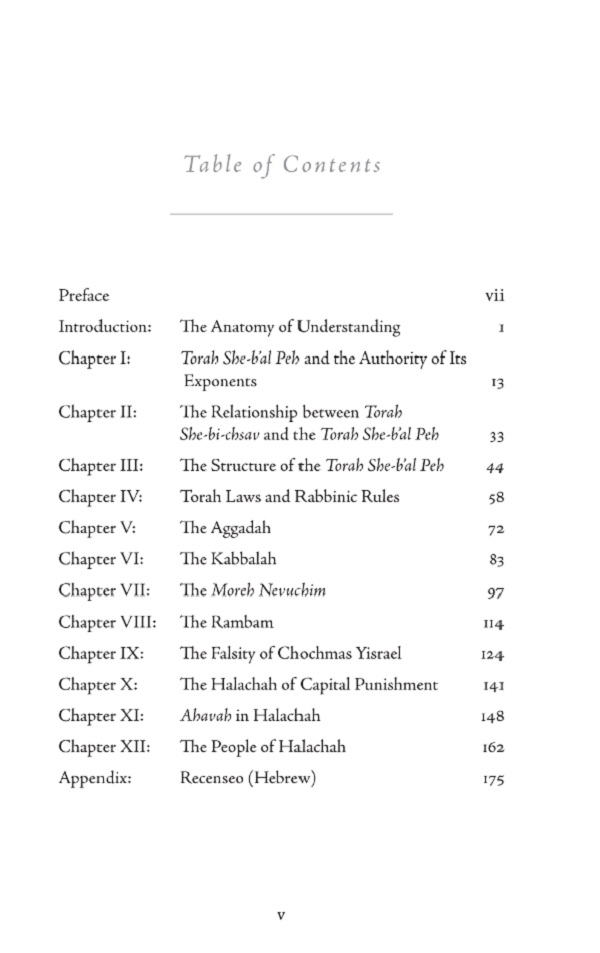


The Legend of R. Yehuda Halevi’s Death: Truth or Fiction?

The Legend of R. Yehuda Halevi’s Death: Truth or Fiction
by Eliezer Brodt

Among the more famous kinos that we recite on Tisha B’Av is Zion Halo Tishali. This kinah was written by one of the greatest paytanim, R. Yehudah Halevi author of the classic Kuzari. This piyut is about the author’s passion to walk on the holy soil of Eretz Yisrael. In the Artscroll commentary on the kinos, R. Avraham Chaim Feuer writes

an ancient manuscript states that R. Yehuda Halevi composed this kina while journeying towards Eretz Yisroel and recited it when he reached Damascus, facing the direction of Zion. Although many historians believe that R. Yehuda Halevi only got as far as Egypt, never even reaching Damascus, tradition has it that he finally reached Jerusalem (in 1145). There he fell to the ground in a state of ecstasy. . . . As he was embracing the dust near the temple mount, he was trampled and killed by an Arab horseman.

In this post I intend to discuss the above legend of R. Yehuda Halevi’s death, did he actually reach Eretz Yisrael? When did he compose the piyut of Zion Haloeh Tishali? I will conclude with a discussion on R. Yehuda Halevi’s connection to R. Abraham Ibn Ezra. I do not, however, intend to discuss R. Yehuda Halevi’s classic work the Kuzari nor his life in general for more on those topics one can see the excellent study by Adam Shear, “The Later History of a Medieval Hebrew Book, Studies in the Reception of Judah Halevi’s Sefer HaKuzari” (PhD dissertation, University of Pennsylvania, 2003); soon to be printed in book form.

R. Abraham Zacuto (1452-1514) in Sefer Yuchsin (first printed in 1566) writes that “R. Yehuda Halevi was fifty [years old] when he came to Eretz Yisroel and he is buried together with his first cousin, the Ibn Ezra.” (p. 217, Filipowski ed.). Later, however, R. Zacuto writes that R. Yehuda Halevi is buried with R. Yehudah Bar Elayh in Tzefat. (idem., p. 219). Setting aside the apparent contradiction regarding R. Yehuda Halevi’s burial place, in both of these descriptions R. Yehuda Halevi actually made it to Eretz Yisrael. Nevertheless, the legend of an Arab horseman killing him is absent. The earliest source for Arab horseman legend appears in R. Gedaliah Ibn Yachi, Shalsheles Hakabbalah (first published in Venice, 1587) and he states that he heard this legend from “an old man” (p. 92). Although the Shalsheles Hakabbalah appears to be the source for the R. Feuer’s statement, the Shalsheles Hakabbalah has one addition to the legend — omitted by R. Feuer — that R. Yehuda Halevi recited the kinah of Zion Halo Tishali right before the Arab horseman killed him.

The next time that this legend appeared, after the mention in the Shalsheles Hakabbalah, is by R. David Conforte (1618-c.1678) in Koreh Hadoros (first printed in Venice, 1746), p. 13, followed by R. Yechiel Halprin (1660- died sometime between 1746-1749) in Seder Hadoros (first printed in Karlsruhe, 1769), p. 201, it is then repeated by R. Wolf Heindheim in his edition of the Kinos. By the 19th century, this legend became perhaps the most famous story about R. Yehudah Halevi as not much else was known about him.

R. Matisyahu Strashun, however, questions the legend. He explains that Jerusalem, in the times of R. Yehuda Halevi, was ruled by Christians and not by Arabs. R. Strashun allows that although it is possible R. Yehuda Halevi composed Zion Halo Tishali when he got to Jerusalem — not that we know that he did — but the part of the story with the Arab killing him is certainly not true. As a general matter, R. Strashun notes that it is well known that the Shalsheles Hakabbalah is not a reliable sefer at all (Mivchar Kitavim, pp. 215-216). R. Shmuel David (ShaDaL) Luzzatto in his collection of poems from R. Yehuda Halevi, Besulas Bas Yehuda (Prague, 1840), also questions the the legend due to the Christian and not Arab control during the time of R. Yehuda Halevi. Further, even if there were Arabs around they would not have done such a blatant act right at the city gate (pp. 25-26). So Shadal concludes that he died on his way from Egypt never even reaching Eretz Yisroel. Interestingly enough, David Kaufmann uses other evidence to prove that the poems of R. Yehudah Halevi have Jerusalem under Christian rule (Mechkarim Besafrus Haivrit Byemei Habenyim p. 194).

Israel Zinberg writes that most likely R. Yehuda Halevi returned home to Spain, after visiting Eretz Yisrael, based on the fact that R. Shlomo Parcon, a student of R. Yehuda Halevi who lived in Spain, quotes a statement from R. Yehuda Halevi “after R. Yehuda Halevi was in Egypt” (Machberes Hauruch p. 5). Specifically, R. Yehuda Halevi had told Parcon that he was doing teshuva and therefore no longer composing. Independently, we know that during while R. Yehuda Halevi was in Egypt he composed much, Zinberg therefore argues that this statement to Parcon must have taken place after R. Yehuda Halevi was in Egypt, thus R. Yehuda Halevi must have returned to Spain (Toldos Safrus Byisroel, vol. 1, p. 115). David Kaufman also uses R. Shlomo Parcon to adduce how R. Yehuda Halevi died. Kaufman points out that had R. Yehudah Halevi died in such a spectacular fashion as the legend has it, R. Shlomo Parcon was sure to note it. As R. Parcon makes no note of an extraordinary death, R. Yehuda Halevi must have died a natural death. (Mechkarim Besafrus Haivrit Byemei Habenyim, p. 195). In Amudei Avodah, Landshuth also questions the legend due to lack of evidence that R. Yehuda Halevi ever made it to Eretz Yisrael. (p. 70).

In regard to the piyut, Zion Haloh Tishali, Landshuth brings different opinions where this was written, in Spain or Damascus, Syria (p. 76). Yitzhak Baer (Kinos p. 130) and David Kaufmann (supra, p. 195) cite an manuscript — housed at Oxford — which says that R. Yehuda Halevi said this piyut when he got to the Yerushalayim. Shadal writes it was written in Spain (supra).

Earlier I mentioned that the Sefer Yuchsin writes that R. Yehuda Halevi was fifty years old when he came to Eretz Yisrael and he is buried with his first cousin, Abraham Ibn Ezra. Later he writes that he is buried with R. Yehuda Bar Elayh in Tzefas. In the Travels of R. Benjamin of Tudela, written around 1170 – thirty years after the R. Yehuda Halevi died – Benjamin records that he visited the grave of R. Yehuda Halevi in Teveriah (there are actually various readings of these words in the manuscripts, but Adler accepts this as the correct reading; p. 29). In the travels of R. Yitzchak Ben Alfurah, written around 1441, he writes that he visited the grave of the Ibn Ezra and R. Yehuda Halevi (Avraham Yari, Masos Eretz Yisrael, p. 110). Both of these provide strong evidence that R. Yehuda Halevi actually made it to Eretz Yisrael. Nevertheless, an anonymous traveler in 1473 (Masos Eretz Yisroel, p. 113) and R. Yosef Sofer in 1762 (Iggrot Eretz Yisroel, p. 301) write that they visited the grave of the Ibn Ezra but make no mention that R. Yehuda Halevi is buried there as well. In the travels of R. Moshe Yerushalmi from 1769, he writes that he visited the graves of the Ibn Ezra and R. Shlomo Ibn Gabriel (Masos Eretz Yisroel, p. 438). I would venture to say the author confused R. Shlomo Ibn Gabriel with R. Yehuda Halevi both being famous composers and are sometimes confused. Furthermore, we have no source that R. Shlomo Ibn Gabriel ever came to Eretz Yisrael (aside from a very late letter written in 1747 printed in Egrot Eretz Yisrael, p. 273). (See also David Kaufmann, p. 205 and Sinai, vol. 28, p. 290). In a manuscript from the author of the Koreh Hadoros (printed in Sinai vol. 28, p. 284) it seems that the R. Yehuda Halevi was buried in Jerusalem.

Over one hundred years ago the Cairo Genizah was accidentally discovered and due to this incredible find every areas of Jewish Literature and History have been greatly enriched. Before this discovery the history of R. Yehuda Halevi written by the early scholars of Jewish History was based on the poems of Halevi that were printed by Shadal and others. However, much has been discovered in Geniza Manuscripts in the past sixty odd years which adds an incredible amount of detailed information to what we knew about the end of R. Yehuda Halevi’s life including original autograph letters of Halevi. [One can view some of these online here, and here is an example of one of documents relating to R. Yehudah Halevi.] These discoveries were made by the great scholar of the Cairo Genizah, Shlomo D. Goitein. Starting in 1954, Goitein printed his discoveries with his explanations of the material, in various journals mostly in Tarbitz. Later on, in his classic A Mediterranean Society (volume V, pp. 448-468), he included an excellent chapter on R. Yehuda Halevi based on all the material which he had found over the years. Most of his interpretations of the material he discovered have been accepted by Professors C. Sherman and Ezra Fleischer. In A Mediterranean Society Goitein writes “a full publication of all the geniza letters referring to Judah Halevi would fill a book.” (p. 462). Although Goitein never got around to writing such a book, in 2001 Professors Moshe Gil and Ezra Fleischer did write such a book. The title of the book is Yehudah Halevei U’bnei Chugo this book is a six hundred and forty page study of all the material from the genizah discovered by Goitein. This book includes all the original documents with notes and an in-depth history of all that can be gleaned from these letters. It is simply incredible to read what Goitein and than Gil and Fleischer discover in these letters.

The relevant documents are from a Cairo business man named Abu Said Halfon who was a very close friend of R. Yehuda Halevi. What follows is a brief time line of R. Yehuda Halevi’s journey to Eretz Yisrael based on the research of these professors. In 1129, when R. Yehuda Halevi was fifty four years old he decided to make the journey to Eretz Yisrael. In the year 1130, R. Yehuda Halevi began his journey. He intended to travel through Egypt. We don’t know why he didn’t. But we do know that he ended up in North Africa. In North Africa, he became good friends with the Ibn Ezra. For some unknown reason, he ended up back in Spain. Not too much information is known about why this journey to Eretz Yisrael did not end up happening. Ten years later, in 1140, R. Yehuda Halevi began the journey again. He ended up in Alexandria on September 8. He had intended to leave from Egypt to Eretz Yisrael immediately, but was delayed. He ended up going to Cairo until Pesach. After that he returned to Alexandria. A few days before Shavuos of 1141, he boarded the boat, and on Shavuos, he set sail to Eretz Yisrael. In a letter written about 6 months later indicates that R. Yehuda Halevi was no longer alive. It seems that he was alive for 2 months in Eretz Yisrael. We don’t have any information about his stay in Eretz Yisrael. It would seem that either he got sick or died a natural death. There is no clear answer whether the legend is true or not. It’s rather sad that with all the manuscripts discovered in the Cairo geniza that enriched us with an in-depth, heavily detailed history of R. Yehuda Halevi’s last years until he left to Eretz Yisrael, does not tell us anything more. However, there was one letter written three months after the death of R. Yehuda Halevi that does indicate that perhaps the legend is true. The letter (the ellipsis appear in the original) says as follows:

ולא נעלם ממנה אודות רבינו יהודה הלוי הצדיק החסיד זק”ל אשר עליו באמת ניבאו נביאי האמת עין לא ראתה, ההיה גבור ביראת אלהים ובתורתו, ומאמרי פעליו מעידים צדקו, באודותיו ירונו כצפורים בעתותן למנוחת עולם הוטע כבוד גן אלהים, וברמה הוא נשא נס גדולותיו והליכות גבורותיו, אשר תרונה ביקרו, והתיקר… וביקרו, ותמונת ה’ הביט… בשדה צען להאירה… זק”ל לא… צור… מחנה שדי… להתנחל לרשת… עזי…וישם… בדמות השכינה ובמראה… בשערי ירושלים
This letter was first printed by Jacob Mann, Goitein highlights the line ולא נעלם ממנה אודות רבינו יהודה הלוי הצדיק החסיד זק”ל which would seem to indicate that his death was not natural (calling him a kodesh is typically reserved for a martyrs) and especially the end where it says בשערי ירושלים but the letter is damaged and hard to read so one can not say anything conclusively. But Fleischer (pg 255) is willing to use the letter even with it’s missing parts to support the legend! Especially, he says, the author of the letter using the word קודש twice in the phrase זק”ל instead of the usual ז”ל. From this concludes Fleischer that we are not far off at all about Halevi death. Fleischer concludes by noting that one should be careful not to make fun of legends!

Notes:

There was certainly a strong connection between the Ibn Ezra and R. Yehudah Halevi. Professor D. Kaufman (supra p. 206) gives a listing of the many times which the Ibn Ezra quotes Halevei throughout his works. R. Azariah de Rossi, in his Me’or Eynaim, writes that R. Yehuda Halevi was the Ibn Ezra’s father-in-law (chapter 42). Koreh hadoros also brings that he heard this (p. 13). Shalsheles Hakabblah brings a whole legend which he had heard how exactly the Ibn Ezra became the son-in-law of R Yehudah Halevi (pp. 92-93). Interestingly enough the Meiri in his Seder Hakablah and the Sha’ari Zion make no mention of this relationship between the Ibn Ezra and R. Yehuda Halevi. Both Goitein and Fleischer say that although R. Yehuda Halevi was not the father in law of the Ibn Ezra the son of the Ibn Ezra, Yitzhak did marry R. Yehuda Halevi’s only daughter (see Yehuda Halevei U’bnei Chugo pp. 247-251). However, M. Gil writes that in the end Goitein changed his mind and realized there was no relation through marriage (p. 250-251). Also, see N. Ben Menachem, Inyai Ibn Ezra, pp. 224-240, 346-356 regarding the relationship between Ibn Ezra and Yehuda Halevi including any relationship through marriage.
It is worthwhile noting that R. Immanuel Aboab in his Bemavak ‘al Erko shel Torah, written in 1615, claims that the Ibn Ezra was both R. Yehuda Halevi’s son-in-law as well as a cousin. (p. 247).

On this topic in general see also: Adam Shear, The Later History of a Medieval Hebrew Book, Studies in the Reception of Judah Halevi’s Sefer Ha Kuzari, pp. 95, 513-514; C. Shirman, Toldos Hashirah Haivrit Besefard Hamuslamit, pp. 441-443. On the Ibn Ezra and Eretz Yisrael in general, see N. Ben Menachem, Sinai, vol. 10 p. 276 and onwards; see also N. Ben Menachem, Inyai Ibn Ezra, pp. 182-190.

More sources on R. Yehuda Halevi and Eretz Yisrael see: Adam Shear, supra, pp. 516-517; C. Shirman, Letoldos Hashirah Vehadramah Haivrit, vol. one, pp. 319-341; C. Shirman, Toldos Hashirah Haivrit Besefard Hamuslamit, pp. 466-480. Franz Kobler, A Treasury of Jewish Letters, vol. one, p. 155; Abraham Haberman, Toldos Hashirah Vhapiut, vol. one, p. 185;

On the reliability of Shalsheles Hakabbalah in general see: A David’s doctorate and E. Yassif in Sippur Ham Haevrei pp. 351-371)