Highlights of the Mossad HaRav Kook Sale of 2019, New Rabbi Tovia Preschel volumes & Beis Havaad Convention

Highlights of the Mossad HaRav Kook Sale of 2019, New Rabbi Tovia Preshel volumes & Beis Havaad Convention

By Eliezer Brodt

For over thirty years, beginning on Isru Chag of Pesach, Mossad HaRav Kook publishing house has made a big sale on all of their publications, dropping prices considerably (some books are marked as low as 65% off). Each year they print around twenty new titles and introduce them at this time. This year they printed close to thirty new volumes. They also reprint some of their older, out of print titles. Some years important works are printed; others not as much. This year they printed close to thirty new volumes. See here here and here for a review of previous year’s titles.

If you’re interested in a PDF of their complete catalog, email me at eliezerbrodt@gmail.com

As in previous years I am offering a service, for a small fee, to help one purchase seforim from this sale. The sale’s last day is this Sunday, May 5. For more information about this, email me at Eliezerbrodt-at-gmail.com. Part of the proceeds will be going to support the efforts of the Seforim Blog.

What follows is a list of some of their newest titles.

גאוניםראשונים

  1. הלכות פסוקות השלם כרך ד

  2. חידושי הרן בבא מציעא

  3. שיטה מקובצת מנחות

  4. חומש דעת עזרא [פירוש על אבן עזרא] שני חלקים על חומש שמות

  5. חומש עם רמבן – עם פירוש מרשמואל הלחמי

  6. תורת חיים – תהלים, גחלקים

גרא

  1. ספר יצירה עם ביאור הגרא המפורש

  2. דקדוק אליהו\דקדוק ופירוש על התורה

  3. סידור הגרא

מענייןמומלץ

  1. רשלמה פפנהיים, יריעות שלמה, ביאור על שמות נרדפים שבלשון הקדוש, בעריכת רמשה צוריאל

  2. רטוביה פרשל, מאמרי טוביה, ד [ראה למטה התוכן]

  3. רטוביה פרשל, מאמרי טוביה ה [ראה למטה התוכן]

  4. האתרוג, מאמרים מדעיים הלכתיים והיסטוריים בנושא האתרוג [מסורת, מחקר ומעשה בתוספות אלבום זני אתרוג הגדולים בישראל]

  5. נך לאור ההלכה, יהושע שופטים

  6. רמשה שליטא, שערים בהלכה, המבנה והתוכן במשנת הטור והשלחן ערוך

  7. דר יהושפט נבו, הפיוט לאור המדרש, עיון במקורות המדרשים של פיוטי הסליחות וימים נוראים לפי נוסח אשכנז

  8. דר דניאל צדיק, יהודי איראן וספרות רבנית, היבטים חדשים על יהודים איראן והספרות הרבנית

ענינים שונים

  1. רבקה ליפשיץ, לכתוב עד כלות, יומנה של נערה מגטו לודז

  2. ראוריאל קוקיס, עלי אור, קובץ מפרשים ועוד, כולל פסקים מאת הגרשז אויערבך זצל מכתב יד

  3. ריהונתן אמת, אליבא דאמת, סוגיות יסוד בהלכות ברכות

  4. רצבי אינפלד, בעקבות המועדים והזמנים, מבט חדש ועמוק על מועדי השנה

  5. רמנשה ביננפלד, התנך לשפה העברית, סיור ולימוד תנכי דרך הניבים ומטבעות הלשון בשפה העברית שמקורם בתנך

  6. יהונתן עץ חיים, סוגיות מוחלפות מסכת סנהדרין

  7. מיכלא קאופמן, השומר גופי אנוכי בריאות תזונה וכושר לאור ההלכה

  8. רראובן רז, עיונים בנתיבות עולם, האדם ומידותיו במשנת המהרל

A few years back I wrote:

Just a few years ago, the great Talmid Chacham, writer and bibliographer (and much more), R’ Tovia Preschel, was niftar at the age of 91. R’ Preschel authored thousands of articles on an incredibly wide range of topics, in a vast array of journals and newspapers both in Hebrew and English. For a nice, brief obituary about him from Professor Leiman, see here. Upon his passing, his daughter, Dr. Pearl Herzog, immediately started collecting all of his material in order to make it available for people to learn from. Already by the Shloshim a small work of his articles was released. A bit later, she opened a web site devoted to his essays. This website is constantly updated with essays. It’s incredible to see this man’s range of knowledge (well before the recent era of computer search engines)… This is an extremely special treasure trove of essays and articles on a broad variety of topics. It includes essays related to Halacha, Minhag, bibliography, Pisgamim, history of Gedolim, book reviews, travels and personal encounters and essays about great people he knew or met (e.g.: R’ Chaim Heller, R’ Abramsky, R’ Shlomo Yosef Zevin, R’ Meshulem Roth, R’ Reuven Margolis, Professor Saul Lieberman). Each volume leaves you thirsting for more…

Here are links to download the table of contents of the two volumes.

Maamarei Tovia Vol. 4 TOC

Maamarei Tovia Vol. 5 TOC

Beis Havaad Convention

In November 2007 (!) I wrote a review on the Seforim Blog (here) about the Beis Havaad volume. This volume is a collection of articles based on a series of lectures that were delivered in Yerushalayim dealing with many aspects of the proper way seforim should be published. In 2016 in the Kovetz Chitzei Giborim – Pleitat Sofrim  [reviewed here on the blog by Marc Shapiro] a section was devoted to this project. For an earlier article related to all this see this post on the Seforim Blog.

This week in Jerusalem there will be a third convention where similar topics will be discussed.

Here is the information.

הכנס השלישי של בית הוועד לעריכת כתבי רבותינו

יתקיים בעזהית בכז ניסן תשעט בין השעות 15:30-21:00

בירושלים עיהק בבית כנסת ישורוןרחהמלך גורג‘ 44

15:30 מושב ראשון: הטכנולוגיה בשירות הספרות התורנית. יור: הרב יואל קטן

ויאמר לקוצרים העמכם‘ – על כתיבה, ההדרה ותוכנות מחשב בדורנו הרב אחיקם קַשָת

פרויקט פרידברג לכתבי יד יהודיים: סקירה כללית – אלן קרסנה

על האתרים הכי גרסינןומהדוראוהשימוש בהם – הלל גרשוני; הרב ישראל פריזנד

כלים חדשים להשבחת טקסטים תורניים הרב יעקב לויפר; פרופמשה קופל

מחידושיה של גניזת אירופה פרופשמחה עמנואל

שער למהדיר לגניזת קהיר עדיאל ברויאר

הפסקה וכיבוד קל

18:30 מושב שני: ישן וחדש בבית המדרש. יור: הרב אליהו סולוביציק

ההדרה בין עיון למדני למחקר תורני הרב אביאל סליי

תולדות דפוסי הרמבם הרב פרופשלמה זלמן הבלין

אסכולות פרשניות של הראשונים הרב אהרן גבאי

ישן וחדש בהדפסת ספרי רבני צפון אפריקה הרב פרופמשה עמאר

המהפכה התורנית – הספרות המבוארת – הרב מנחם מנדל פומרנץ

כתבי העת התורניים, מטרות והישגים הרב שלמה הופמן

עבר, הווה ועתיד באנציקלופדיה התלמודית הרב פרופאברהם שטינברג

מכון שלמה אומן יד הרב הרצוג

בית הוועד לעריכת כתבי רבותינו

0526-051253


Sixty Years Since Rabbi Dr. Yechiel Yacov Weinberg, the Seridei Eish: A Fire the World Still Needs

Sixty Years Since Rabbi Dr. Yechiel Yacov Weinberg, the Seridei Eish:
A Fire the World Still Needs

By Jacques (Yacov) R. Rothschild

This week marks sixty years since the passing of Rabbi Dr. Yechiel Yacov Weinberg, the Seridei Eish. He left this world on the 4th of Shevat in 1966, well before I was born, yet his presence has never felt distant to me – because it lived, vividly and lovingly, in my mother’s voice. “Shema b’ni musar avicha, v’al titosh Torat imecha” – “Hear, my child, the instruction of your father, and do not forsake the Torah of your mother.” For me, Rav Weinberg’s Torah was transmitted precisely this way: not first through books or institutions, but through a mother who spoke of him with reverence, warmth, and quiet awe.

The following brief sketch cannot do justice to the full arc of his life. Readers seeking a comprehensive biographical and intellectual account may consult Professor Marc B. Shapiro’s authoritative study, Between the Yeshiva World and Modern Orthodoxy: The Life and Works of Rabbi Jehiel Jacob Weinberg, 1884-1966 (London: Littman Library, 1999), as well as subsequent scholarly and popular essays. What follows outlines only the essential contours.

From a young age, Rav Weinberg displayed extraordinary promise. Born in Ciechanowiec in 1884, he rose from an unassuming background to become known as the Illuy of Czechanowic. As a teenager he was already delivering public shiurim, and at seventeen he entered the Slabodka Yeshivah, studying under the Alter, Rav Nosson Tzvi Finkel, and becoming a chavrusa of Rav Naftali Amsterdam, the foremost disciple of Rav Yisrael Salanter. There he absorbed a worldview that would shape him for life: uncompromising halakhic rigor joined to the Mussar movement’s insistence on human dignity, ethical seriousness, and disciplined moral self-formation. He forged close ties with leading figures of the Mussar world. Already then, he embodied a rare synthesis – intellectual rigor, spiritual sensitivity, and moral seriousness.

In the years that followed, Rav Weinberg served as Rav of Pilwischki and spent formative time in Warsaw, moving within the orbit of leading rabbinic, intellectual, and communal figures. In 1936 he published Lifrakim, a collection of essays in Hebrew, German, and Yiddish that already displayed the breadth of his mind: halakhic sensitivity, historical consciousness, literary power, and a refusal to simplify Judaism for ideological convenience. His path then led westward to Germany, where he became Rosh Yeshiva and effectively rector of Rav Esriel Hildesheimer’s Rabbinerseminar in Berlin, shaping a generation of rabbanim who carried Torah with courage, thoughtfulness, and depth, as he was confronted with unprecedented historical and theological upheavals. Unlike many of his contemporaries, he neither viewed engagement with general culture and academic scholarship as a betrayal of Torah nor mistook accommodation for capitulation. His posture was one of disciplined openness, with Torah sovereign yet resilient rather than brittle.

During the war, he served as president of the Agudas HaRabbanim of Warsaw and was also a lecturer at the University of Giessen. Universally recognized as a master of Shas and poskim, his knowledge extended far beyond Torah, encompassing history, philosophy, and Judaic studies.

He survived the destruction of European Jewry, but survival came at a severe cost. Rav Weinberg lost his entire immediate family in the Holocaust. His health was permanently damaged, and the world in which he had lived was gone. When the war ended, he emerged alone. He eventually found refuge in Montreux, Switzerland, carrying with him a loss that did not recede with distance or time. And yet it was there, after all of this, that the most consequential part of his written legacy still lay ahead.

Montreux was a quiet, picturesque town overlooking Lake Geneva and home to Yeshivat Eitz Chaim, a small and demanding institution that drew refugees, scholars, and young men who would later assume positions of leadership. Giants passed through its modest halls, carrying only fragments of the world that had been destroyed, unsure whether those fragments could be assembled into anything lasting. Torah life there was serious and inward, marked by uncertainty and strain. It was not sustained by institutions or prestige, but by individuals who lived with loss as a daily fact and understood responsibility as something that could not be deferred.

It was no accident that Rav Weinberg felt at home in Montreux. The town’s quiet dignity mirrored his own. Removed from ideological battles and institutional power, he could think clearly and write honestly. From this tranquil place, Torah once again flowed outward. Letters and visitors arrived from across the Jewish world: rabbanim, authors, medical researchers, historians, and even leaders of the young State of Israel, including David Ben-Gurion (a meeting my mother attended). Though physically distant from centers of authority, his voice remained indispensable. He was offered the position of Chief Rabbi of Israel, which he declined, choosing instead an obscurity that enabled him to remain faithful both to halakha and to the damaged human reality it was now required to address.

“From Montreux,” writes Professor Marc B. Shapiro, Rav Weinberg “resumed his correspondence with students, friends, and colleagues, writing many hundreds of letters a year, most of which have been lost to posterity.” Yet Montreux also imposed real constraints. Far from the great libraries and scholarly settings that had once sustained his academic work, serious research was difficult. More significantly, the shift from public authority to private existence carried a personal cost. For a man who had stood at the center of a major rabbinic institution, life in a small town brought with it a sense of narrowing that no material stability could fully counterbalance.

It was in Montreux, despite his broken health, that Rav Weinberg published three volumes of Seridei Eish – in 1961, 1962, and 1966 – with a fourth appearing posthumously. Seridei Eish, “Remnants of Fire,” was both literal and symbolic: much of his Torah had been lost in the Holocaust, yet what remained burned with clarity, depth, and moral courage.

It was also to Montreux that my mother arrived after the war as a young girl. She had lost the overwhelming majority of her family in Nazi Germany, surviving only through her mother’s courage in escaping clandestinely to Italy. Upon entering Italy illegally, her mother was suspected of being a spy, arrested and imprisoned, and the two young girls – my mother and her sister, both under five – were sent to a monastery. By miracle, they were reunited after the war and eventually reached Switzerland, settling in Montreux.

There, while my mother was entertained in school by Charlie Chaplin’s daughter, she also encountered Rav Weinberg, beginning a relationship that would quietly shape her life.

Starting as a teenager, my mother assisted him by typing his correspondence and helping with administrative work. She knew how to type, spoke several languages, and worked at a local Swiss bank. None of these skills was remarkable on its own; in combination, they answered a very specific need. For several years she assisted Rav Weinberg on a daily basis. She typed his responsa as he dictated them, organized and mailed his correspondence, and attended to the practical details that made sustained scholarly work possible. She sat with him for hours as he formulated replies to inquiries arriving from across the Jewish world, one after another, without interruption.

Jews in Montreux and neighboring towns knew she had daily access to Rav Weinberg, so they entrusted her with questions that structured postwar Jewish life. They would leave chickens – with kashrut questions – for her to bring to him. Kosher shechita was forbidden in Switzerland then, as it remains today, and Jews relied on mail-order poultry from France, salting their chickens at home. Observance was fragile, complicated, and deeply human.

These chickens carried more than halakhic questions; they carried hope. For Jews in post-war Europe, having a kosher chicken – literally examined and approved by a Gadol – was a way to sanctify Shabbat, to reclaim dignity and spiritual normalcy after devastation. Rav Weinberg approached each case with extraordinary care, ensuring that his rulings remained halakhically rigorous while never shattering the fragile dreams of Jews striving to observe Shabbat properly. This was not halakha in theory. This was Torah meeting kitchens, trauma, and lives slowly rebuilding.

Despite his circumstances, Rav Weinberg never sought popularity or easy acceptance. Some of his rulings were difficult and, at times, controversial – precisely because his deliberations reached beyond the present moment. He anticipated developments in science, technology, medicine, and society before they became unavoidable crises. Yet throughout, his loyalty to halakha and to Sinai was absolute, insisting that halakha be applied with foresight rather than reaction. For him, innovation did not mean rupture or accommodation. It meant responsibility, assumed fully and without evasion. His Torah moved deliberately, listened deeply, and spoke only after accounting for the full weight of human reality.

The questions that reached him were often complex and carried real consequences for those who asked them. At times Rav Weinberg did not respond immediately. My mother later recalled that he insisted on thinking matters through, and would occasionally ask her to walk with him along the shore of the lake while he worked through the questions before him. Only afterward would he commit his rulings to paper.

His involvement in my family’s life extended beyond advice and correspondence. He personally guided the shidduch of my mother’s older and only sister, and later that of my parents. These actions reflect the same moral world in which he lived and worked – a Torah attentive not only to texts and communal questions, but to the concrete ordering of individual lives from what remained after destruction.

Very recently, I learned something that cast this inheritance in an even deeper light. My sister discovered, quite by chance, a copy of Rav Weinberg’s German book Das Volk der Religion in my parents’ archives. Inside was a handwritten dedication by Rav Weinberg himself, addressed not to my maternal grandmother, whom he knew well from Montreux, but to my paternal grandmother – my mother’s future mother-in-law – Flora Rothschild. The inscription, written in German, is dated 4 Nissan 5709 (April 4, 1949), almost twenty years before my parents would marry, at a time when they were still in their early teens:

“In fond memory and in friendship of your visit to me in Montreux this past 4th of Nissan 1949.

Mrs. Flora Rothschild, the tireless one.

In admiration of our continued mutual cooperation for the fight to preserve Torah, the Jewish people and spirit, and the Land of Israel.

Best wishes and continued success.

Montreux, 4th of Nissan 5709.”

Only now does the deeper resonance of this moment emerge. Long before my mother could have imagined her future – and entirely unbeknownst to her – Rav Weinberg had already met the woman who would one day become her mother-in-law and formed a bond of respect and friendship with her.

Flora Rothschild, my paternal grandmother, was herself a remarkable woman, selflessly involved in the rebuilding of Jewish life after World War II. After surviving the camps, she settled back in Antwerp, having lost her husband, daughter, parents, and siblings to the Nazis. Read against this background, the dedication takes on added weight.

My grandfather, Tzvi Hersh Lerner HY”D – my mother’s father – whose yahrzeit falls on the 2nd of Shevat, was murdered in Sachsenhausen in 1939 after intervening on behalf of a young Jewish boy who had been caught stealing a piece of bread in the camp. His death left my mother without a father and forced my grandmother to flee Berlin with two small children. She moved first into hiding in Italy and, after the war, on to Switzerland, where they eventually settled in Montreux. And yet, even then – long before anyone could have named an outcome – quietly and almost imperceptibly, the threads of the next generation were already being woven.

This discovery opens a vivid window into the deeply human side of Rav Weinberg: his attentiveness to individual lives, his capacity for enduring relationships, and his role as a bridge between shattered pasts and rebuilding futures.

I never met the Seridei Eish, though I have studied his responsa. My mother knew him. She typed those responsa as he dictated them. She walked with him through Montreux. She carried chickens to his door so that he could examine them. Because of that, his presence never belonged to the past for me. It was part of the daily texture of my childhood. His Torah reached me not through institutions or ceremonies, but through work done repeatedly, quietly, and without display. In that way, what survived was not only his Torah, but the way it was lived.

Studying the Seridei Eish is for me a Torat imecha, grounded in my mother’s experience and in her years assisting Rav Weinberg in Montreux. To honor his memory is not only to study his writings, but to reckon with what his absence has cost, and with the kind of Torah leadership his life continues to require.

When Rav Yechiel Yacov Weinberg passed away at the age of eighty-eight, the Jewish world lost not only a great rabbinic scholar, but a model of Torah leadership grounded in judgment, humility, and moral seriousness. He combined intellectual breadth with personal restraint, and independence of thought with unwavering fidelity to halakha. Such a voice is acutely lacking today, especially in moments of internal crisis, when slogans replace deliberation and affiliation eclipses responsibility.

Even in death, Rav Weinberg did not fit neatly into any one world. Having no surviving children, his burial in Jerusalem became the subject of controversy. The two worlds that claimed him were the Chareidi and the Mizrachi. Though Rav Weinberg had requested to be buried beside his friend Rav Yitzhak Isaac Halevi Herzog, Chareidi leaders diverted the funeral to another cemetery, claiming him as their own. The tension itself was revealing: a man too broad for easy categories, too principled to be fully absorbed by any camp.

And perhaps the truest way to honor his memory is not only to study his writings – but to recognize how deeply the world still misses him, and how desperately it still needs leaders formed in his image.

Yehi zichro baruch, and may Rav Yechiel Yacov Weinberg’s purified soul be a melitz yosher for Am Yisrael.


Shemot 2:1 – Did Rashi Include Miriam’s Advice to Her Father?

Shemot 2:1 – Did Rashi Include Miriam’s Advice to Her Father?

Eli Genauer

“Rashi’s choice of citations from the voluminous material of the Sages is in itself a commentary for those who understand the reasons he selected one or two opinions out of many”

Publisher’s Preface to the Artscroll Sapirstein Rashi on Shemos, (Brooklyn 1994) page ix

One of the most famous Medrashim in Sefer Shemot tells how six-year-old Miriam convinced her father Amram to re-marry her mother Yocheved. After the decree that all baby boys born would be thrown into the Nile, Amram separated himself from Yocheved, not wanting to have her give birth to a boy who would be killed immediately. Miriam confronted her father and said “Your action is worse than Pharoah’s. He only decreed against boys, and your action also includes the girls.” Amram agreed with Miriam and re-married Yocheved.

In many Chumashim, this story is included in the first Rashi of the 2nd chapter. It is in parentheses, starting with the words ״וחזר ולקחה״ and is ascribed to a “Rashi Yashan”.

This is how it is presented in the Oz VeHadar Chumash Beit HaKeneset (Jerusalem 2014)

It is also presented this way in the Artscroll Stone Chumash and the Artscroll Sapirstein Rashi.

But on the website Sefaria, the portion in parentheses is missing

ויקח את בת לוי. פָּרוּשׁ הָיָה מִמֶּנָּה מִפְּנֵי גְּזֵרַת פַּרְעֹה, וְהֶחֱזִירָהּ וְעָשָׂה בָהּ לִקּוּחִין שְׁנִיִּים, וְאַף הִיא נֶהֶפְכָה לִהְיוֹת נַעֲרָה; וּבַת קל שָׁנָה הָיְתָה, שֶׁנּוֹלְדָה בְּבוֹאָם לְמִצְרַיִם בֵּין הַחוֹמוֹת, וּמָאתַיִם וָעֶשֶׂר נִשְׁתַּהוּ שָׁם, וּכְשֶׁיָּצְאוּ הָיָה מֹשֶׁה בֶּן שְׁמוֹנִים שָׁנָה, אִם כֵּן כְּשֶׁנִּתְעַבְּרָה מִמֶּנּוּ הָיְתָה בַּת מֵאָה וּשְׁלוֹשִׁים וְקוֹרֵא אוֹתָהּ בַּת לֵוִי (עיּ סוטה יב, בבא בתרא קיט ושמות רבה):

Linguistically, the flow of the words in Sefaria makes more sense: פָּרוּשׁ הָיָה מִמֶּנָּה מִפְּנֵי גְּזֵרַת פַּרְעֹה, וְהֶחֱזִירָהּ וְעָשָׂה בָהּ לִקּוּחִין שְׁנִיִּים. Adding the words ״וחזר ולקחה״ duplicates the statement after the parentheses וְהֶחֱזִירָהּ וְעָשָׂה בָהּ לִקּוּחִין שְׁנִיִּים, and overall, the episode with Miriam seems to be an interruption in the words of Rashi.

It is therefore important to see whether this story appears in any of the manuscripts of Rashi that we have, and in the early printed editions. It would also be important to track down the source of the “Rashi Yashan.”

As far as Rashi manuscripts, I first checked one known as Leipzig 1, which to many scholars is the most accurate.[1] Here is how it is presented, and as you can see, it is missing the Miriam story

https://media.alhatorah.org/Parshanim/Rashi%20Leipzig/97.pdf

Transcribed it looks like this.

ויקח את בת לוי – פרוש היה ממנה מפני גזירת פרעה וחזר והחזירה ועשה בה ליקוחין שניים…..

The manuscript known as Oxford CCC 165 (Neubauer 2440) is also considered important because it may be the oldest Rashi manuscript we have (circa 1194). The Miriam story does not appear there either.

Munich 5, which contains the text of Rashi supplemented by other Medrashic comments, is considered important by some scholars because of its age.[2] The story is missing from from the actual text of Rashi פָּרוּשׁ הָיָה מִמֶּנָּה מִפְּנֵי גְּזֵרַת פַּרְעֹה, וְהֶחֱזִירָהּ וְעָשָׂה בָהּ לִקּוּחִין שְׁנִיִּים

It is recorded later on giving another viewpoint as to Miriam’s advice, i.e. that Miriam encouraged her father to re-marry because she had a prophetic vision that Yocheved would give birth to the redeemer of Israel.

There are many other manuscripts available on the internet. Al HaTorah includes links to over 60 manuscripts from the 12th century to the 15th century. https://alhatorah.org/Commentators:Online_Rashi_Manuscripts

They are known usually by the holding library. Aside from the ones shown above, they are known for example as Hamburg 13, Oxford-Bodley Opp. 34, London 26917, Berlin 1221, Berlin Qu 514, Florence Plut.III.03, Vatican Urbinati 1, Paris 155, Parma 2708, Parma 2868, and Parma 3081.

None of the over 40 manuscripts I checked includes this comment.

Rashi incunabula also do not contain the Miriam story, nor did I find it in any Chumash with Rashi in the 1500’s.[3]

Here are the texts in three incunabula[4]

Guadalajara Alkabetz 1476, Reggio di Calabria, 1475 Rome 1470

I have found Hijar 1490 to differ with other incunabula, but not here.

Here are some examples of the text of Rashi in printed editions of the 1500’s.

Here is the influential Sabionetta printed edition of Rashi of 1557

I have found Venice 1567 Cristoforo Zanetti to differ in places with other Chumashim, but not here.

There is also no comment on the text of Rashi including the Miriam story in any early of the Meforshai Rashi such as Riva, Rav Eliyahu Mizrahi and Gur Aryeh.[5]

I found the first reference to it in Yosef Da’at (Prague 1609), and it is ascribed to a “Rashi Klaf”:

Avraham Berliner leaves it out in both editions of Zechor L’Avraham (1868 and 1905) even though by 1905 he stated that he had seen 100 Rashi manuscripts.[6]

It was added later on into the text of Rashi albeit in parentheses and was ascribed to a Rashi Yashan. This is Hanau 1611-14. I do not know with certainty if its source was Yosef Da’at or a previously printed edition of Rashi.

It was not included in the Basel Mikraot Gedolot of 1618.

Afterwards we do find it in Menasseh ben Israel’s edition of Chumash of 1635:

But not in Benveniste’s 1644 Amsterdam edition of Rashi:

It was included in the first edition of Siftei Chachamim Amsterdam 1670. After that it was included in most printed editions, although not in all.

What is the source of this Drasha? Its main source is a Gemara in Sotah 12a

וַיֵּלֶךְ אִישׁ מִבֵּית לֵוִי לְהֵיכָן הָלַךְ אָמַר רַב יְהוּדָה בַּר זְבִינָא שֶׁהָלַךְ בַּעֲצַת בִּתּוֹ תָּנָא עַמְרָם גְּדוֹל הַדּוֹר הָיָה כֵּיוָן שֶׁרָאָה שֶׁאָמַר פַּרְעֹה הָרָשָׁע כׇּל הַבֵּן הַיִּלּוֹד הַיְאֹרָה תַּשְׁלִיכֻהוּ אָמַר לַשָּׁוְא אָנוּ עֲמֵלִין עָמַד וְגֵירַשׁ אֶת אִשְׁתּוֹ עָמְדוּ כּוּלָּן וְגֵירְשׁוּ אֶת נְשׁוֹתֵיהֶן אָמְרָה לוֹ בִּתּוֹ אַבָּא קָשָׁה גְּזֵירָתְךָ יוֹתֵר מִשֶּׁל פַּרְעֹה שֶׁפַּרְעֹה לֹא גָּזַר אֶלָּא עַל הַזְּכָרִים וְאַתָּה גָּזַרְתָּ עַל הַזְּכָרִים וְעַל הַנְּקֵיבוֹת ….. עָמַד וְהֶחְזִיר אֶת אִשְׁתּוֹ עָמְדוּ כּוּלָּן וְהֶחְזִירוּ אֶת נְשׁוֹתֵיהֶן וַיִּקַּח וַיַּחְזִור[7]

A similar idea is found in Medrash Rabbah 1:19

מדרש רבה על שמות א: יט.

וַיֵּלֶךְ אִישׁ מִבֵּית לֵוִי להיכן הלך אמר רבי יהודה בר רבי זבינא שהלך בעצת בתו תניא עמרם גדול הדור היה וכוּ’ וַיִּקַּח אֶת בַּת לֵוִי והחזיר לא נאמר אלא ויקח אמר רבי יהודה בר רבי זבינא שעשה לה מעשה לקוחים

In terms of scholarly editions, Rashi HaShalem Mechon Ariel (1992) does not include it. [8] Rashi HaShalem even goes out of its way to argue against including the Miriam story by writing “It appears to me that Rashi Davka did not cite the Drashot in Gemara Sotah…. because he only included items that are proven from ‘P’shat Ha’Katuv’”

Conclusion

It is important to know which sources Rashi chose not to include in his commentary. I believe that Rashi did not include the Miriam story in his commentary on Shemot 2:1. It was first cited by the Sefer Yosef Da’at which was written in 1609, who ascribed it to a Rashi Klaf which he had. Clearly it was there, but since it was unique among manuscripts or printed editions, I believe his manuscript had this story added to it sometime after Rashi. All scholarly editions today do not include it.

[1] From the Website Al HaTorah

https://alhatorah.org/Commentators:Rashi_Leipzig_1/1/en

The popularity of Rashi’s Torah commentary and the tendency of medieval scholars and copyists to add to it their marginal glosses combined to create enormous variation between different manuscripts and editions of the commentary…. On this backdrop, the importance of the Leipzig 1 (Universitätsbibliothek Leipzig, B.H.1) manuscript of Rashi can hardly be overstated. This manuscript was written in the 13th century by R. Makhir b. Karshavyah, who states that he produced it from a copy of the commentary transcribed and annotated by Rashi’s own secretary, R. Shemayah… MS Leipzig 1 is, thus, an extremely valuable textual witness which comes tantalizingly close to the original source….
[2] From the KTIV website in its description of Munich 5כמו כן מביא הרבה ממדרשי חזל והרבה מאד מתרגום יונתן
[3] Aside from the two editions shown below, I checked the following Rashi texts from the 1500’s and did not find the Miriam story

Bomberg Mikraot Gedolot 1518, Rashi Bomberg 1522, Rimini 1525, Bomberg Mikraot Gedolot 1524-26, Augsburg 1534, Rashi Bomberg 1538, Venice Giustiani 1548, Riva di Trento 1561, Venice Juan Di Gara 1567, Cracow 1587, Venice 1590

[4] Rashi HaMevuar (2016) confirms that the words are missing from other incunabula by writing בכל הדפוסים ליתא לתיבות אלה.”

[5] It is clear from Riva that the story was not included in Rashi because he quotes Rashi, and then adds the quotation from Sotah:
ויקח את בת לוי. פרשי פרוש היה ממנה מפני גזרת פרעה והחזירה וכבר הוא מפורש בפק דסוטה למה החזירה דאיתא התם וזל תנא עמרם גדול הדור היהb
[6] Berliner often includes text which he saw in Yosef Da’at from a Ktav Yad Yosef Miklosh had from 1293

עוד ספחתי אל ההערות את הנוסחאות אשר הביא בעל יוסף דעת מכי אחד אשר היה לפניו משנת נג לאלף הששי

The author of Yosef Da’at writes about a Klaf Yashan Noshan as follows”

ובפרט רשי קלף ישן נושןלערך שלוש מאות שנה ויותר שמצא בלובלין

[7] It is interesting to note that although Amram is described as a “Gadol HaDor,” Chazal were not hesitant to ascribe the winning argument to Miriam.
[8] Roedelheim 1860 does not contain the story in Rashi

Mosad HaRav Kook’s Torat Chaim in 2005 also does not include the story of Miriam nor does it make any reference to it in the footnotes. Yosef Hallel (Brooklyn 1987) does not comment on this Pasuk

The Mikraot Gedolot of Shlomo Zalman Netter (Vienna 1859) does include it in parentheses and since it was an influential edition, it was then probably included in many subsequent editions.


As The Kohen Exits The Sancta: A New Edition of Reb Zadok ha-Kohen of Lublin’s Tzidkat ha-Tzadik

:As The Kohen Exits The Sancta
A New Edition of Reb Zadok ha-Kohen of Lublin’s Tzidkat ha-Tzadik
By Josh Rosenfeld

Josh Rosenfeld is the Assistant Rabbi at Lincoln Square Synagogue and on the Judaic Studies Faculty at SAR High School.

This is his fourth contribution to the Seforim Blog.

Tzidkat ha-Tzaddik
Commentary, Notes, & Excurses Ne’imot Netzah by R. Aharon Moseson
2 Vols. 532 + 564 pp.
Arad: Makhon Ne’imot ha-Tzedek, 2015
“The Books of the ‘Kohen’, written by the very own hand of our Master, the Holy man of God, the Kohen Gadol, without peer, Reb Zadok ha-Kohen of Lublin, may his merit protect us… have taken an important place amongst the works of Jewish thought and Hasidut amongst the legions of those who seek God in every place. They serve as a magnet for all those who desire [to know] God, who find in it a veritable treasury of general instruction and guidance in the service of God – especially in the area of refining one’s character traits, and [his words] contain entire frameworks for understanding verses in Tanakh and sections of Rabbinic stories in the Talmud and Midrashic literature.”
With these words, R. Aharon Moseson introduces his impressive new edition of what is arguably the central work of the “Kohen,” Reb Zadok ha-Kohen of Lublin (1823-1900), Tzidkat ha-Tzadik.[1][1] There is much already written on Reb Zadok and various different aspects of his thought, such that it would be redundant for me to recapitulate here,[2][2] although before we discuss this particular work and it’s advantages over previous editions, it behooves us to spend a moment on the book Tzidkat ha-Tzadik itself.
If the rest of Reb Zadok’s writings can be described as a sort of “Beit Yosef for Hasidut” (language of R. Moseson in the preface, on page 11), Tzidkat ha-Tzadik can be said to be a Shulhan Arukh, a type of concentrated version of Reb Zadok’s general ideas. R. Moseson categorizes Reb Zadok’s chief concerns into the following eight general categories, into which almost every single section of Tzidkat ha-Tzadik fall: (1) Divine Foreknowledge and Free Will (2) Repentance (3) Prayer (4) ‘Guarding the Covenant’ and Rectifying the Failure to do so (5) Human Inability to Fully Overcome Desire (=Yetzer) (6) The Interplay Between Physical Desire and Anger (7) The Trials of Desire (8) Positive Hutzpah. The reader is directed to the end of the second volume, where a number of short essays deal with some of these topics more fully.
Tzidkat ha-Tzadik was first published by the son-in-law of Reb Zadok, R. Barukh Dovid ha-Kohen in Lublin, 1902. Since then, a number of different editions of the Sefer have appeared, some of them notably censored in a number of piska’ot, or sections.[3][3] Beginning with the Lublin, 1913 edition,[4][4] a Hasid by the name of R. Yisrael b. R. Yosef Yozel of Lublin added in source references that Reb Zadok omitted from the manuscript. Later, R. Abba Zvi Naiman of Ner Israel Rabbinical College in Baltimore published an index of the works of Reb Zadok, Mafte’ah Kitve Rebbe Zadok ha-Kohen mi-Lublin (2nd ed. Jerusalem, 2006), which aided locating particular topics and sources cited in Tzidkat ha-Tzadik along with many of Reb Zadok’s numerous other works. The most widely-used and available edition I know of today is the red-covered, anonymously printed Jerusalem, 1998 edition. This printing has a square (as opposed to “Rashi” script) typesetting and also contains a well done topical and source index in the back put together by one R. Chaim Hirsch.
About thirty years ago, Yeshivat Beit El began to publish editions of the Reb Zadok’s major works, with major additions of full quotations of the sources cited in the works, and limited indices and additional works cited for comparison and further study under the imprint of Yeshivat Har Bracha. According to the title page, their edition of Tzidkat ha-Tzadik was based off of the 1968 Jerusalem printing of R. Oded Kitov, which itself was based off of manuscript. The reason the printings are important to us, as we shall see, is because of the following statement in the Har Bracha Edition: “printed… with the addition of deleted sections copied from the very handwriting [of Reb Zadok] that have previously not been published” (Emphasis mine). All previous printings have omitted several passages from the text of Tzidkat ha-Tzadik save for the Har Bracha, 1987 Yad Eliyahu KiTov, and now, the Ne’imot Netzah editions. In the chart below, I have outlined the various censored passages, and their omissions across four printings.[5][5]
One of the central reasons R. Moseson cites in the preface for the decision to include the various passages that were censored in many previous editions is borne of necessity due to the misinterpretation and danger inherent in an untrained and loopy presentation of these potentially explosive passages by neophytes or worse, deliberate misrepresentation of the Kohen’s words.[7][7] It is for this reason that R. Moseson prints these passages in an edition that enjoys the approbations of venerable Haredi authorities, although only the first two previously censored sections (nos. 54, 69) enjoy the introductions and cautionary words discussed in the preface in this new volume.

All told, this new edition of Tzidkat ha-Tzadik truly pulls back the parokhet from what for many was previously a “closed book.” The explanations section, entitled Ne’imos Tzedek presents each section in a lucid, ArtScroll-esque manner, with the words of Reb Zadok bolded, and regular text filling in the various lacunae that typify this work, especially in the earlier sections. Footnotes and cross-references lead the reader to the parallel discussions in Reb Zadok’s other works. The often obscure references to Rabbinic, Zoharic, Halakhic, and Hasidic literature that underlie Reb Zadok’s writing are often presented in full, allowing the learner to fully grasp the paroxysm of religious revelation, the concentrated bursts of wisdom, founded upon a lifetime of deep Torah engagement that I believe is represented in each of Reb Zadok’s short passages in Tzidkat ha-Tzadik, as opposed to the protracted thematic presentations that are to be seen in some of Reb Zadok’s other works. Particularly helpful, especially for the latter sections of Tzidkat ha-Tzadik in which the passages become much longer, are paragraph headers containing short precis of the topic under discussion, and side notes that helpfully summarize key turns and points in the text of the elucidation. For whatever a neophyte dabbler in Reb Zadok’s works’ recommendation is worth, I enthusiastically encourage all those who desire to embrace and engage with the wisdom of the Kohen to explore this new, valuable edition of Tzidkat ha-Tzadik, and remain in tremendous appreciation of R. Moseson and Makhon Ne’imot Netzah’s scholarly efforts.

Notes:

I am deeply indebted and grateful to yedid nafshi Reb Menachem Butler and the editors of the Seforim Blog for the fantastic platform the blog serves as a virtual beis va’ad l’hakhamim and for their willingness to consider this and my previous short pieces for publication on it.
[1]

[1] While Reb Zadok’s written corpus is quite large, consisting of several original works written in his own hand, some point to the Torah she-Ba’al Peh (oral Tradition) of Peri Tzadik, a monumental 5 volume collection of Reb Zadok’s discourses on the Torah and Jewish calendar written by his students as the most comprehensive presentation of Reb Zadok’s thought. The Peri Tzadik is known as a “closed” book, due to the length and obscurity of the presentation of Reb Zadok’s discourses. Last February, a Talmid Hakham from Ashdod by the name of Y. Yakob began to release high-quality PDFs on the Otzar ha-Hokhmah forums with experimental, but extremely detailed and meticulously footnoted sections of Peri Tzadik, online here. To date, only a few sections of the discourses have received this treatment, and there is no indication from the representative of the author that there is a larger work in progress.

[2]

[2]  I am in full agreement with what yedidi Dovid Bashevkin, “Perpetual Prophecy: An Intellectual Tribute to Reb Zadok ha-Kohen of Lublin on his 110th Yahrzeit,” the Seforim blog (18 August 2010), available here, writes that “[t]he academic study of Reb Zadok is surely in debt to Prof. Yaakov Elman, who brought the thought of Reb Zadok to the English speaking academic world in a series of articles published over the past twenty-five years. His analysis of many of the central themes simultaneously charted new grounds in Hasidic scholarship and remain the standard from which subsequent scholarship on Reb Zadok is measured.” See Yaakov Elman, “R. Zadok Hakohen on the History of Halakah,” Tradition 21:4 (Fall 1985): 1-26; Yaakov Elman, “Reb Zadok Hakohen of Lublin on Prophecy in the Halakhic Process,” Jewish Law Association Studies 1 (1985): 1-16; Yaakov Elman, “The History of Gentile Wisdom According to R. Zadok ha-Kohen of Lublin,” Journal of Jewish Thought & Philosophy 3:1 (1993): 153-187; Yaakov Elman, “Progressive Derash and Retrospective Peshat: Nonhalakhic Considerations in Talmud Torah,” in Shalom Carmy, ed., Modern Scholarship in the Study of Torah: Contributions and Limitations (Northvale, NJ: Jason Aronson, 1996), 227-87; and Yaakov Elman, “The Rebirth of Omnisignificant Biblical Exegesis in the Nineteenth and Twentieth Centuries,” Jewish Studies Internet Journal 2 (2003): 199-249; and also Alan Brill, Thinking God: The Mysticism of Rabbi Zadok of Lublin (Jersey City, NJ: Ktav Publishing House, 2002). More recently, see Dovid Bashevkin, “Perpetual Prophecy: An Intellectual Tribute to Reb Zadok ha-Kohen of Lublin on his 110th Yahrzeit,” the Seforim blog (18
August 2010), available here; and Dovid Bashevkin, “A Radical Theology and a Traditional Community: On the Contemporary Application of Izbica-Lublin Hasidut in the Jewish Community,” Torah Musings (20 August 2015), available online here here. See, as well, the important work in Amira Liwer, “Oral Torah in the Writings of Reb Zadok ha-Kohen of Lublin,” (PhD dissertation, Hebrew University, 2006; Hebrew), and see, as well, her earlier work in Amira Liwer, “Paradoxical Themes in the Writings of Reb Zadok ha-Kohen of Lublin,” (MA thesis, Touro College, 1992; Hebrew), as well as in Me’At Latzadik: Anthology of Reb Zadok ha-Kohen, ed. Gershon Kitzis (Bayit Publishing, 2005), which contains essays from various Torah and Academic personalities in Israel on aspects of Reb Zadok Torah, including from R. R. Shimon Gershon Rosenberg (ShaGaR) and R. Yeshayahu Hadari.

Finally, for an attempt at a systematic presentation of Reb Zadok’s thinking on particular topics across his written corpus, see R. Hanokh Ben-Arza, Tevel be-Tzedek (2 vols.; Jerusalem: Yad Eliyahu Kitov, 1999). This attractive work culls from all of Reb Zadok’s works and weaves disparate statements into short, heavily footnoted essays in a clear presentation. There is also a beautiful approbation from R. Mordechai Eliyahu in the first volume.
[3]

[3] Contrary to the longer, essay-like format of some of Reb Zadok’s other works (exceptions include shorter expositions like Divre Halomot, which are usually printed along with one of the more expansive works), Tzidkat ha-Tzadik is written in an almost aphoristic form, consisting of paragraph-length Torah ideas, usually prefaced with an opening line that encapsulates the Teaching. There are 264 such sections in the Sefer.

[4]

[4] Photomechanical offset reproduction, B’nei Brak, 1973.

[5]

[5] In an expanded version of this short review I propose to compare and theorize the various reasons for the specific omissions. Most, but not all of the censored piska’ot and passages deal with the doctrine of determinism and sin, or matters related to p’gam ve-tikkun ha-berit. On the latter, see for example Brill, Thinking God, 181-184.

[6]

[6] R. Moseson cites, as he does in other instances “וכמה מדפיסים החזירוה ע״פ משהעתיק אחד ממקורבי רבינו מכב יד קדשו של רבינו זי״ע” and then refers the reader to Tzidkat ha-Tzadik ha-Malei (Yad Eliyahu Kitov, 1987) published by R. Avraham Eliyahu Mokotovsky (R. Eliyahu Kitov, 1912-1976, whose father was a close Hasid of Reb Zadok and), which I have been unable to locate a copy of, although it is cited by R. Moshe Wolfson in his Emunat Itekha vol. 1, p. 24 (Parshat Vayishlah) as his source for Tzidkat ha-Tzadik no. 54.
[7]

[7] Ne’imot Netzah ed., pp. 11-12. It seems that in note ב, R. Moseson perhaps casts shade on the Har Bracha edition in writing: אכן חדשים מקרוב באו והחזירו את השמטות אלו במהדורות שלהם ואכן בלי לבאר את יש מקום לסילוף גדול כאמור.


Mossad HaRav Kook Sale 2016

Mossad HaRav Kook Sale 2016
By Eliezer Brodt
For over thirty years, starting on Isru
Chag
of Pesach, Mossad HaRav Kook publishing house has made a big sale on
all of their publications, dropping prices considerably (some books are marked as low as 65% off). In recent years their practice has been to publish several new
titles in the few weeks prior to the sale; during the rest of the year not as many titles are printed. They also reprint some of their older out of print titles. Some years important works are printed; others not as much. This year they have printed many valuable works, as they did last year. (See here
for a review of some of last year’s titles.)
If you’re interested in a PDF of
their complete catalog email me at eliezerbrodt@gmail.com
As in previous years, I am offering
a service, for a small fee, to help one purchase seforim from this sale.–The
sale’s last day is Sunday. For more information about this, email me at
Eliezerbrodt-at-gmail.com. Part of the proceeds will be going to support the
efforts of the Seforim Blog
.
What follows is a list and brief
description of some of their newest titles.
1. ר’ אברהם אבן עזרא, ספר צחות, מהדיר: ר’ מרדכי
גודמן, עניני דקדוק בלשון הקדוש ופירוש פסוקים קשים לפי פשוטם ודקדוקם, רצח עמודים
2. ר’ אברהם אבן עזרא, ספר מאזנים, מהדיר: ר’ מרדכי
גודמן, עניני דקדוק בלשון הקדוש ופירוש פסוקים קשים לפי פשוטם ודקדוקם, רי עמודים
These
two volumes are critical editions of the Ibn Ezra works Sefer Tzachus
and Sefer Moznayim, based on manuscripts and include numerous
useful notes and indexes.
3. ר’ יוסף חיון, פירוש לתהלים מכ”י, תרסה עמודים
This
work printed once before in 1522. This edition is based on manuscripts. The
Pirush is by one of the talmidim of R’ Yitzchack Kanpanton and is more Peshat
oriented. It includes an introduction and notes.
4. ר’ משה איסרליש הרמ”א, תורת חטאת,על פי
כ”י ודפוס ראשון עם הערות, תמח עמודים
This
is a new edition of the Rama classic work Toras Chatas based upon an
hitherto unused manuscript. In the introduction the editor explains various
reasons for the significance of printing this edition, based on this new
manuscript.
5. חשבון הנפש, מהדורה מתוקנת עם הוספות רבות, 24+ קעה
עמודים
This
is yet another edition of the famous classic Musar book which has
“ties” to Benjamin Franklin (a subject I will hopefully return to).
This volume begins with a very good introduction and includes many useful notes
throughout the work. It also includes some new pieces from the author’s other
manuscripts.
6. ר’ אהרן מרקוס, קסת הסופר, פירוש על בראשית- לך לך,
כולל מפתחות, תנג עמודים
This
is a retyped version of R’ Aron Marcus’s work on Chumash. The rest of the work
is lost. Some are fans of his, others not (see my Likutei Eliezer, p.
63), but it is definitely an interesting read. This new edition includes an
index.
7. ר’ אברהם לנדא, צלותא דאברהם, תתקפז
עמודים
It’s
special news for many that this classic has been reprinted, as it has been
sought after by many for years since it was last in print. This work is one of
the best collections out there on Tefilah. It systematically deals with the
sources for the weekday siddur, based on a wide range of classic sources. It
also deals with the Nuschaos of Tefilah. This edition includes corrections and additions
to the previous versions. 
8. אוסף כתביו של דב זלוטניק, ב’ חלקים, 287+389
עמודים
This
is a collection of all of the late Professor Dov Zlotnick’s writings, in Hebrew
and English. Included are several articles about his teacher Professor Saul
Leiberman as well as a collection of various articles containing material from
the notes of his great teacher’s personal copies of seforim which Prof.
Zlotnick had published. In addition, this collection includes his book Pillar
of Iron: the Mishna
which has been out of print for some time along his
introduction to his edition of the Tractate of Mourning for Yale Press
(with some notes of his on the side).
9. ר’ ראובן רז, הרב קוק בין חסידים
למתנגדים, מפגש של שלושה עולמות ויחסם לציונות, 200 עמודים
Looking
at the title of the book and its table of contents it appears to have
interesting material related to topics such as R’ Kook and Chasidim, the Gra,
R’ Chaim Volozhiner, Ger Chasidus and more. Admittedly, I have not yet had
a chance to get deeper into the book.
10.ר’ נריה גוטל, שלמי שמחה, עיוני מועדים
וזמנים, 629 עמודים
This
work from R’ Gutel is a collection of his articles printed in numerous journals
spanning a wide range of topics. Many (including myself) are great fans of his,
especially from his classic work Histanut Hatvi’im B’Halacha.
Here
is a very accurate description of the work as it appears on the back:
יש שימצא
בה בקעה למדנית ויש שימצא בה ניתוח מחקרי, יש שיעדיף היבט הלכתי מעשי, ויש שיבכר
דווקא זווית הגותית אגדית פעמים שהמאמר בה בארוכה ופעמים שהוא בא דווקא  בקצרה וכן הלאה על דרך זה. לאחר פרסומם הראשון
עלו חלק מן המאמרים על שלחנם של גדולי ישראל, וזכו להארות הערות והתייחסויות מצדם
התגובות שבכתב הובאו בספר זה, והן מתפרסמות בו לראשונה יחד עם המאמרים שפורסמו זה
מכבר. בנוסף צורפו לספר זה מספר מאמרים שטרם ראו אור.
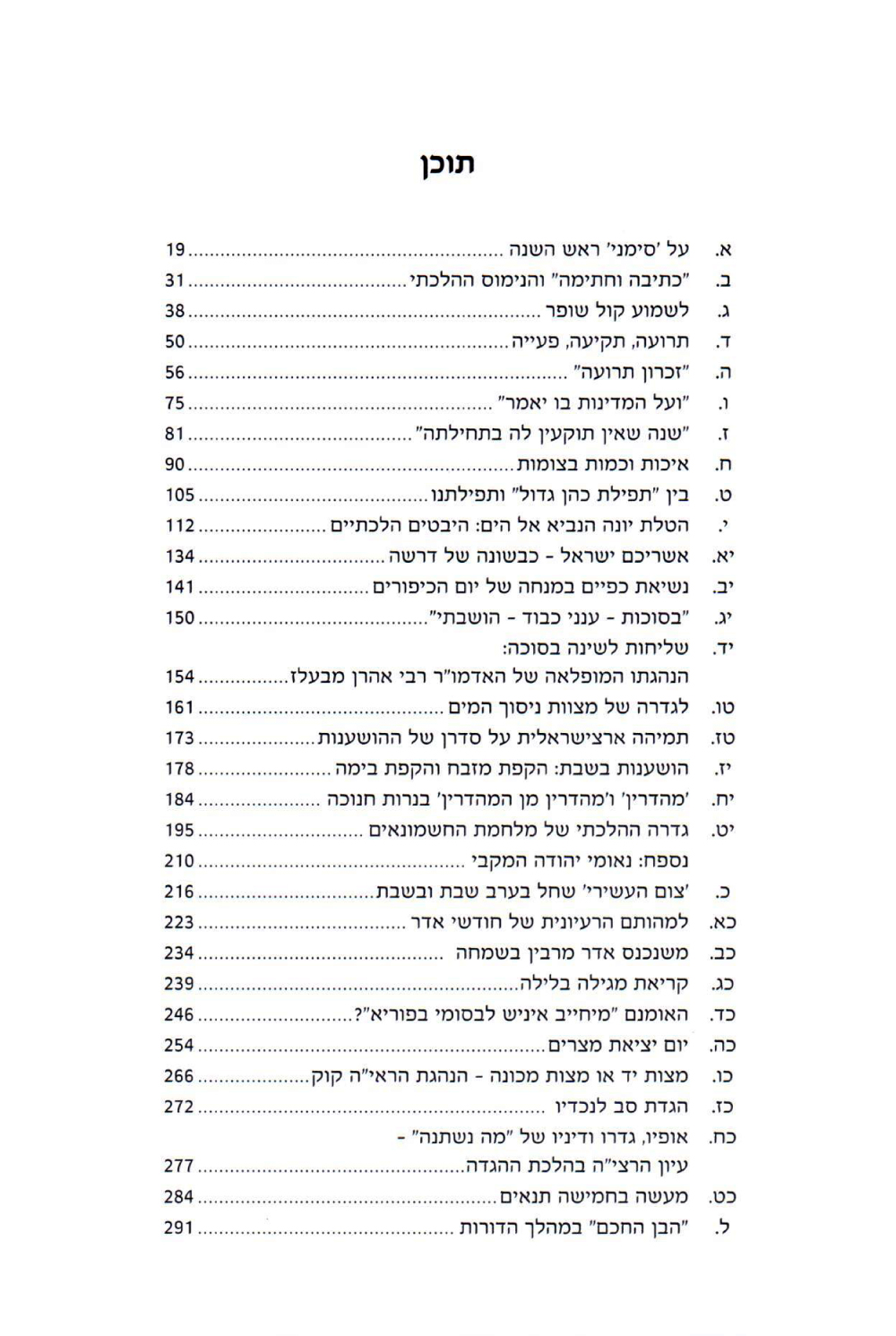
Here
is a scan of the table of contents to give one some sense of the wide range of
subjects:

11. ר’ איתם הנקין הי”ד, אש תמיד,
חידושים וביאורי דינים על סדר שלחן ערוך ומשנה ברורה, 369 עמודים
It’s
only been a few months since the terrible tragedy of the murder of R’ Eitam
Henkin and his wife. R’ Eitam was a special and unique person combining many
talents all in one. He was a great talmid chacham, Historian and talented writer all “wrapped
up” in one package. This work was something he had completed before his murder
and which he was very proud of. It received many impressive Haskomos which in
my opinion (for whatever it’s worth) are not exaggerated at all. He had the
unique ability to write clearly and concisely – penetrating to the heart of the
issue. This is a very valuable contribution to the world of Halacha
specifically Hilchos Shabbos. Sample pages are available upon request.


New Auction Catalog

Kestenbaum & Co.’s latest auction catalog for its auction on April 3, 2008, is available online. The auction includes a collection of important bibliography catalogs including, Koheleth David, the catalog of R. David Oppenheimer’s books that eventually went to the Bodleian Libary; Ohel Avraham, catalog of R. Avraham Merzbacher, this catalog was complied by R. Raphael Nathan Nata Rabinowich the author of Dikdukei Soferim; Likutei Shoshanim, the catalog of R. Mattisyahu Straschun’s library (this library in part went to YIVO and part to Hecheil Shlomo, Hecheil Shlomo recently sold this library and YIVO has sold parts of the library as well); Koheles Moshe, the catalog of St. Petersberg library compiled by Shmuel Wiener considered one of the best bibliography catalogs (unfortunately Wiener never completed the catalog).

Another book of interest is Johann Jakob Schudt’s Judisher Merkwurdigkeiten (Jewish Curiosities) (lot 110). This book contains much in the way of providing evidence of what Jewish practice was in the 18th century. R. Goldhaver in his comprehensive article on the origins and spread of custom of kabbalat Shabbat uses Schudt as Schudt is the earliest mention of some Kabbalat Shabbat customs.

Some of the books here belong to important personages. For example, an edition of the Shabbthai Sofer siddur belonging to Sir David Solomons, the first Jewish Sheriff of London and the Lord Mayor of London, he was also one of the first Jews to serve in the British House of Commons. (lot 218). There is a book on agunah that was Chaim Heller’s copy. (lot 245) R. Shlomo Dubno’s copy of Meskhtat Derekh Erets. (lot 265) And, then there is R. Nathan Adler of Frankfort’s copy of Adugath Mordehai. (lot 4)

A few noteworthy first editions also appear in the catalog. First, there is a sixteenth century copy of a machzor according to the Karite rite. (lot 210) This is a very rare machzor, with the only complete copy in the Bodleian Library. Second, there are a few first editions of the Gra’s works including Tospehta Zeraim, Shenoth Eliyahu, Torat Kohanim, and Tikkunei HaZohar. (lots 96-99) There is also the first edition of R. Emden’s She’elot Ya’avetz. (lot 100)

The auction includes the Munich-Heidelberg Talmud that was printed with the help of the United States Army after the Holocaust. (lot 171) A miniature Tehillim that is extremely rare. (lot 55). And, an important edition of Rashi’s commentary on the Torah – it is a Spanish or Sephardic “version” that is distinct from the German/French and Italian versions. (lot 53)
Two manuscripts of interest. A portion of the Hatam Sofer’s commentary to the Torah written in his own hand. (lot 348). Second, is a manuscript of R. Saul Morteira’s work on the Truth of the Law of Moses. The manuscript includes information on the Jews of Recife.