Shnayer Leiman – Some Notes on the Pinner Affair

Some Notes on the Pinner Affair by Shnayer Leiman
Kudos to Dan Rabinowitz for his informative account of the Pinner affair and, more importantly, for reproducing the original texts of Pinner’s 1834 Hebrew prospectus and the Hatam Sofer’s 1835 retraction. The comments that follow are intended to add to Dan’s discussion.

1. “In his retraction the Hatam Sofer says the text [of his approbation to the Pinner translation] was published in a Hamburg newspaper.”

It appears more likely that the Hatam Sofer’s words should be rendered: “I have already made public my grievous sin and error – that I wrote a letter of approbation on behalf of Dr. Pinner’s German translation of the Talmud – and it [Hebrew: iggerati] was published in Hamburg. In it, I confessed, and was not embarrassed to admit, that due to my sins, my eyes were besmeared and blinded…” What was published in Hamburg, then, was the Hatam Sofer’s first public retraction of the letter of approbation, not the letter of approbation itself. Moreover, no mention is made of a Hamburg newspaper. (In 1835, no German-Jewish or Hebrew newspapers were published in Hamburg.) It was published as a broadside, the text of which the Hatam Sofer sent from Pressburg to Hamburg for publication. In was intercepted by the Chief Rabbi, R. Akiva Wertheimer (d. 1838), who refused to publish the text precisely as the Hatam Sofer had written it. (This was in 1834, when the Hatam Sofer was posek ha-dor and gadol ha-dor, and about 72 years old – and we think we have problems!) The Hatam Sofer had to revise the text of the retraction, after which it was published in Hamburg some time between December 23, 1834 (when Rabbi Wertheimer addressed his objections to the Hatam Sofer) and January 22, 1835 (when the second retraction was published by the Hatam Sofer himself in Pressburg). See R. Shlomo Sofer, איגרות סופרים (Vienna, 1929), part 2, letter 66, pp. 70-71. Indeed, one suspects that the need for a second retraction by the Hatam Sofer was occasioned by this act of censorship on the part of the Hamburg authorities. No copies of the Hamburg broadside seem to have been preserved in any of the public collections of Judaica.

2. “The full text of the retraction appears in three places.”

It also appears in a fourth place: Y. Stern, ed., לקוטי תשובות חתם סופר (London, 1965), letter section, p. 90-91. This edition of the text is particularly important because it was obviously copied from the original broadside. Unlike the other editions of the text, the London edition contains two different fonts, Rashi script and enlarged square Hebrew characters – exactly like the original broadside. In a blatant misstatement of fact, the editor of the London edition, in a footnote, indicates that he copied the text from Greenwald’s אוצר נחמד. If so, he could not have known about the two different fonts and where to use them! In any event, Greenwald’s text lacks words that appear in the London edition! Most important, Greenwald’s text gives as the date the broadside was written: Thursday, 22 Tammuz , 5595 (= 1835). (In 1835, however, 22 Tammuz fell on Sunday, July 19.) The London edition gives as the date the broadside was written: Thursday, 21 Tevet, 5595 (= January 22, 1835). This is precisely the date that appears on the original broadside, as posted by Dan! One suspects that the discrepancy between the editor’s claim and the printed page originated in a parting of the ways between the editor and the great bibliophile and scholar, Abraham Ha-Levi Schischa (see the introductory page to the volume). Schischa’s deft hand is evident throughout the volume, and no doubt he had access to the original broadside. Perhaps when the editor and Schischa parted ways, the editor – who no longer had access to the original broadside – claimed that he copied the text from Greenwald, when in fact Schisha had prepared the text based on the original broadside. There remain some very slight discrepancies between the London edition and the original broadside, probably due to the editor of the London edition. The editor’s misstatement of fact misled, among others, R. Eliezer Waldenberg, שו”ת ציץ אליעזר 15:3, p. 8.

3. “As one can see, the retraction is dated 21 Tevet, 1834.”
As indicated above, 21 Tevet in the year 5595 fell in 1835. In the light of the documents posted by Dan, we can reconstruct the chronological sequence of events. Sometime in mid- 1834, the Hatam Sofer wrote a letter of approbation on behalf of Pinner’s translation of the Talmud into German. (One should mention for the record that it was much more than a mere translation. Pinner vocalized the Mishnah and punctuated [commas and question marks] the entire text of the Talmud, Rashi, Tosafos, and Rosh to Bavli Berakhoth! He also included occasional חידושים from his רבי מובהק, Rabbi Jacob of Lissa [d. 1832], at whose feet he sat for seven consecutive years.) On August 15, 1834, Pinner published his prospectus in Hebrew, announcing to the world at large that he had received letters of approbation from “all the גדולי ישראל in France, Italy, and German” and from none other than the Hatam Sofer himself! (The English version lists the same date, but makes no mention of the Hatam Sofer.) It was precisely the publication of the prospectus that forced the Hatam Sofer to go public. Now all of the Hatam Sofer’s colleagues knew what he had done, and the criticism that followed was merciless. See the letter of the Dutch communal leader and philanthropist, R. Zvi Hirsch Lehren (d. 1853), to the Hatam Sofer, dated January 11, 1835 (in איגרת סופרים, part 2, letter 69, pp. 73-78). It would no longer suffice to simply send a note to Pinner and ask that he return the letter of approbation. Since it was public knowledge that the Hatam Sofer had lent his name to Pinner’s translation, nothing less than a public retraction would set the record straight. By December 1834, the Hatam Sofer had already prepared an official retraction for publication (by disciples of his in Hamburg who had easy access to the local Jewish publishing houses) in Hamburg. After some delay due to censorship, the retraction was published either in late December 1834 or early January 1835. A second, fuller retraction was published in Pressburg on January 22, 1835. For Pressburg as the place of publication of the second retraction, see N. Ben Menachem, “הדפוס העברי בפרעסבורג,” Kiryat Sefer 33(1958), p. 529.

4. The letter of retraction refers to Rabbi Nathan Adler. This, of course refers to Rabbi Nathan Marcus Adler (1803-1890) of Hanover, and later Chief Rabbi of Britain, a much younger contemporary of the Hatam Sofer. He is not to be confused with the Hatam Sofer’s teacher, Rabbi Nathan Adler of Frankfurt (1741-1800), who could not have been consulted by Pinner. Cf. Torah U-Madda Journal 5(1994), p. 131; (see now the corrected version “The Talmud in Translation” in Printing The Talmud: From Bomberg to Schottenstein, Yeshiva University Museum, 2006, p. 133).

5. Although Pinner insisted on going ahead with the project, despite the Hatam Sofer’s protests, credit should be given where credit is due. Pinner omitted mention of the Hatam Sofer’s letter of approbation in the one volume that he published in 1842.

6. Regarding why no further volumes of Pinner’s translation were published, the simplest answer is: lack of funds and lack of determination to see a project through from beginning to end. Pinner, a moderate Maskil, spent a lifetime dreaming about all sorts of literary projects, none of which came to fruition. These included attempts at listing all Hebrew books and manuscripts, and all tombstone inscriptions of famous rabbis and scholars (including Moses Mendelssohn, Isaac Satanov, Hartwig Wessely, and Israel Jacobson). See his כתבי יד (Berlin, 1861), a partial publication of a book with no real beginning and no real end that captures the very essence of Pinner’s personality. In that volume, pp. 62-64, Pinner published a lengthy fund-raising letter he wrote in 1847 in order to raise funds to publish his diary, a kind of travelogue that would introduce readers to the wonders of the world. It was yet another of his failed projects. In the case of Pinner’s translation of the Talmud, Czar Nicholas withdrew his support and there was no one to pick up the slack. Note too the powerful language at the end of the Hatam’s Sofer’s retraction. Should Pinner insist on publishing the volumes, no Jewish publishing house may agree to publish the volumes, and no Jew may buy or read them. This surely didn’t help either publication or sales. For the powerful impact of the Hatam Sofer’s letters of approbation on the Jewish community at large, see my “Masorah and Halakhah: A Study in Conflict,” in M. Cogan, B. Eichler, and J. Tigay, eds., Tehillah Le-Moshe (Moshe Greenberg Festschrift), Winona Lake, 1997, pp. 305-306.


New book announcement: Professor David Henshke’s work on the Seder Night

Book announcement:  New work on the Seder Night
By Eliezer Brodt
דוד הנקשה, מה נשתנה: ליל הפסח בתלמודם של חכמים,
מגנס, 626 עמודים
I am very happy to announce the publication of an important work (in time for Pesach) which I have been eagerly awaiting; Professor David Henshke of the Talmud Department at Bar Ilan University’s long awaited volume, Ma Nishtanah: Leil HaPesach BiTalmudam shel Chachamim. The book was printed by Magnes Press.
Why am I excited about this work?
A few years ago I wrote:
Perhaps the topic which has engendered the most commentary in Jewish literature is the Haggadah shel Pesach. There are all kinds, in all languages, and with all types of commentary, pictures, etc. Whatever style one can think of, not one, but many Haggadahs have been written. So, whether it’s derush, kabbalah, halakha, mussar or chassidus there are plenty of Haggadahs out there. Then, there are people who specialize in collecting haggadahs although they do not regularly collect seforim. In almost every Jewish house today one can find many kinds of Haggadahs. In 1901 Shmuel Wiener, in A Bibliography of the Passover Haggadah, started to list all the different printings of the Haggadah. Later, in 1960, Abraham Yaari, in his work A Bibliography of the Passover Haggadah, restarted the listing and reached the number 2700. After that, many bibliographers added ones which Yaari omitted. In 1997, Yitzchak Yudlov printed his bibliography on the Haggadah,  The Haggadah Thesaurus. This thesaurus contains a beautiful bibliography of the Pesach Haggadahs from the beginning of printing until 1960. The final number in his bibliography listing is 4715. Of course ever since 1960 there has been many more printed. Every year people print new ones; even people who had never written on the Haggadah have had a Haggadah published under their name, based on culling their other writings and collecting material on the Haggadah. When one goes to the seforim store before Pesach it has become the custom to buy at least one new Haggadah; of course one finds themselves overwhelmed not knowing which to pick!
A year later I wrote a post listing an Initial Bibliography of Important Haggadah Literature that is out there.  In that post I discussed various works on the Seder night (regular and academic).
I personally collected and have learned through numerous works of all kinds on the seder night for many years. I am always on the lookout for some fresh new look on the seder night. A few years ago, I came across some articles by Professor Henshke in various publications such as HaMaayan and more academic journals and was hooked. I also heard him speak a few times. A few years ago when I was enrolled in the Talmud Department in Bar Ilan University, I started to go to a class of his once a week; each week, I was simply blown away. Around Pesach time the focus of the class was based on some of his work on the Seder night.
What is the strength and uniqueness of this work?
Professor Henshke shows a command of two worlds which some feel cannot go together, the Yeshivah and Academic worlds. He learned by various greats of the past including R’ Yisroel Gustman, R’ Binyamin Ze’ev Benedict, and R’ Shlomoh Fisher, has served as a maggid Shiur and is extremely familiar with the Yeshivisheh Torah in all areas, including Kodoshim and Taharos. His works shows an incredible command of the relevant sources, from Chazal and onwards, Geonim, Rishonim and Achronim. At the same time he shows the same impressive breadth in academic literature as well as deep understanding and utilization of the various methodologies. He is careful to examine all the material from scratch, including the manuscripts, to the finest details. This allows him to look at the sugyah with a fresh look. Additionally, he is also a great “Mechadish” and has originated many new ideas on various issues. Professor Henshke is an outstanding example of the tremendous benefit in combining both worlds (a topic for a different time). All this is done with Yiras Shamyim and with proper respect of whoever he is dealing with, even when he is arguing with them.
In general, Professor Henshke’s lectures and written material focus on the Peshat. Basing himself upon a meticulous reading of the texts, he then approaches Chazal (Midrashi halacha and Mishna-Tosefta) by putting each halachah into its proper literary perspective (each corpus reflects the Halachos as learned in a different Bais Midrash; that of R’ Yishmael and that of R’ Akiva). This approach, coupled with his phenomenal scope allows him to connect seemingly non-related halachos, weaving an intricate tapestry worthy of both Rosh Yeshiva and scholastic.

Here are Professor Henshke’s own words (from the introduction to this work) explaining what it is he is trying to bring to the table (I have abridged the text and footnotes):

כלום לא נכתב די על ליל הסדר?[1] השאלה… אכן מתבקשת – אף על פי שחיבור זה אינו פירוש להגדה (שאין מספר לביאוריה),[2] ואף אינו דיון תורני בסוגיות ליל הפסח (שדה שאף הוא כבר נחרש עמוקות).[3] תכליתו של ספר זה כפולה – בירור מצווֹת ליל הסדר היסודיות מבחינת תולדות ההלכה בתקופת התנאים והאמוראים (והוא חלקו הראשון שלחיבור), והבהרת התהווּתה של ההגדה התנאית – מימות התנאים עצמם ועד עיצובו של הרובד התנאי בהגדה של ימי האמוראים והגאונים (חלק שני). אף על פי כן, השאלה שבכותרת במקומה עומדת, לפי שסִפרות המחקר על ליל הסדר, שעניינה בתכליות הללו, אף היא כבר רחבה ומסועפת

    ברם, לא מעט מסִפרות המחקר נכתב מתוך מבט חיצוני לגופו של החומר הנחקר. חוקרי ליל הסדר לרוב לא ראו את תפקידם בניתוח מהלכי הסוגיות התלמודיות (המשמשות מקור ראשון לענייננו) מפנימן, אלא בהצבת נקודת מוצא שמחוץ להלכי המחשבה התלמודית – כמנוף לבירור מחודש של התופעות. כך, לדוגמאות אחדות, נחקרה ההגדה על רקע פוליטי,[4] על-פי תרבות הסימפוזיון ההלניסטי,[5] או כתגובה לפסחא הנוצרית ול’הגדתה’[6] – אך נקודות מוצא אלה, שאין כלל ספק בחיוניותן, ראוי להן להישקל דווקא לאחר בירור תלמודי מדוקדק בכל כלי הניתוח

שמדע התלמוד של ימינו מְספק. ומעין דבריו של רא”ש רוזנטל: “לא יהיה בסופו של דבר שום מבוא אל התלמוד אלא בתלמודיות ממש“.[7] אין לדלג אפוא אל מעבר לגופי המקורות – קודם שהללו נתבררו מתוכם ככל שיד העיון משגת.

    כיצד יש להם למקורות להתברר? על שלושה דברים עומד מחקר התלמוד:[8] (א) בירור שיטתי של נוסח המקורות התלמודיים, על יסוד מכלול עדי הנוסח שבידינו ויחסיהם ההדדיים; (ב) הבהרת לשונם של המקורות, על-פי פשוטם בהקשרם ועל יסוד בדיקתם בשאר היקרויות; (ג) על בסיס שני אלה מתאפשרת העֲמידה החיונית על הרכבם הספרותי של המקורות, הבחנת רובדיהם אלה מאלה ועמידה על יחסיהם ההדדיים. קשיים ותמיהות שמערימות הסוגיות השונות מתיישבים תחילה מתוך בירורים פנימיים אלה, אשר מביאים לעמידה על מהלכי החשיבה התלמודיים ותולדותיהם; ומעֵין וריאציה על התער של אוקהם[9] דומה שמלמדת כי דווקא כאשר אין בכל אלה כדי להושיע, יש מקום לפנות אל מחוץ לסוגיות עצמן

    אימוצה של מתודה זו בסוגיא דילן[10] דומה שמשיב כל הצורך על השאלה שהוצגה…, כפי שמתברר בבדיקת הסִפרות הקיימת

 סקירה מפורטת של ספרות המחקר בפרשת ליל הסדר, כפי שנדפסה עד שנת תשנ”ו, מצויה במבואו של יוסף תבורי לחיבורו ‘פסח דורות’ (תל-אביב 1996). במרכזה של ספרות זו עומדות כמדומה הגדותיהם של ד’ גולדשמידט (תש”ך) ורמ”מ כשר (מהדורה שלישית תשכ”ז), כל אחת בדרכה; אך תיאורן של דרכים אלה, יחד עם הצגת שאר הספרות בענייננו, ימצא הקורא במבואו האמור של תבורי. ואילו גוף ספרו הוא ודאי נקודת מפנה בחקר הלכות ליל הסדר; כי בחיבור זה מונחת תשתית שאין לה תחליף בתחום הנדון, וכל מחקר הבא אחריו נזון הימנו.[11] ברם, נוסף לנתונים הרבים שנתגלו ונצטברו מיום הופעת ספרו של תבורי (שבנוי בעיקרו על דיסרטציה משנת תשל”ח) – ויָתר עליהם: דרכי חשיבה וניתוח שנתחדדו מאז – הרי כבר הודיע המחבר עצמו כי “עיקר החידוש שלי הוא בתיאור תולדות הלכות ליל הסדר בתקופה הבתר אמוראית” (עמ’ 27; ההדגשה שלי). ואילו חיבורִי מוקדש בעיקרו לסִפרות התנאים והאמוראים.[12]

    מתוך כלל הסִפרות שיצאה לאור לאחר ספרו של תבורי, אזכיר כאן שני חיבורים שנזקקתי להם רבות. בשנת תשנ”ח יצאה לאור ‘הגדת חז”ל’ מאת שמואל וזאב ספראי. זהו חיבור רב ערך שריכז נתונים הרבה, והוא כתוב בידי אב ובנו, שני היסטוריונים מומחים; אלא שהיסטוריה היא אכן מגמתם, ולא בירורי הסוגיות התלמודיות לשמן… ולא עוד אלא שספר זה מוקדש להגדה דווקא, ומצוות ליל הסדר נידונות בו רק אגבה. מכל מקום, הכרת תודה יש בי אף לחיבור זה, שאי אפשר לחוקר ליל הסדר שלא להיזקק לו

    משנה ותוספתא פסחים הן נושא חיבורו של שמא יהודה פרידמן, ‘תוספתא עתיקתא’ (רמת-גן תשס”ג), שבכללו סעיפים העוסקים בענייננו. כדרכו, אין דבר גדול או קטן במהלך הדברים שפרידמן אינו יורד לסוף עניינו ומבררו כשׂמלה. ברם, נקודת המוצא של חיבור זה היא השיטה הכללית המוצעת בו, בדבר קדמותן של הלכות התוספתא להלכות המשנה המקבילות… מכל מקום, כל אימת שחיבורו של פרידמן נגע בענייננו, מיצוי מידותיו היה מאלף

He has written over 100 articles and two books (here and here) developing and elaborating on his methods.

The current volume is certainly not a light read but it will help one understand numerous sugyos of the seder night in new and in deeper levels than before. It is sure to become the new definitive work on the seder night putting it in a original perspective.

If one is interested in reading some articles by Professor Henshke that were later updated and incorporated into this work, feel free to email me at Eliezerbrodt@gmail.com
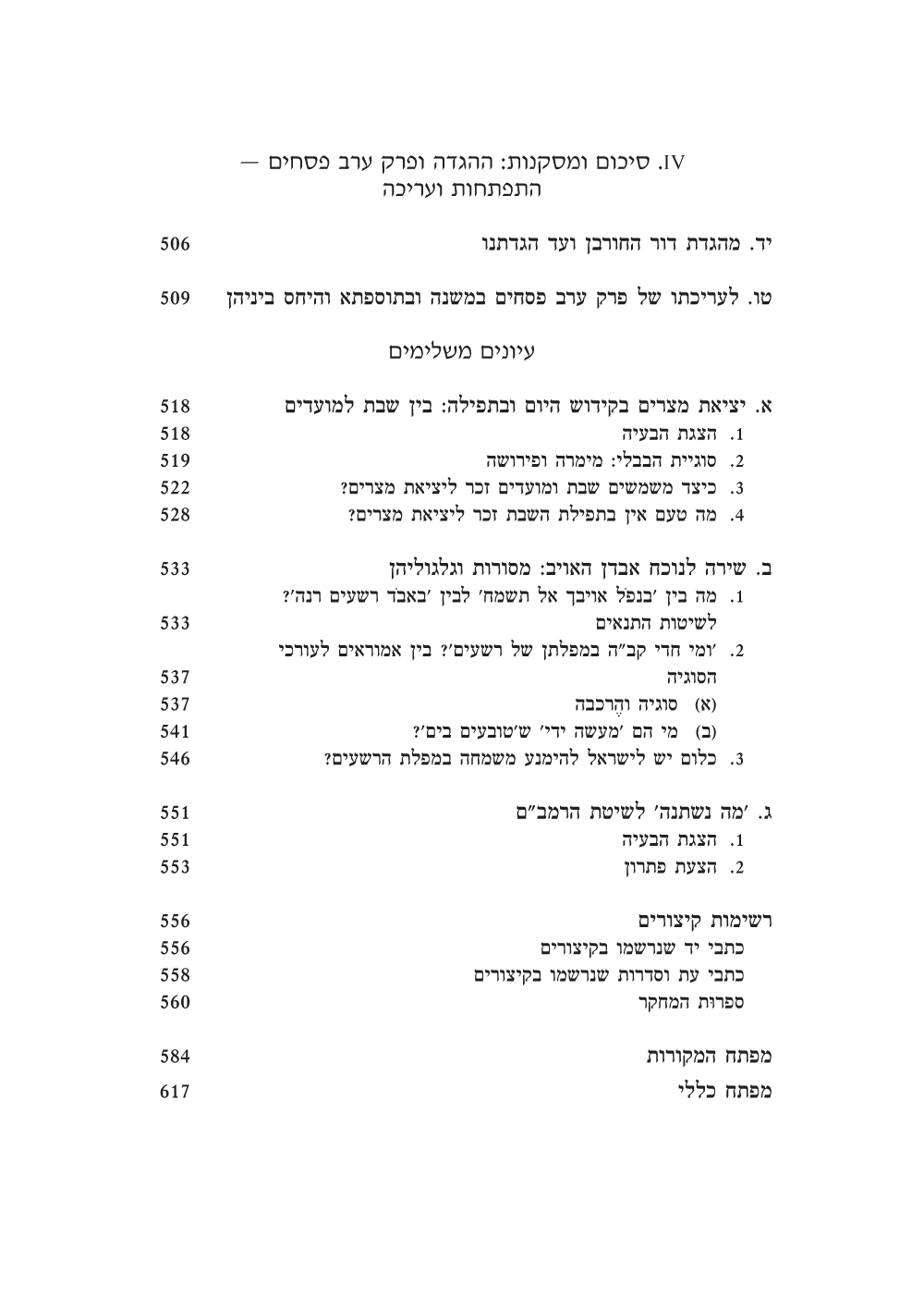
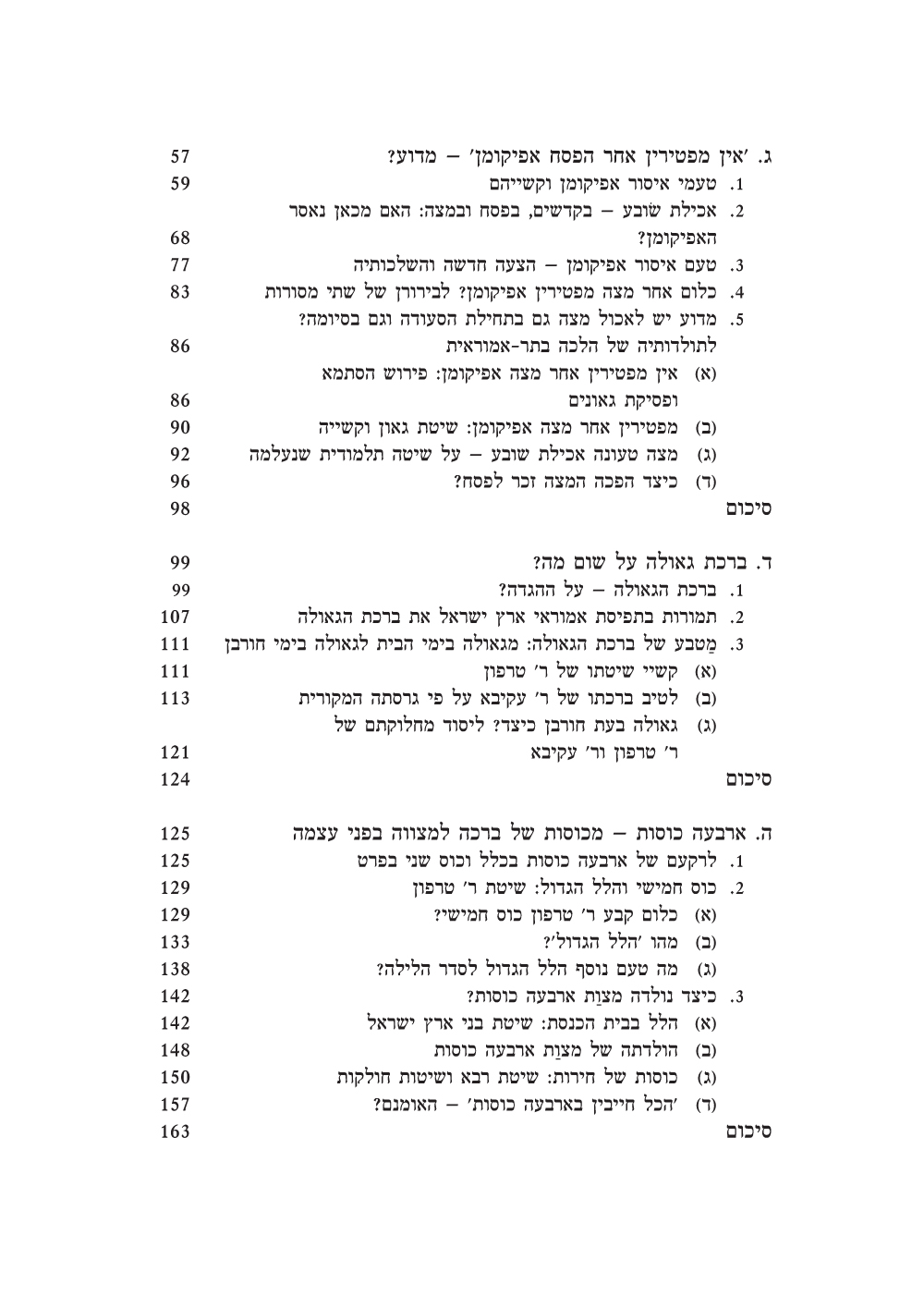
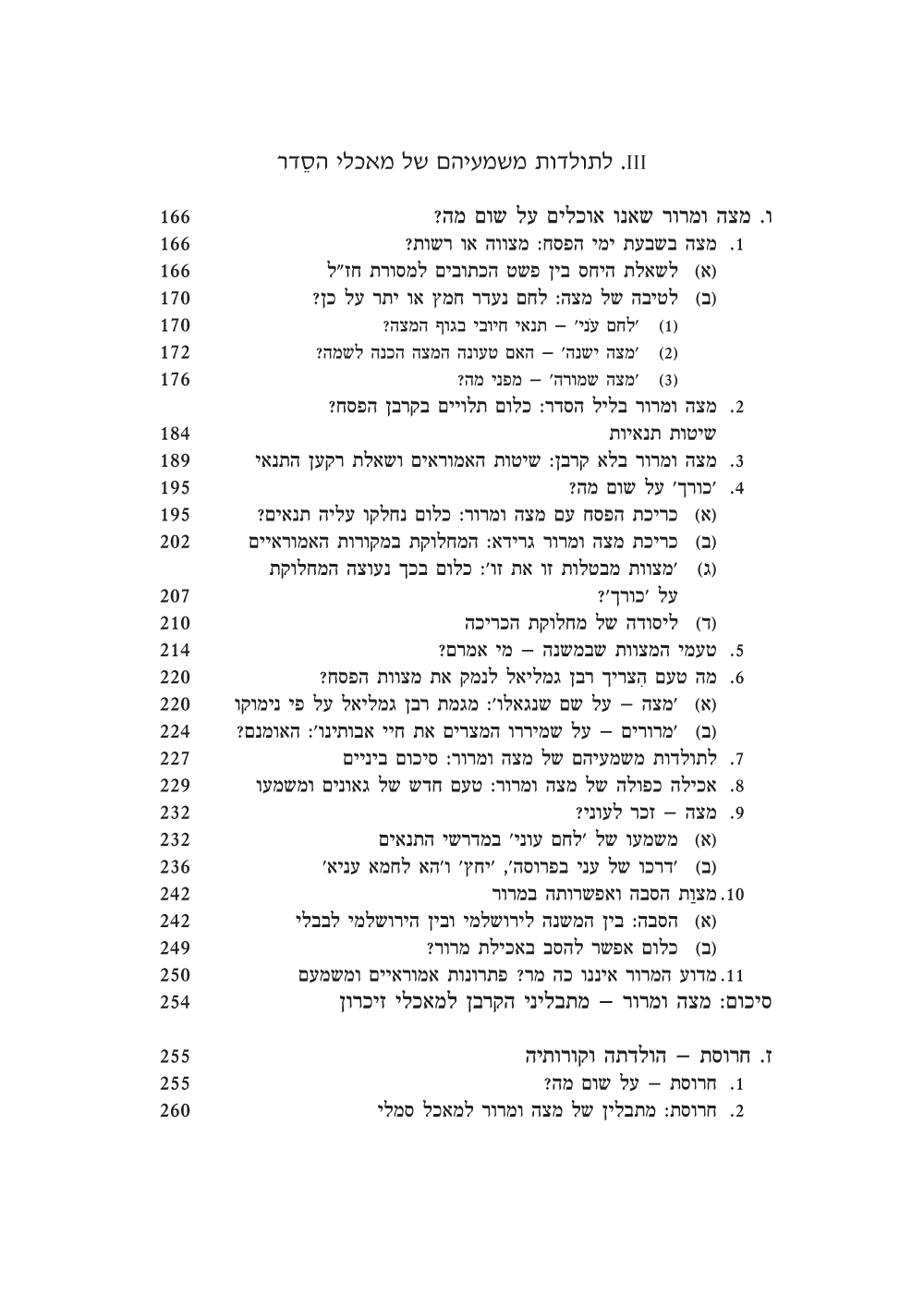
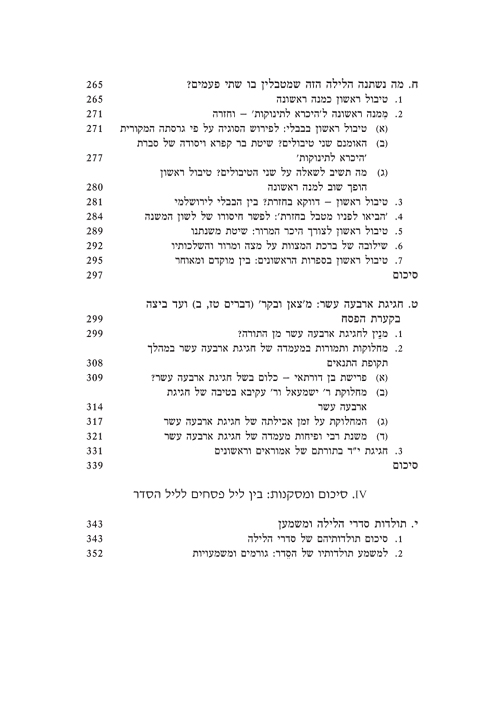
Here are the Table of Contents of this special work.
Simply looking at it gives one sense of some of the issues he deals with.

The book can be purchased via Magnes Press or through me at Eliezerbrodt@gmail.com

Copies of this work will be arriving at Biegeleisen shortly.


[1] הכינוי ‘ליל הסדר’ לליל ט”ו בניסן איננו מחידושי הלשון העברית החדשה, כפי שסבר י’ כנעני, אוצר הלשון העברית,ערך ‘סדר’ (עמ’ 3947), שהרי הוא מתועד כבר אצל מהרי”ל, במפנה המאות י”ד-ט”ו למניינם; ראה מהרי”ל, סדר ההגדה, ח, עמ’ צב. אך ספק אם יש למצאו קודם לכן, והשווה המילון החדש של א’ אבן שושן, ערך ‘ליל’ (עמ’ 812), המייחס את הביטוי לימי הביניים, בלא ציון מקור. הרבה קודם לכן מוצאים אנו את ה’סדר’ גרידא (ראה לדוגמה המקורות שהביא א’ בן יהודה במילונו, ערך ‘סדר’, עמ’ 3971), וכן את ‘סדר ליל פסח’ (ראה למשל ראבי”ה, סי’ תקכד, עמ’ 152). כלום הלעז sederabend הוא פרי תרגום של ‘ליל הסדר’ – או שמא איפכא? בשל המקור המאוחר יחסית של הביטוי ‘ליל הסדר’, נקטנו בכותרת החיבור את הלשון ‘ליל הפסח’. ועל “ליל הפסח” ראה להלן.
[2] ראה: יודלוב, אוצר, שם נרשמו “קרוב לחמש מאות פירושים… ממזרח וממערב, מכל קצות הקשת המחשבתית רבת הגונים והענפים שבעולם האמונה והמחשבה היהודית לדורותיה”, כדברי י”מ תא-שמע בהקדמתו שם, עמ’ ח, והואיל והרישום מגיע שם לשנת תש”ך, הרי כיום יש להוסיף כמובן לא מעט; אך מעֵבר לכך, רשימה זו אינה כוללת אלא את דפוסי ההגדות המלוּות בפירושים, ואילו לביאורי ההגדה שמצאו מקומם בשאר כל הספרות התורנית דומה שאין מספר
[3] ראה, לדוגמה בעלמא, מפתח הספרים שבסוף אוצר מפרשי התלמוד – פסחים, ד: ערבי פסחים, ירושלם תשנ”ד, עמ’ תתסט-תתצח.
[4] ראה למשל פינקלשטיין, א-ב..
[5] ראה למשל מאמרו רב ההשפעה של שטיין, סימפוזיון; על הבעייתיות שבכיווּן זה ראה להלן..
[6] ראה למשל דאובה שצוין להלן…, ובעקבותיו יובל, שני גוים, עמ’ 92; על כך שההנחה שביסוד דברי דאובה אינה מתקיימת, ראה להלן שם בהמשך. רעיונותיו המעניינים של יובל, המתאר את ההגדה כתגובה לנצרות, בעייתיים מבחינת בירור המקורות; ראה על כך עוד, לדוגמה, להלן… בתחום היחס לנצרות מצוי גם חיבורו של ליאונרד, אך הלה מבקש לברר את העניינים גם מתוכם. אלא שאף כאן ניכרת היטב בעייתיות ברקע התלמודי; וראה, לדוגמה, להלן…
[7] רוזנטל, המורה, עמ’ טו
[8] השווה: רוזנטל שם; ספרִי שמחת הרגל, עמ’ 2-1
[9] כבר העירו על ניסוחו של הרמב”ם, בקהיר של המאה הי”ב, לעקרונו של ויליאם איש אוקהם, באנגליה של המאה הי”ד: “אם, למשל, יש ביכולתנו להניח מתכונת אשר על-פיה תהיינה אפשריות התנועות… על-פי שלושה גלגלים, ומתכונת אחרת אשר על-פיה יתאפשר אותו דבר עצמו על-פי ארבעה גלגלים, ראוי לנו לסמוך על המתכונת אשר מספר התנועות בה קטן יותר” (מורה הנבוכים ב, יא, מהד’ שורץ עמ’ 290). ואכמ”ל במקורותיו.
[10] החיבור הנוכחי איננו הראשון שבו מבקש אני לבחון ולהדגים מתודה זו; שני קודמיו (משנה ראשונה; שמחת הרגל) נתמקדו בתורת התנאים..
[11] לחיבורו זה הוסיף תבורי מחקרים נוספים בענייני ליל הסדר, ואלה שנזכרו בחיבורנו רשומים ברשימת ספרות המחקר שבסופו; וראה עוד סיכומו “The Passover Haggadah”, בתוך: S. Safrai et al. (eds.), The Literature of the Sages, II, Assen 2006, pp. 327-338
[12] דיונים בספרות הגאונים והראשונים נערכו כאן כשיש בהם כדי להבהיר את הכיווּנים שהועלו באשר להלכה החז”לית.


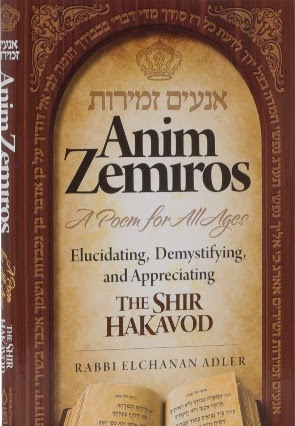
Anim Zemiros – A Poem for All Ages by Rabbi Elchanan Adler book review

Anim Zemiros – A Poem for All Ages

By Rabbi Elchanan Adler

Feldheim Publishers, New York, 2020, 192 pages

Reviewed by Myron Wakschlag

Rabbi Myron Wakschlag is a musmach of Rav Ahron Soloveichik zt”l at Yeshivas Brisk of Chicago, and is currently an IT executive in the Washington, DC area. He has researched and published on the early Orthodox rabbinate in America.

It is rare to find a book that is able to successfully illuminate a complex topic, yet still remain captivating and easily accessible. Rabbi Elchanan Adler’s new sefer on Anim Zemiros is just such a book. While Anim Zemiros is familiar to most people, its contents remain largely enigmatic due to its challenging Hebrew terminology and its esoteric meaning. Rabbi Adler has opened up new pathways that enable the reader to unlock both the simple meaning and the profound concepts lying beneath the surface of the text.

In this beautiful volume, Rabbi Adler notes how each stanza of Anim Zemiros is based on specific verses from Tanach or Talmudic/Midrashic passages. This itself is a valuable tool that sheds light on the underpinnings of the text. But the real strength of the book is in its ability to be megaleh amukos, to uncover the deep hidden beauty of the poem and make it accessible to the average reader untrained in the analysis of medieval liturgical poems. Rabbi Adler’s analysis weaves together explanations offered by traditional sources with his own fascinating insights. Rabbi Adler, an esteemed Rosh Yeshiva at Yeshiva University’s Rabbi Isaac Elchanan Theological Seminary for over 20 years, is an erudite scholar and master teacher who has an unusual gift for presenting difficult material in a way that is easy to understand.

The sefer begins with an overview that describes the origin of the formal name Shir HaKavod, the authorship and dating of the work, the origins of its inclusion in the liturgy, and the manner in which it is recited in the synagogue. It then transitions into an analysis of the overall themes, structure, and style of the text, including many interesting observations about the common ideas that are expressed within each section, and numerical allusions that emerge from the text. The next section transitions into the essence of the book, which comprises a textual analysis of each stanza, offering unique insights, explanations, interpretations, and suggestions to explicate the poem based on the full range of rabbinic literature. While it is not an exhaustive treatment of every word in the poem, Rabbi Adler’s choice of what to include helps to capture and hold the reader’s interest.

The book is valuable on many levels. In addition to its primary objective of elucidating both the plain and hidden meaning behind Anim Zemiros, a careful reading of the book allows the reader to acquire a methodology for analyzing piyyutim. Determining exactly what the author of Anim Zemiros meant to convey and what messages he buried beneath the surface is much like solving a mystery. Rabbi Adler employs many analytical tools to uncover the clues and piece together the various threads. It is enlightening to study the manner in which he carefully examines the text to identify nuances and different shades of meaning based on the poem’s rhythm, meter, textual variances, word roots, grammar, alternative translations, vowelization, allegory, and symbolism. He also often adduces prooftexts from Tanach, and contrasts the opinions of the various early and later commentaries to suggest various possibilities in the text. Utilizing this methodology, Rabbi Adler is able to “connect the dots” and uncover the concealed gems that are impossible to discern at first glance.

I owe a great debt of gratitude to Rabbi Adler, not only for giving me a much greater understanding of the magnificence of Anim Zemiros and its prominent place in our liturgy, but also for imparting his approach to analyzing piyyutim and understanding their significance. He has given me a derech to better appreciate medieval liturgical poems in general, and has also provided me with the tools to be able to analyze them on my own.


Is Tu-beshevat a Sabbatian Holiday?

There are those who claim the custom to celebrate Tu-beshevat as a holiday is based upon the book Hemdat Yamim. This book, according to many, was either written by Nathan of Gaza (Shabbati Zvi’s “prophet”) or one of follower of Shabbati Zvi. (This is contrary to the assertion in the Philogos that Nathan is not author, a contention which has little to no source). In Ha’aretz, an article appeared with this contention, namely the source for the Tu-beshevat custom is Sabbatian or as the headline reads “The New Year for the Trees, Isn’t is Shabbati Zvi.”

However, a closer look at the history reveals, that although some of the customs on Tu-beshevat can be traced to Hemdat Yamim the actual celebration dates much earlier. Avraham Ya’ari, the noted bibliographer, in an article traced the history of Tu-beshevat. He explains that much of the early mentions of Tu-beshevat were only in the negative, i.e. one can’t fast or say tachanun. Obviously, the first mention is in the Mishna in Rosh Hashana which states, according to Bet Hillel, Tu-beshevat is the new year for trees. The new year does not conotate a New Years like celebration, instead, this only has implications for questions of tithing. One can’t tithe fruits from one year using a different years fruits. Thus the 15th of Shevat is the cut off point.

Ya’ari, however, notes the first mention in connection to a celbration or the like is in the 16th century. Specifically, R. Issachar ibn Susan (c. 1510-1580) in Ibur Shanim, published in 1578 (the book was published earlier, in 1564, this was done without the knowledge or R. Issachar and according to R. Issachar, with numerous errors) he mentions “the Ashkenazim have the custom [on Tu-beshevat] to eat many fruits in honor of the day.” Mention of this custom also appeared in a Jedeo-German Minhagim book first published in 1590. “The custom is to eat many fruits as it is the New Year of the trees.”

In the community of Worms there was a rather interesting permentation of the custom. As R. Jousep Schammes in his Minhagim de Kehilah Kedosha Vermaysa, states:

On Purim and the 15 of Av and Shevat these were vacation days for the Rabbis, especially the 15ht and the 33rd day of the Omer for the students and their teachers. On these days the students did not go to school nor did the teachers go in. The teachers were required to distribute to the students as they left that morning, on the 15th and the 33rd day of the Omer whiskey and sweet cake from the teachers’ own pocket, they should not charge the students, this is the custom.


He repeats this in his comments to the 15th of Shevat. “One doesn’t say tehina even during the morning prayer. It is a vacation day for the students and the teachers, especailly the younger students, it is a holiday for the teachers. The custom is for the teachers to distribute whiskey to the students and make merry with them.”

While we have shown there was a custom for those Ashkenazim to celebrate Tu-beshevat, amongst the Sefardim, it is correct the source is Hemdat Yamim. Hemdat Yamim, first published in 1732 anonymously has the entire seder for Tu-beshevat. This includes passages from the Bible as well as specific foods. This in turn was popularized to a greater degree when it was included in the book Pri Etz Hadar first published in 1753 and republished an additional 29 times by 1959. This book included the entire Hemdat Yamim service.

So at the end of the day, although some of the customs of Tu-beshvat may come from the Hemdat Yamim he clearly is not the only or the first source for celebrating Tu-beshevat.

For more on the Hemdat Yamim, a controversy that has recently been stirred up again with the republication by R. Moshe Tzuriel of the Hemdat Yamim with an extensive introduction. Additionally, Ya’ari has a book Talmuot Sefer which his conclusion has been disproven by Tishbi in his Nitvi Emunah U’Minut. R. Tzuriel’s publication engendered the publication of a small pamphelet Hemdat Yosef as well as a bunch of articles in the journal Hechal HaBeshet. Rabbi Dr. Leiman in his latest article in Ohr haMizrach has a footnote with all the citations. [R. Dr. Leiman’s article collects all of R. Y. Eybeschit’s and R. Y. Emden’s approbations].

Also, anyone can get a copy of Hemdat Yamim. There are two places on the web where it is available free. The first is at the Jewish National Libraries site for rare books online here. For this one you need to download their viewer. Or at SeforimOnline.org (which for some reason is not online as I write this). Who has it in PDF format?

Additionally, Ya’ari has an article on the piyutim for Tu-beshevat here.


Ofeq Institute and the New (English) Version of the Messilat Yesharim

Ofeq Institute and the New (English) Version of the Messilat Yesharim
by Eliezer Brodt

The Messilat Yesharim, by R. Moshe Chaim Luzzato (Ramchal), is one of the foundational works of mussar. [1] The Gra, among others, praise the Messilat Yesharim.[2] As such, any addition to its oeuvre is important in its own right. The Ofeq Institute* has recently published an English translation of an alternative version of the Messilat Yesharim. This version is fundamentally different than the standard edition of Messilat Yesharim. The standard edition is divided into chapters based upon various character traits. The second, this new version, eschews the chapter divisions and instead is arranged in a conversation or dialogue format. Specifically, a dialogue between a “wise man” and a “pious person” is the format of this version. This second version comes from a manuscript in the Baron Ginzburg collection in the St. Petersberg Library. The manuscript is in the Ramchal’s own hand and is substantially larger than the other version. Although the Hebrew edition of the dialogue version has been available for a bit (also from Ofeq),[3] this version has now been published in an English edition and this edition will be the focus of this post.

First a word about the Ofeq Institute. Over the past twenty years Mechon Ofeq has released many editions of the works of the geonim, rishonim and achronim covering all genres of Jewish literature. All these works are critical editions with extensive notes and introductions. Almost all their editions include extensive footnotes. (One of the only complaints some have is that there’s simply too much information in the footnotes). Much like the novel version of Ofeq’s Messilat Yesharim, many of the works are based on manuscripts from the Ginzburg collection, a collection that was only recently released to the public.

To highlight but a few of their other titles. A work on Iyov from the bet midrash of Rashi and a commentary on Yecheskel from R. Yosef Heyun. They begun to publish a critical edition of the rishonim on Torat Kohanim as well as a commentary on Tosefta. They have printed works from geonim like R. Natronai Goan. Many works of rishonim on shas, most well-known being the Tosafas HaRosh on Pesachim and Haggigah, and Tosafos Yeshanim on Yevomos. A facsimile edition of Rambam on Madda and Ahava in the Rambam’s own hand. They have printed hagadahs from rishonim an excellent critical edition of the Seder Hakabalah of the Meriei. Another work of note is Meah Shaearim a two volume edition on hilchos kibud av v’em.

Ofeq, run by R. Avraham Shoshana and based in Cleavland Ohio utilizes not only Torah scholars (read products of Yeshiva education) but experts who are academics as well. For their editon of the R. Natronai Goan they used Professor Brody a leading expert of the geonim period. For other works of rishonim they have used Professors Emanuel, Hevlin and Speigel all experts in their respective fields. Or, in the case of the Messilat Yesharim, Professor Septimus was involved. That is, Ofeq ensures that the works they put out are of a high caliber. To some, this is an anathema. They view the inclusion of non-Torah scholars to be unconscionable. Most recently objections of this nature were expressed by R. Yehuda Liba ben Dovid in Bes HaVaad (see post here ). As I pointed out, however, R. ben Dovid’s position is in the minority.

Aside from Ofeq’s Hebrew publications they also have published some books in English. The Messilat Yesharim, however, is their most ambitious English translation to-date.

This English translation includes an introduction discussing the Messilat Yesharim, the two versions, and the English translation employed. The translation does not skimp in the sense that it is annotated with English notes – something that does not appear in all English translation. Instead, many English translations provide the footnotes in Hebrew. While this seems counter-intuitive as if the person wants to read the work in English, they would like to read the whole work including the footnotes. This edition does not suffer from that and instead, almost everything is in English. Additionally, although Ofeq has published the “dialogue” edition, they also include the original version in translation as well. There are, however, two parts that remain in Hebrew. The first are citations to verses, talmudic passages and the like, the second is the final work included which compares the dialogue version with the standard chapter version. This last section, titled Bein HaMesilot, is in Hebrew.

When it comes to English translations, there are typically two options. The first are academic presses which are typically expensive and not aimed at a popular audience. The second, are the traditional Orthodox presses, while these are typically more readable, they (although not always) don’t provide some of the scholarly detail. Ofeq’s translation of the Messilat Yesharim
strikes a nice balance between these two – they have produced a highly readable yet include the scholarly detail as well.

As mentioned above, what is unique about this copy of the Mesilat Yesharim is that is is written in a completely different style than the current Mesilat Yesharim. This new version is written in a debate form. The Ramchal wrote other works in debate form as well. For example, his work on defending kabbala. For whatever reason, he chose to print the other, standard, version and the debate version remained in manuscript. It’s unclear, however, why the Ramchal chose to do so. Many feel that a debate version is much better for 2 reasons: One, it keeps the reader much more interested and two, it brings out the various points much better as is always in a debate form.

For many years, the sefer Messilat Yesharim was learned as a mussar sefer, becoming one of the classics. Many people used to take it into a dark room and learn it in special tunes saying the words again and again until they penetrated. However, many people have a fear of mussar, having bad memories from yeshiva, forcing themselves to read mussar sefarim during mussar seder that they felt did not talk to them. I would like to suggest a new way to read this sefer. Read it as a regular sefer. Concentrate on the ideas discussed in it, not only focused on the mussar, but rather on the pshatim, aggada and statements throughout the sefer. Just to list a few of these lesser appreciate portions of the Messilat Yesharim:
והנה ודאי שיעזרהו לזה רוב התמדה והעיון במזמורי דוד המלך והתבונוות בם במאמריהם וענינים כי בהיותם כולם מלאים אהבה ויראה וכל מיני חסידות. הבנה בהתבוננו בם. לא ימנע מהתעורר בו התעוררות גדול לצאת בעקבותיו וללכתב בדרכיו. (פרק כא)
Or highlighting the value of reading gedolim books or at least the aggadic section of the gemarah
וכן תועיל הקריאה בסיפור מעשה החסידים באגדות אשר באו שם. כי כל אלה מעוררים את השכל להתיעץ ולעשות כמעשיהם הנחמדים… (פרק כא) In this passage, the Ramchal takes a positive view vis-a-vis working at least if learning remains a main focus
כי הנה העסק מוכרח הוא לאדם לצרוך פרנסתו, אך ריבו העסק אינו מוכרח שיהיה כל כך גדול עד שלא יניח לו מקום אל עבודותו. על כן נצטוינו לקבוע עתים לתורה. (פרק ה וראה פרק כא) And, on keeping chumros he has an intresting point
הוא להחמיר בהם תמיד לחוש אפילו לדברי יחיד במחלקות אם טעמו נראה אפילו שאין הלכה כמותו(פרק יד) Elsewhere he expands on this thought a bit more
באשר כבר יחשבו שהחסידות תלוי בדברי הבל או דברים נגד השכל והדיעה הנכונה. ויאמינו היות כל החסידות תלוי רק באמירת בקשות רבות ווידוים גדולים ובכיות והשתחויות גדולות ובסיגופים הזרים שימית בהם אדם את עצמו כטיבלת הקרא והשלג וכיוצא בדברים אלה… אך מציאות החסידות עצמו הוא דבר עמוק… כי הנה המצות המוטלת על כל ישראל כבר ידועות הן וחובתן ידועה עד היכן היא מגעת. אמנם מי שאוהב את הבוראית”ש אהבה אמתית לא ישתדל ויכון לפטור עצמו במה שכבר מפורסם מן החובה אשר על כל ישראל בכלל… אלא אדרבא… יהיה לי לעינים להרבות בזה הענין ולהרחיב אותו בכל הצדדין שאוכל לדון שרצונו יתברך חפץ בו… נמצא כלל החסידות הרחבת קיום כל המצות בכל הצדדין והתנאים שראוי ושאפשר… (פרק יח)
In the introduction the Ramchal has a puzzling remark, that many have taken issue with, but, in reality, the Ramchal was following in the path of Chovos haLevovvos
היתכן שיגע ויעמול שכלנו בחקירות אשר לא נתחייבו בם, בפלפולים אשר לא יצא לנו שום פרי מהם, ודינים אשר אינם שייכם לנו.
Here R Shoshanah has a nice comment (p. 18) of sources discussing this point.
When he wrote this work the Ramchal wrote a puzzling remark in the beginning showing his humility he writes

אמר המחבר החיבור הזה לא חיברתיו ללמוד לבני אדם את אשר לא ידעו אלא להזכירם את הידוע להם כבר ומפורסם אצלם פרסום גדול

R. Sarna writes in his notes on Messilat Yesharim that this statement is the most puzzling statement in the entire sefer to him.

One more nice piece from Messilat Yesharim is:

והפרישות… הוא התבודדות וההבדל מן החברה המדינית לפנות לבו אל העבודה והתבוננות בה כראוי ובתנאי שלא יטה גם בזה אל הקצה האחר שכבר אמר ז”ל לעולם תהא דעתו של אדם מעורב עם הבריות… (פרק יד)

Turning back to the Ofeq edition in particular, it is important to highlight the footnotes included. While much has been written on the Messilat Yesharim before this edition, especially worthy of mention is the edition of R Sarna. This edition that includes notes by R. Shoshana has included that aside from explaining the text and the concepts therein and providing sources that the Ramchal’s comments are based on in Hazel and the rishonim (as R. Shoshana notes that he has spent many years learning this sefer very carefully) also offers historical info such as on page 6 when dealing with learning pilpul or on page 127 about a custom in those days in Italy where there were large plays and comics played before Jewish audiences.

The end section, Bein HaMessilot, is a great section discussing at length a few topics of the Messilat Yesharim and comparing and contrasting how the two different versions with them. This shows, that at times, the debate version is much lengthier than the current version we have. Another thing that was done in this edition is that they fixed up the original version of Messilat Yesharim from all the mistakes that crept in since its printing. This sefer, which the author was subject to much opposition in his lifetime by many great gedolim, as is documented in the Iggeres Ramchal, was zoche that one of his works became a classic until today.

The only criticism I can think of on this edition is that they should have included all their appendices and introductions that they printed in the Hebrew edition previously printed by them. But, with this new edition it should be much easier to learn And I am sure one will enjoy this all time classic even today.

As Ofeq has extensively utilized manuscripts in both this edition of the Messilat Yesharim as well as in the rest of their publications. We should highlight another book, published by Ofeq, that is on the topic of Hebrew manuscripts. Benjamin Richler’s book, Hebrew Manuscripts: a Treasured Legacy, (this is available to readers of the Seforim blog for a special price of $24.95 including postage – please contact Ofeq their information is provided below) is a great introduction to the world of manuscripts for anyone. The book contains a lot of information and pictures of all types of handwriting. The book traces and describes briefly many manuscript collections, both private and public including the Ginzburg collection – the collection where the dialogue version of MessilatYesharim as well as other important manuscripts were found. It even lists the numbers that some of these seforim have in the very big collections. Besides for this, the book contains some nice descriptions with pictures of many manuscripts. Of interest is on page 50, a picture of a manuscript of a machzor from 1290 that has pictures of malachim with faces of dogs. The book also includes a bit of a history of the various catalogs of manuscripts that have been written until today. Interestingly enough, Richler writes that the JTS and Hebrew University collections are not completely cataloged. (maybe by now, they are – for an update on the JNUL collection see Richler’s post here). He has a chapter discussing the importance of manuscripts besides for ones not printed, which there are many. It also is to check the accuracy of previous editions. This book was written before the Ginzburg collection was released (p. 110). In addition, there’s a excellent chapter on the Cairo Geniza from one of the biggest experts on the geonic era, Professor Robert Brody. Here too, Brody discusses many of the basic questions one has about this topic, such as why all this is in the geniza in the first place. He also discusses where all the documents are location today and the progress of the study of these documents.

NOTES
[1] In an earlier post discussing the content and censorship of the sefer Menuchah u-Kedushah, and I note that according to the author of Menucah u-Kedushah, the Messilat Yesharim was written with ruach ha-kodesh.

[2] For a discussion about the Gra and his views towards R. Moshe Hayyim Luzzato and the Messilat Yesharim, see Y. Eliach, HaGra, vol. 1 pp. 240-45, where Eliach devotes a chapter to this issue. There is even a statement attributed to the Gra that there are no extra words in the sefer Messilat Yesharim, until chapter 11. This statement sparked a discussion as to exactly which word in chapter 11 is the extra one that the Gra was referring to. Additionally, it seems that the Gra even had some of the Ramchal’s works in manuscript.

[3] The Hebrew edition includes an extensive introduction enumerating all the differences between the versions by R. Yosef Avivi, an expert on kaballah and especially the Ramchal’s writings.
*As Ofeq’s website is a bit dated, those wishing to obtain a catalogue of Ofeq’s publications should contact them at: Ofeq Institute, 27801 Euclid Ave., Suite 430, Euclid, OH 44132, fax (216) 731-5567; email ofeqinst@core.comTheir contact information in Israel is 02-653-5920, or e-mail: ofeq@013.net


Assorted Matters

Assorted Matters
Marc B. Shapiro
My next post will take some time to prepare, but there are some other matters that I want to bring to readers’ attention, in particular a few books that I recently received. Due to space considerations, I couldn’t include these in my last post.
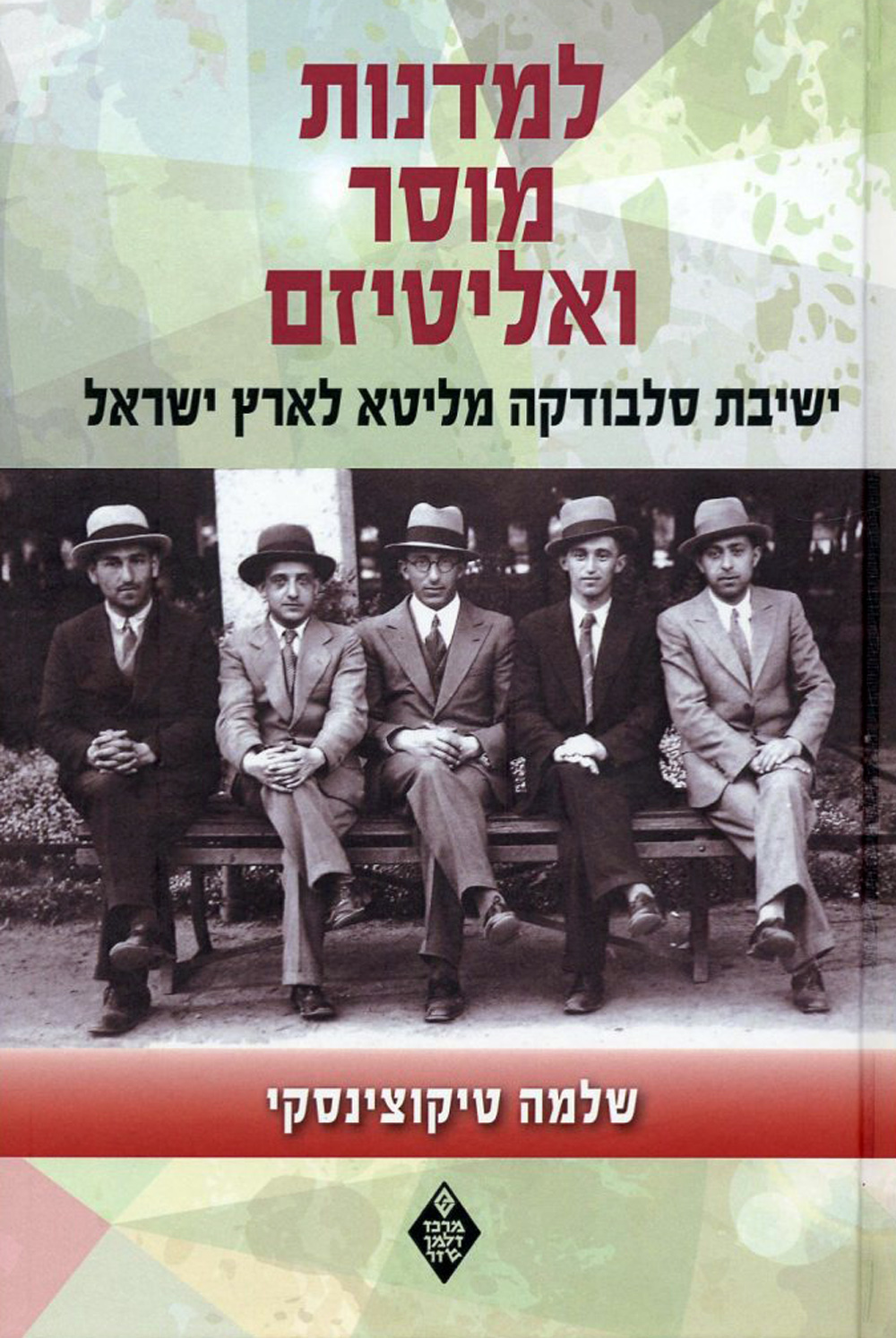
1. For those interested in the history of Lithuanian yeshivot, the last few years have been very fruitful. In 2014 Ben-Tsiyon Klibansky’s Ke-Tzur Halamish appeared. This book is a study of the yeshivot from World War I until the destruction of European Jewry. 2015 saw the appearance of Geoffrey D. Claussen’s Sharing the Burden: Rabbi Simhah Zissel Ziv and the Path of Mussar.[1]In January 2016 Shlomo Tikoshinski’s long-awaited book appeared. Its title is Lamdanut, Musar ve-Elitizm: Yeshivat Slobodka me-Lita le-Eretz Yisrael. The book can be purchased hereEliezer Brodt is also selling the book and a portion of each sale will go to support the efforts of the Seforim Blog, so I also encourage purchasing from him.

This outstanding book is full of new information, and Tikoshinski had access to a variety of private archives and letters that help bring to life a world now lost. Lamdanut, Musar ve-Elitizm is also a crucial source in understanding the development of religious life in Eretz Yisrael in the two decades before the creation of the State.

When you read about the Slobodka students, and later the students of Chevron, it is impossible not to see how very different the student culture was then from what is found today in haredi yeshivot, including the contemporary Yeshivat Chevron. Some of this differences can be explained by the subtitle of the book where the word “elitism” is mentioned. Unlike the situation today, Tikoshinski discusses an era when very few people studied in yeshivot. Those who chose to devote themselves to Torah study were regarded by the traditional community, and more importantly they regarded themselves, as the elite of Jewish society. One should not underestimate how such a self-image impacted the lives of the students.
R. Moshe Finkel was a part of the story Tikoshinski tells. He was the son of R. Nosson Zvi Finkel and son-in-law of R. Moshe Mordechai Epstein, and taught at the yeshiva both in Slobodka and in Chevron. Unfortunately, he unexpectedly died in 1925 at the young age of 43. Here is a photo of R. Moshe Finkel with his wife Sarah. (This picture does not appear in Tikoshinski’s book.)
Among the pictures included in Tikoshinksi’s book is the following. Can anyone guess who the one on the right is?
2. In the last post I included a picture of R. Moshe Feinstein and R. Soloveitchik. Here is another picture of R. Moshe, the Rav, and R. Shneur Kotler.

Here is a picture of R. Soloveitchik walking down the aisle at a wedding. Next to him is R. Samuel Walkin, and in front of R. Walkin is R. Moshe Feinstein.. I thank Dr. Dov Zakheim for sending me this picture.

In older pictures you find rabbis walking down the aisle at weddings. Has anyone been to a wedding where this is still done?
3. Yeshiva University recently acquired the archive of the late Rabbi Louis Bernstein (1928-1995), an important Modern Orthodox pulpit rabbi in the second half of the twentieth century. The collection contains an interesting letter from R. Jehiel Jacob Weinberg, in which R. Weinberg mentions that R. Soloveitchik used to sometimes come to his shiurim at the Berlin Rabbinical Seminary. R. Weinberg also speaks about how outstanding R. Soloveitchik was, and how even in his younger years his greatness was recognized by all the Torah sages of the generation.[2]

Also of interest in the collection is material relating to a controversial incident, or actually two incidents, that R. Bernstein was involved with. In 1985 R. Bernstein, who at the time was president of the Rabbinical Council of America, agreed to deliver a speech at the Conservative Rabbinical Assembly convention. That would have been controversial enough. However, things got even more heated when it was announced that the RCA would be reciprocating by having the head of the Rabbinical Assembly, Rabbi Alexander M. Shapiro, speak at the RCA convention.
This became a major dispute not just between the RCA and the more right wing elements in Orthodoxy, but within the RCA itself. The New York Times even covered the matter. See here. Unfortunately for R. Bernstein, the weight of all the opposition came down on him even though the decision for him to speak at the RA convention, and to have Rabbi Shapiro speak before the RCA, was not an individual decision but was voted on by members of the RCA’s Executive Committee.
In a future post I will discuss this matter in greater detail, and also deal with the role of R. Soloveitchik. For now, let me share this strong letter from R. Nissan Alpert to R. Bernstein, in which in addition to protesting Rabbi’s Shapiro upcoming speech, R. Alpert states that if the event goes forward he sees no way that he can remain a member of the RCA.[3]

4. Recently, Ha-Mashbir, vol. 2, appeared, edited by R. Yissachar Dov Hoffman and R. Ovadiah Hoffman. This volume, which can be purchased at Biegeleisen, is dedicated to R. Ovadiah Yosef and is full of worthwhile articles. Particularly noteworthy are the contributions by R. Meir Mazuz, R. Baruch Simon (focusing on R. Ovadiah’s shiurim at Yeshiva University), R. Pinhas Zebihi on the practice in Gibraltar that men in mourning do not wear a tallit on Shabbat (actually, this is only the case for the first month of mourning), and an important and lengthy article by R. Eliyahu Kohen on R. Ovadiah’s attitude towards Zionism, the State of Israel, and the army. The various articles in the book are supplemented by notes from the two editors, each of whom is a scholar in his own right.
I would also like to call attention to the wonderful introduction to the book by R. Ovadiah Hoffman. He speaks about the need to reject religious extremism that leads to the delegitimization of Torah scholars just because they belong to a different camp. As I mentioned in my last post, this is a great problem in Israeli haredi society, and R. Ovadiah Yosef in particular was subjected to all sorts of attacks from small-minded people who could not recognize the simple truth R. Ovadiah Hoffman speaks about.
דא עקא, קול חרדה שמענו, פחד ואין שלום. בפרי מעללינו הובלנו לעידן של מצוקת הדעת, בו דעות מיעוט ודוקטורינות דתיות של רב אחד ותלמידיו שאינן עולות בקנה אחד עם ההשקפה המסורתית המקובלת של רב אחר וקהלתו, מבוססות ככל שיהיו, לא די שאינן מופרכות לפי כללי התורה ובאופן רציונלי אלא נדחות בשאט נפש ומבוטלות כלאחר יד, ופעמים בדעת קדומה של ביטול הדברים למפרע. . . . כל יום שני שומעים על עוד אדם ש”נפסל” או “נמחק” ונרדף עד לחייו בנסיבות עלובות. מלבד שהיום אין דנין דיני נפשות, גם אין אחידות או סמכות מקובלת או מועצה מוכרת בין כל קהילות ישראל, אפילו את”ל הוא חטא בניו ובנתיו מה חטאו? כמה משפחות נהרסות על חשבון הרודנות הזאת. ברור כי עוד לא זכינו להמשך הנבואה: ושקט ושאנן ואין מחריד (ירמיה ל, י).
I thought of R. Hoffman’s point this week when I received a copy of a new book that needs to be seen to be believed. (Thanks to Meir Yosef Frankel for sending it.) The title that appears on the top of each page is שרידי-אש זרה, and the book is designed to show that R. Jehiel Jacob Weinberg was a complete heretic. Interestingly, the author doesn’t know how old I am as he refers to me as a student of R. Weinberg: פרופסור אחד מתלמידיו הותיקים. I will discuss this book in more detail in a future post.Returning to Ha-Mashbir, the second page, where it gives information on how to submit material, states as follows:

בעז”ה ית”ש בכרכים הבאים יודפסו גם מאמרים שאינם מרוכזים על משנת רבינו, הלכה מנהג ומחקר, ויפתח”ו שערי”ה תמיד לציבור הרחב. . . . גם לתגובות ולביקר”ת מבוא פתחים, כולם יתקבלו בברכה.
I have underlined certain words that have double apostrophes. This is a sign that there is a melitzah play on words, something that the editor R. Ovadiah Hoffman is quite good with. The first example, ויפתח”ו שערי”ה תמיד, is a play on Isaiah 60:11: ופתחו שעריך תמיד. The second example, ולביקור”ת מבוא פתחים, is quite clever. It is a play on Proverbs 8:3: .לפי-קרת מבוא פתחים
5. The ever-productive Menachem Kellner has just published a new book, Gam Hem Nikraim Adam: Ha-Nokhri be-Einei ha-Rambam, available here. This is not just a work of academic scholarship, but is what we can call “engaged scholarship,” in other words, scholarship that is also intent on making a difference in the real world. One of the things that troubles Kellner about contemporary Orthodox Judaism (and he specifically deals with such figures as R. Shlomo Aviner, R. Hershel Schachter, and the authors of Torat ha-Melekh) is the recent turn (or perhaps better, return) to negative portrayals of non-Jews and their spiritual worth. Kellner discusses this in the first section of the book which is titled גילוי דעת, and you can read it here. See also his interview with Alan Brill here.
In the book, Kellner argues that Maimonides sees no essential difference between Jews and non-Jews, and it is this view that Kellner wishes his readers to adopt. He refers to it as “Maimonides’ universalism.” Responses to Kellner’s book will be of two types: Those that deal with his interpretation of Maimonides and those that focus on what Kellner has to say about the contemporary scene and how Maimonides relates to it. This is a very exciting book which further establishes Kellner as an important public intellectual, and shows us once again why Kellner’s work has had a significant impact on the study of medieval Jewish philosophy. I hope to take up some of Kellner’s points in a future post.
7. R. Simcha Feuerman has recently published Et Lifrosh ve-Et le-Ehov. This small book, available at Biegeleisen, focuses on issues of shelom bayit. What makes this book significant is that R. Feuerman is also a licensed social worker with great experience in the field. This makes his book different than many previous books on the topic authored by well-intentioned people who never actually had any practical experience. As is fitting for a book like this, sexual matters are also discussed, and R. Feuerman mentions (p. 13) that the book was shown to rabbis and dayanim. Yet other than R. Gavriel Zinner, who penned a haskamah, none of the other rabbis chose to be public in their support because of their fear of being attacked by extremists who don’t think that these matters should be publicly discussed.
R. Feuerman also deals with the matter of psychological counseling and possible conflicts between the role of the psychologist, who is not supposed to be judgmental, and the traditional obligation to rebuke those who are sinning. As part of this essay (pp. 88ff.), R. Feuerman discusses the value of Freud’s insights (and notes the advances that have been made since his time). I find this significant since for many in the haredi world, and they are the ones who will be reading this book, Freud is almost up there with Darwin when it comes to objects of derision. It is also worth noting that the author uses “lomdus” to make psychological arguments.
8. For anyone who hasn’t yet picked up my new book, Changing the Immutable, the YU Seforim Sale is selling it at a great price. See here. Regarding Changing the Immutable, let me also add that because of the book’s last chapter, a number of people have been upset and have even characterized me as a haredi apologist. That is not the case at all, and Adam Ferziger, in his just-published review here, gets it right.


[1] Also worthy of note is Ernest Gugenheim, Letters from Mir: A Torah World in the Shadow of the Shoah (New York, 2014). One piece of interesting information appears on p. 106, where in a 1938 letter Gugenheim writes: “Tomorrow [the day before Purim] will be a day of fasting. Here, they are rather meikil with respect to this viewpoint, and many bachurim, too weak, do not fast completely. It is true that every day for them is a day of half-fasting, such that they are quite weakened.” Thanks to Jonathan Hirsch for calling this passage to my attention.
[2] R. Weinberg’s letter is found in the Rabbi Louis Bernstein archives, box 3. I thank the Yeshiva University Archives for granting me permission to publish it.
[3] R. Alpert’s letter is found in the Rabbi Louis Bernstein archives, box 6, Folder no.: RCA etc. 1985. I thank the Yeshiva University Archives for granting me permission to publish it.