Some Observations Regarding Approbations for Hebrew Books

Haskamot (rabbinical approbations) to Hebrew books have an very interesting history.  There are a few different forms of haskamot, perhaps the most important form is that which granted the author and/or publisher a copyright. Typically, the haskamah would prohibit republishing the particular book for a period of ten or fifteen years, etc.  In some instances, it was not only the particular book but any book in the field. For example, the haskamah to R. Yom Tov Lipmann Heller's edition of the Mishna with his commentary, Tosefot Yom Tov (Prague 1617) provides that "it is prohibited from printing any Mishnayot with any commentary for four years."[1] The history of this particular form haskamah begins with the approbation that appears on the first Rabbinic bible (Venice 1517).  As Jordan Penkower has previously provided, the approbation which appears at the end of Chronicles states that it is  forbidden [for] any one under the penalty of excommunication and also the loss of the books in the territories of the Holy Roman Church, to print or cause to be printed these books with the Targum or without the Targum and the Hebrew Commentaries of the Bible for the space of ten years from 1515.[2]This approbation is somewhat unique for Hebrew books as it was not given by a Rabbi but instead by Pope Leo X. Indeed, the version of this bible which contains this approbation was also dedicated to the Pope. Felix Pratensis, the editor and former Jew (he became a Augustin monk), explains in the dedication that the very idea of including the Targumim is favorable to the Church.  He explains that  the text we have added the ancient Hebrew and Chaldee Shcola, to wit the common Targum and that of Jerusalem.  These contain many obscure and recondite mysteries, not only useful, but necessary to the devout Christian.  We have wished with good reason to publish the whole under the sanction of your name [Leo X], for whereas on this book the foundation and the entire superstructure of Christianity rests, you are revered by us as the chief head of the Christian Church on earth and no one can deny the appropriateness of the dedication to you of our work.  Another odd approbation appears in the book printed much later in Lemberg, 1878.  This book, Peni Abraham, authored by R. Abraham Abba Seelenfreund includes approbations dated years before the book was ever published. For example, R. Meir Perles' approbation is dated 1852.  But, that approbation is not unique in the history of approbations.  In fact, the first Ashkenazik approbations, appearing in R. Shlomo Luria's Hakmat Shlomo (Krakow 1581) contains the approbation of R. Kalman of Worms dated 1542.  Instead, the odd approbation is that of R. Yitzhak Meir Alter, the Gerrer Rebbi otherwise known as the Hiddushei ha-Rim.  The reason this approbation is odd does have to do with the date.  Specifically, it is dated, Rosh Hodesh Tamuz, 1870.  The problem is that R. Alter died some four years earlier on the 23 of Adar 1866!  Now it is possible that instead of 5630 (1870) it should read 5620 (1860) and the letter Chuf was inadvertently changed to a Lamed, but in all events, it is a rather interesting slip of the pen.[3]    Now, it is not only the approbation that is of interest, in fact, R. Seelenfreund himself was somewhat of a character. According to the brief biography by R. Yekutiel Yehuda Greenwald,[4] R. Seelenfreund ended up divorcing his first wife during sheva Berakhot.  Additionally, although R. Seelenfreund was the Rabbi in Zaloshick (Poland) for a period of time, in 1875 he took a position in Kosice, Hungary for a short period of time.  While R. Seelenfreund was considered Ultra-Orthodox, as the term was used by the Hungarians, Kosice, as were many cities in Hungry was split between three Jewish factions, Reform, Ultra-Orthodox and Status Quo.  R. Seelenfreund was appointed Rabbi of the Status Quo  synagogue and thought that his relationships with Ultra-Orthodox Rabbis would allow him to remain to be viewed as such.  Indeed, on his first sefer, Pras Avot (Lemberg 1865), he obtained the approbation of R. Yosef Shaul Nathanson.  It was R. Nathanson's suggestion for the title of the book to be Pras Avot. It appears that R. Seelenfreund, however, was very wrong in his calculation regarding Kosice. He eventually left Kosice and returned to Zaloshick but not before relationships between himself and the community broke down.  He even published a small book, Kol Shover Shekarim (Kosice 1878) to defend himself.  It is unclear why much of this history of R. Seelenfreund does not appear in Cohen's biography of R. Seelenfreund from Hakmei Hungaria.[5]  It appears that Cohen was unaware that R. Seelenfreund left Kosice or that he published Kol Shover Shekarim.  

[1] For this and other similar approbations see Nahum Rakover, Copyright in Jewish Sources (Israel 1991), 150-53 (Hebrew). Both Rakover's work as well as Benayahu's, see infra n3, break new ground on the issue of approbations.  The new edition of the Encyclopaedia Judaica, however, does not use any of these sources.  In fact, the new version merely reprints the earlier article on haskma which appeared in the 1971 edition and is seriously lacking.  This is but another example of how the new version has significant gaps.  See Shnayer Z. Leiman's review of the new edition here and Shlomo Zalman Havlin's additional note on the topic here[2] The translation of this and the next quote is taken from Christian D. Ginsburg, Introduction to the Massoretico Critical Edition of the Hebrew Bible (Ktav Press 1966), 935-36, 946.[3] In addition, Pratensis claims that this edition was unique as the prior editions "hav[e] almost as many errors as words in them" and that "no one has attempted [such an edition] before." Ginsburg in his discussion about this edition shows, however, that in fact previous editions were (close) to error free. Ginsburg bemoans the fact that "Felix Pratensis should have been betrayed to resort to such unfair expedients."  But, it is possible that Pratensis' claim regarding the novelty of the work was necessary in part due approbations.  Not Rabbinic approbations but the approbation of the Venetian Senate.  This is so, as in 1517 the Senate passed a law that would abolish all printing monopolies (copyrights) and hence forth would only grant monopolies for works which "are new or which have never been printed before."  Horatio Brown, The Venetian Printing Press (London 1891), 74. Indeed, Bomberg, the printer of this edition had appealed to the Senate for a monopoly when he began printing in 1515 and which the new law abolished. See Meir Benayahu, Copyright, Authorization & Imprimatour for Hebrew Books Printed in Venice (Israel 1971), 17 (Hebrew).  Thus, it is possible that Pratensis claim of novelty was to argue implicitly that this book qualified for a monopoly even under the new law as it was a "new" book.   [4] Y.Y. Greenwald, "The Descendants of the Rema and their Influence in Hungary," Sinai 28 (1951): 85-87 (Hebrew).  [5] Y.Y. Kohen, Hakmei Hungaria (Israel 1997), 342. 


What Became of Tychsen?: The Non-Jewish ‘Rabbi’ and his “Congregation” of Jewish Medical Students

What Became of Tychsen?: The Non-Jewish ‘Rabbi’ and his “Congregation” of Jewish Medical Students

By Dr. Edward Reichman, MD

This essay was inspired by two recent Seforim blog posts, one on Professor Shnayer Leiman’s contributions,[1] and the other on a topic related to R’ Yonasan Eybeshutz.[2]

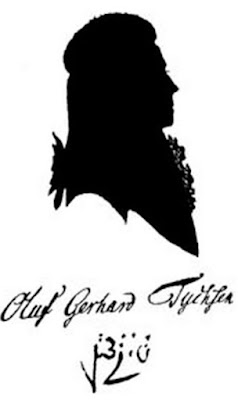
                                           

In November 16, 2006 an article by Dr. Shnayer Leiman appeared in the newly formed Seforim Blog entitled, “Two Cases of Non-Jews with Rabbinic Ordination: One Real and One Imaginary.” The “real” ordination was bestowed upon Olaf Gerhard Tychsen (1734-1815). In 1759, Tychsen received the title of Haver, a lower form of rabbinic ordination, by Moses the son of Rabbi Zvi Hirsch Lifshuetz. Tychsen is perhaps the only known case in Jewish history of a non-Jew receiving such an honor or degree.[3]

Leiman provides a biography of Tychsen. He pursued studies in Hindustani, Ethiopic and Arabic, as well as Hebrew and Yiddish and became an Orientalist of international renown making significant contributions to cuneiform studies and numismatics as well.[4] During his early years he also pursued various missionary activities in the Jewish community, largely unsuccessful by his own account. 

As Leiman notes, in 1752, while a student at the Christian Academy in Altona, Tychsen attended the lectures of R. Yonasan Eybeschutz. Leiman essentially leaves us at the point of Tychsen’s ordination, with brief mention of his subsequent academic career. What became of Tychsen’s “rabbinic” career after he received this singular distinction? Did he apply for a rabbinic position? Did he maintain any connection with the Jewish community? 

In fact, Tychsen did continue to maintain a strong connection to both rabbinic literature and the Jewish community in varying degrees throughout his life. He is perhaps best known for his involvement in the premature burial controversy, which would earn him a place of infamy in Jewish history. Tychsen taught at the university in Butzow, the residence of the Duke of Mecklenberg. During this period there was concern that physicians were misdiagnosing death, and as a result, people were being buried prematurely.[5] On February 19, 1772 Tychsen sent a letter to the Duke of Mecklenberg regarding the Jews’ burial practice, interring after waiting only three hours, where it is known that there can sometimes be misdiagnosis of death. Tychsen detailed the Jewish origins of hastening burial in general, reflecting familiarity with rabbinic literature. He claimed that the need to bury quickly was established in countries with hot climates, where the body would decompose quickly, not applicable to a country like Germany. He also reported cases of people who were supposedly buried alive.[6] On April 30, 1772, Duke Friedrich of Mecklenburg-Schwerin, in response to Tychsen’s letter, issued an order prohibiting the Jews in his realm from immediately burying their dead and requiring that they rather wait for three days after death before interment. This began what would become a worldwide halakhic debate about the halakhic definition of death and the time of burial.[7]

Tychsen was also peripherally involved with one of Jewish history’s greatest seforim collections. Rabbi David Oppenheim amassed an extraordinary collection of books and manuscripts which languished in storage for years after his death.[8] Tychsen visited the collection for three weeks, reporting on its manuscripts to the Italian Christian Hebraist Giovanni Bernardo De Rossi. He attempted to arouse the interest of potential buyers, including Catherine the Great, Empress of Russia, Duke Karl Eugen of Wurtemberg, and Archduke Frederick Francis I of Mecklenberg. His efforts were to no avail and the collection ultimately found its home in Oxford, where it remains to this day.[9]

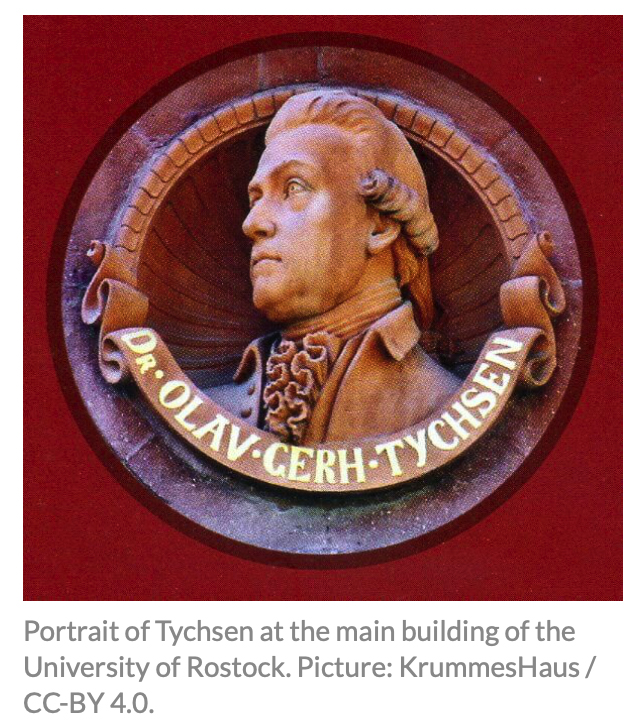
Here we highlight a little-known, though more substantive, connection of Tychsen with the Jewish community. One year after his ordination, toward the end of 1760, Tychsen was appointed Professor of Oriental Languages at the newly established University of Bützow in Mecklenburg. It is in this capacity that Tychsen exercised a rabbinic role, becoming a university campus rabbi of sorts for a select group of Jews at the university. Though he may not actually have had a “minyan” of students, nonetheless, his impact on this select group was profound and long lasting, akin to that of a rebbe.[10]

The interactions of Tychsen with the Jewish community must be viewed through a particular lens. Tychsen was a devout Lutheran Protestant and trained and engaged in proselytizing activities in his early life. This fact remains at least in the background of all his interactions with the Jewish students at Butzow and has been evaluated elsewhere. Whether his relationships with the Jewish medical students were primarily or partially motivated by his proselytizing tendencies, or whether his proselytizing endeavors had ceased by then, is a matter of historical speculation.[11] This is not the focus of the present essay.[12]

In his capacity as a faculty member of the University of Butzow Tychsen encountered a number of Jewish students attending the university’s medical school. Though an Orientalist and not a physician or scientist, he nonetheless served as a mentor for these students to whom he was drawn by shared interests and possibly proselytizing intentions. Tychen served this role for all the Jewish medical students who attended the University of Butzow during its twenty-nine years of existence. 

The first Jewish student of the Butzow Medical School, and the first with whom Tychsen developed a relationship was Markus Moses. This relationship has been the subject of a number of dedicated essays.[13] Markus Moses was the son of Moshe ben Meir Harif Lemberger (Lvov), Chief Rabbi of Pressburg and head of its yeshiva. Lemberger, as well as his son Markus, were apparently involved in the Emden- Eybeshutz controversy.[14] Markus (Mordechai) was born in Pressburg in 1729, received a traditional Jewish education, and married. Shortly thereafter, his wife and two young children died. In 1758, after the death of his father, Markus began the study of secular subjects. Over the next few years he traveled to Germany and continued study in various cities, including the field of medicine, ultimately ending up in Butzow in 1763. Aron Isak, the leader of the Jewish community, took him under his wing and orchestrated his admission to the recently founded Butzow Medical School,[15] thus waiving the high taxes imposed upon the Jewish community for new town visitors. The faculty were impressed with Moses’ great intelligence and facility with multiple languages and accepted him, with the approval of the Duke and Professor George Detharding, the head of the faculty, with free tuition. Below is a letter in Hebrew from Paul Theodore Carpov, an Orientalist and Christian Hebraist at Butzow, supporting Moses’ acceptance to the medical school at Butzow and advocating for his financial support as well.[16]

As per the letter, Moses brought with him impressive letters of recommendation not only from the great scholars of “his nation,” but also from those of “our nation.” Carpov also notes the Duke’s approval, as well as the financial issues relating to his application. Carpov was clearly taken by the young Jewish student. 

Below is the record of matriculation of Markus Moses in 1764.

Moses clearly had a predisposition for the field of medicine and was soon relied upon by Detharding to see the latter’s private patients.[17]

Tychsen had a working academic relationship with Moses as evidenced by the multiple research papers Moses wrote under his mentorship. It is remarkable that all of the papers were on Jewish topics. I have found a number of cases, though relatively few in number, of Jewish medical students throughout the centuries who wrote their medical school dissertations on a Jewish related topic,[18] but I have never encountered any student who authored so many Jewish related papers as part of their medical training. The topics included the Samaritan Bible, a discussion of the kosher and non-kosher animals based on the work of Rambam, and an essay on the diseases of the old as reflected in Kohelet (chapter 12).[19] Moses’ graduation dissertation, discussed below, was also on a Jewish topic and was supervised by Tychsen.

Disputatio de Pentateucho Ebraeo-Samaritano, 1765[20]

Essay on kosher and non-kosher animals based on Rambam.[21]

The nature of the relationship Tychsen had with Moses, as well as with other Jewish medical students in Butzow, went far beyond the usual Professor-student model. There wrote each other dozens of letters and continued correspondence for years after graduation.[22] In one letter dated March 16, 1765[23] Moses apologizes for not responding promptly to Tychsen’s previous letter. Moses continues that soon he will either write again, or will see Tychsen in person. Moses signs the letter, hamitavek biafar raglekha.
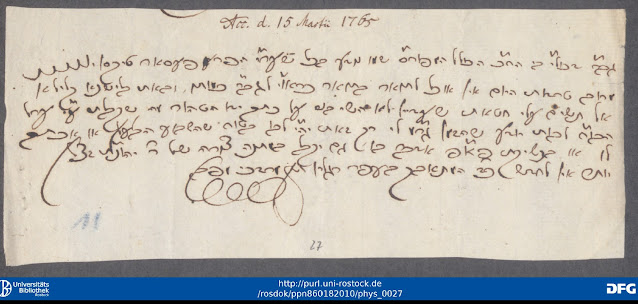
גבר(א) דכולי() בי החכ(ם) הכולל המפורס(ם) שמו נודע בכל השערי(ם) הפרעפעסאר טיקסן

מרוב טרדות היום אין אוכל לתואר בתואר כראוי לגבר(א) כמותו ובאתי בלישנא קלילא אל תשים עלי חטאת שעדיין לא השיבני על כתב ידו הטהור מה שקבלתי ע”י ערל הבוח(ן) לבות יודע שהזמן גרמ(ה) לי רק זאת יהי(ה) לבו בטוח שהשבוע הבע” (?הא עלינו לטובה) או אכתוב לו או בנשיקת פא”פ (פה אל פה) אדבר בו[24] גם יקבל במתנה צורה של ר’ יהונת(ן) זצ”ל יותר אין לחדש כה המתאבק בעפר רגליו מרדכי מפב (?מפרשברג)ג


In the last line, Moses writes that Tychsen will also receive from him a gift of a portrait of Rav Yehonatan zt”l. Moses was obviously aware of the connection between Tychsen and Eybeshutz and believed this would be a meaningful gift. Eybeshutz died in 1764,[25] and his portrait was disseminated shortly thereafter. This is likely the portrait Moses purchased for Tychsen.[26]

As part of the requirements for the completion of a doctorate in medicine at most German universities, the student was required to engage in a public disputation on the topic of their dissertation. [27] The topic of Markus’ disputation was the analysis of a verse in Yehezkel which, according to Moses, reflects an ancient Jewish practice of placing salt of the skin of an infant as a prophylactic against disease. 

Moses engages in an expansive philological and grammatical analysis of the verse then posits that the Jews practiced this procedure and that it protected them from diseases like smallpox. The reason smallpox was prevalent during his time, Moses argues, is because people no longer routinely applied salt to the skin of infants. Moses is the only one of the Jewish medical students at Butzow who wrote his dissertation on a Jewish topic. 

Moses’ disputation was held on January 22, 1766 (11 Shevat, 5526). The event was held in a church, though Tychsen apparently noted that it was primarily a venue for non-ecclesiastic events. This may have been in deference to the halakhic concern about entering a church.[28] A number of Jewish families attended the event. Copies of the dissertation were sent to those invited to the public discourse, and additional copies were provided for the audience on the day of the event. The ceremony began with a Latin oration by the presiding professor, in Moses’ case, Professor Detharding, and was followed by the student’s reading of his dissertation. Upon completion of the reading, designated opponents presented their arguments and criticisms against the substance of the dissertation, with audience members occasionally allowed to participate. This was then followed by the candidate’s rebuttal. Tychsen served as one of the designated opponents for Moses’ disputation. 

On oath was also part of the graduation ceremony, and it typically involved avowing one’s belief in Christianity. Tychsen intervened with the Duke of Mecklenberg on Moses’ behalf to allow him to take his graduation oath invoking the name of the God of Israel as opposed to the Christian deity. He even publicly conversed with Moses in Yiddish at the graduation.[29] 

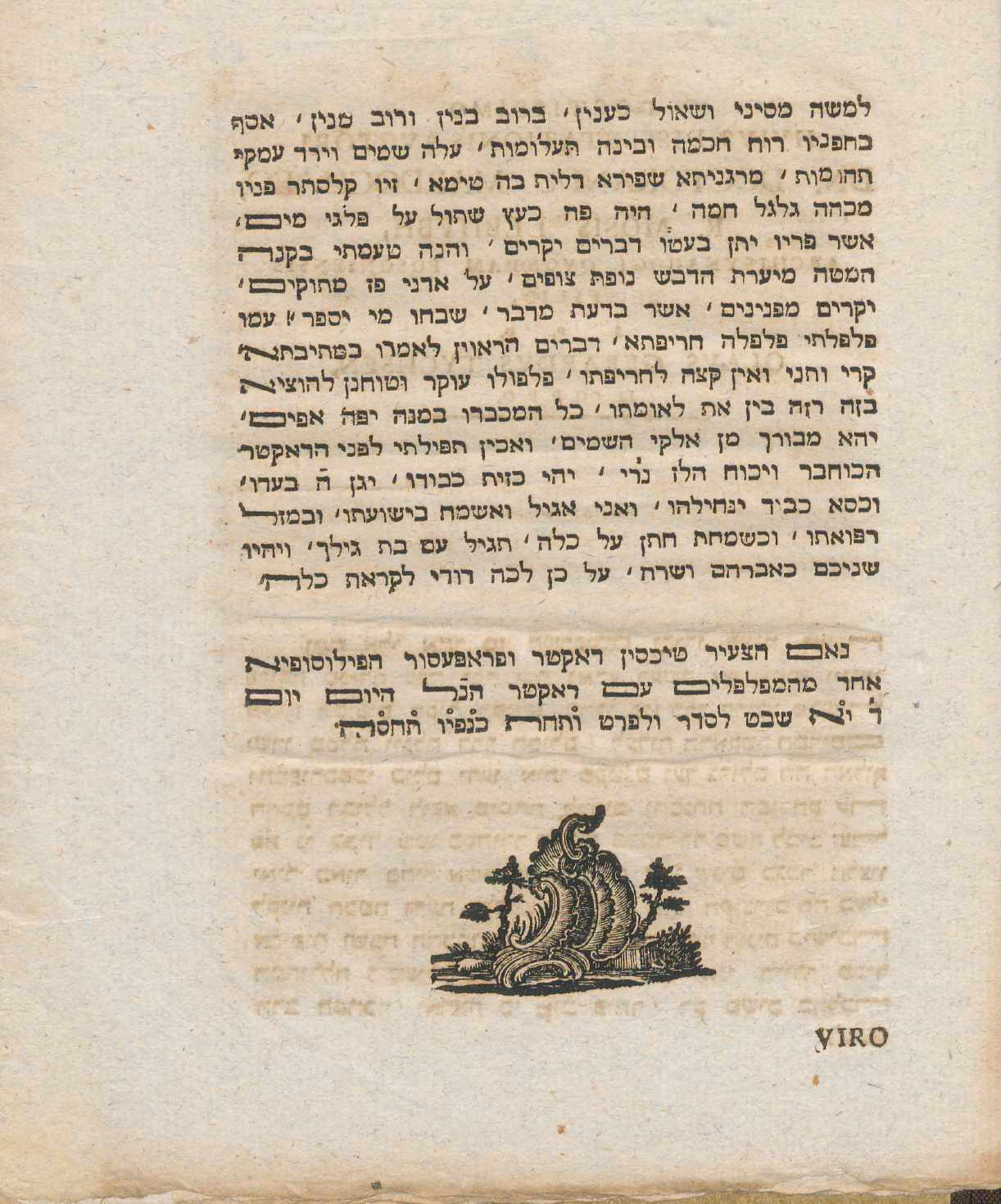
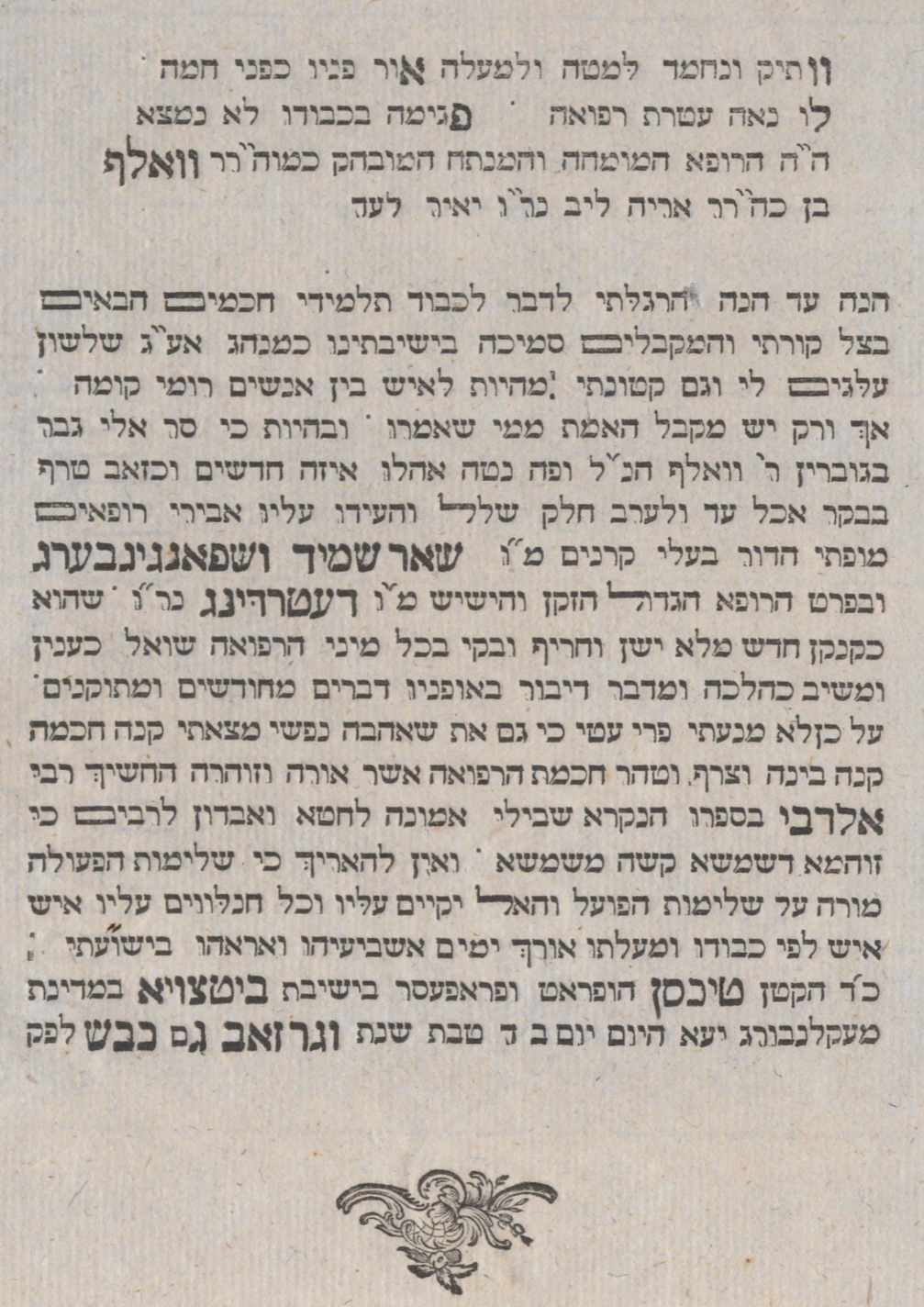
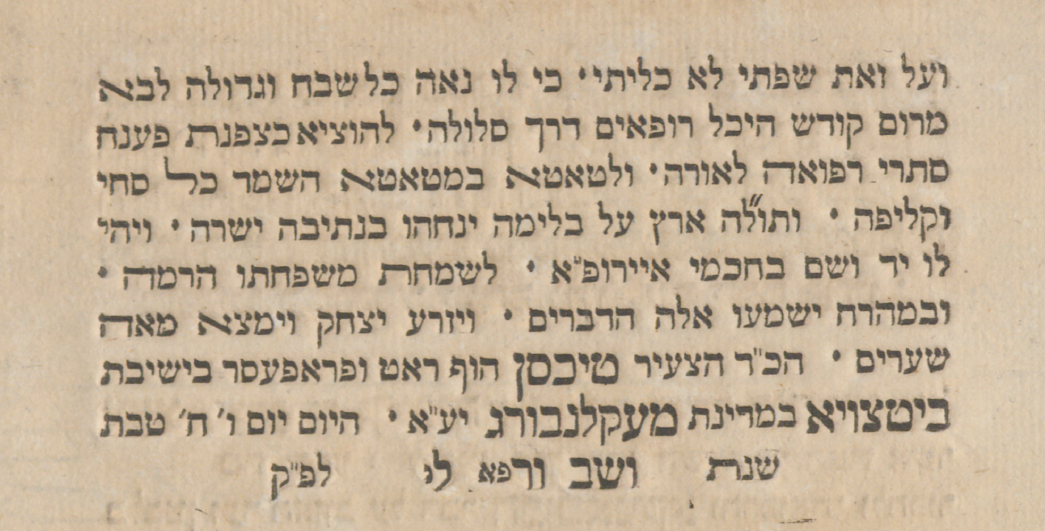
Below is the approbation of Tychsen appended to the published dissertation of Moses.

Tychsen’s freely inserts throughout allusions to rabbinic literature. He also uses a chronogram for the Hebrew year, typically done in Hebrew publications, and something Tychsen used frequently, as seen in his letters below. 

At the end of the approbation, Tychsen mentions the upcoming (second) wedding of Moses. Below is the handwritten wedding invitation of Moses to Tychsen.[30]

Both the title and signature of the invitation reflect the type of relationship they had. Moses also adds the clever pun of “hazmanah lav milsa,” assuming that Tychsen will appreciate it. 

The other letters appended to Moses’ published dissertation are also of great interest. In addition to Tychsen, another opponent at the disputation contributed a letter. Karl Leopold Carpov,[31] son of the Orientalist and professor at Butzow, Paul Theodore Carpov, who had written Moses’ letter of recommendation for admission (above). The older Carpov had died the previous year. The younger Carpov describes how beloved Markus was to his father, who considered him as another son, and, impressed by his brilliance, spent days and nights studying with him. Karl himself calls Markus his brother. While many focus on Markus’s close relationship with Tychsen, no mention has been made of his relationship with the other Orientalist, Carpov. 

The remaining letters were written by Judah Levi Strelitz,[32] the brother in law of Moses, and Meier (no other name is written), a fellow medical student. 

Moses was not the only Jewish student Tychsen took under his wings. Over the span of decades, throughout the short existence of the Butzow medical school, he endeared himself to a number of Jewish medical students.[33] He taught them, mentored them, and even financially supported them. They in turn sought his personal advice and recommendations, aided him in his intellectual quests, and invited him to their weddings.

Two Jewish medical students who matriculated in 1783 were also close with Tychsen, Isaac Salomonsen and Wulf Levinson. 

Matriculation record from University of Butzow November 24, 1783
Wulf Levinson and Isaacus Salomonsen[34]

Below is Tychsen’s letter to Levinsohn upon his graduation.[35]

Tychsen includes that the Butzow anatomist August Schaarschmidt and Professor Detharding, who had accepted Markus Moses some twenty years earlier, attest to the student’s qualifications.[36]

Below is the letter of Isaac Salomonsen presenting his dissertation to Tychsen.[37]

Below is Tychsen’s letter of approbation for Salomonsen’s dissertation in 1784. He mentions Isaac’s work in botany, which is in some form a continuation of the work of another Butzow medical student Tzadik de Meza, who died at the age of twenty-three.[38]
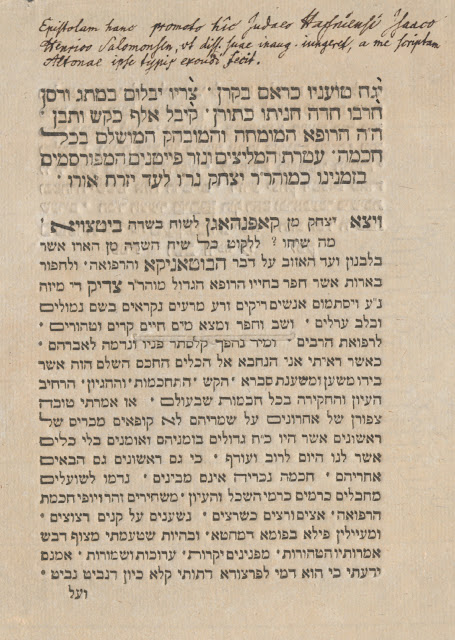
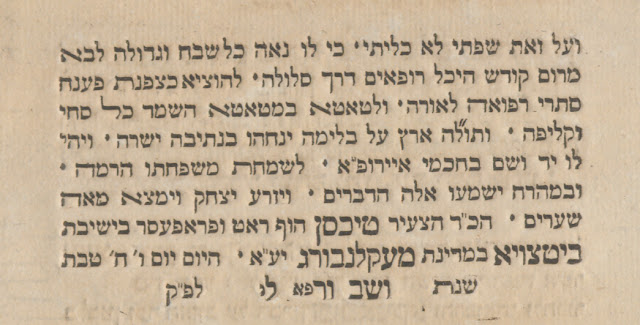
In another letter,[39] Salomonsen complained bitterly to Tychsen about his classmate Levinson, who had apparently been slandering him. He adds that the great personalities in the history of medicine, Aesculapius, Hygea and Hippocrates would be mourning and turning over in their graves if they knew how Levinson was misrepresenting and dishonoring them and the University of Butzow.
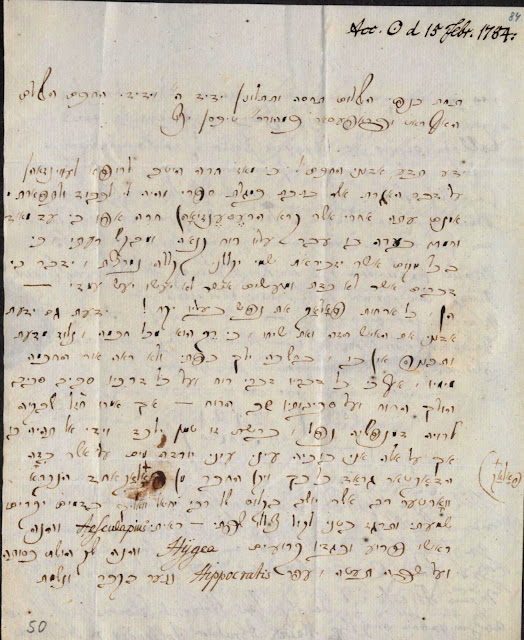
In the letter below dated 1784 from Salomonsen to Tychsen[40] we find a number of the elements common in Tychsen’s relationship with all the Jewish medical students. 
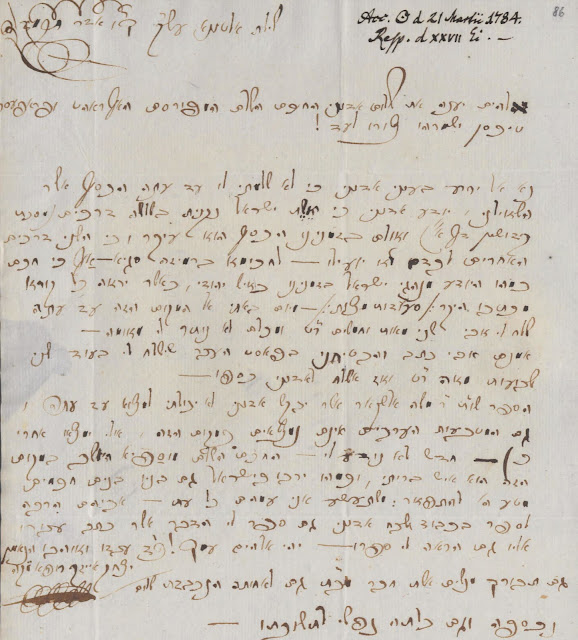
Salomonsen mentions the money he owes Tychsen and explains and apologizes for the delay in repayment. Tychsen routinely loaned money to the Jewish students. Salomonsen then reports that he was unable to obtain the sefer (shu”t Rabbi Moshe Alshikh) and Arabic coins Tychsen had requested. Tychsen was an avid bibliophile and his magnificent and important library was ultimately bequeathed to the University of Rostock, which absorbed the University of Butzow after its demise. It remains there to this day. Tychsen also collected Arabic coins and is considered the founding father of Islamic numismatics.[41] Salomonsen also mentions his acquaintance with a man named Mussafia[42] and his children, and how he enjoys spending time with them. Mussafia praised Tychsen and recalled something he had written on Tychsen’s behalf. He also possessed a work of Tychsen. Tychsen delighted in his name and reputation being spread throughout the Jewish community.

In sum, “Rabbi” Tychsen appears to have put his rabbinic degree to good use, at least from his perspective, cultivating an extremely devoted, loyal, and admiring, not to mention highly educated congregation. On the surface, he would be the envy of any modern rabbi, though much complexity lies beneath. While we did not focus on his proselytizing endeavors in this essay, perhaps this is one reason why Tychsen still remains to this day the only non-Jew to have received a form of rabbinic ordination. While Tychsen’s contributions to academia are vast, his tenure at the University of Butzow and his relationship with the Jewish students there represents one of the most unique, if lesser known, chapters in Jewish medical history. With the opening of the Rostock digital archives treasure trove we will certainly see further exploration of this topic. 

Edward Reichman

שנת וַתֵּעָצַ֖ר הַמַּגֵּפָֽה לפ”ק  

[1] Yitzhak Berger and Chaim Milikowsky, “Shnayer Leiman: In Appreciation,” (September 11, 2020).

[2] Moshe Haberman, “The Twice-Told Tale of R. Yonasan Eybeshutz and the Porger,” (September 15, 2020).

[3] For additional information on the semicha of Tychsen, see On the Main Line Blog, “On Non-Jews with Rabbinic Ordination, Real and Imagined: Some Notes on Dr. Leiman’s Post on Tychsen,” (September 20, 2011), http://onthemainline.blogspot.com/2011/09/on-non-jews-with-rabbinic-ordination.html.

[4] David Wilk, “Markus Moses’ Doctoral Dissertation or Who Remembers Butzow,” Koroth 9:3-4 (1986), 408-426, esp. 413.

[5] For an overview of this chapter in medical history, see Jan Bondeson, Buried Alive (Norton Publishers, 2001).

[6] For the text of the letter, see Siegfried Silberstein, “Mendelssohn und Mecklenburg,” Zeitschrift fur die geschichte der Juden Heft 4 (1930), 275-290, esp. 278-279. For reference to Tychsen as a key player in the issue of delayed burial, see for example, Rabbi Dr. Jacob J. Schacter’s doctoral dissertation, Rabbi Jacob Emden: Life and Major Works (Harvard University, 1988), 669, 723-724.

[7] For a comprehensive review of this historical chapter, see Moshe Samet, “Delaying Burial: The History of the Polemic on the Determination of the Time of Death,” (Hebrew) Asufot 3 (1989/1990), 613-665.

[8] For what follows see the comprehensive review of Oppenheim and his library by Joshua Teplitsky, Prince of the Press (Yale University Press: New Haven, 2019), 198.

[9] See Rebecca Abrams and Cesar Merchan-Hamann, eds., Jewish Treasures from Oxford Libraries (Bodleian Library, University of Oxford, 2020), and review of Paul Shaviv, Seforim Blog (July 14, 2020).

[10] The University of Butzow was an offshoot of the University of Rostock and later recombined with Rostock upon its demise. In addition, in 1817, Rostock University acquired the private library, including the manuscript legacy, of Tychsen, which included his significant Judaica and Hebraica collection. Over the last few years, the University of Rostock has devoted research efforts to explore the history of the Jewish students at the university with particular focus on their relationship with Tychsen. See Gisela Boeck und Hans-Uwe Lammel, eds., Jüdische kulturelle und religiöse Einflüsse auf die Stadt Rostock und ihre Universität (Jewish cultural and religious influences on the city of Rostock and its university) (Rostocker Studien zur Universitätsgeschichte, Band 28: Rostock 2014); Rafael Arnold, et. al., eds., Der Rostocker Gelehrte Oluf Gerhard Tychsen (1734-1815) und seine Internationalen Netzwerke (Wehrhahn Verlag, 2019). In the latter volume, see especially, Malgorzata Anna Maksymiak and Hans-Uwe Lammel, “Die Bützower Jüdischen Doctores Medicinae und der Orientalist O. G. Tychsen,” 115-133. I thank Malgorzata Maksymiak for her assistance and for providing me access to the Tychsen archives.

[11] See Wilk, op. cit. and Maksymiak, op. cit.

[12] Nimrod Zinger notes that the universities under Protestant auspices, in particular those affiliated with the Pietistic Movement, were more inclined to admit Jews, as they were interested in the possibility of converting them. He mentions as examples Yitzhak Isaac Wallich and his close relationship with Professor Hoffman at Halle, and that the student Avraham Hyman was admitted to Geissen with the intervention of the head of faculty, who was a Pietist. See his Ba’al Shem vihaRofeh (Haifa University, 2017), 263. Tychsen would certainly align with this theory.

[13] Bernhard Mandl, “Egy Magyar Zsido Orvos Nemet- Orszagban (1763-1782): Dr. Markus Moses, a Pozsonyi forabbi fia,” Evkőnyv Kiadja Az Izr. Magyar Irodalmi Tarsulat (1913), 145-165; Idem, Med. Dr. Markus Moses, Sohn der Pressburger Oberrabbiners R. Mosche Charif, praktischer Arzt in Deutschland von 1776 bis 1786: eine Lebensskizze (J. Pollak: Vienna, 1928); Wilk, op. cit.

[14] Die Juden und Judengemeinde Bratislava in Vergangen heit und Gegenwart (Brunn, 1932), 17-18, 85, cited in N. M. Gelber, “History of Jewish Physicians in Poland in the Eighteenth Century,” (Hebrew) in Y. Tirosh, ed., Shai LeYeshayahu: Sefer Yovel LeRav Yehoshua Wolfsberg (HaMercaz LeTarbut shel HaPoel HaMizrachi; Tel Aviv, 5716), 347-371, esp. 360.

[15] By this time, Jews were able to attend medical schools in Germany. Other German universities with Jewish graduates included Frankfurt on Oder, Duisberg, Halle, Geisen and Heidelberg. On the Jews in German medical schools, see Louis Lewin, “Die Judischen Studenten an der Universitat Frankfurt an der Oder,” Jahrbuch der Judisch Literarischen Gesellschaft 14 (1921), 217-238; Idem, “Die Judischen Studenten an der Universitat Frankfurt an der Oder,” Jahrbuch der Judisch Literarischen Gesellschaft 15 (1923), 59-96; Idem, “Die Judischen Studenten an der Universitat Frankfurt an der Oder,” Jahrbuch der Judisch Literarischen Gesellschaft 16 (1924), 43-87; Adolf Kober, “Rheinische Judendoktoren, Vornehmlich des 17 und 18 Jahrhunderts,” Festschrift zum 75 Jährigen Bestehen des Jüdisch-Theologischen Seminars Fraenckelscher Stiftung, Volume II, (Breslau: Verlag M. & H. Marcus, 1929), 173-236; Idem, “Judische Studenten und Doktoranden der Universitat Duisberg im 18 Jahrhundert,” Monatsschrift für Geschichte und Wissenschaft des Judentums Jahrg. 75 (N. F. 39), H. 3/4 (March/April 1931), 118-127; Monika Richarz, Der Eintritt der Juden in die akademischen Berufe: Judische Studenten Und Akademiker in Deutschland 1678-1848 (Schriftenreihe Wissenschaftlicher Abhandlungen Des Leo Baeck: Tubingen, 1974); Wolfram Kaiser and Arina Volker, Judaica Medica des 18 und des Fruhen 19 Jahrhunderts in den Bestanden des Halleschen Universitatsarchivs (Wissenschaftliche Beitrage der Martin Luther Universitat Halle-Wittenberg: Halle, 1979); M. Komorowski, Bio-bibliographisches Verzeichnis jüdischer Doktoren im 17. und 18. Jahrhundert (K. G. Saur Verlag: Munchen, 1991); Eberhard Wolff, “Between Jewish and Professional identity: Jewish Physicians in Early 19th Century Germany- The Case of Phoebus Philippson,” Jewish Studies 39 (5759), 23-34. John Efron, Medicine and the German Jews (Yale University Press: New Haven, 2001); Wolfram Kaiser, “L’Enseignement Medical et les Juifs a L’Universite de Halle au XVIII Siecle” in Gad Freudenthal and Samuel Kottek, Melanges d’Histoire de la Medicine Hebraique (Brill: Leiden, 2003), 347-370; ) Petra Schaffrodt, Heidelberg- Juden an der Universitat Heidelberg: Dokumente aus Sieben Jahrhunderten (Ruprecht Karls Universitat Heidelberg Universitatsbibliothek, August, 2012).

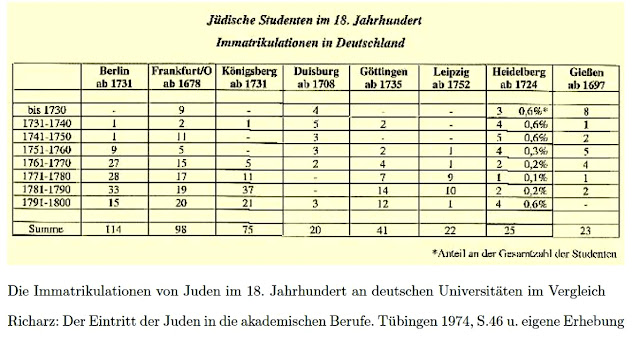
Below is a chart from Richarz of Jewish medical students in Germany at this time. The University of Butzow is not on this list.
[16] http://rosdok.uni-rostock.de/mcrviewer/recordIdentifier/rosdok_ppn859752100/iview2/phys_0007.iview2.

[17] For the history of Moses prior to attending Butzow, see Mandl, op. cit., and Wilk, op. cit.

[18] E. Reichman, “The History of the Jewish Medical Student Dissertation: An Evolving Jewish Tradition,” in J. Karp and M. Schaikewitz, eds., Sacred Training: A Halakhic Guidebook for Medical Students and Residents (Ammud Press: New York, 2018), xvii- xxxvii.

[19] While the first two essays are housed in the Rostock Library, I have not found a copy of this essay.

[20] http://opac.lbs-rostock.gbv.de/DB=1/XMLPRS=N/PPN?PPN=720262623.

[21] http://opac.lbs-rostock.gbv.de/DB=1/XMLPRS=N/PPN?PPN=304865346.

[22] For the letters in the archive just between Markus Moses and Tychsen, see here.

[23] http://purl.uni-rostock.de/rosdok/ppn860182010/phys_0027.

[24] This is an expression of endearment. See another example of a letter to Tychsen, from a Yehoshua Lifshutz of Apta, where the same expressions, peh el peh acronym and nishikat pihu, are used. http://rosdok.uni-rostock.de/mcrviewer/recordIdentifier/rosdok_ppn859752100/iview2/phys_0019.iview2.

[25] While we have no record of R. Eybeshutz himself communicating with Tychsen at the University of Butzow Medical School, he did send a letter to the faculty of medicine at another German medical school, the University of Halle. This letter related to the famous “heartless” chicken question initially posed to Hakham Tzvi. For more on this letter, its record in the Halle University archives, and its impact on the Emden Eybeschutz controversy, see E. Reichman, “A Letter from a Torah Sage of the 18th Century to the Medical Faculty of the University of Halle (January, 1763): The Selective Deference of Rabbi Yonatan Eybeschutz to Medical Expertise,”Verapo Yerapei: Journal of Torah and Medicine of the Albert Einstein College of Medicine Synagogue 6 (2015), 89-112.

[26] National Library of Israel, NLI 997003186660405171. See also Richard I. Cohen, “’And Your Eyes Shall See Your Teachers’: The Rabbi as Icon,” (Hebrew) Zion (1993), 407-452, esp. 418. The artist is Elimelech Polta ben Shimshon. I have as yet been unable to identify this physician. His name is not found among the Jewish medical students in German universities mentioned above.

[27] T. Broman, The Transformation of German Academic Medicine 1750-1820 (Cambridge University Press, 1996), 32ff.

[28] See Maksymiak, op. cit.

[29] See Wilk, op.cit., 417.

[30] http://purl.uni-rostock.de/rosdok/ppn859752100/phys_0081.

[31] Carpov trained at the University of Rostock before the formation of the University of Butzow. See his matriculation record, here.

[32] Strelitz, also known as Levin Hirsch Levi, lived in Altstrelitz and authored a treatise on resurrection (http://rosdok.uni-rostock.de/resolve/id/rosdok_document_0000014475) which was translated into German by Tychsen under the title,”Die Auferstehung der Todten aus dem Gesetze Mosis Bewiesen,” (1766) (http://rosdok.uni-rostock.de/resolve/id/rosdok_document_0000014215). Strelitz later became rabbi of Birnbaum, and then the first rabbi of Stockholm and Chief Rabbi of Sweden. The Jewish community of Stockholm had been founded only a few years before his arrival by Aron Isak, the sponsor of Markus Moses, Levi’s brother-in-law, and the shadchan for Moses and Levi’s sister. See Wilk, 419-420.

[33] Markus Moses (1764), Israel Joseph Meyer (1765), Justus Zadig de Meza, Isaac Heinrich Salomonsen (1783),Wolff Levinsohn (1783), Abraham Levin Spira (? Benjamin Levin, 1773), Simon Marcus (1771) and Moses Marcus(1785, son of Markus Moses). All of them-with one exception-received their doctorate in medicine in the twenty-nine years of existence of the University of Bützow.See Maksymiak,op.cit., which also addresses the emotional aspect of the ties of Tychsen with his students.

[34] http://dfg-viewer.de/show?set%5bmets%5d=http%3A%2F%2Frosdok.uni-rostock.de%2Ffile%2Frosdok_document_0000000177%2Frosdok_derivate_0000004407%2Fmatrikel1760ws-1788ws-Buetzow.mets.xml&set%5bimage%5d=54. Note that word “Judeus” appears after both of their names. It was common to identify students as Jews in university archives. For example, starting in the 1500s, Jewish students at the University of Padua were identified as“Hebrei.” There does not appear to have been any anti-Semitic associations with this identifier.

[35] http://rosdok.uni-rostock.de/mcrviewer/recordIdentifier/rosdok_ppn835297578/iview2/phys_0168.iview2. For Levinsohn’s dissertation, see http://rosdok.uni-rostock.de/resolve/id/rosdok_document_0000016729?_search=23e52c72-2882-421d-bfd5-16b218d11ae3&_hit=0. The letter was not published with the dissertation.

[36] Tychsen appears to make disparaging remarks against the work Shevilei Emunah, by Meir Aldabi. This work,written in the fourteenth century, was a primary reference on medicine in rabbinic literature for many centuries.

[37] http://rosdok.uni-rostock.de/mcrviewer/recordIdentifier/rosdok_ppn835297578/iview2/phys_0166.iview2.

[38] The Rostock archives contains a number of letters between Tychsen and de Meza.

[39] http://rosdok.uni-rostock.de/mcrviewer/recordIdentifier/rosdok_ppn835297578/iview2/phys_0176.iview2.

[40] http://rosdok.uni-rostock.de/mcrviewer/recordIdentifier/rosdok_ppn835297578/iview2/phys_0180.iview2.

[41] Rafael Arnold, et. al., eds., Der Rostocker Gelehrte  Oluf Gerhard Tychsen (1734-1815) und seine Internationalen Netzwerke (Wehrhahn Verlag, 2019); Ursula Kampmann, Maike Mebmann, trans., “Oluf Gerhard Tychsen (1734-1815), https://coinsweekly.com/oluf-gerhard-tychsen-1734-1815/(July 18, 2019).

[42] This was perhaps a relative of Binyamin Mussafia, a famous graduate of the University of Padua in 1625, and author of Musaf HaArukh, a commentary of the Sefer HaArukh.


For the Sake of Radin! The Sugar Magnate’s Missing Yarmulke and a Zionist Revision

For the Sake of Radin!  The Sugar Magnate’s Missing Yarmulke and a Zionist Revision

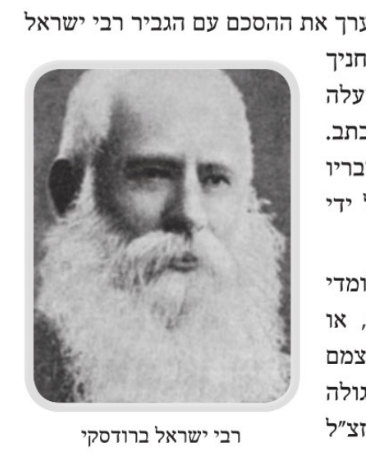
Israel Brodsky (1823-1888), built an empire on the sugar trade. After inheriting a substantial fortune, in 1843, he became a partner in a sugar refinery.[1] Eventually, he vertically integrated his business, and he controlled sugar beet lands, processing plants, refineries, marketing agencies, and warehouses throughout the Russian Empire. At its height, Brodsky controlled a quarter of all sugar production in the Empire and employed 10,000 people.[2] Brodsky sugar “was a household name from Tiflis to Bukhara to Vladivostok.”[3] Brodsky was a significant philanthropist, donating to Jewish and non-Jewish causes. In Kyiv, he and his sons virtually single-handedly founded the Jewish hospital, Jewish trade school, a free Jewish school, mikveh, and communal kitchen besides substantial individual donations, amounting to 1,000 rubles monthly, and donated to St. Vladimir University. Many of these institutions would bear the Brodsky name. Leading Shalom Aleichem to remark that the “the bible starts with the letter beyes and [Kyiv], you should excuse the comparison, also starts with beyes – for the Brodskys.” [4]

In addition to supporting local causes, he also helped other institutions outside of Kyiv. One was providing an endowment for a kolel at the Volozhin Yeshiva. The institution of the kolel, a communally subsidized institution that supported men after marriage, was originated by R. Yitzhak Yaakov Reines (1839-1915). Reines was a student of the Volozhin Yeshiva and would go on to establish the Mizrachi movement and the Lida Yeshiva, both of which were attacked by some in the Orthodox establishment.[5] Invoking the Talmudic passage Rehaim al Tsaverum ve-Yasku be-Torah?!, in 1875, he proposed an institution where “men of intellect . . . will gather to engage in God’s Torah until they are worthy and trained to be adorned with the crown of the rabbinate, that will match the glory of their community, to guide the holy flock in the ways of Torah and the fear of Heaven.” Without the communal funds, these “men of intellect” would “be torn away from the breasts of Torah because of the poverty and lack that oppresses them and their families.”[6] Reines intended that the kolel be associated with Volozhin. And, in 1878, an attempt to create such an institution began taking shape, with the idea to approach the Brodskys for funding. For reasons unknown, this never happened. Instead, through the generosity of Ovadiah Lachman of Berlin, the first kolel was established in 1880. The kolel opened not in Volozhin but Kovno. It would be another six years before Volozhin established its kolel.[7]

In 1886, Brodsky donated a substantial sum to create a kolel in Volozhin. He created an endowment fund that yielded 2,000 rubles annually. But unlike the Kovno kolel that produced some of the greatest rabbis and leaders of the next generation, according to one assessment the Volozhin kolel “had little influence on the yeshiva’s history” nor the general public.[8]

Comparing Brodsky’s donation to the kolel to that of his other contributions demonstrates that this donation was similar to his most significant gifts. His donation was in the form of stock, and while we don’t have an exact estimate of the value of those shares, we can extrapolate the total amount of Brodsky’s donations. Brodsky donated 60 shares of the Kyiv Land Bank, which was intended to produce 2,000 rubles per annum.[9] But the amount of the principle, the 60 stocks, is not provided in the source materials. In 1890, a  similar endowment by the Brodskys produced 3,000 rubles annually from a principle of 50,000 rubles, a 6 percent rate of return. Assuming a similar rate of return, his initial donation to the Volozhin kolel nearly 35,000 rubles. That is the similar amount that he donated to the Kyiv free Jewish school, the St. Vladimir’s University, and Kyiv’s mikve and communal kitchen that all received 40,000-ruble bequests.[10] Consequently, Brodsky’s gift of 60 shares of stock to the Volozhin kolel is comparable to Brodsky’s other institutional donations.

The Brodskys aligned with the Russian Haskalah movement that today we would likely characterize as Modern Orthodox, although admittedly, the definitions of sects are amorphous. The Russian haskalah was notable for embracing modernity while maintaining punctilious observance of halakha. One example that involved both the intersection of society at large and religious practice was that when the Governor-General invited two of Israel’s sons to a prestigious gala at his home, the Governor-General also provided the sons with kosher food.[11] Another example of the Brodskys’ Jewish outlook was their involvement in Kyiv’s Choral Synagogue. Choral synagogues were already established in other cities throughout the Russian Empire, including Warsaw, Vilna, and St. Petersburg. The synagogue, known as the Brodsky Synagogue, was built in 1898 by Israel’s son, Lazer. Modern practices were introduced to the Kyiv Choral Synagogue, but even those are within the bounds of accepted Jewish law.[12] Indeed, those new practices are today unremarkable, hiring a hazan, incorporating a choir into the service, delivering the sermon in Russian, and enforcing decorum during the prayers.[13]

The Haredi histories of Volozhin discuss Brodsky’s contributions to the kolel. But one publication decided that his reputation needed some creative airbrushing to (presumably) make his involvement more palatable to the modern Haredi audience. Despite the fact that other Haredi publications provide an unvarnished version.

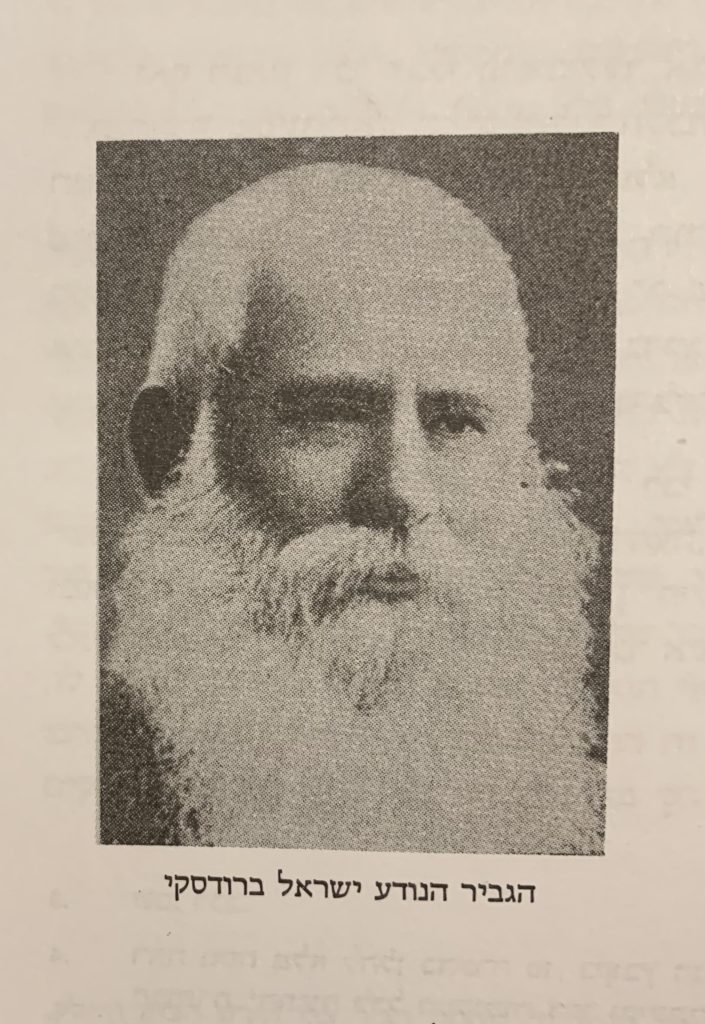
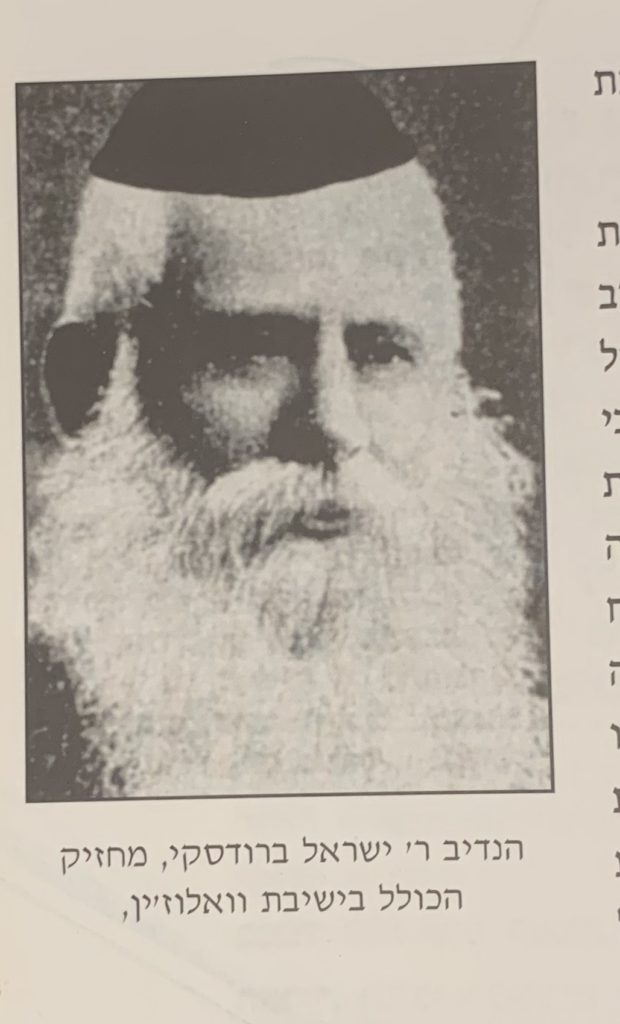
One person who met Brodsky described him as resembling that of a biblical patriarch in appearance, yet at the same time non-Jewish.[14] Indeed a photo from 1880, this biblical patriarch appears bareheaded. This lack of head-covering was not an issue for some Haredi authors. For example, Dov Eliach includes this photograph in his history of the Volozhin Yeshiva.[15] In 2001, not ten years after Eliach’s book another Haredi author decided that the photo required adjustment despite sharing the same publisher as Eliach.


Menahem Mendel Flato’s book, Besheveli Radin (Radin’s Paths), devotes an entire chapter to Brodsky’s kolel, with his photograph accompanying the text. Yet, in this instance, rather than a bareheaded Brodsky, a crudely drawn yarmulke now appears on his head.[16] This is not the first time that images were doctored to depict a yarmulke where there is none.[17] Those types of alterations occur decades after the original, by different publishing houses, in different cities, and for a different audience.[18] Here, however, Avi ha-Yeshivot and Besheveli Radin share the same audience and are only separated by ten years. [19]


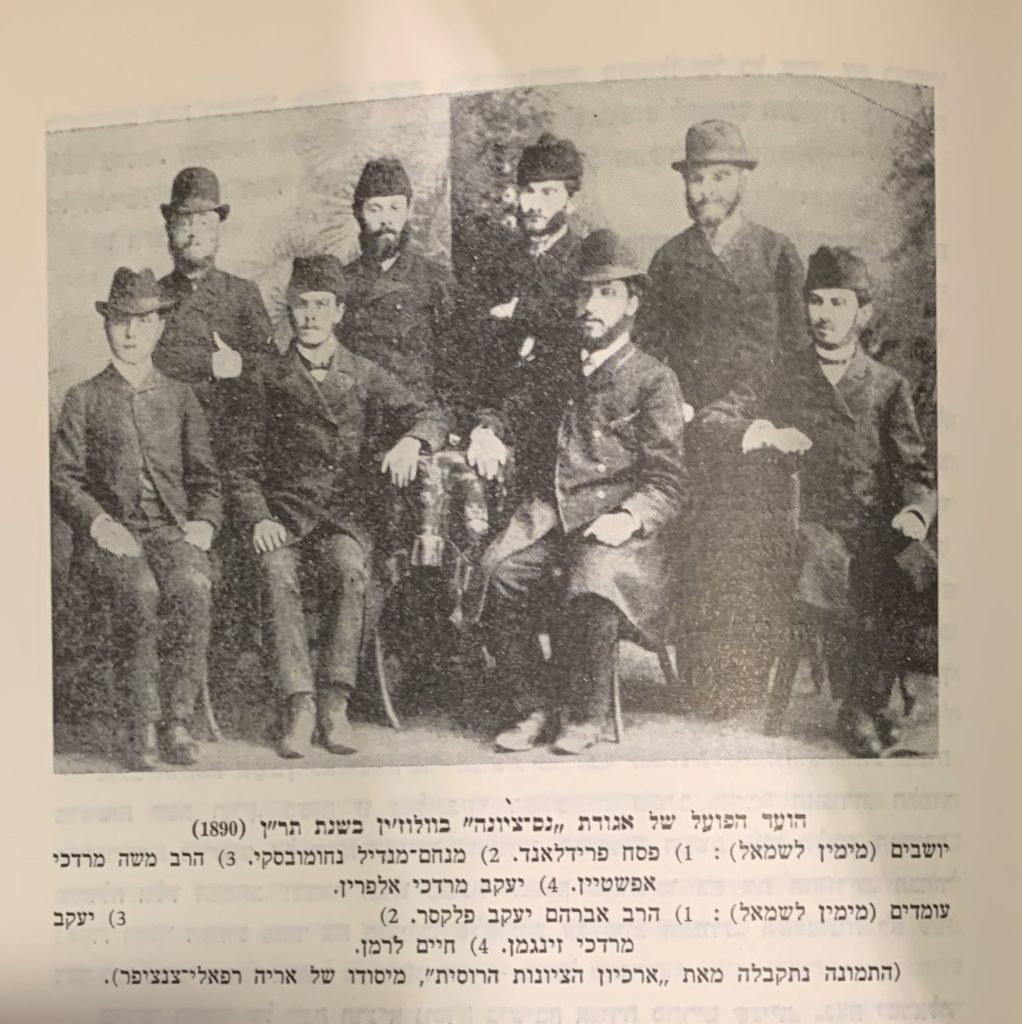
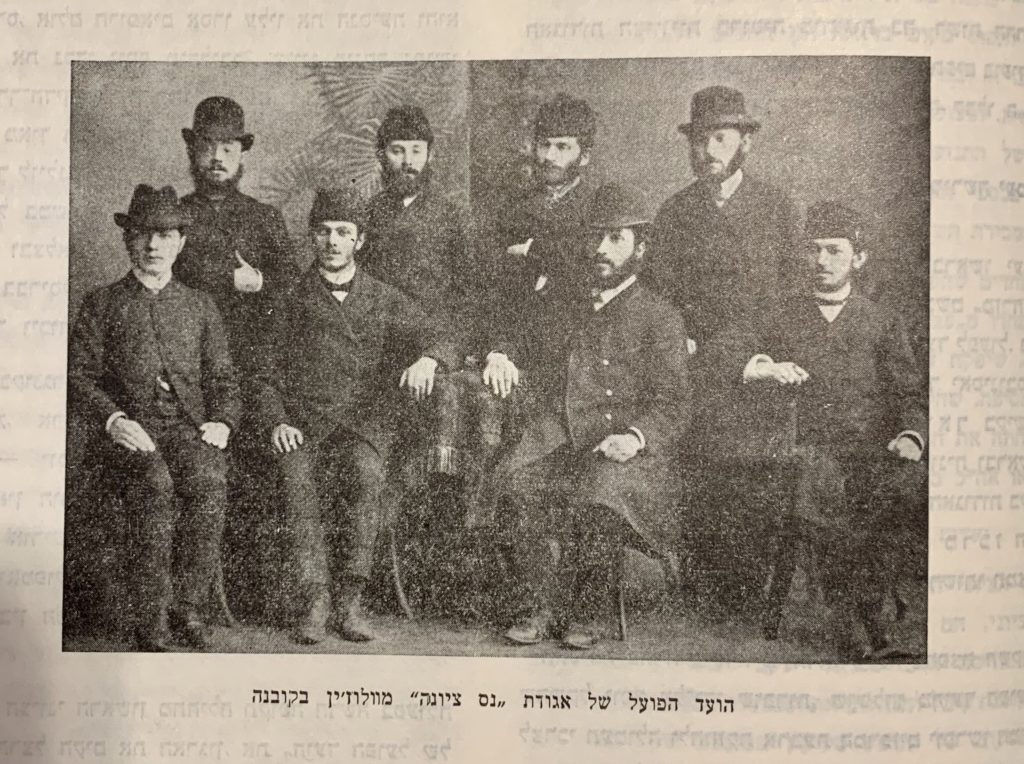
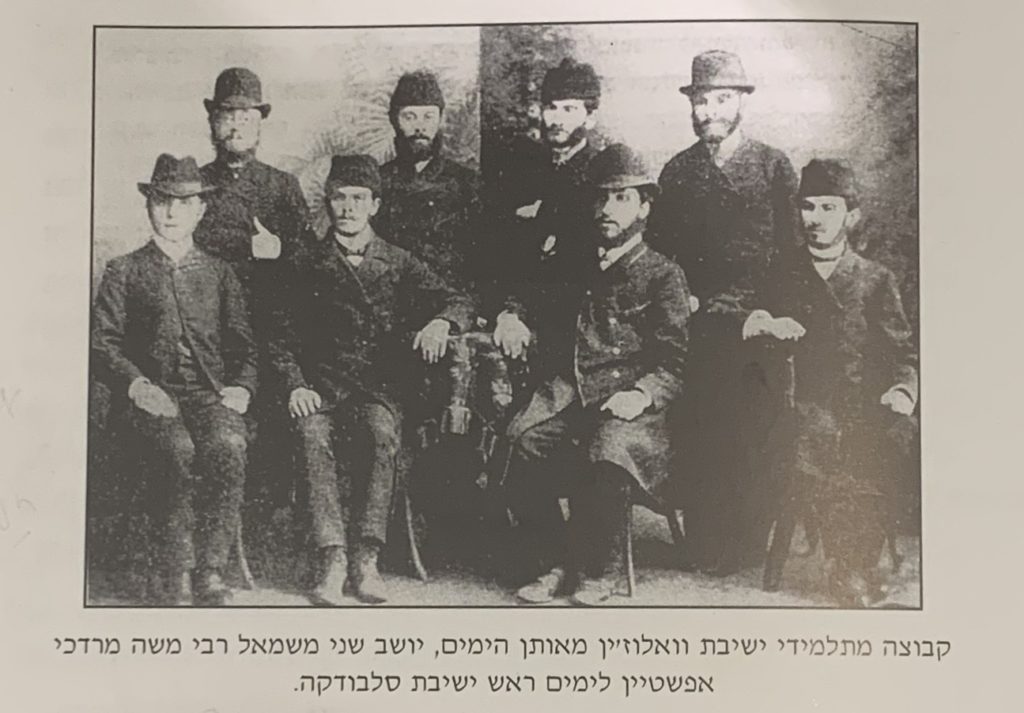
The alternation of Brodsky’s photo is not the only example of such censorship in Besheveli Radin. R. Moshe Mordechai Epstein studied in Volozhin and eventually went on to lead the Yeshivas Kenneset Yisrael in Slabodka. While he was in Volozhin, he was among those who established a proto-Zionist organization, Nes Tsiona. A photograph of the executive members appears in at least three places, yet only in Besheveli Radin is the connection to Nes Tsiona omitted.

In 1960 and 1970, two books published the photo from a copy in Russian Zionist Archives.[20] The 1960s’ version includes a legend that correctly identifies the photo as “the executive committee of the ‘Nes Tsiona’ in Volozhin in 1890.[21] The legend in the 1970 book contains the same language as before, indicating that it is a photograph of the Nes Tsiona executive committee and also identifies each of the men in the picture.[22] Yet, when the same photo appears in Beshvili Radin it is accompanied by an entirely different legend.[23] Instead, Beshvili Radin describes the photograph as depicting “a group of students from Volozhin from those days, R. Moshe Mordechai Epstein who eventually became the rosh yeshiva of Slaboka is sitting second from the right.” The purpose of the group photograph remains a mystery to Beshvili Radin‘s readers.


The history of Volozhin is complex and especially among Haredi writers raised issues that are uncomfortable truths.  Some of these authors responded by obscuring or entirely omitting these including the inclusion of secular studies in the curriculum, establishment and membership in non-traditional religious organizations, and the religiosity of some of its students.[24] Beshvilie Radin is but one example.  In his introduction, Flato discusses the purpose of Beshvilie Radin describing it as “providing the reader an entirely new perspective of that era.” We can now say that the “new perspective” is one that at times deviates from the historical record.

[1] Wikipedia, The Free Encyclopedia, s.v. “Israel Markovich Brodsky,” (accessed November 20, 2019), https://ru.wikipedia.org/wiki/Бродский,_Израиль_Маркович (Russian).

[2] Id.; Nathan M. Meyer, Kiev: Jewish Metropolis a History, 1859-1914 (Bloomington: University of Indiana Press, 2010), 39.

[3] Meyer, Kiev, 39.

[4] Meyer, Kiev, 39, 40, 71.

[5] For a biography of Reines see Geulah Bat Yehuda, Ish ha-Meorot: Rebi Yizhak Yaakov Reines (Jerusalem: Mossad HaRav Kook, 1985)

[6] Shaul Stampfer, Lithuanian Yeshivas of the Nineteenth Century: Creating a Tradition of Learning, trans. Lindsey Taylor-Guthartz (Oxford, 2015) (original work published 1995 (Hebrew)), 338 (quoting Yitzhak Yaakov Reines, Hotam Tokhnit, vol. 1 (1880), 17n4). For sources regarding the Lida Yeshiva see Eliezer Brodt, “Introduction,” in Mevhar Ketavim m’et R. Moshe Reines ben HaGoan Rebi Yitzhak Yaakov (2018), 12n42. See id. 354-61 for correspondence between the Netziv to R. Yitzhak Yaakov Reines regarding the establishment of a kolel.

[7] Stampfer, Lithuanian Yeshivas, 337-40. One possibility regarding the failure to start the kolel at that time in Volozhin might be attributable to Reines’ recognition that governmental approval was necessary to establish the kolel.  Volozhin had a difficult relationship with the Tsarist authorities.  See id. at 191-98. Adding a new institution might have been seen as a risk to the operation of the Volozhin yeshiva itself.

[8] Stampfer, Lithuanian Yeshivas, 358-59.  Among the conditions of the donation was that during the first year after his death ten men were selected and were required to visit the grave R. Hayim Volozhin’s and leading the prayers, and the recitation of the mourner’s kaddish, in addition to daily study of the mishnayot with the commentary of the Vilna Gaon, and leading the services.  The same was done on the yahrzeit of Brodsky’s wife, “ha-Tzkaniyot ha-Meforsemet, Haya.”  Dov Eliach, Avi ha-Yeshivot: MaRan Rabbenu Hayim Volozhin (Jerusalem, Machon Moreshet Ashkenaz, 2011) (second revised edition), 600-01.  (Thanks to Eliezer Brodt for calling this source to my attention).  The manuscript recording the conditions of Brodsky’s gift is currently in the possession of R. Meshulam Dovid Soloveitchik and portions are reproduced by Eliach.  See id. 601,634-35.

[9] The Land Bank was created in 1877. Michael H. Hamm, Kiev: A Portrait, 1800-1917 (Princeton: Princeton University Press, 1996), 10-11. The influence of the Brodskys was such that six members of the family were on the board of an earlier established bank, the Kiev Industrial Bank, (1871). This led some to remark that the bank should be referred to as the “Brodsky Family Bank.” Meyer, Kiev, 40. It is unclear if Israel also sat on the Land Bank board or was just an investor.

[10] Meyer, Kiev, 71.

[11] Meyer, Kiev, 40.

[12] Meyer, Kiev, 171-72. For a discussion of Vilna’s Choral Synagogue and its influence on Vilna’s maskilim see Mordechai Zalkin, “The Synagogue as Social Arena:  The Maskilic Synagogue Taharat ha-Kodesh in Vilna,” (Hebrew), in Yashan me-Peni Hadash: Shai le-Emmanuel Etkes, vol. 2, 385-403; see also D. Rabinowitz, “Kol Nidrei, Choirs, and Beethoven:  The Eternity of the Jewish Musical Tradition,” Seforimblog, Sept. 18, 2018.

[13] While today, these practices are unremarkable; at that time, there were some who opposed these changes. See generally Moshe Samet, Ha-Hadah Asur min ha-Torah: Perakim be-Toldot ha-Orthodoxiah (Jerusalem: Karmel, 2005). For an earlier discussion of the propriety of choirs and incorporating music in Jewish religious practices see R. Leon Modena, She’lot ve-Teshuvot Ziknei Yehuda, Shlomo Simonson ed. (Jerusalem: Mossad HaRav Kook, 1957, 15-20.

[14] Sergey Yulievich Vitte, Childhood During the Reigns of Alexander II and Alexander III (Russian) at 160.

[15] Dov Eliach, Avi ha-Yeshivot: MaRan Rabbenu Hayim mi-Volozhin (Jerusalem: Machon Moreshet HaYeshivot, 1991), 269. This photograph remains in Eliach’s second and updated version of Avi ha-Yeshivot printed in 2011.  See Eliach, Avi ha-Yeshivot: MaRan Rabbenu Hayim me-Volozhin (Jerusalem: Machon HaYeshivot, 2011), 292.  Although there are two changes in this version.  First, the “well-known philanthropist” becomes a “Rebi” and conveniently the top of the Rebi’s head is cut off so that one can’t tell if the Rebi is wearing a yarmulke.


[16] Menahem Mendel Flato, Besheveli Radin… ([Petach Tikvah]:  Machon beSheveli haYeshivos, 2001), 31; Marc Shapiro, Changing the Immutable: How Orthodox Judaism Rewrites Its History (Oxford: Littman Library, 2015), 136. Flato combines both of Eliach’s honorifics into “the philanthropist Rebi Yisrael Brodsky.”

[17] See Dan Rabinowitz, “Yarlmuke: A Historic Coverup?,” Hakirah vol. 4 (2007), 229-38.

[18] For examples see Shapiro, Changing the Immutable.

[19] Another Haredi history of Volozhin published the same year as Beshvili Radin also includes the unaltered photograph.  Tanhum Frank, Toledot Beit HaShem be-Volozhin (Jerusalem, 2001), 254.

[20] Yahadut Lita vol. 1 (Tel Aviv: 1960), 507; Eliezer Leone, Volozhin: Sefrah shel ha-Ir ve-shel Yeshivat Ets Hayim (Tel Aviv: Naot, 1970), 121. Despite the attribution to the Russian Jewish Archive there is no other information regarding this archive.

[21] Yahadut Lita, 507. Regarding Nes Tsiona see Stampfer, Lithuanian Yeshivas, 170-72

[22] Leone, Volozhin, 121.

[23] Another Haredi history of Volozhin also uses the same photograph but crops out all but just Epstein. See Frank, Toledot, 256. But in that instance the photo is used as part of a collage of rabbinic figures and explains why the other people are missing.

[24] Stampfer, Lithuanain Yeshivas, 43, 206-07, (secular studies), 167-178 (societies), Abba Bolsher, “Yeshivas Volozhin be-Tukufat Bialik,” in Yeshivas Lita: Perkei Zikronot, eds. Emmanuel Etkes and Shlomo Tikochinski (Jerusalem:  Zalman Shazer Center, 2004, Menahem Mendel Zlotkin, “Yeshivas Volozhin be-Tekufat Bialik,” in Etkes, Perkei, 182-92 (histories of Volozhin’s perhaps most well-known black sheep during his time there).


New Books by Rabbi Mandelbaum

New Books by Rabbi Mandelbaum

By Eliezer Brodt

This post serves a dual purpose; first, to describe some new seforim, thereby making the Seforim Blog readership aware of their recent publication. Second, to make some of these works available for purchase for those interested.

Part of the proceeds will be going to support the efforts of the Seforim Blog.

Earlier this year I wrote about two new editions of the Chida’s famous travel diary. A few weeks ago, a third edition of this diary was published (533 pp.). This edition is the complete travels in one volume. Here too, the editor has two sections of notes. One is devoted to deciphering all of the Chida’s melitzos מליצות. The second deals with the people whom he met, what he saw and much more.

The editor of this new edition is the legendary & prolific Rabbi Dovid Avrohom Mandelbaum of Bnei Brak. Both sections of notes are very valuable for those interested in the Chida.

As I have mentioned in the past about this travel diary:

On a personal note (for whatever that is worth) this work that has a special place in my heart as I have, to date, authored five articles about Ma’agal Tov and hope to IYH publish more.

I hope to write about the various new editions of this work in the future IYH. [Listen to this interview on Seforim Chatter about them].

Rabbi Mandelbaum’s edition is a very limited one, with only a small run of copies, as there are already a few other editions on the market.

Contact me at Eliezerbrodt@gmail.com for more information about purchasing or for sample pages of this new work.

For those not as familiar with Rabbi Mandelbaum’s work. [See here for a recent interview with him]. I will just highlight briefly some of the older ones and some of the newer ones.

Rabbi Mandelbaum has collected, edited and published numerous works, especially those related to Polish Jewry. At times, the material is from manuscript, others it’s from a wide range of sources that he gathers. He has been doing this for many years, long before the various computer programs have come out. Lots of his work focusses on collecting the Torah of a particular Godol, at times he publishes historical works about a particular Godol. He is famous for his work on Yeshivat Chachmei Lublin in general, especially for his work on R’ Meir Schapiro, including collecting all of R’ Schapiro’s Torah on Chumash and Halacha. He has also written extensively about the History of Daf Yomi, tracing everything about it from its inception.

In recent years he has also republished R’ Schapiro’s grandfather’s work Shut Minchat Shay.

One of his most famous works is his completion of the magnificent work on Chumash Pardes Yosef which, due to the author’s death in the Holocaust, was never completed (or if it was, it was lost). He first republished the 3 volumes of the work (with more thorough indexes) and then completed Chumash Bamidbar and Divarim in a similar style.

Another person Rabbi Mandelbaum has spent lots of time working on is Rav Aryeh Tzvi Frommer HY”D, Rosh Yeshiva of Yeshivat Chachmei Lublin [See this earlier post on the seforim blog all about R’ Frommer]. He reissued R’ Frommer’s Eretz Tzvi, and his Siach Ha-Sadeh with notes and indexes. In recent years he has reissued R’ Frommer’s work on Chumash and Mo’adim in two volumes (great material).

A few months ago, R’ Mandelbaum released a beautiful biography on R’ Frommer (447 pp.) Toldot Baal Eretz Tzvi Zal HYD, which I highly recommend.

Another work of R’ Mandelbaum which he published a few months ago from manuscript was from R’ Shimshon Wertheimer (484 pp. plus a 32 pp. index), titled Chidushei Upirushei Rabbenu Shimshon Wertheimer TZ”L Mi-vien:

A recent project of his has been documenting (with illustrations) the Mesirat Nefesh of Jews during the Holocaust. The first volume was devoted to learning during the Holocaust, including learning Daf Yomi. The next volume in the series (454 pp.) was devoted to all aspects of Mesirat Nefesh in trying to observe Chanukah during the Holocaust. There are also chapters devoted to Jews trying to observe it in Spain during the Spanish Inquisition era and more recently to Jews in Soviet Russia. The Hebrew version sold out right away.

This year he has released it in English titled Jewish Heroism: Lighting Candles in Troubled Time.

One last item of Rabbi Mandelbaum related to Chanukah and the Chida is his work Pardes Hachida which is a collection of everything the Chida wrote related to Chanukah (345 pp.). This work just came out a few weeks ago. This is another one of the many seforim related to the Chida published in recent years.

Sample pages are available upon request.


Rabbi Steinman and the Messiah, part 1

Rabbi Steinman and the Messiah, part 1

Marc B. Shapiro

Since in a recent post I discussed Maimonides and the Principle of the Messiah, let me add one more thing. Yet before doing so, I need to make a few preliminary comments. Many readers know about the Peleg, which has caused all sorts of problems in Jerusalem. After the passing of R. Yosef Shalom Elyashiv, the simmering dispute in the Lithuanian world broke out into the open, and a minority of the Lithuanian community refused to accept the leadership of R. Aharon Yehudah Leib Steinman, who was backed by R. Hayyim Kanievsky. The opponents, known as the Peleg, were led by the late R. Shmuel Auerbach.

While people are aware of the wild behavior of the Peleg youth as they are the ones who block streets in Jerusalem, there is very little awareness of what was another element of the battle in the Lithuanian community, and that was the attempt to delegitimize R. Steinman. An entire literature was created that focused on two things. The first was citing all sorts of things that R. Steinman said which were believed to be in opposition to haredi ideology. The point was to show that because of his supposedly liberal views he was not suited to lead the haredi world, and that he had departed from the approach of R. Shakh.[1]

The other focus, also found in Peleg publications, was to show that R. Steinman did not have the requisite Torah scholarship to lead the community. For obvious reasons, they never made this claim about R. Hayyim Kanievsky, and never explained why they felt able to disagree with R. Kanievsky who was the most outstanding backer of R. Steinman.

While this dispute was playing out, R. Steinman said something that was like manna from heaven for the Peleg, for now they had a chance to use some heavy “ammunition” on him, as they could claim that he rejected the Rambam’s Twelfth Principle which affirms the coming of the Messiah. In response to the attacks on R. Steinman, his defenders claimed that his words were taken out of context. During the dispute, a couple of people in correspondence with me wondered if R. Steinman should be added to the list of people who disagree with one of the Principles.

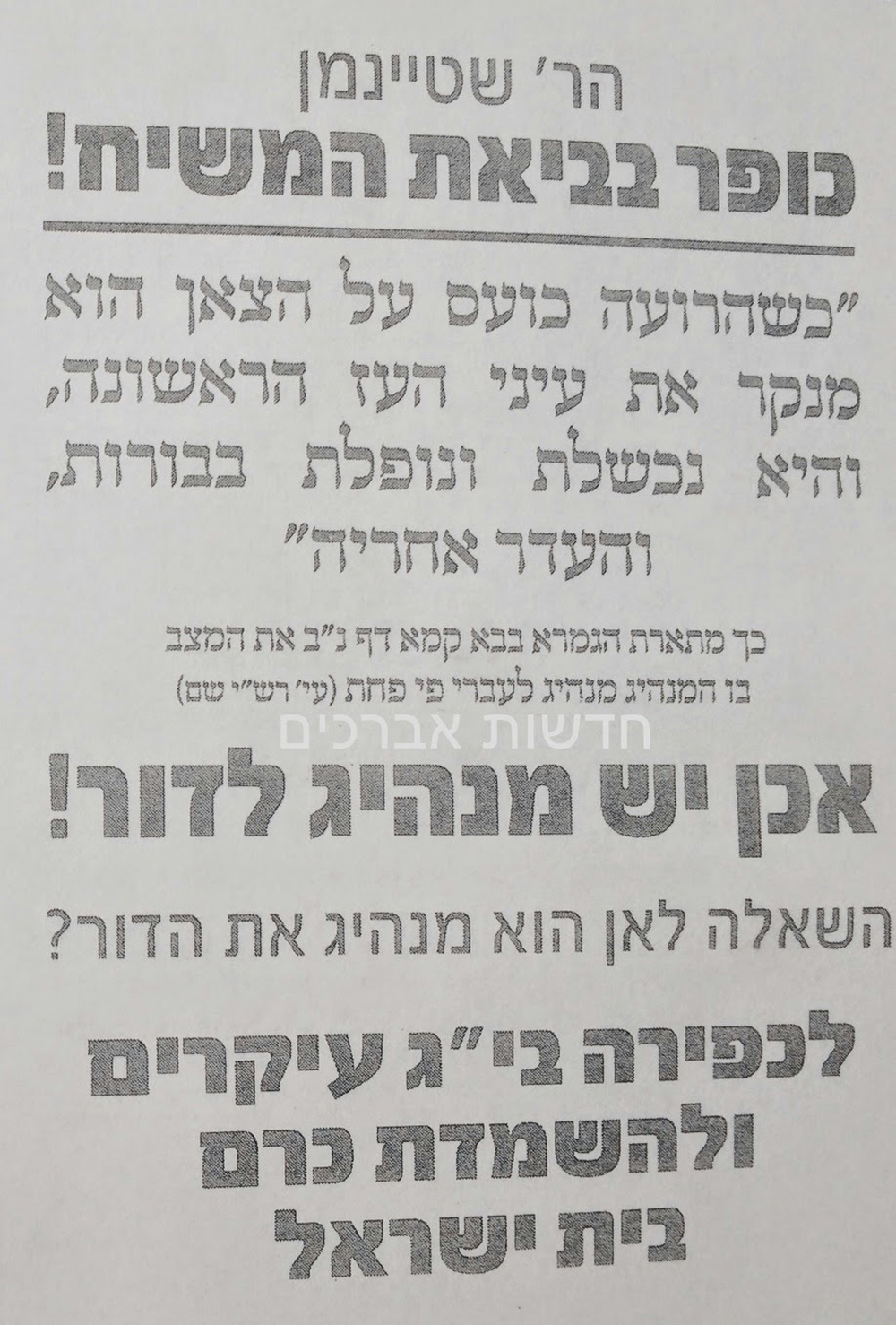
Here is a poster put up against R. Steinman by some unnamed extremist (found here).

So what did R. Steinman say that created such a mini-explosion in the haredi world. You can find the transcript of R. Steinman’s words here. You can hear the actual conversation here.

R. Meir Zvi Bergman, in discussion with R. Steinman, said that according to the Rambam one must wait for the Messiah’s arrival and not merely believe in his coming.[2] In other words, there are two separate things that are required: 1. Belief that he will come, and 2. Actively awaiting his arrival. R. Bergman referred to the Rambam’s words in the Mishneh Torah, Hilkhot Melakhim 11:1, which seem to say exactly this:

וכל מי שאינו מאמין בו או מי שאינו מחכה לביאתו לא בשאר נביאים בלבד הוא כופר אלא בתורה ובמשה רבנו

R. Bergman later notes that this is also included as part of the Twelfth Principle. What he must mean is the following: In the Principle the Rambam says that we must believe that the Messiah will come, and he cites the verse from Habakkuk 2:3: “Though he tarry, wait for him.” By citing this verse, the Rambam is adding a second aspect to the principle, just like he later does in Hilkhot Melakhim.

I would add to this that presumably the Rambam also had in mind Shabbat 31a, which says that in the next world everyone will be asked if צפית לישועה. How this sentence should be translated is itself a problem. Soncino translates it as “Did you hope for salvation?”, while Koren translates as “Did you await salvation?” Hoping for salvation and waiting for it are two separate things.[3] Artscroll’s translation combines the approaches of both Soncino and Koren: “Did you wait in hope for the [Messianic] salvation?”

In response to R. Bergman’s point, about the need to actively wait for the Messiah, R. Steinman replies that no one fulfills this, namely, no one is really waiting for the Messiah. My understanding of what he said is that no one is consciously focusing on, and anxiously awaiting, the Messiah’s arrival. They believe that the Messiah will come, but in the meantime they are learning Torah and doing mitzvot and when he comes, he comes, but until then Jews have plenty to do to keep themselves busy.

R. Bergman is surprised by R. Steinman’s comment and states that the Rambam says that if one does not wait for the Messiah he is a heretic, to which R. Steinman repeats his earlier point that no one does this. Upon being questioned again, R. Steinman replies that this is a “decree that the community cannot follow.” He adds that people say that the Chafetz Chaim “waited” for the Messiah. “Maybe yes, I don’t know. This is what they say, maybe yes.” R. Steinman then adds that the Chafetz Chaim was unique, but the Torah was not given just for such special people.[4]

R. Steinman’s statements are quite provocative, first, because he expresses uncertainty if the Chafetz Chaim can really be said to have actively waited for the Messiah, and second, because he makes it clear that the other great rabbis did not really wait for the Messiah. It would have been controversial enough if all he said was that he himself, or the people of this generation, do not really wait for the Messiah, but he applied this statement also to great ones of previous generations.

As the conversation continues, R. Bergman insists that waiting for the Messiah is one of the Thirteen Principles, and that in earlier times people indeed did wait for the Messiah. R. Steinman replies that in earlier days the Jews suffered greatly and that is why they had a focus on the Messiah.

R. Moshe Schneider, who was R. Steinman’s havruta and present at the conversation, adds: “The Rambam in the Thirteen Principles says, ‘Even though he may delay, nevertheless, I wait daily for him to come.’ Doesn’t he mean that there is an obligation in the Thirteen Principles to wait [for the Messiah]?” R. Steinman could have pointed out that the version of the Principle found in the siddur which R. Schneider quoted was not written by the Rambam, and its words do not appear in the actual text of the Principle found in the Rambam’s commentary to Mishnah, Sanhedrin. However, I don’t know how much this would help, for as we have seen, in the Mishneh Torah, Hilkhot Melakhim 11:1, the Rambam is explicit about the need to wait for the Messiah.

וכל מי שאינו מאמין בו או מי שאינו מחכה לביאתו לא בשאר נביאים בלבד הוא כופר אלא בתורה ובמשה רבנו

R. Bergman adds that if people do not fulfill this aspect of the Principle, then all the Thirteen Principles are weakened.

So far we see that R. Steinman held that the Principle is to believe in the coming of the Messiah, but this does not mean that one has to “wait” for him, which I think means to have a focus on the Messiah and actively wait in hope for his return.[5] We also see that R. Steinman himself was not “actively waiting” for the Messiah. Although Chabad claims that a focus on the Messiah is basic to Judaism,[6] it appears that R. Steinman thought otherwise. The Hatam Sofer already mentioned—in opposition to Maimonides—that the Messianic idea, while of course true (and denial of it is heresy), is not an essential element of Judaism, namely, basic to the very structure of the religion.[7]

אא לי בשום אופן להאמין שיהי‘ גאולתנו אחד מעיקרי הדתושאם יפול היסוד תפול החומה חלילה . . . ועכפ הגאולה וביאת המשיח איננה עיקר

Many have wondered about these words of the Hatam Sofer. Yet they are simply a repetition of what appears in Nahmanides, and as is well known, the Hatam Sofer greatly valued the writings of Ramban. Here is what Nahmanides states (and as with the Hatam Sofer, despite these words he continues by noting that denial of the messianic idea is indeed heresy):[8]

ודעיעזרך האלהיםכי אם נסכים בלבנו שפשעינו וחטאת אבותינו אבדו ממנו כל הנחמותושיארך ויתמיד עלינו הגלות מאין קץ וסוףוכן אם נאמר שרצה האלהים לענותנו בעולם הזה בשעבוד המלכיות לרצון או לתועלתכל זה לא יזיק בעיקר התורהכי אנחנו אין תכלית גמולנו ימות המשיחואכול פירות הארץ ההיאוהתרחץ בחמי טבריה וכיוצא בהן מן התענוגיםגם לא הקרבנות ועבודת בית המקדש תכלית רצוננו רק גמולנו ומבטנו העולם הבאוהתענג הנפש בתענוג הנקרא גן עדן והנצל מעונש גיהנם

Returning to R. Steinman’s conversation, in response to R. Bergman he cites R. Hillel’s view (Sanhedrin 99a) that there will be no Messiah for Israel, “because they have already enjoyed him in the days of Hezekiah.” It is not clear why he cited this. Was R. Steinman stating that one does not need to believe in an individual Messiah at all, in accord with the commentary to attributed to Rashi’s understanding that R. Hillel’s point is that in the future there will only be a messianic era, not a Messiah? R. Bergman asks R. Steinman point blank if he holds like R. Hillel in opposition to the Rambam, and R. Steinman does not answer the question, instead replying, “It is enough for us to observe the mitzvot that we can.”[9] 

R. Steinman’s point in mentioning R. Hillel could also be that R. Hillel certainly did not “wait” for the Messiah, as he thought that the Messiah had already arrived. Nevertheless, he is not regarded as a heretic, thus showing that this point is not essential. In any event, it is obvious that R. Steinman was not happy with R. Bergman’s focus on the details of the Twelfth Principle, and instead wanted the focus to be on the performance of mitzvot.

Not surprisingly, when the tape of R. Steinman speaking to R. Bergman was released it created a great controversy, which was called סערת המשיח. For attacks on R. Steinman by Satmar rabbis, which degrade him in the most harsh way, including one that says that R. Steinman is “worse than Kook,” see here.

A Chabad rabbi, R. Yechezkel Sofer, also responded to R. Steinman’s words (see here), and he makes a very interesting point which could explain what R. Steinman was getting at. R. Sofer states that one is not a heretic if he is lacking an emotional connection to the coming of the Messiah. The problem is only if one develops an intellectual position that there is no reason to wait for the Messiah. R. Sofer adds, however, that from a hasidic perspective a higher level of “waiting” is required, which he acknowledges not everyone is capable of. Here is how he concludes, and the second part of the sentence must be seen as a put-down of all those who do not put a stress on constantly waiting for the Messiah.

רק במישור החסידות ופנימיותהתורה נדרש רף גבוה של ציפייה‘ שלאו כל מוחא סביל דאובהעדרהציפייה מורהשבתוככינפשוחלשה אמונתו במשיחאחרת ודאי היה כולו משתוקק אמתי קא אתי מר

I think R. Steinman can be explained very simply, that despite what the Rambam says, it is difficult for virtually anyone to be emotionally invested in the coming of the Messiah, and thus have a sense of waiting for him, especially waiting constantly (every day) which is how the Principle is formulated in the siddur. R. Steinman was saying, what is the point of speaking about something which hardly anyone can fulfill? At the end of the day, it is enough to believe in the coming of the Messiah without adding anything else to this basic belief.

R. Avraham Yehoshua Soloveitchik defended R. Steinman, and this is some of what he said before he moved into a general attack on the Peleg:[10]

גאון אחד נכנס לביקור בביתו של ר‘ יחזקאל אברמסקי זצל וראה על השולחן בסמוך אליו ספר שעוסק בציפייה למשיח” שחיבר אדם בן זמנינומיד הוא פנה אל ר‘ חצקל ושאל: “מה הספר הזה עושה אצלך על השולחן“? השיב לו ר‘ חצקל‘: לפניך נכנס כאן יהודי שאיני מכיר והביא לי את הספר הזה שהוא חיברוהוסיף ר‘ חצקל‘: פעם נכנס לרוגוטשובער יהודי שהיה מאוד מוטרד ושאל מה עושים ואיך מחזקים בציבור את העניין של אמונה בביאת המשיחהשיב לו הרוגוטשובערפרנסה כבר יש לךאוכל לאשתך ולילדים אתה נותןקודם כל תדאג לעניינים הללו אחר כך תדאג למשיח.

סיים ר‘ חצקלגם אני רציתי לשאול את היהודי שחיבר את הספר הזה האם פרנסה כבר יש לךאוכל לאשתך ולילדים אתה נותןאלא שנמנעתי רק מפני שחסתי על כבודו

The upshot of R. Soloveitchik’s point is that thinking about the Messiah is not something that needs to be at the top of our concerns. Using Scholem’s terminology, we can say that R. Soloveitchik’s approach is that of neutralization of the messianic impulse. Should we be surprised that after R. Soloveitchik’s words were made public he too was attacked.[11] Here is a poster against him that was plastered on walls in Jerusalem.

Whatever you may think of R. Soloveitchik’s words, I don’t know how to square them with what his grandfather, R. Isaac Zev Soloveitchik (the Brisker Rav), is quoted as saying, that not only must we await the Messiah every day, but we must do so the entire day and every instant.[12] R. Moshe Mordechai Shulzinger notes, based on the Brisker Rav’s understanding, that all those who give dates when the Messiah will arrive are undermining Maimonides’ Principle (which he explains in line with Maimonides’ words in Hilkhot Melakhim), because the result of their predictions is that they (and those who follow them) will not believe that the Messiah can come at any minute, as they will only be expecting him at a future time.[13]

R. Shulzinger also explains the meaning of the Brisker Rav in a different way than his words are usually understood. He says that what the Brisker Rav meant is that one must believe that the Messiah can come at any instant, and that is the meaning of “waiting” for the Messiah. Understood this way, the Brisker Rav’s point is exactly in line with what R. Steinman said, for R. Steinman never denied that the Messiah could come at any time. He simply said that the idea of consciously waiting for the Messiah is not something that a typical person can do. Here are R. Shulzinger’s words:[14]

זה חיוב של אמונהשמאמין שיכול לבוא בכל רגעוהאינו מחכה” – הוא מי שהחליט בלבו חו על זמן מסוים שעדיין לא יבואומפני זה – הזמן ההוא מופקע אצלו מלחכות ולצפותוזה הוא חסרון אמונהוזה מיקרי שאינו מחכה לביאתו“, רחל . . . כשמאמין שיכול לבוא בכל רגע – הרי זה מחכה לביאתו“.

R. Shulzinger also prints a letter he sent to an unnamed rabbi who had argued that when the Rambam speaks of “waiting” for the Messiah, it does not mean that you must really believe that he can come at any minute. This rabbi compares it to someone who has a son in prison. He waits for the son to return home, even though he knows that this will not happen in the near future. According to the unnamed rabbi, this too falls under the Rambam’s understanding of “waiting,” a point that R. Shulzinger strongly rejects.[15]

In line with his understanding of the meaning of “waiting”, R. Shulzinger also makes the following very interesting point, which I don’t know if everyone would agree with: A person says that he would prefer that the Messiah not come in the near future, but only in a few years as he will by then have completed study of the entire Talmud, and will be more prepared to greet the Messiah. Nevertheless, this person knows that God does not take into account his wishes, and he believes that the Messiah can come at any instant. R. Shulzinger says that this person has not violated Maimonides’ Principle. In other words, the Principle requires the belief that the Messiah will come, and can come at any instant. Yet it does not require you to actually desire the Messiah’s arrival. Thus, to give a different example than that offered by R. Shulzinger, if someone has a very good business in the Diaspora, it could be that while he believes in the coming of the Messiah, he does not actually want this to happen, because he thinks that after the Messiah’s arrival all Jews will have move to Israel, and he does not want to give up his thriving business. According to R. Shulzinger, these sentiments would not be in contradiction to Maimonides’ principle:[16]

שהצפי‘ המחכה הוא שיעור בהצהרת גודל האמונה שלי בזה [לא הצהרה של רצון או לא רצון], כמדו‘ שזה נקרא מאמין ומחכה ומצפה לביאתו בכל רגע

To be continued

Excursus

Is there anywhere in tannaitic or amoraic writings where it says that all Jews will live in Israel is messianic days? I ask because this certainly does appear to be a widely held view throughout Jewish history. Maimonides states that “all Israel” will be gathered around the Messiah (Hilkhot Melakhim 12:3), but I don’t think this can be taken literally. I say this since according to Maimonides the messianic era will not be an era of open miracles, and people will still have free will, including free will to sin, so one can assume that some Jews will choose to remain in places outside of Israel. For those who see the messianic era as a time of miracles, when life will not continue as it does now, then it makes sense to imagine a time when all Jews will come to Israel. Thus, R. Isaac Abarbanel states that in messianic days not even one Jew will remain outside of Israel. See his commentary to Ezekiel 39:28 (p. 583), Mashmia Yeshuah, ed. Golan (Bnei Brak, 2014), pp. 72, 208. This is also stated on many occasions by the Lubavitcher Rebbe. See e.g., Likutei Sihot, vol. 11, pp. 1ff.

On the other hand, R. Shmuel Tuvyah Stern understands the issue in a purely naturalistic way. He states that the Jewish people are themselves obligated to go to Israel, as God will not be bringing them there. Those who refuse to go, or delay in going, are preventing the Jewish people in the Land of Israel from the performance of certain mitzvot that come into effect when the majority of the Jewish population lives there. (Regarding these mitzvot, see R. Yehudah Amihai here.) In other words, R. Stern acknowledges that even in messianic times not everyone will follow the Torah path. See She’elot u-Teshuvot ha-Shavit, vol. 9, p. 62:

ובאמת כשם שהקבה הבטיח לגאול אותנו כך חייב אותנו להגאל ולקרב את הגאולהואלו בני עמנו שהם מאחרים לצאת מן הגולה ומעכבים את הגאולה מבטלים אחת מהמצות הכי עיקריות של התורהכי הגאולה היא כמפתח להרבה מצות התלויות בארץ ובגולה . . . ואלו שמעברין זאת מבטלין מצות הרבים מישראלוהנה זכות הגאולה היא מצד הקבה שהוא מזכה אותנו בגאולהוחוב הגאולה היא מטעם ישראל

This topic has relevance to the issue of Yom Tov Sheni. Will it still be celebrated in messianic days for those Jews living outside of Israel? Since we will return to the old way of declaring Rosh Hodesh, rather than by a calendar, the assumption in pre-modern times would presumably have been yes, as far flung places would still not know what day was declared the New Moon. However, with modern communications, it would seem that there will be no Yom Tov Sheni in messianic days, even for people who live in the Diaspora.

Writing before the invention of modern communications, R. Moses Sofer states that there will indeed be Yom Tov Sheni in messianic days. See Derashot Hatam Sofer, vol. 2, p. 274b, s.v. למען. He sees this as in remembrance of our time in exile. See, however, ibid., p. 208a, s.v. כל, where he says that Yom Tov Sheni will be abolished in messianic days, and that this is the meaning of the rabbinic teaching in Yalkut Shimoni, Mishlei no. 944: “All the festivals [i.e., Yom Tov Sheni] are to be abolished in the future [messianic era], but Purim will never be abolished.”

Elsewhere, in speaking of Yom Tov Sheni in the messianic era, R. Sofer refers to it as ב‘ ימים טובים של גאולתינו. He makes this comment while discussing R. Judah’s position in Gittin 8a: “R. Judah holds that all islands fronting the coast of Eretz Israel are reckoned as Eretz Israel” (see his commentary to Beitzah 4b. See also his commentary to Beitzah 24b and She’elot u-Teshuvot Hatam Sofer, Orah Hayyim no. 145 [end]). R. Sofer notes that this means that all islands in the Mediterranean on the same latitude as the biblical Land of Israel (which extends into Lebanon), are regarded as belonging to Israel. If you look on a map (and you can actually see a good one in the Koren Talmud, Gittin 8a) you will see that this means that Cyprus, Crete, and Sicily are part of the territory of Israel. R. Sofer states that Jews who live in these places in messianic days will have to observe a second day of Yom Tov.

It is not clear to me why R. Sofer assumes that R. Judah’s position is accepted. See Tosafot, Gittin 8a, s.v. Rabbi Yehudah, where Rabbenu Tam states that we do not accept his position. Maimonides, Mishneh Torah, Hilkhot Terumot 1:7, also rejects R. Judah’s opinion.

In describing how far the territory of Israel extends, the R. Sofer writes (Teshuvot, Orah Hayyim, no. 145 [end]):

דכל הנסין שבים הגדול עד אוקיינוס שייכים לארץ ישראל והוא עד מצר רמון ספרד

The word נסין, which he uses, is found in Gittin 8a and it means “islands”. See Jastrow, s.v. נס and ניסא.

(Regarding R. Judah’s position about the islands being included as part of Israel, R. Hayyim Kanievsky points to Psalms 97:1: “The Lord reigneth; let the earth rejoice; let the multitude of isles be glad – ישמחו איים רבים.” R. Kanievsky asks why does it say איים in plural. He answers that this makes sense according to R. Judah’s view that the islands opposite Israel are included in the territory of Eretz Yisrael. See R. Kanievsky, Ta’ama de-Kra to Ps. 97:1.)

In the quotation above, R. Sofer refers to רמון ספרד. In medieval Hebrew, this is how the kingdom of Granada is called. The word “Granada” means pomegranate, which are abundant in that part of Spain, and a pomegranate was on the kingdom’s coat of arms (and is also found on the contemporary Spanish coat of arms). The reason the kingdom was generally called Rimon Sefarad and not just Rimon, which would be the literal translation of “Granada”, is because the expression רמון ספרד is a play on the biblical place רמון פרץ that is mentioned in Num. 33:20. See R. Meir Mazuz, Bayit Ne’eman, vol. 1, p. 32. In Yehudah Halevi’s poem בעברי על פני רמון the first line reads בעברי על פני רמון מפחד. Some scholars believe that instead of מפחד it should read ספרד. See Halevi, Diwan, ed. Brody (n.p., 1971), vol. 1, p. 78 (note to poem no. 34). Yet Halevi elsewhere does refer simply to רמון. See Diwan, vol. 1, p. 153, line 59, and vol. 2, p. 280, line 46

Since the Hatam Sofer is absolutely clear in what he writes, that the boundary of Israel extends until the end of Granada, which means the Atlantic Ocean, I don’t understand how R. Mordechai Winkler can cite without objection a report that R. Sofer said that England also falls within the borders of Israel. See Levushei Mordechai, Yoreh Deah vol. 3, no. 49.

R. Hayyim Hirschensohn interprets R. Judah’s position differently than the Hatam Sofer. He assumes that R. Judah is speaking not of the Mediterranean but of the Atlantic Ocean, and thus the territory of Israel extends all the way to the United States. He also interprets R. Judah to be including not merely the islands but also the land territory that is on the same latitude as Israel. What this means is that a good deal of the southern United States is included in the territory of Eretz Yisrael! Furthermore, R. Hirschensohn claims that according to R. Judah you can pray in the direction of these southern states, and those in the U.S. who want to fulfill all opinions should do this!. (Interestingly, he also does not see any significance for people in the U.S., who are so far from Israel, to face the Holy Land in their prayers.) See his article in Avraham Moshe Luntz, ed., Yerushalayim 8 (1909), p. 196:

והרוצה לצאת ידי כל הדעות יתפלל באמירקא [!] נגד הדרום כי לדעת ר‘ יהודה (בגיטין דח עאשכל שכנגד ארץ ישראל הרי הוא כארץ ישראל . . . זה כולל חלק גדול מצפון אלגריאובאמירקאדרום סויט קארליינאצפון דזארזיצפון אלאבאמאצפון מסיסיפיצפון לוזיאנידרום אריקאנסיסצפון טעקסיסדרום ניו מעקסיקודרום אריזאנאדרום קאליפארנעכל אלה המקומות לדעת ר‘ יהודה הם ארץ ישראלוהעומד בתפלה נגדם כעומד נגד ארץ ישראל

See also R. Yeshayahu Steinberg in Ha-Ma’yan, Tishrei 5775, pp. 43-44, who has a different approach according to which even Northern France is perhaps regarded as having the holiness of Eretz Yisrael. He even says that if someone is forced to live in the Diaspora, it is better to live in northern France since it is in some sense part of Eretz Yisrael!

ויש נפמ מסוימת בדיון זה לעניין בדיעבדאם אדם נאלץ לדור בחול ויש לו אפשרות בחירה – יעדיף לגור בצפון צרפת במקום שאותו הזכירו בעלי התוס‘ הנלכי יש במקום זה צד של קדושת אי ומניעה של עזיבת אי לגמרי

If one has to live in the United States (or west of it), then R. Steinberger says that it is best to live in places on the latitude of Israel (that is, the places mentioned by R. Hirschensohn).

I don’t mean the following to be disrespectful, but I can’t help commenting that what R. Steinberger says might make sense on paper, but I am certain that no one in history has ever  made living plans based on the assumption that there is some spiritual advantage due to the holiness of Eretz Yisrael to living in northern France or South Carolina over anywhere else in the Diaspora.

**********

It has been a while since I have done a quiz, so let me offer one now. Email me with answers at shapirom2 at scranton.edu

1. If you look at older machzorim, in the Tekiat ha-Shofar between the first two sets of blasts you find the letters שב. What is this about?

2. Where in Rashi’s commentary on the Talmud does he say that a certain individual knew all of Shas?

***************

[1] In addition to citing “liberal” passages in R. Steinman’s works in order to discredit him, they also cited a number of strange things that he supposedly said, also in order to discredit him. As always with these types of attacks, it is hard to know if R. Steinman really said what they claim he did. There is a long history of famous rabbis being misquoted, both by opponents and even more so by supporters. Thus, I find it incredibly difficult to believe that R. Steinman ever said the following which is quoted in his name by an unnamed student.

פעם אמר רבנו הגראי”ל, שאודות השואה כולם חושבים על האסון שנהרגו הרבה מכלל ישראל, אבל יש כאלו שבאמת היה עדיף שיהרגו, כי הם היו מחללי שבת וע”י זה שנהרגו עשו פחות עבירות. היטלר הרג את כל המשומדים שהתבוללו בזדון, וזה דבר אחד טוב שיצא מהאסון הזה, שנהרגו כל המשומדים

Me-Ahorei ha-Pargod (Bnei Brak, 2012), p. 454.
[2] R. Bergman discusses this matter in his Sha’arei Orah, vol. 1, pp. 264ff.
[3] Generally, we understand “salvation” to mean the Messianic era. However, see R. Zvi Shapira in his commentary on the Sefer Mitzvot Katan, vol. 1, p. 5, who explains that for the Semak, it refers to individual salvation of various kinds.

דרבינו זל אית לי‘ פירושא אחרינא בהך דצפית לישועהוסל דלא קאי אישועה הכלליתאלא קאי אישועה פרטית לפי הזמןוהיינו דכל אחד לפי מצבו בעת שנצרך לאיזה דבר וקשה לו להשיגומקרי שהוא נזקק לישועה ונצטוה לצפות לה

[4] See also the Chafetz Chaim, Mahaneh Yisrael (Jerusalem, 1973), p. 172:

וכמו שאנו אומרים בתפלה כי לישועתך קוינו כל היום וכתבו בספרים שלא דוקא על הגאולה בלבד צריך לצפות אלא על כל מין צרה שלא תבא צריך לצפות לישועת ה‘ וכבר כתבו בשם הארי זל שבכל יום כשאומר כי לישועתך קוינו כל היום יכוין שמצפה לישועה על כל צרה שנמצא בו

Regarding the Chafetz Chaim, in his Mahaneh Yisrael there is an entire chapter (ch. 25 in the 1973 edition [in the first section]) on the issue of the future redemption. The chapter’s title is

גאולת ישראלבו יבואר שצריך האדם לצפות תמיד לגאולת ישראל

At the beginning of the chapter he writes:

שלא דיי [!] באמור בפה שהוא מצפה לישועה אלא צריך להיות מצפה לישועה בלב שלם ואמונה שלמה

R. Shmuel Greineman writes as follows about the Chafetz Chaim (Chafetz Chaim al ha-Torah, p. 229):

והי‘ מרגלא בפומי‘ תמידכי משיח צדקנו יבוא פתאוםאם רק נחכה עליורגילים אנו לומר כי מחכים אנחנו לך“, “ואחכה לו בכל יום שיבוא“, אבל אנו אומרים זה רק בפינוולבנו בל אתנו

R. Yehezkel Levenstein, Or Yehezkel, vol. 3, p, 298, writes:

התעוררתי לדבר בעניני הגאולה מפני שהתעוררתי בעצמי לזה לכן הנני מרגיש שמחובתי לדבר בענינים אלווזכורני שהחפץ חיים זל היה ממשיל את צורת הצפיה למלך המשיח לחולה אנוש היודע כי רופא גדול בא לבקרו ולהמציא תרופה למחלתוועומד וממתין לביאתו וכל נקישה בדלת גורמת לו להתרגשות שהנה בא הרופא אליווכל שעת איחור אינה ממעטת מצפיתו אלא להיפך עומד ומצפה הנה בודאי עתה יבוא וירפאהוכן חייב להיות הציפיה לביאת הגואלוכל שאינו ממתין כן חייב לחזק את עצמו באיזה אופן שהוא כדי שיוכל להיות מהמחכים לביאתו

The same analogy that R. Levenstein cites in the name of the Chafetz Chaim is cited by R. Elijah Dessler in the name of his father-in-law, R. Nahum Zev Ziv. See Beit Kelm, vol. 2, p. 131.
[5] Regarding Maimonides’ Principle of the Messiah, R. Moses Salmon, Netiv Moshe (Vienna, 1897), p. 44, makes the interesting comment that in the days of the Sages, belief in the Messiah was not a dogma, denial of which would have been regarded as heresy:

שבדורות חכמי המשנה והתלמוד לא היתה אמונת המשיח עוד אמונה עיקרית בישראל ככ עד שיהי‘ הכופר בה ככופר בעיקר הדת אשר הוא אמונת האחדות . . . ואף שהרמ זל מנה אותה בעקריםהנה הוא זל דבר מהדורות האחרונים ואילך ולא מהדורות התנאיםכי מצאנו בתנאים את ר‘ הלל שאמר אין משיח לישראל (סנהדרין צט עבורע גם הוא טעה בבר כוזיבא ודרש עליו הפסוק דרך כוכב מיעקב שהוא משיח (איכה רבתי פסוק בלע ה‘) ובכל זאת לא מצאנו שהרחיקום מכל [!] ישראל בעבור זאת.

I don’t understand his point about R. Akiva, as unlike R. Hillel, he did not deny the concept of a Messiah. He just falsely identified Bar Kokhba as the Messiah. Also, it is not clear whether R. Hillel was a tanna or an amora. See my Limits of Orthodox Theology, p. 141 n. 10.
[6] Regarding Chabad and the Messiah, it is worth noting that Elliot Wolfson has argued that the Rebbe’s secret teaching is that there will be no physical redeemer. Rather, the messianic redemption is able to occur within each person. See Open Secret: Postmessianic Messianism and the Mystical Revision of Menahem Mendel Schneerson (New York, 2009).
[7] She’elot u-Teshuvot Hatam Sofer, Yoreh Deah, no. 356. The Hatam Sofer’s descendant, R. Akiva Glasner, was shocked by what his forefather wrote. See R. Glasner, Ikvei ha-Tzon (London, 1958), p. 104:

אני עומד ומתמיה על קז החתס זצוקל אשר בניגוד אל מה שהעתקתי מדבריו הקדושים הנל פלטה קולמוסו הטהורה דבר המפליא ומבהיל כאחד בתשובותיו

[8] Kitvei Ramban, ed. Chavel, pp. 279-280. See also ibid., p. 324, where Nahmanides has strong words about those who only focus on their personal lives rather than praying for God to bring the messianic era.

כולנו כצאן תעינו איש לדרכו פנינויאשים את ישראל בעבור כי הם בגלותם ישימו כל כוונתם בעסקי העולםומשים כל אחד כוונה לעצמו ביתו ועסקיווראוי להם להיות בוכים ולהתפלל לפני ה‘ לילה ויום שיכפר על עוון ישראל ויחיש קץ הגאולה.

[9] R. Meir Mazuz offers the fanciful suggestion that the reason the Ashkenazic version of Kaddish—and I guess he would include R. Amram Gaon as well—did not include ויקרב משיחיה is so as not to decide against R. Hillel. See Or Torah, Tevet 5778, p. 337. Yet as R. Mazuz himself notes, even Ashkenazim say in the Amidah: ומביא גואל לבני בניהם.

In Kevatzim mi-Ketav Yad Kodsho, vol. 1, p. 37, R. Kook explains R. Hillel’s position as follows:

הלל הי‘ חושב שמציאות מלך באומה בא מצד חסרון המוסראמנם ברוממות המוסר צריך רק תוקף לאומי גדול ונעלה,על כן אמר אין משיח לישראלכי אם בא יבא לנו תוקף לאומי נהדר מאדוכח שלטון של ישראל הוא המשיחות

Yeshayahu Leibowitz claims that R. Hillel’s statement was directed against the Christians. He was telling them not to believe that Jesus is the Messiah, as the Jews already enjoyed the messianic era in the days of Hezekiah. See Sihot al Torat ha-Nevuah shel ha-Rambam(Jerusalem, 1997), pp. 400-401. Graetz already offered this suggestion. See Encylopaedia Judaica, s.v. Hillel.
[10] See here where the poster against him that I include is also found.
[11] Unlike R. Avraham Yehoshua, R. Meir Soloveitchik spoke out against what R. Steinman said. See here. As long as we are speaking about the Jerusalem Soloveitchiks, let me also mention that R. Meshulam Dovid Soloveitchik writes that one who truly waits for the Messiah understands what the Zionists are all about. He also adds that those who have any happiness about the State of Israel are lacking in their belief in the coming of the Messiah. See Shiurei Ha-Gaon Rabbi Meshulam ha-Levi: Derush ve-Aggadah (Jerusalem, 2014), p. 601:

והנה מי שברור אצלו לגמרי ענין האמונה והציפיה לביאת המשיח הוא יודע להסתכל כראוי על הציוניםומי שיש לו משהו של שמחה על המדינה ועל השלטון והחוקים שלהם הדבר מוכיח שחסר אצלו באמונה בביאת המשיח.

R. Meshulam Dovid Soloveitchik has many pages in which he blasts Zionism and the State of Israel in the harshest way imaginable. Yet after all this, he adds that nothing he says should lead to the degrading of any Torah scholar who is mistaken in this matter—a lesson Satmar authors would do well to learn— and this was the path of both his father, the Brisker Rav, and his grandfather, R. Chaim. See ibid., pp. 601-602:

אמנם צריך לדעת שכל מה שאנו מדברים . . . זהו על השיטה ולא לזלזל באנשים חרדים אפילו אם טועים בהשקפתם לילך אחריהםובודאי שאסור לבזות תח וצריך להיזהר בכבוד התורה ולהתנהג עמם בדרך ארץובנפש החיים כתב דהמבזה תח שאין לו חלק לעוהב זהו אפילו תח שלומד שלא לשמהצריך לרחם עליהם על שטועים טעות מרה שכזואבל אסור לבזותםבכל השנים שהייתי אצל מרן זל לא ראיתי מעולם שביזה מישהווגם הגרח זל לא ביזה שום אדםהרבה מעשים שמעתי בבית ומעולם לא שמעתי שביזה מישהו.

[12] Haggadah shel Pesah mi-Beit Levi, p. 120. R. Moshe Feinstein had the same basic approach. See Iggerot Moshe, Orah Hayyim 5, no. 8:

משום דהחיוב בכל יום ויום לצפות כעין וודאי שיבא היום

As the Messiah can come at any time, including during the Covid pandemic, R. Gamliel Rabinowitz wonders if kohanim would be permitted to wear masks while performing their service in the Temple. See Or Torah, Elul 5780, p. 1327.
[13] Peninei Rabbenu Ha-Griz, p. 376. R. Yekutiel Yehudah Halberstamm, Shefa Hayyim: Derashot Humash-Rashi 5742, p. 431, goes so far as to say (emphasis added):

שהרמבם הק‘ פוסק הלכה ברורה שאסור לאדם אפילו לחשוב שמא יתאחר זמן ביאתו של מלך המשיחאלא להאמין באמת שמשיח צדקנו יכול לבוא בכל רגע

R. Jacob Sasportas, Tzitzat Novel Tzvi, ed. Tishby (Jerusalem, 1954), p. 41, writes:

 כי אמונת הדת היא שבכל יום ויום ובכל שעה ורגע בוא יבוא האדון אשר אנו מבקשים

[14] Peninei Rabbenu ha-Griz al ha-Torah, p. 383.
[15] Peninei Rabbenu ha-Griz al ha-Torah, pp. 382ff.
[16] Peninei Rabbenu ha-Avi Ezri, p. 417. There are myriads of other possible reasons why one might not wish the Messiah to come soon or even at all. Consider this hypothetical case: A man who intermarried and had children later became a ba’al teshuvah and divorced his wife. He is now hoping that his former wife and children will convert. However, it will take some time for him to convince them that this is the best path. This man, who now goes to Daf Yomi, learned from Yevamot 24b that in the days of the Messiah no converts will be accepted. So while the man believes in the coming of the Messiah, and wants him to come, he does not want him to come too quickly, since he figures he needs a couple of years before his family will be ready to convert. While some will regard this man as a heretic for not waiting in hope for the Messiah every single day, according to R. Shulzinger’s understanding of the Brisker Rav, there is nothing lacking in this man’s belief in Maimonides’ Twelfth Principle.


In Praise of the Soncino Talmud

In Praise of the Soncino Talmud
By David S Farkas*

Not long ago one of our local schools hosted a Giveaway day in its library, making many of the older seforim in its considerable collection free to a good home. As expected, the local citizenry plundered and pillaged, carrying off large numbers of books, many still in quite good condition. I was only able to attend towards the end, “after the last of the gleaners had gone.”[1] Only a few scattered Siddurim and Chumashim were left, when I spotted a box in a corner of the room, filled with small red volumes. Close inspection revealed that the books were none other than the Soncino Talmud, a complete set. My heart sank a little to see this classic work, neglected and abandoned. I felt, in a small way, as though I had seen the tongue of Chutzpith the Translator lying in the dust.[2]

The Soncino Press sees no press at all these days, it seems. Its groundbreaking complete English translation of the Talmud has almost entirely been supplanted by Artscroll’s Schottenstein edition. Indeed, studying with the latter presents a very much different type of engagement with the Gemara, and Artscroll has undoubtedly done a master job of it. Yet for all of its depth and analysis, Soncino to this day brings to the table things that Artscroll does not. What follows, then, is not an attempt to sing the praises of one at the expense of the other, but only to point out some of the unique features of the now-neglected Soncino, and to suggest some of its alleged flaws may have been greatly exaggerated.[3]

To begin with, the canard so many of us heard in our yeshiva days – that Soncino was edited by less than fully-religious Jews – is a terrible misimpression that, to the best of my knowledge, seems to be based purely on the evidence that it was edited by a man named Isidore. Yet Rabbi Yechezkel Epstein (as he is in fact identified, in Hebrew, on the opposite front-page of most volumes) was very much an observant Jew, who attended the Pressburg Yeshivah founded by the Chasam Sofer, and was said to know Shas by heart. The project began with Seder Nezikin in 1935 with a heartfelt prayer to Almighty God, capped with the traditional phrase יה”ר מלפני ה’ כשם שעזרתני לסיים סדר נזיקין, כן תעזרני להתחיל סדרים אחרים ולסיימם.  It concluded in 1948, as printed in Seder Kodshim, with a heartfelt תם ונשלם שבח לבורא עולם, and the traditional Hadran written out nearly in full. We can certainly say of Soncino, if we may modify R. Yosi’s summation of Kelim, “Happy art thou, Soncino – thou began in purity, and finished in purity.”[4]

Moreover, a review of the individual contributors to each volume – a list that, to my knowledge, has never before been assembled – reveals that each and every one of them were strictly orthodox, and not identified with any other stream of Judaism.[5]

The entire series is written in the best of the King’s English. Somewhat amusingly, this itself has sometimes been offered as a reason not to use the Soncino, as though students today are incapable of understanding proper English. It is true that the series occasionally uses words no longer current (such as “dam” for a mother bird or animal, or “usufruct”.) It also actually translates Biblical or Talmudic concepts, rather than simply transliterating them, a device that has become popular today. Still, the language is eminently readable to anyone devoting to it the proper attention, and it is precisely the insistence upon proper translations that sometimes leads to a better grasp of the text.[6]

Turning to more substantive matters, one key item that jumps out is the brevity of the work. In its most compact English-only edition, the entire set – and that includes all sixty tractates, plus a full-length Index volume – comes in at a trim eighteen volumes. Even with the facing Hebrew page, the set numbers no more than 30 or 35 volumes, depending on the edition.[7] Artscroll, by contrast, which incudes only those tractates with Bavli (plus Shekalim, Eduyos, and Midos) comes in at a jaw-dropping, new-bookshelves-requiring, 73 volumes.[8]

And there is something to be said for concision. At times, when I have encountered a difficulty in the (original) text, checking with Artscroll has only made things more difficult. The Artscroll method is generally to translate or paraphrase the entirety of Rashi, and doing so in English sometimes leaves the reader confused. By contrast, Soncino tends to collapse the entirety of every question and answer into one or two lines. Keeping things short and to the point, I have found, often leads to better understanding of the basic give and take of the Gemara.

This brevity is especially important – and here is a key distinction between the two translations – for those who can learn the Gemara in the original, but either lack the time or the patience to do so. Artscroll effectively prevents the user from doing anything on his own. The text is spoon-fed to the user, and because of the interlinear format, the reader never gets entirely away from the English. Though one can go to the full Hebrew text, the Hebrew woven into the English also means users can – and do – simply use the translation.  It is quite often tedious and time consuming to read, in part because the sentences are broken up every few words, and in part because of the copious long and involved footnotes. Soncino, on the other hand, rather than leading the reader by the hand, simply gives him a head start. Quickly perusing a few English-only paragraphs provides the reader with an overview of the upcoming sugya, and allows him to go back into the regular text and then read everything on his own. In essence, it requires the reader to still go back to the traditional Hebrew text, especially if he wants to fully understand the discussion.

That, of course, might well be considered a flaw, rather than a feature. As noted by R. Gil Student, the Soncino does have “limited value in helping one understand the “sugya” (progression of ideas at large).”[9] Artscroll does an excellent job of laying out for the reader where the passage is heading, and identifying what the Gemara intends to accomplish with each step of the discussion. Soncino does none of this, expecting the student to do this on his own. In some volumes, however, the text is broken up into shorter paragraphs, which on their own help the astute reader realize the Gemara’s direction.

Footnotes help, too.  Soncino very often paraphrases Rashi, only without calling attention to the fact. Moreover, it also regularly cites traditional commentators. As noted in the Introduction, these include, in addition to Rashi, “the Tosafists, Asheri, Alfasi, Maimonides, Maharsha, the glosses of BaH, Rashal, Strashun, the Wilna Gaon, etc.” I have also seen cited Rishonim like Rabbeinu Chananel or Ritva, and Achronim like R. Yaakov Emden and R. Tzvi Hirsch Chajes. Of course, and again, in no way does it approach the information provided by Artscroll. Readers with questions will often find them addressed in the lengthy notes of Artscroll, and will even more frequently encounter issues they had never considered. For sheer depth of analysis, Artscroll stands alone. Still, it is a mistake to think that Soncino gives the reader only the bare Gemara by itself.

Yet Soncino also provides information often absent from Artscroll. As the Chief Editor wrote, while he did not attempt to secure uniformity among the several authors – more on that in a moment – he himself added footnotes in brackets containing matters of historical and geographical interest. (To be sure, R. Epstein also added in many pshat based comments, though both functions noticeably decline in frequency as the series progresses into Kodshim.)

Citations to journals like the Jewish Quarterly Review or other German-language periodicals abound. Where parallels to the Gemara exist in Josephus or Apocrypha like Ben Sira, we are informed.  Likewise, parallels in Greek and Roman sources are also frequently noted.[10] Most place names are identified via Obermeyer’s 1929 geographical guide to Talmudic Babylon. Textural variants from the Septuagint are sometimes noted. Herford is also cited on anything that relates to Christianity, though, it may be said, Soncino displays somewhat of an obsession on this topic, and often perceives statements of the sages to be a disguised polemic, with very little justification.[11]

Each of the six Sedarim has its own introduction. The introductions to each of the individual volumes contain very useful summaries of the topic of each chapter, an important feature for learning the Talmud (and quite helpful for review), where the forest can easily be lost sight of. An appendix to Gittin gives what I believe to still be the best short summation of the Talmudic-era medicine described in the 7th chapter of that Masechta, as well as a similar lengthy passage in Avoda Zara. In one of the volumes (Eruvin) diagrams are gamely used, though the technology of the time did not permit anything much more than rudimentary line drawing and shading. Similarly, the anatomical skeleton of an ox is presented in Chulin.

I noted above that the editor did not seek to achieve uniformity of style, and the uneven quality shows. Some volumes are simply better than others. In one or two cases the translation can only be called wooden, and the notes do little more than add an emphatic “Surely not!” after obviously rhetorical questions. Happily, though, in most cases the individuality of the authors accrues to the benefit of the overall translation, providing different perspectives and viewpoints. Thus, for example, the translations of Chulin and Menachos done by Eli Cashdan, a European-born Talmid Chacham of note, are particularly lucid and clear. The translation to Moed Kattan by Dayan Lazarus preserves the poetry of the original in the elegies of the third chapter by translating them into English poetry, in the classic British style of Israel Zangwill and Nina Salaman,[12] The work to the first half of Kesubos by Samuel Daiches, the only barrister at law to participate in the series (though also an ordained rabbi), is particularly rich with citations to both Roman Cannon law and English jurisprudence.[13] And a number of these highly-educated authors find parallels in Talmudic sayings to classics of literature. [14]

In short, there is much to say in favor of the Soncino Talmud. It contains many gems of scholarship and interpretation, some of them not found, to my knowledge, in any other sources. If it is not perfect – no translation ever is – it is far better than it is often given credit for. The Soncino Talmud was, and fill forever remain, a landmark of Torah literature. To echo (via paraphrase) the words of Dr. Shnayer Leiman in these pages a number of years ago, said in connection with a different classic series thought to be out of date: “Hold on to your Soncino Talmuds! Public libraries and private collectors will do well to retain them and keep them precisely on the same shelves they have now occupied these many years.”[15]

Note from the Seforim Blog editors: Prof. Saul Lieberman refers to “responsible English translations of rabbinic texts (like those of Soncino Press)” at the end of his classic poison-pen review of Jacob Neusner’s acumen as a talmudic translator. See Lieberman, Saul. “A Tragedy or a Comedy?” Journal of the American Oriental Society, vol. 104, no. 2, 1984, pp. 315–319.

* Mr. Farkas received his rabbinic ordination from Ner Israel Rabbinical College in 1999. He lives with his family in Cleveland, Ohio, where he serves as Senior Corporate Counsel for a large energy company.   

[1] See Peah 8:1, Bava Metzia 21b

[2] See Chulin 142b.

[3] I have used the device of contrasting with Artscroll to highlight certain aspects of the Soncino. It should be self-understood that these points of preference are in no way intended to derogate that outstanding work, which enjoys deserved worldwide popularity. In the same vein, I use Artscroll as a contrast simply because of its wide-spread use, and not from any intent to disregard the also excellent Koren and Steinsaltz editions.

[4] The foreword and epilogue to the set – what we might today call הסכמות – contain similar sentiment. They are cited, along with brief comments on the Soncino series, in Words, Meaning, and Spirit: The Talmud in Translation (A. Mintz, Torah U’Maddah Journal 1995).

[5] The Complete list of Contributors to the Gemara include the following Rabbis, Doctors, and Misters, in alphabetical order: I. Abraham (Chagigah); Eli Cashdan (Menachos, Chulin); Abraham Cohen (Sotah, Avoda Zara); Samuel Daiches (Kesubos); H. Freedman (Sabbath, Pesachim, Nedarim, Kiddushin, Bava Metzia, Sanhedrin, Zevachim); M. Ginsberg (Betzah); L. Jung (Yoma, Arachin); E. W. Kirzner (Bava Kama); B. D. Klein (Nazir); L. Miller (Bechoros, Temurah); I. Porusch (Kerisos, Meilah); J. Rabinowitz (Taanis)  Jacob Shachter (Sanhedrin) H. M. Lazarus (Moed Kattan, Makkos); A. E. Silverstone (Shevuous);  Maurice Simon (Brachos, Eruvin, Rosh Hashana, Megilah, Gittin, Bava Basra, Bechoros, Tamid); and Israel Slotki (Sukah, Yevamos, Horayos, Bava Basra, Nidah).

The additional Mishnayos were translated by the aforementioned Israel Slotki, and Rabbis/Dcotors H. Bornstein, Phillip Cohen, Isidore Fishman, J. Israelstam, S. M. Lerhrman, and M. H. Segal.

Biographical data is available for many of these figures in Encyclopedia Judaica or Wikipedia. Information can also be found in the Jewish Communities and Records of the United Kingdom database, by clicking on the “rabbinic profiles” tab. (Available here: https://www.jewishgen.org/jcr-uk/Profiles) Note that all the figures listed here are found in the section designated for Orthodox Ministers & Cantors.

I am grateful to Dr. Marc Shapiro, who provided me with very interesting information on some of these men, and who also referred me to Rabbi Benjamin Elton, of the Great Synagogue in Australia, who likewise did the same. R. Elton, in turn, referred me to Professor David Newman, who sent me some photographs of some of the contributors – looking very rabbinic indeed.

[6] This is particularly true for the realia of the Gemara. See for example Pesachim 37a, סריקין מצויירין  which Soncino translates as “Syrian cakes”, but Artscroll transliterates as “decorated Sirikin”; Yoma 38a נחושת קלוניתא which to Soncino is Corinthian Bronze, but to Artscroll, “refined copper.”; In Moed Kattan 27a, in the context of items a mourner may sit upon, such as the chair or ground, אודייני גדולה is listed and translated by Artscroll simply as a “large mortar”, with no additional comment. Soncino translates it as “a large bench for water jugs”, footnoting to the Roman Uranariun and showing the term in parallel passages as אורנריי. Many such examples can be cited.

[7] For more on these different editions see Words, A. Mintz, Id., at fn. 49.

[8] Though this set too, now looks small, compared to the complete Hebrew-language Mesivta edition – a stupendous 136 volumes.

[9] “Tackling the Talmud: One Daf at a Time” (Jewish Action, Fall 2012)

[10] See for example Nazir 4b, showing parallels to the story described therein to the tale of Narcissus found in Ovid.

[11] See, for example, the Commentary to Sukkah 5a, Nedarim 38a and 64b. (I hasten to add, as someone once observed, “Just because you’re paranoid doesn’t mean they aren’t after you.” I myself recently wrote, of a Mishna in Beitzah, that it too, contained a hitherto unnoticed reference to Christianity. See my article Of Fish and Fishermen: An Unknown Christian Passage in the Talmud (Tradition 52:3 2020).)

[12] See also his nifty rendering of the phrase found there on 9b בת שיתין כבת שית לקל טבלא רהטא : “As sixty as six: the sound of a timbrel makes her nimble.”

[13] See there, for example, 17b and 20a.

[14] See Chagigah 13b, in connection with Sandalphon, referencing Longfellow’s similarly named poem; Avoda Zara 4a, comparing R. Chanina’s advice to pray for the government for without it men would swallow each other alive to a phrase in Shakespeare’s Coriolanus.

[15] The New Encyclopedia Judaica: Some Preliminary Observations. (Shnayer Leiman, Seforim Blog, June 5, 2007)