Eliezer Brodt – The Origins of Hamentashen in Jewish Literature

The Origins of Hamentashen in Jewish Literature:
A Historical-Culinary Survey
By Eliezer Brodt

I. Introduction

As Jews, most of our holidays have special foods specific to them; and behind each culinary custom, lays enveiled the reasoning behind them. Shavuot brings with it a vast array of customary dairy delicacies – in some parts of the world, cheesecake is practically obligatory – not to mention different customs in regard to how and when to eat them. Rosh Hashanah in renowned for the different fruits and vegetables eaten as physical embodiments symbolizing our tefillot; Chanukah has fried foods (no trans-fats please); whether latkes sizzling in the frying pan, or the elusive Israeli sufganiyot (jelly doughnuts) seen for a month before but not to be found a minute after Chanukah’s departure, and on the fifteenth of Shevat a veritable plethora of fruits are sampled in an almost ‘Pesach Seder’-like ceremony. Of course, on Purim we eat hamentashen.

Hamentashen. Those calorie-inflated, Atkins-defying, doughy tri-cornered confections filled with almost anything bake-able. The Mishpacha reports that this year in Israel alone, an astounding 24.5 million hamentashen will be sold, weighing 1225 tons, and yielding an approximate 33 million NIS in sales.[1] The question that many will be asking themselves is “where did this minhag to eat hamentashen come from?”

Recently I started researching this topic; thus far (and I hope to find more) my results are as follows.

II. Origins

The earliest source I have located so far is in a liturgical parody from the seventeenth century, where it includes a reference to eating hamentashen.[2] In an 1846 cook book called The Jewish Manual by Lady Judith Cohen Montefiore we find a recipe for “Haman fritters.”[3]

R. Barukh ha-Levi Epstein, in his Mekor Barukh, relates the following interesting anecdote which highlights the importance his grandfather placed on eating hamentashen:

One year in the beginning of the month of Adar he [my grandfather] noticed that the bakeries were not selling hamentashen. When he inquired as to why this was so, he discovered that there was a shortage of flour. He promptly went ahead and gave the biggest bakers in the city a large sum of money to enable them to buy flour to bake hamantsashen.[4]

In a Nineteenth Century Lithuanian memoir again the import of hamentashen is apparent. The author recalls that “my sister spent the day preparing the baked delicacies of Purim. Most important were the hamentashen.”[5] A. S. Sachs in his memories on shtetl life notes that his “grandma would add a Haman-tash for the kiddies” in the meshloach manot.[6] Professor Simha Assaf, in an article describing Purim, also writes that people made special foods called hamentashen.[7] Shmarya Levin recollects in his autobiography with great detail the hamentashen:

The much-loved little cakes, stuffed with nuts and poppy seed, which are called ‘Haman’s ears’ – sometimes ‘Haman’s pockets’ – had been prepared for us in vast numbers. Their shape alone was a joy. They were neither round, like rolls, nor long, like the loaf; with their triangular shape they were like nothing else that we ate during the year. The stuffing was made of poppy-seeds fried in honey, but there was not enough of it, so we used to eat the cake cagily, in such wise that with every mouthful we got at least a nibble of honeyed poppy seed.[8]

We also find hamentashen being eaten in Amsterdam[9] and Jews from Bucharia, as well, make אזני המן, similar to hamentashen. [10] לאה אזני המן מנין is a comedy listed in Avraham Yari’s bibliographical listing of comedies.[11]

As we can see, the custom of eating hamentashen is widespread and common from at least the 17th century. In fact, R. Shmuel Ashkenazi pointed to some sources which may demonstrate that hamentashen were eaten even earlier. Ben Yehuda in his dictionary claims that as early as the time of the Abarbanel (1437-1508), hamentashen were consumed. The Abarbanel, discussing the food which fell from heaven, the Mon, describes these cakes as:[12]

וצפיחית הוא מאכל הקמח מבושל בשמן כצורת צפחת המים הנאכל בדבש והוא כמו הרקיקים העושים מן הבצק כדמות אזנים מבושלות בשמן ויטבלו אותם בדבש ויקראוהו אזנים

This sounds like our hamentashen although there is no reference to eating them on Purim. But R Ashkenazi pointed out to me that if this is the source, you might then be able to suggest that hamentashen was already eaten much earlier, as this piece of the Abarbanel is word for word taken from R Yosef ibn Kaspi who lived several hundred years earlier (Kaspi was born in 1298 and died in 1340)! Ben-Yehudah, in his dictionary also cites to a manuscript excerpt of a Purim comedy penned by R Yehudah Aryeh de Modena, where he writes יום שבו שלחן ערוך ומזומן בני ישראל הכו את המן יום שבו עשרת בניו תלו ואת תנוך אזניו אכלו and in the comments to this manuscript, it connects these foods to hamentashen.[13]

III. Ta’am ha-Hamentashen

Irrespective when the custom of eating hamentashen began, the question we need to now explore is why hamentashen, what connection do hamentashen have with Purim? Hayyim Schauss explains that in actuality the origins of the hamentashen are not Jewish, rather, we originally appropriated them from another culture. He explains that:

“the hamentashen are also of German origin. Originally they were called mohn-tashen, mohn meaning poppy seed and tashen meaning pockets and also signified dough that is filled with other food stuffs. The people therefore related the cake to the book of Esther and changed the mahn to Haman [due to its similarity]. In time the interpretation arose that the three cornered cakes are eaten because Haman wore a three cornered hat when he became prime minister to Ahasuerus. The three corners were also interpreted as a symbolic sign of the three patriarchs whose merit aided the Jews against Haman.”[14]

Another reason offered for eating hamentashen also deals with the meaning (more correctly a pun) of the word – hamentashen, because Haman wanted to kill us out and Hashem weakened him, preventing him from doing evil to us. Thus, the treat is called המן תש (Hamen became weakened). Eating these pastries is representative of our faith that the same result will befall all our antagonists.[15]

The next reason offered by Menucha u-Kedusha has to do with the pastry itself, more specifically, how the filling is hidden. Until the events which occurred on Purim, the Jews were accustomed to open miracles like those in their battle with Sisra, whereas the Purim miracle appeared to be through natural events – only Mordechai knew that this was a miracle. To remember this, we eat pastries that the main part – the filling – is hidden in the dough, similar to the miracle which was hidden in nature. The filling chosen was specifically zeronim (seeds – poppy seed – mahn) to remind us of Daniel having eaten only seeds (and not non-kosher food) while in captivity at Nevuchadnezar’s court. Furthermore, according to this source the triangular shape also has meaning. The Talmud (Megillah 19b) records a three way argument from where to start reading the megillah. As the halakhah is to follow all three opinions and start from the beginning, we cut the pastries in triangular shape to symbolize our accordance to all three opinions. Another reason mentioned in Menucha u-Kedusha for the filling is based on the writings of R. Moshe Alsheikh, who states the Jews did not really think they were going to get completely wiped out until Mordechai finally convinced them so. The possibility arises that Mordechai was afraid to keep on sending out letters, so pastries were baked and the letters hidden therein. These pastry-letters saved the Jews; in turn we eat filled pastries. This reason is a bit interesting for itself, but what is even more interesting is that he never calls the pastries hamentashen.[16] A possibility might be kreplach, meat filled pockets boiled in soup, but the theory is unlikely as kreplach are not something special eaten exclusively for Purim – we eat it other times such as Erev Yom Kippur and Hoshana Rabah.

R. Yaakov Kamenetsky offers yet another reason for eating hamentashen on Purim. As we eat the hamentashen and eating is a form of destroying the item being eaten. Therefore, in eating hamentashen, we are fulfilling the commandment (figuratively) of destroying Amalek we are eating Hamen.[17]

Yom Tov Lewinsky and Professor Dov New both suggest that the reason for eating the hamentashen is because the custom in the Middle Ages was to cut off the ears of someone who was supposed to be hung,[18] to remember that we eat pastries from which a part had been cut off. Another point mentioned both by these authors is an opinion that the filling in the pastries [this is specific to poppy seeds] is in remembrance to the 10,000 silver coins that Haman offered to contribute to Achashverosh’s coffers.[19]

Aside from the general merrymaking on Purim, there is also a long tradition of written fun. Specifically, since the famous Massekhet Purim of R. Kalonymus ben Kalonymus (1286-1328), there have been many versions of these type of comedies written throughout the ages. One such was R. Avraham Mor, Kol Bo LePurim (Lemberg, 1855), which is a complete sefer all about Purim written to be humorous. Included therein is a question regarding changing the way hamentashen should be made from a triangle to make them square shape! He answered that it would be terrible to make hamentashen square. If the hamentashen are square they would have four corners which in turn would obligate the attachment of tzitzet like any clothes of four corners.[20]

One last interesting point in regard to hamentashen can be found within Prof. Elliott Horowitz’s recent book-length discussion related to Purim[21] where he notes that as recent as 2002, a Saudi ‘scholar’ Umayna Ahamad al Jalahma claimed that Muslim blood can be used for the three cornered hamentashen.[22] Horowitz also notes that in middle of the Damascus affair in 1840, a work from 1803 was discovered which claimed that Christian blood was used in the ingredients for Purim pastries.[23] Again in 1846, Horowitz writes that “on the holiday of Purim it was claimed the Jews would annually perform a homicide in hateful memory of Haman, and if they managed to kill a Christian the Rabbi would bake the latter’s blood in triangular pastries which he would send as mishloach manot to his Christian friend.”[24] In 1938 the Jews were once again accused of murdering an adult Christian and drying his blood to be mixed into the triangular cakes eaten on Purim.[25]

Thanks to Rabbis Y. Tessler, A. Loketch and Yosaif M. Dubovick, and the two anonymous readers, for their help in locating some of the sources.

Sources:
[1] Mishpacha (27 Shevat 5767), 30.
[2] שתו אכלו אזני המן – Israel Davidson, Parody in Jewish Literature (New York, 1907), pg. 193; Davidson also suggests eating twenty-seven dishes on Purim (see p. 22).
[3] Lady Judith Cohen Montefiore, The Jewish Manual (London, 1846)
[4] R. Barukh ha-Levi Epstein, Mekor Barukh (vol 1, pg. 974)
[5] Pauline Wengeroff, Rememberings: The World of a Russian-Jewish Woman in the Nineteenth Century, ed. Bernard Dov Cooperman, trans. Henny Wenkart (University Press of Maryland, 2000), pg. 29.
[6] A. S. Sachs, Worlds That Passed (Jewish Publication Society of America, 1928), pg 229.
[7] Simha Assaf, Sefer Hamoadim, p. 29.
[8] Forward from Exile: The Autobiography of Shmarya Levin, ed. and trans. Maurice Samuel (Jewish Publication Society of America, 1967)
[9] Minhagei Amsterdam pg 149 # 12
[10] Yalkut ha-Minhagim, pg. 210
[11] Hamachazeh Ha-Ivri, p. 76 n.654.
[12] This source is also quoted in the Otzar ha-Lashon ha-Ivrit, however the editors simply describe it as a phrase from the Middle Ages (vol 1 pg 59).
[13] Parashat Beshalach, end of chap. 16; Though I was unable to pin-point the comedy, it might be the one called La Reina Esther; see Mark R. Cohen, The Autobiography of a Seventeenth-Century Venetian Rabbi: Leon Modena’s Life of Judah (Princeton University Press, 1988), p. 235.
[14] Hayyim Schauss, The Jewish Festivals (Random House, 1938; Hebrew, 1933), pg. 270. The source for the first reason can be found in Judah David Eisenstein, Otzar Dinim u-Minhagim (New York, 1917), p. 336, and for the last reason in Yitzhak Lifshitz, Sefer Ma’atamim (Warsaw, 1889), p. 86.
[15] Avraham Eliezer Hershkowitz, Otzar Kol Minhaghei Yeshrun (St. Louis, 1918), p. 131.
[16] R. Yisrael Isserl of Ponevezh writes in his Sefer Menucha u-Kedusha (Vilna, 1864), pg 271-272.
[17] Yaakov Michoel Jacobs, Bemechitzas Rabbeinu: Hagaon Rav Yaakov Kamenetzky, zt”l (Feldheim, 2005), p. 142.
[18] Yom Tov Lewinsky, Sefer Hamoadim (153-154); Dov New, Machanaim # 43; See also the forthcoming post at the Seforim blog about Hanging Haman.
[19] Ibid.
[20] R. Avraham Mor, Kol Bo LePurim (Lemberg, 1855), pg. 6.
[21] Elliott Horowitz, Reckless Rites: Purim and the Legacy of Jewish Violence (Princeton University Press, 2006)
[22] Ibid, pg. 9.
[23] Ibid, pg. 218.
[24] Ibid, pg. 219.
[25] Ibid, pg. 228.


Legacy Judaica Spring 2021 Auction

Legacy Judaica Spring 2021 Auction

By Dan Rabinowitz and Eliezer Brodt

Legacy Auction Judaica is holding its Spring auction on May 30th (link) and it provides us the opportunity to discuss some interesting bibliographical and historical books and items.

Item #7 is the first edition of Charedim printed in 1601. This is the first appearance of R. Elazar Azkiri’s song Yedid Nefesh in print. For a full discussion of this Tefilah see Bentcy Eichorn, Zemirot Zion, pp. 91-106. This volume also has many unidentified glosses.

Another entry of note is Item #147, the Hida’s copy of the 1545 edition of the Sifra with what may be his marginalia.

An item with important glosses is Item #160 which has the notes of R’ Chaim Sofer known as ‘the Hungarian R’ Chaim,’ on the work Sharei Torah. See also Item #61 which has glosses from R’ Hirsch Berlin.

Item #79, is the first edition, Seder Zera’im. While small portions of the Tiferes Yisrael commentary on the Mishna proved controversial, this volume contains the approbation of R. Akiva Eiger, who is also listed on the subscriber list.

Another controversial work, the late R. Nosson Kamenetsky’s Making of a Godol, is Item #97. This is the first edition, not the later edition which censored material from the first. We discuss some of the controversy, bans, and differences between the editions, in a series of articles here, here, here, and here.

Also a controversial work is Item #100, Pulmus haMussar which discusses the dispute regarding the Mussar movement. Revealing the inner machinations between the parties proved controversial itself and Pulmus was printed just once and it has never been reprinted. Regarding this work, see Eitam Henkin, Ta’arokh le-fani Shulkhan, 123-139.

Item #136’s description contains an interesting cryptic note about the copy of Pe’as Hashulchan: “Includes the rare final page of corrections and polemics”.

Here is the story behind this sentence: In 1799 one of the earliest authorized works of the Gra printed was the Shenos Eliyahu. In the back there was a section called Likutim.

Here is the text of the Gra Related to Mesorah:

In 1821 R’ Wolf Heidenheim wrote about this:

This is what R’ Shklover is referring to in the last page of his work without naming who he was referring to:

Interestingly enough R’ Yitzchaki of Bnei Brak in an article in Yeshurun 5 (1999) pp. 535-537 concludes that R’ Heidenheim was correct. In later editions of the Pe’as Hashulchan has the piece of R’ Shklover added into the proper place in the important introduction of the work. (Thanks to Y. Yankelowitz for his sources and materials).

Another work of the Gra is the first edition of the Biur ha-Gra on Shulhan Orakh (Item #137). This edition removed many standard commentaries (Taz, etc.) but not the Be’er ha-Goleh because he was related to the Gra. A Shulhan Orakh with just the Gra’s commentary proved not viable because when people purchased a Shulhan Orakh they wanted all the standard commentaries in addition to the Gra’s. In the middle of the publication of the Even ha-Ezer volume the publishers decided that they would include the other commentaries even if it meant moving the Gaon’s commentary to the bottom, they received permission from R. Chaim Volozhin to do so.

About Item #18 Messechtas Purim see our discussion earlier on the blog here.

Item #25 is Peirush Megilas Achashverosh, Venice 1565. The description states:

R. Zechariah ben Saruk (1450-c. 1540), was one of the great Chachamim of Spain… With an important introduction, which provides a rare historical glimpse into the travails of Jews who were exiled from Spain as well into as other challenges of that period.

Worth quoting is part of another piece from this interesting introduction:

שהראשונים הניחו לנו לדבר אבל לא לקנטר ואני תמה מאד מן החכם העניו ה”ר שמואל די בידאש נ”ע איך נפל ברשת מאמר האומר אין משיבין על הארי אחר שמת? וזה לשתי סבות הא’ שהוא ידוע לקטני עריסה [רץ המונחים בעריסה] כי קטנם עבה ממתנינו, וההקש והערך שיש בין ידיעתם לידעתנו הוא בערך גלגל ערבות אל נמלה אחת, השנית שהחכמים ההם ע”ה שחברו מה שחברו, האירו לנו בחיבוריהם מפיהם אנו חיים, אם כן מה נהיה כפויי טובה ששתינו מים זכים מבורם ועתה נקנטר כנגדם. ובעת שאמר החכם הנזכר על בעל העטור והרא”ש והרמב”ם ז”ל שהוכו בסנורים, ודברים אחרים, זרים לכל חכם לב לאומרם מאשלי רברבי. ותמהני מחכמתו שאני הייתי מכיר אותו היטב שהוא חכם ועניו איך אמר בהקדמת ספרו מה שסתר אחר כך בספרו? כי אמר בהקדמתו שהסתירה אשר לא יכוןי הסותר לבייש את האשר נעלם ממנו דבר, כי אין זה מורידו מחזקתו. והאמת כן הוא. ובספרו, כשחלק על הגאונים הנזכרים אמר שהוכו בסנורים

ונראה לי דילמא מר נאים כדנפק שמעתתיה מפומיה, כמו שאמרו על רבי יהושע בן לוי, כדאיתא במסכת נדה פרק המפלת. ולא זו בלבד הזהיר לנו חז”ל, אבל גם כן אמרו במוסריהם שלא יחלוק אדם על רבו אפילו בעודו בחיים חייתו, ולכן אמרו בירושלמי לית ריש לקיש מתריס כלפי רבי יוחנן, למפיגל עליה לאפוקי מיניה עובדא. העובדא היה שהוראה רבי יוחנן לתלמידו ריש לקיש שהצפורן אינה מטמא, כמו שהמחלוקת הוא בירשלמי במסכת הורית פרק כהן משוח

ובעבור שזה האיש היה חשוב במדותיו, נאמר שזה היה כשגגה שיוצא מלפני השליט ולכן בכל מה שחלק כנגד גאונים עולם, לא אדבר אלא באחד, בעבור שנשבעתי ואקיימה להיות כנגד כל איש שיחלוק נגד הרא”ש והרמב”ם ז”ל וכו’

על כל שאר הדברים שהטיח כנגדם, ובפרט נגד הראב”ע ז”ל אשר אחר חתימת התלמוד היה רשום ככל הגאונים, אף אלפי שהיה הוא גאון, וראו מה שכתב עליו הרמב”ם לבנו, והוא היה חכם כולל ושלם בכל חכמה. ואנכי ראיתי חדושי הראב”ע ממסכת קידושין [ותוס’ הביאו בקידושין לו א], והם בתכלית הדקות האימות, ובא החכם ר’ שמואל די וידאש, האל יכפרהו לומר עליו, ולא אמר אמת ואינו נכון ודברים אחרים, שאינם ראויים לדבר כנגד האשל הגדול הראב”ע. ומה שאמרתי לא הייתי אומר, אלא שנקרת בפי’ אחד שלו מהמגלה הזאת

Last year this rare work was reprinted based on the first edition and manuscripts with notes and a useful introduction about the work.

Item #37 is the rare work Tal Oros. This work is almost completely unknown to most poskim. One important exception was the Magen Avraham who quoted it numerous times in his classic work on Shulchan Aruch. For additional information about this author see this earlier post on the blog (here).

Previously we have mentioned how we can learn about works found in different people’s libraries. Item #163 is the Beis Halevi’s copy of the classic work of the Malbim on Orach Chaim which sadly was never completed.

An interesting bibliographical scoop about this work can be found in an interview in Mishpacha Magazine in the September 4, 2019 (Issue #776, p. 50) by Rabbi Yonason Sacks. He describes purchasing the Malbim’s own copy which had an important gloss to a specific passage.

The catalog’s letters section is always an important way to learn about interesting unknown historical documents and the like.

Item #229 we learn about a newspaper written in Yeshivas Telz for Purim. This tradition is found already in Volozhin as described by Shaul Stampfer and continues until today.

Item #182 is another Letter of R. Yehiel Mikhel Epstein, author of the Orakh ha-Shulhan.

This letter has a very interesting passage (which the entry downplays) we already wrote about back in 2007 (here). In this letter he wrote not to write to R’ Spektor as he is מוקף מסביב and write to the Netziv even though he is sick.

Shockingly enough R’ Chaim Kanievskey advised R’ Horowitz, the editor of this edition, not to edit out this line.

Item #224 must be highlighted as this is an incredible manuscript, which relates to the famous controversy in Yerushalayim in the 1880’s.

This is a letter from 1887 written by R. Yosef Dov ha-Levi Soloveitchik, the author of the Bes ha-Levi, to his friend R’ Hildesheimer. The catalog description states in part:

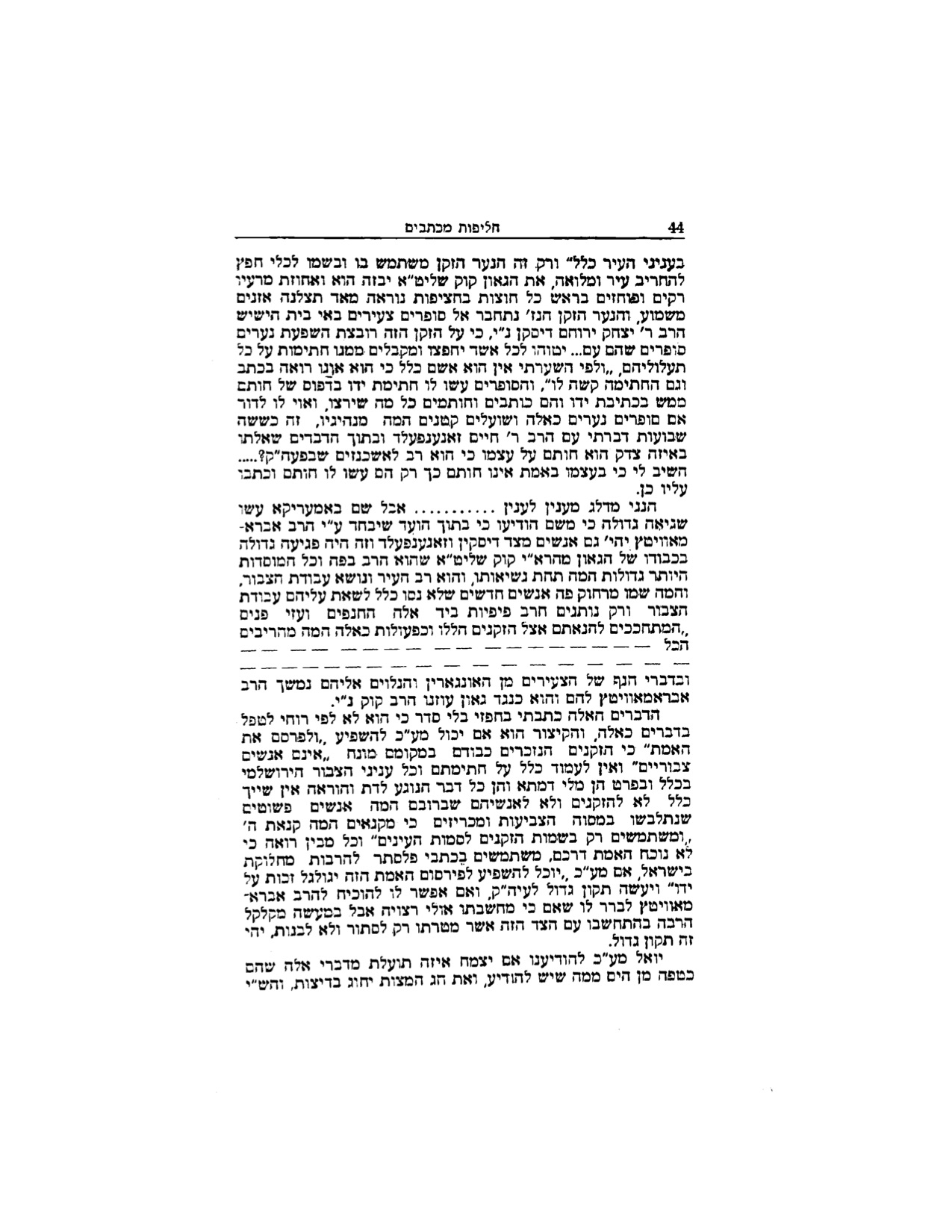
During the late 1880’s the old Yishuv of Yerusholayim, then led by the great R. Yehoshua Leib Diskin, was supported by the “Chalukah” system, which was funded by Jews from the Diaspora… He continues that there is still one place that the plague of secular studies has not infiltrated and that is Yerusholayim, and despite the fact that scoffers want to implement secular studies there, the Yishuv, under the leadership of “Rabbeinu HaGadol Me’or Ha’Golah Yochid B’Doreinu B’Torah V’Yirah HaGaon MaHaRIL Diskin Shlit”a, have prevailed and held on to their sacred tradition. However, those who are opposed to the Chachomim are totally persistent in their publications against the Yishuv and the MaHaRIL”. The Beis Ha’Levi therefore requests that R. Hildesheimer publicize that he disagrees with this view, and that he reaffirm that it is forbidden for the school system in the Old Yishuv, which was constituted primarily of students with Lithuanian backgrounds, to implement these changes…

In this letter we see the incredible respect that the Beis Halevi had from R’ Yehoshua Leib Diskin, something known to us from many other sources.

R’ Hildesheimer’s role in this controversy has been discussed a bit by David Ellenson, Rabbi Esriel Hildesheimer and the Creation of a Modern Jewish Orthodoxy, pp. 110-112,123-126.

Many aspects of this fascinating controversy have been dealt with by R’ Eitam Henkin HY”d in various articles.

One important point is from the Beis Halevi letter it sounds like all Lithuanian Gedolim sided with R’ Diskin but this is not so simple at all. R’ Shmuel Salant definitely did not agree with R’ Diskin on this. IYH this will be discussed at greater length in the future.


To Censor or Not to Censor, that is the Question

To Censor or Not to Censor:  Electricity on Yom Tov, Illustrations and Other Items of Interest at Legacy Judaica’s March 2020 Auction

By:  Eliezer Brodt & Dan Rabinowitz

Legacy Auction’s latest auction will take place on March 26, 2020.  Their catalog provides us the opportunity to discuss a few items of interest to bibliophiles.

There are many examples of the phenomenon of censoring or declaring forgeries of teshuvot and other halakhic rulings especially when those rulings are contrary to contemporary practices. Nonetheless, there is at least one example where the urge to suppress contrary halakhic rulings was rejected.[1]

R. Yehiel Mikhel Halevi Epstein of Novogrudok is most well-known for his pseudo commentary on the Shulkhan Orakh, Orakh ha-Shulhan. [2] In addition to that work, he also wrote teshuvot and other important material, some of which was recently reprinted (see our post here) in Kitvei ha-Orukh ha-Shulkhan.  One was controversial responsum regarding turning on and off electric lights on Shabbat.

R. Dov Baer Abramowitz was born in 1860 in Lithuania but left at age 10 for Jerusalem.  He received ordination from R. Shmuel Salant and in 1894 emigrated to the United States.  He held a handful of rabbinic positions, eventually, in 1906 becoming the chief rabbi of St. Louis.  Abramowitz sought to reverse the trend of American Jews abandoning the faith and issued a variety of publications that sought to accomplish the goal of strengthening American Orthodoxy.  He was involved in the establishment of REITS, the Agudath Harabbonim, and the first branch of Mizrachi in America. [3] In 1903, Abramowitz, as part of his educational program, began issuing his journal, Bet Vaad le-Hakhamim, “the first rabbinic journal in America, to address the waning of religious observance and the lack of unity among religious authorities in America.” [4].  The annual subscription was $2, a fairly substantial sum when the average weekly wage in 1905 was approximately $11.  The journal lasted one year with six issues.

The first issue begins with an important announcement regarding the “new technology in the new land” that is a hot water heater and using it on Shabbat.  (Bet Va’ad vol. 1, 4).   Many important American (in addition to a few international) rabbis participated in the journal.  For example, R. Chaim Ozer Gordzinsky’s older cousin and with whom he studied, Zevi Hirsch the rabbi of Omaha, Nebraska, wrote a lengthy responsa regarding riding a bicycle on Shabbat.  He argues that the issue is carrying an object on Shabbat in a public space or even in a karmelit, but he identifies no other prohibition. (Bet Va’ad no. 5, Sivan 5663 [1903], 3-7).   Thus, it is unclear whether where there is eruv whether he would have permitted riding a bicycle.     The journal also includes a letter detailing the revolutionary production process of Manischewitz machine matzot and the various benefits of that process.  (Bet Va’ad, vol. 1 25-27). The letter is from the Chief Rabbi of Cincinnati because Manischewitz was originally founded in Cincinnati and only began production in the New York area in 1932 and shuttered its Cincinnati operations in 1958.[5]

The first issue includes four letters discussing the use of electricity on Yom Tov and whether one can turn on and off electrical switches, R. Epstein’s is the first.  (Bet Va’ad, vol. 1, 1). Therein he argues that one can turn on electrical switches on Yom Tov.  He identifies the issue of nolad or creating something as potentially prohibiting the action but concludes that one is merely connecting the circuits and nothing new is created.  But he caveats his responsum with the disclaimer that electricity is uncommon in Novogrudok and his opinion is based upon his best efforts to understand electricity. Indeed, R. Shlomo Zalman Aurbach refers to R. Epstein’s responsum as containing “devarim tmuhim” and explained that they are a product of a faulty understanding of the technology.(Shlomo Zalman Aurbach, Me’orei Or (Jerusalem, 1980), appendix). Lot 85, includes this volume as well as the second issue.

R. Epstein was not alone in permitting electricity on Yom Tov, indeed, the other three letters in Bet Vaad similarly permit electricity. Other contemporary rabbis also rule in favor of electricity.

Nonetheless, those are minority views and today the common Orthodox practice is to refrain from turning on and off electrical switches.  When the publishers of R. Epstein’s writings were deciding what to include in Kol Kitvei, they approached R. Chaim Kanievsky and asked whether they should exclude R. Epstein’s responsum regarding electricity.  Presumably, they were concerned that one of the greatest halkhic authorities of the late 19th and early 20th centuries permitted what is “established” law to the contrary (despite the other opinions). But R. Kanievsky rejected that position and held that the responsum should be reprinted.[6]

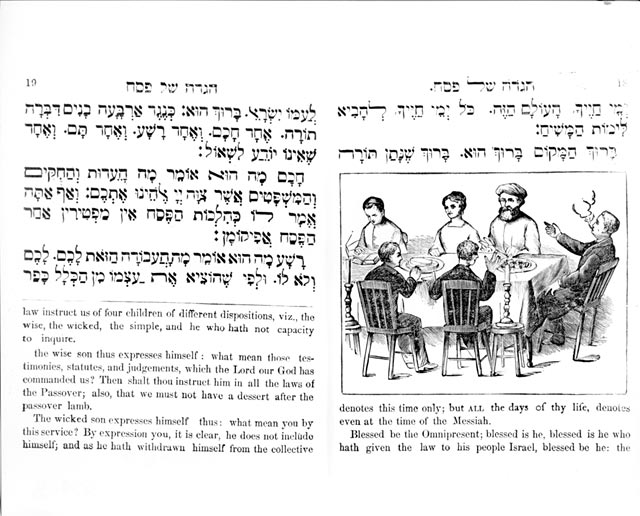
Another example of Americana and the use of fire on Yom Tov appears in one of the first haggadot printed in the United States.  The 1886 illustrated Haggadah contains a depiction of the four sons.  Depicting the four sons is very common in the illustrated manuscripts and printed haggadot. In this instance, the wicked son’s disdain for the seder proceedings shows him leaning back on his chair and smoking a cigarette. According to many halakhic authorities, smoking is permitted on Yom Tov, nonetheless, the illustration demonstrates that at least in the late 19th-century smoking was not an acceptable practice in formal settings. (For a discussion of smoking on Yom Tov, see R. Shlomo Yosef Zevin, Mo’adim be-Halakha (Jerusalem:  Mechon Talmud Hayisraeli, 1983), 7-8).


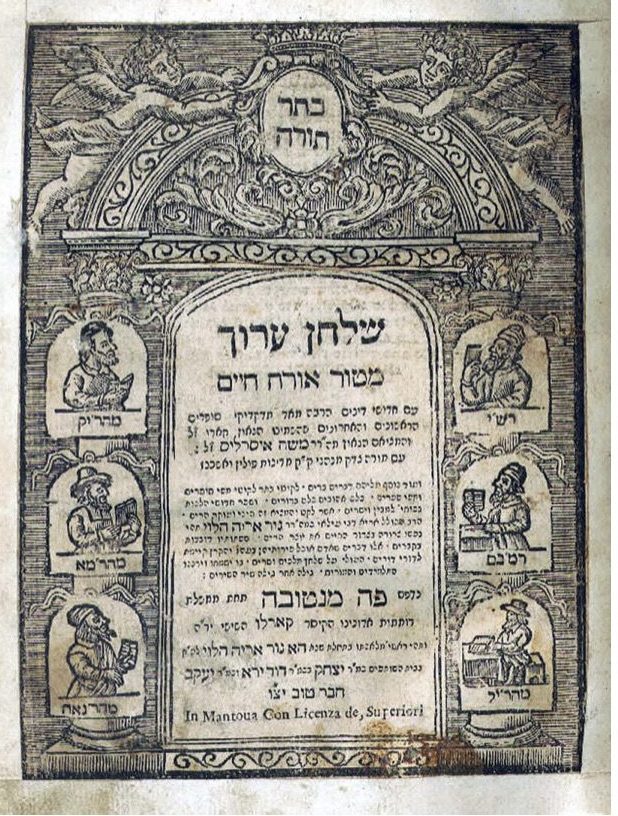
One of the other lots that also implicates illustration is lot 94, Shulhan Orakh im Pirush Gur Areyeh, Mantua, 1722, that contains the commentary of R. Yosef ben Ephraim Gur Areyeh Halevi.  As we have previously discussed at the end of this post, the Gur Areyeh’s title page to the first volume depicts six relevant personalities, Rashi, Rambam, MahaRIL, R Yosef Karo, R. Moshe Isserles, and R. Gur Areyeh.  According to some accounts, this illustration roused the ire of some rabbis because they felt the depictions were crude, and in some instances seem to show at least one rabbi in violation of Jewish law.  Allegedly, they claim that the Rambam is shown with insufficient peyot (sidelocks) in addition to long hair (as do others).  Thus in the remaining volumes of this edition, the illustrations were removed and they no longer appear (although at least in one preserved copy the illustration is repeated in the Yoreh De’ah volume).


One lot, # 161, is an incredible discovery: R. Yosef Dov Halevi Soloveitchik’s (Bet Halevi) copy of the Halakhot Gedolot (BeHaG).  This copy contains hundreds of unpublished glosses, citations, and cross-references. This copy establishes that the Netziv was not the only Rosh Yeshivah of Volozhin who was involved in the works of the Geonim. One only can hope that whoever purchases this copy will publish the notes.

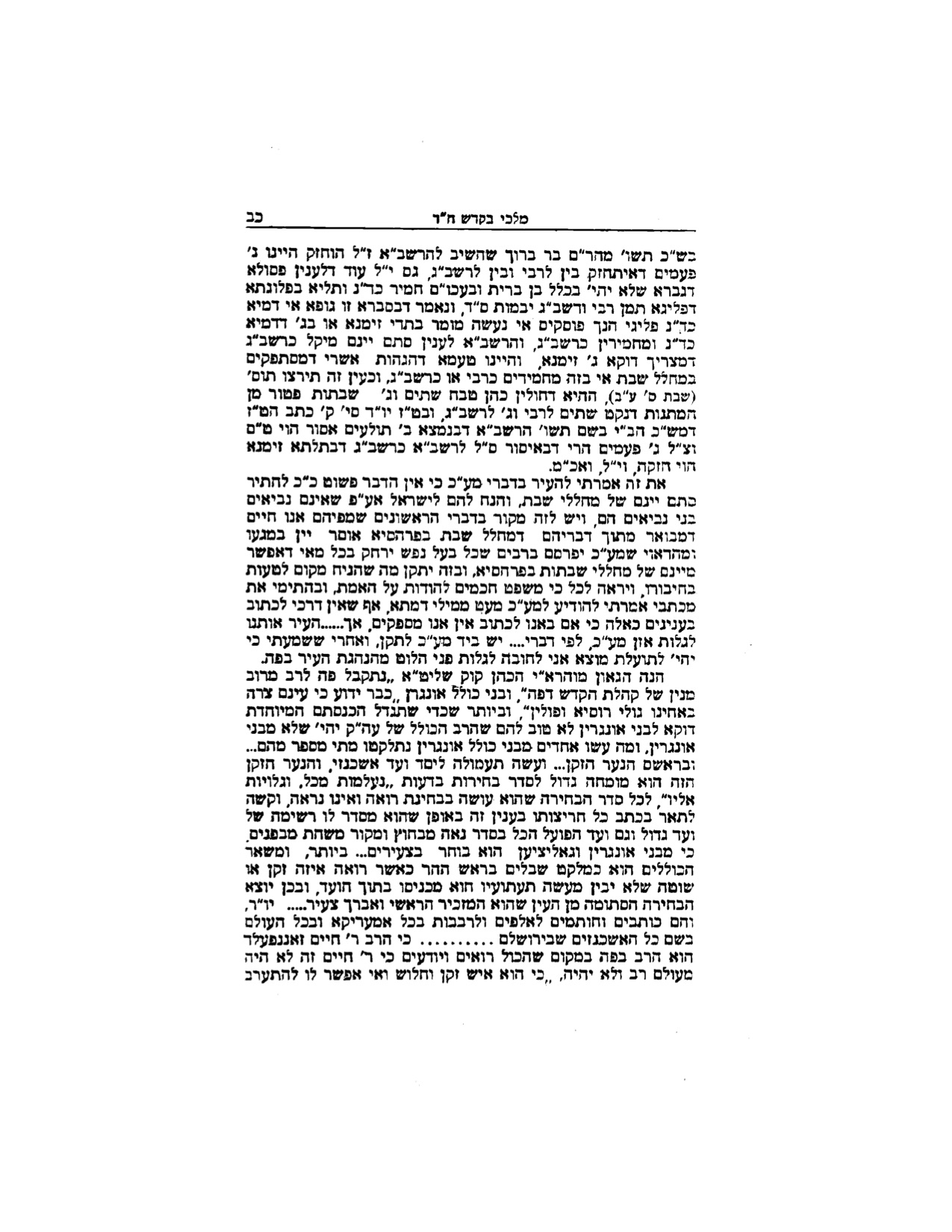
Another such item is # 87 is a presentation copy of Derishat Tzion that contains the commentary of R’ Tzvi Pesach Frank. Although not noted in the description R. Frank presented this copy to R’ Chaim Hirschenson.  In his Shut Malkei Bakodesh,(4:10) R’ Hirschsenson prints a very interesting letter from R Frank after he received a copy of one of R. Hirschenshon’s book. R Frank took issue with some of R. Hirschenshon’s conclusions and to his credit, he prints it without censoring it. The book being auctioned might have been a gift from R Frank in return for the gift he received. R. Frank’s letter is full of fascinating contemporary descriptions of Jerusalem.

Finally, for a discussion regarding lot 93, Menukha ve-Kedusha and censorship see our post here.

[1] See, for example, Yakkov Shmuel Speigel, Amudim be-Tolodot Sefer ha-Ivri:  Ketivah veha-Atakah (Ramat Gan:  Bar Ilan University Press, 2005), 241-97; Marc Shapiro, Changing the Immutable:  How Orthodox Judaism Rewrites History (Oxford:  Littman Library of Jewish Civilization, 2015), 81-118.

[2] For a biography see R. Eitam Henkin, Tarokh le-fani Shulkhan (Jerusalem:  Maggid, 2019).  Regarding this book see our discussion here.

[3] Yosef Goldman, Hebrew Printing in America 1735-1926:  A History and Annotated Bibliography (Brooklyn:  [YG Books], 2006), vol. 1, no. 584, 514. See our reviews of Goldman’s bibliography here and here.

[4] Goldman, Hebrew Printing, no. 591, vol. 1, 521.

[5] See generally, Yossi Goldman, vol. 1, no. 591, 520-21.  Bet Vaad contains materials beyond responsa and halakhic discussions, including poetry, discussions regarding Jewish life in America such as yeshivot, restaurants, and a fable written in verse.

For a discussion of Manischewitz, see Jonathan D. Sarna, “How Matzah Became Square: Manischewitz and the Development of Machine-Made Matzah in the United States,” in Rebecca Kobrin, ed., Chosen Capital: The Jewish Encounter with American Capitalism (New Brunswick: Rutgers University Press, 2012), 272-288; Jonathan D. Sarna, How Matzah Became Square: Manischewitz and the Development of Machine-Made Matzah in the United States (New York: Touro College, 2005).

[6] Regarding the position that seeks to portray Orthodox Judaism a monolithic halakhic process and view as legitimate only certain opinions see Adiel Schremer, Ma’ase Rav: Shekul ha-Da’at ha-Halakhati ve-Eytsuv ha-Zehut ha-Yahadut (Ramat Gan:  Bar Ilan University Press, 2019), 191-97.


Kadesheinu beMitsvotekha – The Function of the Mitsva

 Kadesheinu beMitsvotekha – The Function of the Mitsva[1]By Rabbi Aryeh A. Frimer* *Rabbi Aryeh A. Frimer is the Ethel and David Resnick Professor of Active Oxygen Chemistry at Bar Ilan University, Ramat Gan 52900, Israel; email: frimea@mail.biu.ac.il. He has lectured and published widely on various aspects of “Women and Halakha;” see: http://bermanshul.org/frimer/ Abstract: The mitsva reflects one of the most pivotal concepts of Judaism. It sanctifies those who answer its calling, and the Jew and Judaism is unique and “chosen” because of it. In this article we highlight the various ways the mitsvot and Halakha transform us and mold the Jewish personality: (a) by converting the “ought” into a “must”; (b) by transforming daily prosaic acts of man into sacred deeds; (c) by converting simple chronological, linear time into special moments of kedusha. The mitsva involves the total personality – “head, heart and hand” and makes the body equally important with the soul in the service of Hashem. Sanctification is accomplished both through deed and thought. The Torah wants the Jew to build an environment which strengthens his religious values and has designated Erets Yisrael as the most fitting place for kedusha. Sanctification through MitsvotOne of the central themes of the Days of Awe is “haMelekh haKadosh” – that the Almighty is not only ruler of the universe, but also its source of holiness. Man for his part is bidden to imitate G-d and, hence, to be holy as well – “You shall be holy, for I your G-d is Holy” (Lev. 19:2).  But how exactly is Man expected to become holy? What is the recipe for sanctification? The answer to this question is found in the Sabbath and Holiday prayers: “Kadsheinu be-mitsvotekha – Sanctify us through your Commandments.” Similarly, before performing mitsva actions, we say: “…who has sanctified us through his commandments.” If G-d is THE Kadosh – THE source of sanctity, we become sanctified by linking up with Him – specifically, by doing His will, by fulfilling His commandments. Centrality of MitsvotR. Norman Lamm[2] notes that the term mitsva reflects one of the most pivotal concepts of Judaism: Firstly, the word mitsva implies a Metsaveh, One who commands. The divine Metsaveh must obviously be a personal G-d – for only a personal G-d is sufficiently concerned with men to care about them and command them into action. Secondly, mitsva implies that man lives under obligation to the Metsaveh, and that his life must be regulated in accordance with G-d’s will. Furthermore, the very existence of mitsva suggests that this personal G-d has made his will known to man through some form of revelation – such as ma’amad Har Sinai.  Uniqueness of the Jewish PeopleBut more importantly, the mitsva is at the heart of our uniqueness as a people. When we talk about Israel as being the “chosen people” – what is it that makes us unique? In Jewish tradition there are essentially two basic approaches:[3] The Mystical Approach suggests that, indeed, there is something about the Jewish neshama that makes it fundamentally different from that of the gentile. This is referred to as the Pintele Yid – the Jewish spark within us. As far as converts are concerned, this approach cites the Talmudic tradition that in addition to the Israelites who departed Egypt, all future souls who would be born or join Klal Yisrael were at Sinai (Shevuot 39a). Therefore, a convert was somehow born with a Yiddishe neshama, a Jewish soul.  According to this approach, the Talmudic statement “A Jew, even should he sin, remains a Jew” (Sanhedrin 44a) is more than just a legal statement about personal status and obligation; it suggests that there is some inherent quality about being a Jew – and one can never opt out. The Rational Approach, on the other hand, argues that a Jew is not intrinsically better. Rather, the People of Israel are a unique entity because of their special calling to do mitsvot. As we say in the birkhot haTorah: “You have chosen us, and given us Your Torah.” And again in the holiday liturgy: “You have chosen us from all nations … and sanctified us through your commandments.” According to this latter approach, we are indeed the “Chosen People,” but we were chosen for responsibility and obligation – not privilege. We become elevated and sanctified by answering this special calling – by doing mitsvot. One has the freedom of choice not to heed this calling. Furthermore, one not born a Jew may take this calling upon oneself by conversion. But those of us who opt to answer this calling affirmatively are sanctified through the fulfillment of the mitsvot. It is through the performance of mitsvot that we Jews become unique. Uniqueness of JudaismBut the mitsva is also what makes Judaism as a religion unique. Most of the religions of the world are primarily spiritual or neshama religions. They are chiefly concerned with “other-worldliness.” The emphasis is on feeling, will or thought. Salvation in Christianity is through faith; the mitsvot are, therefore, superfluous and even in the way. Judaism, on the other hand, is a religion of this world – it is a religion of action. One does not become holy by withdrawing from life, but rather by living it fully under the Torah’s direction.[4] All of life is guided by Torah which is a Jew’s manual for living. Rabbis are generally famous for their Talmudic analysis and halakhic decisions, rather than their works of thought and theology. It is not at all surprising that Jewish action is codified in a Shulkhan Arukh entailing reams and reams of fine print on large pages. Yet the basic elements of faith are simply summarized in 13 principles – and many Rishonim dispute even these.[5]Judaism is also a human religion and by that I mean that, while G-d is the source, it was given to humans for humans. This expresses itself in two ways. Firstly, from the verse “It is not in heaven” (Deut. 30:12), we learn that the Torah was given to Man to interpret, apply and resolve difficulties within given rules – without Divine intervention. Secondly, it teaches us that the purpose of the Torah was not to convert us into angels. The Creator intended the Torah for Man as he is, recognizing all his frailties and all his potential. And yet its goal is to sanctify us by guiding us in how to interact with world around us. This attitude resonates in the oft quoted statement: “The Torah was not given to angels” (Lo nitna Torah le-malakhei ha-sharet; Berakhot 25b). In this regard R. Adin Steinzalts writes: “If G-d had wanted Man to become an angel and do everything as such, He simply would have created more angels. But His wish was to create Man.”[6]In summary, then, the mitsva sanctifies those who answer its calling and the Jew and Judaism is unique because of the mitsvaMechanisms of SanctificationA little over a decade and a half ago, Anthony Eitan Fiorino wrote insightfully about his conversion and spiritual growth through Judaism.[7] He cites testimony from over the ages indicating that simply behaving as a Traditional Jew leads to spiritual growth. But what, however, is the mechanism of this change? We highlight below the various ways the mitsvot and Halakha transform us and mold the Jewish personality. 1) Firstly, the mitsvot convert the “ought” into a “must” – relative morality into absolute morality. “Thou shalt not steal” is applicable even if the thief is an impoverished ambulance driver stealing $100 from a deceased billionaire. Relative morality, the greater good, might well say the theft is acceptable – after all no one is really hurt. The Torah says “Lo tignov” with absolute authority. An ought is converted into a must – a relative value into an absolute one.[8] 2) Secondly, the mitsva transforms daily prosaic acts of man into sacred deeds. It takes simple actions and converts them into meaningful events. Let’s look first at several examples. (a) Eating is a neutral: it is neither good nor bad, just necessary. Yet in halakaha it is sanctified by a variety of required actions. First there is the simple act of reciting a berakha, which is an acknowledgement of the G-d of Creation. Ultimately, He is the source of all reality and making a berakha is an act of submission to His will. The sundry laws of kashrut, ritual slaughtering, blood removal, separation of milk and meat etc. – all make eating important, special and sacred. This is because now the neutral act of eating is part of avodat Hashem – Divine service. (b) There is nothing more neutral, perhaps, than going to the washroom. Yet here, too, halakha requires us to stop and think. In the Asher Yatsar benediction recited following use of the lavatory, we acknowledge a Creator “who has formed man in wisdom and created in him a complex system of openings and cavities. It is well known before your glorious throne that if one of these (openings and cavities) be opened or closed improperly, it would be impossible to exist in Thy presence. Blessed art Thou Lord who heals all creatures and does wonders.” Halakha utilizes this commonplace experience to meditate on the wonders of creation, and ponder the miraculous nature of the body. Even this basic occurrence is elevated to the spiritual. In this regard, R. Danny Levine recounts that prior to a shul board meeting, he went to use the amenities. The President of the shul caught him exiting the lavatory mumbling something. Upon being questioned, R. Levine explained all about Birkhat Asher Yatsar and its import. When they returned to the Board meeting, the President lightheartedly commented how holy their rabbi was! “After all, he even makes a berakha when he goes to the washroom.” As fate would have it, six months later the Shul President was hospitalized and the Rabbi went to visit him in the hospital. As he entered, the Rabbi’s eye caught sight of the catheter at the President’s bedside. To this the President insightfully commented: “Forget about the annual Kol Nidrei, Rabbi – it’s the daily Asher Yatsars that count!”[9] (3) But the mitsva also transforms simple chronological, linear time into special moments of kedusha – what the ancient Greeks called the conversion of chronos into chiros. Thus, halakha takes 25 hour periods and converts them into what R. Abraham Joshua Heschel referred to as “Sanctuaries in Time”[10] – into a Shabbos, a Yom Tov or a Yom Kippur. On Shabbat and Yom Tov we attempt to bring down the spiritual and meld it with the physical. On a fast day, we attempt to raise the physical up to the spiritual. R. Joseph B. Soloveitchik zt”l, “The Rov,” commented that, on the Regalim in Temple times, Jews were invited to visit G-d’s home; on Shabbat, Hashem visits ours – if we will only invite him in.[11]Ultimately, the goal of Yiddishkeit is to capture chunks of life and bring them tahat kanfei haShekhina – into the spiritual, sanctified realm. This what Hazal mean when they comment “Sanctify yourself in the neutral areas” (Yevamot 20a). Sanctify yourself by taking even those areas which are halakhically neutral and permissible, and dedicate them toward Divine service.[12] Ideally every action should be linked somehow and in some way with the divine will and divine service: eat so you have the strength to better serve Hashem;  sleep so as to be awake and alert to better carry out the Divine will;  go to museums and zoos, so as to better appreciate the wonderfully multifaceted world Hashem has created. In all these actions, there is nothing wrong with enjoying yourself. But it is the element of kavana – my intention and motivation – which sanctifies the act and makes it part of Divine service.[13]One of the most important lessons in this regard I learned when I was in my early teens at Camp Munk in the Catskills. At that time, R. David Cohen Shlita, now one of the leading Poskim in New York, was head learning group teacher. One morning, while we were playing baseball, “Reb Dovid” came down to the field and asked if he could “hit a few out.” We were, of course, thrilled  to see this then budding gadol playing baseball. But after a short while, the third baseman called out: “Hey Rebbi, isn’t this bittul Torah [Isn’t this a waste of time, when you could be learning Torah]?”Reb Dovid smiled and asked us all to gather at the pitchers mound. He explained to us that Divine service doesn’t just mean to learn, learn, learn or do, do, do. The Torah was given to a complete human being who has strengths and weakness, desires and needs. The Torah was not given to angels (Berakhot 25b). Even budding scholars need to play a little baseball or basketball! And then he taught us the important lesson of kavanah – intention and motivation. If you indulge in baseball to simply while away the time, because you think you have nothing better to do – yes this is most definitely bittul Torah. However, if you engage in sports and exercise so that your body will be healthier to serve your creator; to clean out the cobwebs of your mind; or so that you will be more relaxed and have more stamina to learn Torah – this too is part of the complete picture of serving G-d.[14] Of course, everything must be done within good taste and reason.Another important lesson in this regard I learned when I was 17.  I spent the summer in Israel at Camp Daroma in Rehovot, Israel. One Shabbat afternoon, we were invited to the home of R. Elimelekh Bar-Shaul, then Chief Rabbi of the city. He asked us what we thought about the Halakha which instructed one to put on the right shoe first, but then tie the left shoe first (Shulkhan Arukh, O.H., 2:4). The younger campers giggled, but the older ones realized the import of the question: was this what the halakha had to occupy itself with? Are these the issues that need to preoccupy a Jew?And then R. Bar-Shaul explained: “You see,” he said softly, “Yiddishkeit is in a constant struggle to sanctify more and more of life. Putting on your shoes is a neutral action – how do I sanctify it? The answer is by linking it to the service of THE Kadosh. I put on my right shoe first, because right symbolizes strength and I begin my service of the Creator with strength. But I tie my left shoe first, because a male Jew ties his Tefillen on his left hand. Hence, with regard to tying, left is more sanctified. You see this is not at all silly or trivial,” said the Chief Rabbi, “it’s about Kedoshim tihiyu (Lev. 19:2). – our attempt to capture more and more neutral chunks of life and bring them under the wings of the Shekhina.” To summarize, then, the mitsva converts the “ought” to a “must”; it reshapes simple acts into sacred events; and similarly, it transforms simple time into sanctified moments. 4) We are continuing our discussion of how mitsvot sanctify. And in this regard it is important to note that the religions of the past were reserved either for intellectuals and philosophers, or for people capable of mystical depth, or for individuals with profound spiritual gifts.  But full performance of the mitsva involves the total person – not just the head (thought and kavana), and not just the heart (sentiment or emotion), but also and primarily the hand – the body. Hence, even the simple Jew can serve Hashem – you don’t have to be a philosopher or mystic. In a sense, then, the mitsva, democratizes living because all people, rich or poor, weak or powerful, learned or illiterate, low or high born, gifted or not – all serve G-d through the calling of the mitsva.  Nevertheless, since the mitsva involves the total personality – “head, heart and hand” – and since each individual is unique, so is their avodat Hashem (Divine service). 5) This brings us to a crucial fifth point. Judaism makes the body equally important with the soul in the service of Hashem – by making the body the only real agent for the fulfillment of mitsvot. As the verse (Psalms 35:10) says: “All my limbs call out: Hashem who is like you.”[15] In that visit I described above at the home of R. Bar-Shaul in 1964, the Rehovot Chief Rabbi noted that this verse is cited as the source for “shokeling” – swaying back in forth in prayer.[16] “You see,” said R. Bar Shaul, “prayer is primarily service of the heart. The body too wants to be involved – so it shokels.The critical point is that, in contradistinction to Christianity and the ascetics, mainstream Judaism does not consider the neshama as good and the body as bad. How could the body be bad? It was made by Hashem! What’s more, it is only through the body that we can reach out and serve the Almighty. In his Iggeret haKodesh, Nahmanides argues that the body is neutral, neither inherently good or bad. It all depends on how it is used. A hand that writes a sefer Torah is sanctified; while one that murders is defiled. The same is true for sexual relations. Not only is intimacy sanctified and sanctifying by the marriage ceremony, Sheva Berakhot, laws of family purity, procreation and mitsvat onah (conjugal relations) – but it also creates an emotional and physical bond between husband and wife. It is within this firm and warm relationship of sharing and love that children should be born and educated to serve as the next link in the chain of tradition.  By contrast, Catholicism views celibacy as the true ideal. For Judaism, the body is the chief agent of avodat Hashem, and hence is to be protected and respected, and it will share in the heavenly rewards of the Messianic period and “the days to come.”Summarizing once more: the mitsva works on the total personality – head, heart and hand. In addition, the body is a full partner with the soul in the fulfillment of mitsvot and the attainment of spirituality. Sanctification through Deed and ThoughtThere are two types of mitsvot. The specific commandments guide us through specific actions or prohibitions. But there are also the mitsvot kelaliyyot, the general mitsvot that provide a general blueprint of the Torah’s vision and direction. These include actions required by the verses: “Thou shalt be holy” (Lev. 19:2); “Do what is just and good” (Deut 6:18); “Love thy neighbor as thyself” (Lev. 19:18); and “The Torah’s ways are the ways of pleasantness” (Prov. 3:17). The general commandments guide attitudes and motivation. They aid in the development of a Jewish Weltanschaung so that, firstly, one can cope with the gray areas – the ambiguities of life. But, secondly, general mitsvot open up the possibility of lifnim me-shurat ha-din – of supererogatory acts. They allow us to reach out towards an ideal vision of that which can, could, or ought to be. In short , the specific mitsvot sanctify the personality through the body, through the deed, through the experience. The general mitsvot sanctify the individual through the intellect, thought and attitudinal changes.  The Role of the Land of IsraelThere is, however, one last issue regarding the role of mitsvot in the life of a Jew that we have yet to discuss. Is there a preferred site or location for the fulfillment of mitsvot?  The answer is, of course, a resounding yes – and that place is the Land of Israel. I am reminded of it every time I return to the States for a sabbatical and am forced to eat in the Sukkah in the freezing cold, or try to burn my hamets in the snow! It’s not how the Torah meant it to be! From a Jewish perspective “It simply ain’t natural!” Indeed, Nahmanides, citing the Sifri, goes so far as to suggest that the only reason why the Torah commanded us to do mitsvot in the exile was so that we wouldn’t forget them before we returned to Israel.[17]              But Erets Yisrael represents much more. It is ideally the location where Jews are meant to be in control of their cultural environment – where the surroundings strengthen the values that a Torah-true Jew attempts to inculcate in his children and family members at home. As noted by Hazal time and again, in the galut, Jews suffer from dominion of the nations of the world (shi’abud malkhuyot). What troubled Hazal was not primarily the political dimension of this foreign control, rather its cultural aspects. In the diaspora, a traditional Jew cannot function completely naturally; he is always a minority and constantly apologizing.  He is often at odds with many of the values of the world around him. Talmud Berakhot (17a) recounts that R. Alexandri concluded his Shemoneh Esrei as follows: “Ruler of the world: You are well aware that our honest desire is to do Thy will. But what prevents us? The evil inclination and the dominion of the nations.” The Yetser haRa erodes man’s Torah values from within, while shi’abud malkhuyot does so from without. With such adversaries, it is little wonder that the battle to remain a committed Jew is not always easy. The Torah wants the Jew to build an environment which strengthens his religious values and has designated Erets Yisrael as the most fitting place for kedusha. It is for this reason it is referred to as Erets haKodesh. I’m not so naïve as to think that there isn’t cultural – if not an element of political – shi’abud malkhuyot in modern day Israel. On the contrary, this is perhaps THE major challenge for religious Zionism in the next decade: to rebuild Israel spiritually. Reciprocity between G-d and IsraelWe began our presentation with a discussion of the meaning of “the Chosen People.” Interestingly, in this regard, we find two famous yet seemingly contradictory Rabbinic traditions regarding the giving of the Torah (Avodah Zara 2a,b). One indicates that indeed
G-d chose Israel. Actually what it says is that G-d held up Mt. Sinai over their heads threateningly and said “you either accept the Torah, or I will return the world to tohu va-vohu (chaos).”  The second tradition maintains, however, that the People of Israel chose G-d. Actually, what the Talmud says is that G-d went around to the nations of the world trying to give them the Torah. But, when they heard its various restrictions, prohibitions and moral imperatives, they rejected it. Only klal Yisrael said “Na’aseh ve-nishma.”.               R. Norman Lamm[18] indicates that these two traditions are not irreconcilable. Indeed, at Sinai, G-d chose us to receive the Torah and mitsvot. Each of us in klal Yisrael, for better or for worse, is born into a people who have a Divine calling. But revelation is of no value unless we willingly accept that calling, unless we willingly choose G-d by answering Na’aseh veNishma, unless we respond with hineni.  I may be a Jew by virtue of G-d’s choice, but only I can determine what kind of Jew I choose to be!This reciprocal relationship between G-d and Israel[19] is an idea made famous in the form of two jingles – the first, is that of British Journalist William Norman Ewer (18851976), who wrote: How odd of G-d, to choose the Jews.To which Hebrew University philosopher Leon Roth (1896-1963) responded:It’s not so odd – The Jews chose G-d.Indeed, there exists a mutual bond of love between G-d and the Jewish people. God chose Israel out of love, as we say prior to the morning recitation of Shema: haBoher be-amo Yisrael be-ahava.” We, in turn, reciprocate by declaring “And thou shalt love the Lord thy God.” The Call of the ShofarDuring the course of the year we are dragged along by the ebb and flow of life.  We have little time for kavana, less for renewal and rededication.  But the Shofar of Elul and Rosh HaShana and the fasting of Yom Kippur are the clarion call to re-evaluate the purpose and message of our life. It is a call to consciously sanctify our thoughts, our deeds and our actions – to bring more and more of our individual and communal lives “tahat kanfei haShekhina.”               May we be worthy this year to see the fulfillment of our prayers: “Sanctify us through Your commandments, and grant us a share in Your Torah, sustain us with Your kindness and rejoice us with Your salvation, and purify our hearts to serve You sincerely.”10 


[1] I would like to acknowledge the enormous contribution made by Avi Mori R. Norman E. Frimer zt”l, to the substance and content of this piece – and would like, therefore, to dedicate it to his memory. I would also like to thank R. Shlomo Pick and Arnold Lustiger for their many sources, comments and suggestions.[2] R. Norman Lamm, “Issues of Faith,” Dimension, Winter 1967, pp. 5-9.[3]   R. Joseph B. Soloveitchik held a hybrid position, namely, that a Jew had two types of sanctity, one inherited from the Avot, and the other by fulfilling mitsvot. See: R. Joseph B. Soloveitchik, Al haTeshuva, ed. Pinchas Peli (Jerusalem: World Zionist Organization, 1975), pp. 132-133 (citing Rashi to Deut. 14:2); R. Joseph B. Soloveitchik, Shiurim leZekher Aba Mori z”l, Vol. II, “beInyan Birkot haTorah,” pp. 13-14. See also Arnold Lustiger, Derashot haRav (New Jersey: Ohr Publishing, 2003), pp. 208-209.[4]   See the related comments of R. Yehuda Amital, “Human Holiness,” available online at: http://tinyurl.com/qmpv4k.[5] See: (a) R. Marc B. Shapiro, The Limits of Orthodox Theology: Maimonides’ Thirteen Principles Reappraised (Oxford: Oxford University Press, 2004). (b) Menachem Kellner, Dogma In Medieval Jewish Thought: From Maimonides To Abravanel (Oxford: Oxford University Press, 1986).[6] R. Adin Steinzalts, “Human Holiness,” in The Strife of the Spirit (Northvale, New Jersey: Aronson, 1988), p. 38. For further discussion of “The Torah was not given to angels” principle and it’s halakhic ramifications, see: R. Shlomo A. Glicksburg, “Lo Nitna Torah leMalakhei haSharet: Al Gevulot haDiyyuk haMada’i biPesikat Halakha,” BD”D – Journal of Torah and Scholarship (In Press).[7]  Anthony Fiorino, “One Soul’s Adventure: Spiritual Growth Through Halacha,” Jewish Action, Winter 5753/1992-3, pp. 32, 84-93.[8]  See the comments of R, Joseph B. Soloveitchik, cited by Arnold Lustiger, supra note 3, Appendix B, esp. pp. 235-236.[9]   See the moving article of Kenneth M. Prager, “For Everything a Blessing,” A Piece of My Mind column, JAMA 277, no. 20 (May 28, 1997), p. 1589; reprinted in ASSIA – Jewish Medical Ethics, III:2 (September 1998), pp. 34-35. [10] R. Abraham Joshua Heschel, The Sabbath: Its Meaning for Modern Man (New York: Farrar, Straus and Giroux, 1951). The Kabbalistic work Sefer Yetsira (6:1) speaks of three dimensions in which holiness may be created: time, space and being (soul).[11]  R. Joseph B. Soloveitchik, Shiurim leZekher Aba Mori z”l, Vol. I, “Kibbud veOneg Shabbat,” pp. 50-68, at 67; R. Joseph B. Soloveitchik, Exalted Evening, R. Menachem Genack, ed. (New York: OU Press, 2009), pp. 88-89; R. Hershel Schechter, Nefesh haRav, p. 157.[12] See: R. Joseph B. Soloveitchik, Halakhic Man (Philadelphia PA: Jewish Publication Society,1983).[13] See Shulhan Arukh, O.H. sec. 231, no. 1. [14] Regarding exercise, see the comments of R. Abraham Isaac haKohen Kook, Orot, Orot haTehiyya (Jerusalem, 5753), Chap. 33, p. 80.[15] See: R. Norman E. Frimer, A Jewish Quest for Religious Meaning (New Jersey: Ktav, 1993), p. 78.[16] R. Hezekiah Da Silva, Peri Hadash, O.H., sec. 95; R. Israel Meir haKohen, Mishna Berura, ad. loc. subsec. 7. See the extensive discussion of R. Eric Zimmer, Olam keMinhago Noheg (Jerusalem: Zalman Shazar Center, 1996), pp. 97-111.[17] R. Moses ben Nahman, Commentary to Lev. 18:25; see also Rashi and Ramban to Deut. 11:18.[18] Supra, note 2. See also R. Norman Lamm, in “Symposium: You have Chosen Us from Amongst the Nations,” Jewish Action, Fall 5765/2004 (65:1).[19] See: R. Jonathan Sacks, Covenant and Conversation, Ki Tavo, Sept. 9, 2006.


The Source for the Recitation of LeDovid

This post is a followup of an earlier post which discusses the origins of reciting le-dovid hashem ori from rosh hodesh Elul through Simchat Torah. In this post I show a few early sources for saying ledovid and some
reasons why some did not say it. For Profesor Leiman’s lecture on this
topic see here. In my discussion of the various reasons given I deal with the various
Balei Shem especially the two balei shem who share the same name, R. Eliyahu Ba’al Shem.מקור אמירת “לדוד ה’ אורי וישעי” באלול ותשרימאתאליעזר יהודה בראדט

בתקופתנו, תקופת האסופות והלקוטות, מתקיים מאמרו של רבי יהושע “אין בית המדרש בלא חידוש” בעצם האסיפה והליקוט – מלאכה שנעשית קשה מיום ליום, כי אין לך יום ויום שאין כמה וכמה ספרים יוצאים בו, ורובם אינם אלא ליקוטים מספרים אחרים. זו ועוד אחרת, שמלאכה זו דורשת עין בוחנת ושימת לב וידע ביבליוגרפי, ועל כולם – סבלנות ומתינות. הנה הקדמתי את הצטדקותי בטרם אכתוב בענין אמירת מזמור “לדוד ה’ אורי וישעי” בימי התשובה והמועדים, שדשו בו רבים וכבר הלכו בו הנמושות[1].

לראשונה הופיע המנהג בספרו של המקובל ר’ בנימן בינוש הכהן מקראטשין, ‘שם טוב קטן’, שנדפס בזולצבאך בשנת תס”ו, כסגולה לצאת בדימוס זכאי בדין: “הא לך סוד גדול. כל האומר מזמור זה מר”ח אלול עד אחר שמחת תורה, ואפילו גזרה רעה כתובה על האדם מן השמים יכולה לבטלה. ומבטל מעליו כל גזרות רעות וקשות, ויוצא בדימוס זכאי בדין. וצריך להזהר מאוד ומאוד שיאמר זה המזמור ערב ובוקר, דבר יום ביומו מר”ח אלול עד אחר שמחת תורה. אזי הוא מובטח, שיוציא שנותיו וימיו בטוב ויערב לו, ויכניע על ידי זה כל מיני מקטרגים”[2]. ספר זה זכה לתפוצה מרובה ובמאה הי”ח בלבד נדפס למעלה מתשע פעמים[3].לאחר עשור, בשנת תע”ו, הדפיס ר’ בנימן בינוש הכהן את ספרו השני בשם ‘אמתחת בנימן’, ובו נאמר: “סדר הנסירה. אחר העמידה של שחרית יאמר מזמור כז – לדוד ה’ אורי… הא לך סוד גדול. כל האומר מזמור זה מר”ח אלול עד אחר שמחת תורה…”[4] (עמ’ נח).

ואולם, כבר בשנת תס”ט נדפס בהמבורג ‘ספר זכירה’ לר’ זכריה בן יעקב סימנר, ואף בו הובאה סגולת אמירת המזמור בימים אלו: “סוד גדול. האומר מזמור כז מראש חודש אלול עד אחר שמחת תורה…”[5]. וכבר הוכיחו רבים, שר’ זכריה סימנר ליקט לספרו מחיבורים רבים שעמדו לפניו, ואף הרבה להשתמש בספר ‘שם טוב קטן’.לאחר חמש עשרה שנה, בשנת תפ”ד, נדפס בברלין ‘ספר היראה’ כנספח ל‘ספר המוסר’ (שנדפס לראשונה בשנת תל”א בלובלין). שם, באות ט, הובאה הסגולה: “מצאתי כתוב סוד גדול, האומר מזמור כ”ז מראש חדש אלול…”. ‘ספר המוסר‘ נדפס שוב בירושלים בשנת תשנ”ו, ושם (עמ’ מה) העיר ר’ שמואל אשכנזי שבעל ‘ספר היראה’ ליקט דברים אלו מ’ספר זכירה’ ועוד ספרים.
לאחרונה מצאנו כמה שציינו מדעתם, כגילוי ומציאה, שהמקור הקדום של אמירת מזמור זה הוא ספר ‘שם טוב קטן’. מהם אמנה את ר’ ברוך כץ, דברי יוסף, בני ברק תשמ”ז, עמ’ קסג-קסו; סידור ווילנא, ירושלים תשנד, עמ’ 148; ר’ שמואל אשכנזי בהערותיו ל‘ספר זכירה’, ירושלים תשנ”ט, עמ’ 367; מהדיר ‘ספר זכירה’ שראה אור לפני ימים אחדים, בני ברק תשס”ט, עמ’ תקסז; ר’ דוד כהן, סידור אזור אליהו, ירושלים תשס”ח, עמ’ פ[6]; ר’ אליהו יוחנן גוראריה, חקרי מנהגים, חולון, תשס”ז, עמ’ 169[7]. אבל יש לציין שמקור זה היה ידוע למחברים גם בשנים עברו, וכבר ציין לו ר’ שמואל דוד הכהן מונק במכתב משנת תשכ”ט, ‘שו”ת פאת שדך’, או”ח, ח”ב, סי’ קכז, אבל ספר זה לא נדפס כי אם בשנת תשס”א. והקדימו ר’ חיים צבי עהרענרייך בחיבורו הנפלא ‘קצה המטה’ שעל ‘מטה אפרים’, שנדפס לראשונה בקליינווארדיין תרפ”ג, סי’ תקפא ס”ק טו.
על ר’ בנימן בינוש בעל ‘שם טוב קטן’ ראוי לציין לדבריו החשובים של ר’ פנחס קצינלנבויגן בספרו ‘יש מנחילין’ [שהיה מונח במשך שנים רבות בכתב יד, ולא היה ידוע כי אם למתי מעט (ראה: מ’ שטיינשניידר, בספרות ישראל, ווארשא תרנ”ז, עמ’418 ), ובשנת תשמ”ו נדפס בירושלים בשלמותו]: “הלא תדעו שזה המחבר אמתחת בנימין שהיה מקובל גדול היה מוהר”ר בנימין ביניש זצ”ל כאשר היה אתי עמי בביתי, בהיותי חונה בק’ וואלירשטיין בשנת ת”פ לפ”ק ושמעתי ממנו דברים נפלאים והיה בעל שם גדול ומעשיו היו מופלאים, כפי הנראה מספרו אמתחת בנימין הנ”ל שהיה ידו בכל…” (עמ’ צה)[8].

מידידי דן רבינוביץ’ שמעתי הערה חשובה: בספר ‘שירי הלוים’ לר’ יצחק טרעבוולא שנדפס בלובלין בין השנים תל”ז-תמ”ב (לאחרונה נדפס מחדש במהדורת צילום, בתוך ספרו של ר’ פרץ שמואל מאנטל, שירת שמואל, בני ברק תשס”ג), שלדברי המחבר בהקדמתו, מטרתו “למען דעת כל עמי הארץ מגידי התהלים האיך יתנהגו ואי זה שיר יאמרו בימים המובדלים”, מובא על כל יום מימות השנה המזמור המתאים לדעתו לאמירה באותו יום, והנה, ברשימה על חודשי אלול ותשרי לא מופיע שיש לומר מזמור לדוד ה’ אורי. זאת אומרת, שאפילו בין השנים תלז-תמב עדיין לא שמעו על מנהג זה ברוב תפוצת ישראל. ויען שספר זה מרבה ללקט מספרים רבים (ואפילו מכת”י) מלפני זמנו, וכמו שמפרט המחבר בסוף הקדמתו (שם עמ’ קעו-קעז), לאור זה יש להניח שהמנהג אכן נתחדש על ידי ר’ בנימן ביניש הכהן.מטעם היותו מנהג מאוחר, ולא מידי גדולי הדור יצא, היססו רבים מלאמרו. רמז לדבר ניתן למצוא ב‘מעשה רב’. בשחרית כתב (סימן כו): “הש”ץ מתחיל מברוך שאמר, ואין אומרים מזמור שיר חנוכת הבית, ולא שאר פסוקים בצבור קודם תפלה ולא אחר תפלה, רק שיר של יום”. וחזר וטרח גם בערבית וכתב (סימן סו): “תפלת ערבית מתחילין והוא רחום, ואין אומרים פסוקים ולא חצי קדיש, וכן אחר עלינו אין אומרים פסוקים ומזמורים“. אין ספק שכוונתו להפקיע מידי אמירת מזמור זה, שאין לו כל מקור מוסמך, מה גם שבסימן נג כתב מפורש: “גם מראש חדוש אלול עד יום הכפורים אין אומרים קאפיטל כז”. [דברי מעשה רב הובאו ב‘פתחי עולם’ לר’ דוב בער קאראסיק, סי’ תקפא ס”ק ט,  אבל לא למעשה, ראה שם ס”ק ב.] אכן ב‘ספר קונדס’, שהוא חיבור שנכתב תוך נימת ביקורת חריפה על יהודי זמנו (ויתרונו שהוא מסיח לפי תומו את מנהגי זמנו בווילנא), מצינו: “יום ראשון מר”ח אלול עומד על מקום אביו בבית המדרש וצועק בקול גדול… ומגיד תהלים פסוק אחר פסוק“. והמהדיר שם הבין שהכוונה הוא לאמירת מזמור לדוד[9].

ב‘מנהגים בית הכנסת הגדול בק”ק אוסטרהא’ מצינו: “ואין אומרים שום מזמור אפילו בחודש אלול ותשרי אין אומרים המזמור לדוד אורי וישעי”. מנהגים אלו נדפסו לראשונה במחזור ‘כל בו’, חלק ג, ווילנא תרס”ה, עם הערות של ר’ אליהו דוד ראבינאוויץ תאומים – האדר”ת, שכתבם בשנת תר”ס. ושם כתב האדר”ת (סוף אות א): “וגם במניעת מזמור לדוד אורי, דעת הגר”א ז”ל כגאוני בתראי ז”ל, וטעמם נראה מושם טורח הציבור… וגם משום ביטול מלאכה… [לאחרונה נדפסו מנהגים אלו בתוך: ‘תפילת דוד’, קרית ארבע תשס”ב, עמ’ קנז-קעז; ‘תפלת דוד’, ירושלים תשס”ד, עמ’ קלט-קנ. חלקם של המנהגים נדפסו על ידי ר’ יצחק ווייס, ‘אלף כתב’, ב, בני ברק תשנ”ז, עמ’ ט-י]. בספרו ‘עובר אורח’, ירושלים תשס”ג, עמ’ צא אות סה, כתב האדר”ת: “סיפרו לי מה שראה בבית הכנסת שמה גיליון הגדול ממה שהנהיג מרן המהרש”א שם ומהם זוכר שני דברים עי”ש… ושני דברים אלו מופיעים ברשימה זו. [אגב, בתפילת דוד, שם כתב: “כך היא גם דעת רבינו… כתיקון המהרש”א, ומשם בקובץ מפרשים בתוך: מעשה רב, ירושלים תשסט, עמ’ סג. אבל בתפלה לדוד,שם, כתב כגאוני בתראי ז”ל… וכן כתב בהנוסח הנדפס במחזור כל בו.] עכ”פ רואים שמייחסים מנהגים אלו למהרש”א ששימש תקופה מסוימת בעיר זו. משמע מכאן שמנהג זה קיים כבר מזמן מהרש”א, שפעל בין השנים שכ”ה-שצ”ב [ראה: ר’ מנחם מענדיל ביבער, מזכרת לגדולי אוסטרהא, ברדיטשוב תרס”ז, עמ’ 42-46; ש’ הורדצקי, לקורות הרבנות, וורשא תרעא, עמ’ 183; ר’ ראובן מרגליות, תולדות אדם, לבוב תרע”ב, עמ’ יז, צ-צא]. אבל ר’ מנחם מענדיל ביבער עצמו מסתייג (שם, עמ’ 26-27): “של נעלי החומר מעליך כי המקום הזה קדוש הוא, במקום הזה התפללו אבות העולם גאונים וצדיקים… המהרש”ל זצ”ל ותלמידיו, השל”ה הקדוש ז”ל המהרש”א ז”ל ועוד גאונים וצדיקים… המנהגים אשר הנהיגו בה הגאונים הראשונים נשארו קודש עד היום הזה. ומי האיש אשר ירהב עוז בנפשו לשנות מהמנהגים אף כחוט השערה ונקה? ולמען לא ישכחו את המנהגים ברבות הימים כתבו כל המנהגים וסדר התפילות לחול ולשבת וליום טוב דבר יום ביומו על לוח גדול של קלף והוא תלוי שם על אחד מן העמודים אשר הבית נשען עליהם. הזמן אשר בו נבנתה וידי מי יסדו אותה ערפל חתולתו, ואם כי בעירנו קוראים אותה זה זמן כביר בשם בית הכנסת של המהרש”א, ולכן יאמינו רבים כי המהרש”א בנה אותה בימיו, אבל באמת לא כנים הדברים…”.
מקור אחר המצדד באי אמירתו של מזמור לדוד ה’ הוא מר’ רפאל גינסבורג, בדינים ומנהגים לבית הכנסת דחברת האחים, ברעסלויא תקצג, עמ’ 21, כתב: “אין לומר מזמור לדוד אורי וישעי כי הוא מנהג חסידים והוי יהורא, וגם על ידי שמאריכים במזמורים יוצאים האנשים מבית הכנסת ואינם עונים על הקדיש שאחריהם”. יש לציין שספר זה נדיר ביותר ועותק של הספר אינו נמצא בספרייה הלאומית!

אמנם מקור אחר המצדד באי אמירתו שמעתי מפי פרופ’ שניאור זלמן ליימן נ”י. ר’ אהרן הלברשטאם מביא בספרו ‘נזר הקודש’ על מנהגי בית ראפשיץ (ברוקלין תש”ס, עמ’ קמז-קמח) סיפור מעניין: “וסיפר הרה”ח ר’ משה דוד שטרום נ”י מטארנא, שפעם בא הרה”ק רבי שמעון מזעליחוב זצ”ל לבית המדרש של רבינו אא”ז הרה”ק רבי ארי’ ליבש מצאנז זצוק”ל, ושאל את האברכים מפני מה אין רבינו מהרא”ל מצאנז אומר לדוד ד’ אורי, ובשינאווע אומרים, ולא המתין לתשובה אלא המשיך להם, אני יספר לכם מעשה שהיה: פעם בימי רבי אליהו בעל שם היה גזירה שהמושל לא היה לו בנים, וביקש ליהודים שיתפללו עליו, ואם לאו הוא מוכן לערוך צו גירוש על כל היהודים, ובא רבי אליהו בעל שם ואמר להפריץ שיהיה לו בן לי”ב חודש, והבעל שם הק’ סיפר זה המעשה להתלמידים שלו, ואמר שאל יחשוב שהיה זה לרבי אליהו בקל, שקודם הלך לצד הקדושה ולא פעל, ואח”כ לצד הטומאה הסטרא אחרא ולא פעל, עד שפעל על זאת עם הסט”א בעצמו, וסיים הבעש”ט בזה הלשון: מיינט נישט אז דער ר’ אליהו האט באקריגען שיתין פולסה דנורא, נאר מען האט עם געוואלט מאבד זיין פין אלעס נפש רוח ונשמה, נאר היות ער האט זיך מוסר נפש געווען פאר יודען האט מאן אין הימעל גוזר געווען אז מען זאל מבטל זיין צוויי תפלות וואס ער האט מתקן געווען, ואחד הוא לדוד ה’ אורי, ואחד כגוונא[10], עכ”ד הבעל שם טוב הקדוש, וסיים ר’ שמעון מזעליכוב, דידוע על הרה”ק רבי אלימלך שלא אמר כגוונא והרה”ק מאפטע לא אמר לדוד ד’ אורי”[11].

שמענו כאן שקבלה היתה בידי הבעש”ט, שר’ אליהו בעל שם תיקן את אמירתו. ועתה יש לעיין באיזה ר’ אליהו מיירי. ידועים שני רבי אליהו בעל שם, אחד הוא בעל שם מחעלם, תלמידו של מהרש”ל, שהיה אב”ד חעלם בפולין, ונפטר בשנת שמ”ג בערך. שנים הרבה לאחר מותו נדפסו דברי תורתו בשני ספרים: ‘תולדות אדם’, זאלקווא ת”פ, והוא מיוחס בשערו וכן בהסכמת ר’ יואל ב”ר אורי היילפרון מזאמשט, המכונה ר’ יואל בעל-שם השני (נכדו של ר’ יואל בעל שם הראשון), לר’ אליהו בעל שם. הספר נדפס שוב בווילמרשדארף תצ”ד ופעמים רבות נוספות. הספר השני הוא ‘מפעלות אלקים’ שנדפס לראשונה באותה עיר בשנת תפ”ד. שניהם מכילים ברובם סגולות והנהגות רפואות על פי קבלה מעשיות, כעין ספר זכירה. למעשה, לא מופיע בהם סגולה זו של אמירת לדוד ה’ אורי. ר’ אליהו דנן היה מפורסם כבעל שם וכפי השמועה עשה גולם, כמו שכתב נכדו בעל ‘חכם צבי’ (שו”ת חכם צבי, סי’ צג), ונינו ר’ יעקב עמדין (שאילת יעבץ, ח”ב, סי’ פב; מגדל עוז, עליית הטבע, ירושלים תשל”ח, עמ’ 237; מגלת ספר, ירושלים תשל”ט, עמ’ 22; מטפחת ספרים, ירושלים תשנ”ה, עמ’ צח; וראה מה שהביא ידידי ר’ יעקב ישראל סטל, ‘ספר גימטריאות’ לרבינו יהודה החסיד, א, אות קנב, ירושלים תשס”ה, עמ’ תתקפ-תתקפב). אגב, על סיפור גולם זה ראה מש”כ ר’ דוד בער טורש, ‘מאזני צדק’, ווארשא תרס”ה, עמ’ 72: “ולולא דמסתפינא אלחוש לך באודנא שאין להכוחך חלילה מכות מרדות גם באצבע צרדה, אם לבך לא יאמין לדברים זרים כמו אלה אשר נתלו על ארזי לבנון אדירי התורה תקיפי בתראי שהיו אחר חתימת התלמוד, כי אביו החכם צבי ז”ל עצמו השמיענו קול עלות חלושה (סי’ עז) דלא חיישינן למעשה נסים אפילו במקום שבאו עדים והעידו נגד המוסר בידנו ממהלך הטבעי אמרינן סהדי שקרי נינהו והטבע קיים עכ”ל”. מאמר סיכום על הידוע לנו אודות ר’ אליהו בעל שם מחעלם כתב ידידי ר’ משה דוד צ’צ’יק, מאסף ‘ישורון’, יז, ירושלים תשס”ו, עמ’ תרסד- תרסז. וראה עוד: ז’ גריס, ‘ספרות ההנהגות’, ירושלים תש”ן, ועמ’ 97-98.
ר’ אליהו בעל שם השני הוא ר’ אליהו ב”ר משה לואנץ, וכלשונו של ר’ חיים מיכל (אור החיים, ירושלים תשכ”ה, עמ’ 186): “הנודע בשם מו”ה אליהו בעל שם על היותו בקי בקבלה מעשית”. היה תלמידו של מהר”ל מפראג (כלילת יופי, ב, דף קכ ע”א-ע”ב), אב”ד בכמה מקומות ובסוף ימיו בווירמייזא, (ר’ יוזפא שמש בתוך: ש’ איידלברג (מהדיר), ‘ר’ יוזפא שמש דקהילות וורמישא’, ירושלים תשנא, עמ’ ס, הביא סיפור מעניין מה ששמע ממנו בוורמיישא בשנת שפ”ג איך נתקיימה קהילה של יהודים בוורמיישא כבר מימי חורבן בית ראשון[12]) ונפטר בשנת שצ”ו, הדפיס כמה ספרים ביניהם ספרי קבלה. חיבורו ‘אדרת אליהו’ על הזוהר שנדפס לאחרונה, שהחיד”א ראהו בכ”י (שם הגדולים, סוף ערך מהר”ם איסרלס), והיה ברשותו של ר’ אפרים זלמן מרגליות (מעלות היוחסין, ירושלים תשס”ד, עמ’ לג וראה א’ זיו, רבינו משה איסרליש, ניו יורק תשלב, עמ’ קעד). הוא גם עסק בכתבי מהרש”ל, אבל לא היה תלמידו (שם, עמ’ לה)[13]. מאמר סיכום על הידוע לנו אודות ר’ אליהו בעל שם כתב א’ עפשטיין, ‘משפחת לוריא’ [בתוך: כתבי ר’ אברהם עפשטיין, א, ירושלים תש”י], עמ’ שמ-שמט. וראה עוד: א’ לאנדסהוטה, עמודי העבודה,  ברלין תריז, עמ’ 16-17; י’ תשבי, חקרי קבלה ושלוחותיה, ב, ירושלים תשנג, עמ’ 419-432; י’ אלבוים, פתיחות והסתגרות, ירושלים תש”ן, עמ’ 148, עמ’ 190 ועמ’ 275; י’ זימר, בתוך: ר’ יוסף יוזפא שמש, מנהגים דק”ק וורמייזא, א, ירושלים תשמח, עמ’ 48-51; דברי ר’ שלמה המבורגר, שם, ב, עמ’ עד.

ואולם, למרות שברור בעליל שמדובר בשני ר’ אליהו בעל שם[14], רבים נבוכו בענין וטעו וערבבו ביניהם ועשאום לאחד. כמו ר’ אפרים זלמן מרגליות ב‘מעלות היוחסין’ (שם) שכתב על ר’ אליהו לואנץ: “ואם הוא מו”ה אלי’ זקנו של הגאון חכם צבי צ”ע לפע”ד לפי שהוא קורא אותו אבד”ק חעלמא”. ר’ חיים נתן דעמביצער, ‘כלילת יופי’, א, דף עח ע”ב העיר על החכם ש’ פין, ‘קריה נאמנה’, וילנא תרע”ה, עמ’ 62, שטעה בזה. ופרופ’ שניאור זלמן ליימן נ”י כתב מאמר על נושא זה והביא רבים שטעו בזה[15]. על כל פנים, שני ר’ אליהו בעל שם פעלו לפני זמנו של ר’ בנימן בינוש הכהן, והיו מפורסמים בזמנם, ועכ”פ צ”ע על איזה מהם כיוון הבעש”ט[16].לאור כל האמור, יש להרחיב את הערת ידידי דן רבינוביץ שהבאתי למעלה. ר’ יצחק טרעבוולא שכאמור אסף וליקט מתוך ספרים רבים שהקדימוהו, לא שמע על תקנתו של ר’ אליהו בעל שם, בין שמדובר בר”א בע”ש מחעלם, בין שמדובר בר”א בע”ש מוורמייזא, ששניהם הקדימוהו בזמנו והיו מפורסמים בזמנם, והרי ספרו ‘שירי הלוים’ נדפס בלובלין בין שנת תל”ז-תמ”ב, ודבר זה אומר דרשני.
אמנם ניתן לישב מבוכה זו בדוחק, שכיוון לר’ יואל בעל שם, והשמועה לא דייקה בשמועתה. ר’ יואל זה חי באותו פרק זמן של ר’ בנימן בינוש מקראטשין, וראה מה שמסופר עליו ב‘קב הישר’ פרק סט (ירושלים תשנ”ט, עמ’ שמד-שמו) ומשם בספרו של חתנו ‘שמחת הנפש’ (בתרגומו של ר’ שמואל לוריא, ירושלים תש”ס, עמ’ נג) וב‘ספר זכירה’ (ירושלים תשנ”ט, עמ’  עג-עד) וב‘מגדל עוז’ לר’ יעקב עמדין (שם)[17]. וראה ב’קב הישר’ פרק ע (עמ’ שנא) שמביא עוד סגולה ממנו.[18] ור’ יואל בעל שם פעל בין השנים תמ”א-תמ”ב כפי המסופר שם. ולפי דוחק זה מתורץ מדוע אין הסגולה מובאת בספר ‘שירי הלוים’ לר’ יצחק טרעבוולא שנדפס בלובלין בין שנות תל”ז-תמ”ב, כי שמא עדיין לא תיקן תקנה זו, ושמא עדיין לא שמע הימנה באותו זמן, ורק ר’ בנימן בינוש הכהן שהדפיס את ספרו בשנת תס”ו, הוא הראשון שהביאה.
אכן, בספר ‘נהרי א”ש’ (עמ’ קפג- קפד) מסופר על רבי שמעון מזעליחוב: “לא היה מביט בשום דברים הנדפסים מספורי צדיקים כי אין לסמוך עליהם כלל, כי כל כותב הסיפור כותב זאת לפי דעתו ורצונו, ומן דעתו מוסיף או גורע וכל הענין מתהפך להיות מהותו של הכותב, ואין לסמוך כעל זה כלל ליקח מן הספורים הללו… אבל רבינו ז”ל סיפר הדברים שקיבל מרבותיו בעלי רוח הקודש דעיילו ונפקי מן איזה רצון טבעי של בני אדם הגשמיים, והם קבלו מרבותיהם זי”ע…”.
אגב, הטעם שכינו אנשים אלו ‘בעלי שם’, כתב ר’ חיים נתן דעמביצער ב‘כלילת יופי’ (שם): “ולאלה אנשי מופת אשר קמו בתוך בני ישראל מן השרידים אשר רוח ה’ נוססה בם לפעול ישועות בקרב הארץ ע”י תפלתם או על פי קבלת מעשיות, היו רגילים לתת להם כנוי בעל נס או בעל שם”. וראה: ח’ ליברמן, אהל רח”ל, א, ניו יורק תש”מ, עמ’ 5; ש’ עמנואל (מהדיר), ‘תשובות הגאונים החדשות’, ירושלים תשנ”ה, עמ’ 124-127; ז’ גריס, ‘ספרות הנהגות’, ירושלים תש”נ, עמ’ 50; מ”ד צ’צ’יק, מאסף ‘ישורון’ (שם, עמ’ תרסה הערה 6). וראה במקורות שציינתי לעיל הערה 6.
סוף דבר. ברור שמקור המנהג אינו בחמדת ימים, כפי שטעו רבים ובעקבות הזיהוי המוטעה פסלו את קיום המנהג, אלא שהקדימו ‘שם טוב קטן’ בכמה שנים. וראה עוד באריכות: ר’ טוביה פריינד, ‘מועדים לשמחה’, ירושלים תשנ”ח, עמ’ עד-עט.למקורות נוספים לאי-אמירת “לדוד ה’ אורי” באלול, ראה: ר’ יצחק טרגר, ר’ אהרן אויערבאך, ‘הליכות שלמה’, ירושלים תשס”ד, פרק א, הערה 3; ר’ שריה דבליצקי, ‘וזרח השמש’, בני ברק תשס”ח, עמ’ לה, אות ב. וראה קובץ ‘אור ישראל’, ניסן תשנ”ח, גליון יא, עמ’ שר’ יהושע מונדשין מביא בשם ר’ יהודה לייכטאג מלימאזוב (שנתגדל בביתו של בעל ‘דברי חיים’) שמקובל מאליהו הנביא שאין לומר המזמור לדוד ה’ אורי בחודש אלול אחר התפילה…
עוד ראוי לציין, שרוב תפוצות ישראל נהגו לומר לדוד בסוף התפילה, אבל כפי שכתב ר’ בנימין הכהן ראוי לומר אחר תפילת העמידה. וראוי לציין שראיתי אצל חסידי ויזניץ שנוהגים לאמרו אחר נפילת אפיים.

[1] במשך שנים רבות היו רבים סבורים שמקור האמירה הוא בספר ‘חמדת ימים’. ראה: ר’ מרדכי שפיעלמאן, תפארת צבי, ג, ברוקלין תשמ”ט, עמ’ תט, תס. אחרים יחסו את המנהג לר’ חיים הכהן מארם צובה, בעל ‘טור ברקת’. ראה: ר’ יעקב ורדיגר, צלותא דאברהם, א, תל-אביב תשי”ח, עמ’ ת-תא ור’ עובדיה יוסף, חזון עובדיה, ימים נוראים, ירושלים תשסה, עמ’ כד, על פי ר’ יעקב רקח, שערי תפילה, ליוורנו תר”ל, דף לח ע”ב. וראה: ר’ ברוך כץ, דברי יוסף, בני ברק תשמ”ז, עמ’ קסג-קפג (הוא המאמר המקיף ביותר בנושא זה, והרבה קנו ממנו במשיכת עט); ר’ מרדכי שפיעלמאן, תפארת צבי, ד, עמ’ עב; פרדס אליעזר, ברוקלין תש”ס, עמ’ פח-קי; ר’ חיים פרידמן, ‘רק לפני 300 שנה!’, קולמוס, גליון יז (תשרי תשס”ה), עמ’ 4-10; ר’ פנחס מייערס, ‘מקור המנהג אמירת לדוד ה’ אורי בחודש אלול אחר התפילה והטעם שיש בזה מנהגים שונים’, המאור, אב-אלול תשס”ט, עמ’ יא-יג [תודה לפרופ’ שניאור זלמן ליימן שהפנני למקור זה]. ועתה ראה את דברי ידידי ר’ יחיאל גולדהבר, מנהגי הקהילות, ב, ירושלים תשס”ה, עמ’ ח-ט, שהוכיח על פי כתה”י שאין לייחס את המנהג לר”ח הכהן מארם צובה, ואע”פ שהמנהג הופיע בסידור ‘שערי רצון’ מר’ שלמה עמאדי בשנת תק”א, ולדברי שער הסידור – הוא “מלוקט מכתבי ר’ חיים הכהן”, זה הוא מהוספות המהדיר. לאחרונה נדפס כתה”י סידורו של מהר”ח ע”י מכון זכרון אהרן (ירושלים תשס”ט), חלק א – לימות החול, ושם אחר שיר של יום ועוד מזמורים שכותב שטוב לאמרם בימים מיוחדים, לא מופיעה אמירת המזמור ‘לדוד ה’ אורי’.

[2]  מהדורת טשערנאוויץ תרט”ו, דף יא ע”א-ע”ב; מהדורת סיגעט תרנ”א, דף י ע”א-ע”ב. אגב, ראוי לציין שאח”כ, בדף יא ע”א כתב שם טוב קטן: “צריך שיאמר בשני וחמישי מימי אלול כשיש לו תעניות וטבילה וכל עשרה ימי התשובה בכלל ובפרט אחר תפילת שמונה עשרה מזמור הנ”ל לדוד ה’ אורי…”. וראה שם, יח ע”א.

[3] ראה: ז’ גריס, ספרות ההנהגות, ירושלים תש”נ, עמ’ 97. ספר שם טוב קטן קיבל הסכמות מר’ דוד אופנהיים ור’ אברהם ברודא.

[4]  ספר זה קיבל הסכמות מהפנים מאירות ור’ נפתלי הכהן כ”ץ.

[5] במהדורת ירושלים תשנט, עמ’ רנט; במהדורת בני-ברק תשסט, עמ’ תקסז.

[6]  יש לציין שבמהדורת תש”ס (עמ’ עו) כתב: “מקור אמירת לדוד ה’ אורי בחודש אלול הוא מאריזל”. וידוע שסידור זה משתנה ממהדורה למהדורה, ואכמ”ל.

[7]  בסידור עליות אליהו, ירושלים תשסד, עמ’ 114 כתב שמקור של אמירת לדוד הוא ר’ חיים הכהן – על פי ר’ יעקב רקח (הובא לעיל בהערה 1) והשם טוב קטן. 

[8] על ר’ בנימן בינוש ראה: ז’ גריס, ספרות ההנהגות, ירושלים תש”נ, עמ’ יט ועמ’ 97; הנ”ל, הספר כסוכן תרבות, תל אביב תשס”ב, עמ’ 41; ע’ אטקס, בעל השם, ירושלים תשס”ב, עמ’ 15-53[=’מקומם של המאגיה ובעלי השם בחברה האשכנזית במפנה המאות הי”ז-הי”ח’, ציון, ס (תשנ”ה), עמ’ 69-104] בפרט עמ’ 35-41; מ’ רוסמן, הבעש”ט מחדש החסידות, ירושלים תש”ס, עמ’ 23-40; מ’ אורון, מ’בעל שד’ לבעל שם, תל אביב תשס”ג, עמ’ 13-27. על ר’ פנחס קצינלנבויגן ראה: ז’ גריס, ספרות ההנהגות, עמ’ יד-טו, יט; הנ”ל, הספר כסוכן תרבות, עמ’ 65-72; ע’ אטקס, בעל השם, ירושלים תשס”ב, עמ’ 22-33; מ’ אורון, מ’בעל שד’ לבעל שם, תל אביב תשס”ג, עמ’ 20-22.

[9]  מ’ זלקין (מהדיר) ספר קונדס, ירושלים תשנ”ז, עמ’ 62. [על מי המחבר של חיבור זה ראה:  שם, מבוא, עמ’ 15-21; I. Davidson, Parody in Jewish Literature, New York 1966, pp. 211, 227-228].

[10]  לגבי תקנת אמירת ‘כגוונא’ אין רצוני להאריך עתה. ולעת עתה אעיר, כי לפי הידוע לנו, המקור הראשון למנהג אמירתו הוא בספר אור ישראל לר’ ישראל יפה, שנדפס לראשונה בשנת תס”ב. [על ספר זה ראה: שניאור זלמן ליימן, ספרים החשודים בשבתאות: רשימתו של הגאון יעב”ץ זצ”ל, ספר הזכרון לרבי משה ליפשיץ זצ”ל, ניו יורק תשנ”ו, עמ’ תתפט- תתצד, עי”ש בפרט בעמ’ תתפט-תתצ.] ראה: מ’ חלמיש, הקבלה, רמת-גן תש”ס, עמ’ 532-536; הנ”ל, הנהגות קבליות בשבת, ירושלים תשס”ו, עמ’ 246-251; מ’ בלוי ונ’ הלוי, ‘מן הזוהר על סידור התפילה’, קולמוס, גליון יז (תשרי תשס”ה), עמ’ 25-29. וראה עוד: ר’ מרדכי שפילמן, תפארת צבי, ה, ברוקלין תשנ”ט, עמ’ קלא-קלב; ר’ חיים פולק, מבאר השבת, ב, ברוקלין תשס”ח, עמ’ ריב-ריז.

[11] נכתב ביידיש קלוקלת, בדומה לעברית שלו, והא לך תרגומו החופשי: אמר הבעש”ט: אל תחשבו שר’ אליהו קיבל את מבוקשו בחינם, אלא שרצו לאבד ממנו נפש רוח ונשמה, אבל היות שמסר נפשו בשביל בנ”י, אמרו בשמים שדי לבטל שתי תקנות שתיקן, אחד הוא אמירת כגוונא והשני הוא אמירת לדוד ה’ אורי.

בדקתי בספר ‘נהרי א”ש’ שהוא אוסף מאמרים מכתבים וליקוטים מרבי שמעון מזעליחוב, ירושלים תשנ”ג, ושם לא מופיע מעשה זה. [פרופ’ שניאור זלמן ליימן העירני שגם במהדורתו השלישית שי”ל בתשנ”ט ויש בה הרבה הוספות, לא מופיע הסיפור.] וראה ר’ מרדכי שפיעלמאן, תפארת צבי, ד, ברוקלין תשנ”ג, עמ’ עב-עג; הנ”ל, תפארת צבי, ה, ברוקלין תשנ”ט, עמ’ קלא. 

[12]  א’ עפשטיין, ‘משפחת לוריא’ [בתוך: כתבי ר’ אברהם עפשטיין, א, ירושלים תש”י], עמ’ שמה-שמו, ליקט כל מה שמובא בשמו של ר’ אליהו בעל שם בספר מנהגי דק”ק ווירמייזא לר’ יוזפא שמש.

[13]  הוא גם עסק בכתבי הרמ”א ומפני זה הכ”י של הרמ”א על הזוהר היה אצלו, משום שהוא קיבל אותו מר’ אלעזר, אחיו הרמ”א לאחר שהוא סידור הדרכי משה, ראה שם הגדולים ומעלת היוחסין שם, וראה א’ עפשטיין, שם, עמ’ שמ. 

[14] הריי”צ שניאורסון ניסה לטעון בספר הזכרונות (ברוקלין תשט”ו) פרק ס, עמ’ 325-330, שהיו שלושה ר’ אליהו בעל שם: מחעלם; מוורמייזא; ועוד אחד בשם ר’ אליהו בעל שם שתורתו נשתקעה באותם שני ספרים שנזכרו לעיל – תולדות אדם ומפעלות אלוקים. כפי הנראה, טעותו נבעה מכך שלא נזכר בשערי הספרים עובדת היותו מחעלם. ואחריו נמשך מ’ הלל שההדיר לאחרונה את ‘תולדות אדם’, ירושלים תשנ”ד, מבוא, עמ’ 34. ויש לציין שבאחת המעשיות בתוך ‘תולדות אדם’ (סימן פו) נאמר בפירוש שמדובר בר’ אליהו בעל שם מחעלם, וכל בניינו נופל ומתמוטט (הערת ידידי ר’ משה דוד צ’צ’יק). וראה דברי ר’ שלמה המבורגר, בתוך: ר’ יוסף יוזפא שמש, מנהגים דק”ק וורמייזא, ב, ירושלים תשמח, עמ’ קפג.

[15] מאמר זה מופיע רק כאן.

[16] יש לציין כי מאז ומעולם טעו חכמים באנשים ששמותיהם היו זהים, וראה רשימתם של האחים התאומים ר’ אליהו דוד רבינוביץ (האדר”ת) ואחיו ר’ צבי יהודה, בספרם שבת אחים (נכתב בהיותם בני י”ג שנה, נדפס לאחרונה מתוך כת”י שנכתב לפני כמאה וחמשים שנה על ידי מכון אהבת שלום), ירושלים תשס”ג, עמ’ סח-פב, צ-צה, ואכמ”ל. כל המעיין שם יקבל תיכף חלישות הדעת, איך צורבים בני י”ג מגלים בקיאות עצומה וידיעות רחבות בלי כל סיוע טכנולוגי…

[17]  וראה ר’ פנחס קצינלנבויגן, ‘יש מנחילין’ (עמ’ צה ועמ’ פט); ש’ מימון, חיי שלמה מימון, (מהדיר פ’ לחובר), תל אביב תשי”ג, עמ’ 137-138; ע’ אטקס, בעל השם, ירושלים תשס”ב, עמ’ 41-50; ש’ פכטר, שמירת הברית, ירושלים תשסז, עמ’ 221-222. 

[18] חלק מסגולותיו נדפסו בספרי ר’ אליהו בעל שם מחעלם, כפי שנאמר בשערי אותם ספרים.


Mishloach Manot of Rabbis and Scholars

In honor of Purim, and in memory of Tovia Preschel, the Seforim Blog is happy to present the following.
Mishloach Manot of Rabbis and Scholars
By Tovia Preschel


     Rabbis, scholars and writers used to send on Purim—in addition to the traditional Mishloah Manotspiritual food to their dear ones: a song, a study, even an entire book, they had written.
     In this article only a few of such “manot” (“portions”, “gifts”) can be mentioned.
     Rabbi Shlomo Alkabetz, the author of Lekha Dodi—wrote a commentary on the Book of Esther and sent it as a Purim present to his future father-in-law.
     In the introduction to the commentary, he tells us how he came to write it.  It was in 1529, with the approach of Purim, the season for sending gifts, he felt extremely bad, for he did not know what present he could give to Yitzchak HaKohen, his future father-in-law, the father of his bride.  Finally he decided to write a commentary on the Book of Esther and send it to R. Yitzchak.  He was sure that he would enjoy the present, for the man was a lover of Torah.  The commentary was, indeed, very well received by the entire family.  Alkabetz’ future brother-in-law Yosef HaKohen, even wrote a poem in its honor.
     The commentary which the author called Manot HaLevi (“Gifts of the Levite”—Alkabetz was a Levite), was first printed in Venice in 1585.
     Rabbi Moshe Isserles the great Halakhic authority of Ashkenazi Jewry served as rabbi and Rosh Yeshiva in Cracow. In 1556 he was forced to leave Cracow because a plague ravaged the city. He moved temporarily to Szydlowiec. Food was scarce and Purim could not be celebrated
with “feasting and gladness.”  However, Rabbi Isserles sought delight and joy by immersing himself in the study of the Book of Esther.  He wrote a commentary on the Megillah and sent it as a Purim present to his father, who was one of the leaders of Cracow’s Jewish community.  The commentary which was named by Rabbi Isserles Mahir Yayin, was first printed in Cremona, Italy, in 1559.
     On Purim of the year 1629, Rabbi Moses Samson Bachrach who served as rabbi in Worms and in other communities, wrote a song for the welcoming of the Sabbath.  He composed it for his wife, “that she might play it on an instrument.”  The song was published in the periodical Shomer Zion HaNeeman in the year 5619 (1858-1859).
     R. Yekuthiel (Gordon) ben R. Yehuda Leib of Vilna left his native country in order to study medicine in Padua, Italy.  During his stay there he became a disciple of R. Moshe Chaim Luzzatto.  After his return to Poland he resided in Grodno and Brest Litovsk.  On the occasion of Purim he sent to R. Shlomo Zalman Segal Sinzheim, a communal leader, a poem telling the story of Esther.  The initial letters of the words of each line of the poem form the word Megilla (in the first line, the initial letters are read from right to left; in the second line they should be read backwards from left to right; in the third line—again from right to left; in the fourth—from left to right; and so on).
     The poem was printed by L. Schlossberg in Vienna in 1879. 1


1 Rabbi Eliezer Ashkenazi, famous 16th century rabbi who served in various communities, dedicated his commentary on the Book of Esther, called Yosef Lekah, to Don Joseph Nassi, but we do not know whether he actually sent him a copy as a gift for Purim.
משלוח מנות של מחברים
מאת טוביה
פרשל
“משלוח מנות של מחברים”, בשם זה פירסמתי ב”הדואר” (ח’ אדר תשל”א) מאמר על יצירות ספרותיות שמחבריהן שלחו אותן מנה לפורים לרעיהם. יורשה לי היום, לרגל חג הפורים הבא עלינו, לציין עוד כמה “מנות שבכתב”. הרב אליהו פרץ, שהיה רב באדריאנופל במאה השמונה-עשרה, כתב שירים לעת-מצוא.  בפורים שלח לידידו ר’ משה דאנון שיר כמנה לחג:
האין כלבבי תשורה להביא יהא נא כתבי למשה למנה יכופל בטעם כמו אז להעם יטועם ויונעם למשה למנא ומנות לחכו יתעב כדרכו מתוקות
בערכו, למשה למה נא.
השיר נדפס על-ידי אברהם דאנון בספרו “תולדות בני אברהם” (פרסבורג תרמ”ז, עמ’ 123).[1] דוד כהן צדק, בעודו ילד, שלח לאביו הסופר יוסף כהן צדק כמנה לפורים שיר בשם “שלום אסתר”. “הנני שולח בזה את פטר רחם עטי לכהן צדק…לא לכבודי, אך לכבוד בית אבא, הנני מכבדך היום במנחתי הדלה הזאת במקום משלוח מנות…” כתב במכתב שליווה את השיר. אביו שלח באותו יום, יום הפורים, את השיר יחד עם “אגרת פורים”, פיליטון על המתרחש בעולם המדיניות, לבן אחותו—וגם הדפיס שניהם, את “אגרת פורים” ואת השיר “שלום אסתר” בעתונו “המבשר” (י”ח אדר ב, תרכ”ב). לחג הפורים תרל”ו שלח א. ב. שוויצר מאמר על המתימטיקאי והממציא, ר’ אברהם שטרן עם תמונה משלו, אותה מצא בכתב, עת רוסי ישן, לחיים זליג סלונימסקי, שהיה חתנו של שטרן.  הוא שלח אלה לחז”ס כמנחת-חג שיוכל “לתתה למנה גם לפני קוראי “הצפירה”. ואמנם הדפיס סלונימסקי את המאמר עם התמונה בעתונו (י”ב אדר) תחת הכותרת “משלוח מנות לפורים”.[2] בגליון האחרון של “אור המזרח” (תשרי-טבת תשל”ד) פורסמו מכתב-יד שנשרד מן השואה, חידושי תורה ששלח ר’ ישראל פנחס פיוטרקובסקי, אברך חסידי מלודז’, בשנת תרצ”ה, משלוח מנות לחותנו.  לחידושי תורה הקדים שיר בן שלושה בתים, בו הוא אומר בין היתר:
אלה הכינו מרקחות ומגדנות ואלה בשר צלי אש שמו באגנות ואנוכי עשות במתכונתם ידי קצרה לאלה יין ושמן בטנים ושקדים
בכלי כסף צרוף מזוקק שבעתיים. ואני שיקויי מי לחץ ולחמי עצבה…
על כן הוא שולח לחותנו משלוח מנות מפירות לימודו.[3]


[1]   אברהם דאנון מספר בספרו כי במאה הי”ח היו בתוגרמה שכתבו שירי פורים “ותחת כי ישלח משורר לרעהו ממתקים ומגדנות…יקום מניו בפרי עטו ובניב שפתיו ובזמירות יריע לו”.     בסוף “אגרת פורים” הנזכרת לקמן כותב יוסף כהן צדק לבן אחותו כי אין לו זמן “לשיר לכבודך היום, יום בו יצאו כל בעלי השיר בשירם ובזמרם”, מכאן, שגם במזרח-אירופה היו, במאה הי”ט משכילים שכתבו ביום הפורים שירים לכבוד רעיהם. במאמרי הקודם הזכרתי שירים שמיכ”ל ויל”ג שלחו לידידים “משלוח מנות”.  בין שירי רבי”ל נמצא מכתב שכתב אותו לכבוד א. ל. מנדלשטם בפורים תר”ח (“אשכול הסופר”, וארשה תר”ס, עמ’ 56-57).  יתכן ששלח לו אותו מנחה לחג. [2]  דברי הכותב כי מאמרו הוא הראשון על שטרן בספרות העברית אינם מדוייקים.  עוד בשנת תרכ”ד הופיע ב”הנשר” (ה’ וי”ג סיון) מאמר על שטרן מאת אלכסנדר חיים שור מדרהוביץ. באותו גליון של “הצפירה” בא גם מסופרו באודיסה אלימלך ווקסלר (“איש נעמי”) מאמר “משלוח מנות” לקוראי העתון, ותוכנו דרשה לפורים של הרב ד”ר שוואבכר, שהיה רב בית-הכנסת של אנשי ברודי באודיסה. ברם, כפי שציינתי כבר במאמרי הראשון, הנני מביא רק יצורות שנשלחו מנות לחג לאנשים מסויימים, להוציא מן הכלל כאלה שמתחילה הוגשו מנחה לכלל ציבור הקוראים. [3]   ב”בצרון” (שבט-אדר תשל”ג) פירסם א. ר. מלאכי, מתוך ארכיון ייוו”א בניו-יורק, אגרת-ברכה מליצית ששלח איש לרעהו, שהיה מלפנים גם רבו, “משלוח מנות” לפורים.