Menachem Kellner – Who is the Person Whom Rambam Says Can be ‘Consecrated as the Holy of Holies’?

Who is the Person Whom Rambam Says Can be
‘Consecrated as the Holy of Holies’?
By Menachem Kellner

Menachem Kellner is Professor of Jewish Thought at the University of Haifa. Author of several dozen articles on Jewish philosophy, Kellner has written/edited fourteen books, including, most recently, Maimonides’ Confrontation With Mysticism (London: Littman Library of Jewish Civilization, 2006).

This is his first contribution to the Seforim blog.

Rabbi Aryeh Leibowitz’s learned and interesting article in the most recent issue of Tradition (“The Pursuit of Scholarship and Economic Self-Sufficiency: Revisiting Maimonides’ Commentary to Pirkei Avot,” Tradition 40.3 (Fall 2007): 31-41) contained a passage which really surprised me, even though, perhaps, it should not have. (A PDF of this article is only available to online/print subscribers of Tradition.)

In his article, Leibowitz discusses Maimonides’ position vis-à-vis the appropriateness of scholars receiving communal funds. In doing so, Leibowitz surveys the Maimonidean sources, including the well-known statement of Maimonides in his Mishneh Torah in hilkhot Shemittah ve-Yovel. Leibowitz in his discussion of this particular source, however, appears to have made a common mistake. As this mistake has broad implications, it is necessary to set the record straight on Maimonides’ true meaning.

Leibowitz weakens his own argument by apparently not realizing that Rambam in Hilkhot Shemittah (13:13) is not talking about Jews in particular, let alone talmidei hakhamim. The passage in question is one of the clearest examples of universalism to be found in the Mishneh Torah. It may be that because that universalism goes against the grain of so much of what passes for Torah Judaism today that it is so easily missed.

Before turning to what Rambam says, let it be noted that he divided his Mishneh Torah into fourteen books. The seventh book of the fourteen is itself divided into seven sections (and is the only book divided into precisely that number of sections). This seventh section is itself divided into thirteen chapters. The thirteenth of these chapters is itself divided into thirteen paragraphs (halakhot) in the printed editions.[1] Thus, the thirteenth halakhah of the thirteenth chapter of the seventh section of the seventh book of the Mishneh Torah marks the precise mid-point of that work.

The number thirteen is, of course, significant in Judaism generally, but has special significance for Rambam. Not only did he promulgate thirteen principles of Judaism, but in “Laws of Circumcision,” 3.9 he emphasizes the fact that the word “covenant” (brit) is found precisely thirteen times in the account of Abraham’s circumcision (Gen. 17).[2]

The number seven is significant in many human societies, and not just in Judaism (Judah Halevi to the contrary – see Kuzari 2.20); according to Leo Strauss (1899-1973) it is of particular significance to Rambam.[3] I am in general no enthusiast for Straussian numerology, but this case seems too contrived not to have some significance.

Let it be further noted that for Rambam the halakhot of shemittah and yovel have messianic significance (Hilkhot Melakhim 11.1). I have proven (to my complete satisfaction at least) that according to Rambam the distinction between Jew and Gentile will lose all significance by the time the messianic era reaches fruition.[4]

So, what precisely does Rambam write in this special place in the Mishneh Torah? Here are his words:

Not only the Tribe of Levi, but each and every individual human being, whose spirit moves him and whose knowledge gives him understanding to set himself apart in order to stand before the Lord, to serve Him, to worship Him, and to know Him, who walks upright as God created him to do,[5] and releases himself from the yoke of the many foolish considerations which trouble people — such an individual is as consecrated as the Holy of Holies, and his portion and inheritance shall be in the Lord forever and ever. The Lord will grant him adequate sustenance in this world, the same as He had granted to the priests and to the Levites. Thus indeed did David, peace upon him, say, O Lord, the portion of mine inheritance and of my cup, Thou maintainest my lot (Ps. 16:5).[6]

Leibowitz translates the beginning of this passage as follows: “Not only the Tribe of Levi, but every single individual from among the world’s inhabitants whose spirit moves him…” (p. 32) and the penultimate sentence as follows: “Behold this person has been totally consecrated…” He then goes on to say:

Maimonides is not stating that this individual, who has dedicated his life to God, can rely on financial support from the community; rather Maimonides is stating that that such an individual can also sustain himself on less and will reap the benefits of heightened spirituality and increased divine assistance. (p. 33)

In an erudite footnote to this sentence Leibowitz makes it abundantly clear that he has missed a crucial point here: Rambam is not talking about Jews, be they talmidei hakhamim supported by the community or not.[7] He is talking about (unconverted) Gentiles who, through their devotion to God, become “as consecrated as the Holy of Holies.” Rambam here is talking about God’s support of all human beings who consecrate themselves; he could hardly imagine that this sentence would be turned into an argument in support of kollelim!

Why do I say this? The operative term in our passage is kol ba’ei olam. In every other place in the Mishneh Torah where Rambam uses this expression the context makes it clear that he means human beings as such, in contradistinction to Jews specifically.[8] In none of these places could the term mean proselytes or Noachides. There is no reason in the world to think that davka here Rambam had a more restrictive meaning in mind.

The expression “each and every individual human being” translates the Hebrew, kol ba’ei olam. This expression finds its classic use in a debate between the school of Rabbi Akiva, who maintained that the Torah was revealed to the Jews alone, and the school of Rabbi Ishmael, who insisted that the Torah was ultimately meant to reach kol ba’ei olam, “each and every individual human being.”[9] Here there can be no doubt but that the expression literally means all human beings (as opposed to Jews, native or converted).[10]

The expression is best-known to most contemporary Jews from a text which Rambam himself may or may not have known the liturgical poem (piyyut) unetaneh tokef.[11] The poem is based on Mishnah Rosh Ha-Shanah 1.2, which in turn is based on Ps. 38:15. It is a safe bet that most Jews who recite this passage on the yamim nora’im do not realize that the clear intent of these texts is all human beings, not Jews. Rambam, on the other hand, certainly knew it.[12]

The entire debate – ably analyzed by Rabbi Leibowitz – over whether Rambam’s statement at the end of Shemittah ve-Yovel represents a retreat from his strictures against compensation for Torah study is thus based upon a demonstrable misunderstanding of Rambam.[13]

Notes:
[1] Rambam did not number the specific halakhot in the Mishneh Torah; unfortunately for the elegance of the point I am making here, the best mss. count our halakhah as the 12th, not 13th. My thanks to Rabbi Shalomi Eldar for pointing this out to me.
[2] Isaac Abravanel discusses various other reasons for Maimonides’ use of precisely thirteen principles in Rosh Amanah chapter ten.
[3] Strauss, “How to Begin to Study the Guide of the Perplexed,” in trans. Shlomo Pines, Guide of the Perplexed (Chicago: University of Chicago Press, 1963), pp. xi-lvi, p. xiii. Further on the significance of the number seven in Maimonides see Joel Kraemer, “Moses Maimonides: An Intellectual Portrait,” in Kenneth Seeskin (ed.), The Cambridge Companion to Maimonides (New York: Cambridge University Press, 2005), 11-57, especially pp. 20 and 42.
[4] See my discussion in Maimonides on Judaism and the Jewish People (Albany: SUNY Press, 1991).
[5] I wonder if this expression ought to be read as an implied critique of notions of original sin? Such notions are not only native to Christianity, but also attracted a number of (post-Maimonidean, Kabbalistic) Jewish figures. For a recent study on expression of original sin in Jewish exegesis, see Alan Cooper, “A Medieval Jewish Version of Original Sin: Ephraim of Luntshits on Leviticus 12,” Harvard Theological Review 97:4 (2004): 445-460. For some studies on the notion among Jewish philosophers, see Daniel J. Lasker, “Original Sin and Its Atonement According to Hasdai Crescas,” Da’at 20 (1988): 127-35 (Hebrew), and Devorah Schechterman, “The Doctrine of Original Sin and Commentaries on Maimonides in Jewish Philosophy of the Thirteenth and Fourteenth Centuries,” Da’at 20 (1988): 65-90 (Hebrew).
[6] I cite the translation of Isaac Klein, Book of Agriculture (New Haven: Yale University Press, 1979), p. 403.
[7] In that footnote (no. 11), Leibowitz cites medieval authorities who take Maimonides to be talking about Jews and also an essay by a Rabbi Steven Weisberg who understood Maimonides to making a point about “an elevated state of utopian existence for a God-fearing Jew, rather than an operative point of law” (emphasis added).
[8] Actually, my Bar-Ilan “responsa project” database found them; I just pushed the buttons. In any event, the places are: “Repentance,” 3.3 and 6.3,”Tefillin,” X.11, “Sanhedrin,” 12.3, and “Kings,” 8.10. See further Ya’akov Blidstein, “The Promulgation of Religion as an Aim of War in Maimonides’ Teachings,” in Avriel Bar-Levav (ed.), Shalom Vi-Milhamah Bi-Tarbut Ha-Yehudit (Jerusalem: Merkaz Zalman Shazar, 2006): 85-97 (Hebrew). On p. 86, note 7 Professor Blidstein points out that the expression is “beloved of Rambam, and he uses it to denote humanity, generally in a spiritual or cultural context.”
[9] This debate was made the subject of a penetrating study by Marc (Menachem) Hirshman, Torah Lekhol Ba’ei Olam: Zerem Universali be-Sifrut ha-Tana’im ve-Yahaso le-Hokhmat he-Amim (Torah for the Entire World: A Universalist Stream in Tannaitic Literature and its Relation to Gentile Wisdom) (Tel Aviv; Ha-Kibbutz Ha-Meuhad, 1999). The book’s main findings were presented in English in idem., “Rabbinic Universalism in the Second and Third Centuries,” Harvard Theological Review 93:2 (2000): 101-15.
[10] A scan of the one hundred ninety one citations of this expression in the Bar-Ilan Responsa Project database of rabbinic literature shows that in the vast majority of cases it means human beings simply, and in many places it is used in explicit contradistinction to Jews.
[11] For a useful discussion of what is actually known about the poem (as opposed to what we have all been taught about Rabbi Amnon), see Ivan G. Marcus, “Kiddush HaShem in Ashkenaz and the Story of Rabbi Amnon of Mainz,” in Isaiah M. Gafni and Aviezer Ravitzky (eds.), Sanctity in Life and Martyrdom: Studies in Memory of Amir Yekutiel (Jerusalem; Zalman Shazar Center for Jewish History, 1992), 131-147 (Hebrew); Menahem Shmelzer, “Sefer Or Zarua and the Legend of Rabbi Amnon,” in Adri K. Offenberg (ed.), Bibliotheca Rosenthaliana: Treasures of Jewish Booklore: Treasures of Jewish Booklore Marking the 200th Anniversary of the Birth of Leeser Rosenthal, 1794-1994 (Amsterdam University Press, 2003), available online; David Golinkin’s discussion online; as well as Jacob J. Schacter’s lecture, “U-Netaneh Tokef Kedushat Ha-Yom: Medieval Story and Modern Significance” (sources [PDF]).
[12] My latest book is an extended discussion of the implications of Rambam’s universalism. See Maimonides’ Confrontation With Mysticism (Oxford: Littman Library of Jewish Civilization, 2006).
[13] For a very important discussion of the historical background to Rambam’s attack on Torah scholars who accept community funds in his commentary on Avot, see Mordechai A. Friedman, “Rambam, Zuta, and the Muqaddams: A Story of Three Bans,” Zion 70 (2005): 473-528 (Hebrew). This article supports Rabbi Leibowitz’s overall point by showing the specific historical back ground to Rambam’s spirited attack on those who accept (let alone demand) money for Torah study. On the subject in general I would also like to draw attention to: Ephraim Kanarfogel, “Compensation for the Study of Torah in Medieval Rabbinic Thought,” in Ruth Link-Salinger (ed.), Of Scholars, Savants, and Their Texts: Studies in Philosophy and Religious Thought: Essays in Honor of Arthur Hyman (New York: Peter Lang, 1989), 135-47.


The Discovery of a Hidden Treasure in the Vatican and the Correction of a Centuries-Old Error

The Discovery of a Hidden Treasure in the Vatican and the Correction of a Centuries-Old Error

Rabbi Edward Reichman, MD

In 2018, I was invited to speak at a conference co-sponsored by the Vatican and the CURA Foundation entitled, Unite to Cure: A Global Health Care Initiative. The mission of the conference was to “convene leading decision makers in medicine, business, media, advocacy and faith to encourage multidisciplinary collaboration, increase investment in research and innovation… education and better access to health care.”[1] My role, as a physician and rabbi, was to represent the Jewish faith in this dialogue and initiative. While “better access to health care” remains a desideratum, access to information in our age is historically unprecedented. The explosion of technology, communication, and social media have put the world’s vast knowledge, both present and past, within finger’s reach. The present contribution, detailing a fortuitous discovery at the Vatican, recalls an earlier period in Jewish history when access to sacred texts was generally limited. The advent of printing would portend an exponential increase in availability of Jewish books, but a controversy arose in its wake which ironically led to even greater inaccessibility of one of Judaism’s most fundamental texts.

No visit to the Vatican would be complete without a visit to its storied library. In anticipation of my trip, I contacted the Vatican Library to secure a reader’s pass.[2] I then scoured the catalogue and consulted colleagues for items of Jewish medical and general Jewish interest.

While I would only have a brief time to spend in the library I focused my list mostly on medically related works, both in manuscript and printed form. One of the works I included is not typically thought of as such. It is an incunable which was the answer to one of Professor Marc Shapiro’s Seforim Blog quiz questions- what was the first Hebrew book published in the lifetime of its author? The answer is Nofet Tzufim (Abraham Conat: Mantua, 1475) by Judah Messer Leon.[3]

Judah Messer Leon was an extraordinary physician, professor, and Torah scholar. He was granted the title of Count Palatine by the Holy Roman Emperor Frederick III[4] which allowed him to confer doctorates upon other Jews of proven worthiness. Nofet Tzufim is a treatise on rhetoric, utilizing the classical literary devices of the ancient discipline of rhetoric applied to the Torah. One of the uses for this work was to prepare the Jewish students who matriculated from foreign countries to the medical schools in Italy. Indeed, he organized a yeshiva where students could receive a comprehensive Jewish education while training in the secular disciplines necessary for higher studies in the humanities, philosophy, and medicine.[5]

In my pre-visit research of the library catalogue, I noticed the record of a two-volume Mishneh Torah (Giustiniani: Venice, 1550-1551).[6] Being familiar with the controversy surrounding this work, I put it on my list despite its non-medical nature. I took a snapshot of the entry and placed it in my files.

Upon my arrival at the library, I was introduced to the protocols. I found it somewhat ironic that while the manuscripts were requested through a modern digital system, the printed works, housed in a different section, were requested by hand-written paper slip. When I submitted my requests to the librarian, I half expected her to respond, “and by the way, no, we do not have the Menorah.”[7]

The final item I requested was the Giustiniani Rambam. A short while after I submitted my slip, I noticed two massive unidentifiable tomes resting one atop the other on the front desk. It did not initially occur to me that these would be my requested items. I ultimately approached the desk and inquired if my items had arrived, only to be directed to these two plain, unadorned (with neither print nor illustration), nondescript, off white, cloth-covered folios. The covers are shown below:

The two volumes were virtually indistinguishable. As I opened the top volume, I observed the following printer’s mark on the title page.

This is the characteristic printer’s mark of Giustiniani, as expected, consisting of a picture of the Temple in Jerusalem (though more reminiscent of the Dome of the Rock). This was volume two of the Mishneh Torah.[8]

However, when I carefully cracked (almost literally) open the binding of the bottom volume, I noticed something unexpected:

The printer’s mark did not reveal a depiction of the Temple, rather it was comprised of three crowns, the distinct mark of another printing house. At this point, a brief review of the controversy surrounding the Giustiniani Rambam is in order.

Rabbi Meir ben Isaac Katzenellenbogen (1482-1565), known as Maharam Padua, produced a new edition of Rambam’s Mishneh Torah, including his own notes, and providing some of Rambam’s Talmudic references. As Jews were generally prohibited from publishing books at this time, he initially approached a veteran non-Jewish printer of Hebrew books, Marco Antonio Giustiniani. For unknown reasons, this arrangement did not work, and R. Katzenellenbogen instead published his work with Alfonse Bragadini, a novice printer for whom this would be his first publication. Very shortly thereafter, within the year, Giustiniani published a similar edition of the Mishneh Torah, including the notes of R. Katzenellenbogen, though with some alterations and with accompanying criticism, without the latter’s consent. He proposed to charge one gold coin less for purchase, clearly intending to sabotage Bragadini’s newly minted press. Fearing the loss of his significant financial investment, R. Katzenellenbogen approached the then-young R. Moshe Isserles (Rama) to adjudicate what would be one of the first cases in rabbinic literature of copyright infringement.[9]

Rama ruled in favor of R. Katzenellenbogen / Bragadini, but having no recourse in the secular courts, placed a cherem (excommunication) on any Jew who purchased books from Giustiniani until the print run of R. Katzenellenbogen had been sold. Giustiniani reacted fiercely, appealing to the Catholic Church and casting aspersions of blasphemy on the work. The Vatican expanded its inquiry launching a frontal attack on the work of R. Katzenellenbogen and other rabbinic texts as containing objectionable/heretical material. The attack soon included the Talmud and ultimately culminated in the decree to burn all extant copies of the Talmud and related works in 1553 in Campo di Fiori Square, just a few blocks from the Vatican.[10] Other cities in Italy soon followed suit and virtually all the copies the Talmud in Italy in both manuscript and print, as well as related works, including some editions of Rambam,[11] went up in flames.

The printer’s mark bearing the three crowns I observed on the title page of this work is none other than that of the Bragadini Publishing House. Upon further inspection, it became clear that I was looking at the original Bragadini edition of the Rambam Mishneh Torah, volume one, with the notes of the Maharam of Padua, from which the Giustiniani edition was copied. The Vatican library did not list a Bragadini edition of Rambam in its catalogue and was unaware of its existence. The Bragadini is volume one of the Mishneh Torah, and the Giustiniani edition is volume two. By external visual inspection the volumes look virtually identical in size and appearance with similar bland covers, worn and worm-eaten to the same degree. It is quite possible that the librarian who received these volumes some centuries ago opened only the second of two volumes, entering the information accordingly for the two-volume work, and simply never bothered to open the other volume. This theory is possibly corroborated by the fact that pencil markings with the catalogue number of the Vatican Library appear only in the second (Giustiniani) volume (in the upper left hand corner) and not in the first (Bragadini).

Once I realized the cataloguing error, I immediately notified the librarian of this oversight, though she was of course unfamiliar with the historical significance of these volumes, and I was assured that the catalog would be corrected accordingly.

Upon my return home, in April 2018, I followed with an e-mail to the Vatican Library including additional references and a fuller discussion of the historical significance of the different editions. Shortly thereafter, I had the opportunity to visit the private medical historical library and collection of the late, world-renowned neurosurgeon, Dr. James Goodrich, known for his expertise in separating craniopagus conjoined twins (sharing or connected by the brain). I shared the details of my recent Vatican Library visit, to which he responded with his own slightly more dramatic experience at the same library. While inspecting a Medieval anatomy text, he noticed one of the famous illustrations was missing from the volume. He immediately notified the librarian. Within a few moments, he was surrounded by police, hands in the air, being threatened with arrest, himself accused of the theft.

Every few months I would check to see if the catalogue entry had been corrected. Sometime in late 2019 or early 2020, I gave up hope of any correction and did not check further. In November 2021, in preparing topics for an upcoming cruise to Northern Italy on Italian Jewish medical history, I was reminded of the Vatican Library visit and searched the catalogue for the Bragadini Rambam. To my pleasant surprise, the catalogue had been corrected to reflect the two editions, and the entries for both volumes of Rambam had been updated and expanded.

New Entry for the Bragadini Rambam

New Entry for the Giustiniani Rambam

How these two volumes of one set from different printers originally came together remains a mystery, but this “mixed” set of Rambam appears to have been owned by both Jews and non-Jews from at least the 17th century and possibly earlier. Previous ownership of the set by both institutions and individuals, Jews and non-Jews, is reflected by a number of similar inscriptions in the respective volumes.

Both volumes contain the imprint of the library of the Church Santa Pudenziana in Rome:

Volume 1

Volume 2

Both bear the inscription of D. Julius a S. Anast[asi]a with the added information that he purchased (emit) them in 1652.

Volume 1

Volume 2

That a set of Rambam would be owned by non-Jews, be it private or institutional, is not remarkable given the history of Christian Hebraism.[12] Julius de St. Anastasia was a pseudonym for Giulio Bartolocci (1613-1687),[13] an Italian Cistercian Monk and Hebrew scholar who authored a four-volume work on rabbinic literature, Bibliotheca Magna Rabbinica.[14] It was just a year before this purchase date, 1651, that he was appointed professor of Hebrew and Rabbinics at the Collegium Neophytorum in Rome and “Scriptor Hebraicus” at the Vatican Library. He may have purchased the volumes in 1652 either for his private collection or for the Vatican Library. In either case, it is likely that these volumes have been either in his possession or the Vatican Library’s since 1652. The residence of the Rambam volumes in the Biblioteca Santa Pudenziana thus likely precedes this period. Perhaps Bartolocci acquired the works from this library. This helps date another signature that appears on both title pages, one that escapes mention in the Vatican catalogue entry.

Volume 1

Volume 2

In the first I can clearly see the words שלי יצחק, which follow a decorative flourish, though cannot decipher the last name. In the second, I can see remnants of the words שלי יצחק, and the second name is missing entirely. At minimum, this establishes ownership by a man whose first name is Yitzhak sometime before the early to mid-seventeenth century. Who Yitzchak was, and when in the period between the publication of the volumes (1550) and their acquisition by the Biblioteca Santa Pudenziana he took possession, is unknown, though it is intriguing to contemplate. It is almost certain that he was the earliest of the known owners. It is unlikely that Yitzhak would have acquired a set of Rambam from representatives of the Catholic Church, though one can imagine how the Church acquired the works, be it directly or not, sometime after the events of 1553.

Let us consider the possibility that it was Yitzhak who first acquired the mixed set of Rambam during their time of publication. How would this have come about? Why did he not simply purchase both volumes of the Bragadini Rambam? Were both volumes issued together, or was volume two released later? The publication of the two volumes of the Giustiniani Rambam was separated by at least a number of months, with volume one appearing in 1550 and volume two released January 25, 1551.[15] Furthermore, what of the ban implemented by Rama? Would this not have prevented him from buying the Giustiniani Rambam altogether? When was the ban issued and when would he have even heard of it? Lastly, and most importantly, were these volumes not included in the decree to burn Jewish literature. How could they have survived?

In answer to this final question, copies of Rambam’s Mishneh Torah were confiscated and burned, though not as systematically as was the Talmud.[16] Rama’s ban would have had no impact whatsoever on Yitzhak’s purchasing preferences, as Rama explicitly limited his decree to “our country” (i.e., Poland). It is not known whether Italian rabbis adopted a similar stance for their communities.

Furthermore, these very volumes reflect the impact of the feud of their publishers, and of the subsequent burning and imposed censorship. According to the Vatican Library catalogue, they were censored by Lorenzo Franguello in 1575 and again in 1599 by Luigi Da Bologna.[17] Whether it was Yitzchak who presented the work to the censors we may never know.

The impact of the burning of the Talmud on Jewish literature in general has been treated elsewhere, but as my interests lie in Jewish medical history, I conclude by sharing its effect on one of the more prominent figures in Jewish medical history, Abraham Portaleone (d. 1612).[18] Portaleone, descendant of a long line of prominent physicians, and himself physician to dukes and princes, developed a stroke in his sixties leaving him partially paralyzed on one side of his body. His illness sparked reflection that led him to the conclusion that he had not devoted enough of his life to Torah study. To rectify this deficiency, he set out to compose a comprehensive work on prayer and the Temple service, Shiltei haGibborim, which he dedicated to his children. It is an encyclopedia of Renaissance knowledge, including extensive discussions on the composition of the Temple incense, drawing on contemporary botanical studies, as well as unprecedented research into the instruments and music of the Levites accompanying the Temple service.[19]

In his introduction, Portaleone details the nature of his early education, and recalls how while a student studying Talmud with R. Yaakov MiPano, the infamous decree led to the Talmud “being consumed by fire before our eyes.”[20] After the initial burning of the Talmud in Rome, other Italian cities followed suit with their own citywide burnings of the Talmud. Portaleone was witness to one such event. Decades later, as he penned his classic work, Shiltei haGibborim, the Talmud still remained unavailable in Italy. Portaleone was forced to use substitute works that alluded to or quoted the Talmud, if available, but sometimes the information was simply not accessible. For example, in his discussion of the Lechem Hapanim (shewbread) of the Temple, he writes, “Perhaps some place in the Talmud Hazal spoke of this, and I am not aware. As a result of the known decree [preventing access to the Talmud] I have not been able to properly ascertain this.”[21]

In one remarkable instance Portaleone reveals his elation at being able to acquire a bona fide Talmudic reference. He writes that after he completed the chapter on the Lishkat haGazit (Chamber of Hewn Stone), God ordained (“hikra”) that he happen upon a wise man from the city of Tzfat (where the Talmud was available) who had come to Italy to seek financial support for his family. “From his mouth I heard the sugya in the second chapter of Yoma on the laws of the Lishkat haGazit, and I write them here for you (my children) from his mouth…”[22]

In yet another place he excitedly relates of his accessing a small passage from Tractate Chagigah from a tattered manuscript remnant in the library of a great Torah scholar (Gaon) of Verona.[23]

These few, yet remarkable, instances reveal how the absence of access to the Talmud in Italy impacted the life and work of one of Jewish medical history’s most famous personalities.

While our ancestors yearned for access to even one miniscule fragment of the Talmud, we have unfettered access to virtually the totality of rabbinic literature literally at our fingertips, from a device likely smaller in size than the one fragment of Talmud Abraham Portaleone was so overjoyed to discover.

Conclusion

It is incredible to think that for hundreds of years, unbeknownst to the Vatican library, Bragadini has been hiding in plain sight under the cover of his arch nemesis and fierce competitor Giustiniani. Their feud led to one of the greatest tragedies in Jewish history, instigated by the very institution wherein they now lie. Giustinani’s press ceased production in 1552, shortly after and possibly related to his attack on Bragadini, while the Bragadini press, and the three crowns, continued for generations.[24] At long last Giustiniani’s reach from the grave to still overshadow Bragadini has been foiled and a centuries-long error has been rectified.

It is perhaps noteworthy that this discovery occurred while I was a presenter at a Vatican conference. As for the conference itself, the medical issues addressed (including stem cell research, CRISPR gene editing and longevity research) and their halakhic ramifications merit discussion in a different blog. However, let us pause and appreciate how far we have come with respect to religious tolerance.[25] Suffice it to say, had I lived in the times of Bragadini and Giustiniani, I would likely not have been invited to a conference at the Vatican.

[1] See http://vaticanconference2018.com for information about the conference and videos of all the presentations.

[2] I sent a copy of my medical degree and a copy of my semikha klaf. I still wonder whether they read the latter.

[3] VcBA 11013821. On Messer Leon and his work, see I. Rabinowitz, The Book of the Honeycomb’s Flow by Judah Messer Leon: A Critical Edition and Translation (Cornell University Press: Ithaca, 1983).

[4] Frederick also bestowed upon him a doctorate in medicine and liberal arts.

[5] Rabinowitz, op. cit., xxiii. For more on this yeshiva and other programs throughout history that combined the study of Torah and medicine, see E. Reichman, “The Yeshiva Medical School: The Evolution of Educational Programs Combining Jewish Studies and Medical Training,” Tradition 51:3 (Summer 2019): 41-56.

[6] BAVR.G.Bibbia.S.84(1-2).
 

[7] Yesh omrim an alternate version, “If you are interested in seeing the Menorah, follow me.”

[8] Parenthetically, the cover page of the first volume of the 1550 Giustiniani Rambam does not bear the printer’s mark. Rather, in this volume, the printer’s mark appears at the end of the volume. Accorded to Marvin Heller, “Indeed, … this printer’s mark … appears on almost all of Giustiniani’s imprints until his press closed in 1552, including the title page of every tractate of his Talmud, although there are instances where it appears on the verso of the title page or on the last page of the volume.” See M. J. Heller, “The Printer’s Mark of Marco Antonio Giustiniani and the Printing Houses the Utilized It,” in Studies in the Making of the Early Hebrew Book Studies in Jewish History and Culture 15 (2007), 44-53.

[9] On this topic see, for example, D. Amram, The Makers of Hebrew Books in Italy (Albert Saifer, 1983); A. Yaari, Sereifat Hatalmud B’Italia in Mehkarei Sefer (1958), 198-233; Neal Weinstock Netanel, From Maimonides to Microsoft: The Jewish Law of Copyright Since the Birth of Print (Oxford University Press, 2016).

[10] See Menachem Butler, “The Burning of the Talmud in Rome on Rosh Hashanah, 1553,” The Talmud Blog, https://thetalmud.blog/2011/09/28/the-burning-of-the-talmud-in-rome-on-rosh-hashanah-1553-guest-post-by-menachem-butler/ (September 28, 2021), accessed November 3, 2021. Not all scholars connect the copyright controversy with the Talmud burning. See, for example, William Poppers, The Censorship of Hebrew Books (Ktav, 1969), 29-37.

[11] See Natanel, op. cit.

[12] See, for example, Stephen Burnett, Christian Hebraism in the Reformation Era (1500-1660): Authors, Books, and the Transmission of Jewish Learning (Brill, 2012).

[13] See Friederich Bleek, An Introduction to the New Testament (T. and T. Clark, 1877), 315.

[14] Burnett, op. cit., 68 and 183.

[15] 8 Shevat, 5311 according to the title page.

[16] Netanel, op. cit. 113.

[17] For an account of Da Bologna’s less than accurate censorship, see “Christian Censors as Morality Police in the censoring of Hebrew Books – Luigi da Bologna,”
http://judaicaused.blogspot.com/2015/01/christian-censors-as-morality-police-in.html (January 30, 2015).

[18] On Portaleone, see Harry A. Savitz, “Abraham Portaleone: Italian Physician, Erudite Scholar and Author, 1542-1612,” Panminerva Medica 8 (12) (December 1966): 493-5; Samuel Kottek, “Abraham Portaleone: Italian Jewish Physician of the Renaissance Period – His Life and His Will, Reflections on Early Burial,” Koroth 8 (7-8) (August 1983): 269-77; idem, “Jews Between Profane and Sacred Science: The Case of Abraham Portaleone,” in J. Helm and A. Winkelmann (eds.), Religious Confessions and the Sciences in the Sixteenth Century (Brill, 2001). For a full text of his will, see D. Kaufman, “Testament of Abraham Sommo Portaleone,” Jewish Quarterly Review 4 (2) (January 1892): 333-41; Andrew Berns, The Bible and Natural Philosophy in Renaissance Italy (Cambridge University Press, 2014). Shadal discovered a remarkable letter by Portaleone recounting his brush with death on February 25, 1576, when he escaped unscathed from a vicious attack. Although his cloak was perforated in sixteen places from the perpetrator’s sword, miraculously no blood was drawn. See Y. Blumenfeld, Otzar Nehmad 3 (Vienna, 1860): 140-1.

[19] See Y. Katan and D. Gerber, eds., Shiltei haGibborim (Machon Yerushalayim, 5770); Berns, op. cit.

[20] Shiltei haGibborim (Mantua, 1607), 185b. This is the concluding section of the work, which includes biographical details of the author.

[21] End of Chapter 32.

[22] Chapter 23, p. 109.

[23] For discussion of these cases and the other sources of Portaleone, see Y. Katan and D. Gerber, eds., Shiltei haGibborim (Machon Yerushalayim, 5770), 28-29.

[24] Amram, op. cit., 253.

[25] For example, Rabbi Dr. Avraham Steinberg was appointed to the Pontifical Academy of Life in 2017.


Is there a rotten apple in the Tu-BeShevat Fruit Basket?

Is there a rotten apple in the Tu-BeShevat Fruit Basket?

By Dan Rabinowitz and Eliezer Brodt

[This post is heavily updated from an earlier Seforim Blog post – here]

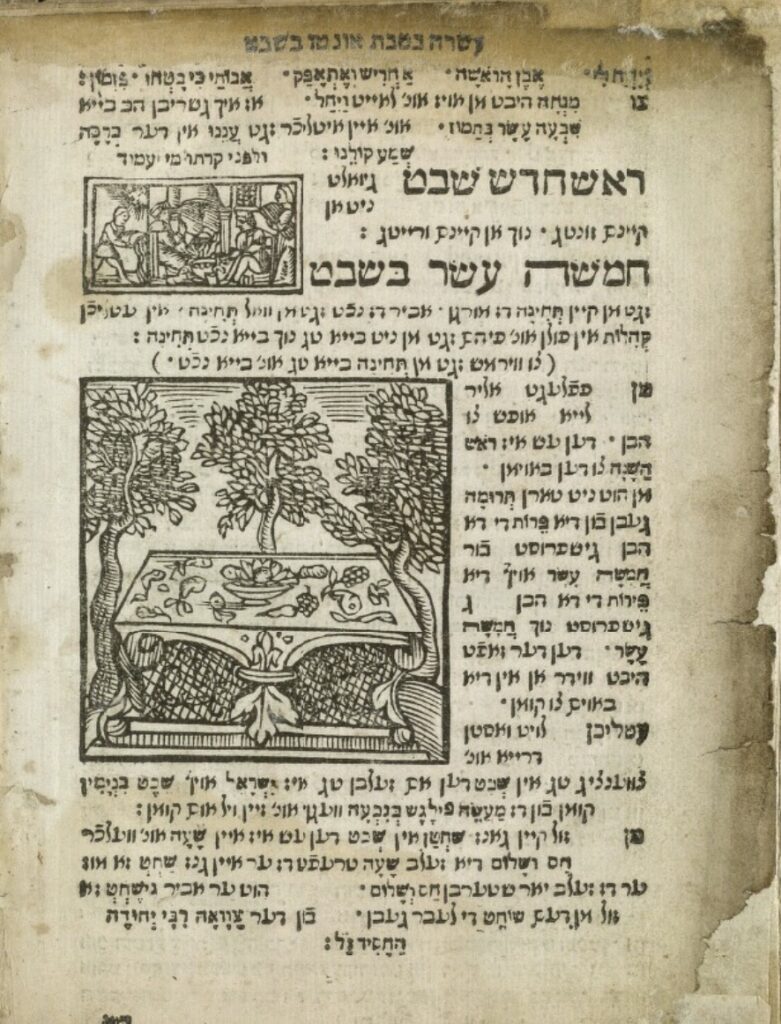
Some claim that the origins of the custom to celebrate Tu-beShevat as a holiday that includes eating fruits and other rituals, is Sabbatean. In the main, this assertion is based upon identifying  the work Hemdat Yamim as the source for Tu-beShevat as a holiday and eating fruit and other rituals.  Thus, an article in Ha’aretz trumpets, “The New Year for the Trees, Isn’t it for Sabbatai Zvi.” And the National Library of Israel’s blog includes a post “The Holiday of Tu-beShevat is an Auspicious Time to Pray for the Only (?!) Jewish False Messiah.”  They even include this photoshopped image.

However, a closer look at the history reveals, that although some of the customs on Tu-beShevat can be traced to Hemdat Yamim the actual celebration dates much earlier. Contrary to the popular song, Tu-beShevat hegihu hag ha-ilannot, the 15th of Shevat was not a “chag” of the trees.  Instead, the earliest discussions regarding Tu-beShevat do not mention any holiday associated with the day.  The first Mishna in Rosh Hashana, identifies the 15th of Shevat as the new year for trees.  This designation merely defines how to calculate annualized tithes and is otherwise silent as to the significance of the date.  One can’t tithe fruits from one year using a different year’s fruits. Thus the 15th of Shevat is the cut-off point. [For other contemporaneous examples see Safrai, Mishnat Erets Yisrael, Mesekhet Rosh HaShana (Jerusalem:  Mehlelet Lifshitz, 2011), 305-06]. It was not until R. Gershom’s time that there were any of the traditional holiday markers, but only that fasting is prohibited.

The first mention of the custom to eat fruit and other holiday rituals appears in 16th century Machzor, published between 1548 and 1550. 

That Machzor follows the Ashkenazi rite and includes a discussion of customs according to that rite and the commentary of R. Benyamin ha-Levi Ashkenazi, Ma’aglei Tzedek. He was the rabbi of the Ashkenazi community in Saloniki (of contemporary interest is that he records the death of four of his sons during a plague).   This source, however, was not well-known, and, historically, a different, later, source is identified.  For example, Avraham Ya’ari in his otherwise comprehensive article claims that R. Issachar ibn Susan (c. 1510-1580) is the first mention.  Susan, in his Ibur Shanim, published in 1578, provides that “the Ashkenazim have the custom [on Tu-beShevat] to eat many fruits in honor of the day,” confirming the custom recorded in the Machzor.  1578 was the first authorized printing of R. Susan’s work but not the first time this custom is associated with him.  In 1564, Shlomo Rie published Susan’s Tikkun Yissachar.  (Ibur Shanim 48b and Tikkun Yissachar 62a).  Susan, in Ibur Shanim, accuses Rie of publishing an unauthorized edition, one that contains errors and unacknowledged additions by Rie. Ibur Shanim includes a corrected and otherwise only slightly modified version of Tikkun Yissachar.  [See Susan’s introduction; see also Yaakov Shmuel Spiegal, Amudim be-Tolodot Sefer ha-Ivri: Hadar Mechaber (Jerusalem, 2018), 321-22.]

Mention of this custom also appeared in a Judeo-German Minhagim book first published in 1590. “The custom is to eat many fruits as it is the New Year of the trees.”

Venice, 1593 edition


In the community of Worms, there was a rather interesting variation of the custom. As R. Jousep Schammes (1604-1678) in his custom-book states:

On Purim and the 15 of Av and Shevat these were vacation days for the Rabbis, . . . [on the 15th of Shevat] one says tehina even during the morning prayer. It is a vacation day for the students and the teachers, especially the younger students, it is a day of feasting and joy for or the teachers and their students. The custom is for the teachers to distribute whiskey to the students and make merry with them.”  Minhagei [de-Kehilah Kedosha] Vermisai le-Rebi Joszpa Shamesh (Jerusalem:  Machon Yerushalim, 1988), 249-50, no. 211.

The first mention of Tu-beShevat in a Sefardic source appears in R. Hayyim Benveniste’s (1603-1673) Kenneset ha-Gedolah, first published in Livorno in 1658, where he quotes Susan from the Tikkun Yissachar.  Although Benveniste would later be associated with the Sabbatian movement, his inclusion of this custom in 1658, long pre-dates the movement. Benveniste’s source does not include a seder, nor does it testify to any adoption amongst Sefardim.

Kabbalah first enters the picture in 1728 with a somewhat obscure source. In 1728, Eliyahu Malhlenov published, Birkat Eliyahu, his commentary on the Talmud.  Amongst his papers,, he had a few pages of materials from R. Moshe Hagiz and appended those to Birkat Eliyahu. These materials include responsa and discussions regarding customs.  Hagiz records a custom from his grandfather, R. Moshe Galante.  R. Galante was also Hagiz’s teacher as his father died when Hagiz was a boy.  According to Hagiz, his grandfather had “the custom that on the 15th of Shevat he would eat many fruits that required many blessings and prayed to God that he should decree for us and them a good year. He ate the following 15 fruits, and on each one would recite … a chapter of Mishna…”  Hagiz then provides the order to eat the fruits.

Hagiz might technically be the first to describe a specific ceremony associated with eating fruits, but the source that popularized Tu-beShevat amongst Sefardim, and that incorporated a seder is Hemdat Yamim. Hemdat Yamim, first published in 1732 anonymously has the entire seder for Tu-beShevat. This includes passages from the Bible as well as specific foods. This in turn was popularized to a greater degree when it was included in the book Pri Etz Hadar first published in 1753 and republished an additional 29 times by 1959, and now digitized on Sefaria.

National Library of Israel

The author of Hemdat Yamim concedes that this is not a custom that originated with the Ari or his students.  Nonetheless, the author provides his own kabbalistic ideas and wrote his own kabbalistic prayers for the occasion, and a specific order to the ceremony.  According to many scholars, Hemdat Yamim is not reflective of the kabbalah of the Ari but that of Sabbatai Tzvi and his disciples.  Indeed, Boaz Huss has identified specific prayers in the Hemdat Yamim Tu-beShevat liturgy that allude to Sabbatai Tzvi. Whether or not this assertion is correct, because we can trace this custom, that of eating fruits, to over 100 years prior to the Sabbatian movement as already a pre-existing custom, it is likely unrelated to Sabbatian theology or custom.

Plagiarism

Avraham Ya’ari, the noted bibliographer, wrote a comprehensive article tracing the history of Tu-beShevat.  That article appeared in Machanim and is available at Daat.  This article, at times entire paragraphs, are reprinted verbatim, without any attribution, in a recent book ostensibly authored by Tuvia Freund, Moadim le-Simchah.  Published in six volumes between 1998-2010, this work is replete with such examples of plagiarism.  Here, however, Freund did something arguably even more egregious.  In the pages of materials he steals, Freund cites Yaari and his article by name.  Not for the fact that all the above material comes from there but a small tangential item, the number of times a book was printed.  Indeed, Freund is so unwilling to give Yaari any credit in a paragraph lifted word for word from Yaari, the work Hemdet Yamim is discussed.  Freund provides in a footnote, “see the long discussion regarding this work in Sefer Talmumot Sefer page 134 and on.”  Freund doesn’t reveal the author of Talmumot Sefer, who is none other than Yaari.  Freund doubly removed Yaari from the picture.


Magen Avraham

The Magen Avraham cites the Tikkun Yissachar as the earliest source for the custom to eat fruits on the 15th of Shevat.  This, despite the fact that he had accessed, and indeed quotes on many occasions, the Machzor with the Maageli Tzedek commentary. See, e.g.,

נה:יז, פח:ג, קלא:י, תכז:א, תלא:ה, תלז:יז, תכז:א, תנ:יב, תנג:יא, תקפא:ד, תקפא:ז, תקפא:ח, תקפב:ח, תקפג:ב תקפד:ג, תקפט:ד, תרכד:ז, תרכט:ה, תרנא:יט, תרנא:כא, תרנח:יב, תרסא:, תרע:ב [2X], תרעב:ה, תרעג:ז, תרפא:א, תרפח:יא, תרצ:יט, תרצא:ח

While he had access to the Machzor, he did not have access to the Tikkun Yissachar.  The Magen Avraham quotes the Tikkun Yissachar on a few occasions, but always via a secondary source. See Brodt Halachic Commentaries to the Shulchan Aruch on Orach Chayim from Ashkenaz and Poland in the Seventeenth Century (PHD Bar Ilan 2015), pp. 68-69. The Mekor Chaim in O.C. 686:1 is the first to point to the Machzor for this minhag.

The halachot in the Machzor were collected by  Yitzhak Hershkowitz ed., Maglei Tzedek (Jerusalem, 2000), pp. 156-157.  Regarding R. Benyamin see Y.S. Emmanuel, Matsavos Saloniki, vol. 1 (Jerusalem, 1973), 36, 68-69; Meir Benayahu, “Rebi Shmuel Yaffa Ashkenazi,” in Tarbiz, 42 (1973), 423-24 and note 37; M.S. Molcho, Matsevot Bet ha-Olamin she Yehudi Saloniki (Tel Aviv, 1975), 59-60; Yitzhak Rivkin, “Dikdukei Soferim,” in Kiryat Sefer 4 (1927), 278 no. 32; Daniel Goldschmidt, Mehkerei Tefillah u-Piyyut, 252-65, Meir Benayahu, Defus ha-Ivri be-Kremonah (Jerusalem, 1971), 141-78. About Knesset Hagedolah and being a Sabbatean see Brodt, Halachic Commentaries to the Shulchan Aruch on Orach Chayim from Ashkenaz and Poland in the Seventeenth Century, pp. 56; Brodt, Yeshurun 35 ( 2016 )p. 775; See also the recent work, R. Shmuel Ashkenazi, Igrot Shmuel (2021)-, 1, pp. 4-5. 

R. Shmuel Ashkenazi

As the Seforim Blog just published Iggrot Shmuel from R. Shmuel Ashkenazi (see here and here) we reprint two letters from his collection, one discussing the origins of the holiday of the 15th of Shevat and the other Hemdat Yamim.


Notes:

Additional sources discussing the 15th of Shevat, see  Meir Rafeld, Netivi Meir, (2013), 185-189; R Mandelbaum, Tehilah Ledovid (Jerusalem, 1993);  Guttman, Otzar TuBeshvat.

Tikkun Yissachar was republished in 1988 with an excellent introduction from R. Betzalel Landau.  Most recently, in 2019, it was reprinted and re-typeset, with additional notes. This edition also includes R Landau’s introduction and another introduction of material about the work. See also Elisheva Carlebach, Palaces of Time: Jewish Calendar and Culture in Early Modern Europe (London: Belknap, 2011),  51-58; יוסף הקר, ‘יששכר אבן סוסאן עליית כוהנים לתורה בשמחת חתנים’, בתוך: ‘מנחה למנחם’, קובץ מאמרים לכבוד ר’ מנחם כהן, בעריכת חנה עמית, אביעד כהן וחיים באר, ירושלים תשס”ח, עמ’ 79-97

Regarding Hagiz, see Elisheva Carlebach, The Pursuit of Heresy (New York: Columbia University Press, 1990).

After the Birkat Eliyahu was published it was attacked by some rabbis.  See Meir Benayahu, “Sefarim she-Hiburum R. Moshe Hagiz she-Hotsyim le-Or,” in Ali Sefer 4 (1977), 143, 150-52; see also Shlomo Yaakovovitch, “Sefer Shehitot u-Bedikot le-R’ Yaakov Weil,” in Tsefunot 4 (1989), 112; Carlebach, Pursuit of Heresy, 247-49. Regarding R. Eliyahu see Y. Halpern, Pinkas Vaad Arba Arotsot (Jerusalem, 1990) 362; Tzvi Horowitz, Le-Tolodot ha-Kehilot be-Polin (Jerusalem, 1989), 1.

The literature on Hemdat Yamim is substantial and we hope to return to the work in an upcoming post.  For the most recent discussion see Y. Goldhaber, “Le-Birur Zehuto shel Mehaber Hemdat Yamim,” in  Sefer Zikhoron le-Professor Meir Benayahu, vol. 2 (Jerusalem: Karmel, 2019), 873-908.

Huss’s article appears as Boaz Huss, “Ha-Ets ha-Nehmad ben Yishi Hayi al ha-Adama: al Mekoro ha-Sabbatai shel Seder 15 Shevat,” in Sefer Zikhoron le-Professor Meir Benayahu, vol. 2 (Jerusalem: Karmel, 2019), 909-20.


Chaim Rapoport – From Ma’adanei Eretz to Kitvei Ma’adanei Eretz (5704-5767)

From Ma’adanei Eretz to Kitvei Ma’adanei Eretz (5704-5767)
Rabbi Chaim Rapoport
(London, England)

As Rabbi Eliezer Brodt has recently noted in a post at the Seforim blog the advent of the sabbatical year has been blessed with a plethora of new books and pamphlets related to the laws of shemitah.

Prominent amongst these is a publication entitled Kitvei Ma’adanei Eretz on Masechet Shevi’it, from the writings of the world renowned halachic authority, Rabbi Shlomo Zalman Auerbach (1910-1995), published by Zehav haAretz on the “eve of the shemitah year, 5768”.

The sefer (341 pages) is divided into two parts. The first part is arranged according to the order of Masechet Shevi’it and presented as a commentary on it. The second half is comprised of a series of chapters on a broad variety of halachic topics related to shemitah.

In the preface we are told that the editors received much support and encouragement from Rabbi Shlomo Zalman’s sons, including Rabbi Shmuel Auerbach shlit”a. We also learn that much of the material in the sefer was never intended for publication by Rabbi Shlomo Zalman. [It was often written in note-form for his own perusal etc.] Nevertheless, given the enormous interest in the writings of Rabbi Auerbach, it was decided that these chiddushim should be edited and published. This feat was accomplished to the delight of the publishers and their intended audience.[1]

For the sake of producing a comprehensive work the publishers inform us that they have included segments of the author’s previously published works that relate to the Masechet Shevi’it and its halachot.

Indeed, the second half of the sefer, which consits of chiddushim on Rambam and halachic discussions pertaining to shemittah, appears to have been gleaned almost entirely from Rabbi Shlomo Zalman’s earlier works, most particularly his Ma’adanei Eretz on the laws of shevi’it.

However the publication of this sefer raises two related bibliographical questions: (a) Rabbi Auerbach’s classic on Shevi’it, namely his celebrated Ma’adanei Eretz, published originally by the author himself in anticipation of the shemitah year 5704,[2] and republished with the blessing of the author in anticipation of the shemitah year 5733, has been out of print and unavailable for many years.[3] Why has this book not yet been re-published? (b) Why has only some, but not all of the material in the original Ma’adanei Eretz been reproduced in Kitvei Ma’adanei Eretz?

I cannot offer a definitive answer to these questions. Yet it is possible that two features of the original work are the cause for these ‘omissions’.

Firstly, the original Ma’adanei Eretz dedicates much discussion to the ‘heter mechirah’ and its dynamics. Although Rabbi Auerbach clearly expresses a preference for the observance of shemitah without recourse to the heter mechirah, he does recognise the plausibility of the ‘heter mechirah’ and seeks to buttress this mechanism with halachic argumentation. Moreover, (as is evident from his introduction), Rabbi Auerbach’s defense of the ‘heter mechirah’ – which he considered to have been endorsed by ‘minhag yisroel’ – was one of the primary purposes of his work.[4]

In times bygone, this apect of Ma’adanei Eretz apparently presented no cause for concern, even amongst the most chareidi Jews. Rabbi Zelig Reuven Bengis (1864-1953), then Rosh Beth Din of the ultra-Orthodox Edah Chareidit in Jerusalem, was aware of Rabbi Auerbach’s ‘agenda’ (towards which he was not particularly sympathetic), yet this did not prevent him from writing a complimentary letter of approbation in honour of the author and the book.[5] The same is true for Rabbi Isser Zalman Meltzer, (1870-1953), then rosh yeshiva of the Etz Chaim yeshivah in Jeruslaem. Yet nowadays this is no longer the case. Some of Rabbi Auerbach’s biological and/or ‘spiritual’ heirs who completely deny the validity of the heter mechirah and/or its application in the contemporary social and economic climate, may be deeply embarrassed by the original Ma’adanei Eretz.

Secondly, Rabbi Auerbach refers with the most reverential terms to the late Rabbi Avraham Yitzchak haKohen Kook (1865-1935), and attributes much weight to his halakhic opinions.[6] In contradistinction to many other illustrious authorities to whom Rabbi Auerbach refers to as “ha-gaon . . . of blessed memory’ his appellation for Rav Kook includes the honorific “maran [ha-gaon ha-Rav Kook of blessed memory].”[7]

In today’s ultra-orthodox climate, in which Rav Kook has almost been written out of existence[8] [or worse still, ‘demonised’], it should come as no great surprise that some would like to disassociate the prestigious Rabbi Auerbach from one of his primary mentors.[9] Accordingly, it is only natural that they would endeavour to orchestrate matters in such a way that the original Ma’adanei Eretz (with its ‘offensive’ contents) fades into oblivion.[10]

An examination of the ‘privileged’ segments of the original Ma’adanei Eretz that have been ‘preserved’ in the Kitvei Ma’adanei Eretz supports my thesis. Rav Kook, whose views and vision clearly inspired Rabbi Auerbach, has been wiped off the face of the map. Likewise the heter mechirah, a central feature of the original work, has, for all practical intents and purposes, become a non-issue in the new work.[11]

In a world in which honesty means little and history means even less, Kitvei Ma’adanei Eretz has performed a successful face-saving tactic, for ‘what the eye does not see, the heart does not grieve’! [12]

Notes:
[1] The publication of this sefer seems to be in partial overlap with “Minchat Shlomo – Chiddusim uViurim al HaShas” on Masechet Shevi’it which was published by Rabbi Auerbach’s sons in Jerusalem, 5761.

[2] נוסח דף השער של הספר הוא: ‘ספר מעדני ארץ כולל חדושים וביאורים וחקרי הלכות בעניני שביעית, ונלוה אליו קונטרס לאפרושי מאיסורא בענין הפרשת תרומות ומעשרות’ חובר בס”ד מאת שלמה זלמן אויערבאך מישיבת עץ חיים בהרב הגאון המפורסם מוהר”ר חיים יהודה ליב שליט”א, יצא לאור על ידי ישיבת מדרש בני ציון בסיוע מוסד הרב קוק שעל יד המזרחי העולמי – ירושלים תש”ד – ערב שנת השמיטה

[3] A number of years ago I was fortunate enough to be able to find and purchase a somewhat worse for wear copy of Ma’adanei Eretz in a second hand seforim store in New York.

[4]בהקדמתו ל’מעדני ארץ’ כתב הגרשז”א: “לתועלת המעיינים אקדים סקירה קצרה לתולדות היתר ההפקעה משביעית שהותר לראשונה ע”י גדולי ישראל מגאוני הגולה ז”ל ושוכלל אח”כ ע”י רבותינו הגאונים מארי דארעא דישראל”. לאחרי ה’סקירה הקצרה’ הוסיף הגרשז”א, וז”ל: “אחרי כל האמור הנני מוצא לנכון להעיר לבל יתקבל ח”ו שום רושם כאילו הכנסתי ראשי בין הרים גדולים ורמים גדולי הדורות אשר מימיהם אנו שותים ומפיהם אנו חיים ואף גם את שמותיהם אזכיר במורא ופחד אלא מכיון שההיתר הזה שיסודותיו בהררי קודש נתקבל ונהוג למעשה בכל אה”ק [מלבד יחידי סגולה גבורי כח עושי דברו ששומרים שביעית כדת וכהלכה ד’ יגן עליהם ותחזקנה ידיהם קודש וכל העוזרים והמסייעים להם אשרי חלקם] לכן הרשיתי לעצמי לבאר ולברר יסודותיו עד כמה שידי יד כהה מגעת ולהציע לגדולי תורה היושבים על מדין את אשר נלענ”ד לנכון להעיר”.
בפתיחה ל’מעדני ארץ’ סימן ט כתב הגרשז”א: “כידוע היו רבים מגאוני הדור הקודם שהתנגדו להיתר המכירה, וגם היו ביניהם כאלה שאמרו שאופן המכר הנעשה על ידינו אין לו שום ערך וחשיבות . . . אע”פ שבכמה מקומות מוכח יותר כדברי המחמירים עם כל זאת מנהג ישראל תורה, וכללא הוא דכל הלכה שהיא רופפת בידך צא וראה איך המנהג, והמנהג הוא מקדמת דנא לקולא . . . ואם היינו באים להחמיר הי’ נראה הדבר כגזירה חדשה, וגם הלכה כבתראי שהכריעו רובם ככולם שההלכה מסכמת גם להמנהג . . . רק נתתי אל לבי לברר בפרק זה את יסודי הדברים של המתירים”.
וראה בהסכמת הגרא”ז מלצר, בעל ‘אבן האזל’, הנדפס בתחלת ספר ‘מעדני ארץ’ שכתב בתו”ד: ” עיינתי בכמה סימנים בספרו ונהניתי מאד מדבריו הנאמרים בהרחבה גדולה בכל פרטי ההלכות ובסברא נכונה וישרה, ואם אמנם לא אוכל להצטרף בקביעות דבריו להלכה משני טעמים, אחד בשביל שלא עסקתי הרבה במסכת זו בדברי הראשונים והאחרונים בהלכות אלו, עוד זאת בשביל שרוב דבריו הם לברר פרטי הדינים היוצאים לפי היתר המכירה שהנהיגו גאוני ארה”ק, ומכיון שיש בעיקר ההיתר מחלוקת גדולה בין גאוני הדור בדור שלפנינו לא אחפוץ להכניס ראשי בין ההרים גדולים”.

[5] ראה בהסכמת הגרר”ז בענגיס, בעל ‘לפלגות ראובן’, הנדפס בתחלת ספר ‘מעדני ארץ’ שכתב בתו”ד: “ויהי’ דברי אלה ליקר סהדותא על גודל ערך הספר ועל יקרת הגאון המחבר שליט”א. אבל חס לי להצטרף למסקנותיו גם להחמיר וכ”ש שלא להקל ובכונה רצוי’ סלקתי א”ע מלחוות דעה באלה הלכות למעשה”.

[6] גם בהקדמתו מסתייע הגרשז”א מזה שהרב אברהם יצחק הכהן קוק “נלחם מאד לחזוק ההיתר נגד הקמים עליו לבטלו, בחששו שבביטולו יחרב כל הישוב ח”ו וגם משום הוצאת לעז על הגאונים שהתירו שכבר פשטה ההלכה והמנהג כמותם”.

[7] ראה ‘מעדני ארץ’ סימן א אות ו: “ועיין גם בס’ משפט כהן למרן הגאון מוהרא”י הכהן קוק ז”ל שכתב בתשובה להגאון הרידב”ז ז”ל”; שם אות ז: “אולם בשנת תר”עיין סידר מרן הגרא”י הכהן קוק ז”ל את תיקון המכירה . . . “; שם אות טו: “ומשמטה רביעית היא שנת תר”עיין סודרו כל שטרי מכר ע”פ נוסחו של מרן הגאון מוהרא”י הכהן קוק ז”ל”.

[8] Thus, for example, the Sefer HaMafteiach in the Frankel edition of the Rambam does not include any references to the chiddushim of Rav Kook on the Mishneh Torah. Present day works on shemitah rarely include the contributions of Rav Kook (even with regard to matters unrelated to the heter mechirah). Needles to say, Rabbi Chaim Kanievski’s Derech Emunah on Rambam’s Sefer Zeraim (inc. Shemitah veYovel) does not refer to Shabbat HaAretz etc.
Rav Kook’s haskamah that was, in his heyday, often the crown of glory on many seforim is now viewed with derision by many, and has even been ‘removed’ from later editions of the same works (sometimes, apparently, by the author himself!).

[9] Recent explorations into Rav Kook’s (heretofore) esoteric thought may add to the evident anxiety that exists in certain circles regarding the relationship between Rav Kook and Rav Auerbach. [See Avinoam Rosenak, “Hidden Diaries and New Discoveries: the Life and Thought of Rabbi A.I. Kook,” Shofar: An Interdisciplinary Journal of Jewish Studies 25:3 (Spring 2007): 111-147. See also his review article, “Who’s Afraid of Secret Writings? Eight Files from the Manuscripts of Rabbi Kook,” Tarbiz 9:2 (2000): 257–291]. Most recently, see Yehudah Mirsky, “An Intellectual and Spiritual Biography of Rabbi Avraham Yitzhaq Ha-Cohen Kook from 1865 to 1904,” (PhD dissertation, Harvard University, 2007), esp. 450-485.

[10] In the course of time we may yet witness the birth of reports to the effect that Rabbi Auerbach (and/or: the Rabbis who gave their glowing haskamot) regretted ever having published (written approbations for) his Ma’adanei Eretz. Clearly Rabbi Auerbach’s regret will have to have been expressed ‘be-sof yamav’, since in 1972/5732 he was evidently still enthusiastic about the project.

[11] לדוגמא בעלמא: סימן ט בספר ‘מעדני ארץ’ נערך מחדש “ע”י בן רבינו הגאון רבי אברהם דוב אויערבאך שליט”א רב ואב”ד טבריה”, ונדפס בתוך ‘כתבי מעדני ארץ’ (בחלקו השני) סימן כג. בצורתו החדשה חסרים כמה דברים ובעיקר דברי הפתיחה לסימן זה ע”ד תוקף היתר המכירה (ראה מה שהעתקתי לעיל בהערה 4). גם לסימן יו”ד בספר ‘מעדני ארץ’ באו פנים חדשות בגלגולו החדש ב’כתבי מעדני ארץ’ סימן כ”ד [ונשמט מ”ש ב’מעדני ארץ’ שם אות א ע”ד היתר המכירה]. ואם כי לא זכיתי להבין את טעמי כל ההשמטות והשינויים שעשו העורכים בסימנים אלו, מ”מ נראה ברור שהטעם לחלקם הוא בגלל יחסם החיובי (או הקשרם) להיתר המכירה הנהוג למעשה.
להווכח מה היתה כוונת העורכים מחדש די להביט על השינויים שעשו בכותרות לשני הסימנים האלה:
בכותרת ל’מעדני ארץ’ סימן ט כתב הגרשז”א: “יסודי ההיתר של תיקון המכירה כדי להפקיע את הפירות מקדושת שביעית, ובירור דעת הסוברים דאף שאין קנין לנכרי להפקיע ממעשר ושביעית, מ”מ כל זמן שהקרקע היא ברשות העכו”ם הרי היא מופקעת שפיר ממעשר ומשביעית”, ואילו בכותרת לסימן כ”ג ב’כתבי מעדני ארץ’ נדפס: “ביאור שיטת הכסף משנה בדין קנין הנכרי בארץ ישראל” [כאילו דברי הגרשז”א נכתבו במקורן מבלי כל קשר להיתר המכירה הנהוג למעשה].
בכותרת לסימן יו”ד ב’מעדני ארץ’ כתב הגרשז”א: “המשך לסימן הקודם בבירור יסודי תיקון המכירה, עם עוד טעמים אחרים המועילים רק להפקעת דיני שביעית מגידולי שדות נכרים ולא לענין היתר עבודה, ובענין איסור האכלת פירות שביעית לנכרים, ודין פירות שביעית לאחרי הביאור”, ואילו בכותרת ל’כתבי מעדני ארץ’ סימן כ”ד כתבו העורכים: “עוד בשיטת הכסף משנה בהא דאין נוהג קדושת שביעית בפירות נכרים”, והוציאו את הדברים מהקשרן הראשון.

[12] The purpose of this article was to explore one example of a particular trend in contemporary rabbinic censorship. It was not written in order to express a view on, or assess the virtues of, the heter mechirah or its proponents. [Whilst this is totally irrelevant (at least to the subject matter at hand), I will attempt to save the time of many potential speculators by putting on record that I personally do not rely on the heter mechirah. The Lubavitcher Rebbe zy”a, whose rulings I attempt to follow, was far from enthusiastic about the heter mechirah and encouraged all Jews to observe the shemitah without recourse to the heter mechirah].


Review of Dovid Bashevkin’s Sefer Berogez Racheim Tizkor

By Rabbi Yitzchok Oratz
Rabbi Yitzchok Oratz, a musmach of Beth Medrash Govoha, is the Rabbi and Director of the
Monmouth Torah Links community in Marlboro, NJ.
אהרן יצחק הלוי ארץ
כי הוא ידע יצרנו:
הערות והארות, ציונים ומראה מקומות, על עניניבחירה, חטא, ותשובה.
מיוסד על ספר “ברגז רחם תזכור” להרב דוד אליקים בשבקין.
Introduction
In wrath, remember mercy. For He knows our nature . . .
God knows the nature of every generation, Rabbi Dovid Bashevkin has written a Sefer uniquely appropriate for the nature of ours[1].
Take a trip to your local Jewish bookseller during this time period, and you will find numerous seforim, old[2] and new[3], on the themes of sin and repentance. Although they certainly vary in style and quality, a common denominator among many is the heavy reliance on Rambam’s Hilchos Teshuva and Sha’arey Teshuva of Rabbeinu Yonah of  Gerondi[4].  And this is to be expected. Timeless classics, these works of the great Rishonim are unmatched in their systematic and detailed discussion of sin and punishment, free will[5] and repentance, and are a prerequisite study for any serious discussion of Teshuva.
But therein lays the dilemma.
For although Rabbeinu Yonah maps out the exalted levels of Teshuva that one should certainly strive for, they seem not to be for the faint of heart.  Is our generation really up to the task of embracing the sorrow, suffering, and worry, the humbling and lowering oneself[6], without allowing for the concomitant sense of despair[7] and despondence[8]?
And how many of us can honestly stand before the Creator, and proclaim that we will “never return” to our negative actions, to the extent that God Himself will testify that this is the case[9]? If confession without sincere commitment to change is worthless[10], does repeating last year’s failed commitments not require choosing between giving up and fooling ourselves?
This is where B’Rogez  Rachem  Tizkor comes in Based heavily on the thought of Izbica in general, and Reb Tzadok ha-Kohen of Lublin in particular, it discusses the value of spiritual struggle, the interplay between determinism and free will, the redemptive potential of sin, and the status of those who have not yet arisen from their fall.
In a refreshingly humble[11], almost apologetic, essay at the Seforim blog, R’ Bashevkin expresses hope that his work brings “the much needed attention these thinkers deserve in contemporary times,” while delivering a message of “comfort and optimism[12],” without being disloyal “to the type of avodas Hashem . . . they hoped to engender[13].” I think he was successful on all accounts.
Overall, the sefer is a good introduction to R’ Tzadok for those who are not familiar with his thought, and offers many insightful and fascinating comments even for those who are. Some that I found particularly interesting includethe insight into why R’ Mesharshiya cursed Ravina that he should come to permit forbidden fats (Yevamos 37a, B’Rogez Rachem Tizkor p. 16), what important lesson can be learned from the Talmudic teaching that one who responds Amein Yehay Shemy Rabbah with all his might is forgiven even if he has a trace of idolatry (Shabbos 119b, p. 18), what benefit is there in requiring that anyone appointed to the Sanhedrin know how to purify a sheretz (Sanhedrin 17a, p. 19), why does the Talmud expound so harshly on the sins of Achan (Sanhedrin 44a, p. 36), a new understanding of why one may lie for the sake of peace (Yevamos 65b, p. 84), and what possibly could be negative about being attached to Torah (p. 23).
In the aforementioned essay, the author hopes that, in keeping with its theme, the work is read with a “measure of mercy.” He has nothing to worry about. My main critiques are that some of the discussion of the more controversial statements of Izbica required more elaboration[14], the lack thereof leads to a seeming conflating of two similar, yet far from identical, concepts, and more contrasting and supporting texts (both from within Izbica and R’ Tzadok’s thought and without) would have made for a stronger case and deeper understanding.
My hope is to fill in these gaps in some small measure. Hopefully it will further enlighten those whose appetite was whet by this fine work.
ועתה באתי להעיר כדרכו של תורה, ואת והב בסופה.
הכל בידי שמים אפילו יראת שמים!”
א) בסי’ ג’ שו”ט בטוטו”ד בענין מה שנראה שהוא חידוש נועז[15] מבית מדרשו של האיזביצ’א, דהכל בידי  שמים אפילו יראת שמים[16]ודיש מושג של עבירות שהם למעלה מבחירת האדם[17].
וקודם כל אעיר, דכנראה עירבב שני דברים דומים אבל לא שוים. דהיסוד הראשון הוא דהכל בידי  שמים אפילו יראת שמים, דהיינו דכל מה שהי’ הוה ויהי’ הוא בדיוק רצונו יתב”ש, כל מעשי המצוות וכל העבירות, דוכי יעשה בעולם דבר שלא ברשות קונו ובלא חפצו? כל אשר חפץ ה’ עשה בשמים ובארץ! וכשמדברים על דרך זה, אין שום חילוק בין עבירות שהן למעלה מבחירתנו ואלו שתוך שדה בחירתנו. “כל מה שחטא הי’ גם כן ברצון השם יתברך” (צדקת הצדיק אות מ’). “ולעתיד יתברר כן על כל חטאי בני ישראל וכו’ שיתברר שהיה מסודר מאמיתות רצון ה’ יתברך שיהיה כן ואם כן גם בזה עשו רצון ה’ יתברך” (מחשבות חרוץ אות ד’). הכל הוא מאתו יתברך.
והענין השני הוא כשמדברים מתוך עולם הבחירה[18], דע”פ פשטות בחירה הוא ד”נדע בלא ספק שמעשה האדם ביד האדם” ו”עושה כל מה שהוא חפץ ואין מי שיעכב בידו מלעשות הטוב או הרע,” ומשו”ה “דנין אותו לפי מעשיו” (רמב”ם פרק ה’ מהלכות תשובה), ואעפ”כ חידש האיזביצ’א  ד”לפעמים אשר יצר האדם מתגבר עליו עד שלא יכול לזוז בשום אופן ואז ברור הדבר כי מה’ הוא” (מי השילוח פרשת כי תצא כ”א:י”א), ו”פעמים יש אדם עומד בנסיון גדול עד שאי אפשר לו שלא יחטא” (צדקת הצדיק אות מ”ג)[19].
הרי דיש שני ענינים נפרדים, שניהם חידושים נפלאים, ושניהם מבית מדרשו של האיזביצ’א.
ב) אבל באמת, כד נעיין היטב בזה,  נמצא  הרבה  סייעתא לשני החידושים בדברי חז”ל ובתורתן של גדולי ישראל אף מאלו הרחוקים מתורת איזביץ, דבעיקרי התורה ויסודותיה תורה אחת היא לכם[20].
“שאין מציאות כלל ללא השם יתברך וכו’ ולא שיך כלל לעבור על רצונו, כי אין שום מושג ללא רצונו יתברך. ואף כאשר האדם חוטא, אינו עובר על רצון השם יתברך, אלא זה גופא רצונו יתברך, ורק האדםטועה וסוברשעושה נגד רצון השם, ועל זה יענש על שסובר שעושה נגד רצון השם יתברך. ואיתא בחז”לשבפרשת האזינו מורמז כל הבריאה כולה, וכל מעשי האדם לעולם וכל זה כבר יצר הקדוש ברוך הוא בעת בריאת העולם, והאיך יתכן שיעבר על רצון השם, והרי הכל כבר נברא ונוצר על ידו.”
הרואה דברים אלו בודאי יחשוב דתורת איזביץ  יש כאן.
ואינו כן. אלא מבית מדרשו של בעלי המוסר, מפי המשגיח המפורסם הרה”ג ר’ יחזקאל לוינשטיין ז”ל  יצא הדברים (אור יחזקאל, שיחות אלול עמוד ס”ז – ס”ח). ולהפתעתי מצאתי  שדבריו הובאו  גם בספר ממחבר מפורסם של חסידי ברסלב[21]. הרי דתורת ברסלב, איזביץ, ובעלי המוסר, כולם מסכימים לעצם היסוד דהכל בידי שמים, ללא יוצא מן הכלל.
ומקור הדברים לכאורה הוי במדרש (במדבר רבה, פרשת נשא, פרשה “יג סי’ י”ח):
אע”פ שאירע לשבטים שבא לידיהם מכירת יוסף את סבור שלא היה בא לידם אותו המעשה             אלא א”כ היו רשעים במעשה אחרים לאו אלא צדיקים גמורים היו ולא בא לידם חטא מעולם וכו’ אלא זה בלבד ומתוך גנותם סיפר הכתוב שבחם שלא היה בידם עון אלא זה בלבד ולפי שמכירת יוסף זכות היה לושהיא גרמה לו למלוך וזכות היתה לאחיו ולכל בית אביו שכלכלם בלחם בשני רעבון לכך נמכר על ידם                        שמגלגלין זכות על ידי זכאי.”
ולכאורה תמוה, דאף דלבסוף היה לטוב עדיין צ”ע מה דה”זכות” מתייחס להם דהא מפורש במדרש דמכירת יוסף היה “עון.”
אלא לכאורה הכוונה הוא דכל ענין מכירת יוסף הי’ עצה עמוקה של אותו צדיק הקבור בחברון[22] ובהכרח ירדו בנ”י למצרים דעצת ה’ היא תקום. הרי דבמכירת יוסף, אף דנחשב להם לעון, אפ”ה היו השבטים שלוחא דרחמנא לקיים גזירותיו. ומעשה אבות סימן לבנים[23], דכן הוא בכל מה שאירע בהעולם, הכל הוא לקיים רצונו יתברך[24], וזהו אף בהעבירות שאדם עושה[25], אבל בעבירות אין התועלת והטוב שיצא ממעשי אדם מתיחחסים לו[26], ואדרבה נענש עליהם אף שמעשיו היו “גופא רצונו יתברך[27].” אבל כל זה כשלא עשה תשובה, אבל אצל שבטים שאמרו “אבל אשמים אנחנו על אחינו” (בראשית פרק מ”ב פסוק כ”א) שהוא תשובה על מעשיהם (עיין בשערי אהרן בשם הזוהר ועוד) נעשה להם זדונות כזכיות ממש וכמו שלא הי’ עון כלל, דיבוקש עון ישראל ואיננו, וכל הטוב הנמשך ממעשיהם מתייחס להם כזכות ממש[28] (עיין בזה בס’ תקנת השבין סי’ י’ אות ט).  הרי דאף מעשי העבירות הוי קיום רצונו יתברך.
ג) וכל זה הוא בנוגע להענין הראשון (ד”כל מה שחטא הי’ גם כן ברצון השם יתברך” ו”אף כאשר האדם חוטא וכו’ זה גופא רצונו יתברך”). ובנוגע הענין השנית, דהוא דאף כשמדברים על עולם הבחירה אפ”ה לפעמים יש מציאות דיש עבירות שא”א שלא יכשל בהן, בזה היטיבו אשר דברו בזה ב”ברגז רחם תזבר” דשפיר משמע מפשטות שיטת ר’ אלעאי (קידושין מ.) דיש ענין בזה.
  ובאמת, יש עוד כמה מקומות בש”ס דמשמע כן. עיין צדקת הצדיק (אות מ”ג) דהביא מגמ’ ברכות ל”ב. “משל לאדם אחד שהיה לו בן הרחיצו וסכו והאכילו והשקהו ותלה לו כיס על צוארו והושיבו על פתח של זונות מה יעשה אותו הבן שלא יחטא,” וכן מגמ’ כתובות נ”א: “כל שתחלתה באונס וסוף ברצון אפי’ היא אומרת הניחו לו שאלמלא לא נזקק לה היא שוכרתו מותרת מ”ט יצר אלבשה” “הרי דזה מחשב אונס גמור אף על פי שהוא ברצונה מכל מקום יצר גדול כזה אי אפשר באדם לכופו.[29]”
ועייו בס’ יד קטנה (ריש הל’ תשובה) דהאריך לחדש דיש ענין “רב וגדול למאוד” בוידוי פה אף בלי חרטה[30] ובלי עזיבת החטא[31], ובכל דבריו מיירי במי ש”אין לו שלטון וממשלה על חוזק כבד לבבו להטותה באמת” ו”הרי הוא כמו אנוס מן חוזק כבד לבבו,” הרי דנקט לדבר פשוט שיש מצבים ויש אנשים שבשום אופן א”א להם לשוב מדרכם הרעה.
ועיין בס’ מכתב מאליהו ב”קונטרס הבחירה” (ח”א עמוד קי”ג) שביאר הגרא”א דסלר זצ”ל לא רק דיש עבירות שהן למעלה מבחירתנו, אלא רוב מעשינו הוא למעלה או למטה מנקודת הבחירה שיש לכל או”א. ועיין שם בהערה מהרב ארי’ כרמל דהמקור לדבריו הוא מדברי ר’ אלעאי בקידושין שם. הרי לא רק דכן ס”ל לר’ אלעאי אלא נקטינן כדבריו[32].
ויש לציין שבדברי הנחל נובע מקור חכמה כנראה מבואר דלא כזה. עיין ליקוטי מוהר”ן (תנינא, תורה ק”י) “שמעתי, שאיש אחד שאל אותו: כיצד הוא הבחירה? השיב לו בפשיטות, שהבחירה היא ביד האדם בפשיטות. אם רצה עושה, ואם אינו רוצה אינו עושה. ורשמתי זאת, בי הוא נצרך מאד, כי כמה בני אדם נבוכים בזה מאד, מחמת שהם מרגלים במעשיהם ובדרכיהם מנעוריהם מאד, על כן נדמה להם שאין להם בחירה, חס ושלום, ואינם יכולים לשנות מעשיהם. אבל באמת אינו כן, כי בודאי יש לכל אדם בחירה תמיד על כל דבר, וכמו שהוא רוצה עושה. והבן הדברים מאד[33].”
ד) אבל עיין שם בצדקת הצדיק שסיים ביסוד גדול “אבל האדם עצמו אינו יכול להעיד על עצמו בזה כי אולי עדיין היה לו כח לכוף היצר.”  ובס’ ברגז רחם תזכר שם הביא מעוד כמה מקומות בתורתו של הכהן הגדול שכן הוא, והביא ביאור נפלא בזה מבעל פחד יצחק, ויסוד זה שייך בשני הענינים, בין מה דהכל הוא מהשי”ת ובין מה דיש עבירות למעלה מהבחירה, בכולם אסור לנו בפועל להכחיש הבחירה בשום פנים ואופן וחייבים אנו להלחם ביצרינו בכל נימי נפשינו[34].
ואם כנים אנחנו בזה[35], דמצד אחד תורת איזביץ  יש לו יסודות נאמנים וקיימים בדברי חז”ל והרבה ס”ל כמותו, ומצד שני דבפועל אסור לנו להכחיש הבחירה כלל וכלל, יש כאן תמיה גדולה — א”כ מה כל הרעש הזה על תורתו, מה חרי האף הגדול הזה דלא רצו להדפיס ספריו ואף שרפו ספריו באש ר”ל[36]?
וכד נעיין היטב בזה, נראה דעיקר הרעש על חידושו הי’ על מה דגלא רזין מעלמא דאתכסיא, רזין עילאין וטמירין שכיסה עתיק יומין ולא איתגלאו מכמה דרין. ובזה הניח מקום לטעות בדבריו (כאשר כבר הי’ ר”ל) להחליש חומר החטא. והיטיב דבר בזה הגאון המקובל ר’ יצחק מאיר מרגנשטרן שליט”א מירושלים ד”מדרגה זו וכו’ אין מגלין אותה אלא לצנועים, ומכל שכן שאין לדרוש בה בקול רעש גדול, כי אם בדוקא בסוד ובהעלם גדול, דחלילה לאדם שיחשוב קודם החטא דהכל מרצונו יתברך וכיוצא באלו מחשבות פגול, דבזה עלול הוא להתיר מה שאסרה תורה וכו’ והרי הוא בכלל אחטא ואשוב אין מספיקין בידו לעשות תשובה, ודייקא אחר שכבר נכשל רח”ל בחטא, אז ישיב אל לבו לשוב אל ה’ בכל לבו ובכל נפשו, ולא יעלה על דעתו דאחר שנתרחק הנה מכאן ואילך הרי הוא מרוחק ושוב לא יזכה לראות אור השמש, דאינו כן, דודאי בפנימיות בדרך העלמה הכל היה כרצון השי”ת לצורך תיקון העולם, אלא דכבוד אלקים הסתר דבר.”
ובימינו כבר דורשין סתרי תורה, שפוני טמוני חול דתורת איזביץ, ברבים, בקולי קולות וברעש גדול. ואפשר דכן צריך להיות. דבדור חלש, ודור שרבים משתוקקים להרגיש בחוש ד”קרבת אלקים לי טוב,” יש צורך גדול לדמות לשכינה ולהחיות רוח שפלים ולב נדכאים[37], ללמוד זכות על החוטא (אבל לא על החטא), ואפילו אם הוא בעצמו הוא  החוטא[38], ולהבין דלפעמים באמת יש נסיונות שהם למעלה מנקודת בחירתנו, ושהכל הוא עצת ה’, ואל לנו ליפול בעומק היאוש ודכאון[39]. ועכ”ז צורך להדגיש דבעצם תוקף הנסיון יש לנו ללחום ביצר בכל כחנו, ואין לנו להתיאש מלהתגבר עליו בטענת שאין ביכולתנו.
במקום שבעלי תשובה עומדים
ה) וכשם שחייב ללחום ביצה”ר וחלילה לחשוב קודם החטא דהחטא הוא רצונו, כך אסור לעמוד במקום נסיון. ומפני זה יפה הביא (בעמוד מ”ט) לתמוה על דברי הכלי יקר (חקת י”ט:כ”א) דבעל תשובה מותר וצריך לעמוד במקום הנסיון שנפל מתחלה, ואף להתיחד עם אותו אשה אשר חטא, ואם יתגבר על יצרו בזה נחשב בעל תשובה גמורה. ויפה כתב לתמוה על דבריו.
ויש להוסיף בזה דברי המי השלוח (ח”ב פרשת יתרו עה”פ לא תשתחווה להם ולא תעבדם) “ולא תעבדם שלא תעשה מהם עבודה להש”י בהכניסך לנסיון בדי שתתגבר על יצרך וכו’ ואפילו אם מכוין שעי”ז יתגבר כבוד שמים בהתגברו על היצר.” ועיין רמב”ם פ”ב מהל’ תשובה ה”ד “ומתרחק הרבה מן הדבר שחטא בו.” ועיין צדקת הצדיק אות ע”ג, ובס’ מגדים חדשים (ברכות ל””ד ע”ב ובמילואים שבסוף הספר) הביא מכמה ספרים דכתבו כעין דברי הכלי יקר, וגם אלו החולקין על דבריו, ועיין שם בשם לקט יושר (ע’ קל:ו) “שאחד רצה לעשות כדלעיל ועשה העבירה שנית,” ועיין בס’ שערים מצויינים בהלכה (ברכות שם) שהביא מכמה מקומות דמבואר דלא כהכלי יקר, וכתב דדבריו בזה תמוהין[40] )אבל לכאורה מדברי הירושלמי הובא בערל”נ סנהדרין כ”ב. יש ראי’ לשיטת הכלי יקר, וצ”ע(.
חדש ימינו כקדם
ו) בעמוד ס”ט הביא פירוש נפלא (מר’ שמחה ווליג נר”ו) דהכוונה במדרש איכה (ה’:כ”א) “חדש ימינו כקדם כאדם הראשון כמד”א (בראשית ג’) ויגרש את האדם וישכן מקדם לגן עדן” דהכוונה הוא דוקא לאחר החטא, דבזה מיירי הפסוק. וכבר מזמן אמרתי כן לעצמי ולאחרים, והדבר מפורש בחדושי רד”ל שם “שאחר שנתגרש לקדם עשה תשובה ונתקבל ברצון.”
ובזה אמרתי דאפשר להגן על הרמב”ם מקושייתו של הריטב”א. דעיין כתובות (ח.’) דאחד מברכת חתנים הוא “שמח תשמח ריעים האהובים כשמחך יצירך בגן עדן מקדם ברוך אתה ה’ משמח חתן וכלה.”  ועיין רש”י שם “בגן עדן מקדם דכתיב ויטע גן בעדן מקדם וישם שם וגו.'”
ועיין בריטב”א שם דכתב וז”ל “גירסת רש”י ז”ל כשמחך יצירך בגן עדן מקדם וכן הגירסא בכל הספרים וכן הכתוב אומר ויטע ה’ אלהים גן בעדן מקדם וישם שם את האדם והרמב”ם ז”ל גורס מקדם בגן עדן ואין הלשון הזה מתוקן כראוי, כי הלשון הזה נאמר על האדם כשנתגרש מג”ע וישכןמקדם לגן עדן ואע”פ ששם אמר לגן וכאן אמר בגן שמא יבא לטעות אדם בענין וגם בלשון[41].
ולפי דברי המדרש דברי הרמב”ם א”ש. דזהו גופא מה מברכין להחתן וכלה, שהקב”ה ינהג עמהם ברחמים כאשר עשה לאדם וחוה אף לאחר הנפילה, לאחר שנפל מאגרא רמא שהי’ יושב בג”ע והיו מלאכי השרת צולין לו בשר ומסננין לו יין (סנהדרין נ”ט:) לבירא עמקתא של בזעת אפך תאכל לחם (בראשית ג’:י”ט), אבל לא גירש אותם מיד אלא נתן להם את השבת “אדם שמר את השבת בתחתונים והיה יום השבת משמרו מכל רע ומנחמו מכל שרעפי לבו” (פרקי דר”א פרק כ’)[42], ויעש להם כתנות עור, וכמש”כ רבינו בחיי שם “ע”ד הפשט רצה ליחס פעולת ההלבשה אליו יתברך להורות על אהבתו וחמלתו על יצוריו, שאע”פ שחטאו לא זז מחבבן, והוא בעצמו השתדל בתקונם ובגמילות חסדים. והנה כל זה חסדי הש”י, ועל זה אמר הכתוב: (דניאל ט, ז) “לך ה’ הצדקה ולנו בושת הפנים”. ולפי”ז א”ש הגמ’ בסוטה (י”ד.) “דרש ר’ שמלאי תורה תחלתה גמילות חסדים וסופה גמילות חסדים תחילתה גמילות חסדים דכתיב ויעש ה’ אלקים לאדם ולאשתו כתנות עור וילבישם” ולא מנה החסד שעשה עמהם לפני החטא בהכנת כל צרכי החתונה (עיין ברכות ס”א., ב”ר פרשה ח’ אות י”ג) דעיקר החבה והחסד הוא לאחר החטא, דאפ”ה לא זז מחבבן, ועיקר הברכה הוי דוקא  “מקדם לגן עדן” ולא “גן בעדן מקדם[43].”
לכוף את יצרו עדיף
ז) בעמוד ע”ד הביא (מהגר”ר גרוזובסקי זצ”ל בשם הגר”ח חלוי) דהמחלוקת עם רשעים “צריכה להיות כשנאת הבעלים לעכברים שמצטער על שישנם וצריך לבערם ולא כחתול הנהנה ממה שיש לו לבער ולאכול.” וכתב דזה א”ש לשיטת הרמב”ן עה”ת לבאר למה נענשו המצריים אע”פ שהיתה גזירה על כלל ישראל, וק”ו לגבי ישראל “אם דחה אותו האיש יותר מן הראוי וכו’ הרי זה בכלל שנאה גמורה וגדול עונו.”
ויפה כתב. אבל יש להעיר ולהוסיף, דלפי דברי הרמב”ן בפרשת לך לך (ט”ו:י”ד), אף אם לא דחה אותו יותר מן הראוי כלל, אלא בדיוק במדה המחייבת, כל שנהנה מעצם השנאה כחתול לעכבר, הרי בכלל שנאה האסורה וגדול עונו. דהא ברמב”ן שם איתא כמה טעמים למה נענשו המצריים, דטעם אחד הוא שהוסיפו על הגזירה, ושוב כתב ד”אם שמע אותה ורצה לעשות רצון בוראו כנגזר אין עליו חטא אבל יש לו זכות בו וכו’ אבל אם שמע המצוה והרג אותו לשנאה או לשלול אותו, יש עליו העונש כי הוא לחטא נתכוון, ועבירה הוא לו.” וזהו טעם שנית דשייך אף כשלא הוסיפו כלום. ודון מינה ואוקי באתרה.
ושמעתי לפרש (כמדומני בשם אחד מאדמור”י גר) “וירא פינחס וכו’ ויקם וכו’ ויקח רמח בידו” — אבל הקנאים תמיד יש רמח מזומן בידיהם . . .
 “אין צדיק בארץ אשר יעשה טוב ולא יחטא”
ח) בעמוד ט”ו הביא קושיית התוס’ (שבת נ”ה: בד”ה ארבעה) על הגמ’ דארבעה מתו בעטיו של נחש, דצ”ע מהפסוק בקהלת (ז’:כ’) “כי אדם אין צדיק בארץ אשר יעשה טוב ולא יחטא.”  וכתב לפרש ע”פ דברי השלה”ק (מס’ תענית, פרק תורה טור, סי’ קמ”ד – קמ”ה) “שטמונים בתוך הנפילות והמכשולות של צדיקים הכח והדחיפה לעשות טוב.” וענין זה הוא באמת בריח התיכון של כל הספר, דכל הנפילות הם בעצם לטובותינו, וכל הירידות בעצמותן הם לצורך עלי'[44], ושהכל הוא עצת ה’ לטוב לנו לחיתנו.
אבל עדיין פירוש השל”ה בלשון הפסוק דחוק. ושמעתי ממו”ר המשגיח הרה”ג ר’ מתתיהו סלומון שליט”א (בשם רבו הרה”ג ר’ אלי’ לפיאן זצ”ל) לפרש על פי דברי ר’ יונה (בשע”ת שער הראשון אות ו’) “אמת כי יש מן הצדיקים שנכשלים בחטא לפעמים, כענין שנאמר כי אדם אין צדיק בארץ אשר יעשה טוב ולא יחטא,” דלכאורה תמוה דמתחלה אמר דיש מן הצדיקים, דהיינו מקצתם, דנכשלים בחטא, והביא ע”ז פסוק דאין צדיק בארץ אשר לא יחטא, דמשמע דכולם חוטאים. ותירץ הרה”ג ר’ אלי’ ז”ל דבאמת מצינו צדיקים אשר אין חוטאים, אבל צדיקים אשר עושים טוב בהם אין מי שלא יחטא.  דהיינו, שפיר אפשר להיות צדיק לעצמו ולישב בזוית ולעבוד את ה’, אבל מי שמלמד לאחרים ועוסק בצרכי צבור “לעשות טוב[45]” א”א לו שלא יחטא[46].
ועצם יסוד הדברים כבר נמצא במשך חכמה פרשת נח (ט’:כ’), בפתוחי חותם להחת”ס (נדפס כהקדמה לשו”ת יו”ד),  ובספורנו סוף פרשת בראשית (ו’:ח’)[47].
ולפי”ז מיושב קושיית התוס’, דהארבעה מתו בעטיו של נחש, עם כל צדקתם שאין לתאר ואין לשער, לא מצינו שלימדו והשפיעו על אחרים ועסקו בטובת העולם[48] באותו מדה[49] שעשו אאע”ה, משה רבינו, ודוד המלך, דהם (אע”פ שחטאו) קיימו רצון ה’ למען אשר יצוה את בניו ואת ביתו אחריו, צדיקים כאלו זכו לעצמם וזכה לדורי דורות, ומצדיקי הרבים ככוכבים יזהירו, וצדקתם עומדת לעד[50].
ונמצא, שלא רק “שטמונים בתוך הנפילות והמכשולות של צדיקים הכח והדחיפה לעשות טוב,” אלא הדחיפה לעשות טוב הוא גרמא לנפילות, ואעפ”כ זהו רצונו יתב”ש.
“בנים אתם לה’ אלקיכם”
ט) בעמוד ל”ד הביא מר’ צדוק הכהן (תקנת השבין סי’ ט”ו, אות פ”ד) שהמקור להענין ש”אע”פ שחטא ישראל הוא” הוא משיטת ר”מ בקידושין ל”ו. דבין כך ובין כך נקראו בנים, והלכה כמותו דדייק קרא[51].
ויש לציין למש”כ בהגדה של פסח “מגיד משנה” (לבעמח”ס שו”ת משנה הלכות ז”ל) דגם בעל ההגדה סתם כר”מ. ד”כנגד ארבעה בנים דברה תורה,” דאף הרשעים דהוציאו עצמן מן הכלל וכפרו בעיקר עדיין נקראו בנים למקום. וזה תואם שיטתו (בשו”ת משנ”ה ח”ו סי’ כ”ז, כ”ח, ל[52]’) המובא ב”ברגז רחם תזכר” (עמוד ע”ז, ובצדק כתב המחבר ד”ניכרין דברי אמת”) לחלוק על דברי האדמו”ר ממונקאטש זצ”ל[53], וס”ל דחייב להתפלל על נדחי ישראל שישובו בתשובה שלמה.
וכדברי המשנ”ה הוא מנהג כלל ישראל, וכמו שהוא בנוסח תפלת זכה שאומרים בכניסת יום הקדוש[54] “ובתוכם תרחם על פושעי עמך בית ישראל ותן בלבם פחד הדר גאונך והכנע לבם האבן וישובו לפניך בלב שלם וכו’ גם כי הרבו אשמה לפניך עד שננעלו בפניהם דרכי תשובה אתה ברחמיך הרבים תחתור להם חתירה מתחת כסא כבודך וקבלם בתשובה וכו'[55].”
“אע”פ שחטא ישראל הוא”
י) בסי’ ב’ הביא שיטת האג”מ (אבה”ע ח”ד סי’ פ”ג) דכל סוגיית הגמ’ (סנהדרין מ”ד.) בענין “ישראלאע”פ שחטא ישראל הוא” הוי רק דברי אגדה[56] להשמיענו חביבות ישראל להקב”ה שאפילו בשעה שהן חוטאים קורא אותן ישראל. ומבואר בדברי האג”מ דכוונת רבי אבא בר זבדא  בגמ’ שם “אע”פ שחטא ישראל הוא” הוי על שאר כלל ישראל (ולא על עכן) דאע”פ שגם הם נחשבו כחוטאים מחמת ערבות[57], אפ”ה עדיין שם ישראל עליהם, וכתב האג”מ דכן משמע מדברי רש”י שכתב “מדלא אמר חטא העם עדיין שם קדושתן עליהן.
ויש לציין שכעין הבנת האג”מ בהגמ’ וברש”י כתבו עוד מהאחרונים. עיין שו”ת אפרקסתא דעניא (ח”ב או”ח סי’ י”ט) וז”ל “ותו דעל גוף הדבר אני תמה, שהביאו מאמרם ז”ל, אע”פ שחטא ישראל הוא לענין המומר עצמו, הרי בסנהדרין שם הכא קאמר “חטא ישראל” אר”א ב”ז אע”פ שחטא ישראל הוא, אמר ר”א היינו דאמרי אינשי, “אסא דקאי ביני חילפי אסא שמה ואסא קרו לה”. ופרש”י מדלא אמר חטא העם, עדיין קדושתן עליהם עכ”ל. והרי הכונה הפשוטה לפענ”ד, דאע”פ שנתחייבו כל ישראל בחטאו של עכן מטעם ערבות, מ”מ קרי להעם בשם ישראל, דעדיין קדושתם עליהם, וזה מבואר במשל שהביא אסא כו’ דהיינו הצדיקים וכו’ אבל חילפא גופא לא קרו לי’ אסא” עכ”ל האפרקסתא דעניא.   וכן הוא בשו”ת דברי יציב (אבה”ע סי’ ס”ב, אות ז:כ”ג) “חטא ישראל אמר ר’ אבא בר זבדא אע”פ שחטא ישראל הוא, אמר ר’ אבא היינו דאמרי אינשי אסא דקאי ביני חילפי אסא שמיה ואסא קרו ליה עיי”ש. וכו’ והנלע”ד בביאור הענין, דהנה רש”י בסנהדרין שם ביאר חטא ישראל מדלא אמר חטא העם עדיין שם קדושתם עליהם עכ”ל, וכו’ והיינו דקאי על כלל ישראל שקדושתם עליהם אע”פ שחטא עכןוכו’ ולמד הש”ס מכאן דישראל הוא היינו שכלל ישראל נשאר בקדושתו אף שהחוטא ביניהם, וזה כוונת רש”י עדיין שם קדושתם עליהם. ועל זה הביא המשל וכו’, וה”נ כלל ישראל אף שעומדים ביניהם רשעים מ”מ לא נפגמה קדושתם וישראל הם, אמנם המומר עצמו לא נקרא ישראל. “
אבל אף דבהבנת הגמ’ ורש”י שוה דבריהם, בעצם הענין חילוק גדול יש. דלהדברי יציב משום דהגמ’ מיירי בהציבור א”כ א”ש הני שיטות דס”ל דמומר לגמרי דינו כעכו”ם, דהא לגבי היחיד אין כאן ענין “ישראלאע”פ שחטא ישראל הוא[58]” (וכעין זה הוא באפרקסתא דעניא שם), משא”כ להאג”מ אין צורך כלל להענין דאע”פ שחטא ישראל הוא, דבודאי מומר דינו כישראל, משום דלא שייך המציאות לישראל שיעשה בדין נכרי.
ואף דבעצם סברת האג”מ נראין דבריו[59], אבל מה שהוסיף דהפוסקים שנראו מדבריהם ד”אע”פ שחטא ישראל הוא” הוי מקור להלכה צ”ל דרק מליצת הלשון בעלמא הוא, בצדק העיר בזה בספר “ברגז רחם תזכר” (עמוד ל”ה) דמדברי המרדכי (יבמות סי’ כ”ט) לא משמע כן. ובאמת כן הוא בהרבה מקורות, בראשונים ואחרונים, דשפיר משמע מלשונם דהשתמשו ב”אע”פ שחטא ישראל הוא” כמקור גמור להלכה ולא רק כמליצת הלשון[60] — לדוגמא עיין חידושי רמב”ן (ב”מ ע”א:), ב”י או”ח סי’ נ”ה, גר”א יו”ד סי’ קנ”ט ס”ק ד’, טושו”ע ונו”כ אבהע”ז  סי’ קנ”ז (עיין שם בגר”א ס”ק ז’), וכהנה רבות.
גדולה עבירה לשמה
  י”א) בעמוד פ”א – פ”ב הביא להקשות על שיטת הנפש החיים (פרק ז’ בפרקים שלאחר שער ג’) דענין העבודה על דרך “עבירה לשמה” לא היתה נוהגת אלא קודם מתן תורה לבד, וצ”ע דהא עצם הלימוד (בנזיר כ”ג:) הוא מיעל דהיתה זמן רב אחר מ”ת. וכתב לתרץ דבאמת קושיא מעיקרא ליתא, דבית הקיני לא מבני ישראל המה, ודברי הנפש החיים אמורים רק לגבי העבודה דכלל ישראל.
אבל באמת אינו ברור כלל דיעל לא היתה מבנ”י.  דעיין ילקוט שמעוני (יהושע רמז ט’) “יש נשים חסידות גיורות הגר, אסנת, צפרה, שפרה, פועה, בת פרעה, רחב, רות, ויעל אשת חבר הקיני.” אבל עיין בזית רענן שם די”ל שנתגיירה לאחר המעשה. ועיין בזה בדורש לציון להגאון הנו”ב (סוף דרוש ב’ ד”ה בו ביום) ובשו”ת בית שערים חלק אורח חיים סימן לד.
אבל באמת מצינו בחז”ל ובראשונים דכבר נתגיירה בשעת מעשה. דהא מצינו שהרגה לסיסרא ביתד ולא בכלי זין כדי שלא לעבור על איסור כלי גבר, ואיסור זה שייך אצלה רק אם כבר נתגיירה. עיין בזה  ברש”י[61] נזיר נ”ט., בגליון הש”ס שם (דהביא דכן הוא בתרגום ובילקוט), בשו”ת אגר”מ (או”ח ח”ד סי’ ע”ה),  ובשו”ת (בצל החכמה ח”ה סי’ קכ”ו).
ולתרץ הקושיא על הנפש החיים — עיין מש”כ הנצי”ב (העמק דבר סוף שלח), ובפירוש “הקדמות ושערים” על הנפש החיים שם (אות ב’), ובהערות לנפש החיים (בני ברק, תשמ”ט, אות 7)[62].
הערות שונות
י”ב) בעמוד פ”ד הביא לדון בענין לעבור על איסור קל להציל מהחמור, והביא מס’ עקידת יצחק לחלק דזהו רק היתר ליחיד אבל לא לרבים. עיין בס’ “לבושה של תורה” להרב פסח אליהו פאלק שליט”א (סי’ מ”ד אות ג’ – ה’) מש”כ בענין זה בכלל, ובענין שיטת העקידת יצחק בפרט.
ובענין זה שמעתי בשם גדולי ישראל דאף דיש מתירין להזמין אנשים שאינם שומרי תו”מ לסעודת שבת במטרת לקרבם ליהדות, אף אם יודעים שיחללו בשבת כשבאים ברכב, אבל הוראה זו אין מגלין אלא לצנועין, אבל א”א להיות הוראה כללית לכל או”א[63].
ואפילו בנוגע הוראה ליחיד, לפני כמה שנים שאלתי את הגרי”ש אלישיב זצ”ל בנוגע לאחד מבני קהילתי, איש יקר שרצה לקרב לתו”מ אבל לצערו במציאות א”א לשמר שבת לגמרי כהלכתה עדיין מפני לחץ משפחתו, אם מותר לי ללמדו האיך לחלל שבת באופן שיעבור רק מדרבנן וכו’. והשיב דמותר ללמד הסוגיות עמו והוא ערום יעשה בדעת, אבל אסור לפסוק וללמדו מה שיש בפועל לעשות כדי לחלל השבת.
י”ג) בעמוד צ”ד העיר (בדרך אגב) בענין אם שייך לומר דאפשר לחלוק על הגמ’ דהא ב”ד יכול לבטל דברי ב”ד חבירו ע”פ י”ג מדות. ולכאורה יש להעיר דמבואר בכמה מקומות דלעתיד יהי’ ההלכה כב”ש (עיין הרב שמואל אשכנזי, אלפא ביתא תניתא דשמואל זעירא, ח”א עמוד 241 – 244), וא”כ מבואר דלעת”ל ישתנה הדברים מדינא דגמ’. אבל לכאורה זה גופא דינא דגמראשב”ד יכול לסתור חבירו. ודכמו דמה דהתשבי יתרץ כל ה”תיקו” שבש”ס לא הוי סתירה להגמ’ כמו כן הך כללא דב”ד יכול לבטל דברי חבירו. ואדרבה — אם א”א להם לבטל בית דינו של ב”ה א”כ זה גופא יהי’ ביטול דינא דגמ’ דנפסק שיש בידם לבטל דברי ב”ד אחר.
ועיין בזה בגמ’ יומא פ’ ע”א וברש”י  שם, בדברות משה (יבמות פרק ד’ הערה נ”ט), ובס’ “באמונה שלמה” (להרב יוסף זלמן בלאך שליט”א, עמוד בעמוד שי”א – שי”ב הערה ד’).
י”ד) בעמוד צ”ה העיר בענין לפרש בדברי הראשונים מה שלא כיונו במובן ההיסטורי. יש לציין למה שהביא  הרה”ג ר’ מיכל שורקין שליט”א (ס’ מגד גבעות עולם ח”ב עמוד ז’) מסורה שקיבל הגרי”ד הלוי סאלאווייציק ז”ל מאביו הגר”מ ומדודו (בעל  עבודת המלך) “שהרמב”ם  כתב את ספרו ברוח הקודש, ולאחר שנכתבו הדברים, אין הרמב”ם בעל הבית” על היד החזקה ושפיר אפשר לתרץ את דברי הרמב”ם אף כשתירץ הרמב”ם באופן אחר בתשובותיו (והביא שם דכעין זה כתב האו”ת אף בנוגע להשו”ע). וכנראה דכן קיבל הגר”מ ז”ל מפי קדשו של אביו הגאון החסיד הגר”ח מבריסק, וכמו דמצינו שביאר הגר”ח דברי הרמב”ם במ”ת אף שכבר כתב הרמב”ם בתשובה לחכמי לוניל דיש ט”ס במשנה תורה  (עיין הל’ נזקי ממון פ”ד ה”ד ובכס”מ ובחידושי רבינו חיים הלוי שם), וכן מפורסמת שמועה כזו בעולם הישיבות בשם הגר”ח, ומסורה זו היא אף למעלה בקודש, דכן ס”ל זקני הגר”ח הנצי”ב והגר”ח מוואלאזהין ז”ל, עיין בשו”ת נשמת חיים (ב”ב תשס”ב, סי’ ס”ז) דכתב הרה”ג ר’ שלמה הכהן מווילנא להגר”ח ברלין (בנו של הנצי”ב)  וז”ל “וכן שמעתי מפי אביו הצדיק זצ”ל שאמר בשם חמיו זקנו הצדיק מו”ה חיים מוואלזין שיש לומר פירוש בלשון הרמב”ם והשו”ע אם הוא עולה ע”פ ההלכה אף שבודאי לא כוונו לזהמשוםשרוח הקודש נזרקה על לשונם“. וכנראה כן ס”ל גם מרן החת”ס זי”ע — עיין בליקוטי שו”ת (סי’ ק”א סוף בד”ה אמנם) דהביא ביאור בדברי הרמב”ם אף דכתב שם ד”הרמב”ם בעצמו לא תי’ כן לחכמי לוניל” (וע”ע בשו”ת חת”ס חלק ז’ סי’ כ”א). וכעי”ז כתב הפנ”י (כתובות ל”ה ע”ב בד”ה ואי)[64].
ופה תהא שביתת קולמסי. ואסיים מעין הפתיחה, דברי ר’ צדוק הם כמים קרים על נפש עיפה, ופתח תקוה אף ל”מי שיקלקל הרבה כיון שבא מזרע יעקב יעשה תשובה ויוכל לזכות וכו’ כמו שזכה שלמה המלך ע”ה על ידי אשה רעה. שבסיבתה נתעורר לתקן הכל על ידי תשובה. וזה שנאמר וה’ ברך את אברהם בכל. בכל המדריגות כאמור” (פרי צדיק בראשית פרשת חיי שרה), אכי”ר. 


[1] Aside for the content, a feature that is certainly unique to our generation is that the sefer was made immediately available at Hebrew Books. In an essay at the Seforim Blog (discussed below), the author describes his admirable goals in publishing the sefer. Undoubtedly these goals are enhanced by making it available to as wide an audience as possible. On the other hand, my experience is that people respect seforim given away less than those they paid for (see also Bava Kamma 85a).
[2]Popular examples of the genre I discuss below are Rav Yosef Cohen’s thorough “Sefer Ha-Teshuva” (M’Chon Harav Frank, Yerushalayim, 5766) and “Yad Kohen” by R’ Dovid Yehudah Hakohen Duetsch (Yerushalayim, 5771), both based on Rambam’s Hilchos Teshuva. Popular seforim on Rabbeinu Yonah include Rabbi Aharon David Goldberg’s Meshivas Nefesh, and Matnas Chelko based on the discourses of the Lakewood Mashgiach, Rav Matisyahu Salomon, Shlit”a.
[3] This includes the just published “Sefer Hagus Teshuva,” (Lakewood 5775) by Rav Aryeh Malkiel Kotler, Shlit”a, Rosh Yeshiva of Beth Medrash Govoha in Lakewood (dedicated in memory of his mother Rebbetzin Rishel Kotler Z”L).
[4] Of course, these works quote extensively from other classic works on Teshuva (such as “Bais Elokim” by R’ Moshe ben Yosef di Trani) and a wide range of sources from the books of Mussar. My point is that they frequently are written as commentaries to the works of Rambam and Rabbeinu Yonah (as the examples I cite above in note 2 and 3), and/or rely heavily on their words.
[5]Free will is a major theme in Rambam’s writings, not so in that of Rabbeinu Yonah (who nevertheless views it as a fundamentally important concept, see Sha’arey Teshuva 3:17 along with the comments in Sefer Matnas Chelko).
[6] Levels 3, 4, 5, and 7 of the 20 levels listed by Rabbeinu Yonah.
[7] See below note 39.
[8] I once asked R’ Matisyahu Salomon how one is too avoid this pitfall when learning books of Mussar. Without directly answering the question, he pointed out that a Jew is frequently required to experience competing emotions, without one overtaking the other. He referenced Yirmiyahu’s writing of the book of Eicha, which, like all prophecy, required a joyful spirit, as well as the fact that despite Rabbeinu Yonah’s seemingly harsh demands, he still refers to the “sweetness of Mussar” (Sha’arey Teshuva 2:13).
This idea that times of Teshuva demand joy and fear at the same time is discussed extensively in the context of the nature of the day of Rosh Hashana. See Rav Eliezer Menachem Man Shach, Michtavim Uma’amarim (volume 2, page 147), Rav Moshe Shapiro, Sefer Afikey Mayim on Yomim Noraim (chapter 30, page 182),the just published “Sefer Hagus Teshuva,” (see note 3) chapter 37, page 258, and the comments of Rabi Eliezer Eisenberg (pointed out to me by his son Rabbi Mordechai Eisenberg) here.
[9] Rambam, Hilchos Teshuva 1:1 and 2:2.
[10] Ibid 2:3.
[11] His self-deprecating also manifest itself in a Tweet where he called his work his “mediocre-opus.”
[12] Another important source that allows for “comfort” is R’ Yisroel Salanter – see his important (re)definition of “complete Teshuva” in Ohr Yisroel (# 6 – 8). I hope to further discuss his thought on a different occasion.
[13] He further discusses these themes in an important essay at the Hirhurim Blog.
[14] In chapter three it almost seems that R’ Bashevkin is afraid to elaborate on the full import of the seemingly radical Izbica statements, immediately muting their controversial nature by offering “solutions,” lest his book be used as a source for those “disloyal “to the type of avodas Hashem . . . they hoped to engender.” One also gets this sense from the amount of warnings and caveat’s given throughout the sefer (see page 11, 17, 19). I almost got the feeling that it had the flaw that he “doth protest too much.”
[15] עיין בשו”ת מנחת יצחק (ח”ח סי’ ב’) דלכתוב הביטוי “חידוש נועז” על גברא רבא היא ביטוי  שלא בכבוד מאד. אבל הכא כנראה לכו”ע חידושי האיזביצ’א  הם בגדר “חידוש נועז” דהא ע”פ מושכל ראשון נראה דסותר הבחירה ד”עיקר גדול הוא והוא עמוד התורה והמצוה” שבלעדו “מה מקום לכל התורה” (רמב”ם הל’ תשובה פרק ה’). וגם תלמידי האיזביצ’א יודעים היטב “כי בכמה מקומות יקשו הדברים לאזנים וכו'” (הקדמת נכד הרב הקדוש מאיזביצע לס’ מי השילוח).
[16] עיין מי השילוח פרשת וירא עה”פ ותכחש שרה (י”ח:ט”ו), צדקת הצדיק אות רנ”ז.
[17] עיין מי השילוח סוף פרשת בלק (נדפס בפרשת פנחס) עה”פ וירא פנחס(כ”ה:ז), ובפרשת כי תצא עה”פ וראית בשביה (כ”א:י”א),
[18] “דהידיעה במקום אחר והבחירה במקום אחר” —  עיין ליקוטי  מאמרים  לר’ צדוק הכהן (עמוד קע”א) בשם האר”י, הובא בס’ ברגז דחם תזכר (עמוד מ’).
[19] ובישראל קדושים אות י’ — “שפעמים דאי אפשר לנצחו וכו’.”
[20] עיין בס’ ויואל משה, מאמר שלש שבועות, אות קפ”ב (הובא בס’ “הגאון” עמוד1232), ובס’ בגן החכמה (עמוד148).
[21] ספר “בגן החכמה” להרב שלום ארוש שליט”א (עמוד 146 – 147. הראוני לזה אחי הר’ מאיר שלמה עמוש”ט.).
[22] עיין רש”י בראשית פרק ל”ז פסוק י”ד, גמ’ סוטה י”א ע”א, בב”ר (פרשה פ”ד אות י”ג(.
[23] ענין “מעשה אבות סימן לבנים” נמצא הרבה ברמב”ן עה”ת, אף שלא מצאתי בדבריו לשון זה ממש.  עיין בפירושו לבראשית י”ב:ו’, י”ב:י’, כ”ו:כ’, וריש פרשת וישלח. ועיין פרי צדיק ריש פרשת ויגש “כי כל מעשה אבות סימן לבנים כמו שכתב הרמב”ן (בראשית י”ב: ו’). וגם בפרשה זו מרמז המדרש תנחומא שכל ענין התגלות יוסף לאחיו הוא מעין התגלות הישועה לעתיד.”
[24] עיין דברי הרמב”ם במו”נ (חלק שני פרק מ”ח) “מבואר הוא מאד שכל דבר מחודש א”א לו מבלתי סבה קרובה חדשה אותו, ולסבה ההיא סבה, וכן עד שיגיע זה לסבה הראשונה לכל דבר, ר”ל רצון ה’ ובחירתו וכו’.” עוד שם “דע כי הסבות הקרובות כלם אשר מהם יתחדש מה שיתחדש אין הפרש בין היות הסבות ההם עצמיות טבעיות, או בבחירה, או במקרה, וכו’ והמקרה וכו’ הוא ממותר הענין הטבעי וכו’ ורובו משותף בין הטבע והרצון ובחירה וכו'” עיין שם כל דבריו הנעימים (ועיין חוה”ל שער הבטחון הפרק השלישי).
[25] ומעשי החטא מביא לבסוף להיפך ממטרת החוטא, דיושב בשמים ישחק ה’ ילעג למו ובת קול אומר “ונראה מה יהיו חלמתיו” (עיין בראשית פרק ל”ז פסוק כ’ וברש”י שם), ועצת ה’ היא  תקום (עיין רמב”ן בראשית ל”ז:ט”ו-י”ז).
[26] אבל באמת, אף לרשע מגיע קצת שכר כשמעשיו מביא טובה לעולם (אף שזה הי’ היפך כוונתו). ומפני זה מבני בניו של המן למדו ולימדו תורה בבני ברק  ומנו רב שמואל בר שילת (עיין גיטין נ”ז:, סנהדרין צ”ו:, ובעין יעקב בסנהדרין שם), וחייב איניש לבסומי עד וכו’ — עיין או”ח סי’ תרצ”ה ובישועות יעקב שם, חכמה ומוסר להסבא מקלם (ח”ב עמוד שמ”ה), קדושת לוי ב”כללות הניסים”  ובקדושות לפורים קדושה רביעית, ובקונטרס  מים חיים על אגדת החורבן (לייקוואוד, תש”ע).
[27] כלשון האור יחזקאל. ועיין ברמב”ן (בראשית ט”ו:י”ד), ובראב”ד הלכות תשובה (פ”ו ה”ה).
[28] וזהו עומק כוונת הפסוק’ “אלקים חשבה לטובה” (בראשית פרק נ’ פסוק כ’).ועיין בכ”ז באריכות בס’ ים החכמה תשס”ח, עמוד תקצ”ו – תר”ז.
[29] ועיין עוד בגמ’ יומא י”ט: – כ’. וברש”י שם יומא כ. “לפתח חטאת רובץ – יצר הרע  מחטיאו בעל כרחו” (ועיין מהרש”א שם), וקידושין ל: ו ופ”א. – :.
[30] כלשונו “ואי אפשר לו בשום ענין לשבור את לבבו הרע להתחרט בלב שלם על פשעיו” וכשמתודה “איו לבבו שלם עמו” “ותוקף לבבו הרע בל עמו כלל לשום חרטה.” ועיין בספר יד כהן על הל’ תשובה (פ”א ה”א אות ד’) דהביא דברי היד קטנה וכתב דמיירי “שמתחרט הוא על  מה שעבר עד עתה.” וזה אינו, כדמפורש להדיא בדבריו (וכנראה טעה בזה גם ב”ספר המפתח” שבסןף רמב”ם הוצאת שבתי פרנקל).
[31] וכלשונו “כי כבר לבב אבן לו ואין דרך להטותה בשום פנים.”
[32] ועיין בשו”ת משיב דבר ח”ב סי’ מ”ד, הובא לקמן בס” ברגז רחם תזכר עמוד פ”ג – פ”ד, דמבואר בדבריו דיש מציאות שללא מצי לכייף ליצרו .
[33] וזהו אף דבהענין הראשון נראה דס”ל כעין תורת  האיזביצ’א, “שהכל נעשה ע”י השי”ת” (עיין ליקוטי הלכות דברים היוצאים מן החי ד’ אות מ”א – מ”ב), וזהו כמש”כ דשני ענינים נפרדים יש.
[34] ובברגז רחם תזכר הדגיש וחזר והדגיש נקודה זו — “אין זה לימוד זכות על עבירות עצמן” (עמוד י”א), “חובה גמורה היא לנהוג ביראת חטא” (עמוד י”ז), “שחלילה וחלילה להורות היתר אפילו על דבר שיש בו קצת נדנוד איסור” (עמוד י”ט).
[35] See Alan Nadler, Hasidim on the Margin: Reconciliation, Antinomianism, and Messianism in Izbica/Radzin Hasidim (review)” Jewish Quarterly Review Volume 96, Number 2, Spring 2006, pp 276 – 282. See there on page 281 “Magid is still unable to point to single example of actual antinomian behavior by a single Hasid since the inception of the Izbica dynasty in 1839.” See also, here  and Marc B. Shapiro, Changing The Immutable: How Orthodox Judaism Rewrites Its History (Portland, Oregon, 2015), 90.
 [37] עיין רמב”ם פ”ב מהל’ מגילה הל’ י”ז.
[38] עיין ליקוטי מוהר”ן תורה רפ”ב.
[39] ד”אין שום יאוש בעולם כלל” (ליקוטי מוהר”ן תנינא תורה ע”ח), “ואין לך מחלה כמו היאוש” (רבינו מאורנו ר’ ישראל מסאלאנט זצללה”ה באור ישראל סי’ ז’.).
[40] See also here at notes 4 – 11.
[41] הגירסא שהביא הריטב”א הוא ברמב”ם הלכות אישות פרק י’ הלכה ג’. אבל בהלכות ברכות פרק ב’ הל’ י”א כתב כגירסא שלנו. אבל בקצת דפוסים ליתא הברכות שם כלל, עיין רמב”ם מהדורת שבתי פרנקל ובשינוי נוסחאות שם.
[42] ובזה א”ש הקשר בין שבת לתשובה (עיין בזה בברגז רחם תזכר סי’ י”א), וכל המשמר שבת כהלכתו וכו’ מוחלים לו, עיין גמ’ שבת קי”ח: ובס’ מאור ישראל (להגרע”י זצ”ל) שם.
[43] והברכה להם הוי דכל ימיהם, אף בזמן שלא יהיו נקיים וטהורים כיום החופה, אפ”ה יתנהג עמהם במדת הרחמים. וזה גם לימוד להחתן וכלה שאף לאחר ה”גן עדן” של יום החופה, השבע ברכות ושנה ראשונה, כל ימי חייהם יתנהג זה לזה כרעים אהובים, וכמו שמיד לאחר החטא (להרבה ראשונים, ודלא כרש”י, עיין בשערי אהרן) קרא האדם שם אשתו חוה כי הוא היתה אם כל חי, לחיים ניתנה ולא לצער (עיין כתובות דף ס”א.).
See  here.
[44] ויפה הביא בזה (בעמוד מ”ח) מש”כ הפחד יצחק באגרותיו (סי’ קכ”ח) עה”פ “שבע יפול צדיק” (משלי כ”ד:ט”ז)  “ד”החכמים יודעים היטב שהכונה היא שמהות הקימה של הצדיק הוא דרך ‘שבע נפילות’ שלו.” ובאמת הדברים מפורשים בחז”ל (ילקוט שמעוני, תהלים רמז תרכ”ח) “אמר דוד כל מה שנתת לנו טובים ונעימים וכו’ וכה”א אל תשמחי אויבתי לי כי נפלתי קמתי אלולא שנפלתי לא קמתי כי אשב בחשך ה’ אור לי אלולא שישבתי בחשך לא היה אור לי.”
[45] ובזה מיושב קושיית השל”ה שם דלימא רק ‘אין צדיק בארץ אשר לא יחטא’. [אבל באמת, יש מקום להעיר על כל היסוד (דיש בני אדם שבאמת אין חוטאים כלל ) מלשון שלמה המלך (מלכים א’ פרק ח’ פסוק מ”ו, דברי הימים ב’ פרק ו’ פסוק ל”ו) “כי אין אדם אשר לא יחטא.” אבל עיין מצודת דוד שם שכתוב “ר”ל אם אין בהם אדם אשר לא יחטא בכדי להגן הוא על כולם ואז בודאי תאנף בם.” ולדבריו לכאורה אתי שפיר[.
[46] ובספרו מתנת חלקו על שע”ת איתא יסוד זה אבל קצת באופן אחר וז”ל שם “הלשון ‘בארץ’ בפסוק שהוא לכאורה מיותר — אלא ר”ל שהוא ‘בארץ’ היינו שיש צדיקים שהם פורשים לגמרי וכו’ אבל אם צדיק רוצה להיות אם אנשים ולהתנהג טוב אתם, א”א שלא יחטא” עכ”ל.
[47] ועיין בדרש משה פרשת נח (ו’:ט’) שלדבריו גם נח נחשב לצדיק “שעשה טוב” (ודלא כהמשך חכמה), אבל בעצם היסוד כתב כדברי המשך חכמה, החת”ס, והספורנו. אבל יש לציין שבספר “הגאון” (עמוד 234) הביא המעשה המפורסם עם הגר”א והמגיד מדובנא, ומשמע דהגר”א חולק על כל היסוד. אבל אני שמעתי המעשה שבכה הגר”א והסכים לדברי המגיד.
[48] ומפני זה אין רישומן ניכר בהמשך הדורות, ולא מצינו שמתפללין בזכותו בעת צרה, ואינם מאלו שלמדין מהם הנהגת חיים לדורות וכו’. ועיין בתוס’ בכורות (נ”ח. בד”ה  חוץ) דכנראה לשיטת ר”ת היה חכם א’ ששמו קרח שהי’ גדול אף מר”ע וחביריו ואפ”ה לא שמענו ממנו מאומה!
[49] דלכאורה פשוט דגם אלו שמתו בעטיו של נחש למדו ועסקו בטובת הכלל, דהא  מצינו דעמרם גדול הדור היה ומעשיו השפיעו על הכלל (עיין סוטה י”ב ע”א, וע”ע במדרש שיר השירים פרק ה’ בד”ה באתי לגני), ובברכות נח. “זה ישי אבי דוד שיצא באוכלוסא ונכנס באוכלוסא ודרש באוכלוסא,” ועיין סוכה דף נב ע”ב. אבל אעפ”כ לא מצינו באלו שמתו בעטיו של נחש שהפקירו נפשם (כלשון המשך חכמה) במידה שעשו אלו שזכו להשפעתם לדורי דורות. (ובנוגע מה שישי נחשב כבלי חטא, עיין בזה בויק”ר פרשת תזריע י”ד:ה, הרמ”ע מפאנו מטמר חקור דין 0ח”ג פרק י’), ובס’ מאור ישראל (להגרע”י זצ”ל) לפסחים (קי”ט.)
[50] וכשהצעתי הדברים לפני אאמו”ר הרב זעליג פסח הלוי ארץ זצ”ל הראה לי את דברי הרד”ק בירמיהו (ריש פרק ה’) “שוטטו בחוצות ירושלים וראו נא ודעו ובקשו ברחובותיה אם תמצאו איש אם יש עושה משפט מבקש אמונה ואסלח לה” והעיר הרד”ק דהרי היה בירושלים חסידים ועבדי ה’ וכמו שאמר דוד (תהילים ע”ט)  “נתנו נבלת עבדיך מאכל לעוף השמים בשר חסדיך לחיתו ארץ,” ותירץ הרד”ק בשם אביו דבוודאי הי’  צדיקים בירושלים אבל היו נחבאים בביתם מפני הרשעים ולא היו יכולים להראות ברחובות ובחוצות לעשות משפט ולבקש אמונה. ונמצא מדבריו דאף דהיו שם צדיקים כ”ז שלא היו יכולים להתראות ברחובות ולהשפיע על אחרים, נחשב כאילו אין צדיקים שבזכותם יסלח ה’ (ועיין באבן עזרא בראשית י”ח:כ”ו).
[51] וכמו שהביא ר’ צדוק מתשובות הרשב”א בשני מקומות (וב”ברגז רחם תזכר” יש ט”ס, דהתשובה השני’ הוא בסי’ רמ“ב, לא בסי’ רצ“ב). והמהרשד”ם (אבה”ע סי’ י’)  ודעימיה דס”ל דמשומד דינו כעכו”ם סוברים דהלכה כר”י  שס”ל דרק בזמן שנוהגין מנהג בנים קרוין בנים (גם בזה יש ט”ס שם, דכתב שם דהם סוברים דר’ מאיר ור’ יהודה הלכה כר”מ, וצ”ל כר”י).
[52] אבל סי’ כ”ט הוא בענין אחר, והמ”מ בברגז רחם תזכר עמוד ע”ז הוא לא בדיוק. ועיין גם בדברי המשנ”ה בחלק ג ‘סי’ כ”ט ובחלק ז’ סי’ כ’.
[53] ועיין מש”כ להשיב על דבריו בשו”ת מנחת אשר ח”א סי’ ס”ד.
[54] עיין בני יששכר (חדש תשרי, מאמר ח’ “קדושת היום סוף אות ב’), ובמחזור “מסורת הרב” עמוד 600 .
[55] עיין חיי אדם (הלכות שבת ומועדים כלל קמ”ד).
[56] ובעמוד ל”ב הביא דיש מקשים על שיטת רש”י דלמד דין דאע”פ שחטא ישראל הוא מהגמ’ בסנהדרין לגבי עכן, שהסוגיא נראית כדברי אגדה, ולשיטת האג”מ א”ש. ובענין הקשר בין אגדה להלכה הביא בעמוד מ”ה מהמהרש”א והרגאי”ה זצ”ל דצריכים להאחד זו עם זו. ועיין מש”כ הגרש”י זוין זצ”ל באישים ושיטות בענין גישה המיוחדת שהי’ להרב קוק בענין זה, לעומת שיטת רוב גדולי ישראל דס”ל דשתי עולמות יש כאן ולא קרב זה אל זה.  ויש לציין שבספרי ר’ צדוק כן מצינו הלכה ואגדה משולבים יחד.
[57] אבל לכאורה יש להעיר מלשון הגמ’ “אע”פ שחטא” ולא “אע”פ שחטאו” וכן “ישראל הוא” ולא “ישראל הם.”
[58] ושיטת המהרשד”ם (אבה”ע סי’ י'(, שנו”נ האחרונים בדבריו ,ושהערה”ש (עיין הערה הבא) כתב עליו ד”אין יסוד לדבריו” והאג”מ כתב שהוא “דבר זר ומשונה” ו”טעות שפלטה קולמוסו,” הוי דאה”נ המקור שאנו לומדים שישראל כשר אע”פי שחטא  הוא  מעכן, אבל עכן עצמו לא מצאנו לו עון אחר רק שמעל בחרם אמנם בשאר המצות כשר היה, ומש”כ בגמ” שר’ אלעא ס”ל שעבר עכן על ה’ חומשי תורה סברת יחיד היא, א”כ אין למדין מזה למי שמחלל שבת בפרהסיא ועובד ע”ז שכל העובר על אחד מהם כעובר על כל התורה כלה והוה ליה גוי גמור אין שם ישראל עליו. והנה, מלבד מה שהשיבו האחרונים על דבריו (ועיין בתקנת השבין לר’ צדוק הכהן, סי’ ט”ו אות פ”ג דהעיר על דבריו וכתב “ומה שכתב וכו’ הוא זר בעיני”), לא זכיתי להבין דבריו הק’ כלל, דהא אף אם ר’ אבא בר זבדא (שהוא בעל המימרא דישראל הוא) לא ס”ל כר’ אילעא, עדיין מפורש בגמ’ שם שר’ אבא בר זבדא ס”ל דעכן בעל נערה המאורסה, וא”כ צ”ע מש”כ המהרשד”ם דלא מצינו לו עון אחר.
[59] עיין בערה”ש (אבה”ע סי’ מד סעיף י”א) “יש מי שאומר דזה שאמרנו דאפילו זרעו שהוליד משנשתמד כשנולדו מישראלית או מכיוצא בו דדינם כישראל ואם קידש קדושיו קדושין זהו רק בלאונסו וכו’ אבל בלרצונו אין על זרעו שם ישראל [באה”ט סק”ח בשם בן חביב ורשד”ם] ואין עיקר לדברים הללו דבמה בטל מהם שם ישראל וכו’ ויש מי שאומר עוד דבמשומד עצמו כשקידש אשה אין קדושיו תופסין רק מדרבנן [שם סקי”ז בשם הרי”ם] ואין לזה שום טעם אם קידש בפני עדים כשירים למה לא יתפסו קדושיו מן התורה כשידעה שהוא משומד וכו’ [וראיתי ברשד”ם ס”י ואין יסוד לדבריו וכו’.” ועיין בדברי יציב שם (אות ב’:ט’) דתמה עליו, “איך אפשר לומר על כל גדולי הפוסקים האלו שדבריהם בלא טעם ח”ו.” אבל למעשה האג”מ והערה”ש ס”ל דלא שייך המציאות לישראל שיעשה בדין נכרי.
[60] ובהרבה מקומות אמרו כן בשם רש”י (עיין שו”ת רש”י סי’ קע”ה). ובזה שפיר העיר האג”מ בתשובה הנ”ל דלפי”ז כנראה יש סתירה בין מש”כ בפירושו לסנהדרין (דמשמע דמש”כ הגמ’ “דישראל הוא” מיירי בכלל ישראל ולא בנוגע להיחיד) למש”כ בתשובה ואומרים הראשונים בשמו, וצ”ע.
[61] אבל יש לציין לדברי מהר”ץ חיות ריש נזיר “וכבר ידענו דפירוש על נזיר אינו מרש”י רק איזה תלמוד יחסו לשמו ואינו ממנו.”
[62] ובעמוד פ”ג הביא שיטת הס”ח (הובא בב”ש וח”מ ריש אה”ע סעיף כ”ג) שאם מתיירא אדם שיצרו מתגבר עליו ליכשל באיסור חמור של א”א או נדה מוטב לו שיוציא ז”ל, והרי ראינו שיש מצבים ששייך עבירה לשמה. ובעצם הדין דס”ח אם זה הוי ראי’ דמש”כ בזהר דעון הוז”ל חמור מכל העבירות שבתורה (וכמו שהביא המחבר בסעיף א’) הוא לאו דוקא (וכמש”כ הב”ש ס”ק א’), לכאורה מסברא  הפשט הפשוט בס”ח הוא כמ”ש בשו”ת בית שערים (מכתבי יד סי’ נ’) “דאם בועל אשה אסורה לו עובר ג”כ משום השחתת זרע.” וצל”ע מה שכנראה לא נקטו כן הרבה מהאחרונים. עוד יש להעיר דלכאורה יש ראי’ מפורשת לדברי הס”ח מגמ’ סוטה ל”ו:, ומעולם היתה תמוה לי למה לא הביא האחרונים מגמ’ זו, עד שמצאתי את אשר אהבה נפשי בדברי הכהן הגדול מאחיו ב”ישראל קדושים” (אות י’ בד”ה וכל פגמי), וברוך שכוונתי לדעתו הגדולה.
[דברי ר’ צדוק בזה הובא לתשומת לבי ע”י
Marc B. Shapiro, Changing The Immutable: How Orthodox Judaism Rewrites Its History (Portland, Oregon, 2015), 198 note 35.]
[63] ואף דבזה אני הולך רכיל מגלה סוד, אבל זה הוי הוראה ושוברו בצידו, דבאמת שלא במקומו הראוי אינו מותר, וישרים דרכי ה’ וכו’. ועיין בשו”ת חת”ס ח”א או”ח סי’ קנ”ד.
[64] עיין בזה בקובץ באור ישראל גליון מ”ט עמוד רמ”ו אות ט’, ובמש”כ באור ישראל (גליון נ”ה עמוד רמ”ט – רנ”א) ובמה שהשיב הרב חיים רפופורט על דברי (עמוד רנ”א – רנ”ג).
See also, Marc B. Shapiro, Studies in Maimonides and His Interpreters (Scranton and London, 2008), 73 – 74.


Jacob ben Elhanan Heilbronn – A Multi-faceted Erudite Scholar

Jacob ben Elhanan Heilbronn – A Multi-faceted Erudite Scholar

By Marvin J. Heller[1]

Jewish history and literature is replete with individuals of stature, men of repute, leaders in their generation, whose memory has not fared well over time. Their reputations and accomplishments notwithstanding, they are not well remembered today, excepting in rabbinic or academic circles. This is, of course, not only a Jewish phenomenon, but our concern is with one individual in particular, prominent in his time in the Jewish community, justifiably so, but, outside of the aforementioned circles is, for the most, forgotten today. Among those who were prominent in their time but are not well known by the general public is R. Jacob ben Elhanan Heilbronn.

Heilbronn (or Halpron), a late sixteenth and early seventeenth century rabbi, was a highly regarded Talmudic scholar, evident from the esteem in which he was held by his correspondents and in the approbations to his work, as well as being a mathematician. Heilbronn was the author, compiler, and translator of several varied books on different subjects, indicative of his erudition. In this article we will briefly recount Heilbronn’s life and career and then, in somewhat greater detail, describe his literary works. Mordecai Samuel Ghirondi and Hananel Neppi, suggest that Heilbronn was a student of R. Samuel Judah Katzenellenbogen (1521-97) the son of R. Meir Katzenellenbogen (Maharam of Padua, 1473–1565).[2] Born in Italy to an Ashkenaz family, Heilbronn studied in Prague, afterwards traveling through cities in Germany and Italy, earning his livelihood from teaching. Heilbronn was also a tutor, among his students were the children of R. Nehemiah Luzzatto in Venice, for whom Heilbronn included a eulogy in his Nahalat Ya’akov (below).[3]

Jacob Heilbronn’s brother was R. Joseph ben Elhanan Heilbronn, who eventually settled in and became a resident of Posen. Also a person of repute, today Joseph Heilbronn is considered a German Jewish scholar. However, not only is he also poorly recalled, when Joseph Heilbronn is remembered, it is often as Jacob Heilbronn’s brother. Joseph Heilbronn was the author of Em ha-Yeled (Prague, 1597) a popular elementary Hebrew grammar, among the earliest of children’s grammar books, reprinted several times. The title-page of Em ha-Yeled informs that it is concerned with the grammar of words, for a child of seven, to familiarize him with word structure, the letters comprising word structure, tenses, future and past, singular and plural, male and female. The purpose is so that he will be able to speak the holy tongue (Hebrew) clearly and to write grammatically. Joseph Heilbronn’s other works are Me’irat Einayim (Cracow or Prague, c. 1600), an index of the taryag mitzvot according to Maimonides; and Kol ha-Kore (Cracow c. 1602), brief rules of grammar for schools based on the work of R. Elijah Levita (Bahur, 1469-1549).[4]

Jacob ben Elhanan Heilbronn, after teaching Torah in several communities, eventually settled in Padua where he was engaged as rabbi. Padua, a city of some distinction, counted among its residence such distinguished sages as R. Samuel Archivolti (Arugat ha-Bosem, c. 1515–1611), R. Simhah Luzzatto (1583–1663), and was home to a medical school which admitted Jewish students and therefore attracted Jews throughout Europe.[5]

I

Turning to Heilbronn’s literary activity. His works are in Yiddish (Judeo-German), Hebrew, and even in Italian, reflecting the composition and needs of contemporary Jewry. The Yiddish texts, three are noted here, were all printed at the press of Giovani di Gara. That press, active from 1564 to 1611, printed more than 270 books, primarily in Hebrew letters, and only infrequently in non-Jewish languages. Of that number, almost a third are seventeenth century imprints. Di Gara published a wide variety of books, encompassing liturgical works, Bibles, responsa, haggadot, and important first titles by authors. Given the positive reputation of the di Gara press it is not surprising that Heilbronn chose to print several of his titles with the di Gara press.

Heilbronn’s Yiddish titles are set in Vaybertaytsh, a semi-cursive type generally but not exclusively reserved for Yiddish books, so named because these works were most often read by the less educated and women.[6] These books were clearly meant for an Ashkenazi audience, for books in Vaybertaytsh were certainly not directed or intelligible to a market outside that community, but also evidence that that market was sufficiently large enough to justify the publication of works for a particular element of rather than for the entire Jewish community.

Orech Yamim – We begin our review of Heilbronn’s literary activity with his translations into Yiddish of several short but substantial works. The first of these titles is Orech Yamim, an ethical work by R. Samuel ben Jacob Benveniste, one of the sages of medieval Spain. The words Orech Yamim appear in several biblical verses, but based on Benveniste’s references, the appropriate verse appears to be “With long life (orech yamim) I will satisfy him, and show him My salvation” (Psalms 91:16).

Orech Yamim is an ethical manual for parents and children emphasizing the education of children, as well as addressing the subjects of haughtiness and humility.[7] There is a dedication by Heilbronn to Rosa, wife of the official קצין R. Nehemiah Luzzatto of Venice.[8]

First printed in Constantinople (c. 1580), Orech Yamim has proven to be a relatively popular work; it has been reprinted several times in various locations and translated into different languages, most often Yiddish, beginning with this Venice edition in 1599. Approximately a year after this edition appeared a Hebrew edition was published, also in Venice.[9] The 1599 Yiddish edition was printed as an octavo (80: 16 ff.) at the Venetian press of Giovanni di Gara. This is in contrast to the c. 1600 Hebrew edition, also printed in Venice, but at the press of Daniel Zanetti as a sixteenmo (160: 7ff.).[10] There was, three centuries later, even an Arabic edition (Baghdad, 1929).

1599, Orech Yamim

1602, Dinnim ve-Seder

Courtesy of the National Library of Israel[11]

Keter Malkhut – In 1600, the di Gara press published Keter Malkhut, Heilbronn’s Yiddish translation of R. Solomon ben Judah Ibn Gabirol’s (Arabic Abu Ayyub Sulayman ibn Yahya ibn Gabirul; Latin Avicebron, c. 1021-1057) Keter Malkhut. issued in octavo format (80: 24 ff.) Keter Malkhut has been described as,

rhymed prose dealing in high style with the essence of God, the work of the creation, with a description of the “spheres,” and a confession of the low condition of man, prone to sin. . . ;.

Keter Malkhut opens with praise for the Creator and an account of His attributes: His unity, existence, eternity, and life and His greatness, power, and divinity. God is also described as “Light,” according to the neoplatonic image of the deity, “Thou art the supreme light and the eyes of the pure soul shall see thee” (tr. Lewis, 31). Nevertheless, Gabirol stresses that God and his attributes are not distinguishable: we refer to attributes only because of the limited means of human expression.[12]

There is a dedication to Kilah, the wife of the official קצין R. Mendel Ottolenghi, presumably a member of the renowned Italian family of that name.[13]

Dinnim ve-Seder (Seder Meliḥah) – In 1602, Heilbronn published Dinnim ve-Seder (Seder Meliḥah), an important work on the principles of salting meat. This edition, in Yiddish, is based on R. Moses Isserles’ (Rema, c.1525/30–1572) Torat Hattat, which in turn follows the Sha’arei Dura of R. Isaac ben Meir Dueren (late 13th century) with additions according to the customs of Polish and German Jewry. The Rema, among the foremost halakhic authorities and the leading decisor for Ashkenazim, is best known for his Haggahot or ha-Mappah, glosses on the Shulhan Arukh. Dueren, a German halakhic authority, resident in Dueren in Germany, was an authority on the laws of issur ve-hetter (dietary laws)..

The Rema’s purpose in writing Torat Hattat was that due to the popularity of Sha’arei Dura, a work of considerable brevity, people wish to learn it while [standing] on one foot. Torat ha-Hattat is not, however, merely a clarification of Sha’arei Dura, although arranged according to and following the former work, but its purpose, as Rema writes, is not only to add contemporary customs, to which Rema placed great weight, but to teach practical halakhah. Furthermore, many of the laws, particularly in the area of issur ve-hetter, as explained by R. Joseph Caro (1488 –1575) in his Shulhan Arukh, which had become widespread, are not applicable in these lands, that is Poland and other Ashkenazi communities.

Torat Hattat was first printed in Cracow in 1569, and reprinted in 1577 and 1590. This, the first Yiddish edition, was published by the di Gara press in octavo format (80: 8 ff.). It has a dedication to Moskita, daughter of R. Hezkiah Perinto. There is also a memorial address on the death of R. Avigdor Cividal (Zuidal, d. 18 Heshvan, [5]362 = November 18, 1601), rabbi in Venice.[14]

These three titles, translations of distinguished works into Yiddish by Heilbronn, are varied. Orech Yamim and Dinnim ve-Seder, while quite different in subject matter, the former an ethical manual emphasizing the education of children, as well as addressing the subjects of haughtiness and humility, the latter dealing with the principles of salting meat, are eminently practical works, addressing that part of the community that was less learned but had a serious need for the books’contents. In contrast, Keter Malkhut, while unquestionably a work of great value does not appear to fit the practical pattern of the two other works. Heilbronn’s motivation is publishing Keter Malkhut is unclear.

Even less clear is Heilbronn’s purpose in dedicating each of these works to apparently unrelated women, even if married and women of great virtue. That would appear, unless with good reason or of close relatives, to be inconsistent with Jewish values. One needs assume that Heilbronn, a respected rabbi, translator of an ethical work, had good reason for doing so, even if for reasons that are unclear, but were appropriate.

II

Kizzur Abrabanel – We turn now to Heilbronn’s Hebrew works.[15] The first of Heilbronn’s three Hebrew titles is Kizzur Abrabanel, an abridgement of Don Isaac ben Judah Abrabanel’s (1437–1508) commentaries on Pirkei Avot and the Pesah Haggadah. A noted statesman, biblical exegete, and philosopher, Abrabanel’s works encompass commentaries on the Torah, most books of the Bible, and philosophical works. Abrabanel served as an advisor and financier to kings in Portugal and Spain, electing to go into exile at the time of the expulsion of the Jews from Spain in 1492. Among his books are these commentaries on Pirkei Avot, entitled Nahalat Avot, and on the Pesah Hagadah, entitled Zevah Pesah.

Kizzur Abrabanel is an abridgement of Nahalat Avot and Zevah Pesah; it was published in 1604-05 in Lublin at the press of Zevi ben Abraham Kalonymous Jaffe as a quarto (40: 79, [1] ff.). Both titles, apart from the abridgement, were printed in Constantinople in 1505 and reprinted several times in the sixteenth century; Nahalat Avot was reprinted in Venice (1545, 1567) and Zevah Pesah was reprinted in Venice (1545), Cremona (1557), Riva di Trento (1561) and Bistrowitz (1592). Both works have proven popular, were republished several times, particularly Zevah Pesah.

Abrabanel’s style in those works, as in his other commentaries, is lengthy, deep and thorough, but eminently readable. Nevertheless, it is the length of his commentaries that made an abridgement attractive.

The title page describes Kizzur Abrabanel as having been written by Heilbronn, known by all as Hertzkes, who diligently sat in the tent of Torah where sat the sages full of mitzvot like a pomegranate and saw that lengthiness hindered others from doing so. Heilbronn, therefore, for the public good, abridged these works so that they could be quickly read. The title page is dated Wednesday, 25 Sivan 364 (June 2, 1604). The colophon dates completion of work to Friday, Rosh Hodesh Adar “and Jacob had scarcely gone out from the presence of Isaac ויהי אך יצא יצא יעקב מאת פני יצחק (365 = 30 Shevat = February 18, 1605) his father” (Genesis 27:30). On the verso of the title page is an approbation signed by eight geonim in Jaroslav. Next is Heilbronn’s introduction

the commentary of the great Rav, wonder of the generation [Don Yitzhak] Abrabanel on Avot and the Pesah Haggadah, a truly wonderful commentary, accepted by everyone, joining all the Mishnayot and ma’amarim together into one tent which was not done by other commentators, before and after. It was the desire of all to continually delve into and delight in it daily and “find rest for their souls” (cf. Jeremiah 6:16). . . .

1604, Kizzur Abrabanel

Courtesy of the National Library of Israel

Heilbronn continues that due to the lengthiness of Abrabanel’s commentary, perhaps excessively, people are unable to read and complete it, and therefore but “one from a city, and two from a family” (Jeremiah 3:14) even begin it and it lays in the corner of the house “all grown over with thorns, and nettles had covered it over” (Proverbs 24:31). He has therefore prepared this abridgement and taken the queries with which the Abrabanel customarily begins each section and placed them at the end of the work.

The text of Kizzur Abrabanel follows, in two columns, the text of each work in a square unvocalized font, followed by Abrabanel’s commentary in rabbinic letters. Kizzur Abrabanel is comprised of the commentary to Pirkei Avot, from 46b the commentary on the Pesah Haggadah, and at the end the queries with which the Abarbanel began topics in Avot (69a-75b) and the Haggadah (76a-79b).[16]

Despite being an attractive and functional volume, Kizzur Abrabanel has not, unfortunately, been reprinted, this being the only edition of Kizzur Abrabanel.

Nahalat Ya’akov – Our second Hebrew title is Nahalat Ya’akov, responsa and halakhic novellae. Nahalat Ya’akov was published in Padua in 1622 at the press of Gaspare Crivellari in quarto format (40: 51 ff.).

The title page of Nahalat Ya’akov has a six-part frame comprised of floral patterns. The text states that Nahalat Ya’akov is responsa on halakhic matters (dinim) concerning monetary issues, dietary laws (issur ve-heter), and commentary on various subjects in Tosafot and Rashi. These were collected and assembled from “elderly rabbis רבנן קשישי (Berakhot 30a, 46b) who were in his days,” and to whom he submitted queries and received responses, טו”ב (17) in number and enumerated by name on the following page. The title page has the Hebrew date שפ”ג ([5]383) and the Arabic numeral date 1622, indicating that it was printed in the final months of 1622, when the new Jewish year has begun and the secular year had not yet concluded.

1622, Nahalat Ya’akov

Courtesy of the Fales Library and Special Collections, New York University

The verso of the title page is blank. Folio 2a has the names of the rabbis, all distinguished, with whom Heilbronn corresponded, and whose responses make up a substantial portion of Nahalat Ya’akov. Among them are R. Abraham Menahem Kohen Rapa Porto (Rapaport, Minhah Belulah), Judah Katzenellenbogen, Avigdor Cividal, Mordecai Jaffe (Levush), and Isaiah Horowitz (Shelah ha-Kodesh), the last, along with R. Kalonymus ben Samuel ha-Kohen, providing approbations. There is an introduction in a single column in rabbinic type from Heilbronn, who writes that “‘Nahalat Ya’akov (the heritage of Jacob, Isaiah 58:14) your father,’ this is my portion from all my labors and exertions.” There is a dedication to his benefactor R. Simḥah Luzzatto.

Heilbronn entitles it Nahalat Ya’akov for two reasons: it is all that he has accomplished to be an inheritance to the children of Jacob; and secondly, all will see that in it are “words of delight; [and words of truth] written in proper form.” (Ecclesiastes 12:10). The text is set in two columns in square type. The volume concludes with an index. This is the only edition of Nahalat Ya’akov.

Shoshannat Ya’akov – Our final Hebrew title, Shoshannat Ya’akov, Heilbronn’s introduction to arithmetic with mathematic puzzles. It was published together with R. Eliezer ha-Gadol’s (R. Eliezer ben Isaac of Worms, 11th cent.) Orhot Hayyim. The combined work, with the title-page heading Orhot Hayyim, was published in Venice at the press of Giovanni Caleoni in 1623 as a sixteenmo (160: 12 ff.). Orhot Hayyim is a popular ethical will often erroneously credited to R. Eliezer ben Hyrcanus (1st-2nd cent.), but also appearing with R. Asher ben Jehiel (Rosh, c. 1250-1327as the author.

Shoshannat Ya’akov, our title of interest, is, as, noted above, an introduction to arithmetic with mathematic puzzles. The title-page emphasizes Orhot Hayyim, stating,

is the testament of R. Eliezer ha-Gadol, which he commanded his son Hyrcanus at the time of his passing. It was brought to press by R. Jacob Heilbronn for the public good. He has added at the end an addition of his own from his “wisdom and knowledge” (Ecclesiastes 1:16, 2:26) in arithmetic to be able to understand his fellow’s calculations and to write with allusions in the manner of esotery and appetizers of wisdom. This addition is entitled Shoshannat Ya’akov to instruct to teach the youth of the children of Israel knowledge and stratagem in concealed secrets. . . .

Shoshannat Ya’akov, includes, in addition to its arithmetic content, riddles and epigrams. Both works are set in a single column in rabbinic type, with Shoshannat Ya’akov beginning on 8a. It does not have a separate title page but rather a one-line header giving the title. At the end of the volume is verse by R. David ben Shemariah Morpurgo. An example of the contents in Shoshannat Ya’akov is the last entry (11a),

To speak in allusions so that those standing by the speaker will not understand except for his companion who knows the matter as do you but none other.

First, I will instruct you in the alef bet and afterwards how to arrange words with the five fingers of the right hand beginning with the thumb. . . .

1623, Orhot Hayyim / Shoshannat Ya’akov,

Courtesy of the Library of Agudas Chassidei Chabad Ohel Yosef Yitzhak

Moritz Steinschneider, likely referring to this work, writes informs that “arithmetical puzzles were framed in Germany by JACOB BEN ELIAKIM (613 [sic]) for primary instruction and an exercise of subtlety.”[17]

Orhot Hayyim has been frequently reprinted. This is, however, the only edition of Shoshannat Ya’akov.

III

Mitzvot Nashim – We conclude with Heilbronn’s most popular (successful) work, based on the number of times it was reprinted, that is, Mitzvot Nashim, or, in Italian,

Precetti da esser
imparati
dalle donne hebree

The above meaning precepts to be learned by Hebrew women, and continuing that it was composed by Rabbi Bini amin D’harodono (R. Benjamin Aaron ben Abraham Slonik, Solnik, c. 1550 – c. 1619) and that it was translated by Rabbi Giacob Halpron (Jacob Heilbron) into Hebrew for women with a fear of God. Precetti da Esser Imparati is a translation into Italian of R. Benjamin Slonik of Grodno’s (c. 1550 – c. 1619) Yiddish Seder Mitzvot Nashim (a lovely booklet for women). Precetti da Esser Imparati was published in Venice in 1616 at the press of Giacomo Sarzina as a 20 cm. book ( [10], 3-101, [11] pp.).

The title-page is followed by a dedication to Alla Molta Magnifica et Nobilissima Signora Osservandissima, La Signora Bona Consorte Delmolto Magnifico, & Nobelissimo Signor Lazero d’Italia Hebreo in Mantova (below, left). Again, a dedication to a woman, with the comment noted earlier.[18] It should be noted, however, that there is no impropriety suggested, as the dedications are not only done publicly but in books with approbations from highly regarded rabbis.

1616, Mitzvot Nashim – Precetti da esser imparati dalle donne hebree

Courtesy of the National Library of Israel

Mitzvot Nashim is on the three mitzvot specific to women, the laws of niddah, hallah, and lighting of Sabbath candles, which, if not observed, “are the three transgressions for which woman die in childbirth” (Shabbat 31b). The text, in Italian with occasional Hebrew, is comprised or one hundred thirty-seven chapters followed by a listing (below, right) of the mitzvot; 76 for niddah, 77-87 for hallah, and 88-101 for lighting Sabbath candles.

In his detailed work on Seder Mitzvot ha-Nashim, Edward Fram suggests Slonik’s efforts were educational rather than legislative in insuring proper observance of commandments. He had to consider that the book was for both readers and listeners, for both the pious and rebellious. Israel Zinberg, in his brief description of this title, describes it as being “in a tender, gentle tone ‘the little book for women’ teaches the Jewish wife and mother how she ought to conduct herself in her family life and religious-social life.” Most chapters are brief but several are quite lengthy and, in addition to the halakhic detail, include ethical, motivational and homiletic supporting material which certainly enhanced the books popularity.[19]

Slonik’s Mitzvot Nashim been a popular and much reprinted work. Four editions, beginning with a Cracow 1577 edition, are known for the sixteenth century, three printed in Slonik’s lifetime, and six are recorded for the seventeenth century, beginning with a Yiddish edition, Ein Schon Frauen Buchlein (Basle, 1602). Heilbronn’s Italian translation (Venice, 1616) has also proven to be popular and has been republished.[20]

IV

We began by noting that Jewish history and literature is replete with individuals of stature, whose accomplishments notwithstanding, are not well remembered today. Among those who were prominent in their time but are not well known by the general public today is R. Jacob ben Elhanan Heilbronn. A review of his life and accomplishments, particularly the books he authored and printed, suggests that he indeed was a person of accomplishment, deserving more than a passing glance. A peripatetic individual, Heilbronn appears in several locations in Europe before finally accepting a position as rabbi and settling in Padua.

It is his books that are of greatest interest and set him aside from many of his contemporaries. While his works, in most cases, are not original, they are of merit, being tri-lingual, in Yiddish, Hebrew, and Italian. They are generally adaptations of the successful and important works of others. In translating and abridging those works, Heilbronn has made them available to a much larger public, one that likely might not otherwise have had access to them. His books encompass ethical and halakhic subjects, even a mathematic work, in Yiddish, abridgements in Hebrew, and finally in Italian, making it clear that Heilbronn, in his selection of these works was erudite, and in his preparing them for a larger readership shows his concern for that public.

Admittedly, these books, abridgments and translations into Vaybertaytsh, are not such as to capture the imagination of intellectuals and academics, yet they demonstrate a concern and interest in the needs of the wider community that was, is often overlooked. Heilbronn did not do so. Indeed, Heilbronn, a rabbi in the fullest sense of the word, was, of a surety, a person of accomplishment and erudition, one concerned with the needs of his public.

[1] I would, once again, like to express my appreciation to Eli Genauer for reading the article and his comments.

[2] Mordecai Samuel Ghirondi and Hananel Neppi, Toledot Gedolei Yisrael u-Ge’onei Italyah ve-Hagahot al Sefer Zekher Tzadikim li-Berakhah (Trieste, 1853, reprint Brooklyn, 1993), p. 173 [Hebrew].

[3] Jacob Hirsch Haberman, “Heilbronn, Jacob ben Elhanan,” Encyclopaedia Judaica vol. 8, (2007) p. 766.

[4] Jacob Elbaum, Openness and Insularity. Late Sixteenth Century Jewish Literature in Poland and Ashkenaz (Jerusalem, 1990), pp. pp. 48, 264 [Hebrew]. Concerning Joseph Heilbronn’s Em ha-Yeled see Marvin J. Heller, The Sixteenth Century Hebrew Book: An Abridged Thesaurus II (Brill, Leiden, 2004), pp. 872-73.

[5] Concerning Hebrew printing in Padua see Marvin J. Heller, “‘There were in Padua almost as many Hebrew printers as Hebrew books.’ The Sixteenth Century Hebrew Press in Padua,” Gutenberg-Jahrbuch (Mainz, 2003), pp. 86-92, reprinted in Studies in the Making of the Early Hebrew Book (Brill, Leiden/Boston, 2008) pp. 121-30.

[6] Concerning the early use of Vaybertaytsh see Herbert C. Zafren, “Variety in the Typography of Yiddish: 1535-1635,” Hebrew Union College Annual LIII (Cincinnati, 1982), pp. 137-63; idem, “Early Yiddish Typography,” Jewish Book Annual 44 (New York, 1986-87), pp. 106-119. In the former article, Zafren informs that the first book in which Yiddish was a segment was major was Mirkevet ha-Mishneh (Sefer shel R. Anshel), a concordance and glossary of the Bible (Cracow, 1534/35). In the latter article he suggests that the origin of Vaybertaytsh, which he refers to as Yiddish type, was the Ashkenaz rabbinic fonts, supplanted by the more widespread Sephardic rabbinic type which prevailed in Italy (p. 112).

[7] Shimon Vanunu, Encyclopedia Arzei ha-Levanon. Encyclopedia le-Toldot Geonei ve-Ḥakhmei Yahadut Sefarad ve-ha-Mizraḥ IV (Jerusalem, 2006), p. 2175 [Hebrew]

[8] A. M. Habermann, Giovanni di Gara: Printer, Venice 1564-1610. ed. Y. Yudlov (Jerusalem, 1982), p. 92 no. 186 [Hebrew].

[9] Yeshayahu Vinograd, Thesaurus of the Hebrew Book. Listing of Books Printed in Hebrew Letters Since the Beginning of Printing circa 1469 through 1863 II.(Jerusalem, 1993–95), p. 261: nos. 870, 890 [Hebrew].

[10] Sixteenmo (sextodecimo) refers to the size of book page resulting from folding each printed sheet into sixteen leaves (thirty-two pages).

[11] The images of Orech Yamim and Dinnim ve-Seder were reproduced from the library site from microfilm, accounting for their darker appearance.

[12] Angel Sáenz-Badillos and Shlomo Pines, “Gabirol, Solomon ben Judah, Ibn,” Encyclopaedia Judaica, vol. 7 pp. 321-327.

[13] A. M. Habermann, Giovanni di Gara, p. 97, no. 196.

[14] A. M. Habermann, Giovanni di Gara, p.105, no .213.

[15] The description of the Hebrew books in this section are extracted, with modifications, from Marvin J. Heller, The Seventeenth Century Hebrew Book: An Abridged Thesaurus (Leiden/Boston, 2011), var. cit..

[16] Isaac Yudlov, Ginzei Yisrael, The Israel Mehlman Collection in the Jewish National and University Library (Jerusalem, 1984), p. 39 no. 125 [Hebrew with English Appendix]; idem, The Haggadah Thesaurus. Bibliography of Passover Haggadot From the Beginning of Printing until 1960 (Jerusalem, 1997), p. 6 no. 42 [Hebrew].

[17] Moritz Steinschneider, Jewish Literature: from the eighteenth century with an introduction on Talmud and Midrasch: A historical Essay (Hildesheim, 1967), p. 261.

[18] In all fairness, while these dedications do seem to stand out, particularly given seventeenth century and Jewish sensibilities, I must note that I too have dedicated books to women. My first book is dedicated to my wife, Shoshana; my second book is dedicated to my parents and to my in-laws, mention being made by name of both my mother and of my mother-in-law.

[19] Edward Fram, My Dear Daughter. Rabbi Benjamin Slonik and the Education of Jewish Women in Sixteenth-Century Poland (Cincinnati, 2007), pp. xvi-xvii, var. cit.; Israel Zinberg, A History of Jewish Literature VII (New York, 1975), translated by Bernard Martin, pp. 142.

[20] The  popularity of this work can be seen by recent auction history. Two editions of Mitzvot Nashim, Precetti da Esser Imparati, the 1616 Venice and the 1625 Padua, editions were sold at auction by Kedem Auction House on May 23, 2017 for $3300. An auction for the Italian 1616 edition by Kestenbaum & co on November 17, 2017, Auction 74 lot 204 estimated. price: $600 – $900 and realized $1,300. Three additional auctions, for the 1717 edition beginning with Virtual Judaica, February 25, 2014, Lot 38646, price realized 200.00; by Winner’s Auctions on November 29, 2017, Lot 357, estimate $200-300, price realized $180; and again by Kedem Auction House, Auction 013, on May 2, 2018, price realized $150.00.