Book Review: Yosie Levine, Hakham Tsevi Ashkenazi and the Battlegrounds of the Early Modern Rabbinate

BOOK REVIEW

Yosie Levine. Hakham Tsevi Ashkenazi and the Battlegrounds of the Early Modern Rabbinate. London: Littman Library, 2024. xiv, 266.

Reviewed by Bezalel Naor

Yosie Levine has tackled the enigmatic figure of Hakham Tsevi Ashkenazi (1658-1718), a man whose title alone beggars the imagination. At first blush, the terms “Hakham” and “Ashkenazi” present an oxymoron. The term “Hakham” is generally reserved for Sephardic sages. (An outlier would be Hakham Isaac Bernays of Hamburg [1792-1849], but that is a discussion for another paper.) Hakham Tsevi went so far as to add to his signature the letters samekh teth, in typical Sephardic fashion. (Levine grapples with the significance of the suffix on pages 206-207.)[1]

Reared in Budin (today Budapest),[2] then under Ottoman rule, our protagonist lived at various times in the Balkans (Adrianople, Belgrade, Constantinople, Salonika and Sarajevo), Central Europe (Altona, Hamburg, Wandsbek) and Western Europe (Amsterdam and London). This straddling of Ashkenazic and Sephardic communities produced a hybrid: Hakham Tsevi Ashkenazi.

In the final chapter of the book, entitled “Afterlife: The Response of Modern-Day Posekim to Hakham Tsevi’s Early Modern Responsa,” the author demonstrates how certain positions of Hakham Tsevi which seemed outlandish and even revolutionary at the time, have come home to roost in the twenty-first century.

First, there is the Hakham’s responsum discussing whether an artificial man, a golem, can be counted in a minyan or prayer quorum of ten.[3] The Talmud (Sanhedrin 65b) recounted how Rava created a man by employing Sefer Yetsirah. The Hakham’s own ancestor, Elijah Ba‘al Shem of Chelm, created such a humanoid. (The Hakham’s son, Rabbi Jacob Emden, would later address this very issue in his responsa.)[4] In our own age of robotics and Artificial Intelligence, one anticipates a robust halakhic literature on the subject of the golem. (The golem of the Gemara was bereft of the power of speech, so in that respect, present-day robots are certainly superior.) An area of Halakhah that immediately comes to mind is Nezikin, torts or damages.

An outspoken responsum of the Hakham directed Diaspora Jews visiting the Land of Israel to observe but a single day of Yom Tov in conformity with local custom.[5] A the time it was written, Hakham Tsevi’s decision flew in the face of the accepted practice, whereby Diaspora Jews observed two days of the festival during their sojourn in the Land, in conformity to their place of origin. Writing from Safed in the sixteenth century, Rabbi Joseph Karo attested that pilgrims to the Land would assemble their own minyan, in which they recited the prayers for the second day of Yom Tov in exile, a practice sanctioned by the gedolim of old.[6]

Hakham Tsevi’s own son, Rabbi Jacob Emden, respectfully disagreed with his father’s opinion. In a lengthy responsum, he militated for the two-day observance.[7]

According to Levine, the 1903 decision of Rabbi Elijah David Rabinowitz-Te’omim (Aderet) in Jerusalem, invoking and inveighing with Hakham Tsevi’s responsum, was a first.[8] In Levine’s words: “This ruling represented a radical break with established norms and constituted a watershed in the reception history of Hakham Tsevi’s responsum” (page 197).[9]

Earlier, Levine writes that Rabbi Shneur Zalman of Liady (1745-1812) was “sympathetic to Hakham Tsevi’s ruling in principle” (p. 195). The footnote refers us to Rabbi Shneur Zalman’s Shulhan ‘Arukh 496:11. This reference requires some unpacking. While Rabbi Shneur Zalman’s ruling just happened to coincide with that of Hakham Tsevi, it was certainly not the basis of his ruling. Rather, he based his decision on a rishon, the medieval authority Rabbi Eliezer ben Nathan (Ra’avan) of Mayence. Ra’avan, in turn, followed in the footsteps of Rabbenu Hananel ben Hushiel of Kairouan.[10]

(An aside: Rabbi Abraham David Lavut of Nikolayev [1814-1890], a disciple of Rabbi Menahem Mendel Schneersohn of Lubavitch [Tsemah Tsedek], brought to the discussion a mystical element, whereby the “illumination” [he’arah] of the Festival takes a day longer to reach the Diaspora.[11] The late Rabbi Baruch Na’eh, of blessed memory, impressed upon this writer in no uncertain terms that the Alter Rebbe’s pesak was derived from Rabbenu Hananel—which is to say Ra’avan—and not from these mystical considerations.)[12]

Aderet’s contemporary, Rabbi Hayyim Soloveichik of Brisk, also maintained that visitors to Erets Yisrael should observe but a single day of Yom Tov, but unlike Aderet, he did not see the need to invoke the authority of Hakham Tsevi. Neither did he seek support in the work of the rishon, Rabbi Eliezer ben Nathan (as did Rabbi Shneur Zalman). As it is often quipped, “Reb Hayyim was a rishon!”[13]

In more recent times, Rabbi Tsevi Pesah Frank was open to the thinking of the Hakham Tsevi (though he countered that the law might devolve upon the individual, “a-karkafta de-gavra”).[14] On the other hand, Rabbi Shelomo Zalman Auerbach rejected the ruling of the Hakham Tsevi.[15]

This issue remains a heated debate to this day. Some Diaspora Jews keep two days in Erets Yisrael, while others observe but one day.

*

Perhaps the most infamous, and certainly the most traumatic of Hakham Tsevi’s controversies, was his confrontation with crypto-Sabbatian Nehemiah Hiyya Hayyon in Amsterdam in 1713. Hayyon, a man of dubious character, arrived in town from the East (he claimed to be from Safed), intent on publishing his literary oeuvre. Hakham Tsevi served at that time as Rabbi of the Ashkenazic community of Amsterdam. Upon perusal of Hayyon’s book ‘Oz le-Elohim, printed in Berlin earlier that year, Hakham Tsevi discovered that the work contained arch-heresy. (For a long time, it was thought that this was the theology of Shabbetai Tsevi. Today, the scholarly consensus is that ‘Oz le-Elohim is in fact an offshoot of the theology of Abraham Miguel Cardozo [1627-1706].)[16]

Hakham Tsevi proceeded to issue a broadside banning the book. (Levine provides a facsimile on page 168.) One would imagine that the preeminent sage would have easily prevailed over the rascal. Actually, the outcome was the exact opposite. Hayyon remained in Amsterdam and Hakham Tsevi was routed, beating a retreat to London. (Elisheva Carlebach treated this sorry chapter in Jewish history in her biography of Hakham Tsevi’s ally in the affair, Rabbi Moses Hagiz, The Pursuit of Heresy.) It turned out that the Sephardic Hakham of Amsterdam, Solomon Ayllon, was himself a crypto-Sabbatian. Presented with the political clout of the powerful Spanish-Portuguese Mahamad (or Ma‘amad), and ultimately, the Dutch authorities, Hakham Tsevi was forced to flee.

One finds it of interest that Hakham Tsevi’s broadside skirts the issue of the mistaken belief in the pseudo-Messiah Shabbetai Tsevi. (You might call that “the elephant in the room.”) Instead, it focuses on how scandalous is this strange notion that Levine felicitously refers to as Hayyon’s “belief in a First Cause that was decoupled from the revealed God of Israel” (page 167).

Since Levine has discussed the afterlife of Hakham Tsevi’s literary legacy, I should like to take this opportunity to explore the afterlife of Hayyon’s—or more precisely, Cardozo’s theology.

Today one puzzles over vestiges of the opposition of the Sibah Rishonah (First Cause) and Elohei Yisrael (God of Israel) that survive in the reputable works of Rabbi Baruch of Kosov (Yesod ha-Emunah)[17] and Rabbi Israel Hapstein, the Maggid of Kozienice (‘Avodat Yisrael).[18] Should we suspect these authors of being closet Sabbatians?

We need to disentangle theology from sociology. Espousal of this kind of theology does not necessarily connect one to the Sabbatian movement.

It is plausible (though unlikely) that even the way Cardozo himself came to his theology was coincidental to his attraction to the Sabbatian movement. Prima facie, what one observes in Cardozan theology is the convergence of two worlds: that of the philosopher and that of the kabbalist. The Marrano physician, educated at Salamanca in general philosophy, encountered, upon reentry to the Jewish fold, an opposed worldview of a particularistic Judaic nature. The valorization of Elohei Yisrael over the Sibah Rishonah is a celebration of Cardozo’s conversion (or re-conversion) to Judaism. The “decoupling,” or to use the Hebrew term, the pirud that so scandalized Hakham Tsevi, is an outgrowth of the maelstrom, and perhaps unresolved tension, within Cardozo’s soul.

Hakham Tsevi was outraged by the proposition of a First Cause without will (ratson) and intention (kavanah). Similarly irksome was the notion that on the ultimate level of divinity, chosenness disappears. The first proposition is articulated by Rav Kook.[19] The second, by Rabbi Dov Baer Shneuri of Lubavitch (Mitteler Rebbe).[20] Would Hakham Tsevi consider these writings beyond the pale? Perhaps not.

As long as unity (yihud)—for lack of a better term, monotheism—is maintained, one remains within the mainstream of Jewish belief. It was precisely the “decoupling” of these two elements—the universalist and the particularist—that provoked the defender of the faith. The Hakham recognized shtei reshuyot (dualism)[21] when he saw it. No amount of sophistry could camouflage an incipient idolatry.

Again, we need to distinguish between Cardozo’s Messianism and his theology. And even then, there is required a refinement before that theology can mainstream. (Just as Rav Kook entertained the thought that by a process of purification or tseruf, Spinoza’s pantheism might one day be rehabilitated. No longer would Spinoza be referred to as Maledictus but Benedictus.)[22]

Notes

  1. Hakham Tsevi’s son, Jacob Emden, continued the practice, signing responsa “Ya‘abets Samekh Teth.” Ya‘abets is the initials of Ya‘akov ben Tsevi.
  2. Also referred to in German as Ofen.
  3. She’elot u-Teshuvot Hakham Tsevi, no. 93.
  4. She’elat Ya‘abets II, no. 82.
  5. She’elot u-Teshuvot Hakham Tsevi, no. 167. He reasoned that should one observe an additional day in Erets Yisrael, one would thereby be in violation of Bal Tosif (Thou shalt not add). See Rosh Hashanah 28b, regarding one who sleeps in the sukkah on Shemini ‘Atseret.
  6. See Rabbi Joseph Karo, She’elot u-Teshuvot Avkat Rokhel, no. 26
  7. She’elat Ya‘abets, Part One, no. 168.
  8. See Rabbi Elijah David Rabinowitz-Te’omim, Kuntress Shevah ha-Arets, in Be-Shemen Ra‘anan, vol. 2, ed. Ben Zion Shapira (Jerusalem, 1991), p. 209, par. 35. The reference to Hakham Tsevi’s responsum should read no. 167 (not no. 147).
  9. Rabbi Elijah David Rabinowitz-Te’omim (known by the acronym Aderet) served as the assistant to Rabbi Samuel Salant, Rabbi of Jerusalem. Aderet was the father-in-law of Rav Kook, who would go on to become Ashkenazic Chief Rabbi of Erets Israel. Evidently, Rav Kook—unlike Aderet—did not accept the ruling of Hakham Tsevi. See Rabbi Avraham Yitzhak Hakohen Kook, Orah Mishpat, no. 125.
  10. See the commentaries of Ra’avan and Rabbenu Hananel to Pesahim 51b-52a. Rabbenu Hananel’s reading differs from our own. In our version, Rav Safra travels from Erets Yisrael to Bavel. In Rabbenu Hananel’s version, Rav Safra travels from Bavel to Erets Yisrael. The conclusion is that in places of habitation (yishuv), one must conform to local custom (and observe a single day of Yom Tov); in the desert (midbar), one maintains one’s original custom of two-day observance. See the letter of Rabbi Meir Don Plotzki published in Rabbi Shelomo Zalman Ehrenreich’s edition of Ra’avan. Unfortunately, Rabbi Ehrenreich terribly misunderstood the reference to Ra’avan in Rabbi Shneur Zalman of Liady’s Shulhan ‘Arukh. This misreading persisted in Rabbi Yitzhak Flakser’s Sha‘arei Yitzhak.
    See Rabbi Eliezer ben Nathan of Mayence, Even ha-‘Ezer/Sefer Ra’avan, ed. Shelomo Zalman Ehrenreich (Simleul, 1926), Pesahim, 162b (text of Ra’avan), 161d-162c (supercommentary of Even Shelemah); Rabbi Yitzhak Flakser, Sha‘arei Yitzhak, vol. 1 (Jerusalem, 1999), Hilkhot Yom Tov Sheni, chap. 3.
    In a stroke of originality, Rabbi Moshe Sternbuch suggested that this variant of Rabbenu Hananel might have been the source of Maimonides’ startling ruling (Hilkhot Kiddush ha-Hodesh 5:12) that in the desert of Erets Yisrael one observes two days of Yom Tov. See Rabbi Moshe Sternbuch, Mo‘adim u-Zemanim, Part III (Pesahim) (Jerusalem, n.d.), chap. 121 (62a).
    First published in Prague in 1610, Ra’avan was available to Rabbi Shneur Zalman of Liady. Rabbenu Hananel’s commentary to Pesahim, on the other hand, did not become available until 1868, when it was published in Paris (from a Munich manuscript) by Rabbi Yosef Halevi Stern.
  11. Rabbi A.D. Lavut, Sha‘ar ha-Kollel (Brooklyn, 2005), 1:2 (1b-2a).
  12. Rabbi Baruch Na’eh in private conversation with the writer (BN) before Pesah of 1987. He was the son of the famed Habad halakhist Rabbi Abraham Hayyim Na’eh, author of Ketsot ha-Shulhan (on Shulhan ‘Arukh Harav). Rabbi Barukh Na’eh authored two volumes of Gemara Shelemah Pesahim.
    Inter alia, see the reaction of Rabbi Meir Mazuz when presented with the Sha‘ar ha-Kollel. Recorded in She’elot u-Teshuvot Ish Matsli’ah, vol. 1, 2nd edition (B’nei Berak, 1989), Orah Hayyim, no. 40 (116b). Rabbi Matsli’ah Mazuz’s posture as a posek–similar to that of the Hakham Tsevi (Part One, no. 36)—was that the Kabbalistic perspective must never result in a bouleversement of the Halakhah. See Levine, pp. 84-86. Also, Rabbi Jacob Emden’s lengthy responsum in She’elat Ya‘abets, Part One, no. 47.
  13. See Rabbi Tsevi Yosef Reichman, Reshimot Shi‘urim, Sukkah (New York, 1990), p. 227; Rabbi Tsevi Schachter, Nefesh Harav (Jerusalem, 1994), p. 84; Levine, Hakham Tsevi, p. 198.
    Another Lithuanian posek who inclined to the one-day observance was Rabbi David Friedman of Karlin. See She’elat David (Piotrkow, 1913), Kuntress ha-Minhagim, 11b, footnote. One should not be surprised that he did not mention Hakham Tsevi. Reb Dovid Karliner was famous for his eschewal of Aharonim (later-day authorities)!
  14. Har Tsevi, Orah Hayyim, vol. 2 (Jerusalem, 1973), no. 78 (126b).
  15. See the letter of Rabbi S.Z. Auerbach to Rabbi Yitzhak Flakser in Sha‘arei Yitzhak, vol. 1 (Jerusalem, 1999), Hilkhot Yom Tov Sheni, chapter 17.
  16. See Yehudah Liebes, On Sabbateanism and Its Kabbalah (Hebrew) (Jerusalem, 1995), pp. 35-36.
    For a cornucopia of Cardozo’s literary output, see David J. Halperin, Abraham Miguel Cardozo: Selected Writings (Mahwah, New Jersey, 2001).
    Rabbi Yahya Kafah of San‘a, Yemen, mistook ‘Oz le-Elohim for a work of mainstream Kabbalah. Rav Kook set him straight that this is in fact a heretical work. See Rabbi Yahya Kafah, Milhamot Hashem (Jerusalem, 1931); RAYH Kook, Ma’amrei ha-Rayah, vol. 2 (Jerusalem, 1984), p. 520; idem, Haskamot ha-Rayah (Jerusalem, 1988), no. 41, p. 46; idem, letter and pesak din in front matter of anonymous Emunat Hashem (Jerusalem, 1937).
  17. See Rabbi Baruch of Kosov, ‘Ammud ha-‘Avodah (Chernowitz, 1863), Kuntresim le-Hokhmat ha-Emet, 128d. In the newer edition, Yesod ha-Emunah, ed. Ya‘akov Aharon Ilowich (Monsey, NY, 2007), Kuntresim le-Hokhmat ha-Emet, par. 206 (p. 488). And see Esther Liebes, Ahavah vi-yetsirah be-haguto shel R. Baruch mi-Kosov (Ph.D. dissertation, Hebrew University, 1997), pp. 279-280.
  18. In the Pe’er mi-Kedoshim edition of ‘Avodat Yisrael (B’nei Berak, 2013), 290b. The context is a kavanah for Rosh Hashanah.
    See the lengthy discussion in Bezalel Naor, Navigating Worlds: Collected Essays (New York, 2021), pp. 529-530.
  19. Siddur ‘Olat Re’iyah, vol. 1, p. 23, s.v. Le-shem yihud; p. 111, s.v. Atah hu ‘ad she-lo nivra ha-‘olam.
  20. Rabbi Dov Baer of Lubavitch, Imrei Binah (Brooklyn, 2018), Sha‘ar Keri’at Shema‘, par. 94 (120c); quoted in Bezalel Naor, The Project of Hasidism (New York, 2025), p. 108.
  21. Mutatis mutandis, we find in the Mishnaic era the heretic Elisha ben Abuyah (Aher) constructing a duality of the Unmoved One (“no sitting or standing”) and Metatron, the advocate of Israel (“sitting and writing the merits of Israel”). See Hagigah 15a; and the reading of Maimonides, Commentary to the Mishnah, Introduction to Perek Helek (Sanhedrin chap. 10), the third fundamental (Kafah edition, p. 141).
  22. Rav Avraham Yitzhak Hakohen Kook, Pinkas Rishon le-Yaffo, par. 117, in Kevatsim mi-Ketav Yad Kodsho, ed. Boaz Ofen (Jerusalem, 2006), p. 146.
    It seems such a purification of Cardozan theology was uppermost in the mind of Rabbi Pinhas Elijah Hurwitz of Vilna. See his Sefer ha-Berit (Brünn, 1797), Part One, ma’amar 20, chap. 15 (109a-111a). After presenting the opposition of the First Cause and the God of Israel (the hallmark of Cardozo’s theology), Hurwitz quotes the Italian kabbalist Rabbi Joseph Ergas (author of Shomer Emunim) in his polemic work, Tokhahat Megullah & Ha-Tsad Nahash (London, 1715) against Hayyon and Abraham Cardozo. The upshot is the integration of the two aspects of the divinity within an acceptable orthodox framework. Concerning Ergas’ anti-Sabbatian polemic, see Bezalel Naor, Post-Sabbatian Sabbatianism (Spring Valley, NY, 1999), pp. 145-149.Hurwitz has misquoted Tokhahat Megullah f.12. For “Hu mitparesh bi-fe‘ulotav ve-ne‘elam be-‘atsmuto,” read: Hu mitparsem bi-fe‘ulotav ve-ne‘elam be-‘atsmuto.


Sinful Thoughts: Comments on Sin, Failure, Free Will, and Related Topics Based on David Bashevkin’s new book Sin•a•gogue: Sin and Failure in Jewish Thought

Sinful Thoughts: Comments on Sin, Failure, Free Will, and Related Topics Based on David Bashevkin’s new book Sin•a•gogue: Sin and Failure in Jewish Thought (Boston: Academic Studies Press, 2019)

By Rabbi Yitzchok Oratz

A Bashevkin-inspired Bio Blurb:[1] Rabbi Yitzchok Oratz is Rabbi of the Monmouth Torah Links community in Marlboro, NJ. His writings can be found in various rabbinic and popular journals, including Hakira, Ohr Yisroel, Nehoroy, Nitay Ne’emanim, and on Aish, Times of Israel, Torah Links, Seforim Blog, and elsewhere. His writings are rejected as often as they are accepted, and the four books he is currently working on will likely never see the light of day.

“I’d rather laugh[2] with the sinners than cry with the saints; the sinners are much more fun.”[3]

Fortunate is the man who follows not the advice of the wicked, nor stood in the path of the sinners, nor sat in the session of the scorners.

(Psalms 1:1)

One who hopes is always happy [and] without pain . . . hope keeps one alive . . . even one who has minimal good deeds . . . has hope . . . one who hopes, even if he enters Hell, he will be taken out . . . his hope is his purity, literally the Mikvah [4] of Yisroel . . . and this is the secret of repentance . . .

(Ramchal, Derush ha-Kivuy) [5]

Rabbi David Bashevkin is a man deeply steeped in sin.

The study of sin, that is.

His recent book, Sin•a•gogue: Sin and Failure in Jewish Thought, is his second foray into the murky waters of sin, the first being his Hebrew B-Rogez Rahem Tizkor, which appeared in 2015. Throughout the book he ably serves as a “choti umachti,” as he walks us along the paths of sinners and allows us to listen in to their scorn sessions, plumbs their thoughts and analyzes their intentions, all with goal of detecting the sometimes deeply concealed sweet smell and seeds of holiness that can be found even among the sinners of Israel.[6]

As sin and failure are topics with which I am all too familiar, I took the opportunity to offer a review of sorts of the Hebrew book for readers of the Seforim Blog. The ensuing years have only honed my expertise, bringing me back to offer some comments on themes discussed in the new book.[7] While the topics of the two books are fundamentally the same, the new volume does include a great deal of entirely new material; the same will be true of this review. Furthermore, the change of language, in both the book and the review, demands a new style and structure for even the repeated material, and opens up the discussion to those who do not feel entirely at home in traditional rabbinic language and literature.

An Open Discussion of Sin

Overall, I found the book to be enjoyable, informative, thought-provoking,[8] and even inspiring at times. But should this discussion of sin be taking place at all?

From a traditional Jewish perspective, the answer is far from simple. The most controversial idea in the book (chapter 4), is the radical theology of the Hasidic court of Izbica in general, and Reb Tzadok ha-Kohen of Lublin in particular,[9], that sin is sometimes inevitable and always the will of God.[10] This concept does not apply only to someone who is sick (p. 42), coerced (p. 39), or in a compromising situation (note 124), nor is it the case only for someone who is faced with the necessity of choosing the lesser of two evils (p. 41); all this is standard Talmudic discussion. Rather, Izbica theology teaches that the seemingly free-willed choice to sin, motivated solely by one’s internal desires, is also the will of God – “All is in the hands of heaven, including the fear of heaven.”[11] This, of course, seems to be in direct contradiction to the concept of free will, the “fundamental concept and pillar” that is the underpinning of the totality of the Torah (Rambam, Hilchos Teshuva 5:3).

But is this really a problem? Long before the radical statements of Izbica, Rambam (Hilchos Teshuva 5:5) noted that our free will is seemingly contradicted by the existence of an all-knowing God, and Chovos Halevavos[12] raised the problem of free will being controverted by the many verses that indicate that God is in complete control of every action that takes place.[13] Neither source offers a resolution, demanding that we live with this paradox. Why, then, can’t we deal with Izbicean though similarly, why is it considered uniquely controversial? [14]

The obvious answer is that both before and after noting the paradox between predetermination and free will, Rambam hammers home the idea that, resolution or not, free will is real:

However, this is known without any doubt: That man’s actions are in his own hands and The Holy One, blessed be He, does not lead him in a particular direction or decree that he do anything. This matter is known, not only as a tradition of faith, but also, through clear proofs from the words of wisdom (Hilchos Teshuva 5:5).

Chovos Halevavos, too, stresses that the proper path requires us to act with confidence in our freedom to make our own choices.

And because free will is real, sin, with all its consequences, is very real as well:

Accordingly, it is the sinner, himself, who causes his own loss. Therefore, it is proper for a person to cry and mourn for his sins and for what he has done to his soul . . . since free choice is in our hands and with our own decision we committed all these wrongs, it is proper for us to repent (Hilchos Teshuva 5:2). “Consequently, the prophets taught that a person is judged for his deeds, according to his deeds – whether good or bad. This is a fundamental principle on which is dependent all the words of prophecy.” (5:5) And as long as one has not repented he is “hated by God, disgusting, far removed, and abominable . . . separated from God, the Lord of Israel . . .” (7:6 – 7) .

Compare this with the Izbica/Rav Tzadok attitude toward sin as (correctly) presented in Rabbi Bashevkin’s book; the Izbica approach recognizes “the powerful religious energy present in sins and the potential to challenge such energy into greatness, ultimately result[ing] in the redemption” (p. 102, based on Divrei Halomot # 3). In the Izbica worldview, sinning doesn’t make one “hated, disgusting, and far removed” from God, because “wherever a Jew may fall, he falls into the lap of God” (p. 48, from Pri Tzadik, Naso 15). Rambam’s message to sinners is to “cry and mourn,” and hope that their misdeeds do not prevent them from ever returning (6:4), while Rav Tzadok urges sinners never to despair “in any circumstance” (p. 100, from Divrei Sofrim 16). The contrast couldn’t be starker.

Based on the above, the real challenge of Izbica is neither philosophical (determinism vs. free will), nor historical (“How did the adherents of Izbica prevent their deterministic notion of sin from developing into an antinomian concept of Judaism?” [p. 47]). Instead, the question is practical: How do we go about “incorporating the theologically and oftentimes radical aspects of Izbica Hasidut into the contemporary Jewish community” without “under[mining] the ideals that we are working towards” (p. 48)?

In truth, the real question is not how we go about incorporating aspects of Izbica, but whether we need to reassess or fine-tune the aspects that have already been absorbed into our modern theology. The relatively recent phenomenon of neo-Chassidus (of which Rabbi Bashevkin is described as an avid follower is not primarily influenced by Izbica, [15] but its understanding of sin and failure certainly have Izbician overtones.[16]

Every discussion of the neo-Chassidus movement, pro and against, raises some form of the question of whether it leads to “perver[sion] of Chassidic concepts of joy, prayer . . . to the detriment of halachic observance,” and whether the idea that one always “falls into the lap of God” is mere “sugarcoating” the reality that our connection and relationship to Him can be broken “through destructive habits and the like,” no matter how deeply spiritual one “feels.” [17]

In other words, while historically Izbica theology was not detrimental to the strict halachic observance of Izbica Chasidim, [18] the jury is still out on whether the same can be said regarding its contemporary application. [19]

Rabbi Bashevkin himself clearly understands that Izbica thought is frequently misunderstood, misinterpreted and misapplied, and has a fascinating discussion on where and why its application goes wrong (pp. 50 – 52). The proper application of Izbica theology, according to Bashevkin, has us look at religious life as having a floor and a ceiling, the floor being the way “we deal with failure and those still mired in sin,” and the ceiling being the “ideals and values we reach towards.” Izbician theology can offer a message of “comfort and optimism,” helping to cushion the floor of Jewish life for those still mired in sin, without altering the ultimate ideals – “The floor was carpeted, but the ceiling remained in place” (pp. 46 – 50 and here.

While this certainly does seem to be a proper application of Izbician thought, it leaves plenty of room for the devil in the details. How comfortable should the cushions be? If every time a Jew sins he falls onto the lush carpet of the Bashevkian Izbician floor, what incentive is there ever to get up, or not to fall again? Maybe the floor needs to be carpeted, but how much more plush than commercial grade is called for?[20]

An even more fundamental question is if Bashevkin himself does justice in applying his principle. He approvingly quotes (p. 49) the work of Dr. Jennie Rosenfeld as “a fine example of the contemporary application of Izbica-Lublin theology.” Writing on the Wexner Foundation blog, Dr. Rosenfeld[21] describes her work as “focused on singles and on the need to create a sexual ethic which can speak to Orthodox singles today even when they may violate the halakhah.” Even assuming that Rabbi Bashevkin did not see her comments on the Wexner blog[22], and without casting aspersions on Dr. Rosenfeld’s important body of work, I question if a work titled “Toward a Modern Orthodox Sexual Ethic” can claim to be a faithful contemporary rendering of Izbica thought. There never was an “Izbician sexual ethic,” only “comfort and optimism” for those who had fallen (always a large segment of the community [23]) to get up off the floor and move on.

Later in that same chapter, Rabbi Bashevkin writes: ““Our collective imperfection is not cause for collective allowance . . . Sin and failure, no matter how common, can never be communally condoned or publicly institutionalized” (p. 53). This would seem to disallow creating “a sexual ethic which can speak to Orthodox singles” that might violate halacha.  That was true in the community of Izbica, in the community of Rabbi Yitzhak of Arama (p. 53), and would seem no less so in the Modern Orthodox [24] community today.

The Audacity of Hope

The above discussion highlights the sensitive nature of any public discussion of sin.[25] But every generation has its challenges in handling delicate issues. Ours may the one where the overwhelmingly forgiving tone of Izbica (and Breslov) theology is most potentially dangerous, [26] but it also may be the one where it is most needed. [27]

Support for this idea may come from a surprising place.

In chapter thirteen of Bashevkin’s book, he discusses the fascinating personal correspondence of Rabbi Yaakov Yisrael Kanievsky (the Steipler), and correctly notes (p. 143) that the theme of “[p]roductivity, patience, and optimism return again and again” throughout his letters. But hidden in his message of optimism is another subtle, but important, point that should not be overlooked. Speaking to yeshiva students struggling with “the known sin,” the Steipler acknowledges that the message of optimism he offers was deliberately downplayed in previous generations.

“The holy books intentionally wrote with great clarity [about the devastating nature of this sin] in order to keep people from sinning,” but were “very sparse” in explaining the other side of things, how one can draw a tremendous “light of holiness upon himself and throughout worlds” each time he controls his burning desires and refrains from sin. Even if one continues to fall,  says the Steipler, each time he does successfully control himself is a source of great merit and enables him to achieve levels of  “unfathomable holiness,” which will eventually permit him to leave sin completely behind. It is “fundamentally important not to feel sad, and not to think of the past [sins] at all” until one has the maturity to deal with them properly. “[N]ever despair, God forbid, for one must always hope for God’s assistance . . . “ [28]

Take careful note of what he is saying:  In today’s world we need the audacity to speak of hope even when mired in sin, the clarity to acknowledge that the strict and unforgiving messages of the previous generations would be counterproductive today. Harsh warnings are a thing of the past; strident calls for change do not suffice. “Hope and change” are the language of our times. [29]

Crying with the Sinners, Laughing with the Sages

While our generation may require a message of optimism and hope, and it is appropriate to look for sources in the rabbinic literature that reinforce that approach, it is equally important that we do not overplay our hand and interpret every source in an unreservedly sanguine way.

In chapter eight, Bashevkin insightfully analyzes the various versions of the tragic story of the great Talmudic sage Elisha ben Avuyah, and his spiritual descent to become Aher, the Other. In Bashevkin’s rendering, Aher is the foil to Rabbi Akiva, a Bizarro Rabbi Akiva, of sorts. Aher enters the pardes (“orchard” of mystical knowledge) and goes off the Torah path; Rabbi Akiva enters and emerges complete. Aher begins as a scholar and ends as a heretic. Akiva, by contrast, begins his life antagonistic to rabbinic authority and ends his life as a scholar. Rabbi Akiva’s outlook is portrayed as optimistic – his “exegetical perspective suggests indefatigable opportunity”; even in face of destruction, Rabbi Akiva “found reason for laughter.” Aher, on the other hand, is an “unrelenting pessimist” who “saw closed doors even when there was still hope of an entrance.” (pp. 94 – 95).

At the risk of being regarded as an unrelenting pessimist myself, I will note that while fascinating and certainly not without merit, there are limits to this interpretation.

Firstly, it does not seem that Rabbi Akiva’s “exegetical perspective suggests indefatigable opportunity” in all cases.  In the Babylonian Talmud version of the story (Chagigah 15a-b), the second exegetical conversation, Rabbi Akiva’s statement that “even what is broken can be fixed” does indeed suggest a great deal of optimism. However, the first one is much more ambiguous. The concept that “the wicked take their share and the share of their friend in Gehinom” has undeniable pessimistic overtones. Furthermore, the version in the Jerusalem Talmud (cited on pp. 91 – 92), where Rabbi Akiva teaches that blessing at the end [of life] is due to good deeds at the beginning, is explicitly understood as a message of doom for Aher, as the good deeds of his beginning were not done for the sake of Heaven. [30]

More fundamentally, while Rabbi Akiva did indeed find reason for laughter as others were crying, when he would study Torah verses that indicate the severity of sin, he was brought to tears [31] (not of joy) – “When Rabbi Akiva came to this verse he would cry.” [32] Only when surrounded by his colleagues who were deeply cognizant of the severity and bleak results of sin – because of our sins we were exiled from our land – did he offer a message of hope and consolation.  But sin itself is never a laughing matter (link) [34].

The Ba’al Shem Tov and (lihavdil [34]) Christine Todd Whitman:  Guilty but not Charged?

Over twenty years ago, I received a ticket for having an expired New Jersey state inspection sticker on my car. I knew it was expired, but was hoping I wouldn’t get caught until I’d had a chance to get the car inspected. No such luck. Guilty as charged, I paid the ticket and moved on.

Later that week, I heard on the radio that Christine Todd Whitman, then Governor of the State of New Jersey, had extended the inspection deadline for all cars by thirty days. As I had already paid the ticket, I sent off a protest letter (yes, an actual letter) to the Governor, and was pleasantly surprised when I received a very apologetic reply, stating that I was one-hundred-percent correct, but it was the responsibility of the local township to return the funds. Armed with the letter, I went down to the town hall, where they also apologized profusely, refunded my fine, and expunged this nefarious crime from my permanent record. I wasn’t guilty after all. [35]

Or was I?

In his Hebrew work (p. 40), Rabbi Bashevkin cites a parable from the Ba’al Shem Tov about a man who tests his wife by pretending to be another, and seduces her to sin. When she later brokenheartedly admits her sin, he consoles her by telling her that he had been masquerading as the seducer all along, and therefore she never really sinned.

Christine Todd Whitman might agree, but for Rabbi Akiva this would be nothing more than hollow consolation. As discussed in Rabbi Bashevkin’s book (pp. 33 – 36) it was these types of scenarios that brought Rabbi Akiva to tears, and Rabbi Hiyya bar Ashi to a life of repentance and a death in misery. The very fact that one intended to sin was reason for tears and repentance; that no actual sin occurred as no source of consolation.

But the Ba’al Shem Tov was not the first to offer such consolation; Yosef offered similar solace to his brothers. Which is it? Are such scenarios causes for comfort or for crying?  Bashevkin offers a number of possible resolutions (pp. 35 – 36).

Besides those he offers, others are given; [36] I would like to offer my own.

Every sin has two components: the rebellion against God and the actual damage done. In these scenarios, the consolation is only that no damage was done (either because no sin was committed or the act turned out to be for the best). But the rebellion against God’s authority still exists, and is a cause for tears.[37] In the case of Yosef’s brothers, since they had already genuinely repented (see Genesis 42:21 with Sha’arey Aharon), no new tears were needed. Only because their sincere repentance had been accepted could their negative plans be viewed as a source of blessing. [38]

First there are tears and repentance, only afterwards is the consolation meaningful.

A Flag as White as Snow [39]

Both in the text and the notes, I have touched on some of the thought-provoking topics raised in Rabbi Bashevkin’s book, touching on some of the topics (and there are many more [40]), that are ripe for discussion, challenge, debate and clarification  k’darko shel Torah (see Chagigah 3b). Indeed, a strong point of the book is that it covers many fundamentally important topics in a way that is relatable to scholar and layman alike.

Besides being provocative, discussion of sin can also be inspiring. In chapter six, Bashevkin offers a touching rereading of Richard Pindell’s famous story, “Somebody’s Son,” that would be good material for any rabbi’s Yom Kippur derasha.[41] The chapter starts off with the theologically challenging question (based on Gemara Chullin 60b), “Does God Repent?”

But theology aside, the very idea that God is hoping – waiting, so to speak – to see if He will be allowed into our lives, is one that deeply resonates.[42]

For seven years straight I had the privilege of davening on Yom Kippur in Beth Medrash Govoha’s Bais Eliyahu Bais Medrash. All of those years, the revered Rosh Yeshiva, Rav Yeruchem Olshin, shlit”a, led the davening for Neilah and spoke beforehand, and for seven years straight he said, with great emotion, the same exact thing:[43]

Yom Kippur is a great thing; there is nothing better than it . . . if we only would take advantage . . . A parable: A king made a feast to show his love for his subjects . . . four hours went by, five hours went by and no one came . . . finally towards evening people started trickling in . . . the king ran over to them and said with great emotion “I owe you a great favor! If not for you the entire feast that I made would have to be fed to the dogs.”

Yom Kippur is not only about us returning to favor in God’s eyes.  It is also about His hope (kaviyachol) that we take the opportunity to let Him into our lives. Ultimately, this is what Rabbi Bashevkin’s book is about – finding a way to let God in, to allow His spark to uplift our very human, often sinful, lives.

If you extract the precious from the worthless, you shall be as my mouth . . .

(Jeremiah 15:19)

Es Va’heiv B’Sofa

(Kidushin 30b)

Notes:

[1] See Sin•a•gogue, pp. xv – xvi, and R’ Bashevkin’s earlier comments here.  The idea that one should have a bio that includes failure may be the reason why the Torah includes the sins of the ancient greats. See the commentary of Rabbeinu Asher on Beraishis 38:16.
[2] See Sin•a•gogue, p. 95, and our discussion below.
[3] I start with this line from Billy Joel’s “Only the Good Die Young” to highlight a striking feature of Bashevkin’s book. The chapters all begin with epigraphs that run the gamut of sources, ranging from John Milton (Paradise Lost) to Bob Dylan (“Absolutely Sweet Marie,” which Bashevkin misspells as Mary) to an HBO crime drama (True Detective). The common denominator is that there is not a Jewish source among them. Indeed, throughout the book there are seemingly more obscure pop-culture references than desultory Talmudic discussions (see p. 195). This style is common in the outreach world that he (and I) work in, and popular among certain segments of the Orthodox community. Through Bashevkin’s creative pen, these sources make the book a lighter, more enjoyable read, palatable to a wider audience, without diminishing the seriousness of the topics he discusses. Of course, for some Torah scholars, this approach would be considered misguided (if not blasphemous), and their concern should not be discounted. In his Foreword to the book (p. x), Shaul Magid writes that it is “precisely Bashevkin’s point” to level the playing field by comparing a comment by George Orwell to the Hazon Ish. I have my doubts if that really is his point. In any case, while it is certainly true that sin and failure are universal concerns, and, for example, a “preacher’s kid” may have struggles similar to those of a rabbi’s son (see note 309), this book is specifically about sin and failure in Jewish thought. By emphasizing similarities we sometimes gloss over fundamental differences.  See the comments of Rabbi Aharon Lichtenstein in Judaism’s Encounter with Other Cultures: Rejection or Integration?, ed. Jacob J. Schacter (Northvale, NJ, 1997), p.  278. See also his “The Future of Centrist Orthodoxy,” Leaves of Faith. vol. 2 [Jersey City: Ktav, 2004], p. 323, where he writes, “Does a universalist concern require that youngsters – and hence most adults as well – know a good deal about the Rolling Stones but nothing of the Avnei Nezer? “ To apply his point to one of the topics in the book under discussion – I know many more people who know about the question of determinism vs. free will from The Adjustment Bureau than those who have spent time studying the sacred sources of our tradition. See also the comments of Rabbi Zion Baoron, in his michtav beracha (point # 3) to Rabbi David Stav’s Bein HaZemanim (Yedioth Acharonoth books, Tel Aviv 2012).
[4] Mikvah has the same root as tikvah – hope.
[5] A new edition of this work, with commentary, was recently put out by R’ Mordechai Elbaz of Kollel Sha’arey Tzion. Reading the Hebrew, I found it shocking how much the theme, and even the words, are reminiscent of the teachings of Rav Nachman of Breslov. I subsequently found that others agreed (see here).
[6] See Gemara Chagigah 15b and 27a (I am not sure how this fits with Chagigah 14a), Beraishis Rabba 65:22, Rav Tzadok ha-Kohen of Lublin (Likutey Ma’amarim #8, 12, and 16, and Machshavos Charutz # 8), Rav Nachman of Breslov (Likutey Mohoran # 178), and Rav Nosson of Breslov (Likutey Tefilos 2:10).
[7] The earlier review was far easier to write, as it was during the month of Elul when sin and repentance are timely topics, and the roar of Elul from my yeshiva days was still ringing in my ears. But maybe this shouldn’t be the case. Maharsha (end of Megilah) writes that there is no specific mitzvah to expound on the laws of teshuva thirty days prior to Rosh Hashana and Yom Kippur, as teshuva is a year-round undertaking. Furthermore, some commentaries explain that we begin reciting Pirkey Avos during the spring, as this season renders us particularly susceptible to sin (see Piskey Teshuvos 292 # 9).
[8] One especially thoughtful and thought-provoking topic is Bashevkin’s extremely powerful discussion of the challenges facing rabbis’ children and the challenge of balancing love of Torah and love of family (chapter 10). This issue is not new – see Gemara Bava Metzia, 85a. Some important sources on this topic include Rav Matisyahu Solomon’s commentary on Rav Moshe Cordevaro’s Tomar Devorah (on the middah of L’She’airis Nachalaso), as well as his commentary of the last verses in Megilas Esther. Rav Matisyahu writes that in order to give meaning to God’s directive that we treat the entire Jewish people as family, we must first treat our actual family kindly (Rav Matisyahu is in favor of nepotism). Praying that God have mercy “like a father has mercy on his children,” is worse than meaningless if we don’t have mercy on our actual children.  It is not clear, however, if all the ba’aley mussar agree. See Rav Yitzchok Blazer’s comments in Kochvei Ohr (regarding Rav Yisroel Salanter) and Tenuas HaMussar (volume 4, pp. 173 and 271 – 272) about the Alter of Novardok’s disregard and seeming cruelty to his family. See also Gemara Gittin 6b, Eruvin 22a, Ta’anis 23b – 24a. I hope to discuss this topic in detail in an upcoming article (and book).

On this topic, a must-read is the powerful poem by Rabbi Samuel Adelman, and the beautiful letter by his daughter, Roz Duman, which can be found in Jewish Action (Fall 2017, p. 3). One can only hope all rabbis would be so sensitive to their children’s plight, and a daughter so understanding and appreciative of her father, as this parent and child. Speaking of rabbis’ children, see here where the Klausenberger Rebbe zt”l, is quoted as questioning a father’s qualifications based on how his son turns out as an adult. However, see there where Professor Marc B. Shapiro correctly points out that “there are many examples of pious people whose children ended up very differently.”  Considering whom some of these fathers were (see the book under discussion, p. 78), the Klausenberger Rebbe’s point is very difficult to understand.
[9] It should be noted, that the seforim of Rav Tzadok were understood to explain and moderate some of the more problematic statements of Izbica. See Sefer Yam Ha-Chochma (5779, p. 450 – 451).
[10] These are two related, but distinct, concepts. See my review of the Hebrew edition in Yitzchok Oratz, “Review of ‘Sefer Berogez Racheim Tizkor’, by Dovid Bashevkin,” the Seforim Blog (7 September 2015), available here.
[11] See the sources in the book (note 131) and in my Hebrew review in Yitzchok Oratz, “Review of ‘Sefer Berogez Racheim Tizkor’, by Dovid Bashevkin,” the Seforim Blog (7 September 2015), available here, at note 16.
[12] Sha’ar Avodas Hashem # 8.
[13] Rambam raises a similar question, but doesn’t leave this one unanswered — see Hilchos Teshuva 5:5 and 6:5.  Lechem Mishneh (6:5) assumes that the two questions are one and the same, but this is strongly challenged by Ohr Sameach (6:5) and Arba Turey Even (brought down in Sefer ha-Likkutim in the Frankel Rambam, 6:5).
[14] Indeed, maybe the answer here too is that it remains a paradox. See Tzidkas HaTzadik # 40 and my Hebrew review in Yitzchok Oratz, “Review of ‘Sefer Berogez Racheim Tizkor’, by Dovid Bashevkin,” the Seforim Blog (7 September 2015), available here, at note 18.
[15] Neo-Chassidus is influenced by many streams of classical Chasidus. Indeed, part of its charm is that it is not limited to any one school of thought or practice. That being said, I have heard its influences described with an acronym that spells out the name of the prophet Chabakuk – standing for Chabad, Breslov, (R’ Shlomo) Carlebach and (Rav) Kook. Throw in a little Komarno, Berditchev and Rav Tzadok, and I do think it is a workable description.
[16] We are not discussing Izbica ideology per se, but rather its effect on our attitude toward sin. It is likely that the neo-Chassidic attitude toward failure and sin may be more influenced by Breslov than by Izbica, but both play a role. While Breslov does not share the Izbica theology of free will (see Likutey Mohoran, Tinyana 110), they share much in common regarding the proper response to sin and religious failure (see pp. 284 – 285).  Whatever the exact influence, the questions, discussion and challenges that follow still apply.
[17] The first quote is from R’ Joey Rosenfeld (a strong supporter) in the Jewish Article article on neo- Chassidus, the second from Rabbi Noach Shafran (a harsh critic) in a Mishpacha magazine conversation in response to their earlier article on the subject.  Rabbi Shafran’s comments brought a firm, but calm, response from Rav Moshe Weinberger (rav of Congregation Aish Kodesh in Woodmere, New York, and the undisputed spiritual leader of neo-Chassidus in America) in print, but a far harsher one in two public shiurim he gave shortly after the printed response came out. (The shiurim used to be available here, but seem to have been taken down, possibly because Rabbi Weinberger felt he had been too harsh. The sources to “Hashem’s Unbreakable Love For Every Jew” are still available here. The greatest share of Rabbi Weinberger’s barely concealed ire was directed at the idea that a Jew can have his connection to Hashem broken.
[18] “[N]o one, scholar or Hasid, disputes the halakhic nature of Izbica life.” “The Izbica community and its associated communities in Radzyn and Lublin were quite halakhic.” – see here. See also and my Hebrew review in Yitzchok Oratz, “Review of ‘Sefer Berogez Racheim Tizkor’, by Dovid Bashevkin,” the Seforim Blog (7 September 2015), available here, at note 35.
[19] To clarify, and not to be accused of disparaging a large group of yeraim v’shlaimim, I am speaking about a relatively small percentage of the group. As a whole, it certainly seems to be a force for enhanced avodas Hashem. I, too, have gained much from the seforim of Rav Yitzchok Meir Morgenstern and Rav Avraham Tzvi Kluger (among others), and from the shiurim of Rav Weinberger and Rav Meilech Biderman,  and very much look forward to my annual pilgrimage to Aish Kodesh for Lag Ba’omer (see here). But as opposed to Izbica theology having no known negative effect on its original adherents (for reasons explained by Bashevkin on pp. 50 – 52), the same cannot necessarily be said about neo-Chassidus today. In Rabbi Weinberger’s written response he rhetorically asks, “Can it be that there is a holy reason why every passing year sees more and more people gravitating to places like Uman or Lizhensk?” No doubt. But as anyone who has been to Uman or Lizhensk (and now Kerestir) can testify, there can also be non-holy or unholy reasons, as well.
[20] In Rabbi Weinberger’s above-mentioned lectures, he says he was challenged to reconcile his teaching of “God’s unbreakable love for every Jew” (see also Zohar, Shemos 5b) with the words of the Rambam that speak of the sinner being “hated by God, disgusting, far removed and abominable.” Rabbi Weinberger’s response (oversimplified here) is that on the deepest level the love always remains. But the question remains — whatever the answer, Rambam did write the words “hated, etc.” Doesn’t that indicate that, on some level, the sinner is supposed to feel hated etc.? Is the sinner justified, upon seeing those words, to run straight to the teachings of Rav Nachman and Izbica for comfort? How does Rabbi Weinberger know that when Rabbi Shafran speaks of the broken relationship, he isn’t simply reiterating  the concepts expressed by Rambam? Should there be some degree of discomfort, even feeling of God’s (dare I say) hate after sinning? Or is the carpet so thick that we never even feel the fall?

It could be argued that the Rambam himself never tells the sinner that he is hated. Only once he repents does Rambam tell him how fortunate he is to have overcome his prior state. And the Breslov response is likely that any harsh message (like that of Reishis Chochma) is always intended to come with a concomitant sense of God’s love (see the sources in Rav Avraham Tzvi Kluger’s Yichud HaShabbos (volume 2, p. 32).  But I still think the matter needs much more clarification then it has received.
[21] Dr. Rosenfeld has another title – “manhiga ruchanit,” – and another she does not seem to have – “rabbi” (see here). The question of the appropriateness of both these titles may be related to Izbica as well – see here and here. See also the recent review by Dr. Rosenfeld of Sin•a•gogue at the Lehrhaus blog.
[22] It may have been too painful for Rabbi Bashevkin to go to the Wexner blog, as he was ‘rejected from the Wexner Graduate Fellowship. Twice.’ (here) (This would be the appropriate place to put a “JK” or smiley emoji, but I don’t want to be known as a pioneer in using text slang or emojis in rabbinic or academic writing. Although being that among the thousands of seforim online at HebrewBooks Dot Org, Bashevkin’s is likely the only one that includes the author’s Twitter handle (see here), maybe this review would be an appropriate place to introduce some 21st-century lingua franca. But I resist.)
[23] See Raishis Chochma, Sha’ar HaTeshuva 3:10, who writes that no one in his day was free of the sin of hotza’as zera livatala.
[24] This is the true regardless of whether the word “modern” is a qualifier or not.
[25] This is especially the case regarding sexual matters, see Chagigah 11b, and especially when presented to a popular, as opposed to scholarly, audience. See Iggeros Moshe (EH 1:64, and 3:14). This highlights a fundamental difference between Rabbi Bashevkin’s Hebrew and English books. Both are fine works, both cover similar sensitive and controversial topics, but even the most traditional reader would not find Rabbi Bashevkin’s Hebrew sefer problematic, not the case with the English one. Aside from the fact that he is far more cautious in the Hebrew work (see my Hebrew review in Yitzchok Oratz, “Review of ‘Sefer Berogez Racheim Tizkor’, by Dovid Bashevkin,” the Seforim Blog (7 September 2015), available here, at note 4), style (see note 3 above) and audience matter. To use Bashevkin’s terminology (from the introduction to Mei ha-Shlioah), Hebrew readers are more likely to be “Intimates who understand [its] true value” (p. 50).
[26] See B-Rogez Rahem Tizkor, page 42) for a fascinating explanation (from Rav Hutner) of why free will is under attack, especially in our days.
[27] See my Hebrew review in Yitzchok Oratz, “Review of ‘Sefer Berogez Racheim Tizkor’, by Dovid Bashevkin,” the Seforim Blog (7 September 2015), available here at end of note 4).
[28] See letters 11 – 15 in volume 1 of Kreina d-Igrassa (Bashevkin’s spelling. No one in history has ever pronounced it like that, including, I am willing to bet, the Steipler himself.)
[29] Despite these words of encouragement, some of the points raised above still need to be clarified. The Steipler was speaking to yeshiva students in despair, offering hope to those who already felt the pain of the fall and the extreme discomfort of the “floor.” His words of hope to them (and thousands of yeshiva students who subsequently read his words) was lifesaving. Furthermore, even to them, he does mention the fear of punishment as a tool to refrain from sin. (See, for example, letter # 14).
[30] I find it fascinating, yet tragic, that the one teaching in the Mishna recorded in the name of Elisha ben Avuya (Avos 4:20) is how a child is a clean slate. Yet, at the end of his life he claimed that from the very beginning his slate wasn’t clean.
[31] And sometimes he cried and laughed – see Gemara Avoda Zara 20a. (The laughter there does seem to indicate optimism, but the tears do seem to me somewhat pessimistic, seeing something good and already thinking that all good must come to an end.)
[32] Kiddushin 81b.
[33] It should be noted that that even contemplating the severity of sin permitted Rabbi Akiva to find a spark of hope. When Rabbi Akiva recognized the severe consequences of any involvement with sinful behavior, he realized that this must indicate an even greater reward for those who have any involvement in good deeds. See Rashi on Vayikra 5:17.
[34] The term “lihavdil” is not meant, God forbid, to disparage Whitman. See Senator Joe Lieberman’s The Gift of Rest (Howard Books, New York, 2011, p. 198).
[35] As noted in the book (p. 32), the idea that one cannot be held responsible for an attempt to commit crimes that were never actually possible to execute raises questions regarding the legality of certain sting operations. .

Bashevkin also discusses culpability for an attempt when, if successful, an actual crime would have occurred.   He concludes that a “conceptual category of attempt . . . does not seem to exist in Jewish law . . .  attempted murder . . . is not found in the Talmud” (p. 32 -33).   Bashevkin’s conclusion takes for granted that the concepts of being permitted to kill a rodef (a pursuer) and ba b’machteres (a burglar who tunnels/breaks into a home) are forms of preemptive strike to save the victim, not punishment for the attempted murderer. This is not remotely clear, as there is a large body of Talmudic debate on the topic. For some discussion, see the language used in Rambam, Sefer HaMitzvos (positive mitzvos # 239 and 247 and negative mitzvah # 293), Shiurey Rav Dovid (Povarsky, Bava Basra 7b), Shiurey Rav Shmuel (Rozovsky, Sanhedrin 72b, note 309), Noda B’Yehuda, Tinyana, CM # 60, and Aruch Laner (Sanhedrin 73a).

Even more questionable is why eidim zomimin (conspiring/falsified witnesses) are not an example of criminal attempted sins, as they are punished for thought only, but not when action takes place, See Rashi to Devarim 19:19. See also Chidushey Rabbenu Chaim HaLevi, Hilchod Edus chapter 20, and the comments of Rav Yechezkal Abramsky (Melech B’Yafyo, p. 301).  For a more kabbalistic approach, see Sefer Yam Ha-Chochma (5778, p. 152 – 153, based on Maharal, Be’er HaGolah chapter 2).
[36] See also Rabbi Yehoshua Oshinsky, Sefer Shalmey Levi (Modi’in Ilit, 5770), p. 58 – 60).
[37] This is likely the intent of the parable of the Ba’al Shem Tov (mentioned above); there, too, the consolation comes only after repentance. See Peri Tzadik, Roch Chodesh Menachem Av # 1.
[38] See my Hebrew review in Yitzchok Oratz, “Review of ‘Sefer Berogez Racheim Tizkor’, by Dovid Bashevkin,” the Seforim Blog (7 September 2015), available here, at note 2.
[39] On p. 3, Bashevkin writes that 19th-century anthropologist Frank Boas’s assertion that the Eskimos have numerous words for snow is “not entirely discredited,” but on p. 13 writes that it has “long been discredited.” I guess it took a long time two write those ten pages, but not long enough to correct the name to Franz (see note 22 above, and apply here). In any case, the earlier assertion seems correct (see here).
[40] Some additional, random comments on the book: 1) On the first page of the Foreword there is a typo on the third-to-bottom line (“or” instead of “our”). 2) Page xii – regarding sanitized storytelling – see my comments in The Torah U-Madda Journal (Volume 8, pp. 331 – 333). I was subsequently quite surprised to see that Prof. Kimmy Caplan wrote an entire article in Kimmy Caplan, “‘Absolutely Intellectually Honest’: A Case Study of American Jewish Modern Orthodox Historiography,” in Rachel Elior and Peter Schäfer, eds., Creation and Re–Creation in Jewish Thought: Festschrift in Honor of Joseph Dan on the Occasion of his Seventieth Birthday (Tübingen: Mohr Siebeck, 2005), 339-361 available online here, addressing one of my points, and especially pleased with his conclusion (p. 361): “Rabbi Oratz was correct in observing that Modern Orthodox historiographers are similar in nature to Haredi historiographers.” 3) Regarding the value of “Half Repentance” (p. 127), it should be noted that not all agree. See the first “Likkut” on Hilchos Teshuva in the Sefer HaLikuttim of the Frankel Rambam. 4) Regarding outward coercion bringing out inner desire (p. 129), see  Sefer Darkey Moshe (Rabbi Shachna Mendel Scheiner, 5778, p. 329) where Rav Moshe Feinstein is quoted as positing the radical idea that based on this there can almost never be a mitzvah done shelo lishma, as any external influence just represents inner desire!
[41] I plan on using it. Please don’t tell my community.
[42] Related to this idea, see the powerful story told by Shlomo Zalman Shragai, cited in Rabbi Norman Lamm’s “The Shema” [The Jewish Publication Society, Philadelphia, 2000, p. 118 – 119.]
[43] In Yiddish, of course.  This derasha, highly based on the Yom Kippur derasha of Rav Aharon Kotler, zt”l, can be found (with sources) in Rav Olshin’s Sefer Yareach L’Moadim on Yom Kippur (Ma’amar # 83). The version in print differs slightly from the version I heard each year.


R. David Nieto’s Matteh Dan, Life on Other Planets and Jewish Reactions to Copernicus

R. David Nieto’s Matteh Dan, Life on Other Planets and Jewish Reactions to Copernicus

by Eliezer Brodt


R. David Neito and the Mateh Dan

R. David Nieto was born in 1654 in Venice and died in England in 1728. Aside for being a tremendous talmid hakham, Nieto also had degrees in science, philosophy, and was a medical doctor. He was a Rav, Dayan and Darshan in Leghorn for a while. He then was hired to be Rav of the Sefardi Kehila in England in 1701. Besides for being a multi-talented Rav, he was a prolific writer authoring numerous works. Including on dealing with the calendar Pascologia, another work, De la divina Providencia was authored in his own defense after he gave a sermon claiming that G-d and nature are one, some people in the community called him a heretic for this. A copy of this sermon was sent to the Chacham Zvi who defended R. Nieto. This defense was printed in his Shu”t Chacham Zvi (#18). This incident is also mentioned in R. Jacob Emden’s autobiography Megilat Sefer (Bick Ed.),(p.55). See also Chida in Shem Hagedolim (Erech Mateh Dan) who quotes this; C. Dembeister, Klelas Yofee 1:95b; Cecil Roth, Essays and Portraits in Anglo Jewish History (Philadelphia: Jewish Publication Society, 1962), 118; Jacob J. Schacter, “Rabbi Jacob Emden: Life and Major Works,” (PhD dissertation, Harvard University, 1988), pp. 272 & 331; David B. Ruderman, Jewish Thought and Scientific Discovery in Early Modern Europe (New Haven: Yale University Press, 1995), 317-318]. See also here and here.

Another of R. Nieto’s works is Esh Dat which was written against Nechemiah Chiyyon. As far as halakhic literature we do not have any printed works but R. Nieto did produce works in this field yet they remain in manuscript until today (see Cecil Roth ibid.), one was recently auctioned off at a Asufa auction. Most of his works have never been translated into Hebrew.

Much has been written on R. Nieto in general, just to cite a few sources: see Moritz Steinschneider, Jewish Literature, (1967) p. 263; Israel Zinberg, Toledot Safrut Yisrael, vol. 3, pp. 243-44; especially Cecil Roth, Essays and Portraits in Anglo Jewish History, 113-29, later translated into Hebrew in the Mossad Rav Kook 1968 edition Mateh Dan; Raphael Loewe, “The Spanish Supplement to Nieto’s Esh Dath,” Proceedings of the American Academy for Jewish Research 48 (1981): 267-296; and David B. Ruderman, “Jewish Thought in Newtonian England: The Career and Writings of David Nieto (In Memory of Jacob J. Petuchowski),” Proceedings of the American Academy for Jewish Research 58 (1992): 193-219, later expanded in his work, Jewish Thought and Scientific Discovery in Early Modern Europe, 310-31; and the recently published article by Matt Goldish, “The Spirit of the Eighteenth Century in the Anti-Sabbatean Polemics of Hakham David Nieto,” in Jeremy D. Popkin, ed., The Legacies of Richard Popkin (=International Archives of the History of Ideas – Archives internationales d’ histoire des idées, no. 198 [2008]), 229-243. See, as well, Menachem Butler, “Hakham David Nieto and Hakham Zebi,” the Michtavim blog (14 November 2008), available here, which includes, as well, a picture of R. Nieto. Additionally, R. Nieto is mentioned in the excellent work of historical fiction by David Liss, A Conspiracy of Paper, pp. 109-10. David B. Ruderman shows in his Jewish Enlightenment in an English Key (Princeton Press, 2000), pp.185-86, that R. Nieto was the first Jewish thinker to grapple with Newton in his works although not by name.

R. Nieto is most well known for his Matteh Dan or the Kuzari Hashenei. First printed in 1714, this edition was issued in three versions at the same time, one in Hebrew one in Spanish and one in both Hebrew and Spanish. The Spanish only edition is exceedingly rare. According to one source there are but three complete copies of this edition extant. See Israel Solomons, “David Nieto and Some of his Contemporaries,” in Jewish Historical Society of England Transactions, vol. XII (1931) pp. 26-27. All of the various versions of the first edition include a drawing of Rabenu Hakodesh on the title page which some speculate was done by Nieto as he was an artist (see Roth, ibid, p. 128, but he is mistaken in claiming the drawing was of Moshe when the legend underneath the portrait states that is Rabbenu Hakodesh and the figure is pointing at a book that has the word “Mishna” in large letters). In 1779 the Matteh Dan was reprinted with a beautiful Haskama from the Shages Aryeh (also mentioned by the Chida in his Shem Hagedolim entry on R. Nieto). The title page of the 1884 edition of the Mateh Dan mentions these two Gedolim (Shages Aryeh and Chida) and the Chacham Zvi all endorsing this work. The Steipler (Chayhe Olam) includes the Mateh Dan in a small list of recommended reading material on emunah and refers to the Mateh Dan as “הספר הנפלא”. This work is quoted in many seforim just to cite a few: R. Y. Heller. Maoz Hadas, p. 35a, Meshiv Nefesh (p.18a), R. Kemlar in Talmud u-Maddah numerous times (pp. 16, 31, 58, 69) Shut Beis Mordecahei (#63) and even in some of the recent works on Bircas ha-Chammah, see, e.g., R. J. D. Bleich, Bircas Hachammah, p. 58; R. M.M. Gerlitz, Bircas Hachamah KeHilchosah,p.148; R. A. Brisk, Otzar Hazemanim, pp. 209, 225, 238. R. Meshulam Roth created a curriculum for his yeshiva, he included the Kuzari Hashnei as an essential sefer for his talmidim to read (among other interesting things in the program; see Mivasar Ezra, p.177, and Mivasar Vomer, p. 119); R. Meir Shapira even asked R. Roth if he could use the latter’s curriculum for Yeshivat Chachemei Lublin (see Mivasar Ezra, p. 172).
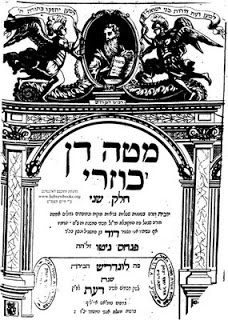


In 1968, Mossad ha-Rav Kook published an edition of the Mateh Dan based on the first printing. This edition is visually very nice, they did a nice job of laying out the sefer including a table of contents before each section of the sefer. But the notes although are helpful are very minimal [all quotes in this post are from this edition].

A few months ago a new English critical-edition of R. David Nieto’s Matteh Dan was translated from the Hebrew by Louis Loewe and completed by Raphael Loewe, published by the Spanish and Portuguese Jews’ Congregation of London, and Mechon Haktav of Jerusalem. This work was edited and prepared for publication by Yehuda Hershkowitz. This new edition is two volumes including a beautiful facsimile edition of the first printing on high quality paper leather bound. The facsimile volume reproduces the original edition of Hebrew with a Spanish translation on the side. The English translation had been done in 1845 by Louis Loewe. [I am aware that there is another English translation of this work published by Yashar Books, although it is only a partial translation and I never had a chance to see it.] This translation of L. Loewe was reprinted in this new set with some of the translation adjusted to our current English but as a whole remains the same. Many small useful notes were added in by the editors Raphael Loewe and Yehuda Hershkowitz. Besides for the nice interesting introduction by R. Loewe this new edition has an excellent overview by Yehuda Hershkowitz entitled “A Brief Survey of Calendar Making” (pp. 318-48). The purpose of Hershkowitz’s overview is to aid the reader in understanding the fifth section of Mateh Dan which deals with the calendar. Some other additions found in this edition were the many comments of R. Moshe Rimoni written in 1794 which were already included in the Mossad Rav Kook edition. In addition to this Yehuda Hershkowitz printed for the first time a manuscript from 1819 written by R. A. Lampronti about life on other planets.This manuscript comes from the now well known Valamadonna collection of Jack Lunzer.

I would like to highlight some of the very many points of interest in the Matteh Dan. The work pretty much starts where the Kuzari ends (hence the alternative title – Kuzari ha-Sheni), and the main focus of the Mateh Dan is to defend the legitimacy of Torah Shel bal Peh. It is written in debate format similar to the Kuzari. In the introduction of his work he writes:

ולפי שיש מחלוקות על מלך כוזר הראשון ועל מלכותו… יש אומרים שהרב המחבר המציא בדעתו מלך ומלכותו אשר לא היה ולא נברא. ויש אומרים שמעשה שהיה כך היה ככתוב בספר כדי שלא לאפושי במחלוקות על הכוזרי שלי אני מודיע נאמנה לכל קורא בספרי שלא נהיה כדברים האלה כי מלבני אני בודאם

The sefer is divided into five sections. In the first section he sets out to prove that the Jews always had Torah Shel Bal Peh from the times of Moshe and onwards. He shows how various Mitzvas its impossible to understand if we do not have Torah Shel Ba’al Peh. One of the many nice pieces in this section that he writes when dealing with the prohibition of carrying on Shabbas (p.12):

איסור משא קל כמעט שמפורש בתורה שהרי דוד המלך ע”ה אמר בדבר ה’ שמים נעשו ובכן היתה הבריאה ביום הראשון אמר השם יתברך יהי אור ויהי אור… ויכלו השמים והארץ וכל צבאם וכתבי וישבות ביום השביעי. נמצא שכששבת לא שבת אלא ממאמר בעלמא שהוא דבר שאינו יכול לגרום לו ליאות ויגעה משני טעמים חדא מפני שבו יתברך שהוא בלתי תכלית וכחו בלתי בעל תכלית לא יתכן ליאות ויגעה ב’ שאפילו תימה ח”ו שהיה ראוי לכך אי אפשר שייעף ויגע על הוצאת שתי מלות בכל יום בלבד נמצינו למדים שהקב”ה שבת ממה שלא היה יכול לייגעו בב’ טעמים, ולכן האיש הישראלי אשר ישבות ממשא כבד בלבד לא ישבות כמו ששבת הקב”ה אבל כשישבות אף ממשא קל אזי באמת שומר שבת מחללו ומחזיק בבריתו יתברך.

In section two he continues proving the truth of Torah Shel Bal Peh. A nice piece in this section is while proving that the esrog is the fruit the Torah requires one to take on Succos he writes (p.25):

בחג הסוכות אמר הכתוב ולקחתם… פרי עץ הדר… ואפשר שהכוונה היא על רמון נאה… אבל הם ז”ל פירשו שהוא אתרוג דווקא ופסלו כל מה שאינו אתרוג ממש כפי הסימנים אשר מסרונו אף על פי שיהיה מאותו המין, וזה גורם הוצאה רבה ועגמת נפש גדולה ליושבי ארצות ואקלים הקרים לפי שצריך שיביאו להם אתרוג מארץ הרחוקים לחוג בו את חג הסכות בהוצאה רבה. ולא עלתה תלונותי כי אין ציבור עני, אלא שלפעמים יש להם ההוצאה אבל לא השבח של המצוה כגון כשלא הגיע לידם אלא בתוך ימי החג או אחריו התאימין אדוני המלך שאנשים חכמים ונובנים בדו כל זה מלבם טעם ויסוד אחר אלא להתשרר על הצבור.

When dealing with the writing of the Mishnayos he writes (p.43):

אלא אפילו לאותן שנזכרו בהם תנאים באין חולק עליהם שכולם קבלה, לפי שרבינו הקודש לא היה אלא מלקט ומסדר ופוסק מה ששמע ואסף מימי התנאים אשר היו לפניו עד האחרונים אשר הוא אחד מהם.

When talking about asmactos he says (p.52):

אסמכתא… כח משפט חז”ל לסמוך העיקר המקובל על איזה פסוק אף על פי שהוא רחוק במטחוי קשתת מפשוטו, כי זה אינו אלא לעורר הזכירה. ובכן ברמז בעלמא סגי, כמו שעושין בני אדם, שקושרין קשר בסודר לזכור איזה דבר.

This understanding of asmactos follows the Rambam and other Rishonim yet there are other Rishonim disagree, at times rather sharply. For example, the Ritva who writes:

ומשום הכי קתני ר”ע שאמר הקב”ה אמרו לפני מלכיות זכרונות וכו’ שכל מה שיש לו אסמכתא מן הפסוק העיר הקב”ה שראוי לעשות כן אלא שלא קבעו חובה ומסרו לחכמים, וזה דבר ברור ואמת, ולא כדברי המפרשים האסמכתות שהוא כדרך סימן שנתנו חכמים ולא שכונת התורה לכך, חו ישתקע הדבר ולא יאמר שזו דעת מינות הוא, אבל התורה (העידה) [העירה] בכך ומסרה חיוב הדבר לקבעו [ל]חכמים אם ירצו כמו שנאמר ועשית על פי הדבר אשר יגידו לך, ולפיכך תמצא החכמים נותנין בכל מקום ראיה או זכר או אסמכתא לדבריהם מן התורה כלומר שאינם מחדשים דבר מלבם וכל תורה שבע”פ רמוזה בתורה שבכתב שהיא תמימה וח”ו שהיא חסירה כלום (ריטבא, ראש השנה דף טז ע”א).

This topic is dealt by many just to list some sources see: R. Yosef Engel, Beit Haotzar,1:190; R. Meshullam Roth, Shu”t Kol Mivasar, 2:21-22; Mivasar Ezra, 20-22; R. Yaakov Hayyim Sofer, Yeshurun 20:678; R. Yonah Martsbach, Aleh Yonah, 101-105; R. Gedaliah Nadel, Betorato Shel Rav Gedaliah, pp. 28-30; R. Gedaliah Nadel, Mila Dehespeda, pp. 130-31. In section three he discusses many specific points in regard to Torah Shel Bal Peh just to list some of the many interesting ones: When dealing with how exactly did arguments begin in Klal Yisrael in the times of the talmedei of Hillel and Shamaei he goes has a lengthy historical discussion of that period to explain what happened listing all the terrible decrees and persecutions that the Jews went through at that time. At the end the Kuzari asks him (p.65):

אבל מה תשיב על שכחת דברים הנוהגים בכל יום כגון קידוש והבדלה שמצינו בית שמאי ובית הלל חולקים בקידוש אם מברכין על היום תחילה או על היין וכן בהבדלה… וכי לא ראו ולא שמעו איך היו מקדשים אבותם ורבותם בשבתות וימים טובים, היאמן כי יספור ששכחו דברים כאלו שהם תמידים? אמר החבר: אין מקום לקושייתך משום דקי”ל סדר ברכות אין מעכבות… ולכן בראשונה כל אחד ואחד היה מקדים או מאחר שהיה רוצה, עד שבאו בית שמאי ובית הלל ועמדו למנין על סדר הברכות ונפסקו ההלכה. ואף על פי כן אם הקדים המאוחרת או איחר המוקדמת יצא. וכן יש לומר בכל המחלוקות שתמצא מזה המין…

[This answer applies to all such questions which others have dealt with at length like how did a argument between Rashi and Rabenu Tam evolve over the order of the Parshiyos in Tefilin why didn’t they check what previous generations did. The answer in short which is given is both were done by some.]

When dealing with the famous question dealt with by many of why can’t Amoraoim disagree with Tannoim he writes (p.68):

שלא חילקו האמוראים על התנאים מפני שהכירו שהיו גדולים מהם בכל הבחינות ודלא כמו שכתב הכסף משנה שקבלו על עצמם שלא לחלוק…

Then he writes that there is a constant yeridot ha-dorot when it comes to people’s knowledge (a point which not all agree with) so he wonders why do we say הלכה כבתראי. So he answers:

על דרך המשל הידוע שננס רוכב על גבי ענק רואה יותר ממה שרואה הענק אף על פי שהננס הוא כנמלה לגבי הענק.

Much has been written on this משל see the Alpha Beta Kadmita Deshmuel Zeriah from R. Shmuel Ashkenazi pp. 322-27; see also S. Leiman, “Dwarfs on the Shoulders of Giants,” Tradition 27:3, pp. 90-94 in both of these articles, the Kuzari Hashenei is not included. Just to add three more sources on the topic, not on either of the previously mentioned extensive lists see Simchat Hanefesh, p. 112; R. Y. Heller, Maoz Hadas, p.34b; A. Lipshitz, Avos Atorah Levonim. p. 175 n.6. On this topic in general see; I. Ta-Shmah, Halacha, Minhag Umitzyius Baskenaz, pp. 58-79; Daniel Sperber, Netivot Pesikah, p. 31 n.51, Joseph Davis, Yom-Tov Lipmann Heller Portrait of a Seventeenth- Century Rabbi, pp. 46-47, and A. Melamad, Al Kesefei Anakim. When listing the מצות דרבנן he writes that (p.72) they are:

מגלה, חנוכה, נר שבת ויום טוב, הלל , עירובין, נטילת ידים, יום טוב שני של גליות, שבעת ימי המשתה, שבעת ימי אבלות וארבע תעניות.

Not all agree with this listing as this topic has been discussed at great length in his usual incredible style by R. Shmuel Ashkanazi in Kovetz Beis Aron ve-Yisrael (issue # 35, pp. 97-114 and issue #38, pp.139-154). While discussing the reason why we do not blow Shofar when Rosh Hashonah falls out on shabas he writes about the masses of the Jews at the time (p.80):

שרוב עם בני ישראל היו עמי הארץ ומיעוטא דמיעוטא היו חכמים, וכיון שרובא היו עמי הארץ ממילא לא היו בקיאין בדוקדוקי מצות ולכן כשחל ראש השנה וסוכת בשבת ילך אצל בקי עם השופר או עם הלולב כדי שיתקע או יברך לו או כדי ללמוד נטילתו או ברכותו ויוליכנו ארבע אמות ברשות הרבים ויבוא לידי איסור סקילה ואף את יתרו בו לא ישמע לקול מוריו כי יאמר שאינו רוצה לבטל המצוה.

When discussing the topic of why we have two days of Yom Tov even thought we understand the calendar today he writes (p.83):

שאם מלך המושל בארץ ישראל קודם ביאת משיחנו ועודנו בגלות יתן רשות לישראל לשבת על אדמתם ולמנות עליהם סנהדרין יחזור העיבור ליושנו והיו מקדשין על פי הראיה כימי קדם קדמתה ואז לא היינו חוגגין לעולם יחד ביום אחד אלא לפעמים ג’ משום שכל דבר שבמנין צריך מנין אחר להתירו, וכיון שכל ישראל הרחוקים מארץ ישראל קבלו עליהם לעשות שני ימים להסתלק מן הספק, צריך שיסכימו כולם גם כן לבטל תקנה זו וזה איפשר דרך טבע מפני שאנו מפוזרים ומפורדים בין כל האומות העולם אחת הנה ואחת הנה ויש כמה וכמה מבני ישראל במדינות רחוקות, אשר אין אנו יודעים זה מזה ולא יש דרך הכרה ביניהם ובינינו בשום פנים, כגון במלכיות פרס והודו וכוש, ובמלכות גינה וטארטאריאה, כפי מה שמצאתי ראיתי בספרי המלחים והההלכים.

R. Menachem Kasher (Torah Shelemah, vol. 13, p. 129) already points out that the Meshech Chochma (Bo, 12:1) and others say the same thing. In section four he deals with many topics related to Chazal and their knowledge in science. He begins this section dealing with what exactly are the seforim chizonim that chazal prohibit one from learning and why are they prohibited (pp. 97-100). He is of the opinion as are many others that there is a connection between kabalah and philosophy (p. 98). He shows that chazal had great knowledge in philosophy (pp. 129-57), geometry, and mathematics including a whole lengthy discussion of the mathematical Gemaras in Succah (pp. 113-25). He also deals at great length showing there tremendous knowledge in understanding the calendar etc. (pp. 182-90). Many others have also shown Chazal knowledge in all areas of science just to mention one interesting work on the topic is R. Y. Kemhlar’s Hatalmud Vmadei Hatevel. In addition R. Nieto also has a lengthy discussion showing there expertise in the and anatomy of humans and animals (pp. 104-06). Others have also shown this for example see Meshiv Nefesh (p. 14b, 22a) R. Aron Marcus, Keses Hasofer (p. 78) and Hatalmud Vmadei Hatevel (p. 24). One additional source related to this is found in Chut Hamishulash (p.29a) where he writes about the Chasam Sofer:

לתכלית גדול הזה לברר הלכה לאמיתו ולהעמיד כל ענין על בוריו הי’ לו לכל שיעורי תורה כלים מיוחדים מדודים מאתו בדקדוק הדק היטב להראות לתלמידיו וכן הי’ לו בארגז מיוחד שני צורות תבנית זכר ונקבה מעשה אומן מופלא והיו נעשים פרקים פרקים וכל חלקי הפנימים מעשה חדש נפלא ללמוד וללמד חכמת הניתוח ולא הראה זה רק לתלמידים מובהקים אשר יראת ה’ אוצרם בעת למדו אתם הלכות נדה וכדומה.

After this R. Nieto brings that “the Kuzari asked him “(pp. 106-07) “I have no doubt that they knew science etc. but how did they have time to learn and time for the sciences”. To which R Nieto replied that they although some were real experts in science like Shmuel but most just knew what was necessary for them to understand those areas of Torah that required such knowledge.

R. David Nieto and life on other planets

He writes about life on other planets a very interesting thing (p. 128):

ר’ מאיר אגוז מצא תוכו אכל קליפתו זרק. וכן ראוי לנו לעשות בסברות חכמי האומות, שכל מה שהוא מנגד לתורתנו הקדושה והתמימה בין שבכתב בין שבעל פה שקץ תשקצנו ותעב תתעבנו כי חרם הוא, אבל מה שאינו נגד דבריה ולא נגד פירושה הרשות ביד כל איש ישראל להאמין או למאן בו לפי שכלו. ובכן כיון שאין שטן ואין פגע רע להאמין שכל הכוכבים בין המהלכים בין הקובעים בגלגל השמיני הם עולמות אשר בהם מכל בעלי חיים, בצדקתה החזקת ולא ארפה. ואפשר שלזה כיוונו רז”ל כשכתבו בסוף מסכת עוקצין עתיד הקבה הוא להנחיל לכל צדיק וצדיק שלש מאות ועשרה עולמו.

R. Pinchas Hurwitz in his Sefer Habris (pp.33-34) also says there could be life on other planets bringing proof from various Chazal and Zohar including the some of the same Chazal that R. Nieto uses.

However not everyone understands this Chazal literally just to list one other explanation R. A. Shor writes:

טעם מספר ש”י עולמות נראה לפי שעשרת הדברות יש בהן תר”ך אותיות נגד תרי”ג מצות ושבע מצות בני נח במספר כת”ר עליון ונראה שכנגדן יש לו לאדם תר”ך עולמות אלא לפי שהאדם נברא דו פרצופין זכר ונקבה ויקרא את שמם אדם וכן כל הנשמות זכר ונקבה נבראו ובין שניהם נשלם ונעשה האדם במלואו וטובו לשמור ולעשות את כל מצות ה’ לכך גם אותן תר”ך עולמות יחדיו יחלוקו מחציתן לזכר ומחציתן לנקבה והיינו ש”י עולמות לכל צדיק וצדיק (תורת חיים, סנהדרין, דף ק ע”א).

[On this Toras Chaim see R. S. Askanazi in Kovetz Beis Aron Vyisroel (issue #38, p.142)]. R. Yosef Zechariah Stern (Ma’amar Betalocas Aggaddos, p. 45) suggests even more that there is a printing mistake and it should say two (שני) not three hundred and ten (ש”י) worlds. [As an interesting bibliographical note R. Yakov Shor [Mishnat R. Yakov, p. 41] this chazal is not really the end of Ukztin rather it was stuck in from elsewhere because we like to end with something good]. This topic has been dealt with by many see for example the Ri Barcellona in his work on Sefer Yetzirah (pp.171-173) where he writes:

יח אלף עלמות שברא… שאפשר שזה העולם חביב לפניו יותר מכל שאר העלמות כי אולי באותן השאר עולמות לא נתן להם תורה… ואולי אפשר נמי לומר כי באותן היח עולמות אין בהם בריות בחטא ועון כמו באלה ואולי אותן הבריות מלאכים רוחות הן שברא המקום לכבודו או אולי קרובים להן והן בלא חטא שאין יצר הרע שולט בהן…

As mentioned earlier, Y. Hershkowitz printed for the first time a manuscript from R. Lampronti about life on other planets where the author deals with this topic at length. See also R. Chasdaei Crescas in Or Hashem (4:2), his rebbe, R. Albo in Ikryim (4:2); Ma’aseh Tuviyyah, 3:1; Sefer Elim, (p. 141a), Kol Yehudah (commentary on Kuzari 2:20 p. 68); Aryeh Kaplan, The Aryeh Kaplan Reader, pp. 170-75; A. Korman, Hemunah Hayisreleis, pp. 275-77; Evulutzyah ve-Yehadus pp.139-40; Y. Shabtei, Sha’ar Yosef vol. 1, p. 152; R. Kemeil, Shar Reveun, p. 269; N. Lamm in Challenge, pp. 354-98. When R. Nieto deals with the hard to understand famous Gemaras of Raba Bar Bar Chanah he writes (p.171):

שמא שנראה דבר תמוה ובלתי ראוי להאמין, כגון מה שסיפר רבה בר בר חנא מההוא טייעא, הוא דבר מורגל במקומות רחוקים מגלילותינו ואם נראה זר בעינינו הוא מפני חסרון ידיעתנו, לא מפני שהדבר בעצמו בלתי אפשר.

In section five he deals with explanation of how our calendar works very extensively and in depth. This section is not easy to understand if one does not have proper background.Just to mention one point from this section as its Inyana Deyomah and many are bothered with this issue – if the calendar according to Shmuel is off so why do we Pasken like him:

.(שמואל היה יודע שיעור שנת רב אדא ומכיר בו שהוא אמיתי ונכון, אך ביקש דרך קצרה וקלה להמון העם ואותה נתן להם למען ידעו בחשבון הגס שיעור השנה בקירוב בלי דקים וחלקים (ויכוח חמישי, אות קמו

[On this topic see: R. Alexander Moshe Lapides, Toras Hagoan R. Alexander Moshe pp.6-8; R. J. D. Bleich, Bircas Hachammah, pp.58-64; R. A. Brisk, Otzar Hazemanim, pp.223-226; R. M.M. Gerlitz, Bircas Hachamah KeHilchosah, pp. 145-59; R. Yehuda Hershkowitz, The Sun Cycle, pp. 137-38] Some other topics he deals with: are stars alive (pp. 125-26), how many Jews were there in the time of the second Beis ha-Mikdsash (pp. 79-80), the invention of the barometer and thermometer (p. 148) and a whole section on explaining the Thirteen Midos that we use to darshan (pp. 89-95). R. Nieto writes that R. Srug was a Talmid of Arizal (p. 99). This point has been dealt with by many, see the fabulous discussion by Y. Avivi in his recent classic work Kabballas ha-Ari (1:224-44); see also R. S. Deblitski, Benu Shenosu Dor Vedor, pp. 50-52; E. Katzman, Toldos Hamegalah Amukos, pp. 36-39; R. A. Marcus, Keses Hasofer, p.6. R. Nieto seems to hold that the Asra Harugei Malchus died during the same time frame (p. 64). This difficult historical riddle has been dealt with by many just to list some sources see Erchei Tanaim Vamorim, (Blau Ed.) vol. 2, pp. 708-15; S. Kraus in his series of articles in Hasholach 1925 (recently reprinted in Mered Bar Kochchba, pp. 239-76) and the recent book on the topic by E. Vilnar, Asreh Harugei Malchus printed by Mossad Rav Kook. R. Zev Rabanowitz writes when talking about this:

ובכלל רואים אנו, שמחברי אגדות כאלה לא היו בקיאים בדברי הימים ובסדרי הדורו, ורבותינו ז”ל הקדמונים בתמימותם האמינו לאגדות הכתובות וייסדו את פיוטיהם על פיהם למען עורר מספד והרבות בכי, ובזמננו מצוה להסירם מן המחזורים והקינות, כי דובר שקרים לא יכון נגד ה’ ותמה אני על הקדמונים שכבר ידעו ולא מחו מלומר פיוטים כאלה. ואולי מחו ולא נשמעו (שערי תורת בבל, עמ’ 410).

R. Nieto and Copernicus

One of the more famous things which R. Nieto is famous for is not accepting Nicolaus Copernicus‘s theories that the earth revolves around the sun and is not stationary.

He writes:

מיום ברוא אלהים אדם ועד קרוב לזמנו כל יושבי תבל ושוכני ארץ האמינו שהששה כוכבי לכת הם גופים חשוכים שמקבלים האור מהשמש, שהוא אחד מהם והגדול שבהם. ועתה האחרונים המציאו שהם ארצות ושהארץ אשר אנו יושבים היא אחת מהן, מפני שסוברים שהשמש באמצע בלי תנועה כמלך במסבו והששה מקיפים… ואם אדם ימאן בסברא הקודמת ויאמין בזאת תחזיקהו למין או אפיקורוס?… ודאי שמתקבלות על הסברא, אבל אין אנו יכולים להחזיק במונח הזה במה שהוא מבטל תנועת השמשף דביהושע כתיב שמש בגבעון דום … הרי שסובב והולך כשאר כוכבי לכת. ואף על פי שבעלי הסברא הזאת נתחבטו לתרץ הקושיא לריק יגיעו, כי אין תשובתם מספקת ולכן נטשתיה וגרשתיה מהסתפח בנחלת ה’… אמרו שהנביא אמר שמש בגבעון דום מפני המון העם דסבירא להו שהשמש מהלך ואינו יודע תנועת הארץ (כוזרי השני, ויכוח רביעי אות קי-קלב. וראה שם אות רנח, וויכוח חמישי אות ד).

The first reference to Copernicus, but not by name in Jewish literature, is by the Maharal who writes:

וכמו שבא אחד שהיה נקרא בעל תכונה חדשה, אשר נתן ציור אחר וכל אשר הבינו הראשונים אשר לפניהם ונתנו הראשונים ציור ומהלך לכוכבים ומזלות ולגרמים השמים סתר את כלם ונתן ציור חכמה חדשה רק שהוא עצמו כתב כי עדיין לא יוכל ליישב את הכל (נתיבות עולם, נתיב התורה, פרק יד).

[See Andre Neher in Jewish Thought and the Scientific Revolution of the Sixteenth Century (Littman Library, 1986), pp. 208-10]. The first reference to Copernicus by name in Jewish literature is by David Ganz in his small work Magen Dovid (of which only one known copy survives in Bodleian Library) first printed in Prague in 1612 (a year before he died). Quoted by Neher, idem p.1; see also, Y. Elbaum, Pseichot ve-Hestagrot, p. 250. What is even more interesting is this small work received Haskomos from R. Yom Tov Heller (author of the Tosfos Yom Tov), R. Ephraim Lenshitz (Klei Yakar) and R. Y. Cohen (son in law of Maharal) all these people were talmidim of the Maharal.[For a copy of this interesting and rare Haskamah of the Tosfos Yom Tov see; M. Hershkowitz, Shnei Kruvim, pp. 105-111; see also J. Davis, Yom-Tov Lipmann Heller Portrait of a Seventeenth- Century Rabbi, pp. 90-91. In Ganz’s other work, Nechmad Ve-Naim (which is really part of Magan Dovid), there is also reference to Copernicus but this work was first printed in 1743. Quoted by Neher, idem, p. 197. In both these works Ganz refers to Copernicus in a very positive light. Although, M.Steinschneider in Jewish Literature writes (p.262) that although Ganz was acquainted with the system of Copernicus Ganz follows the Ptolemaic system. But see the in depth discussion of Neher, idem, pp. 200-04, 224-28; see also A. Ziv, Ha-Ramah, p. 83. Another early reference to Copernicus is by R. Y. Delmedigo in Sefer Elim printed in 1629. In this work as well Copernicus is mentioned in a very positive light. What is even more significant about Ganz and Delmedigo endorsing of Copernicus is because besides for both of them being great Talmedei Chachamim they were both expert astronomers having trained by the worlds greatest experts of their times (Ganz by Tycho Brahe and Delmedigo by Galileo). [For more on Ganz in general see R. M. Strashun, Mivchar Kesavim pp. 234-42; A. Ziv, HaRamah, pp. 82-85;Y. Elbaum, Pseichos Vehestagros, pp. 250-52 and index]. However Nieto was not the only one to oppose Copernicus R. Tuviyyah Cohen did so earlier and much sharper as he writes in Masseh Tuviyyah first printed in 1707:

ראוי לכל פילסוף אלקי שיבטל דעת קופירניקוש ונלוים עליו כי כל אותן ראוי’ שהביא הוא וחבריו הם נגד כתבי הקדוש ודברי נבאי אמת הנאמנים בדבריהם מפני שכתוב בקהלת והארץ לעולם עומדת אבל כפי דעת קופירניקוש איננה עומדת כלל והשמש לא יזרח ולא ישקע… ואם כדבריו כן הוא למה כתוב וזרח השמש ובא השמש… הנך רואה שבכמה מקומות הפסוקים יתנו עידיהן ויצדקו שתשמש והלבנה יותר הכוכבים מסבבים סביב הארץ ולא שהארץ מסבבת סביב השמש ואם יבוא קופירניקוש בטענותיו וראיותיו ומופתיו כזביות אף אתה הקהה את שניו… ודע מה שתשיב לו כי בכור שטן הוא (מעשה טוביה, חלק ב, סוף פרק ג-ד).

[On R. Tuviyyah Cohen and Copernicus see David B. Ruderman, Jewish Thought and Scientific Discovery in Early Modern Europe, pp. 231 & 239-40.] Besides for these two Gedolim opposing Copernicus, R. Yonsan Eybshutz who was also knowledgeable in Astronomy was also opposed as he writes in 1779:

ועבור זה נתטפשו הרבה מתוכנ’ קופרניקוס וסעייתו באמרם שהארץ מסבב אבל שקר נחלו והאמת עד לעצמו כי הארץ לעולם עומדת… (יערות דבש, חלק א, דרוש ד, דף לו ע”א).

(Neher, idem, p. 253, is incorrect when he writes that Eybshutz was positive towards Copernicus’ theory). Here, again, we have Eybshutz’s antagonist, R. Yakov Emden, arguing and defending Copernicus as Emden writes:

ויקרא אלקים ליבשה ארץ… יש מפרשים מלשון רץ וכן פירשו רבותינו ז”ל שרצתה לעשות רצון קונה. ויהיה מזה גם כן סעד לדעת בעלי תכונה החדשה (קאפירניקוס) שהארץ סובבת, ולא תקשי מוהארץ לעולם עומדת [קהלת א’, ד’] כאשר מבואר במקום אחר בס”ד (סידור יעבץ, אשכול, ח”ב, מעמדות ליום שלישי, עמ’ תקפח).

As a bibliographical point the way R. Emeden concludes this piece is by saying כאשר מבואר במא בס”ד (and that is how it is in the first edition). For some reason some, (R. M.M. Gerlitz, Bircas Hachamah KeHilchosah, p. 31, Y. Bloch, Kuntres Hashemesh Begevorso, p.40 and some earlier prints of the siddur) understood this to be an abbreviation that R. Yakov Emden was referring to a work of his called מכתב אלקים which was never printed. While it true that he authored such a work it and it appears to have been lost but it does not talk about such topics based on the extant quotes [See Y. Rafel, Arshet, 3:276 & J. J. Schacter, “Rabbi Jacob Emden: Life and Major Works,” (PhD dissertation, Harvard University, 1988), p.143-144] we have from it from although one can never be sure for certain and the abbreviation could just mean simple כאשר מבואר במקום אחר בס”ד.

[On R. Emden comment see The Sun Cycle by R. Yehuda Hershkowitz p. 18 n.78; J. Elias edition of The Nineteen Letters, p.43]

Although R. Emden writes positively about Copernicus here elsewhere R. Emden writes very negatively about the science of astronomy on the whole including Copernicus:

חכמת התכונה של אומת העולם, רחוקה מכליותי לייחס דעת זו המגונה לרז”ל חלילה וחס להו לרבנן קדישי שיתפארו בחכמת הגויים. רעיוני אנשי העולם הבודים מלבם חכמה שאין לה עיקר ויסוד רק כפי העולה על רוחם נשענים על יסודות הנולדות במוחם לקרב כל דבר אל השכל להוליכו במנהגי הטבע המוחש. ועם כל זה הם עצמן נבוכים מאד. ומודים שאין מציאות אמתי לגלגל יוצא מרכז וגלגל נושא והדומה להם… והרבה כאלה קשות נמצאו באותה חכמה ונתחלקו לכתות כתות בהנחותיה ולא נחו ושקטו גלגלי רעיוניהם. עד שהמציאו תכונה חדשה לגמרי מקרוב באה לא שערוה ראשוניהם (וי”א שנמצא גם בקדמונים מאד מי שחשב עליה כזאת של קופירניקוס) יהי מה אינה ראויה להקרא חכמה כלל. אחר שאינה אל דמיונות ורעיונות ודתיה שונות כפי מחלוקת לבב בני אדם אשר חכמה מה להם… (עץ אבות, אבות פרק ג משנה יח).

[About R. Emden, Copernicus and astronomy in gerneral see: J. J. Schacter, “Rabbi Jacob Emden: Life and Major Works,” (PhD dissertation, Harvard University, 1988), p.620-621,685 nt.55].

André Neher, “Copernicus in the Hebraic Literature from the Sixteenth to the Eighteenth Century,” in Journal of the History of Ideas, Vol. 38, No. 2 (Apr. – Jun., 1977), pp. 211-26 and in his Jewish Thought and the Scientific Revolution of the Sixteenth Century (pp. 251-60) concludes (p. 253): “With the exception of the two earliest works, which we shall speak about in a moment, [Nieto and Cohen, E.B.] all the works on this list remained in the tradition of the pioneers of the sixteenth and seventeenth centuries: that is to say they were theologically positive towards Copernicus, even if they had practical reservations.” To demonstrate his point he lists many sources of mainstream Gedolim in favor of Copernicus.

Natan Slifkin writes in The Challenge of Creation (p.127): “It was not only the Church that strongly opposed the insights of Copernicus. With few exceptions, the rabbis of the seventeenth and eighteenth centuries condemned Copernican astronomy as being opposed to Scripture and as being scientifically flawed. It contradicted the simple meaning of the Scriptural statement that “the world stands forever”, as well as the account in Joshua of time halting by the sun miraculously standing still (as opposed to the earth standing still). “In a footnote listing sources for this statement, Slifkin also refers the reader to Neher; However, in reality, Neher concludes just the opposite. Another positive quote about Copernicus is found in the Yad HaKetnah first printed in 1800 anonymously:

לכת פילוסופים הקדמונים לפני שנים אלפים דעתם שכדור הארץ סובב תמיד. והשמים וכל צבאם עומדים. והפילוסופים שאחריהם קיימו וקבלו, שכל הגללים סובבים והארץ לעולם עומדת. ואחר כך בימים האחרונים זה קרוב לשלשה מאות שנים קם פילוסוף חכם מופלג והחזיק בדעת הקדמונים שהארץ סובבת והשמים עומדים. וחיבר על זה חיבר נפלא עמוק עמוק עד שמתקן כל דרכי התכונה לדעתו וכמובא בהקדמת הספר נחמד ונעים שחיבר בעל המחבר צמח דוד (יד הקטנה, שער י, שער דרכי הניסים, פרק ד).

There are those who show Copernicus theory is found in the Zohar:

ובספרא דרב המנונא סבא, פריש יתיר דהא כל ישובא מתגלגלא בעיגולא ככדור אלין לתתא ואלין לעילא וכל אינון בריין משניין בחזווייהו משינויא דאוירא כפום כל אתר ואתר וקיימין בקיומייהו כשאר בני נשא, ועל דא אית אתר בישובא כד נהיר לאלין חשיך לאלין לאלין יממא ולאלין ליליא, ואית אתר דכוליה יממא ולא אשתכח ביה ליליא בר בשעתא חדא זעירא )זוהר, ויקרא, דף י ע”א).

R. Herzog writes about this (translated from English):

תיאוריה הקשורה לשמו של קופרניקוס… הענין מוזכר באופן לא מפורש במקורות התנאיים. ניסוח מלא ישנו בזוהר בפסקה המצוטטת משמו של רב במנונא סבא. שאלת ייחוסו של ספר הזוהר אינה נוגעת לעניין כי רבי משה די לאון שאליו מייחסים המבקרים את החיבור הנפלא נפטר זמן רב לפני קופרניקוס… (יהדות חוק ומוסר, עמ’ 102)

R. Aron Marcus, writes about this:

יש לציין כי הזוהר מבטל את השיטה הפטולמאית, כבלתי מדעית ונוטה לצד השיטה הקופרניקאית, שהקדים אותה במאות שנים. נוסף על כך לפי דעתו של ר’ שמעון בר יוחאי, הרי השקפות של בני דורו בשטח התכונה, אינן אלא סברות של הדיוטות… (החסידות, תל אביב תשיד, עמ’ 78.).

Interestingly enough A. Neher claims in his Jewish Thought and the Scientific Revolution of the Sixteenth Century (pp. 104-05) that one could imagine that this was written by a pupil of Copernicus! The truth is that R. Yakov Emden on this Zohar writes

:כל ענין זה הולך על דרך חכמי מחקר לא על דרך רז”ל בתלמוד (מטפחת ספרים, עמ’ לז).

However R. Moshe Kuntz (Ben Yochai, p. 81) does not have a problem with Chazal saying this including the Zohar as he has other indications from Chazal like this. But others show that there might be a contradiction in the Zohar about this [see: R. Shpitzer, Nevrashet, Vol.2, p.18a; R. M.M. Gerlitz, Bircas Hachamah KeHilchosah, pp.29-30 and Y. Bloch, Kuntres Hashemesh Begevorso, pp.21-22]. C. Solonski in his introduction to his Kochva Deshvet, (p.14) also brings this Zohar to show that Chazal held like Copenicus. R. P. Hurwitz in his Sefer Habris (p.99) brings the Zohar when dealing with Copernicus but after a lengthy discussion he concludes by disagreeing with Copernicus (pp.98-102). [About this Zohar, See also R. Schick, Seder Haminhaghim, 2:24b; Y. Levi, The Science in Torah, pp.115]. The Chasam Sofer who was known for his knowledge in astronomy [see: Chut Hamishlush p. 29a & Zichronis Vmesoros Al Hachasam Sofer, pp. 58, 102, 305] writes about Copernicus in a work he started writing on astronomy (see ibid p.305) after quoting the Yavetz:

מעניני גלגלים וככבי לכת… . דמזה סיוע לכת קאפירניקוס שהארץ סובבת, ולא תקשי מוהארץ לעולם עומדת כאשר מבואר במקום אחר, עכ”ד. הנה במ”ש שאין קושיא מוהארץ לעולם עומדת, הדין עמו לפע”ד, לא דבר שם מסיבובי ארץ בגלגל, כי גם לדעת הזאת אין הכוונה שהארץ תסוב על צירה, אלא כל הכדור היסודות כמות שהוא, הוא מתגלגל, אשר הארץ באמצעי לו… מכל מקום אין בידי לדחות קופארניקוס ולא צד שכנגדו כי ראיותיהם עצומות משני הצדדים. ולדעת אותה הכת יש לנו תנועה חדשה, מלבד ג’ תנועות שהזכרתי בפרק דלעיל שסימנם אמ”י, ועתה יתחדש התנועה הסבובי’, אמנם אין לנו עסק בדעת זאת הכת, ונייח (ונייחס) תנועה הסבובי’ לגלגלים שאין להם תנועה אחרת זולתי הסבובים הלז (שות חתס, קובץ תשובות, סי’ כו, לאחרונה נדפס גם במאורות הסופר, עניני קידוש החמה, עמ’ צח).

[As an aside the Chasam Sofer was a very big fan of the Yavetz besides for what he writes about Mitpachat Seforim:

הנה נמצא בשכונתך ס’ מטפחת ספרים למהריעב”ץ תמצא שם כי דבר גדול דבר הנביא ז”ל בענין זה הלא ישתוממו רואיו וד”ל (שות חתס, חו”מ ליקוטים, סי’ נט)

See also B. Hamberger, Moriah, 17:1 pp.237-238 who cites many sources about the Chasam Sofer and Yavetz]. Elsewhere the Chasam Sofer writes about Copernicus:

אשר חלק ה’ אותם לכל העמים יש לפרש על פי דאיתא דקופערניקוס אחד מחכמי העמים אמר דהארץ סובבת לקבל אור השמש דאיך עצם השמים הטהורה יסבב וישמש את הארץ והאחרים הביאו ראייה כנכדו דאם הארץ מסבב איך אפשר שיזרוק חץ בעוף וישיגהו ויפול שם כיון שהארץ כבר השתנה מקומה ועל זה השיב די”ל דהארץ וכל אשר עליה וגם האויר מסבב האמנם ראייותיו מכח השכל שאינו רואי שישמש העליון לתחתון הוא רק לפי דיעות האומת העולם אבל לנו בני ישראל אדרבא הארץ אשר בה בני אדם וישראל עם קדושו הם תכלית הבריאה ובעבורם נברא העולם תבל וכל אשר בה וגלגלי השמים ושמי השמים לצורך האדם ואם כן ראוי שישמשו שאר חלקי העולם לעולם התחתון שבו ישראל וגם עי”ז כל העולמות הם אחד ולתכלית אחד נברא דלא כדעת האוה”ע שכל אחד הוא עולם בפני עצמו ולתכליתו נברא וזה שאמר אשר חלק ה’ אותם לכל העמים דאצלם הוא חלק משא”כ אצלנו הכל חד (תורת משה, פ’ ואתחנן, דף טו ע”א).

R. Y. Margolis a Talmid of the Chasam Sofer who also was an expert on astronomy (Zichronis Vmesoros Al Hachasam Sofer, p.305) writes:

אמנם מי שיאמן בה’ ובתורתו ויאמן כי הקב”ה בא במתן תורה ונגלה על סיני הר קטן לא יוקשה אם השמש שהיא א’ ממשרתיו תשמש את הארץ אשר עליה האדם הלומד התורה הזאת, וראי’ מבוררת ממה שאמר הכתוב ויתן אותם אלקים ברקיע השמים להאיר על הארץ הרי’ מבואר כי המאורות הגדולים נבראו להשתמש את הארץ (חזון למועד, סי’ א אות א, וראה גם סוף סי’ח וסי’ ט אות ד).

In 1889 R. Y Ginsburg, printed a sefer on astronomy called Ittim Levinah he endorses Copernicus theories in a few places in the sefer (pp. 7,9 & 409-10). The significance of this sefer is that it received many nice Haskomos from great Gedolim in Europe of the time (over twenty are printed and he received even more) amongst them the Adres, R. Eliezer Moshe Horowitz, R. Eliezer Gordon and R. Eliyhua Chaim Miesles.[See also Archos Rabenu, 1:282-283]. However a few years later a work was printed in Jerusalem called Nevrashet through out the work the author R. Shpitzer attempts to “prove” that Copernicus is wrong scientificaly and is against the Torah (see for example vol. 1, pp. 30b-36b, Vol.2, pp. 5a-12a,14b-17a). He goes so far as to write (1:31a) that none of the Rabonim who gave haskomos to the sefer Ittim Levinah noticed that he goes with Copernicus theories. He brings someone (2:17b) who says that R. Y. Leib Diskin was asked how does Copernicus work out with the Torah:

וזרח השמש ובא השמש וגו’ וענה לו שהכתוב אמר לפי ראות עיני האדם.

But he denies that R. Y. Leib Diskin ever said such a thing [see also Y. Bloch, Kuntres Hashemesh Begevorso p.40]. Even recently there are those who still say that Copernicus is Kefirah see here. Other recent source that do not appear to acknowledge Copernicus is Bircas Hachammah called Otzar Hazemanim by R. A. Brisk where he writes (p.3):

מעגל היומי של השמש: השמש סובבת את הארץ בכל יום… ובהערה 5: יש לציין כי לאסטרונמיה המודרנית ישנה הבנה אחרת בכל מהלכי גרמי השמים היא טעונת שהארץ סובבת סביב השמש ולא השמש סביב הארץ…

Even more recently Y. Bloch put out a booklet called Kuntres Hashemesh Begevorso, 56 pages long demonstrating that Copernicus besides for being against the Torah is false scientifically. In Bircat Hachamah Betekufoseah, R. Genot brings (p.131) from R. Chaim Kanievseky who says:

כי הנוקט כך הריהו כמכחיש מסורת וכופר באמונתנו.

On Copernicus see: Arshet, 2:190 it appears that there was an argument about this between R. A. Worms author of Meorei Or and E. Carmoly [thanks to Dan Rabinowitz for this source]; M. Steinschneider, Jewish Literature, p. 190; C. Solonski, Kochva Deshvet, pp.7-9; R. Zvi Cohen, Bircat Hachamah, pp. 65-68; A. Korman, Evulutzyah Vyehadus pp. 52; R. M.M. Gerlitz, Bircas Hachamah KeHilchosah, pp.26-34; see also N. Gutel in Hishtanyois Nateviyum Be-halacha pp. 172, 183 where he deals with R. Lampronti’s opinion in Pachad Yitzchack on this and p. 190 where he deals with R. Kook’s approach to this. See, David B. Ruderman, Jewish Thought and Scientific Discovery in Early Modern Europe, pp. 266-67 regarding R. Lampronti’s opinion; see also idem, p. 351; David B. Ruderman, Kabbalah, Magic and Science, pp. 99-100; J. Davis, Yom-Tov Lipmann Heller Portrait of a Seventeenth- Century Rabbi, p.167; see also the very recent excellent doctorate of Shua Englman, Harav Samuel Strashun (HaRaShaSh) VHaggahot Al Talmud Bavli, Bar Ilan 2009, p.223. [See also some comments in this thread.]

After completing this post R. Chaim Rapoport sent me an article of his on Jewish attitudes on Copernicus which will be published shortly, in the next Or Yisroel (I did not incorporate any of his sources into this post). See also his Bircat Hachamah Al Pei Minhag Chabad, pp.48-50. [My understanding of this topic in general was enhanced greatly from the work of André Neher, ‘Copernicus in the Hebraic Literature from the Sixteenth to the Eighteenth Century’ in Journal of the History of Ideas, Vol. 38, No. 2 (Apr. – Jun., 1977), pp. 211-226 and in his Jewish Thought and the Scientific Revolution of the Sixteenth Century especially pp. 169-228 & 251-60, but see Y. Tzvi Langerman’s reservations about Nehr’s work in Langerman’s review of Nehr’s work in Isis, vol. 81, no. 1, (Mar. 1990), pp. 105-07, (thanks to Dr. J. Brown for this source)]. In conclusion this sefer is full of important information it’s a shame that none of the editions I have seen have a proper index to the sefer. However as one can see from just from the few samples I brought this sefer has a wealth of material and should be studied. One only hopes that someone will collect all of R. Nieto’s writings translate them (both in other languages and from manuscript) into Hebrew and print a critical edition of these works including a real critical edition of this sefer Mateh Don. Until than one will have to do with this useful new edition. This edition is available for purchase by Biegeleisen, and for more information contact Yehuda Herskowitz at seforimlover-at-yahoo.com.

Kuntres Hashemesh Begevorso

I mentioned the recent booklet printed by R. Y. Bloch called Kuntres Hashemesh Begevorso, 56 pages long demonstrating that Copernicus besides for being against the Torah is false scientifically. I am not in any way qualified to deal with the scientific aspects of this booklet but I would like to point out some inaccuracies in the booklet not dealing with science. In the beginning he writes how the Rambam already writes not like Copernicus (pp. 9-11), that the earth is stationary and its Kefirah to go against this (I am just writing the gist as he builds it up much better but my point is still true) even though some say that the Rambam in the first four chapters of Hiclos Maadah is not Torah so one can argue on but he claims that this is a false Shita about the Rambam and it is against our Emunah to say such a thing he writes:

והגיד לי מרן הגאון רבי יהודה זאב סגל זצוקל המ”מ ממאנטשעסטר דאפילו הי’ אומר כן בעל החת”ם סופר או הנודע ביהודה לא היינו מקבלים דברים כאלה ממנו…

Now the first problem with this is that we have a very well known Godol who does say exactly what R. Bloch says is kefirah to say and that is R. Yakov Kamentsky who writes:

ודברי הרמב”ן אלה הם שעמדו לי בשעה שראינו איך שבני אדם יורדים מעל המטוס על ידי סולם על גלגל הלבנה וחשבתי בלבי מה יענה כעת הרמב”ם ז”ל שכתב שהלבנה היא בעלה צורה רוחנית… אבל כפי שאנחנו מתייחסים לדברי הראשונים שסוברים אנו בגדר של אלו ואלו דברי אלקים חיים אם כן אע”פ שבמקום זה אין הלכה כמותו אבל שיהיו דבריו דברי טעות לא יכלתי להשלים, ואם טעה הרמב”ם בהלכות יסודי התורה מדוע לא יטעה בהלכות שבת וכדומה? והנראה בזה דהנה לכאורה יש לתמוה על כל העינינם שכתב הרמב”ם בארבע הפרקים הראשונים של הלכות יסודי התורה…ובעל כרחנו אנו צריכין לומר שמה שמסר לנו הרמב”ם בפרקים אלו אין זה לא מעשה מרכבה ולא מעשה בראשית אלא כתב כל הד’ פרקים אלה מדעתו הרחבה מתוך ידיעות בחכמת חציונות כלומר שלא מחכמת התורה… ואין לדמות טעויות בהלכות אלו לטעויות בהלכות שבת וכדומה (אמת ליעקב על התורה, עמ’ טו-טז).

[He is not the only one to say such a thing see: Sefer Habris, pp.27-28 & my Bein Kesah L’Asur, p.182].

However, even if one does not want to side with R. Yakov Kamentsky, one can turn to the Rambam himself and what he writes about Chazal’s knowledge of astronomy:

לא תבקש ממני שיסכים כל מה שזכרוהו מענין התכונה למה שהענין נמצא, כי החכמות הלמודיות היו בזמנים ההם חסרות, ולא דברו בהם על דרך קבלה מן הנביאים, אבל מאשר הם חכמי הדורות בענינים ההם, או מאשר שמעום מחכמי הדורות ההם, ולא מפני זה אומר בדברים שאמצא להם שהם מסכימים לאמת שהם בלתי אמתיות או נפלו במקרה, אבל כל מה שאפשר לפרש דברי האדם עד שיסכים למציאות אשר התבאר מציאותו במופת, הוא יותר ראוי באדם המעולה המודה על האמת לעשותו (מורה נבוכים, חלק ג סוף פרק יד).

So if the Rambam could write such a thing on chazal so why can’t somone say the same about the Rambam’s knowledge of astronomy [See also R. Gedaliah Nadel, Betoroso Shel R’ Gedaliah, pp. 79-80].Another mistake in this work is on p. 42 R. Y. Bloch writes that Tycho Brahe was a friend of R. Yonsan Eybshutz. That is simply impossible as Tycho Brahe was born in 1546 and died in 1601 and R. Yonsan Eybshutz was born in 1690! Another inaccuracy in this work is that he claims that the Chasam Sofer was against Copernicus (pp. 32-34) but he fails to quote the statement of the Chasam Sofer in its entirety which is quoted above where the Chasam Sofer specifically writes about Copernicus:

דמזה סיוע לכת קאפירניקוס שהארץ סובבת, ולא תקשי מוהארץ לעולם עומדת כאשר מבואר במקום אחר, עכ”ד. הנה במ”ש שאין קושיא מוהארץ לעולם עומדת, הדין עמו לפע”ד, לא דבר שם מסיבובי ארץ בגלגל, כי גם לדעת הזאת אין הכוונה שהארץ תסוב על צירה, אלא כל הכדור היסודות כמות שהוא, הוא מתגלגל, אשר הארץ באמצעי לו… מכל מקום אין בידי לדחות קופארניקוס ולא צד שכנגדו כי ראיותיהם עצומות משני הצדדים. ..

He only quotes the last line which I put in bold but not the whole piece which shows the Chasam Sofer did not hold its in issue when it contradicts the possuk. Furthermore he gives much more weight to what I brought earlier from Chasam Sofer in Toras Moshe than this piece which is a work on the topic of astronomy. One last point about this work is that he says it is also very problematic to claim דברה תורה כלשון בני אדם to answer all the Pesokim against Copernicus (pp. 23-25). On this a great godol R. Yonah Martzbach who besides for being a Rosh Yeshiva of Kol Torah with R. Shlomo Zalman Aurbach, Martzbach was also a mathametician [On R. Yonah Martzbach see the excellent work from R. B. Hamberger, R. Yonah Martzbach Pirkei Chayov Darco Upolov], writes at length specifically when dealing with Copernicus and says it is not Kefirah and he specifically says that

דברה תורה כלשון בני אדם: לבעלי רוח הקדוש ולהם בלבד מתגלים דברי הטבע וחוקיו מתוך פסוקי המקרא בדברי חז”ל. אנשים אחרים עלולים לטעות בהם. לא נכתבה תורה להיות ספר מדעי הטבע ולא לשם כך אמרו חז”ל מה שאמרו. מי שרצה והיו אי פעם כאלה להוכיח שיש קצת לשמים ממזרח וממעריב, ושהאדמה שטח היא ולא כדורית, הסתמכו על מאמרי חז”ל וטעו, כי לא הבינו ש’דיברה תורה כלשון בני אדם’… וכן דיברו חז”ל, וכן מצוי במליצות תפלותינו ותשבחותינו, ואין המלים אלא לבוש חציוני לדברים עמוקים מאוד מאוד, וחידות להביע בהם סודות… ויש שדיברו בלשון ידיעות תקופתם אל בני דורם. וככל שאדם ירחיב ידיעותיו ישנה דיבורו, אלא שדבר ה’ יעמוד לנצח ודברו ניצב בהלכותיו וברעיונתיהם הנשגבים ומחשבותיהם הטמונות בלבוש דבריהם (עלה יונה, עמ’ עג-עד).

This Kuntres Hashemesh Begevorso is available for purchase at Biegeleisen and Girsa.


Daniel J. Lasker – Birkat Ha-Hammah 5769

Get Ready – It’s Almost Time to Bless the Sun
by Daniel J. Lasker

Daniel J. Lasker is Norbert Blechner Professor of Jewish Values at Ben-Gurion University of the Negev, Beer Sheva, and is chair of the Goldstein-Goren Department of Jewish Thought. His landmark work Jewish Philosophical Polemics against Christianity in the Middle Ages, originally published in 1977, was recently republished with a new introduction in 2007.   

This is Professor Lasker’s second post at the Seforim blog. His previous post about ve-ten tal u-matar li-verakha was entitled “December 6 Is Coming: Get Out the Umbrellas,” and is available here.

לזכר אבי מורי ז”ל
In less than two months, on April 8, 2009 (Erev Pesah, 14th Nisan, 5769), the once- in-28-years Blessing of the Sun (Birkat ha-Hammah) will be recited, celebrating the occasion when the sun returns to the position where it was when it was first created, on the same day of the week and the same hour of the day as it was then. For those with short and medium range memories, and for those who were toddlers or perhaps not even born in 1981, it is useful to review the reason for this ceremony, one of the very few Jewish events which follow a solar calendar rather than our standard Jewish luni-solar calendar. This year’s Blessing is the first one in the internet age, so it is appropriate to publicize it on a blog; one can only imagine what technological breakthroughs will be around at the time of the next Blessing in 2037.
The Talmud Berakhot 59b states: “He who sees the sun at its tekufah, the moon in its power, the stars [or planets] in their orbits, and the signs of the zodiac in their orderly progress, should say, ‘Blessed be the Maker of Creation’ (ברוך עושה בראשית).” The Talmud continues: “And when is that? Abbaye said: ‘Every twenty-eight years when the cycle is repeated and Tekufat Nisan falls in Saturn on the evening of Tuesday, going into Wednesday.” It should be noted right away that Abbaye is commenting only on the first event described in the baraita, namely, “seeing the sun at its tekufah,” and that parallel passages (Tosefta Berakhot 6:10, Jer. Berakhot 9:2 [13d], and Leviticus Rabbah 23:8) do not include Abbaye’s explanation. It is that explanation, however, which is the basis of the ceremony of Birkat Ha-Hammah.
What does Abbaye’s comment mean? First of all, Tekufat Nisan refers to the vernal equinox, the exact time when spring begins, when the sun rises exactly in the east and sets exactly in the west. Since night and day are then equal, sunrise and sunset on those days are at 6:00 AM and 6:00 PM respectively (in local time; not necessarily in standard time). Second, the ancients believed that there are seven planets (Sun, Moon, Mars, Mercury, Jupiter, Venus and Saturn); and each hour of the day is controlled by a different planet on a weekly rotation (each planet controls 24 different hours during the week, repeating the cycle every seven days). For instance, the planet which controls the 6:00 AM hour names that particular day: Sunday (Sun); Monday (Moon); Tuesday (Mars – think the French mardi); Wednesday (Mercury – mercredi); Thursday (Jupiter –jeudi); Friday (Venus – vendredi); and Shabbat/Saturday (Saturn). The 6:00 PM Tuesday hour, namely the onset of Wednesday according to the Jewish practice of beginning the day at night, is Saturn; thus, “Saturn on the evening of Tuesday, going into Wednesday.” According to Abbaye, when the vernal equinox falls every 28 years on Tuesday at 6:00 PM, the blessing of the sun is to be said. Since at the time of equinox the sun sets on Tuesday at 6:00 PM, the halakah maintains that the Blessing of the Sun is to be recited on Wednesday morning after sunrise. April 8, 2009, is the Wednesday after the Tuesday on which Tekufat Nisan occurs at the 6:00 PM for the first time in 28 years.
But why does the vernal equinox fall at 6:00 PM on Tuesday night once every 28 years? This assertion is based on a number of assumptions: 1) The world was created in Nisan (actually at the end of Adar) and not in Tishrei (actually the end of Elul), following R. Yehoshua’s view in Rosh Hashanah 10b-11a. 2) When God created the sun on the fourth day, He wasted no time and did so at the very first minute of the fourth day, namely, what we call Tuesday evening at 6:00 PM. 3) The sun was created at the moment of the vernal equinox (Tekufat Nisan). 4) The solar year is exactly 365 ¼ days long. On the basis of this calculation, the tekufot (the equinoxes and the solstices) progress each year by one day and six hours (365 ¼ days is 52 weeks, one day and 6 hours). If the first Tekufat Nisan was on Tuesday night at 6:00 PM, the next one is Wednesday night at midnight; the next one was Friday morning at 6:00 AM; then Saturday at noon; Sunday night at 6 PM, and so forth. The first time after creation that Tekufat Nisan fell again on Tuesday night at 6:00 PM was in the year 29 AM, 28 years after creation. On 14th Nisan, 5769, the vernal equinox will be at 6:00 PM on Tuesday for the 207th time (5769/28 = 206 with a remainder of 1). To celebrate this event, the blessing “Blessed be the Maker of Creation” will once again be recited.
The perceptive reader may have noticed that the assumptions upon which the obligation to recite the Blessing of the Sun are based are highly problematic. There are more than seven planets and they do not revolve around the earth (which itself is a planet); and most people do not believe that each hour of the day is ruled by a different planet. Our celebration of Rosh Hashanah on the first of Tishrei seems to indicate that the world was not created in Nisan (e.g., we say: היום הרת עולם). The Bible gives no indication that the sun was created on the equinox (either vernal or autumnal), or that it was created at 6:00 PM on Tuesday night (after all, before the creation of the sun, there was no 6:00 PM). But most significantly of all, the year is not exactly 365 ¼ days long.
There are a number of consequences of the discrepancy between the actual length of the year and the approximate length of 365 ¼ days (called Tekufat Shmuel [cf. Eruvin 56a], which is the same calculation which is at the base of the Julian calendar; see my contribution to the Seforim blog on November 30, 2007, in the context of a discussion of the prayer for rain in the diaspora, also calculated according to Shmuel’s imprecise length of the year). One consequence is that the Blessing of the Sun is moving progressively forward vis-à-vis the Gregorian calendar. In 2121 the blessing will be said on April 9, not April 8. In 2205 it will be said on April 10, and so on (the Hebrew date changes every time since the Blessing is based on the solar calendar). More importantly, however, the Jewish world is blessing the sun as it returns to its original time at the vernal equinox on a date which has nothing to do with the true vernal equinox (which is this year on March 20, 11:44 UTC).
Why, then, do observant Jews observe a commandment which is so questionable (especially this year when it falls on the eve of Pesah, not the most convenient time to have a ceremony which is intended to be performed in as large a group as possible – ברוב עם הדרת מלך)? Is it just another example of Jewish stubbornness and inertia – holding onto an ancient ceremony even when it is based on questionable assumptions (perhaps like the second day of holidays in the diaspora because of calendrical doubts which were laid to rest over a thousand years ago)? Or is it a sign that in matters of religion, especially when it comes to halakhah, logic is not the only important factor or perhaps not a factor at all. The Hatam Sofer ruled (Responsa, Orah Hayyim 56) that once the great Rabbis of Israel (Maimonides [H. Berakhot 10:18], Yosef Karo [Orah Hayyim 229:2], et al.) had codified the practice of blessing the sun, the matter was closed. It would seem that, indeed, tradition, even illogical tradition, has had a strong hold on Jews; it is this Jewish loyalty to tradition which has maintained us during our long history.
And so, let us hope that on this 14th of Nisan/April 8, the skies will be clear, the sun will be bright, and we can once again thank God for making the works of creation!


On R’ Aron Zelig Halevi Epstein Ztz”l

R’ Aron Zelig Halevi Epstein Ztz”l

By Eliezer
Brodt

On
יג
מנחם אב תשס”ט I and thousands of others suffered a great loss. Our great Rosh
Yeshivah, R’ Aron Zelig Halevi Epstein of Yeshiva Shar Hatorah, was niftar.
During the years 2004-2006, through the efforts of My dear friend
Meir Kahn, I had the special Zechus to have many interesting conversations with
the Rosh Yeshivah Ztz”l. The following is a selection of pieces from those
conversations. This article originally appeared in the Hebrew Newspaper Mishpacha,
in the Kulmos section for Succos. Thanks to them for allowing it to be
reprinted here.
משיחתו של רבי זליג
מאת אליעזר יהודה בראדט
דמותו הזוהרת של הגאון רבי אהרן זליג הלוי
עפשטיין זצ”ל, ראש ישיבת “תורה ודעת” ו”שער התורה”, אינה
מוכרת דייה לבני התורה בארץ ישראל / משך למעלה מחמישים שנה הרביץ ר’ זליג תורה
באלפי תלמידיו, והיה תל-תלפיות שהכל פנו אליו לעצה ותושיה / תלמיד העלה על הכתב
שיחות מאלפות שזכה לשמוע מפי ר’ זליג, דברי חכמה ואורחות מוסר וזכרונות נעימים
מעולמן של ישיבות ליטא
אחר מטתו של הגאון רבי יעקב קמנצקי זצ”ל,
בקיץ שנת תשמ”ו, הספידו מו”ר הגאון רבי אהרן זליג הלוי אפשטיין
זצ”ל בקהל עם רב במחנה אור שרגא, ובין דבריו הנרגשים דיבר על מעלת השהייה
במחיצתו של אדם גדול. מו”ר זצ”ל סיפר מעשה בבעל ה”ישועות
יעקב” מלבוב שטרח פעם אחת לילך אל דרשה שנשא המגיד מדובנה, ומיד כשפתח המגיד
את דבריו פרץ ה”ישועות יעקב” בבכי והלך. ביאור הדבר, הסביר מו”ר זצ”ל,
כי בעבור ה”ישועות יעקב”, עצם העמידה במחיצתו של המגיד כבר עשתה בו רושם
ועוררה אותו לבכי. כך, אמר ר’ זליג, היא התחושה בשהייה במחיצת אדם גדול. גם אם אי
אפשר לתארה במילים ולהעביר את החווייה לאחרים, מכל מקום היא עמוקה ובעלת רושם כביר
על נפש האדם.
דומני כי כל אדם שעמד במחיצתו של מו”ר
זצ”ל יכול להעיד על כך: גם אם לא ניתן לתאר כיאות את טיבה של החווייה, הייתה
זו אמנם תחושה עמוקה ומיוחדת של עמידה במחיצתו של אדם גדול.
אך גם אם לא ניתן לתאר את החוויה כמו שהיא, עם
זאת אנסה לזכות לאחרים בשיחות נעימות ומעשירות שזכיתי לשמוע מפי מו”ר
זצ”ל. מדי פעם היה מו”ר נהנה לספר על גאוני ליטא ועולם ישיבותיה שלפני
המלחמה, ואף פירסם מאמר חשוב על ישיבת גרודנה (“ישיבת שער תורה
דגרודנה”, בתוך: מוסדות תורה באירופה בבנינם ובחורבנם, הוצ’ עוגן, ניו-יורק
תשט”ז, עמ’ 291-305). בין השנים תשס”ד-תשס”ו זכיתי לשמוע לקח מפי
ראש הישיבה, הגאון רבי זליג אפשטיין זצ”ל, ואף לשוחח עימו על עניינים שונים ובפרט
בענייני ספרים וגאוני הדורות. הדברים להלן מבוססים על מה ששמעתי בעצמי או מפי
מקורות נאמנים.
ר’ זליג אהב לספר ולדבר על גדולים מדור שעבר. חביב
במיוחד היה עליו הספר “הגדול ממינסק” על הגאון רבי ירוחם יהודה לייב
פרלמן זצ”ל ממינסק מאת ר’ מאיר היילפרין, ואף היה מרבה לצטט ממנו. ייחודו של
הספר הוא בתיאור השיחות הישירות של מחבר הספר עם נשוא הספר, הגדול ממינסק
זצ”ל. משיחות אלו של תלמידי חכמים ניתן ללמוד רבות, דברי תורה וחכמה, אורחות
חיים ודעת זקנים.
זכיתי ללמוד מספר שנים בישיבת “שער התורה”
ובמחנה-הקיץ “אור שרגא”, לשמוע מפי ראש הישיבה זצ”ל שיעורים ושיחות
מוסר רבים ואף לשאול אותו שאלות מן הסוג שאנשים אוהבים לשאול אנשים גדולים. אך משך
כל תקופת לימודיי ב”שער התורה” לא היה לי קשר אישי מיוחד עם ר’ זליג. רק
בתקופה מאוחרת יותר, כאשר הלכתי ללמוד בישיבת ליקווד, בתיווכו של ידידי ר’ מאיר קאהן
שזכה לשמש את ראש הישיבה זצ”ל שנים רבות, התקרבתי יותר אל מו”ר והייתי
בא מדי פעם לבקר אותו בביתו ולשוחח איתו בעניינים שונים.
לפעמים הייתי שואל על רב או על נושא מסויים, ולפעמים
הבאתי לו ספר חדש שיצא לאור ובכך זוכה לשמוע את דבריו בעניינים שונים. פעמים
הצטרפתי לנסיעתו מביתו בפלטבוש אל הישיבה בקווינס, ואף שם היה משוחח בדברי חכמה.
לצערי, לא רשמתי כל מה ששמעתי בשיחות נפלאות אלו, ורק בחלקן ניתנה בי הדעת למהר
להעלותן על הכתב עם חזרתי אל ביתי.
כתב העת התורני “ישורון” הדפיסו כרך
המוקדש לזכרו ולתורתו, כרך לב, שיצא לאור בשנת תשע”ה. בשורות הבאות אנסה לתאר
מקצת מן השיחות המאלפות שזכיתי לשמוע מפי רבי זליג זצ”ל.
על לימודיו בישיבות ליטא
ראש הישיבה, הגאון רבי זליג אפשטיין זצ”ל,
נולד בי’ בתמוז תרע”ד בעיר סלונים, ונפטר בי”ג באב תשס”ט. למעלה
מחמישים שנה כיהן כראש ישיבה בישיבות “תורה ודעת” ו”שער
התורה” וזכה ללמד מאות ואלפי תלמידים.
בילדותו למד בישיבה קטנה בעיר סלונים בראשותו
של הגאון רבי שבתי יגל זצ”ל, עד קיץ שנת תרפ”ט. כשלמדתי אני הכותב מסכת
גיטין בישיבה שמעתי ממו”ר רבי עקיבא וויינר שהביא ראייה משמו של ר’ זליג,
שאותה אמר בגיל צעיר בפני רבי שבתי יגל. לימים, כאשר שאלתי את ר’ זליג על כך,
הוסיף שסופו של הסיפור היה שר’ שבתי נהנה כל כך מן הראייה שהביא התלמיד הצעיר, עד
ששלח שליח לקנות בקבוק בירה ולעשות לחיים לכבוד החידוש היפה… עוד אמר לו ר’ שבתי
שזכה לכוין בראייתו לדברי ה”ישועות יעקב”.
בשנת תרפ”ט נשלח ר’ זליג על ידי ר’ שבתי
יגל ללמוד בישיבת מיר, שם למד כעשר שנה, עד שנת תרצ”ט. במיר זכה לשמוע שיחות
ממרן המשגיח רבי ירוחם ליבוביץ זצ”ל והתקרב אליו מאד. ר’ זליג סיפר שהוא זוכר
כל דקה ורגע שהוא שהה לצד המשגיח, וכל מילה שאמר עדיין חקוקה במוחו!
בשבתו במיר היה כותב את מאמריו של ר’ ירוחם
לבקשת רבו, והספר “”חבר מאמרים” שיצא לאור בווילנא תרצ”ט
מבוסס בחלקו על דברים ממחברותיו של ר’ זליג באותה תקופה. כאשר החיבור נדפס שוב
בתפזורת בין כרכי ספר “דעת חכמה ומוסר”, נכתב בהקדמת בנו של רבי ירוחם: “כל
מאמרים הם… ועוד אחד שליט”א אשר בקש להעלים שמו על כי בסתר חפצו”.
פעם כשדיברנו על ישיבת מיר הוא סיפר, שמנהגם של
תלמידי הישיבה במיר היה ללמוד כל ליל שישי, ולהמשיך את תלמודם אף ביום שישי בבוקר,
אך בערב שבת קודש בצהריים לא היו רבים בבית המדרש. בזמן זה היה כל אחד נפנה
לטרדותיו ולטיפול בעניינים שנדחו מפני הלימוד בכל השבוע, כגון תפירת ותיקון בגדים
וכדו’. עד כדי כך, סיפר ר’ זליג, שדרשן אחד היה אומר בדרשתו כי איש אחד עלה אל
עולם האמת ונשאל “עסקת בתורה” כמשפט, והשיב “לא, הייתי חייט ועסקתי
בתפירת כפתורים, כמו הבחורים במיר בערב שבת שתופרים כפתורים ואינם לומדים, גם אני
לא יכולתי ללמוד בגלל שעסקתי בתפירת בגדים”…
בשנת ת”ש למד ר’ זליג כחצי שנה בקלם
והתקרב לרבי דניאל מובשוביץ הי”ד. שם, בין השאר, עסק גם בעריכת כתבי הסבא,
וחלק נכבד מן הספר “חכמה ומוסר” הוא מן השיחות שערך באותה תקופה. ר’
זליג סיפר שהוא עשה שלוש העתקות לעבודתו, ואחת מהן נועדה לעצמו. כאשר עמד לעזוב את
קלם ורצה לקחת את העותק שיועד לעצמו, מנע רבי גרשון מידניק הי”ד בעדו וטען
שאין לו רשות לקחת. ר’ זליג טען לעומתו שמלכתחילה לא עסק במלאכת הכתיבה והעריכה
אלא על דעת שיוכל בכך לקחת עותק לעצמו, ורבי דניאל הביא ראיה שהצדק עימו. רבי
גרשון הי”ד שמע את דבריו וביטל את דעתו.
בסוף שנת תש”א הצליח ר’ זליג בדרך נס להגיע
אל העיר מונטריאול שבקנדה. שם התקרב אל הגאון רבי יעקב קמנצקי זצ”ל, אליו
נשאר קשור עד סוף ימיו. בשנת תש”ד התחתן עם בתו של הגאון ר’ משה שקופ, בנו של
הגאון רבי שמעון שקופ זצ”ל. החתונה התקיימה בביתו של רבי יעקב קמנצקי.
התמדתו המופלאה של ר’ זליג
זמן קצר לאחר מכן הגיע ר’ זליג לארצות-הברית
והחל למסור שיעורים בישיבת “תורה ודעת”. משך עשרות שנים כיהן כראש ישיבה
ב”תורה ודעת”, ובשנת תש”מ הוזמן על ידי בנו הגאון ר’ קלמן
שליט”א ועמיתו הגאון ר’ שלום יוסף שפיץ שליט”א, למסור שיעורים בישיבת
“שער התורה”. משך יותר מעשרים שנה היה מגיע כמעט בכל יום מביתו בפלטבוש
אל בנין הישיבה בקווינס, נסיעה של כחצי שעה.
התמדתו של ר’ זליג הייתה מופלאה. שמעתי מדודי
הגאון ר’ שלום שפיץ, שזכה להכיר את ר’ זליג קרוב לארבעים שנה, שהיה לומד כמה ימים
ברציפות כמעט ללא שינה. ר’ זליג זכה ללמוד את כל הש”ס בעיון וכתב חידושי תורה
בכל חלקי התורה (ואף היה כותבם במכונת כתיבה). אף נתן שיעורים בעיון על רוב חלקי
הש”ס, ועל תחומים רבים אחרים. על “ספר המצוות” לרמב”ם מסר משך
כמה שנים סידרת שיעורים בעיון, על השורשים ועל המצוות. לאחרונה הקימה ישיבת
“שער התורה” אתר מסודר שממנו ניתן להוריד חינם הקלטות מאלפים רבים של
שיעוריו על מאות נושאים.
עובדה אחת אציין על התמדתו של ר’ זליג. באחד
ההספדים שנשא עליו, סיפר דודי הגאון ר’ שלום שפיץ כי פעם אחת, לפני כ-40 שנה, כאשר
הוא והגאון ר’ קלמן (בנו של ר’ זליג) למדו יחד בישיבת ליקווד, סיימו את לימודם
בשעת לילה מאוחרת מאוד, אחר השעה 2 לפנות בוקר, והנה הוא רואה שהגאון ר’ קלמן הלך
להתקשר אל אביו לשוחח איתו בלימוד. לאחר שהדבר חזר ונשנה, חשש ר’ שלום שמא נמצא
חולה בבית או כל סיבה אחרת שבגינה אפשר להתקשר בשעה מאוחרת כל כך אל אביו, ושאל על
כך את הגאון ר’ קלמן. ר’ קלמן השיב לו בפשטות שדווקא זמן זה הוא הטוב ביותר לשוחח
ברוגע עם אביו, כיון שהוא יושב בביתו ולומד באין-מפריע כמעט עד אור הבוקר!
אף אני זכור כיצד במחנה-הקיץ “אור
שרגא” היה ר’ זליג נראה לעתים כשהוא נכנס אל בית המדרש בשעה אחת בלילה, בודק
דבר מה בספר ויוצא. היה זה כאשר גילו היה למעלה מ-85!
על הספר “התורה המשמחת”
פעם אחת השאלתי לו את הספר “התורה
המשמחת” שכתב ר’ יוסף אליהו על הגאון רבי שלמה זלמן אויערבך זצ”ל. כאשר
החזיר לי את הספר אמר לי שזכה להכיר אנשים גדולים רבים, אבל חבל מאוד שלא זכה
להכיר באופן אישי את ר’ שלמה זלמן. העזתי לשאול את ר’ זליג איזה סיפור אהב במיוחד
בספר, ואמר לי: “את הסיפור על האוטובוס הציבורי”. כוונתו הייתה למעשה
המסופר שם שפעם אחת עלה ר’ שלמה זלמן לאוטובוס ובתחנה שלאחר מכן עלתה אשה בלבוש
בלתי-צנוע והתיישבה על ידו. ר’ שלמה זלמן צלצל בפעמון וירד בתחנה הבאה, שם המתין
לאוטובוס אחר. היה מי שראה את הנהגתו ותמה על כך. השיבו ר’ שלמה זלמן: היו בפניי
שלוש אפשרויות. להמשיך את הנסיעה ולהתעלם מן היושבת לצדי, אלא שאין זה נעים ואף
עשוי לגרום חילול שם שמים מצד הרואים; לקום ולעבור למקום אחר באוטובוס, אלא שבכך
הייתי עשוי לפגוע בכבודה של האשה, וכי מפני שאינה לבושה בצניעות הותר לי לפגוע בה?
בחרתי אפוא באפשרות השלישית… (“התורה המשמחת”, עמ’ 289). אחר כך סיפר
לי שאף קרא את הספר הזה פעמיים, דבר שכמעט לא עשה אף פעם.
על הספר “מקור ברוך”
בשיחה אחרת דיברנו באריכות על הספר הידוע “מקור
ברוך” מאת רבי ברוך הלוי עפשטיין, בעל ה”תורה תמימה”. בשנת
תשמ”ח תרגמה הוצ’ ארטסקרול חלקים מן הספר והוציאתם לאור תחת השם “הדוד
שלי: הנצי”ב”. תלמוד-תורה ליקווד שלח את הספר כמחווה לתורמים, אלא
שחודשים ספורים לאחר מכן שלחה הנהלת הת”ת מכתב התנצלות, בו היא ממליצה שלא
לעיין בספר בשל דברים המופיעים בו שאינם מתאימים להשקפותיו של הנצי”ב.
בין הדברים שהוצגו כבעייתיים בספר, הוא המסופר
בו, שהנצי”ב נהג לקרוא עיתונים בשבת. שאלתי את ר’ זליג מה דעתו על כך. תחילה
אמר ר’ זליג שה”תורה תמימה” היה ירא-שמים, ושהוא מוצא את רוב הדברים
שמביא ה”תורה תמימה” בשם ועל הנצי”ב כמתאימים מאוד לנצי”ב
וניכרים דברי אמת (אגב, ר’ זליג היה ‘חסיד’ גדול של הנצי”ב, וכפי שסיפר לי
בשיחה אחרת – עוד גדלה הערצתו לנצי”ב לאחר שלמד בעיון את “קדמת
העמק” שבראש חיבורו הגדול של הנצי”ב “העמק שאלה”).
ר’ זליג סיפר שהספר “מקור ברוך” יצא
לאור לראשונה כאשר למד בישיבת מיר, ומספר חברים התארגנו יחד לקנות את הספר במשותף.
ר’ זליג הוסיף שהספר יצא לאור בימיו של ר’ חיים עוזר, ואילו הייתה טענה של ממש על
אמינות הספר מן הסתם היה ר’ חיים עוזר נזקק לזה.
בספר
“מקור ברוך” מספר ר’ ברוך עפשטיין על דודו הנצי”ב: “ואחר
שקידש דודי על היין וטעמו מיני מאפה קלה, ואחר שקרא מעט בעתונים שנתקבלו מחדש…”
(מקור ברוך, חלק ד, עמ’ 1790), ושוב: “זוכר אני, כי “המגיד” היה
דרכו להתקבל בכל ערב שבת לפנות ערב, ובלילה לא קרא אותו, מפני שליל שבת היה קודש
לו לחזור בעל פה על המשניות ממסכתות שבת ועירובין… וקרא בו (=בהמגיד) במשך היום…
וכאשר נקרה, שנתאחר “המגיד” לבא בזמנו בערב שבת, היה אומר, כי באותה
השבת חש הוא כאילו חסר לו דבר מה, כמו שמרגיש “בשבת חזון” זה הרגיל ללכת
למרחץ בכל ערב שבת, ובערב שבת חזון נמנעים מזה; וכן היה אומר כי העתונים יחשבו לו
כמביאים אליו ברכת שלום מכל העולם ועל כן יוקירם וייחל להם (מקור ברוך שם, עמ’
1794).
שאלתי
את ר’ זליג באופן נקודתי על דברים אלו, ור’ זליג חזר עוד פעם על כך שאין לו כלל בעיה
להאמין לדברים אלו. אז סיפר שזכה פעם אחת לשבות אצל אדם גדול שגם היה נחשב לצדיק,
בשם רבי דוד טעבל דיינובסקי הי”ד, ובתו הייתה יושבת וקוראת לפניו מעיתון
ביידיש. מעניין שהספר שהדפיס ר’ דוד דיינובסקי בעילום שם, בשם ‘מאמר לקראת צמא’ (פיעטרקוב
תר”צ) שהוא מלחמה כנגד הציונים, הרצל ותנועת המזרחי, עמוס בציטוטים מן
העיתונות (ראה למשל עמ’ 5-6, 20, 26, 29-31, 35, 37, 40, 45-46, 49-50). נראה שהיה
טורח לקרוא בהם כדי לדעת מה לכתוב עליהם.
אגב,
מן הראוי לציין את דבריו של ר’ שרגא אברמסון בדבר השפעתו של ר’ דוד דיינובסקי על
החוקר ר’ שאול ליברמן: “לא רחוק מעיירת מולדתו, מוטלה, היתה ישיבה קטנה
שידועה היתה בשעתה, לפני מלחמת העולם הראשונה, זו ישיבת מאלטש, בראשה עמד אדם
מיוחד: רב העיירה וראש הישיבה ר’ דוד טעבל דיינובסקי, הי”ד, מבעלי ההגיון
שבלימוד התלמוד ומבעלי המוסר מיסודו של ר’ ישראל סאלאנטר. היסוד שהונח לו לליברמן
בישיבה זו, היינו, לימוד התורה ולימוד המוסר, נשאר אצלו חזק בכל ימי חייו, וליברמן
הכיר בהשפעה שהושפע בישיבה זו וזכר לה חסד נעוריו כל ימיו” (לזכרו של ש’
ליברמן, האקדמיה הלאומית הישראלית למדעים, ירושלים תשמ”ד, עמ’ 24-25).
על ה”מסילת ישרים”
הספר
“מסילת ישרים” לרבנו הרמח”ל היה חביב מאוד על ר’ זליג. לפני מספר
שנים ראיתי בחנות-הספרים ספר עב-כרס בשם “בית דין מכין ועונשין”, הוצאת
מגנס, ובפתיחתו ראיתי שהמחבר, פרופ’ אהרן קירשנבוים, מקדיש את הספר “לכבוד
רבותי, ר’ יעקב קמנצקי, ר’ זליג עפשטיין ושאול ליברמן”. באופן טבעי התעניינתי
מאוד להכיר את המחבר, שרבותיו הם שני גאוני דורנו לצד החוקר המפורסם במדעי היהדות…
זמן
מה לאחר מכן, ידידי פרופ’ לייב מוסקוביץ שאלני אם ראיתי את ספר זכרונותיו של פרופ’
אהרן קירשנבוים, “בין ישן וחדש”. נזכרתי שזהו החכם שרבותיו הם ר’ יעקב
ור’ זליג, וגברה התעניינותי להכיר את האיש. לאחר שהתברר לי כי ספר זכרונותיו אינו
נמכר בחנויות ויש לפנות אל המחבר בעצמו, קבעתי עימו פגישה שבה נתן לי עותק אחד
מספרו. הספר הנדיר הזה מומלץ מאוד באפן כללי, אך מעבר לכך עניינה אותי במיוחד
כתיבתו על אודות ר’ זליג. בין היתר הוא כותב עליו: “הוא היה תלמיד חכם מן
המדרגה ראשונה, איש אשכולות… אם אני נחשב היום יהודי אורודוקסי הרי זה בזכותו”.
פרופ’
קירשנבוים מספר על השיחה הראשונה שהייתה לו עם ר’ זליג, בה עלה שמו של רבנו
הרמח”ל: “כן”, אמרתי בקול יומרני של “משכיל” יודע כול, “הלא
בספר תולדות הספרות העברית החדשה, מייחד לחובר את הפרק ראשון ללוצאטו, בזכות
מחזותיו, משום היותו היורש של ההומניסטים העבריים של המאות הט”ז והי”ז
של איטליה, ובהתחשב בפתיחותו לרעיונות חילוניים של סופרים לא יהודים”. “זהו
הרמח”ל שלכם”, השיב ר’ זליג ביידיש בקול שקט (הוא השתמש במילה
“איהר” הנימוסית ולא במילה “דו” הבלתי-פורמלית). “לנו
בני תורה יש רמח”ל אחר”, ונתן הרצאה צלולה, מאירת עיניים, בת שבע-שמונה
דקות על מסילת ישרים. עומק ההסבר השאיר אותי, ללא ידיעתו, מבויש בזוכרי שבמחברתי
הוקדשה הערת שוליים נידחת אחת על ספר זה שכעת התברר לי שהוא מן החשובים ביותר
בתולדות ספרות המוסר” (שם, עמ’ 68).
עבודתו באנציקלופדיה התלמודית
בהזדמנות
אחת סיפרתי לו שהשגתי עותק של הספר המעניין “נצח ישראל” מאת הגאון רבי
אליהו מאיר פייבלזון זצ”ל. ר’ זליג סיפר לי על ספר אחר שחיבר הרב פייבלזון,
“פיקוח נפש” ואמר שהוא ספר מצוין וכשעסק בכתיבת הערך “פיקוח
נפש” בעבור האנציקלופדיה התלמודית נעזר בו וציטט ממנו רבות.
באותה
שיחה סיפר לי שלפני שנים רבות עסק הרבה בכתיבה לאנציקלופדיה, וגייס בעקבותיו
תלמידי חכמים נוספים כדוגמת הגאון רבי אליהו חזן זצ”ל, ראש ישיבת תורה ודעת.
כן סיפר לי שכתב את הערכים “צער בעלי חיים” ו”היזק שאינו
ניכר” ועוד. ר’ זליג החזיק מאוד ממפעל האנציקלופדיה וסבר שיש לו תועלת חשובה,
אך הפסיק לכתוב בעבורה מפאת הזמן הרב שהדבר לקח ממנו.
על תרגום הש”ס לאנגלית
בפתח
שיחה אחת פנה אליי ר’ זליג ואמר: “נו, אליעזר, מה יצא לאחרונה מעניין?”.
השבתי לו שזה עתה הייתי בחנות הספרים הידועה “ביגלאייזן”, וקניתי חוברת
חדשה שיצאה לאור על ידי חכם אחד מחסידי סאטמר, המוקדשת כולה לדברי ביקורת ומחאה
נגד תרגום הש”ס לאנגלית, שהופיע באותם ימים על ידי הוצאת ארטסקרול (ש”ס
שוטנשטיין).
ר’
זליג שאל אותי מה הטענות הכתובות בחוברת? אמרתי שלטענתם התרגום גורם לחסרון ביגיעת
התורה. ר’ זליג הפטיר “טענה ישנה, וכבר רֶ’בּ שך (=הגרא”מ שך זצ”ל)
טען כך אבל עניתי לו על זה”. שאלתיו מה כוונתו בזה, וסיפר לי שכאשר החלו לצאת
לאור כרכי הש”ס המתורגמים לאנגלית סבר הגרא”מ שך לפרסם שיש להחרים את
התרגום, והוא – ר’ זליג – שוחח עם הגרא”מ שך שיחה ארוכה שבסופה השתכנע הרב
שלא לצאת כנגד התרגום.
שאלתי
את ר’ זליג מה היה הדיון בשיחה עם הגרא”מ, אך ר’ זליג אמר שהבטיח לרב שך שלא
יפרסם את תוכן השיחה. עם זאת סיפר ר’ זליג שבין הדברים הם דנו על הסכמת ה”חתם
סופר” לתרגום הש”ס שנעשה בימיו על ידי החכם פיינר, שבתחילה החת”ס
נתן לו הסכמה אך סמוך לאחר מכן חזר בו והתחרט על מכתבו. הגרא”מ שך סבר שיש
להוכיח מכך שה”חתם סופר” התנגד לעצם המלאכת התרגום לשפת עם לועז, ואילו
ר’ זליג השיב לו שחרטתו של ה”חתם סופר” הייתה בשל דברים בעייתיים שנמצאו
בחכם שעסק בתרגום (לסקירה רחבה על הסכמת ה”חתם סופר” לש”ס המתורגם וחזרתו
בו, ראו מאמרו של ידידי ר’ יחיאל גולדהבר, “הסכמה על הדפסת התלמוד בגרמנית
שנגנזה”, ירושתנו, ספר שלישי ה’תשס”ט, עמ’ שי-שלז).
ר’
זליג המשיך וסיפר שכמה שנים לאחר מכן החלו בהוצאת ארטסקרול לעסוק בתרגום הש”ס
לעברית, והיו בארץ ישראל אנשים שביקשו לפעול לפרסום חרם כנגד הש”ס החדש. אחד
מגדולי ירושלים, שידע על קיומה של השיחה בין ר’ זליג ובין הגרא”מ שך, פנה אל
ר’ זליג בעניין והוא שיכנע אותו שאף הפעם יש להימנע מקול מחאה על תרגום הש”ס.
בכך, למעשה, “הציל” ר’ זליג את הדפסתו ותפוצתו של הש”ס המבואר!
באותה
שיחה שאלתי את ר’ זליג, שהלא יש לחשוש שאכן יגיע זמן שבו הש”ס המתורגם יגרום
לחוסר יגיעה, כיון שהלומדים יסמכו מיד על התרגום. ר’ זליג ענה לי שאין בעיה בזה.
בשעת מעשה לא הבנתי את תשובתו והוטרדתי מכך שהיא לא הניחה את דעתי. רק שנים לאחר
מכן נראה לי שירדתי לסוף דעתו, וזאת בעקבות שיחה אחרת עימו.
פעם
אחת שוחחתי עימו על השיעורים שהוא מוסר. משך שנים רבות היה מגיע בכל יום ראשון
בבוקר אל הישיבה ומוסר שיעור לבעלי בתים במסכת שבת, ולפני החגים בענייני המועדים.
חברי, שהיה שותף לשיחה זו עם ראש הישיבה, אמר לר’ זליג שהוא נהנה פחות משיעורים
אלו מפני שבעלי-הבתים שואלים יותר מדי שאלות… ר’ זליג ענה לו שיש אמנם שני סוגי
שואלים בשיעורים מסוג זה – אלו ששואלים כהלכה ואלו שאין להם כלל מושג במה שמדברים,
אבל – הוסיף ר’ זליג מיד – זה לא העיקר! “העיקר הוא שרבונו של עולם רואה אנשים
“טומאלט אין לערנן” (=מתאבקים בלימוד התורה)”, “העיקר אינו
שישמעו ‘שטיק’ל-תורה שלי'”.
אף
באותה שיחה לא הבנתי מיד את עומק דבריו של ר’ זליג, כפי הידוע שאורך זמן רב עד
שאדם עומד על דעת רבו. רק לימים הבנתי את כוונת מו”ר בשתי שיחות אלו. ר’ זליג
אכן ידע שתרגום הש”ס עשוי לגרום לבני-ישיבות לחסרון ביגיעת התורה, אבל מנגד –
כמה אלפים ורבבות יהודים זכו לפתוח דף גמרא בסיוע הש”ס המתורגם! ובסופו של
דבר, עיקר העיקרים הוא ריבוי העוסקים בלימוד התורה, העובדה שאנשים מכל קצווי תבל
ובעלי מלאכות שונות, כולם מוצאים את עצמם עוסקים בלימוד התורה, זהו הדבר החשוב
יותר מכל.
באותה
שיחה סיפר לי ר’ זליג שהוא נוהג להביא הרבה מדברי רבי צבי הירש חיות זצ”ל
בשיעוריו על “ספר המצוות”, אף שכמעט תמיד חולק עליו, מפני שזו דרך
להיכנס אל עומק הנושא. שאלתי אותו מה דעתו עליו, לפי שעוררו עליו שהיה ‘משכיל’. ר’
זליג ענה לי שאמנם היה אדם גדול ובקי גדול, אך לא היה למדן, אלא שלא היה ‘אשם’ בזה
כיון שלא זכה ללמוד בישיבות על דרך הלימוד הליטאית.
בהזדמנות
אחרת שוחחתי עימו על הגאון האדר”ת זצ”ל וספריו, בעקבות הוצאתו לאור של
ספר נוסף מכתב ידו, אותו הגשתי לו במתנה. ר’ זליג אמר לי שאינו מצליח להבין כיצד
היה לאדר”ת זמן לכתוב כל כך הרבה, והוסיף שאמנם לדעתו לא היה ראוי להדפיס את
כל מה שכתב, כי לא כל דבר ראוי לדפוס.
בשיחה
אחרת שנסובה על פולמוס המוסר בזמן הגאון רבי ישראל סלנטר זצ”ל, סיפר ר’ זליג
סיפור נפלא. בעיצומו של הפולמוס ערך הגאון רבי יצחק אלחנן ספקטור זצ”ל חתונה
לבנו, רבי צבי הירש. אנשים ממתנגדי המוסר שיכנעו את השמש שהופקד על חלוקת ההזמנות
לחתונה שלא להזמין את רבי ישראל סלנטר. אך רבי ישראל שמע מאליו שעומדת להיערך
החופה, והיה נבוך בדעתו אם להשתתף בה אם לאו, כי מצד אחד היה מיודד עם רבי יצחק אלחנן,
אך מנגד – הרי לא הוזמן בה ואולי יש בזה משום חשש גזילה. לבסוף הכריע רבי ישראל
שעליו להשתתף בחתונה, כדי שלא תגרום היעדרותו ממנה להתלקחות נוספת בפולמוס. כאשר
הגיע לחתונה ראה שרבי יצחק אלחנן ממתין לו כדי לכבדו.

ר’
זליג סיים את הסיפור והוסיף שעל פי זה יש לבאר בדרך דרוש, מדוע נקרא חורבן
בית-המקדש על שם “קמצא ובר-קמצא” ומה אשמתו של קמצא הידיד שלא הוזמן?
אלא שכיון שהיה חבר קרוב של בעל הסעודה, היה עליו לבוא אל השמחה גם מבלי שהוזמן…


Parshat Tetzaveh. Greek letter Chi and Tav in Paleo-Hebrew

Parshat
Tetzaveh. Greek letter Chi and Tav in Paleo-Hebrew
By Chaim
Sunitsky
Rashi[1] on Parshat
Tetzave
writes that the priests were anointed with oil, poured in the shape
of the Greek letter כי.[2] One would assume this is referring to
letter Χ[3] – 22nd
letter of the Greek alphabet which sounds somewhere between English K and H[4]. This
letter spelled χῖ in Greek, is usually spelled “Chi” in English and indeed if one wanted to write it
in Hebrew, he would probably transcribe it as כי
(where Chaf is intended without dagesh). Moreover[5], when
Hebrew names are transliterated into Greek, Chi is used for Hebrew Chaf. In
addition, if the Talmud meant this letter it becomes clear why it didn’t use an
example of any Hebrew letter, as this shape is not found in Ashuri script of
Hebrew.
Despite all this
evidence we find various other shapes offered by the Rishonim[6]. In
fact in our printed editions of the Gemora only in Rashi on Kritot (5b) the printed
illustration looks like an “X.” Some of Rambam’s editions (Kelei Hamikdash 1:9)
also printed this shape, but the Frankel edition of Rambam[7]
claims that neither Rashi nor Rambam had this shape in mind and it was changed
later by some publishers[8]. Still,
one is inclined to think that the correct explanation is that it is the letter
X, and most Rishonim simply didn’t know Greek or have access to find out, and the correct tradition regarding
the shape of “Greek Chi” was forgotten, despite the fact that it pertains to
many halachot[9].
Before we go on, I’d
like to make another interesting point: Greek X has the same shape as the last
letter Tav in Paleo-Hebrew. Let us first examine the relationship of Greek
letters to Phoenician[10] and Paleo-Hebrew[11]. R.
Shaul Lieberman[12]
brings a very interesting idea with regards to the letter Tav in Paleo-Hebrew. We
find in Yehezkel (9:4) that Tav was marked on the foreheads of people to
distinguish the righteous from the wicked who were sentenced to death. According
to Hazal (Shabbat 55a) the mark was the actual letter Tav. As we mentioned this
letter in Paleo-Hebrew looked like the Greek Chi (X)[13] and
indeed became symbolic for a number of reasons[14]. R.
Lieberman brings that the X shape was used for crossing out a debt and was
therefore represented an annulment of a bad decree. On the other hand, Tav was pronounced
similarly to Greek Theta, whose shape was also associated with a death sentence[15]. We
thus have a double association of Tav (X) with Theta and with Chi. (Note in
general that while most letters in Greek alphabet clearly come from respective[16]  letters in Phoenician[17],
there are a few Greek letters, where it’s not certain which Phoenician letter
they correspond to and the Greek X is one of them[18].)
R. Lieberman further proposes
that originally the symbol of X written in blood was taken to mean forgiveness (crossing
out the decree) while X in ink was symbolic of death sentence (verdict written
in ink). However, since X has a shape similar to a cross, the early Christians started
to utilize cross in blood as symbolic of atonement, and therefore our sages
reversed that symbolism[19].
Coming back to the
shape of “Greek Chi,” it seems logical that the Hazal’s tradition is based on
an earlier tradition that the shape was that of letter Tav in Paleo-Hebrew[20] –
the last letter of the alphabet. It’s also possible that there was some
connection between the “sign” on the forehead in Yehezkel and the anointing of
a High Priest. Though the correct shape of this letter became subject to
multiple disputes over time, we may now be able to restore its ancient
symbolism[21].
[1] On verse 29:7
based on the Talmud (Kritot 5b, Horayot 12a). He also brings the same shape in
verse 29:2 in regards to the way oil was poured on the meal offerings.
[2] In some places
instead of Chi Yevanit there are versions that say Chaf Yevanit, but the
preferred girsa is Chi. While it is possible if the original version had Chi,
some copyists changed it to familiar Chaf, but if the original was Chaf, why would
someone change it to Chi? It is also possible that the Hazal themselves
sometimes used an expression Chaf Yevanit and sometimes Chi Yevanit.
[3] See additions
to Aruch by R. Benjamin Mussafia (Erech כי יונית) and Tiferet Yisrael on Menachot 6:3 and
after the last Mishna in the 10th perek of Zevachim.
[4] The Russian
letter Х (kha) also comes from it, and it is usually transliterated as kh into
English (e.g. Mikhail Gorbachev).
[5] We will discuss
this in the 17th footnote below. Similarly for those Greek words that
made it into rabbinical Hebrew, כ is generally used for χ (e.g. אוכלוסא –
populace – όχλος). However there are some exclusions, as קנקנתוס (or קנקנתום) has the first letter χ in Greek but for
some reason is not spelled with כ but with ק.  
[6] See Rabeinu
Gershom on Kritot 5b and Menachot 74b, Rashi (ktav yad) on Menachot 74b and Kritot
5b, Tosafot Menachot 75a, Rashi on Shemot 29:2, Rambam, Perush Hamishna
Menachot 6:3, Rash and Rosh on Mishna Kelim 20:7, Meiri, Horayot 12a.
[7] In the end of
Frankel’s edition they have a section where variant girsaot are brought.
[8] At least one of
the “corrections” is based on “Mesoret Hashas” in Horayot 12a, but Frankel’s
Rambam points out that Rashi’s explanation on the Gemora actually contradicts
this shape. Indeed Rashi writes different explanations in various places and the
shapes in our editions include that of Hebrew Chet (Horayot) and Tet (Menachot)
and Nun (Torah commentary to Shemot, but Tosafot quote him as mentioning the
shape of a Gimel there, see also the super-commentaries on Rashi, Shemot 29:2
and the English Artscroll where all the variant shapes of Rashi are explained).
Tosafot (ibid) also mentions Kaf and that is the shape in some editions of
Rambam. They also seem to understand Aruch to mean a shape like ^ (similar to a
Greek Lambda). These shapes are reasonably similar, they all contain a type of
semicircle (כ,ט,נ) with
possibly a sharp angle (^) or two angles (ח), see Tzeda Laderech super commentary on
Rashi ibid. None of these shapes look even remotely similar to X. (Note also
that Lekach Tov on Shemot 29 apparently has a shape of Kappa, but I didn’t find
anyone who agrees with this).
[9] See for
instance Menachot 74b-75a regarding pouring oil on certain types
meal-offerings; also this crisscross shape seems to be mentioned in Kelim 20:7,
see TIferet Yisrael there. We find another shape based on the Greek Gamma used in
various halachot (e.g. Kelim 28:7, Pesachim 8b, Baba Batra 62a, Zevachim 53b
and many other places) which was preserved quite well (see commentators to
these sugias).
[10] This is ancient
Canaanite script very close to Paleo-Hebrew. Note that Ramban (Bereshit 45:12)
and Ibn Ezra (Yeshayahu 19:18, see also his perush hakatzar to Shemot
21:2) knew that Canaanites spoke the Hebrew language, (though Hazal also thought
that Hebrew was a somehow unique Holy Tongue used only by Avraham and his
descendants, see for instance Sotah 36b).
[11] This ancient
Canaanite Hebrew script is called Ktav Ivri, see Sanhedrin 21b. In times
of Rishonim the shape of Ktav Ivri letters was not too well known
(see Haara Nosefet printed in the end of Ramban’s Torah commentary, how when he was shown an ancient coin with Ktav Ivri he had to ask a Samaritan to read it for
him). Still these letters apparently did retain some influence in certain
communities. Some Yemenite Jews actually make Shin-Dalet-Yod with Tefillin
straps on their hands in Ktav Ivri, not like the prevalent custom to make a
Shin and Dalet in Ashuri script. R. Reuven Margolios proposed that our
“four-headed” Shin on the left side of Tefillin Shel Rosh is actually based on
the Shin in Ktav Ivri (which looks similar to English “W”).
[12] “Greek in
Jewish Palestine”, pages 185-191.
[13] And
interestingly both are the 22nd letters of their respective
alphabets. 
[14] Besides being
the last letter of the alphabet this letter is taken by Hazal to stand for life
or death (Shabbat 55a), but the primary reason for its symbolism according to
R. Lieberman is its shape.
[15] This tradition
was also preserved in R. Bahye to Yitro (20:14) who discusses why there is no
letter Tet in the 10 commandments and associates Tet and Theta with death: כי לשון טיט”א סימן הריגה, see also comments of R. Chavel ad loc. in the name of Emuna
Vibitachon.
[16] On an unrelated
topic I’d like to mention that R. Reuven Margolios (HaMikra Vehamesora, 22)
wanted to prove, based on the shape of Paleo-Hebrew letters, that the so called
Arabic numbers (that are assumed to have come from India) were actually
invented by Jews. I find this theory far-fetched. If one looks at the
Paleo-Hebrew alphabet only Bet, Dalet and Het seem to look like 2, 4 and 8 and
moreover the shape of the “Arabic numerals” changed drastically over time and
in the times “the Jews” could have possibly invented them, they didn’t look
similar to the way we write them today. As for his other proofs that sometimes
we find gematrias of numbers used together with the position of the
digits as for example in Midrash (see Theodor Albeck edition of Bereshit
Rabbah
, 96) about the number of animals Yakov had: קבזר : מאה ותרתין רבוון ושבעה אלפין ומאתיין (1027200) that uses קב
(102) then ז (7) and thenר  (200), at most this shows
that for very large numbers they already started using some letters to indicate
thousands and ten-thousands (רבבות) separately. Similarly we write for year 5776: תשעו ’ה, but this is a far
stretch from system developed in India where the value of each digit depends on
its position. Indeed the Rishonim that R. Margolius himself mentions all
attribute this to Indian system. (As a side point, just to illustrate the advantage
of current mathematics symbols, look at the Rif on Pesachim, 23b, where he
calculates the reviit in terms of cubic fingers. In current notation, his
calculations taking half a page, would take one line: 3*243/(40*6*4*4)=10.8=2*2*2.7.)
 
[17] Many of them
look like Phoenician letters, except they are inverted vertically, since in
Greek the writing is from left to right.
[18] Certainly this
letter can’t come from Tav since it is pronounced completely differently. Note
that the issue of correspondence between Greek and Phoenician letters is not
related to the issue of how various Hebrew letters were transliterated in the
Septuagint and other Greek translations of Hebrew writings. By the time these
translations were made, the pronunciation of many letters changed both in
Hebrew and in Greek. For example, Theta is usually used to transliterate Tav,
and Tau to transliterate Tet, while their origins are the opposite: Tau came
from Tav, and Theta from Tet, as their names and shapes indicate. Perhaps by
the time of Septuagint the Tav without dagesh was pronounced in some areas closer
to English “th” and so was Theta, and that’s why the translators chose to use
Theta for Tav. Similarly, Mitchell First in an article “The Meaning of the Name
‘Maccabee,’ ” (available on this blog here), writes that Kuf is usually
transliterated as Kappa and Kaf-Chaf as Chi, even though originally the Greek
letter Kappa came from Kaf-Chaf. The reason for this might be similar, at the
time of these translations, the pronunciation of Chaf and Chi was similar,
while Kuf sounded like Kappa. (Other examples of this include Samech that is transliterated
as Sigma, not as Xi which originally came from it, but sounded at the times of
Septuagint like English X=KS, not S; similarly in Greek words used by Hazal,
Sigma is transliterated not as Sin from which it came but as a Samech, possibly
because at that time Sin and Samech were pronounced the same but since Sin is
written as Shin, Samech was chosen to make it clear the sound is S, not Sh.)
[19] See the
above-mentioned sugia in Shabbat 55a. We find occasionally that the sages had to
change the explanation “keneged haminim,” see for example Sanhedrin 31b, see
also Berachot 59a, 12a.
[20] It’s not
surprising that they used a Greek letter rather than not well known Paleo-Hebrew.
Moreover they sometimes used Greek letters instead of Ashuri, see Shekalim 3:2.
[21] It might be
possible to suggest that in medieval times this shape was purposefully
misrepresented, especially when dealing with the way anointing is performed.
The associations regarding Messiah, “the anointed one,” with anointing an X on
the High Priest’s head would certainly make many Jews living in Christian lands
recoil. Later on, this may have influenced the Jews living in Muslim lands.
Interestingly the Frankel edition of Rambam and R. Kapach (in his edition of Rambam’s
Mishna commentary) bring that in the manuscript attributed to Rambam’s own
writing (Kritot), the picture of Chi was blotted out.