Partnership Minyanim and More

Partnership Minyanim and More
Marc B. Shapiro

1. A few people have wanted me to comment on the recent debate between Rabbis Barry Freundel and Zev Farber about the so-called Partnership Minyanim in which women lead Kabbalat Shabbat. See here. The issue goes back to R. Freundel’s article in Tradition 44:2 (2011) on the topic. I was planning to respond to this article when it first appeared, and even wrote some pages, but I never completed the piece. Since the issue has once again surfaced, now is a good time to deal with it. Some of what I will say was also stated by an anonymous commenter on the Torah Musings blog, but both R. Zev Farber and Lazer Kaganovitch can testify that I sent them these points before the commenter posted anything, so I see no reason not to record my thoughts. (I should also note that this anonymous commenter, while pointing out errors and misreadings by R. Freundel, did not show proper respect in recording his criticisms.)
In his article, R. Freundel argues against the Partnership Minyanim with an original approach. Rather than summarize his viewpoint in my own words, this quotation sets forth his thesis, which the article attempts to prove:

In those communities which do not employ a Hazan for Kabbalat Shabbat, that lack would indicate that they view this liturgy as neither mandatory nor communal. Nonetheless, putting a woman (and maybe a child) into the role of Hazan would still be problematic. Adding a Hazan makes the prayer mandatory and communal but women and possibly children cannot lead a mandatory communal prayer. As a result, even in a setting that currently has no Hazan, the innovation of using a Hazan who cannot serve as a Hazan for communal prayer creates a halakhic dissonance that is unsustainable.
This is quite an argument and if it could be sustained, then it would be a significant contribution to the debate. However, in my opinion, and the opinion of everyone I know who has examined the issue, R. Freundel’s argument is completely unconvincing. There is simply no way that having a person read a few paragraphs of Psalms or more recent compositions before some other people makes the prayer “mandatory” and “communal.”
Before getting into some particulars of R. Freundel’s piece, let me offer a more general criticism. Reading the article I was troubled by the author’s need to come up with a halakhic argument to forbid that which pretty much everyone can see is not a halakhic matter at all (apart from possible halakhic concerns of tzeniut). Those who are in favor of Partnership Minyanim devote great efforts to show that there is no halakhic objection, and therefore these minyanim should be instituted, and R. Freundel is playing the same game, but from the other side. He feels that he needs to show why Partnership Minyanim are halakhically forbidden, and therefore shouldn’t be instituted.
The truth of the matter is that many of the most important things traditional Jews do and don’t do have nothing to do with halakhah. Something can be a bad idea, even a very bad idea, and deserve to be rejected even if there is no technical halakhic objection to it. As the Steipler wrote (Karyana de-Igarta [2011 ed.], vol. 2 no. 581):

יש כמה דברים שאין בכח החכם להורות איסור אע”פ שבאמת אינו נכון כלל
There are good reasons people can offer in opposition to Partnership Minyanim without falling into the “pan-halakhic” trap that everything you oppose has to be shown to be halakhically improper. Opponents of the Partnership Minyanim should be able to acknowledge that if non-bar mitzvah age boys are permitted to serve as a hazan for pesukei de-zimra or Kabbalat Shabbat then, apart from issues of tzeniut (in which I include kol ishah), there is no “technical” halakhic objection with women doing so as well. But as mentioned already, lack of a prohibition doesn’t necessarily make something a good idea. Plenty of synagogues will not let someone serve as a hazan if he is wearing jeans (or if he is not wearing a jacket or hat), yet this doesn’t mean that we need to find a technical halakhic objection for something which is at essence a matter of synagogue custom and propriety, and therefore does not need to be supported by halakhic sources. By the same token, I think we have reached the point whereby the typical Orthodox rabbi acknowledges (privately, at least) that there is no real halakhic objection to a woman rabbi, while at the same time continuing to oppose the concept (much like many oppose yoatzot halakhah). They oppose it because of how women rabbis will change the structure of traditional Judaism, change it in way they view as negative. This point can be made without using halakhic arguments that after a little investigation people will see don’t carry any weight. This is especially so in the Modern Orthodox world where there are women principals of Jewish day school, women synagogue presidents, women teachers of Talmud, women learning advanced halakhah, and no one bats an eye when a woman speaks in front of men.
For those who oppose things like women leading Kabbalat Shabbat, a weak halakhic argument is worse than no argument at all. The best tactic for the opponents is simply to keep the issue focused on what direction is best for Judaism. It is known that a number of great rabbis refused to provide halakhic reasons for particular decisions they gave, especially when the halakhic justification was weak. They chose this path precisely because they didn’t want these issues to become matters of halakhic debate, as there were other, even more important considerations guiding them. (In a future post I will give examples.) What R. Freundel’s article does is empower the proponents of Partnership Minyanim because they can rightfully say, “If this is the best our opponents can muster in terms of halakhic objections, then there really is no reason to oppose what we are doing.”
Now let’s turn to some particulars, as there are a couple of points in R. Freundel’s article that I would like to comment on. He writes:
The second oft-cited opinion in Rishonim is that of Nahmanides, who argues for obligatory twice a day recitations of the Amidah by women at Shaharit and Minha. The problem is that, despite the fact that the Mishna Berurah quotes this approach in the name of Ramban, I cannot find this opinion anywhere in Nahmanides’ writings. An examination of the section of Shulhan Arukh where Mishna Berurah makes this statement indicates that he is quoting R. Akiva Eiger.
There is a misunderstanding here. Here is the passage from the Mishnah Berurah 106:4 referred to by R. Freundel.

What the Mishnah Berurah is saying is that Nahmanides’ view is that prayer is a rabbinic commandment. The part about Anshei Keneset ha-Gedolah requiring the Amidah to be recited twice a day and that women are also obligated in this is not from Nahmanides. This is the Mishnah Berurah speaking. Contrary to what R. Freundel writes, the Mishnah Berurah is not quoting R. Akiva Eger.
           
In the next paragraph, Freundel writes:
R. Eiger cites Nahmanides from section 89 of Responsa Besamim Rosh. At one time this book was attributed to a variety of important scholars including Ramban, but now it is known to have been written by Isaac Molina in the 16th century. . . . Section 89 of Besamim Rosh tells us that women “in our area” are required to pray twice a day because “they have accepted this practice upon themselves.” This is hardly an indication that all Jewish women are required to recite the formal liturgy at Shaharit and Minha as Mishna Berurah claims.
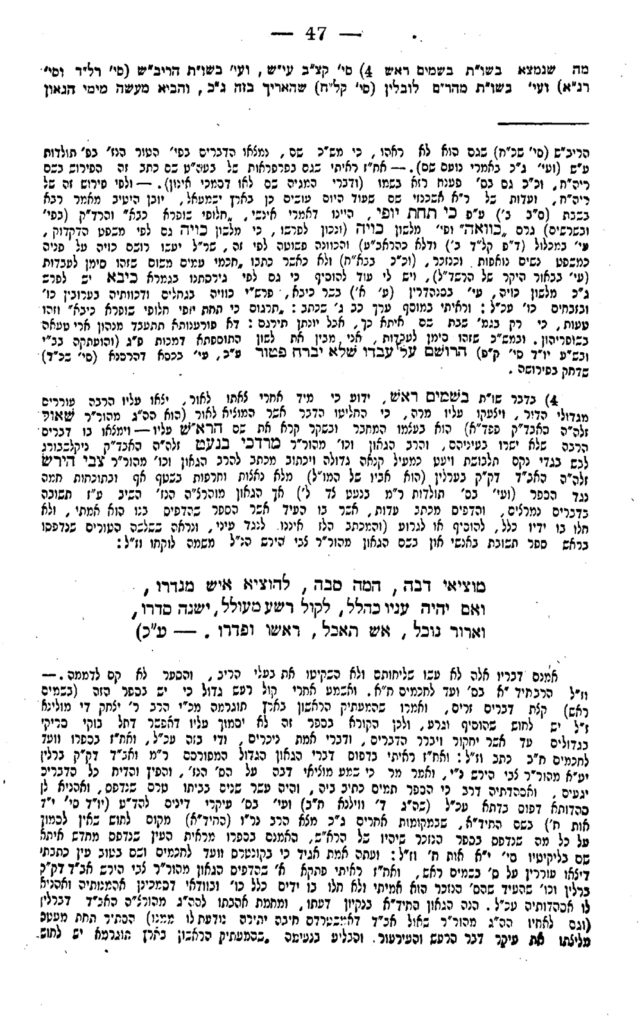
Here is the responsum from Besamim Rosh.

It never uses the words “in our area”, and furthermore, the responsum is not from Nahmanides. It seems that R. Freundel makes the false assumption that at one time this book was attributed to Ramban because he thinks that R. Akiva Eger is citing a responsum of Ramban in Besamim Rosh. Yet Besamim Rosh was never attributed to Nahmanides nor to Isaac Molina.[1] The latter supposedly gathered the teshuvot (that is what it says on the title page, but this is part of Saul Berlin’s forgery). This means that R. Freundel’s critique of the Mishnah Berurah falls by the wayside, since the responsum in Besamim Rosh has nothing to do with the Ramban and thus nothing to do with the Mishnah Berurah’s point, which is derived from the Ramban. .

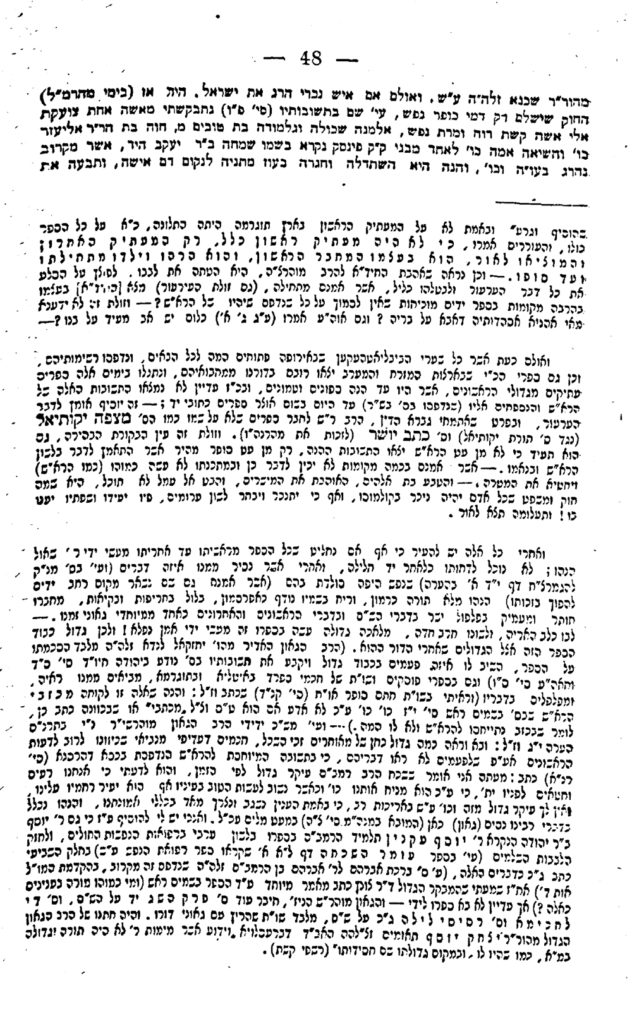
Here is the text from R. Akiva Eger.


In his heading he cites Ramban, but that is simply a quote from the Magen Avraham, and has nothing to do with the Besamim Rosh that he cites immediately following this. All R. Akiva Eger is doing by citing Besamim Rosh is providing another relevant text dealing with the issue under consideration, i.e., women and prayer. In R. Akiva Eger’s responsa, vol. 1, no. 9, he cites this same responsum in Besamim Rosh. (R. Akiva Eger thought that Besamim Rosh was an authentic work.[2]) 

However, how did R. Freundel ever assume that Besamim Rosh was citing Nahmanides? He never could have concluded this if he used the Machon Yerushalayim edition, which is the text I just used. He also could not have concluded this if he used one of the older editions of the Shulhan Arukh in which R. Akiva Eger’s note doesn’t even refer to Ramban. See here:

Yet here is the text as it appears in what used to be the standard edition of the Shulhan Arukh. In this edition there is a mistake in R. Akiva Eger’s text and it indeed has him stating that Nahmanides’ view is found in Besamim Rosh.

R. Freundel writes:
While all agree that women do not count towards adding Elokeinu, there is some debate about whether women can count among the three for zimmun. Nonetheless, even for those who say that women do count for the three no one suggests that a woman can lead if there are both men and women present. This is either because women’s obligation is rabbinic while men’s is Biblical or because the formal text of Birkat ha-Mazon contains references to certain mitsvot (e.g., circumcision) which are not applicable to women (emphasis added).
The passage I have underlined is incorrect. Ritva writes as follows[3]:

נשים חייבות בברכת המזון מן התורה, ולפיכך אשה מברכת לאיש על ידי זימון, או אם הוא עם הארץ להוציאו ידי חובתו כדרך שהאיש מוציאו.
See also R. Asher Ben Hayyim, Sefer ha-Pardes, ed. Blau (New York, 1984), pp. 176-177, and also the Hazon Ish, Orah Hayyim 30:8, who mentions that according to one approach in the rishonim גם הנשים רשאות לזמן כה”ג אם אין אנשים בקיאין . 

R. Yitzhak Yosef, Yalkut Yosef, Orah Hayyim 186:5, writes:
אשה שבירכה ברכת המזון ונתכוונה להוציא את האיש ידי חובתו, ושניהם אכלו כדי שביעה, בדיעבד יצא ידי חובה, ואינו צריך לחזור ולברך
A good discussion of the issue is found in R. Yehudah Herzl Henkin, Bnei Vanim, vol. 3, no. 1.[4]
R. Freundel writes:
The presence of a Hazan was essential to Magen Avot becoming a mandatory tefillah be-tsibburMagen Avot became mandatory with a Hazan. . . . If the presence of a Hazan makes a prayer mandatory, then Kabbalat Shabbat, which today has a Hazan in the vast majority of synagogues, is also mandatory.
I think R. Freundel has it all backwards. The presence of a hazan never made Magen Avot mandatory. Rather, when Magen Avot was made mandatory, it was required that there be a hazan. But what does this have to do with Kabbalat Shabbat which was never made mandatory by anyone?
R. Freundel writes:
R. Kook maintained that one who has heard the repetition of the Amidah on Rosh Hodesh thereby fulfilling his tefillah be-tsibbur requirement, but who must repeat his silent Amidah because he forgot Ya’ale ve-Yavo[,] counts among the six to whom four who previously prayed are added for recitation of devarim she-bi-kedushah. His repeat prayer constitutes tefillat rabbim in that venue, which is sufficient to count him in the majority of a tsibbur that has not yet prayed. Tefillat rabbim is, therefore, not a larger form of individual prayer, rather it is a diminished form of tefillah be-tsibbur and therefore, he counts because his is a minor act of communal prayer.
This description is incorrect as R. Kook does not “maintain” that which is being attributed to him. In his responsum, Orah Mishpat, no. 23, R. Kook presents both sides of the matter and concludes וצריך בירור. What this means is that he does not make a final decision. In any event, what does this have to do with someone such as a minor or a woman leading a prayer that is not obligatory?
The larger problem of R. Freundel’s article is that he makes assumptions which are simply not in accord with the practice of Jewish communities. For example, his argument leads to the conclusion that it should be forbidden (not just inappropriate, but forbidden) for someone under bar mitzvah age to lead any part of the service. Yet this is the practice in communities all over the world. Doesn’t every Modern Orthodox synagogue have a child lead Adon Olam? R. Freundel assumes that the only reason this can be permitted is because of hinnukh considerations. That is possible, but it is just as likely permitted precisely because there is no prohibition, and it is a nice thing to do. In other words, there is no default position that it is prohibited, from which one then needs to then find a way to permit.
The Beit Yosef, Orah Hayyim 53, discusses the practice of children leading the congregation in maariv and those who objected. He explains that the practice can be defended since there is no repetition of the Amidah, the hazan is not fulfilling anyone’s obligation for him, and maariv is also reshut. In other words, there are no considerations of hinnukh raised here, and for the Beit Yosef there is no default position that it is prohibited, and certainly no concept of tefillat rabbim, (which is mostly a hiddush of R. Freundel). It seems to be entirely a matter of synagogue etiquette, i.e., kevod ha-tzibbur, and if this can be overcome, then there is no halakhic problem. R. Yitzhak Zilberstein even argues that in an extreme circumstance (the particular case concerned a prison) one need not protest if a non-Jew leads the maariv service![5]
Let me stress that there is nothing wrong with R. Freundel coming up with a hiddush dealing with tefillat rabbim. However, a hiddush such as this cannot be the basis for forbidding a practice such as Partnership Minyanim. To see how far R. Freundel’s model takes him, in response to criticism he even stated that it is forbidden for a woman to recite tefillat ha-derekh on behalf of men and also to lead a communal recitation of Psalms. R. Freundel assumes that this is all tefillat rabbim and therefore forbidden for a woman to lead.
I have no doubt that if you ask the typical posek about a woman reciting tefillat ha-derekh or reading a Psalm before a mixed group of men and women, he will say it should not be done, for reasons of tzeniut or mesorah. But if you ask him if it is forbidden on account of tefillat rabbim, he won’t have a clue what you are talking about. Speaking historically, there is simply no such halakhic framework, and I find it hard to believe that people are going to be convinced that if some men and women sit down to read a few Psalms together (or a liturgical text of more recent vintage) that there is a prohibition for a woman to lead the recitation. (Again, I am not referring to tzeniut issues here.). Let me just remind readers that R. Ovadiah Yosef, relying on numerous rishonim, has ruled that if necessary a woman can read the Purim megillah for men (which might arise if no men know how to read it).[6] If the halakhically obligatory Megillah can be read by women for men, with none of the poskim saying a word about a concept of tefillat rabbim, then why should people accept that there is a prohibition for a woman to lead a group of men and women in recitation of a Psalm? (I realize that one can respond that reading the Megillah is not tefillah, but it would nevertheless be strange to permit a woman to read an entire book of the Bible before a group of men, and at the same time not allow her to read even a few verses from another book, i.e., Psalms.)
There is a good deal more to say about the phenomenon of Partnership Minyanim and the strange way they came about. Before Prof. Daniel Sperber got involved, the basis for them was an article written by an otherwise unknown rabbi in the Edah Journal. I can’t help but wonder about the halakhic methodology of changing traditional Jewish practice simply because a rabbi writes an article with some suggestions. If tomorrow a rabbi, any rabbi, writes an article arguing that in today’s day and age when men and women mix freely, that there is no need for a mehitzah in prayer (after all, it is not mentioned in the Shulhan Arukh), would that then give people carte blanche to remove the mehitzah? Had this not already been an issue between the Orthodox and Conservative, and thus of great symbolic significance, I am sure the mehitzah would already have been removed in liberal Orthodox synagogues. And what about counting women in the minyan? Halakhic arguments can be advanced for this as well. Is the only reason the liberal Orthodox don’t accept R. Ethan Tucker’s and R. Micha’el Rosenberg’s arguments[7] because of their non-affiliation with Orthodoxy? If an Orthodox rabbi had advanced the same argument as them, would it then be OK to move to complete halakhic egalitarianism?[8]
2. In a previous post I wrote about the dispute over whether there is pesak in hashkafah. Only recently did I see the following relevant statement of R. Soloveitchik, The Emergence of Ethical Man, p. 6 (emphasis added).
It is certain that the fathers of the Church and also the Jewish medieval scholars believed that the Bible preached this doctrine [the separateness of man from nature]. Medieval and even modern Jewish moralists have almost canonized this viewpoint and attributed to it apodictic validity. Yet the consensus of many, however great and distinguished, does not prove the truth or falseness of a particular belief.
In my article, I discussed some of the difficulties with the Hatam Sofer’s position that principles of faith can change with time, and are determined in a fashion no different than typical halakhic decisions. I argued that this understanding diverges from that of the rishonim. In R. Dovid Cohen’s recently published Ha-Emunah ha-Ne’emanah (Brooklyn, 2012), p. 41, he appears troubled by the Hatam Sofer’s approach.
                       
וקשה מאד להתאים דברי הח”ס שעיקרי הדת חשובים עיקרים שהכל צריכים להאמינם מפני ההכרעה שאז י”ל שהפורק עול שאינו רוצה לקבל ההכרעה נענש מטעם זה, אבל איך זה שייך לסברת האברבנאל והגרי”ז שמי שאינו מאמין אין לו התפיסה שיוכל להשיג עולם הבא האם ההשגה תלויה בהכרעה או במציאות של האמת והאם שייך לומר שלרב הלל יש חלק בעוה”ב והבא אחריו שסובר כוותיה אין לו חלק לעולם הבא שאינו יכל להשיג. . . . ועיין לקמן בעיקר ז’ שהערתי שמשמע מהאריז”ל ומבעל התניא שהם חולקים על החתם סופר ודו”ק.
What does the last word (abbreviation) mean, as it does not stand for ודוחק קצת, which is how it is usually understood? Furthermore, what are we to do with the expression והדברים ברורים ודו”ק that appears in Maharsha and elsewhere? I remember how in yeshiva we didn’t know what to make of this, since it obviously doesn’t  mean  ודוחק קצת. One rebbe told us that the abbreviation mark is a mistake and it should be read as  ודוק, that is, “examine it carefully” (like ודייק). It is also possible that the abbreviation stands for ודיק וקרא, although this meaning is not mentioned in Otzar Rashei Tevot. R. Meir Mazuz recounts that in Tunis they explained it: ואחר דרישה וחקירה קל. (Otzar Rashei Teivot has ודייק ותמצא קל). See his Lo Tashikh (Bnei Brak, 2005), p. 8 (first numbering). But he assumes that the real meaning is as I mentioned, i.e., ודייק.
Returning to R. Cohen’s book, it really requires a post of its own, as it contains all sorts of interesting things. Here is one example, from p. 127, where he suggests an interpretation of the Twelfth Principle of Maimonides according to which belief in a personal Messiah and other details in the Principle are not really  required beliefs.
וצ”ל שהעיקר הי”ב הוא גאולה באחרית הימים והכופר בזה הוא כופר גמור והפרטים שכתב הרמב”ם שיהיה משיח והוא מיו”ח של שלמה בן דוד אין זה מהעקרים שהכופר בהם אינו נחשב ככופר והוא חידוש עצום.
I only quote this for its novelty, as it is contradicted by Maimonides’ explicit words in the Principle. With reference to the detail of the Messiah’s genealogy, Maimonides states: “Included in this fundamental principle is that there will be no king of Israel except from David and from the seed of Solomon exclusively. Anyone who disputes concerning this family denies God and the words of His prophets.”
On p. 162 R. Cohen states that according to Maimonides even non-Jews are obligated to believe in the Thirteen Principles. He concludes his paragraph with ודו”ק, and again, it does not mean ודוחק קצת.
ועיין סוף פ”ח ממלכים שכתב וז”ל כי [כל] המקבל שבע מצות ונזהר לעשותן הרי זה מחסידי אומות העולם ויש לו חלק לעולם הבא. והוא שיקבל אותן ויעשה אותן מפני שצוה בהן הקב”ה בתורה והודיענו על ידי משה רבינו שבני נח מקודם נצטוו בהן. אבל אם עשאן מפני הכרע הדעת אין זה גר תושב ואינו מחסידי אומות העולם ולא מחכמיהם עכ”ל. ומשמע מכאן שהרמב”ם בא לכלול הגוים שהם חסידי אומות העולם שמאמינים בתורה, אבל אינם מאמינים בי”ג עיקרים שאין להם חלק לעוה”ב . . . הרי מוכח כנ”ל שגוי צריך להאמין בי”ג עקרים ודו”ק
Contrary to R. Cohen, when Maimonides speaks of righteous non-Jews being required to believe in the revelation at Sinai, this has nothing to do with acceptance of the complete Thirteen Principles.
One more point about R. Cohen’s book is that it is obvious that at times he is responding to what I wrote in The Limits of Orthodox Theology (and he also makes use of many of the sources I cite). While I am not mentioned by name (no surprise there) I am apparently included among the משמאילים referred to on p. 5 (see Limits, pp. 7-8).
Finally, let me add more comment about the Thirteen Principles. Just when I was about send in this post, I received the latest issue (Spring 2013) of the journal Conversations, published by Rabbi Marc Angel’s Institute for Jewish Ideas and Ideals. Each issue is a great read as it includes material from both well-known scholars as well as talented newcomers who have a lot to contribute and whose writings have often been real eye-openers for me.
Among the established writers in the new issue is R. Nathan Lopes Cardozo. If there is any contemporary writer in the Orthodox world who reminds me of the early Hasidic masters, the Kotzker, or even R. Jehiel Jacob Weinberg in his private moments,[9] it is R. Lopes Cardozo. Reading him one can sense how difficult it is for R. Lopes Cardozo to live in a world in which spiritual authenticity is in such short supply. As with his similar-minded predecessors, he too must protest, and the real perplexity is why so many others don’t join in this protest. The questions he asks, and what keeps him up at night, are exactly what should be on the mind of all thinking Orthodox Jews, even if one may disagree with the answers he gives.
His latest article, which appears in Conversations, is entitled “Lonely but Not Alone: An Autobiography by a Jew Who Should Never Have Been.” On p. 10 he writes:
It became clear to me that Judaism is based on the need for absolute questioning. I discovered that there are no absolute dogmas in Judaism, at least not in the way they are found within the Catholic Church. Maimonides’ famous Thirteen Principles of Faith, which are sung in nearly every synagogue on Friday nights, were never accepted as the final version of Jewish belief and were in fact heavily attacked and challenged by the greatest rabbinical authorities. Today, I see that Maimonides’ thirteen principles caused major damage to Judaism. It was the famous Professor Leon Roth who once remarked: “For this Hebrew of Hebrews had in many respects a Greek mind and through his sense of logic and his passion for precision, he brought Judaism into a doctrinal crisis, the echoes of which are with us yet” (Judaism, A Portrait, 1960, p. 122). How true! Judaism, while surely consisting of certain beliefs, is open to self-critique, debate, and ongoing discussions that have almost never been resolved. This spoke to my imagination. A religion with no dogmas, always open to new ideas! What could be better than that!

3. In a previous post I called attention to a bizarre segulah from R. Zvi Hirsch Kaidonover which I didn’t translate and which I suggested the police might regard as a form of sexual abuse. The text is as follows:
ועוד סגולה נפלאה לתינוק הנולד שלא יקרה עליו חולי נכפה בר מינן, מיד כשנולד ישימו בפיו ברית קודש של תינוק ויהיה ניצול כל ימיו מחולי נכפה
If you thought that this was strange, I guarantee that you will find the following, which was sent to me by a friend, even stranger.


The text comes from Meir Benayahu, Toldot ha-Ari (Jerusalem, 1967), pp. 224-225, and describes a “cure” recommended by R. Isaac Luria. The passage is too bizarre to translate. If the man who “came to the rescue” was just a man off the street it would be one thing. However, we see that it was none other than R. Moses Galante, a great sixteenth-century Torah scholar of the land of Israel who was given real semikhah by R. Joseph Karo. Even though the pre-modern mind was able to come up with all sorts of strange “cures”,  I would like to believe that the entire story is a fiction. But even if it never happened, the fact that people believed it happened tells us a great deal about their mindset.

On p. 110 n. 4, Benayahu cites the following text from R. Hayyim Vital (and note the shocking passage I have underlined):

בענין לילית ההורגות את הילדים מבן שמונה ימים ללידתם . . . נטיתי אז ושמתי אבר מילת נער קטן בפי הילד תכף כשנולד טרם שיינק . . . ואמנם פעמים אחרות עשיתי כל הנ”ל וגם דברים אחרים, שנבאר עתה, ולא ניזוק. ואלה הם: לשים אבר מילת אבי הנולד עצמו בפי הילד טרם שיינק
On p. 111 he records a story that once when a lion was about to attack R. Hayyim Ben Attar

גילה בריתו ברית קדש, וכשראה אותה האריה ברח מפניו . . . שמעולם לא ראה טפת קרי

All of these texts relate to the power of circumcision, a topic that is relevant to an earlier post here where I discussed the notion that Eliezer took an oath to Abraham by placing his hand on Abraham’s circumsision.

Returning to the first story quoted from Benayahu, there is no doubt that people can believe all sorts of strange things. There is currently a situation in London where a leading rabbi is charged with inappropriate contact with women. This rabbi denies the charges. However, he has admitted, so I am informed, that he did touch women in non-sexual ways, but this was done as part of his “therapy” which he claims was halakhically permitted. Now obviously we can’t have a situation where a male therapist, or  “therapist”, is arm wrestling or massaging his female patients. In fact, after everything we have seen these last few years, I think we can all agree that there can’t be any touching.

Imagine my surprise, therefore, when in the most recent volume of Ma’ayan Omer I came across the following text:


R. Ovadiah gives permission for a kabbalist to touch a woman as part of his kabbalistic healing. R. Ovadiah requires that he wear gloves when touching her, but this is still surprising, as once such a heter is given it is not too difficult to see where this can lead..

I didn’t know what to make of the words צריכה להתפשט. Does this mean that a woman can remove all her clothes if that’s what the kabbalist needs in order to complete the healing process? (According to news reports, the Breslov figure currently in the news for sexual impropriety operated in this way). I was certain it couldn’t mean this, but then what does it mean? I wrote to R. Avraham Yosef and here is his reply.

Even with R. Avraham’s explanations, both regarding the nature of the pesak and the limited removing of clothes, it is still very difficult to stomach. But I acknowledge that this is only because of my rationalist perspective and my assumption that virtually all of these “kabbalists” are more snake oil salesmen than anything else. (R. Yitzhak Kaduri, a real kabbalist, said that an authentic mekubal does not charge money for helping people, so that immediately knocks out some of the most popular “kabbalists” who make a very good living at their craft.) However, for one who believes that a kabbalist can heal just like a doctor, then all the heterim that apply to a male doctor, including touching a woman while healing her, would also apply to a kabbalist. Skeptical as I am, I wonder why such a powerful kabbalist can’t do his healing without touching the woman.[10]

[1] This information is available simply by googling “Besamim Rosh”, and the first two results are from Seforim Blog posts. The third result is Wikipedia which also states that Besamim Rosh is an eighteenth century forgery.
[2] This can be seen from how he cites the source, and see also his note to Shulhan Arukh, Even ha-Ezer 117, where he is explicit (this source was noted by one of the commenters on Torah Musings).
[3] Hilkhot Berakhot 7:2 (p. 106 in the Mossad ha-Rav Kook edition).
[4] R. Baruch Gigi, one of the roshei yeshiva of Yeshivat Har Etzion, believes that women saying birkat ha-mazon together with their families can be counted towards a mezuman. See Yonatan Gershon, “On Women Joining in a Zimmun,” Meorot 9 (2011), available here. I have yet to see this acted on in practice.
[5] Hashukei Hemed, Berakhot 51b. R. Zilberstein’s books contain some of the strangest cases. I don’t know whether these are actual cases or if people just ask him the strange questions knowing he will respond, or if perhaps even he makes up the questions so that he can then discuss the matter להגדיל תורה ולהאדירה
[6] See Yalkut Yosef, Dinei Keriat ha-Megillah, no. 12.
[7] See here.
[8] David Berger has recently alluded to Partnership Minyanim in his “Texts, Values, and Historical Change: Reflections on the Dynamics of Jewish Law,” in Michael J. Harris, et al., eds., Radical Responsibility: Celebrating the Thought of Chief Rabbi Lord Jonathan Sacks (Jerusalem, 2012). In referring to Haym Soloveitchik’s thesis in “Rupture and Reconstruction,” Berger writes (p. 204): “[S]ome of those who lionize the mimetic society as they savour the anti-haredi uses of Soloveitchik’s analysis are simultaneously impelled by feminist convictions to change generations of synagogue practice on the basis of textual analysis far more tenuous than the considerations that lead the traditionalist Orthodox to their usually more stringent deviations from the practices of the past. Affirmation or rejection of a mimetic ideal can depend very much on whose ox is being gored.”
[9] I think readers will appreciate this letter of R. Jehiel Jacob Weinberg. It first appeared in Mordechai Eliav and Yitzhak Rafael, eds., Sefer Shragai (Jerusalem, 1981), p. 275, and was reprinted in Ba’ayot Aktualiyot le-Or ha-Halakhah (Jerusalem, 1993), pp. 58-59. We are now sixty years after R. Weinberg wrote his letter, and not only have things not gotten better, but they have actually gotten much worse.

[10] In the recently published Mesorat Moshe, p. 612, it records that R. Moshe Feinstein responded as follows, after being told of a dentist who sexually assaulted female patients while they were sedated: אמר רבינו שממש פלא, דהלא זה כנגד החזקה שאומן לא “מרע אומנותו”. I don’t understand R. Moshe’s surprise, as he could say the same thing about teachers or anyone else who engages in this sort of behavior. Since we are dealing with people who are sick, there is no rational calculation for which you can apply the concept of מרע אומנותו. We have already seen numerous people who have destroyed their lives and their families by engaging in the sort of behavior, and taking the sort of risks, that simple self-interest would be enough to deter normal people from. (In a future post I will discuss other passages in Mesorat Moshe.) Also regarding sexual (and physical) abuse, R. Yosef Shalom Elyashiv writes, in discussing whether to inform the authorities (Kovetz Teshuvot, vol. 4, no. 198):
יש גם לשקול בגדר של ההתעוללות, שבהשקפה שלהם היא אחרת לגמרי משלנו
What does this mean? In what way is the religious Jewish approach to this matter superior to that found among non-Jews and non-religious Jews?

And finally, I found what I thought was a strange passage in R. Abraham Bornstein, Avnei Nezer, Even ha-Ezer no. 44. Much like Todd Akin, the Avnei Nezer thought that a woman couldn’t get pregnant through rape (unless . . . actually I would rather not explain it).

ואם היתה אנוסה מתחילה ועד סוף ולא רצתה בו כלל אי אפשר שתתעבר, רק שיש חשש שמא תחילה באונס וסופו ברצון . . . אלא ודאי כמ”ש משום דבאונס מתחלה ועד סוף אי אפשר שתתעבר

I have not found such a notion in any earlier rabbinic source. However, S. of On the Main Line called my attention to Rachel P. Maines, The Technology of Orgasm (Baltimore, 2009), pp. 51-52, from which we see that there was indeed a long-standing view that conception was not possible without female orgasm or at least desire.


The Case of the Missing Books: Besamim Rosh in Berlin and St. Petersburg

While we have previously discussed how the Besamim Rosh to this day remains an enigma, there are two important texts which may have bearing on this issue. Benjamin Richler has been kind enough to provide additional information about these two sources. We therefore pick up from Benjamin Richler at the Jewish National and University Library:

The Case of the Missing Books: Besamim Rosh in Berlin and St. Petersburg
by Benjamin Richler

There are two sources concerning the Besamim Rosh that researchers would like to consult but cannot find.

One is a manuscript copy that belonged to Abraham Geiger and was briefly described in the list of Geiger’s manuscripts presented to the Hochschule für die Wissenschaft des Judentums in Berlin in Hebraeische Bibliographie, 17 (1877), p. 11, no. 3.[1] According to the description the manuscript that may have been an autograph was dated 1757 and includes the introduction by R. Zvi Hirsch Berlin. Until 1984, nothing was known about the fate of the manuscripts in the Hochschule; it was assumed that the Nazis confiscated the library but it was not found after the War. In 1984 Sotheby’s offered a collection of Hebrew manuscripts for sale and before the sale it was identified as belonging to the Hochschule. These books had been smuggled out of Germany before the War. [2] Two of the manuscripts in Geiger’s list were not included in the sale. One of them is the Besamim Rosh. For years after 1984 it was considered lost, but recently it came to light in a collection of archives and manuscripts looted by the Nazis and later captured by the Red Army. These documents and books were kept in what was called the “Special Archives” recently renamed “The Center for Safekeeping of Historical Collections of Documentation” in the Russian State Military Archives in Moscow. The manuscript was microfilmed for the Institute of Microfilmed Hebrew Manuscripts in Jerusalem where I examined it. The manuscript seems to be a neat copy, rather than an autograph draft, and when compared with the printed edition, I could find no significant differences in the text. I must admit, however, that I only checked a few passages at random, especially the beginning and end. My impression is that the manuscript is written in an Ashkenazic script of the 18th century. It may have been the copy that was sent to print or a copy that was made for R. Tzvi Hirsch before it was printed.

The second source that has not been examined for decades, perhaps for over a century, is a copy of the first edition with notes and additions by R. Saul Berlin himself. This copy was described by Shemuel Wiener who edited קהלת משה, the catalogue of the library of Moshe Aryeh Leib Friedland donated to the Institute of Oriental Studies in the Academy of Sciences of Russia located in St. Petersburg. [3] While the Friedland Library survive the War unscathed, and the manuscripts are accessible at the Oriental Institute, the 14,000 printed books were sent to storage and according to a senior fellow of the Oriental Institute who tried to extract this volume, it is impossible to locate any titles as the books are piled up to the ceiling in no particular order. Until premises are found to shelve the collection, the annotated copy of Besamim Rosh will remain inaccessible.

Sources:
[1] Geiger’s name is not mentioned in the description, but Moritz Steinschneider, the editor of HB who probably wrote the descriptions, identified Geiger as the owner in his Vorlesungen über die Kunde hebräischer Handschriften (Berlin 1897), p. 64, n. 29.

[2] The manuscripts were in the possession of Prof. Alexander Guttmann, formerly a professor in the Hochschule, who claimed that the manuscripts were given to him in 1936 for safekeeping. After it became known that the MSS were originally the property of the Hochschule, the State of New York disputed the sale. A settlement reached by the parties resulted in the formation of the Judaica Conservancy Foundation, a joint undertaking of Jewish institutions of higher learning in the United States, England and Israel. Twenty-two lots, including nineteen MSS sold at the auction, were recalled and given to the Foundation, which deposited them in the libraries of some of its members. It also authorized the proceeds of the sale of two of the MSS, to be awarded to Guttmann in consideration of his role in saving the MSS.

[3] Volume 1, Petersburg 1893, no. 1793, Wiener noted that the manuscript was purchased from the bookseller and scholar R. Raphael Nathan Rabinovicz, author of Dikdukei Soferim.


Special book offer: Besamim Rosh

Special book offer: Besamim Rosh

By Eliezer Brodt

One of the most famous forgeries in Jewish literature is the Shu”t Besamim Rosh. This work was brought to print by Saul Berlin in 1793. Shortly after it was detected as a forgery.

Over the years the Seforim Blog has featured many essays about this work (here, here, here, here, here, here). For a valuable post about the subject see here.

For some very recent work on the BR see the three-part series by Rabbi Chaim Tessler, (PDF’s available upon request). On the BR’s famous teshuvah about Suicide see Eliezer Sariel, A Matter of Life and Death: The Halakhic Discussion of Suicide as a Philosophical Battleground, Studies in Judaism, Humanities, and the Social Sciences, 2018 pp. 91-103.

Its worth seeing this interesting piece by R’ Mattityahu Strashun about the BR:

R’ Strashun concludes this lengthy discussion, stating that he heard that: “the great critic Dr. Zunz, wrote a special article on the Besamim Rosh and who is like him in such things, but the work did not reach me yet.” This essay of Zunz was recently translated into Hebrew in Avraham Frankel: Rites of Synagogue Liturgy, Jerusalem 2016, pp.256-258.

In an earlier post we wrote:

In 1984, the BR was reprinted …  This edition, edited by R. Reuven Amar and includes an extensive introduction, Kuntres Yafe le-Besamim, about BR.  Additionally, commentary on the BR by various rabbis is included.  The text of this edition is a photo-mechanical reproduction of the first edition.  This edition contains two approbations, one from R. Ovadiah Yosef, who in his responsa accepts that BR is a product of R. Saul Berlin, but R. Yosef holds that doesn’t diminish the BR’s value.  The second approbation is from R. Benyamin Silber.  But, R. Silber provides notes in the back of this edition and explains that he holds the BR is a forgery and that he remains unconvinced of Amar’s arguments to the contrary.[1]

For many years this 1984 version of the BR has been almost impossible to find. A few weeks ago, a very limited run of the 1984 BR edition was reprinted and is available exclusively via Mizrahi Books.

Mention the Seforim Blog & the price is $22. Postage is $4 for one volume, and just $1 for each additional copy and naturally it can be picked up at the store as well. International postage is available at cost, contact Israel Mizrahi for an exact quote (call 347.492.6508). Payment can be made via paypal, credit card over the phone, check, or money order (if sending money, the address is 3114 Quentin Rd, Brooklyn, NY 11234). Contact info and PayPal is to bluebirds15@yahoo.com. It can also be ordered online here.

[1] To add to Samet’s and Amar’s very comprehensive lists of acharonim who quote the BR, see Eliezer Brodt, Yeshurun 24 (2011), pp. 426-427. See also Eliezer Brodt, Besamim Rosh in Galicia (forthcoming) IYH.


Marc B. Shapiro – Forgery and the Halakhic Process

Forgery and the Halakhic Process
by Marc B. Shapiro


What is the role of academic learning in the determination of halakhah? In particular, I am referring to knowledge which is not available to the posek and which would affect his halakhic decision. This is, of course, a wide-ranging issue of which I will only discuss one aspect here, that relating to forgery. However, since the issue of the Mosaic text and R. Moshe Feinstein is relevant here, and I mentioned both of them in my last posting, let me make a few brief preliminary comments on this.


In The Limits of Orthodox Theology I quoted the following comment of R. Bezalel Naor, who was quoting his teacher, the Gaon R. Shlomo Fisher of Jerusalem: “The truth, known to Torah scholars, is that Maimonides’ formulation of the tenets of Jewish belief is far from universally accepted.” For those who don’t know, R. Fisher is one of the gedolim of our time, and you can see many of his shiurim on yeshiva.org.il. Many of these shiurim focus on Talmud (and he has published the great rabbinic work, Beit Yishai), but R. Fisher is also the only one of our gedolim who is an expert in Jewish philosophy. This explains why his Derashot Beit Yishai are very different than other collections of derashot. Professor Zev Harvey told me that from R. Fisher’s edition of Crescas’ Or ha-Shem, it is clear that he used Wolfson’s Hebrew text found in Crescas’ Critique of Aristotle.[1]

Someone I know currently attends R. Fisher’s weekly shiur on Avnei Miluim, the last half-hour of which is devoted to issues of hashkafah. Interestingly enough, he reported to me that a few weeks ago R. Fisher declared that he believes the Rambam abandoned his system of 13 Principles, the proof being that they are never mentioned as a unit in the Mishneh Torah.[2] In my book, I noted that R. Shlomo Goren held the same view. R. Goren also makes another interesting point, that while in the Commentary on the Mishnah Maimonides requires one to actually believe in certain principles, in the Mishneh Torah he only requires you not to deny any principles. One who has never heard of a principle obviously does not believe in it, which makes him a heretic according to the Commentary on the Mishnah. But according to the Mishneh Torah, since this person does not actually deny the principle, he is not regarded as a heretic.


Getting back to R. Moshe, as is well known, he ruled that the Commentary of R. Yehudah he-Hasid was a forgery, as he could not imagine that a rishon would acknowledge that there were some post-Mosaic passages in the Torah.[3] Only after my book appeared did Rabbi Naor tell me that the comment I quoted above in the name of R. Fisher was stated precisely with reference to R. Moshe’s positon on this issue. After R. Moshe banned R. Yehudah he-Hasid’s Commentary, R. Fisher commented that R. Moshe assumes that R. Yehudah he-Hasid has to accept the Rambam’s Principles, but in truth there were many disagreements with the Rambam, and R. Yehudah he-Hasid’s position on Mosaic authorship is one of them.

Along these lines, I read a recent shiur by R. Moshe Zuriel, a well-known baal machashavah in which he affirmed that all must accept the Thirteen Principles. I wrote to him asking what he would say about those who accepted the views of sages who disagreed with the Rambam, and I specifically referred to Ibn Ezra’s (exoteric) position that the last twelve verses were written by Joshua, which is a rejection of Maimonides’ insistence in the Eighth Principle that the entire Torah is Mosaic. He replied (emphasis added):

ודאי אני מודה שהסומך על ראב”ע (או אברבנאל וכיו”ב) ביחס לפסוקים הנוספים, איננו
נחשב לכופר, והוא נחשב ישראל . . . וכן כל דבר שיש מחלוקת ראשונים
In fact, in addition to the sources I cited in my book, Ralbag also says something interesting in this regard. Joshua 24:6 states:
ויכתב יהושע את הדברים האלה בספר תורת א-להים
Regarding this verse, the Talmud records a view that the reference is to the last eight verses of the Torah. But Ralbag explains it as referring to different verses:

ויכרת יהושע ברית לעם: על זה להיותם עובדים את ה’ ולהשאיר זכר לזה המעשה למען יבושו ישראל אם יסורו מאחרי ה’ כתב יהושע את הדברים האלה בספר תורת הא-להים

Another relevant source, which I also recently found, is R. Solomon David Sassoon, who wrote as follows (Natan Hokhmah li-Shelomo, p. 106; emphasis in original):

הדגש הוא על מה שאומר כי משה אמר זה מפי עצמו, אבל אם יאמר פסוקים אלה נביא אחר כתב אותם מפי הגבורה ומודה שקטע זה הוא מן השמים ומפי הגבורה, אדם שאומר כך אינו נקרא אפיקורוס, מה שהגדיר אותו כאפיקורוס אינו זה שאמר שלא משה כתב את הקטע אלא בזה שהוא אומר שדבר שזה מדעתו ומפי עצמו אמרו ושאין זה מן השמים

According to R. Sassoon, one who believes that parts of the Torah were written by a post-Mosaic prophet is not a heretic. (In another post I might speak more about the great R. Sassoon and his unique family.)

One of the strange passages in R. Yehudah he-Hasid’s Commentary is his assertion that the Hallel ha-Gadol (Psalm 136) was originally part of the Pentateuch and was later removed by David and placed in the Book of Psalms. In my book I note that this idea is also found in both R. Avigdor Katz (a rishon) and R. Menahem Zioni. I wrote: “Apparently, there was some tradition regarding this verse, the source and nature of which is unknown.” After my book appeared, R. Yaakov Hayyim Sofer published his Hadar Yaakov, vol. 1. On page 39, he notes that in two works of R. Eleazer ben Judah of Worms (the Rokeah), he mentions that Hallel ha-Gadol was recited by the Israelites at the Red Sea, a notion that is not found in extant rabbinic literature. (In Pesahim 117a it states that they recited the regular Hallel.) In R. Eleazar’s Siddur, p. 214, he cites Seder Olam as the source for this tradition. The editors refer the reader to Seder Olam Rabbah, yet nothing relevant appears there. Either R. Eleazar had a different version or he was referring to another book with this title. What is important for our purposes is that this tradition ties in with what is quoted by R. Yehudah he-Hasid and R. Avigdor Katz, even though the Rokeah doesn’t mention anything about this section being removed by David. Hopefully, more research into the writings of Ashkenazic rishonim will further illuminate matters.

Let me now speak of another issue, not of falsely ascribing forgery where there is none, but accepting as authentic that which is actually a forgery. The classic example is, of course, Besamim Rosh. There is no doubt that the volume is a forgery. There are those who have believed that at least some of the responsa are authentic, but it is more likely that the non-controversial material is a smokescreen for the controversial responsa. I plan to write an article about Besamim Rosh so I will not now reveal an internal proof, arrived at by use of a computer, that the book is a forgery. In an earlier article, I called attention to the fact that the Besamim Rosh assumes that a suicide has no share in the world to come, which is a popular 18th century conception, but not found among Ashkenazic or Sephardic rishonim.[4]

There is a talmid hakham, Rabbi Reuven Amar, who republished the Besamim Rosh and argues in his introduction that Saul Berlin was one of the gedolim. For all of his talmudic learning, Amar is very ignorant in this matter. He knows nothing about the history of Berlin and his haskalah ties. If he did, he would not have wanted to defend him. Yet Amar did know that many halakhic authorities quoted the Besamim Rosh, and he therefore wanted to turn it into a kosher book.

The problem Amar was faced with is what concerns me. What is one supposed to do with pesakim that rely on the Besamim Rosh? Fortunately, there can’t be many. In fact, offhand, I don’t know of any responsum in which a decision is based entirely, or even heavily, on Besamim Rosh, so that if you took this work away the decision would fall.

However, this is not the case with another forgery, as here the forgery is cited by all halakhic authorities of the last 140 years. I am referring to the Sefer ha-Eshkol, attributed to Rabbi Abraham ben Isaac. It was published by Rabbi Zvi Benjamin Auerbach (1808-1878), one of the leading German rabbis of his time. He was also the most prominent member of the famous Auerbach rabbinic family, which together with the Bamberger and Carlebach families (the ABCs, as they were known) were the most prominent rabbinic families in Germany.

According to Auerbach, his Sefer ha-Eshkol came from a Spanish manuscript. The work quickly became popular among scholars and was adorned with Auerbach’s commentary Nahal Eshkol, which is a mine of rabbinic knowledge. It came as quite a shock when in 1909, many years after Auerbach had died, the great scholar R. Shalom Albeck accused him of having invented the story of the Spanish manuscript in order to enable him to forge the work. This accusation aroused a great storm and four of the leading Orthodox scholars – David Zvi Hoffmann, Abraham Berliner, Jacob Schor, and Hanokh Ehrentreau – rushed to defend Auerbach, publishing the booklet Tzidkat ha-Tzadik (Berlin, 1910).

It is obvious that Auerbach’s defenders never gave Albeck’s charge any serious consideration. In their eyes, the fact that Auerbach was universally regarded as a tzadik, as well as one of the gedolim of Germany, rendered the accusation invalid from the start. There was no way they could impartially consider the evidence. In their mind they knew that for a pious Jew, some things are just impossible. Albeck responded to Tzidkat ha-Tzadik with the booklet Kofer ha-Eshkol (Warsaw, 1911), which explains how Albeck knew that the work is a forgery. In discussing the dispute between the four scholars on one side, and Albeck on the other, R. Shlomo Yosef Zevin[5] showed which side he was on.


אחד מול ארבעה – וההרגשה היא, שהנצחון לצדו של האחד

As far as I know, every academic scholar who has examined the evidence has concluded that Albeck is correct, and Auerbach’s Sefer ha-Eshkol is a forgery. This is so despite the defense of Auerbach by Issachar Dov (Bernard) Bergman in his essay in the Joshua Finkel Festschrift (New York, 1974;[6] it also appears in Sefer ha-Eshkol, vol. 4 [Jerusalem, 1986]).[7]

Needless to say, the supposed Spanish manuscript has never been found. In the words of Prof. Haym Soloveitchik, “Auerbach’s Eshkol appears as a clear forgery, incorporating arguments found in sixteenth, seventeenth, and even eightennth-century writings. . . . [The work] should not be used for historical purposes.[8] For this reason, I criticized Avi Sagi and Zvi Zohar for citing Auerbach’s Eshkol in their Giyur u-Zehut Yehudit.[9] R. Bezalel Naor writes:
I was told the following anecdote by Rabbi Aharon Lichtenstein. Licthenstein’s father-in-law, Rabbi Joseph Baer Soloveitchik (of Boston) expressed to Rabbi [Hayyim] Heller his amazement that the same obscure opinion of Mordecai in Niddah was to be found in the Eshkol, to which his mentor Hayyim Heller responded: “That is all?! You can find in Auerbach’s Eshkol a peckel Peri Megadims.” (Yiddish, a pack of Peri Megadim). . . . Prof. S.Z. Leiman informs me he found other irregularities in Auerbach’s historical works.”[10]
The late Prof. Israel M. Ta-Shma assumed that Auerbach’s Eshkol is a fourteenth-century forgery that he innocently published.[11] In discussing the issue, Ta-Shma makes the following incredible statement:

לדעתי עשה זאת משה די ליאון, וכך שמעתי גם מפי חברי פרופ’ י. זוסמן

De Leon is commonly said to have died in 1305, so unless the forgery was done at the very end of his life, we would be dealing with a 13th century forgery. In his Ha-Nigleh she-ba-Nistar, p. 144 n. 203, Ta Shma indeed writes

ויש רגליים לדבר כי זיופו, במגמה לקרבו לספר הזהר ותכניו, נעשה כבר במאה הי”ג

Yet Ta-Shma’s assumption doesn’t take into account that Auerbach’s Eshkol almost certainly contains material from later centuries. Furthermore, Ta-Shma ignored the well-founded assumption Auerbach forged other documents. According to Moshe Samet, some of Auerbach’s forgeries were actually designed to further a Neo-Orthodox agenda.[12] (It is well known that people who forge rarely do so once. Rather, seeing that they got away with it, they continue in this path, getting some sort of perverse pleasure from fooling the world.)

In Mordechai Breuer’s Modernity Within Tradition, p. 202, in discussing Orthodox scholarship and how it was often not rated highly by others because of its binding preconceptions, he writes:

One such example was the attempt of some scholars, especially R. Kirchheim in Frankfurt and Schalom Albeck in Poland, to expose the chief scholarly work of the late Rabbi B.H. Auerbach of Halberstadt (Ha-Eshkol, with commentary and notes, Nahal Eshkol, Halberstadt, 1861), as a plagiarism and a forgery. In spite of certain discrepancies in Auerbach’s work, this attempt failed after his defenders could prove that the attacks had not been free of prejudice.

In Between The Yeshiva World and Modern Orthodoxy, p. 77 n. 8, I responded to this as follows:

Breuer seems to be mistaken in pointing to the dispute over the authenticity of B. H. Auerbach’s edition of the Eshkol as an example of this phenomenon [i.e., Orthodox scholarship being looked down on]. To begin with, the main assault on Auerbach was led by Shalom Albeck (1858-1920), himself an Orthodox Jew. Secondly, this dispute had nothing to do with dogma interfering with scholarship, but was simply a question of whether Auerbach had forged the text. Finally, it is not so clear that Albeck’s attempt failed, as Breuer would have it. On the contrary, the authenticity of Auerbach’s edition is still highly questionable.
When I wrote this paragraph I didn’t want to appear disrespectful to Prof. Breuer, which is why I used soft language. In truth, as far as scholars of medieval halakhic literature are concerned, Albeck was entirely successful. As I note above, the attack of Albeck on Auerbach had nothing to do with the sort of “Orthodox scholarship” Breuer was referrring to, and which was subject to criticism by non-Orthodox scholars. Albeck wasn’t attacking Auerbach because of his supposed Orthodox close-mindedness.

Yet the point Breuer makes actually has relevance to another aspect of this dispute, and here I refer to the defense of Auerbach by the four scholars. Here we do find dogma of a sort, since they make it clear in their defense that the whole accusation is ipso facto invalid, and they even cite the Rambam, Commentary to Avot 1:6, that if you see a tzaddik do something that looks like a sin, you must assume that there is a reasonable explanation, even if it is very far-fetched.

Albeck’s response to this is that the Rambam is referring to a tzaddik who commits a sin between him and God, but not someone who


מתעה את לבות גדולי ישראל מורי ההלכה ודורשי החכמה, ודאי מצוה וחובה על כל איש המכיר בו, להוציא את בלעו מפיו, למען יהיה לאות לבני מרי, ולא יוסיפו לחלל ש”ש ולזייף את התורה

The issue mentioned by Albeck, that of the poskim being misled by a forgery, is what I would now like to raise. What is one to do if one sees that a posek has decided a halakhah based on the forged Eshkol? Is this person obligated to reject the pesak, or can he rely on the authority of the posek, even though the posek himself was misled. This obviously has implications for the use of the Zohar in pesak as well, as the poskim regard it as a tannaitic work. Yet I think everyone outside of the haredi community who has studied the issue assumes that it is a medieval work.

Rabbi Jehiel Jacob Weinberg raised a similar concern with regard to the Shulhan Arukh. There are certain halakhot which are based on false readings. He wondered if in a case like this we have to establish a new halakhah, or since we have accepted the Shulhan Arukh’s ruling we don’t change the halakhah but rather find a different justification for it.

Some might also see some connection with another position of R. Weinberg. As I noted in my book. R. Tam’s states that sex with a Gentile does not cause a woman to become forbidden to her husband. R. Weinberg had ethical problems with the reason R. Tam gives, and I don’t think it goes too far to say that he thought that, from our modern perspective, R. Tam’s justification is to be regarded as immoral.[13] Yet I also note that in seeking to find a heter for a woman who committed adultery with a non-Jew to return to her husband he is prepared to make use of R. Tam’s position.[14] I don’t think this raises any problems, since at the end of the day, R. Tam’s position is part of the halakhic tradition. If it can be used to to reach a lenient decision, then it serves a purpose, even if the contemporary posek doesn’t agree with the underlying assumptions of R. Tam’s pesak (Parallel to this is the widely accepted view that there is nothing wrong with using information derived from Nazi experiments on humans if it can help people. Obviously, everyone agrees that the experiments should never have been carried out, but once they were, the information can be used) As I said, I don’t see this as problematic, but I mention it since some might see it as an inconsistency in R. Weinberg.

An example which is more directly relevant is the following. In June of this year Prof. David Berger gave a presentation at Yeshivat Chovevei Torah on Jewish views of Christianity (as well as how to relate to Chabad). In his discussion of Christianity he explained the concept of shittuf, first mentioned by the Tosafists, and how in its original meaning it did not mean that non-Jews are permitted to believe in one God divided into different parts. Those who want the details on this can see Katz’ discussion in Exclusiveness and Tolerance. Katz was the first academic scholar to point to what he regarded as the common misinterpretation of the Tosafot. In addition, a number of poskim have concluded similarly, most notably the son of the Noda bi-Yehudah, whose responsum was published in his father’s work.

In my response to Berger I asked the following question (addressing myself to him):

You are certain that the common understanding of Tosafot is mistaken. Yet this understanding became the standard for poskim in Western Europe. It is also shared by the Rama. Do you feel that there is anything wrong with someone who agrees with you as to the historical truth nevertheless relying on those poskim who misinterpreted the Tosafot? In other words, do the decisions of the poskim based on Tosafot have independent validity even if their interpretation of Tosafot is incorrect?[15a]
Prof. Berger replied that he did not regard as illegitimate to rely on a pesak even if from the standpoint of historical scholarship, the pesak is incorrect. In the case we were discussing, one could legitimately rely on heterim which are based on the notion that according to Tosafot Gentiles are not obligated in shittuf, even though from a historical, i.e., factual perspective, Tosafot never said this. Historical truth and halakhic pesak thus occupy different realms.

While I understand Berger’s point, I think some reading this might be very uncomfortable with such a notion, namely, that one can have a historical truth and a halakhic truth, with the two being at odds with each other; or to put it another way, that a halakhic truth can be based on a historical error and yet still have validity. This brings us dangerously close to the old Latin Averroist notion of “double truth.” [15b]


Returning to Auerbach’s Eshkol, I am aware of only one posek who has refused to grant it any validity, and I daresay that the overwhelming majority of poskim are not even aware that it has been subject to controversy. The posek I am referring to is Rabbi Yitzhak Ratsaby. For those who don’t know, R. Ratsaby is one of the leading – if not the leadiing – Yemenite posek in Israel. He is an incredible scholar whose many works are particularly valuable as he records a variety of Yemenite practices and quotes from relatively unknown Yemenite writings, including from manuscript. He comes from the Kabbalah-friendly Yemenites, as uses the appellation of אחר in referring to R. Joseph Kafih. [16] Reflecting the typical haredi outlook, when he needs to refer to R. Kook, he writes “הרא”ק.” Doing so denies R. Kook the rabbinic titles given other great rabbis, and also spares haredi eyes from even seeing the name “Kook” in print.[17] Most haredi readers won’t even recognize who he is referring to. This is particularly unfortunate as it was R. Kook who stood together with many of the great Yemenite rabbis in opposing R. Yihye Kafih’s anti-Kabbalah stand. In Emunat ha-Shem, the volume published against R. Yihye Kafih, R. Kook’s two letters appear at the beginning. R. Kook is referred to as

רבנו הכהן הגדול נר ישראל וקדושו גדול הדור ונזרו מרן

R. Ratsaby is an example of how Ashkenazic haredi extremism and close-mindedness has also influenced those who do not come from this tradition.

Despite this flaw, there are many very interesting things in his works. Because my last post dealt with issues of dogma, let me refer to what R. Ratsaby states in Olat Yitzhak vol. 2 no. 259. He refers to the list of 24 heretics with no share in the world to come, enumerated by Rambam in Hilkhot Teshuvah, ch. 3. Among those are people who say there is no God, or there is more than one god – in other words, classic heretics. But according to R. Ratsaby, even though these people are heretics with no share in the world to come, that doesn’t mean that they can’t fulfill someone else’s religious obligation. As R. Ratsaby puts it

אפילו אותן עשרים וארבעה והנוספים עליהם שברור ומוסכם שאין להן חלק לעוה”ב, לא שמענו שאינן מוציאין אחרים ידי חובתן בברכות וכיוצא בזה, דסוף סוף הוא מחוייב בדבר וכל המחוייב מוציא יד”ח

R. Ratsaby is not referring to allowing such a person to daven for the amud, for which someone must be a proper Jew. Rather, he is speaking of the halakhah per se, i.e., if a heretic can be motzi someone else. I think the instinctive response of people would be that, of course, someone who is a heretic cannot be motzi someone else, and R. Moshe Feinstein states so explicitly. R. Ratsaby removes the issue from one of belief, and instead focuses on the obligation.which all Jews share.

In this same teshuvah, R. Ratsaby also points out something else quite interesting. Following the list of the twenty four who have no share in the world to come, Rambam gives a list of another group who, if they persist in certain evil actions (e.g., embarrassing someone in public, shaming scholars, etc.) also have no share in the world to come. He quotes R. Avraham ben ha-Rambam (hiddushim at the beginning of Ma’aseh Rakah) who cites his father as explaining that the way this works is that someone who is accustomed to do such bad things things will, almost of necessity, not be inclined to do what needs to be done to achieve immortality. In fact, it is much more likely that he will be led to those sins that really do deprive you of the world to come. But one should not take what Rambam writes literally, namely, that these sins by themselves cause one to lose his share in the world to come.


Returning to the Eshkol, many years ago I was studying R. Ratsaby’s Olat Yitzhak, vol. 1, and on page 410 I came across the following:

לענ”ד אין לחוש לדברים מחודשים שבספר זה שהוא בחשש גדול של זיוף, ואין להכחיש מה שהלב מרגיש

I found this quite amazing, since I knew of no other posek that recognized what modern scholars had determined. I was curious if he came to this on his own or had read Albeck’s pamphlet. He replied to me on 13 Iyar 5750


חשד הזיוף אצלי הוא מתוך העיון בדברים החדשים שם בקרב הראשונים ולקוחים מדברי אחרים (מה שראיתי דר”כ [=דרך כלל] היה לקוח מהבית יוסף) וגם הסגנון, שחנני השי”ת להכיר כזאת בטביעות-עין והלואי שאני טועה, אבל רחוק בעיניי מלצרפו עכ”פ לענין הלכה. ספר כופר האשכול לא בא לידי


I wrote back to him asking why, if he regards Auerbach as a forger, does he cite the Nahal Eshkol. He replied

נחל אשכול שאני מביא על אף החשד שלי נגד ספר האשכול גופו משום שאין לפסול גוף הדברים אם הם ניתנים להאמר מצד עצמם, רק לא לסמוך על ספר האשכול כמשקל בהכרעה בהלכה

R. Ovadiah Yosef offers the same justification in his haskamah to Amar’s 1983 edition of Besamim Rosh

חרף הביקורת שנמתחה על הספר “בשמים ראש”, במילי מעלייתא דאית ביה דרשינן

The last words come from Sanhedrin 100b, where R. Joseph says about the book of Ben Sira, “we may expound the good things it contains.” It would seem that using this logic, there can be no objection to studying the talmudic commentaries and halakhic writings of non-Orthodox rabbis, since one might find there a good argument or explanation of the sources. After all, Saul Berlin, the forger of Besamim Rosh, was a subversive, trying to destroy traditional Judaism from within. This makes him much worse than the typical Reform rabbi who has nothing to do with the Orthodox.


The summer is fast coming to an end, and with it, my free time to write things like this. But I have a number of other examples of forgery which I might post here, if people are interested (I am saving my examples of censorship for the book which I am hard at work on). Many people have told me that they like my “derekh agavs,” so I threw a lot of them in here, and I apologize to those who don’t like the many tangents.


Appendix


Since I don’t know when I will have a chance to write a new introduction to my book, and it is once again in the news with Rabbi Leff’s review, let me quote the following passages from R. Kook’s Shemonah Kevatzim 1:30-31 (I hope that R. Kook is still an acceptable authority for Jewish Action). Two important things stand out. First, while not condoning orthopraxy, R. Kook states that one who is observant, despite the fact that he denies ikkarim, is to be regarded as an erring Jew, not as a heretic. R. Kook’s position is a complete rejection of the idea that people who are shomrei Torah u-mitzvot can be read out of the fold and be regarded as heretics because of their incorrect beliefs. The second important point is that he rejects the Rambam’s entire theological conception of Principles of Faith and alligns himself with the Ra’avad, showing once again that the Rambam’s position has not attained unanimity.

אף על פי שהטעות בדברים האלהיים הוא דבר מזיק עד מאוד, מכל מקום אין עיקר ההיזק הנמשך מהמושגים המשובשים יוצא אל הפועל, עד כדי להמית את בעליו מיתת נשמה, רק כשהוא מתגלם במעשים, או לפחות כשהוא יורד לתוך דעות ורגשות כאלה שסופן מוכרח להתגלות במעשים. אבל כל זמן שהדבר עומד בצורתו המופשטת, אין כאן עקירה עקרית
ובזה הננו קרובים לסברת הראב”ד, שהשיג על הרמב”ם במה שקרא למי שמאמין ההגשמה באלהות מין. ונוכל להסכים, שכל זמן שאותו המגשם לא יעשה לו פסל ותמונה, הרי לא גמר את מחשבתו, ונשארה היא עדיין בחוג הרוח שלא תוכל להיות נכללת בשם עקירה ויציאה מן הדת

In a wide-ranging article which deals among other things with R. Kook’s view of heresy, the important scholar R Yoel Bin Nun[19] explains why R. Kook rejected the Rambam’s approach to heresy. R. Bin Nun also states that if you take what the Rambam says seriously, the Rambam himself, if he were alive today and saw how Aristotelian science has been overthrown, would not regard people who disagreed with his principles as heretics. In R. Bin Nun’s words (emphasis added):[19]

שיטת הרמב”ם ברורה: יסוד שתלוי באמונה, ואין בו הוכחה שכלית, וכל החכמים מתווכים עליו, אי אפשר להגדיר את מי שאינו מאמין בו כ”כופר” או כ”מין”. עצם העובדה שהדבר נתון בוויכוח שכלי בין החכמים מאפשר ומחייב לבנות על עולם האמונה, אך אינו מאפשר לשפוט ולדון את הכופרים. רק ודאות שכלית מוחלטת מאפשרת לדון אדם כמזיד בשאלות של אמונה וידיעה

In other words, according to R. Bin Nun there is no justification today for calling people heretics because they reject one (or more) of the Thirteen Principles.[20] (when he refers to hakhamim disputing matters, he is not referring to Torah scholars, but the general scientific-intellectual world). Whether R. Bin Nun is correct in his analysis of Rambam is not my purpose at present; I only wish to show that this outstanding rabbinic figure has a very tolerant view, one which rejects the Thriteen Principles as determining who is a heretic.

Notes:
A future post will deal with other issues of this controversy, and at that time S. Z. Havlin’s article on the issue in Yeshurun vol. 13 will be discussed.

[1] Professor Isadore Twersky once mentioned in class that although this book’s title should have mentioned Maimonides, in 1929 Harvard University Press would not publish a book with such a title. In this regard, he also called attention to the title of Sarah Heller Wilensky’s doctoral dissertation, “The Teaching of Issac Arama in the Framework of Philonic Philosophy.” This, too, is a false title, and the subject of the dissertation is seen more clearly by the title of the Hebrew book: R. Yitzhak Arama u-Mishnato. As Twersky explained, Harvard’s Department of Near Eastern Languages and Civilizations did not want a dissertation on a Spanish Jewish thinker unless it was given a more universal theme, hence the “Philonic Philosophy,” an allusion to Wolfson’s theory of philosophy, but this was put in just for show. Incidentally, Fisher’s edition of Or ha-Shem is responsible for my taking credit as being the only student ever to have made Prof. Twersky laugh in class. It was the 1990-1991 year and we were studying Crescas in his seminar. Twersky would often ask me to read, during the course of which he would often correct my pronounciation. When Fisher’s edition of Crescas appeared I immediately bought it and brought it to class. When Twersky called upon me to read, I replied that this time he wa not going to be able to correct my pronounciation. He asked, “why not?” to which I replied, holding up my new book, that I just purchased a new edition of Or ha-Shem, and it is “menikid.” This was too much for even the eternally staid Twersky, and he too was brought to a chuckle. (From inyana de-yoma, someone asked me if Noah Feldman studied with Prof. Twersky. He was not in any of Twersky’s seminars that year. He was, however, in Prof. Septimus’ seminar as well as that of Prof. Leiman, who was at Harvard in fall 1989 as a visiting scholar. In those years, long before he became famous [now, notorious] I would often tell people that one of my fellow students, an undergraduate taking graduate classes, was perhaps the most brilliant person I knew – a much better head than mine – and I have known many intellectual heavyweights. Yet I have read some people, who certainly don’t know him, describing Feldman as an expert in Shas and poskim. This is laughable. He has a great mind, and can grasp a Tosafot quicker than almost anyone, but he never spent any serious time in limudei kodesh after high school. I think my father best summed matters up after reading his article. He said: “Feldman may be very smart, but he isn’t very wise.”).

[2] R. Fisher has also expressed his support for the position of those rishonim – in opposition to the Rambam and R. Chaim Soloveitchik – who believe that one who, through no fault of his own, holds a heretical view is not to be regarded as a heretic.

[3] R. Moshe also detected a forgery in that R. Yehudah he-Hasid asks why homosexuality is forbidden, and then explains that the prohibition is to ensure that men procreate. According to R. Moshe, even asking such a question, and offering such a weak explanation, is a sign that the passage was not written by R. Yehudah he-Hasid but by a gay-friendly subversive. Yet as R. Chaim Rapoport points out, R. Yehudah he-Hasid is also quoted saying the same thing in the medieval Moshav Zekeinim al ha-Torah. Furthermore, the explanation he offers is also found in Ramban, Sefer ha-Hinnukh and Radbaz. See Rapoport, Judaism and Homosexuality: An Authentic Orthodox View (London, 2004), pp. 155-156.

[4] See my “Suicide and the World to Come,” AJS Review 18.2 (1993): 257 n. 54. Perhaps Prof. Shlomo Zalman Havlin will also use a computer to prove the forgery, much like he used a computer to show that R. Joseph Hayyim also wrote the book Torah li-Shma (link).

[5] Soferim u-Sefarim (Tel Aviv, 1959), p. 107.

[6] See also D. Simonsen, “Ueber die Vorlage des Sefer ha-Eshkol,” in Studies in Jewish Bibliography and Related Subjects in Memory of Abraham Solomon Freidus (New York, 1929), pp. 290-291.

[7] Israel M. Ta-Shma writes, concerning this defense (falsely attributing it to the editors of Sefer ha-Eshkol, vol. 4, rather than Bergman):

אולם לא מפיהם אנו חיים, ואילו זקוק היה הרב אויערבך להגנתם זו היה לוקה בכפלים

See Rabbi Zerahyah ha-Levi Ba’al ha-Meor u-Venei Hugo (Jerusalem, 1992), p. 40 n. 27.

[8] Haym Soloveitchik, “Review of Olam ke-Minhago Noheg, by Yishaq (Eric) Zimmer,” AJS Review 23.2 (1998): 227-228.

[9] See my “Review of Circles of Jewish Identity: A Study in Halakhic Literature by Avi Sagi and Zvi Zohar,” AJS Review 27.1 (2003): 120-122.

[10] Post-Sabbatian Sabbatianism (Spring Valley, 1999), p. 209.

[11] Rabbi Zerahyah ha-Levi Ba’al ha-Meor u-Venei Hugo, pp. 40-41.

[12] He-Hadash Asur min ha-Torah (Jersualem, 2005), pp. 69-70, 152 n. 255.

[13] Regarding judging positions of rishonim as immoral, R. Shlomo Aviner writes (Am ve-Arzto (Jerusalem, 2002), vol. 2 pp. 436-437):

וברור שבהלכה פנים לכאן ולכאן. לכן כיוון שנתיבים אלה הם נתיבים מוסריים יותר, עלינו להכריע על פיהם. לפעמים ההלכה מוכרעת, בגלל שעת הדחק, ולפעמים ההלכה מוכרעת כי כך המנהג. אם כן, בימינו ‘המנהג’ הוא להיות מוסרי . . . שאלה: האם ראשונים אחרים, שלא סוברים כרש”י הם מוסריים פחות? תשובה: כולם מוסריים בתכלית המוסריות, אך יש גם מושגים מוסריים המשתנים על פי המציאות. אב הסוטר לבנו הקטן, אינו דומה לאב הסוטר לבנו בן השמונה עשרה. האם סטירת לחי לבנו היא מעשה מוסרי או לא מוסרי? תלוי בנסיבות. לא כל הכרעות הפוסקים הן הכרעות נצחיות. לכן מזכירים במשנה גם דעת יחיד כדי לסמוך עליה בעתיד (עדויות א, ה). במצבנו כיום ישנם שיקולים מוסריים שמצטרפים להכרעותינו ההלכתיות דוד המלך היה מודד אנשים בחבל, ובוודאי הוא ראה כורח מוסרי לנהוג כן. מרן הרב קוק מסביר, שלא היתה אז דרך אחרת להרתיע את הרשעים (איגרות א, ק). יתכן שבנסיבות שלנו, דוד לא היה נוהג כן

[14] Kitvei R. Weinberg, vol. 1, p. 58.

[15a] One should not assume that this is a verbatim transcription of my remarks, as they were not written out at the time.

[15b] Prof. Berger recently noted to Menachem Butler the following point: “At the same time, those realms [i.e., history and halakhah] are not so distinct that someone weighing the question of which position to adopt must, or even should, ignore his judgment about historical truth. Thus, I personally do not regard the pesak that Christianity is not avodah zarah for Gentiles as one I should adopt, even though it has desirable consequences. I do, however, grant legitimacy to an opinion affirmed by major authorities and do not quarrel with those who rely on it.”

[16] Olat Yitzhak, vol. 2, p. 51.

[17] See ibid., p. 440.

[18] See his biography at http://www.ykd.co.il/hebrew/hebrew.htm.

[19] “’Kahal Shogeg’ Hiloniyim ve-Hiloniyut be-Halakhah,” Akdamut 10 (2000), p. 263.

[20] For those who don’t have access to the article, I should note that when he refers to hakhamim disputing matters, he is not referring to Torah scholars, but the general scientific-intellectual world.


The Besamim Rosh’s Son What Can Be Gleaned from an Introduction

Most books, and Hebrew books are no exception, contain introductions. The introduction may lay out the author’s vision for the book, or describe the motivation for publication. Additionally, it is not uncommon to find material which has little to nothing to do with the work which follows. One example, is the introduction to the third edition of the work Or Enayim.[1] This work by R. Shlomo b. Abraham Peniel discusses “the fine attributes of the Jews and the good that is awaiting for them in the world to come.” It is divided into three parts, the first part discusses the heavens and their effects on the Jews, the second part discusses the Creation story, and the final part discusses the Avot.

In 1806, this work was republished with an introduction from the editor of this edition. The editor was R. [Yisrael] Aryeh Leib ben Saul, the Chief Rabbi of Stettin.[2] The editor was the son of R. Saul Berlin, the latter who is perhaps most well-know for editing/authoring the Teshuvot Besamim Rosh. (For earlier discussions of the Besamim Rosh at the Seforim blog, see here.) The introduction contains some unusual items. It mentions Thomas Paine, Aristotle and other Greek philosophers, as well as the French Revolution and the bloody aftermath.[3] He specifically vocalises the name Abarbanel with that reading.[4] As is common in introductions, R. Aryeh Leib includes a brief history of his upbringing and eduction. He notes that he studied with both his grandfathers, R. Tzvi Hirsh Levin the Chief Rabbi of Berlin, as well as his maternal grandfather. Additionally, R. Aryeh Leib studied with R. Pinchas Horowitz, the author of the Haflah.

While all the above is interesting in its own right, the more interesting and important portion of the introduction discusses R. Areyeh Leib’s father, R. Saul. R. Aryeh Leib notes that his father left numerous works in manuscript and specifically lists them. R. Saul himself also discusses his unpublished works in his last will and testament – although only to issue a warning that “all of [his] writings, however… shall be forbidden to anybody to take even one leaf and to read it. Everything shall be left in paper, be sealed up and sent to my above-named father or to my children…” R. Saul doesn’t provide any other information about these “writings.” R. Aryeh Leib, however, discusses them in detail. First, he explains his father left notes and thought on the entire Sha’s titled Perek Hasheg Yad. The other titles, also on GeFeS, include Deh Lachmo, Resisi Lilah, as well as Ateres Zekanim on various aggadot. Finally, R. Saul left “his piskei dinim.”

R. Aryeh Leib continues that his father left extensive notes on a work, Or Zarua of R. Isaac of Vienna. At this time the Or Zarua had not been published, instead, the Or Zarua although well-known, wasn’t actually first published until 1862 and then only a portion of it. R. Aryeh Leib wanted to publish this work, it seems with his father’s notes.[5] As R. Aryeh Leib was well aware of the controversy his father prior works had caused, he took a proactive stance and sent the manuscript to two persons, R. Chanina Lipman Meisels of Peiterkov and R. Tzvi hirsch David HaLevi of Krakow. R. Aryeh Leib was fearful of “the kat ha’tzvoim who are unfortunately very common in this generation, they always treat as suspect the holy works as perhaps they will find something objectionable in these works, and [when they locate something they claim is objectionable] they stir up the populace with this.”

R. Aryeh Leib never was able to publish the Or Zarua, however, his discussion enabled one scholar[6] to cast serious doubts on the traditional story associated with the discovery and printing of the Or Zarua. Specifically, in the introduction to the Or Zarua, there is a description of the travels of the manuscript, and the relevant part states “[i]n earlier days this beautiful book used to be the proud possession of the author of the work Besamim Rosh, R. Saul, son of Tzvi Hirsch, Chief Rabbi of Berlin, as it is written on the cover of the [manuscript]…. After [R. Saul’s] death the book was sent to another city … by ship over the sea, and the ship and everything that was in it was wrecked, and the manuscript that was inside went under the sea and the waves went over it … God … protected this book and prevented it from going down to the depths and saved it from destruction. He sent a stream through the mighty waters a brought the book to the border … and led a fisherman to the place. He saw the book, lifted it from the sea and brought it to a certain Jew.” From there it was transfered to another and was then published. While this story makes for good reading, based upon the introduction in the Or Enayim it seems that it is not true. Contrary to the story, R. Saul did not send the manuscript only to have the ship wreck – instead, as R. Aryeh Leib says, he received the book from his grandfather, R. Yitzhak Yosef Toemim who R. Saul had given it to. It was not then lost in the sea, rather, as we have seen, in 1806 R. Areyeh Leib had it and was hoping to publish it.

What is true from the above story, and is confirmed in part by R. Aryeh Leib, is that the manuscript which the Or Zarua was published from, contains the notes of R. Saul. These notes have never been published although the manuscript is still extant in the Bibliotheca Rosenthalina in Amsterdam and is available at the JNUL (Mss. R. R. Film No. F 10455).

Notes:
[1] On the title page of this edition it states that it is the second edition of this work. This is incorrect. The Or Enayim was first published in Istanbul in approximately 1520. It was then published for a second time in Cremona in 1557. In 1806, we reach the edition discussed above. Thereafter, in 1967, a photomechanical reproduction of the Cremona edition was published together with R. Emmanuel Benevento’s Leviat Chen. [It is worth noting that although the Leviat Chen is also a photomechanical reproduction of the earlier, and only, 1557 Mantua edition, for some reason there are two pages missing at the end. Specifically, these two pages are a dirge bemoaning the 1554 burning of the Talmud in Ancona.]

[2] On the title page his name appears as Aryeh Leib – as the two approbations address him, while he signs the introduction with the additional Yisrael Aryeh Leib. R. Aryeh Leib had a rather colorful life, including converting to Christianity later in life. According to some, however, he repented and returned to Judaism. For more on Aryeh Leib, see Landshuth, Toldot Anshe ha-shem u’Polosum (Berlin, 1884) pp. 109-110. Landshuth cites E. Rosenthal, Yode’a Sefer p. 16 no. 93 as the source for the story that Aryeh Leib converted and that at the end of his life returned to Judaism. R. Saul also had a daughter, Hena, who married R. Abraham Hertz and they had a son, Saul.

[3] These persons and events are included to highlight the distinction, according to R. Aryeh Leib, between Jews and non-Jews. He claims that although one may find wisdom in non-Jewish as well as Jewish sources, in order to fully appreciate wisdom one can only do so through the study of the Torah and fulfilling its commandments. Thus, Duschinsky’s conjecture that R. Areyeh Leib mention was “to impress the reader with his profound knowledge in all subjects,” has little basis. See Charles Duschinsky, “The Rabbinate of the Great Synagogue, London, from 1756-1842,” Jewish Quarterly Review (n.s.) 9:3/4 (January – April, 1919): 383.

[4] See S. Z. Leiman, “Abarbanel and the Censor,” Journal of Jewish Studies (1968): 49, n. 1.

[5] Although Schrijver, see next note p. 78 n. 63, alleges there is “no clear textual evidence to support [the] assumption that Aryeh Leib wanted to include his father’s notes in a printed edition.” It seems from the fact R. Aryeh Leib went so far out of his way to defend the work against possible detractors I don’t think it far fetched to understand that the detractors would question the work of his father.
The above noted works are not the only works of R. Saul, R. Saul himself mentions other works he authored, none of which were published, in his notes Kasa D’harsena. For a complete list see Landshuth, supra n. 2, pp. 105-106.

[6] Emile G.L. Schrijver, “Some Light on the Amsterdam and London Manuscripts of Isaac ben Moshs of Vienna’s Or Zarua’,” Bulletin of the John Rylands University Library of Manchester, 75:3 (Autumn 1993): 53-82, esp. 73-82 where he includes an appendix on “The Story of the Shipwreck of the Rosenthaliana Or Zarua’ and its Demystification.”


R. Hayyim Hirschensohn, Can One Kill an Am Ha’aretz on Shabbat? Physical Punishments and Lots More

R. Hayyim Hirschensohn, Can One Kill an Am Ha’aretz on Shabbat? Physical Punishments and Lots More
by Marc B. Shapiro
1. In many earlier posts I have discussed R. Hayyim Hirschensohn, so let me pick up with him again.[1] In the Encyclopaedia Judaica’s article on R. Hirschensohn it tells us that he wrote a book Ateret Hakhamim published in 1874. Many people have been interested to see this book which was published when he was only seventeen years old. If you look at library catalogs you will not find anything. Yet if you look in Beit Eked Sefarim, the book is listed as published in Jerusalem, 1874, and this is where the EJ got its information. Beit Eked Sefarim gives the book the following subtitle:
קורות חכמת הטבע והפילוסופיה לפי השקפת אגדות חז”ל
As far as I can tell no such book was ever published in 1874 and I have no idea where the subtitle to the book came from. However, JNUL does have an unpublished manuscript from Hirschensohn with the title Ateret Hakhamim, and presumably that is where the confusion arose.
The first book by Hirschensohn is actually quite unknown, and is not mentioned by David Zohar in his list of Hirschensohn’s writings.[2] It is Ateret Zekenim, his commentary to R. Elijah Guttmacher’s Sukkat Shalom, published in 1883. While this book is not on Otzar ha-Hokhmah we are fortunate that it is on hebrewbooks.org, and here is the title page.

R. Hirschensohn published R. Guttmacher’s Sukkat Shalom from manuscript. The connection between the two was that R. Hirschensohn’s father, R. Jacob Mordechai, was close to Guttmacher and head of a yeshiva in Safed and later in Jerusalem that operated under R. Guttmacher’s auspices.[3] Sukkat Shalom was reprinted in 2000. Here is the title page.
Since this book is not on hebrewbooks.org or Otzar ha-Hokhmah, I think one can say that it qualifies as a “rare book.” In the introduction to this new printing, the editor tells us that the book was first published in 1883, but in the all too common haredi method, he does not tell the reader who first published it. He does tell us that his edition is based on the manuscript found in the New York Public Library, which must have come from R. Hirschensohn’s library.

When writing about a figure such as R. Hirschensohn, one of the central themes is developments in his thinking which is why the early writings are always so important. Therefore, this work must be studied by all who are interested in R. Hirschensohn. Ateret Zekenim shows R. Hirschensohn before he was exposed to secular studies and broadened himself. In this work, he is still a Jerusalem ben Torah with a limited curriculum, albeit more open-minded than many others in the Land of Israel during this period.[4]
Later in life he would even study Spinoza and write notes on the latter’s work. Yet he admitted that the feelings his writing on Spinoza raised in him were entirely the opposite of the spirit of religious feeling during Torah study, and he thus advised people to keep away from what he wrote, unless someone was particularly troubled by Spinoza’s ideas and needed to see a Jewish response.[5]
It is significant that even though R. Hirschensohn criticizes Spinoza, he does not relate to him as a heretic. He even attaches ז”ל after his name, as you can see from the title page of the second part of his Musagei Shav ve-ha-Emet.

I don’t know of any other rabbinic author who gives this type of honor to Spinoza, the heretic par excellence. In the preface to his discussion of Spinoza, R. Hirschensohn recounts what led him in 1903 to begin his study of the philosopher. On pp. 113ff. (second pagination, as are the other page numbers I refer to) R. Hirschensohn discusses Spinoza’s pantheism and states that he was not guilty of two of the big heresies: (1) regarding God as a corporeal being, or (2) avodah zarah. He was simply in error, and that was because he didn’t properly investigate matters. R. Hirschensohn even admires the way Spinoza stuck to his beliefs despite the persecution he suffered. He refused to give in to his opponents as from his perspective to do so would be a form of falsehood and idolatry. In other words, Spinoza and his opponents were equally well intentioned. In fact, all of them, including Spinoza, were tzaddikim! They simply had different perspectives on reality.
Here is what R. Hirschensohn writes on p. 115, words which are incredible coming from a rabbi and posek. As far as I know this is the only Orthodox defense of Spinoza.[6] (The word וברוך in the first sentence alludes to Spinoza’s name, and note also the words I have underlined.)
צדיק הוא שפינוזי לפי שטתו וברוך טעמו ונמוקו, ובצדקתו ותום לבבו סבל חרפת שונאיו ומנדיו וימסור נפשו וכבודו על קדוש השם, ולו הודה למתנגדיו אזי הי’ עובד אלהות הרבה, כאשר אנחנו היינו נחשבים לכופרים באלקים או עובדי ע”ז בשתוף לו הודינו אנחנו לשכלת שפינוזי באלוה, שני המתנגדים צדקו בדרכם ע”פ שיטתם המדעי ואת אלקים בקשו הרודף והנרדף, ושניהם צדיקים גמורים עובדי אלקים באמת ובלב שלם, כי כל המחלוקת אשר בינינו לשפינוזי היא רק מחלוקת מדעית, אשר אם כה ואם כה אין זה כפירה ונגיעה בדת ובאמונה, כאשר לא יהי’ נוגע לאמונה אם שני אנשים יחלקו שאחד יאמר שהארץ גדולה מהשמש והשני יאמר שהשמש גדולה
According to R. Hirschensohn, Spinoza made mistakes in his understanding of God, but this does not mean he was a heretic, since there is no obligation on Jews to investigate the nature of God. In other words, since there are no principles of faith regarding the nature of God, one such as Spinoza who errs in this matter cannot be regarded as a heretic as he has not uprooted any basic Jewish principles.[7] On p. 117 he writes:
לא נקרא בזה כופר באלוק ואפיקורס כי הוא לא אמר לאלוק נברא אתה הוא אומר שהוא מחויב המציאות וסבת עצמו, רק ייחס לו דבר שאין בו, נקרא בזה טועה לא כופר כי אין אנו מצווים בשום מקום לחקור ולידע מהות אלקים עלינו בדעת אלקים החוב רק לידע שיש שם מצוי ראשון ממציא כל נמצא כו’ החוב עלינו לידע ולהאמין מציאותו ולא לחקור ולידע את מהותו אפי’ מה לשלול ממנו . . . לא נצטונו בשום מקום לא בהתורה ולא בהנביאים גם לא בדחז”ל לידע ולחקור במהותו אדרבא נצטוינו שלא ללמד דברים אלו אלא לחכם ומבין מדעתו, כי לא נחוץ כלל לאמונה ודת החקירות בזה.
Following this, R. Hirschensohn states that since neither the Torah nor the Sages require that the masses educate themselves in philosophical matters, one cannot regard them as heretics for not being sophisticated in this area. The upshot of this, according to R. Hirschensohn, is that Rabad is correct in his criticism of Maimonides in Hilkhot Teshuvah 3:7. That is, an honest mistake even in basic theological matters does not render one a heretic.[8] What this means is that Spinoza also cannot be regarded as a heretic (and his mistake was not even in an ikar emunah). R. Hirschensohn concludes by saying that in Heaven both Spinoza and his opponents have made peace with one another (p. 118).
מודה הראב”ד ז”ל שההגשמה היא שבוש הדעות אבל לא נקרא על ידי זה מין רק טועה ומכש”כ מין הגשמה הזאת של שפינוזי אשר נוכל לקרא אותה בשם הגשמה רוחנית, הוא רק טועה לא מין וכופר ח”ו ומכש”כ שלא נקרא עובד ע”ז, והותר הנדר. ובעלמא דקשוט עושה שלום במרומיו יעשה שלום בין נשמתו של שפינוזי ונשמת מתנגדיו. כי לכל העם בשגגה.
This reminds me of the famous picture of Mendelssohn and his antagonist R. Ezekiel Landau embracing in the afterlife. It appeared in the book Alon Bakhut, published by Joseph Ha-Ephrati in 1793. (Mendelssohn was short and R. Landau was quite tall.)

S. also refers to the image here and notes another example of antagonists making up in the World to Come, in this case R. Jacob Emden and R. Jonathan Eybschuetz.[9]
Since I will touch on the dogma of Torah mi-Sinai in the next post, let me also note the suggestive comment of R. Hirschensohn that until parashat Va-Yigash we find stories in the Torah that took place in dreams, but after this there are no such stories in dreams. Rather, everything took place in reality.[10] Unfortunately, he does not explain which stories prior to Va-Yigash he regards as having taken place in dreams. If all he meant were the stories of Abraham and the three angels, and Jacob wrestling with the angel, which were already mentioned by Maimonides,[11] then there is not much of significance in his comment. I therefore assume he has much more in mind, but as mentioned, he doesn’t reveal the particulars.
2. In my post here I wrote “R. Asher Ben Jehiel, She’elot u-Teshuvot ha-Rosh 18:13, deals with a case of a woman who was intimate with a non-Jew and became pregnant from him. R. Asher affirms the local rabbi’s decision to cut off her nose.” This passage is referred to by Louis Epstein, Sex Laws and Customs in Judaism )New York, 1967), p. 173. In his note to this passage, Epstein writes, “Adret opposed this practice. See Besamim Rosh, 192.” This is a very surprising note. Epstein was a great talmid hakham and also a learned academic scholar. I therefore can’t understand how he assumed that the Rashba’s responsum in Besamim Rosh was authentic.
I have many notes to Besamim Rosh which I will one day turn into an article. The entire volume is one big game, meant to undermine traditional Judaism from the inside. People often assume that there are only a few “problematic” responsa, but this is incorrect, as there are loads of them, all with the same purpose in mind. Faced with the responsum of R. Asher which permitted mutilation, Saul Berlin could not put forth an alternative view in the name of R. Asher, so he attributed the forged responsum to the Rashba. In this responsum, “Rashba” responds to the very same inquiry that R. Asher was presented with, namely, was the questioner correct in ordering the removal of the nose of a woman who became pregnant from a non-Jewish man. In the question as it appears in Besamim Rosh, the pregnant woman is actually referred to as a ילדה, which is Berlin’s way of making R. Asher’s decision look even worse.
In his response, “Rashba” completely rejects R. Asher’s decision, stating that today there is no dinei nefashot, no kenasot, and certainly no mutilation. In this case, he tells us, the woman only violated a rabbinic prohibition, since there is no Torah prohibition on sex with a non-Jew. And even if it was a Torah prohibition there is no permission to mutilate her. “It is not proper to mutilate the daughters of Israel who are praised for their beauty.” It should be obvious to anyone who reads this responsum that we are seeing Saul Berlin’s attempt to put a kinder face on a troublesome aspect of medieval halakhah. The responsum anachronistically argues for a more humane approach to sinners than that presented by R. Asher, and is thus in line with Berlin’s wider struggle to reform traditional Judaism.[12]
It wasn’t just Saul Berlin who had a problem with this responsum (18:13) of R. Asher. As Zachary Grodzinski pointed out to me, and I later saw that Simhah Assaf makes the same point,[13] in the Vilna 1881 edition of R. Asher’s responsa (also reprinted in Vilna, 1885) the part about cutting of the woman’s nose has been removed. Here is how the responsum looks uncensored, where R. Asher’s questioner writes:
ומה שעלה בדעתי מפני שהענין כל כך מפורסם לחתוך חוטמה כדי לשחת תאר פניה שקשטה בפני הבועל

Here is how the passage looks in the censored edition, which takes out the point about cutting off her nose:
ומה שעלה בדעתי מפני שהענין כל כך מפורסם ליסרה כדת כדי לשחת תאר פניה שקשטה בפני הבועל

The uncensored text above comes from the Machon Yerushalayim edition. What I can’t understand, however, and I think is probably an error (because there is no note), is that the Machon Yerushalayim edition for some reason prints R. Asher’s answer in a censored form.
יפה דנת ליסרה כדת כדי שתתגנה על מנאפיה
Yet the earlier editions have a more complete answer. Here, for example, is the Venice 1552 edition, which includes the point about cutting off the nose in R. Asher’s answer.
יפה דנת יחתכו חוטמה להשחי’ תאר פניה כדי שתתגנה על מנאפיה

In responsum 17:8 R. Asher recommends cutting out the tongue of a blasphemer. This section of the responsum is also missing from the Vilna edition.[14]
On the matter of physical punishments in Spain,[15] also worthy of note is the responsum in Zikhron Yehudah, no. 75, signed by among others R. Jacob ben Asher, which reports that in Lucena, on the authority of R. Joseph Ibn Migash, an informer was executed (by stoning) on Yom Kippur that fell out on Shabbat during the time of ne’ilah. Since even official executions carried out on authority of the Sanhedrin were not permitted to take place on Shabbat,[16] presumably Ibn Migash decided that in this case there was impending danger from the individual and the execution could not be postponed.[17]
Regarding a different scoundrel, R. Asher stated (17:6):
מותר לנוחרו אפי’ ביוה”כ שחל להיות בשבת
This means that he can be killed on Yom Kippur that falls out on Shabbat.[18] In the Vilna edition the word לענשו is substituted for לנוחרו. The implication of לענשו is that the sinner be punished, but not that he be killed. As we saw with the other example where the Vilna edition made a change, there was obviously a concern by the printer in the Czarist kingdom not to publicize the physical punishments that Jews enforced in medieval Spain.[19]
The language מותר לנוחרו אפילו ביום הכפורים שחל להיות בשבת is taken from Pesahim 49b where it states that an am-ha’aretz may be killed on Yom Kippur that falls out on Shabbat. This is quite a shocking statement, one of a number of strong statements directed against the am ha-aretz,[20] and it certainly is not meant to be taken literally or as referring to what today we call an am ha’aretz.[21] A number of different interpretations have been offered, many of which have their own difficulties. For example, R. Isaac Alfasi, ad loc., explains the passage to mean that he can be killed if he is chasing after a man or an engaged woman to rape them on Yom Kippur.
The first problem with this interpretation is that if this is what the passage meant the Talmud could have easily said so, as  was pointed out by R. Asher ben Jehiel, ad loc.[22] Furthermore, the presence of an am ha’aretz in this scenario does not add anything, as even if it was a talmid hakham intent on the crime he would be killed. R. Jacob Emden, in his comment, ad loc., as usual has an original perspective in answering this problem. He notes that with regard to a typical rodef, if you can save the endangered person by only injuring the rodef then this is what you must do. However, Emden claims that when dealing with a rodef who is an am ha’aretz, one doesn’t need to be concerned with only injuring him, as you can simply kill the am ha’aretz.
דבסתם רודף אם יכולין להציל לנרדף באחד מאבריו של רודף אין רשאין להרגו, משא”כ בעם הארץ אין חוששין לו כך כך, מאחר שעל חייו אינו חס. אבל באופן אחר חלילה להרגו, דלא גרע מגויים עובדי אלילים דקיי”ל לא מעלים, גרמא בעלמא במניעת הצלה דוקא הוא דשריא, אבל אין מורידין, הריגה בידים אסירא, על אחת כמה וכמה ישראל עם הארץ.
I have no clue what led Emden to this point, which I see as quite shocking, as it legitimates what according to mainstream halakhah would be regarded as an act of murder. (The words of Emden I have just quoted are taken from the Nehardea edition of the Talmud, which uses Emden’s manuscript. The version of Emden’s comment found in the standard Vilna Shas and even in the new Oz ve-Hadar Talmud is a censored text.)
There is another surprising text in Rabad’s Temim Deim,[23] written by the Tosafist R. Isaac bar Samuel. He mentions that informers would be killed even if they only caused monetary damage to the Jewish community. In discussing how this is permitted, he refers to the talmudic passage that states that one can kill an am ha’aretz. R. Isaac explains the matter as follows: There are times when it is pikuah nefesh to kill an am ha’aretz, such as when he is unconcerned with other lives and is suspected of thievery and murder. What is really shocking is that R. Isaac continues by saying that even if you don’t know with certainty that this particular am ha’aretz has committed these crimes, since most of those he associates with are indeed suspected of this, it is permitted to kill the am ha’aretz even when he is not chasing after someone to cause harm!
How can this act be justified? R. Isaac says that perhaps the permission can be derived from a biblical verse, but even if not, he tells us that the Sages have the power to uproot commandments in the Torah, so if we kill the am ha’aretz, it is on their authority and we don’t need to be concerned with the prohibition of murder.
שאמרו רבותינו שיש עם הארץ שמותר לקורעו כדג ומותר לנוחרו ביום הכפורים שחל בשבת. אבל אין תמה דטעמא רבא איכא שפעמים שהוא פקוח לנפש כמה נפשות כגון אותו שידוע שאינו חס על חיי חבירו וחשוד ללסטם ולהרוג כשהוא יכול ואפי’ כשאינו ידוע בו בבירור כיון שרוב העושים כמעשיו הם חשודים בכך מותר ואפי’ שלא בשעת רדיפתו ואפשר שיש שום פסו’ ע”ז ואפי’ אין שם שום פ’ יש כח ביד חכמים לעקור דבר מן התורה ואפי’ בקום עשה דברי הכל כשיש טעם קצת למתיר שאז אינו דומה לעקירה
“The great novelty here is the sweeping heter to kill potential murderers, even if there is no specific knowledge that this particular am ha’aretz is a rodef.”[24] Such a view is not found among any of the other rishonim, and, it need hardly be said, if adopted would have dangerous implications. Had the authors of the controversial Torat ha-Melekh known of this text, they would certainly have cited it. (I will deal with Torat ha-Melekh in a future post.)
A different perspective is offered by the Maharal. He explains that while it is indeed forbidden to kill an am ha’aretz, he actually deserves to be killed. The only reason he is not killed is because of his potential to become something better than he is. The Maharal, in saying this, is not referring to an ignorant person, what today we call an am ha’aretz. For the Maharal, ignorance is not enough to put one in the same category of those whose existence is not “for the glory of God” and who are “lower than an animal.”[25] The Maharal also cites talmudic opinions that if one merely says the Shema or puts on tefillin or wears tzitzit, he is not to be regarded as an am ha’aretz. According to these views, an am ha’aretz is completely material. Yet one who performs the mitzvot just mentioned shows that he has a spiritual connection, and is thus removed from the category of am ha’aretz.[26]
The idea that an am ha’aretz is killed on Yom Kippur that falls on Shabbat leads to another matter. In the letter against the study of philosophy signed by R. Solomon ben Adret and many others,[27] the following sentence appears.
והספרים ההם אשר עשו ישרפו בשבת לעיניהם
At first glance, what this appears to be saying is that the books of philosophy should be burnt on Shabbat, and some scholars did understand the words in this fashion.[28] This would, however, be problematic, since there is no apparent halakhic justification for burning heretical works on Shabbat. In fact, it has been pointed out that the letter is not speaking about Shabbat at all.[29] It is simply using a melitzah based on the verse in II Sam. 23:7 which reads:
ובאש שרוף ישרפו בשבת
The final word has a kametz under the shin, and a segol under the betba-shavet. The words mean “they shall be utterly burned with fire in their place.” In other words, there is nothing about Shabbat in his verse, or in the letter signed by the Rashba.
Finally, I want to discuss a recent article by Rabbi Shalom C. Spira and Dr. Mark A. Wainberg that appeared in Hakirah entitled “Criminalization of HIV Transmission.”[30] They begin by quoting R. Zvi Spitz who argues that one who knowingly allows his illness to be passed to someone else, under Torah law he is responsible for damages.[31] Therefore, one who knowingly injects another with HIV would be regarded as responsible for the result.
Following this, the authors cite R. J. David Bleich who thinks that according to Torah law one who intentionally injects another with HIV (today we could add Ebola) would not be responsible for damages since in order for actual infection to take place, a series of chemical steps must occur placing the initial injection in the category of gerama. This is a strange position, to say the least, and R. Bleich himself quotes R. Eliezer Waldenberg’s objection to this way of thinking, as it would mean that one who puts poison in another’s drink is not biblically culpable for murder.[32] Since there is a dispute about this matter, Spitz and Wainberg conclude that “Evidently, the principle of “kim li” would serve to exculpate the murderer before a human court.” (pp. 137-138). They further say that one who intentionally injects another with HIV cannot be sued for monetary damages in a Beth Din, “but will instead be responsible before the Heavenly court, as would be the consequence for any gerama.” The one who injected an innocent person with HIV will “bear a supererogatory obligation to voluntarily offer restitution to his victim.”
Although the authors have previously cited R. Spitz as disagreeing with R. Bleich, they nevertheless state that “R. Spitz would probably concede to R. Bleich, simply because it is difficult to envisage a compelling refutation of all the countervailing authorities cited by R. Bleich.” This is a ridiculous statement as R. Spitz’s entire argument is in direct opposition to what R. Bleich states, and he cites the Steipler in support of his position. Where do the authors get the idea that because they are convinced by R. Bleich’s argument that R. Spitz would have to concede?[33] (In general, it is very rare for a halakhic authority debating an issue to concede that he was mistaken in his understanding.)
Finally, the authors note the possibility of the secular government punishing someone who injects another, but their assumption is that from a Jewish standpoint a person can go around injecting others with HIV and not pay any price, neither criminal nor civil, for his actions. If this was indeed the case, then the non-Orthodox community would be absolutely correct in their assumption that Jewish law is completely unsuited for running a modern legal system. However, that is not the case, and the problem is not with Jewish law, but with presentations of the sort just described.
Reading Spira’s and Wainberg’s article, which deals with a real life, contemporary problem, is like reading an article dealing with Jewish criminal law in which it is stressed that there is a need for someone to warn the criminal before he commits his crime as well as an absolute requirement for two male witnesses. Such a hypothetical article would conclude that if someone pulled out a machine gun at a Hadassah convention and killed 30 women, that Jewish law offers no way to punish him, as he was not warned and the action was only observed by women. At best, the author might suggest, as did Spira and Wainberg, that the murderer would be encouraged to “voluntarily offer restitution.”
The fact is that if we had a Jewish state in which Jewish law was the law of the land, the murderer described in the previous paragraph would not get away with it, and neither would the guy who injects another with HIV. As I have already discussed in prior posts, Jewish law allows the authorities vast discretion in order to do what is needed to ensure order and punish wrongdoers.[34] See here where I quote the Rashba who said that to insist on Torah law in these sorts of matters would “destroy the world.”
So in the real world, in a state run according to Jewish law, if someone purposely injected another with HIV he would not get off scot-free and encouraged to “voluntarily offer restitution,” as stated by Spira and Wainberg. What would happen is that the beit din would sentence the man to jail for attempted murder. In addition, assuming the man had any money, the beit din would confiscate a significant amount of it in order to cover the cost of medication for the man he infected. This is how Jewish law operates, and has always operated, in the real world when Jewish courts have had real authority. Any other portrayal is not only historically incorrect, but does a terrible disservice as it announces to both Jews and non-Jews that Jewish law is not equipped to handle the problems of the real world.
3. A number of people have suggested that I turn my posts into a book. Such a book would have to include many pictures and would be a large size book complete with an index. Since we are dealing with around a thousand pages so far, It would have to be at least two volumes. I think it would take quite a bit of effort to produce the book, which I am willing to do if there is an interest. I wonder how many people would buy such a book when the posts are available for free online. What do you think?
4. I will once again be leading tours this summer to Central Europe, Spain, and Italy. For more information, please go here http://torahinmotion.org/.
5. The newest work in the series I edit has just appeared: Ephraim Chamiel, The Middle Way: The Emergence of Modern-Religious Trends in Nineteenth-Century Judaism, Responses to Modernity in the Philosophy of Z. H. Chajes, S. R. Hirsch and S. D. Luzzatto. You can order it by going here here or calling 617-782-6290. By using the promotion code Chamiel30 Seforim Blog readers can get the volumes at 30% off.


[1] In my post here I refer to R. Hirschensohn’s comment that a lamdan is one for whom a difficult Rashi or Rambam keeps him up at night. I noted that this is something R. Soloveitchik would certainly agree with. I now see that R. Soloveitchik actually said that he would wake up in the middle of the night and start answering talmudic difficulties that had troubled him all day. See R. Baruch Simon, Imrei Barukh (New York, 2005), vol. 1, pp. 124-125.
[2] Mehuyavut Yehudit be-Olam Moderni (Jerusalem and Ramat-Gan, 2003), pp. 299-300.
[3] See Aryeh Morgenstern’s informative article “Mishpahat Hirschensohn u-Vesorat ha-Haskalah ve-ha-Modernah bi-Yerushalayim,” Katedra 108 (2003), pp. 105-130.
[4] For examples of his early thought, see Sukkat Shalom, pp. 149ff (Hebrew numerals), where he defends the antiquity of the Zohar; p. 153a for his belief in the existence of demons.
[5] See Hirschensohn, Musagei Shav ve-ha-Emet (Jerusalem, 1932), p. 120 (second numbering).
[6] In my forthcoming book I deal with what R. Kook says about Spinoza. While significant in their own right, R. Kook’s words cannot be regarded as a defense of Spinoza. See also R. Jacob Moses Harlap’s recently published comments on Spinoza, Mei Marom (Jerusalem, 2012), vol. 18, p. 68.
[7] See here where Steven Nadler discusses a recent unsuccessful attempt to have the ban on Spinoza lifted. This would only be symbolic since there is really no such thing as a herem on a dead person. See the earlier discussion of R. Isaac Herzog, Pesakim u-Khetavim, vol. 5, no. 111. He concludes that even if there was a ban against the books (meaning that one who read them would be placed in herem), it no longer is applicable. R. Herzog does note, of course, that the prohibition on reading heretical literature still applies.
[8] Rabbi Jeremy Wieder has stated regarding ikarei emunah: “I know that there are many who would say it’s whatever that, we poskin like the Rambam. I’m not sure who poskins like the Rambam. I don’t know that the Shulhan Arukh ever issued such a pesak.” He then states that it is not certain that we accept the Rambam’s view that one who thinks God has physical characteristics is a heretic, as it could be that Rabad is correct.
Listen here beginning at minute 12:50.
In Limits and in previous posts I have cited authorities who, while they accept Maimonides’ ikarim, reject his view that someone who doesn’t believe in one of his principles, because he doesn’t know any better, is a heretic. They assume that there is a concept of kefirah be-shogeg, and believe that this is what Rabad’s point is in his hassagah to Hilkhot Teshuvah 3:7. R. Chaim Rapoport has called my attention to the fact that the Lubavitcher Rebbe also accepted this position. See Iggerot Kodesh, vol. 22, pp. 33-34.
[9] The example comes from R. Abraham Hayyim Michelson, Ohel Avraham, p. 28b. See also R. Aryeh Zev Ginzberg, Divrei Hakhamim, pp. 286-287.
[10] Apiryon 2 (1925), p. 100 (no. 67).
[11] Guide 2:42.
[12] See Simhah Assaf, Ha-Onshin Aharei Hatimat ha-Talmud (Jerusalem, 1922), p. 69, who points out that the event described by R. Asher took place ten years after the Rashba died, thus proving that the responsum is a forgery. See also José Faur, In the Shadow of History (New York, 1992), p. 227 n. 82, who surprisingly assumes that Besamim Rosh, no. 301, is authentic. This responsum is actually one of the most notorious of Berlin’s forgeries.
[13] Ha-Onshin, p. 69.
[14] For a discussion of this responsum, see Jonathan Ray, The Sephardic Frontier (Ithaca, 2006), pp. 119ff. On p. 173 Ray writes: “Frustrated with their relative powerlessness against Jews who pursued relations with Gentile women, rabbinic authorities called for others to attack transgressors who they caught in such activity.” His sources for this statement are Zikhron Yehudah, no. 63 and R. Jonah Gerondi, Sha’arei Teshuvah, Gate 3, no. 131. Yet Zikhron Yehudah is explicit that the punishment has to be carried out by the beit din. On the other hand, R. Jonah quotes the law of kana’in pog’in bo and does not say that it is no longer applicable. This could indeed be seen as a call to kill transgressors.Israel Zinberg, A History of Jewish Literature, vol. 7, p. 164, quotes R. Isaac ben Elyakim’s (17th century) Yiddish book Lev Tov, which indeed does give license to kill transgressors:

For the sin of lying with a gentile woman is more grievous than adultery with a Jewess, and anyone who finds a man lying with a gentile woman may freely kill him. Indeed, it is a great mitzvah to slay him immediately, and it is like bringing him as a sacrifice, as Pinehas did. There is no need to give him any warning. Also, there is no need to obtain permission from any rabbi or from any judge or from any leader of the community, but whoever finds him . . . should kill him at once. One who slays him without judgment and without legal proceedings does a great mitzvah.
[15] Although in the current post and in the earlier post I deal with physical punishments (other than execution and lashes) in Spain, this was not the only place where this was done. The Bible, Judges 1:6, already mentions cutting off the thumbs and large toes of the defeated Canaanite king. R. Moses Isserles, Shulhan Arukh, Hoshen Mishpat 388:10, refers to blinding a moser or cutting out his tongue. R. Shalom Shachna, R. Isserles’ father-in-law, had an actual case in which he permitted blinding and cutting out the tongue of an evildoer. See She’elot u-Teshuvot Maharam Lublin, no. 138. This responsum is deleted from the Warsaw, 1881 edition of the responsa, but is found in the earlier editions which have the title Manhir Einei Hakhamim. R. Meir of Lublin tells us that R. Shalom Shachna’s ruling had a negative result in the end, as the man ended up apostatizing and marrying a Christian, and he and his children caused problems for the Jewish community. R. Solomon Luria was also a student of R. Shalom Shachna and he too reports this case and how after the punishment the man caused problems. See Yam Shel Shlomo, Yevamot 10:20:
ראיתי בימי שתקלה גדול’ בא לישראל ממעשה כזה שנקרו עניו [!] וחתכו לשונו שיצא אחר כך מן הכלל, מבוכה גדולה בישראל לולי רוב רחמיו וחסדיו שנתן לנו יתברך חנינה.
In order to prevent such occurrences, both R. Meir of Lublin and R. Luria reject the punishments of blinding and cutting out tongues, believing that when necessary the wicked one should simply be killed. R. Luria writes:
ונראה לי הלכה למעשה לדון כל מוסר רבים ומגזם לרבים ומוחזק לכך לאבדו אפי’ בידים ולא לחוס עליו בנפש אבל לא לחתוך לשונו ולנקר עיניו אלא לאבד הרע מקרבנו ואדרבא בזה איכא למיחש וקרוב לודאי שיתפקר ביותר ויפרוק עול ויצא חוץ לדת כדי לנקום נקם ויעליל ח”ו על ישראל ליבדה מלבו דברים שלא היו
R. Meir of Rothenburg stated that it is permitted to amputate the arm of one who continuously beats his wife. See She’elot u-Teshuvot Maharam Rothenburg, ed. Bloch (Budapest, 1895), no. 81. The same ruling is quoted in the name of R. Simhah of Speyer in Beit Yosef, Even ha-Ezer 154 (end). Already R. Huna recommended cutting off the hand of one who continuously struck others. See Sanhedrin 58b.
R. Jacob Weil (fifteenth century) of Germany ruled that it was permitted to gouge out someone’s eyes who violated Shabbat and Yom Kippur. See She’elot u-Teshuvot Mahari Veil (Jerusalem, 1959), section Dinin ve-Halakhot (at the end of the volume), no. 58.
R. Tzemah Gaon tells us that with a kohen who married a divorcee and there was a fear that he would perform the priestly blessing (which he was now forbidden to do), they would cut off the top of his fingers. See Halakhot Pesukot (Cracow, 1893), no. 84.
ואי הוו חיישין דאזיל לדוכתא אחריתא ופריס ידיה הוו קצין ליה לראש אצבעותיה וקבעין ביה מומא דלא ליפריס ידיה
See also Sha’arei Teshuvah (Leipzig, 1858), no. 177. This ruling is recorded in Beit Yosef, Even ha-Ezer 6 (citing Orhot Hayyim).The penalty of blinding a murderer is mentioned in Sanhedrin 27a (see Rashi who assumes that this is the meaning of the passage). Blinding oneself was also occasionally used as a preventative measure to keep one from sin. A geonic source tells us that R. Joseph and R. Sheshet blinded themselves for this reason. See Sha’arei Teshuvah, no. 178. According to Yalkut Shimoni, Bereshit, parashah 49, remez 161 (p. 848 in the Mossad ha-Rav Kook edition), R. Matya ben Heresh blinded himself for the same reason.

Regarding cutting a tongue out, see also R. Moses Hagiz, Mishnat Hakhamim (Czernowitz, 1864), no. 405, who tells the story of a rabbi and martyr who was tortured before being killed. When it was decreed that his tongue would be cut out, he stated that this was a punishment for him having learnt Latin and other non-Jewish languages.
While we are on the subject of harsh physical punishments, let me call attention to R. Yitzhak Nahman Eshkoli, Tza’ar Ba’alei Hayyim be-Halakhah u-ve-Aggadah (Ofakim, 2002), p. 261, who cites a contemporary opinion that when dealing with an eved kena’ani who has not yet had milah and tevilah, if necessary one can remove one of his limbs! (Obviously, this is no more than a theoretical point resulting from a “hiddush”.)
שישראל שקנה נכרי כדי שיהא עבדו, אך עדיין לא מל ולא טבל לשם עבדות, יהא מותר הישראל לחתוך את יד הנכרי כדי לכתוב עליה גט
We all know that you need to do everything you can to save another’s life. Let’s say an evil ruler tells you that he is going to kill another Jew, and if you agree to let him chop off your arm he will spare the person’s life. Are you obligated to give up your arm to save another? R. David Ibn Zimra, She’elot u-Teshuvot ha-Radbaz, no. 1052, discusses this question and concludes that you are not obligated, although to do so would be an act of hasidut. (This responsum is often cited in halakhic discussions of living organ donations.) I am sure readers are not surprised with this answer, yet R. Menahem Recanati records that some did think that he would be obligated to sacrifice a limb. See Sefer Recanati (Petrokov, 1894), no. 470. Radbaz’s responsum is actually in response to what Recanati writes, and Radbaz states the following important point, which is simply a matter of “sevara”.
דכתיב דרכיה דרכי נועם וצריך שמשפטי תורתינו יהיו מסכימים אל השכל והסברא ואיך יעלה על דעתנו שיניח אדם לסמא את עינו או לחתוך את ידו או רגלו כדי שלא ימיתו את חבירו
However, I wonder, is it really true what Radbaz says, that the laws of the Torah have to be in accord with sekhel and sevara?
[16] See Sanhedrin 35b.
[17] See R. Jacob Meshulam Ginzberg, Mishpatim le-Yisrael  (Jerusalem, 1956), p. 23 n. 158. See, however, this page from R. Reuven Margaliyot, Margaliyot ha-Yam, vol. 1, p. 91b (to Sanhedrin 46a), which reports the killing of a moser in the nineteenth century, and this indeed took place on Yom Kippur. The rabbi mentioned in this report, R. Joshua Kluger, served as rav in Greiding, Poland, from 1850-1885. See Zvi Horowitz, Le-Toldot ha-Kehilot be-Polin (Jerusalem, 1978), p. 194.
Now that you have had a chance to read the passage from R. Margaliyot, please look at the following pages from R. Moshe Blau’s Mishnat Moshe on Sanhedrin (Bnei Brak, 1989), pp. 152-153. It is completely lifted from Margaliyot ha-Yam, including the story that R. Margaliyot heard from his father!


Here is a page from Mishnat Moshe on Rosh ha-Shanah, p. 89. Blau writes
והנה מ”ש בדברנו בס’ משנת משה על מסכת סנהדרין
and then once again prints the same text from Margaliyot ha-Yam, without any indication of where it comes from.

I understand plagiarism, but I don’t understand how Blau can refer to אבי מורי ז”ל when the person who told the story is not his father?
[18] R. Asher also states that the person in question, who caused Jewish monetary losses, could be killed without witnesses or warning or any ruling by a beit din.
אין צריך עדים והתראה למסור אלא רק השומע מפיו שהוא מגזם להפסיד ממון של ישראל ולמסור בידי ע”א
[19] The entire section of the responsum I discuss here was not included in the first edition, Constantinople 1517, or in the second edition, Venice 1552. It is included in the Venice 1607 edition.
[20] For detailed discussion of the halakhic status of the am ha’aretz, see R. Nahman Shlomo Greenspan, Mishpat ha-Am ha-Aretz be-Sifrut ha-Halakhah be-Khol Tekufoteha (Jerusalem, 1946). See also Eliezer Zweigel, Sanegor (Warsawk 1885), pp. 164ff., and Adolph Buechler, Am ha-Aretz ha-Gelili (Jerusalem, 1964). For my earlier comments about the am ha’aretz, see my post here.
R. Solomon ben Adret, She’elot u-Teshuvot ha-Rashba, vol. 3, no. 314, goes so far as to say
וכולי עלמא השתא כעמי הארץ שהרוב אינן בני תורה
See also Beit Kelm (Bnei Brak, 2014), vol. 3, pp. 174-175.
[21] As part of his effort to delegitimize rabbinic Judaism, the notorious missionary Alexander McCaul referred to this text in his Netivot Olam (London, 1870), ch. 1. R. Isaac Margulies, Maoz ha-Talmud (Vilna, 1869), responded that it doesn’t mean that one can kill an am ha’aretz.
“ע”ה מותר לנוחרו” משמעו כך, שהע”ה מצד עצמו הנהו מותר, כלומר מתחייב בנפשו, אבל אין אדם בארץ שיהיה מותר להרגהו
[22] See also Hiddushei ha-Ran, ad loc.
[23] No. 203.
[24] Dov Halbertal, Erekh ha-Hayyim ba-Halakhah (Jerusalem, 2004), vol. 1, p. 232.
[25] Netivot Olam, ed. Pardes (Jerusalem, 1982), Netiv ha-Torah, ch. 15, p. 153.
[26] Ibid., pp. 158ff.
[27] She’elot u-Teshuvot ha-Rashba, vol. 1, no. 416. This doesn’t mean that the Rashba never cited philosophers. One of the places he cites Aristotle is in his Mishmeret ha-Bayit, printed in Torat ha-Bayit, ed. Brun (Jerusalem, 2010), vol. 1, cols. 360-361. Readers might recall that in my last post I spoke about people who not only don’t know, but don’t know that they don’t know, and referred to Plotinus in this regard. I neglected to mention that the Rashba refers to Aristotle as mentioning this phenomenon.
אמר הכותב המחבר בקי ברפואות יותר ממנו שיודע שאינו יודע אבל הוא אינו יודע ואינו יודע שאינו יודע וכבר אמר החכם ארסטו כי מי שאינו יודע שאינו יודע, אינו יודע
Samuel David Luzzatto also refers to the concept. See his letter quoted in Ephraim Chamiel, Ha-Derekh ha-Memutza’at: Reshit Tzemihat ha-Datiyut ha-Modernit (Jerusalem, 2011), p. 318:
הנה זה יתרון גדול שמצאתי לאיש ההמוני על האיש אשר התפלסף, כי הוא מכיר בעצמו שלא ידע, והאחר חושב שידע מה שלא ידע
See also R. Simhah Zissel of Kelm quoted in Beit Kelm, vol. 3, pp. 12, 214.
[28] See R. Avraham Hayyim Dov Levin,  Otzar Iggerot Kodesh (Jerusalem, 1952), no. 84 (who compares this to killing an am ha’aretz); R. Yeshayah Asher Zelig Miller in Or Yisrael 44 (Tamuz 5766), pp. 241-242; R. A. Biener in Or Yisrael 45 (Tishrei 5767), p. 247. R. Abraham Bornstein of Sochatchov wrote that the forged Besamim Rosh should be burnt on Yom Kippur that falls on Shabbat, but this was censored from his published responsa. See Z. Y. Abramowitz, “’Besamim Rosh’ be-Aspaklaryah Hasidit,” Tagim 3-4 (5732), p. 56, and Dan’s post here regarding a later censorship of this comment.
[29] See R. Yeshayah Asher Zelig Margolies, Amudei Arazim (Jerusalem, 1932), p. 10a in the note
[30] Hakirah (Winter 2013), pp. 133-143.
[31] There has recently been a lot of discussion about R. Shmuel Kamenetsky’s statements against vaccination, even against the polio vaccine(which he sees as a money-making scam). Understandably, there have been many negative comments about R. Kamenetsky, including assertions that he will be responsible for any children who get sick or even, God forbid, die. I think this is going too far. People have to take responsibility for their own actions. If people are foolish enough to ignore their pediatricians and instead listen to R. Kamenetsky’s dangerous advice in this matter, and something bad happens as a result, only they can be blamed. (Just like if they allow metzitzah ba-peh and something goes wrong.) So yes, R. Kamenetsky’s view about vaccination must be publicly rejected, in order that unsophisticated people not be led astray, but parents, and only parents, are responsible for the health of their children. If a child is not vaccinated and then contracts polio it is the parents who must be blamed.
[32] Contemporary Halakhic Problems, vol. 6, p. 163 n. 76. R. Waldenberg’s comment is found in Tzitz Eliezer, vol. 4, no. 13:2 (Bleich mistakenly has 13:3).
[33] While I have enormous admiration for R. Bleich’s erudition, not all of his conclusions are widely shared. For example, in a 9/11-type scenario R. Bleich argues that it is forbidden to shoot down an airplane which is going to crash into a building and the innocent passengers will die anyway. See “Sacrificing the Few to Save the Many,” Tradition 43:1 (2010), pp. 78-86. Without getting into the possible halakhic refutations of R. Bleich’s position, and why this case is not parallel to talmudic examples which speak of killing one innocent person to save many others, my approach in such matters is first to see if a conclusion leads to absurd results, and if it does, that would generally be a proof that it is not a tenable ruling. (This was exactly the approach followed by the Maccabees when they concluded, after many were killed, that not fighting on Shabbat, even in self-defense, cannot be what God wants. See 1 Maccabees 2: 29-41)If terrorists hijack an airplane, place a nuclear bomb on it, and fly to New York City or Tel Aviv, can it possibly be the halakhah that the plane cannot be shot down, and instead we will have to watch the city with all of its millions be killed? If I put an innocent person in my car trunk, load the car with explosives, and start driving the car to the middle of the city to explode it and kill hundreds, can it be that according to halakhah the military can’t blow up the car since an innocent person will be killed? If so, then in a state run according to halakhah terrorists will have a major new weapon: simply bring an innocent person along with them and this will prevent lethal attacks against the terrorists. In fact, they already do this in places like Gaza, and would anyone suggest that the State of Israel can’t defend itself even if it knows that an innocent person will be killed? It is thus not surprising to me that R. David Lau, when asked about shooting down a hijacked airplane to prevent it being crashed into a building, replied that it would be permissible. See here. When dealing with a 9/11-type scenario, Dov Halbertal refers to the innocent passengers as רודפים מאונס, thus meaning that it is permitted to shoot down the place. See Erekh ha-Hayyim ba-Halakhah, vol. 2, p. 382. R. Yitzhak Zilberstein states that during war the various rules about killing innocents to save others don’t apply. See Tefilah u-Refuah (Bnei Brak, 2011), pp. 58ff. He also suggests that one who is being held by terrorists intent on killing him (which is obviously the case with a hijacked plane) has the status of a גברא קטילא. This leads to the following conclusion (pp. 59-60):

ולכן יתכן שאין בהריגתו חידוש מצב של מיתה
This is in line with R. Elyashiv’s opinion that if terrorists are holding an innocent hostage, and are intent on killing him, it is permitted to drop a bomb on the terrorists even if you know that the innocent person will be killed at the same time. R. Elyashiv sees the action of killing the terrorists as a מעשה הצלה for future innocents. This pesak was given to R. Yaakov Wiener, and as R. Wiener notes, and contrary to R. Bleich’s opinion, this means that one can also shoot down a hijacked airplane in a 9-11-type scenario, since by doing so you save those currently on the ground from the intended assault. See R. Wiener, “She’elot u-Teshuvot be-Hilkhot Pikuah Nefesh,” Yeshurun 13 (2003), p. 552.
[34] See also R. Bleich, Bi-Netivot Ha-Halakhah, vol. 2, p. 158 n. 10. One source I haven’t yet quoted is R. Joel Ibn Shuaib, Olat Shabbat (Venice, 1577), parashat Shoftim (no page numbers; cited in Zweifel, Sanegor, p. 210).

 שאין ראוי לשפוט הדברים בכל זמן באופן שוה כי כבר יקרה בזמן מה ובעת מה שראוי להקל בדבר מה ולהחמיר בזמן אחר כפי מה שיגזור הוראת העת ולזה ב”ד מכין ועונשין כדין ושלא כדין לצורך השעה וכב’ באו בגמרא בזה דברי’ רבי’ הלכה למעשה וזאת המדה היא נק’ אצל החכמים חסד והיא תקון הצדק הדתי כי צריך באופן מה לצדק אותו ולתקן בו דבר מה ואין זה הפך המניח הדת אבל המשכות אל רצונו וכונתו ואם לא אל דבורו