When Rav Kook Was the Kana’i (Zealot) and His Opponent the Melits Yosher (Advocate)

When Rav Kook Was the Kana’i (Zealot) and His Opponent the Melits Yosher (Advocate)[1]

By Bezalel Naor
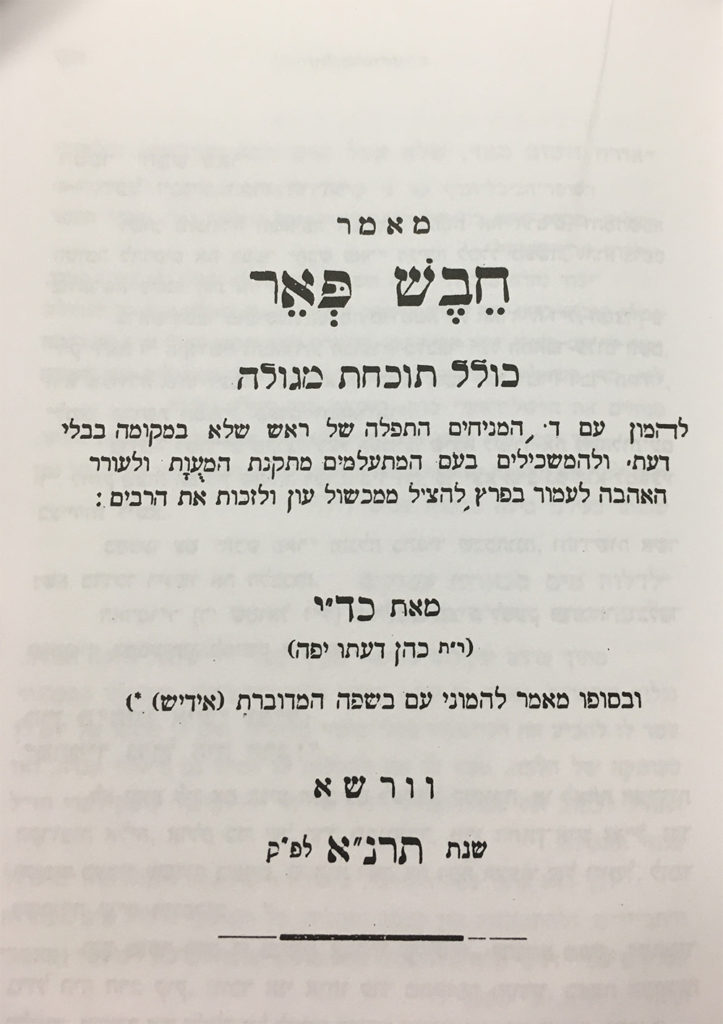
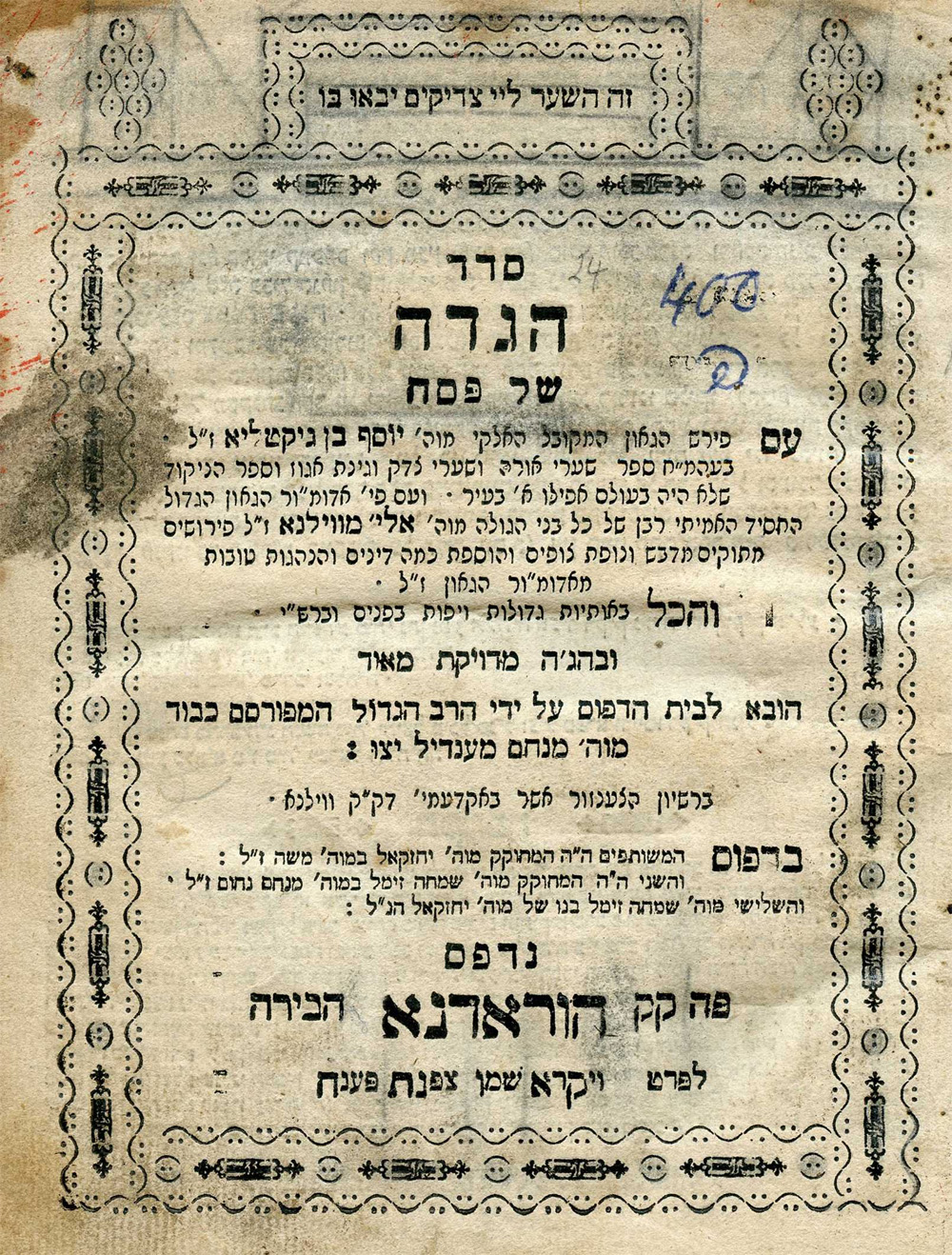
In 1891, there appeared in Warsaw an anonymous work[2] entitled Hevesh Pe’er,[3] whose sole objective was to clarify for the masses the proper place on the head to don the tefillah shel rosh or head-phylactery. According to halakhah, the tefillah must be placed no lower than the hairline and no higher than the soft spot on a baby’s head (i.e. the anterior fontanelle).[4] In ancient times, there were sectarian Jews who deliberately placed the tefillah on the forehead, as attested to by the Mishnah: “If one placed it [i.e. the tefillah] on his forehead, or on his hand, this is the way of sectarianism (minut).”[5] These Jews interpreted literally the verse, “You shall bind them for a sign upon your hand, and they shall be for frontlets between your eyes.”[6] Adherents to Rabbinic Judaism are punctilious about placing the hand-phylactery on the biceps of the forearm opposite the heart,[7] and the head-phylactery above the hairline. East European Jews who placed their phylacteries on the forehead did so not out of conviction, as the Sadducees of old, but rather out of sheer ignorance of the law. The slim book (all of 24 leaves or 48 pages) was thus an elaborate educational vehicle to educate the masses how to properly observe the law.[8]

According to the approbation to Hevesh Pe’er by Rabbi Elijah David Rabinowitz-Te’omim (ADeReT) of Ponevezh, the book was published [but not authored] by his former son-in-law (presently his brother’s son-in-law), Rabbi Abraham Isaac Hakohen Kook of Zeimel.[9]

Wares in hand, the young rabbi of Zeimel (aged twenty-six) assumed the role of an itinerant bookseller, travelling from town to town in Lithuania. Wherever he went, he preached concerning the importance of fulfilling the commandment of tefillin. Historically, there was precedent for a rabbi promoting that specific mitsvah. In the thirteenth century, Rabbi Jacob of Coucy (author of Sefer Mitsvot Gadol or SeMaG), circulating in the communities of France and Spain, was able to turn the tide and convince Jews, hitherto lax in their observance of the commandment, to don tefillin.[10] As for an author posing as an itinerant bookseller, Rav Kook’s older contemporary, Rabbi Israel Meir Kagan of Radin, had done exactly that, thus earning himself the sobriquet Hafets Hayyim, after the book by that name that he peddled. (Hafets Hayyim tackles the problem, halakhic and otherwise, of malicious gossip.)

It is recorded that Rav Kook’s sermons had such a positive influence upon his audience that the Rebbe of Slonim, Rabbi Shmuel Weinberg, offered to support him if he would devote himself fulltime to acting as a maggid or peripatetic preacher.[11]

One would never have imagined that this halakhic work would meet with any rabbinic opposition.[12] The point it makes that wearing the head-phylactery below the hairline on the forehead invalidates the performance of the commandment, seems rather clear-cut in the sources. (In fact, but a few years earlier, in 1884, Rabbi Israel Meir Kagan in his work Mishnah Berurah had advised wearing the phylactery higher on the head, at a remove from the hairline, just to be on the safe side.)[13]

However, five years later, Rabbi Ze’ev Wolf Turbowitz of Kraz (Lithuanian, Kražiai; Yiddish, Krozh)[14] devoted the very first of his collected responsa to pummeling the anonymous work Hevesh Pe’er.[15] Rabbi Turbowitz prefaces his remarks by saying: “The intention of this author [i.e. the author of Hevesh Pe’er] is for [the sake of] heaven, but nonetheless he has spoken shabbily of the people of the Lord. May the Lord forgive him. For Israel, ‘if they are not prophets, they are the children of prophets.’”[16] Rabbi Turbowitz goes on to argue that the commandment is invalidated only if the majority of the phylactery is placed below the hairline. If, on the other hand, the majority is situated above the hairline and only a minority below, then the halakhic principle of “rubo ke-khulo” (“the majority as the whole”) applies, and the commandment is fulfilled.[17] One of the rabbi’s supposed proofs is that one must recite the blessing once again only in a case where the entire phylactery or the majority thereof has slipped down, but if only a minority of the phylactery has been displaced, with the majority still within the prescribed area, one does not recite another blessing upon readjusting the phylactery.[18]

Rav Kook (now outed as the author of Hevesh Pe’er) responded to the onslaught of Tif’eret Ziv. His lengthy rejoinder, entitled “Kelil Tif’eret,” appeared in the periodical Torah mi-Zion (Jerusalem, 1900).

Rav Kook dismantles Rabbi Turbowitz’s supposed proof from the fact that another blessing is unwarranted as long as the majority of the phylactery is still in its proper place. Rav Kook reasons that we must distinguish between the essential commandment (“‘etsem ha-mitsvah”) and the action of the commandment (“ma‘aseh ha-mitsvah”). The fact that one does not recite an additional blessing does not necessarily mean that the commandment (“‘etsem ha-mitsvah”) is still being fulfilled. What it does imply, is that the action of the commandment (“ma‘aseh ha-mitsvah”) is ongoing. The blessing addresses renewed action (“ma‘aseh ha-mitsvah”). In a case where only a minority of the phylactery has been displaced, the action required to readjust it does not warrant a blessing. “And the Turei Zahav[19] holds that since in the entire Torah, ‘rubo ke-khulo,’[20] once most of the action has been nullified, the action as a whole is nullified, but if most of the action remains, even though the commandment has been nullified, still the action exists…”[21]

As is typical for Rav Kook, he signs himself, “Abraham Isaac Hakohen Kook, servant to the servants of the Lord…Bausk.”[22]

Evidently, Rabbi Turbowitz was not one to take something lying down. He came back at Rav Kook with a stinging reply, integrated into Ziv Mishneh, his commentary to Maimonides’ Mishneh Torah.[23] There, in Hilkhot Tefillin (4:1), he maintains that since “rubo ke-khulo is a universal principle in the entire Torah”[24]—this applies to tefillin as well. He reiterates once again his proof from the TaZ, who ruled that the blessing is recited once again only in a scenario where the tefillin are totally displaced. He mentions the opinion of “one wise man” (“hakham ehad”) who wrote that even the slightest deviation disqualifies the mitsvah, and disagrees. According to Rabbi Turbowitz, lekhathilah (to begin with), the entire phylactery should be above the hairline with none of it extending down to the forehead, but be-di‘avad (ex post facto), if a minority of the phylactery is below the hairline, one has nonetheless fulfilled the commandment. And therefore, the anonymous sage was wrong to badmouth the masses, who are remiss in this respect, and their spiritual leaders, who look the other way and do not protest. “He spoke shabbily of the people of the Lord and will in the future be called to judgment!” After summing up rather concisely the position he took earlier in Tif’eret Ziv, Rabbi Turbowitz now lambastes Rav Kook for what he wrote in Torah mi-Zion (Jerusalem, 1900), no. 4, chap. 4, accusing Rav Kook of deliberately misquoting him.

In 1925, two disciples of Rav Kook, Rabbi Yitshak Arieli[25] and Rabbi Uri Segal Hamburger,[26] reissued Hevesh Pe’er in Jerusalem with Rav Kook’s permission.[27] Appended to the work was Rav Kook’s rebuttal “Kelil Tif’eret.” (In addition, this edition was graced by the comments of Rav Kook’s deceased father-in-law, ADeReT, and of Rav Kook’s admirers in Jerusalem: Rabbis Tsevi Pesah Frank, Ya‘akov Moshe Harlap, and Yehiel Mikhel Tukachinsky. Finally, there are the substantial “Comments upon Comments” [“He‘arot le-He‘arot”] of the editor, Rabbi Yitshak Arieli.)[28]

In 1939, Rabbi Yosef Avigdor Kesler of Rockaway (Arverne to be precise)[29] published a second collection of his deceased father-in-law, Rabbi Ze’ev Turbowitz’s numerous responsa. Whereas the first collection of Tif’eret Ziv covered only Orah Hayyim, this collection covered all four sections of Shulhan ‘Arukh.[30] In addition, it contained a supplement (Kuntres Aharon) entitled “Mele’im Ziv.” In the supplement, Rabbi Kesler published a letter from ADeReT to Rabbi Turbowitz that turned up in the latter’s papers.

ADeReT’s letter is datelined “Monday, Vayyetse, 5657 [i.e. 1896].” In the letter, ADeReT gratefully acknowledges receipt of the recently published book Tif’eret Ziv. Regretting that he is unable to send monetary payment for the book because he is presently inundated with works of various authors, ADeReT nonetheless wishes to at least offer some comment on the contents of the book.[31]

Referring to the very first responsum in Tif’eret Ziv, ADeReT rejoices that Rabbi Turbowitz sought to advocate on behalf of the Jewish People regarding the commandment of tefillin. He is especially overjoyed that Rabbi Turbowicz was not cowed, but dared to differ. ADeReT holds up as role models Rabbi Zerahyah Halevi (Ba‘al ha-Ma’or) who critiqued Rabbi Isaac Alfasi (Rif), only to be attacked himself by Rabad of Posquières; Rabad of Posquières who critiqued Maimonides; et al. Since this is the “way of Torah” (darkah shel Torah), why should he harbor any resentment toward Rabbi Turbowitz for disagreeing with him?[32] (ADeReT, though not the author of Hevesh Pe’er, had wholeheartedly endorsed it.)

The sterling character of ADeReT is best summed up in these lines:

God forbid, I am not deluded to think that truth resides with me. I wholeheartedly acknowledge the truth. I have not a thousandth part of resentment towards one who differs with me. And the opposite, I love him with all my soul when he points out to me the truth.[33]

Since Rabbi Turbowitz acted as a true talmid hakham (Torah scholar) who uninhibitedly speaks truth, ADeReT wonders why he failed to mention the name of the work he critiqued, Hevesh Pe’er. This would have provoked neither the author nor ADeReT.[34]

In this vein of truth-seeking, ADeReT proceeds to explain why the argument presented in Tif’eret Ziv failed to dissuade him from the position adopted both by him and the author of Hevesh Pe’er. Since the shi’ur or measurement of the area on the head where the phylactery is to be placed is Halakhah le-Moshe mi-Sinai (a law to Moses from Sinai), the principle of “rubo ke-kulo” is of no consequence in this regard.[35]

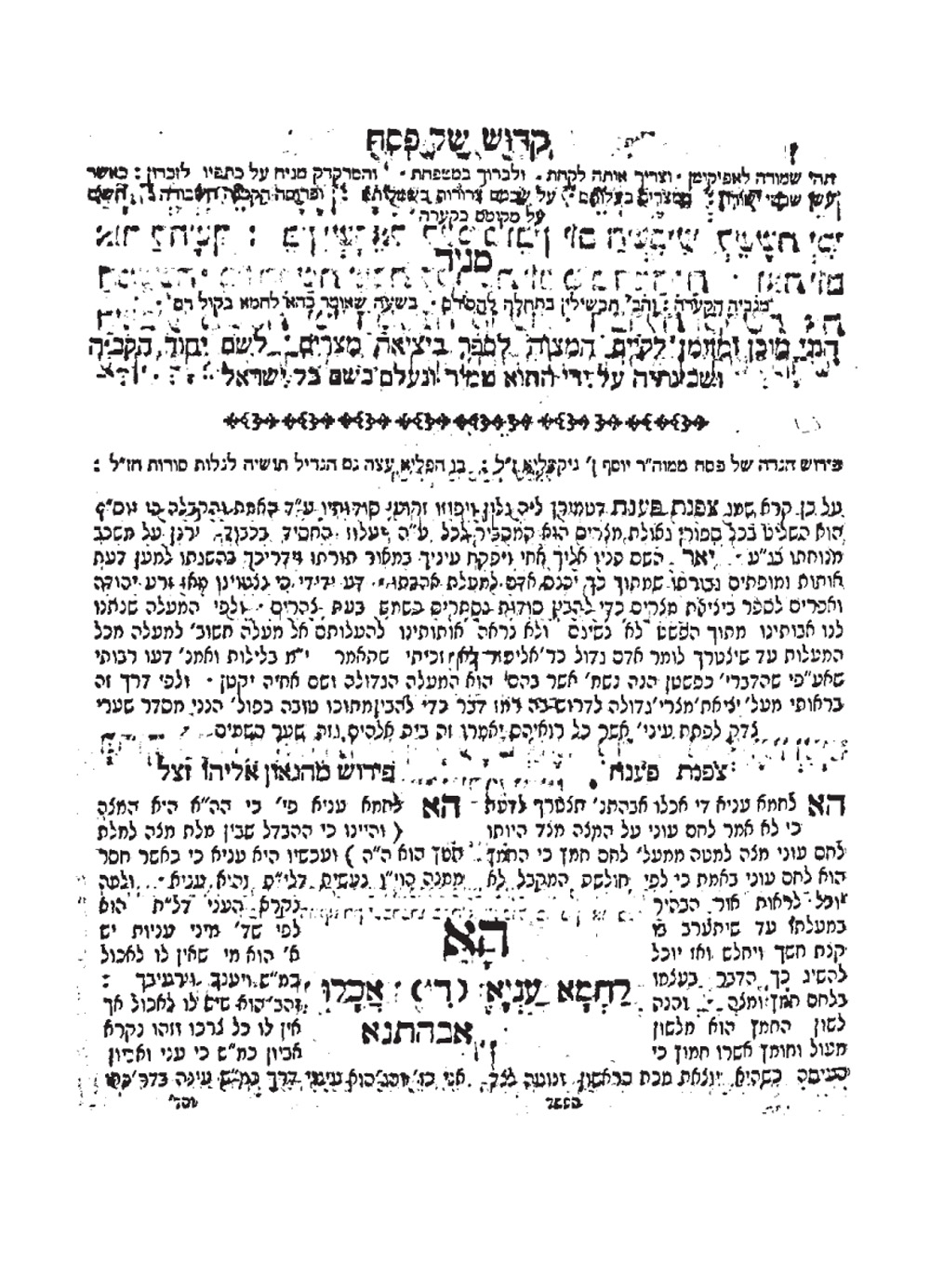
Realizing the historic importance of the contents of the letter, Rabbi Kesler provided a photograph of the crucial passage in the letter, which reads as follows:

About two years ago, the thought occurred to me to reprint the booklet Hevesh Pe’er. I wrote to its author, my son-in-law, my soul-friend (today the Rabbi of Bausk, may he live) and asked him if he has anything new to add to it. He wrote me an article, brief in quantity but great in quality, that it is possible to say ‘rubo ke-khulo.’ In the summer of 5655 [i.e. 1895] when I was in Warsaw, I already spoke with a printer and also notified the [government] censor, and I was thinking to print. But after this, I reversed myself, and the two of us [i.e. ADeReT and Rav Kook] agreed that it is not worthwhile to print leniencies (kulot) in this.[36]
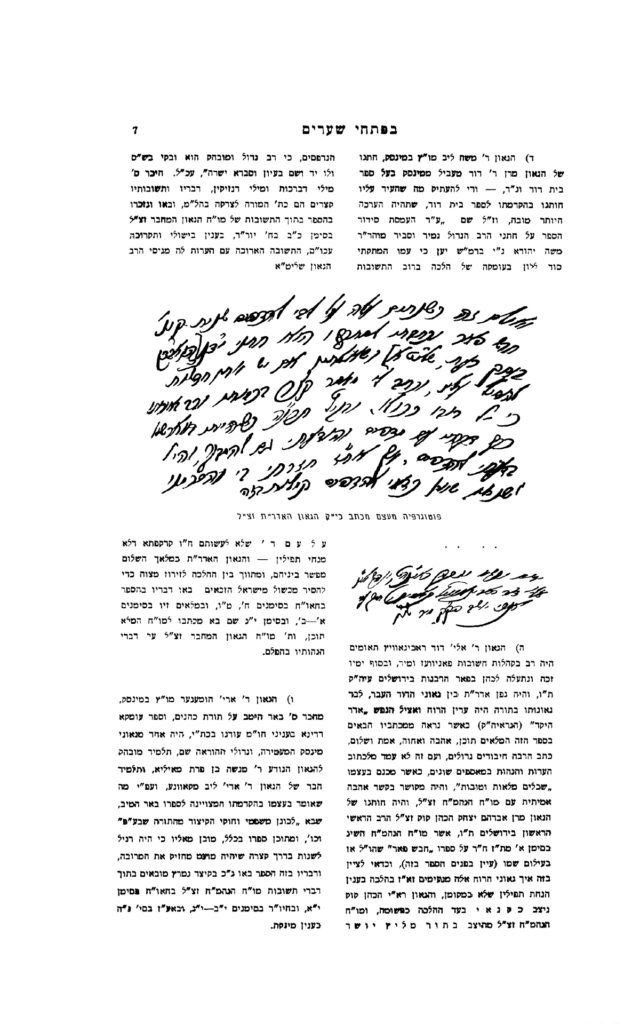
ADeReT explains that if we show any leniency, it will prove a slippery slope. He reveals to Rabbi Turbowitz his unusual experience with Hasidim in particular: “From this, there came about in places where the Hasidim reside [the custom] to wear large tefillin.[37] Not one in a thousand bears most of the tefillah within the hairline. In most cases, but a small fraction (mi‘uta de-mi‘uta) [is within the hairline]. I have seen with my own eyes the entirety upon the forehead. They laughed at my rebuke, saying: ‘Thus is the mitsvah.’ ‘So we saw our fathers doing.’ etc. etc.”[38]

The letter concludes with this salutation:

His friend who is honored by his love, appreciates his genius and his Torah, and blesses him with all good,

Elijah David Rabinowitz Te’omim

…Mir[39]

[1] These are the exact words of Rabbi Joseph Avigdor Kesler in the introduction to his father-in-law Rabbi Ze’ev Wolf Turbowitz’s work of responsa, Tif’eret Ziv (Brooklyn: Moinester Publishing Company, 1939), p. 7, par. 5.

By the time of his passing in 1935, Rav Kook would be immortalized as a twentieth-century Rabbi Levi Isaac of Berdichev, the great advocate of the Jewish People, forever defending their practices in the heavenly tribunal. Today, Rav Kook is famous for his leniency concerning the Shemitah or Sabbatical year, the heter mekhirah, which allows sale of the land to a non-Jew for the duration, whereby agriculture, or at least some forms thereof, may take place. The model for this contract is the prevalent mekhirat hamets or sale of leaven to a non-Jew before Passover, so that it need not be removed from the home of the Jew.

However, in general, if one studies the teshuvot (responsa) of Rav Kook, he does not come across as extraordinarily lenient in his pesakim or halakhic decisions. Par contre, someone whose work is chock-full of startling leniencies is Rabbi Aryeh Tsevi Fromer of Kozhiglov (1884-1943), Rosh Yeshivah of Yeshivat Hakhmei Lublin and a disciple of Rabbi Abraham Bornstein (author of responsa Avnei Nezer). Rabbi Fromer designed his work of responsa, Erets Tsevi (Lublin, 1938), to be melamed zekhut, to find some halakhic justification (however farfetched) for certain otherwise anomalous practices within the Jewish community. This is apparent from the very first responsum, where the author attempts to justify the prevalent practice of wearing a tallit katan that fails to meet the prescribed shi‘ur or measurement.

[2] The title page credits as author: “KDY (Kohen Da‘ato Yafah).” The expression “kohen she-da‘ato yafah” comes out of the Mishnah, ‘Avodah Zarah 2:5. Thus, the title alludes to the author being a Kohen or member of the priestly caste.

The thought occurs to this writer (BN) that “Yafah” might be an allusion to Rav Kook’s descent from Rabbi Mordechai Yaffe (author of the Levush[im]). Rav Kook was immensely proud of his pedigree which reached back to the Levush. The pedigree to the Levush was something that Rav Kook had in common with his father-in-law ADeReT. In the letter written by Rav Kook’s paternal great-uncle, Rabbi Mordechai Gimpel Yaffe of Rozhinoy, to the Trisker Maggid, Rabbi Abraham Twersky, Rabbi Yaffe mentions their remote common ancestor, the Levush.

[3] The title is taken from the verse in Ezekiel 24:17: “Pe’erkha havosh ‘alekha” (“Bind your head-tire upon you”). The Rabbis interpreted the head-tire as a reference to the head-tefillah; see b. Mo‘ed Katan 15a.

[4] y. ‘Eruvin 10:1; b. Menahot 37a; Maimonides, MT, Hil. Tefillin 4:1; Rabbi Joseph Karo, Shulhan ‘Arukh, Orah Hayyim 27:9.

[5] m. Megillah 4:8.

[6] Deuteronomy 6:8.

[7] Shulhan ‘Arukh, Orah Hayyim 27:1.

[8] In Hevesh Pe’er, chap. 2, the author points out that there already appeared in print a small booklet with diagrams, “Tikkun ‘Olam ‘im tsiyurim,” but writes that the error persists depite that.

[9] Rav Kook’s first wife, Alta Batsheva, daughter of ADeReT, died at a young age, leaving him to raise their infant daughter, Freida Hannah. ADeReT suggested to Rav Kook that he marry Reiza Rivkah, ADeReT’s niece, daughter of his deceased twin brother, Tsevi Yehudah, Rabbi of Ragola. ADeReT had raised Reiza Rivkah in his home after her father’s death.

[10] Rabbi Jacob of Coucy, Sefer Mitsvot Gadol, positive commandment 3; Hevesh Pe’er, chap. 2. At the end of positive commandment 3, Rabbi Jacob gives the exact year of his campaign in Spain: 4996 anno mundi or 1236 C.E.

Urbach writes that this role of the itinerant preacher, or darshan, is without precedent among the French Tosafists; he conjectures that in this respect, Rabbi Moses of Coucy came under the influence of Hasidei Ashkenaz. See E.E. Urbach, Ba‘alei ha-Tosafot (Jerusalem: Bialik Institute, 1995), pp. 466-470. Concerning specifically French Jewry’s laxity when it came to observing the commandment of tefillin, see ibid. p. 469, n. 13 (citing Tosafot, Shabbat 49a, s.v. ke-Elisha Ba‘al Kenafayim, and Rosh Hashanah 17a, s.v. karkafta de-lo manah tefillin). The SeMaG refutes Rabbenu Tam’s understanding of “karkafta de-lo manah tefillin.”

[11] Rabbi Ya‘akov Moshe Harlap, quoted in Rabbi Moshe Tsevi Neriyah, Sihot ha-Rayah (Tel-Aviv, 1979), p. 191, and idem, Tal ha-Re’iyah (Tel-Aviv, 1993), p. 116. According to Rabbi Harlap, the Slonimer Rebbe reached out to ADeReT, hoping that he could prevail upon his former son-in-law (and present nephew by marriage) to accept this magnaminous offer.

[12] Rav Kook’s erstwhile mentor in the Volozhin Yeshivah, Rabbi Naphtali Tsevi Yehudah Berlin (NeTsIV), was so enamored of Hevesh Pe’er that he kept it in his tallit bag. See the Introduction of Rabbis Yitshak Arieli and Rabbi Uri Segal Hamburger to the Jerusalem 1925 edition of Hevesh Pe’er, p. 2.

[13] See Rabbi Israel Meir Kagan, Mishnah Berurah (Warsaw, 1884) to OH 27:9. In the Be’ur Halakhah, Rabbi Kagan sought support for this prescription in the manuscript glosses of “the Gaon Rabbi El‘azar Harlap” to Ma‘aseh Rav (a collection of the practices of the Vilna Gaon). If I am not mistaken, these notes would have been penned by the Gaon (and Mekubal) Rabbi Ephraim Eliezer Tsevi Harlap of Mezritch.

[14] Rabbi Ze’ev Wolf Turbowitz was born Rosh Hodesh Iyar, 1840 in Baboina near Kletsk and was known in his youth as the “Ilui of Baboina.” His first wife was from Izilian. After his marriage, he devoted himself exclusively to study of Torah, whereby he was then known as the “Porush of Izilian.” At a tender age he began to study Kabbalah. (Among his writings was found a work on Zohar.) In 1863, he was appointed as a rosh metivta in Minsk. In 1866, he received his first rabbinical position in Swislowitz. In 1875, he assumed the rabbinate of Kletsk. Afterward, he served a stint in Wolpa. And finally in 1889, he was elected rabbi of Kraz, where he served until his death on the 14th of Kislev, 5682 [i.e. 1921]. These biographical details were gleaned from his son-in-law Rabbi Yosef Kesler’s introduction to the Brooklyn 1939 edition of Tif’eret Ziv, p. 4.

Rabbi Eitam Henkin hy”d wrote of the interface between Rabbi Turbowitz and Rabbi Eliyahu Goldberg, mentor of Rabbi Yehiel Mikhel Epstein (author of ‘Arukh ha-Shulhan). Besides corresponding with Rabbi Goldberg in halakhic matters, Rabbi Turbowitz delivered a moving hesped (eulogy) for Rabbi Goldberg in 1875 in the town of Kletsk, Rabbi Goldberg’s birthplace. See Rabbi Eitam Henkin, Ta‘arokh Lefanai Shulhan (Israel: Maggid, 2018), pp. 359-360, 363.

[15] See Rabbi Ze’ev Wolf Turbowitz, Tif‘eret Ziv (Warsaw, 1896), no. 1. Ziv is an acronym for Ze’ev Yekhuneh Volf.

The responsum is datelined “Wednesday, 16 Tamuz, 5651 [1891],” which means that it was penned the same year that Hevesh Pe’er was published. Rabbi Turbowitz does not mention the book by name, referring to it as “a new book that has appeared” (“sefer ehad hadash she-yatsa la-’or”).

By the same token, in responsum 12 of Tif’eret Ziv, where Rabbi Turbowitz engages with another early work of Rav Kook (in fact, his first), ‘Ittur Soferim, he refers to that work obliquely as “sefer ehad katan” (“a small book”). Rabbi Abraham Joshua of Pokroi had raised the question whether one who becomes bar mitsvah at night must recite once again the blessing for studying Torah (birkat ha-Torah), though he already recited it that morning. The editor, Rav Kook, devoted a few pages to resolving this problem. See ‘Ittur Soferim, Part Two (Vilna, 1888), 9a-10b. Rabbi Turbowitz made short shrift of the question. At the same time, he tackled the Vilna dayan, Rabbi Shelomo Hakohen, who had also raised the question in his work, Binyan Shelomo. In the Brooklyn 1939 edition of Tif’eret Ziv, the first two responsa are to Rabbi Shelomo Hakohen, who had defended his position to Rabbi Turbowitz.

According to Rabbi Turbowitz’s son-in-law, Rabbi Yosef Avigdor Kesler, the famous “Gadol of Minsk” (i.e. Rabbi Yeruham Yehudah Perlman) read Rabbi Turbowitz’s responsum concerning the placement of the head-phylactery before it went to print and approved its contents. See the supplement to the Brooklyn 1939 edition of Tif’eret Ziv, Kuntres Aharon, “Mele’im Ziv,” 2d-3a, footnote.

[16] Tif’eret Ziv, 6a. The quote is from b. Pesahim 66b: “Leave Israel alone! If they are not prophets, they are the children of prophets.” Rabbi Turbowitz’s remark is quoted in Yehudah Mirsky, Rav Kook: Mystic in a Time of Revolution (New Haven: Yale University Press, 2014), p. 23.

[17] Tif’eret Ziv 1:3 (6c).

[18] Tif’eret Ziv 1:16-21 (8c-9b). See Rabbi David Halevi (TaZ), Magen David to OH 8:15; cited in Mishnah Berurah to OH 25:12.

[19] See previous note.

[20] It may strike the reader as ironic that Rav Kook introduced at this point in the discussion the concept of rubo ke-khulo when he had earlier rejected its application. But from Rav Kook’s standpoint (and that of his father-in-law Aderet, see below note 35), that principle simply could not be applied to the area of the phylactery with its precise dimensions. “Shi‘urim halakhah le-Moshe mi-Sinai,” “Measurements are a law to Moses from Sinai” (y. Pe’ah 1:1, Hagigah 1:2; b. ‘Eruvin 4a, Yoma 80a, Sukkah 5b).

[21] Rabbi Abraham Isaac Hakohen Kook, “Kelil Tif’eret” in Hevesh Pe’er, ed. Rabbis Y. Arieli and Uri Segal-Hamburger (Jerusalem: Mossad Harav Kook, 1985), p. 46. Of course, the element of hesah ha-da‘at, i.e. whether one has “removed one’s awareness,” plays a crucial part in determining whether one must recite the blessing on the tefillin once again. See ibid.

Rav Kook’s hiluk (differentiation) between “‘etsem ha-mitsvah” and “ma‘aseh ha-mitsvah” (especially the terminology) is somewhat remarkable, issuing as it did from the pen of Rav Kook, who studiously avoided the school of Hasbarah with its abstract constructs and neologisms, then in vogue in the Lithuanian yeshivah world. The most famous proponent of Hasbarah was Rabbi Hayyim Soloveitchik (who would one day inherit his father Rabbi Yosef Dov Soloveitchik’s rabbinate in Brisk, whereupon he would be known as “Reb Hayyim Brisker”). The latter’s methodology of Talmudic analysis came to be known as the “Brisker derekh [ha-limud],” “the Brisker way.”

Rav Kook’s biographers have duly noted that his first mentor back in Dvinsk (since Rav Kook’s bar mitsvah), Rabbi Reuven Halevi Levin (known as “Reb Ruvaleh Denaburger”) had, so to speak, “immunized” Rav Kook against the trend of “sevarot” or newfangled “concepts.” Rabbi Reuven Levin was highly suspicious of sevarot that had not been enuciated already by the rishonim, the medieval authorities. (See Rabbi Kesler’s introduction to Tiferet Ziv, Brooklyn 1939, p. 8, par. 9, quoting Rabbi Reuven Levin, and ibid. sec. Hoshen Mishpat, responsum 46:6 [116c]: “It is not my way to say sevarot of my own cognizance.”)

And thus, when later Avraham Yitshak Kook arrived at Volozhin, “the mother of yeshivot,” he gravitated to the elder Rosh Yeshivah, Rabbi Naphtali Tsevi Yehudah Berlin (NeTsIV), known as a pashtan, a champion of the simple understanding of the text, rather than to his grandson-in-law, Rabbi Hayyim Soloveitchik, who was surrounded by budding scholars attracted to the exciting new method of Talmudic analysis that he was developing.

Although Rav Kook was never so outspoken as Ridbaz Wilovsky (“Reb Yankel Dovid Slutsker”) who satirized the new method as “chemistry,” Rav Kook was clearly on the other side of the great divide between Lithuanian Talmudists. This aversion of Rav Kook to the method of “hasbarah” was given eloquent testimony in recently unearthed correspondence concerning the unsuccessful attempt of Rabbi Shim‘on Shkop (a rosh yeshivah in Telz and later head of his own yeshivah in Grodna) to be accepted as Rosh Yeshivah of Merkaz Harav in Jerusalem. Speaking in Rav Kook’s name, his devoted disciple Rabbi Ya‘akov Moshe Harlap conveyed to Rabbi Hizkiyahu Yosef Mishkovski of Krinik (who had interceded on Rabbi Shim‘on Shkop’s behalf) the following laconic response:

Regarding the proposal concerning the Gaon Rabbi Shim‘on Shkop, may he live, to accept him as Rosh Yeshivah of Merkaz Harav, there is certainly nothing to discuss, for since the founding of the Yeshivah, this position is reserved for Maran [our master, i.e. Rav Kook], may he live, who plans to fill it himself. For Maran, may he live, wishes—and this is a strong desire—that the main method of learning of the Yeshivah be according to the order and method of the Gra [i.e. the Gaon Rabbi Elijah of Vilna], of blessed memory. Though he [i.e. Rav Kook] knows and feels also the great necessity of developing the methods of “hasbarot” (conceptualizations) and “havanot hegyoniyot” (logical understandings), he wants the main spirit of the Yeshivah to be based on his method, etc. Today I showed Maran, may he live, his honor’s letter, and what I wrote here is his response.

Rabbi Harlap’s letter is datelined “Monday, 2nd day of Rosh Hodesh Adar, 5686 [i.e. 1926], Jerusalem.” It was published in a Festschrift for his grandson, Rabbi Zevulun Charlop, Zeved Tov, ed. Ari S. Zahtz (New York: Yeshiva University Press, 2008), p. 103.

Inter alia, “Z. Wein” mentioned in the letter from Rabbi Shkop to Rabbi Tobolsky, expressing his desire to settle in the Holy Land (ibid. p. 101), is none other than [Rabbi] Ze’ev Wein a”h, father of Rabbi Berel Wein shelit”a. Rabbi Ze’ev Wein (1906-2004), a disciple of Rabbi Shkop, went on to study in Rav Kook’s Merkaz Harav in Jerusalem. He served for many years as a distinguished rabbi in Chicago.

Rabbi Shim‘on Shkop was famous for his method of “higayon” (logic), displayed in his magnum opus, Sha‘arei Yosher. (Rabbi Hershel Shachter shelit”a revealed to this writer [BN] that his father-in-law, Rabbi Yeshayah Shapiro, a rosh yeshivah at Torah Vodaath in Brooklyn, was instrumental in writing that work.)

This is not the place to discuss in any depth the differences between Rabbi Shim’on Shkop’s method and that of Rabbi Hayyim Brisker and his heirs. Two anecdotes should suffice. The Briskers quipped that Rabbi Shim‘on “had looked at the world and created the Torah” (“Istakel be-‘alma u-vara ’oraita”), a reversal of the Zohar’s adage, “[God] looked at the Torah and created the world” (“istakel be-’oraita u-vara ‘alma”). On one occasion, Rabbi Yitshak Ze’ev Soloveitchik (“Reb Velvel,” known as the “Brisker Rov,” for he inherited from his father Rabbi Hayyim the rabbinate of Brisk) met Rabbi Shim‘on Shkop and told him: “I removed from your student Rabbi Leib Malin the last sinew (gid) left from your teaching.” (The imagery is that of deveining or nikkur. Reb Velvel used the Yiddish verb, “treiberen.”) Both anecdotes were heard from Rabbi Shelomo Fisher shelit”a of Jerusalem.

[22] In 1895, Rav Kook left the town of Zeimel for the large city of Bausk, Latvia.

[23] Rabbi Ze’ev Wolf Turbowitz, Ziv Mishneh (Warsaw, 1904). The author has the rather unique distinction of viewing Maimonides as a kabbalist and finding kabalistic “sources” for his rulings. (Similarly, the introduction to the Warsaw 1896 edition of Tif’eret Ziv demonstrates the author’s proficiency in Lurianic kabbalah.) Though not unique in this respect, Rabbi Turbowitz is perhaps the most outspoken proponent of this peculiar methodology of studying Maimonides’ Mishneh Torah. Another Maimonidean commentator who occasionally resorts to this method of sourcing is Rabbi Joseph Rosen (the Rogatchover Gaon). See his Tsafnat Pa‘neah, Hil. ‘Avodah Zarah 12:6. Nowadays, Rabbi Hayyim Kanievsky’s Kiryat Melekh is replete with references to Zohar.

[24] b. Horayot 3b; and Rashi, Zevahim 26a, s.v. hikhnis rosho ve-rubo. Both are referenced by Rabbi Turbowitz.

[25] Rabbi Yitshak Arieli was one of the founders of Yeshivat Merkaz Harav and acted in the official capacity of “Mashgiah” of the Yeshivah. He is most famous for his work on the Talmud, ‘Eynayim le-Mishpat. Recently, Aharon Ilan, a great-grandson of Rabbi Yitshak Arieli, brought out his biography, ‘Eynei Yitshak (Jerusalem, 2018).

[26] Rabbi Uri Segal Hamburger was a descendant of Rabbi Moshe Yehudah Segal Hamburger of Novemeste (a disciple of the Hatam Sofer) who came to Erets Yisrael in 1857. Rabbi Uri Segal Hamburger resided in the Old City of Jerusalem until its conquest by the Jordanians in 1948. He penned a memoir of that tragic event, “Be-Tseiti mi-Yerushalayim.” One may find a short biography and a photograph of Rabbi Hamburger in ‘Eynei Yitshak, pp. 136-137.

[27] Rav Kook’s biographer and disciple, Rabbi Moshe Tsevi Neriyah, records that Rav Kook wrote in his haskamah (letter of approbation) to the publishers the following disclaimer: “In our holy land, which thank God, is full of Torah and fear of heaven, the admonition (azharah) is not so necessary. Nevertheless, I have not prevented re-issuing the book, for the benefit of our brothers in the diaspora, in areas where the matter is yet in need of correction” (Sihot ha-Rayah, pp. 189-190). This disclaimer does not appear in the printed version of the haskamah. Where did Rabbi Neriyah obtain it? The mystery was cleared up in the new edition of Sihot ha-Rayah (2015) published after Rabbi Neriyah’s passing. Rabbi Arieli’s son, Prof. Nahum Arieli, wrote to Rabbi Neriyah that he has in his possession much material that went into the making of the Jerusalem edition of Hevesh Pe’er edited by his father, including a “petek” (note) with those exact words. Rabbi Neriyah’s daughter, Tsilah Bar-Eli, granted Aharon Ilan permission to include a facsimile of Nahum Arieli’s letter to her father (on stationery of Bar-Ilan University) in the biography of Rabbi Arieli, ‘Eynei Yitshak, p. 139.

[28] Rabbi Arieli’s promised “Kuntres Aharon” was never published. Remnants of the manuscript are in the possession of his heirs. Rabbi Neriyah speculated that financial considerations prevented its publication in Hevesh Pe’er. See ‘Eynei Yitshak, p. 138, n. 102.

[29] On the inside of the book, Rabbi J. Kesler’s address is given as: “146 Beach 74th Street, A[r]verne, Long Island.”

[30] It is important to note that the two collections do not overlap. The responsa on Orah Hayyim that appeared in the Warsaw 1896 edition of Tif’eret Ziv, were not included in the Brooklyn 1939 edition. In their stead, appear more recent responsa on Orah Hayyim. In terms of sheer quantity, the second collection by far outstrips the first. The first Warsaw edition has 122 pages; the second Brooklyn edition, 488 pages.

[31] “Mele’im Ziv,” 2a-b.

[32] “Mele’im Ziv,” 2b-2c.

[33] “Mele’im Ziv,” 2d.

[34] “Mele’im Ziv,” 3a.

[35] “Mele’im Ziv,” 3a-b.

[36] The facsimile occurs in Rabbi Kesler’s introduction to the book on p. 7. It is transcribed in “Mele’im Ziv,” 3b.

If not for the evidence of the facsimile, it would indeed be difficult to accept that Rav Kook once entertained even the remote possibility of invoking the principle of rubo ke-khulo in this regard.

[37] To this day, Lubavitcher Hasidim wear very large tefillin.

[38] “Mele’im Ziv,” 3b-c.

[39] “Mele’im Ziv,” 3d.

In 1893, ADeReT left the community of Ponevezh to assume the rabbinate of Mir.


The Mysteries of Hoshana Rabbah

THE MYSTERIES OF HOSHANA RABBAH

By Eliezer Brodt


This article originally appeared last year in Ami Magazine (2016) This version has a many updates and corrections. I hope to revisit this subject shortly.


The sources of our Yomim Tovim are relatively easy to find, as one simply locates the relevant pesukim or Gemara and starts from there. However, one Yom Tov does not have such a starting point: Hoshana Rabbah. Its roots and numerous customs are shrouded in mystery. This article is an attempt to shed a bit of light on some of the early sources and customs behind this special day.[1]


A very early mention is in an anonymous attack against Yiddishkeit apparently written around the year 1500, where we already find Hoshana Rabbah under attack.[1a] At a later date we find in a work which records a debate about Kabbalah, written in 1825 that the origins of Hoshana Rabbah were also dealt with harshly.[1b]


The Name


Today we know this special day as Hoshana Rabbah, but it wasn’t always called by this name. In earlier sources, such as the Mishnah and Gemara, the Yom Tov is never called Hoshana Rabbah but “Yom Aravah” or “Yom Hoshana.” In a recent article, Rabbi Yaakov Stahl traces mentions of these names through numerous Geonim, Paytanim and Rishonim and concludes that the earliest known mention of the name “Hoshana Rabbah” is in the piyyutim of Rav Yosef Avitur, who passed away in 1024. However, it took a long time for the name to become popular.[2]


The Chayei Adam writes that the name Hoshana Rabbah references the many tefillos recited on this day that begin with the word “hoshana.”[3] This idea can be found as early as 1599 in the Seder Hayom. Rav Eliyahu Bachur writes in his Sefer HaTishbi that the aravos we take on Sukkos are called hoshanos because we call out hoshana, a contraction of the words hoshia na (please save), while holding them.[4]


YOM ARAVAH


In the fourth perek of Maseches Sukkah (42b-45a), the mishnayos and Gemara discuss the extra aravah that was used in the Beis Hamikdash in addition to the one included in the daled minim. Each day the kohanim would circle the mizbei’ach one time, and on the seventh day they would do so seven times. Rishonim differ as to whether they went around with both the aravah and the daled minim, or with the daled minim alone, as well as if the Yisraelim went around as well.[5]


On the seventh day, they would do chavatah on the ground with the aravos. Rashi (ibid. 44b) understands this to mean shaking the aravos, whereas the Rambam writes that it means to bang them two or three times on the floor or on a utensil[6] without making a brachah, in keeping with a minhag hanevi’im.[7] Since the destruction of the Beis Hamikdash, we go around with daled minim only, and not with the aravah, since it is not mentioned in the Torah.[8] The Rambam writes that nowadays we go around the bimah as a zecher l’Mikdash, where they circled the mizbei’ach.[9]


These mishnayos are the earliest sources for the hakafos we do once each day on Sukkos and seven times on Hoshana Rabbah. There are numerous sources from the Geonim onward about this.


It’s worth mentioning the powerful words of Rav Yosef Hahn Norlingen (1570-1637) in Yosef Ometz, first printed in 1723. He writes that one should make a great effort to go around each day with the lulav, to the extent that it’s worthwhile to spend a lot of money on the daled minim for this aspect of the mitzvah alone. He writes sharply against those who leave early and avoid hakafos and describes how he completed the circuit every day, even when there was a lot of pushing, especially on Hoshana Rabbah when the children pushed a lot.[10] A similar point is made by the anonymous work Chemdas Yomim.[11]


We see from this the great significance of completing a circuit around the bimah each day, which ties into zecher l’Mikdash, a concept that stands behind numerous halachos.[12]


But what else—besides for circling the bimah seven times and banging the aravos—is done differently on Hoshana Rabbah than the other days of Chol Hamoed Sukkos?


MISHNEH TORAH[13]


Many have the custom to hear Mishneh Torah, or Sefer Devarim, on Hoshana Rabbah night.[14]


Where did this custom originate?


Avudraham writes that in his time, a few people had the custom to read the whole Torah on the night of Hoshana Rabbah in case they didn’t complete shnayim mikra that year. He personally does not endorse this minhag and feels one should make up any missed shnayim mikra over Sukkos, or better yet, during the Aseres Yemei Teshuvah.[15] Tashbetz, a talmid of the Maharam MiRotenburg, is also wary of this custom, giving the strong opinion that it doesn’t help for anything.[16] However, the Shibolei Haleket writes that it is a worthy practice, and the Magen Avraham mentions it as well. The Shibolei Haleket links this custom to the fact that it is the yom hadin for water, and though the Gemara says one should really finish shnayim mikra before Yom Kippur, if one does not, now is a good time.[17]


The anonymous early Italian work Minhag Tov also describes this custom and says he has seen people practice it. His reasoning for it is interesting: on Rosh Hashanah, we are judged for life and death. In case death was decreed upon him, he will have reviewed his learning.[18] Agudas Eizov adds that through learning, one will be reminded to do teshuvah.[19]


Rav Yaakov Emden suggests that the reason for this custom is to remember the king’s Torah reading at Hakhel, but says that this may be a bit farfetched. He also points out that chumash is not generally to be learned at night.[20] However, he concludes “I bend my head to a custom that is already accepted.” However, he is discussing the Mishneh Torah, not the reading of the entire Torah mentioned by the Rishonim.[21] Rabbi Yosef Ginsburg also writes that the custom is to read only the Mishneh Torah.[22] What’s the source for this?


Shulchan Aruch HaArizal, first printed around 1660, writes that on the night of Hoshana Rabbah one should read Mishneh Torah.[23] Basically, the earliest source for the custom is the Arizal.[24]


The minhagim of the Arizal became widespread through various “bestseller” sefarim. [25] To point to just three “bestsellers,” that helped spread this minhag, one was the Tikunei Shabbos, first printed in 1613,[26] and another the Shaarei Tzion by Rav Nassan Hanover, first printed in 1662.[27] These two works saw dozens of editions and were extremely popular and widespread. Both contain a full Hoshana Rabbah learning seder, famously known as the Tikun Leil Hoshana Rabbah. These works inspired other versions based on Kabbalah.[28] A third work that also helped spread this seder was the very popular (and anonymous) Chemdas Yamim, first printed in 1731.


What was farfetched to Rav Yaakov Emden was fact for the Aderes, who writes in his anonymous[29] work on Hakhel that the reason behind the minhag of Mishneh Torah is for a remembrance of Hakhel.[30] Elsewhere, he writes that he himself would lein Mishneh Torah each year in his sukkah from his own sefer Torah.[31]


Rav Charlop did the same.[32] Many gedolim would also say this tikkun. For example, the Chida records this in his autobiography many times.[33] The Chasam Sofer would say tikkun and then go to sleep.[34]


Interestingly, Rabbi Chaim Benveniste (1603-1673) in Shiurei Knesses Hagedolah[35] and others[36] bring down that many have a minhag to say selichos on Hoshana Rabbah night.[37] Others say selichos during the hakafos in the morning and even blow shofar after each circuit of the bimah.[38]


By contrast, in Vilna it appears there were those who said selichos on Hoshana Rabbah night and the Gra wanted to abolish it because of Simchas Yom Tov. It’s even recorded that on Hoshana Rabbah night the Gra was noheg Simchas Beis Hashoeivah like the rest of the nights of Chol Hamoed but he stopped it after one  Hoshana Rabbah night someone died.[39a]


TEHILLIM


Other early sources, such as Rav Avraham Galante write that one should say the whole Sefer Tehillim on Hoshana Rabbah.[39] Rav Moshe Machir, in his classic Seder Hayom, cites such a custom, as does Rav Yuzpeh Shamash (1604-1678) of Worms[40] and Rav Yosef Hahn Norlingen. The Chasam Sofer would say the whole Sefer Tehillim and go to sleep,[41] as did R’ Shlomo Zalman Auerbach.[41a] Rabbi Hertz Scheir would pay people to say Tehillim the whole night.[42]


Rav Chaim Stein, Rosh Yeshivah of Telz, in his incredible World War II diary chronicling his great mesiras nefesh for whatever mitzvos he was able to do during that time, also writes that he and his friends stayed up saying all of Tehillim.[43]


The Butchasher Rav (1771-1841) gives an additional interesting reason for doing so: because Hoshana Rabbah is the ushpizin night of Dovid Hamelech. Dovid was known not to sleep for longer than sixty horse breadths,[44] and we try to emulate that.[45]


CHECKING SHADOWS[46]


Avudraham also records an elaborate Hoshana Rabbah custom: at night, some wrap themselves in sheets and go out to the shade of the moon. If they find their shadow complete, they are happy; if the head is missing, they assume they will die during the coming year. Depending on the appearance of the shadow, one can tell if other family members will survive the year. (A possible similarity can be found in Maseches Horayos.)


However, the Avudraham concludes not to do it.[47] This custom is found in numerous Rishonim—Ramban, Rav Yehudah Hachasid, Rokei’ach, Rikanati,[48] Tzioni, and Rav Aharon Hakohen Miluneil, to list a few. At the end of a manuscript written by Rav Eliyahu Bachur in 1515, he notes, “I completed this sefer on Hoshana Rabbah, when I saw my head in the shadows of the moon, so I know that I will not die this year.”[49] Rav Chaim Benveniste writes that the purpose of this custom is to do teshuvah, for if one sees that the shadows are not in his favor, he will daven for the decree to be abolished.[50]


Interestingly, Rav Yosef Karo makes no mention of this minhag, but the Rama in Darchei Moshe cites the Avudraham without giving his own opinion about it. However, in his glosses on Shulchan Aruch, he stresses not to do it,[51] writing that we do not understand exactly how to do it and in general it is not advisable to look into the future. Rav Yosef Hahn Norlingen and the Mateh Moshe[52] write the same. (It’s worth pointing out, though, that the Arizal was an adherent of this custom.)[53]


Returning to the previously mentioned minhag, that of reading the whole Torah throughout the night of Hoshana Rabbah, the Agudas Eizov adds that another reason to learn is to amass zechusim so that one’s shadow will be complete on Hoshana Rabbah. What lies behind this unique custom?


There are many more minhagim of Hoshana Rabbah, almost all for the same reason.


ECHOES OF YOM KIPPUR[54]


The Tur and numerous other Rishonim mention the lighting of candles. Leket Yosher writes that his rebbe, the Terumas Hadeshen, would use in part leftover candles from Yom Kippur.[55] Rav Zalman of St. Goar, in his work Sefer Maharil, writes that he observed his rebbe, the Maharil, doing the same.[56] Rav Isaac Tirna describes the same in his Sefer Minhagim.[57]


Another minhag echoing Rosh Hashanah and Yom Kippur is mentioned by Rav Zalman of St. Goar, who writes that he observed the Maharil wearing a kittel on Hoshana Rabbah.[58] The Rama cites a similar practice in Darchei Moshe and the Mapah. The Magen Avraham does the same, but says that the minhag in Poland is to wear Shabbos clothes, but not a kittel.[59] Rabbi Henkin writes that the minhag is only for the chazan to wear a kittel.[60]


Rav Isaac Tirna in his Sefer Minhaghim,[61] the Rama, Rav Yosef Hahn Norlingen and others bring that some go to the mikvah on the morning of Hoshana Rabbah.[62] Rav Chaim Benveniste writes in Shiurei Knesses Hagedolah that it’s better to do so in the evening. The Mateh Moshe,[63] Rabbi Yuzpeh Shamash (1604-1678) of Worms and others[64] write that it’s one of the five days of the year on which one should wake up early.[65]


The Tur and other Rishonim write that the minhag is to daven as on the morning of a Yom Tov, with a longer Pesukei Dezimrah.[66] However, it is unclear if they mean to include Nishmas. Numerous sources describe that the custom was to say it, such as in the French Work on Minhaghim written between 1360-1390 [66a], In the Zecher Yosef from 1467,[67] the Kabbalistic work Agudas Eizov,[68] Rav Chaim Benveniste’s description of Izmir, Turkey, in Shiurei Knesses Hagedolah, the Kaf Naki’s,[69] description of Morocco, and other descriptions of Italy.[70] However, the Rama says not to say Nishmas.


The Kitzur Shibolei Haleket writes that he heard some say Zachreinu L’chayim. Rav Chaim Benveniste cites others who had such a minhag.The Maharam would say Hamelech Hakadosh and Hamelech Hamishpat,[71] and in some early manuscripts, the tefillah of Unesaneh Tokef includes the words “Ub’Hoshana Rabbah yeichaseimun.”[72]


What is the common denominator of all these minhagim? The answer is simple. Hoshana Rabbah is a day of judgement. The question is, for what?


According to the Gemara (Rosh Hashanah 16a), it is a day of judgment for water. As the Taz[73] and Gra[74] point out, water is one of the most important human needs. The aravah grows by the water, says the Rokeach, so we take it up on this day. Of course it is well-known in Kabbalistic literature that this day marks the chasimah of the din handed down on Rosh Hashanah, but it is clear that sources who were not familiar with the Zohar also knew this. For example, the Manhig writes that the reason for lighting candles as on Yom Kippur, among other minhagim, is because on this day the judgment is sealed.[75] Some manuscripts of the Machzor Vitri write that we say Hashem hu haElokim seven times on Hoshana Rabbah, like we do on Yom Kippur, to symbolize the completion of judgment.[76] Others point to a cryptic line in the Yerushalmi in Rosh Hashanah to claim it as a final day of judgment.[77]


Based on these sources, it makes sense that all the many different minhagim are due to Hoshana Rabbah being a final day of judgment.[78] The question, though, is in the secrecy of it. Why are Rosh Hashanah and Yom Kippur openly discussed by Chazal as a day of judgment, while Hoshana Rabbah goes unmentioned? If it were such an important day, one would expect Chazal to let us in on the secret.[79]


Rav Yaakov Kamenetsky answers[80] this with an interesting idea, similar to one proposed by Rav Shlomo Zalman Auerbach.[81] They explain that Chazal felt that if the concept ever “got out,” it would disrupt simchas Yom Tov. At that time, the secret was only told to special people, but due to yeridas hadoros, it soon became clear that Hoshana Rabbah’s judgment would not affect simchah all that much. So the secret of the day’s tremendous significance was let out to the masses.
It is worth noting a similarly interesting statement from Rav Yehoshua Ibn Shuaib, talmid of the Rashba, that one of the reasons we do not find an open discussion of Rosh Hashanah’s judgment in the Torah is because such concepts are very hard to comprehend and discuss openly.[82]


STRANGE CUSTOM


In a letter in 1488, Rav Ovadiah miBartenura writes that in Italy, on Yom Kippur and Hoshana Rabbah nights, the aron was opened after davening and women would line up to kiss the Torah the whole night.[83] Rav Yehoshua Falk describes a similar practice in Pressburg. He links these customs, once again, to the fact of the final din.[84]


CHALLAH IN THE SHAPE OF A BIRD


Related to all of this, we find in a 19th-century Lithuanian memoir that white bread for Hoshana Rabbah was baked in the shape of a bird, because on this day, a final decision is made as to who will live or die that year. In folk tradition, this bird would fly to heaven and bring the determination on a scrap of paper.[85]  In Mattersdorf, the challahs of the Yomim Nora’im were baked in a round pan and stamped with a picture of a bird, probably for a similar reason.[86]


BANGING OF ARAVOS


After saying the hoshanos, we bang the bundle of aravos on the floor five times. The Chayei Adam[87] writes that children bang it until there are no leaves left, because of their exuberance for the mitzvah.[88] Rav Yair Chaim Bachrach of Worms (1638-1702) writes in the Mekor Chaim that fools bang it until no leaves are left. We bang it a few times, but why?


Rabbi Alexander Moshe Lapidos answers this question,[89] but to illustrate it clearly, some background is helpful. On Rosh Hashanah, we have a custom to eat various fruits and say accompanying tefillos. Numerous Acharonim [90] explain this minhag by pointing to a Ramban[91] that states that when an action is done in this world, it has an effect in shamayim, which in turn causes something to happen down here.[92] For instance, there is a custom among some to keep their hands open when reciting the words “Posei’ach es yadecha,” as though waiting to receive the parnasah.[93] This reasoning is in part what is behind the banging of the aravos.


THE FATE OF ARAVOS AFTER WE FINISH BANGING THEM


After we finish banging the aravos, what do we do with them? Many are noheg to place them on top of the aron kodesh, but it is not clear how far back this minhag can be traced, or if it is even permissible to do so.


Interestingly The Chayei Adam writes (153:3) one should burn the Aravos afterwards as does the Aruch Hashulchan (664:6).


The Munkatcher did not hold of throwing it onto the aron kodesh. However the Marsham points to a Malbushei Yom Tov which mentions that they did do so in his time. This work was written by the Tosfos Yom Tov (1579-1654) on the Levush, but was only first printed from manuscript in 1895.[94] However, this piece is already brought down by the Eliyhau Raba who had this work in manuscript and quotes from it often. [94a]


The sefer Tanya Rabbasi by Rav Yechiel HaRofei (1240-1289) records that “The custom we received from our fathers is that after we finish the mitzvah of aravah on Hoshana Rabbah, we take it home with us and put it next to our beds to show the love for mitzvos, and this is a kosher minhag.”[95] It is clear that in his time, the aravos were brought back home. The Mekor Chaim quotes the Tanya Rabbasi as saying that he heard that this practice serves as a protection when traveling.
We find segulos in numerous sefarim relating to saving a piece of the aravos, beginning with Derech Hayashar, written in Krakow in 1646. From there, it is also found in Uber Orach, Sefer Zechirah,[96] and Tzeidah Lederech, first printed in 1760.[97] It became famous in its Sefer Zechirah printing, as Rav Zechariah Simnar’s work was extremely popular in its time.[98] The custom is also found in the Chemdas Yomim.[99] All these sefarim write that one should use some of the candles of Yom Kippur for this practice to work, and that it saves one from robbery. Sefer Zechirah adds that you don’t need to carry the aravah on you for it to work, as long as you know where it is in your house.[100]


Numerous Rishonim and Acharonim advise that the aravos be saved and burned with the chametz,[101] because it is good to do mitzvos with objects already used for a mitzvah. None of these many sources mention throwing the aravos on top of the aron kodesh, even in passing.


SEGULAH WITH THE ESROG


One last famous Hoshana Rabbah segulah is the custom of women who are expecting to bite off the pitum of an esrog, daven that the birth not be painful, and then give tzedakah. The earliest source for this can be found in Rav Yaakov MiYanev’s classic Tz’ena Ur’ena.[102] This sefer, first printed around 1622, was reprinted over 200 times,[103] which explains why the minhag is so famous and popular. This practice is also cited by Rav Zechariah Simnar in Sefer Zechirah [104].


The reason for this minhag, as given by the Tz’ena Ur’ena, is because the fruit of the Eitz Hadaas that Chavah gave to Adam was an esrog. This caused the curse of painful childbirth. Since they did not pasel the esrog or eat from it all Sukkos, and do not do so even now that Sukkos is over, the tefillah of women is that they should not suffer because of Chavah’s sin, and instead have an easy labor.


May we all be zocheh to be inscribed in the sefer hachayim.


[1] For useful collections on this topic see; A. Berliner, Kesavim Nivcharim, 2, pp. 100-103; L. Zunz, Minhagei Tefah Upiut BiKhilot Yisrael, pp. 95-96,284- 288; R. Shlomo Y. Zevin, Moadim Bahalachah, pp. 142-149; Encyclopedia Talmudit, 8, pp. 527-535; Daniel Goldshmidt–Yonah Frankel, Machzor Sukkos, pp. 20-22; Daniel Goldshmidt, Mechkarei Tefillah Upiyut, pp. 392- 394; R’ Mordechai Spielman, Tiferes Tzvi, 3 pp.335-349; R’ Betzalel Landau, Machanayim 74 (1963), pp. 30-39; R’ Yechiel Goldhaver, Minhagei Hakehilot 2, pp. 136- 146; R’ Ovadiah Yosef, Chazon Ovadiah (Sukkos), pp. 438-450; R’ Ben Ish Chai, HaModiah (1999), pp. 14-15 [Thanks to R’ Menachem Silber for this source]; R’ Deblitsky, Kitzur Hilchos HaMoadim (Sukkos), pp. 224-237; R’ Tchezner, Sharei Chag HaSukkos, pp. 249-256, 450-458; Rabbi Tuviah Freund, Moadim L’Simchah,1, pp. 422- 451; Pardes Eliezer, Sukkos, pp. 227 and onwards; Luach HaHalachos Uminhaghim, pp. 102-111.I hope to return to all this more extensively in the near future in a hebrew work.
[1a] Bechinas haKabbalah, p. 50. See T. Fishman, Shaking the Pillars of Exile, 1997, p. 140; R’ Eliyahu Benamozegh, Tam LiShad, p.12, 29.
[1b] Shadal, Vikuach Al Chochmas Hakabbalah, introduction. On this work see Jordan Penkower, The Dates of Composition of the Zohar, pp.75-116.
[2] Yerushaseinu 9 (2016), pp. 155-201.
[3] 153:2.
[4] Sefer HaTishbi, Erech Hoshana.
[5] See Biur Hagra, 660;1, 664;12; R’ Shimon Horowitz, Biur Marsha (on Sefer Tanya Rabbasi), p. 198; R’ Elyukim Horowitz, Zichron Yerushalayim p. 50.
[6] See R’ Eliyahu Posek, Ki Ha’adam Eitz Hasadeh, p. 136.
[7] Hilchos Lulav 7:22. See also R’ Eliyahu Posek, Ki Ha’adam Eitz Hasadeh, p.136.
[8] See Beis Yosef, 664. See also Rama, 664:7. However the Taz (5) concludes one should hold both as does the Eliyhau Raba (11). See also R’ Henkin in Shut Gevurat Eliyahu, p.299.
[9] Hilchos Lulav 7:23. See R’ Yosef Dubovick, ‘MiTorat Rav Shmuel Ben Chafni Gaon: Inyanei Aravah Beyom Shvi’i Shel Sukkos,’Asifat Chachamim Boyan 12 (2013) pp. 13-22 R. Shlomo Y. Zevin, Moadim Bahalacha, pp. 142-146; Yosef Tabori, Moadei Yisrael Bitkufat HaMishnah V’haTalmud, 2000, pp. 190-194; R’ Shlomo Pick, Ilana D’Chaye Sarah (1986), pp. 51-61; Otzar Mefarshei Hoshanos (Machon Yerushalayim) 2003, pp. 19-34.
[10] Yosef Ometz, Siman 1048.
[11] Chemdas Yomim, 83b.
[12] See the work from the Aderet called Zecher L’mikdash, and Zichron Yerushalayim from R’ Elyakim Horowitz both devoted to this topic. See especially pp. 50-52 in Zichron Yerushalayim.
[13] R’ Yechiel Goldhaver, Minhagei Hakehilot, 2, pp. 136-137. See also R’ Weiss Binah L’itim, Tishrei, pp. 525-527 (staying up); see ibid, 527-530 (on finishing Chumash); Herman Pollack, Jewish Folkways in Germanic Lands (1648-1806), p.173; J. Lauterbach, Rabbinical Essays, pp. 328-329. For a very interesting article connecting this minhag to Coffee, see Elliott Horowitz, “Coffee, Coffeehouses, and the Nocturnal Rituals of Early Modern Jewry,” AJS Review 14:1 (Spring 1989), pp. 17-46; Assaf Nabarro, Tikkun from Lurianic Kabbalah to popular culture, Phd Ben Gurion University 2006, p. 87. See also R’ Aron Felder, Sh’eilot Aron, Siman 16 [Thanks to Menachem Butler for this source].
[14] It’s interesting that R’ Moshe Machir in Seder Hayom brings this minhag and the problems mentioned here for Simchas Torah at night. R’ Dovid Sasso writes in Masot Bavel (p. 197) that in Baghdad they would lein the whole Torah on Shmini Atzeres.
[15] Avudraham, Hoshana Rabbah.
[16] Tashbetz (Schneerson edition), siman 410.
[18] Shibolei Haleket, Siman 371.
[19] Minhag Tov, #76. On the dating of this work see Y. Ta Shema, Collected Writings 3, p. 248.
[20] p. 263
[21] R’ Henkin also raises this issue in Shut Gevurat Eliyahu, p.298
[22] Siddur R’ Yaakov Emden 2, p. 407
[23] Itim LeBinah, p. 220.
[24] The importance of this work was that it was one of the main sources for the Magen Avraham when quoting the Arizal. See Eliezer Brodt, Halachic Commentaries to the Shulchan Aruch on Orach Chayim from Ashkenaz and Poland in the Seventeenth Century, PhD, Bar Ian University) July 2015. pp. 191-198.
[25] See for example Sefer Kavanos HaYashan, Jerusalem 2014, p. 285.
[26] See also R’ Yechiel Goldhaver, Minhagei Hakehilot, 2, pp. 137-142.
[27] On the Significance and editions of this work see Eliezer Brodt, Halachic Commentaries to the Shulchan Aruch on Orach Chayim from Ashkenaz and Poland in the Seventeenth Century, PhD, Bar Ian University) July 2015, pp. 265-266. 29. [See the Appendix here]. See Assaf Nabarro, Tikkun from Lurianic Kabbalah to popular culture, PhD, Ben Gurion University, 2006, pp. 88-121. I hope to deal with this work in an article in the near future, iyH.
[28] See for example E. Landshuth, Amudei Ha’avodah pp. 218-220. See also Yosef Yahalom, Alei Ayin, pp. 130-143.
[29] He even gave a haskamah to his own work. See Yaakov Spiegel, Amudim Betoldot Hasefer Haivri, BiSharei Defus, pp. 35-36.
[30] Zecher L’mikdash, p. 19. See also Seder Eliyahu, Nefesh Dovid, p. 139.
[31] Seder Eliyahu, Nefesh Dovid, p. 139. R’ Moshe Feinstein was against leining from a Sefer Torah for Mishna Torah (Mesorat Moshe 2, p. 151).
[32] R’ Deblitsky, Binu Shnos Dor Vador, p. 63, 70
[33] Meir Benayahu, Ha-Chida, p. 533.
[34] See Zichronos Umesoros al HaChasam Sofer, pp. 205-206; Minhagei Raboseinu V’hilchosam, p. 170.
[35] He brings this from the Arizal, which is one of the only times he quotes him in his sefarim on Orach Chaim.
[36] R’ Yechiel Goldhaver, Minhagei Hakehilot, 2, pp. 138-139.
[37] See Avraham Yari, Toldos Chag Simchas Hatorah, pp. 292-295, about those who thought there was a custom to say Selichos on the night of Simchas Torah, when in reality they got confused and it was really on the night of Hoshana Rabbah. See Kaf Naki, Lud 2014, p. 108 who writes he could not find early sources for this minhag.
[38] See for example R’ Moshe Machir in Seder Hayom; R’ Meir Soloveitchick, Ha-Meir La’aretz, p. 104.
[38a] Aliyot Eliyahu, Maylot HaSulum 13, pp. 32-33.
[39] S. Schechter, Studies in Judaism, Philadelphia 1908, 2, p. 296. About this see Moshe Chalamish, HaKabbalah Betefillah Uminhag, pp. 332-355. See also Meir Benayahu, Dor Echad Ba’aretz, p. 268.
[40] Minhaghim D’Kehal Vermeiza, (1988), pp. 214
[41] See his own testimony in Sefer Zikaron, p.3 about a dream he had.
[41a] Halichos Shlomo (Tishrei), p. 241. See About R’ Moshe Feinstein, in Mesorat Moshe 1, p. 119 that he would “say” Mishnah Torah at night and finish Tehilim during the day. See also Mesorat Moshe 2, p. 151; R’ Henkin in Shut Gevurat Eliyahu, p.298.
[42] Turei Zahav, p. 16 (introduction).
[43] Mi-Telz Ad Telz, p. 276.
[44] See my Bein Kesseh LeAssur, pp. 173-215.
[45] Peninim Yekarim # 8 (printed in back of Da’as Kedoshim on Yoreh Deah, Tel Aviv 1959). Thanks to R’ Yehuda Spitz for this source.
[46] A. Berliner, Kesavim Nivcharim, 2, p. 101; R’ Eliyahu Benamozegh, Tam LiShad, p. 59, 217; Y. Weinstock, B’Maagalei Haniglah V’hanistar, pp. 245-269; Dov Sadan, Gilgul Moadim, pp. 163-178; R’ Lipshitz, Iyunim B’-Rabbeinu Bechaye, pp.327-331; Daniel Sperber, Minhagei Yisrael, 6, pp. 173-182; Daniel Speber, The Jewish Life Cycle, pp. 373-383; Ibid, Sefer Zikaron Heichal Hanefesh, pp. 369-376; Y. Ta-Shema, Ha-Niglah She-Benistar, pp. 30-31,120; R’ Yaakov Stahl, Sefer Gimatriyos, 2, Appendix pp. 866-874; Yisroel Ta-Shema, Kneset Mechkarim 4, p. 234. See this recent post.
[47] Avudraham, Hoshana Rabbah.
[48] He even mentions some trying to do it on a bird. The Mateh Moshe brings this down, but Mekor Chaim comments on this that it’s strange.
[49] About this passage see Y. Weinstock, B’Maagalei Haniglah V’hanistar, p.259; Dov Sadan, Gilgul Moadim, p.165. About R’ Eliyahu Bachur and Kabbalah see my Likutei Eliezer, pp. 71-72.
[50] Shiurei Knesses Hagedolah, 664. See also Sha’arei Tzion from R’ Nassan Hanover, p. 142. [51] See the Gilyon of the Magen Avraham here.
[52] Mateh Moshe, 957 (at the end). See the comments of R’ Chaim Ulma on Yosef Ometz (Mechon Yerushalayim ed.), p. 294.
[53] Sefer Kavanos HaYashan, Jerusalem 2014 pp. 286-287.
[54] See Herman Pollack, Jewish Folkways in Germanic Lands (1648-1806), p. 173; R’ Yechiel Goldhaver, Minhagei Hakehilot, 2, p.96,135.
[55] Leket Yosher,(2010), p. 334.
[56] Maharil, p.381.
[57] p. 125.
[58] Maharil, p. 381. See Yerushaseinu 3 (2009), pp. 90-93 about wearing a Kittel and saying Nishmas.
[59] Magen Avraham, 664;3. See Halichos Shlomo (Tishrei), p. 241 about what R’ Shlomo Zalman Auerach did.
[60] Shut Gevurat Eliyahu, p.298. See also R’ Deblitsky, Kitzur Hilchos HaMoadim (Sukkos), p. 229 Ftnt, 23 from Shar Mayim Rabim, p. 611. See also R’ Nosson Kamentsky, Making of a Godol, p. 131.
[61] p. 125.
[62] See what the Leket Yosher writes about his Rebbe the Terumas Hadeshen, p. 333.
[63] Matteh Moshe, 958.
[64] See for example the early collection of Minhagim in Genuzot 2 (1985), p. 14.
[65] Minhagim D’Kehal Vermeiza, (1988), pp. 214
[66] See Likutei Chaim (talmid of Minchas Chinuch), pp. 329-330. See also R’ Yitzchak Weiss, Shut Siach Yitzchak, Siman 318; Eishel Avraham (Butchatch) 664:1; Orchos Chaim (Spinka), about saying Mizmor Shir L’Yom HaShabbos.
[66 a] See the recent article from R’ Stahl, Yeshrun 37 (2017), p.185 where he printed parts of this manuscript for the first time. See also the additional early source from manuscript in footnote 47.
[67] Manuscript printed by Yaakov Spiegel, Moriah 30 (2011) 10-12 (358-360) p. 18. See also L. Zunz, Minhagei Tefah Upiut B’kehilot Yisrael, p. 285; Nevei Shalom, p. 27a.
[68] p. 264.
[69] Lud 2014, p. 108.
[70] Megilas Sedarim, (2002), p.85
[71] See Tiferes Shmuel end of Brachos (quoted by Da’as Torah, 664:1)
[72] A. Berliner, Kesavim Nivcharim, 2, p. 102. See the manuscript from 1560-1590 in  the recent article from R’ Stahl, Yeshrun 37 (2017), p.187 and Footnote 56.
[73] 664;1.
[74] 664:5. See R’ Dovid Cohen, Zeman Simchaseinu, pp. 87-97
[75] Sefer Hamanhig, 2, pp. 402-403.
[76] Machzor Vitri 3 (Goldsmidt ed,) , p. 876
[77] See Yerushalmi Rosh Hashanah 4:4. See also Yefeh Mareh; Mareh Panim. See R’ Meir Soloveitchik, Ha-Meir La’aretz, p. 104; R’ Zevin (above note 1), p. 147; R’ Reuven Margolis, Nefesh Chayah, 664; R’ Yissachar Tamar, Alei Tamar, Moed 2, pp. 226-227,128-129, 310; Y. Brand in B’Rosh Hashanah Yikaseivun (2003), p. 37-39 [Thanks to R’ Yakov Stahl for this source]. For more sources on it being the Gemar Din see: R’ Yaakov Emden, Shut Sh’eilat Yaavetz, 1, 33 (end); R’ Meir Don Polotzky (letter in back of Toldos HaRama Mifano, p. 87; R’ Eliyahu Posek, Shut Mor Oheles, p. 35a; R’ Dovid Hanazir, Kol HaNevuah, pp. 251-252. See also the recent article of R’ Urile Biner, HaOtzar 8, pp. 155-167; R’ Stahl, Yeshrun 37 (2017), p.184-185 footnote 44; See also his forthcoming work Minhag Avos where he deals with this at length tracing sources for this concept in early Paytanyim.
[78] See R’ Yitzchak Weiss, Shut Siach Yitzchak, Siman 315 who deals with why we say hallel if it’s a Yom Hadin.
[79] See R’ Eliyahu Nissim, Aderet Eliyahu, p. 29-30; R’ Eliyahu Benamozegh, Tam LiShad, pp. 19-21, 5; R’ Schick, Shut Rashban, Siman 252.
[80] Emes LeYaakov, pp.398-399. R’ Yaakov Kamenetsky writes an interesting language about the person who asked this question to him
הרגשתי בקושיא זו קושיא של קנטור כנגד דברי הזוהר
I once speculated that perhaps the reason for this comment was that R’ Yaakov had read the work of Shadal, VeKuach Al Chochomas Kabalah which begins with a debate between two people on Hoshana Rabba debating the origins of the Day and via this lead to a full fledged discussion of the origins of Kabbalah. However I have no evidence for the speculation that R’ Yaakov read or was familiar with this work.
[81] Halichos Shlomo (Tishrei), pp. 241, 428-435 See also Shalmei Moed, pp.169-170.
[82] Drasha L’Rosh Hashanah.
[83] Igrot Eretz Yisrael, p. 106. See also A. Grossman, Chasidus Umorodot, p. 302.
[84] Choshvei Machshavos, p. 71.
[85] Pauline Wengeroff, Memoirs of a Grandmother, 2010, p. 166. See also Herman Pollack, Jewish Folkways in Germanic Lands (1648-1806), p. 276 note 47.
[86] R’ Yechiel Goldhaver, Minhagei Hakehilot, 2, p. 28. See also R’ Yaakov Stahl, Yerushaseinu 9 (2016), p. 177.
[87] 153:3.
[88] See the Sefer Hakundos from 1824 in the 1997 edition, p. 66.
[89] See R’ Hirshevitz, Minhagei Yeshurun, p. 112; Toras Hagaon R’ Alexander Moshe Lapidos, p.430.
[90] See for example R’ Margolis in his Shut Machlos Hamachanayim, pp. 27b-28a
[91] Breishis, 12:6; 48:22
[92] See Daniel Sperber, Minhagei Yisrael, 3, pp. 113-172
[93] R’ Yosef ben Naim, Noheg BiChachmah, pp. 167-168. See Daniel Sperber, Minhagei Yisrael, 3, pp. 113-172.
[94] See Eliyhau Rabbah, 664:11: Darchei Chaim VeSholom, p. 292; Orchos Chaim (Spinka) 664:6; Luach HaHalachos Uminhaghim p. 109 – quoting Shut Marsham, 4:57 who mentions that they did this. See also  R’ Moshe Harari, Mikraei Kodesh, (Daled Minim), 2017 pp. 828-829.
[94a] This was one of many manuscripts used by the Eliyhau Rabba see R’ Tzi Leher, Yeshurn 35 (2106), pp.729-730.
[95] Siman 86, Brought in the Eliyhau Rabbah (13). See this recent article of R’ Yaakov Stal about this Minhag.
[96] p. 270-271.
[97] In 2001 edition p. 7.
[98] Sefer Zechira, p. 271. On this work see my Likutei Eliezer, pp. 13-25.
[99] Chemdas Yomim, p. 90b.
[100] See also R; Chaim Palagi, Ruach Chaim; Yifah LiLev; Segulot Yisroel, Erech Eyen, 61-62; Orchas Chaim (Spinka) 664:8; R’ Eliyahu Posek, Kie Hadem Etz haSudeh, p.139a.
[101] See for example sources brought in the Beis Yosef and Darchei Moshe here. See also my article in Yerushaseinu 2 (2008), p. 219.
[102] Bershis Jerusalem 1975, p. 34.
[103] See Introduction to Old Yiddish Literature, Jean Baumgarten, Oxford 2005, pp. 113-121; C. Shmeruk, Safrut Yiddish BePolin, pp. 147-164.

[104] Sefer Zechirah, p. 241; See also R’ Eliyahu Posek, Ki Ha’adam Eitz Hasadeh, p. 127b, 138b ; Chaim Uberachah, 228. See the extensive article from R’ Daniel Racah, Or Yisrael 41 (2006), pp. 167-188. On eating esrogim see A. Shemesh, Plants, Nourishments and ways of eating in Blessing Literature 1492-2000 (heb.) (2014), pp. 240-243.


ArtScroll and More

ArtScroll and More
by Marc B. Shapiro
Continued from here.
1. As mentioned, I believe that on occasion ArtScroll is unaware that the text it is explaining is a censored text. Sometimes it might even be an internally censored text (i.e., censored by Jews so as to avoid difficulties with the non-Jewish authorities). This same problem is often found with aharonim. How about with rishonim? For example, was Rashi ever misled by an internally censored text? I would hesitate to say so but this is exactly what is suggested by R. Elijah David Rabinowitz-Teomim (the Aderet), though he piously prefaces his remarks with the words לולי דברי רש”י.
Sanhedrin 58b states:
Resh Lakish said: A heathen who keeps a day of rest, deserves death, for it is written, “And a day and a night they shall not rest” (Gen. 8:22), and a master has said: Their prohibition is their death sentence. Ravina said: Even if he rested on a Monday.
The Aderet sees it as obvious (פשוט) that the original version of Ravina’s statement was “Even if he rested on Sunday,” and this was changed to “Monday” due to fear of the Christians.[1] Rashi, however, offers an explanation as to why “Monday” is mentioned, meaning that if the Aderet is correct then even Rashi was misled by the altered text.[2]
As part of his explanation on this passage, Rashi also writes: אחד בשבת ששובתין בו הנוצרים. This is the authentic version of Rashi which appears in the early Talmud printings. It is also found in Steinsaltz and Oz ve-Hadar. The censored Vilna Talmud, followed by ArtScroll, omit the word הנוצרים.
Even in the censored Vilna Talmud the word הנוצרים appears in Ta’anit 27b where we find the following:

Our Rabbis have taught: The men of the Mishmar prayed over the sacrifice of their brethren that it may be favorably accepted, whilst the men of the Ma’amad assembled in their synagogues and observed four fasts, on Monday, Tuesday, Wednesday and Thursday of that week. On Monday [they fasted] for those that go down to the sea; on Tuesday for those who travel in the deserts; on Wednesday that croup may not attack children; on Thursday for pregnant women and nursing mothers, that pregnant women should not suffer a miscarriage, and that nursing mothers may be able to nurse their infants; on Friday they did not fast out of respect for the Sabbath; and certainly not on the Sabbath. Why did they not fast on Sunday? — R. Johanan said: Because of the Christians (הנוצרים). R. Samuel b. Nahmani said: Because it is the third day after the creation of Man. Resh Lakish said: Because of the additional soul. For Resh Lakish said: Man is given an additional soul on Friday, but at the termination of the Sabbath it is taken away from him, as it is said, “He ceased from work and rested” [shavat va-yinafash], that is to say, once the rest had ceased, woe! that soul is gone.

There is something very strange about this passage, and yet it is not noted in Soncino, ArtScroll, Koren, or by R. Zvi Hirsch Chajes whom I could have expected to pick up on it. I assume that most people read this passage without even realizing the problem, which for the rishonim was not a problem as I will explain. The Sages, in describing what went on in Second Temple days, make clear that the men of the Ma’amad did not fast on Sunday. R. Johanan, who lived in third-century Eretz Yisrael, says that this was because of the Christians. Rashi explains that the Christians “make this day [Sunday] their holiday.”[3] R. Gershom, in his commentary on the passage, writes that the Christians’ “holiday is on Sunday and if the Jews would fast they [the Christians] would be angered.”[4]
The problem with all this is that in the days of the Second Temple there was no significant Christian community for Jews to be concerned with. Furthermore, these early followers of Jesus would not have observed the Sabbath on Sunday.[5] I think the answer to this problem is that the talmudic sages regarded Jesus as a student of R. Joshua ben Perahyah who flourished in the latter part of the second century BCE (i.e., ca. 130-100 BCE). In other words, in the talmudic conception Jesus lived at least a century earlier than the historical record tells us, and the amoraim assumed that the Christianity as they knew it was also practiced centuries before. Robert Travers Herford writes: “R. Johanan transferred to the time of the Temple a feature of the religious life of his own totally different time.”[6] The predating of Jesus’ life was also shared by the rishonim, which explains why the chronological problem did not trouble them.
Ketubot 102b states:

If a man died and left a young son with his mother, [and while] the father’s heirs demand, ‘Let him be brought up with us’, his mother claims, ‘My son should be brought up by me’, [the son] must be left with his mother and may not be left with anyone who is entitled to be his heir. Such a case once occurred and [the heirs] killed him ער”ה.

What does ער”ה mean? The first thing to note is that these letters are not part of the original talmudic text. In talmudic manuscripts, the writings of the rishonim, and also the early printed editions in Pesaro and Venice, the uncensored text reads “killed him on the eve of Passover.”[7] Because this is the authentic reading, this is how it appears in Steinsaltz, Koren, and Soncino. ArtScroll, however, translates the last words of the passage as “They butchered him on the first evening of his stay,” reading ער”ה as ערב הראשון.
ArtScroll’s action is quite strange, as there is absolutely no question what the authentic reading of the text is. Not only does ArtScroll translate the false acronym, but it even offers an explanation of it. “They were so eager for his blood that he did not even last a single night with him. They killed him on the evening of his arrival.” This is wildly incorrect as the acronym ער”ה is simply a printer’s invention.
ArtScroll continues its explanation as follows:

The words ערב הראשון, the first evening, are not actually found in the Baraisa. Rather, the Baraisa contains an acronym – ער”ה – which is read as ערב הראשון (see Rosh; Mesoras HaShas). Another interpretation of this acronym reads it as ערב הפסח, on Pesach eve (Meiri; Hagahos Yavetz)

This note also needs to be corrected as there is no dispute among rishonim about how to how to read the acronym, as the acronym did not exist in the days of the rishonim. It is an invention of one of the printed editions. Thus, contrary to what the note states, Meiri never gave an interpretation of the acronym to mean ערב הפסח. Rather, these words were in his text of the Talmud, and they were also in the Rosh’s text of the Talmud and appear in the manuscripts of the Rosh. The printed version of the Rosh has been “corrected”, just like the text of the Talmud and Rif was “corrected”.[8]
Why did printed editions of the Talmud begin to use the acronym? This talmudic passage was cited by anti-Semites to support the blood libel, namely, that Jews would kill Christian children before Passover to use their blood.[9] Thus, this “correction”, like so many others, was designed to undermine anti-Semitic attacks against the Talmud.[10]       
Seth Leibowitz called my attention to the Stone Chumash, p. 407, where in the introduction to the Ten Commandments it states:

Rambam (Moreh Nevuchim II:32) comments that they only heard the first two [commandments] from God, but they could hear only the sound of the Divine voice, as it were, and could not understand the words He was saying. . . . Thus, the people experienced prophecy, for they heard God’s voice, but their faith in Moses was reinforced, because only he understood what God was saying.

The first thing to note is that the reference should be II:33 not II:32. The passage just quoted states that the people experienced prophecy. Does Maimonides say this? Guide 2:33 is a very difficult chapter and any interpretation given can be challenged with alternative perspectives. (See Yaakov Levinger, Ha-Rambam ke-Filosof u-khe-Fosek, ch. 3.) Yet I think I am on safe ground in saying that Maimonides does not believe that what the people as a whole experienced is to be regarded as prophecy. While Guide 2:33 might be ambiguous in this matter, the previous chapter, 2:32, states explicitly: “As for the Gathering at Mount Sinai, though through a miracle all the people saw the great fire and heard the frightening and terrifying voices, only those who were fit for it achieved the rank of prophecy, and even those in various degrees.”
Shem Tov explains:
ואחר שסלק הרב אלו הטעיות אשר יראה מהם שהשם ינבא כל איש מבני אדם, סלק מעלינו ספק גדול והוא מעמד הר סיני אשר אנשים ונשים סכלים ובלתי ראויים כל היו נביאים וזה יביא לחשוב שהשם ית’ ינבא כל מי שירצה מבלתי שיהיה מוכן, ואמר שאף שכלם היו רואים האש הגדולה ושומעים הקולות הנוראות המפחידות וזה היה על צד הפלא, לא הגיע למדרגת הנבואה אלא הראוי לה והראויים יתחלפו מדרגותיהם ג”כ
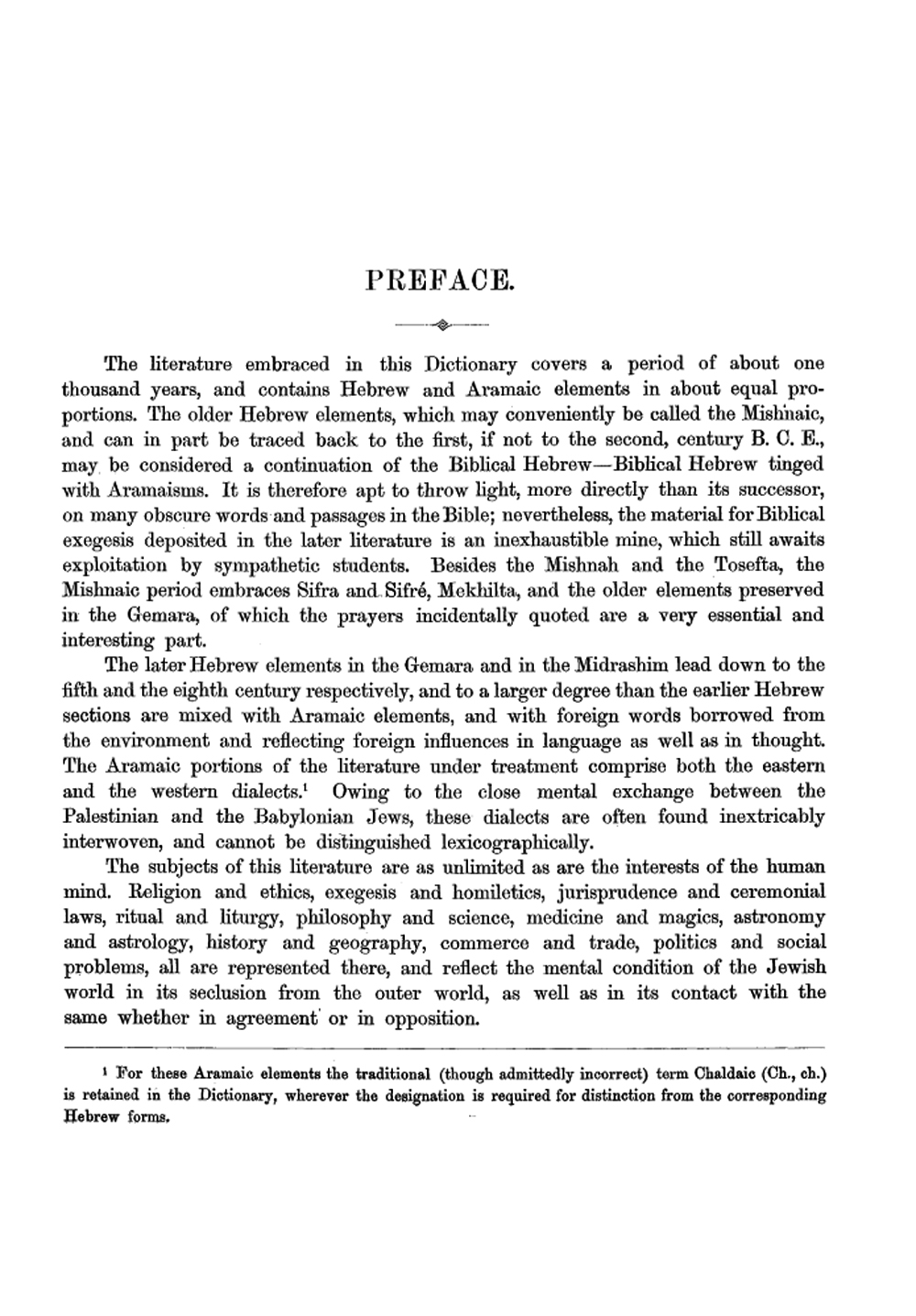
Finally, so that all the attention is not on ArtScroll, the following point was called to my attention by Benjamin Apfel. Here is the first page of Jastrow’s introduction to his dictionary. Read the last paragraph.

Here is the first page of Philip Birnbaum’s introduction to his translation of sections of the Mishneh Torah.[11]
The first paragraph is lifted from Jastrow. Would it have been so difficult for Birnbaum to simply add a note indicating that he was adapting Jastrow’s words?
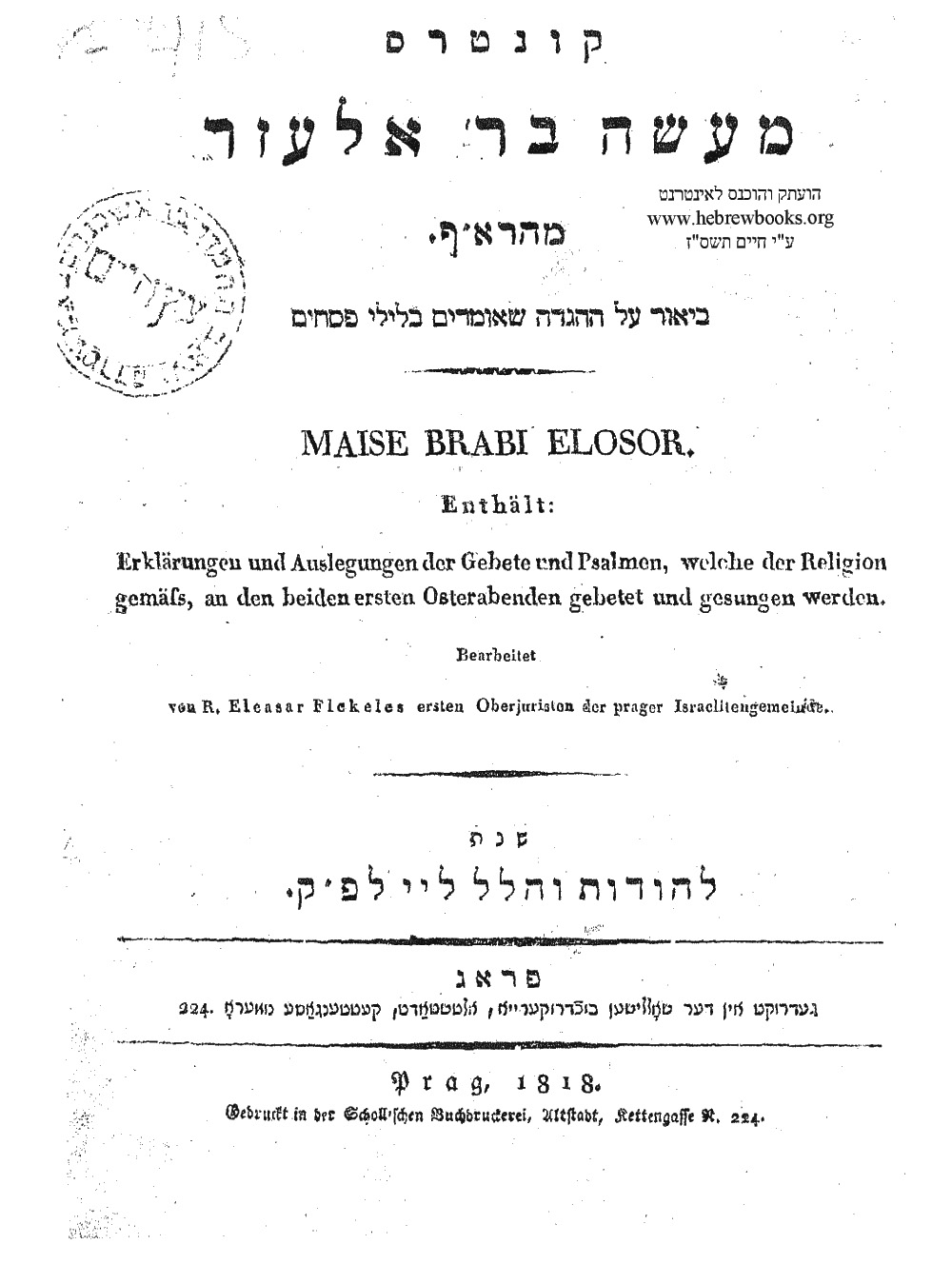
2. In my post here I referred to selections from Rashbam’s commentary on Psalms that were recently printed from manuscript. This should be distinguished from Rashbam’s commentary on Psalms published in Vienna in 1816 by Isaac Satanow. Here is the title page which tells us that the manuscript comes from the royal library in Berlin.
This commentary on Psalms is a forgery. While the volume is attributed to Rashbam it was actually written by Satanow. Regarding this forgery, David Rosin writes as follows:[12]
הכי קרא שמו יצחק ויהי כצחוק בעיניו להתחפש במעטה רבנו שמואל ולעשות מעשהו ולעבוד עבודתו. זר מעשהו ונכריה עבודתו, כל השומע יצחק לו
3. In my post here I quoted R. Moses Isaac Ashkenazi in his Ho’il Moshe that King David is not to be regarded as a prophet as he only had ruah ha-kodesh. One of the commenters wrote:

Rashi Megilla 14a quotes a Halachot Gedolot which names David as [a] prophet. Rashi speaks specifically about prophets as opposed to Ruach Hakodesh, and excludes Daniel based on Megilla 3a.

 Another commenter was more strident:

Wonderful example how modern scholars have no place in the Torah world! As first commenter pointed out, Dovid Hamelech is prominent in the list of 48 neviim, and there are scores of sugyos based on the nevuah of DH. The makom mizbeach, etc. Pure AmHaaRatzus!

I am not sure if I am the am ha-aretz he is referring to, which in any case would be uncalled for since I never said that David only had ruah ha-kodesh and was therefore not a prophet. All I did was point out that R. Moses Isaac Ashkenazi said this. When I called the commenter’s attention to the fact that his strong words were directed against R. Ashkenazi, he wrote:

I wouldn’t start up with Hoil Moshe, but was pointing out the danger of someone reading this post, and then taking it at face value. For anyone fluent in Shas they will find numerous references to DH’s nevua. Ruach HaKodesh wouldn’t work for all the halachos we learn out from DH. . . . I do thoroughly enjoy your posts, but find them quite dangerous. I would prefer my children at least stick to Artscroll and have their basics –DH’s nevua – straight!

Now let me say something that I did not put in the comments because I want the entire audience to see it, not just the tiny group that reads the comments. The commenter just quoted is a perfect example of one who is certain of something, and certain that the opposing position is incorrect, and this leads to very harsh language. Let’s leave aside R. Moses Isaac Ashkenazi who is not an important scholar. All would agree that R. Moses Sofer, the Hatam Sofer, is important and certainly not an am ha’aretz (which is the term the commenter used). Yet the Hatam Sofer is explicit that David was not a prophet and only had ruah ha-kodesh, which is exactly what R. Ashkenazi states and what the commenter so harshly attacks. Here are the Hatam Sofer’s words in Torat Moshe ha-ShalemBa-Midbar, p. 74.

הנה לא מצינו לישראל מלך שיהי’ גם נביא משולח לעם כי אם משה רבינו ע”ה, דכתיב גבי’ (דברים ל”ג ה’) ויהי בישורון מלך, אבל שארי נביאים לא היו מלכים והמלכים לא התנבאו, ודוד המלך ע”ה רה”ק הו”ל ולא נבואה, ולכן אחז”ל (גיטין נ”ט ע”א) מימות משה עד רבי לא מצינו תורה וגדולה במקום אחד, דאלו כל הנביאים היו עליהם בגדולה השופט והמלך שבימיו, וכל המלכים אפי’ דוד ושלמה היו הנביאים שבדורם גדולים מהם בתורה . . . שהרי אין מלך נביא.

This notion, that the kings were not prophets (other than Moses), is also stated in Zohar, Terumah, p. 154a, and this is presumably the Hatam Sofer’s source. I don’t deny that there are other authoritative sources that contradict this, including passages in the Talmud. Some of them are cited by R. Reuven Margaliyot in his note to the Zohar, ad loc., and we can speculate as to why the Hatam Sofer preferred the Zohar over these other sources. I cite this only to show that commenters should be very careful before labeling something as am ha’aratzus, as you never know whom you might be insulting with this comment.

4. The latest book in my series with Academic Studies Press has recently appeared. It is Sara Reguer, My Father’s Journey: A Memoir of Lost Worlds of Jewish Lithuania. (Reguer is the granddaughter of R. Simcha Zelig Reguer, the dayan of Brisk.) Here is the book’s description.

Born into a leading Lithuanian-Jewish rabbinic family, Moshe Aron Reguer initially followed the path of traditional yeshiva education. His adolescence coincided with World War I and its upheavals, pandemics, and pogroms, as well as with new ideas of Haskalah, Zionism, and socialism. His memoir, recently discovered and here translated and published for the first time, discusses his internal struggles and describes the world around him and the people who influenced him. Moshe Aron Reguer wrote his memoir at the age of 23, on the eve of his departure for Eretz Israel in 1926. However, his story did not end there, but continued in British Mandated Palestine and the United States. He kept in touch with the family in Brest-Litovsk until the Nazis destroyed Jewish Lithuania, and some of their correspondence is included within this volume.

Anyone who is interested in Jewish Lithuania and the great yeshivot will find this book of value.

I also want to call attention to the recent publication of Menachem Kellner, Jewish Universalism, edited by Hava Tirosh-Samuelson and Aaron W. Hughes. Kellner’s work has made a great impact, not only in Jewish scholarship but among thinking Jews in general. This small volume is a wonderful read and contains an intellectual portrait of Kellner written by James A. Diamond as well as a lengthy interview with Kellner.

This book is number 12 in Brill’s Library of Contemporary Jewish Philosophers. Here is what has appeared so far and what if forthcoming (taken from the Brill website).

Published Volumes

Vol. 1: Eliezer Schweid: The Responsibility of Jewish Philosophy
Vol. 2: Jonathan Sacks: Universalizing Particularity
Vol. 3: David Novak: Natural Law and Revealed Torah
Vol. 4: Eugene B. Borowitz: Rethinking God and Ethics
Vol. 5: Elliot N. Dorff: In Search of the Good Life
Vol. 6: Judith Plaskow: Feminism, Theology, and Justice
Vol. 7: David R. Blumenthal: Living with God and Humanity
Vol. 8: Moshe Idel: Representing God
Vol. 9: Lenn E. Goodman: Judaism, Humanity, and Nature
Vol. 10: Avi Sagi: Existentialism, Pluralism, and Identity
Vol. 11: Elliot R. Wolfson: Poetic Thinking
Vol. 12: Menachem Kellner: Jewish Universalism

Forthcoming Volumes

Vol. 13: J. David Bleich: Where Halakhah and Philosophy Meet (est. October 2015)
Vol. 14: Michael Fishbane: Jewish Hermeneutical Theology (est. October 2015)
Vol. 15: Norbert M. Samuelson: Reasoned Faith (est. November 2015)
Vol. 16: Arthur Green: Hasidism for Tomorrow (est. January 2016)

5. The issue of truth-telling in halakhic matters, discussed in the last chapter of my new book, has been of interest to many people. I did not want to be too lengthy in my response to Aryeh Frimer here, because it was not my own independent post. So let me now add some more details. DG reminded me of the following source. According to R. Jacob Moellin, when the Talmud states that a law is rabbinic but a verse is brought as an asmachta, this was done so as to mislead the people into thinking that it is a Torah law so that they would observe it more carefully.[13] In other words, the Sages were engaging in falsehood for a higher purpose.

This is exactly the sort of thing that Frimer claimed is not part of mainstream halakhic thought, a point which I disputed. It also is very relevant to my discussion of the dispute between the Hatam Sofer and R. Zvi Hirsch Chajes regarding “raising the prohibition”. Here are the Maharil’s words, as quoted by his student.

כל היכא דאיתמר מדרבנן הוא וקרא אסמכתא בעלמא, הכי פירושו ודאי תקנתא דרבנן הוא והם יצאו ובדקו ומצאו להם סמך מקרא, וסמכו דבריהם עליו כדי להחזיקם שיהיו סבורים דהוא מדאורייתא ויחמירו בו, ולא אתו לזלזל ולהקל בדברי חכמים

In the notes to this text, the editor informs us that one of the manuscripts has a different version. Instead of כדי להחזיקם שיהיו סבורים it reads להטעות הבריות שהם סבורים. This text is even more explicit that the Sages were not being honest with the masses. This manuscript has a handwritten note explaining that instead of reading להטעות הבריות it should say להטעים לבריות because the word להטעות is a דבר מגונה . In other words, the person who made this “correction” was troubled by the explicit statement that the Sages would deceive people, even if it was for a higher cause.

If there is one thing people have learnt from my posts over the years, it is that whenever you find a passage that diverges radically from what others think is appropriate, you will find those who deny the passage’s authenticity. In this case, the most prominent of the deniers is R. Joseph Engel[14]:

לענ”ד לא מיסתברי כלל ולא אאמין כלל שיצאו מפה קדוש המהרי”ל ז”ל

R. Simhah Klein writes[15]:
וכי ישקרו חז”ל לחזק דבריהם שיהיו סבורין דהוא דאורייתא

However, R. Eliyahu Bohbut is not at all bothered by the claim of the Maharil that the Sages engaged in a form of deception vis-à-vis the masses. After quoting the passage he explains matter-of-factly[16]:

כלומר דאסמכתא באה כביכול “להטעות” את העם שיסברו דאיכא איסור דאורייתא “ויחמירו בו”

Regarding one of the other matters I discussed in the book, namely, so-called “Orthodox history”, the folllowing appears in Divrei David (p. 30a), a collection of teachings of R. David Moses Friedman, the first Chortkover Rebbe.

פ”א סיפרו לפניו על איזה מעשה שאדמ”ור מרוזין זי”ע סיפר אותו פעם בסינגון זה ופעם בסיגנון אחר אמר על זה מרן אדמ”ור זי”ע שהסיפורי מעשיות שמספרים הצדיקים הוא לפי מה שצריך באותו שעה

This is an acknowledgment that the stories told by the rebbes are not really history, as they are designed to serve the needs of the present. As I think most people today realize, haredi “historical” writing in general is as much about the present as the past, and it is precisely because of this that authors feel it is legitimate to cover up or even alter the historical record in order to best serve the religious needs of the present.

Finally, a few people have asked about what I wrote on p. 244, that the strand of Jewish tradition that countenances falsehood “deserves to be understood in a sympathetic manner as well”. This does not mean that people need to agree with those who countenance falsehood, and I certainly do not. However, in writing an academic study as opposed to a polemic, it is important to recognize that approaches that today we might regard as unacceptable, were viewed very differently in other times and cultures (and for some, these “other times and cultures” continue into our own day). I am interested in understanding what leads people to diverge so dramatically from a value that I regard as important. In my book I did not set out to judge them, but in a sympathetic manner, i.e, with a sensitivity to their worldview, attempt to understand them. (When I used the word “sympathetic”, I did not mean that I approved of what I was describing, only that I was sensitive to the motivations behind the approach.) By the same token, when I see that great figures from earlier years have written troubling things about non-Jews or women, I also approach this in a sympathetic manner, understanding that for these people, living in a vastly different time and often suffering under terrible anti-Semitism, it made sense that they would express certain thoughts that today pretty much everyone regards as unacceptable. One need not be a complete historicist to acknowledge that all people are influenced by their era, for good and for bad. This is what I mean by understanding in a sympathetic manner.

Coming Soon: R. Ysoscher Katz and Modern Orthodox Halakhah; The Nineteenth- and Early Twentieth-Century Dispute Regarding the Historicity of the Hanukkah Miracle; R. Steinman and the Messianic Belief; R. Mazuz’s Short-Lived Entry into Politics; and a response to R. Aharon Lopiansky’s article in Dialogue.


[1] See his note in Mekabtzi’el 36 (2009), p. 64.
[2] Was Maimonides ever misled by a censored text? According to R. Eliyahu Zini, Eretz Hemdatenu, p. 75, this was indeed the case. Mishneh Torah, Hilkhot Avodah Zarah 9:13 states:
 המוכר ביתו לעבודה זרה דמיו אסורין בהנייה ויוליך אותם לים המלח
As Kesef Mishneh and others point out, the origin of this halakhah is Gittin 44a. Yet the authentic reading there is המוכר ביתו לגוי (the Vilna Talmud has לעובד כוכבים). As Dikdukei Soferim ha-Shalem (Jerusalem, 2001), ad loc., informs us, לגוי is the reading in all surviving manuscripts and early printings. Meiri, ad loc., explains the halakhah as follows:
שהמוכר בית לגוי בארץ ישראל ר”ל לאחד מעובדי האלילים דמיו אסורים מתורת קנס על שנתן לעובדי האלילים חנייה בקרקע
Since Maimonides had the reading לעבודה זרה, R. Zini concludes that the talmudic manuscript he used had been altered. This is much more compelling than the explanation offered by Kesef Mishneh and Lehem Mishneh that Maimonides interpreted לגוי to mean לעבודה זרה.
Yet there is no doubt that R. Zini is incorrect. As has been pointed out by many, one who examines Tosefta, Avodah Zarah 7:2, will see that this, and not Gittin 44a, is the source for Maimonides, and Kesef Mishneh and Lehem Mishneh were simply unaware of this source. It is significant that לעבודה זרה appears even in manuscripts of the Tosefta. 

Regarding Tosefta, Avodah Zarah 7:2 and Gittin 44a, I assume that only one of the versions preserves the authentic text, but I don’t think we can determine which one it is. The only thing that remains to be explained is why Maimonides did not codify the halakhah in Gittin 44a. (It could be that his version of Gittin 44a was indeed the same as that which appears in the Tosefta, but this has nothing to do with censorship.)

[3] Kesef Mishneh, Hilkhot Melakhim 10:9, cites Rashi. You can see the uncensored text of Kesef Mishneh in the Frankel edition. The version of Kesef Mishneh that appears in older editions of the Mishneh Torah is a censored text, and instead of recording Rashi’s statement about Sunday, the following appears: או בע”ש ששובתים בו הישמעלים. For printers in the Christian world there was no problem speaking about Muslim beliefs and practices, so in this case the original statement, made with reference to Christians, was substituted with one referring to Muslims. The printers who made this “correction” had the same misconception as many today, namely, that Friday is a day of rest for Muslims. It is not. Friday is a day of gathering for prayer, but Muslims do not have a sabbath, i.e., a day of rest.
[4] Interestingly, I found an anonymous medieval Italian text that records a “minhag tov” not to eat meat on Sunday. One reason offered is kevod Shabbat, namely, by having meat so soon after Shabbat one lessens the special nature of this day in which meat is the main dish. (Obviously, meat was not regarded as an everyday meal in this author’s time and place.) The second reason is מפני קלון הנוצרים. What this means is that since Sunday is the Christians’ holy day, Jews should avoid eating a special food like meat on that day. See Minhag Tov, ed. Weiss (Budapest, 1929), p. 230, no. 47.
[5] See Reuven Kimelman, “Birkat ha-Minim and the Lack of Evidence for an Anti-Christian Jewish Prayer in Late Antiquity,” in E. P. Sanders, et al., eds., Jewish and Christian Self-Definition (Philadelphia, 1981), vol. 2, p. 242.
[6] Christianity in Talmud and Midrash (London, 1903), p. 172. His first name “Robert” never appears in his works, as he went by “R. Travers Herford”. I supplied the first name in full as I did not want people to assume that we are dealing with “Rabbi Travers Herford”. Herford wrote a number of works about the Pharisees. His positive portrayal of them was in opposition to the standard Christian view. This highly impressed R. Zvi Yehudah Kook, who suggested translating Herford’s works into Hebrew. See his letter here where he writes:
חשבתי אז להעירו ע”ד ספריו החשובים של החכם האנגלי הרפורד, – היודע ואוהב את היהדות באופן נפלא, –  ע”ד תורת היהדות הפרושית וערכה העולמי, כהמשכה האמיתי של הנבואה בחיוניותה הנמשכת עד היום. כדאי וחשוב מאד היה לתרגמם לעברית, בשביל הנוער שלנו המתחשב מאד עם דבריו של גוי, וביחוד לעומת הרבוי של תרגומי דברי תפלות, שזכו ומזכים בהם את ספרותנו החדשה. אולי יואיל כ’ לזכות במצוה זו בהתמחות זריזותו ושקידתו
Herford’s commentary on Pirkei Avot is full of interesting points. To give one example, he argues that the proper vocalization of אמרו  in Avot 1:5: באשתו אמרו קל וחומר באשת חבירו, is amaro, not amru. (R. Mazuz told me that this is definitely incorrect.)
[7] See Dikdukei Soferim ha-Shalem, ad loc., Saul Lieberman, Tosefta ki-Feshutah, Ketubot, p. 365.
[8] See R. Yonatan Binyamin Buchinger in Or Yisrael 46 (Tevet 5767), pp. 237ff., ibid. 48 (Tamuz 5767), pp. 240-241, ibid. 51 (Adar Sheni 5768), p. 246. The authentic text of the Rif, which reads ערב הפסח, is found in the Constantinople 1509 edition. See Hilkhot Rav Alfas, ed. Zaks (Jerusalem, 1969), vol. 2, p. 128.
[9] See Ariel Toaff, Blood Passover (available online) ch. 8 n. 8. (Unfortunately, this book continues to give ammunition to anti-Semites.)
[10] See F. H. Wettstein, Halifat Mikhtavim (Cracow, 1900), p. 97; R. Dovid Cohen, He-Akov le-Mishor (Brooklyn, 1993), to Ketubot 102b (p. 106); Soncino’s note, Ketubot 102b.
[11] Maimonides’ Mishneh Torah (New York, 1967).
[12] Introduction to his edition of Rashbam on the Pentateuch, p. xix. See also Reuven Elitzur, Degel Mahaneh Reuven (n.p., n.d.), pp. 365ff. Not knowing who Satanow was, R. Yisrael Yaakov Fisher of the Edah Haredit refers to him as ר’ יצחק מסטנוב ז”ל. See Even Yisrael, vol. 8, no. 9. I found the same lack of awareness in R. Aryeh Leib Neimark, Even Yaakov (Slutzk, 1910), p. 57b: יפה פירש החכם מהר”י סאטנאב
[13] Sefer Maharil, ed. Spitzer (Jerusalem, 1989), Likutim, no. 70 (p. 629).
[14] Beit ha-Otzar, vol. 1, kelal 190 (p. 118b).
[15] Peleitat Soferim 1 (2012), p. 87 n. 7.
[16] Shoshanat ha-Amakim (Jerusalem, 2008), p. 257.


R. Elazar Fleckeles’s Haggadah Maaseh BR’ Elazar

R.  Elazar Fleckeles’s Haggadah Maaseh BR’ Elazar
By Eliezer Brodt
In the past I wrote:
Perhaps the topic which has engendered the most commentary in Jewish literature is the Haggadah shel Pesach. There are all kinds, in all languages, and with all types of commentary, pictures, etc. Whatever style one can think of, not one, but many Haggadahs have been written. So, whether it’s derush, kabbalah, halakha, mussar or chassidus there are plenty of Haggadahs out there. Then, there are people who specialize in collecting haggadahs although they do not regularly collect seforim. In almost every Jewish house today one can find many kinds of Haggadahs. Every year people print new ones; even people who had never written on the Haggadah have had a Haggadah published under their name, based on culling their other writings and collecting material on the Haggadah. When one goes to the seforim store before Pesach it has become the custom to buy at least one new Haggadah; of course one finds themselves overwhelmed not knowing which to pick! Every year, besides for the new Haggadahs being printed, old ones are reprinted, some in photo off-set editions, others with completely retype set.
Some years there are many choices of what to buy; in recent years, while the quantity of Haggadahs being printed has not ebbed, the quality most arguably has. This year, one important and high quality Haggadah that has been retype-set and republished is Maaseh BR’ Elazar by R’ Elazar Fleckeles.
R’ Elazar Fleckeles was born in 1754 in Prague and died there in 1826. He was a direct descendant of R’ Ephraim Luntschitz, author of the Keli Yakar, whom R’ Fleckeles quotes many times throughout his writings. When R’ Fleckeles was 14, he went to study with R’ Ezekiel Landau and spent ten years studying there. R’ Landau, as is evident from his haskamot to R’ Fleckeles works, held R’ Fleckeles in high regard. Additionally, many teshuvot in R’ Landau’s Noda b’Yehuda are addressed to R’ Fleckeles. In R’ Fleckeles’s writings, he quotes many interesting statements from R’ Landau. When R’ Fleckeles was twenty-four, he became the Rabbi of Kojetin, a town in Moravia. However, just four years later R’ Fleckeles returned to Prague to sit on R’ Landau’s Bet Din and serve as a head of a yeshiva. [See also here and here].R’ Fleckeles authored many works on halakha and derush, as well as a commentary on the Haggadah called Maaseh BR’ Elazar. R’ Fleckeles was a skilled halakhist, as is evident from his volumes of responsa, Teshuva m’Ahavah, but his fame also rests on his skills as a darshan. His derashot were published in a four volumes, Olat Chodesh. The fourth volume contains, R’ Fleckeles series of derashot he gave against Shabbatai Tzvi and Jacob Frank (this section has a separate title, Ahavat David) [recently auctioned off as noted here].

Almost all of his works besides his Teshuva m’Ahavah, are very hard to find.
A few years ago a new Boro Park-based Machon called Netzach Yaakov started reprinting his seforim. In 2014 they printed a volume of his Drashot related to Elul and Tishrei along with two works, Chazon LaMoed and Olat Chodesh (437+20 pp.). This beautifully produced work, including an introduction about R’ Fleckeles and a detailed index, matches the content of the actual Drashot.
 A few weeks ago this company released a new edition of his commentary on the Haggadah: Maaseh BR’ Elazar (224 +23 pp).
The Maharil noted in a drasha that he gave before Rosh Hashonah:
כל אדם יחזור וילמוד התפלה והקרובץ מקודם להיות שגורים בפיו בר”ה בשעת התפלה. וכן ילמוד בניו ובני ביתו סדר התפלה, ויריצם סדר הברכות ומלכיות זכרונות ושופרות, כדי שלא יצטרך בר”ה להפסיק בין גאולה לתפלה להראות להם אז הסדר, כי צריכנא לסמוך גם ביום טוב גאולה לתפלה. [וכשחל ר”ה בשבת כל שכן – דצריך אדם לסדר להרגיל התפילה להראות לבני ביתו בתחילה – דאז משנין בכמה מקומות התפילה – והקרובץ [מהרי”ל, עמ’ רעב]
 But specifically more instructive is the Sefer Hamaskil‘s comment:
מה טוב ומה נעים לעיין תמיד דבר בעתו בכל שבוע ושבוע בפירוש חומש ומחזיר וסליחות… ואגדת פסח [ספר המשכיל עמ’ 70].
His basic point being that one should try to prepare before each occasion the tefilos we specific to that occasion – and for Pesach that is the Haggadah.
Many people look all over each year to have nice new pieces of Torah to say over at the seder. This work is full of nice (many) shorter pieces focusing on Peshat and Derush (not Kabbalah) which can be enjoyed by different audiences.
Some General comments on this work;
This Haggadah was first printed by the author in Prague in 1818.
Abraham Yaari, in his work A Bibliography of the Passover Haggadah, writes about this work:
הפרט העברי ככתבו עולה תקע”ב אולם יש לקרוא את שני היודין של השם כשם הויה, ואז יעלה תקע”ח, בהתאם לשנה הלועזית 1818, ולהסכמת הצנזור שניתנה באוקטובר 1817 [מספר 418]
For recent Discussion of other works with similar wording see Yakov Speigel Amudim be-Toldot ha-Sefer ha-Ivri; BeSharei HaDefus, pp. 273-296.
In 1944 in Oradea, Romania this work was printed again. It appears that this was the last Haggadah printed in Europe during World War Two. To me it is fascinating that in this turmoil time they bothered to print this work.
Yaari records this edition [number 2308] as does Yitzchak Yudolov in The Haggadah Thesaurus [number 3918]
This 1944 edition has an interesting addition, as noted by the publisher. Into the text of the Haggadah the prelude Li Shem Yichud was added:
 ולא הוספתי עליו רק מה שנוהגים לומר לפני כל מצוה לשיחקב”ה וכו’ [=לשם יחוד קודשא…] הצגתי כהסכמת הגאון משאמלויא שליט”א…
In R’ Ehreneich’s second letter to the publisher he writes:

 אבל בזמנינו נתפשט המנהג
של צדיקי הדורות זי”ע לאמרו והגאון המחבר זצ”ל שהוא בעולם האמת
בודאי לא יקפיד ע”ז ויאחז כאו”א ויעשה כמנהגו…


Although it’s very nice that they decided to add this into R’ Fleckeles work and not hide this addition but I do not think they had any right to do such a thing. R’ Fleckeles was very outspoken about saying Li Shem Yichud, to say the least.
דרך כלל יאות לבטל כל התחנו’ ובקשות אלו וכיוצא בהן שנתחדשו מלקוטי האחרונים ומעיד אני עלי שמים וארץ שראיתי אחד הי’ רצה לברך על אתרוג המהודר של רבינו הגאון האמתי נ”ע (כי הי’ תמיד מהדר מן המהדרין אחר אתרוג המהודר בכל מיני הידור וכסף וזהב לא הי’ נחשב בעיניו מאומ’ אף שהאתרוג הי’ בתכלית היוקר) וכאשר ראה שאותו פלוני אמר יה”ר קודם נטילת לולב (הנדפס במחזורים ובלקוטי צבי) כעס ורגז ואמר בקצף גדול האומר יה”ר אינו מניחו לברך על אתרוג שלו ולא הניחו לברך ועיין מ”ש רבינו בספרו נ”ב חלק א”ח סי’ ל”ה דף כ’ ע”ג ובחלק י”ד סי’ צ”ג והרבה יש לי לדבר בענינים האלה וכאלה ומרוב טרדותי לא אוכל להאריך [שו”ת תשובה מאהבה, א, סוף סי’ א][1]
He was following in the path of his Rebbe, the Nodeh BeYehudah, who as is well known was adamantly against the saying of Li Shem Yichud:
ועל הרביעית אשר שאל בנוסח לשם יחוד אשר חדשים מקרוב נתפשט ונדפס בסידור הנה בזה אני משיב עד שאתה שואלני נוסח אמירתו יותר ראוי לשאול אם נאמר כי טוב באמירתו. ולדעתי זה רעה חולה בדורנו ועל הדורות שלפני זמננו שלא ידעו מנוסח זה ולא אמרוהו והיו עמלים כל ימיהם בתורה ובמצות הכל ע”פ התורה וע”פ הפוסקים אשר דבריהם נובעים ממקור מים חיים ים התלמוד עליהם נאמר תומת ישרים תנחם והם הם אשר עשו פרי למעלה וגדול מעל שמים חסדם. אבל בדורנו הזה כי עזבו את תורת ה’ ומקור מים חיים שני התלמודים בבלי וירושלמי לחצוב להם בורות נשברים ומתנשאים ברום לבבם כל אחד אומר אנכי הרואה ולי נפתחו שערי שמים ובעבורי העולם מתקיים אלו הם מחריבי הדור. ועל הדור היתום הזה אני אומר ישרים דרכי ה’ וצדיקים ילכו בהם וחסידים יכשלו בם. והרבה היה לי לדבר מזה אבל כשם שמצוה לומר דבר הנשמע כך מצוה שלא לומר דבר שאינו נשמע וה’ ירחם עלינו. עי”ש באריכות. [נודע ביהודה (קמא) יו”ד, סי’ צג].
A few months ago I mentioned the censorship of this Teshuvah.
This topic of saying Li Shem Yichud will hopefully be discussed at a different time.[2] But just to add some sources.
In 1805, R’ Menachem Mendel of Shklov, one of the main talmidim of the Vilna Gaon, printed the Gra’s work on the Haggadah for the first time.

Before Maggid it says:
הנני מוכן ומזומן לקיים המצוה לספר ביציאת מצרים לשם יחוד הקב”ה…
In a recent edition of the Gaon’s Haggadah the editor writes:
והנה אין גילוי מפורש בדעת רבינו הגר”א ז”ל באמירת לשם יחוד אך אילו ידע רמ”מ ז”ל שרבינו ז”ל מתנגד לאמירתה בוודאי לא היה מדפיסה… [ר’ חנן נובל, הגדה של פסח עם פירוש הגר”א, ירושלים תשע”ג, עמ’ כט, עי”ש].[3]
This same passage appears in later prints of the Gra Haggadah including one printed in Prague in 1813 at the time R’ Fleckeles was very active there. [Worth noting is the censor was R’ Fleckeles friend, Karl Fisher].

Even though it is unclear what the Gra held about saying Li Shem Yichud, another talmid of his appears to write against it. Here is what R’ Menashe M’IIlyah writes about it in Alfei Menashe:

In the beginning of the Haggadah, R’ Fleckeles deals with the famous question as to why there is no Beracha on Sipur Yetzias Mitzrayim, quoting a Shut Besamim Rosh on the topic [see here]. A few lines later he quotes the real Shut HaRosh, with this preface:
ובתשובות הרא”ש המקובלת לנו ראיתי…
Returning to this newest edition of the Maaseh BR’ Elazar.
One nice piece in this Haggadah is his discussion against his Rebbe, the Nodeh Beyhudah, about the Issur of Chametz in Mitzrayim.
He writes:
הנה חדשים מקרוב נדפס ספר מערבי וראיתי…
The current editors do not write to which sefer he is referring. This is the work he is referring to, first printed in 1793:

In 1959, Yitzchak Refael printed numerous additions to this Haggadah in the journal Sinai (45: 22-36). The source of these addenda is R’ Fleckeles personal copy, which he had specially bound with added on margins and blank pages inserted between each page, affording the author ample room for marginalia. After passing through several hands, finally arriving in R’ Maimon’s library. This new version of the work includes all of these addenda, in their proper places. Interestingly enough, neither Yaari nor Yudolov mention these additions in their entries on this Haggadah.Returning to Li Shem Yichud Sharon Flatto writes in her ‘The Kabbalistic Culture of Eighteenth Century Prague’:

Notably a Haggadah was recently discovered that was owned during the late 1780s by Fleckeles…. The margins of this Haggadah contain leshem Yihud formulas to be recited before the blessing on the the four cups of wine penned in Fleckeles’ hand.

In the footnote she writes they seem to have been written between 1784-1790.'(pp. 225-226). While I wish I had more clearer sources about this discovery. She does not note that the Haggadah that R’ Fleckeles himself printed in Prague in 1818 nor in the manuscript updates of R’ Fleckeles to his own Haggadah does he write to say Li Shem Yichud or any such Tefilah in the Haggadah. This newest edition of the Maaseh BR’ Elazar prints the Haggadah like R’ Fleckeles did in 1818 without Li Shem Yichud.

Besides for all these new pieces added into this new edition, the volume also includes a well-written introduction about R’ Fleckeles, including an interesting eye witness account from manuscript of the day he died in Prague. Another plus to the new edition are the numerous sources they added, at times quoting R’ Fleckeles references from his other works.  Finally, there is a very useful index of topics and seforim quoted by R’ Fleckeles at the end of the volume. I really hope they continue to print the rest of R’ Fleckeles works.
To purchase this Haggadah try Girsa in Jerusalem, Biegeleisen in NY or your local seforim store.
Appendix:

One of the seforim noticeably omitted, for the most part, from R’ Fleckeles works, including this Haggadah, is the Zohar.
Much of the sources in R’ Fleckeles writings regarding the Zohar and Kabalah in general has been gathered in Boaz Huss’ recent work, KeZohar Harokeyah (pp. 322-323). Most notable is this piece which I quote here in its entirety:
ועתה אין מן הצורך להשיב את האיש אשר רצה להמצי’ דבר חדש להשביע את האיש הישראלי בספר הזוהר… את זה כתבתי לדעת האיש ההוא שהספר הזוהר כלו קדוש אבל אני אומר הריני נשבע בתורת ה’ שבספר הזוהר נמצאו כמה זיופים וקלקולים אשר הוסיפו ועלה אחת מתלמוד בבלי הויות דאביי ורבא קדוש יותר מכל ספר הזוהר הנה אם אמרו חכמי התלמוד על ברייתא דלא מתנייא בי ר’ חייא ור’ אושיעא מאן ימר דמתרצתא היא דלמא משבשתא היא וספר הזה ודאי לאו בר”ח ורב אושיעא אתמר כי כל הדורות מראש לא זכרו מספר הזוהר מאומה לא בהקיץ ולא בחלום כי הנה אם אמת הדבר שהחבור הזה הוא מהתנא ר’ שמעון בר יוחאי אשר ר’ יהודה הנשיא קבל גם ממנו כמבואר בהקדמ’ הרמב”ם לספרו יד החזק’ איך לא זכר את הספר הזה בחבורו ש”ס משניות או בשום מקום ואף ר’ יוחנן שחיבר תלמוד ירושלמית אינו מזכירו בשום מקום ורבינא ורב אשי שחברו תלמוד בבלי מאה שנים אחר חבור תלמוד ירושלמי והיו סוף אמוראים ולא שמו רמז בכל התלמוד מספר הזוהר ורבה בר נחמני שחובר רבות ושוחר טוב וכיוצא בהם הרבה לא זכרו מחבור רשב”י גם רבנן סבוראי והגאונים והרי”ף והרמב”ם ורש”י ותוס’ והרמב”ן והרשב”א והרא”ש והטור והילקוט שמעוני אשר אסף ולקט כל המדרשות והמכילתות והברייתות כלם לא ידעו ולא ראו ממנו דבר עד שזה קרו’ לשלש מאות שנים ענו ואמרו שמצאוהו ואיזהי כנסיה אשר קבלוהו בכנופיה, כמו תלמוד בבלי וירושל’ וז”ל הרמב”ם בהקדמתו לספר יד החזקה אבל כל הדברים שבגמרא הבבלי חייבין כל ישראל ללכת בהם וכופין כל עיר ועיר וכל מדינה ומדינה לנהוג בכל המנהגות שנהגו חכמי הגמרא ולגזור גזירותם וללכת בתקנותם הואיל וכל אותם דברים שבגמרא הסכימו עליהם כל ישראל עכ”ל ויעיין עוד שם ואין אני חלילה מטיל דופי ופגם בכבוד התנא אלדי ר’ שמעון בר יוחאי כי הוא היה מחסידי עליון אלא אני אומר לאו גושפנקא דרשב”י ועזקתיה חתום עליה ומי שיש לו חצי דעת יגיד כן שהרי נזכרו בספר הזוהר כמה תנאים ואמוראי’ שהיו אחר רשב”י שנים רבות במספר והארכתי בזה במקום אחר מפי סופרים ומפי ספרים כמבואר בס’ מטפחת להגאון מו”ה יעב”ץ זצלל”ה שגזר אומר שחלו בו ידים מזייפים וחשד את החכם ר’ משה דיליון יעיי”ש.
והינה מיום שנתחדש ספר הזוהר הרבה נכשלו ע”י כי כמה דברים סתומים וחתומים אשר המציאו האחרוני’ להתעות בני אדם יושבי חשך השכל, צאו וראו כמה קלקולים רבים קלקלו מאמיני הכלב רע שבתי צבי שבור ואחוזת מרעהו ברכי מסאלנוקא ויעקב פראנק שם רשעים ירקב, ותלו דבריהם בספר הזוהר אשר בודאי לא יאונה לצדיק ר’ שמעון בר יוחאי כל און.
מה טוב ומה נעים, אשר כתבתי בחבורי קטן אשר קראתיו בשם קונטרס אהבת דוד שנדפס בק”ק פראג תק”ס וזה לשוני שם באו ונחזיק טובה וחינות לשני מלכים גדולי אדירי’ אדוננו המשובח המנוח הקיסר יאזעף השני ואדוננו המהולל הקיסר פראנץ השני אשר צפו והביטו בחכמתם הנפלאה, רבות רעות ושבושי דעות תסתעפנה מחלומות והבלים המקובלים, והמה לנזקי בני האדם נזקי הגופות ונזקי הנפשות, ופקדו באזהרה גדולה שלא להביא ספרי קבלה בכל מדינות מלכותם הפקודה הראשונה העכסט האף דעקרעט פאם ב’ נאוועמבר למספרם והשני פאם ז’ יוני למספרם והארכתי שמה בדברים נכונים… (תשובה מאהבה חלק א סי’ כו).
According to Shmuel Werses, Haskalah and Sabbatianism, (Heb.), pp. 68 and Boaz Huss, KeZohar Harokeyah (p.323) this teshuvah has been censored out of the 1912 edition of TM. I have been unable to independently confirm this, as the 1912 editions I have seen (both in NLI and in BIU) have it in full – as do most reprints available today, including the edition found on the HebrewBooks.org website
In another teshuvah on this topic R’ Fleckeles writes:
ובלא”ה כבר כתבתי פעמי’ רבות שאין ראי’ מזוהר שלא נודע ברור מי הוא המאסף והמלקט ספר הזוהר והרבה הוסיפו  (תשובה מאהבה א:סב).
It is worth pointing out that R’ Fleckeles does not dismiss the Zohar completely taking it into account elsewhere in TM; for example in this teshuvah he writes:
מה ששאלני מדוע רובא דעלמא מקילים והולכים בבקר ד’ אמות בלי נטילת ידים שחרית הא כבר כתב המ”א בשם הב”ח בשם תולעת יעקב כל ההולך ד’ אמות בלי נטילת ידים שחרית חייב מית’ עיי”ש וכמה בני תורה אשר אינם שוגגים מקילים ואין להם על מה שיסמכו. ידע ידידי שדבר זה כתב בעל תועלת יעקב בשם הזוהר וכן העתיקו הב”ח, והמג”א השמיט בשם הזהר או מן השמים השמיטוהו כי חפשתי בספר הזוהר יגעתי ולא מצאתי ובעל א”ר האמין לשמועותיו בשם הזוהר והאר”י וצדר להקל עיין סי”א סק”ד ולבסוף מסיק בשם ספר דמשק אליעזר שדבר זה  דוקא בזמנם כמו גילוי וזוגות עיין שם ולענ”ד ליתא בזוהר כלל והרב בית יוסף אשר העתיק בכל פעם דברי הזוהר לא שם רמז מזה ושארי לי’ מארי’ שעשה רוב ישראל לחייבי מיתות שוגגן ישרים יחזו במסכת ברכות דף  סמ”ך ע”ב ישר יחזו פנימו ולענ”ד היא משנת חסידים והזריז הרי זה משובח ואפשר דזוהר מיירי אם מים מצוים לפניו והולך ד’ אמות בלי נטילת ידים ואח”ז ה’ אנה לידי ספר ברכי יוסף וראיתי שמביא דברי הזוהר כת”י וסיים וזה לשונו אלא דשמיע לי מרבני קדישו דזמנין דמיא הרחק מאד מאדם ובלכתם ילכו פחות מד’ אמות כאותה שאמרו גבי שבת עיין שם סימן א’ אות א’ ולשון הזוהר אינו לפני לעיין והנרא’ לענ”ד כתבתי. (תשובה מאהבה חלק א סי’ יד וראה חלק ב סי’ א אות ד)
As an aside, the shitos of R. Fleckeles on the Zohar are bland compared to those of his Rebbe, the Noda Beyehudah, as found in the recently printed drasha of his from manuscript by Dr. Maoz Kahana and M. Silber. I note in passing that this drasha has sparked a debate between them and Dr. Flatto, to which she responded in a later version of the journal Kabbalah.


[1]  See also his Melechas Hakodesh, p. 132
[reviewed here].
[2]  See Moshe Hallamish, Kabbalah (Heb.),
pp. 45-70; Maoz Kahane, MiHaNoda BiYehuda LaHatam Sofer, pp. 89-91 and
pp. 235-236; most recently Shimon Szimonowitz, Haggadah
Aleh Zeis
(2016), pp. 35-78.
[3]  Thanks to R’ Dovid Vieder for this source.


Shaving on Chol HaMo’ad the Never-ending Controversy

While we are generally aware that denominations other than Orthodox changes and adapt to the times, in reality Orthodoxy has also made significant changes. Of course, these changes are all within the parameters of Halakah, but they are in part concession to the times.

By way of example, the Mishha and in turn the Gemera record various practices when a person is an אבל (mourner). One such practice is עטיפת הראש winding or wrapping of the head. Tosefot, however, note that although this practice is recorded without controversy – in their time, as it was uncommon to wrap one’s head there is no longer an obligation to do so.

At the time Tosefot offered this decision – a decision which took into account then modern sensibilities – it was fairly unremarkable. This would change significantly when a movement sprung up which took conforming Judaism to modernity to the extreme. The Reform movement which altered numerous, significant practices precipitated a greater hesitancy to effect change – even legitimate change within Orthodoxy.
One example of the battle over changing long established practices relates to Hol haMo’ad. The Mishna in Mo’ad Koton [1] enumerates but a small class of people who are permitted to shave on Hol haMoad. This class is comprised of people, who for reasons out of their control were unable to shave before the holiday. One who is released from prison on the Holiday is one example. But, anyone other than this small class of persons according to the Mishna, are prohibited from shaving on Hol haMo’ad. The Gemera explains the restriction in light of human nature. One, in theory, has more free time on Hol HaMo’ad (assuming one is not working) thus one may procrastinate to shave and get a haircut until Hol HaMo’ad. This would mean that they would begin the holiday unkempt, unshaven. Thus, to avoid this sort of procrastination, one is prohibited from shaving on Hol haMo’ad thus removing any temptation to delay until Hol HaMo’ad.

The question which we will now turn out focus to – is whether this reason is dispositive. That is, assuming one did in fact shave before the holiday can he then shave on Hol HaMo’ad as he did comply with the law.

For hundreds of years the answer to this question was no. Rabbenu Tam (1100-1171) did allow for someone who shaved before the holiday to do so on hol haMoad. This position, however, was uniformly rejected by everyone who voiced an opinion on this matter until the 18th century. The 18th century, however, saw an increase in emancipation and closer contact between Jews and non-Jews. This was on an unprecedented level, Jews did not want to appear strange and thus many Jews began, what is common today, dressing in contemporary style and the like. Jews also, although there were also examples earlier, began to appear clean shaven. Now, during the rest of the year, maintaining a clean shaven look did not pose too significant of a problem. But, there was one time where, based upon precedent, it would be difficult to remain clean shaven – during Hol HaMo’ad.

The first to readdress this issue was R. Yehezikel Landau, the author of the Noda B’Yehuda and one of the greatest Rabbis of his time. In approximately, 1775, R. Landua was asked (O.C. Tinyaha, no. 101) if there was any way for those who shave year round, and did so prior to the holiday, to do so on Hol HaMo’ad. R. Landau ruled in the affirmative, with one important condition – that it be done with a poor barber. This condition was an attempt to conform with the various prior opinions. Namely, R. Landau understood the rejection of Rabbenu Tam’s opinion limited to instances which the person would shave themselves. But, a poor person who needed this to survive and thus was able to do work on Hol HaMo’ad anyways, everyone would agree shaving would be permitted. As R. Landau was highly respected his opinion did not go unnoticed. With the publication of this responsa in his work Noda B’Yehuda, the reaction was almost immediate and negative. From all over Europe various people either directly addressed R. Landau or wrote their own private responses expressing their opinion to maintain the status quo. In the end, R. Landau included four responsa on this topic. The reaction was summed up by R. Hayim Yosef Azulai, the Hida (Yosef Ometz, no. 7),

ואולם בו בפרק ראיתי אשר תיכף אזרו חיל הגאונים רב של ברלין ורב של אמשטרדם וחלקו עליו, ונדפס בספר בינן אריאל. גם ידעתי נאמנה שרבני גאוני פולין ואשכנז היטב חרה להם היתר זה וכמעט נגעו בכבוד הרב. ואין ספק כי רבני ארץ ישראל . . וכל טורקיאה ומצרים . . . וערי המערב . . . כולם יסמכו עם רבני אשכנז ופולין

“During that time I heard immediately they quickly girded themselves, the great ones, the Rabbi of Berlin, the Rabbi of Amsterdam and they disagreed [with R. Landau] and this was printed in Binyan Areiel. I also heard from trustworthy sources that the Rabbis of Poland and Germany were extremely disturbed by this leniency and they went so far as to disparage R. Landau. And I have no doubt that the Rabbis in Israel, Turkey, Egypt, and all the Eastern lands agree with the Rabbis of Poland and Germany.”

There were those, who could not reconcile their high esteem of R. Landau with his permissive stance on shaving, and thus made the claim (which has no support) that R. Landau retracted his statement. [Such a claim – that the author retracted or an errant student was the author of a controversial respona – is rather common. See Speigel, cited below, pp. 271-75 for other examples.]

One particularly fantastic (and well-known) explanation attempting to reconcile the R. Landau’s position was offered by R. Moshe Sofer, the author of Hatam Sofer. R. Sofer (Shu”t Hatam Sofer O.C. no. 154) wants to understand R. Landau’s position in light of another shaving question. One is prohibited from using a straight edge razor on their face. But, as this was before electric shavers many of the other options for shaving were not appealing to some and they used a straightedge anyways. R. Landau was offered a possible justification for this practice, which R. Landau in turn rejected. The justification was one is prohibited from removing “hair” with a straight edge. Hair is only hair, for many other laws, if it is long enough to turn back on itself. Thus, if one shaved every day or so, even with a straightedge they would not be removing hair as it was too short. Now, as I mentioned R. Landau rejected this, however, R. Sofer claims as this position was perhaps the only available understanding of what many did to not consider them sinners, R. Landau in fact accepted this. But, R. Landau also knew that if he came out that shaving was prohibited on Hol HaMo’ad many people even those who use a straightedge will follow that opinion. Thus, at the end of the holiday they would have long enough facial hair to be shaving “hair.” While ascribing such motivation to R. Landau is somewhat far-fetched, it does demonstrate how far people would go to reconcile their views of R. Landau with this position.

This, as would be expected was not the end of this issue. Soon after the Noda B’Yehuda was published, another book – which was controversial in its entirety – was published. This book, Besamim Rosh, (previous discussions here) was published in 1793 but attributed to R. Asher b. Yehiel who lived at the end of the thirteenth and beginning of the fourteenth centuries. Almost immediately after its publication there were those who questioned this attribution and instead said it was not the RoSH who wrote this but instead it was the publisher, R. Saul Berlin. Although there were many controversial statements in this book, R. Saul Berlin retracted only one – his statement regarding shaving on Hol HaMo’ad (no. 40). This was the only pronouncement R. Saul agreed was not from the RoSH.

Thus far, this discussion was limited to single or a few responsa, however, in the 19th century we have the battle of the books. Isaac Samuel Reggio (1784-1855) (mentioned previously here), an Italian Rabbi and admitted maskil, devoted an entire work, Ma’amar HiTeglachat (Vienna, 1835), to the issue of shaving on Hol HaMoad. Reggio was one of the most accomplished Rabbis of his day, he was fluent in numerous languages, founded the Rabbinic Seminary in Padua and was an amazingly prolific writer (and he also went clean-shaven as is evidenced by the portrait accompanying the article on him in the Jewish Encyclopedia here). Perhaps his most accessible book is a translation in Italian and commentary in Hebrew (titled Torat HaElokim, Vienna, 1818)of the bible based upon the simple meaning (pehsat)was recently reprinted. [It appears the sponsor of this reprint was unaware of Reggio’s maskilik leanings and – as the story was related to me – was horrified to find this out and thus this edition is now difficult to obtain.]

Reggio takes the position of R. Landau one step further. You will recall that R. Landau allowed for a poor Jew to cut one’s beard but not the person himself. Reggio, however, offers that even the person themselves can shave. This is so, as he understands that in the time of the original enactment, it was highly uncommon to shave weekly and certainly daily. From this assumption Reggio notes that (1) those who shave more often the hair returns quicker and thus before it was no big deal not to shave over 8 days but today, even in such a short time the hair returns too quickly and (2) since everyone now shaves often this is not the set of circumstances the original enactment was aimed at. That is, only for those for whom shaving was infrequent was there a true fear of forgetting or pushing off shaving but today that is not nearly as much of a consideration. Of course, Reggio notes that if one did not shave prior to the holiday he can not shave on Hol HaMa’od.

This being the most sweeping ruling on this issue and the most comprehensive, an immediate reaction was not short in coming. In fact, there were two books written for the sole purpose of refuting Reggio’s position. The first, a play on Reggio’s title was Tegalachat haMa’amar (Livorno, 1839), was published anonymously. However, we now know that in fact the author was R. Avrohom Reggio, R. Yitzhak’s father!

To this day, shaving on Hol HaMoad remains a contentious issue. R. Moshe Feinstein one of the greatest American Rabbis post-Holocaust allowed for similar reasons to Reggio, one to shave on Hol HaMo’ad. R. Feinstein explains (O.C. vol. 1 no. 163) that “today for those who shave daily, they can shave on Hol HaMo’ad.” Although there is again a permissive opinion, one from a highly respected person it still did not end this issue. In the Shmerat Shabbat K’Helchata (vol. 1 p. 274), on the top portion of the text he records that it is prohibited to shave on Hol HaMo’ad. Then in a footnote he is willing to only cite to R. Feinstein’s responsa without explaining what it contains.

Additionally, in an English book devoted to the laws of Hol HaMo’ad [2] they have taken it one step further by judiciously quoting R. Feinstein to give a different impression than the actual respona. As is provided in this book, R. Feinstein concludes his responsa with “I only offer this permissive opinion to those who have a great need or are in pain from not shaving.” (p. 26 n. 7). This is where the quote ends in the English book [of course, this does not actually appear in the English section, rather this is all relegated to a Hebrew footnote – in the English portion, the authors only allow that if refraining from shaving would result in a loss – davar ha’avod – only then is it permitted]. But R. Feinstein actually continues with “if one wishes to rely upon my permissive stance for appearances sake only [i.e. not only for ‘great need’ or ‘pain’] there is no need to stop him as in reality this is permitted.”

אבל מ”מ איני נוהג להתיר אלא למי שיש לו צורך ביותר או מצטער ביותר, ואם אחד ירצה לסמוך ע”ז גם בשביל היפוי לבד אין למחות בידו כי מעצם הדין הוא מותר לע”ד

Sources: The vast majority of the above comes from M. Samet article on the topic of shaving on Hol HaMo’ad. This article appears in M. Benayhu, Tegalachat B’Holo shel HaMo’ad, Jerusalem, 1995. Benayhu’s book also reprints both Reggio’s books as well as a significant amount of material from manuscript and he provides a history as well. Interestingly, Benayahu attempted to convince R. Shlomo Zalman Aurebach that today it would be permissable to shave on Hol HaMo’ad. Benayahu, however, notes that right when he finished this book, he was planning on showing it to R. Aurebach for his thoughts and comments but R. Aurebach passed away.
[Of course, the primary material contains additional important information]. This book is the most comprehensive discussion on the topic. Samet’s article has now been reprinted in his Hadash Assur min HaTorah, Jerusalem, 2005. Samet, among other things, discusses R. Feinstein and the controversy over his opinion. There are others who discuss this topic, however, as they mainly use the two above sources (with and without attribution), and they do not add much of anything I have not provided additional citations.

I want to thank M. Solomson for providing both editorial corrections and material for this post.

Notes
[1] On the name of this Mescheta and whether it is Mashkim or Mo’ad Koton, see Y. S. Speigel, Amudim b’Toldot Sefer HaIvri, Kitvah v’HaTakah, pp. 326-27; 348-56 (discussing which rishonim referred to it as Mashkim and which referred to it as Mo’ad Koton and whether any conclusions can be drawn from that data).

[2] D. Zucker & M. Francis, Chol HaMoed, Brooklyn, NY, 1981. The book even contains an approbation from R. Feinstein, although R. Feinstein says he did not look in great detail at the book and instead his approbation is based upon the reputation of the authors.


Tarnopol: A short-lived early 19th century Hebrew press

Tarnopol: A short-lived early 19th century Hebrew press
by Marvin J. Heller[1]

The blossoms have appeared in the land, The time of your song has arrived,
and the voice of the turtledove Is heard in our land.
The green figs form on the fig tree. The vines in blossom give off fragrance.
Arise, my darling; My fair one, come away!
“O my dove, in the cranny of the rocks. Hidden by the cliff.
Let me see your face, Let me hear your voice; For your voice is sweet And your face is comely.”
Catch us the foxes, The little foxes
That ruin the vineyards— For our vineyard is in blossom. (Song of Songs 2:12-15).

Tarnopol (Ternopol), a city with an established Jewish community, dates its founding to the mid-sixteenth century. The community had many positive aspects (blossoms have appeared in the land, The time of your song has arrived), and was home to a Hebrew printing press (The green figs form on the fig tree. The vines in blossom give off fragrance) for a brief time only in the early nineteenth century. Due, however, to the contentious relationship between conflicting segments of the community, that press, after publishing a variety of valuable works, was short lived and closed prematurely (The little foxes that ruin the vineyards).

Tarnopol is in Galicia, in the western Ukraine, approximately 227 miles (365 km.) from Kiev (Kyiv) and 73 miles (117 km,) from Lvov. Although there had been earlier residences in the area, credit for founding the city as a private town in 1540 is given to the Polish hetman, Jan Amor Tarnowski. Tarnowski permitted Jewish settlement almost immediately afterwards in what was his personal domain. The city charter permitted Jews to reside throughout the city, excluding the market place. Initially, the Jewish population was small, comprised of only a few dozen Jews, this based on the head tax paid, the revenues from it being, in 1564, 20 zlotys, rising to 23 the following year. Jews quickly became a majority of the population, with as many as 300 families resident there in the sixteenth and seventeenth centuries.[2] By 1765, the Jewish population of Tarnopol had increased to 1,246 Jews.[3]

In 1548, Tarnopol was granted the privilege of the Magdeburgian Laws, regulations concerning internal autonomy within cities and villages granted by the local ruler, developed by Otto I, Holy Roman Emperor (936–973). In 1566, Tarnopol received the Emporium Right, the duty of storing the merchandise of the merchants passing through the town, and the privilege of the residents of the town to be the first to purchase the merchandise. Tarnopol was fortified and strengthened during the Tartar invasions in 1575 and 1589. In 1621, it became the property of Chancellor Tomash Zamoiski.[4]

A fire in 1623 caused significant damage to the homes in the city, but Zamoiski allowed the Jews to rebuild their homes as well as a new synagogue, this constructed in citadel style, to replace the one destroyed in the fire. Jews could buy and sell goods, excepting some leather merchandise, this to protect the monopoly of Christian shoemakers. Jews could be butchers, but had to provide the owners of the city annually with ten milk stones.

Tarnopol suffered, as did Jewish communities throughout Eastern Europe, from the Chmielnicki massacres of 1648-49 (tah ve-tat) and again in 1653 from the Tartar invasions. Until the ravages of the former occurred, the Jewish community was prosperous. At that time, however, most Jews fled, those remaining being massacred. Jews participated in the defense of the city in the Cossack and Swedish wars. The city, now the property of Alexander Konyetspolski, was reconstructed, but suffered yet again in 1672 when the town’s castles and citadels were bombarded by the Turks. Towards the end of the century the community began to revive, Jewish merchants being dominant in the grain and cattle trades.[5] In 1690, Tarnopol became the private property of the Polish royal family, Subiesky, and subsequently was transferred to the noble Polish family, Pototski, remaining in their possession until 1841 when private ownership of cities was abolished.

An early rabbi in Tarnopol was R. Gershom Nahum R. Meir ben Isaac Tarnopoler, who stated that “Our community is the capital (i.e it was important).” The rabbis active in Tarnopol in the eighteenth century included R. Joshua Heschel Babad, followed by R. Jacob Isaac ben Isaac Landau. Joshua Heschel Babad’s (Babad is an acronym of Benei Av Bet Din, “children of the av bet din,” 1754-1838) itapprobations appear in several of the titles described in this article and served as rabbi of Budzanow and, from 1801, of Tarnopol. He opposed the growing circle of maskilim in Tarnopol and polemicized against their patron, Joseph Perl (below), and, in 1813, of the teaching system in the school founded by Perl where secular studies were taught.[6]

Tarnopol suffered from an outbreak of the Black Plague in 1770, suffering many deaths. Finally, in 1772, Tarnopol was annexed to Austria and from 1809 to1815 was in the possession of the Russians, returning to Austrian rule until it became part of the Western Ukrainian Republic. Its status changed yet again at the end of 1918 when it became part of independent Poland.

In the early eighteenth century Tarnopol was largely Hassidic. Nevertheless, among the significant figures in Tarnopol was Joseph Perl, a prominent Maskil, active in that movement and an opponent of Hassidus.

A Hebrew press was established in Tarnopol in 1812. At that time Nahman Pineles and Jacob Auerbach, accomplished printers, obtained permission from the Russian authorities to establish a Hebrew press, this with the condition that the books to be printed would be approved by the censor. They acquired typographical equipment from the printer Benjamin ben Avigdor and employed two workers, Mordecai ben Zevi Hirsch and Aryeh Leib ben David. Ch. Friedberg informs that this was not an auspicious time to establish a press due to the Napoleonic wars. Nevertheless, it was established with the support of Joseph Perl, who not only provided financial assistance, but also space in his school for the press. He did so in the belief that the books published by the press would be in support of the Haskalah.[7]

The Thesaurus of the Hebrew Book records twenty-two entries, from 1812-13 through 1817.[8] These works are varied. We will describe a portion of them, several in some detail, others in passing, giving a sense of the press’ output.

I

Yeshu’ot Meshiho – Printing is reported to have begun with Don Isaac ben Judah Abrabanel’s (1437-1508) Yeshu’ot Meshiho (the Salvation of His Anointed) in 1812-13.[9] Abrabanel, a noted statesman, biblical exegete, and philosopher, traced his lineage to King David. He was the grandson of Samuel and the son of Judah Abrabanel, the former an advisor to three Kings of Castile, the latter to the King of Portugal. Don Isaac Abrabanel received a thorough Jewish education, studying Talmud under R. Joseph Hayyun (d. 1497), as well as instruction in philosophy, classics, and even Christian theology, this last useful in his defense of Judaism. Abrabanel succeeded his father as treasurer to King Alfonso V of Portugal, during which time he was instrumental in redeeming Jewish captives brought to Portugal. Upon the death of Alfonso in 1481, João II (1481-95) became king of Portugal. In 1483, João accused Abrabanel of participating in a conspiracy. Forewarned, Abrabanel fled to Spain, where he served as an official in the court of Ferdinand and Isabella. In 1492, they offered him the opportunity to remain in Spain as a Jew, but he chose to go into exile and left with other Jews.[10]

A prolific author Abrabanel wrote extensive and highly regarded commentaries on books of the Bible, philosophical works, and a three-part trilogy of consolation on resurrection and redemption. Yeshu’ot Meshiho is the third part of the trilogy. The first parts are Ma’yenei ha-Yeshu’ah (Wells of Salvation), first printed in Ferrara (1551) on the book of Daniel, followed by Mashmi’a ha-Yeshu’ah (Announcing Salvation), first edition published in Salonika (1526); the trilogy is completed with Yeshu’ot Meshiho. The text addresses redemption, the Messiah, and the end of days.[11] This is recorded as the first edition of Yeshu’ot Meshiho in bibliographies, but is extremely rare and was not seen by this writer. It is recorded as an octavo.

Rosh Amanah – Our second work by the Abrabanel, also printed in 1813, is Rosh Amanah, on the principles of faith. First published in Constantinople (1505) this edition was printed in the year “[From Lebanon, my bride, with me!] Trip [look] down from Amana’s peak תשורי מראש אמנה (573 = 1813)” (Song of Songs 4:8), a reference to the principles of faith (Emunah). It was printed in quarto format (40: 30 ff.). Abrabanel completed Rosh Amanah “in Naples at the end of Marheshvan, in the year, ‘The voice of rejoicing רנה (255=November, 1494) and salvation’” (Psalms 118:15), that is, two years after the expulsion of the Jews from Spain. The verso of the title-page has an approbation from R. Joshua Heschel Babad, av bet din of Tarnopol, immediately below it is verses from Judah Abrabanel, the author’s son, and below that a statement that wherever the phrases akum or goi appears it refers to ancient idol worshippers, not to contemporary non-Jews who are upright people.

1813, Rosh Amanah

Next is Abrabanel’s introduction, in which he explains that his purpose in writing the book is twofold, to clarify the confusion resulting from the many lists on the principles of faith and to defend Maimonides from his critics, most importantly R. Hasdai Crescas (c. 1340–c. 1410–11, Or HaShem), and Joseph Albo (15th century, Ikkarim). Stylistically, Rosh Amanah follows the same format as Abrabanel’s other works, that is, he poses a series of questions which he then resolves.

There are twenty-four chapters. In the first twenty-two Abrabanel enumerates twenty-eight objections to Maimonides thirteen principles of faith, twenty taken from Crescas and Albo. Abrabanel subsequently resolves these objections, defending Maimonides from his critics, although he too, in chapter twenty-three, rejects Maimonides’ formulation of a dogma for Judaism. Rosh Amanah begins with a discussion of the thirteen principles, followed (ch. 2-5) with Crescas and Albo’s objections; then nine necessary propositions for the ensuing discussion (6-11); the refutation of the objections (12-21); criticism of Crescas’ and Albo’s formulation (22); Abrabanel’s contention that Judaism has no dogmas (23); and lastly, a discussion of the Mishnah in Sanhedrin (90a), “All Israel has a share in the world to come,” which might seem to posit a dogma for Judaism.[12]

Despite Abrabanel’s contention that Judaism has no dogmas he writes (ch 22) that if he were to, “choose principles to posit for the divine Torah I would lay down one only, the creation of the world. It is the root and foundation . . . and includes the creation at the beginning, the narratives about the Patriarchs, and the miracles and wonders which cannot be believed without belief in creation.”

Rosh Amanah has been published at least nine times to the present, excluding a questionable 1547 Sabbioneta edition, and translated into Latin by Guilielmum Vorstium (Liber de capite fidei, Amsterdam, 1638 and 1684), French by B. Mossé (Le princips de la foi, Avignon, 1884), and English twice, that is, the first five chapters by Isaac Mayer Wise (The Book on the Cardinal Points of Religion), serialized in The Israelite (Cincinnati, 1862), and more recently in its entirety as by M. Kellner (Principles of Faith, Rutherford, 1982).

Hamishah Homshei Torah – Among the other works published at this time were a Hamishah Homshei Torah, that is, a small rabbinic Bible (Mikra’ot Gedolot) with commentaries. Four volumes were published in 1813 and one volume, Bamidbar (Numbers) was published in 1814. The text of Hamishah Homshei Torah, on facing pages, is comprised of the biblical text in square vocalized letters on the right page, and below it in rabbinic letters, R. Aaron of Pesaro’s (d. 1563) Toledot Aharon, a concordance, brief citations to the places where each word or phrase in the Biblical text appear; the commentaries of Rashi; and Siftei Ḥakhamim (R. Shabbetai ben Joseph Bass, 1641-1718), a super-commentary on Rashi. On the facing page is Onkelos in square vocalized letters, the Ba’al ha-Turim (R. Jacob ben Asher, c. 1270-1340) and the continuation of Rashi and Siftei Ḥakhamim, all in rabbinic letters.

Likkuttei Shoshanah – Another very different work, published in 1813/14 is R. Samson Ostropoler of Polonnoye’s (Volhynia, (d. 1648) Likkuttei Shoshanah. Ostropoler, a kabbalist of repute, died on July 22, 1648, at the head of his community in the Chmielnicki massacres. At that time, Ostropoler assembled 300 members of his community into the synagogue and, dressed in shrouds and prayer-shawls, said selihot and prayers until they were slaughtered. R. Nathan Hannover, in Yeven Metsulah on the Chmielnicki massacres, informs that a magid (heavenly teacher) who frequently instructed Ostropoler in the secrets of the Kabbalah, warned him of the impending catastrophe, advising Ostropoler to call the community to repent, which he did but to no avail.[13] Likkuttei Shoshanah, a kabbalistic work, was published in a small format, 20 cm. (8 ff.).

II

Pa’ne’ah RazaR. Isaac ben Judah ha-Levi’s commentary on the Torah, Pa’ne’ah Raza, built upon literal interpretations (peshaṭ) intermingled with gematriot and notarikon (numerical and abbreviated letters of words) is also an 1813 publication. Isaac ben Judah ha-Levi (13th cent.) was one of the Tosafot of Sens, and a student of R. Hayyim (Paltiel) of Falaise. Printed previously in Prague (1607), this edition was published as an octavo (80: 142, [2] ff.).

1813, Pa’ne’ah Raza

The title-page informs that the contents include, in addition to Isaac ben Judah ha-Levi’s commentary the insights of many other rishonim (early sages) who are then noted, and that Pa’ne’ah Raza, is novellae on Hamishah Homshei Torah and Megillah in veiled ways. Among the many virtues that the title-page lists are insightful forms of elucidation, all desirable, sharp, sweet peshat (literal interpretations), queries and responses, and much more. Also included are words of the sages through gematriot, as given at Sinai with sound and flame.

The title-page is followed by R. Joshua Heschel Babad’s approbation and then Isaac ben Judah’s introduction. He begins that “I am the youth of my mother’s house and of my people, ‘a worm and a maggot’ (Avot 3”1), I know my place . . . ‘I am but dust and ashes’ (Genesis 18:27).” The title alludes to his name Pa’ne’ah פענח and Raza רזא, both have a numerical value of 208, the numerical value of his name, Isaac יצחק (208). He has included what he has heard from his teachers, among them Ran, R. [Joseph] of Orleans, R. Joseph Bekhor-Shor, and some sayings of R. Judah he-Hasid, in gematriot and peshat. He also names R. Eliezer of Worms and others, stating that he has noted the name of every contributor where possible; for he does not, heaven forbid, wish to take someone else’s adornment. Where he does not know the name, it is left unspecified.

R. Hayyim Joseph David Azulai (Hida, 1724-1806), notes the wonder (miracle) and foreknowledge in the heart of the author, that Pa’ne’ah Raza, the name given so many years before, standing for Isaac twice, represents both the author and, after many centuries, the editor.[14]

Although Pa’ne’ah Raza is noted for its gematriot and notarikon much of the text is literal explanations. An example is the following, from Exodus 40:35:

“And Moses was not able to enter [into the Tent of Meeting, because the cloud abode on it]. Rashi explains, “the cloud was removed and he entered and He spoke with him.” A difficulty, how if so did He speak with him. For all the days of their encampment the cloud was over it? Furthermore, if so, Aaron and his sons could not enter, in which case, how did they burn the incense, light the menorah, and arrange the lehem ha-Panim? It is possible to say that this was one (another) cloud and during the days of their encampment they were able to enter . . . and R. Eliezer of Worms explains that for one hour the cloud was on it and afterwards removed so that they could enter.

As noted above, Pa’ne’ah Raza was first published in Amsterdam in 1607. This is the third edition, followed, according to the Bet Eked Sefarim, by two additional editions, the last being Warsaw (1928). The National Library of Israel records more recent printings, the latest being Ann Arbor, Michigan (1974) and Jerusalem (2019) editions.[15]

Torat ha-Adam – A work, undated and lacking the place of printing attributed to Tarnopol, although that is uncertain, is R. Samuel ben Shalom’s Torat ha-Adam, an ethical work with kabbalistic content. It was published in c. 1813; measures 23 cm. and comprised of 28 ff.[16] At the top of the title-page is the statement, “Happy is the man who has not forgotten you, and the son of man who finds his strength in You.” The text of the title-page states that it was written by the holy man of God. All who will look into it with open eyes will see how a person has to serve the Lord with a complete and perfect service in order to acquire true completion, for this is why man was created in this world. It further informs that the author, R. Samuel ben Shalom, is a grandson of R. Moses of Ostrog, author of Arugat ha-Bosum on the Song of Songs. The title page is followed by R. Samuel’s introduction, where he writes that he entitled the book Torat ha-Adam because it is how a person should conduct himself all the days of his life in this world. Much of the text is taken from or influenced by the Mishnat Hasidim of R. Emanuel Hai Ricci.[17]

Imrei Binyamin R. Benjamin ben Meir ha-Levi of Brody’s Imrei Binyamin, discourses on the weekly Torah readings, was printed in the year “Of Benjamin he said: Beloved of the LORD, He rests securely beside Him ולבנימין[אמר] ידיד ה ישכן לבטח(574 = 1814)” (Deuteronomy 33:12). Imrei Binyamin was published as an octavo (80: [3], 92 ff.). Although the title-page describes Imrei Binyamin as being on all the weekly Torah readings the text is actually only from the beginning of Bereshit (Genesis) through be-Hukkotai (Leviticus). The title-page informs that these discourses were delivered on Shabbat by Benjamin when he was the maggid mesharim in Berdichev for seventeen years and afterwards in Brody. Imrei Binyamin was brought to press by R. Meir Eliezer ben Pinhas, the author’s grandson. He sadly begins the introduction, “I am the builder of the house of Benjamin, the father of my father.” Benjamin ben Meir had one son only, who predeceased him. In several instances, inserted between the columns of R. Benjamin’s commentary are annotations of Meir Eliezer. He hoped to publish other parts of this work but that, unfortunately, did not happen.[18]

III

Mishlei Shelomo – In 1814, the press published Menahem Mendel Lefin’s (Levin, 1749-1826) Mishlei Shelomo, a bi-lingual octavo format (80: [2], 91 ff.) Hebrew-Yiddish commentary on Proverbs. Lefin, born in Satonov, Podolia, was therefore known as Satonover, and was also referred to as Mikolayev, as he also resided in Mikolayev for an extensive amount of time; spending his last years in Brody and Tarnopol. Lefin received a traditional Jewish education, studying Talmud and rabbinic codes, but early in his life, reportedly by accident, came across and was influenced by Joseph Solomon Delmedigo’s (1591–1655) Elim, dealing with mathematics and physics, motivating him to study those subjects. Lefin subsequently went to Berlin for medical treatment where he was also influence by Moses Mendelssohn (1729–1786), becoming a strong advocate of the Haskalah.

Lefin was a prolific author, his titles including a Hebrew translation of Dr. Samuel-Auguste Tissot’s popular book on medicine; and encouraged by a friendship with Prince Czartoryski, Essai d’un plan de reforme, avant pour objet déclairerhis la Nation Juive en Pologne et de la rdresser par s4es moeurs (An essay upon a Plan of Reform with the Object to Enlighten the Jewish Nation in Poland and to Improve it in Accordance with its Customs); . Lefin’s Hebrew works include Iggrot ha-Hokkmah, Refuot ha-Am, Heshbon ha-Nefesh, which, among other ethical topics, also elaborates on Benjamin Franklin’s Poor Richard’s Almanac, which R. Israel Salanter (1810-83), founder of the Mussar movement, considered an excellent handbook for moral development and had reprinted; a new translation of Maimonides’ More Nevuchim, this in Mishnaic Hebrew, and Alon More, Lefin’s only original work, this an introduction to the philosophy of Maimonides, and Mishlei Shelomo, all in “a delightful prose”.[19]

The brief text of the title-page of Mishlei Shelomo states that it includes a concise new commentary in Ashkenaz (Yiddish) for the benefit of our brothers Beit Yisrael in the lands of Poland. Below that is that it was printed with the permission of the censors. There are two approbations, the first from R. Joshua Heschel Babad, the second from R. Mordecai ben Eliezer Sender Margolious, av bet din, Satonov. Below the approbations is Lefin’s introduction, in which he notes that so Torah should not be forgotten from Israel, he has included commentators and transcribed books of the Bible into different languages. He notes that in later generations with the movements of Jews and forgetfulness, older commentaries are not always understood, particularly in the lands of Ashenaz. Therefore, he has undertaken to bring out a concise commentary for our brothers in those lands, beginning with Proverbs (Mishlei).

1814, Mishlei Shelomo

The text follows, comprised, on facing pages, of the text of Proverbs in vocalized square letters, below it Lefin’s commentary in rabbinic letters, on the recto page. On the verso is Lewin’s translation in square vocalized letters and below it the continuation of the commentary. Zinberg writes that Lefin disregarded the distinction between the spoken and written language, and that Ecclesiastes and Proverbs should not be translated “in the language that the market-Jewess speaks to her customer in the street.” Zinberg describes Lefin’s purpose in the translation, putting an end to the standard style of the translations of the Bible that had been dominant for hundreds of years and according to which the children in the schools had the Biblical text taught and translated to them. He wishes to give ordinary Jews , worn out with toil, the “holy books” without embroidered covers, but in the simple, weekday garment of the colloquial language, with its homely concepts and images, including its Slavisms, as it is spoken at home and in the market place. . . .Mendel Levin-Satanow did not print his translation of Proverbs in the special “women’s type” customary for Judeo-German books, but in square Hebrew letters and with vowels. Levin’s spelling is also characteristic of his translation: he writes the words mainly according to their phonetic sound. Thus we find in his work rufikh, not ruf ikh: nemtzakh, instead of nemt es aykh . . .[20]

Mishlei Shelomo was part of Lefin’s translation of the Bible into Yiddish, of which only the volumes on Proverbs and Ecclesiastes were published. He was able to publish Mishlei Shelomo with the financial aid of Joseph Perl. As noted above, Mishlei Shelomo has approbation from two av bet din. It is rare, indeed unusual, for rabbis to give approbations to books by Maskilim, especially in this case where a sponsor was Joseph Perl, who was opposed to the orthodox establishment.

Waxman observes that Lefin’s translation into the Yiddish vernacular raised the objection, “a hue and cry” among Maskilim who regarded Yiddish as a jargon and wished to reduce its use as much as possible. Tobias Gutman, another maskil, even wrote a pamphlet against Lefin, branding him a traitor to the cause of Hebrew. Leaders of the Galician Maskilim intervened and the pamphlet was not published during Lefin or Gutman’s lifetime. All of this notwithstanding, Lefin’s books were generally popular.

IV

Luach (Calendar) – Three calendars are recorded for the Tarnopol press, that is, 1813,1814, and 1815, all credited to Joseph Perl. Each calendar is octavo in format, the 1814 calendar, our subject calendar, is (80: [9], [4], 1, 11, [1] ff).

Joseph Perl (1773–1839), already noted several times in passing, was a person of import in the Haskalah. He was born in Tarnopol to Todros. a wealthy wine merchant and for a time holder of the communal concession for the tax on meat. As a young man, Perl was attracted to Hassidism, but while a partner in his father’s business he travelled to various locations where he met Maskilim, among them, in Brody, Menahem Mendel Lefin, who inspired Perl. He was deeply involved throughout his life in education, founding a moderate Haskalah school in Tarnopol, one that continued to exist until World War II. Perl served as principal of the school, which initially gave lessons in Perl’s mansion taught in German, boys learning for eight years, girls for five. An opponent of the educational system established by Perl was Joshua Heschel Babad, av bet din of Tarnopol.

1814, Luach (Calendar)

Among his activities in Tarnopol, from 1813 to 1815, was the publication of these calendars, which cited rabbinic sources and popular science. Perl became an opponent of Hassidis, which he felt had left the path of tradition, authoring several anti-Hasidic satires, beginning with Über das Wesen der sekte Chassidim (On the Essence of the Hasidic Sect), written between 1814 and 1816. Next was a Hebrew-Yiddish parody of R. Naḥman of Bratslav, entitled “The Story of the Loss of the Prince,” which mocked Hasidism. His most important work was Megaleh temirin (The Revealer of Secrets; 1819), published under the pseudonym Ovadyah ben Petaḥyah, “harshly critical of Hasidic society, its leaders, and its customs its leaders, and its customs.” Perl wrote yet additional works in the same vein.[21] The activities of Perl and his fellow Maskilim resulted in a ban on the Maskilim by the admorim R. Jacob Orenshtein of Lvov in 1816 and by R. Zevi Hirsch Eichenstein in 1822, and R. T. Israel from Rejin, nicknaming “Joseph Perl ‘the second son of Miriam’” referring to the founder of Christianity.[22]

The cover of the calendar succinctly states that it is a calendar for the year 1814 and on the verso lists the contents, that is, the calendars and other material included within the publication. This is followed by a more detailed title-page that states that it is from the year five thousand תקע”ד ([5] 574 = 1814) from the creation of the world according to the accounting of the people of Israel, followed by its contents, which include the Roman (secular) calendar, other calendars as well as other virtues such as the eastern calendar, sunset, the days (history) of the Roman state, locations where places of justice are closed, concluding that added is a luah ha-lev (heart rest) in which all who read it will find calm for his soul, and, de rigeur, with the permission of the censor.

The verso of the title-page has a list of pertinent contractions for the year 1814 and below the order of Hoshanas (prayers said on Hoshana Rabbah, the seventh day of Sukkot). This is followed by several charts for the molad (appearance of the new moon), chronology of historical events, additional calendars, customs, and customs pertaining to the year 1814, and then luah ha-lev which encompasses such subjects as hospitality, loving thy neighbor, loving Torah and wisdom, charity, honoring one’s parents, and much more. Next is a section entitled examining nature, with subheadings, encompassing such subjects as five things are said about a mad dog (Yoma 88), and concerning products such as grapes and olives. At the end are ethical parables and eleven riddles, for example. who is it that is born a few days after his mother; what is the easiest of all things to do, concluding that the answers will be given in the next calendar.

Shevah Tefillot – Another prayer book, attributed by some to Joseph Perl. It is a small work (15 cm., [40\] pp.), designed for the use of students. The title-page informs that it is “Shevah Tefillot: for the seven days of the week, as the young boys pray daily immediately when they come to learn in the Beit ha-Sefer (yeshivah) which exists to educate the Benei Yisrael (Jewish children) of Tarnopol). Immediately below it is like text in Yiddish. The following page has the verse “He who turns a deaf ear to instruction. His prayer is an abomination” (Proverbs 28:29). The text is comprised of facing pages of prayers for each of the seven days of the week in square vocalized Hebrew letters and in Yiddish in square unvocalized Hebrew. The National Library of Israel (NLI) attributes Shevah Tefillot to the Beit Sefer ha-Hinukh Na’arei Benei Yisrael (Tarnopol), that is the school faculty. The Thesaurus attributes Shevah Tefillot to both the Beit Sefer and Joseph Perl, in contrast to the NLI description which states that the author compiler is unknow. However, given Perl’s involvement with education in Tarnopol the attribution to Perl appears reasonable.

V

Sha’arei Ziyyon – A very different type of work, in contrast to the works of Maskilim, is R. Nathan Nata ben Moses Hannover’s (d. 1683) Sha’arei Ziyyon, a collection of Lurianic kabbalistic prayers, particularly for Tikkun Hazot (midnight prayers in remembrance of the destruction of the Temple and for the restoration to the Land of Israel). Hannover’s birthplace and early background are uncertain. His residence in Zaslav, Volhynia, was apparently peaceful and untroubled, but came to an end with the Chmielnicki massacres of 1648-49 (tah ve-tat), witnessed and recorded by him in Yeven Mezulah. He is reported to have learned Kabbalah with R. Samson Ostropoler of Polonnoye (Volhynia) who died in those massacres (above). In 1683, Hannover, then dayyan in Ungarisch Brod, was murdered while at prayers by a stray bullet fired by raiding Turkish troops.[23]

Hannover was the author of several other important works, among them Yeven Mezulah, which chronicles the experiences of Polish Jewry during the Chmielnicki massacres, based on first person accounts, first edition published in Venice (1653) and Safah Berurah, a popular four language, Hebrew-German-Latin-Italian,, glossary for conversation and as a guidebook for travelers consisting of 2,000 words (Prague, 1660). Another work, Ta’amei Sukkah (Amsterdam, 1652) is a discourse on the festival of Sukkot. Based on a sermon delivered in Cracow in 1646; the work is incomplete. Lack of funds prevented Hannover from publishing the entire work; therefore, he writes, he is publishing one discourse only. No other parts were ever published.[24]

Turning to Sha’arei Ziyyon, it was published in 1815 in a small format, as a 14 cm. sextodecimo (160: 132 ff.). The title is from “The Lord loves the gates of Zion (sha’arei Ziyyon) more than all the dwellings of Jacob” (Psalms 87:2). The title-page informs that Hannover relied on the works of R. Hayyim Vital (1542–1620), the foremost student or R. Isaac Luria (ha-Ari ha-Kodesh, 1534–1572), whose teachings were based on R. Shimon bar Yohai (mid-second century C.E.). The title-page is followed by a description of the seven sha’arim (seven gates) comprising Sha’arei Ziyyon. They are Tikkun Hazot based on Etz ha-Hayyim; Tikkun ha-Nefesh, to be said after Tikkun Hazot with Yedid Nefesh; Tikkun ha-Tefillah according to Kabbalah; Tikkun Kriat ha-Torah; Tikkun Kriat Shema with the appropriate kavvanot; Tikkun shel Erev Rosh Hodesh; and Tikkun Malkhut on Rosh Ha-Shanah and Yom ha-Kippurim. Omitted are the approbations and Hannover’s introduction that appeared in the first edition (Prague, 1682).

Text is generally in a single column in square vocalized letters, occasionally accompanied by commentary in rabbinic letters. This too is in contrast to the first edition which was in a single column in rabbinic type with occasional headers, and some limited text in square letters. Sha’arei Ziyyon is primarily a compilation of existing prayers assembled into one work. Prayers currently recited on special festival days, such as Ribbono shel Olam, said prior to the removal of the Torah from the Ark and the Yehi Ratzon after the priestly blessing are taken from Sha’arei Ziyyon

1815, Sha’arei Ziyyon

Gershom Scholem, in describing the influence of Kabbalah on Jewish life, writes that one of the areas in which it had the greatest influence was prayer. Sha’arei Ziyyon is among the most influential books in this sphere, expressing Lurianic doctrines “of man’s mission on earth, his connections with the power of the upper worlds, the transmigrations of his soul, and his striving to achieve tikkun were woven into prayers that could be appreciated and understood by everyone, or that at least could arouse everyone’s imagination and emotion.”[25] Sylvie-Anne Goldberg describes as Sha’arei Ziyyon “one of the most widely read books in the Jewish world.”[26] The Bet Eked Sefarim enumerates fifty-four editions through 1917.[27] The National Library of Israel records an additional twelve editions through 2019.

Likkutei Zevi – Another liturgical work is R . Zevi Hirsch ben Hayyim Wilhermsdorfer’s Likkutei Zevi, a varied prayer book. Published in 1815 it too is a 14 cm. sextodecimo (160: 102 ff.). Zevi Hirsch was a scholar and printer in Wilhemsdorf, active there for almost three decades, beginning to print in 1712 at the age of twenty-nine. He was the was the author of annotations to a Selihot (1714), Darkei No’am (1724) and Likkutei Zevi (1738) published by him in Wilhemsdorf, as well as Likkutei Naftali (Fuerth, 1769).[28]

The title-page notes that Likkutei Zevi has been printed numerous times and has added prayers for the shelosh regalim, on teshuvah. Likkutei Zevi begins with prayers in large square vocalized letters, followed by prayers in smaller square unvocalized Hebrew and includes material in rabbinic letters. The text is comprised of selections form Psalms, to be said on different occasions and times of the year, such as Hodesh Elul (hafares Nedarim), Rosh HaShanah, and Yom Kippur, Mishnayot for tractates Yoma and Sukkah with the commentary of R. Obadiah Bertinoro, brief halakhot for Sukkah, material on Pesah, Iggerot Teshuvah and Rabbenah Yonah’s Yesod ha-Teshuuvah. Likkutei Zevi has proved to be a popular work, Friedberg records this as the twenty-sixth edition of fifty-eight entries for that work in the Bet Eked Sepharim through 1875, and notes further editions with supplementary material.[29]

VI

We began by noting that the Tarnopol press of Naḥman Pineles and Jacob Auerbach published a variety of valuable works “blossoms have appeared in the land, The time of your song has arrived, and the voice of the turtledove, is heard in our land. The green figs form on the fig tree. The vines in blossom give off fragrance,” this despite being “short lived and closed prematurely.” The examples of the titles issued by the press encompass philosophic, Hassidic (Kabbalistic), and Maskilic works, many clearly designed to be of communal value, such as prayer books, calendars, Hamishah Homshei Torah, and Mishlei Shelomo, others reflecting the diverse composition of the community. The varied works include books by Don Isaac ben Judah Abrabanel, Samson Ostropoler of Polonnoye, Nathan Hannover, and Menahem Mendel Lefin, and Joseph Perl.

Pineles and Auerbach were partners in the press until 1814. After that Friedberg informs that Pineles was the sole printer. He suggests that as Tarnopol was part of the Russian domain the press omitted the place of printing from some title-pages in order to mislead the Austrian censor, citing Yeshu’ot Meshiho, Hamishah Homshei Torah, Imrei Binyamin, Torat ha-Adam, Pa’ne’ah Raza, and others as examples. With the exception of Torat ha-Adam and Likkuttei Shoshanah (below) all of the titles seen and reproduced here give Tarnopol as the place of printing, which supports Friedberg that Pineles printed copies with variant title-pages for different markets. The only problem with Friedberg’s examples is that Friedberg stated that he did not see the title-page of Yeshu’ot Meshiho but included it as an example of work with variant title-pages.[30]


The press ceased printing in Tarnopol in 1817 due to a boycott of the press publications by the Orthodox community for supporting the Haskalah.[31] Prior to that, according to Friedberg, on July 6, (1 Sivan) 1816, after Tarnopol had returned to Austrian rule the press published Mekor Haim (1816) as well as educational works in German. The National Library of Israel lists a small a small number of later works, such as Ibacharta Bachaim (komentarz do Szulchana Arucha) by Hayyim ben Pinchas Schachter (1838) and Ma’aseh Ninveh (Prophezeiung Obadia’s, 1848), the latter also listed by the Thesaurus. The short-lived life of the Tarnopol press and the controversy over the nature of several of its works notwithstanding, in retrospect it can be said that the Tarnopol did press publish a variety of valuable works. Given the brief life of the press and its unfortunate end we might conclude “The little foxes. that ruin the vineyards— For our vineyard is in blossom.”

1813/14 Likkuttei Shoshanah

[1] Once again, I would like to express my appreciation and gratitude to Eli Genauer for reading this article and for his general editorial suggestions. All images in this article are courtesy of the National Library of Israel excepting Likkuttei Shoshanah, which is courtesy of the Library of Agudas Chassidei Chabad Ohel Yosef Yitzhak.

[2] Nathan Michael Gelber and Aharon Weiss. “Tarnopol,” Encyclopaedia Judaica, vol. 19, pp. 516-518; Joseph Jacobs, Schulim Ochser, Jewish Encyclopaedia, vol. 12 pp. 63-64

[3] Jonathon Meir, “”Ternopil,” YIVO Encyclopedia of Jews in Eastern Europe 2 (New Haven & London, 2008), 855-56.

[4] Francine Shapiro,  Project Coordinator, “Tarnopol,” Encyclopedia of Jewish Communities in Poland, Volume II (Ternopil, Ukraine), Translation of “Tarnopol” chapter from Pinkas Hakehillot Polin by translated by Shlomo Sneh with the assistance of Francine Shapiro, pp. 234-51, published by Yad Vashem, Jerusalem. https://www.jewishgen.org/yizkor/pinkas_poland/pol2_00234.html. The following description of Tarnopol is based on this Pinkas.

[5] “Tarnopol,” The Encyclopedia of Jewish life Before and During the Holocaust, editor in chief, Shmuel Spector; consulting editor, Geoffrey Wigoder; foreword by Elie Wiesel II (New York, 2001), III pp. 1291-93.

[6] Joshua Heschel Babad subsequently served briefly in Lublin (1828), but was compelled to leave the city because of his dispute with the Mitnaggedim there. He returned to Tarnopol serving there for almost forty years, until 1837. In 1830, Babad became ill and, in 1838, was replaced as rabbi, by the Maskil Shelomoh Yehudah Rapoport (Shir). Babad’s responsa, Sefer Yehoshu’a (Zolkiew, 1829), on Shulḥan Arukh, was considered a basic halakhic work. (Josef Horovitz, “Babad,” Encyclopedia Judaica, vol. III: vol. 3: pp. 14-15; Haim Gertner, “Babad Family,”; Yivo Encyclopedia, vol. I: pp. 102-03

[7] Ch. Friedberg: History of Hebrew Typography in Poland from its beginning in the year1534 and its development to the present. . . . Second Edition Enlarged, improved and revised from the sources (Tel Aviv, 1950), 148-49 [Hebrew].

[8] Yeshayahu Vinograd, Thesaurus of the Hebrew Book. Listing of Books Printed in Hebrew Letters Since the Beginning of Printing circa 1469 through 1863 II.(Jerusalem, 1993–95), 340-41 {Hebrew].

[9] Friedberg, History of Hebrew Typography, reports that the copy he saw lacked a title-page. He attributes this to the conditions described above.

[10] Benzion, Netanyahu, Don Isaac Abravanel: Statesman & Philosopher, (Philadelphia, 1972), var. cit.

[11] Ch. B. Friedberg, Bet Eked Sepharim, (Israel, n.d.), yod 1061 [Hebrew].

[12] M. Gaster, “Abravanel’s Literary Work,” in Isaac Abravanel. Six Lectures, ed. J. B. Trend and H. Loewe (Cambridge, 1937), pp. 48-49; and Menachem Marc Kellner, ed. and tr. Principles of Faith (Rosh Amanah) (Rutherford, 1982), pp. 11-50.

[13] Ada Rapoport-Albert, “Shimshon ben Pesaḥ of Ostropolye,” YIVO Encyclopedia 2: 1710.

[14] Hayyim Joseph David Azulai, Shem ha-Gedolim haShalem with additions by Menachem Mendel Krengel II (Jerusalem, 1979), p. 134 pe no. 123 [Hebrew].

[15] Ch. Friedberg, Bet Eked Sefarim, (Israel n.d.), pe 575 [Hebrew].

[16] National Library of Israel; Vinograd, Thesaurus of the Hebrew Book, II, 340: 7. In contrast to the two previous citations Friedberg, Bet Eked Sefarim tav records Torat ha-Adam as Tarnopol, 1812

[17] Courtesy of Virtual Judaica.

[18] Bidspirit, Winners lot 102 (January 18, 2021). Imrei Binyamin had an estimated auction price of $300-500, price realized $130. Another copy, Moreshet lot 032 (August 26, 2020), was placed on auction, estimate $350. Not sold. Virtual Judaica (September 19, 2017), estimate $200-500, price realized $100.

[19] Meyer Waxman, A History of Jewish Literature (Cranbury, 1960), vol. III pp. 142-44; Israel Zinberg, A History of Jewish Literature translated by Bernard Martin, VI (Cleveland, 1972-78), pp. 275-280

[20] Zinberg, vol. IX, p.216.

[21] Jonatan Meir, “Perl, Yosef,” YIVO Encyclopedia, vol. 1342-44.

[22] Francine Shapiro, Project Coordinator, “Tarnopol,” Encyclopedia of Jewish Communities in Poland, p.5.

[23] Concerning Hannover see Marvin J. Heller, “R. Nathan Nata ben Moses Hannover: The Life and Works of an Illustrious and Tragic Figure,” Seforim.blogspot.com, December 28, 2018, reprinted in Essays on the Making of the Early Hebrew Book, (Brill, Leiden/Boston, 2021) pp. 256-72.

[24] Concerning other such small books published as a prospective for larger unpublished see Marvin J. Heller, “Books not Printed, Dreams not Realized,” in Further Studies in the Making of the Early Hebrew Book (Brill, Leiden/Boston, 2013), pp. 285-303.

[25] Gershom Scholem, Kabbalah (NewYork, 1973), p. 193.

[26] Sylvie-Anne Goldberg, Crossing the Jabbok: Illness and death in Ashkenazi Judaism in Sixteenth through Ninteenth-Century Prague (Berkeley, 1996), p. 88.

[27] Friedberg, Bet Eked Sefarim, shin 2148. Given all of those editions it should be noted that the Bet Eked Sefarim does not include the Tarnopol edition, which, if it did, would be the thirty-ninth printing or Sha’arei Ziyyon.

[28] Concerning Zevi Hirsch ben Hayyim and his press in Wilhermsdorf see Marvin J. Heller, Printing the Talmud: A History of the Individual Treatises Printed from 1700 to 1750 (Brill, Leiden, 1999), pp. 118-52; Moshe N. Rosenfeld, Jewish Printing in Wilhermsdorf. A Concise Bibliography of Hebrew and Yiddish Publications, Printed in Wilhermsdorf between 1670 and 1739, Showing Aspects of Jewish Life Also seen Mittelfranken Three Centuries Ago Based on Public and Private Collections and Genizah Discoveries. With an Appendix ‘Archival Notes’ by Ralf Rossmeissl (London, 1995), var. cit.

[29] Friedberg, Bet Eked Sefarim, lamed 645.

[30] Friedberg, History of Hebrew Typography, op. cit.

[31] Gelber and Weiss, EJ, op. cit.