To Censor or Not to Censor, that is the Question

To Censor or Not to Censor:  Electricity on Yom Tov, Illustrations and Other Items of Interest at Legacy Judaica’s March 2020 Auction

By:  Eliezer Brodt & Dan Rabinowitz

Legacy Auction’s latest auction will take place on March 26, 2020.  Their catalog provides us the opportunity to discuss a few items of interest to bibliophiles.

There are many examples of the phenomenon of censoring or declaring forgeries of teshuvot and other halakhic rulings especially when those rulings are contrary to contemporary practices. Nonetheless, there is at least one example where the urge to suppress contrary halakhic rulings was rejected.[1]

R. Yehiel Mikhel Halevi Epstein of Novogrudok is most well-known for his pseudo commentary on the Shulkhan Orakh, Orakh ha-Shulhan. [2] In addition to that work, he also wrote teshuvot and other important material, some of which was recently reprinted (see our post here) in Kitvei ha-Orukh ha-Shulkhan.  One was controversial responsum regarding turning on and off electric lights on Shabbat.

R. Dov Baer Abramowitz was born in 1860 in Lithuania but left at age 10 for Jerusalem.  He received ordination from R. Shmuel Salant and in 1894 emigrated to the United States.  He held a handful of rabbinic positions, eventually, in 1906 becoming the chief rabbi of St. Louis.  Abramowitz sought to reverse the trend of American Jews abandoning the faith and issued a variety of publications that sought to accomplish the goal of strengthening American Orthodoxy.  He was involved in the establishment of REITS, the Agudath Harabbonim, and the first branch of Mizrachi in America. [3] In 1903, Abramowitz, as part of his educational program, began issuing his journal, Bet Vaad le-Hakhamim, “the first rabbinic journal in America, to address the waning of religious observance and the lack of unity among religious authorities in America.” [4].  The annual subscription was $2, a fairly substantial sum when the average weekly wage in 1905 was approximately $11.  The journal lasted one year with six issues.

The first issue begins with an important announcement regarding the “new technology in the new land” that is a hot water heater and using it on Shabbat.  (Bet Va’ad vol. 1, 4).   Many important American (in addition to a few international) rabbis participated in the journal.  For example, R. Chaim Ozer Gordzinsky’s older cousin and with whom he studied, Zevi Hirsch the rabbi of Omaha, Nebraska, wrote a lengthy responsa regarding riding a bicycle on Shabbat.  He argues that the issue is carrying an object on Shabbat in a public space or even in a karmelit, but he identifies no other prohibition. (Bet Va’ad no. 5, Sivan 5663 [1903], 3-7).   Thus, it is unclear whether where there is eruv whether he would have permitted riding a bicycle.     The journal also includes a letter detailing the revolutionary production process of Manischewitz machine matzot and the various benefits of that process.  (Bet Va’ad, vol. 1 25-27). The letter is from the Chief Rabbi of Cincinnati because Manischewitz was originally founded in Cincinnati and only began production in the New York area in 1932 and shuttered its Cincinnati operations in 1958.[5]

The first issue includes four letters discussing the use of electricity on Yom Tov and whether one can turn on and off electrical switches, R. Epstein’s is the first.  (Bet Va’ad, vol. 1, 1). Therein he argues that one can turn on electrical switches on Yom Tov.  He identifies the issue of nolad or creating something as potentially prohibiting the action but concludes that one is merely connecting the circuits and nothing new is created.  But he caveats his responsum with the disclaimer that electricity is uncommon in Novogrudok and his opinion is based upon his best efforts to understand electricity. Indeed, R. Shlomo Zalman Aurbach refers to R. Epstein’s responsum as containing “devarim tmuhim” and explained that they are a product of a faulty understanding of the technology.(Shlomo Zalman Aurbach, Me’orei Or (Jerusalem, 1980), appendix). Lot 85, includes this volume as well as the second issue.

R. Epstein was not alone in permitting electricity on Yom Tov, indeed, the other three letters in Bet Vaad similarly permit electricity. Other contemporary rabbis also rule in favor of electricity.

Nonetheless, those are minority views and today the common Orthodox practice is to refrain from turning on and off electrical switches.  When the publishers of R. Epstein’s writings were deciding what to include in Kol Kitvei, they approached R. Chaim Kanievsky and asked whether they should exclude R. Epstein’s responsum regarding electricity.  Presumably, they were concerned that one of the greatest halkhic authorities of the late 19th and early 20th centuries permitted what is “established” law to the contrary (despite the other opinions). But R. Kanievsky rejected that position and held that the responsum should be reprinted.[6]

Another example of Americana and the use of fire on Yom Tov appears in one of the first haggadot printed in the United States.  The 1886 illustrated Haggadah contains a depiction of the four sons.  Depicting the four sons is very common in the illustrated manuscripts and printed haggadot. In this instance, the wicked son’s disdain for the seder proceedings shows him leaning back on his chair and smoking a cigarette. According to many halakhic authorities, smoking is permitted on Yom Tov, nonetheless, the illustration demonstrates that at least in the late 19th-century smoking was not an acceptable practice in formal settings. (For a discussion of smoking on Yom Tov, see R. Shlomo Yosef Zevin, Mo’adim be-Halakha (Jerusalem:  Mechon Talmud Hayisraeli, 1983), 7-8).


One of the other lots that also implicates illustration is lot 94, Shulhan Orakh im Pirush Gur Areyeh, Mantua, 1722, that contains the commentary of R. Yosef ben Ephraim Gur Areyeh Halevi.  As we have previously discussed at the end of this post, the Gur Areyeh’s title page to the first volume depicts six relevant personalities, Rashi, Rambam, MahaRIL, R Yosef Karo, R. Moshe Isserles, and R. Gur Areyeh.  According to some accounts, this illustration roused the ire of some rabbis because they felt the depictions were crude, and in some instances seem to show at least one rabbi in violation of Jewish law.  Allegedly, they claim that the Rambam is shown with insufficient peyot (sidelocks) in addition to long hair (as do others).  Thus in the remaining volumes of this edition, the illustrations were removed and they no longer appear (although at least in one preserved copy the illustration is repeated in the Yoreh De’ah volume).


One lot, # 161, is an incredible discovery: R. Yosef Dov Halevi Soloveitchik’s (Bet Halevi) copy of the Halakhot Gedolot (BeHaG).  This copy contains hundreds of unpublished glosses, citations, and cross-references. This copy establishes that the Netziv was not the only Rosh Yeshivah of Volozhin who was involved in the works of the Geonim. One only can hope that whoever purchases this copy will publish the notes.

Another such item is # 87 is a presentation copy of Derishat Tzion that contains the commentary of R’ Tzvi Pesach Frank. Although not noted in the description R. Frank presented this copy to R’ Chaim Hirschenson.  In his Shut Malkei Bakodesh,(4:10) R’ Hirschsenson prints a very interesting letter from R Frank after he received a copy of one of R. Hirschenshon’s book. R Frank took issue with some of R. Hirschenshon’s conclusions and to his credit, he prints it without censoring it. The book being auctioned might have been a gift from R Frank in return for the gift he received. R. Frank’s letter is full of fascinating contemporary descriptions of Jerusalem.

Finally, for a discussion regarding lot 93, Menukha ve-Kedusha and censorship see our post here.

[1] See, for example, Yakkov Shmuel Speigel, Amudim be-Tolodot Sefer ha-Ivri:  Ketivah veha-Atakah (Ramat Gan:  Bar Ilan University Press, 2005), 241-97; Marc Shapiro, Changing the Immutable:  How Orthodox Judaism Rewrites History (Oxford:  Littman Library of Jewish Civilization, 2015), 81-118.

[2] For a biography see R. Eitam Henkin, Tarokh le-fani Shulkhan (Jerusalem:  Maggid, 2019).  Regarding this book see our discussion here.

[3] Yosef Goldman, Hebrew Printing in America 1735-1926:  A History and Annotated Bibliography (Brooklyn:  [YG Books], 2006), vol. 1, no. 584, 514. See our reviews of Goldman’s bibliography here and here.

[4] Goldman, Hebrew Printing, no. 591, vol. 1, 521.

[5] See generally, Yossi Goldman, vol. 1, no. 591, 520-21.  Bet Vaad contains materials beyond responsa and halakhic discussions, including poetry, discussions regarding Jewish life in America such as yeshivot, restaurants, and a fable written in verse.

For a discussion of Manischewitz, see Jonathan D. Sarna, “How Matzah Became Square: Manischewitz and the Development of Machine-Made Matzah in the United States,” in Rebecca Kobrin, ed., Chosen Capital: The Jewish Encounter with American Capitalism (New Brunswick: Rutgers University Press, 2012), 272-288; Jonathan D. Sarna, How Matzah Became Square: Manischewitz and the Development of Machine-Made Matzah in the United States (New York: Touro College, 2005).

[6] Regarding the position that seeks to portray Orthodox Judaism a monolithic halakhic process and view as legitimate only certain opinions see Adiel Schremer, Ma’ase Rav: Shekul ha-Da’at ha-Halakhati ve-Eytsuv ha-Zehut ha-Yahadut (Ramat Gan:  Bar Ilan University Press, 2019), 191-97.


Rav Aryeh Tzvi Frommer HY”D: סנגורם של ישראל

 Rav Aryeh Tzvi Frommer HY”D: סנגורם של ישראל

A Closer Look At One of the Greatest Defenders of the Common Jew in Modern Times[1]
Rosh Yeshiva of Yeshivat Chochmei Lublin, Av Beit Din of Kozoglov, Author of Responsa Eretz Tzvi, Siach Ha-Sadeh, Doreish Tov Le’amo[2]

     By Alon Amar

הכל מלמדין זכות” – משנה סנהדרין ד:א”

In the fall of 1933, immediately after the death of Rabbi Meir Shapira zt”l – Rosh Yeshivat Chochmei Lublin, an article appeared in the “Lubliner Tugenblatt” newspaper. The title reads “Who will be the next Rosh Yeshiva?” The article references multiple distinguished candidates for the prestigious appointment, including Rav Menachem Zemba hy”d and Rav Dov Berish Weidenfeld zt”l – The Tchebiner Rav. Interestingly enough, the eventual successor to Rabbi Meir Shapira, was not even mentioned in the article, though his greatness in Torah learning and piety was on par with those aforementioned geonim. Rav Aryeh Tzvi Frommer Hy”d (RATF), also known as The Kozoglover Gaon, was chosen as the next Rosh Yeshiva of Yeshivat Chochmei Lublin and served at its helm until it’s closure during World War II. His unique legacy expanded beyond the four walls of the yeshiva where he inspired and taught students. Through his responsa he engaged real-life issues creatively defending many customs of questionable halachic standing and created the mishna yomi program allowing all Jews, both scholars and laymen, to complete the entirety of Torah Sheb’al peh. His preoccupation with the spiritual needs of the full spectrum of jewry, and the creativity he employed for this task remain defining hallmarks of his inspiring legacy.

Brief Biography

RATF was born in Czeladź, Poland in the year 1884[3]. His father Hanoch-Hendel made his living as a tailor[4] and RATF’s mother Miriam-Kayla passed away when he was three years old.[5]He was sent to study in heder in the town of Wolbrum, residing by relatives of his mother. Some of his formative years of development in Torah learning occurred after leaving Wolbrum to study in the Yeshiva Ketana of Amstov, Poland[6]. The dean of the yeshiva, Rabbi Efraim Tzvi Einhorn zt”l recognized the unique abilities and challenges of the young orphan and took great care in supporting the young boy’s spiritual & physical development.[7] [8]

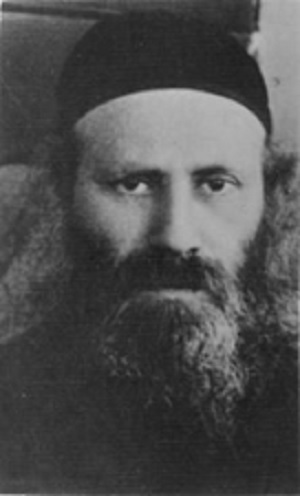
Rabbi Efraim Tzvi Einhorn Zt”l – Rosh Yeshiva Amstov, Poland

At the age of thirteen, RATF made his way to the court R’ Avraham Borenstein known as the “Avnei Neizer”[9] in Sochaczew (Sochatchov), Poland. Reb Leib Hirsch as RATF came to be known (Yiddish translation of Aryeh Tzvi), studied assiduously under the Avnei Neizer for five years developing a reputation as notable young Torah scholar in Poland and a close student of the venerable Avnei Neizer.[10] RATF was exposed to the unique combination of halacha, gemara, kabbalah and chassidut interwoven in the thought of the Avnei Neizer. At the time the Avnei Neizer was one of the leading poskim of the generation. RATF subsequently married Esther Shweitzer and spent the next eight years studying in the home of his father-in-law. Despite moving  away from his beloved rebbe, RATF maintained close ties with the Avnei Neizer, visiting on holidays as well corresponding on Torah topics.[11]

When the Avnei Neizer passed away in 1910, his son R’ Shmuel Borenstein[12], the “Shem Mi’Shmuel” was crowned the heir to his father’s chassidic court; becoming the second scion of the Sochatchov dynasty. On his father’s first yahrzeit, the Shem Mi’Shmuel established Yeshivat Beit Avraham in his memory. The Shem Mi’Shmuel appreciated the unique talents of RATF, and invited him to be the Rosh Yeshiva of Beit Avraham at the age of 27[13]. It was during this period of learning & teaching that RATF published his first work; Siach Ha’Sadeh. In it, RATF dealt with various talmudic topics with central themes of hilchot berachot & tefillah. The work came with laudatory approbations from leading scholars of the time including: Rav Meir Arik,[14] Rav Yosef Engel[15] and others.[16]RATF remained the Rosh Yeshiva of Beit Avraham, until the city of Sochatchov was destroyed in World War I.

Rabbi Shmuel Borenstein Zt”l – (Shem Mi’Shmuel) The second Sochatchover Rebbe

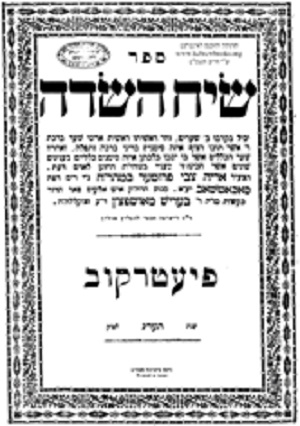
Cover page of Siach Hasadeh; Pietrikov 1912

The Frommer family had grown to a total of six children, relying on RATF as he sought his next job opportunity. His uncle, Rabbi Yitzchak Gottenstein, the rabbi of a small town in Poland, Koziegłowy (Kozoglov), had passed away and the community needed a new Rabbi. The community was small, and the financial opportunity was no greater. However, due to lack of alternatives this would be RATF’s next stop. There, RATF established a small yeshiva and continued his learning and teaching, jump-starting an environment of Torah learning and scholarship in the small town. Although his tenure there did not last particularly long, he would be forever known by the appellation; “The Kozoglover Gaon”.

After leaving Kozoglov[17], RATF headed to Zbeirtza, Poland. The community of Sochatchover chassidim that lived in the city of Zbeirtza, were “laymen” of an extraordinary caliber. Many of them students of the Avnei Neizer, providing context to appreciate the uniqueness and caliber of RATF and his erudition. RATF had developed into a combination of a classical scholar, chassid and tzadik that made him such a sought-after leader. He was knowledgeable in all areas of the revealed Torah as well as kabbalah and chassidut as is evident from his works. Additionally, he would arise at midnight to recite “tikkun chatzot” and study kabbalah late into the night away from the public eye. It was in Zbeirtza that his students began to compile notebooks with the teachings that RATF would share on shabbat & yom tov.[18]

Once again, the time came for RATF to migrate to the nearby town of Sosnovitz[19]continuing to gain admirers and students. It was at this time that Rabbi Meir Shapiro zt”l, founder of Yeshivat Chochmei Lublin and Rav of Lublin, expressed an interest in having RATF join the faculty of the yeshiva[20]. RATF deflected the requests due to his desire to remain close to his existing students and admirers. However, after Rabbi Meir Shapiro’s untimely death in October 1933, Yeshivat Chochmei Lublin was left without a leader. RATF decided to move to Lublin and became the second Rosh Yeshiva of Yeshivat Chochmei Lublin.

The funeral of Rabbi Meir Shapiro Zt”l at the Yeshiva of Chochmei Lublin

In a fascinating interlude in RATF’s life, he witnessed one of his lifelong dreams materialize; visiting Eretz Yisrael. RATF had a great yearning for the land of Israel.[21]He once remarked to his confidant and host in Tel Aviv, Rabbi Dovid Landa, that “a regular day in Eretz Yisrael contains the same holiness as yom tov sheni shel galuyot in the diaspora”.[22] His trip lasted four months while he visited Jerusalem, Meiron[23], Tel Aviv & Bnei Brak.[24] Afterward, he returned to his new position at the Yeshivat Chochmei Lublin. RATF experienced some of his most productive years of Torah learning & creativity at the helm of the yeshiva. After many years of narrowly avoiding personal financial collapse and constantly being forced to migrate throughout Poland, he had finally arrived at a place where his only concern was Torah.

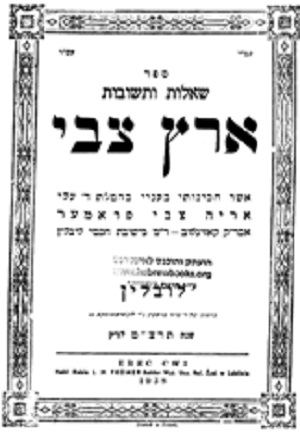
It was during his tenure as Rosh Yeshiva of Yeshivat Chochmei Lublin that he published his second work, Responsa Eretz Tzvi,[25]in 1938. Eretz Tzvi, is a work of collected responsa, mostly concentrated on the orach hayim section of the Shulchan Aruch with certain discussions regarding Yoreh Deah and Even He’ezer as well. The volume was first published in Lublin, at a printer only steps away from the Yeshivat Chochmei Lublin.[26] A second printing was done in America in 1963 and a third re-printing by RATF’s nephew, Rabbi Dov Frommer in 1975 in Tel Aviv[27]. It is worth noting that a fourth edition including never before collected writings, as well as Siach Hasadeh, became the “second & third cheilek” of the responsa Eretz Tzvi as separate volumes. The collection includes responsa, letters &  glosses on various masechtot, and was printed in 2000 by Rabbi David Abraham Mandelbaum[28] [29]. Throughout Eretz Tzvi, RATF corresponds with many scholars including The Gerrer Rebbe, The Shem Mi’Shmuel of Sochatchov, Rabbi Meir Arik and the Bianer Rebbe on various topics of halacha. It is in this work that his unique approach combining halacha, aggadah and kabbalah is showcased. His creative methodology allowed for uncovering defenses of questionable customs, providing a limud zechut for the masses in many cases. In this way he served as a “Defender of Israel”[30].

Cover page of Responsa Eretz Tzvi; Lublin 1938

In 1938, on the occasion of the second completion of the Daf Yomi cycle, RATF introduced a study program that would complement Daf Yomi: Mishna Yomi[31]. Two mishnayot studied every day; enabling a participant in the Daf Yomi program to finish the entirety of the mishnah, even those tractates which did not include bavli commentary.

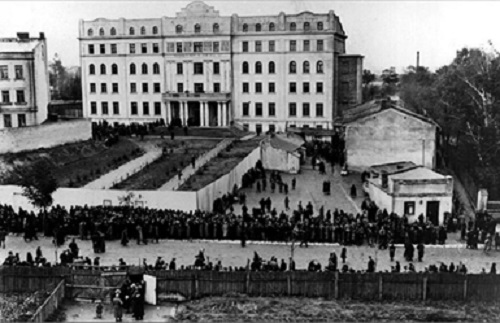
The second world war began, and Poland was overrun by the Nazi army. In 1939 RATF together with his family were forced to relocate to the Warsaw Ghetto[32]. It was reported[33] that RATF was leading Torah learning initiatives for the younger students in the ghetto. Additionally, even while in the ghetto he continued to comprise Torah novella as many of his glosses on his own responsa Eretz Tzvi were written during his time in the Warsaw Ghetto.

RATF was forced to take a job making shoes for the German soldiers on the Russian front provided by the “Shultz” company.[34] He worked alongside the third Sochatchover Rebbe – Rabbi Dovid Borenstein and the  Piasetzna Rebbe Rabbi Kalonymus Kalman Shapira[35] along with other great rabbis and scholars .[36]

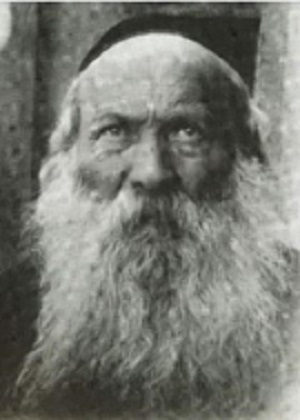
RATF alongside his Rebbe. Rabbi Dovid Borenstein Zt”l – The third Sochatchover Rebbe

After the liquidation of the Warsaw Ghetto in the spring of 1942 the Frommer family was sent to the Majdanek death camp in Lublin, Poland only 123km away from his beloved Yeshivat Chochmei Lublin. It is documented that as he entered the gas chambers, the holy Kozoglover Gaon exclaimed “Thank G-d, for I am included in the sanctification of G-d’s great name!”.[37]

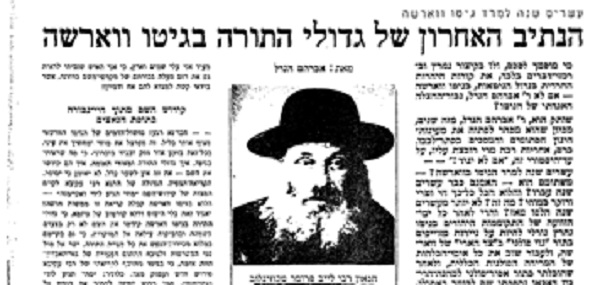
A newspaper article describing the experiences of Torah scholars in the Warsaw Ghetto.

Key Themes In The Thought of The Kozoglover Gaon

  1. הכל מלמדין זכות – סנגורם של ישראל 

The central theme in the halachic thought of RATF, is his focus on defending existing customs which are at odds with normative practice, often utilizing various non-traditional halachic arguments. RATF not only included kabbalistic and chassidic sources in normative talmudic & halachic discussions, but even allowed them to inform practical decisions in the realm of halacha. Eretz Tzvi strives to support rather than tear down shaky customs. RATF notes in his introduction to Eretz Tzvi when discussing his approach:

“That which we observed, that the students of the Baal Shem Tov zt”l abolished the practice of fasting and self- affliction [to atone for sins], and I am not worthy to enter into this discussion. Rather, I base myself on the mishna ”All may argue in favor of acquittal”[38]

[From this example, one could suggest that RATF saw himself as a halachic expositor of the way of the Baal Shem Tov, utilizing his halachic knowledge to apply the chassidic outlook of focusing on positive actions, rather than becoming mired in the guilt of sin.] Naturally, the very first responsa in Eretz Tzvi begins with this exact objective, foreshadowing the central theme of his halachic work:

“In defense of the widespread custom of wearing a tallit kattan which is smaller than the halachic size delineated in the Shulchan Aruch[39] which ostensibly precludes any fulfillment of the mitzvah tzitzit as many great scholars have protested about…as well as providing a limud zechut regarding the required length of tzitzit”[40]

One common conflict between chassidim and mitnagdim is their opposing halachic attitudes within the area of zmanei hatefillah. Perhaps the most well-known example of RATF’s limud zechut is the defense of the custom of some chassidim for beginning shacharit after 4 halachic hours into the day. The problem being the recital of berachot kriat shema, after their preferred time.  This poses a potential transgression of beracha levatala[41]. RATF defends this custom with various arguments. In the first part of the responsa in Eretz Tzvi[42], RATF begins by neutralizing the potential issue of beracha levatalah by positing that the prayer is considered a tefillat nedava, a voluntary prayer similar to the voluntary offering in the beit hamikdash. A voluntary tefilla is not bound by the common restrictions of an obligatory tefilla.

However, RATF is challenged to explain how one could put aside the halachically preferential time for praying and engage in a seemingly lesser level of voluntary prayer [chovah vs. nedavah]? To answer this secondary question, RATF utilizes the Shulchan Aruch Harav of Rav Shneur Zalman of Liadi – The Ba’al Hatanya.[43] The gemara[44]states that someone who is constantly engrossed in Torah learning (Torato um’nato [Rashbi V’chaveirav]) is not obligated to stop at the proper time and pray shemoneh esreih while engrossed in learning. Additionally, the Ba’al Hatanya adds that praying with the highest level of deveikut (divine cleaving) would take precedence over Torah learning, even for those who are described as torato um’nato.

RATF points out that from the Shulchan Aruch Harav we see that only a prayer with extraordinary intent and focus [A] trumps the Torah learning of someone who’s primary occupation is Torah learning [B] while an ordinary tefillah [C] would not obligated him to interrupt his studies to pray. ([A]>[B]>[C]) Utilizing a similar line of reasoning, we can assume that an individual who delays praying to attain the higher level of prayer will supersede the usual obligation of prayer service at the proper time. ([A]>[C])

Perhaps a more ambitious attempt at justifying the practice of some of the great chassidic masters with respect to zmanei tefillah, is another point in the same responsa. RATF quotes from the Ruzhiner Rebbe[45]who explains that prior to the sin of adam harishon in gan eden, the entire day was equally fit for prayer. However, the post-sin world is not fit for such a structure so the forefathers; Avraham (Shacharit), Yitzchak (Mincha) and Yaakov (Arvit) designated timeframes for each prayer. When the world reaches the ultimate redemption, the framework of zmanei tefillah will revert to their undefined framework similar to pre-sin existence. Utilizing a concept from the Rashba in Masechet Menachot[46] [regarding the halachic status of korban ha’omer], RATF suggests that since prayers of the tzadikim are focused on delivering the ultimate redemption (when the typical time boundaries will cease to exist) these prayers in and of themselves (even in our current pre-redemption era) are not bound by the usual rules and regulations.[47] Additionally, in two separate places RATF defends the practice of regular chassidim (not only great tzadikim as discussed above) who begin to pray Mincha in the time of bein hashmashot[48]employing the concept of safeik d’rabanan lkula.

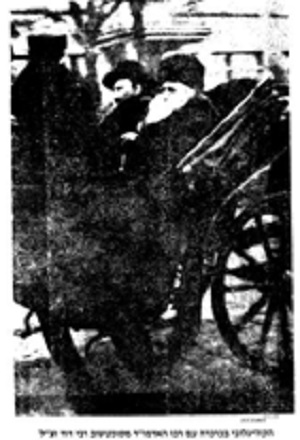
Rabbi Avraham Mordechai Alter zt”l (seated)  – The “Imrei Emet” of Ger along with his grandson.. A common correspondent of RATF. (Hakira.org)

In another example of limud zechut RATF defends the custom of delivering mishloach manot late in the day of Purim such that it is already past nightfall. While this practice ostensibly has no grounds in halacha as the halachic day has ended, as RATF himself admits, he still uncovers a halachic reasoning for the custom.[49] RATF quotes an explanation from Rabbi Yaakov Yitzchak Rabinowitz, the Yid Hakadosh of Pshiske,[50] who defends the practice of beginning to pray mincha when the prayer will extend past the proper halachic time of shkiah. Rabbi Rabinowitz justifies it based on the gemara and Tosafot in Berachot[51]regarding the curse of Bilaam towards the Jewish people. It is mentioned in the Gemara that Bilaam knew the precise split-second at which Hashem became angry during the day and could fit in a quick curse at that opportune time. However, Tosafot asks “What curse could you fit in a split-second?” and answers that the word kalem (כלם) meaning “they should be cursed” could fit the time allotment. Tosafot offers a second explanation: “even if it was a longer curse, if Bilaam would begin his cursing of the Jewish people in the split-second that Hashem’s anger appears each day even if he would continue after that time it would take effect as well.” Therefore, proves the Yid Hakadosh quoted by RATF, we see from here that beginning a prayer or a mitzvah at the right time will allow one to finish after the allotted time.[52] [53]

RATF (Third from left) administering a bechina at Yeshivat Chochmei Lublin

A limud zechut which came in an alternate form is RATF’s insistence on separating the strict halacha from that of middat hassidut or virtuous behaviour. In a correspondence[54] between RATF and the Imrei Emet of Gur (Rabbi Avraham Mordechai Alter), RATF discusses a specific type of lashon hara treated by the Hafetz Hayim in his work Shemirat Halashon. The Hafetz Hayim discusses the prohibition of speaking negatively about a person “even if he [the speaker] himself saw him [the transgressor] from close proximity doing something that is inappropriate according to the law”.  As a source, the Hafetz Hayim cites Rabbeinu Yonah in Shaarei Teshuva[55]:

”…perhaps the transgressor already repented from his evil ways, is distressed in his thoughts, and the heart knows the bitterness of his soul, and it is incorrect to reveal it.”

RATF points out that the exact words of Rabbeinu Yonah namely, “It is incorrect”, smack of middat chassidut and not strict halachic prohibition, and therefore takes issue with the Hafetz Hayim supporting his halachic decision on such grounds. RATF continues and writes “And since many people fail in this, one ought to find them a defense”.

It is interesting to note, that the work of Rabbeinu Yonah being discussed is the Shaarei Teshuva – a work not typically categorized as halachic. RATF did not object to the use of Rabbeinu Yonah’s “Shaarei Teshuva” on the grounds that it is a mussar work as opposed to a halachic one. One possible explanation is that RATF himself relies on and includes non-halachic sources to inform halachic decisions. RATF employs the full gamut of Torah thought in order to come to the defense of common practices and customs even if they infringe on pietistic sensibilities.[56]

Limud Zechut in Other Writings

As a young Rabbi, RATF published a short letter delineating the basic requirements of hilchot tefillah enabling his fellow Jews to fulfill the obligation of daily prayer. He published this letter anonymously, seemingly to avoid the appearance of haughtiness in a younger scholar lecturing the public.

Part of the letter that RATF published anonymously to remind the general public about the basic requirements of Teifillah in hopes  of zikui harabim

Lastly, in addition to his published works RATF published a kuntres or small pamphlet called Doresh Tov le’amo[57]. The work remained in manuscript and included a defense of “most Jews” who don’t have the requisite intent during the opening birchat avot of shemoneh esreih.  RATF writes that even if a person doesn’t understand the meaning of the words, if they are aware of the fact that they are praying “in front of Hashem” bedieved they fulfill their obligation. [RATF’s position is seemingly in opposition to the well-known position held of Rabbi Chaim Brisker[58]that in the first beracha of shemoneh esreih both the intent of standing in front of Hashem as well as the meaning of the words are necessary even bedieved.]


  1. Innovation Through Connecting all Areas of Torah

RATF utilized existing logic and concepts while applying them to previously unexplained passages and problems providing a framework of creativity that remains in line with tradition. We have already seen from the above mentioned responsa that RATF was open to utilizing kabbalistic and chassidic concepts in order to provide a limud zechut. RATF’s works do indeed draw from chassidut, kabbalah as well as gemara and rishonim. RATF describes his philosophy regarding new interpretations in Torah and their purpose: [59]

“As it is explained in the work Maayan Chaim as he discusses at length to provide support to those who produce Torah novella although it is not clear whether they are true & correct which would be a transgression according to the Zohar. In my humble opinion, the Zohar prohibits writing such novella only in a case where the logic being applied is not true, however if the logic and approach is true and found in earlier works, even if it is being applied in a novel way to explain a certain passage, even if the explanation is not correct this is not a transgression. For this is the honor of Torah and to demonstrate that there is nothing that is not hinted to in the Torah and everything can be “clothed” in Torah.”

RATF in his later years

A great example of his propensity to cross-pollinate between disciplines is a discourse on Sukkot[60]. Regarding the libations of wine and water that took place on Sukkot he writes:

“One could suggest that the libations of wine and of water represent two separate ideas, oneg & simcha. The water libations represent oneg, as the concept of water is the source of all enjoyment as explained in Shaarei Kedusha[61]while wine represents simcha as [the Talmud] says “ein simcha ela b’yayin”. Additionally, we know that oneg & simcha are two separate ideas as explained in the Chatam Sofer’s novella (Shabbat 111a)[62] that on Shabbat there is an obligation of oneg while on Yom Tov there is an obligation of simcha…it would seem that the difference between these two emotions is that oneg involves the five senses while simcha involves only the heart/mind [lev]…and from simcha one arrives at dancing as is written in the Sefer Hakuzari, and the Maharal explains that our custom to raise our feet during Kedushah is to show that our soul naturally longs to take flight and similarly dancing which is initiated by simcha…on the other hand oneg is specifically in the engagement of the five senses as it says in Sefer Yetzira[63] which corresponds to oneg…and this is why all year round the only libation is that of wine representing simcha in the heart/mind however specifically on Sukkot after the forgiveness of sins [Yom Kippur] the body [and senses] are purified we are then given the libations of water representing the enjoyment of the senses as now these too can be used in cleaving to Hashem.”

In this passage RATF quotes from Talmud and a classical commentary as well as kabbalistic and chassidic sources interchangeably and unapologetically. The breadth and depth of RATF’s references adds a layer of relevance as he finds common themes in sifrei kabbalah along with classical rishonim and achronim. [64] In another passage, RATF describes his affinity for combining the hidden and revealed disciplines of Torah learning. He states:[65]

“It is my “way”, myself the pauper, to uncover (l’hamtzi) a source in the revealed Torah for the hidden…”

The word he uses is l’hamtzi which has double connotation of uncovering & creation. Through utilizing the spectrum of Torah literature RATF essentially creates new sources previously unrelated to the topic at hand through exposing them to his unique thought process.

See Responsa Eretz Tzvi[66] where he was asked by someone who accidentally turned on a light on shabbat and wanted to understand how much money he should give for atonement (kaparah). At the end of the discussion, [after finding a lenient opinion in estimating the modern equivalent of the monetary sums discussed in the gemara] RATF adds a reminder lest the questioner miss out on the true purpose of giving the symbolic amount to achieve “kaparah”.

However, the crux (ikar) of teshuva is the remorse and humility and lowliness that a person should be heartbroken that he desecrated the holy Shabbos. Additionally, it would be appropriate to take up oneself to assist the “Chevra Shomrei Shabbos” …for this is considered a tikkun of desecrating Shabbos.”       

RATF’s halachic thought utilized a maximalist approach in finding prooftexts and sources. Besides for the revealed and esoteric areas of Torah, we see from this last example that his responsa took the full religious experience into account.

RATF (bottom right corner) at a an unspecified event in Yeshivat Chochmei Lublin. To his right, Rav M, Ziemba

  • Centrality of Torah for All Jews & Mishna Yomi

In a related theme to limud zechut & providing access to all areas of Torah, it is clear that RATF strived to include the full population of Jewry in his philosophy of learning Torah. It is interesting to note, as Rabbi S.Y. Zevin does in his review of Eretz Tzvi[67], that although RATF was the dean of a yeshiva which was typically focused on the abstraction of talmudic law, Eretz Tzvi is comprised entirely of questions that are practical in nature. He utilized his training in the disciplines of pilpul and sevara as a tool for dealing with everyday people & problems.

An initiative of RATF aiming to elevate the religious experience of common Jewry, was the Mishna Yomi program that he instituted. Upon the second inaugural Siyum Hashas in 1938, RATF created a new study program allowing every Jew to appreciate and complete the entirety of Torah. His initiative was both  complementary and supplementary to the Daf Yomi that was already instituted by Rabbi Meir Shapira zt”l. An adherent to the Daf Yomi schedule would complete the entire Talmud Bavli over the course of the seven-year cycle. However, there are many aspects of torah sheb’al peh left untouched due to the significant amount of mishnayot that have no Bavli commentary. RATF suggested that the geulah (ultimate redemption) is dependent on the Jewish people learning the entirety of the oral Torah. See below for his inspirational words when introducing the program explaining an interpretation provided by the gemara for a cryptic passage in Hoshea.[68]

“Though they hire among the nations, now I will gather them up” (Hoshea 8:10)

“Should they learn it all; then, “now I will gather them up” [the Geulah will come immediately]”(Bava Batra 8a)

One could understand the words of the gemara “It all” in two ways. Either A. All of Bnei Yisrael or B.  Each individual should learn all the mishnayot as they encompass all of the oral law. And there is support for this from the Zohar[69] that one of the methods of teshuva is to learn the entirety of Torah …as every part of Torah has a unique ability to offer salvation for a specific area in one’s life, however the ultimate geulah is the entirety of all individual salvations at once and therefore all areas of the Torah must be covered in order to glean all the unique salvations to arrive at the ultimate collective salvation [of the Jewish people]. It therefore says “אי תנא כולהו” [if they learn it all], utilizing both understandings [A. all of the Jewish people and B. the entirety of the oral Torah] …and this is the purpose of the “Mishna Yomi”, that every Jew young and old, scholar and layman, wealthy & poor can all take part in this great mitzvah.”

RATF felt that the geulah could be hastened through the entirety of the Jewish people learning all the mishnayot which encompasses the oral Torah.[70] It was seen as a great complement to the Daf Yomi, to the extent that there were printings of Talmud with both the Daf Yomi & Mishna Yomi schedule to allow for combined study.[71]

Although RATF conceived the Mishna Yomi prior to WWII, the concept needed a reaffirmation amongst post war Jews. Rabbi Yonah Stenzel, who was a student of RATF in the town of Sosnovitz and eventually emigrated to Tel Aviv and joined its rabbinate, re-instituted the concept of Mishna Yomi & Halacha Yomi in remembrance of those Jews that perished in the holocaust. In a few articles he is credited with creating the Mishna Yomi format, however RATF clearly introduced the concept before the war.

It is noteworthy that the specific vehicle chosen by RATF for bringing the ultimate redemption was Torah study. The gemara mentions other potential deeds that can bring the ultimate redemption in somewhat simpler ways.[72] The accessibility of Talmud Torah to the masses and the potential for each and every Jew to experience the entirety of Torah was RATF’s preferred initiative for bringing about greater spirituality in the community at large. It was through Torah that RATF saw his contribution in hastening the geulah.

Tamud Bavli, Tractate Hagigah and Mo’ed Katan and Mishnayot Shvi’it – special edition for the students of the Daf Yomi and the Mishnah Yomi – Munich 1947

Conclusion

Halachically speaking, any city which is entirely idolatrous is classified in the gemara as an ir hanidachat and condemned to destruction. However, the gemara[73]mentions that if one of the houses within the city maintains a mezuzah on its doorpost the city should not be destroyed. An apocryphal story describes a city facing imminent destruction due to its idolatrous practices that had permeated every household. On the eve of the final verdict there was a Jew who arrived from another city and ran from door to door affixing mezuzot to all bare doorposts. I believe that on a symbolic level, one of the rabbis affixing figurative mezuzot to various embedded customs requiring limud zechut in the last century was the Kozoglover Gaon, Rabbi Aryeh Tzvi Frommer Hy”d.

The concept of limud zechut, that was RATF’s raison d’etre, allowed for needed leniency within the structure and framework of Orthodox Torah observance. At times, we need a limud zechut on our own individual behavior as well as for our various practices and customs as a community. Perhaps, even if the halachic conclusions of RATF aren’t the accepted practice, his willingness to defend questionable practices with the breadth of his learning utilizing both the revealed and esoteric sections of the Torah remind us the importance of limud zechut and our responsibility to engage others and ourselves through it’s lens.

**I would like to dedicate this article in memory of my grandparents:

    Norman Sebrow                                                              Jo Amar

יוסף בן מזל ז”ל                                               נחמן דוד בן צבי אייזק ז”ל

     Jeanette Sebrow                                                    Raymonde Amar

רוחמה בת אסתר ז”ל                                             יוכבד בת אשר זעליג ז”ל

[1] I am grateful to Rabbi Hershel Schachter שליט”א, who introduced me to the Torah of the Kozoglover Gaon amongst a variety of unique thinkers as a student in his shiur. Additionally, I would like to thank the following people for their insight and help in bringing this project from idea to reality: Rabbis Dovid Bashevkin, Yaacov Sasson, Danny Turkel as well as Moshe Rechthand. Lastly, R’ Eliezer Brodt for his insight and breadth of knowledge that he offered to help complete this project.

[2] RATF’s collected writings and teachings can also be found in Eretz Tzvi (Moadim & Al Ha’Torah)  compiled by Erlich, Yehuda; Tel Aviv, 1984. Additionally, his students in Yeshivat Chochmei Lublin compiled a collection of insights called Mekabtz’el.

[3] Frommer, Aryeh Tzvi. Eretz Tzvi, Bnei Brak, 1976, pp. 5–6.

[4] Soreski, Aharon. Geonei Polin Ha’achronim, Bnei Brak, 1982, pp. 182 According to other opinions his father was a coal salesman.

[5] Ibid.

[6] Ibid. pp. 184 RATF’s personality is described as being exceptionally bright while at the same time a שובב or a bit of a “troublemaker”. It was in the yeshiva in Amstov that Rabbi Efraim Einhorn, paid special attention to the young orphan and provided him with the fundamentals for development in learning. It was this special attention that RATF attempted to repay when Rabbi Einhorn’s grandson, Rabbi Moshe Krohn came to study with RATF in Zbeirtza. RATF took extra care to attend to all of Rabbi Moshe Krohn’s physical and spiritual needs.

[7] Regarding the level of studies at the Amstov yeshiva – see Ibid. pp. 185-186 The day began with a shiur from 5AM until 10AM when the yeshiva would pray shacharit.

[8] Some of the other well-known students of the yeshiva; Rabbi Shlomo Stenzel and the Rebbe of Radomsk: Rabbi Shlomo Henich Hacohen Rabinovitz.

[9]1838 -1910. A chassid and son-in-law of the Kotzker Rebbe, after the Rebbe passed away he became a Gerrer chassid. In 1883 he moved to Sochatchov where he founded his own branch of chassidut named after the city, and which gave him the title of “the Sochatchover Rebbe.” His responsa were collected posthumously and published as the Responsa – Avnei Nezer hence his title. He published the sefer Eglei Tal as well, which covers the 39 melachot of Shabbat.

[10] Geonei Polin Ha’achronim, pp.182

[11] Ibid. – As a testament to the esteem regarded by the Avnei Neizer for his student, see Responsa Avnei Neizer, Orach Chaim, 109 where his teacher writes the following. “Greetings to my beloved student, the Harif and Baki our teacher, Rabbi Leib Hirsch. From your letter I see that you have been meditating on my work…You said well and spoke truth. Wishing you great strength and courage in Torah and G-d willing, may you develop into a vehicle for chassidut and fear of Heaven…Abraham”

[12] 1855-1926. Published the work “Shem Mi’shmuel”. The only son of the Avnei Neizer, was both a son and close student of his father and maintained an extremely close relationship with his father until his death. After his father’s death, he was accepted as the next Socatchover Rebbe. He published his father’s works and led Socotchov Chassidut. He died at the age of 70. He was brought to burial in the same ohel (covered grave) as his father, the Avnei Nezer, in Sochaczew. His son, Dovid, succeeded him as third Sochatchover Rebbe.

[13] Bergman, Ben-Tzion. Michoel B’Achat, pp.44 – RATF was not the only one asked to lead the yeshiva. Rav Michoel Forschlager another prized student of the Avnei Neizer was sought along with RATF to lead the yeshiva. It was RATF who served as the dean of the yeshiva while Rav Forschlager was more directly involved with directing the studies of the young students. Among Rav Forschlager’s students were Rabbi Avraham Aaron Price, Rabbi Mordechai Gifter, Rabbi Yitzchak Hoberman and Rabbi Pinchas Hirschprung. Additionally, see the newly reprinted Toras Michael (Machon Avnei Choshen, 2016) a collection of Rav Forschlager’s torah novella.

[14] 1855-1926 – One of the great galician Torah scholars with works such as Imrei Yosher, Tal Torah. His students include the prolific Rav Reuven Margolies and founder of Daf Yomi and Chochmei Lublin Yeshiva – Rabbi Meir Shapiro.

[15] 1858-1920 – Rabbi and Av Beis Din in Krakow, Poland. Author of Gilyonei Ha’Shas, Beit Ha’Otzar. Himself a fascinating Torah scholar who utilized abstract thinking in his conceptual approach to Talmudic study. At the bris of RATF’s first born son, Rabbi Yosef Engel served as the sandak, while RATF himself was the mohel.

[16] Including Rabbi Moshe Nachum Yerushalimsk, 1855-1916. Another of the great Torah luminaries in Poland at the time.

[17] See “Rabbi Aryeh Tzvi Frumer From Kozhiglov: Head of the Rabbinical Court and Rosh Yeshiva: Center for Holocaust Studies” – the reason for his departure from the city as being due to a disgruntled wealthy man that RATF slighted by deciding against him in a din Torah. For another version of the story involving his neighbor being a priest see the introduction to the third printing of Reponsa Eretz Tzvi.

[18] Specifically, Rabbi Yitzchak Yaakov Erlich whose son R’ Yehuda ended up publishing the works of RATF Rav in Israel many years later.

[19] It is in Sosnovitz where Rabbi Yonah Stenzel (1904-1969) became a devoted student of RATF. Rabbi Stenzel, who also studied in Chochmei Lublin, eventually migrated to Tel Aviv where he re-stablished the study of Halacha and Mishna Yomit in memory of all those who perished in the Holocaust.

[20] It is important to emphasize the honor and prestige that even joining the student body of the yeshiva brought along with it. It was said that each student needed to know 200 folio of Talmud by heart to gain admission.

[21] See Responsa Eretz Tzvi I:25 in his letter to the Gerrer Rebbe “Who will give me wings of a dove, I will fly and settle (in the land of Israel), kiss its earth, embrace its stones may it be hastily in our days”

[22] See Geoneil Polin Ha’achronim pp.250

[23] See Eretz Tzvi I:27 where he mentions that a certain hiddush occurred to him in Meiron on Lag Ba’omer

[24] Geoneil Polin Ha’achronim pp.252: It is said that he after meeting with the Chazon Ish zt’l in Bnei Brak, the Chazon Ish praised his brilliant Torah mind saying that he had not met such a brilliant mind in many years.

[25] The name is used as a description of the land of Israel, in the book of Daniel for example (Chapter 11), from which he had recently returned. Additionally, Tzvi for his middle name.

[26] Yeshivat Chochmei Lublin was located at Lubitrovska 57, initially a vacant lot which Rabbi Meir Shapira secured from a wealthy donor. Eretz Tzvi’s first printing was at a press located footsteps away at Lubitrovska 62 as seen on the cover page.

[27] Geonei Polin Ha’achronim, pp 271. Reportedly, the copy used for the third printing was amongst many works that survived the destruction of the holocaust and arrived as part of a larger delivery to the misrad hadatot of Israel. It was this specific copy that had the glosses of the author in the margins. Among other works saved is RATF’s personal copy of Responsa Imrei Yosher with RATF’s glosses.

[28]Rabbi Mandelbaum is a notable scholar of all topics related to Yeshivat Chochmei Lublin and many of the great minds of Polish origin. Rabbi Mandelbaum added a new dimension to the Torah of RATF and many other geonim by collecting their dispersed writings and organizing them while also providing noteworthy glosses and footnotes in various reprintings. Rabbi Mandelbaum’s father was a student of RATF in Yeshivat Chochmei Lublin. Additionally, Rabbi Mandelbaum thanks Rav Shmuel Halevi Vozner Zt”l and other for sharing many of the items found in this second volume as he was in possession of various manuscripts and writings of RATF.

[29]  ‘ שו”ת ארץ צבי, חלק ב ה, Bnei Brak, 2000

[30] סניגורם של ישראל – This term is also used in reference to the great Rav Levi Yitzchak of Berditchev (1740-1809) who repeatedly strove to portray both Jews and Jewish issues in a positive light. For more on this topic see; Luckens, ‘Rabbi Levi Yitzhak of Berdichev’, Ph.D. thesis (Temple University, 1974) pp. 38 citing M. Wilensky, I, 122-131.

[31] His words were recorded and can be found in Eretz Tzvi Moadim pp. 276

[32] ארץ צבי עה”ת pp. 14

[33] Hidden in Thunder: Perspectives on Faith, Halachah and Leadership …, Volume 1, Esther Farbstein,

[34] ארץ צבי עה”ת pp. 14

[35] See http://www.daat.ac.il/daat/shoah/biton37.pdf  based on the daily journals of Hillel Zeidman

[36] [The Last Path for Torah Leaders in the Warsaw Ghetto]. Bais Yaakov (in Hebrew) (47): 7 – Testimony of Avraham Hendel. An additional story is told about Rabbi Aryeh Tzvi that he was desperately searching for someone to help him conduct a chemical experiment with the margarine that was given out at meals in the shoe factory – to test for any treif fat that could have been mixed in and thus prohibited to eat.

[37] Ibid.

[38] Reponsa Eretz Tzvi, Introduction

[39] Siman 17

[40] Eretz Tzvi,

[41] See Shulchan Aruch 58:6

[42] Responsa Eretz Tzvi I:36

[43] Talmud Torah 4:5

[44] Shabbat 10a

[45] Israel Friedman of Ruzhyn (1796 –1850), also called Israel Ruzhin, was a Hasidic rebbe in 19th-century Ukraine and Austria. Friedman was the first and only Ruzhiner Rebbe. However, his sons and grandsons founded their own dynasties, collectively known as the “House of Ruzhin”. These dynasties, which follow many of the traditions of the Ruzhiner Rebbe, are Bohush, Boyan, Chortkov, Husiatyn, Sadigura, and Shtefanesht. The founders of the Vizhnitz, Skver, and Vasloi Hasidic dynasties were related to the Ruzhiner Rebbe through his daughters.

[46] Menachot 4a

[47] It should be noted however, that RATF concedes that this line of reasoning would specifically apply to the great tzadikim whose prayers can be assumed bring the ultimate redemption closer vs. those of the typical petitioner.

[48] See Eretz Tzvi 1:1, 1:60

[49] 1:121

[50] Rabbi Yaakov Yitzchak Rabinowitz (1766–1813). A student of the Chozeh of Lublin (Ya‘akov Yitsḥak Horowitz) with whom he eventually parted ways. See Buber, Martin: Gog und Magog (1949; first published in English translation as For the Sake of Heaven, 1945). The Yid Hakadosh would become the teacher of Rabbi Simcha Bunem of Pshiskhe. See Rosen, Michael: The Quest for Authenticity.

[51] 7a s.a

[52] See Piskei Teshuvot, Purim, Siman 695:5 Note 24. Where this responsa of RATF is brought as an example of an opinion that defends the practice of starting the Purim feast close to the end of the day where most of it will take place after Purim although it was begun before the end of the day.

[53] Additionally, regarding the proof from Tosafot in Berachot referencing Bilaam. See Nefesh Harav (pp.114) that when Rav Joseph B. Soloveitchik heard this proof he laughed and Rabbi Shachter שליט”א explains that it was evident that he was not comfortable with this type of proof.

[54] See “From Principles to Rules and from Musar to Halakhah: The Hafetz Hayim’s Rulings on Libel and Gossip”, for Rabbi Dr. Brown’s discussion the works of the Hafetz Hayim at length and who discusses RATF’s discussion as well.

[55] Shaarei Teshuva, Sha’ar 3

[56] See below for further examples (non-exhaustive list) of limud zechut:

1.See Eretz Tzvi 34 – in defense of the custom for women of the time that didn’t daven everyday, when seemingly this is against the clear gemara (Berachot 20b) & Shulchan Aruch (O”C – 106:2) that women are obligated in tefillah. Rabbi Aryeh Tzvi provides additional support via comparison of tefillah to korbanot thus re-affirming the position of magen Avraham (ibid.) that suggests that the women will at some point request something from G-d and therefore fulfill their Torah obligation according to the Rambam.

  1. See Eretz Tzvi 53 54 – in defense of the common custom to make a borei pri hagefen on wine that includes significant amounts of water which are 6x the wine although this is seemingly at odds with the normative halacha as both the Shulchan Aruch YOD (siman 134) & Rama (YOD 204:5) conclude that one should not make a borei pri hagefen on such a wine.
  2. Eretz Tzvi 75 – in defense of the common custom in an area without an eiruv on Shabbat to use a minor to perform hotzaah.
  3. See Eretz Tzvi 94-95 with respect to finding support for those kohanim who fly on an airplane which might fly directly over graves of Jews thus exposing them to tumas kohanim
  4. Eretz TZvi 96 – in defense of the common custom to make seltzer on Shabbos –
  5. Eretz Tzvi 97 – in defense of the custom of certain chassidim to sit in the sukkah and make a bracha on shmini atzeret – though ostensibly at odds with the gemara.
  6. Eretz Tzvi 125 – finding support for creating a mikvah using snow in a place that no other type of mikvah would be possible.
  7. Eretz Tzvi 30 – in defense of the custom of the Ashkenazim in the diaspora who refrain from reciting the daily birchat kohanim
  8. Eretz Tzvi 35 – in defense of the custom for those washing netilat yadaim and the water does not cover most of their hand

[57] See Geonei Polin Ha’achronim, pp. 262

[58] See Chiddushei Rabbeinu Chaim Halevi al Harambam, Hilchot Tefillah as well as the he’arot of the Chazon Ish

[59] Eretz Tzvi (Torah commentary) Introduction

[60] Eretz Tzvi, Moadim, pp. 110, Sukkot תרפ”ה

[61] Kabbalistic work of the Ari’zal

[62] ד”ה ודע

[63] Chapter 2:7

[64] Another notable exchange is one that appears in the second volume of Eretz Tzvi where RATF engages in correspondence with none other than the Ishbitzer Rebbe, Rabbi Mordechai Yosef Leiner zt”l. It was in 1934 that the Ishbitzer Rebbe sent a question that was bothering him regarding a specific comment of Maimonides related to Hilchot Shevuot. RATF goes on to cite various chassidic and Kabbalistic sources and their bearing on the halachic issues. Thank you to Rabbi Josh Rosenfeld for pointing out this source, in his Sunday Responsa Series.

[65] Responsa Eretz Tzvi, I:12

[66] Siman 62

[67] Sofrim U’Sfarim, Tel Aviv, 1959, pp.189.  [Thank you to Rabbi Eliezer Brodt who brought this source to my attention]

[68] The discourse can be found in it’s entirety in Eretz Tzvi Moadim pp. 276.

[69] Zohar Chadash, Rut

[70] See also Eretz Tzvi, II: 72, 73

[71] This unique edition was printed in the framework of daily Daf Yomi and daily Mishnah. A combined calendar of Daf Yomi and the daily Mishnah is printed at the beginning of the book for the years to come: 5767-1912. The tablet is spread over four columns. Beneath the calendar of Daf Yomi, a special prayer was printed “after the end of a chapter from a daily mishnah.” This prayer was composed by Rabbi Yonah Stenzel zt “l, in memory of the Holocaust victims” who were killed for the sanctification of God … by the German oppressors. [Seen at Tzolman’s auctions (Bidspirit.org)]

[72] See Shabbat 118a – “If only [Bnei] Yisrael would keep two consecutive Shabbatot they would be immediately redeemed”

[73] Sanhedrin, 71a


Purim and Parodies

Purim and Parodies

by Eliezer Brodt

Happiness During the Month of Adar and its Discontents

The month of Adar begins a time of joy, as the mishna says “mi shenechnas Adar marbim b’simcha.” Interestingly, it’s been noted here that this halacha is not codified by either the Rambam or Shulchan Orach. R. Yissachar Tamar in his classic work on Yerushalmi, Ali Tamar, notes that some have suggested that this is the reason why many shuls in Europe hung signs proclaiming Mi Shenechnas Adar with pictures of bottles of wine and Jews happy was to announce this halacha! [1] Furthermore, the Ali Tamar provides additional sources that demonstrate that some were punctilious about in their observation of this halacha and would begin celebrating from rosh hodesh Adar. In light of this concept we could perhaps understand how many halchahos are relaxed during and around Purim-time. For example, after the destruction of the Bes HaMikdash, Chazal enacted a prohibition against “”.שחוק This is recorded in the Gemara (Berchos 31a):

אמר רבי יוחנן משום רבי שמעון בן יוחאי: אסור לאדם שימלא שחוק פיו בעולם הזה, שנאמר: ‘אז ימלא שחוק פינו ולשוננו רנה’, אימתי – בזמן שיאמרו בגוים הגדיל ה’ לעשות עם אלה. אמרו עליו על ריש לקיש, שמימיו לא מלא שחוק פיו בעולם הזה מכי שמעה מרבי יוחנן רביה.
This is codified in Shulchan Orach (O.C. siman 560, 5) to which the Taz (ibid) comments:
בשם רבינו יונה דמשמע גם שלא בזמן הגלות דלא כנוסח הטור שכתב בגלות הזה ונלע”ד שיש חילוק בזה דלענין שמחה שאינו של מצוה ודאי אסור אפי’ שלא בזמן הגלות למלא פיו שחוק אבל בשמחה של מצוה היה היתר בזמן שב”ה קיים כגון שמחת בית השואב’ ושמחת דוד שהיה מכרכר בכל עוז ובזמן הגלות ערב’ כל שמחה ואפי’ בשמחה של מצוה כגון בחתונה או פורים מ”מ לא ימלא פיו שחוק כנלע”ד נכון:
Thus, according to the Taz, even during happy events such as a wedding or Purim, there is a a restriction on שחוק. R. Yosef Engle in his Dershos Otzros Yosef (Vienna 1921, pg 36-37) and R. Teichtel author of the Aim Habonim Semechaih, in his Shu”t Mishnat Sachir (# 2) both justify the minhag of Klal Yisroel everywhere to be joyous at weddings and on Purim. [R. Yosef Engle seems to take this concept a bit further than R. Teichtel as he even justifies cross dressing].

In fact, we find times that chazal themselves allowed שחוק as we find מילתא דבדיחותא in Chazal. Those instances, however, appear to be limited to when the purpose was waking a sleeping or otherwise uninterested audience and involving them in Torah study.

Setting aside the opinion of the Taz who holds that שחוק is prohibited even on Purim, it appears that many disagreed with this position. This is borne out by various halachos that relate to Purim. For instance, the Rema in Hilchos Purim (696 end) writes some allow cross dressing and wearing shatnes d’rabanan. Additionally, if someone damaged his friends property due to simchas Purim they do not have to pay. And, perhaps most notable, getting drunk which in general is very much frowned upon. While the Rama and others seems to permit these actions many disagreed for example R. Shmuel Aboab in his Sefer Zichronos [2] writes very strongly against these actions.

Another Italian rabbi, R. Shmuel Me-Sha’ar Areyeh, who was a contemporary of the Rama Me-Fano, writes similarly in his (still in manuscript) commentary on the Bet Yosef [3] :

אין לסמוך על דברי זאת ההגהה לחטוא, לא לענין מלובשי איש ואשה, ולא בכלאים דרבנן, ולא בגזל אפילו כל שהוא, ושומר נפשו ירחקו מהם ולא יסמוך על המתיר כי אין בידו דבר ברור להיתר, ולא כתבו כן הפוסקים הראשונים ובמקום אחר הוא כתב: “מנהגים הללו בורות הם ויש להמנע מהם”.
And more recent the Orach Ha-shulchan writes:
ועכשיו בעונותינו הרבים ערבה כל שמחה ואין אנו נוהגים לשמוח כל כך עד שיבא להיזק ולכן עכשיו כשהזיק חייב לשלם ואפילו בזמן הקדמון חייב בנזק הגוף A bit later he elaborates:
ומה שנהגו בימים קדמונים בלבישת פרצופים משעטנז ושל איש לאשה עכשיו לא נהגו כן וכן מי שהזיק חייב לשלם דעתה בעונותינו הרבים ערבה כל שמחה ואין אנו במדריגה זו [ומ”ש הרמ”א בסעיף ח’ הוא לקיים מה שנהגו בימיו ולא עכשיו]: [4]
Parodies for Purim

In light of the above, we see that while there is some dispute about how far one can go on Purim, joyful acts (depending on their degree) are encouraged. Parodies and plays (this topic will be dealt with in my next post) which were written and some preformed during Purim-time.
Israel Davidson writes in the introduction to his classic work on this topic, Parody in Jewish Literature, [5] the following:

“The Range of Jewish parody is as wide as the range of general parody. The Jewish parodist has invaded every department of literature and every walk of life. He has drawn upon the various phases of Jewish life for his subject matter and upon the various forms of Jewish literature for his models. . . . It would indeed be easy to make a collection of representing the bible, Talmud, midrash liturgy zohar codes… It is equally no exaggeration to say almost all the great movements in modern Jewish history are reflected in Jewish parody . . . on the other hand the study of this branch of Jewish literature will also reveal the serious side of Jewish humor. . . . Tears and laughter lie very closely together in Jewish humor, and the Jewish parodist is not always a mere clown, but more often is a preacher disguised in the garb of a jester. Like general parody Jewish parody has a moral aim. It is opposed to every kind of untruth to bombast to hypocrisy.”

In this post I would like to point out a few such parodies to show some general customs which are mentioned in them, with a specific eye towards Purim. One of the earliest such pieces was a piyut printed in the Machzor Vitri (p. 583) to say during Ma’ariv of Purim. It starts out saying:
ליל שיכורים הוא זה הלילה, לשמוח ביין הטוב ולגילה… בליל הזה ישכרו כל יצורים…
This piece was authored by a Menachem ben Aron. It has been debated from exactly which time period this piece was written but Davidson believes that he was active as early as 1140 and as late as 1244. Rav Zevin and others note that it is quiet strange to allow such a crazy piyut to be said during Ma’ariv. But, Rav Zevin does point out that although the halacha is not to get drunk on Purim at night at least in the times of R Eliezer Fleckles people definitely did get drunk then.[6] A. Haberman reprinted a much lengthier version of a piuyt composed in 1695, by a dayan, for the whole Ma’ariv.[7]
Although there are no real sources that one has to get drunk on the night of Purim I did find Rav Nissim Goan writes:
ושנהגו בלילי פורים לעשות מדורות האש וקופצין עליהן אית ליה נמי עיקיר.
This seems to imply that there is a some notion of שחוק or שמחה on Purim night. This custom of Rav Nissim Goan is brought down by the Sefer Hamanhig, Avudraham and others.[8]

One of the most famous parodists in Jewish history was Emanuel HaRomi author of the infamous Machberes Emanuel (also called Sefer Hamachberes). Davidson calls him “the father of of exegetic parody and one of its best masters.” This work was written in circa 1321-28. This work includes a good bit of parodies. One of the parodies is a very detailed description of the excessive drinking and drunkenness of people in his time on Purim.[9] [10]

Just to quote one line from this particular parody as it is extremely graphic:
יצאתי אם השר בימי הנעורים אחר סעודת פורים, לראות בשחוק השכורים…ויאמר כי היא מצות עשה שהזמן גרמא והשכרות והפריצות ביום הזה ערמה וקצתם יחולו במחולות בחורים וגם בתולות…
As is very well known this work was banned by the Beis Yosef [11] who writes very strongly against it:
מליצות ומשלים של שיחת חולין ודברי חשק, כגון ספר עמנואל, וכן ספרי מלחמות, אסור לקרות בהם בשבת; ואף בחול אסור משום מושב לצים ועובר משום אל תפנו אל האלילים לא תפנו אל מדעתכם; ובדברי חשק, איכא תו משום מגרה יצר הרע; ומי שחיברן ומי שהעתיקן, וא”צ לומר המדפיסן, מחטיאים את הרבים.

Although the Beis Yosef wrote strongly against it R. Shmuel Askenazi pointed out to me a very interesting source. The Chida in his Shem Hagedolim [12] writes as follows:

שמעתי שאמרו בעל הפרשים שבאיוב יקרא האדם פ’ רלב”ג וירוה צמאוני ובמשלי יקרא פ’ עמנואל ובתהלים יקרא פ’ ר’ דוד קמחי ואתנח סימנא שפת אמת תכון לעד. אמת ר”ת איוב משלי תהלים. לעד ר”ת לוי עמנואל דוד והם כסדרן.
What the Chida is saying is that the best work on Mishlei was written by Emanuel!

One other point of interest about this work: I found in the list of works for students to learn thought out a new school system written by R. Meshulam Roth the great Galicianer posek at the request of R. Meir Shapiro amongst the many interesting things he wanted talmdim to read was the Sefer Machberes![13]

Another one of the earliest parodies written was called Mesechtas Purim, written by R. Kallonyms ben Kallonyms (1286-1328) a good friend of Emanuel Haromi.[14] This parody was perhaps the most famous one written on Purim which inspired many others especially of note was two others written a little later by the Ralbag.[15] Masechtas Purim was first written between 1319-1322 and printed in 1513, again in 1552 than again in 1871. This was written in the style of gemarah including drashos and everything found in regular sugyos – mimicking the talmudic style very well. Most of the humor is clean and not pocking fun at anyone. Davidson devotes a large part of his book to discussing the various editions of Masechtas Purim with many important notes. Haberman provides all the printings of this book in a facsimile edition of this sefer which he printed. As many other books this to was banned, by many, most notably R. Shmuel Aboab (siman 193). Others who opposed these works were authors of Chemdas Hayomim, Beris Mateh Moshe and the Chida.[16] At some points certain versions of Mesechtas Purim were even burned![17]

Haberman, however, points out a very interesting observation on all this and that is that this work of Mesechtas Purim was not banned immediately. Rather, it was only much later that any bans were directed at Mesechtas Purim. According to Haberman, this demonstrates that in the beginning there was no great opposition against it. He writes it is clear from the writings of R. Kalonymus and the Ralbag that it was just for Simchas Purim with no evil intent at all.[18] Besides for this both R. Kalonymus and the Ralbag were known as great people and not latzanim. To support this theory a bit one just has to read the end of the edition of R. Kalonymus where he writes:

ולמה השלים המסכתא בפרק אין קורין לפי שאין קורין בו אלא בשעה שאינו לא יום ולא לילה שלא נכתב אלא לשחוק בעלמא לשחוק האנשים ביום פורים והקורא בו לא הפסיד אלא כמי שקורא בספרי רפואות ובדברים המועלים לגוף ואינן מזיקין לנפש…
To support Haberman’s theory even more I quoted earlier that the Orach Hashulchan writes about all the actions permitted according to the Rema that nowadays we are not on the level of this and they are prohibited but in those days it appears they were on a higher level so it was permitted.

Be that as it may, these parodies are great sources for information of Purim in their respective author’s times as Davidson notes. Just to list some of the many things which Davidson notes we see described in them is gambling [19], playing backgammon,[20] , mock hanging of haman [21] excess drinking and eating all kinds of foods (in one list there is over twenty seven types) [22].

Another interesting thing we find in R. Kalonymus’ Mesechtas Purim is the making of a Purim King. It would seem that from here developed in many towns and yeshivas there was a concept called a Purim rav where a rav was hired who would make fun of the local rav or rosh yeshivah. One additional source of doing this can be found in the travelogue of the Chida.[23]

Another interesting point I think we see in R. Kalonymus’ Mesechtas Purim is the custom of dressing up more specifically cross dressing. Many of those who have discussed [24] this topic note an early source from the Sefer Hamaskil [25] a nephew of the Rosh who writes:

טובה תנחל ושלוה תירש אם תשמור מלאו דלא ילבש גבר שמלת אשה כגון בחורים הנותנים צעיך בראשיהם ולובשים בגדי נשים בחנוכה ובפורים ואל תהיה כאחד מהם בדבר הרע הזה ואפילו אם תעשהו לשם מצוה יצא השכר בהפסד.

Another early source which many have noted is from R. Kalonymus author of Mesechtas Purim in his work Even Bochen when talking about Purim he writes:

ובארבעה עשר לחודש אדר, בחורי ישראל לכבוד ולהדר… זה ילבש שמלת אשה ולגרגרותיו ענקים… וזה יתחקה כאחד הרקים תף ומחול שמחה ושלישים. אלו עם אלו אנשים עם נשים…

I think that in Mesechtas Purim there is another source on this which no one seems to have mentioned on this where R. Kalonymus writes:

רבי דניאל איש כפר … הוה יתיב בבי מדרשא שאלו מקמיה מהו למעבד מחולא בפורייא אמר להו אנשים לבד והנשים לבד מותר איתביה רבי שחקו והכתיב אז תשמח בתולה במחול בחורים וזקנים יחדו אמר ליה רבי דניאל האי קרא לעתיד לבא הוא דכתיב ולעתיד לבא אין יצר הרע שולט שנאמר והסירותי את לב האבן מבשרכם ונתתי לכם לב בשר.. אבל בזמן הזה יצר הרע שולט האנשים לבד והנשים לבד מותר אבל אנשים ונשים אסור שהרי אמרו חכמים זמרן גברי וענין נשי פריצותא זמרן ונשי וענין גברי כאש לנעורת כל שכן לחול במחול אנשים ונשים יחד שהוא אסור לימא מסייע ליה לא תלבש אשה לא בגדי צבעונין ולא כלי פשתן המגוהצין ולא תסור מראש חדש אדר עד ששה עשר בו טעמא מאי שלא תחול במחול אם האנשים…

One thing lacking when it comes to Mesechtas Purim is a critical edition. Although Davidson did an excellent job in general on Mesechtas Purim it could still use a critical edition explaining what each point in the meschtah is based on.

On the subject of parodies I would just like to mention one other parody. This parody is called the Sefer Hakundos, It was printed in Vilna in 1824. This parody was written by a maskil as a vicious attack on the Jews of the time pocking fun at many things. The plus about this parody is we get a very interesting glimpse into Jewish life in those days – very detailed. This parody was very rare and almost unknown except by a few scholars. Until recently in 1997 Professor M. Zalkin reprinted it in a critical edition by Mercaz Dinur, with an excellent introduction giving a complete historical background of who possibly wrote this work why it was written so sharply and about the different versions of this work that seemed to exist. The introduction by Zalkin is 30 pages and the actual text of the sefer is twenty seven pages. He includes over four hundred very helpful notes to the actual text to the work explaining many points. Although he did an excellent job I feel that he could have added even more sources and commented on points which for some reason he did not.

Zalkin notes how the authorship was debated and discusses all the possibilities offered to its authorship. [26] According to some scholars it was even banned and burned. [27] If one reads this whole work one can very well understand why it would have been burned as it was a very cynical work. I would just like to mention the style of this work briefly and give some samples of sources one can find in it especially in regard to Purim.

To begin with this work was titled Sefer Hakundaskundas means trickster. We find in different memoirs such as in Zecronot Av Ubno (p. 206) and in Eiryati Mottlee (pp. 178-179) such a term (see also Zalkin Introduction pp. 9-10) it was a kid who was a big trouble maker who was everywhere in everything. The style of this work is its eleven chapters written like a Shulchan Orach dealing with “halchos of the kundas” it goes thru his jobs where he hangs out how to identify one – from his clothes what he eats, which things he is from the first ten to do – what he does in shul and on yom tov.

Just to give some examples of what he did that help us get a glimpse into life in those days:

בימים שאומרים יעלה ויבא… כשמגיע באמצע התפלה למקום הכרזה מרים קולו באמירתו בכדי להשמיע לכל העם וכשסיים תפלתו מחוייב לסבב בבית המדרש אצל כל הנערים ולשאול מהם אם לא שכחו לאמרו. ואם הודה לו אחד מהם ששכח מיד הוא רץ לשואל את פי המורה שם ומעמידו לתפילתו. (עמ’ 52) Another Example:

פטרוהו מספירה. רק בשעת ספירה מחוייב להיות בבית המדרש והסופר ההולך לשאול מה שפגמתי בספירה, מחוייב להשיב לו תיכף ומיד. כי הקונדס מחוייב לידע היסוד והכלל. ובתוך כך מחוייב לשאול לבני אדם איזה יום היום הוא בספירה וכשיגידו לו מחוייב לצעוק בקול גדול עכשיו ספור בלא ברכה כי הגדת לי יום הספירה (עמ’ 57).
Another Example:
גם פרטוהו מקידוש לבנה. רק שמחוייב להיות בכל מקום שמקדשין ויקדים שלום עליכם לכל אדם (שם)
Another Example:

בשעה שהחכם יושב ודורש בבית המדר. אזי הוא נמצא אחורי בית המדרש בין בני גילו וקודם הדרשה כשבית המדרש מלא מפה לפה מחוייב הקונדס לדוחק את עצמו ביניהם להיות צופה ומביט בפני הדרשן וחוזר לעבודתו וכצאתו מבית המדרש הוא צועק בקול רק אל הנערים אשר בגילו אי איך האב אים שון גיזעהן עד שישמע הדרשן (עמ’ 62).
Specifically, discussing Purim it says:

בפורים מחוייב להכות המן בכל עת שיזכרוהו בבקעת של עץ בכל כחו עד משליכין אותו. או משתקין אותו. ואם הקונדס מאריך בהכאה עד שמשליכין אותו מבית המדרש לגמרי. אז אשרי לו ואשרי יולדתו. ובשעת קריאת המגילה כשהחזן קורא המן מחוייב לצעוק בכל כחו ברוך הבא (עמ’ 67).[28]
Just to conclude with one last parody as the famous expression goes ” As mein Ret shon vegen Korech.” This parody deals with drinking of wine called Hatikun. It was written in the form of a shulchan orach on the topic of the Chassidish custom of “tikkun.” In doing so it pokes lots fun at the Chasdic Minhag of observing tikun. The authorship of Hatikun has been debated. Davidson (p. 219) writes that it was written by a David Apotheker. But Rabbi B. Oberlander in his excellent series of articles on the infamous forgery Yerushalim al Seder Kodshim (that is being turned into a full length book) demonstrates that the author is none other than Friedlander the forger of the Yerushalmi on Kodshim. (Or Yisrael, no. 15, 1999, 174-75)
Notes:

[1] Alei Tamar, Megilah pg 3-4.

[2] Quoted by M Benayhu, Yosef Becherei, pp. 495, 483. On this very interesting personality see Benayhu, ibid pp. 415- 520.

[3] Sefer Zichronos pp. 61-64

[4] Aruch Ha-shulchan, 695:10 and 696:12.

[5] Israel Davidson, Parody in Jewish Literature, p. xix (available for free download here). [All of my quotes from Davidson are from this work]. This work is an incredible job on the topic of Jewish parodies. He does a terrific job of covering the entire history and pointing out many fascinating things in his many discussions. He also has an extensive section on the various parodies written for Purim especially Mesechtas Purim. Besides this he includes an excellent bibliography of all the various parodies that he tracked down four hundred and twenty one in total.

[6] Davidson, ibid pg 4; A. Haberman, Iyunim Bshira Ubpyuit, p. 311; Sperber, Minhagei Yisroel, 6, p. 211, Moadim Be-halacha, p. 246, see also Alei Tamar pp. 13-14 about eating seuda at night. Interestingly, it appears that in Otzar Yad Hayyim (p. 1) that he was unaware of this whole piece was a joke, as he uses this line to “prove” that drinking wine of Purim night will destroy our enemies.

[7] A. Haberman, Iyunim Bshira Ubpyuit, pp. 303-306.

[8] S. Abramson, Rav Nissim Goan, p. 278; Sefer haManhig, Mossad Harav Kook ed. vol. 1, p. 249 (see notes therein); Abudraham p. 209. It appears that this has to do with the custom of hanging of a mock Haman mentioned in note 21.

[9] See Machbres Emauel Haromi – Dov Yardan edition, machbres twenty five pp. 451-469. On this edition it is well worth reading the excellent review and notes from R. S. Askenazi printed in Kiryat Sefer 35, pp. 157 -162, omitted from the bibliography of R. Ashkenazi’s writings in Alpha Beta Kadmita deshmuel Zerah.

[10] On Emanuel Haromi in general see: M. Steinschneider, Jewish Literature, p. 176, Landshuth, Amudei Havodah pp. 304-305; Davidson, ibid, pp. 17-19; Y. Zinberg, Toldos Safrus Yisroel, 1, pp. 387-410; A. Haberman, Toldos Hapiyut Ve-hashira, vol. 2, pp. 43-61; Dov Yardan in his intorduction to his edition of Machbres Emauel Haromi pp. 11-18.

[11] On the banning of Machberes Emanuel see: Beis Yosef, (O. C. 307:16); Moshe Carmily, Sefer Ve-sayif pp. 40-44; A. Haberman, Toldos Hapiyut Ve-hashira, vol. 2, pp. 56-58.

[12] Shem Hagedolim, Marches Seforim: Kuntres Achron printed at the end of letter beis. This work on Misheli was one of the first books ever printed in Naples 1487. It was reprinted in a limited facsimile edition in 1981 with an excellent introduction.

[13] Printed in back of his R. M. Roth Mevaser Ezra on Ibn Ezra p. 176. To be sure R. Roth was not a liberal, as is well known with the incident when he was supposed to receive the Kook prize with Saul Lieberman and he refused. See: Igros of R. M. Roth recently printed; Marc B. Shapiro, Saul Lieberman and the Orthodox, pp. 27-36.

[14] On R. Kalonymus ben Kalonymus much has been written already see: Y. Zinberg, Toldos Safrus Yisroel, vol. 1, pp. 411-427; Uberto Cassuto in the intro of the facsimile edition of Mesechtas Purim printed by A. Haberman in 1978; A. Haberman, Toldos Hapiyut Ve-hashira, vol. 2, pp. 142-149; A. Haberman Iyunim Bshira Ubpyuit, pg 162-179; C. Shirman, Toldos Ha-shira Haivirit Be-sefard, pp. 514-541

[15] The author of the Megilat Setharim and Sefer Chabakuk was a mystery until Davidson correctly identified it to be none other than the famous Ralbag: Davidson, ibid 131-133. The Ralbag authored Megilat Setarim around the year 1332 and Sefer Chababkuk a little before. See also C. Shirman, Toldos Ha-shira Haivirit Be-sefard, pp. 527-528.

Another parody that Mesechtas Purim inspired was Mesechtas Chanuka. See Areshet, 3, page 173-192 (not the one mentioned by davidson on pg 39).

[16] Sources against Meschtas Purim See: Davidson ibid, xxi; A. Haberman, Iyunim Bshira Ubpyuit, p. 312; Sperber, Minhagei Yisroel,6, pp. 204-205, Maran V’Rabanan, 2, p. 90,

[17] See Steinschneider, Arshet, 4, p. 88, Moshe Carmily, Sefer Ve-sayif p. 248.

[18] A. Haberman, Iyunim Bshira Ubpyuit, pp. 273, 303.

[19] On gambling on Purim see Davidson, ibid pp. 31, 145; H. Pollack, Jewish Folkways in Germanic Lands (1648-1806), pp. 181, 329.

[20] On playing backgammon on Purim see Davidson, ibid p. 146.

[21] On mock hangings of Haman see; R. S. Schick, Sefer Haminhaghim p. 51 a; Davidson, ibid, p. 21-22; E. Horowitz, Reckless Rites, pp. 93-106.

[22] Davidson ibid, p. 22.

[23] On Purim Rav see: the account in Magel Tov of the Chida pp. 138- 139; A.S.Sachs, Worlds that Passed, pp. 232-234 has a very descriptive account of this; Davidson pp. 26-27, 30-31; Sperber, Minhagei Yisroel, 6, pp. 202-203. see also M. Breuer, Ohelei Torah, pp. 418-419; Pinchas Torborg in his memoirs also writes about the purim Rav in Volzhin but it was not around in his times he just said he heard about it from people from before his time. (Pirkei Zichronois p. 197). R Ovadih Yosef is very aginst this concept see Chazon Ovadia pp. 201-203.

[24] On cross dressing see: Aven Bochen, Haberman ed. p. 30; R. M. M. Honig, Yerushcanu, 1, p. 240; Professor Y.Speigel forthcoming article on the topic.

On dressing up on Purim in general see: Hyam Isaacs, Ceremonies Customs Rites and Traditions of the Jews, in 1836 (second edition) where he writes (p. 91) “Both male and female dress themselves in all kinds of Gaudy dress . . .”; Chida in his travels, Magel Tov, p. 139; The memoirs printed by M. Richarz, Jewish Life In Germany, pp. 83, 159; H. Pollack, Jewish Folkways in Germanic Lands (1648-1806), pp. 184, 331-332; Sperber, Minhagei Yisroel,6, pg 192-200; R. G. Oberlander, Minhag Avosenue Be-yadneu, vol. 1, pp. 293- 306; Moadim Le-simcha pp. 443- 458; R. Ovadih Yosef is very aginst this concept see Chazon Ovadia pp. 199-201.

[25] On the Sefer Hamaskil in general see R. M. M. Honig, Yerushcanu, vol. 1, pp. 196-240.

[26] On authorship of this work see; Y. Zinberg, Toldos Ha-safrus Be-yisroel, vol. 6, pp. 356-357; Davidson, ibid, p. 211; Zalkin intoduction pp. 15-21.

[27] On the banning of this work see; Y. Zinberg, Toldos Ha-safrus Be-yisroel, vol. 6, p. 226; Moshe Carmily, Sefer Ve-sayif p. 238; Zalkin intoduction pp. 21-22.

[28] On banging during Megilah at the mention of Haman’s name, see the following sources: In the sefer Eshkol Hakofer from Zeror Hamaor in his work on Megilat Esther:

ועל סמך זה יש היום מקומות יכו שתי אבנים זה על זה בהזכרת המן בקריאת המגלה בבית הכנסת (עמ’ צו)

R. Yehudah Aryeh Modean writes in his Shulchan Orach:

ונוהגים קצת בשמעם בקריאה השם המן לשקשק ולשרוק כעין סימן למחות זכרו (עמ’ 84)

In the Present State of the Jews written in 1675, Lancelot Addison (p. 182) writes: “both the women and children… at the naming of Haman make a hideous noise with their hands and stamping with their feet”. [Thanks to S. From on the Main line for this book]

In the Ceremonies of the Present Jews written in 1728 we find “and as often they hear the name of Haman pronounced they clap their hands or beat the benches to signify that they curse him.” (p. 44) [Thanks to S. From on the Main line for this book]

In the book of Religion Ceremonies And Prayers of the Jews by Gamaliel Ben Pedazhur written in 1738, he writes (p. 43), “and every time the reader pronounces the name haman in reading… all the jews young and old stamp their feet on the floor by the way of treading haman down and the children have generally Hammers with them at the Synagogue…”

Hyam Isaacs in Ceremonies Customs Rites and Traditions of the Jews, printed in 1836 (second edition) writes (p. 89) “and as often as the reader mentions the name Haman… it is customary for the children , who have little wooden hammers to knock against the wall as a memorial that they should endeavor to destroy the whole seed of Amalek.”

S. Ansky writes in his memoirs of World War One, The Enemy at his Pleasure (p. 284): “On purim I went to Synagogue to hear the reading of the book of Esther. At the the mention of Haman’s name the children traditionally make noise say by clapping but when these children tried to clap. Though very softly, their frightened parents hastily shushed them. Why didn’t they let the children make noise? I asked somebody afterword. Someone might object he stammered. Try and prove that they meant the ancient haman and not the present one.”

See also: D. Sperber’s book on the topic – Keisad Macim Es Haman 47 pages; Sperber, Minhagei Yisroel, vol. 3, pp. 156-159; Sperber, Minhagei Yisroel, vol. 6, pp. 244-256; E. Horowitz, Reckless Rites, pp. 274- 276; Moadim Le-simcha, pp. 299-323; Minhag Avosenue Be-yadneu, vol. 2, pp. 307-324.


The Pew Report and the Orthodox Community (and Other Assorted Comments), part 1

The Pew Report and the Orthodox Community (and Other Assorted Comments), part 1
Marc B. Shapiro
1. Here is a short piece I wrote a right after the appearance of the Pew Report. (The endnote is not part of the original article.)
There has been a great deal of discussion in the wake of the recent release of the Pew Research Center’s “Portrait of Jewish Americans.” Some have focused on the report’s evidence of increasing intermarriage and lack of any Jewish connection of many in the younger generation. Others have zeroed in on some of the survey’s anomalies and results that are simply not correct. For example, the survey informs us that 1% of Ultra-Orthodox Jews had a Christmas tree last year. I would be willing to bet that in the entire world there isn’t even one Ultra-Orthodox Jew with a Christmas tree, and 1% means at least a few thousand Ultra Orthodox households have Christmas trees. After adding in the Modern Orthodox, we are told that 4% of Orthodox Jews have Christmas trees. Being that the survey places the Orthodox at 10% of the Jewish population, and also tells us that there are 5.3 million adult Jews (another one the survey’s surprises), this leads to the result that more than 21,000 adult Orthodox Jews have Christmas trees in their homes.Since these results are not just improbable, but impossible, it raises the general question of how reliable the survey is when it comes to the Orthodox. Can anyone believe the survey when it tells us that in the 18-29 age bracket the Modern Orthodox only account for 1% of the country’s Jews while the Ultra-Orthodox account for 9%, or that in the 30-49 age bracket, the Modern Orthodox are 3% and the Ultra Orthodox 10%. We are also are told that 24% of Ultra-Orthodox Jews handle money on Shabbat but only 19 percent of Modern Orthodox Jews do so. (Who was it that said the Ultra-Orthodox are frummer than the Modern Orthodox?!)

When you read results like these you can only wonder what went wrong, and I hope we get some explanation as to how such results were generated. (Professor Jonathan Sarna has written to me that all surveys have absurd results for various reasons, and “one is to look at broad trends and ignore absurdities.”) Perhaps there was confusion about the way the questions were asked. Such confusion is the only way I can explain that only 64% of the Ultra-Orthodox agree that a person can be Jewish if he works on the Sabbath. The truth is that every Ultra-Orthodox Jew knows that a person who works on the Sabbath is still Jewish (albeit a sinning Jew). I presume that those who answered “no” to the question understood it to be asking if one can be a “good Jew” and work on the Sabbath. (In case anyone has been wondering, I use the term “Ultra-Orthodox” since that is what the survey uses. I don’t know why no one told the survey directors that this term is no longer regarded as appropriate.)

The sort of anomalies I have mentioned appear to be confined to matters of religious life, and other areas seem more believable. For example, we are told that 37% of Modern Orthodox households have incomes in excess of $150,000, which places them in the top ten percent of Americans. This strikes me as on the mark and illustrates one of the great problems with Modern Orthodoxy in the United States. Anyone who has been to Israel knows that there are non-haredi Orthodox Jews in all areas of life. You see men with kippot who are bus drivers, security guards, and doing every other job imaginable. Yet in the United States, Modern Orthodoxy has become largely an upper middle class phenomenon. The cost of a Modern Orthodox lifestyle, which includes expensive schools and camps, is simply beyond most people’s reach. I believe that this cost is a major reason why the Modern Orthodox camp has not picked up much in the way of ba’alei teshuvah.[1]

I have no doubt that many of the non-Orthodox admire the Modern Orthodox lifestyle, and would be willing to try it out, before learning the cost. Many non-Orthodox would also be happy to send their kids to Modern Orthodox schools, but they are not going to sacrifice a middle class lifestyle for this. Those who grow up Modern Orthodox and remain in the community are prepared to make the financial sacrifices (as well as limiting how many children they have). But for those who are not part of the community, the entry fee is simply too high. Needless to say, there are also those among the Modern Orthodox who drift away because of the financial cost, and this drifting often begin when the first child is enrolled in public school. As I see it, the financial burden is the great Achilles’ heel of Modern Orthodoxy, and what prevents it from any real growth. By the same token, those of us in the Modern Orthodox world must recognize that one of the great strengths of the haredi community is that there is room in it for everyone, from the wealthy real estate developer to the blue-collar worker. If, as so many predict, the future of American Orthodoxy is with the haredim, money (or lack of it) will play an important role in this story.

* * * * * *
The Pew Report reported very high levels of intermarriage in the Jewish community.[2] Yet even among those who would never dream of intermarrying, we know that some engage in sexual relations with non-Jews. There is an interesting responsum in this regard by the late R. Moshe Stern, the Debrecener Rav, Be’er Moshe, vol. 4 no. 141.
R. Stern testifies to receiving numerous questions regarding this matter by the very people engaged in such behavior. For those who don’t know anything about R. Stern and who asked him questions, I can tell you that these were definitely not Modern Orthodox people or members of the Lithuanian yeshiva world.[3]
This volume of Be’er Moshe was reprinted in 1984 without any changes. However, sometime after that the volume was reprinted again. There is no indication of when this took place, as the title page is the same as the 1984 edition. (Presumably, the reprint was after R. Stern’s passing in the summer of 1997.)
Someone called my attention to how the responsum appears in this most recent reprint.
The censorship of this responsum can only have one purpose, namely, so that people don’t learn about how some members of R. Stern’s community were having sexual relations with non-Jewish women.
What is the remedy for these men who are intimate with non-Jewish women? Repentance, of course. Yet there is a very strange opinion as to how to go about this repentance. R. Solomon Ephraim Luntshitz, in his Keli Yekar[4] to Numbers 19:21, says something which is so “out of the box” that I am shocked that it has not yet been censored from the Mikraot Gedolot. (Yes, I realize that it is just a matter of time.)

R. Luntshitz is discussing the statement in Yoma 86b: “How is one proved a repentant sinner? Rav Judah said: If the object which caused his original transgression comes before him on two occasions, and he keeps away from it. Rav Judah indicated: With the same woman, at the same time, in the same place.” In context, this means only what it says, but not that someone should actually put himself in this situation. Yet this is exactly the lesson R. Luntshitz derives.
He refers to Berakhot 34b, “In the place where penitents stand even the wholly righteous cannot stand.” R. Luntschitz cites an opinion that the ba’al teshuvah (penitent) of a sexual sin has to put himself in the exact same situation as he was before, that is, to be alone with the very same woman and overcome his inclination. This is not permitted to one who is “wholly righteous” since he is forbidden to put himself in this situation. But the penitent needs to do this in order for his repentance to be complete, and this explains how a wholly righteous one cannot stand where the penitent stands, since the penitent has to put himself in a situation that would be forbidden for the righteous one. R. Luntshitz explains that the very act of repentance, i.e., being alone with the woman, “makes the pure [the tzaddik] impure and the impure [the sinner] pure.”
This is a strange passage for any number of reasons, not least of which that the action of being alone with the woman is itself sinful, even if it never leads to any sexual activity. Yet R. Luntshitz tells us that in this case we have an exception, and true repentance requires intentionally putting oneself in the exact same situation one was beforehand and this time overcoming one’s inclination. Of course, there is no guarantee that the person will emerge successfully from this self-imposed test. R. Israel Isserlein reports such an occurrence, where an individual put himself in this situation in order to achieve proper repentance, but ended up sinning again![5] Sefer Hasidim earlier warned against falling into precisely this trap.[6]
R. Luntschitz’s point is also found in his Olelot Ephraim, vol. 2, no. 228, showing that he was entirely convinced of his position.
R. Luntschitz was the rabbi of Prague, yet a later incumbent of this position, R. Ezekiel Landau, strongly rejects R. Luntschitz’s point. He acknowledges that many shared R. Luntschitz’s error, which I think is interesting since I can’t imagine anyone having such an opinion today.[7] R. Landau doesn’t tell us who else advocated R. Luntschitz’s view, but R. Mordechai Harris,[8] R. Dovid Yoel Weiss,[9] R. Yaakov Levi,[10] and Nahum Rakover[11] provide sources. Among these sources are R. Joseph ben Judah Loeb Jacob, Rav Yevi (Netanya, 2012), to Psalms 36:3, who quotes the Baal Shem Tov as offering the same approach as R. Luntschitz.
Jewish men getting together with non-Jewish women is, of course, not a new thing. The Talmud, Sanhedrin 82a, already refers to this possibility with regard to Torah scholars (!), concluding: “If he is a scholar, he shall have no awakening [i.e., teaching] among the sages and none responding among the disciples.”[12] Avodah Zarah 69b-70a deals with the status of kosher wine on the table when Jewish men are sitting together with a non-Jewish prostitute. Yom Tov Assis, in his article “Sexual Behaviour in Mediaeval Hispano-Jewish Society,”[13] discusses the situation in Spain where it was not uncommon for Jews to have non-Jewish mistresses.[14] Avraham Grossman also deals with this matter and his discussion includes other parts of medieval Europe as well.[15]
In R. Judah ben Asher’s responsa (Zikhron Yehudah, no. 91), we are told about the problem of Jews having sex with their non-Jewish slave girls (and also having impregnating them). A few centuries later, R. David Ibn Zimra testifies that there were men, learned in Torah, who even thought it was permissible for them to have sex with their slaves.[16]
The fact that the prohibition on occasional sexual relations (דרך זנות) with non-Jewish women is only rabbinic[17] no doubt contributed to many not taking it very seriously.[18] Maimonides, Hilkhot Issurei Biah 12:2, writes:
אבל הבא על הגויה דרך זנות מכין אותו מכת מרדות מדברי סופרים גזירה שמא יבוא להתחתן. ואם ייחדה לו בזנות חייב עליה משום נידה, ומשום שפחה, ומשום גויה, ומשום זונה. ואם לא ייחדה לו אלא נקרית מקרה אינו חייב אלא משום גויה. וכל חיובין אלו מדבריהן.
R. Moses Isserles [19] even mentions the view of the Tur that intermarriage itself (דרך אישות) is only a rabbinic prohibition.[20] The Bah explains the Tur’s view, Even ha-Ezer 16, as follows, leaving no doubt as to the matter:

אבל בשאר אומות . . . אין בהן איסור כלל מן התורה ואפילו בא עליהן דרך אישות אלא גזירה דרבנן.
This approach, incidentally, could explain how Esther married Ahasuerus, as the prohibition on intermarriage was not yet established.
Maimonides disagrees with the Tur and assumes that there is a biblical prohibition to marry any non-Jew (דרך חתנות), not simply the seven Canaanite nations. Therefore, he claims that Solomon converted all the women he married.[21] However, R. Raphael Berdugo disagrees, and states that there was no halakhic problem with Solomon marrying these women without converting them.[22] This leads him to discuss the story of Pinhas killing Zimri and the whole concept of kana’in pog’in bo. R. Berdugo explains that kana’in pog’in bo only applies when dealing with sexual relations that are public, promiscuous, and the woman is an idolator.[23]
ולא אמרו קנאין פוגעין בו אלא דרך הפקר ועובדת ע”ז ובפרהסיא.
According to R. Berdugo, following the Tur, Jews who are married to non-Jews are only violating a rabbinic prohibition. I mention this since I recently met someone who thought that in messianic days intermarried Jews will be subject to kana’in pog’in bo. I originally thought that this was a clear error. If you look at Maimonides’ formulation, Hilkhot Issurei Biah 12:4, you find that contrary to R. Berdugo he indeed includes all non-Jews, not just idolators, as subject to kana’in pog’in bo. (And see his very strong words against Jewish-Gentile sexual relations in Hilkhot Issure Biah 12:6-7.) Yet he is just as explicit that the sexual intercourse has to be public, just like with Zimri.
כל הבועל גויה בין דרך חתנות בין דרך זנות אם בעלה בפרהסיא, והוא שיבעול לעיני עשרה מישראל.
Based on this, it was clear to me that according that according to Maimonides (following Avodah Zarah 36b) an intermarried Jew is not subject to kana’in pog’in bo, as living together is not the same thing as שיבעול לעיני עשרה. Even if one were to reject this point, in the very next halakhah Maimonides states:
ואין הקנאי רשאי לפגוע בהם אלא בשעת מעשה כזמרי . . . אבל אם פירש אין הורגין אותו.
This means that the act of zealotry must take place during the actual sexual act, or at least this is what I thought. But when I investigated a bit I learnt that while my understanding is shared by many, there are also many who assume otherwise. For example, the always interesting R. Shemariah Menasheh Adler states that an intermarried man is indeed subject to kana’in pog’in bo.[24] He claims that Maimonides’ statement just quoted only refers to one who is engaged in an act of promiscuous sex in public. With such a man he can only be killed in the act, but Maimonides is not referring here to a man who is publicly living with a non-Jew. In such a case, R. Adler claims, there is no need for the zealotry to be בשעת מעשה. As for Maimonides’ explicit words כל הבועל גויה בין דרך חתנות R. Adler claims that this only refers to the first act of marital sexual intercourse, and that it needs to be in public for kana’in pog’in bo to be applicable, but not once they have already established a home and are living together. R. Adler also quotes R. Solomon Kluger[25] as agreeing with his basic point, and I have found others as well.[26]
We have seen lots of strange stuff in recent years. Is it only a matter of time before someone disgusted with the high rate of intermarriage decides to act the part of kana’in pog’in bo?
It is also worth noting that most commentators and halakhists assume that kana’in pog’in bo only applies when there is a Jewish man and a non-Jewish woman, not the reverse. Despite this, we indeed have some examples in Jewish history of “honor killings”. For example, in 1311 a Jewish woman who married a Christian and became pregnant was killed by her brothers.[27]
In 1557 an Italian Jew killed his sister because her alleged sexual activity embarrassed the family. Elliot Horowitz, who mentions this case, adds: “Azariah Finzi, the girl’s father, saw fit to defend this action by his only son, asserting that it was ‘inappropriate for one calling himself a Jew, especially a member of one of the best families, to suffer a veil of shame upon his face, being mocked by all who see him for the blemish attached to his family’s reputation.’”[28]
In Teshuvot Hagahot Maimoniyot to Sefer Nashim, no. 25 (found in the standard printings of the Mishneh Torah), there is a responsum which describes how a woman cheated on her husband, apparently with a local non-Jew, and became pregnant. According to her father, she also killed her baby (“the mamzer”[29]) after it was born. Her father, worried that she would apostatize, asked, indeed pleaded with, the local rabbis to permit him to kill his daughter by drowning her in the river. The rabbis turned the request down.
בא אביה של שרה לפני שנים ממנו החתומים למטה ובא לימלך בנו להורות לו אם מותר להרוג בתו לטובעה בנהר ולאבדה מן העולם . . . [אמר אביה] אני מבקשכם בכל מיני תחינה שתתירו לי להורגה.
The case is actually quite sad since she was probably a teenager in over her head. The responsum describes how she would run away from home but her mother would convince her to come back. When her father rebuked her for her behavior, her reply was, “I am not the first woman who did something bad.”R. Asher Ben Jehiel, She’elot u-Teshuvot ha-Rosh 18:13, deals with a case of a woman who was intimate with a non-Jew and became pregnant from him. R. Asher affirms the local rabbi’s decision to cut off her nose. (See also R. Matityahu Strashun, Mivhar Ketavim [Jerusalem, 1969], p. 158 n. 3.)

Also relevant is a very strange story recorded in Ta’anit 24a. It begins by telling us that R. Yose ben Abin left his teacher, R. Yose of Yokeret. His reason was, “How could the man who showed no mercy to his son and daughter show mercy to me?” Let’s leave aside the story of R. Yose of Yokeret and his son. Here is what the Talmud records about him and his daughter.
He had a beautiful daughter. One day he saw a man boring a hole in the fence so that he might catch a glimpse of her. He said to the man, “What is [the meaning of] this?” The man answered: “Master, if I am not worthy enough to marry her, may I not at least be worthy to catch a glimpse of her?” Thereupon he exclaimed: “My daughter, you are a source of trouble to mankind, return to the dust so that men may not sin because of you.”
Although he did not physically kill his daughter, he did express the wish that she die (according to some it was an actual curse), and in the opinion of many commentators this is exactly what happened (see Hagahot ha-Bah, ad loc.). What makes this text so shocking is that the daughter was entirely innocent of any improper behavior. In other words, it was her very existence as a beautiful woman that created the problem, and as such it was better that she simply exit this world before any more men were led into sinful thoughts. I see no way that this story can be brought into line with mainstream rabbinic thought, despite many attempts to do so.[30] (At a future time I can present some lessons that contemporary moralists have derived from this story, which also are quite shocking.)
Returning to the matter of Jewish-Gentile sexual relations, while the Shulhan Arukh, Even ha-Ezer 16:1, following Maimonides, Hilkhot Issurei Biah 12:2, tells us that occasional sexual relations (i.e., no marital relationship) with a non-Jewish woman is only rabbinically prohibited,[31] R. Nissim of Gerona disagrees. Yet if we are indeed dealing with a Torah prohibition then what does the Talmud[32] mean when it states that the Hasmonean Beit Din decreed against sex with a non-Jewish woman? If it was already forbidden according to the Torah, there would be no need for such a decree.
R. Nissim suggests that the Hasmonean Beit Din’s decree was designed to add an additional penalty onto an already existing prohibition. It is not that occasional sex with a non-Jewish woman was banned by the Hasmonean Beit Din, but they merely added the penalty of lashes. The reason for this, R. Nissim points out, is that sometimes people are not concerned about heavenly punishments like karet, but they are concerned with an earthly punishment.[33]
Yet this is a minority view, and the standard approach is that there is no biblical prohibition on occasional private sex with a non-Jewish woman. Here is how the Encylopedia Talmudit sums up the matter[34]:
הבא על הגויה דרך זנות, איסורו מדברי סופרים, גזרה שמא יבוא להתחתן.
(In case people are wondering, I don’t think that this is the sort of information that should be spread among the masses, precisely because that some people might decide that violating a rabbinic prohibition is not such a big deal.)
I keep stressing Jewish men and non-Jewish women, since the situation of Jewish women and non-Jewish men has its own issues that should be postponed to another post. But with regard to Jewish women who are intermarried, let me note that according to R. Ovadiah Yosef, such a woman should be told to go to the mikveh. He also adds that she should not tell the mikveh lady about her situation (I assume because she might then be refused entry).[35]
To be continued.

* * * * * *


In an earlier post here I mentioned some of the shocking things said by R. Chaim Kanievsky about R. Shmuel Auerbach. Someone asked me if I could put together a list of the harshest things said by Torah scholars about their contemporaries. This would be an interesting project, and we can also find some very harsh things in this regard in talmudic and midrashic literature. I must stress, however, that often these shocking (to our ears) statements are not as harsh as they sound, since they were not meant to be taken literally. Some rabbis use figures of speech that everyone understands are simply part of a literary genre.
Here is one such example. R. Abba Mari of Lunel, in his attack against the Jewish rationalists, tells us that if he had the power he would do as follows to his opponent[36]:
אקרע סגור לבו להיות בדמו ממרס.
This means “I will cut open his heart so as to stir his blood.” I am sure people in medieval times would also be offended by such a statement. Yet its meaning then was far removed from what it would mean today, and if any of our contemporaries spoke like this we would assume he needed to be institutionalized.
After reading the post, some also wrote to me to express dissatisfaction with the rabbinic leadership in the haredi world. Contrary to what some think, this sort of feeling is not new, and in every generation people have been disappointed with the rabbinic greats. Here, for example, is what appears in the anonymous letter printed at the beginning of R. Mordechai Benet’s Parashat Mordechai.
ואף הגדולים וחכימי דרא לא משגיחים רק לעצמם בלחודוהי לזכות עצמם בלחוד אבל לא לזכות דרא לעורר תשובה בעלמא.
Finally, a couple of people corresponded with me regarding the stories of great rabbis who had totally sublimated their emotions. There are other stories that could be told of rabbis who were not even (at least outwardly) emotionally affected by the death of a child. This is sometimes held up as an example of piety and acceptance of God’s decree. Yet R. David Ibn Zimra (Radbaz) had an entirely different perspective.[37] Regarding one of the “gedolei ha-dor” who when his son died did not shed a tear, Radbaz was asked if this is a good characteristic or not. In his reply, Radbaz does not mince words about how wrong this is, seeing such “piety” as cruel, un-Jewish, and evidence of a psychological problem (to use a modern formulation):
זו מדה רעה מורה על קושי הלב ועל רוע תכונת הנפש והיא מדת אכזריות והוא דרך הפילוסופים האומרים כי זה העולם הכל הוא מעשה תעתועים
[1] Alan Brill has recently written as follows:
Centrism requires its members to live in the top six percent of U.S. income. The community is known for kitsch engagements and weddings, and other signs of conspicuous consumption in the name of religion. In the face of the recent economic downturn many will remain in the community and follow whatever guarantees survival in suburbia.
“The Emerging Popular Culture and the Centrist Community,” in Yehuda Sarna, ed., Developing a Jewish Perspective on Culture (New York, 2014), p. 30. As with everything else Brill writes, this essay is well worth reading. On this same page he refers to the fact, noted by others, that for most Centrist Orthodox Jews, their Orthodoxy has nothing to do with doctrine but is about lifestyle and family values.
Being Orthodox is about family on Shabbat, shiva calls, hospital visits, sharing simchas, and helping others. They consider the warmth of the community as their Orthodox Judaism, yet are oblivious to doctrine and practice demarcations. . . . Many define faith as “everyday morality” rather than institutional commitment or theological Orthodoxy.
I would add that not only is this not new, I believe it is how traditional Judaism has always functioned and is applicable to much of the haredi world as well. In other words, many in the Orthodox world would agree with the Reconstructionist saying, “Belonging is more important than believing.” See Mel Scult, The Radical American Judaism of Mordecai M. Kaplan (Bloomington, 2014), p. xiii.
From Brill’s article I learnt that Aish Hatorah put on a recent Purim megilah reading “that featured as emcee and guests of honor the non-Jewish Chris Noth, who played Mr. Big on Sex and the City, and Snooki, of the MTV show Jersey Shore.” See also here. Brill uses this example, and others, to show the influence of contemporary culture.
I am fascinated by how the haredi world tolerates this sort of thing in the name of kiruv. I personally am very turned off by this, but am apparently in the minority. When I told a couple of twenty-somethings that I think that the following Aish video, with almost three millions hits, makes a mockery of what Yom ha-Din is all about, they thought I was simply out of touch. Yet as I noted to them, contrary to the implication of the video, Rosh ha-Shanah is indeed about spending the day in synagogue in prayer, not about having fun and breakdancing to non-Jewish music.
[2] See my earlier discussions of intermarriage here and here.
Regarding another type of “intermarriage”, see Francesca Trivellato, The Familiarity of Strangers (New Haven, 2009), p. 94, that Sephardim in seventeenth-century Amsterdam were forbidden by their community to marry Ashkenazim. (Poor Sephardim were also given a higher charity subsidy than Ashkenazim.)
[3] See Be’er Moshe, vol. 4, no. 146:26-27, where R. Stern speaks very strongly against the practice in Boro Park and Willamsburg of  men and women going for walks on Shabbat on Yom Tov, as this leads to a mingling of the sexes.
[4] For some reason the title of this commentary is almost always written as Keli Yakar, yet the second word should be Yekar, as appears in Prov. 20:15.
[5] Leket Yosher, ed. Kinarti (Jerusalem, 2010), Hilkhot Yom ha-Kippurim, p. 304.
[6] Sefer Hasidim, ed. Margaliyot, no. 167. While preparing my Torah in Motion classes on R. Joseph Hayyim I found a strange passage in his Ben YehoyadaSotah 36b. Although the Talmud, ibid., records the view that Joseph intended to sin with Potiphar’s wife, R. Joseph Hayyim says that this is not to be taken literally. Rather, Joseph’s intention was to inflame his lust for her so that would then be able to overcome it which would be a great spiritual victory. He says the same thing about King David and Abigail. Although the simple meaning of the Talmud, Megillah 14b, is that David wished to have sex with her, R. Joseph Hayyim states that here, too, all David wished was to arouse his lust in order to then overcome it.
וכן היה הענין אצל דוד הע”ה, בענין אביגיל כשתבע אותה דודאי חלילה לנו לחשוב על אותו צדיק אשר לבו חלל בקרבו, שביקש לחטוא בא”א, אלא כוונתו היתה לעורר התאוה בקרבו, ולהעביר אש החשק בלבבו, כדי שבעת שיגיע לנקודת המעשה ינתק עבותות התאוה, ויכבה אש החשק כרגע, ויחדל ויפרוש מעשות רע
(R. Luntshitz, in the passage from Keli Yekar I cited, specifically states that only one who has already sinned in such a fashion and is engaged in repentance can put himself in this situation, but a tzaddik is absolutely forbidden to do so).
R. Joseph Hayyim’s comment reminds me of the notion that one who has not sinned, and thus has nothing to repent for, should purposely commit a sin. This will then allow him to fulfill the mitzvah of teshuvah, which he would otherwise not be able to do. In a future post I will discuss this.
Regarding King David, I found something quite strange in Etan Levine, Marital Relations in Ancient Judaism (Wiesbaden, 2009), p. 129. Levine writes: “And though the sages hardly regarded extramarital affairs as meritorious, their antipathy to divorce led some of them to opine that extra-marital relations with an unattached, sexually-permitted female was preferable to terminating a marriage.” This might be true, but no valid source is cited to support this idea.. In his note to the quoted passage, Levine writes: “King David’s case was interpreted as proof: it was to prevent his divorcing any of the 18 wives permitted to a king that he was allowed to sexually tryst (יחוד) with Abishag without marrying her (I Ki. 1:1f.). See the Babylonian-born Simeon bar Abba (d. ca. 310CE), a disciple of Rabbi Johanan whose homily he cites in Tb Sanhedrin 22a.” To begin with, R. Shaman (שמן) bar Abba is not quoting R. Johanan in Sanhedrin 22a. What he says is that the fact that David was permitted yihud with Abishag shows how much divorce was disapproved of, for otherwise he would have divorced one of his wives and married Abishag. But where does Levine get the notion that yihud means “sexually tryst.” The Bible itself (!) is explicit that David “knew her not.”
[7] Derushei ha-Tzelah (Warsaw, 1886), derush 1, no. 11.
[8] Yad Mordechai (Jerusalem, 1955), pp. 43-44.
[9] Megadim Hadashim: Berakhot (Jerusalem, 2008), pp. 360-361.
[10] Gan Naul (n.p., 2009), pp. 108ff.
[11] Takanat ha-Shavim (Jerusalem, 2007), pp. 588ff., 595ff.
[12] The Talmud’s teaching (quoted by Shulhan Arukh, Even ha-Ezer 16:2) is very clear, and events of recent years have shown us that even Torah scholars are not immune to such behavior. Yet I can’t say I was surprised to find that even these clear words are distorted. R. Gedalyah Axelrod, Migdal Tzofim, p. 148 (parashat Pinhas), states that the Talmud and Shulhan Arukh couldn’t really mean that a Torah scholar might have sexual relations with a non-Jew. Therefore, he explains that they really mean that the Torah scholar causes others to do so, by performing fraudulent conversions, and these “converted” women (who are still halakhically non-Jewish) then marry Jews. This is very nice darshanut, but how can anyone take this seriously as an actual explanation of the Talmud and Shulhan Arukh? The Maharal knew better, and in Derekh Hayyim 4:4 he gives the following example:
עשרה תלמידי חכמים יושבים ואחד נכנס לבית זונות ולא נודע איזה שזה מחלל שם שמים בסתר.
See also R. Hayyim Vital, Sefer ha-Hezyonot, ed. Eshkoli (Jerusalem, 1954), p. 33: 

ליל שבת שעברה שכב תלמיד חכם הנקרא בעדת הספרדים “חכם” עם גויה אחת

[13] In Ada Rapoport-Albert and Steven J. Zipperstein, ed., Jewish History: Essays in Honour of Chimen Abramsky (London, 1988), pp. 25-59.

[14] See Sefer Hasidim, ed. Margaliyot, no. 701, that the level of Jewish sexual morality will mirror what appears in society at large.
כמו שמנהג הנכרים כן מנהגי היהודים ברוב מקומות כגון אם הנכרים גדורים בעריות כך יהיו בני היהודים הנולדים באותה עיר.
See also R. Solomon Ben Adret, She’elot u-Teshuvot ha-Rashba, vol. 1, no. 1209:
ובנות ישראל צנועות הן אלא שהדור מנוולתן.
I was surprised to see Michael Satlow write: “There is no rabbinic law against intercourse with a prostitute.” Tasting the Dish: Rabbinic Rhetorics of Sexuality (Atlanta 1995), p. 166. This is incorrect, as Sanhedrin 82a explicitly states:
בית דינו של חשמונאי גזרו הבא על הכותית [ס”א הגויה] חייב עליה משום נדה שפחה וכו’
See also Geoffrey Alderman’s article, “It is Not a Sin to Visit a Prostitute,” in his The Communal Gadfly (Brighton, 2009), pp. 267-268. I don’t know how he can write such nonsense as the following:
As far as I am aware, there is no general halachic prohibition on Jewish men sleeping with prostitutes, unless the whore is herself Jewish. If not, then, according to the Talmud, a Jewish man who feels the need to visit a prostitute must simply take care to do so in a town in which he is not known – which strikes me as very sound advice.
If the whore is Jewish, however, we are faced with the certainty of multiple acts of adultery [!], all of which are prohibited. This is because intercourse is itself a form of marriage. So the first Jewish man a prostitute consorts with becomes her husband [!]; if she wishes to consort with anyone else, this first Jewish customer will have to give her a get [!]. So will the second, and so on. [!] (I am ignoring for my present purposes, considerations of mikveh, since I have yet to learn of any brothel that has one.)
It is actually a common kabbalistic view that one who has sex with a non-Jewish woman will be reincarnated as a Jewish prostitute. See e.g., R. David Ibn Zimra, Metzudat David, no. 612.
[15] Hasidot u-Mordot (Jerusalem, 2001), pp. 229ff.
[16] She’elot u-Teshuvot ha-Radbaz, vol. 1, no. 48.
[17] See Sanhedrin, 82a, Avodah Zarah 36b, Mishneh Torah, Hilkhot Issurei Biah 12:1-2; Shulhan Arukh, Even ha-Ezer 16:1, and the commentaries ad loc. R. Moses Isserles, Darkhei Moshe, Hoshen Mishpat 34:4, writes:
בא על הגויה לא מיפסל רק מדרבנן דהא אינו אלא מגזירת בית דין של חשמונאי.
R. Shlomo Goren, Mishnat ha-Medinah (Jerusalem, 1999), p. 142, points out that sex with a non-Jewish woman does not fall under the category of arayot, even rabbinically.
ועל אף חומר האיסור אין זה מגדרי איסור עריות אפי’ מדרבנן.
R. Joseph Kafih, commentary to Mishneh TorahIssurei Biah 12:2, raises a problem with the standard understanding of Maimonides that occasional sex with a non-Jewish woman is only a rabbinic prohibition. Even though Maimonides, Issurei Biah 12:2, writes ולא אסרה תורה אלא דרך חתנות, what is one to do with halakhah 9 [no. 8 in R. Kafih’s edition] which implies the opposite? R. Kafih writes
ומה יעשה בדברי רבנו לקמן הל’ ח שגויה הנבעלת לישראל תיהרג מפני שבאה תקלה לישראל על ידה, ולדבריו [דברי המעשה רקח] שאין אסור דאוריתא איזה תקלה באה על ידה?
Presumably, Maimonides in halakhah 9 is only referring to a public sexual act, which would be regarded as a biblical violation.
[18] After writing this sentence I found that R. Solomon Ibn Verga said the same thing. See Shevet Yehudah (Jerusalem, 1955), p. 134: 

כבר התחילו בספרד לתת עיניהם בבנות הארץ מרוב ההרגל וקצתם לקחו היתר לאמר כי אין בו אלא מלקות

I don’t mean to imply that there wasn’t sexual immorality involving Jewish men and Jewish women, as there was plenty of this as well. R. Asher ben Jehiel, Teshuvot ha-Rosh, nol. 37:1, even speaks about the practice of engaged couples living together (לדור ביחד) before marriage. He tells us that the women did not go to the mikveh since they were embarrassed to do so before marriage. But they weren’t embarrassed to live together before marriage.

[19] Even ha-Ezer 16:1.
[20] Since the consequences of intermarriage are so devastating, one must wonder why there is no explicit biblical prohibition. Be that as it may, in coming years watch for the Conservative movement to halakhically legitimize intermarriage by relying on the view that it is only rabbinically prohibited. As with other rabbinic prohibitions previously abolished by the Conservatives, they will argue that this too can be set aside for important societal concerns.
Maggid Mishneh, Hilkhot Ishut 1:4, recognizes that one cannot logically explain why certain sexual acts are biblically prohibited and others had to wait for the Sages to prohibit them.
ואל תתמה היאך תהיה הישראלית ביאתה בזנות בלאו והגויה מדברי סופרים לפי שאיסור העריות הוא בגזירה ודבר שאין לו טעם בכל פרטיו. והנה תראה שאם חמותו היא בסקילה [צ”ל בשריפה] ואם אמו מדברי סופרים בלבד ונדות בישראלית הוא מן התורה בכרת ובגויה אין נדות כלל אלא מדברי סופרים.
Regarding the Tur’s assertion that there is no biblical prohibition to marry women who are not of the Canaanite nations, this has been hard for many to accept. The Arukh ha-Shulhan, Even ha-Ezer 16:2, states that “it appears to me” that even according to this opinion, if the Jewish man and non-Jewish woman actually live together there is a Torah prohibition. How could the Arukh ha-Shulhan say this when the Tur, Even ha-Ezer 16, states explicitly that contrary to Maimonides, sexual relations דרך אישות with contemporary non-Jewish women does not incur a biblical penalty? Is there a real distinction between sexual relations דרך אישות and living together as husband and wife?. Here are the Arukh ha-Shulhan’s words (following which he cites a talmudic proof for his understanding):
ומ”מ יראה לי דאפילו להחולקים על הרמב”ם מ”מ אם היא בביתו ובועל אותה תמיד כדרך איש ואשתו חייב עלה מדאורייתא
For others who argue that despite the simple sense of his words, the Tur must hold that there is still a biblical prohibition for a Jew to marry a non-Jew, see Otzar ha-Poskim, Even ha-Ezer 16:1. See also R. J. David Bleich, Contemporary Halakhic Problems, vol. 2, p. 273.
Nevertheless, the severity of the stricture against intermarriage tends to indicate that, even according to the Tur, some form of biblical prohibition against intermarriage with non-Jews who are not members of the Seven Nations must exist. The question to be resolved is the nature of the biblical prohibition.
With reference to those who have argued that intermarriage (and even non-marital Jewish-Gentile sexual relations) violates Torah law, Shaye J. D. Cohen writes: “This may be good halakhah and good preventative medicine, but it is bad history and bad exegesis.” “From the Bible to the Talmud: The Prohibition of Intermarriage,” Hebrew Annual Review 7 (1983), p. 30.
[21] Hilkhot Issurei Biah 12:2, 13:14.
[22] Mesamhei Lev (Jerusalem, 1990), commentary to ch. 1 (p. 229).
[23] See Hilkhot Issurei Biah 12:5 that there is no kana’in pog’in bo when it comes to a ger toshav.
[24] See Geulat Yisrael (London, 1950), pp. 95ff.
[25] Commentary to Even ha-Ezer 16:2, in the standard eds.
[26] See also R. J. David Bleich, Contemporary Halakhic Problems, vol. 2, pp. 275ff., who argues that intermarriage is the equivalent of a public act of sexual intercourse, and thus biblically forbidden according to all.
[27] See Renée Levine Melammed, “The Jewish Woman in Medieval Iberia,” in Jonathan Ray, ed., The Jew in Medieval Iberia 1100-1500 (Boston, 2012), p. 272.
[28] “Jewish Confraternal Piety in Sixteenth-Century Ferrara: Continuity and Change,” in Nicholas Terpstra, ed., The Politics of Ritual Kinship (Cambridge, 2000), p. 159.
[29] Although her father called the baby ממזר מן הגוי, the term was only being used colloquially, since a child of a non-Jew is not halakhically a mamzer.
[30] R. Samuel Edels, Maharsha, ad loc., states explicitly that R. Yose of Yokeret was wrong in cursing her so that she die. )How many other examples do we have of commentators criticizing talmudic sages?) However, I don’t think Maharsha’s approach will make matters much easier for many readers, because he suggests that instead R. Yose should have cursed her that she become ugly!
ולא יפה עשה לקללה שתשוב לעפרה בשביל כך אלא כי אם לקללה שתשוב לשחרוריתה.
R. Mordechai Karvalho of Tunis, Meira Dakhya (Livorno, 1792), ad loc., also wonders why the daughter had to die. After all, “are we commanded to kill everyone who is beautiful?” He suggests that R. Yose should have kept her inside the house so no man would ever see her.
ובתו ג”כ היא לא עשתה שום עבירה וא”כ היל”ל להחביאה בחדרי חדרים שלא יראה אותה שום אדם ולא ימיתינה וכי מי שהוא יפה תאר מצווין אנו להמיתו
This idea, of keeping unmarried women off the street, is found in various Jewish sources. In his recently published Asaf ha-Mazkir, p. 61, R. Meir Mazuz refers to R. David Kimhi’s commentary to 2 Sam. 13:2: 

ודרך הבתולות בישראל להיות צנועות בבית ולא תצאנה החוצה
R. Mazuz also refers to R. Asher ben Jehiel, Piskei ha-Rosh, Ketubot 7:15, who says that in Spain the בנות, which I assume also means unmarried women, would only go to the bathhouse in the middle of the night, since they were accustomed not be seen outside. In order to show that this was the practice of the pious women of medieval Spain, R. Mazuz cites another source, Tikunei Zohar, no. 58:
צריכא ברתא דאיהי בתולה למהוי סגורה ומסוגרת בבית אביה

With reference to my question at the beginning of this note, R. Mazuz, Asaf ha-Mazkir, p. 128, cites the great R. Raphael Joseph Hazan, Hikrei Lev, vol. 1, Yoreh Deah, no. 26 (p. 29b), that R. Simeon ben Yohai was mistaken in thinking that animals are subject to individual providence:


דרשב”י לא ידע . . . אבל האמת אינו כן
R Mazuz cannot accept this sort of language when dealing with R. Simeon ben Yohai:
דמה כוחנו לחלוק על רשב”י בסברא בעלמא, ומה ידענו ולא ידע

Not noted by R. Mazuz is that R. Hayyim Palache cites R. Hazan without objection. See Amudei Hayyim (Izmir, 1875), p. 101a.
[31] In Hilkhot Issurei Biah, 12:6 (followed by Shulhan Arukh 16:2), Maimonides writes that if one who had sex with a non-Jewish woman is not killed by kana’im or given lashes by beit din עונשו מפורש בדברי קבלה שהוא בכרת. The context of this halakhah, and the previous ones, is an act of public sexual relations, the sort that is a Torah violation and subject to kana’in pog’im bo. Yet some understand Maimonides to be also referring to private sexual relations דרך זנות. See Beit Shmuel, Even ha-Ezer 16:4. This position is hard to understand, since as has been pointed out by others, how can there be karet on a rabbinic prohibition? A punishment of karet would seem to imply that we are dealing with a Torah violation, yet Maimonides is explicit that this is not the case with non-public and non-marital sexual relations with a non-Jewish woman. This problem leads R Yosef Rein, Penei Yosef: Sanhedrin (Bnei Brak, 2009), p. 648, to offer the original suggestion that Maimonides is talking about כרת מדרבנן. To complicate the matter even more, in Sefer ha-Mitzvot, neg. com. no. 52, Maimonides indeed states that there is karet for non-public sexual relations with a non-Jewish woman, which contradicts his position in the Mishneh Torah. R. Kafih, in his commentary on Sefer ha-Mitzvot, explains:

כלומר שעונשו חמור כחייבי כרתות
Needless to say, this is a very unlikely explanation, and if Maimonides wanted to say what R. Kafih writes, he could have easily done so instead of speaking of actual karet.
[32] Sanhedrin 82a, Avodah Zarah 36b.
[33] See Hiddushei ha-Ran, Sanhedrin 82a, and also R. Aryeh Leib Heller, Avnei Miluim, Even ha-Ezer 16:1:3. R. Simhah Lieberman, Bi-Shevilei ha-Amim, no. 14, has a very good discussion of the matter. See also the sources showing the seriousness of the offense in R. Michael Bacharach, Arugat ha-Bosem, Even ha-Ezer 16:2. R. Aviad Sar Shalom Basilea also argues against those who claim that occasional sexual relations with a non-Jewish woman is only rabbinically prohibited. See Emunat Hakhamim (Mantua, 1730), ch. 29. Among the points he makes is if occasional sex with a non-Jewish woman is only rabbinically forbidden, then what is the point of the yefat toar law? This is a special law that permitted what otherwise was already forbidden. He also quotes R. Judah Briel that sex with a non-Jewish woman is included as part the prohibition of wasting one’s seed. (It is not clear if R. Briel is speaking homiletically or halakhically. See also Torah Shelemah, Ex. 20, no. 334, for the midrashic statement that one who has sex with a non-Jewish woman violates fourteen [!] separate Torah prohibitions. Regarding this statement, see also Louis Epstein, Sex Laws and Customs in Judaism [New York, 1967], p. 176.)
R. Basilea’s point about yefat toar can easily be refuted. See e.g., Mizrachi to Deut. 21:11 who suggests that the entire point of the law is to permit sex with a married non-Jewish woman, something that otherwise would be forbidden. It implies nothing about occasional private sex with an unmarried non-Jewish woman, which was permitted in the days of the Torah.
כיון שבבית שהוא בצינעה בא עליה הביאה ראשונה למה לי קרא להתירה הא לא אסרה תורה אלא דרך חתנות אבל דרך זנות בביאה ראשונה שאינה אלא מפני יצרו הרע אין איסורה אלא מדברי סופרים ולמה לי קרא למשרייה ושמא יש לומר דמשום אשת איש איצטריך קרא להתירה וצ”ע . . . כל הפרשה הזאת לא נכתבה אלא באשת איש . . . מדאצטריך קרא להתירה בשעת שביה מכלל שבאשת איש דאסירא בעלמא קמיירי, דאי בפנויה [שריא] אפילו בעלמא, כ”ש בשעת שביה, וזהו הנכון אצלי
According to some, another novelty of the yefat toar law is that it also permits rape, which otherwise is forbidden.See also James Diamond, “The Deuteronomic ‘Pretty Woman’ Law: Prefiguring Feminism and Freud in Nahmanides,” Jewish Social Studies 14 (Winter 2008), pp. 61-85.

I previously discussed yefat toar here and here.
To the sources I cited, add R. Eliezer of Metz, Sefer Yereim, ed. Schiff, no. 20, who specifically states that a yefat toar cannot be raped ([called to my attention by R. Chaim Rapoport], and see Toafot Re’em, ad. loc., note 13, that this is already a talmudic dispute).
On the other hand, Maggid Mishneh, Hilkhot Ishut 14:17, states:
וענין יפת תואר חדוש הוא ולא התירה אותה תורה אלא כנגד יצר הרע . . . ובעלה בעל כרחה
R. Pinhas Horowitz, Ha-Makneh, Kiddushin 22a, understands Rashi to permit rape of a yefat toar (I haven’t seen others who agree with this).
מה שפירש”י ז”ל דקידושין תופסין בה אין לפרש שיכול לקדש אותה בע”כ דלא מצינו קידושין בע”כ כי אם ביבמה אלא דע”כ הכי קאמר קרא דלאח’ הגירות בת ליקוחין היא אם מתרצית להתקדש לו ואם לא מתרצת יבא עלי’ בע”כ דהיינו שהתירה התורה נגד היצה”ר
It is precisely with these sorts of passages in mind that, as I have quoted on a number of occasions, R. Jehiel Jacob Weinberg states that when there is a dispute among the early authorities, we should decide the halakhah in accord with contemporary sensibilities.
ואגלה להדר”ג [הגרא”י אונטרמן] מה שבלבי: שמקום שיש מחלוקת הראשונים צריכים הרבנים להכריע נגד אותה הדעה, שהיא רחוקה מדעת הבריות וגורמת לזלזול וללעג נגד תוה”ק (כתבי הגאון רבי יחיאל יעקב וויינברג, חלק א סי’ לב).
See also my post here.There are a number of laws in the Torah that are not in line with modern conceptions of morality (the one most in the news these days deals with homosexuality). But I think yefat toar is unique in that I have never seen an English language discussion of the law in an Orthodox publication that actually deals with its parameters in any detail, and cites what the rishonim say about the law. (Searching on the internet I found Jacob Bernstein, “Eshet Yefat To’ar: A New Look” here, but this too does not elaborate in sufficient detail on the morally difficult aspects of the matter.) Could it be that this law is more morally problematic for moderns than the laws dealing with homosexuality and slavery of which we have seen endless discussions? And if so, why?

Here is one final source regarding yefat toar. R. Reuven Katz, Duda’ei Reuven, vol. 2, p. 217, states explicitly that the heter of yefat toar is not proper or ethical, but nevertheless in necessary. While this is a quite provocative formulation, it really reflects the outlook of the Sages. Nevertheless, I don’t know if any contemporary halakhic authorities would write this way (emphasis added).
אמנם קיים בנסיבות מיוחדות היתר לדבר שאינו הגון ומוסרי, כיון שהתנאים אינם יכולים להתעלם מתופעה זה
Regarding rape, there is one other strange thing I would like to share. Maimonides, Hilkhot Ishut 15:17, forbids marital rape. In a case where a woman is in a situation of yibum, and she does not want the Levirate marriage, she is not forced and instead the man must take part in the halitzah ceremony (although according to Maimonides she is regarded as a moredet). See Hilkhot Yibum ve-Halitzah 1:2, 2:10. However, there is a special halakhah when it comes to yibum that even if the man forces her to have sex, it is still a valid yibum and she becomes his wife. (Hilkhot Ishut 2:3).
R. Isaiah of Trani (the Elder), Teshuvot ha-Rid, ed. Wertheimer (Jerusalem, 1987), no. 59, responds to an unnamed questioner who thought that it was permissible for a levir to force his sister-in-law to have sex with him (i.e., to rape her). R. Isaiah expresses his surprise that anyone could make such a mistake (although he acknowledges having heard of others who also erred in this way):
מה שכתבתה [!] למה אין כופין את היבמה להתייבם לא נכונו הדברים האלה לומר לאיש חכם, שלא עלתה על לב אדם שנכפה את היבמה להתייבם . . . אם היבמה אינה רוצה להתייבם והיבם רוצה שנכוף אותה לפניו לא היה ולא נברא
R. Isaiah then states that if the levir was chasing after the woman to rape her (in order to fulfill the mitzvah of yibum), we are commanded to save her from him, even if we have to kill him. (See R. Avraham Shapiro, Shiurei Maran Ha-Gaon Rabbi Avraham Shapiro: Yevamot, Gittin [Jerusalem, 1995] p. 170.)
So far we haven’t seen anything surprising. But in his note to R. Isaiah’s responsum, the editor, R. Avraham Yosef Wertheimer, writes as follows:
ומש”כ רבינו דמצוה להצילה מידו זה חידוש גדול דהא עכ”פ הוא מקיים מצות יבום ולמה עלינו למנוע ממנו אותה מצוה
Wertheimer doesn’t understand why R. Isaiah thinks it is necessary to stop the levir from raping the woman, since after all, he is intending to perform a mitzvah. How Wertheimer could write this after seeing what R. Isaiah explains in his responsum is beyond me.
In a future post I will discuss how the commentators deal with Maimonides, Hilkhot Melakhim 4:4, which appears to be saying that the king may take women as his wives and concubines even against their will.
[34] Vol. 5, s.v. goy, col. 297. See also vol. 3, s.v. boel aramit.
[35] Ma’yan Omer, vol. 7, p. 26. See, however, ibid., p. 294, that on another occasion R. Ovadiah saw no need to instruct intermarried women to go to the mivkeh (and see ibid. for the editor’s explanation of the different answers). See also R. Rafael Evers, Va-Shav va-Rafa, vol. 3, no. 147, for R. Yitzhak Shmuel Schechter’s responsum stating that an intermarried woman should go to the mikveh. This is a very practical question today. Pretty much every outreach minyan has attendees who are intermarried or living with non-Jews. I have also come across people in such circumstances in regular Modern Orthodox synagogues.
When it comes to sexually active single women, both R. Ovadiah and R. Moshe Sternbuch believe that they should be allowed to use the mikveh if they so desire. See Ma’yan Omer, vol. 7, pp. 234, Teshuvot ve-Hanhagot, vol. 1, no. 484. See also Ma’yan Omer, vol. 7, p. 261, that we should not advise women to do this (i.e., it is only if they come on their own that they should be allowed to use the mikveh).
[36] Teshuvot ha-Rashba, ed. Dimitrovsky, vol. 1, p. 639. See Neuman, The Jews in Spain (Philadelphia, 1944), vol. 2, p. 125.
[37] She’elot u-Teshuvot Ha-Radbaz, no. 985. See also R. Solomon Schueck, Torah Shelemah (Satmar, 1909), vol. 2, p. 114b-115a.


The Mysteries of Hoshana Rabbah

THE MYSTERIES OF HOSHANA RABBAH

By Eliezer Brodt


This article originally appeared last year in Ami Magazine (2016) This version has a many updates and corrections. I hope to revisit this subject shortly.


The sources of our Yomim Tovim are relatively easy to find, as one simply locates the relevant pesukim or Gemara and starts from there. However, one Yom Tov does not have such a starting point: Hoshana Rabbah. Its roots and numerous customs are shrouded in mystery. This article is an attempt to shed a bit of light on some of the early sources and customs behind this special day.[1]


A very early mention is in an anonymous attack against Yiddishkeit apparently written around the year 1500, where we already find Hoshana Rabbah under attack.[1a] At a later date we find in a work which records a debate about Kabbalah, written in 1825 that the origins of Hoshana Rabbah were also dealt with harshly.[1b]


The Name


Today we know this special day as Hoshana Rabbah, but it wasn’t always called by this name. In earlier sources, such as the Mishnah and Gemara, the Yom Tov is never called Hoshana Rabbah but “Yom Aravah” or “Yom Hoshana.” In a recent article, Rabbi Yaakov Stahl traces mentions of these names through numerous Geonim, Paytanim and Rishonim and concludes that the earliest known mention of the name “Hoshana Rabbah” is in the piyyutim of Rav Yosef Avitur, who passed away in 1024. However, it took a long time for the name to become popular.[2]


The Chayei Adam writes that the name Hoshana Rabbah references the many tefillos recited on this day that begin with the word “hoshana.”[3] This idea can be found as early as 1599 in the Seder Hayom. Rav Eliyahu Bachur writes in his Sefer HaTishbi that the aravos we take on Sukkos are called hoshanos because we call out hoshana, a contraction of the words hoshia na (please save), while holding them.[4]


YOM ARAVAH


In the fourth perek of Maseches Sukkah (42b-45a), the mishnayos and Gemara discuss the extra aravah that was used in the Beis Hamikdash in addition to the one included in the daled minim. Each day the kohanim would circle the mizbei’ach one time, and on the seventh day they would do so seven times. Rishonim differ as to whether they went around with both the aravah and the daled minim, or with the daled minim alone, as well as if the Yisraelim went around as well.[5]


On the seventh day, they would do chavatah on the ground with the aravos. Rashi (ibid. 44b) understands this to mean shaking the aravos, whereas the Rambam writes that it means to bang them two or three times on the floor or on a utensil[6] without making a brachah, in keeping with a minhag hanevi’im.[7] Since the destruction of the Beis Hamikdash, we go around with daled minim only, and not with the aravah, since it is not mentioned in the Torah.[8] The Rambam writes that nowadays we go around the bimah as a zecher l’Mikdash, where they circled the mizbei’ach.[9]


These mishnayos are the earliest sources for the hakafos we do once each day on Sukkos and seven times on Hoshana Rabbah. There are numerous sources from the Geonim onward about this.


It’s worth mentioning the powerful words of Rav Yosef Hahn Norlingen (1570-1637) in Yosef Ometz, first printed in 1723. He writes that one should make a great effort to go around each day with the lulav, to the extent that it’s worthwhile to spend a lot of money on the daled minim for this aspect of the mitzvah alone. He writes sharply against those who leave early and avoid hakafos and describes how he completed the circuit every day, even when there was a lot of pushing, especially on Hoshana Rabbah when the children pushed a lot.[10] A similar point is made by the anonymous work Chemdas Yomim.[11]


We see from this the great significance of completing a circuit around the bimah each day, which ties into zecher l’Mikdash, a concept that stands behind numerous halachos.[12]


But what else—besides for circling the bimah seven times and banging the aravos—is done differently on Hoshana Rabbah than the other days of Chol Hamoed Sukkos?


MISHNEH TORAH[13]


Many have the custom to hear Mishneh Torah, or Sefer Devarim, on Hoshana Rabbah night.[14]


Where did this custom originate?


Avudraham writes that in his time, a few people had the custom to read the whole Torah on the night of Hoshana Rabbah in case they didn’t complete shnayim mikra that year. He personally does not endorse this minhag and feels one should make up any missed shnayim mikra over Sukkos, or better yet, during the Aseres Yemei Teshuvah.[15] Tashbetz, a talmid of the Maharam MiRotenburg, is also wary of this custom, giving the strong opinion that it doesn’t help for anything.[16] However, the Shibolei Haleket writes that it is a worthy practice, and the Magen Avraham mentions it as well. The Shibolei Haleket links this custom to the fact that it is the yom hadin for water, and though the Gemara says one should really finish shnayim mikra before Yom Kippur, if one does not, now is a good time.[17]


The anonymous early Italian work Minhag Tov also describes this custom and says he has seen people practice it. His reasoning for it is interesting: on Rosh Hashanah, we are judged for life and death. In case death was decreed upon him, he will have reviewed his learning.[18] Agudas Eizov adds that through learning, one will be reminded to do teshuvah.[19]


Rav Yaakov Emden suggests that the reason for this custom is to remember the king’s Torah reading at Hakhel, but says that this may be a bit farfetched. He also points out that chumash is not generally to be learned at night.[20] However, he concludes “I bend my head to a custom that is already accepted.” However, he is discussing the Mishneh Torah, not the reading of the entire Torah mentioned by the Rishonim.[21] Rabbi Yosef Ginsburg also writes that the custom is to read only the Mishneh Torah.[22] What’s the source for this?


Shulchan Aruch HaArizal, first printed around 1660, writes that on the night of Hoshana Rabbah one should read Mishneh Torah.[23] Basically, the earliest source for the custom is the Arizal.[24]


The minhagim of the Arizal became widespread through various “bestseller” sefarim. [25] To point to just three “bestsellers,” that helped spread this minhag, one was the Tikunei Shabbos, first printed in 1613,[26] and another the Shaarei Tzion by Rav Nassan Hanover, first printed in 1662.[27] These two works saw dozens of editions and were extremely popular and widespread. Both contain a full Hoshana Rabbah learning seder, famously known as the Tikun Leil Hoshana Rabbah. These works inspired other versions based on Kabbalah.[28] A third work that also helped spread this seder was the very popular (and anonymous) Chemdas Yamim, first printed in 1731.


What was farfetched to Rav Yaakov Emden was fact for the Aderes, who writes in his anonymous[29] work on Hakhel that the reason behind the minhag of Mishneh Torah is for a remembrance of Hakhel.[30] Elsewhere, he writes that he himself would lein Mishneh Torah each year in his sukkah from his own sefer Torah.[31]


Rav Charlop did the same.[32] Many gedolim would also say this tikkun. For example, the Chida records this in his autobiography many times.[33] The Chasam Sofer would say tikkun and then go to sleep.[34]


Interestingly, Rabbi Chaim Benveniste (1603-1673) in Shiurei Knesses Hagedolah[35] and others[36] bring down that many have a minhag to say selichos on Hoshana Rabbah night.[37] Others say selichos during the hakafos in the morning and even blow shofar after each circuit of the bimah.[38]


By contrast, in Vilna it appears there were those who said selichos on Hoshana Rabbah night and the Gra wanted to abolish it because of Simchas Yom Tov. It’s even recorded that on Hoshana Rabbah night the Gra was noheg Simchas Beis Hashoeivah like the rest of the nights of Chol Hamoed but he stopped it after one  Hoshana Rabbah night someone died.[39a]


TEHILLIM


Other early sources, such as Rav Avraham Galante write that one should say the whole Sefer Tehillim on Hoshana Rabbah.[39] Rav Moshe Machir, in his classic Seder Hayom, cites such a custom, as does Rav Yuzpeh Shamash (1604-1678) of Worms[40] and Rav Yosef Hahn Norlingen. The Chasam Sofer would say the whole Sefer Tehillim and go to sleep,[41] as did R’ Shlomo Zalman Auerbach.[41a] Rabbi Hertz Scheir would pay people to say Tehillim the whole night.[42]


Rav Chaim Stein, Rosh Yeshivah of Telz, in his incredible World War II diary chronicling his great mesiras nefesh for whatever mitzvos he was able to do during that time, also writes that he and his friends stayed up saying all of Tehillim.[43]


The Butchasher Rav (1771-1841) gives an additional interesting reason for doing so: because Hoshana Rabbah is the ushpizin night of Dovid Hamelech. Dovid was known not to sleep for longer than sixty horse breadths,[44] and we try to emulate that.[45]


CHECKING SHADOWS[46]


Avudraham also records an elaborate Hoshana Rabbah custom: at night, some wrap themselves in sheets and go out to the shade of the moon. If they find their shadow complete, they are happy; if the head is missing, they assume they will die during the coming year. Depending on the appearance of the shadow, one can tell if other family members will survive the year. (A possible similarity can be found in Maseches Horayos.)


However, the Avudraham concludes not to do it.[47] This custom is found in numerous Rishonim—Ramban, Rav Yehudah Hachasid, Rokei’ach, Rikanati,[48] Tzioni, and Rav Aharon Hakohen Miluneil, to list a few. At the end of a manuscript written by Rav Eliyahu Bachur in 1515, he notes, “I completed this sefer on Hoshana Rabbah, when I saw my head in the shadows of the moon, so I know that I will not die this year.”[49] Rav Chaim Benveniste writes that the purpose of this custom is to do teshuvah, for if one sees that the shadows are not in his favor, he will daven for the decree to be abolished.[50]


Interestingly, Rav Yosef Karo makes no mention of this minhag, but the Rama in Darchei Moshe cites the Avudraham without giving his own opinion about it. However, in his glosses on Shulchan Aruch, he stresses not to do it,[51] writing that we do not understand exactly how to do it and in general it is not advisable to look into the future. Rav Yosef Hahn Norlingen and the Mateh Moshe[52] write the same. (It’s worth pointing out, though, that the Arizal was an adherent of this custom.)[53]


Returning to the previously mentioned minhag, that of reading the whole Torah throughout the night of Hoshana Rabbah, the Agudas Eizov adds that another reason to learn is to amass zechusim so that one’s shadow will be complete on Hoshana Rabbah. What lies behind this unique custom?


There are many more minhagim of Hoshana Rabbah, almost all for the same reason.


ECHOES OF YOM KIPPUR[54]


The Tur and numerous other Rishonim mention the lighting of candles. Leket Yosher writes that his rebbe, the Terumas Hadeshen, would use in part leftover candles from Yom Kippur.[55] Rav Zalman of St. Goar, in his work Sefer Maharil, writes that he observed his rebbe, the Maharil, doing the same.[56] Rav Isaac Tirna describes the same in his Sefer Minhagim.[57]


Another minhag echoing Rosh Hashanah and Yom Kippur is mentioned by Rav Zalman of St. Goar, who writes that he observed the Maharil wearing a kittel on Hoshana Rabbah.[58] The Rama cites a similar practice in Darchei Moshe and the Mapah. The Magen Avraham does the same, but says that the minhag in Poland is to wear Shabbos clothes, but not a kittel.[59] Rabbi Henkin writes that the minhag is only for the chazan to wear a kittel.[60]


Rav Isaac Tirna in his Sefer Minhaghim,[61] the Rama, Rav Yosef Hahn Norlingen and others bring that some go to the mikvah on the morning of Hoshana Rabbah.[62] Rav Chaim Benveniste writes in Shiurei Knesses Hagedolah that it’s better to do so in the evening. The Mateh Moshe,[63] Rabbi Yuzpeh Shamash (1604-1678) of Worms and others[64] write that it’s one of the five days of the year on which one should wake up early.[65]


The Tur and other Rishonim write that the minhag is to daven as on the morning of a Yom Tov, with a longer Pesukei Dezimrah.[66] However, it is unclear if they mean to include Nishmas. Numerous sources describe that the custom was to say it, such as in the French Work on Minhaghim written between 1360-1390 [66a], In the Zecher Yosef from 1467,[67] the Kabbalistic work Agudas Eizov,[68] Rav Chaim Benveniste’s description of Izmir, Turkey, in Shiurei Knesses Hagedolah, the Kaf Naki’s,[69] description of Morocco, and other descriptions of Italy.[70] However, the Rama says not to say Nishmas.


The Kitzur Shibolei Haleket writes that he heard some say Zachreinu L’chayim. Rav Chaim Benveniste cites others who had such a minhag.The Maharam would say Hamelech Hakadosh and Hamelech Hamishpat,[71] and in some early manuscripts, the tefillah of Unesaneh Tokef includes the words “Ub’Hoshana Rabbah yeichaseimun.”[72]


What is the common denominator of all these minhagim? The answer is simple. Hoshana Rabbah is a day of judgement. The question is, for what?


According to the Gemara (Rosh Hashanah 16a), it is a day of judgment for water. As the Taz[73] and Gra[74] point out, water is one of the most important human needs. The aravah grows by the water, says the Rokeach, so we take it up on this day. Of course it is well-known in Kabbalistic literature that this day marks the chasimah of the din handed down on Rosh Hashanah, but it is clear that sources who were not familiar with the Zohar also knew this. For example, the Manhig writes that the reason for lighting candles as on Yom Kippur, among other minhagim, is because on this day the judgment is sealed.[75] Some manuscripts of the Machzor Vitri write that we say Hashem hu haElokim seven times on Hoshana Rabbah, like we do on Yom Kippur, to symbolize the completion of judgment.[76] Others point to a cryptic line in the Yerushalmi in Rosh Hashanah to claim it as a final day of judgment.[77]


Based on these sources, it makes sense that all the many different minhagim are due to Hoshana Rabbah being a final day of judgment.[78] The question, though, is in the secrecy of it. Why are Rosh Hashanah and Yom Kippur openly discussed by Chazal as a day of judgment, while Hoshana Rabbah goes unmentioned? If it were such an important day, one would expect Chazal to let us in on the secret.[79]


Rav Yaakov Kamenetsky answers[80] this with an interesting idea, similar to one proposed by Rav Shlomo Zalman Auerbach.[81] They explain that Chazal felt that if the concept ever “got out,” it would disrupt simchas Yom Tov. At that time, the secret was only told to special people, but due to yeridas hadoros, it soon became clear that Hoshana Rabbah’s judgment would not affect simchah all that much. So the secret of the day’s tremendous significance was let out to the masses.
It is worth noting a similarly interesting statement from Rav Yehoshua Ibn Shuaib, talmid of the Rashba, that one of the reasons we do not find an open discussion of Rosh Hashanah’s judgment in the Torah is because such concepts are very hard to comprehend and discuss openly.[82]


STRANGE CUSTOM


In a letter in 1488, Rav Ovadiah miBartenura writes that in Italy, on Yom Kippur and Hoshana Rabbah nights, the aron was opened after davening and women would line up to kiss the Torah the whole night.[83] Rav Yehoshua Falk describes a similar practice in Pressburg. He links these customs, once again, to the fact of the final din.[84]


CHALLAH IN THE SHAPE OF A BIRD


Related to all of this, we find in a 19th-century Lithuanian memoir that white bread for Hoshana Rabbah was baked in the shape of a bird, because on this day, a final decision is made as to who will live or die that year. In folk tradition, this bird would fly to heaven and bring the determination on a scrap of paper.[85]  In Mattersdorf, the challahs of the Yomim Nora’im were baked in a round pan and stamped with a picture of a bird, probably for a similar reason.[86]


BANGING OF ARAVOS


After saying the hoshanos, we bang the bundle of aravos on the floor five times. The Chayei Adam[87] writes that children bang it until there are no leaves left, because of their exuberance for the mitzvah.[88] Rav Yair Chaim Bachrach of Worms (1638-1702) writes in the Mekor Chaim that fools bang it until no leaves are left. We bang it a few times, but why?


Rabbi Alexander Moshe Lapidos answers this question,[89] but to illustrate it clearly, some background is helpful. On Rosh Hashanah, we have a custom to eat various fruits and say accompanying tefillos. Numerous Acharonim [90] explain this minhag by pointing to a Ramban[91] that states that when an action is done in this world, it has an effect in shamayim, which in turn causes something to happen down here.[92] For instance, there is a custom among some to keep their hands open when reciting the words “Posei’ach es yadecha,” as though waiting to receive the parnasah.[93] This reasoning is in part what is behind the banging of the aravos.


THE FATE OF ARAVOS AFTER WE FINISH BANGING THEM


After we finish banging the aravos, what do we do with them? Many are noheg to place them on top of the aron kodesh, but it is not clear how far back this minhag can be traced, or if it is even permissible to do so.


Interestingly The Chayei Adam writes (153:3) one should burn the Aravos afterwards as does the Aruch Hashulchan (664:6).


The Munkatcher did not hold of throwing it onto the aron kodesh. However the Marsham points to a Malbushei Yom Tov which mentions that they did do so in his time. This work was written by the Tosfos Yom Tov (1579-1654) on the Levush, but was only first printed from manuscript in 1895.[94] However, this piece is already brought down by the Eliyhau Raba who had this work in manuscript and quotes from it often. [94a]


The sefer Tanya Rabbasi by Rav Yechiel HaRofei (1240-1289) records that “The custom we received from our fathers is that after we finish the mitzvah of aravah on Hoshana Rabbah, we take it home with us and put it next to our beds to show the love for mitzvos, and this is a kosher minhag.”[95] It is clear that in his time, the aravos were brought back home. The Mekor Chaim quotes the Tanya Rabbasi as saying that he heard that this practice serves as a protection when traveling.
We find segulos in numerous sefarim relating to saving a piece of the aravos, beginning with Derech Hayashar, written in Krakow in 1646. From there, it is also found in Uber Orach, Sefer Zechirah,[96] and Tzeidah Lederech, first printed in 1760.[97] It became famous in its Sefer Zechirah printing, as Rav Zechariah Simnar’s work was extremely popular in its time.[98] The custom is also found in the Chemdas Yomim.[99] All these sefarim write that one should use some of the candles of Yom Kippur for this practice to work, and that it saves one from robbery. Sefer Zechirah adds that you don’t need to carry the aravah on you for it to work, as long as you know where it is in your house.[100]


Numerous Rishonim and Acharonim advise that the aravos be saved and burned with the chametz,[101] because it is good to do mitzvos with objects already used for a mitzvah. None of these many sources mention throwing the aravos on top of the aron kodesh, even in passing.


SEGULAH WITH THE ESROG


One last famous Hoshana Rabbah segulah is the custom of women who are expecting to bite off the pitum of an esrog, daven that the birth not be painful, and then give tzedakah. The earliest source for this can be found in Rav Yaakov MiYanev’s classic Tz’ena Ur’ena.[102] This sefer, first printed around 1622, was reprinted over 200 times,[103] which explains why the minhag is so famous and popular. This practice is also cited by Rav Zechariah Simnar in Sefer Zechirah [104].


The reason for this minhag, as given by the Tz’ena Ur’ena, is because the fruit of the Eitz Hadaas that Chavah gave to Adam was an esrog. This caused the curse of painful childbirth. Since they did not pasel the esrog or eat from it all Sukkos, and do not do so even now that Sukkos is over, the tefillah of women is that they should not suffer because of Chavah’s sin, and instead have an easy labor.


May we all be zocheh to be inscribed in the sefer hachayim.


[1] For useful collections on this topic see; A. Berliner, Kesavim Nivcharim, 2, pp. 100-103; L. Zunz, Minhagei Tefah Upiut BiKhilot Yisrael, pp. 95-96,284- 288; R. Shlomo Y. Zevin, Moadim Bahalachah, pp. 142-149; Encyclopedia Talmudit, 8, pp. 527-535; Daniel Goldshmidt–Yonah Frankel, Machzor Sukkos, pp. 20-22; Daniel Goldshmidt, Mechkarei Tefillah Upiyut, pp. 392- 394; R’ Mordechai Spielman, Tiferes Tzvi, 3 pp.335-349; R’ Betzalel Landau, Machanayim 74 (1963), pp. 30-39; R’ Yechiel Goldhaver, Minhagei Hakehilot 2, pp. 136- 146; R’ Ovadiah Yosef, Chazon Ovadiah (Sukkos), pp. 438-450; R’ Ben Ish Chai, HaModiah (1999), pp. 14-15 [Thanks to R’ Menachem Silber for this source]; R’ Deblitsky, Kitzur Hilchos HaMoadim (Sukkos), pp. 224-237; R’ Tchezner, Sharei Chag HaSukkos, pp. 249-256, 450-458; Rabbi Tuviah Freund, Moadim L’Simchah,1, pp. 422- 451; Pardes Eliezer, Sukkos, pp. 227 and onwards; Luach HaHalachos Uminhaghim, pp. 102-111.I hope to return to all this more extensively in the near future in a hebrew work.
[1a] Bechinas haKabbalah, p. 50. See T. Fishman, Shaking the Pillars of Exile, 1997, p. 140; R’ Eliyahu Benamozegh, Tam LiShad, p.12, 29.
[1b] Shadal, Vikuach Al Chochmas Hakabbalah, introduction. On this work see Jordan Penkower, The Dates of Composition of the Zohar, pp.75-116.
[2] Yerushaseinu 9 (2016), pp. 155-201.
[3] 153:2.
[4] Sefer HaTishbi, Erech Hoshana.
[5] See Biur Hagra, 660;1, 664;12; R’ Shimon Horowitz, Biur Marsha (on Sefer Tanya Rabbasi), p. 198; R’ Elyukim Horowitz, Zichron Yerushalayim p. 50.
[6] See R’ Eliyahu Posek, Ki Ha’adam Eitz Hasadeh, p. 136.
[7] Hilchos Lulav 7:22. See also R’ Eliyahu Posek, Ki Ha’adam Eitz Hasadeh, p.136.
[8] See Beis Yosef, 664. See also Rama, 664:7. However the Taz (5) concludes one should hold both as does the Eliyhau Raba (11). See also R’ Henkin in Shut Gevurat Eliyahu, p.299.
[9] Hilchos Lulav 7:23. See R’ Yosef Dubovick, ‘MiTorat Rav Shmuel Ben Chafni Gaon: Inyanei Aravah Beyom Shvi’i Shel Sukkos,’Asifat Chachamim Boyan 12 (2013) pp. 13-22 R. Shlomo Y. Zevin, Moadim Bahalacha, pp. 142-146; Yosef Tabori, Moadei Yisrael Bitkufat HaMishnah V’haTalmud, 2000, pp. 190-194; R’ Shlomo Pick, Ilana D’Chaye Sarah (1986), pp. 51-61; Otzar Mefarshei Hoshanos (Machon Yerushalayim) 2003, pp. 19-34.
[10] Yosef Ometz, Siman 1048.
[11] Chemdas Yomim, 83b.
[12] See the work from the Aderet called Zecher L’mikdash, and Zichron Yerushalayim from R’ Elyakim Horowitz both devoted to this topic. See especially pp. 50-52 in Zichron Yerushalayim.
[13] R’ Yechiel Goldhaver, Minhagei Hakehilot, 2, pp. 136-137. See also R’ Weiss Binah L’itim, Tishrei, pp. 525-527 (staying up); see ibid, 527-530 (on finishing Chumash); Herman Pollack, Jewish Folkways in Germanic Lands (1648-1806), p.173; J. Lauterbach, Rabbinical Essays, pp. 328-329. For a very interesting article connecting this minhag to Coffee, see Elliott Horowitz, “Coffee, Coffeehouses, and the Nocturnal Rituals of Early Modern Jewry,” AJS Review 14:1 (Spring 1989), pp. 17-46; Assaf Nabarro, Tikkun from Lurianic Kabbalah to popular culture, Phd Ben Gurion University 2006, p. 87. See also R’ Aron Felder, Sh’eilot Aron, Siman 16 [Thanks to Menachem Butler for this source].
[14] It’s interesting that R’ Moshe Machir in Seder Hayom brings this minhag and the problems mentioned here for Simchas Torah at night. R’ Dovid Sasso writes in Masot Bavel (p. 197) that in Baghdad they would lein the whole Torah on Shmini Atzeres.
[15] Avudraham, Hoshana Rabbah.
[16] Tashbetz (Schneerson edition), siman 410.
[18] Shibolei Haleket, Siman 371.
[19] Minhag Tov, #76. On the dating of this work see Y. Ta Shema, Collected Writings 3, p. 248.
[20] p. 263
[21] R’ Henkin also raises this issue in Shut Gevurat Eliyahu, p.298
[22] Siddur R’ Yaakov Emden 2, p. 407
[23] Itim LeBinah, p. 220.
[24] The importance of this work was that it was one of the main sources for the Magen Avraham when quoting the Arizal. See Eliezer Brodt, Halachic Commentaries to the Shulchan Aruch on Orach Chayim from Ashkenaz and Poland in the Seventeenth Century, PhD, Bar Ian University) July 2015. pp. 191-198.
[25] See for example Sefer Kavanos HaYashan, Jerusalem 2014, p. 285.
[26] See also R’ Yechiel Goldhaver, Minhagei Hakehilot, 2, pp. 137-142.
[27] On the Significance and editions of this work see Eliezer Brodt, Halachic Commentaries to the Shulchan Aruch on Orach Chayim from Ashkenaz and Poland in the Seventeenth Century, PhD, Bar Ian University) July 2015, pp. 265-266. 29. [See the Appendix here]. See Assaf Nabarro, Tikkun from Lurianic Kabbalah to popular culture, PhD, Ben Gurion University, 2006, pp. 88-121. I hope to deal with this work in an article in the near future, iyH.
[28] See for example E. Landshuth, Amudei Ha’avodah pp. 218-220. See also Yosef Yahalom, Alei Ayin, pp. 130-143.
[29] He even gave a haskamah to his own work. See Yaakov Spiegel, Amudim Betoldot Hasefer Haivri, BiSharei Defus, pp. 35-36.
[30] Zecher L’mikdash, p. 19. See also Seder Eliyahu, Nefesh Dovid, p. 139.
[31] Seder Eliyahu, Nefesh Dovid, p. 139. R’ Moshe Feinstein was against leining from a Sefer Torah for Mishna Torah (Mesorat Moshe 2, p. 151).
[32] R’ Deblitsky, Binu Shnos Dor Vador, p. 63, 70
[33] Meir Benayahu, Ha-Chida, p. 533.
[34] See Zichronos Umesoros al HaChasam Sofer, pp. 205-206; Minhagei Raboseinu V’hilchosam, p. 170.
[35] He brings this from the Arizal, which is one of the only times he quotes him in his sefarim on Orach Chaim.
[36] R’ Yechiel Goldhaver, Minhagei Hakehilot, 2, pp. 138-139.
[37] See Avraham Yari, Toldos Chag Simchas Hatorah, pp. 292-295, about those who thought there was a custom to say Selichos on the night of Simchas Torah, when in reality they got confused and it was really on the night of Hoshana Rabbah. See Kaf Naki, Lud 2014, p. 108 who writes he could not find early sources for this minhag.
[38] See for example R’ Moshe Machir in Seder Hayom; R’ Meir Soloveitchick, Ha-Meir La’aretz, p. 104.
[38a] Aliyot Eliyahu, Maylot HaSulum 13, pp. 32-33.
[39] S. Schechter, Studies in Judaism, Philadelphia 1908, 2, p. 296. About this see Moshe Chalamish, HaKabbalah Betefillah Uminhag, pp. 332-355. See also Meir Benayahu, Dor Echad Ba’aretz, p. 268.
[40] Minhaghim D’Kehal Vermeiza, (1988), pp. 214
[41] See his own testimony in Sefer Zikaron, p.3 about a dream he had.
[41a] Halichos Shlomo (Tishrei), p. 241. See About R’ Moshe Feinstein, in Mesorat Moshe 1, p. 119 that he would “say” Mishnah Torah at night and finish Tehilim during the day. See also Mesorat Moshe 2, p. 151; R’ Henkin in Shut Gevurat Eliyahu, p.298.
[42] Turei Zahav, p. 16 (introduction).
[43] Mi-Telz Ad Telz, p. 276.
[44] See my Bein Kesseh LeAssur, pp. 173-215.
[45] Peninim Yekarim # 8 (printed in back of Da’as Kedoshim on Yoreh Deah, Tel Aviv 1959). Thanks to R’ Yehuda Spitz for this source.
[46] A. Berliner, Kesavim Nivcharim, 2, p. 101; R’ Eliyahu Benamozegh, Tam LiShad, p. 59, 217; Y. Weinstock, B’Maagalei Haniglah V’hanistar, pp. 245-269; Dov Sadan, Gilgul Moadim, pp. 163-178; R’ Lipshitz, Iyunim B’-Rabbeinu Bechaye, pp.327-331; Daniel Sperber, Minhagei Yisrael, 6, pp. 173-182; Daniel Speber, The Jewish Life Cycle, pp. 373-383; Ibid, Sefer Zikaron Heichal Hanefesh, pp. 369-376; Y. Ta-Shema, Ha-Niglah She-Benistar, pp. 30-31,120; R’ Yaakov Stahl, Sefer Gimatriyos, 2, Appendix pp. 866-874; Yisroel Ta-Shema, Kneset Mechkarim 4, p. 234. See this recent post.
[47] Avudraham, Hoshana Rabbah.
[48] He even mentions some trying to do it on a bird. The Mateh Moshe brings this down, but Mekor Chaim comments on this that it’s strange.
[49] About this passage see Y. Weinstock, B’Maagalei Haniglah V’hanistar, p.259; Dov Sadan, Gilgul Moadim, p.165. About R’ Eliyahu Bachur and Kabbalah see my Likutei Eliezer, pp. 71-72.
[50] Shiurei Knesses Hagedolah, 664. See also Sha’arei Tzion from R’ Nassan Hanover, p. 142. [51] See the Gilyon of the Magen Avraham here.
[52] Mateh Moshe, 957 (at the end). See the comments of R’ Chaim Ulma on Yosef Ometz (Mechon Yerushalayim ed.), p. 294.
[53] Sefer Kavanos HaYashan, Jerusalem 2014 pp. 286-287.
[54] See Herman Pollack, Jewish Folkways in Germanic Lands (1648-1806), p. 173; R’ Yechiel Goldhaver, Minhagei Hakehilot, 2, p.96,135.
[55] Leket Yosher,(2010), p. 334.
[56] Maharil, p.381.
[57] p. 125.
[58] Maharil, p. 381. See Yerushaseinu 3 (2009), pp. 90-93 about wearing a Kittel and saying Nishmas.
[59] Magen Avraham, 664;3. See Halichos Shlomo (Tishrei), p. 241 about what R’ Shlomo Zalman Auerach did.
[60] Shut Gevurat Eliyahu, p.298. See also R’ Deblitsky, Kitzur Hilchos HaMoadim (Sukkos), p. 229 Ftnt, 23 from Shar Mayim Rabim, p. 611. See also R’ Nosson Kamentsky, Making of a Godol, p. 131.
[61] p. 125.
[62] See what the Leket Yosher writes about his Rebbe the Terumas Hadeshen, p. 333.
[63] Matteh Moshe, 958.
[64] See for example the early collection of Minhagim in Genuzot 2 (1985), p. 14.
[65] Minhagim D’Kehal Vermeiza, (1988), pp. 214
[66] See Likutei Chaim (talmid of Minchas Chinuch), pp. 329-330. See also R’ Yitzchak Weiss, Shut Siach Yitzchak, Siman 318; Eishel Avraham (Butchatch) 664:1; Orchos Chaim (Spinka), about saying Mizmor Shir L’Yom HaShabbos.
[66 a] See the recent article from R’ Stahl, Yeshrun 37 (2017), p.185 where he printed parts of this manuscript for the first time. See also the additional early source from manuscript in footnote 47.
[67] Manuscript printed by Yaakov Spiegel, Moriah 30 (2011) 10-12 (358-360) p. 18. See also L. Zunz, Minhagei Tefah Upiut B’kehilot Yisrael, p. 285; Nevei Shalom, p. 27a.
[68] p. 264.
[69] Lud 2014, p. 108.
[70] Megilas Sedarim, (2002), p.85
[71] See Tiferes Shmuel end of Brachos (quoted by Da’as Torah, 664:1)
[72] A. Berliner, Kesavim Nivcharim, 2, p. 102. See the manuscript from 1560-1590 in  the recent article from R’ Stahl, Yeshrun 37 (2017), p.187 and Footnote 56.
[73] 664;1.
[74] 664:5. See R’ Dovid Cohen, Zeman Simchaseinu, pp. 87-97
[75] Sefer Hamanhig, 2, pp. 402-403.
[76] Machzor Vitri 3 (Goldsmidt ed,) , p. 876
[77] See Yerushalmi Rosh Hashanah 4:4. See also Yefeh Mareh; Mareh Panim. See R’ Meir Soloveitchik, Ha-Meir La’aretz, p. 104; R’ Zevin (above note 1), p. 147; R’ Reuven Margolis, Nefesh Chayah, 664; R’ Yissachar Tamar, Alei Tamar, Moed 2, pp. 226-227,128-129, 310; Y. Brand in B’Rosh Hashanah Yikaseivun (2003), p. 37-39 [Thanks to R’ Yakov Stahl for this source]. For more sources on it being the Gemar Din see: R’ Yaakov Emden, Shut Sh’eilat Yaavetz, 1, 33 (end); R’ Meir Don Polotzky (letter in back of Toldos HaRama Mifano, p. 87; R’ Eliyahu Posek, Shut Mor Oheles, p. 35a; R’ Dovid Hanazir, Kol HaNevuah, pp. 251-252. See also the recent article of R’ Urile Biner, HaOtzar 8, pp. 155-167; R’ Stahl, Yeshrun 37 (2017), p.184-185 footnote 44; See also his forthcoming work Minhag Avos where he deals with this at length tracing sources for this concept in early Paytanyim.
[78] See R’ Yitzchak Weiss, Shut Siach Yitzchak, Siman 315 who deals with why we say hallel if it’s a Yom Hadin.
[79] See R’ Eliyahu Nissim, Aderet Eliyahu, p. 29-30; R’ Eliyahu Benamozegh, Tam LiShad, pp. 19-21, 5; R’ Schick, Shut Rashban, Siman 252.
[80] Emes LeYaakov, pp.398-399. R’ Yaakov Kamenetsky writes an interesting language about the person who asked this question to him
הרגשתי בקושיא זו קושיא של קנטור כנגד דברי הזוהר
I once speculated that perhaps the reason for this comment was that R’ Yaakov had read the work of Shadal, VeKuach Al Chochomas Kabalah which begins with a debate between two people on Hoshana Rabba debating the origins of the Day and via this lead to a full fledged discussion of the origins of Kabbalah. However I have no evidence for the speculation that R’ Yaakov read or was familiar with this work.
[81] Halichos Shlomo (Tishrei), pp. 241, 428-435 See also Shalmei Moed, pp.169-170.
[82] Drasha L’Rosh Hashanah.
[83] Igrot Eretz Yisrael, p. 106. See also A. Grossman, Chasidus Umorodot, p. 302.
[84] Choshvei Machshavos, p. 71.
[85] Pauline Wengeroff, Memoirs of a Grandmother, 2010, p. 166. See also Herman Pollack, Jewish Folkways in Germanic Lands (1648-1806), p. 276 note 47.
[86] R’ Yechiel Goldhaver, Minhagei Hakehilot, 2, p. 28. See also R’ Yaakov Stahl, Yerushaseinu 9 (2016), p. 177.
[87] 153:3.
[88] See the Sefer Hakundos from 1824 in the 1997 edition, p. 66.
[89] See R’ Hirshevitz, Minhagei Yeshurun, p. 112; Toras Hagaon R’ Alexander Moshe Lapidos, p.430.
[90] See for example R’ Margolis in his Shut Machlos Hamachanayim, pp. 27b-28a
[91] Breishis, 12:6; 48:22
[92] See Daniel Sperber, Minhagei Yisrael, 3, pp. 113-172
[93] R’ Yosef ben Naim, Noheg BiChachmah, pp. 167-168. See Daniel Sperber, Minhagei Yisrael, 3, pp. 113-172.
[94] See Eliyhau Rabbah, 664:11: Darchei Chaim VeSholom, p. 292; Orchos Chaim (Spinka) 664:6; Luach HaHalachos Uminhaghim p. 109 – quoting Shut Marsham, 4:57 who mentions that they did this. See also  R’ Moshe Harari, Mikraei Kodesh, (Daled Minim), 2017 pp. 828-829.
[94a] This was one of many manuscripts used by the Eliyhau Rabba see R’ Tzi Leher, Yeshurn 35 (2106), pp.729-730.
[95] Siman 86, Brought in the Eliyhau Rabbah (13). See this recent article of R’ Yaakov Stal about this Minhag.
[96] p. 270-271.
[97] In 2001 edition p. 7.
[98] Sefer Zechira, p. 271. On this work see my Likutei Eliezer, pp. 13-25.
[99] Chemdas Yomim, p. 90b.
[100] See also R; Chaim Palagi, Ruach Chaim; Yifah LiLev; Segulot Yisroel, Erech Eyen, 61-62; Orchas Chaim (Spinka) 664:8; R’ Eliyahu Posek, Kie Hadem Etz haSudeh, p.139a.
[101] See for example sources brought in the Beis Yosef and Darchei Moshe here. See also my article in Yerushaseinu 2 (2008), p. 219.
[102] Bershis Jerusalem 1975, p. 34.
[103] See Introduction to Old Yiddish Literature, Jean Baumgarten, Oxford 2005, pp. 113-121; C. Shmeruk, Safrut Yiddish BePolin, pp. 147-164.

[104] Sefer Zechirah, p. 241; See also R’ Eliyahu Posek, Ki Ha’adam Eitz Hasadeh, p. 127b, 138b ; Chaim Uberachah, 228. See the extensive article from R’ Daniel Racah, Or Yisrael 41 (2006), pp. 167-188. On eating esrogim see A. Shemesh, Plants, Nourishments and ways of eating in Blessing Literature 1492-2000 (heb.) (2014), pp. 240-243.
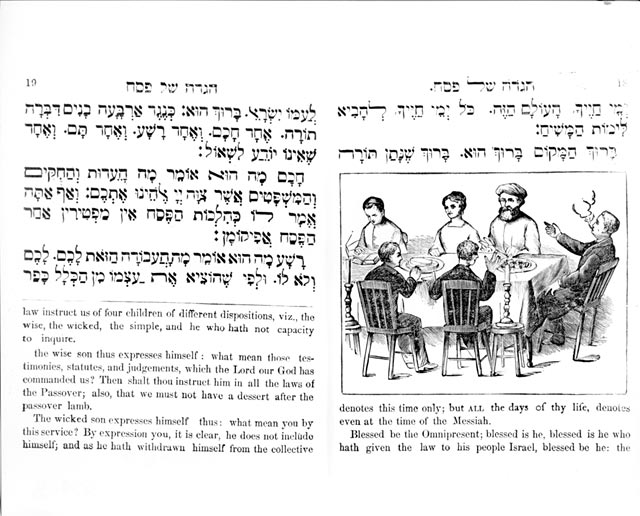
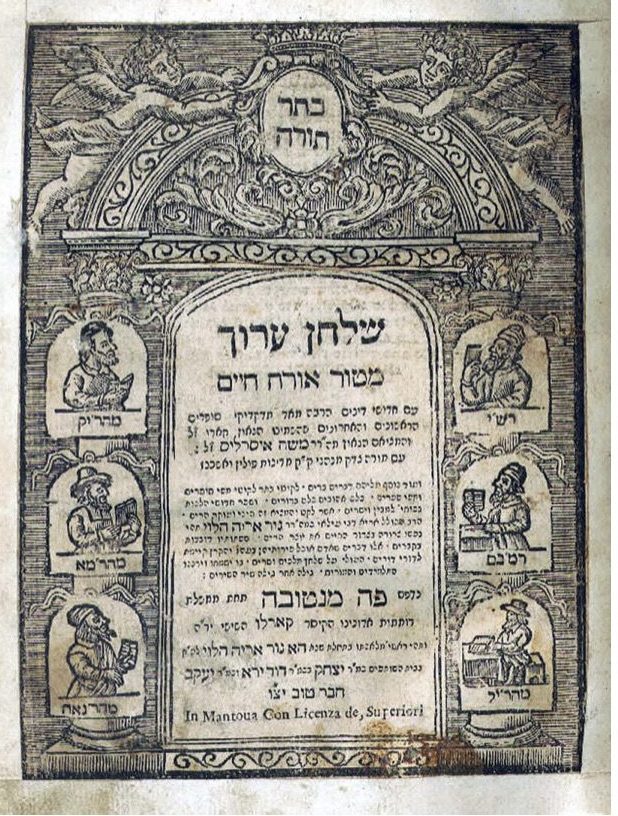
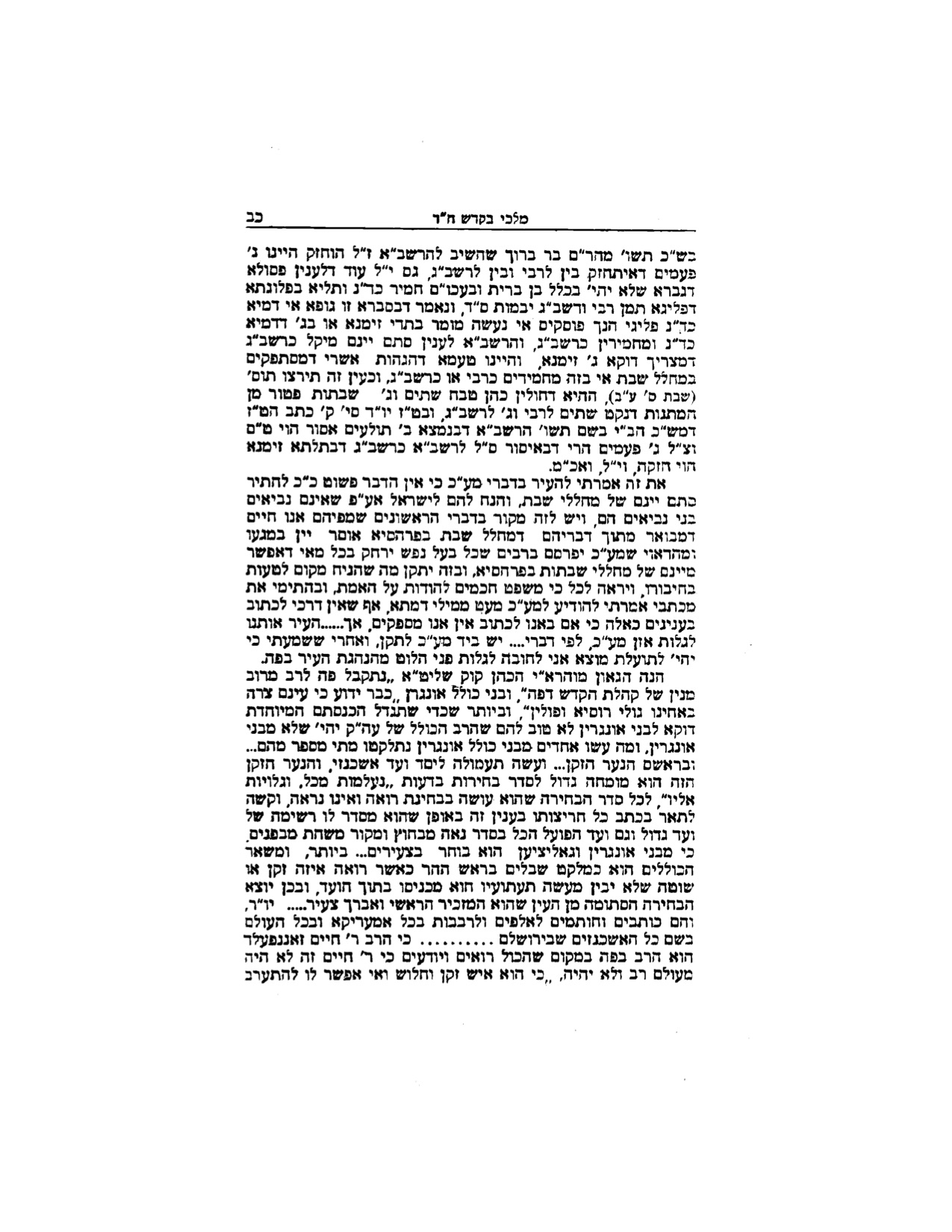
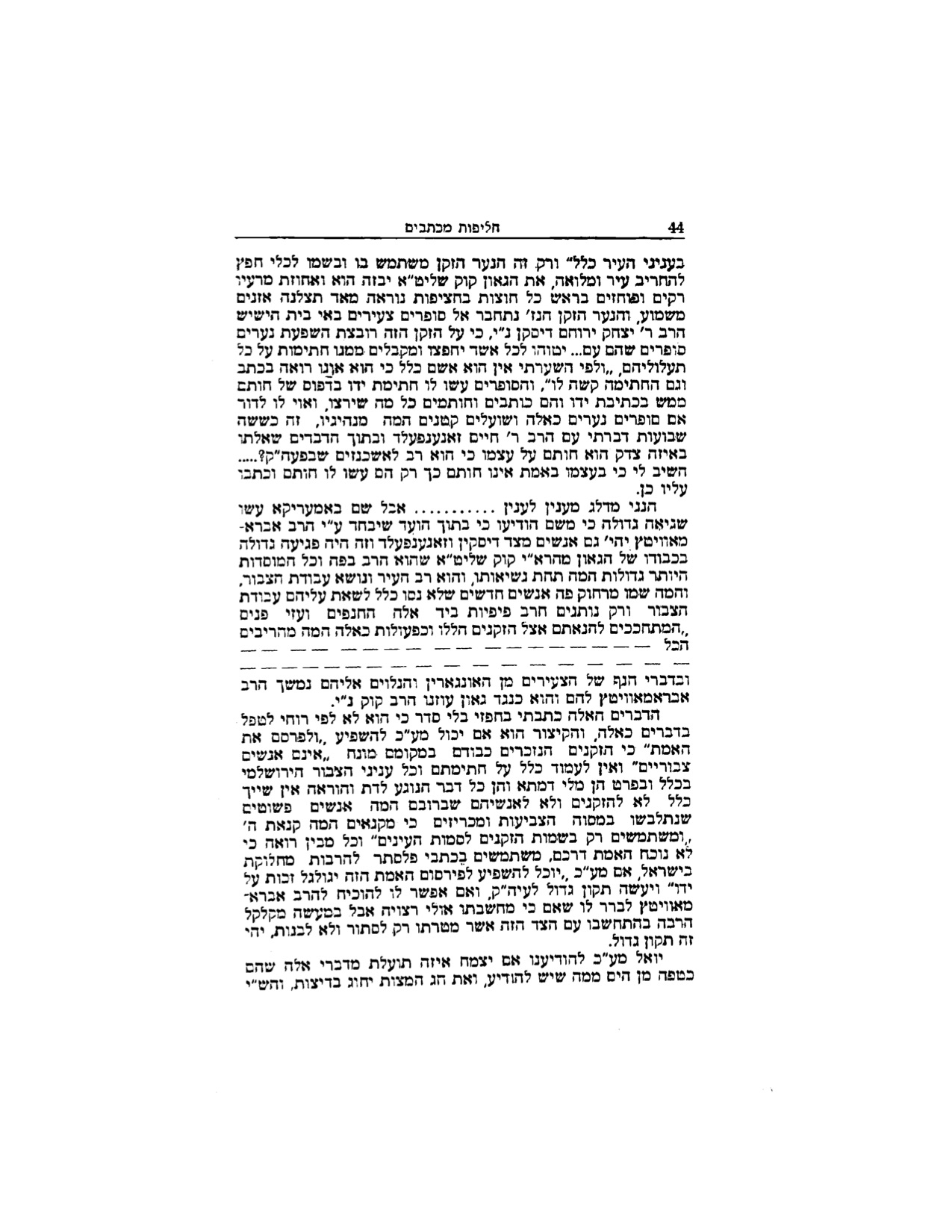
Leket Yosher – A Closer Appraisal in Light of a Recent Controversy

In a recent discussion in the journal Or Yisrael concerning the permissibility of using ArtScroll gemaras — for PDFs of the articles, see here — one source deserves closer scrutiny. In particular, some authorities who are against the use of ArtScroll gemaras cite to a passage in the Leket Yosher in support of their opinion. Thus, an examination of the Leket Yosher is appropriate.

The Leket Yosher was compiled by R. Yosef ben Moshe (1423-c.1490), a student of R. Israel Isserlein (1390-1460), the author of the Terumat HaDeshen. The Leket Yosher records R. Isserlein’s customs and rulings. The Leket Yosher was the first work to base itself on the four part division of the Turim, however, only the sections on Orach Hayyim and Yoreh Deah are extant. While it appears that there was a third part on Even haEzer which is no longer extant, it is unclear whether there ever was a part on Hoshen Mishpat. [1] Leket Yosher [2] was not published until 1903 (Orach Hayyim; and in 1904 Yoreh Deah was published) by R. Ya’akov Freimann from Munich manuscript in R. Yosef’s own hand.[3] It has been published at least three times and today is typically available as part of a set of three minhagim works, Leket Yosher, Yosef Ometz and Noheg KaTzon Yosef.

The passage used by some in the discussion in Or Yisrael regarding ArtScroll, records the disapproval of R. Isserlein of the practice of “spoiled, rich kids” who used a revolving table to avoid having to get up and get a book. (vol. 2, p. 39). The passage reads in full:

“אותם הבחורים העשירים המפונקים שעשו להם שולחנות כשיושבין במקומן הופכין השולחן לאי זה צד שירצו ועליו הרבה ספרים לא טוב הם עושים, אדרבה כשמבקש אחר הספר ובא לו בטורח גודל זכור באותו מעשה מה שרוצה ללמוד, כמדומה לי שמצאתי לו סמך ב[יורה דעה] בסימן ג’ (שפח) ‘ולא כאלו שלומדין מתוך עידון’ וכו”

“Those rich, spoiled students that had made a revolving table which allowed for them to turn the table to get which ever book they wanted [without having to get up] such behavior is inappropriate. Instead, one who gets up to get a book and exerts themselves will remember that they had to look for the book [and will remember what the book said]. It seems to me [R. Yosef] that support for this position [that frowns upon the turntable] can be found in Yoreh Deah where it says “one should not study in luxury.'”

Thus, argue those you compare the turntable to ArtScroll Talmuds, Torah study should not be easy, and one should struggle in preforming that commandment. In other words, because studying with Talmud with an ArtScroll is easy, it is inappropriate for Torah study. As an initial matter, the comparison is somewhat strained in that the Leket Yosher is referring to those who are lazy and does not necessarily speak to someone who uses ArtScroll because they cannot otherwise study gemara (or the additional commentaries that ArtScroll provides) at all. But setting aside this difficulty, it does not appear that the Leket Yosher’s opinion in this regard is agreed upon by all. For example, R. Yitzchak Hutner, in his approbation to the Otzar Mifarshei HaTalmud, explains why the Otzar is a good thing. As many are aware, the Otzar collects all (or almost all) the literature on a particular passage of the gemara (or mishna as is the case with the volume on Hallah). This avoids the need to look through many books to see what, if anything, they have to say on a particular passage. R. Hutner cites to a statement from the Hazon Ish, that “people confuse looking (hipush) with study” and, according to R. Hutner, the Otzar eliminates that problem. Thus, it can be argued that both according to R. Hutner and the Hazon Ish, there is no benefit or merit per se in the act of getting a book or looking to see if that book has anything relevant. This appears in conflict with the Leket Yosher.

Similarly, when the Vilna Shas was printed many years ago, the story goes that the printers said that whoever finds a mistake in this heavily invested shas will get rewarded. In the excellent book, Derech Etz Chaim (p. 568) about R’ Isser Zalman Meltzer, they record a story that a printer of a current Yerushalmi visited the Steipler with the idea to print a Yerushalmi in a similar format to the Talmud Bavli and to have, amongst other things, many commentaries in the back. When the Steipler heard this, he said that R. Meltzer used to complain that there’s a very big printing mistake in the Vilna Shas. Specifically, that in the Vilna Shas many commentaries in the back, but each commentary is 3 pages so you have to look 50 times for the same thing. R Isser Zalman wanted that they should put it in order of the Blatt, so he recommended that they not make the same mistake and do the same for the Talmud Yerushalmi.[4]

Setting aside R. Hutner and Hazon Ish, what is worthwhile to point out is the passage immediately preceding the above quoted passage in the Leket Yosher. The Leket Yosher records the following question and answer:
“ושאלתי לו קטן שהולך בדרך לא טובה כגון משכב זכר ועובר על לאו לא תגנוב אם מותר ללמדו תורה ואמר הן”

“And I asked [R. Isserlein] a student who sin, with sins such as homosexuality or stealing should they be taught Torah? Answer, Yes.”
To be clear, the the Leket Yosher allows for the teaching of homosexual students. Now, obviously this passage, although immediately preceding the discussion about the revolving table, is not germane to the later topic, but I have never seen this passage quoted anywhere else, even though it appears to be espousing a fairly unique position both in the realm of Jewish education and attitudes towards homosexuality. [I have been informed that it is mentioned in R. M. Ashkenazi, Hilkhot Talmud Torah, however, even so it is not well-known by any definition.]
Since we are on the topic of the Leket Yosher it is also worthwhile to point out some of the other interesting observations related to the Leket Yosher. Perhaps the most important fact to come from the Leket Yosher is that the assumption, first espoused by the Taz and expanded upon by others, that the Terumat HaDeshen was not the product of actual questions and answers and instead R. Isserlein made up the questions himself and therefore, according to some, the Terumat HaDeshen is not authoritative. As R. Freimann demonstrates, however, this is incorrect. Instead, actual events as recorded in the Leket Yosher can be matched with teshuvot in the Terumat HaDeshen thus demonstrating that the questions in Terumat HaDeshen were based upon actual events and were not fabricated.[5]

Perversely, the criticism of the Terumat HaDeshen was turned on its head and applied to the Leket Yosher. Specifically, the Sanzer Rebbi in his Divrei Yatziv (E.A. 39), claims that one cannot rely upon the Leket Yosher as it records actual events and one cannot decide halakha from events. This is inapposite of those who complain that the Terumat HaDeshen is not reliable because the questions do not relate to real events. It appears that the position of the Sanzer Rebbi has not been accepted as R. Moshe Feinstein (which is especially noteworthy in light of his general disapproval of newly discovered works), R. Ovadiah Yosef, Daayan Weiss, R. Shlomo Zalman Auerbach and many others all cite with approval the Leket Yosher. Moreover, the Sanzer Rebbi himself is at least five other places[6] in Divrei Yatziv cites with approval the Leket Yosher. In only one other instance does he couch his citation of the Leket Yosher (E.A. 78) with a disclaimer “that is is unclear whether the Leket Yosher is reliable.”

Other interesting comments in the Leket Yosher include: R. Yosef, in 1456, records that he saw Halley’s Comet [7] (vol. 2, pp. 17-8), R. Isserlein used to tell Torah riddles on the first days of Pesach and Shavous and Purim (vol. 1, pp. 103-4), R. Isserlein’s daughter-in-law, Redel, studied Torah (vol. 2, p. 37), and the restriction against walking behind a woman is no longer applicable (id.).

Notes:

[1] See Freimann’s introduction XIII. Friemann’s introduction appears at the beginning of volume two on Yoreh Deah. The first volume, on Orach Hayyim has no introduction.

[2] Aside from being unique in it use of the Turim’s division, the Leket Yosher, has another unique attribute. As Professor Y.S. Spiegel has pointed out the title employed, Leket Yosher, hints not only to the authors own name (as is a a somewhat common practice – see Spiegel for more on this practice) but also to R. Yosef’s teacher, R. Isserlein as well. Specifically, the numerical value of Leket Yosher and is ישראל יוזלין Yisrael is for R. Isserlein Yozlin is for Yosef. See, Y.S. Spiegel, Toldot Sefer haIvrei, vol. 2 p. 411.

[3] For additional biographical and bibliographical information see generally Freimann’s introduction. For some reason neither R. M.M. Kasher in Sa’arei HaElef or Glick in Kuntres HaTeshuvot HaHadash or in the earlier version by Boaz Cohen has an entry for Leket Yosher.

[4] It is, however, worth pointing out that R. Isser Zalman Meltzer held that part of ameilus batorah is getting up a taking a sefer out of the bookshelf. Thus he would never allow anyone to get him a sefer. He would get it himself. According to R’ Shach explained that there were 2 reasons for this. One is because he didn’t want anyone to help him, and two because of his ameilus batorah.

Likewise, in the same book (p. 181) they record that R. Aharon Kotler uses the Gemara in Menochot where Avumy forgot something that he said. He turned to his talmid R. Chisda to remind him how he explained a certain topic. The gemara asks why he didn’t send his talmid to come to him. Rashi says that it’s because of yegata u’motzasa (he worked and he found). R’ Aharon deduces that going yourself is part of the learning.

In an effort to avoid having to get up to get books R. Teichtel writes to his father R. Yissachar Teichtel, author of Am habonim Semacha, that when R. Yissachar visited R. Menachem Zemba, he had sitting on the table in front of him, a gemara with Rambam and all of chazal so that way he wouldn’t have to waste time and get up every time he needed to look up something. (letters in Tal Talpios, mentioned here, on page 44).

R. Meir Bar-Ilan, in a beautiful chapter of his classic MiVolozhin l’Yerushalayim (p. 269), in describing how his uncle, the R. Yechiel Michel Epstein, author of the Arukh HaShulhan, wrote his work said that R. Epstein also had a Rambam, shas and Shulchan Orach on the table and reference everything without having to move.

[5] See id. at XIV and id. note 40 discussing those who make the claim that the Terumat HaDeshen was not addressing actual cases and thus cannot be relied upon and specific statements in Leket Yosher that connect to the Terumat HaDeshen. R. Freimann discussed most of the literature on this topic only a few further cites should be added. To wit, Y.A. Dinari, Hakhme Ashkenaz be-Shelei Yemi HaBenayim, Jerusalem, 1984, pp. 303-5; Zevin, Soferim veSeforim, vol. Teshuvos, p. 14; R. P. Horowitz, Sefer HaBrit, p. 162, discussing the phenomenon of fictional responsa.

See also the comments of R. Munk in Pa’as Sadecha, who specifically rejects the notion that the Leket Yosher is not a reliable work. Instead, R. Munk states that the Leket Yosher was written with extreme care and can be relied upon.

In the newest edition of the Terumat HaDeshen, edited by Shmuel Avitan (Jerusalem, 1991), the editor is completely dismissive of R. Freimann. Although Avitan neither mentions Freimann by name nor explains why Freimann is wrong. This attitude is particularly striking in that R. Freimann devotes some 50 pages to an extensive and well documented introduction of the Leket Yosher as well as related topics. Avitan, on the other hand, is satisfied with a two page introduction that adds almost nothing to either the Terumat HaDeshen the work or R. Isserlein the person and in fact borrows heavily, many times without citation, from R. Freimann’s introduction. [It appears Avitan was not even aware of Dinari’s work.] For example, Avitan deals with when R. Isserlein refers to “one of the great ones – אחד מהגדולים” if R. Isserlein is referring exclusively to the Maharil. Freimann was the first to demonstrate that this reference is not exclusive to the Maharil. Avitan, also comes to the very same conclusion, without mentioning Freimann or even as Avitan is wont, “the introduction to the Leket Yosher.”

Aside from claiming that the responsa are fictional, others have made a distinction between the “teshuvot” and the “pesakim” of R. Isserlein. See Dinari, Hakhme Ashkenaz, p. 303-4 n. 223.

[6] Divrei Yatziv Orach Hayyim nos. 179, 236, 295, 297; Yoreh Deah 31.

[7] For a later mention of seeing a comet see Glikel Zikhronot, ed. C. Turnyanski, Jerusalem, 2006, p. 605 n. 314.