Which Direction is North?, Geographical Mistakes, and our Woke Universities

Which Direction is North?, Geographical Mistakes, and our Woke Universities

Marc B. Shapiro

1. Numbers 34:15 states: “Two and a half tribes have taken their inheritance on the side of the Jordan by Jericho, to the front, eastward.”

Rashi comments:

קדמה מזרחהאל פני העולם שהם במזרחשרוח מזרחית קרויה פנים ומערביות קרויה אחור לפיכך דרום לימין וצפון לשמאל

This passage is translated as follows in ArtScroll’s Sapirstein edition:

To the Front, Eastward: This means to the front of the world, which is in the east, for the eastern direction is called “face” and the western direction is called “back.” This is why the south is to the right and the north is to the left.

What does the “front of the world” mean? Furthermore, how could Rashi say that south is to the right? Anyone who looks at a map can see that south is not to the right and north is not to the left. Rather east is to the right and west is to the left.

ArtScroll begins its explanation by referring to Psalms 89:13: צָפוֹן וְיָמִין אַתָּה בְרָאתָם

The north and the south [right], Thou hast created them.” What we see from this verse is that “right” is used synonymously with “south”, which means that “north” also signifies “left”. But what does this mean, that “south” is “right” and “north” is “left”?

See also Genesis 13:9: אִםהַשְּׂמֹאל וְאֵימִנָה וְאִםהַיָּמִין וְאַשְׂמְאִילָה

Onkelos and Ps.-Jonathan translate: אם את לצפונא אנא לדרומא ואם את לדרומא אנא לצפונה

As you can see, the Targumim also understand “right” to mean south and “left” to mean north.

Genesis 14:15 states: וַיִּרְדְּפֵם עַדחוֹבָה אֲשֶׁר מִשְּׂמֹאל לְדַמָּשֶׂק

Old JPS translates: “[He] pursued them unto Hobah, which is on the left hand of Damascus.” But this is incorrect. The word משמאל here means “to the north”, and this is how it appears in the new JPS (and also in ArtScroll). See also Ezekiel 16:46 where again the words “right” and “left” refer to south and north.[1]

In its commentary to Rashi, Numbers 34:15, ArtScroll provides examples of other places where Rashi explains “south” to mean “right”. For example, Ezekiel 10:3 states: וְהַכְּרֻבִים עֹמְדִים מִימִין לַבַּיִת בְּבֹאוֹ הָאִישׁ. “Now the cherubim stood on the right side of the house, when the man went in.” Rashi comments:

מימין לביתבדרום

On the right side of the house: In the south [of the Temple].

ArtScroll does not mention Rashi, Genesis 35:18, where he explains the name בנימין as meaning “of the south”, that is, the only son who was born in the south.

Returning to Rashi’s comment in Numbers 34:15, where he says that south is to the right and north is to the left, ArtScroll explains as follows: “When one faces east, his right is to the south, his left is to the north, and his back is to the west.” This explanation is earlier found in the Silbermann translation of Rashi, Exodus, p. 261: “In reality these terms describe the points of the compass relative to one who is facing the place of sun-rise (מזרח) so that ימין, the right, is the South and שמאל, the left, is the North.” Neither ArtScroll nor Silbermann mention that this explanation is already found in Nahmanides, Exodus 26:18.

Now let us look at two passages in Maimonides. In Mishneh Torah, Hilkhot Terumot 1:9, Maimonides states:

איזו היא סוריהמארץ ישראל ולמטה כנגד ארם נהריים וארם צובה כל יד פרת עד בבל כגון דמשק ואחלב וחרן ומגבת וכיוצא בהן עד שנער וצהר הרי היא כסוריה

What constitutes Syria? From Eretz Yisrael and below parallel to Aram Naharaim and Aram Tzovah, the entire region of the Euphrates until Babylonia, e.g., Damascus, Achalev, Charan, Minbag, and the like until Shinar and Tzahar. These are considered like Syria.

I have underlined the problematic word. How can Maimonides say that Aram Naharaim etc. are below the Land of Israel? As R. Mordechai Emanuel notes, the Rambam is placing Damascus south of the Land of Israel which is clearly mistaken.[2] Here is the map, and if we inserted all the places places Maimonides mentions we would find them north of Israel.

R. Isaac Klein writes as follows in his translation in the Yale Judaica Series (p. 436):

Outward” – literally “below.” The term is due to the belief that the Land of Israel was situated higher than all other lands, hence all other countries were considered below it. In modern Hebrew he who immigrates into Israel is termed oleh, “he who has ascended,” while he who leaves Israel is called yored, “he who has descended.

The Touger edition of the Mishneh Torah comments:

The term “below” in this context is problematic. It does not mean “south,” because significant portions of Syria are more northerly than Eretz Yisrael. Some commentaries understand it as meaning in height, because as Kiddushin 69b states, Eretz Yisrael is higher than other lands.

Rambam le-Am states that the word “below” should be understood as meaning “outside of”, which is how Klein also translated the passage:

כלומרמחוצה להוכתב למטה” לפי שארץ ישראל גבוהה מכל הארצות – קידושין סט:

Yet this doesn’t make much sense. Maimonides is giving the borders of Syria so saying מארץ ישראל ולמטה cannot possibly mean “outside Eretz Yisrael”. The fact that Eretz Yisrael is higher than the surrounding lands is also not relevant. In other words, the three editions of the Mishneh Torah we have just mentioned don’t have a clue as to why Maimonides writes למטה, when anyone looking at a map would conclude that he should have written למעלה.

The same problem can be seen in Hilkhot Kiddush ha-Hodesh 11:17 where Maimonides states that Jerusalem is found below the equator.

מתחת הקו השוה המסבב באמצע העולם

Both Solomon Gandz in the Yale Judaica Series and the Touger edition translate this as “north of the equator” without explaining how מתחת can mean north. Again, anyone can look at a map and see that Jerusalem is above the equator, so what is going on here?

The answer to the questions I have asked is that maps in the Islamic world were generally oriented with south at the top. I can do no better than cite Jerry Brotton’s wonderful bookת A History of the World in Twelve Maps (London, 2012), pp. 58-59:

Most of the communities who converted to Islam in its early phase of rapid international expansion in the seventh and eighth centuries lived directly north of Mecca, leading them to regard the qibla as due south. As a result, most Muslim world maps, including al-Idrisi’s, were oriented with south at the top. This also neatly established continuity with the tradition of the recently conquered Zoroastrian communities in Persia, which regarded south as sacred.

This orientation would have appeared on the maps that Maimonides was familiar with, and thus it makes sense for him to describe Aram Naharaim, etc. as below Israel, or Jerusalem as below the equator, as that is what he saw when he looked at a map.[3] Here is an example of such a map by the famed twelfth-century cartographer Muhammad al-Idrisi. This map is known as Tabula Rogeriana as it was made for King Roger II of Sicily.[4]

As you can see, Saudi Arabia is on top. Here is a twentieth-century map which also puts south on the top.[5]

We have other examples of maps in Jewish sources that show the directions differently than what we are used to. For example, here is Gittin 7b and the maps in Rashi show west on top.

We also have maps in medieval manuscripts of Rashi’s commentaries that show east on top, as well as north on top.[6]

Here is Maharsha, Gittin 7b, which shows west on top. Below this you can see the map in R. Meir of Lublin’s commentary that has east on top.

Here is Maharsha, Berakhot 61b, and east is on top.

Here is a page from R. Jonathan ben Joseph’s Yeshuah be-Yisrael, a 1720 commentary on Maimonides’ Hilkhot Kiddush ha-Hodesh (ch. 10), and you can see again that east is on top.
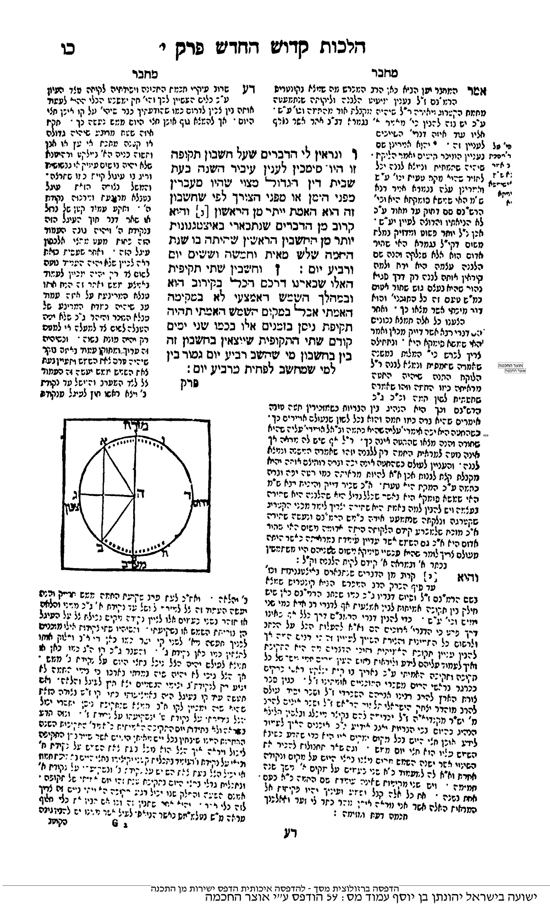
Many people probably assume that what we have seen are printers’ mistakes, but that is not the case. European cartographers regularly put east on top, as Jerusalem was in the east relative to Europe, and the top was often regarded as the most important place on a map.[7] We also have examples from Europe with the west on top, although this is much rarer.[8] The important point is that our current maps that have north on top are not any more correct than these other maps. It is simply a matter of convention which direction should be on top, and interested readers are referred to Brotton’s book mentioned already.

As we have been discussing maps, here are some examples of what appear to be geographical mistakes in rabbinic literature, in no particular order. (In a future post I will deal with rabbinic views about whether the earth is round or flat, and why they thought there was no human habitation in the southern hemisphere.)

Rashi, Shabbat 65b, s.v סהדא, and Kiddushin 71b s.v. עד נהר, states that the Euphrates flows from the Land of Israel to Babylonia.[9] The Talmud, Shabbat 65b, quotes Rav that when the water rises in the Euphrates this is a sign that there has been rain in the Holy Land.[10] I believe the simple explanation of this passage, contrary to Rashi, is that there was an assumption that if there was significant rain in Babylonia then there was also rain in Eretz Yisrael. Presumably, this is also the meaning of pseudo-Rashi to Nedarim 40a s.v. סהדא (this commentary is not by Rashi):

כשנהר פרת גדול הוי עדות לגשמים שיורדין לאי דאי גבוה מכל הארצות ובאין גשמים ונופלין בפרת ומתגדל מהן

Rashi, however, had a different approach, and believed that the Euphrates flows all the way from the Land of Israel to Babylonia, so when the level of the Euphrates is raised this is proof that in the Land Israel it rained. Yet this is incorrect as the Euphrates does not flow from the Land of Israel to Babylonia. See also Tosafot, Shabbat 65b s.v. סהדא, who also think that the Euphrates is found in the Land of Israel, but reject Rashi’s understanding since Tosafot claims that rivers only flow from east to west (so the Euphrates must flow from Babylonia to the Land of Israel).[11]

However, R. Samuel Strashun, note to Shabbat 65b, tells us that he looked at a map and saw that the Euphrates indeed flows from west to east. He further notes that the Danube River also flows from west to east, meaning that Tosafot’s reason for rejecting Rashi is incorrect. We know that the Tosafot on different tractates do not necessarily come from the same school, and Tosafot, Bekhorot 44a, s. v. לא, and 55b, s.v. מיטרא, mention Rashi’s idea that the Euphrates flows from the Land of Israel to Babylonia.

Returning to Rashi, many have wondered how Rashi could describe the Euphrates as flowing from the Land of Israel, although I don’t see what is so difficult, since without accurate maps how could one expect Rashi to have perfect knowledge of the geography of the Middle East?[12] Nahmanides famously records in his commentary to Genesis 35:16 that only when he came to the Land of Israel and could see the geography did he realize that an explanation he had offered was incorrect. Interestingly, Nahmanides never updated his commentary to Genesis 35:18 where he criticizes Rashi for his supposed geographic error regarding Aram Naharaim. Yet most would say that it is Ramban who is mistaken when he writes that “Aram is southeast of the Land of Israel, and the Land of Israel is to its north.”[13]

R. Strashun calls attention to what he thinks is another geographical mistake in Rashi. In his note to Sukkah 36a he mentions that Rashi is mistaken (היפך המציאות) about where Kush is located, as R. Strashun tells us that Kush is Ethiopia. However, as R. Yaakov Hayyim Sofer has noted, Rashi routinely explains Kush as being identical with הינדואה, not Ethiopia. Presumably, Rashi understands הינדואה as India, which means that Hodu, mentioned in Esther 1:1, is a different place. While most people have understood Esther 1:1 to mean “from India[14] unto Ethiopia,” Rashi on Esther 1:1 tells us that Kush and Hodu are next to each other (which is one talmudic opinion in Megillah 11a).

Leaving aside Rashi’s identification of Kush as הינדואה, the real problem is Rashi’s understanding of הינדואה as a different place than Hodu. Interested readers can examine my earlier post here where I discuss this issue and explain why הדו has a dagesh in the dalet.[15] As for Kush, there is no uniformity of opinion as to what it refers to, and it is possible that the different biblical references do not all refer to the same place.[16] In agreement with Rashi, Tosafot, Bava Batra 84a s.v. בצפרא, mention that the Midrash places Kush in the east. R. Jacob Emden, who knew his geography, states that in addition to Ethiopia there was another land near India that was called Kush.[17] No less a figure than R. Abraham Maimonides confesses that he does not know where the Kush mentioned in Genesis 2:13 is to be found.[18]

There is actually a long mountain range called Hindu Kush that passes through Pakistan, which until the second half of the twentieth century was included in the territory called India.[19] Since the term “Hindu Kush” has been in existence for over a thousand years, it was obviously not incorrect for medieval writers to speak of a Kush near India. In my earlier post I also cited P. S. Alexander who writes: “It was a common view in ancient geography, shared by Ptolemy and probably also the author of the book of Jubilees . . . that Ethiopia was joined to India in the east. It is this idea that lies behind the [talmudic] statement that Cush and Hodu are adjacent.”[20] He also notes that the Indians’ dark skin was a reason for the identification. Furthermore, Alexander tell us, there was an ancient belief that there was a land connection between Ethiopia and India south of the Indian Ocean.

Speaking of geographical inaccuracies, Rabbi Natan Slifkin writes as follows in his new book Rationalism vs. Mysticism, p. 517:

The Zohar makes many statements about places in the Land of Israel which are incorrect, but which would be perfectly understandable if they were authored by someone living in Spain. For example, in multiple places the Kinneret is described as being in the territory of Zevulun, and as being the source of the chilazon that produces techelet, even though it was actually derived from the Mediterranean. Lod is described as being situated in the Galilee, and Cappadocia is described as a village near Sepphoris rather than as a province in Asia Minor.[21]

Avraham Korman called attention to a passage in Yalkut Shimoni, Joshua, remez 15.[22] The Midrash is commenting on the verse in Joshua 3:16:

וַיַּעַמְדוּ הַמַּיִם הַיֹּרְדִים מִלְמַעְלָה קָמוּ נֵדאֶחָדהַרְחֵק מְאֹד באדם (מֵאָדָםהָעִיר אֲשֶׁר מִצַּד צָרְתָן

The waters which came down from above stood, and rose up in one heap, a great way off from Adam, the city that is beside Zarethan

The Midrash states:

שמעת מימיך עיר נקראת אדםאלא על אברהם נאמר והאדם הגדול בעקים” (יהושע ידטו)

Korman believes this Midrash was authored by someone who did not know the Land of Israel, and thus could not believe that there was actually a city named Adam. Therefore, the sage offered a midrashic understanding of “Adam”. Yet there was indeed such a city, and it is mentioned in Yerushalmi, Sotah 7:5. It was later called Damiyeh by the Arabs.[23] However, Korman’s notion that the author of the Midrash did not know any of this, and the passage should be read as a denial of the literal existence of the city of Adam, strikes me as complete nonsense.

R. Ovadiah Bartenura in his commentary to Genesis 12:6 strangely does not realize that Hebron is in the south of biblical Eretz Yisrael.[24] R. Ovadiah would eventually journey to the Land of Israel, so this comment must have been made before his arrival there.

R. Moses Sofer, She’elot u-Teshuvot Hatam Sofer, Even ha-Ezer II no. 49, cites Deuteronomy 11:24, which refers to the boundaries of “Greater Israel.”

כָּלהַמָּקוֹם אֲשֶׁר תִּדְרֹךְ כַּףרַגְלְכֶם בּוֹ לָכֶם יִהְיֶה מִןהַמִּדְבָּר וְהַלְּבָנוֹן מִןהַנָּהָר נְהַרפְּרָתוְעַד הַיָּם הָאַחֲרוֹן יִהְיֶהגְּבֻלְכֶם

Every place whereon the sole of your foot shall tread shall be yours: from the wilderness, and Lebanon, from the river, the river Euphrates, even unto the Western Sea shall be your border.”

R. Sofer wonders about the words מן המדבר והלבנון, as these are both in the south, so how could this establish borders when what the verse should have is a site in the north together with a site in the south?

ויש לי מקום עיון בלשון הקרא . . . שלכאורה אין לו שחר כי המדבר והלבנון הוא גבול דרומית לאי שבין צפון ים סוף לדרום אי

This passage is surprising, to say the least, as how could R. Sofer say that Lebanon is in the south of Israel? Ever since this passage appeared in print it has mystified readers and many have simply thrown up their hands without any explanation, as it is impossible to imagine that R. Sofer did not know that Lebanon is located to the north of Israel. R. Sofer was attacked on this point by Leopold Loew in his Hungarian periodical Ben Chananja.[25] R. Joseph Natonek in a German booklet offered an explanation of R. Sofer, but I confess to not understanding his point. Here is how R. Natonek’s position is summarized by Shmuel Weingarten.[26]

הרב נטונק מוכיח איפוא שהאתנחתא” בדברי החתס צריכה להיות אחרי המלים שבין צפון” והוו של והלבנון אינה ו‘ החבור (konjunktiv) אלא ו‘ הפרוד (disjunktiv) . . . דברי החתס ברורים איפוא: “כי המדבר והלבנון הוא גבול דרומית לאי שבין צפון” מן המדבר שבדרום עד הלבנון שבצפון וכו

R. Sofer made his comment regarding Deuteronomy 11:24, and he sees the words מן המדבר והלבנון as indicating that the wilderness and Lebanon are in the same place. The same words are found in Joshua 1:4:

מהמדבר והלבנון הזה ועד הנהר הגדול נהר פרת

From the wilderness, and this Lebanon, even unto the great river, the river Euphrates.”

Here, too, if we didn’t already know where Lebanon is we would assume that the wilderness and Lebanon are together, as that is the simplest way to read the text. It is so obvious, in fact, that Metzudat Tziyon is forced to explain “Lebanon” as referring to the name of a forest. The Vilna Gaon, in his commentary printed in the Mikraot Gedolot, also does not regard this “Lebanon” as referring to the Lebanon we know but a different Lebanon in the southeast of Israel.[27] So we see that R. Sofer was not alone in his understanding.

Avraham Moshe Luntz, who wrote much about the geography of the Land of Israel, also argues that the “Lebanon” referred to here is not the Lebanon we know.[28] He thinks the verse is referring to the borders of a future Greater Israel and the Lebanon mentioned is actually Wadi al-Abyad in the south, in the Land of Edom. (Abyad=white, which is also the root of the word Lebanon.) However, I don’t know which place he is referring to, as while there is a Wadi al-Abyad in Jordan it is not in the south but on the east of Jerusalem.

Here is how Luntz connects what he says with the Vilna Gaon’s comment (p. 83):

והנה כל הדברים האלה אף כי חדשים הם לא שערום הראשונים בכל זאת הרגיש בהם הגרא זל מטעם סוד ה‘ ליראיו אם כי לא שמע מעולם מן ועדאלאביאט ורק מרוח הקודש אשר הופיע בבית מדרשו כתב בבאורו על הגבולין דיהושע והלבנון זה מזרחו של ארץ ישראל הקרוב לצד דרום ולכן אמר הזה” ששם היו עומדים והרב בעל תבואות הארץ כתב עליו נפלאים בעיני דבריו“. אמנםלא נפלאים ולא רחוקים המהרק נפלאת היא בעניניו רוח קדשו של הגרא זל אשר מאת ה‘ נתנה לו.

In Mesorat Moshe, vol. 2, pp. 158-159, R. Moshe Feinstein discusses Venice and Shushan Purim.[29] In the note the following appears:

ואחר כך הזכיר רבינו שונציה שנזכר בפיוטים הוא חלק מרוסיהפעם היה שם רב אליהו פרושנעראבל אפשר שונציה שמוזכר בשער דף של ספריםלמקום הדפוסמכוין ל-Venice [ונציה], שמוצאים זה על ספרים עתיקותבשנים שברוסיה וכו‘ לא היו בתי דפוסואפשר שבאיטליה כן היה.

R. Moshe says that the Venice that is mentioned in piyutim is not Venice, Italy, but a place in Russia. He must have had in mind the town of Vinnitsa – וויניצא – which you can read about here. He also says that R. Elijah Feinstein (of Pruzhan) was there, which appears to mean that he served as a rabbi in Vinnitsa (although this appears to be inaccurate). As for the first point about Venice being mentioned in piyutim, I have never heard of this and if it is the case, it could only refer to Venice, Italy. Perhaps R. Moshe was referring to something like this book of Yotzrot which on the title page says it was published in Venice, and refers to Venice, Italy.

The note in Mesorat Moshe continues that R. Moshe was aware of the name Venice on the title page of seforim, and thought it is “possible” that this refers to Venice, Italy. This is all very strange, and despite what the note says I find it impossible to believe that R. Moshe did not know that Venice was a center for Jewish printing, even if he did not know the extent of this printing. (Venice was where the first Mikraot Gedolot[30] Bible, as well as the first complete Babylonian and Jerusalem Talmuds were printed.) I am inclined to assume that this note does not accurately inform us of what R. Moshe’s point was.

Regarding Venice, Rashi has an interesting passage in his commentary to Isaiah 42:10:

ומלואוהקבועים בים ולא באיים אלא בתוך המים שופכים עפר כל אחד ואחד כדי בית והולכים מבית לבית בספינה כגון עיר ווניצייא

[Those who go down to the sea and] those therein: Those whose permanent residence is in the sea and not in the islands, but in the midst of the water they spill earth, each one of them, enough for a house, and go from house to house by boat, like the city of Venice.


Rashi mistakenly thought that the islands of Venice–of which there are 118—were man-made. He also seems to have thought that there was only one house on each island and you travel from house to house by boat. Incidentally, as Yitzhak Baer has noted, other than Venice the only other contemporary (European) city Rashi mentions by name is Rome.[31] For the reference to Rome, Baer refers to Rashi’s commentary to Isaiah 33:23, but he neglects to note that Rashi also mentions Rome in his commentary to Micah 7:8. Furthermore, in Bomberg’s 1525 Venice Mikraot Gedolot, Rashi to Zechariah 13:7 reads: את מלך רומי הרשעה. Yet in the standard Mikraot Gedolot the following appears: את מלך בבל.

Manfred Lehmann[32] thought that there was something else related to Venice in Rashi’s commentary to Nehemiah 7:3 where in manuscripts, but not in the Mikraot Gedolot printed version, Rashi explains the word משמרות (watches) as: גיטא בלעז. Lehmann states that this is the first time the word “Ghetto” appears in Jewish literature, and that the word originates in Venice. Lehmann then states that he doubts that there was already a ghetto in Venice in the days of Rashi. I don’t understand this at all, because if Lehmann (correctly) doubts that there was a ghetto in medieval Venice, then how could he not realize that the word גיטא cannot refer to “ghetto”. (The Venice ghetto was established in 1516.) This is quite apart from the fact that the word “ghetto” would not make sense in the verse. If you want to know what גיטא means, the place to look is Moshe Katan, Otzar Loazei Rashi (Jerusalem, 1990), p. 88, where he provides the Hebrew translation of the old French word: תצפיותמארבים. I must also note that the commentary to Nehemiah attributed to Rashi was not actually written by him.[33]

In the first draft of this post I wrote that I didn’t understand how R. Hayyim Joseph David Azulai, Shem ha-Gedolimma’arekhet gedolim, s.v. ע no. 2, could write that R. Ovadiah of Bertinoro came from a town in “Romania.” R. Azulai refers to Romania in Shem ha-Gedolimma’arekhet gedolim, s.v. א no. 169, and ma’arekhet seforim, s.v. ח no. 15, and it means  Byzantium. I didn’t think it was possible that R. Azulai was unaware that Bertinoro is a town in Italy, some 200 miles from his home in Livorno. Furthermore, I have no doubt that every Torah scholar who lived in Italy in R. Azulai’s day would have known and been proud of the fact that R. Ovadiah came from Italy. So I didn’t know what to make of R. Azulai’s comment. Shimon Steinmetz enlightened me that when R. Azulai refers to Bertinoro as being in Romania, he actually has in mind the Italian historical region called Romagna. In an era before there was a country named Italy, it makes sense that R. Azulai would refer to the region that R. Ovadiah of Bertinoro came from.

Let me offer one final example where the mistake is not made by the medieval authority, in this case Maimonides, but by his critic, R. Jacob Emden. In the Mishneh Torah, Hilkhot Tzitzit 2:2, Maimonides writes about how tekhelet is produced: “A chilazon is a fish whose color is like the color of the sea and whose blood is black like ink. It is found in the ים המלח.” We all know that ים המלח means the Dead Sea, and the Dead Sea is referred to as such numerous times in the Bible. R. Jacob Emden is shocked that Maimonides makes the error of thinking that fish could live in the Dead Sea.[3] He ends his comment with the strong words: לכן שיבוש גמור הוא זה לרמ זל. A number of later commentators also call attention to Maimonides’ “problematic” words, and some refer to R. Emden’s comment.

Yet the mistake here is not by Maimonides but by R. Emden, who didn’t realize that when Maimonides referred to the “salt sea” he meant the Mediterranean.[35] Maimonides was just translating into Hebrew the Arabic term used to designate the Mediterranean[36]אלבחר אלמאלח. At the end of his Commentary on the Mishnah, Maimonides mentions that he wrote this work while on אלבחר אלמאלח, and in his commentary to Kelim 15:1 he speaks of ships that that go from the Land of Israel to Alexandria by way of אלבחר אלמאלח. In the Mishneh Torah, Hilkhot Arakhim ve-Haramim 8:8, the best texts have: ישליכן לים הגדול ים המלח כדי לאבדן, thus explicitly identifying what he means by “salt sea”. When Maimonides refers to the Dead Sea in Mishneh Torah, Hilkhot Shabbat 21:29, he calls it ים סדום [37]. This is not his own term as Bava Batra 74b refers to ימה של סדום. Yerushalmi, Shabbat 14:3 refers to the Dead Sea as מי סדום. Interestingly, Yerushalmi, Kil’ayim 9:3 refers to it as ימא דמילחא [38]

2. In a number of posts I have documented how material from an archive at Bar-Ilan University ended up in various auctions. I was quite surprised that no one in any position of authority at Bar-Ilan seemed to care at all about what I had discovered. R. Elli Fischer recently discovered something similar, but with a much more expensive manuscript from the Jewish Theological Seminary. The story in this case is that the manuscript was sold by JTS. See the report hereMaybe the story with the archive from Bar-Ilan is similar to what happened with JTS, and it was actually Bar-Ilan which sold the archive. This would explain why they expressed no interest in finding out how the archive ended up at auction.

* * * * * * * *

Some years ago Rabbi Jonathan Sacks told me that in addition to writing scholarship I should also write for the larger world. He specifically mentioned that I should write for the Wall Street Journal. I finally took up his suggestion a few months ago and submitted an opinion piece to the Journal. They get hundreds of submissions a day, so I was not very surprised when they turned it down. Maybe the message in this is that I should stick to what I do best instead of involving myself in the culture wars. Rather than having the piece go to waste, I present it to you here.

Is it all Bad News at Our Universities?

For many people, the campus seems like a scary place these days. One can read about social justice warriors running roughshod over anyone who crosses the latest woke standards. Professors have been raked over the coals, and worse, for even mildly crossing the new woke thought police. We have also been treated to the spectacle of professors confessing their sins and promising to do better in the future, in scenes that look like they came out of Chinese Cultural Revolution re-education camps.

While I don’t wish to downplay any of this, and there have indeed been shocking violations of free speech at some of the top universities, I think that many Americans are getting a warped sense of what takes place at the typical university. I am sometimes asked by people if my university is anything like what they have been reading about, to which I can happily reply that no, I have never had the misfortune to experience that. To begin with, the various excesses are almost always centered in a few departments in the humanities. As one who teaches in a Theology/Religious Studies Department at a Catholic university—which, it bears noting, had in-person classes this academic year unlike so many other institutions—it is hard to see how the woke mentality and cancel culture would play out. Are we to remove the Bible, Augustine, and Aquinas because passages in these works are not in line with twenty-first century woke values?

This clearly is a non-starter, but just as important is that there has never been a push for this from students, who often are the ones behind the most damaging of campus controversies. I daresay that my experience is no different than my colleagues at hundreds of other colleges and universities in the country, institutions that are not what is commonly called “elite” institutions of learning, but which do a wonderful job in educating a student body that reflects middle-class America. Yes, we have liberal and even progressive students, but what we don’t have in any numbers—or at least I have not come across them—are students who speak woke and know all the Marxist lingo, who can go on and on about intersectionality, white supremacist capitalism, and America as the center of evil in the world, and who get outraged (or pretend to be outraged) at things that even a couple of years ago no one would have batted an eye at.

It is certainly possible that things will change in the future, and the wokeness and cancel culture currently infecting the “elite” universities, as well as so many other aspects of elite society, will filter down to the rest of the country including my university. If this happens, it might be a good time to think of retirement, as I wonder—to give an example from one of my courses—how I could teach about ethics under a woke regime. Could we actually have a unit on Affirmative Action where together with Ronald Dworkin’s spirited defense of racial preferences we also read those who see any discrimination on the basis of race, even if it is called “equity,” as deeply immoral? Could we do the unit on capital punishment where we examine whether our criminal justice system is “systemically racist,” instead of assuming that as a given? Could we focus on abortion, where we examine if women really do have a “right” to choose to terminate a pregnancy? Then there are the student presentations where all subjects are open for discussion, including such hot-button matters as immigration, war, sexual ethics, and transgender issues. Never once has a student tried to shut down the freewheeling class debate or complained that another’s point of view makes them feel “unsafe.” That is the way it should be, and I am confident that is how matters will remain in the vast majority of our colleges and universities. For those who are worried that higher education is leading us into the abyss, I can only say that from where I am standing, it is actually higher education that is succeeding where the “elite” universities have often failed.

* * * * * * * *

[1] Rashi, quoting Midrash Tanhuma, identifies Hobah with Dan. Yet as R. Meir Mazuz notes, it is hard to know what to make of this, as Hobah is described as north of Damascus which is not where the territory of Dan was. See Bayit Ne’eman: Bereshit 14:15.

[2] “Gevulot Eretz Yisrael (2),” Ha-Ma’yan 33 (Tevet 5753), p. 15.

[3] This is noted by R. Yisrael Ariel, Otzar Eretz Yisrael (Jerusalem, 2012), vol. 4, p. 13. I have checked numerous editions of the Mishneh Torah and the only one to explain this point is the Makbili edition, Terumot 1:9. Here is the relevant page which also includes a map found in manuscripts which also has south on top.


[4] See here from where I took the map.

[5] This map is found here.

[6] See Portraying the Land: Hebrew Maps of the Land of Israel from Rashi to the Early 20th Century (Berlin, 2018), ch. 1, available here.

[7] They also placed Jerusalem in the center of the known world. There is a commentary attributed to Maimonides on Tractate Rosh ha-Shanah. According to this commentary, the Land of Israel is to be regarded as on the western part of the world. Where then is Europe to be placed? 

 
Here is “Maimonides” comment, Hiddushei ha-Rambam le-Talmud, ed. Zaks (Jerusalem, 1963), p. 79:

צריך אתה לידע שארץ ישראל סמוכה למערבו של עולם הרבה מכל הארצות

[8] See here. See also here. How pre-modern people imagined the world, which was based on the maps they saw, has relevance to the question of where to place the halakhic dateline. See e.g., the important articles, complete with historical maps in color, by R. Dovid Yitzchoki and R. Efraim Buckwold in Tevunot 2 (2018), pp. 969-1095.

[9] See also Rashi, Shabbat 145b s.v. הני. In the Soncino translation to Shabbat 65b the following note appears: “Obermeyer, p. 45 and n. 2 rejects this [Rashi’s opinion] on hydrographical grounds, and explains that in most cases the rains in northern Mesopotamia in the Taurus range, where the Euphrates has its source, are the precursors of rain in Palestine.” The book by Jacob Obermeyer referred to is Die Landschaft Babylonien im Zeitalter des Talmuds und des Gaonats: Geographie und Geschichte nach talmudischen, arabischen und andern Quellen (Frankfurt, 1929).

[10] The term “Holy Land” with reference to the Land of Israel is actually not mentioned in the Bible, the Talmud, or the geonic writings. According to Hayyim Asher Berman, who has investigated the matter, the term in its Hebrew version first appears in the medieval period. Berman also notes that the Zohar uses the term ארעא קדישא hundreds of times. Berman claims that it is actually due to the Zohar’s use of this term that the Hebrew version became so popular. See Ha-Ma’yan 61 (Tevet 5781), pp. 102-103. (Understandably, others will see this as another sign that the Zohar was written in the medieval period.) Berman’s investigation was spurred by R. Shaul Yisraeli’s rejection of the term “Holy Land,” which he saw as a Christian invention in opposition to the term “Land of Israel.” R. Yisraeli noted that unlike ארץ הקודש, the term אדמת קודש is a Jewish expression and relates to the many mitzvot relevant to the Land of Israel. See R. Meir Schlesinger, “Hirhurim al Hibat ha-Aretz,” Ha-Ma’yan 60 (Tamuz 5780), p. 50. R. Yisraeli was obviously aware that the term“Holy Land” was often used by Jews for the last thousand years. However, I believe his intention was about the present, not the past. Today you can find Christians who speak of visiting the Holy Land and are careful to never actually mention the name “Israel.” This has to be seen for what it is, an anti-Zionist delegitimization of the existence of the State of Israel.

[11] See also Tosafot, Kiddushin 71b. s.v. עד.

[12] See R. Jacob Emden’s note to Arakhin 15a where he criticizes Tosafot for a geographical mistake that was also due to not having a reliable map:

ואמנם כל מש תוס‘ כאן אינו נכון גם ציור הארצות והים הוא מתנגד למציאות

To this I would add R. Meir Mazuz’s melitzahאין אחר המציאות כלום (The expression is based on Bava Batra 152b [end]: אין אחר קנין כלום)

[13] See e.g., R. Elijah Mizrahi, Commentary to Genesis 32:2. In his super-commentary to Nahmanides, Gen. 38:18, R. Menahem Zvi Eisenstadt writes:

הדברים קשים להולמם, שהרי צדקו דברי רש”י שא”י בדרום ארם היא, והדבר ידוע

[14] The Soncino translation says as follows: “The Hebrew Hoddu is really ‘Indus,” and refers to the north-western portion of the Indian peninsula which was drained by the Indus. This territory was added to the Persian Empire by Darius.”

[15] To the sources listed there, see also Tosafot Yom Tov, Yoma 3:7, who does not make the connection between the נ in הינדואה and the dagesh in the ד of הדו.

[16] See Avodah Berurah, Sukkah, vol. 2, p. 128.

[17] See his note to Megillah 11a.

[18] Perush ha-Torah le-Rabbenu Avraham ben ha-Rambam, ed. Moshe Maimon, vol. 1, p. 150.

[19] See here.

[20] “Toponomy of the Targumim,” (unpublished doctoral dissertation, Oxford University, 1974), p. 134.

[21] The issue of the Zohar’s knowledge of the Land of Israel has been discussed for a long time. Gershom Scholem, in his article on the Zohar in the Encyclopaedia Judaica, writes as follows:

The Palestinian setting of the book is also fictional, and, in the main, has no basis in fact. The Zohar relies on geographical and topographical ideas about Palestine taken from older literature. Sometimes the author did not understand his sources, and created places which never existed, e.g., Kapotkeya, as the name of a village near Sepphoris, on the basis of a statement in the Jerusalem Talmud (Shev. 9:5), which he combined with another statement in the Tosefta, Yevamot 4. He produces a village in Galilee by the name of Kefar Tarshi, which he identifies with Mata Meḥasya, and tells in this connection of the rite of circumcision which is based on material quoted in geonic literature with regard to Mata Meḥasya in Babylonia. Occasionally a place-name is based on a corrupt text in a medieval manuscript of the Talmud, e.g., Migdal Ẓor at the beginning of Sava de-Mishpatim. In the matter of scene and characters there are very close links between the main body of the Zohar and the stratum of the Midrash ha-Ne’lam, which follows the same path of mentioning places which do not actually exist. In this section Simeon b. Yoḥai and his companions already constitute a most important community of mystics, but other groups are mentioned as well, and particularly later amoraim or scholars with fictitious names who do not reappear in the Zohar. In recent times, several attempts have been made to explain the geographical difficulties, and to give a non-literal interpretation of statements in the Talmud and the Midrashim in order to make them fit the Zohar, but they have not been convincing.

Scholem’s point about Kapotkeya is rejected by R. Reuven Margaliyot, Peninim u-Margaliyot (Jerusalem, 2006), pp. 212ff.

[22] Ha-Adam ve-Tiv’o be-Mada u-ve-Yahadut (Tel Aviv, no date), p. 28.

[23] See Encylopaedia Judaica , s.v. Adam.

[24] See his commentary printed in Ba’alei ha-Tosafot al Hamishah Humshei Torah (Warsaw, 1876), p. 10b. This example is noted by R. Avraham ha-Kohen, Kiryat Arba, p. 237.

[25] See Shmuel Weingarten, Ha-Rav Yosef Natonek (Jerusalem, 1943), pp. 18ff. For another Haskalah attack on R. Sofer, see the anonymous author in Kerem Hemed 9 (1856), Letter 14. In a mocking fashion, the author deals with a number of matters, one of which is that in She’elot u-Teshuvot Hatam Sofer, Orah Hayyim, no. 16, R. Sofer states that R. Amram Gaon is buried in Mainz and he saw the grave. R. Sofer also mentions this in She’elot u-Teshuvot Hatam Sofer ha-Hadashot (Jerusalem, 1989), no. 11. This cannot be correct, and one can only assume that R. Sofer was shown the grave of someone else named R. Amram and given the false information that this R. Amram was R. Amram Gaon. For a possible identification of the R. Amram whose grave R. Sofer saw, see R. Naftali Yaakov ha-Kohen, Otzar ha-Gedolim, vol. 7, p. 332, and the sources cited in R. Nosson David Rabinowich, Safra ve-Saifa (Jerusalem, 2013), pp. 280ff.

[26] Ibid., p. 22 n. 17.

[27] See here for the suggestion that the Vilna Gaon’s comment is a printer’s error and it really should say “north” instead of “south.”

[28] Yerushalayim 7 (1907), pp. 81ff. It has recently been suggested that there are actually two separate biblical places named “Eilat”. See R. Yehudah Berakhah, Birkat Yehudah (Jerusalem, 2021), vol. 8, p. 417.

[29] We refer to the day as Shushan Purim due to the influence of Yiddish. In Hebrew—and this is how Sephardic writers refer to the day—it is called Purim Shushan. R. Elijah Feinstein, who R. Moshe refers to, was actually the shadkhan of R. David Feinstein, R. Moshe’s father. See Iggerot Moshe, vol. 8, Introduction, p. 6. Contrary to what many people think, even though they shared a last name, R. Moshe Feinstein’s family was not related to R. Elijah Feinstein (R. Moshe was a yisrael and R. Elijah was a levi). R. Moshe’s mother was the one who was related to R. Elijah, as she was his sister-in-law. See ibid.

[30] The word מקרא is masculine so it should be Mikraot GedolimMikraot Gedolot” is a mistake invented by printers which soon became an accepted form. See R. Yehudah Ben Lavi, Shevet mi-Yehudah, vol. 2, p. 226.

[31] See Baer, “Rashi ve-ha-Metziut ha-Historit shel Zemano,” in Yehudah Leib Maimon, ed., Sefer Rashi (Jerusalem, 1956), p. 501.

[32] “Iyunim be-Ferush Rashi al ha-Tanakh,” Sinai 107 (5751), p. 84.

[33] See Mayer Gruber, Rashi’s Commentary on Psalms (Philadelphia, 2007), pp. 69ff.

[34] Mitphahat Sefarim, ch. 4, p. 29 in the Jerusalem, 1995 edition.

[35] See e.g., R. Baruch Epstein, Torah Temimah, Numbers ch. 15, n. 118, which, as noted by R. Yaakov Hayyim Sofer, is taken from an earlier writer’s comment. See Sofer in Beit Aharon ve-Yisrael 97 (2002), p. 131.

[36] See R. Kafih’s commentary to Hilkhot Tzitzit 2:2.

[37] See R. Yaakov Hayyim Sofer in Beit Aharon ve-Yisrael 97 (2002), p. 131.

[38] See R. Solomon Judah Rapoport, Ha-Magid, Nov. 26, 1873, p. 421. The word is pronounced kil’ayim and not kilayim, as there is a sheva under the ל. People sometimes mispronounce it as kilaim, as if there is a hirik under the א of כלאים. This reminds me of another common mistake. If you google you will find that many refer to the concept of “shomer pesaim (petaim).” Yet this is a mistake. The verse in Psalms 116:6 reads: שֹׁמֵר פְּתָאיִם. The second word is pronounced pesayim (petayim), as the א is silent. Another example where the א is silent and many people make a mistake is with the name דניאל. Even people who have this name often pronounce it in Hebrew as Doniel (or Doniellah for women). Yet the name is properly pronounced Doniyel: דָּנִיֵּאל. This is unlike the name אריאל where the tzere is under the א and the word is pronounced Ariel.


Rav Kook’s Missing Student

Rav Kook’s Missing Student[1]
by Bezalel Naor
Recent years have seen a breakthrough regarding the elusive identity of “Monsieur Chouchani,” the mysterious vagabond who in the capacity of mentor, exerted such an incredibly profound effect upon the Nobel-laureate novelist Elie Wiesel as well as the philosopher Emmanuel Levinas in the post-war, post-Holocaust years in France. I am referring to the identification of Chouchani as none other than Hillel Pearlman, an early student of Rav Kook in his short-lived Jaffa Yeshivah.[2]
Pivotal to the identification (which we shall not enter into here) is a letter that Rav Kook penned from exile in St. Gallen, Switzerland to two students of the Yeshivah. We offer the letter in English translation:
With the help of God
6 Tishri 5676 [i.e., 1915]
A good conclusion[3] to my beloved soul-friends, each man according to his blessing,[4] the dear “groom,” the Rabbi, sharp and encyclopedic, crowned with rare qualities and character traits, our teacher Rabbi Hillel, may his light shine; and the dear “groom,” exceptional in Torah and awe of heaven, modest and crowned with rare character traits, Mr. Meir, may his light shine.
Peace! Peace! Blessing with abundant love.
My dear friends, for too, too long I delayed the response to your dear letter. In your goodness you will give me the benefit of the doubt. Only as a result of the preoccupation brought on by the pain of exile and the heart’s longing produced by the general situation (God have mercy), were things put off.
Many thanks to you, our dear Mr. Meir, for your detailed letter, whereby you deigned in your goodness to write to us in detail the state of our family members in the Holy Land, especially the state of the girls, may they live.[5] May the Lord repay your kindness and gladden your soul with every manner of happiness and success, and may we together rejoice in the joy of the Land of Delight upon the holy soil, when the Lord will grant salvation to His world, His land and His inheritance, speedily, speedily, soon.
And you, my beloved Mr. Hillel, all power to you for your dear words, upright words pronounced with proper feeling and the longing of a pure heart. We are standing opposite a great and powerful vision previously unknown in human history. There is no doubt that changes of great value are hidden in the depths of this world vision. There is also no doubt that the hand of Israel through the spirit, the voice of Jacob,[6] must be revealed here. Far be it from us to treat as false all the deeds and events, the longing for general life, that we experienced the past years. As much as they are mixed with impurities; as much as they failed to assume their proper form, their living description, their true life—we see in them in the final analysis, correspondence to the holy vision, unmistakable signs that things are happening according to a higher plan. The hand of the Lord holds them, to pave a way for His people, weary from its multitudinous troubles, and also for His world, crouching under the weight of confused life.
It is certainly difficulty at this time to trace which is the way of the process, but in this respect we may be certain: The terrible wandering of such great and essential portions of our nation residing in Eastern Europe, where the spiritual life of Israel is concentrated, and the necessity of rebuilding physically and spiritually new communities, educational institutions and Torah academies—will bring numerous new results, certainly for good. From those new winds that have been blowing in our world for the past half-century and more, something is to be derived, if we can purify them, erecting them upon foundations of purity and holiness. The opinions and longing for spiritual and physical building of Israel; the mighty desire of building the Land and the Nation, despite external and internal obstacles; the visions tucked away in the hearts of numerous thinkers to uplift the horn of Israel and its spirit, to bind together the strength of life with the sanctity of the soul, the talent of understanding with the depth of faith, immediate implementation with longing for salvation—all these are things that will bear fruit, and the Master of Wars, blessed be He, will grow from all of them His salvation.[7]
One thing we know for certain, that we are invited to great projects: philosophic projects; literary and publicistic projects; practical and social projects; projects at the interior of eternal life and projects of temporal and secular life; projects that remain within the border of Israel; and projects that overflow and touch the streams of life of the world at large and their many relations with the world of Israel, which was, is, and will be a blessing to all the families of earth,[8] as the word of the Lord to our ancestor [Abraham] in antiquity.
My beloved, I request that you write to us whatever is [happening] to you, your situation in detail, whether in spiritual or material matters; whatever you imagine might interest us, whether of private or public affairs. For all I will be exceedingly grateful to you, with God’s help.
I am your fast friend, looking for your happiness and success, and your return together with all our scattered people to the holy soil in happiness and success. May the Lord bless you with all good and extend to you peace and blessing and a good conclusion, as is your wish and the wish of one who seeks your peace and good all the days, longing for the salvation of the Lord,
Abraham Isaac Ha[Kohen] K[ook][9]
In order to understand the contents of the letter, the better to grasp the identities of its two recipients, we must first acquaint ourselves with the circumstances in which it was written.
For one decade, from 1904 to 1914, Abraham Isaac Hakohen Kook served as Rabbi of the port city of Jaffa (precursor to Tel-Aviv). During those years in Jaffa he taught a select group of students in a yeshivah of his own making. (This yeshivah is not to be confused with the famous Yeshivah Merkaz Harav founded by Rav Kook in Jerusalem in the early 1920s.) In summer of 1914, Rav Kook set sail for Europe to attend the Knessiyah Gedolah or World Congress of the recently organized Agudath Israel movement. Due to the outbreak of World War One (on Tish’ah be-Av of that year), the conference was cancelled. Unable to return to Jaffa, Rav Kook remained stranded in Europe for the duration of the War, first in St. Gallen, Switzerland, where his needs were provided for by a sympathetic Mr. Abraham Kimhi, and later in London, where Rav Kook served as Rabbi of the Mahzikei Hadat synagogue in London’s East End.[10]
Much concerning the Jaffa yeshivah remains shrouded in mystery. No archive remains of this short-lived institution.[11] Thus we are pretty much left in the dark as to the curriculum,[12] enrollment, and even location. Fortunately, significant headway has been made in this direction in the recent article by Moshe Nahmani of the Yeshivat Hesder of Ramat Gan, “She’areha Ne’ulim—Yeshivat Harav Kuk be-Yaffo” (“Closed Gates—The Yeshivah of Rabbi Kook in Jaffa”).[13] Through painstaking research, the author was able to put together a list of students. Researchers had no difficulty identifying the “Hillel” of the letter as Hillel Pearlman. It was merely a case of “connecting the dots.”[14] But Nahmani was baffled by the “Meir” who is one of two co-addressees in our letter.[15]
I believe that I have solved the mystery of the missing Meir. In 1977, I was a visitor to the home of Rabbi Mayer Goldberg of Oakland, California. Rabbi Goldberg was a successful businessman (at that time in real estate) and a Jewish philanthropist, especially supportive of yeshivot or rabbinical academies. Rabbi Goldberg revealed to me that he had studied under Rabbi Kook in Jaffa.[16] He then went on to share with me a teaching of Rav Kook that I have since repeated on many an occasion. He said that before being exposed to Rav Kook’s teaching, the term “yir’at shamayim” (“fear of heaven”) had only a restrictive, narrowing connotation. Rav Kook explained the term in a totally different light. By the term “yir’at shamayim,” Rav Kook conveyed to his young listeners the vastness, the enormity, the infinitude of the universe.
Reading Moshe Nachmani’s article concerning Rav Kook’s yeshivah in Jaffa, and his bafflement as to the full identity of the student named simply “Meir,” I recalled my meeting with Rabbi Mayer Goldberg. I resolved that during my forthcoming visit to the East Bay area (as it has come to be known) I would meet with the late Rabbi’s children to learn from them more details of their father’s involvement with Rav Kook. What emerged from our discussion (conducted on February 14, 2013) is the following reconstruction of events.
Mayer Vevrick was born circa 1890 “near Kiev.”[17] At some time before World War One, Mayer boarded a ship from Odessa to Jaffa. In the words of his daughter Rachel Landes:
Once he arrived in Jaffa, he sought out the yeshiva of Rabbi Kook. Rabbi Avraham Kook was a world renowned scholar and it was there my father headed to study further. He became a “hasid,” a follower of the Rabbi, and thoroughly enjoyed his studies there. He lived in Rabbi Kook’s home.[18] He studied Talmud…with Rashi and the commentaries, for many hours a day with the other young men. These were the happiest days of his life, with uninterrupted Torah study, and the joy of learning with Rabbi Kook. Mayer adopted [Rabbi] Kook’s philosophy and was guided by it for the rest of his life.[19]
In World War One, Mayer left Jaffa for Egypt. There he was held by the British in an internment camp. Eventually, with some ingenuity, he was able to book passage on a boat to the United States.[20] Initially he resided on the East Coast. In Boston, he received a ketav semikha (writ of ordination) from Rabbi [Joseph M.] Jacobson. The semikha was written by Rabbi Jacobson on the spot in recognition of Mayer’s knowledge of Torah.[21] Later, Rabbi Mayer relocated to the West Coast, first to Washington State and finally to California.[22]
What becomes apparent from the letter of Rav Kook is that “Meir” remained in Jaffa after Rav Kook’s departure for Europe (followed almost immediately by the outbreak of World War One), and thus was in a position to give the Rav an update on the welfare of his daughters left behind in Jaffa. What also becomes apparent, is that in the Fall of 1915, “Meir” and his companion Hillel were no longer in the Land of Israel but somewhere else, for in his concluding remarks Rav Kook expresses the wish that they return to the Holy Land. This is consistent with Rabbi Goldberg’s biography, whereby he (along with countless other Jews of Erets Israel) was forced to flee the Holy Land at that time.[23]
This also coincides with the reconstructed biography of Hillel (Pearlman). Both students of Rav Kook, Hillel (Pearlman) and Meir (Goldberg) ended up in the United States in World War One. Whereas we are being told that Hillel (Pearlman) later left the United States for Europe and North Africa, reinventing himself as the mysterious “Monsieur Chouchani,” Mayer Goldberg remained in the United States.
Rabbi Mayer Goldberg passed away on September 25, 1992, a centenarian.[24] Shortly before his passing, Rabbi Goldberg had published in Jerusalem a collection of kabbalistic insights (culled from his marginalia in the books of his library), entitled Margaliyot shel Torah (Pearls of Torah). Much of the material in the book is attributed to the kabbalistic work Yalkut Reubeni.[25] My attention was riveted to an unattributed piece, which would appear to originate with Rabbi Mayer Goldberg himself:
In Exodus 2:12 we read that Moses slew the Egyptian (who was beating a Hebrew) and buried him in the sand. The Hebrew words are: “Vayyakh et ha-mitsri vayitmenehu ba-hol.”
Rabbi Goldberg observes that the word “ha-mitsri” (“the Egyptian”) has the same numerical value (gematria) as the word “Moshe” (“Moses”). In other words, Moses slew himself! The Rabbi then goes on to explain that what is truly conveyed by the verse, is that Moses slew the opinions of Egypt. Moses, growing up in the house of Pharaoh, had imbibed secular knowledge stripped of Godliness. So in other words, on a deeper level, what Moses was actually slaying was himself, or a part of himself that was thoroughly Egyptian in outlook. He then buried that secular learning devoid of Godliness “in the sand.” Here the Rabbi plays on the word “hol,”which may have another meaning beside “sand”: the secular. This is to say, Moses buried that tainted learning in the secular realm.[26]
Mayer Goldberg in youth:


Rabbi Mayer Goldberg in rabbinic attire:
©2013 by Bezalel Naor
[1] The writer wishes to express his gratitude to Eve Gordon-Ramek and Robert H. Warwick, children of the late Rabbi Mayer Goldberg, for their invaluable contribution to the preparation of this article.
[2] Prof. Shalom Rosenberg, former Professor of Jewish Philosophy at Hebrew University in Jerusalem, who was present at the time of Chouchani’s death in Uruguay, was so convinced of the identification that he named his son “Hillel” after his revered master. See Moshe Nahmani, “Mi Kan Hillel,” Mussaf Shabbat, Makor Rishon, 3 Ellul, 5771 [2.9.2011]; Yair Sheleg, “Goodbye, Mr. Chouchani,” Haaretz, Sept.
26, 2003; Solomon Malka, Monsieur Chouchani: L’énigme d’un maitre du XXème siècle (Paris, 1994). Recently, a website has been devoted exclusively  to Chouchani. At www.chouchani.com we are told that a film is being produced of the life of Mr. Shushani!
I have two anecdotes to contribute to the growing literature on Chouchani, the first heard from Prof. Andre Neher (1914-1988), the second from Rabbi Uziel Milevsky (former Chief Rabbi of Mexico).
·
My dear friend Andre (Asher Dov) Neher z”l had been a distinguished professor of Jewish studies at the University of Strasburg. I knew him in his last years after his retirement to Jerusalem. Neher told me that in his youth, his father had hired Chouchani to teach him Talmud. At their initial meeting it was decided that they would study Tractate Beitsah. Chouchani said to the young Neher: “In the next hour I can either teach you the first folio of the Tractate, or sum up for you the entire Tractate!”
Similarly, in the final phase of Chouchani’s career (in Montevideo, Uruguay), Rabbi Aaron Milevsky (1904-1986), Chief Rabbi of Uruguay, hired Chouchani to tutor his young son Uzi in Talmud. Chouchani rewarded Uzi’s diligence by allowing him to quiz him on any entry in the dictionary. Uzi asked Chouchani for the Latin name of some obscure butterfly, which Chouchani was able to supply without hesitation! (Heard from Rabbi Nachum Lansky of Baltimore, shelit”a, quoting Rabbi Uziel Milevsky z”l.)
At the onset of this article I wish to clarify one point. Should the identification of Hillel Pearlman with “Monsieur Chouchani” one day prove incorrect, that would in no way affect the positive identification of Rav Kook’s addressee “Meir” as Rabbi Mayer Goldberg of Oakland, California. The identification of the mysterious “Meir” as Rabbi Meir Goldberg is in no way contingent upon the identification of Hillel Pearlman as “Chouchani,” but rather stands on its own merits.
[3] Traditional blessing for the New Year uttered between Rosh Hashanah and Yom Kippur.
[4] Cf. Genesis 49:28.
[5] While Rav Kook and his Rebbetzin (as well as their only son Tsevi Yehudah) were together in Europe, their daughters were left behind in Jaffa, and Rav Kook was most anxious as to their welfare. The family would not be reunited until after World War One, when Rav Kook returned from European exile to the Holy Land.
[6] Genesis 27:22.
[7] Allusion to the conclusion of the Yotser prayer recited in the morning service: “ba’al milhamot, zore’a tsedakot, matsmi’ah yeshu’ot” (“Master of wars, Planter of righteousness, Grower of salvations”). A year into World War One, Rav Kook already envisioned that the outcome of the War would be a shifting of the center of Jewish life from Eastern Europe elsewhere, as well as the further advancement of the building of the Holy Land.
[8] Genesis 12:3.
[9] Igrot ha-Rayah, Vol. III (Jerusalem: Mossad Harav Kook, 1965), Letter 740 (pp. 2-3).
[10] Mr. Jacob Rosenheim, organizer of the Knessiyah Gedolah, subsequently penned a letter of apology to Rav Kook, for by extending the invitation to him to attend the conference, Rosenheim had indirectly brought about Rav Kook’s misfortune.
[11] Moshe Nahmani posits that it existed for 6-7 years from 1909/10-1915.
[12] We do know that one subject on the curriculum, namely Kuzari by Rabbi Judah Halevi, aroused the ire of the Jerusalem zealot Rabbi Isaiah Orenstein. See my translation of Orot (Spring Valley, NY: Orot, 2004), p. 236, n. 169.
[13] Available on the website www.shoresh.org.il, dated 4/17/2012 or 25 Nissan, 5772.
According to Moshe Nahmani, the true reason that so little is known of this earlier yeshivah of Rav Kook is that Rav Kook himself suppressed publicity concerning its inner life, for fear that should word of the curriculum leak out, the yeshivah would come under attack from the ever vigilant rabbis of Jerusalem. (In fact, Rav Kook’s teaching of Kuzari to the students was sharply criticized by the zealous Rabbi Isaiah Orenstein of Jerusalem.) Nahmani believes that Rav Kook was dispensing the arcane wisdom of Kabbalah to the students—sufficient grounds for keeping publicity away from the yeshivah. (But the Kabbalah may not have been the standard Kabbalah as taught in Jerusalem. We know that one of the instructors in the yeshivah was Shem Tov Geffen (1856-1927), an autodidactic genius who fused the study of Kabbalah together with mathematics and physics.) Of course, this is speculation on Nahmani’s part. What is factual, is that Rav Kook taught in Jaffa the Kuzari of Rabbi Judah Halevi and Maimonides’ Eight Chapters (Maimonides’ introduction to his commentary to Tractate Avot or Ethics of the Fathers)—which in themselves represented a departure from the standard curriculum of the contemporary yeshivot.
[14] In one day, 26 Iyyar, 5675, Rav Kook sent two letters from St. Gallen to America (Igrot ha-Rayah, Vol. II [Jerusalem: Mosad Harav Kook, 1961], Letters 733-734 [pp. 329-330]). The first letter is addressed to Rabbi Meir Berlin asking that he lend assistance to Rav Kook’s student, newly arrived immigrant Hillel Pearlman. The second letter is addressed to Hillel Pearlman himself, expressing pain that he too was exiled from the Holy Land, and offering encouragement, as well as the practical suggestion that he establish contact with Rabbi Meir Berlin, and with Rav Kook’s staunch friend Dr. Moshe Seidel, who might be in a position to help. In a postscript Rav Kook, noting that Hillel Perlman had spent some time in the house after Rav Kook’s own absence, asks for details concerning the welfare of the two Kook daughters left behind in Jaffa, Batyah Miriam and Esther Yael. Logic dictates that our Hillel is Hillel Pearlman of the earlier letters. What eventually became of Hillel Perlman and whether he in fact “morphed“ into “Monsieur Chouchani” remains something of a mystery. See Moshe Nahmani, “Mi Kan Hillel?”
[15] “She’areha Ne’ulim—Yeshivat Harav Kuk be-Yaffo,” Part II, note 51. So too in Nahmani’s earlier article “Mi Kan Hillel?”
[16] He told this writer that before arriving in Jaffa from his native Russia, he had studied under the “Gadol of Minsk.”
According to the memoir of Rabbi Goldberg’s daughter, Rachel Landes, “My Father, Mayer Goldberg” (October 15, 2009), her father grew up in Krementchug, Ukraine. She also writes that at one point in his career, her father studied in a Yeshivah Gedolah under Rabbi Zimmerman. Though Landes does not specify that the Yeshivah was located in Krementchug (to the contrary she writes that the Yeshivah was in Kiev), one ventures a guess that this Yeshivah of Rabbi Zimmerman was actually that of Rabbi Abraham Isaac Halevi Zimmerman, Rabbi of Krementchug. The latter was the father-in-law of Rabbi Baruch Baer Leibowitz (famed student of Rabbi Hayyim Halevi Soloveitchik, known as “Rabbi Hayyim of Brisk,” and himself Rosh Yeshivah of Knesset Beit Yitzhak, first located in Slabodka, and between the two World Wars in Kamenetz) and grandfather of Rabbi Dr. Aharon Chaim Halevi Zimmerman (1915-1995), Rosh Yeshivah of Beit ha-Midrash le-Torah (Hebrew Theological College) in Skokie, Illinois. (Rabbi Dr. Zimmerman’s father, Rabbi Ya’akov Moshe Halevi Zimmerman was the son of Rabbi Abraham Isaac Halevi Zimmerman of Krementchug.) But again, this is mere conjecture on my part.
[17] According to Rachel Landes’ memoir, her father was born in Krementchug. In his Application for a Certificate of Arrival and Preliminary Form for Petition for Naturalization (1940), Mayer writes that he was born in “[illegible] near Kiev.” Mayer adopted the surname “Goldberg” in the United States.
[18] The fact that Meir (or Mayer) resided in the Kook home would explain how he was able to supply Rav Kook with information concerning the Rav’s daughters. Nahmani noted that Rav Kook had earlier asked Hillel Perlman for details concerning the girls, the assumption being that Hillel Perlman had resided in the Rav’s home (though that is not explicitly stated in Rav Kook’s letter to Hillel Pearlman). See Moshe
Nahmani, “Mi Kan Hillel?”
[19] Rachel Landes, “My Father, Mayer Goldberg” (2009), p. 2.
[20] According to Mayer Warwick Goldberg’s Application for a Certificate of Arrival and Preliminary Form for Petition for Naturalization (1940), he booked passage on a Greek steamship from Alexandria, Egypt to New York under the assumed name “Othniel Kaplan” in Spring of 1915 or 1916. Writing twenty-five years after the fact, Mayer could no longer recall the precise date, whether the arrival in New York had taken place in Spring of 1915 or Spring of 1916. We are in a position now to aid his memory. We know from Rav Kook’s letters to Rabbi Meir Berlin and to Hillel Pearlman, both datelined “St. Gallen, 26 Iyyar 5675,” that as of Spring 1915, Hillel Perlman was in America. In order for Rav Kook’s letter of 6 Tishri, 5676 to be addressed jointly to Hillel and Meir, Meir too would have had to reside in America by Fall of 1915. That could only be so if Meir (or Mayer) arrived in New York in Spring of 1915—not 1916!
[21] The fact that Rav Kook does not address Meir by the title “Harav” in the salutation (as he does Hillel) indicates that Meir was not yet an ordained rabbi in the Fall of 1915.
[22] According to information supplied in his 1940 Application for…Naturalization, Mayer resided in New York City and Brooklyn from 1916 to 1917; in New Haven and Colchester, Connecticut from 1917 to 1919; in Seattle and Tacoma, Washington from 1919 to 1922; in San Francisco from 1922 to 1930; and in Oakland from 1930 to 1940.
[23] To quote from Rachel Landes’ memoir (p. 2): “…World War I broke out. The Turks, who were in control of Palestine, sided with Germany, and Russia was on the side of the Allies. My father, being from Russia, found himself classified as an enemy alien. The Turks began to round up all foreign nationals. It became clear that my father could not stay there.”
[24] At the 24th Annual Banquet of the Hebrew Academy of San Francisco, held on Sunday, December 6, 1992, a moving tribute was paid to the recently departed Rabbi Mayer Goldberg.
[25] Yalkut Reubeni (Wilmersdorf, 1681), by Reuben Hoshke HaKohen (Sofer) of Prague (died 1673), is a kabbalistic collection on the Pentateuch.
[26] Rabbi Mayer Goldberg, Margaliyot shell Torah (Jerusalem, 5750), p. 112. The Hebrew original reads:
ויך – 36 כמנין ל”ו כריתות [משנה, כריתות א, א], משה כרת את המצרי, כרת את החיצונים, ויטמינם בחולין. המצרי שהרג משה – הדעות של מצרים שמשה למד, חיצוניות בלי אלוהות –הרג וטמן בחולין, כי מש”ה בגימטריא המצר”י.


Apostates and More, Part 1

Apostates and More, Part 1

Marc B. Shapiro

Continued from here

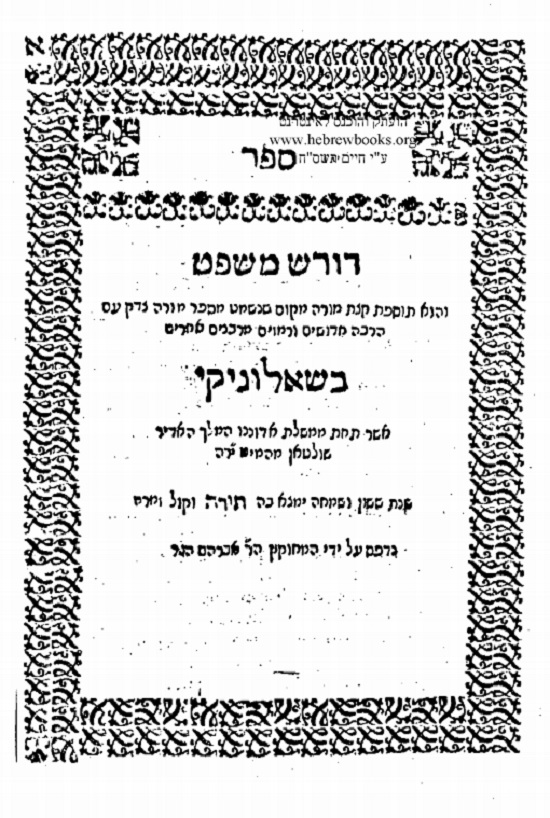
  1. I am aware of two seforim found on both Otzar haHochma and Hebrewbooks.org which were written by men who later apostatized (there are probably more). There are also two seforim on Hebrewbooks.org which were written by someone afterhe apostatized. I realize that after this post appears it is possible that the books mentioned will be removed from Otzar haHochma and Hebrewbooks.org (as has happened in the past with problematic books that I called attention to). I am therefore providing links so that readers can access the books even if they are removed.

The first book by someone who later apostatized is Solomon Florentin’s Doresh Mishpat, published in Salonika in 1655. As mentioned, appears on both hebrewbooks.org and Otzar haHochma.

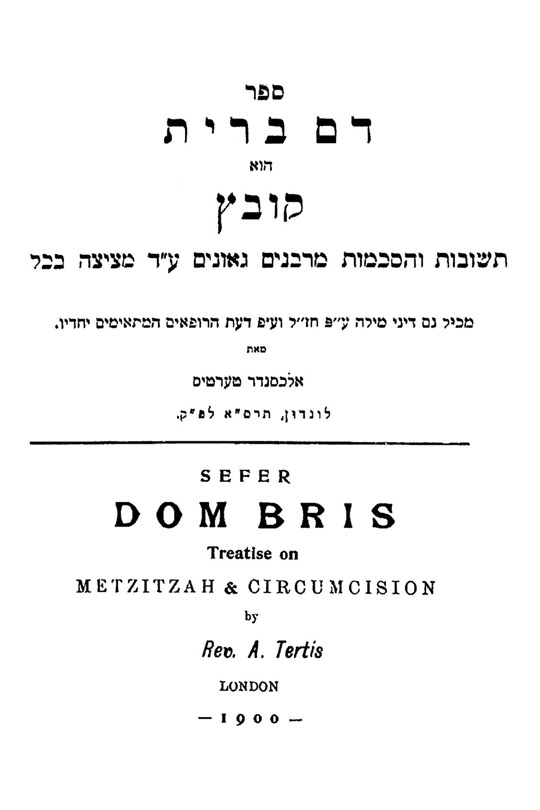
Here is the title page.


You can view the entire book here here.

Florentin was a follower of Shabbetai Zvi and was one of the group of Salonikan Jews who converted to Islam following Shabbetai Zvi’s own conversion.[1]

The second future apostate whose book appears on Hebrewbooks.org and Otzar haHochma is Aaron Israel Briman. He wrote Avnei Zikaron, which was published in Amsterdam around 1880.[2] Here is the title page.


You can view the entire book here here.

Briman, who appears to have been an ordained rabbi, was a real scoundrel. After his apostasy, which seems to have been done completely for monetary reasons, he wrote the infamous anti-Semitic work Der Judenspiegel and assisted the anti-Semite August Rohling in his attacks against the Talmud and Judaism in general.[3]  He also abandoned his wife and two small children, leaving his wife an agunah. After becoming a Christian, he engaged in various monetary frauds which landed him in prison. According to the article here in the Jewish Encyclopedia, he studied in the Rabbinical Seminary of Berlin, a point confirmed by Gotthard Deutsch.[4]

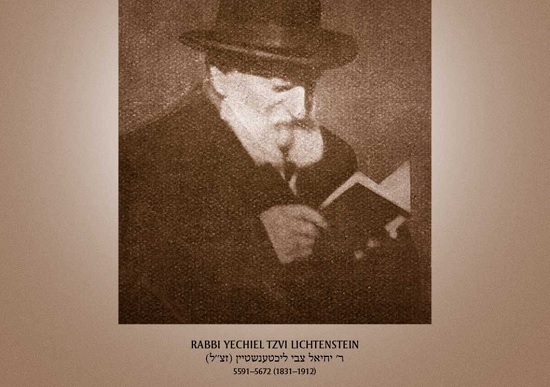
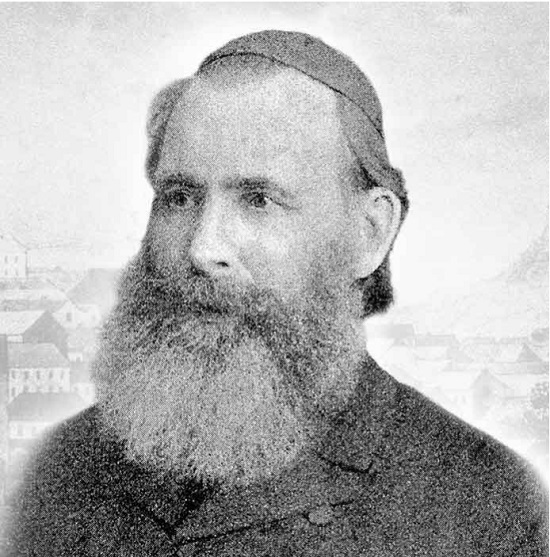
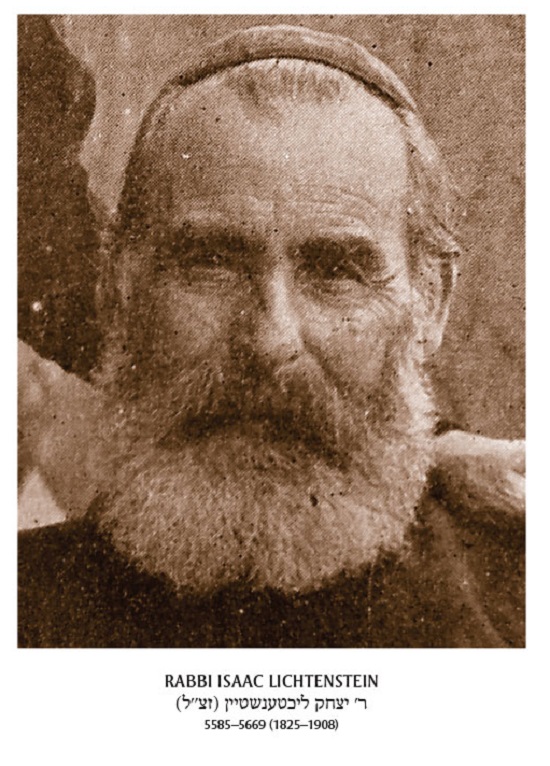
As for seforim written by someone after he converted, this brings us to Jehiel Zvi Lichtenstein (1827-1912; in his earlier years the last name he used was Hirschensohn, and I don’t know why he changed it). Detailed biographical information about Lichtenstein can be found in a good article by Samuel Leib Zitron included in volume 2 of his Me-Ahorei ha-Pargod: Mumarim, Bogdim, Mitkaḥashim that fortunately is also found online here. There is, however, no scholarly article on the writings of Lichtenstein, and although he was infamous in his day, today he is almost entirely forgotten.[5]

Lichtenstein was born in Bessarabia and was already an accomplished scholar as a young man. He was married at 18 to the daughter of a wealthy man, and he could have entered the rabbinate like so many others in his position. Yet as described by Zitron (and it appears that his description has been livened up, so it is not always clear if the facts are correct), various circumstances led him to divorce his wife, abandon his home, and convert to Christianity and become an enthusiastic missionary. Incredibly, even after converting to Christianity he continued to live as a Jew, moving to the town of Lubavitch where by all outward appearances he was a hasid of the Lubavitcher Rebbe.

Following this he went to Berlin where he was an open missionary. He then returned to Russia where he married the sister of the well-known Jewish-Christian missionary, Joseph Rabinowitz. In 1995 Kai Kjaer-Hansen published the English version of his book on Rabinowitz,[6] referring to him on the book’s cover and title page as the “Herzl of Jewish Christianity.”[7]

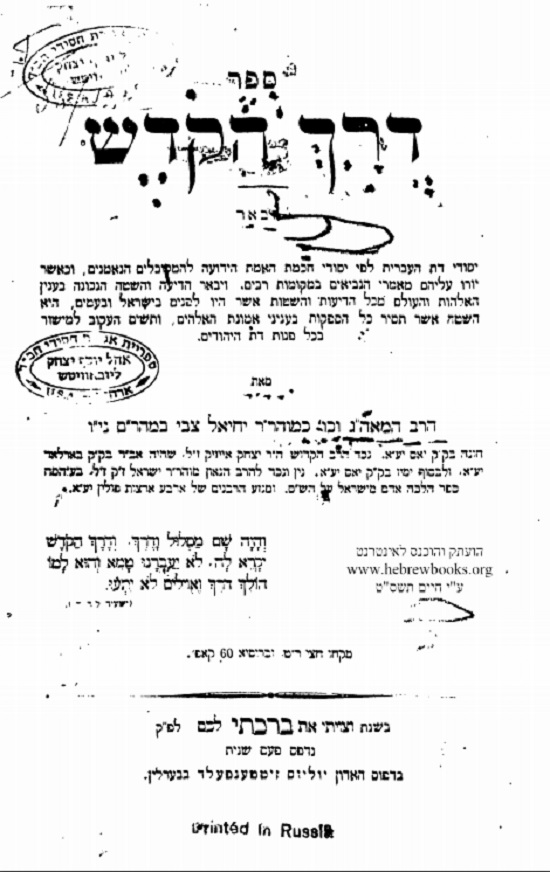
In 1872, after his apostasy, Lichtenstein published his book Derekh ha-Kodesh. The book was published in Berlin. I don’t know why the title page says it was printed in Russia, though this probably has something to do with taxes or customs for books sent to foreign countries.

As you can see, this is the second printing and Lichtenstein gave himself a fancy rabbinic title. I have never seen a copy of the first printing, but Ephraim Deinard states that Lichtenstein’s name did not appear on the title page of this edition.[8]

Zitron tells us that Lichtenstein returned to his hometown where he distributed Derekh ha-Kodesh among the local Hasidim. The book reads like a real rabbinic text, and on the very first page he cites both the Baal Shem Tov and R. Shneur Zalman of Liady, and he continues to cite R. Shneur Zalman constantly in the book. It is obvious from what he writes elsewhere that he pretended to be a Chabad hasid. Thus, in his self-defense published in Ha-Magid [9], when he was still pretending to be a faithful Jew, he mentions that he had lived in the town of Lubavitch. In seeking to defend Derekh ha-Kodesh from the accusation that it had Christian elements, he calls for it to be examined by leading Chabad rabbis to see if there is anything problematic in the book.

.ואקרא לשופטי צדק את רבני חב”ד הגדולים אשר ירדו לעמקי הלכה של הקבלה והחסידות הדבקים באלהים חיים המה יאמרו אם עולתה בו

His call was taken up by Jacob Solomon Alschwang who claimed to have a lot of knowledge in Kabbalah and hasidic thought, “like one of the great Chabad rabbis.”[10]  I am sure that this self-judgment contains a good deal of exaggeration, yet Alschwang did come from a Chabad background and received a traditional Chabad education before leaving that world for the world of Haskalah.[11]

Alschwang identifies a number of passages in the book which he thinks are evidence of the author’s Christian sentiments.[12] Experts in Kabbalah and Hasidism can weigh in on whether Alschwang is correct or if the passages he points to can also be supported by classic kabbalistic or hasidic texts.

One of the passages Alschwang points to is on p. 68, which according to Alschwang means that Lichtenstein is speaking of God taking physical form on earth.

וע”ז נא’ עיני ה’ המה משוטטים בכל הארץ (זכריה ד, י) שענין משוטטים היינו שמתפשטים ומתלבשים בכל הארץ, והש”י משגיח בארץ ע”י שמתלבש בהם כי המה הם כלים רוחניים שהאציל וברא להשתמש בהם, והם מתפשטים ומתלבשים בתחתונים, והמה כמו העינים אל [של] האדם שהאדם יביט בהם והשכל מתלבש בהם לראות, וכן הוא הענין באזני ה

So, what do readers think? Does this passage speak of God literally assuming some bodily form? Furthermore, can we find similar passages in standard kabbalistic texts?

Alschwang also calls attention to Derekh ha-Kodesh, p. 42, where Lichtenstein states that God will appear to prophets in a physical form. Although Lichtenstein adds that God does not really take physical form, but only appears this way, Alschwang sees this as an example of Lichtenstein is trying to push a Christian notion. I guess the idea would be to first get Jews used to the notion that God can be imagined looking like a human, and the next step is to identify a real flesh and blood human as God. Here are Lichtenstein’s words:

כי העולם הזה בכללו הוא אלהות גמור מצד שאינו נראה לנו, אך לעינינו עשה האלהים על עצמו גילוי וצורה ויתחפש בדמות גשמי (זיך זעלבסט ענטשטעלט) אשר הנבראים ישיגו בחושיהם הגשמיים (אשר גם הם רק לעיניהם) דמות וצורה גשמית ארבע יסודות ומורכביהם, דומם צומח חי מדבר וכו’, אולם לעומת הש”י הכל אלהות גמור ואין פה גילוי ודמות גשמי ומהות כלל

Alschwang also notes that on page 7 Lichtenstein makes use of the famous expression from Matthew 19:24, “It is easier for a camel to go through the eye of a needle,” which is not what one would expect to find in a rabbinic text.

At one time in his strange life, Lichtenstein actually began serving as a hasidic rebbe of sorts, praying for people and handing out amulets. Ephraim Deinard, who knew Lichtenstein from the latter’s missionary days in Berlin in the 1870s,[13] claims that it was he who exposed Lichtenstein as a fraud. He happened to be in Lichtenstein’s town on a business trip in 1879, and that is how the townspeople learned that the supposedly pious rebbe was actually a Christian missionary.[14] Even after being exposed Lichtenstein did not give up, and a few years later he was in Podolia serving as a rabbi![15]

Derekh ha-Kodesh is only found on hebrewbooks.org, not on Otzar haHochma. You can view it here. The copy on hebrewbooks.org is missing the second half of the book. It appears that not all printings of the book contained the second part which includes a commentary on various biblical passages. (Alschwang mentions that his copy only had 84 pages, which means that it also was missing the second half.). Here is the copy which is found at Harvard, which is almost twice as long as the copy on hebrewbooks.org.[16] Interestingly, in the copy found on hebrewbooks.org (and also in the complete Harvard copy), on the second page, there are corrections applicable to the missing second half of the book. Also of note is at the bottom of this page of corrections it states that the haskamot for the book were published in the first printing. As far as I can determine, no copies of this first printing have survived.

Zitron tells us that in 1882 Lichtenstein came to Odessa with the manuscript of his book, Sheva Hokhmot. He received haskamot for the book from rabbis and maskilim. Here is the title page of the London 1912 edition of Sheva Hokhmot and you can view the book here.[17]

This is a very helpful work which in alphabetical fashion discusses all the geographical sites mentioned in the Talmud and Midrash.[18] The book previously appeared in Lemberg in 1883 and can be viewed here. The title page of the Lemberg edition mentions that Lichtenstein wrote the responsa volume Keren ha-Tzvi and the book Megaleh Sod. While Keren ha-Tzvi never appeared, Megaleh Sod, which is a commentary on the Bible, was published in Budapest in 1906 and can be viewed here. It is incredible that an apostate would write such a commentary which on its face looks like any other traditional commentary. (I haven’t read it carefully to see if he also inserts Christian interpretations.)

The actual text of both editions of Sheva Hokhmot is the same, but there are some differences between the prefaces of the two volumes. In the first edition the preface is longer, contains some notes, and also includes a list of the rabbis and scholars who prepaid for the book. In the London edition, Lichtenstein included a passage from R. Aaron Hyman’s Toledot Tannaim ve-Amoraim (London, 1910), vol. 1, p. 15, which greatly praises the book and the author, with Hyman saying that Lichtenstein is “wise in the wisdom of the Torah.” Hyman obviously must have been unaware of who Lichtenstein was.

That people did not realize who Lichtenstein was explains how a copy of Derekh ha-Kodesh was bound with regular traditional seforim (including R. Moses Cordovero’s Tomer Devorah), as seen in a recent auction here.[19]

As you can see from the title pages of Derekh ha-Kodesh and Sheva Hokhmot, both of these books, now found on hebrewbooks.org, came from the Library of Agudas Chassidei Chabad.[20] You can also see from the title page of Sheva Hokhmot that, before it was acquired by the Library of Agudas Chassidei Chabad, it belonged to the great scholar Jacob Zallel Lauterbach.

With reference to Lichtenstein, Steven J. Zipperstein writes as follows:

His Sheva Hokhmot [The Seven Wisdoms] was introduced by letters of praise from important scholars such as Mattityahu Strashun, Samuel Joseph Fuenn, and others, though the book appeared three years after Lichtenstein was first denounced as a missionary (by the rather mercurial and widely disliked Ephraim Deinard) in the newspaper Ha-Maggid.[21]

Zipperstein’s information about the letters in Sheva Hokhmot comes from Zitron, who also claims that these haskamot were forged by Lichtenstein. Yet there are no such haskamot from these figures, forged or otherwise. In the 1883 edition of the book, p. 6, we are given a list of people who wrote haskamot and letters of praise (including R. Joseph Dov Soloveitchik, the Beit ha-Levi), but these were never published, not even in the 1912 edition. I have no reason to doubt that these haskamot and letters of praise were authentic, otherwise how could he have publicly announced in the various authors’ lifetimes that he received letters from them? However, these letters were also written before news of his apostasy was known.

What makes Derekh ha-Kodesh and Sheva Hokhmot so interesting is that they were both written after Lichtenstein had become a Christian, something you would never know from the title pages. I don’t know of any other such books, namely, seforim written in a rabbinic style by someone who had already converted to Christianity.

This is a picture of Lichtenstein that I found on a Messianic Jewish website here.


Here is the title page of Lichtenstein’s Hizuk Emunat Emet bi-Yeshua Mashiah ben ha-Elohim.[22]


You can find the entire book here. The author is listed as אבן צהר, which is simply the Hebrew translation of the name Lichtenstein. Also, צהר is the abbreviation of צבי הירשנזון, the birth name of the author.[23]

Lichtenstein also wrote a multi-volume Hebrew commentary on the New Testament, which you can see here. The commentary is preceded by a helpful article on Lichtenstein by Jorge Quiñónez. Lichtenstein’s revised commentary on Matthew can be seen here.[24]

There is an entry on Lichtenstein in Zalmen Reyzen’s Yiddish Lexicon.[25] Yet one of the sources in the bibliography is about Isaac Lichtenstein. This Lichtenstein is often confused with Jehiel Zvi Lichtenstein whom we have been discussing. However, they were two separate people, and Isaac Lichtenstein (1824-1908), who was actually a rabbi, was also a believer in Jesus (although it is reported that he never actually converted to Christianity).

This is his picture taken from here.

The following picture comes from here

There was another Chabad hasid, Israel Landau, who converted to Christianity and became the chief Russian censor. In Ruth Bachi-Kolodny’s article about him, entitled “The Chabadnik Who Became Czarist Russia’s Chief Censor for Jewish Writings,” available here, he is even referred to as a rabbi, but this is certainly not correct, and the description of him as a rabbi does not appear in the original Hebrew version of the article here. The article states:

Although he became an apostate Jew, he remained, deep in his heart, a devoutly religious Hasid and continued to look the part with his short trimmed beard, earlocks, skullcap and long, broad kapota ‏(the long black jacket of members of Chabad‏); he would eat only in kosher restaurants. In fact, Landau sent his wife and only daughter, Menuha, to Switzerland so they could live as Jews without any external hindrances.[26]

Ben Zion Dinur, who was from a Chabad family, mentions that it was jokingly said about Landau that even after apostatizing he still kept the holiday of 19 Kislev.[27] As for Landau’s wife and daughter, Ephraim Deinard, who knew Landau, states that they left Russia because they did not want to convert, not because Landau sent them out.[28]

My experience has been that as soon as I publish something, I find more relevant material and wish I could go back in time to include it in the publication. Fortunately, with the Seforim Blog I am able to update my writings. Not long ago I published Iggerot Malkhei Rabbanan. On pp. 300-301, R. Meir Mazuz writes that he read in Yated Ne’eman that the apostate Russian censor removed two lines from Bialik’s poem about the Kishinev pogrom of 1903, “In the City of Slaughter,” because he found them heretical and did not want to lose his share in the World to Come! I was not aware of this story but I looked at the poem and immediately identified what these two lines must be. In fact, as I only learned after the book was published, it was actually the following four lines that were deleted, and the censor who was responsible for this was none other than Landau.[29]

,סִלְחוּ לִי, עֲלוּבֵי עוֹלָם, אֱלֹהֵיכֶם עָנִי כְמוֹתְכֶם
עָנִי הוּא בְחַיֵּיכֶם וְקַל וָחֹמֶר בְּמוֹתְכֶם
–כִּי תָבֹאוּ מָחָר עַל-שְׂכַרְכֶם וּדְפַקְתֶּם עַל-דְּלָתָי
!אֶפְתְּחָה לָכֶם, בֹּאוּ וּרְאוּ: יָרַדְתִּי מִנְּכָסָי

Forgive me, beggars of the world, your God is as poor as you,
Poor he is in your living and so much more so in your deaths.
And if you come tomorrow for your due and knock on my doors—
I’ll open for you, come and look: I’ve gone down in the world.[30]

The story of the censorship is told by Benzion Katz in his memoir, in a chapter that deserves to be translated into English.[31] Katz was the founder and editor of the newspaper Ha-Zeman, where Bialik’s poem appeared. If you look in Ha-Zeman you will find that the title of the poem was changed to “Masa Nemirov”, and a note informs the reader of the infamous 1648 massacre in Nemirov. As Katz explains, this new title was suggested by Landau, who was willing to look the other way if Bialik and Katz would pretend that the words were not about the 1903 Kishinev pogrom but about another event 250 years prior.

As for the censorship of the lines mentioned above, Katz writes as follows (p. 135):

כשהיה הכל מוכן נתתי לו לקרוא את השירה. הכל נראה לו כשר, חוץ מנקודות אחדות, שלדעתו התריס שם ביאליק נגד א-לוהים. אין הוא יכול להרשות זאת – אמר הצנזור המומר. – בשביל הממשלה ימצא תמיד תירוץ אבל לא בשביל רבונו של עולם. “אינני צעיר ואצטרך לתת דין וחשבון בעולם הבא. אינני רוצה להפסיד את חלקי בעולם הבא”

Landau would not permit some lines to appear in the poem as he did not want to lose his share in the World to Come. Bialik wrote to the censor to defend himself and the censor replied as follows (as summarized by Katz, p. 135), pointing out among other things that Bialik had misunderstood the Zohar :

הוא הצעיר, אף על פי שהוא משורר גדול, מביא לי ראיות מן הזוהר הקדוש, שבו יש ביטויים שהם כביכול גם כן עלבון לקדוש ברוך הוא, אבל אלה אינם עלבונות אלא ביטויי צער וזעם. אני בקי בזוהר. אני לומד אותו יותר ממנו. אני הרשיתי להדפיס את הזוהר מה שלא הרשו הצנזורים הקודמים. היו מביאים את הספר בגניבה מחוץ לארץ. נגד א-לוהים אי אפשר לעשות כלום

All this goes to show that while you can take the Jew out of the shtetl, often (even with apostates) you can’t take the shtetl out of the Jew.

To be continued

  1. I want to call attention to four recent valuable books. The first is Mitchell First, Roots and Rituals: Insights into Hebrew, Holidays, andHistory. This book is full of interesting chapters on liturgy, history, holidays, and the Hebrew language. If, like me, you have enjoyed First’s posts on the Seforim Blog, then his latest book will be a treat.

The second book is Bezalel Naor’s translation of R. Kook’s Commentary to the Legends of Rabbah bar Hannah. This book only further solidifies Naor’s standing as the leading interpreter of R. Kook in the English language. In addition to extensive notes, Naor also includes 11 appendices which include such topics such as R. Kook’s critique of the Mussar Movement and R. Kook and the Dybbuk in Jaffa.

The third book is a joint effort by the eminent scholars Menachem Kellner and James Diamond. Its title is Reinventing Maimonides in Contemporary Jewish Thought, published by my favorite press, Littman Library. This is a collection of articles by Kellner and Diamond which focus on various important Torah scholars and their understanding of Maimonides.

Here is the table of contents.

Anyone interested in nineteenth- and twentieth-century rabbinic thinkers will find this work of value.

The fourth book is Yitz Greenberg and Modern Orthodoxy: The Road Not Taken, edited by Adam Ferziger, Miri Freud-Kandel, Steven Bayme. This book, which is full of great essays, is available in paperback here, and this is the table of contents.


  1. R. Yissachar Dov Hoffman was kind enough to send me this picture of R. Joseph B. Soloveitchik and R. Ovadiah Yosef from April 25, 1974.[32]

My question to readers is, can anyone identify the three young men standing behind the rabbis?

  1. Anyone interested in my summer 2020 trips with Torah in Motion can find details here.
  2. For those in the New York area, I will be speaking at Young Israel-Beth El of Boro Park (4802 15thAvenue, Brooklyn) on Saturday night, December 21 at 8pm. The title of my talk is “Judaism and Islam: Some Halakhic and Historical Perspectives”.

[1] See Meir Benayahu, Ha-Tenuah ha-Shabta’it be-Yavan (Jerusalem, 1971-1978), pp. 35-36.
[2] Regarding Briman and his book, which is actually a complete plagiarism – the entire book lifted word for word from R. Abraham Wallerstein, Mahazeh Avraham, found in Wallerstein’s Ma’amar Avraham (Fuerth, 1757) – see Shmuel Ashkenazi, Asufah (Jerusalem, 2014), pp 53-55.
[3] See Joseph Samuel Bloch, Zikhronot Mimei Hayai, trans. S. Shalom, (Tel Aviv, n. d), vol. 1, pp. 84ff.
[4] See his letter in the Jewish Chronicle, June 26, 1914, conveniently posted in On the Main Line here. See also On the Main Line here for a fascinating post dealing with another apostate who appears to have been a rabbi.

For detailed discussions of Briman, see Samuel Leib Zitron’s article from volume 2 of his Me-Ahorei ha-Pargod: Mumarim, Bogdim, Mitkaḥashim, available here; Joseph Samuel Bloch, Zikhronot mimei Hayai (Tel Aviv, n.d.), vol. 1, pp 81ff.; Ha-Melitz, April 24, 1885, cols. 440-441. For numerous contemporary references to Briman, see Jonatan Meir, Literary Hasidism: The Life and Works of Michael Levi Rodkinson, trans. Jeffrey G. Amshalem (Syracuse, 2016), p. 167 n. 201. Unfortunately, Meir, p. 169 n. 214, cites Chaim Bloch – about whom I have a written a good deal on this blog – without realizing that none of the unpublished material Bloch claimed to possess can be assumed to be authentic. Regarding Bloch, see also Tesla Lee’s 2016 honors thesis at the University of North Carolina at Chapel Hill, “Sigmund Freud and Chajim Bloch: Exploring the Role of the Jewish Joke in European Jewish Identity,” available here. On pp. 5-6, Lee mentions another fabrication by Bloch. Bloch describes how he offered Freud his criticisms of Moses and Monotheism, yet we know that Freud did not begin working on this book until years after Bloch’s supposed conversation with him. For a recent discussion of Bloch and his role in popularizing the Golem story, see Samuel Jacob Spinner, “Jews behind Glass: The Ethnographic Impulse in German-Jewish and Yiddish Literature, 1900-1948” (unpublished doctoral dissertation, Columbia University, 2012) pp. 89ff.
[5] The biographical information I provide about Lichtenstein comes from Zitron. Here is what the Encyclopaedia Judaica, s.v. Hirschensohn-Lichtenstein, Jehiel Zevi Hermann, writes:

Born in Russia, he converted to Christianity in 1855 in Jassy, Rumania, but keeping this secret he spent some time among the Hasidim of Lubavitch and worked on his Derekh ha-Kodesh (“The Way of Holiness,” 1872), which deals with the fundamentals of the Jewish faith, but betrays the authors Christianizing tendencies. From 1868-1878 he worked, under the name of Hermann Lichtenstein, for the Protestant mission in Berlin. He then returned to Russia where, disguised as a hasidic rabbi, he distributed his book. He married in Kishinev, Moldavia, a sister of Joseph Rabinovich, who later, probably under Hirschensohn’s influence, founded the sect called Community of Evangelian Jews. His true character discovered, he had to leave Russia and became lecturer at Franz Delitzsch’s Institutum Judaicaum at Leipzig.

[6] Joseph Rabinowitz and the Messianic Movement (Edinburgh, 1995).
[7] This title was earlier given to Rabinowitz by Hugh J. Schonfield, The History of Jewish Christianity p. 5, available here.
[8] Zikhronot Bat Ami (St. Louis, 1920), vol. 2, p. 134.
[9] Ha-Magid, May 7, 1885, p. 144.
[10] Ha-Magid, June 25, 1885, pp. 208-209.
[11] See his autobiography in Sefer Zikaron le-Sofrei Yisrael ha-Hayyim Itanu ka-Yom (Warsaw, 1889), pp. 203ff, available here. He wrote under the pseudonym ישביאל. See Saul Chajes, Otzar Beduyei ha-Shem (Vienna, 1933), p. 173. The title of the book mentioned at the beginning of this note is of interest, as it is a “memorial volume” for living writers. Today I think we would only use the words “Sefer Zikaron” for people who are deceased. It is also of interest that in the past there were writers who used ז”ל either as זכרונו לברכה or זכור לטוב for living people. See Tovia Preschel, Ma’amrei Tuvyah, vol. 1, pp. 35, 324-325, vol. 4, p. 418.

In 1878, R. Isaac Moses Abulafia published his Lev Nishbar. Here is the title page.

This book is a defense of his halakhic rulings in his responsa Penei Yitzhak against the blistering criticisms of R. Solomon Moses Gaguine in his Yismah Levav. Of interest at present is Lev Nishbar, no. 3 (p. 12b). R. Abulafia notes that R. Gaguine refers to him with ז”ל after his name, and he is certain that this was not done in accord with the view mentioned above that ז”ל can be used even with living people. Rather, he sees this as an intentional insult, and as he puts it, כונתו לרעה. This might mean that he believes that R. Gaguine, by using ז”ל after his name, is hoping for his death.

והן עתה הביאני חדריו וכתב עלי תיבת ז”ל כנז”ל וה’ יודע ועד עליו אם כונתו לרעה עלי והלב יודע אם לעקל וכו’ ועכ”פ מדקפיד בכל דוכתא ודוכתא אך בחלקות ישית להבדיל בין המתים ובין החיים בתיבת ז”ל ונר”ו כנז”ל ומדשינה עתה הפעם לכתוב עלי ז”ל במקום נר”ו הא ודאי דקפידה הוי וכונתו לרעה ב”מ

See also what R. Abulafia writes in his introduction and the first page of the opening responsum, where you can see that he is not inclined to be generous in his interpretation of R. Gaguine’s intent.

Regarding the dispute between Rabbis Abulafia and Gaguin, see Yaron Haarel, “Hashpa’atam shel ha-Sefarim Penei Yitzhak, Yismah Lev ve-Lev Nishbar al ha-Ma’avak Saviv ha-Rabanut be-Damesek,” Asuput 11 (1998), pp. 211-243.
[12] That the book contains hints to Lichtenstein’s belief in Jesus is also stated by Samuel Shraga Feigensohn, Elbonah Shel Torah (Berlin, 1929), p. 28b.
[13] Deinard, Zikhronot Bat Ami (New Orleans, 1920), vol. 2, p. 133.
[14] Ha-Magid, April 9, 1885, p. 112. See here that in his later years, Lichtenstein’s Christian missionary students would call him “Rebbe”. This source describes Lichtenstein as serving as a hasidic rebbe before adopting Christianity, but that is not correct.
[15] Deinard in Ha-Magid, April 9, 1885, p. 112. Deinard, Zikhronot Bat Ami, vol. 2, p. 137, reports that Lichtenstein served as a rabbi in Hungary. In Tzelem ba-Heikhal (New Orleans, n.d.), p. 143, Deinard writes that he was a rabbi for a short time in a town in the Austrian empire. Feigensohn, Elbonah Shel Torah, p. 28b, states that he served as the rabbi in a town in Volhynia for eight years, but there is no evidence to support this statement
[16] See Jacob Solomon Alschwang, Ha-Magid, June 25, 1885, p. 209, that David Kahana had additional pages from the book which are missing from the Harvard copy. These pages, from a section entitled Even Bohan, are explicitly Christian, as they cite Jesus and Paul, and this is no doubt why they were removed. In what looks like a defense of Even Bohan, Lichtenstein, Derekh ha-Kodesh, p. 83 in the note, states that this section was written for Christians and Muslims and deals with the Noahide laws. This is, of course, not believable, as Christians and Muslims would not be reading his Hebrew work.
[17] Deinard, Zikhronot Bat Ami, vol. 2, p. 137, claims that it was actually printed in Eastern Europe, but R. Mazin in London bought the entire printing and put a new title page on the book.
[18] The title “Seven Wisdoms” is strange as it is really not relevant to the subject of the book. Regarding the “Seven Wisdoms,” see Harry Austryn Wolfson, Studies in the History of Philosophy and Religion (Cambridge, MA, 1973), vol. 1, pp. 507ff. Abarbanel, Commentary to Exodus, ch. 25, p. 253, writes:

שבעת הנרות שבמנורה רומזים אל שבע החכמות שכלם ימצאו בתורת הא-להים

[19] In my post here, I briefly discussed the apostate Paul Levertoff. I neglected to mention that before he converted, Levertoff, whose Jewish first name was Feivel, was one of the future historian Ben Zion Dinur’s teachers in heder. See Dinur, Be-Olam she-Shaka (Jerusalem, 1958), p. 26.
[20] This library has a number of heretical books, and R. Joseph Isaac Schneersohn’s earlier collection also contained books of this sort. R. Menachem Mendel Schneerson stated:

When I came to Leningrad, I was surprised to find various [anti-religious] books in my father-in-law’s library. . . . The reason, obviously, was . . . the library attracted non-religious Jews, and even Gentiles. In the meantime, they saw what Lubavitch was and that it shares knowledge, and were drawn to it as a result. This created the opportunity to speak with non-Jews about justice, honesty, and humanity, the Seven Noahide Laws, etc. The benefit was quite evident.

On another occasion, the Rebbe explained that his father-in-law needed such books, for “such things are also necessary for good purposes, as the Mishnah [Avot 2:14] states, ‘Know what to answer a heretic.’” Both of these passages appear in R. Baruch Oberlander’s and R. Elchanan Shmotkin’s beautifully produced work on the Rebbe, Early Years (Brooklyn, 2016), pp. 167, 168.

Ephraim Deinard, Zikhronot Bat Ami, vol. 2, p. 7, reports, as an eye-witness, that R. Shmuel Schneersohn read Haskalah works before he became rebbe of Lubavitch. It is hard to know whether Deinard is to be regarded as reliable in this matter as his antipathy to Chabad is apparent throughout his writings. See especially ibid., p. 16, where among other things he states:

.החסידים היותר רעים ומסוכנים לתורת ישראל, המה חסידי חב”ד

Deinard even falsely claims, ibid., p. 8, that the responsa of R. Menahem Mendel Schneersohn, the Tzemah Tzedek, were really written by R. Hayyim Jacob Widerwitz. In Chabad texts, R. Widerwitz is referred to as the editor of the Tzemah Tzedek’s responsa. See R. Shalom Duber Levin, Toldot Habad be-Artzot ha-Berit (Brooklyn, 1988), p. 3.
[21] “Heresy, Apostasy, and the Transformation of Joseph Rabinovich,” in Todd M. Endelman, ed., Jewish Apostasy in the Modern World (New York, 1987), p. 213. Contrary to what Zipperstein states, Sheva Hokhmot was published in 1883, and only in 1885 did Deinard denounce Lichtenstein. This information appears correctly in Zitron.
[22] The book can be seen here, along with two other Christian works by Lichtenstein and an obituary of him.
[23] See Zitron here.
[24] For more on Lichtenstein, see Ephraim Deinard, Ha-Magid, April 9, 1885, p. 112; Isaac Jacob Weissberg, Ha-Melitz, May 11, 1885, pp. 515-516; Deinard, Ha-Melitz, May 29, 1885, cols. 580-581; S. Mandelkern, Ha-Magid, June 11, 1885, pp. 190-192. See also David Assaf, Hetzitz ve-Lo Nifga (Haifa, 2012), pp. 75-76.
[25] Leḳsiḳon fun der Yidisher liṭeraṭur, prese un filologye (Vilna, 1927), vol. 2, cols. 151-154, available here. An abridged entry is found in the later edition of Reyzen’s lexicon, and you can see an English translation here.
[26] I should note that not everything Bachi-Kolodny cites from Benzion Katz’s memoir, Zikhronot (Tel Aviv, 1963), actually appears there. She also writes: “Interior Minister Vyacheslav Konstantinovich von Plehve issued orders that a pogrom be carried out in Kishinev ‏(now Chisinau, Moldova‏) in April 1903, on Passover, to expedite the Jews’ exit.” This is incorrect, as no such orders were ever issued by the unquestionably anti-Semitic Plehve. See Steven J. Zipperstein, Pogrom: Kishinev and the Tilt of History (New York, 2018), 94ff.
[27] Be-Olam she-Shaka, p. 13. Incidentally, Dinur tells us, pp. 17-18, that in his Chabad home in Russia they drank milk that came from non-Jews, rather than halav yisrael. This is what he writes about his father, who was a real Torah scholar.

זכורני, פעם אחת בא הביתה ואמר לאמא: היתה לי היום עגמת נפש מזה שאת משתמשת בחלב של לא-יהודים. תמהה אמא ושאלה: מאין יודעים? אמר אבא: אני סיפרתי את הדבר. התפלאה אמא: מה ראית להודיע ברבים? אמר: פשוט, התקיפו בבית-המדרש את דוד המלמד, שהוא משתמש בחלב נכרים, והלבינו את פניו. קמתי ואמרתי: מה אתם רוצים ממנו, גם אצלי נוהגים כך! ך

This is significant testimony, as it is well known how seriously Chabad hasidim regard this matter. There is even a story about how a big scholar who came to R. Shneur Zalman of Lyady was suffering from religious doubts. R. Shneur Zalman recognized that these doubts came about because the man had inadvertently drunk non-halav Yisrael milk. See R. Joseph Isaac Schneersohn, Sefer ha-Ma’amarim 5701-5705 (Brooklyn, 2012), Hebrew version, pp. 76-77.
[28] Deinard, Tzelem ba-Heikhal, p. 169. See also Deinard, Shibolim Bodedot (Jerusalem, 1915), pp. 58ff, for Deinard’s letter to Landau which among other things urges him to return to Judaism. See ibid., pp. 176-177, for Landau’s revealing letter to Deinard. As far as I know, neither of these letters have been mentioned by scholars who have discussed Landau. They are, however, mentioned here.

Shimon Steinmetz called my attention to a memoir by another former Chabad hasid who became a missionary. See Elieser Bassin, The Modern Hebrew and the Hebrew Christian (London, 1882), available here.
[29] A reproduction of the original publication from Ha-Zeman (July-Sep. 1904), is found in Michael Gluzan, Hannan Hever, and Dan Miron, Be-Ir ha-Haregah – Bikur Meuhar (Tel Aviv, 2005), pp. 158-168.
[30] Songs from Bialik, translated by Atar Hadari (Syracuse, 2000), p. 5.
[31] Zikhronot, ch. 37.
[32] R. Aharon Rakeffet provides another picture from this particular visit of R. Ovadiah. See The Rav: The World of Rabbi Joseph B. Soloveitchik, vol. 2, in the pictures that begin after p. 135, available here. I thank R. Yissachar Dov Hoffman for providing this information as well. He also called my attention to the following additional picture of the Rav and R. Ovadiah from this visit, taken from here.


Hakirah, Metzitzah, and More


Hakirah, Metzitzah
, and More
Marc B. Shapiro

Hakirah has performed a valuable service in dealing forthrightly with the matter of homosexuality. Issue no. 13 (2012) contains R. Chaim Rapoport’s “Judaism and Homosexuality: An Alternative Rabbinic View,” which I think is an outstanding presentation of the alternative to what has seemingly become the “official” haredi position in this matter. This “official” position is, in my opinion, so misguided that I would like to say a few words on the topic, since R. Rapoport did not go far enough in his criticism.
To remind readers, Hakirah no. 12 had a discussion on homosexuality with R. Shmuel Kamenetsky. This was followed by the publication of a document signed by many rabbis which follows R. Kamenetsky’s approach. It is available here. (The document is also signed by an assortment of mental health professionals,  rebbitzens and “community organizers”.)
There are so many problems with the approach found in this document (called a “Torah Declaration”), some already noted by R. Rapoport in his response to R. Kamenetsky, that it would take a lengthy piece to go through them all. Let me just call attention to a few points that I don’t think have been made yet. To begin with, while many rabbis have signed this document, including a number that I know personally, I have yet to speak to someone who actually believes what the document says, and this includes the people who have signed it! Many will regard what I have just said as pretty shocking, in that I have declared that people who signed the document do not believe what it says. Yet I know this to be true, at least with regard to some of the signatories (those that I know personally), and I suspect that other than R. Kamenetsky, it might be that no one who signed the document really believes what it says (and it wouldn’t be the first time that people sign declarations that they really don’t believe in).
Let me explain what I mean. According to the document,
Same-Sex Attractions Can Be Modified And Healed. From a Torah perspective, the question whether homosexual inclinations and behaviors are changeable is extremely relevant. . . . We emphatically reject the notion that a homosexually inclined person cannot overcome his or her inclination and desire. . . . The only viable course of action that is consistent with the Torah is therapy and teshuvah. The therapy consists of reinforcing the natural gender-identity of the individual by helping him or her understand and repair the emotional wounds that led to its disorientation and weakening, thus enabling the resumption and completion of the individual’s emotional development.
The ideas just quoted are the very foundation of the Torah Declaration, and as we see in his Hakirah interview, R. Kamenetsky has been convinced by the dubious proposition that homosexuals can change their sexual orientation. He goes so far as to say that “no one is born gay with an inability to change” (p. 34 [emphasis added]. Not long after the appearance of the interview and the Torah Declaration, the man most prominently identified with the notion that gays can change publicly rejected his earlier viewpoint.)
Whether people can change their sexual orientation is a scientific or psychological issue, no more and no less. The first objectionable point of R. Kamenetsky’s approach is turning this into a matter of theology. Indeed, R. Kamenetsky has created a new dogma in Orthodoxy. According to him, believing that a homosexual can change his orientation is a basic Torah value. The reason for this is stated in the document: “The Torah does not forbid something which is impossible to avoid. Abandoning people to lifelong loneliness and despair by denying all hope of overcoming and healing their same-sex attraction is heartlessly cruel. Such an attitude also violates the biblical prohibition in Vayikra (Leviticus) 19:14 “and you shall not place a stumbling block before the blind.”[1]
There you have it. Human beings are deciding what God can and cannot do and declaring that it is impossible for someone to be created with an inalterable homosexual nature. That this is completely incorrect is acknowledged by none other than the most extreme advocates of reparative therapy. They themselves acknowledge that there is a significant percentage of people who cannot change their orientation. They have never claimed that everyone can change. What the document gives us, therefore, is a theological statement that is rejected by all scientists and psychologists, including the ones who provide the very basis for reparative therapy. That itself should be reason enough to reject it. (On Nov. 29, 2012 the RCA acknowledged “the lack of scientifically rigorous studies that support the effectiveness of therapies to change sexual orientation.” See here.)
This relates to my point above that no one really believes what they signed. To those who doubt what I say, do the following experiment and report back if your results differ. Ask someone who signed the document if he really believes that every homosexual can change his sexual orientation. The answer you will get will be “Of course not everyone. You can never speak about everyone. But many (or most) can change.” In other words, the signatories will acknowledge that they diverge from the document on a basic point. You will have to ask them why they signed a document if they don’t accept everything it says, and the response will probably be that there is much about the document that they do accept, and that is why they signed it. But I repeat my point that this is an unusual document in that I don’t think that there is any signatory, with the possible exception of R. Kamenetsky, who accepts the Torah Declaration on Homosexuality in its entirety.

Furthermore, it is not a “liberal” idea to say that people can’t change their sexual inclinations. By looking at another example we can see that it is indeed nonsense to say that everyone can change their sexual orientation and recreate themselves as typical heterosexuals. There are some men who have strong urges for pedophilia. No matter what they do, and how much therapy they get, they can’t get rid of these urges. (I am obviously not comparing homosexuals with pedophiles, or implying that there is any connection between the two. I am only using the example of pedophiles to make a point.[2]
) If we adopt the theology of the Torah Declaration, it means that even hardened pedophiles, who have abused lots of children, can change, because God wouldn’t create someone without a possibility for a healthy sex life. Yet we know that this isn’t the case, and some people simply can’t change. They might be able to control their urges, but as they have told us again and again, the urges don’t go away. It is hardwired into them. (Is it perhaps the false theological notion expressed in the Torah Declaration that explains why yeshivot continued to allow known pedophiles to work? That is, did the rabbis assume that just because someone sexually abused children last week, there is no reason to think he can’t repent and cease to be a danger this week?)
And what about the people who are created with uncontrollable urges to kill? We know about these people, as they usually become murderers. And what about the people who are created with diseases that kill them before they are able to marry and have children, or the ones created without arms so they can’t wear arm tefillin[3]? In other words, sometimes people are created a certain way and they are not what we regard as normal. That is the world, and we simply can’t understand why things are the way they are. But one thing I would hope that we can agree on is if people can keep their faith in a good God even while knowing that some children are born with terrible illnesses that will cause their death, it certainly should not shake their faith to believe that some people are born with inalterable homosexual urges. A homosexual who can’t be changed hardly presents a challenge to theodicy the way a child with cancer does, so I can only wonder why the Torah Declaration feels that only the former is theologically untenable.
All traditional sources cited in support of the Torah Declaration’s assumption that people can change their orientation only refer to behavior. That is, it is an accepted belief that all people have the ability to control their behavior. Without this belief, the notion of a mitzvah doesn’t make sense. This distinction between orientation and behavior is so obvious that I don’t know how so many learned rabbis overlooked the document’s collapsing the two categories.
The more problematic element of the document, which I have already mentioned and which verges on the blasphemous, is that the Torah Declaration presumes to tell God what he can and cannot do. Based on the human intellects of the authors of the document, they establish as dogma that God would never create someone whose only sexual attraction is to his own gender. This is all very nice, but since when can humans dictate to God what he can and cannot do? If God “wants” to create a person who only has same-sex attraction, He can, and the proper response is silence, since we can’t understand why God would do that. Humans don’t have all the answers, and the Torah Declaration should stop pretending that we do. Whether homosexuality is nature or nurture is something the scientists and psychologists can discuss, but contrary to the document, all of the evidence is that there are plenty of people who cannot be “fixed.”
2. In my last post I mentioned that Agudat Israel has transformed itself into a lobbying organization. One of the areas they have been involved with is metzitzah ba-peh, so let me say a few things about this. It is really incredible how for many the debate around metzitzah ba-peh has become one in which the Modern Orthodox are one side, and the traditionalists on the other. I say this because the truth is that the virtually all of the rabbinic greats of Lithuania approved of metzitzah without oral contact. Alexander Tertis’ Dam Berit is a valuable resource that all interested in this matter must consult. Here is the title page.
On p. 33, R. Shlomo Cohen, the famed dayan of Vilna, says the following about metzitzah, which is very relevant to what we ourselves have seen (namely, the rejection of the firm opinions of countless doctors and scientists on the matter, all in the name of tradition).
דבר הזה אינו שייך לרבנים רק לרופאים המומחים ולכן אין לי מה להשיב על שאלתו
According to R. Shlomo, the question of how to perform metzitzah is entirely a medical issue, and the rabbis therefore have nothing to say on this matter, much like in all other halakhot dealing with medical issues the opinions of the doctors are determinative. (It hardly needs to be said that in matters of pikuah nefesh the opinions of thousands of experts, including the world’s most outstanding authorities, cannot be overruled by one idiosyncratic figure who appears to be motivated by non-scientific concerns.) 
Also of interest is that in 1906 R. Hayyim Ozer Grodzinski reported that in Vilna virtually all of the mohalim did metzitzah with a sponge. He wasn’t happy with this, but this was the reality.[4]
An interesting tidbit regarding metzitzah ba-peh is found in the Taz, Orah Hayyim 584:2. Here he mentions that he heard that R. Feivish of Cracow, when he circumcised on Rosh ha-Shanah, would not clean the blood out of his mouth. Rather, he would blow the shofar with the blood in his mouth so that the mitzvot of milah and shofar were joined.
Finally, for those who want to understand why it was only in the nineteenth century that metzitzah came to be regarded as central to the mitzvah of milah, Jacob Katz’s article “Polmos ha-Metzitzah” in his Ha-Halakhah ba-Metzar is crucial. In short, the centrality of metzitzah, and its description as a basic part of milah, is a product of the Orthodox defense of metzitzah in the face of Reform attacks. I think we are seeing something similar today. The digging in of haredi heels in defense of metzitzah ba-peh, complete with over-the-top rhetoric, is understandable (to a certain extent) and due precisely to the fact that it is an outside force that is threatening the practice. Had their own poskim suggested what the government is now insisting on, we would not have seen the same reaction. Yet it is still difficult for outsiders to grasp why some rabbinic leaders of these communities seem entirely oblivious to any medical dangers associated with the practice,  וסלחת לעונם כי רבנים המה
Let me say a few more things about metzitzah ba-peh. 

1. I saw on one of the blogs (I can’t locate it at present) that someone stated as self-evident that metzitzah ba-peh is only done with babies, not adults. The truth is that while the accepted opinion is indeed that metzitzah ba-peh is only done on babies (and maybe also on older child converts – I haven’t been able to find an answer to that), there are indeed opinions that even adult converts have to have metzitzah ba-peh performed on them. R. Moshe Klein (the son of R. Menasheh), Mishnat ha-Ger, p. 71, states without qualification that a convert has to have metzitzah, and if the mohel is afraid of catching a disease he should inquire of a posek if it can be done without the mouth. However, R. Yitzhak Yosef, Yalkut Yosef, Hilkhot Milah 6:1, rejects this viewpoint and states that there is no metzitzah, ba-peh or otherwise, with an adult convert.

2. According to R. Marcus Horovitz, Mateh Levi, vol. 2, Yoreh Deah no. 60, R. Samson Raphael Hirsch was prepared to accept the government’s abolishment of metzitzah without objection. It is difficult to square this assertion with Hirsch’s writings on the topic that show him as a strong defender of the practice.[5] Is it possible that Horovitz’s comment, meant as a criticism of Hirsch, reflects the difficult relationship these two men had?
3. In Iggerot Moshe, Yoreh Deah I, no. 223, R. Moshe Feinstein, in writing to a hasidic rebbe, expresses the standard viewpoint that metzitzah is only a medical procedure and has nothing to do with the mitzvah of milah. There is nothing surprising here. However, his correspondent had written otherwise, that metzitzah was an essential part of the mitzvah. In response to this, R. Moshe writes: חושב אני שהוא רק פליטת הקולמוס. The language R. Moshe uses implies that he did not know that among the hasidim metzitzah isindeed viewed as part of the mitzvah. Is it possible that R. Moshe was unaware of this? I don’t think so. It would appear, therefore, that the words I just quoted are a polite way of R. Moshe telling his correspondent that “what you wrote is without any substance.”
4. In 1994 R. Schachter’s Nefesh ha-Rav appeared. On p. 243 he states that R. Soloveitchik thought that today there is no need for metzitzah at all, not just metzitzah ba-peh. I remember how shocked I was when I read this, and was certain that it had to be wrong. As far as I know, no Orthodox authority has ever agreed to abandon metzitzah entirely, and I therefore couldn’t believe this report. My doubts were strengthened by the fact that R. Schachter quotes the Tiferet Yisrael as agreeing that metzitzah could be abandoned, when the truth is that the Tiferet YisraelShabbat 19:2, says the exact opposite, that metzitzah must be continued no matter what the doctors say.
As part of this post I wanted to include this page of Nefesh ha-Rav, so I went to Otzar ha-Hokhmah to download a PDF. Here it is.

Lo and behold, the copy on Otzar ha-Hokhmah is the third edition published in 1999, and there is a note on this page in which R. Schachter states that he has been told that what he wrote was incorrect, and that R. Soloveitchik only opposed metzitzah ba-peh. This makes much more sense and is what I assumed all along, so I was happy to see that my suspicions were confirmed.

R. Schachter recently spoke publicly about metzitzah ba-peh, and he is entirely opposed to it.[6] You can listen to his talk here.
Some might be surprised to hear R. Schachter say, after explaining that the Sages followed the most advanced medicine of their times, “When we look back at Chazal, look at medical statements in the Gemara, we laugh. . . . So you look back in the Gemara, it’s ridiculous, but the Gemara, in the days of the Tannaim, they were following the latest information of the doctors of their generation, of the scientists of their generation.”
I have to say, however, that R. Schachter is mistaken in his description of how the Hasidim understand metzitzah ba-peh. He incorrectly assumes that no one really regards it as a basic part of the mitzvah, i.e., halakhah le-Moshe mi-Sinai. “You know and I know and we all know that it is not halakhah le-Moshe mi-Sinai.” He claims that all those who do say it is halakhah le-Moshe mi-Sinai are exaggerating for rhetorical purposes, much like the expression yehareg ve-al yaavor is used for all sorts of things but is not meant to be taken literally. (R. Schachter himself created a good deal of controversy a couple years ago when he said that the refusal to ordain women was a matter of yehareg ve-al yaavor.)
Finally, I would like to make a general statement about how many in the Modern Orthodox world have been relating to metzitzah ba-peh. There is no question that for those in this segment of Orthodoxy, metzitzah ba-peh should not be done, both for medical reasons and also, I have learnt, for aesthetic reasons. With regard to the latter point, there is a sense among many in the Modern Orthodox world, and I myself have heard this and seen it in writing, that metzitzah ba-peh is “disgusting”. I understand that this is how people feel, but it is an improper feeling. Until the nineteenth century, metzitzah ba-peh was universal at every circumcision. How can observant Jews regard a practice that was basic in every Jewish community of the world as “disgusting”? I understand that it doesn’t fit in with today’s aesthetic sense, and that itself is perhaps reason enough for people not to do metzitzah ba-peh. However, everyone should be careful to avoid any denigration of metzitzah ba-peh that does not originate in medical concerns.
Don’t get me wrong, as I don’t mean that every practice that we find in Jewish communities throughout history should get such a “pass”, but here we are talking about a universal practice over thousands of years. It can’t be denied that there were “repulsive” and “gruesome” practices in Jewish communities.[7] Here are two cited by Shlomo Sprecher in his article mentioned in note 6: 1. Barren women would swallow the foreskin of newly circumcised boys as a segulah so that they could become pregnant. 2. Epileptics drank a potion that contained a girl’s first menstrual blood as a segulah to cure them of their epilepsy.[8]
I recently found another bizarre segulah that also falls under the rubric of “repulsive”, and I think that it would probably also be regarded by law enforcement as a form of sexual abuse. It comes from R. Zvi Hirsch Kaidonover (1646-1712), Kav ha-Yashar, ch. 51. For obvious reasons I am not going to translate this into English.
ועוד סגולה נפלאה לתינוק הנולד שלא יקרה עליו חולי נכפה בר מינן, מיד כשנולד ישימו בפיו ברית קודש של תינוק ויהיה ניצול כל ימיו מחולי נכפה
3. Following one of my previous posts I had correspondence with a reader and the discussion turned to the issue of how much of rabbinic literature is inner directed, that is, from intellectuals to other intellectuals.[9] I assume that this was the mindset of the Sages, and this explains some texts that I don’t think would have been recorded had there been an expectation that the masses would ever see them. In particular, I have in mind the talmudic stories that do not reflect well on certain rabbis. If we understand these texts as scholars talking to other scholars, then it makes sense that they would criticize each other, and even make fun of one another.[10] People in a closed community (in this case, the rabbinic elite) converse with one another in a different way than when outsiders are allowed in.[11] The problem is when the masses are studying Talmud, as today, that they have a difficult time with these texts, and Artscroll needs to explain them in an appealing fashion.
Here is one example of the sort of story I am referring to, that I assume was designed for internal consumption only, as it doesn’t reflect well on one of the Sages who is portrayed as being quite rude and insensitive. Taanit 20a-20b:
Our Rabbis have taught: A man should always be gentle as the reed and never unyielding as the cedar. Once R. Eleazar son of R. Simeon was coming from Migdal Gedor, from the house of his teacher, and he was riding leisurely on his ass by the riverside and was feeling happy and elated because he had studied much Torah There chanced to meet him an exceedingly ugly man who greeted him, “Peace be upon you, Sir”. He, however, did not return his salutation but instead said to him, “Raca,1 how ugly you are. Are all your fellow citizens as ugly as you are?” The man replied: “I do not know, but go and tell the craftsman who made me, ‘How ugly is the vessel which you have made’.” When R. Eleazar realized that he had done wrong he dismounted from the ass and prostrated himself before the man and said to him, “I submit myself to you, forgive me”. The man replied: “I will not forgive you until you go to the craftsman who made me and say to him, ‘How ugly is the vessel which you have made’.” He [R. Eleazar] walked behind him until he reached his native city. When his fellow citizens came out to meet him greeting him with the words, “Peace be upon you O Teacher, O Master,” the man asked them, “Whom are you addressing thus”? They replied, “The man who is walking behind you.” Thereupon he exclaimed: “If this man is a teacher, may there not be any more like him in Israel”! The people then asked him: “Why”? He replied: “Such and such a thing has he done to me.” They said to him: “Nevertheless, forgive him, for he is a man greatly learned in the Torah.” The man replied: “For your sakes I will forgive him, but only on the condition that he does not act in the same manner in the future.” Soon after this R. Eleazar son of R. Simeon entered [the Beth Hamidrash] and expounded thus, A man should always be gentle as the reed and let him never be unyielding as the cedar. And for this reason the reed merited that of it should be made a pen for the writing of the Law, Phylacteries and Mezuzoth.[12]
It appears that we see a continuation of this internal conversation in post-talmudic times. For example, I don’t think the rishonim who so harshly criticize their colleagues — I am referring to the colleagues they respected — would speak this way in a derashah before the common man. However, in internal dialogue they exercised more freedom. I think this can also explain the strange way that R. Isaac of Corbeil, the author of Sefer Mitzvot Katan, is referred to. He is called בעל החוטם. According to tradition, he was called this לפי שהיו לו שערות על החוטם.[13] Here too, I think that this was a humorous nickname that his colleagues knew him as, but not something that the average person would be expected to use. (Those who went to BMT will probably recall how various rabbis would speak of “Whitey Horowitz”. I don’t recall students ever referring to R. Moshe Horowitz this way.)  
I came across another example of what appears to be “internal conversation” from modern times that I think readers will find interesting. Both are found in R. Pinchas Miller’s Olamo shel Abba. Miller’s father, R. Asher Anshel Yehudah Miller, was a posek and author of seforim. I can’t imagine that the following comment, cited in the name of R. Shmelke of Nikolsburg, was something Miller, or R. Shmelke, wanted the masses to hear. Rather, I assume that it was an insider’s joke, designed to be shared among colleagues.
Shabbat 118b states that if Israel observes two Sabbaths properly they will immediately be redeemed. R. Shmelke explained that this refers to Shabbat ha-Gadol and Shabbat Shuvah. It is traditional that on these Sabbaths the rabbis give derashot before the community. R. Shmelke added that the rabbis act as if what they are saying is original to themselves, even though they have taken it from others. The Sages say that if you repeat something in the name of one who said it, you bring redemption to the world (Avot 6:6). Based on this text in Avot, R. Shmelke explained the above talmudic passage as follows: “If Israel observes two Sabbaths properly”, that is, if the rabbis who give the derashot on Shabbat ha-Gadol and Shabbat Shuvah (“two Sabbaths”) actually acknowledge where they get their ideas from (“repeat something in the name of one who said it”), “immediately Israel will be redeemed” (p. 501). This is such a provocative text because not only does it accuse the rabbis of plagiarism, but it states that the redemption itself is being delayed because of their behavior. If it was repeated by the masses it would be regarded as terribly degrading of the rabbis, but seen as a somewhat playful “derashah” to be shared among rabbinic colleagues, it loses much of its sharpness.[14]
There is another interesting passage on p. 326, which despite being humorous, I would have also assumed could only be said among colleagues. Yet Miller’s son tells us that his father used to repeat the following in his derashah at weddings: We know that it is a mitzvah to help the bride and groom to rejoice, but the rabbis come to weddings and instead of doing this, they deliver a long derashah and speak words of mussar to the young couple and thus disturb their joy.[15] That is why at the sheva berakhot we state שמח תשמח רעים האהובים כשמחך יצירך בגן עדן מקדם. In other words, we wish the bride and groom that their joy should be complete like the joy Adam felt when Eve was created for him, because in their time, in the Garden of Eden, there were no rabbis around who were able to disturb their joy!
* * * *
4. I want to call attention to a book that has just appeared. Its English title is Jewish Thought and Jewish Belief and it is edited by Daniel J. Lasker. You can read more about it here. It is available for purchase at Bigeleisen.
This is just the latest in a series of valuable books published by Ben Gurion University Press as part of the Goldstein-Goren Library of Jewish Thought. The articles that I think readers of this blog will find particularly interesting are David Stern, “Rabbinics and Jewish Identity: An American Perspective;” David Shatz, “Nothing but the Tuth? Modern Orthodoxy and the Polemical Uses of History,” Baruch J. Schwartz, “Biblical Scholarship’s Contribution to the Concept of Mattan Torah Past and Present;” Menachem Kellner, “Between the Torah of Moses and the Torah of R. Elhanan;” Tovah Ganzel, “‘He who Restrains his Lips is Wise’ (Proverbs 10:19) – Is that Really True?” and the symposium on Jewish thought in Israeli education, with contributions from R Moshe Lichtenstein and Adina Bar Shalom (R. Ovadia Yosef’s daughter).
Here are a few selections from Shatz’s article:
To be clear, academics, I find, generally shun blogs that are aimed at a popular audience because the comments are often, if not generally, uninformed (and nasty). A few academics do read such blogs, but do not look at the comments. One result of academics largely staying out of blog discussions is that non-experts become viewed as experts. Even when academics join the discussion, the democratic atmosphere of the blog world allows non-experts to think of themselves as experts and therefore as equals of the academicians. Some laypersons, though, as I said earlier, are indeeed experts in certain areas of history.
(In this quotation, one could also substitute “rabbis” or perhaps better, “poskim”, for “academics”, and “areas of halakhah” for “areas of history.”) Shatz is specifically speaking about historians, and contrasting experts vs. non-experts in this area. Yet when it comes to the sort of things I often write about here, I can attest that it is usually non-academics who are the real experts. Time and again I am amazed at the vast knowledge of so many of the people who read this blog. As for the general phenomenon of blogs, there are many people who for whatever reason (usually lack of interest, ability, or patience) are not going to write lengthy articles. Yet they often have a great deal to contribute, much of which is very important to the world of scholarship (almost always in terms of uncovering unknown sources and correcting earlier errors, as opposed to offering new interpretations or original theories). Academics ignore this to their own loss.[16]
In my future book I refer to numerous blog posts, and posts from the Seforim Blog have already been mentioned in a number of scholarly publications. My own reason for writing posts is because most of the material I discuss is, I think, interesting and sometimes even important. While this material is often not of the sort that can be included in a typical article, the genre of the blog post suits them just perfectly. Speaking of the Seforim Blog in particular, its readership encompasses a very large percentage of English speaking traditionally learned Jews of all backgrounds, beliefs, and professions (from Reform rabbis to Roshei Yeshiva and poskim, and everything in between). Thanks again are due to Dan Rabinowitz for providing this unique and wonderful platform.
Here are two more quotes from Shatz:
Be the causes what they may, there is an intramural struggle among the Orthodox, a competition for the soul of Orthodox Judaism, and the primary weapon with which it is being waged is history. For Modern Orthodox Jews today, instead of history being a threat to belief, as in earlier periods, it has become a way of arguing for one version of Othodoxy over another. And it is used for polemical purposes far more than philosophy. There are today few Orthodox philosophers, but comparatively many Orthodox academically trained historians.
Can the Modern Orthodox explain why it is admissible for Hummash and the Sages (in aggadot) to write non-accurately and provide inspiration and memory, but inadmissible for those on the right to write in that genre?
My article in Jewish Thought and Jewish Belief is entitled “Is there a ‘Pesak’ for Jewish Thought.” Those who publish know that it is often the case that only after it is too late does one realize that one’s article or book omits something important. Here too that was the case. In the article I discuss Maimonides’ view in Guide 3:17 that there is no punishment without transgression. That is, he rejects the notion of yissurin shel ahavah. I note that Maimonides claims that this is the opinion “of the multitude of our scholars,” and he cites R. Ammi’s opinion in this regard from Shabbat 55a. What is significant is that later in the sugya the Talmud states that R. Ammi’s opinion was refuted. Maimonides ignores this rejection, and even states that R. Ammi’s opinion is the majority view. This illustrates how Maimonides felt free to reject a talmudic viewpoint in a non-halakhic matter, even when it seems that the opinion is deemed authoritative by the Talmud.
What I unfortunately neglected to mention is that in Guide 3:24 Maimonides also deals with yissurin shel ahavah. Here he acknowledges that there are talmudic sages who accept this notion, but he adds that his own opinion, i.e., the rejection of yissurin shel ahavah, “ought to be believed by every adherent of the Law who is endowed with intellect.” In our own language, we might say that this viewpoint should be obvious to anyone with “half a brain.” Yet this is quite a shocking statement when one considers that there were talmudic sages who had a different perspective. Did Maimonides regard them as lacking intellect?
Here is another point I would like to add: In my Limits of Orthodox Theology I argue that it is most unlikely that Maimonides would choose to establish something as a dogma if it was a matter of debate among the Sages. (If establishing dogma was simply part of the halakhic process, this would not be problematic.) I see that R. Shlomo Fisher apparently has the same perspective, as he writes in his Hiddushei Beit Yishai, no. 107 (p. 413):
וגוף הדברים שכתב הרמב”ם בפה”מ ועשאן עיקר גדול תמוהין מאד. חדא, אם הם עיקר גדול היכי פליג עלה ר’ יהודה.
The issue of deciding matters of hashkafah in a halakhic fashion has also recently been discussed by R. Yaakov Ariel in his new book Halakhah be-Yameinu, pp. 18ff. I have to say that the more I read by Ariel the more impressed I am, as everything he writes is carefully formulated and full of insight. He strikes me as very open-minded with a good grasp of Jewish philosophy. He is, of course, also an outstanding posek. I now understand why it was so important for the haredim, under R. Elyashiv’s lead, to prevent him from being elected Ashkenazic Chief Rabbi of the State of Israel. What the haredim wanted, and were successful in this, was to destroy the Chief Rabbinate as a force to be reckoned with. The way to do this was to make sure that its occupant would be nothing but a “crown rabbi”. That is, they wanted to appoint a chief rabbi who is a figurehead, who interacts with the government on behalf of the haredi leadership, who goes around the world speaking about Jewish topics to the masses, and who can deal with non-Jews. What they absolutely did not want in a chief rabbi was a figure who had any rabbinic standing and who could thus challenge haredi Daas Torah.
At a time when much of the right wing religious Zionist world appears to have gone off the deep end, R. Ariel stands as a voice of sanity. Be it his attack on Torat ha-Melekh (a book which I still plan on discussing) or his strong rejection (together with R. Aharon Lichtenstein and R. Nachum Rabinovitch) of the outrageous letter written by Rabbis Tau, Aviner and others in support of Moshe Katzav, or his defense of women voting (arguing that today R. Kook would not be opposed; Halakhah be-Yameinu, p. 189) he shows that right wing religious Zionism need not be identified with the craziness we have been accustomed to see in recent years. 
Let us return to his recent essay where he argues, in opposition to what I wrote in my article, that Maimonides often does “decide” in matters of hashkafah no different than in halakhah. To illustrate his point, Ariel notes that there is a dispute among the Sages about whether there are reasons for commandments. He claims that Maimonides מכריע ופוסק  in accord with the position that there are reasons. He concludes:
אף על פי שלדעתו כללי ההלכה אינם חלים בענייני אמונה, בכל זאת ניתן להכריע את האמונה על פי דרך הלימוד הנקוטה גם בהלכה.
The notion of a pesak emunah, if it is to be parallel to a pesak halakhah, would mean that after Maimonides gives his pesak, in his mind it is now forbidden to adopt the other viewpoint (just as when Maimonides rules that something is forbidden on Shabbat) .Yet where does Maimonides ever say that there is an obligation to accept his viewpoint about reasons for the commandments? What Maimonides does is show why his viewpoint is correct, and Ariel cites these sources. But just because Maimonides wants his readers to adopt his own viewpoint, in what way is this a “pesak emunah”? Maimonides is simply expressing his strongly held belief. He is not ruling alternative positions out of bounds, as he does in deciding halakhah. This appplies as well to the other examples Ariel brings to prove his point. All he has established is that Maimonides argues for a position in matters such as the nature of prophecy and providence, but that is far removed from the notion that Maimonides saw his opinions as halakhically binding. On the contrary, just because Maimonides tells us what he thinks the Torah’s position is in a matter such as providence, he had no expectation that the masses would (or in some cases even should) follow him in this, and he was fully tolerant of the masses holding to their errant opinions as long as the matter was not an authentic dogma.
5. I have now finished my book on censorship. I can’t say when it will appear as it still has to be properly edited, typset etc., but hopefully this won’t take too long. I have loads of interesting material that for various reasons I was unable to include in the book, so the Seforim Blog will give me a good opportunity to bring it to the public’s attention. Let me begin with something sent to me by Rodney Falk.
Professor Louis Henkin, the son of R. Joseph Elijah Henkin, died in 2010. Here is his obituary as it appeared in Ha-Modia.


Notice what is missing! The obituary won’t even mention who his father was. Had Louis Henkin been a businessman or a doctor this information would not have been excluded, of this there is no doubt. But it is considered a disgrace to R. Henkin’s memory that his son was an intellectual, one who lived the life of the mind, and yet he didn’t become a rav or a rosh yeshiva . People in the haredi world can understand how not everyone is cut out to be a rosh yeshiva or sit in kollel, and these “unfortunates” are therefore forced choose a profession. But apparently, the notion that one who has the brains and intellectual stamina to become a great scholar might choose to devote himself to non-Torah subjects borders on the blasphemous for Ha-Modia. As such, while Louis Henkin can be acknowledged for his achievements, he has to be severed from his father’s house (the same father who sent him and his two brothers to Yeshiva College).
I think Yoel Finkelman has put the matter quite well in discussing the larger issue of which this example is  part and parcel of:
Haredi writers of history claim to know better than the great rabbis of the past how the latter should have behaved. Those great rabbis do not serve as models for the present. Instead, the present and its ideology serve as models for the great rabbis. Haredi historiography becomes a tale of what observant Jews, and especially great rabbis, did, but only provided that these actions accord with, or can be made to accord with, current Haredi doctrine. The historians do not try to understand the gedolim; they stand over the gedolim. Haredi ideology of fealty to the great rabbis works at cross purposes with the sanitized history of those rabbis.[17]
6. Rabbi Jason Weiner, a fine musmach from Yeshivat Chovevei Torah, has recently published a Guide to Traditional Jewish Observance in a Hospital. Formerly assistant rabbi at the Young Israel of Century City, he now serves as Senior Rabbi and Manager of the Spiritual Care Department at Cedars-Sinai Medical Center in Los Angeles. The book comes with approbations from R. Asher Weiss and R. Yitzchok Weinberg, the Talner Rebbe, and the halakhot in the book have been reviewed by Rabbis Gershon Bess, Nachum Sauer, and Yosef Shuterman. The book can be downloaded here.
7. Some readers have asked me about upcoming shul lectures. Here is what is on my schedule through Passover.
Feb. 15-16: Sephardic Institute of Brooklyn
March 1-2: Beth Israel, Miami Beach
March 8-9: Shearith Israel, New York
March 15-16: Beth Israel, Omaha
If any readers are interested in having me speak at their shuls, please be in touch.
8. No one got the answer to the last quiz, so let me do it again. The winner gets a copy of one of the volumes of R. Hayyim Hirschensohn’s commentary on Rashi. If you know the answer to the question, send it to me at shapirom2 at scranton.edu.

What was the first Hebrew book published by a living author?

[1] What does this last sentence mean? How can an attitude violate a biblical prohibition?

[2] As a good illustration of changes in attitude in the last forty years, here is what R. Norman Lamm wrote in his classic article on homosexuality in the 1975 yearbook of the Encyclopaedia Judaica. Such a sentence would, today, be quite politically incorrect, and regarded by gays as incredibly offensive: “Were society to give its open or even tacit approval to homosexuality, it would invite more aggresiveness on the part of adult pederasts toward young people.” 
[3] R. Meir Schiff (Maharam Schiff) is unique in believing that one without arms should put the tefillin shel yad on the head, together with the tefillin shel rosh. This is the upshot of his comment to Gittin 58a.
[4] See R. Sinai Schiffer, “Mitzvat ha-Metzitzah,” p. 106 (printed together with R. Sinai Adler, Devar Sinai [Jerusalem, 1966])
[5] See Eliyahu Meir Klugman, Rabbi Samson Raphael Hirsch, pp. 292-293.
[6] “Following in the Footsteps of Our Fathers,” Nov. 13, 2012.
[7] The words are those of Shlomo Sprecher from his article on metzitzah in Hakirah 3 (2006), p. 51.
[8] Speaking of drinking, take a look at this strange passage. It appears in R. Hayyim Rabbi’s letter at the beginning of R. Haggai Ben Hananyah’s Nimukei Levi (Ashdod, 2008), p. 2. Add this to the long list of texts that I refuse to translate.
בדין חלב אשה. נשאלתי פעם, אם בזמן תשמיש עם אשתו, החלב שלה אסור עליו, או שבעל ואשתו כגופו, ואין בו דין של יונק שרץ. ובפרט לטעם שמא יינק מבהמה טמאה, ובאשתו כגופו שהתירו לו בשעת פיוס וכו’, לא גזרו בזה. ויתכן שמותר כדין פסיק רישיה בדרבנן. ובנידון כזה, שזה חשש גזירה, גם בניחא ליה יש מקום להתיר. כן נראה לכאורה.
[9] The previous post is found here.
In the comments, Yehudah Mirsky wrote:

Fwiw, as I recall, Steve Wald in his book on Eilu Ovrin shows that the genuinely awful am-haaretz passages in Pesachim are a later stammatic addition, and that Jeff Rubinstein argues has a chapter on this in his “The Culture of the Babylonian Talmud” where he argues both that that sugya in Pesachim is sui generis in Hazal and – interestingly – reflects the Stammaim’s needing to justify their very scholastic lifestyle vis-a-vis people who were working for a living. Rubinstein cautions that the whole sugya may have been intended as a series of private jokes and need not necessarily reflect actual social relations between the stammaim and their surrounding society.

[10] Yeshayahu Leibowitz quipped that the Sages must have had a good sense of humor, since they included the following passage in the Talmud: תלמידי חכמים מרבים שלום בעולם. See Sihot al Pirkei Ta’amei ha-Mitzvot (Jerusalem, 2003), p. 289. In all seriousness, however, there are indeed humorous passages in the Talmud, as pointed out by R. Moses Salmon, Netiv Moshe (Vienna, 1897), pp. 45-46. Here is one example he gives (Bava Batra 14a).:
The Rabbis said to R. Hamnuna: R. Ammi wrote four hundred scrolls of the Law. He said to them: Perhaps he copied out the verse  תורה צוה לנו משה
Salmon claims that anyone with a bit of sense can see that R. Hamnuna’s reply is a wisecrack made in response to the obvious exaggeration about R. Ammi.
Nehemiah Samuel Leibowitz states that even in the Zohar we have passages that show a humorous side. One of the many examples he points to is Zohar, Bereshit, p. 27a:
וימררו את חייהם בעבודה קשה בקושיא. בחומר קל וחומר. ובלבנים בלבון הלכתא. ובכל עבודה בשדה דא ברייתא. את כל עבודתם וגו’ דא משנה.
See Leibowitz, “Halatzot ve-Divrei Bikoret be-Sefer ha-Zohar,”Ha-Tzofeh le-Hokhmat Yisrael 11 (1927), pp. 33-45. For more on humor in the Talmud, see Yehoshua Ovsay, Ma’amarim u-Reshimot (New York, 1946), ch. 1; R. Mordechai Hacohen, “Humor, Satirah, u-Vedihah be-Fi Hazal,” Mahanayim 67 (5722), pp. 8-19.
[11] Such a community also establishes special rules for itself, of which I can cite many examples. Here is one, from R. Solomon Luria, Yam Shel Shlomo, Bava Kamma 8:49:
ואם חוזר בפעם השלישי א”כ הוא משולש בחטא, אזי אין מניחין כלל לפדותו מן המלקות אלא ילקה בב”ד ודיו, אם לא שהוא בר אורין שאין ראוי להלקותו
After all we have seen in the last few years, I am quite certain that today the average person would not accept that when it comes to criminal matters that the rabbis should be given special privileges and exemptions.
[12] See also Va-Yikra Rabbah 9:3 where it describes how R. Jannai called his host “a dog”, and then learnt how wrong he was.
[13] See the introduction to the Constantinople 1510 edition of the work, reprinted in the Jerusalem, 1960 edition.
[14] On p. 187 Miller offers a different perspective. Here he quotes another rabbi who said that if necessary it is OK for one to repeat another’s hiddushim in the Shabbat ha-Gadol derashah, because the Sages tell us (Pesahim 6a): שואלין ודורשין בהלכות פסח.  This means:
מותר “לשאול” מאחרים בשעת הדחק ולדרוש בהלכות פסח
[15] I am told that it is still the practice in certain communities for the rabbi to deliver a derashah at a wedding..
[16] I think in particular of S.’s wonderful blog On the Main Line, which routinely provides important, and until now unknown, primary sources that are vital to a wide range of areas of scholarship.
[17] Strictly Kosher Reading, p. 122.


The Proselyte Doth Protest Too Much

THE PROSELYTE DOTH PROTEST TOO MUCH
By Eli Genauer
I recently acquired an early edition of Abarvanel’s Peirush Al Neviim Rishonim. It was printed in Leipzig in 1686. It was only the second edition of this commentary, following the first edition printed in Pesaro in 1511 by Gershom Soncino.
The publisher of this edition was Mauritium Georgium Weidmannum. The editors were Friedrich Albrecht Christiani, an apostate, and August Pfeiffer, a German Lutheran theologian. It was printed primarily for a Christian reading audience for reasons we shall discuss.
F. A. Christiani, who was the main editor, is described in a publication called “World – Today’s News Christian Views” (March 2, 2002):

“Friedrich Albrecht Christiani is stunned to find himself believing in Christ. The Hamburg resident, educated in the Talmud, says, ‘I was so zealous for my Jewishness that had someone told me then of my prospective conversion, it would have appeared as strange to me as it seems incredible to others.’ But finding himself unable to refute Esdras Edzard’s arguments, he decides to go with what his mind, rather than tradition, tells him, and takes the last name “Christiani.””

It seems that later on he returned to Judaism as noted by this entry in the Encyclopedia Judaica:

“He was baptized in 1674 at Strasburg, having formerly borne the name of Baruch as Hazzan at Bruchsal. After having occupied for twenty years the chair of Semitic studies at the University of Leipsic, he retired to Prossnitz, where he returned to Judaism.”

For the purpose of this study, we will assume that he was a practicing Christian when he edited this book by the Abarvanel, as this was before he had returned to Prossnitz. 
In studying the cover page of my Leipzig edition, I noticed the following handwritten notation:
The top notation reads עיין דף רמ”ד 2 (“see page 244b”). I do not know who made this notation in the last 300+ years, but I was curious to see what it was all about.
Shlomo Hamelech had died and his son Rechavam took over as king. The people had asked him to relieve some of the burdens placed on them by Shlomo, but instead he told the people that he would deal much more harshly with them than had his father. The people replied that they wanted nothing to do with him as king.
Their reply is reflected in the following pasuk in Melachim Alef 12:16.

טז וַיַּרְא כָּל-יִשְׂרָאֵל, כִּי לֹא-שָׁמַע הַמֶּלֶךְ אֲלֵהֶם, וַיָּשִׁבוּ הָעָם אֶת-הַמֶּלֶךְ דָּבָר לֵאמֹר מַה-לָּנוּ חֵלֶק בְּדָוִד וְלֹא-נַחֲלָה בְּבֶן-יִשַׁי לְאֹהָלֶיךָ יִשְׂרָאֵל, עַתָּה רְאֵה בֵיתְךָ דָּוִד; וַיֵּלֶךְ יִשְׂרָאֵל, לְאֹהָלָיו 

16 And when all of Israel saw that the king had not listened to them, the people answered the king, saying: ‘What portion have we in David? Neither have we inheritance in the son of Yishai; to your tents, O Israel; now see to your own house, David.’ So Israel departed unto their tents.

Abarvanel cites a Maamar Chazal which explains that the Jews meant as follows:
אין לנו חלק בדוד, זו מלכות שמים. ולא נחלה בבן ישי זו מלכות דוד.לאוהליך ישראל זה בית המקדש אל תקרי לאהליך אלא לאלוקיך
The people stated that they had no portion in the Kingship of Heaven, the Kingship of the House of David, nor of the Beis HaMikdash, which is interpreted to mean that they wanted no part of Hashem.
First let us look at how this section looks in the first edition printed in Pesaro in 1511. Starting on the 3rd line it reads ….. ובפרק כהן גדול אמרו אין לנו חלק בדוד . Clearly there is no editorial note in this edition after the words ובפרק כהן גדול אמרו אין..


Now let us see how this is recorded in our Leipzig edition, whose editor was F.A. Christiani.

It turns out that the quotation is actually from Yalkut Shimoni, Shmuel Aleph 8:26 (and quite similarly in the Midrash Shmuel Chapter 13) but the Abarvanel mistakenly cites “Perek Kohen Gadol” in Maseches Sanhedrin as the source.
This error precipitated Christiani to launch into what can only be termed a “rant”.
You can follow his harangue starting on the first line, inside the parentheses, starting with the abbreviation א”ה

Let me paraphrase what Christiani writes: “So says the editor…It is truly unbelievable what he (Abarvanel) says…..the Rav has made so many mistakes in citing specific sources from the Rabbis….he should be totally embarrassed to cite a source that is not found anywhere close to where he said it was…It is only because he relied on his memory and his mind, which is a conceited and harmful trait….because, setting his honor aside, it is a bold and shamefaced lie to say that this saying is contained in this Perek or in any Perek in Sanhedrin…I have looked high and low for this Maamar Chazal and have found it nowhere …if anyone can find it and bring to a close this terrible error, he will truly be blessed.”
Christiani opens himself up for some criticism by stating that he has searched, “Chipus achar chipus be-gemaros u-midrashim” and was not able to find this Maamar Chazal. And yet we know that it is found both in the Yalkut Shimoni and the Midrash Shmuel, both of which pre-dated Christiani by many centuries. The Jewish Encyclopedia lists Abravanel as the first to quote from Yalkut Shimoni saying, “after the beginning of the 15th century, on the other hand, the work must have been disseminated in foreign countries, for it was used by Spanish scholars of the latter half of that century, Isaac Abravanel being the first to mention it.”
One might imagine that launching a diatribe against a respected Jewish scholar was to be expected of a Meshumad. However, Christiani’s hakdamah to this edition shows a complete other side of him. He writes as follows (starting from the second line with the word od):
Again, let me paraphrase: 

“I found in many places where the Rav erred in citing sayings of Chazal by saying that it was in this Masechta and it turned out to be in another one…..The reason for this might be that he relied on his memory or relied on other authors who misquoted the source. It is also possible that he did not have with him his books, as he was exiled from the land of his birth and wandered from place to place with his books being lost…as he himself laments in the foreward to this and in other works.”

Christiani is referring to Don Isaac’s life on the run. He lived in Portugal until 1483 and was forced to flee to Spain at that time leaving behind his books and his wealth. He fled Spain in 1492, again leaving everything behind. He settled in Naples and was forced to flee from there in 1495. He wrote his commentary on Yehoshua, Shoftim and Shmuel in 1483 after he had fled to Spain. He wrote his commentary on Melachim in 1493 after he had fled to Naples. Most ordinary humans would have been satisfied to just survive, but the Abarvanel did much more than that. He continued to write with or without a library, relying on an almost superhuman memory, and was truly one of the creative geniuses of commentary in Jewish history. Christiani seems to acknowledge that in his foreward, but he cannot contain himself later on from lashing out at the Abaravanel. What gives?
I mentioned before that this Leipzig edition was produced by Christians for a Christian audience. It would be helpful to find out what attracted them to Abarvanel. B.Z Netanyahu in his book “Abaravanel, Statesman and Philosopher” (fifth edition, Cornell 1998, pp.252-253) gives several reasons on what made Abarvanel popular with Christian audiences. Among them are:
1. “His lucid and colorful style was preferred to the schematic, sometime illusive language which characterized the works of other Jewish commentators.”
2. “His manysided method of discussion….was preferred….to the terseness of his predecessors..”
3. The audacity he displayed in refuting certain Jewish authorities and the objecitivity with which he treated certain Christian biblical interpretations. ( my paraphrase)
However he concludes with the following statement:

“These, however, were merely contributory causes to Abarvanel’s influence in the Christian world. The main cause from a Christian standpoint, lay not in the positive aspects of Abarvanel’s writings, but rather in their negative ones. More plainly, his influence in Christendom was due to his attack upon Christianity as a whole and its messianic doctrine in particular, and that is why it was in the religious world, even more than in the world of learning, that Abarvanel’s figure loomed large.”

It seems that what Netanyahu is describing is that the Christians had somewhat of a love/hate relationship with Abarvanel. The love portion is displayed in Christiani’s hakdamah where he makes excuses for the Abarvanel, but the hate portion comes to the fore when he digs into the Abarvanel for misquoting a source. It is almost as if he tried to control himself, but in the end, was not able to.
There was another edition of the Abarvanel printed in Hamburg in 1687. It was meant for a Jewish audience and quite clearly did not contain Christiani’s editorial note.
At the end of the seventh line starting with “u-be-pherek”, you can see that the diatribe by the Lepizig editor is missing because the Hamburg edition was copied from the first edition printed in Pesaro in 1511.
The next printed edition of the Abarvanel did not appear until 1956. The title page looks like this:
It states quite empahitically that this edition was researched and edited very carefully according to all the previous editions “by the hands of one of the resident Rabbis of Jerusalem who is great in Torah,” והכל מוגה על צד היותר טוב בעיון רב על ידי אחד הרבנים מתושבי ירושלים גדול בתורה.
This great Torah scholar was not aware that Christiani’s diatribe was written by a Meshumad, or I doubt whether he would have included it in the edition he so carefully researched!
You can see it above starting from the 8th line from the bottom.
The next edition of the Abarvanel was printed between 1989 and 1999 as one of the commnetaries in a Mikraot Gedolot. The title page looks like this:
Here too we find the offensive hagaha ( starting on the 4th line):
We finally find it missing from the latest edition which was printed in 2011. The editor of this latest edition notes that he based his edition “Al pi defus rishon, u-defusim yeshanim”, but not on any kisvei yad of the Abarvanel. Here, the editor cites Midrash Shmuel as the source. While most editions of the Midrash Shmuel do not read exactly the way it is quoted in the Abarvanel, Shlomo Buber in his Cracow 1893 edition notes that in a manuscript of the Medrash Shmuel, the last portion is found אל תקרי לאהליך אלא לאלוקיך.
Finally, I want to mention that Christiani’s edition did receive praise from a noted scholar of the 19th century. This scholar composed an entry on Abarvanel in A Cyclopedia of Biblical Literature, John Kitto ed., 3rd ed., J. B. Lippincott and Co, Philadelphia, 1866.
The end of the entry speaks about which editions of Abarvanel’s various works are recommended by this scholar.
This scholar writes clearly that the best edition of the commentary on the earlier Prophets is the one printed in Leipzig in 1686 and edited by Professor Pfeiffer and F. A. Christiani. This scholar bypasses the first edition printed in Pesaro in 1511, and the Hamburg edition printed in 1687 which included the important commentary of Rabbi Yaakov Fidanque. He signed his name to this entry as C.D.G. He is better known by his full name Christian David Ginsburg, the noted 19th century scholar of the Masoretic corpus of the Tanach. He is described in the Jewish Encyclopedia in part as: “English Masoretic scholar and Christian missionary; born at Warsaw Dec. 25, 1831. He was converted in 1846, and was for a time connected with the Liverpool branch of the London Society’s Mission to the Jews, but retired in 1863, devoting himself entirely to literary work.” It seems that in many ways, he followed in the footsteps of F. A. Christiani and perhaps that is why he favored Christiani’s edition of the Abarvanel.


Sixty Years Since Rabbi Dr. Yechiel Yacov Weinberg, the Seridei Eish: A Fire the World Still Needs

Sixty Years Since Rabbi Dr. Yechiel Yacov Weinberg, the Seridei Eish:
A Fire the World Still Needs

By Jacques (Yacov) R. Rothschild

This week marks sixty years since the passing of Rabbi Dr. Yechiel Yacov Weinberg, the Seridei Eish. He left this world on the 4th of Shevat in 1966, well before I was born, yet his presence has never felt distant to me – because it lived, vividly and lovingly, in my mother’s voice. “Shema b’ni musar avicha, v’al titosh Torat imecha” – “Hear, my child, the instruction of your father, and do not forsake the Torah of your mother.” For me, Rav Weinberg’s Torah was transmitted precisely this way: not first through books or institutions, but through a mother who spoke of him with reverence, warmth, and quiet awe.

The following brief sketch cannot do justice to the full arc of his life. Readers seeking a comprehensive biographical and intellectual account may consult Professor Marc B. Shapiro’s authoritative study, Between the Yeshiva World and Modern Orthodoxy: The Life and Works of Rabbi Jehiel Jacob Weinberg, 1884-1966 (London: Littman Library, 1999), as well as subsequent scholarly and popular essays. What follows outlines only the essential contours.

From a young age, Rav Weinberg displayed extraordinary promise. Born in Ciechanowiec in 1884, he rose from an unassuming background to become known as the Illuy of Czechanowic. As a teenager he was already delivering public shiurim, and at seventeen he entered the Slabodka Yeshivah, studying under the Alter, Rav Nosson Tzvi Finkel, and becoming a chavrusa of Rav Naftali Amsterdam, the foremost disciple of Rav Yisrael Salanter. There he absorbed a worldview that would shape him for life: uncompromising halakhic rigor joined to the Mussar movement’s insistence on human dignity, ethical seriousness, and disciplined moral self-formation. He forged close ties with leading figures of the Mussar world. Already then, he embodied a rare synthesis – intellectual rigor, spiritual sensitivity, and moral seriousness.

In the years that followed, Rav Weinberg served as Rav of Pilwischki and spent formative time in Warsaw, moving within the orbit of leading rabbinic, intellectual, and communal figures. In 1936 he published Lifrakim, a collection of essays in Hebrew, German, and Yiddish that already displayed the breadth of his mind: halakhic sensitivity, historical consciousness, literary power, and a refusal to simplify Judaism for ideological convenience. His path then led westward to Germany, where he became Rosh Yeshiva and effectively rector of Rav Esriel Hildesheimer’s Rabbinerseminar in Berlin, shaping a generation of rabbanim who carried Torah with courage, thoughtfulness, and depth, as he was confronted with unprecedented historical and theological upheavals. Unlike many of his contemporaries, he neither viewed engagement with general culture and academic scholarship as a betrayal of Torah nor mistook accommodation for capitulation. His posture was one of disciplined openness, with Torah sovereign yet resilient rather than brittle.

During the war, he served as president of the Agudas HaRabbanim of Warsaw and was also a lecturer at the University of Giessen. Universally recognized as a master of Shas and poskim, his knowledge extended far beyond Torah, encompassing history, philosophy, and Judaic studies.

He survived the destruction of European Jewry, but survival came at a severe cost. Rav Weinberg lost his entire immediate family in the Holocaust. His health was permanently damaged, and the world in which he had lived was gone. When the war ended, he emerged alone. He eventually found refuge in Montreux, Switzerland, carrying with him a loss that did not recede with distance or time. And yet it was there, after all of this, that the most consequential part of his written legacy still lay ahead.

Montreux was a quiet, picturesque town overlooking Lake Geneva and home to Yeshivat Eitz Chaim, a small and demanding institution that drew refugees, scholars, and young men who would later assume positions of leadership. Giants passed through its modest halls, carrying only fragments of the world that had been destroyed, unsure whether those fragments could be assembled into anything lasting. Torah life there was serious and inward, marked by uncertainty and strain. It was not sustained by institutions or prestige, but by individuals who lived with loss as a daily fact and understood responsibility as something that could not be deferred.

It was no accident that Rav Weinberg felt at home in Montreux. The town’s quiet dignity mirrored his own. Removed from ideological battles and institutional power, he could think clearly and write honestly. From this tranquil place, Torah once again flowed outward. Letters and visitors arrived from across the Jewish world: rabbanim, authors, medical researchers, historians, and even leaders of the young State of Israel, including David Ben-Gurion (a meeting my mother attended). Though physically distant from centers of authority, his voice remained indispensable. He was offered the position of Chief Rabbi of Israel, which he declined, choosing instead an obscurity that enabled him to remain faithful both to halakha and to the damaged human reality it was now required to address.

“From Montreux,” writes Professor Marc B. Shapiro, Rav Weinberg “resumed his correspondence with students, friends, and colleagues, writing many hundreds of letters a year, most of which have been lost to posterity.” Yet Montreux also imposed real constraints. Far from the great libraries and scholarly settings that had once sustained his academic work, serious research was difficult. More significantly, the shift from public authority to private existence carried a personal cost. For a man who had stood at the center of a major rabbinic institution, life in a small town brought with it a sense of narrowing that no material stability could fully counterbalance.

It was in Montreux, despite his broken health, that Rav Weinberg published three volumes of Seridei Eish – in 1961, 1962, and 1966 – with a fourth appearing posthumously. Seridei Eish, “Remnants of Fire,” was both literal and symbolic: much of his Torah had been lost in the Holocaust, yet what remained burned with clarity, depth, and moral courage.

It was also to Montreux that my mother arrived after the war as a young girl. She had lost the overwhelming majority of her family in Nazi Germany, surviving only through her mother’s courage in escaping clandestinely to Italy. Upon entering Italy illegally, her mother was suspected of being a spy, arrested and imprisoned, and the two young girls – my mother and her sister, both under five – were sent to a monastery. By miracle, they were reunited after the war and eventually reached Switzerland, settling in Montreux.

There, while my mother was entertained in school by Charlie Chaplin’s daughter, she also encountered Rav Weinberg, beginning a relationship that would quietly shape her life.

Starting as a teenager, my mother assisted him by typing his correspondence and helping with administrative work. She knew how to type, spoke several languages, and worked at a local Swiss bank. None of these skills was remarkable on its own; in combination, they answered a very specific need. For several years she assisted Rav Weinberg on a daily basis. She typed his responsa as he dictated them, organized and mailed his correspondence, and attended to the practical details that made sustained scholarly work possible. She sat with him for hours as he formulated replies to inquiries arriving from across the Jewish world, one after another, without interruption.

Jews in Montreux and neighboring towns knew she had daily access to Rav Weinberg, so they entrusted her with questions that structured postwar Jewish life. They would leave chickens – with kashrut questions – for her to bring to him. Kosher shechita was forbidden in Switzerland then, as it remains today, and Jews relied on mail-order poultry from France, salting their chickens at home. Observance was fragile, complicated, and deeply human.

These chickens carried more than halakhic questions; they carried hope. For Jews in post-war Europe, having a kosher chicken – literally examined and approved by a Gadol – was a way to sanctify Shabbat, to reclaim dignity and spiritual normalcy after devastation. Rav Weinberg approached each case with extraordinary care, ensuring that his rulings remained halakhically rigorous while never shattering the fragile dreams of Jews striving to observe Shabbat properly. This was not halakha in theory. This was Torah meeting kitchens, trauma, and lives slowly rebuilding.

Despite his circumstances, Rav Weinberg never sought popularity or easy acceptance. Some of his rulings were difficult and, at times, controversial – precisely because his deliberations reached beyond the present moment. He anticipated developments in science, technology, medicine, and society before they became unavoidable crises. Yet throughout, his loyalty to halakha and to Sinai was absolute, insisting that halakha be applied with foresight rather than reaction. For him, innovation did not mean rupture or accommodation. It meant responsibility, assumed fully and without evasion. His Torah moved deliberately, listened deeply, and spoke only after accounting for the full weight of human reality.

The questions that reached him were often complex and carried real consequences for those who asked them. At times Rav Weinberg did not respond immediately. My mother later recalled that he insisted on thinking matters through, and would occasionally ask her to walk with him along the shore of the lake while he worked through the questions before him. Only afterward would he commit his rulings to paper.

His involvement in my family’s life extended beyond advice and correspondence. He personally guided the shidduch of my mother’s older and only sister, and later that of my parents. These actions reflect the same moral world in which he lived and worked – a Torah attentive not only to texts and communal questions, but to the concrete ordering of individual lives from what remained after destruction.

Very recently, I learned something that cast this inheritance in an even deeper light. My sister discovered, quite by chance, a copy of Rav Weinberg’s German book Das Volk der Religion in my parents’ archives. Inside was a handwritten dedication by Rav Weinberg himself, addressed not to my maternal grandmother, whom he knew well from Montreux, but to my paternal grandmother – my mother’s future mother-in-law – Flora Rothschild. The inscription, written in German, is dated 4 Nissan 5709 (April 4, 1949), almost twenty years before my parents would marry, at a time when they were still in their early teens:

“In fond memory and in friendship of your visit to me in Montreux this past 4th of Nissan 1949.

Mrs. Flora Rothschild, the tireless one.

In admiration of our continued mutual cooperation for the fight to preserve Torah, the Jewish people and spirit, and the Land of Israel.

Best wishes and continued success.

Montreux, 4th of Nissan 5709.”

Only now does the deeper resonance of this moment emerge. Long before my mother could have imagined her future – and entirely unbeknownst to her – Rav Weinberg had already met the woman who would one day become her mother-in-law and formed a bond of respect and friendship with her.

Flora Rothschild, my paternal grandmother, was herself a remarkable woman, selflessly involved in the rebuilding of Jewish life after World War II. After surviving the camps, she settled back in Antwerp, having lost her husband, daughter, parents, and siblings to the Nazis. Read against this background, the dedication takes on added weight.

My grandfather, Tzvi Hersh Lerner HY”D – my mother’s father – whose yahrzeit falls on the 2nd of Shevat, was murdered in Sachsenhausen in 1939 after intervening on behalf of a young Jewish boy who had been caught stealing a piece of bread in the camp. His death left my mother without a father and forced my grandmother to flee Berlin with two small children. She moved first into hiding in Italy and, after the war, on to Switzerland, where they eventually settled in Montreux. And yet, even then – long before anyone could have named an outcome – quietly and almost imperceptibly, the threads of the next generation were already being woven.

This discovery opens a vivid window into the deeply human side of Rav Weinberg: his attentiveness to individual lives, his capacity for enduring relationships, and his role as a bridge between shattered pasts and rebuilding futures.

I never met the Seridei Eish, though I have studied his responsa. My mother knew him. She typed those responsa as he dictated them. She walked with him through Montreux. She carried chickens to his door so that he could examine them. Because of that, his presence never belonged to the past for me. It was part of the daily texture of my childhood. His Torah reached me not through institutions or ceremonies, but through work done repeatedly, quietly, and without display. In that way, what survived was not only his Torah, but the way it was lived.

Studying the Seridei Eish is for me a Torat imecha, grounded in my mother’s experience and in her years assisting Rav Weinberg in Montreux. To honor his memory is not only to study his writings, but to reckon with what his absence has cost, and with the kind of Torah leadership his life continues to require.

When Rav Yechiel Yacov Weinberg passed away at the age of eighty-eight, the Jewish world lost not only a great rabbinic scholar, but a model of Torah leadership grounded in judgment, humility, and moral seriousness. He combined intellectual breadth with personal restraint, and independence of thought with unwavering fidelity to halakha. Such a voice is acutely lacking today, especially in moments of internal crisis, when slogans replace deliberation and affiliation eclipses responsibility.

Even in death, Rav Weinberg did not fit neatly into any one world. Having no surviving children, his burial in Jerusalem became the subject of controversy. The two worlds that claimed him were the Chareidi and the Mizrachi. Though Rav Weinberg had requested to be buried beside his friend Rav Yitzhak Isaac Halevi Herzog, Chareidi leaders diverted the funeral to another cemetery, claiming him as their own. The tension itself was revealing: a man too broad for easy categories, too principled to be fully absorbed by any camp.

And perhaps the truest way to honor his memory is not only to study his writings – but to recognize how deeply the world still misses him, and how desperately it still needs leaders formed in his image.

Yehi zichro baruch, and may Rav Yechiel Yacov Weinberg’s purified soul be a melitz yosher for Am Yisrael.