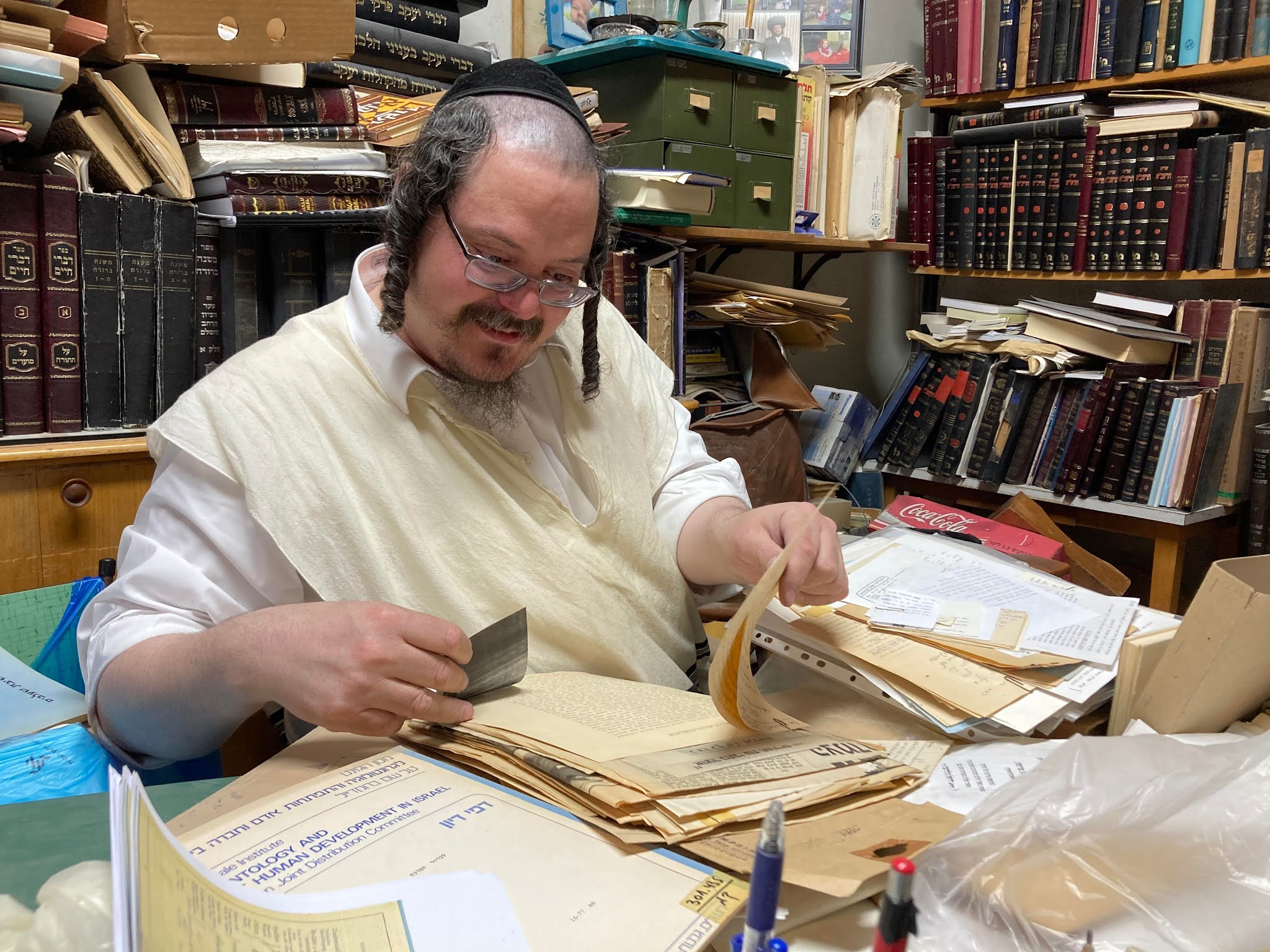
Publish and Perish or Digital death

Publish and Perish or Digital death

By: Yaakov Rosenes
About the author: Yaakov Rosenes made Aliya from Canada after graduating from Trent Univ. and U of I Chicago Circle. In the 70’s he held various research and administrative positions at Yad HaRav Herzog, Feldheim publishers, and Machon Yerushalayim. In the 1980’s he founded the Judaica Archival Project, a Preservation and Access program for Rabbinics at JNUL. Since the 1990’s the Project has offered bibliographic and book-finding services at www.virtualgeula.com.
Introduction:
Since the advent of the Internet, the nature of reading and publishing has changed radically in the secular world. Also today Jewish publishing is something entirely new. Now that it is acceptable to bring a lap-top computer into Kollelim we find literally thousands of Avrechim working on original (and frequently worthwhile) Seforim. Today over 75% of the 4000 new Torani titles appearing annually are privately printed by the author. At least half of these books are sold from homes. Many authors are experimenting with print-on-demand technologies and printing smaller editions to lower their costs. Other authors are posting their Seforim online as PDF files or as e-books. In short Jewish publishing which used to be dominated by 10 major publishers and distributors has become a market with thousands of players. Store owners have no shelf-space for new titles. Readers are jaded from too much material. Authors are frustrated because they can’t sell or even give-away their Sefer. Fortunately and unfortunately every Rabbi, Scholar, Admor, Mashpia, Maran and Baba has created his own literature and is trying to attract own readership. In short today’s Torani publishing has become a free-for-all.
How many Sifrei Kodesh are printed every year?
In Israel alone 50 every week are recorded by the book depository department at JNUL. I terms of cost at an average of $2000 per book means that Klal Yisrael invests over $5,000,000 per year in printing new Seforim! This number has doubled every 5 years for the last 30 years but the readership is growing at a much slower rate than the “printer ship”.
How much does it cost to print a Sefer today?
From 1K to 10K. It depends on the size of the book, the size of the edition and how it is bound. A Soft cover edition of 500 copies can cost as little as $1000. A hardcover edition of 500 pages of 1000 copies can cost over $10,000 to print in Israel.
What do you mean by Publish and Perish?
Self-explanatory, when your brother-in-law gets a copy of your new Sefer and puts it straight on the top back shelf of his bookcase it means even your closest audience has no time for your creation. The point of printing a Sefer is to open up a dialogue with a readership. Unfortunately today most new Seforim are what is called “vanity publishing” which sadly turns into a monologue between the author and himself.
Who is printing Seforim today and who should not print a Sefer?
Everybody who is sitting in a Bet Midrash with a lap-top or tablet computer is probably working on a Sefer. On any typical morning in my Kolel there are at least 10 Avrechim with computers on the desk. Some of them even wear their Tefillen while they edit their Sefer. Any first time author should think many times before he starts to work on a Sefer. Is it original? Who will read it? Don’t I need an editor? Why is my Rav encouraging me ?  Maybe he thinks it will be therapeutic? What does my wife or my father-in-law or my brother-in-law really think? If the answer is not clear to any of the above questions please do not print more than 50 copies, soft cover.
How did you print Seforim 40 years ago and how is it done today?
When I came to Israel in the 1970’s we still used a monotype press attached to a mechanical keyboard which set letters in molten lead. Today offset printing presses are prevalent where pages are prepared in a phototypesetting machine copied by a huge negative camera and then taped into paper frames to expose on to printing plates. This method works for a press-run of thousands. Since the invention of the laser printer in the 1980’s virtually anyone can print his own primitive book. So today when a new author can expect to sell or give away only 200
copies at the most it pays to skip the typesetting and the plates and to print the pages via a quality commercial digital printer or online printing service.
What is happening in the secular world and how is the Torani world different?
At least one major chain of brick and mortar bookstores has gone bankrupt and several others are faltering. Amazon.com is selling more e-books than printed books ! Many magazine, newspaper and paperback publishers are putting their major resources into digital editions. However only a few have actually shut down their print editions. In the Torani world we have Shabbos and we have to concentrate more to understand what we read. Therefore the market for the new editions of: Humashim, Mishnayot, Shasim, Turim and Shulkan Aruch etc. is healthy and growing. However the self publishing authors (many of whom are not only very sincere but also very talented) is the where the market is crashing. One bookstore owner told me when he sees an author coming in his front door with a pile of Seforim he runs out the backdoor in order not to embarrass him since he doesn’t have any shelf space for yet another Avrech with yet another new Sefer.
How has the Web changed people’s reading habits?
The web is not a place to read anything serious. Most people read the opening line of the opening page and then surf ahead. The media is simply too full of distractions to make a pleasant reading experience. Most people if they want to concentrate on a text will print it and take it with them to really absorb what it says. Only a small percentage of today’s readers really read books – most of us skim the first few pages and head for the newspaper.
Would you recommend putting your book on the Web?
Light reading perhaps. Giving away a chapter is a good way to promote a Sefer. For serious reading or learning – It’s suicide. Many people will download the file but very few will print it and even fewer will actually read it. As Yannai HaMelech noted after he wiped out Hachmei Yisrael.”The Sefer Torah is there in the corner – If anybody wants to learn it he can come and use it. RH”L
Is the Feldheim bankruptcy a sign of the future?
Yes and No, if the publishers will make some adjustments they have a good chance to survive. First of all the role of the publishers is to select the best talents and to prints the best Seforim. Most of our Jewish publishers became vanity publishers in the 70’s and 80’s. A particular publisher I once worked for used to dig up unpublished manuscripts of questionable value and then look for rich and naive descendants who would pay a pretty penny to see their grandfather’s Sefer in print and then try to convince the Velt that this was a major work from a Gadol
of the last generation. Other publishers specialized in finding new and wealthy authors who would subvent (plus some healthy profit) an entire edition of their new work and then market it as a major masterpiece and 2 years later quietly dump the entire stock for a song on a naive distributor. The publishers who we see today are still in business and going strong are the ones who didn’t use these tricks but simply read carefully what they publish.
The Future – Is it entirely gloomy?
In my opinion the future of Jewish publishing eerily echoes the past. Before the printing press every reader hired a Sofer to copy his Rav’s Sefer, specifically for his own personal study. Copying books wasn’t a business, only the Sofer was paid for his time. Recently I have met several Talmidei Hachamim who are making use of scanned books to print out exactly what they want to learn and then they bind their print-outs into folders. Others bring them to a professional book-binder.
Are we returning to the époque where books are copied one at a time for personal study only? I believe so. Maybe this is a good thing? Shouldn’t Jewish study be freed from the false paradigm of “the best seller” which is a very non-Jewish commercial concept? Shouldn’t we free ourselves from our own enslavement of having to see every book on the market and consciously tune ourselves into what we really can focus on. Living in an age of so much noise shouldn’t one train himself to concentrate on the music?


Additional related links about this topic: See here, here, here & here.


Hebrew printing in Altdorf: A brief Christian-Hebraist Phenomenon

Hebrew printing in Altdorf: A brief Christian-Hebraist Phenomenon

By Marvin J. Heller[1]

Altdorf is remembered in Jewish history, when it is recalled at all, for the small number of Hebrew, Hebrew/Latin books printed there, beginning in the seventeenth century. Our Altdorf (old village), Altdorf bei Nürnberg, Bavaria, is one of several communities so named, others elsewhere in Germany, France, Switzerland, Poland, and even one Altdorf in the United States.[2] Again, our Altdorf, with the name to distinguish it from other Altdorfs, is Altdorf bei Nürnberg, that is, Altdorf near Nuremberg, a small Franconian town in south-eastern Germany, 25 km (15.53 miles) east of Nuremberg, in the district Nürnberger Land.

First mentioned in 1129, Altdorf was conquered by the Free Imperial City of Nuremberg in 1504. In 1578 an academy was founded in the city, becoming a university in 1622, one that lasted until 1809. Its most prominent student was the polymath Gottfried Wilhelm Leibniz (1646–1716), a discoverer of differential and integral calculus. The university is important to us as it was a center of Christian-Hebraism. An instructor in Hebrew at the university was R. Issachar Behr ben Judah Moses Perlhefter, whom we shall meet, albeit briefly, below. Also active in Altdorf was the renowned Christian-Hebraist Johann Christoph Wagenseil, whom we shall also meet, but in much greater detail, further on in the article, as well as his predecessor at the University of Altdorf, Theodor (Theodricus) Hackspan.

Jewish settlement in Altdorf is not recorded, indeed Altdorf apparently had no Jewish community in the seventeenth century, which makes the publication of Hebrew books in Altdorf of unusual interest. In the seventeenth and eighteenth centuries Christian-Hebraists, particularly in Protestant lands, studied and published Hebrew works for their own purposes, primarily philological and biblical titles, and translations of rabbinic works, often theological titles accompanied by glosses contesting the Jewish authors’ positions, all to better understand the sources of Christian theology and refute Jewish understanding of those works. Parenthetically, Christian-Hebraists often relied on both Jewish apostates and knowledgeable Jews for assistance with Hebrew, attempting to convert the latter to their beliefs.[3]

In Altdorf, in contrast, the Jewish related works are often polemics, including works that Jews might circulate in manuscript but were unable to print on their own behalf. The first Hebrew title printed in Altdorf was R. Yom Tov Lipmann Muelhausen’s Sefer Nizzahon (Liber Nizachon Rabbi Lipmanni . . .), published in 1644.[4] It was preceded and followed by Hebrew/Latin works, again, polemics, primarily comprised of the latter rather than the former, published in the seventeenth century, our subject period. Together with those bilingual titles and three works published in the 1760s, only sixteen works are recorded in a Hebrew bibliography for this period in Altdorf.[5]

A different enumeration of the titles printed in Altdorf, by the National Library of Israel, lists thirty-eight titles for Altdorf through 1765, again mainly Latin works with varying amounts of Hebrew, albeit dealing with Hebrew subjects, among them Kabbalah. However, for our period of interest, that is, the seventeenth century, ten titles only are recorded by the NLI. In addition, there are a number of works not in either enumeration, printed in Altdorf, that pertain to our subject, the works of Christian-Hebraists. Altdorf does not merit an entry in Ch. B. Friedberg’s multi-volume History of Hebrew Typography . . . and in terms of Hebrew printing it might be described as a cul-de-sac, its’ publications being of little import or lasting influence in the history of Hebrew typography. Nevertheless, its publications are of interest, being concerned with Jews, Judaism, and the study of Jewish texts by Christian-Hebraists.

This article, bibliographic in nature, is concerned with those seventeenth century titles published by Christian-Hebraists in Altdorf. In addition to the Hebrew titles a small number of the Christian-Hebraists’ Latin works will be noted as examples of their areas of interest and output, beginning with titles by Theodricus Hackspan. This will be followed in greater detail by a discussion of the first printed edition of the Sefer Nizzahon, translations of Mishnayot, and additional titles published by Wagenseil, among them Tela ignea Satanae, his most famous collection of polemic works.

I

Hackspan (1607-59), a noted Lutheran theologian and Orientalist, studied under renowned individuals in those fields, namely Daniel Schwenter (1585-1636) and Georg Calixtus (1586-1656). From 1636 Hackspan was at the University of Altdorf where he held the chair of Hebrew, was the first to publicly teach Oriental languages, and from 1654 was Professor of theology while retaining the chair of Oriental languages. It is said that “his close application to study and to the duties of his professorships so impaired his health that he died in the fifty-second year of his age. Hackspan is said to have been the best scholar of his day in Hebrew, Chaldee, Syriac, and Arabic.”[6] A prolific author, his works include titles printed as early as 1628 through 1633 in Jenae, and, from 1636, in Altdorf, with minimal Hebrew, beginning with Observationes Philologicae Ex Sacro Potissimum Penu Depromtae, with several coauthors. This was followed, in 1637, by a Hackspan title with somewhat more Hebrew De Necessitate Sacrae Philologiae in Theologia, this on comparative theology. Hackman also wrote works not related to Judaism, for example, Fides et leges Mohammaedis exhibitae ex Alkorani manuscripto duplici (1647) dealing with Islam, well beyond the scope of this article.

Assertio passionis Dominicae adversus Judaeos & Turcas. The first title in our series published in Altdorf by Theodricus Hackspan is his Assertio passionis Dominicae adversus Judaeos & Turcas (Assertive passion of the Lord against the Jews and the Turks), a small quarto (40: 24 pp.) Latin polemic with varying amounts of Hebrew, published in 1642.
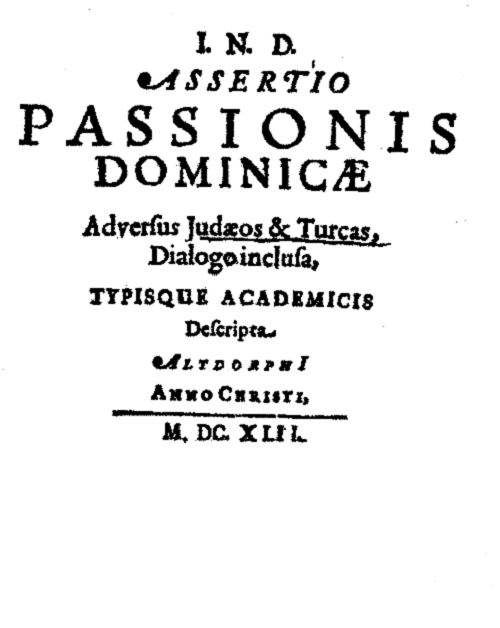
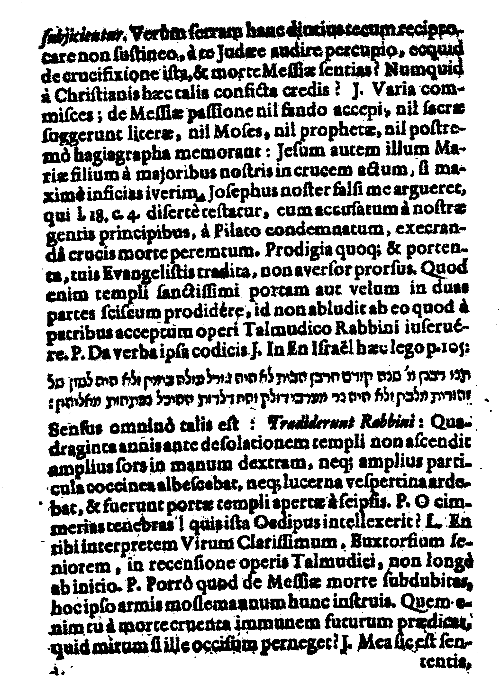
 

Assertio passionis Dominicae adversus Judaeos & Turcas is primarily in Latin with very limited Hebrew and slightly more Arabic text. Several Hebrew sources are referenced. Among them “שלחן ערוך tractatu ארוך חיים Hilcot תשעה באב ושער תעניות.” There are only two full Hebrew passages, both set in rabbinic letters, as well as several brief lines in square letters. The passages, from Ta’anit 5b-6a and Yoma 39b respectively, with Latin translation and commentary, are:

He replied: Let me tell you a parable – To what may this be compared? To a man who was journeying in the desert; he was hungry, weary and thirsty and he lighted upon a tree the fruits of which were sweet, its shade pleasant, and a stream of water flowing beneath it; he ate of its fruits, drank of the water, and rested under its shade. When he was about to continue his journey, he said: Tree, O Tree, with what shall I bless thee? Shall I say to thee, ‘May thy fruits be sweet’? They are sweet already; that thy shade be pleasant? It is already pleasant; that a stream of water may flow beneath thee? Lo, a stream of water flows already beneath thee; therefore [I say], ‘May it be [God’s] will that all the shoots taken from thee be like unto thee’. So also with you. With what shall I bless you? With [the knowledge of the Torah?] You already possess [knowledge of the Torah]. With riches? You have riches already. With children? You have children already. Hence [I say], ‘May it be [God’s] will that your offspring be like unto you.’

Our Rabbis taught: During the last forty years before the destruction of the Temple the lot [For the Lord] did not come up in the right hand; nor did the crimson-coloured strap become white; nor did the westernmost light shine; and the doors of the Hekal would open by themselves.”[7]

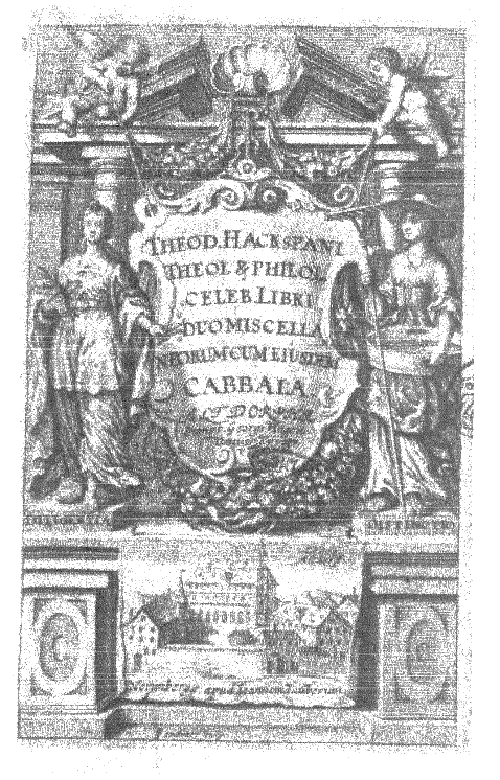
Miscellaneorum Sacrorum libri duo. Another Hackspan title published in Altdorf, this in 1660, is Miscellaneorum Sacrorum libri duo: quibus accessit ejusdem Exercitatio de Cabbala Judaica, a translation of two miscellaneous sacred books (17 cm.: 5, 453, [33] pp.), printed by Georgii Hagen, typos & Sumptibus  Universitatis Typographi together with Johannum Tauberum, Bibliopolam.
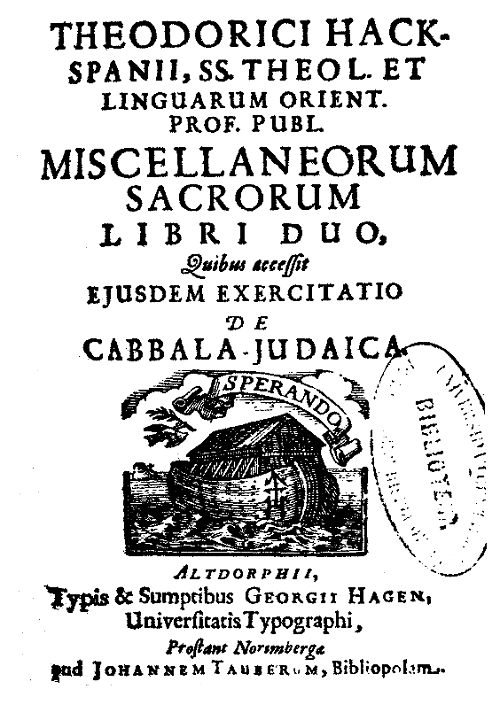
Miscellaneorum Sacrorum libri is a Latin introductory work comprised of introductions to Bible and Kabbalah, the latter section, from pp. 282-453, entitled “Cabbalae Judaicae brevis exposition.”  Miscellaneorum Sacrorum libri duo was has two lead title-pages (above) and, in the Kabbalistic section, a diagram of the tree of life which enumerates and displays the sephirot (emanations).
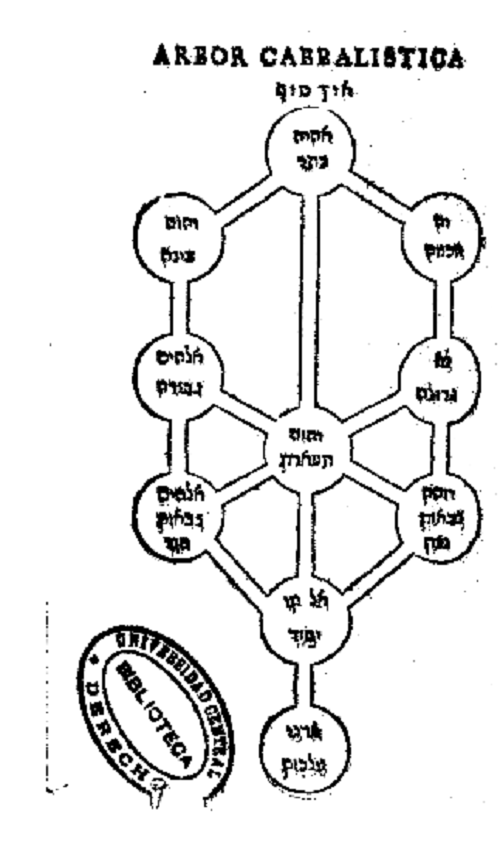
Here too the text is primarily Latin with varying amounts, but generally brief Hebrew, including quotes from the Talmud and other varied Hebrew sources. For example (p. 417) “CXXXII. Nostra aetate quoque familia in scriptus eorum occurrunt (In our time in the writings of these men, too, was met by the family) Kimchi in Obadiam scripit” followed by seven lines of Hebrew beginning ארץ אדום אינה היום לבני אדום כי האומות נתבלבלו רובם הם בין אמונת בנוצרים . . . (Today the sons of Edom, because the nations were confused, are mostly Christians) . . . . Terra Idumea hodie non est filiorum Edom: nam populi confusi sunt (Edom today is the rule (that is the example) for the people were mixed up.

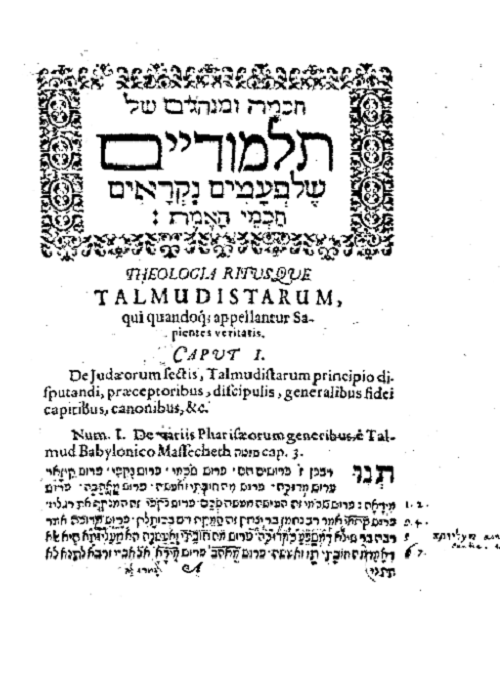
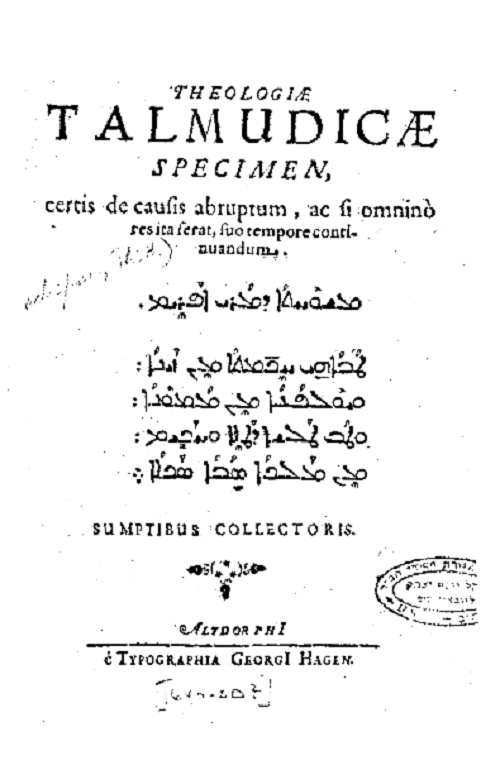
Theologiae talmudicae specimen. Yet another work by Theodricus Hackspan is Theologiae Talmudicae Specimen, certis de causis abruptum: ac si omninò res ita ferat, suo tempore continuandum. Theologiae Talmudicae Specimen (undated, 154 pp.), also printed by Georgii Hagen. The text of Theologiae Talmudicae Specimen is almost entirely in Hebrew, excepting Latin headers and marginal references. Despite the fact that Theologiae Talmudicae Specimen is almost entirely in Hebrew, in contrast to the other Hackspan titles noted here, it is set to read from left to right as if in Roman letters.
II

Sefer Nizzahon. The first Jewish title in our series published in Altdorf is R. Yom Tov Lipmann Muelhausen’s (d. 1459) Sefer Nizzahon (1644). This, the first printed edition of Nizzahon, was published in quarto format (40: [14], 512, 24 pp.), It is a polemic defense of Judaism and refutation of Christianity, here with a Latin translation by Theodore Hackspan, It was published so that Christians might be able to attempt to refute its arguments.

Muelhausen was one of the leading rabbinic figures of his time and a dayyan in Prague. His name, Muelhausen, likely derives from an earlier family residence in Muelhausen, Alsace. He studied under R. Meir ben Baruch ha-Levi (c. 1320-1390), Sar Shalom of Neustadt (14th cent.), and R. Samson ben Eleazar. In 1389, Muelhausen was one of a number of Jews incarcerated after an apostate named Peter accused them of defaming Christianity. In addition to his great rabbinic erudition, Muelhausen knew Latin and was familiar with Christian literature, making him a formidable polemicist. He was a prolific writer, his other works are on halakhah, philosophy, aggadah, piyyutim, and Kabbalah. In preparing Nizzahon Muelhausen utilized earlier Jewish polemical works, including an earlier thirteenth century Sefer Nizzahon Yashan (Nizzahon Vetus), with which this work is not to be confused. The effectiveness of Muelhausen’s Nizzahon may be gauged by the appearance of additional Latin editions and bitter attempts at refutations.
In a disputation in which Muelhausen represented the Jews he is reported to have been completely effective in his arguments, with the result that eighty Jews were martyred but Muelhausen miraculously survived.[8] Soon afterwards, in 1390, Muelhausen wrote Sefer Nizzahon for other Jews who had to respond to challenges from Christians. Nizzahon was copied but remained in manuscript until the publication of this edition, as the Church prohibited Jewish possession of a copy.

Christian scholars attempted to print Nizzahon for many years but were unable to obtain a manuscript. In 1644, Theodor Hackspan was successful in getting a copy. He had looked for a Nizzahon for a long time without success until he was informed that a rabbi in the neighboring small city of Schnattach had a copy but would not show it to anyone. Hackspan, together with some friends, paid an unwelcome visit to the rabbi, as if to engage him in a dispute. In the heat of the debate the rabbi took out his hidden manuscript of Nizzahon to look into it. Hackspan immediately seized the book from the rabbi’s hands, ran off with it to his carriage, and returned with it to Altdorf. Then, with a few of his students, they immediately copied the book and soon after printed the editio princeps of Sefer Nizzahon. Ora Limor and Israel Jacob Yuval Shoulson write that Hackspan printed Lippman’s text with care, not making any deliberate changes or alterations. Nevertheless, due to the poor knowledge of Hebrew of his “scribes . . . the book is full of mistakes, especially minor errors.” Meyer Waxman remarks that in his Latin introduction Hackman”attempts to refute Lippman in a dignified manner. Others, however, were not so generous.” [9]
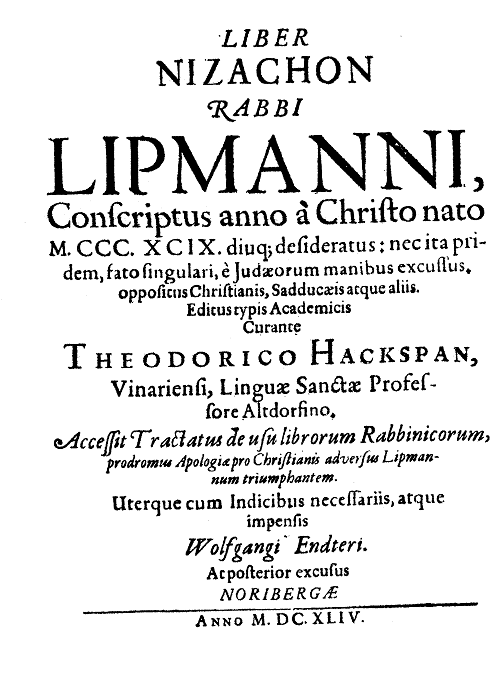
 

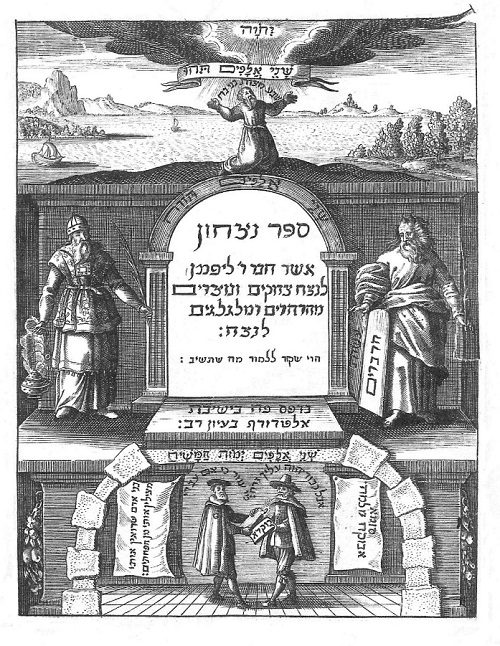
Nizzahon has an engraved Hebrew title page (above) followed by a Latin title page, which begins Liber Nizachon rabbi Lipmanni. . . .[10] Next is a dedication to Dn. Johan-Jodoco from Hackspan, introductions, a table of contents, and the Hebrew text set in a single column in rabbinic letters with marginal biblical references. Nizzahon is divided by the days of the week, further organized by books of the Bible, and subdivided into 354 sections, representative of the lunar year. These sections, not in order in the book, are refutations of Christian arguments (66 sections), explanations of dubious actions by the righteous in the Bible (39), explanations of difficult verses (41), reasons for precepts (34), refutations of the arguments of skeptics (55), against heretics and Karaites (47), and concluding with sixteen Jewish principles (48) to be read on Shabbat. Muelhausen refutes the Christian concepts of the Messiah, Immaculate Conception, and original sin. The Latin portion of the volume, printed in Nuremburg, begins on p. 211 and is paginated from right to left.[11]

Nizzahon was printed by Wolfgang Endter (1593 – 1659), a member of the well-known Nuremberg publishing family. The Hebrew title-pages states that it was printed in Altdorf, the Latin title-page gives Nuremberg at the place of publication. Nizzahon was reprinted in Altdorf in 1681 as part of Wagenseil’s Tela Ignea Satanae (below). The first Jewish edition of Nizzahon was published by Solomon Proops in Amsterdam (1709).

III

Kushya belo Zot o Niremberger o Regensburger.
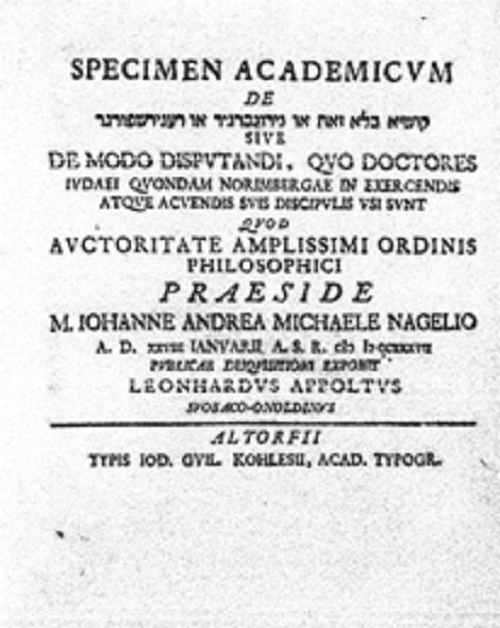
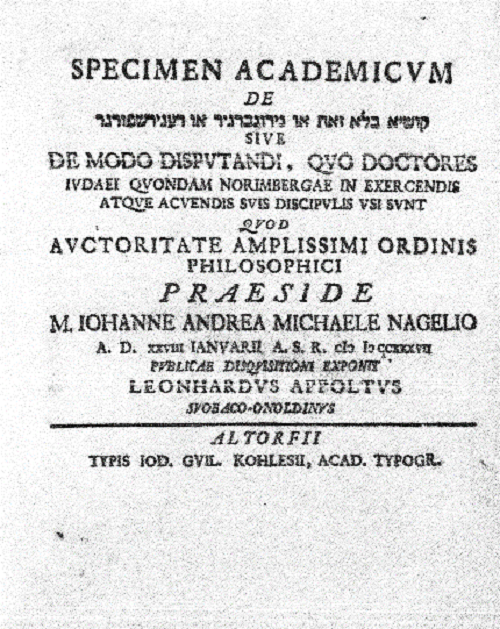
Another work with Hebrew attributed to the Altdorf press was Kushya belo Zot o Nuremberger o Regensburger, a relatively small work (19 cm. 24 pp.), printed in 1670. This very rare work was described in an auction catalogue, the entry stating,

Kushya belo Zot o Niremberger o Regensburger

A composition regarding Talmudic disputation and the ‘chilukim’ method of the Ashkenazim by Leonard Appoltus, supervised by Prof. Johanne Andre Michael Nagelio.

Altorf, [c. 1670].

In Latin with segments in Hebrew.

24 p. 19 cm. Good condition. ‘Blo Zot’, Nirenburger’ and and ‘Regensburger’ are different types of questions that it was usual to ask in the ‘chuilukim’ method.

Very rare. Not in the Jerusalem National Library.

o.b $300     $400/700[12]

From the sale results sheet it appears that this item did not sell.

IV

In 1674 Christoph Wagenseil (1633-1705), professor of Oriental languages at the University of Altdorf from 1667, succeeded Hackspan, becoming the most prominent Christian-Hebraist in Altdorf. Wagenseil, learned his Hebrew from Enoch Levi, a Viennese Jew, and Jewish studies from R. Samuel Issachar Behr ben Judah Moses Eybeschuetz Perlhefter, (d. after 1701), a Prague scholar, kabbalist, and instructor in Hebrew in the University of Altdorf. Perlhefter was the author of Ohel Yissakhar, Ma’aseh Ḥoshen u-Ketoret, and Ba’er Heitev; served as rabbi in Mantua, leaving there over a dispute concerning the pseudo-Messiah Mordecai of Eisenstadt, a follower of Shabbetai Zevi, whom Issachar Behr had initially supported. He subsequently returned to Prague where he held the position of dayyan.

Perlhefter’s wife, Bella, taught Wagenseil’s daughter dancing and music.[13] Elisheva Carlebach elaborates, writing that Wagenseil, as did other Christian-Hebraists, often pressured the Jews who assisted them to convert. In this context, Wagenseil, unable to influence Perlhefter who was residing at the time in Altdorf, turned to Bella, then in Schnattach, inviting her to join his household for a family celebration. Bella responded, in literate Hebrew, that as she had a small child, whom she could not leave, “And if I carry him with me the cold is great, the snow is high, and a tiny child cannot tolerate the cold, for he or she has not been out of the house from the day of his or her birth and is not accustomed to the cold [Mrs. Perlhefter changed genders in mid sentence].” [14]

Wagenseil traveled widely as a youth, serving as a private tutor, and while in North Africa, Wagenseil acquired Hebrew manuscripts. Although “tarred” as an anti-Semite, together with other German Hebraists in the nineteenth century, Wagenseil was an accomplished Hebraist and, despite his opposition to Jewish beliefs, often defended Judaism against its more virulent enemies and their baseless charges. David Malkiel reports that Wagenseil had cordial relations with Jewish contemporaries.[15] Assessments of Wagenseil vary, from Heinrich Graetz, that “he was a good-hearted man, and kindly disposed towards the Jews,” to Frank E. Manuel, for whom he is one of three Christian-Hebraists, with Shickard and Eisenmenger, who “used their learning to cast a glaring light on those texts in the Talmud and later Jewish writings that were either blasphemous or full of hatred for Christians.” Wagenseil confuted Christian charges that the Talmud was blasphemous, senseless and jumbled, arguing that in it were matters of morality, wisdom, and medical advice; he also opposed blood libels. Furthermore, he maintained that Catholic censors had distorted the Talmudic text, particularly of Avodah Zarah.[16]

Wagenseil is credited with assembling the first comprehensive study of Jewish observances and ceremonies by a Christian. Jonathan I. Israel notes that Wagenseil considered much of what he found superstitious and absurd, and that his motivation was to bring Jews to Christianity. Nevertheless, “for all that an unmistakable admiration for Jewish life and Jewish life-style insistently creeps through.” He quotes Wagenseil, who wrote in the forward to the apostate Friedrich Albrecht Christiani’s Der Jüden Glaube und Aberglaube (Leipzig, 1705),

that they show far more care, zeal, and constancy in all this (their religious duties) than Christians do in practicing their true faith, and that, furthermore, they are far less given to vice; rather they possess many beautiful virtues, especially compassion, charity, moderation, chastity, and so forth . . .[17]

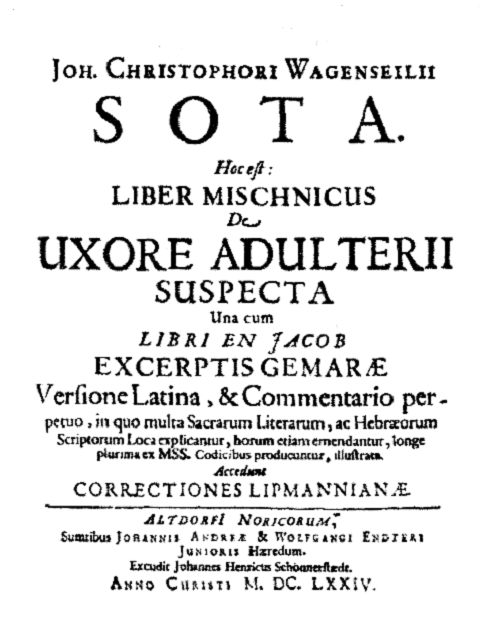
Sotah (the suspected adulterous woman) has numerous illustrations, several being full page, and a detailed attractive copper-plate title page of the Sotah (the wife accused of adultery) being taken by the priests to be tested. The volume opens with a full page depiction of the Sotah being taken to be tested by the priests.

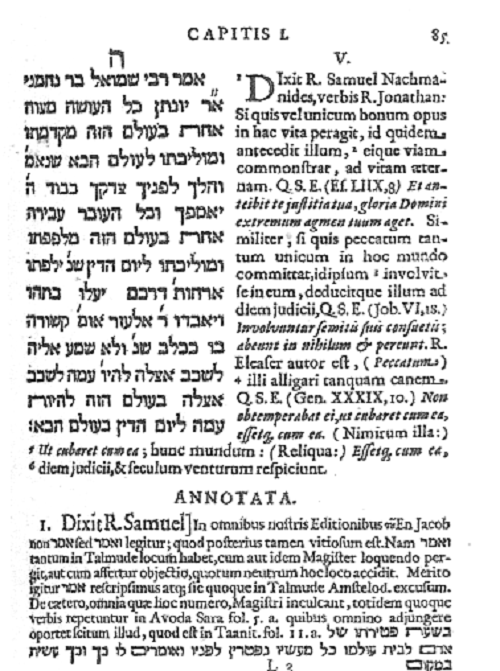
The verso has verses in Latin from Psalms and the Christian Bible. The title page in red and black, begins, Hoc est: liber mischnicus de uxore adulterii suspecta (this book is a work concerning a woman suspected of adulterous behavior). Reading from left to right, the volume begins with considerable prefatory material, including several indices, one in Hebrew, correctiones Lipmannianae (10-81), corrections to Hackman’s edition of the Sefer ha-Nizzahon based on two other manuscripts he was able to obtain, and the text, which has separate pagination.
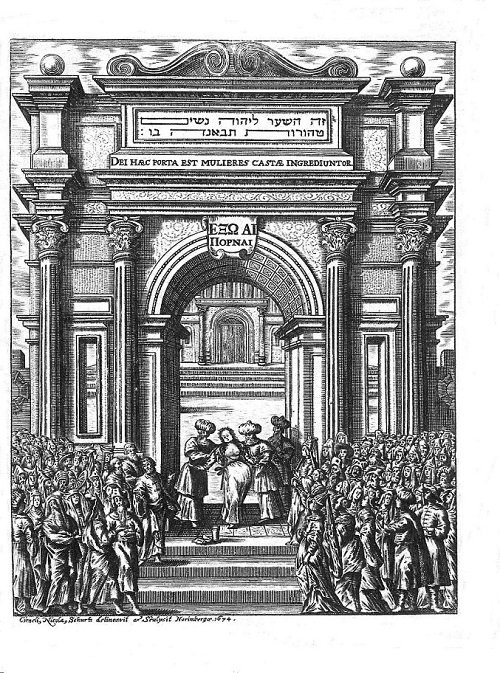
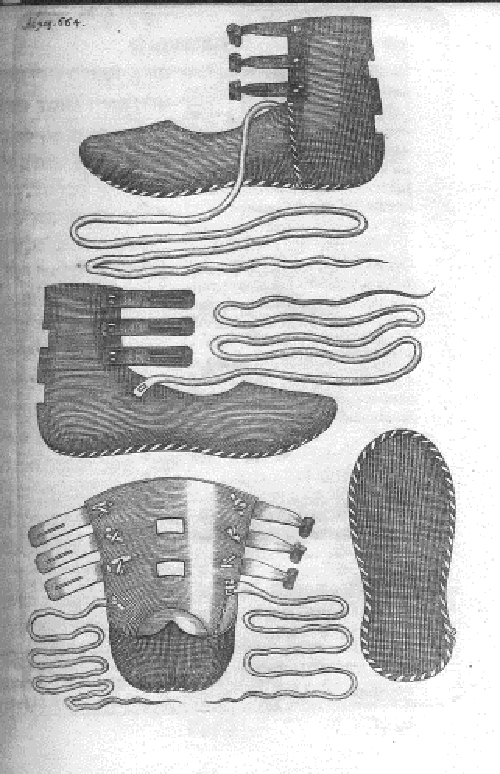
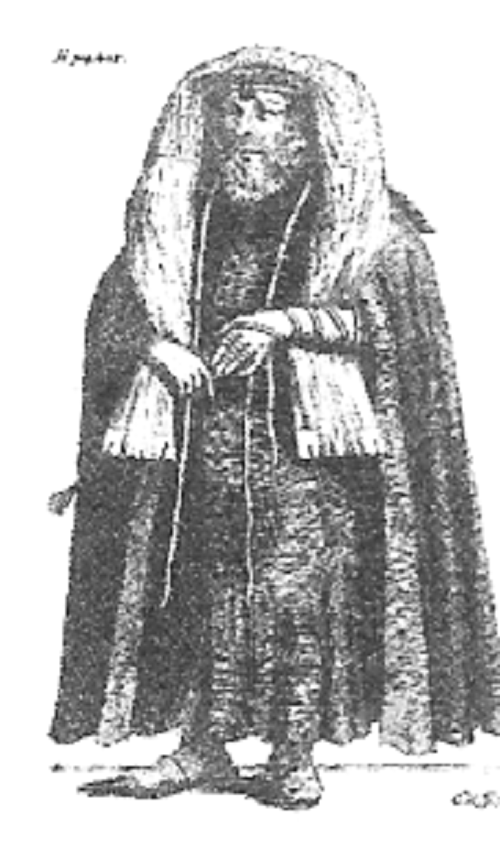
Within the text the Mishnah is always in the left margin in square unvocalized Hebrew, the translation in the right column, accompanied by an extensive Latin commentary with occasional Hebrew, with excerpts from the gemara, including most of the aggadah in the Ein Ya’akov, on this tractate. The volume has numerous illustrations, several being full page. Among them are depictions of the priest wearing talit and tefillin with their straps for the head and arm, magen davids, halizah shoes, coins, and an undressed woman with skull and cross. Negaim was the next tractate translated by Wagenseil, to prove that the Talmud contained valuable and interesting material on medicine.[18]
Tractates Avodah Zarah and Tamid. Another translation of Mishnayot tractates, this of Avodah Zarah and Tamid, prepared by the Christian-Hebraist Gustavo Peringero (Gustav von Lilienbad Peringer, 1651-1705), a student of Johann Christoph Wagenseil. Peringero, (1633–1705), was professor of Oriental languages at Upsala (1681- 1695) and afterwards librarian at Stockholm. Charles XI, king of Sweden, who reputedly had an extraordinary interest in Jews and even more so in Karaites, sent Peringero to Poland to learn about the latter and perhaps to attempt to convert the Karaites to Christianity, for, as Graetz notes, they did not have “the accretion of traditions, and were said to bear great resemblance to the Protestants,” nor were they “entangled in the web of the Talmud.” [19]
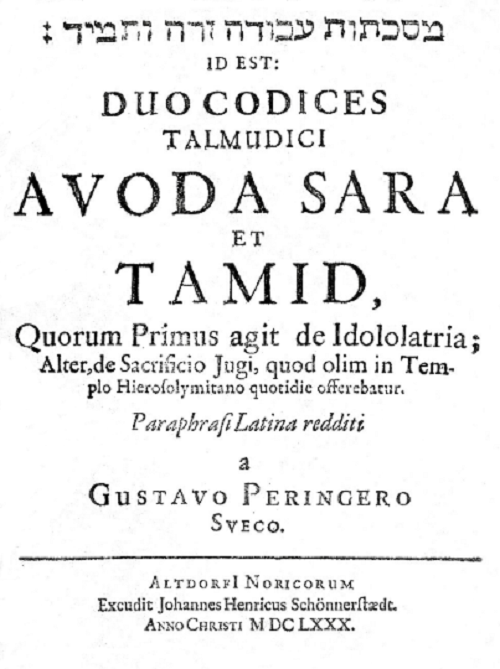
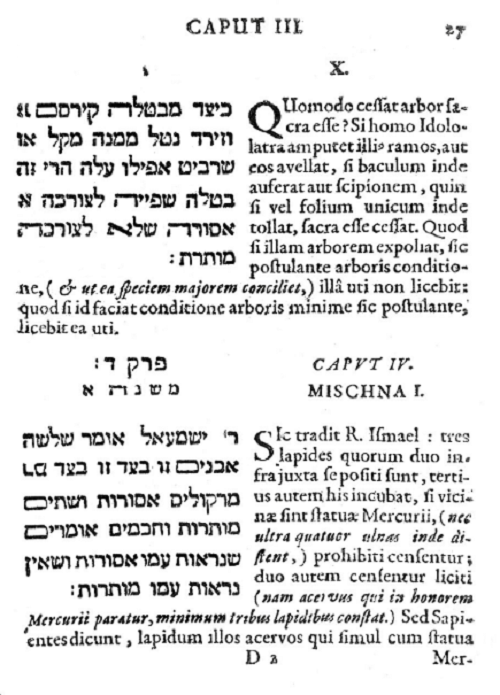
This edition of Mishnayot of tractates Avodah Zarah and Tamid in Hebrew with accompanying Latin translation and annotations by Peringero was published in 1680 by Johannes Henricus Schönnerstadt in a small octavo format (80: [7], 78 pp.).The title page of this volume is, excepting a Hebrew header, entirely in Latin. It states that it is comprised of two codices, primarily about idolatry, and secondly about sacrifices in the time of the Temple. The title page is followed by a dedication to Dominae (Mistress) Ulricae Eleonorae, wife of Charles XI, a preface in Latin with occasional Hebrew, and then the text.

Reading from left to right, the Mishnayot are in the left column, the integrated translation and glosses in the right column. Avodah Zarah concludes on p. 43 and Tamid begins immediately after on the following page. Peringero’s translation of Avodah Zarah was inserted by Wilhem Surenhusius (1666-1729) in his Versio Latina Mischnae (1698-1703). In addition to these tractates, Peringero also translated Abraham Zacuto’s Sefer Yuhasin, portions of Maimonides’ Mishneh Torah (Upsala, 1692), and several other works into Latin. He was also the author of Dissertatio de Tephillin sive Phylacteriis (Upsala, 1690). [20]

In addition to tractates Avodah Zarah and Tamid the printer, Johannes Henricus Schönnerstadt, also published separate editions of Shekalim and Sukkah at this time, also with Latin, but not translated by Peringo.

IV

Returning to Wagenseil, we come to two very different works. The first, although chronologically the later of the two, and not an Altdorf publication, is Belehrung der Judisch-Teutschen Red-und Schreibart (An Instruction Book in the Method of Speaking and Writing Judeo-German, Koenigsberg, 1699). This is, as the title suggests, a Yiddish grammar with a “loose Yiddish version (with German translation) of Hilkhot Derekh Eretz,” a rabbinic work on ethical behavior. Also included is a Yiddish account (with German translation) of the Fettmilch uprising in 1614 in Frankfurt on the Main, as well as selections from tractate Yevamot on levirate marriage as well as the entire tractate Neg’aim on leprosy with notes, this in order to aid in teaching Hebrew.[21]

The second and Wagenseil’s most famous collection of Jewish polemical literature, Tela ignea Satanae, in which Wagenseil, among other subjects, includes his responses to Sefer Ha-Nizzahon. Wagensiel travelled widely, through Spain and into Afric Belehrung e a, to collect these manuscripts.[22]

Tela ignea Satanae. Published in 1681 by Wagenseil in quarto format (40: [2], 635, [12]; 60; 260; [2], 100; 45; 480, [1] pp.) Tela ignea Satanae, perhaps Wagenseil’s best known work, is comprised of six polemical anti-Christian works, almost all not previously printed.
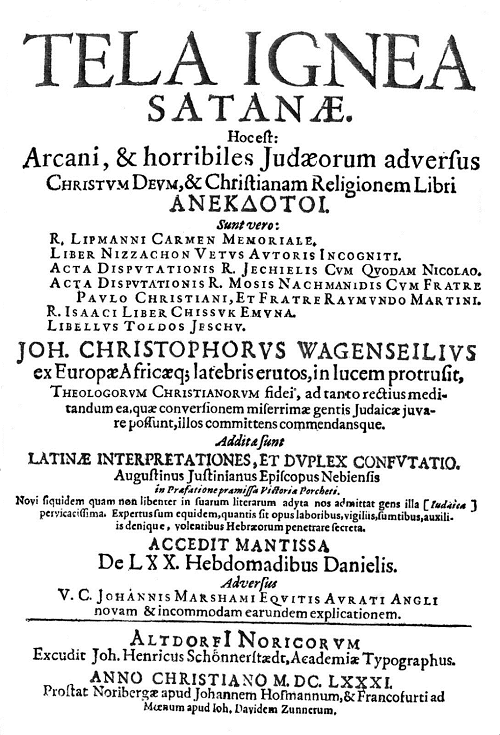
          

The first title page, printed in red and black, has the full title of Tela ignea Satanae. Hoc est: Arcani, et horribles Judaeorum adversus Christum Deum, et Christianam Religionem Libri (Flaming Arrows of Satan; that is, the secret and horrible books of the Jews against God and the Christian religion). After the verse the title-page states,

John Christopher Wagenseil thrusts these forward into the light, bringing them together and entrusting them, dug out from the hiding places of Europe and Africa, to the faith of Christian Theologians, that they may more rightly consider those things, which are able to aid the conversion of that wretched Jewish race. Added are: Latin Interpretations, and Two Confutations. Augustine Justianus Bishop at Nebiensis in the Forward Preface of Victoria Porchetus. I know how unwillingly that most stubborn (Jewish) race admits us into the most secret parts of their literature. I have tried by all means, however great the task, with toil, sleeplessness, expense, with willing helpers finally, to penetrate the secrets of the Hebrews.[23]

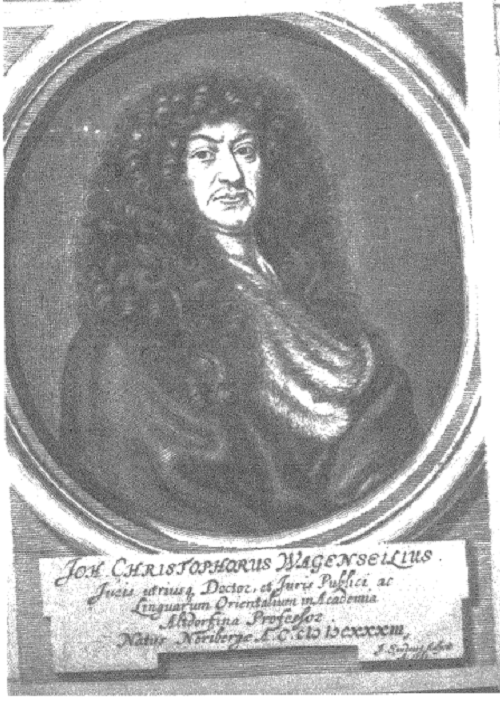
The facing page has a full front-piece portrait of Wagenseil. In two volumes, the work begins with a Latin introduction, followed by the six books, each with its own title page with Hebrew headers and Latin text, a Latin introduction (refutation), and then the text in two columns comprised of facing Hebrew and Latin.

That these books were not previously printed but rather circulated among Jews in manuscript only, or where printed were done so by Christian Hebraists with Latin translation and refutation, is due to their polemic and inflammatory content. As a result, these books today exist with variant texts. Tela ignea Satanae, as noted above, is comprised of six independent books, listed below, several described afterwards in somewhat greater detail:

Nizzahon, Polemic in defense of Judaism by R. Yom Tov Lipmann Muelhausen. Printed previously in Altdorf/Nurenburg, 1644 (see above).

Nizzahon, anonymous polemic in defense of Judaism.

Vikku’ah Rabbenu Yehiel mi-Paris, record of the disputation between R. Jehiel of Paris and Nicholas (dispute over the Talmud in Paris in 1240, below, 1681).

Vikku’ah ha-Ramban im broder Paulus, record of the disputation between the Ramban (Moses ben Nahman, Nahmanides) and the apostate Pablo Christiani in 1263 before King James of Aragon.

Hizzuk Emunah, anti-Christian polemic by the Karaite scholar, Isaac ben Abraham Troki.

Jeshu, negative and, from a Christian perspective, highly blasphemous account of the life of Jesus.[24] [25]

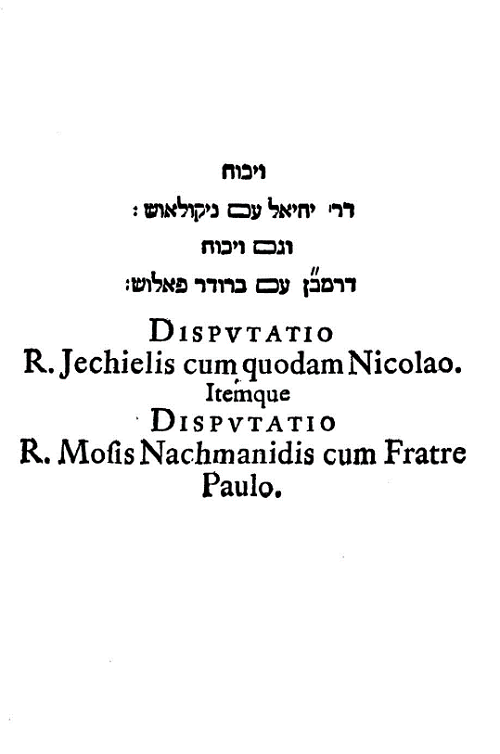
Vikku’ah Rabbenu Yehiel im Nicholas Jehiel ben Joseph of Paris. This is a record of the disputation held in Paris on Monday, June 25, 1240, attributed to R. Jehiel ben Joseph of Paris. Jehiel, one of the leading Ba’alei Tosafot, was a student of R. Judah ben Isaac (Sir Leon), whom he succeeded as rosh yeshivah in Paris.  Among Jehiel’s students was his son-in-law, R. Isaac of Corbeil (Sefer Mitzvot Katan, Semak). Jehiel was the author of tosafot quoted by many rabbis and included in those tosafot known as our tosafot. He is also frequently referenced in the Torah commentary Da’at Zekenim. Because of his prominence Jehiel was selected as a primary representative of the Jewish community in the disputation over the Talmud resulting from the charges leveled against it by the apostate Nicholas Donin. The record of that disputation, generally known as Vikku’ah Rabbenu Yeh iel mi-Paris, is the third work in Wagenseil’s Tela ignea Satanae (above, 1681).

        The Vikku’ah follows the same pattern as the other works in Tela ignea Satanae, that is, it has a bilingual Hebrew-Latin title page, followed by a Latin preface, and the text in two columns in facing Hebrew and Latin. Donin’s denunciation of the Talmud included thirty‑five charges which primarily stated that Jewish emphasis on the Oral Law was in itself a blasphemy against the holiness of Scriptures recognized by Jew and Christian alike; the Talmud overtly fostered anti‑Christian attitudes and contained blasphemous statements offensive to Christianity; and that it was irrational, and morally and intellectually offensive.
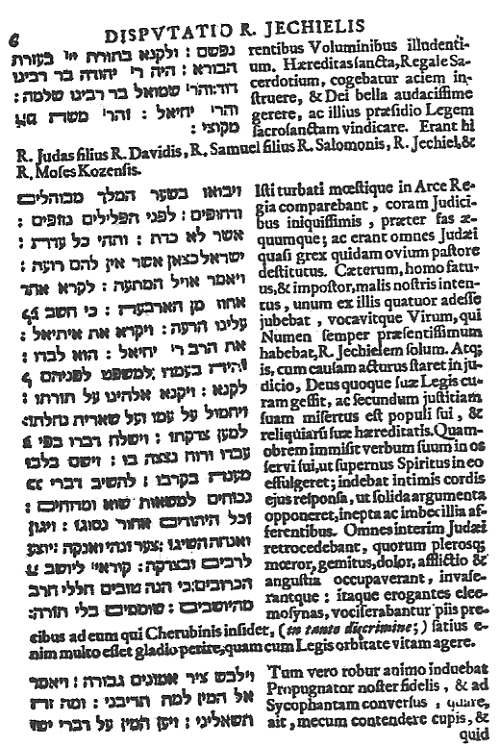
          

        The trial was presided over by the Queen Mother Blanche, who was in an advanced stage of pregnancy. The judges were high Church dignitaries, such as the Archbishop of Sens, the Bishop of Paris, and the Chaplain to King Louis IX, none of whom knew Hebrew. Jehiel, although the primary Jewish spokesman, was assisted by R. Moses ben Jacob of Coucy (Semag), R. Judah ben David of Melun, and R. Samuel ben Solomon of Chateau‑Thierry (all 13th century). Although Jehiel defended the Talmud, noting inter alia, that Donin was the real heretic, justifiably excommunicated by the Jewish community fifteen years before the debate. His arguments were to no avail, for the matter had been predetermined from the outset. Even before the court’s formal decision was rendered, it had been decided to burn the condemned books. In June, 1242, twenty‑four wagon loads of Hebrew books, containing thousands of volumes, were seized and burned in Paris. Jehiel remained for some time in Paris, teaching students from memory. In 1260, Jehiel went up to Eretz Israel, effectively ending the period of the Ba’alei Tosafot.[26]

Hizzuk Emunah. Anti-Christian polemic by the Karaite scholar, Isaac ben Abraham Troki (c. 1533-c. 1594). Hizzuk Emunah is the fifth work in Wagenseil’s Tela ignea Satanae below, 1681). Troki is known by his birthplace, Troki (Trakai), capital of Lithuania until 1323 and home to the most important Karaite community in Lithuania. He was, from the age of twenty, the secretary-recorder of the Karaite General Assembly which met there in 1553. Author of a work on shehitah and religious poetry, Troki became the foremost Karaite scholar in Eastern Europe, serving as dayyan to both Karaite and rabbinic Jews. He studied Bible and Hebrew studies under the Karaite scholar Zephaniah ben Mordecai, and had Christian teachers for Latin and Polish literature. Engaging in dialogues with Christian clergyman of different persuasions, Troki became fluent in Polish and Latin and familiar with their theology and arguments against Judaism. It was those conversations that prompted Troki to write Hizzuk Emunah. Written in the last year of his life, Hizzuk Emunah was completed by Troki’s student, Joseph ben Mordecai Malinovski.
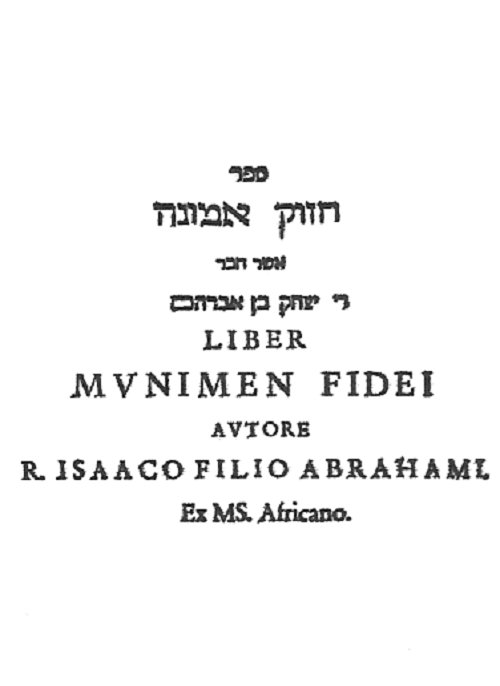
Wagenseil obtained a copy of the manuscript in 1665 on a trip to Ceuta, North Africa. He translated Hizzuk Emunah into Latin, in which form it was widely used not only by Christian missionaries but also by opponents of Christianity, such as atheists, French philosophes, among them Voltaire. Hizzuk Emunah follows the same format as the other polemic works in Tela ignea Satanae, that is, it has its own Hebrew-Latin title page, a Latin introduction, and then the text, in two facing Hebrew and Latin columns. The book, in quarto format, is in two parts comprised of ninety-nine chapters. In the first chapter, Troki begins by questioning the authenticity of the Christian messiah, arguing against his pedigree, acts, the time in which he lived, and the fact that he did not fulfill the promises expected of the Messiah.

As an example of the first argument, Troki writes that he cannot be of Davidic descent due to the concept of virgin birth and that even apart from that, the relationship of Joseph to David is wanting in proof. He also notes contradictions in the Christian Bible on that and other subjects, and compares the Hebrew Bible and Gospels. Most of Troki’s arguments are based on biblical texts, accounting for its effectiveness against Christian arguments. Nevertheless, he also utilizes rabbinic sources, so that Hizzuk Emunah has been accepted by rabbinic authorities, perhaps unique for a Karaite work.[27]

        Hizzuk Emunah is considered one of the most effective polemic works. Although circulated widely in manuscript, Hizzuk Emunah was not printed by and for Jews until the Amsterdam edition of 1705. It has been frequently reprinted, translated into Yiddish (Amsterdam, 1717), English by Moses Mocatta (London, 1851), German (Sohran, 1865), and Spanish as Fortificación de la Fe (1621), extant in manuscript.

Wagenseil would publish several additional Hebrew/Latin collections and works, among them Exercitationes sex varii argumenti (1697); Denunciatio Christiana de Blasphemiis Judæorum in Jesum Christum (1703); and Disputatio Circularis de Judæis (1705) as well as several titles published elsewhere. As might be expected, Wagenseil’s influence in this field was considerable, his students also becoming Christian-Hebraists, for example, Peringer above, and our final Altdorf imprints, the first by a student of Wagenseil.
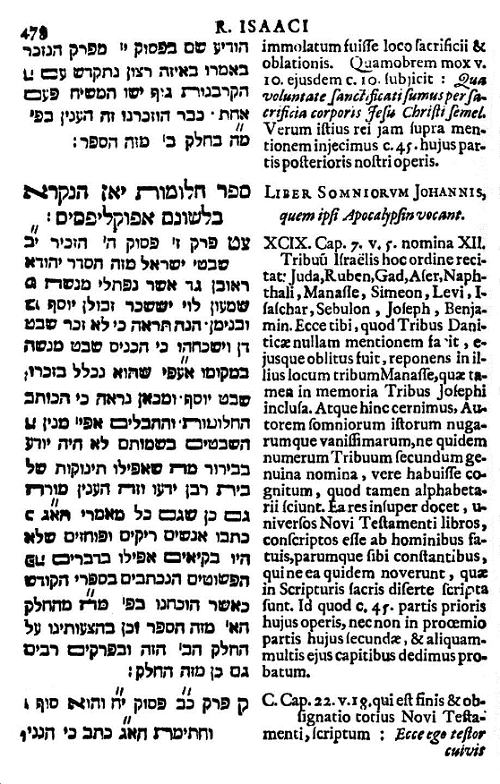
Jesus in Talmude. Our final works are Jesus in Talmude and Der Jüdische Theriak. The former is  dissertation submitted at the University of Altdorf by Rudolf Martin Meelführer (Rudolfo Martino Meelführero, 1670–1729) in 1699, and described by Peter Schäfer as “the first book solely devoted to Jesus in the Talmudic literature;” the latter a refutation by R. Solomon Ẓevi Hirsch Aufhausen (Openhausen, Ufenhausen, of Aufhausen) in Yiddish of an anti-Jewish work. Meelführer was also a Christian-Hebraist, teaching in Altdorf and afterwards as adjunct in philosophy at Wittenberg. The dissertation is important as it was the first study fully devoted to the subject. Meelführer, in contrast to Wagenseil, was almost immediately forgotten.[28] Here too the work is primarily in Latin, but includes examples of the Talmudic text in Hebrew, from early editions of the Talmud, as the later editions available to Meelführer were censored and omitted many of the passages he refers to. Meelführer appears to primarily rely on secondary sources for Talmudic entries, notably R. Gedaliah ben Joseph ibn Yahya’s (1515-1587), Shalshelet ha-Kabbalah (Venice, 1586).[29] An example of the text brought by Meelführer is Sanhedrin 42a (below), censored from most editions of the Talmud,

On the eve of the Passover Yeshu was hanged. For forty days before the execution took place, a herald went forth and cried, ‘He is going forth to be stoned because he has practiced sorcery and enticed Israel to apostasy. Anyone who can say anything in his favor, let him come forward and plead on his behalf.’ But since nothing was brought forward in his favor he was hanged on the eve of the Passover! – “Ulla retorted: Do you suppose that he was one for whom a defence could be made? Was he not a Mesith [enticer], concerning whom Scripture says, Neither shalt thou spare, neither shalt thou conceal him? With Yeshu however it was different, for he was connected with the government [or royalty, i.e., influential].
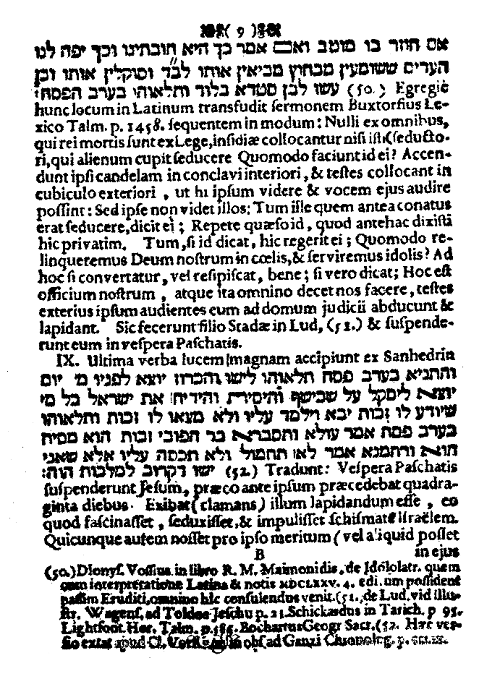
Der Jüdische Theriak (the Jewish Medicine) by Zalman Ẓevi Hirsch Aufhausen is a point by point refutation of Jüdischer Abgestreifter Schlangenbalg (The Jewish Serpent’s Skin Stripped) by the apostate Samuel Friedrich Brenz of Ettingen. Converted to Christianity in 1610, Brenz wrote Jüdischer Abgestreifter Schlangenbalg (Hanau, 1614) in “the thirteenth year after my rebirth.”[30] Der Jüdische Theriak, first printed in Hanau in 1615, was reprinted in in Altdorf in 1680 by Henricum Meyer, Academiae Typographu, as a small quarto (40: 36, [1] ff.), the text in old Yiddish set in Vaybertaytsh, a type generally but not exclusively reserved for Yiddish books, so named because these works were most often read by the less educated and women.[31] Given that it is a Jewish refutation of Christian ant-Jewish polemics its publication in Altdorf was likely done for the same purpose as Nizzahon, so that Christians might be able to attempt to refute its arguments.[32] In Jüdischer Abgestreifter Schlangenbalg Brenz collected all of the accusations made against Jews, accusing them of making derogatory and blasphemous remarks against the founders of Christianity and the Church, fostering animosity, and stating that the Talmud permits Jews to cheat Christians.
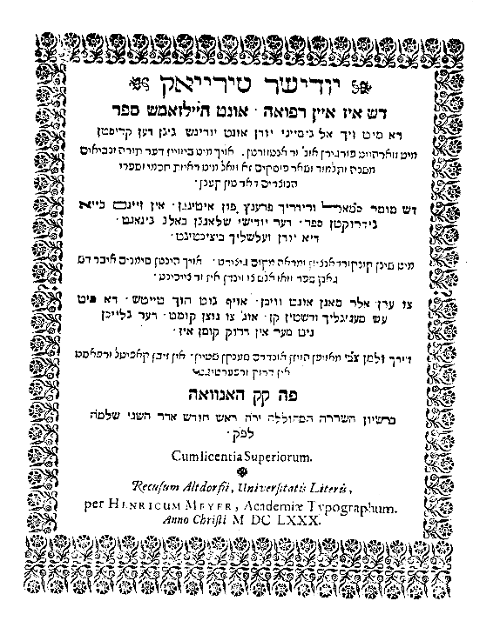
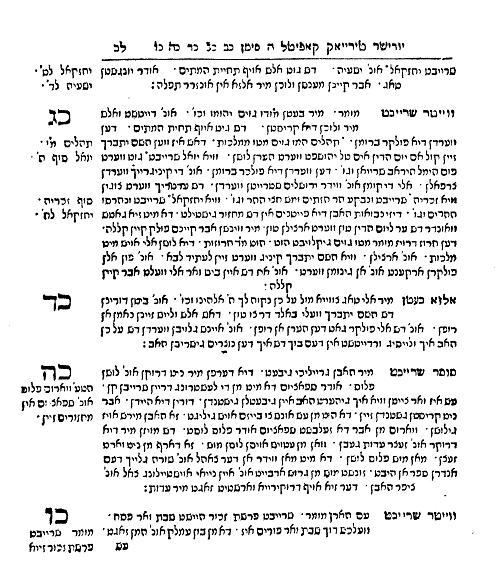
Zinberg notes that there is scant information about Aufhausen and what is known is surmised from remarks in Der Jüdische Theriak. Zinberg conjectures that Aufhausen (b. c. 1565-60) was an itinerant who, driven from his home by “evil Jews” travelled widely, broadening his world-view and culture, knowledgeable with German, knew Luther’s translation of the Bible, and was familiar with Flavious Joseph, Buxtorf the Elder, Pica della Mirandola, and Johannes von Reuchlin on the Kabbalah among others. Furthermore, Aufhausen “displays great knowledge of Talmudic literature, and that he wrote elegant Hebrew is attested to by the poem written in the well known azharot-meter on the front page of the Teryak.” Zinberg infers from Aufhausen’s remarks that he was a shohet and mohel (ritual slaughterer and circumciser) but these professions did not provide well for Aufhausen, his wife, and six children “who were not always well fed.”[33]

Morris M. Faierstein writes that Der Jüdische Theriak is unique, it is the only Jewish response in Yiddish to anti-Jewish polemics by Christians and Jewish apostates in early modern Germany and the only such work printed in Germany.[34] Zinberg quotes Aufhausen that Der Jüdische Theriak is an antidote to the venomous bite of the anti-Jewish snake, that is, Brenz’s work. Aufhausen describes Brenz as “a terrible usurer,” and if one added together all the horses on which he loaned money one could put in the filed a regiment of riders, which is what brought him to baptism, noting that the Jews hated him for his ugly deeds pushing him way with both hands.” Brenz is a “frightful ignoramus and a petty, good for nothing creature, his diatribe lacks any system or order.[35] In his introduction, Aufhausen informs how he came to write Der Jüdische Theriak. Benz’s book was

placed before me, and worthy people waved it under my nose. As a result I called the aforementioned apostate a liar, as I continue to do the present. On Monday, the seventh of Ab, he [Benz] he rode up to my door in a violent manner and threatened me and wanted to kill me. He publicly confirmed the wickedness of his book in front of Jews and Christians, said that it was all true and just and wanted to continue persecuting Jews. However, I sanctified the name of God in response to his desecration of God’s name and called him a liar to his face and swore to write a book against his lies . . .[36]

Der Jüdische Theriak is comprised of seven chapters, each addressing a specific group of accusations. Aufhausen cites numerous examples from the Talmud to show that Jews are commanded to show mercy and friendliness to non-Jews, and those few laws that are not friendly are directed against pagans, not Christians.[37] Der Jüdische Theriak is also directed towards women, for, as Carlebach notes, Christian missionaries had introduced Yiddish into their conversion material to make them accessible to women. Aufhausen refutes their claims writing for “common Jews and Jewesses.”[38] In the final chapters of Der Jüdische Theriak Aufhausen includes an appeal for tolerance advocating equal treatment for all, both Jews and Christians,

I have shown above that [tractate] Baba Kamma and [tractate] Avodah Zarah write: “A heathen who studies Torah and studies the law of Moses is as good as the high priest.” Thus anyone who studies the Law and does not ridicule it, he is an honest person and is highly honored. It is the same whether Christian or Jew. . . .

I had this book printed in Yiddish in the Hebrew alphabet so that someone will know how to respond to Christians in conducive circumstances, and also to understand from this and keep in mind what a great sin it is to deceive Christians, with words or deeds.[39]

The study of Jewish texts by Christian-Hebraists proved to be a passing phenomenon. By mid-eighteenth century the interest of Christian-Hebraists in rabbinic literature and studies had diminished.[40] In Altdorf, in contrast to other locations where, as noted above, Hebrew works, primarily philological and biblical titles and translations of rabbinic works, often theological titles accompanied by glosses contesting the Jewish authors’ positions, were studied by Christian-Hebraists for their own purposes to better understand the sources of Christian theology and to refute Jewish understanding of those works, the emphasis of those studies here was primarily for polemic purposes. Wagenseil, although his object was not always antithetical to Jewish texts, is remembered today as being among the leading exponents of the Christian-Hebraist movement. His works, several described here, as well as those of his contemporaries in Altdorf, represent an attempt by Christian-Hebraist scholars to understand and refute Jewish beliefs. Despite being, from several perspectives, among those of history, a failed and futile effort, it represents an interesting intellectual endeavor.

[1] I am indebted to Eli Genauer for reading the text and his comments, several noted below and to R. Jerry Schwarzbard, the Henry R. and Miriam Ripps Schnitzer Librarian for Special Collections for his assistance. Images are courtesy of the Library of Agudas Chassidei Chabad Ohel Yosef; Yitzhak;Bayerische StaatsBibliothek; the Library of Congress; Hathi Trust; Hebrewbooks.org; and R. Eli Amsel, Virtual Judaica.

[2] The other Altdorf’s are, in Germany, Altdorf, Lower Bavaria, Landshut, Bavaria; Altdorf, Böblingen; Altdorf, Esslingen; Altdorf, Rhineland-Palatinate, Südliche Weinstraße; and Weingarten (Württemberg) or Altdorf: in Swiitzerland, Altdorf, Jura or Bassecourt; Altdorf, Schaffhausen; and Altdorf, Uri: in France, Altdorf, Bas-Rhin” in Poland, Stara Wieś, PszczynaStara Wieś; and Silesian Voivodeship; and in the United States, Altdorf, Wisconsin.

[3] An unanticipated result of the Christian-Hebraists’ efforts, suggested by Eli Genauer in a private correspondence, is that readers of the Christian-Hebraists works might possibly have been influenced in another direction, suggesting that “even though the Christian scholars published these books to show the errors of Judaism, there might have been some people who say “‘hey, the Jews have some pretty good points.’”

[4] Aron Freimann, “A Gazetteer of Hebrew Printing” (1946; reprint in Hebrew Printing and Bibliography, New York, 1976), p. 268; Moshe Rosenfeld, Hebrew Printing from its Beginning until 1948. A Gazetteer of Printing, the First Books and Their Dates with Photographed Title-Pages and Bibliographical Notes (Jerusalem, 1992), p. 64 no. 618 [Hebrew].

[5] Yeshayahu Vinograd, Thesaurus of the Hebrew Book. Listing of Books Printed in Hebrew Letters Since the Beginning of Printing circa 1469 through 1863 II (Jerusalem, 1993-95), p. 23 [Hebrew]. Vinograd notes three additional works, a Mishnayot, printed in 1860, Toldot Jeshu, in a collection of Wagenseil’s works (below), and an undated edition of Hochmah u-Minhag shel Talmidim.ge

[6] John McClintock, James Strong “Hackspan, Theodor” Cyclopedia of Biblical, Theological and Ecclesiastical Literature, ttps://www.studylight.org/encyclopedias/tce/h/hackspan-theodor.html. (New York, 1870).

[7] Translations are from The Soncino Talmud, Judaica Press, Inc. (Brooklyn, NY, 1990).

[8] Israel Moses Ta-Shma, “Muelhausen, Yom Tov Lipmann,:EJ 14, pp. 595-59.

[9] Ora Limor and Israel Jacob Yuval “Skepticism and Conversion: Jews, Christians, and Doubters in Sefer Nizzahon,” in Hebraica Veritas?: Christian Hebraists and the Study of Judaism in Early Modern Europe, Allison P. Coudert and Jeffrey S. Shoulson, editors (Philadelphia, 2004), p. 166; Meyer Waxman, A History of Jewish Literature (1933, reprint Cranbury, 1960), II p. 51.

[10] Eli Genauer, in a separate correspondence, brought the following to my attention concerning the text at the bottom of the title-page of Sefer Nizachon.  “I was curious about the script written at the bottom starting with ‘Suma Avuka Zu Lamah’  . . . continuing on to the other side start from top line 7th word…B’Sefer HaNitzachon…I think the author is using this as an example of Jewish title pages and didn’t realize it was printed by a Christian. It is actually a Gemara in Megillah 24b which goes like this

אמר ר’ יוסי: כל ימי הייתי מצטער על מקרא זה (דברים כח, כט) “וְהָיִיתָ מְמַשֵּׁשׁ בַּצָּהֳרַיִם כַּאֲשֶׁר יְמַשֵּׁשׁ הָעִוֵּר בָּאֲפֵלָה”. וכי מה אכפת לֵיה [=לו] לעיוור בין אפלה לאורה? עד שבא מעשה לידי. פעם אחת הייתי מהלך באישון לילה ואפלה וראיתי סומא שהיה מהלך בדרך ואבוקה בידו. אמרתי לו, בני, אבוקה זו למה לך? אמר לי, כל זמן שאבוקה בידִי, בני אדם רואין אותי ומצילין אותי מן הפחתין ומן הקוצין ומן הברקנין.

Fascinating. I’m not sure what they were trying to point out but I wouldn’t be surprised if it had Christian implications.”

The above text (Megillah 24b) states “R. Jose said: I was long perplexed by this verse, And thou shalt grope at noonday as the blind gropeth in darkness.5 Now what difference [I asked] does it make to a blind man whether it is dark or light? [Nor did I find the answer] until the following incident occurred. I was once walking on a pitch black night when I saw a blind man walking in the road with a torch in his hand. I said to him, My son, why do you carry this torch? He replied: As long as I have this torch in my hand, people see me and save me from the holes and the thorns and briars.”

[11] J. Rosenthal, “Anti-Christian Polemics from its Beginnings to the End of the 18th Century,” Areshet II (Jerusalem, 1960), p. 148 no. 70 [Hebrew]; Waxman, pp. 545-51.

[12] Judaica Jerusalem, “Rare Books, Manuscripts, Documents, and Jewish Arts” (Jerusalem, October 14, 1993), no. 4.

[13] Louis Isaac Rabinowitz, “Perlhefter, Issachar Behr ben Judah Moses” Encyclopedia Judaica, edited by Michael Berenbaum and Fred Skolnik, vol. 20. (2007), vol. 15, p. 777. Concerning the personal life of Bella Perlhefter and letters to Wagenseil see Elisheva Carlebach “Introduction to The Letters of Bella Perlhefter,” Early Modern Jewries, I (2004, Wesleyan University, Middletown, CT), pp. 149-57: https://fordham.bepress.com/emw/emw2004/.

[14] Elisheva Carlebach, Divided Souls: Converts from Judaism in Germany, 1500-1750 (New (Haven & London, 2001), pp. 204-05). Carlebach  continues that Wagenseil subsequently invited her again, this time writing to Samuel Issachar Behr, to which she responded that “‘you have further written to me about coming to your place, to teach dance to the only, wonderful daughter of your master the great scholar, whose name escapes me, May God watch over her, it is puzzling to me  that you add, ‘and to teach her to play the zither,’ for you know that from the day of my mother’s death, I took an oath not to play any musical instrument, and now how can I violate my oath? But it is possible that sometime I will come to teach her to dance.”

[15] David Malkiel, “Christian Hebraism in a Contemporary Key: The Search for Hebrew Epitaph Poetry in Seventeenth-Century Italy,” Jewish Quarterly Review 96:1 (Philadelphia, 2006), pp. 126, 136.

[16] Frank E. Manuel, The Broken Staff: Judaism Through Christian Eyes (Cambridge, Mass., 1992), var. cit.

[17] Jonathan I. Israel, European Jewry in the Age of Mercantilism 1550-1750 (Portland, 1998) pp. 189-90.

[18] Elisheva Carlebach, “The Status of the Talmud in Early Modern Europe,” in Printing the Talmud: From Bomberg to Schottenstein, eds. Sharon Liberman Mintz and Gabriel M. Goldstein (New York, 2005), pp. 87-89; Heinrich Graetz, History of the Jews (Philadelphia, 1956), History of the Jews V, pp. 185-87.

[19] Graetz, History of the Jews V, pp. 182-83. Concerning Peringer’s mission, Graetz writes “Whether Peringer even partially fulfilled the wish of his king is not known; probably he altogether failed in his mission.” Moritz Steinschneider, Catalogus Liborium Hebraeorum in Bibliotheca Bodleiana (CB, Berlin, 1852-60), cols. 270 no. 1876.

[20] Graetz, History of the Jews V, pp. 182-83; Steinschneider, CB, col. 270 no. 1876.

[21] Christian Hebraism: The Study of Jewish Culture by Christian Scholars in Medieval and Early Modern Times, (Cambridge, Mass., 1986), p. 40 no. 61.[22] The Jewish Life of Christ being the SEPHER TOLDOTH JESHU, or Book of the Generation of Jesus, translated by G. W. Foote and J. M. Wheeler (2018), p. 6.

[23] “Wagenseil’s Latin Introductory Material to His Tela Ignea Satanae (The Fiery Darts of Satan) Published in 1681,, Translated into English” Translated by Wade Blocker (wblocker@nmol.com) Dates of Translation: 2000-12-21 through 2001-03-09.

[24] Malkiel,, pp. 126, 136; Manuel, The Broken Staff, pp. 76, 150-51.

[25] Toledot Jeshu, for all its condemnation in Christian sources, is also not well received by Jewish chroniclers. Graetz, vol. v pp. 185-86, describes it as an “insipid compilation of the magical miracles of Jesus (Toldoth Jesho) with which a Jew, who had been persecuted by Christians, tried to revenge himself on the founder of Christianity.” Manuel, p. 150, in even stronger language, describes it as “the most scandalous of all” of the works in Tela ignea Satanae, “a scurrilous account . . . a gross parody that outraged Christians.”

[26] J. D. Eisenstein, ed., Otzar Vikkuhim (Israel, 1969), pp. 82-86 [Hebrew Mordechai Margalioth, ed., Encyclopedia of Great Men in Israel III, (Tel Aviv, 1986), cols. 843-85 [Hebrew].

[27] Gershon David Hundert, Yivo Encyclopedia of Jews in Eastern Europe, (New Haven & London, 2008) p. 1906; Isaac ben Abraham Troki, Hizzuk Emunah or Faith Strengthened, translated by Moses Mocatta, introduction by Trude Weiss-Rosmarin (New York, 1970), v-xii.

[28] Peter Schäfer, Jesus in the Talmud (Princeton, 2007), pp. 3-4.

[29] Shalshelet ha-Kabbalah (Chain of Tradition), a popular and much reprinted mixture of history and tales, is a chronicle of Jewish history from the creation to the time of the author. Parenthetically, the work was completed on the day of the bar mitzvah of ibn Yahya’s eldest son, his first born, Joseph, to whom the book is addressed.

[30] Gotthard Deutsch, S. Mannheimer, “Brenz, Samuel Friedrich,” Jewish Encyclopedia, Isadore Singer, ed. V. 3 (New York, 1901-06), p. 370; Carlebach, Divided Souls, p. 90.

[31] The title-page gives the place of printing in Hebrew as Hanau, 1615, based on the Hebrew text, שלמ”ה (375 = 1615) and right below the Hebrew, in Latin letters, is Altdorf MDCLXXX (1680). This title page is than a copy of the original with the place and date of the second edition noted below the Hebrew. Der Jüdische Theriak was translated into Latin by J. Wülder (Wilfer, 1681) and reprinted again in 1737 by Zusssman ben Isaac Roedelsheim who, according to Israel Zinberg, A History of Jewish Literature, translated by Bernard Martin, IV (New York, 1975), p. 165, further Yiddishized the language of the work somewhat, and in places changed purely German wiods into more Yiddish teems.” Der Jüdische Theriak was translated into English by Morris M. Faierstein as Yudisher Theriak: An Early Modern Yiddish Defense of Judaism (Detroit, 2016).

[32] After writing the above my supposition found support in Faierstein’s introduction (p. 27) where he writes “The work would be useful to Christian Hebraists and help them to formulate counter arguments to the Jewish objections raised by Zalman Zevi against the missionary works that were being produced with the intention of convincing Jews to convert to Christianity.”

[33] Zinberg, pp. 165-66.

[34] Faierstein, p. ix- xi.

[35] Zinberg, p. 166, quoting Der Jüdische Theriak.

[36] Faierstein, p. 38.

[37] Waxman, II pp. 557-59; Zinberg, p. 166, quoting Der Jüdische Theriak.

[38] Carlebach, Divided Souls, p. 185.

[39] Faierstein, pp. 140, 144.

[40] Concerning the diminished interest by Christian-Hebraists in rabbinic literature and studies in the eighteenth century see Elisheva Carlebach, “The Status of the Talmud in Early Modern Europe” in Printing the Talmud: From Bomberg to Schottenstein, eds. Sharon Lieberman Mintz and Gabriel M. Goldstein, (New York: Yeshiva Univ. Museum, 2005), pp.85-88 and Jam-Win Wesselius, “The First Talmud Translation into Dutch: Jacob Fundam’s Schatkamer der Talmud (1737),” Studia Rosenthaliana 33:1 (1999), p. 60.


Were the Ba’alei Tosafos Familiar with Aesop or Buddhism?

Were the Ba’alei Tosafos Familiar with Aesop or Buddhism?

By Rabbi Akiva Males

I – The European Cheder Rebbi and the Ba’alei Tosafos[1]

While completing my Kollel studies in the early 2000’s, I took part in a well-run teacher’s training program. During one session, a noted Jewish educator shared the following first-hand experience: In speaking with an old-school European cheder rebbi years earlier, he asked that rebbi how he shared positive reinforcement with his young charges. The rebbi was confused by the question, so our instructor re-phrased it. This time, he asked the older rebbi how he dealt with students who misbehaved. With a heavily-accented Yiddish he responded matter-of-factly, “I give patsh”. A bit taken aback, our instructor followed up by asking that rebbi what he did when his students had done something right. Surprised by the question, the older man responded, “I don’t give patsh.”[2]

The lesson conveyed to our group of aspiring young educators was that a lack of punishment should never be seen as a replacement for rewarding good behavior. I fondly recalled that humorous incident as I prepared my Shabbos Derasha for Parshas Toldos 5786 / 2025. While looking over that week’s Torah portion, I chanced upon a remarkable explanation offered by the Da’as Zekeinim mi-Ba’alei Tosafos[3] which seemed to mirror the remarks of that old-school cheder rebbi.

In Bereishis 26:26, we find that not long after having expelled Yitzchak Avinu from his locale (Ibid. 26:16-17), Avimelech – king of the Pelishtim – had a change of heart. Together with his military leadership, he approached Yitzchak interested in entering into a peace treaty. Taken aback by Avimelech’s offer, Yitzchak expressed his surprise. In explaining himself, Avimelech commented (Ibid. 26:29) on how nicely he and his people had previously treated Yitzchak: “וכאשר עשינו עמך רק טוב ונשלחך בשלום – and as we have done with you only good, and we sent you away in peace”.

Avimelech’s words are startling. By all measures, Yitzchak had been terribly mistreated by Avimelech and the Pelishtim. After his people destroyed the vital wells which had been previously dug by Yitzchak’s father Avraham, Avimelech himself ordered the expulsion of Yitzchak and his family from his lands (Ibid. 26:15-16). How could such actions be described as, “we have done with you only good, and we sent you away in peace”?!

In order to explain Avimelech’s seemingly bizarre statement, the Da’as Zekeinim mi-Ba’alei Tosafos (Ibid. 26:29) offers a wonderful parable:

משל לארי שהיה לו עצם בגרונו. אמר כל מי שיבא ויטלנו יעשרנו המלך עושר גדול. בא עוף אחד ששמו אגרון שצוארו ארוך. אמר, אני אטלנו. הכניס העוף ראשו בגרון הארי והוציא העצם. לאחר שהוציאו שאל שכרו. אמר לו הארי, לא דייך ששלחתיך בשלום ולא אכלתיך כשהכנסת ראשך בגרוני, אלא שעדיין אתה שואל שכר?! כך אמר לו אבימלך ליצחק, חסד גדול עשינו ממה ששלחנוך בשלום, כי דרכנו להזיק כל הבא.

A parable can be made to a lion who had a bone stuck in his throat. He proclaimed, “Anyone who comes and removes it will be greatly enriched by the king!” Along came a bird named Agron[4] that had a long neck and said, “I will extract it.” The bird inserted its head into the throat of the lion and removed the bone. After he extracted it he asked for his reward. The lion responded, ‘Is it not enough that I sent you off in peace, and I did not eat you when you placed your head in my throat? Now you still ask for a reward?!’ This is what Avimelech said to Yitzchak, “We behaved with great kindness by sending you away in peace – as we normally harm all who enter our locale.”

According to the Ba’alei Tosafos, Avimelech truly felt that he had behaved compassionately with Yitzchak. How so? He normally treated foreign visitors in a more brutal fashion. Thus, in Avimelech‘s mind expelling Yitzchak – in a way which did not hurt him – qualified as having acted in a manner that was “only good”, and that he had in fact sent Yitzchak away in peace. I grinned as I thought of the old-school cheder rebbi who confused his “not giving patsh” with actively rewarding his students for their good behavior.

II – Aesop’s Fables and Buddhist Texts

It soon hit me that there was something about the Ba’alei Tosafos’ parable which I recognized. The more I thought about it, the story of a long-necked bird who plucked a bone out of the throat of an ungrateful predator seemed familiar to me. Where had I seen / heard this story before?

After conducting some online research, I was shocked to discover a tale in Aesop’s Fables[5] entitled, “The Wolf and the Crane.” Here is that short story as translated by George Fyler Townsend:[6]

A Wolf who had a bone stuck in his throat hired a Crane, for a large sum, to put her head into his mouth and draw out the bone. When the Crane had extracted the bone and demanded the promised payment, the Wolf, grinning and grinding his teeth, exclaimed: “Why, you have surely already had a sufficient recompense, in having been permitted to draw out your head in safety from the mouth and jaws of a wolf.”

The moral of the story according to Townsend: “In serving the wicked, expect no reward, and be thankful if you escape injury for your pains.”[7]

The striking similarities between the parable of the medieval Baalei Tosafos and that of Aesop left me quite confused. After all, Aesop told his stories in ancient Greece nearly 1,800 years earlier than the Ba’alei Tosafos had flourished in France. In order to explain a difficult passage in Parshas Toldos, had the Ba’alei Tosafos borrowed this tale from Aesop?

I paused to better understand what troubled me. After all, Jewish tradition encourages us to accept wisdom from outside sources. For example, our Sages taught in Pirkei Avos (4:1): “איזהו חכם? הלומד מכל אדם – Who is wise? One who learns from all men.” The Sages again taught in Midrash Eicha Rabbah (2:13): אם יאמר לך אדם יש חכמה בגוים תאמין” – Should someone say to you that there is wisdom among the nations, believe him.” Finally, in his introduction to his Shemoneh Perakim, Rambam – who was well known for his openness to Greek wisdom – famously expressed: “שמע האמת ממי שאמרה – Listen to the truth from whoever said it.”

Nonetheless, I had a hard time believing that the Ba’alei Tosafos had applied those aphorisms to use one of Aesop’s parables in their commentary to Parshas Toldos. After all, were the Ba’alei Tosafos known to be as comfortable as Rambam in employing ancient Greek wisdom in service of their Torah learning? Even if they were, to my knowledge, Aesop the storyteller was never grouped together with the famous philosophers, scientists, and naturalists of classical Greece. Is there any indication that Aesop’s Fables were viewed by our Rishonim as an important font of wisdom?

While I considered all this, my research soon revealed that a nearly analogous version of this same parable exists in Far Eastern traditions. I learned of a work in Buddhist literature known as the Jataka Tales. That text is a collection of stories – each containing a moral lesson – of what the Buddha said he experienced in previous lives. I was surprised to discover one of those stories known as the ‘Javasakuna Jataka’. In that tale, the Bodhisatta (i.e. the one who would eventually become the Buddha) was a woodpecker. It reads as follows:[8]

The Bodhisatta was once a woodpecker. One day he saw a lion suffering and asked what ailed it. The lion answered that a bone was stuck in his throat, causing him pain and preventing him from eating anything. After the lion promised not to eat him, the Bodhisatta agreed to help. But not entirely trusting the lion, he propped his mouth open with a stick for added safety before poking his head in to dislodge the bone. Then he kicked out the stick and flew away into a tree without a word of thanks from the lion.

Sometime later, the Bodhisatta saw the lion eating a wild buffalo. He flew onto a tree branch nearby and asked if he could get something for saving the lion’s life. The lion told him that not eating him when he had the chance was sufficient reward.

I now felt completely flummoxed. How was one to make sense of the Ba’alei Tosafos proposing a parable to explain a difficult verse in Parshas Toldos – when that parable was nearly identical to a much earlier Buddhist teaching? (After all, Buddhism can be traced back to the sixth or fifth century BCE[9] – which would make Aesop and the Buddah almost contemporaries.) Putting aside the question of using Aesop’s Fables, it seemed entirely unreasonable to imagine that the medieval French Ba’alei Tosafos had any familiarity with Far Eastern Buddhist texts.

Additionally, I had discovered three nearly identical versions of the same parable. Considering the numerous startling similarities they each shared, it seemed too unlikely for them to be unrelated. However, considering the vast distances in geography, culture, and time which separated all three, how could their commonality be explained?

III – The Jewish Origins of the Ba’alei Tosafos’ Parable: Two Possibilities

After some more research I became confident that the source of the Ba’alei Tosafos’ parable was found on the shelves of their own Beis Medrash. At least two Jewish texts contain the same parable employed by the Ba’alei Tosafos. Of those two sources, one was contemporaneous and the other was of much older vintage.

Berechiah ben Natronai ha-Nakdan[10] (Hebrew: ברכיה בן נטרונאי הנקדן) was an acclaimed Jewish writer, grammarian, translator, poet, and philosopher. Scholars believe he lived in 12th or 13th century England or France (or both). He is best-known for his work entitled Mishlei Shu’alim (“Fox Fables”).[11]

Although it is now little-known, Mishlei Shua’lim was once quite popular. According to Dr. Anchi Ho (a program specialist in the African and Middle Eastern Division of the Library of Congress):

Fox fables were a popular genre in his day, and scholars have noted that Berechiah could have drawn his fables from any number of existing collections, including the Aesop’s Fables then circulating in various vernaculars or the French fox fables written closer to his own time by Marie de France. Berechiah did not so much make up his stories as render them in Hebrew for a Jewish audience.[12]

In his introduction, Berachiah readily states that he collected many valuable parables from other cultures and languages. After adding Jewish themes, rhymes, and poems to those parables he produced a unique work filled with ethical and moral lessons. Though the makeup of his book seems rather unusual for his era and locale, until modern times, Berachiah’s Mishlei Shua’lim was readily found in Jewish libraries and homes throughout Europe.

Parable number eight in Mishlei Shu’alim is entitled: זאב ועגור / The Wolf and the Crane – the exact same appellation used by Aesop for his fable involving identical creatures. While Berachiah’s version of that parable is far more verbose than Aesop’s (it is nearly four times longer), it shares the very same story and moral lesson. As such, it seems clear that Aesop – who preceded Berachiah by over 1,500 years, was the source for the eighth parable found in Mishlei Shu’alim.

One could posit that when commenting on Avimelech’s strange choice of words in Parshas Toldos, the Ba’alei Toasafos readily recalled the parable of the wolf and the crane found in Mishlei Shu’alim. Realizing that story could beautifully explain the verses in question, they employed Berechiah ha-Nakdan’s parable. Unfamiliar as they may have been with Aesop’s Fables, by making use of Mishlei Shu’alim, the Ba’alei Toasafos unknowingly enshrined one of Aesop’s tales into their commentary to the Torah.

However, there is a second – and much older – authentically Jewish text where the Ba’alei Toasafos’ parable can be found. See Midrash Bereishis Rabbah (64:10), where it is recorded that the Sages – living over a thousand years earlier than the Ba’alei Tosafos – utilized that very story, and even connected it to the same Biblical verses in Parshas Toldos.

Before we see the parable as recorded in the Midrash, the context in which it was taught is crucial for our discussion. According to that Midrash, at some point following their destruction of the second Beis HaMikdash, the Roman Empire had a change of heart, and granted the Jews permission to rebuild their temple in Jerusalem. Upon hearing this news, our ancestors in the Holy Land were ecstatic. They quickly began making great preparations to accommodate the anticipated return of their exiled brethren.

Soon, however, the Samaritans – who had long caused problems for their Jewish neighbors – strongly petitioned the Roman government to cancel their earlier allowance. The Romans sided with the Samaritans and reneged on their short-lived permissive proclamation.

With their hopes now dashed, the Jewish people were understandably devastated. In their frustration, some began talking of rebelling against the Romans once again. Knowing what the terrible outcome of such an effort would certainly be, the Sages sought to calm the Jewish zealots who were considering this uprising.

The Midrash reports that the Sages felt that the great Rav Yehoshua ben Chananya was capable of speaking to and calming his aggrieved countrymen before it was too late. He was dispatched on this crucial mission, and he shared the perfect message with the people who most needed to hear it. Rav Yehoshua succeeded by means of the following parable:

ארי טרף טרף ועמד עצם בגרונו. אמר כל דאתי מפיק ליה אנא יהיב ליה אגריה. אתא הדין קורא מצראה דמוקרה אריך, יהיב מוקריה ואפקיה. אמר ליה הב לי אגרי. אמר לו זיל תהא מלגלג ואומר דעלת לפומא דאריה בשלם ונפקת בשלם. כך דינו שנכנסנו לאמה זו בשלום ויצאנו בשלום.

A lion tore its prey and a bone became stuck in its throat. He said: “Anyone who extracts it, I will give him a payment.” An Egyptian koray [bird] with a long neck[13] came, inserted its neck, and removed it. It said to him [the lion]: “Give me my payment.” He [the lion] said to it: “Go, boast, and say that you entered the mouth of a lion in peace and emerged in peace.” Likewise, it is sufficient that we entered into dealings with this nation in peace, and departed in peace.[14]

Using this parable, Rav Yehoshua ben Chananya successfully calmed his kinsmen. He validated their feelings of immense frustration and expressed his agreement that they were in fact owed recompense by the Roman Empire. At the same time, he reminded them of their opponent’s brutal nature. Considering that track record, it would be wise to take note of their well-being and view that as compensation of sorts.

The Midrash states that this parable can be used to explain Avimelech’s seemingly strange statement in Bereishis 26:29. Based on his normally violent behavior, in a sense, he really had done good for Yitzchak when he sent him away in peace.

One could argue that after taking note of Avimelech’s odd choice of words in Parshas Toldos, the Ba’alei Toasafos recalled the Midrash’s parable of the lion and the long-necked bird. Realizing that tale could perfectly explain the verses in question, they made use of it as well. If Rav Yehoshua ben Chananya’s teaching from the Midrash was the source of the Ba’alei Toasafos’ parable, it follows that nothing from Aesop’s Fables was inadvertently included in their Torah commentary.

IV – Which Jewish Text Was the Most Likely Candidate?

We have seen two Jewish texts from which the Ba’alei Tosafos could have sourced of their parable. For the following four reasons, I believe that the Ba’alei Tosafos’ parable was based on the Midrash Rabbah and not on Mishlei Shu’alim:

  1. Length and style of the parable: The Midrash’s version of this parable is only forty-nine words long. It is concise and to the point. Similarly, the length of the story recorded by the Ba’alei Tosafos is just sixty-nine words. Like the tale found in the Midrash, the Ba’alei Tosafos’ parable is also written in a straightforward fashion. In stark contrast, with a word count of two hundred and ninety-four (not including an additional poetic moral lesson), the parable found in Mishlei Shu’alim is extremely verbose. Furthermore, unlike the Ba’alei Tosafos’ parable, Berachiah’s tale is a winding elaborately rhyming poem.
  2. The animals involved: The parable taught by Rav Yehoshua ben Chananya in the Midrash Rabbah involved a lion and a long-necked bird. It was precisely those same two animals which were the key figures in the Ba’alei Tosafos’ version of the story.However, the predatory animal in Mishlei Shu’alim’s parable was a wolf – not a lion. In fact, the two animals involved in Berachiah’s tale were a wolf and a crane – the very same creatures in Aesop’s version of the story.
  3. Use as Biblical commentary: Midrash Rabbah serves as a running commentary on the Torah. Rav Yehoshua ben Chananya‘s parable of the lion and the long-necked bird was specifically cited by the Midrash to explain Shemos 26:29. In order to make sense of Avimelech’s strange choice of words, the Ba’alei Tosafos used that same tale in their commentary to that very verse. Mishlei Shu’alim, however, shares that parable completely unconnected to any Biblical narrative. It is not used in the context of offering any commentary on the Torah.
  4. Likelihood of familiarity: Mishlei Shu’alim was penned by a contemporary of the Ba’alei Tosafos. With the advent of the printing press still a few hundred years away[15], that work was only available in manuscript form. Copying such texts by hand was a laborious process. As such, it would take time for handwritten editions of Mishlei Shu’alim to spread across Europe. One can imagine that during the period of the Ba’alei Tosafos, they were far more familiar with a classical Jewish text – such as the Midrash Rabbah – than they were with an unusual new work like Mishlei Shu’alim.

Thus, the Ba’alei Tosafos’ parable seems to have been based on a lesson they knew from the Midrash Rabbah rather than on a tale in Mishlei Shu’alim. As such, it was Rav Yehoshua ben Chananya’s teaching in the Midrash – and not Aesop or a Buddhist text – that was the basis of the Ba’alei Tosafos’ parable.

V – The Need for Further Clarity

I now felt confident that the Ba’alei Tosafos had drawn their parable from a much earlier – and authentically – Jewish source. I realized, however, that I had only kicked the proverbial can down the road. After all, Rav Yehoshua ben Chananya’s parable – as found in the Midrash Rabbah – was taught to quell a would-be-rebellion against Rome after the destruction of the second Beis HaMikdash. That places his teaching of this parable at some point after the year 70 CE.

However, as we have seen, that same parable was shared by both Aesop and Buddhism some 500-600 years before the incident recorded in our Midrash. That being the case, I wondered about the originality of what Rav Yehoshua ben Chananya taught. In the spirit of the Sages’ earlier cited teachings in Pirkei Avos and Midrash Eicha Rabbah about being open to foreign wisdom, might he have borrowed his parable from the works of Aesop or Buddhism? On the other hand, based on what I shared in Part II regarding the Ba’alei Tosafos, it seems just as unreasonable to claim that Rav Yehoshua ben Chananya had based his parable on either of those earlier sources.

VI – The Spread of Jewish Teachings in the Ancient World – Approach A

I would like to present two approaches which can explain how this parable is of authentic Jewish vintage.

In 1995, I had the good fortune of spending close to six months furthering my Yeshiva studies in Jerusalem. While there, I discovered that Ohr Somayach – a nearby Yeshiva catering to English speaking men beginning their Jewish journeys – had an extensive Torah tape cassette lending library. While looking through their offerings, I was pleasantly surprised to find several tapes of question-and-answer sessions that had been led by Rabbi Simcha Wasserman, zt”l.[16] I borrowed them and quickly discovered that they contained a treasure trove of information.[17]

During one of those recorded sessions, a recent arrival to the Yeshiva posed the following question to Rabbi Wasserman: Prior to exploring his Jewish identity and finding his way to Israel, he had spent a significant amount of time in the Far East. While there, he immersed himself in the culture and study of various Eastern religions. The young man expressed his surprise at the similarity between several of the moral lessons he had imbibed in the Far East and some of the ancient Jewish wisdom he was now studying in Jerusalem. He found this occasional confluence of ideas confusing, and he asked Rabbi Wasserman for help making sense of those unexpected commonalities.

I remember being struck by Rabbi Wasserman’s response, and how I rewound the tape to listen to it a few times. Rabbi Wasserman began by validating that sincere student’s query. He stated that he too had thought about that question and then shared an approach that he had found helpful.

Rabbi Wasserman referred to the end of Parshas Chayei Sarah (Bereishis 25:6), which states:

ולבני הפילגשים אשר לאברהם נתן אברהם מתנת וישלחם מעל יצחק בנו בעודנו חי קדמה אל ארץ קדם.

“And to the sons of Avraham’s concubines, Avraham gave gifts, and he sent them away from his son Yitzchak while he [Avraham] was still alive, eastward to the land of the East.”

The Torah clearly states that Avraham had children other than Yitzchak whom he had raised and (one can assume) educated. In order to ensure that there would be no doubts as to Yitzchak being the sole heir to his legacy, Avraham sent those other children away before his passing. Where were those children sent? The Torah tells us they were sent “קדמה אל ארץ קדם – eastward to the land of the East.” That double expression, suggested Rabbi Wasserman, may indicate that they were sent not just east of Israel, but very east – i.e. the Far East.

It would make sense that those children of Avraham took many of his teachings with them to their new locales. With time, those children – and the Abrahamic teachings they had brought with them – fully assimilated into their new societies. Rabbi Wasserman posited that this could explain why some ideas contained in ancient Far Eastern cultures / religions bore strong similarities to several of Judaism’s ancient teachings. Those particular Far Eastern concepts may have originated with Avraham. However, due to the vast number of miles and years, their Jewish origins had been forgotten.

In the years since hearing Rabbi Wasserman’s novel (and ever so practical) theory, I thought of an additional way to support and expand on it. The Torah tells us that accompanying Avraham and Sarah to the land of Canaan were the “נפש אשר עשו בחרן – the souls whom they had made in Charan” (Bereishis 12:5). Rashi quotes the Midrash which explains that the verse refers to the students whom Avraham and Sarah had shared their unique monotheistic teachings with. According to Rambam (Mishneh Torah, Hilchos Avodas Kochavim 1:3), Avraham amassed a following of tens of thousands of students – and composed texts of religious instructions for them as well (see also tractate Avoda Zarah 14b). Rambam adds that both Yitzchak and Yaakov continued teaching others – outside of their immediate family.

As such, there were thousands of people who had been exposed to – and learned directly from Avraham, Yitzchak, and Yaakov. In time, those multitudes of devotees parted ways with the Jewish people and charted their own destinies. Despite the eventual assimilation of those one-time-students of the Jewish patriarchs (and matriarchs), some of what they had learned surely stuck with them, and would align with what would eventually become known as Jewish teachings.

VII – The Spread of Jewish Teachings in the Ancient World – Approach B

Tanach provides us with another clear avenue to explain how Jewish teachings spread throughout the ancient world. In I Melachim 3 we find that Shlomo HaMelech asked Hashem to bless him with wisdom – and that his wish was granted. In I Melachim 5:11-12 we read that Shlomo’s wisdom exceeded that of all other men, and that he composed thousands of parables and songs. As word of his incredible wisdom gained renown, many traveled from around the world to meet Shlomo and bask in his wisdom (Ibid. 5:14).

It follows that after spending time learning from Shlomo HaMelech in Jerusalem, those visitors returned to their homelands and shared some of what they had learned with their countrymen. As such, much of Shlomo’s teachings (including his parables) would have been introduced to many ancient nations and religions quite distant from Israel and Judaism. With time, and a lack of recorded history, the origins of that imported wisdom were forgotten as it was subsumed by the nations whose ancestors had imported it.

VIII – The Jewish Origin of Lion and Bird Parable

Based on either of the above-mentioned approaches, it makes perfect sense why occasional similarities are found between the age-old teachings of Judaism and those of other ancient cultures / religions. One can argue that those ideas from extraneous sources which mirror Jewish teachings may have originated with the earlier teachings of either Avraham Avinu or Shlomo HaMelech. As we have seen, each of those foundational pillars of the Jewish people shared their knowledge and wisdom with a vast number of foreign pupils eager to learn from them. Those students, in turn, took what they had learned with them when they returned to their home countries – both near and far.

We can propose that the Midrash’s parable of the ungrateful lion that required a bird to dislodge a bone from its throat was absolutely Jewish in origin. It was a creative lesson first taught by either Avraham or Shlomo to those who had gathered around them to partake of their knowledge. Those who appreciated the lesson of that parable brought it back home (along with other teachings) and shared it with their students, families, and friends. Thus, a teaching which had originated with either Avraham Avinu or Shlomo HaMelech was later taught and recorded with a few minor tweaks (which perhaps reflect the wildlife found in each locale) by both Aesop and Buddhist scribes.[18] [19]

IX – Rav Yehoshua ben Chananya’s Role

In order for this theory to function, there is one final detail which must be ironed out. As pointed out in Parts III and V, Rav Yehoshua ben Chananya’s taught this parable in order to quell a would-be-rebellion against Rome. This incident occurred in the aftermath of the destruction of the second Beis HaMikdash.

However, we proposed that this parable was authentically Jewish, and originated with either Avraham Avinu or Shlomo HaMelech. That being the case, how are we to make sense of the Midrash attributing this parable to Rav Yehoshua ben Chananya – who lived after 70 CE?

I would posit that the Midrash never stated that Rav Yehoshua ben Chananya created this parable. Instead, the Midrash taught us that he transmitted that parable. I would further suggest that this was an ancient Jewish parable – developed by either Avraham Avinu or Shlomo HaMelech – that Rav Yehoshua shared with an audience who needed to hear it.

At a time when Torah she-Ba’al Peh – Judaism’s oral teachings – was not yet written down, only the great Sages and their students were knowledgeable of the full corpus of Jewish wisdom. The Sages saw Rav Yehoshua ben Chananya as a walking repository of the Torah she-Ba’al Peh. They felt confident he could recall the perfect homiletic teaching that would convince the zealots to end their saber rattling.

This understanding fits perfectly with the words of the Midrash. In selecting Rav Yehoshua ben Chananya for this role, the Midrash stated: “אמרין יעול חד בר נש חכימא וישדך צבורא. אמרין יעול רבי יהושע בן חנניא דהוא אסכולסטקיא דאורייתא. – They [the Sages] said, ‘One wise man should go and pacify the community.’ They said, ‘Rabbi Yeshoshua ben Chananya should go, for he is the master scholar of the Torah.’”[20] The commentaries[21] to the Midrash suggest the term “אסכולסטקיא דאורייתא – the master scholar of the Torah”, connotes one who is fully proficient in the traditional Jewish homiletic teachings which calm the hearts of those who know them.[22]

According to the Midrash, our Sages acted wisely in selecting Rav Yehoshua ben Chananya for this task. At that fateful moment in Jewish history, he was able to recall the perfect ancient parable – first taught by either Avraham Avinu or Shlomo HaMelech. That parable contained the precise lesson which successfully averted a disastrous rebellion against Rome.[23]

X – Conclusion

Not all of us will spend time immersed in the cultures of the Far East. Nonetheless, it is quite likely that we will one day find ourselves just as perplexed as that sincere young man in Jerusalem who turned to Rabbi Simcha Wasserman for a lifeline. While studying Torah, we are bound to stumble upon instances where age-old Jewish wisdom and a teaching or two from ancient foreign cultures seem to mirror one another. Being able to point to Avraham Avinu or Shlomo HaMelech to explain how some of our people’s venerable teachings may have spread far beyond Israel is an extremely useful tool to have in our toolkits. One never knows when it might even prove invaluable.

Photo of Rabbi Simcha Wasserman by Harry Green, c. 1986, South Bend, IN harrygreenphoto@gmail.com

  1. I thank Rabbi Yitzchok Shapiro (Boca Raton, Florida) and Rabbi Dr. Eliezer Brodt (Ramat Beit Shemesh, Israel) for their important comments to an earlier version of this article. I thank my father, Mr. U. Harold Males (Jerusalem, Israel) for his editorial assistance.
  2. In a humorous Forward article linked below, the author turned to an expert who proposed these definitions for the following Yiddish words: “A zets is a strong punch. A patsh is a common slap, whereas a frask is a sharp, stinging one, given with a vengeance.” See: https://forward.com/news/547/martial-arts-in-yiddish/ . After reading this, I felt relieved that the older cheder rebbi had only made use of a patsh – and not a zets or a frask.
  3. The Da’as Zekeinim mi-Ba’alei Tosafos is a Torah commentary compiled from the writings of French and German Tosafists who lived in the 12th and 13th centuries.
  4. I was unable to find information about a bird named אגרון / Agron. However, the Hebrew word for the crane is עגור / Agur (see Isaiah 38:14 and Jeremiah 8:7). A crane is a long-necked bird which certainly matches the winged creature in the Ba’alei Tosafos‘ parable.
  5. Aesop (c. 620–564 BCE) was a Greek storyteller credited with a number of tales which are collectively known as ‘Aesop’s Fables’. See: https://en.wikipedia.org/wiki/Aesop
  6. See: https://classics.mit.edu/Aesop/fab.1.1.html
  7. I have no recollection of ever reading Aesop’s Fables as an adult. Did my parents or older siblings read a children’s book of Aesop’s Fables to me when I was young? Had I read such a book to my nieces / nephews when they were little?
  8. See: https://thejatakatales.com/javasakuna-jataka-308/
  9. See: https://en.wikipedia.org/wiki/Buddhism
  10. See: https://en.wikipedia.org/wiki/Berechiah_ha-Nakdan and https://en.wikipedia.org/wiki/Mishl%C3%A8_Shu%27alim
  11. The term Mishlei Shua’lim is clearly taken from Sanhedrin 38b where we learn ג’ מאות משלות שועלים היו לו לרבי מאיר ואנו אין לנו אלא שלש – Rabbi Meir had composed 300 fox fables (i.e. parables involving animals – the fox being chief among them), but we are only left with three of them.
  12. https://blogs.loc.gov/international-collections/2021/09/a-fox-fable-goes-digital-bialiks-classic-hebrew-story-for-children-finds-new-life-at-the-library-of-congress/
  13. Eitz Yosef quotes Aruch who translates מוקרה as ‘its neck.’ It should be noted, however, that Rashi translates מוקרה as ‘its beak.’
  14. I initially wondered if this Midrash might also be the basis for the lyrics “פרוק ית ענך מפום אריותא – save Your flock from the mouths of the lions” in the Shabbos song ‘Kah Ribon’. However, a little research revealed that the term “פום אריותא – the mouths of the lions” is a clear reference to Daniel 6:23.
  15. See: https://en.wikipedia.org/wiki/Printing_press
  16. Rabbi Elazar Simcha Wasserman (1898 – 1992) was a son of the storied Rabbi Elchonon Wasserman, zt”l (1874 – 1941) – head of the pre-WWII Yeshiva in Baranovich, Poland. Prior to the Holocaust, Rabbi Wasserman (the son) immigrated to the United States where he played important roles in Jewish education and outreach (particularly in California). He and his wife moved to Israel in 1979, where they spent the final and ever-productive chapters of their lives in Jerusalem. I vividly recall attending the funerals of both Rabbi Simcha and Rebbetzin Faiga Rochel Wasserman (sadly, she passed away just after observing Shiva for her late husband) while first studying in Jerusalem in 1992. On November 5, 1992, the Los Angeles Times published an obituary for Rabbi Wasserman. See: https://www.latimes.com/archives/la-xpm-1992-11-05-we-1397-story.html . For a book-length biography, see: Fox, Dovid (1995) Greatness in Our Midst: The Life of Rav Simcha Wasserman. Jerusalem: Feldheim Publishers. For a more recent article on Rabbi Wasserman, see Eytan Kobre, “Building Worlds.”, Mishpacha, November 14, 2023. https://mishpacha.com/building-worlds/.
  17. Some of Rabbi Wasserman’s presentations have been digitized and are posted on Ohr Somayach’s website. However, among those that are available, I was unable to find the question-and-answer session cited in this article. See: https://audio.ohr.edu/showperson/id=20
  18. At this point, I believe an important disclaimer is in order. By suggesting that this parable is of ancient Jewish vintage, I am not claiming that that it was stolen from Jewish sources and plagiarized by foreigners. (Neither was that what Rabbi Wasserman had suggested.) A long tradition of such claims seems to go back to Philo (c. 20 BCE – 50 CE), and Josephus (c. 37 CE – 100 CE). For a scholarly treatment of such assertions, see Norman Roth, “The ‛Theft of Philosophy’ by the Greeks from the Jews,” Classical Folia, vol. 32, no. 1 (1978): 52-6. For some important rabbinic sources on such claims, see Rabbi Moshe Isserless’ Toras Ha’olah 1:11 (end of the chapter) and Metzudos Dovid to I Melachim 5:12. For a more recent rabbinic source see Rabbi Joseph B. Soloveitchik’s commentary to Tisha B’Av Kina 37 on page 574 in Posner, Simon. 2010. The Koren Mesorat Harav Kinot: The Lookstein Edition: Tefilla for Tisha B’Av, Kinot, Eikha. New York: OU Press; Jerusalem. (See footnote 19 for additional sources on this theme.)
  19. See the link below for a series of five thorough articles (with extensive footnotes) published in the Ohr Yisroel journal (Monsey, NY) by Rabbi Yaakov Yisroel Stahl: (10) מקור חכמת אומות העולם מעם ישראל In these articles, Rabbi Stahl cites an incredible amount of material on the theme of ancient Jewish wisdom making its way into the teachings of the nations of the world. I thank Rabbi Dr. Eliezer Brodt for bringing these articles to my attention.
  20. I credit Artscroll / Mesorah’s Kleinman Edition of Midrash Rabbah (2010) for the translation of this passage.
  21. See Matnos Kehuna, and Eitz Yosef Ibid.
  22. Both Rashi and the Eitz Yosef (Ibid.) note the clearly Latin roots (i.e. scholastic) of the word אסכולסטקיא.
  23. As demonstrated above in Part IV, this Midrash was the source of the parable shared by the Ba’alei Tosafos.


The Twice Told Tale of R’ Yonasan Eybeshutz and the Porger

The Twice Told Tale of R’ Yonasan Eybeshutz and the Porger[1]

Moshe Haberman

Moshe Haberman currently lives in Los Angeles and is a businessman. Originally from New York, he learned in Brisk and publishes the Torah journal Chitzei Giborim.

Introduction

The only Halachic sefer[2] published in the lifetime of R’ Yonasan Eybeshuts was the ספר כרתי ופלתי which is a פירוש on Shuchan Aruch Yoreh Deah, dealing with issues of treifos, basar b’chalav, taaruvos, etc. The sefer was published in 1763, a year before his death in 1764 in Altona, which at that time was in the dominion of the King of Denmark.

In his preface to כרתי ופלתי, R’ Yonasan explains that he had already written other seforim, including Urim Vtumin, B’nei Ahuva, and Ya’aros Dvash. However due to the difficult situation he found himself in over the controversies regarding Kameos ascribed to him, that were allegedly Sabbatean in nature, he felt it was impolitic to publish his works earlier in his lifetime. He also shied away from getting the approbations customary upon the publication of a work, and כרתי ופלתי was published without any haskamos.

Despite the seriousness of the Sabbatean allegations, there is no doubt that he was considered to be a genius in Torah, and his influence over his many students was immense. His works are widely used by later generations of Halachic decisors; in many halachic issues, his views are considered normative.

In סוף סימן ס’ה, which is focused on the issur of Gid Hanasheh, the “displaced” nerve that is not allowed to be eaten, he discusses a story illustrative of how difficult the removal of the nerve can be, ie. Porging. There was someone considered to be a Talmud Chochom and expert in porging that claimed that the nerve that the general practice to remove was in actuality the wrong one, and he was being taken seriously in the German communities. When he came to Prague, he met with R’ Yonasan, who was the acknowledged Posek in this field, and (as R’ Yonasan relates the story) he was told by R’ Yonasan that he was wrong, the nerve that this expert was referencing was only found in male animals and not in female animals. R’ Yonasan showed him in the Semag[3] that Gid Hanashe applies to males and females. Apparently this expert accepted this authority and stopped his agitation.

The problem with this is that there is no such סמ”ג. The סמ”ג does not mention anything about males or females in his section on Gid Hanashe at all.

Worse, due to the fact that the סמ”ג is a sefer that counts and expounds on the 613 Mitzvos, many understood the structure of the סמ”ג to be similar to other Sifrei Hamtizvos (such as the Chinuch) where there is a listing of who the Mitzva applies to. Therefore, it was understood that what R’ Yonasan was actually saying was that since the Mitzva applies to male and female people, it should also apply to male and female animals.

This is a strange logic to say the least. It almost seems that he made a mistake where he fundamentally does not understand the issues.

This was the conclusion of R’ Yechezkel Feivel in his sefer, Toldos Adam[4] that R’ Yonason Eybeshutz just made a mistake and that mistakes just sometimes happen, and he goes on to discuss a number of mistakes that he found in Rabbinic literature.

In his article on this subject, R’ Shnayer Leiman[5] lists a number of Maskilim that used the list of mistakes that are mentioned in Toldos Adam to undermine the authority of the rabbinical leadership, stating surprise how one that studies these texts day and night could possibly make such a grave error, one that a child should be able to spot.

Many other authorities discuss this issue. Some take the approach that an emendation is needed, and that the reference is meant to be to a different sefer with a similar acronym such as Semak[6] or possibly Behag.[7]

Most prominently among these rabbinic authorities, the Chasam Sofer[8] grapples with this issue. He also seems to understand the issue as described, that the סמ”ג does make mention of males and females, however referring to male and female people. He also contemplates the possibility that since the proof that R’ Yonason provided was not correct, maybe we should be careful and not eat the other nerve as well.

Based on this question the Chasam Sofer states that as a general rule men and women are included in any מצות לא תעשה as there is no reason to exclude them, however when there is a reason to exclude women, there would need to be some kind of extra לימוד to include them. Therefore if the nerve is particular to the male animal then that would serve as a reason to exclude women, and there would need to be a לימוד to include them, which we do not have.

I believe that the proper understanding of the Chasam Sofer requires one to look at the source of the reasoning behind why the Gid Hanashe is proscribed in the first place. Yaakov was fighting with the angel of Esav, his brother, and his nerve was displaced due to a blow from that angel. The Torah then states, therefore B’nei Yisroel do not eat the Gid Hanashe (עַל־כֵּ֡ן לֹֽא־יֹאכְל֨וּ בְנֵֽי־יִשְׂרָאֵ֜ל אֶת־גִּ֣יד הַנָּשֶׁ֗ה אֲשֶׁר֙ עַל־כַּ֣ף הַיָּרֵ֔ךְ עַ֖ד הַיּ֣וֹם הַזֶּ֑ה כִּ֤י נָגַע֙ בְּכַף־יֶ֣רֶךְ יַעֲקֹ֔ב בְּגִ֖יד הַנָּשֶֽׁה). If this nerve was only in males (animals and people), it would make sense that women would be excluded, as the whole reasoning has nothing to do with them.

This logic was disputed by R’ Shlomo Kluger[9] for a couple of reasons. One, he doesn’t believe that the type of logic is appropriate to apply to R’ Yonason, who would have explained his thought process more clearly, and second, the logic of the Chasam Sofer should also apply to Shabbos, for example, as it is a Mitzvas Aseh with a set time, which as a general rule women are excluded from, women should not be included in the negative prohibitions of Shabbos without a limud, based on the principle explained by the Chasam Sofer. Especially as in the prohibition regarding Shabbos it also says “speak to the Bnei Yisroel” why would we not exclude the women?

In 1930 in a publication from Chicago known as Hapardes[10], there was an article written by R’ Shlomo Michoel Neches of Los Angeles. He writes that in his possession (אצלי) he has a first print of the כרתי ופלתי, and R’ Yonasan, the author, emends the סמ”ג to סה”נ and then writes Seder Hilchos Nikkur. It is not entirely clear which Sefer this refers to, as there is no sefer of that exact name.

This answer was picked up by the Pardes Yosef[11], and it appeared to be the final word on the matter. As a matter of clarity, this answer rings true as to what the author’s original intent was, for the following reasons;

  1. This “expert” that came to Prague appeared to be satisfied with the answer given to him by R’ Yonason. It is doubtful that someone that went through all that trouble would accept a source that is non-existent, or logic that appears to be dubious.

  2. It is clear that R’ Yonasan himself was not the one that prepared the text for printing. It was a student named R’ Ahron Katz[12] .I have in my possession a 1763 Altona edition, and there are many annotations that would point out where there is a good question or a good answer. Here is an example:

It is highly unlikely that R’ Yonasan himself would write in his own sefer “good answer”.

Rabbi Neches was born in Jerusalem and came to Los Angeles in 1910. He was the Rabbi of the famous Breed Street Shul in Boyle Heights (now listed on the national register of historic places) and was the founder of what is now Sharei Tfilah, a shul in the Hancock park area of Los Angeles. He was a collector of seforim and he published articles in Torah journals.

When I moved to Los Angeles it became a mission of mine to track down this volume of the כרתי ופלתי with emendations in R’ Yonasan’s own hand. I spoke with those that had attempted to find this sefer and had been unsuccessful. Apparently Rabbi Neches’s collection was auctioned off after his death and parts of it were donated to the Jewish Federation. No records of this volume were found.

I was able to track down one of the old librarians of the Federation and she told me that most of what they had went to AJU, but she did remember there were boxes of notebooks and other items that were never cataloged. I went to the AJU library and indeed they had boxes that appeared to be never opened. I spent an afternoon going through everything they had, and alas, no כרתי ופלתי.

However, I did find a handwritten catalog of the seforim that Rabbi Neches had in his collection, it was hard to tell if there were more pages due to the degraded condition, however there was no Kreiti Upleiti listed. Not only that but I started to notice that there were no first prints or older seforim on the list. It appeared to be that he was primarily collecting seforim that were printed contemporaneously.

This got me thinking, what if he never had it in his collection? Maybe he saw it in someone else’s collection? There weren’t too many seforim collectors in Los Angeles in the 1920’s but maybe someone had it in his possession as a family heirloom. I decided to look at the academic libraries in California and see if they had a 1763 edition of the Kreiti Uplaiti. With the help of R’ Yaakov Yitzchak Miller, we found it in the Theodore E. Cummings Collection in UCLA[13].

Just as advertised, the Shaar Blat showed the signature of R’ Yonasan Eybushutz, and the emendation was there in siman 65. However, something was wrong. The signature was from R’ Yonasan Halevy Eybeshutz of Leshitz. The author of כרתי ופלתי wasn’t a Levi, nor was he from Leshitz.

This volume wasn’t the personal property of the author of כרתי ופלתי, who fixed an unintentional error, it was the property of an entirely different person, albeit with the same name, that lived 150 years later.

This information, that Rabbi Neches provided was wrong, and therefore the issue of R’ Yonason’s mistake was back in play, was made public a few years back[14], and it would appear that we are back to square one, that this apparent mistake has other potential answers, including that of the Chasam Sofer.

Is it possible that Rabbi Neches simply made a mistake? It did not appear likely to me as it is pretty clear what it says, and he would know that R’ Yonasan, the author, was not a Levi.

Furthermore, in the private collection of Dr. Steven Weiss, there is a sefer, Shaar Yonason written by R’ Yonasan Eybeshutz of Leshits, that was acquired from the collection of Rabbi Neches, and it has the distinctive binding that Rabbi Neches would put on his seforim, so Rabbi Neches clearly knew of that there was another R’ Yonasan Halevi Eybesutz of Leshitz.(See Appendix B)

Rabbi Neches was right.

Rabbi Neches did not make a mistake. Incredibly, this particular volume that was owned by Rabbi Yonasan Halevi Eybeshutz of Leshitz, was also owned by Rabbi Yonason Eybeshutz, the author of כרתי ופלתי.

The odds would appear to be stacked against this, however if you look at the Shaar Blatt of the volume, reproduced here you can see two distinct handwritings, both say “Yonason Eybeshutz”, one appear to be more elongated and cursive and the other more rounded and of an older type, where each letter was not formed in one continuous stream.

Towards the top middle you can see under the first signature reproduced here

And on the left side center you can see a very different autograph, reproduced here

I was able to obtain with the kind assistance of R’ Shnayer Leiman images of signatures that have been verified to be R’ Yonasan Eybeshutz (see Appendix A), and if you put them together, the conclusion is inescapable.

From a receipt for money received that is verified to be R’ Yonason Eybeshutz, the author. (Appendix A)

From the Shaar Blatt of the כרתי ופלתי in UCLA.

This is clear evidence that this volume was the personal copy of the author himself.

Now let’s turn to the emendation, reproduced here

The letters are the rounder letters that are consistent with the author’s writing than the angular writing of the other R’ Yonason Eybeshutz.

It turns out that my thought process in tracking down this volume was actually wrong. The Cummings collection in UCLA was not donated by a local collector, it was actually purchased in 1963 from Israel, from the defunct publishing firm of Bamberger and Wahrman.[15] Mrs. Cummings merely footed the bill for the acquisition in honor of her husband.[16] I corresponded with Arnold Band, who was in charge of the acquisition, and he confirmed that it only made it to Los Angeles in 1963, and he had personal knowledge that the Kreiti Upleiti was part of the acquired collection. As Rabbi Neches moved to Los Angeles in 1910 and his article was published in 1931, he must have been working off of memory or notes that he took from when he saw it in Israel.

The only issue with that is the language Rabbi Neches used in the article, which that it was in his possession (אצלי), which it clearly wasn’t.

Sefer Hilchos Nikkur

There are a number of candidates for this sefer. Although there are no seforim with this exact title, Leiman[17] makes a persuasive case that the reference is to a 1577 volume printed in Cracow with the title הלכות הניקור , with the section title of סדר הניקור . With the conflation of the two titles, this is probably what R’ Yonason is referring to. The annotations were made by Rabbi Zvi Bochtner, who states that he consulted with Rabbi Moshe Isserles, the Rema, on his conclusions.[18]

This is a sefer that is unusual in that it is highly focused on one area of halacha, annotated by someone that wrote no other sefer and is not a well-known Rav, yet has authority. This sefer would be familiar to those that were in the practical business of porging, however would be unknown to the general learned public. The Rema’s endorsement, of course as the Posek of the German communities would be accepted by the expert as dispositive.

Conclusion

Despite the many twists and turns of this tale, it appears that R’ Yonason Eybeshutz did not make a mistake. The person that prepared the manuscript for printing made an understandable error due to the very unique nature of this particular sefer, and misunderstood which sefer the author was referencing, and subsequently the author himself fixed the issue. Rabbi Neches also did not make a mistake, although some confusion still exists how he actually saw this volume. To use the phrase that Rabbi Neches wrote in his article regarding his discovery of the emendation in R’ Yonason’s own hand, it is a mitzva to publicize this fact.

Appendix A


Appendix B


[1] Porging, or the act of removal of a nerve to make an animal kosher, is actually an English word, it is both in the Oxford English dictionary and Merriam-Webster. The source given is based on Judeo-Spanish. It appears to be highly unusual that a word would be extant in the English language that is specifically related to Jewish halacha, yet does not derive from either Yiddish (טרייבער) or Hebrew (מנקר).
[2] There was a sefer published to defend his case against R’ Yakov Emden called Luchot Edut, published in Altona 1755, and another called V’evoh Hayom El Ha’ayin which had disputed authorship.
[3] Rabbi Moshe of Coucy’s (d.1260) ספר מצוות גדול.
[4] Feivel, Rabbi Yechezkel, “Toldos Adam Chelek Bais”, Vilna 1884, pg. 43.
[5] Leiman, Rabbi Dr. Shnayer Z. “Judaic Studies” No. 4 Fall 2004, “Rabbi Jonathan Eybeshuetz and the Porger” pg. 16.
[6] Rabbi Isaac of Corbeil’s (d. 1280)’s ספר מצוות קטן.
[7] Rabbi Simon Kayyara’s  (d. 8th Century) הלכות גדולות, known in halachic literature as the בעל הלכות גדולות.
[8] In שו”ת חתם סופר סימן ס”ט.
[9] In ‘שו”ת טוב טעם ודעת סימן ק.
[10] Hapardes No. 4 Vol 1 (1930) pg. 18-19.
[11] Pozonovsky, Rabbi Yosef, פרדס יוסף פרשת וישלח.
[12] Introduction to the Kreiti Upleiti, Altona, 1763.
[13] Charles E. Young Research Library, UCLA, “Kereti U’Feleti”, Eybeschuetz, Jonathan, H0000017129.
[14] Wild Wild West-Orthodox Jewish Pioneers in LA, https://youtu.be/LEysLjApKOU ; “Kovetz Hama’eyan” (vol. 215; Tishrei 5776, pg 100 – 102).
[15] https://www.jta.org/1963/04/19/archive/university-of-california-gets-collection-of-33520-books-from-israel
[16] Her son Theodore Cummings served as Ambassador to Austria in the Reagan administration.
[17] Ibid, pg. 27,
[18] Valmadonna Trust London England 4822, שחיטות / של מוהר”ר יעקב ווייל, עם ההגהות והחדושים שליקט ואסף הר”ר צבי בר יצחק יעקב, ממה שבא לידו ובדק ונסה זה כמה שנים, והוגה אות באות על פי מוהר”ר משה איסרליס, בי הירש בן יצחק יעקב, מקראקא.


Sinful Thoughts: Comments on Sin, Failure, Free Will, and Related Topics Based on David Bashevkin’s new book Sin•a•gogue: Sin and Failure in Jewish Thought

Sinful Thoughts: Comments on Sin, Failure, Free Will, and Related Topics Based on David Bashevkin’s new book Sin•a•gogue: Sin and Failure in Jewish Thought (Boston: Academic Studies Press, 2019)

By Rabbi Yitzchok Oratz

A Bashevkin-inspired Bio Blurb:[1] Rabbi Yitzchok Oratz is Rabbi of the Monmouth Torah Links community in Marlboro, NJ. His writings can be found in various rabbinic and popular journals, including Hakira, Ohr Yisroel, Nehoroy, Nitay Ne’emanim, and on Aish, Times of Israel, Torah Links, Seforim Blog, and elsewhere. His writings are rejected as often as they are accepted, and the four books he is currently working on will likely never see the light of day.

“I’d rather laugh[2] with the sinners than cry with the saints; the sinners are much more fun.”[3]

Fortunate is the man who follows not the advice of the wicked, nor stood in the path of the sinners, nor sat in the session of the scorners.

(Psalms 1:1)

One who hopes is always happy [and] without pain . . . hope keeps one alive . . . even one who has minimal good deeds . . . has hope . . . one who hopes, even if he enters Hell, he will be taken out . . . his hope is his purity, literally the Mikvah [4] of Yisroel . . . and this is the secret of repentance . . .

(Ramchal, Derush ha-Kivuy) [5]

Rabbi David Bashevkin is a man deeply steeped in sin.

The study of sin, that is.

His recent book, Sin•a•gogue: Sin and Failure in Jewish Thought, is his second foray into the murky waters of sin, the first being his Hebrew B-Rogez Rahem Tizkor, which appeared in 2015. Throughout the book he ably serves as a “choti umachti,” as he walks us along the paths of sinners and allows us to listen in to their scorn sessions, plumbs their thoughts and analyzes their intentions, all with goal of detecting the sometimes deeply concealed sweet smell and seeds of holiness that can be found even among the sinners of Israel.[6]

As sin and failure are topics with which I am all too familiar, I took the opportunity to offer a review of sorts of the Hebrew book for readers of the Seforim Blog. The ensuing years have only honed my expertise, bringing me back to offer some comments on themes discussed in the new book.[7] While the topics of the two books are fundamentally the same, the new volume does include a great deal of entirely new material; the same will be true of this review. Furthermore, the change of language, in both the book and the review, demands a new style and structure for even the repeated material, and opens up the discussion to those who do not feel entirely at home in traditional rabbinic language and literature.

An Open Discussion of Sin

Overall, I found the book to be enjoyable, informative, thought-provoking,[8] and even inspiring at times. But should this discussion of sin be taking place at all?

From a traditional Jewish perspective, the answer is far from simple. The most controversial idea in the book (chapter 4), is the radical theology of the Hasidic court of Izbica in general, and Reb Tzadok ha-Kohen of Lublin in particular,[9], that sin is sometimes inevitable and always the will of God.[10] This concept does not apply only to someone who is sick (p. 42), coerced (p. 39), or in a compromising situation (note 124), nor is it the case only for someone who is faced with the necessity of choosing the lesser of two evils (p. 41); all this is standard Talmudic discussion. Rather, Izbica theology teaches that the seemingly free-willed choice to sin, motivated solely by one’s internal desires, is also the will of God – “All is in the hands of heaven, including the fear of heaven.”[11] This, of course, seems to be in direct contradiction to the concept of free will, the “fundamental concept and pillar” that is the underpinning of the totality of the Torah (Rambam, Hilchos Teshuva 5:3).

But is this really a problem? Long before the radical statements of Izbica, Rambam (Hilchos Teshuva 5:5) noted that our free will is seemingly contradicted by the existence of an all-knowing God, and Chovos Halevavos[12] raised the problem of free will being controverted by the many verses that indicate that God is in complete control of every action that takes place.[13] Neither source offers a resolution, demanding that we live with this paradox. Why, then, can’t we deal with Izbicean though similarly, why is it considered uniquely controversial? [14]

The obvious answer is that both before and after noting the paradox between predetermination and free will, Rambam hammers home the idea that, resolution or not, free will is real:

However, this is known without any doubt: That man’s actions are in his own hands and The Holy One, blessed be He, does not lead him in a particular direction or decree that he do anything. This matter is known, not only as a tradition of faith, but also, through clear proofs from the words of wisdom (Hilchos Teshuva 5:5).

Chovos Halevavos, too, stresses that the proper path requires us to act with confidence in our freedom to make our own choices.

And because free will is real, sin, with all its consequences, is very real as well:

Accordingly, it is the sinner, himself, who causes his own loss. Therefore, it is proper for a person to cry and mourn for his sins and for what he has done to his soul . . . since free choice is in our hands and with our own decision we committed all these wrongs, it is proper for us to repent (Hilchos Teshuva 5:2). “Consequently, the prophets taught that a person is judged for his deeds, according to his deeds – whether good or bad. This is a fundamental principle on which is dependent all the words of prophecy.” (5:5) And as long as one has not repented he is “hated by God, disgusting, far removed, and abominable . . . separated from God, the Lord of Israel . . .” (7:6 – 7) .

Compare this with the Izbica/Rav Tzadok attitude toward sin as (correctly) presented in Rabbi Bashevkin’s book; the Izbica approach recognizes “the powerful religious energy present in sins and the potential to challenge such energy into greatness, ultimately result[ing] in the redemption” (p. 102, based on Divrei Halomot # 3). In the Izbica worldview, sinning doesn’t make one “hated, disgusting, and far removed” from God, because “wherever a Jew may fall, he falls into the lap of God” (p. 48, from Pri Tzadik, Naso 15). Rambam’s message to sinners is to “cry and mourn,” and hope that their misdeeds do not prevent them from ever returning (6:4), while Rav Tzadok urges sinners never to despair “in any circumstance” (p. 100, from Divrei Sofrim 16). The contrast couldn’t be starker.

Based on the above, the real challenge of Izbica is neither philosophical (determinism vs. free will), nor historical (“How did the adherents of Izbica prevent their deterministic notion of sin from developing into an antinomian concept of Judaism?” [p. 47]). Instead, the question is practical: How do we go about “incorporating the theologically and oftentimes radical aspects of Izbica Hasidut into the contemporary Jewish community” without “under[mining] the ideals that we are working towards” (p. 48)?

In truth, the real question is not how we go about incorporating aspects of Izbica, but whether we need to reassess or fine-tune the aspects that have already been absorbed into our modern theology. The relatively recent phenomenon of neo-Chassidus (of which Rabbi Bashevkin is described as an avid follower is not primarily influenced by Izbica, [15] but its understanding of sin and failure certainly have Izbician overtones.[16]

Every discussion of the neo-Chassidus movement, pro and against, raises some form of the question of whether it leads to “perver[sion] of Chassidic concepts of joy, prayer . . . to the detriment of halachic observance,” and whether the idea that one always “falls into the lap of God” is mere “sugarcoating” the reality that our connection and relationship to Him can be broken “through destructive habits and the like,” no matter how deeply spiritual one “feels.” [17]

In other words, while historically Izbica theology was not detrimental to the strict halachic observance of Izbica Chasidim, [18] the jury is still out on whether the same can be said regarding its contemporary application. [19]

Rabbi Bashevkin himself clearly understands that Izbica thought is frequently misunderstood, misinterpreted and misapplied, and has a fascinating discussion on where and why its application goes wrong (pp. 50 – 52). The proper application of Izbica theology, according to Bashevkin, has us look at religious life as having a floor and a ceiling, the floor being the way “we deal with failure and those still mired in sin,” and the ceiling being the “ideals and values we reach towards.” Izbician theology can offer a message of “comfort and optimism,” helping to cushion the floor of Jewish life for those still mired in sin, without altering the ultimate ideals – “The floor was carpeted, but the ceiling remained in place” (pp. 46 – 50 and here.

While this certainly does seem to be a proper application of Izbician thought, it leaves plenty of room for the devil in the details. How comfortable should the cushions be? If every time a Jew sins he falls onto the lush carpet of the Bashevkian Izbician floor, what incentive is there ever to get up, or not to fall again? Maybe the floor needs to be carpeted, but how much more plush than commercial grade is called for?[20]

An even more fundamental question is if Bashevkin himself does justice in applying his principle. He approvingly quotes (p. 49) the work of Dr. Jennie Rosenfeld as “a fine example of the contemporary application of Izbica-Lublin theology.” Writing on the Wexner Foundation blog, Dr. Rosenfeld[21] describes her work as “focused on singles and on the need to create a sexual ethic which can speak to Orthodox singles today even when they may violate the halakhah.” Even assuming that Rabbi Bashevkin did not see her comments on the Wexner blog[22], and without casting aspersions on Dr. Rosenfeld’s important body of work, I question if a work titled “Toward a Modern Orthodox Sexual Ethic” can claim to be a faithful contemporary rendering of Izbica thought. There never was an “Izbician sexual ethic,” only “comfort and optimism” for those who had fallen (always a large segment of the community [23]) to get up off the floor and move on.

Later in that same chapter, Rabbi Bashevkin writes: ““Our collective imperfection is not cause for collective allowance . . . Sin and failure, no matter how common, can never be communally condoned or publicly institutionalized” (p. 53). This would seem to disallow creating “a sexual ethic which can speak to Orthodox singles” that might violate halacha.  That was true in the community of Izbica, in the community of Rabbi Yitzhak of Arama (p. 53), and would seem no less so in the Modern Orthodox [24] community today.

The Audacity of Hope

The above discussion highlights the sensitive nature of any public discussion of sin.[25] But every generation has its challenges in handling delicate issues. Ours may the one where the overwhelmingly forgiving tone of Izbica (and Breslov) theology is most potentially dangerous, [26] but it also may be the one where it is most needed. [27]

Support for this idea may come from a surprising place.

In chapter thirteen of Bashevkin’s book, he discusses the fascinating personal correspondence of Rabbi Yaakov Yisrael Kanievsky (the Steipler), and correctly notes (p. 143) that the theme of “[p]roductivity, patience, and optimism return again and again” throughout his letters. But hidden in his message of optimism is another subtle, but important, point that should not be overlooked. Speaking to yeshiva students struggling with “the known sin,” the Steipler acknowledges that the message of optimism he offers was deliberately downplayed in previous generations.

“The holy books intentionally wrote with great clarity [about the devastating nature of this sin] in order to keep people from sinning,” but were “very sparse” in explaining the other side of things, how one can draw a tremendous “light of holiness upon himself and throughout worlds” each time he controls his burning desires and refrains from sin. Even if one continues to fall,  says the Steipler, each time he does successfully control himself is a source of great merit and enables him to achieve levels of  “unfathomable holiness,” which will eventually permit him to leave sin completely behind. It is “fundamentally important not to feel sad, and not to think of the past [sins] at all” until one has the maturity to deal with them properly. “[N]ever despair, God forbid, for one must always hope for God’s assistance . . . “ [28]

Take careful note of what he is saying:  In today’s world we need the audacity to speak of hope even when mired in sin, the clarity to acknowledge that the strict and unforgiving messages of the previous generations would be counterproductive today. Harsh warnings are a thing of the past; strident calls for change do not suffice. “Hope and change” are the language of our times. [29]

Crying with the Sinners, Laughing with the Sages

While our generation may require a message of optimism and hope, and it is appropriate to look for sources in the rabbinic literature that reinforce that approach, it is equally important that we do not overplay our hand and interpret every source in an unreservedly sanguine way.

In chapter eight, Bashevkin insightfully analyzes the various versions of the tragic story of the great Talmudic sage Elisha ben Avuyah, and his spiritual descent to become Aher, the Other. In Bashevkin’s rendering, Aher is the foil to Rabbi Akiva, a Bizarro Rabbi Akiva, of sorts. Aher enters the pardes (“orchard” of mystical knowledge) and goes off the Torah path; Rabbi Akiva enters and emerges complete. Aher begins as a scholar and ends as a heretic. Akiva, by contrast, begins his life antagonistic to rabbinic authority and ends his life as a scholar. Rabbi Akiva’s outlook is portrayed as optimistic – his “exegetical perspective suggests indefatigable opportunity”; even in face of destruction, Rabbi Akiva “found reason for laughter.” Aher, on the other hand, is an “unrelenting pessimist” who “saw closed doors even when there was still hope of an entrance.” (pp. 94 – 95).

At the risk of being regarded as an unrelenting pessimist myself, I will note that while fascinating and certainly not without merit, there are limits to this interpretation.

Firstly, it does not seem that Rabbi Akiva’s “exegetical perspective suggests indefatigable opportunity” in all cases.  In the Babylonian Talmud version of the story (Chagigah 15a-b), the second exegetical conversation, Rabbi Akiva’s statement that “even what is broken can be fixed” does indeed suggest a great deal of optimism. However, the first one is much more ambiguous. The concept that “the wicked take their share and the share of their friend in Gehinom” has undeniable pessimistic overtones. Furthermore, the version in the Jerusalem Talmud (cited on pp. 91 – 92), where Rabbi Akiva teaches that blessing at the end [of life] is due to good deeds at the beginning, is explicitly understood as a message of doom for Aher, as the good deeds of his beginning were not done for the sake of Heaven. [30]

More fundamentally, while Rabbi Akiva did indeed find reason for laughter as others were crying, when he would study Torah verses that indicate the severity of sin, he was brought to tears [31] (not of joy) – “When Rabbi Akiva came to this verse he would cry.” [32] Only when surrounded by his colleagues who were deeply cognizant of the severity and bleak results of sin – because of our sins we were exiled from our land – did he offer a message of hope and consolation.  But sin itself is never a laughing matter (link) [34].

The Ba’al Shem Tov and (lihavdil [34]) Christine Todd Whitman:  Guilty but not Charged?

Over twenty years ago, I received a ticket for having an expired New Jersey state inspection sticker on my car. I knew it was expired, but was hoping I wouldn’t get caught until I’d had a chance to get the car inspected. No such luck. Guilty as charged, I paid the ticket and moved on.

Later that week, I heard on the radio that Christine Todd Whitman, then Governor of the State of New Jersey, had extended the inspection deadline for all cars by thirty days. As I had already paid the ticket, I sent off a protest letter (yes, an actual letter) to the Governor, and was pleasantly surprised when I received a very apologetic reply, stating that I was one-hundred-percent correct, but it was the responsibility of the local township to return the funds. Armed with the letter, I went down to the town hall, where they also apologized profusely, refunded my fine, and expunged this nefarious crime from my permanent record. I wasn’t guilty after all. [35]

Or was I?

In his Hebrew work (p. 40), Rabbi Bashevkin cites a parable from the Ba’al Shem Tov about a man who tests his wife by pretending to be another, and seduces her to sin. When she later brokenheartedly admits her sin, he consoles her by telling her that he had been masquerading as the seducer all along, and therefore she never really sinned.

Christine Todd Whitman might agree, but for Rabbi Akiva this would be nothing more than hollow consolation. As discussed in Rabbi Bashevkin’s book (pp. 33 – 36) it was these types of scenarios that brought Rabbi Akiva to tears, and Rabbi Hiyya bar Ashi to a life of repentance and a death in misery. The very fact that one intended to sin was reason for tears and repentance; that no actual sin occurred as no source of consolation.

But the Ba’al Shem Tov was not the first to offer such consolation; Yosef offered similar solace to his brothers. Which is it? Are such scenarios causes for comfort or for crying?  Bashevkin offers a number of possible resolutions (pp. 35 – 36).

Besides those he offers, others are given; [36] I would like to offer my own.

Every sin has two components: the rebellion against God and the actual damage done. In these scenarios, the consolation is only that no damage was done (either because no sin was committed or the act turned out to be for the best). But the rebellion against God’s authority still exists, and is a cause for tears.[37] In the case of Yosef’s brothers, since they had already genuinely repented (see Genesis 42:21 with Sha’arey Aharon), no new tears were needed. Only because their sincere repentance had been accepted could their negative plans be viewed as a source of blessing. [38]

First there are tears and repentance, only afterwards is the consolation meaningful.

A Flag as White as Snow [39]

Both in the text and the notes, I have touched on some of the thought-provoking topics raised in Rabbi Bashevkin’s book, touching on some of the topics (and there are many more [40]), that are ripe for discussion, challenge, debate and clarification  k’darko shel Torah (see Chagigah 3b). Indeed, a strong point of the book is that it covers many fundamentally important topics in a way that is relatable to scholar and layman alike.

Besides being provocative, discussion of sin can also be inspiring. In chapter six, Bashevkin offers a touching rereading of Richard Pindell’s famous story, “Somebody’s Son,” that would be good material for any rabbi’s Yom Kippur derasha.[41] The chapter starts off with the theologically challenging question (based on Gemara Chullin 60b), “Does God Repent?”

But theology aside, the very idea that God is hoping – waiting, so to speak – to see if He will be allowed into our lives, is one that deeply resonates.[42]

For seven years straight I had the privilege of davening on Yom Kippur in Beth Medrash Govoha’s Bais Eliyahu Bais Medrash. All of those years, the revered Rosh Yeshiva, Rav Yeruchem Olshin, shlit”a, led the davening for Neilah and spoke beforehand, and for seven years straight he said, with great emotion, the same exact thing:[43]

Yom Kippur is a great thing; there is nothing better than it . . . if we only would take advantage . . . A parable: A king made a feast to show his love for his subjects . . . four hours went by, five hours went by and no one came . . . finally towards evening people started trickling in . . . the king ran over to them and said with great emotion “I owe you a great favor! If not for you the entire feast that I made would have to be fed to the dogs.”

Yom Kippur is not only about us returning to favor in God’s eyes.  It is also about His hope (kaviyachol) that we take the opportunity to let Him into our lives. Ultimately, this is what Rabbi Bashevkin’s book is about – finding a way to let God in, to allow His spark to uplift our very human, often sinful, lives.

If you extract the precious from the worthless, you shall be as my mouth . . .

(Jeremiah 15:19)

Es Va’heiv B’Sofa

(Kidushin 30b)

Notes:

[1] See Sin•a•gogue, pp. xv – xvi, and R’ Bashevkin’s earlier comments here.  The idea that one should have a bio that includes failure may be the reason why the Torah includes the sins of the ancient greats. See the commentary of Rabbeinu Asher on Beraishis 38:16.
[2] See Sin•a•gogue, p. 95, and our discussion below.
[3] I start with this line from Billy Joel’s “Only the Good Die Young” to highlight a striking feature of Bashevkin’s book. The chapters all begin with epigraphs that run the gamut of sources, ranging from John Milton (Paradise Lost) to Bob Dylan (“Absolutely Sweet Marie,” which Bashevkin misspells as Mary) to an HBO crime drama (True Detective). The common denominator is that there is not a Jewish source among them. Indeed, throughout the book there are seemingly more obscure pop-culture references than desultory Talmudic discussions (see p. 195). This style is common in the outreach world that he (and I) work in, and popular among certain segments of the Orthodox community. Through Bashevkin’s creative pen, these sources make the book a lighter, more enjoyable read, palatable to a wider audience, without diminishing the seriousness of the topics he discusses. Of course, for some Torah scholars, this approach would be considered misguided (if not blasphemous), and their concern should not be discounted. In his Foreword to the book (p. x), Shaul Magid writes that it is “precisely Bashevkin’s point” to level the playing field by comparing a comment by George Orwell to the Hazon Ish. I have my doubts if that really is his point. In any case, while it is certainly true that sin and failure are universal concerns, and, for example, a “preacher’s kid” may have struggles similar to those of a rabbi’s son (see note 309), this book is specifically about sin and failure in Jewish thought. By emphasizing similarities we sometimes gloss over fundamental differences.  See the comments of Rabbi Aharon Lichtenstein in Judaism’s Encounter with Other Cultures: Rejection or Integration?, ed. Jacob J. Schacter (Northvale, NJ, 1997), p.  278. See also his “The Future of Centrist Orthodoxy,” Leaves of Faith. vol. 2 [Jersey City: Ktav, 2004], p. 323, where he writes, “Does a universalist concern require that youngsters – and hence most adults as well – know a good deal about the Rolling Stones but nothing of the Avnei Nezer? “ To apply his point to one of the topics in the book under discussion – I know many more people who know about the question of determinism vs. free will from The Adjustment Bureau than those who have spent time studying the sacred sources of our tradition. See also the comments of Rabbi Zion Baoron, in his michtav beracha (point # 3) to Rabbi David Stav’s Bein HaZemanim (Yedioth Acharonoth books, Tel Aviv 2012).
[4] Mikvah has the same root as tikvah – hope.
[5] A new edition of this work, with commentary, was recently put out by R’ Mordechai Elbaz of Kollel Sha’arey Tzion. Reading the Hebrew, I found it shocking how much the theme, and even the words, are reminiscent of the teachings of Rav Nachman of Breslov. I subsequently found that others agreed (see here).
[6] See Gemara Chagigah 15b and 27a (I am not sure how this fits with Chagigah 14a), Beraishis Rabba 65:22, Rav Tzadok ha-Kohen of Lublin (Likutey Ma’amarim #8, 12, and 16, and Machshavos Charutz # 8), Rav Nachman of Breslov (Likutey Mohoran # 178), and Rav Nosson of Breslov (Likutey Tefilos 2:10).
[7] The earlier review was far easier to write, as it was during the month of Elul when sin and repentance are timely topics, and the roar of Elul from my yeshiva days was still ringing in my ears. But maybe this shouldn’t be the case. Maharsha (end of Megilah) writes that there is no specific mitzvah to expound on the laws of teshuva thirty days prior to Rosh Hashana and Yom Kippur, as teshuva is a year-round undertaking. Furthermore, some commentaries explain that we begin reciting Pirkey Avos during the spring, as this season renders us particularly susceptible to sin (see Piskey Teshuvos 292 # 9).
[8] One especially thoughtful and thought-provoking topic is Bashevkin’s extremely powerful discussion of the challenges facing rabbis’ children and the challenge of balancing love of Torah and love of family (chapter 10). This issue is not new – see Gemara Bava Metzia, 85a. Some important sources on this topic include Rav Matisyahu Solomon’s commentary on Rav Moshe Cordevaro’s Tomar Devorah (on the middah of L’She’airis Nachalaso), as well as his commentary of the last verses in Megilas Esther. Rav Matisyahu writes that in order to give meaning to God’s directive that we treat the entire Jewish people as family, we must first treat our actual family kindly (Rav Matisyahu is in favor of nepotism). Praying that God have mercy “like a father has mercy on his children,” is worse than meaningless if we don’t have mercy on our actual children.  It is not clear, however, if all the ba’aley mussar agree. See Rav Yitzchok Blazer’s comments in Kochvei Ohr (regarding Rav Yisroel Salanter) and Tenuas HaMussar (volume 4, pp. 173 and 271 – 272) about the Alter of Novardok’s disregard and seeming cruelty to his family. See also Gemara Gittin 6b, Eruvin 22a, Ta’anis 23b – 24a. I hope to discuss this topic in detail in an upcoming article (and book).

On this topic, a must-read is the powerful poem by Rabbi Samuel Adelman, and the beautiful letter by his daughter, Roz Duman, which can be found in Jewish Action (Fall 2017, p. 3). One can only hope all rabbis would be so sensitive to their children’s plight, and a daughter so understanding and appreciative of her father, as this parent and child. Speaking of rabbis’ children, see here where the Klausenberger Rebbe zt”l, is quoted as questioning a father’s qualifications based on how his son turns out as an adult. However, see there where Professor Marc B. Shapiro correctly points out that “there are many examples of pious people whose children ended up very differently.”  Considering whom some of these fathers were (see the book under discussion, p. 78), the Klausenberger Rebbe’s point is very difficult to understand.
[9] It should be noted, that the seforim of Rav Tzadok were understood to explain and moderate some of the more problematic statements of Izbica. See Sefer Yam Ha-Chochma (5779, p. 450 – 451).
[10] These are two related, but distinct, concepts. See my review of the Hebrew edition in Yitzchok Oratz, “Review of ‘Sefer Berogez Racheim Tizkor’, by Dovid Bashevkin,” the Seforim Blog (7 September 2015), available here.
[11] See the sources in the book (note 131) and in my Hebrew review in Yitzchok Oratz, “Review of ‘Sefer Berogez Racheim Tizkor’, by Dovid Bashevkin,” the Seforim Blog (7 September 2015), available here, at note 16.
[12] Sha’ar Avodas Hashem # 8.
[13] Rambam raises a similar question, but doesn’t leave this one unanswered — see Hilchos Teshuva 5:5 and 6:5.  Lechem Mishneh (6:5) assumes that the two questions are one and the same, but this is strongly challenged by Ohr Sameach (6:5) and Arba Turey Even (brought down in Sefer ha-Likkutim in the Frankel Rambam, 6:5).
[14] Indeed, maybe the answer here too is that it remains a paradox. See Tzidkas HaTzadik # 40 and my Hebrew review in Yitzchok Oratz, “Review of ‘Sefer Berogez Racheim Tizkor’, by Dovid Bashevkin,” the Seforim Blog (7 September 2015), available here, at note 18.
[15] Neo-Chassidus is influenced by many streams of classical Chasidus. Indeed, part of its charm is that it is not limited to any one school of thought or practice. That being said, I have heard its influences described with an acronym that spells out the name of the prophet Chabakuk – standing for Chabad, Breslov, (R’ Shlomo) Carlebach and (Rav) Kook. Throw in a little Komarno, Berditchev and Rav Tzadok, and I do think it is a workable description.
[16] We are not discussing Izbica ideology per se, but rather its effect on our attitude toward sin. It is likely that the neo-Chassidic attitude toward failure and sin may be more influenced by Breslov than by Izbica, but both play a role. While Breslov does not share the Izbica theology of free will (see Likutey Mohoran, Tinyana 110), they share much in common regarding the proper response to sin and religious failure (see pp. 284 – 285).  Whatever the exact influence, the questions, discussion and challenges that follow still apply.
[17] The first quote is from R’ Joey Rosenfeld (a strong supporter) in the Jewish Article article on neo- Chassidus, the second from Rabbi Noach Shafran (a harsh critic) in a Mishpacha magazine conversation in response to their earlier article on the subject.  Rabbi Shafran’s comments brought a firm, but calm, response from Rav Moshe Weinberger (rav of Congregation Aish Kodesh in Woodmere, New York, and the undisputed spiritual leader of neo-Chassidus in America) in print, but a far harsher one in two public shiurim he gave shortly after the printed response came out. (The shiurim used to be available here, but seem to have been taken down, possibly because Rabbi Weinberger felt he had been too harsh. The sources to “Hashem’s Unbreakable Love For Every Jew” are still available here. The greatest share of Rabbi Weinberger’s barely concealed ire was directed at the idea that a Jew can have his connection to Hashem broken.
[18] “[N]o one, scholar or Hasid, disputes the halakhic nature of Izbica life.” “The Izbica community and its associated communities in Radzyn and Lublin were quite halakhic.” – see here. See also and my Hebrew review in Yitzchok Oratz, “Review of ‘Sefer Berogez Racheim Tizkor’, by Dovid Bashevkin,” the Seforim Blog (7 September 2015), available here, at note 35.
[19] To clarify, and not to be accused of disparaging a large group of yeraim v’shlaimim, I am speaking about a relatively small percentage of the group. As a whole, it certainly seems to be a force for enhanced avodas Hashem. I, too, have gained much from the seforim of Rav Yitzchok Meir Morgenstern and Rav Avraham Tzvi Kluger (among others), and from the shiurim of Rav Weinberger and Rav Meilech Biderman,  and very much look forward to my annual pilgrimage to Aish Kodesh for Lag Ba’omer (see here). But as opposed to Izbica theology having no known negative effect on its original adherents (for reasons explained by Bashevkin on pp. 50 – 52), the same cannot necessarily be said about neo-Chassidus today. In Rabbi Weinberger’s written response he rhetorically asks, “Can it be that there is a holy reason why every passing year sees more and more people gravitating to places like Uman or Lizhensk?” No doubt. But as anyone who has been to Uman or Lizhensk (and now Kerestir) can testify, there can also be non-holy or unholy reasons, as well.
[20] In Rabbi Weinberger’s above-mentioned lectures, he says he was challenged to reconcile his teaching of “God’s unbreakable love for every Jew” (see also Zohar, Shemos 5b) with the words of the Rambam that speak of the sinner being “hated by God, disgusting, far removed and abominable.” Rabbi Weinberger’s response (oversimplified here) is that on the deepest level the love always remains. But the question remains — whatever the answer, Rambam did write the words “hated, etc.” Doesn’t that indicate that, on some level, the sinner is supposed to feel hated etc.? Is the sinner justified, upon seeing those words, to run straight to the teachings of Rav Nachman and Izbica for comfort? How does Rabbi Weinberger know that when Rabbi Shafran speaks of the broken relationship, he isn’t simply reiterating  the concepts expressed by Rambam? Should there be some degree of discomfort, even feeling of God’s (dare I say) hate after sinning? Or is the carpet so thick that we never even feel the fall?

It could be argued that the Rambam himself never tells the sinner that he is hated. Only once he repents does Rambam tell him how fortunate he is to have overcome his prior state. And the Breslov response is likely that any harsh message (like that of Reishis Chochma) is always intended to come with a concomitant sense of God’s love (see the sources in Rav Avraham Tzvi Kluger’s Yichud HaShabbos (volume 2, p. 32).  But I still think the matter needs much more clarification then it has received.
[21] Dr. Rosenfeld has another title – “manhiga ruchanit,” – and another she does not seem to have – “rabbi” (see here). The question of the appropriateness of both these titles may be related to Izbica as well – see here and here. See also the recent review by Dr. Rosenfeld of Sin•a•gogue at the Lehrhaus blog.
[22] It may have been too painful for Rabbi Bashevkin to go to the Wexner blog, as he was ‘rejected from the Wexner Graduate Fellowship. Twice.’ (here) (This would be the appropriate place to put a “JK” or smiley emoji, but I don’t want to be known as a pioneer in using text slang or emojis in rabbinic or academic writing. Although being that among the thousands of seforim online at HebrewBooks Dot Org, Bashevkin’s is likely the only one that includes the author’s Twitter handle (see here), maybe this review would be an appropriate place to introduce some 21st-century lingua franca. But I resist.)
[23] See Raishis Chochma, Sha’ar HaTeshuva 3:10, who writes that no one in his day was free of the sin of hotza’as zera livatala.
[24] This is the true regardless of whether the word “modern” is a qualifier or not.
[25] This is especially the case regarding sexual matters, see Chagigah 11b, and especially when presented to a popular, as opposed to scholarly, audience. See Iggeros Moshe (EH 1:64, and 3:14). This highlights a fundamental difference between Rabbi Bashevkin’s Hebrew and English books. Both are fine works, both cover similar sensitive and controversial topics, but even the most traditional reader would not find Rabbi Bashevkin’s Hebrew sefer problematic, not the case with the English one. Aside from the fact that he is far more cautious in the Hebrew work (see my Hebrew review in Yitzchok Oratz, “Review of ‘Sefer Berogez Racheim Tizkor’, by Dovid Bashevkin,” the Seforim Blog (7 September 2015), available here, at note 4), style (see note 3 above) and audience matter. To use Bashevkin’s terminology (from the introduction to Mei ha-Shlioah), Hebrew readers are more likely to be “Intimates who understand [its] true value” (p. 50).
[26] See B-Rogez Rahem Tizkor, page 42) for a fascinating explanation (from Rav Hutner) of why free will is under attack, especially in our days.
[27] See my Hebrew review in Yitzchok Oratz, “Review of ‘Sefer Berogez Racheim Tizkor’, by Dovid Bashevkin,” the Seforim Blog (7 September 2015), available here at end of note 4).
[28] See letters 11 – 15 in volume 1 of Kreina d-Igrassa (Bashevkin’s spelling. No one in history has ever pronounced it like that, including, I am willing to bet, the Steipler himself.)
[29] Despite these words of encouragement, some of the points raised above still need to be clarified. The Steipler was speaking to yeshiva students in despair, offering hope to those who already felt the pain of the fall and the extreme discomfort of the “floor.” His words of hope to them (and thousands of yeshiva students who subsequently read his words) was lifesaving. Furthermore, even to them, he does mention the fear of punishment as a tool to refrain from sin. (See, for example, letter # 14).
[30] I find it fascinating, yet tragic, that the one teaching in the Mishna recorded in the name of Elisha ben Avuya (Avos 4:20) is how a child is a clean slate. Yet, at the end of his life he claimed that from the very beginning his slate wasn’t clean.
[31] And sometimes he cried and laughed – see Gemara Avoda Zara 20a. (The laughter there does seem to indicate optimism, but the tears do seem to me somewhat pessimistic, seeing something good and already thinking that all good must come to an end.)
[32] Kiddushin 81b.
[33] It should be noted that that even contemplating the severity of sin permitted Rabbi Akiva to find a spark of hope. When Rabbi Akiva recognized the severe consequences of any involvement with sinful behavior, he realized that this must indicate an even greater reward for those who have any involvement in good deeds. See Rashi on Vayikra 5:17.
[34] The term “lihavdil” is not meant, God forbid, to disparage Whitman. See Senator Joe Lieberman’s The Gift of Rest (Howard Books, New York, 2011, p. 198).
[35] As noted in the book (p. 32), the idea that one cannot be held responsible for an attempt to commit crimes that were never actually possible to execute raises questions regarding the legality of certain sting operations. .

Bashevkin also discusses culpability for an attempt when, if successful, an actual crime would have occurred.   He concludes that a “conceptual category of attempt . . . does not seem to exist in Jewish law . . .  attempted murder . . . is not found in the Talmud” (p. 32 -33).   Bashevkin’s conclusion takes for granted that the concepts of being permitted to kill a rodef (a pursuer) and ba b’machteres (a burglar who tunnels/breaks into a home) are forms of preemptive strike to save the victim, not punishment for the attempted murderer. This is not remotely clear, as there is a large body of Talmudic debate on the topic. For some discussion, see the language used in Rambam, Sefer HaMitzvos (positive mitzvos # 239 and 247 and negative mitzvah # 293), Shiurey Rav Dovid (Povarsky, Bava Basra 7b), Shiurey Rav Shmuel (Rozovsky, Sanhedrin 72b, note 309), Noda B’Yehuda, Tinyana, CM # 60, and Aruch Laner (Sanhedrin 73a).

Even more questionable is why eidim zomimin (conspiring/falsified witnesses) are not an example of criminal attempted sins, as they are punished for thought only, but not when action takes place, See Rashi to Devarim 19:19. See also Chidushey Rabbenu Chaim HaLevi, Hilchod Edus chapter 20, and the comments of Rav Yechezkal Abramsky (Melech B’Yafyo, p. 301).  For a more kabbalistic approach, see Sefer Yam Ha-Chochma (5778, p. 152 – 153, based on Maharal, Be’er HaGolah chapter 2).
[36] See also Rabbi Yehoshua Oshinsky, Sefer Shalmey Levi (Modi’in Ilit, 5770), p. 58 – 60).
[37] This is likely the intent of the parable of the Ba’al Shem Tov (mentioned above); there, too, the consolation comes only after repentance. See Peri Tzadik, Roch Chodesh Menachem Av # 1.
[38] See my Hebrew review in Yitzchok Oratz, “Review of ‘Sefer Berogez Racheim Tizkor’, by Dovid Bashevkin,” the Seforim Blog (7 September 2015), available here, at note 2.
[39] On p. 3, Bashevkin writes that 19th-century anthropologist Frank Boas’s assertion that the Eskimos have numerous words for snow is “not entirely discredited,” but on p. 13 writes that it has “long been discredited.” I guess it took a long time two write those ten pages, but not long enough to correct the name to Franz (see note 22 above, and apply here). In any case, the earlier assertion seems correct (see here).
[40] Some additional, random comments on the book: 1) On the first page of the Foreword there is a typo on the third-to-bottom line (“or” instead of “our”). 2) Page xii – regarding sanitized storytelling – see my comments in The Torah U-Madda Journal (Volume 8, pp. 331 – 333). I was subsequently quite surprised to see that Prof. Kimmy Caplan wrote an entire article in Kimmy Caplan, “‘Absolutely Intellectually Honest’: A Case Study of American Jewish Modern Orthodox Historiography,” in Rachel Elior and Peter Schäfer, eds., Creation and Re–Creation in Jewish Thought: Festschrift in Honor of Joseph Dan on the Occasion of his Seventieth Birthday (Tübingen: Mohr Siebeck, 2005), 339-361 available online here, addressing one of my points, and especially pleased with his conclusion (p. 361): “Rabbi Oratz was correct in observing that Modern Orthodox historiographers are similar in nature to Haredi historiographers.” 3) Regarding the value of “Half Repentance” (p. 127), it should be noted that not all agree. See the first “Likkut” on Hilchos Teshuva in the Sefer HaLikuttim of the Frankel Rambam. 4) Regarding outward coercion bringing out inner desire (p. 129), see  Sefer Darkey Moshe (Rabbi Shachna Mendel Scheiner, 5778, p. 329) where Rav Moshe Feinstein is quoted as positing the radical idea that based on this there can almost never be a mitzvah done shelo lishma, as any external influence just represents inner desire!
[41] I plan on using it. Please don’t tell my community.
[42] Related to this idea, see the powerful story told by Shlomo Zalman Shragai, cited in Rabbi Norman Lamm’s “The Shema” [The Jewish Publication Society, Philadelphia, 2000, p. 118 – 119.]
[43] In Yiddish, of course.  This derasha, highly based on the Yom Kippur derasha of Rav Aharon Kotler, zt”l, can be found (with sources) in Rav Olshin’s Sefer Yareach L’Moadim on Yom Kippur (Ma’amar # 83). The version in print differs slightly from the version I heard each year.


Rav Shmuel Ashkenazi: a Hidden Genius

Rav Shmuel Ashkenazi: a Hidden Genius
By Eliezer Brodt

This Monday night is the first yahrzeit marking the passing of a unique Talmid Chacham, R’ Shmuel Ashkenazi of Yerushalayim, at the age of ninety-eight. R’ Shmuel was one of the hidden giants of the seforim world, in both ultra-orthodox and academic circles. I had the Zechus to learn much from him and in this article, I wish to describe this fascinating but hardly known Gaon and what we can learn from his life. An earlier abridged version of this article appeared in the Ami Magazine last year. IY”H in the future I will expand this essay.

One day back in 2000, while learning in the Mir as a Bochur, I was having a conversation with a friend, R’ Yaakov Yisrael Stahl, and R’ Shmuel Ashkenazi’s name came up, R’ Yaakov described him as an extraordinary Talmid Chacham. A little while later, during one of my daily seforim store trips I noticed a recent arrival, a very heavy sefer (844 pp.) with a peculiar title, Alfa Beta Kadmita de-Shmuel Zeira. I opened it up and immediately put two and two together, realizing that the author is the same R’ Shmuel Ashkenazi I just heard about. Upon purchasing it, I could not put it down. Learning through it I was immediately able to tell that my friend had not exaggerated in the slightest way. It appeared that this person knew literally everything about anything connected to Torah.

First Meeting

At the time, I had been working on researching and publishing my first article which dealt with tracing everything about the custom of not sleeping on Rosh Hashanah. One of the earliest sources quoted was in the name of a Yerushalmi which appeared to have been lost at some point. I had been searching all over for any information on this topic, and it was then that I noticed that R’ Ashkenazi was planning on writing about this topic in the next volume of his. I am not sure why but at the time I did not make an effort to speak with him about this. I returned to the US for a few years, and while in the US I drafted a letter to him listing all of my issues on this topic but I never got around to sending it. When I returned to Eretz Yisroel in 2004, one of the first of my planned stops was to visit R’ Shmuel Ashkenazi. Almost immediately upon returning a newly made friend, R’ Duvid Vieder, a Toldos Aharon Chossid who was close to R’ Ashkenazi, brought me into him to visit. From then on, I began to visit him regularly, this custom continued until a few weeks before the 2020 coronavirus lockdowns. At times I visited him once a week for an hour or so, other times once a month, other times I would speak to him on the phone.

I must preface my reminiscences by saying that, sadly, I did not heed the advice of the Chasam Sofer who told his children and talmidim that since he won’t be around forever, they should “chap arein” and listen to his stories. Unfortunately, this is not the first person with whom this has happened to me. I took for granted that Rav Ashkenazi would be around forever, (he did die at the age of 98!) and assumed I would always be able to ask him again for a particular story or an idea that he mentioned.

What was the connection?

Basically, each visit I would prepare lists of questions to ask him. I would also bring him new seforim or articles (printed out in big letters, to help him read it easier). Sometimes when I would ask him something, he would say he is old and his head does not work, other times it was amazing what he remembered – on the spot. Sometimes he would pull down a file of material stored in – no jokes here – old cornflakes boxes.

I would then scan some of the material. Other times he offhand did not have anything to add on a particular topic but when looking at a particular sefer I would find a note written on the side or in a paper stored in the sefer that would be related to what I was searching. Other times I would find something else which was of great importance. Rarely did I leave his house empty handed. We both shared a love for seforim and information on a wide range of topics.

Love of Seforim

What drew me to him, and particular developed my relationship with him, was our shared love of seforim. I would update him on new seforim. At times he would ask me to purchase it for him or would borrow my copy for a bit. He told me numerous times how he enjoyed visiting and buying seforim from various shops for many years and that he started collecting when he was seven years old! Now he could not go to stores as he was too old; I got to know him when he was over eighty.

When I joined the editorial board of the journal Yeshurun, I would bring him each new volume as it was printed. Each visit he would ask me to check on the shelf where he kept them, to see if he was up to date and if needed, to update him with any missing volumes. A true lover of seforim, his face would lit up at each new volume. I would then point out some of the articles I thought he would enjoy and he would put in markers to read them.

I always wondered if he read the various volumes of Yeshurun I brought him. After he was niftar, while going through his seforim, I found inserted in one rare book a small paper which he wrote: “for more information about this author see the article in Yeshurun”. Then in a different pen he added another cite from another issue from Yeshrun from a few years later.

This small story also demonstrates a bit of his methodology; he would collect all kinds of information and store them at times in a related sefer and would constantly update these notes.

His love for seforim was something unique, the glow on his face when he opened up a new sefer, especially of someone he was into, was simply priceless. He would look carefully at the Shaar and if it was a reprint of an older sefer he would immediately check if they included the front page of the older edition to compare. He had seforim in every space possible in the four rooms of his apartment, including his porch. Many visitors noticed how even his kitchen was lined with seforim!

Dikdueki Sofrim Haskomot

An interesting story happened with me and his library. While working on an article about the Dikdueki Sofrim I was unable to track down some recorded Haskomot that the author R’ R.N.N. Rabinowitz had received for the first edition of his work. I, along with other scholars, had searched numerous copies of the first edition, but with no luck. Late one night, I came to R’ Ashkenazi’s house and mentioned to him my problem. He said “show me the issue inside,” keeping with his custom to take care to always view the source material firsthand (Osiosi Machkemios – a topic he wrote a lot about). I took down his copy of the sefer, and lo and behold it was a first edition with the missing Haskamot! I published these missing Haskamot in my article on the Didukei Sofrim, and attributed this rare and miraculous find to his extraordinary library.

His History:

Where this unique Talmid Chacham came from is simply a mystery. He was born in Yerushalayim and lived in Batei Ungarn. He learned by Rav Yosef Tzvi Dushinsky of the Edah HaChareidis. Originally, his name was Deutsch but, at some point changed it to Ashkenazi. He had four children with his wife who died over forty years ago. Since then, he lived alone in his apartment near some of his children. His son did an excellent job of Kibud Av bringing him food every day and looking on him a few times a day. Yom Tov and Simchos he spent time with his family.

When I and others asked him, who was his Rebbe, he would just smile and say no one in particular. The truth is the Mishnah in Avos states: Knei Lecha Chaver. Aside from the simple peshat, Rashi explains this Mishnah by citing some who say it means via Seforim others commentators explain this as ‘buying a pen’ (see R’ Ashkenazi’s in-depth article on this for sources). R’ Ashkenazi employed all of these methods; his friends and teachers were his seforim and his pen.

R’ Ashkenazi was a short, quiet and unassuming person. Most, having seen him walking on the street, would never believe he was such an erudite Gaon. Many times, R’ Ashkenazi did not express much emotion except to give a pleasant smile and was friendly and polite in conversation. But there were times he got very excited; for example, when he recalled a good story from his younger years or something unique that he discovered years ago. He was very polite and was a real Yekeh; for example as soon as they bentched Rosh Chodesh Kislev his Menorah was already prepared in the window.

R’ Yechiel Goldhaber, a Talmid Chacham and author of numerous articles and seforim had a close relationship with R’ Ashkenazi for many years. He recalled when he was introduced to R’ Ashkenazi for the first time by his father-in-law, he thought to himself who is this simple looking man? He soon learned that this man was a master of all of Torah and swiftly became a close Talmid of his.

Many times, he would tell me he wishes he could come visit my library. In Later years he would spend his Yomim Tovim at his daughter. One Chol Hamoed Succos, when he was over ninety, he made the difficult trek from her house to mine in order to spend time in my library.

He would love to read everything he could get his hands on. I visited him at many different times of day, even late at night and I always found him learning a sefer – even when he was over ninety. He read everything newspapers, books – he was just curious about everything with an incredible thirst for knowledge.

I recall visiting him a few times when he eighty-five and noticed he was learning the Shelah Hakodosh very carefully. I asked him why (of course he had learned through this sefer numerous times before!) and he responded that someone is reprinting the sefer and asked him to go through the sefer and send comments. He therefore sat down to learn the whole sefer, line by line, after which he wrote a ten-page letter with his comments on the sefer.

Over time, I learned again and again that R’ Ashkenazi personally believed his purpose in this world was to help people with the incredible amounts of information that he had gathered over the years of intense learning. This incredible Middah can be seen in this light; he did not feel that he was the “owner” of this extraordinary wealth of information he had collected, and thus gave very willingly without any conditions. He never asked me to cite him when he gave me some rare source even – although I always told him I would; he just was so happy to help someone else.

He would collect and catalog much of what he read. He had all kinds of systems to file the information he had gathered over eighty plus years of learning. When he would read an important article in a magazine or journal, he would cut out the parts and store them in their appropriate place. He gathered information on thousands and thousands of subjects (not an exaggeration in any form) which had some connection to our rich heritage. What’s more astounding is that R’ Ashkenazi never used a computer or the internet; all of his erudition came about simple by learning through thousands of seforim; a great many of them rare or unknown.

Over the years he helped so many people and for many years after he retired, he would visit the National Library of Israel on Tuesdays, where throngs of people would line up in wait to speak with him about all kinds of subjects.

Many years ago, he received a call from a young chassidish Talmid Chacham living in Monsey who was starting to work on publishing a new edition of the classic historical work Seder Hadorot. He started asking him questions about various issues he had. Over many phone-calls R’ Ashkenazi answered many of his difficulties while training him in proper research and writing skills. This year some volumes finally were published (see here). And this was not a onetime occurrence – he helped so many more people. He used to remark to me that when he was younger so many people would come to visit him – until the late hours of the night.

He was an expert in so many different topics, whether it was the standard ones like Tanach, Chazal, Halacha, Minhag or Chassidus or less commonly studied subjects such as Tefilah, Piyut, Dikduk, Kabbalah, Philosophy, Machshavah, History and Bibliography. In all of these areas his expertise was remarkable.

His Uniqueness

A sample of his bekius; one time I noted that the Maharsha often quotes a “Sefer Yoshon Noshon” and asked if we have any idea which sefer this is? He immediately responded that he found it usually refers to R’ Todros Abulafiah’s Otzar Hakavod.

His incredible Bekius was bolstered by an almost photographic memory, as the following story demonstrates. Once someone used the Bar-Ilan Responsa search engine to locate a passage in the Tana DeBei Eliyahu to no avail. He went to ask R’ Ashkenazi who immediately told him where the passage could be found. Checking the Bar-Ilan text, it was discovered that when the sefer was being entered into their database the passage in question had been mistakenly omitted. I first heard this story from someone else, so to make sure it was accurate I asked him about it and he confirmed it. A similar story happened with him and a passage from the Shut Chasam Sofer.

A few years back a friend was working on publishing out an esoteric Rishon on Mesechet Megillah. He thought no one ever heard of this author and randomly mentioned this to R’ Ashkenazi – without batting an eyelash – replied “of course, and one can find material by this author in the work of Rav Shlomoh Alkabetz on Megillas Esther (Manos Halevi). The fellow was stunned in elation; he had just been gifted new and important material for his project.

This remarkable Bekius which even beat out computer search engines, was just one aspect that made him remarkable. He would receive numerous calls and letters from all over the world from people of all walks of life seeking his assistance in tracking down a statement. He had an incredible knowledge of all of Chazal. I do not just mean the “standards”; Bavli, Yerushalmi and Midrash – even all the numerous and very often almost unknown Midrashim printed over the years. He was also expert in what is known as the lost Midrashim. Over the years many Midrashim we had were lost but some traces of them can be found in various Piyutim, cited by Rishonim or in other obscure places. Through his incredible amounts of learning and his phenomenal memory he was able to recall so much in this field.

To illustrate this with some samples. A few years back someone who was editing for publication a never before printed pirush of a Rishon on Avos came across a few statements in the name of Chazal. This person, a Talmid Chacham in his own right and familiar with tracking down such material, could not locate sources for these statements. Immediately he penned a letter to R’ Ashkenazi. A few days after he received a letter from R’ Ashkenazi with various incredible sources for his questions. This was a very common occurrence.

Piyut, Tefilah and language

Earlier, I mentioned his expertise in Piyut, Tefilah and language. A bit of background is needed to explain this. Rabbi Joseph B. Soloveitchik, when describing Rabbi Elazar Hakalir’s greatness, (Koren Mesorat Harav Kinot (pp. 386-388) wrote the following:

The piyutim of Rabbi Elazar HaKalir, including his kinot, serve two purposes. The first is limmud, learning. Every sentence of the piyut quotes m’aamarei Chazal… The second purpose is tokhaha, rebuking the people for their misdeeds and instructing them in the proper way to act. These piyyutim deal with… repentance… acknowledgment of God’s justice. The shali’ah Tzibbur was not merely a chazan…, but was one of the great scholars of the generation who was the principal… moral critic of the people… Rabbi Elazar HaKalir was (also) a master of the Hebrew language and very creative in his use of Hebrew. If not for him, modern Hebrew could not have come into existence. Before HaKalir, the Hebrew language was very rigid. For example, the noun and verbs were fixed in their form… But HaKalir made a critical contribution to the development of the Hebrew language by endowing the language with flexibility… Rabbi Elazar haKalir’s piyutim served two purposes: limmud, study… As for the element of study, one of the dimensions of HaKalir’s piyyutim is that they are compilations of the statements of the sages. Most of us, who are expert in neither Hebrew nor aggadot Hazal, find HaKalir’s corpus of piyutim boring. But it is not boring at all; it is like a gold mine. His piyutim for Yom Tov explain the essence of the Yom Tov. The midrashim concerning Sukkot are replete with information about the sukka, etrog and lulav, and all the explanations in the Midrash, all the ta’amei sukka, the reasons for the sukka, all of the ma’amarei Hazal, are together in the HaKalir’s piyutim for the first day of Sukkot… If one were to study carefully and thoroughly the piyutim of Rabbi Elazar HaKalir for Rosh HaSahana, Yom Kippur, Sukkot, and Pesah, one would find many applicable halakhot and the entire pertinent Midrash, including many midrashim that are unknown to us from any other source.

Rav Ashkenazi was an expert on everything related to Tefilah and Piyut. He somehow read it all and retained it. But in addition, he was able to use his expertise in Chazal and Hebrew language to understand it on a much higher level and as a result was often contacted by the world experts on Tefilah and Piyut for his assistance. These requests came from experts such as Professor Shalom Speigel, Chaim Schirmann, Avraham Haberman, Ezra Fleischer and Daniel Goldschmidt who constantly sought his assistance while working on their Tefilah and Piyut related projects.

In an interview with Ami Magazine printed a few years back, Professor Shulamit Elitzur mentioned:

“there’s another amazing thing I find when doing research. I am constantly coming across midrashim that were lost to the ages… example, everyone knows that Haman was referred to as ‘the Agagi’ because Shaul allowed Agag to live one extra night, which allowed Haman’s ancestor to be born. However, the earliest makor we find in writing in the 16th century; this fact was discovered by Rav Shmuel Ashkenazi of Yerushalayim. But I found a ktav yad of a piyut about Purim that describes this very story and explains how Haman’s ancestor was born, which gives us a source from 1,000 years earlier! And there are many similar examples of lost midrashim being kept alive through unknown piyutim.”

R’ Ashkenazi wrote some articles on Piyut and Tefilah, but we have found much more among his papers and hopefully if I can raise enough funding all his fascinating material on Tefilah will come to light.

When the important Siddur Ezer Eliyahu (sponsored by his late friend Yeshaya Vinograd) was first printed, one can see R’ Ashkenazi’s name in the introduction, thanking him for his assistance (he assisted them for some of the later additions) and his great knowledge in this field.

I mentioned that he had an incredible knowledge of Dikduk and the Hebrew language and used it towards better understanding Piyut and Tefilah. He also authored articles on these subjects and in 1967, when reviewing an important dictionary, wrote a long article demonstrating this very point – and article that garnered much praise. He was very proud of this essay and mentioned it to me many times. A few years ago, I reprinted it with additions he had made in his own copy and a nine-page topical index.

One of the ways he developed this expertise was via learning Tanach so many times. He was an expert in Tanach and all the Rishonic commentaries (including the unknown ones); he even authored a small book of Riddles of Tanach.

He also used his extraordinary skills to become a master editor. However, in addition to the work he was born with an incredible innate sensitivity for text and language which made him one of the best editors out there. For many years he worked at the famous publishing house Mossad HaRav Kook, editing various works. He told me more than once how there was an expert there who would brag (jokingly) that after he read through an article it was impossible to find mistakes. The only person who could still find mistakes was R’ Ashkenazi. He had razor-sharp vision and could immediately spot a mistake.

Many times, I would bring an edited piece of mine to read. As soon as I put it down in front of him, he would take out a red pen and start marking it up and say to me “are you sure it’s been edited?”. He told me he had to mark up everything before he could read it properly, errata were so painful for him to see that it was hard for him to read something on Shabbos! He told me he was punished; when his work Alfa Beta Kadmita de-Shmuel Zeira came out, although he had edited it numerous times, he still found mistakes.

During his learning over the years, he found many people, great Gedolim as well as famous academics, had made mistakes, sometimes quite basic ones. At one point he printed two articles about this. However, he prefaced his articles that his intent was not to mock those who erred but to vividly illustrate that people are human and mistakes will happen. He was a master of humility and never held it over anyone that they did not know what he knew.

He was not only a great expert in all aspects of the Hebrew language but was an expert in Aramaic and Yiddish, both of which he displayed in various publications of his. Related to his expertise in Aramaic, which is very important for learning Gemara, is a very unique essay which he authored related to the Rambam as a translator of the Gemara. One of the world experts in old Yiddish is Professor Chava Turniansky, who has noted on many occasions that one of the people who have always helped her from her days as a student, was R’ Ashkenazi.

Related to this was another talent of his, which at first appears trivial; he was an expert on acronyms. This led to authoring a thesaurus of acronyms together with Dov Yardan, called Otzar Roshei Tevot, with a multitude of obscure and often almost impossible entries. His sensitivity to the text and work in the field of editing drew him to this field. Anyone who learns a lot, especially older material comes across abbreviations, and many times they cause great difficulty in understanding various passages. Abbreviations were employed in writing, sometimes as mnemonic devices and other times simply to save on printing costs. But over time many meanings were forgotten. This work is an extremely useful tool for solving this issue.

Ghostwriting

One day I was in a used bookstore and I noticed a small sefer titled Harif Umishnaso about the Rif. I recalled that this title appeared in the list in beginning of his work, Alfa Beta Kadmita de-Shmuel Zeira which listed out the various works he helped with over the years. I asked R. Ashkenazi if it’s worth buying and what his connection to the book was, as a different name appears on the cover.

R’ Ashkenazi replied “I can tell you it’s an important sefer and worthwhile to buy.” I noticed he was hesitant to continue the conversation. He then said “I will tell you something I did not tell anyone in over forty years – I wrote the whole sefer from beginning to end and it was one of the most important works I ever wrote.” The original plan was to for him to write a series of biographies on various Rishonim – in this book he already references a work on the Ri Migash – but due to a lack of funding this series was discontinued. However, not all of this remained unpenned; he wrote numerous entries in various encyclopedias. It turns out that R’ Ashkenazi had over fifteen different pen names!

I would like to elaborate on this work a bit more and thus cast further light upon R’ Ashkenazi’s uniqueness and greatness. The Rif’s Halachic work is one of the most important sources in Halacha, but what exactly makes it so unique has remained a mystery. R’ Ashkenazi sought to answer this question by collecting and collating all the authentic information we have about the Rif, from the Rif and from other Rishonim. He went through the Rif carefully examining what he did to each Gemara evaluating if remarks or material was added or not and to figure out why, allowing the reader to begin to understand the Rif’s significance. R’ Ashkenazi’s writing methods were honed to precision. He had an uncanny ability to utilize every piece of information without writing an extra letter and assemble it all in perfect order sans speculations commonly found in historical works. At times one does not need grand theories to understand something; just seeing all the known material in proper order helps one understand things. The wealth of material that Rav Ashkenazi commanded in producing this work is outstanding; this book was written in 1967 – long before any of the various search engines used today.

Haggadah Sheleimah

Similar to this is another work by R’ Ashkenazi, Haggadah Sheleimah. I hope to publish an article about this work in the near future, including the numerous additions R’ Ashkenazi found over the years and kept in his files. This work is highly unique for the following reasons. The collected bibliographies by Avraham Ya’ari and Yitzchak Yudlov bear witness to thousands of Haggados written throughout the generations in a multitude of styles, such as Pilpul, Peshat, Kabbalah, Derush and more. However, until 1955 there was no one work on the Haggadah which collected all the sources for each and every Halacha and minhag related to the Seder night. There was no volume which dealt with the various manuscripts of Geonim and Rishonim and at the same time to deal with the exact text of the Haggadah. Haggadah Sheleimah set out to fill those needs, and at the same time offer a running collection of Pirushim culled from over fifty different commentators focusing just on Peshat. In order to produce such an exacting work, it’s not good enough to just be a talented writer, one must also possess a keen understanding of all the material and relay this with incredible clarity. R’ Ashkenazi was such a person; one who sought out the simple Peshat, able to put this myriad of information together in so beautiful a fashion, and with tremendous clarity. His work in Haggadah Sheleimah is so clearly organized and always straight to the point that it is no wonder that to this day Haggadah Sheleimah remains a classic in both the Torah and Academic worlds.

Rav Ashkenazi once explained to me that one has to write precisely and to the point, not lengthily. He said he believed that one of the reasons Rashi’s works survived was due to his concise way it was written, as opposed to various works of Geonim which did not really survive as they were written in a much lengthier format.

Why didn’t he publish his material?

A few years ago, a partial bibliography of his writings was printed in his Alfa Beta Kadmita de-Shmuel Zeira. The listing is close to three hundred articles and seforim that he wrote or assisted in on some level. He started writing under various pen names over eighty years ago. The background to the publication of this volume was, as I mentioned previously, R’ Ashkenazi had been writing and collection information on thousands of topics for over eighty years. Unfortunately, he did not print much of what he gathered. The main reason for this was R. Ashkenazi’s “weakness”; he demanded incredible levels of perfection from himself. Although he strived for great perfection, nonetheless he stressed to me numerous times that he was mistaken in that approach and that I should not follow in his path. In his words it is better I print my work to the best of my current abilities and that worse comes to worse you can always reprint with additions and corrections. Over twenty years ago, R’ Teflinsky somehow convinced R’ Ashkenazi that his material needed to be printed. Together they began compiling some of his material for print, resulting in a volume over eight hundred pages!

After that experience both R’ Ashkenazi and R’ Teflinsky stopped, with no plans of continuing this project. A few years later my good friend, R’ Yaakov Yisrael Stahl and myself were able to convince him to continue. R’ Stahl took upon himself the daunting task to prepare the material for publishing; since, than three more volumes were printed.

Here is a small video clip of R’ Ashkenazi, when we brought him copies of the second and third volumes of his writings, ten years ago.

The topics that these works deal with cover, on some level, virtually everything; sources for expressions and idioms, for minhag, Halacha, the evolution of famous stories, bibliography, corrections of authors’ errors, encyclopedic style information on thousands of topics culled from thousands of seforim – many of them very rare or unknown. (A PDF of the Table of contents of this work is available upon request).

His Letters

Earlier I mentioned the story of someone who wrote him a letter seeking help. This was not a one-time occurrence. He authored well over a thousand such letters in response to such questions. Some requests were for sources to various Halachos or Minhagim, numerous others are various queries related to out rich literature. R’ Ashkenazi always invested his time to answer properly and clearly. Recently, R’ Stahl and I collected these letters for publication and the result is a three-volume set, available for purchase.

Over seventy years ago he purchased a typewriter which he used until his passing.

In an article written by the late Gaon R’ S. Deblitsky, he writes out various proper actions a Rav should “observe.” One of them is to respond to people who write to him, whether the issues are big or small. R’ Ashkenazi was very careful to try to respond promptly. Many people would send him their seforim after they were printed asking him for his comments. He would usually respond with a multi-page letter, beginning by thanking the author for sending it to him, then listing out some criticisms, usually written delicately, while adding all kinds of comments. He always tried to look to say something positive. Some people who heard of him through various channels over the years contacted him before they printed their works. Many times, he would write a collection of comments and corrections to such works. A sample listing of some of those works that benefited from him before going to print include recent editions of: Sefer Zechirah, Kav Hayasher, Sefer Hachayim and many others.

Thanks to the efforts of my special friend Menachem Butler, various academics wrote some praises about the significances of these letters; to partially quote one letter written by the esteemed Professor Shnayer Z. Leiman:

Reb Shmuel was

“bibliographer, bibliophile, and book collector, and his encyclopedic knowledge of all of Hebrew and Yiddish literature remains unparalleled in our time.” His collected writings are an intellectual treasure trove, “covering a wide range of topics in the field of Jewish Studies. Aside from his scholarly distinction, R. Shmuel Ashkenazi wrote in an elegant Hebrew with its own special charm. Not only did he advance discussion, but he did so in an aesthetically pleasing manner. Let it be said openly: this… set will enlighten every reader and will significantly advance scholarship. Anyone concerned with advancing the cause of quality Jewish scholarship will take special delight in the publication of these volumes…During his lifetime [Ashkenazi] corresponded with the greatest Jewish scholars and bibliographers the world over. They wrote to him, for only he could solve the countless historical and literary problems that stumped them…”

Another person to whom Menachem Butler reached out to via his numerous contacts was former editor of Mekizei Nirdamim’s journal Kabez Al Yad, Professor Shulamit Elizur of the Hebrew University of Jerusalem. In her aforementioned interview in Ami Magazine several years ago she said this:

“I am unequal to the task of adequately singing the praises of Rabbi Shmuel Ashkenazi, an erudite bibliophile. His familiarity with rabbinic writings from throughout Jewish history is unparalleled, and he is well-versed in the research literature of academic Jewish studies as well. I first met Rabbi Shmuel Ashkenazi through my teacher, the late Professor Ezra Fleischer. Prof. Fleischer, who was one of the greatest scholars of all time, would often chat with Rabbi Ashkenazi on scholarly topics, and he was careful to send Ashkenazi every article or book he published, knowing that in return he would receive enlightening comments on his work. When I began my own research, Prof. Fleischer instructed me in turn to send my publications to Rabbi Ashkenazi, and I too was privileged to learn a great deal from his comments. It once happened that I was searching for a particular midrashic theme which was alluded to in a liturgical poem (piyut), and although I consulted the leading scholars of Jerusalem who responded that it was a well-known homily, I was unable to locate its specific source. In my hour of need, I turned to Rabbi Ashkenazi, who immediately gave me several references. It emerged that every one of these references post-dated the piyut by almost a thousand years, and that this ancient tradition alluded to in the poem had been transmitted orally for that long period before being committed to writing in the later midrashim. Rabbi Shmuel Ashkenazi’s correspondence is a tremendous resource of Torah and scholarship. Every paragraph encapsulates a great deal in just a few words, and sometimes even with allusions whose explication require deep learning.”

Here is a short letter from Professor Gershom Scholem to R’ Ashkenazi:

Expressions and famous stories

In his writings some of the topics of these are about tracing expressions or the evolution of famous stories. Based on his knowledge, he was able to contribute a lot to these areas even editing some works on these topics.

One such story related to a supposed legend of a portrait of Moshe Rabbeinu which caused a great controversy over a century ago. In 1830, Rav Yisroel Lipschutz started printing his magnum opus, a commentary on the Mishnah titled Tiferes Yisroel. In the section on Maseches Kiddushin first printed in 1843, he brings a story about a king who lived in the time of Moshe, who, after hearing incredible things about this great leader, hired a painter to paint a picture of him so he could have his features analyzed by experts. The people who analyzed the picture reported that the person pictured was evil. The king went in person to visit Moshe Rabbeinu in the midbar and asked him how was it that an analysis of his pictures showed him to be of such wicked character. Moshe told him that the analysis was indeed true; however, after much work, he changed his character and became the great Moshe Rabbeinu.

In 1894 a booklet by the Vilkomir Maggid was printed railing against this story. This booklet presented numerous sources stating that Moshe Rabbeinu was born a kadosh and it was unthinkable to print such a story about him. Indeed, this story was censored out of the 1956 edition of the Tiferes Yisroel. In truth, this ancient legend can be found in various sources and in regard to different luminaries, some claiming it about Aristotle others, Socrates. In fact, R’ Ashkenazi documented it was long used in various Musar and Chasidus sefarim cited as an important lesson that one can change one’s born nature for the good, but not that it actually was true about Moshe Rabbeinu.

Another such story relates to a famous legend about the site where the Beis Hamikdash was built. Told in short, two brothers inherited a field, one brother had a family one did not. At the end of the harvest they divided up the wheat equally. That night the childless brother felt bad for his brother with a large family and said to himself “it’s unfair that while my brother needs more than I, we shared equally”, so he brought over from his pile to his brothers. The other brother thought that since his brother was childless, he should have a larger share of the crop, as consolation, so he added from his share to his brother’s. In the morning each brother realized their piles remained the same and this went on for two more nights. On the third night they met, realized each of their intentions was out of deep consideration for the other and hugged. Numerous people have searched for the early sources for this story. I decided to ask R’ Ashkenazi if he had any material on the subject. He found his file on the story and within was a letter from R’ Yudlov who had been asked by someone in the Education Ministry for the sources on this story. R’ Ashkenazi traced its first appearance in print to 1832 and from there he traced it to other sources.

Bibliography

I would like to conclude with just one more area in which R’ Ashkenazi was truly a legendary master: Bibliography. For many years, R’ Ashkenazi worked in the (now) National Library’s Bibliography of the Jewish Book Project. He also contributed to some of the important bibliographical works and journals written in the past century such as Kiryat Sefer, Otzar Sefer Haivri (Vinegrad) and Sifrei Yerushalyim Harishonim.

A few years back, while working on an article about the origins of eating Hamantaschen (see here), I found an important article from Dov Sadan containing sources on this topic. One of the sources was the interesting, controversial work Machberet Emanuel. I had a nice conversation with R’ Ashkenazi about this work – he had helped Dov Yardan prepare a critical edition of the work and even wrote a long book review on it (which he said he received a lot of Kovod for).

He mentioned two points of interest which will serve as a sample to some of his expertise. One, he noted that Emanuel of Rome wrote a commentary on sefer Mishlei. Interestingly, the preface to the Mishlei commentary sefer is signed Emanuel son of Yaakov, whereas Emanuel’s father’s name was Shlomo. Some have noted that this discrepancy and explained it is a mistake. R’ Ashkenazi suggested this was not a mistake, rather an intentional typo intended by the author to hide his connection to his controversial Machberes Emanuel. The second point he made to me was how the Chida writes in Shem Hagedolim that the best commentary to learn on Mishlei that by Emanuel of Rome. R’ Ashkenazi said he checked into the words of the Chida and he learned through all the works on Mishlei and concluded that the Chida was quite correct. He once had a dream to write a whole work on Mishlei, he even started to pen his comments in a special notebook, but the plans never worked out.

One final last story about R’ Ashkenazi’s bibliographic acumen. In 2009 my special friend Dr. S. Sprecher z”l (about him see this article on the seforim blog here) wished to reprint and distribute a small work called Tshuvah Be’Inyan Kriat HaKetubah, in honor of his son’s upcoming wedding, under that assumption that, just as the title page and the publisher’s introduction indicated, it represented an actual Halakhic Responsum issued in 1835 by the Chief Rabbi of Bialystok, one Rabbi Nechemiah. Sprecher wrote:

However, our close reading of this Tshuvah led us in an entirely different direction. To us, the work’s style manifested clear Maskilic echoes, and its arguments rejecting the binding nature of centuries-old Minhagim were clearly not in accord with 19th–century Halakhic thought. Our reaction was that the work must certainly be pseudepigraphal and could not have arisen from the pen of the Chief Rabbi of Bialystok. In fact, a quick perusal of the reference literature demonstrated that there never was any Chief Rabbi of Bialystok named Nechemiah.

At an impasse, we reached out to Professor Shnayer Z. Leiman, who suggested that the scholar most likely to solve the mystery would be the doyen of Israeli bibliographers, Rabbi Shmuel Ashkenazi. We were rewarded thanks to the tireless efforts of Eliezer Brodt who, on our behalf, pestered the aged Jerusalem sage until he successfully unmasked the name, but not quite the identity, of the author. Rabbi Ashkenazi concluded that the first line of the introductory poem that prefaced the Halakhic query contained the acrostic – “Meir Ish-Shalom”. (His initial contention was that this could not be the noted 19th–century Viennese scholar, Meir Ish-Shalom, because his heretofore known literary output began only some five years later, with his publication of the Sifre in 1864.)

Once Rabbi Ashkenazi had provided the key to the author’s name via the acrostic, it became apparent that all along the title page had been proclaiming that very same message. Let us recall the passage in Bavli Eruvin 13b where it is recorded that the celebrated Tanna, known to us as Rabbi Meir, was actually named Nehorai, according to one opinion; or alternatively, that both Meir and Nehorai were laudatory appellations reflecting his enlightening wisdom, whereas his actual name was Nechemiah. Recall also that the query first originated with Rabbi “Shalom” of Novgorod, and the word “shalom” appears twice more on the title page and is highlighted by the placement of a circle above one of its appearances.

In his copy of this work that Dr Sprecher printed for the Chasunah which I brought him, I found this paper inside:

A few weeks after R’ Ashkenazi’s Petirah the national library held a session devoted to him where Professor Zev Gries, Professor Chava Turniansky and R’ Yechiel Goldhaber spoke about him (here is a link to the whole session). I too had the privilege of being interviewed about him that night (Here is a link to my interview).

Publication of his writings

Last year, immediately after Rabbi Shmuel Ashkenazi was niftar I, along with my special friend Menachem Butler, initiated a campaign to raise funds to publish R. Ashkenazi’s letters via the Seforim blog. Baruch HaShem, and thanks to the help of some readers, enough money was raised to go to print and in the beginning of this past January copies of the book, coming in at over 1,700 pages, (three volumes!) arrived as announced (here). The Letters sold out in a few days. A second edition was printed right before Pesach (see here). Currently copies of the second edition are available for sale.

Future volumes

Already during the Shivah, R’ Stahl began going through the materials of R’ Ashkenazi to sort out what materials are print worthy.

Here is a picture of R’ Stahl taken during one such session which a friend of his humorously put side by side a famous picture of Solomon Schecter when working on Geniza documents.

We never imagined we would find so much print-worthy material that we were not previously aware of; at least eight volumes’ worth of prepared writings which we hope to print. Currently, we are in the process of categorizing the material. Among the topics are: Tefilah, Minhag, articles on Seforim and authors – and much, much more. As we sort and scan R’ Ashkenazi’s legacy, some material is already being sent out to be typed up for publication. Each of the above endeavors comes at a price, and every contribution to the cause helps greatly. IY”H in the near future I will make a more formal announcement with precise details regarding the works slated for print. Anyone wishing to help with funding this project can contact me at Eliezerbrodt@gmail.com