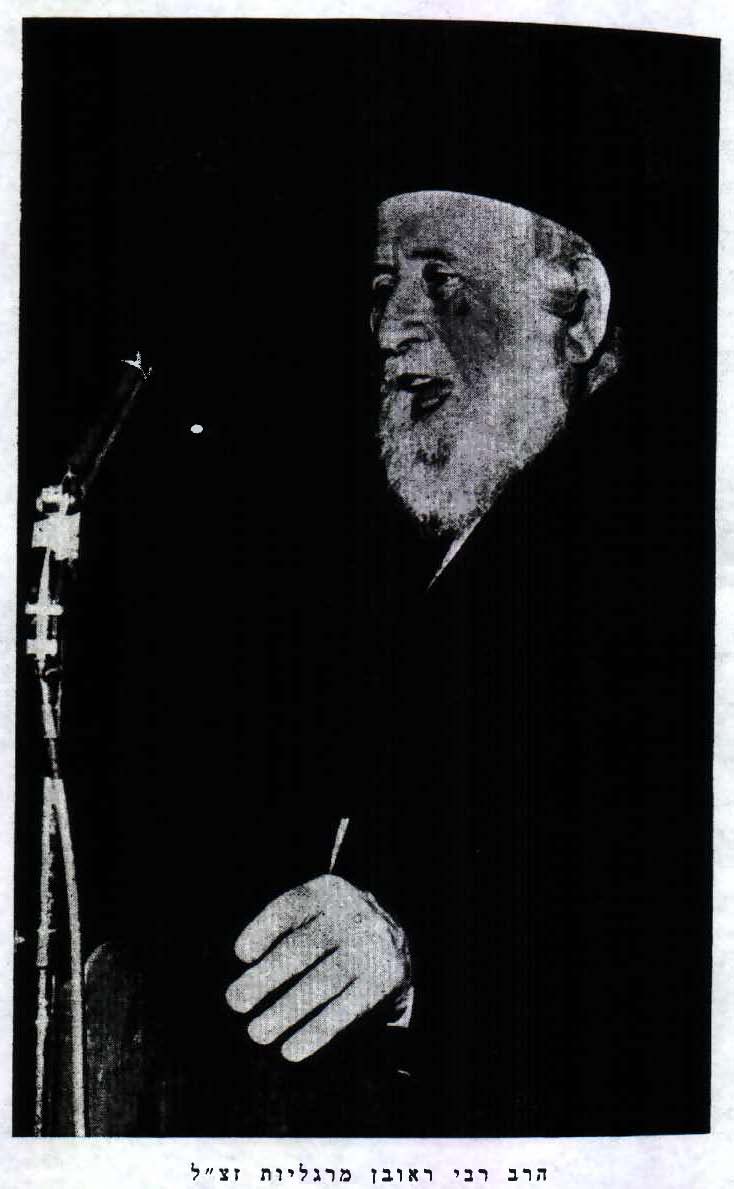
R. Reuven Margulies II

I have already discussed the most recent book of R. Margulies and provided a bibliography of his works, I now want to turn to a brief biography of him.

R. Margulies was born in 1889 and was known, from the time of his youth, as extremly erudite. Although he recieved ordination, he did not become a Rabbi and instead opened a bookstore in Lemberg. It is said that although his store was always full of talmidi hakhmim it was unclear if he actually sold anything. During his time in Lemberg he began publishing his own books. Many of his early books focus on hassidim. One of his early works, a biography on R. Hayyim ben Attar (Ohr haHayyim haKodesh) included comments by R. Dan Polonski, the author of the Kli Hemdah. In 1935 R. Margulies moved to Israel and became the librarian at the Rambam Library in Tel Aviv.

After moving to Israel he produced some of his most well known works. He began to focus on the Zohar literature and produced a fully annotated version of the Zohar, Zohar Hadash, Tikkunei Zohar and the Bahir. Additionally, during this time, he was involved in a controversy with Gershon Scholem over the R. Jacob Emden/R. Jonathan Eybeshuetz controversy. R. Margulies produced a pamphlet defending R. Eybeshuetz and in response Scholem produced his own disagreeing with R. Marguleis’s conclusions.

R. Margulies also produced an annotated Shulhan Orach, Nefesh Hayiah which he lists, in his typical encyclopedic manner, other books which deal with the same issues. It was this book that some in the comments to a previous post have raised questions about plagerism. The source for this accuasation comes for R. Wolf Leiter. He cites to sixty-one examples from R. Margulies’s book Nefesh Hayiah where R. Leiter notes others have said the same thing prior to R. Margulies. In fact, R. Leiter says these are just the tip of the iceberg. He says “there are hundreds of other examples which I have written on the side of my copy, there is no end I have only provided some examples.” R. Leiter’s examples include citations to articles and other books.

It is important to note, however, that R. Margulies wrote this during World War I. R. Margulies himself notes that this was written during a particular trying time “I remember the long winter nights when I was closed up, alone, lacking everything . . . I wrote and studied from the light of the oven fire, laying upon the floor.” Thus, it is a possiblity that during this time he neglected to look up everything and produced much from memory. In turn, the result may have been to include what he had seen before without attribution.

Additionally, some accuse him of plagerizing from R. Yosef Engel and R. Engel’s comments to the Zohar. I have never seen this in print (aside from the comment).

That being said, to accuse R. Margulies of not being extremely well read and very, very, erudite is wrong. If one looks to R. Yosef HaKohen Schwartz, who himself was one of the biggest bikeim of his day. He corresponded with R. Margulies and among other notes that R. Margulies’s “praises are known to all” that he is “an amazingly sharp mind.” Furhter, if one looks at his bibliography in three parts in the journal Areshet is very apparent R. Margulies’s breath of knowledge. Finally, as evidenced by the bibliography below, R. Margulies produced many, many books and if in one or two he may have been sloppy in attribution it is equally clear that the vast majority of his works he was not.

R. Margulies passed away in 1971.

Sources: Sefer Margolios, ed. Dr. Y. Refael; R. Z.W. Leiter, Tzion l’Nefesh Hayyiah no. 109; R. Y. Schwartz, Ginzei Yosef.


Maimonides and Prophecy, R. Pinhas Lintop, R. José Faur, and More Examples of Censorship

Maimonides and Prophecy, R. Pinhas LintopR. José Faur,  and More Examples of Censorship

by Marc B. Shapiro

1. In my last post here I discussed whether Maimonides believed that the entire people of Israel experienced prophecy at Mt. Sinai. I neglected to refer to Hilkhot Yesodei ha-Torah 8:3, which states:
לפי שנבואת משה רבנו אינה על פי האותות כדי שנערוך אותות זה לאותות זה, אלא בעינינו ראינוה ובאזנינו שמענוה כמו ששמע הוא
This is one of those passages that presents problems for the interpreter, since what Maimonides says in the Mishneh Torah, that all Israel experienced prophecy as Moses did, is contradicted by what he says in the Guide. As is to be expected, R. Kafih takes note of this problem in his commentary to Yesodei ha-Torah 8:3 (p. 165 n. 13), and what he says is fascinating. Commenting on the passage I quoted above, R. Kafih writes:
הדברים אמורים כאן על דרך ההטפה, אבל ברור בדעת רבנו שכל אחד שמע כפי רמתו, וכמשפט כל חזון, ועיין מו”נ ח”ב סוף פ’ לב, ופ’ לג, שם הביא לשון חז”ל במכילתא שמות יט כט משה מחיצה בפני עצמה ואהרן מחיצה בפני עצמה.
What R. Kafih is saying is that Maimonides’ words in the Mishneh Torah, that all Israel “saw and heard[1] with [its] own eyes and ears as he did,” should be understood as rhetoric, designed to have an effect on the reader, but they do not reflect Maimonides’ actual view which is that all of Israel did not see and hear as Moses did.

Regarding this issue, see also R. Kafih’s commentary to Guide 2:33, n. 5, where he writes:

לאו לדיוקא נקטה לא למין ההשראה באופן כללי, ולא לסוגיה

Further discussion of this matter, where R. Kafih elaborates on what he only hinted at elsewhere, can be found in his She’elot u-Teshuvot ha-Rivad (Jerusalem, 2009), nos. 24-26, where he explains to R. Mazuz what Maimonides had in mind.

In previous writings (books, articles, and posts), I have called attention to many examples where Maimonides writes things that he does not actually believe, so what we have just seen is nothing new. The significance of the example I have mentioned is that R. Kafih accepts this approach as a valid method of explaining a formulation of Maimonides in the Mishneh Torah. For another example from R. Kafih, see his note to Guide 2:45 (p. 268), where he writes:

וברור כי רבנו אמר את הדברים כאן על דרך הדרש וההטפה שדרך המטיף לגדיל ולהפריז בענין.
In Ketavim, vol. 2, p. 619, R. Kafih writes:
אמנם כתב הרמב”ם מה שכתב באיגרת תימן כדי להרתיע את מאמיני משיח השוא, וכדי להשקיט לבות החוככים אם להימין ואם להשמאיל. אבל באמת לא כן עמו.
2. R. Bezalel Naor’s translation of Orot is back in print. This time it is published with the Hebrew text as well. For those who don’t know this work, it is a masterpiece of translation. The introduction and notes are also fantastic. When people ask me what to read to get a sense of R. Kook’s thought and the conflicts it created, one of the things I always recommend is Naor’s introduction to Orot.
On the subject of Naor, I would like to call attention to another work of his which did not get the exposure it deserves. In 2013 he published Kana’uteh de-Pinhas, which focuses on the interesting figure R. Pinhas Lintop, rav of the hasidic (Habad) community of Birzh, Lithuania. R. Lintop was unusual among Lithuanian rabbis in that he intensively studied Kabbalah. He was also a supporter of the Mizrachi movement.[2]
Here is his picture.

                                                                                                             
Those who want to see a picture of his recently discovered tombstone can go here.
Anyone interested in Lithuanian rabbinic thought should examine Kana’uteh de-Pinhas. Among other things, it includes previously unknown letters from R. Lintop to the Chafetz Chaim and R. Kook. It also includes chapters by Naor on aspects of the philosophy of Habad, R. Tzadok, and R. Solomon Elyashiv. 

Naor calls attention to R. Lintop’s view of Maimonides’ Thirteen Principles. Unfortunately, I did not know of this when I wrote my book on the subject. R. Lintop is no fan of Maimonides’ concept of dogma or of Maimonides’ intellectualism in general. He rejects the notion that otherwise pious Jews can be condemned as heretics merely because they don’t accept Maimonides’ principles. He even makes the incredible statement that of the great rabbis, virtually all of them have, at the very least, been in doubt about one fundamental principle.

הנה לא הניח בן לאברהם . . . כמעט אין אחד מראשי חכמינו, החכמים הצדיקים כו’ כו’, אשר לא יטעה או יסתפק באחד משרשי הדת

Are we to regard them all as heretics? Obviously not, which in R. Lintop’s mind shows the futility of Maimonides’ theological exercise, which not only turned Judaism into a religion of catechism, but also indoctrinated people to believe that one who does not affirm certain dogmas is to be persecuted. According to R. Lintop, this is a complete divergence from the talmudic perspective.[3]

R. Lintop further states that there is no point in dealing with supposed principles of faith that are not explicit in the Talmud.[4]

הגידה נא, אחי, בלא משוא פנים, היש לנו עוד פנים לדון על דבר עקרים ויסודות את אשר לא נזכרו לנו בהדיא במשנה וגמרא?

As for Maimonides’ view that one who is mistaken when it comes to principles of faith is worse than one who actually commits even the worst sins, R. Lintop declares that “this view is very foreign to the spirit of the sages of the Talmud, who did not know philosophy.” As is to be expected, he also cites Rabad’s comment that people greater than Maimonides were mistaken when it came to the matter of God’s incorporeality.[5]

As part of his criticism of Maimonides and the Jewish philosophers in general, R. Lintop writes, in words similar to those earlier used by Samuel David Luzzatto:[6]

קרבו לנו דעות רבות נכריות וגיירו אותם עד כי היו לאמהות בישראל וגרשו את אמנו האמיתית

In his Pithei Shearim[7] R. Lintop criticizes Maimonides’ view, Hilkhot Melakhim 8:10, that given the power Jews must force non-Jews to adopt the Noahide laws. According to R. Lintop, this command only applied to the seven nations that inhabited ancient Canaan, but does not apply to any other non-Jew, even those living in the Land of Israel. Throughout his discussion, R. Lintop shows a strong moral sense and it is this which leads him to disagree with Maimonides. As he states:

  אין הקב”ה מקפח שכר כל בריה

As for those non-Jews who don’t observe the Noahide laws (referring in particular to the commandment against avodah zarah), R. Lintop sees them as blameless as they don’t know any better, having been born into their cultures.[8]

Among other things, I was surprised to see R. Lintop write:[9]

 הגאון המשכיל הנפלא בספרו בשמים ראש רנ”ב בשם אחד מהראשונים

He assumes that Besamim Rosh preserves authentic medieval responsa and yet he also recognizes that the publisher Saul Berlin was a maskil. This is significant since as far as I know, everyone else who believes Besamim Rosh to be authentic has no idea who Saul Berlin was.

Many who have heard of R. Lintop know of his correspondence with R. Kook and assume that they shared the same outlook. This is actually not the case, and in a letter to R. Yaakov Moshe Harlap R. Lintop said as much himself.[10]

כבודו הולך בזה ממש בדרך התחי’ שהולך ידי”נ הגאון מוהרא”י קוק במאמריו וספריו, והנה אמנם יש לי הרבה לדבר בזה כי אינני מהמסכימים לדרכיו, ורבות פלפלתי עמו בזה. הוא חושב כי אהבתינו הגדולה היא מפני השתוות דעותינו, ואני השבתיו כי להיפך מפני אי השתוות דעותינו אנו שואפים אחד להתמלאות מחבירו.

In 2013 the fourth volume of Reuven Dessler’s Shenot Dor va-Dor appeared. This volume contains two lengthy letters from R. Lintop to R. Kook (pp. 414-437). R. Lintop does not hesitate to criticize R. Kook’s understanding of hasidut. One of his criticisms is particularly noteworthy (pp. 435-436). R. Kook had written about how Hasidism is based on the idea of ahavat Yisrael for both the collective and the individual. R. Lintop replies that this is incorrect, as hasidut is not based on ahavat Yisrael but on ahavat avodat Yisrael and ahavat avodat ha-hasidut.

Then comes the following incredible passage, incredible since R. Lintop was at the time serving as rav of a Habad community and was generally quite connected to Habad philosophy, although he himself was not a Habad hasid. Some readers might see this as a purely academic type of statement, but anyone who knows the thought of R. Lintop will realize that this is, if not actually criticism, certainly disappointment with some of R. Shneur Zalman of Lyady’s statements.

הכי נוכל לחשוב את חסידות מורנו ורבנו אדמו”ר הזקן לחסידות אהבת ישראל אחרי הניח ליסוד מוסד באגרת הקודש (בתניא ח”ב) וז”ל לא זו הדרך ישכן אור להיות חפץ בחיי בשרים ובני ומזוני כו’ וראשית הכל שישמח האדם ויגל בכל עת ובכל שעה ויחיה ממש באמונתו כו’ ומי שעצב ומתאונן מראה בעצמו שיש לו רע ויסורין וחסר לו איזה טובה והרי זה ככופר ח”ו כו’ ומי שאין שוין לו מראה בעצמו שהוא מערב רב דלגרמייהו עבדין כו’ וע”כ הוא חפץ בחיי בשרים ובני ומזוני . . . בפ’ כ”ד מספר התניא משריש כי האדם העובר על רצון ה’ אפי’ עבירה קלה מד”ס הוא בהתכלית הפירוד מיחודו ואחדותו ית’ יותר מס”א וקליפה הנקראה אלהים אחרים ויותר מבהמה טמאה שקצים ורמשים (ובאגרת הקודש מג פוסק שכל העובר על ד”ס אפי’ באיסור קל של דבריהם חייב מיתה כעובר על חמורות שבתורה והדברים נוראים. גם בא ופוסק להלכה בספרי [!] אורח חיים [צ”ל חושן משפט] חלק ו’ הלכות נזקי גוף ונפש ט’ ישראל שעומד ברשעו תמיד כגון רועה בהמה דקה כו’ וכן כל כיוצא בהם אין כישראל דתם הוציאם מכלל ישראל ורחוק הדבר מאהבת ישראל הכללי.

There are many Habad adherents who read this blog and maybe some of them will want to weigh in on this.

Since, in the passage just quoted, R. Lintop cites the Tanya, let me share something interesting that appears in R. Mazuz’s recently published Asaf ha-Mazkir, p. 558. He mentions having heard that mitnagdim made fun of the Tanya since it begins as follows:

תניא משביעים אותו תהי צדיק ואל תהי רשע ואפילו כל העולם כולו אומרים לך צדיק אתה היה בעיניך כרשע

This comes from Niddah 30b and is stated by R. Simlai. The reason for the mitnagdim’s mocking is that R. Simlai was an amora so therefore the term תניא, which begins R. Shneur Zalman’s work, is inappropriate, as this term is used to introduce a baraita. (R. Mazuz argues that contrary to popular belief R. Simlai was a tanna, yet this is impossible.)

Finally, R. Isaac Nissenbaum tells us that R. Lintop was not a fan of R. Samson Raphael Hirsch.[11] (I wish I knew of this source earlier so I could have included it in my forthcoming article – already with the publisher – on Orthodox responses to Hirsch):

[הוא] הניא אותי מלהמשך אחרי “החורב” של רבי שמשון רפאל הירש, באמרו: “היהדות האמתית היא יהדות התורה ולא יהדות הרגש. היהדות תתקיים בתלמידי חכמים ולא ברגשנים דתיים. . .”

Just as I was finishing this post, a new book by Naor appeared entitled Mahol la-Tzaddikim. It focuses on the controversy between R. Moses Hayyim Luzzatto and R. Eizik of Homel regarding the purpose of creation.
3. In my new book I give examples of passages that were not translated properly, or not translated at all. After reading the book, Joel Wolowelsky sent me an edition of Birkat ha-Mazon, first published in 1946 (i.e., right after the Holocaust). The translation is by Rabbi Chaim Brecher, who is mentioned in my book in another context. Brecher’s edition of Birkat ha-Mazon actually became quite popular and was reprinted many times. In fact, the bentchers handed out at my own bar mitzvah were reprints of this edition.
At the beginning of Birkat ha-Mazon for weekdays, Psalm 137 (Al Naharot Bavel) appears (although almost no one says this). The final verse of this psalm reads:
 אשרי שיאחז ונפץ את עלליך אל הסלע
A proper translation of this verse is: “Happy shall he be, that taketh and dasheth thy [the Babylonians’] little ones against the rocks.”
I think it is fair to say that in modern times most people would be uncomfortable with the feeling expressed here. That explains the false translation of the verse provided by Brecher: “He will be as joyous as were you when you dashed our little ones against the stones.”

Was it a general humanistic feeling that impelled this false translation or was it the impact of the Holocaust that was responsible? In other words, with the then recent murder of so many Jewish children, perhaps it was not thought proper to give publicity to a verse that spoke of killing children of another people. Whatever the reason, it is obvious that this is an intentionally false rendering of the verse.
Regarding my book, let me also note the following:
Pp. 38-39. I wrote that there are no Ashkenazic siddurim, even those published in the State of Israel, that have an uncensored version of Birkat ha-Minim in the Amidah. As people know, I was working on this book for many years, and when I originally wrote this sentence it was correct (or so I believe). However, by the time the book appeared it was no longer correct. Rabbi Barry Gelman called my attention to the fact that in 2012 a nusach Ashkenaz siddur appeared without the censored text. Here it is.

Over the summer I was in Vienna and learnt that a couple of years ago Rabbi Schlomo Hofmeister, one of the community rabbis of Vienna, published Siddur Tefilat Yeshurun, and this siddur also includes an uncensored text of Birkat ha-Minim. I had never before seen this siddur, and what led me look at its version of Birkat ha-Minim were the following words that appear on the title page:
כמנהג בני אשכנז ללא שיבושי הצנזורה ושינויי המשכילים והמדקדקים המאוחרים
P. 55 n. 34: I somehow missed the fact that Esther Farbstein, Be-Seter Ra’am, pp. 614-616 n. 92, indeed discusses the story of the 93 Bais Yaakov girls committing suicide in Cracow. She also shows the fictional character of the story. (Thanks to R. Yaakov Taubes for calling this to my attention.)
P. 83: I refer to a responsum by R. Samuel Aboab who states that the words minhag shel shetut regarding kapparot were added by the printer. My language was not precise as this comment is not found in a responsum of Aboab but is quoted in Aboab’s name in a responsum of his student, R. Samson Morpurgo, referred to on p. 83 n. 11.
p. 131 n. 45: I report Derek Taylor’s claim that Chief Rabbi Joseph Hertz once attended a non-Jewish event without a head covering. I also note that Taylor does not provide documentation of this claim. Rabbi Dr. Benjamin Elton, who has recently been appointed rabbi of the prestigious Great Synagogue of Sydney, called my attention to this photograph in which Hertz is not wearing a kippah (source).
This was not even a non-Jewish event, but a lunch sponsored by the Polish-Jewish Refugee Fund. Hertz is also wearing a clerical collar.
Here is another picture of Hertz without a kippah (source).
Here he is wearing a kippah (source).

The men sitting behind him with the clerical collars are not Anglican priests. As you can see they too are wearing kippot. This is how Jewish “men of the cloth” used to dress in England. In this picture Hertz also has a clerical collar.
On p. 138 n. 64 I write that this photo from the Lubavitcher Rebbe’s student file at the University of Berlin[12] recently had a kippah placed on it.

The picture I referred to is the following, from R. Abraham Weingort, ed., Haggadah Shel Pesah al Pi Ba’al ha-Seridei Esh (Jerusalem, 2014), p. 53.

Regarding my discussion of the German Orthodox practice of not wearing a kippah, only after my book was in press did I read the memoir of the rabbinic scholar R. Shmuel Weingarten.[13] Weingarten describes coming to the Berlin home of R. Meier Hildesheimer and finding him and two other men drinking coffee with uncovered heads. Only when the Hungarian Weingarten entered the room did they pull their kippot out of their pockets and place them on their heads.
There is one more interesting text I would like to call people’s attention to. In R. Judah ben R. Asher, Zikhron Yehudah, no. 20, we see that R. Judah was asked if it is permitted to learn Torah with an uncovered head. R. Judah replied that it is not proper to do so, but his language makes it clear that there is no prohibition in this. He also adds that sometimes the heat will be such that one may feel unable to keep his head covered.
וטוב הוא שלא לישב בגילוי הראש בשעת הלימוד למי שיוכל לסבול לפי שילמוד יותר באימה ולפעמים מפני כובד החום אינו יכול לסבול
In R. Judah’s day they did not have small kippot like we have. It is obvious that the head covering was a significant item and when removed the man would be bareheaded.

In R. Azriel Hildesheimer’s responsa[14] the publisher included a note from Hildesheimer that informs us that in a copy of R. Judah ben R. Asher’s responsa (from the edition published in Berlin, 1846), there is a handwritten comment to the responsum just discussed. The author of the comment is described as הגאב”ד but it is not known whom this refers to. Alongside the words quoted above, that one who can bear the heat should cover his head, the unknown גאב”ד wrote:

לשון זה הוסיפו המגלים ראש ובכ”י כתוב בזה”ל: וטוב שלא לישב בגלוי הראש בשעת הלימוד כדי שישב באימה יותר ולפעמים מפני כובד החום נראה להקל. כבר נהגתי בעצמי לישב בכובע של פשתן דק כקופוצא בעתות החום לצאת ידי כולם

The Hebrew passage just quoted begins by stating that the comment in Zikhron Yehudah that one can take off one’s head covering if it is hot was added by “those who are bareheaded”.[15] This is followed by a quotation from the manuscript in which R. Judah says that on hot days he would sit with a lighter head-covering than normal. However, even this version has the language וטוב שלא לישב בגלוי ראש which also implies that there is no prohibition to be bareheaded during Torah study. This manuscript also has ולפעמים מפני כובד החום נראה להקל, which implies that one can be completely bareheaded if it is hot, to which it then adds that R. Judah himself did not sit bareheaded but wore a lighter head-covering. I therefore don’t see any substantial difference between the two versions of the responsum, yet the unnamed גאב”ד did see a problem with the first version and assumed that the text had been tampered with by a heretic.

In many prior posts I have discussed the assumption that heretics altered manuscripts (most recently in my posts regarding ArtScroll’s censorship of Rashbam). The example I have just given is one of the first where a rabbinic figure makes this argument about a halakhic text.[16] I have to say that in all of the numerous cases where modern rabbis claim that medieval texts written by great rabbinic figures have been altered by heretics, there is not even one instance where they make a compelling argument. Their approach is always along the line of, “This position goes against what we know to be true, so Rabbi X couldn’t have said it.” In this case there are actually two manuscripts in existence, and the words of one are exactly what we find it in the printed version of Zikhron Yehudah, while the other has the text mentioned by the גאב”ד.[17]

P. 218: I wrote that even a circumcised non-Jew is referred to as an arel. I was asked what my source for this is. I did not need to provide a source for my statement in the book, as it is a basic fact, and can be confirmed by looking in dictionaries. However, for those who want a rabbinic source see Mishnah Nedarim 3:11:

קונם שאיני נהנה לערלים מותר בערלי ישראל ואסור במולי עובדי כוכבים. קונם שאיני נהנה למולים אסור בערלי ישראל ומותר במולי עובדי כוכבים שלא היתה הערלה קרויה אלא לשמם שנאמר כי כל הגוים ערלים וכל בית ישראל ערלי לב

This Mishnah is explicit that even circumcised non-Jews are referred to as arelim.[18]

I would like to thank all those who have sent comments about my book. Only a small amount can be posted but I do try respond to all emails. I believe that I have mentioned all of the corrections. I hope that R. Menahem Lonzano would regard me as one of the ישרים בלבותם, for he wrote:[19]

הישרים בלבותם יאהבו החולק עליהם בדעת וישנאו העוזרם בלי דעת

4. In Saul Lieberman and the Orthodox I discussed the dispute over R. José Faur. I also published a letter in support of Faur by R. Jacob Kassin (who would later retract this support). It is well known that R. Faur’s greatest backer was R. Matloub Abadi, an important figure in the Syrian community and author of the halakhic work Magen Ba’adi. R. Abadi is mentioned in this regard by R. Kassin, in the letter of R. Kassin that I published in Saul Lieberman and the Orthodox. Here are two additional documents relevant to this matter. The first one is a 1966 letter from R. Abadi in praise of R. Faur.[20] I transcribed the document but was unable to make out some of the words.

The second document is a 1969 letter from R. Abadi to Chief Rabbi Yitzhak Nissim defending R. Faur. I found this document in the R. Nissim archive at Yad ha-Rav Nissim in Jerusalem. Together with the letter is a note that provides the following identifications.

ר”פ נ”י = R. José Faur
אויבו ורודפו = Rabbi Abraham Hecht
יוסף בן א’ = R. Yosef Harari-Raful (יוסף בן אהרן)

One more point about R. Faur that is worth noting is that he was such a close student of R. Aaron Kotler that he was one of the people chosen to carry R. Kotler’s coffin at his funeral.[21]
I have many more interesting documents that have never before appeared in print. I hope to publish some of them in future posts.
5. Let me share another example of censorship. It comes from a recently published book (too recent to be included in Changing the Immutable).
R. Joseph Messas has a passage, now famous among the Orthodox feminists, in which he refers to an unnamed book that mentions that in Spain there were places with women’s prayer groups at which each woman wore a tallit and some wore tefillin. It appears in his Nahalat Avot (Haifa, 1980), vol. 5:2, p. 268.

In 2015 the multi-volume set of Nahalat Avot was reprinted in Jerusalem. Take a look at the following page and you will see that the passage dealing with the women’s prayer groups has been deleted in its entirety.

Unlike Ashkenazic internal censorship of this sort, Sephardic censorship is a relatively new phenomenon (only a few decades old). Here is another example. R. Isaac Abraham Solomon’s book Akim et Yitzhak was published in Baghdad in 1910. On pages 112b-113a he rejects a position of the recently deceased R. Joseph Hayyim, the Ben Ish Hai.

R. Solomon appears to even cast doubt on R. Joseph Hayyim’s integrity when he writes:

וקי”ל ת”ח שאמר מילתא לאחר מעשה אין שומעים לו להחזיק דבריו

This book was reprinted in 1971, and here is how the pages look.

R. Eliyahu Sheetrit reports that R. Ovadiah Yosef was upset with this censorship and annoyed that the publisher thought that he could do as he wished with someone else’s book.[22]

6. There has been a lot written about the murder of Eitam and Na’ama Henkin הי”ד. There has even been a song dedicated to them. See here. Quite apart from the incredible family and personal tragedy, the murder of Eitam is a tragedy for the world of Torah and scholarship. I was planning on writing about this, but people who knew Eitam much better than I have already spoken and I don’t have much I could add to their moving words. I would only note that the amount of significant material published by Eitam is astounding, and I learnt so much from him, both from his printed work and from the many emails we exchanged. It is hard to think of anyone who accomplished so much in so short a period of time. I encourage all who can read Hebrew to examine his website here where many of his writings are found.

In my post here I posted this picture of the grave of R. Joseph Elijah Henkin’s son, Hayyim Shimi, which Eitam kindly sent me.

Someone asked me about the name שימי. We all know this as a nickname for שמעון but this is not something that you would put on a tombstone. I inquired about this from Eitam and here is his reply

אכן השם שלו היה חיים שימי, ואין זה קיצור חיבה של ‘שמעון’ (כמובן לא היו עושים כן על מצבה). הוא נקרא כך, למיטב ידיעתי, על שם סבתו (אם-אמו, חותנתו של הרב הענקין) שימא קריינדל, שנפטרה כשנה וחצי לפני הולדתו.

פעם שאל אותי חסיד אחד, מילא לקרוא לבן ע”ש בת אינו חידוש ומצאנו כן במעלה הדורות, אבל להמציא בשביל זה שם חדש, היכן מצאנו דבר כזה אצל שלומי אמוני ישראל?! והשבתי לו, אולי הגמרא לא מלאה ברב שימי בר אבין [צ”ל אשי] וכיו”ב?

In the post I wrote: “It is noteworthy that R. Henkin saw fit to mention on the tombstone that Hayyim was a student at Yeshiva College (= Yeshivat R. Yitzhak Elhanan).” R. Elazar Meir Teitz correctly pointed out that when Hayyim Shimi (or did they pronounce it “Simi”?) died in 1927, there wasn’t yet a Yeshiva College. This was only established in 1928.[23] However, R. Henkin’s other two sons did attend Yeshiva College.

Eitam also called the following to my attention. In R. Yitzhak Dadon’s Athalta Hi, vol. 2 (Jerusalem, 2008), p. 339,[24] this picture appears.

The rabbi on the right is identified as R. Shlomo Goren and the one on the left as R. Dovid Lifshitz. While the one on the right does look like R. Goren, it is actually R. Lifshitz (a fact confirmed to me by Dr. Chaim Waxman, R. Lifshitz’s son-in-law). Eitam informed me that the one on the left is R. Moshe Margolin, the secretary of Ezras Torah. Why did Dadon assume that the rabbi on the left was R. Dovid Lifshitz? He must have seen this photo somewhere with R. Lifshitz identified as appearing in it, and since he assumed that the man on the right was R. Goren, he concluded that the one on the left must be R. Lifshitz.

7. In recent weeks there has been a good deal of outrage after the appearance of an article in Mishpachah that appealed to the Palestinians not to kill haredim since they don’t go on the Temple Mount.[25] There is also an effort underway, supposedly authorized by the Edah Haredit, to publicize the same message in Arabic newspapers. See here. With this in mind, readers should examine the following document, which is found in the Central Zionist Archives S25/4752.[26]

It is a copy of a letter sent to the Supreme Muslim Council in Jerusalem from Aryeh Leib Weissfish. Weissfish was later to become famous as one of the leaders of the Neturei Karta, and strangely enough he was also a great fan of Nietzsche. You can read about his colorful career here, where it mentions how he illegally entered Jordan in 1951 to bring a message from the Neturei Karta that Jordan should invade Jerusalem and the Neturei Karta would be its ally in this. When he was deported to Israel he was put on trial and sentenced to six months in prison.

In view of the fact that there was a fear that Germany would invade the Land of Israel and that this would also lead to the Arabs persecuting Jews, Weissfish wrote to let the Muslim leaders know that the Old Yishuv type of Jews that he is speaking about are not involved in politics and oppose the Zionists. They have always treated the Arabs with respect and he therefore requests that these Jews be protected. He also offers to provide the names of the families who should be given this special treatment. As you can see from Yitzhak Ben-Zvi’s handwritten note at the bottom of the letter, Ben-Zvi copied this from the original letter which he found in the Supreme Muslim Council’s archives.

8. Information about my summer 2016 tours to Central Europe, Italy, Spain, and Germany will soon be available on the Torah in Motion website here.

9. For those who do not own Between the Yeshiva World and Modern Orthodoxy, you might be interested in knowing that Amazon is now offering it at a 36% discount ($15.92). See here

[1] This refers to the revelation at Sinai. The Touger translation of the Mishneh Torah mistakenly explains that these words refer to Moses’ “appointment as a prophet.”
[2] See Y. L. Fishman, Sefer ha-Mizrachi (Jerusalem, 1946), p. 120.
[3] Kana’uteh de-Pinhas, p. 75. When an earlier work of Lintop is quoted in Naor, Kana’uteh de-Pinhas, I have referred to the latter.
[4] Kana’uteh de-Pinhas, p. 75.
[5] Yalkut Avnei Emunat Yisrael, pp. 66-67.
[6] Yalkut Avnei Emunat Yisrael, p. 99
[7] (Vilna, 1881), pp. 14a-b.
[8] Pithei Shearim, p. 14b.
[9] Kana’uteh de-Pinhas, p. 78.
[10] Hed Harim (Jerusalem, 1953), pp. 30-31.
[11] Iggerot ha-Rav Nissenbaum (Jerusalem, 1956), p. 260 n. 7.
[12] The picture first appeared in Shaul Shimon Deutsch, Larger than Life (New York, 1997), vol. 2, p. 204.
[13] Perurim mi-Shulhanam shel Gedolei Yisrael (Jerusalem, 2004). The passage referred to is on p. 95.
[14] She’elot u-Teshuvot Rabbi Azriel: Even ha-Ezer, Hoshen Mishpat (Tel Aviv, 1976), no. 253.
[15] Eric Zimmer refers to this comment in his “Men’s Headcovering: The Metamorphosis of This Practice,” in J. J. Schacter, ed., Reverence, Righteousness, and Rahamanut (Northvale, N.J., 1992), p. 331 n. 28: “Hildesheimer claims that Reform Jews who advocated bareheadedness tampered with the original text in order to justify their own.” There are a couple of problems with Zimmer’s formulation. First, Hildesheimer does not make any claim. He simply reports what the גאב”ד wrote. Second, there is no mention of Reform Jews. The reference might be to them but it could also refer to maskilim. I assume that the quotation from Zimmer is missing a final word and what it means to say is that they “tampered with the original text in order to justify their own behavior”? 
[16] Regarding aggadic texts, we find a number of earlier examples. One well-known instance is R. Samuel Jaffe’s comment about the “Midrash” that in the future pig will become permitted:
למה נקרא שמו חזיר מפני שעתיד להחזירו לישראל
R. Jaffe writes (Yefeh Toar: Va-Yikra Rabbah 13:3, p. 78b):
לפי דעתי לא היה ולא נברא . . . היה מי שהיה רוצה להתחכם ממציא איזה מאמ’ [מאמר] שיפור’ [שיפורש] בו פי’ הלציי והיה תולה אותו מאיזה מהמדרשי’ הרחוקים להמצא ביד כל אדם
[17]  See R. Avraham Yosef Havatzelet, “Limud be-Rosh Meguleh – Ha-Omnam Ziyuf bi-Ketav Yad?” Yeshurun 7 (2000), pp. 735-738, and the note in the Makhon Yerushalayim edition of Zikhron Yehudah, no. 20.
[18] See also Da’at Mikra: Yirmiyahu, to Jeremiah 9:25, and R. Ratzon Arusi, Ha-Torah ve-Halikhot Ameinu (Kiryat Ono, 1998), vol. 1, p. 27 (second pagination).
[19] Shetei Yadot (Venice, 1618 ), p. 81.
[20] I thank R. Moshe Shamah for providing me with this document.
[21] After having heard this report, I confirmed its accuracy with R. Faur.
[22] Sheetrit, Rabbenu (Jerusalem, 2014), p. 203.
[23] See Jeffrey S. Gurock, The Men and Women of Yeshiva (New York, 1988), p. 94.
[24] In volume 1 there is a chapter on R. Jehiel Jacob Weinberg in which the author makes great use of Kitvei ha-Gaon Rabbi Yehiel Yaakob Weinberg. I jokingly tell people that I like Athalta Hi because the author refers to me as המו”ל שליט”א. See ibid., vol. 1, p. 259.
[25] See here for R. Eliyahu Zini’s statement that the editors of Mishpachah have lost their share in the World to Come. Regarding the Temple Mount, there is a shocking statement in the geonic era Pitron Torah, ed. Urbach (Jerusalem, 1978), p. 339. 

שגם היום הזה אותם האנשים שהבית בידם עשו אותו בית עבודה ומובחר ומעולה ומכובד, ואותה העבודה כך אמר שנעבד לא-ל אחד, שברא שמים וארץ ולו בריות, לכך אמ’ כל היום, עד ביאת מורה צדק ויום העתיד ואותו היום תתחדש בו עבודת הצדקה ותהיה מקובלת לפני ש-די
Rather than being upset at seeing the Muslims in charge of the Temple Mount, Pitron Torah seems to see this as a good thing that will last until the messianic era..This passage was noted by Daniel J. Lasker, “Tradition and Innovation in Maimonides’ Attitude toward Other Religions,” in Jay Harris, ed., Maimonides After 800 Years (Cambridge, MA., 2007), p. 182. As I noted in Studies in Maimonides and His Interpreters, p. 151, Pitron Torah, p. 241, contains the earliest recorded Jewish use of the term משוגע with regard to Muhammad. 

Ron C. Kiener claims that the following passage in Zohar Hadash 27d is referring to Muslim control of the Temple Mount. Its view is exactly the opposite of what we saw in Pitron Torah:

אבנא אבנא אבנא קדישא עילאה על כל עלמא בקדושתא דמארך זמיני בני עממיא לאתזלזלא בך ולאותבא גולמי מסאבין עלך לסאבא אתרך קדישא וכל מסאבין יקרבון בך ווי לעלמא בההוא זמנא

Oh stone, oh stone! Oh holy stone, greater in the world in the holiness of your Master. In future times the nations will humiliate you and place upon you defiled objects, defiling your holy place. And all the defiled ones will come unto you. Woe to the world at that time!

Translation by Kiener, “The Image of Islam in the Zohar,” Mehkerei Yerushalayim be-Mahashevet Yisrael 8 (1989), p. 51.

[26] Many years ago I saw a reference to this letter in a book, but I can no longer remember where.


On the Plagiarism of a Tach-ve-Tat Chronicle

On the Plagiarism of a Tach-ve-Tat Chronicle

During this period, between the 17th of Tamuz and the 9th of Av, there is an increased focus upon various historical calamities that befell the Jewish people. Jewish history is unfortunately replete with such examples. Some instances have spawned specific days of commemoration while others have produced whole bodies of literature. And, while the literature surrounding these events is diverse, covering liturgy, poetry, history, we focus on one type: the chronicle. Additionally, our focus is the Chmielnicki Massacres, or Gezerot Tach ve-Tat. The Hebrew refers to the dates – 1648-49 – when the majority of Jew-killing took place. While these events took place hundreds of years ago, its effects including the total number of Jews killed is still being debated by scholars. (See Jits van Straten, “Did Shmu’el Ben Nathan and Nathan Hanover Exaggerate: Estimates of Jewish Casualties in the Ukraine During the Cossack Revolt in 1648,” Zutot 6:1 (2009), 75-82, calling into question the lower estimates of Shaul Stampfer, “What Actually Happened to the Jews of Ukraine in 1648?” Jewish History 17:2 (May 2003), 207-27.)
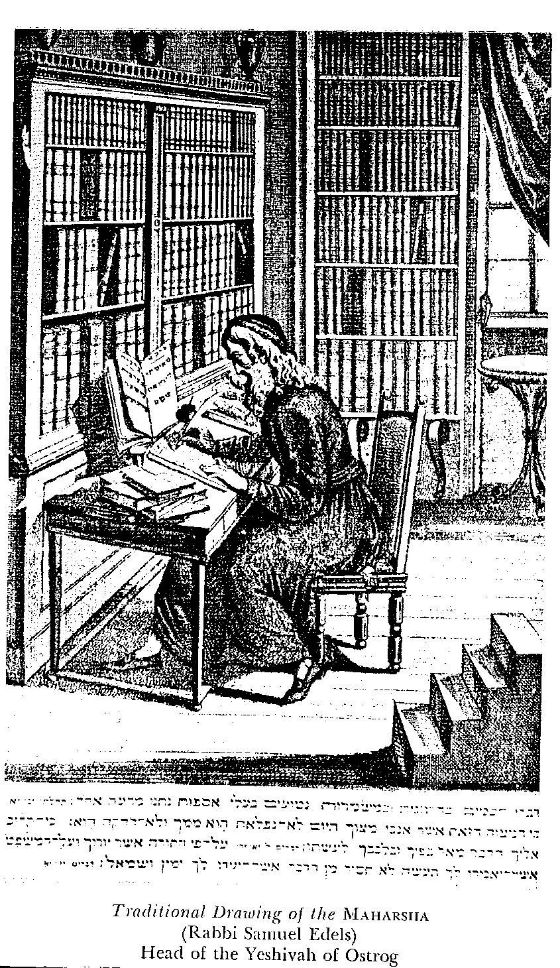
The most well-known chronicle describing the events is that of R. Nathan of Hanover, Yaven Metzulah. There is an English translation of Hanover’s work, Abyss of Despair, translated by R. Abraham J. Mesch. The translation includes a “traditional drawing of Maharsha.”
While it is not noted, this illustration, that has Maharsha with long flowing hair first appears in the Vienna, 1814 edition of the Maharsha’s commentary (vol. I, vol. II). While Mesch indicates this is the “traditional drawing” we know of no earlier instance than the Vienna edition. This was not the only Vienna edition that includes a questionable portrait. The 1804 Vienna edition of R. Yitzhak Alfasi’s Halakhot also includes a portrait that is claimed to be R. Alfasi. Again, we know of no earlier evidence that would confirm such a rendering.
A collection of these chronicles was published most recently Gezerat Tach ve-Tat, Jerusalem, 2004. Additionally, Joel Raba, Between Remembrance and Denial, Columbia Univ. Press, 1995, discusses these chronicles as does the collection of articles that appears in the journal, Jewish History 17:2 (May, 2003).
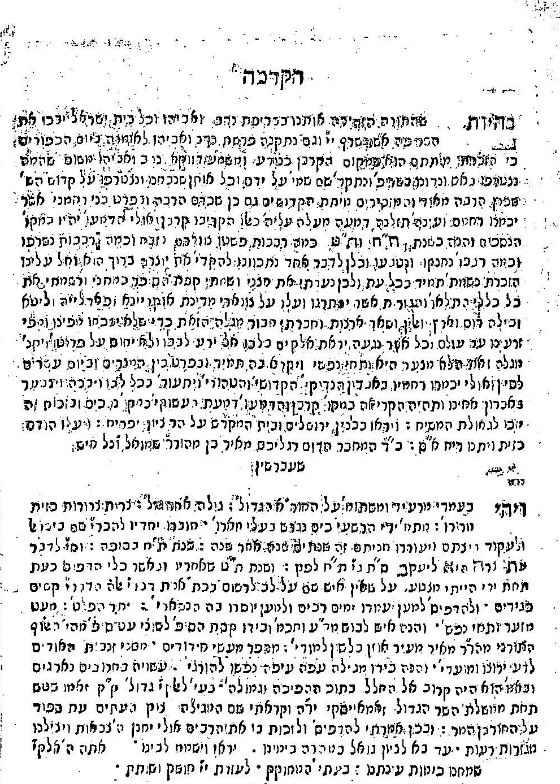
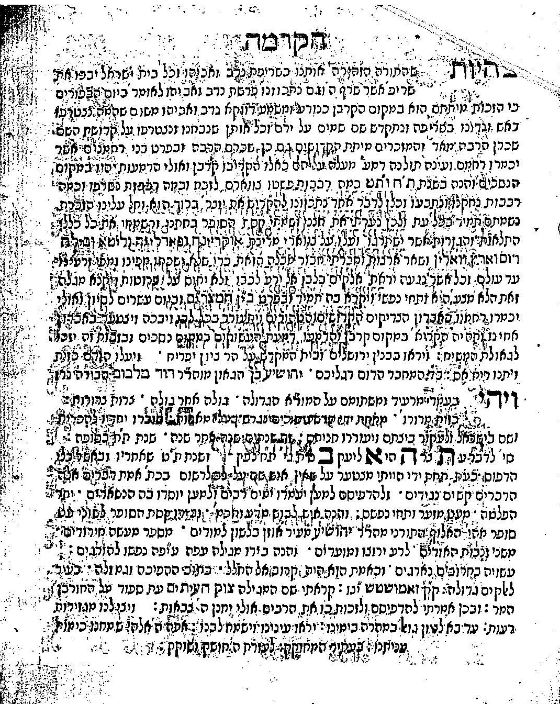
We turn our attention, however, to a lesser known work from this period, Tzok ha-Itim. Tzok was actually the first chronicle regarding the 1648-49 events published. It was first published in Krakow, 1650 (link). Indeed, some have argued that Hanover relied heavily on Tzok in compiling Yaven Metzulah (first published in 1653).
Tzok was republished in Constantinople in 1652. This edition is exceedingly rare. According to Ya’ari, there is but one complete copy extant. (See Ya’ari, Kiryat Sefer, (16) 1939-40). This edition was published by R. Shmuel ben R. Shimson who on his way to Israel after fleeing the massacres. At the end of the book he includes a dirge (kinnah) about the events. He also penned his own introduction which describes his own suffering. He says that “I am the only remaining survivor in my family as the rest were killed sanctifying god’s name . . . although I was spared . . . my wife and children I buried, I lost all of my possessions . . . .” He explains that “all I wanted was to dwell in the bet midrash and therefore I decided to travel to Jerusalem” and that while he was on his journey he came across Tzok and decided to reprint it in Constantinople “so that what has occurred shall not be forgotten.” (Ya’ari, Mechkerei Sefer, Jerusalem, 1958 p. 16 reprints the entire introduction, he also provides other accounts of people, who, on their way to Israel, issued works related to 1648-49 massacres.)
Tzok was then reissued in Venice in 1656.
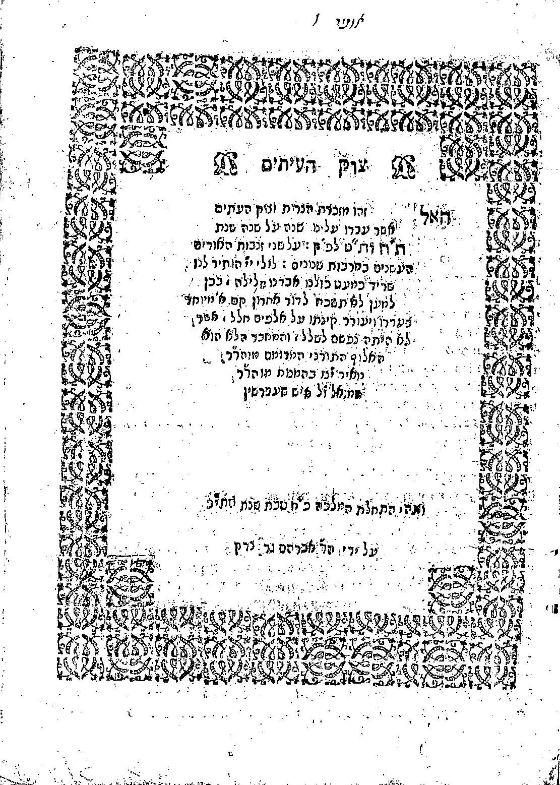
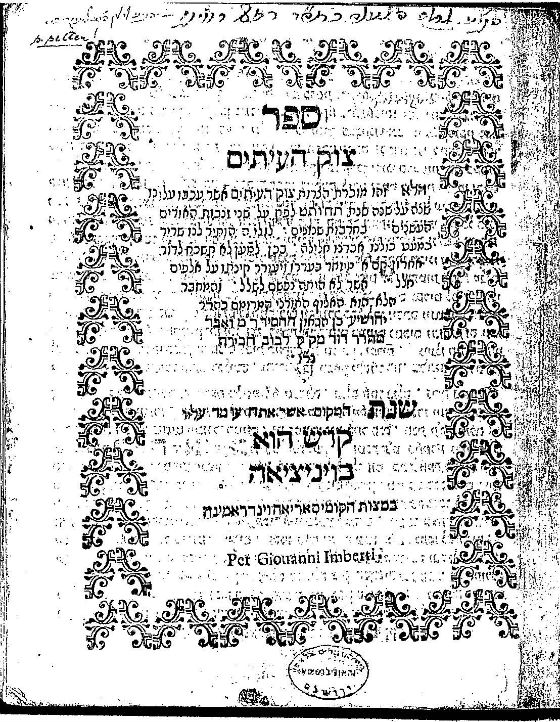
The first two editions list R. Meir ben Shmuel of Szczebrzeszyn as the author. The 1656 edition, however, lists a completely different author, R. Joshua ben David of Lemberg. It is not only on the title page that a different author is listed. The work itself is not composed as traditional narrative. Instead, it is written in verse. The first verses in all the editions spell out the author’s name in an acrostic. Thus, the 1650 and 1652 editions have an acrostic that spells out R. Meir of Szczebrzeszyn’s name while the 1656 edition acrostic spells out R. Joshua’s name. In some instances words are added to create the “new” acrostic, while in other instances, the highlighted letters are changed.
Here is the introduction to the Constantinople edition:
And here is the introduction to the Venice edition:
As an aside it is worth noting that this is not the only time a plagiarizer has been forced to change the acrostic to hide his stolen goods. (See Kitvei Pinchas Turburg, ed. A. R. Malachi, 24-36 for additional examples of acrostic changes, and see this earlier post discussing similar changes to hide the identity of the true author, and see this post where the plagiarizer was caught in the act and forced to admit his guilt and apologize). Additionally, at least in one instance the acrostic was able to demonstrate authorship. In the Siddur Bet Ya’akov (although attributed to R. Y. Emden, this siddur contains numerous additions as compared to R. Emden’s actual siddur called Ammudei ShamayimSha’arei Shamayim; this is one of them) the Belzer Rebbe asserts that the author of the zemer Yom Shabbat Kodesh Hu had his song stolen. He came across the plagiarizer and challenged him to prove authorship. Specifically, the real author showed that his name, Yonatan, could be seen in the acrostic, and with this he vanquished the thief. R. Emden uses this story to explain the meaning behind the final verse which loosely translated as “all the talk [about authorship] should [now] end now that I have enlarged the song [and demonstrated my authorship] . . . and that no one should ever steal from me as this song is my property.”
An example where the acrostic actually has the opposite effect, obscuring the original author is also a zemer, Yom Zeh le-Yisrael. At times, this song can be confusing depending upon which bencher one is using. This so, because some version have a shorter version while others have a longer ( see here for example). Some argue that the two versions are indicative of two authors, one, the original author which only spelled out Yitzhak (and then lamed vav) to which all the other verses were added, now spelling Yitzhak Luria Hazak. (Regarding this zemer see Naftali ben Menachem, Zemirot shel Shabbat, Israel, 1949, 144-45; I. Davidson, Thesaurus of Mediaeval Hebrew Poetry, Ktav, 1970, vol. II, 348.)
Returning to Tzok, because the acrostic lends support for either author, some didn’t know who the “real” author was. In the 1890s, a number of these chronicles regarding bad events in Jewish history were collected and published under the title Le-Korot ha-Gezerot ‘al Yisrael by C. Gorlin. Included is Tzok. But, instead of a traditional introduction, he prefaces Tzok with a section “Who is the real author?” Gorlin argues that the real author is indeed R. Meir and not R. Joshua. This is not the first time that there is some confusion regarding who is the real author and who is the thief, for another example see here and for another example of modern day plagiarism see here.
With regard to the Constantinople edition, Ya’ari demonstrates that this edition is better than the first, in that many of the typos and the like have been corrected. Unfortunately, perhaps due to its rarity, the 2004 edition of Tzok relies upon the 1650 edition and not the better 1652. Additionally, the 1652 edition is one of the works published by a convert. Of course, this is probably what first got Ya’ari interested as he provides a bibliography of works published by converts.
It should be noted that Tzok was rather popular even if it is no longer. When R. David ha-Levi Segal, author of the commentary on Shulhan Orakh, Turei Zehav, sent a delegation to the false messiah, Shabbatai Tzvi, when the delegation entered, they record that Shabbatai Tzvi had a copy of Tzok on the table. (See G. Scholem, Sabbati Sevi, Princeton Univ. Press, 1976, p. 623 quoting Leib Ozer, Sippurei Ma’ashi Sabbati Tzvi, p. 81 and Sefer Tziz Nobel Tzvi, ed. I. Tishby, pp. 77-79.)
Finally, we note that the most recent edition, the 2004 op. cit., uses the Krakow first edition, even though Ya’ari has already shown that the rare Constantinople edition corrected numerous errors that appear in the Krakow edition.


More About Rashbam on Genesis Chapter 1 and Further Comments about ArtScroll

More About Rashbam on Genesis Chapter 1 and Further Comments about ArtScroll
By Marc B. Shapiro
I had thought that I was done with ArtScroll’s censorship of Rashbam to Genesis chapter 1, but a number of people wanted some explanation about the manuscript of Rashbam’s commentary. This will also give me the opportunity to add some more comments about this distressing episode.[1]
In my prior post on the topic, available here, I referred to Rabbenu Tam’s strong words against those who “corrected” the talmudic text based on their understanding. ArtScroll is guilty of violating Rabbenu Tam’s “command”, as he would certainly also apply his words to later generations tampering with the writings of rishonim. I think everyone can understand that if people were simply allowed to emend or delete texts based on their own understanding, not a single talmudic tractate or medieval work would emerge unscathed. As such, the only honest thing for an editor to do is to point out in a note how he feels the text should read, or if he thinks that a passage should be deleted. Unfortunately, ArtScroll did not choose this to follow this honest, and common sense, approach.
It is not just Rabbenu Tam who dealt with this matter. Nahmanides, in commentary to Bava Batra 134a, blasts those “sinners” those who emend texts based on their own understanding.
וזו עבירה גמורה ולייטי עלה רבנן כל מאן דמגיה ספרים מדעתא דנפשיה
R. Abraham ben David (Rabad) also leaves no doubt as to his position, stating that one who deletes a text based on his understanding, “his hand should be cut off, since one who deletes [sections of] books is like those who burn the Torah.”[2]
ויד המוחקת תיקצץ שמוחק הספרים כשורפי התורה
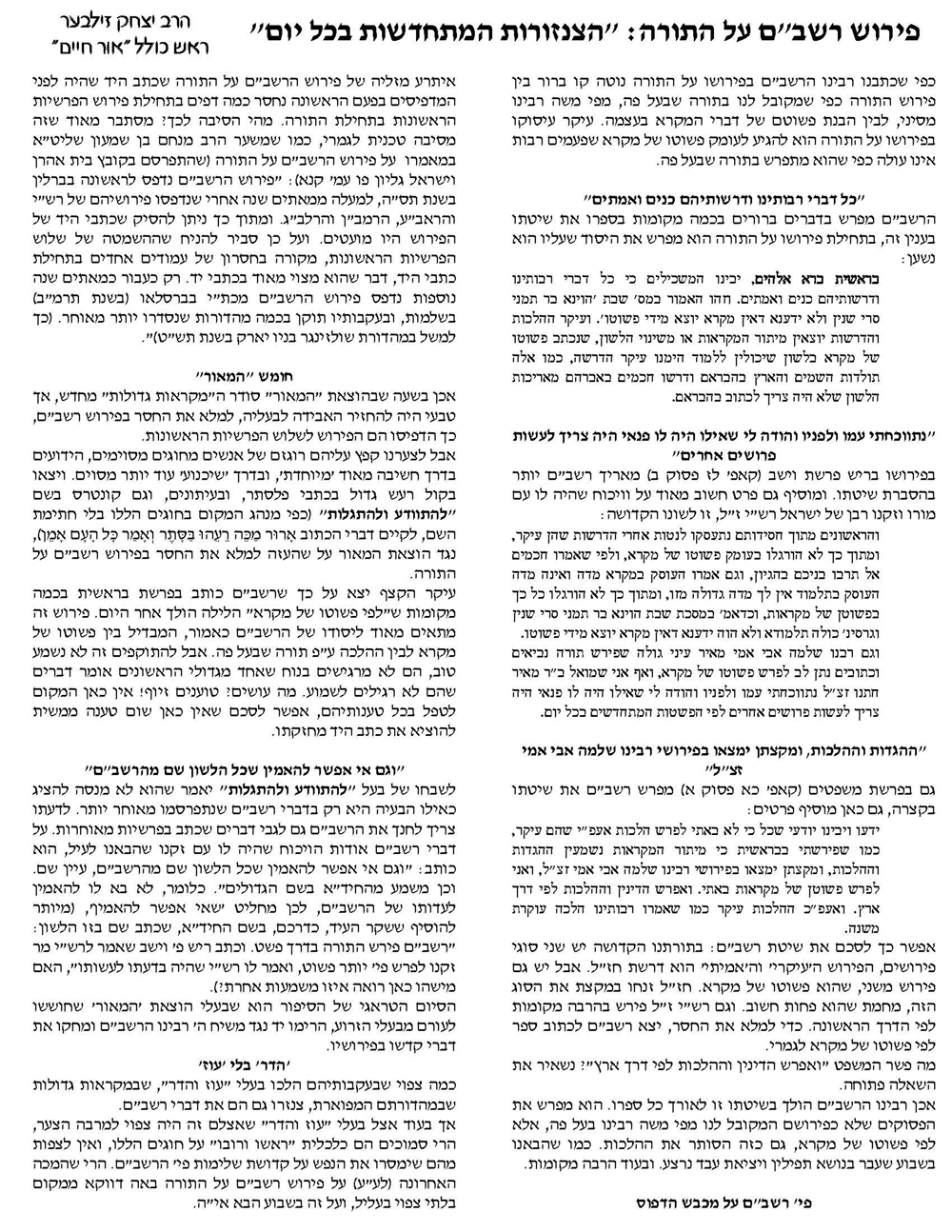
Following my posts R. Yitzchak Zilber published two pieces in Hebrew.

With regard to ArtScroll, the two pieces don’t really contain anything not mentioned already on this blog, but for those who don’t read English they are valuable. It is also good to see a noted talmid hakham express his feelings about what he terms ArtScroll’s “stupid act”. (I understand why documents like the ones published by Zilber, which are directed towards a certain population, cannot cite the Seforim Blog. Yet it is noteworthy that Uriel Simon’s book אזן מלין תבחן is cited, even if the author’s name is not mentioned). One significant point made by Zilber is his claim that ArtScroll knows the truth, namely, that the passages it chose to censor are not heretical insertions, but it chose to censor them anyway.
I have received emails that make the same point, that the censorship is all about “business”. In other words, the haredi world today does not want to see Rashbam’s peshat understanding of when the day begins, so the censorship is necessary in order for ArtScroll’s mikraot gedolot Chumash to sell. Based on what I have been told by people supposedly in the know, I am inclined to believe this. This is also an appealing explanation as it is much easier to accept than that anyone at ArtScroll really believes in the justification for its censorship that was sent out and which I discussed in the earlier post.
In my post I referred to additional authorities, other than Rashbam, who understood that according to the peshat the first chapter of Genesis teaches that the day begins in the morning.[3] I also mentioned those who believe that this was how things were before the giving of the Torah. R. Moshe Maimon called my attention to the fact that R. Saadiah Gaon also apparently held this view.[4] Here is R. Kafih’s edition of R. Saadiah, Perushei Rabbenu Sa’adiah Gaon al ha-Torah, p. 71. Look at chapter 10, note 4.

R. Ovadiah Yosef cites a number of additional sources that mention the notion that before the giving of the Torah night came after day.[5] One of these is R. Moses Sofer,[6] who not surprisingly quotes his teacher, R. Pinhas Horowitz, whose view on this matter I referred to in the prior post.[7] R. Meir Mazuz[8] notes that R. Reuven Margaliyot says the same thing.[9]
A number of people commented on how ironic it is that Ibn Ezra is being used as a source to determine what is heretical, being that his views on Mosaic authorship are themselves regarded by heretical by ArtScroll.[10] Furthermore, Ibn Ezra has no reticence in citing Karaite interpreters, yet as we know, ArtScroll only cites “accepted” authorities, and won’t even mention the Soncino commentary by name. Incidentally, there are some times when ArtScroll errs in this matter. For example, in its commentary to Jonah, p. 111, it cites “Yefes ben Ali” (who is quoted by Ibn Ezra). Presumably, the ArtScroll editor assumed that he was a rishon.[11] In truth, he was a Karaite, and his inclusion in the Jonah commentary is diametrically opposed to the standard set up by ArtScroll with regard to which commentators they will cite, a standard that opposes the Ibn Ezra-Maimonides approach (adopted by Soncino) of “accept the truth from whomever said it”.[12]
When it comes to Karaite influence on Ibn Ezra, R. Joseph Delmedigo goes so far as to say that most[!] of Ibn Ezra’s explanations come from the Karaites. Reflecting the fact that Ibn Ezra does sometimes strongly reject the Karaite interpretations, Delmedigo states that Ibn Ezra is like a baby who nurses from his mother [i.e., the Karaites] but sometimes also bites her breast.[13]
ודע כי בספרי הקראים תמצא באור לדברי הר”א”ב”ע[!] כי רוב באוריו מקדמוניהם כגון הר”ר ישועה והר”ר יפת והר”ר יהודה הפרסי דולה מושך גם כי לפעמים כיונק שדי אמו נושך
Philip Birnbaum writes:
Ibn Ezra cites Yefet more frequently than any other exegete. In his commentary on the Minor Prophets, Ibn Ezra quotes Yefet forty-four times whereas he mentions Sa’adyah Gaon only five times. . . . Ibn Ezra borrows from Yefet much more than he acknowledges.[14]
This connection of Ibn Ezra to Yefet even led to the creation of a false legend that Ibn Ezra was a student of Yefet.[15]
While Ibn Ezra often adopts the interpretations of Karaite commentators, he also blasts them when necessary. One such example is in his commentary to Deuteronomy 12:17 where he writes: “The heretics [Karaites] say that there are two sorts of first-born. One is the first to break out of its mother’s womb. The second is the first-born of the flock. There is no need to respond to their nonsense.”[16] It is noteworthy that the “nonsense” interpretation that Ibn Ezra refers to is indeed found in a few rishonim including Hizkuni and R. Jacob of Vienna.[17]
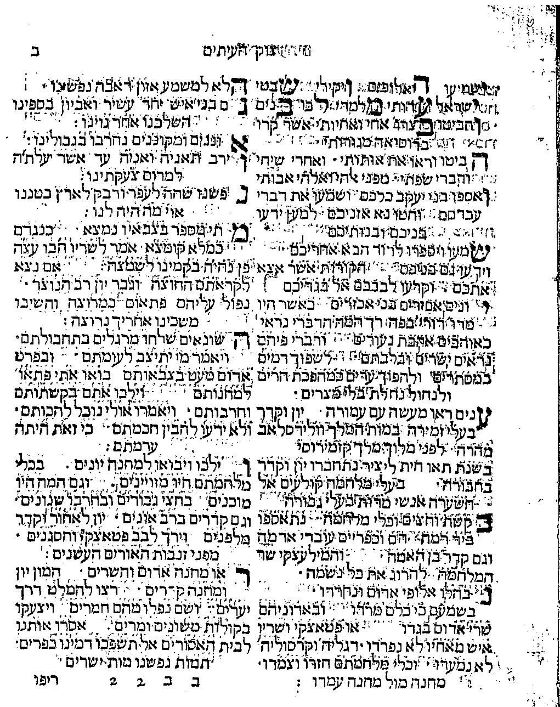
Let us now turn to the manuscript of Rashbam. The first thing to mention is that there is only one surviving manuscript page for Rashbam’s commentary to the beginning of Genesis. There used to be another manuscript that contained his commentary to the rest of the Torah but was missing the commentary to Genesis chapters 1-17. Unfortunately, this manuscript was lost during World War II. For such a great figure as Rashbam, it is definitely noteworthy that so few physical specimens of his Torah commentary survived until modern times.[18] What this tells us is that not many scribes were interested in copying the commentary, and I do not know why this was the case. In fact, it is not merely his commentary on the Torah that suffered this fate. While we have Rashbam’s commentaries to most of Bava Batra and the tenth chapter of Pesahim, we know that he also wrote commentaries to most of the other tractates, yet these are lost.[19] Is there any way to explain this?
Here is the manuscript of Rashbam to the beginning of Genesis.


It is found in the Bavarian Staatsbibliothek (Munich) and is referred to as Hebrew Manuscript no. 5 (2). Here is the link.
You can examine the entire manuscript here.
This manuscript of Rashbam is bound together with another manuscript from 1233 that contains the earliest example we have of Rashi’s commentary on the Torah. It is also the first illuminated Ashkenazic manuscript (with the illumination by a non-Jewish artist).[20] The copyist of the Rashi manuscript was not some anonymous person, but R. Solomon ben Samuel of Würzberg. R. Solomon was an outstanding student of R. Samuel he-Hasid and a colleague of R. Judah he-Hasid. He was also a student of R. Yehiel of Paris, and R. Solomon’s son was one of the participants in the 1240 Paris Disputation together with R. Yehiel. R. Solomon wrote Torah works of his own and he may be identical with R. Solomon ben Samuel, the author of the piyyut ישמיענו סלחתי that is recited in Yom Kippur Neilah.[21] ArtScroll, in its Yom Kippur Machzor, p. 746, tells us that ישמיענו סלחתי was written by “R’ Shlomo ben Shmuel of the thirteenth-century.”[22]
It is significant that in this early copy of Rashi’s commentary, whose copyist was himself a Torah great, Rashi’s comment to Genesis 18:22 appears in its entirety.[23] In this comment, Rashi refers to one of the tikun soferim and states that the Sages “reversed” the passage. What this means is that Rashi understood tikun soferim literally. Some have claimed that Rashi could never have said this, and it must be a heretical insertion. (There is always someone who says this about texts that depart from the conventional view.) In line with this approach, ArtScroll deleted this comment of Rashi.[24] As we have seen with the passages of Rashbam that were censored, in this case as well ArtScroll would also no doubt claim that it accepts the view of those who do not regard the deleted comment as authentic. Yet how can such a claim be taken seriously when the earliest manuscript of Rashi’s commentary, dating from the early thirteenth century and copied by R. Solomon ben Samuel, contains the passage?
Returning to Rashbam, I have the following question. Just like there is only one manuscript for his commentary to Genesis chapter 1, for the rest of the commentary on the Torah there was also only one manuscript and we don’t know anything about the copyist. Why don’t ArtScroll and the other censors start deleting the many other “problematic” passages in Rashbam, with the excuse that they are heretical insertions? Why only focus on the commentary to Genesis chapter 1?
I must also note that Rashbam himself, in his introductory words to parashat Mishpatim, refers to his commentary at the beginning of Genesis. Rashbam explains that the point of his commentary is not to explain the halakhah but rather the peshat, “as I have explained in Bereishit.” Where does he explain this in his commentary to Genesis? As Rosin points out in his note, Rashbam discusses this matter at the beginning of his commentary to parashat Va-Yeshev, and also at the beginning of his commentary to parashat Bereshit (which is from the supposedly questionable manuscript).
In my opinion, there is no doubt that in parashat Mishpatim Rashbam had the commentary to parashat Bereishit in mind. You can see this by comparing his words. In his commentary to parashat Mishpatim he writes:
ידעו ויבינו יודעי שכל כי לא באתי לפרש הלכות אע”פ שהם עיקר כמו שפירשתי בבראשית כי מיתור המקראות נשמעין ההגדות וההלכות.
At the beginning of parashat Bereishit he writes:
ועיקר ההלכות והדרשות יוצאין מיתור המקראות
Please look at what I have underlined and compare it to the passage I cited from the commentary to parashat Bereshit.
There are a number of other parallels between what Rashbam states in his commentary to Genesis chapter 1 and what appears elsewhere in his Torah commentary, meaning that it is impossible for one to argue that the commentary on the first chapter of Genesis is of uncertain authorship.[25]
I must also mention that Hizkuni, in his commentary to Genesis chapter 1, incorporates a number of Rashbam’s comments (without mentioning him by name). A list of these was compiled by  אריסמנדי on the Otzar ha-Hokhmah forum. [26] He concludes:
יש לנו להצטער ולמחות על כי שלטו ידי זרים בחיבורי הראשונים, ולתבוע מההוצאות השונות שידפיסו את פירוש רשב”ם בשלמות האפשרית, ואל יהינו לשלוח יד בו. וכשם שלא יעלה על דעת מאן דהוא לצנזר מפירוש ראב”ע את הקטעים שיצאו עליהם מתנגדים, וכיו”ב במשנה תורה להרמב”ם ושאר חיבורי רבותינו ז”ל. הכי לצנזורים הערלים והמשומדים יאמרו להידמות?
In all the correspondence I have had about this matter, which includes people in various haredi communities, no one has disagreed with this last paragraph. In other words, no one has expressed any support for ArtScroll’s censorship of Rashbam, and the reason is obvious. This is not a matter of ideological or scholarly disagreement. It has nothing to do with haredi vs. Religious Zionist. It is about basic scholarly integrity as well as respect for Rashbam and his readers. This is something scholars of all persuasions can agree on.
One final point regarding Rashbam: In my post here I referred to Rashbam’s famous words in his commentary to Gen. 37:2 that he heard from his grandfather that if he had time he would write new commentaries focused on the peshat. Later in his commentary to this verse, he cites an explanation which appears in Rashi (without mentioning him by name) and refers to this explanation as הבל הוא. In a recent article,[27] R. Meir Mazuz refers to this comment and notes that it is not merely Rashbam who, when it came to Torah matters, was not afraid to strongly reject his grandfather’s position. Rashbam’s brother, Rabbenu Tam, also had this approach.
הלא זה האיש שפסל כל התפלין של חכמי דורו (ובכללם של מר זקנו זצ”ל רבן של ישראל) ועשה אותם כקרקפתא דלא מנח תפלין ח”ו . . . וכן פסק ר”ת שכל המאכיל אונה סרוכה באומא מאכיל טריפות לישראל (תוס’ חולין דף מ”ז ע”א) בניגוד לדעת רש”י שמתיר (שם דף מ”ו סע”ב). וכן חידש לברך על תש”ר על מצות תפלין, בניגוד לרש”י והרי”ף והרמב”ם.
This will be my last post dealing with ArtScroll and Rashbam unless new information comes to light. I have made my position very clear and there is no need to go over this matter again and again. The important thing is that people not forget that ArtScroll’s new mikraot gedolot Chumash is a censored work.
By now no one is surprised that ArtScroll engages in censorship. This has been their modus operandi from the beginning. But is there more, that is, does ArtScroll also publish things that it knows are incorrect? This is a more difficult question to answer. In Changing the Immutable, p. 41, I cite an example where I am pretty sure that this is the case, since the alternative would be to assume ignorance of a pretty basic fact of which I am certain the learned folks at ArtScroll are well aware. Yet aside from a few such cases, which relate to Jewish-Gentile relations, I don’t know of any evidence that ArtScroll intentionally misinterprets sources. Contrary to what some others think, I assume that if there is a misinterpretation it is simply an error, which all people are liable to make. I admit, however, that I am not sure what to make of the following example (called to my attention by R. Yonason Rosman).
The following is ArtScroll’s commentary to Deut. 29:9, in which it quotes Or ha-Hayyim:
Moses divided the people into categories to suggest that everyone is responsible according to how many others he or she can influence. Leaders may be able to affect masses of people; women, their immediate families and neighbors; children, only a few friends and classmates; common laborers, hardly anyone. God does not demand more than is possible, but He is not satisfied with less (Or HaChaim).
This is a very nice thought, but does Or ha-Hayyim actually say this? Here is Or ha-Hayyim on the verse.
As you can see, Or ha-Hayyim does not say that everyone is responsible according to how many he or she can influence. He specifically states that children are not responsible for others since אינם בני דעה. He then adds that women are like children in this respect (i.e., not responsible for others; he is not including them as אינם בני דעה).[28] Thus, ArtScroll’s presentation of Or ha-Hayyim’s view with regard to children and women is actually the exact opposite of what he really says. Was this an intentional distortion in the name of political correctness or a simple misunderstanding? Does ArtScroll view itself, in darshanut-like fashion, as able to elaborate on and alter the message of the commentaries it quotes, so that when it indicates that an interpretation comes from Or ha-Hayyim (or any other source) it could also mean “based on Or ha-Hayyim”? If the latter is true, one must wonder why there is no indication of this in the preface to the Stone Chumash.
To be continued
* * * *
By now many people have read my new book and I have received lots of comments and additional sources. I will discuss some of them in future posts.Although I read the book over a number of times before publication and sat shiv’ah neki’im over every sentence, I knew that there would be some errors that got through. I have learnt that absolute perfection is simply unattainable. However, we are fortunate today that errors can be quickly corrected and the corrections publicized very widely through this blog. Those who have the book can simply insert the corrections. When the book is reprinted the corrections will be added as well.

P. 17. I refer to R. Eliezer David Gruenwald. This should be R. Judah Gruenwald (1845-1920). Thanks to Yisroel Rottenberg for catching this mistake.
P. 21. I discuss the concept of halakhah ve-ein morin ken. Shortly before the book went to press, I added a comment to note 74 in which I stated that Mishnah Berakhot 1:1 contains an example where the Sages did not reveal the true halakhah in order to keep people from transgression. This is a mistake and I thank R. Yonason Rosman for the correction. The Sages made a decree to keep people from transgression. Once this was done we are dealing with a actual rabbinic law so it has no connection to halakhah ve-ein morin ken. Furthermore, since it was a rabbinic decree binding on all there is no reason to think that the Sages were concerned that the masses not know that the biblical law allowed for more flexibility. (We do find such a concern in more recent rabbinic literature, as I discuss in the book.)
P. 55. I refer to an article by Jacob J. Schacter on the 93 Beth Jacob girls. I know this article well and I can’t explain how it is that I recorded the co-author of the article as Norma Baumel Joseph. The co-author is actually Judith Tydor Baumel.P. 205 n. 71. I refer to Teherani, Amudei Mishpat, vol. 1, pp. 147ff. This is the second pagination in the volume.

P. 225. I wrote that R. Naftali Zvi Judah Berlin stated that R. Shneur Zalman of Lyady’s arguments were only intended to intimidate the scholarly reader. R. Yonason Rosman pointed out that my language here is not precise. What the Netziv says is not that R. Shneur Zalman’s arguments were intended to intimidate the scholarly reader, but rather his statement that he has many arguments was for intimidation.
P. 259 n. 100 refers to volume 14 of R. Wosner’s Shevet ha-Levi. This should be volume 11.And while we are talking about typos, this is a good opportunity to correct an unfortunate error that appeared in the first printing of Studies in Maimonides and His Interpreters, p. 152, right at the end. The first word from the verse from Hosea that I quote is מחמד, not מחמר. If this mistake is found in your copy of the book, please correct it.

_______________

[1] In my post here I mentioned that the Lubavitcher Rebbe referred to Rashbam’s peshat interpretation that the day begins in the morning, the interpretation that was censored by ArtScroll. My reference was to a talk the Rebbe gave, and R. Avrohom Bergstein and others called my attention to the fact that in a letter the Rebbe also referred to this peshat interpretation of Rashbam. See Iggerot Kodesh, vol. 24, no. 934, also found in Likutei Sihot, vol. 15, p. 493.
[2] This passage is quoted from the manuscript by R. Menahem Lonzano. See Jordan S. Penkower, Masorah and Text Criticism in the Early Modern Mediterranean (Jerusalem, 2014), p. 118. Lonzano also refers to Nahmanides’ comment that I quoted.
[3] In this listing I included R. Ezekiel Landau. A Lakewood scholar properly corrected me as R. Landau is only referring to the fact that when it comes to kodashim night goes after day.
[4] R. Moshe Maimon also called my attention to the following: In my post here I discussed R. Dovid Cohen’s book, Ha-Emunah ha-Ne’emanah (Brooklyn, 2012). Among other things, I wrote:
One more point about R. Cohen’s book is that it is obvious that at times he is responding to what I wrote in The Limits of Orthodox Theology (and he also makes use of many of the sources I cite). While I am not mentioned by name (no surprise there) I am apparently included among the משמאילים referred to on p. 5 (see Limits, pp. 7-8).
R. Cohen has recently published the seventh volume of his book of questions, Ve-Im Tomar. Look at page 14, no. 216.


Now look at the source for this question provided by R. Cohen.
The question R. Cohen refers to comes from Limits, p. 7 (although I ask why Maimonides does not mention anything about teaching a prospective convert the Thirteen Principles. I don’t ask this question about talmudic sages.). Although I was not mentioned by name in Ha-Emunah ha-Ne’emanah, I am certainly honored to be cited in Ve-Im Tomar.

Since I mention R. Cohen, here is a page from his Ohel David, vol. 3, p. 36.

In his commentary to 1 Kings 7:23 he quotes the verse as follows:

ויעש את הים מוצק עשר באמה משפתו על שפתו
The words I have underlined caught my eye because the verse actually states משפתו עד שפתו. I assume that what appears in R. Cohen’s book is a typo as I haven’t seen any editions of Tanach that contain this error. However, this verse is also part of the Sephardic Haftarah for parashat Va-Yakhel, and believe it or not there are chumashim that do make this mistake. Here, for example, is a page from a popular tikkun kor’im. Look at the last words on the page and you will see the mistaken text.

[5] See She’elot u-Teshuvot Hazon Ovadiah, vol. 1, p. 5.
[6] See Torat Moshe, vol. 3, p. 18b and Derashot Hatam Sofer, vol. 2, p. 231b.
[7] It has already been pointed out that while the yeshiva pronuncation of R. Horowitz’s book המקנה is Ha-Makneh, from Jeremiah ch. 32 we see that it should really be pronounced Ha-Miknah. R. Horowitz’s most famous work is הפלאה. This is an abbreviation of הקטן פינחס הלוי איש הורויץ. The spelling I have given of R. Horowitz’s last name is how he himself spelled it. Here is the title page of his Sefer Ketubah, the first part of his Hafla’ah, published in 1787.

[8] Or Torah, Sivan 5775, p. 945.
[9] Nitzotzei Or, Berakhot 4a.
[10] It is also ironic that in R. Moshe Feinstein’s condemnation of the publication of the commentary of R. Judah he-Hasid, he cites Ibn Ezra’s attack on Yitzhaki for the latter’s own “biblical criticism.” See Iggerot Moshe, Yoreh Deah, vol. 3, no. 114.
[11] This example was earlier noted by B. Barry Levy, “Our Torah, Your Torah and Their Torah: An Evaluation of the Artscroll Phenomenon,” in Howard Joseph, et al., eds., Truth and Compassion: Essays in Judaism and religion in Memory of Rabbi Dr. Solomon Frank (Waterloo, Canada, 1983),  p. 147.
[12] I was quite surprised to find that R. Moses Teitelbaum, Yismah Moshe: Shemot, p. 177b, comes off sounding just like Soncino rather than ArtScroll, in defending citation of Karaite interpreters.
הנה אנכי שולח מלאך ע’ באברבנאל שכתב בשם חכמי הקראים כי זה נאמר על יהושע, והנה האומר דבר חכמה אף באוה”ע חכם נקרא, ובאמת שהם גרועים כי הם מינים ואפיקרוסים, מ”מ את הטוב נקבל כי כמה מפרשים הלכו בדרך הזה שהנביא נקרא מלאך
Regarding the Karaites, even though they are to be viewed as heretics, and a Sefer Torah written by a min is to be burnt, R. David Ibn Zimra stated that if one of the Karaites writes a Sefer Torah it is not to be burnt.  Rather, it is to be placed in genizah. The reason for this is that the Karaites believe in the written Torah. See She’elot u-Teshuvot ha-Radbaz, vol. 2, no. 774.
R. Ishtori ha-Parchi, Kaftor va-Ferah, ch. 5 (pp. 76-77 in the Beit ha-Midrash le-Halakhah be-Hityashvut edition) thinks that such a Sefer Torah does not need to be put away, even though one cannot publicly read from it since the letters of God’s name were not written with the proper intention and other rabbinic requirements were not fulfilled. But the Sefer Torah is not pasul simply because of who wrote it. He also mentions the beautiful Bibles produced by Karaites in the Land of Israel. (When he says “Sadducee” he means Karaite.)
מזה נראה שהצדוקי אם כתב ספר תורה שלא יהיה פסול ואע”פ שיקרא מין אינו ממין זה המין שעובד ע”ז . . . והנה תמצא עמנו היום בארץ הצבי הרבה צדוקים סופרים והרבה ספרים נאים מכתיבתם בתורה נביאים וכתובים. ועל ספר תורה מסתברא שבמה שאינו ניכר שאין ראוי לסמוך עליהם כבעבוד לשמה וכתיבת אזכרות לשמן ותפירת היריעות בגידי טהורה.
See R. Yitzhak Ratsaby, ed., Shemot Kodesh ve-Hol (Bnei Brak, 1987), pp. 5-6. See also the important comments of R. David Zvi Rotstein, “Sefer Torah Menukad,” in Ohel Sarah-Leah (Jerusalem, 1999), pp. 673ff. (Rotstein thinks that when Masekhet Soferim refers to “Sadducees” it too means Karaites.)
R. Naftali Zvi Judah Berlin, Meshiv Davar, vol. 2, no. 77, states that it is permissible to write a Sefer Torah for Karaites if they will treat it with respect. For more discussion regarding this matter, see R. Hayyim Hezekiah Medini, Sedei Hemed, vol. 9, Divrei Hakhamim no. 135.
[13] See his letter published in Abraham Geiger, Melo Chofnajim (Berlin, 1840), p. 20 (Hebrew section). See also שפ”ר in Ha-Magid, Sep. 7, 1864, p. 279, arguing that this letter was not written by Delmedigo.
[14]  The Arabic Commentary of Yefet Ben ‘Ali the Karaite on the Book of Hosea (Philadelphia, 1942), pp. xliii-xliv. See Michael Wechsler, The Arabic Translation and Commentary of Yefet ben Eli the Karaite on the Book of Esther (Leiden, 2008), p. 72, who characterizes Ibn Ezra as “the greatest single mediator of Yefet’s exegesis (and hence of Karaite exegesis generally) among the Rabbanites.”
[15] See Avraham Lipshitz, Pirkei Iyun be-Mishnat ha-Rav Avraham Ibn Ezra (Jerusalem, 1982), p. 192.
[16] I have used the translation of H. Norman Strickman and Arthur M. Silver.
[17] See R. Kasher, Torah Shelemah, vol. 12, pp. 192-193. R. Kasher writes:
ויש להתפלא איך שיטה זו נכנסה גם לפירושי הראשונים ולא ידעו שיסודה ממקור זר
At first I wondered why R. Kasher thought that the origin of this interpretation is with the Karaites. Why not posit that a Rabbanite peshat interpeter could independently arrive at the same conclusion as that offered by the Karaites? I later found that R. Kasher himself, Torah Shelemah vol. 17, p. 311, offers this exact same approach:
 וצ”ל שכתבו כן בדרך פירוש בפשטא דקרא
Daniel Sperber, Minhagei Yisrael, vol. 1, p. 151 n. 8, assumes that the interpretation indeed originates with the Karaites. Regarding the Karaite understanding, see Torah Shelemah, vol. 27, p. 210. See also my post here where I refer to R. Moshe Feinstein’s attack on a “heretical” interpretation that is also found in a number of rishonim.
[18] Additional pieces from Rashbam were published by Moshe Sokolow, “Ha-Peshatot ha-Mithadshim”: Ketaim Hadashim mi-Perush ha-Torah le-Rashbam – Ketav Yad,” Alei Sefer 11 (1984), pp. 73-80  Jonathan Jacobs argues that these are not part of Rashbam’s Torah commentary but from a polemical letter Rashbam sent to a student. See “Rashbam’s Major Principles of Interpretation as Deduced from a Manuscript Fragment Discovered in 1984” REJ 170 (2011), pp. 443-463. For more comments of Rashbam found in another manuscript, see Elazar Touitou, “Ha-Peshatot ha-Mithadshim be-Khol Yom: Iyunim be-Ferusho shel ha-Rashbam la-Torah (Ramat Gan, 2003), pp. 189ff.
[19] See Israel Moshe Ta-Shma, Ha-Sifrut ha-Parshanit la-Talmud be-Eiropah u-vi-Tzefon Afrikah (Jerusalem, 1999), vol. 1, p. 58.
[20] See Eva Frojimovic, “Jewish Scribes and Christian Illuminators: Interstitial Encounters and Cultural Negotiation,” in Katrin Kogman-Appel and Mati Meyer, eds. Between Judaism and Christianity: Art Historical Essays in Honor of Elisheva (Elisabeth) Revel Neher (Leiden, 2009),  pp. 281-305; Hanna Liss, Creating Fictional Worlds: Peshat Exegesis and Narrativity in Rashbam’s Commentary on the Torah (Leiden, 2011), p. 45 n. 32; Colette Sirat, Hebrew Manuscripts of the Middle Ages, ed. and trans. Nicholas De Lange (Cambridge, 2002), p. 170. Sirat gives the date of the manuscript as 1232. In truth, we can’t be sure if it is 1232 or 1233 as the colophon only gives the Hebrew date 4993, but convention in such cases to give the later date. See the transcription in Frojimovic ,“Jewish Scribes,” p. 301.
[21] See R. Moshe David Chechik, “Inyanei Aseret ha-Dibrot ve-Ta’amei Rut le-Rabbenu Shlomo mi-Würzberg,” Mi-Shulhan ha-Melakhim 4 (2006), p. 5. R. Yaakov Yisrael Stal hopes to soon publish one of R. Solomon’s works. See Sodei Humash u-She’ar mi-Talmidei Rabbenu Yehudah he-Hasid, ed. Stal (Jerusalem, 1999), p. 17 n. 115.
[22] Leopold Zunz, Literaturgeschichte des synagogalen Poesie (Berlin, 1865). p. 287, does not think that the two R. Solomon ben Samuels are identical. He assumes that the author of the piyyut pre-dates the 13th century R. Solomon ben Samuel we are discussing.
[23] See here.
[24] See Changing the Immutable, p. 44.
[25] See the post of מה שנכון נכון here.
[26] See here.
[27] Or Torah, Elul 5774, pp. 1199-1200.
[28] See R. Yaakov Hayyim Sofer, Edut be-Yaakov (Jerusalem, 2011), vol. 2, p. 164.


Mehalekhet Bi-Darka – A Review Essay

Mehalekhet Bi-Darka – A Review Essay
מלכה פיוטרקובסקי, מהלכה בדרכה: אתגרי החיים במבט הלכתי-ערכי, הוצאת ידיעות אחרונות, תל-אביב תשע”ד, 567 עמ’
Yael  Levine
The author holds a Ph.D. from the Talmud department at Bar Ilan University. She is the author of numerous articles related to women in Judaism. She recently published “Tefillot Li-Tevilla”.
The following article is a critical review of the recently published book in Hebrew “Mehalekhet Bi-Darka”, a compilation of articles by Malka Peuterkovsky. The present review focuses on the chapter concerning women and the recitation of kaddish. Several highlights from the Hebrew review will now be mentioned, and the readers are encouraged to read the Hebrew review in its entirety for the full spectrum of comments.
Peuterkovsky attempts to offer a new interpretation of the classic teshuva by the Havvot Yair according to which he didn’t forbid the recitation of kaddish. However, this interpretation is unfounded and is based upon a lack of knowledge of halakhic terminology. She seeks to criticize Rav Bacharach in an unjustifiable manner, and her various discussions concerning this teshuva may be refuted.
Peuterkovsky utilizes a letter written by Henrietta Szold concerning the recitation of kaddish, and refers to this letter in a halakhic context. However, in her letter Szold raised no halakhic reasoning. Peuterkovsky refrained from mentioning that Szold held progressive Jewish beliefs. She was instrumental in the formation of an egalitarian minyan, together with Reform Rabbi Judah Magnes, which shortened the nussah of the tefilla, and omitted mention of the sacrifices.
The author utilizes sources from the responsum of Rabbi David Golinkin on the topic of women reciting kaddish, in its Hebrew version. This influence is particularly evident with regard to “Sefer Ha-Hayyim” which she copies and compounds an inaccuracy found in Golinkin’s work.
In several instances Peuterkovsky quotes excerpts from sources which are misleading. Thus, she quotes short passages in which the poskim express a theoretical position in favor of the recitation of kaddish by women, but refrains from stating that their actual psak is in direct contrast to the notion they mentioned in these quotes. Peuterkovsky erroneously explains the Be’er Heitev. She quotes the work “Ma’ayan Ganim” from the “Torah Temimah”, who himself quoted from a second-hand source which didn’t hand over an exact rendering of the text. She also relies upon the incorrect background information concerning the work and its author taken from Rabbi Baruch Epstein.
The chapter on women and kaddish in Peuterkovsky’s book in replete with mistakes, and can’t be relied upon. The present review also refers to some problematic discussions in the book.
“מהלכה בדרכה” מאת מלכה פיוטרקובסקי – נשים ואמירת קדיש
יעל לוין
מבוא
לאחרונה התפרסם ספרה של מלכה פיוטרקובסקי “מהלכת בדרכה: אתגרי החיים במבט הלכתי-ערכי” בהוצאת ידיעות אחרונות. המאמר הנוכחי מוקדש לעיון בפרק “אמירת קדיש על ידי אישה” בספרה זה (עמ’ 257–295, 539–542). והנה, עיון מעמיק בחומר חושף כי מצויות בעיות מהותיות לאורך הפרק, שאינן מאפשרות להסתמך עליו. אקדים ואומר כי אינני חולקת ברמה המעשית על האפשרות ההלכתית שנשים בזמננו יוכלו לומר קדיש מעזרת הנשים, ויש לכך סימוכין במקורות, כגון בדברי הרב יהודה הרצל הנקין.1 יחד עם זאת, כפי שאפרט, הפרק שכתבה פיוטרקובסקי בנושא נשים ואמירת קדיש בעייתי ביותר מבחינת השימוש במקורות וניתוחם, הוא רצוף שגיאות ולוקה בחסר. לא בדבר אחד או שניים, אלא בשְׁורה של דברים ובעניינים מהותיים. מצב העניינים בכל הנוגע לפרק הנוכחי פוגם באפשרות ללמוד ממנו את הנושא כראוי, וביכולתו להוביל למסקנות שגויות ולטעויות. אסור ולא נכון יהיה לעבור בשתיקה על מצב זה שנוצר, למרות הציפייה הגדולה לכרך שאולי יוכל להיהפך בר-שימוש בציבור הדתי-לאומי, ושמא אף מעבר לכך.
שו”ת חוות יאיר – פרשנות שגויה וניתוח לא ראוי
נתייחס תחילה להערות הנוגעות לניתוח של התשובה בשו”ת חוות יאיר (סימן רכב), שהיא התשובה הראשונה והמרכזית בנושא, לה מקדישה פיוטרקובסקי מקום לא מבוטל. השאלה שהופנתה לרב יאיר חיים בכרך באה על רקע מעשה באמשטרדם באדם שציווה לפני פטירתו שילמדו עשרה אנשים בביתו מדי יום תמורת שכר, ולאחר הלימוד תאמר הבת קדיש, בהעדר בנים. חכמי המקום ופרנסיו לא מיחו בבת. הרב בכרך נשאל לגבי עמדה הלכתית זו. הוא סובר כי קיימת סברה לומר שגם לבת יש שייכות לקדיש. האישה מצווה על קידוש השם וכן גם בבת יש תועלת ונחת רוח לנפש הנפטר באמירת קדיש. למרות זאת, הוא פוסק שיש לאסור על אמירת הקדיש, כלשונו: “ולכן בנדון זה שיש אסיפה ברבים יש למחות”. זאת מחמת שיש לחוש שעל ידי כך ייחלש כוח המנהגים של בני ישראל, וכל אחד יהיה בונה במה לעצמו על פי סברתו, ויבואו לזלזל בדברי חכמים.
במהלך דיונה בתשובת הרב בכרך מציבה פיוטרקובסקי מה שהיא מכנה “כמה קושיות משמעויות” (עמ’ 274). בקושייה הרביעית היא תוהה מדוע מורה הרב בכרך שיש למחות באישה המבקשת לומר קדיש, “ואינו קובע מפורשות שיש לאסור זאת?” (שם). התשובה שהיא מעניקה היא: “משום שאין בכך כל איסור!” (עמ’ 277). אולם אין לקבל את פרשנותה המחודשת הזו, וכוונת פשט דברי החוות יאיר היא שלדידו אמירת קדיש על ידי אישה אסורה. חשוב לדעת כי הטרמינולוגיה ההלכתית הנוגעת לאמירת קדיש אינה מובעת במקורות רק במונחים של איסור והיתר, אלא ביטוי שגור הנוגע להרשאה לומר או שלא לומר קדיש הוא באמצעות הפועל “מחה”. אפשר לציין כדוגמה את הנאמר בחיבורו של רבנו משה מינץ, בן המאה החמש עשרה, שו”ת מהר”ם מינץ: “… אבל היכא דליכא [=היכן שאין] מנהג קבוע על פי חכמים, וליכא שום תקנה קבוע, שעשו בני המדינה או קהילה, פשיטא דאין [=פשוט שאין] מוחין לאבל להתפלל, והמוחה באבל כאלו מוחה באדם מלעשות מצוה” (שו”ת מהר”מ מינץ, מהדורת דומב, חלק ראשון, סימן מג, עמ’ קעו). השימוש בביטוי “יש למחות” בשו”ת חוות יאיר דומה לשימוש בפועל זה בשו”ת מהר”ם מינץ, וההבנה החדשנית שפיוטרקובסקי מבקשת להעניק לעניין אינה נכונה בעליל, והיא נובעת מחוסר הכרתה את הטרמינולוגיה המקובלת. אין להצעתה על מה שתסמוך, ואין לתפוס את דבריו של החוות יאיר במשמעות הרשאה. לכן אין גם לקבל את דבריה אלה: “רב שיפסוק בהתאם להכרעת הרב בכרך, לא יוכל לאסור על אישה לומר קדיש יתומה” (עמ’ 277). היא מקיימת דיון דומה במשמעות דברי הפוסקים הסוברים שיש למחות בנשים מלהניח תפילין (ראו בין היתר עמ’ 138, 144, 148–149), ואף כאן אין לדבריה על מה שיסמוכו.
אחת הקושיות שמעוררת פיוטרקובסקי על החוות יאיר היא שהוא לא הזכיר בתשובתו שאמירת קדיש נחשבת להיות חלק ממצוות כיבוד הורים (עמ’ 270–271). לראיה היא מביאה קטע מדברי הרב פנחס זביחי בשו”ת עטרת פז (חלק א, כרך א, או”ח, ב). אולם יש לתמוה מדוע היא מביאה מוטיב זה מחכם בן זמננו בשעה שמצויים מקורות קדומים הרבה יותר. כך כבר מהר”ם מינץ מזכיר רעיון זה בתשובה שכתב (שו”ת מהר”מ מינץ, מהדורת דומב, חלק שני, סימן פ, עמ’ שפה). כמו כן, רעיון זה מובא משמו של מהר”ם מינץ בתשובה בנושא נשים ואמירת קדיש מאת ר’ אלעזר פלקלס בחיבורו תשובה מאהבה (חלק שני, פראג 1815, ארח חיים, רכט, יו”ד, י ע”א). כך חכם זה כותב “הן אמת שהקדיש הוא מפאת כבוד אב”, עמדה שהוא מזכיר מתוך שו”ת מהר”ם מינץ תוך שהוא מוסיף עליה ומרחיבה. פיוטרקובסקי מביאה במהלך הפרק קטע נבחר בלבד מתוך תשובה מאהבה (עמ’ 280–281), את המשך דבריו שבהם הוא מציין נוהג שראה לפיו בנות קטנות אמרו קדיש בחצר בית הכנסת, אולם הוא אוסר לחלוטין אמירת קדיש על ידי נשים בבית הכנסת עצמו. לגופו של עניין יש לומר כי החוות יאיר לא היה מחויב להזכיר בתשובתו את הרעיון שקדיש קשור למצוות כיבוד הורים, ואין לתמוה עליו כלל בעניין הזה.
פיוטרקובסקי מצטטת )עמ’ 275) את דברי ר’ יצחק מווינה בספרו אור זרוע לפיהם המנהג במקומו, וכן מנהג בני ריינס, הוא שהיתום עומד ואומר קדיש לאחר “אין כא-להינו”. אולם בצרפת נכח שאין מקפידים שהנער האומר הקדיש יהיה דווקא יתום, ונהגו שגם נער שיש לו הורים אומר קדיש. ר’ יצחק מווינה עצמו מעדיף את המנהג הנקוט במקומו. על יסוד זאת קובעת פיוטרקובסקי כי מכיוון שלא היה נוהג ברור, “מכאן שניתן להנהיג שגם יתומות תאמרנה קדיש במניין” (שם) כדי שלא ייגרע חלקן במצוות קידוש שם ה’, וכן כדי שיוכלו לקיים את מצוות כיבוד הורים על ידי עשיית מעשה לעילוי נשמתם. אולם אין מסקנתה זו מוכרחת ומחייבת כלל, ועובדה היא שאין בידינו עדות כלשהי מתקופת הראשונים לגבי אמירת קדיש בידי הבת, כי אם מתקופת האחרונים בלבד. אם כן, היא מכניסה בצורה אנכרוניסטית אלמנט שאין לייחס כלל למנהג המוקדם. הבחנתה זו אינה נחוצה גם משום שיש פוסקים המתירים לנשים לומר קדיש מטעמים אחרים. יש לציין עוד כי בהערת שוליים (עמ’ 540, הערה 10) היא מאזכרת בפרפרזה קטע זה מהאור זרוע, בלא שהיא מפנה לגוף המאמר כאן. ונציין שאין אחידות לאורך הספר בכתיב שמו של האור זרוע (ראו בין היתר עמ’ 127).
יש להזכיר בהקשר לשו”ת חוות יאיר כי פיוטרקובסקי עושה שימוש בנוסח של התשובה שיש בו שגיאות אחדות. כך היא מסתייעת בנוסח התשובה שבפרויקט השו”ת, אולם מצויות שם לפי שעה טעויות שונות בהעתקת הנוסח, המבוסס על הדפוס השני שיצא לאור בלמברג בשנת תרנ”ו. טעויות אלה עומדות להיות מתוקנות בגרסה הבאה של פרויקט השו”ת, בעקבות הערותיה של כותבת שורות אלה. אחת הטעויות הניכרות היא הנוסח “ויבואו לגלגל בו”, במקום “ויבואו לזלזל בו”. טעות נוספת המצויה היא “ונזכר בגמרא” במקום “כנזכר בגמרא”. מתברר שפיוטרקובסקי עשתה שימוש בנוסח שבפרויקט השו”ת, למרות שמוטל היה עליה להוציא מתחת ידה נוסח מבורר. ואמנם היא אינה מציינת את המהדורה של חוות יאיר אשר בה השתמשה. זה לא דבר של מה בכך, אלא עניין עקרוני הקשור לשיטות עבודה בסיסיות; מחבר אמור לעיין בחיבורים עצמם, ולא להסתמך על מאגרים.
יש לציין עוד שהמחברת מתייחסת בדבריה אל “השואלים” (עמ’ 266) שפנו אל הרב בכרך לבירור רשאיות אמירת קדיש בידי הבת במעשה שאירע באמשטרדם, אולם באותה מידה ייתכן שמדובר בשואל יחיד. על פי נוסח דברי הרב בכרך אין אפשרות כלל לקבוע אם מדובר בשואל יחיד או בשואלים רבים. פיוטרקובסקי טורחת להדגיש כי למרות שבעל חוות יאיר מציין שהמקור לאמירת קדיש הוא המעשה בר’ עקיבא, נראה שהמעשה המקורי אירע בר’ יוחנן בן זכאי. היא מביאה מידע זה משמו של מ”ב לרנר במאמרו המחקרי “מעשה התנא והמת” שהתפרסם בכתב העת “אסופות” (מהלכת בדרכה, עמ’ 269; 540, הערה 11), וכן מזכירה תפיסה זו מתוך אנציקלופדיה אוצר ישראל (שם, הערה 12). יש לומר תחילה לגבי אנציקלופדיה זו שהיא יצאה לאור בראשית המאה העשרים, ולא מקובל לעשות בה שימוש בכתיבה אקדמית, אלא יש להסתייע במחקרים ובמקורות ראשוניים יותר. בהקשר זה יש לציין כי המחברת לא עשתה שימוש בחיבור המקיף והנודע של הרב דוד אסף בנושא הנדון, “ספר הקדיש: מקורו, משמעותו ודיניו”, שיצא לאור בשנת תשכ”ו.
כמו כן, מלבד מאמרו של לרנר בעניין “מעשה התנא והמת”, ראה אור לאחרונה מאמרה החשוב של פרופ’ רלה קושלבסקי בנושא זה, “התנא והמת הנודד” ב”אנציקלופדיה של הסיפור היהודי”.2 מחקר זה לא זכה לאזכור אצל פיוטרקובסקי. כמובן שאין להלין על החוות יאיר על שאולי לא עשה שימוש במעשה בריב”ז, אלא החוות יאיר כתב בהתאם למה שניצב לנגד עיניו.
והרי חרף ביקורתה של פיוטרקובסקי כלפי החוות יאיר בעניין זה, היא עצמה מצטטת כמקור לאמירת קדיש את המעשה בר’ עקיבא, כפי שמובא בקובץ אוצר מדרשים, מקור שלגביו היא מודעת שהוא מקור מאוחר, אך היא בוחרת לעשות בו שימוש מחמת שנוסחו נהיר יותר (עמ’ 539, הערה 7). אולם הקובץ אוצר מדרשים איננו מקור שראוי לצטט הימנו, שכן העורך י”ד אייזנשטיין הכניס שינויים כלשהם בנוסחי המדרשים, אלא יש לחזור למקור שממנו ציטט. למעשה היה על פיוטרקובסקי להביא את המקור הטוב ביותר, ואז להציע פרשנות מבארת עליו.
יש להעיר עוד את הדברים הבאים בנוגע לציטוט של פיוטרקובסקי מתוך הקובץ אוצר מדרשים. המחברת מציינת כמראה מקום את המידע הבא: “אוצר המדרשים (איזנשטיין), ניו
יורק, תרע”ה, 1915, עמ’ ת”נ, ד”ה (ל”ב), דבור שביעי” (עמ’ 540, הערה 8). אולם היא לא מזכירה אפילו את שם המדרש הספציפי שממנו נטלה אותו; מדובר במדרש עשרת הדברות. שנית, העמודים שבהם מופיע הקטע המצוטט הם 457–458, ובמהדורת תרע”ה בה עיינתי מספור העמודים הוא במספרים, ולא באותיות כפי שהיא מציינת. (במאמר מוסגר אציין כי הסימון “עמוד ת”נ” מצוי בלקט המקורות על נשים וקדיש שאסף עמיחי טורם, אם כי שאר הרישום הביבליוגרפי אינו מצוי שם). נוסח מדרש עשרת הדברות עצמו מתחיל אמנם בעמ’ 450, אך הקטע המצוטט מופיע בהמשך. בנוסף, מראה המקום המדויק אמור להיות “אות לב, דבור שביעי”, ואין להשתמש כאן במילים “דיבור המתחיל”; זו לא הטרמינולוגיה המתאימה לציטוט המדרש כאן. כמו כן, כותר הספר הוא “אוצר מדרשים”, גם אם בפרויקט השו”ת מופיעה הכותרת בטעות כ”אוצר המדרשים”. מעבר לכך, לפני שנים אחדות יצאה לאור מהדורה מדעית של מדרש עשרת הדברות בההדרתה של ענת שפירא, ובה הייתה פיוטרקובסקי אמורה לעשות שימוש. כך שיש בעייתיות גמורה הן בבחירתה לצטט מדרש מאוחר ככלל, והן בבחירתה לצטט מתוך הקובץ אוצר מדרשים, ולא ממהדורתה של ענת שפירא.
פיוטרקובסקי מציינת שהמדרש באוצר מדרשים אינו קושר את המעשה בר’ עקיבא לעניין אמירת קדיש, וקישור זה מצוי בספר כל-בו (סימן קיד) (עמ’ 269). אולם מחזור ויטרי (סימן קמד) הוא מקור קדום יותר המעלה זיקה בין המעשה בר’ עקיבא לבין השתקפות קדומה יותר ככל הנראה של אמירת קדיש יתום במוצאי שבתות.
הקושיה הראשונה שפיוטרקובסקי מציבה על החוות יאיר נוגעת למועד תחילת נוהג אמירת קדיש יתום. היא מצטטת תחילה קטע מתוך הערך “קדיש” באנציקלופדיה אוצר ישראל (עמ’ 275), קטע המסכם את ראשית נוהג אמירת קדיש בקהילות ישראל. לפי הנאמר שם, הנוהג לא נהג עד לאחר תקופת הגאונים, וכנראה שהוא התחדש בידי חכמי אשכנז על בסיס האגדה על אודות ר’ עקיבא. והנה, פיוטרקובסקי מעירה בצורה ביקורתית על דברי החוות יאיר שהסתייע באגדה זו, ולא באגדה הראשונית יותר כביכול, ואילו כאן היא לא מבקרת את מה שנכתב באנציקלופדיה אוצר ישראל, אלא היפוכו של דבר, היא בוחרת להסתמך על הנאמר בו.
הקושיה החמישית והאחרונה שפיוטרקובסקי מקשה כלפי החוות יאיר היא: “האם אין חשש שדווקא דחיית שינוי רצוי, שמתאפשר מבחינה הלכתית, יביא לזלזול בחכמי הדור, שאינם משתמשים בכוח שניתן להם על ידי הקב”ה, לקדם את תהליך השינוי המבורך, לעודד אותו ולהביא לקיומו בפועל?” (עמ’ 274). אני סבורה שהפניית שאלה מעין זו אל החוות יאיר כנמען אינה במקום כלל, וניסוח ביקורתי זה כלפי אחד מגדולי הפוסקים איננו ראוי, והוא רשאי לסבור אחרת ממנה. זהו המשך מגמתה לנסות ולערער על אמינותו של החוות יאיר מחמת שהוא אוסר על אמירת קדיש בידי אישה. בין היתר היא מבקשת להראות שלמרות שהחוות יאיר מציין כמקור לאמירת קדיש את המעשה בר’ עקיבא, המעשה המקורי התרחש עם ר’ יוחנן בן זכאי, הגם שהיא גופה עושה שימוש במקור זה. כן היא מציינת במהלך דבריה שהוא אינו מזכיר את המקורות שעליהם הסתמך בקביעתו שיש תועלת באמירת קדיש בידי הבת (עמ’ 269), וכי הוא לא מאזכר את האלמנט שאמירת קדיש היא חלק ממצוות כיבוד הורים. ובעיקר פיוטרקובסקי מבקשת להפוך את האיסור הטמון בפסק ההלכה הברור של החוות יאיר להרשאה לאמירת קדיש בידי הבת, כפי שהראינו בלא בסיס ועוגן.
הנריאטה סולד
מלכה פיוטרקובסקי מביאה לקראת תחילת המאמר על נשים וקדיש מכתב שכתבה הנריאטה סולד (1860–1945) לאחר פטירת אמהּ בקיץ של שנת 1916 לידיד המשפחה חיים פרץ, שהציע לומר עליה קדיש במהלך שנת האבל (עמ’ 260–261). סולד דוחה את דבריו בכותבה שגם לאחר מות אביה ולמרות שהיו לו בנות בלבד, סירבה אמהּ שאדם אחר יאמר קדיש, ובנותיו אמרו זאת. לכן סולד סבורה שרצון האם הוא שבנותיה יאמרו אחריה קדיש. היא כותבת שהמנהג היהודי שגברים אומרים קדיש יקר וקדוש בעיניה. אולם משמעות הקדיש בעבורה היא “שהקרוב שנשאר בחיים, מביע את רצונו וכוונתו בפרהסיא, ובאופן בולט, לקבל על עצמו [את] היחס לקהילה היהודית שהיה להורה שלו וששושלת הקבלה לא תינתק מדור לדור, כאשר כל דור מוסיף את החוליה שלו”.
כאן חובה להצביע על בעיות אחדות הקשורות לשימושה של פיוטרקובסקי במקור זה. קודם כול, חובה היה לציין שהנוסח העברי של המכתב המובא בדבריה אינו תרגום מעשה ידיה, אלא הוא ניטל מתשובה בנושא “אמירת קדיש יתום על ידי נשים” שנכתבה בידי הרב דוד גולינקין, שהוא גם מתרגם הקטע. תשובה זו התפרסמה בנוסח מורחב בספרו “מעמד האשה בהלכה: שאלות ותשובות”, שראה אור בירושלים בשנת תשס”א (עמ’ 123–144). עדותה של הנריאטה סולד מובאת אצל גולינקין לקראת סוף דבריו, ולעומת זאת, פיוטרקובסקי מיקמה את הציטוט לקראת ראש דיונה, ועשתה שימוש מילולי בתרגומו של גולינקין מבלי להזכירו כלל. במקום אחד נשמטה המילה “מאוד” בצירוף “והמנהג היהודי יקר מאוד” וכן היא הוסיפה בסוגריים את המילה “את” שאינה מצויה אצל גולינקין, כמצוטט לעיל. עניין זה מובילנו לעניין המהותי יותר שפיוטרקובסקי עושה שימוש בולט בחומר המצוי בתשובתו הנזכרת של גולינקין במהלך הפרק שכתבה על נשים ואמירת קדיש, למרות שהיא מזכירה אותו בצורה גלויה בהקשר ספציפי אחד בהערת שוליים בודדת (עמ’ 541, הערה 22), וכותר המאמר מועתק מסיבה בלתי ברורה בשינוי. בהמשך נצביע על כך שפיוטרקובסקי נטלה מקורות נוספים ממנו מבלי שעיינה כלל בחיבורים עצמם.
אולם חיוני להעיר תחילה הערות נוספות אחדות לגבי הקטע על סולד ומכתבה הנזכר. נקודה משמעותית היא שעיון בקורות חייה של סולד מעמיד בספק, ולמעשה אינו מאפשר, הסתייעות בדמות זו כמושא חיקוי לעניינים הלכתיים, בוודאי לא לנשים אורתודוקסיות. קודם כול, במכתבה של סולד אין מצויות הנמקות הלכתיות המצדדות באמירת קדיש, מלבד העדות בדבר אמהּ. לכל היותר מצויה כאן כמיהה אישית לומר קדיש, אולם אין בכך די, משום שבדרך כזו של רצון ואיווי – אפשר לבוא חלילה ולבטל הרבה איסורים. עדותה איננה מקור שאפשר להסתייע בו בהקשר הלכתי, ומבחינה זו, מעמדו של קטע זה הוא לגריעותא בהשוואה לעדויות היסטוריות אותנטיות אחדות שיש בידינו בדבר בנות קטנות שאמרו קדיש. ויש בידינו עדויות אחדות על נשים שחפצו לומר קדיש, כגון בשו”ת יד יצחק לרב אברהם יצחק גליק (חלק ג, יורה דעה, סימן שמ), המוזכר בהמשך הפרק באופן חלקי בידי פיוטרקובסקי (עמ’ 280).
סולד החזיקה בדעות ליברליות ומתקדמות. אביה הרב בנימין סולד, היה רב בקהילה רפורמית, ויחד עם זאת, שמר שבת כהלכתה. עם זאת, היו לו מחלוקות בנושאים מסוימים הן עם רבנים אורתודוקסים וכן עם רבנים רפורמים מסוימים. הוא נפטר בשנת 1902, וכאמור בנותיו אמרו אחריו קדיש.
הנריאטה סולד הביעה באיגרת משנת 1897 את עמדתה האישית המסורתית-החיובית בעניין פטורן של נשים ממצוות עשה שהזמן גרמן. אולם בהמשך עברה מטמורפוזה אישית בחשיבתה הדתית. בראשית המאה העשרים בחרה ללמוד בבית המדרש לרבנים הקונסרווטיבי בניו יורק. היא האישה הראשונה שהתקבלה למוסד זה לאחר שהובהר לה שלא תוכל לקבל הסכמה לרבנות. לפי מקורות כתובים היא אמנם שמרה שבת, אולם בהמשך דרכה, במאמר שראה אור בשנת 1923 תיארה את היותה שותפה לייסוד מניין שיוויוני, שבין מייסדיו נמנה גם יהודה מאגנס (1877–1948), שהיה רב רפורמי. במניין זה קוצר נוסח התפילה והוצאו ממנו קטעי התפילה המזכירים הקרבת קרבנות.3 אם כן, דמות זו ומאווייה הדתיים, ובין היתר העובדה שלא ראתה פסול במניין שאין בו מחיצה ובשינוי נוסח התפילה, אינם אמורים להוות מושא חיקוי עבור נשים אורתודוקסיות. ההסתמכות על סולד כדמות הראויה לחיקוי מתאימה אולי לציבור הקונסרווטיבי, אך במפורש לא לציבור האורתודוקסי.
במקום אחר במהלך הפרק על נשים ואמירת קדיש פיוטרקובסקי עושה שימוש בדעתה של סולד כ”תנא דמסייע”. כך במהלך דיונה על הנחיצות שקדיש ייאמר בידי צאצאי הנפטר עצמו, בין זכרים בין נקבות, היא מסתייעת בדעתה של סולד: “… ברור שאין זה משנה אם הצאצא המזכה את אביו… הוא בנו או בתו… כפי שטענה הנריאטה סאלד במכתב שצוטט בתחילת הפרק” (עמ’ 270). ואגב יוער, שקודם לכן הכתיב של שם משפחתה הוא “סולד”, ואם כן ניכר חוסר אחידות לאורך הפרק.
הסתייעות במקורות חלקיים וקטועים
כאמור, אפשר להצביע על כך שפיוטרקובסקי עשתה שימוש מובהק בתשובתו של הרב דוד גולינקין על נשים ואמירת קדיש. דבר זה בולט באופן מיוחד במה שנוגע לציטוטים של קטעי מקורות אשר זהים לאלה שגולינקין עצמו הביא, זאת באופן שכמוהו היא מצרפת אותן מילות הסבר בתוככי המקורות עצמם.
תופעה זו בולטת באורח מיוחד במקור מחיבורו של ר’ שמעון פרנקפורטר, בן זמנו של הרב יאיר חיים בכרך, ספר החיים (אמשטרדם תס”ג, סימן נ, מט ע”א), שממנו מביאה פיוטרקובסקי ציטוט קצר: “כי אין לבת בקדיש, לא דין ולא דת, ואין זה אלא ‘שטות חסידי’, כי הוא כחוכא וטלולא!” (מהלכת בדרכה, עמ’ 277–278). ציטוט זהה מצוי אצל גולינקין (עמ’ 128). אפשר להראות בבירור שהמחברת העתיקה קטע זה ממנו, דבר הניכר בטעות משותפת. במקור כתוב: “שטות חסידי'” – דהיינו “שטות חסידים” – וכך היה צריך לכתוב זאת. בספר החיים עצמו מובאות לאחר המילים הללו התיבות “אף שיש לו לשון למודים”, אולם הן נעדרות מגולינקין ומפיוטרקובסקי כאחד. בנוסף, במקור כתוב “כחוכה” ואילו אצל גולינקין ואצל המחברת כתוב “כחוכא”. מבחינה זו, למרות שגולינקין מצביע על הדפוס הראשון כמקור לשאיבתו, נוסח הטקסט עצמו אינו זהה לגמרי למצוי שם. אולם לענייננו חשוב שמלכה פיוטרקובסקי העתיקה ככל הנראה את הקטע ישירות מגולינקין, ולא עיינה בספר עצמו, ספר שמהדורתו הראשונה אמנם נדירה ביותר.
שימושים נוספים במקורות המצויים אצל גולינקין ניכרים לגבי החיבורים הבאים: מטה אפרים, שדי חמד, תשובה מאהבה ויד יצחק. העובדה שהציטוט ממטה אפרים לר’ אפרים מרגליות (דיני קדיש יתום, ד, ח) נטולה מגולינקין ניכרת בהערה זהה המצויה בפנים הקטע (מהלכת בדרכה, עמ’ 278; גוליניקין, עמ’ 129). מקור נוסף שהמחברת מזכירה הוא משל ר’ חיים חזקיה מדיני בספרו שדי חמד (אסיפת דינים, מערכת אבילות, אות קס), האוסר על נשים לומר קדיש (מהלכת בדרכה, עמ’ 278–279). השאיבה הישירה המובהקת מגולינקין (עמ’ 127) ניכרת בהבאת אותן שתי הערות מבארות המצויות אצלו בסוגריים. המקרה התרחש באחד “מהקרימצאקים”. אין הסבר למונח זה בשדה חמד עצמו, וגולינקין מעניק בסוגריים את מילות הביאור “מיושבי קרים”, וכך בדיוק עושה פיוטרקובסקי. כמו כן, גולינקין עורך שינוי לקראת סיום הקטע, תוספת אות בסוגריים להבהרה, “וזה [ב]כלל ‘שב ואל תעשה עדיף'”, ושינוי זה מובא אצל פיוטרקובסקי אף היא. גם בנוגע לציטוט מתוך שו”ת תשובה מאהבה לר’ אלעזר פלקלס מדובר בציטוט של אותו הקטע עצמו וכן בהכללת אותן שתי הערות מבארות לטקסט (מהלכת בדרכה, עמ’ 280–281; גולינקין, עמ’ 133). לתשובה זו התייחסנו לעיל בהקשר לרעיון הקושר בין אמירת קדיש יתום לבין כיבוד הורים.
פיוטרקובסקי מביאה ציטוט בן שורה מתוך שו”ת יד יצחק לרב אברהם יצחק גליק (ג, יו”ד, סימן שמ), וזהו אותו ציטוט המצוי אצל גולינקין. “הנה, אם נלך אחר עיקר הדין, נראה לי דיותר טוב שתאמר הבת קדיש מבן הבת” (מהלכת בדרכה, עמ’ 280; גולינקין, עמ’ 132). חשוב להזכיר שהרב גליק פוסק אחרת באופן מעשי, על בסיס החוות יאיר ופוסקים נוספים. הוא סבור שבן הבת יכול לומר קדיש, אולם טוב תעשה הבת אם תשכיר בן תורה שילמד משניות לעילוי נשמת הנפטר. לפנינו דוגמה שבה פיוטרקובסקי התעלמה מהפסק המעשי של המחבר.
תופעה עקרונית ובעייתית זו של אי-איזכור הפסיקה המעשית של הפוסק במקומות שקיים פער בין עיקרון מכיל ומתיר יותר בהשוואה לפסק מחמיר יותר, בולטת במקומות נוספים במהלך הפרק שכתבה פיוטרקובסקי על נשים וקדיש. נציין תחילה את הדוגמה המובהקת הקשורה לרב חיים דוד הלוי. מלכה פיוטרקובסקי מביאה כפתיח לפרק על נשים ואמירת קדיש קטע מתשובה של רב זה (עשה לך רב, ה, סימן לג), קטע שמופיע ביתר הרחבה במאמר עצמו. וזה נוסח הקטע המלא המובא בספר: “ולמה ייראו דברי חכמים כחוכא ואיטלולא, אם תאמר הבת קדיש במניין שבבית? ולמה קשה להסביר שגם בתו היא יוצאת חלציו, וכשמקדשת שם שמים במניין שבבית – עושה נחת רוח לנשמת הוריה, ממש כמו אמירת קדיש ע”י הבן” (מהלכת בדרכה, עמ’ 291). מדברים אלה משתמע לכאורה שהרב ח”ד הלוי מתיר אמירת קדיש לאישה באופן גורף. אולם החומר מובא כאן בצורה קטועה. בפועל מדובר בתשובה רחבת היקף של הרב ח”ד הלוי, שבה הוא מסייג את דבריו בקטע המצוטט, ומציב תנאים מפורשים לאמירת קדיש בידי אישה. כך הוא אינו מתיר אמירת קדיש בבית הכנסת מהטעם של חשש להרהורי עבירה אצל הגברים, ומטעם זה עצמו אוסר אמירת קדיש בבית הקברות. הוא מתיר אמירת קדיש במניין שבבית, אולם רק בקרב חוג המשפחה, “ולא בשעה שבאים רבים להתפלל בצבור כנהוג בבתי-אבלים”. אולם פיוטרקובסקי לא מצאה לנכון להזכיר ולהביא מידע חיוני זה, וכך מצטייר הרושם המוטעה והמסולף כאילו הוא מתיר לגמרי אמירת קדיש בידי נשים. אם כן, פיוטרקובסקי העלימה מידע חיוני מהקורא, שכן הקטע המצוטט על ידה הוא דיון עקרוני, ואינו משקף את הפסיקה הלכה למעשה, וקיים מרחק עצום בין השתקפות הדיון בדעתו של הרב חיים דוד הלוי בדבריה של פיוטרקובסקי לבין דבריו הממשיים במלואם. למעשה, קטע זה שפיוטרקובסקי מצטטת הוא שמובא אצל גולינקין (עמ’ 132). אלא שיש בידינו חוברת מקורות שערכה פיוטרקובסקי בשנת תש”ס, “עיון בשו”תים: לקט מקורות”, הכוללת את הנושא של אמירת קדיש בידי נשים, ומשם נראה שהיא הכירה חלקים רחבים יותר של התשובה.
וכאן אנו מגיעים לתשובתו של הרב עובדיה יוסף (כפי שמופיעה באתר האינטרנט “הלכה יומית”; מהלכת בדרכה, עמ’ 291–292). מתברר שדעתו קרובה במידה מרובה לדעתו של הרב ח”ד הלוי, ולגביו פיוטרקובסקי מביאה את כל הסייגים שהוא מעמיד. הרב עובדיה מתיר אמירת קדיש רק לאישה שאין לה אחים, וזאת במניין שבבית, לאמירת דברי תורה, או לאחר קריאת תהלים באיזה מקום שיהיה. אולם אין לאישה לומר קדיש באולם המרכזי של בית הכנסת.
פיוטרקובסקי מביאה את עצם דעתו של הרב ח”ד הלוי על רקע אזכור העובדה שרבני עדות המזרח אוסרים אמירת קדיש בידי נשים, ובכללם השדי חמד והרב עוזיאל. כנגדם ציינה שהרב ח”ד הלוי מתיר אמירת קדיש לנשים. אולם כאמור, היא לא מזכירה את התנאים שהוא מציב, ומבחינה זו אפשר לומר שפסיקתו זהה לזו של החוות יאיר, השקפה שהיא כה מתאמצת במהלך ניתוח תשובתו לבטל.
בהקשר לדברינו יש לומר כי פוסקים מועטים התייחסו לשאלת אמירת קדיש על ידי נשים בבית הקברות. קדם לרב חיים דוד הלוי הרב אליעזר סילבר (1882–1968) בארה”ב שמתיר את אמירתו,4 ואילו הרב חיים דוד הלוי אוסר זאת. אי-איזכור דבריו המפורשים של הרב ח”ד הלוי בנוגע לנשים ואמירת קדיש, בין היתר בבית הקברות, צורמת גם על רקע המסגרת הכללית של הפרק, של אישה שפנתה למחברת על מנת לזכות בחוות דעת בעניין אמירת קדיש בהלוויית אביה בבית הקברות.
הבאה חלקית נוספת של תשובה אשר ראוי היה לאזכר את תוכנה במלואה נוגעת לרב משה פיינשטיין. מלכה פיוטרקובסקי מזכירה את הידרשותו של הרב פיינשטיין לאמירת קדיש בידי נשים בתשובה שנושאה: “אם צריך מחיצה לחוץ (לחצוץ – י”ל) רק בפני מעט נשים” (או”ח, ה, סימן יב) (עמ’ 286). היא מביאה ציטוט מתוך תשובה זו שבה הוא מאזכר אגב אורחא את התופעה שלעיתים נהגו נשים להיכנס לעזרת הגברים לומר קדיש: “… והנה בכל הדורות נהגו שלפעמים היתה נכנסת אשה ענייה לבית המדרש לקבל צדקה, או אבלה לומר קדיש…” (שם). בהמשך היא כותבת שהרב פיינשטיין מתאר את נוהג הנשים להיכנס לבית הכנסת ואינו מעיר דבר לגביו (עמ’ 288). אולם היא נמנעת מלציין את התנאי המפורש שהוא מתווה של הימצאות אישה בודדת או שתי נשים בלבד כמציאות שאינה מחייבת הקמת מחיצה לצורך תפילה. אם כן, מתברר שהמחברת הזכירה את הנושא במקוטע, והשמיטה פרט מהותי להבנת הנושא לפיו אי-העמדת מחיצה תלויה בהימצאות של אישה אחת ולכל היותר של שתי נשים, וכי אין היתר גורף לכניסת קבוצה גדולה יותר של נשים לעזרת הגברים לאמירת קדיש.
נקודה הראויה לציון קשורה לדבריו של הרב אליעזר זלמן גראיעווסקי בחיבורו קדיש לעלם, שבו הוא מגלה דעה המתירה לנשים לומר קדיש. פיוטרקובסקי מצטטת קטע מדבריו, שבו המחבר מטעים שאין נפקא מינה אם היתום הוא בן או בת (מהלכת בדרכה, עמ’ 281). יחד עם זאת, נפרסת כאן תמונה חלקית בלבד שכן הרב גראיעווסקי עצמו מוסר שהוא הראה את דבריו לרב שלמה אהרן ורטהיימר, רב וחוקר יהדות נודע והמגלה הראשון של הגניזה הקהירית. הרב ורטהיימר חלק עליו בנקודות מסוימות, ודבריו מתפרסמים בהמשך ספר קדיש לעלם עצמו. אולם כל זה איננו מוזכר אצל פיוטרקובסקי, ויש כאן הצגת תמונה חלקית בלבד. ראוי גם להצביע על בעיה טכנית בקטע הזה, שכן המילים “נפקא מינה” מובאות בתרגום עברי אך רק בהופעתן השנייה, ולא הראשונה. במקרה הזה אפשר להעלות את ההשערה שפיוטרקובסקי נטלה את הקטע המצוטט מתוך אוסף המקורות בנושא אמירת קדיש בידי נשים בעריכתו של עמיחי טורם, שם מובא קטע זהה ממש, וכן מצויה זהות ברישום הביבליוגרפי.
שגיאה בהבנת הבאר היטב, זלדה והתורה תמימה
אחד המקורות שמביאה פיוטרקובסקי המתירים אמירת קדיש לאישה במניין שבבית הוא דברי באר היטב לר’ יהודה אשכנזי על השולחן ערוך, ובהם נאמר: “וכל שכן לבת, אין לה קדיש כלל בבית הכנסת, ואם רוצים לעשות לה מניין – רשות בידם” (או”ח, קלב, ה; עמ’ 280). המחברת מקדימה קטע זה בכותבה שהבאר היטב פוסק כמו הרב יעקב ריישר (שבות יעקב, ב, יו”ד, סימן צג; שם, עמ’ 279–280). חכם זה התיר לילדה בת ארבע לומר קדיש במניין שבבית. אולם דבריה אלה של פיוטרקובסקי אינם נכונים בעליל. היא לא זיהתה שהקטע שהיא מצטטת הוא למעשה סיכום דעתו של בעל כנסת יחזקאל (יו”ד, נג ע”א), כמו שנזכר שם מפורשות מעט קודם לכן, ומכאן שאין מדובר בדעתו האישית והעצמאית של הבאר היטב. את דעתו של הכנסת יחזקאל מזכירה פיוטרקובסקי עצמה שני עמודים קודם לכן (עמ’ 278).
בהקשר זה חשוב לציין שניכר הבדל בין דברי הכנסת יחזקאל עצמו לבין הדברים המובאים משמו בבאר היטב. בעל כנסת יחזקאל סובר שאין לבן הבת, וכל שכן לבת, קדיש כלל בבית הכנסת, אולם במניין נפרד הרשות נתונה לבן הבת או למי שרוצה לומר קדיש בגין המת, אך לנקבה כלל לא. לעומת זאת, מהנאמר בבאר היטב משתמע שאין לבת קדיש בבית הכנסת, אולם “אם רוצים לעשות לה מניין – רשות בידם”. נראה שיש ליישב את הסתירה לכאורה בין המקורות בהבנה שהמילה “לה” היא למעשה קיצור של המילה “להם”, והייתה אמורה להופיע עם גרש. כלומר שהרשות בידי בן הבת או בידי מי שרוצה לומר קדיש במניין לעשות כן, והבאר היטב קיצר ולא הזכיר כלל אישה בהקשר למניין בבית. מכל מקום, הדברים המוזכרים אצל פיוטרקובסקי בעניין באר היטב אינם נכונים ומטעים, ואין אפשרות להסתמך עליהם.
פיוטרקובסקי מביאה את העדות הנוגעת לאמירת קדיש על ידי המשוררת זלדה (עמ’ 287). המשפחה עלתה ארצה בשנת 1925, כשזלדה הייתה בת אחת עשרה, וזמן לא רב לאחר מכן נפטרו סבה, בערב חנוכה תרפ”ו (1925), ואביה – כחלוף שישה שבועות. היא, כבת יחידה, אמרה קדיש מדי יום בבית הכנסת. פיוטרקובסקי מציינת כמקור לדבריה את ספרה של אסתר אטינגר “זלדה: שושנה צחורה”, שיצא לאור בשנת 2007. פיוטרקובסקי מסתייעת בספרה של אטינגר גם בפרק השישי של “מהלכת בדרכה” (עמ’ 222, 535). אולם חיבור זה הוא ספר פופולרי, ולמעשה, המקור הישיר שעליו נשענת אטינגר בעניין אמירת קדיש על ידי זלדה הוא מחקרה המוקדם יותר של פרופ’ חמוטל בר-יוסף, “על שירת זלדה” (מהדורה מורחבת, תל-אביב 2006, עמ’ 14), ואותו היה ראוי לאזכר. בר-יוסף מגוללת שם שזלדה ואמהּ גרו באותה העת בשכונת שערי חסד, וזלדה קיבלה רשות לומר קדיש בבית הכנסת הג’ורג’י, דהיינו הגרוזיני, כלומר הקדיש לא נאמר בבית כנסת אשכנזי. נקודה זו היא בעלת חשיבות על רקע העדות המעשית שמביאה פיוטרקובסקי (עמ’ 287) בשם יעקב יהושע ולפיה הנוהג של אמירת קדיש בידי בנות קטנות היה קיים בבתי הכנסת של האשכנזים בירושלים, אך לא בבתי הכנסת של הספרדים. אולם זלדה כן אמרה קדיש בבית הכנסת הגרוזיני.
לקראת סיום המאמר מביאה פיוטרקובסקי את התשובה שהשיב ר’ שמואל הרקוולטי ב”שו”ת מעין גנים” (עמ’ 295) על אישה שחפצה ללמוד תורה, וזאת במצוטט מ”תורה תמימה” (לדברים יא, ט, אות מח): “אמנם הנשים אשר נדב לבן אותנה לקרבה אל המלאכה – מלאכת ה’, מצד בחירתן בטוב במה שהוא טוב, הנה הן תעלינה בהר ה’ תשכונה במקום קודשו, כי נשי מופת הנה, ועל חכמי דורן לאדרן, להדרן, לסדרן, לחזק ידיהן, לאמץ זרועותיהן וכו’, עשי והצליחי ומן השמיים יסייעוך”. אולם ניכרות כאן בעיות אחדות. החיבור מעין גנים איננו ספר הלכתי, אלא הוא נמנה עם הסוגה של אגרונים, ומדובר במכתב פיקטיבי שכמובן לא נשלח מעולם, ולפיכך אין לפנינו תשובה הלכתית, גם אם יש מי שטעה לחשוב אחרת. כמו כן, הקטע המצוטט בתורה תמימה איננו הנוסח המקורי, ויש בו כמה שינויים בהשוואה למקור, וכבר הראה הרב יהושע מונדשיין5 שבעל תורה תמימה העתיק את הקטע הנדון לא מכלי ראשון כי אם מכלי שני, מגיליון כתב העת “הצפירה” משנת תרנ”ו, שהביא קטע זה. בנוסף, ב”מהלכת בדרכה” הוכנסו שינויים נוספים שכן הטקסט מובא בכתיב מלא, למרות שאין לשנות מנוסחם של ציטוטים. כן יש להזכיר שאותו הקטע עצמו מצוטט ביתר הרחבה, מתוך ספר תורה תמימה אף הוא, בספרה הנדון של פיוטרקובסקי בפרק על נשים ותלמוד תורה (עמ’ 75).
עוד יש לציין כי ביחידה על המחברים הקרויה “פרשנים ופוסקים שהוזכרו בספר” כותבת פיוטרקובסקי שר’ ברוך הלוי אפשטיין הנו מחברו של ספר מקור ברוך על הירושלמי (עמ’
505). אולם חיבורו זה איננו על הירושלמי. ראוי להזכיר כי במקור ברוך עצמו מופיע ציטוט מקביל מתוך ספר מעין גנים. העולה מתוך דברינו הוא כי מלכה פיוטרקובסקי הסתמכה בצורה עיוורת על דברי בעל תורה תמימה, ולא מצאה לנכון לבדוק את ספר מעין גנים בפנים, או לעיין בחומר רקע נוסף על החיבור. וכך יוצא שפיוטרקובסקי פרסמה מידע שגוי. גם אם מחבר תורה תמימה פרסם דברים בלתי נכונים, מוטל היה על המחברת לבדוק את הקטע מכלי ראשון, וכן להביא מידע אמין על החיבור.
סיכום
הפרק על נשים ואמירת קדיש שהוציאה מתחת ידה מלכה פיוטרקובסקי לוקה בחסר, הוא בעייתי מבחינת תהליך השימוש במקורות, ויש בו שגיאות לא מעטות. מהפרק הזה עולה ומצטיירת תמונה בלתי מהימנה, ואין אפשרות להסתמך עליו.
המחברת מעניקה פרשנות מחודשת כביכול לשו”ת חוות יאיר ולפיה המחבר אינו אוסר על אמירת קדיש בידי נשים, אולם פרשנות זו, המנוגדת לכל סברה הגיונית, אינה נכונה והיא נובעת מחוסר היכרות עם הטרמינולוגיה ההלכתית בנושא, ועל כן היא נדחית מאליה. השקפתה של המחברת היא כי מכיוון שלא היה בתחילת הנהגת מנהג אמירת קדיש יתום נוהג ברור, ויש עדויות לפיהן הן יתומים והן קטנים שלא היו יתומים אמרו קדיש, דבר זה מאפשר אמירת קדיש בידי נשים. אולם אין יסוד להבנה זו, ובתקופת הראשונים אין כלל עדויות מעשיות או דיונים עקרוניים בדבר אמירת קדיש בידי נשים. גם אם אפשר להסב את המעשה בר’ יוחנן בן זכאי או בר’ עקיבא על בת, אין ליצור אנכרוניזם כזה. כך ששני החידושים הללו שאותם ביקשה לחדש, אין להם על מה שיסמוכו.
פעמים רבות המחברת מביאה ציטוטים חלקיים של מקורות באופן שנוצר רושם שגוי ביחס לדעתם של הפוסקים. כך בעוד שמהקטע המצוטט עולה לכאורה שהם סוברים שאמירת קדיש מותרת, באופן מעשי מהמשך המקורות עולה שחכמים אלה אוסרים אמירת קדיש בידי נשים אושהם מציבים תנאים לאמירתה, ואילו הקטעים המצוטטים בידי פיוטרקובסקי מתייחסים לעיקרוןתיאורטי בלבד שהם עצמם דוחים הלכה למעשה. כך הם פני הדברים בנוגע לדברי הרב אברהםיצחק גליק, הרב חיים דוד הלוי והרב משה פיינשטיין. חלק מהציטוטים החלקיים הללו
נטולים מהתשובה בעניין אמירת קדיש בידי נשים שנכתבה על ידי הרב דוד גולינקין, דברשבולט באמצעות המקור מתוך ספר החיים שפיוטרקובסקי נטלה ממנו כלשונו באופן שהיא שיכפלה טעות המצויה אצלו. כחלק מההשפעה של גולינקין על תשובתה מצטטת פיוטרקובסקיכלשונו קטע ממכתב שכתבה הנריאטה סולד, שתרגומו ניטל מגולינקין, וזאת מבלי להזכירוכלל. פיוטרקובסקי מעלה על נס את דמותה של סולד שחפצה לומר קדיש, למרות שהנימוקיםשהעלתה אינם מבוססים על מקורות הלכתיים ולמרות שהמחברת לא הציגה בפני הקוראים את עולמה הדתי ואת העובדה שהיא החזיקה בדעות מתקדמות. דיונה של המחברת בקטע בבאר היטבשגוי. ראוי אף להזכיר שהמחברת מפנה לספרו של גולינקין בהערת שוליים בפרק “נשים כפוסקות הלכה” (עמ’ 524–525, הערה 35), אל הפרק אשר דן בעניין זה ואשר נושא אותו הכותר עצמו.
פיוטרקובסקי עשתה שימוש בחיבורים פופולריים שאין ראוי לעשות בהם שימוש, כגון באנציקלופדיה אוצר ישראל ובקובץ אוצר מדרשים, וזאת במקום לחזור למקורות ראשיים או לאזכר מקורות מוסמכים יותר. כן העתיקה מקורות מכלי שני שנוסחם שגוי, כגון העתקת הקטע ממעין גנים מתוך תורה תמימה, וכן נוסח השו”ת המרכזי בעניין נשים ואמירת קדיש, שו”ת חוות יאיר, התפרסם בנוסח משובש שהועתק מפרויקט השו”ת, מבלי שהיא אימתה את הנוסח עם מהדורה מודפסת. במקרים רבים היא לא ציינה את מהדורות הספרים שבהם עשתה שימוש.
הפרסום של הוצאת ידיעות אחרונות הנוגע לספר “מהלכת בדרכה” אומר בין היתר ש”הוא ספר פורץ דרך הניצב בשורה אחת עם ספרי ההלכה של דורנו”, והפרק על אמירת קדיש בידי נשים מוזכר כדוגמה לכך. אולם כגודל הציפייה לפרסום ראוי, כך גודל האכזבה. לו הייתה לומדת לקראת לימודי דוקטוראט ממשיים הייתה רוכשת לעצמה כלים לכתיבה תורנית, והדברים הללו לא היו מתרחשים.
המסגרת החיצונית של הפרק על נשים וקדיש ב”מהלכת בדרכה” לא מוסיפה לרצינותו. נקודת המוצא של הפרק היא מקרה של אישה חילונית שהתקשרה טלפונית אל המחברת, והעמודים הראשונים מתארים שיחות ביניהן, וכן מהלך הפרק נקטע חליפות ועניינה של אישה זו עולה שוב. אולם כל החומר הזה – לא היה ראוי להביאו כלל, והדברים נראים פופולריים יתר על המידה. אף פוסק אינו נוהג כן, אלא מקובל להציג את השאלה ואת רקעה לכל היותר בקטעים אחדים. עצם שימת הדגש על הוצאת פסק הלכה שונה לאישה חילונית ולאישה דתית, או אולי העלאת הנמקות שונות לזו ולזו, צורמת.
במבוא ל”מהלכת בדרכה” מעניקה פיוטרקובסקי קרדיט לכמה בני אדם. אולם אין זה משנה את המציאות המרה כפי שתיארתי במאמר זה, והאחריות הישירה והאישית למצב מונחת
על הכותבת. החומר לא עבר ביקורת מספקת, ואם לכאורה עבר ביקורת, יש דברים שנשמטו מידיהם של אותם קוראים. זו גם אזלת ידה של השיטה האומרת כי כשמדובר בפרסום פופולרי אין צורך לדקדק כל כך.
עיוננו זה מתייחס בעיקרו של דבר לפרק על נשים ואמירת קדיש. יש צורך לקיים עיונים מעמיקים מקבילים ביחס ליתרת החומר. אולם כבר ניכר לעין שהבעייתיות אינה מצטמצמת לפרק על נשים ואמירת קדיש וכי מצויה בעייתיות כלשהי בפרק על נשים ותלמוד תורה. כאמור, אף בפרק זה היא מצטטת מתוך התורה תמימה, ולא מתוך ספר מעין גנים. נציין עתה הערות אחדות נוספות.
פרק ט’ ב”מהלכת בדרכה” דן בנושא של חובת ההימנעות ממצב או מקום סכנה, מול מסירות נפש בקיום מצוות. פיוטרקובסקי מציינת בהערת שוליים (עמ’ 249, הערה 10) את המעשה ברב כהנא שעסק במכירת סלים (קידושין מ ע”א). פעם תבעה אותו מטרוניתא לדבר עבֵרה, וכדי שלא להיכשל בבעילת נוכריה – עלה לגג וקפץ ממנו. אליהו הנביא הגיע ממרחק ארבע מאות פרסה כדי לתופסו שלא ייפול וימות, ונזף בו על שהטריחו. פיוטרקובסקי מבקשת ללמוד מכאן “שאסור (ההדגשה במקור – י”ל) היה לו לסכן את חייו כדי להימנע מלעבור עבירה”. אולם אין לקבל בשום אופן פרשנות זו שממנה עולה שמוטב היה לו לרב כהנא לחטוא מאשר להטריח את אליהו הנביא, יש לדחות הסבר זה מכל וכול, ואין ללמוד מכאן היתר כלשהו לאדם לעבור עבֵרה בתנאים כלשהם. אלא הכוונה היא שאליהו נזף ברב כהנא על שבחר מלכתחילה בעיסוק שבמסגרתו הוא נאלץ לבוא במגע עם נשים, והוא לא שעה להוראה במשנת קידושין (ד, יד) “לא ילמד אדם את בנו אומנות שבין הנשים”.6
במהלך הפרק הדן בתפילה על החולה, המחברת עוסקת בנושא של היענות ה’ לתפילות, ומביאה את המקור הנוגע לתפילתה של חנה: “‘והיה כי הרבתה להתפלל’ – מכאן שכל המרבה בתפלה – נענה” (עמ’ 230). אולם מקור זה מובא מתוך ילקוט שמעוני (שמואל א, רמז עח), שהוא מקור משני, ולא מתוך המקור הראשי שהוא מדרש שמואל (מהדורת ליפשיץ א, ט, עמ’ 10). קטע זה במדרש שמואל עצמו מיוסד על הירושלמי בברכות (פ”ד ה”א, ז ע”ב), בתענית (פ”ד ה”א, סז ע”ג) ובביכורים (פ”ב ה”א, סד ע”ג). בנוסף, מובעת שם דעה הפוכה המפקפקת ביעילותה של תפילה מרובה, ועמדה זו אינה מוזכרת כלל.
יצויין עוד כי במהלך הפרק הנוגע להנחת תפילין על ידי נשים, פיוטרקובסקי דנה במקורות התנאיים והאמוראיים, אך אינה מסתייעת במקבילה לברייתא במסכת תפילין (הלכה ג, מהדורת היגער עמ’ מב-מג), אחת משבע מסכתות קטנות.
בפרק על נשים כפוסקות הלכה דנה המחברת בשני חידושי התורה של הרבנית בילה פאלק (עמ’ 91–97). החידוש הראשון נוגע לעיתוי של אמירת ברכת ההדלקה על נרות יום טוב. בדומה לנוהגן של הנשים בהדלקת נר שבת, מנהגן ביום טוב היה להדליק את הנרות תחילה ולאחר מכן לברך. אולם הרבנית סברה כי ראוי שהנשים יאמרו את ברכת ההדלקה על הנרות ביום טוב קודם ההדלקה עצמה, משום שלא כמו בשבת, אין ההדלקה אסורה ביום זה.
שיטתה של הרבנית בילה התקבלה אמנם בקרב פוסקים רבים, ובכלל זה ה”משנה ברורה” (רסג, כז) והרב עובדיה יוסף (יחוה דעת, א, כז; ב, לג). לעומת זאת, יש שפסקו כמו ה”מגן אברהם”, כגון ה”מטה אפרים” (תרכה, לג; ואלף למטה שם, אות מט) וה”קיצור שולחן ערוך” (עה, ד). אולם חיוני להזכיר כי במקורות שונים בספרות הראשונים מובעת מפורשות הדעה שבין בשבת בין ביום טוב יש לברך על הדלקת הנר עובר לעשייתה. כך ב”ארחות חיים” לר’ אהרן הכהן מלוניל (נפטר בשנת צ’ לערך; 1330 לערך) נאמר כי אחד האיש ואחד האישה מברכים תחילה ואחר כך מדליקים, וכן הוא הדין ביום טוב (דין הדלקת הנר בע”ש, אות א, עמ’ צז). וכך מוזכר גם בחיבורו האחר ספר כל בו (לא). בנוסף, דעה זו מובעת בין היתר ב”ספר המנהגים לרבינו אייזיק טירנא” (מהדורת שפיצר, עמ’ מ). מקורות אלה מספרות הראשונים אינם מוזכרים בדבריה של פיוטרקובסקי או במקורות הביבליוגרפיים שבהם עשתה שימוש (עמ’ 525, הערה 38).
והנה, לא מסתבר שנשי ישראל נהגו לאורך הדורות במנהגים כה בולטים בצורה שגויה מבלי שדמות תורנית תמצא לנכון לערער עליהם. אלא צריך לומר שמנהג הנשים להדליק נרות ביום טוב עובר לעשייתן מסתמך על מקורות סמכותיים מספרות הראשונים, והרבנית העלתה טעם מחודש. משום כך הטרמינולוגיה “מנהג טעות” אינה המושג הראוי והמתאים לשימוש בנוגע לנוהגן זה של הנשים.
באשר לחידוש השני של הרבנית בילה, שהוא הצעתה שביום טוב ידליקו הנשים נרות מבעוד מועד ולא לאחר ערבית, פיוטרקובסקי מציינת שלא התעוררו לגביו חילוקי דעות (עמ’ 93). אולם אין דברים אלה נכונים בעליל ויש מגדולי ישראל שחלקו על ההשקפה הזו. גם כאן, המקורות שבהם מסתייעת המחברת לא הזכירו את הדעות החולקות על חידוש התורה השני שלה. ואין כאן המקום להאריך ולפרט.7
בפרק הנדון על “נשים כפוסקות הלכה” מאריכה המחברת מאוד את הדיבור על הנשים בתקופת הרב יהודה עייאש מתוך מאמר בכתב העת פעמים מאת פרופ’ צבי זוהר, ובה בעת היא לא מזכירה כלל את המאמר החשוב המובא באותו כתב העת מאת ד”ר אורי מלמד ופרופ’ רינה לוין-מלמד על הרבנית אסנת בראזני שהקדישה את עיתותיה ללימוד תורה ועמדה בראש ישיבה. כל זאת באופן שהחומר איננו אחיד.
הערות
* מאמר זה נכתב ברובו המכריע סמוך להוצאתו לאור של “מהלכת בדרכה”. תקציר ממנו, בבחינת  הקדמה לנושא, פורסם ביום שישי, כ”ד באלול תשע”ד, 19 בספטמבר 2014, באתר כיפה בלינק הבא: http://www.kipa.co.il/tarbut/177/58796.html. נוסח כמעט זהה פורסם באתר ערוץ 7 במוצאי שבת, כ”ה באלול תשע”ד, 20 בספטמבר 2014, והוא נמצא בלינק הבא: http://www.inn.co.il/News/News.aspx/284259. המאמר הנוכחי ארוך בהרבה מן התקציר, וכולל חומר רב נוסף שלא מוזכר בו. המאמר הנוכחי עודכן במקומות אחדים מני כתיבתו הראשונית. פרסום המאמר פרי עטי הצית את הפולמוס סביב ספרה של פיוטרקובסקי. והנה, בגיליון ערב סוכות של עיתון “בשבע” התפרסם מאמרו הביקורתי של הרב יואל קטן “אין הלכה כמותה” על “מהלכת בדרכה” (בשבע, י”ג בתשרי תשע”ה, 7 באוקטובר 2014, גיליון 614, עמ’ 60, 62). לפי דברי הרב קטן, בשעה שכתב את מאמרו לא היה מודע להימצאות מאמרי. מאמרו של הרב קטן עורר פולמוס אף הוא. מלכה פיוטרקובסקי עצמה הפיצה ביום שישי, ט”ז בתשרי תשע”ה, 9 באוקטובר 2014, מסמך-מאמר ובו ביקשה לדחות את דבריו, וביום ראשון שלאחר מכן, י”ח בתשרי, 11 באוקטובר, השיב הרב יואל קטן במסמך תגובה משל עצמו שהופץ. “הבהרה” קצרה מאת הרב קטן התפרסמה בגיליון הבא של “בשבע” (כ”ט בתשרי תשע”ה, 23 באוקטובר 2014, גיליון 615, עמ’ 24), וכן נדפס באותו העמוד המאמר “ביקורת מגדרית” מאת יועצת ההלכה שולמית בן שעיה. דיון ער סביב מאמרו של הרב קטן, גם על רקע הביקורת הראשונה מאת כותבת שורות אלה, התפתח בבמות שונות, בין היתר בפורום הבא הנמצא באתר “אוצר החכמה”: http://forum.otzar.org/forums/viewtopic.php?f=7&t=19808&sid=621100864cffdfdd13d22f520f84382b אני מוצאת לנכון לציין כי לאורך המאמר הנוכחי אני מכנה את מחברת “מהלכת בדרכה” בשמה כפי שמופיע בספר עצמו, בלא תוספת כינוי. כידוע יש מחלוקת בציבור הרחב בנוגע לשאלה אם יש להצמיד לה תארים נלווים, כגון “הרבנית” או “אשת ההלכה”. כאמור, אני עושה שימוש בשמה כפי שמופיע בספר עצמו.
1. ראו בין היתר, הרב יהודה הרצל הנקין, “אמירת קדיש על ידי אשה וצרוף למנין מעזרת
נשים”, הדרום, נד (תשמ”ה), עמ’ 34–48; הנ”ל, שו”ת בני בנים, ב,
ז; ג, כז; Rabbi Yehuda Henkin, “Women and Kaddish”, Equality Lost: Essays in Torah
Commentary, Halacha, and Jewish Thought
, Jerusalem 1999, pp. 42–49; “Women,
Kaddish, and the Halakhic Process”, pp. 50–53.
וראו לאחרונה יגיל הנקין, “הקדיש הוא לא הסיפור”, מקור ראשון, מוסף שבת,
י”ד במרחשוון תשע”ה, 7 בנובמבר 2014, גיליון 900, עמ’ 6, 9; יעל לוין,
“לא היה הראשון”, מקור ראשון, מוסף שבת, תגובות, כ”א במרחשוון
תשע”ה, 14 בנובמבר 2014, גיליון 901, עמ’ 18.
2. רלה קושלבסקי, “התנא והמת הנודד”, אנציקלופדיה של
הסיפור היהודי: סיפור עוקב סיפור, בעריכת יואב אלשטיין ואחרים, רמת-גן תשס”ה,
עמ’ 281–296. ייחוס המעשה לר’ יוחנן בן זכאי מצוי בין היתר בקטע גניזה
(לרנר, אספות, ב, עמ’ סט) וב”פרקי דרך ארץ”, בתוך: נספחים לסדר אליהו
זוטא, מהדורת איש שלום, ב, עמ’ 22–23.
3. Baila Round Shargel, Love Lost: The Untold Story of Henrietta Szold, Philadelphia , 1997, pp. 331–333, 377
4. ראו יעל לוין, “נשים ואמירת קדיש ב’שו”ת אינטרנט'”, עמודים 678 2–3 (חשוון-כסלו
תשס”ד), עמ’ 18–23. יש לציין שמאמר זה אינו מצטמצם להתייחסויות לנושא
באינטרנט בלבד, והוא מביא חומר רב על נשים ואמירת קדיש.
5. הרב יהושע מונדשיין, “מקור ברוך – מקור הכזבים”,
6. וראו בהרחבה אברהם וולפיש, “העריכה היוצרת וכוח היצר: עיון בעריכת מסכת קידושין במשנה,
בתוספתא ובבבלי”, JSIJ 7 (2008), עמ’ 31–79.
7. וראו אף יעל
לוין, “עיונים בעקבות הספר ‘תיקו'”, אתר כיפה, כ”ט בתשרי
תשע”ה, 23 באוקטובר 2014, http://www.kipa.co.il/tarbut/177/59191.html.


© כל הזכויות
שמורות ליעל לוין 2014


Shavuah HaSefer: A Recommended Reading List

Shavuah HaSefer: A Recommended Reading List by Eliezer Brodt Every year in Israel, around Shavous time, there is a period of around ten days called Shavuah Hasefer-book week. Shavuah HaSefer is a sale which takes place all across the country in stores, malls and special places rented out for the sale. There are places where strictly “frum” seforim are sold other places have most of the secular publishing houses. Every year we witness the publishing of hundreds of new seforim and books by the various publishing houses. Many publishing houses release new titles specifically at this time. In this post I would just like to mention to some of the very recent titles from the various publishing houses which are available at this years Shavuah HaSefer. Magnes Press did not put out anything special in the past few months and their prices are quite high in comparison to other years. The one exception is the very reasonable price for the set of Machzorim of Professor Daniel Goldschmidt on the Yom Tovim. Of course, one must get the Shivrei Luchos from Professor Simcha Emanuel released earlier this year. However, an older title worthy of mention is the Sefer Toseftas Targum Le’nevim it is basically a collection of lost pieces on targum on niviem (some pieces were printed over a hundred years ago). The Rishonim such as the Radak quote from it numerous times. To just to list one example of a more famous point quoted by the Radak from this Tosefta: In the discussion of the miracle of Chanukah a statement is attributed to R’ Chaim Solevetchick and others (see Making of a Godal pp. 727-729) that the oil in the original miracle was not technically shemn zeis rather it was shemn ness (miracle oil). As part of this statement a Radak is quoted by various achronim such as the Klei Chemda that the oil from the miracle of Elisha was patur from masser. This statement the Radak comes from a tosefta until recently we did not know the source of this tosefta it was assumed to be a lost tosefta now we know that its from a completely different work as it appears in the Tosefta Targum Le’nevim. The Israel Academy of Sciences and Humanities has advertised, in their catalog, that the long awaited Yerushalmi on Seder Nizkin is available. However, it seems that it will take another month or two for it actually to be released. Another older title by offered by them for a very reasonable price is the two volume set of the Hebrew Illuminated Manuscripts in The British Isles by Bezalel Narkiss. Merkaz Zalman Shazar has released some new titles among them a Sefer Chasidim. This work is an anonymous work written in 1819 which is virulently against Chasidim. This is the first time this work has been printed. Another new title is a work on R’ Yehudha Hanasiah. This is another book which is part of their recent series on the great leaders throughout the generations (previously they have done on Rashi and R. Yehuda HaChasid among others). Another point of possible interest which is worth mentioning is they reprinted a few titles of Professor Jacob Katz that had not been available for some time. Reuvan Mass recently began a new series called Reshoot. They began the series with R Moshe Feinstein Teshuvot on the hot topic of Chaluv Akum. It includes an overview of the topic and a brief history of R’ Moshe life. They plan on releasing a few more in the near future such as from R’ Herzog. Another new release is from Professor Daniel Sperber called Darka Shel Halacha it deals with the sensitive topic of woman getting aliyos. One of the main points of the sefer is to discuss the halacha process more generally. Amongst the other topics in Professor Sperber’s work are Kovod Habriyos, Darkei Naom, and mitseios (reality) changing. As always there is a wealth of sources on a wide ranging amount of topics in the notes. The Bialik Institute has a very impressive new book, the second part of the Livyat Chain. This sefer was written in the era of the Rashba. The Rashba did not allow it to be released as it uses allegorical interpretations for some of the Aggdah. It remained in manuscripts for centuries. At the turn of the century small parts were printed. But, a few years ago Professor Howard Kreisel printed one part of this work – on the creation -which is sold by Magnes Press. Recently he released another part of this work. This new volume is a massive volume of over 1000 pages on many topics. Also worth mentioning is the Sefer Hasagah from R’ Yonah Ibn Ganach it’s a critical edition translated from the Arabic for the first time. An older title that had not been around for some time is Professor Robert Brodie’s Book on the Shiltos. Meketzei Nerdamim has released a new title – a collection of poetry from the father of the Aruch R’ Yechiel it contains an extensive introduction about the author. Bar Ilan University did not put out all that much this year although there catalog shows some interesting titles in press such as another volume on the Gra. But they did put out one thing special, a pirish from the fourteenth century on the Sefer Kuzari from a R’ Shlomo Mluniel it’s a nice size work around 500 pages. Besides for this there is yet another study on the works of R’ Ovadiah Yosef. Mechon Ben Zvi has released some new titles such as a book on marriage in Italy called Nissuin Nusach Italia. Besides for that they have not released much new. But its worth mentioning the Index of the Cario Geneziah From N. Allony looks excellent for more on this book see Manuscript Boy’s post here. Also the price on the recently released Pirish of R’ Matisyhu Hayesari on Avos (from Professor Y Spiegel) has dropped a bit. Mechon Yerushalim promises a new volume to their critical edition of the Teshuvos of the Rishonim the Shut Harif but its not out yet. They also advertise a new volume of the Kovetz Zecor Leavrohm on the topic of Marriage. Beis El released another volume from R’ Eliyahu ben Amzug called Mussar Yehudi Lumos Mussar Notsri. This is a critical edition of the work edited by Professor Eliyhu Zeini. It has been retranslated from the French as a while back it had been printed by Mossad Rav Kook. This is the second in the series of R’ Eliyahu ben Amzug works, the editor promises the rest of the works in the future. Another interesting new title, by Shalem Press, is called Hashevah Le’yerushalaim from Professor Aryeh Morgenstern. This book seems to have generated some interest in the political circles in Israel session will be devoted to it in Ben Zvi Institute. I have gotten a look at this book – it is massive some 596 pages which discuss Jewish resettlement of the land 1800-1860. The Hamodiah book sale is nice as well, they even have separate hours for men and women. There one sees many people just staring at the Otzar Hachoma and Otzar Hatorah programs watching their search engines. Of course none of these people intend to buy it. Feldheim and Oz Vhadar are there in full force. Worthy of mentioning is the great price of Feldheim on the set of Rodleheim Machzorim. However the main highlight of this sale at least for me are the displays of the Shem Olam Mechon. This publishing house prints many interesting seforim every year but for some reason most of it is never sold in stores. For example, they recently printed a two volume collection of letters of the S’dei Chemed which was virtually not sold anywhere. Another highlight is the booth of Otsros Hatorah where they sell old reprints of rare seforim for great prices. One is bound to find something good there.