R. Hayyim Soloveitchik’s Attitude Towards Girsaot: A Response to Dr. Marc Shapiro

R. Hayyim Soloveitchik’s Attitude Towards Girsaot

A Response to Dr. Marc Shapiro

Elisha Friedman

R. Hayyim Soloveitchik earned his towering stature in Jewish intellectual history for his revolutionary methodology of Talmudic analysis, but scholars have also noted another aspect of his insights, which is a disinterest, bordering on disregard, for textual veracity. In general, traditional Talmudists were not overly concerned with bibliographic issues and girsaot (textual variants), but even within this tradition R. Hayyim stands out as extreme. One of the most glaring, and by extension often quoted, examples of R. Hayyim using a faulty text is his analysis of the passage in Mishneh Torah, Hilkhot Nizkei Mamon 4:4.

In a recent post, Dr. Marc Shapiro responded to my objection to this example. Dr. Shapiro’s clarification was helpful in elaborating on the proof from Nizkei Mamon, as well as documenting a number of scholars who have used it. The basic outlook of this school is that R. Hayyim is entirely removed from girsah considerations. In this post I will articulate an alternative approach to this issue, arguing that R. Hayyim does take girsah factors into consideration. In section one, I sketch Shapiro’s perspective (in my understanding) and the proof from Nizkei Mamon. In section two, I present an alternative reading. In section three, I conclude with some broader reflections on R. Hayyim’s attitude towards girsaot.

  1. R. Hayyim’s Aversion to Girsaot

Traditional Talmudists, with some notable exceptions, generally ignored issues of girsah, preferring to focus on the content and logical flow of classical texts. In many ways this is the defining hallmark of traditional Talmudic scholarship, as opposed to other methods of study which concentrate on textual issues. One of the notable exceptions to this overall trend was Vilna Gaon. As an example, the mishna towards the end of tractate Avot (5:20) reads,

יהודה בן תימא אומר, הוי עז כנמר, וקל כנשר, ורץ כצבי, וגבור כארי, לעשות רצון אביך שבשמים. הוא היה אומר, עז פנים לגיהנם, ובשת פנים לגן עדן. יהי רצון מלפניך יי אלהינו שתבנה עירך במהרה בימינו ותן חלקנו בתורתך.

Yehuda ben Tema said: Be strong as a leopard, light as an eagle, swift as a deer, and brave as a lion, to do the will of your Father in Heaven. He would say: the brazen-faced [is destined] to Gehinom; the shame-faced to Gan Eden. May it be Your will, O Lord our God, that Your city be rebuilt speedily in our days and set our portion in the study of Your Torah

After two statements reflecting on the proper role of aggression in religious life, the mishna suddenly includes an out-of-place prayer for the rebuilding of Jerusalem. It seems clear there is a textual problem with this mishna, and surveying how traditional commentators approached it is illustrative.

Vilna Gaon offered an obvious textual emendation – that this prayer was erroneously copied here, but properly belongs four mishnayot later at the end of the tractate.[1] Meiri offers another textual solution, that originally this mishna was the conclusion of the tractate, so it ended with a prayer, and then subsequently additional statements were added on, but the prayer remained where it had been originally.[2]

Yet the majority of commentators, including Rambam, Bartenura and Tiferet Yisrael, avoid a textual solution. Some suggest a homiletical reason for the insertion of this prayer, based on the notion that God blessed the Jewish people with a lack of aggression. R. Akiva Eger in his commentary cites an interpretation from Radach (R. Dovid Hacohen of Corfu), who explains that since this mishna discusses the proper religious uses of aggression, therefore the mishna prays for the messianic times when we will no longer require any aggression.

This example illustrates the general reluctance of traditional commentators, with some exceptions such as Vilna Gaon, to resolve questions through textual solutions. It also points towards a possible reason for this: avoiding textual solutions generates greater religious and homiletical creativity. Since, in this instance, commentators avoided the textual solution, they were enabled to formulate homiletical insights.

There is no question that R. Hayyim Soloveitchik reflects this traditional hesitancy regarding textual solutions. When R. Hayyim confronts a difficulty, he prefers a conceptual answer over a textual resolution, even when the latter seems evidently correct. As an example, in Hilkhot Hametz u’Matzah 1:3, Rambam ruled that one who did not burn his hametz before Passover does not receive the punishment of lashes because it is a passive violation not active, “for he did not perform a deed” (מפני שלא עשה מעשה). R. Hayyim asks that this statement contradicts the Talmudic rationale exempting lashes (Pesachim 95a), which is that this is a prohibition which is attached to a positive mitzvah to destroy the hametz (לאו הניתק לעשה).

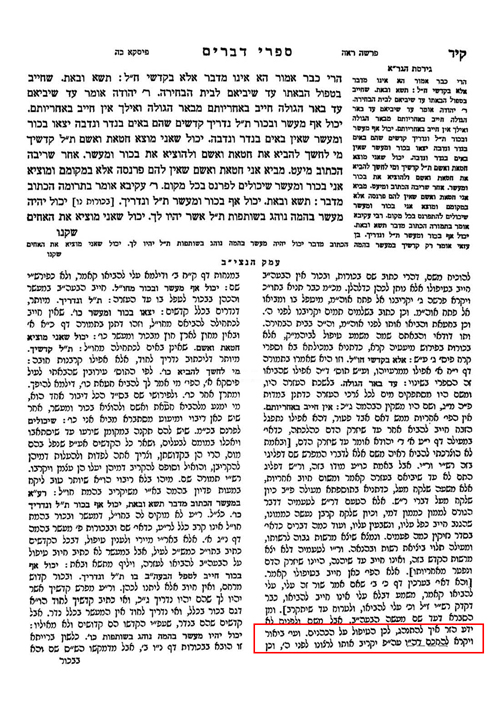
This question is problematic, since there is a seemingly obvious textual answer, namely, that Rambam had a well-attested variant girsah of that Talmudic passage, which omits the entire לאו הניתק לעשה rationale. In fact, in the standard Vilna Shas, this line appears in parentheses to indicate the alternative girsah! Yet instead of offering this obvious girsah solution, R. Hayyim prefers to develop his conceptual insight, which illustrates his general aversion to girsah answers.[3]

When studying R. Hayyim’s insights one can intuit that his avoidance of girsaot goes further than other leading Talmudists, his relentless focus on conceptual analysis seemingly leaves no room for girsaot (or other) concerns. But it can be difficult to express this insight in more precise language. It is particularly challenging because we have no programmatic statement from R. Hayyim as to his outlook on textual issues, as such scholars must try to recreate his attitude from his hiddushim.[4]

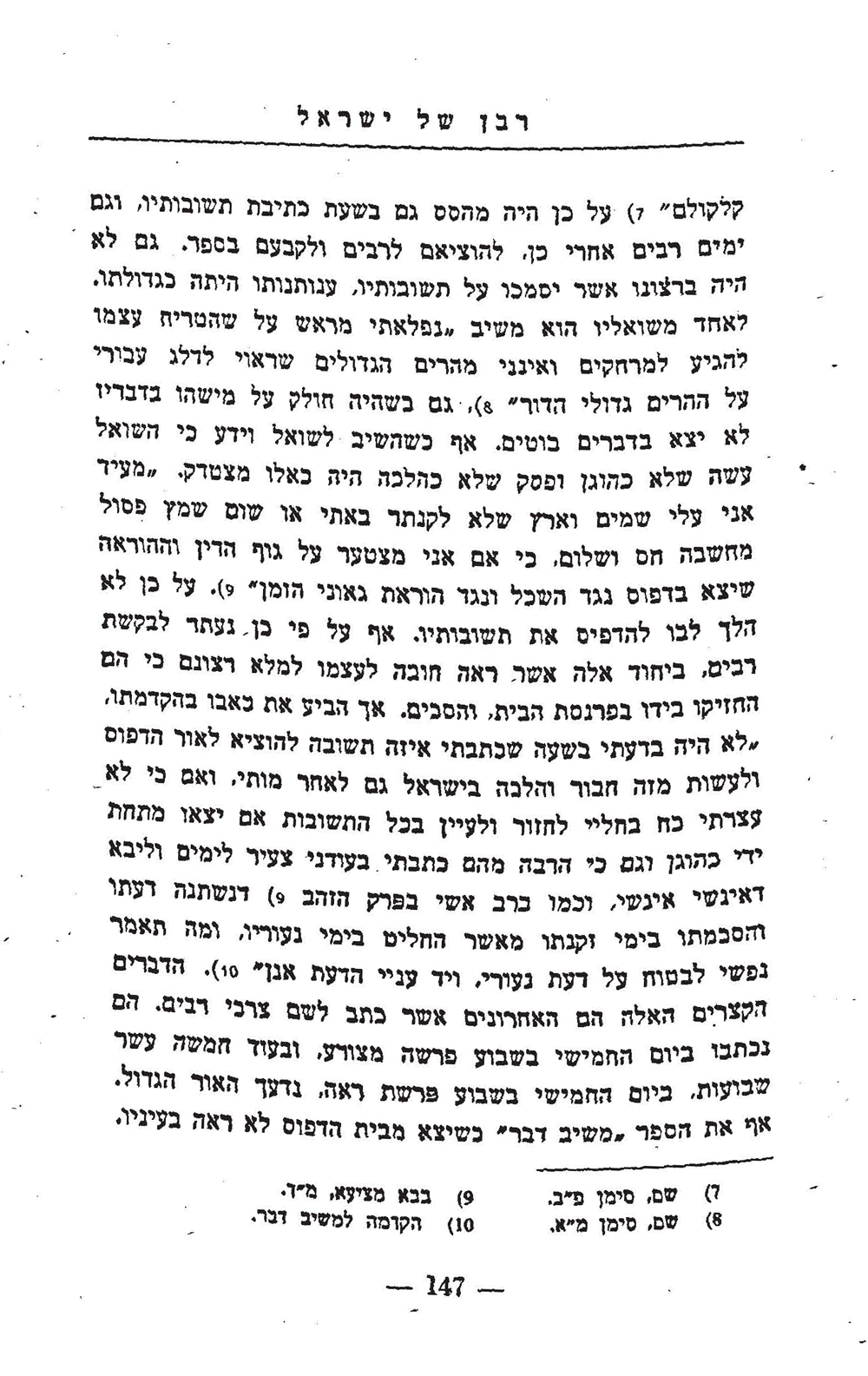
There is a scholarly formulation of this which contends that R. Hayyim avoids girsaot to the extent that he is even willing to cite and analyze faulty texts which were retracted by their very own authors. The explanation for this is that when it comes to religious texts R. Hayyim maintains an extreme theory of textual autonomy, that religious texts transcend the author who wrote it. I will cite Shapiro’s formulation of this idea,

On occasion, [traditionalists] even ignored the explanations Maimonides himself later gave for his halakhot… A different justification, with a more modern appeal, is quoted in the name of R. Naphtali Zvi Judah Berlin: “All the works of our teachers, the rishonim, until the era of Pnei Yehoshua, were written with ruah ha-kodesh, and obviously Maimonides’ Code is in this category. What Maimonides wrote in a responsum is Maimonides’ explanation of what he wrote in his Code, but there is still room for other explanations, for there are 70 facets to the Torah.” In fact, even after Maimonides wrote to the sages of Lunel – who had asked about a difficulty in the Mishneh Torah (Nizkei Mamon 4:4) – informing them that their text of this halakhah was mistaken, we still find R. Hayyim Soloveitchik and others offering analyses of the mistaken text!
Marc Shapiro, Studies in Maimonides and His Interpreters, (University of Scranton, 2008), 54-5.

The primary evidence for this formulation derives from R. Hayyim’s comments in Hilkhot Nizkei Mamon, to which we proceed now. The printed editions of Mishneh Torah read,

When a person entrusts his animal to an unpaid watchman, a paid watchman, a renter or a borrower, these individuals assume the owner’s responsibilities. If the animal causes damages, the watchman is held liable. When does the above apply? When they did not guard the animal at all. If, however, they guarded the animal in an excellent manner, as they should, and it got loose and caused damage, the watchmen are not liable, and the owners are liable.

This was a problematic halakha because if the watchmen guarded it excellently no one should be liable. Rambam himself was asked this question as part of a series of questions posed to him on Mishneh Torah by the sages of Lunel. Rambam responded explicitly that this version was an error and instead it should read that the owners are liable in a case of inferior protection,

If, however, they guarded the animal in an excellent manner, as they should, and it got loose and caused damage, the watchmen are not liable. If the watchmen guarded the animal in an inferior manner, they are not liable if they are unpaid. Instead, the owners are liable, even if the animal kills a person. The watchman is liable if he is paid, a renter, or a borrower.

Rambam’s response was cited in Kesef Mishnah, which is printed on the side of the standard editions of Mishneh Torah, such that no reader could miss this retraction. Yet, R. Hayyim wrote two lengthy pieces on Nizkei Mamon, and in both he analyzes this passage using the erroneous text, without ever noting Rambam’s own emendation! This seems to be clear evidence that R. Hayyim disregards textual emendation, even when the text in question is clearly mistaken.

In his recent post Shapiro documents a scholarly consensus which has coalesced around this reading, including rabbis Eliyahu Soloveitchik, Yehoshua Inbal, Norman Solomon and most prominently, Baruch Shmuel Deutsch. This reading of R. Hayyim has widespread support because it is so striking that he is knowingly using a faulty text in his lengthy analysis of this topic. In fact, when I explained this essay in May 2023 as part of a series explaining Hiddushe Rabbenu Hayyim Halevi, I enthusiastically made the same point, influenced by the earlier scholarship, which you can hear at the beginning here.

But after processing the piece, I came to believe that a more careful reading of R. Hayyim shows that in fact he deftly avoids ascribing ideas to Rambam based on the faulty text, in recognition of Rambam’s own emendation. I then found that this view had already been exhaustively presented in 2007 by R. Avraham Lipschitz.[6] In the following section I will present Lipschitz’s approach, that R. Hayyim does not dismiss Rambam’s own emendation of his text, and more broadly that R. Hayyim is not as impervious to textual matters as the prevailing scholarship would indicate.

  1. Re-Reading R. Hayyim

Twice in his comments, R. Hayyim refers to the erroneous version. First, in the opening paragraph in Nizkei Mamon 4:4, where R. Hayyim sets up the piece. In order to explain why R. Hayyim is not in fact basing his insights on the faulty text, let me sketch the broad purpose of this piece. The conceptual insight at the heart of this piece is the idea that when an animal damages something, while being watched by a watchman, the watchman’s financial liability is inherent to his responsibilities as a watchman, and not derivative from the owner’s liability.[7] In R. Hayyim’s framework, the paradigmatic case for this is when the damaging animal was a tam (new damager). When a tam damages, as opposed to a mu’ad (habitual damager), the owner does not pay from their own estate, only from the value of the animal itself. This creates a litmus test for R. Hayyim to explore the watchman’s liability, since there is no financial restitution outside the animal itself.

If we now work backwards to the opening paragraph, we can see that this insight is not dependent on the faulty girsah. In order for the piece to work R. Hayyim needs to establish two things: first, that this halakha is referring to a tam, as Maggid Mishneh in his commentary suggests, second, he needs to introduce the issue of a watchman’s liability, which Raavad in his glosses touches on. Now both Raavad and Maggid Mishneh had the faulty version of Mishneh Torah, so it seems reasonable that when presenting their approaches R. Hayyim sticks with the faulty version, which is a historically accurate reflection of these two commentators.

But as R. Hayyim progresses to his own analysis of this issue, it is no longer relevant which version of Mishneh Torah one uses. In both versions – the mistaken one and the corrected one – Rambam is discussing a tam, and rules that in some cases the owner is liable, while in others the watchman is. The juxtaposition of these two rulings sets up the premise of R. Hayyim’s piece, and it makes no difference whether owners are liable for excellent protection (erroneous version) or inferior protection (corrected version). Rambam’s girsah is incidental to R. Hayyim’s discussion, and as such this piece does not provide evidence for R. Hayyim’s attitude towards girsaot.

Let us move on to the second instance where R. Hayyim analyzes Rambam’s problematic text, in Nizkei Mamon 4:11. This is a much stronger proof than the first instance, since in this piece R. Hayyim cites the erroneous version to prove the point that Rambam sees the owner’s and watchman’s liability as mutually exclusive. R. Hayyim deduces this from the erroneous text, which states the watchman is exempt and the owner is liable, indicating that it is an either-or issue, i.e. only one party will be liable in any given case. He then proceeds to explain the faulty text further, and he does all this without acknowledging Rambam’s own retraction.

From this passage then we do seem to have proof for the extreme formulation of R. Hayyim’s approach to textual autonomy, and Hazon Ish in his glosses (as Shapiro notes in his post) certainly understands it this way. But I would note two counter points. First, Lipschitz counters that R. Hayyim is still not really relying on a faulty text, since his overall discussion is not dependent on this point. The conceptual idea in this piece is whether in a case where the first watchman gave the animal over to a second watchman, the first watchman is entirely removed from the situation, or even though he’s exempt he remains a relevant party. As part of this discussion, R. Hayyim is attempting to explain the related issue of the owner’s role in the situation, which brings him to the faulty text. But even without this digression, the overall piece can stand on its own. According to Lipschitz, this minimizes the implication of R. Hayyim using the faulty text.[8]

Second, I would add that if you follow the contours of R. Hayyim’s discussion, this step is deep into a discussion of Raavad’s glosses. One could argue that in this step he is explaining the debate from the viewpoint of Raavad, who never knew about Rambam’s retraction and had to try and make consistent sense of Rambam’s rulings. Although R. Hayyim does ascribe these ideas to Rambam, it is really Raavad’s strawman version of Rambam. Put differently, had the faulty text not been used by Raavad, R. Hayyim would not defend it.

Lipschitz’s approach (slightly) modifies the prevailing scholarly view that R. Hayyim is entirely impervious to textual emendations.[9] While it is clear that R. Hayyim is largely dismissive of textual issues, even he has his red lines, such as using a faulty text which the author himself corrected. Though, I will note, the broader difficulty of formulating precisely R. Hayyim’s attitude towards girsaot remains.

  1. R. Hayyim’s Attitude Towards Texts

We have explored the debate between Shapiro and Lipschitz, over the extent of R. Hayyim’s disregard for girsaot, namely, whether he would build a hiddush on a retracted girsah. In this conclusion I reflect on the religious motivation for R. Hayyim’s cavalier attitude towards girsaot.

It is important to clarify that R. Hayyim’s opposition to emendations is not rooted in a reverence for the printed text, but rather in a reverence for texts which were used by Torah giants. In other words, if a mistaken girsah can be attributed to a Torah giant, R. Hayyim considers it valid, but if it has no traditional support amongst Torah sages, it is invalidated. For example, if someone were to discover an unknown girsah in the Cairo geniza, it would have little relevance for R. Hayyim. Likewise, a printed version, which was not endorsed by Torah giants, does not have standing in R. Hayyim’s outlook.

For this reason, R. Hayyim is willing to change the girsah at the end of his essay on Hilkhot Edut 21:9, because as he notes none of the commentators on Rambam are bothered by this question (אשר כן משמע מזה שלא העירו בזה המפרשים כלל), which seemingly indicates they had a different girsah. Since no leading Torah scholar can be said to endorse the printed version, R. Hayyim does not need to defend it.

But R. Hayyim is not entirely consistent in this approach, and in another parallel case he does not apply this logic. In Hilkhot Korban Pesah 6:2, Rambam rules that one who slaughters the Korban Pesah for the correct group, but intends to sprinkle the blood for the wrong group, the sacrifice is valid but this group does not fulfill their Pesah obligation. Not only does this ruling seem logically inconsistent – if it is a valid offering why does the group not fulfill their Pesah obligation? – it also seems to blatantly contradict the explicit Talmudic ruling that the group does fulfill their obligation. R. Hayyim’s opening paragraph suggests all sorts of girsah based solutions, except the most obvious one: that there is a misprint in Mishneh Torah.

Here too, the misprint theory could be supported by the fact that none of the classical commentators on Rambam address this question, indicating they had a corrected version. In fact, in a letter critiquing R. Hayyim’s approach, R. Chaim Mordechai Roller, cites this exact consideration as proof that it must be a misprint in Mishneh Torah, since none of the classical commentators raise the question.[10] R. Hayyim’s refusal to accept this girsah change seems to contradict his own logic in Hilkhot Edut.

Be that as it may, R. Hayyim’s attitude seems to be that we must defend any version of a text which was used by Torah giants. Presumably, and this is my own words, it is hard to accept that Torah giants use nonsensical texts, such that any problematic girsah they used must have a good explanation. There may be an additional element of Divine Providence, that we must assume God would not allow Torah giants to get tripped up by worthless texts, so there must be a profound meaning to explain it.

* * * * * *

Notes

[1] Vilna Gaon in his commentary to Avot (on mishna 20 and mishna 24):

טעות סופר כאן, וצריך לומר בסוף הפרק, כמו שכתבתי למטה

[2] This is one option Meiri proposes (in his commentary to mishna 20):

או אפשר שיהיה זה סיום המסכת אלא שנתוספו בה אח”כ דברים אחרים

See also R. Shmuel de Uceda’s related discussion in Midrash Shmuel (end of mishna 21 and beginning of mishna 22), and Tosafot Yom Tov (beginning of mishna 21), about the order of these ending mishnayot. Chanoch Albeck in his edition of the Mishna (Mossad Bialik, 1952) endorses Meiri’s suggestion.

[3] Elsewhere I have documented the nuances of R. Hayyim’s attitude towards girsaot in further detail, see כללי הגר”ח מבריסק בביאור הרמב”ם – ספריית אסיף, pp. 388-92.

[4] Avraham Lipschitz, “יחסם של אחרונים לתגליות נוסח”, סיני, גליון קמא, תשס”ח, עמ’ קג

suggests a possible formulation, pointing to one instance (which will be discussed below) where other traditional commentators explain Rambam’s faulty girsah, but at least pay homage to the girsah issue and note the corrected version, whereas R. Hayyim’s omission of any acknowledgement of the whole issue is more extreme:

לכאורה לפנינו מקרה ראשון של התעלמות גורפת מהמישור הפילולוגי ללא כל צורך בהצדקתה

[5] Marc Shapiro, Studies in Maimonides and His Interpreters, (University of Scranton, 2008), 54-5.

[6] Avraham Lipschitz,

“יחסם של אחרונים לתגליות נוסח”, סיני, גליון קמא, תשס”ח, עמ’ פא-קו

which takes this halakha in Mishneh Torah as a test case for traditionalist attitudes towards girsaot. Lipschitz’s son, R. Uri Lipschitz, is a Rosh Yeshiva at Yeshivat Siach Yitzchak, founded by Rav Shagar.

[7] See R. Baruch Ber Lebowitz’s formulation of this in Birkat Shmuel, Bava Kamma, #7 & 8

[8] Ibid, pp. 103-4.

[9] Lipschitz sums up his conclusion (p. 103):

קיצור הדברים, טענתי היא שאין לגר”ח התנגדות עקרונית להשתמש בנוסחים חדשים, וודאי לא כאלה המוזכרים בכסף משנה, אלא שהקו המנחה אותו הוא הרעיון המרכזי אותו הוא בא לחדש, או הקושי המרכזי בו הוא עוסק

[10] Teshuvot Be’er Chaim Mordechai (3:12).


The Kabbalah of Relation by Rabbi Bezalel Naor book review

Book Review[1]
by Dovid Sears
Bezalel Naor, The Kabbalah of Relation (Spring Valley, NY: Orot, 2012)

Before discussing Rabbi Naor’s new book, I must say that anything with his name on the cover should be of interest to any explorer of Jewish mystical tradition. Despite some twenty first-rate scholarly works in English and Hebrew, Bezalel Naor remains a “hidden light,” perhaps too brilliant for many to gaze upon directly. He is one of the leading intellectuals in the traditional world of Jewish scholarship—as he would be in the academic world if, by the grace of God, we would be spared the ravages of intellectual climate change and the wind would shift. Bezalel Naor once described himself as a “frequent flyer of the corpus callosum connecting the left and right hemispheres of the brain.”

This work, jam-packed with creative thinking and the vast erudition we have come to expect from the author, deals with the male-female relationship from the standpoint of the Aggadah and Kabbalah, at the level of plain-meaning and at various levels of mystical allusion.

The departure point for the book is an oft-cited yet curious passage in the Babylonian Talmud (Eruvin 100b) which says that had the Torah not been given on Mount Sinai, then we would have learned various positive character traits from the animal kingdom. The most famous example given is that we would have learned modesty from the example of the cat. Surprisingly, most of the Talmud’s attention is lavished on the rooster, from whom a husband would learn that he must appease his wife before entering into marital relations with her. From the Talmud’s telling of the story, it turns out that the rooster lies to the hen, promising to buy her a coat (or in another reading, earrings) that he is no position financially to purchase! According to Naor, this “white lie” is the very secret of our finite, paradoxical existence in this world, and he then takes us, the readers, on a tour de force, as only he is capable, of our entire Judaic literature: Bible, Talmud, Medieval Philosophy, Kabbalah, Hasidism—and of course, the specialty of the house: Rav Kook.

Q. The book begins with an autobiographical description of Chagall’s youthful meeting (yehidut) with the Rebbe of Lubavitch, Rabbi Shalom Baer (Rashab). This raises the question of the artist’s connection to the teachings of Habad and the Hasidic world of his youth. Beyond this, one wonders about other encounters the Habad Rebbeim may have had with Jewish artists, for better or worse. Any thoughts?

DS: Marc Chagall is widely-embraced as the outstanding Jewish artist of the 20th century, who embraced his shtetl roots in his colorful, expressionistic and often surrealistic paintings. Many Jewish artists, both secular and religious, have used Chagall as a point of departure for their own brand of Jewish art. But actually the autobiographical vignette presented at the beginning of the book, which is patently insulting to the towering Hasidic thinker and tsaddik, Rabbi Shalom Dov Ber of Lubavitch (RaSHaB). is an eloquent testimony to Chagall’s chutzpah and am ha’aratzus (ignorance). Although he grew up in a traditional Hasidic environment in the village of Lyozno, famed for having once been the home of the “Alter Rebbe” (Rabbi Shneur Zalman, founder of Habad), he didn’t seem to know a line of Tanya or Likkutei Torah—despite his fond memory of his mother’s Habad niggun (melody). Religiously, he was a pathetic figure.
As for the Rebbes and artists, I remember reading that one of the Kotzker Rebbe’s descendants was a painter. Nothing to do with Habad, though. I don’t know about earlier Rebbes in the Habad lineage, but this last Lubavitcher Rebbe zt”l had a positive relationship with a few artists: Jacques Lipschutz, Yakov Agam, Baruch Nachshon, and born-and-raised Lubavitchers Hendel Lieberman (who was the brother of the legendary mashpi’a Rabbi Mendel Futerfass) and my wonderful and unforgettable friend, the late Zalman Kleinman. But maybe that was part of Rabbi Schneerson’s kiruv (outreach) mission with its nuanced embrace of selective parts of modernism in order turn them around to kedushah (holiness)—which the kabbalists call “it’hapkha,” meaning transformation or reversal. Jewish fine art (as opposed to decorative art) is a relatively new thing if we begin with Camille Pissarro (1830-1903)—whose father was Jewish, although some claim that his mother was Creole (at any rate he was Jewish enough to be hated for it by Degas and Renoir)—or Amedeo Modigliani (1884-1920), who was only a couple of years older than Chagall. So I’d be surprised if the early Hasidic Rebbes or their Mitnagdic counterparts had much exposure to it. But, of course, with Rebbes you can never tell…
Q. In The Kabbalah of Relation, Marc Chagall’s paintings have been juxtaposed to this Talmudic-Kabbalistic text. Is the juxtaposition warranted, not to the point, or even unlawful?

DS: On the one hand, Rabbi Naor’s recognition of this correspondence was a brilliant observation. As such, it would have been hard to resist. On the other, I question whether it’s okay halakhically, particularly in a sefer, a volume of Torah. One or two of these paintings should definitely keep this volume off the shelf in Biegeleisen’s Seforim Store. But sometimes when we look at art, we enter another mental space and unconsciously set aside such considerations. We’re looking at imaginal reality, not the physical world in the conventional sense. Maybe there’s a faint glimmer of a heter (leniency) there—but maybe not.
Another question that this “tzushtell” (tie-in) raises is the legitimacy of Chagall as a Jewish mystic, which the book seems to propose (as with Chagall’s “Hasidim vs. Misnagdim” comment).
Although he was a towering creative artist, I don’t think Chagall was a Jewish mystic, as Rabbi Naor suggests, but a Jewish pagan. Erich Neumann might have fitted Chagall’s fertility symbolism very nicely into his huge Jungian opus, The Origins and History of Consciousness (which I actually read from cover to cover about 40 years ago). Chagall didn’t need Kabbalah or Hasidism for his images. These are archetypal ideas, as shaped by the artistic vision of a White Russian village Jew who somehow made it past the maitre d’ and into the high culture of Paris.
There was an early 20th century British critic and writer named T.E. Hulme who once famously remarked that “Romanticism is spilt religion.” There’s plenty of that in Chagall. But on the other hand, we see that for many religious Jewish artists, Chagall created a dreamy, surrealistic style that allowed them to weave together powerful mystical images. Examples are Elyah Sukkot, Baruch Nachshon, Shoshanna Brombacher and others. So in a way, the “spilt religion” can be channeled back to where it comes from.
Q. Is Naor’s transition or extrapolation from a Talmudic text to Kabbalistic teachings traditional or non-traditional?

DS: I’d say that it’s brilliant, creative, and poetic in its way of linking ideas. The tone and texture of the hiddush (innovation) is not traditional, but the hook-up between nigleh (exoteric) and nistar (esoteric) is quite traditional and legitimate. One may object to this or that point, but that’s Torah, isn’t it? Not only halakhic issues are debated in the Gemara but also matters of Aggadah (theological and other non-legalistic teachings), as Abraham J. Heschel shows in Torah min ha-Shamayim. And besides, whatever a perspicacious thinker such as Bezalel Naor says deserves our attention, whatever its proximity to the edge of the cliff may be. 
Q. What is the essential difference between the Mitnagdic (Vilna Gaon) and Hasidic (Ba’al Shem Tov) approaches to interpreting Kabbalah, and how do we see this difference illustrated in the two solutions or “endings” offered in this book?

DS: In art, we often speak of classicism and romanticism. The classicists are (or more accurately “were”) the “straight-arrows.” They stressed academic training and were concerned with realistic depictions and fine technique; certain subjects were acceptable, while other were not, or were certainly overlooked. Emotional restraint, rational intellect and high culture were implicitly valued. Romanticism represented a radical break with this approach to life and art. Our old friend T.E. Hulme described it as being “informed by a belief in the infinite in man and nature” – although most of these artists were and are secularists. (Look at the way the Abstract Expressionists talked about their art! Especially Mark Rothko, who really missed his calling as a kabbalist—or at least a professor of Kabbalah. The art critic Katharine Kuh once published a book of interviews with a number of artists whose words often reflect this “belief in the infinite in man and nature.”[2])
Somewhat similarly, in their own way the Mitnagdim were religious classicists and the Hasidim were closer to the romantics. Maybe that’s what Chagall meant with his remark that the new artists of his day were like the Hasidim.
The clash between the Mitnagdim and the Hasidim was also a clash between two broad mindsets: a dominant (albeit faith-based) rationalism vs. a greater emphasis on intuition and passionate feeling; scholarly elitism vs. greater democracy of spirit, and even an inclusivism within the social strata of the close-knit fraternities we associate with the Hasidic movement.
In terms of Rabbi Naor’s book, the “Mitnagdic ending” (admittedly this is a gross oversimplification) is that the rooster, who represents the Creator, extends a garment of divine protection over the hen, who represents either the Shekhinah or the individual soul. By virtue of the holiness of the Torah and mitsvot (commandments), the extrication of the fallen souls on the lowest levels of creation is accomplished. All souls will be incarnated and refined of their spiritual dross; then the rooster’s promise to the hen that “the robe will reach down to your legs” will be fulfilled, and Mashi’ah will come. (This is based on a teaching of Rabbi Isaac Haver, representing the school of the Vilna Gaon, if I didn’t take a wrong turn along the way.)
In the Hasidic counterpart to this scenario (à la Reb Eizikl Komarner, fusing teachings of the Baal Shem Tov and the Maggid of Mezeritch), the Shekhinah is “adorned with adornments that do not exist”[3]—that is, there is not only a cosmic restoration accomplished by our ‘avodat ha-birurim (spiritual work) throughout the course of time, but an advantage of some sort to creation. Something “extra” is delivered to the Creator, beyond the holiness of the Torah and mitsvot (commandments). And this is accomplished by the tsaddik who descends into the nether regions in order to procure those “adornments.”[4]
The author concludes his book on the following note:
What is certain is that in the process, the tsaddik will be beaten to a pulp. (In the words of the Rabbi of Komarno, “[God] chastises and beats the righteous.”) The crown of the just man and his wings—his entire spiritual profile—will be lowered. And yet, even in defeat the tsaddik is valiant and beloved to the Shekhinah.[5]
Q. Rabbi Naor contrasts Maimonides’ view of human sensuality with that of the Kabbalists. How Judaic or Hellenic is Maimonides’ view?

DS: The Zohar, Rabbi Moses Cordovero (RaMaK), the Reshit Hokhmah, the main schools of Hasidism that I’m familiar with, and certainly Rabbi Nahman of Breslov, all have a marked ascetic element. Sexuality is often sublimated to the spiritual plane, and kedushah (sanctity) in all such matters is stressed. Rabbi Nahman uses the term “yihuda tata’ah” (lower unification) to describe the ideal conduct of the married couple; sanctification of the marital relationship elicits the “yihuda ila’ah” (upper unification) on the sublime level (which brings about cosmic harmony).
Ditto the approach to the ko’ah ha-medameh, or imagination. The Breslov literature often contrasts the imagination of a spiritually-evolved human being with that of a coarse person who has the “imagination of a beast.”[6] Rabbi Nathan [Sternhartz] discusses these concepts in Likkutei Halakhot (beginning Hil. Sheluhin 5). There he states that the imagination can be a shali’ah (emissary) of the sekhel (reason)[7]; or it can be co-opted by the physical, which is to say, the animalistic side of human nature.
Rabbi Nahman’s lessons are extremely imagistic and poetic in their construction. “This is a behinah (aspect) of this; that is a behinah (aspect) of that.” In this way Rabbi Nahman builds connections between things and shows their underlying unity. And of course, there are Rabbi Nahman’s famous thirteen mystical stories, which anticipated surrealism by more than a century. All this is a demonstration of “birur ko’ah ha-medameh,” clarification of the imagination, so that it may express the essence of mind.
Although the kabbalists do not share the puritanical view of Maimonides toward the body and the conjugal act, as Rabbi Naor points out,[8] they are not so far apart in their attitudes toward hedonism—but not for the same reasons. The philosophers prized the intellect’s ascendancy over emotion and sensuality, and Maimonides may have been influenced by this attitude. The mystics, however, are more concerned with transcendence and sublimation (in the religious sense, not in the Freudian sense). Their bias is not due to a prejudice in favor of reason, but bespeaks the love and awe of God. 
Q. The morning blessing reads: “…Who has given understanding to the rooster to discern between day and night.” Isn’t the blessing reversed? Night precedes day. Certainly the blessing should read “to discern between night and day”!

DS: Based on teachings from the Zohar and Rabbi Isaac Luria (Ari),[9] the robe given by rooster to the hen may be said to correspond to the process of birur—the extrication of all souls from Adam Beli’al, or “Anti-Adam” —throughout the course of history. That is, the human body from the head to feet represents the yeridat ha-dorot, the spiritual decline of the generations. The “head,” beginning with Adam, is like day, while the “feet,” or later generations, are like night. In these final generations, the Shekhinah, which represents God’s immanence in creation, is positioned at the feet of Adam Beli’al. The rooster understands the spiritual decline at each stage of the game. We who live in the spiritual “twilight zone” can’t function like our noble ancestors (compared to whom the Talmud says we are as donkeys). Hence, the phraseology of the blessing, “between day and night.”

Postscript:

I’d like to add one more thought about the issue discussed at the end of the text. As mentioned above, Rabbi Naor quotes Reb Eizikl Komarner’s remarks about the fallen “letters” of creation, which the tsaddikim must elevate from what the Zohar calls “raglin de-raglin,” or “feet of feet”—the lowest levels. The Komarno Rebbe cites the Maggid of Mezeritch, who contrasts “adornments that did exist” with “adornments that did not exist.” The former are related to the Torah and mitsvot (commandments)—the holy—while the latter are related to the mundane and that which is most distant from holiness.
It strikes me as worth comparing this to Rabbi Nahman’s cryptic parable about a king who commissioned two fellows to decorate separate but facing halves of his new palace.[10] The first appointee mastered all the necessary skills and then painted the most beautiful murals depicting all sorts of animals and birds on the walls of his chamber. The second guy goofed off until the deadline was only a few days away—and became panic-stricken. Then he had a brainstorm. He smeared the walls with a substance (“pakst”) so black that it shined. Thus the walls were able to reflect everything in the other room. Then Decorator Number Two hung a curtain to divide between the rooms.
When the big day arrived, the king inspected his new palace, and was overjoyed with the murals of the first man, executed with such consummate skill. The other chamber was shrouded in darkness, due to the curtain. But when our “chevreman” drew back the curtain, there now shone into the room the reflection of everything that was in the first room directly across. (Here the Rebbe mentions birds specifically for the third time.) Even the elegant furnishings and precious objects that the king brought into the first chamber were reflected in the second. Moreover, whatever additional wondrous vessels the king wanted to bring into his palace were visible in the second chamber.
What were these “additional wondrous vessels” that had not yet been brought to the palace, but which the king desired? Moreover, it is not clear that the king meant to bring them to the first chamber, with its lovely murals and furnishings, thus to be reflected in the second chamber. What the text seems to state is that these desired “wondrous vessels” were already visible in the second chamber—“and the matter was good in the king’s eyes.”[11]
Maybe we can venture the interpretation that it is the tsaddik (righteous man) who diligently heeds the king’s command and decorates his half of the palace so beautifully, while it is the ba’al teshuvah (penitent) who creates the shiny black room. The ba’al teshuvah must receive an illumination from the tsaddik on the other side of the hall, who did everything “by the book.” Yet Rabbi Nahman indicates that the ba’al teshuvah has an advantage over the tsaddik.[12]
Perhaps this parable of Rabbi Nahman is cut from the same cloth as the Hasidic idea discussed at the end of Rabbi Naor’s book, that the tsaddik, through his willing and somewhat self-sacrificial descent to the lowest levels, brings to the realm of kedushah additional elements that could not otherwise have been obtained. It is this paradoxical descent of the tsaddik that ultimately brings the greatest delight to the Master of the Universe.
[1] “Based on remarks at The Carlebach Shul, Tuesday evening, November 20, 2012.”
[2] In addition, see Robert Rosenblum’s Modern Painting and the Northern Romantic Tradition, if you can still find a copy. It’s a real “eye-opener,” both artistically and intellectually.
[3] See Naor’s endnote on p. 62, especially citing Rabbenu Hananel’s reading in the Gemara (‘Eruvin 100b) which is the departure point of the entire book.
[4] Cf. Likkutei Moharan II, 8.
[5] The Kabbalah of Relation, p. 39.
[6] For example, see Likkutei Moharan, Part I, lessons 25, 49; and especially Part II, lesson 8 (“Tik’u/Tohakhah”).
[7] I am loath to equate this with the rational faculty in the Maimonidean sense.
[8] See the discussion in The Kabbalah of Relation, pp. 42-45.
[9] Sources cited in The Kabbalah of Relation, p. 55.
[10] Hayyei Moharan, sec. 98; English translation in Rabbi Avraham Greenbaum, Tzaddik (Breslov Research Institute), “New Stories,” sec. 224.
[11] In Hebrew: “Ve-khen kol mah she-yirtzeh ha-melekh lehakhnis ‘od kelim nifla’im le-tokh ha-palatin, yiheyu kulam nir’im be-helko shel ha-sheni, ve-hutav ha-davar lifnei ha-melekh.” 
[12] Cf. TB, Berakhot 34b: “In the place where the penitents stand, the wholly righteous cannot stand.”


Hebrew Printing in America 1735-1926 – Review I

There is a new work in Jewish bibliography focusing on American Jews. This work “Hebrew Printing in America 1735-1926: A History and Annotated Bibliography” by Yosef Goldman. (It can be obtained by contacting Y. Goldman at ygbooks -at- yahoo.com). As the subtitle states, is much more than a bibliography. This work, is at the very least the starting point for any research on American Jewery, and can be viewed as a history of American Jewry.

The book includes a listing of all the books published in American under the covered time relating to Jewish topics. So we have books done by non-Jews, apostates, and, of course, Jews. It includes Rabbinics, Drama, Fiction, Missionary and Humor to name but a few topics. Each entry aside from listing the publication data also includes a short biography on the author, as well as a description of the contents of the book, especially highlighting interesting tidbits. Each book is cross referenced and sources are provided. The sources include references for further reading as well as where the person’s portrait can be found.

The bibliography for this book is in itself a wonderful reference for American Jewish history. The books are divided by topic which enables the reader to see the growth or trends in a particular area.

I wanted to highlight some of the more interesting entries to enable people to see the comprehensiveness of this work; as well as to discuss American Jewish history.

As Goldman notes, America provided a unique home for the translation. Although, in other places in the world, whenever either the Talmud or the Torah was translated this was generally accompanied by controversy. In America that was never the case. Books were almost immediately published in English without anyone raising an eyebrow. This is evident throughout the subjects. Whether it be in Torah or Prayer or law. It is almost as if America was made for Artscroll and the like. There is but one exception is the book (no. 612) Ohel Sara 1902 which discusses laws for women. The author, Abraham Ever Hischowitz states in the preface “in 1902 when I considered the publication of this first edition of this work, I found great difficulty in obtaining a written statement admitting the advisability of putting this book on the market. The objection being of course, the Law concerning Niddah.” It seems that including in English the laws relating to menstruation were possibly problematic, although the author was able to overcome it and publish this work. However, as is noted, “there was apparently still some opposition as late as 1912, since some copies of the second edition were printed without the section on menstruation.”

The first section is the Liturgy section. No. 41, the First Reform Siddur in America, 1855, by Dr. Leo Merzbacher. Apparently, aside from this siddur, he also received ordination (semikah) from R. Moses Schreiber of Pressburg (Hatam Sofer) the leading adversary to the Reform movement. In 1860, in light of the differences in the highest governmental position, between the US and other countries, a siddur is published which alters the traditional prayer for the government from הנותן תשועה to רבון כל העולמים this was done so “whereas הנותן תשועה refers to a monarch, רבון כל עולמים refers to the president, vice president, governor, lieutenant-governor, mayor, city council, and the residents of New York City.” Additionally, a copy of the page with the new prayer is provided. (no. 46). On the issue of the prayer for the government, in 1912, one Siddur the prayer for the government included a prayer for the Supreme Court as well. (No. 114).

We have Marcus Jastrow’s Siddur which “creatively modified the classical contours of the Siddur . . . and added many new prayers.” (no. 58). As well as his edition of the Haggadah which changed ha lahma anya from the traditional words to “whoever is now a slave, next year he should be free.”

The Siddur l’Bet Sefer u’Lam which was designed for “school children and the general public.” The author, R. Joseph Magil, sarcastically states “Don’t purchase this prayer book if the extra five cents that this one costs is worth more to you than the tens and hundreds of dollars you spend on tuition for your children.” (No. 97)

N’gintoh Baruch Schorr, which contains songs by the noted hazzan Baruch Schorr from Lemberg. In the biographical portion of the entry we learn that Schorr “was a pious Jew.” And that he immigrated to the US after “his Yiddish opera Samson was performed . . . he appeared on stage with the main actress following a performance, he was censured by his congregation and suspended from his position for four weeks. Insulted, he immigrated to America.” Five years later his congregation was able to convince him to return. (No. 98).

There is what appears to be an error in this section. In one entry (no. 70) the note states “the text is identical to the regular evening liturgy, the only change being the insertion of the two sentances into the Kaddish prayer (יהי שם …and עזרי מעם) there is no precedent for adding these two sentances.” This is incorrect. Many siddurim, including many of the German Rite, include these sentences in the kaddish.

For the Bible Studies entry, we have a very timely one. R. Hayyim Hirschensohn published a book on Jewish chronology to “to prove that historians erred in their chronologies.” This book in turn, engendered “a libelous criticism” “to which R. Hirschensohn answered” in another book Anah Kesil (Answer the Fool). However, as is almost always the case “the author testified that the criticism was good for sales.” (No. 208).

Beginning in 1912 R. Moses Alberts began an English dictionary on Old French terms used in the commentary of Rashi. Unfortunately only volumes on Genesis and Exodus appeared. Nos. 212, 218).

In 1908, Judah D. Eisenstein published a broadside (one of the few single page broadsides included in the bibliography. The majority of broadsides are multi paged ones, thus making it more apparent how they qualified as a books rather than ephemera) for advertising his encyclopedia Otzar Yisrael. This included a portrait of the Vilna Gaon, which was included in the Otzar Yisrael. However, although this is “identified . . . ‘as a copy form a picture in the house of Samuel Wilner of New York’ a direct descendant of the Vilna Gaon. This picture does not appear in the collection of Vilna Gaon portraits in Vinograd.” (No. 231).

Ephraim Deinard, who was the first to catalog American prints and was a real character, when he produced a catalog of Judge Mayer Sulzberger included some nasty comments about Solomon Schechter. Specifically, he accused Schechter of” being ignorant in matters of Hebrew paleography . . . and was ‘irrelevant, since he does not know how to distinguish between old mss. [manuscripts].'” Sulzberger did not want this printed and told Dienard to remove that leaf. So Dienard did so . . . for the copies he gave Sulzberger. (No. 255).

On Hebrew Grammer no. 283 is of Abraham Kohn’s “Hebrew Reader and Grammar.” Kohn was “a radical maskil. . . . He and his youngest son died from poisoning in 1848. Two Orthodox Jews were arrested and charged with murder, but they were released after one year due to lack of evidence.” [For more on this see Hirschowitz’s book on the Mahritz Hiyot p. 103-05 and the sources cited therein as well as Zinberg (English translation) vol. 8 103-09.]

In 1915 Reuben Grossman’s book “MePri Ollel” (From the mouths of the Youth) which as its title implies was written by a young boy. Grossman was 10 years old at the time! He was the youngest Hebrew author in America. He published (with the help of his father) other books as well. (No. 352). There is also a picture of the ten year old with white shoes and a bow tie.

One book listed and explained the acronyms of 129 from 1080-1880. (No. 517). Another did a play on the Talmud (Kiddushin 49b) and stated “ten measures of telegraph and electrical lines descended to the world – nine for America and one for the rest of the world. . . ten measures of rest and enjoyment the Sabbath and holidays descended to the world- one for America and nine for the rest of the world.” (no. 518)

“In 1909, [R. Ezekiel Preisser] attempted to establish a daf yomi program whereby the study of the Talmud could be completed every seven years.” This was 15 years before such a program was established under R. Shapiro. (no. 734).

To be continued…


Parshat Tetzaveh. Greek letter Chi and Tav in Paleo-Hebrew

Parshat
Tetzaveh. Greek letter Chi and Tav in Paleo-Hebrew
By Chaim
Sunitsky
Rashi[1] on Parshat
Tetzave
writes that the priests were anointed with oil, poured in the shape
of the Greek letter כי.[2] One would assume this is referring to
letter Χ[3] – 22nd
letter of the Greek alphabet which sounds somewhere between English K and H[4]. This
letter spelled χῖ in Greek, is usually spelled “Chi” in English and indeed if one wanted to write it
in Hebrew, he would probably transcribe it as כי
(where Chaf is intended without dagesh). Moreover[5], when
Hebrew names are transliterated into Greek, Chi is used for Hebrew Chaf. In
addition, if the Talmud meant this letter it becomes clear why it didn’t use an
example of any Hebrew letter, as this shape is not found in Ashuri script of
Hebrew.
Despite all this
evidence we find various other shapes offered by the Rishonim[6]. In
fact in our printed editions of the Gemora only in Rashi on Kritot (5b) the printed
illustration looks like an “X.” Some of Rambam’s editions (Kelei Hamikdash 1:9)
also printed this shape, but the Frankel edition of Rambam[7]
claims that neither Rashi nor Rambam had this shape in mind and it was changed
later by some publishers[8]. Still,
one is inclined to think that the correct explanation is that it is the letter
X, and most Rishonim simply didn’t know Greek or have access to find out, and the correct tradition regarding
the shape of “Greek Chi” was forgotten, despite the fact that it pertains to
many halachot[9].
Before we go on, I’d
like to make another interesting point: Greek X has the same shape as the last
letter Tav in Paleo-Hebrew. Let us first examine the relationship of Greek
letters to Phoenician[10] and Paleo-Hebrew[11]. R.
Shaul Lieberman[12]
brings a very interesting idea with regards to the letter Tav in Paleo-Hebrew. We
find in Yehezkel (9:4) that Tav was marked on the foreheads of people to
distinguish the righteous from the wicked who were sentenced to death. According
to Hazal (Shabbat 55a) the mark was the actual letter Tav. As we mentioned this
letter in Paleo-Hebrew looked like the Greek Chi (X)[13] and
indeed became symbolic for a number of reasons[14]. R.
Lieberman brings that the X shape was used for crossing out a debt and was
therefore represented an annulment of a bad decree. On the other hand, Tav was pronounced
similarly to Greek Theta, whose shape was also associated with a death sentence[15]. We
thus have a double association of Tav (X) with Theta and with Chi. (Note in
general that while most letters in Greek alphabet clearly come from respective[16]  letters in Phoenician[17],
there are a few Greek letters, where it’s not certain which Phoenician letter
they correspond to and the Greek X is one of them[18].)
R. Lieberman further proposes
that originally the symbol of X written in blood was taken to mean forgiveness (crossing
out the decree) while X in ink was symbolic of death sentence (verdict written
in ink). However, since X has a shape similar to a cross, the early Christians started
to utilize cross in blood as symbolic of atonement, and therefore our sages
reversed that symbolism[19].
Coming back to the
shape of “Greek Chi,” it seems logical that the Hazal’s tradition is based on
an earlier tradition that the shape was that of letter Tav in Paleo-Hebrew[20] –
the last letter of the alphabet. It’s also possible that there was some
connection between the “sign” on the forehead in Yehezkel and the anointing of
a High Priest. Though the correct shape of this letter became subject to
multiple disputes over time, we may now be able to restore its ancient
symbolism[21].
[1] On verse 29:7
based on the Talmud (Kritot 5b, Horayot 12a). He also brings the same shape in
verse 29:2 in regards to the way oil was poured on the meal offerings.
[2] In some places
instead of Chi Yevanit there are versions that say Chaf Yevanit, but the
preferred girsa is Chi. While it is possible if the original version had Chi,
some copyists changed it to familiar Chaf, but if the original was Chaf, why would
someone change it to Chi? It is also possible that the Hazal themselves
sometimes used an expression Chaf Yevanit and sometimes Chi Yevanit.
[3] See additions
to Aruch by R. Benjamin Mussafia (Erech כי יונית) and Tiferet Yisrael on Menachot 6:3 and
after the last Mishna in the 10th perek of Zevachim.
[4] The Russian
letter Х (kha) also comes from it, and it is usually transliterated as kh into
English (e.g. Mikhail Gorbachev).
[5] We will discuss
this in the 17th footnote below. Similarly for those Greek words that
made it into rabbinical Hebrew, כ is generally used for χ (e.g. אוכלוסא –
populace – όχλος). However there are some exclusions, as קנקנתוס (or קנקנתום) has the first letter χ in Greek but for
some reason is not spelled with כ but with ק.  
[6] See Rabeinu
Gershom on Kritot 5b and Menachot 74b, Rashi (ktav yad) on Menachot 74b and Kritot
5b, Tosafot Menachot 75a, Rashi on Shemot 29:2, Rambam, Perush Hamishna
Menachot 6:3, Rash and Rosh on Mishna Kelim 20:7, Meiri, Horayot 12a.
[7] In the end of
Frankel’s edition they have a section where variant girsaot are brought.
[8] At least one of
the “corrections” is based on “Mesoret Hashas” in Horayot 12a, but Frankel’s
Rambam points out that Rashi’s explanation on the Gemora actually contradicts
this shape. Indeed Rashi writes different explanations in various places and the
shapes in our editions include that of Hebrew Chet (Horayot) and Tet (Menachot)
and Nun (Torah commentary to Shemot, but Tosafot quote him as mentioning the
shape of a Gimel there, see also the super-commentaries on Rashi, Shemot 29:2
and the English Artscroll where all the variant shapes of Rashi are explained).
Tosafot (ibid) also mentions Kaf and that is the shape in some editions of
Rambam. They also seem to understand Aruch to mean a shape like ^ (similar to a
Greek Lambda). These shapes are reasonably similar, they all contain a type of
semicircle (כ,ט,נ) with
possibly a sharp angle (^) or two angles (ח), see Tzeda Laderech super commentary on
Rashi ibid. None of these shapes look even remotely similar to X. (Note also
that Lekach Tov on Shemot 29 apparently has a shape of Kappa, but I didn’t find
anyone who agrees with this).
[9] See for
instance Menachot 74b-75a regarding pouring oil on certain types
meal-offerings; also this crisscross shape seems to be mentioned in Kelim 20:7,
see TIferet Yisrael there. We find another shape based on the Greek Gamma used in
various halachot (e.g. Kelim 28:7, Pesachim 8b, Baba Batra 62a, Zevachim 53b
and many other places) which was preserved quite well (see commentators to
these sugias).
[10] This is ancient
Canaanite script very close to Paleo-Hebrew. Note that Ramban (Bereshit 45:12)
and Ibn Ezra (Yeshayahu 19:18, see also his perush hakatzar to Shemot
21:2) knew that Canaanites spoke the Hebrew language, (though Hazal also thought
that Hebrew was a somehow unique Holy Tongue used only by Avraham and his
descendants, see for instance Sotah 36b).
[11] This ancient
Canaanite Hebrew script is called Ktav Ivri, see Sanhedrin 21b. In times
of Rishonim the shape of Ktav Ivri letters was not too well known
(see Haara Nosefet printed in the end of Ramban’s Torah commentary, how when he was shown an ancient coin with Ktav Ivri he had to ask a Samaritan to read it for
him). Still these letters apparently did retain some influence in certain
communities. Some Yemenite Jews actually make Shin-Dalet-Yod with Tefillin
straps on their hands in Ktav Ivri, not like the prevalent custom to make a
Shin and Dalet in Ashuri script. R. Reuven Margolios proposed that our
“four-headed” Shin on the left side of Tefillin Shel Rosh is actually based on
the Shin in Ktav Ivri (which looks similar to English “W”).
[12] “Greek in
Jewish Palestine”, pages 185-191.
[13] And
interestingly both are the 22nd letters of their respective
alphabets. 
[14] Besides being
the last letter of the alphabet this letter is taken by Hazal to stand for life
or death (Shabbat 55a), but the primary reason for its symbolism according to
R. Lieberman is its shape.
[15] This tradition
was also preserved in R. Bahye to Yitro (20:14) who discusses why there is no
letter Tet in the 10 commandments and associates Tet and Theta with death: כי לשון טיט”א סימן הריגה, see also comments of R. Chavel ad loc. in the name of Emuna
Vibitachon.
[16] On an unrelated
topic I’d like to mention that R. Reuven Margolios (HaMikra Vehamesora, 22)
wanted to prove, based on the shape of Paleo-Hebrew letters, that the so called
Arabic numbers (that are assumed to have come from India) were actually
invented by Jews. I find this theory far-fetched. If one looks at the
Paleo-Hebrew alphabet only Bet, Dalet and Het seem to look like 2, 4 and 8 and
moreover the shape of the “Arabic numerals” changed drastically over time and
in the times “the Jews” could have possibly invented them, they didn’t look
similar to the way we write them today. As for his other proofs that sometimes
we find gematrias of numbers used together with the position of the
digits as for example in Midrash (see Theodor Albeck edition of Bereshit
Rabbah
, 96) about the number of animals Yakov had: קבזר : מאה ותרתין רבוון ושבעה אלפין ומאתיין (1027200) that uses קב
(102) then ז (7) and thenר  (200), at most this shows
that for very large numbers they already started using some letters to indicate
thousands and ten-thousands (רבבות) separately. Similarly we write for year 5776: תשעו ’ה, but this is a far
stretch from system developed in India where the value of each digit depends on
its position. Indeed the Rishonim that R. Margolius himself mentions all
attribute this to Indian system. (As a side point, just to illustrate the advantage
of current mathematics symbols, look at the Rif on Pesachim, 23b, where he
calculates the reviit in terms of cubic fingers. In current notation, his
calculations taking half a page, would take one line: 3*243/(40*6*4*4)=10.8=2*2*2.7.)
 
[17] Many of them
look like Phoenician letters, except they are inverted vertically, since in
Greek the writing is from left to right.
[18] Certainly this
letter can’t come from Tav since it is pronounced completely differently. Note
that the issue of correspondence between Greek and Phoenician letters is not
related to the issue of how various Hebrew letters were transliterated in the
Septuagint and other Greek translations of Hebrew writings. By the time these
translations were made, the pronunciation of many letters changed both in
Hebrew and in Greek. For example, Theta is usually used to transliterate Tav,
and Tau to transliterate Tet, while their origins are the opposite: Tau came
from Tav, and Theta from Tet, as their names and shapes indicate. Perhaps by
the time of Septuagint the Tav without dagesh was pronounced in some areas closer
to English “th” and so was Theta, and that’s why the translators chose to use
Theta for Tav. Similarly, Mitchell First in an article “The Meaning of the Name
‘Maccabee,’ ” (available on this blog here), writes that Kuf is usually
transliterated as Kappa and Kaf-Chaf as Chi, even though originally the Greek
letter Kappa came from Kaf-Chaf. The reason for this might be similar, at the
time of these translations, the pronunciation of Chaf and Chi was similar,
while Kuf sounded like Kappa. (Other examples of this include Samech that is transliterated
as Sigma, not as Xi which originally came from it, but sounded at the times of
Septuagint like English X=KS, not S; similarly in Greek words used by Hazal,
Sigma is transliterated not as Sin from which it came but as a Samech, possibly
because at that time Sin and Samech were pronounced the same but since Sin is
written as Shin, Samech was chosen to make it clear the sound is S, not Sh.)
[19] See the
above-mentioned sugia in Shabbat 55a. We find occasionally that the sages had to
change the explanation “keneged haminim,” see for example Sanhedrin 31b, see
also Berachot 59a, 12a.
[20] It’s not
surprising that they used a Greek letter rather than not well known Paleo-Hebrew.
Moreover they sometimes used Greek letters instead of Ashuri, see Shekalim 3:2.
[21] It might be
possible to suggest that in medieval times this shape was purposefully
misrepresented, especially when dealing with the way anointing is performed.
The associations regarding Messiah, “the anointed one,” with anointing an X on
the High Priest’s head would certainly make many Jews living in Christian lands
recoil. Later on, this may have influenced the Jews living in Muslim lands.
Interestingly the Frankel edition of Rambam and R. Kapach (in his edition of Rambam’s
Mishna commentary) bring that in the manuscript attributed to Rambam’s own
writing (Kritot), the picture of Chi was blotted out.


The Meaning of the Word Eduyos in מסכת עדיות

The Meaning of the Word Eduyos in מסכת עדיות

David S Farkas

Mr. Farkas received his rabbinic ordination from Ner Israel Rabbinical College in 1999. He lives with his family in Cleveland, Ohio, where he serves as Senior Corporate Counsel for one of the largest energy distribution companies in the United States.

Masechet Eduyos is a unique volume of the Talmud. It is the only halachic tractate not confined to a single defined area of law. It is, rather, a collection of Mishnayos on diverse topics, some of which appear elsewhere throughout the six orders of the Mishna and the Gemara. It is also, along with Avos, the only volume in Seder Nezikin with no Gemara, neither Bavli nor Yerushalmi.[1]

What exactly does the word Eduyos mean? Two traditional explanations have been offered, one significantly older than the other. Both explanations are not without difficulties. In this brief note I propose, with all appropriate caution and respect, a new explanation – a חדוש that, to my knowledge, has never before been suggested.

The classical explanation is stated by the Rambam in his Introduction to the Mishna, as follows:[2]

ורוב עניין זאת המסכתא הוא לזכור בה כל ההלכות שהעידו עליהם אנשים ברורים נאמנים, ושעדותם ראוי לסמוך עליהועדויות הם הודעת הדברים שהעידו בם לפני השופטים בעיתים ידועים וקבלו אותם מהם

Thus, Eduyos means “testimonies”. The volume is a record of various halachic statements made by reliable men in front of judges, assembled into a single volume. To be more precise, as the Rambam also writes at the end of the second chapter of his commentary, based on Berachos 27b, these testimonials took place when R. Gamliel was deposed from his position of Nasi, and replaced by R. Elazar ben Azaryah. This would indeed appear to be the simplest explanation, as the phrase העיד – a Tanna “testified” – appears numerous times in Eduyos. And the plural of the word is, in fact, עדיות, as it appears in Makos 6b הרי אלו שתי עדיות.

And yet the matter is not quite that simple. For these numerous examples all appear only in the last three chapters of the 8-chapter volume. (The word is also used, in a passing and different context, in the third Mishna of the first chapter.) In fact, the majority of the rulings found in the volume were not decided on the basis of any testimony at all. Shouldn’t the name of the masechta reflect the character of the entire masechta?

There is a second interpretation of the word, based on an alternate name for Eduyos found several times in the Gemara: בחירתא. The meaning of this word is “the chosen”, or “the best”. The sense of the word is that these Mishnayos are “the best”, because the halacha follows them, since their content comes from great authorities. See, e.g., Rashi to Brachos 27a and Kiddushin 54b. Noting this, the Tiferes Yisrael commentary of R. Yisrael Lifschitz (1782-1860) writes in the name of his father that the name of the volume should really be pronounced עִדיות (Idiyos) with a chirik under the ayin. The word would thus parallel the term בחירתא, and would also be understood as “the choice ones”, in the same way that word is sometimes used in the Talmud, as in לא בא הכתוב אלא לִגְבּוֹת לנזקין מן העדית (Bava Kama 6b). The scholar Y. N. Epstein, in his מבוא לנוסח המשנה, also prefers this alternative “choice” explanation, citing Geonic spellings of the volume as עידיות which, in concert with the alternative name בחירתא, supports this understanding. (Interestingly, while Epstein cites this explanation in the name of the early Reform leader Abraham Geiger, a contemporary of R. Lifschitz, this view is already found in the Maarich of R. Menachem di Lonzano (1550-1626) under the entry for בחר.)[3]

Nevertheless, after R. Lipschitz records this suggestion he discredits it, based on Rashi in Kiddushin 54b. Rashi thereto, in explaining the word בחירתא, writes: מסכת עדיות קרי בחירתא שכל דבריהם העידו מפי הגדולים והלכה כמותן. Since Rashi deliberately employs the word העידו (rather than אמרו), he feels that Rashi did not agree with his father’s proposal, and instead accepted the traditional explanation that it means “testimony.” Yet this too, is not quite clear. While Rashi does clearly make a point of emphasizing the word העידו, he also uses the words מפי הגדולים, which speaks to “the best”. (And in his commentary to Brachos he does not use the word העידו at all.) The following must be noted as well: In the Rambam cited above, en route to explaining the word to mean “testimony”, Rambam writes that the volume contains “testimony from choice and trustworthy men.” (אנשים ברורים נאמנים). This too, speaks to the alternative “choice” explanation. Thus, both Rambam and Rashi appear to deliberately conflate both meanings – “testimony” and “choice” – in explaining the meanings of עדיות and בחירתא.

The ambiguity in Rashi and Rambam seem to suggest they saw merit in both explanations – which is another way of saying, perhaps, that they also sensed the difficulties in both. The most glaring difficulty, it seems to me, is that neither of the two explanations get to the heart of what Eduyos really is: a miscellany of disconnected and unrelated teachings. If the name of the volume is supposed to characterize the content it contains, surely a more apt appellation could have been chosen.

It is precisely because of this question that R. Yitzchak Rabinowitz, in Doros HaRishonim, posits that strictly speaking, only the last three chapters are called עדיות; these three chapters were added to a pre-existing work written in the early days of Yavneh (as the Tosefta to Eduyos indicates) that contained the first five chapters.[4] Together, the entire work is called בחירתא. R. Rabinowitz proceeds at length, with close analysis, to describe how the work ultimately came together, but of interest here, in doing so notes the following:

המסהזאות היוצאת לגמרי מכל כלל מסכתות כולו, אשר הם ידברו מפרט אחד של שבת או יבמות וכווהיא אין לא פרט כלל מסויים. ולא יכול להיות כזה, לפי שכל ענינה היפך מזה, כי מתחילה נבראה בימי הבירורים להביא שם העוללות מענינים השונים אשר עדיין לא נסדרו אצל יסוד המשנה ובמקומם, העוללות השייכים לדברי בש ובה, והעוללות של סוף ימי הבית אשר עדיין לא נסדרו במקומם….יש בהם אשר נשארו כן גם לפנינו רק במסעדיות לפי שהינם [כצל] עומדים לעצמם, ואין להם התלת גמורה אצל יסוד המשנהוהדבר מובן מעצמו כי בעסקם בימי הבירורים כל דברי בש ובה היה עליהם להביא את הדברים האלו אשר עדיין לא קנו מקומם ואשר אך במקום הזה הוא גם עיקר מקומם בהמסהזאת, אשר נוסדה לכל העוללות האלה

R. Rabinowitz’s point is that Eduyos was intended as a sort of clearing house to record all sorts of information that did not have a natural home elsewhere in the Mishna.

With this in mind, I draw the reader’s attention to the following verse, Isaiah 64:5:

וַנְּהִי כַטָּמֵא כֻּלָּנוּ וּכְבֶגֶד עִדִּים כָּל צִדְקֹתֵינוּ וַנָּבֶל כֶּעָלֶה כֻּלָּנוּ וַעֲו‍ֹנֵנוּ כָּרוּחַ יִשָּׂאֻנוּ

We have all become defiled, and all our righteousness is like a worn-out garment; we all wither like a leaf, and like a wind, our sins carry us off. (Artscroll translation)

Note the phrase כבגד עדים. Rashi explains: וכבגד עדים וכלבוש מרחק (תי) כבגד מאוס שהכל אומרים הסר. עדים תרגום של הסרה. The phrase means a piece of clothing to be cast out, something repulsive that everyone removes. Idim is the Targum of the word “removal”.

Rashi writes similarly in Genesis 4:19, in explanation of Lemech’s two wives, one of whom was named עדה. After explaining that the custom then was for men to take two wives, one for propagation and one for carnal pleasure, Rashi writes: עדה היא של פריה ורביה, ועל שם שמגונה עליו ומוסרת מאצלו. עדה תרגום של סורה. Adah was called by this name because she was repulsive to and cast out from her husband. It is the Targum on the word “remove”. Indeed, in Genesis 49:10 the words לא יסור are translated by Targum as לא יעדי.

R. Isaiah D’Trani (ריד c. 1165-1240) relates the phrase to Proverbs (25:50) מעדה בגד ביום קרה, and says it means בגד ישן הרבה והוסר כל צמרו a very old cloth from which all the wool has been removed. The JPS translation (1999) renders it “Disrobing on a chilly day”, which retains the sense of discarding or removing.[5]

Radak, in his commentary to Isaiah, explains similarly: תרגום ספחת עדיא, ויש מפרשים מתרגום הרה מעדיא, כלומר כשתלד בגדיה מלוכלכים בדם, ויש לפרש בגד סמרטוט ובלוי, וכן בדברי רבותינו זל המשמשת בעדים עד שהוא נתון תחת הכר, והענין אחד כי בגד מלוכלך הוא מוסר מהבריות.. The Targum of “discoloration” (Leviticus 13:2) is Adia. Some explain it based on the Targum of “pregnant” (Genesis 16:11) which is Mi-Adya, that is, when one gives birth, her clothes are soiled with blood. It should thus be understood here as a used rag. The sages employed a similar usage concerning a woman who cohabits with the use of cloths, i.e, the sheet under the pillow [to determine her halachic status as a menstruant.] The sense of the phrase is thus a dirty rag removed from people.

The concept of הסרה removed is thus common to all these explanations. Stated otherwise, the word עד or perhaps עדי means something cast aside. As noted by Radak (as well as the Aruch; see also R. Hai Gaon to Nidah 1:1, cited in Kohut’s Aruch Ha-Shalem) the word עד used in the laws of Nidah, commonly thought to mean that the use of a cloth bears “witness” to one’s halachic status as a menstruant, actually refers to the cloth itself. In the context of Isaiah, the phrase takes on a connotation of “filth”. However, as both Rashi and the Rid explain, and in view of the examples they cite, it appears that the word itself has no inherent connotation of uncleanliness. (To the contrary, if the rag were already soiled it would be of no use for determining one’s halachic status for purposes of Nidah.) The key point is that it refers to something cast off or discarded – a negligible item of no value by itself.

If so, we may have here the true meaning of the name of this most unusual Masechta. For, as noted by the Doros HaRishonim, what is the volume of Eduyos, if not an eclectic collection of random Mishnayos without any unifying theme in which they could otherwise find a home?

In Bava Basra 14b, after proposing that the prophet Hosea, of the 12 minor prophets, should be written separately, the Gemara rejects the proposal, commenting איידי דזוטר מירכס. Since it is small, if it would be written separately it would be lost.

Just so. The Mishnayos of Eduyos are teachings without a בית אב. They are small, individual items, with no common theme. If they were not assembled together in a single volume, they would have been lost. They would have been discarded and forever removed from the Talmudic cannon, except insofar as some of them found their way into the Gemara in the same way as other Beraisos did. These Mishnayos are all בגדי עידם – outcasts, left outside the other tractates because of their individualized nature. They are, then, to use the word we would use today: Miscellaneous.

It remains to be asked, if the name of the Masechta is based on the meaning of עד or עדי in the sense of “Outcasts”, (or as I prefer, “Miscellaneous”), rather than “Testimonies”, why then is it called עדיות rather than עדים? For this it is sufficient to note that there are many places in which the Sages employed words in grammatical formats different from the way they are found in Tanach. See Chulin 137b. כי סליק איסי בר היני אשכחיה לריוחנן דקא מתני ליה לבריה רחלים אמר ליה אתנייה רחלות אל כדכתיב רחלים מאתים אמר ליה לשון תורה לעצמה לשון חכמים לעצמן. In this example, R. Yochanan directed Issi to use the term רחלות with a feminine suffix, even though the Torah itself uses the masculine, because rabbinic terminology has its own pattern. As noted in the Soncino commentary, “In the speech of the rabbis there is a marked tendency to adopt the plural ending ‘oth’ in place of the ending ‘im’ with which the same words are found in the Bible. Compare the plural of המון, קרבן, עולם etc.” The word עדיות would thus fit neatly within this pattern.[6]

Alternatively, perhaps the sages thought the word עדים might be confused with the word for “witnesses”, and thus chose to use the word עדיות instead. There is precedent for such a suggestion – מסכת ביצה, it has been suggested, is pronounced differently from how the ordinary word ביצה is pronounced, for fear of confusion with a similar-looking word.[7]

Finally, it is entirely possible that the sages deliberately used the word עדיות to give it a broad meaning, so as to encompass all three meanings of the word עד: testimonies, choice, and miscellaneous. To call it עדים would only have given this third, new meaning suggested here. We have already noted above that both Rashi and the Rambam appear to recognize both of the first two meanings within their commentary. If so, and if I am correct in this suggestion that the word carries the connotation of “miscellaneous”, the sages may still have called the volume עדיות to preserve the other two meanings as well.

I acknowledge the inherent risk one undertakes in proposing a new reading in so basic and fundamental a point. Nevertheless, מקום הניחו לנו להתגדר. I believe this rare but well-established meaning of the word עד is, in whole or in part, the source of the name of Masechet עדיות.

[1] There is, however, a kind of pseudo-gemara to Eduyos, compiled from the rest of the Talmud by R. Shlomo Sirillo (1485 – 1554) with a commentary of his own. The manuscript, which was seen and highly praised by the Chida in Shem HaGedolim, was part of the Gunzburg collection in Moscow for many years. Parts of it were published sporadically by R. Avraham Shoshana of Machon Ofeq, and the complete manuscript was finally published in Jerusalem in 2014.

[2] R. Yehuda Al-Charizi translation, Mossad HaRav Kook edition of the Introduction to the Mishna.

[3] It is unclear, at least to me, if the word עידית is Hebrew or Aramaic. It could be the word is based on the usage of עד in the sense of “ornament”, as in Jeremiah 4:30 (מַה תַּעֲשִׂי כִּי תִלְבְּשִׁי שָׁנִי כִּי תַעְדִּי עֲדִי זָהָב) or Ezekiel 16:7 (וַתִּרְבִּי וַתִּגְדְּלִי וַתָּבֹאִי בַּעֲדִי עֲדָיִים). Yet the word is also often found contrasted with זיבורית, meaning “inferior quality”, a word which does not appear in Tanach and which most scholars seem to think is Aramaic. At any rate, both עידית and זיבורית are found already in the Mishna, so it is not impossible that a volume of Mishnayos would be named עדיות in the sense of “choice.”

[4] Doros HaRishonim, Vol. 3, pp. 216-222.

[5] Rashi in Chulin 133a also connects the two phrases of וכבגד עדים and מעדה בגד.

[6] Soncino translation and commentary of R. Eli Kasdan, both of whom I have previously written in this space.

[7] See Tiferes Yisrael commentary, beginning of Beitzah. Note that Rabbeinu Chananel’s commentary to the volume begins with a rhyme אתחיל מסכת ביצה, בעזרת גדול העצה perhaps an indication that it is to be pronounced in its usual way.


The Netziv, Reading Newspapers on Shabbos in General & Censorship (Part Three)

The Netziv, Reading Newspapers on Shabbos in General & Censorship (Part Three)
By Eliezer Brodt

This post is devoted to discussing comments received regarding parts one (here) and two (here).  I will also add in some of the material which I had forgotten to quote [some of which I was reminded of by readers] along with additional material that I have recently uncovered. From the outset, I would like to thank all those people who sent in comments regarding the post. My email address is eliezerbrodt@gmail.com; feel free to send comments.
Censorship

To begin, a few people commented in the comments section and others wrote to me disagreeing with Professor S. Stampfer’s “rule” I quoted on the general topic of censorship: “Those who impose censorship presumably assume that they are wiser than the author whose text they wish to suppress”.
In the case of the Netziv, in all of the issues I have mentioned in the past two articles and in the many others I hope to write about, I feel this rule is one hundred percent true. Is there ever a case that censorship is “permitted”? I am sure there is. I will leave all this to discussions about Marc Shapiro’s new book. My concern here is, for example a sefer or other writings which the author himself printed in his own lifetime, quoted newspapers and never as far as we know wrote to take those quotes out. For us to tamper with the authors work that is wrong and thus I invoke Stampfer’s maxim.
In general, on the subject of censorship which relates to educating children and more, it would be apropos to quote an important passage from the Netziv himself:
ואמרתם אלהם. כבר נתבאר בריש הספר לשון ואמרת אליהם שהוא הלכות המקובלות בפרשה, והנה לא מצינו בכל פרשיות שבתורה זה הלשון ואמרתם אליהם, רק דברו אל בני ישראל לאמר, שביאורו שגם אהרן ידבר אותו הפרשה בעל פה בזה הלשון שאמר משה, אבל ואמרתם אליהם, שהוא הלכות ומשניות אינו מן הצורך לכתוב שילמוד אהרן עם ישראל, שהרי כל המשניות ותורה שב”פ חובה על כל רב ללמוד עם תלמידיו, וא”כ למאי כתיב בזו הפרשה ואמרתם אליהם, אלא כלפי שקשה לדבר בעניני זיבה וקרי שהוא באברי הזרע שמתפעלים במחשבה, והיינו סבורים שיותר טוב למעט הדיבור והלמוד בהם, ורק משה הוא מוכרח ללמד לישראל הקבלות שיש לו בע”פ, שלא יאבדו מישראל, אבל אחר שכבר למדם שוב אין המצוה להגות בהם כמצות ת”ת שהמה למצוה אפילו בלי תועלת למעשה ולזכירה, מש”ה כתיב בפרשה זו ואמרתם אליהם, שגם אהרן ילמוד עם ישראל אחר שכבר למד משה בסדר המשנה כמנהגו, וה”ה כל רב לתלמידיו, ומשום שבאמת בלמוד התורה אין יוצא רע והיא אילת אהבים ויעלת חן. [העמק דבר, מצורע, טו:ב]
This passage would possibly also explain why in Volozhin, Moed Kotton was learnt even though it was not learned in some other Yeshivot.[1]
Relying on Berdyczewski & Bialik in Volozhin

Cyril Fotheringay-Phipps has a very valid comment when he wrote:

I find it odd that this blog post describes MYB’s article as “well  written and appears to be a very accurate portrayal of Volozhin” when the post goes on to quote RCB’s letter in which he writes about that same article that he “found it to be full of errors and mistakes”.

This touches upon a few issues.

In the letter I printed from manuscript R’ Chaim Berlin it says:

במכתב גלוי [וב]מכתב חתום, שמתי עיני על מאמרו, “תולדות ישיבת עץ החיים” בהאסיף [שנ]ת תרמ”ז. ומצאתיו מלא טעויות ושגיאות. והנני סופר ומונה אותם, בפרט, [ב]גליון מיוחד, הרצוף הֵנה – כבקשתו.

A translation of this line would be that this article is full of errors and mistakes. However to be fair to Berdyczewski, we have this part of the letter- I printed it at the end of part two. In all there are only four corrections; even more importantly all those corrections relate to side issues – but nothing about daily life in the yeshiva, which is what I am “relying” on in my article.  I would hardly call that a faulty article. Of course it is possible that Berdyczewski did not print the whole letter, However at that time Berdyczewski was not “off the derech” and I doubt he would print publicly an article while R’ Chaim Berlin was alive which could easily be printed elsewhere. [I am sure others will argue for the sake of arguing].

However in a footnote I wrote:

See S. Stampfer’s Lithuanian Yeshivas of the Nineteenth Century, (p. 159) who cites Bialik that everything Berdyczewski wrote in HaAsif about Haskalah was false. However this is a major issue with relying solely upon autobiographical information; each person is referring to the time he was in the Yeshivah and his experience.

Originally I was not planning on going into this topic, but as it relates to all this, I feel clarification is justified.

On Berdyczewski in Volozhin, a fellow student writes:

הוא הסופר העברי העתידי הד”ר מיכה יוסף ברדיצבסקי ז”ל. זה האברך הקטן הצנום, בידו האחת היה מחזיק את הגמרא, ובשניה הוא ומסלסל בפאותיו הקטנות, הולך וחושב מחשבותיו (בודאי מחשבות ומעשים שלו העתידים) [ישיבות ליטא, פרקי זכרונות, עמ’ 124].
Shmuel Mirsky writes:

זכורני, כשמת מיכה יוסף ברדיצ’בסקי הספידוהו ד”ר הוגו ברגמן ור’ אלתר דרויאנוב. הראשון דיבר על ברדיצ’בסקי שהיה חי בשני עולמות, והשני אמר שהוא הכירו בשני העולמות גם יחד, והוסיף שכשלמד בוולאזין היה יושב מעוטף בטלית ומוכתר בתפילין ולומד, ואעפי”כ הכיר בו הנצי”ב שהוא מעולם אחר, והוא צדק [מוסדות תורה באירופה, עמ’ 61]
In a memoir written by a student of Volozhin we find that he writes about the article of Berdyczewski:
הנה התגלגל לידי האסיף לשנת התרמ”ז ובהחומר הנאסף שם במאמר מיוחד על ידי מר מיכה יוסף ברדיטשבסקי לתולדות ישיבת ולזין נאמר… החמר נאסף ממקרות ראשונים ומדויקים ויש לו ערך היסטורי שלם בלא שום פקפוק [ישיבות ליטא, פרקי זכרונות, עמ’ 71].[2]
Bialik writes in a letter written while he was learning in Volozhin about Berdyczewski’s essay:

וכל מה שכתוב ברדיטשבסקי להאסיף, לא מניה ולא מקצתיה… [אגרות חיים נחמן ביאליק, א, תרצח, עמ’ כא-כב].
In an autobiographical essay Bialik writes a bit more:

תחלה לוולאזין ואח”כ לברלין. ולמה וואלאזין מפני שכפי השמועה לומדים שם בוואלאזין, יחד אם התלמוד גם שבע חכמות ושבעים לשון, בגליו או בסתר… תקותי לא באה. בוואלאזין אין זכר לשבע חכמות ולשבעים לשון, אבל יש שם בחורים כמוני, וטובים או רעים ממני, שיושבים ולמודים גמרא, גמרא, גמרא… [ספר ביאליק, תל-אביב תרצד, עמ’ 80-81].
Menachem Zlotkin, another student of Volozhin writes about this essay:

 שכל אלו שכתבו על בניה הישיבה בוולוז’ין ונתנו לנו את תמונתם, התמונות והציורים האלה אינם אלא של חלק קטן מתלמידי הישיבה, של הבחורים והאברכים הידועים להם מקרוב, ולא של הרוב הגדול של תלמידי הישיבה. בכתיבת ציורים כאלה הצטיין ביחוד הסופר מיכה יוסף ברדיטשבסקי, שנתן בהאסיף, ובהכרם תמונות של תלמידי הישיבה, שלא התאימו כלל למה שהיו באמת כפי שכתב ביאליק מוולוז’ן… על פי הציורים האלה היה מקבל הקורא את הרושם כאילו היתה ישיבת וולוז’ין, באותה תקופה, משתלה של משכילים, וכל הבא לוולוז’ין התמשכל מיד ונעשה חכם בשבע חכמות. קריאת ציורים כאלה היתה בודאי גורמת צער לראשי הישיבה ולתלמידי הישיבה שהיו רחוקים מרחק רב מהשכלה ומלימודי חול, ולא באו לוולוז’ין אלא כדי להשתלם בלימוד התלמוד ולא יותר… [פרקי זכרונות, עמ’ 183-184].
It appears from Zlotkin and Bialik that at least one aspect of Berdyczewski’s essay was not correct.
I would venture to disagree, as anyone who learned in any particular Yeshivah and left and decides to follow up a few years later about life in said Yeshiva will usually find that some things change – different crowds bring different habits and the like. It’s very possible when Berdyczewski was in Yeshiva, Haskalah was being learnt in Volozin and when Bialik got there, there was not.
 Furthermore another student of Volozhin who learned there at the same time as Bialik writes:

חדר הכרמלית שלהם נעשה רשות הרבים שבני הישיבה היו מצויים בו תמיד, מקום כינוס לתמימי דעים, בית ועד לאנשי שלומנו, מעין מרכז לעסקנות ולהשכלה. מכאן נשלחו בשם הישיבה מכתבי תנחומים למשפחות הנפטרים: רש”י פין צ”ה גרץ ול’ פינסקר מכאן יצאה ההתעוררות לאסוף כסף בתוך הישיבה לתמיכתו של יעקב רייפמן לעת זקנתו, פה נאגדו אגודות למינוי על עתונים, ולהפצת ספרי אגורה של בן אביגדור שהתחילו להופיע בשנה ההיא. בכל יום ויום היו בחורים מתכנסים לשם, ודנים ומתוכחים על דברי קודש וחול, על עניני הישיבה ועל עניני האומה, על עניני הכלל ועל עניני הפרט. חומר לשיחות שימשו מאמרים ראשיים, ושאר מאמרים ודברי סופרים שבעתונים ובמאספים ובספרים… [פרקי זכרונות, עמ’ 165]
Even more strange is Zlotkin in the aforementioned  account, a mere few pages later also mentions a few times (pp. 187-188)[3] that there was haskalah being learned in Bialik’s time, so I am not sure what exactly the issue with Berdyczewski was – maybe it was he made it out to be even more.  As far as Haskalah being learned in Volzohin, there is no need to deal with it as it has been dealt with properly by Jacob J. Schacter in his frequently quoted article “Haskalah, Secular Studies and the Close of the Yeshiva in Volozhin in 1892“, Torah u-Madda Journal 2 (1990), pp. 76-133 and S. Stampfer, Lithuanian Yeshivas of the Nineteenth Century.
Bochurim knowing what went on in the Netziv’s home

Cyril Fotheringay-Phipps wrote regarding a further issue:

I continue to disagree with your assumptions about what people knew or didn’t know about what the Netziv did in his house. I don’t think there was nothing to talk about in Volhozhin besides what the Netziv did, but even if there was, that wouldn’t apply to things that they wouldn’t have a basis to know about and didn’t impact them. And even if they did know certain things of this sort, that doesn’t mean that they were in a position to rule out the Netziv engaging in some activity if an insider claimed he had done so. (Especially since the MB was published decades after Volhozhin closed.)
First, here is an account of a fellow student of Volozhin who read the accounts of R’ Epstein:
חבל מאד שגדולינו אדירי התורה והחכמה שקבלו חינוכם בישיבת וואלוזין לא העניקו לנו מזכרונתיהם על הישיבה הזאת, שבודאי ערכם רב לתולדות ישראל, ואלה החיים ב”ה אתנו, כדאי היה שיתקנו וימלאו את חובתם זו. עד היום לא נמצא איש שיאסף את כל החומר לתולדות ישיבת וולאוזין, אם כי אמנם חומר רב יש בספר הגאוני מקור ברוך לר’ ברוך הלוי אפשטיין, גיסו וקרובו של הנצי”ב. אבל לא די החומר הזה, ואולי עוד יוסיף תת לנו החכם הנ”ל ספר מיוחד לתולדות הישיבה [ישיבות ליטא, פרקי זכרונות, עמ’ 126]

As I have written in the past, relying on this work is a topic that much has been written about and perhaps I will return to one day.

However, in regard to what I wrote about the Bochurim watching every move of the Netziv, one talmid of Volozhin writes in his memoirs:

מנהגים קלים של כפרות ושל תשליך, שרבים מגדולי ישראל קוראים להם מנהגים של שטות, היו מדקדקים בהם בכל זאת כבחמורות, וקראו עבריין למי שעבר עליהם ולא נזהר בהם. ובולוז’ין העמידו התלמידים משמרות על בית הרב בערב יום הכיפורים ובראש השנה, כדי לאמת את השמועה שאין נוהגים בו מנהג של כפרות ושל תשליך… [פרקי זכרונות, עמ’ 174].

It could be you (CFP) personally did not do so when you were in yeshivah, but from what I hear it’s still done by many bochurim.

Why did the Netziv read newspapers?

Another commenter wrote:

What’s the big deal if the Netziv read “newspapers” such as HaLevanon or HaMaggid? It’s not like we’re talking about The NY Post or The Seattle Times. I’d consider them to be closer to something like a blend of the Me’asef and The Jerusalem Report which, apparently, the Netziv didn’t feel was a problem.

To be fair I did not say it’s a big deal if the Netziv read newspapers, merely that some appear to feel it was a big deal and decided to cover it up. This gives me an excuse to talk about the Netziv! I would also like to emphasize something I have not yet done. The Netziv was one of the greatest gedolim of the past 200 hundred years. In the future I will elaborate at length about this subject. One of the most impressive attributes that everyone who knew him writes about was his tremendous Hasmadah, how he did not waste any time. For over forty years, he ran the largest Yeshivah in Europe, dealing with most of its daily issues, traveling often to defend the Yeshivah and at the same time giving shiur a few times a week and a daily Chumash Shiur. He also penned dozens of letters daily, was a world renowned posek and wrote and published numerous works. All this, making him one of (if not the most) prolific litvish author(s). It bears noting his concluding remark he signed most of his letters with:
העמוס בעבודה.

One student relates:

אף בלכתו מביתו להישיבה שהיה מהלך של חמשים רגל, היה מחזיק בידו את התנ”ך הקטן, או המשניות בפורמאט קטן ומעיין בו [פרקי זכרונות, עמ’ 125].[4]
Yet he found time to read and comment in newspapers. He obviously felt it was very important, as it gave him a window to the world which he needed to understand. His son R’ Meir Bar Ilan writes:
קריאת העתונים היתה לו לא בילוי זמן, אלא כפי הנראה צורך פנימי להיות קרוב לכל מה שמתרחש בעולם הגדול. מטבעו לא היה זר לעולם, לכל דבר שאירע כל עוד לא מצא בזה סתירה לאהבת התורה [מוולוזין עד ירושלים, א, עמ’ 138].
If one wishes to understand what newspapers were like in those days, one need go no further than to peruse the thousands of issues that are currently on-line. Perhaps at a later date I will elaborate on this subject, for now see Roni Beer Marx, Between Seclusion and Adaption; The Newspaper Halevanon and East European Orthodox Society’s Facing Up to Modern Challenges,(Heb.)PhD. Dissertation, Hebrew University, 2011. After reading this dissertation, one can understand much more the types of newspapers, importance of newspapers and why the gedolim needed to read them.
To be clear, I never said these newspapers were similar to the NY Post or the like.
Did the Netziv read other parts of the Newspapers besides for the Torah sections?

Cyril Fotheringay-Phipps writes further:

Regarding the Netziv and RCB reading newspapers on Shabbos, it would appear that these newspapers contained a section of Torah writing and all examples of the Netziv referencing them apparently refer to those sections (unless I’ve missed something). It’s worth bearing this in mind before conjuring up images of the Netziv reading something like the NYT on Shabbos.

Once again I must disagree. It is clear that the Netziv read these newspapers cover to cover and not just the Torah sections. If one looks at the some of the articles the Netziv wrote in the Papers, collected in Igrot HaNetziv Me-Volozhin, one will see he comments on different things he read in different parts of the various papers.[5]

I would like to point to a few places in his work on Chumash that the information he is using is from the non-Torah parts of these papers. Many of these papers had sections dealing with science, nature and other worldly issues.[6] Of course, it is very possible that some of this information he could [or did] have gotten from other sources.

See for example the following passages[7]:

א. ויברא וגו’ למינהם. הודיע הכתוב דאע”ג דבשעת מאמר הקב”ה. יצאו כמה מיני בריות במים ובעוף. מ”מ גם אח”כ הוסיף הקב”ה לברוא מאלו אשר יצאו כבר במאמר כמה מינים. כגון תרנגול שיצא במאמר ברא בו ה’ כמה מינים באותו תכונה של תרנגול וכולם מין א’ לענין הרכבה כידוע. וכן בכל הנזכרים בזה המקרא הוא כן [העמק דבר, בראשית א:כא]
ב. עפר מן האדמה. קיבץ מכל חלקי האדמה עפר מזה המקום מעט ומזה מעט. ולא ככל בהמה וחיה. וכדאי’ בסנהדרין דל”ח א’ אדם הראשון מכל העולם כולו והצבר עפרו. וטעמו של דבר שמשונה טבע האדם מכל בהמה וחיה שאינם יכולים לחיות אלא באקלים של כל בריה לפי טבעו. ובאותו אקלים הוא נוצר (וע’ מ”ש להלן ו’ י”ב) משא”כ האדם נוצר באופן שיהא יכול לחיות בכל העולם בין במקום היותר קר בין במקום שיותר חם וניזונים בכל אופן שהמקום גורם… [העמק דבר בראשית, ב:ז]
ג. והנה נשחתה כי השחית וגו’. הכי מיבעי וירא אלהים כי השחית כל בשר. אלא ה”פ שראה כי גם אדמת הארץ נשחתה מטבעה שהטביע הבורא ית’ להספיק מזון לכל הברואים והנה אבדה כחה. ופי’ הטעם משום שהשחית כל בשר את דרכו וטבעו. כי כל בריה יש לה טבע מיוחדת במזונותיה ואויר הראוי לה. וכך טבע האדמה אשר הם עליה וכמש”כ לעיל ב’ ז’ י”ט. אבל כאשר השחיתו בדור הלז כל המינין ע”י הרכבות זרות את טבעון ודרכן על הארץ ממילא נשחתה האדמה לפניהם. וע”ע מש”כ לעיל ה’ כ”ט [העמק דבר, נח, ו:יב]
ד. וימח את כל היקום. נמחו הגופות ודייק הכתוב אשר על פני האדמה דוקא אלו שהיו מונחים על פני האדמה. אבל נשתיירו כמה גופות שנפל עליהם עפר הרבה ע”י שטף המים ונשארו הגופות קיימין. והן הנה עצמות שמוצאין חופרי ארץ ומוצאין עצמות מבריות שלא נמצא עתה בעולם. ומזה שפטו הרבה שהי’ לפני בריאה זו עולם אחר ואז היו בריות אחרות… ומה שמוצאין בריות משונות הוא ממה שהרכיבו שני מינים שונים ונולד ע”י זה בריות משונות כמו הפרד היוצא מהרכבת סוס וגמל… [העמק דבר, נח, ז:כג]
ה. ובכה ובעמך ובכל עבדיך יעלו הצפרדעים. גם בהיותם בבתיך שמה יוסיפו לעלות. היינו שיולידו שם הרבה כמותם. וכדכתיב בתהלים (ק”ה) שרץ ארצם צפרדעים בחדרי מלכיהם. היינו בחדרי מלכיהם שרצו. וכאן כתיב ובעמך בשו”א היינו עם מיוחד שומרי ראש פרעה. ומש”ה כתיב בזה המקרא קודם לבכל עבדיך. משום דחשיבי יותר. וזה המכה היתירה לא שלטה בכל עמי פרעה אלא בו תחלה ובשומרי ראשו ובעבדיו המה שרי יועציו. והנה ידוע דעות שונות בין מפרשים ראשונים ז”ל אם היו הצפרדעים מין הידוע המשחית הנמצא עוד היום ביאור ונקרא (קראקאדיל) או הוא מין הנמצא ברובי הנהרות וצועקים ומכרכרים… [העמק דבר, וארא, ז:כט][8].
 ו. לא תקיפו וגו’ ולא תשחית וגו’. מנהגם היה להשמר בשערות הראש והזקן כמו שעוד היום מנהג בני ישמעאל כך ומי שהוא איש המעלה משמר ביותר שלא יגע באיזה שערות הפאות והזקן לרעה… [העמק דבר, קדושים, יט: כז]
ז. את חקתי תשמורו. כפי’ חז”ל ברבה ר”פ אם בחקתי חוקותי שחקקתי שמים וארץ. כך הפי’ כאן כמבואר ברבה החקים שחקקתי עולמי בטבע כל אחד. והמערב מין בשא”מ ה”ז משחית טבעם כמש”כ ר”פ נח עה”פ את הארץ והנה נשחתה כי השחית כל בשר את דרכו עה”א. וכן לבישת שעטנז משחית סגולת חוטי צמר ופשתים וממה שהיה בפ”ע. והוא מסתרי הטבע וידועים לחכמי הטבע…. [העמק דבר, קדושים, יט:יט]

In the additions to the HD the Netziv adds to the last sentence:

שהקושר חוט שזור של צמר ופשתים יחד על חוט הברזל של הטעלעגראף מפסיק המשכת הדיבור שנדבר ממרחק, הרי הוא משנה טבע הברזל וחקי הטבע שבברזל, ומכ”מ אינו אסור…
ח. ושרט לנפש לא תתנו בבשרכם. מנהג האוה”ע לעשות הוספת צער למת שריטות על הבשר של אדם חי. וגם לעשות זכרון ע”י כתב קעקע שם המת. ומי שלא רצה לעשות על בשרו היה שוכר אדם אחר עני לעשות על בשרו ומשלם לו כמו שעוד היום הנהג שם לשכור מקוננות ומתופפות על הלב… [העמק דבר, קדושים, יט: כח]
ט. ונתנה הארץ יבולה. לא כתיב פריה כמו לעיל כ”ה י”ט. דפרי הארץ אחר עבודת הארץ אינו שכר מצוין שהרי כך דרך העולם אלא יבולה משמעו הולכה ממקום למקום כמש”כ לעיל בפי’ יובל. ונכלל בזה פירות שאין באים ע”י הזריעה וגידול במקומו אלא ממציאים כחות הארץ מרחוק ומעומק עד שנעשו הפירות גדלים מהרגלן וכמו שידוע שיש לזה המצאות מאומנים במלאכת גידולי הארץ… [העמק דבר, בחוקתי, פרק כו:ד].
יא. הוא משל על אוהל אנשי יעקב. והנה משונה גידולי גנה לשדה. דשדה אינו נזרע אלא מין א’ או שנים משא”כ זרעוני גינה המה רבים. מכ”מ כל גן יש בו מין א’ שהוא העיקר אלא שסביביו נזרע עוד הרבה מינים מעט מעט… והיינו שהמשיל כל א’ מאנשי יעקב כגנה שיש בה מין מיוחד ומכ”מ מלאה מינים רבים. אמנם גנה שאינה על הנהר ממהרת לשנות צורתה. ועלי ירקות נובלים מהר ונראים כמושים. אבל שעל הנהר בכל בוקר מתחדש ומתחזק ביופי גידול כל ירק… והנה כבר המשיל הכתוב בפרשת שופטים כי האדם עץ השדה אמנם יש ד’ מיני עצים. א’ הוא קוץ מונד אשר לא ביד יקחו שאין בהם תועלת. ולא נבראו אלא כדי להזיק לאחרים ולהיות כברזל ועץ חנית. היינו מזיקים בעצמם או משמשים למזיקים. או לשרוף אותם להחם בם בימי שבת היינו בעת מנוחה… ב’ עץ האטד. שחסים בצל ענפיו ועליו וכדומה לו… ג’ עץ פרי… אבל אין נהנים מגוף האילן בקיומו. ד’ ארז שנהנים מגוף האילן בבנין וכדומה…. ויש ארז טוב לתורן עלי מים…[העמק דבר, בלק, כד:ו]
יב. יזל מים וגו’. אחר שהראהו הקב”ה שבחן של בניו. הראהו שבחי הדורות משעה שנכנסו לארץ עד ימי משיח שיבא ב”ב. ולא ראה ימי הרעה רק ימי הטובה כדי לנקר את עיניו ונגמר זה הענין בפעם הרביעית. ואמר על דור השופטים שהיה להם מלחמות וגלו הרבה בקרב אוה”ע. ואנו לא ידענו ועוד היום יש מקומות שנמצאים ישראל שאומרים שהן מזמן פילגש בגבעה…[9] [העמק דבר, בלק, כד:ז]
יג. וחכמים התרים את התבל מעידים שיש עוד היום במדבר סלע מוציא מים אלא שלא בשפע כ”כ… [העמק דבר, חקת,  כ: ח]
יד. כי תצא למלחמה על אויביך. בפרשה הקודמת למדנו שני אופני מלחמות. א’ במלחמת תנופה שיוצאים במחנה מול מחנה. ובזה כתיב כי תצא למלחמה על אויבך וראית סוס וגו’. ב’ שמצירים על עיר ובזה כתיב כי תצור על עיר. ומדכתיב כאן כי תצא למלחמה על אויבך. מבואר דמיירי באופן הראשון. ולא כמש”כ הראב”ע. מעתה יש להבין דלפי הנראה ענין פרשה זו שייך יותר במלחמת מצור על עיר מלאה אנשים ונשים וכשנפתחה והרי רואה אשה יפ”ת. משא”כ כשיוצאים במלחמה בשדה מה לנשים בשם. אבל כבר ביארנו בס’ בראשית י”ד ט”ז שדרכם היה באוה”ע. בעת שיוצאים בחורים למלחמה יוצאות ג”כ נשים יפות מקושטות ועומדות לינשא. ומי בחור שמזדרז במלחמה ורוח גבורה נוססה בו. קופצות עליו נשים היפות. ועפ”י זה מתחרים הבחורים בעוז. והיינו דכתיב שמלת שביה. ומשמעות שמלה בכ”מ בגד חשוב כמו ושמת שמלותיך עליך. ומשום שהיו מתקשטות וכשלוקחים אותן בשביה נמצאות בקישוטן. משא”כ במלחמת מצור ואין הבחורים עושים מלחמה ודבר גבורה ומה להנשים להתקשט אז בשעת השבי [העמק דבר, כי תצא, כא:י]
More additions and comments related to part one:
Additions to note six about the Journal ‘Ittur Sofrim’
Here are parts of the fourth part of the journal which was never published.
Addition to note ten:

About the Netziv’s letters see; Mekor Baruch, 4, pp. 2000-2010.
Moshe Tzinovitz writes:

בקשר לכתיבת מכתביו יש לציין, כי בכל מכתב ומכתב היה כותב פרט מיוחד מפרשת השבוע, כשהוא מתאים תמיד לתוכנו המכתב ולאיש שאליו נערך המכתב [עץ חיים, עמ’ 238].
Rabbi Chaim Berlin writes in his Hesped on the Netziv:

אבל תלמיד חכם יחיד בדורו… הרי שמו הולך מסוף העולם עד סופו, הוא השליט בכל דבר הוראה, בתשובותיו לכל אפסי ארץ… לכולם היה רב מובהק… [דרשות הנצי”ב, עמ’ קמה].
לכתוב כל הלילה חידושי תורה ותשובות, ומכתבים לחזק הישיבה… וכמה מכתבים פיזר בענין ישוב ארץ ישראל… [דרשות הנצי”ב, עמ’ קמו].[10]
 Rabbi Meir Bar Ilan writes:

בין עשרות המכתבים, ממש עשרות שאבא ז”ל היה כותב כמעט בכל יום בעצם ידו… היו רבים לא תשובות בדברי הלכה, גם לא בעניני הישיבה, אלא תשובות לשאלות בענינים מסויימים של כלל ישראל או בעניני הקהילה בערים שונות… לצערנו לא היה אז המנהג להעתיק את המכתבים, וכל אלפי המכתבים שהיו יכולים לשמש מקור לחקר החיים התרבותיים במשך שני דורות אבדו…
דעתו היתה שונה ממחשבותים של רוב רבנים… מדפסים שו”ת שלהם, וכמה מהם קנו שם בעולם רק על ידי התשובות. אבא ז”ל לא התייחס לזה בחיבה יתירה הוא היה אומר כשפונים בשאלה יש להשיב, ואם יש דברים שאינם פשוטים מן הראוי כמובן לברר את ההלכה על פי המקורות, אבל לעשות מתשובה או שאלה חיבר שלם עם ענפים או סניפים כמו שהיו מחברים גדולים ידועים נוהגים לעשות אז הרי זה קצת יותר מדי… דבר זה מוכיח, כי אין הכוונה להשיב על השאלה אלא לחבר ספרים ולהראות גדולה… נוסף לזה לא היה אבא ז”ל מחשיב הרבה כתיבת חיבורים והדפסתם רק לשם פירסום והיה אומר מה ערך יש לזה כשכל אחד יפרסם בדפוס כל מה שהוא כותב ומוצא חן בעיניו, הרי על זה נאמר עשות ספרים הרבה אין קץ… [מוולוז’ין עד ירושלים, א, עמ’ 137-138][11].
Elsewhere Rabbi Meir Bar Ilan writes:

Addition for note 22: In regard to Chumash being learnt in Volozhin

Reb Itzeleh Volozhiner writes in his introduction to Nefesh Ha-Chaim about his father Reb Chaim Volozhiner:

לא הניח ידו מלהגיד לבני עירו אחר תפלת השחר פרשה מסדרא דשבוע יום יום. וכל הנכנסין לביהמ”ד יצאו מלא דבר כשאר כ”א קלט לפי דרכו. אוהבי הפשט קלטו עומק פשוטו במקרא. ודורשי הרשומים דרוש דרשו ממה שלקחה אזנם. מה שנזרקה מפיו מדי דברו בקצרה. וכל השומעים שמחו במתק שפתיו אשר ברור מללו כקורא הפרשה לפני תשב”ר.

A student of Reb Itzeleh Volozhiner writes:

ומדי דברי בה אזכור ימי נעורי ועד היום לא אשכח את רגשי העונג, עת אשר בכל יום ויום ראיתי אה הגאון הגדול הקדוש… הנעלה על כל בני דורו מו”ה יצחק זצל”ה מוואלאזין יורה לנו בבקר בבקר הפרשה חומש מפרשת השבוע עפ”י פשוטו של מקרא הממשיך את הלב, מי שלא ראה את פני הגאון הנ”ל אשר תואר פנים כפני מלאך אלקים, ומי שלא שמע מדברותיו המרעיפים כטל וכמטר לקחו לא יכול לצייר עונג הנפש ורחשי לב טהור שברא לנו אלקים… [המליץ, שנה יז, יום כג אדר, גליון ו, תרמ”א, עמ’ 119].
Another talmid writes:

דרכו של הגאון מהרי”ץ הי’ להתפלל ביום השבת בבהמ”ד של הקהל ואחר התפלה הי’ מגיד פרשה אחת מן הסדר של יום והיו כל בני הישיבה הולכים לבהמ”ד לשמוע הדרוש [ר’ אליהו לעווינזאהן, מכתב מאליהו, עמ’ 47].
R’ Simcha Edelman (father of the Marcheshes) writes:
נהירנא כד הוינא בר שיתסר למדתי בקיץ תקצז בישיבת וולאזין והרב הגאון האב”ד מ’ יצחק ז”ל הגיד לפני התלמידים יום יום אחר תפלת השחר פרשה בתורה מסדר השבוע ושמעתי מפיו… [התירוש, ג, עמ’ 155].
Additions to the sources in note 22 about the Netziv’s Chumash shiur:

הוא זכה ללמד תורה ברבים בישיבת עץ החיים אשר באוואלאזין כיובל שנים והעמיד לאלפים בישראל ומורים, הוא הגיד יום יום אחר תפלת השחר, לפני בני הישיבה, פרשה בתורה ויפרשנה כדרכו בקדש, בהלך נפש בפשט ודרוש, עד להפליא… [הספד של תלמידו,[12] ר’ ישראל בנימין פייוולזאהן, צרור החיים, ווארשא 1914, עמ’ טו (= ר’ זאב רבינר, מרן הרב קוק זצ”ל, עמ’ רכה)].
יש אשר בבוקר לאחר התפלה, אך ישב הנצי”ב אל מקומו בראש השלחן והתחיל מבאר לתלמידי הישיבה את פרשת השבוע [פרקי זכרונות, עמ’ 88].
הדבר הי’ באחד הימים… אחר תפלת שחרית, ואחר שהגיד שעור פרשה חמש מסדר פרשיות השבוע, כדרכו יום יום, [מקור ברוך, ד, עמ’ 1978].
ראש הישיבה הראשי היה הרב הגאון נפתלי צבי הירש בערלין ז”ל… ראש הישיבה הטיף פרשה מחומש בכל יום בבוקר אחרי תפילה… [יהושע ליב ראדוס, זכרונות, עמ’ 65].
בעלות השחר קמתי… התפללתי בלי כונה, שמעתי את הפרשה של חומש מפי’ הנצי”ב אשר הטיף כדרכו, בכל יום ויום לאחר התפלה, והדברים לא נכנסו לאזני… [מ’ אייזנשטדט, הצפירה, תרע”ח, מספר 35].[13]
 In 1881 Rabbi Baruch Epstein wrote an article in Hamelitz about Volozhin, defending it from attacks in the newspapers [See Appendix one]. He describes the daily routine in Volozhin:

סדר היום והלמודים בשעה 8 בבוקר אחר תפילת שחרי, יורה הגרנצי”ב נ”י פרשה חומש מפרשת השבוע וכולל בה פשטי המקראות על פי יסודי טובי המבארים משולבים עם דברי חז”ל (וזה לא כביר הוציא לאור ביאורו הנאור עה”ת בשם ‘העמק דבר’ וראוהו חכמי ישראל בארצנו וחו”ל ויפזרו לו מלא חפנים תהלות ותשבחות וזה לא כביר הגיע לו מכתב תודה והלל מהד”ר א. א. הרכבי), עוד יוסיף דברי אהבה וחן, לטעת בלבות התלמידים מוסר ומדות והנהגות ישרות וצניעות בין אדם למקום ובין אדם לחבירו וחובות היהודי לעמו ולארצו ולמלכו, וירחיב דרושו עד ערך שעה ויותר…” [המליץ, יז, ב’ אדר, תרמ”א (1881), גליון 3, עמ’ 54[.
Another student who learned in Volozhin in the years 1873-1876 describes in his Yiddish Memoirs:

דער נציב פלעגט זאגען אלע טאג נאכ’ן דאוונען א פרשה חומש פון דער וואך. דער חומר איז אפגעדרוקט געווארען [תרגום: הנצי”ב היה רגיל לומר בכל יום לאחר התפילה פרשה בחומש מתוך פרשת השבוע. החומר נדפס] [אלכנסדר זיסקינד הורוויץ, זכרונות פון צוויי דורות, עמ’ 226-227].
One more description of the Netziv’s Chumash Shiur worth quoting, although not based on an eye witness account but rather interviews,[14] is from Fischel Schneersohn’s classic work Chaim Gravitzer:
לאחר התפילה עמד ר’ הירש לייב מעוטף בטלית ותפילין, וכמנהגו בכל יום אמר פרשה של חומש מן הסדרה של השבוע. ואותה שעה נדלק בעיניו הניצוץ הקסום, המתחדש בכל רגע ורגע, ובקלסתר פניו מאירה בת צחוק של איש מלהב בעמלו ואינו מתייגע אלא מתבסם וההולך ביגיעתו, יגיעת הקודש וכלל שהוא נלהב ומשוקע, כן יישא ביתר עוז ויתר שלווה ובטחה בעול עמלו המושך כל כך את הלב. הפרשה של החומש נמשכת כמחצית השעה… [חיים גראביצר, עמ’ 377].
Rabbi Chaim Berlin writes in his Hesped on the Netziv:

אבל תלמיד חכם יחיד בדורו… הרי שמו הולך מסוף העולם עד סופו, הוא השליט בכל דבר הוראה, בתשובותיו לכל אפסי ארץ… לכולם היה רב מובהק וכולם היו תלמידיו… ואף מי שלא היה שמה הלא קבל תורה מספריו… וזה מהעמק דבר… [דרשות הנצי”ב, עמ’ קמה].
Addition to the end of note 22: I wrote in part one: “In Pirkei Zichronot [p.84] we find a claim from Shmuel Zitron that R. Yehoshua Levin gave a chumash shiur using Mendelsohn’s Biur. However, S. Stampfer [ibid, p. 68] already notes that Zitron’s memoirs are not always accurate.”
Add to this: Max Lilienthal records in his memoirs about his visit to Yeshivat Volozhin his discussion with Reb Itzeleh Volozhiner where Reb Itzeleh told him the following:
We have prayers in the morning… After the Service I explain to them some chapters of the Sidrah of the week and the Haphtarah with the commentary of Rashi, adding some free explanations of my own, into which I interweave some remarks from the commentary of Moshe Dessau (Mendelssohn) [David Philipson, Max Lilienthal, American Rabbi Life and Writings, New York 1915, p. 348]. [Thanks to Zevi Fried, for sending me this reference].

 However it’s worth stressing that while many of the parts of Lilienthal’s account appear to be true, not all of them are.[15]
Another connection between Mendelssohn and Reb Itzeleh Volozhiner can be found in a Haskamah that Reb Itzeleh Volozhiner gave to a 1852 edition of the Biur. However it’s pretty clear that Reb Itzeleh Volozhiner was required to do so by the government.[16]
There is, however, a connection between Mendelssohn’s Biur and the Netziv. Dr. Nissim Eliakim in his work Haamek Davar la-Netziv, [Moreshet Yaakov 2003, pp. 45-48] notes a few places in the Netziv’s writings where there are similarities.
Gil Perl comments on this (p. 175): “As of a result of a few striking similarities between the work of the Netziv and that of Moses Mendelsohn, Eliakim (45-48) perceptively states that “with great care I would guess that Mendelssohn’s Biur did not escape the sight of the Netziv.” Again, Netziv’s commentary on Sifre furnishes the evidence which Eliakim lacks.” Gil Perl points to two passages in the work on Sifre where the Biur is quoted.[17]

During the Volozhin Yeshiva’s long existence, both the government and the Maskilim tried several times to close it down. One such instance was in 1858, when, amidst the dealings with the government, a document was written describing the curriculum of the Yeshiva. In the document it states that students were learning chumash with Rashi and the Biur.[18]

Addition to note 26: For more on the censorship and the new version of the Ha’amek Davar see hereherehere and here
Addition for note 28: the cite for what the Netziv wrote about the Newspaper Ha’Shachar to Dr. Eliyahu Harkavi should be:
 שנות דור ודור, א, עמ’ קפד (= תולדות בית ה’ בוואלאז’ין, עמ’ 86-88; אגרות הנצי”ב, עמ’ לב).

On the Reading of the Ha’Shachar in Volozhin see Pirkei Zichronot, p. 73; Shaul Stampfer, Lithuanian Yeshivas of the Nineteenth Century, (p. 157); Jacob J. Schacter, Haskalah… p. 86.

Appendix one:

Appendix two:

Appendix three:


[1]  See Pirkei Zichronot, p. 154. For sources on this see my Likutei Eliezer, p. 85 note 228. Add to that: R’ Y. Avidah, Kos Shel Eliyahu, pp. 26-27; M. Breuer, Ohalei Torah, p. 506; R’ Teichtel, Mishnat Zachir Al Hatorah, introduction, p. 11; R Yair Chaim Bachrach, Mekor Chaim, Introduction.
[2]  See also what Y. Rivkind writes:
מאיר ברלין איז ניט דער היסטאריקער פון וואלאזינער ישיבה… נאך מעהר, די תקופה, די לעצטע, וואס מאיר ברלין באשרייבט, פון דער גרויסער שרפה… איז מעהר אדער וועניגער באשריבען געווארען. האט דאף עפעס אין דער תקופה געלערענט אין וואלאזין די גרויסע ווארט-פיהרער און ליטעראטורמיסטער פון אונזער דור, בערדיטשעווסקי, דרויאנאוו, יהואש, ליעסין, ביאליק און פיל פיפ אנדערע. איבערהויפט האט בערדיטשעווסקי אין זיין לערן-צייט פיל געשריבען איבער דער ישיבה און איהרע פראבלעמען און פון איהר אינערליכען לעבען (אין הכרם, המליץ און האסיף)…
 תרגום חפשי: עוד יותר, התקופה האחרונה, שמאיר ברלין כותב [עליה] – מהשריפה הגדולה בשנת 1886 עד לסגירת הישיבה ע”י הצאר הרוסי ב1892 – פחות או יותר נכתב אודותיה. הלא בתקופה זו למדו בוולוז’ין מנהיגי-הכתיבה ואמני-הספרות של דורנו, ברדיטשבסקי, דרוינוב, יהואש, ליעסין, ביאליק, והרבה אחרים. מעבר לכך, ברדיטשבסקי בתקופת כתיבתו כתב הרבה אודות הישיבה ובעיותיה וחייה הפנימיים. [די צוקוונפט, ז (1933), עמ’ 670-671, וראה שם, עמ’ 673].
[3]  Shaul Stampfer, Lithuanian Yeshivas of the Nineteenth Century, p. 159 also makes a similar point. See also the introduction to Pirkei Zichronot, pp. 31-40. For more about Bialik in Volozhin, see Pirkei Zichronot, pp. 78, 157, 180, 182, 195. See also Menachem Zlotkin, ‘HaChevrah HaChashayit Netzach Yisrael’, Molad 5:27 (1950) pp. 181- 185; Rabbi Nosson Kamenetsky, Making of a Godol, vol. 1, pp. 445-446, vol. 2, p. 893, pp. 896-902.
[4]  See the letter of R’ Gifter, Mili Di-Igrot, (2015), pp. 51-52.
[5]  See also the piece I quote in note 9.
[6] See Y. Shavit and Y. Reinharz, The Scientific G-d (heb.), 2011; Roni Beer Marx, Between Seclusion and Adaption; The Newspaper Halevanon and East European Orthodox Society’s Facing Up to Modern Challenges,(Heb.)PhD. Dissertation, Hebrew University, 2011, pp. 116-205.
[7]  Gil Perl, The Pillar of Volozhin, pp 176-178, points to some of these pieces.
[8]  See Rabbi S. Gershuni, Hama’yan, 52:4 [202] (2012), p. 54 note, 21.
[9]  On this see Igrot HaNetziv Me-Volozhin, pp. 162-163 where he wrote  a letter to R’ Yosef Charny, [author of Sefer Ha-Masot]:
לשמחת לבבי שמעה אזני כי רגלי מע”כ שיחי’ מועדות ללכת שנית לקהלות דאגעסטאן… שע”י מעל’ שיחי’ נזכה לדעת משלום אחינו הנדחים שמה ולחקור ולהתחקות על מעשיהם והליכות עולמם… וכאשר ראיתי בעלי המגיד ושאר מכה”ע לב”י, שמו לב אני סגולה לדעת כמה פרטים אשר צמאה גם נפשי לדעתם. ואני הנני להוסיף שאלה איך היה סדר מנהגם בפתחי נדות? וכן.. סכין שחיטה…”.
[10]  This is repeated in the various Hespedim that Reb Chaim gave on his father; see Drashos HaNetziv, p. 147, 148. The reason why Reb Chaim gave several Hespedim on his father can be found in Drashos HaNetziv, p. 153. 
[11]  About this work see Appendix three.
[12] On him, see: Moshe Tzinovitz, Etz Chaim, p. 409.
[13]  In Shimon Meller’s recent book Rabon Shel Kol Bnei Hagoleh, on R’ Chaim Soloveitchik, he quotes various passages from memoirs of Rabbi Menachem Tzvi Eisenstadt, (for example on pp. 286, 288,289, 306-308). This passage appears on p. 308. On page 289 Meller cites the source for this memoir, an article in the Newspaper Dos Vort. On page 288 and 306 he has pictures of Rabbi Menachem Tzvi Eisenstadt. However, I was unable to locate such a piece, nor could I find a Rabbi Menachem Tzvi Eisenstadt who learned in Volozhin. There was a Rabbi Menachem Tzvi Eisenstadt, who was close to R’ Chaim but he was born in 1901, from whom a nice collection of his material was printed in 2003 called Minchat Tzvi. Obviously, he could not be writing memoirs about the Netziv. There was a R’ Michal Eisenstadt, who was a close talmid of the Netziv and his comments on the Haemek Shealah were included inside. The Netziv even thanks him at the end of the introduction to his Haemek Shealah. But as far as I could locate, he never printed memoirs about Volozhin. His Torah novellea were collected and printed as Yad Malachi. [The Netziv also quotes him in his Hamek Davar, Vayirah [25:47], (Harchev Davar). There was a Moshe Elozer Eisenstadt who learned in Volzhin and wrote memoirs about Volozhin. These memoirs were translated from Russian and printed in Pirkei Zichronot (pp. 105-119). The passages which Meller printed did not appear in this chapter. After much searching eventually I found some other articles of Moshe Elozer Eisenstadt; one of them was this article in Ha-Zefirah (some were quoted by Stampfer but not this one). See Appendix two.

[14]  About this see:
בשמו של אברהם צארט קשור ביקורו של פר’ פישל שניאורסון, שבא לוולוז’ין כדי לאסוף חומר לשם כתיבת הכרך השני של ספרו חיים גראוויצער המוקדש כולו לוולוז’ין [ספר וולוז’ין, עמ’ 497].
Thanks to Shlomo Hoffman for this source. I will return to this book in one of the next parts of this series.
[15]  On this visit see: R’ Dovid Soloveichik, Shiurei Rabbenu Meshulam Dovid HaLevi, (2014), pp. 566-569; R’ Moshe Tzvi Neryeh, Pirkei Volozhin, pp. 28-30;  Jacob J. Schacter, “Haskalah, Secular Studies and the Close of the Yeshiva in Volozhin in 1892“, Torah u-Madda Journal 2 (1990), p. 124-125; Shaul Stampfer, Lithuanian Yeshivas of the Nineteenth Century, pp. 58-59; Moshe Tzinovitz, Etz Chaim, pp. 185-191; Rabbi Nosson Kamenetsky, Making of a Godol, 1, pp. 198-255.
Rabbi Moshe Shmuel Shapiro, R. Moshe Shmuel Vidoro, pp. 46-48 translated part of these memoirs of Lilienthal into Hebrew but not this passage. This was already noted by Jacob J. Schacter, ibid, p. 124 note 85. See Shevil Ha’zahav, pp. 8-9 about Rabbi Mordechai Eliasberg’s meeting with Lilienthal. For a general account of the impact of Lilienthal’s visit see Pauline Wengeroff, Memoirs of a Grandmother, 2010, pp. 174-186.
For more on Reb Itzeleh’s shiurim, see: Rabbi Moshe Shmuel Shapiro, R. Moshe Shmuel Ve-doro, p. 41
On Reb Itzeleh Volozhiner, see: R’ Moshe Tzvi Neryeh, Pirkei Volozhint, pp.26-36.
[16] See Berdyczewski’s article about Volozhin in Volume three of HaAssif (1886), p. 240 where he mentions the haskamah. Interestingly enough, R’ Chaim Berlin in his article in Beis Hamedrash (see part two), containing his corrections to Berdyczewski’s article, does not comment about this.
See also see Pirkei Zichronot, p. 84; P. Sandler, Habiur Letorah, p. 180; see also Jacob J. Schacter, “Haskalah, Secular Studies and the Close of the Yeshiva in Volozhin in 1892“, Torah u-Madda Journal 2 (1990), pp. 123-124; R’ Eliach, HaGoan, 3, p. 1307.
[17]  See also Gil Perl, The Pillar of Volozhin, p. 37, 89.
[18] See S. Stampfer, Lithuanian Yeshivas of the Nineteenth Century, p.195Toldot Beis Hashem B’Volozhin (p. 236) briefly mentions this “closing” but does not mention the curriculum.