Gelatin, Supposed Retractions, and Abraham Goldstein, Part 1

Gelatin, Supposed Retractions, and Abraham Goldstein, Part 1

Marc B. Shapiro

In my last post I quoted something from Mesorat Moshe and wondered whether R. Moshe Feinstein could have actually said that which is attributed to him. While the Mesorat Moshe series is quite valuable, whenever one deals with “table talk” there is always going to be the issue of how much authority do you give to such reports, especially compared with written texts of R. Moshe. Here is an example of what I am talking about.

In the new Mesorat Moshe, vol. 4, p. 191-192, R. Moshe Feinstein is asked why gelatin is forbidden, and he replies that it is because gelatin tastes good. Unfortunately, R. Moshe was given false information, as gelatin has no taste whatsoever. If this was all we had, then I think we could assume that R. Moshe should not be regarded as strict in this matter (since the strict ruling was based on an error). Yet in R. Moshe’s responsum forbidding gelatin, Iggerot Moshe, Yoreh Deah 2, no. 23, there is no mention of gelatin having a taste, so clearly this was not an important consideration for him in coming to a stringent decision. In other words, one whose only source of information in this matter comes from Mesorat Moshe will be misled. (In Iggerot Moshe, Yoreh Deah 2, no. 27, we see that R. Moshe did not know if gelatin has a taste.)

The gelatin issue has long been an interest of mine, both the halakhic and also the sociological angles. Those interested in how the gelatin controversy played out in the United States should examine Roger Horowitz’s wonderful book, Kosher USA. Chapter 3 is titled “The Great Jell-O Controversy”. The hashgachah on Jell-O was first given by Rabbis Samuel Baskin and Shimon Winograd. They later removed the hashgachah after being pressured by R. Eliezer Silver and other members of Agudas ha-Rabbonim. See R. Baskin and R. Winograd’s public statement here.

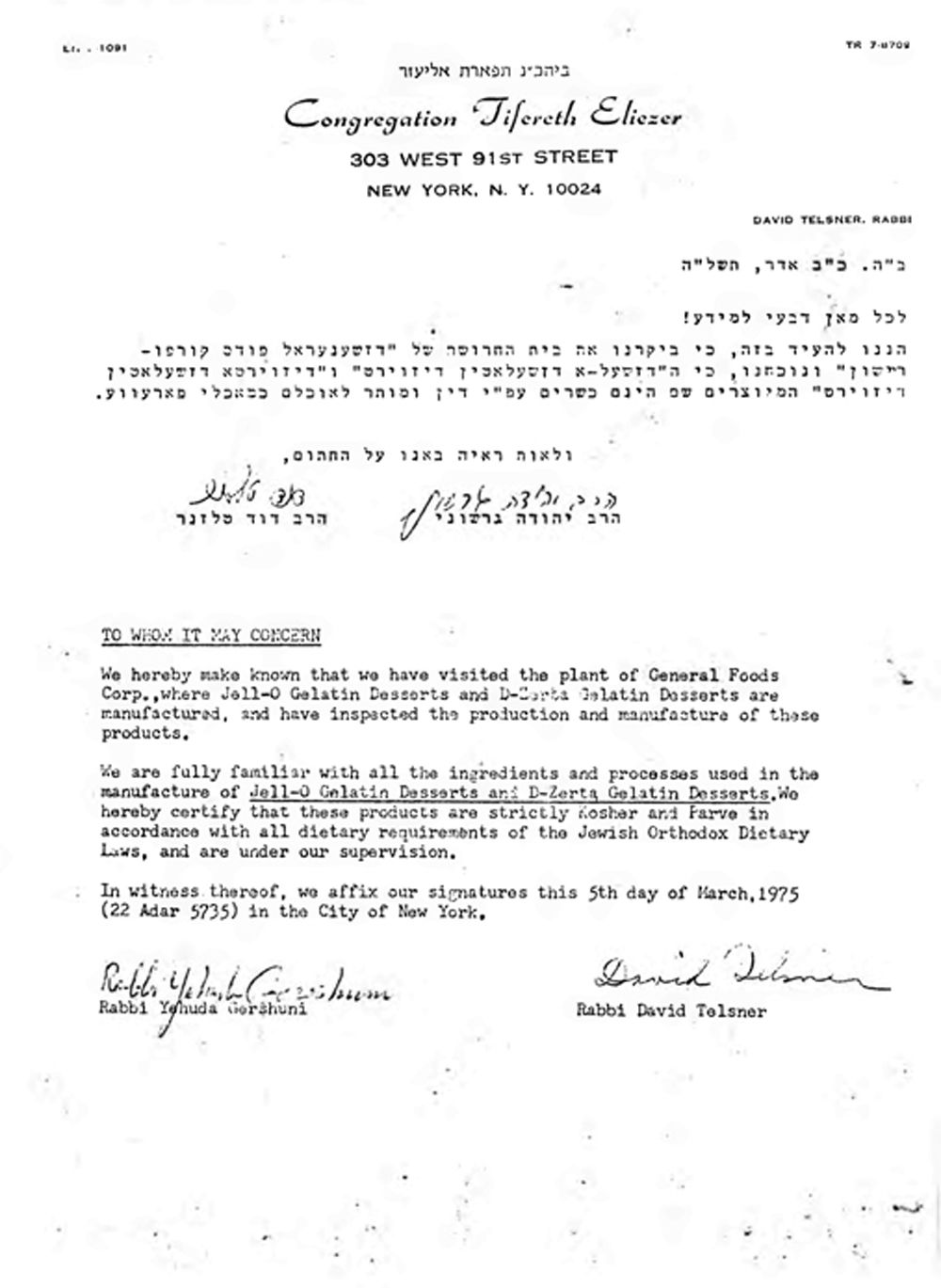
By the 1960s R. David Telsner was giving the hashgachah, and he was later joined by R. Yehuda Gershuni. (Incidentally, R. Telsner was the one who translated R. Soloveitchik’s Hamesh Derashot into Hebrew.) Here is a letter from 1975 in which these rabbis affirm that Jell-O is kosher.
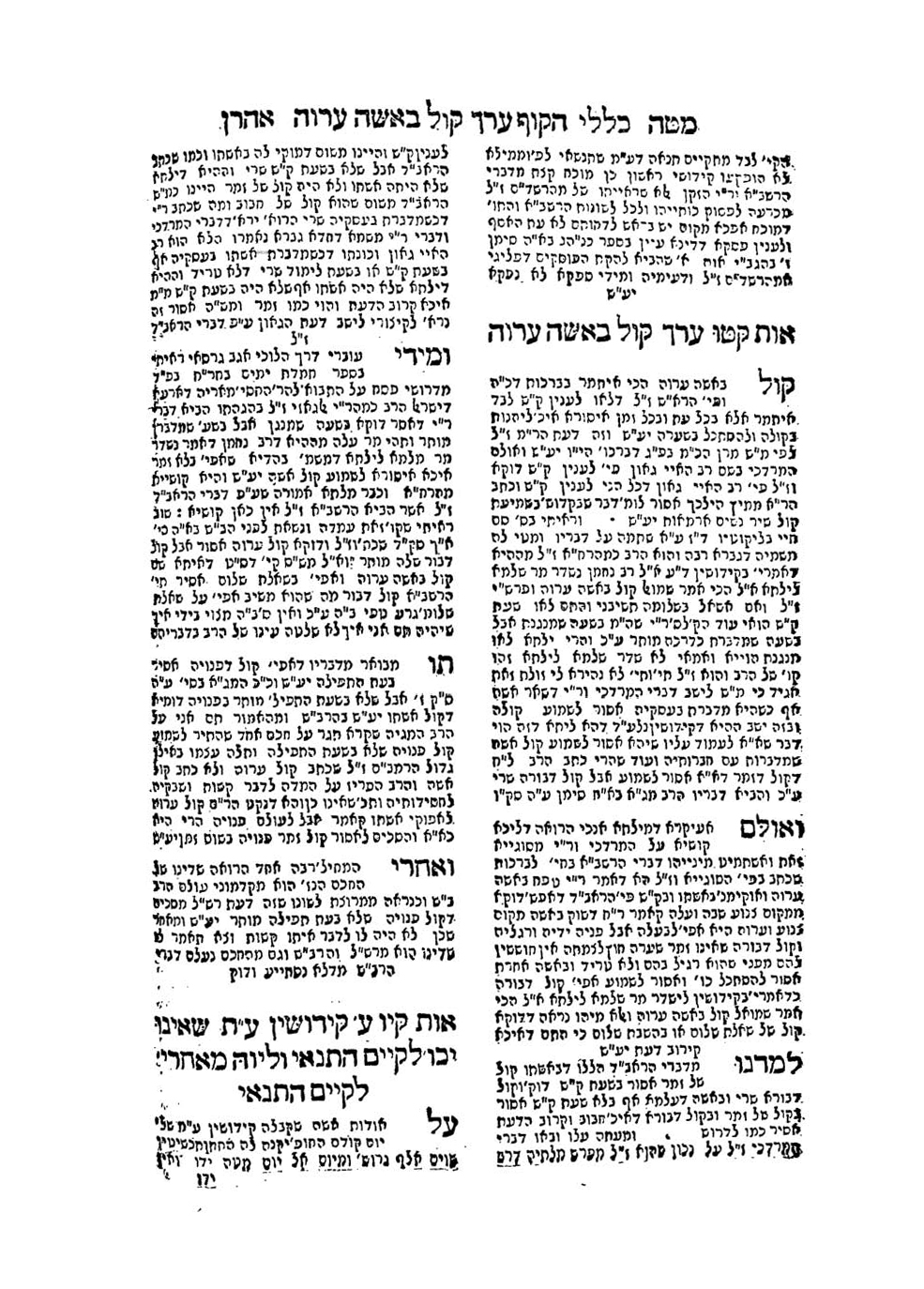
Here is R. Telsner’s responsum permitting gelatin. This was printed by R. Telsner and distributed to those who wanted to know the basis for his permission. As far as I know, this responsum never appeared in any publication and it is not found on the internet.

When it comes to gelatin, there were great rabbis on both sides of the issue, and those who permitted it were able to point to the lenient position of R. Hayyim Ozer Grodzenski. Even among those rabbis who were lenient, there were disputes as to whether all gelatin is OK, including from pigskins, or only gelatin made from bones or hides of kosher animals. Not so well known is the report that R. Kook permitted gelatin.[1] Also of note is that in 1952 R. Simhah Elberg testified to the wide acceptance of gelatin in the Orthodox community:[2]

שכבר נתפשט היתר והותר ע”י גדולי וגאוני ארץ

R. Noah Sheinkopf has prepared the following list of poskim who permitted bovine gelatin. (I have not checked the sources.)

1) Rabbi Dovid Tzvi Hoffmann, Melamed L’Hoil, Y.D., #24 and #35 (By Inference)

2) Rabbi Mordechai Leib Winkler, Levushei Mordechai, Yoreh Deah Tineyna, #60

3) Rabbi Yehuda Leib Tzirelson, Lev Yehuda #39

4) Rabbi Ze’ev Bidnovitz, Divrei Ze’ev, vol. 18. #12

5) Rabbi Y.L. Graubart, Chavalim Baneimim, vol. 4. #23; (See also HaPardes, Aug. 1942, p. 19)

6) Rabbi Shmuel Pardes, Avnei Shmuel, Berurei Halacha, #19

7) Rabbi Yosef Konvitz, Divrei Yosef, vol. 1, p. 172

8) Rabbi Hayyim Ozer Grodzenski, Achiezer, vol. 3, #33, sec. 5; see also Avnei Shmuel, pp. 10-11

9) Rabbi Simcha Zelig Regeur (Brisker Dayan), printed in Kovetz Moriah, issue 400-402, p. 76-77

10) Rabbi Yitzchak Burstein, Mataamei Yitzchak, vol. 2, chap. 24-25

11) Rabbi Yosef Eliyahu Henkin, HaPardes, July 1952; Edus L’Yisrael, p. 177

12) Rabbi Yehuda Leib Seltzer, HaPardes, July 1952; Vezos L’Yehuda, O.C. #26

13) Rabbi Simcha Elberg, HaPardes, July 1952; HaPardes, October 1952 

14) Rabbi Nissen Telushkin (Chabad), Taharas HaMayim, vol. 1, chap. 54

15) Rabbi Nachum Weidenfeld, Chazon Nachum, #61

16) Rabbi Tzvi Pesach Frank, Har Tzvi, Y.D., #83

17) Rabbi Yechezkel Abramskyintroduction to Tzitz Eliezer, vol. 4; Chazon Yechezkel, Zevachim, Sh“ut #6

18) Rabbi Eliezer Waldenberg, introduction to Tzitz Eliezer, vol. 4; Tzitz Eliezer, vol. 20, #33

19) Rabbi Koppel Kahana, Teshuva B’Inyan Gelatin, 1966 (By Inference)

20) Rabbi Moshe Nosson Nota Lemberger, Ateres Moshe, vol. 1, Y.D., # 42-43

21) Rabbi Yitzchak Glickman, Kol Torah, Shana 13, Choveret 4

22) Rabbi Yosef Shalom Elyashiv, Kovetz Teshuvos, #73, sec. 3 (In terms of practical halakhah, for R. Elyashiv the crucial point is if some taste remains, but as long as it is rendered completely tasteless, then he identifies with the R. Hayyim Ozer Grodzenski’s lenient decision.)

23) Rabbi Ovadya Yosef, Yabia Omer, vol. 8, Y.D., #11

24) Rabbi Ben Tzion Abba Shaul, Ohr L’Tzion, vol. 5, #32, sec. 6 (By Inference)

25) Rabbi Shlomo Amar, Shema Shlomo, vol. 5, Y.D., #12

26) Rabbi Yechezkel Roth, Emek HaTeshuva, vol. 3, #67 (By Inference)

27) Rabbi Yisroel Yaakov Fisher, Even Yisroel, vol. 8, #56

28) Rabbi Yirmiyahu Menachem Kohen, V’Heirim Kohen, vol. 2, Y.D., #31; vol. 4, Y.D., #40

29) Rabbi Moshe Levi, Tefilla L“MosheY.D., #4

30) Rabbi Almog Levi, Avnay Levi, Y.D., #1

31) Rabbi Yitzchak Mekayis and Rabbi Yaakov Mekayis, Ohr HaHalacha, Kuntres #3

32) Rabbi Amit Chadad, Pri Eitz Chaim, p. 529

33) Rabbi Moshe Dan Sheinkopf, a Vice President of the Agudas HaRabbonim, who certified Kojel until the late 1970s.

To this list from R. Sheinkopf, we can add R. Yaakov Ariel, Be-Oholah shel Torah, vol. 5, pp. 76-77, R. Eliezer Melamed, Peninei Halakhah: Likutim 3, pp. 352-353, R. Shlomo Aviner (see here) and R. Yitzhak Abadi (as seen on learn.oheltorah.com and prior to this on the old site, kashrut.org). R. Abadi’s view is particularly interesting as his teacher, R. Aharon Kotler, was one of the major forces behind the general rejection of gelatin in the United States. It is also noteworthy that for a short time in the 1950s the OU also approved of gelatin.[3] R. Avraham Vilner, in an earlier post at the Seforim Blog here, provides evidence that the Hazon Ish felt that one could rely on R. Hayyim Ozer Grodzenski’s heter for gelatin.

כשאמרתי למו”ר [הרב שמריה שולמאן] שראיתי הרבה חולקים על פסקו של רבי חיים עוזר בענין הג’אלאטין, וגם אלו שבדרך כלל לא היו פוסקים נגדו כמו הרב אליעזר סיבלר, בזה פסקו אחרית ממנו, אמר לי שהראש ישיבה הרב רודערמאן זצ”ל אמר לו, שהחזון איש אמר שעל כל פסקי רבי חיים עוזר אפשר לסמוך בלי שום פקפוק, חוץ ממה שהתיר לשמש במוך היכא שהסיבה לשימוש במוך הוא מצד האיש, שבזה א”א לסמוך

Ironically, it was Conservative Rabbi Louis Ginzberg who was mahmir, writing with great certainty:

I am convinced that no rabbinical scholar who is in a position to comprehend a problem in chemistry would ever permit the use of gelatin. . . . The late Rabbi Chaim Ozer Grodzinski was well known to me personally; as a matter of fact, his wife was a close relation to me, and I would certainly attach great weight to any decision by him on Jewish Law, but not in a case for which some knowledge of chemistry or physiology is necessary.[4]

On the other hand, Conservative Rabbi Isaac Klein, who was one of only three people to receive private semikhah from Ginzberg—the other two being Louis Finkelstein and Boaz Cohen—permitted gelatin.[5]

Returning to Mesorat Moshe and the problems with oral reports, I saw something relevant in R. Yehuda Spitz’s comprehensive new book, Food: A Halachic Analysis. The matter under discussion is whether one can use the same dishwasher for meat and milk utensils. R. Moshe has a number of responsa where he says that this is permissible as long as you have separate dish racks. His first responsum on the topic appears in Iggerot Moshe, Orah Hayyim 1, no. 104, and is from early 1957. It is the second part of one of his famous responsa on bat mitzvah, and was sent to R. Baruch Aharon Poupka of Pittsburgh. (For some reason, the heading of the responsum only mentions bat mitzvah, not the dishwasher question). R. Moshe’s answer is short and to the point:

ובדבר הכלי החדשה [!] לרחץ את הכלים שנקרא בשם “דיש וואשער” אם יכולין לרחוץ שם כלי בשר וכלי חלב זה אחר זה. הנה צריך שמה שבתוכו שהוא על מה שמניחין הכלים, שיהיה לכלי בשר אחרים ולכלי חלב אחרים, ועצם הדיש וואשער שמשימין בתוכו הדבר שמניחין עליו הכלים שהוא רק הדפנות שסביבותם יכולין להשתמש בו לשניהם בזה אחר זה

This is a very simple reply, and it is not possible to misunderstand what R. Moshe is saying. R. Moshe later sent two other responsa where he explains his reason for requiring separate dish racks (Iggerot Moshe, Yoreh Deah 2, nos. 28, 29). In the latter responsum, he mentions that different water should be used for the milk and meat washings. (In the earliest dishwashers you could use the same water more than once.) He states that he did not mention this point in the original responsum because in any event those who have a dishwasher change the water between cycles. He specifically tells us that he is referring to householders, not that anyone would have any doubt about this.

ובפרט שזמן גדול בהרבה שעות יש לכל בעהב מרחיצת כלי חלב עד רחיצת כלי בשר ולא ישאירו שם המים סרוחין זמן כזה

In this responsum, R. Moshe also recommends running an empty rinse cycle between milk and meat dishes. R. Moshe repeats his basic position in a couple of other responsa,[6] and a simple internet source will reveal that lots of people have discussed R. Moshe’s view and there is no room for misunderstanding.

R. Spitz, Food: A Halachic Analysis, p. 70, quotes someone who spoke to R. Moshe about his “dishwasher leniency.” According to this person, R. Moshe explained that everyone misunderstood what he wrote, and his view that one can use the same dishwasher with separate racks was only stated regardingcommercial dishwashers. However, when it comes to the home, one cannot use the same dishwasher, even with separate racks. Based on this report, R. Spitz writes, “If so, there is ample reason to be stringent, certainly lechatchilla, regarding using the same dishwasher for both milk and meat dishes.”

I have to say that testimony such as this has absolutely no halakhic significance. There is indeed reason to be stringent, based on the views of other poskim (and most people do not seem to follow R. Moshe’s heter of two dish racks). However, if all we had was this report, it would not lead us to ignore R. Moshe’s explicit position in his responsa.

We have many examples of such statements, where a posek supposedly said something privately that completely contradicts what he said in print. In such cases, one cannot rely on these supposed retractions or statements of clarification, except in very rare cases where the author makes his opinion widely known or the person reporting the retraction is a universally recognized Torah scholar[7] (although even in the latter case we cannot always rely on the scholar reporting the supposed retraction).[8] I have no way of knowing what the man R. Spitz quotes was told by R. Moshe. It could be that he completely misunderstood what R. Moshe said. It could also be that R. Moshe had a reason for telling this person what he did, as perhaps R. Moshe thought that this man should hold to a higher level. But it is simply incorrect to suggest that R. Moshe was not referring to a home dishwasher when all can see that he certainly was. R. Spitz himself, p. 71 n. 23, recognizes that R. Moshe was referring to home dishwashers. He also cites R. Baruch Moskowitz, Ve-Dibarta Bam, vol. 2, no. 244, that R. Dovid Feinstein also explained his father’s position as referring to home dishwashers. You can also listen to R. Shmuel Fuerst, a leading student of R. Moshe, explain the matter here.

Quite apart from my point just mentioned, that reports of private conversations that contradict a posek’s written opinion do not have halakhic significance, I must again stress the larger problem raised by books like Mesorat Moshe which is how much significance we should give to works that report oral teachings of great rabbis. Since we have so many examples of contradictory reports and incorrect statements in such texts, I think it is obvious that even such a wonderful work as Mesorat Moshe has to be used carefully, and in no way can it be seen as rising to the level of authority of what R. Moshe himself wrote.

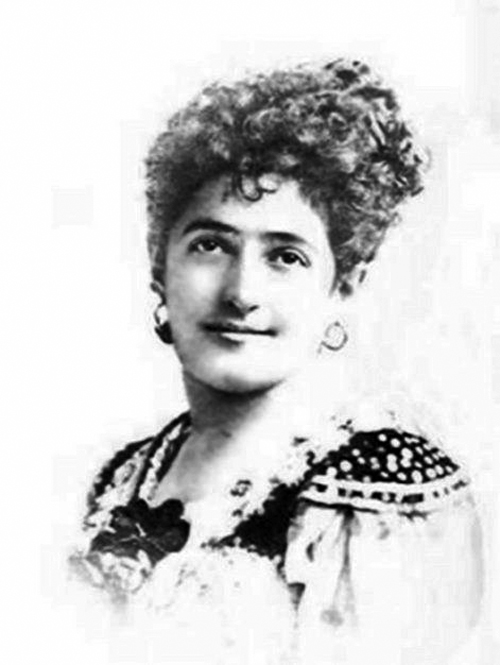
Returning to the gelatin issue, Horowitz tells the story of Abraham Goldstein (1861-1944), who really should be given the title of originator of industrial hashgachot in the United States. Here is his picture.[9]
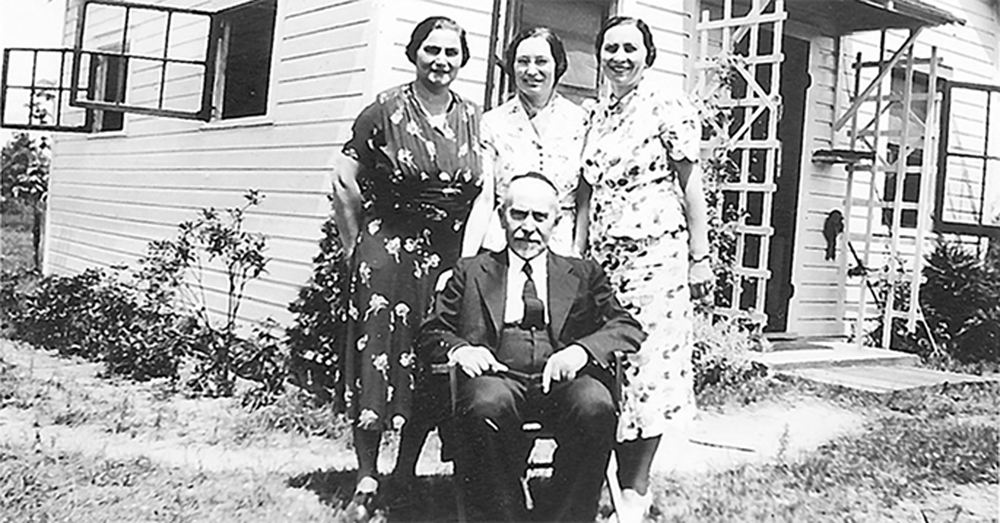
It was Goldstein who was behind the OU’s kosher certification program and who established the agreements with the early companies. He was also the OU’s “chemical expert,” yet as Horowitz notes, he has been completely erased from the OU’s institutional memory.[10]

In 1935 he broke with the OU and founded the OK Laboratories. This would be sold in 1969 to Rabbi Berel Levy, and would then become a universally recognized hashgachah. However, this was not the case when Goldstein was in charge, and it is when Goldstein founded the OK that the controversial period of his life begins. This was because Goldstein, who was not a rabbi and had no expertise in Jewish law, set out to determine what was kosher and what was not. He made it clear that in determining what was kosher, chemists (such as himself) were a more reliable source than rabbis, as the latter did not understand food technology and were mistakenly giving approval to non-kosher food items. Goldstein had a very simple approach to the matter: If a product had any non-kosher element in it, it was treif and forbidden to be eaten. The notions of bitul or that the non-kosher food had so changed its form were not considerations he paid any attention to.[11] He also did not rely on rabbis whom he felt were not careful in such matters. Thus, he refused to accept the hashgachot issued on Coke by R. Samuel Pardes, editor of Ha-Pardes, and later by R. Tuvia Geffen.[12]

As Horowitz notes, R. Geffen was not happy with R. Pardes’ hashgachah on Coke because the drink included 0.09 percent glycerin from a non-kosher source. This is a very tiny amount—less than 1 in 1000—which according to halakhah is batel, and thus of no halakhic significance. Yet there are some fundamental questions involved here. One is if the tiny amount of non-kosher is put in as part of production, rather than accidentally falling in, do we still say that it is batel? Most authorities assume yes, so from this angle R. Pardes would have been on firm ground to declare the drink kosher. However, there is another issue, and that is can you officially give a hashgachah to an item relying on bitul, especially when the company will then be advertising the product as kosher? This can certainly be seen as distasteful and perhaps even bringing us to a situation of ein mevatelin issur lekhathilah (as the kashrut organization is now involved with the company).

R. Geffen believed that Coke should not be given a hashgachah as long as the non-kosher glycerin was not replaced with a kosher alternative. In fact, as far as I can see, R. Pardes himself never argued that it is acceptable to rely on bitul in issuing a hashgachah, since he flatly declared—mistakenly it turns out—that there were no non-kosher ingredients in Coke (that is, he was not saying that the non-kosher ingredients were of no halakhic significance).[13]

Goldstein had nothing but contempt for the way the old-time rabbis went about issuing hashgachot, and R. Pardes’ hashgachah on Coke was just another illustration of this. In speaking of R. Pardes, Goldstein wrote that “such men undermine the very foundation of our religion” and “there is no room for such scoundrels in decent company.” To reiterate, this was not a dispute between two rabbis but rather a layperson with no yeshiva training declaring that a learned rabbi did not understand the basic laws of kashrut. As far as the rabbis were concerned, the chutzpah here was unbelievable, and this was doubled by the fact that Goldstein’s Kosher Food Guide, which included all sorts of important information about kosher food together with Goldstein’s attacks on various rabbis, had a circulation of 150,000.[14] Significantly, Goldstein refused the OU’s demand that his publication be reviewed by rabbinic scholars.[15] Goldstein believed that when it came to modern food technology, he should be the one telling the rabbis what was kosher, not the reverse.

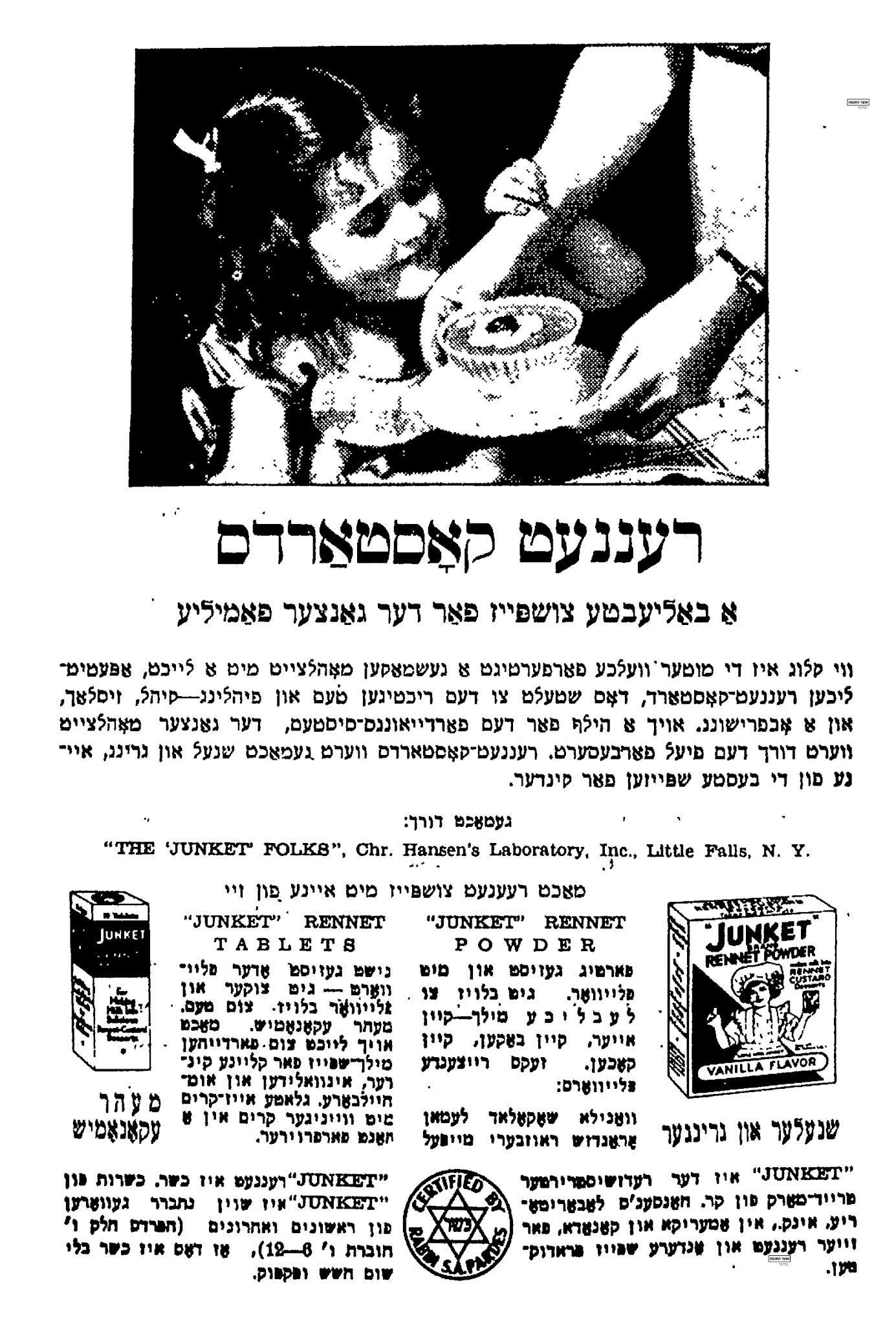
As Horowitz describes, Goldstein ratcheted up his attacks on R. Pardes after the latter gave a hashgachah to Junket, a product that was used to make a custardlike desert but which contained rennet that came from calves that were not ritually slaughtered. R. Pardes also received the backing of the OU for both his Junket hashgachah and his hashgachah on gelatin. (In 1952, after R. Eliezer Silver’s expressed a stringent opinion regarding gelatin, the OU removed its endorsement.[16])

Here is an ad from Ha-Pardes, April 1938, for Junket, with R. Pardes’ hashgachah.
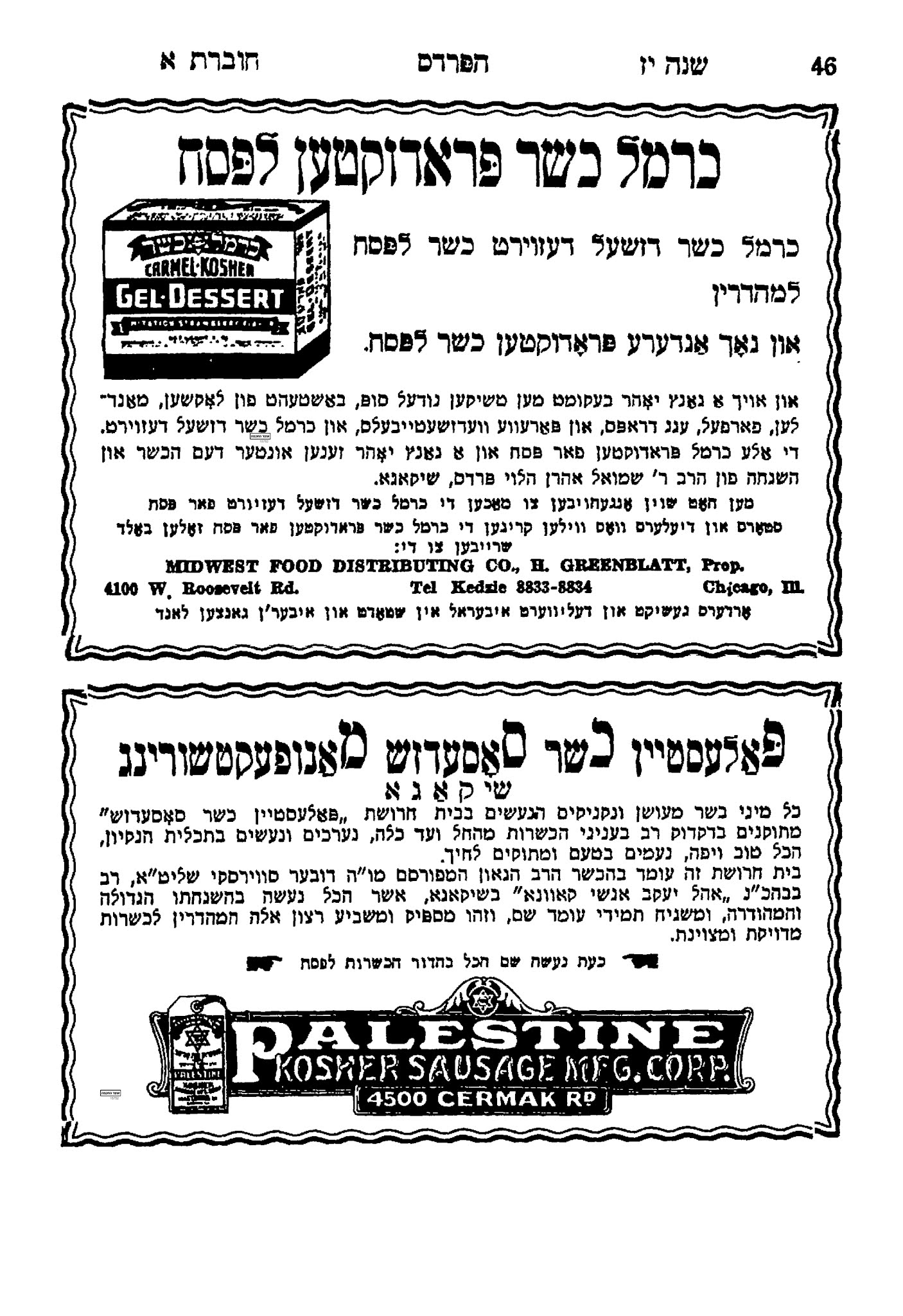
Here is an ad from Ha-Pardes, April 1943, for Carmel gelatin, with R. Pardes’ hashgachah.
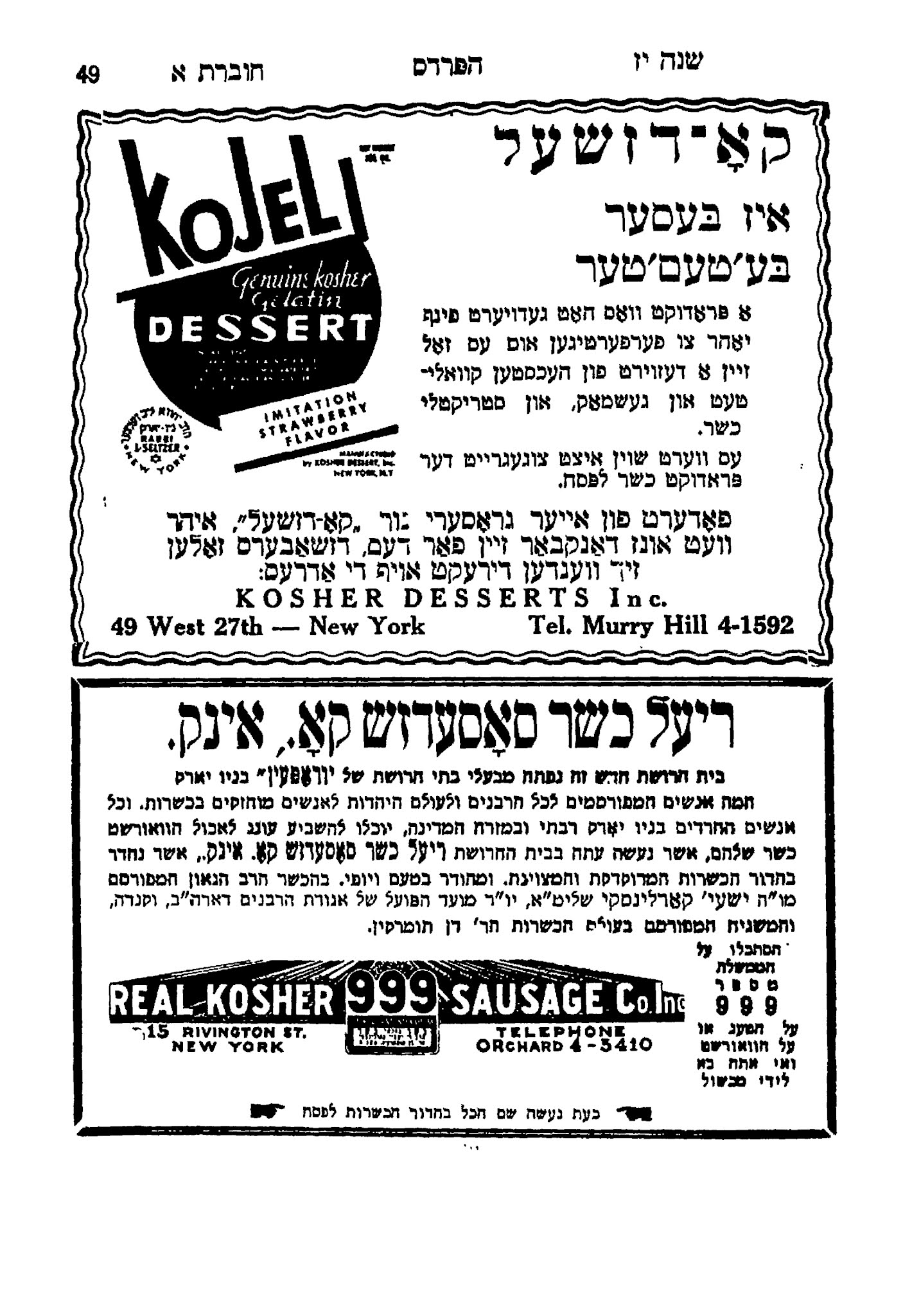
Here is an ad from Ha-Pardes, April 1943, for Kojel gelatin, with R. Judah Leib Seltzer’s hashgachah.
In Goldstein’s opinion, the fact that the OU would support R. Pardes when it came to Junket—he was no longer alive when the OU approved of gelatin—only showed how low his former organization had fallen and how little it understood of food technology. For Goldstein, it was not only a sign of ignorance on the part of R. Pardes and the OU, as he also wondered if there was financial corruption involved. Addressing R. Pardes, Goldstein asked, “How much money has been paid for this false Hekhsher.” Turning to the OU, he asked if any them “participated in the division of this money.”[17] When it came to the issue of gelatin—which had great rabbis on both sides of the issue—Goldstein expressed his ire over Jello-O advertisements in the Jewish press, stating that these advertisements “are not only deplorable from a Jewish religious standpoint,” but were “an outrageous attempt to smuggle an absolutely trefa article into Jewish homes.”[18] He later repeated his warning regarding other brands of gelatin: “Neither Carmel, Emes, or Kojel gelatines can be used in Orthodox homes. They are trefa gelatines, despite the Rabbinical Heckshers.”[19] So here we have a layperson declaring that a product endorsed by leading American rabbis was “absolutely trefa.”

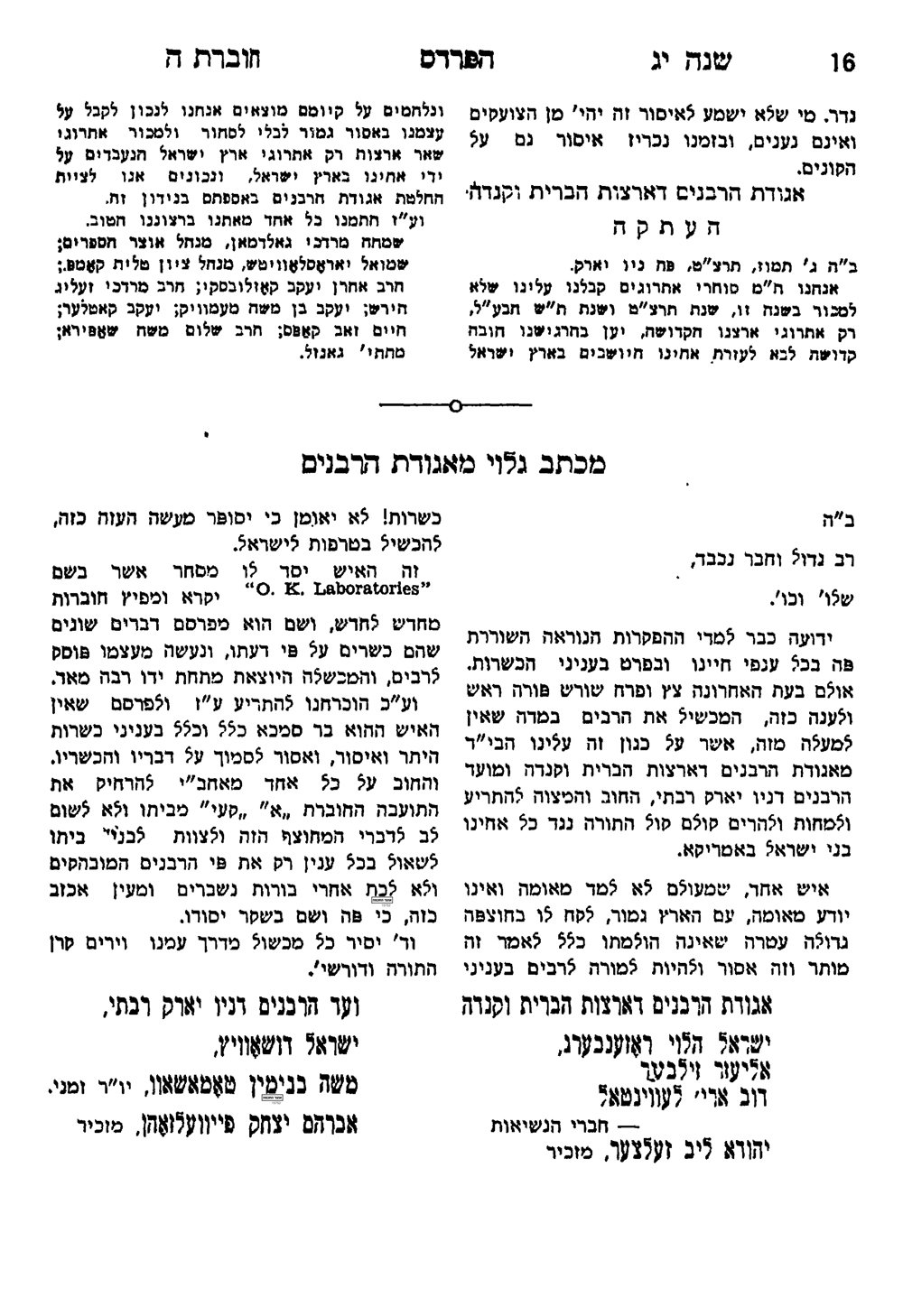
It was one thing for a rabbi who opposed the kashrut of gelatin to say such a thing, but to have a halakhically unlearned layperson setting himself up as the arbiter of what is, and is not, kosher was too much for the rabbinic leadership in the United States. Now it was no longer a question about the kashrut of Junket and gelatin—both of which R. Eliezer Silver himself would later reject—but respect due to talmidei hakhamim. As far as the rabbis were concerned, it simply was unacceptable for a layperson to establish himself as an authority when it came to kashrut. The most that he could do was supply information to the rabbis so they could make the proper halakhic decisions, but to publicly challenge the rabbis about their scientific facts and halakhic interpretations went over the line, and it was time for the rabbis to put Goldstein in his place. Here is the public statement issued by Agudas ha-Rabbonim and the Rabbinical Board of Greater N.Y.[20]
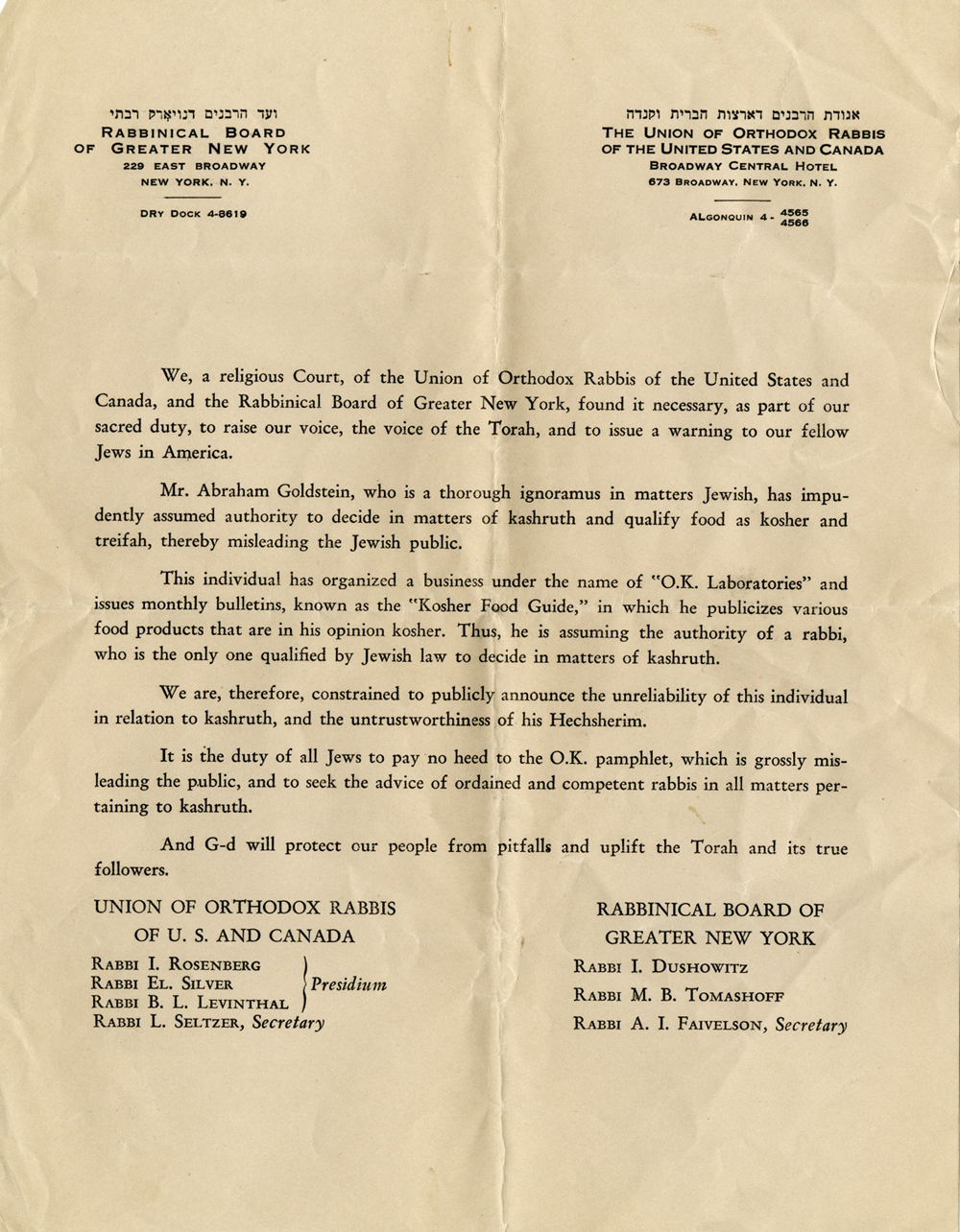
This is the English translation of the following Hebrew proclamation that appeared in Ha-Pardes, August 1939, p. 16.[21]
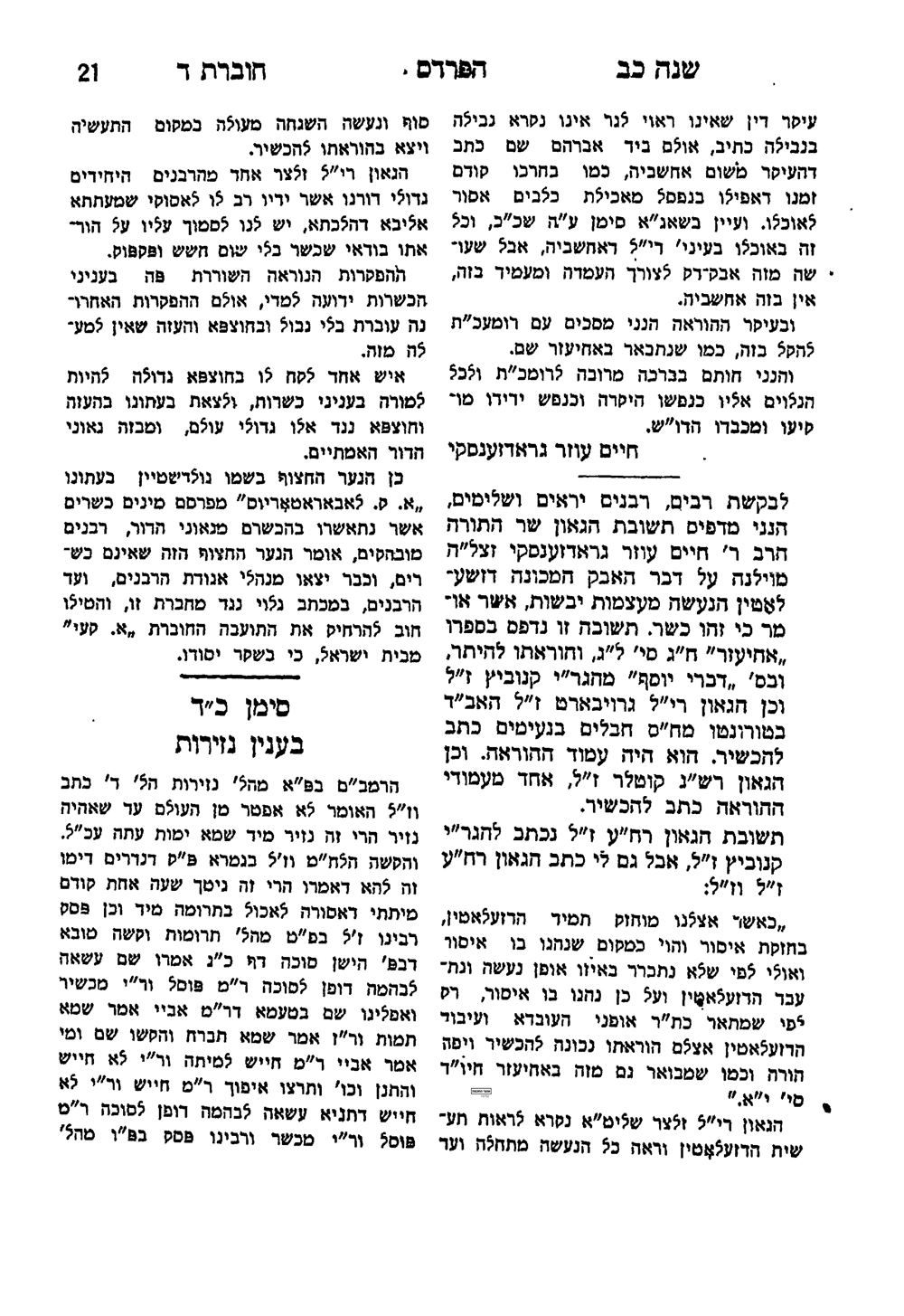
Almost ten years later it was Goldstein’s son, George, who was running the OK after the death of his father. He too was causing problems for R. Pardes. In Ha-Pardes, January 1948, p. 21, R. Pardes attacked the younger Goldstein, referring to him as הנער החצוף.
Despite the virtual herem on Abraham Goldstein, I agree with Horowitz[22] that at least to some extent Goldstein was posthumously vindicated. While the notion that a layperson could challenge learned rabbis in halakhic matters was never countenanced (and this is presumably the reason why Goldstein is completely absent from the OU’s institutional memory), Goldstein’s other point, that knowledge of chemistry and food technology is vital for kosher supervisors, has been accepted by all the mainstream hashgachot. Furthermore, despite the opposition of the rabbis to Goldstein’s OK, it remained a popular hashgachah with a wide following. In fact, until the mid-1950s, the OK supervised more products than the OU.[23]

One can only imagine Goldstein’s reaction had he heard of a pesak of the famed R. Ishmael ha-Kohen of Modena (1723-1811) in his Zera Emet, vol. 2, no. 48. The question is as follows:

נשאלתי מהו ליתן רפואה לחולה שאין בו סכנה חתיכות עגולים קטנים שקורין בוקונ”י בלע”ז מרוקחים בהרבה מינים ובכללם יש ג”כ עצם גולגלות אדם שרוף וכתות

R. Ishmael was asked about using a medicine for someone who was sick but not in serious danger. The issue was that the medicine contained pieces of a ground up human skull. This is what has been called “powdered skull,” and was a common medicine in the eighteenth century.[24] R. Ishmael permits one to consume this “medicine”.

A few centuries earlier, R. David Ibn Zimra was also asked about medicine that was made from flesh of non-Jewish dead bodies (מומ”יא — mummies).[25] R. Ibn Zimra focuses his responsum on the issue of benefiting from a dead body, since when it comes to eating the flesh, he sees no problem at all in this, as its form has been entirely changed:

איסור אכילה לא הוצרכת לשאול דודאי מותר באכילה שהרי נשתנה צורתו וחזר להיות עפר בעלמא וכ”ש ע”י סמים שהרי המומי”א היא בשר החנוטין שחונטין אותם בכמה מיני סמים כדי להעמיד צורתו וגופו וחזר להיות כעין זפת ואין בו איסור אכילה

For those interested in learning more about the subject of “corpse medicine”—which included much more than the skull—and if your stomach can handle it, I recommend Richard Sugg, Mummies, Cannibals and Vampires: The History of Corpse Medicine from the Renaissance to the Victorians (London and New York, 2016). What passed for medical cures in pre-modern times is shocking, and often downright disgusting.

As late as 1907, the Adeni Rabbi Samuel Yeshuah[26] discusses sick people who consume “mummy medicine,” what he refers to as

 רפואת ההבל שנתפשט בין העם . . . באמת המומיא הזו לא יועיל ולא יציל והיה כלא היה

I assume many readers will be shocked to learn that great poskim permitted what I have just described. Today, of course, it would turn our stomachs to even think about consuming part of a corpse, much like Goldstein was outraged that anyone could think that it is permissible to consume something from a non-kosher animal, even from a pig no less. Yet this revulsion does not arise from halakhah. Speaking personally, I can’t imagine that anyone I know would eat a piece of meat from a pile if he knew that a non-kosher piece had fallen into the group of kosher pieces, despite what the halakhah says; all the more so if a piece of pork fell into a kosher dish even if it was nullified by 60. Again, our revulsion has its origin in feelings that have little to do with pure halakhah. In fact, some authorities feel that to be strict in such cases is akin to heresy, as it is in practice (but not in theory) a denial of the halakhic principle of bitul.[27]

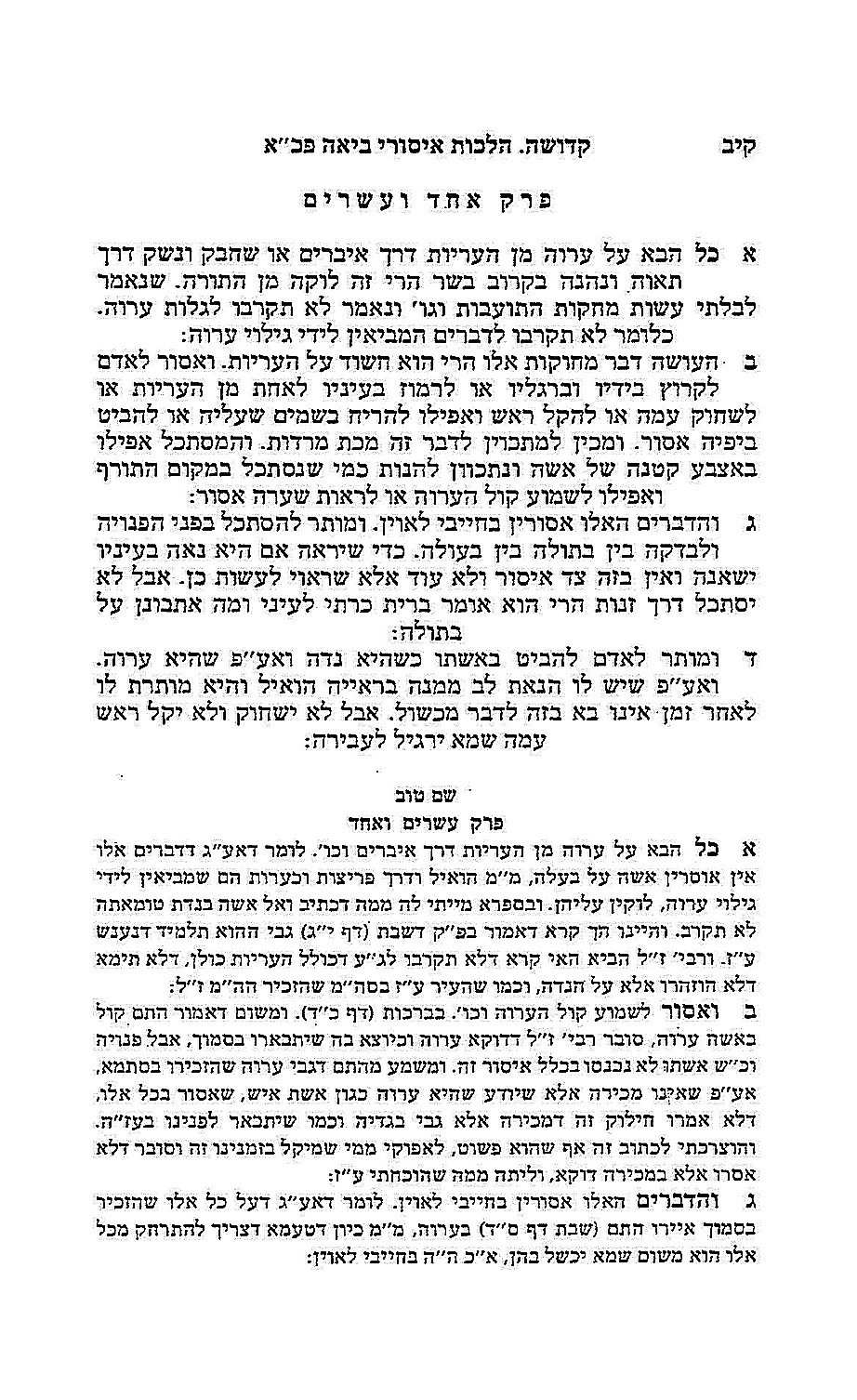
If I could have spoken to Goldstein, I would have tried to explain to him that the halakhic system does not work in accord with what has been called “da’at baalei batim,” and those who forbid gelatin also acknowledge that not everything from a non-kosher animal is forbidden. The gelatin dispute concerns the role of gelatin in the finished food product, not with the existence of non-kosher per se. Thus, even one who is strict in the matter of gelatin would not start screaming if he saw his son standing in right field chewing on his non-shechted leather baseball mitt.

To be continued

*************

My Torah in Motion trips are starting again. I am leading a group to Morocco in January, and there is a full line-up for next summer. You can see details here.

*************

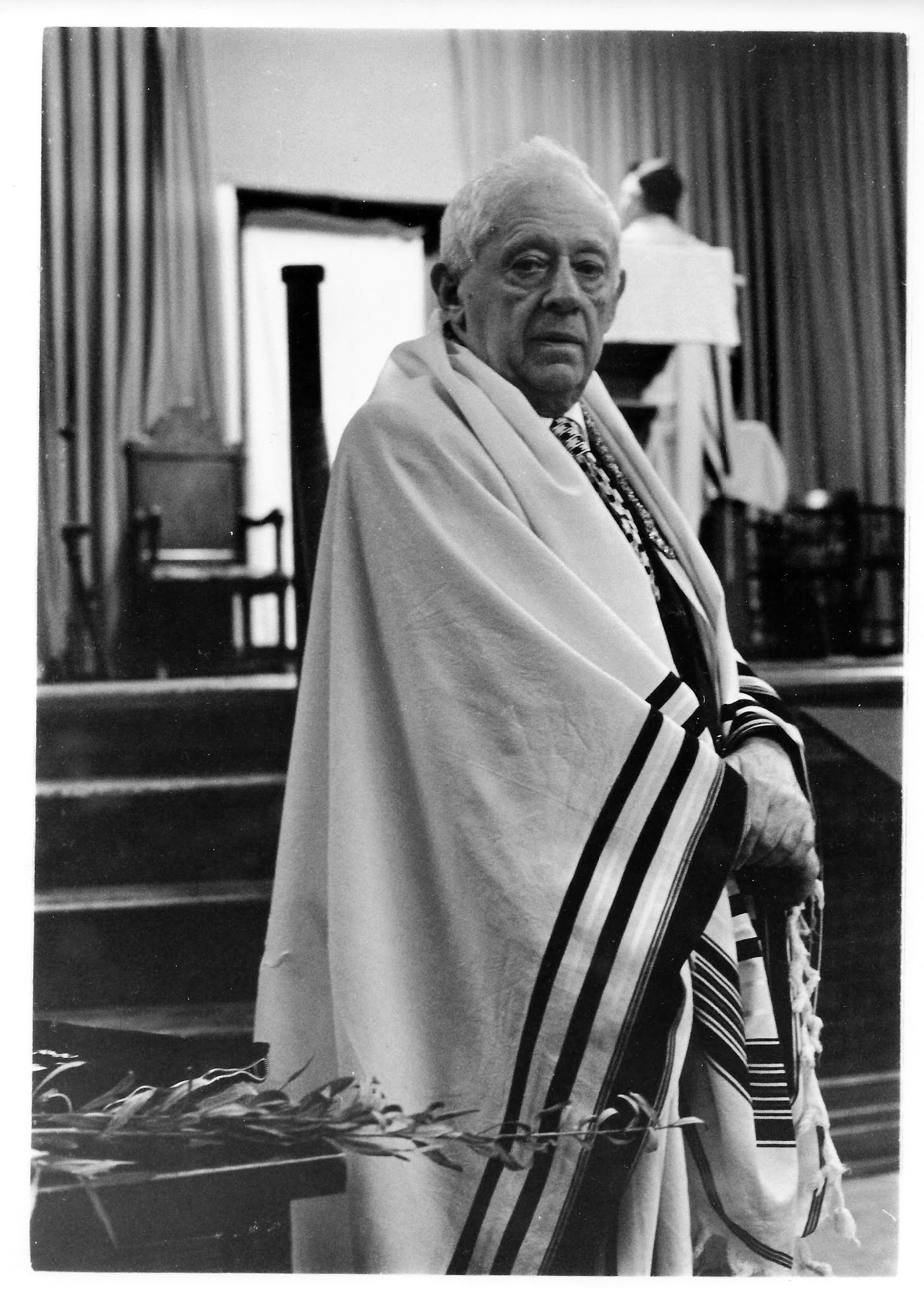
I am currently doing a series of classes for Torah in Motion on R. Saul Lieberman. You can see them here on YouTube. Here are some pictures that were taken at the Jewish Theological Seminary minyan in Unterberg Auditorium on Hoshana Rabba 1971. (At this minyan there was separate seating but no mechitzah.) The pictures were taken by Joel Mandelbaum, son of R. Bernard Mandelbaum who held many positions at the Seminary, including serving as president from 1966-1973 under Chancellor Louis Finkelstein.

Here is Lieberman.
Here is Lieberman and Louis Finkelstein. Abraham Joshua Heschel is standing between them and Bernard Mandelbaum is on the far right.
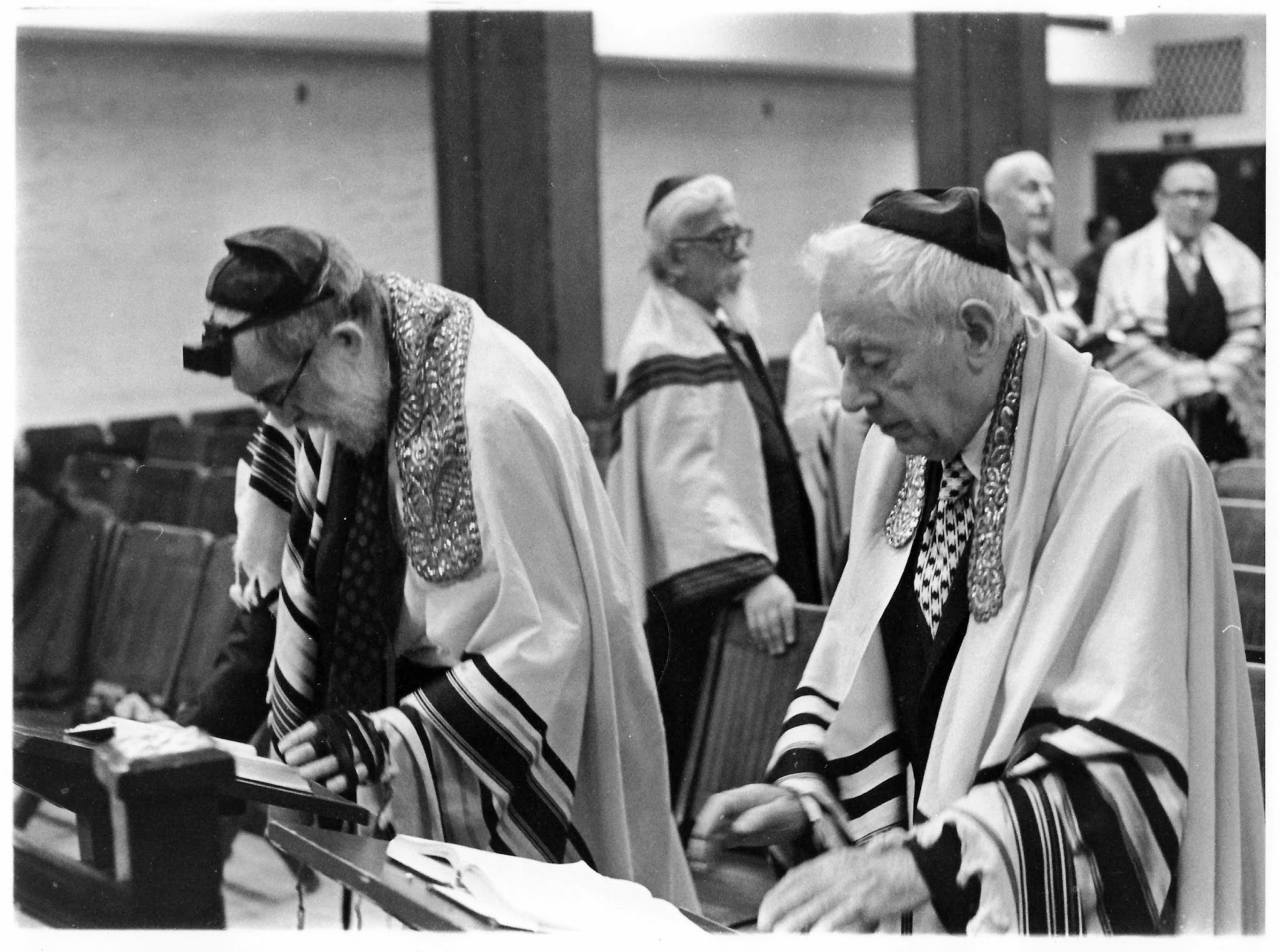
In front of Lieberman, leading the procession, is Moshe Zucker. Behind Lieberman is Simon Greenberg.
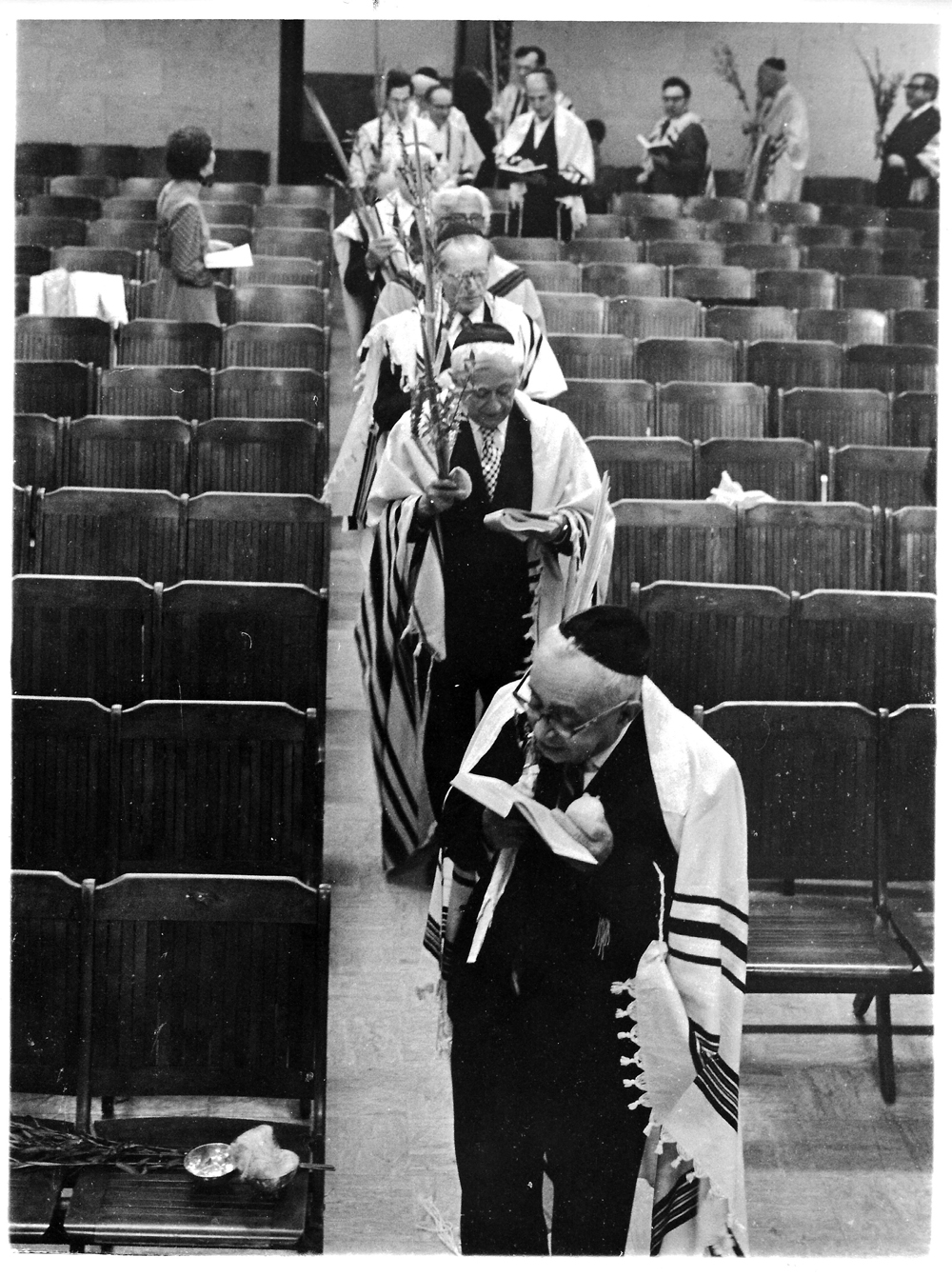
*************

[1] See Ha-Pardes, August 1942, p. 19. It also states here that R. Shlomo Natan Kotler permitted gelatin.

[2] Ha-Pardes, October 1952, p. 31.

[3] See Horowitz, Kosher USA (New York, 2016), pp. 59-60.

[4] The Responsa of Professor Louis Ginzberg, ed. David Golinkin (New York and Jerusalem, 1996), p. 152.

[5] Responsa and Halakhic Studies (n.p., 1975), ch. 7.

[6] Iggerot Moshe, Yoreh Deah 3, nos. 10, 11.

[7] For example, the Shulhan Arukh, Yoreh Deah 201:75, famously forbids heated mikvaot. (R. Karo cites the stringent view as יש מי שאוסר and he does not offer a lenient alternative). However, R. Eliezer ben Arha of Hebron (died 1691) reported that R. Karo abandoned this stringency and permitted the heating of a mikveh.

ואפילו בזמן הרב מוהרי”ק זלה”ה עשה מעשה נגד מה שפסק שחשש וכתב סברת האוסר, כי רבים מבני עליה הם המתירין, ועלייהו קא סמכינן

See She’elot u-Teshuvot Rabbenu Eliezer ben Arha (Jerusalem, 1978), no. 18, and see note 1 for the impact of this reported change in R. Karo’s position.

Another interesting phenomenon, which I will not discuss in this post, is when a posek refuses to put a leniency into writing. How authoritative is this posek’s oral ruling? A classic example of this is R. Moshe Feinstein’s opinion about turning off the flame of a gas stove on Yom Tov. In Iggerot Moshe, Orah Hayyim I, no. 128, R. Moshe writes that he doesn’t wish to put his opinion in writing, but it is known that he permitted this.

[8] See e.g., here where I discuss the false claim that R. Ezekiel Landau retracted his view that sturgeon is kosher. For the claim that R. Joseph Hayyim retracted his permission to ride a bicycle on Shabbat where there is an eruv (Rav Pealim, vol. 1, Orah Hayyim, no. 25), see R. Ovadiah Hadaya, Yaskil Avdi, vol. 3, Orah Hayim, no. 12:5:4, vol. 5, Orah Hayyim, no. 40. For a rejection of this claim, see R. Ovadiah Yosef, Yabia Omer, vol. 9, Orah Hayyim, no. 108:189. See also here where R. Doniel Neustadt writes: “Several sources report that the Chafetz Chayim eventually changed his ruling and exempted cooked fruits served for dessert from a blessing; see Orchos Rabbeinu 66 and Vezos ha-Berachah, pg. 78. Others dispute that the Chafetz Chayim changed his ruling.” The forger Chaim Bloch, Ha-Maor, Dec. 1951, p. 7, who was himself opposed to the gelatin heter, claims to have discussed the matter with R. Hayyim Ozer Grodzenski. Not surprisingly, Bloch records that R. Grodzenski told him that he never actually gave a ruling on the question of gelatin. Rather, he was only stating that his opinion inclined in this direction. For a rejection of Bloch’s false testimony, see R. Samuel Baskin and R. Shimon Winograd in Ha-Maor, Aug. 1952, pp. 7-8. Here is some of what they write:

אם הגאון רח”ע באמת חזר מתשובתו ומהיתרו על תוצרת הנ”ל, איך לא הודיע זאת ברבים, כדי שלא יכשלו ח”ו ויסמכו על פסקו ותשובתו בשו”ת אחיעזר, ויעשו מעשה לכתחילה בדבר שלא נתן הגאון הנ”ל היתר מוחלט, ועוד אם הגאון רח”ע ז”ל דיבר עם הרב ח”ב בשנת תרצ”ה כאשר כותב בהירחון “המאור”, איך כתב הרב הגאון רח”ע ז”ל להרב הגאון ר’ יוסף קאנוויץ ז”ל בחודש אייר שנת תרצ”ו שנה או יותר לאחר שיחתו עם הרב ח”ב, שמסכים עמו על היתרו בדבר הכשר הז’לטין

[9] The picture is found here and comes from the Ezra and Monica Friedman collection.

[10] Kosher USA, p. 26.

[11] See Spitz, Food: A Halachic Analysis, p. 459: “Dr. Goldstein . . . publicly maintained that any food item whose origins lie in a non-kosher source may not be considered kosher, no matter how “changed” it may currently appear.”

[12] Horowitz, Kosher USA, pp. 33ff.

[13] See Adam Mintz, “Is Coca-Cola Kosher?” in Rafael Medoff, ed., Rav Chesed: Essays in Honor of Rabbi Dr. Haskel Lookstein (Jersey City, 2009), vol. 2, p. 80; Horowitz, Kosher USA, p. 36.

[14] Horowitz, Kosher USA, pp. 29, 37.

[15] Horowitz, Kosher USA, p. 41.

[16] Horowitz, Kosher USA, p. 64.

[17] Horowitz, Kosher USA, pp. 38, 41.

[18] Horowitz, Kosher USA, p. 50.

[19] Horowitz, Kosher USA, pp. 54-55. Kojel is no longer is made with problematic gelatin and is currently under the OU hashgachah.

[20] Document provided courtesy of the Israel Rosenberg Archive, The Library of the Jewish Theological Seminary, New York, NY, ARC 98, Box 6, Folder 23.

[21] This proclamation was reprinted in Ha-Pardes, October 1939, p. 29. For other attacks on Goldstein see Ha-Pardes, August 1942, p. 17; Ha-Mesilah, Adar 5702, p. 20, sections ב, ה.

[22] Horowitz, Kosher USA, p. 42.

[23] See here.

[24] See here.

[25] She’elot u-Teshuvot ha-Radbaz, vol. 3, no. 548.

[26] Nahalat Yosef (Jerusalem, 1907), pp. 15a-b.

[27] For one discussion, see here.


Review of Reckless Rites

While it is a bit out of season, I wanted to review Elliott Horowitz’s new book Reckless Rites. In this book, subtitled “Purim and the Legacy of Jewish Violence,” everything is viewed through the prism of the violence inflicted by the Jews upon their enemies at the end of Esther.

While arguably, the violence at the end is only a minor part of the story for some that aspect has clouded everything about the Book of Esther and Purim. First Horowitz looks at how the Book was viewed by non-Jews. Some had a very negative view due to the Jewish revenge. They considered that motif, un-biblical (read non-Christian). Horowitz goes through each of the characters and how first non-Jews interpreted their actions. For instance, Mordechi was treated rather harshly by many of these commentators as was Esther due to her passivity. What is especially fascinating is how these non-Jewish understandings, at times, crept into Jewish thought as well. Thus, Horowitz documents Jews parroting these rather un-Jewish, at it were, interpretations.

Horowitz then tackles the overarching theme of Amalek and how this has been understood throughout history. Some hold there is no obligation of destroying Amalek today while others are willing to label any perceived enemy of Jews as deserving of the harsh consequences of Amalek. Some of these examples are rather disturbing.

After dealing with the Book of Esther specifically, Horowitz turns his focus to Jewish practice on Purim. Specifically, he deals with Jewish violence or violent acts on Purim directed at non-Jews. He provides a discussion of the stereotype of the “mild” (read the wimp) Jew including its origins and whether it is borne out by history. He then discusses numerous, diverse examples spanning from the 5th century until today of Jewish violence. Some is not physical violence, instead it is host desecration or general enmity of non-Jewish symbols while other, most recently Barukh Goldstein is physical violence in its worst form.

In an effort to play down some of these incidents, we have Jewish historians who decided to avoid discussion of such matters, or at times downplay their significance. However, in light of the many examples here, it is very difficult to ignore such examples. Horowitz is very convincing in the scope of this idea and how prevalent this is. It is especially telling when tracing and seeing how systematically Jews have decided to sweep under the rug these examples, it demonstrates that censorship is not limited to any one group and even amongst supposedly dispassionate scholars, they too can fall prey to their own biases.

The detail and research is amazing , Horowitz leaves no stone unturned. All in all, this book sheds new light of the story of Purim, the Book of Esther and Jewish history. It provides a new way of viewing the story of Esther and Jewish ideas towards violence.


The Pitfalls of Disagreeing with the Gra

Sunday, the second day of Hol HaMo’ad, was the 210th yahrzeit of the Gra. The Gra, a towering figure in modern Judaism, was not immune from criticism. His views, like any other’s were subject to scrutiny. And, at times, there were those who disagreed with the Gra’s conclusions. While this criticism should come as no surprise (and especially so in light of the Gra’s dim view of deference to prior authorities), some felt the Gra should be immune from any criticism. Thus, we find the Gra’s dissenters taken to task for merely arguing with the Gra’s position.
Additionally, this post will be the beginning of a series of posts devoted to reviewing and highlighting one of the most important books in the history of the Jewish book to be published in recent memory. Dr. Yaakov Shmuel Spiegel (who has a terrific Hebrew Wikipedia entry here)has published two volumes of Amudim b’Tolodot Sefer HaIvri. Both volumes are tremendously rich in material and appear to have gone virtually unnoticed. (Unfortunately, Spiegel soon after the publication of the first volume came out with a revised edition. All citations are to the first edition of the first volume.)
As mentioned above, the first part of this post, is the first in a series discussing Spiegel’s book. The second part, although related to Spiegel is not discussed by Spiegel, and instead, is from another important bibliography work, Ohel Rochel.
There is but one review in HaMayaan [and in the latest AJS review of Spiegel’s second volume]. In fact, although those who have read it have recognized its import it has not stopped some from hiding their use of the book. Thus, a couple of weeks ago the Hiddushei HaBach were published on portions of the Talmud. Spiegel has an amazing discussion about the Hagot haBach. Spiegel discusses the history, what the Bach was doing, which edition of the Talmud he had. Perhaps most importantly, Spiegel discusses the errors that have crept into the Bach – mainly because the editors of the Vilna Shas removed the introduction to the work. The introduction explains certain devices that were employed to make clear which words the Bach was removing. Both the device (quotation marks) as well as the explanatory notes no longer appear, thus Spiegel provides numerous examples of people who based their Torah on an incorrect understanding of what the Bach was doing.

Returning to the new Hidushei HaBach, in the introduction they discuss the Bach’s other works. Of course, they discuss the Hagot HaBach and they rely heavily (read almost in entirety) on Spiegel. But, the only times they cite (p. 19 n. 1; p.43 n. 55; p. 46 n.65, n. 67) to Spiegel they use the following abbreviation עמודים בתולדות ה”ה. They do not provide what that means, and only a reader who was already aware of Spiegel’s book would have any idea. This is deliberate as although they are willing to use his book they are unwilling to let others know that.

In this post, however, I will not focus on the Bach, rather as mentioned above, we are going to discuss the Gra, and the first example focuses on the Hagot HaGra. This portion of the post mainly comes from Spiegel (Amudim: Haghot u’Maghim pp. 422-426, 461).

R. Gershon Henoch Leiner, the Radzyner Rebbi, published Sidrei Tahros. Sidrei Tahros is an attempt to fill a gap in the talmud. There are some mesechtot that do not have any talmudic commentary. While some, Zeraim for instance, have at least Yerushalmi, the mesechtot of Tahoros do not. Thus, R. Leiner culled the corpus of Rabbinic literature, Talmud, Midrash, Zohar, etc. and collected the relevant statements to create a “talmud” (it is even labeled as such – the legend on the page reads Gemara) on the two mesechtot of Ohelot and Kelim. Additionally, he wrote his own commentary on these volumes. The volume on Kelim was published in 1873 and included a map that can be seen here. The volume on Ohelot was published in 1903. After that both books were not republished until 1960 in a photomechanical reproduction.

Soon after it came out, people took issue with the entire concept – the concept of “creating” a gemara. Those who came out against him, did so in the newspaper Halevonon (available here – see the 1875 nos. 34, kovod levonon (machberes sheni year 11) 6 tamuz edition and see Ir Vilna vol. 1 p. 60 n. 7 for some choice quotes). Someone responded in Hamaggid (also available online see 17 Av, 1875). Much of this criticism was more focused on the concept of the Sidrei Taharos, (creating a “new” gemara) for our purposes, however, we are going to focus on one point, R. Leiner’s disagreements with the Gra.

In his commentary, R. Leiner takes issue with some of the Gra’s textual emendations. For instance R. Leiner states:
ודע דדברי הגר”א ז”ל בזה בספרו . . . לא איתברר לן ולא זכינו לעמוד בסוד דבריו ז”ל . . . דרכו בקודש נסתרה ונעלמה מאתנו

This is but one of the times R. Leiner disagrees with the Gra. At one time, R. Leiner is willing to attribute his disagreement not to the Gra, but instead, R. Leiner claims that perhaps the difficult statements in the Gra were not made by the Gra. Instead, a student misunderstood and thus it is now necessary to figure out what in fact the Gra said. Setting aside this justification (which, when it comes to the Gra’s notes on the Talmud is difficult to believe in light of the fact much comes from the Gra’s hand itself), R. Leiner still disagreed with the Gra for whatever reason it may be.

R. Yosef Refael and R. Betzalael HaKohen, Dayanim in the Vilna Bet Din were against the whole notion of the Sidrei Tahros. But, they also singled out R. Leiner’s disagreements with the Gra. Specifically, they say

ובהשגות המחבר [ר’ גרשון] על רבינו מאור הגולה הגר”א ז”ל כתב הרבה נגד כבוד הגר”א ז”ל בכמה מקומות ומדקדק עליו בדקדודי עניות לבד אשר אין מהצרוך להשיב עליהם כלל, וגם במהלליו את רבינו הגר”א ז”ל התנכר כנגדו כובד וכאילו היה חלילה אחד מחבריו . . . ובכמה מקומות תלה דברים זרים בפירוש הגר”א ז”ל, אשר לא יטעה כל המתחיל ללמוד לפרש כזאת

Another example is that of R. Barukh Brody in his book Bet Ya’akov where he states:

ועל של עתה באתי כי זה לא כביר נדפס ילקוט על מס’ כלים . . . והנה בעברי על פני דבריו באיזה מקומן ראיתי כי יצא בילקוטו באבני נגף נוכח תורת הגר”א ופגע ונגע בכ”מ [= בכמה מקומות] בכבוד רבינו הגר”א ומשיג על דבריו בעזות וחוצפה מאד, ושמתי עיוני על השגותיו ומצאתי ראיתי כי מלבד שאין קטן ערך כמוהו ראוי להתוכח עם ארי ארי[ה] דבי עילאה הגר”א ז”ל, בר מכל דין לא הבין ולא רצה להבין דברי הגר”א הקדושים רק שנאה וחוצפה מדברת מתוך גרונו . . . חכמתו המעט נסתקלה ממנו ולא הבין אפילו פשט הפשוט שבדברי הגר”א ז”ל

R. Brody thus accuses R. Leiner of brazeness, chutzpah, and that R. Leiner “is unable to understand even the simplest explanations.” Harsh words indeed all for disagreeing with the Gra.

The second example deals with a recently discussed book. In our discussion of Teffilah Zakah, we noted that various editions of the Hayye Adam were altered. In this case, we are going to deal with R. Danzig’s other well-known work the Hokhmat Adam. In the prior discussion the removal was due to the inclusion of a controversial book, in this case it was R. Danzig’s own words. [1]

The Hokhmat Adam was published after the Hayye Adam. In the Hayye Adam at various times, he take issue with the opinions of the Gra. R. Danzig was no stranger to the Gra, R. Danzig’s son married the grand-daughter (Gittel Vilner) of the Gra. It appears that R. Danzig’s disagreements with the Gra did not go unnoticed or unopposed.

In the first edition of the Hokhmat Adam, R. Danzig addresses criticisms. R. Danzig notes, inter alia, that the Gra himself would be more than happy to have people disagree with him. It appears, however, that only one copy remains of R. Danzig’s original words. This copy was discovered by Chaim Lieberman, one of the great bibliographers of the past generation, in what was R. Shmuel Straushun’s former library (a portion of the library is now housed in YIVO). The page, in relevant part, reads as follows:

והנה לא נמצא בחיבור זה מדברי מחותני הגאון רשכבה”ג מו’ אלי’ החסיד, והוא לסיבת כי שמעתי דבת רבים המתרעמים עלי שהשגתי עליו באיזה מקומות בחיבורי [חיי אדם] ובלתי ס[פק] שהאנשים המתרעמים לא ידעו דרך הפוסקים שכך דרך תה”ק זה בונה וזה סותר והתלמיד חולק על הרב כמש”כ בש”ע [יו”ד ס’ רמ”ב סע’ ג] ודרך זה היה נוהג אף בזמן תנאים ואמורים, ובודאי ניחא להגר”א מה שאני מפלפל בדבריו ממי שהוא אומר שפיר קאמר כדאר”י [=כדאמר רבי יוחנן] על בר לקישא. ולכתוב דבריו אף אם לא יהיה נ”ל זה לא אוכל, ולכן אחזתי במדת השתיקה להסיר תלונתם מעלי והם עתידים ליתן את הדין כי מנעו נ”ר [=נחת רוח] להגר”א לפלפל בדבריו, ודין אותי לכף זכות ידונו אותו משמים לזכות

This is not the text that appears in Hokhmat Adam, rather a slightly different text appears. These changes, however, as been demonstrated by Ch. Lieberman are significant. The following is how it appears (prior to the Binat Adam section):

והנה דברי מחותני גאון ישראל וקדושו אשר מימיו אנו שותים המקובל אלקי החסיד המפורסם מהו’ אלי’ חסיד דקהילתינו לא הבאתי כלל דבריו כמעט רק איזה גרגרים והוא לסיבה כי שמעתי דיבת רבים המתרעמים עלי על שבאיזה מקומות בחיברי חיי אדם השגתי עליו, ובלתי ספק שאנשים האלה אינם בקיאי’ בלימוד הפוסקי’ שכן דרך תה”ק זה בונה וזה סותר והתלמוד חולק על הרב והטור על אביו הרא”ש כמש”כ בש”ע ובפוסקי’, וזה ניחא להון כדאמר ר’ יוחנן על ר”ל דמיני ומיני’ רווח שמעתתא, ובודאי זהו נחת רוח להגואן יותר ממי שיאמר שפיר קאמר ועתידין ליתן את הדין על שמונעים נחת רוח מהגואן, והדן לכף זכות ידונו משמים לזכות

Lieberman points to four major changes. First, the honorifics surrounding the first mention of the Gra. Second, in the first iteration, R. Danzig decided to totally avoid any mention of the Gra while in the second iteration he cites “some small statements” of the Gra. Third, in the later iteration the statement of R. Yochonon is filled in. That is it provides the text. Lieberman allows that perhaps this was done to avoid “confusion” with another statement of R. Yochonon. R. Yohonon (Ketubot 84,b) says about Resh Lakish “what can I do my peer disagrees with me.” Rashi explains that “peer” means equal. Thus, perhaps the reader would think that R. Danzig was comparing himself with the Gra. Instead, the reader is now directed to the statement of R. Yohonon (Pesachim 88,a; Megilah 14,b) generally discussing Resh Lakish providing numerous answers to questions. Finally, in the later iteration the language “it is impossible for me to write what I don’t actually believe” is missing in it entirety. (For Lieberman’s article see Ohel Rochel, vol. 1, 473-74 [first printed in Kiryat Sefer, 37 (1962) pp. 413-14]).

Note:
[1] For examples of R. Danzig’s disagreements and some responses see Eliach, HaGoan, vol. 2 pp. 706-09.


David Assaf – A Farewell to Eitam Henkin

A Farewell to Eitam Henkin
by David Assaf
Professor David Assaf is the Sir Isaac Wolfson Chair of Jewish Studies, the Chair of the Department of Jewish History, and the Director of the Institute for the History of Polish Jewry and Israel-Poland Relations, at Tel-Aviv University.
A Hebrew version of this essay appeared at the Oneg Shabbat blog (6 October 2015) (http://onegshabbat.blogspot.co.il/2015/10/blog-post.html), and was translated by Daniel Tabak of New York, with permission of Professor David Assaf.
This is his first contribution to the Seforim blog.
Eitam Henkin (1984-2015), who was cruelly murdered with his wife Na’ama on the third day of Hol Ha-Mo‘ed Sukkot (1 October 2015), was my student.
            Anyone who has read news about him in print media or on websites, which refer to him with the title “Rabbi,” may have gotten the impression that Eitam Henkin was just another rabbi, filling some rabbinic post or teaching Talmud in a kollel. While it is true that Eitam received ordination from the Chief Rabbinate, he did not at all view himself as a “rabbi,” and serving in a rabbinic post or supporting himself from one did not cross his mind. His studies for ordination (2007-2011) constituted a natural, intellectual outgrowth of his yeshiva studies; they formed part and parcel of a curiosity and erudition from which he was never satisfied. Eitam regarded himself first and foremost as an incipient academic scholar, who was training himself, through a deliberate but sure process of scholarly maturation, to become a social historian of the Jews of Eastern Europe. This was his greatest passion: it burned within him and moved him, and he devoted his career to it. Were it not for the evil hand that squeezed the gun’s trigger and took his young life, the world of Jewish studies undoubtedly would have had an outstanding, venerable scholar.
I spent that bitter and frenzied night outside the country.The terrible news reached me in the dead of night, hitting me hard like a sledgehammer. In my hotel room in Chernovich, Ukraine, so far from home, my thoughts wandered ceaselessly to those moments of sheer terror that Eitam and Na‘ama had to face, to the horror that unfolded before the eyes of the four children who saw their parents executed, and to the incomprehensible loss of someone with whom I had spoken just the other day and had developed plans, someone on whom I had pinned such high hopes. There was a man—look, he is no more . . .
The next day, I stood with my colleagues in Chernovich, near the house of Eliezer Steinbarg (1880-1932), a Yiddish author and poet mostly famous for his parables. In a shaky voice I read for them the fine parable about the bayonet and the needle—in the Hebrew translation of Hananiah Reichman—dedicating it to the memory of Eitam and his wife, who in those very moments were being laid to rest in Jerusalem.
The Bayonet and the Needle
A man (a Tom, a Dick, or some such epithet)
comes from the wars with a rifle and a bayonet,
and in a drawer he puts them prone,
where a thin little needle has lain alone.
“Now there’s a needle hugely made,”
the little needle ponders as it sees the blade.
“Out of iron or of tin, no doubt, it sews metal britches,
and quickly too, with Goliath stitches,
for a Gog Magog perhaps, or any big-time giant.”
But the bayonet is thoughtfully defiant.
“Hey, look! A bayonet! A little midget!
How come the town’s not all a-fidget
crowding round this tiny pup?
What a funny sight! I’ve to tease this bird!
Come, don’t be modest, pal! Is the rumor true? I heard
you’re a hot one. When you get mad the jig is up.
With one pierce, folks say, you do in seven flies!”
The needle cries, “Untruths and lies!
By the Torah’s coverlet I swear
that I pierce linen, linen only…It’s a sort of ware…”
“Ho ho,” the rifle fires off around of laughter.
“Ho ho ho! Stabs linen! It’s linen he’s after!”
“You expect me, then, to stitch through
tin?” the needle asks. “Ah, I feel if I like you
were bigger…”
“Oh, my barrel’s bursting,” roars the rifle. “My trigger—
it’s tripping! Oh me! Can’t take this sort of gaff.”
“Pardon me,” the needle says.“I meant no harm therein.
What then do you do? You don’t stitch linen, don’t stitch tin?”
“People! We stab people!” says the bayonet.
But now the needle starts to laugh,
and it may still be laughing yet.
With ha and hee and ho ho ho.
“When I pierce linen, one stitch, and then another, lo—’
I make a shirt, a sleeve, a dress, a hem.
But people you can pierce forever, what will you create from them?”
Eitam was a wunderkind. I first met him in 2007. At the time he was an avrekh meshi (by his own definition), a fine young yeshiva fellow,all of twenty-three years old. He was a student at Yeshivat Nir in Kiryat Arba, with a long list of publications in Torah journals already trailing him. He contacted me via e-mail, and after a few exchanges I invited him to meet. He came. We spoke at length, and I have cared about him ever since. From his articles and our many conversations I discerned right away that he had that certain je ne sais quoi. He had those qualities, the personality, and the capability—elusive, unquantifiable, and indefinable—of someone meant to be a historian, and a good historian at that.
          I did not have to press especially hard to convince him that his place—his destiny—did not lie between the walls of the yeshiva, and that he should not squander his talents on the niceties of halakha. He needed to enroll in university and train himself professionally for what truly interested him, for what he truly loved: critical historical scholarship.
          Eitam went on to register for studies at the Open University, and within three years(2009-2012), together with the completion of his studies at the yeshiva, he earned his bachelor’s degree with honors.Immediately afterwards he signed up for a master’s degree in Jewish history at Tel-Aviv University, and under my supervision completed an exemplary thesis in 2013 titled “From Hibbat Zion to Anti-Zionism: Changes in East-European Orthodoxy – Rabbi David Friedman of Karlin (1828-1915) as a Case Study.”
          Eitam, hailing from a world of traditional yeshiva study that is poles apart from the academic world, slid into his university studies effortlessly. He rapidly internalized academic discourse, with its patterns of thinking and writing, and began to taste the distinct savors of that world. To take one example, in July 2014 he participated in an academic conference—his very first—for early doctoral students,both Israeli and Polish, that took place in Wrocław, Poland. There he delivered (another first) a lecture in English, and got deep satisfaction from meeting other similarly-aged scholars working on topics that overlapped with his own. I asked him quite often whether as an observant Jew he found it difficult to study at the especially open and “secular” Tel-Aviv campus. He answered in the negative, saying that he never felt any difficulty whatsoever.
          I was deeply fond of him and respected him. I loved his easygoing and optimistic personality, his simple humility, the smile permanently spread across his face. I loved his positive approach to everything, and especially loved his sarcastic humor, his ability to laugh at himself, at his world, at the settlers (so far as I could sense he was very moderate and distant from political or messianic fervor), at the Orthodox world in which he lived, and at the ultra-Orthodox world that was his object of study. He was a man after my own heart, and I have the sense that the feeling was mutual. When I told him one time that I was prepared to be his adviser because I was a stickler for always having at least one doctoral student who was a religious settler, so as to avoid being criticized for being closed-minded and intolerant, he responded with a grin…
          More than my affection for him, I respected him for his vast knowledge, ability to learn, persistence, thoroughness, diligence, efficiency, original and critical manner of thinking, excellent writing style, ability to learn from one and all, and generosity in sharing his knowledge with everyone. In my heart of hearts I felt satisfaction and pride at having nabbed such a student.
          Immediately after finishing his master’s degree, Eitam registered for doctoral studies. 2014 was dedicated to fleshing out a topic and writing a proposal. Eitam was particularly interested in the status of the rabbinate in Jewish Lithuania at the end of the nineteenth century, and he collected a tremendously broad trove of material, sorted on note cards and his computer, on innumerable rabbis who served in many small towns. He endeavored to describe the social status of this unique class in order to get at the social types that comprised it in the towns and cities. In the end, however, for various reasons that I will not spell out here, we decided in unison to abandon the topic and search for another. I suggested that he write a critical biography of the Hafetz Hayyim , Rabbi Israel Meir Hakohen of Radin (1839-1933), the most venerated personality in the Haredi world of the twentieth century and, practically speaking, until today. (Just two weeks ago I wrote a blog post describing my own recent visit to Radin, wherein I quoted things from Eitam. Who could have imagined then what would happen a short time later?) Eitam was reticent at first. “What new things can possibly be said about the Hafetz Hayyim?” he asked skeptically, but as more time passed and he deepened his research he became convinced that it was in fact a suitable topic. As was his wont, he immersed himself in the topic and after a short time wrote a magnificent proposal. At the end of March 2015 his proposal was accepted to write a doctorate under my guidance, whose topic would be “Rabbi Israel Meir Hakohen (Hafetz Hayyim): A Biography.”
          A short time later I proposed Eitam as a nominee of Tel-Aviv University for a Nathan Rotenstreich scholarship, which is the most prestigious scholarship granted today to doctoral students in Israeli universities, and, needless to say, it is competitive. Of course, as I predicted, Eitam won it. He responded to the news with characteristic restraint, but his joy could not be contained. It was obvious when I gave him the news that he was the happiest man alive.In order to receive the Rotenstreich Scholarship, students must free themselves from all other pursuits and devote themselves solely to scholarship and completion of the doctorate within three years. Eitam promised to do so, and he undoubtedly would have made good on that promise. He would have received the first payment in November 2015. Now, tragically, we have all lost out on this tremendous opportunity.
          One could goon and on singing Eitam’s praises, and presumably others will yet do so. I feel satisfied by including a letter of recommendation that I wrote about him to my colleagues on the Rotenstreich Scholarship Committee. Recommenders typically tend to exaggerate in praising their nominees, but let heaven and earth be my witness that in this case I meant every single word that I wrote.
            May his memory be blessed.
[1] Eliezer Shtaynbarg, The Jewish Book of Fables: Selected Works, edited, translated from the Yiddish, and with an introduction by Curt Leviant, illustrated by Dana Craft (Syracuse, NY: Syracuse University Press, 2003), 20-23.
*          *          *          *
                                                                                                12 Nissan 5775 – 1 April 2015
RE: Recommendation for Mr. Eitam Henkin for the Rotenstreich Scholarship (22nd Cycle)
            I hereby warmly recommend, as it is customarily said, that my student Mr. Eitam Henkin be chosen as a nominee of the faculty and university for a Rotenstreich Scholarship for years 5776-5778..
            Henkin, who completed his Master’s studies at Tel-Aviv University with honors, and whose proposal was just now approved as a PhD candidate, is not the usual student of our institution, and would that there were many more of his caliber. One could say that I brought him to us with my own two hands, and I have invested significant time and much energy convincing him to register for academic studies so that at the end of the day he could write his doctorate under my guidance.
          Henkin is what people call a “yeshiva student,” and he has spent his adult life in national-religious Torah institutions, wherein he acquired his comprehensive Torah knowledge, assimilated analytic methodology, and even received rabbinic ordination. As a scion of a sprawling, pedigreed family of rabbis and scholars, he has also revealed within himself an indomitable inclination to diverge from the typical path of Torah and invest a serious amount of his energy in historical scholarship. Naturally, Henkin gravitates toward studies of the religious lives and worlds of rabbis, yeshiva deans, and spiritual trends among Eastern European Jews in the modern period. His enormous curiosity, creative thinking, and natural propensity for study and research with which he has been endowed, as well his impressive self-discipline and independence, assisted him in mastering broad fields of knowledge through his own abilities and without the help of experts. The scope of his knowledge of Jewish history more generally, and of the Jews of Eastern Europe more specifically, including familiarity with the scholarly literature in every language, is cause for astonishment.
          What is more, Henkin has already managed to publish twenty scholarly articles (!) and even a book (To Take Root: Rabbi Abraham Isaac Kook and the Jewish National Fund [Jerusalem, 2012], co-authored with Rabbi Avraham Wasserman, but in practice the research and writing were wholly Eitam’s). Most of them deal with varied perspectives on the spiritual and religious lives of the Jews of Eastern Europe in the nineteenth century. It may be true that these articles were published in Torah-academic journals, which we often refer to—not always with justification—as “not peer-reviewed,” but I can attest that the articles in question are scholarly in every sense; they could undoubtedly be published in recognized academic journals. I do not know many doctoral students whose baseline is as high and impressive as that of Eitam Henkin.
          Given that I see in Henkin a promising and very talented scholar, I have placed high hopes in the results of the research he has taken upon himself for his doctorate under my guidance: the writing of a critical biography on one of the most authoritative personalities—one could say without hesitation the most “iconic”—of the Haredi world of the last century, Israel Meir Hakohen of Radin, better known by his appellation (based on his famous book) “the Hafetz Hayyim.” We are speaking of a personality who lived relatively close to us in time (so there exists a relative abundance of sources), yet remains concealed under a thick cover of Orthodox hagiography. One cannot exaggerate the enormous influence of the Hafetz Hayyim on the halakhic formation, atmosphere, and lifestyle of the contemporary Haredi world, with all its factions and movements, and especially what is referred to as the “Litvish” world. Nevertheless, to this day no significant study exists that places this complex personality—with the stages of his life, his multifarious writings, communal activities, and the process of his “sanctification” after his death—against the background of his time and place from an academic, critical perspective that brings to bear various scholarly methodologies.
          Henkin’s doctoral proposal was approved literally a few days ago,and I am convinced that he will embark upon the process of research and writing with intense momentum, keeping pace with the timetable expected of him for completion of the doctorate.
          At this stage of his life, as he intends to dedicate all of his energy and time to academic studies, Henkin must struggle with providing for his household (he has four small children). He supports himself from part-time jobs of editing, writing, and teaching, but his heart is in scholarship and the great challenge that stands before him in writing his doctorate.
          Granting Eitam Henkin the Rotenstreich Scholarship would benefit him and the Scholarship. Not only would it enable him to free himself from the yoke of those minor, annoying jobs and dedicate all his time to scholarship, but it would also demonstrate the university’s recognition of his status as an outstanding student. I try to exercise restraint and minimize usage of a description like “outstanding,”and I certainly do not bestow it upon all of my students; Henkin, however, deserves it. The scholarship would assist him, without a doubt, in realizing his scholarly capabilities through writing a most important doctorate, which would add a sorely needed and lacking layer to our knowledge of the world of Torah, the rabbinate, and Jewish life in Eastern Europe of the preceding generations. As for my part, as Eitam’s adviser I obligate myself to furnish the matching amount of the scholarship from the research budgets at my disposal.
           
            Warm regards,
                       
            Professor David Assaf
            Department of Jewish History
            Head of the Institute for the History of Polish Jewry and Israel-Poland Relations
            Sir Isaac Wolfson Chair of Jewish Studies
*          *          *          *
In my archive I found a document that Eitam wrote (in Hebrew) for me in preparation for his submission for the Rotenstreich scholarship. He described himself with humility and good humor:
Scholarly “Autobiography”
by Eitam Henkin

            My name is Eitam Henkin. I was born in 5744 (1984) and raised in Religious Zionist Institutions. I studied in a hesder yeshiva and served in the Golani Brigade as an infantryman and squad leader.I married during my army service. After being discharged, I began to study in a kollel in order to receive ordination from the Chief Rabbinate of Israel (which I completed in 5771, 2011). At the same time, I began independent writing and research in the field of history out of a personal interest for this field that I have had as far back as I can remember (some describe this as “being bitten by the bug of history,” but with me perhaps we may be talking about a congenital predisposition).

            As things go, the fields of interest that I began to research fell within the boundaries closest to the world in which I was ensconced: the rabbinate and rabbis. I published my first articles in 5767-5768 (2007-2008) in an annual journal published (under my editorship) at the hesder yeshiva in which I studied. After about a year, I began publishing articles in outside publications linked to Religious Zionism, such as Akdamot and Ha-Ma’ayan.

            At the same time, I began to make my way into the world of academia. In the wake of an article I wrote about Rabbi Baruch Epstein’s memoirs Mekor Barukh and his attitude to Hasidism, I reached out (in 5767, 2007) to Prof. David Assaf for advice on aspects of the article, and on Prof. Assaf’s initiative the conversation turned into a meeting in which I was introduced to the possibility of entering the world of the professional historian, after which I took my first steps on my academic path.

            I pursued my bachelor’s degree in history at the Open University—a path that proved quite practical given my other activities, and after completing it (with honors) I registered for a master’s degree in the department of Jewish history at Tel-Aviv University, where I finished (in 5773, 2013) my thesis titled “‘From Hibbat Zion to Anti-Zionism: Changes in East-European Orthodoxy – Rabbi David Friedman of Karlin (1828-1915) as a Case Study,” which I wrote under the supervision of Prof. Assaf and which received a grade of 95. I subsequently signed up for doctoral studies, and very recently my doctoral proposal was accepted, with the topic “Rabbi Israel Meir Hakohen of Radin (Hafetz Hayyim): A Biography,” also under the supervision of Prof. Assaf.

            In tandem with my progress in academic studies (which have moved from being a side interest to being front and center in my life, even if not the only thing), I continued my historical research and writing independently, publishing articles in various journals, although they were not peer-reviewed. To this day, I have published in this manner over twenty articles on Jewish history, in which my research interest has focused on two fixed pieces: Jewish society in Imperial Russia at the end of the nineteenth and beginning of the twentieth century, which has been primary and central, and within that more specifically the Orthodox segment of the population and rabbinic circles; and the second piece is the life and times of Rabbi Abraham Isaac Hakohen Kook.

            My aforementioned thesis and the doctoral work I have begun relate to the first pieceAlso connected is the critical biography that I wrote on my own (before and during my first years of academic study) on Rabbi Yehiel Mikhl Halevi Epstein, author of the Arukh Ha-Shulhan, a biography that was accepted for publication by the academic press of Touro College in the United States and which is to appear in print over the coming year.

            Related to the second pieceaside from many articles, is my latest book, which I co-authored with Rabbi Avraham Wasserman by his invitation, titled To Take Root: Rabbi Abraham Isaac Kook and the Jewish National Fund. It was published in 5772 (2012) with the support and funding of the Jewish National Fund.

            Parallel to my academic studies and scholarly publications, these days I also serve out of personal interest as the section editor for historical articles in the journal Asif, put out by the Union of Hesder Yeshivot (continuing my build-up of editorial experience via additional projects in preceding years). Similarly, from 5770 (2010) on I have given lectures on the history of halakha at Midreshet Nishmat in Jerusalem. This year I am a doctoral fellow at the Kohelet Policy Forum. It should be self-evident, however, that I expect to concentrate my main interest and scholarly efforts in the coming years on my doctoral work on the Hafetz Hayyim.


The Physician-Ḥaver in Early Modern Italy: A Reunion of Long Forgotten “Friends”

The Physician-Ḥaver in Early Modern Italy: A Reunion of Long Forgotten “Friends”[1]
[2]לפרסומי מילתא ולזכר עולם כתבתי

Rabbi Edward Reichman, MD

Introduction

The Italian Early Modern Period is fertile ground for Jewish medical historical study. Its appeal lies partially in the rich lives and interests of the Jewish physicians beyond the practice of medicine alone. For example, historians have written about physician-poets[3] and physician-philosophers,[4] as well as physician-rabbis. Here I introduce a new category of hyphenated physicians that has escaped notice.

Throughout the millennia, Jewish physicians, in varying degrees, have attempted to maintain their connection to Torah learning and Jewish heritage.[5] This tradition continues to this day. Some advanced to higher levels of Torah study, with a select few even obtaining rabbinic ordination in addition to their medical degrees. These physician-rabbis have garnered the attention of scholars the likes of Holub,[6] Sergei[7]  Epstein,[8] Margalit,[9] Salah,[10] and Steinberg.[11]

Early Modern Italy seems to have provided particularly fertile soil for the nurturing and growth of the physician-rabbi, with a high percentage of members represented. This unique geographic and chronological synthesis of medicine and Torah learning is also reflected in an under-recognized phenomenon. There is yet another group of physicians from Early Modern Italy whose commitment to Torah study, albeit less advanced than rabbinic ordination, was formally recognized by the Jewish community. These physicians, or in some cases, soon-to-be physicians, obtained the prestigious degree of Ḥaver, a lower form of rabbinic ordination.[12]

Little attention has been paid to this not insignificant group of Jewish physicians in Italy who procured a Ḥaver certificate. During this period, the University of Padua was, with few exceptions, the primary place of attendance for university-trained Jewish physicians. Indeed, Modena and Morpurgo, who compiled a comprehensive biobibliography of all the Jewish medical graduates of Padua from 1617-1816, omit any reference whatsoever to graduates who obtained a Ḥaver degree.[13] They do however mention students who later obtained rabbinic ordination, such as Samson Morpurgo or Isaac Lampronti. I assume that they were simply unaware of these achievements rather than considering them too insignificant to include.

Here we bring together the Physician-Ḥaver alumni spanning over a century for a virtual reunion, in celebration of their accomplishments, which seem to have been insufficiently appreciated, if not forgotten, with the passage of time. Unsurprisingly, all our Physician Ḥaverim are also alumni of the University of Padua.

The Origin, Requirements and Benefits of a Ḥaver Degree

The term Ḥaver traces itself back to at least Mishnaic times, referring to one versed and punctilious in the observance of the Torah laws, such as tithing (trumah and ma’aser).[14] Later in history the Ḥaver title became associated with a lower form of rabbinic ordination for those capable of independent Torah study. This title was popular in Europe in the Early Modern Period, including Germany, Austria, Moravia, Poland, Lithuania and Italy.

We learn a number of aspects of the Ḥaver degree in various European cities from the local community archives. For example. certain aliyot, as well as designated haftarot for the Torah reading for both Shabbat and Yom Tov were reserved exclusively for those bearing the Ḥaver title. Age limits for obtaining the Ḥaver title were instituted by different communities. For example, in the Moravian city of Mehrin, the Ḥaver title could only be bestowed upon one who was married for at least two years. In Frankfurt on Main completion of the Yeshiva curriculum was required. In 1651, the community of Padua, where many of our Ḥaver degrees were issued, set specific age requirements for both the Ḥaver and Rabbinic degrees.[15] For unmarried men, the age requirement for Havrut was twenty-five and above, while for married men it was age twenty and above. Rabbinic ordination was restricted to those thirty and above irrespective of marital status.

As opposed to rabbinic ordination, for which there are requirements to master specific areas of practical Jewish law, including a large section of Shulhan Arukh, there does not appear to have been a uniform curriculum for the Ḥaver degree.[16] Each location designed its own program. The student would spend a period of time dedicated to Torah study and display basic competency, as well as character traits consistent with Torah values. Those deemed worthy would receive the title Ḥaver, typically bestowed by local rabbinic authorities, often in the presence of communal leaders (parnasim). While the title was intended as an honorific for religious purposes, such as when being called up to the Torah, it could be used at the bearer’s discretion. Some communities required maintenance of daily Torah learning upon receipt of the Ḥaver title.[17]

Our Ḥaverim

Below are the attendees at our first ever physician-Ḥaver alumni reunion. The participants span from the early 17th to the mid 18th centuries. We begin our event with a tribute to our Guest of Honor, Solomon Lustro, who received his Ḥaver degree on August 13, 1697. Lustro was an obvious choice for this distinction. Not only does he possess a well-preserved and most attractive Ḥaver certificate, but the day of his Ḥaver ceremony was momentous for other reasons and reflects the very nature of the physician-Ḥaver relationship. Moreover, the additional archival evidence related to his Ḥaver title represents a major source for identifying our alumni.

Guest of Honor
HeḤaver Shlomo ben Yitzhak ben Shimon Lustro (Solomon Lustro)
Below is the Ḥaver diploma for Solomon Lustro, dated 26 Av 5457.[18]


Solomon Lustro was a member of a prominent Italian family, a physician and graduate of the University of Padua Medical School, and an accomplished poet.[19] In an essay by the twentieth-century scholar Meir Benayahu on Avraham HaKohen of Zante and his famed circle of physician-poets in Padua (“lahakat ha-rofim ha-meshorerim be-Padova”) in the late seventeenth and early eighteenth centuries, Lustro is identified as one of the three core members, along with the leader, HaKohen, and Shabtai Marini,[20] both of whom also grace this list of physicians who obtained a Ḥaver degree.

Examples of Lustro’s poetry can be found in the National Library of Israel. There are also numerous congratulatory poems written by others in honor of Lustro’s medical graduation from Padua, as was the custom during this period.[20] We will have occasion to refer to them below.1

We possess the full record of the Ḥaver diploma issued to Solomon Lustro in neatly written and spaced cursive Hebrew, accompanied by decorative flourishes and interspersed with larger block letters for names or important terms. Would it not be for the fact that this document is bound along with the community archives of Padua, I would assume this was the presentation copy for Lustro himself. It does appear however that while many of the archive entries are written in informal cursive, some, including a number of our Ḥaver degrees, are written by professional scribes.

The Ḥaver diploma of Solomon Lustro contains an element not found in any other known Ḥaver certificate. While it is not the only one to include personal details of the recipient, it is nonetheless a unicum. Attention to the date provides a clue. In addition to the Hebrew calendar date, the Ḥaver diploma includes the secular date- August 13, 1697. The significance of this date is reflected in another archival document related to Lustro:

This document is also dated Tuesday August 13, 1697, though no Hebrew correlate is included. This is Solomon Lustro’s medical graduation record found in the archives of the University of Padua.[22] Lustro’s Ḥaver degree was granted on the very same day.

While an astute historian might possibly have noticed this from the concordance of dates on the two diplomas, the author of the Ḥaver text chose not to leave this to chance and seized the opportunity to explicitly and expansively note the co-incidence of events. The Ḥaver text includes direct mention of Lustro’s medical graduation and gives details of the ceremonial nature of the event. It appears that the Ḥaver was the earlier of “graduations” on that day.[23]

The text reads: We have heard with our ears that on this very day specifically he is to receive from the sages who are not from our nation

הלווריאה הגדולה

I believe this refers to the great Laurea, or graduation ceremony of the University of Padua. The author then speaks of the fanfare with trumpets and flutes and other instruments, with music filling every corner of the city and the ground trembling with excitement. He adds, “And they will shout long live the scholar Shlomo, long live the scholar Shlomo.”[24] I understand this to refer to the medical graduation festivities, as I do not believe this was customary for the Ḥaver ceremony.

Furthermore, the graduation day is referred to as:

ביום זה שהוא יום חתונתו ויום שמחת לבו דהוה ליה ביומא טבא דידיה

The medical graduation is compared to a wedding day, the day of rejoicing of his heart, akin to a holiday (yom tov). This wedding metaphor for the graduation is not unique to this document and (?as we will see) is found in the congratulatory poetry for Jewish medical graduates of Padua.

COMPARE text to Marini and others much of the text is standard

Lustro’s Ḥaver degree was bestowed by three of the prominent rabbinic figures in Padua- Rabbi Shimon Heilpron, Rabbi Dr. Yitzhak Hayyim Cantarini, himself a medical graduate of Padua (1664), and Rabbi Shmuel David Ottolenghi. Lay leaders of the community (parnasim) were also in attendance.[25]

We have additional archival documents corroborating Lustro’s Ḥaver degree. They come from an untapped source which we use for a number of our Physician-Ḥaver alumni in this contribution. Upon graduation from the University of Padua, it was not uncommon for students to receive congratulatory poems from fellow students, physicians, family members, rabbis, or mentors.[26] This practice spanned from at least the early seventeenth century into the early nineteenth century. While I have yet to do a comprehensive review of the extant congratulatory poems, I have thus far identified several poems wherein the graduate is referred to by the honorific, “heḤaver.”

Two of the congratulatory poems penned for Lustro refer to him as a Ḥaver. One was written by Avraham Paltiel Macchioro,[27] where the word Ḥaver is even bolded. The only extant copy of this poem is found in the British Library.[28]

It is perhaps no coincidence that the author who acknowledged Lustro’s Ḥaver degree, who was also a Padua medical graduate, was himself the recipient of a Ḥaver degree some years earlier (see below). Macchioro certainly appreciated the effort required to obtain such a distinction and intentionally chose to acknowledge it in the text of his poem.

A Congratulatory Poem for Two Graduations- The Only One of its Kind

The other poem for Lustro which mentions his Ḥaver degree is found only in manuscript,[29] and the author is tentatively identified as Moshe Heilpron.[30]

Similar to the text of Lustro’s Ḥaver diploma, we find here the wedding-related expressions about the graduation: the day of his wedding (יום חתונתו) and the day of the gladdening of his heart (יום שמחת לבו). [31] We find these expressions in other congratulatory poems for Jewish medical graduates as well.[32] However, there is something unique in this poem that appears in no other medical congratulatory poem. The author adds:

בחתונת בשמחת התורה

Heilpron refers to the wedding (and the associated happiness) with the Torah. Could this be a reference to Lustro’s receiving of his Ḥaver degree? While I have not come across any congratulatory poems written for one who received a Ḥaver degree, it is certainly conceivable that they exist, though likely uncommon. A congratulatory poem for both a medical and Ḥaver graduation which occurred on the same day would constitute a rarity to the extreme.

One poem for Lustro was authored by Shmuel David Ottolenghi, one the rabbinic signatories of his Ḥaver degree. It is housed in the British Library.[33]

While the letters חבר appear in the poem, the word does not bear the meaning of the rabbinic degree.

Perhaps it is a veiled allusion.

I have identified six other congratulatory poems for Lustro,[34] none of which use the Ḥaver honorific. I suggest that since Lustro received his Ḥaver degree literally on the day of his graduation, it is possible that either the poems were written earlier, prior to the day of graduation, and the day the Ḥaver ceremony, or that the authors were simply unaware of this other event in Lustro’s life.

Our Reunion Attendees

Lustro’s experience and archival records set the stage for the remainder of our reunion. Below we discuss the remaining Physician-Ḥaver alumni in attendance, arranged in chronological order by the date of their graduation from the University of Padua Medical School, as the date of the conferral of the Ḥaver degree is unknown for a number of our alumni. For each alumnus we list the date of their medical graduation from Padua (if known); the date of their Ḥaver degree (if known); the historical source confirming their receipt of a Ḥaver title; a copy of the archival record of their Ḥaver degree (if available); and brief biographical notes (if known).

1) HeḤaver Yehuda (family name unknown)
University of Padua Medical Degree: date unknown, circa early 1600’s
Date of Ḥaver Degree: date unknown
Historical Record of the Ḥaver Degree: transcription found in miscellaneous manuscript of Solomon Marini[35]

This medical and Ḥaver graduate is identified only by his first name, Yehuda. Though we have no date for either Yehuda’s medical or Ḥaver graduation, he is likely the oldest of our alumni. Furthermore, we have Yehuda to thank for our Physician-Ḥaver reunion. It was through serendipity that I discovered a transcription of Yehuda’s Ḥaver diploma in a manuscript of the works of Rabbi Solomon Marini of Padua (1594-1670). In the text of the certificate only the recipient’s first name, Yehuda, appears, and the rabbinic granters of the degree are omitted. Yehuda is identified as a physician having trained at the University of Padua. I have more fully explored Yehuda’s identity elsewhere,[36] and have tentatively concluded it to be Yehuda de Lima, a scion of the de Lima medical dynasty in Poland. As the transcription is found in a manuscript attributed to Rabbi Solomon Marini, it is likely, though by no means certain, that the latter was the rabbi who bestowed the honor. It is this discovery of Yehuda’s Ḥaver transcription that led me to a closer look at the Physician-Ḥaver combination during this historical period.

2) HeḤaver David Morpurg
University of Padua Medical Degree: March 9, 1623[37]
Date of Ḥaver Degree: unknown
Historical Record of the Ḥaver Degree: cited in contemporary scholarly literature.[38]

Morpurg graduated from Padua in 1623 and received the title of Ḥaver from Rabbi Leon da Modena. Da Modena had a significant relationship with a number of Padua medical students.[39] Though a resident of Padua during the plague of 1631, we have no record of Morpurg’s medical practice during these times.[40] His father Shemarya was a rabbi, and distributed funds to the poor during the plague, from which he succumbed. After the death of his father, Morpurg moved to Krakow, where he lived the rest of his life, practicing medicine and serving as a head of the Jewish community. In Krakow, Morpurg was engaged in regulating the work of the paramedical personnel in the Jewish district as well, including determining which practitioners were competent to perform enemas and bloodletting.[41] His son Shimon became a physician,[42] and the physician Aron Morpurg, another relative, graduated from Padua in 1671.[43]

3) HeḤaver Shabtai Hayyim Marini[44]
University of Padua Medical Degree: October 10, 1685
Date of Ḥaver Degree: 18 Kislev 5447- December 4, 1686
Historical Record of the Ḥaver Degree: Padua Jewish Community Archives[45]

Shabtai Hayyim Marini received the title of Ḥaver at the age of 24,[46] one year after his medical school graduation from Padua. It was granted by Rabbi Shimon Heilpron. Marini was one of few who went on to obtain his rabbinic ordination and was one the most prominent Italian personalities of his time.

Below is the record of his rabbinic ordination, also from the Padua Jewish community archives, from January 3, 1700.

Marini was one of the circle of physician-poets in Padua and translated Ovid’s Metamorphosis into Hebrew.[47] A number of Marinis graduated the University of Padua medical school.[48] As the names Solomon, Shabtai and Isaac repeat themselves across the generations of the Marini family, there remains confusion regarding precise familial relationships.

4) HeḤaver Avraham HaKohen miZante (Abram di Sabbato Sacerdote)
University of Padua Medical Degree: August 21, 1693[49]
Date of Ḥaver Degree- before 1693
Historical Record of the Ḥaver Degree: congratulatory poem written in honor of his medical graduation.

Abram Sacerdote, also known as Avraham HaKohen, or Avraham miZante, was the first physician in his family and the first student from Zante to attend the medical school of Padua.[50] He was a prolific poet and a prominent figure and leader of the “lehakat harofim-hemeshorerim,” a group of physician-poets in Italy.[51] The other key members of this circle, Solomon Lustro and Shabtai Marini, both received Ḥaver degrees as well. HaKohen authored a volume of poetry on the Book of Psalms (Tehillim) entitled Kehunat Avraham (Venice, 1719) which contains his portrait on the title page.[52]

The source for his Ḥaver degree is gleaned from the congratulatory poem[53] authored by his medical and literary colleague, and our Guest of Honor, Solomon Lustro.[54] Therein, Lustro refers to HaKohen as ha-Ḥaver ha-Rofeh.

5) HeḤaver Rafael Rabeni[55]
University of Padua Medical Degree: May 10, 1696[56]
Date of Ḥaver Degree: November 19, 1698
Historical Record of the Ḥaver Degree: Padua Jewish Community Archives[57]

In addition to being a practicing physician, Rabeni was the secretary or scribe (sofer) of the Jewish community of Padua. He apparently ran a school for young men studying medicine, possibly similar to the that of Solomon Conegliano, which was designed to facilitate the transition of foreign Jews into the world of a major Italian university.[58] Rabeni learned medicine with Isaac Cantarini, the renowned rabbi-physician, and was acquainted as well as with Antonio Vallisneri, Professor of Medicine at the University of Padua. He engaged in a prolonged polemic with Biagio Garofalo on the nature of Biblical poetry[59] and the Protestant Hebraist Theophil Unger penned a letter of inquiry to him, though Rabeni died before receiving it.[60]

There is an erroneous mention of Rabeni obtaining rabbinic ordination at age 15,[61] but no mention by historians of his genuine Ḥaver degree, obtained at the age of forty-one, and published here for the first time. Rabeni’s degree, although granted the same day as two other physicians, Yosef Foah and Eliezer de Mordo, is entered into the archives as a postscript in a different and less formal hand.

The text of the entry explains why:

בליל הנ”ל ובועד הנ”ל הסכמנו לתת סמיכת החברות להחכם הרופא ר” רפאל רבינו דורש ברבים נודע בשערים שמו וסופר הקק”י ומרוב ענותנותו לא כתב שמו ולכן לפרסומי מילתא ולזכר עולם כתבתי אני שמו ויקרא מעלת החכם הרופא החבר ר” רפאל, בראש הקרואים= שמעון היילפרון

Rafael Rabeni was the scribe of the community and wrote some of the archive entries.[62] He himself received his Ḥaver degree on November 19, 1698, along with Foa and De Mordo (see below). Out of great humility, when he entered the proceedings of the Ḥaver ceremony into the community archives, he omitted his own name from among those who received a Ḥaver degree that day. The author of the postscript, Rabbi Shimon Heilpron, one of the rabbis who granted the degree, chose to rectify this omission and to include Rabeni’s name along with the other Ḥaver recipients to publicize, and as an “eternal memory,” that Rabeni also received a Ḥaver degree that day. As there are no entries by Rabeni in the archives in the following days, I wonder if he was even aware of Heilpron’s addition. Our inclusion of Rabeni in our reunion is due to Rabbi Heilpron, whose efforts over three hundred years ago are bearing fruits.

6) HeḤaver Yosef Foa
University of Padua Medical Degree: May 14, 1696[63]
Date of Ḥaver Degree: November 19, 1698
Historical Record of the Ḥaver Degree: Padua Jewish Community Archives[64]

There are many from the Foa family listed in Asher Salah’s comprehensive biobibliography, but alas, no Yosef.[65] Modena and Morpurgo spell the name Fua.

Foa’s ceremony was held together with de Mordo and Rabeni and the presiding rabbis were Rabbis Shimon Heipron, Rabbi Dr. Isaac Hayyim Cantarini and Rabbi Shmuel Dovid Ottolenghi, the same rabbis who bestowed Solomon Lustro’s Ḥaver degree.

7) HeḤaver Azriel Cantarini (Azriel ben Moshe Hayyim (ben Azriel) Katz min HaHazanim (Cantarini)
University of Padua Medical Degree: November 11, 1697[66]
Date of Ḥaver Degree: April 22, 1701
Historical Record of the Ḥaver Degree: Padua Jewish Community Archives[67]

Cantarini received his Ḥaver degree together with Cervo Marini.

Below is a reproduction of a congratulatory poem for Cantarini. The work is anonymous, and the author may possibly bear the acronym HaTORaH.[68] Cantarini is the author of a book on surgery dedicated to the famous scientist/physician, Antonio Vallisnieri.[69] Azriel’s relative, Isaac Cantarini, was close with Vallisnieri and consulted with him on a number of medical cases.[70]

This poem uses the expression “beyom simhat libo” (the day of the gladdening of his heart) to refer to graduation day, similar to the expression used in Lustro’s Ḥaver diploma and in other congratulatory poems.

8) HeḤaver Avraham Paltiel Macchioro
University of Padua Medical Degree: September 4, 1698[71]
Date of Ḥaver Degree: February 18, 1693
Historical Record of the Ḥaver Degree: Padua Jewish Community Archives[72]

A full record of Macchioro’s Ḥaver degree is found in the Padua Jewish Community Archives. He received his Ḥaver distinction years before the completion of his medical training.

9) HeḤaver Naftali (Cervo) Marini
University of Padua Medical Degree: September 4, 1698[73]
Date of Ḥaver Degree: April 22, 1701
Historical Record of the Ḥaver Degree: Padua Jewish Community Archives[74]

Naftali (Cervo) Marini is the brother of Shabtai Hayyim Marini and the son of the Ḥaver Yitzhak Marini. He received his Ḥaver degree in a ceremony along with Azriel Cantarini.

There is a congratulatory poem written for both for Marini and Isaac Pangalli,[75] who graduated Padua on the same day (September 4, 1698).[76] This is a rare example of one poem written for two graduates. The poem was authored by Shmuel David Ottolenghi. Ottolenghi granted the Ḥaver degree for a number of our alumni, and while the presiding rabbis are not listed for Marini’s Ḥaver degree (or for Cantarini), it is quite possible that he bestowed his degree as well. As the Ḥaver was granted a few years after Marini’s medical training, it would not have been mentioned by Ottolenghi in the text of the poem.

10) HeḤaver Maso di Michele (Della) Bella (Meir, son of Mikhael Alatrini)
University of Padua Medical Degree: December 30, 1698[77]
Date of Ḥaver Degree: April 23, 1701
Historical Record of the Ḥaver Degree: Padua Jewish Community Archives[78]

The Alatrini were called Della Bella in Italian. Michelin Della Bella (grandfather of Meir) was the one who rented the place used for the Sephardi synagogue in Padua, first in 1617 and again in 1629 after it was burnt down by a fire.[79]

11) HeḤaver Eliezer (Lazarus) de Mordo
University of Padua Medical Degree: May 21, 1699[80]
Date of Ḥaver Degree: November 19, 1698
Historical Record of the Ḥaver Degree: Padua Jewish Community Archives[81]

De Mordo received his Ḥaver degree along with Yosef Foah. Eliezer was the first of several members of the De Mordis (Mordo, De Mordio) family, hailing from the Island of Corfu, who would graduate from Padua’s medical school.[82] He has been confused with a later family member of the same name, Lazarus (the son of Shabtai) de Mordis (1744–1823), who was also a Padua medical graduate. There is a brief biography of Eliezer (Lazarus) de Mordo[83] which identifies him as a rabbi and physician in Corfu who authored poetry and prayers.[84] The approximate date given correlates with our graduate. De Mordo’s poems appear in the Harrison Miscellany (Corfu, Ca. 1720), which, in addition to its sixty full-page illustrations from the book of Genesis, consists of prayers, blessings, and poems for a wedding ceremony according to the custom of the Jews of Corfu.[85]

There is also reference to a Rabbi Eliezer de Mordo of Corfu, called a zaken ha-musmakh (learned elder), in a discussion published in 1755 about the propriety of singing the Shema prayer with a musical melody if it may lead to confusing the words of the sacred prayer. This is likely our graduate. As De Mordis was a poet and author of prayers for the liturgy, it follows that he would be consulted specifically on an issue related to music in the synagogue.[86] Eliezer De Mordis was also the signatory to a letter in 1751 attesting to the character of a Jew who appeared in Corfu and claimed to have repented from his former evil ways.[87]

Mordo’s medical diploma is extant and part of the Friedenwald Collection at the National Library of Israel.

Isaac Lustro, possibly Solomon’s father, served as a witness on Mordo’s diploma.

12) Shimshon Morpurgo
University of Padua Medical Degree: August 24, 1700[88]
Date of Ḥaver Degree: January 3, 1700
Historical Record of the Ḥaver Degree: Padua Jewish Community Archives[89]

The reference to Morpurgo’s Ḥaver degree is a postscript appended to the mention of the rabbinic ordination of Shabtai Marini (Padua, 1685) and occupies the last two lines of the section above.

Morpurgo’s Ḥaver was granted, like a number of his predecessors, by Rabbis Shimon Heipron, Rabbi Dr. Isaac Hayyim Cantarini and Rabbi Shmuel Dovid Ottolenghi. Morpurgo later received his rabbinic ordination from Rabbi Yehuda Briel and served as rabbi of Ancona for the latter part of his life. His responsa Shemesh Tzedakah were published posthumously by his son.

Morpurgo’s medical diploma is presently housed in the Italian Jewish Museum in Jerusalem.[90]

13) HeḤaver Moshe David Valle
University of Padua Medical Degree: October 22, 1713[91]
Date of Ḥaver Degree: September 20, 1725
Historical Record of the Ḥaver Degree: Padua Jewish Community Archives[92]

Valle received his Ḥaver degree along with the young Moshe Hayyim Luzzatto and Isaiah Romanin, in 1725. One of the rabbis who granted this Ḥaver certificate to Valle was Shabtai Hayyim Marini, a Padua medical graduate (1685) and earlier recipient of a Ḥaver degree (see above), who later became a rabbi.

While Luzzatto matriculated at the University of Padua Medical School for three terms,[93] we have no record of his graduation as a physician. Valle was both a teacher and student of Luzzatto and was a great Torah scholar and prolific author in his own rite.

14) HeḤaver Mandolin Navarra (Menachem di Isacco)[94]
University of Padua Medical Degree: April 29, 1740[95]
Date of Ḥaver Degree: Before April 29, 1740
Historical Record of the Ḥaver Degree: referred to as Ḥaver is congratulatory poetry written in honor of his medical graduation.

Navarra went on to become a rabbi as well as a mohel (ritual circumciser). Among those for whom he performed the rite were the children of Jacob Grassin Basilea and Raffael Ferrarese, both Padua medical graduates.[96]

The evidence for Navarra’s Ḥaver degree, like for Avraham haKohen miZante, is found in the text of the congratulatory poems written in honor of his Padua medical graduation. In Navarra’s case, I am aware of three such poems. As opposed to Lustro, where the title Ḥaver is found in only two of his nine known congratulatory poems, for Navarra, the title Ḥaver appears in all three of the known congratulatory poems in his honor. Two are reproduced below and one, mentioned by Roth, appears to be no longer extant.

15) HeḤaver Yitzhak Consigli
University of Padua Medical Degree: February 17, 1757[97]
Date of Ḥaver degree: unknown
Historical Record of the Ḥaver Degree: In a letter from Jerusalem dated 1782 there is mention of he-Ḥaver ha-Rofeh Ha-Muvhak Yitzhak Consigli.[98]

The title “muvhak,” loosely translated as “expert,” was likely reserved for those physicians who were university graduates.

There are three extant congratulatory poems written in honor of Consigli’s graduation, none of which mention his Ḥaver title. Perhaps he obtained the title after his graduation. One was authored by Moshe b. Yuda Ḥay Romanin, which was auctioned in Paris in 2006;[99] one in Italian, by an author with the initials M. D. L. R.;[100] one in manuscript of anonymous authorship.[101]

16) HeḤaver Menahem (Mandolin) Azzar
University of Padua Medical Degree: Surgical Degree 1764, Medical Degree 1778[102]
Date of Ḥaver Degree: unknown

In the synagogue of Corfu is a list held of piyyutim authored by different members of the community which were recited on a rotational basis. One of the authors is he-Ḥaver ha-Rofeh ha-Muvhak Menahem Azzar.[103] The title “muvhak,” loosely translated as “expert,” was likely reserved for those physicians who were university graduates.

The Columbia University Library possesses two documents for Azzar.[104] One appears to be an affirmation of his credentials in surgery from Corfu in 1761, along with a transfer letter addressed to the University of Padua. The second (pictured below) is a medical diploma from Padua dated 1778.

The University of Padua archives contains a record for a surgery license dated August 8, 1764:

Conclusion

This concludes our inaugural Physician-Ḥaver reunion. Thank you for joining. We boast seventeen alumni, a respectable showing for our first event, nine of whom graduated medical school between 1696-1700, roughly half the Jewish graduates from this period. Without the efforts of Rabbi Shimon Heiplron, we would not have even known to invite Rafael Rabeni.

As to the timing of the Ḥaver degrees and their relationship to the student’s medical training, it is possible that the students’ marital status played a factor. The typical student graduated medical school around the ages of twenty to twenty-two. If a student were married, he could obtain his Ḥaver either before or shortly after the completion of his medical training. If unmarried, however, he would have to wait at least until the age of twenty-five before receiving the title.

This phenomenon of the Physician-Ḥaver is yet further proof how over the centuries Jewish physicians have attempted to combine their medical practice with Torah learning. While with this preliminary study we begin to rectify the prior oversight of the Physician-Ḥaver combination, there will surely be additions to come, and I expect more attendees at our next reunion.

Addendum- Ḥaver Programs Today

The concept of a Ḥaver degree exists to this day in different forms and is a spiritual descendant of its Italian and German ancestors. Some decades ago, I participated in Rabbi J. David Bleich’s Ḥaver program at RIETS, tailored specifically to medical halakha. Rabbi Bleich, Shlit”a, also teaches a Ḥaver program in the field of law. This tailored, profession-specific Ḥaver learning curriculum is a modern iteration of the Ḥaver concept- a curriculum for the student with a serious interest in Torah learning but not interested, able, or yet ready to commit to a full rabbinic ordination program. Today, Yeshiva University has reconfigured its Ḥaver program and other similar programs, such as the popular Semichas Ḥaver program, have become popular.

[1] My profound thanks to Laura Roumani, who brought many of these Ḥaver records to my attention as she was reading through the Padua Jewish community archives. Laura was also instrumental in aiding in the deciphering of the 17th century Italian Hebrew cursive script. The Padua Jewish Community Archives have only very recently been digitized by the NLI and made widely available for study and research.
[2] See discussion of the Ḥaver degree of Rafael Rabeni below.
[3] Benayahu.
[4] See David B. Ruderman, Jewish Thought and Scientific Discovery in Early Modern Europe (Yale University Press: New Haven, 1995).
[5] See, for example, Edward Reichman, “The Yeshiva Medical School: The Evolution of Educational Programs Combining Jewish Studies and Medical Training,” Tradition 51:3 (Summer 2019), 41-56.
[6] David Holub, Pardes David, 2 vols. (Vienna, 1880 and 1882).
[7] Menachem Mendel Leib Sergei, Meshiv Nefesh (Vilna, 1906).
[8] Rabbi Barukh Halevi Epstein, Mekor Barukh vol. 2 (Ram Publishers, Vilna, 1928), 1113-1130.
[9] David Margalit, Hakhmei Yisrael ke-Rofim (Jerusalem: Mosad HaRav Kook, 1962).
[10] Asher Salah, La République des Lettres: Rabbins, écrivains et medecins juifs en Italie au 18th siècle (Leiden: Brill, 2007).
[11] Avraham Steinberg, HaRefuah Ke-Halakhah 6 ,2nd edition (Jerusalem, 5782), 196-206.
[12] The term Ḥaver dates back to Mishnaic times and has multiple uses and meanings. For a select few of these physicians, the Ḥaver, typically granted to the younger student, was a steppingstone to the more advanced semicha or rabbinic ordination, often restricted to those of a greater age, but most sufficed with the Ḥaver degree alone. I am unsure if a Ḥaver degree was a requirement for the more advanced rabbinic ordination, akin, for example, to a master’s degree and a Ph.D.
[13] Abdelkader Modena and Edgardo Morpurgo, Medici E Chirurghi Ebrei Dottorati E Licenziati Nell Universita Di Padova dal 1617 al 1816 (Bologna, 1967). (Heretofore referred to as M and M.)
[14] See Encyclopedia Judaica, s. v., “Ḥaver.” See also Bunim Tausig miMatersdorf, Minhagei HaKehilos in the environs of Bergenland-Austria (Jerusalem, 5765), 210-218, for a lengthy discussion of both the origin and evolution of the term Ḥaver, as well as a list of decrees from different European locations relating to its practice and application. I thank Rabbi Eliezer Brodt for the important reference. This source bears little mention of the Italian experience. Tausig also includes discussion of the introduction and history of the title “Moreinu,” (rabbinic ordination), a modified and diluted version of the original semiha. He cites Hatam Sofer H. M., 163 who notes that the titles “moreinu” and “Ḥaver” lack any talmudic origins and are later constructs of tenuous halakhic basis serving communal purposes.
[15] HM 3102 photo 811, folio 168b (for date Heshvan 5412-1651 and participants), photo 813 folio 169b decision 74 (for the decision).

ליל מש”ק ליל ראשון של ר”ח חשון התי”ב

הושמה פארטי מצד מעכ”ה שמכאן ולהבא לא יוכלו לתת סמיכה מחברות לשום אחד שאינו נשוי אשר לא יהיה מבן חמשה ועשרים שנה ומחמש ועשרים שנה ולמעלה ואם נשוי אשה יוכלו לתת סמיכה לו מחברות אם יהיה מבן עשרים שנה ומעשרים שנה ולמעלה, ולא יוכלו לתת סמיכה מרבנות לשום אחד אם לא יהיה מבן שלשים שנה ומשלשים שנה ולמעלה, ועל שאר מהפארטי על זה התקפה ובגבורתה תעמוד, ולא יוכלו לכשל פארטי זו אם לא יהיה נועד כל נועדי הקק”י חוץ משנים ושתשאר ע”פ שלשה רביעים מאשר ימצאו אז בועד. ונשאר ע”פ י”ז הן ח’ לאו

[16] The famous case of the non-Jew who received rabbinic ordination, was actually a Ḥaver degree. See Shimon Steinmetz, “On non-Jews with rabbinic ordination, real and imagined: some notes on Dr. Leiman’s post on Tychsen,” On the Main-line Blog (September 20, 2011), here.
[17] Taussig, 214-215.
[18] HM 3109 NLI 990041779830205171 photos 49-50, folios 21b-22a.
[19] For a brief bio and bibliography, see Salah n. 585, Benayahu, Avraham miZante 112-117, M and M, n. 133.
[20] Meir Benayahu, “Avraham HaKohen of Zante and the Group of Doctor-Poets in Padua” (Hebrew), Ha-Sifrut 26 (1978), 108-140.
[21] See E. Reichman, “How Jews of Yesteryear Celebrated Graduation from Medical School: Congratulatory Poems for Jewish Medical Graduates in the 17th and 18th Centuries- An Unrecognized Genre,” Seforim Blog (https://seforimblog.com), May 29, 2022.
[22]  CO. V. 285, c. 123 r. See M and M n. 133. I thank Filippo Valle for this photograph.
[23] The text begins with the word, “bayom,” “on the day of.” Some Ḥaver degrees were granted in the daytime, “bayom,” as is the case here, while others were bestowed in an evening ceremony and begin with the words, “baleilah hazeh.”
[24] Here is my transcription of this section:

וכל שכן כאשר באזנינו שמענו כלם כי בפרט היום דוקא ובעצם היום הזה עתיד הוא על פלא חריפא לקבל מאת מע’ החכמים מתא שלא מבני עמינו הלווריאה הגדולה הנהוגה ליתן לכל החכמים עד שבקהל רופאים היום ינוח ויען שבין כך ובין כךהיו מעלתיהם כלם נושאים ונותנים לתת לו כבוד והדר בכתרה של תורה בפתע פתאום כל ברמה נשמע אח”כ קול המולה גדולה בקלא דלא פסיק מכל פינה ופינה ברחוב העיר מחצוצרות וקול שופר בנבל וכנור מקול גדול ולא יסף נזדעזעו כלם והריעו ותקעו כל העם בכל רם חזק מאד ובפרט המון עם יחי החכם שלמה יחי החכם שלמה והעם ומרעים ומרננים אחריהם ומחללים בחליליהם ובשמחה גדולה ותבקע הארץ לקולם וישמעו גם הם ויאמרו מדוע קול הקריה הומה כזאת והביא (?והבינו והכירו) וידעו כי זו היא הבשורה שאמרו והשמחה היא שאמר הכתוב ולישרי לב שמחה וכששמעו בדבר אחר כל זה הסכימו כלם יחד באגודה א’ פה א’ ובשפה א’ ואמרו זה היום שקוינוהו מצאנו ראינו חובה לעצמנו לתת כבוד והדר להאי צורבא מרבנן ויותר ביום זה שהוא יום חתונתו ויום שמחת לבו דהוה ליה ביומא טבא דידיה כי הפיץ מעיינות חכמתו חוצה וברחובות בחוץ תרועה (?), ואם כן לכבוד ה’ ולתורתו הסכימו מעלותיהם כנף לפרוס גולתא דדהבא אצווריה דא(?) גברא ויאי(?) גולתיה ולעטרת תפארת בסמכה וחברות הסמיכוהו והכטירוהו ויהיה מן הסמוכים לעד לעולם ככל שאר כברייא(?) דילן עד שהלוך ילך ועלה יעלה ויגדל שמו כשם הגדולים אשל בארץ המה כי מובטחים מעלותהם וכלם כי קל חיש(?) יעלה ויבא מהרה ויבצבץ ויפרח כשושנה בחכמה ובינה בע”הו כחפצם וכחפץ וכל מע’ הוריו וכל אוהביו אכי”ר

[25] Shmuel Lustro, Avraham de Pase, and Yitzhak Mi-Marini.
[26] E. Reichman, “How Jews of Yesteryear Celebrated Graduation from Medical School: Congratulatory Poems for Jewish Medical Graduates in the 17th and 18th Centuries- An Unrecognized Genre,” Seforim Blog (https://seforimblog.com), May 29, 2022.
[27] M and M, n. 136. Modena and Morpurgo identify him with Abram di Isaac Macchioro. For more on Macchioro, see Benayahu, op. cit.
[28] The Oriental and India Office Collections, Shelfmark 1978.f.3.
[29] JTS Library Ms. 9027. A copy of the poem from JTS is digitized on the NLI website NLI film no. F40082, NLI system n. 990001116080205171-1, p. 326. I thank Laura Roumani for this reference.
[30] According to Laura Roumani, the heading of the poem says that the author is the brother-in-law of Yitzḥak Lustro, father of Solomon Lustro. In his note in Italian, Soave says that Yitzḥak Lustro married Dolcetta, daughter of Shelomoh Heilpron. According to Soave, Shelomoh Heilpron had a son named Moshe. The author should then be Moshe Heilpron. However, there are no cross-references to prove it.
[31] Below is my transcription of the poem:

צאינה וראינה בנות ציון במלך שלמה בעטרה שנתעטר היום יום חתונתו ושמחת לבו בחתונת בשמחת התורה והחכמה כאשר יצא ביד רמה הוכתר בכתר הפילוסופיה והרפואה בחקירות ודרישות הריאה כשמו כן חכמתו וכשלמה חכם הפליא בתכונתו ה”ה החכם החבר שלמה בן גיסי כרע כאח לי המפואר והנעלה כמה”ר יצחק לוסטרו ובכן באומרים לי בית החכמות נלך שמחתי ועל ידי שיר נאמן זה אליו שלחתי אהבתי ונפשי בנפשו קשורה בתורה וקול זמרה

הנה תורת אל(?) רפואת נפש
גבר שלמה זה בהוד עטרת
עתה לנו הורכב בטיט ורפש
רופא הלא נודע ברוב תפארת
דרש וחקר כל מחופש חפש
כחה וגם בזה ביד גוברת
מרפא לנו או לנשמה דוררשים
לבוא עניו(?) לא תהיו בששים

ויעלו האבר
בין כל אשר דת כח
גבר שלמה זה אנוש הגבר
זרח כאש דת למו
נודע ברוב תפארת
עלה עלי אנשי מרומי קדת(?)
השיב לכל שואל אשר קרהו
שם חק ומשפט לו ושם נסהו

[32] See Benayahu.
[33] The Oriental and India Office Collections, Shelfmark 1978.f.3. I thank Dr. Ilana Tahan for her assistance in identifying the location of this poem.
[34] See Edward Reichman, “Restoring the Luster of Solomon Lustro: Newly identified Congratulatory poems,” Forthcoming.
[35] Library of the Jewish Theological Seminary, Ms. 843, Catalogue Lutzki (L 710 Adler), Elkan Nathan Ms. 987, National Library of Israel System n. 990001130520205171. The manuscript is a miscellany of the writings of Solomon (Shlomo) Marini, including drafts and seed ideas for his sermons, among other items.
[36] Edward Reichman, “The Discovery of a Long Lost “Ḥaver”: A Previously Unknown Ḥaver diploma granted by Rabbi Solomon b. Isaac Marini (1594-1670) to a Medical Graduate of the University of Padua,” Koroth, in press.
[37] M and M, n. 11.
[38] S. Simonsohn, Zikne Yehuda (Mosad HaRav Kook: Jerusalem, 5716), 48. Simonsohn mentions the Ḥaver degree but does not provide a reference.
[39] See Edward Reichman, “Congratulatory Poems for Jewish Medical Graduates of the University of Padua in the 17th and 18th Centuries,” forthcoming.
[40] For the role of Jewish medical graduates of the University of Padua in the Plague of 1631, see Edward Reichman, “From Graduation to Contagion,” Lehrhaus (thelehrhaus.com), September 8, 2020.
[41] For the full Latin text of Morpurg’s diploma, see, Majer Balaban, Historja Żydów w Krakowie i na Kazimierzu 1304-1868 (History of Jews in Kraków and Kazimierz), vol. I (Kraków, 1931), 560. I thank Dr. Andrew Zalusky for this reference, and for the additional information on David Morpurg’s practice in Krakow.
[42] N. M. Gelber, “History of Jewish Physicians in Poland in the 18th Century,” (Hebrew) in Y. Tirosh, ed., Shai li-Yeshayahu (Center for Culture of Poel ha-Mizrachi: Tel Aviv, 5716), 347-371, esp. 350.
[43] M and M, 31.
[44] M and M, n. 100. On Marini, see M. Benayahu, “Rabbi Avraham Ha-Kohen Mi-Zante U-Lahakat Ha-Rof ’im Ha-Meshorerim Be-Padova,” Ha-Sifrut 26 (1978): 108-40, esp. 110-111.
[45] Minute Books of the Council of the Jewish Community of Padua (years 1651-1692), Folio 262v. HM-3104 NLI 990041779800205171.
[46] I thank Laura Roumani for this information.
[47] See Laura Roumani, “Le Metamorfosi di Ovidio nella traduzione ebraica di Shabtai Hayyim Marini di Padova” [Ovid’s Metamorphoses translated into Hebrew by Shabtai Ḥayyim Marini from Padua] (PhD diss., University of Turin, 1992). See also L. Roumani, “The Legend of Daphne and Apollo in Ovid’s Metamorphoses Translated into Hebrew by Shabtai Ḥayyim Marini” [in Italian], Henoch (Turin University) 13 (1991): 319–335.
[48] Modena and Morpurgo, as well as the Jewish Encyclopedia (entry on Solomon Marini) claim that Shabtai Marini (1594-1685), Solomon’s brother, was a physician, though the university does not have record of his attendance. The Ḥaver discussed here is a later Shabtai Hayyim Marini and graduated Padua in 1685. Solomon’s brother Shabtai Marini (1594-1685) may have been Shabtai Hayyim’s grandfather.
[49] M and M, n. 121.
[50] Benayahu, 109.
[51] See Benayahu, “Avraham mi-Zante,” op. cit. On this author and poem, see especially, 115, 124-125.
[52] Sacerdote was 47 years old at the time of this portrait. See also, Salah, op. cit., p. 156-157, n. 227.
[53] JTS Library, Ms. 9027 V5:6.
[54] M and M, n. 133.
[55] For a bio of Rabeni, see Salah, n. 817; Francesca Bregoli, Biblical Poetry, Spinozist Hermeneutics, and Critical Scholarship: The polemical activities of Raffaele Rabeni in early eighteenth-century Italy,” Journal of Modern Jewish Studies 8:2 (2009), 173-198. The biographical information below derives from these sources.
[56] M and M, n. 128
[57] HM 3109 NLI 990041779830205171 photo 55, folio 24b.
[58] Bregoli, 175. On Conegliano and his school, see S. Kottek “Tuviya Cohen in Context,” in Kenneth Collins and Samuel Kottek, eds., Ma’ase Tuviya (Venice, 1708): Tuviya Cohen on Medicine and Science (Jerusalem: Muriel and Philip Berman Medical Library of the Hebrew University of Jerusalem, 2021); Ruderman, Jewish Thought and Scientific Discovery (cit. n. 3), 111–113. For more on the Conegliano family, see D. Kaufmann, Dr. Israel Conigliano (Budapest: Adolf Alkalay, 1895).
[59]  See Bregoli.
[60] S. D. Luzzatto, “Correspondence between C. Theophile Unger and Isaac Hayyim Cantarini,” (Hebrew) in Y. Blumenfeld, Otzar Nehmad 3 (Vienna, 1860), 128-149, esp, 128-131. See also Bregoli, op. cit., 175.
[61] See Salah, op. cit., n. 817.
[63] For example, see the community archive entry for the rabbinic ordination of Shabtai Marini mentioned above.
[63] M and M, n. 131.
[64] HM 3109 NLI 990041779830205171 photo 55, folio 25b.

Below is the transcription of the text:

ליל שלמחרתו יום ד’ י”ו כסליו התנ”ט

להרבות תורה ולהגדיל תושיה עדות ה’ נאמנה לכתם אופיו לא תסולה מפז ומפנינים יקרה נתוועדו מעל’ הרבנים והפרנסים יע”א ובתוכם מע” אהרון הכהן במקום נכנס מעלה והכתירו בכתר חברות התורה עץ חיים היא למחזיקים בה מע” הרופא יוסף פואה ומע” אליעזר מורדו מקורפו הבירה ובמקום שאמרו להתר התירו המצועה שמכאן ולהבא בכל דבר שבקדושה בשם חבר יהיה כל אחד מהם נקרא ולחבר באחדות גמורה אהל למודי התורה בזה דבר למחיה לא יבצר משמה ויעלם על רום המרכבה

כמהר”ר שמעון היילפרון, הרופא יצחק חי כהן מהחזנים, שמואל דוד אוטולינגי רבני עיר הזאת המהוללה

מע” כ”מ יצחק לוסטרו, גבריאל לאונציני, משולם היילפרון פרנסים

אהרון כ”ץ במקום נכנס

[65] See Nathan Koren, Jewish Physicians: A Biographical Index (Jerusalem: Israel Universities Press, 1973), 49.
[66] M and M, n. 135.
[67] HM 3109 NLI 990041779830205171 photo 69, folio 31b
[68] This copy is from the Valmadonna Trust, now in the NLI n. 990040718570205171.
[69] Chirurgia pratica accomodata all’uso scolaresco dedicata all’illustrissimo signor Antonio Vallisnieri … dal dottor Angelo q. Grassin Cantarini (Padova, 1715) There is a copy in the British Library, Identifier: System number: 001490104 Shelfmark(s): General Reference Collection 7482.g.25. UIN: BLL01001490104. This may be the only copy.
[70] See Bregoli, op. cit., 175 and 190 (n. 19).
[71] See Modena-Morpurgo, n. 136.
[72] From HM-3109, Minute book of the council of Padova (years 1692-1710).

HM 3109 NLI 990041779830205171 photo 17-18, folio 6a-6b.
[73] M and M, n. 138.
[74] HM 3109 NLI 990041779830205171 photo 69, folio 32b.
[75] M and M, n. 137.
[76] JTS Library Ms. 9027 V5:22.
[77] M and M, n. 139.
[78] HM 3109 NLI 990041779830205171 photo 69, folio 32b.
[79] I thank Laura Roumani for this information.
[80] M and M, n. 141.

[8] HM 3109 NLI 990041779830205171 photo 55, folio 25b.
[82] See M and M, nos. 141, 213, 219, 220, 228, and 278.
[83] N. Y. ha-Kohen, Otsar ha-Gedolim Alufe Ya‘akov (Haifa, n.d.), 188, paragraph 673.
[84] See also Steinschneider’s Hebräische Bibliographie 21 (1881): 118 regarding the composition of a piyut (either by De Mordis or in his honor) with the acrostic Eliezer (in Hebrew). The text of one of the poems mentioned here, as well as additional acrostic poems by and for De Mordis, can be found in S. Bernstein, Piyutim u-Paitanim Ḥadashim me-ha-Tequfa ha-Bizantinit (collected from manuscripts of the maḥzor according to the custom of Corfu) (Jerusalem, 5701), 58, 59, and 71.
[85] This volume is housed in the Braginsky Collection BCB n. 67 (available online at the Braginskcollection.com). I thank Sharon Liberman Mintz for this reference.
[86] See Daniel Tirney, “Ikare ha-dalet tet” (the Hebrew letters correspond to the initials of the author), O. H., n. 4, p. 12. For more on De Mordo and this musical controversy, see S. Simonsohn, “Some Disputes on Music in the Synagogue in Pre-Reform Days,” Proceedings of the American Academy for Jewish Research 34 (1966), 99-110, esp. notes 31 and 53. I thank Sharon Liberman Mintz for this reference.
[87] See M. Benayahu, Ha-Yahasim she-ben Yehude Yavan li-Yehude Italya (Tel Aviv: Ha-Makhon le-Heker ha-Tefutsot, 5740), 283. There is additional information on De Mordis and his other family members in Salah, Le Republique des Lettres (cit. n. 27), 437–438.
[88] M and M, n. 147.
[89] HM 3109 NLI 990041779830205171 photo 61, folio 27b.
[90] For more on Morpurgo, see, Edward Reichman, “The Illustrated Life of an Illustrious Renaissance Jew: Rabbi Dr. Shimshon Morpurgo (1681-1740),” Seforim Blog (https://seforimblog.com), June 22, 2021.
[91] M and M, n. 184.
[92] Archivio della Comunità Ebraica di Padova, no. 13, p. 213. It was published in RMI 20 (1954), pp. 499-503 by Paolo Nissim.
[93] See Debra Glasberg Gail, Scientific Authority and Jewish Law in Early Modern Italy, Ph.D. Dissertation, Columbia University (2016), 127.
[94] On Navarra, see Cecil Roth, “Rabbi Menahem Navarra: His Life and Time 1717-1777. A Chapter in the History of the Jews of Verona,” Jewish Quarterly Review 15:4 (April, 1925), 427-466.
[95] M and M, n. 241.
[96] See Navarra’s circumcision ledger (1745-1783) at NLI system n. 990001857430205171. The original ledger is housed in the University of Leeds in the Cecil Roth Collection (MS Roth/208). The children of Basilea are listed at numbers 41 and 91, and the children of Ferrarese at numbers 116, 130 and 148.
[97] M and M, n. 267.
[98] Avraham ben Yaakov, Yerushalayim bein haHomot (Megilat Yuhsin), p. 367
[99] Tajan Judaica Auction House, June 27, 2006 (Paris).
[100] JTS Library Ms. 9027 V5:25.
[101] NLI, n. 990002098760205171, p. 33. I thank Laura Roumani for this reference and Dorit Gani of the NLI for her assistance in procuring a copy.
[102] M and M, n. 274.
[103] Otzar Yehudei Sefarad: Toldot Am Yisrael, p. 41.
[104] The following description appears in the Columbia University catalogue: Two diplomas for Menaḥem ben Natan Azar 1. Doctoral Diploma (September 28, 1778) for the Degree of Doctor of Philosophy and Medicine of Menachem (Mandolino) Ben Natan Azzar from the University of Padova, “under Venetian authority,” with three signers. The main signer is Leopoldus Marcus Antonius Caldani Bononiensis (4 leaves, illuminated) — 2. Surgeon Diploma (April 1, 1761) of Menachem di Natan Azzar from the Colleges of Padua and Venice with four signers on behalf of the Venetian “Proveditor General,” Francesco Grimani (1 leaf).


Answers to Quiz Questions and Other Comments, part 1

Answers to Quiz Questions and Other Comments, part 1
By Marc B. Shapiro
It is now time to announce the names of those who were able to answer the quiz questions I posed. The only two people to answer both questions correctly were Alex Heppenheimer and Yonason Rosman. I fortunately had two CDs so both of them received the prize.

Question no. 1 was: The word for turkey is תרנגול הדו. There is a dagesh in the dalet. Why? Bring a proof for your answer from Berakhot between page 34a and 38a.

Alex Heppenheimer emailed as follows: “The dagesh represents a missing nun in the word הדו. The Aramaic form, in Berachot 36b, is הנדואי. (There is also similarly הנדויין in Yoma 34b and ר’ יהודה הנדואה in Kiddushin 22b.)”

This is correct. The name India (and thus also Hindu) originates with the Persians and Greeks for the land beyond the Indus River. You can see in the Aramaic terms referred to by Heppenheimer that the nun is part of the word. See also the Targum to Esther 1:1 where הדו is translated as .הנדיא Bava Batra 74b, Avodah Zarah 16a, and Bekhorot 37b have other forms of the word, all including the nun.[1] Berakhot 37b refers to נהמא דהנדקא, i.e., “Indian bread.” Targum Ps. Jonathan to Gen. 2:12 translates translates חוילה as הינדקי.

(As to why turkey was referred to by those in Spain, and later the rest of Europe, as “Indian fowl”, that is because when it was first brought back to Europe it was believed to be coming from the area around India, which is where Columbus himself thought that he had ended up.)

For those who are interested in grammatical matters like how the dagesh is used, let me recommend a new book, Adir Amrutzi’s Dikdukei Aviah (Tel Aviv, 2010). In speaking of nuns that drop off, on p. 13 he calls attention to Kiddushin 70a where the word אתרונגא appears. The nun in this word shows us that the plural of etrog is not etrogim, but etrugim, with a dagesh in the gimel and a kubutz under the resh. The singular word etrog should be written as אתרג (All this follows the pattern of tof-tupim [תף-תפים], dov-dubim [דב-דבים]. When the vav holam is in the word, the holam sound remains: חול-חולות, עוף-עופות).

Returning to India, the passage in Berakhot 36b reads: “The preserved ginger which comes from India (הנדואי) is permitted.” The problem is that when you look at Rashi, for his translation of הנדואי he writes: כושיים.

Cushi’im means “Ethiopians” (Translating “Cush” as “Ethiopia” does not imply that it corresponds to the borders of modern day Ethiopia. Some even prefer “Nubia” to Ethiopia”, as Ethiopians are Semitic while Nubians are “Hamitic” [and Cush was a son of Ham]. It perhaps also can refer generally to black Africa. This can explain Pesahim 94a which states that Egypt is one sixtieth of Cush. Also, the Targum to II Chron. 21:16 translates כושים as אפריקאי.)

So where does Rashi get the idea that Cushites are Indians? Did he not know that הנדואי means India? In his commentary to Kiddushin 22b he writes as follows:


הנדואה: מארץ כושי כוש מתרגמינן הנדואה

We see the same identification by Rashi in Yoma 81b.[2] Since the book of Esther distinguishes between India (הדו) and Cush, and Rashi identifies הנדואה with Cush, one might be tempted to conclude that Rashi didn’t realize that הנדואה is the same as הדו. But is it possible that he wouldn’t know this?

And to confuse matters even more, in Avodah Zarah 16a, where הינדואה is mentioned, Rashi explains that it means ארץ הדו.

So not only do we have the problem of Rashi identifying הנדואה as Cush, but we also have the problem of consistency, because in one instance he identifies the place correctly. To add one more thing to the mix, in his commentary to Sukkah 36a Rashi states that Cush is further from the Land of Israel than it is from Babylonia. This means that Rashi thought that Cush is to the east of Babylonia. In other words, Rashi does not believe that Cush is Ethiopia.[3]

So where does Rashi get this notion? He actually gives us his source in his commentary to Yoma 34b, where he refers to the Targum to Jeremiah 13:23. This verse famously states: “Can the Cushi change his skin, or the leopard his spots?” If you look at the Targum on this verse Cushi is translates as .הנדואה In the Targum to Isaiah 11:11 Cush is also identified as India.

So again, I ask, what is going on here? How could the Targum translate Cushi as “Indian”?

P. S. Alexander writes as follows: “It was a common view in ancient geography, shared by Ptolemy and probably also the author of the book of Jubilees . . . that Ethiopia was joined to India in the east. It is this idea that lies behind the [talmudic] statement that Cush and Hodu are adjacent.”[4] He also notes that the Indians dark skin was one reason for the identification. Furthermore, Alexander tell us, there was an ancient belief that there was a land connection between Ethiopia and India south of the Indian Ocean.

Since we have been speaking of India,[5] let me share with you what I found in R. Hayyim Hirschensohn’s Nimukei Rashi on Bamidbar (a copy of which I will give out to the winner of my next quiz[6]). On p. 81b he suggests that the revolt in India against English rule was a punishment of England for splitting the Land of Israel when it created Transjordan.

Returning to the quiz, my second question was: There is a rabbinic phrase that today is used to praise a Torah scholar, but in talmudic days was used in a negative fashion. What am I referring to?

Megillah 28b speaks of a צנא דמלא סיפרי . Today this expression is used to praise scholars. Yet if you look at the talmudic passage its meaning is the exact opposite. Rashi explains:
אינו אלא כסל שמילאוהו ספרים ואין מבין מה בתוכה אף שונה הלכות ולא שימש ת”ח ללמוד שיבינוהו טעמי משנה ופעמים שדברי משנה סותרין זה את זה וצריך לתרצה כגון הכא במאי עסקינן וכגון הא מני רבי פלוני היא וכגון חסורי מיחסרא אינו יודע מה שונה.

Rashi’s explanation should remind people of a phrase used by R. Bahya Ibn Paquda in Hovot ha-Levavot 3:4. In its medieval Hebrew translation it became famous: חמור נושא ספרים. I first heard this expression in yeshiva. Only later did I realize that it came from R. Bahya, and only some time later did I learn that R. Bahya didn’t invent it. Rather, it originates in the Quran 62:5.[7]

* * *

Since this post is not up to my normal length, let me make some more comments. At least one person thinks that my criticism of Artscroll regarding Kalir is unfair. If you recall, I originally criticized them for identifying Kalir as a tanna. In my last post I mentioned that in the first edition of the Artscroll Machzor this identification is rejected, and only in subsequent editions does the Machzor state that Kalir was a tanna. I also claimed that Artscroll knows the truth but in order to mollify its critics, changed what it originally wrote.

This, incidentally, is not the only time that I assume that Artscroll knows what it is writing is incorrect, but writes so anyway. I have a good example of this in the book I am currently working on, so I don’t want to give it away now. I already noted another example in Limits, where I call attention to the introduction to the Artscroll Chumash which states: “Rambam sets forth at much greater length the unanimously held view that every letter and word was given by God to Moses” (emphasis added). This statement, that the view of the Rambam is unanimously held, is false. Furthermore, Artscroll knows it is false, and in its commentary to Deut. 34:5 it mentions the talmudic view that the last verses were given to Joshua.[8]

Here is another example along these lines that I think readers will find interesting. It comes from the new Artscroll Midrash Rabbah, and was called to my attention by R. Avrohom Lieberman (who already called my attention to the Kalir change in the Machzor).

In explaining Tikun Soferim, Artscroll’s note states that this “cannot, Heaven forbid” be taken literally. Yet the editors of Artscroll, who are learned men, know perfectly well that there are traditional sources that state precisely this (See Limits, pp. 98ff). There is no question that the intent of the words “Heaven forbid” is to make the reader think that Artscroll’s perspective is unanimously held.

Since we are now on the subject of Artscroll (the most important and influential Orthodox publishing venture of all time), and lots of people want me to post more on this topic, let me give one final example.[9] It comes from Ecclesiastes, as I dealt with this book in the last series of posts. The upshot of what I and others have already pointed out is something everyone already knew, namely, that Artscroll has a religious agenda. Much like the New York Times’ agenda can be seen not only in the editorial page, but in the news reports as well, so too Artscroll’s agenda is seen not only in the “overviews,”[10] but in the selection of commentaries also. There is enough material for a very long and detailed article spelling all this out.

Eccl. 2:8 states: .עשיתי לי שרים ושרות
What does this mean? The simple explanation is that the author, traditionally Solomon, is telling us about all the wonderful things he amassed with which to enjoy himself, and among them are “men singers and women singers.” Artscroll translates the passage as “I provided myself with various musical instruments.” Now this might be an apologetic translation, but if so, it is not Artscroll that is to be too criticized, but the Talmud, Gittin 68a, since according to Rashi this is how the Talmud explains the words.[11] Artscroll is obviously within its rights to adopt this understanding, even if one assumes that this explanation is not in accord with the simple sense of the verse.

The problem comes with the next passage in the Artscroll commentary which states: “Rav Yosef Kara, Alshich, Metzudas Zion and others translate ‘singers.’” I will get to Kara and Alshich shortly, but let’s begin with Metzudat Tziyon, since this is easiest for most people to access as it appears in the Mikraot Gedolot. He writes as follows:

שרים: משוררים זכרים. ושרות: משוררות נקבות

So now I ask my fair-minded readers: Is Artscroll’s statement that Metzudat Tziyon translates שרים ושרות as “singers” accurate? I think the answer is clearly “no”. Metzudat Tziyon translates the words in question as “male singers and female singers,” and yet—don’t tell me you are surprised—in Artscroll this morphs into “singers”. Why would Artscroll fudge the translation? The answer is obvious. They don’t want people to think that Solomon would have listened to women singing. I am not sure why this is so problematic for them. After all, if Solomon engaged in idolatry (at least according to the biblical text’s simple meaning),, hearing women sing is not so far-fetched. In fact, in his comment on some other words in the verse, R. Jacob Lorberbaum[12] writes as follows):

רמז על שעבר על לא ירבה נשים שהזהירה התורה

Lorberbaum, therefore, has no difficulty in seeing the verse as pointing to misdeeds of Solomon.

Let us now see what Kara and Alshich say on the verse, since they too were quoted by Artscroll. Kara’s commentary is printed in Otzar Tov, ed., Berliner and Hoffmann (Berlin, 1886-1887), p. 10: עשיתי לי שרים ושרות: תיקנתי לי זכרים ונקיבות לשורר לפניי

Alshich explains the verse to be referring to משוררים ומשוררות

So we see that the commentators Artscroll refers to are explicit that the meaning of the passage is “male and female singers.”

Among other sources that interpret this way are Kohelet Rabbati, ad loc:


שרים ושרות: זמרין וזמרתא

Yalkut Shimoni, Kohelet no. 968:

עשיתי לי שרים ושרות: משוררים זכרים ונקבות.

See also the Targum to Eccl. 2:8, where שרים ושרות is translated as .זמריא וזמריתא

R. Moses Almosnino, Yedei Moshe (Tel Aviv, 1986), Eccl. 2:8 (p. 58), even explains why the female singers were desirable, as they helped create a better harmony:


על כן אמר שהיו לו שרים ושרות שהם המשוררים והמשוררות, אנשים ונשים יחד, שבהתמזגם יהיו הקולות ערובות, שקול האשה דקה וקול האיש הוא קול יותר עב, ובהתמזגם יחד יצא השיר בנועם.

When the Jews returned from Babylonia to the Land of Israel in the days of Ezra and Nehemiah, the Bible (Ezra 2:65, Nehemiah 7:65) states explicitly that they came with משוררים ומשוררות, “male and female singers.”

As for how Solomon could listen to women sing, for those who feel the need to answer this question, perhaps Solomon agreed with those authorities who feel that there is no blanket prohibition on hearing a woman’s singing voice,[13] a viewpoint that has recently been resurrected by Rabbis Moshe Lichtenstein,[14] David Bigman[15] and Avraham Shammah.[16] According to this perspective, only singing that is sexually arousing is forbidden.[17] Let us not forget that the Talmud speaks of a woman’s voice. It is the post-Talmudic authorities who clarify that this refers to a singing voice, but does this mean any singing voice or only one that in the minds of normal men could be arousing?

R. Marc Angel agrees with the rabbis mentioned in the last paragraph. He writes: “When the prohibition of “kol ishah” is applied to all instances of women singing in the presence of men, this is a distortion of the intent of the halakha. . . . Men and women may sing in the presence of those of the other gender, as long as the songs are of a religious nature, or of a general cultural nature (e.g., opera, folk songs, lullabies).”[18]

R. Yonatan Rosenzweig doesn’t go so far as to permit one to attend a concert with a female singer, but he does say that since today many people are used to hearing recordings of women’s voices, that possibly it is even permissible to watch a woman singing on television.[19]

A number of years ago there were ads in New York Jewish papers for a concert by Neshama Carlebach. The ads stated that the concert was open for women, as well as for men for whom the singing was permissible. This was a very strange formulation. Knowing that R. Mordechai Tendler was Neshama’s posek, I asked him about this. He explained to me that the language originated with him and was based on the notion that the prohibition against kol ishah is not a blanket prohibition, but depends on whether the singing is sexually arousing. (This approach can be supported by the view found in some rishonim that kol ishah that is not sexually arousing is only forbidden during keriat shema. Otherwise, there is no prohibition.[20]) Therefore, men who are used to hear women sing and will not be aroused by Neshama are permitted to attend the concert, and this explains the strange language in the ads.[21] Tendler also told me that this view of kol ishah as being what we can call a “situational prohibition” rather than an absolute issur, was held by his grandfather, R. Moshe Feinstein.[22]

This opinion, that whether or not a woman’s singing voice is prohibited depends on how men will react to it, will no doubt strike some as “unorthodox.” This approach is definitely not as widely held today as in years past. Yet many people reading this post can recall a time when kol ishah, as a general prohibition, was simply not an issue for the Modern Orthodox, or even for many of the more right-wing Orthodox. This was no different than the situation in Germany, where pretty much all of the Orthodox, including members of Hirsch’s community, saw no problem in attending the opera.

If you went back to the 1960s, other than the hasidim and the tiny yeshiva world, it would be hard to find an Orthodox Jew in New York City who didn’t see the Broadway performance of “Fiddler on the Roof.” I would even assume that that there were some roshei yeshiva who saw it. Until the 1980s there was no problem with Modern Orthodox synagogues sponsoring trips to Broadway musicals. My own shul even put on a performance of “Fiddler on the Roof” in the early 1980s. That would be unimaginable today at almost all Orthodox shuls.[23] (Yet somehow YU is able to continue its long tradition of a fundraising night at the opera, and I have not heard of any attempt by the roshei yeshiva to end this practice.)

Until the 1980s, girls would also have solo singing roles in the musical productions put on by many Modern Orthodox yeshiva high schools and summer camps. (Was there a Modern Orthodox summer camp where girls did not sing?) Readers can correct me if I am wrong, but as far as I know, only Ramaz, Flatbush, and SAR still have girls singing solos.[24] The other schools that have girls sing have them do so in groups, or at least with one other girl.

To bring us back to the earlier era, where women singing was acceptable in the Modern Orthodox world, let me quote Rabbi Marc Angel:

I was raised in the Sephardic community of Seattle, Washington, and well remember our many family gatherings where romances were sung. Jews of great piety sang right along with those of lesser piety. I do not remember anyone ever objecting to the singing of love songs by men and women. In the early 1980s, Haham Dr. Solomon Gaon, himself a Judeo-Spanish-speaking rabbi, taught classes in Sephardic folklore at my Congregation Shearith Israel in New York City. I well remember him singing love songs, enthusiastically and nostalgically. Both of us participated in a program of Sephardic culture sponsored by the Hebrew College of Boston. A female soloist sang a selection of romances, after which Haham Gaon not only applauded loudly but rose to speak in praise of the singer for her beautiful rendition of the songs. Haham Gaon, who served as chief rabbi of the Spanish and Portuguese Congregations of England and as head of the Sephardic Studies Program of Yeshiva University in New York, was a very prominent Orthodox Sephardic rabbi and a man of impeccable piety.[25]

R. Eliezer Berkovits wrote:


Nowadays, the singing of a woman is not fundamentally different from what the original Halakhah termed “her regular voice.” A woman’s voice, even when she is singing, is nothing unusual today, and it is no more distracting during the Shema prayer than that of a man singing. Only in specific amorous situations as in the Song of Songs, may it have a sensual quality.[26]
In Hirsch’s famous Schiller speech, delivered at his Frankfurt school, a note states that male and female students alternatively sang songs.[27] As I pointed out in my own note to the speech, girls were permitted to sing at Hirsch’s school. Mordechai Breuer, Modernity Within Tradition, p. 411 n. 11, calls attention to a report in Jeschurun 18 (1885), p. 11, of a public function at the school at which a teenage girl sang in the presence of a crowded audience.

In Between the Yeshiva World and Modern Orthodoxy, p. 216, I quote Jacob Rosenheim who attempts to explain why Hirsch permitted girls to sing at public examinations in the higher grades (and I also note that this passage was censored in the Netzah translation). A halakhic justification of hearing unmarried girls sing was actually penned by R. Isaac Unna, the rav of Mannheim. The short responsum appears in his Shoalin ve-Dorshin no. 2.

Unna cites the Ba’er Heitev thatקול פנויה מותר . In context, what this means is exactly what it says, namely, that unlike a married woman’s (singing) voice, which is always prohibited, the singing of an unmarried woman is permitted to be heard. When he says this is permitted, he means if it doesn’t cause sexual thoughts. (Moderate sensual thoughts would be permitted according to Maimonides, as I mention below.) If it does, then of course it is forbidden. But this prohibition is a general prohibition against arousing oneself sexually and has nothing to do with the prohibition of kol ishah, which only refers to married women and is apparently based on the assumption that the voice of a married woman is always sexually arousing.[28]

In recent generations, poskim have all written that the פנויה referred to here is one who does not have the status of a Niddah, that is, a pre-pubescent girl. The first source to adopt this approach seems to be the eighteenth-century Peri Megadim, Orah Hayyim 75:3. As far as I can tell, none of the early poskim who discuss the matter even mention this point, and they all assume that פנויה mean an unmarried woman, of any age. This approach also continued among certain poskim even subsequent to the Peri Megadim.

See for example this page R. Jacob Pardo’s Apei Zutrei (Venice, 1797), Even ha-Ezer 21:8:

Pardo is very clear that פנויה means exactly what it says. He compares the halakhah of kol ishah to that of hair covering, and just like only a married woman has to cover her hair, so too it is only a married woman’s voice that is prohibited, not the voice of a single woman. (As mentioned already, this would only be prohibited if it was sexually arousing.) As for extending the prohibition to unmarried women, he sees this as an excessive stringency and applies the rabbinic phrase kol ha-mosif gorea, noting that the people will not listen to such a ruling and this will turn them into brazen sinners.

This is not to say that Pardo approves of listening to single women sing. He doesn’t, and applies to such singing the rabbinic phrase מוטב שיאכלו ישראל בשר תמותות כשרות, which comes from Kiddushin 22a and is stated with reference to something distasteful. It is distasteful, yet permitted nonetheless. Pardo’s careful distinction between what is preferred behavior and what the halakhah actually requires is seen in this comment as well, where he refers to Job. 31:1: “[I made a covenant with mine eyes;] how then should I look upon a maiden?”[29]


הן אמת דלבטל ההרהור יש להחמיר ע”ד ומה אתבונן על בתולה. אך אינו מן הראוי להשוותה לנשואה לאסור מפאת הדין.

Here is a page from R. Aaron ha-Levi, Mateh Aharon (Salonika, 1820), p. 260b, where we see some more interesting comments, including defending a rabbi who permitted listening to the voice of a single woman.

And finally, here is a page from R. Hayyim Kasar’s Shem Tov, a twentieth-century commentary on the Mishneh Torah, Hilkhot Issurei Biah 21:2. While Kasar is quite strict in forbidding a man to hear the voice of an ervah, even if he is not familiar with her, he is also clear that a penuyah means an unmarried woman and that there is no blanket prohibition on hearing her voice, just like there is no blanket prohibition on seeing the hair of an unmarried woman.

I would only add that this makes perfect sense according to Maimonides. If, as Maimonides says, one is permitted to look at an unmarried woman and enjoy her beauty,[30] it stands to reason that one can listen to the singing of an unmarried woman and also enjoy it.[31]

Returning to German Orthodoxy, Der Israelit was the newspaper of the German separatist community. Yet it seems to have had no problem highlighting an Orthodox female opera singer and stressing her commitment to Orthodoxy.[32] Mordechai Breuer called attention to this last point, and I assume that he didn’t have any knowledge of opera or he would have pointed out that the female singer referred to by the paper, Rosa Olitzka (1873-1949), was quite famous in her day. Here is a picture of her.

Right after telling us that Olitzka is the daughter of the hazan of the Berlin Adass Jisroel (i.e., R. Esriel Hildesheimer’s separatist community), Der Israelit mentions her starring as Carmen in the London Opera production. One can find a good deal of material about Olitzka online,[33] and can even purchase recordings of hers.[34] Maybe a reader knows whether she remained observant in her later years.

Breuer also refers to the JüdischePresse’s review of the opera “Samson and Delilah”.[35] While Der Israelit was the paper of the Frankfurt Orthodox, Jüdische Presse was published by the Orthodox of Berlin.[36]

The view that kol ishah is not an absolute prohibition, but depends on whether or not the singing is sensual in nature, was also held by R. Joseph B. Soloveitchik, at least according to R. Aharon Rakeffet.[37] Rakeffet has also reported on a number of occasions that the Rav attended the opera in Berlin.[38] At the Maimonides School first Hanukkah Banquet in 1939, “the program included Betty Brooks, a prominent radio personality singing a variety of Jewish and English songs, Mabel Wingert, a dancer, and Frost and Helene, society dancers.”[39]

R. Ovadiah Yosef’s viewpoint on kol ishah is also worth noting, especially as it has undergone a change. In the first volume of Yabia Omer, published in 1954, R. Ovadiah deals with the following question (Orah Hayyim no. 6):

נשאלתי בדין קול זמר של אשה בגרמפון או ברדיו, אם יש בו משום קול באשה ערוה, וצריך להזהר שלא לשמעו בעת ק”ש ותפלה.
His formulation reflects the notion we have already seen, expressed by some rishonim, that the prohibition of kol ishah is a special prohibition related to shema (and prayer), rather than a general prohibition on hearing women sing (which if sexually arousing would be forbidden on other grounds.)

Here is how he formulates the question and answer in the table of contents:

קול זמר של אשה ברדיו וגרמפון, אין צריך להזהר מלשמעו בשעת ק”ש ותפלה, כשאינו מכיר את המשוררת, ואין בזה משום קול באשה ערוה
We see from here that there is no problem of kol ishah when you are not familiar with the female singer. In other words, you can recite shema and tefillah while hearing this. Again, however, this is not related to the wider issue of sensual songs. If you are “turned on” by hearing a song even if you don’t know the singer, then it is forbidden at all times. But by the same token, since the prohibition of kol ishah is exclusive to shema and tefillah, the implication is that a woman’s voice at other times is not prohibited if it doesn’t arouse sensual feelings.

Based on this understanding of R. Ovadiah’s responsum, I don’t think there is a contradiction between this teshuvah and R. Ovadiah’s well known love for the music of the Egyptian singing sensation Umm Kulthum.[40] Here is what Umm Kulthum looked like in her younger years.

If R. Ovadiah’s responsum in Yabia Omer intended a blanket prohibition on hearing the voice of a woman you are familiar with, rather than just confining this prohibition to shema and tefillah, then we would be confronted with a tremendous contradiction between the responsum and how R. Ovadiah lived his own life. It is not like R. Ovadiah wrote something in his responsum and did something else in his private life where people couldn’t see. His love of Umm Kulthum’s music was something everyone knew about, and he listened to it in the company of others. Clearly, therefore, his responsum which prohibits listening to the singing of one you are familiar with only applies during shema and tefillah. At other times, it is only prohibited if one is sexually aroused by the music, and since R. Ovadiah was not, he was permitted to listen to Umm Kulthum. Rabbi J. David Bleich is therefore incorrect when he summarizes R. Ovadiah’s responsum as follows: “Rabbi Yosef concurs in this ruling but adds that it is forbidden to listen to a female vocalist who is known to the listener even if the woman in question is known to him only through photographs.”[41] (I hope no one attempts to argue that R. Ovadiah didn’t know what Umm Kulthum looked like. She was only the most prominent celebrity in Egypt, with her picture everywhere.)

I was also informed by R. Avraham Yosef that his father, R. Ovadiah, later retracted his ruling in this responsum that if you are familiar with the singer that you can’t hear her voice in shema and tefillah. I later saw that R. Ovadiah himself states as much in Yabia Omer, vol. 9 no. 108:43:

ומה שכתבתי שם שאם ראה אותה בתמונה ג”כ, אסור, אינו מוכרח, שיש לומר . . . “ביודעה ומכירה”, זהו רק כשראה אותה בחיים חיותה במלא קומתה

If you hear her voice while you are saying shema or reciting blessings, R. Ovadiah advises וירכז מחשבתו לכוין בברכותיוR. Ovadiah’s words בחיים חיותה במלא קומתה might be taken to imply that even if you know the woman from television, there still is no prohibition of kol ishah.

R. Avraham Yosef states that while it is permitted to hear a woman sing even if you know what she looks like, it is not permitted to attend a live performance or even watch on television. R. Avraham assumes that alllive and television performances are prohibited, not only those that could be sexually arousing.[42] It also needs to be stated that despite how I interpreted R. Ovadiah, that female singing is only prohibited if it is sensual music, the upshot of what R. Ovadiah states throughout his writings is that by definition a live female singer is sexually arousing and thus prohibited. Although I think the evidence shows that R. Ovadiah agrees that theoretically kol ishah is only forbidden if it leads to <>hirhurim >, in practice he assumes that <>alllive female singing falls into this category. (I wonder, however, if he would also forbid the live singing of a very old woman, which would in no way be sensual.)


I found another interesting passage regarding kol ishah in the Meshivat Nefesh of R. Yohanan Luria (16th century). On p. 144, after explaining how the women of the desert could sing in front of the men (Ex. 15:21), he writes:

ומזה הטעם ראוי למחות לנשים המשוררות לכלות לפני האנשים רק הבתולות שמותרים בזה כדי לחבב הבחורים לקפוץ עליהם לשם אישות.

He makes the same point on the previous page, and concludes (p. 143):

רק הבתולות ראוי להם שיחבבו עצמם על הבריות לקפוץ אחריהם

What it means is that while married women can’t sing in front of men, unmarried women are permitted to do so in order to attract the attention of the young men, similar to what they did in Temple days when they would dance before the eligible bachelors.

Some might be wondering, how was this permitted since married men will also hear the women sing, and being that they are not in the “market” for a wife, what permission is there for them to listen to and be physically attracted to the young women? I think the answer is obvious, that those men who would have had improper thoughts were not supposed to listen to the women, just as I presume they were not supposed to watch the single women dance in Temple days. Yet the Sages did not ban this dancing because of what some men might be thinking, and similarly, Luria permits the singing by single women and is not concerned that some married men might also be listening. The logic behind Luria’s position is that young men looking for brides are supposed to be attracted to young women. The latter dress up nicely so that the men look at them, they put on makeup for this purpose, and yes, they sing in front of the men, all in order to make themselves attractive.

Here is the title page of Luria’s sefer.

I already mentioned the opera, so before concluding I refer you to S.’s post here.

He points to an early eighteenth-century communal decree in Altona-Hamburg-Wandsbek forbidding attendance at the opera, except for on Hanukkah and Purim when it was permitted. The text is also found in Simhah Assaf, Ha-Onshin Aharei Hatimat ha-Talmud, p. 116.

Finally, I would like to point to a very interesting source that as far as I know has never been mentioned in any of the many halakhic articles dealing with kol ishah. I refer to R. Joseph Hayyim’s Imrei Binah, ch. 3, no. 79. Here is the page.

For those who are unclear as to what he means, he explains it himself in his book Ateret Tiferet im Pelaot Rabot. Here is the title page of the book, which for some reason is not on hebrewbooks.org or Otzar ha-Hokhmah. The text that appears in Imrei Binah also appears in this book, and R. Joseph Hayyim’s explanation is found on p. 116 (no. 202).

According to R. Joseph Hayyim, if the singing of an individual woman is accompanied by instruments, meaning that there are “many voices”, then it is permissible. This is an incredible limud zekhut, because pretty much every singer today is accompanied by music.[43]
[1] Referring to the beginning of Esther, where Ahasuerus is said to rule from Hodu to Cush, the Talmud, Megillah 11b, states:
From Hodu to Cush: Rav and Samuel gave different interpretations of this. One said that Hodu is at one end of the world and Cush at the other, and the other said that Hodu and Cush adjoin one another, and that [the meaning is that] as he ruled over Hodu and Cush, so he ruled from one end of the world to the other.
This passage should immediately raise a couple of questions in people’s minds. 1. Since there is no doubt that both amoraim knew where India and Ethiopia were located, why did one of them explain that the two countries are next to each other? How come he didn’t accept the common identification of Cush and Ethiopia? 2. According to the first opinion, that Hodu is at one end of the world and Cush at the other, are we to understand from this that he thought that the world was flat? (I realize that “end of the world” could be used the same way we use it today, but I wonder if that is the peshat.)

[2] See also his commentary to Isaiah 18:1, where he regards Cush as being in the East.

[3] In the last post I spoke a bit about what Rashi regarded as beautiful, based on his commentary to Song of Songs. We also find from other comments of his that he did not regard Cushim as beautiful. Based upon what we have already seen, I assume that for Rashi a Cushi would have an Indian complexion. (See Moed Katan 16b regarding the skin of the Cushites.) In his commentary to Gen. 12:11 he speaks of “black and repulsive people, brothers of the Cushim.” In Num. 12:1 the Torah speaks of the Cushite that Moses married. Rashi does not take this literally and writes: “Because of her beauty she is called Cushite, as one calls his handsome son ‘Cushite’ in order that the evil eye should not have power over him.” (This same passage appears in Midrash Tanhuma 96:13, and see Yitzhak Aviner, Heikhal Rashi [Tel Aviv, 1960], vol. 4, p. 234, that it was inserted from Rashi into the Tanhuma). I think it must be very hard to teach this Rashi in elementary and even high school. One can easily see that if one of the students is a “person of color” or the student’s parent is, that the assumption of this Rashi could be very hurtful to the student. Has any reader had to deal with this?

For the same approach by Rashi, and here too it appears to be his own interpretation (although obviously based on the earlier rabbinic understanding of Cushite), see Sukkah 53a, where it mentions that Solomon had two Cushite servants. Rashi writes:

תרי כושאי: על שם שהיו יפים קרי להו הכי
See Arukh la-Ner, ad loc., who questions Rashi’s explanation, since while the Sages speak of Tziporah as being called Cushite in Num. 12:1 because of her beauty, they never say that a man would be called Cushite if he was handsome. This is precisely why I noted that what Rashi writes here is apparently his own interpretation.

Incidentally, the Artscroll translation to this passage makes as unfortunate error. While the Talmud speaks of “two Cushites”, Artscroll translates תרתי כושאי as “two Cutheans.”


The Vilna Talmud’s version is תרתי כושאי, while Rashi has תרי. Rashi’s text preserves the correct version (see also Arukh ha-Shalem, s. v. כש, p. 348 n. 4) as תרי is masculine while תרתי is feminine. In R. Meir Mazuz’s new book, Darkhei ha-Iyun, p. 5, he deals with these words and calls attention to the common grammatical error when people write תרתי דסתרי. Since דסתרי(=(הסותרים is masculine, the proper formulation is ether תרי דסתרי or תרתי דסתרן.

For more on the identification of Cushite with ugliness, see Jonathan Schorsch, Jews and Blacks in the Early Modern World (Cambridge, 2004), chs. 3-4, and Abraham Melamed, The Image of the Black in Jewish Culture (London, 2003).
[4] “Toponomy of the Targumim,” (unpublished doctoral dissertation, Oxford University, 1974), p. 134.

[5] I think readers will find this document interesting: link (pdf).

It contains the Chief Rabbinate of Israel’s acknowledgment that Hinduism is monotheistic. I don’t even think that one can speak of shituf when it comes to Hinduism. What you have in Hinduism are manifestations of the one God, and this does not appear to violate any Noahide commandment. This is significant since in the Jewish imagination Hinduism has often been seen as a classic example of real idolatry. Thus, right at the beginning of many seforim it states that passages dealing with Gentiles are only referring to idolators in places like India.


Related to the latter point, there is an unbelievable error by the great R. Judah Aszod. In 1833 the Hatam Sofer responded to the following query of a Hungarian rabbi: During Christian religious ceremonies that pass through the city, are Jews permitted to put candles in their windows? The fear was that if the Jews don’t do that, their homes would be attacked on Christian thugs (Hatam Sofer, Yoreh Deah, no. 133 [end]). The Hatam Sofer concluded that while it was permissible to indirectly request a non-Jew to light the candle, it is absolutely forbidden for a Jew to do so.

הישראל אסור לעשות וצריך למסור נפש ע”ז
The same issue is dealt with by the Hatam Sofers’s son in Ketav Sofer, Yoreh Deah no. 84, and a similar issue by his grandson in Da’at Sofer, Yoreh Deah, no. 59. See also R. Eliezer Deutsch, Peri ha-Sadeh, vol. 3 no. 10.

In the Hatam Sofer’s responsum he speaks of the candle lighting that takes place in “India”.

ולענין מה שמסבבים בארץ הודו בע”ז שלהם, וכל הדרים באותו המבוי צריכים להדליק נרות, ויהודים הדרים שם אם אינם מדליקים הם בסכנה מפני ההמונים.
There is no doubt whatsoever that the word “India” is not to be taken literally and that the Hatam Sofer is referring to local Christian practices. After all, he was responding to the question of a Hungarian rabbi! The responsa by his son, grandson, and Deutsch don’t even feel that it is necessary to point this out, as it is so obvious.

It is incredible is that R. Judah Aszod, Yehudah Ya’aleh, Yoreh Deah, no. 170, takes the Hatam Sofer to really be speaking of India, even though as just mentioned, he was responding to a halakhah le-ma’aseh question from Hungary, not from a rabbi in Bombay! This misunderstanding contributes to Aszod’s lenient decision.


לענ”ד הח”ס דוקא קאי על ארץ הודו שמסבבים בע”ז שלהם . . . משא”כ במדינתינו אינו חק המדינה כ”א באיזו מקומות ולא עפ”י המושל אלא מרשעת שונאי ישראל, והדלקת הנרות אצלם נמי רק אין כוונתם להעביר על הדת כ”א שיהודים ישמחו עמהם וזה מותר משום איבה כברמ”א ביו”ד ססי’ קמח . . . וגם בזה”ז לא עובדי ע”ז הן לא מקרי אליל שלהם עכו”ם כמ”ש הש”ך סי’ קנא ס”ק יז.
In this passage he cites two sources. The second one is the Shakh, whom he cites as claiming that the Christian religious item (I assume he means the crucifix) does not have the status of an אליל. However, the Shakh actually says the exact opposite of what Aszod quotes him as saying.

ודוחק לומר דכיון דבזמן הזה לאו עובדי עבודת כוכבים הן לא מיקרי אליל שלהם עבודת כוכבים
The other source he cites is R. Moses Isserles, whose comments are indeed quite significant. I don’t understand why this source is not cited in support of celebrating Thanksgiving even by those who assume that there is some religious component to the holiday.

אם נכנס לעיר ומצאם שמחים ביום חגם ישמח עמהם משום איבה דהוי כמחניף להם ומ”מ בעל נפש ירחיק מלשמוח עמהם אם יוכל לעשות שלא יהיה לו איבה בדבר
Presumably, the opponents of Thanksgiving assume that there is no enmity in not celebrating, so the Rama’s permission doesn’t apply. I wonder though, do the people in Lakewood who require the non-Jewish bus drivers to work on Thanksgiving really think that this insistence doesn’t create enmity?
Returning to the responsum of Aszod, the problems I have pointed to were noted by R. Hayyim Eleazar Shapira, Minhat Eleazar, vol. 1 no. 53:3, and he is dumbfounded. It is precisely with regard to this sort of responsum, where the errors are obvious (misunderstanding the clear meaning of the Hatam Sofer, misquoting the Shakh), and it was published posthumously, that people are often tempted to claim that it is not authentic. I won’t go this far, but is it possible that a student wrote the responsum and Aszod just signed his name without examining it carefully?
[6] As with the other volumes of this series, one can find lots of interesting passages in vol. 4. Here are just a few. P. 56b: Moses opposed the eating of meat, but he could not forbid it because the people would regard this as heresy. P. 98b: Hirschensohn mentions the notion, already expressed by the Vilna Gaon, that sometimes the Talmud’s explanation of the Mishnah is to be understood as a form of derash. In other words, the explanation is not in accord with what the Mishnah really intended. He also refers to Berdyczewski and writes zikhrono li-verakhah after his name. P. 14a: There is no obligation in contemporary times for married women to cover their hair.

וזהוא ההיתר שנוהגים היום ברוב המדינות שהנשים מבנות ישראל הולכות בגלוי הראש, אם שהראשונות שבטלו את המנהג היו נקראות עוברות על דת משה אבל הבאים אחריהם אחרי שכבר נתבטל המנהג אין בזה איסור עוד.
This source has not been mentioned in any of the recent discussions about women’s hair covering. I hope to soon discuss Hirschensohn’s viewpoint at greater length, including his radically new understanding of שער באשה ערוה. I will do so as part of a larger discussion of the issue of women’s hair covering.
[7] See S.’s post here.

[8] R. Moshe Taub reminded me of Artscroll’s commentary to Deut. 34:5, which I neglected to mention in my book.
[9] I had been planning to offer one further example, but I was shown to be wrong. Let me explain: A little while ago R. Natan Slifkin had a post on werewolves, citing R. Efraim ben Shimshon’s strange comments in this regard. See here.

Slifkin earlier had written about this in his Sacred Monsters. None of this was a revelation to me since I had earlier seen the material from R. Efraim in R. Yosef Aryeh Lorincz’ Pelaot Edotekha, vol. 2, pp. 136-137. Not surprisingly, Lorincz takes this all very seriously. Readers might recall that I mentioned Lorincz’ book here. I called attention to his discussion of whether it is permitted to eat the flesh and drink the blood of demons. After this post I had a correspondence with someone who wanted to know what I thought about what Lorincz had written. I told him although I don’t know what the halakhah is in this matter, I nevertheless promise to eat the first demon that Lorincz is able to capture. I further told him that I would even volunteer to shecht it. My correspondent wasn’t seeing the comedy in this, as he thought that this was a very serious issue, that someone whom we are told to respect for his Torah knowledge could actually, in the twenty-first century, be discussing such a matter as a real halakhic problem. He was also adamant that if such a book was published by someone who taught at a Modern Orthodox school, the principal should immediately fire the author. Further correspondence revealed that he also didn’t think that anyone who believed in demons should be allowed to teach at Modern Orthodox schools.

My response to him was that I don’t think we need to get all out of shape about demons. To begin with, and readers can correct me if I am wrong, I don’t think that most people in the American haredi world really believe in demons. Yes, I know they study the talmudic passages that refer to demons, and will mention them as the reason for washing one’s hand three times in the morning, but based on conversations I have had with people in the haredi world (admittedly, most of them from the intellectual elite), I don’t think that they take it seriously. (When I say they don’t “believe” in demons, I mean real belief in the role of demons and how they affect humanity, as expressed in the Talmud and elsewhere.) It is almost like the emperor has no clothes, in that they don’t believe it but continue acting as if they do, afraid of what will happen if they are “outed”. (I have found a similar phenomenon with regard to Daas Torah. I have discussed this issue with many people in the haredi world, and have yet to find even one who accepts the version of Daas Torah advocated by so-called Haredi spokesmen and Yated Neeman.) But even if I am wrong in this, there are lots more important things to keep out of Modern Orthodox schools than an occasional reference to demons. How about the negative comments about non-Jews and even racist statements (sometimes under the guise of Torah) that children are exposed to in Modern Orthodox schools? How about rebbes telling the students that there is such a thing as spontaneous generation, which is akin to telling the students to sign up with Flat Earth society?

Getting back to werewolves, there is someone much better known than R. Efraim who refers to them, namely, Rashi. In his commentary to Job 5:23, Rashi explains that חית השדה means werewolf. (He offers the Old French, for which see Moshe Catane, Otzar ha-Loazim, no. 4208, and Joseph Greenberg, Otzar Loazei Rashi be-Tanakh, p. 211) He further adds that this is also the meaning of אדני השדה (See Kilayim 8:5). I have to admit that I was all set in this post to mention that Artscroll, which always cites Rashi’s interpretation, in this example chose to omit it. Without even examining the commentary, I was sure that Artscroll would choose to avoid mentioning anything about werewolves. Yet when I actually opened up the commentary, prepared by R. Moshe Eisemann, I was pleasantly surprised to see that he indeed tells the truth, and the whole truth, i.e.,, that Rashi was referring to a werewolf. I found something else in this volume that I didn’t expect. In an appendix he discusses whether the commentary attributed to Rashi was actually written by him. Unfortunately, Eisemann did not feel that he should inform the reader which academic sources he used in preparing this appendix.
[10] I don’t understand why Artscroll uses this word. The overviews found at the beginning of their books are actually not overviews. (Look up the word if you are not sure what it means). They should have been called what they are, namely, “introductions.”
[11] The Talmud explains sharim ve-sharot as מיני זמר, and Rashi, Eccl. 2:8, clearly based on the Talmud, explains sharim ve-sharot as מיני כלי זמר. Either Rashi’s text of the Talmud also included the word כלי , or this is how he understood the talmudic expression מיני זמר. (Literally, מיני זמר means “types of music”, and when the word כלי is added it means “various musical instruments.”)
[12] His commentary, Ta’alumot Hokhmah, is found in the standard Mikraot Gedolot.
[13] According to R. Jehiel Jacob Weinberg, the Rambam’s opinion is that kol ishah is only forbidden if one derives sensual pleasure from it. See Seridei Esh, vol. 2 no. 8.
[14] See here.
[15] See here.
[16] See here.
[17] R. Yuval Sherlo does not permit one to attend the opera, but if one is stuck in a situation, such as a soldier at a military event, then he rules that it is permissible to remain even though women are singing. See here.
[18] Conversations 12 (Winter 2012), pp. 43, 47; also available here. At the end of the article, Angel concludes: “Married women need not cover their hair, as long as their hair is maintained in a modest style. The wearing of wigs does not constitute a proper hair-covering for those married women who wish to cover their hair. Rather, such women should wear hats or other head coverings that actually cover their hair.” He also discusses hair covering on YouTube here.
[19] “Kol Ishah Bimeinu,” Tehumin 29 (2009), p. 143.
[20] See Seridei Esh, vol. 2 no. 8, and see also the helpful summary of positions available here.

[21] In support of this view, one can cite Hagahot Maimoniyot, Hilkhot Keriat Shema 3:16:
וקול אע”ג דאינה נראית לעינים הרהור מיהא איכא וכל אלה דוקא שאין רגילות להגלות אבל בתולה הרגילה בגלוי שער לא חיישינן דליכא הרהור וכן בקול לרגיל בו
[22] It seems to me that Tendler’s description of R. Moshe’s opinion is contradicted by Iggerot Moshe, Orah Hayyim 1, no. 26, Orah Hayyim 4, no. 15.

[23] For a contemporary example of an Orthodox synagogue allowing women to sing, see here.

[24] See e.g., here, here, here and here.
[25] Foundations of Sephardic Spirituality (Woodstock, VT, 2006), p. 186.
[26] Jewish Women in Time and Torah (Hoboken, 1990), p. 62. Berkovits also understood the matter of women’s hair covering in the same fashion, and did not regard it as an obligation in contemporary times (heard from Berkovits’ son, Prof. Avraham Berkovits).

[27] See here.
[28] Note the language of the Shulhan Arukh, Even ha-Ezer 21:1: ואסור לשמוע קול ערוה או לראות שערה

I don’t think anyone today assumes that there is a prohibition in seeing the uncovered hair of an ervah, if one is not sexually aroused, the reason being that we see it all the time and are thus used to it. By the same logic, if one is unaffected by hearing a woman sing, even if she is married, there should be no prohibition even according to how I explained the Ba’er Heitev. This is indeed the conclusion of R. Aharon de Toledo, Divrei Hefetz (Salonika, 1795), p. 113a:

עלה בידינו דהא דאמרי’ קול באשה ערוה היינו כשהיא הומיה ושוררת שירי עגבים ומתכווין ליהנות ממנה
However, the subsequent words of Toledo show that he only permits listening to a woman who is singing non-sensual songs on her own. He specifically forbids female songs directed towards men, as in a concert.

[29] The verse from Job is used in an Aggadic sense in Bava Batra 16a and Avot de-Rabbi Nathan, ch. 2, and then used by Maimonides in Hilkhot Issurei Biah 21:3.


ומותר להסתכל בפני הפנויה ולבודקה, בין בתולה בין בעולה, כדי שיראה אם היא נאה בעיניו, יישאנה; ואין בזה צד איסור. ולא עוד, אלא ראוי לעשות כן. אבל לא יסתכל דרך זנות, הרי הוא אומר “ברית, כרתי לעיני; ומה אתבונן, על בתולה”
Since he cites a verse from the book of Job, it appears that looking דרך זנות is only a rabbinic prohibition.
[30] Commentary on Sanhedrin 7:4. What this means is that one can look at a possible future wife and appreciate her beauty, for after all, one is supposed to be attracted to her. As we have seen already, in Hilkhot Issurei Biah 21:3, Maimonides adds a caveat. He states that is forbidden to look at an unmarried woman דרך זנות. What this means is that while one can look at and admire the beauty of a single woman (what I earlier referred to as “moderate sensual thought), one cannot leer at her, i.e., with lascivious intent.
[31] When Maimonides speaks of enjoying an unmarried woman’s beauty, I am certain that he is speaking of a Jewish woman, whom you can marry.
[32] Breuer, Modernity Within Tradition, p. 150. See Der Israelit, April 5, 1894, p. 503. See my post here, where I deal with the unsubstantiated rumor that Hirsch attended the opera. I quote from Prof. Breuer’s email to me where he writes: “When I went to the opera as a boy of 13-14 years my father [Isaac Breuer] did not express his dissatisfaction.”

[33] See e.g. here.
[34] See e.g. here.
[35] Modernity Within Tradition, p. 150.
[36] Since I am speaking about German Orthodoxy, let me use this opportunity to correct something I wrote. In Between the Yeshiva World and Modern Orthodoxy, p. 53, I record the recollection of Judith Grunfeld, “daughter of a learned German rabbi,” that she had never heard of a prohibition against women singing in front of men until she went to Poland (where she taught at the Beth Jacob school). Dr. Yitzchok Levine pointed out to me that Grunfeld’s father, while living in Germany, was actually Hungarian.
[37] Listen to his shiur from Feb. 8, 2010, available here, beginning at 48:20. Rakefet also quotes R. Aharon Lichtenstein that the Rav held that in modern times there is no obligation for married women to cover their hair. Listen to the shiur just mentioned beginning at 62 minutes. I will return to this point in a future post when I deal with R. Michael Broyde’s article on the topic.

[38] See, however, R. Hershel Schachter, Mi-Peninei ha-Rav, p. 269, that the Rav told YU students that due to kol ishah it was forbidden for them to sell tickets to the opera (presumably referring to the annual YU fundraising event). This is not necessarily a contradiction to Rakefet’s point. If the Rav felt that a woman’s singing voice was only prohibited if it was sexually arousing, who can say if that applies to the person you sell the ticket to? Perhaps that is why he told them it was prohibited.
[39] Seth Farber, An American Orthodox Dreamer: Rabbi Joseph B. Soloveitchik and Boston’s Maimonides School (Hanover, NH, 2004), p. 165 n. 19.
[40] See Zvi Alush and Yossi Elituv, Ben Porat Yosef (Or Yehuda, 2004), p. 37. See p. 408 that to this day he listens to her music, and see also the testimony to this in Or Torah, Tevet 5770, pp. 383-384. According to R. Avraham Shammah, cantors used her tunes for various tefillot, a practice that continues to this day. See here, p. 10.
[41] Contemporary Halakhic Problems, vol. 2 p. 151. One could be led to this summary by reading the conclusion of the responsum, which states as follows:

המורם מכל האמור דביודעה ומכירה אפי’ ע”י תמונה אסור לשמוע קולה בגרמפון או ברדיו, אבל אם אינו מכירה מותר, ואין בזה משום קול באשה ערוה.
However, this conclusion needs to be read in conjunction with the question as well as the summary of the answer in the table of contents, both of which are quoted in the text and clearly state that the issue is kol ishah in the context of shema and tefillah.

[42] See here.

[43] For another important limud zekhut by R. Joseph Hayyim, see here. In the newly translated text, we see that R. Joseph Hayyim believed that the practice of European Jewish women to go with uncovered heads can be justified, and is not to be regarded as sinful.