Candles on Yom Kippur: Reinstating a Lost Minhag

The Physical and Spiritual Light of Yom Kippur:
Reinstating a Lost Minhag to Enhance the Spirituality of Today’s Synagogue
by: Rabbis Aaron Goldscheider & Barry Kornblau*
Introduction

“Or Zarua la’tzadik – Light is sown for the righteous.” Each year, we begin our Yom Kippur prayers with these repeated, resounding words which Aruch Hashulchan tells us refer to “great matters that are beyond explanation.” If there is one evening of the entire Jewish year when we most seek the great, inexplicable light of God’s shechina, it is Yom Kippur eve. We enter the synagogue with great expectations, to feel close to the Divine, and to feel the warmth of His light and presence. As we say throughout the penitential season, Hashem ori ve’yishi – God is my light and salvation.

Below, we shall see that rabbinic literature prescribes the lighting of candles in the synagogue on Yom Kippur eve. We believe that, for many, reinstating this practice could enhance the spirituality of Yom Kippur eve.

An ancient practice

The practice we seek to reinstate is neither the kindling of Yahrzeit candles, nor the lighting of candles lit by women at home on each Shabbat and Yom Tov evening, including Yom Kippur eve. Rather, it is a third practice – usually not seen here in the United States – that dates back nearly two millennia, to the Mishna. Let us consider the Misnha (Pesachim 4:4 in its entirety, which begins with the custom of candle lighting in the home:

מקום שנהגו להדליק את הנר בלילי יום הכפורים – מדליקין; מקום שנהגו שלא להדליק – אין מדליקין

A place where they have practiced to kindle the light on Yom Kippur eves – they kindle.
A place where they have practiced not to kindle – they do not kindle.

The Tosefta and both the Babylonian and Jerusalem Talmuds all explain that these differing practices regarding whether to kindle lights in private homes are both intended to prevent marital relations on the night of Yom Kippur, when that activity is forbidden. The custom to kindle was intended to remind a couple to refrain from marital relations on Yom Kippur eve by creating a lit setting in which such relations are forbidden by Talmudic law, and in which people would be naturally sexually reticent.[1] The custom not to light on Yom Kippur eve, on the other hand, was intended to diminish the husband’s desire for relations with his wife by eliminating the light which allows him to see her and thereby desire her.

Having considered differing practices regarding lighting in private homes, the Mishna goes on to discuss the uniform practice of lighting in public venues – the main focus of this post at the Seforim blog:

ומדליקין בבתי כנסיות ובבתי מדרשות. ובמבואות האפלים, ועל גבי החולים

They kindle in synagogues, study halls, and dark alleyways, and near the ill.

The Tosefta (Pesachim 3:11) expands this list to include other public places such as inns, bathhouses, and restrooms (or, according to one interpretation, mikvaot.) The need to illuminate these various public locations is strictly practical: so people can see where they are going, what they are doing, do not trip, can relieve themselves, immerse themselves in a mikvah,[2] and the like. Since the above sources generally confine themselves to rules on halachic, not practical matters, the Jerusalem Talmud (Pesachim 4:4) explains that this last phrase of the Mishna teaches a halachic point, as well: namely, that even where kindling in private homes is forbidden, kindling in public venues is permitted since there is no concern for marital relations occurring in such settings.

The Mishna, Tosefta, and Talmuds, then, note the uniform practice of kindling lights in synagogues and study halls on Yom Kippur eve. It is a practical matter, whose halachic background relates to the specific issue of the prohibition of marital relations on Yom Kippur. This was true beyond the Talmudic period, as well. R. Eliezer b. R. Yoel HaLevi in Sefer Ravyah (section 528) states explicitly that his community did follow the Talmudic custom to kindle lights in synagogues and study halls, relating this kindling to the Talmudic concerns.[3]

Rosh and the Establishment of a Halachically Mandated Lighting

The halachic works of French Jewry, however, invest the kindling of lights on Yom Kippur with symbolic, ritual, and mandatory meanings. In 11th Century France, for example, Machzor Vitri (Seder shel Yom Hakippurim) describes the formal minhag in his community to kindle lights on Yom Kippur, and provides a Midrashic basis for this custom [the Machzor Vitri also records that the Geonim followed this custom as well]. The Midrash (Tanchuma YaShan 24, P. Emor) asserts that God does not require the mitzvoth of Man, and that the light of the menorah in the Temple is therefore for Man’s benefit – to protect him – and not for God’s benefit. Similarly, since Proverbs 20:27 likens a person’s soul to a candle, Machzor Vitri concludes that kindling lights on Yom Kippur protects. Machzor Vitri, however, does not detail that protection or how it connects to Yom Kippur.

In 13th Century France, Rosh (Yoma 8:9) also recognizes this minhag, indicating that an abundance of candles were typically lit in synagogues. Unlike Machzor Vitri, however, Rosh places this custom into a broader and more familiar halachic framework, namely, kavod Yom Tov. To do so, he begins by citing the Talmud’s requirement (b. Shabbat 119a) to wear clean clothes on Yom Kippur to honor the day in the absence of food and drink through which one honors other holidays.Then, he cites Targum Yonaton to Isaiah 24:15 to show that kindling lights is a form of honoring God. Therefore, he concludes, “yesh le’chavdo (one should honor it)” through all means considered to be honor. For Rosh, kindling lights on Yom Kippur eve fulfills this halachic requirement to honor the day. Rosh’s son, the author of the Arba’ah Turim, follows the approach of his father in this area.

Kol Bo (early 14th Century France and Spain)(sec. 68) introduces two further practical considerations favoring this kindling. First, the recitation of the less familiar Yom Kippur prayers “all day and night” necessitates lighting candles in synagogues. Second, such a candle can be used to fulfill the special halachic requirement of ner she’shavat for the havdalah candle used at the close of Yom Kippur.

Mordechai equates the lighting with the judgment of one’s soul

Rosh’s immediate contemporary,R. Mordechai b. Hillel Ashkenazi in his Mordechai, (comment #723 to b. Yoma) provides an entirely different basis for this kindling.17 As we shall see, his rationale will take us far away from the issues of honoring Yom Tov and the practical considerations we have seen so far. It is noteworthy that Mordechai prefaces his novel explanation by stating his conscious intent to strengthen this minhag. As we shall see, Mordechai succeeded in this regard, perhaps beyond his own expectations.

Mordechai begins by quoting a statement from the Talmud (b. Horiot 12a, b. Kritut 5b) indicating that if one wants to see if he will live out the year, he should light a candle and place it in a windless room from Rosh Hashana until Yom Kippur. If the flame lasts, then he will live out the year. (Below we will discuss this practice in light of the Torah prohibition of nichush (divination).) Mordechai rules that “in our time, the practice is to kindle a candle on Yom Kippur for every person since it is the gmar din (the final day of judgment).” Apparently, Mordechai means that, since Jews in his time no longer lit candles during the entire period of judgment from Rosh Hashana to Yom Kippur, we symbolically include that entire time period by lighting a candle at its close, on Yom Kippur.

In late 14th Century Germany, R. Yaakov Moelin in Maharil (Hilchot erev Yom Kippur) cites Mordechai, suggesting that the lighting is a personal obligation that symbolizes the soul of man standing before God on the day of judgment, Yom Kippur. He also notes that the practice was for only men and boys to light but not women or girls, providing a number of homiletic and halachic suggestions for why this might be so. The simplest of them is that a married woman fulfills her obligation through her husband’s lighting. Maharil’s student Mahariv (Responsa Mahiri Weil 192) also elaborates on these matters, and prohibits the then common practice of instructing a gentile to rekindle one’s candle that went out on Yom Kippur.

Codification in Shulchan Aruch, Rema and beyond

How are the differing traditions of Rosh and Mordechai reflected in the voices found in the standard code of Jewish Law, Shulchan Aruch? R. Yosef Karo cites Mordechai’s approach in his Beit Yosef, but his final codification in Shulchan Aruch reflects the tradition of Rosh; i.e., there should be lights in the synagogue and elsewhere, not that there is an individual obligation to kindle such lights.

In his glosses to the Beit Yosef and the Shulchan Aruch, however, Rema (R. Moshe Isserles) codifies the approach of Mordechai, mandating an individual lighting. As he does so, he adds further stringencies to this kindling. For example, Rema rules that if one’s light is extinguished on Yom Kippur, one must relight it at the conclusion of Yom Kippur and allow it to burn down completely. Similarly, although one whose light burned throughout Yom Kippur could extinguish it out at the end of Yom Kippur, one whose candle went out during Yom Kippur must accept upon himself that neither he nor others will ever extinguish his candle at the end of Yom Kippur. Apparently, these build upon an implication of Mordechai’s Talmudic source; namely, that it is a bad sign if one’s candle goes out on Yom Kippur.

A century later, R. Mordecahi b. Abraham Jaffe in his Levush accepts these rulings of Rema, and adds a further stringency based upon the reasoning of Machzor Vitry. First, he sharpens Machzor Vitry’s reason of “protection” by indicating that the Yom Kippur eve light kindled in the synagogue atones for the soul of the one who lights it. Therefore, he (and subsequent authorities, as well) prohibits lighting a candle for a meshumad (an apostate) so that his soul cannot gain an atonement which it does not deserve.

These varied codifications of the practice to light candles in the synagogue by Tur, Beit Yosef, Shulchan Aruch, Rema, and Levush both reflected and contributed to its spread to all of world Jewry. Indeed, in his comments to the Shulchan Aruch, Magen Avraham notes that concerns about fire safety had prompted a widespread practice to hire a Gentile to guard the synagogue throughout the night of Yom Kippur. That, in turn, prompted him to decry infractions of the regulations pertaining to what such a Gentile may be instructed to do in the context of the laws of Yom Kippur.

So far, then, we have seen at least six separate reasons to kindle candles on Yom Kippur eve in the synagogue (in addition to Yahrzeit and Yom Tov candles lit at home): to protect (Machzor Vitri) or gain atonement (Levush); to fulfill the halachic obligation to honor Yom Kippur day (Rosh); to dramatize the final judgment for the forthcoming year that is given for each person on Yom Kippur (Mordechai); and to address practical issues of having a ner sh’shavat and to provide adequate illumination for the extended, unfamiliar nighttime prayers of Yom Kippur (Kol Bo).

A theoretical problem becomes a practical one

Before continuing to follow this practice’s further development, let us return to a problem in Mordechai’s Talmudic source. It indicated that if one lights a candle at Rosh Hashana time which remains lit until Yom Kippur, then this is a sign that one will live out the year. In his comments to Horiot 12b, Maharasha (16th C) states the problem succinctly: “This practice is apparently forbidden by the prohibition of ‘You must not practice divination’ (Vayikra 19:26). For what reason is this [and other similar practices mentioned in the Talmud] permitted…?”

Maharsha’s answer is that this practice of lighting is permitted because it is an act symbolizing one’s hope for a future good (a siman tov) which does not imply the inverse belief that the absence of that sign will negatively affect the future with certainty. Correspondingly, the Talmud only states the positive sign of the candle remaining lit but does not mention the significance of its going out.

However, the widespread popularity of Mordechai’s approach as well as its intensification over time through the successive stringent rulings of Rema, Levush, and others, created a corresponding intensity about this matter in the minds of Jews. Apparently, the Jewish masses did not maintain Maharsha’s caution about the non-significance of their light going out. Put simply, it appears that ordinary people considered this flame to bear a heavenly sent message regarding their very lives in the forthcoming year. If their flame was extinguished before the end of Yom Kippur, then this implied they would not live out the year. Aruch Hashulchan (OC 610:6) and Mishna Berura (OC 610:14), for example, both write that the Jewish masses were distraught if their candle went out on Yom Kippur. As a result, what was a theoretical problem for Maharsha became a practical problem for these later halachic authorities.

They address this problem in three distinct ways. First, they provide practical ways to avoid seeing whether one’s light goes out. Aruch Hashulchan suggests lighting one’s candle amidst those of others so that one’s own candle is no longer specifically identifiable. (OC 610:6) Similarly, Mishna Berura suggests having a shul representative light all the candles so that people cannot identify their own candle. Second, while still encouraging individuals to light their candles, Aruch Hashulchan exhorts the people to be “whole with your God,” and that “it is not becoming for the Holy People [of Israel] to walk in the ways of divination.”

Finally, Aruch Hashulchan also extends the reasoning of Rosh, writing that the lights are not only to honor the day of Yom Kippur, but that “the practice is to honor the King with great lights and this, indeed, is the practice of all Israel, to multiply lights to honor this holy day…in all of the rooms of one’s home, in synagogues, in study halls, in dark alleyways, near the ill, in order that the light should be great and found in all places…”

Where did this centuries old minhag go in the US?

It is clear, then, the preponderance of standard halachic works from the Mishna to the Mishna Berura consider the kindling of candles on Yom Kippur in the synagogue to be the standard, widely practiced, custom. Mateh Ephraim even records its Yiddish moniker, dos gezunteh licht – the light of health and well-being (603:8). And yet in America, this practice has fallen by the wayside.[4] Where did it go? We don’t know for sure. We can conjecture that electric lighting and fire safety concerns in American synagogues displaced it.

Reintroducing a lost minhag, and practical implementation

We believe that the rabbis and synagogue lay leaders should consider reintroducing this beautiful practice to their sanctuaries. This is opportunity for even the most traditional synagogue to do something new and unexpected that is, at the same time, an ancient tradition of our people, practiced for millennia across all the lands of our dispersion. A synagogue already adorned with a white parochet, white kittels and white talitot can now be aglow with the flames of candles lit by each and every member of the synagogue. This will create a unique setting of purity and awe that is conducive to prayer, introspection, and distinct holiness of Yom Kippur itself. [5]

Notes
[1] Interestingly, this reasoning assumes that the prohibition to have marital relations by candlelight was more widely known and observed by the people then the prohibition of marital relations of Yom Kippur itself.

[2] According to some opinions, a ba’al keri was permitted to immerse himself on Yom Kippur, despite the general prohibition to wash or immerse oneself on Yom Kippur.

[3] It is worth noting Rambam, (Hilchot Shvitat Asur, 3:10) for example, codifies these Talmudic sources and mentions the two varying practices regarding kindling in one’s house, but entirely omits discussion of kindling in all public venues. Magid Mishneh (explains Rambam’s omission in a manner similar to the Jerusalem Talmud’s comment (above), noting that the practice not to kindle in private venues never extended to public ones since couples are not secluded there.

Similarly, writing in Vienna at the turn of 13th Century, Or Zarua elaborates at great length upon many familiar minhagim of Yom Kippur eve, yet entirely omits mention of kindling lights in synagogues.

[4] We have seen a practice in some American synagogues that seems related to the tradition we have delineated; i.e., women light their Yom Tov candles for Yom Kippur in synagogue, instead of at home. There are many reasons, however, why this is not the lighting we are advocating. First, since the days of Maharil, only men have done the lighting we describe, but not women. Second, these women are reciting the blessing for Yom Tov kindling over these candles. Unlike most other Shabbat and Yom Tov evenings, women on Yom Kippur are not at home but rather in synagogue. It would seem, then, that they light where they will be while their candles are lit. Indeed, they may feel it unsafe to leave unattended candles lit at home.

[5] Here are some recommendations for those interested in introducing this practice to their synagogues:

*Dim the electric lighting for Yom Kippur eve if technically possible.
*Each synagogue will need to think creatively about how to arrange the candles to be light, given the layout of its sanctuary. Note that a wide variety of candle holding devices are available for sale today through the Internet and other venues.
*In keeping with the ruling of R. Yosef Karo, candles can be arranged without any correspondence to the number of individuals or families in the synagogue.
*Alternately, in keeping with Ashkenazic tradition, lighting can be done by each individual man on behalf of himself and his family. Women, too, can light their own candle if they wish29. It will be necessary in advance of the holiday to encourage those who will be lighting of the need to participate in this practice. Presumably, this could be done by a letter, a class, at the time of ticket distribution, or in other ways. To accommodate the concern first articulated by Maharil, time would also need to be scheduled for people to do this in an orderly and safe manner prior to the onset of Yom Tov. Coming to synagogue earlier might also encourage congregants to enter Yom Kippur in a more reflective manner, recite tefillah zaka, etc.
*Of course, as Magen Avraham pointed out, each synagogue will need to attend to fire safety concerns within the confines of halacha, as well.

[Ed. note – For Additional Reading: for more on the custom of lighting candles on Yom Kippur, see R. Y. Goldhvaer’s Minhagei HaKehilot, Jerusalem, 2005, 88-96, available here (PDF)]

* Aaron Goldscheider serves as the Rabbi of the historic Mount Kisco Hebrew Congregation in N. Westchester, NY.
Barry Kornblau serves as rabbi of the Young Israel of Hollis Hills-Windsor Park, and the Director of Committees and Operations at the Rabbinical Council of America.


An (almost) Unknown Halakhic Work by Rabbi Shneur Zalman of Liadi and an attempt to answer the question: who punctuated the first edition of the Shulhan Arukh?

An (almost) Unknown Halakhic Work by Rabbi Shneur Zalman of
Liadi and an attempt to answer the question: who punctuated the first edition
of the Shulhan Arukh?

 by Chaim Katz

Chaim Katz is a
database computer programmer in Montreal Quebec. He graduated from McGill
University and studied in Lubavitch Yeshivoth in Israel and New York.

In 1980, the late Rabbi Yehoshua Mondshine
published a manuscript, which was a list of chapters and paragraphs (halakhot  and se’fim), selected by Rabbi Shneur
Zalman of Liadi (RSZ), from the Shulhan Arukh (SA) of Rabbi Yosef Karo.[1]
(RYK)

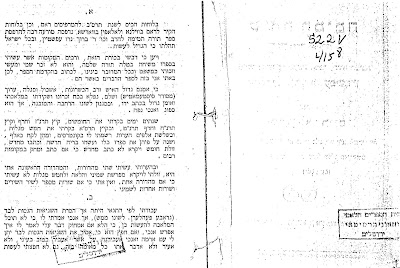
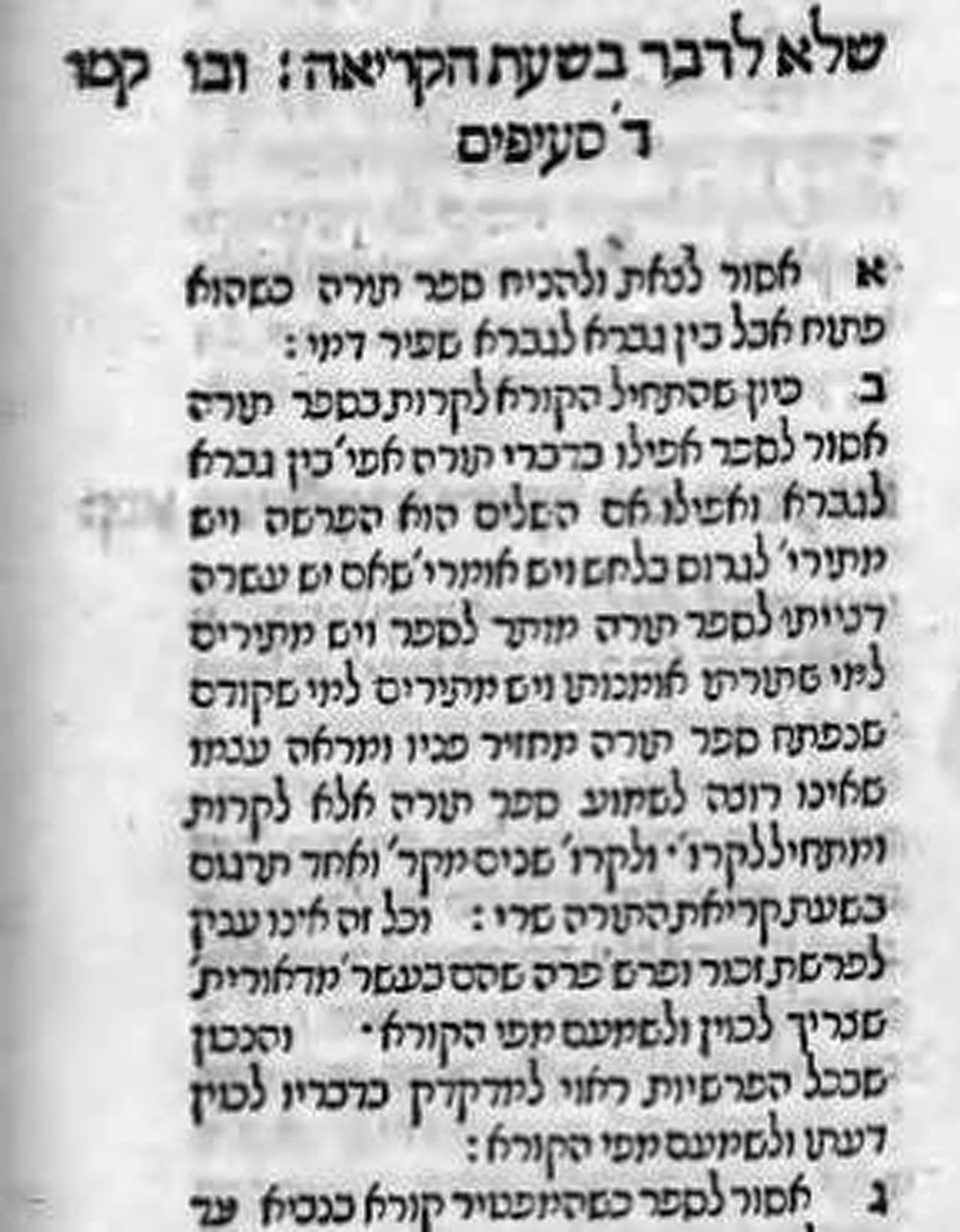
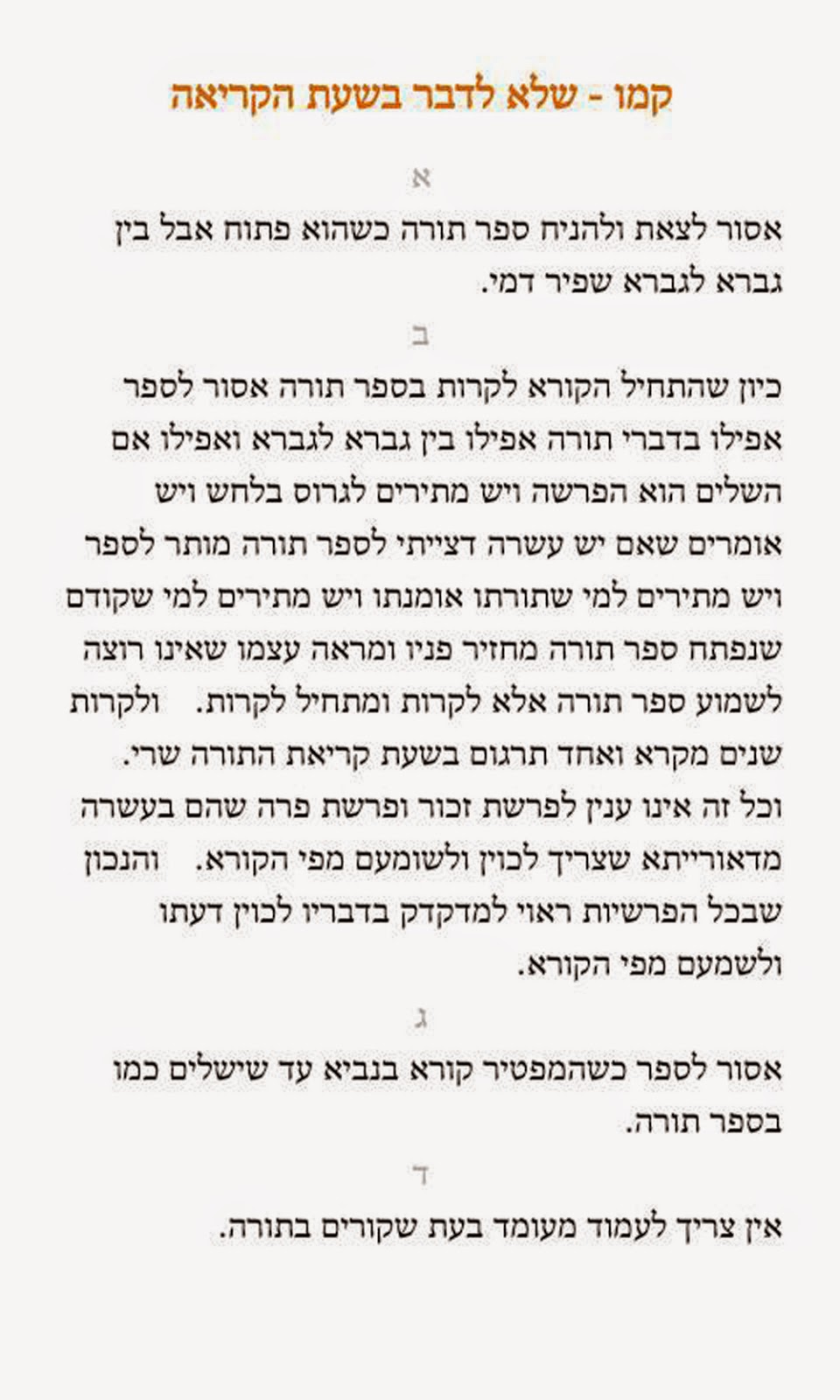
Figure 1: Part of the list of halakhot prepared by Rabbi
Shneur Zalman and the preliminary and concluding notes written by R. Isakhar
Ber.
R.
Isakhar Ber, who copied the original manuscript, explained the purpose of the
list in a preliminary remark:

A concise study method
of essential laws from the beginning of Shulhan Arukh  Orah Hayim until the end of the Shabbat laws – to know them
fluently  by heart, from Admur  (our master, teacher and Rebbe), our teacher
Zalman of Liozna.
R.
Isakhar also added an epilogue:
I copied all of the
above, from the beginning until the laws of Pesah, but I didn’t check it
completely to verify that I copied everything correctly and G-d willing when
there’s time I will check it. Prepared and researched by the Rabbi and Gaon,
the great light, the G-dly and holy, our teacher, Shneur Zalman, may his lamp
be bright and shine, to know it clearly and concisely, even for those people who
are occupied in business. Therefore I thought I won’t withhold good from the
good.  Isakhar Ber, son of my father and
master … Katz, may his lamp be bright, of the holy community of Shumilina and
currently in Beshankovichy.
The
manuscript was probably composed (or at least copied), between the years
1790-1801, when RSZ lived in Liozna. The existence of this list isn’t
acknowledged in any source that Rabbi Mondshine was aware of, and obviously the
list was never published in book form, either because RSZ
decided not to publicize it or because the list was simply put aside and
forgotten.
RSZ
wasn’t the first who envisioned a popular digest of the SA. Rabbi Yehuda Leib
Maimon lists four works that preceded the famous Kitzur Shulhan Arukh.[2]
They preceded RSZ’s work as well and are all quite similar although they also
have their differences.


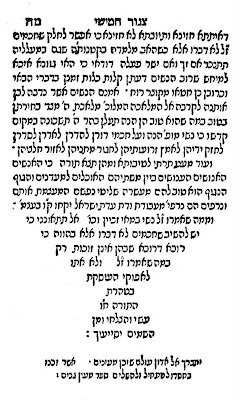
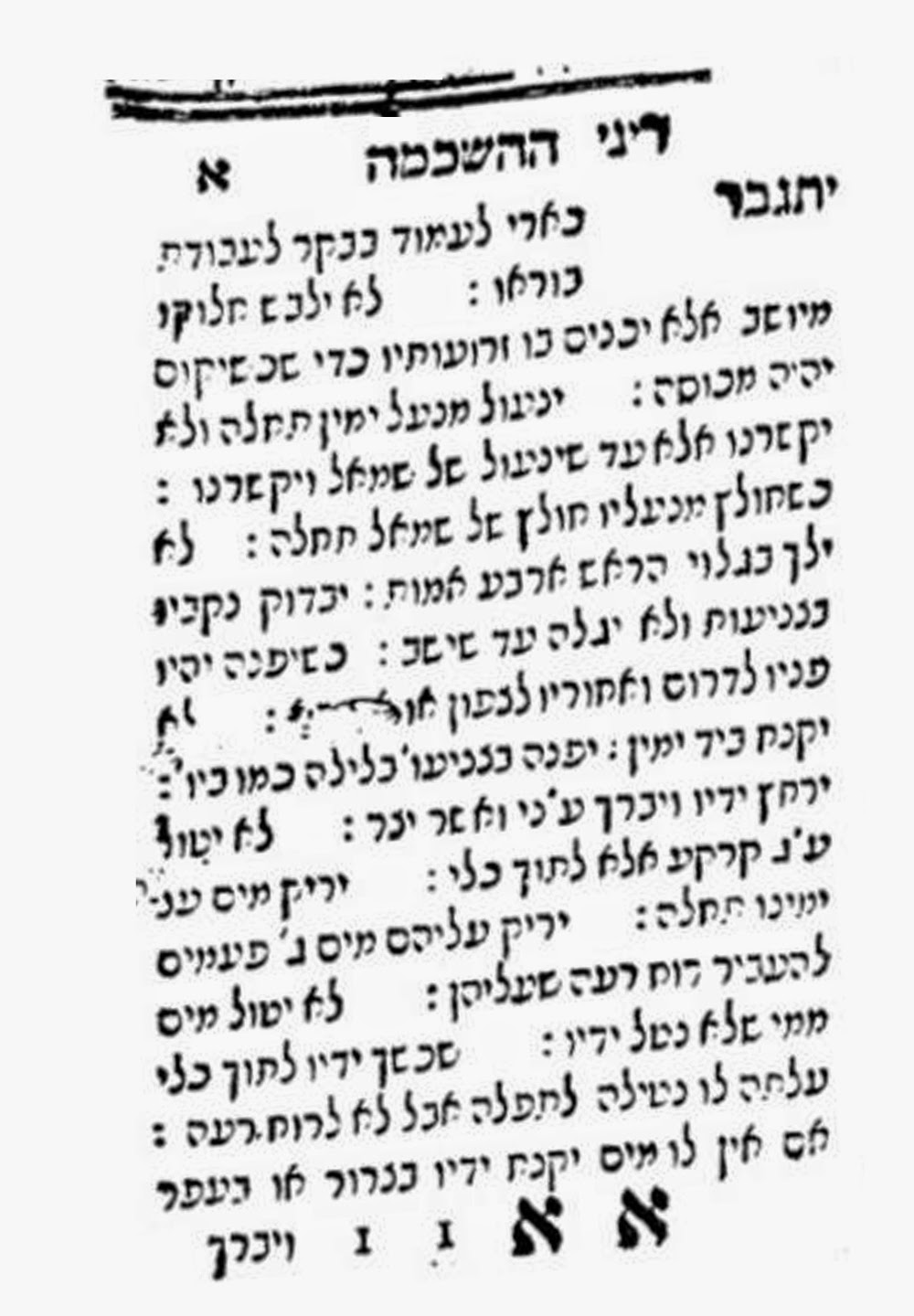
Figure 2: First edition of Shulhan Tahor by Rabbi Joseph Pardo (from
Hebrewbooks.org). The page summarizes three and a half chapters of the original
Shulhan arukh. Note how the author sometimes combines the words of RYK with the
words of Rema (line 11).
Shulhan Tahor covers Orakh Hayim and Yore Deah.
Others have a narrower scope and cover only Orah Hayim. RSZ covers even less.
Some collections are abbreviated extensively; others include more details.[3]
There are variations in the language and content; some quote opinions of later
authorities, some quote Kabbalah, some re-cast the language of the SA and some
retain the language as much as possible.


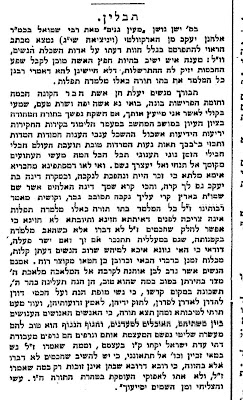
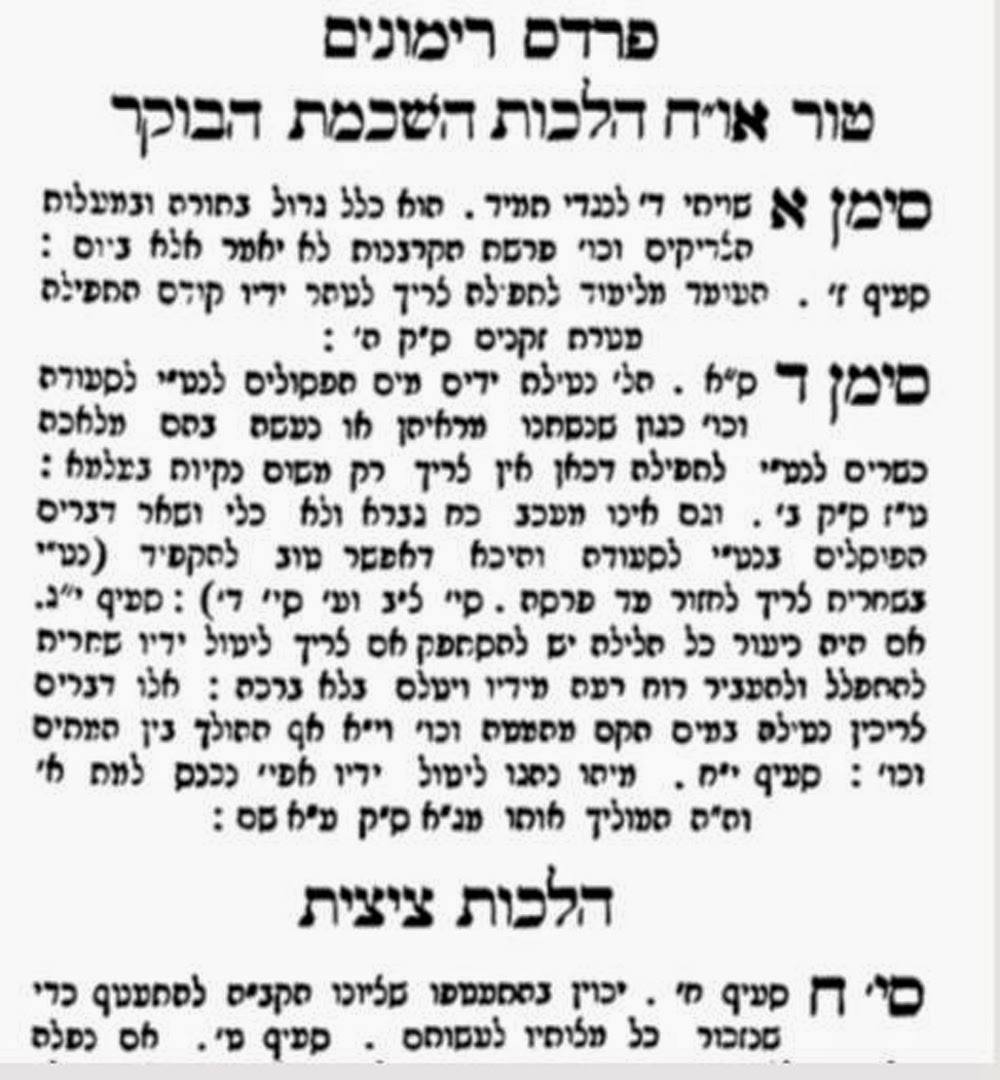
Figure 3: Pardes Rimonim by Rabbi Yehudah Yudil Berlin, (from
Hebrewbooks.org), composed in 1784. Note the author quotes Ateret Zekenim, (R.
MM Auerbach, published in 1702). The additions in parenthesis are by the
publisher of the 1879 edition.
The authors of each of these works possibly had
two goals in mind. One of the goals was to make the basic rules and practices
of the SA more accessible. To this end, certain subjects or details were left
out because they were too technical for the chosen audience. Other rules were
omitted because the situations to which they applied happened only infrequently
(בדיעבד). Many regulations
were left out because daily life and its circumstances had changed so much
since the sixteenth century.

The other goal,
and arguably the primary goal, was to provide a text of law that could be
memorized. In the introduction to Shulhan Tahor, the author’s son writes:
“every man will be familiar and fluent in these laws (שגורים בפי כל האדם)”. Likewise, the
author of Pardes Rimonim defines the purpose of his work: “so that the reader
will be fluent in these rules (שגורים
בפיו)
and will review them each month”.  In
the introduction to the Shulhan Shlomo, the author writes: “Put these words to
your heart and you won’t forget them”, and the motive of R. Shneur Zalman’s
work is:  “to know [these laws] fluently by heart”.

Figure 4: Introduction of Rabbi Yosef Karo – from the first edition
of the Shulhan Arukh, published in Venice in 1565 where memorization is
emphasized (from the scanned books at the website of the National Library of
Israel, (formerly the Jewish National and University Library.)
The
tradition of memorizing practical laws goes back to RYK himself, and probably
goes back even earlier.[4]
RYK writes in the introduction to his Shulhan Arukh:
I thought in my heart
that it is fitting to gather the flowers of the gems of the discussions [of the
Beit Yosef] in a shorter way, in a clear comprehensive pretty and pleasant
style, so that the perfect Torah of G-d will be recited fluently by each man of
Israel. When a scholar is queried about a law, he won’t answer vaguely.
Instead, he will answer:  “say to wisdom
you are my sister”. As he knows his sister is forbidden to him, so he knows the
practical resolution of every legal question that he is asked because he is
fluent in this book…  Moreover, the
young (rabbinical?) students will occupy themselves with it constantly and
recite its text by heart…
I’m
working on a phone version of RSZ’s work using the first print of
RYK’s SA for that portion of the text. However, (aside from the difficulty of
text justification in an EPUB), there is one typesetting decision that I’m
wondering about.  The first edition of
the SA is punctuated with elevated periods and colons.  The colons always separate each halakha, but
infrequently colons appear in the middle of a halakha. Sometimes followed by a
new line and sometimes not. The periods may appear in the middle of a halakha,
sometimes followed by horizontal white space and sometimes not.
Hebrew printing (of holy books) hasn’t changed all that
much in the past 450 years; the colons at the end of each paragraph are present
in most current editions of the Shulan Arukh, but the periods, colons and white
space in the middle of the paragraphs have largely been ignored in subsequent
prints.[5]
Do I try and duplicate this punctuation or not? Here are two examples where I
replaced the elevated period and colons with modern periods, but tried to keep
the original layout.

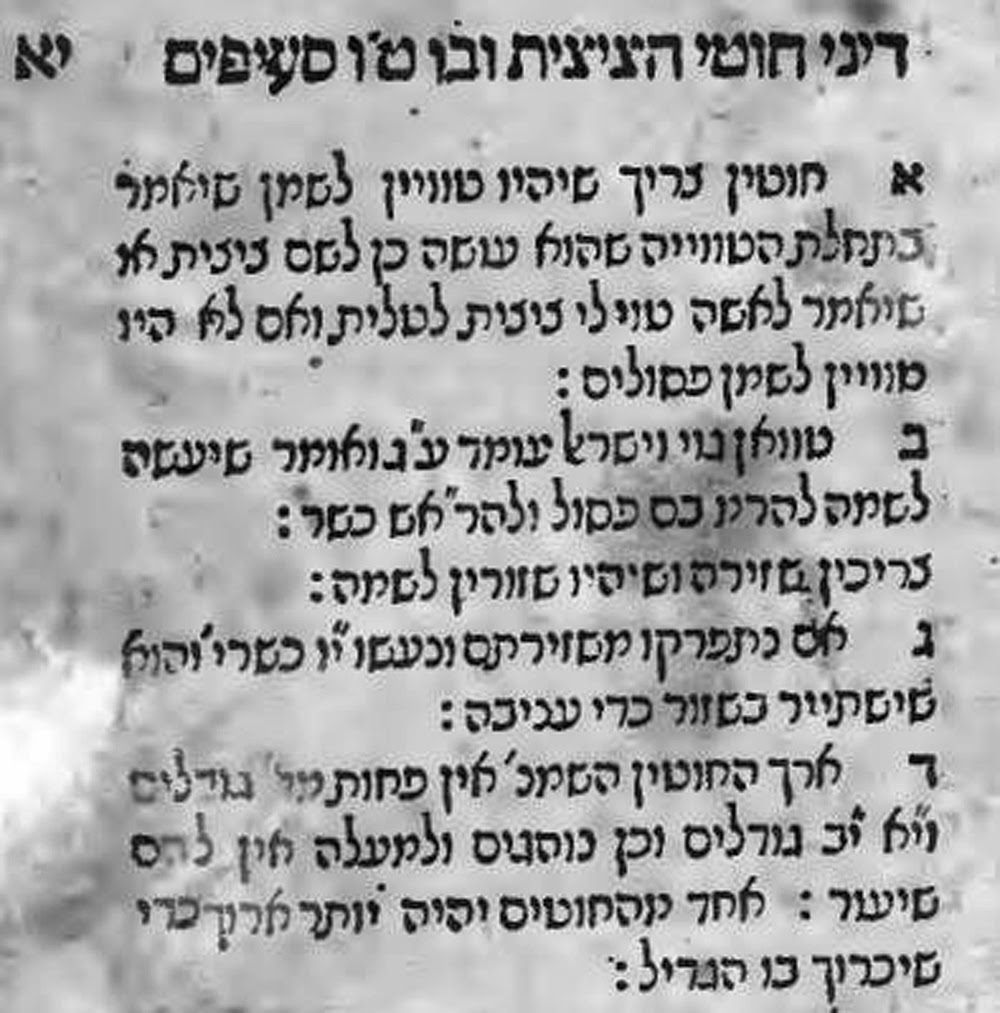
Figure 5: Note the raised periods and colons in the first print
(from the National Library of Israel web site).

Figure 6: Screenshot of a digital version of R. Shneur Zalman’s
composition. Note periods and line feeds.

Figure 7: Facsimile of the first print of Shulhan Arukh – beginning
of chapter 11. See the colons in in the fourth halakha.

Figure 8: Screenshot of my smart phone version of R. Shneur Zalman’s
list – chapter 11

I think it’s possible that
the punctuation of the first edition of the SA was copied from RYK’s manuscript. Prof.
Raz-Krakozkin writes: He (Karo) insisted on personally supervising its
publication and made sure that the editors followed his instructions[6]. On
the other hand, I can’t explain why the punctuation marks occur so rarely.

To help decide if RYK
punctuated his manuscript before sending it to the printers, we can compare
other manuscripts that were printed then. For example, the Yerushalmi was first
printed in Venice (1523) from a manuscript, which is still extant today.

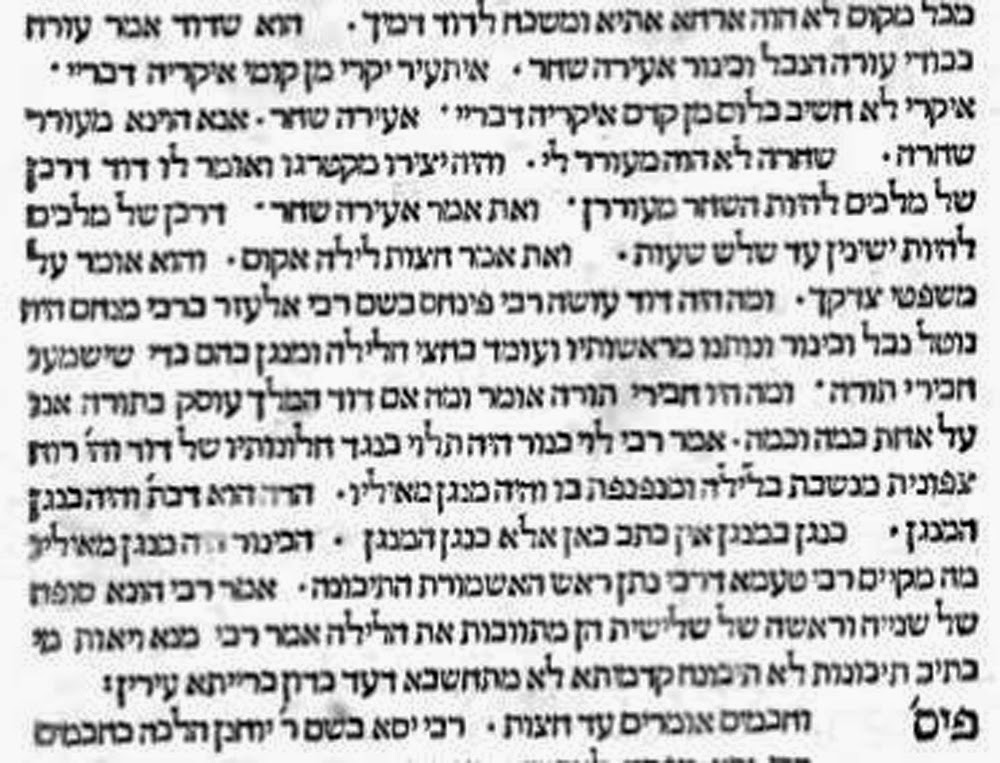
Figure 9: Facsimile of the first print of the Jerusalem Talmud
(Berakhot 1:1), with raised periods to separate word groups from the scanned
books at the website of the National Library of Israel, (formerly the Jewish
National and University Library.)

The printed version of the
Yerushalmi has elevated periods that delineate groups of words. These markings
are already found in the source manuscript in the exact same places.

Figure 10: Facsimile of Leiden manuscript of the Jerusalem Talmud
(1289 CE), Brakhot 1:1 from the Rabbinic Manuscripts on line at the National
Library of Israel web site, (formerly the Jewish National and University
Library).

Prof. Yaakov Sussmann[7]
speaks of two possibilities concerning the origin of the
Talmud Yerushalmi’s punctuation. The punctuation may be relatively recent – the
scribe punctuated the text or the punctuation existed in the manuscript that
the scribe copied from.  Alternatively,
the punctuation might be a reduction or simplification of cantillation marks
that were common in much older rabbinic manuscripts. Either way, the printers
didn’t invent the punctuation.

Our editions of the Gemara (the Babylonian Talmud) have colons (“two
dots”) in strategic places.[8]
These colons already exist in one of the first Talmud editions – the Bomberg
Talmud (Venice 1523).

Figure 11: Facsimile of a page of Bomberg Talmud (Betza 21a) showing
colons. (The horizontal lines near the colons are either blemishes, or markings
by hand.) Note the horizontal white space after the colons.

Most volumes of the Bomberg
edition were not printed from manuscript, but were copied from the Talmud
printed by Joshua Moses Soncino in 1484[9].
In the Soncino Talmud, we find separators in the exact places as the colons of
the Bomberg edition. The Soncino Talmud had two types of
punctuation: a top comma (or single quote mark) that marks off groups of words
(like the Yerushalmi has) and a double top comma (double quote mark). When
Bomberg printed his edition (40 years later), his printers replaced the double
commas with colons (and dropped the single commas).

Figure 12: The bottom of a page in Soncino, coresponding to the same
page (21a) in Betza. Note the two elevated commas, where we have a colon and
the subsequent horizontal white space. (The Soncino Talmud does not have the
same pagination as us). From the National Library of Israel web site.

Figure 13: Top of the next page in the Soncino edition, corresponding
to our Betza 21a. Note again 2 commas where we have a colon.

It would be difficult to trace the origins of the colons much further.
We don’t know which manuscripts were used by the printers of the Babylonian
Talmud, and in any case the many Talmud burnings in the 1550’s in Italy
destroyed most of the manuscripts that were there. Nevertheless, there is at
least one old manuscript that has punctuation marks similar to what we find in
the Soncino Talmud.

Figure 14: Snippet from Gottingen University Library Talmud
manuscript showing the upper double comma separator for the same page – Betza
21a (From the Rabbinic Manuscripts on line at the National Library of Israel
web site, (formerly the Jewish National and University Library).)

The Gottingen manuscript is a Spanish
manuscript from the early thirteenth century[10] – almost three hundred years older than the Talmud printed
in Soncino. It doesn’t have the upper single commas that Soncino edition has,
but it does have the same double comma in the same places that the Soncino
print has.  Just to repeat: the pauses
represented by colons, that we see in our Talmud are at least 800 years old!
It’s at least possible (likely?) that RYK’s own SA manuscript was
punctuated just as the Talmudic manuscripts that he studied from were.
Summary
I introduced RSZ’s
abbreviated (Kitzur) SA, and discussed it in the context of other similar
works. I mentioned that the authors aimed at producing collections of relevant laws
that could be memorized. I noted that the first edition of the SA was punctuated
differently from following versions. I suggested (based on comparisons with
early printed Talmuds) that the punctuation was probably the work of RYK and
not the work of the printers.

[1] Mondshine, Y. (Ed.).
(1984).  Migdal Oz (Hebrew), Kfar Habad:  Machon Lubavitch , pp.  419-421. Dedicated to the memory of Rabbi
Azriel Zelig Slonim ob”m. Essays on Torah and Hassidut by our holy Rabbis, the
leaders of Habad and their students, collected from manuscripts and authentic
sources and assembled with the help of the Almighty.
[2] Maimon, Rabbi Yehuda
Leib, The history of the Kitzur Shulhan Arukh (Hebrew), published in Rabbi Shlomo
Ganzfried, Kitzur Shulhan Arukh, Mossad Harav Kook Jerusalem Israel 1949. The
earlier works mentioned are: Shulan Tahor by R. Joseph Pardo,edited/financed by
his son David Pardo, Amsterdam 1686. Shulan Arukh of R. Eliezer Hakatan  by Eliezer Laizer Revitz printed by his
son-in-law R. Menahem Azaria Katz, Furth 
1697. Shulhan Shlomo by Rabbi Shlomo Zalman Mirkes printed in Frankfort
(Oder) 1771. Pardes Rimonim by R. Yehuda Yidel Berlin, composed in 1784 and
printed for the first time in Lemberg (Leviv) 1879. 
[3] RSZ’s digest from the
beginning until the end of chapter 156 contains 18,000 words while the same
portion of the big Shulhan Arukh contains approximately 40,000 words. A word is
loosely defined as a group of characters separated by a space or by spaces.
[4] In the introduction to
the Mishne Torah, Maimonides writes: “I divided this composition into legal
areas by subject, and divided the legal areas into chapters, and divided each
chapter into smaller legal paragraphs so that all of it can be memorized.”  See: Studies in the Mishne Torah, Book of
Knowledge Mossad Harav Kook, Jerusalem (Heb.) by Rabbi José Faur for a
discussion and explanation of the study methods of Middle Eastern Jews (page 46
and following pages, especially footnote 60).
[5] The National Library of
Israel, (formerly the Jewish National and University Library) has the edition
of the Shulhan Arukh printed in Krakow in 1580. This is the second version with
the notes of the Rema (which was first printed in 1570) and it doesn’t have the
original punctuation marks.
[6]  “From Safed
to Venice: The Shulhan ‘Arukh and the Censor” (in: Chanita Goldblatt, Howard
Kreisel (eds.), Tradition, Heterodoxy and Religious Culture, Ben
Gurion University of the Negev  (2007)
91-115). 
A.M. Haberman, The First Editions of the Shulhan Arukh
(Heb.) on the daat.ac.il web
site, (from the journal Mahanaim # 97 1965 p 31-34.) suggests that the
editor/corrector of the first edition, Menahem Porto Hacohen
Ashenazi created its table of contents.
See also the discussion about who created the chapter headings, (a
pre-requisite for the table of contents), in Gates in Halakha (Heb.), Rabbi
Moshe Shlita, Jerusalem 1983, page 100. He argues that the chapter headings of
the Shulhan Arukh could not be the work of Rav Yosef Karo. 
[7] Talmud Yerushalmi
According to Ms Or 4720 of the Leiden University Library, Academy of the Hebrew
Language Jerusalem 2001 Introduction by Yaakov Sussmann.
[8] Cf. Rashi in the
beginning of Leviticus “What is the purpose of the horizontal white-space (in
the text of the Torah)? It gives Moshe some space to contemplate between a
section and the next section, between a topic and the next topic.  (Rashi Lev. 1:1 s.v. vayikra el Moshe (2nd)
from the Sifra.
[9] Raphael Nathan Nata
Rabbinovicz. Essay on the printing of the Talmud  (Hebrew).
[10]  M. Krupp in The Literature of the Sages,
Oral Torah, Halakha, Mishna, Tosefta, Talmud, External Tractates (Compendia
Rerum Iudaicarum Ad Novum Testamentum)
 Fortress Pr; 1987 Part 1 Shmuel Safarai ed,  p 352. 


Marc B. Shapiro – Clarifications of Previous Posts

Clarifications of Previous Posts

by Marc B. Shapiro
[The footnote numbers reflects the fact this is a continuation of this earlier post.]

1. I was asked to expand a bit on how I know that R. Barukh Epstein’s story with Rayna Batya is contrived. In this story we see her great love of Torah study and her difficulty in accepting a woman’s role in Judaism. Certainly, she must have been a very special woman, and I assume that she was, for a woman, quite learned. When Mekor Barukh was published there were still plenty of people alive who had known her and it would have been impossible to entirely fabricate her personality. The same can be said about Epstein’s report of the Netziv reading newspapers on Shabbat. This is not the sort of thing that could be made up. Let’s not forget that the Netziv’s widow, son (R. Meir Bar-Ilan) and many other family members and close students were alive, and Epstein knew that they would not have permitted any improper portrayal. It is when recording private conversations that one must always be wary of what Epstein reports.

A good deal has been written about the Rayna Batya story, and Dr. Don Seeman has referred to it as “the only record which has been preserved of a woman’s daily interactions with her male interlocutor over several months.”[15] When challenged about the historical accuracy of Epstein’s recollections, Seeman replied “that there is no evidence to indicate that R. Epstein invented these episodes out of whole cloth.”[16]

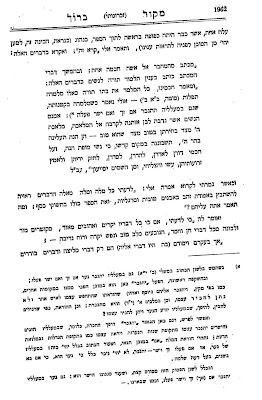
I will therefore explain how I concluded that the story is fictional. Let’s begin with the well-attested fact that Epstein was a plagiarizer. My assumption is that when dealing with someone who is not a reputable scholar, one must be very suspicious of what he or she writes when there is no outside evidence to back it up. In fact, when the Torah Temimah first appeared, the editor of this work published a booklet, Sihah Temimah, accusing Epstein of fraudulent behavior.[17] Here are the first few pages of this booklet.
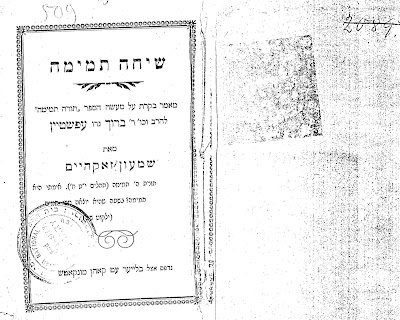
A central feature of his dialogue with Rayna Batya is her producing the book Ma’ayan Ganim by R. Samuel Archivolti. Here it states that mature women who have a desire to study Torah are to be encouraged (Mekor Barukh, p. 1962). Epstein, a young teenager, then attempts to refute her by arguing that the passage from Ma’ayan Ganim is not halakhic, but rather divrei melitzah. The whole dialogue, and in particular the part about her discovering the winning passage in Archivolti, is contrived and designed to lead the reader to sympathize with the fate of the poor woman.

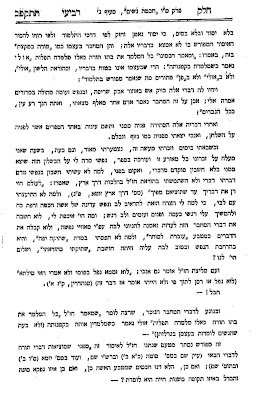
In his Torah Temimah (Deut. ch. 11 n. 68) he cites the passage from Ma’ayan Ganim that as a teenager he supposedly argued against. Anyone reading Torah Temimah would assume that Ma’ayan Ganim is a regular halakhic work, as Epstein refers to it as She’elot u-Teshuvot.[18]

Although at the end of the passage he says that he doesn’t know who the author is, and that Tosafot Yom Tov calls him a grammarian, I believe that this is all part of the literary game he is playing. In other words, he wants to publicize Archivolti’s view, and then to “cover” himself cites Tosafot Yom Tov. In Mekor Barukh, after telling his story, he points out that Archivolti was also a great talmudist and that the only reason the Tosafot Yom Tov refers to him as a medakdek was because he was referring to him in his youth.[19]

Dan Rabinowitz, in his discussion of the issue, writes:

The entire famous Rayna Batya incident must now be called into serious question. Was Rayna Batya so ignorant as to confuse Ma’ayan Gannim with a legitimate book of halakha? How, then, do we reconcile this with her supposed profound learning? It cannot be that R. Epstein was unable to recognize the Ma’ayan Gannim for what it was, for he himself writes that he told his aunt of the true nature of Ma’ayan Gannim. But if he did know what it was, how is it that in his Torah Temima he refers to Ma’ayan Gannim as responsa—and yet in the same paragraph in the Torah Temima he seems to backtrack and wonder how it is that the Ma’ayan Gannim could innovate “new laws about women with reason alone?” The entire Rayna Batya episode is a highly problematic one, raising one perplexing question after another.[20]

As far as the first few questions are concerned, I can only say that the entire report of Rayna Batya discovering the relevant text in Ma’ayan Ganim was made up by Epstein. This book, which was published in Venice in 1553, is an extremely rare volume. There would have only been a few copies of this book in all of Lithuania. (In Torah Temimah Epstein also says that it is a rare book.) It is therefore impossible to imagine that the rebbetzin, sitting in Volozhin, would just so happen to come across this volume on her husband’s bookshelf. Of this, there can be no doubt, and I assumed that Epstein, who was a great bibliophile, later in life came across the book and in his desire to publicize its contents, created the dialogue with Rayna Batya.

Yet thanks to R. Yehoshua Mondshine’s recent article,[21] I see that I was mistaken in my assumption. The truth is that Epstein never even saw the book and thus did not know the true nature of Ma’ayan Ganim. He learnt of the relevant passage, which he places in Rayna Batya’s mouth, from an article that appeared in Ha-Tzefirah, 7 Tishrei, 5656. We see this from the fact that the Ha-Tzefirah quotation mistakenly omits some words, and the same words are omitted in Mekor Barukh. This shows that his knowledge of this book came in 1894 and that he never discussed it with Rayna Batya, who died many years prior to this.

Now that we know where Epstein copied the text from, we can see another element of the literary game he played. He cites Ma’ayan Ganim as follows:
ומאמר חכמינו כל המלמד את בתו תורה כאלו מלמדה תפלות אולי נאמר כשהאב מלמדה בקטנותה.
Yet in Ha-Tzefirah it states:
מאמר רבותינו ז”ל כל המלמד בתו תורה כאלו מלמדה תפלות אינה צריכה לפנים דאיתתא חזינא ותיובתא לא חזינא כי אפשר לחלק שחכמים ז”ל לא דברו אלא כשהאב מלמדה בקטנותה.
Leaving aside the words Epstein omits, he has substituted אולי for אפשר לחלק. In doing so he softened Archivolti’s point. Whereas Archivolti was stating that one can distinguish between teaching a grown woman and a small girl, Epstein has Archivolti prefacing this idea with “perhaps”. I think this is part of Epstein’s confusing game. He wants to bring this view to the public’s attention, but he doesn’t want to come off as too radical. In fact, this אולי, which is his own creation, assumes a life of its own. Thus, in his letter to R. Hayyim Hirschensohn (Malki ba-Kodesh, vol. 6, p. 47), criticizing the latter’s view of teaching women Torah, Epstein writes:

צר לי כי לא אוכל להסכים עמו בזה הן הוא (הרש”ק בעל המכתב הידוע) אינו בטוח בעצמו בדבריו אלה, כנראה מלשונו שכתב “ומאמר חכמינו כל המלמד את בתו תורה וכו’ ‘אולי’ נאמר כשהאב מלמדה בקטנותה” וכו’ ועתה הגע עצמך האם בסברא “פן ואולי” אפשר להתיר מה שנאמר בגמרא מפורש לאיסור. כך דעתי בזה.

In other words, Epstein invents the word אולי and inserts it into Archivolti’s letter, and then he uses this to criticize Hirschensohn! The chutzpah on Epstein’s part is astonishing, but as I see it this is all part of his game.

No one who has discussed Epstein and Rayna Batya was aware of his letter to Hirschensohn, so they could not point out the following obvious fact: When one looks at Mekor Barukh, which was published after his letter to Hirschensohn, one finds him telling Rayna Batya the exact same thing. It is obvious that he uses the language in his letter to Hirschensohn to create the following reply to Rayna Batya, that supposedly occurred some fifty years prior.
והן המחבר בעצמו כמו ‘מודה במקצת’ בזה, באמרו: ‘ומאמר חכמינו’ כל המלמד את בתו תורה כאלו מלמדה תפלות ‘אולי נאמר כשמלמדה בקטנותה’; הרי שבעצמו אינו בטוח בדבריו, וכהוראת הלשון ‘אולי’ ולא ב”אולי” ולא ב”פן” מתירים מה שנאמר מפורש בתלמוד.
(It is possible that I am wrong in assuming that it was his positive view towards women studying Torah which explains why he created the story and cited Ma’ayan Ganim. Perhaps he was simply attempting to create a good story, or even some controversy, and that explains why he seems to be on both sides of the issue, as Dan Rabinowitz points out in the passage cited above.)

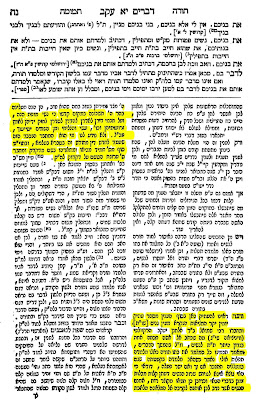
Here are the relevant pages in Ma’ayan Ganim, Ha-Tzefirah, Mekor Barukh, and Torah Temimah.
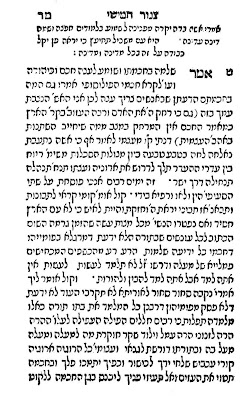
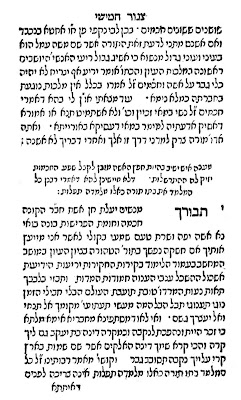
I know that there are people who are very upset at me, believing that I have given ammunition to those who chose to censor and withdraw My Uncle the Netziv. I make no apologies. We must combat falsehoods and plagiarism no matter where they emanate from. If, in the process, some of our own sacred cows are slaughtered, that is the price we must pay.

Returning to Mondshine, he is most concerned with the supposed dialogue between Epstein’s father, R. Yehiel Michel (the author of the Arukh ha-Shulhan), and the Tzemach Tzedek, R. Menachem Mendel Schneersohn. He sees it as an opportunity for Epstein to put all sorts of ideas, including criticisms of Hasidism, into the mouth of the great hasidic leader, something that if he did on his own would have brought down storms of criticism upon him. For example, he has the Tzemach Tzedek say that the hasidim have to be grateful for the opposition of the Vilna Gaon. Had it not been for the great dispute about Hasidism, and the Gaon’s strident opposition, the new movement might have led its followers out of the ranks of halakhic Judaism. (p. 1237). This idea was expressed by R. Kook (Ma’amrei ha-Re’iyah, p. 7) and was probably a common non-hasidic notion. But it is impossible to think that the Tzemach Tzedek would have ever expressed himself this way.

At the time that R. Yehiel Michel is said to have had his conversations with the Tzemach Tzedek, he was the rav of the Habad town Novozypkov.[22] In later years R. Abraham Chen and R. Shlomo Yosef Zevin served as rabbis of the town.[23] I know about this place because my grandmother’s second husband (who was like a grandfather to me) was from there. In fact, during World War One word came to the town that a certain group of Jews was being moved and would be passing through, and that among them was an outstanding young scholar named Shlomo Yosef Zevin. The townspeople came up with the necessary money to remove him from the group. He was chosen as the town’s rabbi and lived in my step-grandfather’s house for about six months. I read somewhere that the townspeople were followers of Kopys/Bobruisk, rather than Lubavitch. As R. Zevin was himself a Bobruisker, this would make sense. R. Yehiel Michel was himself born in Bobruisk, as was his son R. Baruch.

I always tell this story to Habad people in order to impress them with my yichus, that the great R. Zevin lived in my family’s house. Yet on two separate occasions after I told the story to young Habad shluchim, they replied, “Who is Rav Zevin?” It is also very rare to find a young Habadnik who has even heard of Kopust/Bobruisk. Yet without knowing about this it is impossible to understand how R. Zevin could have been a Zionist when the Lubavitcher rebbes were all anti-Zionist. After all, who ever heard of a hasid not following his Rebbe? The answer is that all Lubavitchers were Habad, but not all adherents of Habad were Lubavitch. The ignorance among some in Habad of their own movement probably shouldn’t surprise me, as I have met many hasidim who don’t have a clue about the history of the hasidic movement. And of course, how many Modern Orthodox know the first thing about Hirsch and Hildesheimer?

Mondshine assumes that one of the purposes of Epstein’s stories about his father and the Tzemach Tzedek is to build up his father’s halakhic reputation. His pesakim were subject to attack as being too liberal, and certainly in the hasidic world he was not accepted. In the Lithuanian world he was a much more important posek, and R. Joseph Elijah Henkin stated that in a dispute between the Mishneh Berurah and the Arukh ha-Shulhan, the Arukh ha-Shulhan is to be preferred.[24]

Yet many did not share R. Henkin’s viewpoint. A number of years ago I saw in one of R. Yitzhak Ratsaby’s books that he heard from some gedolim that one should not rely on the Arukh ha-Shulhan. I wrote to him objecting to this lack of respect for the Arukh ha-Shulhan, and also expressing my near certainty that the gedolim he referred to must have been Hungarian, for the Hungarian poskim never accepted the Arukh ha-Shulhan as an authoritative work. On Nov. 22, 1990, Ratsaby wrote to me:
בענין הגאון בעל ערוך השולחן, דוקא הדברים נובעים מליטא, והנני מפרש, הגר”י כהנמן זצ”ל מפוניביז’ (כמדומני שלמד בעצמו יחד עם הערוה”ש) והגר”ח גרינמן שליט”א בן אחותו של החזו”א. זכורני אמנם באגרות משה במקום אחד כתב על ערוה”ש כבר הורה זקן, ובמקום אחר דוחה דבריו. נראה לענ”ד אמנם שבעל ערוה”ש מחדש הרבה סברות ובזה כחו גדול, מאידך בעל משנ”ב מעמיק בעיון היטב הדק. והאמת ניתנה להיאמר שבהרבה מקומות בערוה”ש ראיתי דברים מתמיהים והיפך כוונת הדברים, וכבר הערתי עליו בדרך כלל במקומות שעסקתי בהם בחבורי הנדפסים. ופוק חזי שבישיבות לומדים בקביעות ההלכה מספר משנ”ב, וגם כמעט אין בית היום אשר אין שם משנ”ב. והחזו”א אעפ”י שחולק בהרבה מקומות על המשנ”ב, מ”מ החשיב אותו כהוראה מפי הסנהדרין ומנה אותו בנשימה אחת עם מרן הב”י והמג”א.
(Ratsaby’s recollection is correct. In Iggerot Moshe, Orah Hayyim vol. 1 no. 39, which is his famous responsum on the proper height of a mehitzah, R. Moshe quotes the Arukh ha-Shulhan and uses the expression כבר הורה זקן. Regarding R. Joseph Kahaneman, he actually received semikhah from R. Yehiel Michel.)

The reputation of the Arukh ha-Shulhan has today fallen to such an extent that in a recent publication of the work the rulings of the Mishneh Berurah are included as well. The message of this is that while the Arukh ha-Shulhan is a Torah volume that should be studied, in terms of practical pesak it is the Mishnah Berurah that must be followed. See here for an earlier discussion at the Seforim blog of the recent reprint of the Arukh ha-Shulhan.

2. I was asked if there are any medieval poems in which there is explicit homosexuality. I am unaware of any, and it is precisely because they are ambiguous that there has been controversy about their meanings. This poem by Moses Ibn Ezra is as explicit as I could find
תאות לבבי ומחמד עיני

עופר לצדי וכוס בימיני

רבו מריבי ולא אשמעם

בוא הצבי, ואני אכניעם

וזמן יכלם ומות ירעם

בוא, הצבי, קום והבריאני

מצוף שפתך והשביעני

למה יניאון לבבי, למה

אם בעבור חטא ובגלל אשמה

אשגה ביפיך אד-ני שמה

אל יט לבבך בניב מענני

איש מעקשים, ובוא נסני

נפתה, וקמנו אלי בית אמו

ויט לעול סבלי את שכמו

לילה ויומם אני רק עמו

אפשט בגדיו ויפשיטני

אינק שפתיו וייניקני

כאשר לבבי בעיניו נפקד

גם עול פשעי בידו נשקד

דרש תנואות ואפו פקד

צעק באף, רב לך, עזבני

אל תהדפני ואל תתעני

אל תנף בי, צבי, עד כלה

הפלא רצונך, ידידי, הפלא

ונשק ידידך וחפצו מלא

אם יש בנפשך חיות, חיני

או חפצך להרג, הרגני

Desire of my heart and delight of my eyes –

A fawn beside me and a cup in my hand!

Many admonish me, but I do not heed;

Come, O gazelle, and I will subdue them. Time will destroy them and death shepherd them. Come, O gazelle, rise and feed me With the honey of your lips, and satisfy me.
Why do they hold back my heart, why? If because of sin and guilt, I will be ravished by your beauty – God is there! Pay no attention to the words of my oppressor, A perverse man – come and try me!
He was enticed and we went up to his mother’s house, And he gave his shoulder to my burden. Night and day I was only with him. I undressed him, and he undressed me; I sucked his lips and he sucked mine.
When I left my heart as a pledge in his eyes, The burden of my guilt was also weighted in his hand. He sought enmity, and inflicted his anger, And angrily cried, “Enough; leave me! Do not force me, and do not entice me.”
Do not be angry with me, gazelle, to destruction – Extraordinary is your will, my dear, extraordinary! Kiss your beloved and fulfill his desire. If it is in your soul to give life, revive me – Or if your desire is to kill, kill me![25]

3. When dealing with problematic texts of recent times, the preferred approach is simply to censor them. But with the medievals, there is a simpler method: Say that the text was written by a mistaken student, or even worse, by someone interested in undermining Judaism. In a previous post I mentioned that R. Joseph Zvi Duenner even stated so with regard to the Talmud itself.[26]

Since in modern times we don’t generally have students copying their master’s handwritten texts, the first approach doesn’t make much sense. Yet in a previous post at the Seforim blog,[27] I noted that R. Menasheh Klein used this very argument with regard to R. Moshe Feinstein, even though he was dealing with a responsum published in R. Moshe’s own lifetime. I found another example where Klein uses this exact same approach. He saw something in one of the Steipler’s books, but since it didn’t make sense to him, Klein wrote to the Steipler as follows (Mishneh Halakhot, vol. 7, p. 142a):
היות כי אני מכיר את מעכ”ק וצדקתו נגמר בדעתי שבודאי לא יצאו דברים מפי כ”ק או שיש שם איזה טעות בדפוס מהבחור הזעצער וטעה מעתיק ולא שם על לב כ”ק.
However, here I don’t think Klein should be taken literally. I believe this was just his respectful way of saying that the Steipler was wrong. This is not the case with regard to R. Ovadiah Yosef when he writes that one cannot rely on the responsa in R. Ben Zion Abba Shaul’s Or le-Tziyon, vol. 2.[28] Even though R. Ben Zion was alive, R. Ovadiah claimed that he was powerless to stop his students from taking liberties with the book: הוסיפו וגרעו כפי שעלה בדעתם, וסברו שכן דעת רבם. Not surprisingly, one of R. Ben Zion’s students responded very strongly to this statement.[29]

Prof. Yaakov Spiegel, in his book Amudim be-Toldot ha-Sefer ha-Ivri: Ketivah ve-Ha’atakah, pp. 244ff., discusses the phenomenon of denying the authenticity of responsa. Sometimes the strategy used to reject a responsum is to attribute it to an “erring student.” While on occasion there are scholarly reasons for this assumption, it is almost always the case that the author simply cannot accept that an earlier authority said something. Usually this has to do with halakhah, but there are plenty of examples in theology. For example, R. Issachar Baer Eylenburg assumes that while resurrection is a principle of faith, one is not obligated to believe that this doctrine is found in the Torah. As he puts it (Be’er Sheva to Sanhedrin 90a).
מי שמודה ומאמין על פי הקבלה בתחית המתים אע”פ שהוא אומר דלא רמיזא באורייתא אין ראוי לקראו כופר חלילה ויש לו חלק לעוה”ב.
Although the Mishnah, Sanhedrin 10:1, includes the point that one must believe that resurrection is found in the Torah, Eylenburg assumes that this is a textual error, and indeed, Rambam never mentions this. However, Rashi had this text and explains:
שכופר במדרשים דדרשינן בגמרא לקמן מנין לתחיית המתים מן התורה ואפילו יהא מודה ומאמין שיחיו המתים אלא דלא רמיזא באורייתא כופר הוא הואיל ועוקר שיש תחיית המתים מן התורה מה לנו ולאמונתו וכי מהיכן הוא יודע שכן הוא הלכך כופר גמור הוא.
Eylenberg didn’t like what Rashi said, i.e., it didn’t make sense to him, so he concluded:
לפי דעתי לא יצאו דברים אלו מפה קדוש רש”י אלא איזה תלמיד טועה פירש כן בגליון ונכתב בפנים.
Eylenberg would have been happy to learn what we now know, namely, that the commentary to Perek Helek is, in large measure, not really by Rashi.

I found another example of this in a book that just appeared, R. Menasheh Matloub Sutton’s Mateh Menasheh. (Sutton, who died in 1876, was the rav of Safed.) The second part of the book is a reprint of Sutton’s earlier published Kenesiah le-Shem Shamayim. This work is devoted to a superstitious practice whereby women would burn incense to demons and this was thought to be a help to people who were in various states of distress (e.g., sick, barren, etc.) He includes letters from many great rabbis who agree with him that this is a form of avodah zarah. The problem he has, which he confronts in ch. 2, is that one of the rishonim, R. Isaiah ben Elijah of Trani, is quoted by R. Hayyim Benveniste as follows:
ונראה בעיני המתוק שעושים הנשים מדבש וחלב לרפואה, וכן העישון שמעשנים מותר, שלא חייבה תורה בבעל אוב אע”פ שמקטר לשד אלא מפני שמעלה המת, וכן מעשה כשפים לא נאסרו אלא כשעושים מעשה או כשאוחזים את העיניים כמ”ש, אבל בעישון ומתוק אין בהם כל אלה, וגם אין בהם משום חובר חבר שאינם מתכונים לחבר השדים אלא לרצותם על רפואת החולה ושלא יזיקוהו.
Now it is certainly possible for Sutton to reject R. Isaiah, but it becomes very hard to label the practice as nothing less than idolatry when an outstanding rishon justified it and this rishon is also quoted by Benveniste and the Shiltei Giborim. What to do in such a case? Sutton adopts the tried and true method of declaring that since the position is (in his mind) so objectionable, R. Isaiah could never have said such a thing. It must originate with the “mistaken student” who often makes his appearance when a strange opinion is confronted.
אמינא בקושטא דמלתא כד ניים ושכיב רב אמרה להא שמעתא ועל הרוב שלא יצאו דברים הללו מתחת ידו וקולמוסו אלא שאיזה תלמיד טועה כתבם בגליון קונטריסו והרב שלטי הגבורים אגב ריהטא העתיקם בשמו ובחושבו דתורה דיליה היא מוצאת מעמו ולא פנה לעיין בעיקר הדין נמוקו וטעמו.
Sutton’s book was put out by one of his descendants, Rabbi Harold Sutton, who was a student in the late and much lamented Beit Midrash le-Torah (BMT) together with me. He later went on to become a student of R. Ovadiah Yosef, whose haskamah (together with that of R. Meir Mazuz) adorns the book.

Harold Sutton should not be confused with another young Syrian rabbi, David Sutton. The latter is the author of the ArtScroll book Aleppo: City of Scholars (and from the introduction I learned that he is a son-in-law of R. Nosson Scherman). Zvi Zohar has recently written a very sharp critique of this book. See here.

David Sutton is also the one who delivered the much-talked about lecture “We Believe in Midrashim.” This lecture is the subject of a very harsh attack by Roni Choueka in Hakirah 4 (2007). Choueka sees Sutton’s lecture as a bizayon ha-Torah of the worst sort. When listening to it I didn’t know whether to laugh or to cry. How else is one to respond when one hears a rabbi claim that the fossils are remnants of the giant pets that belonged to Og, who was 800 feet tall and lifted up a stone the size of Manhattan, or that the polar bears came to Egypt complete with their blocks of snow in order to devour the Egyptian children?

Incidentally, in speaking of the Aggadah which describes the great height of Og, the Rashba (commentary to Berakhot 54b) notes that although there is a deep meaning conveyed in this Aggadah, the form in which it is expressed also had a very practical application:
לעתים היו החכמים דורשים ברבים ומאריכים בדברי תועלת והיו העם ישנים, וכדי לעוררם היו אומרים להם דברים זרים לבהלם ושיתעוררו משנתם.
In other words, in order to prevent people from dozing off, the Aggadist would convey his message with outlandish statements. R. Zvi Hirsch Chajes elaborates on this in his Introduction to the Talmud, ch. 26.

4. I have to thank those who have written to me calling my attention to things I did not know. I hope to acknowledge all of you at the proper time. However, many people who send me things have misinterpreted the sources (or the sources they send have been in error).

In the forward of H. Norman Strickman and Arthur M. Silver’s translation of Ibn Ezra to Deuteronomy, p. xiv, the following appears:

It should also be noted that I.E. [Ibn Ezra] was not the only medieval rabbi who believed that there are some glosses or slight changes in the text of the Torah. Thus Rabbi David Kimchi (c. 1160-1235) notes that the word Dan in Gen. 14:14 is post-Mosaic. He argues that the original reading of Gen. 14:14 was “and pursued as far as Leshem.” Rabbi Kimchi maintains that after the tribe of Dan conquered the city of Leshem and changed its name to Dan (Josh. 19:47), the reading of Gen. 14:14 was changed to read “and pursued as far as Dan” as in our texts of Scripture (Radak on Gen. 14:14).

The mention of “Dan” in Gen. 14:14 is used by all critical biblical scholars to prove that the verse must be post-Mosaic. The reason is that since the city would only be conquered in the days of Joshua, and only then be given the name Dan, how could the Torah refer to it this way? Even M. H. Segal, the strong defender of Mosaic authorship, acknowledges the problem. Unlike other scholars he assumes that the verse as a whole is Mosaic. But he also believes that the name “Dan” is a “modernized substitute for the antiquated names Laish or Leshem (Jud. viii, 29, Jos. xix, 47) which stood in the original.”[30]

Yet I was skeptical of what Strickman and Silver wrote as I was aware of Radak’s introduction to his Torah commentary where he is emphatic that the entire Torah is of Mosaic authorship.[31] I looked up Radak to Gen. 14:14 and saw that my skepticism was warranted. Here are Radak’s words:
וירדף עד דן: על שם סופו, כי כשכתב משה רבינו זה לא נקרא עדיין כן, אלא לשם היה נקרא וכשכבשוהו בני דן קראו לו דן בשם דן אביהם.
All Radak says is that the Torah refers to the place as Dan in anticipation of what it will be called in the future. Radak says nothing about the original reading of the Torah being “Leshem” and nothing about the text being changed after Leshem was conquered. As such, Radak cannot be added to the list of those who believe that there are post-Mosaic additions in the Torah.

5. In response to my earlier post at the Seforim blog discussing the meaning of ס”ט, Rabbi Yitzhak Oratz called my attention to Kitvei Ha-Arukh ha-Shulhan, pp. 50-51. In an 1892 letter from R. Yehiel Michel Epstein to R. Hayyim Hezekiah Medini, the author of the Sedei Hemed, we see that R. Yehiel Michel doesn’t know what the acronym stands for, as he writes חכם חיים חזקיאו [!] ס”ט הי”ו. Since the last two acronyms basically mean the same thing one would not put them next to each other, and he must have assumed that the first one meant sefaradi tahor. Yet by 1896 he had learned what it meant and he addresses the Sedei Hemed as מוהר”ר חכם חיים חזקיאו מודיני סופ”י טב טבא הוא וטבא ליהוי.

This is a rare example of an Ashkenazi who knows what the acronym means. For those who have not yet been convinced there is not much more I can say other than that there is a living tradition among the Sephardic scholars for hundreds of years now as to the proper meaning. This is certainly authoritative. Let me also call attention to the end of the introduction of the Peri Hadash on Yoreh Deah (found in the new Machon Yerushalayim edition). He signs his name as follows: חזקיה בן לא”א איש צדיק תמים היה בדורותיו דוד די סילוה נ”ע סופיה טב טבא הוא וטבא להוי אמן.
Also, see R. Yehudah ben Attar’s haskamah to R. Hayyim Ben Attar’s Hefetz Hashem (Amsterdam, 1732). R. Yehudah signs his own name סיל”ט. It is obvious that this is an alteration of ס”ט and means סופיה יהא לטב. 6. Some want to know if any of the letters Chaim Bloch published in Dovev Siftei Yeshenim are authentic. I haven’t carefully investigated every letter, so it is possible that a couple of them are also found in other books. If that is the case, then Bloch included them simply to give the work as a whole a sense of authenticity. There is, however, no doubt that everything that appears for the first time in the work is, in its entirety, a creation of Bloch. Interestingly, when Bloch sent the first volume to the Lubavitcher Rebbe, the Rebbe immediately recognized that the letters from the Rogochover were forged. He wrote to Bloch (Iggerot Kodesh, vol. 19, p. 69):
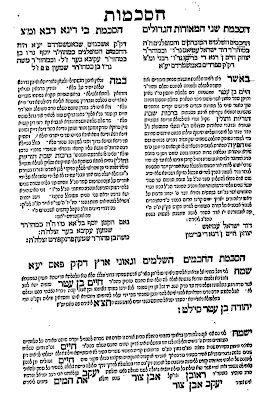
כן מאשר הנני קבלת הס’ “דובב שפתי ישנים”. ולאחרי בקשת סליחתו נצטערתי על שצויין על כמה מכ’ שהם להגאון הרגצובי – וכל הרגיל בסגנונו יראה תיכף שאינו . . .
The three dots are from the publisher, and I would be very interested to know what was taken out.

Bloch wrote to the Rebbe to defend his publication and the Rebbe responded very strongly. He tells Bloch that originally he thought that it was an innocent error or perhaps someone had misled Bloch as to the Rogochover’s letters. It now surprises him that Bloch continues to earnestly defend their authenticity. The Rebbe is so convinced that they are forgeries that he writes (Iggerot Kodesh, vol. 19, p. 159):

שבאם היתה מציאות, שיבוא הרגצובי ויעיד שהוא כתב המכתבים לא יאמינו לו ולא ישמעו לקולו

I assume that the Rebbe didn’t know that Bloch forged the letters himself, or that the rest of the collection was also forged. If he did know this, then I don’t think he would have been so polite to Bloch. He either wouldn’t have engaged in correspondence with him, or he would have told him that he is a liar and a scoundrel. Instead, after explaining why the Rogochover couldn’t have written the letters, the Rebbe concludes:
ואתו הסליחה על ביטוים אלו, שאולי אינם דיפלומטים ביותר.
One certainly doesn’t need to speak “diplomatically” to frauds, so I would assume that the Rebbe wasn’t aware of the extent of Bloch’s deception.

While on the topic of Bloch (who was previously mentioned at the Seforim blog [32]) I should note that his last Hebrew publication was Ve-Hayah Mahanekha Kadosh (New York 1965), which is directed against R. Moshe Feinstein’s permission for a married woman to be artificially inseminated from a non-Jewish donor. Bloch also wrote to R. Moshe about this, harshly rebuking him for this ruling. R. Moshe’s response (Iggerot Moshe, Even ha-Ezer vol. 2 no. 11) includes the following, which became one of the most famous passages in the Iggerot Moshe:
הנה קבלתי מכתבו הארוך מאד המלא דברי תוכחה על כל גדותיו על מה שלפי דעתו נדמה לו שתשובותי סימן י’ וסימן ע”א מספרי אגרות משה על אה”ע יגרמו איזה פרצה בטהרת וקדושת יחוס כלל ישראל. וניכר ממכתב כתר”ה שהיה סבור שיהיה לי קפידא על דברי התוכחה שלו, ואני אדרבה אני נרגש מזה שאני רואה שנמצאים אנשים בעלי רוח שאינם יראים ולא מתביישים מלומר תוכחה. אבל האמת שאין בדברים שכתבתי ושהוריתי שום דבר שיגרום ח”ו איזה חלול בטהרת וקדושת ישראל אלא תורת אמת מדברי רבותינו הראשונים, והערעור של כתר”ה על זה בא מהשקפות שבאים מידיעת דעות חיצוניות שמבלי משים משפיעים אף על גדולים בחכמה להבין מצות השי”ת בתוה”ק לפי אותן הדעות הנכזבות אשר מזה מתהפכים ח”ו האסור למותר והמותר לאסור וכמגלה פנים בתורה שלא כהלכה הוא, שיש בזה קפידא גדולה אף בדברים שהוא להחמיר כידוע מהדברים שהצדוקים מחמירים שעשו כמה תקנות להוציא מלבן. ואני ב”ה שאיני לא מהם ולא מהמונם וכל השקפתי הוא רק מידיעת התורה בלי שום תערובות מידיעות חיצוניות, שמשפטיה אמת בין שהוא להחמיר בין שהוא להקל. ואין הטעמים מהשקפות חיצוניות וסברות בדויות מהלב כלום אף אם להחמיר ולדמיון שהוא ליותר טהרה וקדושה.
7. Since I mentioned some stories from Halakhic Man that show that the Rav did not have a Modern Orthodox ethos, I will also say something about the following story, which some have wondered about.

Once my father entered the synagogue on Rosh Ha-Shanah, late in the afternoon, after the regular prayers were over, and found me reciting Psalms with the congregation. He took away my Psalm book and handed me a copy of the tractate Rosh Ha-Shanah. “If you wish to serve the Creator at this moment, better study the laws pertaining to the Festival.”

I understand that some people are very troubled by this story, as it bespeaks a real intellectual elitism. Yet, to use an expression popular among the younger generation, I can only say “get over it” (or become an adherent of one of the non-intellectual branches of Hasidism). For better or worse, traditional Judaism has always been a fundamentally elitist religion, dividing the haves (i.e., those who have knowledge) from the have-nots. (Although today we are accustomed to think in terms of bringing Torah study to all, in a future post at the Seforim blog I hope to mention some sources that speak of the danger of allowing the ignorant access to Torah knowledge.) Precisely because we have a notion of ein am ha-aretz hasid we can understand why, in contrast to Christianity, we don’t have women “saints” in our history. Since women have (until recent times) been kept ignorant of Talmud and halakhah, there was no way they could achieve any renown in the area of saintliness.

Regarding the passage from Halakhic Man quoted above, the Rav himself makes reference to R. Chaim of Volozhin’s Nefesh ha-Hayyim, and the ideology of that book is the basis for the Soloveitchik approach. In Nefesh ha-Hayyim 4:2 R. Chaim writes
הרי שהעסק בהלכות הש”ס בעיון ויגיעה הוא ענין יותר נעלה ואהוב לפניו יתברך מאמירת תהלים.
Yet I must also note that one needn’t be a Litvak to have this approach. Here is what R. Eliezer Papo writes (Pele Yoetz, s. v. yediah):
וכבר כתבו הפוסקים שמי שיוכל לפלפל בחכמה ולקנות ידיעה חדשה ומוציא הזמן בלימוד תהלים וזוהר וכדומה לגבי דידיה חשיב בטול תורה.
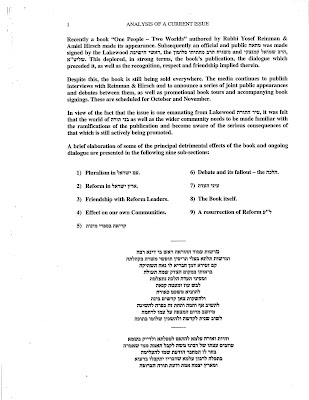
8. Many people have written to me about Ibn Ezra and post-Mosaic verses, a subject I dealt with in The Limits of Orthodox Theology. Let me therefore point out something in this regard that appears in One People, Two Worlds by Yosef Reinman and Ammiel Hirsch. As I am sure everyone recalls, this was the joint work by the Orthodox Reinman and the Reform Hirsch. What made this so significant is that Reinman is from Lakewood and never before had anyone from that community engaged in such a religious dialogue. The response was fast and furious, and here are the first three pages and the last page of an anonymous attack on him that appeared in Lakewood. In fact, One People, Two Worlds is much worse – or much better, depending on your outlook – than anything done in this area by the Modern Orthodox. The Modern Orthodox who were part of organizations like the Synagogue Council of America and the N.Y. Board of Rabbis never engaged in interdenominational theological dialogue on an equal footing the way Reinman does. Furthermore, it is shocking that a haredi would have co-authored this book for another reason: What will happen if someone reads the book and is more convinced by the Reform rabbi? One would think that this would make the book a possible stumbling block.
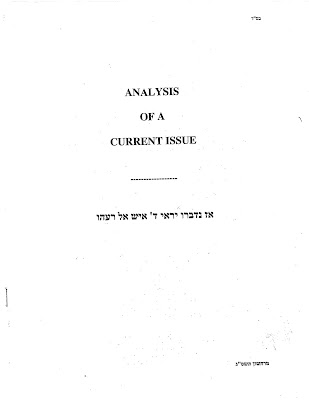
I have not read the book cover-to-cover, yet the word on the street is that the debate is pretty one-sided as the Reform rabbi is out of his league. But in glancing through the book I found that in one area it is actually the Reform rabbi who is correct. On p. 16 Hirsch refers to Ibn Ezra’s commentary to Gen. 12:6 and states that Ibn Ezra’s “secret” is a hint to his belief that the verse is post-Mosaic. On pp. 23-24 Reinman writes:

I do not understand how you can represent Ibn Ezra, the illustrious Orthodox commentator, as a closet Reformer. I personally have no idea of the nature of Ibn Ezra’s secret; he has successfully concealed it from me. But be that as it may, how can you ascribe non-Orthodox beliefs to Ibn Ezra? What about all the thousands of pages of solid Orthodox commentary he wrote? Don’t they stand for anything? You obviously need to connect to the time-hallowed texts, but you are grasping at the wind.

They go over this issue a couple of more times and Reinman’s responses are similarly dogmatic. Had Hirsch read my article on the Thirteen Principles (my book hadn’t yet appeared) he could have pointed out that plenty of “Orthodox” commentators and scholars have read Ibn Ezra exactly as Hirsch explained. In other words, it was incorrect for Reinman to respond as if Hirsch was asserting an outrageous canard against an “illustrious Orthodox commentator.”

When I saw this I asked a friend, who studied in Lakewood for many years, if is it possible that Reinman, who has been learning Torah for many decades, is completely ignorant about something that every YU student who takes Intro. to Bible learns in the first few weeks. His reply was that this is exactly the case, and that until he started reading works outside of the typical yeshiva curriculum he too never heard about an issue with Ibn Ezra and post-Mosaic additions. In fact, I would assume that R. Moshe Feinstein also never heard of it, and in his attack on the commentary of R. Yehudah he-Hasid he ironically cites Ibn Ezra condemnation of Yitzchaki’s biblical criticism. (Why Ibn Ezra would condemn Yitzchaki for suggesting that some verses are post-Mosaic, when he does that himself, is explained by R. Joseph Bonfils in his Tzafnat Paneah: Ibn Ezra was willing to accept individual verses as being post-Mosaic but not entire sections, which is what Yitzchaki is referring to. Thus, there is no Documentary Hypothesis in Ibn Ezra’s writings.)

This phenomenon, of great scholars not being aware of things that most people reading the Seforim blog learned years ago, should not surprise us. The traditional yeshiva curriculum is very narrow, and you can spend your life in a yeshiva and unless motivated to expand your horizons, will have no knowledge of entire areas of Jewish thought and history. A good example[33] is seen in this announcement by Agudas ha-Rabbonim, which appeared in Ha-Pardes, November 1975. Yet the beautiful saying which the learned rabbis assume was stated by Hazal was actually stated by Ahad ha-Am, and is perhaps his most famous saying (although the concept can be found in traditional sources, see Taz, Orah Hayyim 267:1)[34] However, for one whose only Jewish knowledge comes from the yeshiva, this information would be unknown, and it is easy to see how such a statement (“more than the Jews have kept the Sabbath the Sabbath has kept the Jews”) could “infiltrate” this closed world and become just another ma’amar hazal.[35] It reminds me of how when I was a kid and my friends and I went to Boro Park for Shabbatons we would have been able to hum niggunim which came from popular songs and commercials, and our hosts wouldn’t have known a thing. At the Rutgers Chabad house in the 1980’s they even had a niggun to the tune of the theme song for Bumble Bee tuna. For those too young to remember it, see it here.
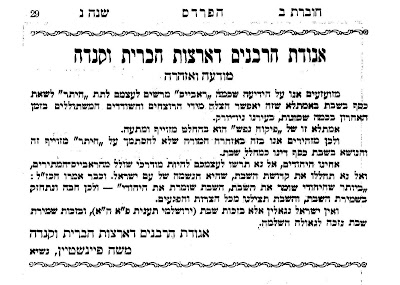
Of course, Ahad ha-Am’s statement is sound Jewish doctrine, as should be expected from one who had a hasidic upbringing (he was born in Skvira). I don’t even think that the saying was original to him. Rather, he was repeating a hasidic idea that he heard in his youth. I say this because Rabbi Uri Topolosky – who is currently rebuilding Orthodox life in New Orleans[36] – called my attention to the following passage in the Sefat Emet to parashat Ki Tisa (from 1873; p. 198 in the standard edition):
ואך את שבתותי כו’ פי’ שלא להיות רצון ותשוקה לדבר אחר בעולם, רק להשי”ת שהוא שורש חיות האדם שתתדבק בו בשבת קודש . . . גם מה שמירה שייך לשבת אדרבה שבת שומר אותנו.
NOTES:
[15] “The Silence of Rayna Batya: Torah, Suffering, and Rabbi Barukh Epstein’s ‘Wisdom of Women.'” Torah u-Madda Journal 6 (1996): 127, n. 62.
[16] Torah u-Madda Journal 7 (1997): 197. Since I mention the fine scholar Don Seeman, let me also call attention to his article “Ethnographers, Rabbis, and Jewish Epistemology: The Case of the Ethiopian Jews,” Tradition 25 (1991): 13-29. In this article he deals with the issue I touched on in two earlier posts, namely, does “halakhic truth” need to correspond to what academics regard as “scholarly truth.”
[17] I thank Eliezer Brodt for calling it to my attention (it is not mentioned in Beit Eked Sefarim). Subsequently, I saw that it is mentioned by Yaakov Bazak, “Al Derekh Ketivat ‘Torah Temimah,’” Sinai 66 (1969): 97.
[18] Thus, R. Moshe Meiselman could write: “In the volume of responsa, Maayan Ganim, the author not only permits motivated women to study the Torah but praises them and urges his audience to encourage them in their work.” See Jewish Woman in Jewsh Law (New York, 1978), 38.
[19] R. Menahem Kirschbaum, Tziyun li-Menahem (New York, 1968), 263, points out that contrary to what Epstein states, Tosafot Tom Tov referred to him as a grammarian when Archivolti was quite old.
[20] Rayna Batya and other Learned Women: A Reevaluation of Rabbi Barukh Halevi Epstein’s Sources,” Tradition 35 (2001): 61.
[21] See here
[22] See Kitvei ha-Arukh ha-Shulhan, part 2, p. 142, where he addresses someone as נכד איש אלקים גדול בעל התניא זי”ע ועל כל ישראל אמן. [23] See ibid., p. 154, for R Yehiel Michel’s 1906 letter of recommendation for R. Zevin. [24] See R. Yehudah Herzl Henkin, Beni Vanim, vol. 2, no. 8. In the introduction to Kitvei ha-Arukh ha-Shulhan one finds the following:
על מעמדו של הערוך השולחן כרבן של ישראל ופוסק הדור [שיש הסוברים שהוא הראשון במעלה ואחרון בזמן והלכה כמותו בכל מקום. עי’ בני בנים] אין כאן המקום להרחיב. What kind of reference is this? Most readers won’t even know what Bnei Vanim is. Why is the author, the volume, and page number not given? Why is R. Joseph Elijah Henkin’s name not mentioned? Furthermore, R. Henkin never said that the halakhah is always in accord with the Arukh ha-Shulhan. (Let’s not forget, the Arukh ha-Shulhan thought you could use electricity on Yom Tov.). His comment dealt only with the Arukh ha-Shulhan vs. the Mishneh Berurah.

For Eliezer Brodt’s review of this work, see here.

I have only skimmed part 2 of this important volume, but since it will probably be reprinted, let me make a few corrections and one addition.The transcription of R. Yehiel Michel’s handwriting on the first page is incorrect.

P. 79 s. v. והנה: The word הארוך should be האריך.

P. 146 s.v. גי”ק. The sentence reads: ורבות נצטערתי והמו מעי לו שירדפו גאון מובהק כמו”ב.

The abbreviation should be כמי”ב – כמותו ירבו בישראל. See p. 152, top line.

P. 173 no. 137: R. Aryeh Jacob Katznelson was the son-in-law of R. Yehiel Michel’s brother-in-law.

P. 193 n. 17: The quotation does not appear in no. 39.

According to Glick, Kuntres ha-Teshuvot he-Hadash, vol. 1 (Jerusalem and Ramat Gan, 2007), 582 (no. 2186), material from R. Yehiel Michel appears in R. Moses Spivak, Mateh Moshe (Warsaw, 1935).
[25] Hayyim Schirmann, Ha-Shirah ha-Ivrit bi-Sefarad u-ve-Provence (Jerusalem, 1954), vol. 1, no. 143; translation in Norman Roth, “‘Deal Gently with the Young Man’: Love of Boys in Medieval Hebrew Poetry of Spain,” Speculum 57:1 (1982): 45.
[26] See here.
[27] see my “Obituary: Professor Mordechai Breuer zt”l,” the Seforim blog (Monday, 11 June 2007), available here.
[28] See Yabia Omer, vol. 9, Orah Hayyim no. 108 (p. 269).
[29] See Shmuel Glick, Kuntres ha-Teshuvot he-Hadash, vol. 1 (Jerusalem and Ramat Gan, 2006), 57.
[30] The Pentateuch: Its Composition and Its Authorship (Jerusalem, 1967), 33.

[31] ואומר בתחלה כי משה רבינו כתב כל התורה כלה מפי הגבורה, מ”בראשית” עד “לעיני כל ישראל” . . . וכן צריך להאמין, כי הכל נאמר ברוח הקודש ומפי הנבואה למשה רבינו עליו השלום

[32] See here.
[33] See Avraham Korman, Ha-Tahor ve-ha-Mutar (Tel Aviv, 2000), 99.
[34] See Al Parashat ha-Derakhim, ch. 51, available here. The actual quote is

יותר משישראל שמרו את השבת שמרה השבת אותם.

[35] R. Herzog was well aware of whose saying he was adapting when, in an article on Taharat ha-Mishpahah published in Ha-Pardes (September 1947, p. 15), he wrote:

לצערנו העמוק והמחריד נפרצו בימינו פרצות גדולות, ואף בארץ הקודש, בחומה זו של טהרת המשפחה, שאפשר להגיד עליה, שיותר ממה ששמרו ישראל עליה שמרה היא על ישראל

[36] See here.


A Response to Dr. Shapiro: A Defense of the Torah Temimah

A Response to Dr. Shaprio: A Defense of the Torah Temimahby: Y. Lander (of the Ishim v’Shitot blog)

I read with interest Dr. Shapiro’s recent post questioning the accuracy of R’ Baruch Epstein’s tale concerning his dialogue with the Netziv’s first wife, Rayna Batya. Dr. Shapiro points to several discrepancies in R. Epstein’s account and based on those discrepancies posits that R’ Baruch deliberately contrived the story in order to call attention to the plight of women in his time. I would like, however, to present a more prosaic but equally plausible interpretation of the discrepancies that Dr. Shapiro notes.
Dr. Shapiro refers to the “the well-attested fact that Epstein was a plagiarizer” [1] and therefore one must be suspicious of anything he writes. That Epstein frequently fails to provide proper attribution when quoting other authors is certainly irrefutable but I am not at all certain that this was due to conscious plagiarism. I found that only two of Epstein’s works show significant signs of plagiarism – Torah Temimah and Tosefes Bracha[2] – whereas the chiddushei Torah cited in Mekor Baruch and Baruch She’Amar (Tefillah and Pirkei Avot) are original.
If Epstein was indeed a plagiarizer then from where did he get the sudden burst of originality that appears in the latter two works? Why would he plagiarize in Torah Temimah, stop for Mekor Baruch and then continue in Tosefes Bracha?
Further, Y. Bezek, in the article cited by Shapiro, points out that among the sources that R’ Epstein plagiarizes is Maimonides Sefer Hamitzvos. Is it really logical to assume that Epstein intentionally tried to pass of a Rambam as his own chiddush? Or that he could get away with plagiarizing a Gra in Mitnaggdic Vilna heavily influenced by the Gra and his teachings. [2a]
It seems far more logical to simply take Epstein’s words in his Introduction to the Torah Temimah at face value. There he writes, (roughly translated) “this work has taken me 15 years to write and has gone through many drafts. During the course of this time much information has gathered in my mind and although I have made an earnest attempt to provide proper attribution the reader is requested to judge me favorably in this.”
Given the large volume of information Epstein was dealing with and the limited time he had at his disposal [3] it is not surprising that he had not the ability to properly identify the sources for all the hundreds (if not thousands) of interpretations he provides in his commentary. I suspect that Tosefes Bracha is based on those notes that he did not incorporate into his Torah Temimah [4] and would therefore have the same defects as the former.
Shapiro also uses Mondshine’s study on R’ Epstein. But, Mondshine brings very little proof to support his assertion that the story of the Aruch HaShulchan’s meetings with the Tzemach Tzedek was simply fabricated out of “whole cloth.” Rather, Mondshine points out that R’ S. Y. Zevin who received Semicha from the Aruch HaShulchan never mentioned any of these conversations. This omission, according to Mondshine is key, as R’ Zevin was an adherent of Chabad it is only natural that the AS should have mentioned these meetings to him.
It is a pity that Mondshine didn’t read Zevin’s K’sav Horaah (printed in the new Kitvei Aruch Ha-Shulchan). If he had he would have seen that R’ Zevin never met the Aruch HaShulchan. It is written there that “I recognize that this is man is indeed a Talmud Chachamim based on the many letters I exchanged with him.” Those who have read the AS’s correspondence in the Kitvei will see that the AS rarely goes into any extra detail in his letters focusing solely on the question at hand.
But all this is unnecessary, R’ Y. L. Maimon (Fishman), a Talmud of the AS, wrote a series of books with various “Gedolim” stories entitled Sarei HaMeah. In the last volume (vol. 6 pg. 101) he mentions the conversations that “the Aruch Hashulchan himself told me that at the request of some of the (Chassidic) townspeople he went to visit the Tzemach Tsedek.” Their first conversation involved a discussion of the disagreements between Chassidim and Misnagdim….” [5]

Dr. Shapiro finds it impossible to believe that the Tzemach Tsedek should have said “Had it not been for the great dispute about Hasidism, and the Gaon’s strident opposition, the new movement might have led its followers out of the ranks of halakhic Judaism.” I beg to differ. The Tzemach Tsedek’s grandfather the Baal HaTanya held the Gra in great esteem [6] thus he might have tried to find a justification for the Gra’s opposition. Second, the Tzemach Tsedek waged an intense battle against the Maskilim in their attempts to “reform” traditional Jewish education [7]. To this end, the disagreements between the Chassidim and Mitnaggdim were ignored in order to more effectively battle this new greater menace [8]. It is not unlikely that in order to cement this new found alliance [8a] that the Tzeamach Tsedek would have made this kind of conciliatory remark to the Aruch Ha-Shulchan (brother-in-law of the Netsiv who was one of the most influential of the Mitnaggdim) in order to downplay the conflict between the Chassidim and Mitnaggdim
Dr. Shapiro introduces his post admitting that – “When Mekor Barukh was published there were still plenty of people alive who had known her and it would have been impossible to entirely fabricate her personality.” This being the case the report that- “It was her habit to sit by the oven in the kitchen—even in the summertime—next to a table piled high with seforim. These included a Tanach,(Mishnayos) Ein Yaacov, various midrashim, Menoras HaMaor, Kav HaYashar, Tzemach Dovid, Shevet Yehudah, and many other books of this nature.” [9]- must also have been true. This is an important point that is the cornerstone of the whole story.
Dr. Shapiro wonders how “the rebbetzin, sitting in Volozhin, would just so happen to come across this volume on her husband’s bookshelf.” Here is one possibility. We know that there were several large libraries (for example the Strashun Library in Vilna [10]) in the area and it is certainly possible that a copy of Mayin Ganim might have made its way to the intellectual center in Volozhin.
A similar example of a very rare Sephardi book circulating is mentioned in Mekor Baruch (pg. 1224). There he mentions a Maggid who recalled seeing an alchemical recipe in a rare book. The name of the book was Nifla’ot Elokim by Abraham Shalom Chai printed in Livorno. As Shapiro writes “There would have only been a few copies of this book in all of Lithuania.” But we see that it did circulate.
I agree with Shapiro that the TT obviously copied the letter from HaTzefirah. But all this proves is that at the time of the writing of Mekor Baruch he no longer had access to a Mayin Ganim and therefore had to copy from “HaTzefirah”. We do not have any proof that years before, as a student in Volozhin, he had no access to this book.
I also would like to point out that the TT refers to Mekor Baruch in manuscript [11] (Malki BaKodesh vol. 6 pg. 45) in his letter to Hirschenson. It is clear from the letter that the passage on Rayna Batya had already been written before he wrote this letter so he could not have “uses the language in his letter to Hirschensohn to create the following reply to Rayna Batya” as Shapiro writes.
As to the addition of the term “Ulai”, a commenter has correctly noted that the TT must have conflated the term “Efsher L’ Chalek” that appears in the letter with the term “Ullai”. Erroneous readings such as these are fairly common in TT as Kasher has shown in the addendum to Torah Shelemah v. 26.
We have then two possible ways of interpreting the various discrepancies that appear in R’ Epstein’s works. Either as Dr. Shapiro contends he engaged in fraudulent behavior, including intentional plagiarism, and fabricating historical accounts, or as I contend he simply failed to approach his work systematically, meaning he didn’t keep detailed notes, relied overly much on a faulty memory (See Psalms 19:13), and perhaps engaged in some artistic license in order to heighten the effect of his stories.
I leave it to the reader to decide which of the two is more plausible.
[1] On this see the sources cited in D. Rabinowitz – “Rayna Batya and other learned woman: A realuation Rabbi Barukh Halevi Epstein’s sources” Tradition – footnote 4.
[2] Many of the Chiddushei Torah cited in Tosefes Beracha have been previously attributed to the Gr”a. Compare “HaMeor HaGadol” – A collection of the Gra”s Torah from rare source by Yissocher Kreuser to almost any Parsha in Tosefes Bracha.
[2a] Note that in Tosefes Bracha (Gen. 31,1 Exodus 8,17) he writes that “after I thought of this chiddush a sefer of the Gra’s chiddushim (D’var Eliyahu) came out containing the same idea.” It seems that he genuinely thought that these were entirely his own ideas.
[3] He had a full time employment as a bookkeeper. See also M. M. Kasher’s description in a note to Torah Shelemah 26 (300-301)
[4] TB is for the most part a repetition of his Chiddushim in Mekor Baruch and an expansion of some of his writings in Torah Temimah. It gives the impression of a collection of ideas haphazardly “thrown together” rather then following any specific writing plan.
[5] See also the study of the AS’s unique use of Kabbalah here. It is not unlikely that he was influenced in this by the Tsemach Tzedek.
[6] See Iggeret Kodesh pg 86 ff. In another place he refers to the Gra as a חד בדרא
[7] See “The Tzemech Tsedek and the Haskalah Movement” – available here.
[8] Mekor Baruch describes the enthusiasm with which the Tsemach Tsedek was greeted in his visit to Lithuania. Cf. the comments of Eliach in HaGaon Vol. 3 Pulmas HaChassidus. See also “B’Mechitasam Shel Gedolei Torah” – Y. Mark on R’ Chaim Soloveitchik for a further description of the Tsemach Tsedek’s actions at the conference.
[8a] In Mekor Baruch he writes that the Tsemach Tsedek begged the AS to make every effort to prevent the rise of Reform (pg. 1291).
[9] Taken from “My Uncle the Netziv” with the addition of one word.
[10] Although the Strashun Library was only officially opened to the public in 1892, (see here), the very existence of a private collection of so many rare seforim leaves open the possibility that some of these rare books may have circulated among the intellectual “elite” in Volozhin.
[11] Specifically he refers to a passage demonstrating that Archivolti was in fact a Talmudic scholar. Since this passage is part of the Rayna Batya story it is not unlikely that the whole passage had been completed before he sent the letter.


On the Times Commonly Presented for Birkat HaL’vana: Part 2

On the Times Commonly Presented for Birkat HaL’vana: Part 2

By Avi Grossman

Continued from here

The Truth About The Beth Yosef’s Position

A while ago I received this from a disputant (I have not edited any of his writing):

In the Shulkhan Arukh (chapter 426 paragraph 3) it was ruled that one has to wait till seven days have passed, and the Rema did not override the halachik ruling of the Mechaber (the Shulkhan Arukh). Therefore this is the basic core law for Sepharadim and Ashkenasim alike. However, there is an Ashkenasi minhag to make the Kiddush Levana blessing after only three days. This minhag being based on the Gr”A (the Gaon miVilna) as brought down by the Mishna Brura in se’if katan (clause) 20. This minhag has on what to be based, however less than three days, is not the minhag at all. Nevertheless, if bedi’avad (if someone has not done according to the aforementioned minhag, and already has done otherwise i.e. less than three days), if the person made the blessing of Kiddush Levana, Rav Nevensal writes (in his commentary on the Mishna Brura in the name of Rav Shlomo Zalman Auerbach) that he accomplished the mitzva of Kiddush Levana and his blessing was not a brakha levatala, ( a blessing in vain.) This is also understood from the Shar haTziyun.

I have omitted his subsequent attack on my credentials and character. I also believe, that he has made a number of errors:

1. The Beth Yosef’s actual opinion is not as he represented it. 2. His method of discerning the Rema’s opinion is faulty. 3. He does not allow for the numerous times wherein the halacha and the common practice simply do not follow either the Rema or the Beth Yosef.[1] 4. Especially in Israel, there are many groups, usually those associated with Religious Zionism and inspired by the teachings of the Vilna Gaon, that seek to reintroduce the ancients’ practices as described by Hazal, and do not automatically accept later positions that contradict the classic understanding of Hazal. There are too many aspects of Jewish law that are also not even covered by the rulings of the Beth Yosef and the Rema.

I would now like to attempt to show what the Beth Yosef believed. Rabbi Yosef Karo was aware that the halacha, as stated by the Talmud and understood by the rishonim, was that birkat hal’vana should ideally be recited on the first of the month. In his commentary to Maimonides’s explicit ruling that birkat hal’vana be recited on Rosh Hodesh, he even cites the source for this rule. Moreover, Maimonides formulation is taken verbatim from the Yerushalmi in Berachoth 9:2, which also clearly means that the time for the blessing is Rosh Hodesh. The Beth Yosef then has much to say (a few paragraphs’ worth) about the Tur’s formulation of the relevant halachot, and finishes with one line about a much later, kabbalistic, non-talmudic opinion that the blessing should be delayed until seven days after the molad. It is impossible to properly understand his intent in the Shulhan Aruch before reading his longer dissertations in the Beth Yosef, and when we analyze the style he used to present many other halachot in the Shulhan Aruch, we see that when Rabbi Karo actually subscribes to a (usually kabbalistic) position that was explicated later in history as opposed to an earlier explicated halacha, he simply records that later opinion without mentioning the earlier differing opinions, or he may make mention of them and then dismiss them.

In order to see this most clearly one should read the actual text of the Shulhan Aruch as Rabbi Karo himself wrote it, without the interjections of the Rema. A good example is the laws of t’filln. In Orah Hayim 31:2 he writes straight out that it is forbidden to wear t’fillin on Hol Hamoed. This is the kabbalistic opinion, and he does not mention at all the opinion prevalent among the rishonim that t’fililn are meant to be worn on Hol Hamoed, because he dismissed it, and one cannot claim that he was honestly unaware of such an opinion, because in both his commentary to the Tur and the Mishneh Torah, he wrote about that opinion and its sources in the Talmud, and even explained why he rejected it despite the fact that it had been the near universal practice for centuries before him. (See here for more examples.)

However, with regards to the blessing on the new moon, Orah Hayim 426:1, he first states the straight halacha as recorded by the Talmud and the early commentators that one who sees the moon in its renewal blesses…” and as he wrote in his earlier works, this was always understood to be ideally at the very beginning of the month. It is only in 426:2 that he brings the custom to wait until Saturday night, and in 426:4 he mentions to wait until after seven days. These three rules are all in conflict with each other. Which is it? The first of the month? Saturday night a few days in to the month, or a week after the beginning of the month?

The answer is that he presents the straight law as understood and received by generations, and then alternate practices that each have their own merit, but which do not and cannot trump the original rule. This is made clear when you also read what he wrote in 426:3, before mentioning the seven-day rule: the last time for saying the blessing is the fifteenth of the month. This shows that in 426:1 and 3 he defines the blessing’s set time as ordained by the sages and as to be followed, and only at the end does he mention an optional practice that does not readily fit the enactment. More importantly, if you look even more closely at the exact wording of the Shulhan Aruch you see that 426:2 and 426:4 are not discussing the precise ordained time for the blessing, but rather different issues entirely.

For our reference, here is the full text of Orah Hayim 426 without the Rema and further commentaries:

. א. הרואה לבנה בחדושה מברך אשר במאמרו ברא שחקים וכו‘.

ב. אין מברכין על הירח אלא במוצאי שבת כשהוא מבושם ובגדיו נאים ומיישר רגליו ותולה עיניו ומברך ואומר שלש פעמים סימן טוב תהיה לכל ישראל ברוך יוצרך וכו’.

ג. עד אימתי מברכין עליה עד טז מיום המולד ולא טז בכלל.

ד. אין מברכין עליה עד שיעברו שבעת ימים עליה.

A. One who sees the moon in its renewal blesses, “…Who hast through His speech created the heavens…”

B. We do not recite the blessing upon the moon unless it is the night after the Sabbath, when the reciter is perfumed and his clothes nice. He should raise his eyes high and stand straight, and bless. He should recite three times, a good omen, blessed be, etc.”

C. Until when may he recite the blessing? Up until but not including the 16th day from the molad.

D. We do not recite the blessing upon [the moon] until seven days have passed on it.

And now for a brief point about an expression used here twice, which I emboldened in both the Hebrew and English. Our heroes have said the following, each in its own context:

אין שמחה אלא בבשר ויין

אין שמחה אלא תורה

אין שמחה כהתרת ספקות

אין שמחה גדולה ומפוארת לפני הקב״ה אלא לשמח לב עניים

Literally translated, each of these begins with happiness is nothing but”, and each end differently. Respectively: meat and wine, Torah, resolution of doubts, and gladdening the hearts of the poor. How can these all be true? How can there be four ultimate forms of happiness? The answer is that this is the sages’ way of saying that with regard to a particular situation, there is something that can give someone the best feeling. When it comes to celebrating on a festival, the best way is to have a meal with meat and wine. With regards to achieving a sublime intellectual high, there is nothing like Torah study. With regards to feeling the joy of relief, there is nothing like resolving lingering doubts. With regards to doing something good for others, there is nothing greater than picking up those who are down. There is no contradiction.

Now, we can fully understand how to read the four rules of the Shulhan Aruch: The first rule tells us to say the blessing on the moon, and as we saw before, the running assumption of the rishonim and logic is that the first time is right at the beginning of the month. So too, the fact that the Shulhan Aruch places this chapter within the laws of Rosh Hodesh and then says in the third rule that there is a deadline, the assumption, and the only way the first rule can be understood, is that one may start to do recite birkat hal’vana when the month starts. Also, the Shulhan Aruch uses the same exact language as the Yerushalmi and Maimonides did to describe saying the blessing at the first sighting of the new moon, and the Shulhan Aruch has already shown us elsewhere that he knows the implication of using that language. The first and third rules thus form a pair, defining when to say this blessing. The second rule, which mentions Saturday night, is not contradictory, nor does it modify the objective time for saying the blessing. Rather, from the facts that a. it begins with that rabbinical term of speech einella…” and b. it then explains that it is so that he will be in a proper state of dress, it is telling us the proper mode of reciting this blessing. Dress nicely, smell good, stand straight, and take a good look at the moon. Consider this: Saturday night is not objectively the best time for saying this blessing which should be timed with the new moon regardless of the day of the week, as Rabbeinu Yona pointed out above, but rather it happens to be the time when one is still clean and wearing his Sabbath clothes, implying that if it were Saturday night and he were filthy, he gains nothing by reciting the blessing then, but if it were, say, Thursday night and he has just dressed up in a tuxedo in order to go meet an important personage, he should say the blessing on the moon if the opportunity presents itself. The subsequent gloss of the Rema also shows that this statement of the Beth Yosef is not a hard and fast rule about the timing of blessing. The way the third rule is introduced, it is Rabbi Karo’s way of saying the best way to perform this commandment, the most gevaldikke way, is to do it like this…” More so, we can now understand why for many authorities (including Maimonides and the Vilna Gaon) the entire discussion of birkat hal’vana in Massechet Sof’rim did not enter their halachic calculus. In the context of the chapters preceding it, Massechet Sof’rim is not making a straightforward halachic statement about the halachic timing of the blessing, but rather about the manner in which it was ritually performed. Finally, the fourth rule also begins with that terminology, ein… ad…” (the ad replaces ella because ella is used to describe things not defined by time, like gladdening and eating, whereas ad describes a period of time) because, once again, it is Rabbi Karo’s way of saying, al pi qabbala, the most awesome way to perform this commandment for those who are mystically inclined and on a high enough level is to…”

Therefore, Rabbi Yosef Karo did not rule against saying the blessing on the new moon on Rosh Hodesh, nor did he rule that it may only be recited after seven days from the molad. It is clear that our master’s writings mean that the blessing was meant to be said on Rosh Hodesh, and that there are two conflicting middat-hasidut practices to delay it, and most of the time it is impossible to satisfy both if understood literally, and, as I have shown, the first of those practices is less about when to say the blessing and more about how to say the blessing, and the second is not halacha for the masses. I have written this to defend what he really said, and how his words have been twisted by those who came later, because there is a common claim made that his opinion was to delay the blessing until seven days have passed from the molad under all circumstances, and does not allow for other opinions. The writer above also claimed that this is also the implicit opinion of the Rema (!) and therefore should also be the default practice of all Jews, Ashkenazim and Sephardim alike, to wait until at least a week from the molad in order to recite birkat hal’vana. If our master, the Beth Yosef, had meant as that writer says, he should have written 426:1 thusly:

הרואה הלבנה אחר שעברו עליה שבעה ימים מברך וכו׳

“One who sees the moon after seven days have passed over it blesses…”

thereby combining both 426:1 and 4:26:4 in order to accurately reflect such a purported view, and then we would still be left with the superficial problem of 426:2 adding the practice to wait until Saturday night. But the Beth Yosef did not write the halacha like that because he actually understood the rules as I have presented them here, namely, that he ruled like Maimonides and the sages of old, that the true time for saying birkat hal’vanna is on Rosh Hodesh or as early in the month as possible, and that the seven-day rule is, like he implied in the Beth Yosef, a practice of those who live according to esoteric and uncommon kabbalistic ideas.

Four years after I first wrote this response, I discovered that Rabbi Moshe Elharar of Shlomi in the Northern Galilee has made this point, and has a video online where he declares as much. See here. He maintains that the practice of Moroccan Jewry is and always to recite birkat hal’vana on Rosh Hodesh, if possible.

I also discovered in recent months that there is a school of kabbalistic thought, the Arizal among them, that maintains that al pi qabbala, birkat hal’vana should of course be said on Rosh Hodesh. Indeed, there is a host of modern-day kabbalists and Hasidic rebbes who advocate and maintain this practice. Rabbi Raphael Aharon, a prominent scholar and mekubal from the nearby settlement of Adam has an entire siddur dedicated to birkat hal’vana, Siddur Sim Shalom, and many of these points can be found in his accompanying essays.

Waiting For Exactly Seven 24-Hour Days?

If one were to adopt the mystical practice mentioned by Rabbi Karo, namely to wait seven days to recite birkat hal’vana, Rabbi Karo has already stated that those seven days are a colloquial seven days. This is also the case with regard to many other realms of halacha which deal with groups of days. He dismissed the notion that the final time for the blessing should be calculated me’et l’et, to the second, minute, chelek, or hour. However, just like the Pri M’gadim unilaterally declared that the Rema calculates the first time for the blessing exactly 72 hours after the average molad even though the Rema never even hinted at such a thing (see above), the calendar makers have taken a further step and decided that those seven days mentioned by Rabbi Karo should also be calculated by adding exactly 168 hours from the time of the molad. We can see what may have influenced the Pri M’gadim to make such a claim within the Rema’s opinion, but there is no reason whatsoever for any of us to then extend a possible stringency within the Rema’s opinion to the opinion of the Beth Yosef.

A relevant recent example was Iyar 5775. The announced average molad was early Sunday morning on the 30th of Nisan (April 19, 2015), 1hour, 27 minutes, and 4 chalakim after midnight (6),[2] while the actual molad was a few hours earlier, at 8:57pm Motza’ei Shabbat (April 18, 2015) (7).[3] According to the traditional understanding of the Beth Yosef’s kabbalistic opinions, birkat hal’vana should have been recited the next Motza’ei Shabbat (the night of April 25), the beginning of the 7th of Iyar. Both moladot had occurred on a halachic Sunday, and this Motza’ei Shabbat was already a full week later than both, and it was also a night when many baalei batim would be in attendance at the synagogues, and the moon was clearly at least half full, yet the calendars declared that the it was too early for birkat hal’vana! By their calculations, despite the fact that the moon was already well into its eighth day, the earliest time for birkat hal’vana would only be sometime after midnight, a full 168 hours after the average molad, and at a time shortly after the moon would set that night. Instead, everyone was to have to wait for Sunday night, when attendance in the synagogue would be much less and the chances of cooperative weather would be diminished, thus depriving many unwitting people of the chance to recite the blessing that month.

The calendar makers grossly misrepresent the Beth Yosef’s opinion, and thereby cause many unwitting Jews to miss the proper times for reciting this blessing.

Additional Considerations

In a lecture recently uploaded to yutorah.org, R’ Schachter mentioned the opinion of the P’ri M’gadim (Yoreh Deah 15:2) regarding the eight-day waiting period between an animal’s birth and it becoming fit for sacrifice: the period is calculated as exactly 7 times 24 hours (me’et l’et) after the moment of its birth. R’ Schachter further mentioned that Rabbi Akiva Eiger (ad loc.) takes the P’ri Mgadim to task for this claim, as it contradicts the plain meaning of the relevant Talmudic sources which assume that the eight days are calculated according to the general rule of miqztath hayom k’chullo, that a part of the day is considered the entire day, just like with all the other similar calculations demanded by halacha. This is entirely analogous to he P’ri M’gadim’s opinion regarding birkat hal’vana, which would similarly be rejected by Rabbi Akiva Eiger.

In another lecture, available here, R’ Schachter discussed the issue of two-day Rosh Hodesh in Temple times: On which day of Rosh Hodesh were the additional sacrifices offered? While there is a Talmudic source that assumes that the sacrifices were only brought on one day of Rosh Hodesh, there is also Biblical evidence that even before the Temple was built, Rosh Hodesh was sometimes observed as two days, and even today, it is observed that way about half the time. At about six minutes in, R’ Schachter mentions an answer offered by Rabbi Soloveichik: In Numbers 28, we are bidden to offer the offering of the Sabbath, “olath shabbath b’shabbatto,” which literally means, “the Sabbath burnt offering on its Sabbath,” but which is rendered by Onqelos, “alath shabba tith’aveid b’shabba,” the Sabbath burnt offering should be made on the Sabbath.

Onqelos’s addition clarifies the meaning. However, in the subsequent paragraph describing the Rosh Hodesh offering, we read, “zoth olath hodesh b’hodsho,” literally “this is the [Rosh] Hodesh burnt offering on its Hodesh,” and we would expect Onqelos to render this along the same lines as shabbath b’shabbatto, but he does not. Instead, he abandons a literal translation with a one-word addition, and gives an explanation (which, by the way, is common. Whenever an anthropomorphism is used with regards to God, or whenever the halacha does not fit the literal translation, Onqelos does not translate literally): “da ‘alath reish yarha b’ithkhadathutheh,” which in Hebrew would be “zoth olath rosh yarei’ah b’hiddusho,” or “this is the New Moon burnt offering at the time of [the moon’s] renewal.” Rabbi Soloveichik offered that even if Rosh Hodesh were a two-day event, the special sacrifice of the beginning of the month should only be offered on the day of the renewal, that is, on the day of the two-day Rosh Hodesh that is observed as the renewal of the moon.

Thus, when the Shulhan Aruch (Orah Hayim 426:1) says hal’vana b’hiddusha, “the moon (this time described in the feminine form, l’vana, as opposed to the masculine hodeshyarei’ah, yarha, or molad) in its renewal,” he means it as Rambam and Rashi meant it, on the first day of the month. The hiddush of the moon is by definition Rosh Hodesh.

It should not come as a surprise then that the Hafetz Hayim himself also was aware of this important halacha, and endorsed it. He held that me’iqqar hadin, according to the letter of the law, birkat hal’vana is to be said on Rosh Hodesh, and that although there are other practices to delay the recitation, none of them override the letter of the law. In Mishna B’rura, 426:20, he responds to the Shulhan Aruch’s proposition that we should wait for seven days to pass over the new moon before reciting the blessing, and mentions that “most Aharonim held that it is sufficient for the moon to be three days old for the blessing to be recited,” and for good measure he adds the P’ri M’gadim’s condition that those three days are calculated as exactly three time 24 hours, and then suggests that there is a way to maybe delay the recitation just a little bit more in order to also recite it on Saturday night. But then, he says something that only someone aware of the letter of the law will fully understand: “And some Aharonim, including the Vilna Gaon, are lenient even in this regard, [i.e., waiting about three days for birkat hal’vana], and they hold that it is not worthwhile to delay the commandment in any event, and therefore, one who practices like that certainly has on whom to rely, especially during the winter and the rainy season; certainly someone punctilious and quick to sanctify [the new moon] is praiseworthy.” Here, in no uncertain terms, the Hafetz Hayim champions those who would say birkat hal’vana at the very first opportunity. When, based on all of the available halachic sources, would that be, if not on Rosh Hodesh itself? Indeed, the primary source for this Gloss is the Magen Avraham ad loc., and there the Magen Avraham, explicitly mentions that the primary law is that the blessing is to be recited on Rosh Hodesh.

As an aside, I would like to dispute what R’ Schachter says in the first five minutes, namely why a particular day is Rosh Hodesh. As far as I understood, there are two reasons: when the Sanhedrin is functioning properly, a day is considered Rosh Hodesh when the court declares it to be Rosh Hodesh based on the testimony of valid witnesses who spotted the new moon, and when the Sanhedrin is not functioning, our set calendar considers only the moladoth of each Tishrei to determine days of weeks for Rosh Hashana, and once a particular year’s length is known, the first days of each month are then determined based upon alternating 30-day and 29-day months, with certain exceptions. Most importantly, the moladoth of the months that are not Tishrei have absolutely no bearing on when the individual rashei hodashim are celebrated, and I believe that the misconception was fostered by the new practice of announcing the molad each month, which leads people to believe that it somehow has weight in determining Rosh Hodesh. On the contrary, announcing the molad seems to be a very recent practice,[4] and one that I would argue the Beth Yosef and others would oppose, because it could lead the masses to think that the molad actually matters month to month. For example, many believe (mistakenly) that we announce the molad precisely because it is forbidden to recite birkat hal’vana either 72 or 168 hours have elapsed from that time. Some of the classical decisors may have tolerated this new practice, but they would certainly believe that if, for example, no one had a calendar to reference during the service, the announcing of the molad could be skipped.

* * * * *

Recently, I discovered the life and work of the prolific and tragic Rabbi Moshe Levi, a prize student of Rabbi Meir Mazuz. Lo and behold, in his treatise on the blessings, Birkat Hashem, he lists the prominent authorities, down to the Magen Avraham, who ruled that according to the straight letter of the law, birkat hal’vana should be said on Rosh Hodesh, and he himself rules that way.

This highlights an argument that is applicable elsewhere. It is well-known that the ideal time for the morning prayer is right at sunrise, which is when the morning sacrificial service is supposed to start in the Temple, and this was the practice of the wathiqin of Jerusalem. However, in Orah Hayim 281, the Rema mentions that the practice on Sabbath morning is to arrive at the synagogue later than on weekdays. It cannot mean that people show up later than they would on weekdays just to make sure that the amida prayer still starts at sunrise, because that would entail somehow abridging the recitation of all of the liturgy that precedes the amida, but that is not possible, because the practice is also to recite more psalms before the reading of the sh’ma and to recite a longer version of the blessings that accompany the sh’ma. The Rema is plainly stating that on the Sabbath, the morning service is delayed, and he even cites the explanation that it is based on what sounds like a d’rasha, that the verse that describes the Sabbath offering says that it is offered by day and not by morning. It must be said that the teaching in question is not a true d’rasha. It is not brought by Hazal, it is not followed by the halacha, as even on the Sabbath the morning lamb was offered at sunrise, and even in context, it is referring to the additional lambs brought after the morning lamb. Now, can one reasonably claim that because “the Minhag” is to pray later Sabbath morning, it is therefore wrong for some of us to pray at sunrise? After all, the Rema is fairly clear that that is the minhag. Of course it cannot be, but I dread the day someone will say that. This point was made implicitly by the Mishna B’rura, who pointed out that the assumption of Rashi was that in Talmudic times, the Sabbath morning service was also at sunrise. By giving this veiled reference, he is respectfully disagreeing with the practice endorsed by the Rema. Just because there is a practice to delay the performance of the commandment, it does not mean that the letter of the law may not be followed.

Similarly, there is a practice to delay the evening service the night of Pentecost. Now, it must be said the very idea postdates the Shulhan Aruch and the Rema, but the letter of the law is and always was that any Sabbath or festival can be accepted before the holy day officially starts, and that is considered a very meritorious deed. Can one reasonably claim that because “the Minhag” is to pray later Pentecost evening, it is therefore wrong for some of us to pray before nightfall? After all, the Mishna B’rura is fairly clear that that is “the Minhag.” Of course it cannot be, but I dread the day someone will say that. Just because there is a practice to delay the performance of the commandment, it does not mean that the letter of the law may not be followed. A few years ago I wrote about my surprise that Rav Aviner ruled that it is forbidden for Ashkenazim to begin the prayers before nightfall on Pentecost, thus ruling that that which the Rema did and the rest of the Ashkenazim did for centuries was against halacha.

Lastly, we come to the issue of birkat hal’vana, which, according to the letter of the law, should be on Rosh Hodesh. Can one reasonably claim that because “the Minhag” is to recite it some days later, it is therefore wrong for some us to say it earlier? After all, the printed calendar is fairly clear that that is “the minhag.” Of course it cannot be, but as punishment for my “sins,” I heard many times from those who should have known better that it may not be said earlier, despite the fact that it only takes a few hours of research to find that the letter of the law’s practice is actually endorsed by the sages, and Rashi, and Maimonides, and the Shulhan Aruch, and the Vilna Gaon, and the Mishna B’rura. Just because there is a practice to delay the performance of the commandment, it does not mean that the letter of the law may not be followed. On the contrary, the punctilious seek to perform commandments as soon as possible.

*****

I welcome any further insights on this matter. I hope and pray that reinstitution of the Sanhedrin and the adjustable calendar will lead to many more Jews seeking to find the appearance of the new moon as soon as possible, which in turn will lead to them understanding why the sages ordained a blessing on the phenomenon in the first place.

I would like to thank Rabbi Mordechai Rabinovitch and Rabbi David Bar Hayim for instigating the research that led to this work, Rabbi Herschel Schachter for his feedback on the first draft and Rabbi Moshe Zuriel for his warm encouragement and approbation.

[1] How many of us start to perform forbidden labors after Shabbat but before 72 minutes after sunset? Both the Rema and the Shulhan Aruch summarily prohibit such activity.

[2] Jerusalem Solar Time. According to Jerusalem Daylight Saving Time, it was 2:06am.

[3] 9:57pm according to Daylight Saving Time.

[4] For a comprehensive background to the minhag, see here.


Fixing a Typesetting Error in Order to Understand The View of the Mishnah Berurah on Women Wearing Tefillin

Fixing a Typesetting Error in Order to Understand
The View of the Mishnah Berurah on Women Wearing Tefillin
by Michael J. Broyde
mbroyde@emory.edu

Please note that this piece isn’t meant to be construed one way or another as the view of the Seforim Blog.
While there has been considerable recent discussion regarding women wearing tefillin, I will not review here the general topic but rather focus specifically only the view of the Mishnah Berurah.  I believe the view of the Mishnah Berurah has been widely misunderstood due to two identical typesetting errors in the text, one in the Mishnah Berurah itself and one in the Biur Halacha.  It is not my intent to address the normative halacha in this article.
Background Sources

Rabbi Karo (OC 38:3) states simply:
נשים ועבדים פטורים מתפילין, מפני שהוא מצות עשה שהזמן גרמא.
Women and slaves are exempt from the mitzvah of tefillin since it is a positive time bound commandment.
Rema adds to his exemption, noting:
 הגה: ואם הנשים רוצין להחמיר על עצמן, מוחין בידם.
If women wish to be strict for themselves, we protest.
is adopting the view of Tosafot and the Pesikta Rabati that we ought to protest such conduct, essentially prohibiting it.
But this blanket statement of the Rema does not sit well with some commentators.  The Olat Tamid[1] (38:4) writes:
ואם הנשים רוצין וכו׳: הטעם כתב בכלבו משום שאינו יודעת לשמור את עצמן בנקיות עכ”ל ואני תמה אם כן למאי הצריכו בגמרא פרק מי שמיתו לפרש מפני שהוא מצות עשה שהזמן גרמא הנשים פוטרות מן התפילין ת”ל דאפילו אס רוצים להחמיר אסורין להניח תפילין, שהרי אינן ידעת לשמרם בטהרה! אלא ודאי דליתא להאי טעמא לפי סוגיות הגמרא וכן אמרינן בר”פ המוצא תפילין דמיכל בת כושי היתה מנחת תפילין ולא מיחו בה חכמים אע”ג דבפסיקתא א’ להיפך דמיחו בה חכמים מ”מ אנן אגמרא דידן סמכינן. מיהו יש  לדחות, הא דלא מפרש גמרא הטעם זה משום שרוצה ליתן טעם גם לעבדים דפטורות ואי משום טעם זה לבד היה נראה דעבדים חייבים שהרי בודאי הם יודעים לשמרם בטהרה ולפיכך מפרש מפני שהוא מצות עשה שהזמן גרמא • דמש”ה גם עבדים פטורים מיהא מהא דאמרנן דלא מיחו בה חכמים משמע דאם האשה זקנה וידעינן בה שיודעת לשמור את עצמה דאין למחות בה ובה”ג מיירי התם:
The Kolbo writes that the reason is because women do not know how to guard themselves with cleanliness.  I was amazed at this, as if that is the case, why does the Talmud in chapter me shemeto need to explain that women are exempt from tefillin because it is a time bound positive commandment?  Wouldn’t it be true [according to Kolbo] that [whether they are exempt or not and] even if they wish to be strict on themselves, it is prohibited from them to don tefillin since they do not know how to watch themselves with purity!  Rather, it must be that this reason [i.e., that women may not wear tefillin due to cleanliness issues] is not correct according to the Talmudic text.  So too, it says in the beginning of the chapter Hamotzee tefillin that Michal Bat Shaul donned tefillin and the Rabbis did not rebuke her; even though one Pesikta says the opposite, that they did rebuke her, nonetheless, we follow our Talmudic source.  However, one could rebut the [previous] proof, [because perhaps] our Talmud [in me shemeto] does not give this explanation [cleanliness] since it wants to offer a reason why slaves are also exempt.  And if it were for this reason [cleanliness] alone, it would appear that slaves are obligated in donning tefillin, since they certainly know to keep themselves clean.  Therefore the Talmud explains [that women are exempt from tefillin] because of the principle of time bound positive commandments, since it is for this reason that slaves are also exempt. Nevertheless, the source that says the Rabbis did not rebuke Michal does imply that if a woman is elderly [i.e., post-menopausal] and we know that she is capable of watching herself [to stay clean], one should not rebuke her.  And it is such a case that the Talmud has in mind there [i.e. in me shemeto, where women are said to be exempt from wearing tefillin, not categorically forbidden from doing so]. 
The Magen Avraham does not agree with this Olat Tamid.  Magen Avraham (38:3) states:
מוחין כו’ – מפני שצריכין גוף נקי ונשים אינם זריזות להזהר אבל אם היו חייבים לא היו פטורין מה”ט דהוי רמי אנפשייהו ומזדהרי כנ”ל דלא כע”ת:
We protest: Since they need a clean body and women are not particularly careful with cleanliness; but if they were obligated, they would not be exempt for this reason since they would accept the mitzvah upon themselves and they would thus be conscientious.  Such appears to me to be the rule, and not like the Olat Tamid.
The whole thrust of the Magen Avraham is to reject the approach of the Olat Tamid) who permits women to wear tefillin when they are clean). Magen Avraham accepts that once one is not obligated to wear tefillin, one is not careful to be clean and only those obligated are careful, whereas Olat Tamid thinks cleanliness is unrelated to obligation. [2]
Now consider whether one ought to rebuke a [male] slave who wishes to wear tefillin.  Like a woman, he is not obligated in the mitzvah of tefillin, but yet he seems to have no practical issue with guf naki factually. If he were to don tefillin (which he is not obligated to at all) should we rebuke him?  One could claim that the Rama (and the Taz for that matter) both implicitly agrees that a slave is not rebuked since only women (and not slaves) are mentioned as subject to rebuke. Pre Megadim (Mishbatzot 38:2) [3] disagrees and states:
מוחין. עיין ט”ז. ומ”א [ס”ק] ג’. ומשמע עבדים אין מוחין שיכולין להזהר. וזה אינו, דגם כן אין זהירים דפטורים, וגם גריעי תו מנשים דעד א’ נאמן באיסורים וספרה לה [ויקרא טו, כח]. ועבדים בסתמן לא [נאמנים] עיין ש”ך יו”ד סימן א’ [ס”ק ב]. גם על כרחך פשיטא אין מניחין שלא יעלו אותו ליוחסין וכדומה:

We Object:  See Taz.  See Magen Avraham 3. And this implies that when a slave dons tefillin one does not object, since they can be careful [about cleanliness].  This is wrong, because they are not careful since they are exempt.  Furthermore, slaves are worse than women [in this mitzvah] since “one witness is believed regarding ritual matters” (as it says in Lev 15:28) “she counts” but slaves are not believed; see Shach YD 1:2.  One must also adopt the obvious position that slaves do not wear tefillin [even though they can keep clean] so that we should not mistake them as full Jews.
Pre Megadim makes a few claims here.  While inferring that Rama and Taz hold slaves are not rebuked and may wear tefillin if they wish, Pre Megadim himself holds this is incorrect for several reasons: (1) all those exempt are rebuked according to the Pesikta, since one who is exempt is not as careful to be clean; (2) slaves are deemed less reliable than women in many Jewish law matters; (3) permitting a slave to wear tefillin might mistakenly lead people to believe he is fully Jewish.
Thus, whether we should deem all exempt individuals as being always insufficiently careful about cleanliness, and therefore object to them wearing tefillin, is a dispute between Magen Avraham and Pre Megadim versus Olat Tamid.
The Typographical Error in Mishnah Berurah 38:12
Now, to the heart of this short note: Mishnah Berurah is uncertain about how to resolve the question of whether a slave who dons tefillin ought to be rebuked.  Since this matter is not one that normative halacha needs to resolve (as slaves no longer existed within Jewish life in the time of the Mishnah Berurah) he simply states (38:12):
הנשים – עיין בפמ”ג שה”ה לענין עבדים ועיין בספר תוספות שבת שכתב בהדיא להיפך ועיין בספר תוספות ירושלים:
Women: See Pre Megadim who states the same rule for slaves.  See also Tosafot Shabbat who writes explicitly the opposite and see the work Tosafot Yerushalayim.[4]
Several difficulties present themselves in this simple Mishnah Berurah, but I want to focus on only one: Who is this Tosafot Shabbat that the Mishnah Berurah is quoting and what does he say?  Hebrewbooks.org and Otzar HaChachma data bases list a few books with that title, but none of them seem to deal at all with tefillin. While the Mishnah Berurah does in several other places quote a work by this title, the work that he quotes is always the famous work “Tosafot Shabbat” which deals with Hilchot Shabbat only or (less frequently) the similarly named work which discusses when does Shabbat begin or end?  Furthermore, no discussion of tefillin or slaves is found in those works at all, as far as I can tell.  None of the other works with this title are relevant either, as far as I could tell: none of them had a section dealing tefillin law.
Luckily, someone pointed out to me that his version of the Mishnah Berurah has a footnote by the editors noting that the word תוספות is a mistake in the typesetting of the Mishnah Berurah.  A similar correction is also noted by other new editions of the Mishnah Berurah as well — I found it in Hotzah Chadashah uMetukenet Benai Brak (5767).  These editions argue that this note (12) in the Mishnah Berurah is supposed to read:
הנשים – עיין בפמ”ג שה”ה לענין עבדים ועיין בספר עולת שבת שכתב בהדיא להיפך ועיין בספר תוספות ירושלים:

Women: See Pre Megadim who states the same rule for slaves.  See also Olat Shabbat who writes explicitly the opposite and see the work Tosafot Yerushalayim.
This makes perfect sense and completely solves the mystery.  The typesetter made a mistake that is easy to understand.  Since on the same line of text already contained the words “tosafot” and the work Tosafot Shabbat was widely cited in the previous volume which was printed (volume 3) whoever was typesetting the work made an error and typeset the wrong word.
Olat Shabbat is another name for the work Olat Tamid (quoted above), who quite clearly, as the Mishnah Berurah notes, permits slaves to wear tefillin, since they are observant of the rules of guf naki.  Olat Tamid was the name used for those sections of the book addressing daily halacha (up to chapter 240 in the Shulchan Aruch) and Olat Shabbat is the name of the same work for those remaining sections that deal with Shabbat and Festival law.  Furthermore, the Mishnah Berurah uses both names at various times without following the exact correspondence to whether he is quoting from the part of the work named Olat Tamid or Olat Shabbat.  For example, in Shar Hatziyun 42:23 he quotes the Olat Tamid on a matter related to tefillin law and he calls him the Olat Shabbat.  The work went by two names.
To summarize:  While the Mishnah Berurah in 38:12 quotes a work call Tosafot Shabbat as discussing whether a slave may don tefillin, as far as can be told, no such work exits.  A work named Olat Shabbat does exist which comments on Siman 38 of the Shulchan Aruch and permits a slave to don tefillin.  All of this makes a case so compelling that several new and critical editions of the Mishnah Berurah have noted this must be a typesetting error in the Mishnah Berurah and so have corrected the text accordingly.[5]
What the Mishnah Berurah does not note at all, but is completely clear once you look at the Olat Tamid inside – by now an obscure book that is hard to find, but which is on Hebrewbooks.org and is quoted above – is that for the same reasons that Olat Tamid contends we do not object to a slave wearing tefillin, Olat Tamid also permits a woman who is careful with guf naki (because she is post-menopausal) to wear tefillin.
Furthermore, Mishnah Berurah is fully consistent with the reading of the halacha found in the Olat Tamid when he explains the Rema’s objection to women donning tefillin in his next note, stating simply and directly (38:13) that:
מוחים בידן – מפני שצריכין גוף נקי ונשים אין זריזות להזהר:
We protest: since they need a clean body and women are not particular to be conscientious about being careful [to be clean].
The Mishnah Berurah thus explains why women do not don tefillin by quoting only the rationale that is consistent with the Olat Tamid’s understanding of the Rama, namely: this halacha is fundamentally about cleanliness, and not necessarily obligation (which categorically excludes all women and all slaves, no matter how clean).  Thus, in contrast to Pre Megadim and Magen Avraham, the Mishnah Berurah leaves out the idea that “אבל אם היו חייבים לא היו פטורין מה”ט דהוי רמי אנפשייהו ומזדהרי” (“but if they were obligated, they would not be exempt for reasons of cleanliness”) since that is not consistent with the Olat Tamid, and the Mishnah Berurah holds the Olat Tamid is correct about even a slave.[6] In other words, slaves should be rebuked because they are not meticulously careful to be clean independent of their lack of obligation to put on tefillin.
The Typographical Error in Biur Halacha 39:3

Chapter Thirty Nine of the Shulchan Aruch addresses who can write tefillin, which is a different question than who can don them, although somewhat related.  This is made clear by the comments of the Mishnah Berurah writing in the Biur Halacha in 39:3 which even more forcefully adopts the view of the Olat Shabbat.  The Shulchan Aruch notes that a convert may write tefillin and the Mishnah Berurah continues in the Biur Halacha 39:3 by stating directly:
כשר לכתוב תפילין – כ”ז איירי בגר צדק. ולענין גר תושב הסכימו הפמ”ג ול”ש ומחה”ש [ועוד הרבה] דפסול מטעם דהא אינו בקשירה והשע”ת[7] המציא דבר חדש דאיירי הד”מ דמכשיר בגר תושב דקיבל עליו כל המצות חוץ מאיסור נבילה וא”כ הלא ישנו בקשירה ובאמת נלענ”ד שגם זה אינו דהלא עכ”פ אינו מוזהר על הקשירה ותדע דאטו אם אשה ועבד יקבלו עליהן מצות תפילין יהיו כשרים לכתיבת תפילין ואם תדחה משום דמוחין לנשים על הנחת תפילין וכדלעיל בסימן ל”ח ז”א דכל זה רק מחמת חומרא בעלמא שחוששין להפסיקתא אבל ש”ס דילן סובר דאין מוחין ע”ז וכדאיתא שם בב”י ועוד עבדים יוכיחו דאין מוחין בהן וכמו שכתבתי לעיל במ”ב בשם התו”ש:
A convert may write tefillin: All this is discussing a proper convert, but as to a ger toshav, the Pre Megadim Levushai Serad, and Machatzit Hashekel [as well as many others] all agree may not write tefillin since they are not obligated to don tefillin.  Sharai Teshuva finds another novel matter here when he notes that the Darchai Moshe permits a ger toshav [to write tefillin] since he accepted all the mitzvot other than eating not kosher meat, since he is permitted to don tefillin.  In truth in my opinion even this is not correct, since such a person is also not obligated in donning tefillin.  And you should know that concerning even a woman and a slave who accept upon themselves to the mitzvah to don tefillin could they write tefillin?[8]  And if you push this off, since we rebuke women on donning tefillin as noted in chapter 38, that is wrong, since this pushing off is only a mere stricture grounded in being fearful of the Pesikta, but our Talmud rules that one does not rebuke on this as is noted by the Bet Yosef, and even further, we do not rebuke slaves as I noted in the Mishnah Berurah there in the name of the Tosafot Shabbat.
And of course, as the standard new editions of the Mishnah Berurah now note, there is a typographical error — the last words in the Mishnah Berurah should read Olat Shabbat here also, changing the ת to an ע, making it clear that the Mishnah Berurah has a consistent preference for the approach of the Olat Shabbat-Olat Tamid over the approach of the Magen Avraham and the Pre Megadim, as a better explanation of the Rama.  (The Mishnah Berurah then continues to explain why women and slaves – who can put on tefillin as a matter of tefillin law – still cannot write them.[9])
According to the Mishnah Berurah, the Rama directs rebuke of women in 38:3 for donning tefillin not as a matter of the minimal technical halacha, but only as a chumra bealma since he is of the view that the Pesikta’s formulation is inconsistent with the Bavli and thus not the formal mandatory rule of halacha ever (just like the Olat Tamid notes).[10] Furthermore, the Mishnah Berurah makes it clear here that he is ruling against the Pre Megadim on the matter of rebuking slaves who don tefillin which he left as an open dispute in 38:12.
A Test Case: The Cheresh

Consider a test case: Should we rebuke a cheresh (fully mentally incapacitated man) who wishes to wear tefillin, if he is competent to maintain cleanliness?  This is an excellent test case.  He is Jewish (like a women is), but exempt from all mitzvot, including tefillin, and he lacks the basic credibility that even a Jewish woman has to label food items as prohibited or permissible, so two of the three reasons of the Pre Megadim apply to him, mandating rebuke.  For our present purposes, his “risk profile” vis-à-vis wearing tefillin thus falls in between a slave and a woman: he is riskier than a (post-menopausal) clean woman and less risky than a slave.
Olat Tamid states (37:1) that since a cheresh can maintain cleanliness, he should not be rebuked for donning tefillin.  The Mishnah Berurah (37:12) rules that way and he cites as precedent for this the classical work Baer Hatev, who in turn cites the classical work Olat Tamid![11]
חרש המדבר ואינו שומע או שומע ואינו מדבר חייב להניח תפילין אבל אין שומע ואין מדבר אין מוחין בידו מלהניחם אם רוצה [בה”ט]:
cheresh who speak but cannot hear, or hear but cannot speak is obligated in tefillin, but one who can neither listen nor speak one does not rebuke them when they don tefillin if they wish. [Baer Hatev]
Thus, from the Mishnah Berurah’s ruling regarding a cheresh, we see that he clearly rejects the view that “one is not obligated may not don tefillin since such a person will not be particularly careful to be clean.” Rather, Mishnah Berurah only cites the Pre Megadim’s view about slaves apparently in deference to the Pre Megadim’s other concern: since slaves are not full Jews, permitting them to wear tefillin might confuse others about their personal status as full-fledged Jews.[12]  Otherwise, Mishnah Berurah adopts the Olat Tamid’s explanation of the Rama in this halachic area – i.e. focusing on cleanliness, and not automatically deeming exempt individuals as incapable of maintaining proper cleanliness.
Conclusion

The Mishnah Berurah does not address the question of whether a carefully clean woman who wants to don tefillin may do so. Such a radical break with tradition would never be raised or considered in a completely hypothetical vacuum by the Mishnah Berurah.  The Mishnah Berurah simply never discusses the matter and he is silent.  How should we understand his silence?  Did he think we ought to rebuke such a woman as a matter of tefillin law[13]?
With all of this data in hand – most importantly, the proper text of the Mishnah Berurah – it is reasonable to conclude that the best way of interpreting the Mishnah Berurah is that he does not think that a woman who is sufficiently careful about guf naki[14] needs be rebuked – as a matter of tefillin law – if she does don tefillin.  Proof to this can be found from: (1) his citation of the Olat Tamid in the case of a cheresh and a slave and (2) the Mishnah Berurah’s referral to the view of the Pesikta as a חומרא בעלמא, a mere stricture, [15] and (3) his focus on cleanliness as the reason for rebuke of women, like the Taz and the Olat Tamid.
Further proof of this is the unstated view of the Mishnah Berurah can be found from: (4) the Mishnah Berurah’s rejection of the formulation of the Magen Avraham that all those who are exempt are prohibited as a matter of tefillin law and (5) the Mishnah Berurah’s sub-silento rejection of the Gra’s view that the Pesikta and the normative Bavli both agree that women ought to be rebuked and (6) the Mishnah Berurah’s implicit rejection of the view of the Levush (and others) that while Michal bat Shaul could put on tefillin because she was unique, no one else can.[16]
There is no other viable theory left other than to accept that — to the Mishnah Berurah — the proper way to understand the Rama’s rule that one should rebuke a tefillin donning woman is limited to one who either is not clean, which is the base line view of the Talmud Bavli or, as chumra be’alma, to rebuke any woman who is “not particular to be conscientious about being careful [to be clean]” as he states in 38:13.

Thus, the purpose of this article is to make an intellectually honest point which hopes to contributes to reasoned discussion: those who have acknowledged the view of the Olat Tamid as permitting slaves, clean women and chereshim to don tefillin, and yet dismiss that view as supposedly rejected by all normative poskim, are mistaken, once the correct text of the Mishnah Berurah is established.
To what extent this has any practical halachic application is for a different discussion.  For example, there might very well be other excellent rationales outside of technical tefillin law prohibiting such conduct,[17] or one could look to the view of the Magen Avraham and Pre Megadim and object to women wearing tefillin due simply to their lack of obligation or one could note that even without the rebuke obligation, tefillin are still no better than tzitzit and our rule is that women do not wear them either as a matter of very old custom. None of this practical halacha is the focus of this paper. [18]
The attached six pages are copies of the front matter and relevant pages from two modern editions of the Mishnah Berurah which note the typographical errors mentioned and correct them.

[1] There are a number of works entitled Olat Tamid in the rabbinic library and this Olat Tamid is the one that the Magen Avraham had which is by Rabbi Shmuel ben Yosef Orgler found at http://hebrewbooks.org/21386 at page 28.
[2] Pre Megadim reinforces this as the correct read of the Magen Avraham in Ashel Avraham 3 where he emphasizes that one who is exempt is not careful.
[3] The Pre Megadim is commenting on the Taz – as he understands the Taz to agree with the Olat Tamid here and to focus only on cleanliness and not level of exemption – and/or is inferring from Rema’s note that we object to women who wish to wear tefillin that Rema would not object to a male slave wearing tefillin.
[4] Tosafot Yerushalayim cited by the Mishnah Berurah is not in chapter 38 of his work (where you would expect it) but in OC Chapter 17.  Tosafot Yerushalayim adopts the reasonable view that only slaves like Tevi of Rabbi Gamliel can don tefillin, as a correspondence to the exceptional case of Michal bat Shaul.  His view is that among people who are not obligated in tefillin, only exceptional individuals are sufficiently careful about cleanliness ought to don.  Tosafot Yerushalyim is itself a fascinating work which attempted to incorporate the view of the Jerusalem Talmud into the normative halacha.
[5] A copy of the page from the Mishnah Berurah Hotzah Chadasha uMetukenet Benai Brak 5767 can be found at the end of this paper with the correction noted on the Hagaot veTekunim 5
[6] See the next section for an explanation,
[7] The corrected text of the Mishnah Berurah notes that this is the Yad Efraim.
[8] Although one could read this as a statement and not a rhetorical question, that would be a mistake as it could create a dispute between this statement and the text of the Shulchan Aruch in OC 39:1.  It would also be inconsistent with other parts of the same Biur Halacha not quoted here.
[9] Who can write tefillin (as opposed to who can don them) is not a topic we focus on now.
[10] This Biur Halacha was pointed out to me by Rabbi Shlomo Brody while he was reviewing a prior draft of this article.
[11] A reader suggested to me that maybe the Mishnah Berurah ruled one should not rebuke a cheresh only because he was aware of the fact that some of his contemporaries considered an intelligent cheresh to be fully obligated in the mitzvah.  I think that is mistaken as the Mishnah Berurah is directly quoting the Baer Hatev who is directly citing the Olat Tamid, who was from the 1600’s and was not speaking about the modern “smart” cheresh. The Mishnah Berurah and Baer Hatev’s source – the Olat Tamid – clearly based this ruling on his view that one who is exempt but clean can wear tefillin.  Moreover, if the Mishnah Berurah were merely showing deference here to the view that a (modern) cheresh is obligated to wear tefillin, then surely he would have strongly urged the cheresh to don tefilin – and not just written that we acquiesce to one who chooses to do so. (Note that Aruch Hashulchan argues in OC 37:4 and objects to a cheresh wearing tefillin, but only because he cannot image such a person being meticulously clean.)
[12] And even that fear is ultimately rejected by the Mishnah Berurah in the Biur Halacha 39:3, as noted above.
[13] What I mean by “tefillin law” is just the halacha of mochen and the like, and not the more general halachic conversation concerning change or minhag or authority, all of which are important, but not part of this article and could form independent grounds for prohibiting (or permitting) this conduct.
[14] Because she is post-menopausal according to the Olat Tamid.
[15] I am uncertain how exactly to translate the term chumra bealma.  In their recent article, Rabbis Dov and Aryeh Frimer translate it as “mere, often unbased, stringency (humra be-alma)” which they note is one of the cases where nachat ruach lenashim does allow such sometimes to be ignored.  See Women, Kri’at haTorah and Aliyyot,” Aryeh A. Frimer and Dov I. Frimer, Tradition, 46:4 (Winter 2013), 67-238 at pages 115 to 117 and particularly note 358.

[16] Reasons five and six are important to digest, in that who the Mishnah Berurah quotes or does not quote is a very telling mark of what he thinks is reasonable.  Here he does not quote Gra’s approach in 38:3 precisely because he has rejected Gra’s approach of harmonizing the Pesikta and the Bavli in 39:3 by calling the Peseikta a chumra be’alma.  So too, he rejects the approach of the Levush and Aruch HaShulchan of limiting the Bavli to the rare and special Michal bat Shaul since the Mishnah Berurah adopts the view of the Olat Tamid and resolves the conflict by insisting that the Pesikta is not the normative halacha.  The view of the Aruch Hashulchan needs its own analysis, which I hope is forthcoming.  For a more general understanding of the Mishnah Berurah, see my forthcoming work (with Rabbi Ira Bedzow) “The Codification of Jewish Law and an Introduction to the Jurisprudence of the Mishna Berura” (Academic Studies Press, 2014).

[17] See for example the modern work Piskai Teshuva 38:3 who gives one such reason and the recent teshuva by Rabbi Hershel Schachter on this matter who gives many such reasons.
[18] Besides these rationales which explain why the Mishnah Berurah simply does not discuss this issue, allow me to speculate in a footnote that perhaps the Mishnah Berurah does not cite the Olat Tamid on the topic of women donning tefillin at all because he rejects in the view of the Olat Tamid that menstruation is a valid concern for guf naki matters and that was the central to the holding of the Olat Tamid.