The Unusual Word Tzafufim in Pirkei Avos

The Unusual Word Tzafufim in Pirkei Avos|
עומדים צפופים ומשתחווים רווחים

David S. Farkas*

On a recent Shabbos afternoon I was learning the Yerushalmi to Peah when my thoughts turned – for reasons described below – to the famous passage in Pirkei Avos (5:5) עומדים צפופים ומשתחווים רווחים.

Every schoolboy is familiar with the phrase. The Mishna sets forth ten miracles regularly experienced in the times of the Temple. The eighth of these, as set forth above, is that though the people stood crowded in the Temple courtyard, they were nevertheless able to bow with sufficient space around them. The word צפופים, accordingly, means crowded.

This much is evident from the Mishna itself. But where does this word צפוף come from? Thinking about it further, I could recall no similar examples of the word elsewhere. Indeed, a check of the Concordance (Even-Shoshan) confirmed that no such word exists in all of Tanach.

No matter. There are many words in the Mishna that do not exist in Tanach. Perhaps the word is Mishnaic Hebrew, rather than Biblical. Yet here too, investigation showed no other examples of the word צפוף appearing in the Mishna. At this point we had the makings of a problem. It seems strange for such a familiar word to appear neither in Tanach, nor anywhere else in the Mishna. And yet it does not appear to be a foreign loan word either, with none of the hallmarks of Greek or Roman influence, or that of any other language. Where did it come from?

This is why I mentioned what I had been learning when my thoughts were turned in this direction. For in Peah (3:1, 26a in the excellent Oz Vi-Hadar edition) we find a debate among the two schools of Shammai and Hillel, in a case where numerous small patches of grain were planted between the trees of an orchard. The question is whether, for purposes of leaving Peah, they are to be treated as a single field or as many. The Gemara narrows the inquiry: אם במורווחין אף בש מודים שהוא נותן פיאה אחת על הכל. אם ברצופין אף בה מודים שהוא נותן פיאה מכל אחד ואחד.. If the trees are spread out, even B. Shammai would agree that the patches are treated as single field (i.e., the trees are not seen as intervening) and a single Peah should suffice. If the trees are close together, they are treated as an intervening separation, and even B. Hillel would agree that Peah should be taken from every patch. The Gemara concludes, אלא כי אנן קיימין בנטועין מטע עשר לבית סאה בש עובדי להון כרצופין ובה עובדי להון כמורווחין.. The case must be of trees planted in a certain density (ten per beis se’ah), and the point at issue is whether or not this density is enough to cause the fields to be considered spread out.

Of course, what jumps out to the reader, just as did to me that Shabbos afternoon, is the contrast between רווחין and רצופין. This is the exact same contrast employed in the Mishna in Avos, yet here the word used is רצופין, not צפופים.

Nor is this the only case where such a contrast is used with this exact same pair of words. In Yerushalmi Moed Kattan 1:3 4a (also found in Sheviis 2:7 18a) R. Eliezer ben Yaakov permits diverting pooled water via a channel from tree to tree on Yom Tov, but does not allow an entire field to be irrigated. The Rabbis disagree, and the Gemara again narrows the field of inquiry, observing that if the trees were “spread apart”, all would agree irrigation is prohibited because one is watering more than he needs. If the trees were packed close together, on the other hand, all would agree watering is necessary to keep them from drying out. Thus, the Gemara concludes that the field in question was planted with the standard density mentioned above, ten trees per beis se’ah, and the point at issue between R. Eliezer ben Yaakov and the Rabbis is only whether this density is considered “spaced” or “packed”. מה אנן קיימין? אם במרווחין, דברי הכל אסור. אם ברצופין, דברי הכל מותר. אלא כי נן קיימין בנטועין מטע עשר לבית סאה: רבי ליעזר בן יעקב עבד לון כמרווחין, ורבנן עבדין לון כרצופין. Once again, we see the word רווחין contrasted with רצופין.

Finally, for a third example, see Yerushalmi Nazir 9:3 51b (also found in Kilayim 5:2 48a) We find there a debate as to whether vines planted at 4-cubit intervals are considered a vineyard, or merely a group of individual vines. R. Shimon bar Ba posits that the same question applies to a group of corpses found closely together, and whether or not they constitute a שכונת קברים, a burial ground. (Both questions have halachic import not relevant here.) R. Yose, however, says the two are not comparable: אמר רבי יוסי ולא דמייא. תמן מרווחין ורצפן במחלוקת, רצופין וריווחן דברי הכל. ברם הכא מהו פליגין בשבא ומצאן רצופין. In the case of the vines, even if they were properly spaced when planted and later crowded by adding vines, it would still be a matter of debate. And if they were initially crowded but later spaced by uprooting vines, all would agree it is a vineyard. But with respect to a burial ground, the whole question is when they were found close together, and one does not know how they were originally buried. (See Artscroll translation.) Again, for our purposes, the key point is only the wording. Here again, we see the word רווחין contrasted with רצופין.

All these three examples are from the Yerushalmi – that is to say, from Eretz Yisrael, where the Mishna was written. I have cited them because they show a clear contrast between רצופים and רווחים. These are clearly two parallel technical terms, one the opposite of the other. Thus, while we have not yet formally laid out a case, the reader can already anticipate the closing arguments: Can the real reading of the celebrated Mishna in Avos actually be רצופים, rather than צפופים?

Before pronouncing judgment, let us return to צפופים. We have already stated that no such word appears either in Tanach or anywhere else in the Mishna. If so, where does it come from?

Rashi, in Yoma 21a, where the Mishna in Avos is quoted, says it comes from the word צף, floating. As he explains, it was so tightly packed that people’s feet would actually come off the ground. Bartenura adds, in following Rashi, that their feet remained suspended in mid-air. However, we might wish to interpret Rashi to mean that their feet would rest on their neighbors’ feet packed in next to them. צף in the sense of both floating or being elevated upon something does appear in rabbinic literature, see Sotah 45a (and arguably in Tanach as well, see Eicha 3:54). However understood though, one gets the sense that Rashi was forced to devise this picturesque understanding of צפופים only because of the absence of any comparable words elsewhere. In Zevachim 15b, for example, the Mishna discusses the law of one Kohen standing on the foot of another (and whether it constitutes an interposition) and neither there nor in the ensuing Gemara is there any reference to צף. Further, if this was the true source of the word, shouldn’t the phrase, in fact, simply be צף, as in Sotah 44b צף על פני מים (cited by Bartenura) or צפים, as used in Mikvaos 2:8 אם היו המים צפים על גביו כל שהוא ישבר? This does not explain how we get the unusual word צפופים.

Aruch says it simply means “crowded” (דחוקים) as we translated it above. He brings two other examples in Rabbinic literature of the word צפוף in this sense, which, if not exactly a verse or a Mishna, would still be supportive. Yet neither of these examples are actually extant. The first is from Menachos 85b פעם אחת נצטפצפו אנשי לדקיא לשמן which we are apparently to read as, “it once happened that the people of Laodicea were hard-pressed for oil.” But this would only be a borrowed sense of the term, using “hard-pressed” for “pressed”, and from thence to “crowded”. Further, this too, is not the word צפוף for which we are looking, but only a variation thereof. And more fundamentally, none of our editions today even have such a word, instead reading פעם אחת נצרכו להן אנשי לודקיא לשמן

The Aruch’s other example is from Midrash Yelamdenu, which he quotes in connection with the second set of tablets, ראו האיך עומדין המלאכים צפופין ומרתתין לפני See how the angels are crowded and tremble before me. Yet we do not have the Midrash Yelamdenu, and Midrash Tanchuma – which is sometimes said to be identical with Yelamdenu – also does not have any such phrase.1 We therefore cannot examine this Midrash closely, because it has been lost to us. Indeed, the use of the word “crowded” in the context of this snippet seems strange and out of place. In fact, simply by reading this solitary citation, one wonders if the word really should be כפופין (“bent in submission”) rather than צפופין. We cannot tell.2

A. Kohut, in Aruch Ha-Shalem, fares no better, simply citing other cases where theעומדים צפופים phrase is cited. He also cites possibilities where words similar to צפוף might theoretically be interpreted to mean דחוקים. However, all these examples are rather דוחק. For example, he cites Rosh Hashana 16b, where Jews in the middle category of merits and demerits are described descending to hell. Afterwards, they are מצפצפין ועולין. Rashi explains “they cry out”, and the Aruch says it means “they float out”, but Kohut conjectures it to mean “they are pushed out”, thus a kind of doubtful proof to the usage of צפוף in the sense of “crowded”. A few other similarly doubtful possibilities are put forward, none of which actually use the word צפוף in this form. (Interestingly, Kohut precedes these examples with the curious word אתפלפל – by which, I interpret it to mean, he intended to engage in pilpul for etymologists.)

The case is far different when we come to רצופין. The meaning of the word is “connected” or “contiguous”, and appears in the Bible on multiple occasions in the context of the flooring in the Temple (or in Esther 1:6, the King’s court). These floors – the source of the common word רצפה – were made out of hundreds of connected stones or tiles, from whence the word is easily applied to a large grouping of anything close together, be it people, graves, trees, or anything else.

Three different examples of the word רצופים used specifically in contrast with the word רווחים were cited above from the Yerushalmi. However, when used by itself a crowded field of examples can be shown in the Bavli as well. See Moed Kattan 9a מה יום כולו רצוף אף עשתי עשר כולן רצופין (Rashi – מה יום רצוף שאין בו הפסק אף כולהו יא יום רצוף דליכא הפסק בינתיים); Bava Basra 37b אכלן רצופין אין לו חזקה (Rashi – כגון שנטועין יותר מיבבית סאה); Negaim 11:9 רבי שמעון אומר, השתי אם היה רצוף, מיטמא. (Rash שהחוטים רצופים זה אצל זה כעין רצפה שסמוכים זה אצל זה) The word is also found in the closely related meaning of “consecutive”, as in the requirement for adverse possession of land to be שלוש שנים רצופות three consecutive years, see Bava Basra 29b and Gittin 82a. Many more examples are cited both in the Aruch itself and by Kohut.

Thus, we arrive at the conclusion. In answer to the question posed above, there is good reason to suspect the original phrase was actually עומדים רצופים ומשתחווים רווחים. These two technical terms were often used in parallel contrast with each other in Eretz Yisrael. (That the two words together appear only in the relatively little-known Yerushalmi may, in part, be a reason why this point appears to have escaped notice thus far.) The word רצוף in the sense of crowded or contiguous is well documented throughout chazal, in both the Mishna and the Gemara, and even has a Biblical pedigree. The word צפוף, on the other hand, does not appear anywhere else that we can verify, is not found in Tanach or the Mishna, and can only be explained via questionable or creative etymology. The two words sound very similar and use essentially the same letters, and by a simple metathesis צפוף could easily and early on have arisen from רצוף.

Whether the jury is convinced or not, I am very far from “campaigning” to change a well-known word that Rashi and the Aruch were comfortable using. There is certainly no absolute proof that the reading I suggest is correct, and no manuscript evidence I am aware of to suggest there ever was a different reading. As I have had occasion to write in this space before, there is a perennial balancing act between the freedom of inquiry afforded by the principle of מקום הניחו לנו להתגדר, and actually suggesting change to established rule and precedent. Our thoughts must thus remain within the realm of conjecture. Only this, and nothing more.

* Mr. Farkas is a practicing labor attorney in Cleveland, Ohio, and received his rabbinic ordination from Ner Israel Rabbinical College in 1999. He can be reached at davidsfarkas at gmail.com

[1] Indeed, it is precisely through examples like this that the great 19th century scholars – titans like Zunz, Buber, and others – made their case as to whether or not these two midrashim were identical with each other. The literature on the Yelamednu/Tanchuma topic is extensive, and not the subject of this brief note.
[2]
The word also appears in Midrash Shmuel 9:2 האילה הזו אבריה צפופים והיא מתקשה לילד, ומה הקבה עושה, ממציא לה נחש והוא נושכה ואבריה מתרפים The limbs of the deer are dense and it has difficulty giving birth, so the Lord causes a snake to bite it and loosen the limbs. However, Midrash Shmuel is a late work, and cannot be a source for a word appearing in a Mishna. In fact, it is more likely the opposite is true, that Midrash Shmuel took the word from Avos. Indeed, variations of the theme it mentions (concerning the difficult birth of the deer) appear in the older Beraishis Rabbah (12:9) and Bava Basra (16a), and neither use the expression found in Midrash Shmuel.


Twenty-Five Years at the Valmadonna Trust Library

Twenty-Five Years at the Valmadonna Trust Library


by Pauline Malkiel


Librarian – Valmadonna Trust Library (London, England)


When I first walked into the library in May 1982 I was struck initially by the smell of leather, then by the rows upon rows of fine bindings in burgundies, browns, beiges and creams packed neatly and tastefully on elegant open wooden shelves.  Looking more closely I began to identify groupings: 16th century Italian locations with exciting names like Riva di Trento, Sabbionetta and Ferrara; whole areas of early Venetian printers – Bomberg, di Gara, Zanetti, each in its own space; a whole wall devoted to early Mediterranean printing in Salonika, Constantinople, and Prague, Lublin and Cracow.  Then there were vast ranges of small liturgies of many different rites – Italian, Spanish, Roman, Ashkenazic, Aleppo, Karaite – sitting chronologically on shelves in beautiful bindings.  Another area was devoted to Bibles printed in Venice starting in the year 1517.  Placed in their own taller alcoves were stately volumes of Rabbinic Bibles and Maimonides Commentaries, Mishneh Torahs, Alfassi Commentaries in different editions, and, on closer inspection of the spines, many recurring titles such as ‘Semag,’ ‘Mizrachi,’’Rabenu Bechai,’’Perush HaTorah’ and endless Responsa.  It was a thrill to see the word ‘unicum’ or ‘unique copy’ on a spine, and there were numerous slipcases containing ‘Variant 1’ and ‘Variant 2’ copies, promising intriguing revelations.  Examining the spines one could decipher an exotic array of practically unheard-of place names: Kuru Tschesme, Prostitz, Isny, Constanz, Trino, Dordrecht, Pforzheim, Alcala de Henares and then, tucked away in a corner, all the very early 16th century Latin works printed by the Soncinos in Fano, Ortona, Pesaro, Cesena and so on.  In various parts of the Library was the vast, ever-growing collection of Amsterdam printing, with a core collection of Menasseh ben Israel and Spanish printing.  In a centre cupboard was the luxurious six-volume set of the Complutensian Polyglot, and in a place of honour of its own, stood the precious 9-volume set of the Westminster Abbey Talmud, acquired 2 years before I came.  Behind the study door was a collection of books on blue paper.  In another area was the Indian collection, consisting mainly of dozens of small and even smaller delicate, fragile books.


My duties in the first few years consisted in the main of checking auction catalogues, dealing with binders and restorers and keeping very careful track of the books going in and out of the library for binding, titling and refurbishing, as well as cataloguing, ordering photocopies of missing pages and correspondence – much of it in Hebrew.  When a delivery came from our binders Bernard Middleton or Aquarius it was an occasion to rejoice.  A book might have disappeared for months or even years – the record being the Yosippon, Mantova which celebrated its 12th anniversary at the binder’s – and been meanwhile forgotten, then it would reappear spruced up and in a magnificent new binding, hailed as a long-lost friend and be given pride of place on the shelves.


There was always great excitement when a special or rare book purchased at auction or from a dealer arrived on the table. It had to be assessed physically to decide who would restore it and which binder would rebind or refurbish it before it would take its place with its companions.  Or the new arrival might complete a set, or help complete our holdings of specific printers (Bomberg, di Gara, dei Farri), places (such as Bombay or Calcutta, or Riva di Trento where we have all the books printed except one), or fall within certain dates (such as our collection of Jerusalem printing between the years 1840 and 1890, as recorded by the bibliographer Shoshana Halevi).


Hebrew books were beloved objects which were passed down from generation to generation, and heavily used by their owners.  In addition, due to the vicissitudes of Jewish life over the centuries, they were frequently subjected to censorship and destruction, and the surviving copies are therefore damaged or incomplete.  Our aim was always to complete these books and make them whole again.  If a book lacked pages, it would be a challenge to see if it could be located in other libraries. Sometimes there would be no other copy so the book must remain incomplete, giving it an unfinished air, a question mark for the future, an aura of speciality like the Venice Siddur with the large type and without a title page which has been around as long as I can remember and remains an unsolved mystery.  Such books may even turn out to be unique copies (of which we have several).  In the case of odd fragments, such as pages of rare tractates and liturgies, I have always been amazed by the ability of certain dealers (Mr. Weiser and Mr. Fekete, for example) to take one look at a page and recognise exactly where it comes from.  In this way Mr. Weiser managed to identify and piece together 2 fragmentary pages of an Incunable with Rashi’s commentary printed in Rome, which had been used to patch up torn pages of the Constantinople Pentateuch of 1522.


A rare but ravaged book may come back from restoration almost unrecognisably restored, and this is a delight.  An incomplete book may be reunited years later with its second half, or we may be able to add another 100 pages from a different source.  Examples that come to mind are the Mahzor Aleppo Rite, Bomberg, Venice 1527, the Karaite Mahzor, Bomberg, Venice 1529, the Constantinople Pentateuch of 1522 with the 2 variant rites of the Haftarot (Spanish rite and Karaite rite), the Cracow Talmud of 1602-5 and the Salonika 1520 Pentateuch.  I remember the restorer Stephanie being brought down from Scotland to discuss restoration of the Constantinople Pentateuch and then taking it back by train in a suitcase.


It is most exciting to identify a book that has mystified us for years by locating another copy.  For many years I tried to find the first 10 pages of a Shulchan Aruch, Orach Chayim, di Gara, Venice 1574 for our set but the nearest I could get were the imperfect facsimiles taken from the JNUL copy, which also lacked the title page.  Then suddenly one day there appeared on the table a perfect, complete copy of the Shulchan Aruch which had come from somewhere in the Crimea and had been brought to us by a dealer.  The Avudraham, Fez 1521, which we bought at the Schocken sale (December 1993), was beautiful but lacking the first leaf and a few pages at the end.  Again I went on the hunt and wrote to the Rosenthaliana where, to their great dismay, they found that their copy, which was supposed to be complete, was lacking at the beginning.  Eventually I tracked down the only surviving first page at JTS.  Another little book, Yichus Kol  ha-Zaddikim, printed by Soncino in Salonika in 1527, is almost unique.  Our copy was perfect except it lacked the first page – the HUC copy, described as the ‘only known copy’ was missing the last page!  Our Incunable Perush al Neviim Acharonim, Guadalajara 1482 lacked one page in the middle but had 2 duplicated pages. The Merton College, Oxford copy had the page we needed but lacked 3 others.  How hard we tried to do an exchange, but we didn’t succeed!


For years we tried to acquire a copy of the Cremona Pentateuch in Yiddish – then, suddenly, two copies turned up in the same year.  Dealers would occasionally surprise us with great discoveries.  In the eighties Chaim Schneebalg would make a grand entrance on a Sunday morning in full Vizhnitzer regalia holding a scrappy plastic supermarket bag containing some new treasure.  He was also known to have pursued the custodian in similar fashion to a health farm in Sussex, and a holiday resort in St Moritz, with an important item that just couldn’t wait.  An Italian dealer once turned up with a bundle of wall calendars which were starting to decay, but these turned out to be a unique collection of Venice and Mantova wall calendars of almost consecutive years from the mid-16th century, practically unknown.  They were sent instantly to the paper restorer in Scotland and treated with the utmost respect and care, each one encapsulated on its return and recorded for posterity.


Another major acquisition was the Prague Mahzor on vellum, 1605-6, which belonged to the Taz Synagogue, Lemberg, destroyed in W.W.2.  Although there was a problem with the dealer on account of precious manuscript notes it was acquired without hesitation, as was the Prague Haggadah of 1590 with its beautiful print and layout.  The Indian collection was and is a source of great pride.  We bought some Bombay and Calcutta rarities from a private collector in Belgium in 1991.  Then our already outstanding collection was greatly enriched by the acquisition in 1999 of the Sassoon Indian and Baghdad collections, whereby we improved on existing copies, adding many variants as well as the unique collection of Indian journals and single leaves.


The most important sales in which Valmadonna was involved took place before my appointment, but it is necessary to highlight that some of the greatest treasures of the library emanated from the Sassoon and other sales that took place at Sotheby’s, London in 1970-71, in Zurich in 1975 and 1978 and in 1981 in New York.  Subsequently the Custodian and I attended various auctions, in London, Israel and New York.  I remember well the unusual atmosphere at the Judaica Collectors auction in late autumn of 1989.  It was like a club, exclusive to book enthusiasts some of whom had travelled from London, Manchester, New York and Holland, many of them ‘characters.’  They all knew each other, coffee and refreshments were on the hob, and various family members and curious onlookers were wandering in and out.  Occasionally a shouting match broke out during the bidding when somebody was overlooked, or somebody else failed to keep his promise to stand down on a coveted item.  A noisy controversy arose over a place of printing which was said to be on the Russian border, disputed by a professor at another table.  Another argument took place over the pronunciation of the Jerusalem printer ‘Bak’ or ‘Be’k.’  Throughout the auction there was pervading noise, cigarette smoke, eating, drinking, discussions, interruptions, a black mass of eager Chassidim in the corner, the auctioneer joking, Jack Lunzer wise-cracking and merrymaking.  When Jack Lunzerfailed to get an item he really wanted, after putting up a good fight and our next bid was soon to come up, he got up, walked up to Toperovich who, it was said, was bidding for Friedberg in Canada (who had given him a free hand to bid up to $30,000 for an Incunable estimated at $9-12,000) and told him to go for a walk – he needs some fresh air!  All these comments were going on in faltering Hebrew, or Yiddish, or English, or French (to Sara Frankel).  At one point Jack Lunzer sang a Sephardi melody across the room to Meir Benayahu and later pretended to indulge in a fist-fight with him.  The informality was overwhelming.


Sometimes we couldn’t make it to an auction and had to bid over the phone from London.  I remember one occasion when the phone lines were open for three hours and Mr. Dzialowski senior and 2 other dealers came along to join in the excitement, cheering us on or commiserating as the case may be.  There were one or two major auctions which were anticipated for months in advance and much work went into their preparation.  Perhaps the most memorable of these was the Schocken sale at Sotheby’s, London in 1993, where we acquired some very important items.  Others were the Mehlmann Auction in Tel Aviv (which included a delightful side-trip to Bill Gross to see some of his treasures), the Shane sale at Christie’s, New York in June ’98 and the Christie’s Bet Din Sale, again in the sweltering heat of New York in June ‘99.  On these occasions intense concentration was maintained, and our catalogues are full of exclamation marks and heavily underlined notes like ‘Want,’ ‘Need,’ and ‘Must Have!’  On rare occasions Jack Lunzer has been known to greatly exceed his mandate.  This happened at an auction in Geneva in the late eighties where we bought a unique little Bomberg liturgy at twice the estimate and three times the price the Trustees had authorised.  But he didn’t regret it and fortunately managed to persuade the Trustees to back his decision.


A Sotheby auction in New York in the summer of 1984 produced 8 exciting Incunables for the library.  I remember taking them all one day to the British Library for checking.  On another occasion I had to make a special trip to Oxford to have a newly-acquired Franco-German manuscript carbon dated.  The verdict was 10th-11th century.  In the eighties I had the responsibility of bidding at London Auctions, such as Mr. Schwarz’s Anglo-Judaica Book Exchange at Hatton Garden and at Bloomsbury Book Auctions, occasionally for the odd item at Christie’s, and at Judaica and Asufa Auctions in Jerusalem, the latter continuing right through the nineties.


I would make regular journeys to the British Library first in Store Street, then at the India Office near Blackfriars from 1991 until they moved to St. Pancras in 1997, and occasionally to the Bodleian for checking.  During these years we also made a number of trips to other libraries.  We looked at rare items at Merton College, Oxford in 1994 and had a delightful visit to Eton College Library.  We went to Westminster Abbey Library in October 1996 to see their copy of ‘Akedat Yizhak’ whose wrongly titled spine ‘Talmud Babylonicum Bomberg’ had set Jack Lunzer on the original trail to the discovery of the Talmud.  After Brad Sabin Hill discovered another Talmud set at Sion College in the early nineties I went there to make a detailed analysis of their edition.  I did the same in Vienna in the winter of 1996 when the temperature inside and out was close to zero.  I was shown some treasures in Prague by the head of restoration when I brought the precious Constantinople 1522 Pentateuch and 2 other items to be expertly restored there.  Finally we had two very special trips – first to Parma in January 2000, where under the guidance of Chimen Abramsky and with special permission of Nice Ugolotti we examined the treasures of the Biblioteca Palatina, and then in February 2001 to the Royal Library, Copenhagen in the company of Christopher de Hamel – a rare privilege indeed.


During the mid-nineties we went on a rather exotic mission to the south-eastern corner of Europe to rescue a few thousand Hebrew books.  Our task was to select the most important of the remnants that had survived and to create a new library in Sofia,  arranged and stored for future generations.   They had survived untouched in a village outside Sofia for 30 years and were in danger of being destroyed by the damp conditions of winter.  In the course of several visits to Bulgaria, with the help of the State Archives and with the constant assistance of Becca Lazarova, Jack Lunzer organized truckloads of these books to be brought from the village to the Municipal Archives in Sofia where we sat and spent hours and hours sorting them by condition, by type and by place of printing.  They were mostly printed in Salonika, Constantinople and Izmir, with a fair number from Venice, Amsterdam and Vienna and parts of Bulgaria.  Most were incomplete, some were in tatters, but the excitement consisted in seeing what each new dusty black box would reveal.  Amongst the battered Mishnayot, endless Zohars and Chok l’Yisraels and fragments of Tractates and Responsa missing at both ends we might discover a rare liturgy with the first page torn out and replaced with something else.  Or the dried-out splitting old bindings could be stuffed with pages of an incunable or early fragments of Rashi’s Commentary on the Pentateuch.  It became a fascinating task to try to recognize a book that had lost its title page by its type, or by emblems and small illustrations.  We had to determine whether the printing was late or early, whether a tall section belonged to an Alfassi printed in Sabbionetta or by Bragadin in Venice, whether it was part of a tractate or the Mishneh Torah.  Our work was very intensive and if we got tired of sorting and needed a break, Jack Lunzer would stop and pick up a liturgy and try to decide if it was Sephardic or Ashkenazic.  Or he would start reading a familiar opening passage from a tractate.  Sighs of approval would accompany the discovery of something interesting or special, such as a uniformly bound set of a periodical in Ladino dating from about 70 years back, which was then put in one of the special purpose-built cupboards of Ladino and Bulgarian imprints.  Sometimes there were owner’s signatures and inscriptions, well-known family names, even photos pasted inside the covers, testifying to centuries of history of the Jewish communities of the Balkans, particularly that of Salonika which, so tragically, was almost entirely annihilated in the Holocaust.  As we sorted through hundreds of books a day thoughts would go through my mind that we were paying tribute to those who had prayed and studied from them so that their memory should live on through the books they had possessed, inscribed and used.


Another part of my work has been the careful preparation of books for exhibitions.  The first of these consisted of the highlights of Valmadonna exhibited at the Pierpont Morgan Library in New York in February 1989, with its special catalogue prepared by Brad Sabin Hill.  This involved much work and thought and it was quite painful having to eliminate some of the most beautiful imprints from the final choice of 50 exhibits.  We were flown out, together with Margaret and Myra (two of Jack Lunzer’s daughters), Bernard Middleton, Brad, George from IDC and myself, and met by a limousine that sped through the night to the Pierre Hotel, Manhattan, for a short but glittering trip to the opening.  This was followed, in the early nineties (June ’92) by a smaller exhibition at University College London organized by Myra.  Every so often we loaned out books for other exhibitions – a Soncino printing exhibition in Soncino in 1995, an exhibition of Yiddish printing in Italy in Milan in 1996, a Baghdad exhibition at the Jewish Museum, London, and exhibitions at the Israel Museum.  Finally there were two major exhibitions in London for which 100 books and manuscripts were specially selected by Christopher de Hamel, first for the International Society of Bibliophiles at the Guildhall in September 2003, and then again at Sotheby’s for Jack Lunzer’s 80th birthday in September 2004.


There were a number of changes in the library during the eighties and nineties.  First, having obtained permission to build a brick surround for the three oil tanks in the garden during an oil crisis, permission was subsequently granted to convert this out-building into a book store known as Chatterley.  All the books stored in vaults in the City, including the many duplicates, were gradually brought to Fairport, the Incunables, manuscripts and books printed on vellum put in a vault, and the Livorno, Jerusalem, latter Constantinople and Salonika and Indian and Baghdad collections housed in Chatterley.  With the reinforcement of our Byzantine holdings and the acquisition of the Sassoon India and Baghdad collections, the latter became greatly augmented and the Indian journals had to be kept on new bookshelves, as were latter Salonika and Constantinople.  There was now a large collection of books printed in Marathi only – for the use of the Bene Israel community in India – and these had to be identified with the help of staff at the Oriental section of the British Library.  There were large numbers of newly acquired books to be indexed, and a hundred and twenty new slipcases were made for the variant copies by a retired old gentleman who lived nearby.  New cupboards were built on a separate floor for the coloured paper collection and for the less valuable manuscripts.  We also decided to give special attention to the broadsheets, comprising 650 or more, and each was carefully restored, encapsulated, put in folders and subsequently indexed at the JNUL.


Around this time we decided on cut-off dates for Jerusalem (1920) and to dispose of London, Paris, Metz, latter German and eastern European and Yiddish printing.  A great deal of time was therefore spent with dealers and sending boxes of books to various auction houses.  Concurrently parts of the collection were growing through the acquisition of significant items either privately (the Mehlmann and Sassoon collections in Jerusalem, the Perlberger collection in London, a Gibralterian lady in Maida Vale, Toperovich in Bnei Berak, Chaim Dzialowski and Mr Schwarz in Jerusalem) – all of which entailed visits to their homes (where in Mr Schwarz’s case, I would leaf through books with delicious Hungarian cooking smells wafting in the background), or through dealers who came to Fairport, or by auction.  During the eighties we made acquisitions at Bloomsbury Book Auctions, Swann Galleries, Christie’s (Amsterdam), Sotheby’s (London, New York & Tel Aviv) and Judaica, Jerusalem.  Gradually others came on the scene – Kestenbaum (New York), Baronovich (New York) and Asufa, Jerusalem.  The Jerusalem catalogues would appear three times a year sometimes comprised over 600 Lots, but each item had to be carefully checked.  I would be kept busy by an array of binders, some of them short-lived, others like Bernard Middleton and Kerry Bate who have been with us for over 30 years, and meticulous records had to be kept of all items which left Fairport.


Occasionally there was a great panic when we couldn’t find a book.  There might be a breathless telephone call in very serious tones late at night about a rare book that had disappeared, which would cause us both very disturbed nights until it turned up – usually having slipped behind or been mis-shelved during the annual Passover dusting.  Many years ago Jack Lunzer was in a frantic state for days about a tortoiseshell binding that had gone missing.  He phoned every binder and paper restorer we knew, including those we had stopped using, to search their workshops, turned the library upside down and made everybody feel worried and guilty.  He finally gave up the search and claimed insurance.  About 3 years later, while checking something in his late wife’s safe, he found the precious tortoiseshell binding!  Of course, the insurance money was returned.  Another time we were searching high and low for a rare miniature Venice Psalter and eventually discovered it sitting in the middle of a quarto-size box specially made to protect it from getting lost.


Another ongoing part of my work has been to deal with specialist enquiries, often as part of scholarly research leading to publications, such as those of Prof. Benayahu at Yad Harav Nissim or Marvin Heller, who is presently working on a volume dealing with 17th century Hebrew printing.  Scholars would come to Fairport to see our copies of Meshal ha-Kadmoni, Me’or Einayim, Nishmat Chayim, or to study the typography and ornamentation in early Mediterranean printing, or the writings of Solomon Twena, Samuel de Medina, the Bene-Israel, and the Samaritan sect, to see our special bindings, and so on.  Way back in the eighties, Jack Lunzer had a very special request from Princess Margaret to see a ‘Hebrew Incunable’.   A meeting was set up at Kenwood House where an Incunable was inspected, and both parties returned from the meeting duly charmed.


Other meetings were arranged, to comply with specialist requests.  A calligraphy group had a very enjoyable meeting at Fairport where they viewed a selection of manuscripts, their favourite being the early 15th century illuminated Yemenite Pentateuch. In June 2006 a group of 20 scholars who were in London for a Judeo-Spanish Conference spent a morning at Fairport with twenty books they had specially selected.  There were 2 Conferences of UCL in which we participated by hosting receptions at Fairport.  The first was in June 1995, entitled ‘Jews of Italy – Memory and Identity,’ and the second in June 1997, on ‘Jews of the Low Countries,’ during which Prof. Chimen Abramsky gave a lecture one evening at Fairport about Menasseh b. Israel and his printing, illustrated by examples from our collection, to a room packed with people.  More recently we have been involved in an annual one-day seminar co-sponsored with the Institute of Jewish Studies, UCL.  The first of these was in September 2004, coinciding with Jack Lunzer’s 80th birthday and an exhibition arranged by Camilla Previté at Sotheby’s, entitled ‘The Valmadonna Trust Library and early Hebrew printing.’  In December 2005 the theme was the 350th anniversary of the re-admission of the Jews into England (entitled ‘Jews at the end of the Earth’), and in December 2006 ‘Hebrew bibliography – Steinschneider and after.’


Two students from the London College of Printing came one summer to clean and polish all the bindings.  In the winter of 1993 an Israel producer came to Fairport to interview Jack Lunzer for a programme to be televised in Israel on the theme of an unusual library, and in the autumn of 2006 a French film-maker came over for the day to make a programme for French TV about the Talmud for which a considerable amount of preparation was required.  In the summer of 2004 Esra Kahn spent 3 months making a card index of the ‘bibliography room’ on the second floor, which had never before been catalogued.   This collection of bibliographical works, ranging from the standard to the very rare, is in itself an important part of the Valmadonna Library and one for which Jack Lunzer holds great affection.  On many a sleepless night he has burnt the midnight oil in the company of Moses Marx or Moritz Steinschneider, or more recently, Marvin Heller.  As for the computerization of the Library itself, the bulk of the work was done by the Librarian’s son Solomon, who between the years 1989 and 1998 entered 9,200 records into the system.  I took over in the early 2000’s, in the meantime constantly correcting and updating the computer records and printouts with a view to eventually producing a Valmadonna catalogue which would be a vital Hebrew and English bibliographical tool for worldwide reference.


In 2004, IDC Publishers in Holland microfilmed our Baghdad collection at Fairport and made available on microfiche almost 350 titles, including the earliest lithographs, unrecorded Judeo-Arabic books and rare treasures from the Sassoon collection, with an introduction by Brad Sabin Hill.  In the summer of 2006 they filmed our unique Indian collection, so that a cultural legacy of over 730 items from Bombay, Calcutta, Poona and Cochin, including texts in Judeo-Arabic, Marathi and Malayalam, a Hindustani drama in Judeo-Urdu, works by Yemenite authors, unique Indian lithographs, rare liturgies, and many unrecorded items has now also become available to worldwide bibliography.


We hope that in future this work will continue, starting with the microfilming of our entire collection of Byzantine printing including Constantinople, Salonika and Izmir.  Meanwhile, we are working on a publication based on our extensive holdings of 16th-19th century wall calendars and similar ephemera such as edicts, decrees, odes and poems.  These have been described with the help of Isaac Yudelov and Ariel Viterbo at the JNUL, and will be published in book form and profusely illustrated.  The next project will be the publication of our holdings of incunabula, numbering approximately 70, edited by Dr A. Offenberg of the Amsterdam University Library, together with an important collection of books printed on vellum.


It has sometimes been hard to catch Jack Lunzer with library work amidst his dizzying travels around the globe, mostly on business and diplomatic matters during the eighties and nineties, as well as a range of other activities and family engagements.  We would sometimes work in the evenings, but always on Sunday mornings when he was in town, and I was often frustrated by the incessant telephone calls.  I was, however, frequently amused by the strange assortment of people at Fairport, especially on Sundays.  There might be two Chassidic book dealers in one room, an African lady visitor in another, a third book dealer in a different room, a Rabbi on a charitable mission in another, the gardener waiting for instructions outside, two waitresses coming to discuss breakfast arrangements for the overnight Shavuot study, the pedicurist and the electrician, while family members would be dropping in to see their father, grandfather or uncle.  All the while Dillon, the handsome golden labrador known as ‘the boy’ and a very prominent member of the household during the eighties, would be having a field day dancing around each visitor with his brown towel flapping in his paw.  Jack Lunzer was unperturbed by the transitions between all these people, with his astonishing ability to switch from business to family to book matters, while constantly being interrupted by telephone calls.  Sometimes he would carry on two conversations on two phones, and once I actually heard him speak in 7 languages in the course of one evening.  However there would always be time and enthusiasm for the books, which were treated with love and respect and often referred to as ‘old friends’ or ‘children.’  The library is a quiet, beautiful refuge from the fatigue of aeroplanes, travel and business, and each item holds its own story which is waiting to be read and put in its perspective of our history, liturgy, bibliography and typography.


I myself feel immensely privileged to have been part of the preservation for posterity of this extraordinarily rich and tangible part of the history of our people, extending as it does to towns all over the globe – from Cochin to Curacao, from Irkutsk to Guadalajara – and in time from manuscripts 1,000 years old, to printed books over 500 years old and unique journals of the 20th century.  After 25 years I continue to find my work exciting, in its scope and variety, and highly rewarding, and it is my wish, together with that of the Custodian, Jack Lunzer, to be able to see the transition of the Valmadonna Library as an intact and permanent collection to its next home, so that it should always remain a testimony to the history and culture of the Jewish people.


A Gift for Rabbi Chaim Yosef David Azulay: On R. Yaakov Shimshon Senigallia, author of the Machshirei Pischa haggada, and his relationship with Rabbi Chaim Yosef David Azulay,‘the Chida’.

A Gift for Rabbi Chaim Yosef David Azulay: On R. Yaakov Shimshon Senigallia, author of the Machshirei Pischa haggada, and his relationship with Rabbi Chaim Yosef David Azulay,‘the Chida’.

Moshe Maimon, Jackson NJ

Every antique sefer collector has his specialty. Some collect first prints, some collect classic editions and some collect the prints from a specific European press. The genres vary as well, with some focusing more on Kabbalah while others focus more on polemical literature. Yet, every collector will tell you, that each sefer has a story, and when you examine the individual characteristics of the sefer, the personalities involved with the sefer – whether it be the author or previous owner or the like – verily come alive and step off the pages to tell you their story.

One such cherished possession in the collection of a friend of mine, is the 1788 edition of the classic haggada, Pesach Me’uvin, by R. Chaim Benveniste, chief rabbi of Izmir in the tumultuous era of Sabbatean messianism and its after wake, and author of the important and voluminous halachic compendium, Kneset HaGedolah which collects and analyzes the considerable halachic literary output of the preceding centuries.

Benveniste’s haggada Pesach Me’uvin, first published in Venice 1692, is likewise an important compendium of halachic rulings pertaining to Passover and the seder night, and is widely quoted in the standard halachic sources. It has since been printed many times, up to the most recent edition (Lakewood 1997) in which the manuscript glosses of R. Yaakov Emden were included. A unique feature of the first publication is that it was printed simultaneously in two editions – one containing the Sephardic rite and one containing the Ashkenazic rite.

The 1788 edition is the second edition of this haggada and it was published in Livorno (Leghorn) by a young and promising scholar from an aristocratic Italian family, R. Yaakov Shimson Shabetai Senigallia of Ancona. Along with the Pesach Me’uvin, this edition included the original work of the publisher, R. Senigallia, called Machshirei Pischa, which continued the work of R. Benveniste concerning the laws of kashering kitchen utensils for Passover. 

This would prove to be the first of many scholarly contributions by R. Senigallia, and by the time of his death in 1840 he had built up a reputation as a great scholar, as well as a pious and saintly individual, with many important publications to his credit.[1] This work too would stand the test of time, and a hundred years later, in 1889, when the Netziv of Volozhin had his own commentary on the haggada, Imrei Shefer, published in Warsaw, he had it printed together with the Pesach Me’uvin and Machshirei Pischa.

At some point during the Chida’s tenure in Livorno, R. Senigallia became personally acquainted with him,[2] and the two would maintain a friendly correspondence throughout the years. R. Senigallia would refer frequently in his writings to the Chida’s own works, always with great honorifics, and after the passing of the latter, R. Senigallia was wont to chastise a fellow rabbinic scholar when he felt not enough deference had been shown in arguing with Chida’s halachic rulings.[3]

Before presenting the Chida’s copy of R. Senigallia’s haggada, a brief summary of the surviving record of their correspondence, preserved in the Chida’s letters published by Dr. C. Rosenberg,[4] is in order. Only one actual letter to R. Senigallia from the Chida has survived (#7 p. 11), a critical edition of which is appended at the end of this article, but in his other letters the Chida often makes mention of R. Senigallia, from which we can reconstruct a partial record of their correspondence and from which we can gage the nature of the close relationship they shared. 

The earliest mention of R. Senigallia is in a letter (#3 p. 7) the Chida wrote in the summer of 1787 to his erstwhile pupil and confidante, R. Yoel Camis of the Ancona Beth Din, in which he shares that he had received requests from R. Senigallia and R. Elia Nahamo, they too of Ancona, to give his haskama on the forthcoming publication of R. Senigallia’s aforementioned haggada. The Chida writes that he is unable to comply as he has already made a firm decision not to grant any haskama, and he has already had occasion to turn down many persistent entreaties from close acquaintances on account of this decision.[5 ] Concurrently, the Chida requests of R. Camis to make peaceful overtures towards the aforementioned rabbis and beg them to excuse him.

The mention of R. Senigallia in this letter is not accompanied by the terms of endearment we find in later references to him in the Chida’s letters, and perhaps we may surmise from this that they had not yet developed the close relationship they would later share. This assumption is bolstered by the fact that R. Senigallia apparently did not feel he could rely on the merit of his own relationship in approaching the Chida, and therefore turned to R. Nahamo, whose own haskama graces the sefer, for help in requesting the Chida’s haskama.[6]

Aside for the one letter in the collection addressed to R. Senigallia, the remaining references to R. Senigallia are found in the Chida’s letters to his son, R. Raphael Yeshaya Azulay, who had assumed the position of Chief Rabbi of Ancona in the summer of 1788. The Chida played an integral role in the negotiations with communal leaders to have his son elected to this position,[7] and he remained very appreciative of the efforts of the Anconians who had helped with this appointment.[8] It is difficult to ascertain if R. Senigallia had himself assisted in this matter, but the fact remains that from this point forward, he is mentioned frequently in the letters from the Chida to his son,[9] and we may rightly surmise that he had quickly become a close member of the inner circle of the new rabbi of Ancona.

Almost all of the references to R. Senigallia are in the context of the Chida’s request that his son extend warm greetings to R. Senigallia in his name, and the Chida often adds that he prays for R. Senigallia constantly. The Chida also says as much himself in his letter to R. Senigallia, where he also makes mention of his learning and praying for a few other philanthropists in Ancona as well. Likely this is indicative of the gratitude the Chida felt towards these individuals for the financial support they may have extended to the Chida,[10] and this is why the Chida wanted them to know that he was repaying his debt of gratitude.

Besides for learning and praying for the merit of his benefactors, the Chida would also honor them with his letters, and his holiday greetings to R. Senigallia in the letter to him preserved in this collection (a critically edited version of which is appended below) would seem to fit that bill perfectly.[11] Yet, the terms of endearment with which the Chida consistently refers to R. Senigallia, such as ידידינו אהובינו (our very dear beloved) and מאור עינינו (the light of our eyes), indicate clearly the genuine affection he felt for the latter. In one letter (#22 p. 35) he calls him ידידינו חמודינו נשמת רוח חיים (our very dear cherished breath of life), in which חיים meaning life, is a double entendre, also being the Chida’s first name – indicative of how important R. Senigallia was to him.

The letters also discuss other interactions the Chida had with R. Senigallia, such as the gifting to him of the Chida’s works Sha’ar Yosef (#24 p. 39) and Shem HaGedolim (#32 p. 49), or the distribution through him of other sefarim (#26 p. 43; #51 p. 67). We learn from these letters of instances (#10 p. 18; #11 p. 21) where R. Senigallia had turned to the Chida for his assistance in communal affairs, and in one case (#36 p. 53), the Chida asks his son to reply in his name regarding a request made of him by R. Senigallia for a segula needed for an acquaintance who had taken ill.[12]

All in all, this sampling serves well in painting a picture of a cordial relationship that blossomed with time and eventually became a deep and abiding friendship. At one point, their correspondence had reached a point where the Chida would become greatly distressed when too much time had elapsed without a letter from R. Senigallia (#25 p. 42), and by 1793, five years after R. Senigallia had published his Machshirei Pischa, a scant two weeks without hearing from him would give the Chida pause (#34 p. 52).

We are now in position to better appreciate the Chida’s inscription in the copy of this haggada gifted to him by R. Senigallia. We don’t know for certain when the haggada was given, but knowing of R. Senigallia’s interest in having the Chida’s recommendation on his work, it is likely that it was gifted shortly after it was published. The Chida’s apparent delight in the gift is evident in his inscription:

 מתנה מנצב על הכושרים מכשירי פסחא ששי”ם ושמחים יצ”ו להצעיר חיד”א ס”ט

Loosely rendered, it reads thus (and we emphasize “loosely”, as the Chida’s melitza is not given to literal translation): “A present from the one who stands over and guides those who are kashering and readying the preparations for Pesach joyously and happily to the humble Chida”. This clever inscription incorporates the title of the sefer Machshirei Pischa (“preparations for Pesach”), the nature of the sefer (“stands over and guides those kashering”) and even the name of the author whose initials make up the word ששים (“joyously”).[13]

Evidence of the Chida’s having studied the sefer comes from his gloss on the last page of the Machshirei Pischa section where R. Senigallia references the discussion of the Safed practice for kashering baking utensils. R. Senigallia quotes the sefer Eshel Avraham (Orach Chaim 453)14 who in turn quotes the respona of R. Yosef David of Salonika, Shu”t Bet David (Salonika 1740), who discusses this practice. R. Senigallia further cites the responsa of R. Moshe Amarilio, Shu”t Dvar Moshe (#30) who he says also discusses this particular practice. 

The Chida’s sharp eye, tremendous bekiut and keen bibliographical sense were on full display in his comment on this:

הוא טעה והלך אחר טעותו וברור כי במקום בי”ד שכתוב באשל אברהם צ”ל דבר משה והסי’ מוכיחים ופשוט והכותב שראה דבר משה לא הרגיש ואין להאריך

The Chida was quick to realize that by citing Shu”t Dvar Moshe as an additional source to the Bet David cited in Eshel Avraham, R. Senigallia was unwittingly duped by a typographical error in the Eshel Avraham. When the Eshel Avraham originally cited the Bet David, it was a mistake (as evidenced by the inaccurate citation), and in fact should read Dvar Moshe, which, it turns out, is the only source to discuss this practice.

I imagine that over the course of their long and fruitful correspondence, the Chida must have had occasion to bring this correction to the attention of R. Senigallia, and I imagine R. Senigallia must have been just as overjoyed – ששי”ם – with the knowledge of the Chida’s delight in his gift and his interest in the sefer, as we have been to learn all about the lives and emotions of these two great individuals as they come to life and step right off the pages of this cherished haggada.

*****

[1] See the entry for R. Senigallia in R. Mordechai Shmuel Girondi’s Toldot Gedolei Yisrael (Trieste 1853, p. 158). It should be noted that the list of publications there is scant compared with the fuller listing in Dr. C. Rosenberg’s Igrot M’Harav Chida (Budapest 1927, pp. 11-12). It should be further noted that some of the titles listed in R. Girondi’s work as manuscripts, such as Yaakov L’chok and Shomer Shabbat, had actually been published earlier together with other works of R. Senigallia. For a complete bibliography of his works, in print and in manuscript, see the entry for R. Senigallia in Asher Salah’s Le Republique Des Lettres, Brill 2001, p. 617.
[2] One meeting is recorded by R. Senigallia in his responsa, Meged Shamayim, Livorno 1844, p. 22a, in which R. Senigallia remembers debating the Chida with regards to a problematic text in Shu”t Rashbash. This meeting is said to have take place twenty years before the writing of this responsum, though the responsum is undated and all we know is that it was written after the Chida’s passing in 1806. Presumably, R. Senigallia was in Livorno for the 1788 printing of Machshirei Pischa, and perhaps that is when he met with the Chida, though there is no way to know for certain. R. Avraham Tikotzky writes in his preface to the Jerusalem 1986 edition of R. Senigallia’s Matan B’seter – Niddah (p. 10) that the Chida never met with R. Senigallia in person save for the one time when the Chida saw R. Senegallia as a youth (כשהחיד”א ראה את רבינו בעודו בחור). No source is given for this contention, and this is hardly evident from the aforementioned source in Meged Shamayim.

Despite the more than 200 miles separating Ancona on Italy’s east coast and Livorno on her west coast, it is likely that over the course of the Chida’s twenty six or so years in Livorno the two had more than one occasion to meet up, either in Livorno or Ancona. This is all the more likely when we consider that the Chida’s eldest son served as Chief Rabbi in Ancona from 1788 and on, and on at least one occasion, in the summer of 1791, the Chida did make the journey to Ancona to visit with him (See letter 22 on p. 34 and Dr. Rosenberg’s note there, see also p. 12 fn. 3 where he surmises the Chida’s wife, whose warm regards for R. Senigallia’s wife are expressed in the Chida’s letter to him, owed her acquaintance with Mrs. Senigallia to this visit).
[3] See Meir Benayahu’s biography: Rabbi Chaim Yosef David Azulay (Jerusalem, 1959 pp. 122-123, the reference in Asher Salah’s aforementioned bibliography to pp. 112-113 in this book should be corrected).
[4] Hatzofeh L’Chochmat Yisrael, Vol. 11 (Budapest 1927, pp. 241-309). This collection has likewise been printed in a separate pamphlet, also in Budapest 1927 (available here), and the references to this work in the present article follow the pagination in this pamphlet.
[5] The Chida emphasizes this point with the following melitzah (wordplay): ואין לדרוש בקל וחומר כי אם בגזרה שוה. This phrase which is a spinoff of the Talmudic phrase found in Pesachim (66a) and elsewhere (דאין אדם דן גזירה שוה מעצמו אלא קל וחומר) has been explained by Dr. Rosenberg in a footnote to mean that Chida’s refusal to grant haskamot was on account of his humility; he did not want to appear important (חמור) at the expense of others (קל), but rather wished to be viewed as an equal (שוה).

Whether this is indeed the Chida’s rationale for withholding his haskamot is debatable (and Benayahu in his biography (pp. 96-97) has made the convincing case that there must have been other factors as well), but it is clear that Dr. Rosenberg, who in any event had little appreciation for the melitzah of the Chida (as per his own comments in the introduction to his edition of Igrot), missed the innuendo in this melitzah as well. In this context, it is clear that what the Chida meant to say was that he does not want to be strict (חמור) with some requests for haskamot and lenient with others (קל), but rather must apply his decision (גזרה) to everyone equally (שוה).
[6] Benayahu writes in his biography (p. 97) that R. Senigallia had turned to R. Camis for help in obtaining the haskama, but this is a mistake and should say R. Nahamo in place of R. Camis, as is evident from the above quoted letter. R. Tikotzky, who seems unaware of Dr. Rosenberg’s edition of Igrot, shows his hand when he writes in his preface to the Jerusalem 1986 edition of R. Senigallia’s Matan B’seter – Niddah (p. 10): כשעמד רבינו להדפיס בשנת תקמ”ז את הספר “פסח מעובין” עם הוספותיו בשם “מכשירי פסחא” הכולל דיני ליבון והגעלה, ביקש מחברו ר’ יואל חמיץ מאנקוה (צ”ל אנקונה) כי ישפיע על החיד”א שיתן הסכמה לספר.
[7] See the documents detailed by Benayahu in his biography from p. 504 and on. Some important documents from this episode are reproduced, transcribed and translated in R. Dessler’s Shnot Dor V’dor vol. 2 (Jerusalem 2004, pp. 71-98).
[8] Cf. Dr. Rosenberg’s comments on p. 18 fn. 5.
[9] He is mentioned in 15 out of the 47 letters the Chida wrote to his son in this collection (they are: #10,11,22,24,25,26,32,33,34,36,37,40,45,46,51).

According to Dr. Rosenberg, the additional mention of סי’ ר’ יעקב, among the addressees to whom the Chida mailed letters from Firenze (listed in a 1791 letter to his son, #23 p. 37), is none other than our R. Senigallia, however I am inclined to doubt that on account of the fact that the Chida always refers to him by the name or initials of יעקב שבתי, and also always preceded with the honorific כמה”ח, which stands for כבוד מורנו החכם (contra Dr. Rosenberg p. 67 fn. 5). More likely, this סי’ ר’ יעקב is to be identified with סי’ יעקב who was one of the wealthy patrons of the community mentioned in letter #24 (p. 39), as the title סי’ (Signor), a respectful title for a layperson, would suggest.
[10] Among the Chida’s personal effects, we find a paper published in Benayahu’s biography (pp. 466-467) containing the Chida’s accounting of income for the year 1781, among which are listed several entries of subsidies he had received from various philanthropists. From what we can glean from the Chida’s correspondence, these subsidies most likely took the form of sponsorships for the Chida’s prolific sefarim output (cf. p. 38 fn. 2; p. 48 fn. 1 – the reference there to letter #23 should be corrected to #24; see also #34 pp. 51-52).
[11] Cf. #46 p. 63 where the Chida writes to his son informing him of the letter he had penned to R. Senigallia, along with that of another patron, and also asks him to deliver the letters and to elaborate on them on his own in order to compensate for the brevity of these letters.
[12] Interestingly, none of our letters are indicative in any way of a scholarly correspondence between the two, and I know of no basis for the claim put forth by R. Tikotzky in his preface to the Jerusalem 1986 edition of R. Senigallia’s Matan B’seter – Niddah (p. 10): בין החיד”א לרבינו נסבו בדרך כלל המכתבים מענייני הלכה ופלפול, אך אף בענייני קבלה החליפו מכתבים ביניהם, והחיד”א אף כותב לבנו, כי שלח קמיעות רבות לאנקונה מקום מושבו של רבינו (Our rabbi and the Chida generally corresponded in pipulistic and Halachic matters, however they also corresponded in kabbalistic matters, and in fact, the Chida even writes to his son of the many kemayas he had sent to Ancona where our rabbi resided). As far as I can tell, the only kernel of truth in this flight of fancy is the (one and only) kemaya the Chida sent to R. Senigallia, mentioned in his letter to him, and referenced in various letters to the son; however this kemaya was not intended for R. Senigallia at all, but to be used as an amulet for an ailing patron, and in any event says nothing about any supposed kabbalistic dealings between the two rabbis.
[13] This is so because the Chida uses מ for the last name, for מסיניגאליא. Although on the title page the last name is spelled סיניגאליא without the prefix מ (from), the name indicates that the family hailed from the city of Senigallia, and our rabbi sometimes spells it himself with the מ, such as on the title page of his Abir Yaakov (Pisa 1811).
[14] This is the work of R. Avraham Oppenheim first published in Amsterdam 1769 and printed in the margin of most editions of the Shulchan Aruch, and should not be confused with the similarly named work by R. Avraham David Wahrman of Butchatch, whose own Eshel Avraham, found in the back of contemporary editions of the Shulchan Aruch, was first printed in 1889, a hundred years after the Machshirei Pischa. I note this because there appears to be some confusion about this, and even the tremendously helpful Sefaria website has the former sefer listed under the authorship of the latter.


ADDENDUM:

העתק מכתבו של הרחיד”א לר’ יעקב שמשון סיניגאליא ע”פ צילום כת”י[15]5

ב”ה  ער”ח ניסן תקנ”ה[16]6

ידידנו ואהובינו חכם לב איש חסיד[17] כמהח“ר יעקב שמשון סיניגאליאה[18] יצ”ו נר”ו

ונתתי ש'[19] בארש[20]. מקוצר רוח ממה שעברתי אברים קודמין[21] יעברו חלושים[22] ודחקתי לכתוב 

שתי אותיות בפרו”ס הפסח[23] כפור”ס מן החיים[24] סוכת ש’ ולברך שמו הטוב ולכל אשר באהלי יעקב 

יחוגו הג הפסח לחיי“טם ט ולש’ ובעושר וכבוד ושמחה רבה כי”ר 

מעיד אני עלי שמים וארץ כי ברוב הימים אני מברך שמו ושם אהוב ונחמד סי’ ש”םמיצ”ו 

וסי’ יש”ע יצ”ו ואני לומד איזה ד”ת לשם יש”ע וכה יאמר להם ושלחתי הקמיעאה ליד יש”ע

על יד יאו”ר לי[25] הבן יקיר נר”ו. מצד נ”ב להגברת נ”ב מ’ ש”ר ולהבנים היקרים אצוה את ברכתי 

ברכת הדיוט. לגיסיו האהובים יצ”ו ש”ר. לכל שואל בש’ ש”ר. ואני תפלה הצעיר וזעיר 

מתפלל בעדו תמיד 

חיד”א ס”ט

אהובינו סי’ יש”ע יצ”ו יעלה עלי

‘הכתוב כאן כאלו לו לבת נתנת הארש וש


  1. בספריית בית המדרש לרבנים מספר 5397 (ניתן להוריד צילומו כאן, והמכתב מופיע בעמ’ 18 בתדפיף). המכתב נדפס ע”פ כתה”י ע”י ח’ רוזנברג בספרו ‘אגרות מהרב חיד”א’ (בתדפיס מיוחד מתוך ‘הצופה לחכמת ישראל’ שנה יא, בודפסט תרפ”ז, עמ’ 11-12, ניתן לצפות בו כאן). העתקתו של רוזנברג לקויה בחסרות ויתרות (לרוב בלתי משמעויות) שתוקנו כאן בגוון אדום. תודתי נתונה בזה למכובדי הרב שלמה דיין נר”ו שעזר על ידי בפיענוח כתה”י.
  2. באותו יום ערך מכתב לבנו (אגרות מהד’ רוזנברג עמ’ 62-63), ובין הדברים כתב לו אודות מכתבו הנוכחי להריש”ש סיניגאליא: “בדוחק אני כותב שתי שורות לסי’ ש”ם וכמהחרי”ש הי”ו נא לתתם בידם וישלח דברו להשלים ולגמור חסרי”.
  3. אני משער שתואר זה, הבנוי כנראה על לשון הכתוב במשלי (יא:יז) ‘גומל נפשו איש חסד’ (וממנו בפיוט יגדל ‘גומל לאיש חסד כמפעלו’) מרמז על חסדו של הריש”ש סיניגליה שתיווך בין הרחיד”א להגבירים הנרמזים במכתב זה ושכנראה התפרנס הרחיד”א מהם באיזה שהוא אופן (מן הסתם ע”י התרמתם להדפסת ספריו), ולכן חש הרחיד”א כלפיהם יחס של גומלים, והוא מברך את שמם ולומד ומתפלל בעדם. להגביר האחד ‘ש”ם’ ערך הרחיד”א מכתב נוסף באותו יום כנזכר באגרתו בהערה הקודמת, ולהגביר השני ‘יש”ע’ שלא ערך לו מכתב בפני עצמו (אולי מפני חולשת בריאותו) הוסיף שתי שורות הנכתבות להלן בסוף המכתב (המועתקות כאן לראשונה) להודיע לו שיקרא אגרת זו הנוכחית כאילו שהיא נכתבה אליו בעצמו.
  4. לא הרגיש המעתיק שנשמר הרחיד”א מלכתוב האותיות יו”ד וה”א ברצף ממדת חסידות, ולכן יש שאף שינה וכתב אל”ף במקום ה”א כמו ‘יאודה’ במקום ‘יהודה’, וכן אצל שם בנו הר”ר רפאל ישעיה נהג לפעמים לכתוב ‘ישעיא’ כנראה מצילומי הכתיב שע”ג המטעפות בתוך קובץ כתה”י, ואולם המעתיק העתיק תמיד ‘ישעיה’ באין מבין.
  5. קיצור ל’שלום’ (וכזה תמצא עוד שבע פעמים להלן), וכבר בספרו ברכי יוסף (או”ח פה:ח) צידד הרחיד”א כשיטת האומרים ששלום הוא מן השמות שאינן נמחקין ואשר אין לכותבן באגרות שלומים.
  6. מליצה ע”פ לשון הכתוב (ויקרא כו:ו) ‘ונתתי שלום בארץ’, ונשתמש בה הרחיד”א בעוד כמה אגרות, ור”ל הנני מקדם פניך בדיבור (ארש) של שלום.
  7. מליצה ע”פ לשון חז”ל שאנו אומרים בתפלה כל יום בסדר המערכה, ובפירושו כתב ר’ חנניה חביב אזולאי בהערה לאגרות הרחיד”א מהד’ רוזנברג (עמ’ 44) ש’קודמין’ ר”ל החליים הישנים שבאיברי גופו, ואולם לדידי חזי לי שהכוונה לאברים שבחלק הקדימה שבגוף כמו האיצטומכא, שכן סבל הרחיד”א בימים אלו הרבה מחולי המעים כנזכר באגרתו מט”ו אדר בשנה זו (עמ’ 61) ע”ש. 
  8. מליצה ע”פ לשון הכתוב בבמדבר (לב:ל) ‘יעברו חלוצים’. על חולשת אבריו והתרופפות מצב בריאותו בימים אלו, ראה אשר כתב הרחיד”א באגרת לבנו באותו יום  (עמ’ 63): “שם כתבתי כי הא גופא קשיא וכאבי נעכר ועתה רווח פורתא שאין הענין בחוזק כאשר היה ה’ ירפאני רפואה שלמה”. ואולם למרבה הצער תקוותיו של הרחיד”א להחלמה גמורה לא התגשמו, ראה אשר כתב אח”כ באגרת לבנו (אגרות מהד’ רוזנברג עמ’ 13): “נהייתי ונחליתי יותר מחודש וכל הפסח לא יכולתי לילך אפילו לישיבה ועד האידנא חייך הידיד לא איפרק מחולשא”.
  9. חמשה עשר יום לפני הפסח נקרא פרוס הפסח בלשון המשנה (שקלים ג:א), ומליצת הרחיד”א רומזת שהוא פורס בשלומו בפרוס הפסח (שכן נכתב המכתב ער”ח ניסן כנזכר בתאריך).
  10. מליצה ע”פ לשון הגמ’ בקידושין (סו:): “אמר ליה ר’ טרפון: עקיבא כל הפורש ממך כפורש מן החיים”, והכוונה כאן ש’חיים’ (שמו הפרטי של הרחיד”א) מבקש שיפרוס סוכת שלומו של הנמען.
  11. מליצה שגורה בפי הרחיד”א לבנו בכורו ר’ רפאל ישעיה אב”ד אנקונה, המכילה ר”ת של שמו (י-שעיה א-זולאי ר-פאל), וכאן היא בנויה על לשון הכתוב בשמות (ב:ה): ‘על יד היאור’, וביחזקאל (כט:ג): ‘לי יאורי


The American Yekkes

The American Yekkes[1]
By Yisrael Kashkin
As I march around town grasping my Hirsch Siddur, I sometimes am asked, “Are you a Yekke?” to which I answer, “I am an American Yekke.”[2]  This statement draws puzzled looks as if I had said that I were an Algonquin Italian. “America is a Germanic country and my family has lived here for a century,” I say, attempting to explain but provoking usually even more puzzlement. For those who want to hear more, I present my case. 
Consider the country’s language. English is technically a Western Germanic tongue. It started when Germanic tribes settled in Britain in the fifth century, displacing Common Brittonic, a native Celtic language, and Latin, which had been introduced by the Romans. The English that was formed then was called Old English. As Wikipedia describes it, “Old English developed from a set of Anglo-Frisian or North Sea Germanic dialects originally spoken along the coasts of Frisia, Lower Saxony, Jutland and Southern Sweden by Germanic tribes traditionally known as the Angles, Saxons, and Jutes. As the Anglo-Saxons became dominant in England, their language replaced the languages of Roman Britain…”[3] Frisia is a coastal region along the Southeastern corner of the North Sea which today sits mostly in the Netherlands. 
The Frisian languages are the closest to English. Wikipedia explains: 

The Frisian languages are a closely related group of Germanic languages, spoken by about 500,000 Frisian people, who live on the southern fringes of the North Sea in the Netherlands, Germany and Denmark. The Frisian dialects are the closest living languages to English, after Scots.[4]

The language of Scots mentioned here is also a Frisian tongue brought by the Germanic immigrants and not Scottish Gaelic, a Celtic language that people generally associate with Scotland.[5] 
Old English was followed by Middle English which started in the 11th century after the Norman Conquest and continued unto the late 15th century. While Modern English contains vocabulary from several languages, the second most prominent being French which arrived with the Normans, the basic vocabulary and grammar of English is Germanic. Of the 100 most commonly used English words, 97% are Germanic; of the 1000 most commonly used English words, 57% are Germanic.[6]
Look at this example. Here’s one way to say, “Hello, my name is Harold” in several languages, the first four being Germanic. 
Dutch: Hallo mijn naam is Harold. 
German: Halo mein numen ist Harold. 
Swedish: Hej, mitt namn är Harold 
English: Hello, my name is Harold. 
French: Je m’appelle Harold. 
Italian: Ciao, mi chiamo Harold. 
Latin: Salve nomen meum HOROLD. 
Russian: привет меня зовут Гарольд. 
Chinese: 你好,我的名字是哈羅德 
See what I mean? 
As mentioned, those Germanic tribes went by the names Angles, Saxons, and Jutes. While most people associate the term Anglo-Saxon with the American aristocracy and the British, the term actually finds its origins in those Germanic settlers of Britain as does the name of the language called English, which derives from the Angles specifically. The Encyclopedia Britannica sums it up as follows: 

Anglo-Saxon, term used historically to describe any member of the Germanic peoples who, from the 5th century ce to the time of the Norman Conquest (1066), inhabited and ruled territories that are today part of England. According to the Venerable Bede, the Anglo-Saxons were the descendants of three different Germanic peoples—the Angles, Saxons, and Jutes—who originally migrated from northern Germany to the island of Britain in the 5th century at the invitation of Vortigern, king of the Britons, to defend his kingdom against Pictish and Irish invaders.[7] 

The Venerable Bede was an 8th century English monk and historian whose book The Ecclesiastical History of the English People earned him the title “The Father of English History.” The name Bede is actually Anglo-Saxon, ie. Germanic, being built on the root bēodan or to bid or command.[8]  Thus, the father of English history has a Germanic Anglo-Saxon name. 
It is possible that a high percentage of the inhabitants of 5th century Britain were not only influenced by the Germanic invaders but were actually comprised largely of those Germanic invaders and their descendants. We see this in the spread of the Frisian-Germanic language throughout Britain. In “Empires of the World, A Language History of the World,” Nicholas Ostler traces the decline of Latin during the collapse of the Roman Empire against invading armies. Slavic languages took hold in Eastern Europe but Germanic-Frisian held sway in Britain. 

Perhaps something similar happened at the opposite end of the Roman dominions, for Britain too lost its Latin in the face of invasions in this period. It also lost its British. This event of language replacement, which is also the origin of the English language, was unparalleled in its age – the one and only time that Germanic conquerors were able to hold on to their own language.[9] 

Ostler cites a theory by researcher David Keys that the ravages of the bubonic plague facilitated the spread of the Frisian Germanic dialect as it wiped out a high percentage of the Britons who, unlike the Saxons, maintained trade routes with the Roman Empire, from which the plague entered the island. A Germanic language took hold because a large percentage of the populace was actually Germanic. 
Genetic studies support the theory. One study at the University College of London tracked a chromosome that is found in nearly all Danish and North German men to about half of British men.[10] It is not found in Welsh men of Western England where the Angles and Saxons did not invade. 
While anthropologists debate the percentages of the British populace that trace to the AngloSaxons, the sociological discussion is more relevant to the thesis. The Germanic Anglo-Saxons ruled the British Isles for centuries, and rulers tend to dictate cultural norms. The Wikipedia entry on the Britons sums up their demise with the pithy words: “After the arrival of the Anglo-Saxons the population was either subsumed into Anglo-Saxon culture, becoming “English”; retreated; or persisted in the Celtic fringe areas of Wales, Cornwall and southern Scotland, with some emigrating to Brittany.”[11] The point here is that the nationality called English is built on Anglo-Saxon or old Germanic culture. 
And again, pithily, Wikipedia sums up the entire cultural transformation of Britain under the Germanic invasion: 

The Anglo-Saxon settlement of Britain is the term traditionally used to describe the process by which the coastal lowlands of Britain developed from a Romano-British to a Germanic culture following the withdrawal of Roman troops from the island in the early 5th century. The traditional view of the process has assumed the large-scale migration of several Germanic peoples, later collectively referred to as Anglo-Saxons, from the western coasts of Europe prior to the establishment of the Anglo-Saxon kingdoms that came to dominate most of what is now England and lowland Scotland.[12] 

A connection between the aristocracies of Germany proper and England has endured to modern times. British Kings George I and II were born in Germany, spoke German, and belonged to the House of Hanover.13 Queen Victoria’s mother was born in Germany, and Prince Albert, the husband of Queen Victoria, also was born in Germany. Their son King Edward VII, was an uncle of Kaiser Wilhem II, the last German Emperor and King of Prussia. Mary, the Queen consort of King George V, was a princess of Teck, a German aristocratic line. The present British monarch, Queen Elizabeth II, inherited the throne from Edward VII’s grandson George VI. Thus, she too is part German as are the princes Charles and William, the current heirs to the throne. 
It should be no surprise that the British and other Germanic peoples have much in common. One sees it in their orderliness, rationalist mindset, industriousness, and emotional reserve. Similar too is the Anglo aristocracy that set up the USA, laid down its primary culture, and arguably continues to run the place or did so through the 1950s. The educated American reader certainly needs no overview of the British roots of the USA which started as a British colony. The connection is so strong that the term WASP or White Anglo-Saxon Protestant is generally used by Americans to designate a type of American even though, as I have shown, it traces back to the Germanic English and their German ancestors. While the USA is composed today of many ethnic groups, it is governed mostly in an AngloGermanic style, ie. rule-based and organized. 
So there’s the Germanic-English connection and its role in the founding of America. What about the American people? There we have an even more recent linkage via 19th century immigration. German Americans, some forty-nine million strong, are the largest ancestral group in the country.[14] By contrast, Irish Americans number thirty-five million and Italian Americans seventeen million. The 2010 census reports the top five as follows:
1      German      49,206,934      17.1% 
2      African      45,284,752      14.6% 
3      Irish      35,523,082       11.6%
4      Mexican      31,789,483      10.9% 
5      English      26,923,091      9.0% 
Incredibly, there are nearly twice as many Americans of German ancestry as English.[15] In 1990, fiftyeight million Americans reported German ancestry, constituting 23% of the entire country.[16] Between 1850 and 1970, German was the second most widely spoken language in the United States, after English.[17]
Germans immigrated in the greatest concentrations to the Midwest where the state legislatures of several of the North-Central states promoted their immigration with funding and support.[18] The area between Cincinnati, Milwaukee, and St. Louis was known as the German triangle.[19] By 1900, more than 40% of the major cities of Cleveland, Milwaukee, and Cincinnati were German American.[20] However, they landed also in large numbers in New York and Pennsylvania and went all the way to the West Coast. In 1790, a third of the residents of Pennsylvania were German immigrants.[21] The following map shows plurality ancestry, ie the largest groups of national origins, in each state in 2010: 
Plurality ancestry in each state.[22]
More states have a plurality ancestry of German than any other nationality, three times the number of the next highest group.[23] Moreover, significant German immigration started in the 1670s and continued in large numbers throughout the 19th century, whereas most of the other ancestral groups of significant numbers arrived much later into a more established culture into which they strove mostly to conform.[24] Africans, whose numbers come closest to the Germans, also arrived early but were not in a position to shape the national culture.[25] 
Now, the word German and any word that contains it such as Germanic are problematic for many Jews, particularly those who were most directly affected by the Holocaust. This is understandable. However, as we have shown, the term Germanic is not limited to Germany proper. Germanic languages are spoken in such places as Holland, Norway, Sweden, and Denmark, culturally similar countries from a global perspective, and sources of immigration to the USA, particularly the Midwest. All are considered Germanic peoples.[26] Switzerland and Belgium too are largely Germanic. While technically, English and German belong to the West German family of languages along with Dutch and Afrikaans, North Germanic languages include Norwegian, Danish, Swedish, Icelandic, and Faroese, which is spoken in the islands off the coast of Norway.[27] The adjective Germanic describes not just the culture of Germany but that of Northern Europe including large parts of Holland, Scandinavia, England, Switzerland, Luxembourg, and Iceland. The Danes who are famous for protecting Jews during World War II are Germanic, as were the Dutch business associates of Otto Frank, Anne Frank’s father, who assisted her family as they hid in the attic, as was the Swede Raoul Wallenberg, who, by the way, studied in the American Middle West, at the University of Michigan, before he risked (and likely lost) his life saving Jews during the Holocaust. 
Accordingly, England, Germany, and the United States are not culturally identical. The Germanic Anglo-Saxons merged with the Britons and Pics of the British Isles. The British colonialists cohabited the New World with French settlers, Native Americans, Africans, Dutch, Irish, and an idiosyncratic group of Germans who came to the New World in search of religious freedom. As the USA formed and evolved millions of immigrants from all over the planet joined them. Germans are more intense than the other two groups. The British have the best sense of humor. Americans are the least formal of the three. Additionally, Americans are the least class conscious, have by far the best record regarding treatment of the Jews and religious freedom in general, and lack the ethic of blind obedience to authority that once characterized the Germans and enabled the Holocaust. In fact, the phrase “question authority” originated in the USA during the sixties movement and is arguably traceable to American sensibilities in general. Nobody knows what the future holds, but as I write, America, though Germanic, is not Germany, even as it picked up many traits from German immigrants. The same applies to England. But all three societies start to look quite similar when you compare them to Italy, Greece, Ukraine, Turkey, India, China, Nigeria, or the Arab countries. 
Even though my great-grandparents, who I never met, lived their lives in shtetls in the Ukraine, I am more Western and Germanic in style than Eastern European. Many Jewish Americans of Eastern European extraction can claim the same since peak immigration occurred at the turn of the last century. In those days, immigrants were encouraged to Americanize. The situation might be somewhat different for the people who attended yeshivos in New York City and lived in enclaves there, but for those who lived “out of town”, moved to the suburbs, or attended public school, the culture could be quite distinct from that of Eastern Europe. In American public schools until very recently, literature classes consisted of British and American authors and history classes British and American leaders, the latter being of Anglo descent. 
Granted, America has many sub-cultures, some not Anglo at all. You can visit neighborhoods in Metropolitan New York City such as Spanish Harlem and Chinatown in Manhattan or Little India in Jersey City and experience the difference. However, many Jewish Americans were raised in the suburbs, and their culture was defined by the public education system which took its cues from the universities which themselves are Anglo-Saxon in style, at least they used to be. Consider the archetypal professor in a tweed jacket with elbow patches ‒ the British gentleman. So, too, are most corporations Anglo-Germanic in style with their command and control organizational structure. 
The German influence is seen from coast to coast. Some people argue that the whole notion of a public education, funded and administered by the government, comes from the Germans.[28] Elsewhere, schooling was a private matter. This may be one reason that the Midwest developed such strong public schools, as German American writer Kurt Vonnegut often noted[29], and such strong state universities. In the Northeast, private colleges are more prominent. The concept of kindergarten comes from Germany.[30] The concept of the research university, used by many of America’s most prominent institutions, comes from Germany, as does the practice of faculty following their interests and students choosing their courses – the model used in most colleges today.[31] The old British model called for a rigid curriculum. The prizing of home ownership, which is a strong American value, was common among German immigrants. In the words of La Vern J. Rippley, “There was a low rate of tenancy among early German immigrants, who purchased homes as early as possible. German Americans have traditionally placed a high value upon home ownership and prefer those made of brick.”[32] Not surprisingly, home ownership is highest in the Midwest.[33] And let us not fail to mention hamburgers with pickles and frankfurters with sauerkraut, German imports, named for German cities but as American as the flag. Few Americans have 4th of July picnics or any picnics without them. 
Even socially, America resembles Germany. I recall as a youth visiting Europe and noting the contrasting styles of the people in various societies, particularly in comparison to Americans. As I entered each new country, I felt as if I were meeting entire new breeds of people. For example, the English were more classy (more than me) and sticklers about social propriety. They had complex rules about social interactions that I had never heard before, when to call, when not to call, how long a visit should be, what topics to discuss and not to discuss. The French were more cultured and had rules about food, dining, and clothing, rules that I had never heard before. I was impressed by aspects of both groups but felt like an outsider. However, with the Germans I seemed to know the rules and to care about them as well. The smooth running of society was a central concern. Our very practical goals for education seemed similar. They were ambitious and interested in engineering, commerce, politics, and history. The gaps between their style and mine were the narrowest − even physical mannerisms and social cues seem to be the same. For example, while the British, French, and Germans all displayed senses of humor, the Germans tended to take serious topics more seriously and refrain from joking about them.[34] I felt much of the time that I was with Americans, which is not something I felt with any other group. 
Blogger Dana Blankenhorn makes a similar observation: 

Here is something you weren’t told in school.  

America is a Germanic country.  

Our food is German. Our dress is German. Our distances, both personal and urban, are German. Our sense of beauty is German, not French. Our bread and sweets are German. Our loud laughter is German. America has people of French and Spanish and Polish and English and Irish and a hundred other descents, but the Germans set the mood, and the mood remains the same.[35] 

On the darker side, some argue that the notion of compulsory peacetime military service and general militarism come from the Germanic kingdom of Prussia and lead to the World Wars.[36] As James Gerard, the US ambassador to Germany during World War I noted, “Prussia, which has imposed its will, as well as its methods of thought and life on all the rest of Germany, is undoubtedly, a military nation.”[37] Mirabeau the French orator said, “War is the national industry of Prussia” and Napoleon said that Prussia “was hatched from a cannon ball.”[38] The USA, with a larger military budget than the next fifteen nations combined and five times the budget of the second biggest spender, seems to have inherited much of this militaristic sensibility.[39] The USA, despite having oceans for natural boundaries, has military personnel in over one hundred countries, far exceeding the global military presence of any other country.[40] 
With all of this said, we can return to the term that I have set out to explain: American-Yekke. What is a Yekke? Is he or she a descendant of Yepeth, Gomer, Ashkenaz, and the Germanic tribes that migrated from Asia Minor to Central Europe, warring with and pushing out the Roman legions?[41] No, he or she is a descendant of Shem, Abraham, and Sarah who practiced Judaism in the countries built by those Germanic peoples, extracting some of their better qualities. An American-Yekke is a Jew who lives not in European Germanic countries such as Germany, Austria, Switzerland, or Holland but in Germanic America. 
Just this week, I received a phone call from a long, lost elder cousin. He was born in Cuba in the 1930s after my great-uncle immigrated there from a shtetl in the Ukraine. One brother gained entrance to the United States and the other to Cuba where he stayed until the communist takeover, immigrating eventually to Miami, Florida. My cousin was raised in Cuba and absorbed some of the best features of the Latin personality. He is easygoing and super-friendly, almost musical in his speaking manner. Certainly, I observed myriad universal Jewish qualities in my cousin and traces of Eastern Europe as you’ll find in me. But you can hardly call him an Eastern European even though his father, a wonderful man, was very much an old world yid from the shtetl. In talking to my cousin after a break of four decades, I could see how much we are shaped by the societies in which we are reared even as we retain Jewish identity and practice as he has. I have made similar observations of South African Jews whose parents are from Lithuania, British Jews whose parents are from Poland, and French Jews whose parents are from North Africa. We absorb much from the societies in which we live. I once had a Shabbos meal with a Haredi family in Paris. They served traditional Eastern European type food – chicken and kugel – but in tiny portions on large plates, in the manner of French cuisine.[42] After only one generation in France the influence was visible. 
So what are the repercussions of this? They are that some American Jews will be attracted to German Orthodoxy as it developed to suit the needs and reflect the sensibilities of pious Jews in Germanic lands. Each of the different camps of Orthodoxy work from the same literature, principles and laws. They are substantively the same, differing only in the margins, in style, via the parts of the Torah that they emphasize. 
I have observed a curious phenomenon. Many Russian Jewish baalei teshuvah thrive in the Eastern European portion of the Haredi world, looking completely at home there. They embrace the isolation from and lack of identification with the general society that characterizes much of that world. After all, they don’t even want you to call them Russian. “I am a Jew from Russia, not a Russian Jew,” they’ll say. Now, how many American Jews don’t want to be called American? Even those who make aliyah often still refer to themselves as American. Same with the British, Canadians, Australians, Swiss, and other Westerners. One can see in these recent immigrants from Russia how Eastern European Jewry in the 19th century put less emphasis on concepts like ‘light unto the nations’ and ‘tikun olam.’ This can happen when an entire nation is cast into an apartheid situation like the Pale of Settlement and mistreated there. 
By contrast, many American baalei teshuvah were attracted to Torah because of those ideas. One of the pillars of education in the USA is civics. Public school education in the United States of the 1920’s centered on the teaching of citizenship and civic service.[43] Scores of American youth envision for themselves careers in the public service. This is very American. Certainly before the 1970s it was.[44] It was German too.[45] Civic duty and national loyalty ‒ those were important parts of the culture in Germany. Certain nefarious people manipulated that value for wicked purposes as we know. One sees those values addressed in a constructive way in the writings of numerous German rabbis. In the words of Rav Joseph Breuer of Frankfurt, Germany: 

“And promote the welfare of the city to which I have exiled you; pray for it to God, for with its welfare, you too, will fare well” (Yirmeyahu 29:7). Because the Prophet has given this message to our people, banished from its homeland by the Will of God, each Jew, wandering through the world and faithful to the Torah, is obliged to keep faith towards the country which gives him refuge and a home.[46]

This idea being rooted in the Prophets is not alien to any Orthodox Jewish group but is emphasized in the German Jewish community. Rabbi Leo Jung, who attended the Hildesheimer Seminary in Berlin, wrote, “Judaism is a national religion in that it is the religion which God has given to Israel. According to the Torah, He has chosen us as His peculiar people, ‘to be a kingdom of priests and a holy nation.’ But Judaism is also universal, for that very choice implies that, as a priest to his congregation, the whole nation should be an example unto the gentile world of a life lived with God – upright, just, and kind. Our rabbis tell us that Judaism is the way of salvation for the Jew, but the righteous men of other religions will also partake of eternal salvation.”[47] 
Interestingly, I know one young woman who was born in the Ukraine but raised from a very young age in the United States. She even speaks fluent Russian but having been raised and educated in a Germanic country, the USA, she is attracted to the German Jewish approach on these matters. I know another that moved to the USA as an adult and she views both her native country Russia and her new host society the USA from the perspective of an outsider, with palpable suspicion and an often amusing derision. 
Of course, there are limits within German Orthodoxy to identification with one’s host country. If German Jews are anything, it is self-disciplined and they know where to draw the line. As Mordechai Breuer noted, “S.R. Hirsch was not alone in his aversion to Prussiandom and manifestations of German flag-waving. There were observant Jews in all parts of Germany who consciously distanced themselves from such display, either because they tended toward the old piety, where their ‘Jewishness’ did not leave room for German national consciousness, or because they shared an overriding affection for the local urban or rural surroundings.”[48] The idea within German Orthodoxy is to act with gratitude and loyalty towards one’s host country and to serve as a light when possible. But it is a host country; it is not our country. The very identification of it as a host puts us on the outside. 
Also appealing to the American sensibility is the order and decorum of the German Jewish approach. The first time that I walked into K’hal Adath Jeshurun the main synagogue of the German Orthodox community in Washington Heights, New York City, I was dazzled by the tidiness and order of the place. Their bank of light switches is numbered and color coded. It was a thing of beauty. The tefillah schedule is accurate and displayed outside the front door. The siddurim are grouped by type as they sit neatly on the shelves.[49] I cannot tell you how many times I have tidied up the sefarim in shuls around the world only to find them a mess again days later. In KAJ, I felt at home. I felt like I was back in the Midwest. 
The sense of discipline and order is found as well in the German approach to minhagim. The German Jewish loyalty to every detail of minhag avoseinu is well known and has served to safeguard authentic practice. In the words of Lakewood Mashigiach Matisyahu Salomon: 

As we know, over the years it became common to poke fun at the customs of the ‘Yekkes’, until someone proceeded to show the world that it is specifically the Yekkes who continue the ancient traditions, and that their customs originated during the time of the Geonim and Rishonim.[50]

Maintenance of the many details of minhagim right down to the nusach of fine points of the Siddur and piyutim requires a special kind of commitment and attitude. The Yekke beis ha-kenneses puts this all on display with its unique atmosphere of decorum, seriousness, and refined sentiment. 
One sees a similar sort of decorum in many American institutions from government to military to education much as one does in other Germanic countries. However, this does not mean that the German Jewish approach is to imitate the German gentiles. As Rav Joseph Breuer pointed out, “Extensive chapters in the Shulchan Aruch stress the vital importance of cleanliness, order, and dignity in the Synagogue. Thus, these aspects in themselves have little to do with a specific ‘German Jewishness.’”[51] According to Rabbi Avigdor Miller, the idea of order and punctuality as Jewish virtues traces back to the great generation of Har Sinai as depicted in the Chumash: 

But before Moshe, the Am Yisroel were so good that even Bilaam, al corchei had to praise them. Now it states, Vayisa Bilaam es einav. Bilaam lifted up his eyes. Now he wasn’t looking for good things in the Am Yisroel. You have to know that. If Bilaam could have found faults, he would have pounced on it like a fly pounces on a speck on the rotten apple. He was looking for faults. Vayar es Yisroel shochain l’shvatim. He saw Yisroel dwelling according to their shevatim. Now this I’ll say in passing although it’s not our subject. He saw that they were orderly. That they didn’t mix. Everything was done with a seder. Now that’s off the subject. Someday I’ll talk about the importance of the orderliness of the ancient Jewish people. The ancient Jewish people were punctual in time. It’s a mistake when you say Jewish time. It’s a big lashon hara. There’s a zman krias Shema and that’s the time. You got to be punctual. No fooling around with that time. And other things in Halacha. Oh no, Jewish time is the most punctual, precise time. They were baalei seder.[52]

While some people view German Jewish punctuality as a quaint idiosyncrasy, we see that it represents the preservation of ancient practice that predates the German golus by thousands of years. What is happening is that the environment of the host country allows for better enactment of important parts of halacha. This doesn’t mean that the gentile hosts are encouraging halachic excellence but it just so happens that their style works in our favor on occasion. 
The incentive apparatus for observance is another distinguishing trait of German Orthodoxy – at least the Hirschian portion of it – that works better for many Americans. One finds in some parts of the frum world an intense focus on divine wrath. It may work successfully for many people. However, it is not productive for some, particularly when administered in large doses. I know of people who literally suffered nervous breakdowns from the continuous feeling of failure and terror. Moreover, the “terror of Heaven” approach does not go well with the American sensibility of optimism, responsibility, selfrespect, and healthy ambition as primary motivations in life. 
Fittingly, we do not see a persistent terror-based approach in the writings of Rav Hirsch, not a continuous emphasis on it. One finds openly threatening talk towards people who take advantage of the innocent and the helpless (Horeb 353 for example), and certainly, Rav Hirsch often discussed divine judgment (Siddur, Pirkei Avos, 3:1; Horeb, chapter 8; Collected Writings, Vol. I, p. 216; Vol. II, p. 398, and Vol. IX, p. 123 are a few examples), warning us of the “stern justice in the hereafter weighing all in an unerring balance” (Judaism Eternal , Vol. 1, “Adar”). He even translated passages from the medieval work Sefer Chasidim, which, while presenting love of and obedience to God as the primary 9 motivations for its stringent call to piety (Sefer Chasidim 62, 63), reference palpable concern over divine reward and punishment as well. For example, “Whatever you may have done to give your neighbor even a moment’s grief will be subject to punishment by Divine judgment, for it is written (Ecclesiastes 11,9;12,14) that God will call you to account for all this, even for secret things.” (Sefer Chasidim 44 in Collected Writings, Vol. VIII, pp. 160-1). However, overall Rav Hirsch’s approach was multi-faceted, utilizing love and awe of God, self-respect, fear of Divine retribution, and yearing for Divine reward. He did not resort to fire and brimstone at every turn. In the words of the gaon R’ Yechiel Yaakov Weinberg:

Rav Hirsch reestablished the principle of the fulfillment of religious duties with a spirit of joy and love, that is, from a satisfaction of the natural yearning of the Jewish soul for authentic religious expression. Mitzvos, as understood by Rav Hirsch, are the conduit of the Divine blessing in this world, the cord which binds man’s soul to his Creator, and which binds his fundamental spiritual nature with his physical presence. Rav Hirsch constantly appealed for the living of a religious life enriched by spiritual vitality, not by fear of Divine retribution in this life and the next.[53]

According to Rav Weinberg, an excessive reliance on fear of punishment as motivation for religious observance was an unfortunate byproduct of antisemitism. In his article “The Torah of Life, As Understood by Rav S. R. Hirsch,” he said the following in a discussion of medieval European Jewry, which presumably included medieval Germany, and the effects of persecution, pogroms, banning of Jews from trades, and expulsions. 

Judaism no longer drew direct sustenance from life; it no longer was synonymous with the abundant power which dwells in the Jewish soil. Rather, it began to be viewed as being nourished by fear -‒ of death and of awesome punishments in the world to come. It is true that belief in reward and punishment is a fundamental of Judaism, and indeed, no religion worthy of the name can dispense with a concept which logically follows from the idea of an omniscient and omnipresent Supreme Being, as clearly elucidated by Saadia HaGaon in his Emunot V’deiot. However, the use of this belief as a central pillar or religious feeling and the sole motivating force for the fulfillment of one’s duty served only to cast a pall over religious sensibility and weakened any spiritual vitality, as decried by the Chassidic masters.[54]

One can become so accustomed to the punishment-only approach to Judaism that he or she may be surprised to find that there can be another. In Rav Hirsch one finds another. In drawing from the Torah to motivate German Jews of the modern era, he served Americans too. 
While gentile German immigration to the Americas started early by American historical standards, it transpired deep into European history, two centuries after the close of the Middle Ages. The Napoleonic Wars, which affected meaningful Jewish emancipation in Europe, particularly Germany, were a major impetus for immigration as they caused severe disruption in the Germany economy.[55] During the same period, France under Napoleon granted Jews full rights as citizens and this included the Jews living in the Rhine Valley, which had been annexed by France.[56] Thus, the German immigrants who formed so much of American culture were not the same people who had so intensely persecuted the Jews in Medieval times. They were for the most part 19th century contemporaries of Rav Hirsch. Thus, it makes sense that the approach to religious motivation and divine reward that Rav Hirsch formulated for Jews in 19th century German society would be meaningful to Jews who are raised in an American society that was shaped to a major extent by immigrants from 19th century Germany. 
As Rav Weinberg points out, Rav Hirsch accomplished this by returning to a traditional Jewish outlook. He did not invent something new. Says Rav Weinberg, “Nor were these ideas unique to him – they were as old as the founding Sages, who called this attitude הרוממות אהבת הרוממות יראת : awe and love of the Almighty’s elevated nature, and the greatness in man which it implies.” Rav Hirsch brought us back to where we stood before persecution “cast a pall over religious sensibility.” Since the multi-faceted approach is rooted basic Talmudic thought, Rav Hirsch was not the only one to turn to it. As Rav Weinberg noted, the Chassidic masters of Eastern Europe also pursued this approach, as did others. The same applies to many of the distinguishing traits of German Orthodoxy. They are not necessarily exclusive to German Jews. As mentioned, the differing styles of the various derachim often come down to a matter of emphasis. When I sing the praises of German Orthodoxy, I do not intend to slight other groups or discount the worth of their approaches, nor do I always intend to contrast them with the vast and magnificent world of Eastern European Judaism. Even when I do contrast West and East, I am pointing out only differences in style. Each has its merits and shortcomings. 
And of course the two groups are cousins. Ashkenazi Jews in general can count a long stay in Germany as part of their golus story. After the destruction of the Second Temple, the Romans took many Jews as slaves across the Mediterranean to Rome proper, which in our times is called Italy. Sometime after earning their freedom and building communities in Italy, they migrated to France and elsewhere in Southern Europe and then to Germany where the language of Yiddish, a German dialect was formed. After several hundred years persecutions drove them East to Poland and Russia. The vast majority of Ashkenazi Jews have German Jewish ancestry which is why they are called Ashkenazi, a term used since Medieval times for Jews living in the Rhine Valley in Germany. 
Another area of overlap between Germany and America is recognition of the value of secular studies. According to Professors Mordechai Breuer[57] and Marc Shapiro[58], openness to quality secular learning was nothing unusual in Germany. As Professor Mordechai Breuer wrote, “Among German Jewry, there had always been rabbis who had recognized the need for Jews to acquire some general culture and who saw no offense against tradition in this.” This makes sense given that there was much quality material.[59] The same applies in the United States, which, until recently, displayed in many quarters a distinct concern for morality and faith and a knack for memorializing them in literature and law. Accordingly, Torah observance need not stand in opposition to the best of “secular” knowledge. It is the next step above it. They are not always opposites. A person need not toss aside his secular education if that education was of a proper kind. This is an important idea for Americans as the USA is intensely focused on higher education. In the most recent Quacquarelli Symonds World University Rankings, 13 of the 25 top ranked universities are located in the USA[60] and in the London Times rankings 17 of the top 25 are in the USA.[61] Rav Hirsch stresses of course that “the knowledge of the Torah and the understanding we derive from it is to be our principle concern and…must be the yardstick by which we measure all the results obtained by other spheres of learning.” (R’ Hirsch on Vayikra 18:5)[62] 
Steven M. Lowenstein’s Frankfurt on the Hudson, which is a history of the German Jewish community of Washington Heights in Manhattan, discusses other Germanic qualities such as thrift.[63] Germanic peoples are known for it. Along with thrift comes savings. The book talks about immigrants who espoused the philosophy of “saving for a rainy day” even deep into their elder years when that rainy day had come.[64] Accordingly, the contemporary trend of forgoing job training for the young and living with no financial plan is quite alarming to many culturally Germanic Americans.[65]
Being practical-minded comes into play here too. As Russian immigrants encountered German immigrants at the turn of the last century, each formulated generalizations about the others. Polish born Educator Israel Friedlander summed them up as follows: 

The German Jews were deliberate, reserved, practical and sticklers for formalities, with a marked ability for organization; the Russian Jews were quick-tempered, emotional, theorizing, haters of formalities with a decided bent towards individualism (Israel Friedlander “The Present Crisis of American Jewry,” 1915)[66]

Sociological generalizations are considered not “politically correct” these days, but we all know that they often contain grains of truth. German Jews (and Germans) do tend to be concerned with the practical. Rav Hirsch uses the words “practical” and “practice” more than a dozen times in the eighteenth letter of his book Nineteen Letters. So, too, are the British and the Americans inclined towards the practical. 
The leaning towards practicality can play a role in an entire religious philosophy. In the Nineteen Letters, Rav Hirsch, apparently basing himself on the Kuzari, challenges a notion that developed in parts of Medieval Spanish Jewry that the goal of man was philosophic perfection for which mitzvos were a handmaiden, rather than the reverse. In Rav Hirsch’s view this approach was the result of an attempt to reconcile Judaism with Greek thought. Aristotle had said, “The highest individual perfection is speculative wisdom, the excellence of that purely intellectual part called reason.” (Comp. Aristotle, Ethics, I, 6.) Professor Harry Wolfson described this encounter with Greek thought as follows: 

Like Philo, the philosophers of the Middle Ages aimed at reconciling Jewish religion with Greek philosophy, by recasting the substance of the former in the form of the latter. The principles upon which they worked were (i) that the practical religious organization of Jewish life must be preserved, but (ii) that they must be justified and defended in accordance with the principles of Greek philosophy. Thus Hellenic theory was to bolster Hebraic dogma, and Greek speculation became the basis for Jewish conduct. The carrying out of this programme, therefore, unlike that of Pauline Christianity, involved neither change in the practice of the religion, nor abrogation of the Law. There was simply a shifting of emphasis from the practical to the speculative element of religion. Philo and the mediaeval philosophers continued to worship God in the Jewish fashion, but their conception of God became de-Judaized. They continued to commend the observation of the Law, but this observation lost caste and became less worthy than the “theoretic life.” Practice and theory fell apart logically; instead there arose an artificial parallelism of theoretic with practical obligations.[67]

This outlook was influential on kelal Yisrael, in Rav Hirsch’s view negatively so as it lead to a devaluation of mitzvos. It seems to me that parts of Jewry in general more enthusiastically embraced “the speculative element of religion.” By contrast, as Israel Friedlander described it, the Germans were “practical.” The term in this sense conveys the meaning of something that one puts into practice. Not surprisingly, Rav Hirsch repeatedly stressed the importance of putting study into practice. He wrote, “You must study for practical life — that is the fundamental principle of the law. With attentive mind and with receptive heart you must study in order to practice. You must aim at learning from the law a way of life, which is its true teaching; only then can you learn it properly, only then will it disclose to you its inmost meaning.” (Horeb 75, 493) And he wrote, “Knowledge of the Law alone is not enough to gain Paradise in world to come; if that Paradise is to be won and the earth is also to be transformed into a Paradise, this Law must be not only known but also observed. And there remains a very wide gap between the knowledge of the Law in theory and its observance in practice.”[68] And once again, let us remark that German Jewry is not unique in this value, ie., it is not the only group that emphasizes the putting of learning into practice.[69] However, it is one of the most fervent. 
As Rav Shimon Schwab tells us, Rav Hirsch did not create his derech out of thin air. He got it mostly from his rebbes (who were German Jews) who got it from their rebbes: “But Rav Hirsch also had behind him a solid mesorah from gadolim who showed him the way. From the time of Chazal through the period of the Geonim; the Rambam, the Chachmei Sepharad through the Talmidei Hagra all the way down to his own Rebbe the Oruch L’ner and his disciples. Rav Hirsch had his mesorah.” (Selected Speeches, p. 243).[70]
Aside from the Germanic trait of pragmatism, Friedlander mentioned also emotional reserve, deliberation in action, and formality. Lowenstein elaborates: 

Among the many formal values that were highly praised were dignity, discipline, punctuality, structure, and order. Spontaneity was less prized than stability. Many German Jews expressed disapproval of the loud wailing at eastern European funerals as undignified; at their own funerals, weeping was restrained and silent.[71] 

Conduct at funerals was not the only issue. The book goes on to describe actual confrontations at Simchas Torah celebrations where the old-timers from Germany struggled with attempts by the youth to bring Eastern European style boisterous dancing into KAJ and other German Orthodox synagogues in Washington Heights. As it stands now in the 21st century, shtick and exuberant dancing at weddings and other gatherings seems, well, Jewish. In actuality, it is Eastern European Jewish, probably Russian Jewish for the most part (along with numerous Sephardic groups). German Jews conducted themselves differently. 
None of this is intended to equate German Jews with German gentiles nor American Jews with American gentiles. I am saying only that we are influenced by our host societies, sometimes in negative ways, sometimes in neutral ways, and sometimes in positive ways. For example, many of us feel quite Jewish when we refer to horseradish as כרײן. But this word, like most in Yiddish, does not have a Hebrew etymology: 

The Southern German term Kren is a loan from a Slavonic tongue, where cognates of Kren are widespread (Czech křen, Sorbian krěn, Russian khren [хрен], Ukrainian khrin [хрін] and Polish chrzan) and ultimately of unknown origin. Some other non-Slavonic European languages have also borrowed that name, e. g., French cran, Italian cren, Yiddish khreyn [כרײן] , Romanian hrean and Greek chreno [χρένο].[72]

That would be a purely neutral influence. Then there are some that are mixed. Take for example the philosophy of Kant. Many Orthodox Jews have studied it and claim to have grown from it. Yet, Rabbi Joseph B. Soloveitchik noted the following problem with Kant: 

…the religious person is given not only a duty to follow the halakha but also a value and vision. The person performing the duty seeks to realize this ideal or vision. Kant felt that the duty of consciousness expresses only a “must” without a value. He demanded a routine form of compliance, an “ought” without aiming at a value. As a soldier carries out his duty to the commanding officer, one may appreciate his service or just obey through discipline and orders. Kant’s ethics are a “formal ethics”, the goal is not important. For us it would be impossible to behave this way. An intelligent person must find comfort, warmth, and a sense of fulfillment in the law. We deal with ethical values, not ethical formalisms. A sense of pleasure must be gained by fulfilling a norm. The ethical act must have an end and purpose. We must become holy.[73] 

So a German Jew is not a German, even this very distinguished German. Nevertheless, German Jews often possess certain sensibilities that may work best with German Orthodoxy. And so it goes for many American Jews. 
Rav Shraga Feivel Mendlowitz, ever sagacious, told his students, “I cannot understand how it is possible for an American yeshiva student to be Jewish without The Nineteen Letters.”[74] The Nineteen Letters, Rav Hirsch’s first published book, explained Torah Judaism to the Western world, particularly to German Jewish youth. Coming from Eastern Europe, Rav Shraga Feivel could see how Americans would take to its approach, would need its approach. 
Many observant Jews struggle to find a derech. Some leap from Haredism to Modern Orthodoxy in search of a home. They may like the seriousness of Haredism but are uncomfortable with the striving for complete isolation from general society. They may like the appreciation of secular studies in Modern Orthodoxy but deem the filtering process inadequate. They may like the Modern Orthodox inclusion of Nach in the educational curriculum but cannot wrap their minds around the image of teenage boys and girls studying it in the same classroom.[75] 
Round and round it goes. However, German Orthodoxy, particularly as practiced via Torah Im Derech Eretz, contains elements of both. It is an approach to Torah observant Judaism which, unfortunately, one does not see substantially in action nowadays. One has to seek it out. For many it may resolve much confusion vis à vis derech when the others, all noble paths if done in sincerity, remain an uncomfortable fit. 
It is not an easy road. As Rav Shimon Schwab noted, “Torah Im Derech Eretz is not a kulah but a chumrah.” (Not a leniency but a stringency.)[76] In other words, the goal of Torah Im Derech Eretz to bring holiness to all aspects of one’s life, including the ‘secular’ parts, even while engaging general society, is formidable. Perhaps it is handled best by the German Jewish character, with its discipline on all sides, its sense of balance and proportion, its pragmatism, and its concern for piety, propriety, politeness, and community. 
Now, German Orthodoxy is not necessarily equivalent to Torah Im Derech Eretz. Many German Jews dating back to Rav Hirsch’s day and through today, demonstrate a different approach to German Orthodoxy even as they carry many of the traits that produced Torah Im Derech Eretz. For example, many people in Eretz Yisroel who maintain minhag Ashkenaz do not involve themselves with secular studies. And many German Jews have taken on other derachim entirely. This article, which may seem to merge German Jewry and Torah Im Derech Eretz, is not intended to parse out and categorize all the subtle differences between them. Its purpose is to say that America is largely a Germanic country and the different strains of German Jewry may be appealing to Americans and to Jews from other Germanic countries. I would expect that Torah Im Derech Eretz would hold the broadest appeal. 
One may legitimately question whether contemporary American culture is still concerned with piety, propriety, politeness, and community. The same can be asked of contemporary Germany. What person who has laid his eyes on television or the NY Daily News could answer confidently in the affirmative? One wonders if any society in modern history, other than Germany in the 1930s, has changed as much as has the USA and the West in general over the last half-century. It’s truly night and day, just an astonishing collapse in values. 
Rav Hirsch warned us about the mutability of ‘Hellenic culture,” ie. culture that draws from the blessing of Noah’s son Japheth to ennoble human kind through the pursuit of knowledge, beauty, and symmetry in contrast to the fear, ignorance, and violence of idolatrous, pre-Hellenic societies. Rav Hirsch’s lengthy discussion of this complex topic can be found in the chapter “Hellenism, Judaism, and Rome” in the book Judaism Eternal. He tells us as follows: 

The Hellenic culture only stimulates the intellect, only creates the thirst for knowledge and truth, but is not capable in itself of assuring knowledge and producing truth. The mind indulges in surmises and conjectures, forms fanciful and hypothetical assumptions in order to solve the enigmas with which man is confronted both by the world outside and within himself and the solution of which his yearning soul passionately seeks. And as long as Hellenism assumes that the human mind alone-which, as reason, is created to “perceive” only the truthsimultaneously creates, reveals and dispenses truth, so long does the misty wisdom of the Hellenic spirit arrive at results which swing from one extreme to the other in everrecurring cycles, as has been evident in the history of human thought seeking wisdom for nearly 2,500 years in the Hellenic spirit.[77] 

Once upon a time, the USA, upon whose currency is emblazoned the creed “In God we trust,” was largely a faith-based society as was Germany. Arguably, those days are gone despite some superficial activity that is merely reminiscent of the past. At minimum, the departure from religion correlates with the collapse. It is more likely the primary cause as it left us vulnerable to the wild “swings” of Hellenistic based culture. As Rav Hirsch said, “Hellenic culture contains only one single fraction of that truth which some day will bring salvation to mankind. It is only a small preparation for that happiness which will some day flourish on earth through Shem’s “tents wherein God dwells”; and as long as it is not wedded to that Hebraic spirit, as long as it prides itself on being sublime and exclusive, it falls into error and illusion, degeneration and servitude.”[78] 
My maternal grandmother was from Uman in the Ukraine ‒ yes the actual Uman made famous by the Chassidic leader Rebbe Nachman. She returned to a Germanic land on the other side of our millennial family history. I would argue that my upbringing was more Germanic than that of many second generation German Jews from Washington Heights as that community started merging with the rich Eastern European yeshivish culture four decades ago. The America of my youth was much more distinctly Germanic for the most part. It should be no surprise that German Orthodoxy is the closest thing to it. I have met numerous others like me and am confident that there are many more out there, many more American Yekkes.
________________________________________________________
[1] Yekke is a colloquialism for German Jew. The term possibly originates in the German word Jacke (with the J pronounced as a Y) which means jacket as German Jews tended to wear shorter coats (jackets) than Eastern Europeans. Another theory posits that it stems from the Western European pronunciation of the name Jacob as Yekkef. (“Yekke,” Wikipedia) There are other explanations for the term. My apologies to those in the German Jewish community who are not fans of it. The usage here obviously is with affection and esteem as you shall see. 
[2] The Hirsch Siddur (Nanuet, New York: Feldheim, 2013) contains the commentary of R’ Samson Raphael Hirsch (1808-1888) of Frankfurt, Germany. 
[3] “Old English,” Wikipedia. 
[4] “Frisian languages,” Wikipedia. 
[5] “Scots Language,” Wikipedia: “Scots is the Germanic language variety spoken in Lowland Scotland and parts of Ulster (where the local dialect is known as Ulster Scots). It is sometimes called Lowland Scots to distinguish it from Scottish Gaelic, the Celtic language which was historically restricted to most of the Highlands, the Hebrides and Galloway after the 1500s. The language developed during the Middle English period as a distinct entity.” 
[6] Nation, I.S.P. (2001). Learning Vocabulary in Another Language. Cambridge University Press. p. 477 in “English Language,” Wikipedia. 
[7] “Anglo-Saxons,” Encyclopedia Britannica. 
[8] “Bede,” Wikipedia. 
[9] Nicholas Ostler, “Empires of the World, A Language History of the World,” (Harper Collins: New York, 2005), p. 312. 
[10] “Are the English really Germans or Spaniards?,” The Telegraph, 
[11] “The Britons,” Wikipedia. 
[12] “Anglo-Saxon invasion of Britain,” Wikipedia. 
[13] “Hanover,” English Monarchs . 
[14] 2000 US Census in Wikipedia, 
[15] “Race and ethnicity in the United States,” Wikipedia.org
[16] “The Germans in America,” Library of Congress (link).
[17] La Vern J. Rippley, “German Americans,” . The first recorded usage of the name “America” as the name of the New World is found on the 1507 map Universalis Cosmographica by German Cartographers Martin Waldseemuller and Matthias Ringmann. “Martin Waldseemuller,” Wikipedia.org. 
[18] “Waves of German Immigrants,” Energy of a Nation 
[19] “1890,” “The Germans in America,” Library of Congress (link). 
[20] “German Americans,” Wikipedia. 
[21] “Germans in America,” Library of Congress (link). 
[22] “Race and ethnicity in the United States, “ Wikipedia. 
[23] Ibid., Applysense – Map from Blank USA by Lokal Profil. Information and colors from USMapCommonAncestry2000.PNG by Porsche997SBS, who sourced the info from Census-2000-Data-Top-USAncestries-by-County.svg, copy permission granted. 
[24] “German American,” Wikipedia,. 
[25] “Sentiment among German Americans was largely anti-slavery, especially among Forty-Eighters.” “German American,” Wikipedia from Wittke, Carl (1952), Refugees of Revolution, Philadelphia: University of Pennsylvania press. 
[26] “Germanic Peoples,” Wikipedia. 
[27] “Germanic Languages,” Wikipedia. 
[28] “Henry Philip Tappan,” Wikipedia 
[29] In particular, see his last book “Man Without A Country.” 
[30] “The History of Kindergarten from Germany to the United States,” Christina More Muelle, Florida International University . Freidrich Froebel started the first kindergarten in Germany and German immigrants George Schurz and his wife Margaretha Meyer, a student of Froebel, transplanted it to the USA in 1855. 
[31] Steven Muller, “After Three Hundred Years: A Keynote Address in 1983,” “America and the Germans, An Assessment of a Three-Hundred Year History,” Edited by Frank Trommler and Joseph McVeigh (Philadelphia: The University of Pennsylvania Press, 1983), p. xxvi-xxviii. 
[32] La Vern J. Rippley, “German Americans,” . 
[33] “Homeownership in the United States,” Wikipedia. Interestingly, home ownership in 21st century Germany is relatively low by European standards. Amelie Constant, Rowan Roberts, Klaus Zimmerman “Ethnic Identity and Immigrant Homeownership.” September 2007, IZA DP No. 3050. [34] A similar observation is made in John Ardagh, “German and the Germans,” (Penguin: New York, 1991), p. 4. 
[35] Dana Blankenhorn 
[36] Irving Gordon, “World History Review Text,” (New York: Amsco Publications, 1988), p. 206. See also B. Ann Tlusty, “The Martial Ethic in Early Modern Germany: Civic Duty and the Right of Arms,” (New York: Palgrave Macmillan, 2011). The publisher’s book summary notes as follows: “For German townsmen, life during the sixteenth and seventeenth centuries was characterized by a culture of arms. Because the urban citizenry, made up of armed households, represented the armed power of the state, men were socialized to the martial ethic from all sides. This book shows how civic institutions, peer pressure, and the courts all combined to create and repeatedly confirm masculine identity with blades and guns. Who had the right to bear arms, who was required to do so, who was forbidden or discouraged from using weapons: all these questions were central both to questions of political participation and to social and gender identity. As a result, there were few German households that were not stocked with weapons and few men who walked town streets without a side arm within easy reach. Laws aimed at preventing or containing violence could only be effective if they functioned in accordance with this framework.” 
[37] James W. Gerard, “My Four Years in Germany.” (New York: George H. Doran Company, 1917), p. 75. 
[38] James W. Gerard, “My Four Years in Germany.” (New York: George H. Doran Company, 1917), p. 76. 
[39] CIA World Factbook, CIA.gov in GlobalFirepower.com (link) “Military budget of the United States,” Wikipedia. 
[40] “Ron Paul says U.S. has military personnel in 130 nations and 900 overseas bases,” Politifact.com here
[41] Binyamin Shlomo Hamburger, “The Migration of Torah Tradition from the Land of Israel to Ashkenazic Lands,” This explanation of the origin and migration of Germanic peoples to the Rhine Valley differs from that of many academic historians who argue that the Germanic tribes originated in Scandinavia. See Wikipedia, “Germanic Peoples.” 
[42] “French lessons: East petite, take your time,” Karen Collins R.D., NBCNews.com 
[43] Robert Reich, “The Next American Frontier” (New York: Penguin Books, 1983) pp. 55-56. See also Diana Owen, “Citizenship Identity and Civic Education in the United States,” Paper presented at Conference on Civic Education and Politics in Democracies, Center for Civic Education and the Bundeszentrale fur Politische Bildung, San Diego, September 26, 2004 (link). 
[44] See James Wilson, John DiIulio, Jr., Meena Bose “American Government, Essentials Edition,” (Boston: Centage Learning: 2015), p.83. They cite a study that shows Americans display higher rates of faith in their public institutions, belief in the imperative of civic duty, and sense that a citizen can affect government policies than people in several other countries. 
45 Joseph Breuer, “Our Way,” Rav Breuer His Life and Legacy (Nanuet, NY: Feldheim, 1998). EDiplomat.com, “Germany” writes “Germans value order, privacy and punctuality. They are thrifty, hard working and industrious. Germans respect perfectionism in all areas of business and private life. In Germany, there is a sense of community and social conscience and strong desire for belonging.” 
[46] Joseph Breuer, A Unique Perspective, “Our Duty towards America,” (New York: Feldheim, 2010) p. 310. Joseph Breuer (1882-1980). 
[47] Leo Jung, Between Man and Man (New York: Jewish Education Press, 1976) p. 150. Leo Jung (1892-1987). 
[48] Mordechai Breuer, Modernity Within Tradition (New York: Columbia University Press, 1992) p. 304. 
[49] R’ Joseph Breuer wrote, “Physically, the Kehilla’s German-Jewish character is immediately visible in the Synagogue. Extensive chapters in the Shulchan Aruch stress the vital importance of cleanliness, order, and dignity in the Synagogue. Thus, these aspects in themselves have little to do with a specific “German Jewishness.” “Our Way,” Rav Breuer His Life and Legacy, (Nanuet, NY: Feldheim, 1998). In other words, the cleanliness of the German Orthodox synagogue is rooted in the halakha. It is not merely a reflection of German traits. However, German Jews excel in observing the halachos on this matter. 
[50] Binyomin Shlomo Hamburger, Shorshei Minhag Ashkenaz, (Bnei Brak: Machon Moreshes Ashkenaz, 2010), p. 9. 
[51] “Our Way,” Rav Breuer His Life and Legacy, (Nanuet, NY: Feldheim, 1998). 
[52] Avigdor Miller, “True Modesty,” tape 412, 42:27. Rabbi Miller was born in Baltimore, studied at Slabodka Yeshiva in Lithuania in the early 1930s, and lived most of his life in Brooklyn, NY. He once remarked, “I have plenty to say about the German kehillah. I love the German kehillah. As a boy I davened every Shabbos in a German shul. I can sit four hours in the afternoon, Shabbos afternoon, in a German shul.” Loving His People 2, #528 1:06. 
[53] Yechiel Yaakov Weinberg, “The Torah of Life, As Understood by Rav S. R. Hirsch,” The World of Hirschian Teachings, ed. Elliott Bondi, (Nanuet, New York: Feldheim, 2008) pp. 102-3. 
[54] Yechiel Yaakov Weinberg, “The Torah of Life, As Understood by Rav S. R. Hirsch,” The World of Hirschian Teachings, ed. Elliott Bondi, (Nanuet, New York: Feldheim, 2008) pp. 102-3. 
[55] “Waves of German Immigrants,” Energy of a Nation . The beginnings of tolerance date from the Peace of Westphalia in 1648, a treaty granting tolerance to Christian minorities; although Vienna banned Jews in 1670 and Worms in 1689. “German Jewish History in Modern Times,” Leo Baeck Institute (link). 
[56] “German Jewish History in Modern Times,” Leo Baeck Institute, p. 13 . Prussia granted Jews the status of “native residents and Prussian citizens” in 1812. 
[57] Mordechai Breuer, Modernity Within Tradition (Columbia University Press: New York, 1992), p. 73. See also Marc Shapiro, “Great Figures in Rabbinic Judaism”, Classes on Samson Raphael Hirsch, www.TorahInMotion.org. See also Shnayer Leiman, Judaism’s Encounter with Other Cultures, ed. J.J. Schacter (Northvale, NJ: Aronson, 1997) “Rabbinic Openness to General Culture in the Early Modern Period in Western and Central Europe,” Sections on Isaac Bernays and Jacob Ettlinger. 
[58] Marc Shapiro, “Great Figures in Rabbinic Judaism”, Classes on Samson Raphael Hirsch, www.TorahInMotion.org. See also Shnayer Leiman, Judaism’s Encounter with Other Cultures, ed. J.J. Schacter (Northvale, NJ: Aronson, 1997) “Rabbinic Openness to General Culture in the Early Modern Period in Western and Central Europe,” Sections on Isaac Bernays and Jacob Ettlinger. 
[59] Consider this quotation from German-born Friedrich Frobel, the founder of the first kindergarten, “Education consists in leading man, as a thinking intelligent being, growing into self-consciousness, to a pure and unsullied, conscious and free representation of the inner law of Divine unity and in teaching him ways and means thereto.” “The History of Kindergarten from Germany to the United States,” Christina More Muelle, Florida International University . 
[60] Quacquarelli Symonds World University Rankings, 2014. 
[61] Times Higher Education World University Rankings 2014-2015 . 
[62] Samson Raphael Hirsch, The Pentateuch, Leviticus 18:5, translated by Isaac Levy (Gateshead: Judaica Press, 1989) 
[63] The Wikipedia article “Prussian Virtues” lists the following: austerity, bravery, courage. discipline, frankness, godliness, humility, incorruptibility, industriousness, loyalty, obedience, punctuality, reliability, restraint, self-denial, self-effacement, sense of duty, sense of justice, sense of order, sincerity, subordination, and toughness. Interestingly, Wikipedia does not have an article on Russian virtues but does have one on the “Russian Soul.” Certainly, Prussians have soul and Russians virtue. Both terms concern human ideals, but approach it in a different manner. 
[64] Steven M. Lowenstein, Frankfurt on the Hudson (Detroit, MI: Wayne State University Press, 1989). 
[65] kwintessential.co.uk, “German Society and Culture.” writes “In many respects, Germans can be considered the masters of planning. This is a culture that prizes forward thinking and knowing what they will be doing at a specific time on a specific day. Careful planning, in one’s business and personal life, provides a sense of security. Rules and regulations allow people to know what is expected and plan their life accordingly. Once the proper way to perform a task is discovered, there is no need to think of doing it any other way. “ See also“German Cultural Values” at . 
[66] Israel Friedlander “The Present Crisis of American Jewry,” 1915 in Steven M. Lowenstein, Frankfurt on the Hudson (Detroit, MI: Wayne State University Press, 1989). Friedlander (1876-1920) was a founder of the Young Israel movement. 
[67] Harry Wolfson, “Maimonides and Halevi: A Study in Typical Jewish Attitudes Towards Greek Philosophy in the Middle Ages” in Michael Makovi, “The Kuzari as Contrasted With Rabbi S. R. Hirsch’s Conception of Tiqun Olam – The Place of Universalism and Morality in Judaism.” . 
[68] Collected Writings, Vol. II, p. 398. 
[69] See for example the Ramban’s famous letter to his son. 
[70] Shimon Schwab, Selected Speeches (Lakewood: CIS, 1991) p. 243. 
[71] Steven M. Lowenstein, Frankfurt on the Hudson (Detroit, MI: Wayne State University Press, 1989), ebook, Loc 2480. 
[72] Gernot Katzer’s Spice Pages, “Horseradish (Armoracia rusticana G. M. Sch.) “, (link). 
[73] Joseph B. Soloveitchik, Mesorat HaRav Siddur (Jerusalem: Koren, 2011) p. 112-3. 
[74] Klugman, p. 66. 
[75] They may also jump to and from Chassidism, enjoying the emphasis on community and song. And we find this too in German Orthodoxy, particularly in Frankfurt and Washington Heights with its implementation of the complete kehilla and the choir. In Washington Heights, NY, Rav Joseph Breuer built a totally self-sufficient community with a huge synogogue, day school, kollel, beis din, mikva, kashrus organization, senior center, and chevra kiddushah. The feeling of community and togetherness is palpable there on Benett Ave. as is the dignity and good manners of its community members in a manner reminiscent of the musar movement. 
[76] Cited by R’ Yisroel Mantel, KAJ, “60th Anniversary Gathering.” . 
[77] Samson Raphael Hirsch, “Hellenism, Judaism, and Rome,” Judaism Eternal, Vol. 2 (London: Judaica Press, 1972) p. 191. 
[78] This is all most relevant for choosing educational strategies for the young people of today. I argue that Hirsch’s Torah Im Derech Eretz is still needed if only because it is not possible to hide from a wireless society and its equally invasive government. The Czars actually granted Jewish communities in Russia a fair amount of autonomy in comparison to ours. However, the exact form of Torah Im Derech Eretz for the 21st century likely needs to differ somewhat from that which may suit the people of my generation even as the basic principles as outlined by Rav Hirsch still apply. I recognize sadly that the America that many of us knew is largely but a memory. However, for some the memory is strong enough to inform their religious outlook.
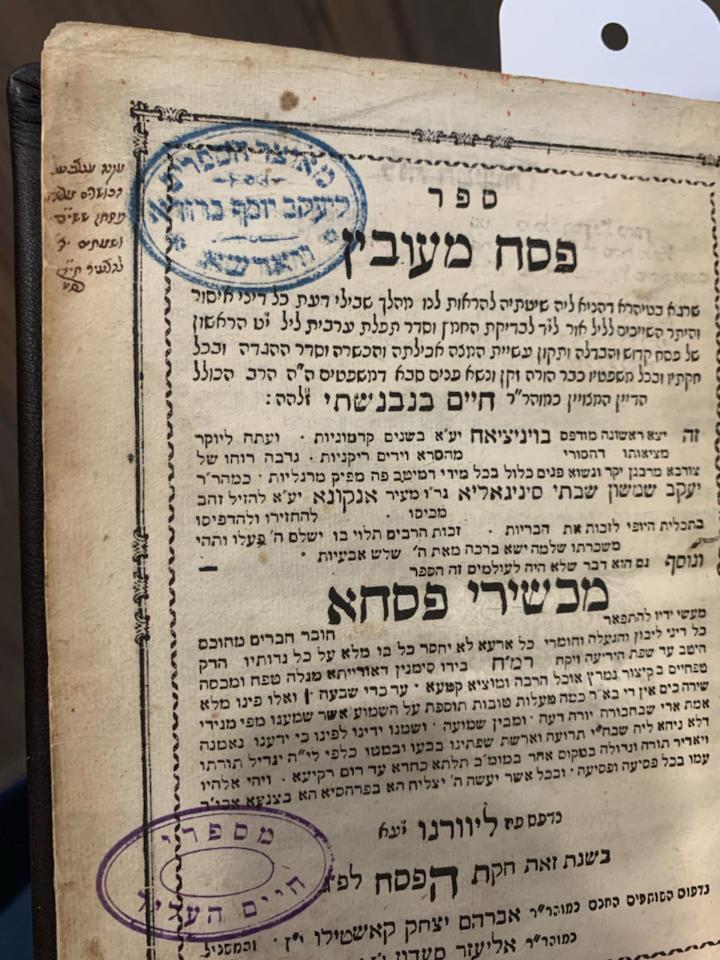
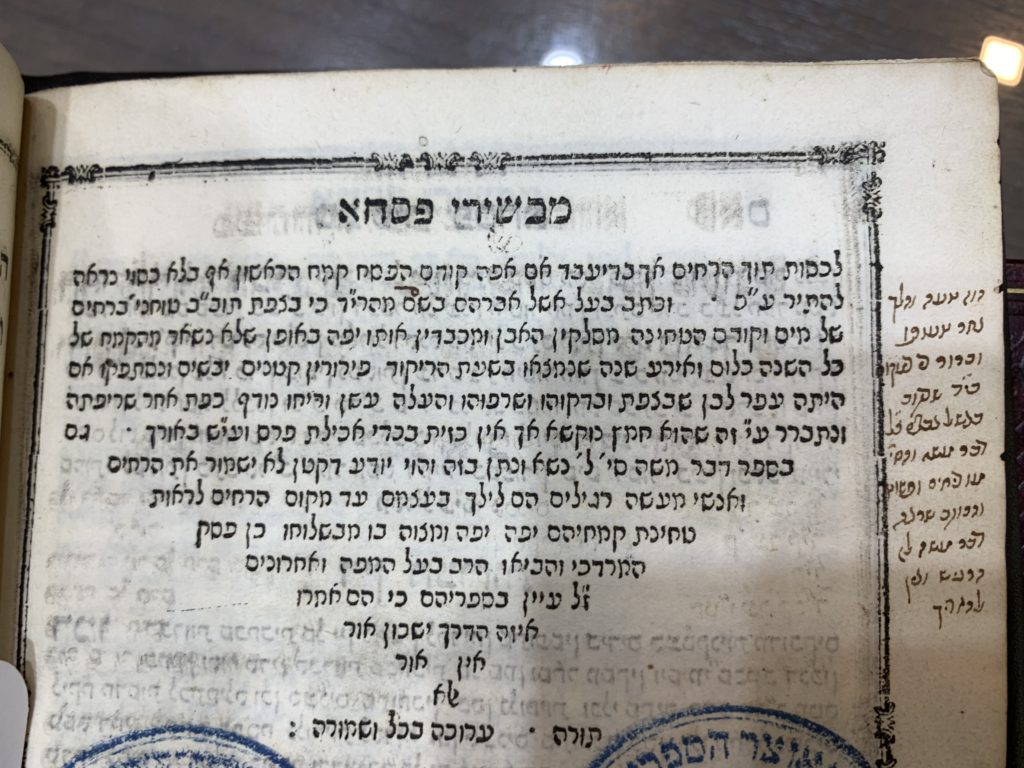

Rabbi Chaim Volozhin’s Motivation to Write Nefesh HaChaim

Rabbi Chaim Volozhin’s Motivation to Write Nefesh HaChaim

(Including a response to R. Bezalel Naor’s Review of Nefesh HaTzimtzum)

Avinoam Fraenkel

Avinoam Fraenkel’s new 2 volume work, Nefesh HaTzimtzum (Urim Publications), is a full facing page translation and extensive commentary on Nefesh HaChaim together with all related writings by R. Chaim Volozhin. It also presents a groundbreaking study on the Kabbalistic concept of Tzimtzum which is demonstrated to be the key principle underpinning all of Nefesh HaChaim. The following essay captures some of the key insights in overview from Nefesh HaTzimtzum which should be referred to for in-depth details and sources.[1]

Life is complex and our most significant actions in life are often motivated by a wide spectrum of catalysts driven by both conscious and subconscious objectives. Therefore it is a considerable challenge when looking deeply into R. Chaim Volozhin’s magnum opus, Nefesh HaChaim, to try to ascertain what may have primarily driven him to compose it and what motivated him to provide an urgent deathbed instruction to his son in 1821, to publish it as soon as possible.[2]

Was it simply a structured presentation, recording the enormously important worldview of R. Chaim’s revered master, the Vilna Gaon? Was it a manifesto to set the tone for his newfound and soon to be world famous Volozhin Yeshiva? Was it a broadside shot at the entire Chassidic establishment to attempt to bring it into line? Was it a defense for the Mitnagdic camp, to shore up their opposition to the Chassidim by providing them with its own authoritative framework to dampen any attraction to the looming specter of what for many was the compelling allure of the competing Chassidic philosophy?

In all likelihood, all of these factors and many more, both communal and personal, may have motivated R. Chaim, at least to some degree. Nevertheless, on investigation, it appears that there was indeed a single primary motivating factor that can be isolated as significantly influencing the presentation of Nefesh HaChaim. However, in order to be able to relate to this factor, it is necessary to first dispel a smokescreen of deep rooted misconception which has persisted for the last 200 years about perceived fundamental differences of faith between the Chassidim and the Mitnagdim. Once dispelled, as explained below, it becomes clear that R. Chaim aimed his urgent message in Nefesh HaChaim at many on the periphery of the Chassidic movement, but not directly at the Chassidic establishment itself. He perceived those on the periphery to be at severe risk of compromising their faith due to their mistaken adoption of practices whose sole objective was to passionately increase their piety to get closer to God at all costs even if this would ironically result in Halachic compromise.

This smokescreen was a result of raging turmoil between the Chassidim and their opponents, the extent of which was so acute that it caused many to be utterly confused as to what the fight was actually about. It prepared the ground for it to be all too easy to believe and accept that the schism was about the fundamental principles of Judaism focusing, in particular, on the Kabbalistic concept of Tzimtzum and the degree to which God is directly manifest in this physical world – and therefore to have a different perception of the required balance between the desire to get closer to God and the necessary punctilious observance of the Halacha. So, even though many equivalences can be found between statements in Nefesh HaChaim, the contemporary Chassidic literature of its time in general and Sefer HaTanya in particular, the profound importance of the key message of Nefesh HaChaim to the wider Chassidic community was entirely misunderstood and therefore totally ignored, as Nefesh HaChaim was perceived to have been based on a fundamentally different philosophical outlook that diverged from what was mistakenly thought by many to be the exclusively Chassidic view on the extent of God’s immanence.

It should be noted that this is not just of historic interest in that it was only relevant in R. Chaim’s day. Even though the acuteness of the schism between the Chassidim and Mitnagdim has abated and both camps, although with some exceptions, are generally accepting of each other nowadays, nevertheless the prevalence of Halachic practice becoming the primary casualty of a desire to get closer to God is in many ways just as rife today as it ever was. This impacts all camps across the entire spectrum of Jewish religious affiliation. The less religiously affiliated who are susceptible to possibly view Halachic compromise as sometimes being acceptable if they see it as enabling more of their activities to otherwise be closer to God. The more religiously affiliated who frequently adopt pious self-imposed practices going beyond the letter of Halachic obligation, where out of what they call “Frumkeit,” are vulnerable to possibly look down on, speak about and act disdainfully with baseless hatred towards others who they may view as less pious, flagrantly and often publicly breaching the Halacha. This phenomenon is arguably manifest in its worst form in instances of acts of open aggression in the name of God against Jews by some extremist Jews who try to enforce what they perceive to be a high level of piety, where neither the aggression nor the supposed piety conform with anything even vaguely close to any accepted standard of Halachic practice. R. Chaim’s message is therefore just as urgently required and relevant today and the fact that Nefesh HaChaim has largely been ignored for the last 200 years has prevented its critical message from being properly communicated and absorbed.

It should also be highlighted that while the Chassidic community has ignored the message of Nefesh HaChaim due to their perception of the entire work as being philosophically disconnected from their own outlook, the Mitnagdim on the other hand have had a problem accepting the widespread study of Kabbalah. No-one in the Mitnagdic community has any authority or would dare to challenge the status of Nefesh HaChaim as a seminal work that must be studied. Nevertheless, many in the Mitnagdic community have been generally guilty of attempting to rebrand Nefesh HaChaim, trying to ignore that it is a Kabbalistic work, failing to appreciate, or even denying outright, that engagement in the Kabbalistic concepts it so intentionally presents for public consumption is an absolute pre-requisite to properly relate to its message. They surreptitiously treat it as an ethical work, a work of Mussar, by only focusing study on some selected non-Kabbalistic parts of the book and thereby entirely miss the point of the book.[3]]Therefore from either the Chassidic or Mitnagdic perspective, the key burning message of Nefesh HaChaim which so badly needs to be applied to Jewish life today, has sadly and irresponsibly been ignored!

The historic smokescreen of fundamental difference between the Chassidic and Mitnagdic camps has unfortunately been propagated by many of great stature in the Jewish world and also by many in the academic world. Simply put, the general mistaken presentation of difference around the Tzimtzum process which explains why we cannot see the infinite God in this finite physical world, is that the Chassidic view is that God is present everywhere and in everything physical but His presence is concealed, i.e., God is totally immanent. Whereas the Mitnagdic view is that God is removed and absent from the physical world and merely controls all from a distance through Divine Providence, i.e., God is totally transcendent.

This unfortunate presentation was perhaps most famously captured by a letter written in 1939 by R. Menachem Mendel Schneerson, the last Lubavitcher Rebbe, which delineates a 4 position approach to the concept of Tzimtzum and presents a picture of stark contrast between each of the views of the Vilna Gaon, the Baal HaTanya and R. Chaim.[4] In this letter R. Schneerson went so far as to state “… the author of Nefesh HaChaim … disagrees with his master, the Vilna Gaon [about the concept of Tzimtzum]. In general, it appears that R. Chaim Volozhin saw the works of Lubavitch – and Sefer HaTanya, in particular – and that he was influenced by them, however, I do not have definite proof of this.” In contrast to the positions of both the Vilna Gaon and R. Chaim, R. Schneerson then continued to explain the Chassidic view, that the Tzimtzum process was only initially applied to “the lowest level of the Light [of the Ein Sof].”

R. Schneerson’s statement here explicitly highlights a diverse difference in fundamental philosophical outlook between the Chassidic world and that of the Vilna Gaon and therefore the Mitnagdic world. His suggestion, without proof, that R. Chaim was swayed somewhat towards what he describes as the Chassidic view was based on the employment of many seemingly Chassidic statements in Nefesh HaChaim.

However, on in-depth study of the positions of the Vilna Gaon, R. Chaim and the Leshem[5] it becomes crystal clear that they are identical with the Baal HaTanya, and indeed with the Arizal and the Zohar, regarding the concept of Tzimtzum. In order to see this it is crucial not to initially look at the terminology they employ but to carefully assess the substance of each of their arguments. On face value, the Vilna Gaon and the Leshem seemed to openly express strong dissatisfaction with the Chassidic perspective and there is scope to question if the Baal HaTanya aimed scathing comments on this topic directly at the Vilna Gaon. Notwithstanding this, if we are particular to examine what they actually say about the substance of the topic, and not be deflected about what they may or may not have said about each other, then it will allow us to see that they in fact all agreed.

The critical factor to appreciate the substance of each of their arguments is to understand that they all saw the arena within which the Tzimtzum process occurs as only being in the Sefira of Malchut of any level, including that of the highest level called the “Ein Sof.”[6] Malchut is the lowest Sefira of any level and is in fact in a different dimension to it. This means that any change within Malchut of any level as a result of the Tzimtzum process, does not impact the level itself in any way. Therefore, the first instance of the Tzimtzum process which occurred in the Malchut of the first level which was emanated from God’s Essence, the Ein Sof, did not impact the Ein Sof in any way. Therefore, by extension, not only does the Tzimtzum process not change the Ein Sof, it also has no impact on God’s Essence in any way.

Once this is understood then it becomes clear that the debate over whether Tzimtzum means either immanence or transcendence is simply wrong. As the Tzimtzum removal only occurs within Malchut, transcendence only applies to Malchut. Therefore, everything above Malchut, i.e., both God’s Essence and also the Ein Sof, is entirely and absolutely immanent. In other words, the Tzimtzum process itself results in a dual simultaneous combination of both immanence and transcendence. The particular stance of immanence or transcendence then becomes a matter of perspective. In the language of the Nefesh HaChaim, immanence is “Mitzido”, the perspective of the higher level (and ultimately God’s perspective) and transcendence is “Mitzideinu”, the perspective of the lower level (and ultimately that of the physical creations).[7] All discussion about the differences between levels therefore becomes relative to the level the discussion is centered upon. This point is so important that it is the key to begin to understand any discussions of the Arizal.[8]

This, in a nutshell, is the concept of Tzimtzum that was held in common by the Vilna Gaon, R. Chaim, the Leshem, the Arizal and the Zohar. Any time any one of these sources refers to a “removal”, they are therefore referring to a removal within “Malchut” only of whatever level they happen to be discussing. It is far beyond the scope of this essay to provide sources to explain the concepts and demonstrate how they translate into day to day life and the reader is referred to Nefesh HaTzimtzum.[9]

However, just to whet the appetite and demonstrate that our focus must be on the substance of the argument and to not be deflected by terminology let’s look at two simple sources. The Baal HaTanya states “… the characteristic of His Malchut is the characteristic of Tzimtzum and concealment, that conceals the light of the Ein Sof.”[10] This, unsurprisingly, is consistent with R. Schneerson’s statement that the Tzimtzum process was only initially applied to “the lowest level of the Light [of the Ein Sof].” The Leshem, on the other hand, states the following “…and therefore that place within which the Tzimtzum process occurred is called Malchut of the Ein Sof … it is exclusively in Malchut of every revelation for every Tzimtzum is exclusively in Malchut ….”[11] Therefore, very surprisingly to many, the Leshem, the staunch Mitnaged and follower of the path of the Vilna Gaon, entirely agrees with the Baal HaTanya and with what R. Schneerson presents as the Chassidic view that the Tzimtzum process is only within Malchut!

With all of the above in mind, we are now in a position to step aside and briefly focus our attention on R. Bezalel Naor’s review of Nefesh HaTzimtzum (see here). In his eloquent review, he “cuts to the chase,” as he puts it, to describe his argument against the Tzimtzum thesis of Nefesh HaTzimtzum. Unfortunately, he “cuts” out more than he “chases” and it is astonishing that in his entire review, R. Naor doesn’t even vaguely mention or make any attempt to counter the key critical factor presented above that is emphasized numerous times in Nefesh Hatzimtzum, that all the players in the Tzimtzum discussion agree with each other that Tzimtzum happens exclusively in Malchut! It seems that R. Naor, in common with many of great stature before him, has unfortunately fallen into the classic historical trap which has plagued this topic for centuries of focusing on a presumed understanding of the terminology employed by the various proponents, especially in their expressions of disagreement with their colleagues. In doing so he has failed to investigate the actual substance of their Tzimtzum argumentation and is unaware that they actually agreed with each other! (This response continues in the note.[12])

Stepping back to the main thread of this essay, historically most were severely misled and confused by a smokescreen of difference which was contributed to by two key factors. Firstly, by terminology used by some key Kabbalists, the historic context of which was misunderstood.[13] Secondly, by a famous letter forged in the name of the Baal HaTanya which explained the Vilna Gaon’s position on Tzimtzum as arguing with the view of Chassidut.[14] However, not all were misled. Rabbi Eliyahu Dessler, among many other prominent individuals, understood that the argument between the Chassidim and the Mitnagdim was not about the fundamental principles of Judaism. He wrote on the topic of Tzimtzum in 1938 that “in this generation in which there is a need to unite…it is fitting to publicize the fact that there are no differences of opinion in the essence of these issues”.[15]

After fully absorbing the fact that the philosophical outlook in relation to the Tzimtzum concept of the Vilna Gaon, R. Chaim, the Baal HaTanya and the Chassidic world are identical, the genius of R. Chaim’s presentation in Nefesh HaChaim can then be clearly seen. The Chassidic works of his day, including Sefer HaTanya, barely quoted their sources. In contrast, when R. Chaim presents his ideas in general, and the concept of Tzimtzum in particular, ideas which at the time were seen by many to be uniquely Chassidic ideas, he frames them in the context of extensive quotations from and references to traditional Jewish sources. As mentioned above, he even uses many similar expressions and sentences to those appearing in the Chassidic works of his day. He is demonstrating that there is no scope for anyone to suggest that there is a fundamental difference between the formal outlook of the Chassidic Movement and that of mainstream Judaism and that the paths for serving God of both the Chassidim and the Mitnagdim are fundamentally the same and are derived from the same Torah and the same Mesorah. Therefore, against a historic backdrop of some who erroneously thought that the new Chassidic Movement had blazed a new trail in Judaism and were using the inspiring Chassidic presentation of these concepts to compromise Halacha, R. Chaim’s key message is, there is no basis for anyone to bend these concepts out of their true context of mainstream Judaism, and as a result, there is no basis to use them to license Halachic compromise in any way whatsoever.

It is fascinating to note that R. Chaim was not alone in this quest to highlight the potential pitfalls of Halachic compromise resulting from an attempt to get closer to God. He was joined by some of the establishment Chassidic figures who expressed themselves in a very similar way.[16] Furthermore it is inconceivable that the Baal HaTanya would have sanctioned any form of Halachic compromise, as he is after all the author of the widely respected and accepted Halachic work, the Shulchan Aruch HaRav.[17]

The underlying principle guiding R. Chaim’s presentation in Nefesh HaChaim reflects the position of his master, the Vilna Gaon, that as the Kabbalah is an intrinsic part of the Torah, it cannot be that anything derived from it can prescribe any action which contradicts and is inconsistent with the Torah.[18] Any directive derived from the Kabbalah which contravenes the Torah and Halachic practice must therefore be a misunderstanding of Kabbalah. In addition, this principle was explicitly highlighted by some of the Chassidic masters who were also clearly objecting to the same phenomenon of Halachic compromise on the periphery of the Chassidic world that R. Chaim was objecting to.[19]

The outcome of all the above is that because of R. Chaim’s historic motivation to write Nefesh HaChaim, he has left us with a remarkable work, a motivational framework of how a person is to view and philosophically interact with the world, which substantiates every statement it makes by referencing many traditional Jewish sources in general, and Kabbalistic sources in particular. As a result, the highly structured presentation of Nefesh HaChaim itself is a unique gateway into the highly unstructured world of Kabbalah. It is a tremendous portal through which a genuine introduction to the world of Kabbalah and to the deeper meaning of the Torah has been made accessible to one and all. May the study of Nefesh HaChaim and R. Chaim’s Torah bring a true conscious awareness of unity in the Jewish World.

[1] Nefesh HaTzimtzum includes the following:

  • A historical and structural introductory overview.
  • A corrected Hebrew text for Nefesh HaChaim, likely to be the most accurate ever published.
  • An innovative hierarchical presentation of both the Hebrew and facing page English texts for ease of use.
  • Extensive explanatory annotations on all texts.
  • Expansion in English translation of virtually all sources quoted and referenced in Nefesh HaChaim, including all Kabbalistic sources.
  • An explanation of the concept of Tzimtzum with:
    • Full details of the positions of the Zohar, the Arizal, Yosef ben Immanuel Irgess, R. Immanuel Chai Ricchi, the Vilna Gaon, the Baal HaTanya, R. Chaim Volozhin, the Leshem, R. Dessler and the Lubavitcher Rebbe, among others.
    • Extensive source material in both the original Hebrew and facing page translation.
    • A comparison between Nefesh HaChaim and Sefer HaTanya on their key approaches to Torah study, Mitzvah performance and prayer which are all based on their common understanding of the Tzimtzum concept.
    • A demonstration of how the correct understanding of the Tzimtzum concept underpins the concept of Partzuf and therefore all of the Arizal’s Kabbalistic teachings.
    • A presentation of the Vilna Gaon’s messianic outlook which is dependent on knowing Kabbalah and Science.
  • An explanation of the concept of The World of the Malbush.
  • Facing page translation of all of R. Chaim Volozhin’s published writings related to Nefesh HaChaim, including his single published sermon, letters and his introductions to commentaries of the Vilna Gaon on Shulchan Aruch, Zohar and Sifra DeTzniyuta (which includes the largest authentic published repository of stories of the Vilna Gaon by any of his students).
  • Translated and cross-referenced extracts of all Nefesh HaChaim related sections from Ruach Chaim.
  • Yosef Zundel of Salant’s brief extract on prayer with translation.
  • Detailed outlines and extensive indexes by themes, people’s names and book references.

[2] As recorded by R. Chaim’s son, R. Yitzchak, in his introduction to Nefesh HaChaim. Nefesh HaChaim was subsequently published in 1824.

[3] Most of the Yeshivot which include the study of Nefesh HaChaim as part of their curriculum only study the last section, the Fourth Gateway. Most of the commentaries and translations that have been published to date omit comment on or even translation of the Kabbalistic material which forms a substantial part of the book.

[4] Iggrot Kodesh, published by Kehot, Volume 1, Letter 11.

[5] For a scholarly portrait of the Leshem which brings together much important biographical information, a succinct overview of the Leshem’s major works and many further sources, see Joey Rosenfeld, “A Tribute to Rav Shlomo Elyashiv, Author of Leshem Shevo v-Achloma: On his Ninetieth Yahrzeit,” the Seforim blog, 10 March 2015, available here.

[6] It is not in the scope of the discussion here to discuss what is meant by a Sefira or a level. In Kabbalistic terminology a level may be called a “World” or a “Partzuf”.  A “Sefira” is a subcomponent of the “World” or the “Partzuf”.

[7] “Mitzido”/”Mitzideinu” are also synonymous with the Zohar’s terminology “Yichuda Ilaah”/ “Yichuda Tataah,” e.g., as per end of Nefesh HaChaim 3:6 (Nefesh HaTzimtzum, Vol. 1, pp. 510-511).  Incidentally “Mitzido”/”Mitzideinu” are also synonymous with the terms of “Orot”/”Keilim”.
“Mitzideinu”, “Yichuda Tataah” and “Keilim” are all different expressions which mean “Malchut”.

[8] In particular, it is the dual simultaneous perspective which generates the concept of “Partzuf” which underpins all the discussions of the Arizal. See Nefesh HaTzimtzum, Vol. 2, pp. 145-150.

[9] In particular, to the first 2 sections of Volume 2.

[10] Sefer HaTanya 2:7:

… שמדת מלכותו היא מדת הצמצום וההסתר להסתיר אור אין סוף …

[11] Sefer Hakdamot UShearim, Shaar 7, Perek 5, Ot 1:

… ולכן נקרא אותו המקום שנתצמצם בו בשם מלכות דאין סוף … הנה הוא הכל בהמלכות של כל גילוי כי כל צמצום הוא רק בהמלכות …

There are many similar statements across the writings of the Leshem. This source is particularly explicit and the review of all of Ot 1 will be insightful.

[12] In continuation of the response to R. Naor’s review, a number of points have been picked up on as detailed below. Please note that all of these points are side issues and pale into insignificance compared to the details of R. Naor’s stark omission of the concept of Tzimtzum in Malchut as per the main essay text. These points are as follows:

(1) In note 1 of his review, R. Naor quotes Dr. Menachem Kallus and mentions that in a note to Etz Chaim, R. Meir “Poppers writes that it sounds to him as if Luria’s disciples Rabbi Hayyim Vital and Rabbi Yosef ibn Tabul understood from the Rav [Isaac Luria] that ‘the Tzimtzum is literal’ (‘ha-tzimtzum ke-mishma‘o’).”

R. Naor’s suggestion here is that the Arizal is saying that the Tzimtzum process results in total literal removal and transcendence of God from physicality. However, in the light of the fact that we now know that the Tzimtzum process that the Arizal is referring to only took place in Malchut of the Ein Sof, this point is simply not relevant as the removal and transcendence only occurs in Malchut, from the perspective of the creations, Mitzideinu, but at the same time there is a total immanence of God within the unchanged presence of the Ein Sof.

Even the Baal HaTanya agrees that there is a removal in Malchut, resulting in physicality from our perspective, as he says e.g., in Sefer HaTanya 2:3 that our “flesh eyes” only see physicality.

Also see the particularly explicit statement of the Baal HaTanya in Sefer HaTanya 4:20 which is a direct corollary of the Mitzido/Mitzideinu concept of Nefesh HaChaim: “Relative to [God – i.e., Mitzido], the created physical entity is as if it has no consequence, i.e., its existence is nullified relative to the power and the light which is bestowed within it. It is like the radiance of the sun [before it has emanated and is still] within the sun. This is specifically relative to Him, where His Awareness is from above to below. However, from the perspective of the awareness of [the created entities – i.e, Mitzideinu,] from below to above, the created physical entity is an entirely separate/disconnected entity, with this awareness and perception being [only] from below, as [from its perspective] the power which is bestowed within it is absolutely not perceived at all.”

Multiple sources from across Sefer HaTanya directly expressing the Mitzido/Mitzideinu concept are brought in Nefesh HaTzimtzum, Vol. 2, pp. 94-95, fn. 120.

(2) R. Naor quotes from R. Yitzchak Aizik of Homil, one of the greatest students of the Baal HaTanya who stated that the Mitnagdim “have no room for this faith that All is God.”

It is of interest to note that R. Dessler was a close student of R. Mordechai Duchman who in turn was a close student of R. Yitzchak Aizik of Homil (See Nefesh Hatzimtzum, Vol. 2, p. 305, fn. 474). R. Dessler was therefore intimately familiar with the works of Lubavitch and would have most certainly been aware of R. Yitzchak Aizik of Homil’s comment.  Notwithstanding this he clearly saw that Tzimtzum was not the issue of the Machloket and valiantly tried to publicize this, as quoted in the continuation of this essay.

(3) The Baal HaTanya’s rejection of “Tzimtzum Kipshuto” (Sefer HaTanya 2:7) uses scathing, derisive language to describe those who hold by that position referring to them as “scholars in their own eyes” (Yishayahu 5:21) and that “they also do not speak intelligently” (Iyov 34:35). The question is who was the Baal HaTanya referring to? Nefesh HaTzimtzum presents a number of arguments to say that it could not have been the Vilna Gaon or R. Ricchi and by a process of elimination would then be referring to the Shabbatians.  R. Naor rejects this position but in doing so starkly omits most of the argumentation from Nefesh HaTzimtzum!

A brief summary of the main Nefesh HaTzimtzum arguments is presented as follows (see Nefesh HaTzimtzum, Vol. 2, pp. 75-79 for much more detail on this).

Firstly and most importantly, even if we were to say that the Baal HaTanya was directing his statements at the Vilna Gaon and disagreed with what he may have assumed was the Vilna Gaon’s position, it doesn’t change the fact that the Vilna Gaon actually agreed with the Baal HaTanya on Tzimtzum only occurring in Malchut. So the debate about who the Baal HaTanya was referring to, while it may be interesting, is academic as far as who held what about Tzimtzum is concerned, as both the Baal HaTanya and the Vilna Gaon shared a common position.

R. Naor severely underplays the level of vitriol in the Baal HaTanya’s tone and considers that his statements are mild.  In Nefesh HaTzimtzum, Vol. 2, p. 75, fn. 80, a number of sources are brought which demonstrate that Chazal very specifically used both the expressions “scholars in their own eyes” and “they do not speak intelligently” to refer to the “wicked”, e.g., “. . . and even among the wicked there are scholars, as it says . . . ‘Woe to those who are scholars in their own eyes’” (Bereishit Rabbati, Toldot, on Bereishit 26:12). Even if one could make a (somewhat forced) argument that the Baal HaTanya is taking these expressions out of their original context, since the Baal HaTanya quotes directly from R. Ricchi’s Mishnat Chassidim twice in Sefer HaTanya, it is highly questionable to suggest that such a punctilious author would quote holy statements from anyone he directly refers to derisively as “a scholar in his own eyes” and implies that he is wicked!

The section of Sefer HaTanya which included these statements, although distributed to the Baal HaTanya’s students and is extant in manuscripts of Sefer HaTanya, was only inserted for the first time in a published edition of Sefer HaTanya in the 1900 Romm edition some 88 years after the passing of the Baal HaTanya. It should be noted that this section was not just a few lines containing caustic statements. It actually ran on for a number of pages. The majority of the information it contains is repeated from other places in Sefer HaTanya, although brought together in an effective presentation in one place. Even though this is the only place in Sefer HaTanya that the specific expression “Tzimtzum Kipshuto” is used, the rejection of this position is very clear from the presentation of Tzimtzum in other places in Sefer HaTanya. Therefore, if it were just 2 or 3 caustic statements that were not initially included in Sefer HaTanya and were later inserted in the 1900 edition, it could reasonably be argued (as R. Naor suggests) that they were not included due to the raging arguments at the time of the original printing in 1796 and that they therefore were pointed at the Vilna Gaon. However, if the Baal HaTanya wanted to include this section, it would have been trivial for him to simply edit the 2 or 3 very brief caustic statements to make them politically correct. The fact that he did not edit these statements, but omitted the entire lengthy section, suggests that there was another reason for the omission.

It should also be noted that the Vilna Gaon, never used the expression “Tzimtzum Kipshuto” in any of his writings and also, as already explained, did not actually hold this position. This means that if the Baal HaTanya was directing his vitriol at the Vilna Gaon, he was doing so based on rumor. On the Baal HaTanya’s release from prison in 1798, he wrote a letter outlining the importance of remaining silent in the face of controversy, strongly highlighting that this is a characteristic of those close to God (Sefer HaTanya 4:2). Given the devotional premium that he attached to remaining silent in the face of controversy it would have been complete hypocrisy were the Baal HaTanya to have been openly derisive about his main partner in controversy. This is accentuated by the fact that the Vilna Gaon did not actually hold this position and the Baal HaTanya’s attack would have been based on rumor.

(4) R. Naor quotes what he refers to as a key passage from Yosher Levav (Nefesh HaTzimtzum, Vol. 2, pp. 260-261): “Therefore relative to us (le-gabei didan), it is as if there was no Tzimtzum and we can say that the Tzimtzum is not literal. However, relative to the Ein Sof (le-gabei ha-Ein Sof) itself, it is literal.”  He argues that as R. Ricchi is saying that relative to the creations the Tzimtzum is not literal, how can Nefesh HaTzimtzum present R. Ricchi as saying that relative to the creations the Tzimtzum IS literal?

Unfortunately, R. Naor omits to present the very specific and complex context of R. Ricchi’s statement which appears in Yosher Levav, Ch. 15 – and as a result his statement is misleading!

The context is set at the beginning of Ch. 15, arguably the most subtle argument in the Yosher Levav’s overall Tzimtzum presentation, saying “Even though we have proven that the Tzimtzum process itself is literal, nevertheless there is scope to say that the way in which the Tzimtzum process was applied was not literal”.

R. Ricchi spent the previous few chapters explaining that the Tzimtzum process is literal and earlier (Yosher Levav, Ch. 13) he makes a key statement: “even though I cannot imagine how this could be [literal], as I have no knowledge of how He can contract Himself since there was no space empty of Him – this is my deficiency, as I have no way of knowing anything about His Exalted Unity.”  He is saying that God’s perspective is unknowable and notwithstanding God’s point of view of there being no space empty of Him, that from the point of view of the creations there is an apparent literal removal of God even though, as R. Ricchi highlig hts, he cannot logically relate to how this can be so.  Therefore R. Ricchi’s general position is that from our point of view, relative to us, Tzimtzum IS literal.

In contrast, the very specific context of the beginning of Yosher Levav, Ch. 15, is discussing a scenario after the literal Tzimtzum has already taken place. R. Ricchi explains that after the literal Tzimtzum, there still remained a residue, called a “Reshimu,” which has greater creative intensity than anything we could ever imagine – therefore relative to us, we cannot differentiate between the intensity of the Reshimu and of the Ein Sof, so we would relate to the Reshimu in the same way as we do to the Ein Sof and therefore relative to us there is scope to say that it is as if there was no Tzimtzum – however relative to the Ein Sof it is literal, because compared to the Ein Sof the Reshimu is like something physical.

This point is succinctly related to in Nefesh HaTzimtzum, Vol. 2, p. 70, fn. 65.

[13] In particular by R. Yosef ben Immanuel Ergas and R. Immanuel Chai Ricchi. See Nefesh HaTzimtzum, Vol. 2, pp. 63-71, for details.

[14] This forged letter is published in Iggrot Kodesh Admor HaZaken, published by Kehot in 1987, letter 34, p. 85. It was first published as an appendix to Metzaref HaAvodah, 1858 – which was also an entirely forged work. For extensive details and hard evidence of both the letter and Metzaref HaAvodah forgeries, see Nefesh HaTzimtzum, Vol. 2, pp. 79-88.

[15] This was from a letter written by R. Dessler expressing his position on Tzimtzum. It was R. Dessler’s position which prompted the response by R. Schneerson in his 1939 letter.  R. Dessler’s complete letter is published in Kodshei Yehoshua by his son in-law R. Eliyahu Yehoshua Geldzahler, Volume 5, Siman 421, pp. 1716–1717. It is also partially printed in Michtav MeEliyahu by R. Eliyahu Dessler, Volume 4, p. 324. This part of the letter only appeared in earlier print editions of Michtav MeEliyahu and was removed from the more recent print editions when its editor later decided to include another paragraph which was previously omitted (the complete letter could not be included at that stage as the book layout had been fixed and the contents of this letter had to be restricted to a single page).

[16] E.g., R. Tzvi Elimelech Shapira of Dinov, the Bnei Yisaschar, in Derech Pikudecha, Mitzvah Lo Taaseh 16, Chelek Hamachshava 4. Also R. Nachman of Breslov in Sichot Moharan, Siman 267. See Nefesh HaTzimtzum, Vol. 2, pp. 137-138, fn. 217.

[17] E.g., as quoted frequently by the Chafetz Chaim in his Mishneh Berurah, referring to the Baal HaTanya as “HaGraz”, “HaGaon Rabbi Zalman.”

[18] See R. Chaim’s introduction to the Vilna Gaon’s commentary on Zohar as brought in Nefesh HaTzimtzum, Vol. 2, p. 464.

[19] E.g., R. Tzvi Hirsch of Zidichov in Sur MeRah VeAseh Tov, pp. 79–80 of the Emet publication,

Jerusalem, 1996. Also R. Yitzchak Issac Yehuda Yechiel of Komarna in Zohar Chai, Hakdamat Sefer HaZohar, p. 41b. See Nefesh HaTzimtzum, Vol. 2, pp. 138-139, fn. 217.


Blessed art Thou, O Lord, our God, ruler of the universe, for having not made me Rabbi Yitzchak Adlerstein[1]: Traditional Orthodoxy at a Crossroads

By Mrs. Elizabeth Blottstein-Blatt
I am gravely concerned about the future of Jewish Leadership and the survival of traditional Orthodoxy as we know it.

I know it in my bones that the whole community is drifting to the right. Moreover, this rightward drift can hardly be said to produce Jewish leaders of vision and consequence. The rabbis returning from the yeshivas, whether in my native England, or from Eretz Yisrael, or even from those iconic colonies like the Five Towns and Pikesville, seem a rather wobbly basket of eggs.

In my youth, I would ask my grandmother any question about kashrus in the kitchen. She would always answer correctly, though what she knew of the Shulchan Aruch can be summed up by her devotion to using a spotless white tablecloth every Friday night. Yet the same question posed to a kollel chap requires conferral with a maggid shiur who confers with the mashgiach who parlays with the Rosh Yeshiva who makes a call to Israel.[2] Clearly, the spreading of wisdom has lead to epidemic levels of confusion in certain circles.[3] The mesorah is being pummeled from within! I myself am terrified by these yoetzot women, but at least they do not have to go gadding to some indecisive rabbi every time they find a dairy spoon in a meat drawer.

If memory serves the author, there was a time when isolated rabbis could make difficult decisions, but today we have technology. We are drunk with telephones, facsimiles, electronic mail, and so forth, which we use religiously to contact the six or seven gedolim who are permitted to answer questions. Thus everyone else is relieved of any responsibility of having to look up something in the Shulchan Aruch, and is free to tarry long hours studying Tractate Zevachim, eating cholent three nights a week, and waiting for the Mashiach. Glory be the Gan Eden that we live in!

***
In any event, I was recently forwarded a fascinating web article from Cross-Currents, a website whose contributors carry loose and firm associations with the Aguda, Ohr Samayach, the Haredi College for Women and other right-thinking organisations. The article is by a dynamic Los Angeles rabbi, a gevaldeke human being, considering our generation – rachmana liztlan. Astonishingly, this rabbi exhibits extraordinary respect for those with whom he disagrees. Especially the Far Left, which he claims has no “gedolim or stellar halachists,” nor do its members have much “competence with text that comes with many years of serious […] learning.” Correspondingly, these Far Left rabbis must resort to “wide-scale counterfeiting of Torah” to make up for their ignorance. If this is true, I would hardly bother speaking to such people, much less chiding them respectfully. It must be this rabbi’s enduring commitment to tolerance that endows him with such patience and openness to others. Let the Children of Israel learn from his example!

Now to the point, the fine article begins as a sweeping account of the aggressive advances of Far Left- Wing Modern-Orthodox rabbis. From his description, I could hear the clap of cannon blasts and the approaching artillery shells being fired. I could not help but shiver imagining that Gateshead and Ner Yisrael and the Mir were under siege by the International Rabbinic Fellowship, which is really just another name for Yeshivat Chovevei Torah, which are really Rabbi Avi Weiss and his multitudinous fifty graduates and fifty current rabbinic students! The tens of thousands who attend Gateshead and Chofetz Chaim and Ner Yaakov and Yeshiva University are trembling, for these shock troops have “quietly slipped into pulpits around the country” and are representatives of a Judaism that is so “different” that “it can no longer be called Orthodox as the rest of us know it.”

Yet what specific provocation provoked this good minister of the Mosaic faith to finally sound the battle cry and forewarn the “heimishe” community that “partnership minyanim” and “woman’s Tefillah groups” may soon destroy the ehrliche shtieblach of Hancock Park and Monsey? Apparently, there is another “dynamic Los Angeles rabbi, a wonderful human” that has broken all bounds of normative halachah by publicizing that he can no longer recite the morning benediction of shelo asani isha— Blessed art Thou…for having not made me a woman—because it is inherently offensive to women.[4]

How this provocateur extraordinaire—this “wonderful human”—can be described so glowingly when it is later reported “that he mocks […] the previous gadol hador, Rav Moshe Feinstein zt’l” is yet another indication of the good minister’s boundless respect for those with whom he stridently disagrees.

Returning to the matter at hand, it is abundantly self-evident that one cannot overreact to such provocations, and here I quote the good minister again, “hundreds of thousands of our Modern Orthodox brethren” stand “in danger of embracing a treif ideology.” Yet, if so grave is the matter, so black the threat, I must humbly chide the good minister for restraining his rage…for not doing more and speaking louder!

I was particularly astonished that his article contained an almost mythic absence of halachic sources and citations. What good is all the learning of right-thinking rabbis, who are so much more learned than their left-winging brothers (and occasional sisters, as if it needs be said) if they don’t use their vast erudition as an axe to fell these saboteurs of traditional yiddishkeit! For the briefest of moments, there was a reference to R. Samson Raphael Hirsch zt’l and his battle with the 19th century reformers. But this was the equivalent of pulling the pin and pocketing the grenade. Rav Hirsch himself decided to strike Kol Nidre from the Yom Kipper liturgy, as the prayer “was susceptible to misunderstanding” as one scholar put it.[5] Clearly, the saboteurs might make a comparison.

Then there was a shocking reference to the Rambam, with the good minister’s implicit p’sak that those who attempt to change our holy liturgy, may it remain immaculate and pure until the end of days, are not in any way violating the Thirteen Principles of Faith! To quote briefly: “Rambam writes that we have no right to be dismissive of any Jew who accepts the Thirteen Principles of Faith. ‘When a person believes in these principles…he is included in the nation of Israel.’” Such magnanimous tolerance! ….At least those on the Far-Far Left who reject the 13 Principles are not included among body of Israel, may God have compassion upon their souls. (See endnotes.)[6]

Yet mere mention of Maimonides is the intellectual equivalent of a company of airmen parachuting without a chute. Everyone knows that Rambam acted unorthodoxly upon occasion. Did the good minister forget that Rambam omitted the ancient blessing said by a groom over virgin blood from his magnum opus?[7] The arch rationalist clearly thought the benediction was regressive in the extreme. Fortune prick me, but this could be used as a precedent by the Far Left who claim that shelo asani ishah evokes visages of grunting cavemen![8]

In a similar vein, the Rambam offered liturgical latitude to Ovadiah the Convert, as the devout proselyte felt that repeating certain benedictions verbatim would be dishonest![9] And dare we forget how Rambam arose, as if on a whim, and eliminated the silent amidah from the great synagogues of Egypt? Our provocateur extraordinaire eliminated one blessing—half-mumbled in the small hours of the morning while most are mostly asleep—how can we call this ‘dangerous’ when others (following the Rambam) continue to neuter the mussaf service on the Sabbath and Holidays!?[10] The good minister must do better in his combat with the adversarial Far Left!!!

***
Some right-hearted rabbis (not the good minister, but a fellow swimmer or two in Cross-Currents) have erred in the past by making humiliating concessions to liberal sentiment. One duly noted that “interpreted properly,” the blessing of shelo asani ishah yields a meaning that is “loving and sympathetic.”[11] How this is achieved is not stated precisely, though the recipe seems to require a dash of positive attitude and a pinch of fuzzy creativity. My throbbing heart prays earnestly that the heimeshe community may yet evade the seductive embrace of the lovely-jubbly mumbo-jumbo (so endemic on the sing-along Left); but I fear the gates of the faithful are falling!

Still, there are a host of sages who defend the integrity and original intent of the sacred benediction said by men: “Blessed art Thou… for having not made me a woman;” as well as the women’s benediction: “Blessed art Thou…for having made me according to thy will.” A glorious example is Rabbi Jacob ben Asher who well understood the second-class status of the second sex. He suggests that the woman’s prayer is a form of ‘acquiescence to the Almighty’s decree for the evil (of her status)’[12]: ונהגו הנשים לברךשעשאני כרצונו ואפשר שנוהגים כן שהוא כמי שמצדיק עליו הדין על הרעה.

Lest bleeding hearts try to reinterpret Rabbi ben Asher’s words as being “loving and sympathetic,” we ought to cite Rabbi ben Asher’s comment on the Genesis 1.27, where he offers this fascinating novellae: “The mathematical equivalent of the word ‘male’ is ‘blessing,’ while the mathematical equivalent of the word ‘(and) female’ is ‘curse.’” (Hebrew: זכר בגימטריא ברכה. ונקבה בגימטריא קללה )o[13]

Clearly, tradition deems that women have a diminished stature vis-à-vis men.[14] On account of this, the right-thinking rabbis, who represent the sacred platitudes of our great tradition, ought to declare this sentiment without apology or apologetics. But where are these fearless leaders? Do they need permission from three Gedolim—or at very least a conference call with the executive board of the RCA or Agudas Yisrael—before they can fight on behalf of truth?

To be a tad forward, I myself would be happy to oblige, however, women (for their own good) are hardly encouraged to learn such things as gemora and poskim… let alone engage in debates about Da’as Torah! But perhaps I should sigh with relief. For I shall never be criticized for writing a 3600-word polemic without citing a few dozen ma’arei mekomos (scholarly citations), much less a Rashi or two from Bereishis or Tractate Berachot! Fate, thankfully, has absolved me of such responsibility. To which I might add, without meaning any insult: ‘Blessed art Thou, O Lord, our God, ruler of the universe, for having not made me Rabbi Yitzchak Adlerstein.’

[1] I refer the reader to Rabbi Yitzchak Adlerstein’s article, “Modern-Orthodoxy at a Crossroads” of 27 September, 2011 (link).
Additionally, the title refers the reader to Rabbi Dov Fischer’s article, “Who Hast Not Made me a Liberal Rabbi” of 8 August, 2011 (link).
[2]Cf. Soloveitchik, Haym. Rupture and Reconstruction: The Transformation of Contemporary Orthodoxy. Tradition Volume 28:4 (Summer 1994)
[3] It is hardly surprising that the blessing thanking God that ‘one is not an ignoramus’ was, despite its Talmudic prescription, eventually omitted from the liturgy. (Cf. Menachot 43b; Tosefta Berachot 6:18) Though it has been conjectured that the inverse blessing, thanking the Lord for ‘having not been made a scholar,’ was much more prevalent among the masses (amei haaretz), the assertion has yet to find evidentiary support suitable to archeologists. (For the complete tale, see Borges, J.L. in manuscript: La Búsqueda de Geniza Otros El Cairo (The Search for Cairo’s Other Geniza) from Ficciones II. 1957. Located in the Archives of the Biblioteca Nacional de la República Argentina – Buenos Aires. An incomplete edition was once in the custody of the Valmadonna Trust. However, it was exchanged for several damaged Tractates of the “Bomberg Talmud.” The former is rumoured to be held in the basement of a Franciscan monastery in northern France…Basse-Normandie or thereabouts.
[4] Rabbi Yosef Kanefsky (here).
[5] See entrée for Hirsch, Samson Raphael. Encyclopedia Judaica.
[6] See Shapiro, Marc, “The Limits of Orthodox Theology” for a rather long list of Jewish authorities who are sadly no longer among the fold… I would assume the good minister considers Reform and Conservative Jews who reject the Thirteen Principles to be excluded from the nation. Pity.
[7] Chelkat MeChukak. Even HaEzer 63.2 [7]
[8] I must point out that I differ here with the minister’s rather foolish defence of those who claim that man may have descended from apes (link). Obviously, this is wrong, though there may be some truth to the claim that some part of ‘humanity’ descended from demons. (See Guide of the Perplexed I.7, cf. II.30; Eruvin 18b; Bereishit Rabbah 20:28;24:6)
[9] Iggrot ha-Rambam ed. Y. Shilat (333-334)
[10] The Spanish-Portuguese Synagogue is rumoured to practice this neutered Amida, yet I have been unwilling to visit that I.R.F. cabal to attest to the practice. *In order not give ammunition to the adversary, or cite an individual who might be inappropriately hoisted as a Gadol of the Far Left, I have refrained from mentioning the work of Rabbi Dr. Daniel Sperber in the body of my article. See his book: “On Changes in Jewish Liturgy: Options and Limitations.”
[11] R. Dr. Emanuel Feldman. Tradition 29:4 pages 69-74(Summer 1995)
[12] Tur OH 46.4; Similarly, R. David Abudarhim understood the woman’s blessing as a form of tzidduk hadin. See Sperber (above) ch. 4.
[13] Baal HaTurim Gen. 1.27. Oddly, the math for v’nikevah (163) is two less than klalah (165), which lends itself to a number of insights that I have yet to fully explore.
[14] See Beit Yosef’s elucidation of Rashi’s view. On Tur OH 46.4; For further reading, see R. Eliezer Berkovits’ “Jewish Women in Time and Torah.” Chapters 1-2. Ktav, 1990.