Daniel Sperber’s New Book – “The Path of Halakha”

As was noted in a prior post, Prof. Daniel Sperber has published another book – Darkah shel Halakha Kiryat Nashim b’Torah. As the title implies the main focus of the book is to discuss the permissablity of women being called to the Torah. Much has already been written on the topic, however, Prof. Sperber’s focus is distinct. He focuses on two aspects (aside from other halachic considerations) kavod ha’briyot and more generally, how halakha has adapted over time. In his inimitable fashion he marshals terrific sources – the footnotes contain a treasure trove of material. It is especially interesting to see, for instance, R. Yissocher Frand and Prof. Michael Silber cited in the same footnote.

The book, however, is not limited to the narrower issue of women and Torah reading but instead, there is an extensive discussion throughout regarding changes which happened throughout history in the halakhic practice. To clarify any ambiguity Prof. Sperber includes an appendix listing many laws from the Shulhan Arukh which are no longer practiced in the same manner as advocated by the Shulhan Arukh. He also has chapters or appendixes devoted to specific instances [interestingly, he doesn’t mention the tosafot, Moed Katan, 21a, s.v. elu which appears to support his thesis] where there have been changes in practice, including inter alia menstruating women attending the synagogue, the Bat Mitzvah ceremony, and even the inclusion of an ezras nashim (women’s section) in the synagogue. In this last one, we are provided with a terrific history of architecture of synagogues from the Temple period onward.

There are, however, a few places where, Prof. Sperber is not as comprehensive as he is in some of his previous works. While these are a mere handful of footnotes, nevertheless it is worth noting. For instance, in a note he discusses the issue of blowing shofar when Rosh Hashanah falls on Shabbat. While his sources are rather impressive, he misses (on purpose perhaps?) the Mo’adim l’Simcha’s discussion [although he does mention an entire work on the topic which I was unaware – Shofar b’Rosh haShana sh’Chal L’hiyot b’Shabbat, by R. Menachem Bornstein]. Or where he discusses the historic evidence of whether it is permitted to read the newspaper on Shabbat he mentions the controversy about the translation of R. Barukh ha-Levi Epstein’s Mekor Barukh which states the Netziv read the paper on Shabbat. Prof. Sperber doesn’t mention that there is now a entire book devoted to the topic, R. Y. S. Bifus, Mikrayei Kodesh HaKiryah haMutteres ve’haAssurah b’Shabbat, Jerusalem, 2003 (122 pages) as well as Rabbi Dr. Jacob J. Schacter’s article “Facing the Truths of History,” Torah u-Madda Journal 8 (2000): 200-273 [PDF]. These are minor points and should not take away from the whole of the book.

Of course, the ultimate subject matter is the propriety of women and reading the Torah. In this area, Prof. Sperber is very convincing. Again, the sources used are wide ranging. Irrespective of one’s views on the topic, there is much to gain by this book. In fact, whether one is even interested in the particular topic of women and Torah reading is really no matter, this book is worthwhile reading.

The book can be purchased at Biegeleisen books in the US, or it is published by, and can be obtained from, Rubin Mass in Israel.


Forgetfulness & Other Human Errors a New Monography by Marc Shapr

As a religion based on tradition, Judaism places great stock in the words and opinions of its early Sages. This is so to the extent that there is great debate as to whether it is even possible that these early authorities could err. In fact, throughout Jewish literature one can find many areas where people argue for deference based on seniority. For instance, there is an extensive debate on the binding authority, and to what extent, with regard to the Rishonim or the Shulhan Arukh. Similarly, there are those who refuse to allow that the Rishonim or earlier authorities erred. Recently, some accused Rabbi Natan Slifkin of allowing that certain statements of Hazal require reappraisal and that those statements are wrong. In the case of Slifkin, his issues with the particular statements of Hazal were not novel and mainly he repeated some of the same arguments that have been bouncing around for the last 400 years or so without adding anything new to that particular debate. A more important case, however, was that of R. Hayyim Hirschensohn in his discussion of whether women are allowed to hold positions of power.[1]

In the early part of the 20th century there was a debate of the appropriateness of women taking part in elections – whether they can vote or run for office. (Of late, this debate has been renewed by the Young Israel stance regarding women becoming a synagogue president.) Most are aware that those who argue that women cannot hold positions of power rely upon the Rambam, hilkhot melakhim 1:5, who in turn in relying upon a Sifre 147 to Devarim 17:15. R. Hirschensohn, however, understood the Sifre in a radically different manner and in doing so allowed that the Rambam erred in his interpretation of the Sifre. Specifically, R. Hirschensohn argues that the Sifre that states “that the verse (Devarim 17:15) ‘You shall place upon yourselves a king’ limits the placement to a king and not a queen” should be understood that the requirement for a king does not require a queen. That is, should the queen die she need not be replaced; however, should the king die there is a commandment to replace him.” Furthermore, according to R. Hirschensohn, the Sifre has nothing to do with the other statement from Hazal (Yevamot 45b) based on this verse, that “any leadership you shall establish should only be from your brethren [they must be Jewish].”[2] Thus, the Rambam erroneously conflated the two statements and thereby misunderstood the Sifre and came to the incorrect conclusion – that women are barred from all positions of power. As R. Hirschensohn explains “that even one as great as the Rambam in his knowledge and wisdom is not immune from error, an which then caused many who followed after him to rely upon and led to other errors. It is without a doubt the Rambam relied upon memory regarding these statements, and did not have time to reexamine them again” (See Malki ba-Kodesh 2:194).

As one would expect, aside from taking issue with R. Hirschensohn’s position on women holding power, many took issue with R. Hirschensohn’s claim the Rambam erred. R. BenZion Uziel said that although he respects R. Hirschensohn — in fact R. Uziel ultimate held like R. Hirschensohn on this issue — R. Uziel “believed that [R. Hirschensohn] erred in hastily writing such things about our master, Maimonides. For, while we may indeed take issue with his position, we may not characterize him as having committed [elementary] errors in understanding the text, or as having been mislead by custom and historical context. [R. Hirschensohn’s] remarks to such effect are, no doubt, a slip of the pen.” Mishpetei Uziel, vol. 2, Hoshen Mishpat, no. 6 (the translation comes from this article). R. Uziel was not alone in disputing R. Hirschensohn’s assessment of the Rambam as is evidenced by the many letters to R. Hirschensohn and his responses on the issue of the Rambam erring. See, e.g. Malki ba-Kodesh 4:131, 6:103-104 (letter from R. Yosef Babad).[3] It is worth noting that R. Hirschensohn seemed to have tired defending this opinion saying in one letter “that any further argument about this point is only repetitive.” Malki ba-Kodesh 6:100.

Another more recent example was noted by R. Eliezer Brodt in the magazine Datza, no. 15 (19 Kislev 5368): 4, where he calls to attention the recent edition of R. Yosef Karo’s Maggid Mesharim edited with notes by R. Yosef Kohen. In the Maggid Mesharim, amongst the many halakhic statements from the Maggid — the legendary angel that visited R. Karo and whose remarks are recorded in this work — is that “on Rosh ha-Shana one should not eat meat or drink beer [wine] and one should be careful about other foods as well. And, although Ezra said [regarding Rosh ha-Shana] ‘go eat sweet food’ that was only said for the populace, I [the Maggid] am speaking to the special ones.” The problem with this specific statement is that, as many commentaries have noted, it contradicts various Talmudic statements – including a Mishna or two – that imply one should eat meat on Rosh ha-Shana. (For more on the topic of eating meat on Rosh ha-Shana see Eliezer’s post earlier post, available here, additionally, Eliezer’s forthcoming volume on many of the customs of Rosh ha-Shana will also discuss this custom amongst others.)

Amongst the many others who attempted to explain this statement of R. Hayyim of Volozhin explained that the entire power of the Maggid only came from R. Karo himself. Thus, if R. Karo forgot a Mishna or a source then the Maggid wouldn’t know it either. Therefore, “it is clear that at that moment the Bet Yosef [R. Karo] forgot the relevant Mishna, or there was some lack in his recollection or understanding, and due to that the light [understanding] of the relevant Mishna was also held back from the Maggid.” R. David Luria, Kadmut Sefer ha-Zohar 5:4 (Koenigsberg, 1856), p. 35a (quoting R. Hayyim). Thus, according to R. Hayyim, R. Karo could forget and make mistakes.

R. Hayyim of Volozhin’s understanding, however, is completely rejected by R. Yosef Kohen in his new edition of the Maggid Mesharim. R. Kohen commenting on R. Hayyim’s explanation says “I am extremely troubled, how is it possible to say that the great Rabbi Bet Yosef, who understood and was completely fluent in the entire Talmud and Mishna, that he forgot a simple Mishna or that he was weak in a particular Mishna.” Maggid Mesharim, R. Yosef Kohen ed. (Jerusalem, 2007), 418.

Again, we see the two camps clearly, those who allow for human error and forgetfulness and those who refuse to believe great Rabbis could fall prey to these human frailties. An examination of the relevant sources shows that those in the former camp have the greatest support. To return to the Rambam that R. Hirschensohn argued erred in his understanding of the Sifre. The Rambam himself in his famous answer to the Hakhmei Lunel, admitted that he had made a mistake. Similarly, the Rambam’s son, R. Abraham when presented with a contradiction between his father’s statement and a Talmudic passage said “it is possible that my father forgot this passage when he wrote this.”

Likewise, R. Yair Hayyim Bacharach, author of Shu”t Havvot Yair, explains in a responsum “to one Godol who cast aspersions on [R. Bacharach] for claiming errors in the writings of the great earlier ones. That is, you asked how can I have the gall to dispute the earlier ones which we are much smaller. And, that I went further and said [at times] that they had forgotten the words of the Talmud and the Poskim.” R. Bacharach answered “I turn the question back on you, is not this language, that is, ‘you have forgotten [אשתמיטתיה]’ taken from the Talmud itself and applied to the greatest Amoraim . . . using [forgetfulness] is a respectful way to allege that one didn’t remember a relevant passage. Forgetfulness is human nature and affects everyone. Of course, how forgetful one is depends on the person.”

R. Bacharach then offers historical examples to support his contention. “Who is greater than Moshe the greatest prophet who forgot two laws (Shapiro notes that Bacharach erred – Moshe made three errors! (Shapiro, 52 n.220)) due to anger . . . and who is a greater Posek than the Rambam who understood the entire oral Torah as is evidenced by his work and who also authored a commentary on the entire six volumes of the Mishna based on the Talmud . . . who also forgot . . . and Rashi, who was a repository of Torah, but who writes in his commentary to the Torah . . . ‘I don’t know . . . and whom the Ramban wrote that [Rashi] forgot a passage from Midrash Ruth.” R. Bacharach continues to list other such examples. He concludes “there is no shame in saying that the Rishonim and the Achronim . . . forgot a Talmudic passage or Tosefot . . . and this position is evident from the writers in all the generations that precede me, they never held back from saying on the great ones before them.” R. Yair Hayyim Bacharach, Shu”t Hut ha-Shuni, no. 20.

R. Ya’akov Hayyim from Baghdad, in the introduction to his responsa Rav Pealim, echos R. Bacharach’s sentiment. “In truth one can find that many great ones that they made terrific errors, errors that even children wouldn’t make, and at times they made mistakes in quoting biblical verse, as was the case with the goan, wonder of his generation the Hida [R. Hayyim Yosef David Azulai, one of the most erudite scholars of his period] . . . on these sorts of errors the verse ‘that one is blameless from error’ (Psalms 19:13).” By way of example R. Ya’akov Hayyim highlights four such errors R. Yosef Shaul Nathanson, author of the Shu”t Shoel u-Meshiv made in his work. R. Ya’akov Hayyim concludes “therefore, do be surprised to find I disagree with the great ones . . . when I argue they erred because they forgot. Because, such allegations [of forgetfulness] are not unique and in no way take away from their greatness.”

It is particularly ironic that the Hida fell prey to this very type of forgetfulness as he wrote an entire book, Helem Davar, [4] showing exactly these types of mistakes in other’s works. The title of the Hida’s work, Helem Davar is rather instructive when discussing the possibility of sages erring. Helem Davar refers to the sacrifice the members of Sanhedrin would bring should they all err, indicating that even groups of great people are not immune from making mistakes.

With the above introduction we now turn to Professor Marc Shapiro’s new book Studies in Maimonides and His Interpreters (Scranton and London: University of Scranton Press, 2008), 205 pages, where one of the three articles is devoted to showing exactly the type of errors that must be attributed to forgetfulness or faulty memory that appear in the Rambam. This volume is an expanded discussion of Prof. Shapiro’s two earlier articles “Maimonidean Halakhah and Superstition” (2000) and “Principles of Interpretation in Maimonidean Halakhah: Traditional and Academic Perspectives” (2008), both of which originally published in Yeshiva University’s Maimonidean Studies, and includes a Hebrew section of several letters from two twentieth-century Torah giants (R. Joseph Kafih and R. Yehiel Yaakov Weinbeg), as well as from the nineteenth-century-maskil Nahman Isaac Fischmann to R. Samuel David Luzzatto zt”l (ShaDaL).

Shapiro provides many examples of persons who held Maimonides and others could err as well as many who hold that one cannot attribute difficult passages to error. For example, notes that the Hida (contrary to what we have seen above regarding his view of other scholars) held that one can not write off difficulties in Maimonides’ statements to error as “[i]f such approaches are adopted every insignificant student will be able to offer them, and what value is there in writing such thing?” (Shapiro, 8)[5]. On the other hand Shapiro marshalls numerous sources, including the Ramabam himself, who allow for the errors in the Rambam. In the letter to the sages of Lunel, the Rambam states that in his old age he suffers from forgetfulness. (See Shapiro 73 n.295, 76 nn. 308, 309 discussing the controversy over the authenticity of these letters). However, even explict statements from the Rambam himself have been disputed by later authorities. For example, although the Rambam condeeds regarding a law in Yad that he erred, the Gra says that the Rambam was erring is saying he erred. The Gra explains that the original law in Yad is indeed right contrary to the Rambam’s own position. (Shapiro 69 n.282). The Gra’s position is somewhat tenuos, aside from the obvious issue of ignoring the statement of the original author, as “a number of . . . achronim provided what they believed to be better proofs for Maimonides’ decisions than he himself was able to supply” but is has been shown “that the aharonim who adopted this approach erred in almost every example.” (Shapiro 54 n.227).

Included in the book is a short “Note on Maimonides and Muhammad” following censorship that occurred in his “Islam and the Halakhah,” Judaism 42:3 (Summer 1993): 332-343, about which Shapiro writes:

The “Note on Maimonides and Muhammad” found at the end of the English section requires a bit of explanation, as it speaks to the times in which we live and the sometimes precarious state of scholarship when it comes up against larger political forces. In 1993, I published an article in Judaism entitled “Islam and the Halakhah.” In the version of the article submitted to the journal, I mentioned that Maimonides referred to Muhammad as a “madman,” and in a few lines I also explained the origin of the term. When the article appeared in print, however, I was surprised to find that this had been removed without my knowledge. Naively, I thought that this was an innocent mistake, and I inquired as to what had happened. Imagine my shock when I was told that my article had been censored because the journal did not want to publish anything that could be seen as offensive to Muslims! While some may see this as understandable in the wake of the Salman Rushdie episode, it was nevertheless a betrayal of scholarship, which cannot be guided by political correctness. I would hope that any Muslims who see the “Note on Maimonides and Muhammad” will understand that its intent is not to insult their prophet, but rather to clarify a historical issue.

Studies in Maimonides and His Interpreters is available for purchase here at Amazon.com.

The editors of the Seforim blog take great pride in the first post (of hopefully many frequent posts) at this new web address being able to discuss Professor Shapiro’s new work. This is so, as Professor Marc B. Shapiro has been (as many others) a frequent contributor to the Seforim blog. It is such contributions that make the blog so much better.

Notes:
[1] Much of the material on R. Hayyim Hirschensohn was brought to my attention by Marc Herman, “Orthodoxy and Modernity: Rabbi Hayyim Hirschensohn’s Malki ba-kodesh,” (BA thesis, Brandeis University, 2005), 18-51. For a recent review of the scholarly consensus on R. Hayyim Hirschensohn, see Marc B. Shapiro, “Review of Jewish Commitment in a Modern World: Rabbi Hayyim Hirschenson and His Attitude to Modernity by David Zohar,” The Edah Journal 5:1 (Tammuz 5765): 1-6. Additionally, parts of the material on this topic of claiming that people forgot, comes from R. Shmuel Ashkenazi’s article “Helem Davar u-Tous Sofer.” Ashkenazi’s article was originally supposed to appear in the journal Or Yisrael no. 15 (Nissan 5659), but at the last minute the editors decided not to publish it and instead the article was published separately in a run of 25 copies. Ashkenazi, himself an outstanding repository of material – it seems unlikely he forgets but he is human – in this article lists numerous examples of errors that can only be attributed to forgetfulness or printing error. For instance, Ashkenazi notes that R. Yechiel Epstein in his Arukh Ha-Shulhan states “it is surprising that the Rif does not mention the laws of yayin pagum, not in the eigth chapter of berakhot discussing the laws of wine for blessing, or in the tenth chapter of Pesachim regarding kiddush and havdalah.” In fact, however, the Rif in the tenth chapter of Pesachim does discuss the laws of yayin pagum.
Or, the case of R. Aryeh Leib ben Asher Gunzberg (author of Shu”t Shaagat Aryeh), who notes in his Turei Even, that “we never find anywhere that the reading of the Bikurim passage is called Vidyu.” Turei Even, Megilah, 20, s.v. mihu. Ashkenazi cites R. Yeruchum Fishel Perlow’s comments in the journal Noam who notes R. Gunzberg forgot the mishna in Bikurim 2:2 which calls this recitation “viduy” as well as the Rambam in the laws of Bikurim 3:5, who says “it is a mitzvah to preform viduy on the bikurim.” Ashkenazi adds the Tosefta in Bekurim chapter one and the Yerushalmi Bikurim, chapter 2 also refer to this process as viduy.

Another example, this one with the Hida. The Hida in Machzik Beracha (O.C. 468:10) and Lev David (end of chapter 10) states the author of the SeMaK is R. Yecheil. But, the real author is R. Yitzhak Corbeil. The Hida, in his own work on Hebrew bibliography, Shem ha-Gedolim, actually gets it right. But, it appears that he forgot that when he wrote these other works.

[2] R. Moshe Feinstein also argues the Sifre is not connected with the Talmudic statement. See Iggerot Moshe, Yoreh Deah II, #44-45. R. Feinstein, however, ultimately comes to the opposite conclusion then that of R. Hirschensohn – the opinion of the Rambam must be followed and women cannot hold high office.

[3] As an aside, one of the many letters to R. Hirschensohn regarding women’s voting rights came from Yehiel Mihel Goldberg from Radom. Goldberg attempts to bolster R. Hirschensohn with the (now) well-known statement of R. Shmuel Archivolti in his Ma’ayan Ganim and recorded by R. Barukh ha-Levi Epstein in both his Torah Temimah and Mekor Barukh that supposedly is a halakhic statement which allows for women to study Talmud. As I have demonstrated elsewhere, the Ma’ayan Ganim is not a responsa work or halakhic work. But, Goldberg’s use of the Torah Temimah for this point seems to be the earliest. While the Torah Temimah was first printed in 1902 and then reprinted in 1904, it was not reprinted until 1928 and Goldberg’s letter was written in 1921. Perhaps Goldberg’s use evidences that the Torah Temimah was well received soon after it was published.

[4] This work, Helem Davar was recently printed (Beni Brak, 2006) for the first time in book form from manuscript – it also was printed as part of the lager book Iggerot ve-Haskmot Rabbenu ha-Hida also in 2006. Prior to this 2006 publication, R. Yehuda Leib Maimon published Helem Davar in the journal Sinai 43 (1948): 301-15. The 2006 edition includes Maimon’s original article as well as a commentary on Helem Davar, Hokher Davar.

[5] This argument, essentially a slippery slope argument, is also applied to making textual emendations. See, e.g. R. Y. Landau, Noda be-Yehuda Kama, Even ha-Ezer, 32; this issue is discussed by Y.S. Spiegel, Amudim be-Tolodot Sefer ha-Ivri Haghot u-Maghim, Ramat Gan, 2007, pp. 255-56.


The 1908 Student Strike at Rabbi Isaac Elchanan Theological Seminary: A Newly Discovered Document

The 1908 Student Strike at Rabbi Isaac Elchanan Theological
Seminary: A Newly Discovered Document
By Eli Genauer

I would like to thank Dr Zev Eleff for his invaluable assistance in helping me frame this article. I would also like to thank Sharon Horowitz of the Library of Congress for providing research assistance.

The Rabbi Isaac Elchanan Theological Seminary (RIETS), present day Yeshiva University, was officially founded on March 20, 1897. RIETS was the first unequivocally Orthodox Jewish seminary on American soil.  Initially, its mission was entirely religious, limited “to promote the study of the Talmud and to assist in educating and preparing students of the Hebrew faith for the Hebrew Orthodox Ministry.”[1] RIETS’ first years were difficult ones.  It did not move into a building of its own until 1904.[2] Additionally, RIETS faced difficulty meeting its financial obligations.  including a student stipend. As a result, in 1906, RIET’s was beset by a major student strike. Among the student’s demands was that RIETS expand its mission beyond religious education and they demanded that they be instructed in secular subjects, including learning English.[3] While that strike was settled, another student strike and a lockout occurred over similar issues in May 1908. The strike was ended when changes were promised by the board of directors.  Yet, that settlement proved fleeting.
By August 1908, the students were striking again. The students’ strike received notice from the national press, when on August 19th,
the New York Times reported:[4]
the Talmuds are lying idle on the shelves of the Rabbi Isaac
Elchanan Theological Seminary at 156 Henry Street, and the drone of the voices
of the students as they walked back and forth reading aloud from the Hebrew
text is heard no more. For the last few weeks the students have not received
the $3.50 a week which they are paid while they are learning to become Rabbis.
Consequently, they have gone out on strike. Boruch Shapiro, Louis Mahler and
Samuel Broida, the leaders of the demonstration, stationed themselves at the
door of the school yesterday and effectively blockaded the entrance of all the
smaller boys. Nathan Lamport of the Lamport Manufacturing Supply Company, at
278 Canal Street, president of the school, and David Abramowitz of 47 Forsyth
Street, the Secretary, do not know what to do.[5]
On August 20th, citing financial reasons, the board locked out the students and
closed the school.[6] As a result of the closure of the school by the board of directors, some of the students and some Rabbinic leaders tried to form a new school called Yeshiva le-’Rabbanim which was designed to address some of the deficiencies of RIETS.[7]
Although the closure of the RIETS has been documented, the August 1908 student strike that led to the closure is not reflected in any published histories discussing the unilateral closing of the school and lockout of the students by the board ofdirectors on August 20th.[8]
One of the difficulties in piecing together exactly what happened during that August 1908 strike, lockout and its immediate aftermath is the dearth of contemporary records. This lacuna is in part attributable to a general lack of documntation of REITS’ early years.  And, “there are no records extant of the Seminary from its inception in 1897 to its merger with Yeshivat Etz Chaim in 1915. Only the Certificate of Incorporation, scattered newspaper accounts, one or two contemporary citations, and passing references in the memoir literature of the time remain as silent witnesses to the great vision and determination of a few men who…created the first Orthodox rabbinical seminary in America.”[9] As an example, in reporting on the August 1908 closure of the school by the board of directors and its aftermath, one scholar quotes mainly from newspaper accounts of the day.[10] There was an important memoir of that period written by Hayim Reuben Rabinowitz, who was an 18 year old student at the time, but Rabinowitz published his account 60 years later.[11]
Recently, however, a contemporaneous account of the events of 1908 has come to light.  This account was discovered as a result of construction at Congregation Bikur Cholim Machzikay Hadath in Seattle, Washington, when workers came upon a box of papers labeled, “Rabbi B. Shapiro Papers, 1920s-1960’s.” Rabbi Boruch Shapiro (1883-1970) was born in Szmorgon, Lithuania and was recognized as a Talmudic genius (Iluy) at an early age.[12] He was a student of, and received ordination from, Rabbi Meir Simcha of Dvinsk, (Or Sameakh), one of the outstanding rabbinic leaders of his time.[13] While in Dvinsk, R. Shapiro also received ordination from Rabbi Joseph Rozin, known as the “Rogatchover Gaon”.[14]  R. Shapiro immigrated to America in the early 1900’s and visited Seattle in 1913 on a fundraising trip. His visit became permanent when he ended up marrying a local woman, Hinda Gershonowitz and remained in Seattle until his passing in 1970. Rabbi Shapiro is perhaps best remembered as the Rav of Congregation Machzikay Hadath in Seattle, a position he held for forty years.
Before arriving in Seattle and shortly after arriving in America, Rabbi Shapiro studied at RIETS. Because he already possessed rabbinic ordination, he was considered in a special class of students, receiving a higher weekly stipend than most others who studied there. [15] He was sent by the school to give lectures at a synagogue in Brooklyn during the Sukkot holiday of 1905 as an example of the quality of students that were studying in the yeshiva.[16]
The box of papers discovered contains Rabbi Shapiro’s account of the events surrounding the student strike in August 1908, and the subsequent founding of the Yeshiva Le’Rabbanim. The account was written on October 7th, 1908 and covers the period from August 20 until that time. Because Rabbi Shapiro was one of the three student leaders of the strike, his account is particularly relevant to filling in the picture of the details of the August 1908 RIETS student strike.[17] Rabbi Shapiro’s writings, it should be noted, reflect that he and his fellow students had been involved in a struggle with, in his view, a dysfunctional and stubborn board of directors for over two years.[18]
Rabbi Shapiro records that:
On Thursday night, 24 Av 5668(20 August 1908), the Rabbi Isaac
Elchanan Yeshiva was closed in a very unseemly fashion. Mr. [Jonathan] Shepp,
the treasurer of the Yeshiva called the police several times to evict the
yeshiva students from the building in which they learned.[19]
But despite all his efforts, the police declined to do harm to the students.
They remained there despite his displeasure until midnight and at that time
they left for their residences.”[20]
After the students of the Yeshiva had concluded that there was no
hope to improve both the physical and spiritual conditions of the Yeshiva due
to the obduracy of the leaders whose concern was only for themselves, the
students decided to separate from the above named Yeshiva and move to “Adas Bnei
Yisroel” at 213 East Broadway, which welcomed them with open arms.[21] On
28Av (25 August-1908), the students of the Yeshiva moved their place of Torah
study to the above mentioned address in the company of well-known rabbis, such
as Rabbi [Shalom Elchanan] Jaffee[22],
Rabbi [Chaim Sholom] Shoher[23],Rabbi
[Aaron] Gordon [24],
and others, who had gathered there to guide them. After much discussion, it was
decided that the yeshiva students would study temporarily in Adas Bnei Yisroel,
and that they would acquire a charter. So that the leaders of Yeshiva Rabbeinu
Yitzchak Elchanan would not collect money in their name, they decided that this
yeshiva would be called “Yeshiva L’Rabanim”. Similarly, they decided to send
out boxes to collect members and to try to establish this yeshiva on a proper
foundation.
From 28 Av 5668 until 12 Tishrei 5669, three meetings of well-known
rabbis and prominent lay leaders were held. At the second meeting, an interim
leadership team for Yeshiva L’Rabanim was chosen: Rabbi Jaffe, chairman; Rabbi
Shoher vice chairman and treasurer; Rabbi [Joseph Judah Leib] Sossnitz,
administrator;[25]
Rabbi Dr. Rabinowitz from Brooklyn, administrator; Rabbi [Judah Leib] Lazeroff,
administrator,[26]
and others. The job of developing a “program” both in religious and secular
studies for this yeshiva was also assigned to the above leaders.
Even before the closure of the Yeshiva Rabbi Isaac Elchanan, the
physical situation of the students was very bad because for seven weeks prior
to the closure, all they received was a half a kilogram of bread per week.
However, the situation since they left the Yeshiva until now was much worse,
and the poverty and embarrassment they suffered is difficult to describe. Many
of them could have found other means of support, but because of their love of
Torah, they accepted their lot and did not abandon Torah study with which they
had been engaged their entire lives.
Many Rabbis, in writing, speech and action, promised to help. From
all the promises very little materialized, aside from Rabbi Lazaroff, who had
spoken up a few times in his synagogue on behalf of the Yeshiva. He assembled a
worthy number of members from whom he collected funds. The prominent Mr.
[Abraham J.] Goldstein and his brother-in-law, Mr. [P.] Feinberg from Jersey
City came to the assistance of the Yeshiva in the beginning. [27]With
the help of other prominent members of their congregation who worked alongside
their honored Rabbi [Shlomo David] Posner, that synagogue supported the yeshiva
a bit.[28]
To describe in detail all the problems faced by this new endeavor
and the stumbling blocks that were placed in front of this new Yeshiva from the
beginning until now would amount to an entire book. The task was difficult and
the conflict with the administration of the Yeshiva Rabbi Isaac Elchanan
weighed heavily on us. Many did not want to support the students of the Yeshiva
since they saw that the “Morgen Journal” had “sold out” to those above
mentioned administrators to do their bidding. They also felt that the “Tageblatt”
was leaning in the direction of those administrators, and not on the side of
the Yeshiva L’Rabanim. Many rabbis knew and admitted that the yeshiva students
were right, but kept silent due to fear. So much so, even those who had joined
the new Yeshiva were not really able to help it.
The primary laborers on behalf of the new Yeshiva were the students
themselves and especially a student council that was chosen from among them to
lead the struggle. The five members of this council were Mr. A.[vraham]
Shapira, Mr.[Ben Zion] Perl, Mr. [Chaim Yechezkel] Mosesohn, Mr. [H.S.] Linfeld
and Mr. B.[aruch] Shapira who was the leader.[29]
The politics were so intense that oftentimes those in the Yeshiva did not
confide in their fellow students for fear that they were supporting the other
side. The council worked diligently with the three main activists, Rabbi B.
Shapira, Rabbi A. Shapira, and Rabbi Perl who were most instrumental.  They abandoned all their other pursuits such
as attending “Preparatory School,” working day and night to battle with the
administration of Yeshiva Rabbeinu Isaac Elchanan.  Nothing was too difficult for them or beneath
their dignity. Their physical situation was worse than the conditions of other
students, as they had no other means of sustenance and they also received a
more meager stipend compared to what they had been entitled to. They suffered
immensely during this time. They knew that they were making great sacrifices
and losing precious time. Nevertheless, they did not consider their own
personal situations so that they could help establish this new Yeshiva on a
proper foundation. There were times that matters grew so bad that many of the
yeshiva students echoed the complaints of the Jews in the desert: they wanted
to return to their previous Yeshiva, but thanks to many of the yeshiva students
and the student council, especially Rabbi B. Shapira, these complaints were set
aside and it allowed the Yeshiva to attain the status it claims today. The
result of what has been done so far is small compared to what needs to be
completed. Nevertheless, laying the foundation, which was the most difficult to
accomplish, has been done. More effort is required to establish this Yeshiva on
a firm foundation and to transform it into an excellent school that will train
great rabbis in Torah, wisdom, fear of Heaven; who will work within the spirit
of ancient Israel and the spirit of this new generation; and who will unite
both old and young, thereby bring blessing to our people, our Torah and our
holy faith.”
In the end, Yeshiva Le-Rabbanim did not exist for very long because it never had substantial financial backing and support from the general community.[30] The attempt to form an alternative yeshiva apparently did not deter some of the student dissidents to return to RIETS. In 1917, in a RIETS publication, Rabbi Baruch Shapiro and his brother Rabbi Abraham Shapiro along with Rabbi Ben Zion Perl are listed among those ordained by RIETS now serving as rabbis in America.[31] Even more curious, the strike leader Rabbi Baruch Shapiro went on a fundraising tour in 1917 to raise money for the Rabbinical College of America, one of whose components was RIETS.[32]
The strike’s impact, however, on one of the most important future leaders of RIETS and Yeshiva University was profound.  Chaim Rabinowitz wrote “The strikes stimulated the mind of a young Rabbi who had recently arrived in America. This young Rav was Rabbi Dov Revel.” Rabinowitz cites a letter that Dr. Revel wrote to Rabbi Zvi Masliansky in the spring of 1908, where he grieves about the turmoil in RIETS that Rabbi Masliansky had told him about and hopes for better days for the Yeshiva. Rabinowitz concludes “the dream of Rabbi Revel came to fruition in 1915 when he became the Rosh Hayeshiva…and instituted great changes in the order of studies.”[33]
Here is a sample page of the document:


[1]
“Rabbi Isaac Elchanan Theological Seminary Association Certificate of
Incorporation,” March 20, 1897, (quoted in Gilbert Klaperman, “Yeshiva
University:  Seventy-Five Years in
Retrospect,” American Jewish Historical Quarterly 54,1 (September,
1964), 6). William Helmreich, however, states that teaching “the language of
the land” and Talmud was articulated in the RIETS charter, and, as such, “the
first such mention of combining secular and religious studies in one
institution.”  William B. Helmreich, “Old
Wine in New Bottles:  Advanced Yeshivot
in the United States,” American Jewish History, 69, 2 (December 1979),
235.  But, the 1897 certificate does not
mention “language of the land,” and Helmreich’s assertion is without
citation.
[2]
Gilbert Klaperman, The Story of Yeshiva University: The First Jewish
University in America
(New York: Macmillan, 1969) 71-72.
[3]Alexander
Dushkin, Jewish Education in New York City (New York: Bureau of Jewish
Education, 1918), 77-78.
[4]
“Boys Go On Strike,” New York Times, August 19, 1908.
[5] The Times
report may have been the result of the RIETS’ students, who, to gain
sympathy to their cause alerted it to the unrest. See Klaperman, Story,
95
[6] The
most complete report on the student unrest from 1906-1908 can be found in Klaperman,
Story, 94-112.
According
to Rabbi Klaperman, the closure and lockout on August 20th was
reported by the Jewish Morning Journal on Friday August 21st,
1908 and the Judisches Tageblatt on Sunday August 23, 1908. Idem.
217n8.
[7] Gurock,
Men and Women, 40; Rabinowitz, “60 Shana,” 553; and Klaperman, Story,
118.
[8] There
are three discussions regarding the closure of RIETS on Thursday, August 20th,
1908
See Klaperman, Story, 111-12. There is no mention of a
strike immediately preceding the board’s action. Rabbi Klaperman does not cite
the Times article in any of his footnotes. Additionally, in footnote 21,
p.218, he writes that there was no clear picture of presidential succession of
RIETS between February 1906 and fall of 1908, despite an indication in the NY
Times article that Nathan Lamport was the president of the school in August of
1908.
The
second is Hayim R Rabinowitz’s recollections that appeared in Hadoar in
1968. Hayim R. Rabinowitz, “60 Shana le-Shvitot be-Yeshivat Rabbeinu Yitzchok Elchanan,”
Hadoar, June 14, 1968, 552-554. In 1908, Rabinowitz was an
eighteen-year-old student at RIETS, and writes at length regarding the
situation leading up to the closing of the school on August 20th,
with the resultant lockout of the students from the building at 156 Henry
Street, but does not mention that the students had been on strike immediately
preceding this event. Although Rabinowitz was a contemporaneous observer, his
reminiscences were only published sixty years after the events in question.
The third discussion is by Jeffrey Gurock.  Jeffrey Gurock, The Men and Women of
Yeshiva: Higher Education, Orthodoxy, and America Judaism
(New York:  Columbia University Press, 1988) 39-40. Citing
Rabinowitz, p.553, he writes “Frustrated, feeling that a double cross was in
the making, RIETS students were once again talking strike in the late spring
and early summer of 1908.” Gurock, however, does not mention that a strike and
blockade of the building took place in August as indicated by the headline of
the New York Times and in the subsequent article.
[9] Klaperman,
Story, 48.
[10] Idem, 217-19.
[11]
Rabinowitz, “60 Shana,” 552-554, quoted extensively in Gurock, Men and Women,39-41.
[12] The
Jewish American Family Magazine and Gazette (Amerikaner Familian Magazin un
Gazetten)
, vol. XXXIX, no. 47, September 19, 1941, 2.
[13]
Rabbi Meir Simcha was the author of “Ohr Sameach”, an important commentary on
Maimonides’ “Mishna Torah”, and of “Meshech Chochmah”, a commentary on the
Torah. Rabbi Meier Simcha wrote of Rabbi Boruch Shapiro “he has the ability to
formulate outstanding novella acceptable to all”. The Jewish American Family,
2.
[14]
Prior to coming to America, Rabbi Shapiro obtained letters of support from two
other leading rabbinic figures in eastern Europe, Rabbi David Hirsch Eisenstein
and Rabbi Shlomo Vilner. The Jewish American,2. Rabbi Vilner wrote that
he never gives ordination to one so young, but in the case of Rabbi Shapiro, he
was willing to make an exception.
[15]
Rabinowitz, “60 Shana,” 553.  Rabinowitz
also refers to Rabbi Shapiro as a “Gadol B’Torah”
[16] Klaperman,
Story, 62.
[17] The
New York Times article identifies him as one of the three student strike
leaders. See also, Rabinowitz, p.553 As early as 1906, R. Shapiro held a
leadership role.   He was among the four
students chosen to represent the students’ views before RIETS’ board of directors.  Rabinowitz, “60 Shana,” 553; The Jewish American,
2, which states that Rabbi Shapiro was chosen as a representative by the
students in dealing with the board.
[18] Regarding
the student’s relationship with the board of directors, Klaperman describes an interaction
between the students and the directors as follows: “The student’s
dissatisfaction and the obduracy of the directors brought about continuous
agitation in the school and highlighted the confusion of aims in the
curriculum” Klaperman, Story, 86.
[19] Klaperman,
Story,99 writes that in 1906, Jonathan Shepp was elected as the new
treasurer, and that Jonathan Shepp was part of the finance committee appointed
on August 31, 1908 to assist in reopening the school after it was closed on
August 20. Klaperman, Story, 99, 113.
[20] Gurock
indicates that the treasurer threatened to call the police, but that in fact
the police were never called.  Gurock, Men
and Women
, 40 (citing Rabinowitz, “60 Shana,” 553).
[21]
Regarding the address of the building to which the students moved, Rabbi
Shapiro was physically at this new address so it is reasonable to assume that
he recorded it correctly. Additionally, on June 3, 2015, there was an auction
of documents associated with the newly founded Yeshiva La-Rabbanim (Kedem
Auction No.8, Lot 301). One of the documents evidences a stamp which says 213
East Broadway. Rabbi Klaperman lists the address
as 123 East Broadway.  Klaperman, Story,
116, 219n38.
[22] Rabbi
Shalom Elchanan Jaffe (1858-1923) was an important early American Orthodox
Rabbi. He received Semicha from both Rabbi Naftali Zvi Yehuda Berlin and Rabbi
Yitzchak Elchanan Spektor. He arrived in America in 1890 and served as a Rav in
St Louis and in Brooklyn before becoming the Rabbi in 1901 of the prestigious
Beth Midrash Hagadol synagogue on the Lower East Side of New York. He was one
of the most influential of Rabbis at the time, especially when it came to the
supervision of kosher meat. Jaffe’s motivations for his involvement with this breakaway
school, may have less to do with issues than his personality.  According to Klaperman, Jaffe was not one
wedded to the idea of secular education, one of the central demands of the
students. “On the other hand, Rabbi Jaffe was the stormy petrel on the rabbinic
scene, known as an impetuous non conformist who rushed in without fear when his
mind was made up.” Klaperman, Story, 117.
[23] Rabbi
Chaim Sholom Shochar (Rabbi H.S. Shoher) came to Boston in 1882 to be the Rabbi
of Bais Avraham synagogue and subsequently served as the Rabbi of Hadrath
Israel and Mishkan Tefillah among other synagogues in Boston. In 1905, he moved
to New York City to become the Rabbi of the prestigious Shaare Zedek synagogue
located at 38-40 Henry Street. In 1910, he is listed as living at 215 East
Broadway, next door to the location of Yeshiva Le-Rabbanim. He authored a
pro-Zionist book Shalom Yerushalyim in 1909 and passed away in 1918.
[24] Rabbi
Aaron Gordon (1845- 1922) known as the Miadziol (Myadel) Iluy, emigrated to
America in 1890 and was the chief Rabbi of Rochester, New York until 1900 when
he moved to New York City. He was one of the founders of the Agudath Harabanim
and served as head of a Bet Din on the lower east side. He served as the Rabbi
of Congregation Talmud Torah Tiphereth Jerusalem at 147 East Broadway. He was a
prolific writer, authoring many books on Halacha, among them Even Meir
(Pietrokov 1909), Teshuvat Meleat Even (Pietrokov 1912), Minchat Aharon
(Jerusalem, 1920) and Sha’arei Da’at (Jerusalem, 1921).
[25]
Rabbi Joseph Judah Leib Sossnitz (1837-1910) was born in Birzhi, district of
Kovno. He has been described as a Talmudic scholar, mathematician and
scientific author. He settled in New York in 1891 and in 1893, founded a Talmud
Torah on 104th street in Manhattan. In 1899, he was appointed a
lecturer in Jewish ethics at the Educational Alliance at 197 East Broadway.
[26]
Rabbi Judah Leib Lazarov (1875-1939), studied inTelz, Mir, Volozhin and Radin
before immigrating to America in 1898.He was hired as a preacher at Beth
Midrash Hayei Adam at 89 Henry Street in 1903 and succeeded Rabbi S.E. Jaffee
as Rabbi of Beth Midrash Hagadol in 1910. He authored a multi volume work Divrei
Yehudah
(New York, 1906-1910).
Except for Rabbi Dr Rabinowitz who was from Brooklyn, all the above
named rabbinic leaders were from the Lower East Side near both Rabbi Isaac
Elchanan Yeshiva on Henry Street and Yeshiva La’Rabanim on east Broadway. They
most likely would have been aware of the struggles of the students with the
board of the Yeshiva and had possibly allowed them to speak in their synagogues
during the May strike. See Klaperman, Story, 104. It is also possible
they were consulted by the students on an ongoing basis even before they tried
to start a new school.
[27] Abraham
J. Goldstein emigrated to America in 1884 and immediately settled in Jersey
City. One book, Distinguished Jews of America, (New York, 1917), describes
him as “a strict Orthodox Jew in every sense”, “one of the richest and most
prominent citizens of Jersey City”, and “a member of almost every Jewish
organization in Jersey City”. He owned a grocery wholesale business, was
president of the Erie Building and Loan Association, and was one of the largest
real estate owners in Jersey City.
[28] Rabbi
Shlomo David Posner (Rabbi S.D Posner) was a Rabbi in Jersey City, New Jersey,
for many decades. He signed his letters “Rav V’Av Beit Din” of Jersey
City.  He authored a book of homilies Eshed
Hanahar
(New York, 1932). In the introduction, he writes candidly about
being a Rabbi in America over many years. He was involved on a national level
in many Rabbinic organizations and he helped raise money for the Jewish
community in Palestine
[29] It
is interesting to note that Rabbi Shapiro refers to this group as Mr. but later,
refers to three of the group as Rabbi. The two Shapiro brothers and Ben Zion
Perl are referred to by Rabinowitz as having Rabbinic ordination already at
that time. Rabinowitz, “60 Shana,” 553.
The four referred to by Rabbi Shapiro aside from himself are:
(1) Rabbi Abraham Shapiro was the brother of Rabbi Boruch Shapiro.
Like his brother, Abraham already possessed Semicha from Eastern Europe at this
time. He later served as a Rabbi in Canton, Ohio and in Utica, New York. He was
considered to be a prominent Musmach of RIETS in later years.
(2) Rabbi Ben Zion Pearl served as a Rabbi in Harlem. He was the
director of the Uptown Talmud Torah Association which had 2,400 students in
1919. In 1925, he was involved in raising money for the building fund of Rabbi
Isaac Elchanan Yeshiva. He passed away in 1929.
(3) Rabbi Chaim Yechezkel Moseson came
from Lodz Poland, learned in the Yeshiva in Lomza Poland and received Smicha
from Rabbi Yechial Michal Epstein, author of the Oruch Hashulchon. He was the
principal of Yeshiva Torah Vadath, Mesivta Tiferes Yerushlayim, and other
Yeshivot. He wrote many articles for Dos Yiddishe Licht, a newspaper
financed by Cantor Yossele Rosenblatt.
(4) Harry Sebee Linfield
(1889-1978), was a rabbi and statistician. His Jewish Statistical Bureau
conducted research on Jews in America and published numerous reports and other
publications on their findings, specifically the Statistics of Jews. He was born in
Lithuania and came to the United States in 1905. He was awarded a PhD by the
University of Chicago in Semitic language in 1916, and the following year was
ordained a rabbi by the Hebrew Union College in Cincinnati
[30] Klaperman,
Story, 118.
[31] Idem.
262
[32] The
Reform Advocate
, December 29, 1917, p.501
[33]
Rabinowitz, “60 Shana,” 553-554.


Rambam’s Response to the Inclusion of Chicken, Duck and Quail in Qaraite Cuisine

Rambam’s Response to the Inclusion
of Chicken, Duck and Quail in Qaraite Cuisine
By Tzvi H. Adams

In “Waiting
Six Hours for Dairy- A Rabbanite Response to Qaraism” (here)
I posited that Rabbeinu Chananel initiated the practice of waiting six hours
between meat and dairy in order to protect Rabbanite values. This association
was inspired by Dr. Bernard Revel’s studies of 
Rabbanite leaders’ efforts to counter sectarian influences during the
early Middle Ages[1], as well as a shiur by
Rabbi David Bar-Hayim. I then
suggested that Rambam furthered this anti-Qaraite motion by including poultry
into the required six hour waiting category. Rambam’s poultry innovation was intended
to protect Rabbanites from influence of their Qaraite neighbors who cooked meat
and poultry with dairy. Briefly, this latter suggestion was based upon two observations:

a) The simple reading of the Talmud Chullin
104b -עוף וגבינה נאכלין באפיקורן – בלא נטילת ידים ובלא קינוח הפה- as interpreted
by the Gaonim and rishonim for five centuries until Rambam, allowed poultry and
dairy to be consumed consecutively without even kinuach ve’hadacha in
between. Unless we imagine that Rambam possessed a secret hitherto unheard-of
tradition which understood the Talmud’s words in some other fashion, we can
assume that Rambam actually changed the Talmudic halacha in his Yad. Being
the strong proponent of Rabbanite halacha and tradition that he was, Rambam
surely had a compelling reason to make this drastic alteration.

b) There are many instances of
anti-Qaraite creativity in Rambam’s writings and rulings. Examples include:

§ 
Rambam was the first rishon to
disqualify a get (divorce document) written in a Qaraite court by a
Qaraite scribe[2].
§ 
Though the Gaonim and R. Chananel
explicitly say that not eating on the three minor fast days is the individual’s
choice (as per the Talmud’s ruling RH 18b- אין שמד ואין
שלום – רצו – מתענין, רצו – אין מתענין), Rambam chose to
overlook this detail about fast days in his halachic writings. The purpose of
this intentional omission was almost certainly to separate Rabbanites from the
Qaraite community who did not observe the Rabbanite fasting calendar[3].
§ 
Most rishonim recognized the
rabbinic origins of the Yom Kippur afflictions other than not eating or
drinking. Rambam, however, led readers to believe that all five afflictions are
biblically proscribed. It seems that Rambam presented the Yom Kippur restrictions
in this way only to protect the halacha from the Qaraite perspective[4]. 

Other examples were cited in my previous article. It is therefore reasonable to
say that the required waiting period between poultry and dairy, found first in Yad
HaChazaka
, is one more instance of Rambam’s anti-Qaraitic halachic
reformation.

An
analysis of the historical development of Qaraite rules of kosher birds strongly
supports my suggestion[5].
Qaraite halacha did not rely on the Rabbanite Oral Law. Therefore, the kosher
signs of the Mishna Hullin 59a –
 וסימני העוף לא נאמרו אבל אמרו
חכמים כל עוף הדורס טמא כל שיש לו אצבע יתירה וזפק וקורקבנו נקלף טהור ר’ אלעזר
בר’ צדוק אומר כל עוף החולק את רגליו טמא
and the statement of the Talmud Hullin
63b, עוף
טהור נאכל במסורת, were of little
significance to Qaraites. That chicken, duck, quail and other fowl were eaten in
Rabbanite tradition[vi] was
unreliable evidence for these strict Scriptualists. Because the identity of most birds mentioned in the Torah
was ambiguous, Qaraites had no reliable means of recognizing birds as kosher other
than the pigeon and turtledove; they were confident that the correct
translation of תור and יונה had been preserved. The devout Qaraite, therefore, could not
partake of chicken, quail, or duck. Over time, some Qaraites communities became
lenient and found legal rationale to permit these commonly eaten birds. Slowly
over the 12th Description: https://ssl.gstatic.com/ui/v1/icons/mail/images/cleardot.gifand 13th
centuries a lenient policy was adopted by the broad Qaraite community. Because
from the inception of Qaraism its scholars read the passuk, “לא
תבשל גדי בחלב אמו” literally[7],
they had no hesitations against eating and cooking the newly accepted fowl and
dairy together. 

            The
Rabbanite and Qaraite communities were very much interconnected politically and
socially[8];
the divide between the parties was often blurred[9].
Rabbanite leaders sought to protect the integrity of their tradition from sectarian
influence. I demonstrated previously how R. Chananel (990 -1053) and his
disciple, R. Yitchak Al-fasi[10]
(1013
– 1103), created a six hour waiting requirement
between meat and dairy in the early eleventh century – thereby limiting the
social participation of Rabbanites with Qaraites. During the years of the legislating
activity of these sages it was not common practice amongst Qaraites to eat
chicken, duck, and quail, birds on the daily North African Rabbanite menu[11]. R.
Chananel and R. Al-fasi, therefore, did not see a need for demanding a wait
after poultry as there was little concern that Rabbanites and Qaraites would be
dining together over such fowl. Furthermore, it was difficult to reread the
obvious permitting statement of the Talmud, עוף וגבינה
נאכלין באפיקורן. During the century between these sages
and the rise of Rambam (1135-1204) to prominence, Qaraites widely allowed
themselves to eat the same fowl consumed by the Rabbanite community. Now a
Qaraite-Rabbanite poultry dinner was possible and influence from the cooking
practices of “the eaters of milk with meat” (the nickname for Qaraites) was
real. Rambam, seeking to protect Rabbanite tradition from Qaraite values by
building social barriers, creatively placed fowl alongside meat in the
requirement to wait six hours before dairy:
מִי
שֶׁאָכַל בָּשָׂר בַּתְּחִלָּה, בֵּין בְּשַׂר בְּהֵמָה בֵּין בְּשַׂר עוֹף–לֹא
יֹאכַל אַחֲרָיו חָלָב עַד שֶׁיִּשְׁהֶה בֵּינֵיהֶן כְּדֵי שֵׁעוּר סְעוֹדָה
אַחֶרֶת, וְהוּא כְּמוֹ שֵׁשׁ שָׁעוֹת:  מִפְּנֵי
הַבָּשָׂר שֶׁלְּבֵין הַשִּׁנַּיִם, שְׁאֵינוּ סָר בְּקִנּוּחַ
(רמב”ם משנה תורה מאכלות אסורות פרק ט’
הלכה כז)
This addition did not
go unnoticed. In the two generations following Rambam, the greatest rishonim
criticized the Rambam’s reform as it reversed the ruling of the Bavli. Ramban
(1194-1270) was the first to challenge Rambam’s alteration:


אבל הרמב”ן ז”ל כתב דאגרא אפילו עוף ואחר כך גבינה שרא דלישנא הכי משמע
דקאמר עוף וגבינה…(ר”ן על הרי”ף חולין דף לז’)
R. Aaron Halevi
(1230-1300) also challenged Rambam’s ruling:
…ואפילו
הכי שרינן בעוף בלא נטילת ידים משום דקיל דלא מיתסר אלא מדרבנן, ודאי לא שני לן
בין עוף ואחר כך גבינה בין גבינה ואחר כך עוף… הוא הדין לקנוח הפה דלא בעינן
אפי’ בין עוף לגבינה…. ולהוציא קצת מדברי רבי’ ז”ל (=הרמב”ם) שפרשו
דההיא דאגרא דאמר עוף וגבנה נאכלין באפיקורן דוקא גבינה תחילה ואחר כך עוף…
(חידושי רא”ה לחולין דף קד’)
However, within a
century of the publication of Mishna Torah, creative ways of
reinterpreting the words of אגרא were created to fit
this new reform into the Talmud[12].
Tur (1275-1340) YD 89 cites Rambam’s ruling on poultry as if none other exists.
Professor Daniel Frank has thoroughly examined the historical
development of the laws of kosher birds in Qaraite halacha in his monograph,
“May Karaites Eat Chicken? Indeterminacy in Sectarian Halakhic Exegesis”[13].
My chiddush is that the inclusion of chicken, duck, and quail in Qaraite
cuisine in the 12th century provoked Rambam’s tightening of the
poultry and dairy separation laws. Unless noted otherwise, the following
sources and translations are summarized from Frank’s article:

Views of Early Qaraite Scholars
Anan ben David
In his Book of Commandments[14], the early learned schismatic, Anan
ben David (c. 715 – c. 795) writes the following:
Now we do not find any birds were
used for burnt offerings save turtledoves and pigeons, as it is written… (in
lev. 1:14). The juxtaposition of the words ‘of every clean bird’ and ‘he
offered burnt offerings’ thus proves that the only clean birds are turtledoves
and pigeons.
Benjamin Nahawandi
One
of the greatest of the Qaraite scholars of the early ninth century, Benjamin Nahawandi, states:
The only clean birds that can be
eaten are the pigeon and its kind. There are many clean and unclean varieties…
but they cannot be identified by means of physical criteria, since Scripture
does not make these explicit. … The pigeon is (the bird) that makes the cooing
noise in is throat, as it is stated: We coo like doves (Is. 59:11)….
Therefore the only clean bird that is mentioned is the pigeon and its kind[15].
The identification of other clean birds remains uncertain
because the Torah provides no physical description of the birds. Pigeons (and
their turtledove subspecies) are an exception because the Scriptural verse, We
coo like doves
(Is. 59:11), gives a physical sign to identify the
bird.  
Daniel al-Qumisi
Daniel al-Qumisi (d. in Jerusalem 946), founder of the Qaraite
“Mourners of Zion” movement, likewise insisted that because Biblical Hebrew is no longer
the vernacular, the meaning of most of the birds of the Torah has been
forgotten; “for God-fearing people, the only permitted birds are turtledoves,
pigeons and wild pigeons- at least until the coming of the Righteousness”[16].
He attacks the Rabbanites for having invented physical criteria for identifying
kosher birds- as Scripture does not supply these.
Jacob Al-Qirqisani
The
early tenth century Qaraite dogmatist and exegete, Jacob Al-Qirqisani writes similarly
in his Kitabal-Anwar (written in 937):
Should someone say, “The people
already knew these signs via oral tradition from the prophet…” He may be
answered: “As for your statement that the people used to know these signs via
oral tradition from the prophet- this is (but) a claim. You have no proof of
this….”[17]
Japeth ben Ali
The maskil
ha-Golah
and
foremost Qariate Bible commentator, Japeth ben Ali (10th century, born in Iraq
and died in Jerusalem), emphasized that pigeons and turtledoves are the only
unquestionably permitted birds; all other species should be avoided.
Of all the birds, those which are
demonstrably permitted are turtledove and pigeon…. As for chicken, mountain
quail, partridge, duck, goose, crane, sparrow, and others- we must suspend
judgement concerning them all- “until he comes and teaches righteousness”
(Hos.10:12)[18]
Rabbanite Rishonim


The rishonim were very familiar with Qaraite claims.

R. Saadya Gaon
In response to Qaraite scholars, R. Saadya Gaon (882-942) addresses the topic
of the identification of the birds of the Torah in his writings[19],
delivering anti-sectarian polemics.

Targum Psuedo-Yonathan[20]

Dr. Bernard Revel proved in his “תרגום יונתן על
התורה” (here) that the Targum Yonathan (ben
Uziel) was really an early ninth century targum commissioned by the Torah sages
of Eretz Yisroel. He demonstrated that this targum is filled with views of the
Talmud Yerushalmi as well as interpretations aimed at countering sectarian
movements. (here)

וית אלין מינייא תשקצון מן עופא דלית
להון ציבעא יתירא ודלית ליה זפקתא ודקורקבניה ליתוהי מקליף לא יתאכלון (תרגום
יונתן ויקרא יא:יג)
The Targum’s author included the physical criteria for
kosher birds to imply that these signs are contained within the Torah itself
and valid- unlike the views of early Qaraites who disregarded these signs only
known by rabbinic tradition.
Mah-Yedidut [21]

The popular Friday night zemer, Mah-Yedidut, by Menachem (possibly ben
Saruq[22],
920-980 Spain), highlights the differences between the Rabbanite and Qaraite
Sabbath. Menachem emphasizes the obligations of kavod  ve’oneg Shabbos (לְבוּשׁ
בִּגְדֵי חֲמוּדוֹת
and עֹֽנֶג קְרָא לַשַּׁבָּת[23],
וְהַשֵּׁנָה מְשֻׁבַּֽחַת)
and kindling Sabbath lights ([24]לְהַדְלִיק
נֵר בִּבְרָכָה),
the permissibility of thinking of post-Sabbath work ([25]הִרְהוּרִים
מֻתָּרִים)
and gives an allusion to marital relations        (כַּשּׁוֹשַׁנִּים
סוּגָה[26],
בּוֹ יָנֽוּחוּ בֵּן וּבַת וְלָנֽוּחַ בְּחִבַּת) – all points of contention between
Qaraites and Rabbanites.
מַה
יְּדִידוּת מְנוּחָתֵךְ, אַתְּ שַׁבָּת הַמַּלְכָּה, 
בְּכֵן נָרוּץ לִקְרָאתֵךְ, בּֽוֹאִי כַלָּה נְסוּכָה, 
לְבוּשׁ בִּגְדֵי חֲמוּדוֹת, לְהַדְלִיק נֵר בִּבְרָכָה, 
וַתֵּֽכֶל כָּל הָעֲבוֹדוֹת, לֹא תַעֲשׂוּ מְלָאכָה. 
לְהִתְעַנֵּג בְּתַעֲנוּגִים בַּרְבּוּרִים וּשְׂלָו
וְדָגִים. 
מֵעֶֽרֶב מַזְמִינִים, כָּל מִינֵי מַטְעַמִּים, 
מִבְּעוֹד יוֹם מוּכָנִים, תַּרְנְגוֹלִים מְפֻטָּמִים
וְלַעֲרֹךְ כַּמָּה מִינִים, שְׁתוֹת יֵינוֹת מְבֻשָּׂמִים, 
וְתַפְנוּקֵי מַעֲדַנִּים, בְּכָל שָׁלֹשׁ פְּעָמִים. 
לְהִתְעַנֵּג בְּתַעֲנוּגִים בַּרְבּוּרִים וּשְׂלָו
וְדָגִים.  

חֲפָצֶֽיךָ
בּוֹ אֲסוּרִים, וְגַם לַחֲשֹׁב חֶשְׁבּוֹנוֹת, 
הִרְהוּרִים מֻתָּרִים, וּלְשַׁדֵּךְ הַבָּנוֹת, 
וְתִינוֹק לְלַמְּדוֹ סֵֽפֶר, לַמְנַצֵּֽחַ בִּנְגִינוֹת, 
וְלַהֲגוֹת בְּאִמְרֵי שֶֽׁפֶר, בְּכָל פִּנּוֹת וּמַחֲנוֹת. 
לְהִתְעַנֵּג בְּתַעֲנוּגִים בַּרְבּוּרִים וּשְׂלָו וְדָגִים. 
הִלּוּכָךְ תְּהֵא בְנַֽחַת, עֹֽנֶג קְרָא לַשַּׁבָּת, 
וְהַשֵּׁנָה מְשֻׁבַּֽחַת, כְּדָת נֶֽפֶשׁ מְשִׁיבַת, 
בְּכֵן נַפְשִׁי לְךָ עָרְגָה, וְלָנֽוּחַ בְּחִבַּת, 
כַּשּׁוֹשַׁנִּים סוּגָה, בּוֹ יָנֽוּחוּ בֵּן וּבַת. 
לְהִתְעַנֵּג בְּתַעֲנוּגִים בַּרְבּוּרִים וּשְׂלָו
וְדָגִים.

The poet sings of Rabbanite dishes: stuffed chicken (תַּרְנְגוֹלִים
מְפֻטָּמִים),
duck or goose (בַּרְבּוּרִים),
and quail (שְׂלָו)[27]
– poultry one would not find at Qaraite meals. By mentioning these items
Rabbanite tradition is strengthened and cherished.

Byzantium 


Constantinople was a thriving
center of Qaraism during much of the Middle Ages. The Byzantine Rabbanite, Tobiah ben Eliezer (late 11th – early 12th
centuries), often attacks Qaraite ideas[28]
in his Medrash Lekach Tov (written in 1097 and revised it in 1107 or
1108). In Vayikra[29],
Tobiah emphasizes that “generation after generation” birds eaten by the
Byzantine Rabbanites have been permitted: ועוף טהור נאכל
במסורת דור אחר דור כגון האווז ואווז בר ותרנגולת. This indicates that in
his lifetime Byzantine Qaraites refrained from eating the chicken, goose, and
duck.

However, only half a century later, the Byzantine Qaraite scholar, Judah Hadassi, tells that many of
his landsmen allowed themselves to partake of these fowl. In his Eshkol
ha-Kofer
(1148), Hadassi notes this transition in Qaraite law with
disapproval:
Now some of the (Karaite) teachers
approved those domestic fowl, which are customarily raised in their home. (They
did so) because this was the choice of the entire nation, not because there are
any scriptural allusions that justify or confirm (this practice). Happy is he
who guards himself wholeheartedly against uncertainties so that he is stringent
in all (matters pertaining) to ritual slaughter! For knowledge of the Holy
Tongue has disappeared from our midst, and we no longer know the names of (the
birds) so as to recognize which is permitted and which is forbidden to us.
Therefore we will remain silent until (Elijah) comes and teaches us
righteousness. But if we rely upon custom (minhag) and tradition, does
this tradition not take away from and add to our Torah, even contradicting it
in part?
Eventually, the lenient approach to the kosher status of
chicken and duck became the norm and the Qaraite Nicomedian theologian, Aaron ben Elijah
(1328-1369), states definitely in his Gan
Eden
(1354):
Since knowledge of our language has
now become deficient during our exile, we do not know the clean species. All
that remains in fact, is knowledge of several of the names (mentioned) in
Scripture and those known via the tradition (sevel ha-yerushah[30]),
such as pigeon, turtledove, quail, partridge, swan, chicken, and goose. For it
has been transmitted, one person from the next, that these are raised
domestically and that they are permitted…[31]
Spain


These transformations in Qaraite halacha were taking place in the Byzantine
Empire during Rambam’s lifetime though geographically removed from him. The
Rambam did correspond with students and scholars from France to Syria and even
had knowledge of a Jewish community in India. We also see in Rambam much
anti-Qaraite activity. It can be assumed that Rambam had his finger on the
pulse of nuances in Qaraites halachic and cultural development. However, Rambam
may have had an even more intimate knowledge of these developments. There is
evidence that the Qaraite fowl ‘kosherification’ process was taking place in
Rambam’s very own mother country, Spain, while Rambam was yet a young man:
R. Yehuda Halevi (1075 – 1141) writes
in his Kuzari (completed
around 1140):
והייתי
רוצה כי ישיבו לי הקראים תשובה מספקת על זה… ועוד רוצה הייתי כי יבארו לי מה בין
העוף המותר לבין העוף האסור (זולת העופות המפרסמים כיונה ותור) ומנין להם כי
התרנגלת והאוז והברוז והתכי אינם מן העופות הטמאים (כוזרי ג:לה)
 I wish the Qaraites would give me a
satisfactory answer to questions of this kind… I desire an explanation of the
lawful and unlawful birds, excepting the common ones, such as the pigeon and
turtledove. How do they know that the hen, goose, duck, and partridge are not
unclean birds?” (Kuzari 3:35)
This passage indicates that by the 1130s, (note- Rambam was
born in 1135), Qaraites in Spain permitted the consumption of the same fowl
eaten by the Rabbanites[32].

Rambam lived at the end of the Qaraite Golden Age. He observed many Rabbanites
leave the fold for Qaraism and a weakened respect for the Oral Torah in the
Rabbanite community[33].
Witnessing Qaraites begin to consume many birds eaten by the Rabbanite
community, Rambam feared that his followers would be influenced by Qaraite
meat/poultry and milk cooking practices. He tightened baasar be’cholov
laws – a process begun a century earlier by R. Chananel – by requiring a six
hour wait for poultry as well.

Many people ask, “If the political anti-Qaraite origins of
the six hour wait are correct, why was this fact not expressed by rishonim and
medieval writers?” In “Waiting Six Hours for Dairy- A Rabbanite
Response to Qaraism”, I cited the opinion of R. Tam and others that R.
Chananel’s six hour ruling was instituted merely because בקעא
מצאו
וגדרו
בה
גדר. There was indeed some awareness of
social-political causation. However, the anti-Qaraite purpose of Rambam’s
poultry-wait innovation went unnoted. Rambam had discreetly inserted fowl
alongside genuine meat in his Mishna Torah. Many later authorities may
have assumed that Rambam, the scion of an illustrious rabbinical family,
possessed an alternative method of interpreting the Talmud. The reason why R.
Chananel, R. Al-fasi, and Rambam did not disclose the reasons for their
halachic reforms is readily understood in light of the following passage:
…דאמר
עולא כי גזרי גזירתא במערבא לא מגלו טעמא עד תריסר ירחי שתא דלמא איכא איניש דלא
ס”ל ואתי לזלזולי בה (ע”ז לה ע”א)
In
Eretz Yisroel when a decree was issued its purpose was not revealed for twelve
months. This is because many people would not accept the meaning, and
consequently would show a negative attitude toward the decree.  (Avodah Zara 35a)
The general Rabbanite
populace may not have adhered to the new strict laws if they realized they were
merely enacted for social-political reasons.  
HaRav David Bar-Hayim of Machon Shilo has already noted in
his “Meat and Milk” series (here) that Rambam was the first to
require any waiting between poultry and dairy. He therefore opines that one may
eat poultry and then dairy without even kinuach ve’hadacha as clear from
the Talmud, Gaonim, and early Baalei Tosfos[34]. 
For more interesting articles visit www.UncensoredJudaism.com

I
would like to thank Pe’er Barzilai for reading and commenting on this essay. His insights
greatly improved its quality.


[1] A Torah luminary of the last century, Dr. Bernard Revel,
devoted many studies to the relationship between rabbinic authorities and
Qaraism. In his”פרקים
בחילופי המנהגים”  (here)
and
“תרגום
יונתן על התורה” (here), Dr. Revel revealed how much of the rabbinic
writings of the early Middle Ages
were aimed at separating the Rabbanite community from sectarian influence.
Dr.
Revel wrote his 1911 doctoral dissertation
on the origins of Qaraite halacha- “The Karaite Halakhah and Its
Relation to Sadducean, Samaritan, and Philonian Halakhah” (here). Here is a sample from Dr. Revel’s article: The Gaonim (see Beit
Yosef
O.C. 24) opposed holding and gazing at the tzitit during the
recital of the Shema only because this was Qaraite practice in accordance with
the literal understanding of וראיתם אותו. (here)
[2] Responsa 2:628-29 http://hebrewbooks.org/pdfpager.aspx?req=1731&st=&pgnum=351
See Rustow, Heresy and the Politics of Community: the Jews of the Fatimid
Caliphate
(2008), pg. 345.
[3] This topic deserves a comprehensive
discussion. For a preview see “R. Yitchak Al-fasi’s Anti-Qaraite
Legislative Activity” here Case #3.
[4] Rambam writes:
 וכן למדו מפי השמועה, שאסור לרחוץ בו או לסוך או לנעול את הסנדל
או לבעול.  ומצוה לשבות מכל אלו, כדרך ששובת מאכילה ושתייה:  שנאמר
“שבת שבתון”
שבת לעניין מלאכה, ושבתון לעניינים
אלו.  ואין חייבין כרת או קרבן, אלא על אכילה ושתייה בלבד; אבל אם רחץ או סך
או נעל או בעל, מכין אותו מכת מרדות.
Later authorities were perplexed by
Rambam’s view and much ink was spilled trying to resolve it. See Beit
Yosef
O.C. 611 and acharonim there.

Often
Rambam precedes modern academic research by eight and a half centuries. It is
unlikely that he was unaware of the late origins of the Yom Kippur laws. See
Dr. Israel Drazin’s article “Yom Kippur is Not a Biblical Holiday
(here).
Rambam may have lead readers to
believe all five afflictions were biblical only to counter Qaraite views. 

A century ago, Bernard Revel made an identical argument about Targum Pseudo-Yonathan (here). The early ninth century Targum on Lev. 15:29 mentions all
five afflictions as being implicit from the Torah itself. Revel concluded that
the Targum had but one purpose – to oppose the Qaraites and strengthen belief
in the Oral Torah. 

For a thorough analysis of what Rambam meant when he wrote למדו
מפי השמועה, see Albert D. Friedberg’s “An
Evaluation of Maimonides’ Enumeration of the 613 Commandments, With Special
Emphasis on the Positive Commandments” pgs. 275- 281 here (-also in his
recent 2014 Crafting the
Commandments
). 

Another
anti-Qaraism in Mishna Torah may be in Hilchot Chamets u-Matzah where
Rambam describes how chametz is forbidden from midday of the fourteenth
of Nisan:
מצות עשה מן התורה להשבית החמץ קודם זמן
איסור אכילתו
שנאמר “ביום הראשון, תשביתו שאור מבתיכם” (שמות יב,טו)
מפי השמועה למדו שראשון זה, הוא יום ארבעה עשר.  וראיה
לדבר זה
מה שכתוב בתורה “לא תשחט על חמץ, דם זבחי” (שמות לד,כה)
כלומר לא תשחוט הפסח והחמץ קיים; ושחיטת הפסח, הוא יום
ארבעה עשר אחר חצות

(הלכות חמץ ומצה פרק ב:א)

Friedberg
(pg. 282, note 53) suggests that
Rambam adds the emphasis of “from Scripture” – “מן התורה” – only to polemicize with his Qaraite
adversaries who held that chametz could be kept until the beginning of
the first day of the festival.

Another
interesting point Friedberg makes (pgs. 298-302) is that a very careful reading
of Maimonides shows that he regarded tefillin and mezuza as
practices which began with the lay population and were later sanctioned by the
rabbis, or possibly originated by the rabbis, but were certainly not biblical.
In the his conclusion to Crafting
the Commandments
, Friedberg explains why Rambam was
so careful to conceal his view:      
            I conjectured further that Maimonides deliberately withheld the
scriptural designation from certain commandments that had been labeled as
scriptural in the ShM (=Sefer HaMitzvoth) when the plain reading of the
scriptural text did not appear to provide sufficient evidence for them, even
when rabbinic interpretation suggested otherwise. To this end, he chose an
artful but somewhat concealed literary device to designate them as such, the
participle of correct practice. This is the case with such prominent practices
as the recitation of the Shema, the binding of the tefillin, the writing and placing
of the mezuzah and the study of Torah.
In the heavily politicized atmosphere of Cairo,
where Rabbanites were both assiduously courted and continuously attacked by
sectarian groups (largely Karaites) over the role of the oral law in
interpreting Scripture, Maimonides chose to keep his radical opinions hidden
yet recoverable. When applied to the legal sections of the Torah, Maimonides’
peshateh di-qera hermeneutics would likely raise hackles among his own
co-religionists and, worse yet, give comfort to the deniers of the oral law.
His carefully planted literary cues could lead the reader who is familiar with
rabbinic terminology and unburdened by popular and superficial conclusions to
discover the Master’s true opinion or at the very least sense his ambivalence.

[5] I
thank Sam Kahan. His comments on my previous “Waiting Six Hours for Dairy”
article prompted me towards further investigation and discoveries and the
writing of this article.

[6] These birds were eaten by
Jews around the Mediterranean for centuries. See Zohar Amar’s מסורת
העוף 
Tel Aviv (2004).

[7] Al-Qirqisani,
Kitab al-AnWar, XII, 25:4 “‘in its mother’s milk’ refers only to the
milk of its mother”.
[8] I wrote more on this here.
[9] Marina Rustow argues in Heresy and the Politics of
Community
that there was more tolerance of Qaraism in
Rabbanite communities outside Spain. The likelihood of influence was thus also
increased.
[10]
R. Al-fasi may have changed Talmudic halacha in many areas for political
anti-Qaraite reasons. See many examples in “R. Yitchak Al-fasi’s Anti-Qaraite
Legislative Activity” (here).
[11] Correction:

In  “Waiting Six Hours for Dairy- A
Rabbanite Response to Qaraism” I wrote the following:
This Qaraite
breach of the Oral Law earned them the nickname “the eaters of meat with milk”.
This transgression of the Qaraites became symbolic of the entire conflict
between the Rabbanite and Qaraite camps. 
Throughout this period, the two camps were very connected socially,
politically, and economically. There were Rabbanite-Qaraite marriages, joint
business ventures, and joint communities. The lines between the two camps were
not as distinct as we may imagine. At some point in the early eleventh century,
the Rabbanite rishonim devised a way to create greater division and social
split between the two camps. Choosing the very topic which represented the
heart of the schism, they reinterpreted Talmudic passages in a manner which
requires waiting six hours between eating red meat and dairy products, further
separating the Rabbanites from the Qaraites both halachically and socially. However,
Rabbanites and Qaraites could still enjoy a poultry-dairy meal together during
community gatherings or business meetings
. It was more difficult to
redefine an explicit statement in the Talmud allowing poultry and dairy
together without any separation in between (אגרא’s statement). Maimonides was the first to
attempt to further widen the gap by including poultry in the six-hour wait
category. (Italics added for emphasis.)
This is a mistake. Besides for the
occasional pigeon or turtledove, there were no birds which Qaraites could have
eaten with Rabbanites.
[12] See Rashba and Ritva on Hullin 104. They probably
assumed that Rambam had a tradition that this was the way the Talmud is
interpreted.
[13] Daniel Frank,“May Karaites Eat Chicken? Indeterminacy in Sectarian
Halakhic Exegesis”, Jewish Biblical Interpretation and Cultural Exchange
ed. Natalie B. Dohrman and David Stern, (2008) Philadelphia: University of
Pennsylvania Press pgs.124-138.
[14] Harkavy, Zikhron la-rishonim 67-68.
[15] Harkavy, Zikhron la-rishonim 179.
[16] See al-Qirqisani, Kitab al-Anwar 1.16 vol I pg
57. Trans. in W. Lockwood,  Ya’qub
al-Qirqisani on Jewish Sects and Christianity
(Frankfurt am Main: Peter
Lang, (1984) 150. Also Karaite Anthology: Excerpts from the Early
Literatur
e  (1980) ed. By Leon Nemoy
pgs 32-34.
[17] Al-Qirqisani, Kitabal-Anwar XII.2.3-6. Qirqisani also mentions that- “One allows chicken,
another forbids it, while yet another asserts that he does not know whether it
is permitted or forbidden.” (Al-Qirqisani, Kitabal-Anwar
I.19.3 vol.1 pg 61). This tells that though the leading Qaraite scholars
forbade most birds, there were existent alternate views and practices amongst
early sectarians. These lenient views did not become the norm until much later.
[18] Yapheth ben Eli, Comment on Dt 14,11-20
[19] See Frank’s
article for relevant citations. An interesting passage in R. Avraham ibn Ezra’s
commentary discusses R. Saadya:
שם האחד. אמר
הגאון (=ר’ סעדיה) כי פישון יאור מצרים… ואין ראיה על פישון שהוא היאור, רק
שתרגם החוילה כפי צרכו, כי אין לו קבלה. וכן עשה במשפחות, ובמדינות ובחיות ובעופות
ובאבנים. אולי בחלום ראם. וכבר טעה במקצתם כאשר אפרש במקומו. א”כ לא נשען על
חלומותיו, אולי עשה כן לכבוד השם, בעבור שתרגם התורה בלשון ישמעאל ובכתיבתם, שלא
יאמרו כי יש בתורה מצות לא ידענום.
(אבן עזרא בראשית
ב:יא)
R. Saadya Gaon may have fabricated
translations for uncertain names of birds in the Torah only to protect
Rabbanites from Qaraite ridicule. By supplying translations, Saadya saw to it
that Rabbanite Torah readers would not easily sympathize with Qaraite scholars
by thinking that, indeed, their Rabbanite tradition knows very little about the
meaning of words in the Torah.
[20] This source I add
to Frank’s list.
[21] This source I
add to Frank’s list.
[22] R. Yaakov Emden
writes in his סידור בית יעקב pg 154
ובראשי הבתים חתום מנחם (אולי הוא בר מכיר). I suggest that Menachem is not Menachem ben Machir of 11th
century Germany, but Menachem ben Saruq (10th century Spain) or
another early Spanish poet. That this piyut, in recent times, is
traditionally sung mainly in Ashkenazi homes does not disprove Sephardic
anti-Qaraite origins.
[23] See Judah
Hadassi’s words- לאכול ולשתות די מחייתו וקיום נפש ולנוח
מעט במשכבך in Haym
Soloveitchik’s  Collected Essays II,
pg 391.
[24] The blessing
said before kindling the Sabbath lights was likely initiated to strengthen this
rabbinic practice in response to the Qaraite custom. See Naftali Vieder,  התגבשות נוסח התפילה במזרח ובמעריב Volume I (1998), pg. 343-346.

[25] See O.C. 306:8.
Judah Hadassi writes in Eshkol HaKofer 145 (here):
המחשבות והדמיונות הלב ומשפטים
ודקדוקים ועסקים שאין מתורת אלהים אסור לחשוב בימי קודש בדעתך

I
thank R. Shimon Szimonowitz for this source and association.

[26] From Shir
HaShirim
7:3. The literal context in Shir HaShirim is erotic and
sensual. Good poetry has multiple layers of meaning.
[27] וְדָגִים is added
merely so the “im” will rhyme with בְּתַעֲנוּגִים.
[28] See here.
[29] Here
(Shemini pg 31). Also see Devarim Re’eh pg 44- here.
[30] Sevel
ha-yerushah
is a Qaraite term for ‘commonly accepted tradition.’
[31]  Gan Eden, “Inyan shehitah,” chapter 2, 82d
[32]
R. Avraham ibn Ezra (1089–1167), Halevi’s contemporary and
landsman, makes an interesting comment:
הדוכיפת. אמרו הצדוקים שהיא התרנגולת,
ואלה טפשי עולם, כי מי הגיד להם. (אבן עזרא ויקרא יא:יט)
These Qaraite Bible interpreters may have intended to
ridicule Rabbanites by arguing that chicken is the non-kosher דוכיפת bird. It is
apparent that these particular Qaraites still refrained from chicken. If so,
the reality reported in Kuzari may not have yet been uniform throughout
Spain. Or perhaps Ibn Ezra was recording Qaraite views he encountered along his
many global travels.
[32] Qaraites and
Rabbanites lived in adjacent quarters in Cairo—Harat al-Yahud and Harat
al-Yahud al-Qarain. (here
)
[34] Rambam in Moreh Nevuchim 3:48 writes:
אבל אסור בשר בחלב הרי עם היותו מזון גס מאוד בלי
ספק, וגורם מילוי רב אין הדבר רחוק לדעתי שיש לעבודה
וממה שמחזק את זה לדעתי, שאסור בשר בחלב הזכירו פעמים
בתחילת הציווי בו כאשר הזכיר מצוות החג, שלוש פעמים בשנה וגו וכאילו יאמר בחגכם
וביאתכם לבית ה’ אלוהיך לא תבשל מה שתבשל שם בצורה פלונית כפי שהיו הם עושים, זהו
המתקבל יותר לדעתי בטעם איסורו, אלא שלא ראיתי את זה כתוב במה שעיינתי מספרי
ה”צאבה.

Ibn
Ezra:
והנה קדמונינו ז”ל החמירו להסיר כל ספק, ואסרו בשר
בחלב, והשם שנתן להם חכמה, הוא יתן משכורתם שלימה. (ר’ אברהם אבן עזרא שמות כג:יט)
Ibn
Ezra’s view is that meat cooked in the milk of an animal other than its mother
was only forbidden by Rabbinic law (unlike what is understood from Talmud
Chullin and Shulchan Aruch Yoreh Deah).
Accordingly,
we see a three stage development of changes in biblical law. 

First, the early rabbis expanded the Torah’s prohibition against the pagan
practice of cooking a kid in its mother’s milk. They said cooking milk in any
meat is forbidden. Some rabbis even forbade fowl cooked with dairy. This view
eventually became the normative halacha. At this early stage kinuach
ve’hadacha
was required between meat and dairy- though, not between poultry
and dairy.
Second,
in the beginning of the eleventh century, the rabbinic meat-milk prohibition
was expanded by Rabbeinu Chananel to require a separation of six hours between
consuming meat and dairy. About this time Qaraites had loosened their mourning
customs and began eating meat; they did not hesitate to cook that meat with dairy.
R. Chananel created this new law to protect and separate rabbinically-oriented
Jews who accepted the concept and binding force of the Oral Torah from
influence of the Qaraites.
Third,
in the century following R. Chananel’s enactment, Qaraites included chicken,
duck and and other birds on their kosher list and cooked these fowl with dairy.
Now that Rabbanite and Qaraite Jews shared the same list of kosher birds they
could eat poultry meals together. Rambam responded by requiring a six hour wait
for poultry as well, to assure that the two groups would not overly socialize –
so as to avoid Rabbanite Jews being drawn to and accepting Qaraite views.
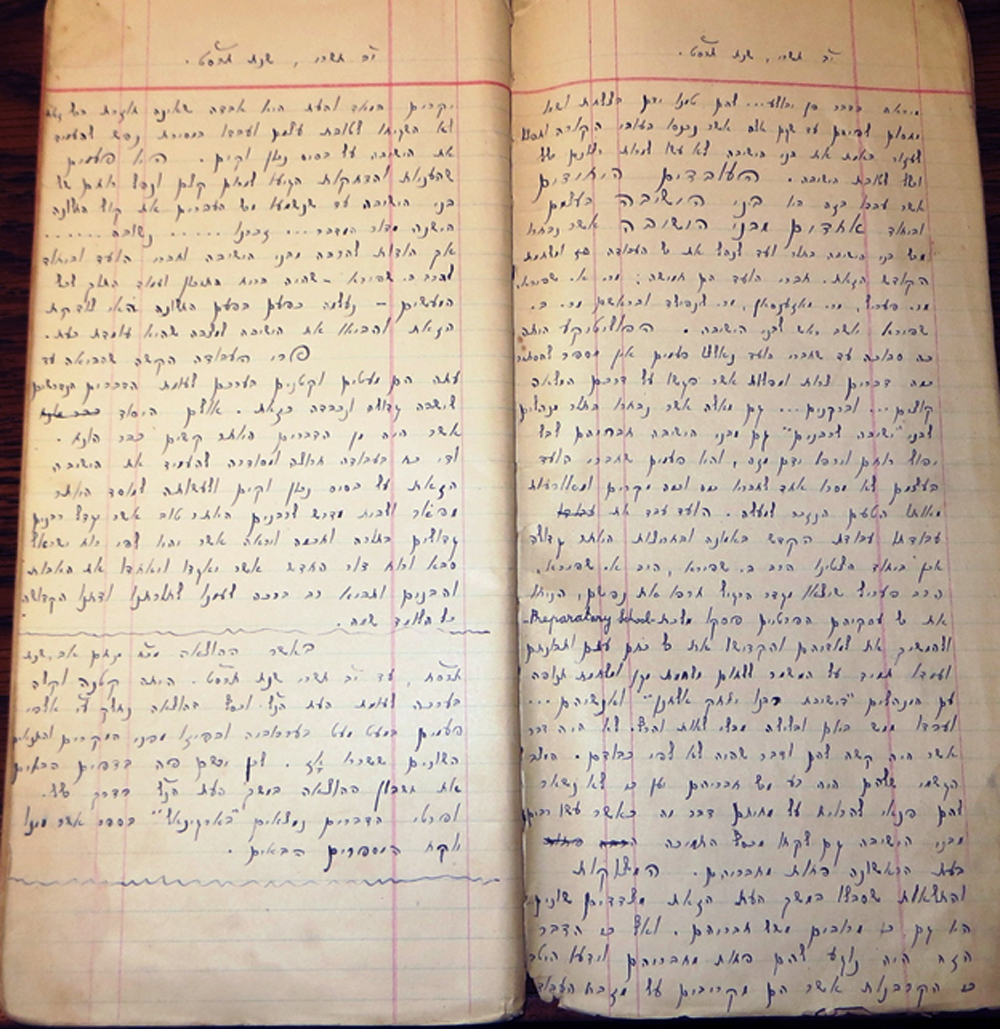

Some Assorted Comments and a Selection from my Memoir. part 1

Some Assorted Comments and a Selection from my Memoir, part 1
By  Marc B. Shapiro
1. Fifty years ago R. Jehiel Jacob Weinberg spoke about the fraudulence that was found in the Orthodox world. Unfortunately, matters have gotten much worse since his time. I am not referring to the phony pesakim in the names of great rabbis that appear plastered all over Jerusalem, and from there to the internet. Often the damage has been done before the news comes out that the supposed pesak was not actually approved by the rav, but was instead put up by an “askan” or by a member of the rabbi’s “court”. I am also not referring to the fraudulent stories that routinely appear in the hagiographies published by Artscroll and the like, and were also a feature in the late Jewish Observer. These are pretty harmless, and it is hard to imagine anyone with sophistication being taken in. Finally, I am also not referring to the falsehoods that constantly appear in the Yated Neeman. I think everyone knows that this newspaper is full of lies and in its despicable fashion thinks nothing of attempting to destroy people’s reputations, all because their outlooks are not in accord with whatever Daas Torah Yated is pushing that week.[1]
I am referring to something much more pernicious, because the falsehoods are directed towards the intellectuals of the community, and are intended to mislead them. There was a time when in the haredi world a distinction was made between the masses, whom it was permitted to mislead with falsehoods, and the intellectuals who knew the truth and who were part of the “club” that didn’t have to bother with the censorship that is ubiquitous in haredi world.
Yet I have recently seen many examples that show that even in the world of the intellectuals, fraudulence has begun to surface. Let me note an example that was recently called to my attention by Rabbi Yitzchak Oratz, and it is most distressing precisely because it is a son who is responsible for the lie. In an issue of the popular journal Or Yisrael, R. Yehudah Heller from London mentioned that the late R. Yerucham Gorelik, a well-known student of R. Velvel of Brisk, had taught Talmud at Yeshiva University.[2] Heller used this example to show that one can teach Torah in an institution even if the students’ devotion to Torah study leaves something to be desired.
 In the latest issue of Or Yisrael (Tishrei, 5770), p. 255, Heller publishes a letter in which he corrects what he had earlier written. He was contacted by Gorelik’s son, R. Mordechai Leib Gorelik. The only thing I know about the younger Gorelik is that he appears to be quite extreme. He published an essay in Or Yisrael attacking the Artscroll Talmud and his reason was simply incredible. He claimed that anything that tries to make the study of Talmud easier is to be condemned. He also argued that Talmud study is not for the masses, but only for the elite. Obviously, the latter don’t need translations. According to Gorelik, if the masses want to study Torah, they can study halakhah or Aggadah and Mussar. If they want to study Talmud, then they must do it the way it used to be studied, with sweat, but they have no place in the beit midrash with their Artscroll crutches.[3]
Apparently it bothers Gorelik that his colleagues might think that his father actually taught Talmud at YU. So he told Heller the following, and this is what appears in Or Yisrael: R. Yerucham Gorelik never taught Talmud at YU, and on the contrary, he thought that there was a severe prohibition (issur hamur) in both studying and teaching Talmud at this institution, even on a temporary basis, and even in order “to save” the young people in attendance there. The only subject he ever taught at YU was “hashkafah”.
The Sages tell us that “people are not presumed to tell a lie which is likely to be found out” (Bekhorot 36b). I don’t think that they would have made this statement if they knew the era we currently live in.[4] Here you have a case where literally thousands of people can testify as to how R. Gorelik served as a Rosh Yeshiva at YU for forty years, where you can go back to the old issues of the YU newspapers, the yearbooks, Torah journals etc. and see the truth. Yet because of how this will look in certain extremist circles, especially with regard to people who are far removed from New York and are thus gullible in this matter, R. Gorelik’s son decides to create a fiction.
I understand that in his circle the younger Gorelik is embarrassed that his father taught Talmud at YU. I also assume that he found a good heter to lie in this case. After all, it is kavod ha-Torah and the honor of his father’s memory, because God forbid that it be known that R. Gorelik was a Rosh Yeshiva at YU. However, I would only ask, what happened to hakarat ha-tov? YU gave R. Gorelik the opportunity to teach Torah at a high level. It also offered him a parnasah. Without this he, like so many of his colleagues, would have been forced into the hashgachah business, and when this wasn’t enough, to schnorr for money, all in order to put food on the table.
This denial of any connection to YU is part of a larger pattern. In my last post I mentioned how R. Poleyeff’s association with the school was erased. Another example is how R. Soloveitchik appears on the title page of one sefer as “Av Beit Din of Boston.” And now R. Gorelik’s biography is outrageously distorted.[5] Yet in the end, it is distressing to realize that the rewriting of history might actually work. In fifty years, when there are no more eyewitnesses alive to testify to R. Gorelik’s shiurim, how many people will deny that he ever taught at YU? Any written record will be rejected as a YU-Haskalah forgery, or something that God miraculously created to test our faith, all in order to avoid the conclusion that an authentic Torah scholar taught at YU.[6] I have no doubt that the editor of Or Yisrael, coming from a world far removed from YU, is unaware of the facts and that is why he permitted this letter to appear. I am certain that he would not knowingly permit a blatant falsehood like this to sully his fine journal.
2. Since I spoke so much about R. Hayyim Soloveitchik in the last two posts, let me add the following: The anonymous Halikhot ha-Grah (Jerusalem, [1996]), p. 4, mentions the famous story recorded by R. Zevin, that in a difficult case of Agunah R. Hayyim asked R. Yitzhak Elhanan’s opinion, but all he wanted was a yes or no answer. As R. Zevin explained, quoting those who were close to R. Hayyim, if R. Yitzhak Elhanan gave his reasoning then R. Hayyim would certainly have found things with which he disagreed, but he knew that in terms of practical halakhah he could rely on R. Yitzhak Elhanan.[7] Halikhot ha-Grah rejects R. Zevin’s explanation. Yet the same story, and explanation, were repeated by R. Joseph B. Soloveitchik.[8] In addition, a similar story, this time involving R. Hayyim and R. Simcha Zelig, is found in Uvdot ve-Hangagot le-Veit Brisk, vol. 4, pp. 35-36. Thus, there is no reason to doubt what R. Zevin reports.[9] Mention of Halikhot ha-Grah would not be complete without noting that it takes a good deal of material, without acknowledgment and sometimes word for word, from R. Schachter’s Nefesh ha-Raf. Of course, this too is done in the name of kavod ha-Torah.
3. Many posts on this blog have discussed how we now have entire books on topics concerning which until recent years a few lines sufficed. Haym Soloveitchik also made this point in “Rupture and Reconstruction.” Here is another example, the book Birkat Eitan by R. Eitan Shoshan.


This is a 648 page (!) book devoted to the blessing Asher Yatzar, recited after going to the bathroom. Shoshan has an even larger book devoted to the Shema recited before going to sleep.
4. In a previous post[10] I mentioned that R. Moshe Bick’s brother was the Judaic scholar and communist Abraham Bick (Shauli). Before writing this I confirmed the information, but as we all know, oftentimes such “confirmations” are themselves incorrect. I thank R. Ezra Bick for providing me with the correct information, and the original post has been corrected.
R. Moshe and Abraham were actually somewhat distant cousins.[11] Abraham was the son of R. Shaul Bick (and hence the hebraicized last name, Shauli), who was the son of R. Yitzchak Bick, who was the chief rabbi of Providence, RI, in the early 1930’s. R. Yitzchak was the son of R. Simcha Bick, who was rav in Mohiliv, Podolia. R. Simcha Bick had a brother, R. Zvi Aryeh Bick, who was rav in Medzhibush. His son was R. Hayyim Yechiel Mikhel Bick, was also rav in Medzhibush (d. 1889). His son was also named Hayyim Yechiel Mikhel Bick (born a few months after his father’s premature death), and he was rav in Medzhibush from 1910 until 1925, when he came to America. His son was R. Moshe Bick.
R. Ezra Bick also reports that after the Second World War, when Abraham Bick was in the U.S. working as an organizer for communist front organizations, he was more or less cut off by his Orthodox cousins in Brooklyn.
R. Moshe Bick’s brother, Yeshayah (R. Ezra’s father), was a well-known Mizrachi figure. In his obituary for R. Hayyim Yechiel Mikhel Bick, R. Meir Amsel, the editor of Ha-Maor, mentioned how Yeshayah caused his father much heartache with his Zionist activities.[12] This article greatly hurt R. Moshe Bick and he insisted that Amsel never again mention him or his family in Ha-Maor. In fact, as R. Ezra Bick has pointed out to me, rather than causing his father heartache, R. Hayyim Yechiel actually encouraged Yeshayah in his Zionist activities.


R. Bick’s letter is actually quite fascinating and I give the Amsel family a lot of credit for including it in a recent volume dedicated to R. Meir Amsel. I have never seen this sort of letter included in a memorial volume, as all the material in such works is supposed to honor the subject of the volume. Yet here is a letter that blasts Amsel, and they still included it.[13] They also included a letter from R. Jehiel Jacob Weinberg in which he too criticizes Amsel for allowing personal attacks to be published in his journal. It takes a lot of strength for children to publish such letters and they have earned my admiration for doing so.
When I first mentioned R. Moshe Bick, I also noted that he was opposed to young people getting married too quickly. He therefore urged that boys and girls go out on a number of dates before deciding to get engaged. Needless to say, the haredi world was furious at this advice. R. Dovid Solomon reported to me the following anecdote: When the Klausenberger Rebbe told R. Bick how opposed he was to the latter’s advice, R. Bick responded: “That’s because you are mesader kidushin at all the marriages. But I am the one who is mesader all the gittin!”
5. In previous postings I gave three examples of errors in R. Charles B. Chavel’s notes to his edition of Nahmanides’ writings. For each of these examples my points were challenged and Chavel was defended. Here is one more example that I don’t think anyone will dispute. In Kitvei ha-Ramban, vol. 1, p. 148, Nahmanides writes:


 ובזה אין אנו מודים לספר המדע שאמר שהבורא מנבא בני אדם.
In his note Chavel explains ספר המדע to mean:
לדבר הידוע, יעללינעק מגיה פה שצ”ל: לרב הידוע.
Yet the meaning is obvious that Nahmanides is referring to Maimonides’ Sefer ha-Mada, where he explains the nature of prophecy.[14]
5. In 2008 a Torah commentary from R. Joshua Leib Diskin was published. Here is the title page.

The book even comes with a super-commentary of sorts. This is completely unnecessary but shows how greatly the editor/publisher values the work. Diskin is a legendary figure and was identified with the more extreme elements of the Jerusalem Ashkenazic community. For this reason he often did not see eye to eye with R. Samuel Salant.
Here is a page from this new commentary.

In his comment to Num. 23:22-23, Diskin quotes a book called Ha-Korem. This is a commentary on the Torah and some other books of the Bible by Naphtali Herz Homberg, a leading Maskil who worked for the Austrian government as superintendent of Jewish schools and censor of Jewish books. This is what the Encyclopedia Judaica says about him:

Homberg threatened the rabbis that if they did not adapt themselves to his principles the government would force them to do so. . . . Homberg was ruthless in denouncing to the authorities religious Jews who refused to comply with his requirements, and in applying pressure against them. In his official memoranda he blamed both the rabbis and the Talmud for preventing Jews from fulfilling their civic duties toward the Christian state. . . . Homberg recommended to the authorities that they disband most traditional educational institutions, prohibit use of the Hebrew language, and force the communal bodies to employ only modern teachers. . . In his book Homberg denied the belief in Israel as the chosen people, the Messiah, and the return to Zion, and tried to show the existence of an essential identity between Judaism and Christianity. . . . Homberg incurred the nearly universal hatred of his Jewish contemporaries.
Incredibly, it is from his commentary that Diskin quoted. The editor didn’t know what Ha-Korem was, but almost immediately after publication someone let him in on the secret. All copies in Israeli seforim stores were then recalled in order that the offending page be “corrected”. I am told that the first printing is now impossible to find in Israel. When I was informed of this story by R. Moshe Tsuriel, I contacted Biegeleisen who fortunately had just received a shipment from Israel, sent out before the books were embargoed. Presumably, my copy will one day be a collector’s item.
The one positive thing to be said about Homberg is that he wrote a very good Haskalah Hebrew. I was therefore surprised when I saw the following in David Nimmer’s otherwise fantastic article in Hakirah 8 (2009): “We begin with Herz Homberg, a minor functionary who wrote in German since his Hebrew skills were poor” (p. 73). Since German was the last language Homberg learnt, I was curious as to how Nimmer was misled. He references Wilma Abeles Iggers, The Jews of Bohemia and Moravia (Detroit, 1992), p. 14. Yet Nimmer misunderstood this source. Iggers writes as follows, in speaking of the mid-eighteenth century: “Use of Hebrew steadily decreased, even in learned discussions. Naftali Herz Homberg, for example, asked his friend Moses Mendelssohn to correspond with him in German rather than in Hebrew.” All that this means is that Homberg wanted to practice his German, and become a “cultured” member of Mendelssohn’s circle, and that is why he wanted to correspond in this language. In this he is little different than so many others like him who arrived in Berlin knowing only Hebrew and Yiddish. Each one of them had a different story as to how they learnt German. According to the Encyclopedia Judaica, in 1767, when he was nineteen years old, Homberg “began to learn German secretly.”
6. In a previous post I noted the yeshiva joke that R. Menasheh Klein’s books should be called Meshaneh Halakhot, instead of Mishneh Halakhot. Strangely enough, if you google “meshaneh halakhot” you will find that the books are actually referred to this way by a few different people, including, in what are apparently Freudian slips, B. Barry Levy and Daniel Sperber. In fact, Klein’s books are not the first to be referred to in this sort of way. In his polemic against Maimonides, R. Meir Abulafia writes (Kitab al Rasail [Paris, 1871), p. 13):
הוא הספר הנקרא משנה תורה, ואיני יודע אם יש אם למסורת ואם יש אם למקרא.

Abulafia is mocking Maimonides’ greatest work, and wondering if perhaps it should be called Meshaneh Torah! As for Klein, there is a good deal that can be said about his prolific writings, and they await a comprehensive analysis. When thinking about Meshaneh Halakhot, I often recall following responsum, which appears in Mishneh Halakhot, vol. 5, no. 141, and which I am too embarrassed to translate.

A well-known talmid hakham pointed out to me something very interesting. Normally we understand hillul ha-shem to mean that a non-Jew will see how Jews behave and draw the wrong conclusions of what Torah teachings are all about. However, in this responsum we see the exact opposite. The hillul ha-shem is that the non-Jew will draw the right conclusion! Yet the truth is that this understanding of hillul ha-shem is also very popular and is used by R. Moses Isserles, as we will soon see..
Here is another responsum that will blow you off your seats, from Mishneh Halakhot, New Series, vol. 12, Hoshen Mishpat no. 445.


If you want to understand why three hasidic kids are sitting in a Japanese jail, this responsum provides all you need to know. Can anyone deny that it is this mentality that explains so much of the illegal activity we have seen in recent year? Will Agudat Israel, which has publicly called for adherence to high ethical standards in such matters, condemn Klein? Will they declare a ban on R Yaakov Yeshayah Blau’s popular Pithei Hoshen, which explains all the halakhically permissible ways one can cheat non-Jews? You can’t have it both ways. You can’t declare that members of your community strive for the ethical high ground while at the same time regard Mishneh Halakhot, Pithei Hoshen, and similar books as valid texts, since these works offer justifications for all sorts of unethical monetary behavior. The average Orthodox Jew has no idea what is found in these works and how dangerous they are. Do I need to start quoting chapter and verse of contemporary halakhic texts that state explicitly that there is no prohibition to cheat on one’s taxes?[15] Pray tell, Agudah, are we supposed to regard these authors as legitimate halakhic authorities?
I have no doubt that there was a time that the approach found here was acceptable. In an era when Jews were being terribly persecuted and their money was being taken, the non-Jewish world was regarded as the enemy, and rightfully so. Yet the fact that pesakim reflecting this mindset are published today is simply incredible. Also incredible is that R. David Zvi Hoffmann’s Der Schulchan-Aruch und die Rabbinen über das Verhältniss der Juden zu Andersgläubigen, a classic text designed to show that Jewish law does not discriminate monetarily against contemporary Gentiles, has not yet been translated. Hoffmann’s approach was shared by all other poskim in Germany, who believed that any discriminatory laws were simply no longer applicable.[16] R. Jehiel Jacob Weinberg stated that we must formally declare that this is what we believe. Can Agudah in good conscience make such a declaration, and mean it?
The truth is that there is an interesting sociological divide on these matters between the Modern Orthodox and the haredi world. Here is an example that will illustrate this. If a Modern Orthodox rabbi would advocate the following halakhah, quoted by R. Moses Isserles, Hoshen Mishpat 348:2,[17] he would be fired.[18]
טעות עכו”ם כגון להטעותו בחשבון או להפקיע הלואתו מותר ובלבד שלא יודע לו דליכא חילול השם.
If I am wrong about this, please let me know, but I don’t believe that any Modern Orthodox synagogue in the country would keep a rabbi who publicly advocated this position.[19] Indeed, R. Moses Rivkes in his Be’er ha-Golah on this halakhah wants people to know that they shouldn’t follow this ruling.[20] See also Rivkes, Be’er ha-Golah, Hoshen Mishpat 266:1, 383:1, and his strong words in Hoshen Mishpat 388:12 where he states that the communal leaders would let the non-Jews know if any Jews were intent on cheating them. Today, people would call Rivkes a moser.
I believe that if people in the Modern Orthodox world were convinced that Rama’s ruling is what Jewish ethics is about, very few of them would remain in Orthodoxy. In line with what Rivkes states, this halakhah has been rejected by Modern Orthodoxy and its sages, as have similar halakhot. As mentioned, Hoffmann’s Der Schulchan-Aruch is the most important work in this area. Yet today, most people will simply cite the Meiri who takes care of all of these issues, by distinguishing between the wicked Gentiles of old and the good Gentiles among whom we live. Thus, whoever feels that he is living in a tolerant environment can adopt the Meiri’s position and confidently assert that Rama is not referring to the contemporary world.
Yet what is the position of the American haredi world? If they accept Rama’s ruling, and don’t temper it with Meiri, then in what sense can the Agudah claim that they are educating their people to behave ethically in money matters? Would they claim that Rama’s halakhah satisfies what we mean by “ethical” in the year 2009? Will they say, as they do in so many other cases, that halakhah cannot be compared to the man-made laws of society and cannot be judged by humans? If that is their position, I can understand it, but then let Aish Hatorah and Ohr Sameach try explaining this to the potential baalei teshuvah and see how many people join the fold. If this is their position, then all the gatherings and talks about how one needs to follow dina de-malchuta are meaningless, for reasons I need not elaborate on. Furthermore, isn’t all the stress on following dina de-malchuta revealing? Why can’t people simply be told to do the right thing because it is the right thing? Why does it have to be anchored in halakhah, and especially in dina de-malchuta? Once this sort of thing becomes a requirement because of halakhah, instead of arising from basic ethics, then there are 101 loopholes that people can find, and all sorts of heterim as we saw in Klein’s responsum. I would even argue that the fact that one needs to point to a halakhic text to show that it is wrong to steal is itself a sign of our society’s moral bankruptcy.[21]
7. In Studies in Maimonides and His Interpreters I stated that Maimonides nowhere explicitly denies the existence of demons, yet this denial is clearly implied throughout his writings. It was because Maimonides never explicitly denied them that so many great sages refused to accept this, and assumed that Maimonides really did believe in demons. (In my book I cited many who held this position.) I first asserted that Maimonides never explicitly denied demons in my 2000 article on Maimonides and superstition, of which the second chapter in my new book is an expanded treatment. While working on the original article I was convinced that Maimonides indeed denied demons in his Commentary to Avodah Zarah 4:7. However, I had a problem in that so many who knew this text did not see it as an explicit rejection. In fact, I was unaware of anyone actually citing this text to prove that Maimonides denied the existence of demons. (Only a couple of months ago did R. Chaim Rapoport call my attention to R. Eliezer Simhah Rabinowitz, She’elot u-Teshuvot ve-Hiddushei Rabbi Eliezer Simhah [Jerusalem, 1998], no. 11, who does cite this text as an explicit rejection of the existence of demons. I also recently found that R. Avraham Noah Klein, et. el., Daf al ha-Daf [Jerusalem, 2006), Pesahim 110a, quotes the work Nofet Tzufim as saying the same thing. Unfortunately, as far as I can tell, Klein doesn’t have a list of sources, so I don’t know who the author of this work is.)
Seeing that R. Zvi Yehudah Kook was quite adamant that Maimonides believed in demons,[22] I turned to R. Shlomo Aviner, who published R. Zvi Yehudah’s work, and asked him about Maimonides’ words in his Commentary to Avodah Zarah. Aviner convinced me that Maimonides should be understood as only denying that occult communication with demons is impossible, not the existence of demons per se. He wrote to me as follows:
הרמב”ם לא כתב שם בפירוש שאין שדים, אלא ששאלה בשדים היא הבל, וכך אנו רואים מן ההקשר שהוא מגנה שיטת שונות להשיג דברים או ידיעות, כגון “כשוף וההשבעות והמזלות הרוחניות, ודבר הכובכים והשדים והגדת עתידות ומעונן ומנחש על רוב מיניהם ושאלת המתים.”


I was still not 100 percent sure, but the fact that so many great scholars who knew the Commentary to Avodah Zarah assumed that Maimonides indeed believed in demons gave me confidence that Aviner was correct.[23] Even R. Kafih, in speaking of Maimonides denial of demons, does not cite the Commentary,[24] and this sealed the matter for me. I therefore assumed that all Maimonides was denying in his Commentary to Avodah Zarah 4:7 was the possibility of conversation with demons, and not demons per se. (R. Aviner doesn’t speak of simple conversation, but this was my assumption.)
Following publication of the article in 2000 no one contacted me to tell me that I was incorrect in my view of Maimonides and demons. So once again I was strengthened in my assumption, and repeated my assertion in Studies in Maimonides. Not too long ago I received an e-mail from Dr. Dror Fixler. Fixler is one of the people from Yeshivat Birkat Moshe in Maaleh Adumim who is working on new editions of Maimonides’ Commentary on the Mishnah. I will return to his work in a future post when I deal with the newly published translation of the Commentary. For now, suffice it to say that he knows Arabic very well, and he asserts that there is no doubt whatsoever that in the Commentary to Avodah Zarah 4:7 Maimonides is denying the existence of demons. So this brings me back to my original assumption many years ago, that Maimonides indeed is explicit in his denial. If there are any Arabists who choose to disagree, I would love to hear it.
8. I recently sent a copy of the reprint of Kitvei R. Yehiel Yaakov Weinberg (2 vols.) to a famous and outstanding Rosh Yeshiva. In my letter to him I mentioned that the books were a donation to the yeshiva library. He wrote back to me as follows:
מאשר בתודה קבלת כתבי הגאון רבי יחיאל יעקב וויינברג זצ”ל בשני כרכים. מלאים חכמה ודעת בקיאות וחריפות ישרה, ולפעמים “הליכה בין הטיפות” מתוך חכמת חיים רבה. אולם בכרך השני יש דברים שקשה לעכל אותם, כגון לימוד זכות על מתבוללים ממש (הרצל ואחה”ע [אחד העם] בגרון ועוד) למצוא בהם “ניצוצות קדושה”. ומי שיראה יחשוב כי מותר לומר לרשע צדיק אתה. לכן כרך ב’ נשאר אצלי וכרך א’ לעיון התלמידים הי”ו.


I don’t think that any Rosh Yeshiva in a Hesder yeshiva would say that we should shield the students from the words of a great Torah scholar, but maybe I am wrong. I would be curious to hear reactions. In response to his letter, I sent this Rosh Yeshiva R. Abraham Elijah Kaplan’s essay on Herzl, to show him that Weinberg’s views in this regard were not unique.
Interestingly, in his letter to me the Rosh Yeshiva also wrote:


מה מאד נפלא מ”ש בסוף עמוד ריט על שיטת הגר”ח מבריסק לעומת שיטת הגר”א. מבחינה זו אנו לומדים בישיבה בשיטת הגר”א.


He was referring to this amazing letter from Weinberg:
קראתי את מאמרו של הגרי”ד סולובייציק על דודו הגרי”ז זצ”ל. השפה היא נהדרה ונאדרה והסגנון הוא מקסים. אבל התוכן הוא מוגזם ומופרז מאד. כך כותבים אנשים בעלי כת, כמו אנשי חב”ד ובעלי המוסר. מתוך מאמרו מתקבל הרושם כאלו התורה לא נתנה ע”י מרע”ה חלילה כי אם ע”י ר’ חיים מבריסק זצ”ל. אמת הדברים כי ר’ חיים הזרים זרם חדש של פלפול ע”ד ההגיון לישיבות. בהגיון יש לכל אדם חלק, ולפיכך יכולים כל בני הישיבה לחדש חידושים בסגנון זה, משא”כ בדרך הש”ך ורעק”א צריך להיות בקי גדול בשביל להיות קצת חריף ולכן משכל אנשי הישיבות מתאוים להיות “מחדשים” הם מעדיפים את ר’ חיים על כל הגאונים שקדמו לו. שאלתי פעם אחת את הגרי”ד בהיותו בברלין: מי גדול ממי: הגר”א מווילנא או ר’ חיים מבריסק? והוא ענני: כי בנוגע להבנה ר’ חיים גדול אף מהגר”א. אבל לא כן הדבר. הגר”א מבקש את האמת הפשוטה לאמתתה, ולא כן ר’ חיים. הגיונו וסברותי’ אינם משתלבים לא בלשון הגמ’ ולא בלשון הרמב”ם. ר’ חיים הי’ לכשלעצמו רמב”ם חדש אבל לא מפרש הרמב”ם. כך אמרתי להגאון ר’ משה ז”ל אבי’ של הגר”יד שליט”א.


9. My last two posts focused on R. Hayyim Dov Ber Gulevsky. With that in mind, I want to call everyone’s attention to a lecture by R. Aharon Rakefet in which he tells a great story that he himself witnessed, of how students in the Lakewood yeshiva were so angry at Gulevsky that they actually planned to cut his beard off. It is found here  [25] beginning at 65 minutes. The clip has an added treat as we get to hear the Indefatigable One, who mentions travelling to Brooklyn together with a certain “Maylech” in order to visit Gulevsky.
10. And finally, apropos of nothing, here is a picture that I think everyone will get a kick out of. The bride is Gladys Reiss. It shows the Rav in his hasidic side. (Thanks to David Eisen and R. Aharon Rakefet for providing the picture.)

[1] Some of the lies of this paper have been dealt with by R. Moshe Alharar, Li-Khvodah shel Torah (Jerusalem, 1988). Here are two condemnations of Yated printed in Alharar’s book.


For examples of the paper’s most recent outrages, take a look at two articles from the issue that appeared during the Ten Days of Penitence (!). The articles are available here and here.


The first is a vicious attack on the Shas MK R. Hayyim Amsellem for his authorship of a halakhic study arguing that those non-Jews who serve in the Israeli army should be converted using a less strict approach than is currently in practice. Amsellem, who is a student of R. Meir Mazuz and an outstanding talmid hakham, wrote this piece and sent it to some leading poskim to get their opinions. Amselem also discussed his approach in an interview.


What did Yated do? It attacked the “nonsensical, heretical remarks” of Amsellem, knowing full well that his article was not a practical halakhic ruling, but a work of Torah scholarship sent out for comment. And why is what he wrote “nonsensical” and “heretical”? Because it contradicts the viewpoint of “Maranan ve-Rabbanan Gedolei Yisrael,” the papacy that Yated has created.  As with every papacy, no one is permitted to have a different viewpoint. We see that clearly in the next article I linked to. Here the paper deals with the great sages who have permitted brain death. Obviously, Yated has started to believe its own papal rhetoric, since rather than offer any substantive comments, all it can do is refer to R. Elyashiv and unnamed former and current gedolei Yisrael. From Yated’s papal perspective, this is supposed to silence all debate, as if Judaism is a religious dictatorship. Yet it is not, and although Yated will never admit it, there are also former and current gedolei Yisrael who do accept brain death.
[2] “Be-Inyan ha-Gemarot ha-Mevuarot ha-Hadashim,” Or Yisrael 50 (Tevet, 5768), p. 42.
[3] “Be-Inyan Hadpasat ha-Gemara im Targumim u-Ferushim Hadashim,” Or Yisrael 50 (Tevet, 5768), pp. 39-40. Gorelik even claims that the only reason the Hafetz Hayyim agreed to support the Daf Yomi program was as a defense against the Haskalah and Reform. R. Chaim Rapoport responded to Gorelik, ibid., pp. 57ff.
[4] For the Lubavitcher Rebbe’s take on this, see here beginning at 8 minutes (called to my attention by a friend who wishes to remain anonymous). The Rebbe’s words are very strong: Since we know that “people” do not tell a lie that is likely to be found out, it must be that the liars are not in the category of “people” i.e., human beings!
[5] The phenomenon of children distorting their father’s legacy is also something that deserves a post of its own. One thinks of the efforts of the children and grandchildren of R. Gedaliah Nadel and R. Eliezer Waldenberg in opposition to the publication of Be-Torato shel R. Gedaliah and the reprinting of Hilkhot ha-Medinah. R. Nadel’s children were even successful in having Be-Torato removed from Hebrewbooks.org. There are many other such examples, some of which relate to the Rabbinical Seminary of Berlin, which like Yeshiva University was sometimes a place to be forgotten after one left the world of German Orthodoxy. For example, see R. Shmuel Munk’s biographical introduction to the work of his father, R. Shaul Munk, Bigdei Shesh (Jerusalem, 1973). There is no mention that R. Shaul studied at the Rabbinical Seminary. If that wasn’t enough, R. Shmuel, in the introduction, p 19, even attacks the German Orthodox practice of reading German poetry, going so far as to say that no one [!] has permitted this. As with the Yated, “no one” means “no one we regard as significant.” For an earlier post that deals with a posthumous removal of the Rabbinical Seminary from one graduate’s biography, see here.


None of the obituaries of R. Shlomo Wolbe mentioned that he studied at the Rabbinical Seminary of Berlin for a short while, but in this case I assume that the writers were unaware of this. The entry on Wolbe in Wikipedia does mention it, and I was the source for this information. My source is Weinberg’s letter to Samuel Atlas, dated June 10, 1965:


כך סיפר בן אחיו של וולפסון, מר אביעזר וולפסון, תלמיד מונטרה לפנים, ואח”כ תלמיד ישיבת באר יעקב, שבה משמש המנהל רוחני מר וולבה, יליד ברלין, בנו של סופר חילוני וכופר גמור. למד בכתות הנמוכות של בית מדרשנו, ואח”כ הלך לישיבת מיר ונעשה לחניכו של ר’ ירוחם ז”ל, המשפיע המוסרי הגדול.


The point mentioned by Weinberg, that Wolbe was raised in a non-Orthodox home, was never a secret. Some additional details of his turn to Orthodoxy were related by Anne Ruth Cohn, Dayan Grunfeld’s daughter. See here


Yet, as we have come to expect, the Yated cannot be honest with its readers. Thus, in its obituary here. It writes: “Shlomo Wolbe was born in Berlin to R’ Moshe in Tammuz 5674,” making it seem that he was from an Orthodox home. The obituary continues with more falsehoods: “As a child he studied in his home city and at a young age was sent to Yeshivas Frankfurt.” Needless to say, there is also no mention of Wolbe’s university studies.


Another example worth mentioning is the following: Those who read Making of a Godol will recall the description of R. Aaron Kotler’s irreligious sister who tried to convince him to leave the world of the yeshiva. Yet in Yitzchok Dershowitz’ hagiography of R. Aaron, The Legacy of Maran Rav Aharon Kotler (Lakewood, 2005), p. 63, this communist sister is described as “religious, but ‘secular education’ oriented.” See Zev Lev, “Al ‘Gidulo shel Gadol,’” Ha-Ma’ayan 50 (Tishrei, 5770), p. 104.


The absolute best example of this phenomenon relates to the Lubavitcher Rebbe’s brother, Yisrael Aryeh Leib. He was completely irreligious. There are people alive today who can testify to his public Sabbath violation. He even kept his store open on Shabbat. See Shaul Shimon Deutsch, Larger than Life (New York, 1997), vol. 2, ch. 7. Deutsch was even able to speak to his widow. Yisrael Aryeh Leib also has a daughter who presumably would be willing to describe what her father’s attitude towards religion was, if anyone is really interested in knowing the truth. I think it is very nice that Chabad in England commemorates his yahrzeit, see here, and this is very much in line with Chabad’s ideology that every Jew is precious. Yet what is one to make of this “institute”?


Here Yisrael Aryeh Leib, “the youngest brother of the Rebbe, Melech HaMoshiach, who lives forever,” is turned into a rabbi and devoted chasid. I actually contacted the person who runs the “institute” and asked him how he can so blatantly distort the historical record. Communicating with him was one of the most depressing experiences I have had in a long time. It is one thing for a person to believe foolish things, but here was a guy who had drunk an extra dose of the Kool Aid, and with whom normal modes of conversation were impossible. This is actually a good limud zekhut for him: unlike many other cases where the people distorting the historical record are intentionally creating falsehoods, in this case the distorter really believes what he is saying.
[6] R. Mark Urkowitz, who was a student of R. Gorelik, told me that at the end of his life Gorelik commented to him that he was very happy he taught at YU, since this was the only yeshiva whose graduates were bringing Torah to all corners of the United States. When Urkowitz later told this story to another of Gorelik’s son, he denied that his father could ever have said this. Urkowitz and one other person recalled to me how at Gorelik’s funeral YU was never mentioned in any of the eulogies. It was as if the major part of Gorelik’s life for forty years had never existed.
[7] Ishim ve-Shitot (Tel Aviv, 1952), pp. 58-59.
[8] Aaron Rakeffet-Rothkoff, The Rav, vol. 1, p. 227.
[9] This is Zevin’s preface to the story (translation in Louis Jacobs, A Tree of Life [London, 2000], pp. 54-55, n. 49):


Why did R. Hayyim refuse to write responsa? Some think that his remoteness from the area of practical decisions stemmed from the fact that he belonged to the ranks of “those who fear to render decision,” being afraid of the responsibility that it entails. But this is not so. The real reason was a different one. R. Hayyim was aware that he was incapable of simply following convention and that he would be obliged, consequently, to render decisions contrary to the norm and the traditionally accepted whenever his clear intellect and fine mind would show him that the law was really otherwise than as formulated by the great codifiers. The pure conscience of a truthful man would not allow him to ignore his own opinions and submit, but he would have felt himself bound to override their decisions and this he could not bring himself to do.
[10] See here.
[11] For more on Abraham Bick the communist, and his relationship with R. Moshe Bick, see here for the following report:


אברהם ביק הכרתי בפעם הראשונה כהרה”ר של רוסי’ בא לבקר לארה”ב בשנת תשכ”ח ביזמת הרב טייץ מאליזאבעט נוא דזשערזי. וכבוד גדול עשו לו וכל גדולי ארצינו באו לבקר אותו ולחלוק לו כבוד — הוא למד בסלאבאדקא והי’ ממלא מקומו של הרב שלייפער, וניהל בחכמה ובתבונה את רבנתו ועמד על משמרתו הוא בא ביחד עם החזושל לענינגראד -השומר- בבארא-פארק עשו פאראד גדול וכל הישיבות והבית-יעקב יצאו לרחובה של עיר לחוק כבוד להעומד על משמרת היהדות ברוסי’ משם נסעו לישיבת תורה-ודעת שכל הגדולים דברו וחיזקו את הרב לעווין .משם נסעו לאליזאבעט מקום הרב טייץ — שחלקו רב בענייני יהדות רוסי’ —  וגם שם הי’ פאראד גדול. והרב לעווין הי’ מאוד מרוגש .ודמעות נזלו מעיניו. נחזור לביק-הוא הי’ קאמאניסט. והי’ מכונה הרב של הקאמאניסטים. הוא כתב מאמרים בשבועון שלהם ותמיד המליץ טוב על הקאמאניסטים שהם לא רודפים את הדת. וכשהרב לעווין הי’ כאן הוא הי’ מראשי המחותנים שם. ואז דברתי איתו בפעם הראשונה. אח”כ הוא עלה לארה”ק ועבד במוסד הרב קוק ומצאתיו שם אך לא רציתי להכאיבו ולא דברנו על העבר. אז נתן לי שני ספרים א] זהרי-חמה הגהות על הזוה”ק מהיעב”ץ. ועוד ספר למוסרו לש”ב הרה”ג רמצ”א זצ”ל ביק — הוא פשוט רצה להתפייס איתו כי הם לא היו שוה בשוה-וכשהבאתי את הספרים להרב ביק דברתי איתו על אברהם ביק ואביו הרה”ג שהי’ חתן המשמרת שלום מקאדינאוו, והי’ בעל הוראה מובהק. בקיצור לאחר זמן חזר לארה”ב בגין אישתו וביתו שלא היו בקו הבריאות — הוא הי’ דמות טראגית — אביו שלחו מארה”ב ללמוד לארה”ק. אך הי’ תמיד שומר תורה ומצוות הי’ אידאליסט ולא הי’ בן יחיד במחשבתו שהקאמאניזום יציל את האנושות והיהדות .הוא לא עשה זאת מטעם כסף .הוא לא הי’ מאטראליסט. והשם הטוב יכפר בעדו.


[12] Ha-Maor, Tamuz 5726, p. 18.
[13] Ha-Gaon ha-Rav Meir Amsel (Monsey, 2008), p. 262.
[14] See R. Yaakov Hayyim Sofer in Moriah, Nisan 5769, p. 150.
[15] R. Chaim Rapoport provides some of these sources in his article in Or Yisrael, Tishrei 5770.
[16] For R. Abraham Elijah Kaplan’s view, see his Mivhar Ketavim (Jerusalem, 2006), pp. 287-288.
[17] After quoting this halakhah, Rama cites an opposing view, but this is cited as יש אומרים, meaning that the first ruling is the one Rama accepts. Even this view is not something that would go over well in the Modern Orthodox world: וי”א דאסור להטעותו אלא אם טעה מעצמו שרי
[18] Although he might not be fired, any Modern Orthodox rabbi who stated as follows would also be in hot water, as the congregation would be outraged: “One is not allowed to admire gentiles or praise them.” The writer of these words goes on to say that collecting baseball cards is also forbidden. “While it may be that some people trade them only for financial gain, the reason for collecting the cards is more likely because of an appreciation and admiration for the personalities depicted on them. This is forbidden.” Quite apart from the terrible lack of judgment in putting the first sentence (“One is not allowed to admire gentiles or praise them”) into an English language book (for obvious reasons), should we be surprised that a halakhist who thinks baseball cards are forbidden is one of the poskim of the formerly Modern Orthodox OU? See R. Yisrael Belsky, Shulchan Halevi (Kiryat Sefer, 2008), pp. 132, 133. (For another ruling against baseball cards, see R. Yitzhak Abadi, Or Yitzhak, Yoreh Deah no. 26.) In discussing the issue of praising Gentiles and the prohibition of le tehanem, Meiri writes as follows, in words that have become basic to the Modern Orthodox ethos (Beit ha-Behirah: Avodah Zarah 20a):


כל שהוא מן האומות הגדורות בדרכי הדתות ושמודות בא-להות אין ספק שאף בשאין מכירו מותר וראוי.


[19] Samuel Cohon discusses Rama’s ruling in Faithfully Yours (Jersey City, 2008), pp. 87-88.
[20] See similarly R. Shneur Zalman of Lyady, Shulhan Arukh, Hilkhot Ona’ah, no. 11.
[21] Along these lines, see here for a recent article by R Binyamin Lau dealing with a husband who wanted to know if he was halakhically permitted to hit his wife.
[22] Sihot ha-Rav Tzvi Yehudah: Bereishit, ed. Aviner (Jerusalem, 1993), pp. 295-297, 310-312.
[23] In Studies in Maimonides I cite numerous examples. Here is one more to add to the list. R. Tzefanyah Arusi, “’Lo ba-Shamayim Hi’ be-Mishnat ha-Rambam,” Mesorah le-Yosef 6 (2009), p. 396:


מה שהשיג הגר”א בעניין השדים והכשפים, יש להשיב על כל דבריו: וכי מניין לו שלדברי רבנו אין מציאות לשדים ולמכשפים וכיו”ב.


[24] See his Ketavim (Jerusalem, 1989),  vol. 2, pp. 600-601.
[25] “The Bracha for Kidush Ha-Shem,” Sep. 21, 2008.


Sefer HaNer on Mesechet Bava Kamma

Sefer HaNer on Mesechet Bava Kamma: A Review
by:Rabbi Yosaif Mordechai Dubovick

Not every important work written by a Rishon is blessed with popularity.[1] While many texts were available throughout the generations and utilized to their utmost; others were relegated to obscurity, being published as recently as this century, or even this year. Nearly a month doesn’t pass without a “new” Rishon being made available to the public, and often enough in a critical edition. While each work must be evaluated on its own merit, as a whole, every commentary, every volume of Halachic rulings adds to our knowledge and Torah study.[2]          From the Geonic era through the Rishonim, North Africa was blessed with flourishing Torah centers, Kairouan in Tunisia (800-1057),[3] Fostat (Old Cairo) in Egypt, and many smaller cities as well. Perhaps the crown jewel of “pre-Rambam” Torah study was the sefer Hilchot Alfasi by R’ Yitchock Alfasi (the Rif).[4] Many Rishonim focused their novella around the study of Rif,[5] the Rambam taught Rif in lieu of Talmud,[6] and a pseudo-Rashi and Tosefot were developed to encompass the texts used and accompany its study.[7]

In Aghmat, a little known city in Morocco, circa the Rambam’s lifetime, rose up a little known Chacham whose work is invaluable in studying Rif, and by correlation, the Talmud Bavli as a whole. Yet, this Chacham was unheard of, for the most part, until the past half century. R’ Zechariya b. Yehuda of Aghmat, authored a compendium of Geonim, Rishonim, and personal exegesis on Rif. Spanning a period of 200 years of Talmud commentary of the first order, this work was also unique in its approach. Various editors have justly compared it to a work of similar nature and provenance, Shittah Mikubetzet by R. Betzalel Ashkenazi.

However, this source of Talmudic material from an almost blank period remained unknown until HaRav Prof. Simha Assaf published several leaves on Mesechet Berachot.[8] This followed by a semi-critical edition of a complete manuscript, by Meir David Ben-Shem bearing its rightful title, Sefer HaNer.[9] Later, J. Leveen published a facsimile version of a manuscript in the British Museum[10] on the three “Bavot” along with an English preface, indexes and a brief critique of Ben-Shem’s edition of Berachot. Since, many articles have been written about the work[11] and the Torah world has been blessed to see several volumes in print.

To date we are in possession of Sefer HaNer on Berachot,[12] Shabbat,[13] Eruvin, Moed Katan[14] and Mesechet Nezikin; namely the three Bavot.[15] In general, R’ Zechariah complied his work from the following sources, most of which were unknown as a work, and sometimes even the author was unknown. These Pirushim include Geonim; Rav Hai in particular, Rabbeinu Chananel,[16] R’ Yosef ibn Migash, R’ Baruch Sefardi (RB”S),[17] R’ Yitzchok Ghiyyat, Rav Natan author of Sefer ha Aruch, Rashi,[18] Rambam,[19] as well as material of unknown authorship.[20] Further, a notable portion of the material is in Judeo-Arabic of that period, including Geonic response and commentary, citations from R”Y ibn Migash, the Rambam’s commentary on Mishnah, and even short remarks within other commentaries as well. Accurately translating the material is a handicap, limiting the sefer’s use, and perhaps played a part in its falling into disuse at the decline of a Judeo-Arabic speaking Talmudist audience. [Much like the loss of many (non-translated) Judeo-Arabic Geonic works over time].          Recently, a new edition of HaNer on Mesechet Bava Kamma has been published; this article will attempt a comparison between the two printed editions, focus remaining upon the newer edition. While parts of the material of the manuscript (British Museum OR 10013) have been utilized in the past,[21] never has the manuscript been published as a whole, with critical notes. In 5761, as a part of Ohel Yeshayahu, a compilation of works on B”K, R. Hillel Mann published the relevant portion of Sefer HaNer from this manuscript. While this edition was surprisingly accurate to the mss. (the facsimile published by Leveen is available on Otzar HaChochmah), his notes are exceptionally lacking, with only the barest citation to what could be best described as “yeshivishe reid“; the common knowledge on the topic as discussed in the Yeshivot of today. Certainly not the optimal choice when editing and annotating a work based on Geonic and early Rishonic material, with many variant readings in the Talmud, as well novel commentaries hitherto unutilized.

Upon perusal of this edition, one cannot help but notice that in sharp contrast to the remaining nine chapters, the first chapter seems well edited, and the material in the footnotes is richer. The answer to this oddity is found in Mann’s preface; in 5752, an article containing a critical edition of the first perek was published by R’ Yehoshua Hutner of Machon Talmud Yisraeli[22]. This material had been meticulously edited by R’ Dov Havlin shlit”a and R’ Yosef haKohen Klien ob”m. Mann made use of the extensive notes, gleaned what he felt valuable, and ignored what he deemed he could.[23] According to Mann, R’ Tzvi Rotstein[24] copied the mss., and R’ Yosef Kafich translated the Arabic text.

Several months ago, a new edition of this work graced our tables. R’ Dov Havlin, the editor of the Talmud Yisraeli article, and his family[25] received permission to publish the work in its entirety.[26] Using the material previously assembled, and R’ Kafich’s translations, a preface was added, and the book printed. A mere glance at the first footnote to the preface shows the thoroughness and care taken when approaching a Rishon. As opposed to an “on-the-job training” attitude displayed by some authors, here the appropriate material was gathered and made use of in order to assess the task at hand.

The preface offers the uninitiated a précis of the academic papers written on R’ Zechariah, and deals with the author, his era and his works. Alongside, a chapter is devoted to R’ Baruch Sefardi, if only for the sake of providing the public exposure to Abramson’s pamphlet.[27] In one paragraph, the editor explains his decision to title the work “Shitta MiKubetzet Kadmon” although the author R’ Zechariah named it “HaNer”. I must confess I was not persuaded to concede to the change, and regret the license taken.[28]

Another liberty taken is the exclusion of the abbreviation “Pir'”, short for “Pirush”. This nomenclature has been edited out and replaced with a dash, although no mention was made of this in the preface.[29] This is not the case in the original article, and it would appear that this was done solely by the new editor(s). In addition, Arabic pieces, be they ever so brief, are replaced with the translation, and while the replacement is noted the original text is lacking. Mann’s edition reproduces the original, and relegates the translation to a footnote as the original article. By way of comparison, the original sports 261 footnotes on the first perek, the newer model, 98, and Mann’s version contains 102. Clearly, editing has been done, and while citations previously footnoted are now in the body of the text (parenthesized and font size lowered), one wonders what else has been omitted, and at what cost.[30]Diacritics found in the mss. are sorely lacking in all three editions, and HaShem’s name, typically written as three letters “yud”, is modernized to two.[31] Further, abbreviations have been expanded; Mann remained true to the text. Many of Mann’s mistaken readings are especially accurate in the new edition, yet typographical errors (as is wont) remain.As the work is based upon Rif, and collates many authorities, attempts to correlate the work to the Talmud’s present pagination is daunting. Many times R’ Zechariah will continue to copy a commentator, covering material spanning several folios, only to backtrack in order to begin a parallel commentary. Special attention need be given to this, and often Mann has rearranged material to fit within the parameters of one page; Havlin et al reproduce the original order.[32] The mss, while largely legible, has many additions, in different hands. Some addenda are written perpendicular to the text as marginal glossa, in a smaller hand. Mann has lost text in this fashion, as opposed to the Havlin edition wherein they are preserved. Publishing any edition of a manuscript reverts at some point to become eclectic. The editor is forced to decide on punctuation placement, and sentence/paragraph breaks, causing differing interpretations. While I cannot agree to the many changes made in the new edition,[33] this treasure trove of valuable material has now been made available to the public, and our thanks due. The text is highly accurate to the manuscript, the notes offer useful information, cross references and variant readings. This new addition to the Talmudic bookcase is most welcome, and while the implication given by the publisher that the next two meschtot are not on the agenda, may any continuation of so worthy a project be expediently brought to light.


[1] See Zohar, Bamidbar (3:134a) “everything is dependant upon fate, even the Sefer Torah in the Heichal”.

[2] See E. Soloveitchik, ‘Al Pirush Kadmon lMesechet Sukkah’, Tzfunot 18 (5752), pp 9-13. See also Prof. R’ S. Z. Havlin, Sefer Vaad lChachomim, Yerushalayim 5763, p 13-35/

[3] Home of the Yeshiva of R’ Chananel and R’ Nissim Gaon, among others. See M. Ben-Sasson, Tzemichat haKehillah haYihudit bArtzot haIslam, Yerushalayim 5757.

[4] See Ta-Shma, Sifrut Ha-parshanit le-Talmud vol. 1, Yerushalayim 5760, pg 156-159.

[5] See E. Chwat, Doctoral Dissertation, Bar-Ilan University, Ramat Gan 5750. See also S. Gottesman, Yeshurun 9 (5761) and Nitzutzei Aish, Memorial Volume, (Newhouse) Israel 2004.

[6] See E. Chwat, Yeshrun 20 (5768); M.A. Friedman, Tarbiz 62 (4) (5752).

[7] Chwat ibid. see also TaShma, ‘Klitatam shel Sifrei haRif, Rach, vHalachot Gedolot bTzarfat ubAshkenaz bMaot 11 v12’ (Knesset Mechkarim 1, Yerushalayim 5764, previously, Kiryat Sefer 54 (a)). See also Prof. Shamma Yehuda Freidman, ‘MiTosefot Rashbam lRif’, Kovetz al Yad 8 (5736).

[8] S. Assaf, ‘Chelek miPirush Kadmon liMesechet Brachot liEchad miBnei Zemani shel haRambam’, in ‘L’Zichron R’ Z’ P’ Chayyes, Yerushalayim 5693.

[9] Yerushalayim, 5718 [available here at hebrewbooks]

[10] A digest of commentaries on the tractates Babah kamma, Babha mesi’a and Babha bhathera of the Babylonian Talmud, compiled by Zachariah Ben Judah Aghmati; reproduced in facsimile from the unique manuscript in the British Museum OR. 10013; edited, with an introduction by Jacob Leveen, London 1961.

[11] C. Z. Hirschburg, Tarbiz 42 (5733); Ta Shma ‘Sifrut Haparshanit’ pg 156-159.

[12] Ben-Shem ibid.

[13] S. Eidison, Yerushalayim 5770.

[14] N. Sachs, Harry Fischel Institute, Yerushalayim 5726.

[15] B”M in Kovetz Sakosah lRoshi, Bnei Brak 5763. B”B (ch. 1-3), R’ Yekutiel Cohen, Yerushalayim 5748

[16] One of the more problematic references in HaNer is to “Miktzat”, see Abramson, ‘Pirush Rav Baruch b”r Shmuel haSefardi lTalmud’, who offers a possible theory that Miktzat means R’ Chananel’s pirush “brought in part”, as opposed to “some [commentators]”, at least in some instances.

[17] See S Abramson ‘Pirush Rav Baruch b”r Shmuel haSefardi lTalmud’, Bar Ilan Annual 26-27 (YD Gilat Jubilee volume) 5754.

[18] See Y. Malchi, ‘R, Zechariah Aghmati, haIsh, Yitzirato, haParshanit, vYachasah lPirushei Rashi’, Shanan 14 (5769) pg 65-73.

[19] See Abramson, Mechkarei Talmud 3.

[20] See Abramson ‘Pirush Rav Baruch b”r Shmuel haSefardi lTalmud’.

[21] R. M.Y. Blau, Shittas HaKadmonim B”M, B”B (2 volumes) and Three Bavot. See also TaShma, Kovetz al Yad, 10.

[22] Sefer Zikaron le R’ Yitzchok Yedidyah Frankel, Tel Aviv 5752.

[23] This explains the unintelligible note no. 81, citing Rav Nissim Gaon on B”K. After searching through Prof. Abramson’s work on RN”G, the passage (then) existed only in a re-creation of RN”G based upon Prof. Abramson’s hypothesis. Comparison to the article in the Frankel volume revels not only the true source material (Abramson), but also an additional citation to Abramson’s work Inyanut (Yerushalayim 5734, p 300), wherein a fragment of RN”G is published, verifying Abramson’s earlier thesis. All this is lacking in Mann’s note, leaving the reader at a loss.

[24] Of Rif reknown. It was Rotstein who brought the fragment mentioned in the above note to Abramson, under the impression the material was Rif. Additionally, R’ Rotstein is listed translator of the Arabic material in HaNer Bava Metziea (Sakosa lRoshi). R’ Eliezer Brodt once mentioned to me in the name of R’ Shmuel Ashkenazi that R’ Rotstein was not fluent in the language and had others translate the Rif material for him. Assumedly, one can rely on the accuracy.

[25] I am not clear as to the involvement and responsibility of each party. The preface is unsigned, R’ Havlin’s daughters are credited with copying the mss. and notes, and at the close of the preface, one R’ Bunim Shwartz’s passing is lamented, being cited as with the acronymic usage of “father”. One tends to understand that R’ Havlin’s son in law was instrumental in the ultimate publishing. This is corroborated by the disclaimer on the inside of the title page.

[26] The publication was done privately, and mention of the Machon is due to having used material penned under their auspices and ownership. However, the volume does not bear the logo nor name of the Machon and carries a private publisher (HaMesorah) on the title page’s reverse.

[27] While the original publication was in the Gilat volume [see above note no.[17], Abramson re-published the article (privately?) as a pamphlet, with corrections and additional material. I have only a photocopy of it, and welcome any information towards procuring an original.

[28] Similarly is “Chochmat Betzalel“, R’ Betzalel of Rensburg, Mossad HaRav Kook. The author had titled the book “Pitchay Niddah” and the manuscript owner and publisher, R’ Maimon took the liberty of changing the name.

[29] The dash has been implemented as a punctuation tool as well; I am unclear why this was done at all.

[30] From the outset, it seems notes detailing textual emendations based on the text of the Talmud have been omitted, and the reader is required to infer from the standard “[…]” that the text has been altered with some “self-evident” basis. It is noteworthy that the editors chose to revise the text of R’ Chananel in this fashion, by use of parentheses. Even in the case where the mss. (Add. 27194) used by the Vilna Shas is identical with the print, variant readings of Rach are common between mss, and may be based upon provenance. See J. Rovner ‘An Introduction to the Commentary of Rav Hananel ben Hushiel of Kairawan of Tractate Bava Metzia, Accompanied by a Reconstruction of the Lost Commentary to the Second Part of the Tractate based upon Cairo Genizah Fragments and Citations in the Rishonim’ (1993) Ph.D.

[31] See Y. S. Spiegel, Amudim bToldot Hasefer HaIvri, vol. 2 pg 565-632.

[32] C.f. 42b. However, on 94b, Havlin transfers text as well.

[33] It escapes me the need for semi-colon usage in Talmudic text, especially enmass.