Psalms on Rosh haShana

Psalms on Rosh haShanaby: Eliezer Brodt

What follows is a discourse, that is part of a forthcoming sefer, regarding the propriety of reciting Psalms on Rosh ha-Shana.  This discussion touches on the failure to recite hallel on Rosh ha-Shana which, in turn, leads the discussion to the status of simcha (happiness) on Rosh ha-Shana.  We then turn to the custom of reciting the entire Psalms(or, the converse, refraining from any Psalms). And, finally, I discuss generally the debate regarding reciting Psalms versus study.  

אי-אמירת הלל בראש השנה ושייכותו לשמחה[1]
א.

בענין אם יש דין שמחה בראש השנה, יום הדין והמשפט, כבר הארכנו במק”א. אמנם מתקנת החכמים שלא לקרוא הלל ביום זה אכן נראה, שאסור לשמוח ביום זה, שמשום כך נאסרה בו קריאת ההלל שכל ביאתו היא רק מפני השמחה, כדמשמע מדברי הרמב”ן (ספרד, ד’תתקנד-ה’ל), בבואו לבאר את שיטת ‘הלכות גדולות’ שאמירת הלל היא מדאורייתא: “והנראה מדבריהם שהוא [=אמירת הלל] מן התורה… שהוא מכלל השמחה שנצטוינו בה, כמו שכתוב (במדבר י י): ‘וביום שמחתכם ובמועדיכם ובראשי חדשיכם’… כי עיקר שירה בפה… אם כן אפשר שנדרוש בימים טובים שכתוב בהם ‘שמחה’ ונתרבו כל מיני שמחות, שתהא השירה [=אמירת ההלל] מכללם”[2]. וזו גם רהיטת לשונו של רבינו יהודה ב”ר קלונימוס משפיירא (אשכנז, ד’ תתקנח), בעל ‘יחוסי תנאים ואמוראים’: “והלל הוא לשיר והודאה על הנס והשמחה[3].

ב.

מדוע אכן אסורה השמחה בראש-השנה עד כדי שתיקנו שלא לומר בו את ההלל. ניתן להבין זאת כשנקדים לכך את טעם ביטול ההלל בראש השנה המובא בגמרא (ראש השנה לב ע”ב): “אמרו מלאכי השרת לפני הקב”ה: רבונו של עולם, מפני מה אין ישראל אומרים שירה לפניך בראש השנה ויום כיפור? אמר להם: אפשר, מלך יושב על כסא דין וספרי חיים וספרי מתים פתוחין לפניו וישראל אומרים שירה?!“.

אך שוב עלינו להבין, מדוע משום ש’מלך יושב על כסא דין וספרי חיים וספרי מתים פתוחים לפניו’ אין לומר הלל ביום זה? לכאורה, מה שייכות זה לזה?

רבותינו הראשונים דנו בכך ומבארים, כי משום ש’מלך יושב על כסא דין…’, יש להקדיש ימים אלו לתשובה ולבקשת סליחה וכפרה, ושעת תשובה אינה הזמן ראוי לשמחה. כך ביאר רבינו המאירי (פרובנס, ה’ט-עה), בעל ‘בית הבחירה’: “כוונת בעל המאמר, שאין ראוי בזה הזמן לעורר הלבבות בדברי שמחה אלא לעורר לבנו בדברי כיבושין ובענינים מרעידים הטבע ובדברים אלו כיוצא בו, הם מעוררים לשוב תשובה שלמה, ומפני זה תקנו שלא לומר הלל בראש השנה”[4]. וככל הנראה, שאב דבריו מפירושו של הרמב”ם (ספרד ומצרים, ד’תתצח-תתקסה), למשניות, שנכתב בימי צעירותו: “לא קורין הלל לא בראש השנה ולא ביום כיפור, לפי שהם ימי הכנעה ופחד ומורא מהשם יתעלה, ויראה ממנו, ומברח ומנוס אליו, ותשובה ותחנונים ובקשה כפרה וסליחה, ובכל אלו ענינים אינו הגון השחוק והשמחה”[5]. וכפל הדברים בחיבורו ‘משנה תורה’ שכתב בימי העמידה: “שמונה עשר יום בשנה מצווה לגמור בהן את ההלל… אבל ראש השנה ויום הכפורים – אין בהן הלל, לפי שהן ימי תשובה ויראה ופחד, לא ימי שמחה יתירה”[6]. ונמשך אחריו גם רבינו אהרן הכהן מלוניל (צרפת וספרד, נפטר בשנת ה’צ), בעל ‘ארחות חיים’, הכותב: “אין אומרים הלל בראש השנה, לפי שהוא זמן לעמוד ביראה ופחד, ולהיות כל אחד ירא וחרד מפשעיו[7]. וזו כנראה כוונתו של רבי פנחס הלוי מבארצלונה (ספרד, המאה הראשונה לאלף השישי), אחיו של הרא”ה ומחבר ספר ‘החינוך’, אשר דרכו להמשך אחר שיטת הרמב”ם: “ואולם שהיותו יום מועד לדון כל חי, ראוי לעמוד בו ביראה ופחד יותר מכל שאר מועדי השנה… וזה הטעם שלא קבעו זכרונם לברכה לומר הלל במועד הזה, וכמו שאמרו שאין ראוי לו לאדם לומר שירה והוא עומד בדין, וכדאמר רבי אבהו… אמרו מלאכי השרת לפני הקב”ה…”[8]. 

ר’ חיים ברים לאחר שהוא העתיק דברי הרמב”ם לענין הלל ואימה כתב: “ומקור דברי הרמב”ם לקוחים מדברי המושרר האלוקי רבי שלמה אבן גבירול בשירתו ‘כתר מלכות’ שם כתוב אברח ממך אליך שמתוך הכרת הפחד והאימה מהדר גאונו אנו בורחים אל חיק אהבתו יתברך[9], ודכירנא ששמעתי את דברי הרמב”ם הנ”ל יוצאים בקדושה ובטהרה מפי הגאון הגאב”ד דבריסק זצוק”ל וינועו אמות הסיפים בשעת אמירתו ותהי לחרדת אלוקים, ועד היום חרוטים הדברים בלב שמועיו כבשעת אמירתו”[10]

אמנם, מדברי רבי יהודה החסיד (אשכנז, ד’תתקי-תתקעד) ניתן להבין טעם אחר לאי-אמירת הלל בראש-השנה (ויום כפור), שהוא כותב: “ולכך אין אומרים הלל בראש השנה וביום הכפורים, שהרי בהלל כתוב (תהלים קטז ב): ‘ובימי אקרא’, פירוש: בימים טובים של חיים שלי, לאפוקי ראש השנה ויום הכפורים, שאין אדם יודע אם הם ימיו לחיים[11]. כלומר, אי-אמירת הלל בימים אלו הוא מפני החשש שבאותו זמן גוזרים עליו מיתה, ולפיכך לא ניתן לקרוא עליהם ‘בימי אקרא’ – ‘בימים טובים של חיים שלי’. וזו, ככל הנראה, כוונת רבי יהודה החסיד במקום אחר בספרו: “ומה שאין אומרים הלל בראש השנה ויום הכפורים, משום דכתיב (תהלים קטז ח): ‘כי חלצת נפשי ממות‘, והיום הוא יום הדין[12]. שהפסוק ‘כי חלצת נפשי ממות‘ נכלל בין מזמורי ההלל. ודו”ק.

משתי הפיסקאות שצוטטו לא נתבאר אם דברי רבי יהודה החסיד לאי-אמירת הלל בראש-השנה הינו טעם חדש ועצמאי שהעלו מדעתו הרחבה, או שכך הבין את טעם הגמרא ‘מלך יושב על כסא דין וספרי חיים וספרי מתים פתוחין לפניו וישראל אומרים שירה?!’, צד המסתבר מהנוסחה המחודשת שהובאה בפי בן דורם של תלמידי מהר”ם מרוטנבורג (אשכנז, המאה הראשונה לאלף הששי), בחיבורו ספר קושיות: “…מלך יושב על כסא דין, וספרים חיים וספרים מתים פתוחים לפניי, ובניי שרויין בצער ופחד, ואומרים שירה לפניי?!”[13].

אולם מדברי רבינו יעקב ב”ר משה מולין, מהרי”ל (אשכנז ואוסטריה, קכ-קפז), מוכח שהבין כי דבריו של רבי יהודה החסיד הינם טעם חדש ומדיליה. ככל הנראה, המהרי”ל לא הכיר את טעמו החדש של רבי יהודה החסיד מן המקור, מ’ספר חסידים’, אלא מדברי רבו, רבי אברהם קלויזנר ([14], שמסתבר ששאבו מרבי יהודה החסיד. וכך כותב המהרי”ל:

בראש השנה אנו תלויין ועומדים עד יום כיפור, וזה לחד טעמא שאין אומרים הלל בראש השנה, לפי שנאמר בו: ‘כי הצלת נפשי ממות’, ואין יכול לומר כן בראש-השנה. אך קשה עדיין, יאמרו אותו בדילוג כמו בראש חודש! ואז יהיה אותו פסוק מדולג[15], אלא טעמא אחריתא איתא בגמרא, שמשיב הקב”ה למלאכי השרת: אפשר אשר המלך יושב על כסא דין וספרי חיים ומתים לפניו פתוחים וישראל יאמרו שירה?![16].


הרי שמפורש בדבריו שהטעם ‘לפי שנאמר בו: כי הצלת נפשי ממות…’ הינו ‘חד טעמא’, והסיבה הנזכרת בגמרא היא ‘טעמא אחריתא‘! – שני טעמים יש כאן. אולם הדברים מסובכים מעט, כי כנגד הבנתו של המהרי”ל, עומדים דברי רבי אלעזר מוורמייזא, ה’רוקח’ (אשכנז, ד’תתקכה-ה’ב), תלמידו המובהק של רבי יהודה החסיד וכל תורתו ממנו, ומסגנון לשונו נראה שאכן אין רבי יהודה החסיד (ובעקבותיו תלמידו, ה’רוקח’) חפץ לתת טעם חדש לאיסור אמירת ההלל בימים אלו אלא כך פירש את את טעם התלמוד ‘מלך יושב על כסא דין וספרי חיים וספרי מתים פתוחין לפניו…’, שכה כותב התלמיד המובהק: “דראש-השנה ויום-הכיפורים, לית בו ההלל… דאמר רבי אבהו: אמרו מלאכי השרת לפני הקב”ה: רבונו של עולם, מפני מה אין ישראל אומרים שירה בראש-השנה וביום-הכיפורים? אמר להם: איפשר, מלך יושב על כסא דין וספרי חיים וספרי מתים פתוחים וישראל אומרין שירה לפני?! לפי שכתוב: ‘כי חלצת נפשי ממות’, והיום הוא יום הדין[17].

מפורש איפוא בלשון ה’רוקח’ שאין כאן טעם חדש אלא רק ביאור טעם הגמרא. ואם דעת התלמיד כך, מסתבר שזו גם כוונת רבו – רבי יהודה החסיד. כך או כך, מדברי רבי יהודה החסיד אנו למדים דבר חדש בענין אי-אמירת הלל בימים הנוראים, פרט שלא מצאנו זכרו בראשונים אחרים אשר אינם נמנים על בית מדרשו ושואבי מימיו[18].

ג.

כבדרך אגב נציין, שהיו הראשונים שהעירו שלכאורה יש להרחיב את איסור אמירת ההלל לכל ימות השנה, כי לפי השיטה שהאדם נידון בכל יום הרי שבכל ימות השנה ‘ספרי חיים וספרי מתים’ פתוחים לפני הקב”ה! וכך העיר אחד מן הראשונים באשכנז (מהמחצית השניה של המאה הראשונה לאלף הששי), מתלמידיו של מהר”ם מרוטנבורג וחברו של הרא”ש[19], בספרו ‘אמרכל’: “דלמאי דקיימא לן כר’ יוסי, דאדם נידון בכל יום[20], אם כן, לעולם לא נימא הלל!”[21]. הוא מותיב לה והוא מפרק לה: “דלא דמי דינא דרבים לדינא דיחיד, שכל אחד נידון לבדו”[22].

דברים אלו שאובים מתורתו של רבינו שמואל ב”ר מאיר, הרשב”ם (צרפת, ד’תתמ-תתקכ), שהשיב לשאלותיו של רבינו אליעזר ב”ר נתן, הראב”ן (אשכנז, ד’תתנ-תתקל), כפי שמופיעים בחיבורו של האחרון ‘אבן העזר’:

הא דאמרינן: אמרו מלאכי השרת לפני הקב”ה, מפני מה אין ישראל אומרים הלל בראש השנה ויום הכפורים? אמר להם: אי איפשר, מלך יושב על כסא דין וספרי חיים וספרי מתים פתוחים לפני, וישראל אומרים הלל לפני? ומקשים: אם כן, לר’ יוסי דאמר: אדם נידון בכל יום… לא נאמר הלל בשום יום, בראש חודש ומועד! ואי קסבר, דאף-על-גב דאדם נידון אומר הלל – נאמר בראש השנה ויום הכפורים! דהא כר’ יוסי קיימא לן… ונראה לי, דלא דמי דין של רבים לדינא דיחידים. בראש השנה – כל העולם נידונים יחד… ונפיש רוגזא, ואין מקלסין למלך בשעת הזעם; אבל בכל יום, אין עוברין לפניו יחד אלא כל יחיד ויחיד, ולא נפיש רוגזא, ומקלסין[23].

והביא דבריו נכדו, בן בתו, רבינו אליעזר ב”ר יואל הלוי, הראבי”ה (אשכנז, ד’תתק-תתקפה), בשם” רבינו זקני כתב פירוש”[24], וחיזק את דבריו[25].

אמנם הג”ר שלמה קלוגער (פולין וגאליציא, תקמו-תרכט) מיישב קושיא זו באופן שונה: “לא קשה מידי, דנהי דאדם נידון בכל יום, היינו, ברוב הימים, אבל בימים הקדושים, כגון: שבת ויום טוב – אינו נידון, דלית בהו דין. ומה דאמרינן: ‘בכל יום’, לאו דווקא, דרובו ככולו… ואף דאמרינן: בארבעה פרקים העולם נידון[26], היינו, דינים אחרים, כגון, תבואה וכו’, אבל דיני נפשות, להיות ספרי חיים וספרי מתים פתוחים לפניו, זה אינו בשבת ויום טוב וראש חודש”[27].

ד.

אולם בעוד שחז”ל השתדלו שלא להרבות בשמחה בראש השנה, ומשום כך תיקנו שלא לקרוא בו את ההלל, היו מפריצי עמנו ההולכים בדרך החושך שנהגו להפך, ושכחו לגמרי שיום זה הינו יום דין גדול ונורא. וכך מוכיח המחבר הלא ידוע, שכתב את ספר חמדת ימים, את אלו שאחזו בדרך עקלקלה זו. בתחילה הביא דברי הגמרא ש’מלך יושב על כסא דין וספרי חיים וספרי מתים פתוחין לפניו וישראל אומרים שירה?!’, ולאחר מכן הוא מטיף:

מכאן תוכחה מגולה לרבים מבני עמינו המקלים את ראשם בתפילתם היום, וקול נתנו בבית ה’ כיום מועד, בשמחה ובצהלה, ולא יבינו כי אסרו חכמים מלומר ההלל מפני אימת הדין, ואיה איפה חיתתם ואימת הדין עליהם? המה פורקים עול מלכות שמים מעליהם! ולא עוד אלא, שדברי ריבות ממשמשות ובאות בקרב הימים האלה יותר מבזולתם בבית ה’, וכל אחד מתנשא לאמר: ‘אני אמלוך!’, וליקח עטרה לעצמו בבית הכנסת בכמה דברים אשר כמה מהכסילים בחושך ילכו, ושומר נפשו ירחק מהם ומקרב קהילתם, העתידים עורר לויתן מרוע גזר דין חס ושלום[28] 

רעיון אחרת הדומה לזה מצאנו בפלא יועץ שכתב: “ורע אלי המעשה אשר כהיום הזה כל א’ רוצה להראות נועם קולו זה קופץ מזוית זה ונותן את קולו לבריתך שוכן ואחד מזויות אחר ואומר אמר לאברהם כן בעמידה מי ומי יראה את קולו לשורר בקולו חיזון אוחילה וזכרנו וכן ביום הכפורים ומה עבודת ה’ יש בזה ומה לש”ש שייך בזה אין זה אלא עצת היצר הרע בהראותו את נועם קולו והשעה אינו צריכה לכך שהרי אמרו… מלאכי השרת לפני הקב”ה מפני מה אין ישראל אומרים הלל בראש השנה… והם יאמרו הלל דון מיניה ק”ו לענין זה כי לא טוב החזיון והראות הקולות בימים אלו רק יתפללו בכונה גדולה בהכנעה רבה בקול בוכים בנועם שיח בשפת ברורה אות באות…[29]“.

הג”ר אלעזר פלעקלס כתב גם כן: “ולא כן השורים המשוררים. אין כוונתם לשיר ה’ כי אם לשיר חדש. ואינם מדקדקים אם יושר שיר הזה בארץ יהודים. או אם יהיה לצור מכשול כשירת הזונה….כי אין יראת אלקים במקום הזה ולא אימת רבן…הנה בכל השנה החזנות חזיונות ושעיפי לילה חזון שוא ותפל. מכל שכן בראש השנה ויום הכיפור השתא הלל לא אמרינן. משום שמלך יושב על כסא הדין וספרי חיים וספרי מתים פתוחים כדאמרו ז”ל… וז”ל הרמב”ם בפירוש המשניות שלא היו קורין הלל לא בראש השנה ולא ביום כיפור. לפי שהם ימי עבודה והכנעה ופחד ומורא… ואיך נשיר את שיר הכסילים. כשמסתכל אדם יום המיתה… ואיך להעלות על הדעת שתפלות הללו יעשה רושם למעלה ויעלו חן ויהיו לרצון על מזבח ה’ “[30]


אמירת כל ספר התהלים בראש-השנה

א.

ענין נוסף השייך לנושא הקודם, של איסור אמירת הלל בימים הנוראים הוא: קריאת כל ספר התהלים. כי הקורא את כל ספר תהלים מוצא בדרך קריאתו גם את מזמורי ההלל, ולכאורה הוא עובר על תקנת חז”ל שאין לקרוא הלל בראש השנה ויום כפור.[31]


וכבר עמד בכך המגן אברהם’ (פולין, שצה-תמג),:

צריך עיון קצת האומרים תהלים בכל יום ומתרמי להם הלל ביום ראש השנה היאך אומרים אותו, ונראה לי, כיון שאין אומר אותו דרך שירה, רק דרך תחינה ובקשה – שרי. דהא מנהג פשוט לגמור בליל יום כיפור כל תהלים, ואומרים גם כן הלל… אלא על כרחך, כדפרישית[32].


לסברת בעל ‘מגן אברהם’ – שהעתיקו ה’חיי אדם’[33] (ליטא, תקח-תקפא), – שרק קריאת מזמורי ההלל בדרך שירה נחשבת לקריאת הלל ‘תקנית’ האסורה בימים הנוראים, מביא רבי אהרן יהודה ליב מרגליות (גאליציא ואשכנז, תקז-תקעא), בעל ‘קרבן ראשית’, ראייה חזקה ממטבע איסור ההלל הנאמר בתלמוד בלשון ‘אין ישראל אומרים שירה[34], ואלו דבריו: “הגמרא נקט לשון ‘שירה’ ולא ‘הלל’, שבא להשמיענו הדין של ה’מגן אברהם’, שמי שאומר תהלים בכל יום ומתרמי ליה הלל, כיון שכוונתו לאומרו דרך בקשה ולא דרך שירה – מותר. דדוקא על שירה קפדינן בראש השנה”[35].


אמנם מעניין, שאת אותו חילוק אמרוהו שני גדולי אותו דור בלא שאחד שמעו מזולתו. הראשון הוא, כאמור, בעל ה’מגן אברהם’, תושב פולין שחיבורו נדפס לראשונה רק בשנת תנב בדיהרנפארט; והשני – רבי ישראל שלמה לינגו, שחי ופעל באיטליה וכתביו עדיין לא נדפסו, והענין הנוכחי הובא מחיבורו שבכת”י בידי החיד”א (ארץ-ישראל ואיטליא, תפד-תקסו): “מנהג פשוט, דבראש השנה ואור יום הכפורים קורין ומקרין ספר תהלים, ובכלל ההלל, שהם מכוונים לשם קריאה, ואין קפידא אלא לומר הלל בתפילה כשאר ימים-טובים. וכך כתב מהר”ר ישראל שלמה לינגו בכת”י, ופשוט”[36]

ב.

עוד יש להעיר, שלפי השיטה שלא נאסרה אמירת ההלל אלא רק בשלש השעות הראשונות מיומו הראשון של ראש השנה (ויום כפור)[37], ודאי שאין כל בעיה הלכתית לומר את ספר התהלים כולו – כולל את מזמורי ההלל – בימים אלו, פרט לשלש השעות הראשונות של היום.

ואכן כך כותב רבי יעקב שלום סופר (אונגארן, תרטו-תרפא), בעל ‘תורת חיים’, לאחר הביאו תורף דברי ה’מגן אברהם’: “והנה בודאי גוף דברי ‘מגן אברהם’ אין צריך חיזוק, דראיה אלימתא הוא, שיש אומרים תהלים ובתוכו הלל בכל יום, אבל מראש השנה ויום כפור אין ראיה. דהטעם שאין אומרים הלל, יען שספרי חיים וספרי מתים מונחים לפניו והאיך יאמרו הלל? וכל זה בשלש שעות ראשונות, שהקב”ה יושב ודן… אבל בלילה או אחר [שלש] שעות – שפיר יכולים לומר הלל”[38].

ג.

ואכן מצאנו לגדולי ישראל בכל אתר ואתר שדרשו מזולתם או שנהגו בעצמם לומר את כל ספר התהלים בימים הנוראים – כולל, כמובן, את מזמורי ההלל שבו – בלא כל חשש. 

בעל ‘לקט יושר’ (אשכנז, קפג-רמח), , מעיד על רבו רבינו ישראל איסרלין (אשכנז ועסטרייך, קנ-רכ), בעל ‘תרומת הדשן’, ש”אמר חוקו תהלים בראש השנה ובכל יום-טוב”[39], ואנו לא שומעים ממנו שאם נקלעו ב’חוקו’ מזמורי התהלים הוא נמנע מלאומרם. ואילו רבי אברהם ב”ר שבתי הלוי הורוויץ (פראג, שי-שסו), בעל ‘עמק ברכה’ ואביו של ה’של”ה’, דורש מפורשות מקוראי ספרו ש”נוהגין לומר כל ספר תהלים”[40]. וכך נהגו בארץ-ישראל כעדות מחבר חמדת ימים (חובר סביבות שנת תצ): “נהגו תקיפי חסידי ארץ ישראל ללמוד חמשת הספרים שבתהלים יום יום, מיום ראש חודש אלול עד יום כיפור”[41]. ובמקום אחר הוא מעיד באופן מפורש על ראש השנה: “שנהגו לגמור משך ראש השנה כל תהלים, חלק בלילה וחלק ביום”[42]. החיד”א (ארץ-ישראל ואיטליא, תפד-תקסו), שלמרות ששהה בגולה למעלה משלושים שנה התנהג תמיד כבן ארץ-ישראל וזכרה לא ממש ממנו, גם אחז במנהג זה כפי שמספר בזכרונותיו: “בשני לילות של ראש השנה, בכל לילה קריתי כל התהלים קודם שינה, ובכל יום פעם אחרת[43]. ושוב הוא כותב: “ראש השנה, למדתי בלילה וביום תהלים, שתים שהן ארבע[44]. היינו, בכל לילה משתי לילות ראש-השנה הוא אמר את כל ספר התהלים, וגם בכל יום משני ימי ראש-השנה הוא סיימו שוב, לפיכך הוא ‘שתים שהן ארבע‘![45] ובקצרה, הוא מעיד על עצמו שנית: “ארבעה פעמים תהלים בראש השנה”[46]

הנהגה זו כה התקבלה בצבור עד שהיו אנשים שניצלו כל רגע כדי לומר תהלים, ובשעה שהחזן האריך בסילוסלי נגינתו היו אנשים מקהל המתפללים שרצה להספיק ולקרוא עוד כמה מזמורים, כפי שאנו למדים מבין ריסי השאלה שהופנתה להג”ר יעקב מצויזמיר (פולין, שפה-תנו), מחבר שו”ת ‘בית יעקב’: “לפעמים בימים נוראים, כשמנגן החזן את התפילה, יחיד אומר שאר שבחים, כגון: תהלים ושאר בקשות…”[47].

ניצול הזמן לאמירת התהלים מתקיים יפה אצל חסידי ליובאוויטש שמוצאם מאזורי רוסיה-הלבנה וליטא: “בשני ימים דראש-השנה, משעה אחת קודם תפלת המנחה של ערב ראש-השנה עד תפילת ערבית במוצאי ראש-השנה, הנה כל אחד ואחד מכם ישקוד באמירת תהלים לילה ויום. כי בשני ימים אלו צריכים להזהר מדיבור חול עד קצה האחרון… ובכל רגע פנוי לאמור תהלים[48]

רמז קל למנהג זה מצינו גם אצל כמה מקורות מיהודי איטליא מדורות הקודמות. בפי אחד מחסידי איטליה שמנהגיה הושפעו רבות מאשכנז, ובחיבורו ‘מנהג טוב’ – שנכתב סביבות שנת ה’לה[49] – הוא תובע: “ואחר התפילה… ומיד יחזור על המקום אשר עמד… ויאמר יחודים ושבחות ובקשות עד בא חביריו וריעיו שיתפלל עמהם בעשרה”[50]. וכן רבי יהודה אריה ממודינא (איטליה, שלא-תח) כתב: “אחר סעודת צהרים מקדישים את יתר היום לשמוע דרשות ולהרבות בתחנונים[51].

ואכן בדורות האחרונים אנו מוצאים עדויות רבות למנהג זה, שיתכן ששורשו נובע מתלמוד ירושלמי[52]. את מנהג גאליציה תיאר רבי אפרים זלמן מרגליות, בעל ‘מטה אפרים’ (תקכא-תקפח): “יש נוהגים בשני ימים של ראש-השנה להשלים תהלים שני פעמים, כמנין ‘כפר’…”[53]. ועל מנהג בני ליטא כותב בעל ‘חיי אדם’: “ויש נוהגים לגמור כל התהלים”[54], וכך גם רבי ישראל איסר איסרלין (ווילנא, תקפז-תרמט), מחבר ‘תוספת ירושלים’, מעיד על אותו אזור: “שאומרים תהלים כל היום לאחר חצות”[55]. ואילו בן דורו הצעיר, רבי יעקב שלום סופר בעל ‘תורת חיים’, מעיד על אנשי אונגארן: “וכן נוהגים לומר [תהלים] בראש-השנה קודם מנחה, ואומר גם כן הלל[56]. והפוסק האחרון שדבריו נתקבלו בכל תפוצות ישראל, , בעל המשנה ברורה (רוסיא הלבנה, תקצט-תרצג): “ויש נוהגין לגמור כל התהילים”[57]. ונהגו כזה גדולי הדורות האחרונים: כך נהג הג”ר דוד בהר”ן[58], הגה”ק רבי ישראל צבי ראטטענבערג הי”ד[59], הג”ר יצחק זאב סאלאווייצ’יק, ‘הרב מבריסק’ (בריסק וירושלים, תרמז-תשכ)[60], וכך גם נהג הג”ר יעקב ישראל קנייבסקי, בעל ‘קהילות יעקב’ (הארנסטייפל [רוסיה] ובני-ברק, תרנט-תשמה)[61].

גם אצל בני עדות-המזרח פשט מנהג קדוש זה. וכן העיד רבי יהוסף שווארץ כתב: על הספרדים בירושלים בזמנו: “בראש השנה אחר הצהרים – תהילים”[62]. וגם רש”ט גאגין (ירושלים ואנגליה, תרמה-תשיד), בכתר שם טוב העיד: “מנהג כל הספרדים בארץ ישראל וסת”מ שכל יחיד ויחיד קורא לעצמו כל ספר תהלים בראש השנה וחוזרו ביום הכיפורים”[63]. ורבי אליהו מאני (בגדאד וחברון, תקעח-תרנט), מעיד לפנינו: “נוהגים ברוב תפוצות ישראל ללמוד ביום ראש השנה תהלים…”[64]. וכך גם כותב בעל ‘כף החיים’ (בגדאד וירושלים, תרכז-תרצט),: “ויש נוהגים ללמוד התהלים בכנופיא, משום דבכל עשרה שכינתא שריא, ובלתי הפסק דיבור מתחילה ועד סוף[65]. ועל איזור תורכיה-יוון מספר בן המקום, בעל ‘פלא יועץ’: “אשריהם ישראל, רובם ככולם, בשני ימים אלו לא פסקי פומייהו מגירסא, וקורין את התהלים. ויש שקורין אותם שני פעמים, שנמצא שקורין ש’ מזמורים, כמניין ‘כפר’…”[66]

ככל הנראה, ברבות הימים, כשראו חכמי ישראל שישראל קדושים הם וחפצים ביום זה לקרוא תהלים ככל שניתן ואפילו בזמן התפילה[67], דבר שאינו כל-כך ראוי, ומאידך גיסא היו שהלכו בטל לאחר סעודת היום, התנהגות שכמובן אינה נאותה ליום קדוש זה, עמדו ותקנו שלאחר הסעודה יתכנס הקהל לבית-הכנסת לאמירת תהלים בכנופיא, ובכך נמצאו מרוויחים שני דברים – אמירת תהלים שלא על-חשבון התפילה, וגם אי-הליכה בטל בשעות שלאחר הסעודה.

המטרה השנייה מפורשת בדברי נכדו של רבי אברהם נפתלי הירץ שייאר (אשכנז, תקיד-תקפג), המספר על תקנת סבו הגדול:

גם תיקן תקנות טובות, ואחת מהן, שהולכים בראש-השנה, לאחר אכילה, אנשים ישרים לבית הכנסת לאמור התהלים עד זמן המנחה, כדי שלא ילכו בטל ביום הקדוש הזה. וברם זכר לטוב אותו האיש הצדיק וישר פעלו, ירא אלקים מאוד ואוהב תורה, כמורינו הרב יעקל ר”נ זצ”ל, מחותן הצדיק בעל המחבר זצ”ל[68], שהיה עושה קיום וחיזוק למנהג הקדוש הזה שלא יבוטל, שהיה מצווה לביתו אחריו, שישכרו בכל שנה יו”ד אנשים עניים מהוגנים שילכו לבית הכנסת לאחר אכילה, לאמר תהלים, ולשלם להם מכספו, אשר הקרן לדבר הזה לעד קיימת[69].


אולם מפליא, שסדנא דארעא חד הוא. אותה בעיית הולכי בטל שהייתה באשכנז וכשנגדה תוקן לומר תהלים לאחר הסעודה הייתה קיימת גם בבגדאד שבעירק, וגם שם נתקנה מחמת כך אותה תקנה, שכך מסופר על רבי צדקה חוצין (ארם-צובה ובגדאד, תנט-תקלג), בעל שו”ת ‘צדקה ומשפט’:

סידור ותיקון הקריאה בשני ימים של ראש-השנה: כי בזמנו היו האנשים מתאספים אחרי סעודת הבוקר, ויוצאים לשדות ומרבים בשמחה כשאר ימים-טובים. לפיכך עמד וגדר גדר, שיתקבצו וילמדו בכנופיה ספר תהלים וה’אדרות’ עד זמן מנחה[70].


ור’ דוד ששון כתב על עירו בגדאד: “בראש השנה אחר התפילה מתאספים בבתים וקוראים תהלים ביום הראשון קוראים אחר התהלים אדרא זוטא וביום השני קוראים אדרא רבא. מנהג זה יסד ה”ר צדקה חוצין שהיה רב בבגדאד, לאחר הלימוד מכבדים את הקהל בעוגות ובפירות”[71].


ואכן, בין משום הטעמים המדוברים ובין מחמת סיבות אחרות, היה נהוג בקהילות רבות בכל התפוצות, הן באירופה והן בקהילות המזרח, לקרוא (בכנופיא, בדרך-כלל) את ספר התהלים מאחרי סעודת היום עד תפילת המנחה. כך היה מנהג העיר ברעסלויא שבאשכנז[72]“; כזה היה מנהג שבע הקהילות שבחבל בורגנלנד אוסטריה[73], וגם בקהילת בוניהאד (מחוז Tolna, בהונגריה)[74]; כה היה מקובל גם בתוניס[75] ובמדינה השכנה לה – אלג’יר[76], והאי ג’רבה הסמוך להם[77], אך גם בקהילת ישראל נידחות ורחוקות יותר נהגו כך, כמו תימן – “נהגו לומר תהלים עד מנחה”[78].

גם יהודי פרס היו קוראים את ספר התהלים אחרי הסעודה וקודם תפילת מנחה, אך סדרם בקריאת התהלים היה מעניין ביותר: “אחר הצהרים [של ראש-השנה], מתכנסים ל’ישיבה’ באחד הבתים שבו נפטר מישהו או בבית הכנסת לאמירת תהלים במנין ‘כפר’, פעמיים ק”ן מזמורי התהלים. בפעם הראשונה, נאמרים התהלים בקול, פרק פרק על-פי תור, ובין ספר לספר אומרים ‘קדיש’, ‘השכבה’ לעילוי-נשמת המת, וברכות-נהנין: ‘הנותן ריח טוב בפירות’, ‘מזונות’, ‘העץ’, ‘האדמה’ ו’שהכל’, כמנהגם בישיבת ליל שבועות או הושענא רבה. בקריאת תהילים בפעם השניה, מחלקים את הפרקים בין הנוכחים לשם חיסכון בזמן. אחר כך מתפללים מנחה”[79].

ד.

היו אמנם רבנים בודדים שדחו את מנהג אמירת כל ספר התהלים בראש השנה, אך דחייתם אינה נובעת מחמת שהנוהגים כך אומרים גם את מזמורי ההלל אלא משום סיבות אחרות: א, אמירת התהלים בחיפזון ושלא בכוונה[80]; ב, עדיפות ללימוד תורה. ולפיכך גם מדבריהם אתה למד שבאמירת כל התהלים אין כל סרך חשש של אמירת שירה בראש השנה.


גם רבי אליעזר פאפו, מחבר הספר הקדוש ‘פלא יועץ’ לא היתה נוחה דעתו ממהירות אמירת התהלים שנהג הצבור, אולם הוא אינו שולל משום כך את המנהג אלא רק ממליץ לקרוא במתינות ובכוונה: “ואשריהם ישראל, רובם ככולם, בשני ימים אלו לא פסקי פומייהו מגירסא, וקורין את התהלים… אבל טוב מעט בכוונה מהרבות בלא כוונה, ומה טוב בקריאת המזמורים, לעולם לכוון בהם פירוש מילות ובפרט בימים הלאה שרובן תחנונים ותפילות נוראות… ואם אינו יודע פירוש המילות, על-על-פנים יקרא אות באות תיבה בתיבה, שאם יקרא במהירות – שגיאות מי יבין, ויכוון שיש בהם סודות עמוקים…”[81].


וכאמור, היו גם שהתנגדו לאמירת התהלים מחשש ביטול תורה. וכך מספר על עצמו ר’ יוסף דוב (ב”ר משה) סולובייצ’יק:

מעשה, ונכנס אבא מרי [=ר’ משה סולובייצ’יק] בליל ראש-השנה לבית הכנסת ומצאני אומר תהלים עם הציבור. לקח את ספר התהלים מידי והושיט לי מסכת ראש השנה, [ואמר לי:] אם רצונך לעבוד את הבורא עכשיו, כלך לך אצל הלכות קדושת היום. ר’ חיים איש בריסק, היה עוסק בתורה בשעת אמירת פיוט בימי הדין, בראש השנה טיפל בהלכות שופר, וביום הכיפורים בהלכות עבודת היום. הקב”ה יושב ועוסק בתורה, ואין לו להקב”ה בעולמו אלא ארבע אמות של הלכה[82].


אולם בעוד שר’ חיים סאלאווייצ’יק התנגד לאמירת תהלים כפי שהעיד ר’ משה, אחד מבניו, והסכים לשיטתו, בנו האחר – ר’ יצחק זאב סאלאווייצ’יק, ‘הרב מבריסק’, היה מסיים בכל ראש-השנה את ספר התהלים, כשטעם מעניין בפיו להנהגתו זו: “היה [הרב מבריסק] רגיל לגמור בראש-השנה כל ספר תהלים. וכאשר שאלו אותו: למה אינו עוסק בתורה בימים אלו, ענה: אם לומדים גמרא, צריך מידי פעם לקום ולקחת גמרא מהארון ויש חשש שברגעים של לקיחת הספר מתבטלים מלחשוב בתורה, ואין זה ראוי שיעבור ביום הדין רגע אחד בלי תורה[83].


לשיטת ר’ חיים סאלאווייצ’יק הסכים הרב עובדיה יוסף, מגדולי הדור: “ומיהו תלמיד חכם הלומד ש”ס ופוסקים לא יתבטל מלימודו הרגיל… לכן תלמידי חכמים יכולים ללמוד ש”ס ופוסקים כאשר תאוה נפשם, וכבר אמרו: העוסקים במקרא – מדה ואינה מדה, בתלמוד – אין לך מדה גדולה מזו”[84].


אכן, סוגיא זו, אם גם אדם המוסגל ללמוד תלמוד והלכה צריך לומר תהלים בראש-השנה, נידונה כבר בדורות קודמים, וחלקם אף מחייבים את תלמידי-החכמים לקרוא בספר תהלים וגם משמע מלשונם שאסור ללמוד תחת זאת! ועל השאלה שהופנה לר’ שלמה קמחי: “מנהגנו, דביום ראש השנה אנו עוסקים באמירת התהלים, ואיכא לסיפוקי בתלמיד-חכם שהוא שוקד בלמודו בגופי הלכות לילה ויום, ואינו רוצה באמירת תהלים, באומרו: מה לי גופי הלכות ומה לי אמירת התהלים? מי מצי למפטר נפשיה מקריאת התהלים או לא?“. הוא עונה:

נראה לי דלא מצי למפטר נפשיה מקריאת התהלים, אף שהוא שוקד בגופי הלכותאין לתלמיד-חכם לעסוק בתורה ולהשמיט מלהתפלל התפילות והסליחות עם הצבור… ונראה לומר, דכמו ביום כיפור אין לתלמיד חכם לעסוק בתורה ולהשמיט מלהתפלל סליחות, נראה גם כן, דהוא-הדין דזה נאמר בראש השנה, כיון שהוא יום הדין הנורא, ומי לא ירא מיום הדין הזה שיזכה בדינו?! הא ודאי דצריך תפלה כדי שיזכה בדינו, ואמירת תהלים הוי כסליחות, וכיון שכן נראה, דלא מצי התלמיד-חכם הנזכר למפטר נפשיה מאמירת התהלים[85].


וזו גם דעתו של ר’ אליהו מאני (בגדאד וחברון, תקעח-תרנט): “נוהגים ברוב תפוצות ישראל ללמוד ביום ראש השנה תהלים. ולכן אפילו תלמיד-חכם השוקד בלימוד ורוצה ללמוד ש”ס ופוסקים, יותר טוב ללמוד תהלים, שהוא במקום סליחות ותחנונים ביום האדיר והנורא”[86].

ומן הענין להעתיק הסיפור המסופר בספר הליכות תימן מר’ יוסף קאפח הקשור לזה: “בבית הכנסת של הרב יחיא קאפח ז”ל למדו בימי ראש השנה לפני מנחה, תלמוד כבכל שבת: ואלו בבית הכנסת אלשיך קראו תהלים. פעם אחת נצרך מהר”י קאפח ז”ל בשעת הלימוד לספר כתב יד המצוי בבית הכנסת אלשיך. הוא שלח את בעל ההערה הזו אל גבאי בית הכנסת אלשיך לבקש ממנו הספר הנחוץ, כפי שהיה נהוג לעשות בכל עת צורך, הגבאי נזף בשליח והחזיר פניו ריקם בהוסיפו “היום קוראים תהלים ואין לחדש חידושים ללמוד ביום זה גמרא”. כששמע הרב קאפח את דברי התשובה מפי השליח הגיב בצער ואמר “מונע בר יקבוהו לאום”. בין כסא לעשור נפטר הגבאי באורח פתאומי וכל הצבור סברו וקיבלו שנתקיימה בו קללת הרב”[87].


אך בכל תפוצות ישראל לא חששו לאותם מפקפקים, ומנהג זה פשט והתקיים בידיהם דורות רבים עד הדור האחרון בו פסק המנהג, שרק מתי מעט אוחזים במנהג קדוש זה, וכבר לימד עליהם זכות רבי שמואל מונק (ברלין וחיפה, תרפד-תשמא), מגדולי רבני דורנו: “יש יחידים הנוהגים כמנהג הישן לומר תהלים בראש השנה אחר צהרים, כדי שלא ישנו. ואולי שיש ללמוד זכות על הללו שאינם אומרים תהלים, כי נחלשו הדורות וצריכים לשינה יתירה[88].


                                                                                                      אמירת תהלים בליל יום כיפורים[89]


כבר בגאונים מצינו איזכור למנהג זה מהמובא בשם רב האי גאון: “ומנהגנו כאן בקירוואן בבתי כנסיות מתקבצין אנשים בכל ליל יום הכיפורים… וקורין תהלים לאור העשישיות”[90]. גם בראשונים מצינו איזכור של מנהג זה כמו במאירי כתב: “ובקצת מקומות נוהגין להעיר את עצמן בקריאת ספר תהלים וקורין אותו לאור הנרות”[91]. ראבי”ה מצינו רמז לזה דכתב: “יש שישנים בבית הכנסת ואומרים מזמורים (וכו’) ותחינות”[92]. לקט יושר העיד על רבו: “ואמר הקו’ תהלים בבית הכנסת בלילה[93]“. במנהגים דבי מהר”ם מרוטנברג כתב: “ויש נשארין בבית הכנסת כל הלילה ומשוררי’ שיר היחוד ושאר שירות ותשבחות של תהלים[94].

גם בדורות האחרונים מצינו הרבה שמביא מנהג זה של אמירת תהלים ליל יום כיפור אחר תפילת מעריב כמו: לבוש כתב: “ויש אומרים כל התהלים כולו באותו לילה”[95]. סדר היום כתב: “ובלילה הזאת שאנו דומים למלאכים צריכים אנו להזהר מכל טומאה ובפרט טומאת קרי כאז”ל הרואה קרי בליל יום הכיפור ידאג כל השנה עכ”ז אפשר שרמזו שכל אחד ואחד ישתדל להשלים ספר תהלים ויעבר את כלו בזה היום הנורא… וכן ראיתי רבים ונכבדים בעלי נפש אשר קורין כל ספר התהלים ביום כיפור וכן ראו לעשות וזה המנהג הוכחה גדולה לזה”[96]. אור הישר כתב: “טוב לומר ספר תהלים ביום כיפור”[97]. רבי אברהם ב”ר שבתי הלוי הורוויץ, בעל ‘עמק ברכה’ ואביו של ה’של”ה’ כתב: “מנהג בהרבה גלילות ישראל לומר כל ספר תהלים בליל יום כיפורים והוא מנהג ותיקין”[98].  גם בנו השל”ה כתב: “מנהג בהרבה גלילות בישראל לומר כל ספר תהלים בליל יום כיפורים והוא מנהג ותיקין כי אין לנו דבר גדול יותר מספר תהלים שכלול מן הכל מרבים שבחים להש”י ורבים מזמורים הם של התעוררות תשובה”[99]. יוסף אומץ כתב: “המנהג שאין אומרים תהלים בציבור כל אותו השבוע שחל בו יום כיפורים והטעם מפני שרובא דעלמא גומרים אותם ליל יום כיפורים, ובעיני אם כן יצא שכרם בהפסדם ולכן נהגתי לומר גם בשבוע ההוא דבר תהלים גם ביום כיפורים עצמו נזדרזתי לומר שיעור יום ההוא או קודם ברכו או בין גברא לגברא דספר תורה וכויצא מלבד כל התהלים שגמרתי בלילה[100]. מגן אברהם כתב: “וכן המנהג פשיט לגמור בבליל יום כיפור כל תהילים ואומרים גם כן הלל[101]. ר’ יצחק טרעבוולא, בשירי הלוים (נכתב בשנת תל”ז בערך) כתב: “ואף מי שגומר כל ספר בתהלים בליל כל נדרי כנוהג…”[102]. קיצור של”ה כתב: “נהג בהרבה בלילות ישראל לומר כל ספר תהלים בליל יום כיפורים והוא מנהג ותיקין אמנם מי שעיף ויגע ואי אפשר לו על פנים יאמר ד’ מזמורים  הראשונים”[103]. עטרת זקנים כתב: “ונוהגים לגמור ביום כיפור כל תהילים עד גמירא”[104]. חמדת ימים כתב: “ועל כן נהגו כל ישראל ללמוד  ליל יום הכיפורים כל החמשה ספרים שבתהלים כי סגולה רבה היא לכפר על הנפש”[105]. היכל הקודש כתב: “ונהגו היחידים ללון בליל יום הכיפורים בבית הכנסת לקרא תהלים ובקשות וסליחות שלא תתבטל מהם כוונת היום”[106]. ר’ יוסף מולכו כתב: “וכן מנהגי ומנהג אדוני אבי ה”י לשכב בית הכנסת בלילה הזה ולקרות ספר תהלים כולו[107].

חיד”א כתב בחיבורו ‘עבודת הקודש’: “נכון לומר אחר ערבית ספר תהלים כולו”[108]. ולמעשה חיד”א בהנהגות העיד על עצמו: “קרתי בכפור תהלים”[109]. ושוב הוא כתב: “ליל כפור קריתי תהלים… וביום הכיפור גם כן קריתי תהלים”[110]. ושוב הוא כותב: “והשלמתי לקרות התהלים… ובר”ה ויום הכיפור ה’ פעמים”[111].

ר’ שלמה אדהאן (מרוקו, תס-תקכ), בנאות דשא כתב: “ומי שיש לו מוח בקדקדו ישב כל הלילה בבית הכנסת… והתהלים”[112]. ר’ חזקיה פייבל פלויט העיד על רבו החת”ם סופר: “בליל כל נדרי האריך שמה עד אחר גמרו הציבור ספר ראשון מספר ראשון של תהלים ואז בא לביתו בשמחה וחרדה”[113]. ר’ מנחם א”ש סיפור על אביו המהר”ם א”ש: “אחרי התפילה.. אמר בבית הכנסת תהלים ספר אחד או שתים עם הציבור”[114]. מטה אפרים כתב: “נהגו הרבה להיות נעורים בלילה ביום הכיפורים בבית הכנסת או בבית המדרש,… ואחר כך מתחילין לומר תהלים”[115]. אדר”ת העיד על עצמו: “אחר אמירת שיר היחוד…  הגדתי תהלים עם הציבור”[116]. ר’ יוסף גינצבורג, בעתים לבינה (נכתב סביבות שנת תרמז) כתב: “ויש שגומרים כל ספר תהלים”[117]. ר’ דוד ששון סיפור על מה שהוא ראה בבבל: “בלילה קוראים תהלים”[118].


ר’ יצחק ווייס אף מצא רמז בירושלמי: “בירושלמי יומא פ”א ה”ו שקראו לפני כה”ג בליל יום כיפור בתהלים שטעמן מפיג השינה ואפשר לזכר זה קורין תהלים בליל יום כיפורים דהרי נעורים לזכר זה כדכתב בטור סי’ תרי”ט”[119].


   בוורמיישא מצינו: “ורוב אנשי המעשה הוותיקים עומדין ב’ או ג’ שעות קודם שהאיר היום ואומרין תהלים מתחילה ועד סוף”[120]. מנהג פוזנא היה : “אומרים כל שיר היחוד וכל תהלים בליל יום כיפור”[121]. בפיורדא מצינו: “אחר כן אומר החברא של אמירת תהלים כל ספר תהלים”[122]. על ווירצבורג בעל ‘לקוטי הלוי’ כתב: “ואיזה יחידים אומרים תהלים בבית הכנסת”[123]. מנהגי שבע הקהילות, בחבל בורגנלנד- אוסטריה ובראשם מטרסדורף: “בליל יום הכפורים היו גומרים ספר תהלים. לאחר כל ספר היו אומרים יהי’ רצון של ימות החול עם שלש עשרה מדות. את שלושת הספרים הראשונים שבתהלים היו גומרים לאחר תפלת ערבית, ואת שני הספרים האחרונים באשמרות הבקר”[124]מנהגי אמשטרדם מצינו “בליל יום הכיפורים אומרים כל ספר תהלים”[125].


 על פרס, סיפור אחד: “עם גמר התפילה מתפזר הקהל לביתו ואולם חלק נשאר בבית הכנסת לכל הלילה לתחינה, לתחנונים ולאמירת תהלים, לעיון במסכת יומא”[126]. בקומרנא נהגו: “ובחצות הלילה החלו באמירת תהלים עד גמירא”[127]. חב”ד נהגו: ואומר הקהל את כל ספר התהלים”[128]. ר’ אליהו סלימאן מני כתב על בית יעקב בחברון, אחר מעריב: “לומדים תהלים כולו”[129]. בסאטמאר, בבית הכנסת הגדול הי’ מנינים לאמירת תהלים מחצות הלילה ואילך עד תפלת שחרית”[130].


על רבי שלום שרעבי העידו: “אחר תפילות ערבית ליל יום כיפור יושבים… ולומדים ה’ ספרים שבתהלים”[131].  על על ר’ ישראל צבי הלוי ראטטענבערג הי”ד (אב”ד קאסאן) סיפרו: “אחר גמר שיר היחוד… ואמרו כל ספר תהלים בלי הפסק… ובבקר קודם התפילה אמר גם כן תהלים ובמשך היום גמר כל ספר תהלים”[132]. על ר’ יואל טייטלביום (סאטמאר רבי) סיפורו: “לא היה ישן על מטתו בלילה הזה כלל כי אם מה שהתנמנמם על כסאו”[133]. על ר’ יחיאל מיכל פינשטיין סיפרו: “הי’ מנהגו בשנים קודמות, להיות ער כל הלילה, ולומר כל התהלים”[134].


ר’ שמואל דוד מונק כתב: “אבל אין רגילים לומר תהלים כמנהג, ונראה שלא נתבטל מצד הדין אלא מפני עייפות הקהל ואין למניעה תורת מנהג, ואם ירצו אפילו מיעוט הקהל להנהיגו נלע”ד שהרשות בידם כי אינם מזיקים בזה לשאר הקהל (ואע”פ שעל פי האר”י ז”ל אין לקרות מקרא בלילה, אבל כן היה המנהג הישן, ועוד שקצת מן המקובלים צדדו להקל לקרות תהלים בלילה”[135].                                                                                


[1] זה חלק מפרק מספרי העומד להופיע בקרוב אי”ה בשם עורי ישינים משינתכם.

[2]  רמב”ן, ספר המצות, שורש א (מהד’ פרנקל) ירושלים תשנה, עמ’ לו-לח. וראה הגדה לליל שמורים, עם ביאור ‘אור ישרים’ לר’ יחיאל העליר, קעניגסבערג תריז, עמ’ יח, ד”ה ומשעבוד.

[3]  הרב מ”י בלוי (מהדיר), ערכי תנאים ואמוראים, ב, ערך ‘ברכת שהחיינו’, ניו יורק תשנד, עמ’ תקג. שמו האמיתי של חיבור זה הוא ‘יחוסי תנאים ואמוראים’, כך שמו בכתבי-היד ובשם זה הוא נקרא בידי מהדירים אחרים: רנ”נ רבינוביץ (ליק תרלד) ועוד.

[4]   חיבור התשובה, ירושלים תשלו, עמ’ 267. ולכך, ככל הנראה, כיון גם בביאורו לש”ס (בית הבחירה, ראש השנה לב ע”ב): “וטעם הדבר, מפני שהוא זמן הכנעת הלב ולא זמן שירה”. וכוונתו ל’הכנעת הלב’ שהיא חלק מן התשובה.

[5] פירוש המשניות לרמב”ם, ראש השנה, פ”ד.

[6]  רמב”ם, הלכות חנוכה, פ”ג ה”ו. וראה דברים חשובים מר’ ירחום ליינער, בתפארת ירוחם, ניו יורק תשסח, עמ’ סב.

[7]  כל בו, ירושלים תשמח, עמ’ כט.

[8] ח’ שעוועל (מהדיר), ספר החינוך, מצוה שכה, ירושלים תשסב, עמ’ תב-תג.

[9]  ראה כתר מלכות, תל אביב תשסו [מהדיר, י לוין], עמ’ 145.

[10]  קובץ מרבה חיים, ירושלים תשסה, פרק יג עמ’ לב-לג, ושוב נדפס בספר מרבה חיים (מועדים), ירושלים תשסו, פרק יא עמ’ צו-צז, וראה שם עמ’ קכח.

[11]  ספר חסידים, מהדורת י’ וויסטינעצקי, הוצאת מקיצי נרדמים, ברלין תרנא, סי’ תצח, עמ’ 141.

[12] ספר חסידים, סי’ תק, עמ’ 142.

[13]  י”י סטל (מהדיר), ספר קושיות, אות רד, ירושלים תשסז, עמ’ קסב. לנוסח מחודש זה, ראה שם, הערה 236.

[14] ספר המנהגים לרבינו אברהם קלויזנר, אות יז, ירושלים תשסו, עמ’ יג: “מה שאין אומרים הלל בראש-השנה, לפי שהלל כתוב בו ‘חלצת נפשי ממות’, וזה אין אנו יכולין לומר בראש-השנה כי אנו תלויין עד יום-כיפור”.

[15] הג”ר יוסף ענגיל (גאליציא, תריט-תרפ) מחזק יותר את קושייתו: “ויותר מזה יוקשה, דהא ראש-השנה הוא גם ראש חודש, ואם כן על-כל-פנים הוי לנו למימר הלל כמו בראש חודש, ואז ממילא היה אותו פסוק בדילוג…” (גליוני הש”ס, א, ראש השנה לב ע”ב).

[16] מהרי”ל – מנהגים, סדר תפילות של ראש השנה, ירושלים תשמט, עמ’ רפד.

[17] ספר הרוקח, הלכות ראש השנה, סי’ ר, ירושלים תשך, עמ’ פח.

[18] למרות שחלק מהראשונים שהובאו לעיל נוקטים בטעמם את הלשונות ‘פחד’ ‘מורא’ וכדומה [כמו: “לפי שהן ימי תשובה ויראה ופחד” (רמב”ם, משנה תורה; לעיל, ליד הערה 6); או: “לעורר לבנו בדברי כיבושין ובענינים מרעידים הטבע ובדברים אלו כיוצא בו” (‘חיבור התשובה’; לעיל, ליד הערה 4)], לא נראה שהוא פחד ומורא מן המיתה העלולה להגזר עליו בימים אלו, אלא פחד ויראה מחטאיו, כנאמר ב’כל בו’ (לעיל, ליד הערה 7): “לפי שהוא זמן לעמוד ביראה ופחד, ולהיות כל אחד ירא וחרד מפשעיו“, קרוב ללשון הרמב”ם בפירוש המשניות (לעיל, ליד הערה 5): “לפי שהם ימי הכנעה ופחד ומורא מהשם יתעלה, ויראה ממנו, ומברח ומנוס אליו”.

טעם אחר ומחודש לאי-אמירת הלל בימים הנוראים נותן לפנינו מהר”ץ חיות (גאליציא, תקסו-תרטז) כתב: “כיון שראינו שעיקר אמירת הלל נתקן רק על נס שלא כדרך הטבע, ואם כן מורה ענינו על חסרון בבריאה, ורק מפני הצורך הגדול משנה השם את הטבע, אבל בהעדר ההכרח, הנה העולם כמנהגו נוהג. ואמרו חז”ל, דבראש השנה אשר ספרי חיים וספרי מתים פתוחים, ואז נברא העולם והנהגת הטבע נפתחה אז על ידי רצונו, ונתן לכל אחד משטרו איך יתנהג בדרך הליכתו בעולם הזה, לכל אחד בטבעו הונח לו בעת יצירתו. [אם כן], איך אפשר לקבוע הלל המורה על השינוי הטבע בעת אשר הונחו היסודות לכל הנבראים כולם?! הלא בזה היינו מראים שהחסרון דבוק בהיצירה מעת היותה, אחרי שמתחננים אנחנו על הנסים והשתנות דרכי הטבע! וזה חסרון בחוק השם יתברך חלילה” (דרכי משה, בתוך: כל ספרי מהר”ץ חיות, א, ירושלים תשיח, עמ’ תס-תסא). אמנם ברור שטעם זה הינו עצמאי, מדעתו של רבי צבי הירש חיות, ולא שכך ביאר את דברי הגמרא, ולפיכך אינו עניין לנושא דידן. (וראה שו”ת מהרי”ץ חיות, סי’ סה).

טעם עצמאי נוסף נותן הג”ר שם-טוב גאגין (ארץ-ישראל ואנגליה, תרמה-תשיד), בעל ‘כתר שם טוב’: “ולי נראה טעם אחר במה שאין אנו אומרים הלל בראש-השנה ויום-כפור, מהא דאמרו (פסחים קיז ע”א): שנביאים תקנו הלל על כל צרה, כשנגאלין ממנה. ובכן יכון, שבראש-השנה ויום-כפור לא אירע בהם שום צרה שנגאלנו ממנה, כמו רגלים או בחנוכה או פורים… משום הכי לא מצאו אנשי כנסת הגדולה לומר הלל באלו הימים נוראים” (כתר שם טוב, ו, עמ’ 118).

[19] מ’ היגער, ‘ספר אמרכל על הלכות פסח’, ספר היובל לכבוד אלכסנדר מארכס, חלק עברי, ניו-יורק תשי, עמ’ קמד-קמה.

[20] ראה: ראש השנה טז ע”א.

[21] כך הביא ר’ אליה שפירא (פראג, תכ-תעב), בחיבורו אליה רבה, סי’ תקפד, ס”ק ד.

[22] אליה רבה, שם.

ספר ‘אמרכל’ – שהקיף כנראה את כל ההלכות הכלולות היום ב’שלחן ערוך’, חלק או”ח ויו”ד –  אבד ברובו ולא שרדו ממנו אלא קונטרסים בודדים שנדפסו בבמות שונות. ראה: י’ פריימאנן, ‘ספר אמרכל על הלכות יין נסך’, לדוד צבי (לכבוד ר’ דוד צבי האפפמאנן), חלק עברי, ברלין תרעד, עמ’ 12 ואילך; מ’ היגער, שם עמ’ קמז ואילך; רנ”נ קורוניל, ‘ליקוטים מהלכות מועדים מספר אמרכל’, בתוך: הנ”ל, חמשה קונטרסים, וינה תרכד, דף כא ע”א-לה ע”ב (ועל הלכות ‘איסור והיתר’ שבו יצאו עוררים שאינו מספר ‘אמרכל’, ראה: מ’ היגער, שם, עמ’ קמג-קמד).

כמובן, שאין למצוא את הפיסקה הנוכחית בפירסומיהם של פריימאנן והיגער שאינם עוסקים בהלכות ראש השנה ויום כפור. לכל היותר, מסתבר למוצאו במה שהדפיס רנ”נ קורוניל, אלא שכתה”י שהאחרון הוציא לאור אינו אלא ‘ליקוטים מהלכות מועדים מספר אמרכל’ שליקט עורך קדום (שלא ידעתי מתי פעל וחי) מספר ‘אמרכל’ המקורי, ומסתבר שהשמיט רבות מדברי המחבר. למרות זאת, אנו מוצאים שם שהזכיר את ענין אי-אמירת הלל בראש-השנה, ויתכן שבספר המקורי הנידון היה רחב יותר וכלל את הדברים שהבאנו כאן בשם ‘אליה רבה’. שם, ב’ליקוטים’, בתוך הלכות ראש השנה, נאמר כך: “אין אומרים הלל בראש השנה, ואין אומרים ‘אל נא לעולם תוערץ’ בראש השנה ויום הכפורים, אבל ‘והחיות’ אומרים, דהא אמרינן ‘והאופנים'” (רנ”נ קורוניל, שם, דף כא ע”ב).

[23] ר’ אליעזר ב”ר נתן, אבן העזר [=ספר ראב”ן], שאלות ותשובות, מהדורת ר’ שלמה זלמן עהרענרייך (עם פירוש ‘אבן שלמה’), שאמלויא תרפו, דף ש ע”א.

פיסקה זו כלולה בתוך ה’תשובות [ש]השיב לי רבינו שמואל הרמתי’ (שם, דף רצ ע”ב), הוא “הרשב”ם, והם תשובות על שלושים ואחד שאלות שונות ששאל אותו רבינו במסכת שבת” (הערות ‘אבן שלמה’, שם, הערה לא, נדפס בדף רצב ע”ב).

[24] אמנם מעניין שמייחס פירוש זה לזקנו הראב”ן ולא לרשב”ם עצמו שהוא בעל התשובה והפירוש הנוכחי, וצ”ע.

[25] ספר ראבי”ה, ב, מסכת ראש השנה, סי’ תקלח, מהדורת א’ אופטוביצר, עמ’ 232-233. והשווה לדברי ר’ יעקב משולם אורנשטיין (גאליציה, תקלה-תקצט), ישועות יעקב, ישועות יעקב, או”ח, ח”ב, סי’ תקפב, ס”ק א, זולקוה תקעא, דף נד ע”א.

[26] וארבעה פרקים אלו חלים בימים-טובים (עי’ משנה, ראש השנה פ”א מ”ב), משמע לכאורה שביו”ט יש אכן דין ומשפט.

[27]  ר’ שלמה קלוגר, חכמת שלמה, סי’ תקפד. וכפל את תרוצו בחיבורו ספר החיים, סי’ תקפד. לתירוץ נוסף לקושיא זו, ראה: ר’ אריה ליב גינצבורג, טורי אבן, ראש השנה טז ע”א, ד”ה ‘ר’ יוסי אומר’.

[28]  חמדת ימים, ימים נוראים, פרק ז, דף מ ע”ב.

 עוד בענין אי-אמירת הלל בראש השנה וסיבתו, ראה: כד הקמח בתוך: כתבי רבינו בחיי (מהדיר- ח’ שעוועל) ירושלים תשל, ענין ראש השנה, עמ’ שפ; דעת זקנים מבעלי התוספות, במדבר כט כה; י”ש אלפנביין (מהדיר), מנהגים דבי מהר”ם מרוטנברג, ניו-יורק תרחצ, עמ’ 42; ר’ דוד אבודרהם, אבודרהם, ירושלים תשסא, עניין ברכות המצוות ומשפטיהם, עמ’ מט; ר’ מאיר בן גבאי, תולעת יעקב, ירושלים תשנו, סוד תפלת ר”ה, עמ’ קיב; ר’ יצחק האזובי, אגודת אזוב, [חשמו”ד], עמ’ רלא-רלב; ר’ חיים הכהן מארם צובה, טור ברקת, סי’ תקפד, סעיף א; ר’ עזריה פיגו, בינה לעתים, ב, ירושלים תשמט, עמ’ יז- כב; ר’ יעקב ב”ר יוסף, זרע ישראל, אמשטרדם תצו, ראש השנה לב ע”ב; ר’ יוסף צרפתי, יד יוסף, ירושלים תשלא, דף רעז ע”ב ר’ יאיר בכרך, שו”ת חות יאיר, סי’ רכה; ר’ אפרים הקשר, אדני פז, סי’ תקפד; ר’ אליהו ישראל, כסא אליהו, סי’ תקפד ס”ק א; ר’ יעקב עמדין, משנה לחם, (נדפס בסוף לחם שמים), ראש השנה פ”ד מ”ז; ר’ שאול מאמשטרדם, בנין אריאל, ירושלים תשמה, דף קטו ע”ב; ר’ יוסף דוד משאלוניקי, בית דוד, אות שעט-שפא, שאלוניקי תק, דף צה ע”ב –צו ע”א; ר’ מנחם ב”ר שמעון מרדכי, דברי מנחם (שולינקי), סי’ תקפד, אות ב-ד; ר’ אברהם אלקלעי, זכור לאברהם, ירושלים תשכח, א, דף קיב ע”ב  סי’ תקפד. ר’ יעקב משולם אורנשטיין, ישועות יעקב, סי’ תקפא, ס”ק ה;  ר’ רפאל אלעזר הלוי ן’ טובו, פקודת אלעזר, ירושלים תשלח, דף נא ע”ב, סי’ תקפד סעיף א; ר’ שלמה קלוגר, תהלות ישראל, ירושלים תשנז, עמ’ תקסד, עמ’ תתנא, עמ’ תתרמא; הנ”ל, ספר החיים, סי’ תקפא, סעיף ד, ירושלים תשסד, עמ’ תתסה- תתסו; ר’ צבי הירש הלוי איש הורויץ [בן ההפלאה], לחמי תודה, דף מ ע”ב, עו ע”ב, קט ע”ב, קמו ע”ב; ר’ אברהם שמואל בנימין סופר, דרשות כתב סופר, ירושלים תשל, עמ’ י; ר’ שלמה זלמן ליפשיץ, דרשות חמדת שלמה, דרוש ו, ר’ יהושע שפירא, עמק יהושע, דרוש ה; בנו של הנ”ל ר’ משה אייזיק שפירא, דרשות מהר”ם, דרוש א, פיטורקוב תרס; ר’ ברוך עסמאן, שו”ת חד חלק, ח”ב, ווילנא תרמב, עמ’ מז; ר’ שלמה שיק, ספר המנהגים, מונקאטש תרמ, ב, דף לג ואילך; ר’ גרשון שטרן, ילקוט גרשוני, סי’ תקפד ס”ק א; ר’ מרדכי שאטץ, תורת מרדכי, ווארשא תרסב, עמ’ 90; ר’ צבי יחזקאל מיכלזאהן, שו”ת תירוש ויצהר, סי’ קעג; ר’ צבי פסח פרנק, מקראי קודש, ג (פסח), ירושלים תשס, סי’ מא; הערות במסכת ראש השנה (מהרב ש”י אליישיב), ראש השנה לב ע”ב, ירושלים תשסג עמ’ רלד; ר’ שלמה אריאלי, רדפוני בתפוחים, ירושלים תשסד, עמ’ קכג ואילך; ר’ פרץ שמואל מאנטל, שירת שמואל, סי’ נז, בני-ברק תשסג, עמ’ קי- קיג;  ר’ יששכר דובער שווארץ, מנחת דבשי, סי’ תקפד סעיף א.

[29] פלא יועץ, ירושלים תשכג, ערך ‘ראש השנה’, עמ’ רעג, טור ב. ואגב שומעים על ענין זה של חזנות וכו’ בעוד מקומות למשל עי’ יערות דבש (דף מג ע”ב ) שכתב: “ואנו בעו”ה אין שמי’ על לב לשמוע אל ה’ והולכים בקרי וחושבים כי זהו עיקר ראש השנה שהחזנים השוטים מזמרים בקול ענות חלושה ויבא גם השטן להתייצב בתוכם נתנו עלי בקולם ע”כ שנאתי’ ומ”ה ממש אינם אומרים שירה ואיך נשיר ונרים קול בשיר של שטות והוללות והוא דומה לענין רע אשר היה בזמן בית ראשון בגי בן הנס שהיו מולכים בניהם לשרוף באש והיו משוררים בקול שירים… והלא טוב לכם לישן ביום הזה משתעמדו לשמע בקול השוטים ההם ושר בשירים על לב רע כי אין להם כונה ופני’ לש”ש כלל וכל עניני’ לשורר ולכמתיק הנעימה כצפצצופי עופות טמאים ” עי”ש עוד.

[30] עולת חודש השני (עולת ציבור, חלק ראשון), מונקאטש תרסז, דף מז ע”ב.

[31] ראה: ראש השנה לב ע”ב.

[32]  מגן אברהם, או”ח, סי’ תקפד, ס”ק א.

בתוך דבריו הוא מביא ראייה נוספת ליסודו, שהקורא מזמורי ההלל בדרך ‘תחינה ובקשה’ אין אמירתו נחשבת ל’קריאת הלל’ תיקנית: “וגם יש אומרים תהלים כל יום ויום, והלל בכלל, ואמרינן (שבת קיח ע”ב): הקורא הלל בכל יום, הרי זה מחרף ומגדף! אלא על כרחך, כדפרישית”. וראה דברים חשובים מר’ חיים דוד ווייץ, תלמיד המנחת חינוך בליקוטי חיים סי’ תקפד, על דברי המגן אברהם.

[33]  חיי אדם, כלל קלט, סעיף יא וכן הובא במטה אפרים, סי’ תקפד סעי’ יט והמשנה ברורה, שם, ס”ק ב,

[34] ראש השנה לב ע”ב: “אמרו מלאכי השרת לפני הקב”ה: רבונו של עולם, מפני מה אין ישראל אומרים שירה לפניך בראש השנה ויום כיפור? אמר להם: אפשר, מלך יושב על כסא דין וספרי חיים וספרי מתים פתוחין לפניו וישראל אומרים שירה?!”.

[35]  קרבן ראשית, ראש השנה לב ע”ב. וכיוון לכך מדעתו בנפש חיה, סי’ תקפד, סעיף א.

[36] חיד”א, ברכי יוסף, או”ח, סי’ תקפד, סעיף א. וראה ר’ אפרים הקשר, אדני פז, סי’ סב סעי’ ג, באמצע.

[37] במקום אחר הארכתי בזה.

[38] ר’ יעקב שלום סופר, תורת חיים, סי’ תקפד, ס”ק א, פאקש תרסד, דף כד ע”א בספירת הדפים השניה.

[39] לקט יושר, ס”ע 129.

[40]  עמק ברכה, דיני ראש השנה, ירושלים תשמה, עמ’ קעג.

[41]   חמדת ימים, ימים נוראים, דף ו ע”א.

[42]  חמדת ימים, ימים נוראים, דף לה ע”א. והעתיק את דבריו הנוכחייים (ולא גם את הפיסקה הקודמת!), ר’ דוד זכות מודינה (איטליה, תקלח-תרכה), זכר דוד, ד, מאמר שלישי, ירושלים תשסא, עמ’ תלד. ומהעתקו בשתיקה משמע, דניחא ליה מנהג זה.

[43]:  כך הוא מעיד על עצמו בשנת תקלו, תקלח ועוד. ראה: מ’ בניהו, רבי חיים יוסף דוד אזולאי, ב, ירושלים תשיט, עמ’ תקלג. לאחרונה נדפס חלק קטן מכתב יד זה בספר אגרות והסכמות רבינו החיד”א, ירושלים תשס”ז, עמ’ קלח.

[44] בניהו, שם, עמ’ תקלג.

[45] וזהו כוונת דבריו במקום אחר (בניהו, שם, עמ’ תקמו): “ראש השנה… ובכל יום, שני פעמים התהלים“. שפעם הראשונה סיימו בלילה ופעם שניה – בלילה.

[46] בניהו, שם, עמ’ תקמ.

[47] שו”ת בית יעקב, סי’ טז, דיהרנפורט תנו, דף יח ע”ב.

[48] ספר המנהגים – מנהג חב”ד, ברוקלין תשכז, עמ’ 56. וראה גם: י’ מונדשיין, אוצר מנהגי חב”ד, חלק אלול-תשרי, ירושלים תשנה, עמ’ נא-נג.

[49] ראה: י”מ תא-שמע, ‘הבדלה על הפת’, ספר הזכרון להרב יצחק נסים (בעריכת מ’ בניהו), א, ירושלים תשמה, עמ’ קמה; י”מ תא-שמע, כנסת מחקרים: עיונים בספרות הרבנית בימי הביניים, ג, ירושלים תשסז, עמ’ 248.

[50] מנהג טוב, בודפעשט תרפט, סי’ עב.

[51]  ר’ יהודה אריה מודינה, שלחן ערוך, (תרגם מאיטלקית: ש’ ראבין),  וויען תרכז, ח”ג  פרק ה אות ז, עמ’ 70.

[52] כך כותב ר’ ישראל איסר איסרלין (ווילנא, תקפז-תרמט), תוספת ירושלים, או”ח, סי’ תקפד: “בירושלמי, מועד קטן פ”ג ה”ו, משמע, דגם כל היום עוסקים בתפילה. דתני גבי ‘אבל אין מראין פנים לא בראש-השנה ולא ביום-כפור’, ומסיק דאפילו חל להיות בשבת אין מראין בו פנים, מפני תפילה, עיין שם. ויתכן, דמזה יצא המנהג שאומרים תהלים כל היום לאחר חצות“. יפה הוא, איפוא, תיאור הספר כפי שנדפס בשערו: “…והוא הלכות היוצא מתוספתא ותלמוד ירושלמי אשר לא מצאתי להם סתירה מפורשת מתלמוד בבלי וב’שלחן ערוך’ לא הובא.

[53] מטה אפרים, סי’ תקצח, סעיף א.

[54]  חיי אדם, כלל קלט, סעיף יא.

[55] תוספת ירושלים, או”ח, סי’ תקפד..

[56]  ר’ יעקב שלום סופר, תורת חיים, סי’ תקפד, ס”ק א, פאקש תרסד, דף כד ע”א בספירת הדפים השניה.

[57]  משנה ברורה, סי’ תקפג, ס”ק ט.

[58]  כך העיד עליו הג”ר שריה דבליצקי:”בראש השנה בקריאת התורה התהילים היה פתוח לפניו לקרא בין גברא לגברא”. בתוך: ר’ שריה דבליצקי, מוריה, שנה עשרים ותשע, חשון תשסט, ה-ז, עמ’ מט. עליו ראה: ר’ שריה דבליצקי, י”ג מאמרות, בני ברק תשלז, עמ’ סח ואילך. ולאחרונה נדפס תורותו בק’ הדרת קודש, ירושלים תשסט. וראה שם ההסכמה של ר’ דבליצקי.

[59] ר’ דוד פעלבערבוים, הליכות קודש, (ברוקלין תשסז, עמ’ קפט אות י. ועי”ש, עמ’ קצח אות א): “רבינו אמר בשני ימי ראש השנה כל ספר תהלים בכל יום, חלק ממנו בבוקר קודם התפילה וחלק ממנו בהפסקה לפני תקיעות שופר, והיה מסיימו אחר הקידוש קודם עריכת השלחן”.

 ר’ הלל ווערטהיימר הי”ד כתב בזכרונותיו (אור ישראל, תשרי תשנט, שנה ד גליון א (יג), ‘ספר הזכרונות’, עמ’ קנה): “ביום ב’ דראש השנה אחר הסעודה הלכתי אל הבית הכנסת לאמירת תהלים“.

[60]  ראה: ר’ שלמה וולבה, עלי שור, ב, ירושלים תשמו, עמ’ תלב; צוטט להלן.

[61]  ר’ אברהם הורביץ, ארחות רבינו, ב, בני-ברק תשנו, ענין ראש השנה, עמ’ קעב, אות א.

ראה גם דברי ר’ יוסף אליהו הנקין (רוסיה-הלבנה וארצות-הברית, תרמא-תשלג): “המהדרין… עוסקין בתורה ותהלים” (כתבי הרב הנקין, א, ניו יורק תשס, עמ’ 127).

[62]  זכור לאברהם, ירושלים תשנו, ‘מנהגי הספרדים בארץ ישראל לפני 150 שנה’, עמ’ תקפד [= ר’ יהוסף שווארץ, תבואות הארץ, ירושלים תשנח, בסוף הספר, עמ’ תקמח].

[63] כתר שם טוב, ו, ירושלים תשנח, עמ’ 226.

[64] ר’ אליהו מאני, זכרונות אליהו, חלק או”ח, מערכת ר’, אות ב, ירושלים תשנח, עמ’ נה.

[65] כף החיים, סי’ תקפג, ס”ק לח.

[66] פלא יועץ, ערך ‘ראש השנה’, ירושלים תשכג, עמ’ רעה טו”א.

[67] השווה לנאמר בשאלה שהופנתה לר’ יעקב מצויזמיר, לעיל, ליד הערה 45.

[68] ‘בעל המחבר’ הוא ר’ אברהם נפתלי הירץ שייאר, המדובר.

[69] ר’ אברהם נפתלי הירץ שייאר, תורי זהב (על שיר השירים), הקדמת נכד המחבר, ירושלים תשסג, עמ’ טז. פיסקה זו הועתקה בקיצור בידי ר’ [הג”ר יצחק ווייס הי”ד], דבק טוב, בתוך: [הג”ר יששכר טייכטאהל הי”ד], שו”ת משנת שכיר, א, סי’ ד, ירושלים תשלד, דף קו ע”ב

[70] הרב י’ נסים, ‘תולדות ר’ צדקה חוצין’, בתוך: ר’ צדקה חוצין, שו”ת צדקה ומשפט, חלק אה”ע, תל-אביב תשלה, עמ’ 9.

[71]  מסע בבל, עמ’ רכח ועמ’ קפח עי”ש היטב.

[72] ר’ רפאל גינסבורג, דינים ומנהגים לבית הכנסת דחברת האחים, ברעסלויא תקצג, עמ’ 23: “והמנהג פה לומר תהלים אחר סעודה של צהרים ומותר אז לומר גם הלל אף שעכשיו תלוים בדין מ”מ מותר לפי שאומרים אותר רק דרך תפלה ובקשה”.

[73] הרב י’ גולדהבר, מנהגי הקהילות, ב, סעיף מג, ירושלים תשסה, עמ’ ע: “קודם לתפלת מנחה של יום הראשון דראש-השנה, היו גומרים ספר תהלים; מזמורי תהלים היו נאמרים… פסוק בפסוק”.

[74] ר’ יששכר דובער שוורץ, מנחת דבשי, מנהגי ק”ק באניהאד, פרק י (ראש השנה), סעיף יח, אנטוורפן תשסז, עמ’ רצא אות יט, טו”א: “ביום ראשון של ראש-השנה, אחר הסעודה, היו ממהרים לילך לבית הכנסת לומר תהלים, ולא היו מכריזים זמן תהלים”.

[75] , עלי הדס, פרק ח, סעיף כב, עמ’ קג: “השתדלו מאד יהודי תונס… במשך כל היום, ולעסוק בתורה, ולקרוא פעמיים ספר תהלים“.

[76]  ר’ אליהו גיג’, זה השלחן, אלגיר תרמח, עמ’ נד: “נהגו שלא לישן ביום ר”ה אלא אחר הסעודה לומדים תלים עד המנחה ויש שלומד בביתו ויש שהולכים לבית הכנסת ולומדים שם בכנופיא עד שעת מנחה”.

[77] ראה ר’ כאלפון משה כהן (ג’רבה, תרלד-תשי), ברית כהונה, או”ח, מערכת ר, סעיף כ, גרבה תשכז, דף נא סע”ב: “בראש השנה נוהגים פה ללכת לבית-הכנסת אחר סעודות שחרית, ולומדים שם תהלים, ביום ראשון, שני פעמים, כמניין ‘כפר’, כי התהלים יש בו ק”נ מזמורים, ושני פעמים הם ש’, כמניין ‘כפר’; וכן ביום שני לומדים תהלים שני פעמים…”.

[78]  הרב יוסף קאפח, הליכות תימן, ירושלים תשכח, עמ’ יב. וכ”כ ר’ שמעון מעברי, נחלת שמעון, ירושלים  תשמח, דף י, פרק ג ס”ק ח [= נדפס בסוף נחלת יוסף, ירושלים תשמח].

[79]  ח’ מזרחי, יהודי פרס, תל-אביב תשיט, עמ’ 49. המחבר נולד בטהראן שבפרס בשנת תרמו, ושהה שם כעשרים שנה עד עלייתו לארץ בשנת תרנה, וכל תיאורי ספרו הם מ’גירסא דינקותא’ ומעדויות המשפחה וכדומה.

[80] ראה ילקוט מנהגים עמ’ 524 אות ב.

[81] פלא יועץ, ערך ‘ראש השנה’, ירושלים תשכג, עמ’ רעה טו”א. וכעין זה כותב גם ר’ כאלפון משה כהן (ג’רבה, תרלד-תשי), ברית כהונה, או”ח, מערכת ר, סעיף כ, גרבה תשכז, דף נב רע”א, עיי”ש.

[82] ר’ יוסף דוב הלוי סולובייצ’יק, איש הלכה – גלוי ונסתר, ירושלים תשלט, עמ’ 77.

[83] ר’ שלמה וולבה, עלי שור, ב, ירושלים תשמו, עמ’ תלב.

[84] חזון עובדיה, ימים נוראים, ירושלים תשסה, עמ’ קפה.

[85]  שו”ת מלאכת שלמה, או”ח, סי’ ו, שלוניקי תרכב, דף ה ע”ב.

[86] זכרונות אליהו, חלק או”ח, מערכת ר’, אות ב, ירושלים תשנח, עמ’ נה.

[87] הליכות תימן, ירושלים תשכח, עמ’ 12 בהערה.

[88] הרב ש’ מונק, קונטרס תורת אמך, בתוך: הנ”ל, שו”ת פאת שדך, ירושלים תשסא, אות קיא, עמ’ כח.

[89] לא מדובר כאן על המנהג של רבים לומר ד’ פרקים הראשונים של תהלים אחר מעריב כמו באבודרהם, ירושלים תשכג, עמ’ רפו: “ומתחיל לקרות מתהלים מן אשרי האיש עד לבטח תושבני…”.

[90]  הובא בספר העתים, ירושלים תשמד, עמ’ 222.

[91]  חיבור התשובה, מאמר ב, פרק יב עמ’ 520.

[92]  ראבי”ה, ב, (אפטוציבר), מסכת יומא סי’ תקכט, עמ’ 191.

[93]  לקט יושר, עמ’ 141.

[94]  י”ש אלפנביין (מהדיר), מנהגים דבי מהר”ם מרוטנברג, ניו-יורק תרחצ, עמ’ 54.

[95]  לבוש, סי’ תריט סעיף ד.

[96]  סדר היום, לעמברג תרכט, דף עז ע”א. [דברים אילו נשמטו מסדר היום מהדורת לבובלין תרלו, וצ”ע למה].

[97]  אור הישר, ירושלים תשמא, סי’ כב אות א, עמ’ רצט.

[98]  עמק ברכה, ירושלים תשמה, דיני יום כיפור, עמ’ רכג.

[99]  של”ה, דף סד ע”א [דברי השל”ה העתיקו ר’ אברהם לעוויזאהן, מקורי מנהגים, ברלין 1857, סי’ נז עמ’ 85]

[100]  יוסף אומץ, סי’ תתר.

[101]  מגן אברהם, סי’ תקפד סעיף א.

[102]  שירי הלוים, לובלין תל”ז בערך (מהדורת צילום בתוך: ר’ פרץ שמואל מאנטל, שירת שמואל, בני ברק תשס”ג), עמ’ קצד.

[103]  קיצור של”ה, עמ’ 167.

[104]  עטרת זקנים, סו’ סי’ תריט.

[105]  חמדת ימים, פרק ד תפלה אחד המזמורים, דף עה ע”ב.

[106]  היכל הקדש, דף נא ע”ב סוף אות צד.

[107]  שלחן גבוה, סי’ תריט סעיף יב.

[108]  עבודת הקודש, מורה באצבע, ירושלים תשמ, עמ’ נ, סי’ ט אות רעד וע’ כף החיים סי’ תריט אות נ.

[109]  הנהגות החיד”א נדפס בתוך: מאיר בניהו, רבי חיים יוסף דוד אזולאי, ב, ירושלים תשיט, עמ’ תקלג שנה תקלה.

[110]   שם, עמ’ תקלג שנה תקלו.

[111]  שם, עמ’ תקלט שנה תקמד.

[112]  בנאות דשא, ירושלים תשסב [נדפס לראשונה: אמשטרדם תצה], עמ’ נו.

[113]  ר’ בנימן המבורגר, זכרונות ומסורות על ה’חתם סופר’, בני ברק תשנו, עמ’ 198. והשווה חוט המשולש, דף מח ע”ב.

[114]  זכרון יהודה, ירושלים תשנז, עמ’ ק אות ריא.

[115]  מטה אפרים, סי’ תריט, סעי’ כב.

[116]  סדר אליהו, ירושלים תשמד, עמ’ 132.

[117]   ר’ יוסף גינצבורג, עתים לבינה, ווארשא תרמט, עמ’ 216.

[118]  ר’ דוד ששון, מסע בבל, ירושלים תשטו, עמ’ רכד.

[119]  שו”ת דבק טוב, סי’ ד ד”ה בירושלמי, נדפס בסוף: שו”ת משנת שכיר, ח”א. וראה קצה המטה, סי’ תריט ס”ק מה, שהעתיק זה.

[120]  מנהגים דק”ק וורמייזא, א, ירושלים תשמח, ‘ערב יום כיפור’ אות קנב, עמ’ קעא.

[121]  פנקס בית הכנסת הישן דק”ק פוזנא, נדפס בתוך: ברכה למנהם, ספר היובל לכבוד ר’ מנחם צבי אייכנשטיין, סט לואיס, תשטו, עמ’ 268.

[122]  מנהגי ק”ק פיורדא, פיורדא תרכז, אות לא, עמ’ ו.

[123]  ר’ נתן באמבערגער, לקוטי הלוי, ברלין תרסז, עמ’ 33.

[124]  מנהגי הקהלות, ירושלים תשסה, תשרי עמ’ קד

[125]  מנהגי אמשטרדם, ירושלים תשסב, עמ’ קג אות כ.

[126]  ח’ מזרחי, יהודי פרס, תל אביב תשיט, עמ’ 51.

[127]  א’ אבא זיס, מנהגי קומרנא, תל אביב תשכה, עמ’  צז, אות תסא.

[128]  אוצר מנהגי חב”ד,יום הכיפורים, עמ’ ריב, אות קנה עי”ש.

[129]  מנהגי ק”ק “בית יעקב” בחברון, ירושלים תשנא, עמ’ לט, סוף אות פא.

[130]  ר’ חיים לויפער ור’ אברהם גליק, מחזור דברי יואל, קרית יואל תשמז, עמ’ קמא.

[131]  דרכי שלום, ירושלים תשלה, אות פה.

[132]  ר’ דוד פעלבערביום, הליכות קודש, ברוקלין תשסז, עמ’ רטז אות כא- כב.

[133]  ר’ חיים לויפער ור’ אברהם גליק, מחזור דברי יואל, קרית יואל תשמז, עמ’ קלט.

[134]  ישורון, יד, עמ’ רעט.

[135]  קונטרס תורת אמך, עמ’ ל אות קיט, נדפס בסוף שו”ת פאת שדך, אורח חיים, ב, ירושלים תשסא.


The Writings of R. Hayyim Gulevsky, Part 2

The Writings of R. Hayyim Gulevsky, part 2
By Marc B. Shapiro

Many of the stories Gulevsky tells cannot be verified, and we have to take his word that he is faithfully recording that which he heard. Thus, he tells us about R. Abraham Eliezer Alperstein, who was an early rosh yeshiva at Yeshivat R Yitzhak Elhanan and the author of the first commentary on the Talmud published in the United States. It appeared in Chicago in 1887. Gulevsky tells the story of Alperstein’s move to Chicago, where, after arriving, he supposedly gave a speech in which he said the following (Du Yovlin, p. 30):
יהודי נוי יארק הם בעלי זדון ומשוגה ואינם שומעים לקול מורים, רק לקול מורדים. אבל את יהודים יקרים בשיקאגא כי לכל העם בשגגה, ואשר את המלה בשגגה חיריק תחת השין גימל הראשון פתח וגימל השני קמוצה, וזה נקרא שיגאגא.
(Alperstein’s pun, שגגה=Chicago, is also found in the introduction to the second edition of his commentary.)
Gulevsky claims that Alperstein left New York for Chicago because the people in charge of bringing a chief rabbi to N.Y. were not interested in a great scholar but in a fine speaker and that is why they chose R. Jacob Joseph, who was the leading preacher in Vilna. Although he was also served as a dayan, he was not esteemed as a halakhic authority. Gulevsky adds that when Yeshivat R. Yitzhak Elhanan was established, they didn’t consider R. Jacob Joseph worthy of being the head rosh yeshiva. According to Gulevsky, even though he was a great talmid hakham, he was not of the level that an important community in Europe would have picked him as its rav.
With regard to R. Jacob Joseph, let me point out an error I made in an earlier post.[1] I referred to the Aderet’s responsum attacking R. Jacob Joseph and I assumed that the publishers didn’t know who R. Jacob Joseph was or they wouldn’t have allowed this to appear. It was pointed out, however, that I was wrong as in the index at the back of the volume the editors indeed identify who R. Jacob Joseph was. This makes it even more unusual that the text wasn’t censored.
While Alperstein at first was very happy in Chicago, this did not last long, As Yosef Goldman points out, “Alperstein had only praise for his congregation in Chicago in the first edition [of his talmudic commentary]; in the second edition he referred to its members as ‘wild boars.’”[2]
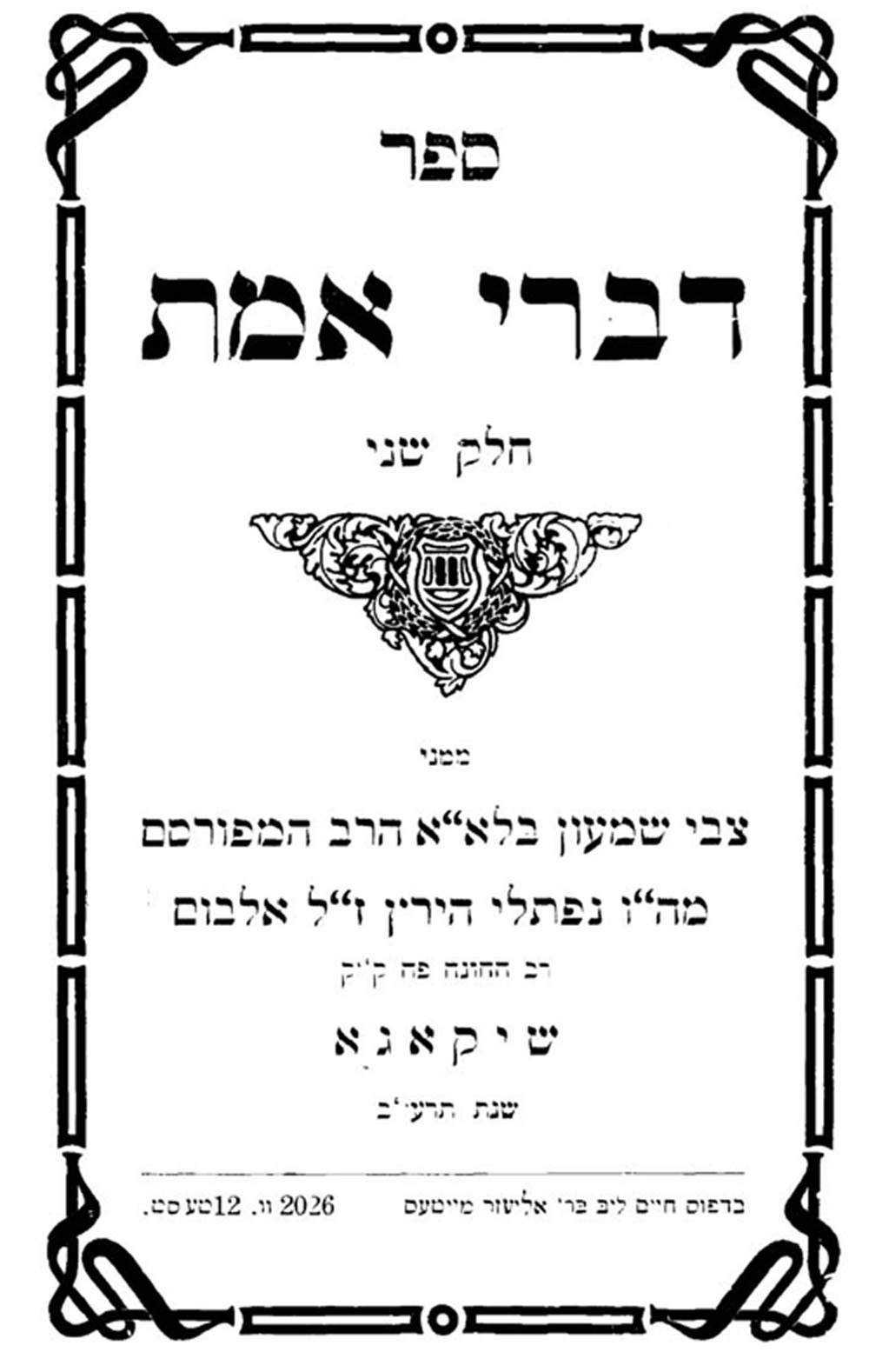
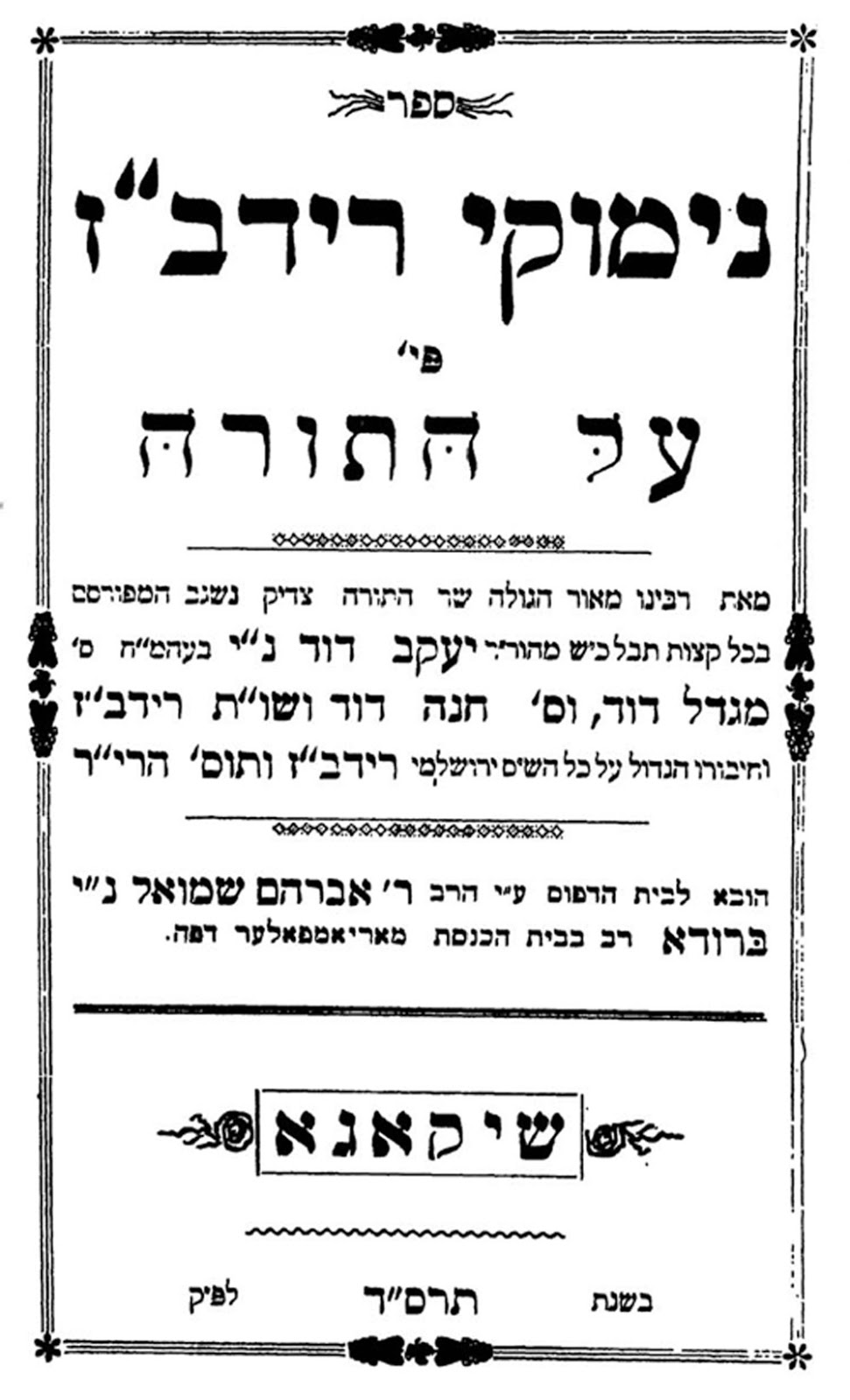
Only a few years later R. Jacob David Wilovsky (Ridbaz) also came to Chicago and he too found a great deal of difficulty there. In particular, he was opposed by R. Zvi Simeon Album who saw Ridbaz as a threat to his own kashrut supervision. While today everyone knows the Ridbaz and no one has heard of Album, we shouldn’t let this prejudice us in this particular matter. After all, Album was also a fine talmid hakham, although obviously not at the Ridbaz’ level. He published two volumes detailing his terrible dispute with Ridbaz, in which aside from dealing with kashrut matters, he also accuses Ridbaz of plagiarism and of creating controversy where ever he goes. Here are the title pages.


While the history of kashrut supervision is a great interest of mine, I will leave that for another time. For now, let me just call attention to two interesting points he makes in his polemic against Ridbaz.
The Ridbaz’ attack on the Brisker method is well known. In the introduction to his responsa, Beit Ridbaz (Jerusalem, 1908), Ridbaz writes as follows:

A certain rabbi invented the “chemical” method of study. Those in the know now refer to it as “chemistry,” but many speak of it as “logic.” This proved to be of great harm to us for it is a foreign spirit from without that they have brought in to the Oral Torah. This is not the Torah delivered to us by Moses from the mouth of the Omnipresent. This method of study has spread among the yeshivah students who still hold a gemara in their hands. In no way does this type of Torah study bring men to purity. From the day this method spread abroad this kind of Torah has had no power to protect its students. . . . It is better to have no rosh yeshivah than to have one who studies with the “chemical” method.

In his ethical will, printed at the end of his responsa, Ridbaz returns to this criticism and directs his sons: “Be careful, and keep far away from the new method of study that has in recent years spread through Lithuania and Zamut. Those knowledgeable in Torah refer to it as ‘chemistry.'” [Just before this post appeared, R. Eliezer Katzman sent word that in his opinion, Ridbaz is not referring to R. Hayyim and the Brisker approach, but rather to Telz and its method of talmudic analysis. I don’t believe this is correct, and hope to return to this subject in a future post.]
In the first edition of Shaul Stampfer’s Ha-Yeshivah ha-Lita’it be-Hithavutah, p. 113 n. 29, he quotes Saul Lieberman’s opinion that Ridbaz’ words were directed against R. Isaac Jacob Reines. This is clearly incorrect. Reines’ method had no influence whatsoever, and Ridbaz is speaking about a method of study that was widespread in the yeshivot. It is obvious that he can only be referring to the method of R. Hayyim. Lieberman’s incorrect speculation was removed in the second edition of Stampfer’s book.
This new edition is of great importance for it contains the documents that reveal the true reason why Volozhin was closed. In fact, On the Main Line has recently printed a report from the Jewish Chronicle that shows that even in England they had heard that the reason for closing down the yeshiva had to do with the “nihilists.”[3] Incidentally, the report in the Jewish Chronicle’s second story (also cited by On the Main Line) that the Netziv went to Western Europe is incorrect. In fact, I found it quite strange, as it is well known that the Netziv never left Eastern Europe. I asked R. Nathan Kamenetsky about this, and he responded as follows:

They confused him with his son R’ Hayyim Berlin, who did travel to Western Europe to raise funds. In MOAG (p. 449) I quote part of a letter R’ Hayyim wrote FROM PARIS, four months after the closure of the yeshiva to the Rav of Tripoli, Libya . . . From the text of [R.] Berlin’s signature on that letter, I prove (among other proofs) that the Berlins expected the closure of the yeshiva to be temporary.[4]

He also wrote me that he finds the article on the closure significant as “this proves that even among Jews it was known that the yeshiva was closed for the actual reason that is set down in the government records that Stampfer discovered and publicized in his later edition of ‘Yeshivot Lita be’Hit’havutah’. . . . It is invaluable.”

Returning to the Ridbaz, it is not surprising that Album, Divrei Emet, vol. 2, p. 45, points to Ridbaz’ comments as proof that the latter had contempt for the Torah scholars of Eastern Europe. Ridbaz never responded to this volume, but in the introduction to Nimukei Ridbaz (Chicago, 1904), he had already given his view of Album (without mentioning him by name).[5] There was another attack on Album in the book Akhen Noda ha-Davar (n.p., n.d). This latter work is very rare and I have never seen a copy of it. Although its author is given as P. Gwirtzman, Album claims that it was really written by Ridbaz (Divrei Emet, vol. 2, pp. 3, 9, 31).
Needless to say, because of his attacks on R. Hayyim, Ridbaz did not endear himself to the Soloveitchik family. Once when a student referred to Ridbaz, R. Joseph B. Soloveitchik became very angry and told the student never to mention his name again. He also said that some gedolim are always right, some are sometimes right, and some are never right, and the Ridbaz falls into the latter category![6]
Album also points to something else in order to attack Ridbaz. Here is the title page of Ridbaz’ Nimukei Ridbaz.

Look at how Ridbaz is described with such grandiose titles. Album picks up on this and writes (Divrei Emet, vol. 1, p. 34b):

עשה עטרה לעצמו בראשו וכתב על עצמו על פתח השער, ספר נימוקי הרידב”ז, מאת רבינו מאור הגולה שר התורה צדיק נשגב המפורסם בכל קצות תבל כק”ש מה’ יעקב דוד נ”י המפורסם בחיבורו הגדול על הירושלמי. כן כתב הרידב”ז על עצמו – ועשה נגד הירושלמי מפורש בפ’ ז’ דפסחים וז”ל הירושלמי ושנא את הרבנות מלמד שלא יניח אדם עטרה לעצמו בראשו שנאמר יהללוך זרים ולא פיך
He continues by mocking Ridbaz’ learning. Here is one example, where he picks up on something Ridbaz writes in Nimukei Ridbaz (ibid., p. 35a):
וכמה דברים אשר נמצאים בתוכו הוא אפס ואין – ואין זה כי אם ראות עין. כמו למשל כתב בפ’ וירא דלכך לא הכניס אברהם המלאכים לתוך האוהל משום דהצדיקים אין הקב”ה מביא תקלה על ידם, ואם הכניסם לתוך האוהל היה שרה רואה אותם, וקיי”ל דאשה נדה אסורה להביט על הס”ת ע”כ באם היו באוהל היתה בע”כ שרה רואה אותם ע”כ. והנה כל דבריו בזה דברים בטלים המה, ראשית שאין שום איסור על האשה להביט על הס”ת רק מצד מנהג וכבוד, עיין במג”א וגם אין צדיקים הקב”ה מביא תקלה על ידן לא שייך אלא במידי דאכילת איסור.
He continues the assault on this point in vol. 2, p. 39:
ומלבד שדבריו דברי ליצנות המה, ומה ענין מלאכים לס”ת, והיכן מצינו שיהי’ מלאכים בגדר ס”ת.
It is very sad to read how Ridbaz and Album speak about each other, and as more than a few have quipped, “There is no hatred like the hatred between rabbis.” Another version of the comment is that “There is no hatred like the hatred between rabbis, especially when money is involved.” Yet in this case, at least, I don’t know how significant the financial angle was. Album claimed that he never received remuneration for giving his hashgachah, and this isn’t something he could have put in print if it was not true. However, Harold Gastwirt assumes that Album was upset that Ridbaz had been chosen as chief rabbi of Chicago, instead of him, and this position certainly did come with a salary.[7])
In seeking to explain the phenomenon or rabbinic hatred, R. Jacob Eskolsky gives the following insightful answer (Taryag Mitzvot [New York, 1926], vol. 1, p. 32a.
פעם אחת השבתי לבעל הבית אחד בעיר סקרענטאן, אשר הייתי שם רב איזה שנים, אשר שאלני השאלה הנושנה של העם, מדוע נשתנו הרבנים מכל בני מלאכה אחרת, אשר הם יושבים זה בצד זה ברחוב אחד או בבית חרושת אחד ואינם שונאים זה לזה, והרבנים מכיון שנמצאים שנים בעיר אינם נוחין זה לזה, אדרבה שונאים הם זה את זה ומחרפים אחד את חבירו, היש איזו סיבה לפליאה זו? והשבתי לו בפשיטות, הלא אם יבואו איש לביתו ויבשר בשורה נעימה לאשתו, כי עזרהו ה’ בפרנסתו ויוכל להוסיף לה שפחה על שפחתה שתהיה עזר כנגדה ותוכל לישב בקתדרא, תגיע להגברת שמחה מזה, וגם השפחה היושבת בבית הבישול בשמעה זאת אחורי הדלת נתמלאה רצון משמועה הזאת, כי תהיה לה חברה לעבודתה ולא יפול משא כל הבית עליה. לא כן אם יבוא איש הביתה בבשורה נעימה ומספר לאשתו כי עזרהו ה’ בריווח גדול יוכל לקחת עוד אשה אחת על אשתו, כי יוכל לפרנס שתי נשים, אז תמלא קנאת עזה כמוה ותשפוך כל חמתה עליו ובקול רעש גדול תחיל הזעק עליו, כי איננה שפחה בביתו להיות שמח בחברתה, כי בעלת הבית היא ואינה חפצה בשום אופן להניח שניה לצוות ולהנהיג עניני הבית ורק קולה ישמע בכל ענין הנהגת הבית, ואם לא ישמע לה ויקח אשה אחרת עליה תהיה צרה לה. כמו כן אם הרבנים מקיימים מה שנאמר בהוריות (דף י’) לא שררות אני נותן לכם, עבדות אני נותן לכם, כי אז היו שמחים אם הקהל מקבל עליו עוד רב, ובקבלת עוד עבד לצרכי הקהל הוקל מעליו עבודת העיר, אך אם הרב מחשיב את עצמו לשר ושופט ונוהג נשיאותו ברמה וכל מילי דמתא יהיו נמתחים אך על פיו ובלעדו לא ירים איש את ידו, אז מביט בעין קנאה על רב השני ואינו מניחו להרים ראש. ועל זה אמרו חכמנו (יומא עא) אלו תלמידי חכמים שדומים לנשים ועושים גבורה כאנשים, כי דרך נשים להם להיות מתקנאות בירך חברתה ולהיות צרה להשניה.
Before coming to New York, Eskolsky had served as a rav in Scranton[8] and was no stranger to rabbinic disputes himself.[9]
Exalted egos from both sides also helps to explain rabbinic feuds. As the Maharal commented, this is a particular problem of Torah scholars, because they are aware of their own great scholarship (Netivot Olam: Netivot ha-Anavah, ch. 6):
כי הגאוה הוא על בעל תורה בטבע וכל זה מצד הגדולה והמעלה שיש לתורה . . . ומפני כך בעל התורה יש בו קצת גאוה שרואה עצמו ג”כ גבוה ונבדל משאר הבריות.
Sometimes these rabbinic disputes even reach the level of what R. Jehiel Jacob Weinberg referred to as “murder.” Here is what he wrote in a letter to R. Joseph Apfel (Kitvei ha-Rav Weinberg, vol. 1 no. 3):
לפני שנתיים באו לכאן הרב גרוסנאס ביחד עם הפרופ’ דומב להתיעץ עם הגרי”א הרצוג ז”ל ששהה כאן והם הי’ גם אצלי ואני יעצתי להגריא”ה לבלי להורות הוראה בזה כי אם בהסכמת כל גדולי ירושלים כי . . . יש קנאים גדולים שאינם מודים על האמת אלא מחמירים עפ”י שיקול דעתם ורגשי לבם. ועמם אין להתוכח והם חשודים גם על שפיכת דם של המקילים וד”ל.
I published this volume as a sefer, to be used in the beit midrash, so I took out something which I didn’t think was proper to appear in such a work (as opposed to a scholarly book or blog where these considerations do not apply). In accordance with scholarly convention, I indicated this with an ellipses. Incidentally, when the late R. Joseph Apfel gave me the letters he received from R. Weinberg, there was only one place where he told me to omit a name. Other than that, he gave me permission to publish the letters in their entirety.
The complete sentence reads (and I have emphasized the deleted word):
כי אם בהסכמת כל גדולי ירושלים כי ביניהם יש קנאים גדולים שאינם מודים על האמת
In other words, R. Weinberg includes in his criticism even some people regarded as gedolim. This should not surprise us, and it doesn’t mean that these individuals are not, in fact, gedolim. Even well-meaning people can at times be led to extreme statements and “shefihut damim”. We have seen this in the last few years when rabbis, without any real knowledge of the facts, have declared that certain hashgachot are not reliable. We have seen gedolim declare that certain authors are dangerous without having even read their books (in the original or in translation) or spoken to them. I know from speaking to some of the mashgichim and the authors that they regard this as real “shefihut damim,” for they have been publicly condemned as either not reliable in matters of kashrut[10] or as destroyers of Torah society. If the accusations are true, then the rabbis have no choice but to speak out. But if the allegations are false, or even uncertain, is there any greater “shefihut damim” than this?
With regard to Weinberg’s comment, the late Yonah Emanuel wrote to me:
[תרשה] לי להתייחס לקטע הנ”ל, בו הרב ויינברג כתב שהקנאים חשודים על שפיכות דמים של המקילים. יש להביא אסמכתא מעדות אישה (!). רות בלוי בספרה “שומרי העיר” (י”ם תשל”ט) , פרק יז-יח, מתארת איך הקנאים רצו למנוע נישואי רבי עמרם בלוי איתה, בהיותה גיורת. אבל למה להביא ממרחק לחמנו? פעם הלכתי לשיעור אצל מו”ר הרב ש”ז אויערבך זצ”ל, ופתאום ראיתי במדרגות בית מו”ר זצ”ל קנאים רבים, חלק מהם דחפו עצמם לתוך הדירה, וחלק עמדו בחוץ. הם רצו ללחוץ בענין מסויים על מו”ר זצ”ל, והשיטה הבדוקה לבוא בהמונים, ללחוץ ולהפחיד. על זה התריע הרב ויינברג זצ”ל ממרחקים. על כגון זה נאמר “את בנציבין ומצודתך פרוסה בירושלים” (פסחים ג ע”ב).
Regarding rabbinic disputes, it is also worth recalling these memorable words, quoted by R. David Sperber (grandfather of Prof. Daniel Sperber)[11]:
מוטב להעמיד צלם בהיכל מלהחזיק במחלוקת
Returning to Ridbaz, all of the controversy in Chicago was too much for him and he left Chicago. Legend has it that he was locked in the freezer, in an attempt by his enemies to kill him, and upon being freed he immediately took his family and grabbed a train to New York. It was Friday night but he felt this was a case of was pikuach nefesh. I doubt that the story is true, although in a previous post I did mention a case where the mashgiach was locked in the freezer. We also have another recorded case where this happened. I refer to Rabbi Luntz of Paterson, N. J. who was locked in the icebox by one of the butchers he certified. This would have been bad enough, but Luntz also had to contend with R. Judah Leib Seltzer, who was later one of the leaders of Agudat ha-Rabbonim. He too was in Paterson and had a terrible feud with Luntz, which “climaxed by a public fight between the two rabbis in the synagogue.”[12]
Speaking of rabbis who were chased out of their communities, let me repeat what I heard from the late Rabbi Louis Jacobs.[13] This story is not documented anywhere, but is something that Jacobs no doubt heard growing up in Manchester. R. Abraham Aaron Yudelevitz was a rav in Manchester at the turn of the twentieth century. He would later come to the United States where he served as a rav in Boston and later in New York, and he was also a rosh yeshiva at Yeshivat R. Yitzhak Elhanan. As with a few others, while in N.Y. he even had the title “Rav ha-Kollel.”
Yudelevitz might have been the most brilliant Torah scholar in the United States. He was also prepared to stand up to anyone (including the Rogochover),[14] and is known for one incredible pesak that created enormous controversy: He permitted a woman to appoint another woman as her shaliah to carry out the halitzah ceremony. A short discussion of Yudelevitz’ life and the controversy is found in the second volume of Yeshurun,[15] the series which continues to publish massive volumes full of important and fascinating material. The typical haredi nonsense is, of course, to be found there, but since it is not so common it is no more than an unpleasant distraction.[16]
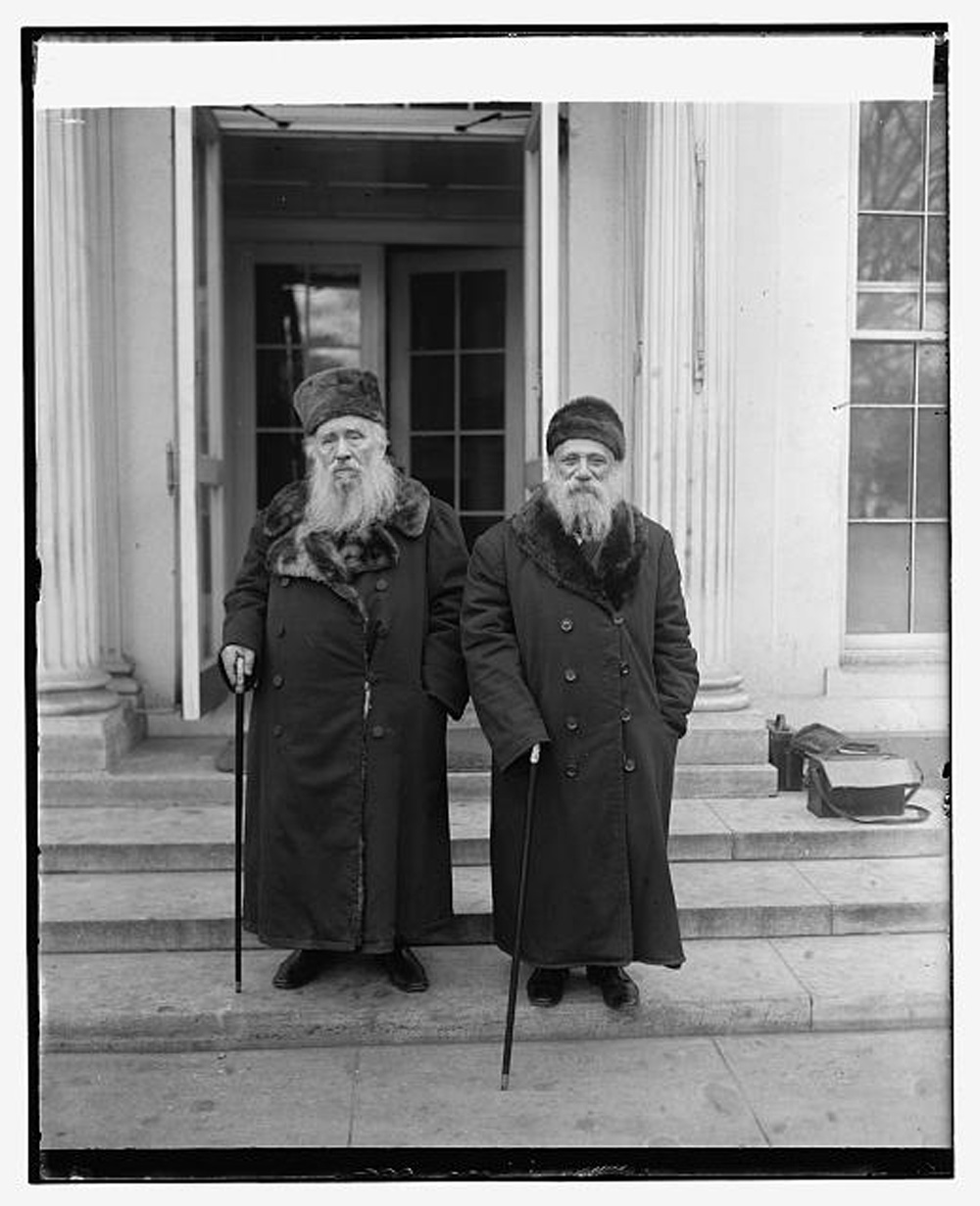
Here is a picture of Yudelevitz. He is on the right and the other rabbi is Gavriel Zev Margulies, whom I mentioned in my last post (see also note 12).[17]

Jacobs told me that when the machers had tired of Yudelevitz, they let him know it was time to leave in the following way. When his carriage pulled up one day, inside it were a couple of prostitutes waiting for him. This was the message to Yudelevitz to get out of town! Rather than stay and fight, he set his sights on the United States.

Returning to Gulevsky, in his book Du Yovlin (New York, 1988) he focuses on American Orthodoxy and its various rabbinic leaders. Since R. Emanuel Rackman recently passed away, let me quote a little of what he says (p. 45) about R. David Rackman, who was R. Emanuel’s father. He is the author of Kiryat Hanah David (New York, 1967), published by his son, and was a Rosh Yeshiva at RIETS for a couple of years beginning in 1907.

אחד מראשוני התלמידים שבאו ללמוד בישיבה ואחרי כן הרביצו תורה בישיבה, זה היה הרה”ג רבי דוד רקמאן. כפי ששמעתי מזקנים, הרה”ג מוהר”ר דוד רקמאן בא לארצות הברית עם סמיכת חכמים בידו. הרה”ג רבי נחום דן מסלוצק היה משגיח הראשון בישיבה, והוא לא היה קשור עם תנועת המוסר לגמרי. אבל היה אביהם של כל בני הישיבה, ויותר מזה אביהם ואמם. הוא יעץ להרה”ג דוד רקמאן שימשיך ללמוד ולא לרוץ אחרי הבלי עולם הזה . . . בשנת תרס”ז כבר נתן שיעורים בישיבה קרוב לשלש שנים. היה חכם מופלג ותמך בישיבה כל ימיו. כאשר באו לישיבה מאורי ישראל רבותינו העילוי ממיטשט ואחרי כן רבי משה הלוי סאלאווייציג עזב הרה”ג רבי דוד רקמאן כל עסקיו, וממש התאבק בעפר רגליהם. פעם ראיתי אותו בסביבת החכם השלם איש האשכולות מרן חיים העליר, ויבדל לחיים טובים “הרב” שליט”א. מעולם לא ראיתי פה במדינה הזאת רב שיעמוד ביראת הכבוד כלפי גדולי ישראל אמיתיים כרבי דוד רקמאן.
Gulevsky gives descriptions of other early students at RIETS. One of those he mentions is Moses Romm, who was later a rabbi in Minneapolis. I believe he is the grandfather of Rabbi Romm who taught at BMT for many years. He also mentions Henry Guterman, who was the rav of Scranton for half a century, and has recollections of Samuel K. Mirsky, Dov Baer Abramowitz, and many others. There is so much material here, for those interested in American Orthodoxy, that I can’t even begin to summarize it.
Regarding R. Benjamin Fleischer, many of whose books are now on HebrewBooks.org, Gulevsky says the following (p. 46):
טיפוס מיוחד במינו היה הרה”ג העצום רבי בנימין שלייפער [צ”ל פליישער] שהיה רב בבית מדרש הגדול במורד העיר. היה עילוי נפלא ובקיאותו בש”ס ופוסקים היה משהו מיוחד. ובגלל שהיה עילוי בכל המובנים לכן לא נעשה הפוסק במורד העיר. היה מחמיר גדול בשאלת נשים, אפילו בדרבנן. השיטה שלו היתה שבמדינה הזאת אין חשש מאכולת, הנשים נקיות ביותר וצריכים לבטל לגמרי כל הקולות של כתמים. התרעם הרבה על כמה פסקים של הרה”ג א. ה. בניו יראק, והרה”ג ח. מ. בשיקגא, לא רק בשאלת נשים.
The New York rabbi he alludes to is undoubtedly R. Joseph Elijah Henkin but I don’t know who the Chicago rabbi is. Maybe one of the readers can help out here. As mentioned before, Gulevsky uses this type of code throughout his works. With regard to his categorization of Fleischer as an “illui,” it is worth recalling R. Moshe Feinstein’s comment that: אין לנו הרבה נחת מהעילויים.[18
In the previous post I quoted the very harsh things Gulevsky had to say about YU. Yet Du Yovlin was written while he was still employed there, and from this book we get an entirely different picture. YU is referred to as “yeshivatenu ha-kedoshah”, and on p. 1 Dr. Norman Lamm is described as follows:
ידידי ורב חביבי וכו’, החכם השלם איש האשכולות כליל המדעים וכו’ וכו’ וכו’ הרה”ג נחום לאם שליט”א
At the beginning of this post I mentioned that Gulevsky is descended from both R. Hayyim of Volozhin and his brother R. Simcha. While everyone knows that R. Hayyim became the student of the Vilna Gaon, Gulevsky tells us the following about his forefather, R. Simcha, which is amazing in that it testifies to Lithuanian opposition to the Vilna Gaon (Du Yovlin, p. 2):
אאמו”ז רבינו שמחה התנגד לנסוע אל אדונינו הגר”א כפי שרמז מר זקני הגאון החסיד קדוש ישראל זצוק”ל הי”ד. זקנינו רבינו שמחה בתמימותו הכנה חשב שהגר”א הולך לשנות מנהגן של ישראל, והתנגד לזה הרבה. אדונינו בעל השאגת אריה לא שינה שום דבר מלבד שהכשיר מכה בדופן וכו’, אולם אדונינו הגר”א, שמעו עליו שאינו מניח תפילין בחול המועד וכדומה.
With regard to the Vilna Gaon, and why he never made it to the Land of Israel, Gulevsky writes as follows (Shabbat Shabbaton, p. 134):
ושמעתי מאאמו”ז הגאון החסיד קדוש ישראל עמוד ההוראה ואביר הרועים מרנא שמחה זעליג זצוק”ל הי”ד, ששמע ממרא דמתיבתא עלאה הגה”ח המובהק מרן רפאל מוואלאזשין ששמע מאביו רבינו אריה ליב שאפירא מקאוונא, היו הרבה טעמים שהגר”א חזר מדרכו לארץ ישראל. אבל רבינו אריה ליב סבר שאחד מהטעמים בנגלה היה שהגר”א סבר העיקר כהמבי”ט נגד הבית יוסף וכל חכמי הדור ההוא.
According to the Mabit all produce grown in the Land of Israel in the Sabbatical year, even on non-Jewish land, has sanctity and must be given special treatment. I assume that Gulevsky’s report means that the Gaon did not want to come to the land of Israel and create controversy by adopting a practice in opposition to R. Joseph Karo’s view, which was minhag Eretz Yisrael.[19] (In the twentieth century the Chazon Ish had no compunctions in advocating the Mabit’s opinion, especially as there are reports – hotly disputed, to be sure – that before his death R. Joseph Karo abandoned his position.[20])
An interesting comment which is not of a historical nature is found in Shabbat Shabbaton. p. 96. R. Moshe Feinstein states that anytime Rabad doesn’t express his disagreement with the Rambam, this shows that he agrees with him. R. Moshe is hardly the first to argue in this fashion,[21] yet Gulevsky points out that this is a methodological error and that there are numerous times that Rabad disagrees in his other works and doesn’t record this disagreement in his hassagot. R. Yaakov Hayyim Sofer, who has a bekiut unlike that of anyone alive today, has a very long list of such disagreements, and if all we had were the hassagot we would know nothing of this.[22] We can conclude, therefore, that Rabad’s hassagot were never intended to be a comprehensive list of all of his criticisms, but were written in an ad hoc fashion.
Quite apart from what appears in his books, there are some other interesting tidbits he told me which as far as I know do not appear in print.
1. The grandfather of the famous bibliographer, E. R. Malachi, was named Engleman, and he emigrated from Brisk to the Land of Israel in 1837.
2. R. Simcha Zelig Rieger was head of a kollel le-hora’ah in Volozhin. This kollel focused on practical halakhah.
3. R. Hayyim Soloveitchik and R. Velvel never preached to the community, not even on Shabbat ha-Gadol and Shabbat Shuvah.[23]
4. Although R. Velvel was officially rav of Brisk for twenty years, he only resided in the city for six and a half of these years. He was often ill and had to spend much of his time in places more congenial to his health. He was not living there during the 1937 pogrom, but after this event he returned to the city for two weeks.
5. In Kelm “they held of” Wessely’s Yein ha-Levanon.(I include this because I think Gulevsky meant the yeshiva as a whole, not simply R. Simcha Zissel. R. David Zvi Hillman has seen the manuscript essays of R. Simcha Zissel, and they contain references to Wessely. When these were published in Hokhmah u-Mussar [New York, 1957], Wessely’s name was deleted.[24])
6. Rabbi Rakefet has asserted on numerous occasions that as a young man R. Shneur Kotler attended R. Soloveitchik’s shiurim at YU. Gulevsky denies this. According to him, R. Shneur only went to hear the Rav at Moriah.[25]
7. R. Joseph Zekhariah Stern, Zekher Yehosef, Orah Hayyim no. 177, has a responsum addressed to ר’ מנחם שרגא רעוויל. This is Bernard Revel’s father (The first name was actually Nahum, not Menahem.)

I would be remiss in not mentioning that one has to question many of the stories Gulevsky tells, simply because they don’t agree with what we know from other sources. While he tries to be careful in his facts, some of his reports are no different than the typical “frum history” in which all sorts of stories get repeated as if they were facts. There are a number of examples of this but let me note one that doesn’t appear in his books, but which he told me. According to Gulevsky, the reason Yeshiva College did not offer a job to Saul Lieberman is because his father-in-law, Meir Bar-Ilan, almost bankrupted the institution when he served as temporary president during Bernard Revel’s leave of absence. Yet this is completely false. There are also times when Gulevsky writes things that are not merely incorrect, but downright foolish. See e.g., here.

The link just given refers to Gulevsky’s stringent view of eruvin. In this he is following not only the Brisker tradition but also that of his grandfather, who did not believe that an eruv could be established in the typical town. Yet Gulevsky has also noted that despite this opposition, there was an eruv in Brisk and his grandfather checked it every week.[26] (When the young Joseph Baer visited Brisk he checked it together with R. Simcha Zelig.[27] He also used to check the eruv in Chaslovitz, where his father was the rav.) Originally I thought that the presence of an eruv in Brisk was an example of R. Hayyim not wishing to force the community to adopt his stringent position. Yet from R. Moshe Sternbuch’s recently published Teshuvot ve-Hanhagot, vol. 5, no. 101, we see that this was not the case. He heard from R. Velvel that R. Hayyim wanted to forbid the eruv, and even publicized this, but the people refused to listen to him. (You see, it is not only Modern Orthodox Jews who ignore what the rabbis tell them!) The people must have thought that if other cities with great rabbis can have an eruv, then why should they suffer because of R. Hayyim’s humra. Faced with this rejection, R. Hayyim told R. Simcha Zelig that the kashrut of the eruv was to be his responsibility. R. Hayyim wanted nothing to do with it. R. Velvel himself would only check the eruv once a year, before Rosh Hashanah, and it bothered him greatly that his own city was relying on what he regarded to be unacceptable leniencies.[28]
In Boston, as long as R. Joseph B. Soloveitchik was active, there was no eruv. The Rav publicly declared:
I am opposed to the establishment of eruvin. An eruv in American means the abolishment of the prohibition of carrying on Shabbat. Aside from certain [meta-halakhic] reasons, I also have halakhic reasons why I can’t give my approval to the establishment of eruvin. [29]
As soon as the Rav was no longer able to protest, an eruv was established in Brookline. I was in the Bostoner Rebbe’s shul when he spoke about how important the eruv was and that everyone should rely on it. He insisted that there must be no distinction between the “frum,” who don’t carry, and everyone else. It is interesting that the Modern Orthodox world, which places the Rav on such a pedestal, has not accepted one of his few public halakhic pronouncements.

[1] See here
[2] Hebrew Printing in America, p. 501.
[3] See here.
[4] In his e-mail to me Kamenetsky mistakenly wrote R. Meir Berlin. I have corrected it.
[5] The introduction to this book and also his Beit Ridbaz (Jerusalem, 1908), are fascinating, because he describes in detail many of the communal problems he saw. One wonders if he was writing his book today, which problems he would identify. I don’t think English sermons would still be an issue for him, although I think it is fair to say that advertising a “Pretty Woman” sheitl would definitely outrage hiim. After all, the sheitl is supposed to represent modesty, and Julia Roberts’ profession in that particular movie was not exactly tzniusdik. See here (Unfortunately, some of the comments to this post are inappropriate.)
[6] I heard this from an eyewitness. The event took place in the 1950s.
[7] See Fraud, Corruption, and Holiness (Port Washington, 1974), p. 91.
[8] Quiz question: Which contemporary gadol be-Yisrael was born in Scranton?
[9] See Gastwirt, Fraud, p. 145, that Eskolsky was expelled from Agudat ha-Rabbanim for giving a hekhsher on a plant that produced both kosher and non-kosher meat. This was in violation of the Agudat ha-Rabbanim takkanah. Those rabbis who opposed Agudat ha-Rabbanim’s policy formed the competing Kenesset ha-Rabbonim, which was led by R. Gavriel Zev Margulies.
[10] Experience has shown that a rabbi who is financially corrupt can easily win back his reputation (and in some circles financial corruption doesn’t affect his reputation to begin with). Yet if a rabbi is accused of not being reliable in matters of kashrut, even if the accusation is false, it is almost impossible for him to turn this around. Unfortunately, when it comes to kashrut supervision, American Orthodoxy has distorted our tradition. People are constantly told that if they see a hashgachah on a product or restaurant, that they cannot rely on it without investigating who the rav ha-machshir is. This is completely mistaken. According to halakhah every rav is regarded as trustworthy unless you have been reliably informed otherwise. Without receiving negative information, one should always assume that a rav is reliable. This is no different than if you arrive in a new city and go to shul on Shabbat and you are invited to someone’s house for lunch. One should assume, unless he has reason to think otherwise, that the person inviting him keeps kosher, as religious Jews have a hezkat kashrut. Certainly, if the rabbi invites you to his house you must assume this. The notion that is currently rampant, that we don’t trust a rav until we investigate him, is the exact opposite of what the tradition has always held. Rather, we are supposed to trust the rav unless we are given reason to think otherwise. Every rav, even a rav ha-machshir, has a hezkat kashrut and is assumed to be doing his job reliably.
To show how far this idiocy has gone, let me share something that happened a couple of years ago when I was visiting a city that shall remain nameless. Someone was eating with us and mentioned that he was going to be travelling to Elizabeth, New Jersey. He asked me if I knew about kosher food in the area. I told him that Elizabeth has a very nice Jewish community, with plenty of kosher food. He then asked who gave the hashgachah, and I replied that it is Rabbi Teitz. The man wasn’t happy with my answer, which troubled me since I had never heard of anyone question R. Teitz. In fact, in speaking to him it was apparent that he had never even heard of R. Teitz. Yet he announced for everyone that his family would have to avoid visiting any of the kosher eateries when he was in Elizabeth. I was really shocked and I asked him, “Why? What is wrong with R. Teitz?” I further asked him where he thinks the people he will be visiting in Elizabeth get their food. Yet he would only reply: “We only eat at places under the supervision of a Vaad.” I told him that I didn’t think that there was a Vaad in Elizabeth, and why in any case does he need a Vaad? A Vaad might be a good idea from a practical standpoint, in order to create one communal standard, yet there is nothing in the Shulhan Arukh about a Vaad, and R. Teitz is as reliable as anyone. Yet all I got from him was the same nonsense about how without a Vaad a hashgachah cannot be trusted. (I never asked him what he would do in a one-rabbi town.)
[11] Afarkasta de-Anya, vol. 1, no. 165:3. While Sperber later became a mainstream haredi posek, in his youth he was also exposed to Haskalah. See Joseph Ibn Kaspi, Asarah Kelei Kesef ed. Last (Pressburg, 1903), vol. 2, pp. 190ff. (Hebrewbooks.org for some reason splits up Asarah Kelei Kesef into separate volumes. If you search hebrewbooks.org under נקדות כסף you will find the Sperber letters.) Sperber, p. 193, asks Last, when he publishes his letters, to describe him as a hasid. His reason is incredible:
נא לתארינו [צ”ל לתאריני] בשם “חסיד” והיה אם לא ייטבו דברי בעיניהם ידינני לכ”ז, ויאמרו כי חסיד הוא וחכמה מה לו, ואם אולי ימצאו דברי נכונים, אז ירומם שם חסיד תחת לשונם ויאמרו הגם חסיד יודע ומבין דבר.
[12] See Gastwirt, Fraud, p. 93. Cf. Jenna Weissman Joselit, New York’s Jewish Jews (Bloomington, 1990), p. 62, regarding R. Moses Z. Margolies and his kashrut battles: “Determined to teach the Ramaz a lesson, a band of disgruntled butchers alledgedly banded together to poison the meat at his daughter’s wedding supper, sickening some 2000 guests, including the bride.” During his great dispute with R. Shalom Elhanan Jaffe, R. Gavriel Zev Margulies was physically attacked by shohatim who supported Jaffe. See Gastwirt, Fraud, p. 121.
[13] Since I mention Jacobs, I must also note the following. In a recent AJS Review (vol. 32, 2008), pp. 450-452, I reviewed Miri Freud-Kandel’s history of Orthodox Judaism in Britain. I mentioned the “Jacob’s Affair” and there is a note explaining what this was.
“The term ‘Jacobs Affair’ refers to the controversy surrounding the potential appointment of Rabbi Louis Jacobs as chief rabbi of England. In 1961, Rabbi Louis Jacobs, z”l, was nominated as the principal of Jews’ College, a position considered a potential way station for the chief rabbinate of the British Commonwealth. That appointment, however, was blocked by the then-chief rabbi Israel Brodie because of his published views. Brodie then prohibited Louis from returning to his post at the New West End synagogue in London, upon which a new congregation was established for him.”
This was added by the editor. I never would have referred to Jacobs as “Louis.” I have, incidentally, many letters from Jacobs that I hope to publish. Although we only met three times, we corresponded for almost twenty years. Only now do I realize how lucky I was, that this world-renowned scholar took the time from his busy life to correspond with a young student, especially a student who had no compunctions telling Jacobs when he disagreed with him. Occasionally, I would send Jacob’s material that I thought would interest him. One time I sent him R. Joseph Messas’ Mayim Hayim, and was surprised to later see that he cited this work in Beyond Reasonable Doubt (London, 1999), pp. 216-217. He showed great insight in describing Messas as follows: “As is evident from his responsa, Mashash, for a rabbi of the old school, was something of a modernist. But his historical sense was sufficiently acute not to allow him to read modern ideas into the sayings of the ancient rabbis.” I also sent him Haym Soloveitchik’s famous article, “Religious Law and Change,” AJS Review 12 (1987), pp. 203-221, which surprisingly he had never seen. When A Tree of Life was reprinted in 2000, he added a new introduction and cited this article as further support for the thesis of his book.
Regarding editors adding material to an author’s work without asking, see the recent comment by Haym Soloveitchik in “Mishneh Torah: Polemic and Art,” in Jay M. Harris, ed., Maimonides After 800 Years (Cambridge, 2007), p. 333 n. 25. (This is a truly wonderful article.) In referring to an entry he wrote for the Oxford Dictionary of the Jewish Religion, Soloveitchik notes: “The editors, wishing to improve upon my scant bibliography, added Shemuel Argaman, The Captivity of the Maharam: A Narrative of the Events Surrounding the Arrest and Captivity of the Maharam of Rothenburg (New York, 1990)—a children’s storybook published by the Lakewood Heder.”
[14] See here. This source does not give the book and page no. that is excerpted: It is Av be-Hokhmah (New York, 1927), pp. 85-86.
[15] R. Moshe Zvi Berger, “Av le-Hakhamim: Ha-Gaon R. Avraham Aharon Yudelevitz,” Yeshurun 2 (1997)), pp. 686-691.
[16] For an example from the most recent volume, see Yeshurun 21 (Nisan 5769) p. 417, where in discussing “Ha-Gaon R. Moses Aaron Poleyeff” we are told that he שימש אז כראש ישיבה באחד מהישיבות שבאמריקה. If this was someone who taught at RIETS for a short period of time, I might understand it, but Poleyeff spent his entire adult life teaching there. (He began teaching at RIETS in 1920.) He was also widely regarded as Yeshiva’s most beloved teacher. Poleyeff, more than anyone else, would be offended at this attempt to “kasher” him by hiding the fact that he taught at RIETS. (An outstanding talmid hakham recently commented to me that in his opinion Poleyeff was a greater lamdan than R. Moshe Feinstein!)
[17] I found the picture here.
[18] R. Michel Shurkin, Meged Giv’ot Olam ( Jerusalem, 2005), vol. 2, p. 23. He also quotes R. Leib Malin as saying that it is not good to be an illui.
[19] Eliezer Brodt called my attention to the fact that R. David Luria offered this reason as well. See Dov Eliach, Ha-Gaon (Jerusalem, 2002), vol. 3, p. 1286.
[20] See Dayan I. Grunfeld, The Dietary Laws (London, 1972), vol. 2, pp. 180-181
[21] R. Yitzhak Yosef, in his new work, Einei Yitzhak (Jerusalem, 2009), vol. 3, p. 439, also accepts this methodological rule.
[22] Keneset Hayyim (Jerusalem, 1993), pp. 9-12. See also Isadore Twersky, Rabad of Posquieres (Cambridge, 1962), pp. 175-176.
[23] In the recently published Kol Brisk (Jerusalem, 2009), p. 20, it refers to R. Hayyim delivering words of Mussar on Shabat Shuvah. Gulevsky strongly denies this. The most that he would acknowledge is that perhaps in his first year or two he gave derashot, but never after that. (R. Chaim’s and the Brisker Rav’s way of “rabbinating” did not find favor in the eyes of all of Brisk’s citizens, ואכמ”ל.) In general, there are historical points in this book that are doubtful, leading me to question its reliability in such matters. Even if the historical information came from R. Aaron Soloveichik, it was not uncommon for R. Aaron to err in such matters, and again אכמ”ל. (Kol Brisk is authored by one of R. Aaron Soloveichik’s son. He doesn’t give his name on the title page so I will respect this.)
Let me give one example of the questionable material in this book. On p. 33 there is a whole story, seemingly legendary, to explain how R. David Feinsten, R. Moshe’s father, received the name Feinstein, since the family’s original name was not this. Yet in the introduction to vol. 8 of Iggerot Moshe, p. 6, the children of R. Moshe state that Feinstein was indeed the family name.
Perhaps in another post I will return to this book, as it has a number of what are certain to be controversial statements. For example, on p. 656 it blasts the OU for naming its Israel center after someone who, we are told, caused R. Aaron Soloveichik so much trouble:
בפעולה זו הם מבזים גדול בתורה שכל ימיו הרביץ תורה לאלפים.
[24] See Naftali Hertz Wessely, Yein ha-Levanon (Rishon le-Tzion, 2003), p. 28.
[25] Regarding R. Shneur, a recent article in Ha-Ma’ayan reveals that in the mid-1940’s he was involved in founding the first yeshiva in Palestine that taught secular studies. See R. Yoel Amital, “Sabi ha-Rav Zvi Yehudah Meltzer,” Ha-Ma’ayan 49 (Tamuz, 5769), p. 66.
[26] See R. Menasheh Klein, Mishneh Halakhot, vol. 8, no. 128, vol. 15, no. 127 (responsum to Gulevsky; this last source quotes R. Moshe Feinstein as stating that there was also an eruv in Karlin, despite the fact that R. Yaakov of Karlin was the leading opponent of city eruvin). In his responsum to Gulevsky, Klein says some of the strangest things imaginable, which raise questions as to how he can be taken seriously as a posek in matters of eruvin. According to his calculations, and this is directly related to his halakhic understanding, in Second Temple days there were billions (!) of Jews in the Land of Israel, and roughly thirty million of them would descend on Jerusalem for the holidays. He concludes (vol. 15 p. 201):
והבוליווארדיס והמעטראפאליטין של קווינס וגרענד סענטאראל אף לא הגיעו לקרסולי ירושלים עיה”ק וזה לפענ”ד פשוט
In another responsum to Gulevsky dealing with eruvin (Mishneh Halakhot, vol. 8, no. 168), he says something equally strange:
גם מרן הח”ס נחשב מתלמידי בעש”ט שהי’ תלמיד מובהק של מרן בעל הפלאה
[27] Schachter, Nefesh ha-Rav, p. 170.
[28] R. Sternbuch adds:
ומאמר היה בפיו בשם אביו הגר”ח זצ”ל, “קשה למצוא עירוב כשר וקשה למצוא מקוה פסול”, וכוונתו שבעירוב נכנסים לדחוקים ומכשירים, ובמקוה אף שמדינא יש להקל מחמירים.
[29] Ha-Pardes (January, 1979), p. 26.


Uncensored Books (Dr. Marc B. Shapiro)

Uncensored Books
Marc B. Shapiro


Dan Rabinowitz has provided many examples of censorship in seforim (examples which I look forward to using – with acknowledgment of course – in my own forthcoming book on the subject). What I would like to call attention to are two examples where the publishers would have certainly censored these texts had they known who was being discussed. Presumably, what I mention now has already been pointed out to them and will be excised if the books are reprinted.

1. In the recently published volume of R. Eliyahu Dessler’s letters (Bnei Brak, 2004), p. 166, there is a 1942 letter to Dr. Dov Hyman discussing the Gateshead Kollel. After mentioning how the kollel includes the best young bochurim in England, those who studied in the great yeshivot in Eastern Europe, he writes:

יש שמה צעיר א’ יליד מנשסתר (הוא היחיד מילידי המדינה) ולא אגזם אף מה שהוא אם אומר שמעודי לא ראיתי עלוי בעמקות יחד עם שאר הכשרונות כמוהו זולתי אחד, הוא גדול גדול ממש וכמעט א”א לרדת לסוף עומק דעתו

This passage is referring to none other than the late Rabbi Louis Jacobs — then referred to as Leibl — who was born in Manchester in 1920. In Jacob’s autobiography, Helping with Inquiries (London, 1989), pp. 42, 54, 59 he writes:

When I joined the Kolel, soon after its inception, the other members had all studied at one or other of the famous Lithuanian Yeshivot – Telz, Mir, Slabodka, Kamenitz, Baranowitz, Grodno, and Radin – before coming to England, with the exception of a fiery young Hungarian, Zusya Waltner. . . . As the “babe” of the Kolel (I was only twenty years of age, while some of my colleagues were several years older) and as one who had only studied in a Lithuanian Yeshivah in spirit (I was, so to speak, an honorary Telzer) I was welcomed very good-heartedly by the other members, but with an amused tolerance. . . . Before leaving my account of the Gatesehad Kolel, I feel it would be incomplete unless I said something more about Rabbi Dessler, one of the most remarkable men I have ever met. . . . .I cannot and do not want to forget what I owe to Rabbi Dessler. Although I was never officially his pupil, he was, in many respects, my teacher par excellence. He taught me and so many others to see Judaism in sophisticated terms. He was a great man whose place among the Gedoley Yisrael of the twentieth century remains uncontested.

2. Recently many books by the Gaon R. Eliyahu Rabinowitz-Teomim (the Aderet) have appeared, by publishers with very different hashkafot. The volume of teshuvot, Ma’aneh Eliyahu, was published by Yeshivat Or Etzion in Israel, whose Rosh Yeshivah is R. Hayyim Druckman. It is obvious that the editors have no knowledge of American Jewish history, otherwise, the words I quote (from p. 352) would never have been allowed to appear. The editors no doubt assumed that the Aderet was attacking some phony. The name Jacob Joseph means nothing to them.


וידענו היטב היטב את האיש ואת שיחו תהלוכותיו ותחבולותיו מתחילה ועד סוף . . . ואותו הרב ר’ יעקב, שלא שמש תלמידי חכמים ומלך מעצמו, ע”פ תבונתו, כי פקח גדול הוא, אינו מגיע לקרסולי תלמידי תלמידיו של הגאון חתם סופר ז”ל, לא בתורה ולא במעשים טובים, והרי לפנינו שעזב עיר ווילנא תפארת ליטא, והלך לנוע אל ארצות אמעריקא להיות שם רב ראשון בנויארק כחלומו אשר חלם. והרואה דברי הר”מ פ”ו ה”א מדיעות, יעוי’ שם היטב בלשונו, יראה עד כמה מלאה לבו יראת שמים לעשות כן

He goes on demeaning the Chief Rabbi of New York, but you get the picture.

As long as I am talking about the very interesting sefer Ma’aneh Eliyahu, let me also call attention to something in it that is relevant to what is in the news today. I refer to the problem of rabbis covering up cases of sexual abuse. In no. 32 the Aderet deals with a case where a girl was raped by two young Jewish men. Her family wanted to report this to the police, so that the rapists would receive a fitting punishment. The Aderet writes:

ודברתי אל לבם להשקיט הדבר, לבל יתחלל שם ישראל בעמים מהפקרות ופריצות צעירי הנערים, לאנוס ולנאוף ולחלל שבת ולרצוח, וגם יש סכנה בדבר לריב עם עזי פנים כמותם, ושמעו אלי

We see from this that the practice of covering up these sorts of things is hardly a recent phenomenon.


The Writings of R. Hayyim Dov Ber Gulevsky – Part I

The Writings of R. Hayyim Dov Ber Gulevsky – Part I
By
Marc B. Shapiro
             
In honor of Dan Rabinowitz, in appreciation of his commitment to the free and open exchange of ideas.
In a previous post I mentioned the new writings of R. Kook and also the works of R. Hayyim Dov Ber Gulevsky. I would like to speak about both of them before returning to my discussions of Judaism and Christianity.
 
Let me begin with R. Gulevsky, who obviously is not as well known as R. Kook, although he does have his own important yichus. He was born in Brisk where his grandfather was the famous R. Simcha Zelig Rieger, who served as dayan in the city. (Professor Sara Regeuer of Brooklyn College is also a descendant.) R. Simcha Zelig was descended from R. Hayyim of Volozhin’s brother, R. Simcha, for whom Gulevsky’s grandfather was named. Gulevsky is also descended from R. Hayyim of Volozhin.[1] A picture of the young Gulevsky and R. Simcha Zelig is found in the recently published Iggerot Maran ha-Griz, p. 174.
 
Stories of R. Simcha Zelig’s relationship with R. Hayyim Soloveitchik and R. Velvel are legendary. While R. Hayyim and R. Velvel focused on theoretical Torah study, R. Simcha Zelig was an expert in practical halakhah. It was because of this that R. Hayyim brought him from Volozhin to Brisk. Unfortunately, his many responsa were lost during the Holocaust, in which he was also killed. One interesting point about R. Hayyim and R. Simcha Zelig is that neither of them wore rabbinic garb. Here is a painting of both of them (made from famous pictures) found in Gulevsky’s home.

Gulevsky’s parents were also killed in the Holocaust, as was the rest of the city of Brisk. Fortunately, he was not there when the Nazis arrived, and was able to make it to Japan with R. Aaron Kotler and around fourteen other Kletzk students, where he spent the war years. (Before studying in Kletzk, Gulevsky was in Kaminetz.) On the slow journey by train across the Soviet Union, four people slept in a compartment, and Gulevsky shared one with R. Aaron and his wife and daughter. He is also mentioned in one of the letters R. Aaron sent from America to the Kletzk students in Shanghai.[2] Following the War Gulevsky came to the United States where he studied in Lakewood. One can hear his recollections (in Yiddish) of R. Aaron Kotler here. For his eulogy of R. Aaron, see Ha-Darom (Nisan 5723), pp. 40-42.
Gulevsky taught at Yeshiva University’s Teacher’s Institute for a number of years, as well as at the religious Zionist Bachad (Berit Halutzim Datiyim) school in Jamesburg, N. J. This school existed in the early 1950’s and combined Torah study with preparation for agricultural settlement in the Land of Israel (hachsharah). Incredible as it sounds, Gulevsky might be the only living native of Brisk in the United States who was part of the city’s Torah community. (I am not referring to those who left Brisk as children and have no real memories of it. In Israel some of the children of R. Velvel are still alive, and R. Aharon Leib Steinman was born in Brisk.)
 
Here he is, in a picture that could be used if anyone wants to make a gadol card.

Here he is with the indefatigable Menachem Butler.

Gulevsky’s writings are quite interesting and reveal information not found elsewhere. Before looking at them, however, I should note that some readers might recognize his name, without knowing who he is. He is the rav ha-machshir on two Indian vegetarian restaurants in Manhattan, Madras Mahal and Chennai. I first ate at Madras Mahal not too long ago, at a surprise birthday party for Sharon Flatto. Sharon is a professor at Brooklyn College whose doctoral dissertation on R. Yehezkel Landau, the Noda bi-Yehuda, will soon be published by my favorite press, Littman Library.[3]
 
She is married to my good friend, Rabbi Ysoscher Katz, who teaches at Yeshivat Chovevei Torah. I believe R. Ysoscher has the distinction of being the youngest maggid shiur ever to complete the daf yomi cycle. This happened a number of years ago when he “said the daf” at the Agudas Yisrael shul in Boro Park. This was also the largest daf yomi in the country, with some seventy-five people in attendance. He took over the shiur of R. Simcha Elberg, who taught it for many years. Although R. Ysoscher no longer teaches there, the shiur continues and I am told that it is the longest running daf yomi in the country.
 
Returning to Gulevsky, over the years he has published a good deal, and much of his writings have been collected into two volumes. Here are the title pages of these books.

Although not noted on the title page, included in the Arba’ah Sefarim Niftanim is his Lahat Herev ha-Mithapekhet, first published in 1976. Here is the title page.

This volume is significant as it the first detailed defense of R. Hayyim Soloveitchik against the criticisms of the Chazon Ish. As should be expected from one who grew up in Brisk and whose family is so connected to the Soloveitchiks, Gulevsky views the defense of R. Hayyim as a holy task. However, I wonder if there any truth to the following statement he makes:
והנה בשלהי קיץ שנת תשל”ה, שמוע שמעתי שיצאו אנשים בלתי הגונים, ולא שמעו לקול הורים ומורים, ולמשפחת הגאון החסיד צדיק יסוד עולם בעל החזון איש, והוציאו במרמה נגד רצונם את ההשגות שהחסיד הנ”ל רשם על ספר חדושי רבינו חיים הלוי והדפיסו את זה יחד עם הספר חדושי רבינו חיים הלוי.
Even if it is true that the Chazon Ish never intended to publish his notes, is that any reason for them not to be printed? Didn’t the Netziv tell the Wuerzberger Rav’s son not to pay attention to his father’s wish that his writings not be published, since the Torah thoughts that he developed were not to be regarded as his personal possession to the extent that he could prevent others from studying what he wrote?[4] Furthermore, is there any evidence that the Chazon Ish was opposed to his criticism of R. Hayyim appearing in print? (The selections of the Chazon Ish’s Emunah u-Bitahon that were embargoed for so long are now widely available, and are even included [but not translated] in the new translation of the book that just appeared.)
 
The problem confronting anyone who studies the Chazon Ish’s life is that there are so many contradictory stories about him and what he said that one must be skeptical of much of what is reported. For example, how many different versions are there of the famous meeting between him and Ben Gurion, with some even describing how he never looked directly at Ben Gurion so as not to state at the face of a wicked one? Yet in all the descriptions of the meeting it never mentioned that the only people in attendance were Ben Gurion, Chazon Ish, and Yitzhak Navon. In other words, many of the descriptions of what was said are based on wishful thinking and fantasies, and no doubt there are some intentional falsifications as well. For Navon’s recollection of the meeting, see Binyamin Brown’s doctoral dissertation,[5] appendix, pp. 1-5.
 
In my last post, I mentioned Gulevsky’s negative comments about Samuel Belkin. I have to say that, unfortunately, one also finds passages in his writings that are disrespectful of gedolim. For example, although Gulevsky sometimes refers to R. Kook as a gaon, elsewhere, in his discussion of shemitah, he writes as follows (Shabbat Shabbaton, p. 100):
 
והנה החכם קוק כאשר יצא להוריד קדושת דברי קבלה (כדי שזה יעזור לו להוריד החשיבות של המצוות שקבלו בשטר האמנה, שנאמרו בנחמיה).
R. Goren gets even harsher treatment (Mi-Meged Givot Olam, p. 285):
ההגהה הזאת קץ וסוף לקונטרס מהדורא קמא סתירת ההיתר של הגאון החסיד גדול הקבלה מרן נפתלי הירץ מיפו. תחילה וראש לקונטרס על קדושת הר הבית והמקדש בזמן הזה. ולהבדיל רבבות ומליונים הבדלות בין איש קדוש וטהור מיפו, ובין משוקץ ומתועב נשמה טמאה במ”ט פעם מ”ט שערי טומאה וזוהמא הצנחן והצחנן ר”ל.
R. Moshe Feinstein also does not escape unscathed (Mi-Mekor Yisrael, p. 58):
ומפני שרב ישיש אחד פה במדינה הזאת שגה ברואה ופרץ גדרו של עולם להבדיל בין ישראל לעמים מפני שאינו יודע להבדיל וכו’. ורצה להתיר להזריע זרע נכרים ברחם רחמתים בנותיו של אברהם אבינו ר”ל.
Gulevsky’s writings are full of points of historical interest, especially about the teachings of his grandfather. Just to give some examples, he reports that his grandfather refused to void the herem of R. Gershom even when dealing with a moredet, as long as all that was required to get her to agree to a divorce was a significant monetary payment (Shabbat Shabbaton, p. 294).
 
In Shabbat Shabbaton, p. 307, he tells us that the great rabbis of Brisk, from early days, were supporters of Torah im Derekh Eretz, not of the Hirschian variety, but that people should work for a living. They didn’t like the kollel system in Eretz Yisrael where everyone was supported by charity, as it led to corruption and thievery.
 
In an article on Hasidic shehitah[6] he tells us that that last two shohetim in Brisk (appointed by his grandfather) were hasidim. One was a follower of the Kotzker and the other was a Lubavitcher. Yet they were obligated to follow R. Simcha Zelig’s instructions. He also writes as follows, with reference to an earlier era:
בבריסק דליטא שחטו רק בשני צדדים. וזה היה אחת מהסיבות שחסידי קוצק יצאו במחלוקת נגד בעל בית הלוי. הלכו ועשו סעודה בעיר טערעספוליע מעבר לנהר בוג, ובגאוה וגאון לקחו שוחט מביאלא ששחט עם חלף מצד אחד ועשו סעודה גדולה. וכבר נדפס בהרבה מקומות, ואני בעצמי שמעתי את זה מהגרי”ז רבה האחרון בריסק דליטא, שכאשר התחילו לברך שיר המעלות לפני ברכת המזון, בא רץ מיוחד על סוס שנתחלפו הבשר וזה היתה טריפה.
With regard to hasidim, it is quite unusual that a Litvak like Gulevsky has such knowledge of the hasidic world and its personalities. A number of his articles dealing with the Ruzhin dynasty have appeared in the journal Mesilot. As with most such studies, there is a great deal of oral history (including from R. Abraham Joshua Heschel, the Kapitchenetzer Rebbe,[7] and R. Yohanan Perlow, the Karlin-Stolin Rebbe.[8]).
Gulevsky states that R Simcha Zelig ruled that if a child has a fever of 39 degrees Celsius (which equals 102.2 degrees Fahrenheit) one should immediately violate Shabbat to do whatever needs to be done (Nishmat Hayyim, p. 60). This is very much in line with how R. Hayyim ruled in similar cases. The Rav himself told the following story: As a child he was visiting R. Hayyim and on Friday night there was a problem with his throat. A doctor was summoned and little Joseph Baer opened his mouth. R. Hayyim asked the doctor if he needed more light to see better. The doctor replied “that is not a bad idea.” Immediately R. Hayyim ordered the Rav’s father, R. Moshe, to raise the flame on the light. R. Moshe hesitated. After all, it was Shabbat and the doctor didn’t actually say that he needed more light. R. Hayyim turned to R. Simcha Zelig and said, about R. Moshe, “He is an am ha-aretz.” R. Hayyim asked R. Simcha Zelig to turn up the flame, and he did so without hesitation.[9]
Gulevsky also tells the following story of his grandfather and R. Velvel (Nishmat Hayyim, p. 144):
זכורני שאאזמו”ר הגאון החסיד קדוש ישראל אביר הרועים בכל גלילותינו ועמוד ההראה מרן שמחה זליג זצוק”ל הי”ד היה מספר, שהרופא ומנתח המפורסם דר. אהרן סאלובייציג שאל את רבינו הגדול מרן אור החיים מבריסק דליטא, כיצד מותר לאכול כל הדברים החמוצים כחלב חמוץ וחומץ, הלוא ידוע שתהליך של החמצה, זהו על ידי תולעים שקצים ורמשים שרואים אותם במיקרוסקופ. והשיב לו רבינו הגדול שהתורה אסרה רק שקצים ורמשים שנראים בעינים. ואאזמו”ר זצוק”ל הי”ד הוסיף באותו מעמד, שאסור להתחשב במראות דמים עם המיקרוסקופ, והסכים לזה רבינו הגדול. שוב זכורני שמרן הגרי”ז הלוי הביא מיקרוסקופ עם מודד, שמדדו את הרבוע של תפילין. הגרי”ז שאל את אאזמו”ר זצוק”ל הי”ד מה דעתו על זה. והשיב לו אאזמו”ר זצוק”ל הי”ד שרבוע של תפילין צריך להיות נראה לעינים, ומה שפחות מזה אינו מעלה ואינו מוריד.
Let me quote at length the following, which is also mentioned by the Rav. Interestingly, the Rav is more sympathetic to the gedolim who opposed R. Hayyim. He states that “from a political and practical perspective, and as an emergency measure, no doubt the majority was correct.”[10] Gulevsky completely disagrees with this evaluation. Also, notice how the Habad rabbi responded to R. Hayyim – how times have changed! (Mi-Mekor Yisrael, p. 33):
ושמעתי מאאזמו”ר הגאון החסיד זצוק”ל הי”ד, שבשנת תר”ע באסיפה הגדולה שהיתה בעיר הבירה פטרבורג, שר הפנים הרוסי רצה שהיהודים יתקנו תקנות לעצמם. ועמדה שאלה על הפרק שרצו לתקן מי שלא נמול בין שאביו לא מל אותו ובין שהוא לא מל את עצמו, שאינו שייך לעם ישראל ואסור לקבור אותו בקבר ישראל. והרבה מגדולי ישראל (ואני חושב שהיום פשוט חרפה ובושה להזכיר את שמם, כי זו היתה מזימה מהממשלה הרוסית, ששכבה הקטנה של המתבוללים ביותר, והרבה מהם היו אינטלקטואלים, שפשוט ימירו את דתם כי אין להם בית הקברות בין היהודים. אולם רבינו הגדול שהיה חכם החכמים ונבון הנבונים עמד על זה גם מצד ההלכה וגם מצד פקחות) תמכו בזה. ורבינו הגדול לחם נגדם כארי, ולא נתן בשום אופן לבצע את זה. ואחד מרבני חב”ד טען לרבינו הגדול הלא הערלים רובם דרובם מחללי שבתות בפרהסיא ודינם כנכרים בין כה ובין כה. והשיב לו רבינו הגדול במקרה שמחללי שבתות בפרהסיא רוצים להמיר את דתם או שמסיתים למחללי שבתות להמיר את דתם, אנחנו חייבים למסור את נפשנו כדי למנוע את זה. ודבריו פשוטים שמחלל שבתות בפרהסיא עוד אינו מומר לכל דיני תורה, וכן מין גמור וכופר בעיקר ר”ל.

              והנה לפני מלחמת העולם השניה ראש הבונדיסטים בפולין מר וו. א. שם רשעים ירקב, התחתן עם יהודיה נתינת צרפת ולא רצה למול את בנו והקהילה קדושה בווארשא לחמו בכל כוחותיהם שלא להכיר בבן הערל כחלק מהקהל היהודית, והטעם שפחדו שמאות בונדיסטים חס ושלום יפסיקו למול את בניהו. . . והשיב לו אאזמו”ר זצוק”ל הי”ד, שאנחנו חייבים למסור את נפשנו גם בזה שמינים וכופרים בעיקר לא יפסיקו חס ושלום למול את בניהם.
Here is his description of Shanghai, which I don’t think will appear in any of the popular histories designed to appeal to the haredi world (Perah Shoshanah Adumah, p. 186):
ובשנות ראינו רעה בזמן המלחמה, בני הישיבות נצלו ממות ר”ל, על ידי שהוגלו בדיוטא התחתונה של הטומאה בגלות שאנגחיי ר”ל. עיר הזאת היתה שיא וראש הפסגה של ניאוף וטומאה ר”ל. ובכלל לא היה שם חוקי משפחה, בבחינת איש כל הישר בעיניו יעשה. וזה כפי הנראה היה הגלות מכפרת עלינו ר”ל.
He then describes an unusual case that came up:
פעם אחת מאוחר בליל מוצאי שבת, לפתע פתאום, האמריקאים חדרו יותר מאלף וחמש מאות קילאמטר באויר, וזרקו פצצה חזקה מאד, והפציצו באי מעבר השני של הנהר, ונהרגו הרבה אנשים. אחד מהאברכים, שהיה תלמיד חכם, וזה היה אחרי חצות, היה עם אשתו לקיים מצוה עונה. הפצצה הזאת נפלה לפתע פתאום, והפציצה מחסן נשק עצום באי מעבר הנהר ממולנו. וכבין רגע נשמע התפוצצות איומה. מרוב פחד אשתו נעשית נדה מיד, והבעל התבלבל לגמרי, וכפי הנראה עבר באונס על עשה שבנדה, שפרש באבר מקושה ר”ל. אשתו מרוב פחד ומהרגשת האיסור התעלפה כמה פעמים. מחוגי הליטאים והרב מ”ר[11] שהיה מלפנים אב”ד דסיניי, פסק בפשיטות, שלא עברו על שום נדנוד איסור, כי אונס כזה ברור שרחמנא פטריה. אבל מחוגי הקבלה והחסידים, ראו בזה שירדנו לעומק הקליפה ר”ל בכל המשורים ח”ו.
There are lots of other interesting comments strewn throughout his book. For example, in Shabbat Shabbaton, p. 110, he characterizes R. Ben Zion Sternfeld of Bielsk as הפוסק הזקן בכל מדינת ליטא. I believe that this is an exaggeration, but I call attention to it since I daresay that most people, including those who have learnt for many years in yeshiva, have never even heard of R. Ben Zion. This is a good example of how great figures in one era can become unknowns in a future generation. Rare indeed is the scholar whose books are still studied one hundred years after his death. As to R. Ben Zion, in a German article by R. Jehiel Jacob Weinberg he records a conversation he had with him. This article has not yet appeared in English (or Hebrew) and translating it is one of my future projects. (For another example of how a great scholar can be forgotten, I vividly recall how I once mentioned R. Joseph Zechariah Stern to my havruta, a man who had learnt for many years in Lakewood. He had never heard of Stern, and because he never heard of him, he simply did not believe me when I told him that Stern wasn’t some average rabbi, and not even a “regular” gadol. Rather, he should be regarded as a gadol she-bi-gedolim.)

When reading Gulevsky I often wonder whom he thinks he is writing for when he goes off on his historical tangents. For example, how many people today really care that R. Abraham Bornstein of Sochachev (the Avnei Nezer) שנא בתכלית the rabbi of Radom (Shabbat Shabbaton, p. 136). In Shabbat Shabbaton, pp. 81-82, Gulevsky goes into detail about R. Jonathan Abelman. Abelman was another great scholar yet today who has even heard of him? He was a dayan in Bialystok and author of the responsa work Zikhron Yehonatan (Vilna 1905). Tragically, he died at the age of 49 in 1903. He was also among those who defended the halakhic permissibility of the heter mekhirah. (See his Torat Yehonatan [Vilna, 1889]). Zikhron Yehonatan has a nice introduction where Abelman’s sons describe their father, and from this one would assume that he was a great talmid hakham, like so many similar talmidei hakhamim in Lithuania. (Incidentally, Abelman’s wife was R. Israel Salanter’s niece.) Zikhron Yehonatan was recently reprinted and the publisher informs us that the Chazon Ish “held of it,” as did R. Hayyim Shmulevitz who was an expert in the book.[12] So what could possibly be wrong about this great Torah scholar of a previous generation? Gulevsky tells us.
According to Gulevsky, Abelman served the maskilim and the rich people. Gulevsky even refers to him as השופר הגדול של הסטרא אחרא, and tells us that his house was a center for Haskalah and that daughters studied in Russian schools and even went to Berlin! (As far as I know, Gulevsky is the only source for all this, as well as for many of the other stories he tells, which obviously creates a problem of reliability. [More about this in part 2 of the post.] Yet in terms of Abelman having a “modern” house, this was not unique, even among the great rabbis. To give one example, R. Avraham Shapiro of Kovno also had a “modern” house, and because of this some of the yeshiva world looked upon him as a quasi-Maskil.)
 
Gulevsky then tells us about a Chabad chasid named Shabsai Berman from Bendery, Bessarabia, who was very rich and whose house was “a university in the full sense of the word.” Berman’s daughter married Abelman’s son (this is also mentioned in the introduction to Zikhron Yehonatan.) Another of Berman’s daughters married R. Menahem Mendel Chen, soon to become rav of Nezhin. The future rebbe, R. Joseph Isaac Schneersohn, was the shadchan. Chen is described as being the right-hand man of his rebbe, R. Shalom Dov Baer Schneersohn, and he was also close with R. Chaim Soloveitchik. See Moriah, Sivan-Tamuz 5732, p. 9. Unfortunately, he was killed in 1919 by members of the anti-Soviet White Army. See Bitaon Habad, Tamuz-Elul 5724, pp. 16ff. His grandson is R. David Zvi Hillman, whom we have discussed in the past (and will return to in the future).
 
Although Berman was Chabad, he was also a Zionist, and R. Yehudah Leib Fishman and Eliezer Steinman spent time with him in Bendery. Gulevsky writes:
למרות שרבי שבתי בערמאן היה “חבדנק” ובי”ט כסלו היו משתכרים הרבה, אבל “השלטון של ספרי כפירה היה גובר על התניא וליקוטי תורה”. בנו של רבי שבתי, משה ברמאן, עלה לארץ ישראל. אנשי מזרחי שמו אותו בין הקבלנים לבניני בתים . . . “זכה רבי שבתי ברמאן” שבנו היה ראש וראשון לבניני אוניברסיטה בר אילן. הי’ תומך ביד רחבה כל אנשי התיאטרו, והסופרים והכופרים של הסאראדים, למרות שרבי משה ברמאן היה נוסע לליובאוויץ הרבה פעמים, וגם פה אצל הריי”צ, גם משפחת אשתו מרבנים ואדמורי”ם גדולים. אבל רבי משה ברמאן רצה להיות קבור אצל החכם פ.ח. ושם קברו.
Who is פ.ח.? None other than Pinchas Churgin, first president of Bar-Ilan University. I love this sort of story, which reveals a past that would have remained lost forever, as I don’t think there is anyone else in the world who can tell us the things that Gulevsky’s books are full of. Gulevsky has obviously collected these stories since his youth, and unless I have reason to doubt them, I assume that what he tells us is fairly accurate. But I wonder, isn’t it a lot of “weariness of flesh” (Eccl. 12:12) on Gulevsky’s part to record all this? Other than me and a few others, does anyone really care? Since not many have even heard of Abelman, do even a handful want to hear about his mechutan, or his mechutan’s son and where he was buried. Gulevsky is no doubt reflecting controversies that were still in the air when he was growing up. Yet today when people see Abelman’s seforim they assume that he was just another one of the gedolim (which I am sure he was), without knowing anything about the controversies he was involved in, much like future generations will forget about most of the controversies we know well.
If you read on in Gulevsky you can see what I think is really driving him. When Abelman wrote about the status of shemitah in contemporary times, he disputed with the Beit ha-Levi.  The two of them actually had a back-and-forth on the topic, all of which is reprinted in the new edition of Torat Yehonatan, published in 2007. This, I believe, is Abelman’s great sin, since for Gulevsky Brisk and its rabbis are basically “untouchable.”
 
Despite Gulevsky’s strong criticism, it be must be noted that Abelman’s support for the heter mekhirah was really only theoretical. He made it clear that land in Eretz Yisrael can only be sold to a ger toshav, and Muslims don’t have this status (Torat Yehonatan, ch. 8). It was only after R. Yitzhak Elhanan ruled that the land could be sold to Muslims that Abelman backed off his contrary opinion. (ibid., end of ch. 10).
 
What about the Chazon Ish, who while opposed to the heter mekhirah nevertheless quoted from Abelman’s sefer and held it in high regard? To this, Gulevsky writes (p. 82):
מה עשה בעל חזון איש? הוא בתמימותו ובכנותו שלא ידע מה זה האיש הזה, ואיזה סם המות בסיר שלו ר”ל, שתה בעל חזון איש ממים המרים המאררים מים הרעים האלו. ובענותינו הרבים כמו שנותנים סוכריה או גלידה לתינוק והוא מלקק את זה ונהנה בתכלית ההנאה, כך בעונותינו הרבים נהנה בעל חזון איש “מסברותיו, מידיותיו ומלומדות” שלו, וברך ברכת הנהנין ר”ל. אולם תכלית הספר הזה להתרחק מן האמת . .  ושמעתי שהגאון המובהק רבי חיים הערץ אמר להתרחק ממנו [מאבעלמאן], וכן החסידים שבעירו התרחקו ממנו. ואם בארז הגדול נפלה שלהבת, עד כמה אנחנו צריכים להזהר ולההתרחק מדברי שקר ומאנשי שקר ר”ל.
             
Gulevsky’s allegiance to Brisk is seen in how he relates to the Rav. While Gulevsky can be harsh in his descriptions of Torah scholars with whom he disagrees, he describes the Rav in grandiose terms. See e.g., Du Yovlin, p. 36:
שמעתי מידיד נפשי וידיד אבותי קדישי עליון מרנא ורבנא יוסף דובער הלוי מבאסטאן שליט”א . . . עוד הסביר לי רב הונא ורב יהודה שבדורינו, מרן הגאון האדיר גאון הגאונים מבאסטאן שליט”א . . . רוב רובם של הדברים האלו שמעתי מרב רבנן הגאון המובהק והמופלג בחכמה ותבונה ודעת הגאון שליט”א מבאסטאן.
Let me give another example of the arcane stuff Gulevsky writes about. While reading it, ask yourself who, today, knows enough about the Lithuanian Torah world that he can make sense of the following story that Gulevsky tells in the name of his grandfather? Supposedly, the Netziv said as follows to R. Simcha Zelig (Shabbat Shabbaton, p. 79):
אחד מהתלמידים הקרובים אלי שלחמו במסירת נפש וכו’, היה הרב מהעיר ט. ראיתי עכשיו את הקונטרס שלו בספר עדות ביהוסף בענין תרומות ומעשרות בזמן הזה שהדפיס לפני עשרים שנה, ונעשה לי ממש שחור בעינים, באיזה קלות ראש הוא מביא ראיות שכל הראשונים סוברים כהרמב”ם שתרומות ומעשרות אפילו בזמן עזרא היו מדרבנן. איך שהוא מפרש דברי רבי יוסי וכו’. עיינתי בקונטרסים אחרים, ונעשה לי שחור ר”ל. אחר כן אמר לכן זה לחתן וכו’. השיב לו אאמו”ז החתן שלו בטח יביא כל מיני ראיות על השמיטה בעוד שנה ושליש, שזה היתר גמור.
In this case Gulevsky makes it easier to break his code because he gives us the name of a book. The author is R. Joseph Raisin who was rav of ט, namely, Telz, and the kuntres referred to appears as responsum no. 14. His son-in-law was none other than R. Isaac Jacob Reines. There is something quite strange about speaking in this sort of code about events that happened at least one hundred twenty years ago, and yet throughout Gulevsky’s writings one find similar things, a number of which I haven’t been able to figure out. The only way I could decipher this story was because he gives the name of the book, but he often isn’t so generous in dropping clues.
 
Here is another example from Shabbat Shabbaton, p. 74. In speaking about the first heter mekhirah (and speaking very negatively about it!) Gulevsky describes how the rav of Bialystok (R. Samuel Mohilever) organized it:
ועכשיו נבוא לרב השני שכתבנו לעיל, שנפל בפח בידי הרב מביאליסטאק. הרב ש.ז.ק. היה עילוי עצום, והיה תלמיד מובהק של בעל זית רענן. אחרי זה מטעם הנגידים העשירים נעשה מו”צ בווארשא. ובגלל זה הוא נעשה המנהיג ולא הרבה אחרים שהיו גדולים וטובים ממנו בכל המסורים. . . . הבית של המו”צ ש.ז.ק. היה מודערני מאד, עם העינים אל תרבות פוילן וגם גרמנית, לרבות תרבות הרוסית.
How many people today will know that this refers to R. Samuel Zanvil Klepfish. How many people have even heard of Klepfish? Would it have been so terrible to spell out the name? As for Gulevsky’s criticism of Klepfish for being too “modern,” let me simply remind him to open up the beginning of the Mishneh Berurah, because there one will find a haskamah from Klepfish. If he was good enough for the Chafetz Chaim, I think he should be good enough for all of us.
 
On the same page Gulevsky tells a story he heard from R. Chaim Heller that elaborates on how the heter mekhirah,, later signed by R. Yitzhak Elhanan, came about. One point added by Gulevsky, which I don’t know if it is true, is that R. Yitzchak Elhanan insisted that the heter not be made public until the sages of the Land of Israel were consulted. Yet this condition was not kept, and as soon as the heter was signed by four gedolim, with R. Yitzhak Elhanan the most significant, the heter was publicized. Gulevsky notes that after the heter was made public, R. Yitzhak Elhanan refused to discuss his reasoning with other gedolim or debate his decision. In Gulevsky’s words:
הוא פשוט לא השיב כלום, ולא רצה לדון בזה כלל עם שום אדם בעולם. כמעט אותו הדבר עשה הגאון רשכבה”ג מקוטנא, וזה צועק עד לשמים דורשני.
Gulevsky assumes, and I think he is correct, that two particular points in the reports R. Yitzhak Elhanan got from those who supported the heter moved him. 1) The rabbis in Jerusalem who opposed the heter had little concern with the farmers and the difficulties they faced. 2). These rabbis, who were supported by donations from the Diaspora, felt threatened by the creation of the settlements, and as such were nogea be-davar and could not deal with the halakhic issues of the heter mekhirah in a fair manner.
 
One question that a number of people have asked is why R. Yitzhak Elhanan never published his responsum in support of the heter. (This responsum, referred to as a kuntres by R. Yitzhak Elhanan, is mentioned in his letter to Abelman, Torat Yehonatan, end of ch. 10) The answer is found in a letter from R. Jehiel Jacob Weinberg to R. Yitzhak Unna. This letter deals with R. Hayyim Ozer’s pressure on Weinberg not to publish his lenient opinion regarding stunning animals before shehitah.[13] (The letter appears in my doctoral dissertation, p. 307):
במשך הדברים אמר לי שאין לי להדפיס את קונטרסי הנ”ל כדי שלא ילמדו מתוכו להתיר, וסיפר לי שהגאון ר’ יצחק אלחנן ז”ל כשכתב בשעתו תשובה ארוכה ע”ד ההיתר לחרוש ולזרוע בשביעית בא”י ע”י מכירה לעכו”ם לא הכניס תשובתו זו בספרו שו”ת שפירסם אח”כ בדפוס.
In other words, R. Yitzhak Elhanan’s heter was an emergency measure, designed for that time alone. If he put it in his volume of responsa it would have assumed a more permanent significance, and he wished to avoid this. Along these lines Gulevsky states (p. 75):
חז”ל הקדושים אמרו איזהו חכם הרואה את הנולד. ההיתר הזה, שבפירוש חכמי ירושלים פה אחד התנגדו לזה במסירת נפש, ומהיתר “חד פעמי” משתמשים בהיתר אחרי שממדינת ישראל מוכרים חקלאות תבואות ופירות מאות מיליונים דולרים לשנה. מי יגלה עפר מעיניכם רבינו יצחק אלחנן ורבינו י’ מקוטנא וכו’, מי ראה את הנולד, חכמי ירושלים ובריסק וואלאזשין וכו’ ראו את הנולד.
In discussing the heter mekhirah, Gulevsky apparently believes that he has a form of clairvoyance. Thus, he writes as follows in Shabbat Shabbaton, p. 115:
ואין שום ספק בדבר [!], שבגלל שמיפו פתחה הרעה להתיר חניה לנכרים ר”ל, משם פתחה הרעה עם פוגרומים עצומים ר”ל, “מגרי תושב” של החכם קוק, ומפני שהוציאו קול על בעל שמן המור שהתיר בחברון וכו’, “זכינו בשנת תרפ”ט לשחיטת ‘גרי תושב’ ששחטו יהודים בחברון” ר”ל.
With regard to shemitah and R. Shlomo Zalman Auerbach, there has been a lot written recently, including on this blog, because there is now an attempt to entirely rewrite the history of R. Shlomo Zalman’s relationship to the heter mekhirah. Gulevsky, however, sees matters clearly when he writes, Shabbat Shabbaton, p. 124, that according to R. Shlomo Zalman:
דברי הגאון קוק והגאון פראנק “כמו ששאלו באורים ותומים”.

[1] For more on his genealogy see his “Al Toldot ha-Gaon Ba’al Semikhat Hakhamim,” Beit Aharon ve-Yisrael (Tamuz 5765), p. 168.
[2] A. Bernstein, et al., eds., Yeshivat Mir: ha-Zerihah be-Faʾatei Kedem (Bnei Brak, 1999), vol. 2, p. 609. All information about Gulevsky’s life for which no source is given comes from Gulevsky himself. When he was in Japan, before travelling to Shanghai, Gulevsky followed his grandfather’s pesak and observed Shabbat on Sunday while on Saturday he avoided melakhot de-oraita.
[3] See here.
[4] Meshiv Davar, vol. 1, no. 24.
[5] “Ha-Hazon Ish: Halakhah Emunah ve-Hevrah bi-Pesakav ha-Boltim be-Eretz Yisrael (5693-5714),” (Hebrew University, 2003). The title does not reflect all that is in this work, which will be a real blockbuster when it finally appears in print.
[6] Yagdil Torah (5741), pp. 114-117.
[7] See “Ke-Tzet ha-Shemesh bi-Gevurato,” Mesilot, Nisan 5758, pp. 13ff.
[8] See “Hityahasuto shel ha-Saba Kadisha Me-Ruzhin la-Memshalto shel ha-Czar Nikolai ha-Rishon (2),” Mesilot, Nisan-Iyar 5758), pp. 30ff.
[9] R. Herschel Schachter, Nefesh ha-Rav (Jerusalem, 1994), p. 27.
[10] Halakhic Man, tr. Lawrence Kaplan (Philadelphia, 1983), p. 90.
[11] This is R. Mordechai Rogov, who would later teach in Skokie.
[12] See here
[13] Regarding this issue, R. Herschel Schachter writes as follows (Mi-Peninei ha-Rav [Brooklyn, 2001], p. 151):
בנידון הימים הבהמות קודם השחיטה, אשר האריך בזה טובא בחלק א’ משו”ת שרידי אש, ויש שמה תשובות מכמה מגדולי ישראל, שאלו פעם את רבנו האם דיבר אתו הגרי”י וויינברג, ז”ל, בזה, כי הלא באותה בתקופה היה רבנו בברלין, והשיב רבנו שבודאי דיברו יחד בנושה הזה, ושזאת היתה העצה שלו להגרי”י וויינברג, שהוא צריך לקבל הסכמת גדולי ישראל מכל המקומות בכל מאי דאפשר, כי דבר שכזה אי אפשר להניחו לכל רב עיר ומורה הוראה לפסוק לעצמו לקהילתו, כי השאלה כל כך גדולה היא, היא נוגעת לכלל ישראל כולו בבת אחת (שמעתי)
This type of report (שמעתי) that R. Schachter sometimes depends upon is often very unreliable. In this case, it is absolutely false. The Rav left Berlin before the Nazis came to power and before Weinberg or anyone else could even imagine that shehitah would be banned.


The Vilna Gaon, part 2 (Review of Eliyahu Stern, The Genius)

The Vilna Gaon, part 2 (Review of Eliyahu Stern, The Genius)
by Marc B. Shapiro
Continued from here.
Another reference by the Gaon to the Guide – in this case it is only attributed to him – is found in his comment to Bava Kamma 92b (commenting on (בירא דשתית מיניה לא תשדי בי קלא, which has been published in a number of different sources, most conveniently in the commentary Anaf Yosef to Ein YaakovBava Kamma 92b. The Gaon quoted the Guide as saying that if you find one good thing in a book you shouldn’t deride it for any other nonsense in it.[1]

This must refer to Maimonides’ comment in the Introduction to the Guide where he writes: “All into whose hands it [the Guide] fall should consider it well, and if it slakes his thirst, though it be only one point from among the many that are obscure, he should thank God and be content with what he has understood.”
When it comes to the Guide and the Vilna Gaon, there is also a reference in the Gaon’s commentary to Esther 1:18. Here are the pages from the Mossad ha-Rav Kook edition.

As R. Meir Mazuz pointed out,[2] the Gaon is referring to Guide 1:54. However, as you can see, the editor didn’t know this and thus didn’t provide the source.[3]
Here is another example where a learned editor did not know a source in the Guide. In R. Abraham Sofer’s edition of Meiri, Hibbur ha-Teshuvah, p. 170, the Meiri quotes Maimonides, and as you can see in note 4, Sofer comments, “I don’t know where.” Maimonides words are not in any of his halakhic writings, which is why Sofer didn’t know about them, but they do appear in Guide 3:8.

Returning to the Gaon and Maimonides, when it comes to sex the Gaon’s view parallels that of Maimonides in the Guide, although I don’t know if we can speak of influence. Maimonides famously spoke of the sense of touch as being a “disgrace to us.”[4] The Gaon actually had the same opinion in that he regarded sex as something to be loathed and a necessary evil. Only with regard to the spiritual elites did he see something intrinsically positive in it.[5]

שדברי העולם הזה בעצם מאוסים, כמו האכילה, שנוטל מאכל ועושה פרש ורעי וכן המשגל, אבל התכלית, מה שבא מזה הוא טוב, כמו תכלית האכילה שיהא חזק ללמוד תורה, ותכלית המשגל להיות בנים צדיקים וטובים, וזהו תכלית ופעולה. וז”ש בהצדיקים לא מיבעי שהתכלית מזה אצלם טוב, אלא אפילו הפעולה עצמה הוא לחיים, שהן מכוונין בזה ואכילתן כקרבן ממש. וכן בכל דבר.

Yet even when dealing with the righteous, one can only imagine how the Gaon would have reacted if he had seen the following text, from R. Solomon of Karlin, Shema Shelomo (Jerusalem, 1956), p. 96 (sippurim no. 59), in which we see how an unnamed hasidic figure said that he needed sex every day, a statement that shocked his bride to be.[6]


Here is another example where the Gaon’s has the same view as Maimonides in the GuideTamid 1:1 states: “The priests kept watch [throughout the night] at three places in the Temple.” Why? In the Mishneh Torah, Hilkhot Beit-ha-Behirah 8:1, Maimonides says that this is just a matter of showing respect to the Temple, since there is no fear that anything will be stolen. In his commentary to Tamid 1:1 (found in the Vilna ed.), the Gaon explains that the guards were there to prevent unauthorized entry. In Guide 3:45 Maimonides also offers this explanation (in addition to mentioning that the watch was for glory and honor).

Regarding Meiri’s Hibbur ha-Teshuvah, mentioned above, in Saul Lieberman and the Orthodox I mentioned the notes at the end of this volume by Louis Ginzberg, notes that have not yet been removed from newer printings. I neglected to mention this dedication to Ginzberg at the beginning of the volume.

As for Ginzberg’s notes at the end of Hibbur ha-Teshuvah, A reader sent me the following, which shows how Yeshivat Ner Israel’s beit midrash copy of the book is “decorated”.


Regarding Sofer’s edition of Hibbur ha-Teshuvah, there is one other important point I must mention. The volume first appeared in 1950 and was subsequently reprinted by Sofer, with no changes to the text of the Meiri or the pagination. This reprint is what appears in the multivolume Beit ha-Behirah that everyone purchases. However, this is unfortunate, because the 1950 edition is far superior. Here is the title page of the first edition, which was published by Yeshiva University.

This edition contains a lengthy and valuable introduction by R. Samuel Mirsky, which deals with various aspects of the Meiri. Furthermore, Mirsky included thirty pages of important notes, many of them textual, that are vital for anyone who studies the Hibbur ha-Teshuvah. (Mirsky also calls attention to the passage in Guide 3:8, which as I noted above, Sofer did not know about.[7]) Quite apart from the 1950 edition, in Talpiot 4 (5710), pp. 417ff., Mirsky published a number of chapters from Hibbur ha-Teshuvah and his notes often call attention to things not mentioned by Sofer. It would therefore be helpful if a new edition of Hibbur ha-Teshuvah was published and included the notes of both Sofer and Mirsky. This new edition should also include the many pages of notes by Yehudah Preis-Horeb and R. Dov Berish Zuckerman that appeared in Talpiot 5 (5712), pp. 880ff., which are also quite valuable.

I can’t explain why Sofer did not include at least Mirsky’s notes when he republished the book. Fortunately, the first edition is available on hebrewbooks.org.

Finally, here is an example where the Gaon’s position is not merely similar to that of Maimonides in the Guide, but is clearly influenced by the latter.[8] In Yahel Or the Gaon states:[9]

כי כל השמות אינן רק משותפין ומושאלין מפעולותיו . . . רק שם הוי”ה . . . והוא שם העצם שאינו מושאל מפעולה רק (מורה) על הויותו תמיד והיותו מעצמו

Here is what Maimonides writes in Guide 1:61 (Ibn Tibbon translation). It is obvious that the Gaon was influenced in this matter by Maimonides’ words.

כל שמותיו יתעלה הנמצאים בספרים כולם נגזרים מן הפעולות, וזה מה שאין העלם בו, אלא שם אחד, והוא יו”ד ה”א וא”ו ה”א, שהוא שם המיוחד לו יתעלה, ולזה נקרא שם המפורש, ענינו, שהוא יורה על עצמו יתעלה הוראה מבוארת אין השתתפות בה . . . להיותו מורה על עצמו יתעלה, מאשר לא ישתתף אחד מן הברואים בהוראה ההיא

P. 109. Stern mentions the report that after the Gaon’s death on Sukkot, when the hasidim continued to celebrate, three hasidim were killed by mitnagdim. It is hard to know whether there is any truth to this story, or to the report of hasidim killing a mitnaged.[10] Unfortunately, in our day we have seen haredi Judaism in Israel descend to a level unimaginable even ten years ago.[11] Harsh rhetoric, which on occasion has led to real violence, is now routine, and the rabbis who use the harsh, and often hateful, speech are never called to account for their actions.[12] It is only a matter of time before we see a religiously motivated murder, and we have already had close calls, including a stabbing at Ponovezh.

Seeing what has occurred in recent months, we can understand why some people might conclude that R. Akiva was right on target when he told his son, “Do not dwell in a town whose leaders are talmidei hakhamim” (Pesahim 112a). In a previous post I already quoted Yeshayahu Leibowitz’s comment that we know the Sages had a sense of humor since they stated תלמידי חכמים מרבים שלום בעולם. Along these lines, many decades ago an unnamed rabbi explained why the blessing reads

הפורש סוכת שלום עלינו ועל כל עמו ישראל ועל ירושלים

The problem with this formulation is that there is no need for Jerusalem to be singled out after mentioning the entire people of Israel. The explanation given is that since Jerusalem has more disputes than anywhere else (and today we could add Bnei Brak) it therefore needs a special mention when asking God to spread over us his shelter of peace.[13]

R. Kook actually claims that the Jewish people are more apt to be involved in internal disputes than any other people. In Kevatzim mi-Ketav Yad Kodsho (Jerusalem, 2006), p. 43, he writes:

ישראל הם עלולים יותר לפירוד ומחלוקת מכל אומה, מפני שריבוי הצביונים שמתחלקים בעמים רבים, כלולים בישראל ביחוד.

I am writing these words not long after a man attacked R. Aharon Leib Steinman, which could easily have caused R. Steinman’s death. So as not to put all the blame on one side, does anyone have any doubt that if Degel ha-Torah was running the show that R. Shmuel Auerbach would right now be under house arrest or sitting in jail? I say this only because I assume that the rhetoric directed against him is hyperbole, because if is not hyperbole, then we should assume that if Degel ha-Torah was in charge he would have been executed by now. Can the rabbis who use this sort of rhetoric really claim that they are innocent when an individual decides to take their words literally and kill someone, even a great Torah scholar? Didn’t these rabbis learn the lesson of the Rabin assassination, that if you call someone a rodef (and thus hayav mitah), someone might very well take you up on this? As for throwing people out of kollels because they didn’t vote for Degel ha-Torah, any kollel that does so should be ineligible for Israeli government money.

Most disappointing in this matter is R. Chaim Kanievsky who seems to think that Torah Judaism has the equivalent of a papacy, and he can thus declare that all are obligated to follow R. Steinman, meaning that there is only one Torah path.[14] This approach first surfaced when R. Elyashiv was ill and R. Kanievsky declared that the torch of leadership had passed to R. Steinman whose word was now law. See here. Have we ever had such a thing in the Lithuanian Torah world where a sage’s unquestioned leadership is formally proclaimed in this manner, as if he were a hasidic rebbe taking over for his deceased father? In the non-hasidic world the people have always chosen their spiritual leaders, as the Sages tell us: עשה לך רב. Never have they been imposed on us from above.

In the booklet Kuntres Tikun Haderah, which is an attack on R. Yehoshua Ehrenberg, the Rosh Yeshiva of the Haderah yeshiva, one of R. Ehrenberg’s great sins is that he declared that “the” gadol ha-dor is not something that can be proclaimed in papal fashion. Here are two of his statements that strike me as entirely reasonable, but which for the followers of R. Kanievsky are enough to turn him into an enemy of Torah Judaism.

ר’ חיים החליט שהרב שטיינמן הוא הגדול. גדול זה לא דבר שאפשר להחליט עליו

לדעתי המושג ,הנהגה, הוא מי שהציבור בפועל שומע בקולו. כמה אחוזים צריך? ר’ חיים חושב שמספיק מה שיש לרב שטיינמן. אולי לא

And here is another statement from R. Ehrenberg, which for his opponents is the height of chutzpah simply because he doesn’t believe that there is currently one authority whose decisions bind everyone.

עוד התבטא בחוצפה עזה: “מאז שהרב אלישיב נפטר אין מנהיג אחד בעם ישראל. אין כזה מושג הנהגה. היום זה התבטל אין אחד שחייבים לשמוע לו

No one is saying that R. Kanievsky shouldn’t express his opinion that his approach is the proper one. But that is very different than what he and his followers have been doing. Declaring that supporters of R. Auerbach are behemot, invalid as witnesses, and should not be given aliyot is just the beginning. אחרי אלף גלגולי מחילות, some believe that R. Kanievsky’s language has unintentionally even verged on incitement to murder. He has followers who will do anything he says, and he has declared that R. Auerbach is a zaken mamre and deserving of sekilah (the death penalty of stoning) for not accepting the leadership of R. Steinman.[15] (Say what you will about R. Auerbach’s politics, he is certainly enough of a Torah scholar to have his own opinion on matters.) R. Kanievsky has also, playing on the word עץ which is how the Bnai Torah party is often referred to, said that its followers should be “hung on a tree”. I assume that this comment was said in a non-serious manner, but as a leader he needs to be aware that there are people who might not see it this way, and take it into their hands to fulfill his words. Was it this sort of language that led followers of Beit Shammai to kill followers of Beit Hillel, a fact attested to by the Jerusalem Talmud?[16] When vitriolic language was used in New Square, we saw how someone decided to take matters into his own hands, and his solution was to burn down a house which would have killed all the inhabitants. Unfortunately, it would no longer be a surprise if one of R. Kanievsky’s followers decided to use violence as part of this milhemet mitzvah.

Considering the shocking things R. Kanievsky has recently said, is it possible that he doesn’t really know the situation, and the people who are meeting with him and getting him to speak about certain matters are really manipulating him? R. Kanievsky has been meeting with people and providing advice for decades and until the last couple of months he never spoke like this. Is there any other explanation for his sudden change of tone? Here is the recording of R. Kanievsky referring to R. Auerbach as deserving sekilah and also referring to him as a zaken mamre and his followers as behemot. I ask the readers, does it sound like R. Kanievsky really understands what is going on? Do we have any idea what sort of information against R. Auerbach various askanim have provided him with?[17]

Let me take you back to an earlier era when we heard the type of rhetoric you can now hear. This is from the front page of the newspaper Davar, Nov. 29, 1972, and came after R. Shlomo Goren was subjected to death threats.

Should we be surprised if what R. Goren was subjected to is soon repeated with R. Auerbach? And even if it doesn’t reach this extreme, we have already seen how much damage can be caused by what the Lithuanian haredim call “השקפה”, to which one can reply:[18]

אין “השקפה” אלא לרעה (ראה רש”י בראשית יח, טז)

Now is as good a time as ever to note that the falsehoods of Yated Ne’eman begin right with the title of this newspaper. The title is derived from Isaiah 22:23 which reads

ותקעתיו יתד במקום נאמן

This means, “And I will fasten him as a peg in a sure place.”

Yet if you look two verses later (Is 22:25) you find the following words

תמוש היתד התקועה במקום נאמן

We see from this is that the word יתד is feminine.[19] Furthermore, throughout rabbinic literature יתד is feminine and it is also feminine in modern Hebrew, meaning that the title of the newspaper should be Yated Ne’emanah.[20] I say this even though there is one biblical verse, Ez. 15:3, where the word is masculine, since I don’t think the newspaper was intending to adopt the usage of one verse in contradiction to the general “Masorah” (as we know how important Masorah is to them).

יתד is a feminine word along the same model – kametz followed by tzeireh – as the following words that are also feminine[21]: חצר, גדר, ירך, כתף


While I think that the newspaper’s title is probably just a simple error, I know some of you conspiracy theorists are thinking about how the people who run Yated don’t like to give the females among us their due, and won’t even publish their pictures, so maybe they see it as disgraceful to have something feminine in the title . . .[22]

Pp. 160-161: Stern records a few of the famous, and from a contemporary perspective, shocking stories about how the Gaon related to his children. “His children divulge that Elijah never once wrote a letter to any of them. Nor when he saw them, once every year or two, did he ever ask about their work or their well-being.” Stern refers to these stories as “painful memories.” I don’t think this is accurate. If they were painful memories, his children would not have recorded them. It might be painful for us to read the stories, but we have to be careful not to project our sense of how parents and grandparents should behave onto a different culture.[23[

Aryeh Morgenstern refers to R. Hayyim of Volozhin’s comment in the introduction to Sifra di-Tzeniuta that the Gaon never asked about how his children were doing and never wrote them letters or read letters from them. According to Morgenstern, this should be seen as a veiled criticism of the Gaon by R. Hayyim, since if he wanted to show people how great the Gaon’s ascetic attachment to Torah was, he didn’t need to bring an example illustrating how the Gaon related to his family.[24] I completely disagree. To suggest that R. Hayyim intended to criticize the Gaon regarding this matter, especially in the introduction to one of the Gaon’s books, is in my mind impossible. While moderns such as Morgenstern might find the description of the Gaon problematic, it was not viewed as such by R. Hayyim, nor by those of our contemporaries who continue to cite this description (and similar ones about other great Torah scholars.)[25]

In an earlier post, available here I noted that David Singer and Moshe Sokol advance the radical view that the Rav’s descriptions of his family members is actually designed to show his opposition to their hyper-intellectualism and pan-halakhism. They write

[T]here is something strange about Soloveitchik’s tales of the Litvaks. The behavior he describes is so radical, so extreme, as to make his presumed heroes seem grotesque. Who, for example, wishing to portray Litvak intellectualism in a positive light, would boast that his father and grandfather set aside all human sentiment and refused ever to enter a cemetery, because a stark encounter with death would have distracted them from the contemplation of the law. Or again, who would tell with pride the following macabre story about his maternal grandfather [referring to the story of R. Elya and his dying daughter]. . . . Stories like this, while ostensibly presented in order to glorify the Litvak, cannot help but evoke strong disapproval in the reader. And this disapproval, it seems safe to assume, is shared in part by Soloveitchik himself, specifically by that part of him which rebels against the Litvak tradition’s spurning of the emotions. The vein of anger that runs through the anecdotal material in “Halakhic Man” is not to be missed.[26]

Again, I find it impossible to accept that the Rav was actually criticizing his father and grandfathers. I say this not because of any pieties, but simply because the Rav’s connection to these people was not merely one of admiration but idolization. It is obvious that Singer and Sokol have a different vantage point than the Rav and traditional Lithuanian Jewish society in general. But why do they assume that what they see as “grotesque” must be shared by the Rav? All one needs to do is peruse haredi hagiographies to find lots of descriptions of what, when it comes to intellect triumphing over emotion, one can call rabbinic counterparts to Mr. Spock.

Returning to Stern, he  also quotes Aliyot Eliyahu’s comment that “to love the path of God and His Torah . . . he [Elijah] had to fight against his human instincts, pause, and let go of his own love for his own children.” Stern notes Solomon Schechter’s comment that Aliyot Eliyahu was “incapable of marking the line between monster and hero,” which again reflects a modern sentiment.

Incidentally, I am sure Schechter’s comment was influenced by what appears in Aliyot Eliyahu, note 51, which is not mentioned by Stern (perhaps because it refers to a segulah?):

סיפר לי גיסי המופלג מ’ זלמן ז”ל נכד הגאון ז”ל, שאמו בת בגר”א היו בני’ מתים כשהם קטנים ר”ל, וכשהיתה מעוברת ממנו [גיסי הנ”ל]., נסעה מביתה [מק’ דיסנא], אל אביה הגר”א שיבקש רחמים שיהיה הולד של קיימא. ובבואה לפניו אמר לה במילים קצרים סגולה לקיום בנים . . . ויותר מזה לא רצה לבטל לדבר עמה.

R. Ephraim Kirschenbaum takes note of this passage and some similar ones and raises the question – which itself I find surprising in a haredi publication – is this proper Torah behavior?[27]

הנה מתיאורים הללו, מגדולים אנשי שם, מצטייר לנו הגר”א כאלו איש אשר מרוב השתקעותו בתורה דוכא כליל כל רגש כלפי ילדיו. האם האדם השלם אמור כך להיות?

The answer his gives, not surprisingly, is that there is a different standard for saintly figures than for the masses.
האמת היא שהגדולים הנ”ל בהלכות ביטול תורה וחומרתו קעסקי, ואין מדבריהם סתירה לפן נוסף.

Stern (p. 161) aptly quotes the Gaon’s suggestion[28]

that one should follow the Babylonian Talmud’s injunction (tractate Eruvin 22a) to “blacken” oneself toward one’s children as a “raven” does to her fledglings. The “raven” the Gaon explains, is “an allegory for the scholar who becomes cruel to his children [so that] he can spend all of his time studying the Torah.”

I would just add to this the quote from the Gaon in R. Samuel Maltzan’s Even Shlomo, ch. 3:4 (emphasis added):

שני מיני גבורה נמצא בעובדי ה’, ונקראים גבורים ואנשי חיל. גבור הוא הכובש את יצרו בעת שבאה העברה לידו, ואנשי חיל הם אבירי הלב בשלמות הבטחון להגות בתורה יום ולילה ושלא להשגיח על בניו ובני ביתו הצועקים ללחם, וכמו שאמרו (עירובין כב ע”א) שחורות כעורב שמשים עצמו אכזרי על בניו כעורב. ומה עושה לו הקב”ה? מזמין לו אדם להחזיקו כיששכר וזבולון.

R. Yitzhak Zilberstein quotes the story found in the introduction to the Gaon’s commentary to Shulhan Arukh according to which the Gaon was so involved in his learning that he forgot about his ill son. Rather than conclude that this is something only for spiritual elites, he seems to regard this as something everyone should strive for. He writes:[29]

וזהו דרגת חשקת התורה, שהוא למעלה מדרגת אהבת התורה, שהחושק בתורה שוכח כל אהבותיו, אפילו ממה שטבע הקב”ה בבריאה, כדוגמת אהבת אב לבן, ויתכן שזה הכונה בגמרא בעירובין (דף כב ע”א) שהתורה מתקיימת במי שמשים עצמו אכזרי על בניו ועל בני ביתו כעורב. דהיינו שחושק בתורה, עד שמשכח כל אהבה אחרת

The removal of what moderns regard as a basic emotional connection to one’s children[30] is also seen the anonymous hagiography of R. Elyashiv, Ha-Shakdan.[31]

I, for one, was quite surprised that this was included in the hagiography, as it runs so much against how people today think about such matters. I also have to say that I find some of what appears in the book very difficult to believe. R. Elyashiv probably knew the entire Talmud by heart, so how are we supposed to believe that he didn’t even know the names of his children?[32]

When Ha-Shakdan appeared I went out on a limb stating that I was sure that this sort of material would never appear in English because of the shocked reaction it would create even among haredi readers in the U.S. It is always dangerous to make predictions about the future, which is why we historians usually stick to the past, but in this case it turns out that I was correct.

In February 2013 Artscroll published an English translation (“adapted and expanded”) of Ha-Shakdan.[33] Without discussing the book or the translation in any detail, let me just call your attention to some of the material that, not surprisingly, was deleted. Here is p. 69 of Ha-Shakdan and p. 123 of the translation.


Notice how in the translation most of the paragraph beginning with the words מעבר לזה have been deleted. I think the reason is obvious, as mentioned already. But is Israeli haredi society really so different when it comes to this sort of thing than American haredi society? That is, won’t Israeli readers be saddened to see sentences such as לא היו לו דיבורים עם הבנות and כשהם באים אצלו בביקורים או בתורנות, אין להם שיחה משותפת בכלל

Here is Ha-Shakdan, pp 62-63, and the translation pp. 105-106.


Notice how the first two paragraphs on p. 62 are not translated and also the first full paragraph on p. 63. Also, in the translation on p. 106, the second paragraph (“Rav Elyashiv’s lack of involvement . . .”) does not appear in the original. The translator obviously thought that this clarification was important for the English-speaking audience.

Here are two other passages from Ha-Shakdan, pp. 96 n. 69 and 251-252, that also don’t appear in the English translation.


Regarding the story on p. 98 n. 69, this should be contrasted with how it is told that R. Avraham Shapiro took up smoking as a way of dealing with the emotional strain of some of the cases he was confronted with as a dayan.

In general, when it comes to the stories reported in Ha-Shakdan, I have to say that I don’t accept the basic message the author is trying to get across. His point is that the stories he tells of R. Elyashiv regarding his indifference to people and events are a result of his complete absorption in Torah study. Yet it should be clear to anyone who reads the book, and knows something about R. Elyashiv, that all we have in these stories are an aspect of R. Elyashiv’s personality that really has nothing to do with absorption in Torah study. There have been plenty of great Torah scholars who were people-persons and conversationalists.

It is obvious that someone who by nature is extremely introverted, as R. Elyashiv was, will be more inclined to find his place among the books than an extrovert. But to describe R. Elyashiv’s personality as a complete outgrowth of Torah study is a distortion and shows a basic ignorance of human psychology. We didn’t need R. Nathan Kamenetsky’s Making of a Godol to realize that great Torah scholars encompass all sorts of personalities and one sort is not any more “authentic” than another. All we can say is that people, including gedolim, are different.[34] While haredim who are knowledgeable about the history of Torah figures love to talk about their different personalities, it is also the case that it is harder in that world to publish something that seriously analyzes a Torah sage’s personality. Yet without such an attempt, you will never get a real biography, only hagiographies.

Here are some quotations from Ha-Shakdan, vol. 2, pp. 246, 248, and plenty more could be added:

הגרי”ש לא מתייחס לכל אחד, וכאשר הוא כן מתייחס למשהו, הוא בוחן בעין משלו כל נושא. הכרעותיו בנושאים רגישים ביותר – ענייניות וחסרות רגש. גם עם צאצאיו, ואפילו הקרובים שביניהם, נוהג הוא באותה ידה של איפוק ואדישות.

כאשר ביום השלישי למלחמה פשטה השמועה שהצבא כבש את העיר העתיקה, והכותל המערבי בידי היהודים, הדבר עורר התרגשות גדולה מאוד. בשלב זה כבר לא עצר בעצמו בעל המעשה, וניגש לרגע לפינתו של רבינו לספר לו כי הצבא כבש כבר את כל מזרח העיר מידי הירדנים! הגרי”ש פסק מהלימוד והקשיב לו עד שכילה לדבר, ולא הגיב כלל. המספר המשיך בהתלהבות: והכותל המערבי גם כן משוחרר! רבינו שמע אותו עד הסוף באדיבות ותשומת לב כדרכו, ובלא שום זיק של התרגשות שב להתנועע ולהחזיר את עיניו בחזרה לגמרא הגדולה להמשיך מהמילה שפסק בה.

There are lot of further examples I can cite from other great rabbis. Here is how the Hafetz Hayyim is described by his son:

Father had no personal friendships with anyone all the days of his life, even though he loved every Jew and especially men learned in the Torah, whom he loved as his very self. Many times did I hear him tell how the daughter of the Vilna Gaon, who lived in another town, once paid a visit to her father. The Gaon inquired after her health and that of her husband and children and then immediately returned to his studies. The daughter began to weep at her father’s apparent indifference, but he declared, “I do not have the time” [in Yiddish, nitoh kein zeit]. So it is not surprising that father, of blessed memory, had no material friendships with anyone . . . . I once heard him explain the verse “And thou shalt love the Lord thy God with all they heart” (Deuteronomy 6:5) to mean that the heart should be so filled with the love of God as to leave no room in it for any other loves.[35]

R. Joseph David Epstein, who cites this passage, hastens to add that this sort of behavior is only intended for the spiritual elites.[36] הדברים האמורים לעיל, על הסתייגות מאהבה משפחה, ועל העלמת עין מצרכי בית, הרי אך לבעלי מדרגה וקדושי עלינו המה

What is one to make of the following story, found in Meir Einei Yisrael (Bnei Brak, 2004), vol. 1, p. 274?:

שמועה התהלכה בינינו שרבי משה לנדינסקי למד שמונה שנים עם חבר בוולוז’ין ולא ידע מה שמו של הבחור. הסיפור הקטן הזה מדגיש את אישיותו העצומה, שהיה בכל הוויתו רק מתמיד, ומעבר ללימוד לא נחשב אצלו שום דבר.

Quite apart from the fact that I don’t believe such a story is possible, I wonder why this is quoted as praise. Is this supposed to be a characteristic of a Torah personality, that you can learn with someone for eight years and never even take the trouble to learn the person’s name? I can’t imagine that the Hafetz Hayyim – R. Londinsky was the rosh yeshiva in Radin – or any of the mussar teachers would think that this is appropriate bein adam le-havero behavior.

Here is another story, found in R. Moshe Sternbuch, Ta’am ve-Da’at, vol. 1, pp. 244-245.


I don’t believe such a story is even remotely possible. R. Akiva Eger was a real person, with real feelings, and he loved his daughter. The idea that he could be at her house for an entire Shabbat, after not having seen her for years, and be so engrossed in learning that he didn’t even notice that a different woman had taken her place is simply not believable. Yet it is significant that the story is told as an example of praise, and R. Sternbuch concludes by pointing to it as an example of how gedolim so involved in Torah study forget everything else in the world.  If you would repeat such a story before a Modern Orthodox crowd they would be horrified. What would the haredi masses think of such a story? Would they be inspired by the commitment to learning above all else, or would they share the Modern Orthodox negative reaction?

R. Yonason Rosman called my attention to the following passage in R. Yitzhak Zilberstein’s Tuvkha Yabiu, vol. 1, p. 38, which describes how a yeshiva student was so involved in his learning that he named a newborn daughter with the same name as one of his other daughters, forgetting he already had a child with that name!

אחד האברכים המצויינים בבני ברק, העמל ויגע בתורה, קרא לבתו שנולדה לו בשם פלוני ורק לאחר מכן נזכר שאחת מבנותיו נקראת כבר בשם זה… המדובר במשפחה ברוכה ילדים עד כדי כך שהאב הספיק לשכוח שכבר נעשה שימוש בשם זה. והוא פלא!

Whether the story ever happened is not important. What is important is that it is being told on the assumption that people will be impressed with the yeshiva student’s total absorption in his studies

To be continued

* * * *

1. In recent years, books have appeared on every possible halakhic topic. This genre keeps expanding and here is the title page of a new book, Asurei ha-Melekh by R. Mordechai Agasi of Boro Park.[37]

I thought nothing could surprise me anymore, but this book certainly did. It is a large two volume set, and the first half of volume one deals with the halakhot relevant to one who is serving time in prison (or as I told a friend, “the halakhot of being in jail”). The rest of the book contains words of inspiration, stories, prayers, etc. all of importance for the prisoner. As the author explains in his introduction, the book is needed because of the increase of haredim in the prisons.

התרבתה, לדאבונינו, האוכלוסייה החרדית בבית הסוהר, וגדלה פי כמה.

It really is incredible when one thinks about this, since not too long ago it would have been simply unimaginable that such a sefer would have been needed.

2. Many people are interested in the Rogochover, R. Joseph Rozin. There is no question that he had a fascinating personality and there are many interesting stories about him. Yet very few people actually study his works because they are so difficult. Until now, nothing of significance has appeared in English on his halakhic thought. Therefore, I am happy to recommend R. Dovber Schwartz’s new book, The Rogochover Gaon, for those seeking to learn about this significant figure.

[1] R. Abba Mari of Lunel, Minhat Kenaot, ed. Dimitrovsky (Jerusalem, 199), p. 317 (ch. 23) wrote:
ואני לא על המחזיק בספרי היונים אני כועס ולא אחשבנו ככופר לא כמחליף חק ולא כעוזב ברית ומפר ואם נמצא בהם דבר טוב אפי’ בדף אחד, מציל על כל הספר
See also R. Jacob Lorberbaum, Ma’aseh Nissim (Jerusalem, 2011), Introduction:
וכבר אמרו וידוע כי בדברי תורה אף אם ימצא דבר אחד טוב מציל על כל הספר כולו
In his Torat Gittin (Jerusalem, 2003), Introduction, he writes:
ואמר החכם כי דבר אחד טוב יציל על כל הספר כולו
See also R. Yissachar Tamar, Alei Tamar (Jerusalem, 1979), Zeraim, vol. 1, Introduction, p. 14.
[2] Or Torah, Iyar 5772, p. 741.
[3] R. Mazuz has more to say about the Mossad ha-Rav Kook edition of this commentary, which I will perhaps return to in a future post..
[4] See The Limits of Orthodox Theology, pp. 15-16.
[5] The quote that follows come from the Oxford ms. of the Gaon’s commentary to Prov. 10:16. See the Mossad ha-Rav Kook edition, p. 110, n. 56.
[6] The story originally appeared in R. Zvi Ezekiel Michaelson’s Pinot ha-Bayit, p. 78.
[7] R. Ovadiah Yosef, Yehaveh Da’at, vol. 5, no. 35, also provides the source that eluded Sofer.
[8] Credit for this example goes to R. Eliyahu Tziyon Sofer, Tziyon Eliyahu (Jerusalem, 2008), p. 273.
[9] (Vilna, 1982 ), vol. 2, p. 19a.
[10] See Mordechai Wilensky, Hasidim u-Mitnagdim (Jerusalem, 1970), vol. 2, p. 178. This report, contained in the early anti-hasidic text Shever Posh’im, includes names and places and was written not long after the event described. Nevertheless, I would not accept the story as historically accurate without confirmation from other sources, which as far as I know has not been found. See also S.’s post here which discusses another alleged murder by Hasidim. In Sippurei Niflaot mi-Gedolei Yisrael (Tel Aviv, 1969), p. 279, it reports that R. Menahem Mendel of Kotzk thought that R. Shmelke of Nikolsburg made a mistake when he forced his “enlightened” opponents to leave the city. What he should have done, according to the Kotzker, is have them killed.
[11] One positive recent development is that at least some people in Bnei Brak have woken up to the sexual abuse problem. See here where parents are advised not to send children outside by themselves. In the letter it refers to incidents related to “kedushat and taharat Yisrael”. What exactly does this mean? The English translation speaks of kedushat Yisrael being “compromised” by certain “terrible incidents”. Does this mean that the kedushat Yisrael of the victims has been compromised? If so, this is an unbelievably offensive statement, since how can the kedushat Yisrael of a victim, who did no wrong, be compromised based on the evil actions of someone else?
[12] R. Zvi Yehudah Kook wrote (Sihot ha-Rav Zvi Yehudah: Bereshit [Jerusalem, 1993], p. 242):
ר’ שלמה זלמן זצ”ל זקני היה אומר על סוג מסוים של קנאים: “הם חיות קדושות, חיות טורפות שקשה לסבול, אבל בסגנון של קדושה.” אמנם קדושים הם, אבל בגלל שנאתם לישראל, מתעכבת אהבת ד’ אליהם, כדברי הגר”א. ביחס לאף לא אחד מגדולי ישראל, לא מצאנו שבח שהיה שונא ישראל. נכון שלפעמים יש צורך במלחמה מעשית, אבל לא בשנאה, שהיא קטנות.
When R. Zvi Yehudah refers to the Gaon he has in mind the Gaon’s comment to Tikunei Zohar, 57b s.v. דבגינייהו where he writes:
דהש”י שונא מקטרג על בניו אף הקדושים
Elsewhere, R. Zvi Yehudah elaborates (Or li-Netivati [Jerusalem, 1989], p. 307:
חטא גדול הוא לקטרג על ישראל ובהרבה ספרים הוא מוזכר. הגר”א אומר :”ד’ יתברך שונא את המקטרגים על בניו – אף הקדושים,” הגר”א משתמש במילה נוראה זו “שונא” – אפילו על קדושים וצדיקים, אם הם מקטרגים על ישראל ח”ו.
See also R. Shlomo Aviner’s commentary to R. Kook, Orot ha-Tehiyah (Beit El, 2009), vol. 2, p. 175.
[13]> Moshe Aharon Perlman, ed., Mi-Pi Dodi (Jerusalem, 1935), p. 22.
[14] In opposition to this, see the continuation of the passage quoted above from Kevatzim mi-Ketav Yad Kodsho, p. 43:
שינויי דעות בכמה ענינים רוחניים וחומריים אינו מעכב, ואדרבא מועיל, מכל הטפוסים יצא הדבר הטוב הכללי. אלא שהכל צריכים להתאחד בנוגע לכללות קיומה של תורה
[15] See here where Chaim Shaulson asks why R. Auerbach as a zaken mamre is hayav sekilah. According to Sanhedrin 11:1 a zaken mamre is to be strangled (henek).
[16] JShabbat 1:4. See Tosafot, Gittin 36b s.v. אלא.
[17] In general, R. Kanievsky, whose unique greatness in Torah knowledge must be acknowledged by everyone, has made a number of astounding statements over the years. (A few years ago the internet was abuzz with his statement that Jews have a different number of teeth than non-Jews, and more recently we all heard about what he said regarding people who have iPhones.) These sorts of statements can charitably be explained by the fact that since his entire world is Torah he relies on intermediaries for knowledge about the wider world. But this raises the question of why he should be the address for questions relating to political matters.
To give an example of the problem I am referring to, here are two pages from R. Shmuel Baruch Genut, Iggeret ha-Melekh (Elad, 2013), pp. 3-4..


R. Kanievsky declares that there is no medical danger from smoking and the doctors don’t know what they are talking about. Despite his unquestioned Torah brilliance, such as answer shows a complete disregard of reality and encourages unhealthy living. I ask those readers from the haredi world, doesn’t this show that perhaps R. Kanievsky is not the best person to ask when it comes to matters outside of “pure” Torah? I don’t ask this to be disrespectful. I would really like to hear from people who follow R. Kanievsky how they see the matter.

Finally, let me say a word about askanim, since I referred to them. While in the case of the incomprehensible attacks on R. Auerbach I raise the possibility that the askanim have poisoned R. Kanievsky’s view of R. Auerbach, I am not one of those who blaime everything on the “evil askanim” The first time I ever really heard the askanim blamed in a major way was when Making of a Godol was banned. In the first few days after the ban appeared, I remember seeing various people on the internet saying that it couldn’t be true, that it was just the askanim, etc. In the last decade there have been numerous other statements and bans that upset many people, especially in the American haredi world, and we have heard over and over again that gadol x couldn’t have said that which was attributed to him, and that it was a creation of the askanim. Yet in almost every case we have seen that American haredi apologists were wrong and the gadol indeed said that which was attributed to him. 

[18] This comment was originally made by R. Yehudah Naki in his note to R. Ovadiah Yosef, Ma’yan Omer, vol. 12, p. 145.
[19] See also Deut. 23:14: ויתד תהיה לך על אזנך.
[20] This was pointed out to me years ago by R. Nathan Kamenetsky.
[21] See Yitzhak Avinery, Heikhal Rashi (Tel Aviv, 1960), vol. 4, p. 436.
[22] When I pointed out the grammatical problem of Yated Ne’eman’s title to R. Meir Mazuz, he responded:
אבל הם כותבים ביום ששי מדור “יתד חָדָה”. ולפי דעתם שהוא לשון זכר צ”ל יתד חָד (כמו קם, שב, רץ, מנחי ע”ו) אא”כ סוברים שהוא אנדרוגינוס, פעם זכר ופעם נקבה
 A few years ago it was reported that R. Mazuz was going to burn pages from Yated Ne’eman as part of the Purim festivities. See  here.
[23] Stern writes:
           
In one startling vignette, they recount that as their father was preparing to leave on a journey of self-reflection, his favorite child, Shlomo Zalman, fell gravely ill. Elijah refused to change his plans. Only after a month away “not thinking about his family or his children” did the Gaon find himself on the toilet one day wondering about the boy’s well-being (for one is not supposed to think thoughts of Torah then.) He immediately returned home.
This story comes from the Gaon’s sons’ introduction to his commentary on Shulhan Arukh, and Stern has accurately reported what appears there with one exception. According to the text, the Gaon was in the בית הרחיצה  when he recalled his son. While today people use the term “washroom” synonymously with “lavatory”, in this text the meaning is “bathhouse” not “toilet”.
The story recorded with the Gaon might also have a connection to Maimonides’ Guide, as Maimonides writes, Guide 3:51, that the time to focus on worldy things is “while you eat or drink or bathe” (emphasis added). This connection was noted by R. Meir Mazuz, Darkhei ha-Iyun (Bnei Brak, 2012), p. 194.
[24] Mistikah u-Meshihiyut me-Aliyat ha-Ramhal ad ha-Gaon mi-Vilna (Jerusalem, 1999), pp. 258-259.
[25] See ibid., where Morgenstern shows that a statement about the Gaon by his grandson was omitted from the introduction to a book. Although this statement refers to how the Gaon expressed no interest in his grandson or his family, I do not believe it was omitted because of a fear that others would regard this as criticism of the Gaon, but rather due to a general concern of how the Gaon would appear in readers’ eyes.
[26] David Singer and Moshe Sokol, “Joseph Soloveitchik: Lonely Man of Faith,” Modern Judaism 2:3 (October 1982), p. 259.
[27] “Peninim be-Mishnat ha-Gra,” Yeshurun 18 (2006), p. 890.
[28] The Gaon’s comment is in Peirush al Kamah Aggadot (Vilna, 1800), pp. 3b-4a (Stern mistakenly gives the reference as pp. 5-6.)
[29] Hashukei Hemed: Sanhedrin, Introduction, pp. 6-7.
[30] R. Yaakov Moshe Harlap describes R. Kook as having such concern for the kelal that his own relationship with his family was not in any way special to him, and he mentions an episode with R. Zvi Yehudah that illustrated this. See his letter in Me-Avnei ha-Makom 11 (2000), pp. 51-53 (part of the letter is found here):
ואף גם בצער קרובי משפחתו לא היה מרגיש בהם יותר ממה שהרגיש באחרים, שכן בכל מבטו ובחוג ידיעתו לא היה נמצא מושג של פרטים כי אם כללים, ומאי נפקא מיניה בינם לבין אחרים

R. Harlap’s description of R. Kook stands at odds with so much else we know about the special relationship between R. Kook and R. Zvi Yehudah.
[31] 3 vols. (Jerusalem, 2010-2013). All references in this post are to volume 1 unless otherwise noted.
[32] See Yeshurun 28 (5773), pp. 349ff., for three letters from the 1950s from R. Elyashiv to R. Chaim Kanievsky. In the greeting at the beginning of these letters he is careful to mention not only his daughter but also his granddaughter.
[33] The English title is Rav Elyashiv: A Life of Diligence and Halachic Leadership. This translation is also noteworthy, in that as far as I know, it is the only time that Artscroll has allowed material explicitly degrading Torah scholars to appear in its books. One does not find this in the works of Jonathan Rosenblum, Aharon Sorasky, or any of the other writers published by Artscroll. While the following sentence is typical of haredi works published in Israel, it is quite shocking that Artscroll included it, while at the same time deleting other parts of the book. P. 176 n. 5: “Rav Yoel Kluft, av beis din of Haifa, once remarked to his students, ‘If I would be offered a job today as a plumber, I would leave dayanus.’ This sharp statement expressed the bitter feelings of Torah-true dayanim toward the establishment that employed them.” So I guess the many dayanim who didn’t (and don’t) feel this way about being part of the Israeli government-funded batei din are not to be regarded as Torah-true.
[34] Yechezkel Moskowitz was kind enough to send me the booklet “עניני השקפה: Notes of a תלמיד” which appeared in 2004 and records various teachings from R. Henoch Leibowitz. The following is relevant to the matter we are discussing (nos. 5 and 24 from the booklet).

No שיחת חולין? We can’t live like that, so לשם שמים we need to keep our שמחת החיים. Some גדולים of the previous דור were able to be serious, but that may have been because of their personality. חפץ חיים did make some jokes occasionally. [RH (Rosh ha-Yeshiva) told us R. Chaim Ozer joked a lot but R. Elchonon rarely ever.] 

As a young man, R’ דוד [R. Dovid Leibowitz] was by the חפץ חיים when a man came in and began complaining to the ח”ח about a certain גדול that he felt had hurt him in a certain way. R’ דוד was sure the ח”ח would reprimand the man for speaking such about a גדול! But the ח”ח just said “Nu, that’s the גדולים of our דור!” R’ דוד learned 2 things. 1) It’s שייך for גדולים to do something wrong. 2) He’s still a גדול! The ח”ח said “that’s the גדולים of our times” meaning he’s still a גדול but he has more faults. In our youth, we think a גדול is by definition perfect — and if he’s not then he’s not a גדול. It’s not so.

See also R. Yitzhak Dadon, ed., Rosh Devarkha (Jerusalem, 2010), p. 548, where R. Avraham Shapiro is quoted about a certain Torah scholar (not R. Elyashiv, so I have been informed by the source of the story). Yet the message is also applicable with regard to Ha-Shakdan and R. Elyashiv, i.e., there isn’t just one path, and devotion to Torah study doesn’t create one identical personality.

בשיחה שהיתה לכמה תלמידים עם רבינו זצ”ל, הוזכר רב פלוני מרבני דורנו, ואחד הנוכחים הוסיף ואמר באזני הנוכחים: הוא צדיק גדול! רבינו ששמע זאת, פנה אל זה ששיבח ושאל בסקרנות: איך אתה יודע? אותו תלמיד השיב: הוא תמיד בכובד ראש, עם פנים רציניות, אף פעם לא ראיתי אותו צוחק . . . מיד דיבר [הגר”א שפירא] בשבח אותו תלמיד חכם מצדדים אחרים שהכיר בו, והוסיף באזני התלמידים ואמר: שלא תחשבו ש”צדיק” זה דוקא מי שלא יודע לחייך, לזה יש לפעמים סיבות אחרות שאינו יודע לחייך, ואפשר להיות צדיק אמיתי עם מצב רוח טוב.

[35] Mikhtevei ha-Rav Hafetz Hayyim (New York, n.d.), Dugma mi-Darkhei Avi, no. 68 (p. 37), translation in Louis Jacobs, Holy Living: Saints and Saintliness in Judaism (Northvale, 1990), p. 51.
[36] Mitzvot ha-Bayit (New York, 1972), vol. 1, p. 138. 
[37] I wonder about the title of the book, which is derived from Gen. 39:20. אסורי is the ketiv, but אסירי is the keri, so why isn’t the title Asirei ha-Melekh?


The Ancillary Benefits of Non-Jews on the Hebrew Book

The Ancillary Benefits of Non-Jews on the Hebrew Book


In the history of the Hebrew book, the books, like the Jews themselves, have been subject to external persecution.  Thus, some books and manuscripts have been totally lost.  On the other hand there are a few examples of books or, as we shall soon demonstrate, technices that are are a product of external influences. 

Abraham Ibn Ezra had a very hard life.  In his well-known formulation that appears at the beginning of his commentary to the Humash, he complains that his luck is so bad that if he were a candle maker the sun would always shine.  As Naftali ben Menachem has shown, (Inyanei Ibn Ezra, Jerusalem, 1978, 1-9 and see 132-37 for his discussion regarding the Ibn Ezra’s bad luck) the Ibn Ezra’s books “suffered” as well.  In particular, many of his books were unavailable for hundreds of years (as an aside, Ibn Ezra’s Yesod Moreh ve-Sod Torah has recently been reprinted in an expanded format by Bar Ilan Press).  Relevant to our theme, however, are Ibn Ezra’s books on astronomy.  Anyone familiar with Ibn Ezra’s commentary knows that Ibn Ezra uses astronomy in his commentary with some frequency and, to properly understand his various statements regarding astronomy it is helpful to have Ibn Ezra’s own statements regarding various astronomical ideas.  But, for hundreds of years, the only available editions were not in the original Hebrew but were instead “saved” in other languages (see one example here).

Another example, although this case is not one of saving but instead appropriating from non-Jewish sources, is the portrait traditionally associated with R. Saul Morteira (1596-1660). 


As Dr. S. Z. Leiman has noted (see Ali Sefer 10 [June 1982]: 153-55; reprinted in Givat Shaul, ed. Hayyim Eliezer Reich [Brooklyn, NY: [n.p.], 1991]) there is some doubt as to the veracity of this portrait. In a later article, (published in Daniel Sperber, Minhagei Yisrael, vol. 6, [Jerusalem: Mosad ha-Rav Kook, 1998], 17-19), Leiman shows that this portrait is not of R. Morteria.  Indeed, its first appearance was in Wagneseil’s Latin translation of tractate Sota, published in 1674.  The engraver, whose initals appear in the corner is Cornelius Nicholas Schurtz (whose initials are found in the bottom right corner) and who lived and worked in Nuremberg between 1670-90 and probably never saw R. Morteira who died in 1660 in Amsterdam. Indeed, this engraving is merely used to illustrate what tallis and teffilin look like and there is no mention of R. Morteria. [There are other illustrations by Shurtz in this volume that are also of interest including the halitzha shoe as well as others, in Sperber’s article on halitzha (Minhagei Yisrael, vol. 6, op. cit., pp. 62-73, 326-33 he doesn’t mention this illustration.] As Leiman notes, Schurtz’s engraving was very popular and subsequently appeared in various books.


J. Wagenseil, Sota, Altdorf, 1674
Courtesy of the B. Jackson Library


Reich, in his reprint of Givat Shaul provides a different portrait of R. Morteira, also from a non-Jewish source, Rembrandt.  Although Reich doesn’t provide how he knows this information, Leiman cites a Dutch book, Herman Prins Salomon, Saul Levi Mortera en zijn “Traktaat betreffende de waarheid van de wet van Mozes”, eigenhandig geschreven in de portugese taal te Amsterdam 1659-1660 (Braga, 1988), which offers the suggestion that a Rembrandt portrait is that of R. Morteira.  Although, some scholars now doubt that the Rembrandt portrait is that of Morteira and instead claim it is of the Czech Protostant Jan Amos Comenius who lived next door to Rembrandt for a period of time. See here (a review of Stevan Nadler’s book, Rembrandt’s Jews) and here.

Two other examples, both relating to the Talmud and both concern the Vatican library.  In R. N. N. Rabinowich’s Dikdukei Soferim, the introduction to Baba Batra, Rabinowich thanks God for answering his prayers and allowing Rabinowich entry to the Vatican library in preparation for this book.  Specifically, Rabinowich explains that he was allowed access to the Vatican libraries when no other outsider was allowed to use the library.  The second example concerns the Romm edition of the Talmud.  One of the most important early commentaries to the Talmud is that of the Rabbenu Hananel.  This commentary was included for the first time with the Romm edition.  The editors explain in their Afterword that the manuscript they used was the from the Vatican.

The next example, is again one in a similar vein to that of the Morteira portrait.  As S. has noted, the Brooklyn-based Jewish publishing house ArtScroll has (or purchased) a patent regarding the use of arrows to allow for an interlinear translation.  While the focus of the patent is on the arrows, the patent claims the need for the arrows is the difficulty in providing an interlinear translation from that of a right to left language (Hebrew) to one that reads from left to right (English).  It seems that this wasn’t that much of an issue for at least 400 years ago (and there may be earlier examples) an interlinear bible, printed in 1609, which translated the Hebrew into Latin (a left to right language like English) was published. It seems that it worked just fine.


Biblia Hebraica, Eorundem Latina Interpretatio, 1609
Courtesy of the B. Jackson Library