Assorted Comments on R. Jacob Emden, Ashkenazic Views of Sephardic Gedolim, and More

Assorted Comments on R. Jacob Emden, Ashkenazic Views of Sephardic Gedolim, and More
by Marc B. Shapiro

1. Since I have discussed R. Jacob Emden in many posts, let me add the following. If you examine Emden’s Birat Migdal ha-Oz you find that he refers to himself as הסריס. Here is the Berditchev 1836 edition of the work, p. 135a.[1]
I think all would agree that this is a strange title to give oneself. In this work, p. 116a, he also calls himself שלו.

On p. 44a he refers to himself as שאול.

On pp. 101b and 102a he refers to himself as שכוי.

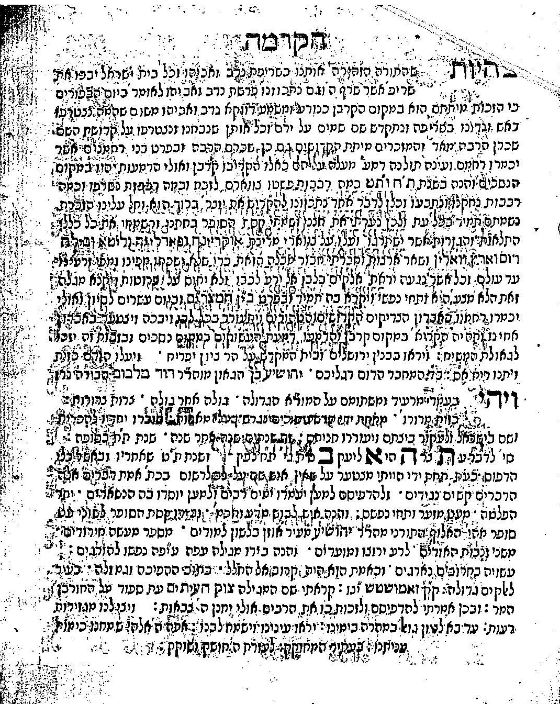
Here is Lehem Shamayim (Wandsbeck1728), vol. 1, p. 1a (see also 2a) where he also refers to himself as שכוי.

Returning to Birat Migdal Oz, on p. 108b he refers to himself as שלה.

What is this all about? The answer was revealed by R. Meir Segal in his 1881 commentary on Emden’s siddur (although I am sure many people had already figured it out).[2] The gematriyot of all these words are either 335 or 336. This corresponds to יעקב בן צבי, the gematria of which is also 336 (and we know that gematriyot are allowed to be off by one number).
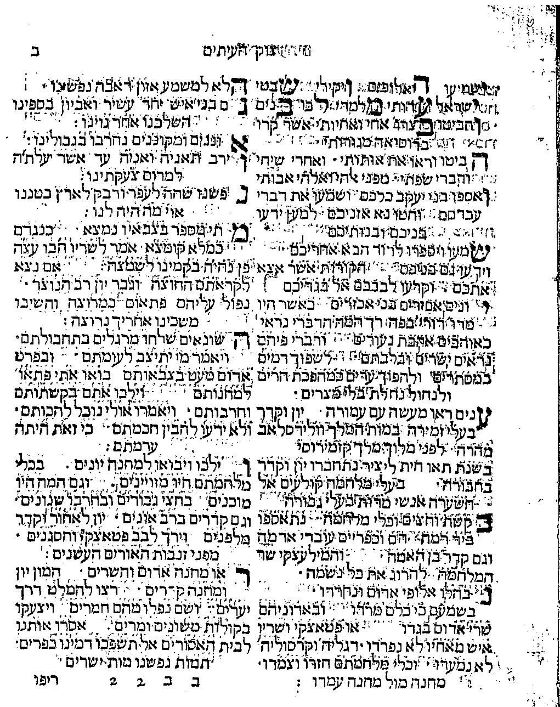
In Amudei Shamayim, vol. 2, p. 154a, which you can see here

Emden writes:
סוד פורי”ים בקצור רומז ג”א ממותקים בג”ה (ס”ה של”ו הוא בה”ס . . .)

As R. Segal explains,[3] this is to be “translated” as: 

סוד פורים בקיצור רומז ג’ א-להים ממותקים בג’ הויות ס”ה גימטריא של”ו הוא בעל הספר

ס”ה obviously stands for סך הכל and what it is saying – ignoring the kabbalistic allusion – is that the gematria of פורים equals 336 and this is also equaled by א-להים x 3 = 258 + הויה x 3 = 78 (258+78=336)..

As mentioned, Emden refers to himself as שלו. How is this supposed to be pronounced? Some people would assume shelo. I originally thought that a more likely meaning was shalev, which means “calm” or “tranquil”. R. Segal also understands it this way since he writes[4]  כנה א”ע בשם שלו כי השלום יאות לבוטח

Shilo is also sometimes spelled as שלו so that is another possibility.

However, these suggestions are incorrect, and the proper way to pronounce it is selav, as in quail. We know this because of the verse in Psalms 105:40:

שאל ויבא שלו ולחם שמים ישביעם

The second half of the verse has the words לחם שמים. This is the name of Emden’s commentary on the Mishnah. I am certain that the connection of שלו and לחם שמים was regarded as significant by Emden, and this also reveals how שלו should be pronounced.[5]

2. In Changing the Immutable, p. 205, I cite a letter from R. Elhanan Wasserman to R. Eliezer Silver and note that the published version of the letter, in Kovetz Ma’amarim ve-Iggerot, vol. 2, p. 97, omits R. Wasserman telling R. Silver that before R. Hayyim Ozer Grodzinski’s death the latter reached for his wife’s hand. R. Moshe Maimon informed me that the letter with the deleted words restored was published in R. Pinchos Lipshutz, Peninei Hen (Monsey, 2000), pp. 76-77. Here it is.

From the original letter we can see that R. Hayyim Ozer’s comment that things are not good was made to his wife. However, one who reads the letter in Kovetz Ma’amarim ve-Iggerot would have to conclude that this statement was made to R. Elhanan, as the passage reads:
שעה קלה לפני הפטירה . . . אמר: “דוא וויסט עס איז ניט גוט” (אתה יודע שהמצב אינו טוב)
As I mentioned in the book, I think it is significant that the publisher inserted three dots showing that something was deleted, since this is very uncommon among haredi publishers. But the following is also important: In the original letter R. Elhanan writes אמר לה, meaning that R. Hayyim Ozer made this comment to his wife. Also (and this point was made to me by Maimon), in the Hebrew translation what appears is אתה יודע which is masculine and indicates that the comment was made to R. Elhanan. These changes had to be made since once the line about holding his wife’s hand is removed, it would not make sense for the reader to see a reference to a woman, as in אמר לה.

Maimon also called my attention to the following: Here is a famous painting portraying Napoleon granting freedom to the Jews. Notice how Napoleon appears like Moses, holding a Tablet of the Law. 

Here incidentally is another image from a coin minted on the occasion of the meeting of the Sanhedrin summoned by Napoleon. Notice how Napoleon is handing the Two Tablets of the Law to Moses. In other words, Napoleon is portrayed as God.[6]

Returning to the painting of Napoleon, it is reproduced in R. Binyamin Shlomo Hamburger’s Meshihei ha-Sheker u-Mitnagdeihim (Jerusalem, 2009), p. 481, yet here sleeves have been added to the woman.

Since I have just mentioned R. Moshe Maimon, let me continue with a couple of his comments. In my book, p. 97 n. 67, I translate minhag vatikin[7] as a “long established practice”. I actually should have said “long established practice of the pious ones” (although some might see this as already implied). Maimon questions whether there is any relationship between vatikin and “long established”, or it if just means “the pious ones”. I always assumed that vatikin means the “pious ones of old”. Indeed, Jastrow translates the word as “the conscientiously pious men of former days”, and an online search reveals that others translate similarly.

Yet Rashi, Berakhot 9b, explains vatikin as אנשים ענוים ומחבבין מצוה, and in this explanation there is no assumption that the vatikin lived in former days. In other words, a practice developed by contemporary pious ones could also be regarded as a minhag vatikin, and there appears to be no reason for me to have thought that Rashi would assume that the vatikin he describes were also “men of old”.

While modern Hebrew uses the word vatik to mean old or one involved in something for a long time, e.g., מוותיקי הסופרים, I have to acknowledge that, with apparently one exception (see note 8), I have not found early uses of the term that have this connotation. One who paid attention during the High Holidays liturgy would have noticed the term and it has nothing to do with “old” here, e.g., הועד והותיקות, לותיק ועושה חסד, and others.[8] See also Arukh, ed., Kohut, s.v. ותק, which offers Arabic and Greek cognates that have no connection to age. For those really interested in the topic, you should consult David Golinkin’s learned and comprehensive article which also shows that the term vatikin has no connection to age.[9]

Maimon also made the following correction. On p. 229 n. 64, I refer to R. Hayyim Eleazar Shapira’s criticism of Slobodka students and his negative view of R. Moses Mordechai Epstein, and note that this was removed from some editions of R. Moses Goldstein’s Mas’ot Yerushalayim.[10] The censored material I refer to is from a conversation between R. Shapira, the Rebbe of Munkacz, and R. Solomon Eliezer Alfandari, and contrary to what I carelessly wrote, what was deleted was stated by R. Alfandari, not R. Shapira. This matter, and the censorship, is discussed by Maimon in a Seforim Blog contribution here.

Let me offer another example where Mas’ot Yerushalayim is censored (and this is not noted by Maimon in his post just mentioned). Here is Mas’ot Yerushalayim (Munkacz, 1931), pp. 91a-91b.

It mentions that after R. Alfandari’s death his writings were under the control of certain Sephardic rabbis who were associated with the Chief Rabbinate. These rabbis are referred to as .איזה רבני ומלקקי המשרד מהצפרדעי”ם The last word, צפרדעים (frogs) is a play on ספרדים.

Here is how the page looks in a later edition published in Israel (pp. 319-320). As you can see, the reference to the צפרדעים has been deleted.

The same deletion is found in the 2004 edition (p. 237)

Needless to say, Sephardic readers were not pleased to see this. But this wasn’t the only thing to upset them. Earlier in the book (pp. 26a-b in the first edition), we find that R. Shapira stated that he heard from R. Yehezkel Shraga Halberstam of Sieniawa that when the latter was in Jerusalem on the yahrzeit of R. Hayyim ben Attar, the Or ha-Hayyim, he observed that the Sephardim did not visit his grave. He inquired about this and was told that even though the Or ha-Hayyim was a Sephardi, he had disputes with the Sephardim and the latter did not recognize his greatness. Referring to the Sephardim, he quotes Psalms 82:5: “They know not, neither do they understand; they go about in darkness.” This is contrasted to the Ashkenazim who give the Or ha-Hayyim his proper respect.

Here is the passage.

The text was altered in the next edition.

In the Jerusalem 2004 edition it is back in its entirety.

When Mas’ot Yerushalayim appeared, R. Meir Vaknin, the rav of Tiberias, was quite angry upon seeing the two texts I have discussed and responded sharply.[11] He completely rejects the notion that the Sephardim do not properly respect the Or ha-Hayyim. He also denies that there was ever a dispute between the Sephardic community and the Or ha-Hayyim.

Why then do the Sephardim not go to the Or ha-Hayyim’s grave on his yahrzeit?  R. Vaknin explains that the reason is simple, namely, that Sephardim don’t have this minhag and they were never taught to do so by R. Isaac Luria. Therefore, they don’t go to graves on any yahrzeit, “not to the ARI, not to Maran the Beit Yosef, and not to the Rambam. Even to Rabbi Shimon Ben Yohai only a very small number go to Meron.”

R. Vaknin is speaking about the Sephardic community in the Land of Israel before the massive aliyah of the North African Jews. Today, of course, Meron is full of Sephardim on Lag ba-Omer (which people mistakenly believe to be the yahrzeit of R. Shimon Ben Yohai[12]), but R. Vaknin provides testimony about how things were very different not too long ago.

As for Mas’ot Yerushalayim referring to Sephardim as צפרדעים, R. Vaknin is simply outraged by this insult:

והאם טוב וישר הדבר הזה בעיני א-להים ואדם לכתוב ולכנות שם רע על העם הקדוש הספרדי כולו בכללותו, מי יוכל להתאפק על בזיון ושם רע על כללות עם הקודש, ואיזה תקון יועיל לכלות העון הזה ולהתם הפשע החמור, אפילו המכנה שם רע לחברו עיין ברז”ל כמה חמור ענשו, וכל שכן על כללות העם כולו אשר כמה וכמה גדולי תורה נמצאים בתוכו, כמה צדיקים וחסידים וסובלי חולאים וסיגופים ותעניות לכבוד ה’ ותורתו נמצאים בתוכו

R. Vaknin also printed a letter by R. Jacob Zarihan of Tiberias. He too was very upset by what appears in Mas’ot Yerushalayim.

The 2004 edition of Mas’ot Yerushalayim has Goldstein’s reply to R. Vaknin in which he apologizes if he caused offense.[13] He stresses that his negative words about the צפרדעים were only made with reference to those Sephardic rabbis associated with theמשרד , i.e., the Chief Rabbinate.[14] This could hardly have been of any comfort to R. Vaknin since unlike the Ashkenazic world, the Sephardic world did not have an extremist Edah Haredit, and almost all of the Sephardic rabbis had great respect for the Rishon le-Tziyon, R. Jacob Meir, and the other outstanding Sephardic rabbis who worked with him.

It is noteworthy that Goldstein’s rebbe, R. Hayyim Eleazar Shapira, also had some negative things to say about Sephardim. In his discussion about the apparently Sabbatean work Hemdat Yamim, R. Shapira refers to R. Hayyim Palache who in his Kol ha-Hayyim[15] defends the Hemdat Yamim, even if the author was a Sabbatian. As R. Palache states, Rabbi Akiva made a mistake in thinking that Bar Kokhba was the Messiah, but this does not disqualify the Torah teachings of R. Akiva. Similarly, we should not disqualify the Hemdat Yamim no matter what the author believed about Shabbetai Zvi. R. Shapira thinks that this is nonsense, and it is obvious to him that if the author of Hemdat Yamim was a Sabbbatian then the work must be shunned.

What angers R. Shapira even more is that R. Palache later states (Kol ha-Hayyim, p. 18a) that there is a tradition not to speak at all about the Shabbetai Zvi episode, not even in a negative way[16]:

וכבר יש קבלה מרבותינו ואבותינו הקדושים שלא לדבר מטוב ועד רע על ענין ש”ץ כי גם קוב לא תקבנו גם ברך לא תברכנו

R. Shapira finds this outrageous, since how can one not speak negatively about such an evil person as Shabbetai Zvi. He writes:[17]

ורחמנא לישזבן מהאי דעתא הנפסדת המטלת ספיקות מעין היש ה’ בקרבנו וכו’ והיתכן כי על משיח השקר שהמיר דתו למחמדנות באונס או ברצון ועכ”פ שהסית והדיח אלפים מישראל עליו כתוב “גם קוב לא תקבנו” ובודאי בע”כ שהטיל ספיקות אולי הי’ אמת ע”כ קוב לא תקבנו לרעה. לא יאומן כי יסופר שיהי’ כזה נדפס מרב מגדולי הספרדים לולי ראיתי בעיני – אוי לנו שכך עלתה בימנו שהפרוץ מרובה. ואולי [צ”ל ואילו] הי’ כזה נדפס בדור הקדום היו גדולי הדור מרעישים עולם.

After these harsh words, R. Shapira offers his explanation of how R. Palache could have written what he did, and it is perhaps the all-time greatest put-down of Sephardim in rabbinic literature. While R. Shapira has great respect for the Sephardim of earlier generations, and also for special individuals such as R. Alfandari,[18] he thinks that most Sephardim of recent years are simply not that smart, and are thus able to believe all sorts of nonsense.

וחשבתי להצדיק קצת את הה”ג ז”ל בע”ס כל החיים להיות הספרדים בימינו בטבעם רובם נמוכי השכל נוחין להתפתות ולהאמין לכל דבר ע”כ השיאם עון אשמה גם לגדוליהם רבניהם בספיקות כאלה.

What R. Shapira did not know is that this strategy of not speaking bad about Shabbetai Zvi had nothing to do with being sympathetic to him, and was certainly not an example of Sephardic stupidity. Rather, as Gershom Scholem notes, it was a strategy chosen by the rabbis in order to allow the community to return to normal.

In choosing this course, the rabbis of Constantinople and Smyrna may have attempted the impossible; at any rate they acted in what seemed to them the most reasonable and responsible fashion. . . . The messianic propaganda, which had not been checked by either the rabbis or the lay leaders, had roused their emotions and faith to such a pitch that rational criticism and appeals to traditional standards would probably have availed little. It seemed safer and wiser to ignore the whole matter as far as possible, and to let time and oblivion heal the wound. Neither condemnation nor apologies, but silence alone would enable the disturbed community to find the way back to normal life.[19]

Scholem quotes the passage from R. Palache cited above, and he also summarizes another passage from the very same section in R. Palache’s Kol ha-Hayyim.

The earlier version of the story was that R. Sabbatai Ventura of Sofia had shown disrespect at Nathan’s tomb, whereupon his hand dried up and remained paralyzed until he returned again to the tomb and prayed for forgiveness. When his son Abraham Ventura passed through the city on his travels on behalf of the community of Safed, “a drop fell on him during his first night there and he died . . .  and was buried next to the tomb of R. Nathan.” (The story is told by R. Hayyim Palache of Smyrna in Kol ha-Hayyim [Smyrna, 1874], pp. 17-18.)[20]

In the earlier Hebrew version of Scholem’s work, Shabbetai Tzvi  (Jerusalem, 1957), vol. 2, p. 794 n. 2, the direct quotation of R. Palache is a little different:

“נפל עליו טיפה בלילה ראשונה שנכנס שם וימת שם אברהם וקברוהו סמוך ממש לקברו” של ר’ נתן, כפי שסופר בס’ כל החיים לר’ חיים פאלאג’י מאיזמיר, דפים יז, יח.

Notice how in the Hebrew quotation from R. Palache there is no mention of “R. Nathan” (of Gaza). In other words, the English version is mistaken in including the words “R. Nathan” as part of the direct quote.

Most people who examine the matter will probably also assume that Scholem’s Hebrew text is mistaken, since the story R. Palache tells (which appears on p. 18a, not pp. 17-18 as mentioned by Scholem), has nothing to do with Nathan of Gaza and thus the latter should not have been mentioned by Scholem. As you can see from the page following this paragraph (from Kol ha-Hayyim 18a), R. Palache’s story is about the grave of the anonymous author of Hemdat Yamim, not Nathan of Gaza. (Scholem himself did not regard Nathan of Gaza as the author of Hemdat Yamim.[21])

What is going on here? Can we assume that a careful scholar like Scholem made such a blunder and inserted Nathan of Gaza into a story that has nothing to do with him? The answer is no, and let me explain what is behind what Scholem writes since for some inexplicable reason he doesn’t do it himself. In Mekhkerei Shabtaut (Tel Aviv, 1991), p. 251, Scholem notes that once R. Jacob Emden (mistakenly) identified Nathan of Gaza as the author of Hemdat Yamim,[22] most Ashkenazic scholars kept away from the book. However, the Sephardic scholars had a different view, and they continued to treasure Hemdat Yamim despite the fact that they regarded Nathan of Gaza as its author. Furthermore, they began to refer to Nathan of Gaza as הרב חמדת ימים.

So let us now look again at the passage from R. Palache. It mentions that R. Shabbetai Ventura visited the city of איסקופייא where the grave of הרב חמדת ימים is found. איסקופייא is none other than Skoplje in Macedonia, and this is where Nathan of Gaza died and was buried. In other words, when the story speaks about visiting the grave of הרב חמדת ימים it is referring to visiting the grave of Nathan of Gaza. In Kol ha-Hayyim, p. 17b, R. Palache states that we don’t know who wrote Hemdat Yamim, so it seems that he was passing on a tradition the significance of which even he did not grasp. (If my assumption is correct that R. Palache did not realize that the story he told was referring to visiting the grave of Nathan of Gaza, then he must have assumed that while his generation did not know who the author of Hemdat Yamim was, earlier generations did know, and even knew where his grave was.) What Scholem writes in Sabbatai Sevi about the grave of Nathan of Gaza and Rabbi Shabbetai Ventura and his son Abraham is incomprehensible without the explanation just given, and I have no idea why Scholem did not feel it necessary to provide it himself.

Returning to the comments of R. Hayyim Eleazar Shapira, I wonder what he would have said about the Ashkenazi R. Joseph Seliger who commented that it really doesn’t matter whether R. Jonathan Eybeschuetz believed in Shabbetai Zvi, and our respect for him would not be lessened by such an error.[23]

בדבר המחלקת שבין הגאונים ר’ יונתן ור’ יעקב עמדן כבר עשה העם כלו פשרה בין שני החולקים ששניהם היו חכמי אמת וצדיקים גמורים, אלא שר’ יונתן ז”ל היה נוח ועלוב וענו תלמידו של הלל. ולכן עלה גם בחכמה וגם במעשה מאיש ריבו הקנא והקפדן של שמאי. נושא המחלקת היה נכבד רק בשעתו, בעת אשר פשתה האלילות של ש”ץ וכמעט גמרה לבלע את כל ישראל ותורתו בהבליה ובקסמיה. היום הנה שאלה קלת ערך אם האמין ר’ יונתן בש”ץ או לא . . . לו האמין ר’ יונתן באמת בש”ץ, אין הטעות החלקית הזאת גדולה מהטעות הכללית להאמין בקמעות. ואם בכל זה כבוד ר’ יונתן במקומו מונח לפי מצב הדעות בזמנו, כי לא כל חכמי ישראל זוכים לאמונה צרופה כבן מימון, לא היה ר’ יונתן נופל בעינינו אף לו האמין בנביא השקר כר”ח בנבנשתי ז”ל. אבל באמת לא היתה בר’ יונתן האמונה הזאת לא ממנה ולא מקצתה.

Due to what R. Shapira said about Sephardim, R. Ovadiah Yosef was very unhappy with him. The following passage, from 24 Sivan, 5767, appears in R. Eliyahu Sheetrit’s Rabbenu.[24] This book is quite fascinating as it is a diary that Sheetrit kept during the years he learnt with R. Ovadiah and assisted him in publishing his books. Most significantly, only a few of the published texts of the diary have been censored.

רבנו כתב על החמדת ימים, ואז ראה בספר חמשה מאמרות של אחד מגאוני הדור הקודם שכתב בצורה לא יפה על הרבנים הספרדים ועל הספרדים בכלל, וגם נזכר במה שבזמנו אמר הגאון הנ”ל על הספרדים “צפרדעים”, וביקש ממני לעבור בספר, ובכל מקום שכתוב שמו של הגאון הנ”ל למחוק את המלה “הגאון”. עוד אמר רבנו, שהגאון הנ”ל ביקר אצל הגאון מהרש”א אלפנדארי, ושלשה ימים לאחר מכן, נפטר מהרש”א אלפנדארי (ואמר רבנו, שכנראה הגאון הנ”ל עשה עליו עין הרע).

It would be interesting to check if indeed R. Ovadiah’s books published after 2007 are missing the title הגאון before R. Shapira’s name. In the introduction to Hazon Ovadiah: Arba Ta’aniyot, published in 2007, R. Ovadiah refers to R. Shapira’s comments and indeed in this source not only is there no הגאון before his name, but R. Shapira also doesn’t get the less exalted הרה”ג, and he is left with just a ר’. As for what R. Ovadiah said about R. Shapira apparently unintentionally causing the death of R. Alfandari, this will obviously be a great insult to all Munkatcher hasidim.

It must also be noted that R. Ovadiah did not remember correctly, as it was not R. Shapira who referred to the Sephardim as צפרדעים but his follower Moses Goldstein.

R. Chaim Amsalem took note of R. Shapira’s comments about Sephardim and he too was quite offended, and placed these comments in the context of continuing discrimination against Sephardim by the Ashkenazic haredim. He writes as follows (adding a heavy dose Sephardic pride at the end):[25]

מה אני יכול לומר על דברים מעליבים ופוגעים שכאלו “בטבעם רובם נמוכי שכל”, אני רק יכול להודות לו שגלה דעתו האמיתית מה הוא חושב הוא ואחרים שכמותו, וא”כ אין פלא על יחס השחצנות והגזענות שהם מגלים כלפי הספרדים, שרי ליה מאריה, וכמה ראוי לו לבקש מחילה קודם כל ממושא הערצתו הגאון מהרש”א אלפאנדרי זצ”ל, הדברים כ”כ נמוכי שכל שאינני רוצה להגרר להעלבות וכדומה, דבריו מדברים בעד עצמם, אבל עוד יבואו ימים שכולם יאכלו מכף ידינו . . .

I am aware of another place where R. Shapira speaks negatively about a great Sephardic sage, R. Hiyya Pontremoli, author of the halakhic work Tzapihit bi-Devash. In Minhat Eleazar, vol. 4, no. 45 (p. 37a), R. Shapira writes as follows:

הנה עשה א”ע כאלו לא ידע או העלים בכונה סוף דברי רש”י . . . וכבר תמהתי עליו איך שכח או במזיד הביא להיפך ממ”ש במאירי

Simply put, he is accusing R. Pontremoli of intellectual dishonesty. R. Ovadiah Yosef[26] calls attention to the second part of the quotation just given, and expresses his great distress that R. Shapira spoke this way about R. Pontremoli.

ואנכי איש צעיר נוראות נפלאתי עליו הפלא ופלא, מפני היד שנשתלחה, לחשוד רב גדול כהגאון בעל צפיחית בדבש, ששכח או הזיד ח”ו בדברי המאירי. הס כי לא להזכיר.

In Abir ha-Ro’im, the recent biography of R. Ovadiah by his grandson, R. Yaakov Sasson, the latter also gives examples of Ashkenazic scholars belittling Sephardic gedolim.[27] The instances Sasson cites should not be understood as conscious belittling. It is just that in these cases the Ashkenazic scholars, not knowing anything about the Sephardic Torah greats, did not take them very seriously. One of Sasson’s examples comes from Iggerot Moshe, Hoshen Mishpat, vol. 2, no. 69 (p. 298), which is R. Moshe Feinstein’s famous responsum on abortion. Here R. Moshe writes:

ופלא שראיתי בספר רב פעלים לחכם ספרדי

Sasson is correct that this is not the most respectful way to refer to R. Joseph Hayyim. R. Moshe continues by rejecting R. Joseph Hayyim’s view and does not pay him much regard. It is because of this that R. Eliezer Waldenberg, in his response to R. Moshe, says as follows after expressing his surprise with the way R. Moshe deals with R. Joseph Hayyim:[28]

ושרי ליה מריה בזה

I would like to know, did R. Moshe even have any idea who R. Joseph Hayyim was? Someone obviously showed R. Moshe the responsum in Rav Pealim, but was it explained to R. Moshe that the author of Rav Pealim is the Ben Ish Hai, and that for many Sephardim R. Joseph Hayyim’s significance is the equivalent of what the Hafetz Hayyim is for Ashkenazim, i.e., a towering figure, both spiritually and halakhically? Did R. Moshe even know the name of the man who wrote Rav Pealim, since if he only had a copy of the responsum he wouldn’t see the author’s name, as there is no name given at the end of the various teshuvot?

It is possible that the answer to one or more of these questions is “no”, and R. Moshe therefore related to R. Joseph Hayyim the same way he related to other scholars, Sephardic and Ashkenazic, whom he did not view as top-of-the-line poskim. In the last paragraph of his responsum, when dealing with R. Eliezer Waldenberg, here too R. Moshe does not show great respect but simply refers to R. Waldenberg as .חכם אחד. Contrast this with how in this responsum R. Moshe refers to R. Hayyim Ozer Grodzinksi, R. Jehiel Jacob Weinberg, and R. Isser Yehudah Unterman.

Leaving aside what I have just mentioned, R. Moshe’s responsum does have some problematic elements. R. David Feldman even claimed that it was not written by R. Moshe! Here is his letter that appears in Tzitz Eliezer, vol. 20, no. 56.

This is a very strange claim, as the responsum first appeared in 1978 in the Sefer ha-Zikaron for R. Yehezkel Abramsky. Are we supposed to believe that a responsum that appeared in R. Moshe’s lifetime was not written by him? This is clearly impossible. (When I made this point to R. Feldman he continued to insist that R. Moshe did not write the responsum.) Yet as I mentioned, there are indeed some problematic things in this responsum. For example, what is one to make of the following sentence in which R. Moshe attacks a point in R. Eliezer Waldenberg’s first responsum on abortion?[29]

וגם כתב שהשאילת יעב”ץ מתיר אף שאסר בפירוש, בשביל לשון וגם בעובר כשר יש צד להקל לצורך גדול, אף שברור ופשוט שלשון יש צד להקל הוא כאמר שיותר צדדים איכא לאסור.

R. Waldenberg states that it is “ridiculous” to claim that when R. Jacob Emden writes יש צד להקל that it really means that it is forbidden.[30] We, of course, would never use such language about something R. Moshe wrote, but the question remains, could R. Moshe really have believed that יש צד להקל means שיותר צדדים איכא לאסור?

R. Moshe Maimon wrote to me as follows:

As for the question of יש צד להקל – I think all R. Moshe meant is that when a posek says יש צד להקל he is conceding that the presumption is that it should really be אסור but nevertheless sees some ground for a קולא. To R. Moshe this indicates that this posek is more inclined to the צד איסור and can be counted on as a סניף supportive of a more stringent view.[31]

An alternative perspective is offered by a Lakewood scholar who wrote to me: “R. Moshe may have vehemently disagreed with the יעב”ץ but preferred to twist the meaning rather than say openly that the יעב”ץ was mistaken, a very typical thing for someone like R. Moshe to do.” I responded that I don’t find this compelling, since in the second to last paragraph of his responsum R. Moshe has no problem stating that Emden is mistaken, so why would he write differently in the last paragraph?

The Lakewood scholar replied as follows:

If it was a sensitive issue (I’m guessing) R. Moshe may have wanted to strip the opposing view of any legitimacy by insisting that the יעב״ץ didn’t mean it. It’s almost like saying he couldn’t have meant it. Regarding the general approach of twisting the words of achronim in order make it consistent with your own view: The Mekor Baruch describes a similar approach that he attributes to Rabbi Chaim Volozhin, that although one may rule against the Shulchan Aruch, one should nonetheless seek to find hairsplitting differences between your ruling and the Shulchan Aruch’s so not to appear as if you are going head on. The Chazon Ish would say that a טעות סופר נפלה rather than say a rishon made a mistake.

Similar to what the Lakewood scholar claimed, R. Chaim Rapoport, who has published a good deal on the Iggerot Moshe, wrote to me as follows:

מ”ש הגרמ”פ שם “שברור ופשוט שלשון יש צד להקל הוא כאמר שיותר צדדים איכא לאסור” [שיש שתמהו על זה], הנה לפענ”ד הדבר מתאים מאד לדרכו של הגרמ”פ כשהוא משוכנע לחלוטין בצדקת שיטתו ובשלילת השיטה החולקת, ובכה”ג הרגיש בעצמו שמוכרח הוא לקרב את הרחוקים בזרוע, כדי לקיים את מה שהי’ ברור בעיניו כשמש בצהריים.  

ובאמת, בנידון תשובה זו אין דבריו תמוהים כ”כ, שהרי לפעמים מצינו בדברי הפוסקים שכתבו שיש צד להקל ומ”מ אין להקל למעשה [וע”כ צ”ל דהיינו] בגלל שישנם צדדים אחרים [ואפילו צדדים יותר גדולים] להחמיר. ואם כי בנדו”ד הרי מתוכן דברי היעב”ץ אין נראה כן, מ”מ העמיס הגרמ”פ כוונה זו בדברי היעב”ץ, כי ‘ההכרח לא יגונה’. 

מה שזלזל הגרמ”פ בכבודו של הגרא”י ולדנברג בעל שו”ת ציץ אליעזר, הנה אם כנים הדברים, נראה שהי’ זה בגלל שהיטב חרה לו להגרמ”פ ע”ז שפרסם הגרא”י ולדנברג את היתרו להפיל עוברי ‘תיי-סקס’ – אשר לדעתו הר”ז בגדר שפיכת דמים ממש, ואורייתא הוא דמרתחא בי’. 

 ומ”ש הרב בעל ציץ אליעזר על הגרמ”פ “ושרי לי’ מרי’ בזה” [על מה שנראה מלשונו שמיעט בחשיבותו ומעמדו של הרב פעלים] נראה שכתב כן כלפי מה שכתב הגרמ”פ בתשובתו הנ”ל עליו [על הצי”א] “ושרי לי’ מרי’ בזה”, ועד”ז כתב הגרמ”פ בתשובתו (שם) על היעב”ץ, וע”ד מה שאחז”ל מדויל ידי’ משתלים. 

Finally, returning to the matter of negative portrayals of Sephardim, take a look at this bizarre passage in Israel Abraham’s classic Jewish Life in the Middle Ages, p. 122.

There was less warmth in the Oriental Jewish home, less of that tenderness which was once a common characteristic of Jews all the world over, but came in process of time to distinguish Western Jews from their gayer but more shallow brethren of the East. One seems to detect a feebler sense of responsibility in the mental attitude of an Oriental father to his offspring, just as one detects more volubility but less intensity in the Oriental Jew’s prayers.

3. For those who are interested, on Saturday night November 7 at 8pm, I will be speaking at Congregation Ohr Torah, 48 Edgemount Road, Edison, N.J. The title of the talk is “Some Unusual Orthodox Responses to the Rise of Nazism.”

[1] He also refers to himself this way in Birat Migdal Oz two pages later, which is mistakenly numbered as 135a. See also Torat ha-Kenaot (Lvov, 1870), p. 54, where he writes: ונמסר לי הסריס.
[2] Va’ad le-Hakhamim (Lublin, 1881), p. 3a.
[3] Ibid., p. 3b.
[4] Ibid., p. 4a.
[5] See R. Meir Mazuz, Emet Keneh (Bnei Brak, 2000), p. 227. R. Mazuz knows that Emden referred to himself as השכוי, but I can’t tell if he is aware that Emden also referred to himself as .שלו I say this since R. Mazuz mentions the gematria of שלו without indicating that Emden ever used the word. He then makes the connection to ולחם שמים ישביעם.
In 1756 the book Shevirat Luhot ha-Aven appeared. The title page says Zolkiew but this is probably intended to cover up its real place of publication, Altona. According to the haskamah, written by R. Abraham of Zamocz, the author is דוד אוז, an otherwise unknown person. There is no doubt, however, that this book was written by Emden. R. Menahem Mendel Goldstein even found a gematria to tie this name to Emden. See Etz Hayyim 15 (Tamuz-Av, 5771), p. 235 n. 46:
דו”ד או”ז עם ב’ הכוללים בגי’ יעק”ב ב”ן צב”י במספר קטן

[6] The image is from here. This site mistakenly explains that “The kneeling figure represents the Sanhedrin.”
[7] Technically, the word should be pronounced vetikin, with a sheva under the vav, but no one does this.
[8] See Ovadiah Hen, Ha-Ketav ve-ha-Mikhtav (Bnei Brak, 2014), p. 89. See also Ben Yehudah’s dictionary which does not list any early sources in which vatik means old. However, Michael Sokoloff, A Dictionary of Jewish Babylonian Aramaic of the Talmudic and Geonic Periods (Ramat Gan, 2002), p. 396, gives “old” as a translation for ותיק, referring to its use in an incantation bowl.
[9] “Le-Ferush ha-Munahim ‘Vetikin’, ‘Vatik’, ve’Talmid Vatik’ be-Sefer Ben Sira u-va-Sifrut ha-Talmudit,” Sidra  13 (1997), pp. 47-60.
[10] Maimon and pretty much everyone else transliterate the title as Masaot Yerushalayim. I believe this to be mistaken. מסעות in the title is a construct, and is the same thing as מסעי. There should be a sheva under the samekh, not a kamatz. See here.
[11] See his Va-Yomer Meir, vol. 1, no. 10.
[12] For the origin of the notion that R. Shimon Ben Yohai died on Lag ba-Omer, see Eliezer Brodt’s post here.
[13] This letter originally appeared in Vaknin, Va-Yomer Meir,vol. 1,  no. 10.
[14] Mas’ot Yerushalayim (2004), p. 258.
[15] Ma’arekhet he, no. 18 (pp. 17ff.).
[16] I am surprised that R. Shapira doesn’t also criticize R. Palache for mentioning the tradition that R. Hayyim Joseph David Azulai was a gilgul of the author of Hemdat Yamim. See Palache, Kol ha-Hayyim, p. 18a.
[17] Hamishah Ma’amarot (Jerusalem, n.d.), p. 157 (Ma’amar Meshiv Mipnei ha-Kavod).
[18] Regarding R. Alfandari, see the first two stories here from Otzrot ha-Sofer 13 (Tishrei 5763), p. 89.

It boggles the mind to think that there are people who are so gullible that they can actually believe that R. Alfandari met the Hatam Sofer in Pressburg.

There are all sorts of legends about great rabbis visiting far-off places and meeting with other great rabbis. Sometimes the stories are chronologically impossible, e.g., the tale of Ibn Ezra visiting Rashi. See Naftali Ben-Menahem, Inyanei Ibn Ezra (Jerusalem, 1978), pp. 356ff. See my Limits of Orthodox Theology, p. 115, about the legend of Maimonides’ visit to France. See also Otzar ha-Geonim: Hagigah, p. 16, where we are told of the well known “fact” that R. Natronai Gaon magically came from Babylonia to Spain and then returned home.

ודבר ברור ומפורסם לאנשי ספרד ומסורת בידם מאבותיהם כי מר רב נטרונאי גאון זצ”ל בקפיצת הדרך בא אליהם מבבל וריבץ תורה וחזר, וכי לא הלך בשיירא ולא נראה בדרך
[19] Gershom Scholem, Sabbatai Sevi: The Mystical Messiah, trans. R. J. Zwi Werblowsky (Princeton, 1973), pp. 698-699.
[20] Scholem, Sabbatai Sevi, p. 926 n. 270.
[21] See Scholem, Mehkerei Shabtaut (Tel Aviv, 1991), p. 251.                                                             
[22] See Avraham Ya’ari, Ta’alumat Sefer (Jerusalem, 1954), p. 10.
[23] Kitvei ha-Rav Dr. Yosef ha-Levi Seliger (Jerusalem, 1930), p. 503. The last section of this book, where the quoted comment appears, has been deleted (censored?) on Otzar ha-Hokhmah. It can be found in full on hebrewbooks.org.
[24] (Jerusalem, 2014), p. 378.
[25] Gadol ha-Neheneh mi-Yegio (n.p., 2012), pp. 93-94. The three periods at the end of the quotation appear in the original.
[26] Yabia Omer, vol. 2, Orah Hayyim, no. 18.
[27] See Abir ha-Ro’im, vol. 2, p. 134.
[28] Tzitz Eliezer, vol. 14, p. 186.
[29] Iggerot Moshe, Hoshen Mishpat 2, p. 300.
[30] Tzitz Eliezer, vol. 14, p. 186.
 ומגוחח {צ”ל ומגוחך] הוא לפרש כוונתו ולומר דלשון יש צד להקל הוא כאומר שיותר צדדים איכא לאיסור
[31] Somewhat parallel to this is R. Yair Hayyim Bacharach’s view that when R. Moses Isserles write ויש מחמירין it actually means that he doesn’t accept the stringency, since if he did he would have written .ויש אוסרין See Havot Yair, no. 185.


Book Review: Pischei Tefilah u-Mo’ad by Y. S. Spiegel

Book Review

by Eliezer Brodt

פתחי תפילה ומועד, יעקב שמואל שפיגל, ירושלים תש”ע, 540 עמודים.

Pischei Tefilah u-Mo’ad, Y. S. Speigel, Jerusalem: 2010, 540 pp.

Professor Speigel is one of the most prolific writers in the Jewish academic scene, as the author of over 160 articles and 18 books (16 of those are publications for the first time of works which remained in manuscript. The other two are his own original and important studies; one of the latter is reviewed here). His articles cover an incredibly wide range of subjects related to many areas of Jewish Studies, including history of Rishonim, piyutim authored by Rishonim, bibliography and minhaghim, to name but a few. His uniqueness lies not only in the topics but also that his work has appeared in all types of publications running the gamut from academic journals such as Kiryat Sefer, Tarbiz, Sidra, Alei Sefer, Assufot, Teudah, Kovetz Al Yad and also in many prominent Charedi rabbinic journals such a Yeshurun, Yerushasenu, Moriah, Sinai and Or Yisroel. It is hard to define his area of expertise, as in every area he writes about he appears to be an expert! His doctorate was related to later additions in the Talmud by the Savoraim but most of his subsequent work focused on completely different areas. He has edited and printed from manuscript many works of Rishonim and Achronim on Massekhes Avos and the Haggadah Shel Pesach. He is of the opinion, contrary to that of some other academics, that there is nothing non-academic about printing critical editions of important manuscript texts. Although there is a known “belief” in the academic world, “publish or perish,” which some claim is the cause of weak articles and books, at times, Spiegel’s prolific output does nothing to damper the quality of his works. Another point unique to Speigel’s writings, besides his familiarity with all the academic sources, he shows great familiarity with all the classic sources from Chazal, Geonim, Rishonim and Achronim, to even the most recent discussions in Charedi literature – this bekius (breadth) was apparent well before the advent of search engines of Hebrew books and Otzar Ha-hochmah. Alongside all this is his penetrating analysis and ability to raise interesting points. This new collections contains 32 articles related to tefilah, kriyas ha-Torah, halacha and minhaghim related to the mo’adim. Four of these articles are entirely new, and some of the reprinted articles are already classics, quoted and used many times in recent literature. I would just like to list and describe some of the topics, found in this excellent collection. There are parts of the Zecher Tzadik (written in 1467) which is still in manuscript. The section on Pesach was printed by Speigel in a separate book via Ofek. In this collection the Halachos of tefillin and Rosh Hashana were printed. Other articles are various Shu”t from manuscript on a wide range of topics, amongst them, where the Kohanim should say Nesiat Kapayim, a Kotton davening for the Amud, washing when eating vegetables, the fast of the Bechor on erev Pesach, and consumption of sesame oil on Pesach. Each piece has a thorough introduction about the author and topic and the texts contain many useful notes. There is a great article of Hilchos Rosh Hashnah in the Azharot form from Reb Pinchas Halevei, the brother of the Reah. The notes and introduction are very good. I should point out that in the introduction to this piece, Spiegel deals a bit with the famous question of who was the author of the Sefer Hachinuch. Similar pieces in this collection are Azharot from other Rishonim which contains Hilchos Yom Kippur and another on HILchos Succos. Another piece worth mentioning is a teshuvah printed for the first time about the Beracha on Coffee. In the introduction of this piece, Spiegel collects many different aspects of coffee that early Halachic works dealt with. But we should note that his discussion regarding the appropriate shiur (amount) that would require making a beracha acharona really requires an examination of the various forms in which coffee was historically drank. Some coffees are meant to be consumed in small doses while others in larger formats. Today, for example, a typical espresso shot is just an ounce, while a standard cup of coffee is 12 ounces. While espresso is a more recent, it would be helpful to know if one’s position regarding beracha achrona is more a function of size of common cup where the person lived than a sweeping position on coffee generally. There is an article discussing the piyut Achlu Mashmanyim which is customarily recited on Shabbos Chanukah. As an aside, he provides an early source for eating sufganiyot on Chanukah. For Purim he has a large collection of Halachos pertaining to the concept of Venahaphechu – that we do the opposite of what we would think. Another special article related to Purim is a very comprehensive discussion on cross-dressing on Purim and other happy occasions throughout the year. He prints in this collection a Derasha of a talmid of the Rosh on Pesach for the first time (the Halacha part was printed by Speigel in a recent issue of Moriah). One interesting passage in this Derasha which I found was: אם אנשי’ באים ללמוד ונשים באות לשמוע טף למה בא, כדי לתת שכר טוב למביאיהן, אלמא שהתינוקות כמו כן יש שכר גדול למביאיהן לחנכם במצות. ויותר חביב לפני הב”ה בשעה שהתינוקות עונין קדיש או קדושה יותר מגדולים, שאינו דומה הבל שיש בו חטא להבל שאין בו חטא… Hopefully in the future I will return to this topic of bringing kids to shul. Amongst my favorite pieces in this collection is his article on the piyut which we say on the Yomim Noraim of Useshuvha Usefilah Utzedaka. In this piece he deals with piyutim and Halacha- namely, did Paytanim say things contrary to halacha. He deals with the Rambam’s negative opinion of Baalei Azharot (see here). He also deals with the sources of the famous story of Reb Amnon and Unesaneh Tokef. Another favorite piece is his discussion of saying Chazak! when we finish reading each book of the Chumash. A side topic of interest dealt with in this same piece is saying Yashar Koach to the Kohanim after they do nesiat kapyim. Other pieces worth mentioning are his discussions of saying Parsahas Hazinu daily. Another important part of this piece is a discussion of sources for saying Maamodos daily. Another comprehensive piece deals with when the crowd says a Passuk during Krieas Hatorah and Megilot. One last piece worth mentioning is an excellent collection of sources dealing with who decided where the baal koreh stops by each Aliyah. We can only hope that Professor Speigel collects the rest of his articles into a few volumes similar to this collection.


On the Plagiarism of a Tach-ve-Tat Chronicle

On the Plagiarism of a Tach-ve-Tat Chronicle

During this period, between the 17th of Tamuz and the 9th of Av, there is an increased focus upon various historical calamities that befell the Jewish people. Jewish history is unfortunately replete with such examples. Some instances have spawned specific days of commemoration while others have produced whole bodies of literature. And, while the literature surrounding these events is diverse, covering liturgy, poetry, history, we focus on one type: the chronicle. Additionally, our focus is the Chmielnicki Massacres, or Gezerot Tach ve-Tat. The Hebrew refers to the dates – 1648-49 – when the majority of Jew-killing took place. While these events took place hundreds of years ago, its effects including the total number of Jews killed is still being debated by scholars. (See Jits van Straten, “Did Shmu’el Ben Nathan and Nathan Hanover Exaggerate: Estimates of Jewish Casualties in the Ukraine During the Cossack Revolt in 1648,” Zutot 6:1 (2009), 75-82, calling into question the lower estimates of Shaul Stampfer, “What Actually Happened to the Jews of Ukraine in 1648?” Jewish History 17:2 (May 2003), 207-27.)
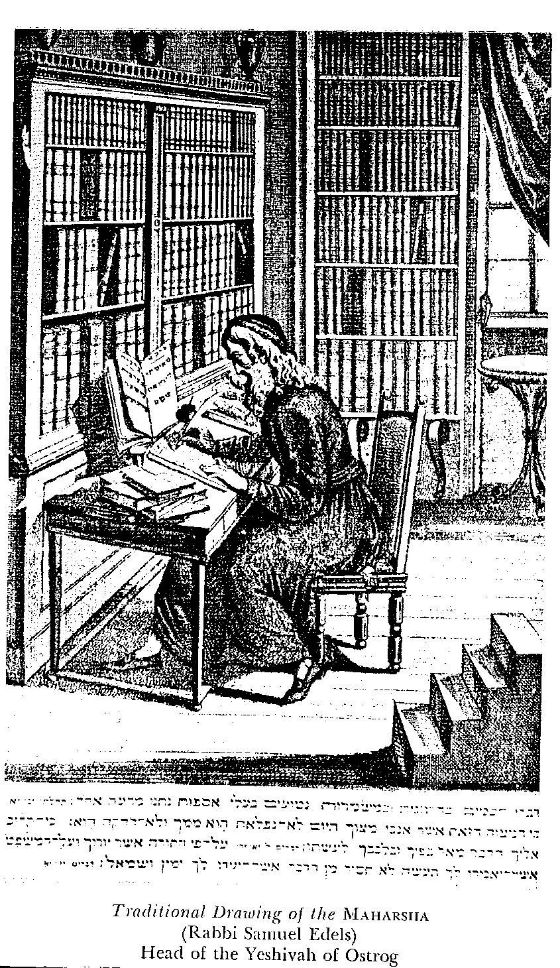
The most well-known chronicle describing the events is that of R. Nathan of Hanover, Yaven Metzulah. There is an English translation of Hanover’s work, Abyss of Despair, translated by R. Abraham J. Mesch. The translation includes a “traditional drawing of Maharsha.”
While it is not noted, this illustration, that has Maharsha with long flowing hair first appears in the Vienna, 1814 edition of the Maharsha’s commentary (vol. I, vol. II). While Mesch indicates this is the “traditional drawing” we know of no earlier instance than the Vienna edition. This was not the only Vienna edition that includes a questionable portrait. The 1804 Vienna edition of R. Yitzhak Alfasi’s Halakhot also includes a portrait that is claimed to be R. Alfasi. Again, we know of no earlier evidence that would confirm such a rendering.
A collection of these chronicles was published most recently Gezerat Tach ve-Tat, Jerusalem, 2004. Additionally, Joel Raba, Between Remembrance and Denial, Columbia Univ. Press, 1995, discusses these chronicles as does the collection of articles that appears in the journal, Jewish History 17:2 (May, 2003).
We turn our attention, however, to a lesser known work from this period, Tzok ha-Itim. Tzok was actually the first chronicle regarding the 1648-49 events published. It was first published in Krakow, 1650 (link). Indeed, some have argued that Hanover relied heavily on Tzok in compiling Yaven Metzulah (first published in 1653).
Tzok was republished in Constantinople in 1652. This edition is exceedingly rare. According to Ya’ari, there is but one complete copy extant. (See Ya’ari, Kiryat Sefer, (16) 1939-40). This edition was published by R. Shmuel ben R. Shimson who on his way to Israel after fleeing the massacres. At the end of the book he includes a dirge (kinnah) about the events. He also penned his own introduction which describes his own suffering. He says that “I am the only remaining survivor in my family as the rest were killed sanctifying god’s name . . . although I was spared . . . my wife and children I buried, I lost all of my possessions . . . .” He explains that “all I wanted was to dwell in the bet midrash and therefore I decided to travel to Jerusalem” and that while he was on his journey he came across Tzok and decided to reprint it in Constantinople “so that what has occurred shall not be forgotten.” (Ya’ari, Mechkerei Sefer, Jerusalem, 1958 p. 16 reprints the entire introduction, he also provides other accounts of people, who, on their way to Israel, issued works related to 1648-49 massacres.)
Tzok was then reissued in Venice in 1656.
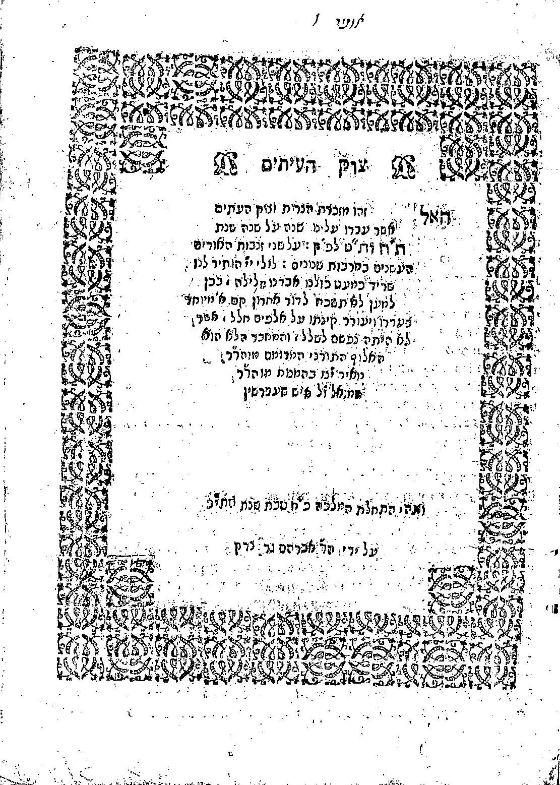
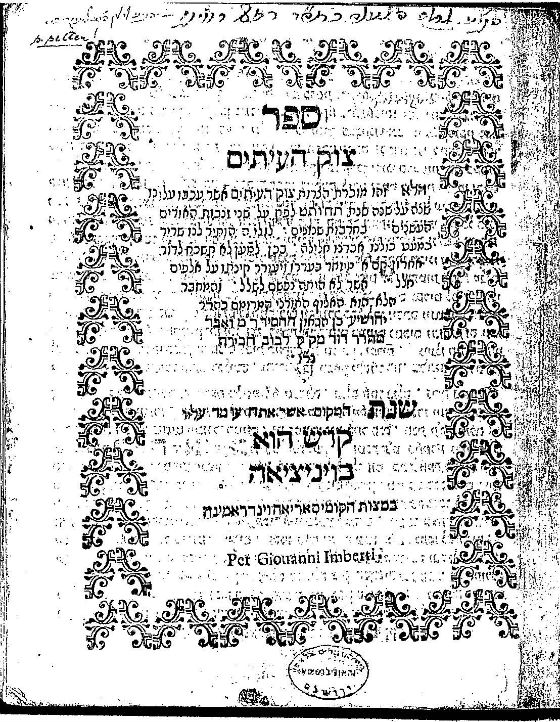
The first two editions list R. Meir ben Shmuel of Szczebrzeszyn as the author. The 1656 edition, however, lists a completely different author, R. Joshua ben David of Lemberg. It is not only on the title page that a different author is listed. The work itself is not composed as traditional narrative. Instead, it is written in verse. The first verses in all the editions spell out the author’s name in an acrostic. Thus, the 1650 and 1652 editions have an acrostic that spells out R. Meir of Szczebrzeszyn’s name while the 1656 edition acrostic spells out R. Joshua’s name. In some instances words are added to create the “new” acrostic, while in other instances, the highlighted letters are changed.
Here is the introduction to the Constantinople edition:
And here is the introduction to the Venice edition:
As an aside it is worth noting that this is not the only time a plagiarizer has been forced to change the acrostic to hide his stolen goods. (See Kitvei Pinchas Turburg, ed. A. R. Malachi, 24-36 for additional examples of acrostic changes, and see this earlier post discussing similar changes to hide the identity of the true author, and see this post where the plagiarizer was caught in the act and forced to admit his guilt and apologize). Additionally, at least in one instance the acrostic was able to demonstrate authorship. In the Siddur Bet Ya’akov (although attributed to R. Y. Emden, this siddur contains numerous additions as compared to R. Emden’s actual siddur called Ammudei ShamayimSha’arei Shamayim; this is one of them) the Belzer Rebbe asserts that the author of the zemer Yom Shabbat Kodesh Hu had his song stolen. He came across the plagiarizer and challenged him to prove authorship. Specifically, the real author showed that his name, Yonatan, could be seen in the acrostic, and with this he vanquished the thief. R. Emden uses this story to explain the meaning behind the final verse which loosely translated as “all the talk [about authorship] should [now] end now that I have enlarged the song [and demonstrated my authorship] . . . and that no one should ever steal from me as this song is my property.”
An example where the acrostic actually has the opposite effect, obscuring the original author is also a zemer, Yom Zeh le-Yisrael. At times, this song can be confusing depending upon which bencher one is using. This so, because some version have a shorter version while others have a longer ( see here for example). Some argue that the two versions are indicative of two authors, one, the original author which only spelled out Yitzhak (and then lamed vav) to which all the other verses were added, now spelling Yitzhak Luria Hazak. (Regarding this zemer see Naftali ben Menachem, Zemirot shel Shabbat, Israel, 1949, 144-45; I. Davidson, Thesaurus of Mediaeval Hebrew Poetry, Ktav, 1970, vol. II, 348.)
Returning to Tzok, because the acrostic lends support for either author, some didn’t know who the “real” author was. In the 1890s, a number of these chronicles regarding bad events in Jewish history were collected and published under the title Le-Korot ha-Gezerot ‘al Yisrael by C. Gorlin. Included is Tzok. But, instead of a traditional introduction, he prefaces Tzok with a section “Who is the real author?” Gorlin argues that the real author is indeed R. Meir and not R. Joshua. This is not the first time that there is some confusion regarding who is the real author and who is the thief, for another example see here and for another example of modern day plagiarism see here.
With regard to the Constantinople edition, Ya’ari demonstrates that this edition is better than the first, in that many of the typos and the like have been corrected. Unfortunately, perhaps due to its rarity, the 2004 edition of Tzok relies upon the 1650 edition and not the better 1652. Additionally, the 1652 edition is one of the works published by a convert. Of course, this is probably what first got Ya’ari interested as he provides a bibliography of works published by converts.
It should be noted that Tzok was rather popular even if it is no longer. When R. David ha-Levi Segal, author of the commentary on Shulhan Orakh, Turei Zehav, sent a delegation to the false messiah, Shabbatai Tzvi, when the delegation entered, they record that Shabbatai Tzvi had a copy of Tzok on the table. (See G. Scholem, Sabbati Sevi, Princeton Univ. Press, 1976, p. 623 quoting Leib Ozer, Sippurei Ma’ashi Sabbati Tzvi, p. 81 and Sefer Tziz Nobel Tzvi, ed. I. Tishby, pp. 77-79.)
Finally, we note that the most recent edition, the 2004 op. cit., uses the Krakow first edition, even though Ya’ari has already shown that the rare Constantinople edition corrected numerous errors that appear in the Krakow edition.


 Rashi Devarim 26:17-18….. הֶאֱמַ֖רְתָּ and הֶאֱמִֽירְךָ֣

Rashi Devarim 26:17-18….. הֶאֱמַ֖רְתָּ and הֶאֱמִֽירְךָ֣

Eli Genauer

Rashi provides two explanations for a word in the Torah. Some scholars maintain that Rashi was not the source of the second explanation, rather it was derived from a “Taus Sofrim”. A close look at the manuscript witnesses reveals that the second explanation most likely did originate with Rashi. 

Devarim 26

17. אֶת־ה’ הֶאֱמַ֖רְתָּ הַיּ֑וֹם לִהְיוֹת֩ לְךָ֨ לֵֽאלֹֹֹֹֹקים וְלָלֶ֣כֶת בִּדְרָכָ֗יו וְלִשְׁמֹ֨ר חֻקָּ֧יו וּמִצְוֺתָ֛יו וּמִשְׁפָּטָ֖יו וְלִשְׁמֹ֥עַ בְּקֹלֽוֹ׃

 18. ה’ הֶאֱמִֽירְךָ֣ הַיּ֗וֹם לִהְי֥וֹת לוֹ֙ לְעַ֣ם סְגֻלָּ֔ה כַּאֲשֶׁ֖ר דִּבֶּר־לָ֑ךְ וְלִשְׁמֹ֖ר כָּל־מִצְוֺתָֽי

Rashi:

:האמרת … האמירך. אֵין לָהֶם עֵד מוֹכִיחַ בַּמִּקְרָא, וְלִי נִרְאֶה שֶׁהוּא לְשׁוֹן הַפְרָשָׁה וְהַבְדָּלָה — הִבְדַּלְתָּ לְךָ מֵאֱלֹהֵי הַנֵּכָר לִהְיוֹת לְךָ לֵאלֹהִים וְהוּא הִפְרִישְׁךָ אֵלָיו מֵעַמֵּי הָאָרֶץ לִהְיוֹת לוֹ לְעַם סְגֻלָּה, וּמָצָאתִי לָהֶם עֵד וְהוּא לְשׁוֹן תִּפְאֶרֶת כְּמוֹ (תהלים צ”ד) יִתְאַמְּרוּ כָּל פֹּעֲלֵי אָוֶן

האמרה, האמירך are words for the meaning of which there is no decisive proof in Scripture. It seems to me, however, that they are expressions denoting “separation” and “selection”: “You have singled Him out from all strange gods to be unto you as God — and He on His part, has singled you out from the nations on earth to be unto Him a select people”. And I have found a parallel (lit., a witness) to it where it bears the meaning “glory”, as in (Psalms 94:4): “All wrongdoers glory in themselves”. (Sefaria translation)

We are faced with the following issues

  1. First Rashi says that he cannot find a word in Tanach similar האמרת … האמירך אֵין לָהֶם עֵד מוֹכִיחַ בַּמִּקְרָא, and he is therefore compelled to give his own interpretation וְלִי נִרְאֶה
  2. Rashi then seems to do an about face and says that he actually did find a comparable word in Tanach וּמָצָאתִי לָהֶם עֵד. The Sefer Yosef Da’as terms this a Stirah.
  3. The textual witness that Rashi finds for האמירך is in Tehillim. On that word in Tehillim, Rashi gives an explanation and refers you to Ki Savo where he says the meaning is the same as his interpretation of וּמָצָאתִי לָהֶם עֵד . There is a similar situation with Rashi’s interpretation of that word in Chagigah 3a and on Berachos 6a. On the other hand, in Gittin 57a, we find Rashi explaining our Pasuk in Ki Savo the same as his וְלִי נִרְאֶה Pshat here. We need to understand the relationship between the Rashi in Devarim and the Rashi on Tehillim. We need to understand the various Gemaros that explain either the Pasuk in Tehillim or the Pasuk in Devarim. We also need to understand why Rashi did not use the interpretation of Onkelos for the words האמרת ,האמירך which is taken directly from the Gemara in Chagigah.
  4. When we look at the various manuscripts of Rashi on this Pasuk we find a wide diversity of texts. Both the Sefer Yosef Da’as (Prague 1609) and Wolf Heidenheim (Chumash Me’Or Eynayim 1821) say that the words starting from וּמָצָאתִי לָהֶם עֵד were not written by Rashi but were added later on by a student.[1] A study of the many Rashi manuscripts available today puts this conclusion into question

האמרת … האמירך. אֵין לָהֶם עֵד מוֹכִיחַ בַּמִּקְרָא, וְלִי נִרְאֶה שֶׁהוּא לְשׁוֹן הַפְרָשָׁה וְהַבְדָּלָה — הִבְדַּלְתָּ לְךָ מֵאֱלֹהֵי הַנֵּכָר לִהְיוֹת לְךָ לֵאלֹהִים וְהוּא הִפְרִישְׁךָ אֵלָיו מֵעַמֵּי הָאָרֶץ לִהְיוֹת לוֹ לְעַם סְגֻלָּה, וּמָצָאתִי לָהֶם עֵד וְהוּא לְשׁוֹן תִּפְאֶרֶת כְּמוֹ (תהלים צ”ד) “יִתְאַמְּרוּ כָּל פֹּעֲלֵי אָוֶן”

The above seems to be the standard text of this Rashi. We find evidence of this entire text including the words “וּמָצָאתִי לָהֶם עֵד” going back to Lisbon 1491, Venice 1524 and Sabionneta 1557:

Lisbon 1491

Venice 1524 ( and 1547)

Sabionetta 1557

Some “newer” Chumashim have the thought starting with וּמָצָאתִי לָהֶם עֵד in parentheses:

Amsterdam 1901-A.S Onderwijzer – (The Dutch translation of Rashi also has this portion in parentheses)

Chumash Torah Temimah- Vilna -1904

The Artscroll Stone Chumash has the words “דבר אחר” immediately preceding the word “וּמָצָאתִי” all in parentheses.

I have also seen it recorded with just the דבר אחר in parentheses. 

The Sefer Yosef Da’as (Cracow 1608) concludes that the words starting from וּמָצָאתִי לָהֶם עֵד were not written by Rashi[2] ״רק איזה תלמיד כּתבו על הגליון והמדפיס חשב שהם דברי רש״י״ 


This is also the conclusion of Wolf Heidenheim:

Chumash Meor Einayim, Rödelheim : 1821 (ed. Wolf Heidenheim)

Heidenheim echoes the words of the Yosef Daas[3]:

What was the Original Girsa of Rashi?

Here is some background on the manuscript known as Leipzig 1. It was not available to Yosef Da’as, Wolf Heidenheim or later on, to A J. Berliner and to Artscroll Saperstein.

From Chachmei Tzarfat HaRishonim by Prof. Avraham Grossman.[4]

עמ’ 187 :כלי עזר חשוב לבירור הנוסח המקורי של פירוש רש”י לתורה הוא כתב-יד לייפציג  .פירוש רש”י לתורה שבכתב-יד זה הוא ככל הנראה הנוסח הקרוב ביותר על המקור שכתב רש”י, המצוי כיום בידינו, אף שגם בו יש השלמות מאוחרות ושיבוש העתקה. בשולי פירוש רש”י לתורה שבכתב-יד זה נרשמו הגהות רבות ערך של תלמידו ר’ שמעיה, ונידון בהן בפירוט בסקירת מפעלו של ר’ שמעיה

 עמ’ 188 :ר’ מכיר העיד פעמים הרבה שהחזיק בידיו את כתב היד של פירוש רש”י לתורה שבו כתב ר’ שמעיה בעצמו את הגהותיו

. עמ’ 191 :מדבריו של ר’ שמעיה עולה כי לא זו בלבד שרש”י בעצמו הכניס תקונים לפירושיו והגיהם, אלא שביקש גם ממנו לעשות כן

 “הגהות רבינו שמעיה ונוסח פירוש רש”י לתורה” –  תרביץ ס׳ (תשנ״א)

לדעתי ראוי [כ”י ליפזיג 1] להיחשב כמקור החשוב ביותר המצוי כיום בידינו וככלי העזר העיקרי לכל חקירה בשאלת הנוסח של פירוש רש”י לתורה”

This is how it is recorded in Leipzig 1. The order is reversed and Lashon Tiferet comes first followed by Lashon Havdalah. 

(The entire page.)

 .יז-יח האמרת, האמירך – לשון תפארת כמו יתאמרו כל פעלי און אין להם עד במקרא, ולי נר’ שהם לשון המשכה והבדלה הם, הבדלתו מאלקי הנכר להיות לך לאלקים, והוא הפרישך אליו מעמי הארץ להיות לך לעם סגולה 

We find that the interpretation that Rashi seems to give as an afterthought, is now the first interpretation.                                                                            

Berlin 1221- Has only לשון תפארת

                                                                  האמרת, האמירך – לשון תפארת כמו יתאמרו כל פעלי און 

On the other hand, Munich 5 has only Lashon Havdalah with no Lashon Tiferes – the complete opposite of Berlin 1221.

Because of its age (1194) another important manuscript is Oxford UCC 165 ( Neubauer 2440). It records the Rashi the same as Munich 5.

To summarize: Lepzig 1 has both comments with Lashon Tiferes first. Berlin 1221 has only Lashon Tiferes and Munich 5 and Oxford UCC 165 only have Lashon Havdalah.[5]

An analysis of other manuscripts by Al HaTorah yields the following, along with a possible approach to reconciling the textual variances. .

From Al Hatorah.org:

10 ה    10ה הדיון בהמשך של “אין להם עד… לעם סגולה” חסר בכ”י ברלין 1221, וינה 23, וינה 24 

בכ”י פרמא 181, מינכן 5, פריס 155, ברלין 1222, וטיקן 94, ליידן 1, המצב הפוך, וחסר “לשון תפארת כמו יתאמרו כל פעלי און” (בפרמא 181 הוא נוסף בגיליון אחר “לעם סגולה”, ובברלין 1222 הגיליון סומן לאחר “האמרת והאמירך” וכפי שהוא מופיע בטקסט בלייפציג 1). בכ”י ויימר 652 “מצאתי להם עד לשון תפארה יתאמרו כל פועלי און” מופיע בסוף הפירוש לאחר “לעם סגולה”, וכן באופן מקוטע בפריס 154. כ”י פריס 49 דומה לכ”י לייפציג. ועיין במחלוקתם של א’ טיוטו בתרביץ ס”א:א’ עמ’ 92-91 וא’ גרוסמן בתרביץ ס”א:ב’ עמ’ 308.
יש שתי דרכים שבהן ניתן להסביר ולשחזר את התהליך שאירע בפירוש רש”י כאן:
(א) הפירוש הראשון (“לשון תפארת”) הוא של רש”י עצמו, והפירוש השני (“לשון המשכה / הפרשה והבדלה”) הוא תוספת של ר”י קרא. אפשרות זו נתמכת ע”י כ”י מוסקבה 1628 – עיין דברינו על פירוש ר”י קרא לדב’ כ”ו:י”ז-י”ח.
(ב) שני הפירושים הסותרים נכתבו ע”י רש”י עצמו. הפירוש הראשון (“לשון תפארת”) הוא של רבותיו של רש”י, והפירוש השני (“לשון המשכה / הפרשה והבדלה”) הוא של רש”י עצמו. אפשר שכ”י פרנקפורט 19 תומך באפשרות זו. שם כתוב: “האמרת, האמירך – לשון תפארת כמ’ יתאמרו כל פועלי און וכמ’ בראש אמיר כך הורו מורים [אולי צ”ל “מורי”]. ואני אומ’ שאין להם עד במקום [צ”ל “במקרא”]. ולי נראה שהוא לשו’ הפרשה והבדלה, הבדלתו לך מאלהי הנכר להיות לך לאלהים, והוא הפרישך אליו להיות לו לעם סגולה.”

Analysis of Gemaros and of Rashi in Tehillim:

The first Pshat וְלִי נִרְאֶה in the standard Rashi is that the Jewish people have set aside Hashem to be there G-d (לְשׁוֹן הַפְרָשָׁה וְהַבְדָּלָה ) and He has set aside the Jewish people as His people. This is similar to the explanation Rashi gives for our Pasuk on Gittin 57b. The Gemara tells the story of the woman whose seven sons refused to bow down to an idol, each one quoting a Pasuk to back up his decision.  

‘אתיוהו לאידך אמרו ליה פלח לעבודת כוכבים אמר להו כתוב בתורה (דברים כו, יז) את ה’ האמרת וגו’ וה’ האמירך היום וגו

They then brought in yet another son, and said to him: Worship the idol. He said to them: ( I cannot do so,) as it is written in the Torah: “You have האמרת  Hashem this day to be your G-d…and Hashem has האמירך you this day to be a people for His own possession” (Deuteronomy 26:17–18)

Rashi explains   האמרת – ייחדת – set aside . This is very similar to the Lashon he uses in Ki Savo of הִבְדַּלְתָּ לְךָ מֵאֱלֹהֵי הַנֵּכָר לִהְיוֹת לְךָ לֵאלֹהִים

On the other hand, the Pasuk where he writes וּמָצָאתִי לָהֶם עֵד וְהוּא לְשׁוֹן תִּפְאֶרֶת כְּמוֹ 

 “יִתְאַמְּרוּ כָּל פֹּעֲלֵי אָוֶן”:, in Tehillim 94:4..there Rashi gives his second explanation to our words in Ki Savo

The thought expressed in Tehillim is how long will Hashem tolerate the fact that evildoers brag about their actions. It is clear that יִֽ֝תְאַמְּר֗וּ means “praise themselves”. 

עַד־מָתַ֖י רְשָׁעִ֥ים ׀ יְהוָ֑ה עַד־מָ֝תַ֗י רְשָׁעִ֥ים יַעֲלֹֽזוּ׃

How long shall the wicked, O LORD, how long shall the wicked exult,

יַבִּ֣יעוּ יְדַבְּר֣וּ עָתָ֑ק יִֽ֝תְאַמְּר֗וּ כָּל־פֹּ֥עֲלֵי אָֽוֶן׃

shall they utter insolent speech, shall all evildoers pride themselves?

Rashi in Tehillim  

יתאמרו. ישתבחו כמו (דברים כו) האמרת והאמירך

In Ki Savo, Rashi seems to say he can’t find a witness for this word  הֶאֱמַ֖רְתָּ in all of Mikra and then Rashi himself in Tehillim explains the word as meaning something very similar to לְשׁוֹן תִּפְאֶרֶת  and refers you to the Pesukim in Devarim. And in Tehillim, he gives a different explanation for the Pasuk in Ki Savo than he gives on Gittin 57b.

Chagigah 3a on the bottom of the page

עוד דרש (דברים כו, יז) “את ה’ האמרת היום”,” וה’ האמירך היום “אמר להם הקב”ה לישראל אתם עשיתוני חטיבה אחת בעולם ואני אעשה אתכם חטיבה אחת בעולם

Rashi comments

האמרת – שבחת כמו יתאמרו כל פועלי און (תהילים צ״ד:ד׳) ישתבחו, שדרכן צלחה:

Again we have the word יתאמרו or האמרת meaning something like לְשׁוֹן תִּפְאֶרֶת (שבחת ) and not לְשׁוֹן הַפְרָשָׁה וְהַבְדָּלָה

Rashi seems to be giving us a translation of the word האמרת as opposed to the Gemara’s Drasha on this word

However, Onkelos uses the word  חֲטַבְתָּin his translation of the word He’emircha

יָת הּ’ חֲטַבְתָּ יוֹמָא דֵין לְמֶהֱוֵי לָךְ לֶאֱלָק’ וְלִמְהַךְ בְּאָרְחָן דְּתָקְנָן קֳדָמוֹהִי וּלְמִטַּר קְיָמוֹהִי וּפִקּוּדוֹהִי וְדִינוֹהִי וּלְקַבָּלָא בְמֵימְרֵיהּ:

והּ’ חָטְבָךְ יוֹמָא דֵין לְמֶהֱוֵי לֵיהּ לְעַם חַבִּיב כְּמָא דִי מַלִּיל לָךְ וּלְמִטַּר כָּל פִּקּוּדוֹהִי:

חטיבה  is like in the words “Chotaiv Aitzecha.”

The word חטיבה is translated by Steinsaltz as a “single entity.”

This is Steinsaltz’s translation of the Gemara:

You have made Me a single entity in the world, (as you singled Me out as separate and unique). And (therefore) I will make you a single entity in the world, (as you will be a treasured nation, chosen by God.)

This is more in line with the idea of

לְשׁוֹן הַפְרָשָׁה וְהַבְדָּלָה — הִבְדַּלְתָּ לְךָ מֵאֱלֹהֵי הַנֵּכָר לִהְיוֹת לְךָ לֵאלֹהִים וְהוּא הִפְרִישְׁךָ אֵלָיו מֵעַמֵּי הָאָרֶץ לִהְיוֹת לוֹ לְעַם סְגֻלָּה

We have a similar outcome in Rashi in Berachos 6a where the Pasuk in Ki Savo is also quoted. There too Rashi explains the word האמיר in our Pasuk in Ki Savo as meaning praise.

ומי משתבח קודשא בריך הוא בשבחייהו דישראל אין דכתיב את ה׳ האמרת היום וכתיב וה׳ האמירך היום 

Is the Holy One, Blessed be He, glorified through the glory of Israel?  Yes as it is stated: “You have האמרת, this day, that the Lord is your God, And it states: “And the Lord has האמירך, this day,…(Deuteronomy 26:17–18).

Rashi comments on the word האמרת:

האמרת – לשון חשיבות ושבח כמו יתאמרו כל פועלי און (תהילים צ״ד:ד׳) ישתבחו

The Lubavitcher Rebbe summarizes some of the problems with the Rashi text as we have it, and adds another issue as to why Rashi didn’t explain the word as coming from the Shoresh “Omair” as Ibn Ezra did.


Likutei Sichos Chelek Tes – The Sicha is in Yiddish only – This is a summary in Hebrew:

קשה לפרש ש”האמרת” הוא לשון אמירה (כי האמירה אינה בכל יום), ו”אין להם עד מוכיח במקרא” שיכריח לפרש כן. אך “ומצאתי להם עד” שהוא לשון תפארת

ברש”י (כ”ו י”ז): “האמרת והאמירך: אין להם עד מוכיח במקרא. ולי נראה שהוא לשון הפרשה והבדלה, הבדלתו לך מאלוקי הנכר להיות לך לאלוקים והוא הפרישך אליו מעמי הארץ להיות לו לעם סגולה. ומצאתי להם עד והוא לשון תפארת כמו יתאמרו כל פועלי און”

.1 צריך להבין איך אומר בהתחלה ש”אין להם עד מוכיח”, הרי מיד אח”כ אומר “ומצאתי להם עד”? 

.2ומדוע אינו מפרש שהוא לשון אמירה – כמו שפירש ר’ יהודה הלוי והובא באבן עזרא – שאז יוצא שיש להם ריבוי מוכיחים במקרא

והביאור: רש”י מדגיש ש”אין להם עד מוכיח במקרא”, זאת אומרת שישנה קושי לפרש ש”האמרת” הוא לשון תפארת ואמירה, ורק אם היה להם עד מוכיח – שיכריח לפרש כן – הי’ מפרש כן. והקושי שישנו בפירוש אמירה הוא שהפסוקים “האמרת היום” “וה’ האמירך היום” באים בהמשך להפסוק “היום הזה ה’ אלוקיך מצוך” – שקאי על כל יום, וא”כ אי אפשר לפרש ש”האמרת” הוא לשון אמירה, כי רק כשהנהגת בנ”י הוא כראוי פועלים שה’ יאמר שהוא רוצה להיות להם לאלוקים, ורק כשהנהגת ה’ עם בנ”י הוא באופן ניסי, אומרים בנ”י שהם עם סגולה. ולכן מפרש רש”י “לשון הפרשה והבדלה”, דענין זה אינו תלוי בהנהגת בנ”י (דגם כשאינם עושים רצונו של מקום יודעים שה’ הוא אלוקיהם(

This is how this Pasuk is presented in the Artscroll Saperstein Rashi[7]:

The comments end (4.) with “Yosef Da’as concludes they were interpolated by someone other than Rashi” indicating that Rashi in Ki Savo does not include the concept of האמרת meaning לְשׁוֹן תִּפְאֶרֶת. This is directly in contradiction to Leipzig 1. 

What does Avraham Berliner in Zechor L’Avraham (Berlin 1867) say?                            

Firstly, Berliner states that the author of Yosef Da’as only had one Rashi manuscript and therefore his (Berliner’s) rendering of Rashi is more accurate.

This is Berliner on our Pasuk:

In his introduction, Berliner mentions all the Kisvei Yad he had and includes Munich 5 but he does not include Leipzig 1. 

In conclusion, if you look at many early manuscripts, the idea that האמרת means לְשׁוֹן תִּפְאֶרֶת is definitely there. As a matter of fact, in Lepzig I it comes first and other manuscripts, (such as Berlin 1221) don’t even have the explanation of הבדלה. Both Leshonos could come from Rashi. 

[1] The Artscroll Sapirstein Rashi quotes Yosef Da’as as the last of its comments.
[2] The author of Yosef Da’as:

המחבר היה מחכמי פראג שנולד בפראג בשנת ש”ם ונפטר שם בשנת תי”ד. הוא היה תלמידם של גדולי חכמי פראג, והוא מביא הרבה תורה מהם בספר, וכן הוא כותב מאחרי השער שהספר נדפס בהסכמתם. המחבר עמל לזקק את הטעויות שנפלו בפירוש רש”י על התורה, ולמטרה זו השתמש בחומשים עתיקים, וכן בכתב יד עתיק מהמאה ה-14 שמצא בלובלין. ליד כל תיקון והערה, הוא מציין את המקור

[3] A.J. Rosenberg also weighs in on this (Judaica Press Rashi in English) as follows:

[4] There is a Machlokes on Grossman’s opinion which is still open 308 ‘ועיין במחלוקתם של א’ טיוטו בתרביץ ס”א:א’ עמ’ 92-91 וא’ גרוסמן בתרביץ ס”א:ב’ עמ.
[5] Munich 5 is also supposed to be quite authoritative. Here is a quote from Prof. Marc B. Shapiro cited in Hakirah 26:

The copyist of the Rashi manuscript was not some anonymous person, but R. Solomon ben Samuel of Würzberg. R. Solomon was an outstanding student of R. Samuel he-Hasid and a colleague of R. Judah he-Hasid. He was also a student of R. Yehiel of Paris, and R. Solomon’s son was one of the participants in the 1240 Paris Disputation together with R. Yehiel. R. Solomon wrote Torah works of his own and he may be identical with R. Solomon ben Samuel, the author of the piyyut סלחתי ישמיענו that is recited in Yom Kippur Neilah. ArtScroll, in its Yom Kippur Machzor, p. 746, tells us that סלחתי ישמיענו was written by “R’ Shlomo ben Shmuel of the thirteenth-century.”

[6] Explanation of Ibn Ezra. First, he says it a language of exaltation. (similar to Shavachta and Lashon Tiferes)  Then he quotes Rabbi Yehuda HaLevi as saying the source is ויאמר . Ibn Ezra prefers this explanation. This is referred to by the Lubavitcher Rebbe as the most direct explanation. 

האמרת. מלשון גדולה וקרוב מגזרת בראש אמיר ויאמר רבי יהודה הלוי הספרדי ,נשמתו עדן, כי המלה מגזרת ויאמר והטעם כי עשית הישר עד שיאמר שהוא יהי’ אלהיך גם הוא עושׁה לך עד שאמרת שתהי’ לו לעם סגולה ויפה פירש והנה תהיה מלת האמרת פעל יוצא לשנים פעולים

The Hebrew word “bespoke” carries connotations of exaltation. Compare, “in the top of the uppermost bough” [Isaiah 17: 6]. The Spaniard Rabbi Yehudah HaLevy — may his soul rest in Gan Eden — explained how the word is related to the verb “to say”: the sense of the passage is that you have done all that is proper, to the point that you cause other people to say “He will be your God”; and He will likewise act toward you so as to cause you to say that you will be His treasured people. According, the verb “to bespeak” takes both a direct and an indirect object.
[7]
Artscroll’s sources are given as follows:

Variant readings [of the text of Rashi] are either enclosed in braces or appear in the footnotes, along with the sources from which Rashi drew his commentary. Among the earliest printed editions (incunabula) from which the variant readings are taken are the editions printed in: Rome (undated, possibly 1470), Reggio di Calabria, Italy (also called defus rishon, “first printed edition”; 1475); Guadalajara, Spain (Alkabetz edition, 1476); Soncino, Italy (1487); Zamora, Spain (1487). The Venice (Bomberg) edition of 1517-18 was the first edition of Mikraos Gedolos with Scripture, Targum, Rashi and all the standard commentaries. In the course of researching the variant readings of Rashi, we found valuable resources in the recently published Yosef Hallel (Rabbi Menachem Mendel Brachfeld; Brooklyn; 5747/1987); and, for the Bereishis volume, the ongoing Chamishah Chumshei Torah – Ariel/Rashi HaShalem (Jerusalem, vol. 1 – 1986, vol. 2 – 1988, vol. 3 – 1990). 


Upcoming Kestenbaum Auction #51 – Alphonse Cassuto Collection Part 2.

Kestenbaum & Co. will be holding an auction this Thursday, June 23. The catalog is available online at the Kestenbaum site (link). This auction includes the second part of the Alfonso Cassuto collection which is heavily focused on books originating or relating to the Iberian Peninsula. One can read more about that collection at the website or see the last auction catalog.
In addition, there are a few controversial books of note. First, lot 136 is the exceedingly rare first edition of Toldoth Ya’akov Yosef, the first Hassidic work published. It is both rare and controversial because it was the first and thus subject to bans and book burnings. Second, lot 153, is R. Azariah de Rossi’s Me’or Eynaim, Mantua, 1574. Of course, this book too was subject to a ban, in this case by R. Yosef Karo. De Rossi attempted to preempt his critics by removing certain pages and replacing with “corrected” pages. Third, lot 159, is R. Ya’akov Emden’s polemic against the Frankist movement, Sefer Shimush, Altona c. 1758-62. This work too was banned by the Va’ad Arba ha-Artzot. Aside from the controversial nature of the work, the work is also notable for the illustrations it includes at the end depicting the punishment that is due the Frankist. Also see this post by On the Main Line for another notable illustration in Sefer Shimush. Here are the illustrations of the punishments:

Fourth, lot 253, R. Manasheh of Ilya’s Binat Mikra. R. Menasheh himself was a controversial figure, [see R. D. Kaminetsky, Ha-Gaon R. Menasheh me-Ilya, Yeshurun vol. 20, pp. 729-81]. In addition, this exceedingly rare work is also controversial in part because R. Menasheh records that the Gra himself told him that one is not limited to the interpretations of texts advanced by the Talmud. Finally, we have Nathan of Gaza, Tikun Krei’ah le-Chol Yom, Frankfurt O.M., 1666 (lot 271). Nathan was Sabbatai Tzvi’s “prophet.”
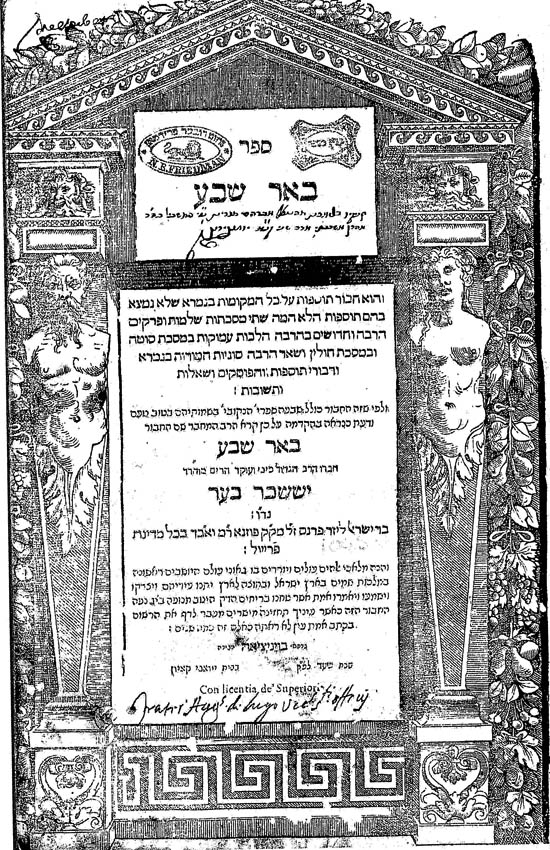
Turning to illustrations, we have a R. Issachar Baer Eilenburg’s Be’er Sheva, Venice, 1614, lot 157. The title page prominently displays a bare-breasted woman. It is worth nothing that this copy belonged to the Sadigur Rebbi, R. Nachum Dov-Baer Friedman, and his stamps also appear prominently on the title page.
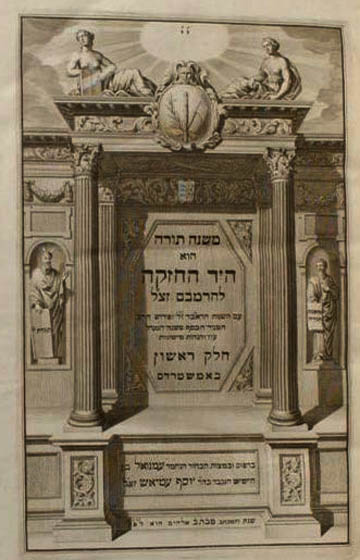
This is not the only work belonging to the Sadigur Rebbi that contains such illustrations. Lot 269, is the Sadigur Rebbe’s copy of R. Avraham Rapa’s Mincha Belula, which contains R. Rapa’s herald that similarly contains bare-breasted women. Indeed, as previously discussed here and here some have attempted to alter the herald to make it less objectionable. Although lot 262 does not appear to have belonged to the Sadigur Rebbi, it too has similarly imagery, this time on the title page. In this case, it is a set of Mishne Torah, Amsterdam, 1702-03. Aside from the figures of Moses and Moses Maimonides apparently dressed as Greek philosophers flanking the title page, on the edifice at the top of the page there are two bare-breasted women.
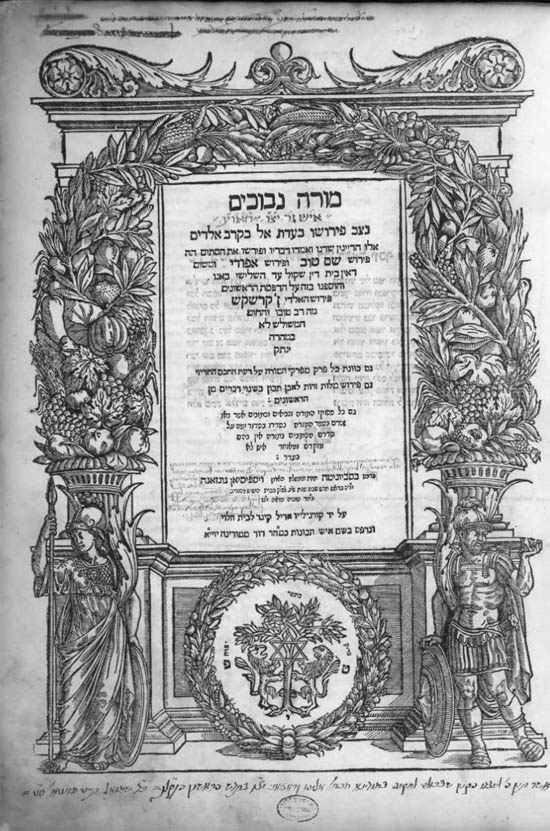
This is not the only work from Maimonides that contains potentially objectionable imagery. Lot 260, is the Moreh Nevuchim, Sabbionetta, 1553, and in this case, the Greek mythological figures, Mars and Minerva appear at the bottom [for more on this title page see Marvin J. Heller, Mars and Minerva on the Hebrew Title-Page, Papers of the Bibliographical Society of America, 98:3, Sept. 2004 (now reprinted in Studies in the Making of the Early Hebrew Book, Brill, 2007)].
Finally, a few other books of note are included in this auction. Lot 244 is R. Shmuel David Luzzato’s personal copy of the first Hebrew bibliography by a Jew, R. Shabbatai Bass’s (author of the popular commentary on Rashi, Siftei Hakhamim), Siftei Yesheinim. For more on R. Bass, see this post. Lot 145 is the Sefer Avreikh, Munkatch, 1893, which as Marc Shapiro has pointed out is one of the works that are written by extraordinary precocious authors, in this case, he was nine years old; see this post. Lot 258 is the first English edition of R. Yehudah Areyeh of Modena’s Riti, translated by Edmund Chilmead.


Rav Aryeh Tzvi Frommer HY”D: סנגורם של ישראל

 Rav Aryeh Tzvi Frommer HY”D: סנגורם של ישראל

A Closer Look At One of the Greatest Defenders of the Common Jew in Modern Times[1]
Rosh Yeshiva of Yeshivat Chochmei Lublin, Av Beit Din of Kozoglov, Author of Responsa Eretz Tzvi, Siach Ha-Sadeh, Doreish Tov Le’amo[2]

     By Alon Amar
הכל מלמדין זכות” – משנה סנהדרין ד:א”

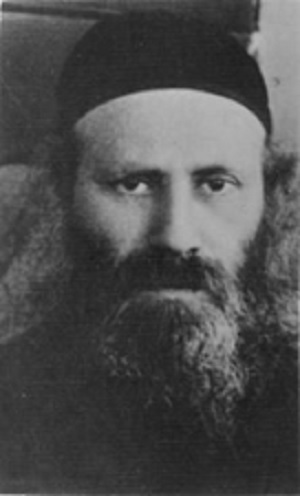
In the fall of 1933, immediately after the death of Rabbi Meir Shapira zt”l – Rosh Yeshivat Chochmei Lublin, an article appeared in the “Lubliner Tugenblatt” newspaper. The title reads “Who will be the next Rosh Yeshiva?” The article references multiple distinguished candidates for the prestigious appointment, including Rav Menachem Zemba hy”d and Rav Dov Berish Weidenfeld zt”l – The Tchebiner Rav. Interestingly enough, the eventual successor to Rabbi Meir Shapira, was not even mentioned in the article, though his greatness in Torah learning and piety was on par with those aforementioned geonim. Rav Aryeh Tzvi Frommer Hy”d (RATF), also known as The Kozoglover Gaon, was chosen as the next Rosh Yeshiva of Yeshivat Chochmei Lublin and served at its helm until it’s closure during World War II. His unique legacy expanded beyond the four walls of the yeshiva where he inspired and taught students. Through his responsa he engaged real-life issues creatively defending many customs of questionable halachic standing and created the mishna yomi program allowing all Jews, both scholars and laymen, to complete the entirety of Torah Sheb’al peh. His preoccupation with the spiritual needs of the full spectrum of jewry, and the creativity he employed for this task remain defining hallmarks of his inspiring legacy.

Brief Biography

RATF was born in Czeladź, Poland in the year 1884[3]. His father Hanoch-Hendel made his living as a tailor[4] and RATF’s mother Miriam-Kayla passed away when he was three years old.[5]He was sent to study in heder in the town of Wolbrum, residing by relatives of his mother. Some of his formative years of development in Torah learning occurred after leaving Wolbrum to study in the Yeshiva Ketana of Amstov, Poland[6]. The dean of the yeshiva, Rabbi Efraim Tzvi Einhorn zt”l recognized the unique abilities and challenges of the young orphan and took great care in supporting the young boy’s spiritual & physical development.[7] [8]
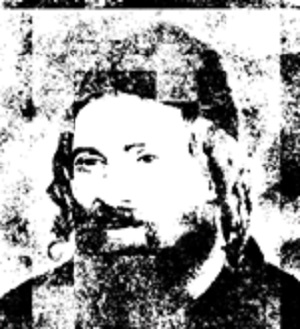
Rabbi Efraim Tzvi Einhorn Zt”l – Rosh Yeshiva Amstov, Poland

At the age of thirteen, RATF made his way to the court R’ Avraham Borenstein known as the “Avnei Neizer”[9] in Sochaczew (Sochatchov), Poland. Reb Leib Hirsch as RATF came to be known (Yiddish translation of Aryeh Tzvi), studied assiduously under the Avnei Neizer for five years developing a reputation as notable young Torah scholar in Poland and a close student of the venerable Avnei Neizer.[10] RATF was exposed to the unique combination of halacha, gemara, kabbalah and chassidut interwoven in the thought of the Avnei Neizer. At the time the Avnei Neizer was one of the leading poskim of the generation. RATF subsequently married Esther Shweitzer and spent the next eight years studying in the home of his father-in-law. Despite moving  away from his beloved rebbe, RATF maintained close ties with the Avnei Neizer, visiting on holidays as well corresponding on Torah topics.[11]

When the Avnei Neizer passed away in 1910, his son R’ Shmuel Borenstein[12], the “Shem Mi’Shmuel” was crowned the heir to his father’s chassidic court; becoming the second scion of the Sochatchov dynasty. On his father’s first yahrzeit, the Shem Mi’Shmuel established Yeshivat Beit Avraham in his memory. The Shem Mi’Shmuel appreciated the unique talents of RATF, and invited him to be the Rosh Yeshiva of Beit Avraham at the age of 27[13]. It was during this period of learning & teaching that RATF published his first work; Siach Ha’Sadeh. In it, RATF dealt with various talmudic topics with central themes of hilchot berachot & tefillah. The work came with laudatory approbations from leading scholars of the time including: Rav Meir Arik,[14] Rav Yosef Engel[15] and others.[16]RATF remained the Rosh Yeshiva of Beit Avraham, until the city of Sochatchov was destroyed in World War I.
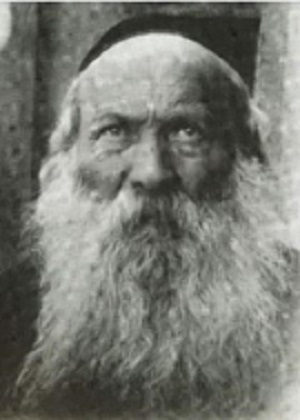
Rabbi Shmuel Borenstein Zt”l – (Shem Mi’Shmuel) The second Sochatchover Rebbe
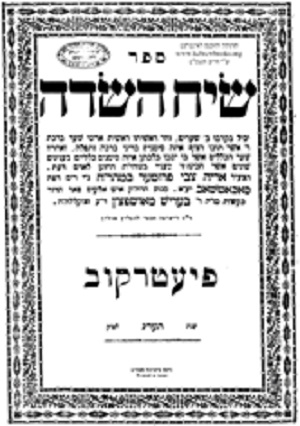
Cover page of Siach Hasadeh; Pietrikov 1912

The Frommer family had grown to a total of six children, relying on RATF as he sought his next job opportunity. His uncle, Rabbi Yitzchak Gottenstein, the rabbi of a small town in Poland, Koziegłowy (Kozoglov), had passed away and the community needed a new Rabbi. The community was small, and the financial opportunity was no greater. However, due to lack of alternatives this would be RATF’s next stop. There, RATF established a small yeshiva and continued his learning and teaching, jump-starting an environment of Torah learning and scholarship in the small town. Although his tenure there did not last particularly long, he would be forever known by the appellation; “The Kozoglover Gaon”.

After leaving Kozoglov[17], RATF headed to Zbeirtza, Poland. The community of Sochatchover chassidim that lived in the city of Zbeirtza, were “laymen” of an extraordinary caliber. Many of them students of the Avnei Neizer, providing context to appreciate the uniqueness and caliber of RATF and his erudition. RATF had developed into a combination of a classical scholar, chassid and tzadik that made him such a sought-after leader. He was knowledgeable in all areas of the revealed Torah as well as kabbalah and chassidut as is evident from his works. Additionally, he would arise at midnight to recite “tikkun chatzot” and study kabbalah late into the night away from the public eye. It was in Zbeirtza that his students began to compile notebooks with the teachings that RATF would share on shabbat & yom tov.[18]

Once again, the time came for RATF to migrate to the nearby town of Sosnovitz[19]continuing to gain admirers and students. It was at this time that Rabbi Meir Shapiro zt”l, founder of Yeshivat Chochmei Lublin and Rav of Lublin, expressed an interest in having RATF join the faculty of the yeshiva[20]. RATF deflected the requests due to his desire to remain close to his existing students and admirers. However, after Rabbi Meir Shapiro’s untimely death in October 1933, Yeshivat Chochmei Lublin was left without a leader. RATF decided to move to Lublin and became the second Rosh Yeshiva of Yeshivat Chochmei Lublin.
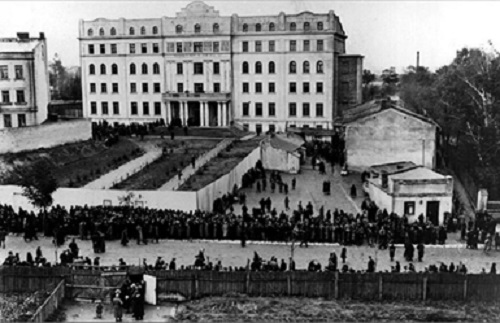
The funeral of Rabbi Meir Shapiro Zt”l at the Yeshiva of Chochmei Lublin

In a fascinating interlude in RATF’s life, he witnessed one of his lifelong dreams materialize; visiting Eretz Yisrael. RATF had a great yearning for the land of Israel.[21]He once remarked to his confidant and host in Tel Aviv, Rabbi Dovid Landa, that “a regular day in Eretz Yisrael contains the same holiness as yom tov sheni shel galuyot in the diaspora”.[22] His trip lasted four months while he visited Jerusalem, Meiron[23], Tel Aviv & Bnei Brak.[24] Afterward, he returned to his new position at the Yeshivat Chochmei Lublin. RATF experienced some of his most productive years of Torah learning & creativity at the helm of the yeshiva. After many years of narrowly avoiding personal financial collapse and constantly being forced to migrate throughout Poland, he had finally arrived at a place where his only concern was Torah.

It was during his tenure as Rosh Yeshiva of Yeshivat Chochmei Lublin that he published his second work, Responsa Eretz Tzvi,[25]in 1938. Eretz Tzvi, is a work of collected responsa, mostly concentrated on the orach hayim section of the Shulchan Aruch with certain discussions regarding Yoreh Deah and Even He’ezer as well. The volume was first published in Lublin, at a printer only steps away from the Yeshivat Chochmei Lublin.[26] A second printing was done in America in 1963 and a third re-printing by RATF’s nephew, Rabbi Dov Frommer in 1975 in Tel Aviv[27]. It is worth noting that a fourth edition including never before collected writings, as well as Siach Hasadeh, became the “second & third cheilek” of the responsa Eretz Tzvi as separate volumes. The collection includes responsa, letters &  glosses on various masechtot, and was printed in 2000 by Rabbi David Abraham Mandelbaum[28] [29]. Throughout Eretz Tzvi, RATF corresponds with many scholars including The Gerrer Rebbe, The Shem Mi’Shmuel of Sochatchov, Rabbi Meir Arik and the Bianer Rebbe on various topics of halacha. It is in this work that his unique approach combining halacha, aggadah and kabbalah is showcased. His creative methodology allowed for uncovering defenses of questionable customs, providing a limud zechut for the masses in many cases. In this way he served as a “Defender of Israel”[30].
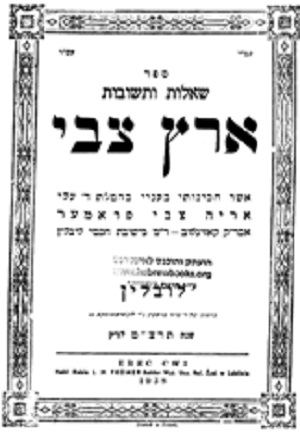
Cover page of Responsa Eretz Tzvi; Lublin 1938

In 1938, on the occasion of the second completion of the Daf Yomi cycle, RATF introduced a study program that would complement Daf Yomi: Mishna Yomi[31]. Two mishnayot studied every day; enabling a participant in the Daf Yomi program to finish the entirety of the mishnah, even those tractates which did not include bavli commentary.

The second world war began, and Poland was overrun by the Nazi army. In 1939 RATF together with his family were forced to relocate to the Warsaw Ghetto[32]. It was reported[33] that RATF was leading Torah learning initiatives for the younger students in the ghetto. Additionally, even while in the ghetto he continued to comprise Torah novella as many of his glosses on his own responsa Eretz Tzvi were written during his time in the Warsaw Ghetto.

RATF was forced to take a job making shoes for the German soldiers on the Russian front provided by the “Shultz” company.[34] He worked alongside the third Sochatchover Rebbe – Rabbi Dovid Borenstein and the  Piasetzna Rebbe Rabbi Kalonymus Kalman Shapira[35] along with other great rabbis and scholars .[36]
RATF alongside his Rebbe. Rabbi Dovid Borenstein Zt”l – The third Sochatchover Rebbe

After the liquidation of the Warsaw Ghetto in the spring of 1942 the Frommer family was sent to the Majdanek death camp in Lublin, Poland only 123km away from his beloved Yeshivat Chochmei Lublin. It is documented that as he entered the gas chambers, the holy Kozoglover Gaon exclaimed “Thank G-d, for I am included in the sanctification of G-d’s great name!”.[37]
A newspaper article describing the experiences of Torah scholars in the Warsaw Ghetto.

Key Themes In The Thought of The Kozoglover Gaon

  1. הכל מלמדין זכות – סנגורם של ישראל 

The central theme in the halachic thought of RATF, is his focus on defending existing customs which are at odds with normative practice, often utilizing various non-traditional halachic arguments. RATF not only included kabbalistic and chassidic sources in normative talmudic & halachic discussions, but even allowed them to inform practical decisions in the realm of halacha. Eretz Tzvi strives to support rather than tear down shaky customs. RATF notes in his introduction to Eretz Tzvi when discussing his approach:

“That which we observed, that the students of the Baal Shem Tov zt”l abolished the practice of fasting and self- affliction [to atone for sins], and I am not worthy to enter into this discussion. Rather, I base myself on the mishna ”All may argue in favor of acquittal”[38]

[From this example, one could suggest that RATF saw himself as a halachic expositor of the way of the Baal Shem Tov, utilizing his halachic knowledge to apply the chassidic outlook of focusing on positive actions, rather than becoming mired in the guilt of sin.] Naturally, the very first responsa in Eretz Tzvi begins with this exact objective, foreshadowing the central theme of his halachic work:

“In defense of the widespread custom of wearing a tallit kattan which is smaller than the halachic size delineated in the Shulchan Aruch[39] which ostensibly precludes any fulfillment of the mitzvah tzitzit as many great scholars have protested about…as well as providing a limud zechut regarding the required length of tzitzit”[40]

One common conflict between chassidim and mitnagdim is their opposing halachic attitudes within the area of zmanei hatefillah. Perhaps the most well-known example of RATF’s limud zechut is the defense of the custom of some chassidim for beginning shacharit after 4 halachic hours into the day. The problem being the recital of berachot kriat shema, after their preferred time.  This poses a potential transgression of beracha levatala[41]. RATF defends this custom with various arguments. In the first part of the responsa in Eretz Tzvi[42], RATF begins by neutralizing the potential issue of beracha levatalah by positing that the prayer is considered a tefillat nedava, a voluntary prayer similar to the voluntary offering in the beit hamikdash. A voluntary tefilla is not bound by the common restrictions of an obligatory tefilla.

However, RATF is challenged to explain how one could put aside the halachically preferential time for praying and engage in a seemingly lesser level of voluntary prayer [chovah vs. nedavah]? To answer this secondary question, RATF utilizes the Shulchan Aruch Harav of Rav Shneur Zalman of Liadi – The Ba’al Hatanya.[43] The gemara[44]states that someone who is constantly engrossed in Torah learning (Torato um’nato [Rashbi V’chaveirav]) is not obligated to stop at the proper time and pray shemoneh esreih while engrossed in learning. Additionally, the Ba’al Hatanya adds that praying with the highest level of deveikut (divine cleaving) would take precedence over Torah learning, even for those who are described as torato um’nato.

RATF points out that from the Shulchan Aruch Harav we see that only a prayer with extraordinary intent and focus [A] trumps the Torah learning of someone who’s primary occupation is Torah learning [B] while an ordinary tefillah [C] would not obligated him to interrupt his studies to pray. ([A]>[B]>[C]) Utilizing a similar line of reasoning, we can assume that an individual who delays praying to attain the higher level of prayer will supersede the usual obligation of prayer service at the proper time. ([A]>[C])

Perhaps a more ambitious attempt at justifying the practice of some of the great chassidic masters with respect to zmanei tefillah, is another point in the same responsa. RATF quotes from the Ruzhiner Rebbe[45]who explains that prior to the sin of adam harishon in gan eden, the entire day was equally fit for prayer. However, the post-sin world is not fit for such a structure so the forefathers; Avraham (Shacharit), Yitzchak (Mincha) and Yaakov (Arvit) designated timeframes for each prayer. When the world reaches the ultimate redemption, the framework of zmanei tefillah will revert to their undefined framework similar to pre-sin existence. Utilizing a concept from the Rashba in Masechet Menachot[46] [regarding the halachic status of korban ha’omer], RATF suggests that since prayers of the tzadikim are focused on delivering the ultimate redemption (when the typical time boundaries will cease to exist) these prayers in and of themselves (even in our current pre-redemption era) are not bound by the usual rules and regulations.[47] Additionally, in two separate places RATF defends the practice of regular chassidim (not only great tzadikim as discussed above) who begin to pray Mincha in the time of bein hashmashot[48]employing the concept of safeik d’rabanan lkula.
Rabbi Avraham Mordechai Alter zt”l (seated)  – The “Imrei Emet” of Ger along with his grandson.. A common correspondent of RATF. (Hakira.org)

In another example of limud zechut RATF defends the custom of delivering mishloach manot late in the day of Purim such that it is already past nightfall. While this practice ostensibly has no grounds in halacha as the halachic day has ended, as RATF himself admits, he still uncovers a halachic reasoning for the custom.[49] RATF quotes an explanation from Rabbi Yaakov Yitzchak Rabinowitz, the Yid Hakadosh of Pshiske,[50] who defends the practice of beginning to pray mincha when the prayer will extend past the proper halachic time of shkiah. Rabbi Rabinowitz justifies it based on the gemara and Tosafot in Berachot[51]regarding the curse of Bilaam towards the Jewish people. It is mentioned in the Gemara that Bilaam knew the precise split-second at which Hashem became angry during the day and could fit in a quick curse at that opportune time. However, Tosafot asks “What curse could you fit in a split-second?” and answers that the word kalem (כלם) meaning “they should be cursed” could fit the time allotment. Tosafot offers a second explanation: “even if it was a longer curse, if Bilaam would begin his cursing of the Jewish people in the split-second that Hashem’s anger appears each day even if he would continue after that time it would take effect as well.” Therefore, proves the Yid Hakadosh quoted by RATF, we see from here that beginning a prayer or a mitzvah at the right time will allow one to finish after the allotted time.[52] [53]
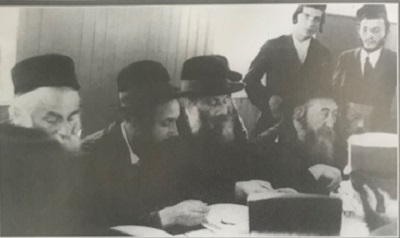
RATF (Third from left) administering a bechina at Yeshivat Chochmei Lublin

A limud zechut which came in an alternate form is RATF’s insistence on separating the strict halacha from that of middat hassidut or virtuous behaviour. In a correspondence[54] between RATF and the Imrei Emet of Gur (Rabbi Avraham Mordechai Alter), RATF discusses a specific type of lashon hara treated by the Hafetz Hayim in his work Shemirat Halashon. The Hafetz Hayim discusses the prohibition of speaking negatively about a person “even if he [the speaker] himself saw him [the transgressor] from close proximity doing something that is inappropriate according to the law”.  As a source, the Hafetz Hayim cites Rabbeinu Yonah in Shaarei Teshuva[55]:

”…perhaps the transgressor already repented from his evil ways, is distressed in his thoughts, and the heart knows the bitterness of his soul, and it is incorrect to reveal it.”

RATF points out that the exact words of Rabbeinu Yonah namely, “It is incorrect”, smack of middat chassidut and not strict halachic prohibition, and therefore takes issue with the Hafetz Hayim supporting his halachic decision on such grounds. RATF continues and writes “And since many people fail in this, one ought to find them a defense”.

It is interesting to note, that the work of Rabbeinu Yonah being discussed is the Shaarei Teshuva – a work not typically categorized as halachic. RATF did not object to the use of Rabbeinu Yonah’s “Shaarei Teshuva” on the grounds that it is a mussar work as opposed to a halachic one. One possible explanation is that RATF himself relies on and includes non-halachic sources to inform halachic decisions. RATF employs the full gamut of Torah thought in order to come to the defense of common practices and customs even if they infringe on pietistic sensibilities.[56]

Limud Zechut in Other Writings

As a young Rabbi, RATF published a short letter delineating the basic requirements of hilchot tefillah enabling his fellow Jews to fulfill the obligation of daily prayer. He published this letter anonymously, seemingly to avoid the appearance of haughtiness in a younger scholar lecturing the public.
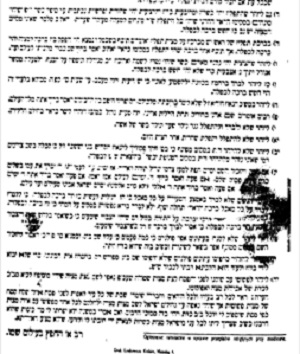
Part of the letter that RATF published anonymously to remind the general public about the basic requirements of Teifillah in hopes  of zikui harabim

Lastly, in addition to his published works RATF published a kuntres or small pamphlet called Doresh Tov le’amo[57]. The work remained in manuscript and included a defense of “most Jews” who don’t have the requisite intent during the opening birchat avot of shemoneh esreih.  RATF writes that even if a person doesn’t understand the meaning of the words, if they are aware of the fact that they are praying “in front of Hashem” bedieved they fulfill their obligation. [RATF’s position is seemingly in opposition to the well-known position held of Rabbi Chaim Brisker[58]that in the first beracha of shemoneh esreih both the intent of standing in front of Hashem as well as the meaning of the words are necessary even bedieved.]


  1. Innovation Through Connecting all Areas of Torah

RATF utilized existing logic and concepts while applying them to previously unexplained passages and problems providing a framework of creativity that remains in line with tradition. We have already seen from the above mentioned responsa that RATF was open to utilizing kabbalistic and chassidic concepts in order to provide a limud zechut. RATF’s works do indeed draw from chassidut, kabbalah as well as gemara and rishonim. RATF describes his philosophy regarding new interpretations in Torah and their purpose: [59]

“As it is explained in the work Maayan Chaim as he discusses at length to provide support to those who produce Torah novella although it is not clear whether they are true & correct which would be a transgression according to the Zohar. In my humble opinion, the Zohar prohibits writing such novella only in a case where the logic being applied is not true, however if the logic and approach is true and found in earlier works, even if it is being applied in a novel way to explain a certain passage, even if the explanation is not correct this is not a transgression. For this is the honor of Torah and to demonstrate that there is nothing that is not hinted to in the Torah and everything can be “clothed” in Torah.”
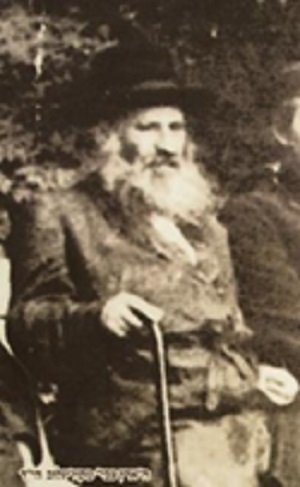
RATF in his later years

A great example of his propensity to cross-pollinate between disciplines is a discourse on Sukkot[60]. Regarding the libations of wine and water that took place on Sukkot he writes:

“One could suggest that the libations of wine and of water represent two separate ideas, oneg & simcha. The water libations represent oneg, as the concept of water is the source of all enjoyment as explained in Shaarei Kedusha[61]while wine represents simcha as [the Talmud] says “ein simcha ela b’yayin”. Additionally, we know that oneg & simcha are two separate ideas as explained in the Chatam Sofer’s novella (Shabbat 111a)[62] that on Shabbat there is an obligation of oneg while on Yom Tov there is an obligation of simcha…it would seem that the difference between these two emotions is that oneg involves the five senses while simcha involves only the heart/mind [lev]…and from simcha one arrives at dancing as is written in the Sefer Hakuzari, and the Maharal explains that our custom to raise our feet during Kedushah is to show that our soul naturally longs to take flight and similarly dancing which is initiated by simcha…on the other hand oneg is specifically in the engagement of the five senses as it says in Sefer Yetzira[63] which corresponds to oneg…and this is why all year round the only libation is that of wine representing simcha in the heart/mind however specifically on Sukkot after the forgiveness of sins [Yom Kippur] the body [and senses] are purified we are then given the libations of water representing the enjoyment of the senses as now these too can be used in cleaving to Hashem.”

In this passage RATF quotes from Talmud and a classical commentary as well as kabbalistic and chassidic sources interchangeably and unapologetically. The breadth and depth of RATF’s references adds a layer of relevance as he finds common themes in sifrei kabbalah along with classical rishonim and achronim. [64] In another passage, RATF describes his affinity for combining the hidden and revealed disciplines of Torah learning. He states:[65]

“It is my “way”, myself the pauper, to uncover (l’hamtzi) a source in the revealed Torah for the hidden…”

The word he uses is l’hamtzi which has double connotation of uncovering & creation. Through utilizing the spectrum of Torah literature RATF essentially creates new sources previously unrelated to the topic at hand through exposing them to his unique thought process.

See Responsa Eretz Tzvi[66] where he was asked by someone who accidentally turned on a light on shabbat and wanted to understand how much money he should give for atonement (kaparah). At the end of the discussion, [after finding a lenient opinion in estimating the modern equivalent of the monetary sums discussed in the gemara] RATF adds a reminder lest the questioner miss out on the true purpose of giving the symbolic amount to achieve “kaparah”.

However, the crux (ikar) of teshuva is the remorse and humility and lowliness that a person should be heartbroken that he desecrated the holy Shabbos. Additionally, it would be appropriate to take up oneself to assist the “Chevra Shomrei Shabbos” …for this is considered a tikkun of desecrating Shabbos.”       

RATF’s halachic thought utilized a maximalist approach in finding prooftexts and sources. Besides for the revealed and esoteric areas of Torah, we see from this last example that his responsa took the full religious experience into account.
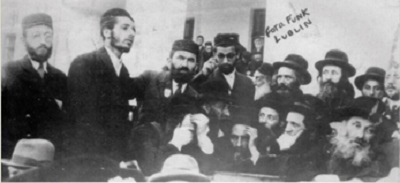
RATF (bottom right corner) at a an unspecified event in Yeshivat Chochmei Lublin. To his right, Rav M, Ziemba

  • Centrality of Torah for All Jews & Mishna Yomi

In a related theme to limud zechut & providing access to all areas of Torah, it is clear that RATF strived to include the full population of Jewry in his philosophy of learning Torah. It is interesting to note, as Rabbi S.Y. Zevin does in his review of Eretz Tzvi[67], that although RATF was the dean of a yeshiva which was typically focused on the abstraction of talmudic law, Eretz Tzvi is comprised entirely of questions that are practical in nature. He utilized his training in the disciplines of pilpul and sevara as a tool for dealing with everyday people & problems.

An initiative of RATF aiming to elevate the religious experience of common Jewry, was the Mishna Yomi program that he instituted. Upon the second inaugural Siyum Hashas in 1938, RATF created a new study program allowing every Jew to appreciate and complete the entirety of Torah. His initiative was both  complementary and supplementary to the Daf Yomi that was already instituted by Rabbi Meir Shapira zt”l. An adherent to the Daf Yomi schedule would complete the entire Talmud Bavli over the course of the seven-year cycle. However, there are many aspects of torah sheb’al peh left untouched due to the significant amount of mishnayot that have no Bavli commentary. RATF suggested that the geulah (ultimate redemption) is dependent on the Jewish people learning the entirety of the oral Torah. See below for his inspirational words when introducing the program explaining an interpretation provided by the gemara for a cryptic passage in Hoshea.[68]

“Though they hire among the nations, now I will gather them up” (Hoshea 8:10)

“Should they learn it all; then, “now I will gather them up” [the Geulah will come immediately]”(Bava Batra 8a)

One could understand the words of the gemara “It all” in two ways. Either A. All of Bnei Yisrael or B.  Each individual should learn all the mishnayot as they encompass all of the oral law. And there is support for this from the Zohar[69] that one of the methods of teshuva is to learn the entirety of Torah …as every part of Torah has a unique ability to offer salvation for a specific area in one’s life, however the ultimate geulah is the entirety of all individual salvations at once and therefore all areas of the Torah must be covered in order to glean all the unique salvations to arrive at the ultimate collective salvation [of the Jewish people]. It therefore says “אי תנא כולהו” [if they learn it all], utilizing both understandings [A. all of the Jewish people and B. the entirety of the oral Torah] …and this is the purpose of the “Mishna Yomi”, that every Jew young and old, scholar and layman, wealthy & poor can all take part in this great mitzvah.”

RATF felt that the geulah could be hastened through the entirety of the Jewish people learning all the mishnayot which encompasses the oral Torah.[70] It was seen as a great complement to the Daf Yomi, to the extent that there were printings of Talmud with both the Daf Yomi & Mishna Yomi schedule to allow for combined study.[71]

Although RATF conceived the Mishna Yomi prior to WWII, the concept needed a reaffirmation amongst post war Jews. Rabbi Yonah Stenzel, who was a student of RATF in the town of Sosnovitz and eventually emigrated to Tel Aviv and joined its rabbinate, re-instituted the concept of Mishna Yomi & Halacha Yomi in remembrance of those Jews that perished in the holocaust. In a few articles he is credited with creating the Mishna Yomi format, however RATF clearly introduced the concept before the war.

It is noteworthy that the specific vehicle chosen by RATF for bringing the ultimate redemption was Torah study. The gemara mentions other potential deeds that can bring the ultimate redemption in somewhat simpler ways.[72] The accessibility of Talmud Torah to the masses and the potential for each and every Jew to experience the entirety of Torah was RATF’s preferred initiative for bringing about greater spirituality in the community at large. It was through Torah that RATF saw his contribution in hastening the geulah.
Tamud Bavli, Tractate Hagigah and Mo’ed Katan and Mishnayot Shvi’it – special edition for the students of the Daf Yomi and the Mishnah Yomi – Munich 1947

Conclusion

Halachically speaking, any city which is entirely idolatrous is classified in the gemara as an ir hanidachat and condemned to destruction. However, the gemara[73]mentions that if one of the houses within the city maintains a mezuzah on its doorpost the city should not be destroyed. An apocryphal story describes a city facing imminent destruction due to its idolatrous practices that had permeated every household. On the eve of the final verdict there was a Jew who arrived from another city and ran from door to door affixing mezuzot to all bare doorposts. I believe that on a symbolic level, one of the rabbis affixing figurative mezuzot to various embedded customs requiring limud zechut in the last century was the Kozoglover Gaon, Rabbi Aryeh Tzvi Frommer Hy”d.

The concept of limud zechut, that was RATF’s raison d’etre, allowed for needed leniency within the structure and framework of Orthodox Torah observance. At times, we need a limud zechut on our own individual behavior as well as for our various practices and customs as a community. Perhaps, even if the halachic conclusions of RATF aren’t the accepted practice, his willingness to defend questionable practices with the breadth of his learning utilizing both the revealed and esoteric sections of the Torah remind us the importance of limud zechut and our responsibility to engage others and ourselves through it’s lens.

**I would like to dedicate this article in memory of my grandparents:

    Norman Sebrow                                                              Jo Amar

יוסף בן מזל ז”ל                                               נחמן דוד בן צבי אייזק ז”ל

     Jeanette Sebrow                                                    Raymonde Amar

רוחמה בת אסתר ז”ל                                             יוכבד בת אשר זעליג ז”ל

[1] I am grateful to Rabbi Hershel Schachter שליט”א, who introduced me to the Torah of the Kozoglover Gaon amongst a variety of unique thinkers as a student in his shiur. Additionally, I would like to thank the following people for their insight and help in bringing this project from idea to reality: Rabbis Dovid Bashevkin, Yaacov Sasson, Danny Turkel as well as Moshe Rechthand. Lastly, R’ Eliezer Brodt for his insight and breadth of knowledge that he offered to help complete this project.

[2] RATF’s collected writings and teachings can also be found in Eretz Tzvi (Moadim & Al Ha’Torah)  compiled by Erlich, Yehuda; Tel Aviv, 1984. Additionally, his students in Yeshivat Chochmei Lublin compiled a collection of insights called Mekabtz’el.

[3] Frommer, Aryeh Tzvi. Eretz Tzvi, Bnei Brak, 1976, pp. 5–6.

[4] Soreski, Aharon. Geonei Polin Ha’achronim, Bnei Brak, 1982, pp. 182 According to other opinions his father was a coal salesman.

[5] Ibid.

[6] Ibid. pp. 184 RATF’s personality is described as being exceptionally bright while at the same time a שובב or a bit of a “troublemaker”. It was in the yeshiva in Amstov that Rabbi Efraim Einhorn, paid special attention to the young orphan and provided him with the fundamentals for development in learning. It was this special attention that RATF attempted to repay when Rabbi Einhorn’s grandson, Rabbi Moshe Krohn came to study with RATF in Zbeirtza. RATF took extra care to attend to all of Rabbi Moshe Krohn’s physical and spiritual needs.

[7] Regarding the level of studies at the Amstov yeshiva – see Ibid. pp. 185-186 The day began with a shiur from 5AM until 10AM when the yeshiva would pray shacharit.

[8] Some of the other well-known students of the yeshiva; Rabbi Shlomo Stenzel and the Rebbe of Radomsk: Rabbi Shlomo Henich Hacohen Rabinovitz.

[9]1838 -1910. A chassid and son-in-law of the Kotzker Rebbe, after the Rebbe passed away he became a Gerrer chassid. In 1883 he moved to Sochatchov where he founded his own branch of chassidut named after the city, and which gave him the title of “the Sochatchover Rebbe.” His responsa were collected posthumously and published as the Responsa – Avnei Nezer hence his title. He published the sefer Eglei Tal as well, which covers the 39 melachot of Shabbat.

[10] Geonei Polin Ha’achronim, pp.182

[11] Ibid. – As a testament to the esteem regarded by the Avnei Neizer for his student, see Responsa Avnei Neizer, Orach Chaim, 109 where his teacher writes the following. “Greetings to my beloved student, the Harif and Baki our teacher, Rabbi Leib Hirsch. From your letter I see that you have been meditating on my work…You said well and spoke truth. Wishing you great strength and courage in Torah and G-d willing, may you develop into a vehicle for chassidut and fear of Heaven…Abraham”

[12] 1855-1926. Published the work “Shem Mi’shmuel”. The only son of the Avnei Neizer, was both a son and close student of his father and maintained an extremely close relationship with his father until his death. After his father’s death, he was accepted as the next Socatchover Rebbe. He published his father’s works and led Socotchov Chassidut. He died at the age of 70. He was brought to burial in the same ohel (covered grave) as his father, the Avnei Nezer, in Sochaczew. His son, Dovid, succeeded him as third Sochatchover Rebbe.

[13] Bergman, Ben-Tzion. Michoel B’Achat, pp.44 – RATF was not the only one asked to lead the yeshiva. Rav Michoel Forschlager another prized student of the Avnei Neizer was sought along with RATF to lead the yeshiva. It was RATF who served as the dean of the yeshiva while Rav Forschlager was more directly involved with directing the studies of the young students. Among Rav Forschlager’s students were Rabbi Avraham Aaron Price, Rabbi Mordechai Gifter, Rabbi Yitzchak Hoberman and Rabbi Pinchas Hirschprung. Additionally, see the newly reprinted Toras Michael (Machon Avnei Choshen, 2016) a collection of Rav Forschlager’s torah novella.

[14] 1855-1926 – One of the great galician Torah scholars with works such as Imrei Yosher, Tal Torah. His students include the prolific Rav Reuven Margolies and founder of Daf Yomi and Chochmei Lublin Yeshiva – Rabbi Meir Shapiro.

[15] 1858-1920 – Rabbi and Av Beis Din in Krakow, Poland. Author of Gilyonei Ha’Shas, Beit Ha’Otzar. Himself a fascinating Torah scholar who utilized abstract thinking in his conceptual approach to Talmudic study. At the bris of RATF’s first born son, Rabbi Yosef Engel served as the sandak, while RATF himself was the mohel.

[16] Including Rabbi Moshe Nachum Yerushalimsk, 1855-1916. Another of the great Torah luminaries in Poland at the time.

[17] See “Rabbi Aryeh Tzvi Frumer From Kozhiglov: Head of the Rabbinical Court and Rosh Yeshiva: Center for Holocaust Studies” – the reason for his departure from the city as being due to a disgruntled wealthy man that RATF slighted by deciding against him in a din Torah. For another version of the story involving his neighbor being a priest see the introduction to the third printing of Reponsa Eretz Tzvi.

[18] Specifically, Rabbi Yitzchak Yaakov Erlich whose son R’ Yehuda ended up publishing the works of RATF Rav in Israel many years later.

[19] It is in Sosnovitz where Rabbi Yonah Stenzel (1904-1969) became a devoted student of RATF. Rabbi Stenzel, who also studied in Chochmei Lublin, eventually migrated to Tel Aviv where he re-stablished the study of Halacha and Mishna Yomit in memory of all those who perished in the Holocaust.

[20] It is important to emphasize the honor and prestige that even joining the student body of the yeshiva brought along with it. It was said that each student needed to know 200 folio of Talmud by heart to gain admission.

[21] See Responsa Eretz Tzvi I:25 in his letter to the Gerrer Rebbe “Who will give me wings of a dove, I will fly and settle (in the land of Israel), kiss its earth, embrace its stones may it be hastily in our days”

[22] See Geoneil Polin Ha’achronim pp.250

[23] See Eretz Tzvi I:27 where he mentions that a certain hiddush occurred to him in Meiron on Lag Ba’omer

[24] Geoneil Polin Ha’achronim pp.252: It is said that he after meeting with the Chazon Ish zt’l in Bnei Brak, the Chazon Ish praised his brilliant Torah mind saying that he had not met such a brilliant mind in many years.

[25] The name is used as a description of the land of Israel, in the book of Daniel for example (Chapter 11), from which he had recently returned. Additionally, Tzvi for his middle name.

[26] Yeshivat Chochmei Lublin was located at Lubitrovska 57, initially a vacant lot which Rabbi Meir Shapira secured from a wealthy donor. Eretz Tzvi’s first printing was at a press located footsteps away at Lubitrovska 62 as seen on the cover page.

[27] Geonei Polin Ha’achronim, pp 271. Reportedly, the copy used for the third printing was amongst many works that survived the destruction of the holocaust and arrived as part of a larger delivery to the misrad hadatot of Israel. It was this specific copy that had the glosses of the author in the margins. Among other works saved is RATF’s personal copy of Responsa Imrei Yosher with RATF’s glosses.

[28]Rabbi Mandelbaum is a notable scholar of all topics related to Yeshivat Chochmei Lublin and many of the great minds of Polish origin. Rabbi Mandelbaum added a new dimension to the Torah of RATF and many other geonim by collecting their dispersed writings and organizing them while also providing noteworthy glosses and footnotes in various reprintings. Rabbi Mandelbaum’s father was a student of RATF in Yeshivat Chochmei Lublin. Additionally, Rabbi Mandelbaum thanks Rav Shmuel Halevi Vozner Zt”l and other for sharing many of the items found in this second volume as he was in possession of various manuscripts and writings of RATF.

[29]  ‘ שו”ת ארץ צבי, חלק ב ה, Bnei Brak, 2000

[30] סניגורם של ישראל – This term is also used in reference to the great Rav Levi Yitzchak of Berditchev (1740-1809) who repeatedly strove to portray both Jews and Jewish issues in a positive light. For more on this topic see; Luckens, ‘Rabbi Levi Yitzhak of Berdichev’, Ph.D. thesis (Temple University, 1974) pp. 38 citing M. Wilensky, I, 122-131.

[31] His words were recorded and can be found in Eretz Tzvi Moadim pp. 276

[32] ארץ צבי עה”ת pp. 14

[33] Hidden in Thunder: Perspectives on Faith, Halachah and Leadership …, Volume 1, Esther Farbstein,

[34] ארץ צבי עה”ת pp. 14

[35] See http://www.daat.ac.il/daat/shoah/biton37.pdf  based on the daily journals of Hillel Zeidman

[36] [The Last Path for Torah Leaders in the Warsaw Ghetto]. Bais Yaakov (in Hebrew) (47): 7 – Testimony of Avraham Hendel. An additional story is told about Rabbi Aryeh Tzvi that he was desperately searching for someone to help him conduct a chemical experiment with the margarine that was given out at meals in the shoe factory – to test for any treif fat that could have been mixed in and thus prohibited to eat.

[37] Ibid.

[38] Reponsa Eretz Tzvi, Introduction

[39] Siman 17

[40] Eretz Tzvi,

[41] See Shulchan Aruch 58:6

[42] Responsa Eretz Tzvi I:36

[43] Talmud Torah 4:5

[44] Shabbat 10a

[45] Israel Friedman of Ruzhyn (1796 –1850), also called Israel Ruzhin, was a Hasidic rebbe in 19th-century Ukraine and Austria. Friedman was the first and only Ruzhiner Rebbe. However, his sons and grandsons founded their own dynasties, collectively known as the “House of Ruzhin”. These dynasties, which follow many of the traditions of the Ruzhiner Rebbe, are Bohush, Boyan, Chortkov, Husiatyn, Sadigura, and Shtefanesht. The founders of the Vizhnitz, Skver, and Vasloi Hasidic dynasties were related to the Ruzhiner Rebbe through his daughters.

[46] Menachot 4a

[47] It should be noted however, that RATF concedes that this line of reasoning would specifically apply to the great tzadikim whose prayers can be assumed bring the ultimate redemption closer vs. those of the typical petitioner.

[48] See Eretz Tzvi 1:1, 1:60

[49] 1:121

[50] Rabbi Yaakov Yitzchak Rabinowitz (1766–1813). A student of the Chozeh of Lublin (Ya‘akov Yitsḥak Horowitz) with whom he eventually parted ways. See Buber, Martin: Gog und Magog (1949; first published in English translation as For the Sake of Heaven, 1945). The Yid Hakadosh would become the teacher of Rabbi Simcha Bunem of Pshiskhe. See Rosen, Michael: The Quest for Authenticity.

[51] 7a s.a

[52] See Piskei Teshuvot, Purim, Siman 695:5 Note 24. Where this responsa of RATF is brought as an example of an opinion that defends the practice of starting the Purim feast close to the end of the day where most of it will take place after Purim although it was begun before the end of the day.

[53] Additionally, regarding the proof from Tosafot in Berachot referencing Bilaam. See Nefesh Harav (pp.114) that when Rav Joseph B. Soloveitchik heard this proof he laughed and Rabbi Shachter שליט”א explains that it was evident that he was not comfortable with this type of proof.

[54] See “From Principles to Rules and from Musar to Halakhah: The Hafetz Hayim’s Rulings on Libel and Gossip”, for Rabbi Dr. Brown’s discussion the works of the Hafetz Hayim at length and who discusses RATF’s discussion as well.

[55] Shaarei Teshuva, Sha’ar 3

[56] See below for further examples (non-exhaustive list) of limud zechut:

1.See Eretz Tzvi 34 – in defense of the custom for women of the time that didn’t daven everyday, when seemingly this is against the clear gemara (Berachot 20b) & Shulchan Aruch (O”C – 106:2) that women are obligated in tefillah. Rabbi Aryeh Tzvi provides additional support via comparison of tefillah to korbanot thus re-affirming the position of magen Avraham (ibid.) that suggests that the women will at some point request something from G-d and therefore fulfill their Torah obligation according to the Rambam.

  1. See Eretz Tzvi 53 54 – in defense of the common custom to make a borei pri hagefen on wine that includes significant amounts of water which are 6x the wine although this is seemingly at odds with the normative halacha as both the Shulchan Aruch YOD (siman 134) & Rama (YOD 204:5) conclude that one should not make a borei pri hagefen on such a wine.
  2. Eretz Tzvi 75 – in defense of the common custom in an area without an eiruv on Shabbat to use a minor to perform hotzaah.
  3. See Eretz Tzvi 94-95 with respect to finding support for those kohanim who fly on an airplane which might fly directly over graves of Jews thus exposing them to tumas kohanim
  4. Eretz TZvi 96 – in defense of the common custom to make seltzer on Shabbos –
  5. Eretz Tzvi 97 – in defense of the custom of certain chassidim to sit in the sukkah and make a bracha on shmini atzeret – though ostensibly at odds with the gemara.
  6. Eretz Tzvi 125 – finding support for creating a mikvah using snow in a place that no other type of mikvah would be possible.
  7. Eretz Tzvi 30 – in defense of the custom of the Ashkenazim in the diaspora who refrain from reciting the daily birchat kohanim
  8. Eretz Tzvi 35 – in defense of the custom for those washing netilat yadaim and the water does not cover most of their hand

[57] See Geonei Polin Ha’achronim, pp. 262

[58] See Chiddushei Rabbeinu Chaim Halevi al Harambam, Hilchot Tefillah as well as the he’arot of the Chazon Ish

[59] Eretz Tzvi (Torah commentary) Introduction

[60] Eretz Tzvi, Moadim, pp. 110, Sukkot תרפ”ה

[61] Kabbalistic work of the Ari’zal

[62] ד”ה ודע

[63] Chapter 2:7

[64] Another notable exchange is one that appears in the second volume of Eretz Tzvi where RATF engages in correspondence with none other than the Ishbitzer Rebbe, Rabbi Mordechai Yosef Leiner zt”l. It was in 1934 that the Ishbitzer Rebbe sent a question that was bothering him regarding a specific comment of Maimonides related to Hilchot Shevuot. RATF goes on to cite various chassidic and Kabbalistic sources and their bearing on the halachic issues. Thank you to Rabbi Josh Rosenfeld for pointing out this source, in his Sunday Responsa Series.

[65] Responsa Eretz Tzvi, I:12

[66] Siman 62

[67] Sofrim U’Sfarim, Tel Aviv, 1959, pp.189.  [Thank you to Rabbi Eliezer Brodt who brought this source to my attention]

[68] The discourse can be found in it’s entirety in Eretz Tzvi Moadim pp. 276.

[69] Zohar Chadash, Rut

[70] See also Eretz Tzvi, II: 72, 73

[71] This unique edition was printed in the framework of daily Daf Yomi and daily Mishnah. A combined calendar of Daf Yomi and the daily Mishnah is printed at the beginning of the book for the years to come: 5767-1912. The tablet is spread over four columns. Beneath the calendar of Daf Yomi, a special prayer was printed “after the end of a chapter from a daily mishnah.” This prayer was composed by Rabbi Yonah Stenzel zt “l, in memory of the Holocaust victims” who were killed for the sanctification of God … by the German oppressors. [Seen at Tzolman’s auctions (Bidspirit.org)]

[72] See Shabbat 118a – “If only [Bnei] Yisrael would keep two consecutive Shabbatot they would be immediately redeemed”

[73] Sanhedrin, 71a