The Netziv, Reading Newspapers on Shabbos & Censorship (Part Two)

The Netziv, Reading Newspapers on Shabbos & Censorship (Part Two)*.
By Eliezer Brodt
  Updates and clarifications

This post is devoted to discuss some of the various comments I have received from many different people regarding part one (here). I will also add in some of the material which I had forgotten to quote for part one [some of which I was reminded of by readers] along with additional material that I have recently uncovered. I apologize for the delay in posting this.  From the outset, I would like to thank all those people who sent in comments regarding the post. I hope to publish the next two parts to this article in the near future.
My email address is eliezerbrodt@gmail.com; feel free to send comments.
Firstly, on the general topic of censorship and especially related to this post, I forgot to mention Professor S. Stampfer’s remarks to me when I discussed with him the general idea of this post: “Those who impose censorship presumably assume that they are wiser than the author whose text they wish to suppress“. [See also his work Lithuanian Yeshivas of the Nineteenth Century, p. 11].[1]
 In the beginning of the first part of this post [and in note two], I wrote that that this is a work in progress. In the future, I hope to write an in-depth article exploring other Heterim for reading newspapers on Shabbos. I forgot to mention Rabbi Eitam Henkin’s article on the subject available here. Rabbi Henkin deals with the Netziv Heter in note 24. [Thanks to J. for reminding me about this source].
Rabbi Henkin shows 1 the similarity of between the Pesak by R’ Moshe Feinstein to that of the Netziv’s.
ושוב שאלתיו איך לנהוג בטילטול איגרת שלום.
תשובה: כיוון דמותר לקראות איגרת שלום בשבת, מותר לטלטלו. דהטעם שאסרו איגרת שלום בטילטול, הוא משום שמא ימחוק (רמב”ם שבת פכ”ג הי”ט, ועי’ או”ח סי’ ש”ז ט”ז ס”ק י”א), וכיוון דאנו נחשבים לגבי האי דינא כחשובים, אין לחשוש שמא ימחוק, כמו דלא חיישינן בחשובים לשמא יטה (סימן ער”ה סעיף ד’). דבאיסור קריאת איגרת נאמרו שני טעמים, אחד משום שמא ימחוק, והשני משום ודבר דבר. ואיסור ודבר דבר הוא רק באופן שקורא בפה, אבל עיון וקריאה שלא בפה מותר. ואיסור קריאה בדרך עיון בעלמא הוא רק משום שמא ימחוק, ועל טעם זה יש בו היתר דאנו נחשבים כחשובים [שו”ת אגרות משה, או”ח, ה, סי’ כב אות ד].
This Teshuvah was purportedly written to Rabbi Y.P. Bodner. However, a check in Rabbi Bodner’s work, The Halachos of Muktza, pp. 7-8, where he publishes the Teshuvot that he received from R’ Moshe Feinstein, nothing of the sort appears regarding this issue. On the other hand, it bears note that in the introduction to this Teshuvah in Igrot Moshe (#21), the editors write that R’ Moshe Feinstein had later added to them comments and corrections. [Thanks to Moshe Kaufman for this source].
In note five I deal with relying on R’ Baruch Halevei Epstein’s Mekor Baruch. I predicted (to myself) that CFP would comment about this [as he has in the past]. Others, as well, have complained to me about relying on this work. I am not going to get into the whole subject at this time; it has been dealt with in the past by many and will probably be dealt with in the future by many more. I plan to write my own thoughts on the topic in the future, B”N. For now, I will quote something related to this [and to some of the other sources I used in this post] from Professor Stampfer’s introduction to his work Lithuanian Yeshivas of the Nineteenth Century, (p. 11) related to all this:

The sources I have used in this book… and memoirs are worthy of note. The last category is the most important, and like every other source it has both advantages and disadvantages. Memoirs sometimes provide a more detailed picture than official documents, but most were written many years after the events described and more than likely in consequence to suffer from only partial recall; they also reflect their authors attitudes at the time of writing rather than at the time of the events they describe. In most cases I have assumed that, although what was written may only be part of the truth, the authors would not have deliberately lied. Moreover, almost all my conclusions are based on several sources, so that if one source proves unreliable it does not usually affect my general conclusions.

In the case of the Netziv reading newspapers, I have provided enough ancillary evidence. As for his having permitted reading them on Shabbas and himself having done so, I believe I have provided enough sources for that as well.
CFP commented:

“I don’t know why you assume that the MB’s fabrications – to the extent that they were such – were “common knowledge”. How would the Netziv’s activities, in the privacy of his house on Shabbos, be “common knowledge”? As an insider, RBE had free reign to claim whatever he wanted. The same applies also to R’ Kook. He may not have known what his rebbe did Shabbos morning in his house. But even if he did, there’s no reason to assume that R’ Kook read the entire MB before giving a haskama on it. When assessing the validity of historical evidence, it can be useful to imagine that we’re assessing this same evidence today. Do insiders make claims about great rabbis’ practices that are of dubious veracity? Do people give haskamos on things that they’ve not read in full? It was probably no different then.”

The reason why I assume it was common knowledge is this: Volozhin itself was a small town. Almost whatever the Netziv did was noted by the hundreds of Bochurim who learnt there; other than learning there was almost nothing else to talk about. In present-day Yeshivas, one of the hot topics which Yeshivah Bochurim enjoy discussing is what their Rebbe said or did; I believe this was no different in those days. The simplest way for everyone knew that the Netziv received newspapers was that they noticed his incoming mail. As for their knowledge of what went on in his house, many bochurim ate in his house on Shabbas and Yom Tov, as is clear from the various memoir literature. Thus, I do not think that R’ Epstein had free reign to claim whatever he wanted about the goings on inside the Netziv’s home.
I agree that I cannot prove that R Kook read the whole work in its entirety; I assume it is reasonable that he read all the parts about his Rebbe. Anyone familiar with how much the Netziv meant to him should be able to understand why I believe this. Conversely, I fully agree that people give haskomos to works they do not read, however that specific point has no direct bearing on my conclusions.
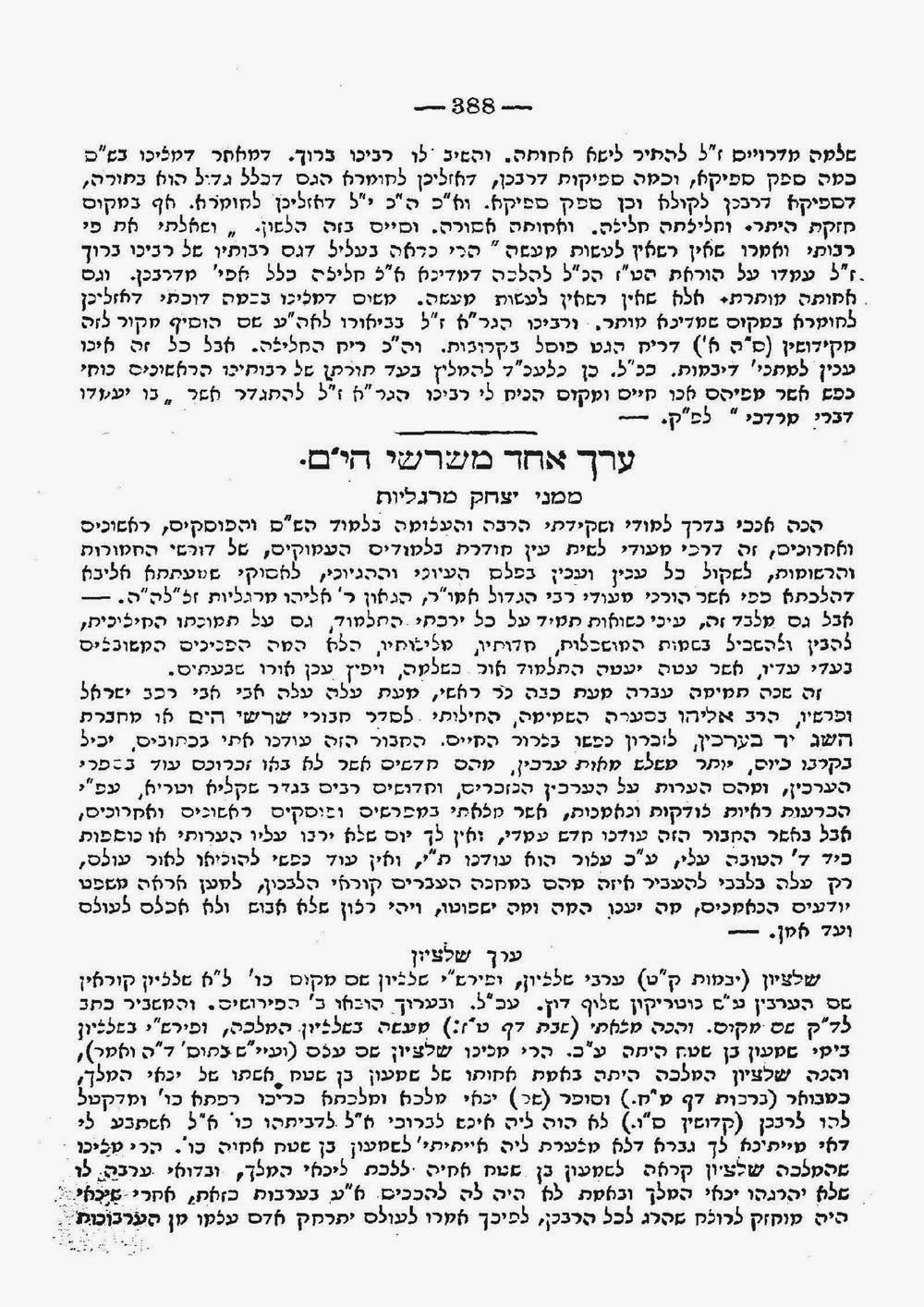
One of the memoir sources I quoted a few times in part one was from the various articles written by Micha Yosef Berdyczewski. Micha came from a chassidic home, learned in Volozhin for a short time, and ended up becoming a famous non-religious writer and thinker.[2] Thus, it begs the question how one could rely on such a source.
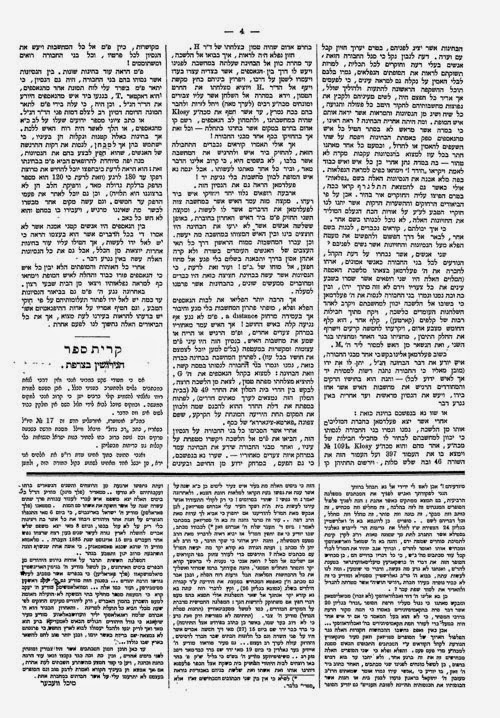
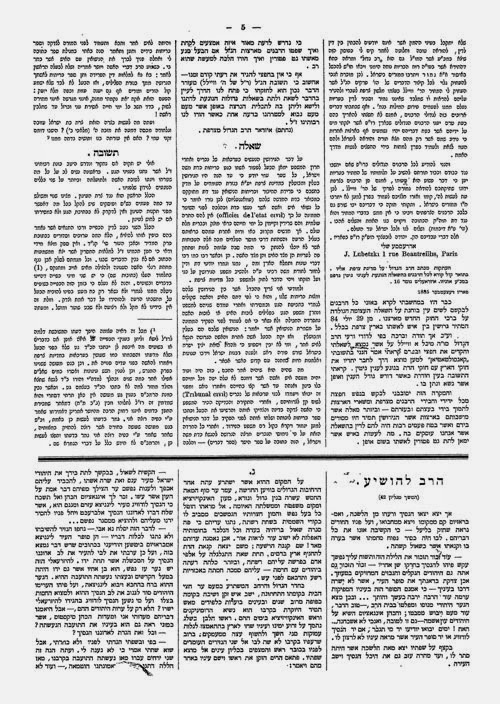
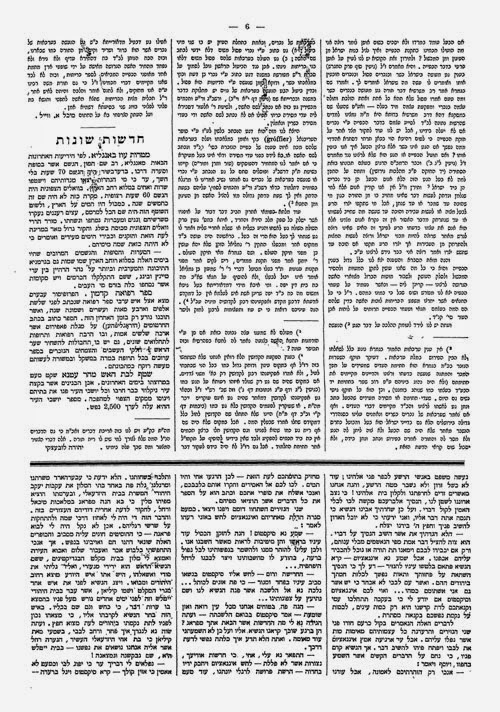
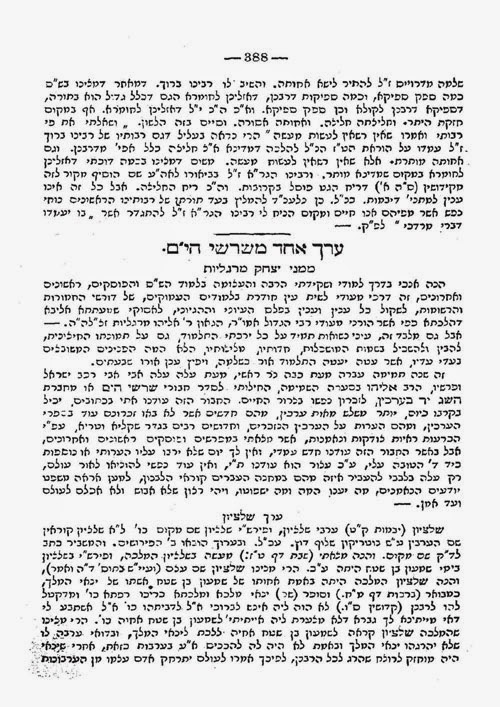
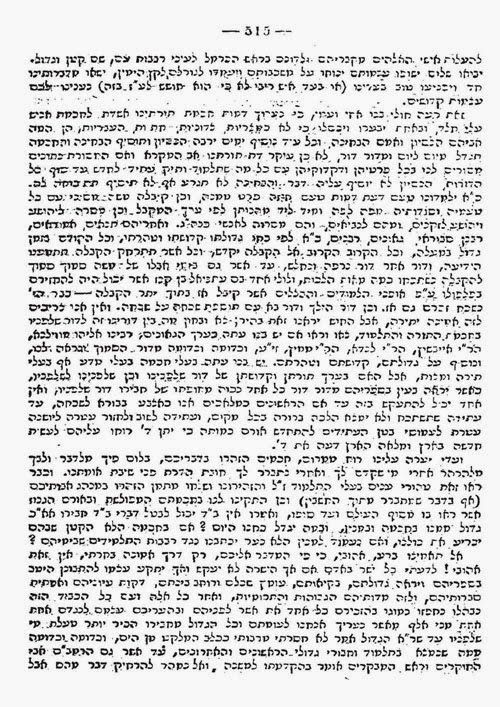
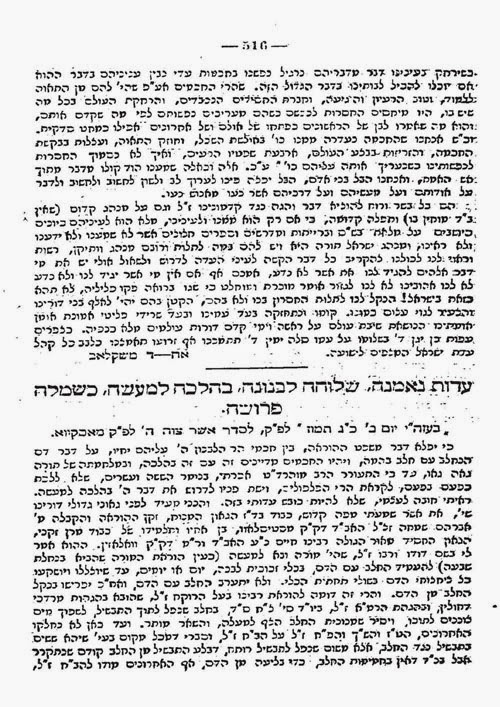
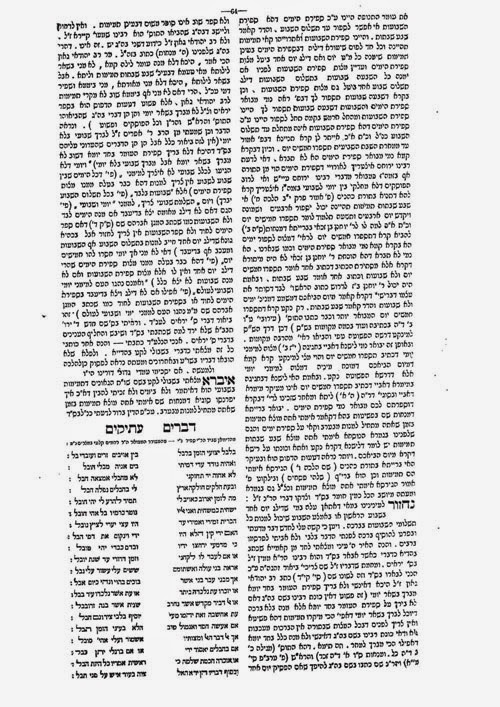
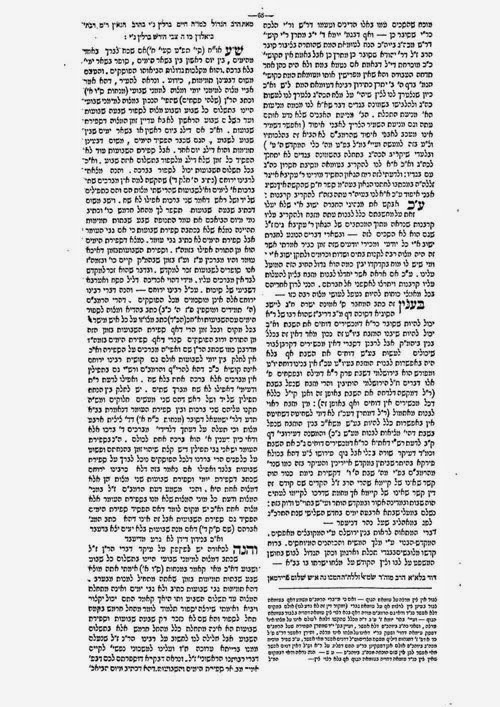
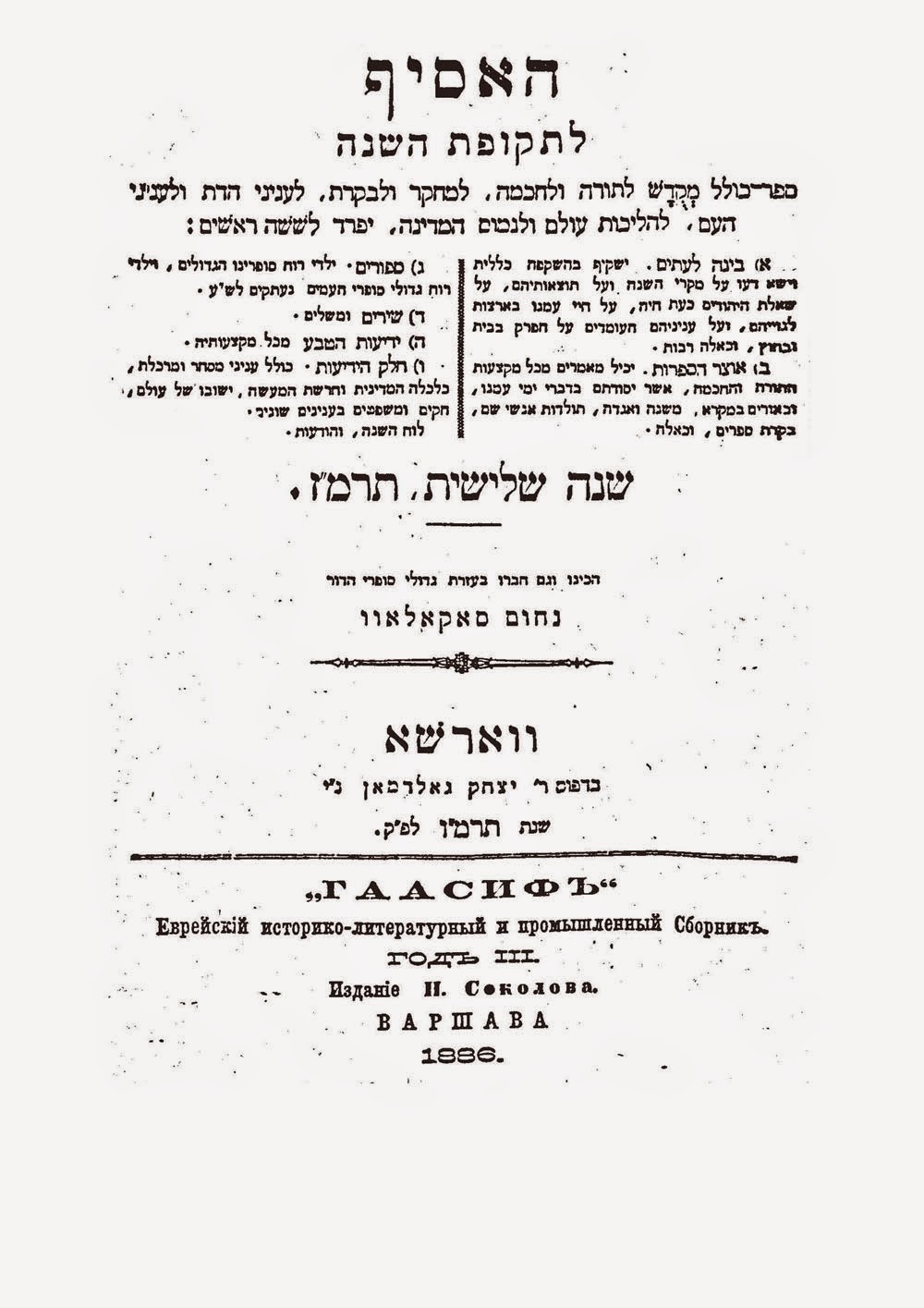
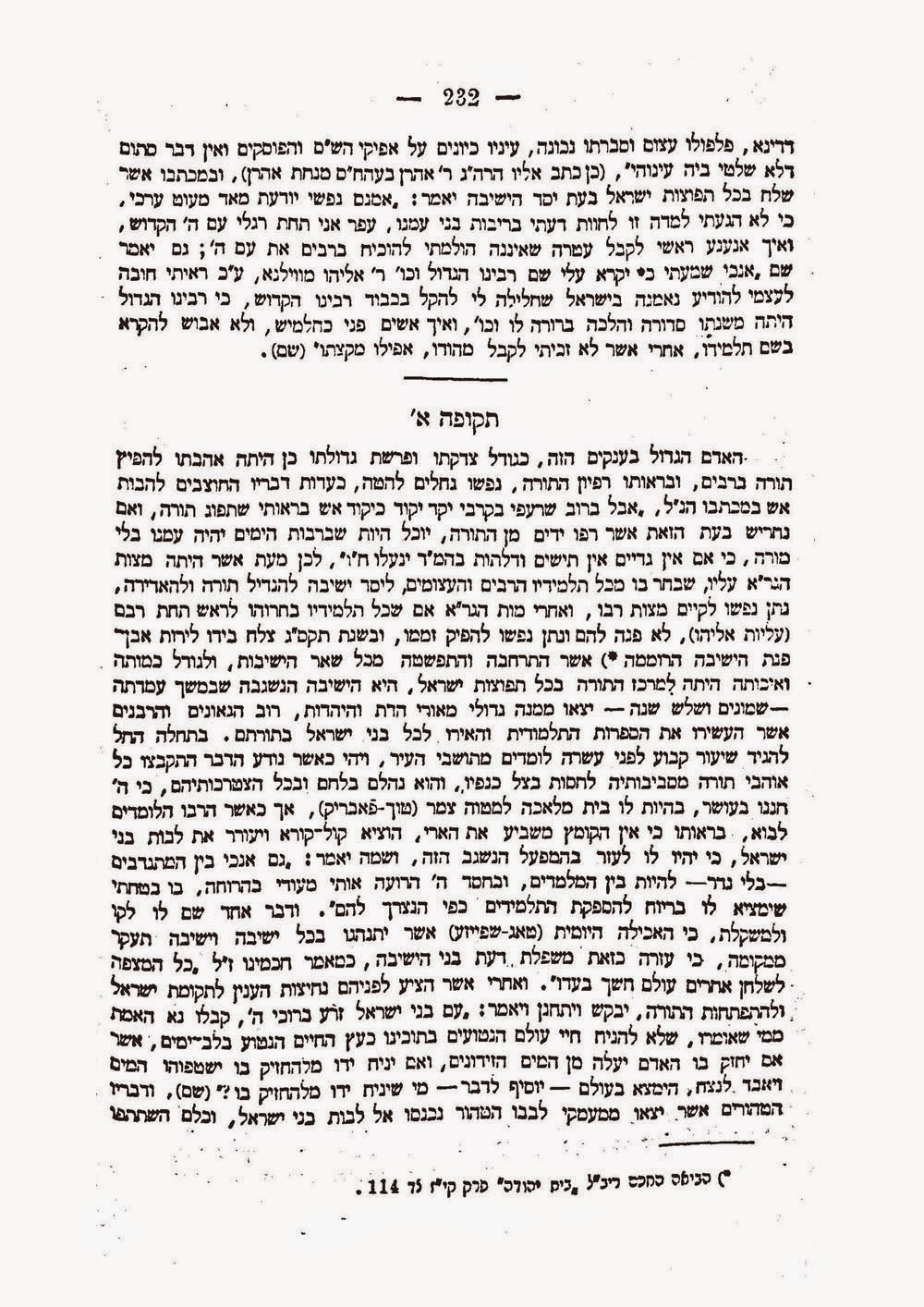
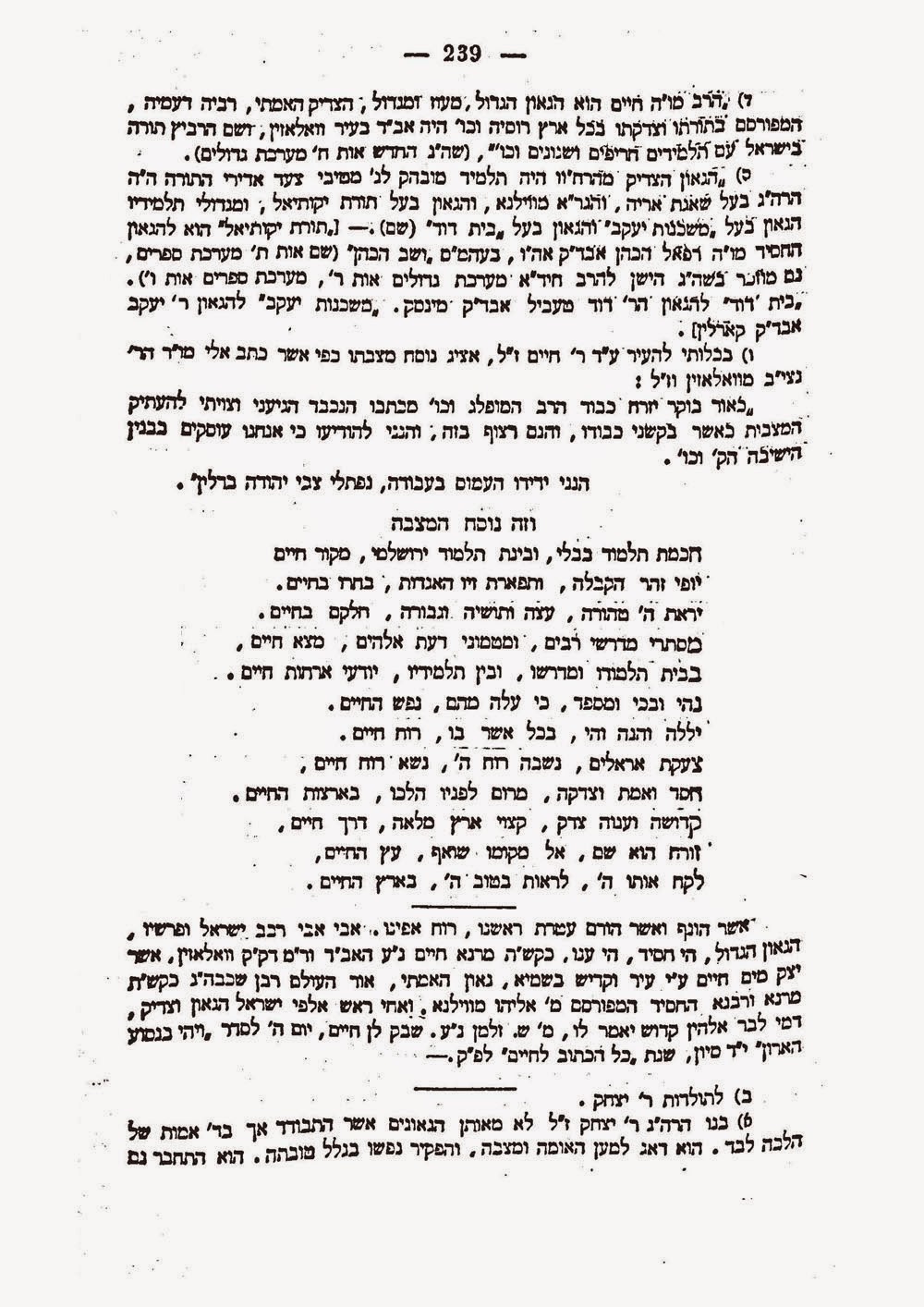
Berdyczewski wrote a lengthy article about Volozhin in Volume three of HaAssif (1886), pp. 231-242. This article was recently reprinted in his collected writings volume one (pp. 65-75) However, they did not reprint the five page appendix to the article. See the end of this post for the complete article.
The article is well written and appears to be a very accurate portrayal of Volozhin.[3] Many who wrote on Volozhin used it.
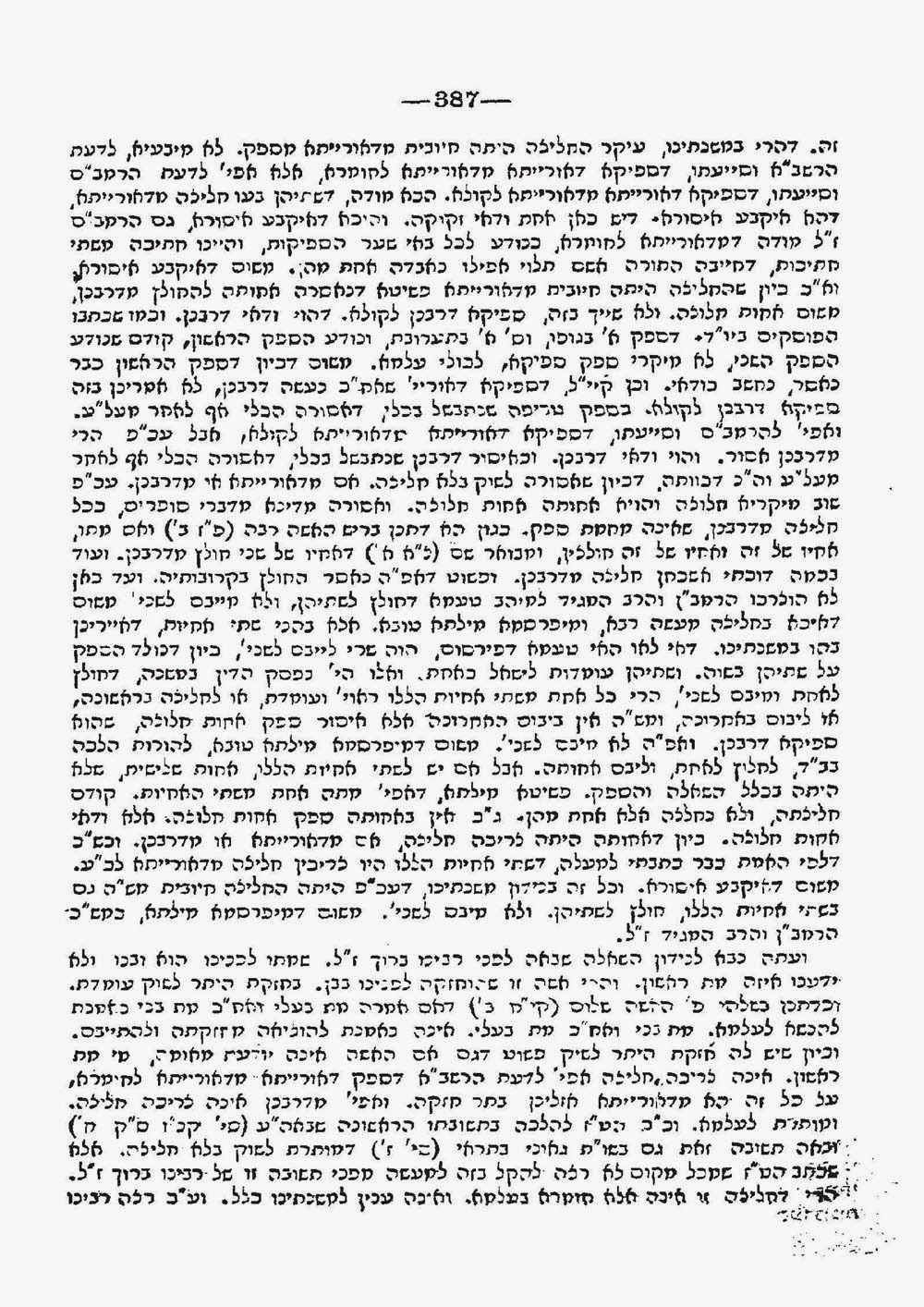
Reading the appendix we find that the Netziv helped Berdyczewski, providing him with some information for this article. Berdyczewski quotes two pieces from the Netziv (p. 239, 240).
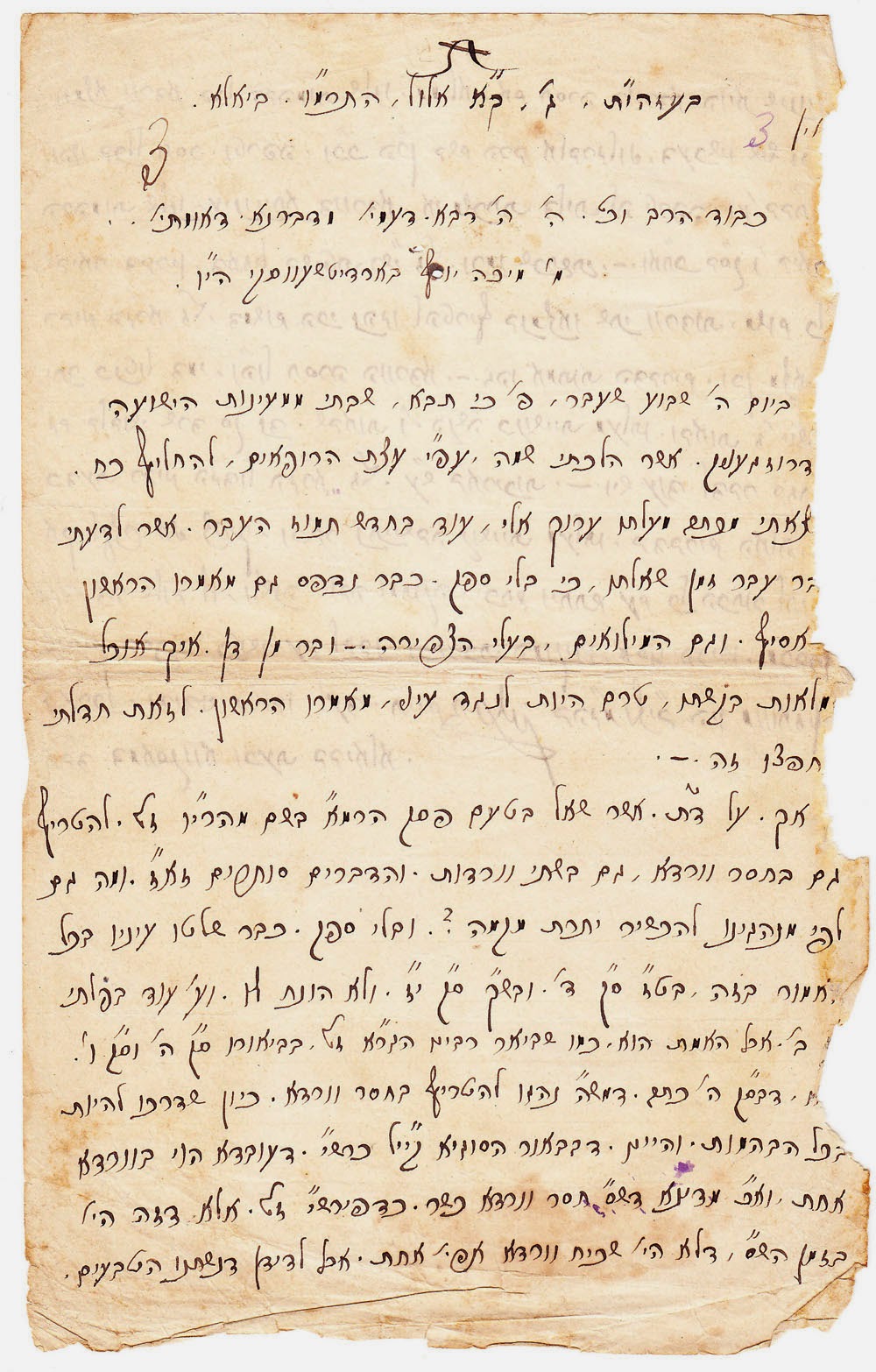
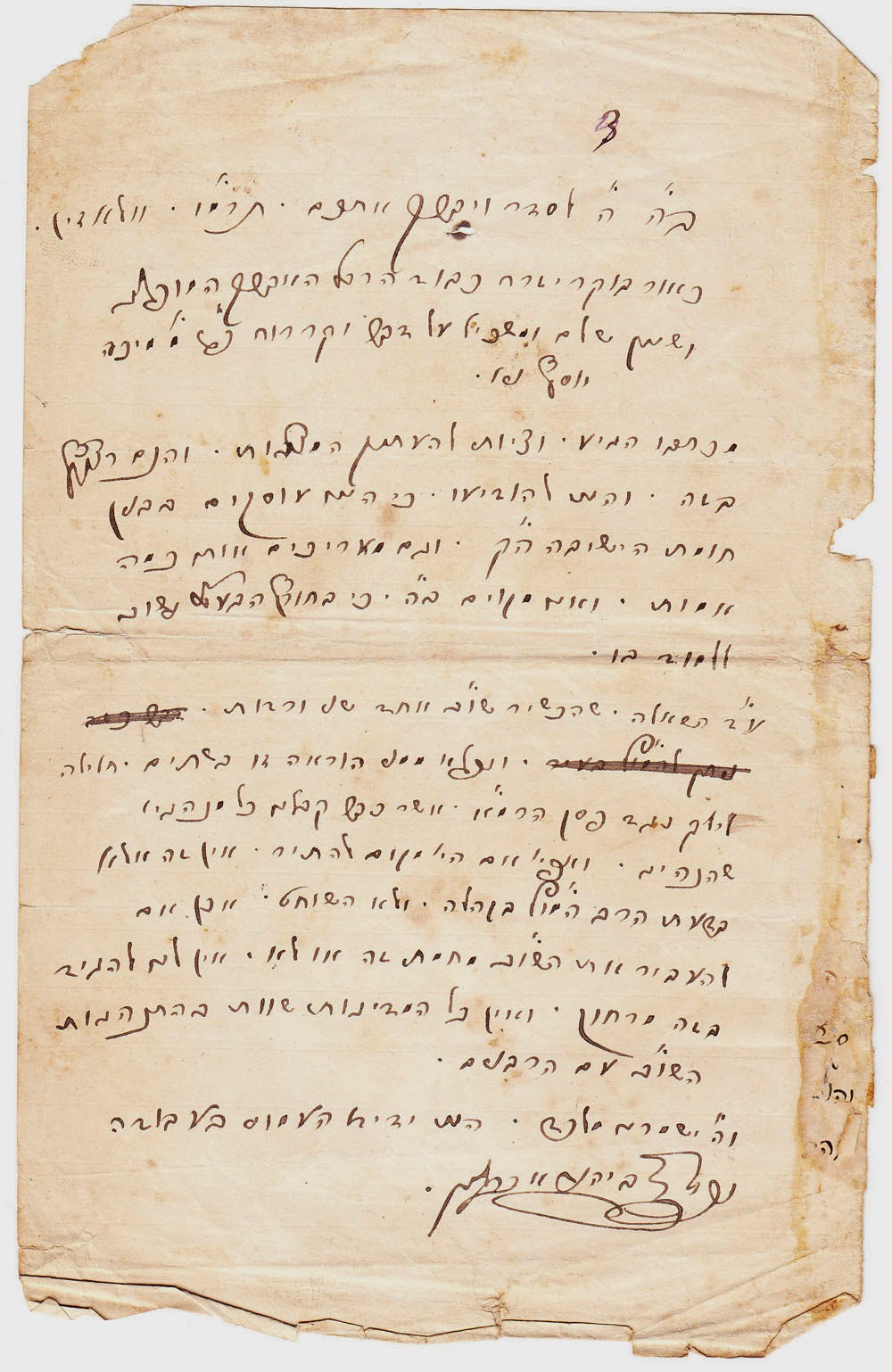
I contacted the world-renowned expert on Berdyczewski, Professor Holtzman, to inquire if this letter is still around. He was kind enough to send me a scan of the letter and another letter of the Netziv to Berdyczewski. To the best of my knowledge, these letters have never been printed.[4] Follows are the aforementioned letters, with Professor Holtzman’s kind permission, followed by my transcription.

Letter 1
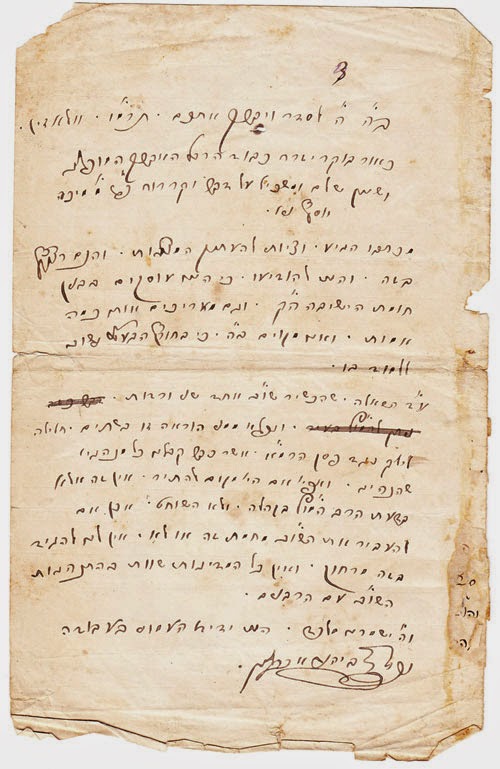
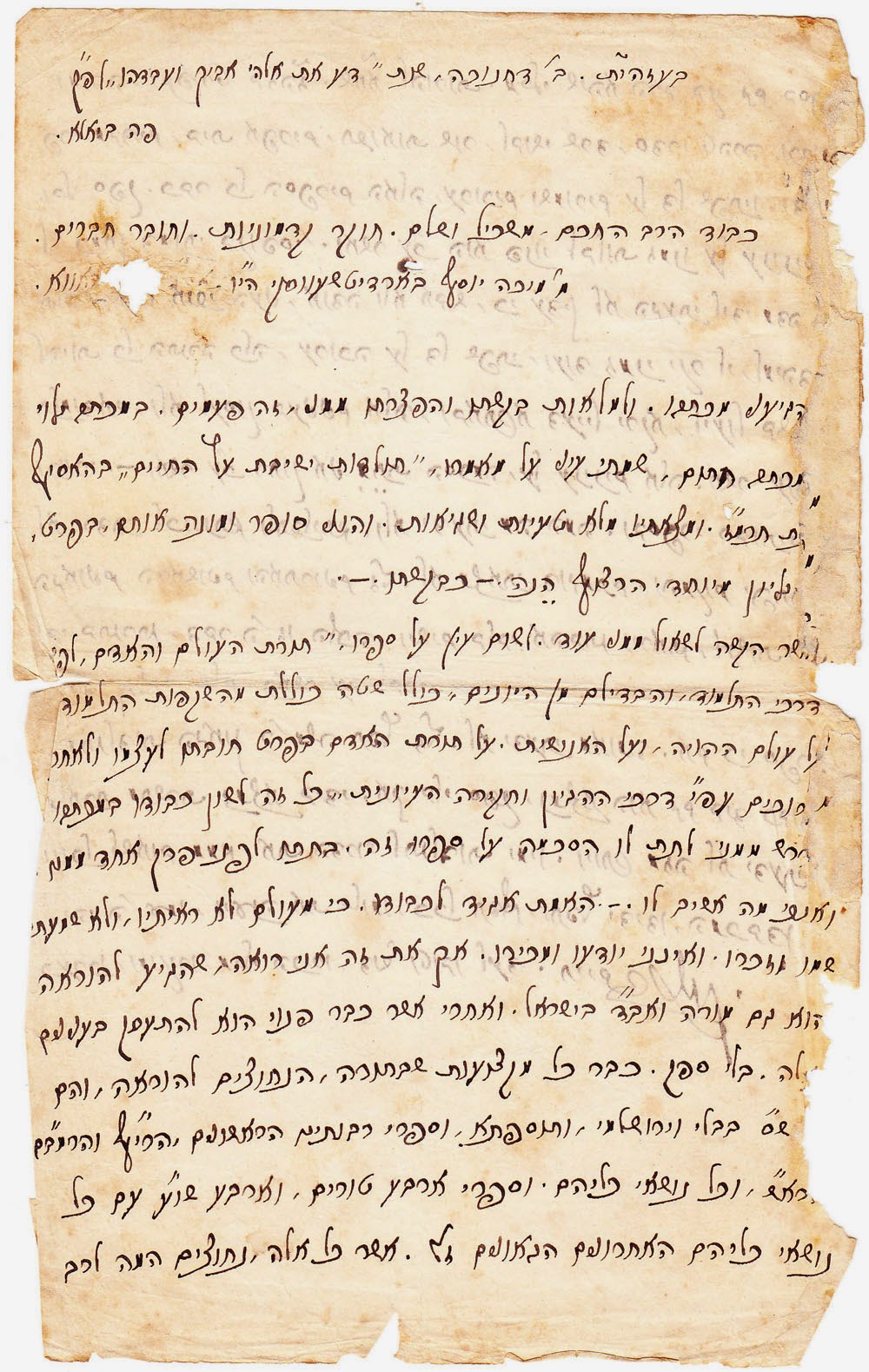
Letter 2
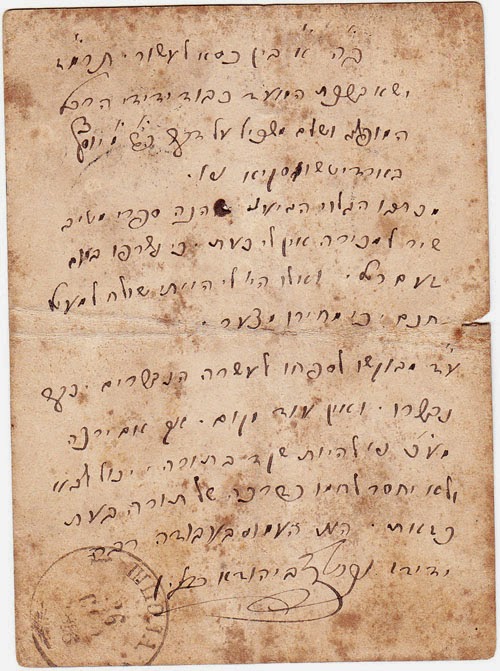
מכתב א

ב”ה ה’ לסדר ויברך אתכם. תרמ”ו. וולאזין.
כאור בוקר יזרח כבוד הר”ר האברך המופלג ושנון שלם ומשכיל על דבר יקר רוח כ”ש מ’ מיכה יוסף ני”ו.
מכתבו הגיע וציו[י]תי להעתיק המצבות. והנם רצוף בזה. והנני להודיעו. כי היינו עוסקים בבנין חומת הישיבה ה”ק. וגם מאריכים אותו כמה אמות. ואנו מקוים ב”ה, כי בחורף הבעל”ט נשוב ללמוד בו.
ע”ד השאלה שהכשיר שו”ב אחד שני ורדות.[5] ונפלא ממני הוראה זו בשתים. חלילה לילך נגד פסק הרמ”א, אשר כבר קבלנו כל מנהגיו שהנהיג. ואפי’ אם הי’ מקום להתיר, אין זה אלא בדעת הרב המו”ץ בקהלה, ולא השוחט. אכן אם להעביר את השו”ב מחמת זה או לא, אין לנו להגיד בזה מרחוק. ואין כל המדינות שוות בהתנהגות השו”ב עם הרבנים.
וה’ ישמרנו מלכד. הנני ידידו העמוס בעבודה
נפתלי צבי הודא ברלין.
מכתב ב

ב”ה א’ בין כסא לעשור תרמ”ז
ישא ברכת המועד כבוד ידידי החכם המופלג ושלם משכיל על דבר כ”ש מ’ יוסף בארדיטשווסקיא ני”ו
מכתבו הגלוי הגיעני [ו]הנה ספרי מטיב שיר[6] למכירה אין לי כעת כי נשרפו ביום זעם ר”ל. ואלו הי’ לי הייתי שולחו למעל[ת]ו חנם כי מחירו מצער.
ע”ד מבוקשו לספחו לעשרה הנבררים[7] כבר נבררו. ואין עוד מקום. אך אם ירצה מע”כ נ”י להיות שקד בתורה, יכול לבא ולא יחסר לחמו כדרכה של תורה בעת הזאת.
הנני העמוס בעבודה רבה
ידידו נפתלי צביהודא ברלין
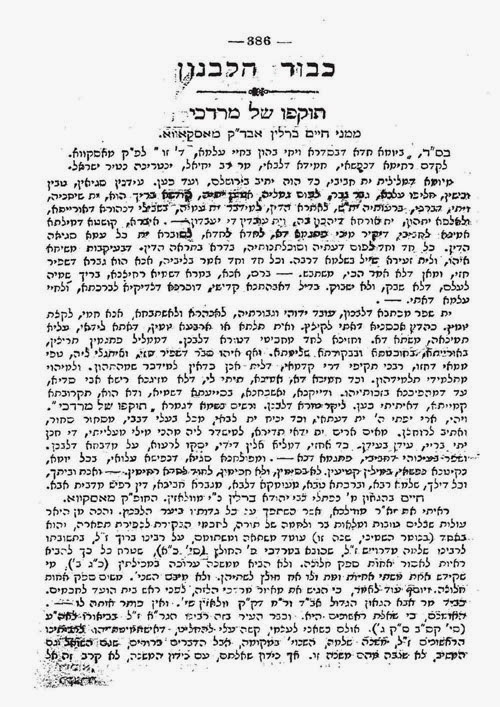
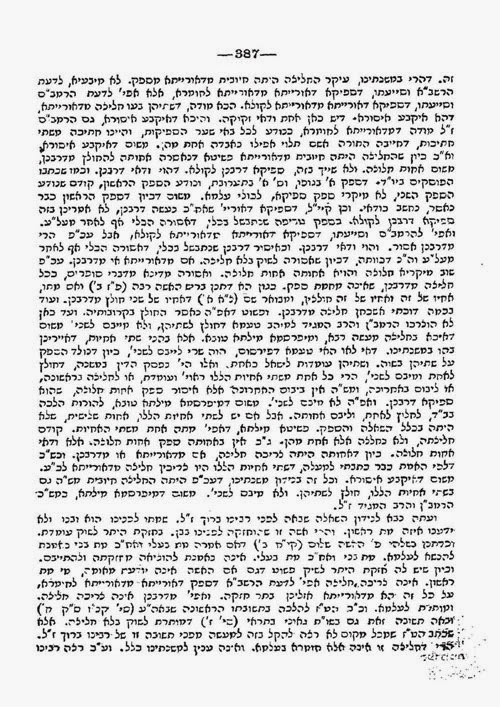
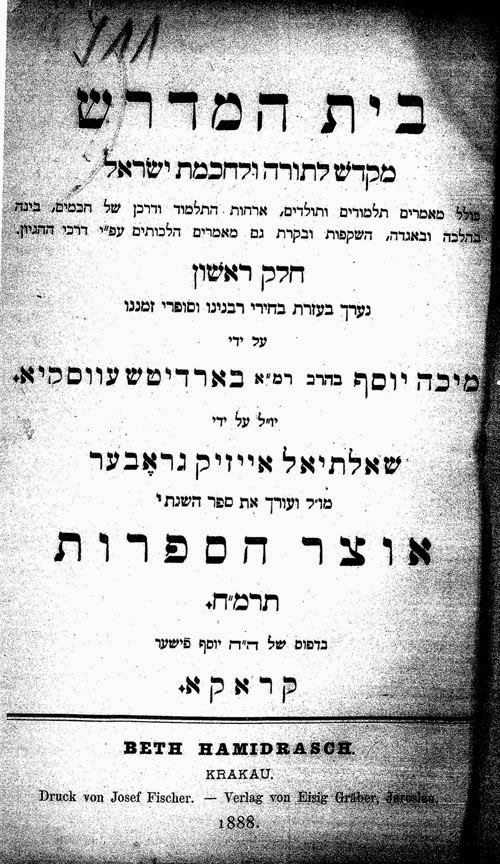
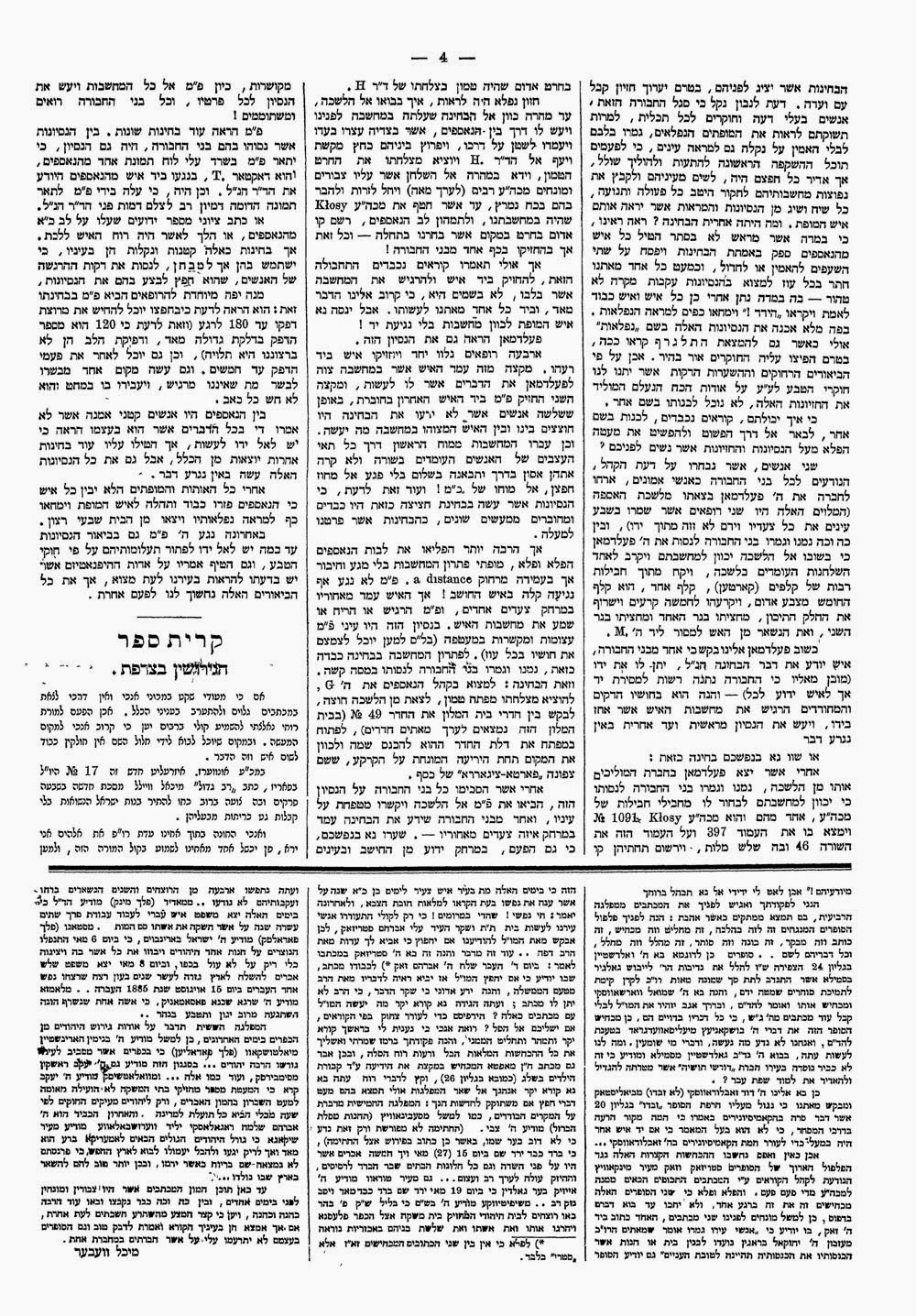
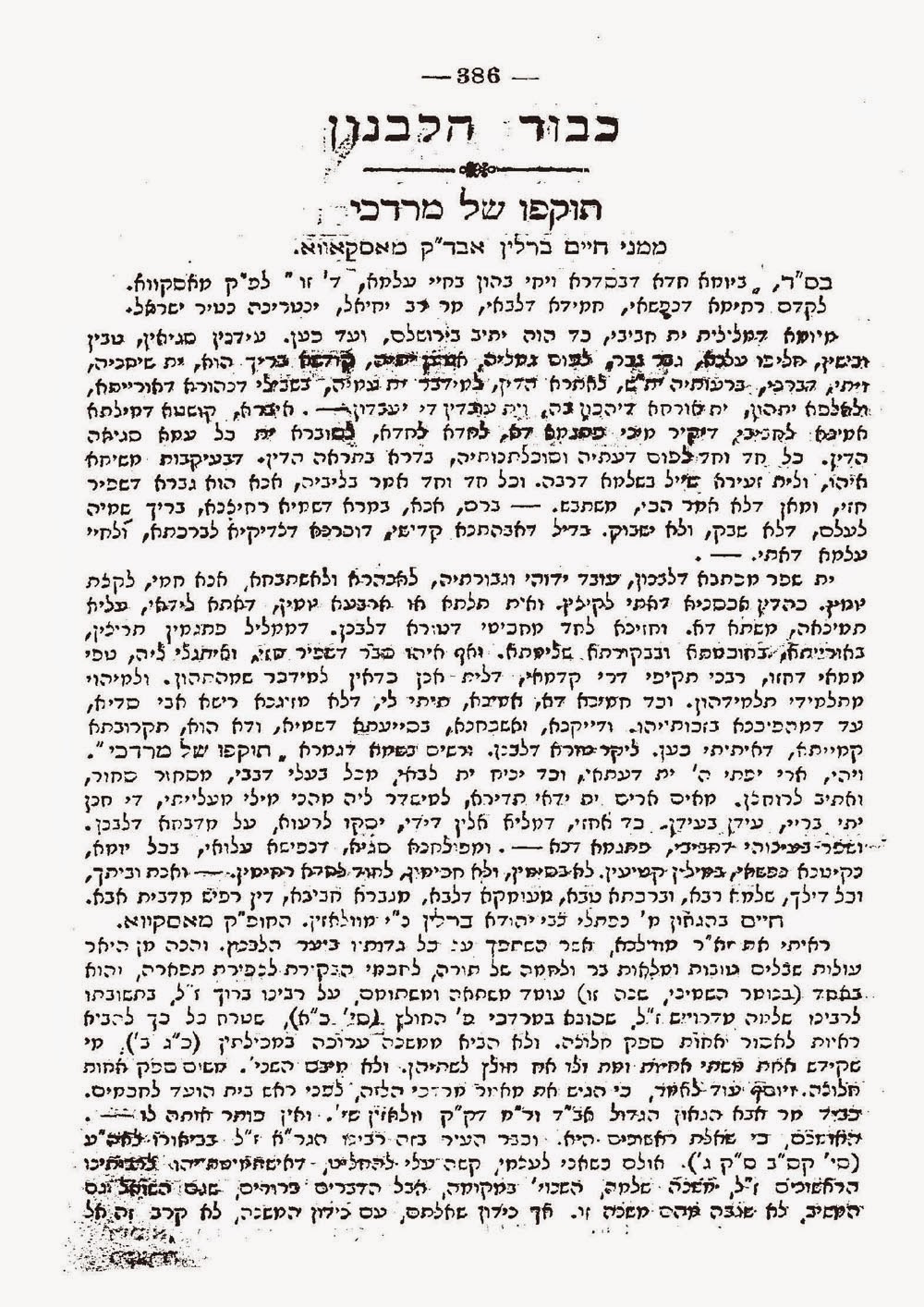
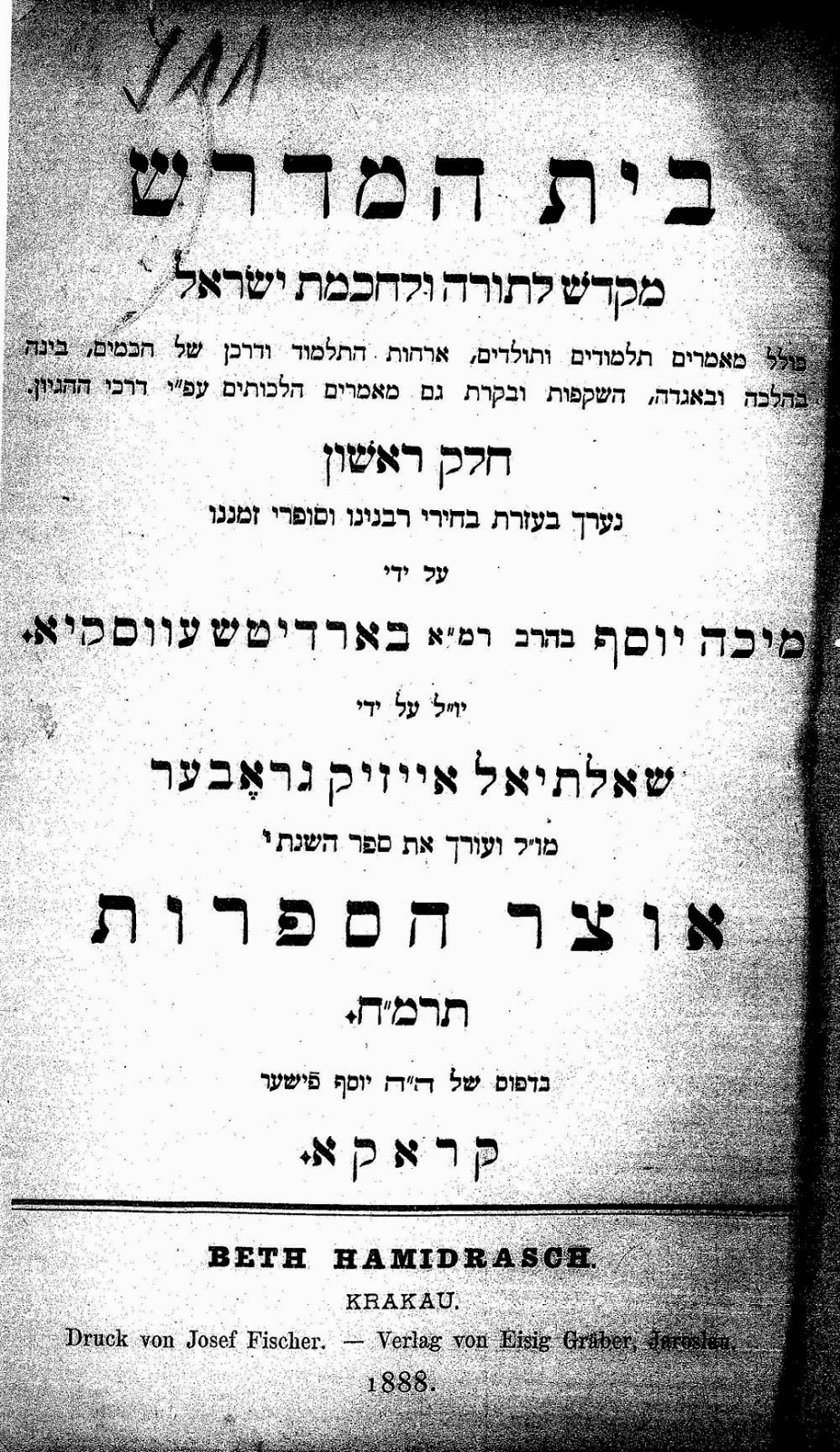
In 1888 Berdyczewski printed a journal called Beis Hamedrash which included an article from Rabbi Chaim Berlin [!] where Reb Chaim corrects and adds some important information to Berdyczewski famous article about the History of Yeshivat Volozhin. In this article, which it is obvious Reb Chaim Berlin read, Berdyczewski mentions the Netziv’s reading newspapers and a listing of the many newspapers the Bochurim of Volozhin read in his time.
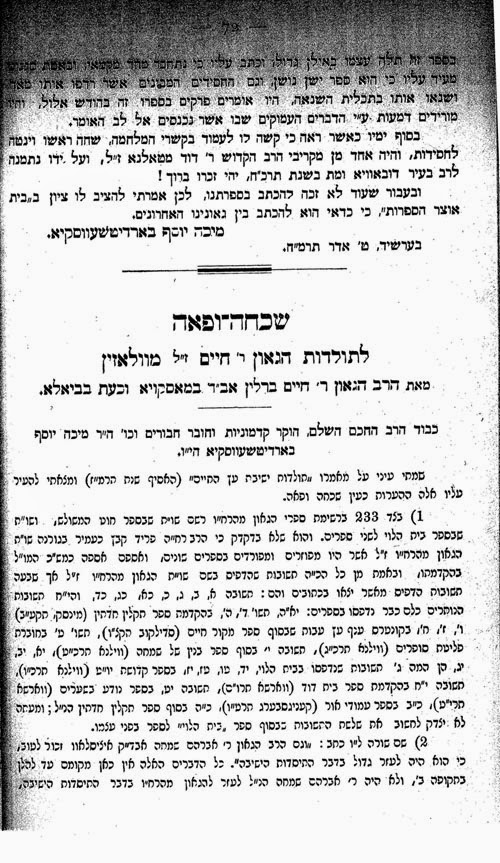
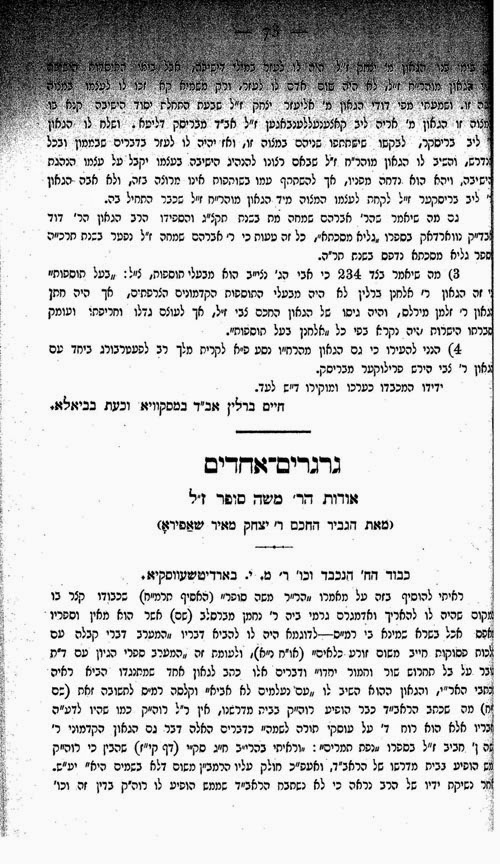
Rabbi Chaim Berlin’s article was recently reprinted in the Nishmat Hayyim, Mamorim u’Mechtavim, (pp. 329-331) but the name of the person this letter was addressed to, Micha Yosef Berdyczewski, was edited out. [It appears that the commenters on this forum were not aware of this]. See the end of the post for the original article of Rabbi Chaim Berlin.
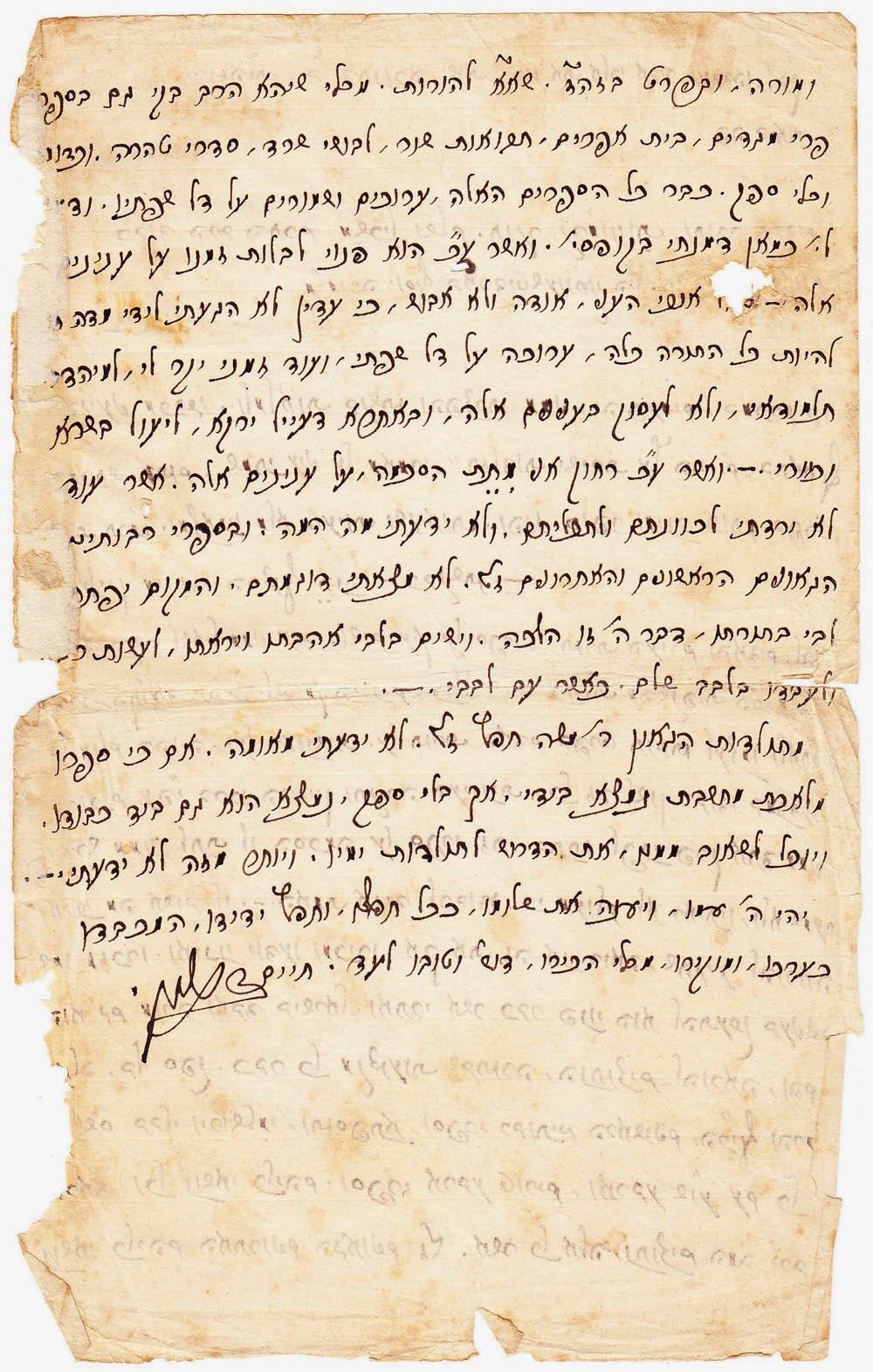
Professor Holtzman sent me the original letter of Rabbi Chaim Berlin to Berdyczewski and an additional letter of Rabbi Chaim Berlin to him. These letters were not printed before to the best of my knowledge.

Letter 1

Letter 2


מכתב א

בעזהי”ת. ג’, ך”א אלול, התרמ”ו. ביאלא.
כבוד הרב וכו’ ה’ ה’ רבא דעמי’ מדברנא דאומתי’
מ’ מיכה יוסף בארדיטשעווסקי הי”ו
ביום ה’ שבוע שעבר, פ’ כי תבא, שבתי ממעינות הישועה דרוזגעניק. אשר הלכתי שמה, עפ”י עצת הרופאים, להחליף כח [מ]צאתי מכתב מעלתו ערוך אלי, עוד בחדש תמוז העבר. אשר לדעתי [כ]בר עבר זמן שאלתו, כי בלי ספק כבר נדפס גם מאמרו הראשון [בה]אסיף. וגם המילואים, בעלי הצפירה. – ובר מן דן, אין אוכל [ל]מלאות בקשתו, טרם היות לנגד עיני, מאמרו הראשון. לזאת חדלתי [מ]חפצו זה.
אך. על ד”ת. אשר שאל בטעם פסק הרמ”א בשם מהרי”ו ז”ל. להטריף גם בחסר וורדא, גם בשתי וורדות. והדברים סותרים זא”ז. ומה גם לפי מנהגינו להכשיר יתרת מקמה?. ובלי ספק. כבר שלטו עיניו בכל [ה]אמור בזה, בט”ז ס”ק ד’. ובש”ך ס”ק י”ז. ולא הונח לו. וע’ עוד בפלתי [ס”ק] ב’. אבל האמת הוא, כמו שביאר רבינו הגר”א ז”ל, בביאורו ס”ק ה’ וס”ק ו’. [?] דבס”ק ה’ כתב. דמש”ה נהגו להטריף בחסר וורדא. כיון שדרכו להיות בכל הבהמות. והיינו. דבבאור הסוגיא קיי”ל כרש”י. דעובדא הוי בוורדא אחת. וא”כ מדינא דש”ס חסר וורדא כשר. כדפירש”י ז”ל. אלא דזה הי’ בזמן הש”ס, דלא הי’ שכיח וורדא אפי’ אחת. אבל לדידן דנשתנו הטבעים. ונמצא וורדא בכל הבהמות שלנו, ממילא, אם חסרה הוורדא, הויא שינוי והוי בכלל חסר. וטרפה. וכ”כ הר”ן בשם הרב אלברגלוני, דעכשיו שיש [לכל] הבהמות שלנו, עינוניתא דוורדא, אי משכחת דלית לה טרפה. וע’ בב”ח שביאר דבריו, דאזיל בשיטת רש”י ז”ל. וכמו שכתבתי.-. ואח”כ בס”ק ו’ ביאר רבינו הגר”א ז”ל, דמשום הכי נהגו להטריף בנמצאו שתי וורדות. משום כל יתר כנטול דמי, והו”ל חסרה הוורדא.-. זהו אמתות הדברים. וכן מצא[תי] גם בלבושי שרד ס”ק נ”ד. שבאות ו’. הקשה כקושיית מעלתו. ובאות ז’ יישב כדעת רבינו הגדול הגר”א ז”ל. ע”ש באריכות.-. ויש עוד לדבר בזה אך לעצר אני צריך. וכבר נתיישבה קושיית מעלתו, בדברים האלה. והי’ זה שלום לו, ולשנה טובה ומתוקה, יכתב ויחתם עם כל הכתוב לחי[ים] טובים בספר. כאשר עם לבבו. וכברכת המוקירו, מבלי הכירו, ומכבדו כערכו, ידידו”ש וטובו לעד. חיים ברלין בהג”מ נצי”ב הי”ו מוולאזין אב”ד דמאסקווא וכעת בביאלא.
מכתב ב

בעזהי”ת. ב’ דחנוכה, שנת “דע את אלהי אביך ועבדהו” לפ”ק
פה ביאלא.
כבוד הרב החכם, משכיל ושלם. חוקר קדמוניות. וחובר חברים.
מ’ מיכה יוסף באדיטשעווסקי הי”ו [??]
הגיעני מכתבו. ולמלאות בקשתו והפצרתו ממני, זה פעמים. במכתב גלוי [וב]מכתב חתום, שמתי עיני על מאמרו, “תולדות ישיבת עץ החיים” בהאסיף [שנ]ת תרמ”ז. ומצאתיו מלא טעויות ושגיאות. והנני סופר ומונה אותם, בפרט, [ב]גליון מיוחד, הרצוף הֵנה – כבקשתו.-.
ואשר הקשה לשאול ממני עוד. לשום עין על ספרו, “תורת העולם והאדם, לפי דרכי התלמוד, והבדילם מן היונים, כולל שטה כוללת מהשקפות התלמוד על עולם ההויה, ועל האנושות. על תורת האדם בפרט חובתו לעצמו ולאחר [ע]רוכים עפ”י דרכי ההגיון וחקירה העיונית”, כל זה לשון כבודו במכתבו [ש]דרש ממני לתת לו הסכמה על ספרו זה. בתתו לפני מפרק אחד ממנו. ואנכי מה אשיב לו. – האמת אגיד לכבודו. כי מעולם לא ראיתיו, ולא שמתי שמו וזכרו. ואינני יודעו ומכירו. אך את זה אני רואה שהגיע להוראה [ו]הוא גם מורה ואב”ד בישראל. ואחרי אשר כבר פנוי הוא להתעסק בענינים [א]לה. בלי ספק. כבר כל מקצועות שבתורה, הנחוצים להוראה, והם ש”ס בבלי וירושלמי, ותוספתא, וספרי רבותינו הראשונים, הרי”ף והרמב”ם [וה]רא”ש, וכל נושאי כליהם. וספרי ארבע טורים, וארבע שו”ע עם כל נושאי כליהם האחרונים הגאונים ז”ל. אשר כל אלה, נחוצים המה לרב ומורה, ובפרט בזה”ז. שא”א להורות. מבלי שיהא הרב בקי גם בספר פרי מגדים, בית אפרים, תבואות שור, לבושי שרד, סדרי טהרה, וכדו[מה.] ובלי ספק. כבר כל הספרים האלה, ערוכים ושמורים על דל שפתיו וד[מי] לי’ כמאן דמנחי בקופסי’. ואשר ע”כ הוא פנוי לבלות זמנו על ענינים אלה – [אבל] אנכי העני, אודה ולא אבוש, כי עדין לא הגעתי לידי מדה זו להיות כל התורה כלה, ערוכה על דל שפתי, ועוד זמני יקר לי, למיהדר תלמודא, ולא לעסוק בענינים אלה, ובאתרא דעייל ירקא, ליעול בשרא וכוורי.-. ואשר ע”כ רחוק אני מִתֵת הסכמה, על ענינים אלה. אשר עוד לא ירדתי לכוונתם ולתכליתם. ולא ידעתי מה המה. ובספרי רבותינו הגאונים הראשונים והאחרונים ז”ל. לא מצאתי דוגמתם. והמקום יפתח לבי בתורתו, דבר ה’ זו הלכה. וישים בלבי אהבתו ויראתו, לעשות [רצונו] ולעבדו בלבב שלם. כאשר עם לבבי.-.
מתולדות הגאון ר’ משה חפץ ז”ל. לא ידעתי מאומה. אם כי ספרו מלאכת מחשבת נמצא בידי. אך בלי ספק. נמצא הוא גם ביד כבודו. ויוכל לשאוב ממנו, את הדרוש לתולדות ימיו. ויותר מזה לא ידעתי.-.
יהי ה’ עמו, ויענה את שלומו, ככל חפצו, וחפץ ידידו, המכבדו כערכו, ומוקירו, מבלי הכירו, דו”ש וטובו לעד. חיים ברלין
A short time later Berdyczewski published several more articles related to Volozhin, one of which was a five chapter piece about the Yeshivah, titled Olam Ha-Atzeilus, printed in Hakerem in 1888. While this article does contain valuable information, it’s written in a different style than his earlier article. It was reprinted in the excellent collection Yeshivot Lita (pp. 132-151) and in the small Booklet Pirkei Volozhin (1984).
Another series of articles about Volozhin, written at the same time, was called Tzror Mechtavim Me-Eis Bar Be Rav and caused a great commotion. The series was printed in Ha-Melitz, starting from January 1888 and onwards. The series was written under a pen name, and only in the last issue did Berdyczewski sign his name.
In a memoir from someone who learnt in Volozhin at the time Berdyczewski’s articles were printed we find:
בעת ההיא הופיע בהמליץ פיליטון שנתן לדפוס ע”י בערדיצעוסקי… במאמר ההוא ציר הסופר בציורים נאמנים את חייהם של בני הישיבה את ענים ומרודם ואת לחציהם ובשבט עברתו הכה על ימין ועל שמאל את מנהלי הישיבה את חקיהם ומשפטיהם וכמעביר צאנו תחת שבטו כן העביר תחת שבט הבקורת את כל המנהגים מן ראש הישיבה עד השמש. המאמר ההוא עשה רושם גדול על מנהלי הישיבה וביחוד על ראשי הישיבה. בני הישיבה התיחסו אל המאמר ההוא בכובד ראש והעריצו את הסופר… [יהושע ליב ראדוס, זכרונות, עמ’ 68].
Radus continues in his autobiography that they had suspected someone specific in the Yeshiva for having authored these articles and that although Berdyczewski was involved in their writing, he was not the author. Radus writes that while this person was thrown out of Volozhin, he eventually became a renowned Rav. Unfortunately he does not name the person.
Regarding the Mekor Baruch, I wrote: “His work received a glowing haskamah from Rav Kook”.
In volume four of Mekor Baruch, at the end of the volume (pp. 14-15) R’ Epstein prints a letter from Rav Kook about the sefer but he does not print the whole letter. Rav Kook writes:
אבל יחד עם סדרי הזכרונות… וחותם האמת הטבוע עליהן…
For recent discussion about this letter see Eitam Henkin and Shmaria Gershuni, Alonei Mamreih 122 (2009)  (p.186).
Another comment regarding Mekor Baruch’s report was sent to me from Moshe Maimon:

R. Mazuz in his Mekor Ne’eman references the Mekor Baruch’s report twice. On p. 95 he relies on it to be Matir reading newspapers on shabbos and on p. 254 in a letter to Moshe Chavusha he quotes it to defend himself for citing R. Ovadia’s practice of listening to the radio every day.

More on the Netziv and reading newspapers:

In 1881, Rabbi Baruch Epstein wrote an article in Hamelitz about Volozhin defending it from various attacks in the newspapers. He describes Volozhin and the Netziv in depth:
מה אומר ומה אדבר על תכונת נפש נעלה של האיש הדגול מרבבה הגאון הנאור ר’ נצי”ב הי”ו… רוב מכ”ע לב”י ואחד בשפת רוססיא נמצאים בביתו, והוא אחד מן הזריזים הקודמים לקנות ספר חדש היוצא בעברית, יהיה מאיזה רוח ושיטה שהוא…”. [המליץ, יז, יום ב אדר תרמ”א (1881), גליון 3, עמ’ 54].
I am doubtful he would write something like this in a public forum, during the Netziv’s lifetime, if it was not true.
More on the Netziv and reading newspapers

In Shut Meishiv Davar we find a few more times that the Netziv refers to articles he read in newspapers.
ראיתי בכבוד הלבנון (משיב דבר, ב, סי’ קח)

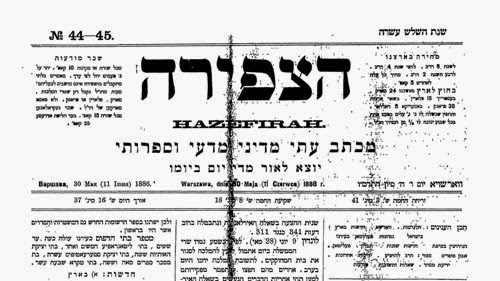
ע”ד מאמר הגירושין בצרפת, הגיע לפה עלה הצפירה נו’ 44 וראיתי מאמר ותרגז בטני… (משיב דבר,ג, סי’ מט).
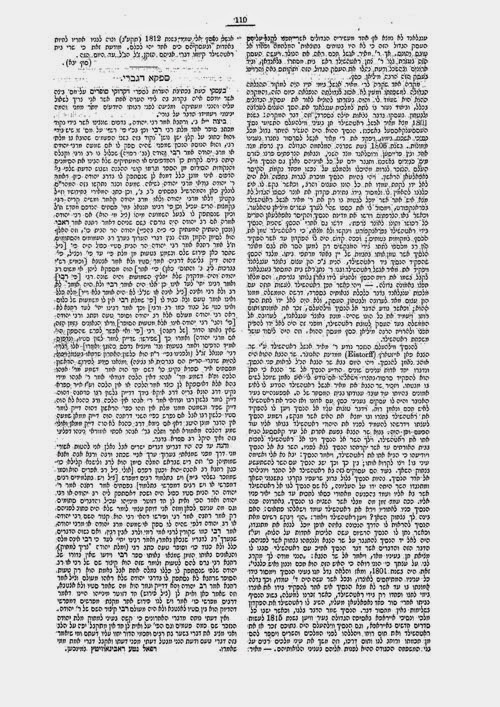
This last Teshuvah was actually printed in the Ha-Tzefirah before it was printed in the Meishiv Davar. Here is the original article:
But elsewhere in Meishiv Davar we find the Netziv writes:
 ראיתי שהמופלג ומדקדק הר’ אברהם לאנדמאן שי’ דקדק אחרי מש”כ בהעמק דבר… [משיב דבר, ב, סי’ קט].
In Igrot HaNetziv Me-Volozhin (p. 60) this teshuvah was printed with a few more words:
ראיתי בהמליץ נו’ 120 אשר המפולג ומדקדק הר’ אברהם לאנדמאן שי’ דקדק אחרי מש”כ בהעמק דבר…
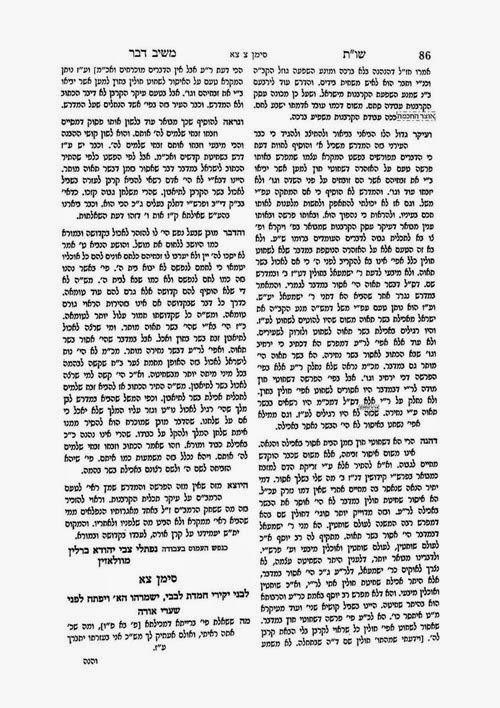
Even more interesting is this letter was originally printed in the Hameilits. Here is the original:

Rabbi Chanoch Taubes writes about R’ Epstein’s claims of the Netziv Reading newspapers:
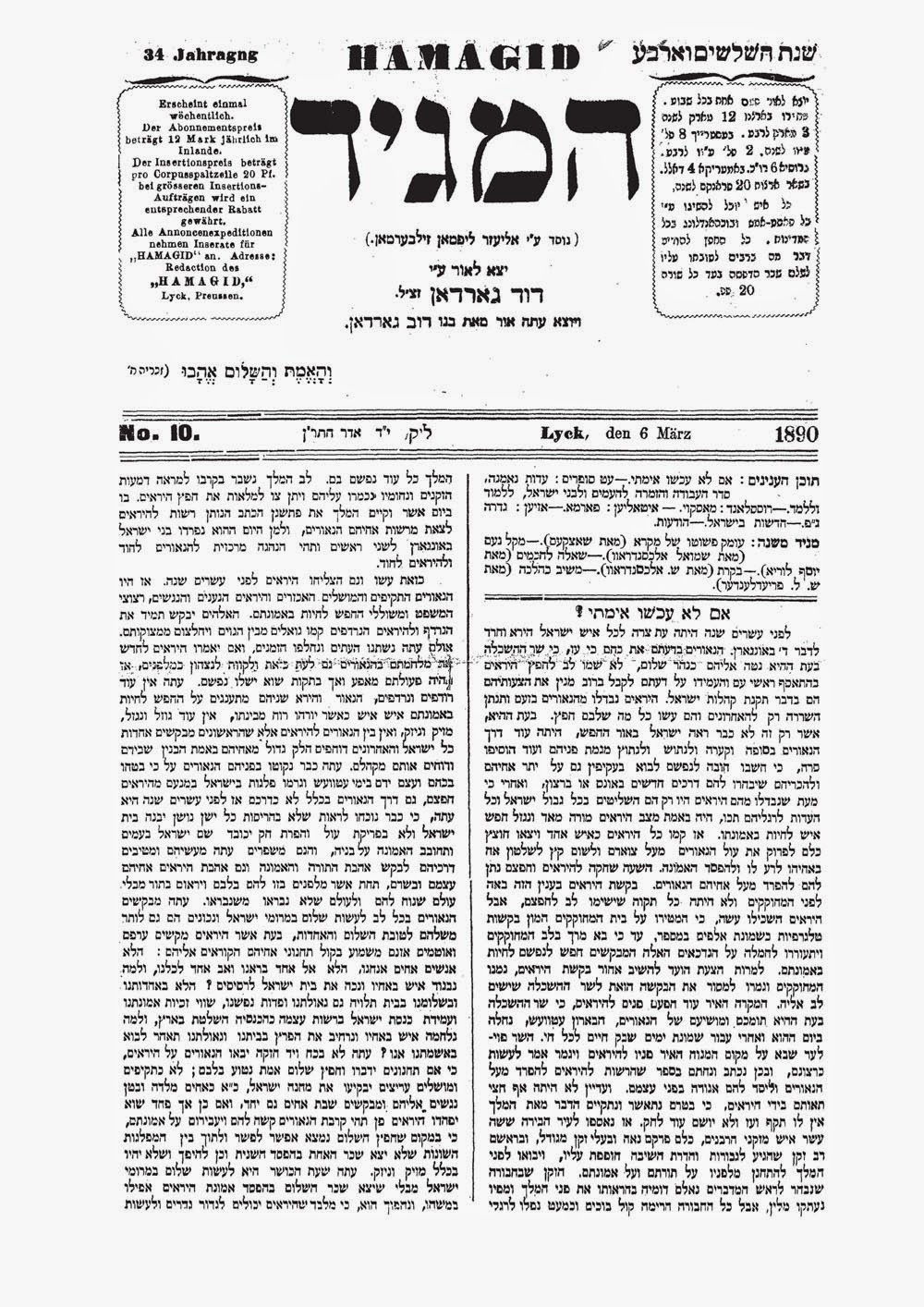
‘המגיד’ בטאונם של חוגי ההשכלה. בהעדר חלופה מתאימה היה נכנס גם לבתים כשרים. אם נכונה היא עדותו של ר’ ברוך עפשטיין בזכרונותיו עמ’ 1974 הרי שהמגיד היה דרכו להתקבל בביתו של הנצי”ב מוולוז’ין זצ”ל בכל ערב שבת לפנות ערב, ובלילה לא קרא אותו [הנצי”ב], מפני שליל שבת היה קדוש לו לחזור בעל פה על המשניות ממסכתות שבת… כותב הטורים כשלעצמו, חושד שמפאת נטיותיו המשכיליות של ר’ ברוך עפשטיין ביקש להכשיר את השרץ בעובדות שאינן מדויקות… חיזק להשערה זו תמצא בעמוד שאחריו ביחסו הלעגניי והעוקצני לשבועון המתחרה הלבנון. גם את חיצי הלעג ירה על בסיס עובדות לא מדויקות, בלשון המעטה. הלבנון עיתון כשר היה אשר ביוזמתו של רבי ישראל סלנטר, מחולל תנועת המוסר, קיבל על עצמו רבי מאיר להמן זצ”ל אב”ד מיינץ את מלאכת עריכתו… [סופה וסערה, א, בני ברק תשע”ה, עמ’ 77-78 [=סופה וסערה, א, בני ברק תשס”ח, עמ’ 63-64].
However, it is apparent that based upon further evidence, Rabbi Taubies claim has no basis.
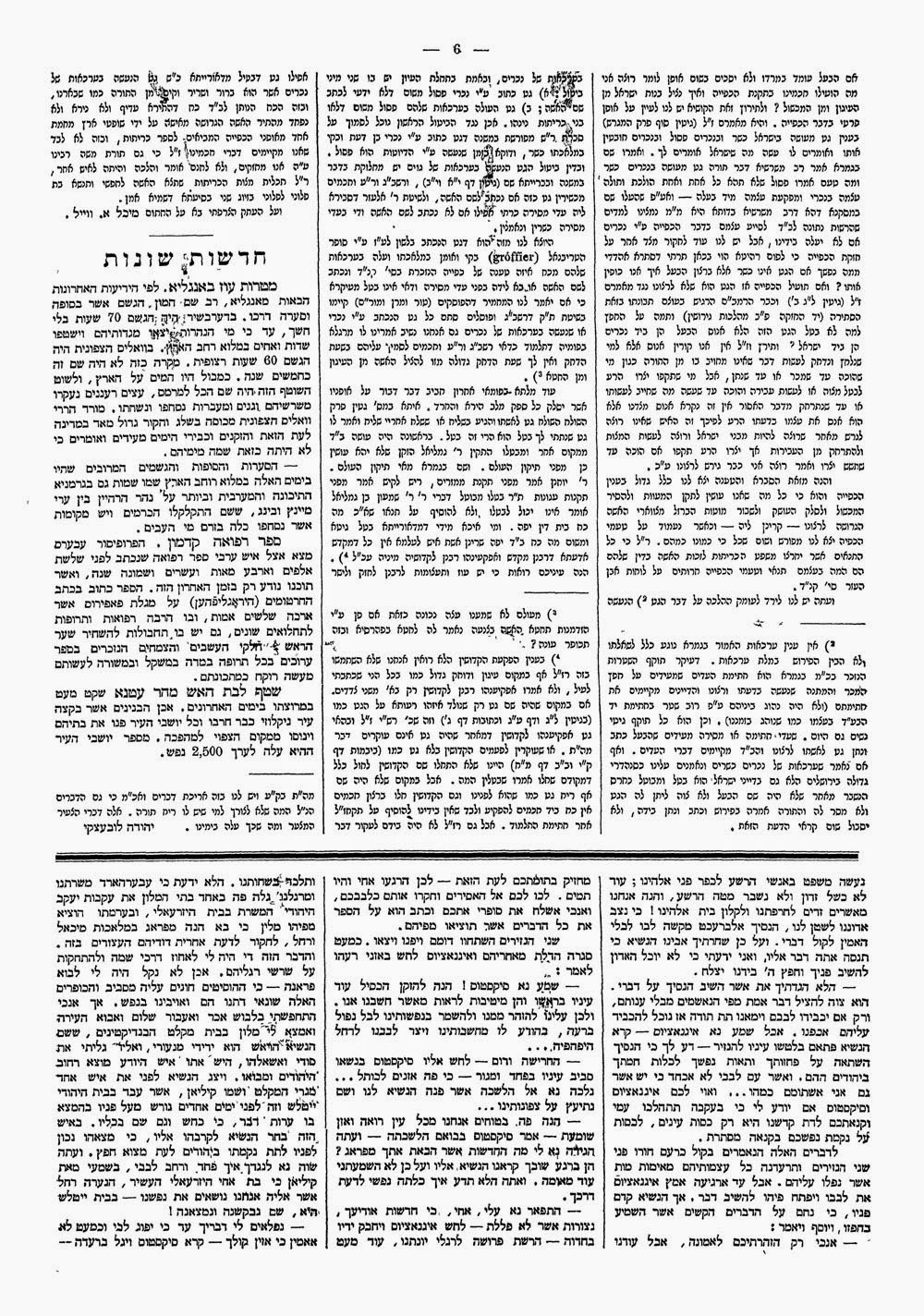
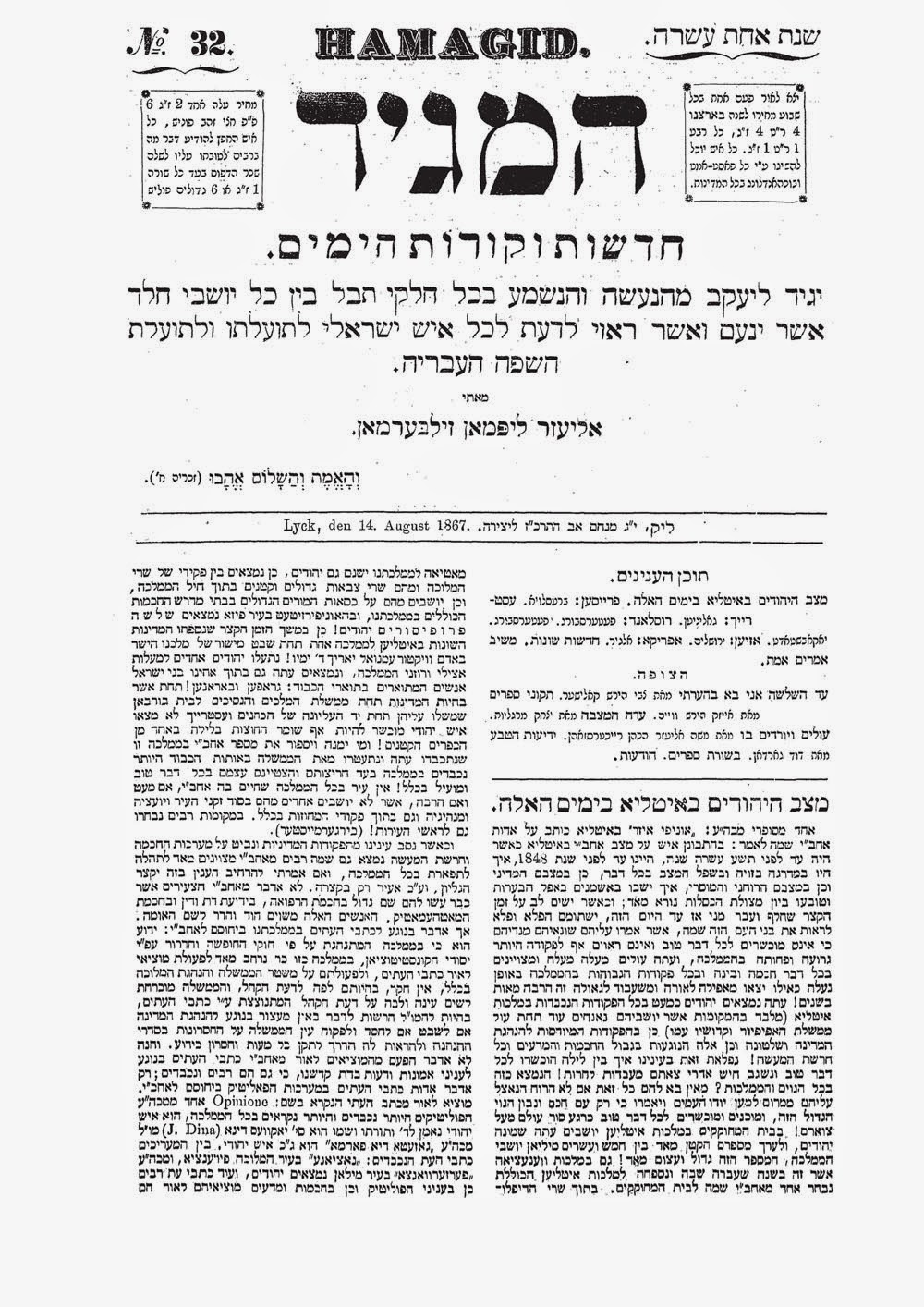
In part one of this article I cited a remarkable story from R’ Eliyahu Milikovsky about a Response that the Netziv wrote to an article in the HaMaggid. One might say that R’ Milikovsky’s memory failed him and he recalled the wrong newspaper. However here is the newspaper article written by the Netziv in the HaMaggid, referred to in this story. [Quoted in Igrot HaNetziv Me-Volozhin, pp. 54-56]

The Netziv was responding to this article.


That aside, as we have shown in part one of this article, the Netziv quotes HaMaggid in his seforim. These quotes and their subsequent censorings were discussed there as well.
Here are some additional articles by the Netziv published in HaMaggid


This is reprinted in Igrot HaNetziv Me-Volozhin, (pp.198-199)

There are more pieces of the Netziv in HaMaggid which will be discussed in a later post.
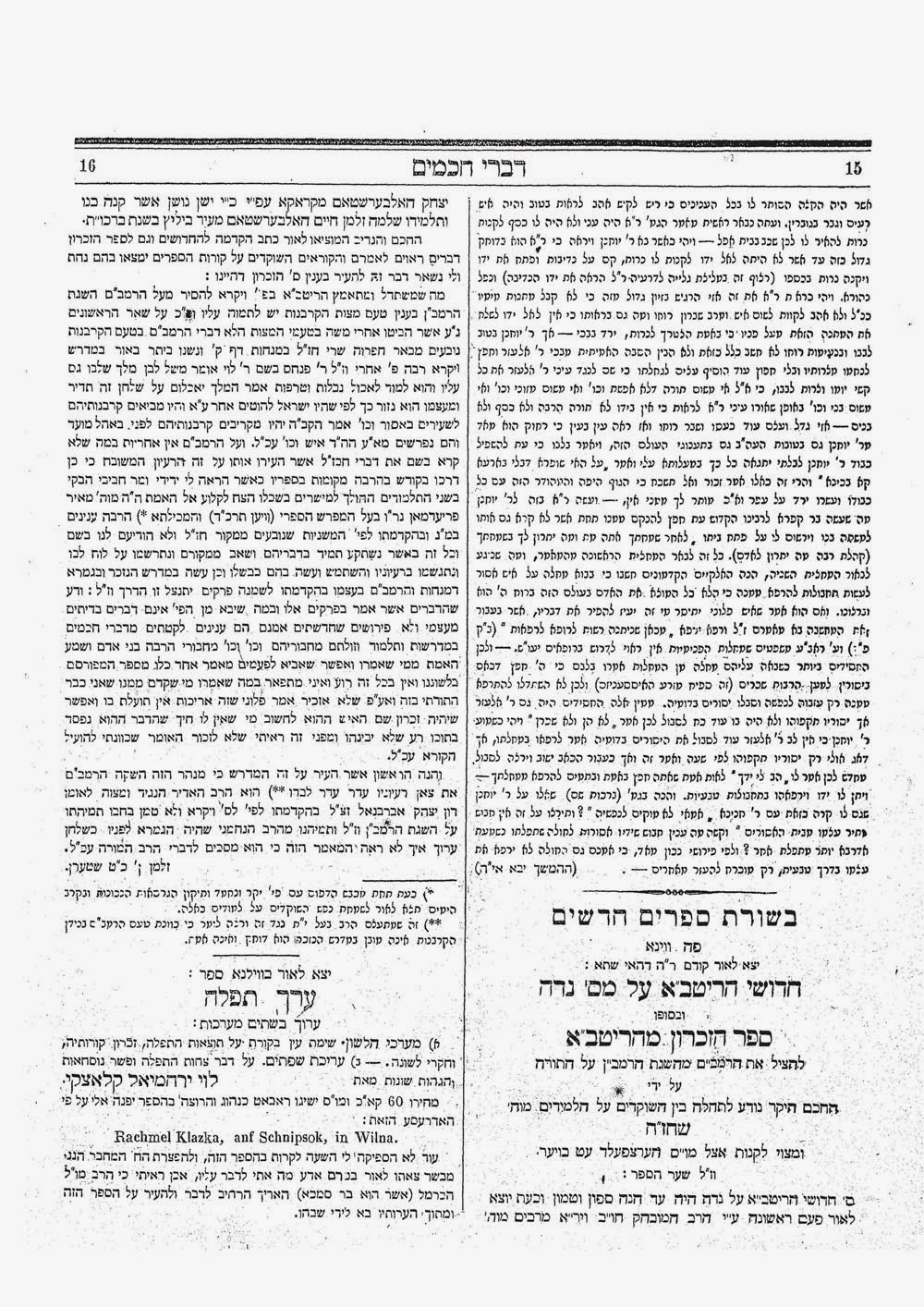
It bears mention that many other Gedolim also read and wrote in HaMaggid; see for example this piece of the Dikdukei Sofrim (one of many).
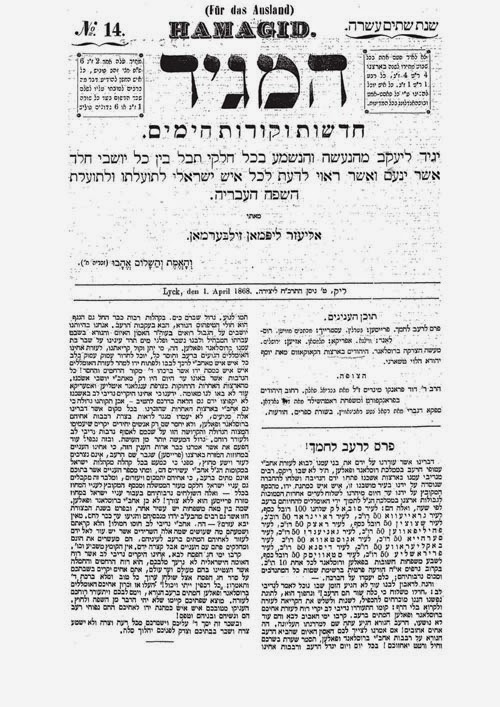
R’ Chaim Berlin (more on this shortly) also read the HaMaggid.
New evidence about the Netziv reading newspapers on Shabbas (and Censorship):

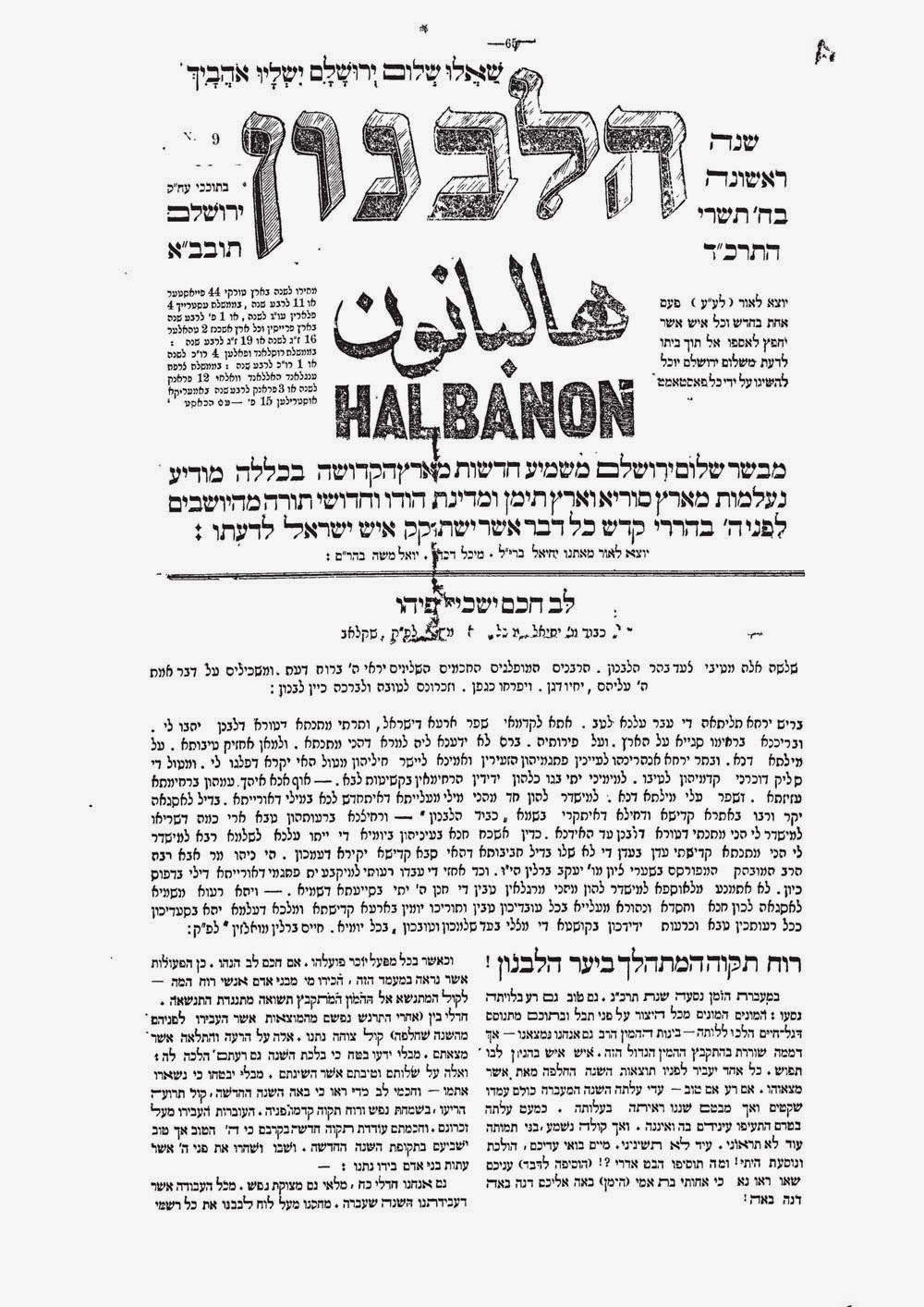
At the end of the January 7, 1869 issue of the Ha-Levonon newspaper there appeared an announcement regarding a new sefer that was to be printed soon for the first time from manuscript, namely The Ritva’s work on Nidah and his Sefer Ha-ZechronSefer Ha-Zechron is a defense of the Rambam from the Ramban’s various critiques in his Pirish Al Hatorah. After the announcement, Zalman Stern wrote a comment dealing with the subject of the Rambam’s reasoning for Korbonos.[8]

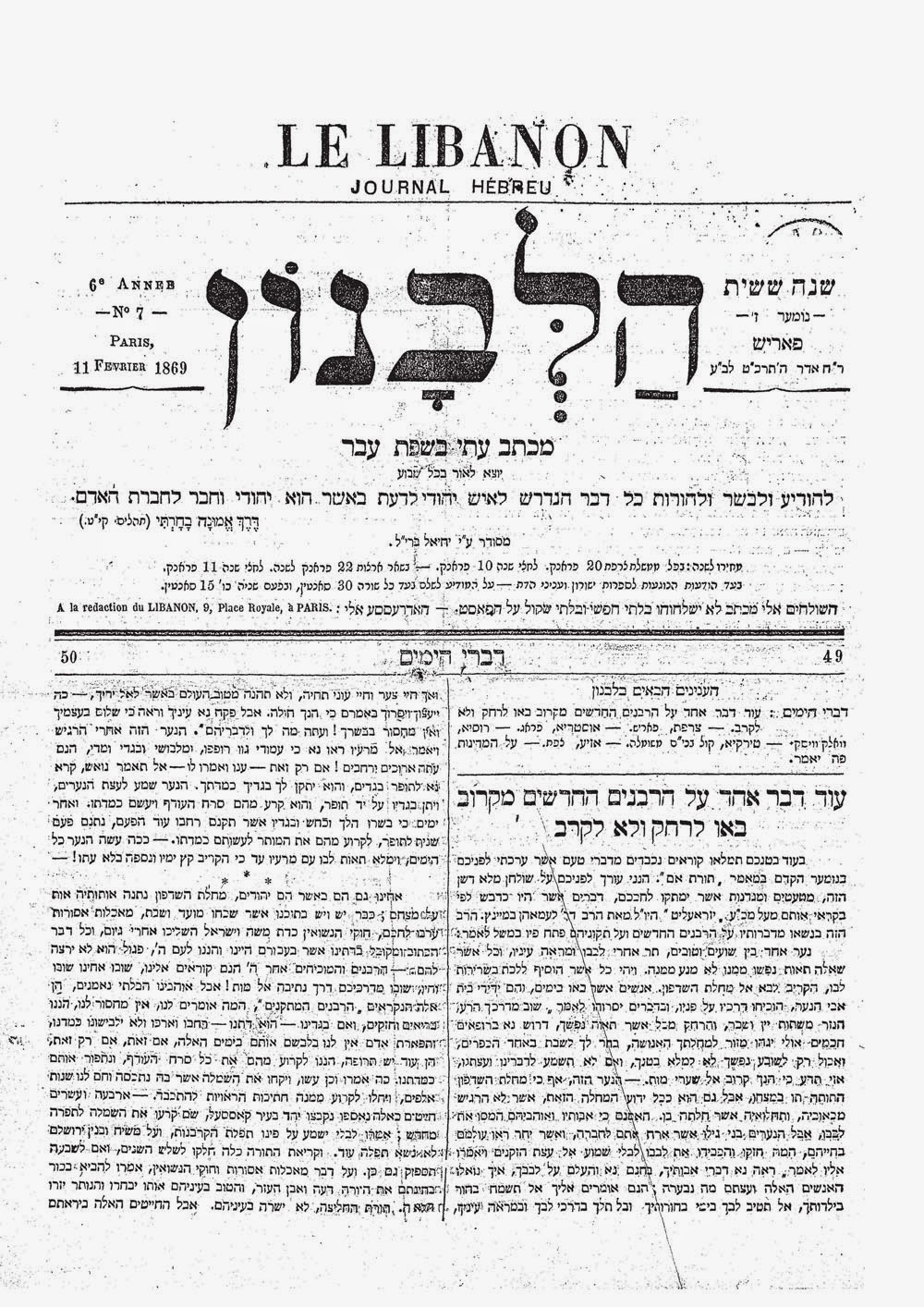
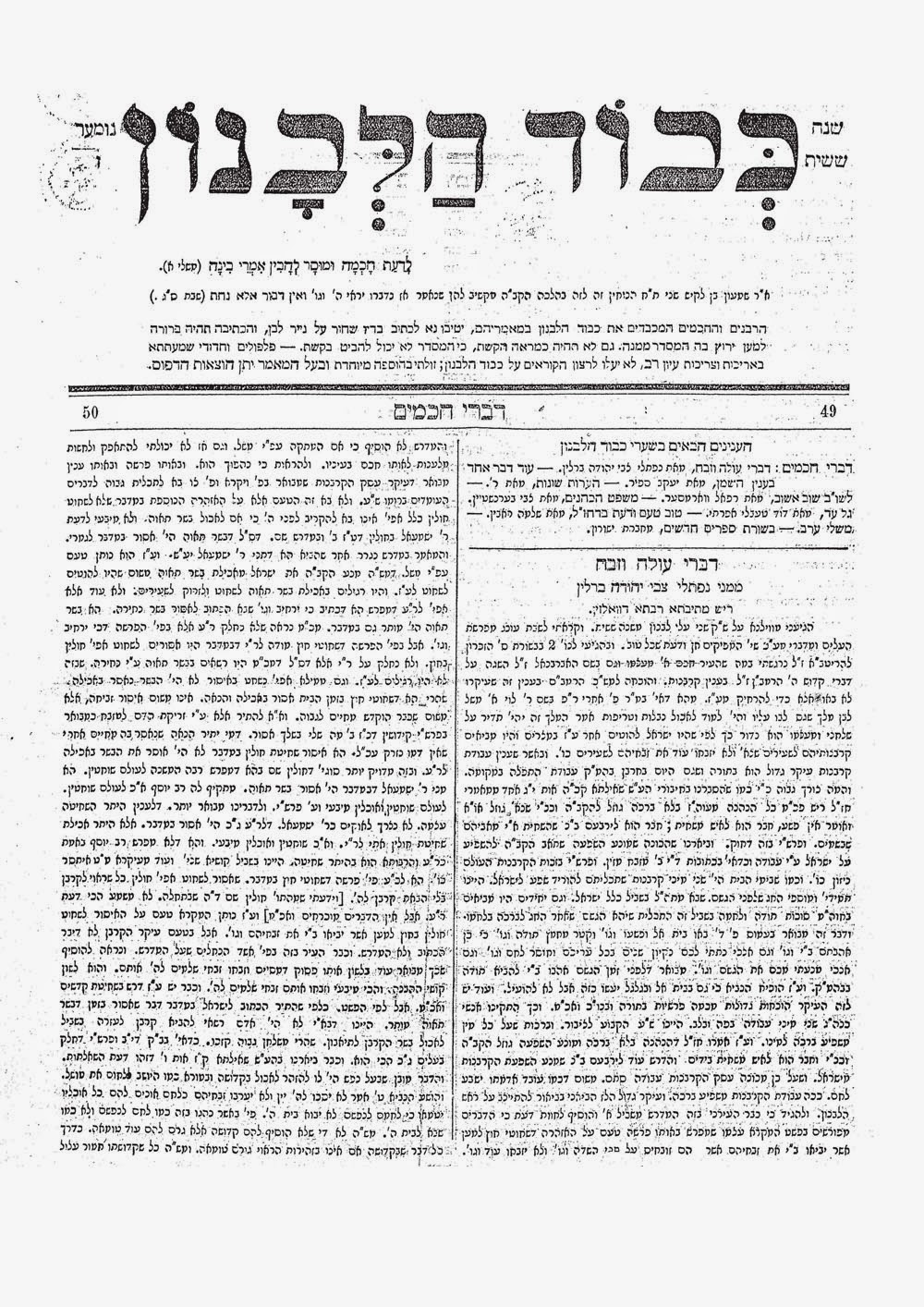
Less than a month later, in the February 11th issue of the Ha-Levonon newspaper, the Netziv wrote a lengthy response to Stern’s comment. The article is a beautiful essay by the Netziv, related to the reasoning for Korbonos.[9]

The Netziv begins his article with the following sentences:

הגיעני מווילנא על ש”ק שני עלי לבנון משנת ששית. וקראתי לשבת עונג מפרשת העלים ומדברי מע”כ שי’ המפקידים חן ודעת שכל טוב. ובהגיעי לנו 2 בבשורת סי’ הזכרון להריטב”א ז”ל נרגשתי במה שהעיר חכם א’ מעצמו וגם בשם האברבנאל ז”ל השגה…

Here we have, in black and white, the Netziv writing about himself that he read the newspaper on Shabbas![10]


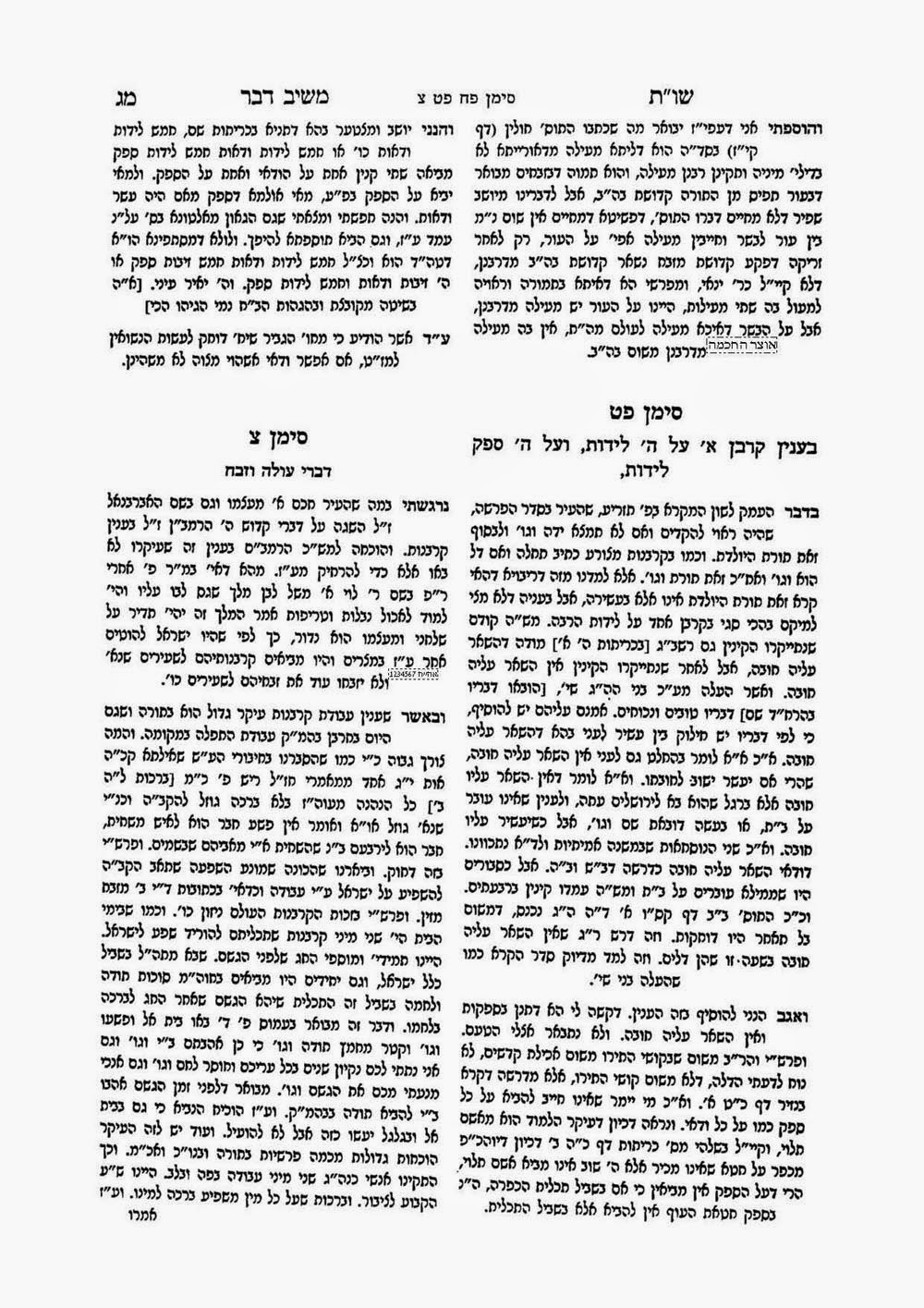
In 1993, this article was reprinted in the previously mentioned new edition of the Meishiv Davar  (5:90). While they do cite that the source of this article is from the Ha-Levonon (but not an exact location) the first three lines I just quoted are missing and the piece begins with the words נרגשתי במה שהעיר חכם א’
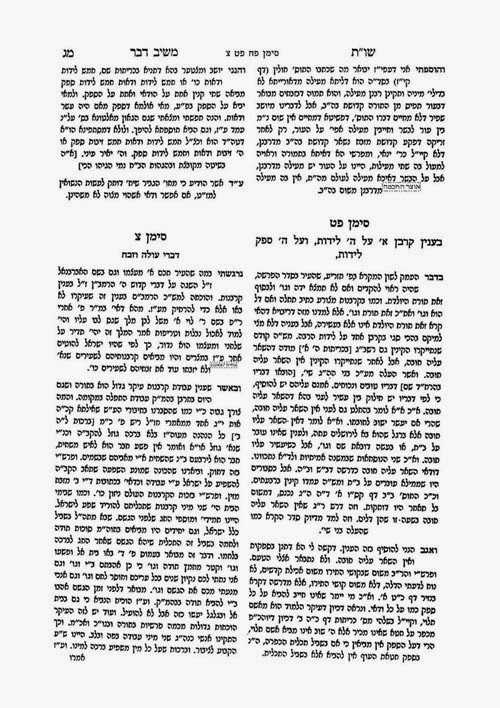
Rabbi Chaim Berlin and Reading Newspapers in general:

In a letter[11] to Avraham Eliyhau Harkavy he writes:

האמנם כי מתענג אנכי לעתים, למצוא את דברי חכמת, המאירים כספירים, על דלתי מכה”ע השונים, וגם בספרים מיוחדים, יקרים מפנינים, אבל משנה שמחה הי’ לי הפעם, בשלח ידידי את הספר, לי לשמי, וארא, כי כמוני כמוהו, עודנו זוכרים איש את רעהו, וכי נאמנו דברי המלך החכם, כי כמים הפנים, כן הלבב, ואהבה טהרה ונאמנה לעולם עומדת [שנות דור ודור, א, עמ’ קצט (=נשמת חיים, מאמרים ומכתבים, עמ’ שלט)].

Elsewhere he writes:

הן ראיתי את הרב מי’ שאול הכהן קאצענעלינזאהן, עומד על המצפה, בצופה נומר 30… [אוצר רבי חיים ברלין, נשמת חיים, א, סי’ רח].

הנני להודיע לכבודו את הרשום אצלי… אשר זה מקרוב גמגמו מהבנת לשונו גדולים חקרי לב העומדים על המצפה בצופה להמגיד שנה זו… [נשמת חיים, סי’ קצט].
Although Rabbi Chaim Berlin read newspapers he writes:

את העלה ממכתב העתי ההולאנדי הגיעני, ואם כי עלי להודות לו כי חובב הוא את דברי לפרסמם ברבים בשמי, בכל זה האמת אגיד לו, כי אין דעתי נוחה כל כך מהדפסת דברי תורה במכתב עתי, מטעם המבואר בפ”ק דרה”ש יח ב’ שבטלו חכמים להזכיר שם שמים בשטרות שלמחר נמצא שטר מוטל באשפה. ומי לא ידע, שמכתבי העתים מסוגלים לזה, שלוקחים אותם בחניות לכרוך בהם כל מיני סחורות וכדומה ולמחר מוטלים באשפה ח”ו על כן לא ירד בני בזה [אור המזרח, לה:א (תשמ”ו), עמ’ 44-45 (=ר’ אליעזר ליפמן פרינץ, פרנס לדורו, ירושלים תשנ”ב, עמ’ 326-327 ; נשמת חיים, מאמרים ומכתבים, עמ’ קסט)][12].

The Netziv writes about printing newspaper articles in Torah:

טרם אענה אני אומר, שאין הדבר נוח לי לפלפל בד”ת בעלי עתים, וכבר אמרו חז”ל חמוקי ירכיך נמשלו ד”ת לירך מה ירך בסתר אף ד”ת בסתר, ורק בראותי דבר מפליא שהיה אפשר להרבות ממזרים בישראל ח”ו, ראיתי חובה להודעי במקום רבים כי אין זה הוראה אלא טעות… (אגרות הנצי”ב ממלאזין, עמ’ נז).

Newspaper articles by Rabbi Chaim Berlin:

Although it appears from the above quoted letter that Rabbi Cham Berlin was against writing newspaper articles, we do find that he did write some. For example:

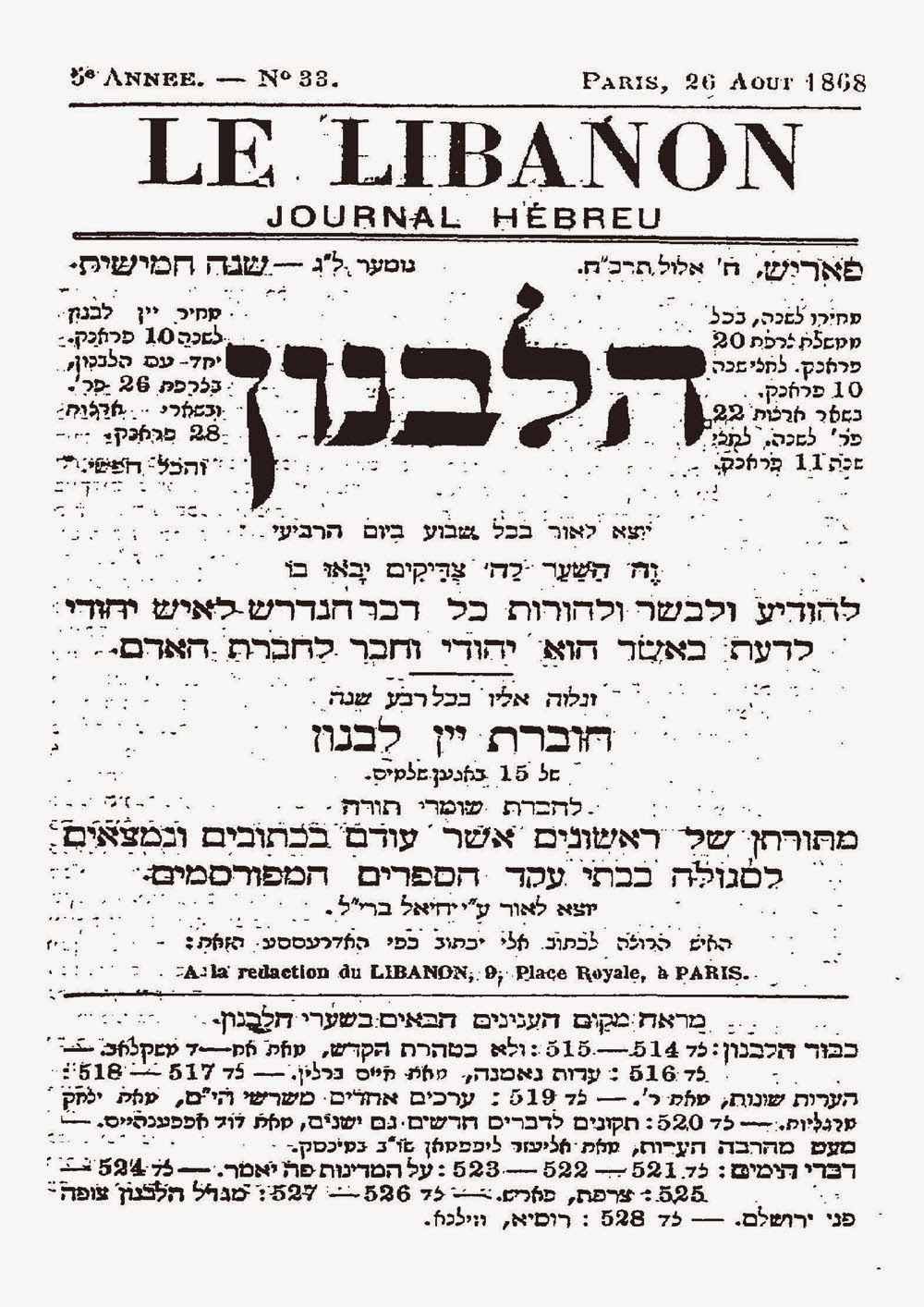
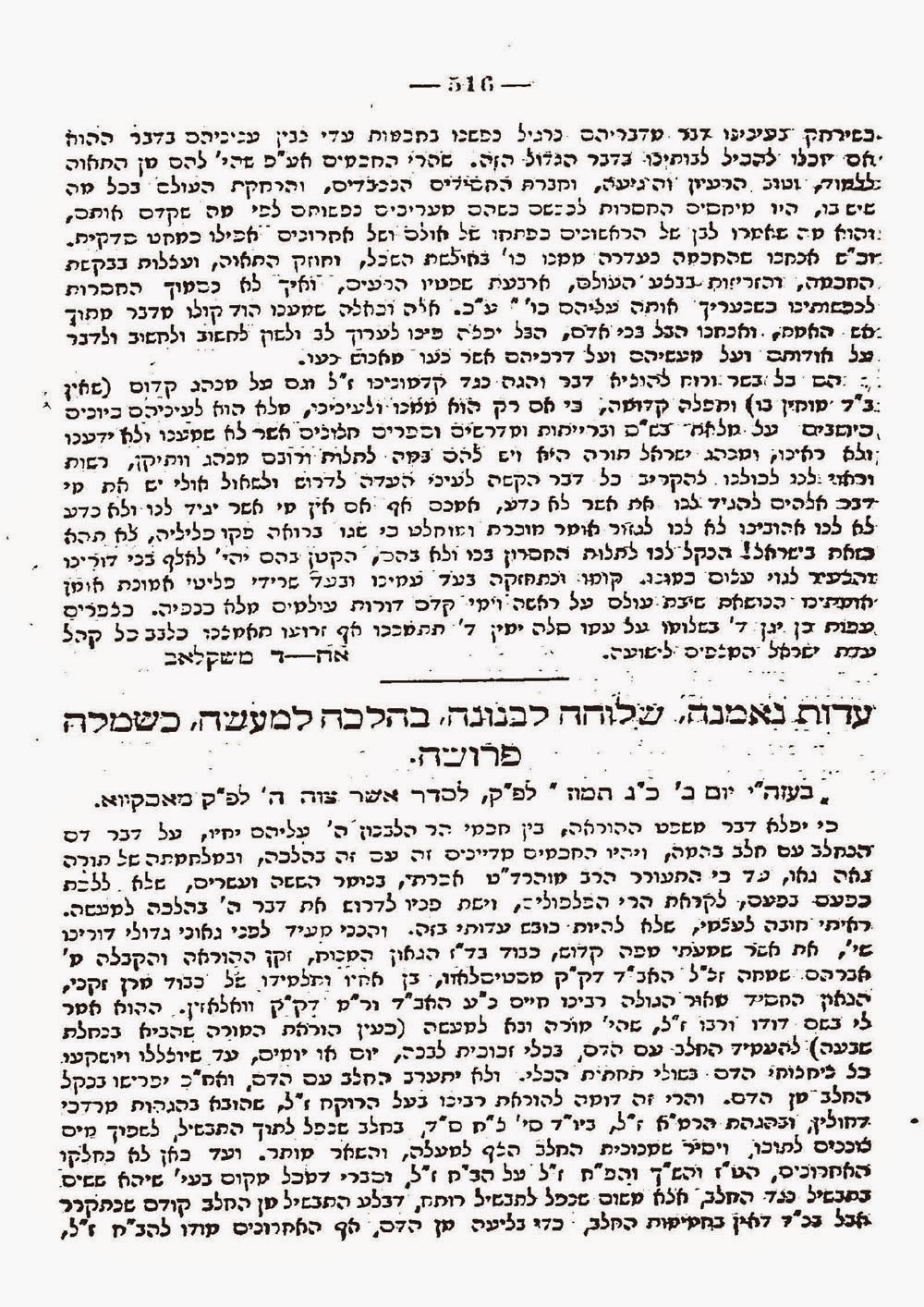
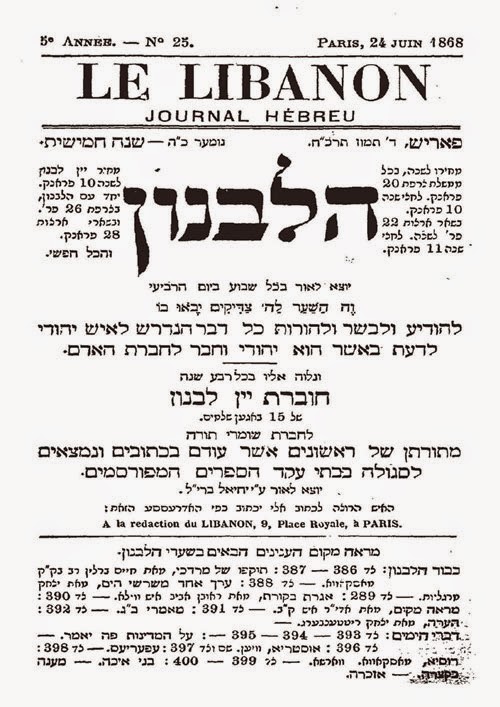
In the June 24, 1868 issue of Ha-Levonon we find an article of Rabbi Chaim Berlin.[13]

A few months later in the August 26, 1868 issue Ha-Levonon we find another article of Rabbi Chaim Berlin.[14]
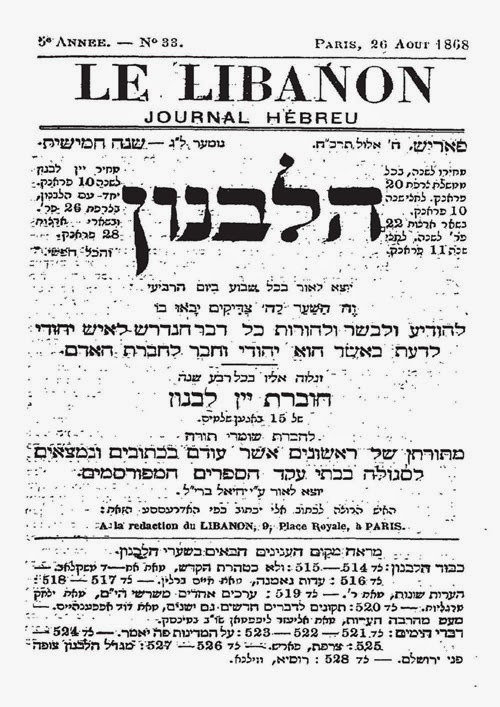
It could be that he wrote those two articles as they were important issues but in general he did not write articles of Random Torah.

However, in 1863, the Newspaper Ha-Levonon‘s first year, in the ninth issue we find a nice long article from Rabbi Chaim Berlin related to Sefirat Ha’omer. Rabbi Berlin comes to the conclusion if one forgot to count Sefirah one night so although the next night he cannot count the days with a Beracha he may count number of the weeks with a Beracha!  
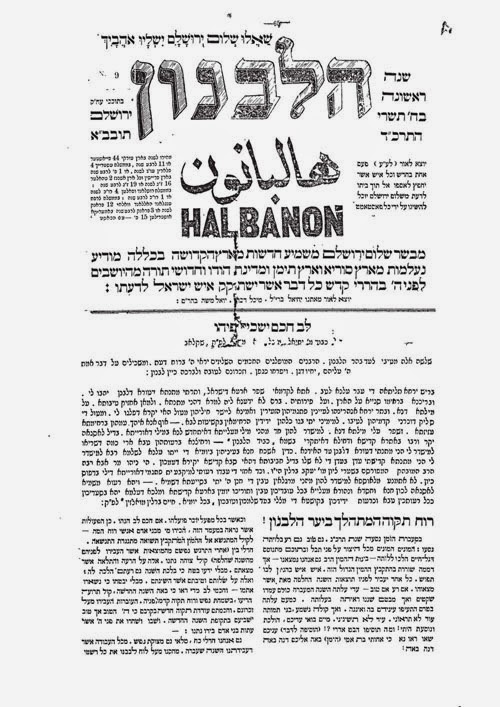

In the 1993 edition of the Shut Meishiv Davar, after reprinting this piece by Rabbi Chaim Berlin, they print a letter that the Netziv wrote to him on the subject.

בבואי ראיתי ביד חתן גיסי… שי’ עלה לבנון… מכתבך בראש הלבנון עולה על שלחן מלכי רבנן… הוספתי גיל לראות כי מצא בני מחמדי שליט”א להפיץ תורה בישראל, אף כי להגיד בראש הלבנון הוראה למעשה, יוסיף ה’ לאמץ חילך ולבבך בני להגדיל תורה בלי לב ולב עקוב את המאושרה, ואז תעש חיל וגבורה.
אמנם בני שמתי עין העיון בדבריך האוהבים… אחר כל זה תשכיל כי שגגתם בהוראה… ולא יפול לבבך על זה בני יקירי. וכבר אמרו ז”ל והמכשלה הזאת תחת ידך כו’ כידוע… והנני מוסיף בזה דבר… אם אתה נכשל בהוראה אזי הוא תחת ידיך להתבגר על התשוקה לקיימה ולהחזיקה ולעשות סניגורין, אלא אתה מודה על האמת דברים שאמרתי טעות הן בידי או אז ודאי ראוי להוראה בישראל. [משיב דבר, ה, סי’ טז].
Rabbi Rafael Shapiro, brother in law of R’ Chaim,[15] also argues on this Pesak and begins his Teshuvah as follows:

הן הגיעני זה כשתי שבועות עלי הלבנון נו’ ט’ שם ראיתי את חידושיו… ולדעתי לא כן ידמה…

R’ Chaim’s great-uncle, Rabbi Meir Berlin, also has a Teshuvah on the subject. He takes issue with R’ Chaim’s Pesak, begining his teshuva stating:

הובא לפני עלה א’ מלבנון… [אוצר רבי חיים ברלין, שו”ת נשמת חיים, א, עמ’ שיב-שיד].

In his memoirs about Volozhin, a student writes:
בנו הרב הגא’ ר’ חיים ברלין שנתמנה אחר זמן לרב במסקבה היה כותב במ”ע מאמרים על דרך השכלה והיה סופר מצוין בכתב ולשון ארמית שכתב בה מאמרים על טהרת לשונה… [משה יאפעט, רשומות וזכרונת, קובנה תרפ”ד, עמ’ 10]

Rabbi Chaim Berlin and Reading Newspapers on Shabbas:

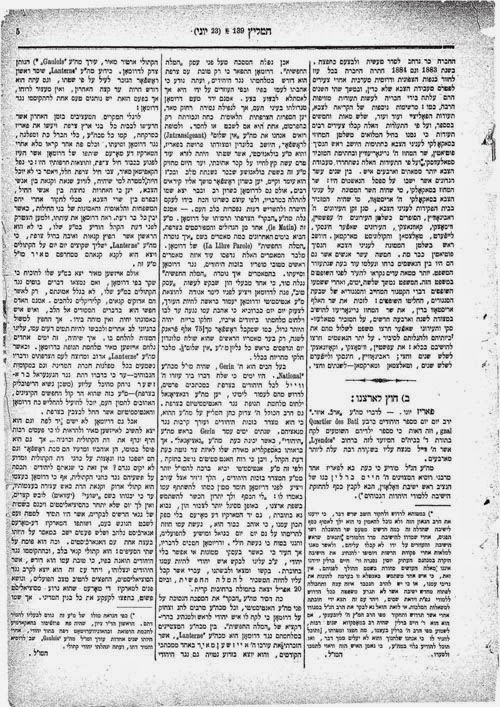
Printed in Igrot HaNetziv Me-Volozhin is a letter by Rabbi Chaim Berlin, dated Sunday 1892.[16] In the letter he writes as follows:

בשבת אתמול בסעודת ש”ק [=שבת קודש] בחברת מרעים כבדים, אהובים וידידים, רבנים מצוינים, וגבירים אדירים, עלה לפנינו עלה מכה”ע [=מכתב עת] המליץ, מיום ג’ העבר, נו’ 139, ושם נאמר…

Here is an image of the Newspaper that they were reading:


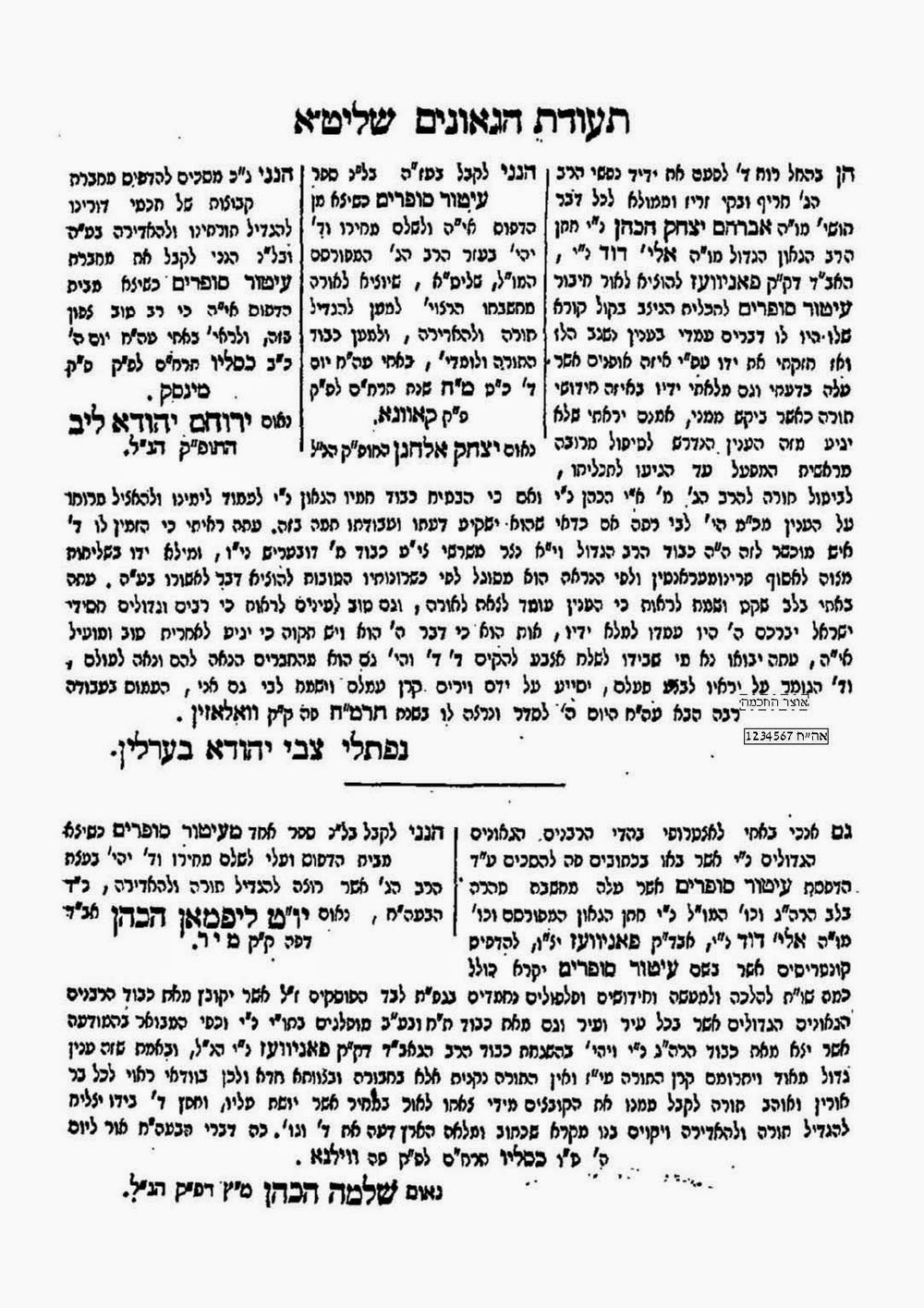
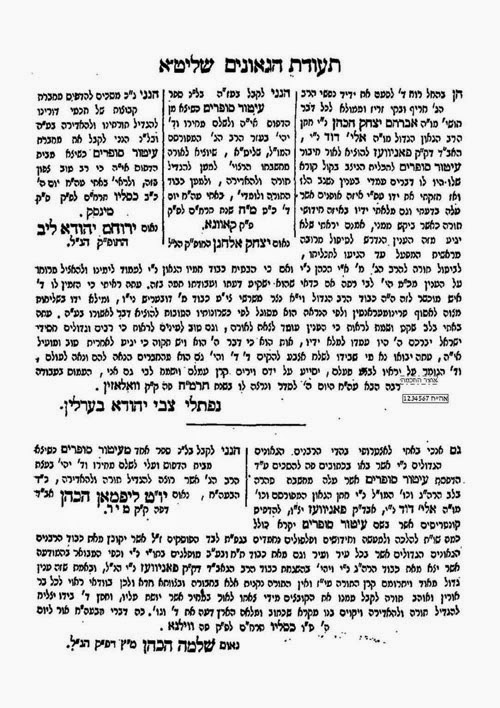
Additions to note six about the Journal ‘Ittur Sofrim’: I should have mentioned that the Netziv was not happy about it at first, as he thought it would take away too much time from Rav Kook’s learning.[17] 

Worth pointing to is Berdyczewski’s quote from the Netziv when he was asked about starting a Torah Journal for the Bochurim to print some of their ideas

דכירנא כד הוינא בהישיבה, התעוררו הרבה תורנים משכילים ליסד מכתב עתי תורני, אשר בו יבואו חידושים כתובים ברוח הגיון, כללים הנמצאים בש”ס, מאמרים העוסקים בחכמת ישראל וספרותו, וכשאר באו להנצי”ב לבקש כי ישתדל בעדם רשיון הממשלה על זה אז גער בהם פן… התעדו קוראים נכבדים מה הוא הפן הזה? לא דבר אשר יכול להורס חלילה את מוסדי הישיבה מהשקידה הגשמית, על ידי עסקם בכתיבה… [הכרם תרמ”ח (=כתבי מיכה יוסף ברדיצ’בסקי, א, עמ’ 97]

As one can see from the Netziv’s Haskamah to Ittur Sofrim here:

Rabbi Aaron Felder writes that he once asked Rav Moshe Feinstein about Rav Kook, to which Rav Moshe responded:

שבצעירותו היה הרב קוק אורך של ירחון תורני, והיו טוענים מכיריו שאין ראוי לאדם גדול שכמותו להיות אורך ירחון ומבחינת שאינו לפי כבודו [רשומי אהרן, א, עמ’ כח].

 Moshe Reines wrote in an article in the journal Beis Hamedrash printed in 1888:

גם חסרון ספ”ע מקדש לתורה ולהגיון לחקירה ולבקרת הוא חסרון מורגש בספרותנו, אולם החסרון הזה ימנה כנראה בקרוב, כי הנה הרה”ג ר’ אברהם יצחק הכהן קוק רב בעיר זימעל… אומר לה”ל מכ”ע חדשים כזה בשם עיטור סופרים, המקדש לתורה ולתועדה, וכבר נתנה החברת הראשונה בדפוס נחכה נא ונראה היצליח ד’ את דרכו אם לא [בית המדרש 1888, עמ’ 86].

See also R. Shmuel Alexandrov, Michtavei Meckar Ubikurut, 1, Vilna 1907, p. 7; R’ Mordechai Gimpel Yoffe’s letter to Rav Kook in Igrot LiRaayah, p. 17; R’ Kluger’s letter Ibid, pp. 26-27; Y. Mirsky, Rav Kook, Mystic in a time of Revolution, pp. 20-21.

Addition to note seven: The new version of ‘Ittur Sofrim’ does not say where their copy of Rav Zev Turbavitz’s letter about the Heter of the Netziv is from.

Rabbi Baruch Oberlander sent me a reference to Rav Zev Turbavitz’s Shut Tifres Ziv (1896), pp. 51-55 where he has a lengthy Teshuvah about reading newspapers on Shabbas in the beginning he writes:

 אמנם כעת יצא לאור ספר אחד ראיתי בו מכתב מאחד מגדולי הזמן שהביא….

In this Teshuvah he does not write the Netziv’s name nor the journal’s name nor does he write as sharply as he does in the letters I quoted from him to the Aderet and Rav Kook. But he does take strong issue with the Netziv’s Heter, going through the Sugyah at great length.

Addition to note eight: Both editions of Rabbi Chaim Berlin’s Teshuvot fail to mention the source of this Teshuvah; it’s printed in the back of the Shut Bikurei Shlomo (1:321). See also Shut Nishmat Chaim, p. 343, where he mentions he printed the Teshuvot found in Shut Bikurei Shlomo but he does not say where he did so.
Addition to note nine: The reference Shut Bikurei Shlomo siman, 3-4 includes a Letter of Rabbi Yehosef Zechariah Stern on this topic. In the new edition of the Shut Zecher Yehosef printed by Mechon Yerushalyim (2014), they reprinted this Teshuvah with many additions (2, pp. 437-440) from the notes of R’ Stern which he wrote on the side of his copy of Shut Bikurei Shlomo.

Who censored the 1894 edition of the Meishiv Davar?
In the Shar of the Sefer of both editions it says it was printed:
בהוצאת אשת הגאון זצלה”ה ובניה
I am not sure how much the sons Meir and Yakov had to do with the printing. Meir was fourteen years old at the time and Yakov was about seventeen[18].

R’ Chaim Berlin wrote to Rabbi Eliezer Lipman Prins:

מכ”י מר אבא הגאון החסיד זצלה”ה נדפס אחר פטירתו, שו”ת משיב דבר ע”י אלמנתו, הדרה בוורשא, ואך ממנה יכול רום מעלתו להשיגו, על פי האדרססא שארשום בשולי מכתבי, ובידי לא נמצא כי אם ספר אחד למעני [אור המזרח, לה:א (תשמ”ו), עמ’ 44-45 (=ר’ אליעזר ליפמן פרינץ, פרנס לדורו, ירושלים תשנ”ב, עמ’ 324; נשמת חיים, מאמרים, עמ’ עח)].

I would say the Netziv’s wife had much more to do with the printing than her sons, however I do not think that Batyah Mirel Berlin[19] was the type to censor such a thing. According to her granddaughter’s description of her:

בשעות הפנאי המעטות שלה עיינה סבתא בעיתונים ובספרי הקודש בחומש ובנביאים, בהם הייתה בקיאה למדי [טובה ברלין פפיש, ספר וולוז’ין, עמ’ 481 (= צלילים שלא נשכחו, עמ’ 55)].

Furthermore her father the author of the Aruch Hashulchan writes:

נ”ל דכתבי העיתים אינם בכלל זה ומותר בחול לקרותן שהרי הם מודיעים מה שנעשה עתה וזה נצרך להרבה בני אדם לדעת הן במה שנוגע לעסק והן במה שנוגע לשארי עניינים אבל עניינים שכבר עברו מן העולם מה לנו לדעת אותם וכן כל דברי הבלים שיש בהם שחוק וקלות ראש וק”ו דברי עגבים עון גדול הוא ובעוה”ר נתפשטו עתה בדפוסים ואין ביכולת למחות בידם  (ערוך השלחן, סי’ שז ס”ק ט).

Here is an advertisement published shortly after the Netziv died, asking for financial assistance for completing the printing of the Meishiv Davar.


Appendix One:


Appendix Two:

*Special thanks goes to my good friend Yisroel Israel for all his time and help in preparing this article. I would also like to thank my friend Rabbi Yosaif M. Dubovick for editing this article.
[1]  See Hama’yan 202 (2012) pp. 41-46, regarding the question if there exists a Heter to censor another’s works.
[2] On Berdyczewski see: Rabbi Yechiel Yaakov Weinberg, Kisvei Hagaon Rabbi Yechiel Yaakov Weinberg, 2, pp. 270-282; Marc Shapiro, Between the Yeshiva World and Modern Orthodoxy, p.74; Avner Holtzman, Micha Yosef Berdyczewski 2011; Avner Holtzman, El Hakerah Sheblev (1995).
[3]  See S. Stampfer’s Lithuanian Yeshivas of the Nineteenth Century, (p. 159) who cites Bialik that everything Berdyczewski wrote in HaAsif about Haskalah was false. However this is a major issue with relying solely upon autobiographical information; each person is referring to the time he was in the Yeshivah.
[4] A facsimile of one of the Netziv’s letter to him was reprinted in volume one of the collection of Berdyczewski writings, Kesavim 1,(1996) p.64.
[5] כאן משפט מחוק: “דיש כ[ת]ב ניתן להמו”ץ בעיר”
[6] Berdyczewski wrote a very positive review of this work. See his collected writings volume one pp. 196-197.
[7] כנראה לכולל ברודסקי. לתקנות הכולל ראה: ר”מ רבינוביץ, ‘תעודות לתולדות הישיבה בוולוזי’ן’, קבץ על יד (תשי”א), עמ’ רלא; ת’ פראנק, תולדות בית ה’ בוואלאזין, ירושלים תשס”א, עמ’ 118 ואילך. על פי התקנות, בכל תקופה נבחרו עשרה אנשים לכולל. שם, עמ’ 121, פורסמה רשימת הנבררים משנת תרמ”ז ואילך, ושם מבואר שכבר היה עשרה אנשים בהכולל [הערת ידידי ר’ שלמה הופמן].
[8] I hope to return to this topic in the future. For now, see: Rabbi Kalman Kahana, Cheker Viyun, 2, pp. 66-78
[9] See also the Netziv’s work on Shir Hashirim (1:8).
[10] After patting myself on the back for this discovery, I found this source, in the name of Dr. Leiman, buried in a footnote in Jacob J. Schacter’s classic article “Haskalah, Secular Studies and the Close of the Yeshiva in Volozhin in 1892“, Torah u-Madda Journal 2 (1990), on page 126, footnote 105. However they do not note the censorship from the 1993 edition of Meishiv Davar, as this article was printed in 1990. 
[11]  I will return to this letter in part four B”n.
[12]  The Chazon Ish wrote a similar thing to Rav Zevin:
הרב זוין שליט”א… לא אמנע מלהעיר כי הערות של בקרת של הרב הנ”ל שיחי’ מקומן הנכבד בחוברת מיחדה מזמן לזמן אבל אין מקומן יפה להן במקום שהוא נותנן והתורה בבחינת שבויה, מלבר שסופן ליעשות תכריך לחמאה.
This letter was first printed without Rav Zevin’s name in Kovetz Igrot Chazon Ish (1:183) and more recently with his name on it in Hashakdan (1:117), including a facsimile of the original letter.
[13] Shut Nishmat Hayyim (2002), pp. 231-233; Otzar Rabbi Chaim BerlinShut Nishmat Hayyim, 3, pp. 375-377.
[14] Shut Nishmat Hayyim (2002), pp. 149-151; Otzar Rabbi Chaim BerlinShut Nishmat Hayyim, 2, pp. 135-136. See also the 1993 edition of the Meishiv Davar where this Teshuvah is printed. All three of these places include an additional teshuvah on the topic of the Netziv which begins with the words:
הגיעני עלה מהלבנון באו בו דבריך…
[15] Torat Refael, 3:37; Otzar Rabbi Chaim BerlinShut Nishmat Hayyim,1, p. 312. The 2002 edition of Shut Nishmat Hayyim (pp. 99-103) only prints Rabbi Chaim Berlin’s piece on the subject and not the Netziv’s letter to him, despite their norm to print the related letters by the Netziv about the subject being discussed.
See R’ Yosef Zecariah Stern, Shut Zecher Yehosef, (#194):
וכבר שמעתי בשם  הרצה”ל ברלין מוואלאזין שחקר לענין ספירת העומר אם לא ספר יומי דמ”מ כשמגיע כלות  השבוע מברך כיון דהוה תרי מצות למימני יומי ושבועי… ומ”מ לא מסתבר לי…”.
Although RYZ”S possessed a phenomenal memory, apparently he confused the Netziv with his son R’ Chaim.
[16]Igrot HaNetziv Me-Volozhin, pp. 148-150; Sefer Nishmat Hayyim, Mamorim u’Mechtavim, p. 119. See Shaul Stampfer, Lithuanian Yeshivas of the Nineteenth Century, p. 231.
[17] Mirsky [Rav Kook, Mystic in a time of Revolution, p. 20] mistakenly attributes this fear to R’ Yitzchak Elchanan.
[18]  For the dating of Yakov Berlin’s birth, see the Netziv’s letter to R’ Shmuel Salant in Igrot HaNetziv Me-Volozhin,p. 207. For more information about R’ Yakov Berlin, see his daughter Tova Papish’s autobiography Tselilim Shel Nishkehu, pp. 58-62. [Thanks to Mr. Y. Israel for pointing me to this book].
[19]  See also what her son Rabbi Meir Bar Ilan writes in Me-Volozhin LeYerushalim, 1, 118-122. 


The Unintended Perils of Plagiarizing

While we have previously discussed several instances of plagiarism, I wanted to discuss one more which is interesting in its irony.

Originally printed in Vienna, in 1820, Hut HaMeshulash b’Sha’arim, was reprinted in 1998. This sefer is actually three-seforim-in-one arranged based on the order of the parshiyot. The three are from a grandfather, father and son. They are, respectively, Sha’ar Asher by R. Asher Lemel HaLevi, chief rabbi of Eisenstadt; Sha’ar HaMayim by his son-in-law, R. Jehiel Mihel, also the chief rabbi of Eisenstadt; and Sha’ar HaKoton by R. Asher’s grandson and R. Jehiel’s son, R. Moshe, the chief rabbi of Tzeilheim. This book was published by R. Moshe and has haskamot from the Hatam Sofer, R. Tzvi Hirsch Brody, and R. Dovid Deitch, which all offer extensive praise of these works. As I mentioned, this sefer was reprinted in a nice edition in 1998 which includes a newly set type, citations, an index, as well as a short introduction. The introduction notes that this reprint is the third printing of the sefer, with the second reprint in Munkatch, in 1931. While this is technically correct, a portion of the sefer was reprinted, but under a different name a different author.

In 1910 a similar family type sefer was published in Warsaw. As with the Hut HaMeshulash, it contains multiple commentaries from relatives. In this case, the Amudei Yonason by R. Jonathan Eybeschütz and the Amudei Shmuel by R. Nachman Shmuel Miodoser, a descendant of R. Jonathan Eybeschütz. The Amudei Yonason is claimed to be from a manuscript, however, it is R. Nachman’s commentary which we will focus on. Both of these seforim have rather nice haskamot from R. Hayyim Ozer Grodzinski, R. Eliezer Rabinowich, R. Eliyahu Meisels as well as R. Chaim Soloveitchik. It seems that R. Nachman actually had a more difficult time securing R. Chaim Soloveitchik’s haskamah due to R. Nachman’s first piece in his sefer. In that piece, R. Nachman ties the controversy of the earth or sky being created first, to that of Moshe and Betzalal about the construction of the mishkan and use it to explain a Midrash. R. Chaim said that such a interpretation is inappropriate, as according to R. Nachman’s explanation there are opinions which argue with Moshe and no one can argue with Moshe. [It would appear that R. Chaim took the ani ma’amins literally although, as we have recently seen at the Seforim blog, such a formulation has little support and even the Rambam’s position is not unopposed.] R. Nacham attempted to assuage R. Chaim Soloveitchik’s concern by pointing out the Hafla’ah has a similar explanation with the same end result – someone disagreeing with Moshe. R. Chaim Soloveitchik was unsatisfied with this justification so R. Nachman agreed to remove that explanation. But, when R. Nachman reached Warsaw, that page had already been printed thus, R. Nachman instead of removing the piece, included the above story to let R. Chaim’s position be known. [Reproduced below – you can click on any of the images for a larger version.]

R. Chaim Soloveitchik’s Haskama and R. Nachman’s Disclaimer
R. Nachman attempted to justify his position by pointing to earlier authorities who said similar ideas; however, R. Nachman could have pointed to an earlier authority which said the exact same thing. The vast majority of R. Nachman’s commentary is taken almost word for word from the Sha’ar HaKoton, including the controversial explanation. It appears this plagiarism went undetected as the book was reprinted three years later in 1913 (and even more approbations appear which due to their late arrival were not included in the first edition) and then again in Bnei Brak in 1946. R. Nachman died in 1948 in Bnei Brak.

From the Amudei Yonason
the Original – Sha’ar HaKoton


The Haftarot of the Sabbaths of Hanukkah and the Haftarah of the Sabbath of Rosh Ḥodesh Tevet

The Haftarot of the Sabbaths of Hanukkah and the Haftarah of the Sabbath of Rosh Ḥodesh Tevet[1]

by: Eli Duker

In the Babylonian Talmud (Megillah 31a) it is stated that the haftarah for the Sabbath of Hanukkah is from “the lamps of Zechariah,” and if Hanukkah coincides with two Sabbaths, the haftarah for the first Shabbat is from “the lamps of Zechariah” and the haftarah for the second Shabbat is from “the lamps of Solomon.”

Rashi there explains that “the lamps of Zechariah” refers to the haftarah beginning: “Sing and rejoice” (Zechariah 2:14), and that “the lamps of Solomon” refers to the haftarah beginning: “Hiram made” (I Kings 7:40). This explanation is also found in Seder Rav Amram Gaon, and this is the practice in most communities to this day.[2]

We find another custom in Tractate Soferim (20:8) with regard to the Torah reading and haftarah for the Sabbath of Hanukkah:

ובשבת שבתוכו קורא ויהי ביום כלות משה, עד כן עשה את המנורה, וכן ביום השמיני, עד וזה מעשה המנורה, ומפטיר ותשלם כל המלאכה.

Thus, according to Tractate Soferim, the haftarah for the Sabbath of Hanukkah begins: “When all the work was completed” (I Kings 7:51), which addresses the dedication of the First Temple. It is somewhat puzzling that the haftarah begins precisely there and not a few verses earlier, which would have included the “lamps of Solomon,” a fitting verse for Hanukkah. It is possible that since Tractate Soferim generally reflects the practices of Eretz Yisrael, and the miracle of the cruse of oil is a Babylonian tradition, they saw no need to refer to the making of the menorah. Yet, we see that according to this ruling they nevertheless read in the Torah up to the account of the making of the menorah, even though according to the Mishnah only the passages of the nesi’im are read — indicating that there is a desire to allude to the miracle of the cruse of oil.[3] One can suggest that since the menorah was already mentioned there, they did not see a need to allude to it again in the haftarah.

Tractate Soferim does not mention a Torah reading or haftarah for the second Sabbath of Hanukkah. Concerning Rosh Ḥodesh Tevet that falls on a Sabbath, it is stated there (20:12):

דר’ יצחק סחורה שאל את ר’ יצחק נפחא, ראש חדש טבת שחל להיות בשבת במה קורין, בעניין כלות, ומפטיר בשל שבת וראש חדש.

The “haftarah for Sabbath and Rosh Ḥodesh” refers to what is stated elsewhere in Tractate Soferim (17:9):

ובזמן שחל ר”ח להיות בשבת השמיני שצריך לקרות וביום השבת ובראשי חדשיכם הוא מפטיר (יחזקאל מ״ו:א׳) בכה אמר [ה”א] שער החצר הפנימית הפונה קדים.

In Pesikta Rabbati[4] there are homilies on no fewer than three haftarot for the Sabbaths of Hanukkah: “Elijah took twelve stones” (I Kings 18:31), “When all the work was completed” (I Kings 7:51, similar to the haftarah in Tractate Soferim), and: “It will be at that time that I will search Jerusalem with lamps” (Zephaniah 1:12). Each of these sections in the Pesikta begins with a halakhic question relating to Hanukkah.

In Piska “Elijah took” (4) we find:

ילמדנו רבינו: ראש חודש שחל להיות בחנוכה, הואיל שאין תפילות המוספין בחנוכה, מי שהוא מתפלל תפילת המוספין מהו שיהא צריך להזכיר של חנוכה? למדונו רבותינו אמר רבי סימון בשם רבי יהושע: ראש חודש שחל להיות בחנוכה אף ע”פ שאין מוסף בחנוכה אלא בר”ח, צריך להזכיר של חנוכה בתפילת המוספים. שבת שחלה להיות בחנוכה אע”פ שאין מוסף בחנוכה אלא שבת, צריך להזכיר של חנוכה בתפילת המוספין. והיכן הוא מזכיר? בהודאה.

It is noteworthy that the question is formulated primarily with regard to the Musaf of Rosh Ḥodesh during Hanukkah, even though it obviously applies equally to the Musaf of the Sabbath of Hanukkah, as reflected in the answer. Rabbi Meir Ish Shalom already noted in his commentary in his edition of Pesikta Rabbati[5] that it is reasonable to assume this is the haftarah for the Sabbath of Rosh Ḥodesh Tevet. The connection between this haftarah and Rosh Ḥodesh likely lies in what appears later in the same passage in the Pesikta:

אתה מוצא שנים עשר חודש בשנה, שנים עשר מזלות ברקיע, שתים עשרה שעות ליום ,ושתים עשרה שעות לילה. אמר הקדוש ברוך הוא: אפילו העליונים והתחתונים לא בראתי אלא בזכות השבטים שכך כתב “את כל אלה ידי עשתה” (ישעיה סו:ב), בזכות כל אלה שבטי ישראל שנים עשר (בראשית מט:כח) (לכך שנים עשר מזלות, שתים עשרה שעות). לכך כיון שבא אליהו לקרב את ישראל תחת כנפי השכינה נטל שתים עשרה אבנים למספר השבטים ובנה אותן מזבח. מניין? ממה שהשלים בנביא “ויקח אליהו שתים עשרה אבנים למספר שבטי בני יעקב”.

In Piska “It will be at that time” (8) we find:

ילמדנו רבינו: מהו שידליק אדם נר שישתמש בו מן הנר של חנוכה? תלמוד, למדונו רבותינו א”ר אחא בשם רב (אמר) אסור להדליק נר שישתמש בו מנר של חנוכה, אבל נר של חנוכה מותר להדליק מנר של חנוכה.

In Piska “When all the work was completed” (6) we find:

ילמדנו רבינו: נר של חנוכה שהותיר שמן מהו צריך לעשות לו…

It is therefore possible to suggest that in Pesikta Rabbati there is Zephaniah 1:12 for the first Sabbath of Hanukkah that is not Rosh Ḥodesh, and I Kings 7:40 for the second Sabbath of Hanukkah. In addition, there is I Kings 18:31 as a haftarah for a Hanukkah Sabbath that is also Rosh Ḥodesh. This is an appropriate haftarah for this time due to description of the victory over the prophets of Baal—which parallels the Hasmonean victory over the Greek kingdom—and the recurring motif of twelve, which is appropriate for Rosh Ḥodesh.

By contrast, all other sources from Eretz Yisrael (Tractate Soferim and the piyyutim mentioned below) point to I Kings 7:51 as the sole haftarah for the Sabbath of Hanukkah, read not only when there are two Sabbaths of Hanukkah. Moreover, in the Pesikta, the Piska of “When all the work was completed” immediately follows “It was on the day that Moses finished,” which is the Torah reading for a regular Sabbath of Hanukkah (or at least when Shabbat falls on the first day of Hanukkah).[6] For this reason, B. Elitzur claims[7] that “When all the work was completed” was read specifically on the first Sabbath of Hanukkah, and “It was on the day” was read on the second Sabbath. It should be noted that the Piska “It was on the day” is adjacent to the Piska “The one who brought his offering on the first day,” not to the Piska “On the eighth day” (to which the section “And Elijah took” is adjacent).[8]

In the Kedushta piyyut of Yannai[9] for the Sabbath of Hanukkah, the verse “When all the work was completed” appears as the first verse in the chain of verses in the meshalesh, indicating that this was the haftarah. Likewise, this verse also appears in the Meḥayyeh of the Kedushta piyyut of Rabbi Yeshuah son of Rabbi Joseph.[10] There is nothing in these piyyutim to indicate they were composed specifically for the second Sabbath of Hanukkah.[11] In light of all these sources—which mention only a single haftarah for the Sabbaths of Hanukkah (despite the approximately five-hundred-year gap between Yannai and Rabbi Yeshuah)[12]—the customs reflected in Pesikta Rabbati were likely very rare in both time and place.

In a comprehensive study of Rabbi Eleazar ha-Kalir’s Kedushta piyyutim for Hanukkah, A. Mintz-Manor identifies no fewer than five potential haftarot for the first Sabbath of Hanukkah. In the piyyut Adir Kenitzav,” the Kalir cites the verses “When all the work was completed,” as well as “Solomon built the House and finished it” (I Kings 6:14), and “Thus said Hashem: Behold, I will restore the fortune of the Jacob’s tents” (Jeremiah 30:18).

In the piyyut Meluḥatzim Me’od Bera,” “Behold, I will restore” also appears, as well as “I will search Jerusalem” (which appears as a haftarah in Pesikta Rabbati), and another potential haftarah: “Solomon brought the peace offering” (I Kings 8:63).

In the piyyut Otot Shelosha” for a Sabbath that is both Hanukkah and Rosh Ḥodesh, both the verses “The gate of the inner court” and “When all the work was completed” appear, indicating that in his time there was no uniform custom in Eretz Yisrael for this Sabbath, with some reading the Rosh Ḥodesh haftarah and others reading the Hanukkah haftarah. Yet, the fact that the verse from the haftarah of Rosh Ḥodesh appears first may indicate that that was the preferred haftarah.

In the piyyut Menashe Ve’et Efraim,” written for the second Sabbath of Hanukkah, the haftarah is “On the eighth day he sent the people off” (I Kings 8:66). It is possible that this is the same haftarah that appears in “Meluḥatzim Me’od Bera,” with a few earlier verses added.

Summary of Haftarot

Haftarah Source(s)
I Kings 7:51 Tractate Soferim; piyyutim of Yannai, Kalir, Rabbi Yeshuah; Pesikta Rabbati
Zephaniah 1:12 Piyyutim of Kalir; Pesikta Rabbati
Jeremiah 30:18 Piyyutim of Kalir
I Kings 8:63 Piyyutim of Kalir
I Kings 6:14 Piyyut of Kalir

A Geniza fragment[13] records both customs with regard to Rosh Ḥodesh Tevet (and Adar and Nisan) that fall on a Sabbath. According to the custom in Eretz Yisrael, two Torah scrolls are taken out. The passage for Hanukkah is read first, and then that of Rosh Ḥodesh. According to the Babylonian custom, where the weekly portion is read as well, that is read first, followed by Rosh Ḥodesh and Hanukkah. According to both customs, the haftarah there is for Hanukkah.[14]

From all the above, we see multiple differing customs regarding the Sabbath of Rosh Ḥodesh Tevet:

  1. Haftarah of Rosh Ḥodesh – Tractate Soferim; one mention in Kalir.
  2. Haftarah of Hanukkah – one mention in Kalir; a Geniza fragment.
  3. A special haftarah – Pesikta Rabbati.

We find in the Geonic literature that the haftarah of Hanukkah is read, as stated in a responsum of Yehudai Gaon:

תוב שאילו מן קמיה: הקורא בתורה בראש חדש חנוכה ושבת בשל ראש חדש מפטיר או בשל חנוכה? ואמר בשל חנוכה.

There is a similar statement in Halakhot Pesukot[15] and the Siddur of Rav Amram Gaon.[16]

In Early Ashkenaz, where the Hanukkah haftarot followed those in the Talmud Bavli, there existed differing customs concerning the haftarah for a Sabbath of Hanukkah that coincided with Rosh Ḥodesh. In the Siddur of Rashi (321) we find:


ואם חל ראש חודש טבת להיות בשבת, התדיר קודם. מוציאין שלש תורות, וקורין ששה בעניינו של יום, והשביעי ובראשי חדשיכם, ומפטיר קורא בחנוכה ובנבואת זכריה [רני ושמחי], והשמים כסאי בטלה, דהא לא קרי מפטיר בראש חדש דלימא הפטרה דיליה. ובמס’ סופרים גרסינן שמפטירין בשל ראש חדש, אבל לא נהגו העם כן: ושמעתי שנחלקו במגנצא שני גדולי הדור ר’ יצחק בר’ יהודה ור’ שמואל בר’ דוד הלוי, ר’ יצחק ציווה להפטיר ברני ושמחי, ור’ שמואל העיד מפי אביו שאמר לו שמפטירין בשל ראש חדש וקיימו את עדותו, וכמדומה שחולקין כן בראש חדש אדר שחל להיות בשבת, ואנן נוהגין [להפטיר] ביהוידע.

From this passage it emerges that although Tractate Soferim states that the haftarah should be that of Rosh Ḥodesh, this was not the common practice. Rashi records that in Mainz two leading sages of the generation disagreed: Rabbi Yitzḥak bar Yehudah ruled to read beginning from Zechariah 2:14, whereas Rabbi Samuel bar David ha-Levi testified in the name of his father that the haftarah should be that of a standard Rosh Ḥodesh on the Sabbath, and his testimony was accepted. Rashi adds that a similar disagreement seems to have existed regarding Rosh Ḥodesh Adar that falls on a Sabbath, concerning which he records that the practice was to read “Yehoyada.”

This material appears as well, with slight variations, in Sefer ha-Pardes.[17]

It is recorded in Ma‘asei ha-Geonim:

ואילו תשובות שהשיב רבי’ ר’ משלם בר’ משה ממגנצא לאחי לר’ נחומי’. וששאלת ר”ח טבת שחל להיות בשבת במה מפטירין? יש מבני קהלינו שאומרים שמפטירים ברני ושמחי ויש מהם שאומרים שמפטירין בהשמים כסאי ואבאר טעמם של אלו וטעמם של אלו מיושר על המחיקה אותן שאומרין להפטיר בנירות של יהוידע[18] אומרים כן היא המדה לעולם שבאותו עיניין שהמפטיר קורא באותו עיניין (ש)צריך להפטיר הוי קורא בשל חנוכה. ואם נפשך לומר יקרא בשל ר”ח ויפטיר בשל ר”ח, אינה היא המידה שהרי תדיר ושאינו תדיר תדיר קוד’. וטעמם שאומרי’ להפטיר בשל ר”ח או’ ר”ח דאורייתא וחנוכה דרבנן ולא אתי דרבנן ודחי דאורייתא. ומצינו בהלכות גדולות שצריך להפטיר ברני ושמחי אבל במקומינו נהגו להפטיר בשל ר”ח מפני כבודו של רבי’ יהודה הכהן הזקן שהורה [כן] וקיי”ל מקום שיפול העץ שם יהו פירותיו.

It is clear from these sources that Rabbi Yehudah ha-Kohen ha-Zaken and Rav David (cited by his son Rav Shmuel), both students of Rabbeinu Gershom—and Rabbi Samuel bar David, ruled to read the Rosh Ḥodesh haftarah. Beyond the claim that Rosh Ḥodesh is by Torah law, they were evidently also aware that this was the ruling in Tractate Soferim.

By contrast, Rabbi Yitzḥak bar Yehudah—who studied under Rabbeinu Gershom but was primarily a disciple of Rabbi Eliezer ha-Gadol[19]—ruled in Mainz to read the Hanukkah haftarah despite the rulings of Rabbi David and Rabbeinu Yehudah ha-Zaken. Out of respect for the latter authorities, this ruling was not adopted, even though it was known that Halakhot Gedolot ruled in that direction (apparently referring to Halakhot Pesukot, as cited in Or Zarua).

In the Ra’avan we find a continuation of this position, including a statement that Rabbi Yehudah ha-Kohen’s sons also ruled to read the haftarah of Rosh Ḥodesh:

וראש חודש טבת שחל בשבת בחנוכה נחלקו בהפטרה. הגאונים רבינו רבי יהודה הכהן ובניו היו מורין להפטיר בהשמים כסאי מטעם תדיר ושאינו תדיר תדיר קודם. ועוד, מדאמרינן [כ”ט ב] דאין משגיחין בדחנוכה תחילה וראש חודש עיקר, למה לי למימר ראש חודש עיקר, אלא אפילו להפטרה. ועוד, מדמפורש בהפטרה “מידי חודש בחדשו ומידי שבת בשבתו” ואין דוחין שתים, שבת ור”ח, מפני אחת, חנוכה. והחלוקין עליהם אומרים כיון שהמפטיר קורא בדחנוכה צריך להפטיר בדחנוכה. וחקרתי אני אליעזר בסדר רב עמרם גאון, ולא הזכיר בו כלל השמים כסאי, אלא כך כתב בו, שבת של חנוכה קורין בנירות דזכריה רני ושמחי ואם יש ב’ שבתות בשבת ראשונה קורין רני ושמחי.

Here we see the same tendency noted earlier with Rabbi Samuel bar David: the sons of Rabbi Yehudah ha-Kohen followed their father’s ruling to read the Rosh Ḥodesh haftarah. Ra’avan notes that others disagreed, though he does not name them—presumably he refers to Rabbi Yitzḥak bar Yehudah and perhaps his son Rabbi Yehudah, who sought guidance regarding his father’s rulings.[20] It appears from Ra’avan’s language—though not definitively—that he personally examined the Siddur of Rav Amram Gaon and followed it in determining who to follow concerning this dispute among the scholars of Mainz.

It is noteworthy that in Sefer ha-Minhagim of Rabbi Abraham Klausner[21] and also in the Maharil[22] it is stated that the opinion of “Eliezer”[23] was to read the haftarah of Rosh Ḥodesh.

We find Maḥzor Vitry (239):


ואם חל ראש חדש בשבת התדיר תדיר קודם. ומוציאין ג’ תורות. וקורין ששה בעיניינו של יום. והשביעי ובראשי חדשיכם. ומפטיר קורא בחנוכת המזבח. לפי עניין היום. ומפטיר בנבואת זכריה. רני ושמחי: על שם ראיתי והנה מנורת זהב: והשמים כסאי בטילה. דהא לא קרי מפטיר בשל ראש חדש דלימא הפטרה דידיה: ובמס’ סופרי’ גר’ שמפטירין בשל ראש חדש. אבל לא נהגו העם כן. ושמעתי שנחלקו שני גדולי הדור במייאנצא. ר’ יצחק בר’ יהודה צוה להפטיר ברני ושמחי. ור’ שמואל בר’ דוד הלוי העיד משום (אבא) [אביו] שמפטירין בשל ראש חדש. וקבלו את עדותו: וכמדומה לי שחלוקין בין ראש חדש אדר שחל להיות בשבת. (דאין) [דאנן] נוהגין להפטיר ביהוידע.

It is evident from this statement that there existed a clear custom—apparently in France—to read the haftarah of Hanukkah despite their awareness of the dispute in Mainz.

Subsequently Rabbi Shimon of Sens (Tosafot, Shabbat 23b) stated unequivocally that Hanukkah haftarah should be read.

הדר פשטה נר חנוכה עדיף משום פרסומי ניסא – ונראה לרשב”א כשחל ר”ח טבת להיות בשבת שיש להפטיר בנרות דזכריה משום פרסומי ניסא ולא בהשמים כסאי שהיא הפטרת ר”ח. ועוד כיון שהמפטיר קורא בשל חנוכה יש לו להפטיר מענין שקרא. ומה שמקדימים לקרות בשל ר”ח משום דבקריאת התורה כיון דמצי למיעבד תרוייהו, תדיר ופרסומי ניסא, עבדינן תרוייהו, ותדיר קודם. אבל היכא דלא אפשר למעבד תרוייהו פרסומי ניסא עדיף. ועוד דבקריאת התורה אין כל כך פרסומי ניסא שאינו מזכיר בה נרות כמו בהפטרה. ועוד נראה לרשב”א דעל כן הקדימו של ר”ח כדי שהמפטיר יקרא בשל חנוכה ויפטיר בנרות דזכריה.

Tosafot hold that the reason why the Torah reading of Rosh Ḥodesh precedes that of Hanukkah is precisely so that the haftarah should be that of Hanukkah.

The Rash cited in Tosafot there adds another claim: Publicizing the miracle is far more prominent in the haftarah of Zechariah than in the Torah reading, which does not explicitly mention lamps.

Over the generations in Ashkenaz, both customs are recorded in the Rishonim such as Ravyah, Or Zarua, and Mordechai. Yet, in Ravyah—similarly to Ra’avan—there is a clear inclination toward reading the Hanukkah haftarah:

ואי איקלע פרשת שקלים בראש חדש אדר מפטיר בבן שבע שנים, דמיירי בשקלים מעין שקלים דכי תשא שקרא המפטיר, וזה הכלל שהמפטיר הולך אחר הפרשה שקרא הוא עצמו. ויש חולקים ואומרים להפטיר בראש חדש לעולם, מפני שהוא תדיר. וכן שבת וראש חדש וחנוכה מפטיר ברני ושמחי מעין הפרשה שקרא בה המפטיר. וכן כשחל פרשת שקלים בכ”ט בשבט מפטיר בבן שבע.

By contrast, Shibbolei Haleket[24] cites Rabbi Yehudah HaḤasid as ruling that one should read the Rosh Ḥodesh haftarah.

In Sefer ha-Minhagim of Mahara of Tirna, it is stated that the opinion of the Mordechai is to read the Hanukkah haftarah, and this is how it appears in the Vilna edition of the Talmud. Yet, the Machon Yerushalayim edition has an addition that appears in manuscript:

וכן נמצא בתשובת רב יהודאי גאון[25] אך רבי יהודה כהן הביא ממסכת סופרים ובהלכות פסוקות של ספר והזהיר[26] וברכות ירושלמי[27] שמפטירין בדר”ח, ונלאיתי לכתוב ראיות.

Despite this, according to the other French sources the practice was to read the Hanukkah haftarah. In the Sefer ha-Minhagim (76) attributed to Rabbeinu Abraham Klausner—though the core of the work is actually by Rabbi Paltiel (of French origin)[28] —it is stated:

ומפטיר רני ושמחי, וכן מנהג הרבב במיידבורק. לעולם נגד מה שקורין המפטיר מפטירין. וה”ר אליעזר אומר דמפטירין השמים כסאי ואין משגיחין בדחנוכה, אע”פ כשחל ר”ח אדר בשבת מפטירין בן שבע שנים, היינו משום דמיניה קא סליק משקלים, לכך משקלים מפטירין דדמי’ ליה ושבקיה דר”ח, אבל הכא לא דמי רני ושמחי לפרשת נשיאים כלל, הילכך מפטירין בדר”ח דדמי’ לפרשת שבת ולפרשת ר”ח שנא’ “מדי חדש בחדשו ומדי שבת בשבתו”, והכי אמרינן במסכת סופרים, שאל ר’ יצחקה לר’ יצחק נפחא ר”ח טבת שחל להיות בשבת במה קורין א”ל בענין ויהי ביום כלות משה, ומפטיר בר”ח ושבת והיינו מדי חדש בחדשו וגו’.

This passage introduces a new claim: The haftarah of Hanukkah does not correspond to the Torah reading of the Nesi’im at all, and therefore should not override the Rosh Ḥodesh haftarah. This represents at least one French source inclined toward the Rosh Ḥodesh haftarah. These views are cited in the glosses of the Maharil, though the Maharil himself ruled to read the Hanukkah haftarah.

Ultimately, the Rosh, the Tur,[29] and the Abudirham[30]—and following them the Shulḥan Arukh and the Levush (with the Rema not offering a dissent)—all ruled that the haftarah of Hanukkah is read. This is the practice observed in all communities today.

  1. I would like to thank my brother R’ Yehoshua Duker for his help in editing this, and Dr. Gabriel Wasserman for discussing the piyyutim with me. This article is written לזכר נשמת ייטא בת הרב שמואל יוסף who just passed away. Her emunah and mesirat nefesh in Auschwitz and in her long life afterward is a source of inspiration for her extended family and beyond.
  2. See my site on Alhatorah, with regard to the Algerian practice not to read a special haftarah for the second Sabbath of Hanukkah
  3. See E. Fleischer, The Formation and Fixation of Prayer in Eretz Yisrael, pp. 449–450 (Heb.). He understands that the reading for the last day of Hanukkah when it fell on the Sabbath was not the entirety of Numbers 7 but only similar to today’s practice. The issue of the tradition of the miracle of the oil is beyond the scope of this article.
  4. Concerning the haftarot for Hanukkah in Pesikta Rabati, see Elitzur, B. “Pesikta Rabati: Pirkei Mevo” pp.77-79.
  5. Piska 8 fn. 1.
  6. See Fleisher.
  7. Elitzur p. 77.
  8. Elitzur.
  9. Mahzor Piyuttei Rabbi Yannai LeTorah Velamoadim, Vol, 2. p. 237.
  10. https://maagarim.hebrew-academy.org.il/Pages/PMain.aspx?mishibbur=954001&page=1 and Elitzur S. “Piyyutei Rabbi Yeshuah Birbi Yoesf Hashofet” p.11 fn. 46 and pp 28-20 in Kovetz Al Yad 5774.
  11. Fleisher pp. 451-452, and fn. 32.
  12. Rabbi Yeshuah was a dayan in 11th century Alexandria. See Fleisher, ibid.
  13. Oxford Bodl. Heb. e. 93/3.
  14. Fragment is in Judeo-Arabic, translated by Fleisher pp. 449-250 and fn. 22.
  15. P. 185.
  16. P. 36.
  17. Budapest Edition, p. 144
  18. Ms, 6691=31. It is not clear why Yehoyada is mentioned here. Perhaps it is due to confusion with the son of the First Temple era Zechariah, or perhaps it is due to the same issue existing with regard to Rosh Ḥodesh Adar of Sabbath when the haftarah is about Yehoyada; see Mahzor Vitry, cited below.
  19. Grossman, Ḥakhmei Ashkenaz Harishonim pp. 302-303.
  20. Ibid. p 301.
  21. Machon Yerushalayim edition, p. 65, Halacha 76.
  22. Machon Yerushalayim edition, p. 410.
  23. I.e., Raavan; see notes in books above.
  24. Inyan Hanukkah, Siman 190.
  25. It seems he is referring to the Halakhot Pesukot.
  26. We do not have this source. See Shibbolei Haleket, Zichron Aaron edition, siman 190 fn. 32.
  27. This source does not appear in today’s editions of the Yerushalmi. Many thought that Rishonim had a “Sefer Yerushalmi” that was an addition to the standard Talmud Yerushalmi. Several decades ago, texts were found in the bindings of books in various European libraries that may be this work. See Zusman Y. “Seridei Yerushalmi Ktav Yad Ashkenzi (Kovetz Al Yad 1994, especially pp.15-17). Later he writes how the Mordechai (Beitzah 2:682) cites a Yerushalmi not known to us, and it was found there.
    As I am unaware of anything from Tractate Berakhot from this Geniza, it is uncertain what the Mordechai is referring to, but he is likely referring to this work here as well. See Zussman’s “Yerushalimi Ktav-Yad VeSefer Hayerushalmi” in Tarbitz (1996) pp. 37-63, as well as Mack. H. “Al Hahaftara Beḥag Simchat Torah” in Meḥkerei Talmud 3 vo. 2 pp. 497-8 fn. 44.
  28. See the introduction to the Machon Yerushalayim edition.
  29. Oraḥ Ḥayyim 684. It is the same in other sources using this numbering.
  30. Hanukkah.


ArtScroll’s Response and My Comments

 ArtScroll’s Response and My Comments
by Marc B. Shapiro 
My recent post here was more popular than my typical post. I base this statement on the fact that I received more emails from readers than usual and the post was picked up by a variety of different websites. The part dealing with the censorship of Rashbam was translated into Hebrew here (with one of the commenters calling for a herem to be placed on ArtScroll)[ and see also here.
ArtScroll has now issued its response. The following has been sent out to those who wrote to ArtScroll about the censorship.
Let us make clear at the outset, ArtScroll has total and uncompromising respect for Chazal and the classic commentators. We do not censor them. Every one of their words is holy, and we have never deigned to tamper with their sacred texts.
For an understanding of the matter under discussion, it is important to present the background of the published versions of Rashbam’s commentary on the Torah.

·      Rashbam’s commentary was first printed in 1705, based on the only existing manuscript of his virtually complete commentary on the Chumash. That manuscript began with Parashas Vayeira.

·      Subsequent editions were based on that 1705 printing.

·      In 1882, David Rosin published a new annotated edition of Rashbam’s commentary.

·   The new edition also included a commentary on the Parshiyos Bereishis, Noach, and Lech-Lecha based on comments culled by Rosin from Rashbam’s other writings as well as selections from other works that cite Rashbam. Additionally, this 1882 edition included material taken from a newly-discovered manuscript containing one page of commentary ascribed to Rashbam, on only the first chapter of Bereishis ending in the middle of verse 1:31.

·      This manuscript fragment includes an exegesis that appears several times – an exegesis that Ibn Ezra, in his famous Iggeres HaShabbos, vehemently condemns, stating, that it had been put forth by “minim” (heretics). Furthermore, a later exegesis in the same manuscript page (on verse 14) directly contradicts that earlier exegesis.
In our Czuker edition of Mikraos Gedolos, we wished to provide the Torah public with the fullest version of the Rashbam’s commentary, so rather than beginning with Parashas Vayeira, we incorporated additional material from the 1882 Rosin edition, from the beginning of Bereishis. However, given Ibn Ezra’s attribution of this exegesis to “minim,” coupled with a completely contradictory exegesis in verse 14, it is questionable whether Rashbam actually proposed the exegesis attributed to him.  Because of these factors we added only those writings attributed to Rashbam whose authenticity have not been questioned. Far from “censorship,” we have added to the older, standard Mikraos Gedolos editions.
Nevertheless, for the sake of clarity, we should have indicated that the basis for our text of Rashbam was the standard Vilna edition of 1898, with emendations from the Rosin edition of 1882. Indeed, this is what we have indicated in our just-published Sefer Shemos volume, and which will be reflected in future reprints of Sefer Bereishis.
* * * *
In my response I will only deal with the matter at hand, that is, the censorship of Rashbam’s commentary, not with the larger matter of whether ArtScroll really has “total and uncompromising respect for . . . the classic commentators.” I have dealt with this latter point in previous posts and offered evidence that contradicts ArtScroll’s assertion.
Let me begin by saying that the one word that best describes ArtScroll’s statement is “chutzpah”. Here we have an explanation from Rashbam that has been discussed and dealt with by some of the greatest Torah scholars for well over a century, yet ArtScroll feels that it knows better than all of them and thus has the authority to simply delete passages from the commentary. If that isn’t chutzpah, I don’t know what is.

Rashbam’s brother, Rabbenu Tam, famously attacked those who deleted or emended passages in the Talmud based on their own understanding.[1] Rabbenu Tam realized that if everyone had the freedom to do with the text as he wished, it wouldn’t be long before the Talmud was irrevocably damaged. As such, anyone who has a suggestion about a mistake in the text is free to add it in the form of a note or in a commentary, but he is not permitted to alter the text itself. The only honest thing would have been for ArtScroll to have included the “objectionable” passages and then explain why they feel that these texts are not authentic.
The fact that ArtScroll sees the passages that it deleted as heretical is irrelevant. Great people have regarded texts of the Rambam, of R. Kook, and of many others as heretical. Does that mean that we can start deleting these texts? There are aharonim and at least one rishon who believe that there are passages in the Talmud that were inserted by people intent on mocking the Sages (details will be in a future post). Does that mean that if ArtScroll shares this opinion it is entitled to delete these passages as well?
As I mentioned, the chutzpah is seen in the fact that ArtScroll feels that it knows better than such great figures as R. David Zvi Hoffmann[2] and R. Yaakov Kamenetsky.[3] Both of these men were not simply great talmudists but were also great biblical scholars, and they expound Rashbam’s view. It never occurred to them to delete the passages or to claim that they aren’t authentic. Cassuto was another great biblical scholar and he believed that Rashbam’s understanding of the verse is correct.[4]
Every student of Torah is taught the virtue of humility. What this means is that if you don’t understand something you seek out people greater than yourself to hear their perspective. How come ArtScroll didn’t follow this route before taking the drastic step of deleting the comments of Rashbam?
Unfortunately, if ArtScroll’s mikraot gedolot becomes the standard, anyone who uses the commentaries of R. Hoffmann, R. Kamenetsky, Cassuto and so many others will be very confused. These commentaries will cite Rashbam and explain his words, but the reader who opens up his ArtScroll mikraot gedolot to see what Rashbam says “inside” won’t be able to find it. If he doesn’t read the Seforim Blog, he won’t know what is going on.
For over a hundred years people studied Rashbam’s commentary without any problem. Different interpretations were offered, all in order to make sense of Rashbam’s words. Around fifteen years ago a few people, none of whom have any scholarly or religious standing, started making noise that there is heresy in Rashbam’s commentary on Genesis chapter 1.[5] This led a couple of haredi publishers to delete some or all of the “problematic” comments (different editions have different deletions).[6]
ArtScroll has chosen to follow this regrettable path. When this nonsense first began with the haredim in Israel, the great R. Yehoshua Mondshine, whose recent passing is an enormous loss for all, published the following letter in Kovetz Beit Aharon ve-Yisrael.[7]

The disdain he shows in this letter would be magnified if he were writing about ArtScroll, as one would expect ArtScroll to know better. It is unfortunate that ArtScroll did not heed his final words directed towards publishers inclined to censorship.
יש להתרות במו”לים שלא יהיו נחפזים “לצנזר” את פירוש הרשב”ם מכח סברות תמוהות וקלושות, ויחרדו לנפשם מאזהרות הקדמונים דלייטי ליד המגיה בספרים.
Following R. Mondshine’s letter, there appears a very lengthy letter by R. Menahem ben Shimon[8] explaining that Rashbam’s comments at the beginning of Genesis should not be controversial at all. He concludes by comparing censorship of Rashbam to the burning of Maimonides’ Guide of the Perplexed, and adds
יש בזה עזות מצח, וביזוי דברי הקדמונים, והתייחסות לדבריהם כאילו חלילה מדובר בתקליטור עם משחקים חינוכיים “בהכשר הרבנים”, וכיו”ב, וכבר הזהירונו חז”ל להיזהר בכבוד תלמידי חכמים שכל דבריהם כגחלי אש.
I have to acknowledge that some people are having a good chuckle right now at my expense. Call it naiveté, but I was convinced that the response of ArtScroll would be to admit the mistake, blame it on an error in “editing” or something like that, and correct matters in the next printing. That would have been a great outcome. I, more than many others, was shocked by ArtScroll’s response. 
In its response ArtScroll states: “[G]iven Ibn Ezra’s attribution of this exegesis to “minim,” coupled with a completely contradictory exegesis in verse 14, it is questionable whether Rashbam actually proposed the exegesis attributed to him.”
The first thing to note is that in the preface to the Iggeret ha-Shabbat, where Ibn Ezra explains what led him to write the work, he does not attribute this exegesis to “minim”. ArtScroll would have you believe that Ibn Ezra stated that the passages they have deleted are heretical interpolations. Even if this was the case, it would only be Ibn Ezra’s opinion. This would not entitle ArtScroll to delete the passages, just like they don’t have the right to delete other passages that some commentator thought were not authentic. But in this case ArtScroll is simply wrong, and I hope that they are not intentionally misleading people. (I also hope that they informed the sponsor of the new mikraot gedolot that they intended to delete passages from Rashbam.[9])

Here is the text from Ibn Ezra.[10]

As you can see, Ibn Ezra responds very sharply to the interpretation mentioned by Rashbam. Although Rashbam is not mentioned by name, the standard view in traditional and scholarly circles is that Ibn Ezra was indeed directing his words at Rashbam and not at others who shared this perspective. This would explain his use of the words ולא תשא פני איש which would only be used with reference to an outstanding scholar.[11] David Kahana suggests that, as a sign of respect, Ibn Ezra does not mention Rashbam by name and he also does not curse the author of the explanation he is attacking.[12] He only curses the one who reads it aloud and the scribe who writes it. If Ibn Ezra was directing his comment against some heretic, we would expect him to curse this person, so the fact that he does not do so is quite significant and indeed points to Rashbam as the “addressee” of Ibn Ezra’s Iggeret ha-Shabbat.
Ibn Ezra never denies the authenticity of the interpretation he is responding to; he just attacks it. His attack on Rashbam’s view is just like Nahmanides’ attack on Maimonides’ view that the angels who came to Abraham were really just part of a prophetic vision. Nahmanides does not deny that Maimonides said this, but he does say that it is forbidden to accept what Maimonides says. It is the exact same thing here. Ibn Ezra is not denying that Rashbam offered the interpretation. He is simply saying that it is forbidden to accept this approach. (I should also add, since we are discussing a dispute between Ibn Ezra and Rashbam, that by any traditional measure Rashbam must be regarded as a more significant and authoritative figure than Ibn Ezra.)

ArtScroll also states that since Rashbam’s commentary to Genesis 1:14 contradicts what he says in the passages deleted by ArtScroll, this gives weight to their assumption that the other passages were not written by Rashbam but were instead inserted by some heretic. To begin with, since there are five[13] “problematic” comments and one “non-problematic” comment, perhaps it is the “non-problematic” comment to Genesis 1:14 that is to be regarded as inauthentic and should be removed. I say this only tongue and cheek, since ArtScroll should have realized two pretty basic things.
1. Rashbam often offers explanations, even in matters of halakhah, that are in line with the peshat of the text but diverge from the talmudic understanding. I understand that in some contemporary circles this would be regarded as heretical, since they assume that the meaning of the verse, especially in halakhic matters, can only be what the sages of the Talmud declare. Yet Rashbam had a different perspective, and he allowed for a peshat that diverges from what the Talmud states.
2. If you have contradictory explanations in the same chapter, the proper thing to do is to see if they can be reconciled before deciding that some of the comments are not authentic and can therefore be deleted. This was the approach of the great scholars of the last century who discussed Rashbam’s commentary. If ArtScroll had “uncompromising respect” for these figures, who devoted great time to understanding what Rashbam was saying, they would not have dared delete Rashbam’s comments, since by doing so they are in effect claiming that they know better than R. Hoffmann, R. Kamenetsky, and so many others.
Let me cite some other writers, including outstanding Torah scholars, who discussed Rashbam’s comments on when the day begins. In ArtScroll’s eyes this was all a big waste of time, since Rashbam never could have said what appears in his commentary. I guess we should all feel sorry for these Torah scholars that when they wrote they didn’t have ArtScroll around to set them straight. The more important question is why didn’t ArtScroll think that any of the explanations offered by these scholars were enough to save Rashbam’s comments from being deleted? (My own sense is that the individual who made the choice to censor Rashbam did not begin to understand the issue and was unaware of the sources referred to in this post.)
1. R. Menahem M. Kasher discusses Ibn Ezra’s attack on Rashbam and offers an explanation for Rashbam’s position, distinguishing between how the days were structured in the first six days of creation and what occurred afterwards.[14] R. Kasher also cites R. Pinhas Horowitz, Ha-Makneh to Kiddushin 37b, that before the giving of the Torah night came after day, and this can also be an explanation for Rashbam’s approach. In support of his assumption, R. Horowitz cites a verse not mentioned by Rashbam, Genesis 8:22:  ויום ולילה לא ישבתו. As you can see, in this verse night comes after day. (R. Horowitz repeats this explanation in his Panim Yafot to Genesis 8:22.) R. Moses Sofer cites this point from R. Horowitz and notes that even today it is only with regard to Jews that night precedes day, but for non-Jews the halakhah remains that day precedes night.[15]
R. Ezekiel Landau agrees with R. Horowitz that before the giving of the Torah the day did not start at night.[16] In support of this approach, R. Samuel Mirsky refers to Ugaritic literature which he regards as real evidence for Rashbam’s position.[17]
R. Moshe Malka also takes note of R. Horowitz’s position.[18]  Based on it he claims that
נחה שקטה תמיהתו של הראב”ע על הרשב”ם, כי הוא דבר על מעשה בראשית לפני מת”ת
R. Catriel David Kaplin also refers to R. Horowitz’ perspective and explains that Rashbam agrees with it.[19]
R. Kasher further cites R. Isaac Israeli (14th century) as agreeing with R. Horowitz. In his Yesod Olam[20] R. Israeli writes
וכן נהגו כל ישראל ממתן תורה ועד עתה להתחיל קדושת השבת ושאר ימי מקראי קודש מתחילת הלילה . . . ועל העיקר הנכון הזה יסדו לנו קדמונינו וקבעו בחשבון מולדות הלבנה ותקופת החמה.
R. Kasher calls attention to the words ממתן תורה ועד עתה and concludes that R Israeli is telling us that before the giving of the Torah the day began in the morning.
Finally, R. Kasher points to two separate rabbinic texts, one talmudic and one midrashic, that he feels can support Rashbam’s approach.
2. Da’at Mikra to Genesis 1:5 (p. 10 n. 168) explains that Rashbam’s understanding of when the day begins only refers to the six days of creation.
3. A different approach in explaining Rashbam is taken by R. Moshe Schwerd in a recent article in Or Yisrael.[21]
4. The Lubavitcher Rebbe refers to Rashbam’s explanation of when the day begins in order to illustrate how explanations in accord with peshat can contradict the accepted halakhah.[22]
5. R. Chaim Leib Zaks calls attention to the fact that two medieval authorities explain Genesis 1:5: ויהי ערב ויהי בקר, just as Rashbam did, that is, that day comes before night.[23] The first is the commentary attributed to Rashi, Ta’anit 11b, s.v. למחר.[24] The second is the commentary attributed to Rashi, Nazir 7a s.v. התם.[25]
6. R. Eliyahu Katz, who served as rav of Bratislava under the Communists and later as chief rabbi of Be’er Sheva, published a number of interesting books which appear to be completely unknown. In his Emor ve-Amarta[26] he states that R. Judah ha-Nasi might also have held that according to the peshat night comes after day, and that Rashbam might have based his explanation on R. Judah’s opinion. He also points out that Rashi, Genesis 1:14 writes
שמוש החמה חצי יום ושמוש הלבנה חציו הרי יום שלם
This is a strange formulation since Rashi appears to be agreeing with Rashbam that the day – שמוש החמה – comes before the night – שמוש הלבנה.
7. R. Jacob of Vienna, in his commentary to Genesis 1:5, writes[27]:
וא”ת אימא הלילה הולך אחר היום והכי קאמר ויהי ערב של יום הראשון ויהי בקר של יום שני אז נשלם יום שלם
In his note to this passage R. Zvi Rotberg understandably refers to Rashbam, as R. Jacob might indeed be alluding to him here.[28] The editor of R. Jacob’s volume, R. Menasheh Grossberg, refers to R. Pinhas Horowitz’s view mentioned above.
8. R. Shlomo Fisher, without question one of the top Torah scholars in the world, elaborates on the implication of Rashbam’s view that it is only through Torah she-Ba’al Peh, not the peshat of the verses, that we know that day comes after night.[29] A student of R. Fisher asked him about the censorship of Rashbam, and not surprisingly he expressed strong opposition to any such tampering with the writings of rishonim. He also told this student about a contemporary “scholar” who claims that Rashbam was influenced by evil people who caused him to go astray! Talk about chutzpah![30]
10. Michael Landy called my attention to the fact that Abarbanel cites the interpretation mentioned by Rashbam in the name of יש מהמפרשים.[31]
All of these sources that I have quoted, and believe me when I tell you that there are many more, are simply designed to show that the view of Rashbam expressed in his commentary to the first chapter of Genesis is part and parcel of Torah history and literature. Many of our great minds have discussed Rashbam’s view in a variety of contexts. Yet ArtScroll, on its own, has decided that it knows best and chose to remove the words of Rashbam from the public eye. They have no right or authority to do this. Their action is a betrayal of Rashbam and of those who want to study the writings of Rashbam. It is also an incredible display of disrespect to those great Torah scholars who have devoted time to the matter and explained the comments of Rashbam that ArtScroll prefers to view as heretical.
After all we have seen, let us return to the issue of Ibn Ezra’s attack on Rashbam and ask why it was so harsh. After all, what is so terrible about explaining the peshat of the Torah even if it diverges from the accepted halakhah, an approach that is found in numerous commentators?
The significance of the example we have been discussing is that there were indeed sectarians who observed Shabbat from Saturday morning until Sunday morning. Rashbam’s interpretation was thus dangerous as it could have had real world implications by giving support to the anti-halakhic behavior just mentioned.
In his commentary to Exodus 16:25 Ibn Ezra refers to “many people, lacking in faith” who erred in this matter and did not start Shabbat on Friday night. He tells us that they based their mistaken approach on Genesis 1:5: ויהי ערב ויהי בקר. In other words, they interpreted the verse in the same way that Rashbam did. Towards the end of Iggeret Shabbat, p. 171, he also mentions these “minim” who do not observe Shabbat beginning Friday night. It is thus easy to see why Ibn Ezra reacted so strongly and set out to uproot Rashbam’s interpretation.
Who were these sectarians Ibn Ezra refers to? Presumably the Mishawites, a group that we know started Shabbat on Saturday morning.[32] Benjamin of Tudela records meeting sectarians in Cyprus, again presumably Mishawites, who indeed observed the Shabbat in this fashion.[33]
In the last paragraph of the ArtScroll letter it states that from now on they will note that their text of Rashbam is the standard Vilna edition of 1898 with “emendations from the Rosin edition of 1882”. This is clearly obfuscation as we are not dealing here with any “emendations” suggested by Rosin. To repeat what the issue is: Rosin printed from manuscript Rashbam’s commentary to Genesis chapter 1. This section of the commentary does not appear in the standard Vilna edition. ArtScroll chose to include Rashbam’s commentary to Genesis chapter 1 in its recently published mikraot gedolot. However, ArtScroll also chose to delete those sections of the commentary it didn’t like, assuming (without any evidence) that these sections were written by heretics. This is censorship of  Rashbam. That is all people need to know.[34]
ArtScroll has done some great things. They have also done some pretty disappointing things. But as I said in the prior post, nothing comes close to this. Deleting comments of one of the greatest rishonim is simply outrageous. Some have said that what ArtScroll did is unforgivable. I think this is going too far. If ArtScroll acknowledges its error and reinserts that which has been removed, I think that we all would be very happy to put this behind us. One of the most important aspects of a Torah personality is the ability to recognize when one has made a mistake and rectify it. If ArtScroll is able to do this, it would lead to great admiration.

On the other hand, if ArtScroll refuses to acknowledge that it has made a terrible error, even after seeing the evidence presented in this post, then one must conclude that ArtScroll is knowingly suppressing the words of a great rishon. One can only hope that ArtScroll does not wish to have this blemish permanently attached to its name.

[1] ArtScroll and other publishers should pay close attention to the words of Rabbenu Tam, which I would have thought would be enough to scare off the censors. Sefer ha-Yashar, ed. Rosenthal (Berlin, 1898), p. 75:
ומגיהי חנם, בעיני דינם, למדורי גהינם
P. 105:
כי כאשר לא יודעים, העולם מטעים, וכאשר תוהים, הספרים מגיהים. ואתם הרעות מהם, כי הם כותבים ה”ג בהגהותיהם, ולכן ניכר מעבדיהם. ואתה לא כן, אך סותם הגהותיך וסומכים עליך וטועים . . . אין עצה ואין תבונה, רק להעמיד על האמת ולזרוק מרה במגיהי הספרים
Even if they are not scared of מדורי גהינם, one would have thought that they would have seen the wisdom of what Rabbenu Tam writes in the introduction to Sefer ha-Yashar, ed. Schlesinger (Jerusalem, 1985), p. 9:
והדין נותן אם לא ידע אדם הלכה יכתוב פתרונו לפי ראות עיניו אם ירצה אך בספרים אל ימחק שדברי תורה עניים במקומן ועשירים במקום אחר ואם דבר רק הוא ממנו הוא [רק]
                       
[2] Sefer Bereshit, trans. Asher Wasserteil (Bnei Brak, 1969), pp. 26-27. Hoffmann writes as follows:
כמו גם פרשנים חדשים רבים הוא [רשב”ם] סבר, שבימי מעשה בראשית נמנו הימים באופן שונה מדרך מנייתם לאחר מכן, בימי מתן תורה, כשם שגם תחילת השנה לפני מתן תורה שונה – לדעת ר’ אליעזר – מזו שלאחריו.
[3] Emet le-Yaakov (Cleveland Heights, 2007), p. 17.
[4] Umberto Cassuto, A Commentary on the Book of Genesis, trans. Israel Abrahams (Jerusalem, 1998), p. 28.
[5] As far as I know, the first one to assert that Rashbam’s comments are heretical interpolations was R. Yehudah Nachshoni, Hagut be-Farashiyot ha-Torah (Bnei Brak, 1981), vol. 1, p. 262, but this had no impact on the haredi world. Here is the page from Nachshoni.

He writes:
לדעתו יש לחשוש שמא חלו ידי קראים בדברי הרשב”ם
What this means is that Ibn Ezra thought that perhaps Rashbam’s metaphorical interpretation of the commandment of tefillin in Ex. 13:9 is a Karaite interpolation. This is complete nonsense as Ibn Ezra says nothing of the sort. I think, therefore, that there is a typo and the first word should read לדעתי. It is still nonsense but at least now the sentence is understandable. Following this, Nachshoni adds another absurdity, stating that Rashbam’s interpretation of when the day starts is also a Karaite interpolation. (Prof. Daniel Lasker has confirmed to me that all Karaites began the Sabbath on Friday night.)
Now comes the real irony. ArtScroll published a posthumous translation of Nachshoni’s book in 1988. Apparently ArtScroll was embarrassed by what Nachshoni wrote so ArtScroll censored it! Here is the English version, Studies in the Weekly Parashah, vol. 2, pp. 414-415.
In 1988 ArtScroll censored the writings of Nachshoni because he said that Rashbam’s comments were heretical interpolations, but in 2014 ArtScroll accepted this very position and instead censored Rashbam! Can it get any crazier than this?
As an aside, let me also note that I find it strange that ArtScroll does not give Nachshoni the title “Rabbi” on the title page of its translation of his book, even though he is referred to as such in the preface.
[6] It is possible that the haredi publishers who censored Rashbam did so purely for financial reasons. After putting a lot of money into their editions, a pashkevil directed against them, incited by some extremist, could be financially devastating. In the haredi world it is often enough to say that there is a “problem” with a book for people not to buy it. The masses won’t have a clue about the issue, but if there is a choice between two competing mikraot gedolots, they will feel safer buying the one which has not had any questions raised about it.
[7] (Kislev-Tevet 5760), p. 150.
[8] Ibid., pp. 151-155.
[9] I don’t have the newly published ArtScroll mikraot gedolot on Exodus (and will refuse to buy it until Rashbam’s commentary is fixed). I was curious if Rashbam on Ex. 13:9 appears in full or if it too was censored. Here Rashbam states that the commandment of tefillin in this verse: והיה לך לאות על ידך ולזכרון בין עיניך, is to be understood metaphorically. Ibn Ezra, in his commentary on Ex.13:9, harshly criticizes the metaphorical interpretation. A friend sent me a copy of this page of Rashbam and the commentary appears in full. I did notice, however, that in the following verse in Rashbam, Ex. 13:10, it reads חוקת הפסח with a dagesh in the kuf. This is a mistake, and in the next printing the dagesh should be removed.
If ArtScroll is looking for something to censor in the newly released volume, Or ha-Hayyim to Ex. 31:16 probably fits the bill. In this controversial passage Or ha-Hayyim states that we don’t violate Shabbat to save the life of someone who will not live until the next Shabbat. This contradicts an explict talmudic passage, Yoma 85a, that one violates Shabbat even for hayyei sha’ah. See R. Ovadiah Yosef, Hazon Ovadiah: Shabbat, vol. 3, pp. 296ff. R. Judah Aryeh Leib Alter, Sefat Emet: Likutim (New York, 1957), p. 77a (Ki Tisa), already suggested that an “erring student” wrote these words in Or ha-Hayyim.
[10] It appears in Kerem Hemed 4 (1839), pp. 160-161.       
[11] See Aharon Mondshine, “Li-She’elat ha-Yahas she-Bein Perusheihem shel R. Avraham Ibn Ezra ve-Rashbam la-Torah: Behinah Mehudeshet,” Teudah 16-17 (2010), p. 17.
[12]  Rabbi Avraham Ibn Ezra (Warsaw, 1894), vol. 1, part 2, p. 45 n. 4.
[13] In the previous post I noted four examples of ArtScroll’s censorship with regard to Rashbam’s peshat  understanding of when the day begins: Gen. 1:4, 5, 8, 31. I neglected to mention Rashbam’s commentary to Gen. 1:6 which is also censored by Artscroll. Regarding why Rashbam’s commentary to the first three parashiyot of Genesis were missing from the manuscript, see Itamar Kislev in Tarbiz 73 (2004), p. 229 n. 12.
[14] Torah Shelemah, vol. 10-11, pp. 276-279.
[15] Hiddushei Hatam Sofer to Shabbat 87a. R. Akiva Eger points out that R. Horowitz’s position leads to a very interesting conclusion. Here is the summary in R. Yaakov Moshe Shurkin’s commentary to Teshuvot Rabbi Akiva Eger (Lakewood, 2003), vol. 2, p. 769 (Pesakim, no. 121):
וכתב רבינו דלפי חידושו של הפנים יפות הנ”ל, דדין עכו”ם ששבת חייב מיתה הוא ביום ולילה שלאחריו, יש להמליץ זכות על אלו שבאו להתגייר ומרגילים את עצמם לשמור את השבת גם קודם שנתגיירו כנ”ל, די”ל שאינם עוברים בזה באיסור דעכו”ם ששבת, דסגי להו אם יעשו מלאכה במוצאי שבת, וכדברי הפנים יפות הנ”ל. ואין צריך למחות בשפחות הנ”ל מלשבות בשבת.
[16] Tziyun le-Nefesh Hayah to Pesahim 116b.
[17]  “Midot ha-Parshanut ha-Mikrait,” Sura 1 (1954), p. 396.
[18] Be’er Moshe (Lod, 1994), p. 14. He also questions R. Horowitz’s position by citing Mishnah, Hullin 5:5:
                  
מה יום אחד האמור במעשה בראשית היום הולך אחר הלילה
Rashbam could easily reply that the Mishnah is not speaking in terms of peshat. However, I am surprised that neither R. Horowitz nor R. Landau discuss this text which would appear to contradict their approach, as they assume that the Talmud agrees that before the giving of the Torah night came after day.
[19] Keter Nehora (Jerusalem, 2004), p. 114.
[20] (Berlin, 1848), vol. 1, p. 35 (2:17).
[21] “Hagdarat Zemanei ha-Yom ve-ha-Laylah al pi Halakhah u-Mahashavah” Or Yisrael (Nisan 5770), pp. 226ff.
[22] Sihot Kodesh (1967), part 2, sihah from 12 Tamuz 5727, p. 284.
[23] “Be-Inyan ha-me-Et le-Et shel Ma’aseh Bereshit,” Ha-Maor (Oct. 1957), pp. 4ff.
[24] This source was also noted by R. Abraham Elijah Kaplan. See Divrei Talmud (Jerusalem, 1958), vol. 1, p. 42 n. 97:
וזה מזכיר דברי רשב”ם שנלחם בם ראב”ע במחברתו אגרת השבת
[25] Kaplin, Keter Nehora, p. 115, also refers to this commentary to Nazir.
[26] (Be’er Sheva, 1994), vol. 1, pp. 26-27.
[27] Peshatim u-Ferushim (Mainz, 1888),  pp. 9-10
[28] Le-Misbar Kera’e (Bnei Brak, 2005),  p. 49.
[29] Derashot Beit Yishai (n.p., 2004), p. 48 n. 11.
[30] E-mail of this student to me.
[31] Commentary to Genesis, p. 33 in the standard edition.
[32] Regarding the Mishawites, see Zvi Ankori, Karaites in Byzantium (Jerusalem, 1968), pp. 372-416. Regarding whether the Dead Sea Sect started the Sabbath on Saturday morning, see Lawrence Schiffman, The Halakhah at Qumran (Leiden, 1975), pp. 84-85. See also Jacob Z. Lauterbach, Rabbinic Essays (Cincinnati, 1951), pp. 446ff.
[33] See The Itinerary of Benjamin of Tudela, ed. Adler (London, 1907), pp. 17-18 (Hebrew), p. 15 (English).
[34] Here is the page listing the texts used in preparation of the ArtScroll mikraot gedolot for the Book of Genesis.

There is no mention of the Mossad ha-Rav Kook editions, perhaps because of copyright concerns. But there is no doubt that in preparing its text of the mikraot gedolot, an important source for ArtScroll for the commentaries of Ibn Ezra, Ramban, Hizkuni, R. Bahya ben Asher, and Sforno were the Mossad ha-Rav Kook editions (and perhaps also Bar Ilan’s Mikraot Gedolot ha-Keter).
For instance, look at the description of Hizkuni. The page from ArtScroll states that its text is based on the first printing and the manuscript thought to be from the author. This is exactly what one finds in Chavel’s edition of Hizkuni published by Mossad ha-Rav Kook. Does anyone really think that ArtScroll compared, line by line, the first printed edition to the manuscript? This work was already done by Chavel. All ArtScroll had to do was use the text provided by Mossad ha-Rav Kook. So how come ArtScroll can’t tell us this, and instead puts on this charade?

ArtScroll does not mention consulting manuscripts with any of the other texts included in its mikraot gedolot, only with the ones already published by Mossad ha-Rav Kook. ArtScroll also says that its edition of Hizkuni is based on the first printing, Cremona 1559. Yet the first printing was in Venice 1524. ArtScroll simply repeated Chavel’s mistake. See Chavel’s introduction to his edition, p. 11.
The title Hizkuni (which I don’t italicize since it is now used as a personal name) comes from the author’s introductory poem to the work. Here is the relevant page from the Chavel edition and on line 7 you can see the word vocalized.

Louis Jacobs, Jewish Biblical Exegesis (New York, 1973), p. 69, claims that the word should be vocalized as Hazekuni, which is the piel plural imperative (“strengthen me”; dagesh in zayinsheva under zayin). R. Chaim Mordechai Brecher made the same point. See G. Kressel, ed., Ha-Ahim Shulsinger (Jerusalem, 1986), p. 119. I don’t see why this is preferable as Hizkuni is also correct, as the kal plural imperative, and the kal imperative is actually much more common in the Bible than the piel imperative. Furthermore, Hizkuni rhymes better with yizkeruni, the parallel word in the poem. Finally, look at the sentence in its entirety
ויקרא שמו בישראל חזקוני, למען קוראיו בשמו יזכרוני
This means that one who pronounces the title of the book, Hizkuni, will be reminded of the name of the author, Hizkiyah. This mnemonic only works if the title of the book has a hirik under the het, like in the author’s name. See A. Ben Ezra in Kressel, ed. Ha-Ahim Shulsinger, p. 119.
Here is the introductory poem from ArtScroll’s edition. The word חזקוני is missing a dagesh in the zayin which means that ArtScroll understood it as an imperative. (Chavel places a dagesh in the zayin, meaning that he understood it as  piel plural perfect.)

Look at the third line from the bottom on p. 8 where ArtScroll has
ומבואר [נ”א: ומכוער]
Anyone who understands Hebrew can see that ומבואר is incorrect (and this error also appears in the Venice 1524 edition). When ArtScroll prepared its mikraot gedolot it had Chavel’s edition in front of it. Chavel’s edition is based on what appears to be the manuscript of the author. In this manuscript (which ArtScroll claims to have consulted) one finds the reading ומכוער. So how come this is not the word that appears in the text published by ArtScroll? This is the original reading, not a נוסח אחר. (At best, ArtScroll could have put ומבואר in brackets, but why would this even be necessary in a non-critical edition?) If ArtScroll thinks that it is important to cite the Cremona reading, then how come immediately following this it doesn’t have כי מי ימצא בו דבר חכמה מפואר. As you can see, this is what appears in the Cremona text, and again, one who knows Hebrew will realize that it doesn’t make much sense.

In the manuscript, which is the basis of Chavel’s version, the text reads אשר ימצא בו דבר חכמה מפואר. This is what appears in ArtScroll, with no indication that there is an alternative text. So why did ArtScroll feel the need to add [נ”א: ומכוער] in the previous part of the sentence? Is this just a way of showing the reader that ArtScroll is “scientific” and has examined the different versions?
If you compare ArtScroll’s version of the introductory poem to that which appears in Chavel’s edition, which is based on the manuscript, you will find that other than the example just mentioned, ArtScroll relies entirely on the mistaken text from the Cremona edition instead of using the correct version from the manuscript. Just skimming through the commentary I found other examples where ArtScroll ignores the manuscript reading in favor of the Cremona edition. I don’t know why ArtScroll did this, but it again shows that ArtScroll’s new edition of mikraot gedolot was not properly edited. 

I also found what I think is a punctuation mistake in ArtScroll’s edition of the poem. See the page from Chavel printed above, the second column, second to last line: ובעיני א-להים יישר. Chavel punctuates יישר as a pual imperfect. ArtScroll punctuates it as a kal imperfect. Because of the rhyming, I think Chavel is correct.

The issue of how ArtScroll uses works of prior scholarship requires a more detailed study than I can provide here. I would, however, like to point to one problematic aspect. Let us look briefly at ArtScroll’s Five Megillos, the earliest ArtScroll publication. ArtScroll is very proud of the fact that it only uses traditional rabbinic sources. On the first page of the commentary to each of the five megillot, we are informed that all material in square brackets is a comment from the author, which we are to assume is an original insight.
Here is ArtScroll’s commentary to Ruth 4:10.

Now read what appears in the Soncino commentary to Ruth 4:10.

ArtScroll’s entire comment is lifted from Soncino. Quite apart from the plagiarism, I find it troubling that ArtScroll feels that Soncino is good enough to be used, just not good enough to be mentioned by name. (When ArtScroll changed some of Soncino’s wording, a mistake crept in. Soncino has “sacred duty of building a home.” ArtScroll intended to change this to “sacred task of building a home,” but instead of “task” it reads “text”.)
After David Farkas called this example to my attention, it did not take me long to find other examples, of which I offer two. Here is Soncino’s commentary to Ruth 4:1.

Now look at ArtScroll on this same verse.

It is obvious that Soncino is the basis for what is found in ArtScroll. (Note the words “fairly large edifice” in both Soncino and ArtScroll.) 
Here is Soncino’s commentary to Esther 2:20.

Now look at ArtScroll on this same verse

Again, it is obvious that Soncino is the basis for what is found in ArtScroll. (Note the words “filial piety” in both Soncino and ArtScroll.)


Review – New Volume of Peskei Teshuvos on Mishna Berurah

Over the centuries, throughout our rich history, every time there has been a codification of halacha of any sorts there has been some opposition; the examples abound – the Rif who was opposed by the Bal Hamaor; the Rambam who was opposed by the Raavad. Even after that the Shach and Taz were also not accepted right away. One of the (many) reasons for this opposition was a fear of giving the law “to the simple people” who would then stop asking Rabbanim their questions as they could find the answers themselves in these works.

Another type of secondary source for halacha can be catagorized as likutim (collections). For example this catagory would include commentaries on the Shulchan Orach such as the Keness HaGedolah, Be’er Hetiv, and Sharei Teshvah. With these sorts of books there was an additional fear that the halachos might be not always be quoted correctly and people will fail to check the sources themselves. That fear appears prescient as in recent times many contemporary works err in the way they quote sources – making it almost impossible to even check the original sources. Some Gedolim even write in there haskamos on these works the author is a good person “but as this is a halachic work I can not back everything he says.”

An awareness of the above concerns is illustrated by the story surrounding the Shmiras Shabbas K’hilchasa. This sefer quotes literally thousands of pesakim of R. Shlomo Zalman Auerbach. After seeing the unexpected success to this sefer, R. Shlomo Zalman sat in a room a few hours a day for a few years and reviewed everything making sure anything quoted from him was one hundred percent accurate. This resulted in the third volume of Shmiras Shabbos K’hilchasa. Unfortunately, many works the authors themselves do not double check there own work let alone have a great person review it.

Today, there is no lack of books whose purpose is to be a repository of knowledge on a single topic. For instance, we have books devoted solely to the laws of washing one’s hands, how to bow properly (690 + pages), laws of lechem mishna (348 pages), the yarmulke (112 pages), and the list goes on. As it takes an almost heroic effort to write an entire book of hundreds of pages on but a single, minor topic, in most of the aforementioned cases, the authors indeed put forth a valiant effort to obtain anything and everything that, in the slightest way, remotely impacts on their selected topic.

Relatedly, there is another category of book, in which the author collects everything which discusses yet another book. The book that epitomizes this category of works is called Piskei Teshuvos al’pi Seder HaMishna Berurah (hereinafter “PT”). PT collects and addresses anything and everything which discusses the Mishna Berura. Just as the authors of the first category of books mentioned above go to great lengths, so too did the author of PT glean material from the most obscure sources on some of the most arcane topics.

At the turn of the century two excellent works were written almost the same time one on the whole Shulhan Arukh and one on just the volume of Orach Chaim. One is the Arukh Hashulhan and the other the Mishna Berurah. Each have their benefits (as will perhaps be discussed a different time) however, both were of great necessity as halacha is an endlessly complicated topic which, at that time, was especially evident. Before WWII the Arukh Hashulhan was much more widely accepted than the Mishna Berurah but after the war the Mishna Berurah became the more accepted one. What precipitated this change is unclear, some want to attribute it to the influence of the Chazon Ish who writes that the Mishnah Berurah is like the lishkas hagaziz etc. This is a rather ironic reason in that the Chazon Ish takes issue with the Mishna Berurah hundreds of times. Be that as it may today the more widely used work is the Mishna Berurah. There is even a Mishna Berurah cycle completing the whole Mishna Berurah every few years. However, as the years go by halakha has become larger especially with modern technology applications and the like, making it very hard for one person to master it all. The truth is throughout history there were various Gedolim that were experts in specific areas but not in everything – today such specialization is happening more and more.

As a result, R. Rabinowich came up with a great idea. He decided to put together all the newer sources according to the order of the Mishna Berurah. This idea of collecting the modern sources was actually one of the original goals of the Mishana Berurah as he writes in his introduction – to include all the recent literature from the seforim printed after the Sharei Teshuvah. R. Rabinowich’s work is the PT.

The first volume he released was on the laws of Shabbos. This first volume suffered a bit being the first born child. The sources were not that comprehensive and it did not cover many of the recent issues. The next volume, on the six volume of the Mishna Berurah, did get a bit better in the sources area. After that, the volume on fifth volume of Mishna Berurah came out here the sources got even better (as it much easier to put out a work on this volume thanks in part to the seforim Vayagid Moshe and Seder Arukh). After this he came out with a volume on the second volume of Mishna Berurah which he really out did himself on the sources. And recently the volume on first chelek on the Mishna Berurah came out.

The problem with this work is not that it does not have a wealth of information but rather one has to be careful to double check the sources to see if he quotes the pesak right and if he understood it.

So, thus far, five volumes of the PT have been published – the most recent, fifth volume covers volume one of the Mishna Berura. It is a very popular book. This latest volume was sold out in Israel within a week of publication and a distributor in the US ordered some 5,000 copies. R. Ovadia Yosef in a recent photograph in the Mispachah newspaper has a copy of the book on his table! This new volume of the PT weights in at a mere 995 pages. Readers may wonder how someone could write close to 1,000 pages on the first volume of the Mishna Berura alone? We now have our answer – it can’t be done.

The PT has a numerous flaws. First, the introduction. We are told that it is imperative to closely examine the words of the Mishna Berura because not doing so, “God forbid, could cause a person to err in the minutia of the laws and correctly interpreting them.” (p. 36). This statement is astounding. In the remainder of this volume’s introduction, there is no similar imperative to examine closely, or even cursorily look up, the many books the PT quotes. For that, we are expected to rely upon R. Rabinowich (the author of the PT) for his interpretations of the many, many books quoted – of course, he assumes that there is no need to double-check his work. However, if one were to go directly to Rabinowich’s collection without first reading the Mishna Berura, then one virtually is guaranteed to err. As we shall see, then, if one wants to avoid erring in a matter of law and its minutia, one should look up every single citation in the PT, as many are demonstrably wrong as will be explained below.

The PT instructs that when reading about unheard of laws, “one should make sure to test it logically.” (p. 37). So one would assume that the PT applied the same caveat when he was writing his book – unfortunately he does not. For instance, the PT informs us “that righteous and holy people have the custom [to wear a yarmulke] even when they are in the bath [mikvah] and only when they actually immerse do they remove it.” (p. 26). Or that it is a law that “one must close the door when using the restroom.” But, thankfully, the PT also informs us that “in cases that it is very dark or no one is around one can be lenient and not close the door.” (p. 29). Or, this gem, for example: one needs to wash his hands before invoking God’s name after “touching a Nochri, Yehudi Mumar . . .” but also, thankfully, that is “not an absolute obligation, [but that] one should be careful and strict whenever possible.” (p. 58). And this advice is vital, to be sure: one should not reveal more then necessary when using the bathroom – “however, that which is necessary not to soil oneself or the bathroom floor, or toilet” is permissible. (p. 28).

The PT also suffers from a lack of completeness. For example, the PT has a few columns on the custom of shuckelin (swaying) – but misses many of the sources. (p. 418) (See E. Zimmer, Olam k’Minhago Noheg pp. 72-113 for the sources). Or the entry related to the placement of the Ten Commandments in a synagogue (p. 17-18) — while the PT has a few sources, the bulk are missing. (See R. Goldhaver, Minhagi Kehilot (pp. 45-47) for a much more complete and balanced set of sources).

Next, we have the PT’s comments on the obligation to wear a yarmulke. The PT first quotes the passages in the MB, which in turn quotes the well-known opinion of the Turei Zahav, that not wearing a head covering is a halachic violation. The PT explains the violation is of the command be’chukosheihem lo sei’leichu. Unfortunately, the PT fails to cite anyone who disagrees with that opinion, including, most notably, the Vilna Gaon in his Biur haGra (Orach Hayyim, siman 8 – which is quoted in the famous first teshuva in the Iggeres Moshe). The PT does manage, however, to cite the same Gra to obligate a “complete covering of the head”?! (p. 24 n. 55). In addition, the PT does not cite, or even mention, R. David Tzvi Hoffmann’s view that follows the Gra. It is not only in this section that the PT appears to be blissfully unaware of the Gra’s view. Later in the book, where the PT discusses what someone should do if he prays by accident without a head covering, the PT makes no mention of the Gra’s view. (p. 719) Obviously, the Gra’s opinion on that topic is relevant, even if one were to hold that the Gra’s view is not optimal in the firs instance (i.e., in a post facto scenario, perhaps one can rely upon it).

Not only is the section on yarmulkes lacking in very important sources, it also completely distorts history. The PT makes the amazing statement that one must wear a yarmulke which is “noticeable” and, furthermore, that “this is what all Jews have done forever, in every generation.” (p. 24-25). This is absolutely not the case. There is a long history of even well known rabbis not wearing yarmulkes (or head coverings) at all, let alone ones that are capable of being seen from all sides. One example is a well known portrait of R. Hirsch. In that portrait, R. Hirsch appears bare headed. Of course, there are two possibilities – that he is actually bareheaded or that he is wearing a wig which gives the impression that he is bareheaded (and thus not complying with the PT’s requirement that a yarmulke be a “noticeable covering”). In either case, then, the PT’s absolutist claim is wrong. Not only is the PT’s ruling contrary to historical sources, it is erroneous with respect to halachic sources as well. There are numerous other examples where people either did not wear noticeable head coverings or they went completely bareheaded. Although the PT doesn’t have know about R. Hirsch, he should know that in fact R. Moshe Feinstein explicitly allows for someone to wear a non-obvious head covering. R. Feinstein allows for the wearing of a toupee which (if one has a decent one) will not be obvious.

In support of the position that one must wear a “noticeable covering,” the PT explains (p. 24 n. 57) that this understanding is premised on the prohibition of women wearing wigs. His “logic” is that because both women and men have obligations of head coverings, what is mandatory for one gender, must be for another. Although the PT cites to some sources holding that a wig is insufficient for women, as everyone knows there are many other opinions – as evidence by common custom today – which permit women to wear wigs. No such sources are cited or mentioned in the PT.

There are other similarly misleading statements throughout the PT. For example, the PT discusses the custom which some have to recite L’Shem Yichud prior to performing mitzvoth. He says that “as there are deep secrets in this recitation, there are some who disapproved of this custom . . . [H]owever, this custom has been justified and if Jews are not prophets, they are sons of prophets.” (pp. 63-64). This gives the erroneous impression that the concerns of those who disapproved of such recitations are no longer an issue. The source for this idea, inter alia, is the Siduro shel Shabbos. (p. 63 n. 21). It is correct that that sefer does justify this custom; however, many authorities, both before and after the Sidduro shel Shabbos, have strongly held it is inappropriate to recite this formulation. In no way did that sefer settle the issue.

The PT claims there is a tremendous obligation to wash one’s hands right after getting out of bed even before putting his feet on the ground – he notes a failure to comply is punishable by death. (pp. 5-8) First, he says that this stringency is based on the Zohar(which we do not actually have) , however, he failes to mention that it doesn’t appear in the Gemara or early poskim. Furthermore, buried in a footnote in passing he cites to the Gra who said that after the death of the Ger Tzedek the particular ruach ra which produces the stringency of the washing is no longer present. Nor does he even quote the Sheti Yados (already highlighted by the Hatam Sofer in his notes on Shulchan Orach) that one should not take the death penalty idea literally.

The PT also discusses the issue of reciting partial verses of the Torah and rules that this is not a problem “as it is already known that we are not concerned to split sections and even verses we find many times.” (p. 243) To whom is the PT referring (by use of the word “we”)? Indeed, there are some people who maintain the custom to not split verses. Most famous, perhaps, is the statement of R. Hayyim Volozhin regarding the veZos HaTorah passage when showing the Torah to the congregation.

Aside from misleading statements, there are some statements in the PT, out of which I can make no sense. For example, the PT discusses whether to use a patach or tzerei for the first two words of kaddish. (p. 506). He records that in R. Emden’s siddur and in the Siddur haRav, there is a patach, but “in all the other siddurim it is with a tzerei.” (Id.). First, what does the PT mean by all? Did he check every single siddur, both in published and in manuscript form? Or does he mean the siddurim at his shul or that he had on his bookshelf? Readers are left to guess because the PT does not elaborate further. Similar ambiguities (e.g., statements like “most siddurim”) abound. In any event, the PT is 100% wrong. In historical terms (i.e., how the siddurim vowalized the words in question), the custom up until the 18th century was to have a patach. (For a listing of the siddurim and the history see my article in the latest Ohr Yisrael).

Another example of this type of misstatement is in the PT’s discussion about praying where a married woman’s uncovered hair is visible. First, the PT states “we find that many achronim are lenient in this matter.” But, he then continues: “however, the majority of achronim” disagree. (p. 600). Who is the majority? Is the PT referring to contemporary persons or historic achronim (the period generally is considered to extend from approx. late 15th early 16th century until today)? Additionally, those in the “minority” include R. Moshe Feinstein, the Ben Ish Chai, the Oruch haShulchan, the Seridei Eish – and those are just the ones listed in the PT. Perhaps there are cases where usage of the term “majority” is appropriate but what about when there are such distinguished authorities in the “minority?”

Another example of the necessity to check the PT’s sources is the entry relating to the use of musical tunes whose origins were not Jewish. There, the PT misquotes the Kerach shel Romi. The PT says that even the Kerach shel Romi holds when a tune is specific to idolatry, then it cannot be used. (p. 470 n. 209) But, if one looks up the source, that sefer actually says the opposite.

The above represent some of the issues in the latest volume. I have not gone over the entire 995 pages with a fine tooth comb, but I have no doubt that there are numerous other examples of the kind discussed above. The biggest problem with the PT is, in fact, as Dayan Weiss states in his approbation: that the PT “has lovingly been accepted among klal yisrael.” [He also states that he greatly enjoys the PT.] While it is admirable that people are interested in expanding their knowledge, such efforts should not be at the expense of quality. This appears to be a clear case of trying to make available as much as possible irrespective of the content. Moreover, what is particularly troubling about the above discussed examples is that the PT consistently highlighting either chumrahs or outlandish and dubious “laws.” Relatedly, it seems that the PT’s the errors of omission always manage to omit out sources which would temper or obviate some of the more stringent statements found in the PT. This displays an ideological bias in favor of stringencies over leniencies (or in many cases over actual historical practice).

* I want to thank R. Eliezer Brodt for writing the introduction to this post.


“Ask Rabbi Google”!! ??

By Yaakov Rosenes
Continued from here
When Rav Yisreal Gustman Zts”l eulogized Harav Moshe Feinstein Zts”l beside his grave at Har Menuchot he mourned the loss of  the last real Talmid Hacham, i.e. the last Rav whose knew all of the Torah and Shas Poskim, Rishonim and Ahronim, Midrash and Aggadata, Mussar and Hashkafa. But to comfort the mourners and the holy Niftar, Rav Gustman said something new. He said that today although no individual is likely to approach Rav Moshe in his breadth of knowledge but the sum total of all the individuals learning Torah rivals and even surpasses Rav Moshe. Seeing that today there is an unprecedented number of people studying Torah therefore their common knowledge is like a Rav Moshe! For all his prescience I am not sure that the Rosh Yeshiva Z’l understood then in 5747 (1987) that what he was also prophesying an entirely new phenomenon which would become a reality in a few short years.
It is true today we have unprecedented Koach Haklal . There are more people are sitting and studying Torah that any generation since Har Sinai but unfortunately the Torah of our generation is fragmented and there no one person, no Gadol Hador, who can unify, filter and absorb all of it. Today sadly each Talmid Hacham is sitting in his corner and working on his project but there is no Rav Moshe who can compile it and view it its entirety. Rav Gustman himself was simultaneously a leading: Rav, Dayan, Rosh Yeshiva and a Baal Eitza. How many people in our generation can aspire to all these titles? Today thousands of Talmid Hachamin are working on thousands of Hibburim of Torah all over the world but with little coordination, with much duplication and unfortunately a high percentage of wasted resources.


In terms of printing Seforim I once believed that we need a Vaad HaRabbonim for publishing – a coordinating committee that would approve and recommend who should publish his Sefer and who not. However I quickly rejected this idea as totally undo-able and ill advised. Then I dreamed of a grandiose project which would coordinate authors and tell each Mehaber on what topic to write. Sadly the age of grandiose projects like the Encyclopedia Talmudit has passed and even the Encyclopedia Talmudit which has a good start will need at least another 36 volumes or 75-100 years to reach the end of the aleph-bet!
However it recently dawned on me that there is another approach, an organic approach which is even happening on its own. There is a new Rav Moshe on the horizon,a new star has risen, a new Super Talmid Hachami, and he isn’t even Jewish – his name is Rabbi Google! Before you exclaim
“Rachmane Letzlan” and go on to the next screen let me tell you a story. At a wedding 12 years ago I once asked Hagaon HaRav Shlomo Fisher Shlita if computers are not a “Maase Satan”. His answer shocked me to the core. In his quiet way he dropped a bomb. “There is no such thing as a Maase Satan”. Computers and cell phones and Internet and all of the technology that is driving the world towards distraction are only a Golem. If  we choose to use it for good – Hashem Yaazor, and if we choose to use it for bad -Hashem Yaazor. Let’s step back and look at Limud Torah and the Mesora of Torah from generation to generation and lay down certain premises. 1. No word of Torah that has been thought, spoken, written, or printed, from Har Sinai until today, was in vain. Every single Torah Hiddush, idea, expression or word is intrinsically significant. Of course there are levels and levels and levels of Torah thoughts. There are Torah essays that are fully formed, succinct and encompassing and there are those that are far less – but every Torah thought is significant. No Torah thought should be left to wither. Each thought should be explored and examined and if found true recorded somewhere in the Torah of Klal Yisrael. As the Haffetz Haim wrote technology which records past events is only a Mashal (metaphor) how every deed (or for our purposes word of Torah) is remembered in heaven.

2. Hazal themselves say that Rav Eliezer Ben Hyrcanus’  teachings could not be recorded, even if all the inhabitants of the world were Soferim and all the reeds were quills and all the heavens were parchment. What do they mean by this hyperbole? I suggest that it should be taken literally! Today we have almost unlimited machine memory: Terabytes, Petabytes, Exabytes, Zettabytes,and Yottabytes of memory. If this happening now in the physical universe certainly in the spiritual universe all of our Torah is being recorded.

3. Shlomo HaMelech writes that there is no end to books and we all know the adage that not every thing you think should be expressed and not every thing you speak should be written and not everything you write should be printed etc. However I have noticed that almost every Sefer has at least one reader. Among the thousands of Seforim I have handled over the past 40 years invariably someone has become excited and asked me to find that specific Sefer. Even the most unremarkable Sefer in my eyes seems to somehow attract a kindred Jewish spirit somewhere in the world who wants to learn from it. That is not to say that there are no Seforim out there which the groaning bookshelves of the world would prefer not to bear – there are thousands. But nevertheless, at least from the point of view of the author, it was a learning experience – he didn’t waste his time.
So if we posit that the main benefit of publishing Seforim today is for the author and not the reader – how do we restructure Jewish publishing so
that it reflects this new function? The immediate answers are simple:
  1. Rule 1 Stop, Don’t Print – Research!  Check your local Seforim store and Torani library to see if your topic is already covered and if your content is original. Look on Google.
  2. Ask the Rabbis who are giving you letters of recommendation for advice. What could I do to improve the book? How can I make it shorter? Soft-cover or Hardcover? How many copies?
  3. Show your manuscript file to a professional editor and book designer and get a price.
  4. Print an edition of 100 copies for distribution via your personal network of friends and students.
  5. If you run out of copies copy in .pdf files or print digitally and bind soft-cover another 10
  6. If you sell out in a month take your Sefer to a commercial publisher or Machon to get their opinion.
  7. Completed all of the above – Now you can print
No matter what we can be sure that printing a “best seller” today on a Torani topic is a major illusion. Today in Jerusalem one only has to pass by one of the Shteiblach to witness the death of  uncontrolled Seforim printing. There out in the elements, in winter’s rain and summer’s heat, hundreds of Seforim sit on tables offered for only 5 shekels each and sadly no one is buying them! However the world of joint publishing is coming into its own. The Torani databases: The use of: Otzar HaHachma and Hebrewbooks.com, Otzrot HaTorah and The Judaica Archival Project are growing by leaps and bounds. I have been told that new authors can now send unprinted works in digital format directly to these databases. Electronic books and electronic readers are not at all suitable for commercial Torani publishing but as learning tools and a place to mine information the electronic media have no comparison. Let’s be frank with ourselves sometimes despite the stigma we may feel the best person to ask is “Rabbi Google”.