Concerning the Zohar and Other Matters

Concerning the Zohar and Other Matters
Marc B. Shapiro
1. In the last issue of Milin Havivin I published an article dealing with the Zohar and the supposed obligation to accept that it was written by R. Shimon ben Yohai. You can see it here. In the article I mentioned authorities who pointed to passages that in their minds were certainly post-Rashbi interpolations.[1] At the end of the article I also published a letter from R. Isaac Herzog in which he briefly deals with the issue of non-literal interpretation of the Torah. We see that he was uncertain as to what the boundaries are in this matter, and thought that this was an issue that needed to be worked out. That is, he did not believe that the last word on this issue had been stated.
Subsequent to publication I found some more interesting material and I also received a number of emails making various points, so now is as good a time as ever to return to the topic.
First, let me mention what David Farkas wrote to me in an email. In the article I cited Bruriah Hutner-David who brings the following proof that R. Zvi Hirsch Chajes rejected the traditional authorship of the Zohar: In order to show that the Targum to Ecclesiastes should be dated to the geonic period, Chajes notes that while the angel Raziel is mentioned in this Targum, he is not mentioned in talmudic literature. Hutner-David notes that Raziel is mentioned in the Zohar, a fact that Chajes was presumably aware of, meaning that he was hinting that the Zohar is also a late work.
Chaim Landerer called my attention to the fact that in a talmudic era Aramaic incantation bowl the name Raziel does appear, and I cited this to show that Chajes was incorrect in his assumption that the name Raziel post-dates the rabbinic period. However, Farkas has correctly noted that the name Raziel in the bowl refers to God, while Chajes was specifically referring to Raziel as a name of an angel. In other words, there is no refutation of Chajes. Yet I still think that Chajes assumed that the name Raziel itself was post-talmudic. Once we see that the name existed in the rabbinic period, even if so far the only evidence of its use is for God, it is certainly possible that it was also used for angels as well. If that is the case, there is no evidence that the use of the word Raziel as an angel’s name points to a post-rabbinic date.
I also found that Saul Berlin notes, in the introduction to his Kasa de-Harsana (his commentary to Besamim Rosh), that unlike all other ancient Jewish books, the Zohar has an introduction. Because of this, he writes that when it comes to the authorship of the Zohar he inclines to the view of his great-uncle, R. Jacob Emden.
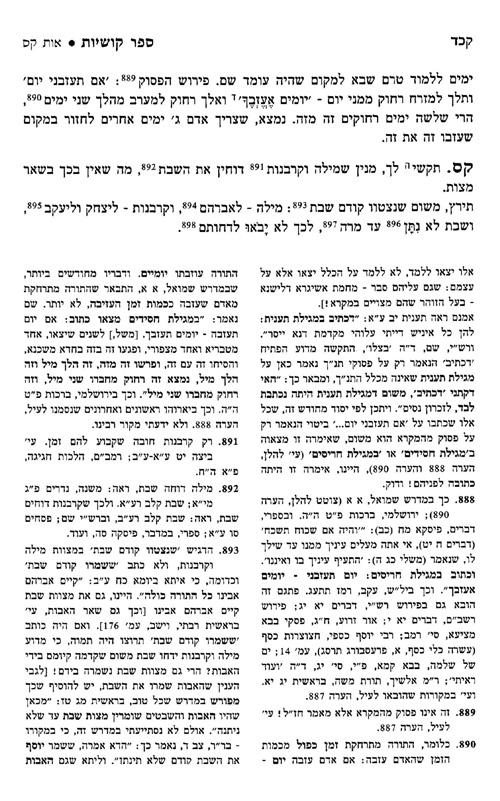
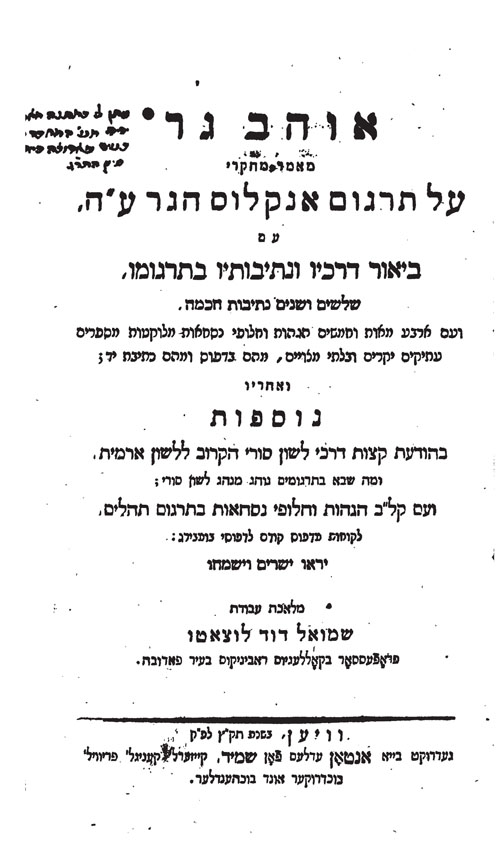
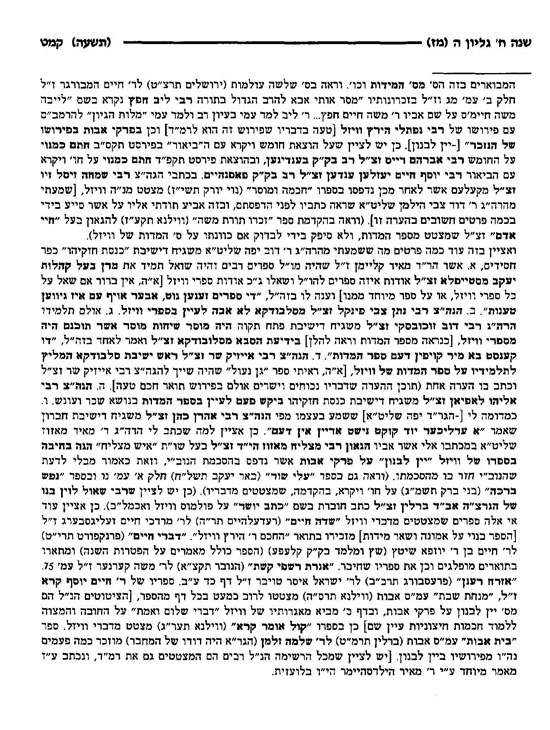
A few years ago the outstanding scholar, R. Yaakov Yisrael Stoll, published the anonymous Sefer Kushyot. Here are pages 123-124.

I ask readers to look at note 887. He discusses a mistake made by many in assuming that an expression is a biblical verse. He then notes that the Zohar also makes the same mistake, and refers to other such mistakes made by בעל הזוהר. He doesn’t say so explicitly, but I think the way he formulates the note lets the reader, who is attuned to these things, know that in his mind בעל הזוהר is not R. Shimon ben Yohai.

Someone called my attention to this video

I have no idea who the speaker is, and if he has ever even read a page of the Zohar, but he does seem very sure of himself. I have no objection to discussing the authorship of the Zohar and the ideas found there, or Kabbalah as a whole. However, I would think that a little humility is called for when discussing a discipline that was a basic part of the religious worldview of so many central figures. Do the names Nahmanides, R. Joseph Karo, or the Vilna Gaon mean anything to this speaker?
In my article, I cited all sorts of texts by Orthodox figures dealing with the authorship of the Zohar. Yet I overlooked the following by R. Joseph Hertz.
The question of the authorship of the Zohar, like that of Sefer Yetzirah, is one of the cruces of Jewish literature. The authorship by Simeon ben Yochai, or by his immediate disciples, though this is still an article of faith with millions of Jews in Eastern Europe, has from internal evidence long proved to be untenable. The Zohar explains Spanish words, contains quotations from Gabirol, and mentions the Crusades.[2]
As noted, in my article cited a number of sources that point to additions to the Zohar. Rabbi Akiva Males commented to me that I neglected to mention R. Isaac Haver, Magen ve-Tzinah, ch. 21. This book was written in response to R. Leon Modena’s Ari Nohem, a work aimed at disproving the antiquity of the Zohar. Unless one’s head is totally in the sand, it is impossible to deny that there are passages in the Zohar that post-date the tannaitic era. For Modena, this was proof that the Zohar could not have been written by Rabbi Shimon ben Yohai. Haver, who wants to hold onto the ancient dating, adopts the only path open to him, arguing that there are indeed many post-tannaitic additions, but the core of the book is ancient.
ובאמת ספר הזוהר נכתב כמה דורות אחר רשב”י מה שנכתב ונתקבל משמו ומשאר חבריו ותלמידו שהיו בימיו, וגם זה נעשה בו הוספות רבות עד מאוד מן אחרוני האחרונים אחר שבאו בכתב וניתנו להעתיק ושלטו בו ידי רבים כל אחד מה שנראה בדעתו ומה שנתחדש לו וכתב בגליון על ספר הזוה”ק מן הצד ואח”ז בא ריעהו מעתיק מן המעתיק ומצא בגליון דברים רבים ובמעט התבוננות חשב שזה היה חסרון בגוף ספר והכניסם בפנים.
Haver points out that is how we can explain the obviously late passages, where we see that the Zohar includes material that comes from Rashi and R. Tam. Among kabbalists, it was not unheard of to say that Rashi actually knew the Zohar and was influenced by it.[3] But Haver will have none of this and recognizes that the influence is in the reverse direction, i.e., Rashi influencing the Zohar. He states that anyone who understands the Zohar will recognize these additions.
What does Haver mean when he mentions that there is material from R. Tam in the Zohar? I am aware of one obvious example. It says in Kiddushin 30b that “one should always divide his years into three: [devoting] a third to Mikra, a third to Mishnah, and a third to Talmud.” R. Tam explains why the practice in his day was not in accord with what the Talmud states, an explanation that became very influential and served as a justification for the widespread ignoring of the study of Tanakh in the Ashkenazic world[4]
בלולה במקרא ובמשנה וכו’: פירש רבינו תם דבתלמוד שלנו אנו פוטרין עצמנו ממה שאמרו חכמים לעולם ישלש אדם שנותיו שליש במקרא שליש במשנה שליש בתלמוד.
What he says is that since the Talmud itself contains Bible and Mishnah, there is no need to divide one’s time among the three categories. Rather, by studying Talmud one combines all three areas. I always found this a difficult explanation, for if the Talmud agreed with this perspective, it would have said so, instead of stating that one is to divide one’s time. The intention of the talmudic instruction in Kiddushin was that people become well acquainted with all three subjects, and if they only devote themselves to Talmud, there is a great deal of Bible and Mishnah[5] they will never encounter. (According to Maimonides, Hilkhot Talmud Torah 1:12, once one is already a scholar, he does not need to divide his time between the three areas, but can focus almost entirely on Talmud.)
Despite what R. Tam says, R. Samson Raphael Hirsch claims that it was due to a misunderstanding of this opinion that people were led to stop studying Tanakh.[6] Not mentioned by Hirsch is that even before R. Tam some scholars ignored Tanakh. There were even talmudic Sages who were not expert in Bible. Bava Kamma 54b-55a states:
R. Hanina b. Agil asked R. Hiyya b. Abba: Why in the first Decalogue is there no mention of wellbeing [טוב], whereas in the second Decalogue there is a mention of wellbeing?[7] He replied: While you are asking me why wellbeing is mentioned there, ask me whether wellbeing is in fact mentioned or not, as I do not know whether wellbeing is mentioned there or not.
Tosafot, Bava Batra 113a, s.v. travayhu, cites this text to support its contention about the amoraim: .פעמים  היו שלא היו בקיאין בפסוקין After referring to this strange passage in Tosafot (concerning which there is an entire literature), R. Moses Salmon sarcastically declares[8]: ועל זה סומכים הלומדים עמי הארץ וד”ל
Unlike Salmon, R. Samuel Strashun, in his note to Bava Batra 8a, defended those talmudists who were deficient in knowledge of Bible.
משמע דאפשר שיהיו בעלי משנה או בעלי גמרא ולא בעלי מקרא . . . ודלא כאותן ששופכין בוז על מקצת גדולי זמנינו בש”ס ופוסקים ואין להם יד כ”כ במקרא.
So returning to my question, what does Haver mean when he says that there is material from R. Tam in the Zohar? Well it turns out that R. Tam’s explanation, which we have just been discussing, is also found in the Zohar Hadash (ed. Margaliyot), Tikunim p. 107b:
תקינו רבנן לשלש שנותינו במקרא בתלמוד . . . ואוקמוה דמאן דמתעסק (במשנה) [בתלמוד] כאלו התעסק בכלא בגין דאיהי בלילא במקרא במשנה בתלמוד.
There is no question that this passage is adopted from R. Tam, who lived a millennium after R. Shimon ben Yohai.
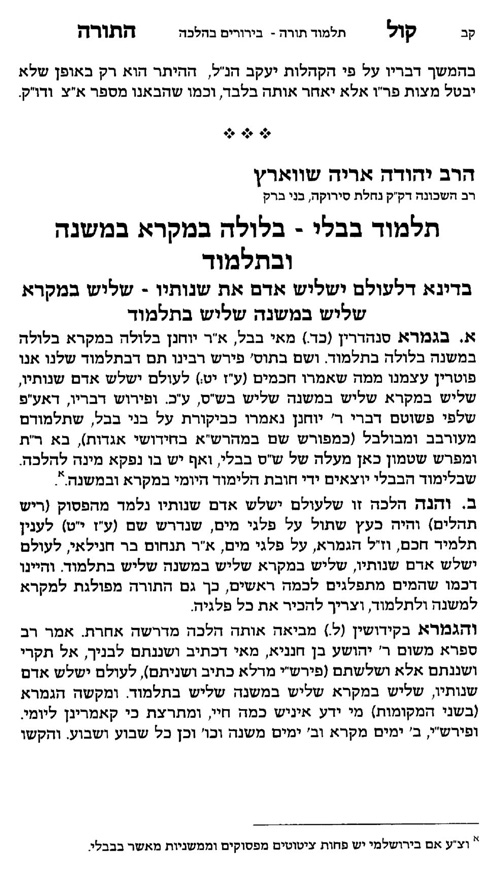
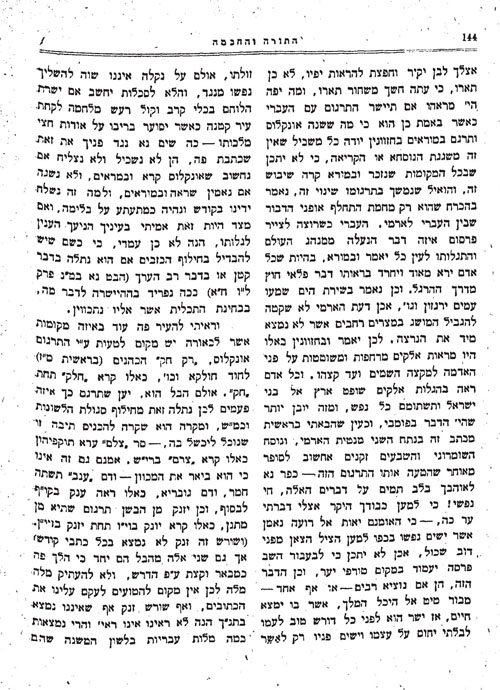
Incidentally, regarding R. Tam’s view, here is a page of an article by R. Yehudah Aryeh Schwartz that appeared in the Agudah journal Kol ha-Torah, Adar 5765 [2005], p. 102 (second pagination).

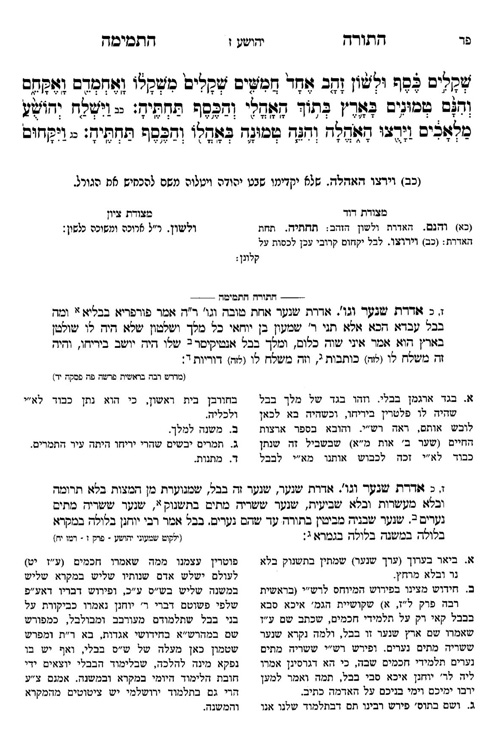
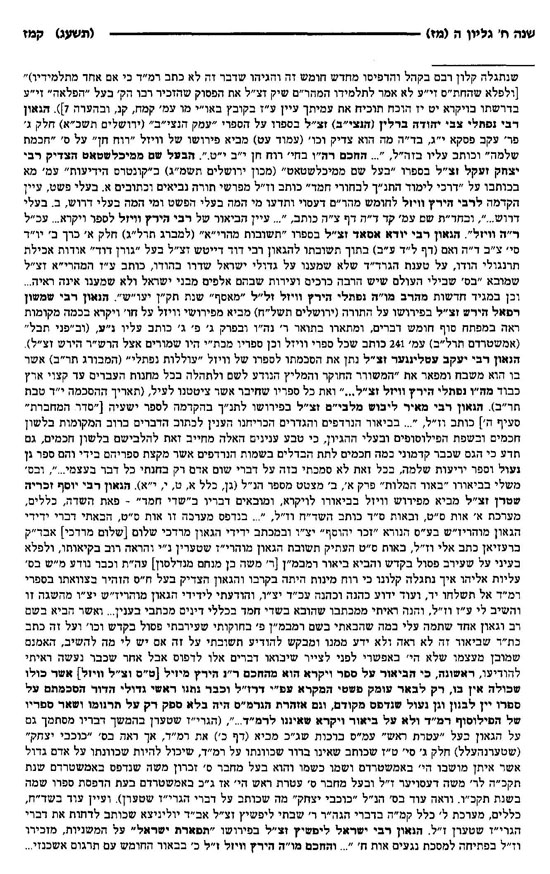
The following page comes from R. Yehiel Michel Stern’s Ha-Torah ha-Temimah on the Book of Joshua, p. 84 no. 3, which appeared in 2009.

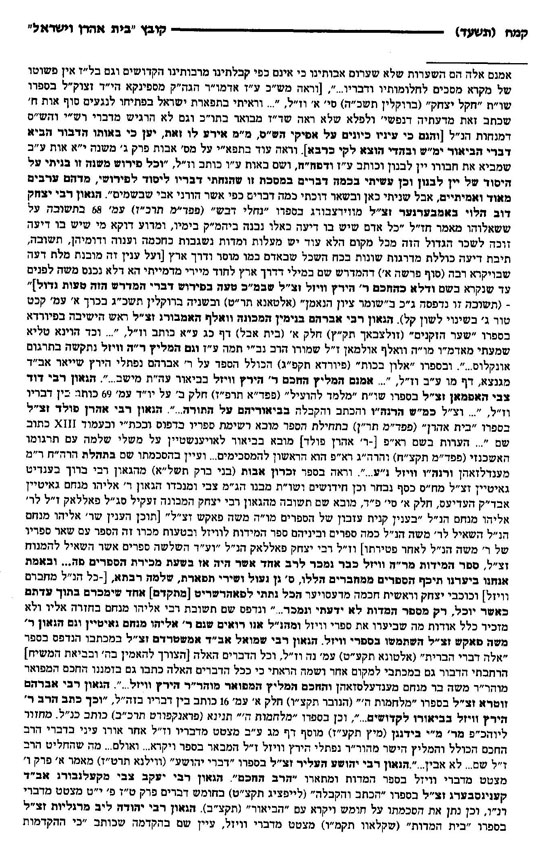
As you can see, Stern’s comment is lifted word for word from Schwartz’s article. I am not sure what to make of this. That is, are dealing with a simple plagiarism? Perhaps one of the readers has some insight. (Stern may be the world’s most prolific writer of Torah publications.)

In my article I referred to passages in the Zohar which traditional authorities had claimed were really later interpolations. There are examples of the opposite phenomenon as well, namely, attributing things to the Zohar that are not found there. The most famous instance of this that I know of is found in the Bah, Orah Hayyim 4 (and quoted from there in Be’er Heitev, Orah Hayyim 1:2) that upon waking up if you walk four amot without washing your hands you are subject to the death penalty![9]  This Zoharic text is quoted in the name of the work Tola’at Yaakov, authored by R. Meir Ibn Gabai (1480-ca. 1543). The passage is cited over and over again by aharonim in trying to show the importance of the morning washing. Yalkut Meam Loez, Deut. 4:9, doesn’t even mention the Zohar, stating simply:
ואמרו חז”ל כל המהלך ד’ אמות בלי נטילת ידים חייב מיתה
A few scholars actually point out that this passage is not to be found in the Zohar.[10] One of those who realized this is R. Eleazar Fleckeles, Teshuvah me-Ahavah, vol. 1 no. 14, whom we will come back to later in this post. He writes that he looked in the Zohar and didn’t find the passage referred to. With reference to the Tola’at Yaakov, whom he (falsely) thinks cited the Zohar (since that is what it says in the Bah), Fleckeles writes:
ושארי לי’ מארי’ שעשה רוב ישראל לחייבי מיתות
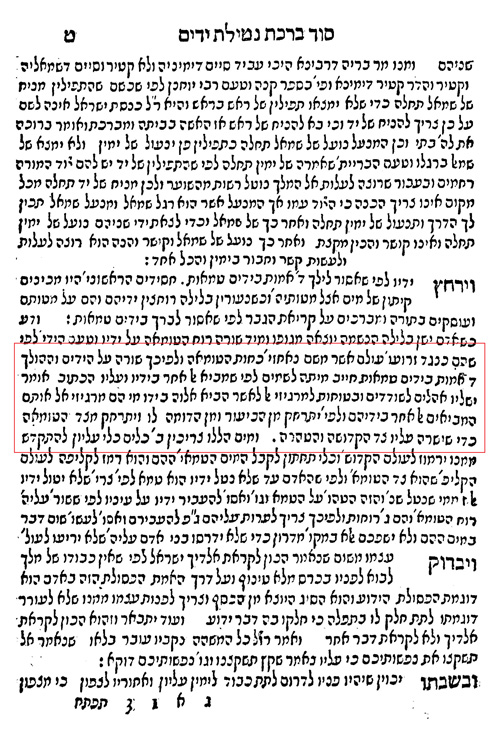
Because very few of the aharonim actually had the sefer Tola’at Yaakov (which is itself a little strange as the book was printed a number of times), they were unable to see that the Tola’at Yaakov never quotes the Zohar!  Here is p. 9a from the Cracow 1581 edition.

If you look in the second paragraph you will see that Ibn Gabai does state that one who doesn’t wash his hands is חייב מיתה, but he doesn’t attribute this to the Zohar. How he derives this idea is worthy of investigation at a different time. For now, it is important to just note that what we have here is an independent idea of a sixteenth-century Kabbalist which for some reason was misquoted by the Bah as if Ibn Gabai was citing the Zohar. This misquotation was to be repeated again and again, down to the present day.

The supposed Zohar text has led to additional stringencies. For example, the hasidic master R. Meshulam Zusha of Anapole stated that that one should not even to put one’s legs on the ground before washing one’s hands.[11]

Here is an interesting story that relates to the false Zohar quotation: A very learned and rich student came to study with R. Simhah Bunim of Peshischa.[12] The problem was that this young man was a bit of an independent thinker, and the Kotzker, who was also there, didn’t think that the young man belonged with them. The story explains how the Kotzker was able to convince the young man to leave. What was it about this man that turned the Kotzker against him? We are told the following:
הוא הגיה בזוה”ק שכתב “ההולך ד’ אמות בלי נטילת ידים חייב מיתה”, והוא הגיה: “והוא שהרג את הנפש”, וזה נגד חז”ל.
So here we have a story of an emendation of a non-existent Zoharic text. And even if we assume that the man was emending the text as it appears in the Bah, we see from the story that the Kotzker thought that the quote was authentic.

I wasn’t sure what to make of this passage. I therefore consulted a learned friend who said that the problem was that the young man who emended the text to read והוא שהרג את הנפש was making a joke at the expense of the (supposed) Zoharic passage. He was saying that you are only deserving of the death penalty if you kill someone while walking the four amot. I then sent him a page from R. Zvi Yavrov, Ma’aseh Ish, vol. 4, p. 113, where it appears that the Hazon Ish took the emendation-explanation just mentioned as an authentic understanding of the passage. The text in Yavrov reads as follows:

על מה שהביא ה”באר היטב” (או”ח סימן א’ סק”ב) שההולך ד’ אמות בלי נטילת ידים שחרית חייב מיתה, אמר רבינו להגאון ר’ שמריהו גריינימן זצ”ל, שמישהו כתב בגליון הספר “והוא שהרג את הנפש” (מבנו הג”ר ברוך שליט”א).

My friend replied by referring me to a discussion on Hyde Park here where the text from Yavrov is also mentioned. One of the commenters there claims that the Hazon Ish was also joking in his remark, and the one who heard this (who was hardly a tyro), or the person who passed on the information to Yavrov, didn’t realize that it was a joke. The commenter also assumes that despite what appears in the Bah and Be’er Heitev, the Hazon Ish would have known that that it wasn’t an authentic quote from the Zohar. I find this very unlikely, as the Hazon Ish is not known to have been an expert in the Zohar, and what reason would there be for him to doubt that which is quoted in numerous earlier sources? 

The one point that the commenter has going for him is that he is correct that there are many examples in this book, and others like it, from which we see that the author does not know how to distinguish between what should and should not be included in a book. The commenter gives an example to illustrate this. In vol. 5, p. 141, Yavrov gives us the following important information about the Hazon Ish, recorded by one of his students: They never saw the Hazon Ish picking his nose! I kid you not.

העיד אחד מגדולי תלמידי רבינו: מעולם לא ראו את הרבי עם אצבע באף (מהרב מרדכי ויספיש)

Regarding this issue, R. Eliezer Melamed – who really is a great halakhic scholar – writes that picking one’s nose in public is forbidden.[13]

ויש מעשים שכשאדם עושה אותם בסתר, אין בכך פגם, אבל בפני אנשים אחרים הם נחשבים למגעילים ואסורים משום ‘בל תשקצו’ ומשום המצוות שבין אדם לחבירו. למשל, המחטט באף או מגרד פצעונים שבפניו, עובר באיסורים אלו. וכן אמרו חכמים (חגיגה ה, א): “כִּי אֶת כָּל מַעֲשֶׂה הָאֱלוֹהִים יָבִא בְמִשְׁפָּט עַל כָּל נֶעְלָם. אמר רב: זה ההורג כינה בפני חבירו ונמאס בה. ושמואל אמר: זה הרק (היורק) בפני חבירו ונמאס בה”. ובמיוחד בעת שאוכלים, צריך להיזהר בכך יותר, כי מעשים מאוסים, וכן דיבורים מגעילים, מבטלים את התיאבון ומעוררים בחילה בקרב הסועדים.
Getting back to the supposed Zoharic passage, R. Yitzhak Abadi discusses this in Or Yitzhak, vol. 1, no. 1. He begins his responsum by pointing out that despite the fact that the Mishnah Berurah records how one is not to walk four amot before washing one’s hands, R. Aaron Kotler did not concern himself with this. Abadi then explains that the words of the Zohar are not intended for everyone,[14] and none of the rishonim write that it is forbidden to walk four amot before washing. He concludes by stating that he is inclined to rule – ולולי דמסתפינא הייתי אומר להלכה למעשה – that the entire practice of negel vasser is no longer relevant to us because ruah ra’ah is no longer a concern.[15] Here again we see that the author of a responsum assumes that the issue he is discussing, of not walking four amot before hand washing, is based on the Zohar, when in fact the Zohar doesn’t mention this at all.

Finally, I must mention that R. Hayyim Joseph David Azulai, Birkei Yosef, Orah Hayyim 1:1, recognizes that there is nothing in the Zohar about being subject to the death penalty for walking four amot. However, he notes that both he and his forefather, R. Abraham Azulai, saw an alternate version which indeed states that one who walks four amot אתחייב מיתא לשמיא. Based on this alternate text, the Hida declares that the Tola’at Yaakov is correct in how he quoted the Zohar, and the criticism of him for the inaccurate quotation is therefore misplaced. Even the Hida didn’t have access to the Tola’at Yaakov, and based on the Bah assumed that the Tola’at Yaakov quoted the Zohar and must indeed have had the alternate text. Yet as we have already seen, the Tola’at Yaakov does not quote the Zohar, and there is no actual alternate version of the text such as quoted by the Hida.

What happened was that someone saw the Bah quoting the Tola’at Yaakov as quoting the Zohar that one who walks four amot is subject to the death penalty. Not finding this passage in the Zohar, this individual inserted it into his text of the Zohar in the section that deals with hand washing in the morning (Zohar, vol. 1 p. 10b). I don’t think this was intended as a forgery. Rather, whoever put it in assumed that it was an authentic Zoharic teaching, found in an alternate text, and he was inserting it where it should be. He thought that it was an authentic Zoharic teaching because the Tola’at Yaakov had testified to it. But as we have already seen, Tola’at Yaakov said nothing of the sort. This alternate girsa can therefore be traced back to the Bah’s misquotation of the Tola’at Yaakov.

How can we explain the Bah? I think the answer is simple. When the Bah cited the Tola’at Yaakov he did not have the book in front of him, and was relying on his memory, the sort of mistake that is found among all of our great sages. That is how this error crept in which has had a great influence on Jewish religious texts and practice for hundreds of years, and yet it all goes back to a simple mistaken quotation.

Returning to my article on the Zohar, Rabbi Akiva Males called my attention to the following paragraphs that appear in an essay by R. Aryeh Kaplan.[16] It would be great if a reader has examined the manuscript and can testify to the accuracy of what Kaplan reported.

Rabbi Yitzchok deMin Acco is known for a number of things. Most questions regarding the authenticity of the Zohar were raised by him, since he investigated its authorship. He was a personal friend of Rabbi Moshe de Leon, who published the Zohar. When questions came up regarding the Zohar’s authenticity, he was the one who investigated, going to the home town of Rabbi Moshe de Leon. The whole story is cited in Sefer HaYuchasin, who abruptly breaks off the story just before Rabbi Yitzchok reaches his final conclusion. Most historians maintain that we do not know Rabbi Yitzchok’s final opinion – but they are wrong.

Around three years ago, someone came to me and asked me to translate parts of a manuscript of Rabbi Yitzchok deMin Acco, known as Otzar HaChaim. There is only one complete copy of this manuscript in the world, and this is in the Guenzberg Collection in the Lenin Library in Moscow. This person got me a complete photocopy of the manuscript and asked me to translate certain sections. I stated that the only condition I would translate the manuscript is if I get to keep the copy. This is how I got my hands on this very rare and important manuscript.

Of course, like every other sefer in my house, it had to be read. It took a while to decipher the handwriting, since it is an ancient script. One of the first things I discovered was that it was written some 20 years after Rabbi Yitzchok investigated the Zohar. He openly, and clearly and unambiguously states that the Zohar was written by Rabbi Shimon bar Yochai. This is something not known to historians, and this is the first time I am discussing it in a public forum. But the fact is that the one person who is historically known to have investigated the authenticity of the Zohar at the time it was first published, unambiguously came to the conclusion that it was an ancient work written by Rabbi Shimon bar Yochai.
Leaving aside for now the important information recorded by Kaplan, there is a good deal that can be said about R. Moses de Leon and the creation of the Zohar, and it is questionable if one can even speak of a single author. One essential point that must be recognized by all who investigate this matter is that De Leon himself was involved in other forgeries, in particular forgeries of geonic responsa.[17] As such, he obviously is not the most reliable source when he announces to the world that he is in possession of a text of mystical lore dating from the tannaitic period.

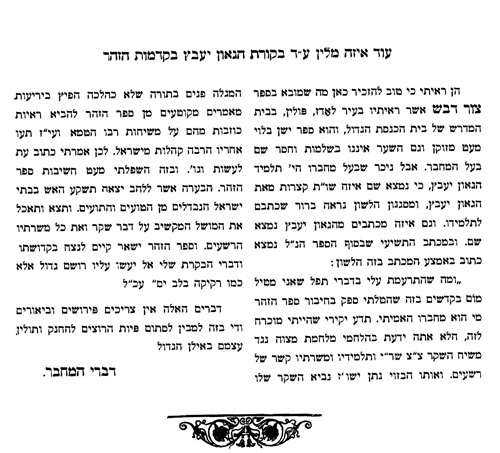
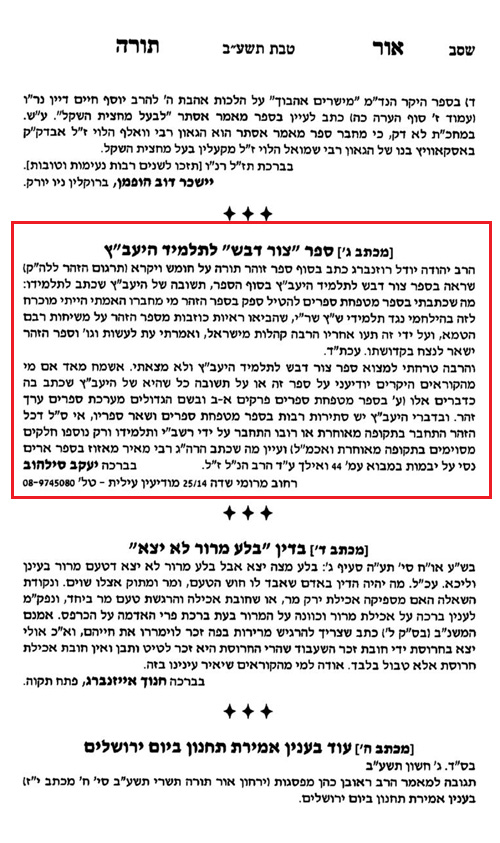
Regarding the Zohar and forgery, I think readers will also find the following interesting.  (Many already know some of the story, but it is worth repeating for those who don’t.) In the journal Or Torah, Tevet 5772, p. 362, a reader, whose knowledge of Jewish bibliography is not that great, had a question. He saw the following page in R. Yudel Rosenberg’s Hebrew translation of the Zohar to Va-Yikra.


This is important information, as Emden confesses that his attack against the Zohar was only designed to pull the wool out from under the Sabbatians, whose ideology was linked to the Zohar. The man who wrote to Or Torah, not knowing anything about Rosenberg, asked for help from the readers. He tried to locate the book Tzur Devash quoted by Rosenberg, but was unable.

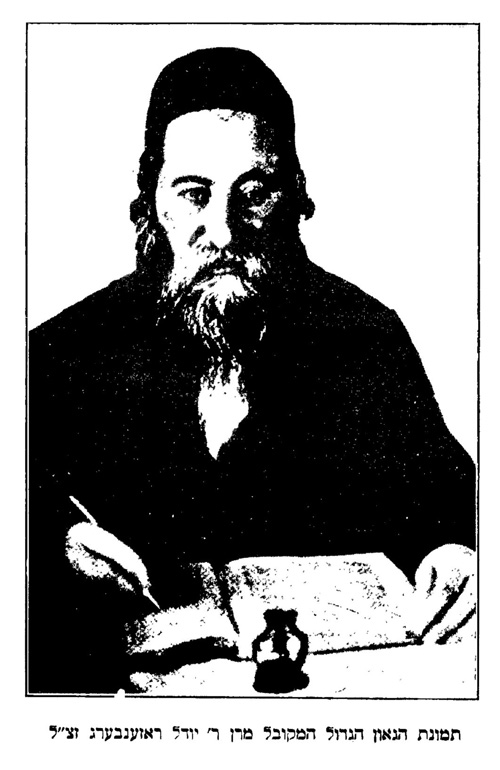
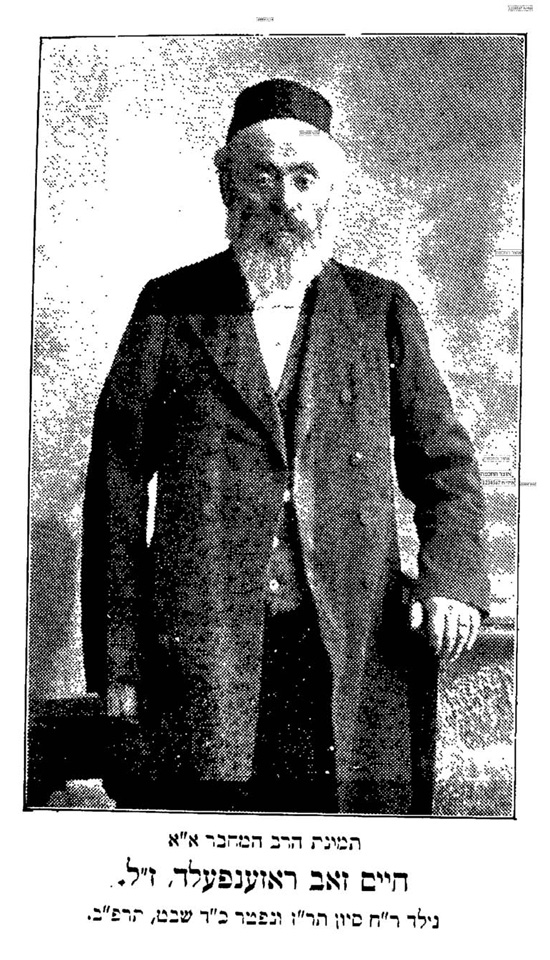
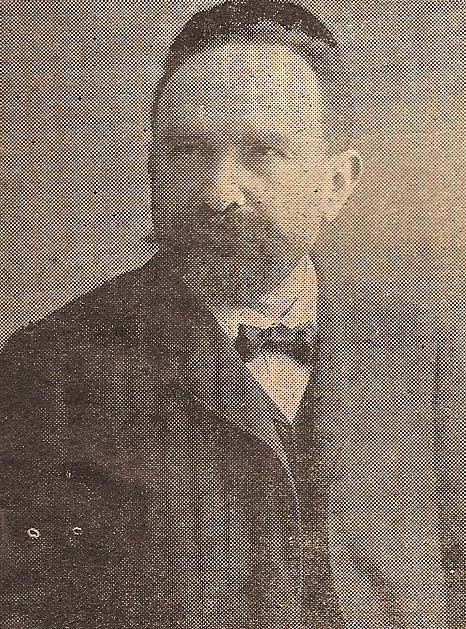
In Or Torah, Adar 5772, pp. 555-557, two individuals let the first writer in on the “not-so-secret” that there is no book Tzur Devash, and that Rosenberg had a long history of making up texts; see here. This is so even though Rosenberg was a respected rabbi and posek. Here, incidentally, is the picture of Rosenberg that appears at the beginning of his Zohar translation.

With some of Rosenberg’s “forgeries”, it seems that what he was doing was creating a form of literature, and anyone who takes the story literally has only himself to blame (much like anyone who thinks that Animal Farm is really about animals has no one to complain to but himself). At times, Rosenberg would even hint to the reader what he was doing, as in Hoshen ha-Mishpat shel ha-Kohen ha-Gadol, where in the preface he mentions that part of the story also appeared in a work of Arthur Conan Doyle. If any reader would have taken the time to find out who this was, he would have realized that we are dealing with a fictional account. At other times, however, Rosenberg offers no such hint, at least none that I am aware of, and what we have appears to be a simple forgery. That would seem to be the case here, with the phony letter from Emden.

The second correspondent in Or Torah also calls attention to R. Yaakov Hayyim Sofer’s discussion in Etz Hayyim 7 (5769), pp. 267-268. While for a long time everyone has known that the Emden letter was a forgery, Sofer identifies another forgery. Rosenberg’s translation (second edition) vol. 1, contains a letter of approbation from R. Hayyim Hezekiah Medini, the Sedei Hemed.[18] Sofer claims, and I think he is correct, that this approbation is a forgery. His prime proof is that in the approbation Medini refers to the Hida as האזולאי. There are many hundreds, if not thousands, of references to the Hida in Medini’s work, and not once does he refer to the Hida as האזולאי, which is a form only used by Ashkenazic rabbis. What Sofer didn’t realize, and further supports his point, is that Rosenberg himself, in his introduction, p. 5a, refers to Hida as האזולאי.

In Or Torah, Iyar 5772, p. 744, another writer called attention to Sedei Hemed, Peat ha-Sadeh, kelalim, mah’arekhet bet, no. 47, where Medini states that it is disrespectful to use this sort of language, referring specifically to the expression האלגאזי.[19] This is another proof, if any was needed, that Medini would never have referred to the Hida as האזולאי. Let me also add that the way Medini (=Rosenberg) concludes the forged haskamah is not like any of his other letters, which are included in Iggerot Sedei Hemed (Bnei Brak, 2006). In the authentic letters, before his name Medini always adds הצב”י or הצעיר , which he does not do in the forged haskamah.. In his authentic letters, he also never closes them by adding to his name רב ומו”ץ בעיר הקדש חברון. Therefore, there can be no doubt that the letter of approbation sent by Medini to Rosenberg is simply another one of the latter’s forgeries.

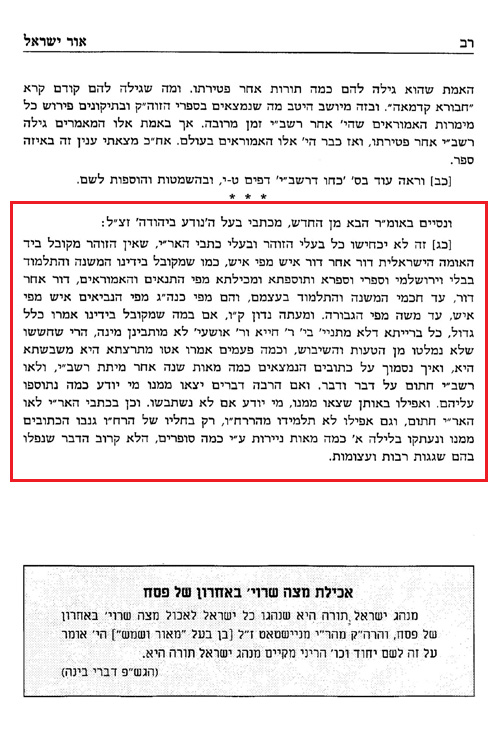
Now let us turn to the incredible recent publication of a derashah by R. Yehezkel Landau, the Noda bi-Yehudah.[20] But before doing so, it is necessary to say a few words about R. Eleazar Fleckeles, the outstanding student of the Noda bi-Yehudah. (Fleckeles’ grave, entirely ignored by tourists, stands right near that of his teacher.) Ever since the publication over two hundred years ago of the strong comments of Fleckeles downplaying the authority of the Zohar, people have wondered where this came from. It just seemed strange that an 18th-19th century traditional Torah scholar would express himself this way. We now have the answer. Fleckeles was following in his teacher’s footsteps. Thanks to the publication of the Noda bi-Yehudah’s derashah by Michael Silber and Maoz Kahana, a derashah that had previously only appeared in a censored form, we now know that that the Noda bi-Yehudah had a skeptical view of the Zohar, at least in the form that it has come down to us. The issue that the Noda bi-Yehudah was concerned with was the same thing that bothered Emden and Fleckeles, namely, distinguishing the authentic ancient Jewish mysticism from the many later additions that found their way into the Zohar.

What caused the Noda bi-Yehudah in his later years to adopt a skeptical position, one so much at odds with his earlier outlook, is of course worthy of investigation and something for the scholars to fight over (and they already have!).

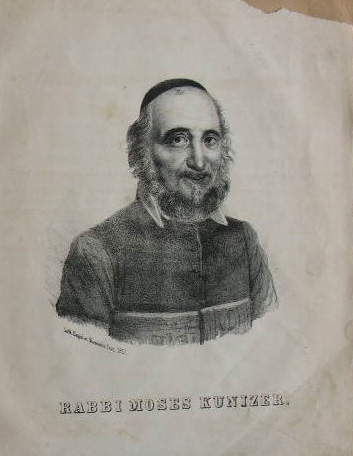
Regarding Fleckeles, his negative comments about the Zohar that appear in Teshuvah me-Ahavah are well known and have often been cited. In my article I also referred to Fleckeles’ citation of Wessely who quoted R. Jonathan Eibschuetz as supposedly stating that one need not believe in Kabbalah. (Needless to say, it is very difficult to believe that Eibschuetz could have ever expressed himself this way.) In preparing for my Torah in Motion talks on R. Moses Kunitz,[21] I found another relevant text from Fleckeles that as far as I know has gone unnoticed among those who have discussed the matter. It appears in Kunitz’s responsa Ha-Metzaref,[22] which happens to be one of the strangest responsa works ever published. It is also noteworthy in that it contains something extremely rare, namely, a responsum from R. Nathan Adler, the Hatam Sofer’s teacher. Knowing that some people might doubt that the teshuvah could really have been authored by R. Nathan, he also included a letter from the Hatam Sofer testifying to the responsum’s authenticity. 

In Ha-Metzaref, vol. 1 no. 11, Fleckeles again focuses on additions to the Zohar that are not part of the authentic work, but here he adds a new point which is important for an accurate description of Fleckeles’ position. He says that if a Zoharic text is quoted by R. Isaac Luria, R. Moses Cordovero, or R. Menahem Azariah of Fano then you can assume that it is part of the original Zohar, authored by R. Shimon ben Yohai.

One final comment regarding the Noda bi-Yehudah’s derashah: Yehoshua Mondshine somehow got hold of it before it was published by Silber and Kahana. Here is the relevant page, from Or Yisrael, Nisan 5766, p. 202.

Notice how Mondshine doesn’t reveal where this text comes from, something not expected from a careful scholar. Since this is such an amazing passage, and Mondshine’s article was the first time it appeared in print, you can be sure that loads of people must have turned to Mondshine asking him for its source. Presumably, when he was given the text he gave his word not to reveal its source. He might not have even known the source, and was only given the small passage.

2. Due to correspondence with a couple of people, I realized that I forgot to include something about the word מחיה in my last post. So here it is now.

In the Amidah we say מחיה מתים אתה. There is a tzeirei under the yod meaning that this is not a verb. Artscroll correctly translates “Resuscitator of the dead.” Sacks,[23] on the other hand, gives the mistaken translation “You give life to the dead”. The next line reads

מכלכל חיים בחסד, מחיה מתים ברחמים רבים

Is מחיה in this verse a verb? Ifמכלכל  is translated as a verb, then מחיה will also have to be translated this way. The Tehilat ha-Shem siddur has a segol under the yod of מחיה, and with this vocalization it is correct to translate it as a verb. However, for siddurim with a tzeirei the only accurate translation is a noun. Metsudah, which we have seen is consistent in this matter, translates: “Sustainer of the living with Kindliness, Resurrector of the dead with great mercy.” Both Artscroll and Sacks, however, translate מחיה as a verb which is incorrect. But why is it incorrect? It is only incorrect because of the vocalization (tzeirei), but I think that in the sentence מחיה is indeed a verb. This means that it is the vocalization that is incorrect, and that instead of a tzeirei under the yod, there should be a segol, as in the Tehilat ha-Shem siddur[24]. So my recommendation to Artscroll and Sacks would not be to change the translation, but only to change the vocalization.

After reading my last post, Ben Katz sent me an example where of all the translations, only Artscroll gets it right. The last lines of Adon Olam read:
בידו אפקיד רוחי בעת אישן ואעירה
ועם רוחי גויתי ה’ לי ולא אירא

Sacks translates as follows (and Metsudah is similar):

Into His hand my soul I place,
when I awake and when I sleep.
God[25] is with me, I shall not fear;
Body and soul from harm will He keep.
What this means is that God has my soul at all times, when I am awake and when I sleep, and  that that is why I have no fear.

Artscroll translates as follows:

            Into His hand I shall entrust my spirit
            When I go to sleep – and I shall awaken!
            With my spirit shall my body remain.
            Hashem is with me, I shall not fear.
Before getting to what I think is the significant  part of the translation, let us look at the last line: ועם רוחי גויתי, ה’ לי ולא אירא. In his translation, Sacks has turned the order of the sentence around. That is OK as it was done so that the rhyme works (and Sacks deserves enormous credit for having most of the song rhyme in English). The real problem is Sacks’ rendering of the words  ועם רוחי גויתי. There is no way this can be translated as “Body and soul from harm will He keep.” The words imply nothing about keeping from harm. The typical translation sees ועם as referring to God, meaning that God is with my soul and body and therefore I will have no fear.

However, Artscroll gets it right, I think, by translating these words literally: “With my spirit shall my body remain.” To see how Artscroll gets to this translation, we have to look at the previous verse, and that is where we see Artscroll’s brilliance. בידו אפקיד רוחי בעת אישן ואעירה. The other translations understand this to mean that I place my spirit (or soul) in God’s hands when I sleep and when I am awake. The problem with this rendering is that if my spirit is always in God’s hands, then what sense does it make to say that I place it there? If it is always there, during the day and at night, there is nothing for me to place.

Artscroll translates: “Into His hand I shall entrust my spirit when I go to sleep – and I shall awaken!” This is an allusion to the famous Midrash that we are all taught in school, that when you go to sleep your spirit returns to God, and is given back to you in the morning.[26] This isn’t just some random Midrash, but is derived from Psalm 31:6, which states: בידך אפקיד רוחי.[27] In other words, the Midrash is commenting on the exact words used by Adon Olam. This shows that Artscroll’s translation has indeed beautifully captured the correct meaning.

We now can properly understand the next verse. Since my spirit has returned and joined with my body, I know that God is with me and I shall not fear.

3. There is a relatively new publication for all who are interested in Jewish intellectual life. I refer to the Jewish Review of Books, expertly edited by Abraham Socher. Modeled after the New York Review of Books, each issue is full of great material. In the latest issue I published a translation of part of an essay by R. Jehiel Jacob Weinberg on Berdyczewski. Only subscribers can access the essay, but everyone can see the artwork that went along with it. See here. (Due to copyright restrictions, I can’t reproduce the artwork in the post.)

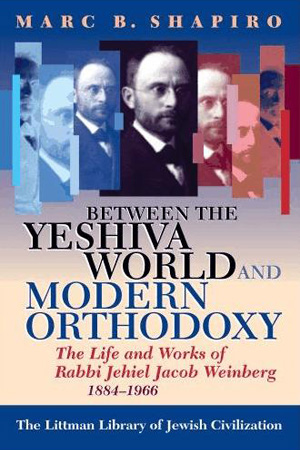
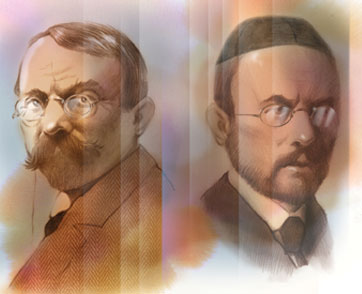
If you examine the picture of Weinberg produced by the artist, you will see that it was modeled after this picture that appears in my book on Weinberg, and also on the front cover of the soft-cover edition.


The original photograph was part of a faculty picture taken when Weinberg taught at the University of Giessen. However, the artistic reproduction adds something that is not found in the original, something that the artist assumed no rabbi should be without; see here.

4. Those outside of the United States who want to post (or read) comments, please access the Seforim Blog site by going to http://seforim.blogspot.com/ncr.  Only by doing this will you be taken to the main site (and not have a country code in the URL). Readers outside the United States do not have access to the comments posted in the U.S. We don’t know why this is, or how to fix it yet, but the above instruction fixes the matter.

* * * *
Quiz

I have an extra copy of one of the volumes of R. Hayyim Hirschensohn’s commentary on Rashi. The person who answers the following question will receive it. Send answers to me at shapirom2 at scranton.edu

1. Tell me the only place in the Shulhan Arukh where R. Joseph Karo mentions a kabbalistic concept? I am referring to an actual concept e.g., Adam Kadmon, Ein Sof, etc.

2. If more than one person answers the above question correctly, the one who answers the following (not related to seforim) will win: Which is the only United States embassy that has a kosher kitchen?

If no one can answer question no. 2, I will do a lottery with the names of those who answer no. 1 correctly.

[1] R. Moshe Zuriel kindly sent me the following additional sources that should be added to my list.

[א] ספר “אור החמה”, ביאור בשלשה כרכים על הזוהר, נלקט ע”י הרב אברהם אזולאי, מביא דברי ר’ אברהם גלאנטי שם על זהר ח”א קסח, והוא בנדפס דף קנט ע”א ראש טור שמאל, “הם דברי מחבר הספר בימי הגאונים או חכמים אחרים שחברו כל המימרות יחד שכתב ר’ אבא, שהיה סופר של רשב”י והם חלקום לפרשיות כל פסוק בפרשה שלו, והם אמרו משלהם”.
[ב] בפירוש ר’ יוסף חיים מבבל (בן איש חי) בשם “בניהו” (דף ד ע”ב בנדפס) פירוש על תיקוני זהר, בתחילת ההקדמה לתקו”ז (ב ע”ב) מזכיר “ועל האי ציפור רמיזו רבנן בהגדה דבתרא דרבה בר בר חנה” כותב הרב: “נראה פשוט בספר בתקונים הראשון אשר הועתק מכתיבת יד חכמי הזוהר כך כתוב ‘קא רמיזו רבנן’ וכו’ אך חכם אחרון שראה דבר זה כתוב בגמרא דבתרא במאמרי רבב”ח הוסיף על הגליון תיבות אלו בהגדה דבתרא דרבב”ח וכו’ ואחר כמה שנים המדפיסים הכניסו בפנים מה שראו כתוב בגליון. ועל חינם הגאון יעב”ץ הרעיש העולם לערער בדבר זה וכיוצא בו”.
[ג] אדמו”ר ר’ יצחק אייזיק קומרנא בספרו “נתיב מצותיך” שביל התורה אלף, מהד’ שנת תש”ל עמ’ קא  כתב: “ור’ אבא היה כותב כל מה ששמע, הן ממנו הן מהחברים וכו’ בסוף ימי רבנן סבוראי תחילת הגאונים היה איש קדוש אאחד שהיה בו נשמת משה רבנו ממש וכו’ וכו’ והוא חיבר ספר רעיא מהימנא וקרא לזוהר חיבורא קדמאה”.
[ד] ר’ צבי אלימלך (מחבר בני יששכר) בספרו “הגהות מהרצ”א” (נמצא בתוכנת אוצר החכמה) על פרשת בא לח ע”א (בנדפס בספר שם דף קכו) כותב: “לפי גירסא הזו ע”כ [על כרחך] צ”ל דהזהר נתחבר בג”ע [בגן עדן] בזמן הגאונים, דהרי רב חסדא אמורא היה בזמן האמוראים” עכ”ל.
[ה] הרב אברהם יצחק קוק, מאמרי הראי”ה, עמ’ 519: מתוך מכתב להרב קאפח: “אפילו אם נשתלשלו דורות רבים והיו בהם הוספות והערות מחכמים שונים, ואם אפילו נתערבו בהם איזה דברים שראויים לביקורת, כמו שעשה הגאון יעב”ץ במטפחתו, אין העיקר בטל בכך”.
[2] Sermons, Addresses and Studies, vol. 3 p. 308. I learnt of this passage from Ben Elton, Britain’s Chief Rabbis and the Religious Character of Anglo-Jewry, 1880-1970, p. 176.
[3] See Studies in Maimonides and his Interpreters, p. 89 n. 376, where I mention that R. Abraham ben ha-Gra, who (for his time) had a critical sense, was among those who thought that Rashi knew the Zohar.
[4] Tosafot, Sanhedrin 24a s.v. belulah. The uncensored text, found in the Venice edition, reads בתלמוד, but the Vilna edition has בש”ס.
[5] Since the Daf Yomi siyum is just about upon us as I write these words, let me add the following: While I don’t think that R. Joseph B. Soloveitchik can be called an opponent of Daf Yomi, I was present at a shiur in the summer of 1985 where he expressed his dismay that due to the growing popularity of Daf Yomi, people were no longer studying all six orders of the Mishnah, much of which has no Talmud and is thus not included in the Daf Yomi cycle. (Due to how the Talmud was printed, Kinnim and Middot are the only tractates of Mishnah included in Daf Yomi. )
[6] Nineteen Letters, Letter Eighteen.
[7] See Deut. 5:15: כבד את אביך ואת אמך כאשר צוה ה’ אלקיך למען יאריכן ימיך ולמען ייטב לך על האדמה אשר ה’ אלקיך נתן לך
R. Samuel Schonblum offers an explanation of the talmudic passage that many will no doubt claim attributes a heretical assumption to one of the Sages. See his edition of R. Isaac Ibn Latif, Rav Pealim (Lemberg, 1885), p. 54:
כפי השקפה הראשונה נוכל לומר כי השנוים שבדברות האחרונות משה אמרן מדעת עצמו כמ”ש הראב”ע ז”ל כמוסיף וגורע ואפשר לומר כי לא נאמר טוב בסיני כלל ע”כ כאשר שאל לו מ”מ [מפני מה] בראשונות לא נאמר טוב ובאחרונות נאמר טוב השיב לו שאלני אם נאמר טוב אם לאו, שאפשר שגם באחרונות לא נאמר טוב כך משה הוסיף או גורע עד שבא לר’ תנחום בר חנילאי ואמר לו כי באמת נאמרו כך בסיני ע”י משה וזה שלא נכתבו על הלוחות הראשונות יען כי היו עתידין להשתבר ע”כ לא נאמר ע”י הדיבור הנעלם רק ע”י משה, ה’ יראני מתורתו נפלאות.
In Limits of Orthodox Theology, I did not discuss the commentary of Ibn Ezra (Ex 20:1) referred to by Schonblum. That is because I assumed that he agreed with the standard medieval view that even though Moses may have written things on his own accord, when these texts were later included as part of the Torah given to the Children of Israel, this was done at God’s direction and that is what sanctified the text. I am no longer convinced of this. All Ibn Ezra says in his commentary to Ex. 20:1 is that minor variations in wording are due to Moses changing God’s original words. Nowhere in his commentary does Ibn Ezra state that Moses’ changes were ever given divine sanction.
[8] Netiv Shalom (Budapest, 1898), p. 33.
[9] I wonder if this exaggeration is related to the seeming exaggerations found in Sotah 4b regarding those who are not careful with netilat yadayim:  כל האוכל לחם בלא נטילת ידים כאילו בא על אשה זונה . . . כל המזלזל בנטילת ידים נעקר מן העולם  See also Yalkut Shimoni, Ki Tisa, no. 386:  כל האוכל בלא נטילת ידים כבא על אשת איש (I say “seeming” exaggerations, because maybe these are not exaggerations. See the story with R. Akiva in Eruvin 21b.) Why were the Sages so strident in this matter? After citing the two rabbinic passages just mentioned, R. Zvi Hirsch Chajes points to an anti-Christian motivation. See Kol Sifrei Maharatz Chajes, p. 1003:
והטעם שהחמירו חז”ל בזה, דענין נטילת ידים הוא הענין הראשון אשר זלזל בו המחוקק לנוצרים, כמבואר בספריהם דשאלו אותו מדוע תלמידיו אוכלים בלי נטילת ידים והשיב מה שיצא מן הפה הוא טמא ומה שהולך לפה הוא טהור, ומפני זה למען לא יהיה לנו השתוות עמהם, החמירו בנטילת ידים, דהמזלזל בזה הוי כמודה להם.
See R. Mordechai Fogelman, Beit Mordechai, part 2, no. 15:2 (p. 224), who uses the Christian angle to explain another talmudic passage dealing with washing of hands. (Those who have read R. Israel Meir Lau’s wonderful autobiography will recognize Fogelman’s name.) See also Abraham Buechler, Am ha-Aretz ha-Gellili, ch. 4.
[10] See e.g., R. Pinchas of Koretz, Imrei Pinhas ha-Shalem (Bnei Brak, 2003), p. 209:
מה שכתב הבאר היטב (או”ח א, ס”ק ב) בשם תולעת יעקב בשם הזוהר, ההולך ארבע אמות בלי נטילת ידים חייב מיתה, הקפיד מאד הרב ז”ל על זה, שאינו בזוהר כלל, וגם במגן אברהם (או”ח ד, א) ובתולעת יעקב עצמו לא כתב בשם הזוהר רק דעת עצמו.
[11] See R. Zvi Elimelech of Dinov, Igra de-Firka, no. 9.
[12] See Menachem Yehudah Baum, Ha-Rabbi Rabbi Bunim mi-Peshischa (Bnei Brak, 1997), vol. 1, p. 212.
[13] See here.

See also R. Shmuel Eliyahu’s responsum on the topic here, R. Yaakov Peretz, Emet le-Yaakov (Jerusalem, 1979), p. 29, and R. Moshe Zuriel, Tziyon be-Mishpat Tipadeh (Bnei Brak, 2007), pp. 107-108. The section in Zuriel’s book is entitled
                               
 בענין הנוהג הנפסד של חיטוט באף ובאוזן, בעת לימוד תורה והתפילה
There might even be enough material for a booklet dealing with the halakhot related to picking one’s nose. I know some of you are laughing right now, but I am entirely serious. See also R. Israel Pesah Feinhandler, Avnei Yoshpeh, vol. 5, Orah Hayyim no. 71, who discusses if it is permissible to pick one’s nose on Shabbat.

See also R. Ovadiah Yosef, Yabia Omer, vol. 5, Orah Hayyim no. 30:

ואתה תחזה שע”פ האמור יש להעיר עמ”ש הגאון מהר”ח פלאג’י בס’ רוח חיים (סי’ שכא סק”ב וסי’ שמ סק”א), ובס’ כף החיים (סי’ ל אות קה), שיש להזהיר לאלה שמקנחים צואת החוטם (ובפרט כשהיא יבשה), שתולשים עי”ז כמה שערות, ואע”ג דדבר שאינו מתכוין מותר, היכא דפסיק רישיה יש להחמיר

There is also the issue of phlegm and hatzitzah that has been dealt with by many. It is interesting that halakhic sources regard putting one’s finger in one’s ear the same way as in one’s nose (e.g., in discussing if you have to wash your hands after this), while contemporary mores sees the latter as being in much poorer taste.

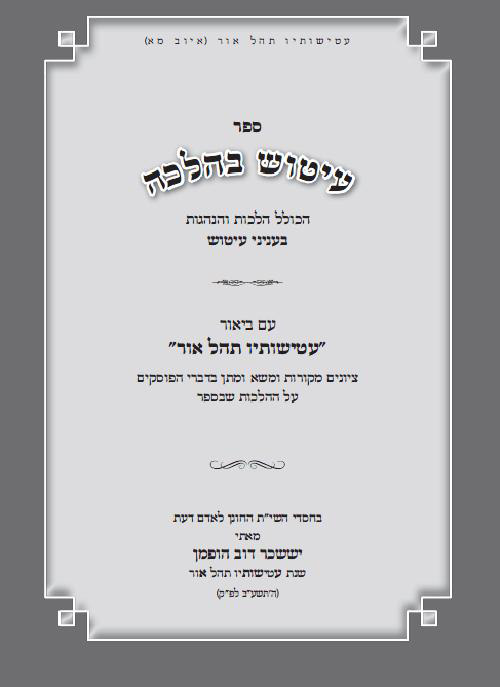
While on the topic of unusual halakhic subjects, let me call attention to a new book by the young scholar R. Yissachar Hoffman, from whom I have learnt a great deal. It focuses on sneezing. In his approbation, R. Gavriel Zinner writes: ראינו חשיבות התורה שיכולים מכל ענין לעשות ספר שלם

Here is the title page.

[14] I heard from a former student of the Lakewood yeshiva that someone once challenged one of R. Abadi’s pesakim by pointing out that the Mishnah Berurah stated that a “ba’al nefesh” should be stringent in the matter. Abadi replied that in the entire yeshiva, of which he was the official posek, maybe there were four people who would fall into the category of what the Mishnah Berurah designates a “ba’al nefesh”.

[15] I asked R. Yehudah Herzl Henkin the following question: Would you have any hesitation telling someone who didn’t believe in demons that it’s OK to only wash one time in the morning, in accordance with the Rambam’s opinion?
He replied:
“I don’t think ruach ra’ah has any operative role nowadays, either, but I hesitate to encourage the abandonment of accepted practices particularly when they are innocuous (as opposed, say, to doing kaparot with a live chicken). There is something to be said for doing what klal Yisrael does even if one doesn’t believe in the activity. That being said, yes, certainly, if the person is bothered about it to that extent, tell him to follow the Rambam.”
Another posek wrote to me: “These are in my view simply matters of minhag yisrael, and not subject to psak in the classical sense of the word. There are questions of minhag ha’avot and the like – but in the end, I do not sense that one would be sinning if one washed only once.”
[16] “The Age of the Universe:  A Torah True Perspective,” pp. 17-18, available here.
[17] See Elliot R. Wolfson, “Hai Gaon’s Letter and Commentary on Aleynu: Further Evidence of Moses de León’s Pseudepigraphic Activity,” JQR 81 (1991), pp. 365-409; and the sources cited by Shmuel Glick, Eshnav le-Sifrut ha-Teshuvot (New York, 2012), pp. 237-238. Meir Bar-Ilan sugests that the Zohar is the first example of what would later become a common practice: the creation of a forgery by attributing one’s own work to an ancient manuscript. In earlier times, pseudepigraphical works made no such claims. See “Niflaot Rabbi Yehudah Yudel Rosenberg,” Alei Sefer 19 (2001), available here
[18] Sofer didn’t realize that the Medini approbation is also found in the first edition, published in 1906.
[19] Medini also says that he will not mention the name of the rabbi who used this expression. Regarding whom he had in mind, see R. Yaakov Hayyim Sofer in Moriah, Av 5769, pp. 143-144. Despite Medini’s feeling, the expression האלגאזי does appear in numerous rabbinic texts.
[20] All bibliographical information for sources cited in this paragraph is found in my article.
[21] Torah in Motion how has a great deal. For only $10.99 you can get a silver membership (good for one month) that allows unlimited access to recorded lectures. See here.
[22] Some have mistakenly transliterated the title as Ha-Matzref. On the title page itself it is spelled in Latin letters Hamzaref; see here.
[23] Regarding the Sacks siddur, I recommend that all listen to the wonderful dialogue between Rabbi Sacks and Leon Wieseltier available here.

I have to say, however, that I was surprised to hear Sacks say at minute 49: “There is no doubt that the actual construction of the Temple was an extraordinarily disastrous moment for the Jewish people.” He then discusses how Solomon, in order to build the Temple, used force labor and thus “turned Israel into Egypt.” What surprises me is that I know of no other Orthodox thinker who sees the building of the Temple as a negative development in Jewish history. Nor, for that matter, have I ever seen an Orthodox thinker read the Bible as criticizing Solomon for this endeavor. If the construction of the Temple was such a negative event, then why on Tisha be-Av are we supposed to mourn its absence?
[24] On my recent trip to Italy, I learnt that the Italian nusah also always puts a segol under the yod of מחיה.
[25] Sacks does not consistently translate ה’ as “Lord”. Metsudah actually translates it as “A-donay”, which I have never seen before.
[26] This is also the meaning of the blessing המחזיר נשמות לפגרים מתים . A similar concept is found among Christians. I am sure many are aware of the Christian prayer recited by children
Now I lay me down to sleep,
I pray the Lord my soul to keep,
If I shall die before I wake,
I pray the Lord my soul to take. Amen.
[27] Midrash Tehillim (ed. Buber), 252::
זהו שאמר הכתוב: ‘בידך אפקיד רוחי’ . . . וכשהוא ישן הוא יגע, ומשלים [ומשליש?] נפשו ונפקדת ביד הקב”ה, ולשחרית היא חוזרת לגופו בריאה חדשה, שנאמר ‘חדשים לבקרים רבה אמונתך’.
See also Devarim Rabbah 5:14
והן ישנים וכל הנפשות עולות אצלו, מנין, שנאמר ‘אשר בידו נפש כל כי’, ובבקר הוא מחזיר לכאו”א נשמתו, מנין, שנאמר ‘נותן נשמה לעם עליה’.
Bereshit Rabbah 78:1 (parallel text in Eikhah Rabbah 3:21) states:
על שאתה מחדשנו בכל בקר ובקר אנו יודעין שאמונתך רבה להחיות לנו את המתים.
See also Tosafot, Berakhot 12a s.v. le-hagid.


How much Greek in “Greek Wisdom”? On the Meaning of Hokhmat Yevanit

How much Greek in “Greek Wisdom”? On the Meaning of Hokhmat Yevanit

by Eliyahu Krakowski

      In the medieval controversies over the study of philosophy, one of the major points of contention was the Talmudic prohibition against hokhmat yevanit. Modern historians, who are generally well-disposed toward the Maimonidean proponents of philosophy (often at the expense of the anti-rationalists), nevertheless often assume that the anti-rationalists had the better of this particular argument. The Maimonidean defense of philosophy against the Talmudic stricture, if not an outright distortion, was at least a forced explanation.[1] However, the truth seems to be the opposite—it was not the defenders of philosophy who “redefined” the Talmudic passages, it was philosophy’s opponents. The success of this redefinition indeed put the proponents of philosophy on the defensive, but without good reason. To demonstrate this thesis, we will briefly consider the Talmudic evidence, and then turn to the history of the interpretation of the phrase hokhmat yevanit. Most contemporary scholars who have discussed the Talmudic passages have concluded, with varying degrees of certainty, that hokhmat yevanit incorporates Greek philosophy. Gerald Blidstein, noting the indeterminacy of the sources nevertheless concludes, “Though no Talmudic source indicates what is included in this wisdom, it is likely that literature, rhetoric, and philosophy are what is meant, while language instruction in a matter of further debate.”[2] Louis Feldman likewise claims that, “when the Talmud imposes a curse on those who instruct their sons in Greek wisdom, a good guess is that this wisdom is philosophy,” and “that the rabbis were strongly opposed to the study of philosophy may be inferred from the fact that … its teaching is cursed together with swine herding, and hence is associated with the antithesis of Judaism.”[3] Noah Efron claims unambiguously that, “if one wants still more evidence of rabbinic indifference toward philosophy of nature, it is worth considering that, in many places in the Talmud (and then for centuries after the Talmud), a synonym for philosophy of nature was ‘Greek wisdom.’”[4] David Shatz formulates his position more carefully: Regarding Talmudic and Midrashic literature, Shatz says, “we find no evidence of extensive involvement with philosophy… and we even encounter statements that could be construed as opposed to ‘Greek wisdom,’ ‘the wisdom of the nations,’ and ‘logic.’[5]

However, when we turn to the Talmudic passages in question, the evidence for the identification of hokhmat yevanit with philosophy is lacking. In context, these passages support a narrower definition of hokhmat yevanit:

בבא קמא (פב ע”ב – פג ע”א): תנו רבנן: כשצרו בית חשמונאי זה על זה, היה הורקנוס מבפנים ואריסטובלוס מבחוץ. ובכל יום היו משלשים להם בקופה דינרין, והיו מעלים להם תמידין. היה שם זקן אחד שהיה מכיר בחכמת יוונית, אמר להם: כל זמן שעוסקין בעבודה אין נמסרים בידכם. למחר שילשלו דינרין בקופה, והעלו להם חזיר. כיון שהגיע לחצי החומה נעץ צפרניו בחומה, ונזדעזעה ארץ ישראל ארבע מאות פרסה על ארבע מאות פרסה. באותה שעה אמרו: ארור האיש שיגדל חזירים, וארור האדם שילמד את בנו חכמת יוונית… וחכמת יוונית מי אסירא? והתניא, אמר רבי: בארץ ישראל לשון סורסי למה? או לשון הקדש או לשון יונית! … אמרי: לשון יוני לחוד, חכמת יונית לחוד. וחכמת יונית מי אסירא? והאמר רב יהודה אמר שמואל משום רשב”ג: (איכה ג) עיני עוללה לנפשי מכל בנות עירי – אלף ילדים היו בבית אבא, חמש מאות מהם למדו תורה, חמש מאות למדו חכמת יונית, ולא נשתייר מהם אלא אני כאן ובן אחי אבא בעסיא! אמרי: שאני בית רבן גמליאל, שהיו קרובים למלכות; וכדתניא: המספר קומי הרי זה מדרכי האמורי, אבטולמוס בר ראובן התירו לו לספר קומי, מפני שהוא קרוב למלכות; של בית רבן גמליאל התירו להם לספר בחכמת יונית, מפני שקרובים למלכות.

In this passage, the knowledge of hokhmat yevanit enables communication with the Greek enemy. Furthermore, the initial confusion between “lashon yevani” and “hokhmat yevanit” and the use of the verb “lesapper”—to speak—regarding hokhmat yevanit indicate that we are discussing a linguistic phenomenon. The next Talmudic relevant passage is more problematic, and seemingly presents a prohibition on everything but Torah study:

מנחות צט ע”ב: שאל בן דמה בן אחותו של ר’ ישמעאל את ר’ ישמעאל: כגון אני שלמדתי כל התורה כולה, מהו ללמוד חכמת יונית? קרא עליו המקרא הזה: לא ימוש ספר התורה הזה מפיך והגית בו יומם ולילה, צא ובדוק שעה שאינה לא מן היום ולא מן הלילה ולמוד בה חכמת יונית.

However, in light of the prohibition on hokhmat yevanit, it would seem more likely that R. Yishmael’s response should not be construed as a prohibition on all non-Torah pursuits, but as a rhetorical enforcement of the existing ban on hokhmat yevanit. This reading receives support from a parallel in the Jerusalem Talmud:

ירושלמי סוטה פ”ט הט”ו: שאלו רבי יהושע מהו שילמד אדם את בנו יונית. אמר להן ילמדנו בשעה שאינה לא יום ולא לילה דכתיב והגית בו יומם ולילה. מעתה אסור לאדם ללמד את בנו אומנות בגין דכתיב והגית בו יומם ולילה. והתני רבי ישמעאל ובחרת בחיים זו אומנות. רבי בא בריה דרבי חייה בר בא בשם ר’ יוחנן מפני המסורות.

Turning now to the medieval commentators, Maimonides addresses the definition of this term in his commentary on the Mishnah (Sotah 9:15):

ואמרו יונית, רוצה לומר חכמה יונית, לפי שהיו מכנים את הרמזים שבדבור, וכן דברים שאינם כפשוטם אלא יש להן ענין נסתר חכמה. ובתלמוד אמרו ר’ משתעי לשון חכמה והזכירו דברי חידה כמו שנתבאר בגמר עבודה זרה. והיה אצל היונים דברים מעין אלה מיוחדים אצל אומה זו שמשוחחים בהם מה שרוצים כעין רמזים וחידות, וטעם אסור דבר זה לפי שבזמן בית שני צר אחד ממלכי בני חשמונאי על ירושלם והיו אנשי ירושלם משלשלין להם למחנה קופה דינרין בכל יום ונותנין להם בהם שני תמידין לקרבן והיה שם איש היודע אלו הרמזים שהמציאו היונים ודבר עמהם בהם, וכך הוא לשון התלמוד לעז להם בחכמה יונית שכל זמן שהם מקריבין לא תוכלו לכבשם והפסיקו מהם הקרבן, באותה שעה אסרו שילמד שום אדם אותם הרמזים שהמציאו היונים לדבר בהם. ודבר זה אין לי ספק שנשתקע ולא נשאר ממנו בעולם היום לא מעט ולא הרבה.

According to Maimonides, hokhmat yevanit has nothing to do with Greek philosophy, and Maimonides adds emphatically, whatever coded language intended by this term is undoubtedly no longer in existence. In accordance with his position here, Maimonides makes no mention of what is now an obsolete prohibition in his code. A number of contemporary scholars have assumed that Maimonides’ explanation is the result of his predetermined position on the merit of Aristotelian philosophy, and therefore an attempt to redefine a problematic prohibition.[6] Yet if we look at Maimonides predecessors, his position is hardly novel. Rashi in his Talmudic commentary takes a position essentially identical to Maimonides. In his commentary to Menahot (64b) Rashi defines hokhmat yevanit in one word: “רמיזות”. In the Sotah passage (49b), Rashi explains further: חכמת יוונית – לשון חכמה שמדברים בו בני פלטין ואין שאר העם מכירין בו. This position is not unique to Rashi. Tosafot likewise assume as self-understood that hokhmat yevanit refers to a coded language. Thus in explaining the Talmudic passage according to which Babylonia has no “ketav,” Tosafot (Avodah Zarah 10a) cite R. Isaac of Dampierre who explains this to mean that Babylonia lacks its own “important language” akin to hokhmat yevanit:

לכך פירש ר”י כתב לשון חשוב שהמלכים משתמשין בו כעין חכמת יונית והיינו דאמרינן במגילה (דף י: ושם( והכרתי לבבל שם ושאר שם זה לשון ומאי קאמר דהא בלשון ארמי הם מספרים ועודם משתמשין בו אלא בודאי לשון מלכות קאמר.[7]

Nor is this view of hokhmat yevanit limited to Ashkenazi predecessors of Maimonides. An anonymous Gaon (quoted in R. Betzalel Ashkenazi’s Shitah Mekubetzet to Bava Kama 83a) also explains: חכמת יונית לחוד. דחכמת יונית אסורה והאי חכמת יונית ברמיזה הוה. גאון ז”ל. Likewise, later halakhists who believed that it is prohibited to sudy Greek philosophy nevertheless did not understand the prohibition of hokhmat yevanit as a prohibition against philosophy. For example, R. Isaac b. Sheshet (Rivash) was asked whether hokhmat yevanit refers to Aristotle’s Physics and Metaphysics. Although he forbids study of these works, Rivash argues that they are not prohibited as hokhmat yevanit:

ומה ששאלת: מה היא חכמת יונית אשר יתרחק האדם? ואם הם אותם ספרים המפורסמים בעולם כשמע טבעי, ומה שאחר הטבע? … נראה, שאין הספרים ההם בכלל גזרה זו, שאם מצד שהם כתובים בלשון יוני, הלשון לא נאסר, וכלם היו בקיאין בו… ואם מצד החכמה בעצמה, מהו זה שלעז להם הזקן ההוא? ולכן נ”ל, שחכמת יונית היא לדבר בלשון יוני בחידות ובלשון סתום, שלא יבינו אותו ההמון, רק אותם שלמדו והורגלו באותן החידות. דמיון מ”ש (בפרק כיצד מעברין נג:): אמהתא דבי רבי, כי הוו משתעון בלשון חכמה, אמרין הכי: עלת נקפ’ בכד ידאון נשריא לקיניהון. ור”ל שהכלי הקטן ששואבין בו היין מן החבית, מנקפת בשולי החבית, לפי שכבר כלה היין, ולכן שיעופו וילכו התלמידים למקומם… וחידות כאלו, כשנאמר בלשון יוני, נקראים חכמה יונית… אמנם, ספרי הטבע המפורסמים, לא מן השם הוא זה, אבל ראוי לימנע מהם, אם הם מתאמצים לעקור עקרי תורתינו הקדושה. ובפרט שני עמודי התווך אשר היא נכונה עליהם, שזהו, חדוש העולם, והשגחת השם יתברך בפרטי המין האנושי. והם מביאים ראיות ומופתים לפי דעתם לקיים קדמות העולם, ושהוא מחוייב מן השם יתברך, כמו שהאור מחוייב מן השמש, והצל מן האילן, ואין יכולת לשם יתברך לשנות דבר מטבעו, ולא להאריך כנף הזבוב, ולא לקצר רגל הנמלה; כמו שאין יכולת בשמש לשנות האור הנמשך ממנו, ולא האילן הצל. וכן, שהשגחת השם יתברך לא תהיה במה שהוא למטה מגלגל הירח. וכתבו בספריהם, שאין ידיעה שלמה רק אותה שהיא מצד החקיר’, לא מצד הקבלה. ואנחנו מקבלי האמת, דעתנו, שהתורה שלנו שלמה, שבאה אלינו במעמד הר סיני מפי הגבורה ובאמצעות אדון הנביאים ע”ה, היא למעלה מהכל, וכל חקירתם אפס ותהו לערכה.[8]

It is not hard to see the reason for this commentatorial consensus. The Talmudic account refers to an old man communicating with the enemy in hokhmat yevanit as the cause for this prohibition. It is hard to see how Greek philosophy could have served as an effective mode for secret communication.[9] But there is another reason to prefer this identification as well. The Talmud consistently refers to hokhmat yevanit, not to hokhmah yevanit. The latter should indeed be translated as “Greek wisdom”; the former, however, means instead “wisdom of Greek.” Here the word “Greek” is not an adjective describing the kind of wisdom, but a noun, meaning the Greek language. This nuance is reflected in the commentaries which understand hokhmat yevanit not as Greek wisdom but as a cryptic language based on Greek. If not from the traditional Talmudic commentators, where then does the identification of hokhmat yevanit with “Greek wisdom” come from? As far as I can tell, the first to identify “hokhmat yevanit” with Greek philosophy is R. Yehudah Halevi. In a well-known poem, Halevi warns a friend not to be seduced by hokhmat yevanit: ואל תשיאך חכמת יונית אשר אין לה פרי כי אם פרחים. ופריה – כי אדמה לא רקועה וכי לא אהלי שחק מתוחים. ואין ראשית לכל מעשה בראשית ואין אחרית לחדוש הירחים.[10] Halevi alludes to the Aristotelian doctrine of eternal matter, which he sees as flower without fruit, or appearance without substance. Were Halevi’s anti-Aristotelian poem the first source for this explanation, we would have reason to remain skeptical about its veracity. However, despite Halevi’s use of the term “hokhmat yevanit,” there is little reason to assume that Halevi really believes this is the meaning of these words in the Talmud. Using a poetic license, it would be hard for an anti-Aristotelian like Halevi to pass up the rhetorical opportunity granted by the Talmud’s curse on teaching hokhmat yevanit, which, even if not literally the same, at least provides a negative association for the accursed ‘Greek wisdom.’[11] Bernard Septimus notes what he views as use of this term by a twelfth century proponent of Aristotelian philosophy, Abraham ibn Daud.[12] In his Sefer ha-Qabbalah, ibn Daud describes the positive attributes of some of his predecessors:

והיה [האמורא, שמואל] חכם גדול בכל חכמה יונית מוסף על תורתו.[13] ומוסף על חכמתו ותורתו היה פייטן גדול ויודע בחכמה יונית ורבץ תורה הרבה והעמיד תלמידים הרבה.[14] היה רב ברוך זה יודע בחכמה יונית מוסף על תורתו וחכמתו והעמיד תלמידים הרבה ואני קטן שבכלם. [15] ר’ משה בר’ יעקב בן עזרא מזרע המשרה וחכם גדול בתורה ובחכמה יונית.[16]

However, in all these cases, ibn Daud refers not to hokhmat yevanit, which is the term used by the Talmud for the prohibited subject matter, but hokhmah yevanit, which indeed must mean “Greek wisdom.” As a proponent of Greek philosophy, it is hard to imagine ibn Daud would not have made this distinction. For if hokhmah yevanit is identical with the Talmud’s prohibited subject, ibn Daud, at very least has some explaining to do, which evidently he does not feel to be the case. Thus, instead of support for the theory that hokhmat yevanit refers to Greek philosophy, ibn Daud provides indirect support for the difference between “Greek wisdom”—hokhmah yevanit—and that which the Talmud calls hokhmat yevanit. If we are correct, we have yet to find the first usage of hokhmat yevanit to refer to Greek philosophy in an unambiguously literal sense. Interestingly, it seems that the first documented examples of this usage occur in rapid succession during the controversy over the study of Greek philosophy in the 1230s. R. Yehudah Alfakar, in his letter to R. David Kimhi in opposition to the pro-philosophic faction, refers to hokhmat yevanit a number of times:

ואינו כדאי מופת חכמת יונית לעקור את הכל שנאמר ובא האות והמופת וגו’ וכתוב בתריה לא תשמע אל דברי הנביא, ועוד שאפילו לדבריהם שהם מדברי סופרים ולא מפי ספרים, כי כל מופת שלם צריך עיון גדול עד מאד מפני שפעמים יתערב בו דבר מתעה מאותה חכמה שקרנית שנקרא בלשון יון סופיסטיק”ה ובהתחברות אליו יעשה מרמה ללכוד חכמים בערמה כגון שיהיה באות ובמופת או בהקדמות מהקדמותיו עד סוף כל העולם אחד מן המומים הפוסלין המחפפים משותפים או טענות מחופות מזוייפות צנומות דקות שדופות ונמצאים תולדותיהם כיוצא בהם שאינן משיחין לפי תומם כי זנתה אמם לפי דרכנו למדנו שהסומך על דבריהם בדברי תורתו לא יצא ידי חובתו וכל שכן לענין מופת הקדמות שהוא פוסל את השבת במומו… מפני שהיתה כונתו שלא לשנות מנהגו של עולם למען העמיד התורה עם חכמת היונית יחד לחבר את האהל להיות אחד ודימה היות הראשונה עם השניה כשתי עפרים תאמי צביה והיתה תאניה ואניה ולא נשא אותם הארץ לשבת יחדו להיות כשתי אחיות כי לא כנשים המצריות העבריות ופוסחים על שתי הסעיפים והם חושבים כי הם לכאן ולכאן והם באמת יורדים ואינם עולים אלא עומדים בתוך לנדה ביניהם לא אור התורה נגה עליהם ולא שם חכמה יונית נקרא בהם.[17]

According to Alfakar, all philosophy risks sophistry, and should therefore not be relied on for religious purposes. In light of Alfakar’s hostility toward ‘Greek wisdom,’ it is interesting that he does not refer directly to the Talmud’s prohibition. If this is out of respect for the “Andalusian tradition,” his fellow Spanish anti-Maimonidean, R. Joseph ben Todros Abulafia, feels no such constraint:

והנה איך יתחמץ לב אדם על רבותינו הצרפתים וכליותיו ישתוק אשר גזרו לבל ילחם אדם בלחם חכמי יונים בצלם אל יתלונן דהא ודאי קדמום רבנן ואסור ללחום בלחמם שחטיהם שחטי מנית(?) [מינות?] ואמרו ארור המלמד בנו חכמה יונית והנה גם מלכי הערב בתחלת מלכותם חכמו השכילו זאת הבינו לאחריתם ושמו בראשית חקיהם ודתם לבל יהגה אדם בכל חכמת ההגיון ובכל חכמות יונים מפני שבדבריהם דברי מינים, ואתם בעקבות חכמי הקבלה לא יצאתם וכמשפטי הגוים אשר סביבותיכם לא עשיתם, ואם לחשך אדם לומר דע מה שתשיב את אפיקורס: לקומם חרבות האמונה יאמרו, לא להרוס, כי תשובת חכמי היונים הם האפיקורסים הם המינים, ודבריהם הם נכוחות למשמע אזנים ולחפצים לפרוק מעליהם עול מלכות שמים ודבריהם קרובים להבין ואזני הפתאים קשובות להאזין אם ימתק בפיהם ענינם יכחידו תחת לשונם, ואף אם ישמעו עליהם דברי רבנו בספר המורה בתשובות נצחות ולשון מדברת צחות קרובים דבריו בפיהם ורחוקים מכליותיהם.[18]

Unsurprisingly, this position was also taken by an Ashkenazi polemic at the time of the controversy: כל גאוני צרפת ואשכנז אשר לא שתו לבם לשעות בדברי שוא ולעזוב מקור חיים הלכות ואגדות לעסוק בחכמה יונית אשר אסרו חכמים ללמד את בנו חכמה יונית[19]

This term occurs again in the controversy of the 1230s in the conciliatory letter of Nahmanides to the French rabbis:

הביטו וראו היש מכאוב כמכאובינו, כי גלו בנים מעל שלחן אביהם ויתגאלו בפת בג המלך וביין משתיהם ויתערבו בגויים וילמדו ממעשיהם אף כי חרב השמד אשר בעוונותינו שרד בגלות ירושלים אשר בספרד והותר לקרובי מלכות ללמוד חכמת יוונית להבין במלאכת הרפואות לשער כל מדה ולדעת כל תבנית ויתר החכמות ותחבולותם להחיות נפשם בחצרות המלכים ובטירותם אף כי אלה חכמות מותרות [ו]רבותינו ז”ל הזהירונו בהם וצוונו עליהם וכאשר אבדו ספרי חכמותנו באבדן מולדתנו והוצרכ[נ]ו ללמד בהם מספרי היונים והעמים שונים נמשכו הלבבות אחר המינות התחילו בשבח וסיימו בגנות[20]

Nahmanides argues that the Ashkenazi rabbis must recognize the plight of Spanish Jewry, who in her exile was contaminated. In this context, he makes use of the Talmud’s leniency for kerovim la-malkhut to study hokhmat yevanit—clearly this does not refer to the coded language of earlier commentators, but Nahmanides’ exact position regarding Greek wisdom here remains somewhat unclear. The fact that the interpretation of hokhmat yevanit as Greek philosophy first arose in the controversy over the legitimacy of the study of this subject, by the opponents of such study, should alert us to the possibility that this is not the original intent of the Talmudic passage. Yet to participants in the controversy, even to the proponents of philosophy, this point was not so obvious. R. Yaakov Anatoli, author of the philosophical Malmad ha-Talmidim addresses the question of “foreign study” in the introduction to his work:

גם אם אחד בדור ימלאנו לבו ללמוד החכמות הנמצאות בלשון אחרת המועילות להשלים כונת התורה, יחשב הלמוד ההוא לעון אצל רוב בני דורו. ונותנים טעם לדבריהם ממה שאמרו רז”ל: מנעו בניכם מן ההגיון וכן ממה שהזהירו שלא ללמוד חכמת יונית. ואין ספק למי שבוחן שאר דבריהם שאותה המניעה אינה כוללת אבל היא לנערים וכיוצא בם, לפי שהחכמה ההיא אם לא יקדים לה למוד התורה ותלמודה ובלבד שיהא הלומד ההוא איש נעים ובעל מדות טובות הנכללות ביראת שמים היא בלא ספק גורמת להוציא האדם מן הכלל. לפי שהחכמה ההיא עמוקה מאד וכל ראיותיה משקול הדעות ומעט הם הראויים לה, כי היא צריכה אנשי לב נבונים ירא אלהים יודעי התורה ותלמודה, והם שנכנסים לפרדס בשלום ויוצאים בשלום לפי שמטים ספיקותיהם אחר האמת המקובלת אצלם מצד התורה הנטועה בלבם אבל חסר לב יקצץ נטיעות לפי המבוכה היוצאת לו בקצת ענינים ומקשים לבם ומגלים פנים בתורה ומטים הספיקות אחרי יצרם ושרירות לבם ולפיכך היתה המניעה ראויה אל הרוב. [21]

Anatoli accepts the anti-philosophic definition of hokhmat yevanit, but argues that anyone familiar with the corpus of Hazal must recognize that this prohibition cannot be construed as a blanket prohibition, but as a limitation on those who are unprepared. Likewise, R. Samuel b. Abraham Saporta, a defender of the philosophic camp, does not reject this interpretation of hokhmat yevanit but rather argues that the prohibition could not have been based on heretical content, because then the dispensation for kerovei malkhut would be incomprehensible:

והנה אפילו לאומרים שהחכמות האלה הן החכמה היונית, לא גזרו עליהם מפני שישי בה מינית, אלא מפני מעשה שהיה כאשר הוא מפורש באותה שאמרו ארור אדם שיגדל חזירים וארור שילמד את בנו חכמה יונית, והרי חכמה יונית הותרה לקרובי מלכות ואם היה בה שמץ מינות אפילו להבין ולהורות נאסר ללמדה, כמו שאמרו הלמד דבר אחד מן המכשף מן המגושי חייב מיתה, ואלו הם לא התירוה לקרובי מלכות ומצינו למדין שהחכמה היונית לא נאסרה מפני צד מינות.[22]

Although the “philosophical” interpretation of hokhmat yevanit was born during the first Maimonidean controversy, it did not die with the controversy’s end. The Spanish kabbalist Abraham Abulafia, active during the second half of the thirteenth century, uses this definition in a discussion of the relationship between divine, revealed wisdom and “human” wisdom, including mathematics, logic and dialectics:

ועל דרך האמת אשר אין בה ספק למי שחננו חונן הדעת מדע והשכל, כי החכמה העליונה האלהית התוריית אינה חכמה היוונית הנקרא לימודית ושמה בלשון יון מתימתיק”א, ולא החכמה אשר שמה הגיון ובלשון יון דיאליטיק”א וגם לוגיק”א, שעל החכמה ההיא אמרו מקבלי האמת מנעו בניכם מן ההגיון. [ור’ שמואל בן תיבון ז”ל אמר עליו פירושים זרים מהאמת, שאמר כי על כן אמרו מנעו בניכם מן ההגיון] ולא עצמכם, כלומר שבניכם אינם יכולים לקבל החכמה. ולפי דעתי מהחכמה האלהית, דבר נראה בעיניי פירושו מעולה מאד ואין ספק כי הוא טעם טוב לבעלי ההגיון אבל לא לנו, שכבר ידענו באמת עיקר המאמר הנכבד הנבואי ההוא, והוא בלא ספק שהזהירונו חכמי האמת מהשתדל בחכמות היווניות ההן, מפני שאנחנו עם הקודש עם יי’, יש לנו תורה קדושה מורה אמיתת שתי החכמות אשר הם מקדימים החכמה הלימודית להן כדי לאמתן במופתים לפי סברת שכלם, כי לא השיגו מה שראוי להשיג עד שידעו אמיתתן מבלי הקדמת ספריהם. ובאמת כי הם עשו דבר גדול במה שעשו, ולפי מה שקראתיו אני מספריהם ראיתיו שהשיגו דברים רבים שמספיק להשגתם כח השכל האנושי, אבל בדברים שהוצרכו אל השכל האלהי לאמתם, לא השיגו להם עניין כלל, ועל כן טעו ברובם כמו שנודע מספריהם. ושתי החכמות ההן הן חכמת הטבע וחכמת האלהות, שהן כוללות כל עצמות המציאות ונקראו בלשוננו מעשה בראשית ומעשה מרכבה. וההבדל אשר בינינו לבינם שאנחנו קראנום בשמות מורים חידוש מעשים נבראים בכוונה וראשון, והם קראום בשמות מורים קדמות מעשים נמצאים בחכמה תמידית בלתי כוונה רצונית, ודעתם הפך מדעתנו בלא ספק… אבל אין ספק אצלנו אנחנו בעלי התורה אשר קבלנו ממנה הקבלות האלהיות, שהתורה השלמה היא מגדת לנו כל מה שסופק להם.[23]

Abulafia recognizes the achievements of human reason, but denies their necessity for a people possessed of divine revelation. Abulafia also accepts the Maimonidean definition of ma’aseh bereishit and ma’aseh merkavah as hokhmat ha-teva’ and hokhmat ha-elohut—but says the terminological distinction between the Greeks and the Hebrews points to their essential difference, namely creation vs. eternity. This fundamental difference is based on the power of revelation to solve the doubts which philosophy cannot resolve. In contrast to the opponents of philosophy, for Abulafia, the Torah and Greek wisdom have a hierarchical relationship. The results of philosophical inquiry are valuable, but incomplete. R. Abba Mari ha-Yarhi, the primary instigator of the “Maimonidean controversy” of 1303-1305, took a position similar to Abulafia’s. In his Minhat Kena’ot, R. Abba Mari defends Aristotle for his belief in eternity of the universe:

על כן אני אומר על ארסטו כי עינו הטעתו בראותו עולם כמנהגו נוהג גזר ואמר כי כל חלוף דבר מטבע נמנע והביא ראיות על הקדמות ואין לענשו על כך כי אין זה מכלל ז’ מצות שנצטוו בני נח אך על זה יזכר לטוב כי הביא ראיות על מציאת האל יתברך ואחדותו והיותו בלתי גשם ולא ישיגהו הפעלות ושינוי ובזה הלך אחרי עקבות אברהם ע”ה שהיה תחלה לגרים, וכן נמצא כתוב בספר התפוח כי הוא תשתדל לבטל הדעות הנפסדות כמו שעשה אברהם ראש לפלסופים אשר בטל עבודת שמש וירח בחרן ע”כ.[24]

According to R. Abba Mari, Aristotle cannot be faulted for his belief in the eternity of the world, because after all, that is not one of the seven Noahide commandments.[25] Instead, Aristotle should be credited for following in the footsteps of Abraham, a view supported by Aristotle’s own alleged recognition of Abraham as the father of philosophy. At the same time, R. Abba Mari expresses his deep ambivalence about philosophy as a legitimate enterprise for Jews:

באמת ובברור בקושי גדול ובהכרח התירו ללמוד מספרי החכמות, ואפי’ לשבח המאמרים שלהם אע”פ שאין בהם דבר רע כלל… וארז”ל בספרי: ודברת בם, עשה אותן עיקר ואל תעשהם טפלה, שלא יהיה משאך ומתנך אלא בהם, שלא תערב בהם דברים אחרים, שמא תאמר למדתי חכמת ישראל אלך ואלמד חכמת האומות, ת”ל ללכת בם ולא להפטר מתוכם, וגרסינן במנחת פ’ שתי הלחם, שאל בן דמא בן אחותו של ר’ ישמעאל את ר’ ישמעאל אני שלמדתי כל התורה מהו שאלמוד חכמת יונית? קרא עליו המקרא הזה, לא ימוש ספר התורה הזה מפיך והגית בו יומם ולילה, צא ובדוק שעה שאינה לא מן היום ולא מן הלילה. ולאותם שהם קרובים למלכות, התירו להם ללמוד חכמת יונית מפני שהם קרובים למלכות.[26]

R. Abba Mari’s ambivalence about philosophy, together with his respect and admiration for Maimonides himself, mark the contrast between this episode of the Maimonidean controversy and its previous outbreak in the 1230s. This time, the debate was not over the legitimacy of Maimonides, but over the true legacy of Maimonides.[27] R. Abba Mari, like Abulafia, did not deny the efficacy of philosophy but argued that the Jewish people, in possession of revelation, were not in need of its benefits. Another participant in the controversy, R. Menahem ha-Meiri, a moderate Maimonidean, took two opposing views of hokhmat yevanit in his Talmudic commentaries. In his commentary on Hagigah, Meiri takes the traditional view of hokhmat yevanit as a secret language:

בית הבחירה (חגיגה ז.): יש דברים שאין להם מן התורה שיעור למטה וחכמים נתנו שיעור בקצתן וכלן יש בהוספתן מצוה עד שאין להם ג”כ שיעור למעלה ואלו הן … ותלמוד תורה שלמטה אף בקריאת שמע שחרית וערבית קיים והגית בו יומם ולילה ואין צריך לומר שאין לה שיעור למעלה ואמרו עליה בתלמוד המערב שאלו לר’ יהושע מהו ללמד את בנו חכמה יונית אמר להם כתיב והגית בו יומם ולילה צא וראה אי זו שעה שאינה לא מן היום ולא מן הלילה, כלו’ ואך אפשר בכך? מעתה יהא אסור ללמדו אומנות, והא תני ר’ ישמעאל ובחרת בחיים זו אומנות, א”ר יוחנן מפני המסורות. ופירשוה חכמי נארבונאה שלא אסרה ר’ יהושע אלא מפני המסורות שלא יהו בקיאים בה וכמו שאמרו בפרק מרבה (פ”ב ע”ב) על אותו זקן שלעז להם בלשון יוני ולמדו מכאן שחכמת רמיזה בלבד הוא שאסרו. ושנו עוד שם ר’ אבהו בשם ר’ יוחנן מותר ללמד את בתו תורה מפני שתכשיט הוא. שמע שמעון ברבא אמר בגין דו בעי מילפא לבנתיה תלי ליה בר’ יוחנן, יהא עלי אם שמעה מר’ יוחנן.[28]

However, in his commentary to Bava Kama (82b), Meiri adopts the newer view of hokhmat yevanit as philosophy, while giving a new interpretation to the scope of the prohibition:

לשון יוני כבר בארנו במגלה שהוא ממאושרים שבלשונות ומ”מ חכמה שלהם אסור ללמדה מפני שמושכת לבו של אדם והורסת הרבה מפנות הדת וקרובי מלכות שלהם מצד שהם צריכים בה לכמה דברים בתכסיסי מלכיהם שהיו נמשכים אחר חקירת החכמה עד להרבה ולא היו מקרבים כל כך אלא מי שהוא שלם בחכמות ודעתו צלולה בכל הדברים הותר להם ללמדה ואף החכמים השלמים שכבר מלאו כרסם בשר ויין ר”ל התורה ותלמודה וסודות מצותיה אין לך קרובים למלכות יותר מהם והרי נאמר בי מלכים ימלוכו ומותר להם ללמדה כדי להשיב עליהם ולחזק ענין הדת במסמרים לא ימוט.

Perhaps this second interpretation, in which Meiri abandons the tradition of Talmudic commentators in favor of the “polemical” view, reflects Meiri’s newfound awareness of the dangers of unrestricted philosophic engagement. Not all the opponents of philosophy in this wave of the controversy shared R. Abba Mari’s moderate position. R. Asher b. Yehiel, the great Ashkenazi Talmudist who left his native Germany in 1303, arriving in Spain via Provence in 1305, only reluctantly supported the Rashba’s ban on philosophy—because it did not go far enough. According to the ban, philosophy was only forbidden until the age of twenty five, but according to R. Asher, alluding to the Talmudic passage in Menahot, it is never permitted: ועוד כי החרימו על דת משה דכתיב והגית בו יומם ולילה, ולאותה חכמה צריך שעה שאינה לא מן היום ולא מן הלילה.[29] ,[30] Yisrael Ta Shma pointed to another dispute in which R. Asher argued against philosophy, this time against using “philosophical reasoning” in determining halakha. R. Yisrael b. Yosef ha-Yisraeli, a member of R. Asher’s beit din, argued that in a case of communal decrees, questions must be decided not on the basis of Talmudic knowledge, but by possession of sound logic and knowledge of the literary Arabic in which the decrees were composed:

מאחר שהכל מודים שיש לנו להתנהג בירושת האשה על פי תקנת הנישואין, ואין חולק בדבר הזה, מעתה אין לנו עסק בדין זה עם הגמרא כלל, ואין ראוי שיפסוק אלא מי שיש בו שני הדברים הללו, האחד שיהיה בעל סברא נכונה, והשני שיהיה בקי בלשון ערב האמיתית, וכשיהיה בתכלית השלימות בשנים הללו, ראוי לסמוך עליו ולעשות על פיו, ואפילו אם יבא רב אשי ויחלוק עליו אין שומעין לו.

This position earned the fierce denunciation of R. Asher:

הצעה הראשונה שכתבת שאין ראוי שיפסוק דין זה אלא מי שיש בו שני דברים הללו, שיהיה בעל סברא נכונה… תהלה לאל חנני אלקים ויש לי כל בסברא אמיתית של תורת משה רבינו ע”ה ככל חכמי ספרד הנמצאים בימים האלה, ואע”פ שלא ידעתי מחכמה החיצונית שלכם בריך רחמנא דשיזבן מינה כי בא האות והמופת להדיח האדם מיראת השם ותורתו… ועל שכתבת מגזרת השכל וגזרת הדת, מה אשיב על זה, לא תהא תורה שלנו כשיחה בטילה שלכם, חכמת הגיונכם אשר הרחיקו כל חכמי הדת נביא ממנה לחייב ולזכות, לאסור ולהתיר, והלא חוצבי מקורה לא האמינו במשה ובמשפטים ובחוקים צדיקים אשר נתנו על ידו בכתב ובקבלה, ואיך שואבי מימיה יביאו ראיה מהם לחוקים ומשפטים של משה רבינו עליו השלום ולפסוק דינין במשלים שהורגלו בהם בחכמת הגיונם? האף אין זאת וכי בימי ובמקומי יפסקו הדינין על פי המשלים, ת”ל בעודי חי עוד יש תורה בישראל להביא ראיה מהמשנה וגמרא, בבלית וירושלמית, ולא יצטרכו להביא משלים לפסקי הדינים, כי חכמת הפילוסופיא וחכמת התורה והמשפטים אינן על דרך אחת, כי חכמת התורה היא קבלה למשה מסיני, והחכם ידרוש בה במדות שנתנה לידרש בהם ומדמה מילתא למילתא, אע”פ שאין הדברים נמשכים אחר חכמת הטבע אנו הולכין על פי הקבלה. אבל חכמת הפילוסופיא היא טבעית וחכמים גדולים היו והעמידו כל דבר על טבעו ומרוב חכמתם העמיקו שחתו והוצרכו לכפור בתורת משה לפי שאין כל התורה טבעית אלא קבלה… ועל זה אמר החכם כל באיה לא ישובון, רוצה לומר כל הבא ונכנס מתחלה בחכמה זו לא יוכל לצאת ממנה להכנס בלבו חכמת התורה, כי לא יוכל לשוב מחכמה טבעית שהורגל בה כי לבו תמיד נמשך אחריה. ומחמת זה לא ישיג לעמוד על חכמת התורה שהיא ארחות חיים כי יהיה לבו תמיד על חכמת הטבע ותעלה ברוחו להשוות שתי החכמות יחד ולהביא ראיה מזו לזו ומתוך זה יעוות המשפט כי שני הפכים הם צרות זו לזו ולא ישכנו במקום אחד.[31]

The ideological background of this dispute becomes clearer when we keep in mind R. Asher’s position on philosophy in general, and compare it to that of R. Yisrael:

ראוי לאדם להקדים תחילה לימוד התורה והתלמוד והלכותיו ולהגות בו ולדקדק עד אשר ישקע בלבו וידע כלליו ופרטיו ודיניו ומשפטיו ואח”כ ילמוד החכמות החיצוניות כדי לדעת תשובות הטועים וינצחם וטענותיהם. ולכן אחז”ל, “מנעו בניכם מן ההגיון” (ברכות כח ע”ב) ולא אמרו מנעו עצמכם, לפי שהבנים לא ריוו צמאון שכלם בתורה ובתלמוד, ואם ילמדו מיד ההגיון, והוא ההקדמה ללימוד שאר החכמות, אולי ישתבשו בסברתם ויצאו מהרה מן הכלל בר מינן, וכן אמרו ארור המלמד את בנו חכמה יוונית, ולא אמרו ארור שילמוד חכמה יוונית… לא הזכירו רק את בנו.[32]

R. Yisrael adopts the position of Shmuel ibn Tibbon, and R. Asher does not take kindly to that position.[33] A new argument against the identification of hokhmat yevanit with philosophy appears in the work of R. Levi b. Avraham, a prime target of the anti-philosophy camp in the controversy of 1303-1305. In a recently published section of his work Livyat hen, R. Levi distinguishes between two forms of hokhmat yevanit, one which is forbidden because it falls under the prohibition of hukkot ha-emori, and another form which is forbidden because it is a waste of time:

יודע לך כי חכמה יוונית הם שני מינין: המין האחד הוא ספרי דתם ונימוסיהם שהם כחקות האמורי, וזה אסור להתעסק בו… המין השני סיפורי מלכיהם ודברי הימים, בכלל זה ההתמדה במלאכת השיר, בהשתמשו בו בדברים דלים פחותים… וזה המין אין בו איסור אבל כליון הזמן, וכן הענין בספר בן סירא, ועל זה שנינו במסכת מנחות פר’ שתי הלחם: שאל בן דמה בן אחותו של ר’ ישמעאל את ר’ ישמעאל כגון אני שלמדתי כל התורה מהו שאלמד חכמה יוונית, קרא עליו מקרא הזה והגית בו יומם ולילה… כלומ’ כי ראוי לעסוק תמיד בתורה ובחכמה שהיא בכלל התורה… אבל לא דיברו בספרי החכמה שחיברו הפילוסופים האמתיים כסוקראט ואפלטון וארסטו ודומיה’, כי חדשים היו בימים ההם ועדיין לא התפשטו בכל, כי זה המין מן החכמה היה מצוי בין חכמי ישראל בספרים עבריים מיוחדים לזה, וכל חכמה מפוארת לא היו מייחסים רק [=אלא] לישראל, כמו שאמ’ כי היא חכמתכם ובינתכם. וצווי למנוע דברים אלה מן הילדים, גם מן ההגיון שהוא התחלה לשאר החכמות, להיותם דברים מושכים את הלב, ויהיה זה גורם להם לעזוב הקבלה, ועוד כי לתגבורת החומר בהם יטו אל דעת הכופרים דשאני מינות דמשכח [צ”ל דמשכה—א.ק.]…[34]

R. Levi objects to the classification of the philosophy known to us by means of Socrates, Plato and Aristotle as “Greek wisdom” because the sages would not have attributed such wisdom to the Greeks, but “only” to the Jews, from whom this wisdom was lost. The same argument is presented by R. David ha-Kokhavi, a Provencal Maimonidean and halakhist, in his Sefer ha-batim:

כבר כתבנו בהקדמתנו בחלק השני כי ראיות רבות יש מדברי התורה והנביאים ומאמרי רבותינו שידיעת ה’ על דרך האמת בראיות מופתיות הוא העקר, אשר ההתחלה הצריכה לזה היא מלאכת ההגיון, כדי לדעת דרכי ההקש ועשיית המופת ועניני הנצוח ההטעאה. ומה שטענו החולקים על זה בקצת הענות מדברי רבותינו, אחת מהם אמרם כי רבותינו אסרו להתעסק במלאכה הזאת והביא ראיה מאמרם מנעו בניכם מן ההגיון והושיבום בין ברכי החכמים, וכן אמרו שאסרו חכמה יונית, ואומרים כי “חכמת הטבע” והאלקות היא המיוחסת לחכמה יונית ואסורה. נאמר כי מה שאמרו רבותינו מנעו בניכם מן ההגיון בארוהו קצת מהמפרשים שלא נאמר על מה שאנו קורין היום “הגיון” שהוא כלי לחכמות, אך כוונו אל דרכי חידות הדיבור אין תועלת בו, והוא מפעל הבטלה כמו שבאר הר”ם בחכמה יונית כמו שאבאר… ומה שאמרנו [צ”ל: שאמרו] שהחכמה יונית היא חכמת הטבע והאלוקות, הנה הם רחוקים מכוונתנו. כי ידוע הוא כמו שהורנו הר”מ מורה צדק שמעשה בראשית ומעשה מרכבה הם חכמת הטבע והאלקות, וחכמה זו איננה יונית, וחלילה שתתיחס רק [=אלא] לזרע קדש והיא חכמת משה והנביאים והמדברים ברוח הקודש, וזה יתבאר לאשר יתן לו ה’ לב לדעת דברי תורה והנביאים.[35]

Both of these Provencal Maimonideans object to describing Greek philosophy as Greek, when it should properly be described instead as Jewish. Abraham Bibago, in his Derekh Emunah, gives this argument a universalist twist. Hokhmat yevanit cannot refer to philosophical speculation, because such inquiry belongs no more to one nation than another—it is the property of mankind as a whole:

ולהתיר הספקות נאמר כי החכמה היונית איננה חכמת החקירה המופתית הנאמרת, כי חכמת החקירה היא חכמה שכלית והיא לאדם במה שהוא אדם, אם כן היא חכמה אנושית לא חכמה יונית, והחכמה הנקראת חכמה יונית היא דבר מיוחד לאומת יון לא לאומה אחרת. וכבר נודעה חכמת שלמה ע”ה שקובל ממנו היות אלו החכמות באות מספריו, כי נאבדו לאורך הזמנים, ונעתקו ללשונות האומות הזרות, אם כן אלו החכמות הן הנה חכמות אנושיות לא חכמות יוניות… ולמה שהוא מצד צורתו הכוללת שהוא בה אדם, יהיה בעל שכל וישכיל וישלם בהשכלה, הנה ראוי לו ומחוייב ללמוד החכמה, כי בה יהיה אדם ויבדל מיתר בעלי חיים היותר חסרים ממנו…

For Bibago, the tradition of the Solomonic origins of philosophy proves that philosophy belongs neither to the Greeks nor to the Jews, but to mankind. R. Meir ibn Gabbai, the post-expulsion Spanish kabbalist, uses Bibago’s argument about the universality of philosophy as its own undoing. If philosophy is as universal as Bibago suggested, as no doubt it is, it cannot be the same as Solomon’s wisdom:

הפלוסופיא, והיא הנקראת חכמה יונית לרז”ל, ונתיחסה ליונים לפי שמהם יצאה והם המציאוה בעולם ובדוה מלבם, לפי שנתנו דעתם לחקור על הנמצאות ולשקלם בשקל שכלם ונקראת בלשון פלוסופי בני עמנו חכמת הנמצאות, לפי שהתחכמו בהן לפי דעתם, ובלשון יון פלוסופיא, היא אסורה לכל אשר בשם ישראל יכנה, ואיסורה מבואר ממה שאמרו בסוטה פרק עגלה ערופה, ובקמא פרק מרובה, אמרו שם בזה הלשון תנו רבנן כשצרו בית חשמונאי זה על זה, היה הורקנוס מבפנים ואריסטובלוס מבחוץ, ובכל יום ויום היו משלשלים להם בקופה דינרין, והיו מעלים להם תמידים, היה שם זקן אחד שהיה מכיר בחכמה יונית, אמר להם כל זמן שעוסקין בעבודה אין נמסרים בידכם, למחר שלשלו דינרין בקופה והעלו להם שועל, כיון שהגיע לחצי החומה נעץ צפרניו בחומה, נזדעזעה ארץ ישראל ארבע מאות פרסה על ארבע מאות פרסה. באותה שעה אמרו אסור לאיש מישראל שיגדל שועלים, (!) וארור האדם שילמד את בנו חכמה יונית… והחכם ר’ אברהם ביבאגי’ ז”ל יצא לישע הפלוסופיא והליץ בעדה והתירה לבא בקהל, ולהרים מכשול מדרך עם הקדש אביא דבריו בזה בקצרה, ואם הוא האריך והשיב עליהם ואשוב להוכיח כי הפלוסופיא והיא החכמה העיונית המופתית, אסורה לבא בקהל וגזרת רז”ל היתה עליה בייחוד… וכבר הארכתי בזה בפרק י”ו מהחלק הב’ מזה הספר בסייעתא דשמיא יבוקש משם, כי הוא פלא וחלילה שתיוחס החכמה השכלית לישראל, אבל היא חלק שאר האומות להיותה אנושית, ולזה נמצאו באומות חכמים ונבונים בה יותר ויותר הרבה ממה שנמצאו בישראל, בזמן שנתפתו אחריה גדולי פלוסופי בני עמנו, אבל חכמת ישראל פנימית אלהית מקובלת מפי הגבורה לא זכו בה האומות, וכמו שכתוב מגיד דבריו ליעקב וגו’ לא עשה כן לכל גוי, וחכמת שלמה ע”ה אלהית נתונה לו במתנה שנאמר ויי’ נתן חכמה לשלמה ומעולם לא יצא חוץ לאומה והיא מיוחדת לישראל, ומעולם לא זכו בה שום אומה ולשון, ואלו היתה שכלית אנושית היתה שוה לכל… ויראת יי’ היא חכמת האלהות שהיודעה הן הוא ירא הש”י וכו’, אמת כי היודע חכמת האלהות ירא את יי’ ואוהבו, אבל אינה החכמה שבדא היוני מלבו לאלהות כי לא השיג האמת ואיך איפשר שתמשך היראה ממנה.[36]

Ibn Gabbai was preceded in this argument by R. Shem Tov b. Shem Tov, who objected to the identification of ma’aseh bereishit and ma’aseh merkavah with physics and metaphysics because, “If that were so then these mysteries are available to all, to the pure and the impure, to the believer and the heretic, to the Canaanite, Hittite, Amonite and Moabite.”[37] Whereas R. Levi b. Abraham and R. David ha-Kokhavi are indignant at the thought that philosophical wisdom should be ascribed to the Greeks and not to the Jews, ibn Gabbai and Shem Tov are equally horrified that such universal wisdom be ascribed to the Jews. Ibn Gabbai (unlike Shem Tov) also rejects the notion of the Jewish roots of philosophy, so favored by proponents of philosophy. Philosophy as a discipline is properly named “Greek wisdom” because it is an invention of the Greeks. The true wisdom of Solomon is not the product of the Socratic method, but of divine revelation. Warren Harvey has noted that for medieval Jewish Aristotelians, Aristotle is simply “ha-filosof,” which means not merely that he is the Philosopher, but that his identity transcends the bounds of nationality and religion such that he needs no accompanying description. In contrast, anti-Aristotelians such as Halevi, Nahmanides and Crescas refer to Aristotle as “ha-yevani”—he is not a universal figure who escaped the bounds of his culture and place, he is a Greek, and his philosophy is not universal, it is Greek. [38]What is implicit in one’s choice of titles for Aristotle becomes explicit when it comes to classifying his philosophy. Bibago, foreshadowed by his Provencal predecessors, disputed the “Greekness” of philosophy. Ibn Gabbai, on the other hand, argued that the Greekness of philosophy is inseparable from its essence. [39] In the twentieth century, the argument that “Greek wisdom” is universal wisdom was challenged as itself being based on Greek premises. Philosophy following Plato seeks to move from the world of matter to the world of forms, to discover the universal essence which lies behind the particular instance. This underlies the idea that Greek philosophy expresses universal truth. However, there is a paradox in the idea that Greek philosophy represents universal wisdom. For the Greeks, the only things worthy of consideration is the unchanging essence, because only that is universal—but the idea that only universals are worthy of consideration is particularly Greek. Instead of the opposition of faith and reason, the philosopher Horace Kallen argued that the source of the ancient dichotomy between Athens and Jerusalem, or between Hebraism and Hellenism, is their respective interpretations of existence. For the Greek, the world represents “structure, harmony, order immutable, eternal; for the Hebrew, flux, mutation, imminence, disorder… In a word, for the Greeks, change is unreal and evil; for the Hebrews the essence of reality is change.”[40] William Barrett likewise contrasts Hebraism and Hellenism, where the “Hebraic” viewpoint is a precursor for existentialist philosophy’s shift of perspective to the individual: Hebraism does not raise its eyes to the universal and abstract; its vision is always of the concrete, particular, individual man. The Greeks, on the other hand, were the first thinkers in history; they discovered the universal, the abstract and timeless essences, forms, and Ideas… [For the Greeks,] the ‘really real’ objects in the universe, ta ontos onta, are the universals or Ideas. Particular things are half real and half unreal—real only insofar as they participate in the eternal universals. The universal is fully real because it is eternal; the fleeting and changing particular has only a shadowy kind of reality because it passes and is then as if it had never been. Humanity, the universal, is more real than any individual man.”[41] With this backdrop, we can now answer the following question: If the evidence for hokhmat yevanit as Greek philosophy is so weak, how did the anti-philosophy interpretation become so prevalent? The answer, in part, is because of the rationalists’ rejection of the dichotomy between Athens and Jerusalem. For them, the project of reconciling philosophy and Judaism was one of recovery, of reinstituting the lost Jewish tradition of philosophy. For the medieval rationalists, the content of Jewish revelation had to be understood in light of Greek reason. It was the anti-rationalists who challenged this identification. Of course, in the history of Western thought, the anti-rationalists won this argument, and the dichotomy of Athens and Jerusalem or Hebraism and Hellenism became firmly entrenched. To the eyes of history, there was no question—the anti-rationalists won the argument about the opposition between Athens and Jerusalem. This “victory” explains the readiness of modern authors to accept the anti-rationalist interpretation of hokhmat yevanit as Greek philosophy, despite the lack of evidence for this conclusion. The broad interpretation of hokhmat yevanit aligns perfectly with the Athens-Jerusalem dichotomy so well-ingrained for moderns. In fact, however, this interpretation which was created during the controversies over philosophy in the thirteenth and early fourteenth centuries, subsequently waned. Forged as a polemical weapon, it is withdrawn again only by authors like R. Shem Tov b. Shem Tov and R. Meir ibn Gabbai for whom philosophy is an enemy to be combated by all means. [42]


[1] The typical position is concisely summarized by David Berger, “Judaism and General Culture in Medieval and Early Modern Times,” in Judaism’s Encounter with Other Cultures: Rejection or Integration, ed. Jacob J. Schacter (Northvale, NJ: Jason Aronson, 1997), p. 92: “The rationalists were clearly uncomfortable with the Talmudic prohibition of ‘Greek wisdom’ and we find efforts at redefinition that limit the meaning of the term to a kind of coded language that has not survived and that therefore poses no limitation whatever to the philosopher’s intellectual agenda.” See further for some additional examples of this view, which prevalent in most of the recent discussion of this topic.
[2] Gerald Blidstein, “Rabbinic Judaism and General Culture: Normative Discussion and Attitudes,” in Judaism’s Encounter with Other Cultures, p. 9.
[3] Louis H. Feldman, Judaism and Hellenism Reconsidered (Brill, 2006), pp. 22-23. Cf. Feldman, Jew and Gentile in the Ancient World: Attitudes and Interactions from Alexander to Justinian (Princeton University Press, 1996), p. 467 n. 82.
[4] Noah J. Efron, Judaism and Science: A Historical Introduction (Westport, CT and London: Greenwood Press, 2007), p. 44. See also R. Isaac Herzog, Judaism: Law and Ethics (London, 1974), pp. 183-191, who accepts a definition of hokhmat yevanit that includes Greek philosophy.
[5] David Shatz, “The Biblical and Rabbinic Background to Medieval Jewish Philosophy,” The Cambridge Companion to Medieval Jewish Philosophy (Cambridge University Press, 2003), p. 29. Interestingly, Saul Lieberman, in his frequently referenced article “The Alleged Ban on Greek Wisdom,” Hellenism in Jewish Palestine, (New York, 1962) remains agnostic as to the definition of what he calls “Greek Wisdom”—see p. 105 and n. 35. See also W.Z. Harvey, “Rabbinic Attitudes Toward Philosophy,” in Blumberg et al., eds., “Open Thou Mine Eyes”: Essays on Aggadah and Judaica Presented to Rabbi William G. Braude (Ktav, 1992), p. 89. According to Harvey, “it would be an exaggeration to say that the Rabbis considered philosophy to be subversive. However, they certainly did have an ambivalent attitude toward what they called ‘Greek Wisdom,’ whatever this cryptic term means.”
[6] Isadore Twersky refers to Maimonides’ “special definition” which “helps clear the way for his exaltation of philosophy” (Introduction to the Code of Maimonides, p. 366 n. 25; cf. Twersky, Halakha ve-hagut: kavei yesod be-mishnato shel ha-rambam, pp. 91-92). Others are less charitable: Adolphe Franck, referring to Maimonides’ interpretation, says, “This opinion is utterly ridiculous, and does not deserve further consideration” (Franck, The Kabbalah: The Religious Philosophy of the Hebrews [New York, 1926], p. 230).
[7] This view is also cited by R. Isaac’s brother, R. Samson of Sens, in his Tosafot to the same passage: תוספות הר”ש (בשיטת הקדמונים) עבודה זרה דף י’ ע”א: וי”מ דכתב ולשון דהכא היינו כתב ולשון של מלכות שמשתמשין בו המלכים כעין חכמת יונית דסוף מרובה.
[8] שו”ת הריב”ש סימן מה
[9] This point has been noted by the one recent author I have seen who accepts this definition of hokhmat yevanit: “We are at first sight on familiar terrain: to us, Greek wisdom evokes the founding figures of Western philosophy, Socrates, Plato and Aristotle. However these philosophers are nowhere mentioned in rabbinic writings; it is clear that the rabbis’ awareness of Greek philosophy must have differed considerably from ours. Moreover, it is unlikely that ‘Greek wisdom’ refers… to philosophy, for the phrase ‘he informed on them in Greek wisdom’ would then be nonsensical” (Sacha Stern, Jewish Identity in Early Rabbinic Writings [Leiden, New York & Köln, 1994], pp. 176-177).
[10] Ha-shirah ha-ʻivrit bi-Sefarad uve-Provans: mivhעar shirim ve-sipurim mehעorazim, ed. J. Schirmann (Jerusalem: Bialik Publishing, 1960), vol. 1b, pp. 493-494. This passage is cited by B. Septimus (Hispano-Jewish Culture in Transition: The Career and Controversies of Ramah, Harvard University Press, 1982, p. 85), D. Schwartz (“Hokhmah yevanit: behinah mehudeshet be-tekufat ha-pulmus ‘al limmud filosofiah,” Sinai vol. 104, p. 149) and Berger (pp. 77-78).
[11] Shmuel ha-Naggid, who did not share Halevi’s antipathy for Greek philosophy, avoids this potential trap when in an autobiographical poem written in the third person he acknowledges God who והודיעך תבונת היונים והשכילך בחכמת הערבים (Diwan Shmuel ha-Naggid, ed. D. Yarden, vol. 1 p. 58).
[12] Septimus, Hispano-Jewish Culture, p. 85.
[13] Sefer ha-Qabbalah: The Book of Tradition, ed. G. Cohen (Philadelphia, 1967), p. 24.
[14] Ibid., p. 61. Gerson Cohen notes that, “The enumeration of secular learning (lit., wisdom) and Greek wisdom as discrete categories alongside that of Torah may be intended to correspond to the three fold division of philosophical sciences adopted by medieval Jewish philosophers, among them ibn Daud: mathematics (‘secular learning’; cf. Abot 3.18); physics (‘Greek wisdom’), theology (‘Torah’).”
[15] Ibid., p. 65.
[16] Ibid., p. 73.
[17] ר’ יהודה אלפאכר, קובץ תשובות הרמב”ם, הובאו לדפוס ע״י אברהם ליכטענבערג, לפסיא, תרי״ט, אגרות קנאות, עמ’ ב.
[18] Kevutzat mikhtavim be-‘inyanei ha-mahloket ‘al devar sefer ha-moreh ve-ha-madda (Bamberg 1875), S.J. Halberstamm, ed., p. 14, qtd. in Berger, 90. Compare R. Yosef’s brother, R. Meir Abulafia (Ramah), cited in R. Betzalel Ashkenazi, Shitah Mekubetzet, Bava Kama 83a: והרמ”ה ז”ל כתב בפרטיו דחכמת יונית היינו כגון אלה חוזים בכוכבים מודיעים לחדשים ע”כ.
[19] י’ שצמילר, “לתמונת המחלוקת הראשונה על כתבי הרמב”ם”, ציון לד (תשכ”ט), עמ’ 139
[20] Kitvei ramban, ed. C.D. Chavel, Vol. 1, p. 339, with modifications based on J. Perles, MGWJ 5 (1860), p. 186.
[21] Anatoli’s conclusion ולפיכך היתה המניעה ראויה אל הרוב is noteworthy in light of Maimonides well-known description of Torah law (Guide III:34) as directed toward the majority, without exceptions for the minority for whom it may be harmful (ibn Tibbon translation): מה שצריך שתדעהו גם כן, שהתורה לא תביט לדבר הזר, ולא תהיה התורה כפי הענין המועט, אבל כל מה שירצה ללמדו מדעת או מדה או מעשה מועיל, אמנם יכוון בו הענינים שהם על הרוב ולא יביט לענין הנמצא מעט ולא להזק שיבא לאחד מבני אדם מפני השעור ההוא וההנהגה ההיא התורייה, כי התורה היא ענין אלהי, ועליך לבחון הענינים הטבעיים אשר התועלות ההם הכוללות הנמצאות בהם יש בכללם, ויתחייב מהם נזקים פרטים כמו שהתבאר מדברינו ודברי זולתנו, ולפי זאת הבחינה גם כן אין לתמוה מהיות כונת התורה לא תשלם בכל איש ואיש, אבל יתחייב בהכרח מציאות אנשים לא תשלימם ההנהגה ההיא התורייה.
[22] קבוצת מכתבים, עמ’ 95
[23] אבולעפיה, סתרי תורה, ירושלים תשס”ב, עמ’ לה-לז, צוטט ע”י מרדכי ברויאר, “מנעו בניכם מן ההגיון”, בספר מכתם לדוד: ספר זכרון הרב דוד אוקס (רמת גן, תשל”ח), עמ’ 254; Jellinek, Philosophie und Kabbalah (Leipzig, 1854), p. 38. The bracketed passage was omitted in the version cited by Breuer and Jellinek, (probably because of a טעות הדומות). Significantly, this means that R. Jacob Anatoli’s father in law, R. Shmuel ibn Tibbon, was likely the uncredited originator of the distinction between teaching children and independent learning of these subjects. Ibn Tibbon, in turn, was likely responding to his own opponents. His defensive posture reflects his self-perception as a member of a beleaguered pro-philosophic minority, although this preceded the major controversy of the 1230s—see Aviezer Ravitzky, “Samuel ibn Tibbon and the Esoteric Character of the Guide of the Perplexed,” in History and Faith: Studies in Jewish Philosophy (Amsterdam, 1996), pp. 206-208.
[24] R. Abba Mari of Lunel, Minhat Kenaot, (Pressburg, 1838), qtd. in D. Schwartz, “Changing Fronts in the Controversies over Philosophy in Medieval Spain and Provence,” Journal of Jewish Thought and Philosophy Vol. 7 (1997), p. 73. Sefer ha-tappuah is a medieval pseudo-Aristotelian work.
[25] This passage is relevant to the debate between Maimonides and Mendelssohn over the question of whether Noahides are obligated to keep their commandments because they were revealed to Moses or because they are required by reason (see, e.g., S. Schwarzschild, “Do Noachites Have to Believe in Revelation,” in The Pursuit of the Ideal: Jewish writings of Steven Schwarzschild, ed. M. Kellner, pp. 29-60.) In R. Abba Mari’s (overlooked) view, Noahides are not obligated to believe in creation, because unlike Jews, they are not responsible for the contents of revelation.
[26] ר’ אבא מארי, ספר הירח (בתוך מנחת קנאות) פרק י”ג
[27] D. Schwartz, “Changing Fronts”; Moshe Halbertal, Bein Torah le-Hokhmah: Rabi Menahem ha-Meʼiri u-vaʻale ha-halakhah ha-Maimonim be-Provans (Jerusalem, 2000), ch. 5.
[28] Meiri apparently had a variant text of the Yerushalmi, according to which instead of R. Abbahu permitting one to teach his daughter Greek, he permits teaching her Torah; although this makes little sense contextually, it has far more contemporary resonance.
[29] רא”ש, מנחת קנאות, מכתב צט (עמ’ 178). This position was also espoused by the fourteen Provencal rabbis who wrote to support the Rashba, seeמנחת קנאות מכתב צג .
[30] The Rashba himself apparently did not agree with the Rosh about the scope of the Talmudic prohibition, and felt that his decree was based on the needs of the time (cf. Lieberman, p. 103 n.24). Interestingly, the Rashba’s student R. Bahye b. Asher follows the position of the Rosh against that of his teacher (Commentary, Deuteronomy 30:12): …ומכאן שאין להתעסק בשאר החכמות אלא בעיקר שהיא תורתנו. צא ולמד משמואל שלא היה מתעסק בהם אלא במקום האסור לדבר שם דברי תורה, והוא מקום בלתי טהור, וכן אמרו רז”ל (מנחות צט ב): צא ובקש שעה שאינה לא מן היום ולא מן הלילה ולמד חכמת יונית. והטעם מפני שמתוך עסק שאר החכמות יבא האדם לפעמים בדת לידי נטיה מדרך האמת, כי אין לך שום חכמה בעולם שאין בה פסולת וסיג, כי לכך נמשלות החכמות כלן לכסף, כי הכסף ברוב יש בו סיגים ואינו כסף צרוף, אבל תורתנו כסף שאין בו סיג כלל, ולכך נמשלת לכסף צרוף, הוא שכתוב: (תהלים יב, ז) “כסף צרוף בעליל לארץ מזוקק שבעתים. This becomes more perplexing in light of R. Bahye’s own hermeneutical method which includes philosophical interpretation as the third of the four levels of Pardes (which R. Bahye often refers to as derekh ha-sekhel). In fact, R. Bahye was criticized harshly for his incorporation of philosophy by the 16th century anti-philosophical reactionary R. Joseph Ashkenazi: ומה ארבה לדבר הלא מוטב היה לו לרבינו בחיי להניח דרך השכל שהוא דרך השקר ולכתוב דרך הקבלה שאמר הוא עצמו שהוא דרך האמת… מי התיר לו לפרש התורה בדרך חיצוני אשר לא דרכו אותה אבותינו כי הלא לא מבני ישראל הוא … (ג’ שלום, “ידיעות חדשות על ר’ יוסף אשכנזי, ה’תנא’ מצפת”, תרביץ שנה כח, עמ’ 85-86). Obviously, R. Bahye’s philosophical interpretation does not contradict his position on external wisdom, because for R. Bahye philosophic interpretation is not ‘external wisdom’ but one of the layers of Torah meaning. It is nonetheless discordant.
[31] שו”ת הרא”ש כלל נ”ה; תא שמע, “שיקולים פילוסופיים בהכרעת ההלכה בספרד”, ספונות 18, עמ’ 101-102.
[32] ר’ ישראל בן יוסף, פי’ לאבות ב:יד, תא שמע, עמ’ 105. This position received the endorsement of Saul Lieberman, pp. 102-104. Jacob Howland argues that the prohibition according to this interpretation, “bears comparison to Socrates’ assertion that no one under thirty years of age should be exposed to dialectical argumentation, lest he be ‘filled with lawlessness’ (Republic 537e)” (Howland, Plato and the Talmud, Cambridge University Press, 2011, p. 8).
[33] Cf. Berger, pp. 111-112.
[34] לוי בן אברהם: לוית חן, דב שוורץ: “‘חכמה יוונית’—בחינה מחודשת בתקופת הפולמוס על לימוד הפילוסופיה”
[35] ספר הבתים: ספר מצוה, בעריכת מ’ הרשלר (ירושלים, תשמ”ב), מ’ ל”ת א (עמ’ רפד-רפה)
[36] ר”מ אבן גבאי, עבודת הקודש, חלק התכלית פרק ט”ז-י”ז
[37] Sefer Ha-Emunot, qtd. in Jacobs, “Attitudes of the Kabbalists and Hasidim Towards Maimonides,” The Solomon Goldman Lectures 5 (1990), p. 46. Interestingly, R. Shem Tov adopts the “moderate” position of Meiri (and Nahmanides) with regards to the prohibition of hokhmat yevanit: ויען וביען בארך הגלות נסגרו דלתי האמונות הנכוחות במשלים וחדות הנביאים והחכמים בספריהם ואי אפשר לעמוד על עקר האמונות מתוך חבור אחד על כל דיני התורה והמצות וגם בזה נפלו מחלוקות גדולות בכל הדורות הוצרכו רבים ונכבדים בספרד ובמלכיות אחרות מחשובי בני הגולה לחקור ולדרוש בדרכי היונים והישמעלים והנוצרים ויתר האומות הנמשכים אחריהם בדרכי החקירה, ואף שרבותינו הקדושים גזרו על חכמה יונית, מהם שהיו קרובים למלכות והוצרכו לעיון בדרכי הכבוד ופתחו להם פתח ועלו בסולם לאמונות… (ספר האמונות, בתוך: עמודי הקבלה, ירושלים, 2001, עמ’ ג).
[38] W. Z. Harvey, R. Hעasdai Kעresלkעasל (Jerusalem: Merkaz Zalman Shazar, 2010), p. 46 [Hebrew].
[39] Reflecting these two views, the Maharal takes two opposite views on the question of the identity of hokhmat yevanit. In his Hiddushei Aggadot (Menahot 64b), the Maharal adopts the view of ibn Gabbai, in which external wisdom is unequivocally forbidden: באותה שעה אמרו וכו׳… ארור מי שמלמד בנו חכמת יונית וכו׳. פי׳ ‘חכמת יונית’ היינו חכמת הטבע, וכל חכמות הטבע הם בכלל חכמת יונית כל אשר הוא חוץ מן התורה… ואין מותר רק חשוב תקופות ומזלות שיביט פועל השם, אבל שאר החכמות אסור ללמוד אם לא ע״י התורה, ועל זה אמרו: הפוך בה והפוך בה דכולה בה, שהכל יוצא מן התורה, ובענין זה יש ללמוד אותם, אבל בעצמם מבלי שיצא מן התורה אסור ללמוד חכמת יונית, כך יראה והוא נכון. ומכ״ש שיש דברים באלו חכמות שהם קוצים גמורים והם דברי סרה על ה׳ ועל תורתו, ומזה לא דברו חכמים, רק דברו מן הדברים אשר אינם מגיעים אל האמונה כמו ספר הטבע וספר חוש ומוחש וספר אותות עליונות וכיוצא בהם אלו דברי׳ נקראו חכמת יונית. However, in his Netivot ‘Olam, the Maharal argues at length against the interpretation which he accepted in his Hiddushei Aggadot. Here, the Maharal accepts Bibago’s argument that knowledge of nature cannot be described as Greek inasmuch as it is the property of all mankind: ומה שאמרו שחכמת הטבע נקראת חכמה גמורה… מזה נראה כי יש ללמוד חכמת האומות, כי למה לא ילמד החכמה שהיא מן השם יתברך, שהרי חכמת האומות גם כן מן השם יתברך שהרי נתן להם מחכמתו יתברך. ואין סברא לומר כי אף שהחכמה היא חכמה גמורה, מכל מקום אין לו לסור מן התורה כדכתיב “והגית בו יומם ולילה”, ויש להביא ראיה אל סברא זאת ממסכת מנחות (צט ע״ב): שאל בן דמא בן אחותו של רבי ישמעאל: כגון אני שלמדתי כל התורה כולה מהו שאלמד חכמת יונית? קרא עליו המקרא הזה “לא ימוש ספר התורה הזה מפיך”, צא ובדוק איזה היא שעה שלא מן היום ולא מן הלילה ולמוד בה חכמת יונית, ואם כן מוכח דחכמת יונית אסורה ללמוד מפני שכתוב “והגית בה יומם ולילה”. אבל נראה דחכמת יונית דהתם איירי חכמה שאין לה שייכות אל התורה כלל, כמו חכמה שהיא במליצה או משל, וחכמה זאת אין לה שייכות כלל אל התורה וכתיב (יהושע א׳) “והגית בו יומם ולילה”. אבל החכמות לעמוד על המציאות וסדר העולם, בודאי מותר ללמוד. והכי מוכח דפירוש ‘חכמת יונית’ היינו מליצה ולשון, דבפרק מרובה (ב״ק פב ע״ב) אמרינן: באותה שעה אמרו ארור האיש שיגדל חזרים וארור האדם שילמד את בנו חכמת יונים, של בית ר״ג התירו להם לספר בחכמת יונית מפני שקרובים למלכות, ומדאמר ‘לספר’ שמע מינה שהוא שייך אל הלשון. ומפני כי דבר זה אין בו תועלת להבין חכמת התורה, ולכך אסרוה. אבל דברי חכמה אינו אסור כי החכמה הזאת היא כמו סולם לעלות בה אל חכמת התורה. ועוד כי למה היו קוראין אותו ‘חכמת יונית’, אם היא לעמוד על המציאות שהוא בעולם, הלא החכמה הזאת היא חכמת כל אדם? (נתיב התורה פרק יד נתיבות עולם א עמוד נט-ס)
[40] H.M. Kallen, “Hebraism and Current Tendencies in Philosophy,” in Judaism at Bay (Bloch Publishing Co., 1932), p. 9. See also H.A. Wolfson, “Maimonides and Halevi: A Study in Typical Jewish Attitudes toward Greek Philosophy,” JQR, NS, Vol. 2, No. 3 (Jan., 1912), pp. 297-330.
[41] William Barrett, Irrational Man: A Study in Existential Philosophy (Anchor Books, 1962), pp. 77, 85.
[42] At the close of the fourteenth century, the classification of philosophy as “hokhmat yevanit” is no longer the commonplace that it was during the thirteenth and early fourteenth centuries. R. Shem Tov ibn Shem Tov and R. Meir ibn Gabbai are two exceptions which prove the general rule, that Talmudists and kabbalists opposed to philosophy do not classify it under the prohibition of “hokhmat yevanit.” We have already mentioned the case of R. Isaac b. Sheshet who, despite his opposition to philosophy, does not classify it under this Talmudic prohibition. Rivash’s senior colleague, R. Shimon b. Zemah Duran, whose position on the merit of philosophy is rather ambivalent, also rejects this classification. See his Magen Avot to Avot 2:19 and 5:26. In the sixteenth century, R. Solomon Luria (Maharshal), in his letter rebuking R. Moshe Isserles for his study of philosophy, likewise fails to cite this prohibition (She’elot u-teshuvot ha-Rema, 6). See also שו”ת רדב”ז מכתב יד (חלק ח’) סימן קצא (בני ברק, תשמ”ב). (The attribution of this responsum to Radbaz has been called into doubt. See David Tamar, “Al teshuvah be-inyanei filosofia ha-meyyuheset be-ta’ut la-radbaz,” Sinai vol. 78, pp. 66-71. According to Tamar, the responsa is the product of R. Eliyahu Halevi, another 16th century Egyptian rabbi, who was a student of R. Eliyahu Mizrahi. Tamar’s position appears to have been ignored by subsequent authors. See e.g.,אבי שגיא, “הפולמוס על החכמות החיצוניות בספרות השו”ת: עיון בשלוש גישות בשאלת היחס לתרבות שב’חוץ'”, – available at <http://lib.cet.ac.il/pages/item.asp?item=16868>; Introduction to Radbaz, Metzudat David, ed. Moshe Tzuriel (Jerusalem, 2003), pp. 14-15.)
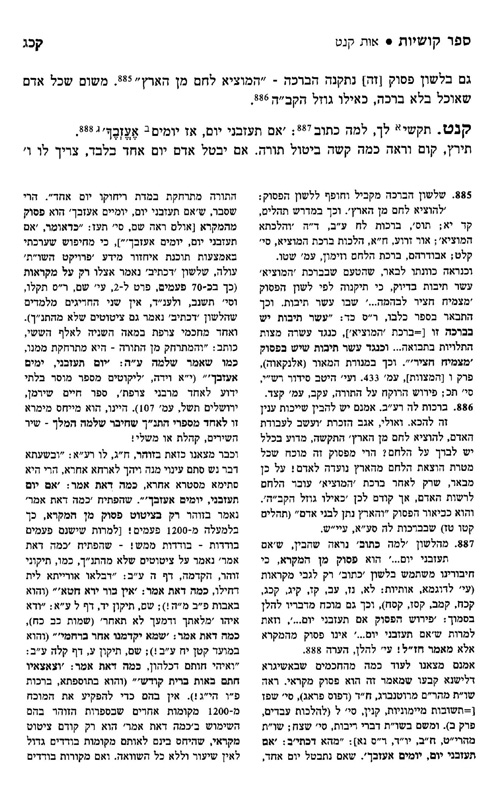


Eliezer and Joseph ben Naphtali Hertz Treves: Hebrew Publishers, briefly, in the Mid-Sixteenth Century

Eliezer and Joseph ben Naphtali Hertz Treves:
Hebrew Publishers, briefly, in the Mid-Sixteenth Century
[1]

Marvin J. Heller

A Hebrew press was briefly active in Thiengen (Tiengen) in 1560. The publishers, from the distinguished rabbinic Treves family, were Eliezer and Joseph ben Naphtali Hertz Treves. The brothers only published six (possibly seven) books before being forced to close by a meeting of the leaders, both Protestant and Catholic, of the Swiss Confederation in June 1560, who feared that they were about to print the Talmud.[2]

The Treves family was noted for the many rabbinic scholars and communal leaders it produced over several centuries. Yehoshua Horowitz, in his description of the family history, informs that the family origin may have been in Troyes, France and subsequently in Italy and Germany. A second possibility is Treviso near Venice, Italy, in the 14th century, and yet another is that the family came from Trier, Germany (Trèves in French).[3] Isidore Singer, et. al., record forty-one distinguished members of the family, writing that “No other family can boast such a continuous line of scholars as this one, branches of which have been known under the names Treves, Tribas, Dreifuss, Trefouse, and Drifzan. There exists, however, no means of tracing the connection of these various branches, which even as early as the fourteenth and fifteenth centuries were already scattered over Germany, Italy, southern France, Greece, Poland, and Russia.”[4]

The earliest known Treves is Johanan ben Mattithiah Treves, chief rabbi of France (c. 1385 – 1394), who, after the expulsion of the Jews from France in 1394, resettled in Italy, where he passed away on July 21, 1439. A responsum on the prayers of orphans for their deceased parents, and a letter addressed to the community of Padua, are still extant in manuscript in the Florence Library (Bibliothecæ Hebraicæ Florentinæ Catalogus, p. 426). Several members of the family were employed in printing presses in Italy, among them Johanon Treves at the Bomberg, Sabbioneta and Bologna presses (and later partnered with Ovadiah Seforno. As well as a scholar in his own right. Like his relative, Yochanan authored a commentary to the Siddur that was published in Bologna in 1540 and Raphael ben Johanon, rabbi of Ferrara, as editor and proofreader in Sabbioneta.[5]

Our Treves of primary interest are Joseph and Eliezer ben Naphtali Hertz Treves (1495–1566),[6] who operated the press in Thiengen. The latter served in the rabbinate in Frankfurt am Main for approximately twenty-two years. He was considered among the leading rabbis of his generation. In 1558, Kaiser Friedrich I assigned Eliezer to a committee of three rabbis to resolve the controversy surrounding the election of the chief rabbi position in Prague. committee to register the votes of Prague Jewry for the chief rabbi position. A renowned Talmudist and a Kabbalist, Eliezer became an adherent of several pseudo-Messiahs, namely Asher Lemlein (Lemmlein), who appeared in the sixteenth century; Eliezer attributed the non-fulfilment of Lemmlein’s prophecy concerning the Messiah to “circumstances other than fraud.”[7] In 1561, Eliezer, a collector of manuscripts, went to Cracow, where he transcribed Solomon Molko’s commentaries.[8][9]

Eliezer had printed previously, briefly, in Zurich. His imprints were an all-Yiddish Josippon and Sefer Hayira (both 1546), as well as a Yiddish Psalms. Dr Moshe Nathan Rosenfeld informs that the same vignette was used in Zürich with the Yiddish Psalms (1558), as well as in Tiengen. He writes that “at a meeting of the Eidgenossenschaft in Baden the Catholic representatives of Luzern, accused their Zürich colleagues of allowing the sale of anti-Christian pamphlets in the streets of Zürich.” This resulted in Treves relocating to Thiengen, with the permission of the Count of Sulz, leaving his Yiddish types behind.[10]

Joseph Treves, born in 1490, added an introduction and glosses to their father’s prayer-book, which they published, as well as the publication of the Midrash Ha-Ne’elam on Ruth, under the title Yesod Shirim.

Their father, Naphtali Hirz or Hirtz Shatz (1473-c.1540)[11] was a kabbalist and rabbinic scholar, who served as hazzan and rabbinic judge in Frankfurt am Main. He authored a kabbalistic commentary on the prayer-book, entitled Dikduk Tefillah, printed with the prayer-book, Malah ha’Aretz Deah and Naftulei Elokim (Heddernheim, 1546) and a super commentary and index on R. Bahya ben Asher (1255-1340) on the Pentateuch.[12] The former work, Dikduk Tefillah, a kabbalistic interpretation of the prayer book, reflects the rise in messianic and Kabbalah currents in Ashkenazic Jewry. As Michael A. Meyer writes, “Dikduk Tefillah (The Precise Interpretation of Prayer, 1560), reflects a rise in such tendencies.”[13] These tendencies are evident in Eliezer’s interests, as shown above.

Naftulei Elokim

Turning to Thiengen, now Waldshut-Tiengen, home to our press of interest. It is located in Baden Germany, that is southwestern Baden-Württemberg at the border of Switzerland, north of Zurzach. Jews were likely resident there in the 14th century. In 1650, eight Jewish families received a letter of protection allowing them to conduct trade but not open stores. There was continuous friction with the local population through the 18th century. Jews were only welcome in public from 1870.[14]

Eliezer, together with his brother, Joseph,[15] established their Hebrew press in the small town of Thiengen in 1559 to print kabbalistic treatises, but primarily their father’s commentary, Malah ha’Aretz Deah. As noted above, the press was active for one year only, issuing six books in 1560 and, perchance, one title in 1566, a reprint of the previous edition of the piyyut (liturgical hymn) Shir ha-Yihud (Hymnerchandce, Divine Unity).[16] Printing in Thiengen had been permitted by the Count of Sulz. However, complaints were brought by the burghers, afraid of damages because of the press, to the Bishop of Constance. He initially, in a vague response, permitted the press to continue to operate. However, when, the matter was brought before a meeting of the leaders of the Swiss Confederation in June, 1560, to which Thiengen was subject, they demanded its closure, fearing that the Talmud was to be printed there.

Another brother was Samuel, who relocated to Russia and took the family name of Zevi. He was the author of Yesod Shirim (below) on the Book of Ruth. Samuel’s sons were Eliezer, author of distinguished works, among them Dammesek Eliezer (Lublin, 1646) on tractate Hullin and Si’ah ha-Sadeh (ibid., 1645), a collection of prayers.

Kimḥa de-Avishuna

Another Treves of interest, although his relationship to our Treves family is not clear, is R. Johanan ben Joseph Treves (c. 1490–1557). A peripatetic rabbi, he wandered for twenty years in northern and central Italy, where he served as a religious instructor and rabbi in various communities in northern and central Italy. An author and publisher, Johanan Treves wrote responsa, is credited with the commentary, Kimha de-Avishuna (Bologna, 1540) on the Roman rite festival prayer book, published anonymously, as well as several halakhic works, among them glosses to the Alfasi and commentary on the laws of shehitah au-vedikah. Johanan Treves reputedly was employed in the Hebrew press in Bologna from 1537 to 1541 and, perchance, from 1545–46, as a proofreader in Daniel Bomberg’s press in Venice (noted above).[17]

The books published in Thiengen are few in number. Yeshayahu Vinograd, in the Thesaurus of the Hebrew Book, records seven titles only, all but one printed in 1560, and a single title published in 1566, which, as noted above and we shall see below, is questionable. The varied books printed in Thiengen, in alphabetical (Hebrew) order, are:

אדם שכלי Adam Sedkheli – Kabbalistic and philosophic treatise by R. Simeon ben Samuel. Of French or German birth, Simeon ben Samuel lived in the fourteenth – fifteenth centuries. Adam Sedkheli was published in quarto format (40: 24 ff.).

Adam Sedkheli
Courtesy of the National Library of Israel

The text of the title page is set within a woodcut architectural frame. The two upper corners have shields, the right shield with a key, the left a double-headed eagle, the symbol of the Holy Roman Empire, likely indicating that Thiegen was not a free city but under the direct auspices of the Empire. Simeon added the subtitle, Hadrath Kodesh, because his name, given as שמעון בן שמואל ז”ל יסדו (1012) plus the number of letters in the title (7) equals the phrase Hadrath Kodesh הדרת קודש (=1019).[18] It is that name that appears as the header in the volumes’ text pages. The intent of the book, as stated on the title page, is to save souls from destruction.

Adam Sedkheli is on the Decalogue, thirteen attributes of God (shelosh esreh middot), thirteen articles of faith, and resurrection, with a commentary by the author. The book, written about 1400, is completed with a poetic kabbalistic entreaty, Or Kadmon, which exhorts God to “[further] rescue us from the cruel decrees [following] the four miracles [performed] for us this year [1400].”[19] The miracles are enumerated as:

Salvation from a decree of death in the Jubilee year

Rescue from thousands, all dressed in white

Deliverance from the murderous brigades of Geislsler

the abdication of the “Shameful King [Wentzel], who persecuted us for many years.

The printers’ names do not appear on Adam Sedkheli nor on several of the other books printed in Thiengen. In the absence of another press in this small community, however, it may be assumed that they were responsible for those works as well. David Gans, in Zemah David, notes that Eliezer died in Frankfort in 1563.[20]

Adam Sedkheli has been reprinted several times. Ch. B. Friedberg records seven editions in the Bet Eked Sepharim, beginning with a Lublin (1599) edition through a Warsaw (1915) edition.[21]

בגידת הזמן (משכיל על דבר ימצא טוב) Begidat Hazman – An allegoric maqāma (a poetic narrative in rhymed prose) by Mattathias (Mattityah ben Moses), a 15th century Spanish or Provençal Hebrew poet or Mattathias ha-Yiẓhari, a representative of the Jewish communities of Aragon at the Tortosa disputation (1413–14). This, the first edition of Begidat Hazman, was published in octavo format (80: [26] pp.).

Begidat Hazman
Courtesy of the National Library of Israel

The title page, with a pillared frame with cherubim, has the heading “מַשְׂכִּ֣יל עַל־דָּ֭בָר יִמְצָא־ט֑וֹב וּבוֹטֵ֖חַ בַּיהֹוָ֣ה אַשְׁרָֽיו He who is adept in a matter will attain success; Happy is he who trusts in the Lord (Proverbs 12:20).” Below it the text continues “For I will give all good things, and I will give the way of traitors. I will pour out my spirit, and I will declare to the multitude my words of the betrayal of time בגידת הזמן (Begidat Hazman); the words of Mattathias from captivity.” Here too the title-page header is not the book title.

Begidat ha-Zeman was written in c. 1450. It is described as having “a clear pedagogic, apologetic, and moral purpose. . . . It is written in the first person and the personal element is important. The author repents the sins of his youth, describing his experiences, writing that he speaks from his heart, so that his tale might serve as a warning.”[22]

Mattathias is also credited as being the author of Ahituv ve-Zlmon, also a maqāma, similar in style to Begidat ha-Zeman, written prior 1453, inspired by the religious disputations held in Spain. He is also credited with a commentary on Psalm 119 with references to the disputation, and a commentary to Pirkei Avot (preserved in part only).

Ch. B. Friedberg records three subsequent editions of Begidat ha-Zeman, published in Prague (1609), Amsterdam (1650), and Offenbach (1714).[23]

יסוד שירים Yesod Shirim – Our next title, Yesod Shirim, was written by Naphtali Hirz’s son Samuel. He was, as noted above, the brother who settled in Russia. Samuel authored Yesod Shirim, a kabbalistic commentary on the Book of Ruth, literal and kabbalistic explanations.[24] It was published in 19 c. ([32] ff.).

Yesod Shirim
Courtesy of the National Library of Israel

Here too the title-page has a pillared frame with images of cherubim, unlike those employed on the title-pages of Begidat ha-Zeman (above), and Malah ha-Aretz De’ah and Shir ha-Yihud (below). The header on the title-page, in large bold letters, is given as Tapuchei Zahav, from “Like golden apples (Tapuchei Zahav) in silver showpieces is a phrase well turned (Proverbs 25:11).” Below the brief title-page text continues “behold, this is a new thing… and hidden secrets, the taste of Marut, the secret of the Kingdom of the House of David, head of the poets. Therefore, I entitled it Yesod Shirim.” Within the text, set in a single column in rabbinic letters, the page header is Yesod Shirim.

Yesod Shirim, as noted above, is on Megillat Ruth. But it is not a commentary, rather it is Midrash ha-Ne’elam, the first printing of that section of the Zohar on Ruth. The colophon states that it was printed in Thiengen by the oppressed Joseph ben Naphtali on Sunday, 23 Teves 320 (January 10, 1560). Why oppressed (עשוק) is unclear.

מלאה הארץ דעה Malah ha-Aretz De’ah – The siddur (prayerbook) prepared by R. Naphtali Hirz Treves. Malah ha-Aretz De’ah was published in octavo format (80: [242] pp.). The text of the title-page has an attractive frame with cherubim at the sides.

Malah ha-Aretz De’ah
Courtesy of the National Library of Israel

The title מלאה הארץ דעה is from “For the land shall be filled with devotion (malah ha-aretz de’ah) [to God]” and below it the verse continues “As water covers the sea” (Isaiah 11:9).[25] The text of the title-page continues that it is tefillah (prayer) for the entire year with an attractive commentary as well as a commentary in a kabbalistic manner by R. [Naphtali] Hirz [Treves]. Malah ha-Aretz De’ah is an Ashkenaz rite siddur. The text of the volume is in vocalized square letters accompanied by the commentary in rabbinic letters.

In addition to Naphtali Hirz Treves’ use of kabbalistic works in preparing his commentary to the siddur, he utilized several other sources, among the most important of which was R. Eleazar of Worms (c. 1176–1238) Sefer ha-Rokeah, an important and classic halachic and kabbalistic work.[26] Among his other sources was the Maharil (R. Jacob Moelin (c. 1365 –1427) and R. Bahya. Malah ha-Aretz De’ah closely follows the liturgy of Hasidei Ashkenaz. The commentary is extensive and lengthy.

Malah ha-Aretz De’ah was reprinted three times; two editions in Beni Brak, 1971 and 2004 and by Renaissance Hebraica c. 2000. The Renaissance Hebraica edition includes an alternative title page border. It reuses the border from Begidat Hazman.

מלכיאל Malkiel – A multi-faceted philosophical and ethical work on the afterlife, reward and punishment, and comforting Zion by R. Malkiel Hezkiah ben Abraham. Printed in quarto format (40: 22 pp.), the text of the title-page is concise, set in a decorative border. The purpose of Malkiel is described as being intended to understand the words of the sages.

Malkiel
Courtesy of the Library of Agudas Chassidei Chabad Ohel Yosef Yitzhak

Malkiel addresses such subjects as Gan Eden and Gehinom for the souls and body after death. The concealed meaning of pairs is explained, and the issue of “the tree of knowledge of good and evil” (Genesis 2:9) that the Lord prohibited to the first man and the reasons for his sin. Also explicated are the Garden of Eden, the Tree of Knowledge, Og King of Bashan and additional enigmatic aggadic materials. Additional subjects based on the words of the sages in the Talmud and Midrashim are addressed. The text is in a single column in rabbinic letters.

This is the first printing of Malkiel. Friedberg records seven later editions, beginning with Offenbach (1715) through Vilna and Grodno (1819).[27]

שיר היחוד Shir ha-YihudShir ha-Yihud (Hymn of Divine Unity) is an anonymous piyyut (liturgical poem) written in the mid-twelfth century, most often attributed to Samuel ben Kalonymus he-Hasid (c. 1130-1175), less often to his son, Judah ben Samuel he-Hasid (c. 1150-1217), author of the Sefer Hasidim, both among the foremost representatives of the Hasidei Ashkenaz, and, on occasion, to yet others. This edition was published in quarto format (40: 20 ff.). The title-page has the same frame with cherubim as Begidat Hazman (above).

Although there exist several piyyuttim entitled Shir ha-Yihud, this is the most well-known. Unlike most early manuscript versions of the Shir, which were divided into chapters, later versions, and all printed editions, are divided by the days of the week, one for each day, praising God and his uniqueness, in contrast to the insignificance of man. Lines are divided into rhymed couplets, with four beats to a couplet The fourth day differs from the other days in that it is the only day for which the verses are arranged in alphabetic order; however, the number of lines to a letter are not equal. Shir ha-Yihud is, philosophically, based on the Sefer ha-Emunot ve-ha-De’ot of R. Saadiah Gaon (882-942), a fact acknowledged on the title page.

Shir ha-Yihud
Courtesy of the National Library of Israel

It is customary, today, to recite Shir ha-Yihud on Yom Kippur eve, at the end of services, its more frequent repetition being opposed by a number of rabbinic figures, such as R. Jacob Emden (16971776), R. Solomon Luria (1510-1574) and Rabbi Judah Loew (Maharal, 1525-1609). The latter restricting it to Yom Kippur only, a “day set aside for praise of God, when a person is on a higher level, comparable to an angel” (Netivot Ovodah ch. 12, Netivot Olam).

The text of Shir ha-Yihud is accompanied by the commentary of Yom Tov Lipman Muelhausen (14th-15th centuries). Muelhausen was a dayyan in Prague, a highly respected halakhist and kabbalist. His most famous work is the Sefer ha-Nizzahon, a polemic against Christianity, passed down by hand from generation to generation, until a monk, Theodore Hackspan, seized a copy from the rabbi of Schneittach. Hackspan translated Nizzahon into Latin, added notes in attempt to refute its arguments, and had it printed (Altdorf, 1644). A Jewish edition did not appear until 1701. In a brief introduction to Shir ha-Yihud, Muelhausen writes that he has seen many commentaries on this holy work, but found them to be “straw mixed with grain.” Noting that these are inadequate, not explaining the intent of the author, he asks, “help from the Helper, my Rock, the Almighty, and I will write here all that I received, “mouth to mouth” (Numbers 12:8) from those who know the truth.” [28]

1566 שיר היחוד Shir ha-Yihud – A improbable edition of Shir ha-Yihud is listed in the Thesaurus as the seventh Thiengen imprint. It is also recorded by Isaac Benjacob in Otzar ha-Sefarim (Vilna, 1880) together with the previous 1560 printing.[29] Nevertheless, it is improbable that six years after the press was forced to close it should reopen and publish a single work, identical to one of its previous titles. Furthermore, no library records a copy of this edition. Perchance, the entry was a misreading of the early printing, copied by bibliographers and then recopied, so that in some circles it was accepted as a valid edition.[30]

The books printed in Thiengen, small in number, are nevertheless diverse. Subject matter is varied, encompassing kabbalistic and philosophic works, an allegoric maqāma, a kabbalistic commentary on the Book of Ruth, the siddur prepared by R. Naphtali Hirz Treves, and a liturgical poem. An unusual and interesting aspect of several of the Thiengen imprints is that the large lead phrase on the title-page is not the book title, which follows later in a smaller text font.

The publishers were prominent rabbis from a distinguished rabbinic family. The books printed within the span of one year, to be repetitive, are rich and varied. Thiengen, as so many other small short-lived presses, deserves to be recalled, having made a short lived but valuable contribution to Hebrew literature.

  1. Once again, I would like to express my gratitude and appreciation to Eli Genauer for his insightful comments.
  2. Stephen G. Burnett, “The Regulation of Hebrew Printing in Germany 1555-1630” in Infinite Boundaries: Order, Disorder and reorder in early Modern German Culture, ed. M. Reinhart & T. Robisheux, Sixteenth century Essays and Studies, no. 40 (Kirksville, 1998), pp. 329-30.
  3. Yehoshua Horowitz, “Treves,” Encyclopedia Judaica, (Jerusalem, 2007), vol. 20 pp. 134-35. See generally, Marcus Horovitz, Rabbanei Frankfurt (Jerusalem, 1972), 21-26; Nahum Brüll, “Das Geshiechet der Treves,” in Jahrbücher für jüdische Geschichte und Litteratur (Year 1, 1874), 87-122; and his additions, id., (Year 2, 1876), 209-10; Tzvi Lehrer, Tolodot Naphtali Hertz Treves,” in Hetzei Geborim, 7, (2014), 485-95.
  4. Isidore Singer, Schulim Ochser, Frederick T. Haneman, Richard Gottheil, Isaac Broyde, “Treves,” Jewish Encyclopedia vol. 12 (New York, 1901-06), pp. 243-48.
  5. David Amram, The Makers of Hebrew Books in Italy (Philadelphia, 1909, reprint London, 1963), pp. 205, 291.
  6. There is uncertainty about his birth and death dates. Horovitz, Rabbanei, 191-92.
  7. According to R David Gans, Eliezer attributed the failure to “the sins of the generation.” David Gans, Zemah David (Prague, 1592), Asher Lemlein (Lammlin) (16th century) was a false messiah active in 1500–02. Of Ashkenazi origin, Lemlein began his activities in northeast Italy, continuing in Germany. He claimed that, the redemption was approaching because the Messiah, Lemlein himself, had already come. Even some Christians accepted his Messianic prophecy. After his passing his movement ceased. Richard Gottheil, Isaac Broydé, “Lemmlein (Lammlin), Asher,” vol. 7, Jewish Encyclopedia, p. 680; “Lemlein (Lammlin), Asher,” vol. 12, Encyclopedia Judaica, p. 638. Dan Rabinowitz informed that Eliezer was living in Cracow already and transcribed the letters because he was caught up in the Messianic speculation. In 1531, he wrote to his father Naphtali, about the religious fever Molcho introduced into the general public. See Naphtali Hertz Treves, Malah ha-Aretz De’ah.
  8. Mordechai Margalioth, ed., Encyclopedia of Great Men in Israel I (Tel Aviv, 1986), col. 190 [Hebrew]; Isidore Singer, Schulim Ochser, Frederick T. Haneman, Richard Gottheil, Isaac Broyde, “Treves,” Jewish Encyclopedia vol. 12 (New York, 1901-06), pp. 243-48. Horovitz, Rabbanei 22-28, who provides the most comprehensive discussion regarding Eliezer.
  9. Solomon Molcho (1500-32) was born Diogo Pires to Marrano parents. He circumcised himself, became a follower of David Reubeni, who claimed to be the son of a King Solomon and brother of a King Joseph ruler of the lost tribes of Reuben, Gad, and half Manasseh in the desert of Habor. At some point he too claimed to be the Messiah. His sermons were published, Derashot (Salonika, 1529) and subsequently as Sefer ha-Mefo’ar. In 1532, Molcho went to Ratisbon, where the emperor Charles V imprisoned him. An ecclesiastical court sentenced Molcho to death by fire for Judaizing. He was offered a pardon by the emperor on the condition that he recant and return to the church. Molcho refused, choosing a martyr’s death. (Isidore Singer, Philipp Bloch, “Molko, Solomon,” vol. 8 JE, p. 651); Joseph Shochetman] “Molcho, Solomon,” vol. 14 EJ pp. 423-24. Elisheva Carlebach, “Messianism,” The YIVO Encyclopedia of Jews in Eastern Europe, Gershon David Hundert, ed. Vol. 1 (New Haven & London, 2008), p. 1160, informs that Molcho left a deep impression on Ashkenazic Jews. His messianic flag and caftan were preserved by the Jews of Prague and can still be seen there today. Concerning both false messiahs also see Moses Idel, Messianic Mystics (New Haven & London, 1998) and Gershom S. Scholem, Sabbatai Sevi; the Mystical Messiah (Princeton, 1973), var. cit.
  10. Dr Moshe Nathan Rosenfeld, “The Identity of an unknown Yiddish Prayer Book (From Zürich to Zürich),” Seforim Blog (February 18, 2025).
  11. He died prior to 1546 because, in Yesod Shirim, published that year, he is referred to as already deceased. But the exact year of his death is unknown. See Lehrer, Tolodot, 494n106.
  12. https://en.wikipedia.org/wiki/Naphtali_Hirsch_Treves. See also, Horovitz, Rabbanei, 21. Naftulei Elokim is one of two books printed in Heddernheim, a quarter of Frankfurt am Main. the other work being a Selihot, also printed in 1546, both published by a Hayyim ben Joseph (Yeshayahu Vinograd, Thesaurus of the Hebrew Book. Listing of Books Printed in Hebrew Letters Since the Beginning of Printing circa 1469 through 1863 II (Jerusalem, 1993-95), p. 158.
  13. Michael A. Meyer, editor, German Jewish History in modern Times, vol. 1 Tradition and Enlightenment 1600-1780 (1996 New York) p. 72.
  14. “Tiengen,” The Encyclopedia of Jewish life Before and During the Holocaust, editor in chief, Shmuel Spector; consulting editor, Geoffrey Wigoder; foreword by Elie Wiesel, vol. 3, p.1306.
  15. Some question whether they were related or just shared similarly named fathers. See Lehrer, “Tolodot,” 295n110.
  16. Friedberg, Ch. B. History of Hebrew Typography of the following Cities in Europe: Amsterdam, Antwerp, Avignon, Basle, Carlsruhe, Cleve, Coethen, Constance, Dessau, Deyhernfurt, Halle, Isny, Jessnitz, Leyden, London, Metz, Strasbourg, Thiengen, Vienna, Zurich. From its beginning in the year 1516 (Antwerp, 1937), [Hebrew]; Vinograd, Thesaurus of the Hebrew Book. II p. 3394
  17. Yehoshua Horowitz, “Treves, Johanan ben Joseph,” EJ, vol. 20, p. 135.
  18. Executive Committee of the Editorial Board.,M. Seligsohn, “Simeon ben Samuel,” Jewish Encyclopedia vol. 11, p. 357.
  19. Marvin J. Heller, The Sixteenth Century Hebrew Book: An Abridged Thesaurus vol. II (Brill, Leiden, 2004), pp. 504-05.
  20. David Gans, Zemah David (New York, n. d.), I, yr. 1563 [Hebrew].As Brüll notes, this is an error. Likely reversing the letter “gimal” and “zayin.”
  21. Ch. B. Friedberg, Bet Eked Sepharim, (Israel, n. d), alef 629 [Hebrew].
  22. Yonah David/Angel Sáenz-Badillos, “Mattathias (or Mattityah ben Moses?)” vol. 13 EJ, pp. 685-86.
  23. Friedberg, Bet Eked Sepharim, bet 243. Concerning the Prague edition, Gavin McDowell, “A Genealogy of Errors: Targum Pseudo-Yonatan’s Commentary Tradition” (https://books.openedition.org/ephe/2868?lang=en) informs that Shabbetai Bass (1641-1718), author of the first bibliography of Hebrew books by a Jewish author, in his Siftei Yeshenim (Amsterdam, 1680) misdated Begidat ha-Zeman. Acording to McDowell “The tally of the numeric value of these letters is 369 (80 + 5 + 80 + 200 + 1 + 3), which is 1608/09 of the Christian calendar. Bass forgot to count the word פה, reducing the date by 85 years and resulting in the year 284, which is 1524 CE.”
  24. Yehoshua Horowitz, EJ vol, 20 p. 134.
  25. The exact title is subject to some confusion and debate. The enlarged words on the title page, Malah ha-Aretz De’ah, would normally indicate it is the title. But, some of the other Thengin prints like Sod Yesharim, the enlarged letters, in that instance, Tapuchei Zahav, are not the title. Following Ben Jacob, Friedberg, in Bet Eked Sepharim refers to it Tefilot me-Kol ha-Shana Minhag Ashkenaz. Friedberg, Bet Eked Sepharim, Taf 1711. Yet, he is cited in many rabbinic texts as Siddur Rav Hirtz Shatz, and the two Beni Brak reprints use that title. See Lehrer, Tolodot, 492. Naphtali, in his introduction, titles the work Dikduk Tefilah. Unlike the printer’s introduction that precedes the work, Naphtali’s does not appear until after P’sukei D’Zimra, and may have been overlooked.
  26. The entire commentary for P’sukei D’Zimra are from Eleazar. See “Editor’s Note,” Hetzei Geborim, 8(2015), 1121.
  27. Friedberg, Bet Eked Sepharim, mem 2094.
  28. Heller, The Sixteenth Century Hebrew Book, p. 518-19; Joseph Dan, ed., Shir Hayihud (Jerusalem, 1981), pp. xii-ix and 7-26 [Hebrew with English introduction]; and A. M. Habermann, Shir ha-Yihud ve-ha-Kovod (Jerusalem, 1958), pp. 11-12 [Hebrew]. See also Abraham Berliner, “Shir ha-Yihud,” in Ketavim Nivharim I (Jerusalem, 1945), pp. 145-70 [Hebrew].
  29. Isaac Benjacob in Otzar ha-Sefarim (Vilna, 1880), p. 183 no. 475 [Hebrew].
  30. Concerning the misdating and other errors in the publishing of Hebrew books see Marvin J. Heller, “Who can discern his errors? Misdates, Errors, and Deceptions, in and about Hebrew Books, Intentional and OtherwiseHakirah: The Flatbush Journal of Jewish Law and Thought 12 (2011), pp. 269-91, reprinted in Further Studies in the Making of the Early Hebrew Book (Leiden/Boston, 2013), pp. 395-420; ibid. “Who can discern his errors? Misdates, Errors, Deceptions, and other Variations in and about Hebrew Books, Intentional and Otherwise: Revisited,” Seforimblog, Sunday, July 03, 2016, reprinted in Essays on the Making of the Early Hebrew Book (Leiden/Boston, 2020, pp. 507-36.


Comments on This and That, part 1

Comments on This and That, part 1
by Marc B. Shapiro

1. In this post I referred to R. Hayyim Hirschensohn’s Nimukei Rashi, and stated that I thought it was one of his best works. This led to some correspondence with readers regarding the commentary. I have no doubt that I could devote ten posts to Hirschensohn, but then what would happen to everything else I want to discuss? But there are people who want me to call attention to some more interesting comments from Hirschensohn. I know that among them are those who go to hebrewbooks.org and print out some of the sources I refer to and bring them to shul on Shabbat. That is fine, as long as you aren’t looking at it during the rabbi’s sermon. As it is, Hirschensohn writes a good deal about how the rabbis are not given proper respect, and how ignoramuses have all too much power. At least in one respect, however, things have gotten better since Hirschensohn’s day. In Nimukei Rashi, Bereshit, pp. 46a-46b, he speaks about how the people give more respect to the hazzan than to the rabbi. This doesn’t apply anymore because there are hardly any synagogues that still have a hazzan.

In response to requests, let me therefore mention one more very interesting passage in Hirschensohn’s Nimukei Rashi in this post (with more to come in future posts). But my real suggestion is to study it yourself, even though it might make for difficult reading at times. To paraphrase Chazal (Avot 5:22), “no pain, no gain.” Or as R. Tuvia Hanks put it: “It’s supposed to be hard. If it wasn’t hard, everyone would do it. The hard is what makes it great.”[1]

Before quoting the comment in Nimukei Rashi that I have promised, I also want to record one formulation of Hirschensohn that I think it is magnificent. While R. Soloveitchik undoubtedly would disagree with much of what Hirschensohn writes, if he would have heard the following, I know that he would have regarded it wonderful, expressing the essence of what real Torah learning is all about. In his Musagei Shav ve-Emet, Section Penei ha-Hamah, p. 64, Hirschensohn gives his definition of a lamdan. I am sure readers have their own definitions. Some will say that one who knows a few tractates is a lamdan, while other will say that one who gone through the Ketzot ha-Hoshen earns the title. Hirschensohn has his own approach:

אינני קורא למדן (שם זארגני על ת”ח גדול) רק את זה אשר רמב”ם קשה או רש”י סותרות או תוספות מופרך לא מניח לו לישון

When one can honestly say that a difficult Rambam or Rashi keeps you up at night, only then can you be called a lamdan. As I mentioned, this is a formulation that the Rav would have embraced, and he actually lived this way. I heard from Dr. David Fand, a student of the Rav from the 1940s, who studied in Boston’s Yeshivat Heichal Rabbenu Hayyim Halevi, that one night the Rav woke some students up in order to tell them a hiddush.

In Nimukei Rashi, Bereshit, p. 48b, Hirschensohn discusses the comment of Rashi, Gen. 26:8. The verse states that Abimelech looked out his window and saw that Isaac “was amusing himself with Rebekkah.” Upon this verse, Rashi, based on a Midrash, states that Abimelech saw them having marital relations. The question is, of course, obvious. How is this possible that Isaac and Rebekkah would do this in such a way that people could observe him? As Hirschensohn puts it:

ובאמת זה קשה מאד לחשוב כזאת על עולה תמימה כיצחק שיעשה דבר מגונה כזה ונגד היכל מלך

Hirschensohn therefore refuses to take this Midrash literally. He sees it as a mussar derash about how people living among those at a lower moral level can be negatively influenced by them. He offers his own example of this: elderly women in America. (By “elderly”, I think he means women over sixty.) In Europe they used to dress modestly but in America they were negatively influenced to dress in an inappropriate fashion. He continues:

ואינני חושב שחשבו חכמים שבאמת שימש יצחק מטתו ביום לפני חלון פתוח נגד היכל המלך, רק זה אחד מדרכי הדרוש המוסרי לקשור אותו לאיזה צלצול בלשון להפריז הדבר להגדיל את מוסרו.

Hirschensohn’s comment is not surprising. We have come to expect that anytime there is an unusual Midrash, or one that reflects poorly on a biblical figure, that one of the aharonim will argue that it is not meant to be taken literally. This is no different than the attempts to understand various strange Aggadot allegorically.[2] A good rule of thumb is if the Aggadah is strange, then someone will interpret it in a non-literal fashion. I opened up the Artscroll Rashi translation for the verse we are discussing and was therefore not surprised to find the following: “In truth, according to the Zohar, Isaac conducted himself modestly with Rebekkah. Abimelech did not see them in a physical sense; he understood through some astrological means that they were having relations (Maskil LeDavid).”

Regarding the character of Isaac, Hirschensohn writes:

על יצחק אשר ישב ארבעים שנה בלא אשה ולא שם עיניו על בנות הארץ וישב עשרים שנה עם אשתו בלא בנים ולא לקח אשה אחרת עליה אשר לזה הי’ דבר הרגיל מאד בכל איש שם להרבות נשים ופלגשים ושפחות, אות הוא שהי’ מצונן או מצדקתו משל ביצרו, ואיש כזה לא ישמש מטתו נגד חלון פתוח מול היכל מלך.

In dealing with the issue raised, Hirschensohn appears to be correct that there are only two options in describing Isaac. Either that he didn’t have a sexual drive or that he overcame it. Nevertheless, it does strike me as a bit strange to be speaking of the Patriarch in this fashion, although maybe this is just my own prudishness. Here, for example, is what R. Yehiel Michel of Glogau (died 1730) says about this episode with Isaac in his Nezer ha-Kodesh, vol. 3, p. 329a (64:5), a classic commentary on Bereshit Rabbah.

אע”ג דאמר ר”י המשמש מיטתו ביום ה”ז מגונה והיינו כמ”ש המפרשי’ דמיירי אפילו בבית אפל או במאפיל טליתו דאל”ה מה מגונה דקאמר הא אפילו איסורא איכא . . . ולא שרי בכה”ג בת”ח אלא לצורך שעה בראותו שיצר תאותו מתגבר עליו הרבה כדי שלא יבא לידי הוצא’ ש”ז לבטלה או הרהור רע אצ”ל דבאמת הוי נמי כה”ג ביצחק וזה רמז הכתו’ באומרו והיה כי ארכו לו שם הימים כלומר שאירע לו מקר’ כזה להתגבר יצר תאותו ע”י שארכו לו הימ’ שלא נזדווג לאשתו משו’ שמקמי הכי אפילו בצינעא בלילה לא שימש מיטתו פן תתעבר ויתפרסם הדבר לפני אבימלך ועמו אבל אז הי’ צורך שעה לכך ולזה לא נזהר מלשמש אף ביום.

The author might think he is helping Isaac’s reputation with his explanation, but I actually think just the opposite, that what he says reflects negatively on Isaac. Let’s remember who we are speaking about here. We are not talking about some average guy. We are speaking about the Patriarch Isaac, whom many sources portray as the holiest of the Patriarchs. And regarding him R. Yechiel Michel says that it was צורך שעה?! Does he really expect us to believe that it was such an emergency that Isaac couldn’t have waited until the night? With all due respect to the author, who certainly knew who Isaac was, I can’t understand how he could suggest this. Hirschensohn’s description of Isaac is thus much more in line with how the Tradition encourages us to view the Patriarchs. Of course, I understand what is driving R. Yechiel Michel, namely, the reality of Isaac having sexual relations in the daytime. Unless one is prepared to read this in a non-literal fashion, as did Hirschensohn, there is a real problem and I guess the answer he offered was the best one he could come up with.

I am sure most readers are with me in not feeling comfortable engaging in speculation about the sexual life of the Patriarchs, and yet the truth is that we find such speculation among the commentators. Let me give one example. The Torah states (Gen. 29:20): “And Jacob served seven years for Rachel; and they seemed unto him but a few days, for the love he had to her.” R. Hayyim Zev Rosenfeld, in his Sefer ha-Hayyim (London, 1922), p. 22, asks a very good question. If you love someone, and desperately want to be with her, then it is not seven years that will seem like a few days, but precisely the reverse. A few days would seem like seven years. So why does the Torah say that the years went by very quickly for Jacob? According to Rosenfeld, the answer is that Jacob’s love for Rachel had no sexual component.

Rosenfeld brings the following support for his contention. In blessing Reuben, Jacob says (Gen. 49:3): “Reuben, thou art my first-born, my might, and the first-fruits of my strength.” As a number of talmudic and midrashic passages explain, the sperm that impregnated Leah was the first one ever to leave Jacob’s body.[3] Since the Talmud tells us that a woman cannot become pregnant from the first intercourse, [4] how is it that Leah became pregnant? The Maharsha, Yevamot 34b, deals with the problem. In what can only be described as an exercise in original Midrash, Maharsha suggests that since Jacob was able to prevent any seminal emissions for more than eight decades, one can assume that in his first intercourse with Leah he also did not ejaculate (so that the sperm not be wasted). Therefore in truth, Leah did not become pregnant from the first intercourse.

Maharsha’s explanation, which shows how far removed Jacob was from carnal pleasures, is cited by Rosenfeld as support for his assumption that Jacob’s love for Rachel was entirely non-sexual:

שפיר נוכל לומר עליו באהבתו אותה שלא היה כונתו תאות המשגל

And since his love was non-sexual, that is why the long time waiting seemed like a short time.

(As is often the case with biblical commentaries, Rosenfeld’s question is better than his answer. We can all point to plenty of examples of non-sexual love in which a short time seems much longer [e.g., a parent longing for a child]. Just because Jacob’s love was non-sexual, why should that mean that seven years seemed like a few days?)

The Rashi dealing with Abimelech, Isaac, and Rebekkah reminds me of how in high school, when we first learnt Rashi intensively, we would sometimes come across texts which created all sorts of problems, and the teachers often didn’t deal with them properly. Would it have been so hard for the rebbe to acknowledge that yes, he too finds certain Midrashim strange? I specifically remember when we learnt Rashi to Gen. 25:26, which quotes a Midrash that explains why Esau was born first even though Jacob was conceived first. At the time, we were studying biology and knew that the biological description in this Rashi was incorrect. In what was for me a prologue to the Slifkin affair, one of the students raised this point. I also recall how his question was pushed aside, as if it was unimportant.[5] (Later, I was surprised to find that even in the nineteenth century R. Akiva Eger was clueless about the anatomy of pregnant women. Here is what he writes in his comment to Berakhot 63b, quoting a medieval source:

דז’ חדרים יש באשה שלשה מימין ושלשה משמאול ואחד באמצע אם תתעבר מימין יהיו זכרים ובשמאל נקבות ובאמצע טומטום או אנדרוגינוס)

Another Rashi which raised a problem, for me at least, was Gen. 24:2. Commenting on the biblical expression, שים נא ידך תחת ירכי, Rashi quotes the Midrash that Abraham asks Eliezer, in taking his oath, put his hands on Abraham’s circumcision.

לפי שהנשבע צריך שיטול בידו חפץ של מצוה, כגון ספר תורה או תפילין, והמילה היתה מצוה ראשונה לו ובאה לו על ידי צער והיתה חביבה עליו ונטלה

I remember in high school thinking that this was very strange. But I assumed that it was only since I was corrupted by modern values that I found this strange, and that those who had a pure “Torah hashkafah” would not even raise an eyebrow. I was even too embarrassed to ask the rebbe about this Rashi (which comes from Bereshit Rabbah).[6] It was only many years later that I found that the great R. Raphael Berdugo (1747-1821), known as the מלאך among Moroccan Jewry, had the same response as a fourteen-year-old American student. He does not hesitate to tell us that he finds this Midrash quite strange (Mesamhei Lev, ad loc.).

שהמילה אין בגופה קדושה אדרבה הוא מקום הבושת ואיך יקח בידו ערות חבירו ויזכיר שמו ית’ . . . גם אם רבינו הקדוש לא הניח ידו למטה מחגורו ק”ו אברהם אבינו ע”ה, גם מאכילת עץ הדעת יבושו בני אדם זה מזה וזילותא הוא לאדם נכבד שיחזיק אחר במבושיו

What this shows us is that when a rebbe is asked about this Rashi by one of his students, he should not put on an act and make believe that he too doesn’t find it strange. Instead, he should be honest, just like Berdugo, and acknowledge that this is indeed an unusual Midrash. Such an honest approach will earn the respect of the students and come in handy as the class comes to other strange Midrashim.[7]

Rosenfeld, whom we just cited, also deals with this passage and has a very interesting formulation (p. 21):

שים נא ידך תחת ירכי: כאשר רמזתי לעיל שהיה כלי הולדה קדוש בעיניו, אך משה אסר זאת בתורתו להיות קדושים.

In other words, the old way of taking an oath, which was acceptable in Abraham’s day, was later rendered invalid due to the heightened moral standards of the Torah. His comment, that Abraham regarded the genitals as holy, is explained by him as follows (p. 19):

שאצל אברהם היתה המילה תיקון הדת להקדיש כלי הולדה שהוא המקור מכל מין האנושית, ולכוף את תאותיו . . . וגם המילה היא מקור הולדה והשפע בא על ידו

I will return in a future post to discuss Rosenfeld, who was very unconventional and expressed all sorts of provocative notions.[8] He was also unusual among those born in Eastern Europe in that he published many books in English. Here is his picture, which appears in his Sefer ha-Hayyim, showing that despite his unusual ideas he certainly had the rabbinic look.


2. I want to now go back to one of my earliest posts, from four years ago, in which I discussed the meaning of the word olam in the Bible and how the words Adon Olam should be translated. See here.

I received many e-mails after this post, and there were many important comments posted online. I told a number of people that I would try to mention their comments in a post. Although I can’t get to all of them, at least with regard to some, better late than never.

With regard to appearances of the word olam in the Torah where modern scholars say it means eternal (or something along those lines[9]) and traditional interpreters understand it to mean “world”, R. Nathan Kamenetsky called my attention to Gen. 21:33, where it is clear from Onkelos, Rashi, and Ramban that the word means “world.”[10] To this I will add that Maimonides also understands olam in this verse to mean “world”. See Mishneh Torah, Hilkhot Avodah Zarah 1:3 (Simon Glazer, in his translation, mistakenly renders it “Everlasting God” instead of “God of the World”, “God of the Universe” or something like that. Similarly, Eliyahu Touger, in his translation of this halakhah mistakenly renders it “eternal God”.) See also the index to Pines’ translation of the Guide under Gen. 21:33 for instances in the Guide where Maimonides refers to the verse, and also Schwartz’ edition of the Guide 2:13 n. 14. We must also translate Maimonides’ opening words of each of the three sections of the Guide (and elsewhere[11]) בשם ה’ א-ל עולם as “In the Name of the Lord, God of the World.”

As for what the words Adon Olam mean, in a comment to the original post, Kovner clinches the meaning, I think. He called attention to Berakhot 7b: “From the day that the Holy One, blessed be He, created the world (olam) there was no man that called the Holy One, blessed be He, Lord, until Abraham came and called Him Lord (adon).” I had forgotten about this passage, and I think it is obvious that the words Adon Olam are based on this text, meaning that the passage should be translated as “Master of the Universe”, or something along those lines. A very learned reader also pointed out to me that this same point is made by R. Pinchas Zebihi in his Mi-Zahav u-mi-Paz (Jerusalem, 1993), at the end where there is a commentary on Adon Olam. See also the online discussion here.

Responding to Kovner, R. Yitzhak Oratz e-mailed me that Kovner’s very point was approved by the Vilna Gaon and repeated by none other than the Brisker Rav. See Dov Eliach, Sefer ha-Gaon, vol. 1, pp. 425-426, where it states that the Gaon was shown this point in the siddur Magid Tzedek and said that the entire siddur was worthwhile for this one point. Ad kan R. Oratz.[12]

With regard to the word olam, it is true that in rabbinic literature it means “world”, but I would be remiss in not mentioning that the older meaning is found as well. Sometimes, it is unclear which the correct meaning is. For example, Mishnah Yadayim 3:5 reads:

אין כל העולם כולו כדאי כיום שניתן בו שיר השירים לישראל

Soncino translates: “The whole world is not as worthy as the day on which the Song of Songs was given to Israel.” Others translate similarly. Yet A. S. Halkin renders it: “All of time is not as worthy as the day on which the Song of Songs was given to Israel.”[13] Halkin’s opinion is noted in a comprehensive article devoted to the very issue here being discussed.[14] Fuderman and Gruber, the authors of this article, also point to two biblical texts “of Hellenistic date” in which they claim olam means “world.” One of them is Dan. 12:7: .חי העולם They translate this as “the life/vital force of the world,” and note that this usage is found in the Jewish liturgy where it has been transformed into חי העולמים, with the same meaning.

The other example they give is Eccl. 3:11: גם את העולם נתן בלבם. They are not the first to translate olam here as “world.” The old JPS also translated it this way: “He hath set the world in their heart.” But in the Soncino edition, which uses the old JPS, the commentary rejects this translation, commenting that “the only signification” olam has in the Bible is “eternity.” The translation would therefore have to read: “He hath set eternity [i.e., a sense of the future] in their heart.” Soncino’s note might be based on Ibn Ezra’s comment to this verse, where he says flatly that in the Bible the word olam only means “eternity,” not “world.” (He says likewise in his Short Commentary to Exodus 31:17; Commentary to Psalms 66:7, 89:4.) Daat Mikra agrees with Soncino, explaining the verse as follows: את העולם: את השאיפה לחיים עולם ונצחיות ולדעת את הנעלם, מה שהיה לפנים ומה שיהיה לאחור [15]

I will leave the meaning of olam in this verse to the biblical scholars to fight over. But I want to return to the point made by Fuderman and Gruber that Ecclesiastes was composed in the Hellenistic period, many centuries after Solomon. Based on this they don’t see it as at all incongruous that the word olam means “world” in this book because we are dealing with a later development of biblical Hebrew.[16] This relates to another interesting point.

At the beginning of the standard Vilna edition of the Mishnah there is an essay on R. Judah the Prince by R. Moses Kunitz. Here is the first page.

This essay is excerpted from Kunitz’ Beit Rabbi (Vienna 1805), most of which is actually a play in six acts.[17] Kunitz is best known for his Ben Yohai which is a valiant, if unsuccessful, defense of the ancient dating of the Zohar against R. Jacob Emden’s Mitpahat Sefarim. He was a very pious man and in his lifetime was treated with great respect.

In the next issue of Milin Havivin I will have information regarding this, so there is no need to repeat it here. Here is his picture.

Kunitz is also famous as one of the rabbis whose responsum to the early Reformers is printed in Nogah ha-Tzedek. This was from a time when the Reformers made it seem that all they were looking for was a more lenient halakhic approach. They also succeeded in receiving letters from two Italian rabbis. Just as these rabbis were not Reform in any way, neither was Kunitz. Not knowing who the Reformers were, he fell into their trap, which is perhaps the best way to put it. Yet as I mentioned, this didn’t greatly affect his standing in the rabbinic world, because people assumed that his was an innocent error. In fact, in all the polemics against the Reformers, none of the great rabbis of the day even mention Kunitz.[18]

A few years ago a new edition of the classic Vilna Mishnah was reprinted, and lo and behold, Kunitz’ essay is missing. The publisher was obviously told that there was some controversy around Kunitz, and he therefore just cut out the essay. Yet if the publisher wanted to censor, he missed the real thing. (I wouldn’t be surprised if following this post, future printings of the Mishnah also cut out what I will now discuss. That is the reason why I don’t call attention to various “interesting” books that have been put up on hebrewbooks.org [including Karaite literature], at least until they are also on Google books. I know that soon after I discuss them, they will be taken down. As it is, a number of anti-hasidic and Haskalah works have already been removed from the site. Sometimes these books have come down within a day or two of being put up, after someone has informed the site that they put up a “dangerous” volume. So you have to be quick when they post the new books and download anything you think might be removed.)

Immediately following Kunitz’ essay, there is another article on the grammar of Mishnaic Hebrew by Solomon Loewisohn. In the very first note he refers to the book of Ecclesiastes, and concludes his comment with והטעם ידוע למשכילי עם Here is the page.


What he is alluding to in this note is that Ecclesiastes is a late biblical book, and thus could not have been written by Solomon. To show this he points to the word חוץ, which in its usage in Ecclesiastes 2:25 is an Aramaism, and thus post-dates the biblical Hebrew of Solomon’s day.[19] To use an expression of the Sages, we live in an olam hafukh. Kunitz’ essay was thought worthy of censorship, and at the same time this note remains in every printing of the Vilna edition of the Mishnah. Yet as I mentioned above, let’s see how long it is before this note, or even the complete essay, is also removed.

Regarding the book of Ecclesiastes, in Limits, p. 26 n. 140, I referred to a comment of R. Israel Bruna which appears to say that Ecclesiastes was not divinely inspired. R. Yonasan Rosman (one of whose seforim I mentioned in an earlier post) has taken issue with me in this. However, he also points out that this is exactly what Maharsha seems to be saying in his commentary to Shabbat 30b. I also found that R. Zvi Hirsch Chajes, in his note to Berakhot 4a and in Kol Sifrei Maharatz Chajes, vol. 2, p. 927, states explicitly that Ecclesiastes was not divinely inspired. R. Michael Broyde has noted that this is also stated by R. David Ibn Zimra in his responsa, vol. 2, no. 722.[20]

Rosman also points out that Maimonides, Hilkhot She’ar Avot ha-Tum’ot 9:6, states that Ecclesiastes (and Song of Songs) are “words of wisdom”, with the implication that these books are not divinely inspired. This expression, “words of wisdom”, comes from Tosefta Yadayim 2:14, where it is explicitly contrasted with ruah ha-kodesh.

ר’ שמעון בן מנסיא אומר שיר השירים מטמא את הידים מפני שנאמרה ברוח הקדש. קהלת אינה מטמא את הידים מפני שהיא מחכמתו של שלמה.

Based on the passage just mentioned, I initially assumed that Maimonides is indeed saying that Ecclesiastes was not written with divine inspiration. I also found that the important commentator R. Masud Hai Rakah is of this opinion. Yet then there is a problem, because according to the Tosefta, Song of Songs was written with divine inspiration and yet Maimonides also refers to this book as “words of wisdom.” Rakah himself raises this problem and can offer no solution,[21] but it is likely that when Maimonides speaks of these books as being “words of wisdom” it does not mean that they are lacking in divine inspiration. We can see this from Hilkhot Talmud Torah 5:4, where he quotes Song of Songs and writes regarding it אמר שלמה בחכמתו. The same words are found in Hilkhot Yesodei ha-Torah 2:12 and Hilkhot Deot 3:3, 4:15, 19 and in these cases Maimonides is quoting verses from Proverbs. Maimonides believed that both Song of Songs and Proverbs were written with divine inspiration, and yet we see that he uses the term “wisdom” with regard to them. The truth is that this phraseology comes directly from the Talmud,[22] and need not have anything to do with whether the text being described is divinely inspired. This whole problem is dealt with by the brilliant R. Meshulam Roth in an article in Sinai 17 (1945) pp. 267ff. With his typical erudition, Roth shows that Maimonides indeed regarded Ecclesiastes as being divinely inspired and in fact states so explicitly in Guide 2:45. Roth also shows how in a few places he describes Solomon as a prophet.[23]

Many might find this entire discussion strange, for they assume that if a book is in the canon that means it must be regarded as having been divinely inspired. I have found such a conception in many books.[24] Yet it is incorrect, and as Shnayer Leiman has shown, the tanna R. Simeon ben Menasia, while he regarded Ecclesiastes as an uninspired book, also thought that it was canonical. Thus, while he states that Ecclesiastes does not defile the hands, he also expounded a verse from Ecclesiastes.[25]

As far as I know, the Sages never “decided” that Ecclesiastes is a divinely inspired book. It would therefore seem to be entirely acceptable for one to hold the position of R. Simeon ben Menasia, which was shared by Beit Shammai and R. Meir,[26] that the book is not a product of ruah ha-kodesh. Obviously, one who rejects the book, or any other biblical text, claiming that it was a mistake to have been included in the Canon, has to be regarded as a sectarian. However, here too I think that there is more room for personal opinions than people often think. For example, what about someone who accepts Ecclesiastes as part of the Canon but thinks that the Sages were wrong in this decision, and that they should have adopted the view that the ideas of this book are not fit to be included in the Bible? This was Samuel David Luzzatto’s early position, although he later became more sympathetic to Ecclesiastes. Yet despite this negative view, Luzzatto never rejected the canonical status of this book.[27]

Or what if someone thinks that the halakhah should have been decided in accordance with Samuel (as understood by a number of rishonim)[28] that the book of Esther should not have been included in the canon? As long as one accepts the halakhah as recorded by the Sages he is not to be regarded as a Zaken Mamre, which shows that acceptance of the halakhah in practice is what is important, but one doesn’t have to think that the Sages were correct. After all, in the story of the Oven of Akhnai (Bava Metzia 59b), while R. Eliezer was forced to accept R. Joshua’s viewpoint, I don’t think there can be any doubt that R. Eliezer still believed that he was correct. How could he not, when God Himself agreed with him? Yet the most R. Eliezer could hope for was that his decision would be adopted by a future beit din, and maybe only after the arrival of the Messianic era. Let us not forget that the Mishnah in Eduyot 1:5 explicitly tells us that minority opinions are recorded so that a later court can rely on them, meaning that there is no problem for one to argue the case of a rejected opinion, as long as one does not adopt it in practice (i.e., before a later court gives its imprimatur to do so).[29]

All this seem to be no different than someone who, after examining a talmudic dispute, thinks that the weight of the evidence shows that the halakhah should be in accordance with Abaye, and yet the Talmud decides the halakhah in accordance with Rava. Such a person accepts the practical halakhah, and this is no different than someone who thinks that the Shulhan Arukh decided the halakhah improperly, but who nevertheless follows the law as recorded. You can even argue that this is a very high level of commitment, namely, one who thinks the halakhah should be different, but nevertheless sublimates his personal feelings and accepts the law as we have it.[30]

Similarly, the assumptions of academic Talmud study lead, in theory, to the undermining of many talmudic conclusions. But the practitioners of this form of study have always insisted that since they don’t seek to change the accepted halakhic practice, there can be no religious objection to their approach.

The only reason the Song of Songs was included in the Canon is because it was interpreted in an allegorical fashion.[31] Does this mean that one must accept that this was the original meaning of the book? Jacob Barth (1851-1914) certainly didn’t think so. Barth was the son-in-law of R. Esriel Hildesheimer and one of the most brilliant Semitists of his day. In addition to teaching at the University of Berlin, he was also a long-time and revered faculty member at the Rabbinical Seminary of Berlin. Just to give one example of this, in discussing the great achievements of German Orthodoxy, R. Jehiel Jacob Weinberg lists the following four men as examples of what German Orthodoxy can be proud of: Hirsch, Hildesheimer, Hoffmann, and Barth.[32]

Here is a picture of Barth.


Barth argued—and taught his students at the Rabbinical Seminary of Berlin—that the Song of Songs was not originally intended as an allegory, but this was a later interpretation of the Rabbis, and as already mentioned it was precisely this interpretation that enabled the book to be included in the Canon.[33] Barth believed that the Song of Songs was actually a collection of different songs, composed in various periods.[34] They were designed to be sung at a wedding and the days of feasting, and give expression to marital happiness and love which are basic to the Jewish family. According to Barth, just like the Psalms were originally written by the Psalmist with specific circumstances in mind, but their meaning for the Jewish people throughout history is not tied to this original intent, the same can be said for the Song of Songs. What it originally meant is different than what it later came to mean for generations of Jews.[35]


To be continued
* * * *
In my last post, available here, I wrote about the issue of lo tehanem. As far as the Modern Orthodox are concerned, based on the Meiri and others, these laws are no longer regarded as applicable in modern times. (Although as I mentioned, the Centrists are trying to bring them back.) Someone sent me a link to Dov Bear’s post available here. Dov Baer included the following text that recently appeared (and highlighted certain sections).

I have already mentioned the Slifkin controversy in this post, and regarding matters of science and Torah there definitely are differences between the Modern Orthodox and the haredim. However, I think that when it comes to matters like lo tehanem, the divide is much more significant. If the haredi/ hasidic world really accepts the outlook of the page printed above, then its understanding of what “Jewish values” are all about is far removed from that of the Modern Orthodox.[36] We can also see how secure haredi Jews in America must feel in order for them to put this sort of material in the English language, for all to see.

In two posts from now, I will discuss a dispute currently taking place in the hasidic world in America about how to relate to non-Jews. For now I will simply note that a common theme among virtually all who abandon hasidic life, in explaining what they found objectionable in their former lifestyle, is the denigration of “the other” found in the hasidic world. In the forthcoming post, I will deal with a brave voice from that world who is putting forth a different approach.


[1] See here.
[2] Here is what Louis Ginzberg wrote about the unusual aggadot (On Jewish Law and Lore [New York, 1970], p. 77 (I thank Gershon Bacon for reminding me of this passage.) There is a lot one can say about this comment.

With your permission I shall commence my lecture by recounting an incident that happened to me. It is a memory from boyhood, which means the time when I had already been liberated from the hard discipline of the master of the heder, and, though yet a child of nine, had begun to study, in the traditional phrase, “by myself.” I was then studying the tractate Baba Bathra. When I reached the tales of Rabbah bar bar Hannah, doubts began to disturb my mind; my peace was particularly troubled by those geese who were so fat that they had streams of oil flowing from them and by the bird that was so big that the waters of the sea reached only to its ankles and its head split the heavens. My joy was great when I came across a book by one of the “enlightened” of the older generation (if my memory is correct it was the Maphteah by Shatzkes), from which I learned that these geese were neither fat nor thin and that the giant bird possessed neither feet nor wings, but that the whole tale was merely a flight of the imagination, or, as the ancients used to say, it was only a parable—the moral I have forgotten. I was a child then; but when I reached maturity I realized that in truth the geese of Rabbah bar bar Hannah were real geese and the giant bird was literally a bird. When regarded as natural creations of the folk imagination, they lost their strangeness and incomprehensibility. On the contrary, it would be all the more strange if we possessed no such tales; in that case it would be extremely difficult to explain so striking a difference between our people and all others, one involving so great a triumph of reason over imagination that the latter had become completely atrophied.


[3] See Torah Shelemah, Gen. ch. 49, note 47.
[4] Do any of the readers know where the Talmud picked up this piece of folklore? I assume it was a common notion in ancient times. See Bereshit Rabbah 45:5, where the matter is disputed. Noda bi-Yehudah, Even ha-Ezer no. 22, recognizes that there are women who do become pregnant after first intercourse, and therefore claims that the Talmud was only giving a general rule, but there are exceptions. See R. Neriah Gutel, Hishtanut ha-Tevaim (Jerusalem, 1995), pp. 88ff.
[5] I assume that the rebbe’s response was due to the fact that the passage quoted by Rashi is a Midrash. If it was Rashi’s own explanation, I don’t think he would have regarded it as a disrespectful question. In general, and readers can correct me if I am wrong, I don’t think that the opponents of Slifkin assume that together with Hazal the greatest rishonim are also infallible on scientific matters (the one exception perhaps being the Lubavitchers when it comes to the Rambam). When I was in yeshiva I never came across a rebbe who thought that, although I can’t remember anyone actually spending time on one of the rishonim and explaining why what he says is not correct scientifically, or, to take a different issue, that perhaps the rishon’s view of women doesn’t reflect how we currently think. Had they done so, it would have had an enormously positive influence on some of the students who instead came to believe that the Torah was out of date and not relevant to their lives.

To give one example of many, the online elucidation of Tosafot, available here, in discussing Tosafot, Shabbat 65b. s.v. sahada, offers the following preface:

Before we approach this Tosfos we must realize that during the times of the Reeshonim, there were very few if any maps in Europe of any of the areas that are being discussed in the G’moro. All the knowledge that they had about the rivers and places was what they gleaned from the G’moro or Midrosh about these places.

What forces the translator to add this comment is that Tosafot rejects Rashi’s explanation (which I will soon come to) and incorrectly states that all rivers flow from east to west. (Among European rivers, the Danube flows west to east.) It turns out that Rashi’s explanation is also geographically incorrect. Rashi, Shabbat 65b s.v. sahada, writes about the Euphrates: שהוא יורד מארץ ישראל לבבל

In other words, Rashi thought that the Euphrates originated in the Land of Israel, and flowed from there to Babylonia. Yet this is incorrect as the Euphrates is not within the Land of Israel. Artscroll recognizes the problem and states that the Euphrates is on the northern border of “Greater Israel,” i.e., the land promised to Abraham. I believe that this is an apologetic explanation. The Euphrates will only be part of the Land of Israel in messianic days. It was never a part of Israel during the First Temple, or during the Second Temple. Yet Rashi is speaking about the river as actually part of the Land of Israel. See Isaac Samuel Reggio, Ha-Torah ve-ha-Filosofyah (Vienna, 1827), p. 63.

[6] See also the various Midrashim cited in Torah Shelemah, Gen. 47:29, where Jacob is speaking to Joseph and he too says שים נא ידך תחת ירכי.
[7] There are other ways of dealing with the Midrash. See e.g., R. Paragi Alush, Ohev Mishpat (Djerba, 1928), vol. 1, no. 3, that Eliezer only touched the organ from outside of Abraham’s clothes. R. Eliyahu Katz, Amar ve-Amarta (Beer Sheva, 1994), Gen. 24:2, finds the Midrash so strange that he can’t take it literally, and even uses the term has ve-shalom with reference to the literal meaning. He does so even though, as far as I can tell, all the standard commentaries on the Midrash and Rashi do take it literally. Here are his words:

תמוה מאד שהמילה נחשבת כחפץ של מצוה. והרי אין בזה מן הצניעות . . . אך ודאי שאין הכוונה ח”ו כפשוטו, אלא הכוונה שהזכיר את המצוה כמו שאומר שנשבע בשם ה’.

[8] For now, here is one just one example. He assumes that Gen.36:31-43 is post-Mosaic.

ואלה המלכים אשר מלכו בארץ אדום לפני מלוך מלך לבני ישראל: מזה נראה כי זמן רב נכתבה פרשה זו, כי ידע כבר את מלכי ישראל.


[9] See Sacha Stern, Time and Process in Ancient Judaism (Oxford, 2003), pp. 75 n. 43, 109ff.
[10] Mordecai Spitz called my attention to Neh. 9:5, where the traditional commentaries also understand olam to mean world.
[11] See Saul Lieberman, Hilkhot ha-Yerushalmi, p. 5 n. 7.
[12] I should also mention that there is dispute about how the word חבלי should be translated in Adon Olam. According to Salomon Speier the meaning is “my portion” and not “my pain” See his note in Journal of Jewish Studies 4 (1953), pp. 40-41. Zebihi, Mi-Zahav u-mi-Paz, at the end, also argues for this understanding. None of the many translations I have checked agree with this. [S. of On the Main Line calls my attention to David Levi’s London 1794 Rosh Hashanah Machzor, where the passage is translated as “Rock of my portion in time of distress.”]
[13] The meaning of olam in Avot 1:2 – על שלשה דברים העולם עומד – has also been called into question. See Judah Goldin, Studies in Midrash and Related Literature (Philadelphia, 1988), p. 34.
[14] Kirsten A. Fudeman and Mayer I. Gruber, “’Eternal King/ King of the World’: From the Bronze Age to Modern Times” A Study in Lexical Semantics.”REJ 166 (2007), pp. 209-242.
[15] R. Elijah Benamozegh translates Ps. 106:48: ברוך ה’ אלקי ישראל מהעולם ועד העולם as “Blessed is the Lord, God of Israel, From World to World,” and Ps. 145:13 מלכותך מלכות כל עולמים as “Your kingship is a kingship of all worlds.” See Israel and Humanity, trans. Maxwell Luria (New York, 1995), p. 184. I wonder if Benamozegh meant these as scientific translations, or if this is to be regarded as derush.
[16] See also Robert Gordis, Koheleth—The Man and His World (New York, 1968), pp. 231-232.
[17] The version of Kunitz’ essay that appears in the Vilna Mishnayot is not identical to that which appears in Beit Rabbi. In particular, a few footnotes have been added. This is not the only example where the editors of the Vilna Mishnayot (Romm) tampered with texts. See Kalman Kahana, Heker ve-Iyun (Tel Aviv, 1960), vol. 1, p. 134 (called to my attention by Eliezer Brodt).
[18] Anyone who wants to visit Kunitz’ grave can find it in the Kozma cemetery in Budapest. For people looking to visit graves, the most famous in the Kozma cemetery is R. Shimon Oppenheim, and he is easy to find. He is not that well known and yet his grave is visited more than many other gedolim who were of much greater significance. This is because R. Shimon promised, as it states on his tombstone, that whoever comes to his grave and recites the Menuhah Nekhonah, his prayers will be answered. (The E-l Male Rachamim commonly recited is an abridged version of the Menuhah Nekhonah, which is found in the kabbalistic work Maavar Yabok) . Since this is a guarantee from a holy rabbi, it is not surprising that his grave would attract people.

So how to find Kunitz’ grave? Unfortunately, the computer print-out provided by the cemetery directs people to the wrong place. If you are standing at R. Shimon’s grave, the plot to the left is that of R. Israel Wahrmann. He was the first chief rabbi of Pest. His grandson, Mor Wahrmann, was the president of the Jewish community from 1883-1892 and a member of parliament from 1869. He was a proud Jew, no question about it. He once even had a duel with an anti-Semite. Neither was killed, but Wahrmann was sentenced to eight days in prison. See Kinga Frojimovics, et al, Jewish Budapest (Budapest, 1999), pp. 214ff., 260. However, he despised the Orthodox (and they detested him). During the debate in Parliament over the Orthodox request to create separate communities, he stood up and started reading sections of the Shulhan Arukh to show how foolish the Orthodox were. All three of his children ended up converting to Catholicism. See Jewish Budapest, p. 216 and R. Leopold Greenwald, Korot ha-Torah ve-ha-Emunah be-Hungaryah (Budapest, 1921), p. 78, and in Apriyon 2 (1925), p. 130.

Two graves to the right of R. Shimon’s is that of Kunitz. Unlike R. Shimon, no one has yet stepped forward to redo Kunitz’ tombstone, which is in bad condition. In another hundred years it will probably be entirely illegible. However, a good portion of it can still be read. This left me perplexed, as it is not the same inscription as that found in Greenwald’s Mekorot le-Korot Yisrael (Humenne, 1934), p. 27. How to explain this?

[19] See R. Meir Mazuz, Kovetz Ma’amarim (Bnei Brak, 2003), p. 60. There are a number of other unusual words in Ecclesiastes, such as pardes (2:5) and pitgam (8:11; both Persian loanwords), which academic scholars have pointed to to show that the book is post-Solomonic. (Pardes is also found in Song of Songs 4:13.) See Shadal in Otzar Nehmad 3 (1860), p. 19, who discusses this and among other points notes that the words כבר and ענין do not appear in any other biblical book. See also Robert Gordis, “Koheleth: Hebrew or Aramaic?” Journal of Biblical Literature 71 (1952), pp. 93-109. In Amos Hakham’s introduction to the Daat Mikra Shir ha-Shirim, pp. 12-13, he rejects the significance of Persian loanwords in dating the text.

Incidentally, R. Moses Isaac Ashkenazi, Ho’il Moshe: Hamesh Megilot ve-Sefer Mishlei (Livorno, 1880), pp. 80-81, states that you can also find some Aramaic words and expressions in Proverbs, as well as later Hebrew forms, none of which could originate in Solomon’s era. Yet this discovery did not trouble Ashkenazi in the slightest.

אין לתמוה אם נפלו בספר זה כמה תיבות ומליצות מל’ ארמי וגם איזו זרות בדקדוק הלשון כמו פעל נשתוה (סימן כ”ז ט”ו) בנין נתפעל ע”ד נשתנה נתרפא נצטרע ודומיהם בלשון חכמים . . . לפי שמפי שלמה יצאו המשלים בל’ מדויק, רק בעברם מפה אל פה דור אחר דור בעוד שקרבת ארם הכניסה בשפת ב”י [בני ישראל] תיבות ומליצות נכריות, נהיה שבבוא יום ונרשמו על ספר כבר הורגלו לאמרם כמו שנמצאו אצלנו, ואם היו מחליפים בהם דברים היו נגרעים מערכם, כי כן יארע לכל משל מאיזה לשון שיהיה שצריך לאמרו כמו שהוא בפי המון העם ואין לתקן בו או להוסיף עליו או לגרוע ממנו

[20] “Defilement of the Hands, Canonization of the Bible, and the Special Status of Esther, Ecclesiastes, and Song of Songs,” Judaism 44 (Winter 1995), p. 70.


[21] Ma’asah Rakah,ad loc.: לא ידעתי למה קרי שיר השירים דברי חכמה דהלא ברוח הקודש נאמר וקדש קדשים הוא He does not ask this question about Ecclesiastes, which shows that he assumes that according to Maimonides Ecclesiastes is only divrei hokhmah.
[22] See R. Zvi Hirsch Chajes, Kol Sifrei Maharatz Chajes, vol. 1, p. 439; Sid Z. Leiman, The Canonization of Hebrew Scripture (New Haven, 1991), p. 173 n. 317.
[23] For examples from the Talmud where Solomon is described in this fashion, see R. Betzalel Zev Safran, She’elot u-Teshuvot ha-Rabaz, vol. 1, Yoreh Deah no. 64 (in the note). Regarding R. Meshulam Roth, it is unfortunate that almost nothing has been written about him. The Tchebiner Rav is reported to have stated that had R. Meshulam been a member of Agudat Israel, the haredim would have crowned him gadol ha-dor. I hope to discuss him in a future segment of my Torah in Motion classes.
[24] Pretty much everyone also seems also to assume that a divinely inspired book included in the Canon had to be have been written in Hebrew. Yet Ibn Ezra, Job 2:11, thinks that the book of Job is a translation from another language, and that is why it is so difficult to understand.
[25] See Leiman, Canonization, p. 113.
[26] Megillah 7a.
[27] Shadal originally thought that Ecclesiastes taught heretical doctrines and was fraudulently attributed to King Solomon. Along these lines, I should note that there were talmudic sages who thought that Solomon had sinned so grievously that he lost his share in the World to Come. See Saul Lieberman, “Hearot le-Ferek Alef shel Kohelet Rabbah,” in Studies in Mysticism and Religion Presented to Gershom G. Scholem (Jerusalem, 1968), pp. 163ff. If someone today expressed agreement with this rabbinic position, I am certain that he would be roundly condemned.
[28] See Broyde, “Defilement of the Hands,” p. 68.
[29] By the same token, someone I know once commented that while in practice he accepts the halakhah as recorded in the Talmud and Shulhan Arukh, some of these halakhot relating to economic matters derive from a very different circumstance than what we have today. He assumes that a future Sanhedrin will revise some of these halakhot which are economically counterproductive and out of touch with how markets work.
[30] See Seridei Esh, vol. 3 no. 54 where R. Weinberg admits that a halakhah in the Shulhan Arukh causes him anguish.

ואודה על האמת, שאיסור זה גורם לי צער גדול

Weinberg was dealing with whether a woman whose father isn’t Jewish can marry a kohen. He would have liked to permit it, but the Shulhan Arukh ruled otherwise. What made the Shulhan Arukh’s ruling so frustrating to Weinberg is the fact that R. Joseph Karo went against his own principle and ruled in accordance with R. Asher, despite the fact that the Rif and Rambam ruled differently. Furthermore, the Vilna Gaon agreed with the Shulhan Arukh. So in the end, Weinberg felt that he must accept the Shulhan Arukh’s ruling. While Conservative halakhists are able, in cases like this, to fall back on conscience, which can trump even biblical law, Orthodox halakhists cannot do so. They must accept the halakhah even if they think it should have been decided differenttly.

[31] Interestingly, Daniel Boyarin has argued that the earliest rabbinic approach to the book was not allegory. He writes as follows:

According to the earliest strata of Rabbinic hermeneutics, the Song of Songs was not an allegory in the sense of paradigms projected onto the syntagmatic axis or concrete entities and events that signify abstractions. Rather it was an actual love dialogue spoken by God to Israel and Israel to God in concrete historical circumstances, or written by Solomon, as if spoken by Israel and God in those circumstances. . . . If the impulse of Origen is to spiritualize and allegorize physical love quite out of existence in the allegorical reading of the Song, the move of the midrash is to understand the love of God and Israel as an exquisite version of precisely that human erotic love. Reading the Song of Songs as a love dialogue between God and Israel is then no more allegorical than reading it as a love dialogue between King Solomon and the Queen of Sheba. The Song is not connected with an invisible meaning but with the text of the Torah and thus with concrete moments of historical memory.

See Boyarin, “The Eye in the Torah: Ocular Desire in Midrashic Hermeneutic,” Critical Inquiry 16 (1990), pp. 543, 549. See also Gerson D. Cohen, Studies in the Variety of Rabbinic Cultures (Philadelphia, 1991), pp. 3-17.
[32] Li-Frakim (1967 edition), pp. 232-233.
[33] “Hartzaotav shel Yaakov Barth al Sefer Yishayahu ba-Beit Midrash le-Rabanim be-Berlin” in Uriel Simon and Moshe Goshen-Gottstein, eds., Iyunei Mikra u-Farshanut (Ramat Gan, 1980), pp. 83-85. (Regarding the dating of Ecclesiastes, discussed earlier in this post, see ibid. for Barth’s view that Ecclesiastes was written ca. 200 BCE.) I have elsewhere discussed the controversy that broke out when R. Raphael Breuer published a commentary to the Song of Songs that interpreted the book in a literal fashion. See Between the Yeshiva World and Modern Orthodoxy, p. 83, and my article on the Frankfurt rabbinate in Milin Havivin 3 (2007), available here.

This commentary was one of the issues that led people to oppose Breuer inheriting his father’s position as rabbi of the Frankfurt separatist community. I find it hard to understand why this commentary aroused such opposition. After all, why can’t the Song of Songs be understood as describing a loving Jewish marriage? Breuer was not denying the allegorical interpretation, only adding an additional level of meaning.

Incidentally, once when a cantor at a wedding sang some words from Song of Songs as the bride walked around the groom, R. Soloveitchik “was not happy. This, after all, was a passuk [verse] in Shir Hashirim which he felt should not be applied to a man and woman in a literal sense.” See Heshie Billet, “Rav Yosef Dov HaLevi Soloveitchik (The Rov) ZT”L: Role Model Par Excellence,” in Zev Eleff, ed., Mentor of Generations (Jersey City, 2008), p. 152. The same opinion is expressed by R. Yosef Lieberman, Mishnat Yosef, vol. 7, no. 101. See also R. Moshe Feinstein, Iggerot Moshe, Yoreh Deah II, no. 142. In addition, Sanhedrin 101a states הקורא פסוק של שיר השירים ועושה אותו כמין זמר . . . מביא רעה לעולם (Avot de-Rabbi Nathan, ch. 36, states that such a person has no share in the World to Come.) However, Kallah Rabati: Baraita, ch. 1, explains this passage as follows: היכי דמי כמין זמר כגון דזמיר ביה ודעתיה על הרהור See also R. Jacob Emden’s note to Sanhedrin 101a:

הקורא פסוק של שיר השירים ועושה אותו כמין זמר נראה דהיינו שמשתמש בו לעשות ממנו זמר לחשוקה אילת אהבים ולחבר אותו לשיר עגבים

This means that there is no objection to singing a song from Shir ha-Shirim in a “kosher” fashion, such as at a wedding or if sung as praise of God. (Emden’s note was published from manuscript in the Wagschal Talmud, and does not appear in the standard editions. I learnt of this from R. David Teherani, Divrei David, vol. 2, Orah Hayyim no. 37.)

See R. Ovadiah Yosef, Yabia Omer, vol. 3, Orah Hayyim 15:5, that in Egypt the practice was to sing verses from Song of Songs in the synagogue between Passover and Shavuot. He also quotes R. Meir Abulafia, Yad Ramah, Sanhedrin 101a who writes:

ויש לפרש דהני מילי מאן דקרי ליה דרך שחוק אבל מאן דמיכוין לשבוחי ביה לקב”ה דרך ניגון שפיר דמי ומילתא צריכא עיונא

Returning to the Rav, it must be noted that he was opposed to all singing under the chupah. See Daniel Greer, “Ma’aseh Rav – V’dok,” in Eleff, ed., Mentor of Generations, p. 177, that at his wedding Rav stopped the cantor from singing Im Eshkochech Yerushalayim. (Others are opposed to all songs which use biblical verses, whether the words are taken whether the words are taken from Song of Songs or from any other biblical text. The only permission would be at a seudat mitzvah. See R. Ben Zion Abba Shaul, Or le-Tziyon, vol. 2, ch. 14 no. 35.) As for the Song of Songs, the Rav also stated that it is “forbidden” to interpret it literally. He even put this into a halakhic context:
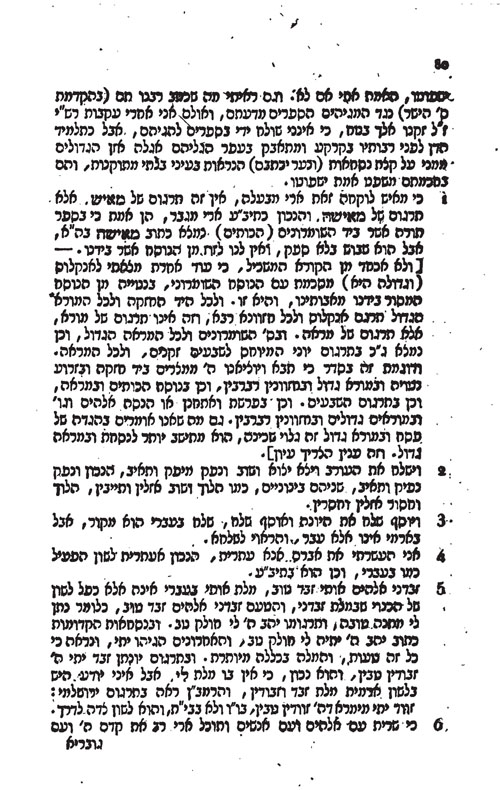
בשיר השירים איכא הלכה שאין בו פשט אלא כפי הבנת הרמז הדרש והסוד. המקרא יוצא מידי פשוטו והדרש הופך להיות הפשט

See Reshimot Shiurim, Bava Kamma, ed. Reichman (New York, 2005), p. 494 (to Bava Kamma 83b). See also R. Hershel Schachter, Nefesh ha-Rav, pp. 289-290.

[34] אפריון and פרדס (3:9, 4:13) are among the late Hebrew words he points to show that some sections of the book were composed in the post-exilic period, many centuries after Solomon. R. Moses Isaac Ashkenazi, introduction to Ho’il Moshe: Hamesh Megilot ve-Sefer Mishlei, rejects the notion that based on a couple of individual words one can establish the book’s date. Yet while Ashkenazi defends the Solomonic authorship of Song of Songs and Proverbs (see above, n. 19), he does not believe that Ecclesiastes was written by Solomon. One of his proofs is from Eccl. 1:16: “Lo, I have gotten great wisdom, more also than all that were before me over Jerusalem.” According to Ashkenazi, since Solomon was only the second king to reign in Jerusalem, he never would have written in this fashion. See also 2:7. 9 where the author writes about how he differs “from all who were before me in Jerusalem.” Again, Jerusalem had not been in Israelite hands for that long so it is hard to see Solomon saying this. Ashkenazi also points to the numerous Aramaic words in the book as showing that it had to have post-dated Solomon.
[35] I found a difficult passage in the Netziv’s commentary on Song of Songs, (Metiv Shir). Commenting on the first verse, he writes:

וכן שיר אחות לנו קטנה נאמר בימי א”א [אברהם אבינו] כמבואר בב”ר פ’ לך, ויבואר במקומו, אבל שלמה אסף השירים ברוה”ק וגם הוסיף הרבה משלו ועשאן שיר נפלא אחד.

The Netziv states that the section of Song of Songs beginning with ch. 8:8 (“We have a little sister . . .”) was written in the days of Abraham. What is his proof? Bereshit Rabbah 39:1 states: “R. Berekhiah commenced: We have a little sister (ahot; Song of Songs 8:8), this refers to Abraham, who united (ihah) the whole world for us.” R. Berekhiah continues to find allusions to Abraham in the next couple of verses as well. In other words, R. Berekhiah offers a nice Midrash about how Song of Songs homiletically refers to Abraham. But how does the Netziv possibly derive from this that the verses were written in the days of Abraham? The very next section in Bereshit Rabbi cites a verse from Ecclesiastes and states: “this refers to Abraham.” Does the Netziv assume that this too was written in the days of Abraham? Midrash is full of this type of homiletic comment, so why here does the Netziv think that we can learn something historical from R. Berekhiah’s statement?

[36] See also my post here.


Using the works of Shadal and R. N. H. Wessely

Using the works of Shadal and R. N. H. Wessely

By Eliezer Brodt

This post is a continuation of my review of Rabbi Posen’s Parshegen, here. Many thanks to S. of On the Main Line for help with certain points.
In the beginning of Parshegen, when listing the important works on Targum Onkelos (TO), Rabbi Posen notes that one of the most crucial works ever written on the topic is Shadal’s Ohev Ger (Vienna 1830; rpt. Cracow 1895). He mentions in a footnote that today most Charedi works on TO do not use him, or do not mention it if they did. He notes that in the first generations after Shadal wrote Ohev Ger everyone used it. He refers his article in Italia 19, (2009) (pp. 104-109) on the topic of Shadal as a Parshan of the Targum, where he has a few pages dealing with Charedi works that use him, including the Minchas Yitzchak. Posen notes that the Maharatz Chajes quotes him respectfully, but what is important about this is that the Maharatz Chajes did not see eye to eye with Shadal on other issues[1] and even wrote an essay attacking his criticisms of the Rambam (link). Posen notes that R. D.Z. Hoffman uses him in his Shu”t Melamed Lehoel. I would add (something Posen is certainly well aware of) that R. Hoffman also uses him many times in his works on Chumash[2].
I would like to add a few more names toRabbi Posen’s list of people who used Shadal. Shoel Umeshiv[3], R. Yosef Zechariah Stern[4], R. Pesach Finfer[5], Dikdukei Sofrim[6], Seridei Eish[7], R. Chaim Heller[8], R. Kalman Kahana[9], R. Wolf Leiter[10] andR Dovid Tzvi Hillman[11]. S. of On the Main Line informs me that he has many more such references and is working on an extensive piece about Shadal in the eyes of talmidei chachomim through the ages.
I also found in the list of works recommended by the great Galician posek R. Meshulam Roth for students to learn in a proposed new school system, at the request ofR. Meir Shapiro, among the many interesting things he wanted talmidim to read when learning Targum Onkelos was Ohev Ger.[12]

When talking about this topic of the usage of Shadal in Charedi and Charedi-acceptable circles, Posen cites the introduction of Rabbi Yaakov Zvi Mecklenburg (1785-1865) to his Ha-Kesav Ve-ha-Kabbalah, printed only in the first edition of the work in 1839[13]. In this introduction he quotes a lengthy letter from Shadal[14] and clearly mentions that one of the works that he used when writing his sefer was from Shadal (which we would know anyway, because Shadal is cited by name many times in the commentary). Posen points out that in all subsequent editions this introduction has been removed. Posen suggests that the son-in-law who reprinted this work after he died (1880) removed it, and perhaps he did so due to the list of people that he used, especially theway he refers to Shadal, perhaps then no longer politically correct. Now, to be a little more accurate, the second edition of the work was printed in 1852 while Rabbi Mecklenburg was quite alive, and there a different version of the introduction appears. In this shorter version of the introduction it includes some of the works he used but there is no longer a specific mention of Shadal, neither in regard to using his work, or the lengthy letter of Shadal, which is now missing. In all subsequent editions printed after he died no introduction was printed. Thus we can see the son-in-law had nothing to do with it, but since it could hardly have been coincidental perhaps it did have to with Shadal’s image in some way, as Posen suggests. In his excellent article on the topic[15] Edward Breuer points out that there were differences between the two introductions, but he only notes that Julius Fuerst, whose name was mentioned in the first version of the introduction, was removed in the second version. Breuer did not note that Shadal’s name was also omitted.
Compare the introductions:

Mecklenburg – Haksav vehakabbalah 1839

Mecklenburg – Haksav vehakabbalah 1852

Since many of the controversial aspects of Shadal’s intellectual profile where already well-known by 1839 (e.g., proposing textual emendations of Nakh, fierce criticisms of the Rambam, assigning an author other than Shlomo to Koheles, etc.)[15b] my tentative suggestion as to why Shadal’s name and his letter were omitted by Rabbi Mecklenburg in the second edition could be because 1852 saw the printing of Shadal’s anti-Kabbalah work, the Vikuach Al Chochmas Ha- Kabbalah[16] (subtitled al Kadmus Sefer Ha-zohar). In addition, perhaps the advent of this work explains why later many did not use Ohev Ger on TO, feeling that they could not quote someone who was so anti-Zohar and anti-Kabbalah, even where he is not problematic and writes worthy ideas.
In Matzav Hayashar, R. Shneur Duber after quoting from Shadal’s work Vikuach Al Chochmas Ha- Kabbalah writes:

וה’ שד”ל בספרו ויכוח על חכמת הקבלה… וכל אלו הספרים הנההיראים החרדים לדבר ה’ נזהרים מאוד מלאחזיקם בביתם ומכש”כ מלעיין בהם משוםשהמה מהפכים את הלב האדם הקורא בהם ועושים רושם גמור בלבו רק לי התירו כמה גדולירבנים גדולים משום דאיתא במסכת אבות (פ”ב משנה יד) ודע מה שתשיב…”(מצבהישר, ב עמ’ 66].

It is also possible that R. Yaakov Kamenetsky was referring to the Vikuach in a sort of hidden way in Emes Leyaakov (p. 399). R. Yaakov records that he was asked by someone why is the Yom Tov of Hoshana Rabbah hidden and only found in Kabbalah literature? Before giving an answer R. Yaakov remarks he suspected there was a bit of cynicism in this question against the Zohar. It could be that he was hinting to the opening debate (before it spring boards in to other topics) in Shadal’s Vikuach Al Chochmas Ha-Kabbalah which takes place on Hoshana Rabbah and it is about where is the source for this Yom Tov.[17]
Another possible explanation as to why many did not use the works of Shadal could be understood with the complaints of R. Z. Y. Yolles in Hatorah VeHachochma. R Z. Y. Yolles sent Shadal a nice long letter related to TO in general and some comments on the Ohev Ger[18] in particular, which he liked a lot. He then writes:

ואין לזוז מן הנוסח אשר בידינו… כי עוד אחרת מצאתי לאונקלוס…מסכמת עם הנוסח השומרוני בנטיה מן הנוסח המסור בידינו מאבותינו,… וזהו ענין הצריך עיון… אלו הם דבריך הקשים [19],ואני בושתי ונכלמתי עליך משכיל חכם לב איך תדבר מן נוסחאות התורה, ותדלג מנוסח אל נוסחא כאלו היתה עיר קטנה, ומיודעיה מעטים וכל אשר יחפוץ להרסה יוכל לה, חס לנול האמין בשוא נתעה כזה ולשום אש דת שמרוה כמה אלפים חכמים ונבונים כחומה פרוצה לבל נמשך אחר דמינו, ומלבד שזהו עון פליפי נגד הקב”ה הנה גם אם נלך חפשי לשלוח יד בקודש על פי ההשערה, הלא במיעוט השקפה נראה שהוא דמיון כוזב, וכל ההשערות יהיו למאכולת אש, ואם אמנם כי נאמנו אתי רעיוניך הטהורות לבל יטו לבבך אחר ההבל ולהכניס בומחשבת פיגול… וזאת שאמרת וזהו ענין הצריך עיון המורה שיש ספק אצלך הנה אחשוב לשגיאת הסופר והמהירות וצרי לי מאוד אם יגיע הדבר באזני המתצדים ומחפשי מומי זולתם ויתנו עליך קולם לבלי חוק… הלא טוב הי’ לך לעזוב מאמר זה ולא יבא בתוך דבריך…

Here are Yolles and Shadal:

Here is the page from Ohev Ger with which the letter is concerned:

Although Shadal was very opposed to changing any texts in the Torah[20] and in a sense could be seen as standing in the breech, it could be that even such comments scared people away from his works.
Returning to the introduction of Rabbi Yaakov Mecklenburg to his Ha-Kesav Ve-ha-Kabbalah; It is of interest to me how he refers to R. Naftali Hirz Wessely (Weisel). He not only includes Wessely in the list of works he used, but in thebeginning of the introduction he says that Wessely is the only good work on Toras Kohanim which ties Torah Shebekhesav to Torah Shebaal Peh. This piece is also not found in the second edition of the introduction and is not noted by Breuer in his aforementioned article. A careful reading of the Ha-KesavVe-ha-Kabbalah shows that he used Wessely’s work numerous times throughout the work. Naturally no new views of Wessely’s were revealed between 1839 and 1852 to make Wessely more controversial.

Incidentally, here is a beautiful portrait of R. Mecklenburg as printed in the Festschrift zum 200 jährigen Bestehen des israelitischen Vereins für Königsberg (1904):

A few years ago in the pages of the excellent journal Ha-maayan, a controversy took place in relation to how to cite various works of people considered questionable (here). In the course of the controversy it turned to quoting Mendelssohn and Wessely, and their stories. Rabbi Posen mentioned that there was nothing wrong with Wessely, to which others argued. This controversy in regard to Wessely was not a new one[21], a few years before in the Kovetz Beis Aharon VeYisroel there was a series of articles based on various manuscripts showing how the gedolim at the time were very against Wessely. Towards the end of the series the author did a strange thing – he collected many citations of big name gedolim who did use Wessely’s work even after the controversy (here). Almost all of these gedolim were well aware of the controversy over Wessely’s Divrei Shalom ve-Emes in which his maskilic program for educational reform was outlined, and they came after the outcry of those early gedolim. So obviously disagreed with them (or were at least willing to accept him as a source to be used and cited by name). To me this was strange, as he undermined his own research – he wound up showing that there was a big controversy with many big people on both sides, so how in the world did he reach his conclusion that Wessely was bad according to everyone? Also of note, י”שר appears after Wessely’s name only in the first piece in the series. Perhaps in the course of his research the author realized that te matter was not as black-and-white as it first seemed.[22]
Nor did the modern controversy about Wessely end there, as a few years later two works of Wessely’s were reprinted; his Sefer Hammidos (2002), and his Yeyn Levanon (2003). In the introduction of both works there are lists of great people who used Wessely’s works. To be sure the kannoim did not remain quiet about this. That same year (2003) in the introduction to the Tomer Devorah reprinted by the Mishar publishing house, an introduction was printed about the evil works of Wessely recently reprinted. A few months ago the Kovetz Eitz Chaim (15, 2011, pp. 13-30) printed another manuscript on the controversy against Wessely, including some letters of various contemporary gedolim against the evil Wessely. In the recent work on R. Elyashiv Shlita, Hashakdan (2, pp. 136-137) they also mention how he was against the reprinting of the works of Wessely. The problem to me is how do they explain all the great Gedolim who did use his works? There is no clear answer.

To add to the lists of Gedolim who used Wessely’s works or quoted him in a positive light see; R. Eleazer Fleckeles[23], R.Moshe Kramer[24], Netziv[25], R. Mordechai Gimpel Yaffe[26], R. Yosef Zechariah Stern[27], R. Eliyahu Feivelson[28], R. Ezriel Hildsheimer[29], Dikdukei Sofrim[30], R. Y. Haberman[31], R. Chaim Bachrach[32], R. Y. Heller[33], R. Shneur Duber[34], R. Lazer Gordon[35], and R. Dovid Tzvi Hoffman[36]. Also see R. Moshe Mendelssohn (a maternal uncle of R Hirsch)[37] for many interesting remarks on Wessely. See also these great posts here and here in regard to Wessley.
I am sure many more sources for usages of both Shadal and Wessley can be found by searching Google Books, Hebrew Books and Otzar Hachochmah and just plain old learning, but I did not have a chance to do that yet.

I would liketo conclude with the following dream: just as R. Shlomo Dubno was vindicated in the past few years by R. Dovid Kamentsky,[38] it is my hope that Wessely too will be vindicated from all false charges against him and people will realize there is nothing wrong with his fine writings which are filled with chochma and yirah.

[1] See M. Hershkowitz, Maharatz Chajes,pp. 314-323. See also R. Toresh, Shivah Kochevei Leches, p. 8. Of course it will be argued that he is controversial too. However, this is only the case in some Torah circles. Where he is considered a perfectly reputable talmid chochom his use of Shadal could be considered notable.
[2] e.g., in Bereshis, p. 132. Shemos, p.287, 290, 351, 355. In Chumash Vayikra in his introduction he writes: הערות מצוינות אשפר למצוא… ובהמשתדל לש. ד. לוצטו.
[3] See Shem Me-shimon, (1965), p. 29, where it is related that he had a question related to Hilchos Gittin and he borrowed Shadal’s work on targum to help him. See M. Hershkowitz, MaharatzChajes, p. 445.
[4] Haggadah Shel Pesach, p. 7a.
[5] Mesoras Hatorah Vehaneviyim, p.6, 8, 14, 40, 42, 64.
[6] See his notes to Shem Hagedolim, (Yeshurun 23, p. 240, 289.) A look at the list of his working library in Ohel Avraham shows that he had all his seforim in this collection, including his work Vikuach Al Chochmas Ha- Kabbalah. The library belonged to his patron Abraham Merzbacher, but in many letters he refers to it as his library.
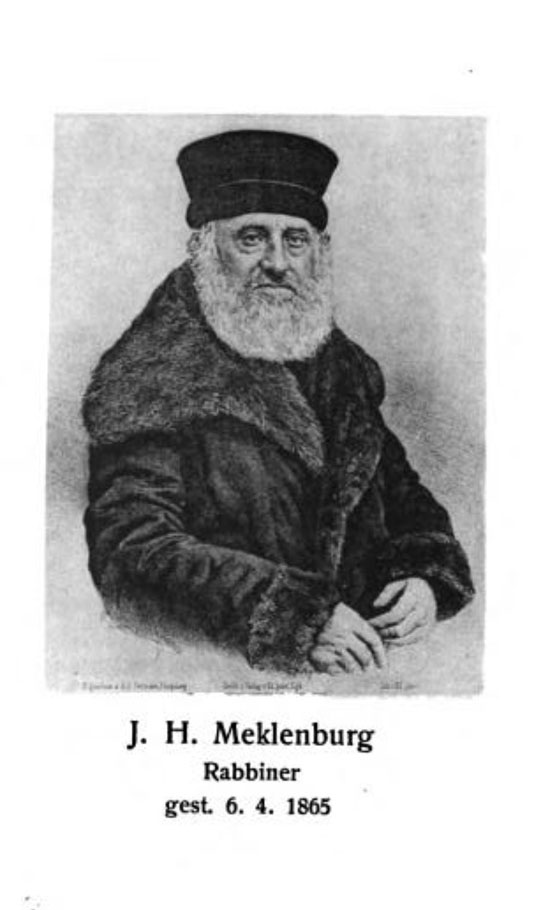
Dikdukei Sofrim quotes Shadal in Maamar al Hadfasas Ha-talmud p. 42 and numerous other places . He usually calls him רשד”ל. See this recent amazing post at On the Main Line for some general stuff about the Dikdukei Sofrim.
[7] Mechkarim Betalmud, p. 51, 60. See also Kesvei Sredei Eish 2, p. 323.
[8] Al Targum Yerushalmi, p. 36; Al Targum Hashivim, p. 36.
[9] Cheker Veiyun, p. 142. This is an incredible piece where he deals with a piece of R. Menashe Me-Ilya has on how to translate the wordהרעי where he says an original pshat that the Shoel Umeshiv attacks. See also M. Hershkowitz, Maharatz Chajes, pp. 449-451.
[10] Me-Torason Shel Rishonim, (p.102). [This is in regard to the topic of אמרי לה כדי that Rashi is supposed to say כדי is a name of a chacham. This source is not cited in the excellent essay on the topic in R. M. Friemann, Pores Mapah, pp. 61-94. See also Mar Kishisha, p. 121; D. Halivni, Mavos Limekorot Umesorot, pp. 34-35]. Shu”t Zion Lenefesh Chayah, Siman 109 [This is the famous Teshuvah where he attacks R. Reuven Margolios for plagiarism in his work Nefesh Chayah. He claims that he stole a particular piece from R. Meir Arik in his Tal Torah. He then goes on to note that Shadal has a piece on the topic. While I hope to return to this teshuvah to see what the exact claims of plagiarism are, in this case I do not see why R. Leiter assumes he stole this from R. Arik]. Note that R. Leiter thanks Alexander Marx and Boaz Cohen of the JTS in the English Foreward, and prays,” Remember this unto them, O G-d, for good.” See also the introduction to S. Freehof The Responsa Literature, where he thanks R. Leiter.
[11] In the Sefer Hazichron for the Seridei Eish, p. 109, 113. R. Hillman was known for not being a big liberal.
[12] This list is found in back of his Mevaser Ezra on Ibn Ezra p. 175. To be sure R. Roth was not a liberal, as is well known with the incident when he was supposed to receive the Kook prize with Saul Lieberman and he refused it. See: Iggeros of R. M. Roth recently printed; Marc B. Shapiro, Saul Lieberman and the Orthodox, pp.27-36.
[13] For a listing of all printings of the Ha-Kesav Ve-ha-Kabbalah see N. Ben Menachem, ‘Shtei Iggrot R. Yaakov Tzvi Meklenburg’, Sinai 65 (1969), pp. 327-332. For more on Rabbi Yaakov Mecklenburg and his Ha-Kesav Ve-ha-Kabbalah See: D. Druck, “Ha-Gaon Rabbi Jacob Zvi Mecklenburg,” Chorev4:1-2 (March – September 1937): 171-179 (Hebrew); C. Rabinowitz,’ R. Yaakov Tzvi Mecklenburg’, Sinai 57, pp. 68-75; Jay M. Harris, How Do We Know This? Midrash and the Modern Fragmentation of Judaism (Albany: SUNY Press, 1995), 212-220; Michal Dell – Orthodox Biblical Exegesis in an Age of Change – Polemics in the Torah Commentaries of R. J.Z. Mecklenburg and Malbim, PhD, Bar-Ilan University, 2008; Hebrew.
[14] Edward Breuer writes that he was unable to locate the source of this letter from Shadal (p. 271 fn. 39). I would like to suggest that as later in that article (p. 272) Breuer notes that the only published works of Shadal that Rabbi Yaakov Mecklenburg could have seen at this point was OhevGer and various articles in journals and that he corresponded with Shadal about his Ha-Kesav Ve-ha-Kabbalah (Igros Shadal, 5, pp. 647-648), so perhaps this too was a letter from Shadal written to Rabbi Yaakov Z. Mecklenburg. But S. of On the Main Line informed me that the letter is printed in Bikure Ha-ittim 7 (Vienna 1826) pg. 183 (link), under the title “המלות גזרת ענין (Etymologia),” and therefore was not specifically sent to Mecklenburg.
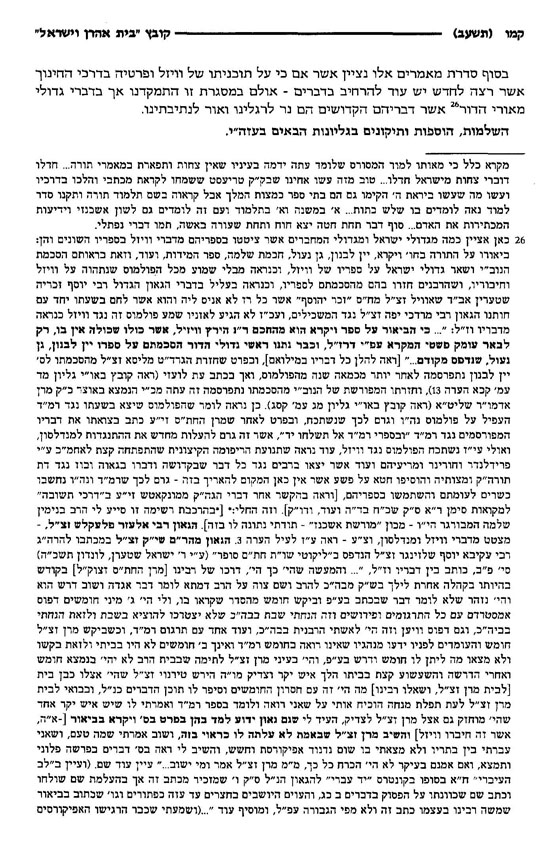
[16] See Breuer, p. 282. As an aside, Breuer points out (p. 281) that in the second edition Rabbi Yaakov Mecklenburg added a bunch of pieces from the Zohar, and also omitted a small number of comments from Shadal, Wessely and R. Shlomo Pappenheim. Note that many references to Shadal and Wessely remain in the commentary and are in all the editions to this day. Also note that the Latin title page in the 1839 edition, where it is named “Scriptura Ac Traditio,” was changed to German in the later editions, where it is titled “Schrift und Tradition.”
For more on Shadal’s work see, J. Penkower, ‘S. D. Luzzatto, Vowels and Accents and the Date ofthe Zohar’, Italia: Conference Supplement Series 2, Samuel David Luzzatto: The Bi-Centennial of His Birth, Magnes 2004, 79 – 13 [= Al Zeman Chiburim Shel Sefer HaZohar Vesefer HaBahir, 2011, pp. 75-116]; B. Huss, Kezohar Harekiyah, pp. 346-347
[17] See here for an English translation of this part ofthe Vikuach, and here for the entire translation by R. Josh Waxman of Parshablog. On the general question, see R. Shlomo Zalman Auerbach Halichos Shlomo, Moadim , 1 pp. 428-434.
[18] Hatorah VeHachochma, pp. 135- 153. The part I am quoting is on p. 143. See Shadal’s Response in Hatorah VeHachochma, pp. 148-149.
[19] Ohev Ger, p. 86.
[20] See: Z. Shazar, MePardes HaTanach,pp. 179-183; M. Margolies, Samuel David Luzzatto: His life and works, pp. 120-123; S. Vargon, Shadal Kecholetz Chokrei Hamikrah Hayehudim, Iyuni Mikra, 6, pp. 71-148; S. Vargon Yechasu shel Shadal le-farshanut ha-halakkah shel Chazal JSIS @ (2003) ; E. Chamiel, author of “Life in Two Worlds, ‘The Middle Way’: Religious Responses to Modernity in the Philosophy of Z.H. Chajes, S.R. Hirsch and S.D.Luzzatto,” (Hebrew; unpublished dissertation, Hebrew University ofJerusalem, 2006).
On the general topic of Shadal here, regarding targumim and our Mesorah, see R. Chaim Heller, Al Targum Hashivim; Seridei Eish, Mechkarim Betalmud, pp. 145-146; M. Shapiro, Between the Yeshiva World and Modern Orthodoxy, pp. 169-170. Also see M. Shapiro, ‘On Targum and Tradition: J.J. Weinberg, Paul Kahle and Exodus 4:22’, Henoch Vol. XIX, 1997, pp. 215-232.
[21] Much has been written on this controversy. See, e.g., M. Samet, Chodosh Assur Min Hatorah, pp. 67-92. But a full treatment in a doctorate is still needed. See also
S. Feiner מהפכת הנאורות pp. 16-187.
[22] The list of gedolim who appreciated Wessely’s commentary to Vayikra is not small. See here for the reported attitude of the Steipler and his son R. Chaim Shlit”a. The Vilna Gaon too is reported by Kalman Schulmann to have really admired this commentary. Schulmann gives as his source R. Meir Raseiner, a talmid of the Gra, who personally told him this. The gist of all the admiration is thatWessely did an excellent job tying together peshuto shel mikra and the halakhic interpretation of Chazal. In this he was a pioneer and precursor to Mecklenburg and Malbim.
These are the pages in Kovets Beis Aharon ve-Yisrael which list many who used the works of Wessely:

[23] Ahavat David, Introduction, see here and here. Not surprisingly it was edited out of some versions of the sefer.
[24] Zera Kodesh, p. 16b, 17b, Igres Rishpei Kodesh, p. 41.
[25] See Gil Perl, Emekha-Neziv A Window into the Intellectual Universe of Rabbi Naftali Zvi Yehudah Berlin, PhD dissertation, Harvard University (2006), p. 143.
[26] Haggadah shel Pesach, Beis Mordechai, p. 67.
[27] Haggadah Shel Pesach, p. 24, 52; Maamor Talachos Haagaddos, p. 9
[28] Netzach Yisroel, p. 166 but see ibid. p. 52, 22.
[29] Shut, O.C. p. 467.
[30] He had all his works in his collection, see Ohel Avraham, and above, note 6.
[31] Shearis Yakov, p. 14a.
[32] Zichron Chaim, p. 8a.
[33] See Y. Mark, Be-mechitzasom Shel Gedolei Hador, p. 54.
[34] Matzav Hayashar, 2, p. 94.
[35] See Pirkei Zichronos (p. 255) where Ben-Tzion Dinur writes that he used to quote it often and praise it. See also S. Stampfer, The Lithuanian Yeshiva, heb., p. 354.
[36] Introduction to Chumash Vayikra, p. 14: כמו כן ידוע הביאור המצוייןלתורת כהנים מאת נפתלי הירץ ויזל
[37] Pnei Tevel, pp. 239-241. About him see here and here.
[38] See Kamenetsky’s pieces in Yeshurun 8, 9 and 10 and Y. Mondshein in Or Yisrael 16. On this matter, see here.


Parshegen, an amazing new work on Targum Onkelos

Parshegen, an amazing new work on Targum Onkelos

By Eliezer Brodt
רפאל בנימין פוזן, פרשגן, ביאורים ומקורות לתרגום אונקלוס, בראשית,963 עמודים.
הנ”ל, העקיבות התרגומית בתרגום אונקלוס, מגנס, ירושליםתשס”ד, 362 עמודים.
After many years of waiting, one volume of a highly anticipated work on Targum Onkelos, Parshegen, has finallyappeared. This volume by Rabbi Dr. Rafael Posen is an in-depth study of Targum Onkelos. Many have studied Targum Onkelos over the centuries, and continue to do so – especially when doing Shenayim Mikra Ve-echad Targum weekly, but few have penetrated the depths of this incredible work. To be sure, many others have treated the Targum before this work, most notably Rashi and the Ramban. Different works and articles by many authors have focused on different aspects of the Onkelos. But there are few that have done what Rabbi Posen sets out to do in this work.
Rabbi Posen has long demonstrated his great expertise in the Targum in numerous articles in various journals (both academic and rabbinic) over many years. A few years ago Rabbi Posen published a work on the Targum based on his doctorate called Ha-Iykivut Ha-targumit Be-Targum Onkelos (The Consistency of Targum Onkelos’ Translation). This work, printed by Magnes Press, outlines some of his themes in dealing with the Targum.[1] I highly recommend it for someone who wishes to grow in his appreciation for Onkelos (henceforth TO). One of his themes in this book, which others have also dealt with, is to show the great consistency within TO and the significance of the exception. Many times TO uses a certain word to explain something consistently throughout the Chumash except for one or two places where he uses a different term. Posen successfully shows that there was a coherent system in how and when TO used which words in which places. He explains why he deviated in some places and that it was in no way random or sloppy. It is precisely these deviations, when understood, which can show what makes TO so special and that is not just a simple translation of the Torah.
In this work Posen uses manuscripts and the academic literature available on TO side by side with all the traditional seforim written on TO. He does not just gather information but he dissects and analyzes it all very carefully, sometimes reaching his own original conclusions. He also deals with other important aspects related to understanding why Onkelos translated as he did as it relates to Halacha, Aggadah and other theological issues, such as how TO deals with anthropomorphism, which is probably the most famous TO issue of all. He also deals with the relationship of Onkelos to Midrashei Halacha and Aggadah. In each case he gives a good overview of the prior literature and issues that have been raised on that particular topic.
However in this book he only gives samples of his commentarial work on TO, outlining his ideas, so although he deals with many different pieces in TO (as a quick look at the index will show) it’s not a running commentary of TO in any way.
In the introduction he mentions that he is in middle of writing a work on Targum Onkeles called Parshegen which will be a running commentary on the whole Targum. Parshegen volume one has just been released by Yefeh Nof, his nephew’s publishing house [which will perhaps explain why there is no mention that Rabbi Posen is a Dr. having written a PhD on TO][2].This new volume is just on Genesis and is 963 pages! The presentation of the material is beautiful, well organized, concise and to the point (and if it’s 963 page and concise, you know it’s good). It is therefore a veritable goldmine. Rabbi Posen’s focus is to give the reader a clear explanation of why TO says what it does. Under the assumption that TO always has a very good reason for specifically translating the words, Rabbi Posen demonstrates how exactly TO did this. As he does in his other work, he uses the necessary manuscripts, early prints of the Targum[3] and the academic literature available alongside the seforim written on TO. He does not just gather information, but he dissects and analyzes it very carefully, checking if they are consistent with other places in the Targum. His competent use of manuscripts show how many times they can help one understand different Targumic issues. This path was not followed by many of the more recent Charedi works on TO. Posen also shows how having a good background in the Aramaic language helps a great deal. Another area he focuses on is the various statements of TO that play a role in Halacha and to underscore this, how at times it is even quoted in the Shu”t literature. He also focuses on the Targum’s usage of Midrash (both Halacha and Aggadah) which others have dealt with before. To better understand Onkelos he sometimes compares and contrasts it with the other Targumim.
To mention some other highlights of the work, in the beginning he includes a nice collection of sources about Onkelos and a very good overview of the Targum literature in general, and who likely wrote TO, and where. He included a very cool, lengthy poem about Onkelos, written in Aramaic, which he authored, as well as a running commentary explaining it. The work concludes with a nice appendix (over forty-five pages) dealing with perhaps the most famous issues that his many predecessors, beginning with the Rambam, have dealt with – TO’s approach to anthropomorphism. Parshegen includes a very nice haskamah from Rabbi Avigdor Nebenzahl, who mentions that he went through this whole work as it was written over the years, adding many comments which Posen found useful and included in this work.
All in all if, one wants to learn TO on a high level and to appreciate how special the Targum is, I highly recommend it. I feel that Rabbi Posen successfully accomplishes the goals he set in the introduction of his book: to write a clear and concise commentary on the Targum Onkelos. If one uses it one will definitely be able to understand why TO enjoys pre-eminence of all the Targumic literature. I only hope that the remaining volumes will appear in the near future as planned.
 
Parshegen is distributed by Yefeh Nof and it should be available in all stores shortly. For now see Girsa in Jerusalem and Biegeleisen in NY. If one wants some samples pages please contact me at Eliezerbrodt@gmail.com.
I wanted to add one notation to this work. An area of halacha in which Targum Onkelos plays an important role isto differentiate between the names of Hashem in the Torah which are Kodesh and which are Chol. The reason why this is important is because the halacha is that every time a sofer writes a name of Hashem in a Sefer Torah he has to articulate that it’s “Leshem Kedushat Hashem. Failing to do so, the Sefer Torah is pasul. Now Rabbi Posen is well aware of this and deals withTO as it relates to this issue. However, one important work which I did not see him quote from is the Meleches Hakodesh(Prague 1812) of Rabbi Eleazer Fleckeles, who gathered all these ambiguous name, the opinions of everyone who remarked upon them and reached conclusions about each one. In addition, he deals with Onkelos in many of the places.[4]
Another work in relation to this topic, which Rabbi Posen does use, is called Biur Shemos Kodesh Vechol. This work was printed in 1923 by Haham Moses Gaster. For many years it was assumed to be from the Rambam, as per the attribution. Rabbi Kirshbaum wrote some interesting notes on this sefer (Tzion Le-menachem, siman 6). In 1985, Y. Levinger proved that it is a forgery and it is not from the Rambam.[5] Rabbi Posen writes that Rabbis Kapach and Nebenzahl also do not agree that it is from the Rambam. R. Yitzchac Shilat told me that he too does not believe it to be authentic. Rabbi Posen points all this out in a footnote in the end of the book (pp. 922-923). However he should have mentioned this already in the beginning when he quotes the work a few times (see p. 77, 112). Other recent works used this sefer without even realizing that – at best – it is hardly clear that it is an authentic work of the Rambam, such as Miat Tzori (p. 6) and Nikadesh es Shimcha (all over the sefer).
There will be follow-up post about Rabbi Posen’s footnote in Parshegen about Shadal’s path-breaking Ohev Ger (Vienna 1830; rp. Cracow 1895) on Targum Onkelos and it’s use. I will jump off from there and also discuss the use of Shadal and Rabbi Naftali Hirz Wessely in seforim in general.
[1] Reviewed in Hamayan 45:1 pp. 88-89.
[2] Although the author is not referred to asa Dr., the works of S. Leiberman (p. 66) Cassuto (p. 161) L. Ginzburg (p.4 3 ) L. Zunz (p. 42) are all referenced normally. In the volume printed by Magnes Press Posen thanks his teachers Dov Rafel and Nechama Leibowitz in the introduction, but probably for similar reasons he does not do so in this volume, although he does quote them both [for ex. see p. 142, 152]. This volume is surely intended as a “sefer.”
[3] See R. M. Frieman, Pores Mapah, pp. 190-198.
[4] On this topic see also R. Avraham ibn Ezra (not that one!), Batei Khnesiot, siman 285; R. Yaakov Shor, Mishnat Yakov p. 6.
[5] I. Twersky when he quotes this work inhis work on the Rambam does not comment. H. Davidson in his work on the Rambam, Moses Maimonides, (Oxford Press 2005), where he deals with works misattributed to the Rambam does not even mention such a work.