David Sassoon, Bibliophile Par Excellence

 David Sassoon,
Bibliophile Par Excellence
By Dr. Pearl Herzog
The article below is an annotated version
of an article that appeared in the Inyan Magazine of HaModia, dated July 16,
2014.

Harav Chaim Ozer Grodzinski addressed him as
“Hanaggid” (The Prince).[1] The Michtav MeEliyahu (Rabbi
Eliyahu Dessler) came to his home to privately tutor his only son.[2] Named
after his grandfather, the founder of the Sassoon dynasty, David Sassoon was an
outstanding Talmid Chochom, whose tremendous collection of sefarim and
manuscripts, on which he expended much time and money, has enhanced the study
of every branch of Torah to this day.  

Mumbai (formerly known as Bombay), the primary
port city in India is home to more than twelve million people. The city’s
largest fishing market is located at Sassoon Docks, one of the few docks open
to the public. It was the creation of Albert Sassoon, a member of the dynasty
known as the Rothschild’s of the East. who had built the Docks through land
reclamation (creating land out of the sea).[3] In 1869 when the Suez Canal
opened and merchant ships could travel between Europe and Asia without the need
to circumnavigate around Africa, it was imperative, in Albert Sassoon’s view,
that India have a dock for ships to load and unload goods. The government of
India which was initially against Albert’s plan, eventually realized the docks
cemented the future of India’s largest port and paid him a pretty penny for it
in addition to being eternally grateful.
Albert Sassoon, who was knighted by Queen
Victoria of England, was the son of David Sassoon, the founder of the Sassoon
dynasty who had laid the foundation in India, of a vast mercantile empire with
branches in Shanghai, Hong Kong, Turkey, Japan, Persia, and England, In the
words of a contemporary: “Silver, and gold, silks, gums and spices, opium,
cotton wool and wheat – whatever moved over land and sea felt the hand and bore
the mark of Sassoon and Company.”[4]
David Sassoon would always attribute his great
success to the fact that he would strictly observe the laws of Maaser.  David’s father Saleh Sassoon (mother Amam
Gabbai) was a wealthy businessman, chief treasurer to the pashas (the governors
of Baghdad) from 1781 to 1817 and leader of the city’s Jewish community.
Following increasing persecution of Baghdad’s Jews by Daud Pasha, the family
moved to Mumbai via Persia.
The Sasson family traced its Yichus back
to Shefatyah, the fifth son of Dovid HaMelech. When exiled to Spain the family
called itself Ibn Shoshana (son of a rose) which later became Ibn Sassoon (son
of Happiness).[5]
Magnanimous philanthropists, the family
supported many Torah institutions, built shuls, hospitals, Mikvaos and
helped employ many Jews.
Albert Sassoon was surprised one day when his 34
year old single half-brother Solomon Sassoon, expressed his interest in
marrying Albert’s granddaughter, Pircha (Flora) Gabbai. Solomon had been on a
business trip to China and had stopped for a business meeting at the Bombay
office. It was there he met for the first time his 17 year old great niece, and
was impressed with her knowledge of Hebrew, French, German, English, Hindustani
and Arabic as well as the fact that she had been taught Tanach and Yahadus
in private lessons given to her by Rabbonim.[6]
Albert loved the idea. The shidduch was
arranged and the couple had three children, two daughters Rachel and Mazel Tov
and their middle child, a son, David born to them in 1880. Shlomo and Flora’s
palatial home in Bombay was called Nepean Lodge and had a shul attached to it.
Considered the most Torah minded of the Sassoon brothers, Solomon would recite
all 150 perakim of Sefer Tehillim before leaving for his office every
day. Modest and unassuming, he served as a wonderful influence on his only son.
Young David astonished his parents one day when
at eight years old he traded his toy kite with a young boy for a rare printed
book containing an Arabic translation of the Book of Ruth that was written for
Baghdadi Jews who lived in India.[7] That trade was to be the first item in his
life long pursuit of collecting Jewish books and manuscripts. His interest in
collecting Seforim may have helped soften the pain of losing his father at the
tender age of 14. Solomon David passed away in 1894 leaving a young 35 year old
widow and three children, the youngest of whom was 10.
Because of his delicate health, young David’s
physician recommended that he live away from the city’s heat. Because of this
he spent most of the year at the family villas in Poona or Mahabeshwar,
studying Torah and having private lessons in Persian as well as other secular
subjects from a Munshi.[8]
Instead of being educated at Eton like his
Sassoon cousins, he was sent afterwards to a yeshiva in North London.
Although David learned to use a rifle as a
cadet, his poor health saved him from ever going to battle. Instead the navy
hired him to translate Hebrew and Arabic documents and decode messages
intercepted in the Middle East.
His mother had with her grandfather Albert’s
blessing, taken over her husband’s role in the business in India after he
passed away. But seven years later, when David had reached 21, she decided to
move to London where most of the Sassoon family had relocated.
David had developed into quite a Talmid Chochom
and had inherited his great love of seforim from his great grandfather Farji
Chaim Ben Abdullah Yosef whose large library of Seforim in Basra, Iraq had been
partly destroyed in 1775 by the invading Persians.[9] David decided to devote
his life to collecting Seforim. He explained in his Ohel David, a two volume
catalogue of his Seforim that he printed in 1931 that he assembled a huge
library because he wanted to observe the Mitzvah of writing or acquiring a
Sefer Torah by extending the mitzvah to include all religious literature:
Nevi’im, Kesuvim, Gemarah, etc.

David traveled extensively to Yemen, Germany,
Italy, Syria, China and the Himalayas seeking manuscripts and old Seforim. His
sister Rachel Ezra who by this time lived in Calcutta would alert him about
different valuable manuscripts in India, North Africa and China.[10] He would
also purchase items from the noted bookseller Rabbi David Frankel and from the
famous Orientalist Silvestre de Sacy.

David Sassoon spent ten years negotiating to buy
the Farchi Bible, a fourteenth century beautifully calligraphed and illuminated
Tanach which contained over 1000 pages and more than 350 illustrations. It took
seventeen years for Elisha Crescas of Provence to complete it, which he did in
1383. The name of the Bible is derived from the fact that it once belonged to
the wealthy Syrian Farchi family that had served as bankers and treasury
officials for the Turkish governors. Chaim Farchi, who was involved with Jazzar
Pasha in the defense of Acre against Napoleon in 1799 was the Sefer’s owner.
Almost two decades later, an orphan Muslim that Chaim Farchi helped raise and
get installed as a Turkish leader betrayed his wealthy Jewish benefactor. On
Erev Rosh Chodesh Elul (August, 1817), after having fasted all day, soldiers
suddenly entered his apartment and read him his death-warrant, [Chaim Farchi
was accused among other transgressions of building a shul higher than the
highest Mosque in Acre] and was executed.
The Farchi Bible then came into the possession
of the British Consul in Damascus and was only returned to the family a century
later. Unique about this Bible was that it contained the names of many Biblical
women that are not mentioned in the Torah but in Rabbinic writings such as the
names of the wives of Kayin, Hevel, Shet, Chanoch and Metushelach
etc.[11] It also contains the rules of Vocalization and Masoretic notes from
Ben Asher’s Dikdukei Ha’Teamim. The interesting illustrations which do
not show any human figures include Noah’s ark, the Mishkan and of the
city of Yericho with seven walls.
In 1902, a year after he moved to London with
his mother and sister, Dovid Sassoon purchased in Egypt several manuscripts
that had been discovered in the Cairo Geniza six years earlier. These
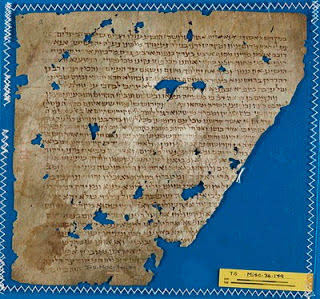
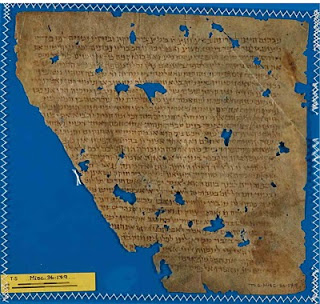
included an extremely early fragment of the Rambam’s Mishneh Torah which
contained the Rambam’s own glosses and Rabbi Saadiah Gaon’s Tafsir, a
Judeo-Arabic translation on Chumash Bamidbar.
The late Rabbi Dr. Tzi M. Rabinowicz, son of the
previous Biale Rebbe and author of more than 10 books including the Encyclopedia
of Hassidism
visited the Sassoon 
library in 1966 and contributed an article at that time entitled “The
Sassoon Treasures” to Jewish Life magazine.[12] He stated that when visiting
the library of Rabbi Solomon David Sassoon, (David was no longer alive and the
library seems to have passed on to his son Shlomo) he thought of the pasuk
“Shal Naaleich me’al raglecha …. Put off thy shoes from off thy feet for the
place whereon thou standest is holy ground.” He describes it as the world’s
greatest private collection of priceless Sifrei Torah, incunabula, manuscripts
and unpublished writings that cover a period of nearly a thousand years. He
writes that a student of art can feast his eyes on exquisitely illuminated
manuscripts, Genizah fragments, Machzorim, Haggadoth, Ketuboth and important
documents.
David Sassoon wrote a diary in Hebrew entitled Massaei
Bavel
[13] when he travelled in 1910 with his mother and sister Mazel Tov,
from Bombay to Basra stopping off at Baghdad.
The following is an English translation of an
excerpt of his dairy by Rabbi Aharon Bassous:
Tuesday Sept. 20
At 7:00 am we reached AL
Qurna where the Tigris and Euphrates unite. Tradition has it that the Garden of
Eden was here! We rested for 10 minutes. Continuing on our journey to Baghdad
we passed in the afternoon a building which is traditionally the grave of Ezra
HaSofer or Al Ezair in Arabic.
On the outside the grave
looks like the dome of a mosque and is covered with glazed blue tiles. We went
inside to visit. On entering the town we were in a large chamber leading to the
synagogue and grave. Before entering the building we were told to remove our
shoes. On top of the grave is a large tomb made from wood. Every Jewish visitor
lights a lamp and says: I am lighting this lamp in honor of our master Ezra the
scribe, after which he circles the grave and kisses it. Many give money for
someone to bless them at the grave. Even non-Jews, come there to pray.
Several days earlier he wrote that while in
Basra he was able to purchase some manuscripts but not old ones. One of them
called Megillat Paras was read every year on the 2nd day of Nisan because a of
great miracle that happened at Basra.
A very important acquisition David Sassoon made
in Sept. 1923 was the Diwan of Shmuel HaNagid which Oxford University Press
published with an introduction by Sasson in 1924. The manuscript which Sassoon
acquired in Aleppo (Aram Tzova), was copied in 1584-1585 by an Italian rabbi
Tam Ben Gedaliah ibn Yachya. It contained 1743 poems, of which 1500 were
previously unknown. In the manuscript is a poem about the earthquake and
eclipse of the year 1047 and a eulogy on the death of the Gaon Hai ben David
(939-1038) the last gaon of Pumbeditha.
In Cecil Roth: Historian Without Tears[14]
the late Irene Roth writes about  David
Sasson that he was a noted Hebraist and 
bibliophile and maintained a magnificent library of rare manuscripts
which was always open to her husband, the Oxford Historian. Incidentally Cecil
Roth, in his book “The Sassoon Dynasty,” calls David Sassoon a
scholar and writer of no mean distinction.
David Sasson also authored The History of the
Jews of Baghdad
.[15]
In addition to constantly expanding his library
he would help his mother Flora answer thousands of letters from all over the
world requesting tzedkaka for Hachnasas Kallah, Yeshivos, Pidyon
Shevuyi
m, and other Jewish causes including requests to help print
seforim.[16]
In the sefer Ohr Elchonon its author A
Souraski,[17] writes that Rabbi Chaim Ozer Grodzinski sent a letter to the
Prince (Nagid) David Sassoon that he should organize in London a vaad  devoted 
to the selling of Osiyos for  a
Sefer Torah in commemoration of the late Chafetz Chaim.
David was married to Sarah Selina Prins, the
daughter of Moshe Meir Ben Rabbi Eliezer Lippman Prins, a diamond merchant and
Talmid Chochom from Amsterdam who also owned a magnificent library.
In the Sefer “Parnas LeDoro: Hitkatvut
Eliezer Lipman Prinz Im Chachmei Doro
” by Meir Herskovics[18] a letter
by Rabbi Eliezer Prinz to his grandson David Sassoon, the son-in-law of his
eldest son Moshe, he writes that he has difficulty in understanding the
commentary of Ramban on Bereishis 2:9, because when he examined different
girsaos, a word was spelled differently and it is evident that the scribe made
an error. Could David please check his different manuscripts to determine the
correct girsa.

David Sasson was not
only a great Talmid Chochom himself but he hired Rabbi Eliyahu Dessler author
of Michtav Eliyahu to learn with his son Solomon in 1928 at the
suggestion of Dayan Shmuel Yitzchok Hillman. Rabbi Solomon Sassoon, who
continued in his father’s footsteps in collecting seforim, developed into a
great Talmid Chochom who turned down the Israeli government twice when it asked
him to serve as Sephardic Chief Rabbi of Israel.[19]

By the time David Sassoon passed away in 1942 he
had amassed about 1300 items in his library. Sadly the collection has been
dispersed sold at a number of Sotheby auctions, beginning with one in Zurich in
1975. A New York Times article[20] describing the fourth Sassoon manuscript
collection in 1994 states that in the past decade the sales were due to satisfy
the estate’s British tax obligations. Nevertheless, thanks to David Sassoon,
universities and libraries around the world can continue to enhance Jewish
scholarship through the efforts of David Sassoon. Yehi Zichro Mevorach.


Notes:
[1]
Aaron Souraski, Ohr Elchanan
2, p. 74.
[2] Rosenblum, Jonathan, Rabbi Dessler: The
Life and Impact of Rabbi Eliyahu Eliezer Dessler, the Michtav Me’Eliyahu
,
Mesorah Publications,  Artscroll 2000
NY.,  p 144.
[3] Roth, Cecil, The Sassoon Dynasty,
Robert Hale Limited, London, 1941 p. 80.
[4] Jackson, Stanley, The Sassoons, EP
Dutton Inc., NY 1968 p. 30.
[5] Ibid. page 2
[6] Breger, Jennifer, “Flora Sassoon”
entry in Jewish Women’s Archive.
[7] Jackson, p. 104. Also see Introduction to
Sotheby Catalogue “Seventy-Six important Hebrew and Samaritan Manuscripts
from the Library of the late David Solomon Sassoon,” London June 21, 1994
.The latter was the fifth Sotheby sale of manuscripts from the collection of
David Sassoon, the previous sales took place in Zurich 1975 and1978 and in New
York, in 1981 and 1984.
[8] Ibid. Jackson,  p.105.
[9] Rabinowicz, Harry, The Sassoon Treasures,
Jewish Life Jan.-Feb. 1966 p.45.
[10] Jackson, p.158.
[11] David Sassoon, Ohel David, Oxford
University Press, 1932, p. 6.
[12] Shevat-Adar 5726, Jan.-Feb. 1966 issue
pp.42-48.
[13] Information from his travel diary, was
incorporated later in his, A History of the Jews in Baghdad (Letchworth
1949) and this diary was later edited and published in Hebrew by M. Benayahu in
1955, after its author’s death (Massei Bavel, Jerusalem 1955).
[14] Cecil Roth: Historian without Tears
Sepher
, Hermon Press, N.Y., 1982, p. 92
[15] See note 13
[16] See Nachalat Avot: Asufat Genazim MiBeit
Mishpachat Sassoon
, for a treasure trove of letters soliticing Tzedokoh
from many Gedolim. This sefer includes Teshuvot, Michtavim Tefillot and
Minhagim and was published by Yad Samuel Franco, 5767, Machon “Ahavat
Shalom,” Yerushalayim.
[17] p. 74.
[18] pp. 411-415.
[19] Rav Dessler, pp 145-.146.

[20] Dec. 5, 1984, “Sassoon Judaica Sold at
Sotheby’s”.


Censorship in the Sefer Chofetz Chaim?

Censorship in the Sefer Chofetz Chaim?

(Another chapter of R. Shmuel Ashkenazi's Latest Work)

Unfortunately, the amount of responses regarding assisting the publication of R. Ashkenazi's work was underwhelming (we are trying very hard to raise the money but are still far from the end) so it is still uncertain when the seforim will actually be published. Until then – here is another chapter. For previous articles of R. Ashkenazi see here here and here. For more information to contribute (any amount is extremely helpful) contact me at eliezerbrodt-at-gmail.com.

In the past I received requests for more information about R. Ashkenazi. What follows is a small biography (along with an appeal for help) on him written recently.

מוקירי תורה וחכמיה, נדיבים שבעם! דומה שאין איש אשר לא הגיעו שִׁמְעוֹ של האיש הנכבד, הנאמן בכל בית הספרים היהודי, ר' שמואל אשכנזי שליט"א. ספרו "אלפא ביתא קדמייתא דשמואל זעירא" שיצא לאור בירושלים, בשנת ה'תש"ס, פתח בפני כלל חכמי ישראל וחובבי תורה את שערי אוצרותיו, חשף בפניהם מעט מבקיאותו המפליאה והטעימם מרעיונותיו והגיגיו הנעימים אלא, שהעומדים משתאים מול היקף המידע והידע הנגלה מבין דפי "אלפא ביתא קדמייתא'', ודאי יופתעו כפליים בשמעם שאין זה אלא מעט שבמעט מאוצרותיו של ר' שמואל שעודם בכתובים, מצפים לאנשי רוח ומביני דבר שירתמו לסייע בהוצאתם לאור עולם והפצתם להגדיל תורה ולהאדירה.ר' שמואל – המקפיד בתוקף שלא להוסיף על שמו כל תואר נוסף פרט לר' – נולד ביום יא בטבת תרפ"ב. בשנות העשרים המוקדמות לחייו כתב עשרות ערכים ב"אנציקלופדיה לתולדות גדולי ישראל" (בעריכת ד"ר מרדכי מרגליות, ירושלים תשו-תשי), בכרכים הראשונים של ה"אנציקלופדיה העברית" ובשתי אנציקלופדיות אחרות של הוצאת 'מסדה'. בהמשך עסק בעריכת ספרים ב"מוסד הרב קוק", ב"מכון תורה שלמה" ובאופן עצמאי. בראשית שנת תשכ"ז ועד פרישתו לגמלאות עבד ב"מפעל הביבליוגרפיה העברית" שבבית הספרים הלאומי בירושלים, ומבחינה מסוימת הוא היה מתווה דרכה ביחד עם הביבליוגרף הבלתי נשכח מר נפתלי בן-מנחם ז"ל. אף לאחר שפרש לגמלאות הגיע למקום בכל יום שלישי וקיבל בסבר פנים יפות את כל המתייעצים עמו, בהם בכירים באקדמיה שעמדו לפתחו ושאלו לעצתו. בשנת תשס"א נתמנה כחבר כבוד בהוצאת הספרים המיתולוגית "מקיצי נרדמים", לאור בקשתם המפורשת של מזכירה וחבריה.החל משנת תש"ד (בהיותו בן-שמונה עשרה) החלו להתפרסם מאמריו הרבים בבמות מכובדות ומפורסמות, ולעיתים עוררו תגובות חריגות (כמו מאמריו "טעויות סופרים" ו"מילונות עברית כיצד?"). בין לבין נענה לשאלות שבכתב שהופנו אליו מכל קצווי הארץ ומחוצה לה, ושיגר במשך השנים כאלפיים מכתבי תשובה. בין ספריו המופתיים ניתן למנות את: "הגדה שלמה", ירושלים תשט"ו; "אוצר ראשי תבות", ירושלים תשכ"ה; "הרי"ף ומשנתו", ירושלים תשכ"ז. ואת עריכתו המופתית ניתן לראות בספר "משלי ישראל ואומות העולם", ירושלים תשכ"ד. טביעת אצבעותיו המיוחדת ניכרת בספרים רבים אחרים, כמו: "בן המלך והנזיר", תל-אביב תשי"א; "אוצר המשלים והחידות", ירושלים תשי"ז; "מחברות עמנואל הרומי", ירושלים תשי"ז; "אוצר פתגמים וניבים לטיניים", תל-אביב תשי"ט (מהדורה שניה: ירושלים תשמ"ב); "צרור המור", בני-ברק תש"נ; "אוצר הספר העברי", ירושלים תשנ"ה; "אוצר תפילות ישראל", א-ב, ירושלים תשנ"ז.כתיבתו של ר' שמואל יחודית ומאופיינת: קצרה, ענינית ומקיפה, ובעיקר – מדויקת. רגיל היה, אף לאחר הגיעו לגבורות, לכתת רגליו רק כדי לראות את הדברים בדפוס הראשון או לבדוק אם אכן הפנייה כלשהי מדויקת וכדומה.בימים אלה הולכים ומותקנים לדפוס שני ספרים נוספים ממעיינותיו של רבי שמואל, הלא הם "אלפא ביתא תנייתא" המהווה המשך ישיר לספר הראשון וכולל בתוכו בירורים מקיפים למקורם של ביטויים, פתגמים ואמרות עממיות, ו"אלפא ביתא תליתאי" הכולל בירורים בנושאים כלליים. שניהם בדרכו הייחודית של ר' שמואל, האוצר בזכרונו וברשימותיו רבבות מקורות עלומים וגנוזים ומעבדם בתבונתו וחוש ביקורתו הנודע.כל אחד מן הספרים מתפרס על פני שלושה כרכים, ויחדיו כוללים הם למעלה מ-2500 עמודים מלאים וגדושים בדברי תורה וחכמה ופנינים נפלאות מעולם הספר היהודי על כל גווניו ואפיקיו.את מלאכת עריכת הספרים לקח על עצמו ידידנו ר' יעקב ישראל סטל הי"ו, אשר ביד אמן, במתינות ובתבונה הופך את פיסות הנייר, פנקסיו ופתקאותיו של רבי שמואל לכדי יצירה מפוארת כיאה לכבוד יוצרה ותורתו.אולם, ידידינו הנעלים, הוצאות ההדפסה כבדו מנשוא! איש פרטי וצנוע הוא ר' שמואל, לא מכוני מחקר ולא קרנות לו לאיש, לא בית הוצאה לאור ולא בית מסחר ספרים. מעודו, נחבא ר' שמואל אל הכלים ואינו מבקש את פרסומו הראוי לו. לולי תושייתם של אוהבי תורה ודעת שנגה עליהם מעט מאורו של רבי שמואל, כי אז היה נותר אלמוני, הוא ואוצרותיו העצומים.ועתה, עם סיום מלאכת עריכת שני הספרים שלפנינו, הרי הם יושבים ומצפים לגואל, איש אשר רוח בו ולב מרגיש לו להבין את יקרתם של דברי תורה אלו, וישאוהו רעיוניו להטות שכמו לעזרת ר' שמואל ולשקוד על תקנת חכמי ישראל, במתת יד נכבדה כשיעור הנצרך להדפסת הספרים היקרים. עורכי הספר אינם מבקשים דבר על המלאכה הכבירה והזמן היקר והרב שהושקעו בהתקנת הספרים לדפוס. זאת עשו בלב רחב ובנפש חפצה, מאשר יקרו בעיניהם נכבדו פניניו של ר' שמואל. אולם עלות ההדפסה כבדה עליהם ואין לאל ידם להשלים את המשימה ללא עזרת ה' בגיבורים.חושו, ידידינו, חושו לעמוד לימין ר' שמואל ולעזרת כל אוהבי תורה, והרימו תרומתכם להדפסת הספרים הנכבדים הללו! שוו בנפשכם מה רבה התועלת העולה ממאמריו ומחקריו הנעימים של ר' שמואל להרמת קרן התורה וכבודה; הוכיחו קבל עם ועדה כי כבוד התורה יקר בעיני הוגיה וכי אין מניחים הם לדברי תורה להיות מונחים בקרן זווית, גנוזים וכמוסים באין דורש!!
And now for the main article:

לכבוד מערכת בית יעקב                                                              ב"ה. ה במנחם-אב תשלאמ"נ,מזמן לזמן מזדמנים לפני גליונות של ירחונכם הנכבד, שאני מוצא בהם ענין ומתענג על קריאתם. לא כן קרני הפעם הזאת. הגיע לידי גליון 137 (תאריך הופעתו [סיון תשלא?] לא צוין!), ומיד עם פתיחתו נתקלתי במאמר גדול, מאת יצחק מ. שמואלי, המשתרע לארכם ולרחבם של שני עמודים שלמים (5-4), ומעליו שלוש כותרות מרעישות: 1) על משמר קדשי האומה. 2) מיהו "צנזור" במהדורות חדשות של ספרי-קודש? 3) תגלית מדהימה על מעשה-זיוף מגמתי בכתביו של בעל "חפץ חיים" זצ"ל.וזה "מעשה הזיוף": בקונטרס שפת תמים, לבעל חפץ חיים, פרק ד, נאמר: וראיתי בספרים מעשה נפלא שהיה בימי הריב"ש, שבא אחד בגלגול סוס והיה עובד בכל כחו כדי לשלם את חובו. ואילו "במהדורות החדשות… שהופיעו לאחר השואה (ונדפסו מתחילה באמריקה, על-ידי יורשיו של בעל המחבר) נחלף הנוסח המקורי לפי כתב-ידו של החפץ חיים הקדוש בנוסח 'מתוקן' כזה: 'וראיתי מעשה נפלא, שהיה בימים הראשונים'".כותב המאמר שואל: "מה היתה מטרתו ותכליתו של 'שינוי' זה?" והוא משיב: "אין מפלט, כמובן, מאותה מסקנה הכרחית, שלא היה, כנראה, לרוחם ולטעמם של בעלי הזכויות של המהדורה החדשה, שבעל החפץ חיים מזכיר ומסתמך בספרו על מעשה נפלא שמתייחס אל מייסד החסידות רבי ישראל בעל-שם-טוב… הם התביישו בכך, הם לא יכלו לבלוע זאת, הם נרתעים ממש בפני ההשפעה העלולה להתקבל מהתייחסותו של החפץ-חיים אל הבעש"ט" ולכן זייפו וסילפו את דברי המחבר "כדי לחבל ברגשי-האחווה שנתרקמו אצל… חסידים ומתנגדים".אין הכותב נוקב בשמם המפורש של "בעלי הזכויות". אך הכל יודעים, שהכוונה לחתן המחבר "הרב פנחס מענדיל יוסף זאקס, ר"מ דישיבת חפץ חיים בראדין" אשר הוציא מחדש את ספרי חותנו, בניו-יורק, בשנת תשיב ובשנת תשך. ואותו מאשים הכותב ב"מעשה מביש כזה" אשר "בדין הוא ש… יזעזע את דעת-הציבור שלנו"."וכדי שלא לפרסם אשמה מזעזעת כזו… בלי ביסוס עובדתי מלא" טרח הכותב וצירף למאמרו שלושה פקסימילים המוכיחים באופן "מדעי" מוחלט את "הסילוף הגס והמביש… שנעשה בחיבורו של החפץ חיים"."והיות שהמדובר… בסילוף מכוון שיש בו מגמה שקופה בהחלט… מן הדין להרים קול זעקה ומחאה, להוקיע קבל עם ועדה את הסילוף הנורא והמחריד ולתבוע במפגיע תיקון הדבר מידי אלה הנושאים באחריות לכך!"אם באמת ובתמים נתכוון הכותב לזעזע את דעת הקוראים ולהזעיקם למחאה, הרי עלה הדבר בידו… שכן אני נזדעזעתי למקרא דברי ההשמצה והטחת ההאשמות כלפי חתן המחבר, אשר ריבה פעלים לתורה ויראה בהפיצו ספרי ההלכה והמוסר של חותנו בעל חפץ חיים. ואומר אל לבי: מצוה להציל עשוק מיד עושקו ולהגן על כבודו של ת"ח מפני המתנפלים עליו בשצף קצף על לא חמס בכפו ולא עולתה בו.ואם עדיין הייתי מהסס בדבר וחושש, שלא להרבות בחלול כבוד התורה על ידי הבעת מחאתי ברבים, בא המאורע דלהלן וחיזק את החלטתי לפרסם ברבים את בטולו של המאמר הנז'.וזה אשר קרני [אין מקרה בעולם, אלא כי הקרה ה' לפני את הדבר הזה!]. ביום המחרת (לאחר קבלת הגליון הנז') נכנסתי לבית המדרש להתפלל שחרית. והנה על השולחן לפני מונח ספר חפץ חיים, הוצאת ועד שמירת הלשון, ירושלים תשכז, ונספח אליו קונטרס שפת תמים. פתחתיו בעמ' טו ואראה בגליון (ליד המלים "מעשה נפלא שהיה בימים הראשונים") הערה כתובה בדיו אדומה על ידי חסיד-שוטה: המילה ראשונים היא זיוף מוחלט ושפל בדברי רבנו וצ"ל בימי הריב"ש (ר' ישראל בעש"ט) כהוצאה הראשונה.ויהי כראותי עד היכן הדברים מגיעים, נזדרזתי לקרבה אל המלאכה: לבדוק את הנוסח הנדפס בהוצאות השונות של קונטרס שפת תמים. לאחר יגיעה מרובה נתברר לי, שקונטרס זה נדפס על ידי מחברו, כנספח לחלק א של "ספר שמירת הלשון… והוא השלמת הספר חפץ חיים", בשנת תרלו, וחזר ונדפס לא פחות מעשרים ושלוש פעמים*. והרי רשימת ההוצאות השונות (אלה שלא ראיתי מסומנות בכוכב):1* ווילנא, דפוס ר' יהודה ליב מ"ץ, שנת שמר פיו [תרלו], 1876.2 הוצאה שניה, ווילנא, דפוס הנ"ל, תרלט, 1879. סודרה ונדפסה דף על דף על פי 1.3* הוצאה שלישית. נדפסה בין תרם לתרמג. והיא ששימשה אבטיפוס להוצאות הבאות, שאינן אלא דפוסים-סטראוטיפיים או דפוסי-צלום של 3.4 "הוצאה שלישית", ווארשא, דפוס ר' יוסף אונטערהענדלער, תרמד, 1884. ד"ס של 3.5* "הוצאה שלישית", ווארשא, דפוס הנ"ל [תרמח?]. בשער: תרמד, 1884. ד"ס של 4.6 "הוצאה שלישית", ווארשא, דפוס בוימריטטער וחתנו גאנשאר, תרן, 1890. ד"ס של 5.7 "הוצאה רביעית", ווארשא (דפוס ב' טורש, צנז' 1892 [תרנב]). ד"ס של 6.8 "הוצאה חמישית", ווארשא (דפוס בוימריטטער), תרנה, 1895. ד"ס של 3?9 "הוצאה חמישית", ווארשא (דפוס אונטערהענדלער, צנז' 1902 [תרסב]). בשער: תרנה, 1895. ד"ס של 8.10 "הוצאה חמישית", ווארשא (דפוס לעווין-עפשטיין, 1910 [תרע]). ד"ס של 7.11 "הוצאה חמישית", ווארשא (דפוס הנ"ל, 1914 [תרעד]). ד"ס של 10.12* "הוצאה שלישית" (הוצאת הרב הילל גינסבורג, ראדין), ווארשא (דפוס פומפיך), [תרף?]. ד"ס של 4?13 "הוצאה שלישית", ווארשא (דפוס פימענט), [תרפ-]. בשער: דפוס יוסף אונטערהענדלער, תרמד. ד"ס של 12.14 "הוצאה שלישית", ווארשא (דפוס לעווין-עפשטיין), [תרפח]. ד"ס של 13.15 "הוצאה שלישית", שנגהי [תשד?]. ד"צ של 12.16 הוצאה רביעית", [גרמניה תשז?]. בשער: ווארשא. ד"צ של 7.17 "הוצא ע"י חתנו הרב מנחם מענדיל יוסף זאקס", ניו יורק תשיב. ד"צ של 8.18 "הוצאת הרב הרשקוביץ", (ירושלם תשטז). סודרה ונדפסה על פי 8.19 "הוצאת אגודת חכמי סלאוויטא, בני ברק", ירושלים (תשך). ד"ס של 18.20 "הוצא ע"י חתנו הרב מנחם מענדיל יוסף זאקס", ניו יורק תשך. ד"צ של 17.21* "הוצאת ועד שמירת הלשון", ירושלים תשכה. סודרה ונדפסה על פי 8.22 "הוצאת הרב הרשקוביץ", ירושלים [תשכז]. ד"ס של 18.23 "הוצאת ועד שמירת הלשון", ירושלים תשכז. ד"ס של 21.24 כנ"ל, ירושלים [תשל]. בשער: תשכז. ד"ס של 23, אלא שבמהדורה זו נספח קונטרס שפת תמים לספר שמירת הלשון ולא לספר חפץ חיים.לא עלה בידי למצוא טופס שלם** מן ההוצאה הראשונה, אך היו למראה עיני תשע עשרה מן ההוצאות הבאות.והנה בעשר מהן נדפס: בימי הריב"ש (2 4 6 7 10 11 16-13), ובתשע: בימים הראשונים (8 9 20-17 24-22).מתשע מהדורות אלו נדפסו שבע לאחר השואה, ואילו שתים מהן נדפסו כבר בימי המחבר ובהסכמתו: הראשונה (מס' 8) בשנת תרנה [כיובל שנים לפני השואה] והשניה (מס' 9) בשנת תרסב. בהוצאת תרנה נדפס: "שהיה בימים הראשונים" ושתי האותיות האחרונות (ים) יוצאות מחוץ לשורה, אך בהוצאת תרסב סודרה השורה מחדש, כדי ליישרה עם חברותיה, ונדפס: שהי' בימים הראשוני'.כל המשוה את שתי ההוצאות של הרב זאקס (ניו יורק תשיב ותשך) להוצאת ווארשא תרנה, יתברר לו למעלה מכל ספק שהראשונות אינן אלא דפוסי-צלום של האחרונה! וחתן המחבר לא תיקן, לא סילף ולא זייף את הנוסח המקורי. ואף ההוצאות האחרונות, שסודרו מחדש, נדפסו על פי ווארשא תרנה. ואין לתלות בוקי סריקי במוציאיהן. נמצינו למדים, שאך לשוא שקד הכותב (המסתתר בכנוי "יצחק מ. שמואלי") למלא שש עמודות (450 שורות!) בדברי הבל וריק ובהטחת האשמות שוא ללא כל יסוד.ואם ישאל שואל: מה טעם תוקן הנוסח בהוצאת תרנה? אין בפי תשובה ודאית. אך ניתן לשער, כי המחבר "נכשל" בפענוח הריב"ש וסבור היה שהוא בעל שו"ת הריב"ש, היינו ר' יצחק בר ששת, מחכמי הראשונים (ה'פו-קסח), וכאשר נודע לו מקור הסיפור (שבחי הבעש"ט!) ונתבררה לו זהותו של הריב"ש שהוא ר' ישראל בעל שם, רבן של חסידים, הלך והחליף את המלים "בימי הריב"ש" במלים אחרות (בימים הראשונים). ואך צחוק עשה לנו הכותב בקביעתו המגוחכת כי "לפני קרוב למאה שנים, עת המתיחות בין המתנגדים ולבין החסידים… בא בעל ה'חפץ חיים' לעשת צעד פייסני כזה, להזכיר את הריב"ש, יוצר החסידות, בספרו… כנגד… לשון הרע"…אינני מתימר להיות בקי בספריו המרובים של החפץ חיים, אך לפי מיעוט ידיעתי אין הוא מזכיר בשום מקום לא מחבר חסידי***, לא ספר חסידי ולא ספור חסידי. ולו חפץ היה "לעשות צעד פייסני כזה" הרי היו לפניו הזדמנויות מרובות מלבד המעשה "בגלגול סוס". ואם לא עשה כן, ודאי טעמו ונמוקו עמו, משום שהיה "מתנגד" לחסידות. מובן, שאין בכך כדי לגרוע ח"ו מכבודו. ואף החסידים הכירו בגאונותו ובצדקתו, וספריו נתחבבו עליהם. ושלום על ישראל.ואחתום במאמרו של רב יהודה: לא חרבה ירושלים אלא בשביל שביזו בה תלמידי חכמים (שבת קיט ע"ב). יהי רצון שנזכה לנחמת ציון ובנין ירושלים.שמואל אשכנזי 
* שמואלי כותב: "קונטרס 'שפת תמים' צורף לכל המהדורות הראשונות של הספר 'חפץ חיים'". ואני איני מכיר אלא מהדורה אחת בלבד שבה נספח הקונטרס לספר חפץ חיים, והיא אחרונה (23). מהדורה זו נדפסה בשם "כל ספרי המוסר על עניני שמירת הלשון, מאת רבנו רבי ישראל מאיר… הכהן".** ראיתי טופס שנשמט ממנו הקונטרס. ומן הענין להעיר, שגם מן ההוצאה השניה (תרלט) מצויים טפסים בהשמטת הקונטרס. גם בימינו נדפס ספר שמירת הלשון בלי הקונטרס, כגון: ירושלים תשיד (הוצאת הרב הרשקוביץ) ותשטז (הוצאת הועד המרכזי לשמירת הלשון).*** להוציא את רש"ז מלאדי, ש"שולחן ערוך" שלו הובא הרבה במשנה ברורה.
הערות מאת אליעזר בראדט:

א. לאחרונה ענין זה נדון על ידי ר' יהושע מונדשיין כאן וכאן.
ב. בביאור הלכה סי' רי"ד בסוף הוא הביא דברי ה'דרך פקודיך'.
ג. במשנה ברורה סי' תצד ס"ק יב לענין טעם לאכילת מאכלי חלב בשבועות הוא כתב בשם גדול אחד: "אמר טעם נכון לזה כי בעת שעמדו על הר סיני וקבלו התורה [כי בעשרת הדברות נתגלה להם עי"ז כל חלקי התורה כמו שכתב רב סעדיה גאון שבעשרת הדברות כלולה כל התורה] וירדו מן ההר לביתם לא מצאו מה לאכול תיכף כ"א מאכלי חלב כי לבשר צריך הכנה רבה לשחוט בסכין בדוק כאשר צוה ה' ולנקר חוטי החלב והדם ולהדיח ולמלוח ולבשל בכלים חדשים כי הכלים שהיו להם מקודם שבישלו בהם באותו מעל"ע נאסרו להם ע"כ בחרו להם לפי שעה מאכלי חלב ואנו עושין זכר לזה". ר' גדלי' אבערלאנדער בספרו 'מנהג אבותינו בידנו', ב, מאנסי תשסו, עמ' תרלד מביא שר' נחום גרינוואלד העיר שגדול אחד הוא ר' לוי יצחק מבארדיטשוב שדבריו בזה הובא בספר תולדות יצחק לר' יצחק מנשכיז. [על דברי ה'גדול אחד' ראה דברים חשובים אצל ר' אהרן מיאסניק, מנחת אהרן, ירושלים תשסח, עמ' קב-קו; פרדס אליעזר, עמ' רעט- רפב].

ד. בקשר לדעת החפץ חיים על חסידים וחסידות ראוי להביא דברי בנו ר' ליב בשם אביו החפץ חיים בזה:
1. בעשירות שניו לעת זקנתו היה מחשיב מאוד עדת החסידים, באמרו כי הם בזמנינו ככותל אבנים שנקרא בראנדוואנט שמעמידים בין בתי עץ, שאינה מניחה להתפשטות שריפה, ובימינו שנגף הכפירה פשטה בכל עבר ופאה, ולאלפים שהם מאמינים בד' ובתורתו  אבל כמו מתביישים בקיום מצותיה, בריש גלי, בל יהא לשחוק בין הגויים, ובין פרצי עמנו שרבו המלעיגים מכל קודש, עלינו לשבח החסידים שהם אמיצי רוח, עושי דברו ביד רמה, ובפומבי, ועוד הם מגדלים בניהם לתורה ולעבודה כאבותיהם. רוממות אל בגרונם, ולשונם כחרב להשיב להחפשים אל חיקם עשרת מונים בוז וקלון,, ועל כל פשעים, תכסה אהבת ה'… (דוגמא מדרכי אבי זצ"ל, עמ' טו, אות מ).

2. זכרוני לפני שלשים שנה בערך בהתישבי בפולין והחלותי למכור ספרי מר אבי ז"ל, עיקר פדיוני היה בבתי מדרשות של החסידים, שרובי הכתות שבהם הם בני תורה, והיו לוהטים מאד לספרי מר אבי. ביחוד לספרי משנה ברורה שכפי מבטא שלהם הוא נחוץ להם כמו לחם, וכמעט כל חסיד קנה ספרינו (דוגמא מדרכי אבי זצ"ל, עמ' טז, אות מא).
3. פעם שמע שמדברים על רודת החסידות והמגרעות שיש בהם, ולא נחה דעתו, וסיפר להם מעשה איך שבימי הגאון ר' חיים מוואלזין היה בעירו בעל הבית אחד, שלמד תלמוד ואמרו עליו שחזר כבר על הש"ס כמה פעמים, והוא בקי כמעט בו, והירדו הגאון ר"ח בקימה כשנכנס, והיו אז בישיבת ר' חיים אברכים גדולי תורה, ושחקו כשקם רבם בפני הבעל הבית הלז, באמרם, בפני מי קם רבנו, אם בקי הוא במלות, אבל בכמה מקומות אינו מבין הפשט, וענה להם רבם ר"ח, יש שני שסים ש"ס אחד הוא דפוס אמשטרדם, יקר מאוד הן במראיתו הן בהגהות ותיקונים רבים שיש בו, ויש ש"ס זולצבאך, עליו אינם בהירים כל כך, גם נמצא בו שיבושים אבל אם יעלה על הדעת מי שהש"ס דזולצבאך אין לו קדושת ש"ס. כן הבעל הבית הזה, אפשר יש בתורתו איזה שיבושים אבל בעיקרו יודע הוא את הש"ס, והנמשל הוא לענין חסידים אם יש בהם איזה שגיאות, אבל בעירם הם מחזיקן בתורת ה' בכל נפשם ומגדלים את בניהם ביראת ה' ומשיאים את בנותיהם לשומרי תורה ומצוה, ומה לנו עוד" (דוגמא מדרכי אבי זצ"ל,  עמ' יז-יח, אות מב).
4. דברו אתו פעם על דבר חסידים ומתנגדים, ענה ואמר, חכמינו אמרו לעתיד לבוא מבא הקב"ה ספר תורה ומניחה בחיקו ואומר מי שעסק בה יבא ויטול שכרו, הרי שאין שואלים כלל לאיזה עדה הוא שייך, אלא אם קיים התורה הרי טוב ואם לאו ח"ו, לא יועילו לו שום עדה ששייך לה, גם אח לא פדה יפדה איש (דוגמא מדרכי אבי זצ"ל, עמ' סב, אות לב).
 

5. בתשמד פרסם ר' משה גליס רשימה בביליוגרפית של החפץ חיים בשם 'כתבי החפץ חיים הרב ישראל מאיר מראדין', ושם בעמ' 42-44 הוא מונה 34 מהודרות של הספר עד שנת תשלט.


New Sefer Announcement – פירוש התורה לרבינו אברהם בן הרמב”ם, ספר שמות

New Sefer Announcement

By: Eliezer Brodt

פירוש התורה לרבינו אברהם בן הרמבם, ספר בראשת, תרעח עמודים

פירוש התורה לרבינו אברהם בן הרמבם, ספר שמות, תתלב עמודים

מאמר על הדרשות ועל האגדות לרבינו אברהם בן הרמבם, מעיתיק השמועה, [בירורים בתולדות חכמי התלמוד] צז+צ עמודים

Recently the second volume of R. Avraham b. HaRambam’s perush on Chumash Shemot was released (832 pp.). This new edition was edited by Rabbi Moshe Maimon and was published in a beautiful edition by Machon Aleh Zayis.

Last Year Rabbi Maimon published the first volume (678 pp.) and the volume on R. Avraham’s Ma’amar Al Ha-Derashot.

What follows is a short description of the work. IY”H I hope to very shortly publish on the Seforim Blog an interview with the author where he describes more at length his work on R. Avraham b. HaRambam and his new edition of the Perush.

The Perush of R. Avraham b. HaRambam was first rescued from centuries of obscurity in 1958, when Dr. Ephraim Weisenberg of London translated into Hebrew the centuries-old manuscript owned by Oxford University, from its original Arabic. Weisenberg’s edition included the original Arabic along with a translation and commentary, accompanied with footnotes incorporating comments of other biblical commentators as well as works of the Rambam.

It has never been reprinted in full, and although the translated (but un-annotated) text has in fact been reprinted and marketed several times, these editions are also out of print and have long been unavailable to the public.

Among the highlights of this new edition of R. Maimon is that he has retranslated many hundreds of difficult words and passages from the original Arabic, utilizing advances made in the field by leading Judeo-Arabic experts.

In addition, since the initial publication of the commentary, amazing strides have been made in Genizah research which have transformed the field of Judeo-Arabic studies in general, and the Geonic-Andalusian tradition in particular. Many of the sources employed by R. Avraham in his writing of the commentary are now being made available in the form of critical editions of the works of R. Saadia and R. Shmuel b. Chofni Gaon. The result has been the identification of many obscure sources referenced by R. Avraham, as well as the clarification of untold number of passages in his commentary.

Both volumes are enhanced with essay length introductions (and copious and erudite footnotes) that trace the history of R. Avraham’s Perush, his commentarial style, and his particular contribution to the Maimonidean strain of the Andalusian tradition so prominently on display in his Perush. This new edition is a welcome addition to any serious student of Biblical commentary, and, together with the annotated edition of R. Avraham’s Ma’amar Al Ha-Derashot (Essay on Rabbinic Homilies) released by Rabbi Maimon last year, are a great contribution to Rabbinic studies in general and Maimonidean studies in particular.

Email me at Eliezerbrodt@gmail.com for parts of the introduction and some sample pages of this special new work.

Copies are available for purchase at Beigeleisen (Brooklyn), Judaica Plaza (Lakewood), and Tuvia’s (Monsey) as well as through many other fine retailers.

On can purchase it online through Mizrahi’s Bookstore at this link.

In Eretz Yisrael, if you’re interested in purchasing copies contact me at Eliezerbrodt@gmail.com


A nay bintl briv: Personal Reminiscences of Rabbi Israel Meir ha-Kohen from the Yiddish Republic of Letters

A nay bintl briv:

Personal Reminiscences of Rabbi Israel Meir ha-Kohen from the Yiddish Republic of Letters

Shaul Seidler-Feller

Editor’s note: The present post is part one of a two-part essay. Part two can be found here.

Introduction

Beginning on January 20, 1906, Abraham (Abe) Cahan (1860–1951), the legendary founder and longtime editor of the Yiddish-language Forverts newspaper in New York, published a regular agony uncle column famously entitled A bintl briv (A Bundle of Letters; often Romanized A Bintel Brief).[1] Herein he reproduced missives sent to the daily by its largely Eastern European immigrant readership seeking advice on a range of personal issues, followed by his wise, insightful counsel.[2] While today this once-immensely-popular feature may have quietly evanesced into the mists of Yiddish journalistic history,[3] it is my intention here to revive it, if only briefly and in altered form, via transcription, translation, and discussion of two letters penned to the distinguished Forverts columnist Rabbi Aaron B. Shurin.

Shurin, born in Riteve (present-day Rietavas, Lithuania) on the second day of Rosh Hashanah 5673 (September 13, 1912)[4] to his parents Rabbi Moses and Ruth, learned in his youth at the heder and yeshivah of Riteve (the latter founded by his father) and spent the years 1928–1936 at the yeshivot of Ponevezh (present-day Panevėžys, Lithuania) and Telz (present-day Telšiai, Lithuania).[5] In 1936, he joined the rest of his family in the Holy Land, to which it had immigrated the previous year, and soon thereafter he continued his studies at the yeshivot of Hebron (as transplanted to Jerusalem) and Petah Tikva, as well as at the 1938 Summer Seminar in Tel Aviv under Prof. Yehuda Even Shmuel (Kaufman; 1886–1976).[6] The following year (1939), he received yoreh yoreh and yadin yadin semikhot from Rabbis Meir Stolewitz (1870–1949), Isser Zalman Meltzer (1870–1953), Reuven Katz (1880–1963), and Isaac ha-Levi Herzog (1888–1959) and in 1940 moved again, this time to New York, to which his father had relocated circa 1937.[7] At that point, he began studying at Yeshiva College and Columbia University, and in 1941–1942 he simultaneously taught Bible and Hebrew language and literature in YC; he would later go on to occupy a position on the Judaic studies faculty at Stern College for Women for many years (1949–1956 and 1966–2001).[8]

In the years that followed, in addition to teaching at YU, Shurin served as cofounder and vice president of Poalei Agudath Israel (1941–1947), rabbi of two synagogues (Beth Hacknesseth Anshei Slutsk at 34 Pike Street in Manhattan [1941–1945] and Toras Moshe Jewish Center at 4314 Tenth Avenue in Brooklyn [1945–1947]), and principal of a day school (Talmud Torah Hechodosh at 146 Stockton Street in Brooklyn [1949–1953]), among several other leadership positions.[9] However, it is his sixty-two-plus-year career at the Forverts on which I wish to focus here. Already in his youth, as a talmid in Telz and then in Israel, he began writing articles and studies for various Hebrew and Yiddish publications, and when he came to America (to quote him directly), “Anywhere I could write, I did […] I enjoyed it, and I compiled a portfolio of articles on a wide range of subjects. One day, a friend said to me, ‘You should write for the Forward.’ I laughed.”[10] At the time, the Forverts was by far the most widely read Jewish newspaper, with a daily circulation of over 100,000 copies, and was avowedly secular in orientation, even publishing on Shabbat and yom tov (although it was respectful of the religious).[11] Nevertheless, despite these challenges to a young, aspiring Orthodox journalist, Shurin took the idea of working at the Forverts to the famed historian and bibliophile Chaim Lieberman (1892–1991) who, after reading a sample of his work, recommended him to Harry Lang (1888–1970), a managing editor at the paper, and shortly thereafter editor Hillel (Harry) Rogoff (1882–1971) hired him.[12] From 1944 to 1983, Shurin wrote approximately two columns per week; when the Forverts became a weekly in the latter year, he, too, switched to one column per week until his retirement in 2007.[13]

For the most part, Shurin’s Forverts articles focused on religious topics, Jewish education, social-political issues in Israel (particularly those concerning the Orthodox parties), and the lives of great Jewish historical figures.[14] The aforementioned letters written to Shurin were sent in response to two of these columns, separated by eight years. His son David was kind enough to transfer them to Seforim Blog editor Eliezer Brodt (who then e-mailed scans to me) and to give full permission for their publication and translation below.[15]

First Letter

In honor of the sesquicentennial of what some consider the birth year of Rabbi Israel Meir ha-Kohen, the world-renowned Hafets Hayyim,[16] Shurin published an article in the Forverts treating the most important aspects of this great leader’s biography, focusing on his legendarily superlative piety, as well as his literary, educational, and political activities on behalf of European Jewry.[17] Not long thereafter, he received the following letter:
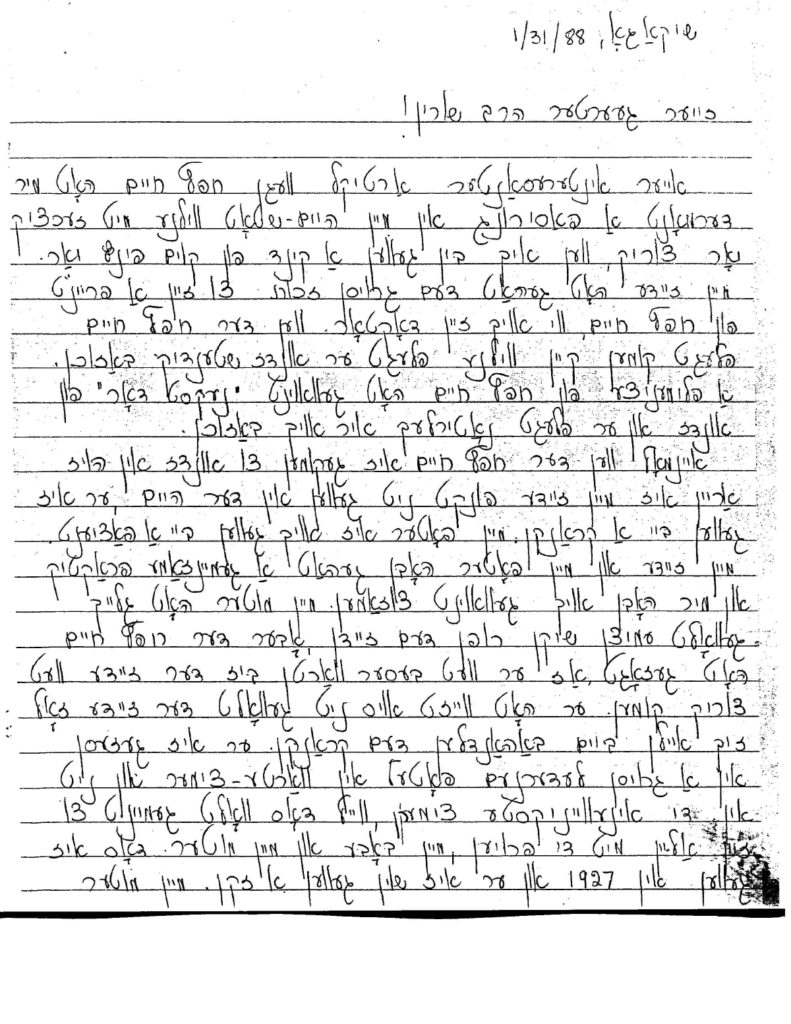
 

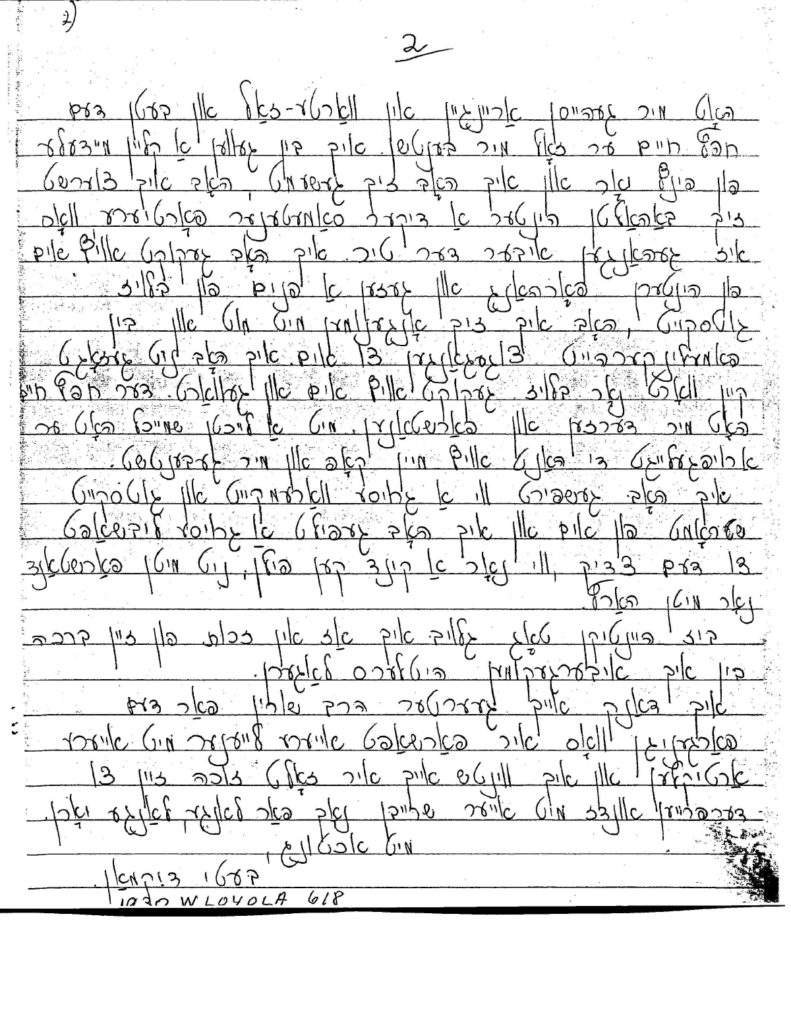
שיקאַגאָ, 1/31/88

!זייער געערטער הרב שורין

אייער אינטערעסאַנטער אַרטיקל וועגן חפץ חיים האָט מיר
דערמאָנט אַ פּאַסירונג אין מיין היים-שטאָט ווילנע מיט זעכציק
.יאָר צוריק, ווען איך בּין געווען אַ קינד פון קוים פינף יאָר
מיין זיידע האָט געהאַט דעם גרויסן זכות צו זיין אַ פריינט
פון חפץ חיים, ווי אויך זיין דאָקטאָר. ווען דער חפץ חיים
.פלעגט קומען קיין ווילנע פלעגט ער אונדז שטענדיק בּאַזוכן
אַ פּלימעניצע פון חפץ חיים האָט געוואוינט ״נעקסט דאָר״ פון
.אונדז און ער פלעגט נאַטירלעך איר אויך בּאַזוכן

איינמאָל ווען דער חפץ חיים איז געקומען צו אונדז אין הויז
אַריין איז מיין זיידע פּונקט ניט געווען אין דער היים, ער איז
.געווען בּיי אַ קראַנקן. מיין פאָטער איז אויך געווען בּיי אַ פּאַציענט
מיין זיידע און מיין פאָטער האָבּן געהאַט אַ געמיינזאַמע פּראַקטיק
און מיר האָבּן אויך געוואוינט צוזאַמען. מיין מוטער האָט גלייך
געוואָלט עמיצן שיקן רופן דעם זיידן, אָבער דער חפץ חיים
האָט געזאָגט, אַז ער וועט בּעסער וואַרטן בּיז דער זיידע וועט
צוריק קומען. ער האָט ווייזט אויס ניט געוואָלט דער זיידע זאָל
זיך איילן בּיים בּאַהאַנדלען דעם קראַנקן. ער איז געזעסן
אין אַ גרויסן לעדערנעם פאָטעל אין וואַרטע-צימער און ניט
אין די אינעווייניקסטע צימערן, ווייל דאָס וואָלט געמיינט צו
זיין אַליין מיט די פרויען, מיין בּאָבּע און מיין מוטער. דאָס איז
געווען אין 1927 און ער איז שוין געווען א זקן. מיין מוטער

2

האָט מיר געהייסן אַריינגיין אין וואַרטע-זאַל און בּעטן דעם
חפץ חיים ער זאָל מיר בּענטשן. איך בּין געווען אַ קליין מיידעלע
פון פינף יאָר און איך האָבּ זיך געשעמט, האָבּ איך צוערשט
זיך בּאַהאַלטן הינטער אַ דיקער סאַמעטענער פּאָרטיערע וואָס
איז געהאַנגען איבּער דער טיר. איך האָבּ געקוקט אויף אים
פון הינטערן פאָרהאַנג און געזען אַ פנים פון בּלויז
גוטסקייט, האָבּ איך זיך אָנגענומען מיט מוט און בּין
פּאמעלינקערהייט צוגעגאַנגען צו אים. איך האָבּ ניט געזאָגט
קיין וואָרט נאָר בּלויז געקוקט אויף אים און געוואַרט. דער חפץ חיים
האָט מיר דערזען און פאַרשטאַנען. מיט אַ לייכטן שמייכל האָט ער
.אַרויפגעלייגט די האַנט אויף מיין קאָפּ און מיר געבּענטשט
איך האָבּ געשפּירט ווי אַ גרויסע וואַרעמקייט און גוטסקייט
שטראָמט פון אים און איך האָבּ געפילט אַ גרויסע ליבּשאַפט
צו דעם צדיק, ווי נאָר אַ קינד קען פילן, ניט מיטן פאַרשטאַנד
.נאָר מיטן האַרץ

בּיז היינטיקן טאָג גלויבּ איך אַז אין זכות פון זיין ברכה
.בּין איך איבּערגעקומען היטלערס לאַגערן

איך דאַנק אייך געערטער הרב שורין פאַר דעם
פאַרגעניגן וואָס איר פאַרשאַפט אייערע לייענער מיט אייערע
אַרטיקלען און איך ווינטש אייך איר זאָלט זוכה זיין צו
.דערפרייען אונדז מיט אייער שרייבּן נאָך פאַר לאנגע, לאַנגע יאָרן

,מיט אכטונג
.בּעטי דיִקמאַן
1930 W LOYOLA 618

Chicago, 1/31/88

To the highly esteemed Rabbi Shurin!

Your interesting article about the Hafets Hayyim reminded me of a story that took place in my hometown of Vilna sixty years ago, when I was a child barely five years of age. My grandfather was very fortunate to be a friend of the Hafets Hayyim, as well as his physician. When the Hafets Hayyim would come to Vilna, he would always visit us. A niece of his lived next door, and he would also, naturally, go to see her.

One time when the Hafets Hayyim came to our house, my grandfather, as luck would have it, was not home; he was tending to someone ill. My father, too, was with a patient. My grandfather and father had a shared practice, and we also all lived together. My mother immediately suggested sending someone to call for my grandfather, but the Hafets Hayyim said that he preferred to wait until my grandfather returned. He evidently did not want my grandfather to rush his treatment of the sick person. He sat down in a large leather armchair in the foyer,[18] not in the innermost rooms, because that would have meant being secluded with the women – my grandmother and mother. This was in 1927, when he was already an elderly man. My mother

2

told me to go to the hallway[19] and ask the Hafets Hayyim to bless me. I was a small, shy girl of five years, so I initially hid behind a thick velvet portiere hanging over the door. But when I peered at him from behind the curtain and saw a face of pure goodness, I mustered up my courage and slowly approached him. I did not say a word; I just looked at him and waited. The Hafets Hayyim caught sight of me and understood. With an easy smile, he lay his hand on my head and blessed me. I sensed a great warmth and goodness streaming forth from him and felt much love for this righteous man, as only a child can – not with the mind but with the heart.

To this day, I believe that it is on account of his blessing that I survived Hitler’s camps.

I thank you, esteemed R. Shurin, for the joy that you bring to your readers with your columns and wish you the good fortune to continue delighting us with your writing for many, many years to come.

Respectfully,
Betty Dickman
1930 W Loyola 618

On April 14, 1997, Donna Puccini interviewed Betty Dickman about her experiences during the Holocaust on behalf of what is today the USC Shoah Foundation’s Institute for Visual History and Education.[20] From that conversation we learn that Dickman was born Isabella Margolin on April 9, 1922 in Vilna – then part of Poland and called Wilno but today known as Vilnius, Lithuania – as the only child of her parents, Mones (1893–1941) and Henya (1894–1943) Margolin. As already noted in the letter, her maternal grandparents, Chaim and Rose Bruk, lived together with them, and both her grandfather and father were physicians, while her grandmother and mother stayed home with their Polish maid.[21] Chaim Bruk was a prominent member of the Vilna Jewish community who sat on the board of directors of the Tiferes Bachurim Society (at 6 Niemiecka [present-day Vokiečių] Street),[22] helped to found the city’s Miszmeres Chojlim charitable hospital (at 5 Kijowska [present-day Kauno] Street),[23]  and served as gabbai of Zalkin’s (formerly Zemel’s) kloyz (at 2 Rudnicka [present-day Rūdninkų] Street),[24] which was located right next door to the family’s apartment building at 4 Rudnicka Street.[25] According to Dickman, when he passed away in 1936 at the age of 70, all the stores lining the streets through which the funeral procession passed were closed, and “there must have been about twenty-five thousand [!] people at that funeral.”

Aside from its value as a firsthand account of the profoundly human, down-to-earth, and kindhearted character of the Hafets Hayyim, this letter also touches on, and complicates our understanding of, at least three aspects of his biography and religious worldview.[26] First and foremost is his attitude toward medicine. The Hafets Hayyim was famous for his pure, unshakable faith in God,[27] relying on Him to heal the sick even when traditional medical interventions had not been attempted.[28] However, a number of incidents recorded by the Hafets Hayyim’s biographers point to a willingness to, and even insistence on the importance of, consult(ation) with physicians about health-related issues.[29] While I have so far not succeeded in corroborating the letter’s claim that Bruk served as the Hafets Hayyim’s personal doctor,[30] it is evident that both certain members of the Hafets Hayyim’s family and he himself had recourse to medical professionals at various stages of their lives[31] – a point that comes through clearly in Dickman’s writing.

Another interesting aspect of this story concerns the Hafets Hayyim’s willingness to bless the young girl. Though many petitioned him to pray on their behalf or offer them a blessing,[32] the Hafets Hayyim often refused on principle to do so, noting that God makes Himself equally available to every Jew, no matter his status in the community, and that He would actually prefer to hear directly from His children than from an intermediary.[33] The fact that he made an exception in this case, while certainly not unheard-of,[34] is nevertheless noteworthy, and it deepens our appreciation of his paternal conduct with this shy little girl.

Finally, attention should be directed toward the Hafets Hayyim’s halakhic stance on yihud. While most posekim assume that secluding oneself with a married woman whose husband is in town (ba‘alah ba-ir) is permissible even ab initio,[35] the letter reports that the Hafets Hayyim would not allow himself to sit together with Mrs. Bruk and Mrs. Margolin even though their husbands were not far away.[36] Interestingly, this humra, which is based on Rashi’s understanding of a passage in the Talmud,[37] seemingly contradicts the Hafets Hayyim’s own ruling on the matter in his Sefer nidhei yisra’el, intended for Jews who had immigrated to America.[38] It would thus appear that we have here an instance in which the Hafets Hayyim’s personal practice reflected a higher degree of stringency regarding halakhah than he required of others.[39]

━━━━━━━━━━━━━━━━━━━━━━━━━━━━━━━━

* I wish at the outset to express my gratitude to Eliezer Brodt for furnishing me with the opportunity to compose this essay and for his patience during its long gestation. Additional thanks go to his fellow editors at the Seforim Blog, particularly the incomparable Menachem Butler, whose bibliographical reach seems unlimited. Finally, I am indebted to my friends Eliyahu Krakowski, Daniel Tabak, and Shlomo Zuckier for their corrections and comments to an earlier draft of this piece that, taken together, improved it considerably.

[1] On the inception of A bintl briv, see Abraham Cahan, Bleter fun mayn leben, vol. 4 (New York: Forward Association, 1928), 471-478. See also “Treasures From the Forverts’ Archive – Chapter #3. A Bintel Brief (1)” (watch at about 1:13) (accessed August 19, 2019). For the historical background behind, and contemporary influences upon, this feature, see Steven Cassedy, “A Bintel brief: The Russian Émigré Intellectual Meets the American Mass Media,” East European Jewish Affairs 34,1 (2004): 104-120.
[2] After two to three years, Cahan tells us, his many other responsibilities at the paper did not allow him to continue answering the letters personally, so that he had to ask other members of his staff to compose the responses (Bleter, 483).
[3] The most recent column, published in a dedicated corner of The Jewish Daily Forward website called The Bintel Brief, is dated May 24, 2010 (accessed August 19, 2019). Anthologies of selected letters in English translation have appeared as Isaac Metzker (ed.), A Bintel Brief: Sixty Years of Letters from the Lower East Side to the Jewish Daily Forward, trans. Diana Shalet Levy with Bella S. Metzker (New York: Ballantine Books, 1971), and Isaac Metzker (ed.), A Bintel Brief: Letters to the Jewish Daily Forward[,] 1950–1980, trans. Bella S. Metzker and Diana Shalet Levy (New York: The Viking Press, 1981). More recently, some of these missives have been adapted into graphic novel form by Liana Finck as A Bintel Brief: Love and Longing in Old New York (New York: Ecco, 2014).
[4] Anon., “About the Author,” in Aaron B. Shurin, Moadim Lesimcha: Insights[,] Explanations and Stories on the Jewish Holidays (Brooklyn: Aaron B. Shurin, 2006), xi-xx, at p. xi. Some sources date his birth to 1913 or even 1914, but these are clearly mistaken given that when he died on 24 Sivan 5772 (June 14, 2012), he was just a few months shy of his one-hundredth birthday. See, e.g., David Tidhar, Entsiklopedyah la-halutsei ha-yishuv u-bonav: demuyyot u-temunot, vol. 10 (Tel Aviv: Sifriyyat Rishonim, 1959), 3474-3475, at p. 3474, translated/adapted somewhat inaccurately and laconically in Alter Levite, Dina Porat, and Roni Stauber (eds.), A Yizkor Book to Riteve: A Jewish Shtetl in Lithuania (Cape Town: The Kaplan-Kushlick Foundation, 2000), 105-106, at p. 105; Elias Schulman, Leksikon fun forverts shrayber zint 1897, ed. Simon Weber (New York: Forward Association, 1987), 90-91, at p. 90; Berl Kagan, Yidishe shtet, shtetlekh un dorfishe yishuvim in lite biz 1918: historish-biografishe skitses (New York: Berl Kagan, 1991), 556-557, at p. 556; and Alex Mindlin, “A Religious Voice in a Secular Forest,” The New York Times (November 28, 2004). I thank Chana Pollack, Archivist at The Jewish Daily Forward, for sending me a copy of the Leksikon for my personal use.

As an aside, and since I know that the Seforim Blog has a special interest in issues surrounding plagiarism, one can find (mild) examples of this phenomenon in the announcement of Shurin’s passing published by Casriel Bauman, “A Legend in His Time: Rabbi Aharon Ben Zion Shurin z”l,” Matzav.com (June 14, 2012) (accessed August 19, 2019) – subsequently reprinted with minor modifications in the Queens Jewish Link 1,12 (June 28, 2012): 89 – which fails to cite both Tidhar’s encyclopedia entry and the New York Times interview as its sources.
[5] Anon., “About the Author,” xi; see also Tidhar, Entsiklopedyah, 3474. For photographs of Shurin (at that point still going by the original family name, Mishuris) and his friends taken in Telz on 3 Adar II 5695 (March 8, 1935), see the following Ebay listings: 12 (accessed August 19, 2019). For a recent photograph of the dilapidated yeshivah building in Telz, taken by Richard Schofield as part of his photo essay Back to Shul (Vilnius: International Centre for Litvak Photography, 2018), see here (accessed August 19, 2019).
[6] Anon., “About the Author,” xi-xii; see also Anon., “Totse’ot ha-behinot be-seminar ha-kayits mi-ta‘am ha-v[a‘ad] ha-l[e’ummi],” Ha-tsofeh 3,318 (January 13, 1939): 1. (Cf. the 1940 United States Census record for Manhattan [accessed June 21, 2019], according to which Aaron, like the rest of his family, was living in “Tel-a-Viv” as of April 1, 1935. This seems unlikely given the date inscribed on the photographs mentioned in the previous note.) According to Tidhar, Entsiklopedyah, 3474, Shurin also attended a gymnasium at night while learning at the Lomzher yeshivah in Petah Tikva.
[7] Anon., “About the Author,” xii; see also Tidhar, Entsiklopedyah, 3474-3475, and the announcement of his move to America in Ha-mashkif 2,244 (January 25, 1940): 4. His younger brother, Rabbi Israel Shurin (1918–2007), followed a very similar educational path. See the biographical sketch published originally in Yated Neeman with contributions from Rabbi Mordechai Kamenetzky and Sharon Katz, entitled “Rav Yisroel Shurin, z”l: A Revered Rav and a Link to a Lithuanian Past” (accessed August 19, 2019).
[8] Anon., “About the Author,” xii. See also Anon., Columbia University in the City of New York: Supplement to the Directory Number, 1945 (New York: New York, 1945), 45; Tidhar, Entsiklopedyah, 3474; the 1967 volume of Stern’s yearbook, Kochaviah, 35 (where he is referred to as “Arthur,” rather than “Aaron,” Shurin); and YU Review: The Magazine of Yeshiva University (Fall 2005): 30. (For the record, the latest Kochaviah yearbook in which I was able to locate Shurin on the faculty pages was the 1997 volume [p. 21]; he did not appear there in the 1998 and 2000 editions, and neither the YU Archives nor Stern’s Hedi Steinberg Library held copies of the 1999 and 2001 volumes at the time I visited them [if indeed those editions were ever actually published]. I thank Shulamith Z. Berger, Curator of Special Collections and Hebraica-Judaica, for allowing me to examine the Archives’ holdings.) As noted by Tidhar and others, Shurin edited the Hebrew section of Eidenu (New York: Students of the Rabbi Isaac Elchanan Theological Seminary, 1942), a volume dedicated to the memory of YU President Rabbi Dr. Bernard Revel (1885–1940).
[9] Anon., “About the Author,” xii; see also Tidhar, Entsiklopedyah, 3474. For some of his other organizational affiliations, see Anon., “About the Author,” xviii. See also lots 169170191198200205210, and 211 from a Kestenbaum & Company auction held on April 7, 2016, which included letters written to Shurin and his father-in-law, Rabbi Moshe Dov-Ber Rivkin (1892–1976), by some of the leading lights of the Jewish world at the time (accessed August 19, 2019). It is interesting to note that Rabbis Eliezer Silver (1882–1968) and Joseph B. Soloveitchik (1903–1993) both apparently read Shurin’s columns in the Forverts.
[10] Quoted in Yisroel Besser, “Defending the Past in the Pages of the Forward: Rabbi Aaron Benzion Shurin’s Six Decades of Journalism,” Mishpacha (May 26, 2010): 26-33, at p. 29. For more on Shurin’s writing outside of the context of his work for the Forverts, including his many rabbinic publications, see Anon., “About the Author,” xiv-xvii, and Tidhar, Entsiklopedyah, 3474-3475.

Relatedly, Israel Mizrahi notes that Shurin’s personal library of approximately two thousand volumes “included many classics as well as obscure works from the last century as well as a very strong showing of newspapers, from the 19th century through the WWII period, with many bound volumes of rare newspapers present.” See “Recent Acquisitions at Mizrahi Bookstore, the libraries of Aaron Ben-Zion Shurin […],” Musings of a Jewish Bookseller (March 29, 2016) (accessed August 19, 2019). One of his books, Eliezer Ben-Yehuda’s Ad eimatai dibberu ivrit? (New York: Kadimah, 1919), comprised lot 3 of Winner’s Auctions’ July 19, 2016 sale (accessed August 19, 2019).
[11] Gennady Estraikh and Zalman Newfield, “Grandfathers against Bar Mitzvahs: Secular Immigrant Jews Confront Religion in 1940s America,” Zutot 9 (2012): 73-84, at p. 74; see also Gennady Estraikh, “A Mid-Twentieth-Century Quest for Jewish Authenticity: The Yiddish Daily Forverts’ Warming to Religion,” in Eliyana R. Adler and Sheila E. Jelen (eds.), Reconstructing the Old Country: American Jewry in the Post-Holocaust Decades (Detroit: Wayne State University Press, 2017), 111-134, at pp. 111-112. On the occasion of the Forverts’ eightieth anniversary, Shurin himself would reflect that “the Forverts has […] been very friendly to the yeshivah world throughout the years that I have been a collaborator on the Forverts editorial staff.” See Aaron B. Shurin, “Idish lebn in amerike,” Forverts (April 24, 1977): B8, B24, at p. B24.

In his interview with The New York Times, Shurin asserts that the Forverts had a quarter million readers at the time he was hired, but Estraikh and Newfield write that that number was accurate for the 1920s, not the 1940s.
[12] Besser, “Defending,” 30, explains the decision to bring an Orthodox rabbi onboard by noting that “times were changing and the Forward management perceived that they had to provide their Orthodox readership – which was immense – with a column geared to their needs, coverage and perspective of the issues that concerned them.” Similarly, Mindlin of the Times writes that “[Shurin’s] hiring reflected the feeling of the founding editor, Abraham Cahan, that the newspaper needed to speak to the religious Jews who flooded the United States in the 30’s and 40’s.” Indeed, according to Estraikh and Newfield, “Grandfathers,” 75 n. 8, based on an article published in the Forverts in February 1956, “[b]y the mid-1950s, secular readers already belonged to the minority of the Forverts audience.” See also Estraikh, “A Mid-Twentieth-Century Quest,” passim, but esp. pp. 121-122, as well as the comments cited by S. Daniel, editor of Ha-tsofeh, in an article translated as “Faithful Servant” in Shurin, Moadim Lesimcha, xxi-xxiv.
[13] Shurin’s first column appeared as A.B. Rutzon, “‘Mizrakhi’ un ‘agudes yisroel’ – vegn vos zey krigen zikh,” Forverts (November 5, 1944): B3 (Tidhar, Entsiklopedyah, 3475, notes that A.B. Rutzon was one of Shurin’s pseudonyms, a reference to his mother’s name, Ruth). The last article of his that I was able to identify was published April 20, 2007; see the table of contents of that issue here (accessed August 19, 2019). See also Anon., “About the Author,” xv.

Interestingly, Schulman, Leksikon, 90-91, writes that Shurin also managed the Fun folk tsu(m) folk (From People to People) readers’ correspondence section of the paper, although I did not find other references to this point. Also interesting, and curious, is the fact that although Shurin’s passing was mourned at the Kave shtibl and in Der moment (accessed August 19, 2019), I could find no article online in either the Forverts or the Forward reporting his death.
[14] See Anon., “About the Author,” xv; Tidhar, Entsiklopedyah, 3475; and Schulman, Leksikon, 90.
[15] I attempted to be faithful to the originals in transcribing these letters, without adjusting or correcting such features as orthography, vocalization, or punctuation.
[16] We know that he was born 11 Shevat, but the exact year is disputed, with varying accounts claiming it was either 5588 (1828), 5589 (1829), 5593 (1833), 5595 (1835), 5598 (1838), or 5599 (1839). For some of the literature on this issue, see Moses M. Yoshor, He-hafets hayyim: hayyav u-po‘olo, vol. 1 (Tel Aviv: Netsah, 1958), 25 with n. 1; Nathan Kamenetsky, Making of a Godol: A Study of Episodes in the Lives of Great Torah Personalities: Improved Edition, vol. 1, pt. 2 (Jerusalem: P.P. Publishers, 2004), 1106-1108 (Notes and Excursuses 5.1 (2) / Excursus B); and [Dan Rabinowitz], “Chofetz Hayyim[:] His Death, the New York Times and Research Tools,” Seforim Blog (October 31, 2006) (accessed August 19, 2019).
[17] Aaron B. Shurin, “Der ‘khofets khayim’, tsu zayn 150 yorikn geboyrn-yor,” Forverts (January 29, 1988): 13, 27. See also Shurin’s earlier, Hebrew-language reflection on the Hafets Hayyim’s life and works: “He-‘hafets hayyim’ – rabban shel yisra’el,” in Keshet gibborim: demuyyot ba-ofek ha-yehudi shel dor aharon, vol. 1 (Jerusalem: Mossad Harav Kook, 1964), 115-121.
[18] The original Yiddish here reads varte-tsimer, lit., “waiting room”; I take this to refer to the foyer of the home.
[19] The original Yiddish here reads varte-zal, lit., “waiting hall”; I take this to refer to the hallway off the foyer.
[20] The Institute website can be found here, and Dickman’s interview can be found either on the Visual History Archive Online site here or on YouTube here (accessed August 19, 2019).
[21] For three slightly different dappei-ed (pages of testimony) filed by Dickman with Yad Vashem about her father, see 12, and 3; for two she filed about her mother, see 1 and 2; and for two she filed about her grandmother Rose, see 1 and 2 (accessed August 19, 2019).
[22] According to Shemaryahu (Shmerele) Szarafan, “Di religyeze vilne,” in Aaron Isaac Grodzenski (ed.), Vilner almanakh (Vilna: Ovnt Kuryer, 1939; repr. Brooklyn: Moriah Offset Co., 1992), cols. 321-332, at col. 324, the Tiferes Bachurim Society was founded in 1902 by the young Rabbi Jechiel ha-Levi Sruelow (1879–1946) to combat the radical, anti-religious forces on the Jewish street by teaching young workers and craftsmen Torah and Talmud at night and on Shabbat and yom tov, when they had free time. Chaim Bruk was one of the people who did much to ensure the society’s financial security; he is pictured, together with Szarafan, Sruelow, and other members of the board of directors, in Leyzer Ran (ed.), Jerusalem of Lithuania: Illustrated and Documented, vol. 1 (New York: Vilno Album Committee, 1974), 261, and here (accessed August 19, 2019). See also Aliza Cohen-Mushlin, Sergey Kravtsov, Vladimir Levin et al. (eds.), “Appendix: Synagogues, Batei Midrash and Kloyzn in Vilnius,” in Synagogues in Lithuania: A Catalogue, vol. 2 (Vilnius: Vilnius Academy of Arts Press, 2012), 281-353, at pp. 303-304 (no. 12), and Yisrael Rozenson, “‘Ba‘avur tse‘irim kemo gam le-ovedim u-le-ozerim ba-hanuyyot’: al ha-mif‘al ha-hinnukhi ‘tif’eret bahurim’ be-vilnah,” Hagut: mehkarim ba-hagut ha-hinnukh ha-yehudi 10 (2014): 15-72, esp. p. 44. The society eventually moved into the former kloyz of the Lubavitcher Hasidim located in the Vilna shulhoyf (synagogue courtyard); see no. 12 in the diagram of the shulhoyf available here (accessed August 19, 2019).
[23] A. Karabtshinski, “Mishmeres-khoylim,” in Grodzenski, Vilner almanakh, cols. 319-320, reports that the society after which the hospital was named was founded by Rabbi Bezalel Altshuler in 1890 as a branch of Vilna’s general charity fund and that the hospital itself was built in 1913. Ran, Jerusalem of Lithuania, 161, by contrast, writes that the hospital building dedication took place in 1912. See also the photograph of the 1910 cornerstone-laying ceremony on that same page (161) in which, according to Dickman’s interview (watch at approx. 2:49:15), Bruk is pictured on the far right wearing a straw hat and holding a cane. For a photograph of the hospital building before the outbreak of World War II, see here (accessed August 19, 2019).
[24] See Cohen-Mushlin et al., “Appendix,” 317-318 (no. 60). For a photograph of Chaim Bruk praying in the kloyz circa 1935, see Dickman’s interview (watch at approx. 2:50:11); he is pictured on the far right in the first row.
[25] For maps of prewar/wartime Jewish Vilna, see Ran, Jerusalem of Lithuania, insert (in Yiddish), and here (in Polish) (accessed August 19, 2019). For a modern map of Vilna with Jewish sites (including ghetto borders) overlaid, see here (make sure to click “Explore on your own”) (accessed August 19, 2019). Most of the addresses mentioned above can be found in the vicinity of the two Vilna ghetto locations. For a photograph of a 3-D model of the Vilna ghettos created illegally by Jewish artists in 1943, see Leyzer Ran and Leybl Koriski (eds.), Bleter vegn vilne: zamlbukh (Łódź: Farband fun Vilner Yidn in Poyln, 1947; also available through the New York Public Library Yizkor Book online portal [accessed August 19, 2019]), after p. 52. Finally, for photographs of wartime and present-day Rudnicka/Rūdninkų Street, see here (accessed August 19, 2019).
[26] A definitive academic study of R. Israel Meir ha-Kohen’s life and legacy remains a scholarly desideratum. Rabbi Eitam Henkin, who, together with his wife Naama, was cruelly murdered in October 2015 by Palestinian terrorists, had made a major bid to fill the void by submitting a doctoral proposal on the topic to Tel Aviv University. Henkin’s mentor, Prof. David Assaf, posted the proposal online shortly after his death, both as a memorial for this up-and-coming scholar, whose life and brilliant career were cut all too short, and for the benefit of future researchers: “Sheloshim le-retsah eitam henkin: tokhnit ha-mehkar al ‘he-hafets hayyim’,” Oneg shabbat (October 30, 2015) (accessed August 19, 2019). The most recent attempt of which I am aware to critically assess, albeit partially, the work of the Hafets Hayyim was penned by Benjamin Brown, “Ha-‘ba‘al bayit’: r. yisra’el me’ir ha-kohen, he-‘hafets hayyim’,” in Benjamin Brown and Nissim Leon (eds.), Ha-‘gdoylim’: ishim she-itsevu et penei ha-yahadut ha-haredit be-yisra’el (Jerusalem: Van Leer Institute; Magnes Press, 2017), 105-151.

The most extensive research on the Hafets Hayyim’s life conducted outside the academic sphere is that by Rabbi Moses M. Yoshor (1896–1978), a student and eventual personal secretary of this great Torah sage. For the history of Yoshor’s various biographical studies of his revered teacher, see his The Chafetz Chaim: The Life and Works of Rabbi Yisrael Meir Kagan of Radin, trans. Charles Wengrov (Brooklyn: Mesorah Publications, 1984), xv-xviii, xxvii-xxviii, as well as the unpaginated translator’s note and note on the author in the frontmatter.
[27] On the Hafets Hayyim as one of the main Lithuanian representatives of a phenomenon Benjamin Brown has termed “the return of ‘pure faith’” within the Jewish tradition, see his “Shuvah shel ‘ha-emunah ha-temimah’: tefisat ha-emunah ha-haredit u-tsemihatah ba-me’ah ha-19,” in Moshe Halbertal, David Kurzweil, and Avi Sagi (eds.), Al ha-emunah: iyyunim be-mussag ha-emunah u-be-toledotav ba-massoret ha-yehudit (Jerusalem: Keter, 2005), 403-443, 669-683, at pp. 433-436, as well as idem, “Ha-‘ba‘al bayit’,” 143-146.
[28] See the account of his son, Rabbi Aryeh Leib Poupko (ca. 1860–1938), in Mikhtevei ha-rav hafets hayyim z[ekher] ts[addik] l[i-berakhah]: korot hayyav, derakhav, nimmukav ve-sihotav, 1st ed. (Warsaw: B. Liebeskind, 1937), 12 (third pagination): “My mother, of blessed memory, told me in my youth that during my upbringing they almost never consulted with doctors. If one of us fell ill, my father advised [my mother] to distribute a pood of bread to the poor, while he ascended to the attic and prayed, and the sickness departed” (par. 26; subsequently quoted in David Falk, Sefer ha-boteah ba-H[ashem] hesed yesovevennu [Jerusalem: n.p., 2010], 92, 250-251). In two other places, Poupko quotes his father as extolling the value of physical suffering in this world as a means of reaching the next world (ibid., 13 [third pagination; pars. 28-29]); see also ibid., 22 (first pagination). Moses M. Yoshor, Saint and Sage (Hafetz Hayim) (New York: Hafetz Hayim Yeshivah Society, 1937), 135, writes that the Hafets Hayyim refused to heed the advice of his physicians when he trekked approximately eighty kilometers from Radin (present-day Radun’, Belarus) to Vilna in early 1932, toward the end of his life, in order to attend a rabbinical conference.
[29] Several sources treat the Hafets Hayyim’s concern for others’ (particularly his students’) physical well-being: Moses M. Yoshor, He-hafets hayyim: hayyav u-po‘olo, vol. 2 (Tel Aviv: Netsah, 1959), 717; ibid., vol. 3 (Tel Aviv: Netsah, 1961), 846-847, 918; and Aryeh Leib Poupko, Mikhtevei ha-rav hafets hayyim z[ekher] ts[addik] l[i-berakhah], ed. S. Artsi, 2 vols. (Bnei Brak: n.p., 1986), 2:107. In addition, in his magnum opus, Mishnah berurah, the Hafets Hayyim discusses situations in which a doctor’s opinion is accorded halakhic significance, e.g., in the determination of whether someone should fast on Yom Kippur (see his comments to Joseph Caro, Shulhan arukhOrah hayyim 618).
[30] Strangely, I could not find mention of either Bruk or his son-in-law Mones Margolin in the essays about Vilna doctors by A.J. Goldschmidt and Zemach Shabad in Ephim H. Jeshurin (ed.), Vilne: a zamelbukh gevidmet der shtot vilne (New York: Wilner Branch 367, Workmen’s Circle, 1935), 377-437, 725-736.
[31] In his youth, while in yeshivah, the Hafets Hayyim suffered from a condition that interfered with his learning and was instructed by his doctors to take a break from his studies for a year, which he did (Poupko, Mikhtevei, 1st ed., 5 [first pagination]). On his consultation with physicians to heal his son Abraham (1869–1891), see ibid., 39 (first pagination); to heal his first wife Frieda (née Epstein), see ibid., 91 (first pagination); and to heal himself, see ibid., 19 (third pagination; par. 46). In the latter connection, see also Yoshor, He-hafets hayyim, 1:66, 3:1058, as well as Dov Katz, Rabbi yisra’el me’ir ha-kohen[,] ba‘al “hafets hayyim”: toledotav, ishiyyuto ve-shittato (Tel Aviv: Avraham Zioni, 1961), 24, 97-98.

Interestingly, Yoshor, He-hafets hayyim, 1:35-36 n. 4, also reports the following ma‘aseh li-setor: Solomon ha-Kohen (1830–1905), a friend of the Hafets Hayyim who grew up in Vilna, became sick between the ages of 13 and 17, and so the doctors instructed him to take a break from learning. He apparently replied that it would be better for him to die from limmud torah than from bittul torah, continued his studies unabated, and was healed. When the Hafets Hayyim would tell this story, he would grow very emotional and repeat his friend’s words several times. Then again, see ibid., 1:343.

As regards Chaim Bruk, a number of sources mention visits by a physician brought in specially from Vilna to treat the Hafets Hayyim, but none of them names him, and it could very well be that different doctors were called upon on different occasions; for instance, we know from Yoshor, He-hafets hayyim, 3:1058, that the Hafets Hayyim would sometimes be treated by Dr. Zemach Shabad (1864–1935). See Poupko, Mikhtevei, 1st ed., 19 (third pagination); Moses M. Yoshor, Dos lebn un shafen fun khofets khayim, 1st ed., vol. 2 (New York: Moses M. Yoshor, 1937), 481; idem, Saint and Sage, 97; and idem, He-hafets hayyim, 2:614, 624.
[32] See Anon., “Saintly ‘Chofetz Chaim’ Dead; Spiritual Head of World Jewry a Legend in Lifetime; over 100,” Jewish Telegraphic Agency (September 15, 1933); (with slight differences:) Anon., “Chofetz Chaim, 105, Is Dead in Poland,” The New York Times (September 16, 1933): 13; and Yoshor, Saint and Sage, 65.
[33] See Poupko, Mikhtevei, 1st ed., 120 (third pagination; par. 34), 75-76 (fourth pagination; par. 4); Yoshor, Saint and Sage, 131, 175; idem, Dos lebn, 403, 525; and Dov Katz, Tenu‘at ha-musar: toledoteha[,] isheha ve-shittoteha, vol. 4 (Tel Aviv: Avraham Zioni, 1967), 88-89.

Given all of this, it is most surprising, in my opinion, to find the following recorded by the Hafets Hayyim’s son: “Once, when he took ill, he sought to walk to the grave of the ga’on Rabbi Elijah in Vilna and to ask him to arouse heavenly mercy on his behalf, in the merit” of the Haggahot ha-gera that he had printed on Torat kohanim, together with his explanations (vols. 12; Piotrków: Mordechai Zederbaum, 1911). See Poupko, Mikhtevei, 1st ed., 43 (third pagination; par. 83).
[34] In fact, numerous sources testify to the Hafets Hayyim deviating at times from this policy. See Yoshor, Saint and Sage, 97, 108, 256; idem, Dos lebn, 363, 574, 610; Poupko, Mikhtevei, ed. S. Artsi, 2:100-101; and especially Anon., Sefer me’ir einei yisra’el, pt. 2, vol. 2 (Bnei Brak: Ma‘arekhet “Me’ir Einei Yisra’el,” 1999), ch. 28 (pp. 815-868), entitled “The Righteous Man Decrees – The Power of the Hafets Hayyim’s Blessings.” Indeed, even after he published a notice in the Vilna-based Dos vort newspaper in 1925 (not 1927, as some have claimed) requesting that people no longer come to him for blessings due to his weakened state, he would nevertheless warmly greet those who disregarded this plea and grant them their wish. For the text of the announcement, see Poupko, Mikhtevei, 1st ed., 77 (second pagination; no. 32). See also Yoshor, Dos lebn, 464-465, and Katz, Rabbi, 107-108.
[35] See, e.g., the comments of Tosafot to bKiddushin 81a, s.v. ba‘alah ba-ir ein hosheshin lah mi-shum yihud; David Ibn Zimra, Sh[e’elot] u-t[eshuvot] ha-radbaz, vol. 3 (Warsaw: Mordechai Kalinberg; Josefov: Solomon Zetser, 1882), 18a-b (no. 919 [no. 481]); and Solomon Luria, Yam shel shelomoh mi-massekhet kiddushin (Szczecin: n.p., 1861), 44a (ch. 4, par. 22). This would seem to be the simple read of Moses Maimonides, Mishneh torah, Hilkhot issurei bi’ah 22:1, and of Joseph Caro, Shulhan arukhEven ha-ezer 22:8, as well.
[36] Of course, the issue of the husbands’ proximity was not the only halakhically relevant factor in this case. For instance, the Hafets Hayyim’s standing in the Jewish world, his location in the apartment relative to where the women were, his elderliness, and the presence of the young Isabella could all have been brought to bear on the question of the permissibility of yihud in this situation. For a summary of some of the discussion, see Eliezer Judah Waldenberg, Sefer she’elot u-teshuvot tsits eli‘ezer, vol. 6 (Jerusalem: Mossad Harav Kook, 1961), 183-190, 228-231 (no. 40, chs. 7-8, 22).
[37] See Rashi to bKiddushin 81a, s.v. ba‘alah ba-ir ein hosheshin lah mi-shum yihud. Several prominent aharonim (following the aforementioned comments of Tosafot ad loc.) interpreted Rashi’s words as prohibiting yihud even when a woman’s husband is in the area. Probably most famously, Rabbi Joel Sirkes (1561–1640) ruled in accordance with this stringent interpretation of Rashi in his Bayit hadash commentary on Jacob ben Asher, Arba‘ah turimEven ha-ezer 22, s.v. ishah she-ba‘alah ba-ir. Interestingly, Waldenberg, by contrast, read Rashi in a lenient light (and cited others who did so as well); see Sefer she’elot u-teshuvot tsits eli‘ezer, 6:176-177 (no. 40, ch. 4).
[38] See Israel Meir ha-Kohen, Sefer nidhei yisra’el (Warsaw: Meir Jehiel Halter and Meir Eisenstadt, 1893), 62 (ch. 24, par. 6), quoting the Shulhan arukh essentially verbatim. I thank my friend, Jonathan Ziring, for this and a number of the above yihud-related references. If I have missed a relevant citation of the Hafets Hayyim’s own work, I would love to know about it; please message me about this or any other issue with this blogpost here.
[39] As a couple of friends rightly pointed out to me, what impelled the Hafets Hayyim to avoid joining the women in “the innermost rooms” of the apartment may not have been specific  halakhic considerations but rather a more general sense of propriety. The interpretation of his behavior as reflecting a reluctance to be “secluded” (aleyn in the original) with the women despite his advanced age relies on the perceptions of someone who was five years old at the time and who may not have appreciated the complexity of the Hafets Hayyim’s thought process.

One historical question raised by the letter for which I have not yet found a satisfying answer concerns the identity of the niece who lived next door to the Bruks and Margolins in Vilna and whom the Hafets Hayyim would regularly visit when he came to town. Some of the basic information on his family tree can be gleaned from Poupko, Mikhtevei, 1st ed., 2-3 (first pagination), who informs us that the Hafets Hayyim had a number of half-siblings. See also Binyamin of Petah Tikva, “He-hafets hayyim u-mishpahto,” Toladot ve-shorashim – atsei mishpahah (January 14, 2011) (accessed August 19, 2019) for a more extensive discussion of the Hafets Hayyim’s relations. More research into the various branches of his family is required.

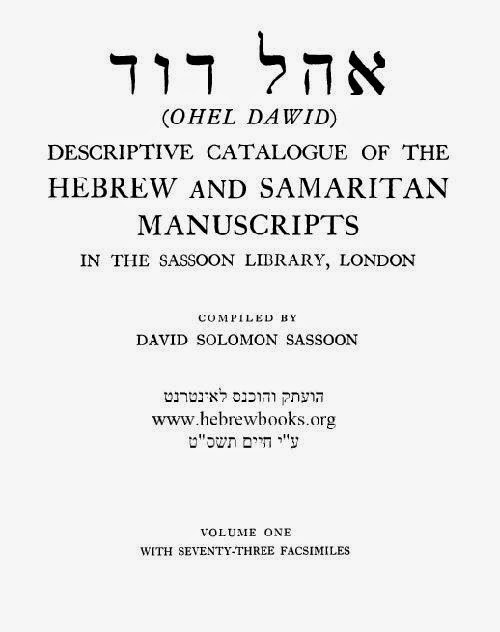
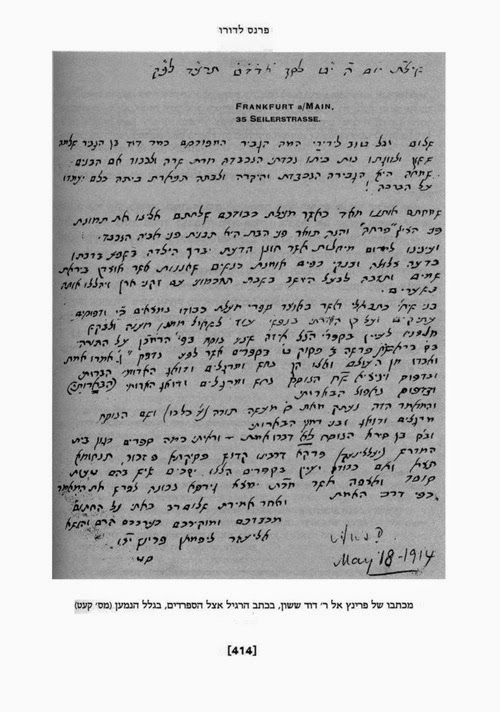
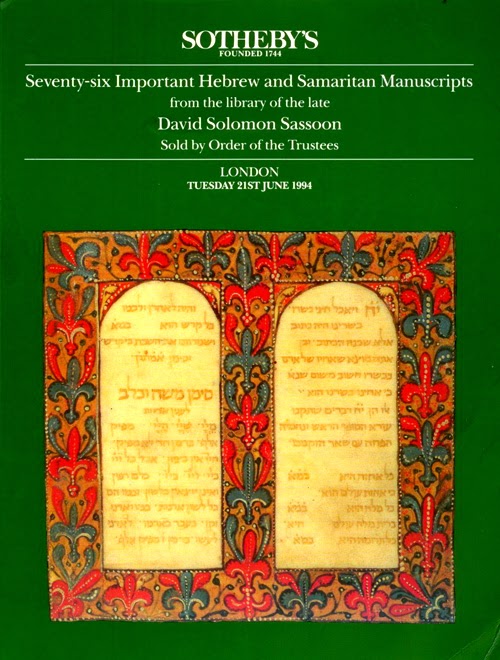
New Volume of Rav Ovadiah Yosef’s “Hazon Ovadiah,” on the halakhot of the Four Fasts, the Three Weeks, Nine Days, Tisha B’Av, and Zekher le-Hurban

New Volume of Rav Ovadiah Yosef’s “Hazon Ovadiah:”
On the halakhot of the Four Fasts, the Three Weeks,
Nine Days, Tisha B’Av, and Zekher le-Hurban
by Eliezer Brodt
A new sefer just reached the seforim stores today, just in time for the three weeks. The newest volume of Chazon Ovadiah of the great gaon Rav Ovadiah Yosef. This sefer includes halakhot on a few areas: the halakhot of the Four Fasts, the Three Weeks (& Nine Days), Tisha B’Av, and halakhot related to Zekher le-Hurban, including going to the Kotel, etc. In the back there are hespedim which Rav Ovadiah delivered for various Gedolim amongst them R. Yitzchak Herzog, R. Zvi Pesach Frank and R. Shlomo Zalman Auerbach. Chazon Ovadiah is 577 pages and includes a very thorough index.

In the past few years we have been privileged to a complete encyclopedic collection on all the Yom Tovim from Rav Ovadiah Yosef. It all started many years ago when he wrote a set of seforim called Chazon Ovadiah on Pesach related topics. These seforim received impressive haskamot from many gedolim, amongst them R. Tvi Pesach Frank and R. Shlomo Yosef Zevin. It appears that this particular project was put on hold and Rav Ovadiah turned his attention to printing his Sheelot u-Teshuvot. Then, a few years ago he started printing his shiurim and notes on the sefer Ben Ish Chai. This resulted in an eight volume set called Halikhot Olam. Finally, after all that, Rav Ovadiah returned to the Yom Tov series, Chazon Ovadiah, starting with Purim than Hilkhot Yom Tov. He then continued with Pesach, Succot, Yomim Noraim and Chanukah. Earlier this year, Tu B’Shevat and Hilkhot Berakhot were printed. Thus far, the set is eight massive volumes. One only hopes that Rav Ovadiah continues this set with Hilkhot Shabbat.

Amongst the reasons why I recommend this particular set of seforim, even if one is not of sefaradic origin is as follows: Rav Ovadiah Yosef is world famous for his unbelievable memory resulting in a tremendous bekiut. [I once joked that he must have had someone develop some computer program and attached it to his brain to help him retain so much information and recall it at all times.] When one uses this work, as with all of his other works, one can find hundred of sources from the Rishonim to extremely obscure Sheelot u-Teshuvot on virtually every topic related to the Yomim Tovim. He even quotes many, very recent seforim. He covers many sugyot quite comprehensively, whereas others Rav Ovadiah simply brings down a few sources. Besides for all this, one has literally hundreds of pesakim of a great gaon on all of these topics.

All this results in making it an excellent reference for Rabbanim, Maggedei shiurim, interested laymen, and any one interested in researching any topic related to the Yomim Tovim. From all the many seforim which are printed every year on the Yomim Tovim, the entire set of Hazon Ovadiah is by far the most impressive in terms of its sources and information.

One interesting point I found in this most recent volume of Chazon Ovadiah was that Rav Ovadiah mentions in the introduction that he uses the highly ‘controversial’ sefer Hemdat Yamim [see here for Dan Rabinowitz’s post on Tu B’Shvat]. Rav Ovadiah justifies his use of this sefer, as many great Sephardi gedolim have used this sefer, ever since it was printed, so although the R. Jacob Emden comes out very strongly against Hemdat Yamim, Rav Ovadiah still quotes from it.


Some Observations Regarding the Mah Nishtannah

Some Observations Regarding the Mah Nishtannah[1]
by: Mitchell First

1. It is well-known that the Mishnah in the tenth chapter of Pesachim includes a set of mah nishtannah. But if one opens a standard printed Babylonian Talmud (Pes. 116a), one sees four questions[2] in the text of the Mishnah (matzah, maror, roast, and dipping), while if one opens a standard printed Jerusalem Talmud, one sees three (dipping, matzah and roast). Is this an instance of a disagreement between the text of the Mishnah preserved in Babylonia and the text of the Mishnah preserved in Palestine? There are such disagreements,[3] but this is not one of them. Here, the manuscript evidence points overwhelmingly to the conclusion that the original text of the Mishnah recorded only the questions of dipping, matzah and roast.[4] Moreover, if one opens up a standard Masechet Pesachim of the Babylonian Talmud and looks at the text of the Mishnah recorded in the Rif and the Rosh, one sees that they too record a Mishnah which included only the questions of dipping, matzah and roast. Also, Rambam utilized a text of the Mishnah which included only these three questions.[5] Let us see how the Encyclopaedia Judaica in its original and new editions deal with this issue. When Daniel Goldschmidt published his classic work on the Haggadah in 1960, after earlier German and Hebrew versions,[6] he clearly took the position that the original text of the Mishnah included only three questions.[7] It was therefore somewhat surprising when the “Mah Nishtannah” entry in the original Encyclopaedia Judaica (published in 1972 and written by the anonymous editors) stated that “[t]he Mishnah enumerates four questions.” In its bibliography, this entry had cited only Goldschmidt’s 1960 work, and one other less scholarly source.[8] We are now in the 21st century. There is now a widespread consensus among scholars that the original text of the Mishnah included only three questions.[9] But when one looks at the new edition of the Encyclopaedia Judaica, one finds only a reprint of the original entry![10] —— 2. A widely quoted explanation of the Vilna Gaon takes the positions that there were always four questions, and that, after the churban, the roast question was substituted by the reclining question.[11] We have already seen that the first of these positions is incorrect. The Haggadah fragments found in the Cairo Genizah show that the second of these positions is incorrect as well. Genizah material generally dates from the 10th through the 13th centuries.[12] It is reasonable to assume that this is roughly the period of the Haggadah fragments from the Genizah.[13] Of course, not all of the Haggadah fragments from the Genizah span the mah nishtannah section. But of those that do, many include the roast question.[14] (The survival of the roast question for 1000 years, post-churban, has been implicitly acknowledged in the Haggadah shel Pesach, Torat Chayim, published by Mossad ha-Rav Kook, at p. 29, n. 59.) [15] Furthermore, although most of the mah nishtannah Haggadah fragments found in the Genizah record four questions the way they are asked today,[16] we also find the following:[17] -Several record three questions: matzah, dipping, and roast,[18] just like the original text of the Mishnah. Most likely, the fragments with these three questions reflect the original Palestinian tradition of the Haggadah,[19] which followed the text of the Mishnah, and the fragments with four questions reflect the Babylonian tradition,[20] which gradually penetrated into Palestine and its surrounding areas.[21] -One records the following three questions: dipping, matzah and reclining.[22] -One records five questions: dipping, matzah, roast, maror, and reclining.[23] (See the photograph in M. Kasher, Haggadah Shelemah, p. 93.) In this fragment, the roast question is phrased:… צלי כולו המקדש בבית אוכלים היינו הזה והלילה. This is the only fragment in which the roast question is phrased with such a qualification. [24] -Two record only the questions of dipping and roast.[25] (But there does not appear to be any reason why the matzah question would have been intentionally discontinued. Perhaps the matzah question was accidentally dropped by a scribe in one source, and further copies were later made from that source. It would have been easy for a scribe to accidentally turn his eye to the wrong mah nishtannah line in the source he was copying from, and thereby omit a question.) – One records only the questions of dipping and matzah. I would like to focus on this last source, which is not actually a Haggadah fragment, but is a section of an anonymous Geonic responsum which includes an outline of the procedures at the seder. It can be deduced that the responsum was composed in Babylonia because it includes avadim hayyinu, which was not a part of the Palestinian seder ritual in this period.[26] This responsum was published by Louis Ginzberg, in his Ginzey Schechter, vol. 2, pp. 258-260. [27] Theoretically, it is possible to argue that the author of this responsum gave only an abbreviated version of the mah nishtannah, and listed only the first two questions, even though his practice was four. This seems to be the understanding of Ginzberg, who writes (p. 259, n. 1): הראשונות השאלות ‘ב אלא כאן נאמרו ולא נתקצר נשתנה מה נוסח. B.M. Lewin included this responsum in his Otzar ha-Geonim, Pesachim (pp. 154-55), and he seems to agree with Ginzberg. (See p. 154, n. 13: נתקצר נשתנה מה נוסח.) But this interpretation seems very unlikely. The whole purpose of the responsum was to spell out the procedures and text of the seder. Abbrevation here would have defeated its purpose. The Safrais take a different approach to this responsum in their monumental work, Haggadat Hazal. They write (p. 64, n. 53) that the third and fourth questions are העמוד בסוף חסרות, implying that these questions were originally included in this responsum but were cut off. Moreover, in their chart on p. 266, they put brackets over a supposed area of the third and fourth questions in this responsum, implying that these questions were once there. They take this approach so that the set of questions in our responsum could then parallel the set of questions found in the other known Babylonian Geonic sources of the Haggadah text: Seder R. Amram Gaon, Siddur R. Saadiah Gaon, and the Haggadah text published in 1984 by M. Lehman.[28] All these sources record the standard four questions: dipping, matzah, maror, and reclining.[29] But I was able to view an image of the responsum (T-S Misc.36.179), and with the kind permission of the Cambridge University Library, have included this image at the end of this article. It is clear that the third and fourth questions were never there. The first side of the fragment ends with the last words of the matzah question (the last three words of this question were written below the last regular line), and the next side continues immediately with avadim hayyinu. It is clear from the image that there are no missing lines in between. Assuming we reject the unlikely interpretation of Ginzberg, this source records a two-question set in Babylonia.[30] The idea that we have now been able to “excavate” such a set, evidence of a period before four questions became the universal practice there, is truly remarkable. An issue remains whether the responsum dates to the period before the maror and reclining questions were added in any Babylonian communities, or whether it dates to a period after they were added, but was composed in a community which did not add them. The latter seems more likely. (The responsum does have at least one other unique aspect.[31] It includes the statement: חורים בני היום[ו] עבדים היינו אתמול. The Safrais discuss this statement at p. 111 and do not mention any other fragments from the Genizah with this language.[32] On the image at the end of this article, this statement is found on the first page, six lines above the last full line.) Regarding the issue of when the maror and reclining questions were added, the following are some reasonable observations that have been made by scholars to date: ◦ The reclining question was probably the last question to be added.[33] Unlike the maror question, it did not make its way into in any manuscripts of the Mishnah,[34] and in all communities, it is the last question of the set.[35] ◦ The maror question probably did not arise until after the text of the dipping question was changed in Babylonia (see Pes. 116a[36]) and the dipping question lost its connotation as a maror question. Once the dipping question lost this connotation, it was probably viewed as necessary to add a question relating to maror.[37] ◦ The reclining question probably originated in Babylonia as well.[38] It was probably added, after the maror question, due to a desire to fix the number of questions at four, parallel to the themes of four cups of wine and four sons.[39] Aside from Haggadah fragments found in the Genizah, the earliest sources which include the reclining question are: Seder R. Amram Gaon,[40] Siddur R. Saadiah Gaon,[41] and the Geonic Haggadah text published by Lehman in 1984. (With regard to Seder R. Amram Gaon, it is accepted that many additions and changes were made to it in the centuries after R. Amram’s death, c. 875. The three surviving manuscripts of the work are only from the 14th-16th centuries. See D. Goldschmidt, Seder R. Amram Gaon, pp. 11-13. With regard to the Siddur R. Saadiah Gaon, the material in our possession has traditionally been viewed as representing a generally reliable version of the original 10th century work by R. Saadiah.[42] With regard to the Geonic Haggadah text published by Lehman, see above, n. 28.) —— 3. A main issue of debate among scholars has been whether the mah nishtannah set of the Mishnah reflects questions from Temple times. If we focus on the roast question ( הלילה הזה כולו צלי ), a reasonable initial assumption is that this question is referring to the pesach sacrifice, since the pesach sacrifice was something that was required to be roasted. This would suggest that this question, and hence perhaps all the questions, were composed during Temple times. But many scholars argue that the roast question is not referring to the pesach sacrifice and that this question was composed after the churban (and hence, the other questions probably were as well.) They make the following arguments: 1. A practice arose after the churban, approved (or perhaps initiated) by Rabban Gamliel of Yavneh, of eating a gedi mekulas as a method of commemorating the pesach sacrifice.[43] See Betzah 2:6-7 and Eduyyot 3:10-11. (Although these two sources do not specify that the Rabban Gamliel they are referring to is Rabban Gamliel of Yavneh, it seems fairly clear, for a variety of reasons, that this is the case here.[44]) The meaning of the term mekulas is subject to debate.[45] Nevertheless, it is clear that the gedi mekulas was not designated as a pesach sacrifice, but was arranged on the spit during the roasting process in the same manner as a pesach sacrifice, and was roasted in its entirety just like a pesach sacrifice. See Tosef. Betzah 2:11 (איזהו גדי מקולס? כולו צלי ראשו וכרעיו וקרבו ) and Pes. 74a.[46] The Sages prohibited the gedi mekulas,[47] but it is possible that a large section of Jewry followed the leniency of Rabban Gamliel and engaged in this practice.[48] The roast question could have been composed post-churban in an area which followed this practice and could be referring to this practice.[49] 2. The Mishnah at Pesachim 4:4 records:מקום שנהגו לאכול צלי בלילי פסחים, אוכלים; מקום שנהגו שלא לאכול, אינן אוכלין. It is possible that this Mishnah was composed during Temple times and is referring to a practice of eating roast meat on the seder night outside the Temple. But just as likely, this Mishnah was composed after the churban and is referring to a post-churban practice of eating roast meat[50] as a commemoration of the pesach sacrifice. It is possible to understand the roast question in the Mishnah as composed, post-churban, in an area which followed this practice and as referring to this practice.[51] But (as pointed out to me by my friend Sam Borodach) the precise phrasing of the roast question does not support either of these interpretations. When read in light of the parallel matzah question, the roast question implies that the question is about a required behavior of the evening. While there were areas which had a custom on this evening, post-churban, to eat a gedi mekulas or to eat roast meat, these were not required behaviors. It is hard to imagine the roast question phrased the way it was by someone composing it with the above optional commemorative behaviors in mind. The language of the roast question, read in light of the parallel matzah question, fits the pesach sacrifice best.[52] Does it follow from this interpretation that the roast question was composed during Temple times? Not necessarily. Even if the roast question is referring to the pesach sacrifice, it very possibly could have been composed after the churban, as a simulation of a question that might have been asked during Temple times. Once the idea for a mah nishtannah question about matzah took hold, it would be have been natural and instructive to create a parallel question covering such an important commandment as the pesach sacrifice, even if the pesach sacrifice was no longer being offered. (All the more so if practices commemorating the pesach sacrifice were ongoing!) (It is also possible to understand the roast question as having been composed post-churban if the pesach sacrifice itself continued after the churban.[53] But the evidence for this is weak.[54]) The Mishnah that concerns us, Pesachim 10:4, is found in the last chapter of this masechet. This suggests that this Mishnah was composed after the churban, since it is reasonable to presume that mishnayot that are presented in the early parts of a masechet were composed first and that mishnayot that are presented later were composed later.[55] Moreover, there is specific evidence suggesting that this particular chapter was composed after the churban. Mishnah 10:3 includes the statement:ובמקדש מביאין לפניו גופו של פסח. This statement suggests that the normative statements in this chapter describe only post-churban practice.[56] Of course, the questions themselves could still reflect questions from earlier times, which were recorded in a chapter composed after the churban. Based on recent scholarly developments, a new argument can be made to support the idea that the questions were composed post-churban. The mah nishtannah is not included in the tenth chapter of the Tosefta. This chapter includes much material parallel to the tenth chapter of the Mishnah. In his Tosefta Atikta, published in 2002, Shamma Friedman studied the relationship between the Mishnah and Tosefta of Pesachim in the first four chapters and in the tenth chapter.[57] He came to the conclusion that the material in the Tosefta in these chapters seems to have originated earlier.[58] If Friedman is correct, this also tends to support a post-churban origin for the mah nishtannah. So far, I have not discussed the precise role that the mah nishtannah serve in the Mishnah. But most likely, the mah nishtannah of the Mishnah was not a mandated piece of liturgy to be recited by the father or a typical son. Rather, it was what the child who lacks understanding is taught to ask (…מה נשתנה אביו מלמדו, אם אין דעת בבן).[59] This also perhaps implies that the mah nishtannah text was a later development. ——– Note finally that the Talmud, at Pes. 70a, records and accepts a statement by R. Hisda that the roast question was authored by Ben Tema. Ben Tema took the position that the chagigah too had to be roasted. In the view of R. Hisda, the language of the roast question, הלילה הזה כולו צלי, fit the position of Ben Tema only. Ben Tema is only mentioned at Pes. 70a and Yoma 83a and there is not enough information to determine if he lived during Temple times. (Some suggest that he is to be identified with R. Judah Ben Tema, who probably dates to the second century C.E,[60] but this identification is only conjecture.) The above statement of R. Hisda is not recorded again at Pes. 116a, where one would expect it.[61] R. Hisda’s statement is also surprising, because it takes an overly literal approach to the roast question. There is also no statement in the Jerusalem Talmud expressing the view that the roast question was authored by Ben Tema.[62] ———- To summarize, it is possible that the mah nishtannah was composed during Temple times, but it also possible that it was composed post-churban. In support of the latter is that the mah nishtannah is found in the last chapter of the masechet, and in a chapter whose normative language suggests that it was composed post-churban. The inclusion of a question about roast meat is not inconsistent with this approach. This question could have been composed post-churban in an area which followed the post-churban practice of preparing a gedi mekulas or in an area which followed the post-churban practice of eating roast meat. More likely, if the question was composed post-churban, it is referring to the pesach sacrifice and was composed for educational purposes, as a simulation of a question that might have been asked during Temple times. The fact that the mah nishtannah is not included in the Tosefta may also support a post-churban origin for it. ——— Cambridge University Library T-S Misc.36.179 (reproduced by kind permission of the Syndics of Cambridge University Library)

[1] I would like to acknowledge Dr. Jay Rovner, Rabbi Mordy Friedman, and Sam Borodach for their thoughts and assistance. The views expressed are solely my own. Several sources will be cited throughout: -D. Goldschmidt, Haggadah shel Pesach (1960), cited as “Goldschmidt.” -M. Kasher, Haggadah Shelemah (third ed., 1967), cited as “Kasher.” -Y. Tabory, Pesach Dorot (1996), cited as “Tabory.” -S. and Z. Safrai, Haggadat Chazal (1998), cited as “Safrai.” -S. Friedman, Tosefta Atikta: Masechet Pesach Rishon (2002), cited as “Friedman.” -R. Steiner, “On the Original Structure and Meaning of Mah Nishtannah and the History of Its Reinterpretation,” JSIJ 7 (2008), pp. 1-41, cited as “Steiner.”[2] I will call them questions, even though some have argued that they are best understood, in the context of Mishnah 10:4, as explanations or exclamations. See, e.g., Safrai, pp. 31 and 206, and the sources cited by Steiner, pp. 21-22. Steiner strongly defends the traditional understanding of the mah nishtannah as questions (actually, as one long question). He points out that the Talmud (Pes. 116a) includes the following passage:ת”ר חכם בנו שואלו ואם אינו חכם אשתו שואלתו ואם לאו הוא שואל לעצמו ואפילו שני תלמידי חכמים שיודעין בהלכות הפסח שואלין זה לזה מה נשתנה הלילה הזה מכל הלילות שבכל הלילות אנו מטבילין פעם אחת הלילה הזה שתי פעמים:(Although the printed editions have punctuation between שואלין זה לזה and מה נשתנה, this punctuation is only a later addition. See Steiner, p. 26, n. 95, and Kasher, p. 35. But see Goldschmidt, p. 11, and Safrai, p. 112, for a different approach to the above text.) Steiner argues that the Mishnah is most properly understood as intending only one (long) question, i.e., “what special characteristic of this night is causing us to depart from our normal routine in so many ways?” He shows that R. Saadiah Gaon and every early medieval source understood the mah nishtannah as only one long question. It was not until the 13th century that a medieval source first referred to them asשאלות (plural). A study of the the mah nishtannah inevitably raises other issues. Is the mah nishtannah to be recited by the child only if he cannot formulate his own questions? Is it perhaps to be recited by the father? On these issues, see, e.g., Goldschmidt, pp. 10-11, Kasher, pp. רד-רב, Safrai, p. 31, ArtScroll Mishnah Series, comm. to Pes. 10:4, p. 210, and J. Kulp and D. Golinkin, The Schechter Haggadah: Art, History, and Commentary, p. 196. Most likely, the correct understanding of Mishnah 10:4 is that the mah nishtannah is what the child who lacks understanding is taught to ask. See Steiner, pp. 26, and 33-36. (Steiner suggests that we should read the beginning of Mishnah 10:4 elliptically as if it includes the words לשאל after בבן דעת אין, and again after אביו מלמדו.) It was only sometime in the post-Talmudic period that the mah nishtannah began to be treated as a mandated piece of liturgy.[3] A well-known example is the first Mishnah in the fourth chapter of Bava Metzia. On this topic generally, see M. Schacter, “Babylonian-Palestinian Variations in the Mishnah,” JQR 42 (1951-52), pp. 1-35. [4] This is what the earliest and most reliable Mishnah manuscripts record. See Safrai, p. 26 and Tabory, pp. 260, 262, and 361.With regard to the order of these three questions, almost all of the early sources which record the mah nishtannah as dipping, matzah and roast, record them in that precise order. See Tabory, p. 262. Kasher, p. 113, n. 6, refers to eight manuscripts of the Babylonian Talmud to Pesachim which include the Mishnah. All but one include only the above three questions in their text of the Mishnah (in the order dipping, matzah, and roast). (In this note, Kasher did not cite the Munich 95 manuscript of the Talmud, which also includes only these three questions, because it includes them in a different order.) Almost certainly, it was the familiarity of later copyists with the maror question from the texts of their Haggadah that led them to insert it into texts of the Mishnah. See H. Guggenheimer, The Scholar’s Haggadah, p. 250. Now that it has been established that Mishnah 10:4 includes only three questions, many scholars claim that the three explanations of R. Gamliel at Mishnah 10:5 (pesach, matzah, maror) are the answers to the mah nishtannah. But this approach must be rejected. As Steiner explains (pp. 32-33), although the topics of the mah nishtannah match the topics of the three explanations (the dipping question was the maror question of the time), the “explanations” given do not specifically answer the questions posed. Moreover, the mah nishtannah is most properly understood as only one long question, i.e., “what special characteristic of this night is causing us to depart from our normal routine in so many ways?” If so, what we should be looking for in an answer is one fundamental answer and not three piecemeal ones. According to Steiner, כל הפרשה … מתחיל בגנות is the answer expressed in the Mishnah to the mah nishtannah. (The prevalent view among the Rishonim was that avadim hayyinu was the answer to the mah nishtannah. See Steiner, p. 31. But avadim hayyinu is not found in the Mishnah, and was not even included in the Palestinian seder ritual. See Steiner, p. 32 and below, n. 26.)[5] See the edition of the Rambam’s commentary on the Mishnah published by Y. Kafah. Rambam copied a text of the Mishnah (presumably one that he felt was authoritative) and wrote his commentary on that text. For most of the sedarim of the Mishnah (including Pesachim), we have this text of the Mishnah and the Rambam’s commentary, all written in the Rambam’s own hand. This text of the Mishnah with the Rambam’s commentary was published by Kafah. The edition of the Rambam’s commentary on the Mishnah included in a standard Talmud volume does not include a text of the Mishnah.[6] The German version was published in 1936. The earlier Hebrew version was published in 1947.[7] Goldschmidt, pp. 11-12. He also clearly took this position in the 1947 version (pp. 9-10, and p. 29). I have not seen the 1936 version.[8] The other source cited was: “J. Levy, A Guide to Passover (1958).” There is a typographical error here, as the author’s name was Isaac Levy. This was not a work which compared in any way with the level of scholarship reflected in Goldschmidt’s 1960 Haggadah. At p. 27, Levy assumed, without any discussion, that the Mishnah enumerated the matzah, maror, roast, and dipping questions.[9] E.g., Safrai, p. 26, Tabory, pp. 260, 262 and 361, Steiner, p. 32, and Kulp and Golinkin, pp. 198-99.[10] It includes no new bibliographical references either, unlike many of the other entries.[11] The Gaon’s explanation is printed at Kasher, at p. 115. According to this explanation, reclining at the seder would not have been a shinui prior to the churban, since it was the practice to eat while reclining all year round. Only after the Temple was destroyed did reclining at the seder become something unusual. At the same time, the pesach sacrifice ceased. The Gaon’s explanations to the Haggadah were first published in 1805 (a few years after his death) by his student R. Menachem Mendel of Shklov. The Encylopaedia Judaica entry “Mah Nishtannah” also essentially follows the approach of the Gaon. Another widely quoted view is that of the Rambam, who writes that there were originally five questions before the question about roast meat was dropped. The Rambam writes (Hilchot Chametz u-Matzah 8:3): בזמן הזה אינו אומר והלילה הזה כולו צלי שאין לנו קרבן. [12] R. Brody, The Geonim of Babylonia and the Shaping of Medieval Jewish Culture, p. 32.[13] For a listing of the Haggadah fragments from the Genizah, see Safrai, pp. 293-301. Most of these have not been published.[14] For some published examples, see: 1) I. Abrahams, “Some Egyptian Fragments of the Passover Haggadah,” J.Q.R. (O.S.) 10 (1898), pp. 41-51, fragments # 2, 7,8 and 10; 2) the Haggadah manuscript first described briefly in an article by J.H. Greenstone in 1911, and later published in full by Goldschmidt; 3) the Haggadah manuscript published by Jay Rovner, “An Early Passover Haggadah According to the Palestinian Rite,” J.Q.R. 90 (2000), pp. 337-396, and 4) MS Cambridge T-S H2.152 (photograph at Kasher, p. 93). There are other such fragments as well. For example, see Safrai, p. 53, n. 21 and p. 114, nn. 9 and 11. (The manuscript published by Rovner is probably, but not certainly, from the Genizah.). In only one of these texts (T-S H2.152) was the text of the question amended to צלי כולו המקדש בבית אוכלים היינו. With one exception (see below), the roast question is found only among sets of mah nishtannah which are based on the three questions included in the Mishnah. These sets either follow the set of three included in the Mishnah, or have a modified version of the set which leaves out the matzah question (perhaps erroneously, see the discussion in the text). (But not all of the fragments which include the roast question include a complete set of questions, so the above conclusions are not absolute.) The exception is T-S H2.152 which includes the roast question along with four other questions. One text from the Genizah (Abrahams, fragment #5) includes the following blessing immediately after ha-motzi: מרורים מצות לאכל אבותינו את צוה אשר העולם מלך … ‘ה ‘א ‘ב הברית זוכר ‘ה ‘א ‘ב גבורותיו את להזכיר אש צלי בשר(The Safrais quote this text at p. 30, but erroneously leave out the words אבותינו את.) Whatever community was using this text was almost certainly eating roast meat at their meal, although Tabory (p. 103) raises the possibility that they may have only been partaking a small, symbolic amount. A similar blessing is found in a different Genizah fragment printed by the Safrais at p. 289. There, however, the blessing is included before the blessing for washing and ha-motzi, so it is less clear that the blessing was meant to precede the actual eating of roast meat. Regarding the concluding blessing הברית זוכר, there are other fragments from the Genizah which include such a blessing in this section of the Haggadah (without reference to אש צלי בשר ). See, e.g, the Greenstone-Goldschmidt manuscript (Goldschmidt, p. 83), and Abrahams, fragment #7. For further discussion of this concluding blessing, see Goldschmidt, p. 60, n. 10.

[15] The passage reads:
זו שאלה גם גורסים הגדות שבמספר י עמ׳ שלמה הגדה עי׳.

[16] Safrai, p. 113. (I am not concerned with variation in the order of these four questions.)[17] In this section, I am only including fragments whose total number of questions in their mah nishtannah set can be determined. Therefore, I am not including fragments such as Abrahams #7 and Abrahams #8, which include mah nishtannah questions but which are cut off mid-set. For example, Abrahams fragment #7 starts with the roast question, but is cut off before it. Abrahams fragment #8 starts in the middle of the matzah question. [18] See, e.g., Abrahams, fragments #2 and #10. See also our discussion below of the Greenstone-Goldschmidt fragment. Safrai writes (p. 65) that ניכר מספר of the Haggadah fragments from the Genizah are of this type. [19] Safrai, pp. 26, 64 and 113. But a few fragments which include the roast question follow the Babylonian rite in other essential respects. See Safrai, p. 30, n. 55, and p. 114, n. 9.[20] Safrai, pp. 113 and 206.[21] We know from many other contexts that Babylonian customs gradually penetrated into Palestine and its surrounding areas and became the majority custom. See, e.g., Brody, The Geonim of Babylonia and the Shaping of Medieval Jewish Culture, pp. 111, 115, and 117. (An example is the practice of reciting kedushah in the daily amidah. The letter of Pirkoi ben Baboi, early 9th cent., describes how Babylonian Jews moved to Palestine and forced Palestinian Jews to adopt the Babylonian practice of reciting kedushah daily.) See also I. Ta-Shema, Ha-Tefillah ha-Ashkenazit ha-Kedumah, p. 7. [22] See Kasher, p. 113, n. 11. Kasher calls this manuscript “21ק.” It is MS Cambridge T-S H2.145. It is possible that this is not a legitimate variant and that the maror question was omitted in error by the scribe who copied this fragment. As explained in the text, the reclining question was almost certainly the last question added and there was little reason for a community to have dropped the maror question. We also have evidence of a mah nishtannah set of dipping, matzah, and maror. This does not come from the Genizah, but from additions inscribed at the end of a certain siddur. The siddur was authored by a rabbinic authority from Morocco, who lived in the 11th or 12th century. The additions, inscribed by the owner of the siddur, describe various local rites, and include a mah nishtannah set of dipping, matzah and maror. See Rovner, p. 351, n. 57.[23] T-S H2.152. [24] Safrai, p. 53. This set is so aberrant that it may not reflect an actual rite. Possibly, the set was created by a lone scribe who combined the various questions that he knew of into one set. Since this set records the language of the roast question in a manner found nowhere else, this is evidence that the scribe who copied this fragment may have been a creative one.[25] The Haggadah manuscript published by Rovner clearly records only these two questions. The Greenstone-Goldschmidt manuscript initially recorded only these two questions, but a later scribe inserted the matzah question. See the last line of fragment א/ד and the first line of fragment ב/ד, in the photos at Goldschmidt, p. ii. These photos show that these lines are in a different handwriting. (The Safrais also print a text of the Goldstone-Goldschmidt manuscript. But they print it as if it included all three questions initially. See Safrai, pp. 286-89.) [26] Safrai, p. 50. See also the responsum of R. Natronai Gaon quoted, for example, at Kasher, pp. 27-28, Goldschmidt, p. 73, and Safrai, pp. 56-57. (In this responsum, R. Natronai criticizes an alternative Haggadah ritual for many reasons, one of which was the ritual’s omission of avadim hayyinu. R. Natronai thought it was a sectarian Haggadah ritual. It turns out that he was criticizing the Palestinian Haggadah ritual. See Goldschmidt, p. 74, Safrai, pp. 56-59, and Brody, p. 96.)[27] It is cited in Kasher, p. 113, n. 11 with the symbol ש. The responsum is not devoted solely to the seder. The first few lines of the responsum, whose beginning is cut off, deal with the hoshanot of Sukkot.[28] M. Lehman, Seder ve-Haggadah Shel Pesach le-Rav Natronai Gaon Al Pi Ketav-Yad Kadmon, in Sefer Yovel li-Chevod Morenu ha-Gaon Rabi Yosef Dov ha-Levi Soloveitchik Shelita, ed. S. Israeli, vol. 2, pp. 976-993, at p. 986. The title of Lehman’s article is unfortunate. The text of the article does not even claim that the Geonic Haggadah text published there served as the Haggadah of R. Natronai Gaon. Lehman composed the article initially based on a manuscript which spanned three sections, one of which was a Haggadah text. The first section of the manuscript included a caption stating that the material in that section (a long paytanic version of kiddush for Passover, and a long paytanic version of the blessing before drinking the second cup) was enacted and arranged by R. Natronai. The Haggadah section had its own caption which stated that what followed was the text of the Haggadah accepted by the Talmud and the Geonim (with no mention of R. Natronai). Three Passover-related responsa followed, without any caption. Later, Lehman acquired another page from the same manuscript. He writes that the body of his article was already in final form by this time, but he was able to add his discussion of the new page at the end of the article. The new page included three anonymous responsa, one of which is recorded elsewhere in the name of R. Hai Gaon. This made Lehman realize (p. 991) that his pages were part of a collection of material from various Geonim, and not material that may all have had some connection to R. Natronai. Probably, the article was given its title (by Lehman or perhaps by someone else) before Lehman acquired the additional page. But even before Lehman acquired the additional page, the title was unjustified, as the Haggadah section had its own caption which did not connect it to R. Natronai. (Despite its caption, even the material in the first section of the manuscript may not have been composed by R. Natronai.) It is unfortunate that the Safrais refer to Lehman’s text throughout their work as the “Haggadah of R. Natronai Gaon.” It is evident fom their discussion of this text (p. 261) that all they were really willing to accept is that the text reflected a Haggadah from the time of the Geonim in general.[29] See Safrai, pp. 261 and 266.[30] See Kasher, p. 42, J. Rovner, “An Early Passover Haggadah: Corrigenda,” JQR 91 (2001), p. 429 (correcting p. 351, n. 59 in his original article), and J. Kulp and D. Golinkin, The Schechter Haggadah: Art, History, and Commentary, p. 199. Note that the Rif quotes a text of M. Pesachim 10:4 which includes only the questions of dipping, matzah and roast, and then remarks פסחא לן דלית צלי בשר לימא לא והשתא. It can be argued based on this that, in his community, the mah nishtannah at the seder may have only included dipping and matzah.[31] Perhaps close examination of the responsum will reveal other unique aspects. The responsum follows an alternative nusach for kiddush, but this nusach is widely attested to. See, e.g., Siddur R. Saadiah Gaon, pp. 141-142, Kasher, pp. 183-85 and ג-ב, Safrai, p. 61, and Lehman, pp. 977-980 and 982-83. The responsum records the Sages in Bnei Brak as having been מסיחין about yitziat mitzrayim all night. But there is other evidence for this reading or its equivalent: משיחין. See Safrai, p. 208.[32] But this language is recorded in the haggadot of Djerba (which also include the standard language that we are now slaves and will be free next year). See Kasher, p. 201, and Safrai, p. 111, n. 6. (Djerba is an island off the coast of Tunisia. The Jewish community there has ancient roots. ) R. Shlomo Goren saw fit to to include the above Geonic language (along with the standard language) in the haggadah he composed for the use of the Israeli army. See, e.g., Kasher, p. 201, citing the 1956 edition of the Haggadah Shel Pesach published by הראשית הצבאית הרבנות. Many editions of this haggadah were published and I saw this language in later editions as well. Kasher discusses the Geonic language at pp. 198-201 and attempts to provide a rationale for it.[33] Tabory, p. 260.[34] The maror question made its way into some, but not the earliest, texts of the Mishnah. See Tabory, p. 261.[35] Tabori, p. 261, n. 36.[36] In Amoraic Babylonia, there was no practice of dipping throughout the year. This led the Babylonian Amoraim to rephrase the question. Based on the statements by the Babylonian Amoraim expressed at Pes. 116a, the text of the dipping question was changed in many Mishnah manuscripts. Various forms of the question developed. See Safrai, p. 27, and Goldschmidt, p. 77.[37] Tabory, pp. 261-262. Almost certainly, the original formulation of this question described the herb as מרורים. See Siddur R. Saadiah Gaon, p. 137, Goldschmidt, p. 12, Kasher, pp. 113-14 and pp. יא-י (variant readings), and Tabory, p. 261. See also Rambam, Hilchot Chametz u-Matzah 8:2. (In the nusach ha-haggadah included in the standard printed Mishnah Torah, the reading is מרור. But the Frankel edition points out that some versions read מרורים here.) מרורים is the phrase used in the Bible (Ex. 12:8 and Num. 9:11). Moreover, the singular מרור refers to only one of the five herbs with which one can fulfill one’s obligation. See M. Pes. 2:6.[38] In suggesting that both the maror and reclining questions arose in Babylonia, I am following the approach of the Safrais. The Safrais believe that even though the majority of the mah nishtannah Haggadah fragments from the Genizah include dipping, matzah, maror and reclining, these fragments do not reflect the original Palestinian custom. These fragments only show that the Babylonian custom became the majority custom in Palestine and its surrounding areas. [39] Guggenheimer, p. 250. [40] P. 113 (ed. Goldschmidt).[41] P. 137.[42] But N. Cohen has noted several contradictions between the instructions provided by R. Saadiah and the liturgical texts, and between parallel prayer texts in different sections. According to Cohen, some of the liturgical texts included in the Siddur may have been supplied by later copyists, or at least changed by them. See Cohen, le-Ofiyyo ha-Mekori shel Siddur Rav Saadiah Gaon, Sinai 95 (1983/84), pp. 249-67. Cohen does not address the mah nishtannah in her study.[43] A gedi (=young goat) was one of the animals permitted for the pesach sacrifice. Ex. 12:5 states that the pesach sacrifice must come מן הכבשים ומן העזים (=from a lamb or a goat). [44] One such reason is that plain references to Rabban Gamliel (i.e., without the description “ha-Zaken”) are almost always references to Rabban Gamliel of Yavneh. See Safrai, p. 28, n. 50, E. Schurer, The History of the Jewish People in the Age of Jesus Christ, ed. Vermes, Millar and Black, vol. 2, p. 368, n. 48, and Tos. Niddah 6b, s.v. בשפחתו. A story referring to a practice of preparing a gedi mekulas among Roman Jewry, and the objection of the Sages of Palestine, is found in many sources. See, e.g., Pes. 53a: תודוס איש רומי הנהיג את בני רומי לאכול גדיים מקולסין בלילי פסחים שלחו לו אלמלא תודוס אתה גזרנו עליך נדוי שאתה מאכיל את ישראל קדשים בחוץ … See also Ber. 19a, Bezah 23a, and in the Jerusalem Talmud: Pes. 7:1, Bezah 2:7, and Mo’ed Katan 3:1. Most scholars believe that Todos lived after the churban. See Tabory, p. 98. But there are some scholars who believe that Todos lived during Temple times. See Safrai, p. 28, n. 52. Even if it can shown that there was a practice outside of Palestine of preparing a gedi mekulas during Temple times, this does not mean that there was such a practice in Palestine, where going to Jerusalem and participating in an actual pesach sacrifice was largely possible. (The version of the above story in the standard printed edition of the Talmud at Ber. 19a states that the message to Todos was sent by Simeon b. Shetach. But this is an erroneous reading. See Tabory, p. 98.) Aside from being recorded in both Talmuds, the above story is also recorded in the Tosefta (Bezah 2:11). But the Tosefta has a slightly different reading:תודוס איש רומי הנהיג את בני רומי ליקח טלאים בלילי פסחים ועושין אותן מקולסין… טלא is the Aramaic term for שה, a broader term than גדי . Regarding the significance of this reading, see S. Lieberman, Tosefta ki-Feshutah, 5, p. 959.[45] See the following note.[46] Tosef. Betzah 2:11:איזהו גדי מקולס? כולו צלי, ראשו וכרעיו וקרבו. בישל ממנו כל שהוא שלק ממנו כל שהוא אין זה גדי מקולס … Pes. 74a: איזהו גדי מקולס דאסור לאכול בלילי פסח בזמן הזה כל שצלאו כולו כאחד .נחתך ממנו אבר נשלק ממנו אבר אין זה גדי מקולס (Perhaps it was only the preparation of a gedi mekulas that was forbidden by the Sages, or perhaps the preparation of any kind of מקולס שה was forbidden as well. See the version of the story involving Todos recorded in Tosef. Betzah 2:11 and Lieberman, Tosefta ki-Feshutah, 5, p. 959.) There was a dispute as to the proper manner of positioning the legs and entrails of the pesach sacrifice while it was being roasted. See M. Pesachim 7:1. The view of R. Akiva was that they are hung outside it. This perhaps sheds light on the meaning of the difficult term mekulas. Mekulas in Aramaic can be interpreted as wearing a helmet (see the similar word at Targum Pseudo-Jonathan to I Sam. 17:5). According to Rashi, comm. to Pes. 74a, when R. Akiva expressed the view that the legs and entrails were roasted outside the animal, he meant that they were placed above its head. This made the goat look like it was wearing a helmet. Mekulas would therefore be another way of describing the method of positioning according to R. Akiva. (Rashi elsewhere give a slightly different interpretation of how the term mekulas accords with the view of R. Akiva. See Rashi, comm. to Pes. 53a and Betzah 22b.) An alternative approach is to understand mekulas as meaning “beautiful” or “praised.” See, e.g., Rambam, comm. to Mishnah, Betzah, 2nd chap. The root קלס often has the meaning “to beautify” or “to praise” in rabbinic literature, derived from the Greek word καλος (beautiful). See also J. Gereboff, Rabbi Tarfon: The Tradition, the Man, and Early Rabbinic Judaism, p. 70, where two other Greek derivations for mekulas are suggested: καλως, an animal led on a string, and κολος, a hornless animal. Gereboff also cites S. Krauss for the view that χαυλος in Greek means “helmeted.” See also Tabory, p. 97, n. 248.[47] No reason is given in the Mishnah for the Sages’ prohibition. But in the response to Todos, a reason is given. If the practice of preparing a gedi mekulas is permitted, people will think that kodshim can be eaten outside of the azarah, because the practice was to refer to the gedi mekulas as if it were a pesach offering. Probably, Palestinian Jewry as well as Roman Jewry referred to the gedi mekulas as if it were a pesach offering. See below, n. 54.[48] There would be evidence of this if the custom referred to at M. Pesachim 4:4 is the custom to prepare and eat a gedi mekulas. [49] The Safrais (p. 28), for example, take this approach, as does Friedman (p. 92).[50] Some scholars argue that the custom being referred to in this Mishnah is simply the custom to prepare and eat a gedi mekulas. See, e.g., Safrai, pp. 27-28. But this is not the plain sense of the Mishnah.[51] Scholars who take this approach include G. Allon, The Jews in their Land in the Talmudic Age, pp. 264-65, and Goldschmidt, p. 12. In this approach, the roast question arose in connection with what was perhaps the practice of a large section of Jewry. By contrast, the custom to prepare a gedi mekulas may not have been a widespread custom. [52] A response to this would be that the roast question was phrased the way it was so it could be parallel to the matzah question, even though the phrasing did not exactly fit the concept of an optional commemorative practice.[53] There are those who suggest that the pesach sacrifice (and other sacrifices as well) continued after the churban (perhaps outside the makom ha-mikdash and without the permission of the Sages). See, e.g., J. Brand, “Korban Pesach le-Achar Churban Bayit Sheni,” Ha-Hed 12/6 (1937) and 13/7 (1938), and the references at D. Bleich, Contemporary Halakhic Problems, vol. 1, pp. 247-48. See also Tabory, Moadey Yisrael be-Tekufat ha-Mishnah ve-ha-Talmud, p. 99, n. 65.[54] For example, M. Pesachim 7:2 records a story in which Rabban Gamliel told his slave Tavi to go out and roast “the pesach” on the roasting tray. (The Rabban Gamliel who had a slave named Tavi was Rabban Gamliel of Yavneh. See Safrai, p. 28.) But this story can easily be interpreted as involving only the preparation of a gedi mekulas, post-churban, with the term “pesach” being used only loosely. For similar probable loose usages of the term “pesach,” see Tosef. Ohalot 3:9 and 18:18, and J. Talmud Meg. 1:11. See also Tabory, p. 100-101. The argument that the pesach sacrifice continued after the churban has also been made based on a passage in Josephus’ Antiquities. Josephus writes (II, 313): “to this day we keep this sacrifice in the same customary manner, calling the feast Pascha…” Josephus tells us (XX, 267) that he completed this work in the 13th year of the reign of Domitian (= 93-94 C.E). (The precise year that book II was written is unknown.) But Josephus was writing in Rome, not Palestine, and almost certainly all he meant is that the pesach sacrifice has been kept throughout the centuries through approximately his time. See also B. Bokser, The Origins of the Seder, p. 106. The historian Procopius, describing events in Palestine in the 6th century, wrote: [W]henever in their calendar Passover came before the Christian Easter, [Justinian] forbade the Jews to celebrate it on their proper day, to make then any sacrifices to God or perform any of their customs. Many of them were heavily fined by the magistrates for eating lamb at such times… In the late 4th or early 5th century, the church father Jerome wrote: Take any Jew you please who has been converted to Christianity, and you will see that he practices the rite of circumcision on his newborn son, keeps the Sabbath, abstains from forbidden food, and brings a lamb as an offering on the 14th of Nissan. See Secret History of Procopius, ed. R. Atwater, pp. 260-261 and S. Krauss, “The Jews in the Works of the Church Fathers,” JQR (OS) 6 (1893/1894), p. 237. But almost certainly, these passages are only referring to the practice of slaughtering a gedi mekulas. See Safrai, p. 30, n. 55. (Obviously, the references to “sacrifices” and “offering” in the above passages are only translations.)

There is evidence that the practice of preparing a gedi mekulas on the seder night continued in Palestine through at least the 7th century. This is seen from the Palestinian work Sefer ha-Maasim which dates from this time and includes the following passage:
… קרבו על כרעיו ראשו על שלם ניצלה זה מקולס גדי .

See T. Rabinovitz, “Sefer ha-Maasim le-Vnei Eretz Yisrael:Seridim Hadashim,” Tarbitz 41 (1972), p. 284. Sefer ha-Maasim is a work whose purpose seems to have been to record decisions of halachah applicable in its time. Safrai p. 30, and Rabinovitz, p. 280.[55] Actually, the matter of the order of the chapters in Mishnah Pesachim is not so simple. Some manuscripts of the Talmud and commentaries by Rishonim follow an arrangement in which the tenth chapter follows the first four chapters. All these chapters together are called Masechet Pesach Rishon and the other chapters are called Masechet Pesach Sheni. R. Menachem Meiri writes that this alternative arrangement dates from the time of the Geonim or later. See Safrai, p. 19, n. 1. But some scholars, such as Shamma Friedman, believe that this alternative arrangement has a more ancient origin. See Friedman, p. 12, n. 5. If this alternative arrangement was the original arrangement, it is a mistake to view the tenth chapter as if it were the last of ten chapters.[56] Also, the names of the Sages included in the tenth chapter are: R. Tarfon, R. Akiva, R. Yose, R. Yishmael, Rabban Gamliel, and R. Eliezer b. R. Tzadok. (References to “Rabban Gamliel” in the Mishnah, without the description “ha-Zaken,” are almost always references to Rabban Gamliel of Yavneh. As to R. Eliezer b. R. Tzadok, he was active both before and after the churban.) M. Pesachim 10:6 records that R. Akiva included a prayer for the rebuilding of Jerusalem at his seder. The introductory statement ערבי פסחים סמוך למנחה לא יאכל אדם עד שתחשך and the detailed instructions governing the drinking of wine also give the impression of a chapter composed after the churban, detailing how an individual was obligated to conduct himself in his home. See Friedman, p. 409. Two arguments between Bet Hillel and Bet Shammai are also included in this chapter. In general, these reflect arguments from Temple times. But the author or editor of chapter 10 could simply have inserted this earlier material into a chapter composed after the churban. See Safrai, p. 19. Many printed editions of Mishnah 10:3 read: ובמקדש היו מביאין לפניו גופו של פסח. But היו is a later addition. (See Safrai, p. 25 and Friedman, pp. 89 and 430.) Some have argued that the absence of היו provides a basis for dating this section of the Mishnah, and by implication, the rest of the chapter, to Temple times. In this interpretation, the Mishnah first states the practice in the גבולין in its time (…הביאו לפניו), and then continues with the practice in theמקדש in its time (…ובמקדש מביאין). But as Safrai (p. 25) and Friedman (pp. 89, 430-32 and 438) point out, such an interpretation is very unlikely, and the addition of היו does not change the meaning of the phrase but correctly clarifies the original meaning. The debate about whether the tenth chapter was composed before or after the churban is summarized nicely by Friedman (see, e.g., pp. 88-92, 430-432, and 437-38). Friedman strongly advocates the position that the chapter was composed after the churban.[57] With regard to why these particular chapters were chosen, see above, n. 55.[58] The precise relationship between the Mishnah and the Tosefta has always been an issue. See, e.g., the entry “Tosefta” in the original Encyclopaedia Judaica and the revised entry in the new edition.[59] Steiner, pp. 26, and 33-36. Steiner suggests that we should read this statement elliptically as if it includes the words לשאל after בבן דעת אין, and again after מלמדו אביו.[60] See EJ 10:354 and S. Friedman, le-Ofiyyan shel ha-Beraitot be-Talmud ha-Bavli: Ben Tema u-Ben Dortai, in Netiot le-David: Sefer ha-Yovel le-David Halivni, pp. 248-255.[61] But see Tos., s.v. כולו.[62] Many authorities seem to disregard the statement of R. Hisda. For example, the Rif writes that the chagigah is to be commemorated at the seder by an item that is mevushal. Yet he implies in a different passage that the roast question was a normative question during Temple times. Similarly, the Rambam does not follow the position of Ben Tema (see Hilchot Karban Pesach 10:13), but at the same time, he includes the roast question in his list of mah nishtannah from Temple times. See Hilchot Chametz u-Matzah 8:2 (and Lechem Mishneh there). Note that R. Joseph Caro, OH 473, takes the position that the egg that commemorates the chagigah should be מבושלת. Compare Tos. Pes. 114b, s.v. שני (the halachah follows Ben Tema), and R. Moses Isserles, OH 473 (the egg that commemorates the chagigah must be roasted). Friedman, in his Tosefta Atikta: Masechet Pesach Rishon (2002), pp. 91-92, accepts the essence of the interpretation of R. Hisda, but believes that the roast question must have been composed in accordance with a majority view. This leads him to conclude that the roast question must have been composed after the churban. (In Temple times, a chagigah offering was brought, and according to the majority view, it was not roasted. Since the roast question includes the phrase הלילה הזה כולו צלי, it could not have been composed in accordance with the majority view in Temple times.) In a later article, le-Ofiyyan shel ha-Beraitot be-Talmud ha-Bavli: Ben Tema u-Ben Dortai, pp. 195-274, in Netiot le-David: Sefer ha-Yovel le-David Halivni (2004), Friedman discusses the Ben Tema passage extensively, and takes a different approach.