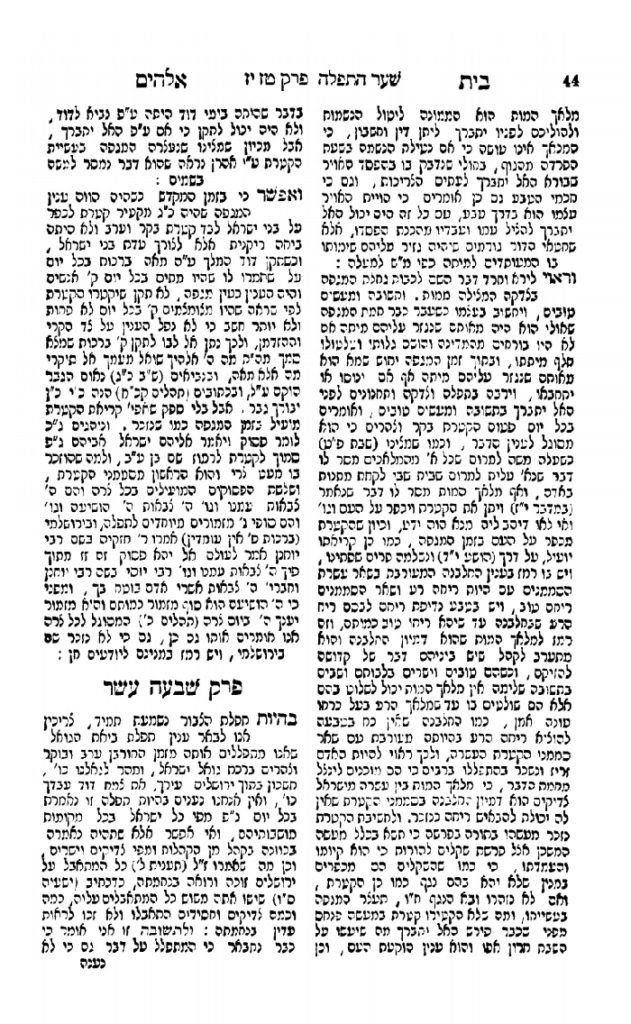
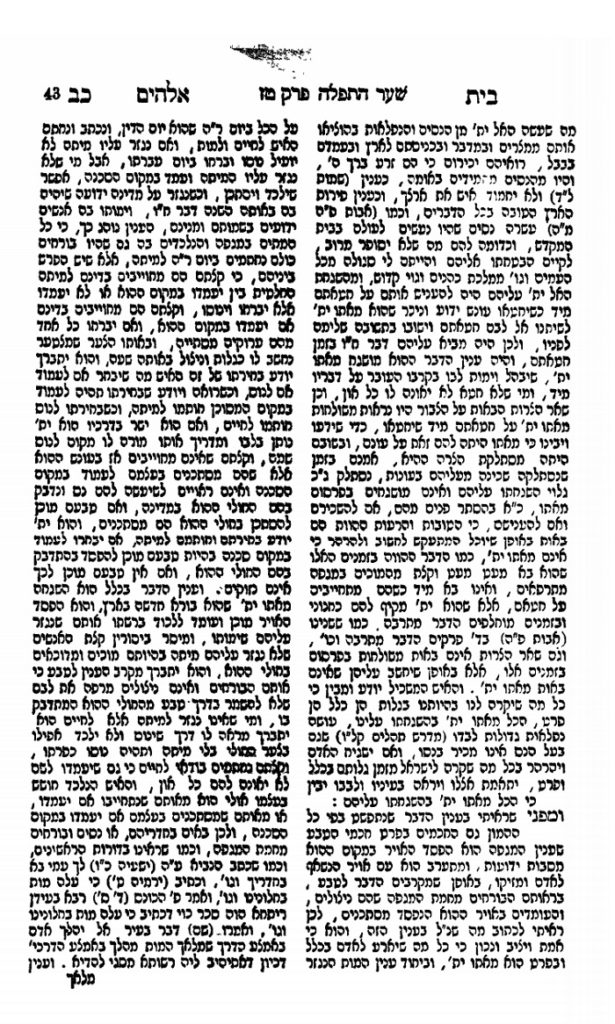
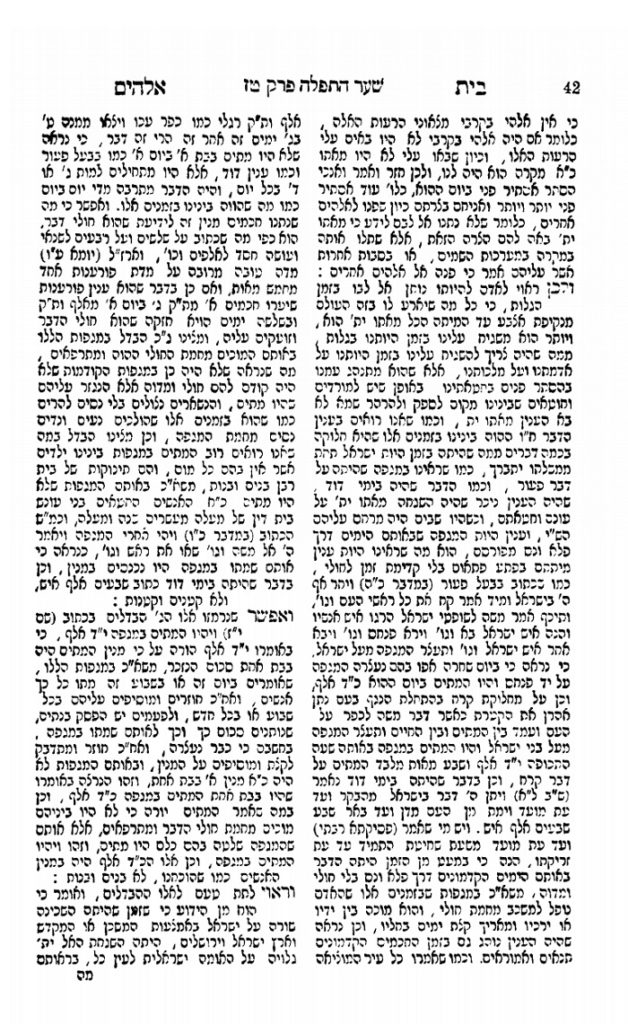
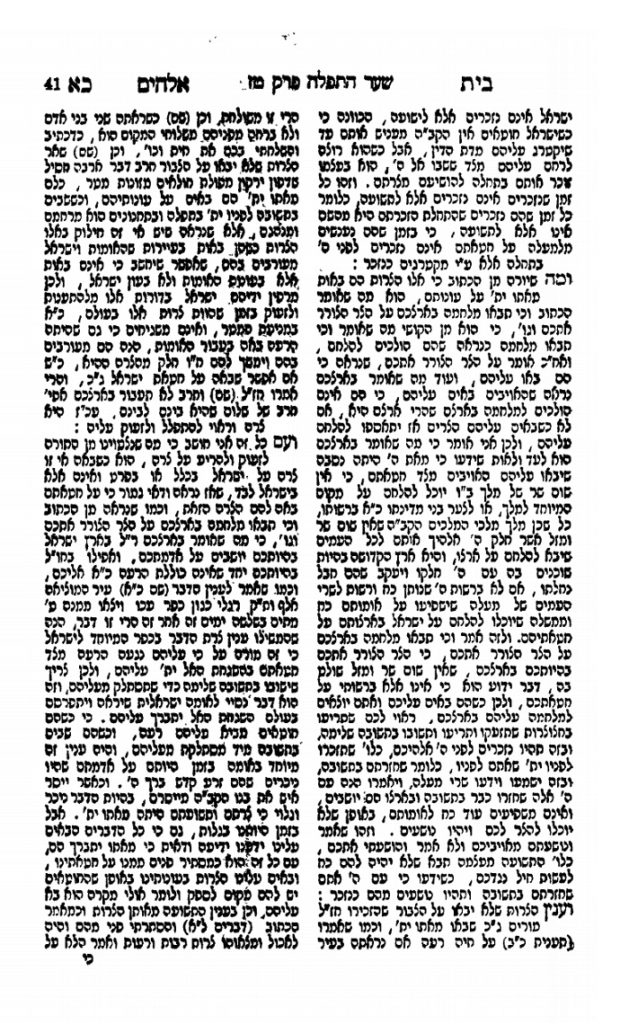
Eliezer Brodt: The Chanukah Omission

The Chanukah Omission
by Eliezer Brodt

Every Yom Tov we celebrate has different questions relating to it which become famous and are discussed from all different angles. Chanukah too has its share of famous questions. In this post I would like to deal with one such question which is famous but the answers are mostly not. The question is why is there no special Meshecta devoted to Chanukah as opposed to all other Yom Tovim [1]. Over the years many answers have been given some based on hassidus, others based on machshava, and still others in a kabablistic vein [2]. In this post I will try to discuss a few different approaches to answer the question. In dealing with this question I will touch on some other topics amongst them what is Megilat Taanis, when was it written, and what Rabbenu Hakodesh did in regard to the writing of the Mishna.   One of the answers given to this question of why there is no Mishna on Chanuka is based on the famous Rambam who writes:

אבל דיני הציצית והתפלין והמזוזות וסדר עשייתן והברכות הראויות להן וכן הדינים השייכים לכך והשאלות שנתעוררו בהן אין ממטרת חבורנו לדבר בכך לפי שאנחנו מפרשים והרי המשנה לא קבעה למצות אלו דברים מיוחדים הכוללים את כל משפטיהם כדי שנפרשם, וטעם הדבר לדעתי פרסומן בזמן חבור המשנה, ושהם היו דברים מפורסמים רגילים אצל ההמונים והיחידים לא נעלם ענינם מאף אחד, ולפיכך לא היה מקום לדעתו לדבר בהם, כשם שלא קבע סדר התפלה כלומר נוסחה וסדר מנוי שליח צבור מחמת פרסומו של דבר, לפי שלא חסר סדור אלא חבר ספר דינים

(פירוש המשנה, מנחות פרק ד משנה א).

Thus, according to the Rambam, things that are well known were not required to be mentioned in the Mishna.  There are those who posit that this rationale applies to Chanukah.  That is, Chanukah was also well known that’s why it was not necessary to be written. [3] [Regarding the Rambam’s comments in general see R. Reuven Margolis in Yesod Hamishna Vearichasa pp. 22-23].   The problem with this answer would be best illustrated with R. Yakov Shor’s comments on this statement of the Rambam. [See R. Y. Shor, Mishnas Ya’akov Jerusalem:1990; 33-34]. R. Shor questions the entire premise of the Rambam that the laws and details of teffilin were well known when these mitzvot are very complicated with many details.  Indeed, they are arguably much more complex than kriyat Shema which does have its own mesechtah. To answer this, R. Shor suggests that there was a Mesectah Soferim devoted to the laws of teffilin – this is lost but forms the basis of our Mesectah Sofrim which we have today.   With this introduction we can perhaps understand the following answers to the question about Chanukah, of which the assumption is there was a Mescatas Chanukah but has been lost.   The Rishonim refer to “Seven Minor Meschetot,” however, the earlier Achronim did not have these Meschetot.  Today, we do have “Seven Meschetot,” although as we shall see not all agree that these are the same that the Rishonim had.  During the period these Meschetot were unknown there was some speculation as to what they contained.  R. Avraham Ben HaGra quotes his father about which were the titles of the שבע מסכות  אמנם שמעתי מאדוני אבי הגאון נר”ו שהשבע מסכות קטנות המה חוץ מאשר נמצא לנו והן מסכת תפלין ומסכת חנוכה ומסי’ מזוזה.

(רב ופעלים, הקדמה דף ח ע”א)

He repeats this in his introduction to Medrash Aggadah Bereshis (see also Yeshurun 4:228).   We see that the Gra held that there was a Mesechet titled Chanukah. Now as far as we know today none of the seven Meschetot are about Chanukah. [4]But it could very well be there was such a Mesechet which was lost.  R. David Luria (Radal) [5] assumes as much and uses this assumption to understand the Teshuvos Hageonim which states:

ובא אלינו איש חכם וחסיד זקן ודרש בישיבה כתיב ופן תשא עיניך השמימה וראית את השמש זה נדר ואת הירח זו שבועה… וסדר משנה תוספת על סדרי שלנו ראינו בידו שהיה מביא ולא זכינו להעתיק שסבתו גדולה ונחפז ללכת ואתם אחינו הזהרו בענין זה וטוב לכם.

(שערי תשובה, סימן קמג)

That is, this Geonic statement evidences additional Meschetot that are no longer extant.A different answer given by many [6] is that the reason why Rebbe did not have a whole Mesechet about Chanukah was because there was one already Megilat Tannis!   The Pirish ha-Eshel on Megilat Tannis (p. 58) wants to suggest that the Gra did not mean that there was a Mesechet titled Chanukah.  Instead, the Gra mean to reference Megilat Tannis.  Indeed, in earlier printings of the Shas it was included with the Meschetot Ketanyot. [7]   Whether or not the Gra meant Megilat Tannis many do say that Megilat Tannis is really Mesechet Chanukah as the most important chapter and lengthy entry is about Chanukah and therefore the question why Rebbi did not include a Meschet about Chanukah was simply because there was one already – Megilat Tannis.    This answer was backed up with a statement found in the Behag which says:

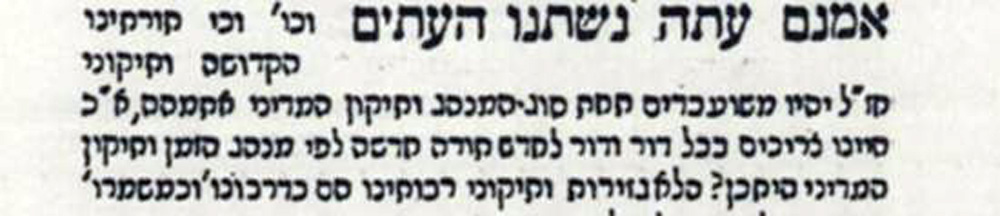
זקני בית שמאי ובית הלל,… והם כתבו מגילת תעניות

The problem with this answer is that while Megilat Tannis is our earliest written text (besides for Pirkei De-Reb Eliezer, see Radal’s introduction to his edition of the Pirkei De-Reb Eliezer) dating from much before our Mishnayot, Migilat Tannis contains significant additions from a later time. To clarify, in the standard Megilat Tannis there are two parts one written in Aramaic which are various fast days and one part written in Hebrew which includes a lengthier description of the topic. The Mahritz Chiyus and Radal say that the Aramaic part was written very early when it was not permissible to really write Torah Shel Bal Peh but at a later point when it was permitted to write than the Hebrew parts were added. Mahritz Chiyus says it was after the era of Rabenu Hakodesh. Earlier than him R. Yakov Emden writes in his introduction to his notes on MT that it was completed at the end of the era of the Tanaaim. Now, the bulk of the discussion regarding Chanukah that appears in MT is in the Hebrew part. Thus, historically, it doesn’t make sense that Rebbi did not include Chanukah in the Mishna because of sections of MT that had yet to be written.Indeed, the Gedolim who first suggested that MT is the reason why Rabbenu Hakodesh did not include it in Mishnayois were not aware of this point that it was written at two different time periods. However R. D. Horowitz in an article in Haples turns the historical difficultly on its head when he argues that the person who wrote those Hebrew parts was Rabbenu Hakodesh. [8] In fact, in one of the editions of Megilat Tannis it says on the Shar Blat Megilat Tannis which is Mesechet Chanukah (the original edition with the Pirush ha-Eshel). The problem with R. Horowitz point is that it seems most likely that it was later than Rabbenu Hakodesh.[9]

Another answer in the same vein as above was suggested by R. Schick (Torah Shleimah 3:156a).  R. Schik argues that there was a Sefer Hashmonaim which recorded the nissim etc written by Shamei and Hillel and therefore there was no separate Mishna. This seems to be based on the quote (quoted partially earlier) mentioned from the Behag which says:

זקני בית שמאי ובית הלל, הם כתבו מגלית בית חשמונאי

Others say this might be a reference to Sefer Makabeyium or Megilat Antiyucus. However although it is likely what we have is from early times but it is not clear at all how early it is from. [See Radal in his introduction to Pirkei De Reb Eliezer, Binu Shnos Dor Vedor, pp. 121-150; N. Fried in Minhaghei Yisroel, vol. 5, pp. 102-20; Areshet vol.4 p. 166; Y. Tabori, Moadei Yisroel Betekufos Hamishna Vehatalmud, p. 390; Moadim le-Simcha p. 253-265, and Hasmonai U-Banav p. 21].

Just for its bibliographical purpose in truth there is a book bearing the title Mesechet Chanukah but it was written in a parody form similar to Mesechet Purim of R. Klonymus the manuscript was printed in Areshet (3:182-191) [See also I. Davidson in Parody in Jewish Literature pg 39].  One of the things we see from this parody is the widespread custom of playing cards on Chanukah.     There is a interesting unknown correspondence on this topic between the Aderes and R. Yakov Kahana (Shut Toldos Yakov, Siman 29) about the topic of a Mesechet Chanukah.  The Aderes wrote to R. Kahana:

ומה שתמה על הש”ס למה לא הביאו האי בבא דמגילת תעניות גם אנכי הערתי בזה ומצאתי תמי’ זו בהגהת הרצ”ה חיות ז”ל ובימי עולמו כתבתי מזה בס”ד ולא אדע אנה. ואשר התפלא מדוע לא נמצא הא דחנוכה בירושלמי באמת גם במשנה לא נמצא אולם בסוף פ”ו דב”ק שם נמצא וגם מעט בירושלמי בשלהי תרומות. ואנכי מתפלא מאד דגם מצות כתיבת ספר תורה לא נמצא במשנה…

R. Yakov Kahana wrote a lengthy response.  He explained that it does not bother him that the Mishana does not mention this story of Chanukah from MT as the Bavli does not mention any of the incidences in MT. He is more bothered by the omission of the Yerushalmi of this story as the Yerushlmi does mention other incidences of MT.  As to writing a sefer Torah not being mentioned in the Mishana R. Kahana  gives a lengthy list of all the Mitzvos that are not discussed in the Mishna (and the list is long).     L. Ginsburg (Ginzei Schechter 2:476) writes :

וראוי להעיר שבתלמוד ארץ ישראל כמעט לא נזכרו דיני חנוכה כלל לא בדברי התנאים ולא בדברי האמוראים ורק בבבל שעובדי האש גזרו על מצוה זו וככל מצוה שמסרו ישראל נפשם עליה נתחזקה מאד בידיהם…

Another answer based on historical information is from the Edos Beyosef (2:15) who quotes the following Yerushalmi which says:

בימי טרוגיינוס הרשע נולד לו בן בתשעה באב והיו מתענין מתה בתו בחנוכה והדליקו נירות שלחה אשתו ואמרה לו עד שאת מכבש את הברבריים בוא וכבוש את היהודים שמרדו בך חשב מיתי לעשרה יומין ואתא לחמשה אתא ואשכחון עסיקין באורייתא בפסוקא ישא עליך גוי מרחוק מקצה הארץ וגומ’ אמר לון מה מה הויתון עסיקין אמרון ליה הכין וכן אמר לון ההוא גברא הוא דחשב מיתי לעשרה יומין ואתא לחמשה והקיפן ליגיונות והרגן אמר לנשיהן נשמעות אתם לליגיונותי ואין אני הורג אתכם אמרון ליה מה דעבדת בארעייא עביד בעילייא ועירב דמן בדמן והלך הדם בים עד קיפרוס באותה השעה נגדעה קרן ישראל ועוד אינה עתידה לחזור למקומה עד שיבוא בן דוד

(תלמוד ירושלמי, סוכה, פרק ה)

Based on this he [10] writes:

וכתיבת דיני נר חנוכה יש בה פירסום יותר מהדלקה מפני שהדלקה היא בבתי ישראל בזמן מועט חי’ ימים בשנה חצי שעה בכלל לילה ואפ’ זה סמיה בידן להדליק בפנים אם יש חשש סכנה אבל דבר בכתב קיים כל הימים ומתפשט בעולם על ידי כל אדם המעתיקם כל מה שרוצה… ומפני זה השמיט רבי כתיבת דיני חנוכה..

Another answer based on historical information is from R. Yeshouyah Preil in Eglei Tal who writes (pp. 17-18)

כי הנה אנדריונוס קיסר אחרי הכניעו את המורדים בביתר שפך כאש חמתו על כל ישראל וישבת חגם, חרשם ושבתם כי גזר על שבת ויום טוב מלה ונדה וכיוצא בו, אולם בימי המלך הבא אחריו אנטוניוס פיוס ידידו של רבי רוח לישראל כמעט, אך כנראה לא השיב את גזרת ההולך לפניו בדבר חנוכה, כי באמת יקשה גם על מלך חסיד כמוהו להניח חג לאומי כזה לעם אשר זה מעט הערה למות נפשו ואך בעמל רב נגרע קרנו זה שנות מספר, ועל כן לא היה יכול רבינו הקדוש נשיא ישראל לדבר בזה בפומי

R. Reven Margolis [11] has a very interesting answer to this question:

ובכן כאשר תלמי המלך בזמנו צוה להעתיק לו התורה שבכתב לידע מה כתיב בה כן התענייה הנציבות לידע תוכן התורה שבעל פה … דרישה כזאת היא אשר יכלה להמריץ את נשיא ישראל להתעודד ולערוך בספר גלוי לכל העמים תורת היהודים וקבלתם יסודי התורה שבעל פה להתודע ולהגלות שאין בה הטחת דברים נגד כל אומה ולשון ולא כל תעודה מדינית. ואחר אשר חשב רבי שספרו יבוקר מאנשי מדע העומדים מחוץ ליהודת שיחרצו עליו משפטם לפני כס הממשלה המרכזית ברומא. נבין למה השמיט ממשנתו דברים חשובים עקרים בתורת ישראל … כן לא שנה ענין חנוכה והלכותיה במשנה, בעוד אשר להלכות פורים קבע מסכת מיוחדת, שזהו לאשר כל כאלו היו למרות רוח הרומיים שחשבום כענינים פוליטיים חגיגת הנצחון הלאומי ותוקת חפשיותו.

R. Alexander Moshe Lapidos answers:

לא נכתבה מגילת חנוכה, לפי שנתקנה להורות תוקף תורה שבעל פה, ותולדתיה כיוצא שלא נכתבה… חנוכה המורה על תורה שבעל פה ע”כ לא ניתנה להכתב…
(תורת הגאון רבי אלכסנדר משה, עמ’ רנו).

Another answer given by R. Alexander Moshe Lapidos [12]:    דבקושי התירו לכתוב תורה שבעל פה והיו פסקי פסקי. מתחלה סתימת המשנה בימי רבנו הקדוש. ואחר זה בימי רבינא ורב אשי חתימת התלמוד, והשאר היו נוהגין במגלת סתרים עד שלאחר זה הותר לגמרי לפרסם בכתב כל מה שתלמיד ותיק מחדש. ורבנו הקדוש לא הרשה רק מה שהוא לפירוש לתורה שבעל פה ומה שיש לו סמך בכתוב, או מה שהוא לסייג, כמו הלל וברכות, ערובין, נטילת ידים, נר שבת ומגלה (מחיית עמלק). אבל חנוכה שאיננו לא פירוש ואין לו סמך בכתוב, ולא לסייג, לא היה נהוג רק במגלת סתרים בבריתות דר”ח ור”א… רק נרמזה במשנה ב”ק סוף פ”ו ואחריה הורשה לפרסם בכתב בתלמוד.

An interesting addition to this could be based on R. Shlomo Zalman Auerbach [13] who said:

 יש להבין אם מצוה זו כ”כ חביבה היא לנו, כמו שכתב הרמב”ם שמצוה חביבה היא עד מאד, למה באמת לא ניתנה ליכתב, אולם עיקר כריתת ברית שכרת הקב”ה עם ישראל הוא רק בעבור תורה שבעל פה כמו שכתב בגיטין ס’ ע”ב ומשום כך הואיל ומלכות יון הרשעה רצתה שלא יהי’ לנו ח”ו חלק באלקי ישראל, לכן נתחבבה מצוה זו ביותר שנשארה כולה תורה שבעל פה אשר רק על ידי תורה שבעל פה איכא כריתת ברית בינינו ובין ה’ ולכן אפילו במשניות לא נזכר כלל דיני חנוכה וכל ענין חנוכה כי אם במקומות אחדים בדרך רמז בעלמא.

R. Dov Berish Askenazi writes:

ולכן לא נכתב נס חנוכה בכתבי קודש רק הוא מקובל לנו מאבותינו הקדושים שכל עצמו של אותו נס לא בא רק להורות על אמתת הקבלה אשר מורשה היא לנו איש מפי איש עד משה רבינו מסיני…
(נודע בשערים, דף קי ע”ב).

Another answer suggested by R. Chanoch Ehrentreu [14]is that:

שגוף המשנה על חלקיה העיקריים הוא מעשה אנשי כנסת הגדולה… לאחר ימי אנשי כנסת הגדולה השלימו תנאים במקום שהיה טעון השלמה והוסיפו בשעה שנזקקו להוסיף, וחלקו על פירושה של משנה ראשונה וגם מסרו מחלוקות אלה לדורות. אך המשנה עצמה עתיקה מהלכות חנוכה. לכן ברור שתנאים שנו הלכות בענין חנוכה ונר חנוכה, אך כיון שכבר לא נמצא להם מקום בגוף המשנה נאספו אלה בברייתות.

This answer is assuming that there were parts of the Mishna that existed earlier than Rebbe and he was just an editor, this leads us to the next explanation.One of the most famous answers given to this question was by the Chassam Sofer who is quoted to have said:

מרגלא בפומי’ כי נס חנוכה לא נזכר כלל במשנה ואמר טעמו כי רבנו הקדוש מסדר המשנה הי’ מזרע דוד המלך ונס חנוכה נעשה על ידי חשמונאים שתפסו המלוכה ולא היה מזרע דוד וזה הרע לרבנו הקדוש ובכתבו המשנה על פי רוח הקודש נשמט הנס מחיבורו (חוט המשולש, דף נ ע”א).

Others bring this answer without saying a source [15]. This statement generated much controversy where many went so far as to deny that the Chasam Sofer said such a thing.[16] The bulk of the issues with this answer were dealt with by R. Moshe Zvi Neriah in an excellent article on the topic [17]. The most obvious being that Chanukah is mentioned in the Mishnah a few times the question is just why there isn’t a complete mesectah devoted to it.  The explanation in the Chasam Sofer seems to be based in part on the Ramban (not everyone agrees to this Ramban [18]) who writes:

זה היה עונש החשמונאים שמלכו בבית שני, כי היו חסידי עליון, ואלמלא הם נשתכחו התורה והמצות מישראל, ואף על פי כן נענשו עונש גדול, כי ארבעת בני חשמונאי הזקן החסידים המולכים זה אחר זה עם כל גבורתם והצלחתם נפלו ביד אויביהם בחרב. והגיע העונש בסוף למה שאמרו רז”ל (ב”ב ג ב) כל מאן דאמר מבית חשמונאי קאתינא עבדא הוא, שנכרתו כלם בעון הזה. ואף על פי שהיה בזרע שמעון עונש מן הצדוקים, אבל כל זרע מתתיה חשמונאי הצדיק לא עברו אלא בעבור זה שמלכו ולא היו מזרע יהודה ומבית דוד, והסירו השבט והמחוקק לגמרי, והיה עונשם מדה כנגד מדה, שהמשיל הקדוש ברוך הוא עליהם את עבדיהם והם הכריתום: ואפשר גם כן שהיה עליהם חטא במלכותם מפני שהיו כהנים ונצטוו (במדבר יח ז) תשמרו את כהונתכם לכל דבר המזבח ולמבית לפרכת ועבדתם עבודת מתנה אתן את כהונתכם, ולא היה להם למלוך רק לעבוד את עבודת ה’: (בראשית מט,י)

R. Weinberger [19]says that what the Chasam Sofer meant was:

 דגם זה עשה רבינו הקדוש לשם שמים כמו דכל מעשיו היו לשם שמים, כלומר מאחר דחשמונאים דעל ידיהם נעשה הנס, והמה עי”ז עשו שתפסו המלוכה מזרע דוד, ולהכי לא הזכירם במשנה ולא מחמת כבודו וכבוד בית אבותיו.

Interestingly enough the Chasam Sofer in his Chidushim on Gittin (78a) writes:

ואל תתמה שהרי בשום מקום במשנה לא נזכר שיניח אדם תפלין… ולא תנן חייב אדם להדליק נר חנוכה אל גץ… ונר חנוכה גופא היכי הוזכר במשנה אלא רגילים הי’ בכך ולא הזכיר…

Whether the Chasam Sofer did say it or not we have testimony from a reliable source that another godol said it as is recorded by Chasdei Avos [20]who is citing the Chidushei Harim:

דבשביל שהי’ לבם של בית הנשיא מרה על החשמונאים, שנטלו מהם המלוכה, והוא נגד התורה דלא יסור משבט יהודה, כמו שכתב ברמב”ן ויחי, לכן לא הזכיר רבנו הקדוש דיני חנוכה במשנה.

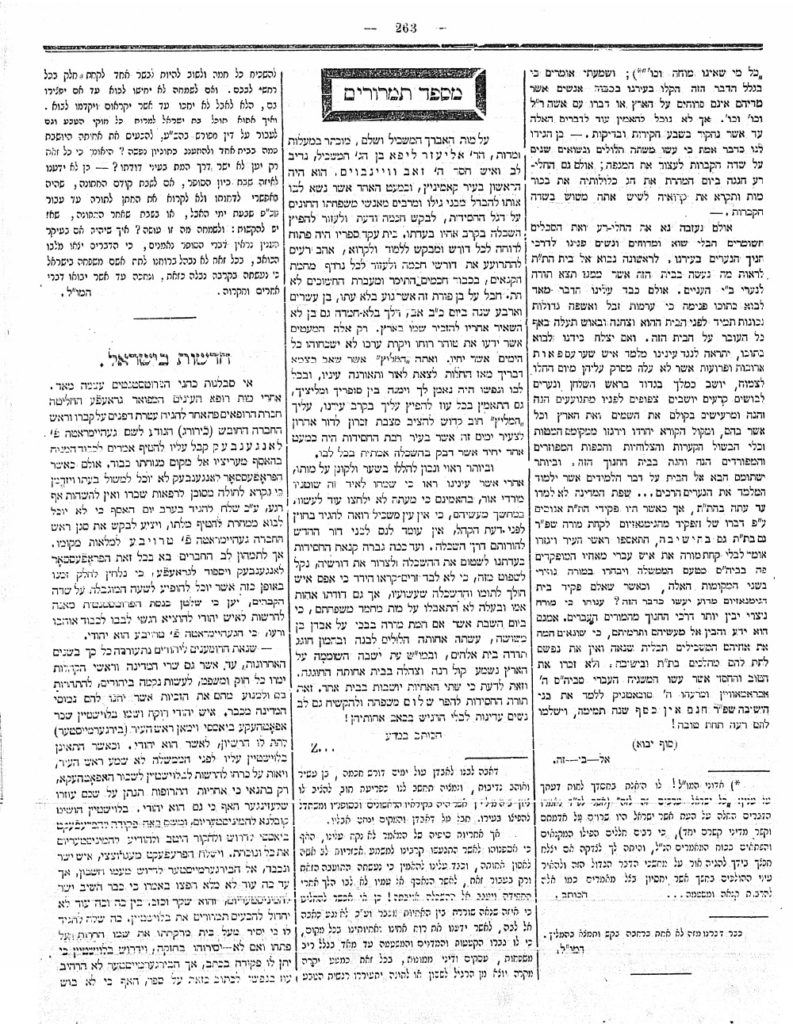
This explanation of the Chasam Sofer (nothing to do with him saying it) was the accepted explanation in most of academic literature for many years  as to why the Mishna omits the story of Chanukah. A while back G. Alon wrote a now classic article proving that this was not true at all. A little later on S. Safrai backed this up. They both showed that there is positive mention of the Chasmonim in Halacha.[21] To conclude this recently a very through and important article was written on the topic by M. Benovitz  printed in Torah Lishmah (pg 39-78) showing how the Yom Tov of Chanukah developed over time. But due to lack of time I can not discuss what he says. [Thanks to M.M. Honig for this source]. This whole issue was a small part of a famous debate started a while back. In 1891, Chaim Slonimski wrote a short article in Hazefirah (issue #278) questioning why there is no mention in Sefer Hasmonaim and Josephus of the miracle of the oil lasting eight days. Furthermore, he questioned why the Rambam omits the miracle of the oil when detailing the miracles of Chanukah. [The truth is this general question was raised much earlier by the Meor Eynayim (ch. 51, p. 429)] As can be expected this article generated many responses in the various papers and journals of the time and even a few seforim. A little later while defending his original article Slonimski wrote:

וכל דיני הלכות חנוכה לא מצינו בדברי בעל המשנה רק מן האמוראים שגמרא שבת…

R. Ginsberg in his Emunat Chachimim (pg 4a-4b) already points out that it is mentioned in Baba Kama. But I think his point was more about sefer Chashmonim and Yosefin. R. Lipshitz in Derech Emunah defended this based on MT as quoted above. R. Y. Sapir (Nes Pach Shel Shemen, pg 30) also wrote such a defense. But Slonimski said that the MT is a late addition.[22]


Notes: *I would like to thank to Professor Spiegel, M.M. Honig and Dan Rabinowitz for their help with this post.

[1] Chanukah is mentioned a few times in Mishnayos but the issue here is why isn’t there a whole Mesechet devoted to it. See Machnayim 34:81-86 [See Tifres Yeruchem pg 60, 414]. As an aside, in the Zohar there is also no mention of Chanukah see Tifres Zvi (3:397,465) and R. Yakov Chaim Sofer in Beis Aron ve-Yisroel (18:2, pg 110) and his Menuchos Shelomo (11: 43). [2] Chasidus sources: see Bnei Yissaschar , Ohev Yisroel and Moadim le-Simcha p. 38. For machashava sources see Sifsei Chaim (2:131); Pachad Yitzchak (pp. 29-32); Alei Tamar (Megilah p. 87); R. Munk, Shut Pas Sadecha, (introduction, p. 7). As to Kabblah the Yad Neman writes (p. 2b) that when he met R. Dovid Pardo author of the classic work on Toseffta Chasdei Dovid he told him a reason based on kabblah.     [3] The earliest sources who says this answer is R. Hayyim Abraham Miridna, Yad Neman, Solonika, 1804, p. 2b.  Subsequently, many others give this answer (all on their own) such as the Mahritz Chiyus (Toras Haneviyim p. 105), R. Yakov Reiffmann (Knesses Hagedolah (3:90)), Pirish ha-Eshel on Megilat Tannis (p. 58b) Beis Naftoli son (#28), Yad Yitchach (#295) R. Hershovitz in Minhagei Yeshurun (pg 48) Dorot Harishonim (4:46a) [see also R. Eliyhu Schleiseinger in Moriah (25:123) and in his Ner Ish Ubeso pg 338-339].  [4] See Heiger in his introduction to Mesechtot Ketanot p. 6 and M. Lerner in The Literature of the Sages volume one pg 400-403 (thanks to P. Roth for this source).    [5] Radal notes to Midrash Rabbah Emor (22:1). See R. Nachman Greenspan, Pilpulah Shel Torah p. 60 and his Melechet Machshevet p. 6. See also the Radal’s comments in Kadmus Hazohar at the end of section two;  R. Dovid Hoffman, Mishnah ha-Rishonah, pp.12-13;Yesod Hamishna ve-Arechsa  p. 29 (and nt.15) & 17.  [6] The earliest source who says this is R. Yosef Hayyim ben Siman, Edos Beyosef, Livorno, 1800 (2:15). The Chida quotes this explanation in his dershos Devarim Achadim (derush 32) R. Lipshitz in Derech Emunah p. 24 also provides this explanation.  [7] Pirush ha-Eshel p. 58 see also his introduction to MT. The piece on pg 58 is not found in the new Oz Vehadar edition as the Pirish Haeshel was printed only partially see this post. It would appear that the Gra held there was a real meschatah called Chanukah like the Radal seems to understand him as his great nephew brings in his introduction to his work on Avos Beis Avos writes:   ואמר לי איך ששמע מדו”ז הגאון מו”ה אלי’ ז”ל שהיו כמה וכמה מסכות על המדות כמו מסכתא ענוה ומסכתא בטחון וכדומה רק שנאבדה ממנו.   [8] Mahritz Chiyus, vol. 1, pp. 153-54; Radal, Kadmus Hazohar, p. 269.  Haples vol. one pg. 182[9] The time period of the MT and the two versions (and the nature of the work in general) have been discussed by many just to cite some of the important sources: see Y. Tabori, Moadei Yisroel Betekufos Hamishna Vehatalmud, pp. 307-22; Yesod Hamishna ve-Arechsa , p. 12 & n.26, p. 20 ;R. N. D. Rabanowitz, Beno Shnos Dor Vedor, pp. 28-46; V. Noam in The Literature of the Sages volume two, pp. 339-62; see also the introduction to her excellent edition of Megilat Tanit. See the nice introduction to the Oz Vehadar edtion of MT. See also M. Bar Ilan, Sinai 98 (1986) pp. 114-37. See also the important points in Yechusei Tanaim ve-Amorim (Maimon edition) pp. 398-399.  [10] R.Y. Buczvah in Shut Beis Halachmei (#4) does not like this answer as than other yom tovim also should not be included. Regarding this Yerushalim, see: Yesod Hamishna ve-Arechsa p.22 nt.5; Ali Tamar, Sukkah p. 152; Y. Tabori, Moadei  Yisroel be-Tekufat ha-Mishna ve-HaTalmud, p. 373; Tzit Eliezer, 19:26.  [11] Yesod Hamishna ve-Arechsa pp. 21-22. See also R. Freidman in Machanayim 16:12 and R. M. Cohen in Machanayim 37:43. [12] This answer is brought by R. Yakov Reiffmann in Knesses Hagedolah (3:90) where he brings that R. Alexander Moshe Lapidos wrote this answer to him. This is historically interesting as it shows that there was a connection between the two even though he was a known maskil (for more on R. Yakov Reiffmann ties with Litvish Gedoilm see here ). As an aside this piece of R. Alexander Moshe Lapidos is omitted from the otherwise excellent, recently printed, collection of all of R. Alexander Moshe Lapidos Torah in Torat Hagoan Reb Alexander Moshe.  A similar idea to this is found in Tifres Zvi (3:465). [13] Halechot Shlomo (p. 306 n.42). See also Shalmei Moed p. 254.[14] Iyunim B’divrei Chazal Ubileshonam pg 117. This explanation and this whole issue in general gets involved with the famous discussion of what was Rebbe’s role in the writing of the Mishna. Just to list a few basic sources on the topic see:R. Dovid Hoffman, Mishnah ha-Rishonah; Y.N. Epstein, Movo le-Nussach ha-Mishnah, 2: 692-706; C. Elback Movo le-Mishna pg 99-116; R. Margolis Yesod Hamishna ve-Arechsa pp.59-64. See also the excellent doctorate of C. Gafni, The Emergence of Critical Scholarship on Rabbinic Literature in the Nineteenth-Century:Social and Ideological Contexts, pp. 41-111. [15] Shut Beis Naftoli (# 28); Machanyim issue # 17:11. [16] See Mishmar Halevi (Chagigah #46-47) and Or Torah (1991 p. 156) Zikhronos u-Mesoros Al ha-Chasam Sofer pp. 13-14; Otzros ha-Sofer (10:96); Hasmonai u-Banov pp. 111-12. This is dependent on another general topic about the credibility of the sefer Chut ha-Meshulash see the excellent introduction of R. B. Hamburger to his Zikhronos u-Mesoros Al ha-Chasam Sofer where he shows that Chut haMeshulash is an authentic and reliable sefer. In the recent sefer Me-pehem (p. 171) they reproduce a passge from the Chatam Sofer’s daughter against the Chut ha-Meshulash: דע לך כי מה שכתוב הרב ר’ שלמה סופר, רבה של בערעגסאס בספרו חוט המשולש על אבא שלי זה מלא הגוזמות.[17] Shana Be-shanah 1988 (pp. 159-68). It was than included in his Tznif Melucha pg 177- 182.  R. Yona Metzger brings most of this piece in his Mayim Halacha (siman 111) [Thanks to my friend Yisroel Tzvi Ickovitz for this source]. R. Freund in Moadim Lisimcha relied heavily on this article of R. Neriah as he drops a hint in middle of his piece on this topic (p. 34 n.74). It seems that R. Neriah was not aware that it was in the Chut ha-Meshulash as he cites only to the Ta’emi ha-Minhagaim (p. 365).  [18] For some sources see Yad Neman (p. 2b); Tzitz Eliezer (19:26),  R. Yakov Kamenetsky, Emes le-Yakov pp. 239-40, 271-73 and Chasmonai U-Banav pp.106-113.  [19] Shut MaHaryitz (#78) interestingly R. B. Hamburger quotes this in his Zichronis u-Mesoros Al ha-Chasam Sofer pg 14 but attributes this incorrectly to R. Dushintsky.  [20] Chasdei Avos (#17). In general on this passage from the Chasdei Avos see Benu Shneos Dor Vedor pg 52-71.[21] G. Alon, Mechkarim Betoldos Yisroel, 1:15-25; S. Safrai, Machanyim issue # 37 p. 51-58; M. Cohen, Machanyim issue #37 p. 43; Ben Zion Luria, in his introduction to his edition of MT p.20-32. See also  Y. Tabori, Moedei Yisroel Betekufos Hamishna Vehatalmud, pp.372-373.[22] This controversy generated much discussion. See the article in Sinai, 100:202-09. Amongst those who responded about this was R. Alexander Moshe Lapidos printed in Torat Hagoan Reb Alexander Moshe p. 456-58. A very sharp response against Slonimski was written by R. Yakov Reiffmann, printed from manuscript by M. Hershkowitz in Or Hamizrach (18:93-101). Hershkowitz wrote a bibliography on the topic which, unfortunately the editors Or Hamizrach did not include and, to the best of my knowledge, was never printed. A response (from manuscript) on the topic from the Aderes was printed where he wrote to his friend R. Reiffmann after seeing Reifmann’s response here  הנני למלא רצונו להגיד לו דעתי על מאמרו הערות בעניני חנוכה, כי כל דבריו כנים ונאמנו בדבר הזה הייתי בר מזלי’, וחלילה לעלות על הדעת כי הרמב”ם לא האמין כלל בגוף נס השמן, וראיותיו צודקות ונאמנות, והחושב על הכהנים מחשבת פיגול במומו פוסל, כפי שידענו מן התורה נביאים וכתובים היו הכהנים העומדים בראש כל ישראל ומהם יצאה תורה לכל העם כולו והם הם שהיו המורים והשופטיםובכל זאת עליהם היו ממונים סנהדרין גדולה ששפטה אותם, ושטות ואולת גדולה לחשוב מה שכתב פלוני על אודות החשמונאים, והיא רק שיחה קלה להשיב לקלי דעת המאמינים לכל דבר ולא לתורתינו ועבדי’ חכמי התלמוד הנאמנים לד’ ולתורתו, אין ספק שמידי מעתיקי הרמב”ם בא אשמת החסרון בדבריו, ואין לדון מאומה מדברי ידידי מעכ”ת שי’ שהר”מ ז”ל האמין בלבבו הטהורה פשוטו כמשמעו, ככל המון בית ישראל, כפשטות ד’ הגמ’, וחלילה לנו להשליך דברי אלקים חיים מבעלי התלמוד אשר מימיהם אנו שותים אחרי גיוינו ולנוע אחרי ספרים חיצונים אשר לא בא זכרם בתלמוד הקדוש ומוקדש קודש הקדשים, ואין המאמר שוה להפסיד העת בבקורתו ילך לו בעל המאמר בשיטתו ואנחנו בשם אלקינו ועבדיו נזכיר אנחנו ובנינו אותו נעבוד כל ימינו לטוב לנו סלה”.


Tevie Kagan: The Enigmatic R. David Lida

The Enigmatic R. David Lida
by Tevie Kagan
Tevie Kagan works in the Seforim industry.  This is his first post for the TraditionOnline Seforim blog.
Part I: R. David of Lida and Plagiarism
R. David ben Aryeh Leib of Lida (c.1650-1696) is a fascinating and enigmatic figure. He was the rabbi of multiple communities over the course of his lifetime including Lida, Ostrog, Mainz, and the Ashkenazic community in Amsterdam. He was forced to leave Amsterdam under a cloud of alleged plagiarism and possible Sabbatean beliefs; though he was acquitted of these charges by the council of the four lands (Va’ad Arba Ha-Aratzot), he never recovered from the various accusations. He is not a well-known individual today, yet many of his works survive and are still available in print. This post (the first of two) will present a detailed account of his life and will attempt to see if both the accusations of plagiarism and heretical beliefs have merit.
R. (David) Lida was born in Zwollen, Lithuania into a prominent rabbinical family. His uncle was R. Moshe Rivkes, author of the Be’er Ha-Golah. Other family members that Lida cites within his works include R. Yeshaya Horowitz, author of the Shnei Luchos Habris (Shelah), R. Yosef of Pozna, R. Naftali Hertz of Lemberg, and R. Yaakov Cohen of Frankfurt. He was married to Miriam the daughter of R. Wolf Yuspef of Lvov (Lemberg) and had two sons, Nathan and Pesachya, and two daughters. One of the daughters was married to R. Yerucham b. Menachem, who helped prepare Shomer Shabbos (one of Lida’s early works) for printing, and the other was married to R. Abraham b. Aaron, who helped with the printing of Shomer Shabbos in Amsterdam. In his work Ir David, Lida testifies[1] that his primary teacher was R. Joshua Hoeschel b. Jacob of Cracow (c.1595-1663), who was one of preeminent rabbis of the time.[2]
From 1671 until 1677, R. David was rabbi in Lida. He then served as a rabbi in Ostrog and Mainz, replacing R. Samuel David b Chanoch of Lublin, the author of Divrei Shmuel who had passed away. In 1681, Lida left Mainz and became a rabbi in Amsterdam. After being forced out of Amsterdam, Lida appealed to the council of the four lands. By doing so he succeeded in getting himself reinstated in Amsterdam. However, his position was untenable, so he reached a financial agreement and moved to Lvov, where he lived until his death in 1696.[3]

The following is a list of Lida’s works (with the topic covered in parentheses):
¨ Beer Esek – Frankfurt on the Oder/Lublin, 1684 (apologetic)
¨ Beer Mayim Chaim- lost, never printed (on Code of law)
¨ Chalkei Avanim– Fuerth, 1693 (on Rashi’s commentary on bible) reprinted in Yad Kol Bo under the title Migdol Dovid
¨ Divrei David– Lublin, 1671 (ethics)
¨ Dovev Sifsei Yesheinim- lost, never printed (mishnah)
¨ Ir David– Amsterdam, 1683 (incomplete), 1719 (complete) (Homiletics)
¨ Ir Miklat – Dyhernfurth, 1690 (613 commandments)
¨ Migdol David –Amsterdam,1680 (Ruth)
¨ Pitschei She’arim – Pirush Tefilos- partially printed in Yad Kol Bo (prayer)
¨ Shalsheles Zahav
¨ Shir Hillulim– Amsterdam, 1680 (poem in honor of dedication of a new Torah)
¨ Shomer Shabbos – Amsterdam, 1687 printed with Tikkunei Shabbos, reprinted in Yad Kol Bo, and reprinted separately in Zolkolov, 1804 (laws of Sabbath)
¨ Sod Hashem Sharbit Hazahav– Amsterdam, 1680 (on circumcision)
¨ Tapuchei Zahav kitzur reishis chochma – Fuerth, 1693
¨ Yad Kol Bo- Amsterdam/Frankfurt on the Oder, 1727(Collection)
While in Amsterdam (about 1694), Lida was accused of libel, plagiarism and Sabbatean leanings. Since many of the documents surrounding both controversies no longer exist, we can only attempt to recreate what happened.
Lida is Accused of Libel

R. Yaakov Sasportas (c.1610-1698) has a series of responsa[4] that refer to the libel case. One of the prominent members of the Sephardic congregation, R. Nissan ben Judah Leib, the brother in law of R. Isaac Benjamin Wolf ben Eliezer Ashkenazi (Chief Rabbi in Berlin and the author of the Nachlas Binyomin (Amsterdam, 1682)), claimed that on a trip to Wessel R. Nissan had found defamatory letters about himself and R. Isaac Benjamin Wolf, which R. Nissan alleged were written by Lida. Lida denied having written these letters. R. Nissan submitted copies of the letters to the Sephardic court, presided over by R Yitzchak Abuhav, R Yaakov Sasportas and R Shmuel Deozida. The court requested the original letters, and when they could not be produced, the court decreed that Lida did not write the letters and that he was an upstanding rabbi of the community. The court also demanded that R. Nissan apologize, which he did. Subsequently the Sephardic court sent a letter to both R Wolf Lippman and the Council of the Four Lands requesting they revoke all bans against Lida and to forgive both themselves and Lida. This letter included the signatures of many prominent rabbis of the time, though many of these rabbis may have been influenced by Lida’s famous brother-in-law, Yitzchak b. Abraham of Posnan, who was the first signature on the list.
Additionally, Lida himself wrote a work entitled Beer Esek,[5] in which he attempts to clear his name.The work begins with an introductory homily, after which Lida then proceeds to defend himself from the charges of plagiarism. Lida’s letter ends off with letters and signatures of approbation..
Charges of Plagiarism

Charges of plagiarism hounded Lida regarding many of his works. The first work that this charge was leveled at was Divrei David (Lublin, 1671), an ethical treatise broken up into seven parts, corresponding to the days of the week. On the title page of this work, Lida states that it is culled from the words of Rishonim upon which he added his own additions. The bibliographer, Joseph Zedner (1804-71), in his Catalogue of the Hebrew Books in the Library of the British Museum (London, 1867), was the first to note that the text of the Divrei David is identical to a part of the text of the Sefer Yirah published by Aryeh Judah Loeb ben Aryeh Priluck.
The work itself contains information that is inconsistent with Lida’s biography. For example, the author talks about trips to Israel (nos. 6, 77, and 85), serving as rabbi in Israel (no. 46), and refers to a work that he wrote called Zer Zahav on the Bible (no.72). At the time Divrei David was published Lida was 21 and, as far as we know, never visited Israel, as he never mentions it anywhere else in any of his works. Even more puzzling is that he never authored a work on the Bible called Zer Zahav! Interestingly, Gershom Scholem argues that whoever the author of Divrei David was the author had Sabbatean leanings as there is a possible Shabbati Zevi reference in the beginning of the section on Shabbos.[6] Was this work stolen from a previous work? It would appear so; but, in defense of Lida, he admits that he culled his work from other sources. Nevertheless, this would not account for his borrowing of accounts of positions, travels or works written.
The Sefer Yirah was first published from manuscript in 1724 (Lida had published Divrei David in 1671). The publisher of the Sefer Yirah, Priluck, clearly states on the title page that he found a manuscript and had no idea as to whom was its author. Priluck adds statements and revises the original work where he saw fit. One example is in the “morning half” of the “first day,” where he adds (in the fifth section) that he already printed a prayer book which was grammatically correct. Most of the other additions are merely clarifications of the earlier work [for example, in the “night section” of the first day he clarifies that the Shema referred to is the one said in bed before sleep (Kriat Shema al Ha’Mita)]. Within the section of the fourth day Lida mentions (part 77) that he was in Jerusalem, and he concludes that one should cover their head with a hat when saying grace (birkat ha’mazon); yet this last item is not found in the Priluck version of Sefer Yirah. In total, there are about twenty slight differences, but most are stylistic, with Priluck changing particular words and verses. The Sefer Yirah concludes with a statement that this is where the manuscript ends and that he does not want to add from other sources. The Warsaw edition of 1873 of the Divrei David adds an entire section of good traits (minhagim tovim). Interestingly the most recent reprinting (Brooklyn, 2006 by R. N.M., German) adds 2 more pages of character traits not found in the Warsaw edition. This would not be the only work that would come under suspicion that Lida wrote.
Lida’s most famous work that is under the suspicion of plagiarism is his Migdol David, published in 1680 while Lida was still rabbi in Mainz. The work was published with 17 approbations (haskamot). While some of the approbations do not mention the work Migdol David specifically, by reading them one gets the idea that many felt it was an original work. In his Beer Esek, Lida alludes to R. Nisan’s claim that accused Lida of stealing the work (R. Nisan did so by saying that Lida “wears the talis of another”). Many believe that this work was really a copy of R. Hayim Ben Abraham Ha-Kohen’s (c.1585-1655) [7]Toras Chessed. For instance, R. Hayyim Yosef David Azulai, ,writes “truthfully [Migdol David] is the work of R. Hayim Kohen, author of the Tur Barekes…” (Shem ha-Gedolim, Marekhet Seforim, s.v. Migdol David). ,Azulai also cites the Yaavetz (R. Yaakov Emden) and his charge in Toras Hakanaos (see below). The Menachem Tziyon attempts to clear Lida’s name by showing that many great rabbis attested to his kabalistic knowledge, but ultimately he too leans towards the plagiarism charge. [8]

The Yaavetz, in his Toras Hakanaos, lists a group of works that he charged with having Sabbatean leanings and allusions. He includes Lida’s work, not as a potential Sabbatean work,[9] but rather as a plagiarized one, and, more specifically, to support his claim that Lida’s character was suspect, and even possibly Sabbatean. Sabbateans were known to have “double natures,” one being outwardly righteous, while the inner being corrupt and immoral (more about this to come in part 2 of this post, R. David of Lida and Sabbatianism). The Yaavetz shows that Lida took the work but left an allusion to Hayim Kohen’s name in the introduction, which states, “ממקור מיים בריכה העליונה כה”נא רב”א” Lida’s choice of words is suspect, as Lida was neither a Kohen nor named Hayim.
More recently, Marvin Heller[10] has argued that a parable in the introduction to Lida’s work alludes to the fact that it is not an original work. The allegory (from the Zohar) regards a rooster who finds a pearl while searching for food. Startled by the pearl’s beauty, the rooster recoils and wonders what caused the pearl to be hidden. A man, seeing the rooster recoil, stops to see what caused the reaction; when he sees the pearl, he proceeds to give it to the king. As a result, the king honors the rooster. Lida writes: “So to I found in this scroll blossoms and fruit which give forth a brightness, delightful to the sight and desirable to the eye, ‘its fruit is good for food’ (Genesis 2:9)…when this distinguished book comes to the hand of one who appreciates its value … and also who publishes it will be remembered for good before the King, King of the universe” (emphasis added). This choice of language seems to be referring to a publisher not an author. In Lida’s Ir Miklat, in the glosses where Lida mentions “my book Migdol David,”[11] Azulai (in his comments) interjects: “He printed it.” Eisner seeks to defend Lida, even though he had never seen a copy of the rare Migdol David. Eisner argues that since all the charges were found to be groundless in the first case against Lida, so too the plagiarism charges must be false. He attempts to buttress this by showing that Lida had a reputation for being a Kabbalist. In 1681, the notorious anti-Semite Johann Andreas Eisenmenger (ca.1654-1704) visited Amsterdam and wrote about meeting Lida in his Entdecktes Judentum (Frankfurt am Main, 1700). He speaks of Lida and how he was a great scholar and Kabbalist. Interestingly, towards the end of the introduction of Ir David, Lida states that he hopes that this work will be printed without the mistakes and errors that the printers added to his work Migdol David, which he was unable to fix. Is Lida attempting to lay the groundwork for the argument that any troubling pieces within Migdol David are not his, but rather the work of the printers?
Slightly more telling about both of the works that are suspected of being stolen is that Lida references them in his other works very infrequently. In contrast, Ir David is referenced quite frequently within his other writings. When themes or interpretations are referenced in Chalkei Avanim that are supposedly printed in Lida’s other works (specifically Migdol David) he does not give the work’s name, but just the statement “and it is understood.”[12]

Even after his death Lida’s works have encountered problems. His son Pesachya printed a collected volume of his works entitled Yad Kol Bo (Amsterdam 1727) in which was included a work on Psalms called Assarah Hillulim. According to Brill, this was actually written by the Calvinist-Hebraist, Heinrich Jacob van Bashuysen (1679-1750) and published in Sefer Tehilim im Pirush ha-Katzar, Hanau, 1712.[13]
[1] Ir David, First Sermon
[2] See Dembitzer Kelilas Yofi Krakow:1893 pg59a-59b
[3] For the date of Lida’s death, see Solomon Buber, Anshei Shem (Krakow, 1895), where he recreates the correct date based on approbations Lida had given, which are marked after the date on his tombstone.
[4] Ohel Yaakov 75-76
[5] Reprinted in Abraham Eisner, Toledot Hagaon R. David Lida (Breslau,1938) and in Aaron Freimann, Sefer Hayovel for Nahum Sokolow (Warsaw, 1904)
[6] See Warsaw edition that actually puts Lida as author and includes that he wrote Zer Zahav and Bris Yitzchok, which Lida did not.
[7] See Encyclopedia Judaica entry where Scholem states that Lidas plagiarism was well known in Kabalistic circles before H.J.D. Azulai made it public. Scholem offers no source or examples for this statement. Also interesting to note is that whatever Azulai’s thoughts on Lida’s character may have been, he still wrote glosses to Lida’s work Ir Miklat.
[8] See also Ohr Hayim (Hayim Michael), where he unequivocally states that it is a stolen work from R. Hayim Kohen.
[9] Yehuda Liebes, in “Sefer Tzadik Yesod Olam- Mythos Shabetai” (reprinted in On Sabbateanism and its Kabbalah: Collected Essays (Jerusalem, 1995), pg. 303-304, note 22) shows that even Migdol David is not free of possible Sabbatean leanings. These could not have come from R Hayim Kohen as he died before Sabbateanism grew to the movement that it later became.
[10] Marvin J. Heller, David Ben Aryeh Leib of Lida and his Migdol David: Accusations of Plagiarism in Eighteenth Century Amsterdam, Shofar (Jan. 1, 2001) (translation of text is his).
[11] Commandment 190
[12] For examples see Brooklyn edition 2006-pg. 5, fn 1; pg. 8, fn 8.
[13] For more on Bashuysen, see Encyclopaedia Judaica under his name entry. Eisner strongly disagrees and says that it clearly is not a Christian work, and that it includes many ideas from Lidas other works.


Rav Avraham Chai Reggio Brings A Sefer To Life

Rav Avraham Chai Reggio Brings A Sefer To Life
By Eli Genauer
Note: I would like to thank Rabbi Gad
Bouskila of Congregation Netivot Israel in Brooklyn for helping me decipher
Rav Avraham Reggio’s handwriting
Rav Avraham Chai (Vita) ben Azriel Reggio  (1755-1842) was the Rav of Gorizia, in
northern Italy for over forty years. During that time period, he answered
Sha’aylot both locally and from abroad, wrote a Sefer Torah, performed 300 circumcisions,
and gave many Drashot that changed people’s lives.[1] We are told that the
Derashot he gave before Neilah were so inspiring that
  ! החוטאים נתעוררו לשוב לה׳ בתשובה שלימה, והשונאים חבקו זה לזה ונשארו באהבה ואחוה ושלום
We are also informed that the
townspeople ascribed their being saved from a Cholera epidemic by Rav Avraham’s
righteousness.

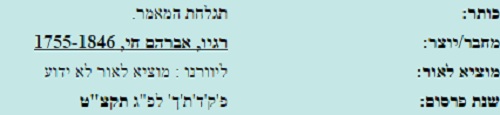
Rav Avraham wrote a Sefer on the prohibition of
shaving on Chol Hamoed called “Tiglachat Hama’amar” printed anonymously in Livorno
(either 1839 or 1844) which was a refutation of his son Isaac Samuel Reggio’s  book “Ma’amar HaTiglachat” (Vienna 1835 ) which
argued for permitting it.[2]

One of the arguments put forward in his son’s book
was that “times have changed”, therefore the Halacha could be different.  Rav Avraham responds to this argument and
writes as follows about changing the Halacha:

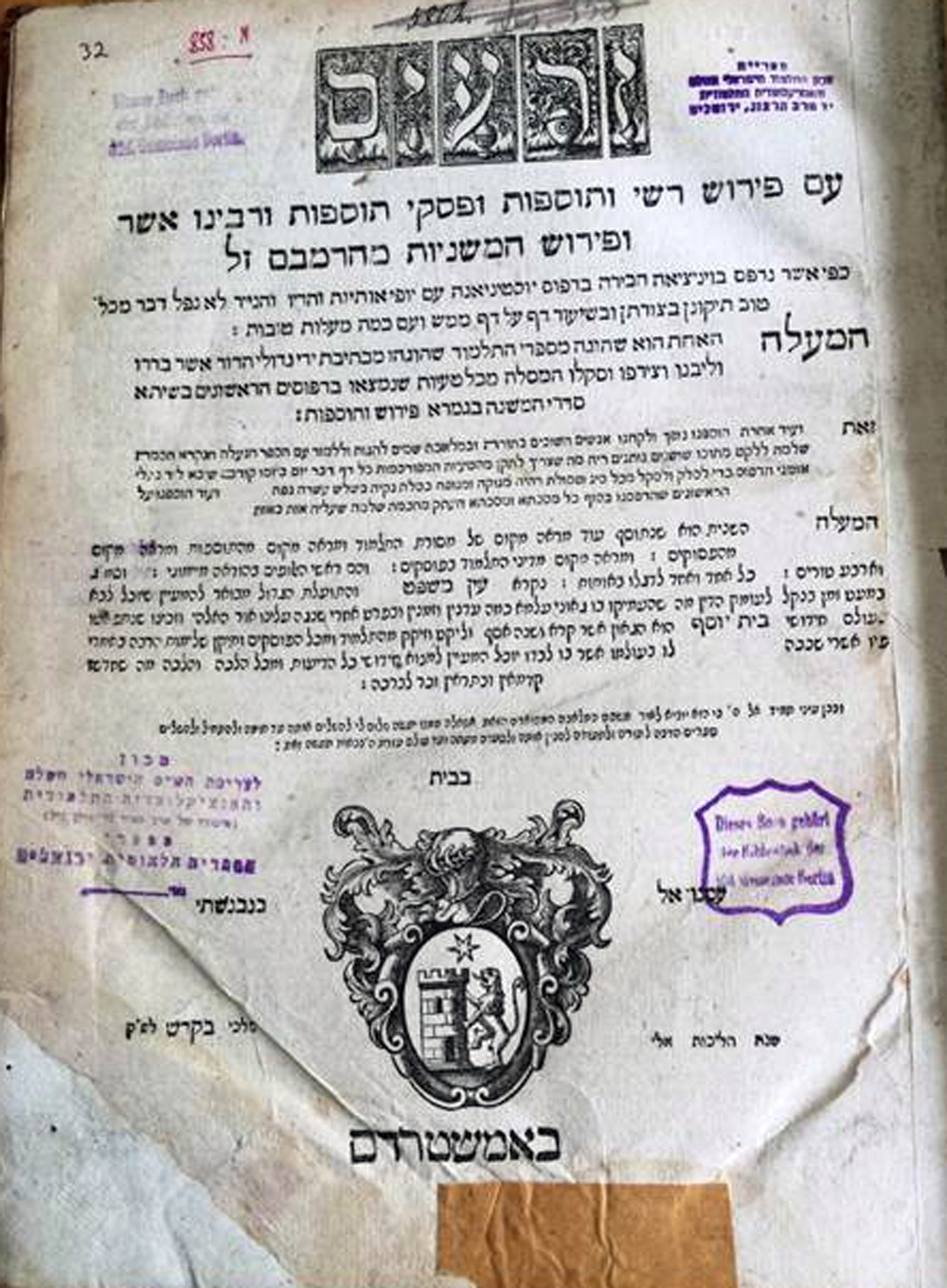
I have a Mishnayot Zeraim which was printed in Amsterdam
in 1646 as part of the printing of the entire Babylonian Talmud by Immanuel
Beneveniste.
As you can see, there are numerous stamps on the
title page, but aside from those marks of ownership, we know that the book at
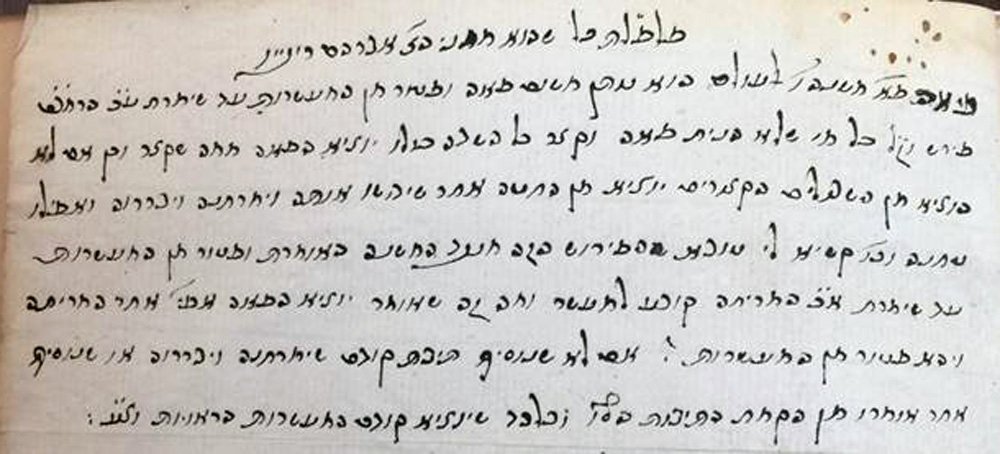
one time belonged to Avraham Reggio by this handwriting on the back page.
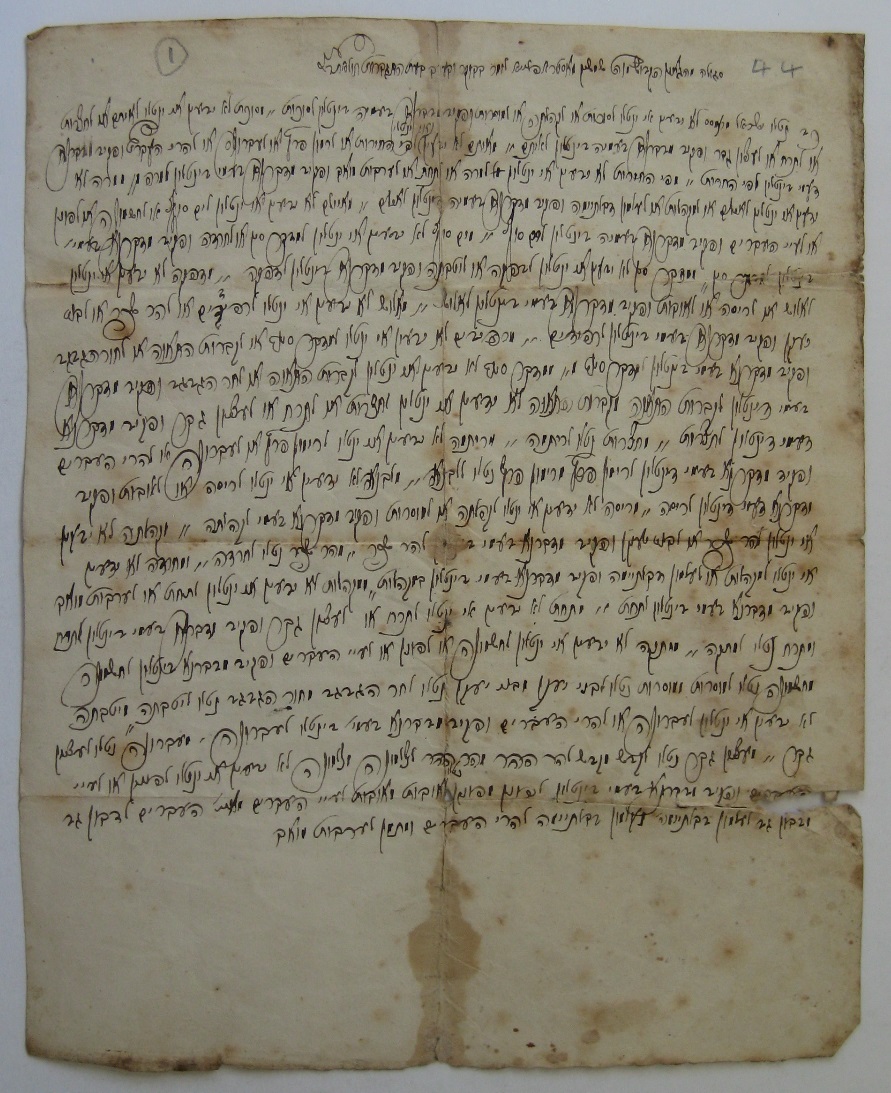
פלפולה כל שהוא
ממני הז׳ אברהם ריגייו
פיאהפרק א׳ משנה ו׳
לעולם הוא נותן
משום פיאה ופטור מן המעשרות עד שימרח ע״כ
הרמ׳ב׳ם פירש
ז׳ק׳ל שכל מי שלא הניח פיאה
 וקצר כל השדה
כלו יוציא הפיאה ממה שקצר וכן אם לא הוציא מן השבלים הקצורים יוציא מן החטה אחר
שידושו אותה וימרחוה ויבררוה ואפילו טחנה וכו׳
 
קשיא לי טובא
שהפירוש הזה מנגד המשנה האומרת   ופטור מן המעשרות עד שימרח
. א״כ המריחה קובע למעשר. ומה זה שאומר יוציא הפיאה אפי׳ אחר המריחה ויהא
פטור מן המעשרות
! 
אם
לא שנוסיף תיבת
 קודם שימרחנה ויבררוה או שנוסיף אחר
אומרו מן הקמח

התיבות כלו׳ ובלבד שיוציא  קודם המעשרות
הראויות וצ״ע
 
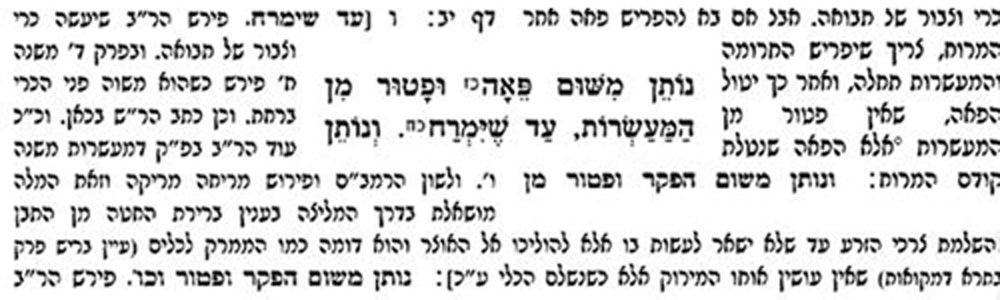
The matter under discussion is Mishnayot Peah 1:6
and deals with whether Maaser has to be taken from that which is designated as
Peah. Rav Avraham understands from his reading of the Peirush Hamishnayos on
this Mishneh, that the position of  the
Rambam is that Maaser does not have to be separated from that which is
designated as Peah even after Merichah has been done.[3]
The Rambam writes as follows:

 In asking his
question, it is clear That Rav Avraham understands the Rambam to be saying that
you are obligated to separate a portion for Peah even after the flour made from
harvested wheat is ground and that you are never obligated at any stage to
separate Ma’asrot. This is not clear to me from the Lashon of the Rambam who might
be saying normally one does not have to separate Maaser from Peah and adding
that Peah always has to be separated even at the latest stage of crop
production. The Rambam actually makes his comment דע שהפאה לא תחחייב להוציא ממנה מעשרות
on our Mishneh which says לעולם הוא נותן משום פיאה ופטור מן המעשרות
עד שימרח
.
One would have to agree though, that
the Lashon of the Rambam is confusing.
There are
many diagrams that are drawn by hand in the book which fill in the blank spaces
left by the printer. Here is an example of a fairly complex one which I believe
was drawn by Rav Avraham Reggio.[4]


This
particular volume of Mishnayot needed some special Siyata D’Shemaya to survive
the Nazi annihilation of both Jews and their property. After being owned by Rav
Avraham Reggio, the book was the property of the library of the Jewish
community of Berlin.

We are
informed by the present day website of the Berlin Jewish Library that most of
the holdings belonging to this library did not survive the war. This makes this
book akin to an ״אוד מוצל מאש״ (זכריה ג:ב).

“The library of the Jewish Community of Berlin was founded in 1898. It opened its doors in 1902 in the community’s administration building on Oranienburger Strasse and quickly became a highly popular scientific resource, open to Jewish community members and the general public. By the time the National Socialist regime dissolved the Jewish community and forced its library to close, the institution had nine branches with more than 100,000 volumes, nearly all of which were lost in the war.” 

The book became part of the restitution efforts of the Jewish Cultural Reconstruction after the war and was eventually sent to Israel to be part of the library of the “Encyclopedia Hatalmudit”

Is it
possible that just as Rav Avraham Reggio saved his town from a cholera
epidemic, that his writings saved this book from being destroyed in the war?

[1] The
main source for his biography is from a series of two articles written in the
journal “Yerushalayim HaBenuyah” printed in 1844( Choveret Rishon, Zolkiew) and
1845 ( Choveret Sheniyah, Lemberg) The articles appeared under the title of
“Toldot Avraham” whose author was Mordechai Shmuel Ghirondi (1800-1852) Ghirondi
laments at length the loss of his teacher and goes into great detail of his
life. The two specific example cited above are on page 80 of the “Choveret
Rishon”
[2]  
For a discussion on shaving on Chol
HaMoed including quotations from both Avraham and Isaac Reggio’s books see
here

Bibliographic Information on
Tiglachat Hama’Amar comes from the Israel National Library website.

Note the date of death of 1846
which is incorrect as the eulogies on him by Mordechai Shmuel Ghirondi appeared
starting in 1844. Ghirondi gives the date of death as Asarah b’Tevet in 5602 (
1841). I am confused as to the date of publication of Tiglachat Maamar as the
NLI site gives it as תקצט  but פ’ק’ד’ת’ך’ would indicate (5)604 or 1844. This date
is what is listed in Beit Eiked Sefarim.

The forward of the “Motzei L’Or”
indicates that it was written in 1836.

[3]    Tosfot Yom Tov gives us a summary of how Merichah
is understood by the various Meforshim. (From Mishnayot Zecher Chanoch) As you
can see, Rambam’s definition differs from other Meforshim.

[4]   We
know he was a Sofer and the ink looks very similar to writing in the back of
the book. (Additionally, his son Isaac Samuel was a skilled artist, and perhaps his artistic talent ran in the family. – Ed.)


Towards a Bibliography of Coronavirus-related Articles & Seforim written in the past month (updated): Black Weddings and others Segulot

Towards a Bibliography of Coronavirus-related Articles & Seforim written in the past month (updated)

Black Weddings and others Segulot

By Eliezer Brodt

Introduction

When the lockdown began in Israel a few weeks ago, a friend of mine e-mailed me an article about plagues he was about to complete, asking if I had anything to add. Upon checking my collections of material, I found I had nothing special marked down in my indexes about the topic. At the time I had no plans of writing anything about it. However, a few weeks later, when I started preparing my e-mail of reading material which I send out a few times a year, I saw that I indeed had several articles related to different aspects of the current Coronavirus pandemic, articles which I had either received or collected from various sources. By that time, I myself was deep into writing an article on R’ Akiva Eiger and the 1831 Cholera outbreak (which I hope to complete shortly IYH).

I had originally planned on including an appendix to that article with some of the material published in the past few weeks. I then decided to just make it into its own blog post, which was published last week. I was not attempting to put up everything I saw or collected on this topic – there is just so much out there! Normally, I do not update such a post so early on, however this time I decided to make an exception. I would like to thank all those that sent me material and links, I hope people will continue to do so.[1]

In my first version of the bibliography I included about twenty-five booklets and articles. This new Version has more than double, listing over fifty items, plus new links and information on the subject.

The purpose of the post is to collect a wide range of material, covering many different aspects of the Coronavirus pandemic and making it available for people to learn from. I am not necessarily endorsing the various pieces or links mentioned.

I also included Two new Appendices. One related to a famous old segulah, the so-called ‘Black Wedding’. Another one relates to a Segulah of R. Shimshon of Ostropoli. (See also Footnotes 2 & 7).

Many of us have been under some sort of lockdown for over a month – some of us for less, some for more. However, this has not silenced the ‘voice of the Torah’; all kinds of Shiurim & classes on a wide range of topics have been made available via various methods. Otzar Hachochmah has made their database available free of charge as have the Bar Ilan Responsa Project and Project Kotar. Others have chosen to spread Torah by putting digital pen to Digital paper.

The truth is, like almost every other topic, it’s hard come up with something new; plagues and the like have occurred numerous times throughout our long history.

The famous bibliographer Avraham Ya’ari already devoted a chapter of a book of his to listing some of the Seforim which were written during plagues.[2]

One thing of note is that in contrast to the past, the speed which material is coming out in typeset, PDF form etc, is simple remarkable. Many of these booklets are being updated with new material every few days making it even more difficult to keep track; some of these booklets have been updated over five times!

I believe there has never been a time when so much material on a specific topic has been flowing at such speeds. This is due to the new age of technology and new information becomes available so fast. One suggestion I would make is based on the Rambam who wrote:

וממה שראוי שתדעהו, שהאדם אין ראוי לו לדבר ולדרוש באזני העם עד שיחזור מה שרצונו לדבר פעם ושנים ושלש וארבע, וישנה אותו היטב, ואחר כך ידבר, וכן אמרו עליהם השלום, והביאו ראיה מלשון הכתוב: “אז ראה ויספרה הכינה וגם חקרה”, ואחר כך “ויאמר לאדם”. זה נאמר על מה שצריך לאדם לדבר בו בפיו. ואולם מה שיחוק האדם בידו ויכתבהו על הספר, ראוי לו שיחזירהו אלף פעמים אילו יתכן זה; וזה האיש שלא עשה דבר מזה, אבל כתב אלו הענינים הנכבדים בטופס, ולא ראה לכתבם תחלה ולתקנם, מפני שהיה דברו אצלו בלי ספק בענין שלא היה צריך לחזור עליו, ומסרו ביד איש שישוט בם בכל עיר ובכל מדינה, והאפיל בם לבות בני אדם, שלח חושך ויחשיך ,איגרות הרמב”ם, מהדורת ר’ יצחק שילת, איגרות השמד, עמ’ לג-לד

He wrote this long before the printing press! I would say how much more so in our times, with computers and the world wide web, and the speed with which our words are disseminated; one should be even more careful as to what they say, and especially what they print, and realize it has lasting effects, not only now but in many years to come.

During each of these times in the past, many discussions related to aspects of plagues and epidemics arose.[3] The sources range from descriptions of the situation, discussions of what one should do, i.e. stay put or run,[4] tefilot[5] and/or segulot,[6] Hashkafah discussions,[7] to Halachik rulings regarding observing various Halachos.[8]

Right before Pesach, Machon Yerushalayim released a 300-pp. digital work collecting hundreds of such sources (item #20).

In the most recent issue of the journal Ha-Ma’ayan (#233) released this past month my good friend R’ Moshe Dovid Chechik wrote an article titled “The Prohibition or the Obligation to Flee the city during an Epidemic” (item #18). Since, others have written about it [see below (#4&5)]. [Here is a link to a recent Shiur on this topic from Rabbi Dr. Dovid Katz on the subject].

Much has been written about R’ Akiva Eiger and the 1831 Cholera outbreak (see below – R’ Eli Fisher and Dr. Eddie Reichman’s articles items 1,2 and 20). [See also Rabbi Pinni Dunner here].

This week, I received an excellent work from Rabbi Guttman all about the 1831 Cholera outbreak (item #24) [available upon request]. I too am working on an article on the topic and hope to complete it IYH within the next few days.

This terrible time has already seen many Teshuvot written, in regard to Pesach, Sefirah, and Minyanim. Especially of note is the vast amount written and that will continue to be written about davening with a Minyan (see below #34, and item # 35 and many others below, see also R’ Avishay Elbaum’s recent post [here]).

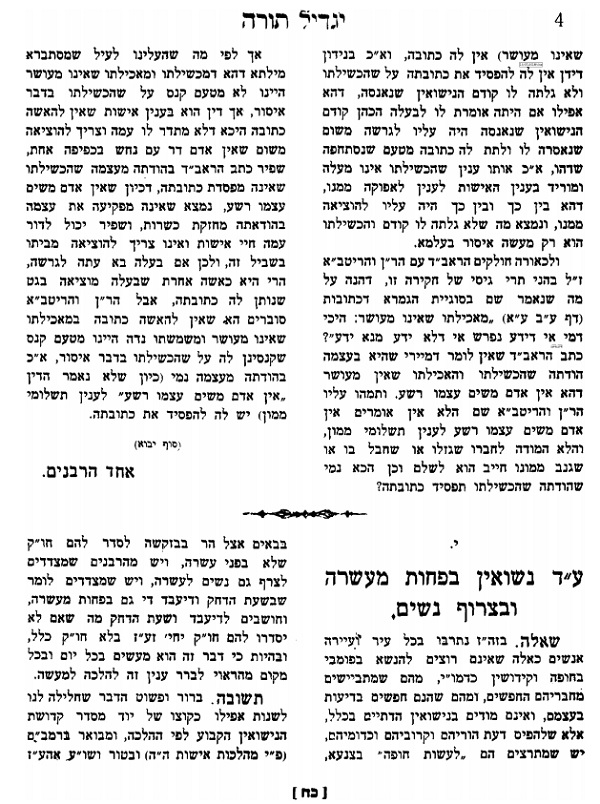
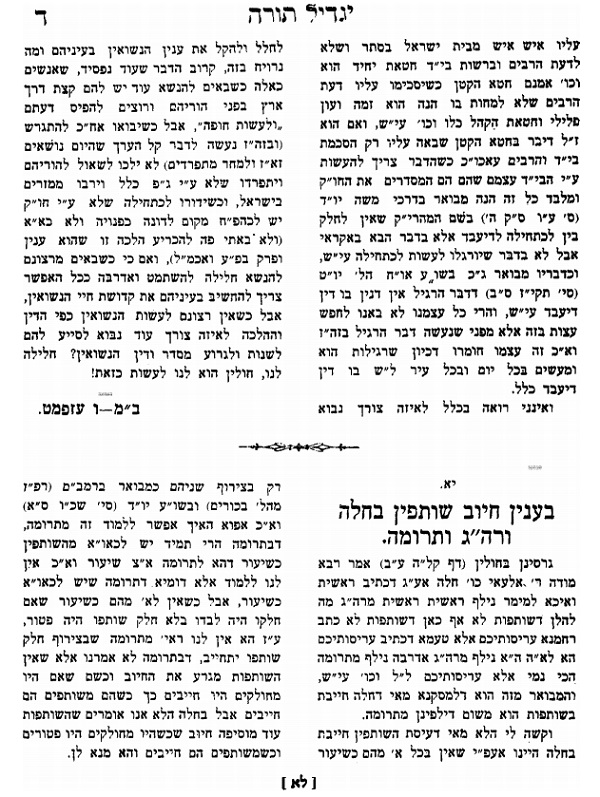
See below (Appendix five for a Teshuvah I came across recently, about a wedding with less than 10 people for a minyan, published in Russia in 1928 in the Journal Yagdil Torah edited by Rav Zevin and R’ Abramsky.

Databases – Blogs

There are also some online databases of material devoted specifically to the current Coronavirus pandemic. Kol Corona (here) is an excellent collection of material related to the Halachic aspects of Coronavirus pandemic, with many links.

Another is a database with links of material for a comparative study of Responses in Judaism, Islam and Christianity.

The Lehrhaus Blog also has many valuable articles related to the Coronavirus pandemic (see this link), as does the Torah Musing blog (see this link).

Worth mentioning is the online Newspaper-Journal Called Zarich Iyun: Charedi Thoughts and Ideas. Most of its articles are in Hebrew (below # 45-48). However, some of its Coronavirus pandemic related articles have been translated into English (see below #13-16). Some of the articles (especially # 48) have generated numerous comments as, one can see from the links. Related to some of this is Rav Michael Abraham’s article, available here, which also generated numerous comments.

Each week, Rabbi Y. Sprung of the The Beit Medrash Govoha for Medical Halacha (affiliated with Technion Medical School and under the leadership of Rav Asher Weiss) releases an article (in Hebrew and English) relating to the parsha and medicine. The past few weeks (from Ki Sisa) have related to coronavirus. See this link for these articles.

All of the items mentioned in the Bibliography bellow are available from me free of charge – just E mail me at eliezerbrodt@gmail.com

English

  1. Rabbi Eli Fischer, Rov in a Time of Cholera (here)

  2. Dr. Eddie Reichman, From Cholera to Coronavirus: Recurring Pandemics, Recurring Rabbinic Responses (here)

  3. Dr. Eddie Reichman, Incensed by Coronavirus: Prayer and Ketoret in Times of Epidemic (here)

  4. Rabbi Gil Student, Talmudic Advice on Epidemics (here)

  5. Dr. Tamara Morsel-Eisenberg, “Is It Permitted to Flee the City?” (here)

  6. Rokhl Kafrissen, Plague Weddings (here)

  7. Dr. Jeremy Brown, A Long-Forgotten Jewish Remedy for the Coronavirus Outbreak (here)

  8. Rabbi Shlomo Zuckier, Making Seder out of the Zoom Controversy (here)

  9. Rabbi Shlomo Brody, Does Jewish Law Oblige Doctors to Risk Their Own Health to Heal the Sick? (here)

  10. The Layman’s Guide to the laws of Mourning, By R’ Holzer, Based on the Rulings of Rav Asher Weiss

  11. Rabbi Prof. Avraham Steinberg, The Corona Virus Pandemic 2019-20- Historical Medical and Halakhic Perspectives, (41 pp.)

  12. Rabbi Michael Broyde, An Introduction to Pandemic Jewish Law, Responsa of Rabbi Hershel Schacter and Rabbi Asher Weiss (here)

  13. Rabbi Yehoshua Pfeffer, Coronavirus: The Charedi Response (here)

  14. Rabbi Reuven Leuchter, COVID-19: A view From Above (here)

  15. Rabbi Eli Stern, Coping without Community (here)

  16. Rabbi Moshe Farkash,COVID19: A community in Crisis (here)

  17. Professor Shaul Magid, COVID-19, Haredi Jewry, And Magical Thinking (here)

Hebrew

  1.  משה דוד צ’צ’יק, האיסור או החובה לברוח מן העיר בשעת המגפה [כאן]
  2. ר’ מנחם מענדל רוזנפלד, זמן מגיפה: הורים ילדים ומפחדים [כאן]
  3. ר’ דוד אברהם, נאמנו מאד, עדויות גדולי ישראל על הליכותיהם ומנהגיהם בימי חולי ומגיפה, אשר נאספו ונלקטו מתוך כתביהם וחיבוריהם, מכון ירושלים [ספר שלם, 300 עמודים]
  4. שמירת הסופר להינצל מחולי ומגפה מתורת החתם סופר [ספר שלם, קמא עמודים + חלק חדש של עוד 35 עמודים]
  5. ר’ שמואל ויטל, סדר משמרה לזמן המגפה, מכתב יד, בההדרת ר’ ישראל זאב גוטמאן
  6. אדם ישר, סגולות ותפילות לזמן המגפה, שחיבר ר’ יצחק אייזיק סאפרין מקאמרנא, בעל היכל הברכה [מהודרה חדשה], מא עמודים
  7. ר’ ישראל זאב גוטמאן, קונטרס טללי נוחם, כולל מכתב אגרות שפירין
  8. קונטרס תפילות מיוחדת למניעת מגיפת הקורונה, כבקשת… המקובל רבי בניהו שמואלי שליט”א, 40 עמודים [וגם קמיע למניעת המגיפה]
  9. הרב זלזניק, לוח ההלכות ומנהגים לחודש אייר, מיוחדת עם הלכות הנוגעות למגיפת הקורונה, 17 עמודים
  10. אוסף של 35 תשובות של הרב צבי שכטר שליט”א [בעברית וחלקם גם באנגלית]
  11. פסקי קורונה מאת הרב צבי שכטר שליט”א [51 עמודים]
  12. מנחת אשר, לקט שיעורים תשובות אגרות ומאמרים הנוגעים למגפת הקורונה מאת הרב אשר וייס שליט”א [100 עמודים]
  13. מנחת אשר, לקט שיעורים תשובות אגרות ומאמרים הנוגעים למגפת הקורונה מאת הרב אשר וייס שליט”א, מהדורה תניינא, [172 עמודים]
  14. הרב פרופ’ אברהם שטינברג, מגפת הקורונה התש”פ, היבטים היסטוריים, רפואיים והלכתיים, 30 עמודים
  15. ווי העמודים וחשוקיהם, ליקוט משעורי וחידוש ר’ יצחק זילברשטיין, קנו עמודים
  16. ר’ שלמה אבינר, קונטרס כתר יתנו לך, קורונה בהשקפה ובהלכה
  17. קונטרס פסקי הלכות, בשאלות שהזמן גרמן, מתוך כתבי ר’ אברהם יחיאל סגל דויטש
  18. ר’ צבי רייזמן, ‘צירוף למנין תפילה בציבור וברכת כהנים ב’בידוד בקורונה’
  19. ר’ יששכר אייכארן, פי כהן, בענין אם העומדין בשתי רשיות ורואין אלו את אלו מצטרפין למנין עשרה, 35 עמודים
  20. ר’ משה מרדכי קארפ, בדין צירוף לדבר שבקדושה ע”י חבורות ויחידים הרואין זא”ז ומניני המרפסות, 15 עמודים
  21. אליעזר יהודה בראדט, סגולת ברכת לבנה, [כאן]
  22. ר’ אברהם מימון, קונטרס בדד ישב, נח עמודים
  23. גליון עיטורי מרדכי, הלכות למגיפת הקורונה ע”י הרב מרדכי יעקב מאיר, 23 עמודים
  24. ר’ נהוראי אוחנה, הקורונה בהלכה, מהדורה חמישית, 123 עמודים
  25. ר’ יצחק לובינשטיין, המגיפה בתורה, 72 עמודים
  26. ר’ אברהם דרברמדיקר, קונטרס הקורונה, 23 עמודים
  27. קונטרס הסתר פנים, [חמישה שערים: שער חולי, שער בידוד, שער מגפה, שער חיים ושער בשורה טובה], 93 עמודים
  28. ר’ יהושע פפר, חרדים מהקורונה [כאן]
  29. ר’ ראובן לויכטר, מהותה של מגפה: מבט על [כאן]
  30. ר’ אלי שטרן, מי אנחנו ללא הקהילה? [כאן]
  31. ר’ משה פרקש, לעמוד על נפשנו [כאן]
  32. לקט מקורות ‘שומר מצוה לא ידע דבר רע’
  33. מעלת אמירת פרשת הקטרות להינצל ממגפה [מכון תורת הקרבנות], 16 עמודים
  34. קובץ תורני מה טובו אהליך יעקב, גליון י [כל הקובץ] [585 עמודים] [עניני פסח וקורונה]
  35. קישור לאוסף מאמרים על חג הפסח והמגיפות בהיסטוריה, בספרות בפיוט ובהגות. המאמרים פרי עטם של חברי וחברות סגל הפקולטה למדעי היהדות באוניברסיטת בר-אילן [כאן]
  36. לשונות של גאולה, אסופת שירה וספרות, 37 עמודים
  37. קובץ עץ חיים גליון לג [יש כמה מאמרים על קורונה]
  38. ירחון האוצר # 40 [יש כמה מאמרים על קורונה]


[1] Thanks to Nathan Hirsch from the NLI for sending me a few items which I did not see or did not have digital versions of.
[2] Mechkaray Sefer, pp. 90-99. See also Marvin Heller, Further Studies in the making of the early Hebrew Book, pp.79-90. See these recent posts here & here.

One of works mentioned by Ya’ari is R’ Chaim of Friedberg’s (the brother of the Maharal), beautiful work Sefer HaChaim (first printed in 1593) which, as he states in his introduction, he wrote during a plague in 1578. Less known (and not mentioned by Ya’ari) is that his earlier work Igerret Hatiyul was also written during an earlier Plague, in 1569. [For more information about these works see Eric Zimmer, The Fiery Embers of the Scholars, (heb.), pp. 177-219].

One bibliographical note about the Sefer HaChaim is the Haskamah of the Apta Rav who writes in the 1817 reprint:

…כל דיבור ודיבור מרגינותי’ תחותיה וברוח הקודש נאמרה

Recently the first draft of the Sefer HaChaim was printed in Yerushaseinu 10 (2019), pp. 19-55.

See note 7 for additional comments on Yaari’s article.
[3]See for example about one in Italy 1630-1631: R’ Yehudah Aryeh Modena, The Autobiography of a Seventeenth Century Venetian Rabbi, pp. 134-136; Sefer Olam Hafukh, a History of the Plague in Padua in the Year 1631, by Abraham Catalano, Kovetz Al Yad 4 (XIV) (1946), pp. 65-101 (printed by Cecil Roth). See Appendix Three about another plague in Italy in 1656.

For a description of one in 1866 see Y. Kotik, Ma SheRuetee, Edited by David Assaf, pp.349-354 (PDF available upon request).
[4] See Asher Ziv, HaRama, pp. 112-116.

See also, R’ Raphael Mordechai Malchi, Medical Essays, (ed. M. Benayahu), pp, 139-140. See also his Grandson, R’ David De Silva, Pri Megaddim, [Zohar Amar, Ed.], pp. 71-74.
[5] Two weeks, ago Rabbi Guttman released online, a PDF of a manuscript of R’ Shmuel Vital of Seder Tefilos based on Kabbalah, to say during such times (item #22). See also item # 23 & 25. See also #3, Dr. Eddie Reichman’s article on the topic.
[6] About Fasting, see Omer Ahituv, Fasting in Ashkenaz at the Beginning of the Seventeenth Century, MA thesis, Tel Aviv University 2019, (Heb.) pp. 70-74.

For other Segulot, see the various collections listed below. See also Appendix One about ‘Black Weddings’ and items # 6 &7.
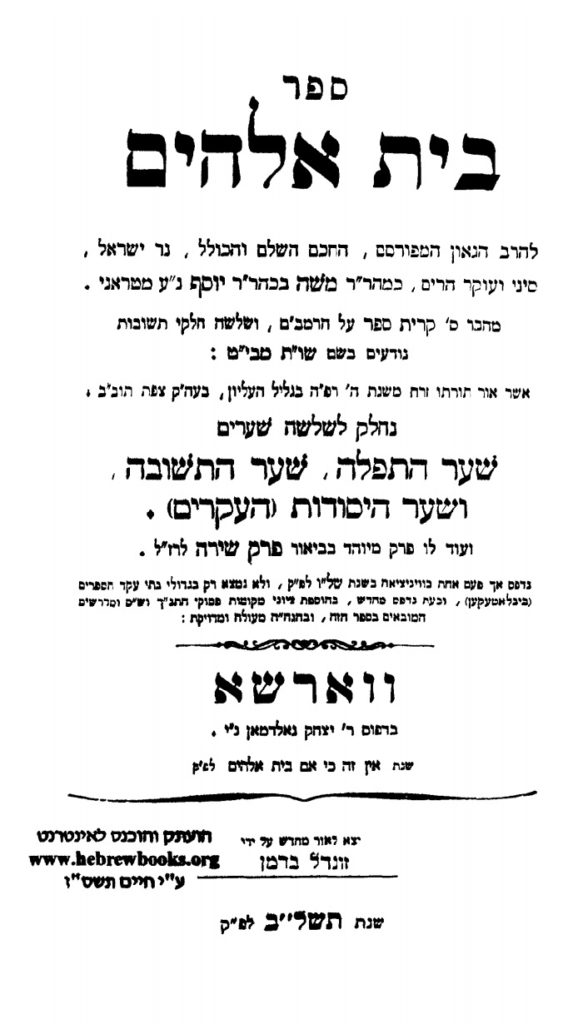
[7] See Appendix Four, for an important chapter from the Mabit’s incredible work Beis Elokiym, related to plagues in Hashkafah. The Mabit was writing about this based on experience as he lived through a few plagues himself and even authored a small work during one such plague called Igrot Derech Hashem, first printed in 1553. [Interestingly enough this work too is lacking from Ya’ari above cited chapter]. See Meir Benayahu, Yosef Bechiri, pp. 28-30,121-122. See also Ibid, p.131 about the story behind the writing of the Igrot Derech Hashem.

In an autobiography of The Mabit’s son the Maharit we find him describing some of these plagues (and others):

שנת השל”ג היתה מגפה בעיר והלך הרב אבא מארי ז”ל עמי לבוק”ע ובתחלתה נח נפשיה של הרב מהר”ר יצחק אשכנזי ז”ל מפני הרעה נאסף הצדיק. ובסוף המגפה נפל ממנו רב רב עתה הרף ידך הרב מהר”ר דוד ן’ זמרא ז”ל [שלם א (תשל”ד), עמ’ 215].

השל”ט באלול בבירייא הוכתי במגפה ובאתי בשערי שאול לולי אלקי’ אבי בעזרי בזכות א”מ והתענה עלי כל ח’ ימים ובחסדו העלה ארוכה לי [שם עמ’ 217].

השמ”ז ירדתי למצרים… בברחי מפני אימת המגיפה… [שם, עמ’ 219].

השנ”ה שנת השמיטה גלינו מאימת המגיפה בפורים לטבריא ובפסח לירושלים עיר הקדש… ושם חיברתי קונטריסין צרות הבית… [שם, עמ’ 221].

השס”ב ברחנו מחמת המגיפה כשמנה חדשים לבוקיעה… [שם, עמ’ 222].

In this autobiography we learn about an additional work written during a plague, by the Maharit. Now Yaari writes:

ר’ יוסף ב”ר משה מטראני ברח בשנת שנד מפני מגיפה מצפת… ושם חיבר את ספרו דרך הקודש על צורת בית המקדש שנדפס רק בשנת תע בקושטאדינא יחד עם הספר מגיד בראשית…”.

Yaari then quotes a passage from the Maharit at the end of the Derech Hakodesh where he describes writing this work during a plague. This complete passage from Ya’ari was quoted in a recent article in HaMevasser on the subject of seforim written during plagues without attribution. However, this information is incorrect. The Sefer that the Maharit wrote during the plague in 1595 was called Tzurot Habayis (as the Maharit wrote in the above passage). R’ Chayim Alfandri saw a manuscript copy of this work (as he writes in his introduction) and when he wrote his sefer Derech Hakodesh on the same subject he quoted numerous passages from it. However, the actual sefer by the Maharit was never printed. In 2007 Machon Zichron Aharon reprinted the Derech Hakodesh with numerous footnotes and indexes. On page 270 they list the numerous times the Maharit’s Tzurot Habayis is quoted (along with other manuscript works by Maharit that R”C Alfandri used).
[8] See the very special work by H.J. Zimmels, Magicians, Theologians and Doctors, pp. 99-110, 228-233 who has an excellent collection of material on this. See also the excellent work, Julius Preuss, Biblical and Talmudic Medicine, (translated by Fred Rosner), pp. 151-160; Herman Pollack, Jewish Folkways in Germanic lands (1648-1806) Studies in Aspects of Jewish Life, pp. 130-133, 304-305.

The Shvut Yaakov wrote in middle of a Teshuvah about money set aside for Pidyon Shivyoim, if one can use it instead for people suffering from a plague,:

אבל עכשיו בעו”ה שנתרבה עלינו עול הגלות ועלילות שקרי’ משונאינו שמעלילין עלינו כאלו הדבר בא ע”י ישראל דוקא וכשהיה הדבר בשנת תע”ג ברוב מקומות שהיו שמה מבני עמינו היה סוגרים רחוב היהודים באין יוצא ואין בא ממש ובדוחק ע”פ שתדלנו’ גדול שהניחו להביא להם צרכי מזונותיהם ובאיזה מקומות הוצרכו לילך ולחבות עצמן ביערים ומערות וישראל שהיו בדרך ועל פני השדה היו ממש מופקרים למות ואשרי מי שלא חמאן בצער ודוחק גדול כזה ואין לך שבי גדול מזו דגרע מכולהן דכולהן איתנהו ביה על כן אין צריך לפנים דמצוה זו הוי ממש פדיון שבוים ואפשר דגדול ממנו ולא הוי שינוי מדעת הנותן כי אין שעת הדחק גדול מזו (שבות יעקב, ב, סי’ פד).

[9] More sources for this can be found in H.J. Zimmels, Magicians, Theologians and Doctors, p. 233, footnote 141; David Assaf in his edition of Y. Kotik’s, Ma SheRuetee, p. 350 Hanna; Wegrzynek, Shvartze Khasene Black Weddings Among Polish Jews, Holy Dissent, 2011, pp. 55-68; Tzvi Friedhaber, Plague Marriages as Reflected in Hebrew Literature and the Hebrew Press, Dappim: Research In Literature 7 (1990), pp. 305-316; Kulmos 21, p. 26.
[10] On this work See A. Yaari, Shiluchei Eretz Yisroel, pp.96-97.
[11] Y. Kotik’s, Ma SheRuetee, p. 350.
[12] Nathaniel Deutsch, The Jewish Dark Continent: Life and Death in the Russian Pale of Settlement, p.233

Appendix One: Graveyard weddings of orphans

Recently (here, here and here) there has been some discussion about an old Segulah, performed by some towns during plagues, ; make a Wedding for Orphans in a graveyard.[9] One was even recently done in Bnei Brak (see here and here).

I would like to add some more sources to this segulah. One of the earliest sources quoted is R’ Moshe Reisher’s excellent work Sharei Yerushlayim, first printed in 1868.10 R’ Weiss, after quoting the Sharei Yerushlayim, writes:

[וגם אני שמעתי מזקני שער שעשו כן בשנת תרל”ג בפ”ב [שו”ת שיח יצחק, סי’ תצא

However, Y. Kotik, in his excellent memoir writes about a plague in 1866:

Due to the cholera epidemic, Jews resorted to all sorts of remedies; in other words: a crippled, mute virgin was married to a blind man. The wedding ceremony was held in the graveyard in the hope that they would produce a generation of righteous offspring…”.[11]

Another source from 1901 writes:

ראיתי להעלות על שלחן מלכים… על מה שנהו בסביבותנו בהרבה מקומות בעידן ריתחא ומחלת הח”ר ר”ל משיאין יתום ויתומה … ומעמידים החופה על בית הקברות ובעירנו בשנת תרנ”ג העמידו החופה סמוך שער גדר בית הקברות מבחוץ…. [ציוני שלום, יד שלום, עמ’ 154-155

While searching for something else I came across mention of this in an article in Hamelitz 1871 (Year Eleven, Issue 33, p.263)


In the early 1900’s, the famous author and ethnographer who went by the pen-name S. Ansky started working on collecting and cataloging hundreds of details about every aspect of Jewish life in Europe. One of the ways he was planned on doing this was through a survey. The survey, in Yiddish, was a 200-page questionnaire with 2,087 questions about the Jewish life cycle. Sadly, he never got to finish the project. But each set of questions gives us a fascinating window into what Jewish life was like before World War I. In his introduction he set forth his goal:

“In order to revive traditional Jewish culture with all its customs, traditions, practices and beliefs, the team has put together a survey, hoping to reach everyone who remembers how people behaved in the past as well as in the present, in those places where Jewish life still continues in the old manner. When numerous responses to all the questions are collected, it will be possible to bring to life the entire structure of the traditional Jewish community, the Jewish family and communal life.”

In the wedding section[12] of the survey we find the following:

Do you know stories about weddings in cemeteries carried out as protections against misfortune? Does this occur only during a plague, or also in other cases, and if so which ones?

One last source related to this can be found in the Shut Maharsham (4:40)

ועד”ש לאשר נפרץ בעירו חולאת ילדים ר”ל ומורגל בין ההמון סגולה להעמיד חופה של יתום ויתומה בביה”ק וזה כמה שבועות עשו שם ביה”ק חדש שהקצוה לזה וגם כבר קברו שם כמה מתים ובנו סביבה מחיצות אבל לא נגמרו המחיצות עוד סביב רק ברוב המקומות כבר מקיף מחיצות.

והנה חתן היתום הוא כהן ונשאל מעכ”ת אם מותר להעמיד החופה בביה”ק תוך מקום המחיצות רחוק ד”א מהקברות עצמן. ורו”מ אסר מב’ טעמים מחשש הברכות על הבה”ק משום לועג לרש… אבל יל דוקא לזרוע ולנטוע שמרגילים רגל אדם משאכ בנד דהוי דבר מקריי פעם איש להקל וכיון דרוב מקום הפנוי אין בו קבר יל דכיון דלש בזה כל קבוע כמש הרש מקינון ועיחד סיקי אכ תלינן ברובא להקל וגם הרי לדבר מצוה מותר לילך בשדה שנחרש בה קבר כמש ביוד סישעב והנ הוי דבר מצוה להשקיט המיית המון העם ופחדם בעת ההוא:

Appendix Two: R’ Shimshon Ostropoler

I recently wrote an article about a book called The Rabbis Suitcase by Eli Friedwald. This book is based on Letters found in a suitcase buried in an attic, which contained over one thousand documents, as well as numerous letters from many Gedolim across the Globe. The correspondence belonged to two Litvish Rabonim in England who became dayanim on the Chief Rabbi’s Beis din during the years 1879-1905: Rabbi Yaakov Reinowitz (1818- 1893) and his son in law, Rabbi Sussman-Cohen (1841-1907). They included letters with the Netziv, R’ Yitzchok Elchonan Spektor, R’ Shmuel Salant, R’ Yehoshua Leib Diskin, R’ Yisroel Salanter, R’ Shmuel Mohilever and, R’ Eliezer Gordon, just to list a few names.

The author Eli Friedwald sent me a document found in a suitcase dated from 1754 which was headed as a segula of R. Shimshon Ostropoler.


I reached out to Rabbi Bombach who has written and collected the existing material on R’ Shimshon who replied:

.אכן זו הסגולה נגד המגפה שהדפיס רבי פסח מזאלקווא בן אחותו של רבי שמשון בספרו זבח פסח (נדפס תפ”ג בערך) על סגולות ורפואות. ונדפסה בספרי ניצוצי שמשון פרשת מסעי, עם ביאור על פשר הדבר

Appendix Three

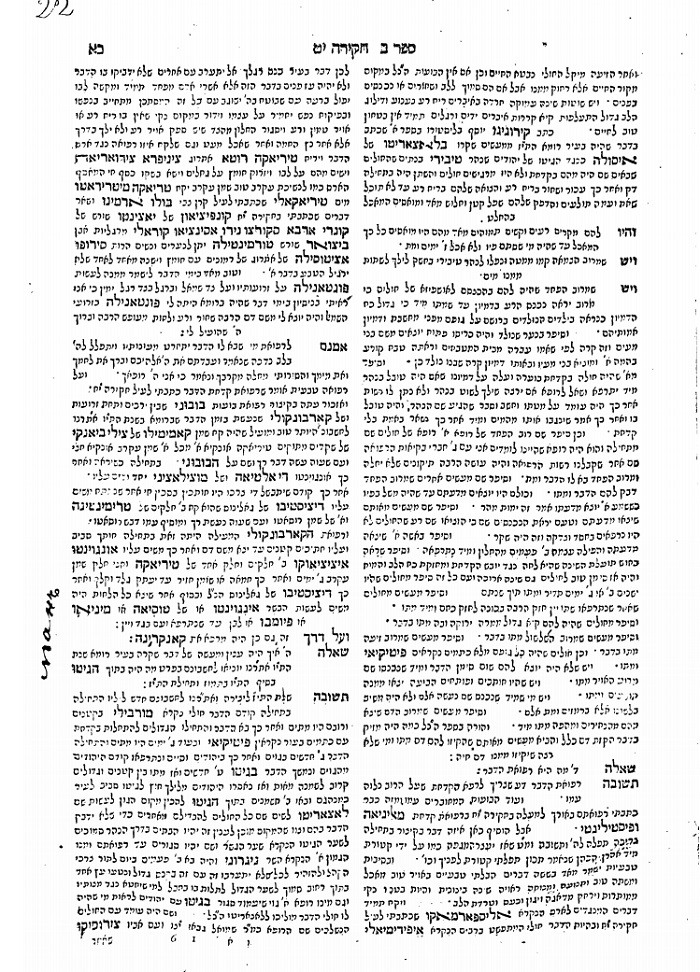
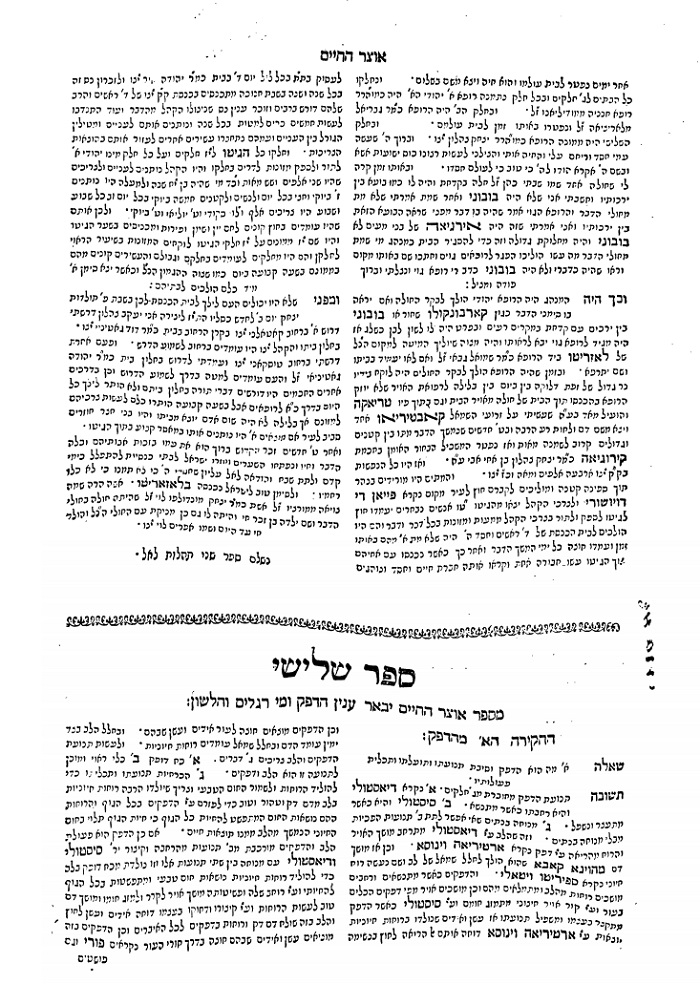
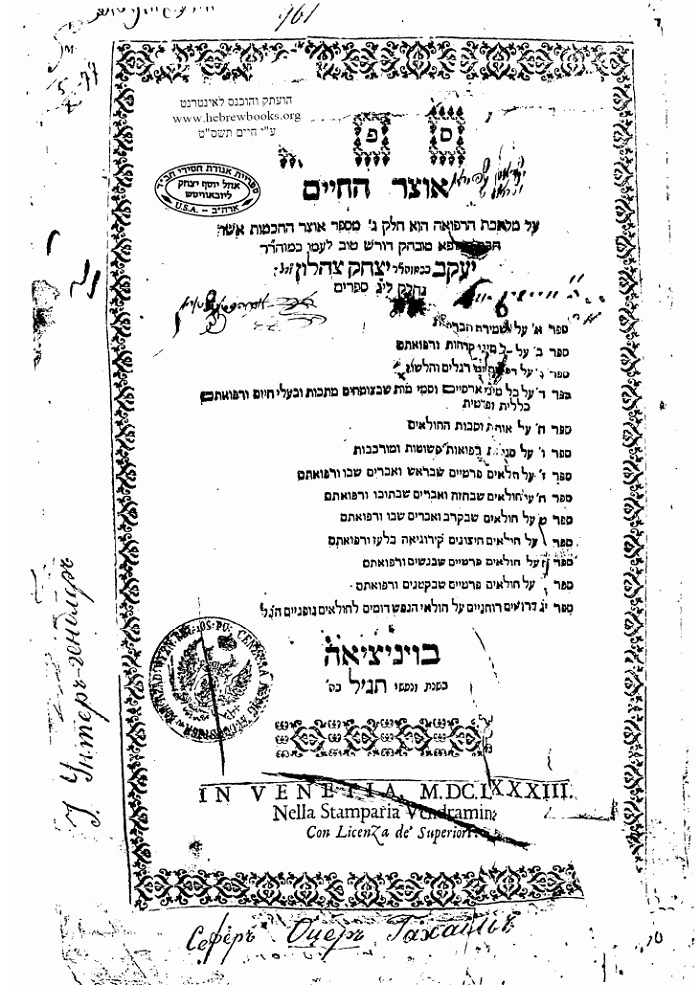
In a post from a few years back I wrote about R’ Yaakov Zahalon (1630-1693), a graduate of medical college in Rome, became a doctor at the age of twenty-six, and for several years, was also a Rav and Baal Darshan in Rome. He was famous for his important medical work, Otzar Ha-Hayyim. I also wrote a little about the work (see here).

He was very involved in the famous plague in the ghetto of Rome in 1656, which he describes at length in his work, Otzar Ha-Hayyim. Here is the very interesting passage about it which has relevance today.

Appendix Four Mabit


Appendix Five Yagdil Torah:


A Footnote on What the Chasam Sofer Did Not Say

A Footnote on What the Chasam Sofer Did Not Say

By Shnayer Leiman

The Problem. I’m the proud owner of a copy of Rabbi Shimon Finkelman’s Rav Pam: The Life and Ideals of Rabbi Avrohom Yaakov HaKohen Pam (second edition, seventh impression, June 2023, ArtScroll History Series, Mesorah Publications, Rahway, N.J.). It is a magnificently written and produced biography of Rav Pam, a close friend of my father, who like Rav Pam was a disciple of both Rav Shraga Feivel Mendlowitz and Rav Dovid Leibowitz. The biography captures Rav Pam as our family knew him. Indeed, it is the definitive model of how a biography of a גדול בישראל should be written. It informs and inspires as it tells the truth.

As we shall see, a minor error made its way into the volume, and no one can really be faulted for the error. Nonetheless, I am confident that Rav Pam being the איש אמת that he was, will surely not fault me (in עולם האמת) for making the correction.

The reader, at p. 336, is informed that at the 1991 Torah Vodaath dinner at which Rav Pam was the Guest of Honor, he thanked the one thousand guests for coming, and then said:

Often, I think to myself that I go around with a “false pass,” for people think I am that which I am not. But I take comfort in a comment of the Chasam Sofer. Rema is of the opinion that if a stranger enters a shul and claims to be a Kohen, we may rely on his word and call him to the Torah for the Kohen’s aliyah, for even if he is, in fact, not a Kohen, calling him to the Torah would not involve a biblical transgression. Asks the Chasam Sofer: Why would calling up a non-Kohen not be a transgression of “Vekidashto” (And you shall sanctify him),[1] the requirement that we accord honor to those who truly are Kohanim? He answers that this mitzvah is fulfilled when we show honor for the Kehunah (the exalted status of the family of Kohanim). Therefore, even if the person whom we honor is, in fact, not a Kohen, we are fulfilling the mitzvah of “Vekidashto” if we honor someone whom we think is a Kohen.

Therefore, even though, in fact, I am not deserving of honor, if people honor me thinking that I deserve it, then they are considered as having shown k’vod HaTorah (honor for the Torah).

This is truly an inspiring דבר תורה – worthy of the Chasam Sofer and appropriately selected by Rav Pam, a Kohen, for the occasion. Alas, it was not said by the Chasam Sofer.

A Brief Survey of the Chasam Sofer’s Attitude Toward the Publication of His Writings.

Much has been written about the Chasam Sofer (1762-1839), and much more remains to be written. He was a remarkable גדול הדור and פוסק הדור. He lived in a world without radio, TV, telegraph, telephone, or digital communication, yet was recognized during his lifetime as גדול הדור and פוסק הדור. What makes this even more remarkable is the simple fact that he refused to publish any of his Torah insights or halakhic rulings during his lifetime. Of course, the fact that he served as Chief Rabbi of Pressburg (today: Bratislava) and simultaneously as Rosh ha-Yeshiva of the Pressburg Yeshiva – with thousands of disciples during his long reign (1806-1839) – spread his fame throughout the Jewish world. And while he refused to publish his Torah insights, he had a gifted pen and wrote thousands of Jewish legal responsa which he sent to all who asked. All of Torah Jewry knew who the Chasam Sofer was and what he could do.

It is worth examining what the Chasam Sofer had to say about publishing one’s Torah insights. In 1841, his son R. Shimon Sofer, who would later serve as Chief Rabbi of Krakow, published for the first time a personal letter of the Chasam Sofer dated 1829, where he addressed the issue.[2] It reads in part:

Regarding the rumor that you heard that I published a particular volume, and you requested that I send you a copy,[3] I never considered such a matter; it has not even entered my mind, at least until the present time. For the majority of the [Torah] world, that are greater and better than I am – or, at the very least, at the same level that I am – they have no need for me. For the minority of a minority that are less learned than I am, why should I weary myself for a minority? And if, perhaps, it were true that the majority of the [Torah] world needs me – heaven forbid – I am unaware that I would have the obligation to publish my Torah insights and distribute them to the public. So long as G-d grants me life and strength, I am prepared to study [Torah] with all who are interested in learning with me. I will neither pause nor rest – as the L-rd my G-d has commanded me “Just as I teach without charge, so you shall teach without charge”[4] – in responding, as far as my hand and mind reach, to all who ask, at no charge. It is my practice to record in writing whatever Torah insights G-d has graced me with, whether in Halakhah or Aggadah. These writings are freely available. Whoever wishes to copy them is welcome to do so. Such was the practice before the invention of the printing press. More I am not obligated to do. If, heaven forbid, one publishes in order to increase his fame, I worry about the curse of our Sages, of blessed memory: “He who seeks fame will lose his name.”[5] Indeed, such has been the fate of most authors of seforim. How much more so is it prohibited for an author to publish his sefer for financial gain! For these reasons, it never entered my mind to publish a sefer.

Only once did several of the Chasam Sofer’s Responsa and Torah insights appear in print during his lifetime. A disciple of the Chasam Sofer who had access to manuscript copies of his writings, published an edition of חידושים על מסכת שבועות מאת רבינו יוסף הלוי אבן מיגש (Prague, 1826), and appended some 14 large folios of Chasam Sofer’s Responsa and Torah insights to the volumeThe Chasam Sofer was livid when he learned about this unauthorized publication of his writings, but ultimately granted his approval. Towards the end of his life, and at the constant urging of members of his family, he agreed to publish some materials, including a review of R. Zvi Hirsch Chajes’ תורת נביאים . The project fell through, perhaps due to the illness and subsequent death of the Chasam Sofer, but not before he addressed an important note to Rav Zvi Hirsch Chajes, which sheds light on his view of the publication of Torah insights in general, and on his sensitivity to the effect his writings could have on others. The letter was written in 1837, when the Chasam Sofer was 75 years old, and at the height of his fame. Rav Chajes, was 32 years old, still at the start of a brilliant career.[6]

I keep the L-rd before me always. Pressburg, the evening preceding Monday, 27 Marchechvan, 598 according to the short account.

Greetings and blessings for all that is good to my friend and dear Rabbi, the great Rabbi and Gaon, master of Torah, discerning in study and expert in mastery of texts, whose many words are beautifully expressed, the honorable teacher and rabbi Zvi Hirsch, may his light glow, Chief Rabbi and Head of the Yeshiva of Zolkiev, may G-d watch over it.

Dear Friend,

I have a request to make of you. It has never entered my mind to publish a sefer. However, several years ago, some pages of my Responsa and Torah insights were published by a certain rabbi, R. Mordechai Schlank, who set out to publish Ramban’s commentary on Kiddushin and R. Yosef Ibn Migash’s commentary on Shavuot. He had copies of some of my writings with him and published them in the back of the books mentioned. This was done initially against my will, but ultimately with my permission, for he was not with me here [in Pressburg], but was rather in Prague.

Now the following has occurred. A worthy individual from Brody, R. Mordechai Bisliches,[7] a printer who publishes the works of the Rishonim, has managed to get copies of 3 or 4 of my Responsa and copies of some of my Torah insights. He plans to append them to one of the above publications of the Rishonim. Initially, this was done against my will and protest, but my family forced me to acquiesce and remain silent. (For all my Torah insights and writings are freely available for anyone to copy them. I do not discourage anyone from doing so, for nothing I wrote was intended as a secret.) The above mentioned printer is already engaged in the process of publishing my material. These include two responsa that I addressed to you, one on whether a physician who is also a Kohen can administer to a dying or already dead patient,[8] and the other regarding my comments on your sefer, Torat Nevi’im.[9] Now I said: I can do as I please regarding my property; but I cannot do as I please regarding someone else’s property.” Perhaps you don’t want your name, and the name of your community, mentioned regarding that matter. Or, perhaps you will find some passage that, heaven forbid, is a slight to your honor. For those reasons, I implore you to review my comments and let me know what you think. In my humble opinion, there is nothing in my responsa that in any way slights you, heaven forbid. Quite the opposite, they are sources for you of glory and praise. And if, when engaged in halakhic discourse, I criticized something you said, it means nothing. Such are the ways of Torah discourse. Perhaps you will publish yet another sefer and you will be able to defend yourself against any and all criticism. But heaven forbid that I should allow my pen to record anything that would dishonor you! Should you feel that anything I wrote [about you] is improper, I will erase those words, or if necessary, I will neither mention your name or the title of the book. I hope this won’t be the case, and anxiously await your quick reply, before the volume goes to press. I sign with all the usual blessings, the one who loves your soul,

Moshe ha-Katan Sofer of Frankfurt-am-Main

We have included this brief survey of the Chasam Sofer’s attitude toward the publication of his writings, in order to bring home the message that, with one or two exceptions, the Chasam Sofer did not edit, or prepare for publication, any of his writings during his lifetime. He left a vast literature, literally thousands of manuscripts, ranging over a wide variety of topics (such as Responsa, Lectures on the Talmud, Sermons, Commentaries on the Torah, Notes on the Shulchan Arukh, Poetry, personal letters, and more), all still being published – and always in better editions – to this very day.

The Solution. What remains to be addressed is:

1. Why did Rav Pam ascribe the passage (that justifies why a stranger who claims that he is Kohen is allowed to get an aliyah to the Torah as a Kohen, even though we have no evidence other than his say-so) to the Chasam Sofer?

2. How do I know that it wasn’t said by the Chasam Sofer?

3. Who did contribute the insightful justification that ultimately was misattributed to the Chasam Sofer?

Rabbi Finkelman provides a helpful footnote, in an attempt to identify the source of the alleged Chasam Sofer comment.[10] He sends the reader to Toras Moshe on Vayikra 21:8. Alas, in all of the recent editions of Toras Moshe published under the auspices of Makhon Chasam Sofer, the official collection of all of the genuine Chasam Sofer commentaries on the Torah published in the various editions of Toras Moshe (as distinct from his sermons [דרשות] or other collections of Torah commentary that never appeared under the name Toras Moshe ), no such passage appears. See, e.g., the massive six-volume edition of Toras Moshe ha-Shalem veha-Mefoar (Jerusalem, 2021), vol. 3, p. 255, to Vayikra 21:8. There is a comment on Vekiddashto, but not a word about the fact that a stranger who claims that he is a Kohen is allowed to get an aliyah to the Torah as a Kohen, even though we have no evidence other than his say-so.

Almost certainly, neither Rav Pam in 1991, nor Rabbi Finkelman in later years, had access to a Makhon Chasam Sofer edition of Toras Moshe. But they certainly had access to earlier editions of Toras Moshe, which is what led them astray. It’s best to begin our examination with one of the earliest editions of Toras Moshe – and little more needs to be said.

Like almost all the writings of the Chasam Sofer, his Toras Moshe was published posthumously. It first appeared in print in a three-volume set published in Pressburg between 1879 and 1893. The editor of the three-volume set was an אדם גדול, a grandson of the Chasam Sofer, Rav Shimon Sofer (1850-1944). He was the son of Rav Avraham Shmuel Binyamin Sofer (1815-1871), the כתב סופר, who succeeded the Chasam Sofer as Chief Rabbi and Rosh ha-Yeshiva of Pressburg. Rav Shimon Sofer, a distinguished rabbinic scholar in his own right, served as Chief Rabbi of Erlau and was the founder of the Erlauer Chasidic dynasty. In 1893, he published for the first time the third and final volume of Toras Moshe, the volume with the Chasam Sofer’s comments on Vayikra-Devorim. Later editions were usually printed in 2 to 5 volume sets.

Here is what Rav Pam saw and quoted (almost certainly from one of the many later photo-mechanical reprints of the 1893 volume that appeared throughout the 20th century).

He may have owned a copy of a reprinted edition, and if not, he surely would have had access to a copy at the famed Torah Vodaath Library, curated for many years by the late R. Yitzchok Meir Traube and catalogued by the late R. Shlomo Biegeleisen. It is a library I remember well that (in my day) was just-off to the side of the main Bais Medrash at the South Third Street campus in Williamsburg.


No one could really fault Rav Pam for citing a passage – and with great precision – in the name of the Chasam Sofer, when that very passage appears in a sefer entitled Toras Moshe, and whose title page clearly identifies the author of its content as being none other than the Chasam Sofer! Moreover, the sefer was edited by the grandson of the Chasam Sofer, who surely wouldn’t misrepresent what his grandfather wrote!

But it is clearly a case of אליה וקוץ בה. If one examines carefully the text that Rav Pam cited (as seen in the scan above), one notices a coded abbreviation at the end of the paragraph that reads in parentheses: (משמ). (Other passages on the page are coded with an asterisk at the start of each paragraph; they need not concern us.) No dictionary of Hebrew abbreviations will solve the strange abbreviation משמ. But what will solve the problem for us is the editor’s full introduction to his edition of Toras Moshe.

It appears only, as one might expect, at the start of the volume on Bereshis. Here is the key passage, which appears at the very end of the lengthy introduction.

Translated it reads: “I also had in my hands a handwritten book, named Shir Ma’on. The author’s name is not recorded in it. But I felt comfortable taking some of its fruits and inserting them into the present text, for there is a proper time for everything, a fixed time for every desirable matter.”

Incredibly, there are many passages, marked with the code משמ strewn throughout the Toras Moshe volume! What the editor was really telling us is that he had access to a handwritten notebook with no personal name recorded in it. Of course no personal name was recorded in it; it was his private notebook! The Hebrew title Shir Ma’on clearly alludes to the name “R. Shimon.” And משמ is surely an abbreviation for מספר שיר מעון. As a gifted rabbinic scholar, and as the grandson of the author of most of the passages in Toras Moshe, he felt comfortable adding appropriate passages to the volume. But being scrupulously honest, he knew that he could not do so without informing readers of what he was doing, and clearly identifying which passages belonged to his grandfather, and which passages belonged to him.

It is all to the credit of the editors of the latest editions of Toras Moshe that they now publish two separate sections of the book, each with its own title page, and both with notes and commentary. One section is called Toras Moshe and prints only what the Chasam Sofer wrote, and the other section is called Shir Ma’on and prints only what R. Shimon Sofer wrote.


In sum, Rav Pam resonated to a beautiful 
דבר תורה he saw in an early edition (or reprint) of Toras Moshe, and cited it in the name of the Chasam Sofer at a Torah Vodaath dinner held in his honor. Opening to a page in Sefer Vayikra of the multi-volume set of Toras Moshe, there was no obvious reason for him to assume that it was not a Torah insight of the Chasam Sofer. In fact, it was a Torah insight of the Chasam Sofer’s grandson, R. Shimon Sofer, who served with great distinction as Rabbi and Rosh ha-Yeshiva of Erlau in Hungary for over 50 years, and authored the multi-volume שות התעוררות תשובה (printed mostly in Budapest, 1923-1944), and died a martyr’s death in Auschwitz at age 94.


Notes

[1] The reference is to Vayikra 21:8. See b. Gittin 59b, where the verse is understood as a general obligation to honor all Kohanim.
[2] R. Shimon Sofer, “
פתוחי חותם,” introduction to R. Moses Sofer, ספר חתם סופר חלק יורה דעה (Pressburg, 1841). It is reissued in שות חתם סופרחלק יוד, vol. 1 (Jerusalem, 2000), introductory pages, p. 15.
[3] The reference is to the unauthorized publication in 1826 of several of the Chasam Sofer’s responsa and Torah insights, for which see below.
[4] See b. Bechorot 29a.
[5] M. Avot 1:13. Cf. 
שות חתם סופראוחסימן רח.
[6] The letter is included R. Yisrael Stern’s anthology, 
לקוטי תשובות חתם סופר (London, 1965), pp. 92-93.It was first published in 1842 by the recipient of the letter himself, R. Zvi Hirsch Chajes. See presently: כל ספרי מהרץ חיות (Jerusalem, 1958), vol. 1, p. 206. For a comprehensive study of the relationship between the Chasam Sofer and R. Zvi Hirsch Chajes, see Mayer Herskovics, מהרץ חיותתולדות רבי צבי הירש חיות ומשנתו – מהדורה מתוקנת  (Jerusalem, 2007), pp. 143-189.
[7] Mordechai Leib Bisliches (1756-1851) was a bibliophile, dealer in manuscripts, and printer. He printed books that were published in Carlsruhe, Lvov, Prague, and Pressburg. At least two of his printed books carried 
הסכמות from the Chasam Sofer (אוצר נחמדחדושי הרמבן על מסכת שבת , Pressburg, 1837; and מנחת קנאות מהרב הגדול אבא מרי בר משה מחכמי לוניל , Pressburg,1837). In 1846, Bisliches and his partner S.G. Stern sold 111 manuscripts in 102 volumes to the archduchess Marie Louise of Parma, which were added to the de Rossi Collection in the Biblioteca Palatina. See the entry “Bisliches” in Encyclopaedia Judaica and cf. N.M. Gelber’s תולדות יהודי ברודי (Jerusalem, 1955), p. 204.
[8]
 In the standard printed editions, this responsum appears in שות חתם סופריודסימן שלח.
[9]In the standard printed editions, this responsum appears in
שות חתם סופראוחסימן רח .
[10] 
Rav Pam: The Life and Ideals of Rabbi Avrohom Yaakov HaKohen Pam, p.336, note 9.


Gelatin, Abraham Goldstein, R. Moses Isserles, and More, Part 2

 Gelatin, Abraham Goldstein, R. Moses Isserles, and More

Marc B. Shapiro

Continued from here

Among the matters I discussed in the previous post were gelatin and consumption of the human body as part of a medical cure. Believe it or not, consumption of human parts not in the context of medicine is mentioned in a short responsum of R. Joseph Kafih. R. Kafih was asked if it permissible to drink various non-Jewish milk products and also gelatin produced from non-kosher animals. He is strict when it comes to milk—and apparently unaware of the widespread rabbinic approval in the United States for regular milk—but lenient regarding gelatin.[1] Incredibly, he assumes that some gelatin comes from human bones, and he believes that it is halakhically preferable to consume this instead of gelatin from animals (although the latter is kosher as well).

Here is an image of the letter sent to R. Kafih and his reply, followed by a transcription of the relevant sections.

האם מותר לאכול כיום:

חלב עכוםאבקת חלב עכוםחמאת עכוםגלטין המיוצר מנבלות וטרפות (במיוחד במוצרים המיובאים מחול בהשגחת הרבנות הראשית)?

חלב גוים נאסר במניןואין להתירואמנם רבני אמעריקא התירו אבקת חלב בשעתווהרבנות כאן סמכה על כך בזמנואך אין להתיר חלב גוי על סמך התר זהחמאת גוים מותרת כמש הרמבם מפני שכבר הלכו צחצוחי חלב שבה. ”ג”לטין‟ לדעתי אין להחמיר בובפרט העשוי מעצמות אדםכי בשר האדם עצמו בעשה להרמבםולאחרים אפלו מצות ”פרוש‟ אין בווכל שכן עצמותיו.

In the comments to the last post, two people referred to the responsa of R. Nahum Zvi Kornmehl as a source regarding gelatin. In the first part of R. Kornmehl’s Tiferet Tzvi, vol. 1, there is a long discussion about gelatin, and it is here that R. Aharon Kotler’s responsum on the topic first appeared. R. Kotler’s letter and other letters found in the sefer also deal with a “kosher gelatin” that was produced by Barton’s candy. R. Kornmehl was the mashgiach of Barton’s so it makes sense that he would be involved in this halakhic issue. What many people might not realize is that R. Kornmehl’s brother-in-law was Stephen Klein, the owner of Barton’s. (Everyone over 50 can certainly remember Barton’s, especially on Passover. Many children, myself included, went house to house taking Barton’s Passover orders. Depending on how much you sold, there were all sorts of great prizes.)

While it was obviously perfectly acceptable for R. Kornmehl to involve himself in the halakhic research regarding Barton’s gelatin, would any of our rabbis today accept a situation where the mashgiach of a factory is a close relative of the owner? I think they would say that this defeats the entire purpose of a mashgiach, whose job is to ensure that kashrut standards are at the highest level, and he is therefore not supposed to have any close personal connections with the owner.

Here is a picture of R. Kornmehl at the Barton’s factory, from Rabbi A. Leib Scheinbaum, The World that Was America 1900-1945 (Brooklyn, 2004), p. 415.

Returning to Abraham Goldstein, one can imagine what he would have said had he been told about R. Moses Isserles’ responsum, no. 54. Here R. Isserles states that there is no halakhic problem consuming olive oil that was stored in containers in which they used pig lard to smooth the surface. (He later notes that there is even stronger support for this ruling if there is only a suspicion, but no certainty, that they used lard on a particular barrel). This ruling by R. Isserles is the exact sort of thing that today we would be told is absolutely forbidden, and Goldstein certainly would have attacked any hashgachah that followed the Rama in this matter.

Interestingly, R. Hanokh Henoch Meyer of Sassov could not accept that the Rama would allow us to eat something that might have pork residue, and he therefore adopted the old approach when confronted with “problematic” texts, namely, asserting that this responsum was not written by R. Isserles. Rather, some student must have been responsible for it, as it is impossible for R. Meyer to believe that R. Isserles would write something that in his mind is so obviously incorrect.[2] R. Judah Leib Landau, in his well-known work Yad Yehudah, Yoreh Deah 103:20 (Perush ha-Arokh), also has his doubts that R. Isserles could have written the responsum:

ובאמת הדבר הוא לפלא מאוד אם יצאו כלל דברים אלו מפי קדשו של הרמא זל

This is the exact approach that was adopted by some in explaining another responsum of R. Isserles, where he justified those in his day who drank non-Jewish wine.[3] There is also another difficult and controversial responsum of R. Moses Isserles—see the discussion on the Seforim Blog here—and in this case R. Yitzhak Hutner also denies that the responsum was written by R. Isserles.[4]

R. Isserles’ opinion in responsum no. 54 is based on the fact that any pork residue would be less than 60, and also that the pork taste is to be regarded as something detrimental to the dish (noten ta’am lifgam). This is indeed a difficult point to understand, as why should pork be noten ta’am lifgam? You can look around and see that lots of people enjoy it. R. Shimon Grunfeld goes so far as to say that it was only because of R. Isserles’ great holiness, which caused him to view pork with such disgust, that he could make the error of seeing pork as noten ta’am lifgam.[5]

עוד דבר אחד חידוש פלא שכתב ששומן חזיר הוא פוגם בכל דבר כמו נבלה מוסרחת עיין שםוהיא תמיה גדולה שהרי אנו רואין כל העכום וכל השרים אוכלים אותו והוא עולה על שלחן מלכיםהן אמת שנפש איש ישראל קצה באכילת חזיר אבל הוא רק משום איסורי של תוהק שאסרה אותו ולכן כל איש ישראל כשרואה חזיר הוא מואס אותו אבל בשביל זה לא חשוב נטלפג דנטלפג היינו שמצד עצם הדבר הוא פוגם . . . ופשוט דאין לסמוך בזה על התשו‘ הנלובודאי שומן חזיר אוסר עד ס‘ או יותר כפי הרגשת הטעםוהרמא זל ברוב קדושתו מחמת איסור התורה על בשר חזיר הי‘ קצה ממנו ככ עד שפלטה קולמסו לכתוב שאינו אוסר משום שהוא פוגם

In his discussion about how pork is noten ta’am lifgam, R. Isserles also says something which I found strange. He writes:

דשאני חזיר דדבר מאוס הוא ביותר מכל שרצים שבעולםעד שאמרו לא יאמר אדם אי אפשי בבשר חזיר וכו‘ ולא אמרו שאר שרציםשמ דזה גרע טפי

R. Isserles cites a passage from Sifra, Kedoshim 9:10, which is quoted in Rashi, Leviticus 20:26, that one should not say that he is repulsed by pork, and that is why he doesn’t eat it, but rather he doesn’t eat it because of the Torah’s command. (Rashi’s version is different than what is found in our versions of the Sifra, and also what is quoted by R. Isserles, but the point is the same.) R. Isserles sees it as significant that of all the non-kosher foods that could have been cited, it is pork that is used as an example, which he believes shows that it is the most repulsive of the non-kosher foods.

The reason I find R. Isserles’ point strange is that R. Isserles’ understanding is the exact opposite of how the passages in Sifra and Rashi are usually understood. The common way of understanding, and I don’t know of anyone who has a different approach, is that you should not say that you are disgusted by pork, and that is why you are not eating it. On the contrary, there is nothing wrong with pork and it is undoubtedly quite tasty. However, we do not eat it because God commanded us not to. This reading appears explicitly in both the Sifra and Rashi, Here is what Rashi states:

רבי אלעזר בן עזריה אומר מנין שלא יאמר אדם נפשי קצה בבשר חזיראי אפשי ללבוש כלאיםאבל יאמר אפשיומה אעשה ואבי שבשמים גזר עלי

This is very different than R. Isserles’ understanding that the rabbinic teaching reinforces the point that we should have a natural aversion to pork, even though the reason for abstaining from it is due to God’s command.

After mentioning how we don’t eat pork, the passage continues in Rashi (and this is also how it is quoted in the Rambam, Shemonah Perakim, ch. 6, but not in our version of the Sifra) that the same lesson is applied to the wearing of sha’atnez. We shouldn’t say that we have no desire to wear it, but on the contrary, we should feel that it would be nice to wear it but we cannot because of the divine command. The Sifra also adds the same point about sexual relations, that we do not avoid it because we are repulsed. Rather, we would enjoy this but abstain because of the divine command. Since the passage cites both pork, sha’atnez, and forbidden sexual relations to teach the same lesson, and there is no natural aversion to sha’atnez and sexual relations, it is clear that just as we might wish to wear sha’atnez and have forbidden relations but avoid them because of the mitzvah, so too one should assume that eating pork would be enjoyable. However, we avoid it because of the mitzvah.

The Rambam elaborates on this point in Shemonah Perakim, ch. 6, and he specifically cites the rabbinic passage we have been discussing. He goes so far as to say “that a man needs to let his soul remain attracted to them [pork, sexual relations, etc.] and not place any obstacle before them other than the Law.” What this means in practice is next time you see lobster in the supermarket, don’t be repulsed by it and think it is disgusting. The Rambam, following the Sages, is telling us that we should say “wow, that looks good. I would really enjoy eating it but the Torah says I can’t.” Easier said than done, I realize, but that is what the Sages and the Rambam have told us.

Returning to R. Moses Isserles, the Taz, Yoreh Deah 108:4, quotes another ruling of his that today would not be regarded as acceptable. R. Isserles testifies that the practice was to buy certain food items cooked by non-Jews in their non-kosher pots (Torat ha-Hatat 35:1):[6]

המנהג להקל לקנות מן הגוים דברים המבושלים בכליהם שאין בהם משום בישול גוים (הוא) [הואילוסתם כליהם אינן בני יומןואעפ דנותן טעם לפגם אסור לכתחלהמכל מקום לא חשבינן הקנייה לכתחלהלכן נוהגים היתר פה קראקא לקנות האגוזים של מים שמבשלים הגויםאו שאר דברים

Regarding other leniencies of R. Isserles, R. Zerach Eidlitz[7] is quoted as saying that it would have been OK for R. Isserles to have omitted all the humrot he records if he also omitted two particular kulot: non-glatt meat (Yoreh Deah 39:13) and that it is permitted to eat worms found in cheese (Yoreh Deah 84:16):

נוהגים בתולעים של גבינה לאכלן אעפ שקופצין הנה והנה על הגבינה אבל אם פירשו לגמרי אוסרין אותן

Returning to Goldstein, he would have been outraged by other halakhic leniencies mentioned by outstanding poskim, but again, he approached matters using logic and intuitive feelings, while the halakhic rules do not always fall into line with this. For example, R. David Ibn Zimra, She’elot u-Teshuvot ha-Radbaz, no. 1032, defends eating meat together with sugar that was cooked with milk. He states that this is permissible because the milk is batel. R. Hayyim Vital testifies that R. Isaac Luria would himself eat such sugar with meat.[8] Not only would Goldstein have protested against this leniency, but to my knowledge there is no kashrut agency today that would give a hashgachah to a meat product that includes sugar cooked with milk.

Another famous responsum which Goldstein would not have been able to accept—and I know that many Orthodox Jews today also would not be able to accept it—is Noda bi-Yehudah, Yoreh Deah, tinyana,[9] no. 56. Here R. Yehezkel Landau permits a drink produced by non-Jews that included a small amount of non-kosher meat (assuming the meat is 1/60 or less). The meat did not add a taste, and R. Landau ruled that it was batel, meaning that the drink was kosher. I could go on with other such examples but I think you get the point, which is that when it comes to kashrut, great halakhic authorities have come to conclusions that are far from what the average Orthodox Jew would regard as acceptable.

The phenomenon of the masses sometimes having stricter views than the rabbis is an old story. In fact, I once spoke to R. Aharon Felder about kitniyot. At the time, R. Felder was the halakhic authority for the KOF-K. As is well known, kitniyot is batel be-rov (see e.g., Mishnah Berurah 453:9), so I asked him why the KOF-K does not put a hashgachah on products with corn syrup since it is batel. He replied: “The people don’t want it.” In other words, the people will not accept that something with kitniyot can be kosher for Passover, even if it is batel be-rov.[10]

R. Felder also told me that if he was asked he would tell people that there is no problem eating a product with kitniyot if it is batel be-rov. According to this approach, one is permitted to drink regular Coke on Passover, and this is indeed the pesak of R. Yitzhak Abadi. (The other issue that comes up with regular Coke is whether kitniyot derivatives are forbidden on Passover.) I realize that if you extrapolate the “halakhot” of kitniyot from Yoreh Deah halakhic principles about when bitul can be applied, there are sources that would be strict in dealing with kitniyot (as the kitniyot is put in as part of production, rather than accidentally falling in). But what is interesting, I think, is that pretty much all the rabbis I have asked about this have replied in the same way. Rather than explain why we don’t follow the principle that kitniyot is batel be-rov, they have stated simply that when it comes to Passover we are extra strict. (R. Hershel Schachter is an exception, and he told me that kitniyot intentionally put in the product is not to be regarded as batel.)

This issue was raised by R. Alfred Cohen a number of years ago:

With this in mind, we should take another look at the furor which in the past few years has arisen concerning chocolate and candy manufactured in Israel under the supervision of the Rabbinate. Many candies contain corn syrup as the sweetener: Should this be considered a problem for Ashkenazic Jews? Based on the principle that if kitniyot are less than half of the total the food may be eaten, many people see no reason why such candy should be avoided.[11]

Returning to the gelatin issue, we saw in the previous post that R. Yehuda Gershuni was one of the rabbis who gave the hashgachah on Jello. This is noteworthy, as in 1952 he wrote a lengthy article in support of the position of his father-in-law, R. Eliezer Silver, that gelatin is forbidden.[12] Either he later changed his mind or perhaps he never really thought gelatin was forbidden, but it was only out of respect for his father-in-law that wrote his lengthy article. It seems that only after his father-in-law died in 1968 did R. Gershuni publicly express his lenient opinion about gelatin. In addition to his hashgachah on Jello, R. Gershuni also gave the hashgachah to Hormel gelatin.[13]

Incidentally, I found another example where R. Gershuni significantly changed his position. In Ha-Pardes, June and August, 1957, R. Gershuni discusses Yom ha-Atzmaut. Surprisingly, knowing how Zionist he was, in these articles he is not very positive about Yom ha-Atzmaut. He even says that according to Nahmanides establishing this holiday is a violation of bal tosif. As for saying Hallel on Yom ha-Atzmaut, R. Gershuni brings a variety of sources according to which this is improper. Yet in 1961 he published an article with the exact opposite perspective, in which he writes of the great significance of Yom ha-Atzmaut and that Hallel should be recited on this day.[14]

Those who wish to see a video of R. Gershuni can view it here. As far as I can tell, this is the only video of him available online. It is from the 1990 Yom Yerushalayim celebration at Merkaz ha-Rav. You can also see R. Shlomo Fisher in attendance.

In addition to gelatin, my previous post dealt with some of the history of hashgachot in America in the 1930s. In those days, no one could have imagined all the different hashgachot we currently have, as well as the various products that are under kosher supervision. In previous posts here I already mentioned how you can now get toilet bowl cleaner with a hashgachah. Here is an American hashgachah.

And for those who live in Israel, here is one with an Israeli hashgachah (thanks to Stanley Emerson for the picture).

I also noted how in Israel you can buy lettuce with no less than six different hashgachot. See here. But it gets even better, as Shimon Steinmetz sent me this image which shows that you can now get romaine lettuce with seven different hashgachot. Do I hear eight . . . ?

Yet I don’t think Israel has what we have, namely, ant and roach killer under hashgachah. (It is pareve.)

(For those who are wondering, the date on upper right of the OU letters is the date that you view the document, not when the contract was signed.)

You can even get enzyme replacement injections under OU supervision. See here.

According to the OU, when they are “approached by companies whose products would not inherently need a hechsher, the OU tells them that certification is not necessary. But some companies request kosher certification because that will make Orthodox Jews more likely to buy them.”[15]

Interestingly, since today we take it for granted that all sorts of unnecessary hashgachot are found on various non-food items, in previous years this was seen in a very different light. In 1896 the New York newspaper Ha-Ivri, in an attack on the rabbinical board headed by R. Bernard Drachman, noted how the board had given hashgachot to salt, soap for washing clothes, and stove polish.[16] This scandalous charge was denied by R. Drachman, who noted that these hashgachot were given by a private individual, not his organization. R. Drachman writes as follows, and look how he describes the unnecessary hashgachot:[17]

ההכשרים המוזרים והמעוררים שחוק אשר רמזת עליהם לא מעשי הועד המה כי אם מעשי ידי איש יחיד

While we are on the subject of hashgachot, I think readers will find it of interest that the OU did not accept all the products certified by R. Soloveitchik in Boston, as his hashgachah did not always meet OU standards which had been established by R. Alexander Rosenberg. R. Berel Wein, who succeeded R. Rosenberg as rabbinic administrator of OU Kashrut, reports that he was constantly criticized for this as people thought it very disrespectful to the Rav that the OU did not accept his hashgachah in all matters. R. Wein, however, explains as follow:

In all my meetings with the Rav. I never discussed this sensitive matter with him. However, he once said to me, “As the rabbi of Boston, it is my duty to grant kashrut certification to products that are kosher, even if they don’t necessarily reach the highest standards of kashrut. I know you have to operate under a different set of rules. Don’t be troubled that the OU doesn’t use certain products I certify. I’m not troubled by it.” I never revealed that conversation to the Kashrut Committee, nor did I change OU policy.[18]

However, my question would be, how is the role of OU kashrut different than what the Rav was trying to do? Isn’t the goal of the OU also to ensure kashrut for all types of Jews? How is the role of a communal rabbi in giving a hashgachah for his community different than that of the OU, which is a nonprofit organization that exists to serve the larger Jewish community?

Since part 1 of this post discussed the OK hashgachah, it should be noted that at one time there were actually two hashgachot identified with the OK symbol. Here is an early OK symbol used by R. Harold Sharfman’s Kosher Overseers Association of America. (A different looking OK symbol was actually first used by his father, R. Hyman Sharfman, in 1927.)[19]

It later developed into what was called the Half-Moon K, surrounded by a circle.

This led to a lawsuit by the OK in the 1990s, with the result that the Half Moon K had to appear without the circle.[20] (I don’t know why, as we have seen on other occasions as well, a dispute between Orthodox rabbis was decided in a secular court instead of in a beit din.) After Rabbi Sharfman’s death, the Half-Moon K was taken over by the OU and its symbol was retired.

Sharfman authored a few interesting works focusing on American Jewish history. He also wrote the book, Global Guide to Kosher Foods and Restaurants (Malibu, 1990), from which the above pictures of the OK symbol were taken. The book’s title is not going to interest many, although the subtitle is more intriguing: “An Illustrated History of Kashruth in 20th Century United States.” This is a very rare book and I recently was able to acquire a copy. I was surprised to find that it is really a fascinating work with some great pictures. Because it is so rare I have made a PDF of the book which you can see here.

When it comes to kashrut supervision in the United States, Roger Horowitz mentions an interesting point that in the 1950s there were rabbis who opposed supermarkets selling kosher meat as they claimed that it was forbidden for the meat to be sold on Shabbat.[21] The real reason for the opposition was presumably to protect the kosher butchers from competition, but the argument was not framed in this fashion. I think most will be surprised by such a stringent approach. After all, we don’t want Sabbath violators to also consume non-kosher meat, so why prevent them from buying kosher if they are in the supermarket on Saturday? Yet when asked by R. Yitzhak Zilberstein, R. Elyashiv ruled that if people are going on a trip on Shabbat, and want to order kosher food from a caterer for the trip, that the caterer should not provide them with the food even though this means they will eat non-kosher.[22]

Another surprising development in the kashrut world is that the OU has recently refused to give a hashgachah to a vegetarian product called Impossible Pork. See the Yeshiva World article here, and see also the Wall Street Journal article here. As the Yeshiva World reports, “[Rabbi Menachem] Genack clarified that although [the] OU certifies items related to pork such as Trader Joe’s ‘spicy porkless plant-based snack rinds,’ the agency decided that certifying a product called ‘pork’ was a red line they aren’t willing to cross right now.” 

In the Wall Street Journal article Rabbi Genack is quoted as follows: “The decision was based on the emotional reaction some kosher eaters have had to kosher-certified pork-related products in the past that also had no actual pork in them.” So now company kashrut decisions are based on people’s emotional reactions? Sounds crazy to me. The article continues: “Rabbi Genack of OU Kosher says he suspects that doubters might one day come around and allow faux pork to be certified as kosher.” I don’t understand this at all. Since when does the OU have to get approval from “doubters” to put a hashgachah on a product? Furthermore, I must note, there are already OU certified products that have the name “bacon” in them and are said to taste like the real thing. This includes Bacos (see here), Bacon Flavored Bits (see here), and even a product called Bacon Bits Milk Chocolate (see here). And of course, the Talmud, Hullin 109b, talks about the shibuta fish whose brain tastes like pork.[23]

Since we have been speaking about kashrut in America, let me make one final point about this. Many people are under the impression that it was Jewish emigration to America that led people to give up kashrut, I must therefore call attention to a fascinating article by Asaf Kaniel that shows that in the years 1937-1939 only one third of the Jews of Warsaw bought kosher meat. Granted, this was a very difficult period for the Jews of Warsaw, and had economic circumstances been different I have no doubt that most of these people would have been buying kosher. However, from the large number who abandoned kashrut, we can get a sense as to how tenuous their attachment to this mitzvah was, as it is always the case that during difficult times the ones who are not so attached to something are the first to give it up.[24] (Kaniel also has another valuable article that shows the growth of irreligiosity in Vilna in the early twentieth century.[25])

I know people will be shocked by hearing this, about Warsaw of all places. So let me note that in a 1937 interview given when he was in the United States, R. Elhanan Wasserman stated that religious life in Poland was worse than in America.[26]

2. In my last post I cited something from R. Shmaryahu Shulman who unfortunately recently passed away. In 1951 R. Shulman published his Be’er Sarim which contains hiddushim on the Talmud.

In R. Yitzhak Ruderman’s approbation he states that this is the first book of hiddushim on Shas published by an American-born author. Is this true? I am not aware of anything earlier. As far as I know, the first traditional rabbinic sefer (not hiddushim on Shas) published by an American-born author is R. Eliezer Zvi Revel’s Otzar ha-Sotah (New York, 1941).

R. Eliezer Zvi was the son of R. Bernard Revel.

Is there an even earlier sefer published by an American-born author? There is another sefer that I am aware of, but as it is not an original sefer, I gave Revel the honors. The other sefer was published by R. Bernard Drachman, who was born in New York in 1861. In 1907 he published an edition of Divrei ha-Rivot by R. Zerahiah ha-Levi and R. Abraham ben David, together with his commentary.

Who was the first American-born author to publish a book in Hebrew? This would appear to be Reuven Grossman (1905-1974; he later took the last name Avinoam). Born in Chicago, Grossman spoke Hebrew as his first language. His first book, Mi-Pi Olel (New York, 1915), containing essays, poetry, and the beginnings of a commentary on the Torah, appeared when he was ten years old. As far as I know, this makes him the youngest published Jewish author in history. One of the essays in the book was earlier published in a newspaper when Grossman was only eight years old. (I wonder how much help he had from his father who was a Hebraist.) You can find Mi-Pi Olel here.

The book contains a picture of the young author .

His next book, Ibim (New York, 1918), appeared when Grossman was thirteen years old. You can find it here.

Ibim also includes a picture of Grossman.

You can learn more about Grossman here and here, and in Yosef Goldman, Hebrew Printing in America (Brooklyn, 2006), p. 325.

3. In my last post, I gave a link to my Torah in Motion classes on Saul Lieberman. I also did a 53-part series on the sefer I published, Iggerot Malkhei Rabbanan. You can see it here. My four-part series on the escape of the Mir Yeshiva can be viewed here. My class on Torah study on Christmas eve is here; my class on kitniyot is here; my discussion of the Hazon Ish and R. Zvi Yehuda is here.

4. I can’t end the post without calling attention to an important new publication by Seforim Blog contributor, R. Bezalel Naor. Navigating Worlds is a collection of Naor’s essays that appeared from 2006-2020, including those that appeared on the Seforim Blog. As is to be expected, there are essays on R. Kook, further solidifying Naor’s standing as the leading expositor of R. Kook’s thought in English. There are also essays on a wide range of other topics including Maimonides, Kabbalah, and Hasidism, as well as discussions of passages in the Torah and Talmud, and book reviews.

In addition to the broad themes discussed, Navigating Worlds is full of individual items of historical and bibliographical interest. To mention just one of the many things I learned from the book, on p. 554 Naor cites a report from R. Uri Moinester in the name of R. Joseph Alexander, that R. Hayyim Soloveitchik told the latter that it had taken him two years to study Maimonides’ Guide.[27] This source should be added to what I mentioned in a previous post  here about R. Hayyim’s study of the Guide.[28]

* * * * * *

[1] In reply to a question from Tamir Ratzon, R. Kafih said that one should only eat a product with gelatin if there was no non-gelatin alternative. See Teshuvot ha-Rav Yosef Kafih le-Talmido Tamir Ratzon, ed. Itamar Cohen (Kiryat Ono, 2019) p. 306. This reply is more stringent than R. Kafih’s letter published in this post.
[2] Yad Hanokh, no. 23.
[3] See my Changing the Immutable, pp. 80ff., 95.
[4] See Sefer ha-Zikaron le-Maran Ba’al “Pahad Yitzhak, p. 334.
[5] She’elot u-Teshuvot Maharshag, vol. 1, Yoreh Deah, no. 68. This source and the two prior sources I mentioned, Yad Hanokh and Yad Yehudah, are noted by R. Yaakov Hayyim Sofer, Zikhron Moshe, vol. 3, no. 38.
[6] See R. Hayyim Oberlander’s article in Or Yisrael 56 (Tamuz 5769), pp. 58-59.
[7] See Literaturblatt des Orients, August 12, 1848 (no. 33), p. 525.
[8] Sha’ar ha-Mitzvot, parashat Mishpatim (end).
[9] In this context, where it means “second,” the word תנינא is pronounced tinyana. See Daniel 7:5 where the word appears. In the Talmud, the word appears as תניינא so the pronunciation is obvious. Onkelos, Gen. 1:8, has תנין, and all the editions I checked vocalize it correctly as tinyan. Yet if you google “Orah Hayyim Tanina” or “Yoreh Deah Tanina” you will find lots of examples where the word תנינא is written as “tanina”. Yet this is an error as tanina is a completely different word and means serpent or sea monster.
[10] I heard a shiur from R. Asher Weiss, and in explaining why things became so strict with kitniyot, he quoted R. Shlomo Zalman Auerbach who once gave a heter that the people did not want to accept. R. Auerbach joked that it was a kula she-ein ha-tzibbur yakhol la’amod bah. In speaking about the standards of the Triangle K hashgachah, Timothy D. Lytton quotes one kashrut professional as follows: “It’s permissible under Jewish law, but it’s a standard that many people are not willing to accept.” Kosher: Private Regulation in the Age of Industrial Food (Cambridge, MA, 2013), p. 83. In speaking of how the Jewish masses will not listen to the greatest rabbis if they tell them to stop observing even a small custom, R. Reuven Katz refers to the German expression that the rabbi is a rabbi, but the regular Jew is a chief rabbi (Oberrabbiner, lit. “above the rabbi”). “Der Rabbiner ist ein Rabbiner, aber der Jude ist ein Oberrabbiner.” Dudaei Reuven, vol. 1, p. 32a, and see also R. Katz’s letter published in R. Avraham Yudelevitz, Hiddushei Beit Av (New York-Jerusalem, 2012), pp. 18-19.
[11] “Kitniyot,” Journal of Halacha and Contemporary Society 6 (Fall 1983), p. 71.
[12] See his article in Kerem, Tishrei 5713, pp. 9ff.
[13] In my prior post I published a responsum on gelatin by R. David Telsner. As Menachem pointed out in his comment to the post, this responsum (with some changes at the end) was mistakenly included in R. Gershuni’s Hokhmat Gershon, pp. 405ff., as if it were written by R. Gershuni. As the editor notes in the preface, because of R. Gershuni’s ill health he was not able to review the book before publication, and this explains how the Telsner responsum could end up in the book (a phenomenon we also know from other books of responsa).
[14] “She’elat Yom ha-Atzmaut,” in R. Shimon Federbush, ed., Torah u-Melukhah (Jerusalem, 1961), pp. 180-192.
[15] Kenneth Lasson, Sacred Cows, Holy Wars (Durham, 2017), pp. 135-136. Lasson also writes (p. 113): “The OU requires that at a minimum all of its mashgichim have Orthodox ordination (semicha) from a recognized rabbinic individual or institution and pray only in Orthodox synagogues.” Yet I know of people in out of the way places who have checked on factories for the OU and they are not rabbis.
[16] See Ha-Ivri, Sep. 11, 1896, p. 1; Harold Gastwirt, Fraud, Corruption and Holiness (Port Washington, N.Y., 1974), pp. 82-83. I once had a rebbetzin insist to me that laundry detergent requires a hashgachah as we put tablecloths in the wash.
[17] Ha-Ivri, Oct. 23, 1896, p. 1.
[18] Wein, Teach Them Dilgently (New Milford, CT, 2014), pp. 97-98. R. Wein also mentions that R. Moshe Feinstein sometimes favored the immigrant rabbis who offered private hashgachot—which was an important source of income for them—over the OU’s more “practical and progressive directions in kashrut” (p. 99).

In earlier years, there were Agudas ha-Rabbonim rabbis who criticized the OU’s hashgachah because there were many synagogues in the OU that did not have mehitzot. These rabbis claimed that you cannot trust an organization that allows non-mehitzah shuls to be part of it. In the 1930s the Agudas ha-Rabbonim rejected the kashrut reliability of the OU after it agreed to work with representatives of the Conservative movement in establishing reliable kashrut in America. See Gastwirt, Fraud, Corruption, and Holiness, pp. 166-167. As for Agudas ha-Rabbonim rabbis, there were those who gave hashgachot—this was how they made a living— but they personally did not eat from all the food under their hashgachah. (Growing up there was a rabbi in my town who told my father not to buy from a certain butcher, even though this butcher was under his hashgachah. The rabbi’s attitude was that the butcher was good enough for non-Orthodox Jews, but Orthodox Jews should not shop there, as he was not able to visit the store as much as he would have liked.) R. Nachum Eliezer Rabinovitch, Siah Nahum, p. 171, completely rejects such an approach.

ברור שאם הרב אינו אוכל מן המאכלים שהוא אמור להשגיח עליהםדבר זה יגרום לזלזול וחילול השם חו

[19] See Harold Sharfman, Global Guide to Kosher Foods and Restaurants (Malibu, 1990), p. 68.
[20] For the lawsuit, see here. Another example of the OK involved in controversy was when it put in a bid to control the proposed “dot-kosher” suffix for Web addresses. The OU, Star K, CRC, and KOF-K opposed the OK’s bid, with the OU stating: “We think that if the term kosher, which has important meaning in the Jewish religion, is commercialized, it will do a disservice to how religion in general should be treated and will harm the kosher public specifically.” See here, and Lasson, Sacred Cows, Holy Wars, pp. 146-147.
[21] Kosher USA (New York, 2016), pp. 190-191.
[22] Zilberstein, Avnei Esh, pp. 892-893.
[23] See here for Ari Zivotofsky and Zohar Amar’s attempt to identify this fish.
[24] Kaniel, “Bein Hilonim Mesorati’im ve-Ortodoksim: Shemirat Mitzvot bi-Re’i ha-Hitmodedut im Gezerat ha-Kashrut,” Gal Ed 22 (2010), pp. 75-106.
[25] “Al Milhamah u-Shemirat ha-Mitzvot: Vilna 1914-1922,” Gal Ed 24 (2015), pp. 37-74. Regarding Kashrut in Vilna, Kaniel notes that due to the difficult economic circumstances, there were occasions when the rabbis permitted butchers to sell non-kosher meat to non-Jews, as long as they were careful to keep the kosher meat separate from that which was non-kosher. See ibid., p. 61.
[26] See R. Wasserman’s Morgen Zhurnal interview included in Mi-Pihem shel Rabbotenu (Bnei Brak, 2008), p. 345.
[27] Moinster, Karnei Re’em (New York, 1951), p. 104 n. 1.
[28] Another source that should be added is Shulamith Soloveitchik Meiselman, The Soloveitchik Heritage: A Daughter’s Memoir (Hoboken, 1995), pp. 109-110, where in addition to discussing R. Hayyim’s interest in the Guide, she also mentions that he had R. Moses Soloveitchik promise never to read this work. “Even years later, when his children were attending the university and the book was part of the family library, Father never touched it. Father always kept a promise” (p. 110).