The Custom of Azharot on Shavous

The Custom of Azharot on Shavous
by R Eliezer Brodt

The Yom tov of Shavous called Yom Matan Torahsenu as it is the day we received the Torah thousands of years ago at Har Sinai. It has many minhaghim that we do to remind us of this such as putting up grass and flowers or eating dairy dishes. Another minhag which many Jews have is to say azharot today. In this post I would like to discuss a bit of interesting bibliographic information about some specific azharot and their authors. On this topic, we will (1) discuss the numbering of the mitzvos in general; (2) next the meaning of azharot; (3) those who took exception to reciting the azharot; and (4) specifically which azharot are frowned upon.

In order to understand this topic a small introduction is needed. According to most opinions Jews are commanded to follow 613 mitzvos from the Torah. While 613 the most common number used, it is actually disputed by a few people. R Yeruchem Fischel Perlow records that R Yonah Ibn Ganach questioned the number. A little later than R. Ibn Ganach, we find that the Ibn Ezra questions this number and does so at great length in his Yesod Moreh, Shar Shenei (pg 91 and onwards). After that we find that the famous kabbalist R. Yosef Gikatilla, says (in his K’lalei Hamitzvos Erech Manah) that it’s impossible to give a number to the mitzvos. The Ramban also questions this number at length in the beginning of his work on the mitzvos. Gersonides (RaLBaG) in his commentary on shmos also questions the number (pg 76 Mossad Harav Kook edition). If we now skip a few hundred years, there is an interesting statement, attributed to the Gra, recorded by his brother R Avrohom at the beginning of his work Ma’alos haTorah where he has the Gra saying that the 613 is only the shoroshim (see there at length and the menucha vekedusha pg 20). R Shlomo Zalman Auerbach writes that this is the reason why we do not find that the Gra wrote on this area although he wrote on every other area of torah (Halichos Shlomo, Shavous, pg 374) due to its unending nature.

Aside from the above opinions, the 613 number has been accepted by most. After one agrees on a final number, the next question is commandments are included in this number. There was two main groups of numbers counters – the BaHaG who gave one listing of the 613 mitzvos and for a few hundred years this was the accepted method of counting the commandments. Then along came the Rambam with many arguments on the BaHaG’s method of counting which he devotes his introduction to his Sefer haMitzvos where he explains why he why he argued against the other shitos and counted the ones he did. Afterwards a whole collection of literature has been written on this topic from many rishonim and achronim.

Besides for the actual count of the mitzvos, there were many composers in the era of the Geonim and Rishonim who composed poems (piyyutim) counting the mitzvos some of these poems are known as azharot.

First, what is the meaning of the word Azharot? Professor Ezra Fleischer writes (Shirat Hakodesh Haivrit B’yemi Habenyayimm pg 73) that it’s not clear from where did the name אזהרת come from, it appears to be the opening sentence of a piyyut now lost. Others point out that אזהרת is the gematriah of 613. Moritz Steinschneider writes (Jewish Literature pg 159) that these piyyutim were based on halachic subjects which instruction was to be given on the Shabbos before the Yom tovim therefore they were called azharot meaning instructions. There are also azharot said on Shabboas Hagodal. A sample of one from R Klonomius can be found in the Shomer Zion Haneman (issue 95-97 year תרטו) (see also Davidsin Otzar Hashira Vhapiyyut vol 2 # 1042). Professor Ezra Fleischer also writes (Shirat Hakodesh Haivrit B’yemi Habenyayimm pg 384) that others such as R Yehudah Halevi wrote azharot for Pesach.

Zunz says the earliest azharot we have are from the end of Eighth century called אתה הנחלת (see also Otzar Haseforim from Ben Yakov pg 33). Amongst the other early ones we have are from R Saddiah Goan, R Binyomin ben Shmuel, R Eliyha haZaken R Shlomo Ibn Gabriel and R. Yitchack Albargeloni.

The Chida in Shem Hagedolim says that the recitation of azharot on Shavous, is done by most Jews. Much earlier we find in the Tzeda laDerach (mamar 4 klal 4 perek 6) that in Spain they said from R Shlomo Ibn Gabriel’s and in Ashkenaz and France they said the one from R. Eliyahu Hazakan The Abudrham (p. 246) also brings that they said from R Shlomo Ibn Gabriel. Even earlier we find both the Siddur Rav Amram Goan (Goldshmidt edition pg 131) and R Saddiah Goan (pg 156 and onwards) also discuss when exactly azharot were said during mussaf. R Saadiah Goan went even further he writes that he saw that everyone says during mussaf the 613 mitzvos from a piyyut called אתה הנחלתה (the earliest known azharot) but saw that it was missing a bunch of mitzvos so he composed a completely new version including all the mitzvos. One of the versions he composed was showing the 613 mitzvos in the asres hadebros (see the article of R Shmual Askenazi in Kovetz Beis Aaron V’yisroel 1991 issue 5 pg 109-114).

The Shelah, Sedar Hayom, and Chida bring that there were those that said the azharot of R Shlomo Ibn Gabriel when they stayed up Shavous night (See Shorshei Minhag Ashkenaz Vol 3 pg 296-298).

The reason for saying the azharot on Shavous suggests Profesor Frankel is perhaps based on a medrash which says that at matan torah the Jews were told after every mitzvah do you accept it with all its applications and after each one they said yes so it could be on shavous the day we got the torah we do this as its like a review of what happened than (Goldshmidt Machzaor Pg 11).

Aside from all the above, not everyone was so enamored with azharot. Two people specifically – Ibn Ezra and the Rambam – were against at least some azharot.

The Ibn Ezra writes in his Yesod Moreh (Bar Ilan 2002 pg 107) “that the authors of azharot are like people who count the blades of grass mentioned in the medical books not realizing the purpose of each one thus these people count the same thing twice because its mentioned twice.” The Rambam writes in his introduction to Sefer haMitzvos while talking about the different minyan hamitzvos that “there are many azharot from Spain and you can not blame them for making mistakes as they were composers not Rabanim.”

It is possible that the Rambam’s opinion was influenced by Ibn Ezra. In the Rambam’s last will and testament, he spoke highly of Ibn Ezra and recommended his son R. Abraham study Ibn Ezra. (See the Koreh haDoros pg 19 and R Emanuel Abuhav in his Bemavak Al Archa Shel Torah pg 247). But, using this source would be a mistake. As was already noted by the Mahrshal who questions whether in fact the will attributed to the Rambam is in fact from the Rambam. Similarly, R Yakov Emden in his Mitpachas Seforim (pgs 101-02) also writes that it must be a forgery. Today, Yitchzach Shilat, has demonstrated conclusively that in fact the will, attributed to the Rambam is a forgery. (Iggros Harambam vol 2 pg 697-698; see also G Scholem in Mechkeria Kabblah Vol 1 pg 190). While the will may not be real, this is still some evidence that the Rambam was influenced by the Ibn Ezra’s work Yesod Moreh in general (see R Yeruchem Fischel Perlow in his introduction to his work on R Saddaih Goan pg 15).

Setting aside where the Rambam got this anti-azharot idea, the next issue is which azharot were the Rambam and Ibn Ezra disapproving of?

R Chaim Heller in his notes (#34) on the Sefer Hamitzvos references a teshuva written by the Radbaz (vol. 3 siman 645) where the Radbaz writes that the Rambam is referring to Reb Shlomo Ibn Gabriel. R Y. Kapach also writes the Rambam is referring to R Shlomo Ibn Gabriel and R Yitzchack Albargeloni. The Sefer HaYechsin (pg 219) also assumes the Rambam was referring to both R Shlomo Ibn Gabriel and R Yitzchack Albargeloni. The Koreh Hadoros when quoting the Rambam’s above statement about the azharot takes this attribution one step further where the Koreh Hadoros just includes in the quote from the Rambam R. Shlomo Ibn Gabriel and R Yitzchack Albargeloni making it appear as if the Rambam says these names specifically. Landshuth, in his Amudei Avodah also assumes the Rambam is referring to R Shlomo Ibn Gabriel (pg 313).

The attribution to R. Shlomo Ibn Gabriel is problematic, mainly because it seems both him and his piyyutim where highly regarded. Although the Tashbatz already writes in his Zohar Harokea (a commentary on azharot of R Shlomo Ibn Gabriel) that this composer was not a great expert in Talmud; most others dispute this characterization. The Rogachaver Goan in his notes (see also Tiferes Zvi on the Zohar Vol 1 pg 189) on the Tashbatz writes that it’s a chutzpah to write such a thing on this amazing composer! [In a joking manner I wanted to suggest its strange that the Rogatchver would stick up for a a rishon as its well known he argued on Rishonim all the time so I wanted to suggest that he wanted to defend R Shlomo Ibn Gabriel so that he would be able to argue on the Tashbatz.]

But one thing we see from this for certain is that the Rogatchver held he was a great Talmud Chacham. Further more there is a different teshuvah (vol 3 siman 532) from the Radvaz where he writes that R. Shlomo Ibn Gabriel was a great person and Ibn Gabriel’s words are holy! This would seem to contradict the previously quoted words of the Radbaz. R. Matsyahu Strashun (Mivchar Kesavim Pg 116-118) suggests because of this apparent contradiction and some others that the Radbaz lived a very long life of 110 years and he wrote over 2000 teshuvot so its possible that over this great length of time he forgot his own earlier words.

R. Shlomo Ibn Gabriel’s contemporaries also held him in high regard. The Ravad (Sefer Hakablah pg 81) Meiri (Sefer Hakablah, Ofek ed., pg 136) Avudraham and Yechsin all call him a great chacham. In one place the Sefer haYeuchsin writes that לא קם כמוהו לפניו ואחריו. The Chida also writes that it can not be that the Rambam was referring to R Shlomo ibn Gabriel. R Yeruchem Fischel Perlow in his work on the Sefer haMitzvos of the Rasag he calls R Shlomo Ibn Gabriel a Godal. The Yechsin writes (and from there the Tzemach Dovid and Koreh Hadoros) that he was the rebbi of Rashi! However R Shmuel Askenazi already points out that the years are impossible because Rashi was ten years old living in France when R Shlomo Ibn Gabriel died in Spain (see his notes to the Kav Hayashar pg 20).

The Kav Hayashar writes that R Shlomo Ibn Gabriel was a great mekubal. The Sefer Metzref Lechochma even (pg 9b) brings that he created a woman golem! (see M Idel, Golem pg 200 and 343) This story shows he was familiar with kabblah maseyois.

There is a famous story brought down by many people [Shalsheles Hakablah (pg 89) Yesod Yosef (perek 87) Kav Hayashar (perek 86) Sefer Zechirah (pg 243) others bring down this story with R Shlomo Alkabetz see Amodei Ha’avodah pg 310.] in regard to R. Shlomo Ibn Gabriel’s death. A non-Jew was jealous of Ibn Gabriel’s wisdom so he killed him burying him under his fig tree. In time, the tree started bearing excellent figs, so great were these figs, that the king heard about it. The king wanted to know what his trick to get such good figs. The fig tree owner obviously did not want to reveal his secret. The king was not satisfied and had the fig tree owner tortured. The fig tree owner eventually confessed that he killed a Jew and buried him there. The king had the fig tree owner killed.
The Kav Hayashar and others use the above story to demonstrate the authors of our piyyutim were great people so we should be say them having the authors name in mind and that his merits should help us. However R. Shmuel Ashkenazi has already pointed out based on the Sefer Tachmoni that this story is not true and instead, R. Shlomo Ibn Gabriel died at the age of twenty nine from a harsh sickness in 1040 (see his notes to the Kav Hayashar pg 19 not the date 1070 given by the Sefer Yuchsin and Zinberg Toldos Hasafros B’yisroel vol 1 pg 72 For more on his sickness see Chaim Shirman in Toldos Hashira Haivrit b’Sefard Hamuslamit pg 265-268).

Abraham Haberman brings down in his Toldos Hapiyyut V’haShira (vol 1 pg 179) a legend from a Temani manuscript that describes the story behind R Shlomo Ibn Gabriel writing of his azharot. R Shlomo Ibn Gabriel was learning in a Yeshivia where the Rebbe had a daughter of marriageable age. The Rebbi said who ever gives me a new fruit can marry her. That night R Shlomo Ibn Gabriel wrote the azharot gave it to the Rebbe and the Rebbe announced the engagement. They got married eruv Shavous!

Another piyyut which R Shlomo Ibn Gabriel is famous for is Keter Malchus which in nusach Sefard machzorim it was said on Yom Kippur at night others say it during the day (see I. Davidson, Otzar Hashira Vehapiyyut # 581). Many people discuss how there are many kabblastic concepts in this piyyut (see Chaim Shirman, Toldos Hashira Hivrit B’sefard Hamuslmit pg 331-345).

Besides for composing songs R Shlomo Ibn Gabriel authored a few seforim one called Tikin Midos Hanefesh others attribute to him the Mivchar Pinenim. However besides for this he authored another sefer which was a classic in philosophy called Mekor Chaim. An interesting thing happened with it it was translated to Latin called Fons Vitae and it became a world classic but the authors name was written as Avicebron and know one knew that a Jew was the real author. In 1846, S Munk figured out that it’s really from R Shlomo Ibn Gabriel and he printed it. Eventually it was printed in Hebrew. There has been much written on this sefer to show that R Shlomo Ibn Gabriel was familiar with kabblah (see G. Scholem, Mechkeria Kabblah Vol 1 pg 39-66).

[For more on R Shlomo Ibn Gabriel see Elbogen, Hatefilah B’yisroel pg 258-259: Zinberg in Toldos Safrus B’yisroel vol 1 pg 34-73: A Haberman Toldos Hapiyyut Vehashira vol 1 pg 175-180: Chaim Shirman in Toldos Hashira Hivrit bsefard hamuslmit pg 257-345.]

From all this, it is clear that neither the Rambam or Ibn Ezra were referring to Ibn Gabriel, so we now turn to another candidate – R Yitzchack Albargeloni. R. Albargeloni lived in the era of the Rif and Ravad. The Sefer Hakabalah also says that R. Albargeloni was a great talmid chacham who wrote works on Kesuvos and Eruvin. The Meiri in Sefer HaKabbalah also (pg 134) writes that he was a great chacham. These works of his on kesuvos and eruvin were lost however Profesor Ta-Shma has found some pieces of his in other works of Rishonim (See his Hasafrut Haparshnut Le’talmud volume 1 pg 168-169). Besides for this he also translated the sefer Mekeach umemkar of Rav Hai Goan from Arabic to Hebrew when he was thirty five years old (see amudei havodah pg 126 and Or hachaim Chaim Michael pg 510). Thus the Chida writes the Rambam was not referring to R Yitzchack Albargeloni.

Another early composer of azharot which was recently found active before R Shlomo Ibn Gabriel and R Yitzchack Albargeloni was from R Binyomin Ben Shmuel. Professor Ezra Fleischer printed them in kovetz al yad (vol 11 pg 1-77) R Binyomin lived according to Zunz before Rashi in the first half of the eleventh century. According to some he was the brother of R Yosef Tov Elem. [For more on this Rishon see Fleischer in his extensive intro to his work and Professor A Grossman in Chachmei Tzarfat Harishonim pg 47-51.]

Another early composer of azharot – before R Shlomo Ibn Gabriel was R Eliyayhu Hazakon his azharot are quoted in Tosafot throughout shas and by many other Rishonim so its highly unlikely that the Ibn Ezra and Rambam were referring to him. The Marshal (shut siman 29) and Chida write that he was the brother in law of Rav Hai Goan but recent historians show that he might have been mistaken and he was a bit later than that See Prof A Grossman in Chachmei Tzarfat Harishonim pg 88-90 . [For a listing of the rishonim who bring him down see Amudei Avodah pg 14-15: Chaim Michael, Or Hachaim pg 180: Davidson, Otzar Hashira Vehapiyyut vol 1 #6022 and the introduction of the Mezack Azharot by R Yisroel Shaprio.] Professor A Grossman discusses his life and works at great length in his work Chachmei Tzarfat Harishonim pg 84-107.

Many commentaries were written on these different azharot by Rishonim and Achronhim. On the azharot of R Saadiah Goan we have the excellent encyclopedic work of R Yeruchem Fischel Perlow where he basically has and average of ten pages per every word of R Saadiah Goan he also discusses all the other opinions of the geonim and rishonim on the relevant topics. On the azharot of R Yitzchack Albargeloni we have the commentary Nesiv Mitzvosecha from R Shaul Hakohen from Gerba (he also wrote on the azharot of R Shlomo Ibn Gabriel.) On R Eliyhau Hazakan we have an early in depth commentary from him printed in the Kovetz al Yad (vol 11 part 1) from E Kuffer from some talmidim of talmidi Rabenu Tam. In 1900, R Mordechaei Slutski printed a pirish called Hiddur Zakon. This work has haskamas from the Meshech Chochma and Minchas Borouch. In 1972 R Yisroel Issur Shaprio (son of R Refael Shaprio) wrote an excellent in depth work called Matzack Azharot where he has a lengthy commentary on every word of R Eliyahu Hazakan. In 2001, Yitzhach Meiseles put out a complete critical edition of these azharot.

On the azharot of R shlomo Ibn Gabriel we have many works amongst them the Tashbatz’s Zohar Ha’rokeah. The Zohar Ha’rokeah has its own recent extensive edition from R A David including many useful footnotes and the notes of the Shoel U’mashiv, Rogatchver, R Yeruchem Fischel Perlow and R Menachem Kasher. A while back in a sinai a few pieces of the Adres’s notes were printed on the azharot of R Shlomo Ibn Gabriel.

Another person who we find wrote a commentary on the azharot of אזהרת ראשית was R Shmuel Chassid the father of R Yehudah Hachassid but they are only in manuscript as of now (see E E Aurbach ed., Arugot Habosem vol 4 pg 89 ) For a complete history of R Shmuel Hachassid see the article from Abraham Epstein in his Ketvim vol 1 pg 247-268.

So at least these few authors can not be the ones the Ibn Ezra and Rambam were referring to. So the Chida writes it must be they were referring to the many other composers of azharot. It is clear that this is the case as the Ramban writes in the beginning of his notes on the Rambam shorshim that there were many piyyutim and azharots written of the mitzvos.

General sources see: Chida in Shem Hagedolim Erech Azharot: Elbogen, Hatefilah b’yisroel pg 163: Extensive introduction of Prof. Yonah Frankel in the Goldshmidt Machzor on Shavous pg 11-14 and pgs 36-48: Introduction of R. A. David to his Zohar Harokeah.


Book Announcement: Volume Five of Amudim beToldot haSefer haIvri

Book Announcement: Volume Five of Amudim beToldot haSefer haIvri

By Eliezer Brodt

I am very happy to announce the recent publication (and Sale) of an important work, which will be of great interest to readers of the Seforim Blog, the fifth volume of, Amudim be-Toldot ha-Sefer ha-Ivri by Professor Yaakov Shmuel Spiegel, of Bar-Ilan University’s Talmud department.

As I have written in the past, Professor Spiegel is one of the most prolific writers in the Jewish academic scene, authoring of over 160 articles and 18 books (16 of those are publications for the first time of works which remained in manuscript). Many suspect that he knows the secrets of Hashbot Hakulmos (automatic writing) (about which see here).

His articles cover an incredibly wide range of subjects related to many areas of Jewish Studies, including history of Rishonim, piyutim authored by Rishonim, bibliography and minhaghim, to name but a few. His uniqueness lies not only in the topics but also that his work has appeared in all types of publications running the gamut from academic journals such as Kiryat SeferTarbizSidraAlei Sefer, Assufot, TeudahKovetz Al Yad and also in many prominent Charedi rabbinic journals such a YeshurunYerushasenuChitzei Giborim, Moriah, Sinai and Or Yisroel. It is hard to define his area of expertise, as in every area he writes about he appears to be an expert!

Worth noting that recently thanks to the hard work of a dear friend of mine, all of his published articles are available for free download here.

He has edited and printed from manuscript many works of Rishonim and Achronim on Massekhes Avos and the Haggadah Shel Pesach (and IYH some more are on the way). He is of the opinion, contrary to that of some other academics, that there is nothing non-academic about printing critical editions of important manuscript texts. Although there is a known “belief” in the academic world, “publish or perish,” which some claim is the cause of weak articles and books, at times, Spiegel’s prolific output does nothing to damper the quality of his works.

Another point unique to Speigel’s writings, besides his familiarity with all the academic sources, he shows great familiarity with all the classic sources from Chazal, Geonim, Rishonim and Achronim, to even the most recent discussions in Charedi literature – this bekius (breadth) was apparent well before the advent of search engines of Hebrew books and Otzar Ha-hochmah. Alongside all this is his penetrating analysis and ability to raise interesting points.

Another point of interest is although he is an Academic and from the Mizrachi world, he is on very good terms with various Charedei scholars. In his first few volumes, he thanks R’ Yehoshua Mondshine and Rabbi Dovid Tzvi Hillman for their useful comments. In other volumes he thanks R’ Yaakov Stahl. In his two most recent volumes he thanks Rabbi Shaul Alter, Rosh Yeshiva of Ger who has started reading and commenting about his material.

Some of his articles were collected into a volume called Pischei Tefilah u-Mo’ad, which was reviewed a few years back here on the Seforim Blog. This volume is currently out of print.

One of Professor Spiegel’s main areas of interest has been the History of the Jewish Book. He has written numerous articles on the subject and published four books on this topic in a series called Amudim be-Toldot ha-Sefer ha-Ivri

Volume one was first printed in 1996 and is called Amudim be-Toldot ha-Sefer ha-IvriHaghot u-Maghim. It was reprinted with many important additions in 2005 (copies are still available). It was reviewed by Dan Rabinowitz and myself, a few years back here on the Seforim Blog.

The second volume is called Amudim be-Toldot ha-Sefer ha-Ivri; Kesivah Vehatakah. This volume is currently out of print and will hopeful be the subject of a book review by Dan Rabinowitz and myself in the near future.

The third volume is called Amudim be-Toldot ha-Sefer ha-Ivri;Bisharei Hadefus and is out of print. (See here).

The fourth volume is called Amudim be-Toldot ha-Sefer ha-Ivri:Hadar Hamechaber (copies are still available).

I think that anyone who has an interest in the Jewish Book will enjoy this work immensely.

In the near future I hope to review this work in depth.

I am selling copies of this work; part of the proceeds helps the efforts of the Seforim Blog.

For more information about purchasing this work, feel free to contact me at Eliezerbrodt@gmail.com

To get a sense of what exactly this new book is about, here are the beginning of the Table of Contents (or view the entire Table of Contents as a PDF):


The Mysteries of Hoshana Rabbah

THE MYSTERIES OF HOSHANA RABBAH

By Eliezer Brodt


This article originally appeared last year in Ami Magazine (2016) This version has a many updates and corrections. I hope to revisit this subject shortly.


The sources of our Yomim Tovim are relatively easy to find, as one simply locates the relevant pesukim or Gemara and starts from there. However, one Yom Tov does not have such a starting point: Hoshana Rabbah. Its roots and numerous customs are shrouded in mystery. This article is an attempt to shed a bit of light on some of the early sources and customs behind this special day.[1]


A very early mention is in an anonymous attack against Yiddishkeit apparently written around the year 1500, where we already find Hoshana Rabbah under attack.[1a] At a later date we find in a work which records a debate about Kabbalah, written in 1825 that the origins of Hoshana Rabbah were also dealt with harshly.[1b]


The Name


Today we know this special day as Hoshana Rabbah, but it wasn’t always called by this name. In earlier sources, such as the Mishnah and Gemara, the Yom Tov is never called Hoshana Rabbah but “Yom Aravah” or “Yom Hoshana.” In a recent article, Rabbi Yaakov Stahl traces mentions of these names through numerous Geonim, Paytanim and Rishonim and concludes that the earliest known mention of the name “Hoshana Rabbah” is in the piyyutim of Rav Yosef Avitur, who passed away in 1024. However, it took a long time for the name to become popular.[2]


The Chayei Adam writes that the name Hoshana Rabbah references the many tefillos recited on this day that begin with the word “hoshana.”[3] This idea can be found as early as 1599 in the Seder Hayom. Rav Eliyahu Bachur writes in his Sefer HaTishbi that the aravos we take on Sukkos are called hoshanos because we call out hoshana, a contraction of the words hoshia na (please save), while holding them.[4]


YOM ARAVAH


In the fourth perek of Maseches Sukkah (42b-45a), the mishnayos and Gemara discuss the extra aravah that was used in the Beis Hamikdash in addition to the one included in the daled minim. Each day the kohanim would circle the mizbei’ach one time, and on the seventh day they would do so seven times. Rishonim differ as to whether they went around with both the aravah and the daled minim, or with the daled minim alone, as well as if the Yisraelim went around as well.[5]


On the seventh day, they would do chavatah on the ground with the aravos. Rashi (ibid. 44b) understands this to mean shaking the aravos, whereas the Rambam writes that it means to bang them two or three times on the floor or on a utensil[6] without making a brachah, in keeping with a minhag hanevi’im.[7] Since the destruction of the Beis Hamikdash, we go around with daled minim only, and not with the aravah, since it is not mentioned in the Torah.[8] The Rambam writes that nowadays we go around the bimah as a zecher l’Mikdash, where they circled the mizbei’ach.[9]


These mishnayos are the earliest sources for the hakafos we do once each day on Sukkos and seven times on Hoshana Rabbah. There are numerous sources from the Geonim onward about this.


It’s worth mentioning the powerful words of Rav Yosef Hahn Norlingen (1570-1637) in Yosef Ometz, first printed in 1723. He writes that one should make a great effort to go around each day with the lulav, to the extent that it’s worthwhile to spend a lot of money on the daled minim for this aspect of the mitzvah alone. He writes sharply against those who leave early and avoid hakafos and describes how he completed the circuit every day, even when there was a lot of pushing, especially on Hoshana Rabbah when the children pushed a lot.[10] A similar point is made by the anonymous work Chemdas Yomim.[11]


We see from this the great significance of completing a circuit around the bimah each day, which ties into zecher l’Mikdash, a concept that stands behind numerous halachos.[12]


But what else—besides for circling the bimah seven times and banging the aravos—is done differently on Hoshana Rabbah than the other days of Chol Hamoed Sukkos?


MISHNEH TORAH[13]


Many have the custom to hear Mishneh Torah, or Sefer Devarim, on Hoshana Rabbah night.[14]


Where did this custom originate?


Avudraham writes that in his time, a few people had the custom to read the whole Torah on the night of Hoshana Rabbah in case they didn’t complete shnayim mikra that year. He personally does not endorse this minhag and feels one should make up any missed shnayim mikra over Sukkos, or better yet, during the Aseres Yemei Teshuvah.[15] Tashbetz, a talmid of the Maharam MiRotenburg, is also wary of this custom, giving the strong opinion that it doesn’t help for anything.[16] However, the Shibolei Haleket writes that it is a worthy practice, and the Magen Avraham mentions it as well. The Shibolei Haleket links this custom to the fact that it is the yom hadin for water, and though the Gemara says one should really finish shnayim mikra before Yom Kippur, if one does not, now is a good time.[17]


The anonymous early Italian work Minhag Tov also describes this custom and says he has seen people practice it. His reasoning for it is interesting: on Rosh Hashanah, we are judged for life and death. In case death was decreed upon him, he will have reviewed his learning.[18] Agudas Eizov adds that through learning, one will be reminded to do teshuvah.[19]


Rav Yaakov Emden suggests that the reason for this custom is to remember the king’s Torah reading at Hakhel, but says that this may be a bit farfetched. He also points out that chumash is not generally to be learned at night.[20] However, he concludes “I bend my head to a custom that is already accepted.” However, he is discussing the Mishneh Torah, not the reading of the entire Torah mentioned by the Rishonim.[21] Rabbi Yosef Ginsburg also writes that the custom is to read only the Mishneh Torah.[22] What’s the source for this?


Shulchan Aruch HaArizal, first printed around 1660, writes that on the night of Hoshana Rabbah one should read Mishneh Torah.[23] Basically, the earliest source for the custom is the Arizal.[24]


The minhagim of the Arizal became widespread through various “bestseller” sefarim. [25] To point to just three “bestsellers,” that helped spread this minhag, one was the Tikunei Shabbos, first printed in 1613,[26] and another the Shaarei Tzion by Rav Nassan Hanover, first printed in 1662.[27] These two works saw dozens of editions and were extremely popular and widespread. Both contain a full Hoshana Rabbah learning seder, famously known as the Tikun Leil Hoshana Rabbah. These works inspired other versions based on Kabbalah.[28] A third work that also helped spread this seder was the very popular (and anonymous) Chemdas Yamim, first printed in 1731.


What was farfetched to Rav Yaakov Emden was fact for the Aderes, who writes in his anonymous[29] work on Hakhel that the reason behind the minhag of Mishneh Torah is for a remembrance of Hakhel.[30] Elsewhere, he writes that he himself would lein Mishneh Torah each year in his sukkah from his own sefer Torah.[31]


Rav Charlop did the same.[32] Many gedolim would also say this tikkun. For example, the Chida records this in his autobiography many times.[33] The Chasam Sofer would say tikkun and then go to sleep.[34]


Interestingly, Rabbi Chaim Benveniste (1603-1673) in Shiurei Knesses Hagedolah[35] and others[36] bring down that many have a minhag to say selichos on Hoshana Rabbah night.[37] Others say selichos during the hakafos in the morning and even blow shofar after each circuit of the bimah.[38]


By contrast, in Vilna it appears there were those who said selichos on Hoshana Rabbah night and the Gra wanted to abolish it because of Simchas Yom Tov. It’s even recorded that on Hoshana Rabbah night the Gra was noheg Simchas Beis Hashoeivah like the rest of the nights of Chol Hamoed but he stopped it after one  Hoshana Rabbah night someone died.[39a]


TEHILLIM


Other early sources, such as Rav Avraham Galante write that one should say the whole Sefer Tehillim on Hoshana Rabbah.[39] Rav Moshe Machir, in his classic Seder Hayom, cites such a custom, as does Rav Yuzpeh Shamash (1604-1678) of Worms[40] and Rav Yosef Hahn Norlingen. The Chasam Sofer would say the whole Sefer Tehillim and go to sleep,[41] as did R’ Shlomo Zalman Auerbach.[41a] Rabbi Hertz Scheir would pay people to say Tehillim the whole night.[42]


Rav Chaim Stein, Rosh Yeshivah of Telz, in his incredible World War II diary chronicling his great mesiras nefesh for whatever mitzvos he was able to do during that time, also writes that he and his friends stayed up saying all of Tehillim.[43]


The Butchasher Rav (1771-1841) gives an additional interesting reason for doing so: because Hoshana Rabbah is the ushpizin night of Dovid Hamelech. Dovid was known not to sleep for longer than sixty horse breadths,[44] and we try to emulate that.[45]


CHECKING SHADOWS[46]


Avudraham also records an elaborate Hoshana Rabbah custom: at night, some wrap themselves in sheets and go out to the shade of the moon. If they find their shadow complete, they are happy; if the head is missing, they assume they will die during the coming year. Depending on the appearance of the shadow, one can tell if other family members will survive the year. (A possible similarity can be found in Maseches Horayos.)


However, the Avudraham concludes not to do it.[47] This custom is found in numerous Rishonim—Ramban, Rav Yehudah Hachasid, Rokei’ach, Rikanati,[48] Tzioni, and Rav Aharon Hakohen Miluneil, to list a few. At the end of a manuscript written by Rav Eliyahu Bachur in 1515, he notes, “I completed this sefer on Hoshana Rabbah, when I saw my head in the shadows of the moon, so I know that I will not die this year.”[49] Rav Chaim Benveniste writes that the purpose of this custom is to do teshuvah, for if one sees that the shadows are not in his favor, he will daven for the decree to be abolished.[50]


Interestingly, Rav Yosef Karo makes no mention of this minhag, but the Rama in Darchei Moshe cites the Avudraham without giving his own opinion about it. However, in his glosses on Shulchan Aruch, he stresses not to do it,[51] writing that we do not understand exactly how to do it and in general it is not advisable to look into the future. Rav Yosef Hahn Norlingen and the Mateh Moshe[52] write the same. (It’s worth pointing out, though, that the Arizal was an adherent of this custom.)[53]


Returning to the previously mentioned minhag, that of reading the whole Torah throughout the night of Hoshana Rabbah, the Agudas Eizov adds that another reason to learn is to amass zechusim so that one’s shadow will be complete on Hoshana Rabbah. What lies behind this unique custom?


There are many more minhagim of Hoshana Rabbah, almost all for the same reason.


ECHOES OF YOM KIPPUR[54]


The Tur and numerous other Rishonim mention the lighting of candles. Leket Yosher writes that his rebbe, the Terumas Hadeshen, would use in part leftover candles from Yom Kippur.[55] Rav Zalman of St. Goar, in his work Sefer Maharil, writes that he observed his rebbe, the Maharil, doing the same.[56] Rav Isaac Tirna describes the same in his Sefer Minhagim.[57]


Another minhag echoing Rosh Hashanah and Yom Kippur is mentioned by Rav Zalman of St. Goar, who writes that he observed the Maharil wearing a kittel on Hoshana Rabbah.[58] The Rama cites a similar practice in Darchei Moshe and the Mapah. The Magen Avraham does the same, but says that the minhag in Poland is to wear Shabbos clothes, but not a kittel.[59] Rabbi Henkin writes that the minhag is only for the chazan to wear a kittel.[60]


Rav Isaac Tirna in his Sefer Minhaghim,[61] the Rama, Rav Yosef Hahn Norlingen and others bring that some go to the mikvah on the morning of Hoshana Rabbah.[62] Rav Chaim Benveniste writes in Shiurei Knesses Hagedolah that it’s better to do so in the evening. The Mateh Moshe,[63] Rabbi Yuzpeh Shamash (1604-1678) of Worms and others[64] write that it’s one of the five days of the year on which one should wake up early.[65]


The Tur and other Rishonim write that the minhag is to daven as on the morning of a Yom Tov, with a longer Pesukei Dezimrah.[66] However, it is unclear if they mean to include Nishmas. Numerous sources describe that the custom was to say it, such as in the French Work on Minhaghim written between 1360-1390 [66a], In the Zecher Yosef from 1467,[67] the Kabbalistic work Agudas Eizov,[68] Rav Chaim Benveniste’s description of Izmir, Turkey, in Shiurei Knesses Hagedolah, the Kaf Naki’s,[69] description of Morocco, and other descriptions of Italy.[70] However, the Rama says not to say Nishmas.


The Kitzur Shibolei Haleket writes that he heard some say Zachreinu L’chayim. Rav Chaim Benveniste cites others who had such a minhag.The Maharam would say Hamelech Hakadosh and Hamelech Hamishpat,[71] and in some early manuscripts, the tefillah of Unesaneh Tokef includes the words “Ub’Hoshana Rabbah yeichaseimun.”[72]


What is the common denominator of all these minhagim? The answer is simple. Hoshana Rabbah is a day of judgement. The question is, for what?


According to the Gemara (Rosh Hashanah 16a), it is a day of judgment for water. As the Taz[73] and Gra[74] point out, water is one of the most important human needs. The aravah grows by the water, says the Rokeach, so we take it up on this day. Of course it is well-known in Kabbalistic literature that this day marks the chasimah of the din handed down on Rosh Hashanah, but it is clear that sources who were not familiar with the Zohar also knew this. For example, the Manhig writes that the reason for lighting candles as on Yom Kippur, among other minhagim, is because on this day the judgment is sealed.[75] Some manuscripts of the Machzor Vitri write that we say Hashem hu haElokim seven times on Hoshana Rabbah, like we do on Yom Kippur, to symbolize the completion of judgment.[76] Others point to a cryptic line in the Yerushalmi in Rosh Hashanah to claim it as a final day of judgment.[77]


Based on these sources, it makes sense that all the many different minhagim are due to Hoshana Rabbah being a final day of judgment.[78] The question, though, is in the secrecy of it. Why are Rosh Hashanah and Yom Kippur openly discussed by Chazal as a day of judgment, while Hoshana Rabbah goes unmentioned? If it were such an important day, one would expect Chazal to let us in on the secret.[79]


Rav Yaakov Kamenetsky answers[80] this with an interesting idea, similar to one proposed by Rav Shlomo Zalman Auerbach.[81] They explain that Chazal felt that if the concept ever “got out,” it would disrupt simchas Yom Tov. At that time, the secret was only told to special people, but due to yeridas hadoros, it soon became clear that Hoshana Rabbah’s judgment would not affect simchah all that much. So the secret of the day’s tremendous significance was let out to the masses.
It is worth noting a similarly interesting statement from Rav Yehoshua Ibn Shuaib, talmid of the Rashba, that one of the reasons we do not find an open discussion of Rosh Hashanah’s judgment in the Torah is because such concepts are very hard to comprehend and discuss openly.[82]


STRANGE CUSTOM


In a letter in 1488, Rav Ovadiah miBartenura writes that in Italy, on Yom Kippur and Hoshana Rabbah nights, the aron was opened after davening and women would line up to kiss the Torah the whole night.[83] Rav Yehoshua Falk describes a similar practice in Pressburg. He links these customs, once again, to the fact of the final din.[84]


CHALLAH IN THE SHAPE OF A BIRD


Related to all of this, we find in a 19th-century Lithuanian memoir that white bread for Hoshana Rabbah was baked in the shape of a bird, because on this day, a final decision is made as to who will live or die that year. In folk tradition, this bird would fly to heaven and bring the determination on a scrap of paper.[85]  In Mattersdorf, the challahs of the Yomim Nora’im were baked in a round pan and stamped with a picture of a bird, probably for a similar reason.[86]


BANGING OF ARAVOS


After saying the hoshanos, we bang the bundle of aravos on the floor five times. The Chayei Adam[87] writes that children bang it until there are no leaves left, because of their exuberance for the mitzvah.[88] Rav Yair Chaim Bachrach of Worms (1638-1702) writes in the Mekor Chaim that fools bang it until no leaves are left. We bang it a few times, but why?


Rabbi Alexander Moshe Lapidos answers this question,[89] but to illustrate it clearly, some background is helpful. On Rosh Hashanah, we have a custom to eat various fruits and say accompanying tefillos. Numerous Acharonim [90] explain this minhag by pointing to a Ramban[91] that states that when an action is done in this world, it has an effect in shamayim, which in turn causes something to happen down here.[92] For instance, there is a custom among some to keep their hands open when reciting the words “Posei’ach es yadecha,” as though waiting to receive the parnasah.[93] This reasoning is in part what is behind the banging of the aravos.


THE FATE OF ARAVOS AFTER WE FINISH BANGING THEM


After we finish banging the aravos, what do we do with them? Many are noheg to place them on top of the aron kodesh, but it is not clear how far back this minhag can be traced, or if it is even permissible to do so.


Interestingly The Chayei Adam writes (153:3) one should burn the Aravos afterwards as does the Aruch Hashulchan (664:6).


The Munkatcher did not hold of throwing it onto the aron kodesh. However the Marsham points to a Malbushei Yom Tov which mentions that they did do so in his time. This work was written by the Tosfos Yom Tov (1579-1654) on the Levush, but was only first printed from manuscript in 1895.[94] However, this piece is already brought down by the Eliyhau Raba who had this work in manuscript and quotes from it often. [94a]


The sefer Tanya Rabbasi by Rav Yechiel HaRofei (1240-1289) records that “The custom we received from our fathers is that after we finish the mitzvah of aravah on Hoshana Rabbah, we take it home with us and put it next to our beds to show the love for mitzvos, and this is a kosher minhag.”[95] It is clear that in his time, the aravos were brought back home. The Mekor Chaim quotes the Tanya Rabbasi as saying that he heard that this practice serves as a protection when traveling.
We find segulos in numerous sefarim relating to saving a piece of the aravos, beginning with Derech Hayashar, written in Krakow in 1646. From there, it is also found in Uber Orach, Sefer Zechirah,[96] and Tzeidah Lederech, first printed in 1760.[97] It became famous in its Sefer Zechirah printing, as Rav Zechariah Simnar’s work was extremely popular in its time.[98] The custom is also found in the Chemdas Yomim.[99] All these sefarim write that one should use some of the candles of Yom Kippur for this practice to work, and that it saves one from robbery. Sefer Zechirah adds that you don’t need to carry the aravah on you for it to work, as long as you know where it is in your house.[100]


Numerous Rishonim and Acharonim advise that the aravos be saved and burned with the chametz,[101] because it is good to do mitzvos with objects already used for a mitzvah. None of these many sources mention throwing the aravos on top of the aron kodesh, even in passing.


SEGULAH WITH THE ESROG


One last famous Hoshana Rabbah segulah is the custom of women who are expecting to bite off the pitum of an esrog, daven that the birth not be painful, and then give tzedakah. The earliest source for this can be found in Rav Yaakov MiYanev’s classic Tz’ena Ur’ena.[102] This sefer, first printed around 1622, was reprinted over 200 times,[103] which explains why the minhag is so famous and popular. This practice is also cited by Rav Zechariah Simnar in Sefer Zechirah [104].


The reason for this minhag, as given by the Tz’ena Ur’ena, is because the fruit of the Eitz Hadaas that Chavah gave to Adam was an esrog. This caused the curse of painful childbirth. Since they did not pasel the esrog or eat from it all Sukkos, and do not do so even now that Sukkos is over, the tefillah of women is that they should not suffer because of Chavah’s sin, and instead have an easy labor.


May we all be zocheh to be inscribed in the sefer hachayim.


[1] For useful collections on this topic see; A. Berliner, Kesavim Nivcharim, 2, pp. 100-103; L. Zunz, Minhagei Tefah Upiut BiKhilot Yisrael, pp. 95-96,284- 288; R. Shlomo Y. Zevin, Moadim Bahalachah, pp. 142-149; Encyclopedia Talmudit, 8, pp. 527-535; Daniel Goldshmidt–Yonah Frankel, Machzor Sukkos, pp. 20-22; Daniel Goldshmidt, Mechkarei Tefillah Upiyut, pp. 392- 394; R’ Mordechai Spielman, Tiferes Tzvi, 3 pp.335-349; R’ Betzalel Landau, Machanayim 74 (1963), pp. 30-39; R’ Yechiel Goldhaver, Minhagei Hakehilot 2, pp. 136- 146; R’ Ovadiah Yosef, Chazon Ovadiah (Sukkos), pp. 438-450; R’ Ben Ish Chai, HaModiah (1999), pp. 14-15 [Thanks to R’ Menachem Silber for this source]; R’ Deblitsky, Kitzur Hilchos HaMoadim (Sukkos), pp. 224-237; R’ Tchezner, Sharei Chag HaSukkos, pp. 249-256, 450-458; Rabbi Tuviah Freund, Moadim L’Simchah,1, pp. 422- 451; Pardes Eliezer, Sukkos, pp. 227 and onwards; Luach HaHalachos Uminhaghim, pp. 102-111.I hope to return to all this more extensively in the near future in a hebrew work.
[1a] Bechinas haKabbalah, p. 50. See T. Fishman, Shaking the Pillars of Exile, 1997, p. 140; R’ Eliyahu Benamozegh, Tam LiShad, p.12, 29.
[1b] Shadal, Vikuach Al Chochmas Hakabbalah, introduction. On this work see Jordan Penkower, The Dates of Composition of the Zohar, pp.75-116.
[2] Yerushaseinu 9 (2016), pp. 155-201.
[3] 153:2.
[4] Sefer HaTishbi, Erech Hoshana.
[5] See Biur Hagra, 660;1, 664;12; R’ Shimon Horowitz, Biur Marsha (on Sefer Tanya Rabbasi), p. 198; R’ Elyukim Horowitz, Zichron Yerushalayim p. 50.
[6] See R’ Eliyahu Posek, Ki Ha’adam Eitz Hasadeh, p. 136.
[7] Hilchos Lulav 7:22. See also R’ Eliyahu Posek, Ki Ha’adam Eitz Hasadeh, p.136.
[8] See Beis Yosef, 664. See also Rama, 664:7. However the Taz (5) concludes one should hold both as does the Eliyhau Raba (11). See also R’ Henkin in Shut Gevurat Eliyahu, p.299.
[9] Hilchos Lulav 7:23. See R’ Yosef Dubovick, ‘MiTorat Rav Shmuel Ben Chafni Gaon: Inyanei Aravah Beyom Shvi’i Shel Sukkos,’Asifat Chachamim Boyan 12 (2013) pp. 13-22 R. Shlomo Y. Zevin, Moadim Bahalacha, pp. 142-146; Yosef Tabori, Moadei Yisrael Bitkufat HaMishnah V’haTalmud, 2000, pp. 190-194; R’ Shlomo Pick, Ilana D’Chaye Sarah (1986), pp. 51-61; Otzar Mefarshei Hoshanos (Machon Yerushalayim) 2003, pp. 19-34.
[10] Yosef Ometz, Siman 1048.
[11] Chemdas Yomim, 83b.
[12] See the work from the Aderet called Zecher L’mikdash, and Zichron Yerushalayim from R’ Elyakim Horowitz both devoted to this topic. See especially pp. 50-52 in Zichron Yerushalayim.
[13] R’ Yechiel Goldhaver, Minhagei Hakehilot, 2, pp. 136-137. See also R’ Weiss Binah L’itim, Tishrei, pp. 525-527 (staying up); see ibid, 527-530 (on finishing Chumash); Herman Pollack, Jewish Folkways in Germanic Lands (1648-1806), p.173; J. Lauterbach, Rabbinical Essays, pp. 328-329. For a very interesting article connecting this minhag to Coffee, see Elliott Horowitz, “Coffee, Coffeehouses, and the Nocturnal Rituals of Early Modern Jewry,” AJS Review 14:1 (Spring 1989), pp. 17-46; Assaf Nabarro, Tikkun from Lurianic Kabbalah to popular culture, Phd Ben Gurion University 2006, p. 87. See also R’ Aron Felder, Sh’eilot Aron, Siman 16 [Thanks to Menachem Butler for this source].
[14] It’s interesting that R’ Moshe Machir in Seder Hayom brings this minhag and the problems mentioned here for Simchas Torah at night. R’ Dovid Sasso writes in Masot Bavel (p. 197) that in Baghdad they would lein the whole Torah on Shmini Atzeres.
[15] Avudraham, Hoshana Rabbah.
[16] Tashbetz (Schneerson edition), siman 410.
[18] Shibolei Haleket, Siman 371.
[19] Minhag Tov, #76. On the dating of this work see Y. Ta Shema, Collected Writings 3, p. 248.
[20] p. 263
[21] R’ Henkin also raises this issue in Shut Gevurat Eliyahu, p.298
[22] Siddur R’ Yaakov Emden 2, p. 407
[23] Itim LeBinah, p. 220.
[24] The importance of this work was that it was one of the main sources for the Magen Avraham when quoting the Arizal. See Eliezer Brodt, Halachic Commentaries to the Shulchan Aruch on Orach Chayim from Ashkenaz and Poland in the Seventeenth Century, PhD, Bar Ian University) July 2015. pp. 191-198.
[25] See for example Sefer Kavanos HaYashan, Jerusalem 2014, p. 285.
[26] See also R’ Yechiel Goldhaver, Minhagei Hakehilot, 2, pp. 137-142.
[27] On the Significance and editions of this work see Eliezer Brodt, Halachic Commentaries to the Shulchan Aruch on Orach Chayim from Ashkenaz and Poland in the Seventeenth Century, PhD, Bar Ian University) July 2015, pp. 265-266. 29. [See the Appendix here]. See Assaf Nabarro, Tikkun from Lurianic Kabbalah to popular culture, PhD, Ben Gurion University, 2006, pp. 88-121. I hope to deal with this work in an article in the near future, iyH.
[28] See for example E. Landshuth, Amudei Ha’avodah pp. 218-220. See also Yosef Yahalom, Alei Ayin, pp. 130-143.
[29] He even gave a haskamah to his own work. See Yaakov Spiegel, Amudim Betoldot Hasefer Haivri, BiSharei Defus, pp. 35-36.
[30] Zecher L’mikdash, p. 19. See also Seder Eliyahu, Nefesh Dovid, p. 139.
[31] Seder Eliyahu, Nefesh Dovid, p. 139. R’ Moshe Feinstein was against leining from a Sefer Torah for Mishna Torah (Mesorat Moshe 2, p. 151).
[32] R’ Deblitsky, Binu Shnos Dor Vador, p. 63, 70
[33] Meir Benayahu, Ha-Chida, p. 533.
[34] See Zichronos Umesoros al HaChasam Sofer, pp. 205-206; Minhagei Raboseinu V’hilchosam, p. 170.
[35] He brings this from the Arizal, which is one of the only times he quotes him in his sefarim on Orach Chaim.
[36] R’ Yechiel Goldhaver, Minhagei Hakehilot, 2, pp. 138-139.
[37] See Avraham Yari, Toldos Chag Simchas Hatorah, pp. 292-295, about those who thought there was a custom to say Selichos on the night of Simchas Torah, when in reality they got confused and it was really on the night of Hoshana Rabbah. See Kaf Naki, Lud 2014, p. 108 who writes he could not find early sources for this minhag.
[38] See for example R’ Moshe Machir in Seder Hayom; R’ Meir Soloveitchick, Ha-Meir La’aretz, p. 104.
[38a] Aliyot Eliyahu, Maylot HaSulum 13, pp. 32-33.
[39] S. Schechter, Studies in Judaism, Philadelphia 1908, 2, p. 296. About this see Moshe Chalamish, HaKabbalah Betefillah Uminhag, pp. 332-355. See also Meir Benayahu, Dor Echad Ba’aretz, p. 268.
[40] Minhaghim D’Kehal Vermeiza, (1988), pp. 214
[41] See his own testimony in Sefer Zikaron, p.3 about a dream he had.
[41a] Halichos Shlomo (Tishrei), p. 241. See About R’ Moshe Feinstein, in Mesorat Moshe 1, p. 119 that he would “say” Mishnah Torah at night and finish Tehilim during the day. See also Mesorat Moshe 2, p. 151; R’ Henkin in Shut Gevurat Eliyahu, p.298.
[42] Turei Zahav, p. 16 (introduction).
[43] Mi-Telz Ad Telz, p. 276.
[44] See my Bein Kesseh LeAssur, pp. 173-215.
[45] Peninim Yekarim # 8 (printed in back of Da’as Kedoshim on Yoreh Deah, Tel Aviv 1959). Thanks to R’ Yehuda Spitz for this source.
[46] A. Berliner, Kesavim Nivcharim, 2, p. 101; R’ Eliyahu Benamozegh, Tam LiShad, p. 59, 217; Y. Weinstock, B’Maagalei Haniglah V’hanistar, pp. 245-269; Dov Sadan, Gilgul Moadim, pp. 163-178; R’ Lipshitz, Iyunim B’-Rabbeinu Bechaye, pp.327-331; Daniel Sperber, Minhagei Yisrael, 6, pp. 173-182; Daniel Speber, The Jewish Life Cycle, pp. 373-383; Ibid, Sefer Zikaron Heichal Hanefesh, pp. 369-376; Y. Ta-Shema, Ha-Niglah She-Benistar, pp. 30-31,120; R’ Yaakov Stahl, Sefer Gimatriyos, 2, Appendix pp. 866-874; Yisroel Ta-Shema, Kneset Mechkarim 4, p. 234. See this recent post.
[47] Avudraham, Hoshana Rabbah.
[48] He even mentions some trying to do it on a bird. The Mateh Moshe brings this down, but Mekor Chaim comments on this that it’s strange.
[49] About this passage see Y. Weinstock, B’Maagalei Haniglah V’hanistar, p.259; Dov Sadan, Gilgul Moadim, p.165. About R’ Eliyahu Bachur and Kabbalah see my Likutei Eliezer, pp. 71-72.
[50] Shiurei Knesses Hagedolah, 664. See also Sha’arei Tzion from R’ Nassan Hanover, p. 142. [51] See the Gilyon of the Magen Avraham here.
[52] Mateh Moshe, 957 (at the end). See the comments of R’ Chaim Ulma on Yosef Ometz (Mechon Yerushalayim ed.), p. 294.
[53] Sefer Kavanos HaYashan, Jerusalem 2014 pp. 286-287.
[54] See Herman Pollack, Jewish Folkways in Germanic Lands (1648-1806), p. 173; R’ Yechiel Goldhaver, Minhagei Hakehilot, 2, p.96,135.
[55] Leket Yosher,(2010), p. 334.
[56] Maharil, p.381.
[57] p. 125.
[58] Maharil, p. 381. See Yerushaseinu 3 (2009), pp. 90-93 about wearing a Kittel and saying Nishmas.
[59] Magen Avraham, 664;3. See Halichos Shlomo (Tishrei), p. 241 about what R’ Shlomo Zalman Auerach did.
[60] Shut Gevurat Eliyahu, p.298. See also R’ Deblitsky, Kitzur Hilchos HaMoadim (Sukkos), p. 229 Ftnt, 23 from Shar Mayim Rabim, p. 611. See also R’ Nosson Kamentsky, Making of a Godol, p. 131.
[61] p. 125.
[62] See what the Leket Yosher writes about his Rebbe the Terumas Hadeshen, p. 333.
[63] Matteh Moshe, 958.
[64] See for example the early collection of Minhagim in Genuzot 2 (1985), p. 14.
[65] Minhagim D’Kehal Vermeiza, (1988), pp. 214
[66] See Likutei Chaim (talmid of Minchas Chinuch), pp. 329-330. See also R’ Yitzchak Weiss, Shut Siach Yitzchak, Siman 318; Eishel Avraham (Butchatch) 664:1; Orchos Chaim (Spinka), about saying Mizmor Shir L’Yom HaShabbos.
[66 a] See the recent article from R’ Stahl, Yeshrun 37 (2017), p.185 where he printed parts of this manuscript for the first time. See also the additional early source from manuscript in footnote 47.
[67] Manuscript printed by Yaakov Spiegel, Moriah 30 (2011) 10-12 (358-360) p. 18. See also L. Zunz, Minhagei Tefah Upiut B’kehilot Yisrael, p. 285; Nevei Shalom, p. 27a.
[68] p. 264.
[69] Lud 2014, p. 108.
[70] Megilas Sedarim, (2002), p.85
[71] See Tiferes Shmuel end of Brachos (quoted by Da’as Torah, 664:1)
[72] A. Berliner, Kesavim Nivcharim, 2, p. 102. See the manuscript from 1560-1590 in  the recent article from R’ Stahl, Yeshrun 37 (2017), p.187 and Footnote 56.
[73] 664;1.
[74] 664:5. See R’ Dovid Cohen, Zeman Simchaseinu, pp. 87-97
[75] Sefer Hamanhig, 2, pp. 402-403.
[76] Machzor Vitri 3 (Goldsmidt ed,) , p. 876
[77] See Yerushalmi Rosh Hashanah 4:4. See also Yefeh Mareh; Mareh Panim. See R’ Meir Soloveitchik, Ha-Meir La’aretz, p. 104; R’ Zevin (above note 1), p. 147; R’ Reuven Margolis, Nefesh Chayah, 664; R’ Yissachar Tamar, Alei Tamar, Moed 2, pp. 226-227,128-129, 310; Y. Brand in B’Rosh Hashanah Yikaseivun (2003), p. 37-39 [Thanks to R’ Yakov Stahl for this source]. For more sources on it being the Gemar Din see: R’ Yaakov Emden, Shut Sh’eilat Yaavetz, 1, 33 (end); R’ Meir Don Polotzky (letter in back of Toldos HaRama Mifano, p. 87; R’ Eliyahu Posek, Shut Mor Oheles, p. 35a; R’ Dovid Hanazir, Kol HaNevuah, pp. 251-252. See also the recent article of R’ Urile Biner, HaOtzar 8, pp. 155-167; R’ Stahl, Yeshrun 37 (2017), p.184-185 footnote 44; See also his forthcoming work Minhag Avos where he deals with this at length tracing sources for this concept in early Paytanyim.
[78] See R’ Yitzchak Weiss, Shut Siach Yitzchak, Siman 315 who deals with why we say hallel if it’s a Yom Hadin.
[79] See R’ Eliyahu Nissim, Aderet Eliyahu, p. 29-30; R’ Eliyahu Benamozegh, Tam LiShad, pp. 19-21, 5; R’ Schick, Shut Rashban, Siman 252.
[80] Emes LeYaakov, pp.398-399. R’ Yaakov Kamenetsky writes an interesting language about the person who asked this question to him
הרגשתי בקושיא זו קושיא של קנטור כנגד דברי הזוהר
I once speculated that perhaps the reason for this comment was that R’ Yaakov had read the work of Shadal, VeKuach Al Chochomas Kabalah which begins with a debate between two people on Hoshana Rabba debating the origins of the Day and via this lead to a full fledged discussion of the origins of Kabbalah. However I have no evidence for the speculation that R’ Yaakov read or was familiar with this work.
[81] Halichos Shlomo (Tishrei), pp. 241, 428-435 See also Shalmei Moed, pp.169-170.
[82] Drasha L’Rosh Hashanah.
[83] Igrot Eretz Yisrael, p. 106. See also A. Grossman, Chasidus Umorodot, p. 302.
[84] Choshvei Machshavos, p. 71.
[85] Pauline Wengeroff, Memoirs of a Grandmother, 2010, p. 166. See also Herman Pollack, Jewish Folkways in Germanic Lands (1648-1806), p. 276 note 47.
[86] R’ Yechiel Goldhaver, Minhagei Hakehilot, 2, p. 28. See also R’ Yaakov Stahl, Yerushaseinu 9 (2016), p. 177.
[87] 153:3.
[88] See the Sefer Hakundos from 1824 in the 1997 edition, p. 66.
[89] See R’ Hirshevitz, Minhagei Yeshurun, p. 112; Toras Hagaon R’ Alexander Moshe Lapidos, p.430.
[90] See for example R’ Margolis in his Shut Machlos Hamachanayim, pp. 27b-28a
[91] Breishis, 12:6; 48:22
[92] See Daniel Sperber, Minhagei Yisrael, 3, pp. 113-172
[93] R’ Yosef ben Naim, Noheg BiChachmah, pp. 167-168. See Daniel Sperber, Minhagei Yisrael, 3, pp. 113-172.
[94] See Eliyhau Rabbah, 664:11: Darchei Chaim VeSholom, p. 292; Orchos Chaim (Spinka) 664:6; Luach HaHalachos Uminhaghim p. 109 – quoting Shut Marsham, 4:57 who mentions that they did this. See also  R’ Moshe Harari, Mikraei Kodesh, (Daled Minim), 2017 pp. 828-829.
[94a] This was one of many manuscripts used by the Eliyhau Rabba see R’ Tzi Leher, Yeshurn 35 (2106), pp.729-730.
[95] Siman 86, Brought in the Eliyhau Rabbah (13). See this recent article of R’ Yaakov Stal about this Minhag.
[96] p. 270-271.
[97] In 2001 edition p. 7.
[98] Sefer Zechira, p. 271. On this work see my Likutei Eliezer, pp. 13-25.
[99] Chemdas Yomim, p. 90b.
[100] See also R; Chaim Palagi, Ruach Chaim; Yifah LiLev; Segulot Yisroel, Erech Eyen, 61-62; Orchas Chaim (Spinka) 664:8; R’ Eliyahu Posek, Kie Hadem Etz haSudeh, p.139a.
[101] See for example sources brought in the Beis Yosef and Darchei Moshe here. See also my article in Yerushaseinu 2 (2008), p. 219.
[102] Bershis Jerusalem 1975, p. 34.
[103] See Introduction to Old Yiddish Literature, Jean Baumgarten, Oxford 2005, pp. 113-121; C. Shmeruk, Safrut Yiddish BePolin, pp. 147-164.

[104] Sefer Zechirah, p. 241; See also R’ Eliyahu Posek, Ki Ha’adam Eitz Hasadeh, p. 127b, 138b ; Chaim Uberachah, 228. See the extensive article from R’ Daniel Racah, Or Yisrael 41 (2006), pp. 167-188. On eating esrogim see A. Shemesh, Plants, Nourishments and ways of eating in Blessing Literature 1492-2000 (heb.) (2014), pp. 240-243.


The Legend of R. Yehuda Halevi’s Death: Truth or Fiction & the Cairo Genizah

The Legend of R. Yehuda Halevi’s Death: Truth or Fiction & the Cairo Genizahby Eliezer Brodt

A few years ago on the Seforim Blog I dealt with the famous legend of R. Yehuda Halevi’s death (link). More recently in Ami Magazine (# 32) I returned to this legend and related topics. This post contains new information as well as corrections that were not included in those earlier articles.

R. Yehuda Halevi was born in the year 1075 in Toledo, Spain, and died in 1141.[1] He is famous in Jewish history for being a great paytan,[2] authoring hundreds of beautiful piyutim. However, he is even more famous for authoring one of the most important Jewish philosophical works of all time, the Kuzari. This work is written in dialog form between a king and a Jew who is persuaded to convert to Judaism. The Jew defends Yiddishkeit, dealing with many issues of philosophy and various Mitzvos among other topics. This work was written by R. Yehuda in Arabic, but was translated into Hebrew in 1167. It was learned by many throughout the centuries, and numerous works were written to explain it.[3] The Kuzari had a tremendous impact on Jewish thought through the centuries and continues to do so today. In this article, I hope to deal with two legends told about R. Yehuda Halevi: one about how he met an untimely death when he got toEretz Yisroel [4] and the other about him being the father-in-law of Ibn Ezra.

Among the more famous kinos that we recite on Tisha B’Av is Tzion Halo Tishali. This piyut is about the author’s passion to walk on the holy soil of Eretz Yisrael and to pray at the Kevarim. Throughout the Kuzari and in many of his piyutim we find a strong emphasis of his love for Eretz Yisroel[5]. R’ Yosef Dov Soleveitchik, when talking about R’ Yehuda Halevi in his lectures on the Kinos, said “Rabbi Yehuda Halevi adored everything about Eretz Yisroel; he was madly in love with Eretz Yisroel. I have never known anyone so in love with Eretz Yisroel as Rabbi Yehuda Halevi. There were many others who went to Eretz Yisroel, but they did not confess their love for the land in such terms as he did”.[6]

Already in the Machzor from Worms written in 1272 and in the Nuremburg Machzor written in 1331 we find this kinah was said on Tisha Bav. The piyut, however has become famous for a different reason.[7]

In the Artscroll commentary on the Kinos, R. Avraham Chaim Feuer writes:

An ancient manuscript states that R. Yehuda Halevi composed this kina while journeying towards Eretz Yisroel and recited it when he reached Damascus, facing the direction of Zion. Although many historians believe that R. Yehuda Halevi only got as far as Egypt, never even reaching Damascus, tradition has it that he finally reached Jerusalem (circa 1145).[8] There he fell to the ground in a state of ecstasy… As he was embracing the dust near the temple mount, he was trampled and killed by an Arab horseman.[9]

R’ Yosef Dov Soleveitchik, when talking about R’ Yehuda Halevi in his lectures on the kinos, said,

“While we know that he left for Eretz Yisroel, we know nothing about him from the date of his departure from Egypt. A story is told, I do not know if it’s true, that when he arrived in Eretz Yisroel, he fell on the soil… at that very moment a Bedouin on a horse rode over him and killed him. Now they say there is documentary evidence that he died in Egypt on his way to Eretz Yisroel. I do not know about it.”[10]

The story has certainly entered Jewish popular culture. In 1851 Heinrich Heine published his Romanzero, and in the section of ‘Hebrew Melodies’ he writes of “Jehuda ben Halevy’s” death at the hands of an “impious Saracen” horseman:

Calmly flow’d the Rabbi’s life-blood,
Calmly to its termination
Sang he his sweet song.—his dying
Sigh was still—Jerusalem!

In this article I intend to discuss this legend of R. Yehuda Halevi’s death. Did he actually reach Eretz Yisrael? When did he compose the piyut of Zion Haloeh Tishali? Why did he want to go to Eretz Yisroel so badly, considering that it was very dangerous in his time?

By the way of introduction, it is worth noting the words of R’ Elazar Ezkiri in his classic work Sefer Chareidim. He says that everyone is supposed to love Eretz Yisroel and go there… therefore the Amoraim would kiss the ground when they came,[11] and it’s good to recite the piyut Shir Yedidus composed by R’ Yehuda Halevi . . . [12] Apparently Rav Yehuda Halevi is considered a first stop for expressing such affection.

R. Abraham Zacuto (1452-1514) in Sefer Yuchsin (first printed in 1566) writes that “R. Yehuda Halevi was fifty [years old] when he came to Eretz Yisroel and he is buried together with his first cousin, Ibn Ezra.”[13] Later, however, R. Zacuto writes that R. Yehuda Halevi is buried with R. Yehuda bar Ilay in Tzefat.[14] Setting aside the apparent contradiction regarding R. Yehuda Halevi’s burial place, in both of these descriptions R. Yehuda Halevi is depicted as having actually made it to Eretz Yisrael. Notably absent, however, is the legend of an Arab/Bedouin horseman killing him.

The earliest source for the Arab horseman legend only appears in R. Gedaliah Ibn Yachia’sShalsheles Hakabbalah, first published in Venice in 1587, over four hundred years after R. Yehuda Halevi died. He states that he heard this legend from “an old man”.[15] Although theShalsheles Hakabbalah appears to be the source for R. Feuer’s statement above, the Shalsheles Hakabbalah has one addition to the legend — omitted by R. Feuer — that R. Yehuda Halevi recited the kinah of Zion Halo Tishali right before the Arab horseman killed him.[16]
The next time that this legend appeared in print, after its mention in the Shalsheles Hakabbalah, is by R. David Conforte (1618-1678) in his Koreh Hadoros (first printed in Venice, 1746),[17] followed by R. Yechiel Halperin (1660- 1749) in Seder Hadoros (first printed in Karlsruhe, 1769).[18] It was then repeated by R. Wolf Heidenheim in his edition of the Kinos. R. Yehosef Schwartz (1804-1865) in his Tevous Haaretz also brings this legend.[19] By the 19th century, this legend became, perhaps, the most famous story about R. Yehuda Halevi, since not much else was known about him.

Adam Shear called attention to an edition of the Kuzari printed in 1547 which says on the front page:כוזרי חברו בלשון ערבי החכם הגדול אבי כל המשוררים רבי יהודה הלוי הספרדי ז”ל אשר קדש שם שמים בויכוחו הישר הזה… (ראה: ארשת א, עמ’ 67).

This term is usually used for martyrdom. Shear suggests that perhaps it comes from this story, later mentioned by the Shalsheles Hakabbalah,[20] although he concludes that the idea is far-fetched.

In 1840 R. Shmuel David Luzzatto (ShaDaL) in his collection of the Diwan containing the poems of R. Yehuda Halevi, Besulas Bas Yehuda, questions the legend on the grounds that Jerusalem was in the hand of Christians at the time, and Arabs were not allowed in the city. Furthermore, even if there were Arabs around, they would not have done such a brazen act right at the city gate.[21] So Shadal concludes that he died on his way from Egypt, never even reaching Eretz Yisroel.[22] S. Fuenn accepts the conclusion of Shadal.[23] R. Michael Sachs in his work Die religiöse Poesie der Juden in Spanien also accepts Shadal’s conclusion because he notes that while Ibn Ezra refers to him in his work on Chumash he does not mention anything unique about his death,[24] he just says שאלני ר’ יהודה הלוי מנוחתו כבוד.Around the same time R. Matisyahu Strashun reached the same conclusion, perhaps independently. In a letter written in 1841, he questioned the veracity of the legend,[25] alsopointing out that Jerusalem in the times of R. Yehuda Halevi was ruled by Christians and not by Arabs. R. Strashun allows that although it is possible that R. Yehuda Halevi composed Zion Halo Tishali when he got to Jerusalem — not that we know that he did — the part of the story about the Arab killing him is certainly not true. As a general matter, R. Strashun notes that it is well known that the Shalsheles Hakabbalah is an unreliable source.[26]Simon Dubnov suggests that there is a kernel of truth to the story –that some Crusader must have killed a Jew right after he arrived in Eretz Yisroel.[27]Israel Zinberg suggests that, most likely, R. Yehuda Halevi returned home to Spain after visiting Eretz Yisrael, based on the fact that R. Shlomo Parchon, a student of R. Yehuda Halevi who lived in Spain, quotes a statement from R. Yehuda Halevi “after R. Yehuda Halevi was in Egypt”.[28]Specifically, R. Yehuda Halevi had told Parchon that he was doing teshuva and therefore no longer composing.[29] Zinberg therefore argues that this statement to Parchon must have taken place after R. Yehuda Halevi was in Egypt; thus R. Yehuda Halevi must have returned to Spain.[30] David Kaufmann also used R. Shlomo Parchon as a source to deduce how R. Yehuda Halevi died. Kaufmann points out that had R. Yehuda Halevi died in such a spectacular fashion as the legend has it, R. Shlomo Parchon would have been sure to note it. Since R. Parchon makes no note of this extraordinary death, R. Yehuda Halevi must have died a natural death.[31] InAmudei Avodah, Landshuth also questions the legend due to lack of evidence that R. Yehuda Halevi ever made it to Eretz Yisrael.[32]

In regard to the piyut, Zion Haloh Tishali, Leser Landshuth cites different opinions about where it was written: either in Spain, Damascus, or Syria.[33] Yitzhak Baer[34] and David Kaufmann cite a manuscript housed at Oxford which says that R. Yehuda Halevi said this piyut when he got to Yerushalayim.[35]

Earlier I mentioned that the Sefer Yuchasin writes that R. Yehuda Halevi was fifty years old when he came to Eretz Yisrael, and he is buried with his first cousin, Abraham Ibn Ezra. Later he writes that he is buried with R. Yehuda bar Ilay in Tzefas. In the Travels of R. Benyamin of Tudela, written around the year 1170, which is only thirty years after the R. Yehuda Halevi died, R. Benjamin records that he visited the grave of R. Yehuda Halevi in Tiveriah.[36] It’s interesting to note that in the travels of R. Pesachya of Regensburg which were written right after R. Benyamin of Tudela’s (around 1180) there is no mention of the grave of R. Yehuda Halevi.[37]

In the travels of R. Yitzchak ben Alfurah, written around 1441, he also writes that he visited the graves of Ibn Ezra and R. Yehuda Halevi.[38] In a different anonymous list of Kevarim in Eretz Yisroel from the fifteenth century, recently printed from manuscripts from the Ginsburg Collection, it also records that Ibn Ezra and R. Yehuda Halevi are buried next to each other.[39]All of these sources provide strong evidence that R. Yehuda Halevi actually made it to Eretz Yisrael. Nevertheless, an anonymous traveler in 1473[40] and R. Yosef Sofer in 1762 write that they visited the grave of Ibn Ezra but make no mention that R. Yehuda Halevi is buried there as well.[41] In the travels of R. Moshe Yerushalmi from 1769, he writes that he visited the graves of Ibn Ezra and R. Shlomo Ibn Gabirol , but no mention is made of the grave of R. Yehuda Halevi.[42] A manuscript from the author of the Koreh Hadoros, seems to indicate that R. Yehuda Halevi was buried in Jerusalem.[43] It should of course be noted that the location of Ibn Ezra’s death in Eretz Yisroel is itself problematic. Although Sefer Yuchasin brings the opinions that he is buried in Eretz Yisroel, he initially states that he died in Calahorra, Spain. Furthermore, Rabbi Moshe of Taku – an earlier source than Sefer Yuchasinwrites of a legend told to him by Jews of England that Ibn Ezra died there, after encountering a number of sheidimwhich appeared to him as black dogs.

Another piece of evidence can be found inn some early manuscripts, where we find before the kinah the following superscription:

זאת הקינה יסד ר’ יהודה קשטלין לפני הר ציון

But even more than that Rabbi Holzer discovered in a manuscript written before 1300 (which he is preparing for print) , which has the following statement:

יסוד רבינו יהודה הלוי הקשטלין אשר יסדה תחת הר ציון בבואו לירושלים עם המלך מספרד וראה הר ציון שמ(ו)[ם] נשא את קולו ובכה על חורבנו ואמר ציון הלא תשאל

See The Rav Thinking Aloud, p. 222. I would like to thank Zecharia Holzer for bringing this source to my attention. What is important about these sources is that they are before theShalsheles Hakabbalah.

To sum up, there are early sources which imply that R. Yehuda Halevi did indeed arrive in Jerusalem. But with regard to the legend that he was trampled at the gates as soon as he got there, it is much more questionable.
Over one hundred years ago the Cairo Genizah was discovered and collected from an attic of theBen Ezra shul. Due to this incredible find, every area of Jewish literature and history has been greatly enriched.[44] Just to list some of the many areas that were enhanced by this discovery: many works of the Geonim and manuscripts related to the Rambam were found[45] as well aspiyutim of great people. Knowledge of Jewish history, especially from the time period of the Geonim[46] and onwards was greatly improved by this discovery. Additionally, many years after the Cairo Genizah was originally found and its great treasures published, even more discoveries were made based on documents that were supposed to have been discarded since they were thought to have no value. Many of these later discoveries were made by the great Genizah scholar Shlomo D. Goitein. Starting in 1954, Goitein printed his discoveries with his explanations of the material in various journals and then later on, in his classic series A Mediterranean Society which documents in great detail every aspect of Jewish life based on those finds.

One area that benefited greatly from the later discoveries of Goitein was the history of R. Yehuda Halevi. Before this discovery, the biography of R. Yehuda Halevi was written by the early scholars of Jewish history such as Shadal[47], David Kauffman, Chaim Schirmann and many others. Their work was based heavily on the poems of R. Yehuda Halevi, for this was just about the only source. These poems existed in many manuscript collections. For example, R. David Conforte (1618-1678) in his Koreh Hadoros mentions seeing one such collection.[48] Before the aforementioned discoveries, all that was known about R. Yehuda Halevi was that he was a great poet, a medical doctor,[49] and an Askan. He was possibly a talmid of the Rif[50]and was certainly close with the Ri Migash, and may have even been his secretary for a short time.[51]And of course, in addition to his piyutim he was most famous for his important work of Jewish thought, the Kuzari.

However, among the Genizah discards Shlomo D. Goitein found many documents relating to R. Yehuda Halevi, all written around 1130-1141, including many in R. Yehuda Halevi’s own handwriting! Many of these documents can be viewed online today. Starting in 1954, Goitein printed his discoveries with his explanations of the material, in various journals, mostly inTarbitz. Later on, in his classic multi-volume A Mediterranean Society (volume V, pp. 448-468), he included an excellent chapter on R. Yehuda Halevi based on all the material which he had found over the years. Most of his interpretations of the material he discovered have been accepted by Professors C. Schirmann and Ezra Fleischer, renowned experts on Piyut.

In A Mediterranean Society, Goitein writes, “a full publication of all the geniza letters referring to Judah Halevi would fill a book.”[52] Although Goitein never got around to writing that book, in 2001, Professors Moshe Gil and Ezra Fleischer did write such a book. The title of the book isYehuda Halevei U’vnei Chugo, and it is a six hundred and forty page study of all the material from the genizah discovered by Goitein relating to R. Yehuda Halevi. This book includes all the original documents (55!) with notes and an in-depth history of all that can be gleaned from these letters. The discoveries of Goitein, followed by Gil and Fleischer are simply astounding.
For the purposes of this article, we will focus on discoveries related to R. Yehuda Halevi’s journey to Eretz Yisrael[53]. The relevant documents were written by a Cairo business man named Abu Said Halfon who was a very close friend of R. Yehuda Halevi. I should mention at the outset, that we have more in depth information of R. Yehuda Halevi’s last year of his life from these letters than we have of the rest of his life. It is also incredible to see from these letters how popular R. Yehuda Halevi was and how beloved he was by everyone.[54] This was before the Kuzari was widely read and learned, since R. Yehuda Halevi had just completed this work right at that time. A description of him from the letters reads, “God has been beneficent to you and sent you the quintessence and embodiment of our country our refuge and leader the illustrious scholar and unique and perfect devotee rabbi Judah the son of Halevi”.[55]

What follows is a brief time-line of R. Yehuda Halevi’s journey to Eretz Yisrael based on the research of the aforementioned professors.[56] In 1129, when R. Yehuda Halevi was fifty four years old, he decided to make the journey to Eretz Yisrael. In the year 1130, R. Yehuda Halevi began his journey. He intended to travel through Egypt. We don’t know why he didn’t. But we do know that he ended up in North Africa. In North Africa, he became good friends with Ibn Ezra. For some unknown reason, he ended up back in Spain.[57] Not too much information is known about why this journey to Eretz Yisrael did not end up happening. Ten years later, in 1140, R. Yehuda Halevi began the journey again. He ended up in Alexandria on September 8. He had intended to leave from Egypt to Eretz Yisrael immediately, but was delayed. He ended up staying in Cairo until Pesach. After that he returned to Alexandria. A few days before Shavuos of 1141, he boarded the boat, and on Shavuos, he set sail to Eretz Yisrael.[58] A letter written about 6 months later indicates that R. Yehuda Halevi was no longer alive. It seems that he was alive for 2 months in Eretz Yisrael and that he died in either Tammuz or Av.[59] We don’t have any information about his stay in Eretz Yisrael. It would seem that either he got sick or died a natural death. From the documents there is no clear answer as to whether the legend is true or not (except by omission). It’s rather disappointing that with all the manuscripts discovered in the Cairo Geniza that enriched us with an in-depth, heavily detailed history of R. Yehuda Halevi’s last years until he left to Eretz Yisrael, we do not know anything more, but of course the documents could not refer to the unnatural death if that had not happened or been dreamed of yet.

However, there is one letter written three months after the death of R. Yehuda Halevi that does seem to indicate that perhaps the legend is true. The letter reads as follows (the ellipses appear in the original):

ולא נעלם ממנה אודות רבינו יהודה הלוי הצדיק החסיד זק”ל אשר עליו באמת ניבאו נביאי האמת עין לא ראתה, ההיה גבור ביראת אלהים ובתורתו, ומאמרי פעליו מעידים צדקו, באודותיו ירונו כצפורים בעתותן למנוחת עולם הוטע כבוד גן אלהים, וברמה הוא נשא נס גדולותיו והליכות גבורותיו, אשר תרונה ביקרו, והתיקר… וביקרו, ותמונת ה’ הביט… בשדה צען להאירה… זק”ל לא… צור… מחנה שדי… להתנחל לרשת… עזי…וישם… בדמות השכינה ובמראה… בשערי ירושלים

This letter was first printed by Jacob Mann in 1920 but he dismissed the possibility that it was referring to the author of the Kuzari.[60] Goitein highlights the line “ולא נעלם ממנה אודות רבינו יהודה הלוי הצדיק החסיד זק”ל,” which would seem to indicate that his death was not natural (calling him a kadosh is typically reserved for martyrs). Note that the last words, בשערי ירושלים, would seem to support the legend. However, the letter is damaged and hard to read so one cannot say anything conclusively. However Fleischer is willing to use the letter, even with its missing parts, to support the legend. Especially since, he says, the author of the letter used the word קדוש twice in the phrase זק”ל instead of the usual ז”ל. He also has other proofs from a careful reading of the letter. Fleischer concludes from this that the legend about R. Yehuda Halevi’s death is not so far-fetched. In light of this possibility, Fleisher notes, that one should be careful not to make fun of legends.[61] Additionally ,there is also another letter in this collection that refers to R. Yehuda Halevi as a kadosh.[62]

We have shown, in light of the documents discovered in the Cario Genizah that R. Yehuda Halevi did indeed make it to Eretz Yisroel. And it would seem that there is also a good chance that the story that the Shalsheles Hakabbalah brings is true, and that he died a strange death through unnatural causes. The question remains as to why he decided to go to Eretz Yisroel at that time.[63] There were no real communities of any sort there, traveling was dangerous, and he was an older man. It is clear from many of his poems and especially from specific passages that he had a tremendous love for Eretz Yisroel. Professor Elchanan Reiner notes that he was one of the first known people that actually made the dangerous voyage to Eretz Yisroel in the times of the Rishonim. Reiner says that it was due to his strong desire to daven there, especially at various Kevarim.[64] There is strong support for this, especially in his kina Zion Halo Tishali,where he mentions this desire to daven at the kevarim. Ezra Fleischer suggests that R. Yehuda Halevi thought others would follow him to Eretz Yisroel.[65]

Goitein writes: “one might argue that the themes of Israel’s uniqueness, of the holiness of Palestine… are overdone in the Kuzari and in Ha-levi’s poetry. They are but for good reasons. It was a time of extreme urgency. Constant and gruesome warfare was going on in Spain. As Judah Ha-Levi emphasizes in his poems, whenever Christians and Muslims fought each other, the Jews were affected most by the disturbance of peace. The feeling of impotence in the absence of any signs of relief was dangerous forebodings of despair and loss of faith… All in all, the voice of encouragement ringing out from Ha-levi’s poems was stronger than whimpers of despair.”[66]

Rabbi Yehuda Leib Gerst, without seeing what Goitein wrote, suggested that since this was a time that Jews were downhearted, especially about Eretz Yisroel, he wanted to reawaken love for Eretz Yisroel. Even though it was dangerous to go at that time and it seems that many tried to convince him not to go, he still gave up everything: family, friends and a comfortable life style. He writes that even if the story of the Shalsheles Hakabbalah did not happen exactly as he heard it, his trip to Eretz Yisroel still caused a tremendous Kiddush Hashem.[67]

Although R. Yehuda Halevi’s trip did increase the Jewish people’s hope and did increase its emphasis on Eretz Yisrael, it is not clear that this was his own personal intention for going. In one of the letters discovered in the Geniza, it sounds as if he wanted to go quietly. He knew his days were numbered and he wanted to be in Eretz Yisrael alone.[68]

There is one last point worth mentioning: R’ Shlomo Yosef Zevin wrote a beautiful piece that shows that in addition to the Kuzari being a philosophical work, it also has many halachic aspects and was accordingly used by many.[69] One recent example is in the famous controversy between the Chazon Ish and many other gedolim regarding the placement of the International Dateline – specifically regarding which day the bochurim of the Mir yeshiva should celebrate Yom Kippur in Japan. One of the main sources on the topic of the Chazon Ish was the Kuzari.[70]Regarding the halachic aspect of going to Eretz Yisroel, the Kuzari writes that it is a Mitzvah even nowadays, making him one of the earliest sources to say such a thing. Even more importantly, he says one should go even if it’s dangerous.[71] In this light, it is evident why he made this trip: he held that he was halachically obligated to even though it was dangerous![72]

I would like to conclude with one last point that is related to all this. I mentioned earlier that R. Abraham Zacuto in Sefer Yuchasin writes that “R. Yehuda Halevi was fifty [years old] when he came to Eretz Yisroel and he is buried together with his first cousin, Ibn Ezra.[73] Now we know that there was certainly a strong connection between Ibn Ezra and R. Yehuda Halevi. D. Kaufmann gives a listing of the many times which Ibn Ezra quotes R. Yehuda Halevi throughout his works.[74] In addition, there are many other places in his works which clearly indicate that R. Yehuda Halevi had a great influence on his works.

R. Azariah de Rossi, in his Me’or Eynaim, writes that R. Yehuda Halevi was Ibn Ezra’s father-in-law (chapter 42). Koreh hadoros also brings this down. R. Immanuel Aboab in his Bemavak ‘al Erko shel Torah, written in 1615, claims that Ibn Ezra was both R. Yehuda Halevi’s son-in-law as well as a cousin.[75]

The Shalsheles Hakabblah brings a legend which he had heard about how exactly Ibn Ezra became the son-in-law of R Yehuda Halevi.[76] The gist of the story was that R. Yehuda Halevi was working on a poem and he got stuck. He left his notebook open and went away, and when he returned, he found the poem completed. It turned out that Ibn Ezra had completed it, and because of this, R. Yehuda Halevi let him marry his only daughter. There are many versions of this story, but strangely, if this were true, in the many times that Ibn Ezra quotes the Kuzari in his works, he never once refers to him as his father-in-law.[77]

R. Yehuda Al-charizi writes in his Sefer Tachkemoni, (written between 1195-1234) that Ibn Ezra had a son Yitzhak who was also a great poet but he tragically left the proper path, apparently converting to Islam.[78] Some took this as a license and went so far as too say that any of the problematic ideas[79] mentioned in the writings of Ibn Ezra were added in by this son.[80] For many years scholars were searching for more details about this sad saga. Finally they found a collection of Yitzchak’s poems which they hoped would shed some light on the matter, but the owner wanted a ridiculous sum of money for it. It was not purchased, and during the Second World War it was lost. Eventually, the collection was found and printed but it turned out that it did not really shed much light on this story.

However, in the same documents that Goitein found about R. Yehuda Halevi, there were many mentions of Yitzchak Ibn Ezra (some in the documents written by R. Yehuda Halevi himself). Both Goitein and Fleischer concluded that although R. Yehuda Halevi was not the father-in-law of Ibn Ezra, his son Yitzchak did marry R. Yehuda Halevi’s only daughter.[81] They go so far as to show that Yitzchak and his wife, R. Yehuda Halevi’s daughter, were supposed to follow him to Eretz Yisroel eventually. So there was indeed a family connection between Ibn Ezra and R. Yehuda Halevi. There is even a letter with instructions from R. Yehuda Halevi for a Yehuda ibn Ezra which some want to suggest was his grandson, son of Yitzchak![82] In Sefardi communities it is not unique at all to name after a living relative.

In conclusion I have shown based on documents from the Cario Genizah that it is likely that the legend recorded by Shalsheles Hakabbalah regarding R. Yehuda Halevi is true and he did indeed make it to Eretz Yisroel and that he died an unusual death. We also see from these documents that the legend which is brought by many that there was a family connection between R. Yehuda Halevi and Ibn Ezra is also true, as Yitzchak, Ibn Ezra’s wayward son married R. Yehuda Halevi daughter.

I would just like to conclude with a great quote from the Chazon Ish which I think is very appropriate here:

דברי הימים וקורות עולם הם מאלפים הרבה את החכם בדרכו, ועל תולדות העבר ייסד אדני חכמתו. ואמנם בהיות האדם אוהב לחדש ולהרצות לפני הקהל, נצברו הרבה שקרים בספרי התולדות, כי בן אדם אינו שונא את הכזב בטבעו, ורבים האוהבים אותו ומשתעשעים בו שעשועי ידידות, ועל החכם להבר בספורי הסופרים לקבל את האמת ולזרות את הכזבים, וכאן יש כר נרחב אל הדמיון, כי טבע הדמיון למהר ולהתקדם ולהגיד משפט, טרם שהשכל הכין מאזני משפט לשקול בפלס דבר על אפנו, והדמיון חוץ משפטו כרגע, מהו מן האמת ומהו מן הכזב (אמונה ובטחון, פרק א אות ח).

[1] For his basic history see Y. Baer, A History of the Jews in Christian Spain, 1, pp. 66-77;Encyclopedia Judaicia, 11, pp. 492-501; Yehudah Halevi, A. Doron, Ed. 1988 and the sources in note 4. See also S. Werses in B-Orach Maadah, (Aron Mirsky Jubilee volume), pp. 247-86.
[2] See for example what R. Menahem di Lonzano writes:כי היה מנהג ישראל… לשורר לש”י בליל שבת… וחשובי קדמוני המשוררים… ורבי יהודה הלוי… (דרך חיים, דף כג ע”א).
[3] Its influence is the subject of the beautiful book, A. Shear, Kuzari and the Shaping of Jewish Identity, 1167-1900, Cambridge: Cambridge University Press, 2008 (based on his Phd, The Later History of a Medieval Hebrew Book, Studies in the Reception of Judah Halevi’s Sefer Ha Kuzari, University of Pennsylvania, 2003).
[4] For some more information on R’ Yehuda Halevi in relation to this topic: See; D. Kaufmann, Mechkarim Besafrus Haivrit Byemei Habenyim pp. 166-207; C. Schirmann, Toldos Hashirah Haivrit Besefard Hamuslamit, pp. 441-443; M. Ish Sholom, Kivrei Avos, 1948, pp. 190-192;Kovetz R. Yehudah Halevi, 1950, pp. 47-65; Y. Burlu, R’ Yehuda Halevi, 1968; Zev Vilnay,Matzevos Kodesh Beretz Yisroel 2:298-299; E. Reiner revisited this in, Pilgrims and Pilgrimage to Eretz Yisrael (1099-1517),(PhD dissertation, Hebrew University of Jerusalem, 1988), pp. 30-33; T. Ilan, Kivrei Tzadikim, 1997, p. 255; A. Shear, The Later History of a Medieval Hebrew Book, Studies in the Reception of Judah Halevi’s Sefer Ha Kuzari, (PhD dissertation, University of Pennsylvania), 2003, pp. 95, 513-514; Y. Yahalom, Judah Haevi: A life of Poetry, Jerusalem 2008, pp. 7-8; R. Scheindlin, The Song of the Distant Dove: Judah Halevi’s Pilgrimage (Oxford University Press, 2008), pp.150-152, 249-252; Hillel Halkin, Yehuda Halevi (New York: Nextbook/Schocken, 2009), pp. 236-242. See also Lawrence J. Kaplan, The Starling’s Caw’: Judah Halevi as Philosopher, Poet, and Pilgrim, Jewish Quarterly Review 101:1 (Winter 2011): 97-132; David J. Malkiel – Three perspectives on Judah Halevi’s voyage to Palestine, Mediterranean Historical Review, Vol. 25, No. 1, June 2010, 1–15. (Thanks to Menachem Butler for the last two sources).
[5] For more sources on R. Yehuda Halevi and his love of Eretz Yisrael, see: D. Kaufmann, (supranote 4), pp. 193-194; A. Shear, supra, pp. 516-517; C. Schirmann, Letoldos Hashirah Vehadramah Haivrit, vol. one, pp. 319-341; C. Schirmann, Toldos Hashirah Haivrit Besefard Hamuslamit, pp. 466-480. Franz Kobler, A Treasury of Jewish Letters, vol. one, p. 155; Abraham Haberman,Toldos Hashirah Vhapiyut, vol. one, p. 185; R’ Yosef Dov Soleveitchik, Lord is Righteous in All His Ways: Reflections on the Tish’ah Be-Av Kinot,pp. 304-312.
[6] R’ Yosef Dov Soleveitchik, Lord is Righteous in All His Ways: Reflections on the Tish’ah Be-Av Kinot,p. 304.
[7] On this Piyut and how famous it became see A. Doron in B-Orach Maadah, (Aron Mirsky Jubilee volume), 1986, pp. 233-238[=Yehudah Halevi, A. Doron, Ed. 1988, pp. 248-254]; B. Bar Tikvah, Sugot Vesugyot Be-fiyut Hapravencali VeHakatloni, pp. 395-425; I. Davidson, Otzar Ha-shira Ve-hapiyut, 3, pp. 321-322.
[8] Below I demonstrate that this date is incorrect and that the correct death date is 1141.
[9] The Complete tisha B’av Service, 1998, p. 328. See also R. Yakov Weingarten, Kinos Ha-Mifurush, 1988, p. 43, 276; Rabbi Berel Wein, Patterns in Jewish History, 2011, pp. 75-76 (as an aside its worth mentioning that this book is excellent).
[10] The Lord is Righteous in All His Ways: Reflections on the Tish’ah Be-Av Kinot, p. 303. [I would like to thank my friend Rabbi Dov Loketch for bringing this source to my attention]. In the new edition of the Rav’s Kinos this is recorded slightly differently.
[11] See the Gemarah at the end of Kesuvot.
[12] Sefer Chardeim, p. 208. See also his Mili Deshmayhu, pp. 4-5. The truth is the author ofShir Yidddus was not R. Yehuda Halevi, see R. Menachem Krengel in his notes to Shem Hagedolim, p. 35a; I. Davidson, Otzar Ha-shira Ve-hapiyut, 1, p. 348.
[13] p. 217, Filipowski ed.
[14] id., p. 219.
[15] Shalsheles Hakabbalah, p. 92.
[16] Shalsheles Hakabbalah, p. 92.
[17] Koreh Hadoros, p.33. He writes that he heard it from ‘old people’ and then saw it in theShalsheles Hakabbalah.
[18] Seder Hadoros, p. 201
[19] Tevous Haaretz, p.443. Benjamin the Second, in his book, Asia & Africa from 1846-1855, also brings down this story (p.13) but it only appears in the English edition of his work not in the Hebrew.
[20] A. Shear, Kuzari and the Shaping of Jewish Identity, 1167-1900 (Cambridge: Cambridge University Press, 2008, pp.162-163.
[21] Besulas Bas Yehuda, pp. 25-29.
[23] Knesset Yisroel,1, p. 400.

[24] Die religiöse Poesie der Juden in Spanien, Berlin: Veit, 1845, pp. 287-291.

[22] Interestingly enough, David Kaufmann uses other evidence to prove that the poems of R. Yehuda Halevi indicate that Jerusalem was under Christian rule (Mechkarim Besafrus Haivrit Byemei Habenyim p. 194). See also Sefer Yerushalyim 1099-1250; M. Ish Shalom, Betzalon Shel Malchus, p. 234. A.M. Luncz in his edition of Tevous Haaretz, p. 443 also did not believe the story.[25] See my article in Yeshurun 24 (2011), pp. 467-468.[26] Mivchar Kitavim, pp. 215-216. See also Chida, Shem Hagedolim, Vol. 1, p. 2, Vol. 2, p. 24; A. David, Mifal Histographi shel Gedaliah Ibn Yachi, Baal Shalsheles Hakabbalah,(PhD dissertation, Hebrew University Jerusalem, 1976) and E. Yassif in Sippur Ham Haevrei pp. 351-371.[27] Kovetz R. Yehudah Halevi, 1950, p. 29. See also A. Aderet, Itineraries in Yiddish to Eretz Yisroel in the 17th and 18th century, (Heb.), Phd Bar Ilan 2006, p. 236.
[28] Machberes Hauruch p. 5.
[29] Independently, we know that during R. Yehuda Halevi’s stay in Egypt he was a prolifi composer. Perhaps, what is meant by the above story, is that he was going to limit the focus of future compositions, not that he was abandoning composing entirely.
[30] Toldos Safrus Byisroel, vol. 1, p. 115. On this trip to North Africa see Yehudah Halevei U’vnei Chugo, p. 192.
[31] Mechkarim Besafrus Haivrit Byemei Habenyim p. 195.
[32] Amudei Avodah, p.70.
[33] Amudei Avodah, p.76.
[34] Kinos p. 130.
[35] Mechkarim Besafrus Haivrit Byemei Habenyim p. 195. Shadal writes it was written in Spain.
[36] There are actually various readings of these words in the manuscripts, but Adler accepts this as the correct reading See his edition of The Itinerary of Benjamin of Tudela, London 1901, p. 29. R. Scheindlin (note 5), p. 276 disagrees with Adler’s reading.
[37] See Masos Eretz Yisrael, pp. 51-53 and Kovet Al Yad 13:267-269.
[38] Avraham Yari, Masos Eretz Yisrael, p. 110. Also see J. Prawer, Toldos Hayehudim Bemamleches Hazelvonim, p. 150
[39] Kovet Al Yad 14:292.
[40] Masos Eretz Yisroel, p. 113.
[41] Iggrot Eretz Yisroel, p. 301.
[42] Masos Eretz Yisroel, p. 438. I would venture to say the author confused R. Shlomo Ibn Gabriel with R. Yehuda Halevi. Both being famous composers, they are sometimes confused. Furthermore, we have no source that R. Shlomo Ibn Gabriel ever came to Eretz Yisrael (aside from a very late letter written in 1747 printed in Egrot Eretz Yisrael, p. 273). (See also David Kaufmann, p. 205 and Sinai, vol. 28, p. 290). I have written about this elsewhere. See also R. Moshe Riescher, Sharei Yerushlayim. p. 151, 145.
[43] Sinai vol. 28, p. 284.
[44] There are a great many articles on this topic see: R. Brody in B. Richler, Hebrew Manuscripts: A Treasured Legacy, Ofek 1990, pp. 112-133; N. Danzig, A Catalogue of Fragments of Halakha and Midrash from the Cairo Genizah in the Elkan Nathan Adler Collection of the Library of The Jewish Theological Seminary of America (New York, 1997), 3-39 (Hebrew); A. Hoffman and P. Cole, Sacred Trash: The Lost and Found World of the Cairo Geniza (New York: NextBook/Schocken, 2011). See also E. Hurvitz, Catalouge of the Cairo Geniza Fragments in the Westminster College Library, Cambridge, N.Y. 2006
[45] See for example Yehsurun, 23 (2010), pp. 13-34; S. D. Goitein Moses Maimonides, Man of Action – A Revision of the Master’s Biography in Light of the Geniza Documents, Hommage à Georges Vajda: études d’histoire et de pensée juives. Louvain: Peeters 1980, pp. 155-167.
[46] R. Brody, The Geonim of Babylonia and the Shaping of Medieval Jewish Culture (New Haven and London: Yale University Press, 1998)
[47] Shadal first printed a collection of his poems in 1840 but, continued working on it for the many years. Right after he died, in 1864 the Mekizei Nirdamim Publishing House printed as its first work a more complete edition of R. Yehuda Halevi’s poems from Shadal.
[48] p. 32.
[49] D. Kaufmann, (note 5), p. 175; C. Schirmann, Toldos Hashirah Haivrit Besefard Hamuslamit, p. 437; Yehudah Halevei U’vnei Chugo, p. 177.
[50] D. Kaufmann, (note 5), p. 169.
[51] D. Kaufmann, (note 5), p. 170; C. Schirmann, Toldos Hashirah Haivrit Besefard Hamuslamit, p. 435; Yehudah Halevei U’vnei Chugo, p. 59, 122; Y.Ta- Shema, Rebbe Zerachia Halevi, 1992, p. 37.
[52] A Mediterranean Society, p. 462.
[53] There is a lot related to R. Yehuda Halevi in these documents unrelated to this article. Such as an autograph letter where he discusses why he wrote his classic work Kuzari. See Yehudah Halevei U’vnei Chugo, pp.182-184; A Mediterranean Society, p. 456, 465; Mordechai A. Friedman, Judah Ha-Levi on Writing the Kuzari: Responding to a Heretic, in B. Outhwaite and S. Bhayro, eds., ‘From a Sacred Source’: Genizah Studies in Honour of Professor Stefan C. Reif (Leiden 2011), 157-169. (Thanks to Menachem Butler for this last source). Some of the other autograph letters show him dealing with Pidyon Shivuyim. See A Mediterranean Society, p. 462-465; Yehudah Halevei U’vnei Chug, p.178-181. See also Mordechai A. Friedman, “On Judahha-Levi and the Martyrdom of a Head of the Jews: A Letter by Halfon ha-Levi ben Nethanel,” in Y. Tzvi Langermann and Josef Stern, eds., Adaptations and Innovations: Studies on theInteraction between Jewish and Islamic Thought and Literature from the Early Middle Ages to the Late Twentieth Century, Dedicated to Professor Joel L. Kraemer (Leuven: Peeters, 2007), 83-108.
[54] Yehudah Halevei U’vnei Chugo, pp. 202-203. See also R. Yehuda Al-charizi, Sefer Tachomoni, 1952, pp. 46-48
[55] Yehudah Halevei U’vnei Chugo, p. 330. The translation is from S. Goitein, A Mediterranean Society, volume V, p. 289.
[56] See also C. Schirmann, Toldos Hashirah Haivrit Besefard Hamuslamit, pp. 421-480.
[57] This is the trip mentioned above from R. Shlomo Parchon. It is pretty clear that he was good friends with Ibn Ezra even before this.
[58] Yehudah Halevei U’vnei Chugo, p. 483. On the significance of his departure being on Shavuos see Y. Ta-Shema, Halacha, Minhag U-mitzios Be-Ashkenaz 1100-1350, 2000, p. 179; J. Katz, The Shabbes Goy, 1989, pp. 35-48.
[59] Yehudah Halevei U’vnei Chugo, pp. 253-254, 494, 495.
[60] The Jews in Egypt and in Palestine under the Fatmid Caliphs, 1, 1920, pp. 224-225.
[61] Yehudah Halevei U’vnei Chugo, pp. 254-256, 484-490. See also Goitein in Tarbitz, 46:245-250.
[62] Yehudah Halevei U’vnei Chugo, p. 256, 496.The truth is this proof alone is not enough as a friend pointed out to me in Genizah documents we do find זקל and זל for example if one looks in the Shut of R. Avraham ben HaRambam printed by Goitein, in 1937 which is based on documents from the Cario genizah one will see זל, זצל andזקל for זל andזצל see p. 1,4, 7,10,13,26 & many more place. Forזקל see p. 9,104, 161,170. A search on the Princeton Genizah Project shows thatזל and זצל are much more common than זקל but זקל does appear over 36 times.
[63] For other possible explanations why R. Yehuda Halevi wanted to go to Eretz Yisroel see. S. Abramson, Kiryat Sefer, 29 (1953), pp.133-144; David J. Malkiel – Three perspectives on Judah Halevi’s voyage to Palestine, Mediterranean Historical Review, Vol. 25, No. 1, June 2010, 1–15. Also see J. Prawer, Toldos Hayehudim Bemamleches Hazelvonim, pp. 154-156.
[64] Reiner, (note 5).
[65] Pe’amim 68, pp. 4-15.
[66] A Mediterranean Society, volume V, pp. 449-450. On the political situation in the times of the Kuzari, see Y. Baer, Mechkarim, pp. 251-268.
[67] Peletas Beis Yehudah, 1971, pp. 84-88. (I would like to thank my friend Rabbi Eli Meir Cohen for bringing this source to my attention.)
[68] Yehudah Halevei U’vnei Chugo, p. 205.
[69] Le-Or Ha-Halachah, 2004, pp. 358- 377.
[70] Chazon Ish, Kuntres Yud Ches Shoess, p. 186. See also Genazim Ve-shut Chazon Ish, pp. 205-290 just printed this week [make sure to get it while it is still around] See also here for an interesting work on the topic. See B. Brown, Ha-Chazon Ish, 2011, pp. 612-637. See also R Alexander Moshe Lapides, Toras Hagoan Rebbe Alexander Moshe, p. 20, 23; see also R Chaim Zimmerman, Agan Ha-sahar, p. 427. R. Aryeh Rabinowitz, Toras Haolam Ve-Hayehadus, part 4, 29a. [As an aside, on this author see what the Chazon Ish writes:

וראיתי להגאון האדיר ר’ אריה ממינסק בספרו באר היטב… (חזון איש, קדשים ס’ כו אות טז).

The Chazon Ish does not use such language frequently. [Thanks to my Uncle, Rabbi Sholom Spitz for pointing out this source to me].

The truth is this whole issue is not so simple as the Ravad comments on the Baal Ha-Maor:

והריח אשר הריח מן הכוזרי ומחבורי רבי אברהם ב”ר חייא הספרדי כי הם פירשו ההלכות הללו על זה הדרך עצמו והוא מתעטר בעדים שאינם שלו, אין לנו ללמד מדברי מי שאינו מאנשי התלמוד לפי שהם מסבבים פני ההלכה לדבריהם כאשר לא כן. וכבר שמענו כי הנשיא רבי יצחק ב”ר ברוך ז”ל שהיה בקי בזו החכמה והיה בקי בהלכה שבר את הדברים האלה ויישר כחו ששבר… ועם כל זה ואריכות דבריו אין הלכה יוצאה לאור מדבריו, רק ממה שכתב בספר הכוזרי…יוצא לאור לפי הסברא ההיא(כתוב שם, לראב”ד, ראש השנה ה ע”א).

He is complaining that he plagiarized from the Kuzari but we do not pasken like him anyways…and was not a talmudist! The truth is it is possible that the Chazon Ish gave much more weight to Kuzari as he held there is no such thing as being a Baal Aggdah alone. I am referring to the censored passage from the Chazon Ish Emunah U-bitchon where he writes:

אלה שלא זכו לאור הגמ’ בהלכה, המה משוללים גם מאגדה באפיה האמיתי. כי בהיותו חסר לב חכמה, אי אפשר לו לקנות מושגים שמימיים אמיתיים, גם אינו מסוגל ללימודים מישרים. ומה שהזכירו בגמ’ בעלי אגדה – היינו חכמים בהלכה שהוסיפו עיונם גם באגדה, אבל לא יתכן להיות ריק מהלכה ולהיות בעל אגדה. ויתכן אנשים שעסקם בהגיונות בני אדם כעין פילוסופי’ ריקנית, פעם במדות פעם בקורות הדורות ועוד כיוצא בהם, ומשתדלים לקבוע הגות לבם במסגרת התורה, ויתכן שיצליחו למשוך לב השומעים ולהנעים זמירות באזני המקשיבים. ואמנם אלה אין להם חלק בתורה, לא בהלכה ולא באגדה, כי כיסוד ההלכה יסוד האגדה. אין אגדה הגיון לב – האגדה היא חלק התורה שקבלנוה דור אחר דור, אשר מסרה משה ליהושע ויהושע לזקנים וכדתנן באבות. ולהיות בעל אגדה החובה להיות בקי במקרא בתורה בנביאים וכתובים, להיות בקי בכל אגדות שנאמרו בגמ’ בקיאות נאמנה, להיות בקי במדרש בקיאות שנונה ומסודרת, ואחר כך לשאת ולתת בהן בהבנת המסקנות שבהם, וכמו שלא יתכן חכם בהלכה בלא קנין הבקיאות המרובה.

So the Kuzari had to be a star Talmudist too. On this issue see Y.Ta- Shema, Rebbe Zerachia Halevi,1992, p. 4; I. Twersky, Rabbad of Posquieres, p. 266.

On these censored pieces of the Chazon Ish see B. Brown, Ha-Chazon Ish, 2011, pp. 166-167 (and see here). It’s worth mentioning these pieces have been finally printed in an authorized version from the family this week in a work called Genazim Ve-shut Chazon Ish, pp. 106-112.Besides for the Ravad writing against the Kuzari on this topic see also in the sefer Divrei Chachomim on the dateline, p. 27:

וראיתי כי אין ללמוד להלכה מדברי הכוזרי הנ”ל, כי כמו שאין למדין הלכה מן ספרי המקובלים… כן אין למדין הלכה מן ספרי מחקר ודרוש כהכוזרי…
[71] Kuzari, 5:23.
[72] See Y. Zisberg, Medieval Rabbinic Attitudes towards the Land of Israel and the Religious Obligation of its Settelment, (PHd Bar Ilan 2007), pp. 48-57 who has an excellent discussion on this topic.
[73] It is not clear if Ibn Ezra ever even made it to Eretz Yisroel see N. Ben Menachem, Inyani Ibn Ezra, pp. 182-190, 239; Uriel Simon, Transplanting the Wisdom of Spain to Christian Lands: The Failed Efforts of R. Abraham Ibn Ezra, Simon Dubnow Institute Yearbook 8 (2009) 139-189; Zisberg, supra, pp. 58-68. Regarding where he is buried see: M. Ish Sholom, Kivrei Avos, 1948, p.189; Zev Vilnay, Matzevos Kodesh Beretz Yisroel 2:299; T. Ilan, Kivrei Tzadikim, 1997, p. 255.
[74] supra p. 206. See also Yakov Reifman, Iyunim BeMishnat Harav Ibn Ezra, 1962, pp. 95-97, 56; N. Ben Menachem, Inyani Ibn Ezra, pp. 225-233; Y. Ibn Shmuel, Kuzari, pp. 371-372; E. Fleischer, Hashira Haivrit Besefard, 2, pp. 266-267. However see A. Shear, Kuzari and the Shaping of Jewish Identity, 1167-1900 (Cambridge: Cambridge University Press, 2008, p. 23 and his doctorate, The Later History of a Medieval Hebrew Book, Studies in the Reception of Judah Halevi’s Sefer Ha Kuzari, (PhD dissertation, University of Pennsylvania, 2003, pp. 96-97) who concludes that Ibn Ezra did not see the Kuzari’s work.
[75] p. 247.
[76] pp. 92-93.
[77] N. Ben Menachem, Inyanei Ibn Ezra, pp. 233-240, 346-356 collected many version of this Legend. See also: R. Dovid Ganz, Tzemach David, p. 121; R. Yosef Sambori, Divrei Yosef, p. 100;Shut Chavos Yair, siman 248; R’ Yosef Dov Soleveitchik, Lord is Righteous in All His Ways: Reflections on the Tish’ah Be-Av Kinot, p. 304-305; Kovetz R. Yehudah Halevi, 1950, pp. 84-93. See also A. Shear, Kuzari and the Shaping of Jewish Identity, 1167-1900 (Cambridge: Cambridge University Press, 2008. p. 298.

Interestingly enough the Meiri in his Seder Hakablah and the Sha’ari Zion make no mention of this relationship between Ibn Ezra and R. Yehuda Halevi.
[78] Sefer Tachkemoni, 1952, p. 45.
[79] A topic worthy of its own article in the Future B”h.
[80] N. Ben Menachem, Inyani Ibn Ezra, p. 255.
[81] Yehuda Halevei U’vnei Chugo pp. 148-173. Many agree with this suggestion but some still disagree (see ibid, pp. 250-251). See Halkin, (note 5) pp. 330-335. For more on this whole sad affair with the son of Ibn Ezra see E. Fleischer in Toldos Hashirah Haivrit Besefard Hanotzrit, pp. 71-92; E. Fleischer, Hashira Haivrit Besefard, 2, pp.264-270. See also Y. Levine, Avrhom Iban Ezra, 1970, p. 17.
[82] Yehuda Halevei U’vnei Chugo pp. 491-494. See also E. Fleischer, Hashira Haivrit Besefard, 2, pp. 270-273; D. Kaufmann (note two), p. 190, 201.

Interestingly enough the Meiri in his Seder Hakabbalah and the Sha’ari Zion make no mention of this relationship between Ibn Ezra and R. Yehuda Halevi.


A Tribute to Rav Shlomo Elyashiv, Author of Leshem Shevo v-Achloma: On his Ninetieth Yahrzeit

A Tribute to Rav Shlomo Elyashiv,
Author of
Leshem Shevo v-Achloma:
On his Ninetieth Yahrzeit
by Joey Rosenfeld

Joey Rosenfeld is a psychotherapist in St. Louis where he moved with his family. He published his first sefer, sc’hok d’yitzchak on the Kabbalistic theme butzina d’kardinusa, or darkened light. He is currently working on a monograph of R. Shlomo Elyashiv and the philosophical and psychoanalytic themes in Leshem Shevo v-Achloma.

His first essay at the Seforim Blog, is entitled: “Dorshei Yichudcha: A Portrait of Professor Elliot R. Wolfson,” is available available here.
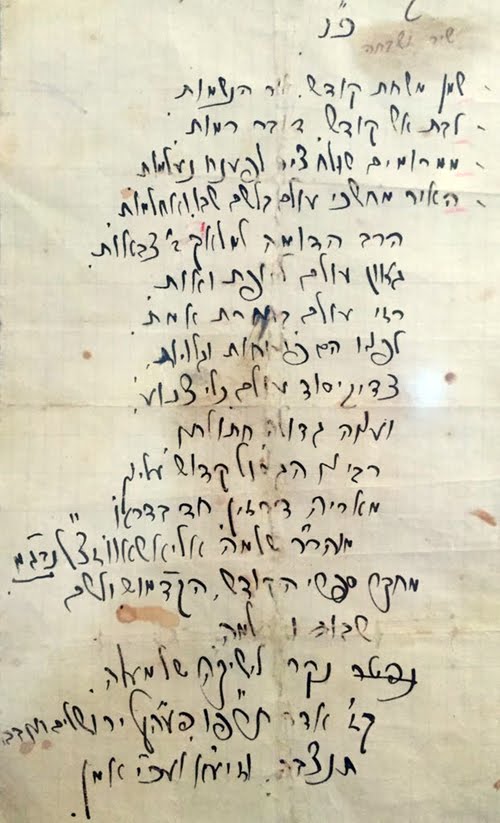

Here is buried
Holy anointing oil, the light of souls
A torch of holy fire, speaker of heights
Sent from on-high to reveal the concealed
Enlightened the darkness through Leshem Shevo v-Achlomot
The Rav like an Angel of God
Genius of the world signified and clear
Secrets of the world in the Torah of truth
Revealed and opened before him
Righteous pillar of the world, vessel of modesty
A great humility in his roots
Our great teacher supernal holiness
Master of secrets unique in his generation
Our teacher R. Shlomo Elyashiv zt”l nbg”m
Author of the holy books Ha”Kadosh v-Leshem Shevo v-Achloma
Called to the Heavenly academy
27th of Adar 1925 here in the holy city of Jerusalem
May his soul be engraved in eternal life
and may his merit protect us Amen

–Rav Avraham Yitzhak Ha-Kohen Kook’s handwritten epitaph for Rav Shlomo Elyashiv, from Rav Kook, which is made available here courtesy of the private collection of Reb Shlomo Gross.

Lurianic Mysticism

When R. Issac Luria (1534-1572) known as the Arizal, developed his theosophical system often referred to as Kabbalat Ha-Ari or Lurianic Mysticism, he initiated a revolution within the Jewish mystical tradition.[1] In the margins of his predecessor and teacher R. Moshe Cordevaro (1522-1570) and through a highly innovative form of Zoharic hermeneutics, the Arizal established a radical approach to the ancient theories of Jewish cosmology (tzimtzum, shevirat ha-keilim), theurgy (kaavanot) and eschatology (tikkun). Codified by his various disciples, primarily R. Chaim Vital (1542-1620) and R. Yisrael Sarug (1590-1610), the Lurianic system took form in the work Eitz-Chaim and the eight volumes of collected teachings known as Shemoneh-Shearim.[2] After the Arizal’s passing, it was generally agreed upon that the Lurianic corpus should, and would remain a closed system, one in which novelty and creativity from subsequent scholars was discouraged and even prohibited. The treatment of the Lurianic corpus as a sacred textual matrix in which creative hermeneutics are discouraged appears to stem from epistemological as well as philological phenomenon. On the epistemological register, the esoteric material being elucidated within the Lurianic system was viewed as an exceedingly sensitive body-of-work that demanded a high level of secrecy and concealment.[3] Only the most spiritually refined individuals were seen as worthy and capable of processing the complexities of the kabbalah. While the political secrecy surrounding the Arizal and his disciples was not a new phenomenon in the history of Jewish esotericism; the emphasis placed on character refinement, both spiritual and physical, for the sake of initiation into the ranks of talmidei ha-Ari is noteworthy. The danger of an unqualified and inexperienced student imposing his own imaginative interpretations upon the system was seen as a potentially catastrophic event with both spiritual and historical consequences.[4] On the philological register, the Arizal himself imposed strict prohibitions upon his disciples regarding the sharing or revelation of his insights, thus creating an economy of occlusion in which his ideas flourished within the strict contours of secrecy. Historically, the Arizal’s pedagogical methods perpetuated the veil of secrecy that kept his teachings hidden while simultaneously enabling them to be collected. Much like the rabbinic sages of the Talmud, R. Issac Luria maintained a strict orality while teaching his disciples. Continuing the rabbinic model wherein oral teachings are associated with a direct teacher-student relationship in which the risk of mistakes and misunderstanding is mitigated, the Arizal delivered his teachings in small groups, often prohibiting his students from textually recording his lessons. It wasn’t until the Arizal was near death that he allowed his disciple R. Chaim Vital to exclusively record his teachings posthumously.

Interpretations of the Lurianic system

While various attempts at interpreting the Lurianic system following R. Issac Luria’s passing did exist, it wasn’t until the seventeenth-century that authoritative schools of interpretation were born. Generally speaking one may categorize four primary approaches towards Kabbalat Ha-Ari in which the Lurianic system was expounded while simultaneously adhering to the strict prohibition of creating concepts that had not been directly recorded by R. Chaim Vital. While each school contained followers who differed from the founding member, the four major personalities associated with unfolding the Arizal’s system were R. Moshe Chaim Luzzatto (1707-1746) known as the Ramchal, R. Elijah of Vilna, known as the Gaon of Vilna (1720-1797), R. Shalom Sharabi (1720-1777) known as the Rashash, and R. Yisrael ben Eliezer (1700-1760), known as the Baal Shem Tov. Respectively, each school can be said to have utilized a different mode of hermeneutical interpretation in emphasizing what they viewed as the fundamental aspect of Lurianic Kabbalah, or Kabbalat Ha-Ari. For Ramchal and his Padua school[5] an emphasis was placed on unpacking the metaphorical nature of the Lurianic system for the purpose of revealing the various modes (hanhaagot) in which the Divine is manifest throughout history, culminating with the metahistorical eschaton in which all will be rectified (tikkun) and unified (yichud). For Rashash and the Jerusalem kabbalists of the Beit El Yeshiva[6] the emphasis was placed almost exclusively on the theurgical nature of religious phenomenology, expounding and developing a highly complex and intricate system of mystical intentions (kavaanot) associated with prayer and religious ritual. The Baal Shem Tov,[7] founder of the Hasidic movement along with his early students read and translated the intricate details of Kabbalat Ha-Ari unto the psychological register, transferring the locus of the Arizal’s system from the hidden depths of the Godhead to the hidden depths of the individual soul, thereby democratizing the once guarded secrets of concealed wisdom (chochmat ha-nistar). The School known as Kabbalat Ha-Gra or Lithuanian Kabbalah,[8] consisting of the Vilna Gaon and the select disciples who learnt directly or indirectly from him, emphasized the spiritual nature of temporality and history with a focus on the Messianic personalities who actively participate in the apocalyptic eschaton, as well as the biblical allusions towards the Lurianic system.

Fourfold of Kabbalistic PaRDeS

It has been suggested that these four schools of Kabbalistic interpretation be compartmentalized according to the fourfold structure of rabbinic hermeneutics known as PaRDeS[9]- an acronym for Peshat, the literal meaning; Remez, the allegorical meaning; Drash, the moral meaning; and Sod, the secret meaning. Generally speaking the gamut of Jewish esotericism-including Kabbalat Ha-Ari- represents the realm of Sod, and as such these four schools of thought would represent the specific substructure of PaRDeS as applied to the Sod of the general structure of PaRDeS. The Rashash and his school primarily engage the textual edifice of Kabbalat Ha-Ari, unearthing apparent contradictions within the system itself while reconciling them through an innovative theory of relativity (erchin) represent the literal approach (Peshat) to the Arizal’s system. The Gra and his school exemplify the allegorical approach (Remez) by utilizing the various forms of creative hermeneutics- primarily sacred numerology (Gematria) and acronyms (Roshei Tevot)- to uncover allusions and intimations signifying aspects of the Lurianic system within biblical texts. The attempt of the Ramchal and his school to uncover the latent meaning within the metaphors of the Arizal represents the moral approach (Drash) in which the externalities of the system are plumbed and simultaneously shed to reveal the inner kernel of meaning. Finally, the Baal Shem Tov and the Hasidic approach, by translating Lurianic ontology into psychological terms represent the essential secret (Sod) wherein the spiritual seeker finds the entirety of existence within themselves thus enabling a unique form of dynamic divine service.

R. Shlomo Elyashiv: Leshem Shevo v-Achloma

R. Shlomo Elyashiv (1841-1926) known as the Leshem after his vast body-of-work Leshem Shevo v-Achloma was a Lithuanian Kabbalist known for his adherence to the school of Kabbalat Ha-Gra.[10] Described as the fourth stage, or peh revieeh within the chain of talmidei ha-Gra, the Leshem formed a system in which the apparent contradictions between the Vilna Gaon and the Arizal were reconciled through a unique form of Kabbalistic analytics. R. Avraham Yitzhak ha-Kohen Kook, close friend and student of the Leshem described R. Elyashiv as applying Talmudic analytics (pilpul) onto the Lurianic corpus thereby clarifying and reconciling the various contradictions and textual ambiguities.[11] With an exhaustive knowledge of the gamut of Jewish esoterica- from the philosophic rationality of the rishonim to the complex intricacies of R. Chaim de La Rosa’s Torat Chachom[12]- the Leshem can be described as one of the most comprehensive as well as creative Kabbalistic thinkers of the late 19th and early 20th century. Born in Zagory, a small city in northern Lithuania, R. Elyashiv was raised studying Talmud with his father R. Chaim Chaikl Elyashiv until leaving home to study under the tutelage of R. Gershon Tanchum of Minsk where he became known for his Talmudic expertise. After his marriage to the daughter of R. Dovid Fein the Leshem went on to study at the Telshe yeshiva where his intellect and vast memory earned him the appellation of Telsher illui. While in Telshe the Leshem was introduced to chochmat ha-nistar by his teacher R. Yosef Reissen who then served as the Rav of Telshe. While learning in Telshe, R. Elyashiv became familiar with the fundamental texts of Jewish mysticism, learning the Pardes Rimonim of R. Moshe Cordevero as well as the Vilna Gaon’s commentaries on Sefer Yetzirah, Safra D’Tzniyuta and the Tikkunei Zohar. Only afterwards did the Leshem begin studying the system of the Arizal and it’s commentaries. R. Aryeh Levin who served as R. Elyashiv’s assistant after the latter’s move to Jerusalem includes within the curriculum the texts of R. Moshe Chaim Luzzato as well; however the distinctive relationship between R. Shlomo Elyashiv and the Ramchal’s school of Lurianic mysticism will be discussed below. After leaving Telshe, the Leshem settled in Shavel, Lithuania where he began to write what would become his vast oeuvre known as Leshem Shevo v-Achloma. In 1922, through the help of Rav Avraham Isaac haKohen Kook and Rav Yitzhak haLevi Herzog,[13] R. Shlomo Elyashiv moved to Jerusalem with his family where he eventually passed away on the 27th of Adar in 1926. While never accepting upon himself any form of communal leadership, the Leshem became known as the preeminent scholar of Kabbalah, through his written works, glosses, vast reaching editorial skills and the various rabbinic personalities with whom he studied and taught.[14]

Leshem Shevo v-Achloma: Overview of Texts

R. Elyashiv’s oeuvre generally referred to as Leshem Shevo v-Achloma is comprised of four separate yet highly integrated volumes.[15] While a comprehensive overview of each work is far beyond the scope of this essay, what follows is an attempt to describe the framework and context of each sefer. The four Kabbalistic works are Leshem Shevo v-Achloma: Hakdamot u-Shearim (1909); Leshem Shevo v-Achloma: Drushei Olam ha-Tohu (1911); Leshem Shevo v-Achloma: Klalei Hitpashtut v-Histalkut (1924); and Leshem Shevo v-Achloma: Chelek ha-Biurim (1935).

Leshem Shevo v-Achloma: Hakdamot u-Shearim

Known as Sefer Hakdo”Sh,[16] this work serves as an introduction to Kabbalat ha-Ari for the novice student, clarifying such concepts as Divine names, unity of God and the mystical anthropomorphization of God. In an attempt to simplify the complexities of Lurianic Kabbalah, R. Elyashiv sets forth a five staged multileveled process through which Ein Sof becomes manifest in/as reality. There is nothing particularly original in the Leshem’s depiction of a five stage process, an idea that is ever-present in the Lurianic system of partzufim. The novelty of Sefer Hakadosh, however, may be found in the Leshem’s configuration wherein the five partzufim; Arich Anpin, Abba, Immah, Zeir Anpin and Malchut are analogously aligned with the five-tiered revelatory process (seder ha-gilluim) in which the latent potentiality of existence emerges as the manifest actuality of creation. These stages, or orders-of-revelation are Ein Sof; Tzimtzum/Kav; Adam Kadmon; Atzilut; and the triadic unit Beriah,Yetzira and Asiya (BY”A). Working with certain Lurianic axioms as refracted through Rashash’s concept of hitklalut v-hitkashrut (integration and redistribution),[17] R. Elyashiv depicts a highly integrated system in which each general stage (seder klali) encompasses a subsystem (seder prati) wherein the five stages operate in a self-contained manner. Thus for example, the general partzuf of Abba- analogous to the revelatory stage of Adam Kadmon- contains within itself a subsystem comprised of every other partzuf and/or gillui. Far from a theoretical divergence into complexities, this multivalent system wherein each part contains the whole rests at the foundation of the Leshem’s system of integration (seder ha-klilut) and secret of unity (sod ha-achdut). The first seven gates of Hakadosh discuss each revelatory-stage in detail including the interconnection between each stage, thus engaging the reader in a textual excursion through the basic framework of the Lurianic system. The eighth gate in Hakadosh– titled Shaar ha-Poneh Kadim– comprises a work unto its own. Here R. Elyashiv undertakes the formidable task of elucidating the Kabbalistic system of R. Yisrael Sarug, commonly referred to as Olam ha-Malbush. While an overview of Olam ha-Malbush as refracted through the works of R. Naftali Hertz Bacharach and R. Menachem Azariah of Fano is far beyond the scope of this essay, R. Elyashiv’s decision to include R. Sarug’s depiction of “hidden mysteries that begin far beyond the worlds described in the writings of our master R. Chaim Vital,” is a significant gesture regarding the source and validity of the Sarugian system.[18]

Leshem Shevo v-Achloma: Drushei Olam ha-Tohu

Drushei Olam ha-Tohu – or Deah as it is known – is a monumental work that deals primarily with the Lurianic cosmological theme Olam ha-Tohu, the world(s) of chaos. Comprised of two parts, Sefer haDeah examines the primordial cataclysm known as the shattering of the vessels (shevirat ha-keilim). For the Leshem, this event- known as the death of the Edomite kings (mitat malchei edom) after the biblical account in parshat VaYishlach– serves as the pre-original opening through which the entirety of history unfolds. Far beyond a simple depiction, or elucidation of this Lurianic motif, part one discusses the “roots and foundations, existence and kingship, death and shattering” of the primordial kings, as well as “the ramifications that are born through this process, the source and the purpose of all this and the general process of rectification.”[19] According to R. Elyashiv the shevira was not an isolated event whose effects were limited to immediate consequences, rather, it serves as the traumatic source of everything that follows.[20] The stage of tohu– and all that transpires therein- is the constitutive break through which history gains its subjectivity. On a psychoanalytic register, not unlike Freud’s original seduction theory, the shattering of the vessels and the subsequent chaos represents the original trauma whose symptoms constitute the subject, as opposed to preexistent subject who experiences the symptoms. The worlds of tohu, resting at the beginning- before the beginning- accompany the historical process, concealed from sight, imposing and composing the ebb and flow of shevira and tikkun, shattering and rectification, which make up history.[21] Part one examines the roots of the necessarily imperfect tohu, from its most concealed source to its revealed manifestation as the existential condition of this-worldliness (olam ha-zeh or asiyah). Part two of Sefer haDeah, while similar to part one in that it deals with the various states of pre and post-shattered existence, is unique in both its conceptual arrangement as well as its area of focus. In part one the Leshem utilizes the complexities of the Lurianic system as well as the textual contradictions therein to slowly build his system. The second chelek assumes that the reader has a knowledge of these complex details and moves beyond the pratim to engage the biblical and historical manifestations of the framework described in the first chelek. R. Elyashiv sees the basic structure of shevira-tikkun, or chaos-order as a pattern that incessantly reasserts itself unto the stage of history. Moving from Adam ha-Rishon’s prelapsarian state, through the primordial serpent’s seduction, the Leshem illuminates the subterranean flow of Divine interpolation which he calls nora ahlilah based on the verse in Psalms (66:5), “Lichu u-riuh mif’alot Elokim nora ahlilah al bnei adam.” R. Elyashiv moves from Adam ha-Rishon’s expulsion from Eden to the narratives of Abraham, Isaac and Jacob, interweaving Lurianic interpretations with his distinctive focus on the delicate balance between the forces of tohu and tikkun. From there the Leshem goes on to describe the concealed essence of Knesset Yisrael’s movement from Egyptian servitude, the exilic wanderings in the wilderness, and the eventual climactic experience at Har Sinai. The Leshem continues clearing a path from Israel’s unconscious repetition of the shevira as embodied in the collective event of Cheit ha-Eigel towards the eschatological advent as depicted in the Rabbinic feasts of the righteous wherein the enigmatic Leviathan, Behemoth and Ziz Shadi take on immense Kabbalistic significance. The second chelek also includes an extensive treatment of the Talmudic narrative of the four who entered the Pardes as well as an analysis of R. Akiva and his nonlocal relationship with Moses. The Leshem closes Sefer haDeah with various maamarim that while related to the concepts expressed in Dea”h comprise a separate unit; these include Drush Eitz ha-Daat; Drush Sfeikot Iggulim vi-Yosher; and Drush Mi’ut ha-Yareiach.

Leshem Shevo v-Achloma: Klalei Hitpashtut v-Histalkut

Klalei Hitpashtut v-Histalkut- or Sefer HaKlalim as it is referred to- can be described as R. Elyashiv’s most difficult as well as significant work. Following the Arizal’s depiction of the dialectical process through which existence comes-to-be as described in Eitz Chaim- particularly Shaar Mati v-lo Mati and Shaar ha-Akudim- the Leshem builds a system wherein each stage of revelation contains within itself a subsystem of Hitpashtut, egression and Histalkut, regression. In laying out the framework of this work, R. Elyashiv describes a comprehensive system “In which we will speak regarding the weaving and concatenation of the worlds. From the heights of the most elevated world to the limit of the lower worlds, Briah, Yetzira and Asiyah.”[22] For the Leshem the constant ebb and flow in which existence is revealed in order to be concealed as it is concealed in order to be revealed marks the basic structural framework that enlivens reality.[23] The dialectical play of egression/revelation and regression/concealment that serves to produce each subsequent stage of existence opens into the fourfold process of Hitpashtut Alef; Histalkut Alef; Hitpashtut Beit; Histalkut Beit. Generally speaking, through the act of Hitpashtut, the prior plenitude- seen as infinite relative to the ensuing stage- undergoes a process of concealment, akin to the first Tzimtzum in that, paradoxically, the prior levels concealment allows the next level to transition from its covert potential within the previous level into the overt manifestation as the new stage in existence. Next, with the first Histalkut, the new level now revealed undergoes a process of regression where what has become manifest returns to its previous source, leaving behind a roshem, or trace thus engraving a potential space in which the new level will eventually concretize. While an overview of this complex dynamic is far beyond the scope of this essay the main goal for the Leshem is to show how each and every stage can trace “their roots and spacing within the world of Adam Kadmon, both the details and the details of the details. To show how they are all eternally rooted and unified there, from the initial thought until the limit of action.”[24] In emphasizing the significance of this system, there is no better description than the words of R. Elyashiv himself, printed on the title page of the sefer:

And the concept of the two Hitpashtiut and the two Histalkiut is as follows, for the Creator blessed be His Name has established the entirety of existence- the totality of which stems only from the surge of His blessed light that is revealed through His actions and his hanhagot from eternity to eternity- He has established it upon the concatenation of many stages, one below the other; and each stage is a totalized system and the entirety of a world, and that which is in this one is in that one as well, with each subsequent stage drawing from the preceding stage situated above it; and now each world has its source above it from which it is drawn and in/through which it exists; and upon this rests the two Hitpashtiut and the two Histalkiut, for the first Hitpashtut and Histalkut form the supernal source of each world that remains above, and the second Hitpashtut and Histalkut form the essential existence of each world in its physical space below. And now, these stem from the light of the Name Yud-Hei-Vav-Hei that shines in each and every world. The first Hitpashtut and Histalkut stem from the letters Yud-Hei of the Name, and the second Hitpashtut and Histalkut stem from the letters Vav-Hei of the Name.”[25]


Sefer Ha-Klalim is made up of two parts discussing each stage of existence and the fourfold process of Hitpashtut and Histalkut that occurs therein. The second chelek is primarily comprised of perek eighteen, anaf ten, or Chai Ani (Yud-Cheit, Anaf-Yud) which the Leshem describes as “the sum total of all of my teachings to show the interconnection of everything within A”K and A”K within everything.” Due to the highly complex nature of this system- running from the unconscious depths of the concealed Godhead to the existential reality of this-worldliness- the Leshem appended a chart in which the system of 52 integrated manifestations of the Tetragrammaton are codified and elucidated.

Leshem Shevo v-Achloma: Chelek ha-Biurim

In Chelek ha-Biurim R. Elyashiv undertakes the enormous task of writing a “wondrous and detailed elucidation of the entirety of the Holiest of Holy, the Arizal’s Eitz Chaim.” While numerous works have been written on Sefer Eitz Chaim, simplifying and clarifying the Lurianic system, the Leshem’s vision lay beyond the normative approach to the text. For the Leshem, R. Chaim Vital’s Eitz Chaim represents a work whose “words are blocked and closed off, concealed by ancient days, as R. Chaim Vital wrote in his introduction, that all that has been revealed to us is nothing but the revelation of a singular handbreadth through the concealment of thousands.” As such, a worthy depiction of the Lurianic mosaic assembled within the gates of Eitz Chaim demands a resistant reading in which the work is read against itself in the hopes of revealing that which has remained concealed within the text. Rooting himself in the “deep wells of the holy Ari and Gra from who’s milk I have suckled and from who’s water I have drawn and drank” the Leshem seeks to “reveal the cherished light and archival secrets…deep beyond depth, elevated beyond height” that rests at the core of Eitz Chaim. In order to do this, R. Elyashiv works through the text, opening that which was closed through an incessant mode of questioning. Taking no statement for granted, the Leshem examines each idea through a hermeneutics of suspicion where the content of Eitz Chaim is measured and compared to similar and dissimilar concepts throughout the Lurianic corpus. When contradictions and textual ambiguities arise, the Leshem utilizes his unique mode of Kabbalistic analytics (pilpul) in reconciling the opposing texts by clearing a new path in which both statements are seen as augmenting one another. Arming himself with Rashash’s conception of Kabbalistic relativity known as archin, R. Elyashiv interprets Eitz Chaim as a dynamic system whose parts can only be properly understood with an intimate knowledge of their particular context. While the Leshem did undertake the enormity of this task, we have only been left with a biur up to Shaar Ha-Nekudim, Perek Gimmel leaving the majority of Eitz Chaim without commentary. The hundreds of pages it took R. Elyashiv to explicate such a small fraction of Eitz Chaim leaves one pondering the sheer vastness of the Leshem’s vision.

Mitnagdic Kabbalah

From a historical perspective Rav Shlomo Elyashiv served an important role in bridging the gap that existed between the Lithuanian world of the yeshiva and baalei mussar and the world of Lurianic Kabbalah. Throughout his time in Lithuania the Leshem studied Kabbalah with R. Yisrael Meir haKohen Kagan,[26] R. Elya Lopian,[27] R. Yosef Leib Bloch,[28] R. Yitzchak Blazer,[29] R. Yeruchem Levovitz,[30] and R. Yosef Yuzel Horwitz.[31] A more significant, yet historically ambiguous relationship was the purported interaction between R. Elyashiv and the founder of the Mussar movement, R. Yisrael Salanter.[32] The Leshem’s engagement with the various rabbinic personalities-most of who served as leaders of Lithuanian yeshivot- may be viewed through one of two sociohistorical lenses. As an adherent of the school referred to as Kabbalat ha-Gra, R. Shlomo Elyashiv represented a dying breed of mitnagdic-mysticism.[33] While never engaging the political polemics surrounding the mitnagdic/hasidic debate, the Leshem was a strong advocate for a clear and exacting approach to the Lurianic corpus, in contradistinction to the “Hasidic” approach in which the Lurianic system underwent a form of imaginative and psychological revisionism. It is important to note that while the Leshem appears to have associated this mode of interpretation with the “Hasidic” explanation of Kabbalat ha-Ari, he by no means viewed it as a uniquely Hasidic phenomenon. Many of the critiques leveled by R. Elyashiv were in fact directed towards R. Naftali Hertz haLevi, author of Siddur ha-Gra be-Nigleh u-Nistar who represented “those who delve too deeply into the system of Ramchal, interpreting the words of the Arizal as imaginative principles (maareh ha-nevuah).”[34] Nevertheless, by associating with rabbinic personalities who represented the mitnagdic elite, the Leshem maintained his position as a Lithuanian mekubal, one who continued the path of the Vilna Gaon.

Messianic Mysticism

Another possible explanation for R. Elyashiv’s vast interactions with the rabbinic elite of his time has less to do with his spiritual/political predilections and more to do with the Kabbalistic subject matter itself. Following a long tradition in which the expansion and expression of Kabbalistic studies was seen as a fundamental stage within the Jewish eschatological process,[35] the Leshem viewed his historical situatedness as signifying his personal spiritual mission. The spiritual and historical significance as well as the strident dereliction of Kabbalah study that the Leshem saw in his generation may have influenced R. Elyashiv’s emphasis on teaching and sharing his knowledge of chochmat ha-nistar. In one text the Leshem decries what he saw as the rabbinic elite’s disregard of Kabbalah as follows:

And I am amazed with some of the wise ones of our generation (chochmei ha-dor), for they have no knowledge in this area whatsoever, how can they manage without engaging chochmat ha-emes, that is pnimiyut ha-Torah, and it is strange in their eyes to the point that they know nothing about it. And all of their answers and excuses are meaningless after what is written in Eruvin (55a), “it is not in heaven, and if it was in heaven you must ascend after her, and if she is beyond the sea, you must cross after her,” and it is apparent that this applies to all areas of Torah…including the esoteric aspect (chelek ha-nistar)…and the chelek ha-nistar transcends all other areas [of Torah].”[36]

Elsewhere, R. Elyashiv quotes from R. Yisrael Salanter in describing the unique historical moment in which the secrets of the Torah (sodot ha-Torah) were now accessible to all who were interested:

And permission has been granted to all those who engage this wisdom to understand these ideas, each according to their level. And specifically from the year taf-reish (1840)[38] and onwards as it is written in the Zohar (2:117), “and in the six-hundredth year of the sixth millennia, the gates of the higher-wisdom (chochma li-ailah) were opened,” and what [the Zohar] meant in writing “opened,” this means to say that permission has been granted to all those who yearn to cleave with the living God (Elokim Chaim), to engage chochmat ha-emes, to enter and to utilize the Name properly. And anyone who delves into this matter will be enlightened and find that this was not the case before the year taf-reish (1840), because then it was still hidden and enclosed, except for a few exceptional individuals, so have I heard in the name of the gaon and chossid R. Yisrael Salanter z”l, and all of this is rooted in the revelation of supernal light that is revealed above and egresses below, as it draws into this world (olam ha-zeh) additional light and the secrets of Torah are revealed in order to rectify (tikkun) the world for the eventual rectification.”[37]

Ignorance coupled with what the Leshem saw as a historically unique time in which sodot ha-Torah were accessible to all may have influenced R. Elyashiv’s drive to engage those rabbinic personalities hitherto unaffiliated with the Kabbalistic system.

R. Elyashiv and R. Avraham Isaac Hakohen Kook

Another significant relationship centered around R. Elyashiv’s expertise in Lurianic Kabbalah was the friendship between the Leshem and the first chief rabbi of Israel, R. Avraham Isaac Hakohen Kook.[39] Serving as a young Rav in the town of Zaumel, Lithuania, R. Kook sought to resolve the “questions and difficulties with some foundational ideas in chochmat ha-nistar” [40] that had arisen in his studies. With permission from the members of his community, R. Kook travelled to Shavel where he spent a month studying and learning from the elder Rav Shlomo Elyashiv. From that point on Rav Kook and the Leshem continued their relationship, exchanging letters, with R. Kook eventually procuring the documents necessary for R. Elyashiv and his family’s move to Jerusalem.[41] R. Kook saw the Leshem as a unique link in the chain of Jewish mysticism, reportedly commenting on the latter’s work Leshem Shevo v-Achloma: Hakdamot u-Shearim (Hakdo”Sh) that “from the time of R. Moshe Cordevaro there has been no sefer in chochmat ha-emet that grasps and expounds the subject matter like the sefer Hakdamot u-Shearim.”[42] Thanking the Leshem for sending his newly published manuscript, R. Kook wrote: “The house was filled with light upon the appearance of his holy book. I cannot convey to my soul-friend my feelings of inner happiness from the good light. In its yet unbound state, I have already devoured several pages, so enamored am I. It was sweet as honey to my mouth.”[43] R. Aryeh Levin, close student of R. Kook and assistant to R. Elyashiv in Jerusalem describes many nights during which the Leshem and R. Kook would study sifrei kabbalah from midnight until the early morning. R. Kook’s sense of a “divine bond in the depths of the heart”[44] existing between himself and Leshem was reciprocated by the elder R. Elyashiv who saw in the chief rabbi “a vast knowledge and unification of all variant Kabbalistic positions (shitot) and one who has earned the description of “no secret being removed from him” (kol raz lo anis leh).”[45] After the Leshem’s passing shortly after arriving in Jerusalem, R. Kook eulogized the great mekubal and composed the epitaph marking R. Elyashiv’s kever, a lasting testimony to their significant relationship.[46] While there has been no scholarly attempt at identifying the Leshem’s influence on the thought of R. Kook, the overlap in both thinkers approach to the spiritual significance of history as well as the utilization of R. Azriel of Geroni’s concept of the “potential (for) limitation within the unlimited (koach ha-gevul bi-bilti gevul)” is significant. It is important to note that while R. Kook and R. Aryeh Levin appear to have viewed R. Elyashiv’s approach to the Lurianic corpus as authoritative, this was not the case for R. Kooks other students comprising the chug ha-rayah. Both R. Yaakov Moshe Charlop[47] and the R. Dovid Cohen regarded the Leshem’s critical view of Ramchal’s interpretative reading of the Arizal as problematic. While the details of R. Elyashiv’s critical approach towards Kabbalat Ramchal will be discussed in a future essay, it appears that the critique of R. Charlop and R. Cohen, both deeply influenced by Ramchal, was more reactionary than substantive.

Leshem Shevo v-Achloma and the Kabbalists of Beit-El

Described by R. Yosef Chaim of Baghdad as the “lion of secrecy (Ari bi-Mistarim),”[48] it is surprising that R. Elyashiv’s vast body-of-work known generally as Leshem Shevo v-Achloma has been all but ignored by both the traditional and academic schools of Kabbalah study. Within the Haredi network of Kabbalah yeshivot the Leshem’s works are seen as important contributions towards the explication of the Lurianic system, but by no means have they entered the limited curriculum of primary texts comprising the “meforshei ha-Ari.” Only the glosses written by R. Elyashiv under the title ha”ShevaCh (Shlomo ben Chaikl) on the first half of Eitz-Chaim- compiled and printed in R. Menachem Menchin Halperin’s Hagaaot u-Biurim– have received treatment in the writings of sefardi mekubalim.[49] While greatly respected by the sefardic Kabbalists of his day- two works by R. Shaul Dweck ha-Kohen were printed with approbations from the Leshem[50]- his works did not enjoy the same treatment. Those following the sefardic approach to Kabbalat ha-Ari- namely the texts of R. Shalom Sharabi and his students- pay little or no attention to the texts of R. Elyashiv due to the fact that he is considered an adherent of the Vilna Gaon’s school whose focus on the allegorical nature of Kabbalat ha-Ari differs from the attempt to uncover the “depth of the practical meaning”[51] (omek ha-peshat). A point that remains to be shown however, is that while R. Elyashiv did not align himself with the interpretative approach of R. Sharabi and the Kabbalists of Beit-El; he engaged their texts both intellectually- composing a short peirush to Rashash’s Rechovot ha-Nahar[52]– and practically, editing R. Dovid of Agier’s Kuntreis Chasdei Dovid.[53] The Leshem’s respect and engagement with the system of RaSha’’Sh becomes clear with the following passage in which R. Elyashiv praises R. Sharabi’s interpretation regarding shvirat ha-Melachim as a process affecting each particular (prat) as opposed to the collective (Klal) understanding:

And the words of our teacher Rashash are alive and sustained, and who like him descends to the depths of the abyss, drawing depth from the depths on each statement of the Arizal. We have seen as well by all the great chochmei sefard who have followed him, in particular the great R. Chaim de la Roza in his work Torat Chochom which engraves a path following him at every point, raising vast treasures on all of his words.”[54]

With this level of admiration and engagement with the thought of Rashash the conscious ignorance on behalf of chochmei sefard of R. Elyashiv’ texts becomes more conspicuous. However, a recently rediscovered letter the Leshem wrote to R. Menachem Menchin Halperin helps shed light on the (non)relation between sefardi mekubalim and the Leshem:

And now my dear friend I will not refrain from informing you that which is within my heart, for I have seen how the great chochmei ha-sefardim- may the supernal sweetness be upon them eternally- align the teachings of our holy teacher R. Shalom Sharabi [in relation] to the teachings of the holy Ari, as they do regarding the oral law in relation to the written law. However in my opinion this does not stand with me. Because regarding the words of the holy R. Shalom may his merit protect us, here I will state that while in truth many of the teachings from his holy words are fundamental and essential regarding the depth of Torat ha-Ari without which it is difficult to grasp the truth; in general his approach is but one facet in the Torat ha-Ari, and it is possible to understand them properly, in my opinion, with other approaches as well, for there are many faces to Torah, and it is not necessary to understand them with his holy path (derech) alone. Furthermore his holy derech is sharp (charif) and very very deep and not every mind can handle this (lav kol moach savil da) and it is possible to understand based on a simpler and easier derech, as I have shown and seen in numerous places that God has graced me with.”[55]

From this letter it is clear that while R. Elyashiv held the Rashash and his derech in high esteem, by no means did he view it as the authoritative and essential approach to the writings of the Arizal. The Leshem’s opinion regarding the teachings of R. Sharabi runs counter to the hyper-essentialism with which the talmidei ha-Rashash viewed his approach. Whether or not this letter was known to the Kabbalists of Beit-El, R. Elyashiv’s stance may have influenced the disassociation from his writings.

Leshem Shevo v-Achloma and Kabbalat ha-Gra

Within the Ashkenazi world of Kabbalah, sifrei Leshem Shevo v-Achloma have experienced a significantly stronger engagement which has been both deeply respectful as well as revisionistic. Considered a student of the Vilna Gaon’s approach to kabbalah, R. Elyashiv differs from the other talmidei ha-Gra in that he had no direct line linking him to the Gra’s teachings. Both R. Chaim Volozhiner (1749-1821) and R. Menachem Mendel of Shklov (d. 1827), considered the main students of the Gra were taught the Lurianic system directly from him. R. Yitzchak Issac Haver (1789-1853), considered peh shlishi in the school of Kabbalat ha-Gra was a student of R. Menachem Mendel of Shklov, and devoted much of his effort towards developing a unifying system wherein the disagreements between the Arizal and the Gra were reconciled.[56] By grafting together the teachings of the Gaon with those of the Arizal in his Pischei Shearim, R. Haver attempts to show that the derech of the Gra is the derech of the Ari. Many of R. Haver’s other writings are direct peirushim on various works of the Vilna Gaon, thus emphasizing his place as an authoritative student. R. Haver’s main disciple, R. Yitzchak Kahane-Kellner- whose three-volume Toldot Yitzchak contains a commentary on the Gra’s peirush to Sefer Yetzirah– spent most of his later years creating institutions in Jerusalem whose sole purpose was to be the study and expansion of the Vilna Gaon’s kabbalistic writings. The Leshem on the other hand had no teacher linking him to the Vilna Gaon, nor did he devote any text to the primary treatment of Kabbalat ha-Gra. Although R. Elyashiv was deemed worthy of editing the writings of the Gra by R. Shmuel Luria of Mohilev and R. Dovid Luria, this did not translate into his works being treated and studied as fundamental texts within the system of Kabbalat ha-Gra.

Current Trends in Leshem Shevo v-Achloma Study

In recent years the writings of the Leshem have seen renewed interest within the Haredi world of Kabbalah study with newly edited editions as well as supplementary works being published. This development however can be divided into two schools of thought; one in which the texts Leshem Shevo v-Achloma are treated as a complex system in which the Lurianic system undergoes an intensive and analytic treatment, thus preserving the difficulty and detailed nature of the text; and one in which Leshem Shevo v-Achloma undergoes a process of simplification for the sake of popularization. Regarding the former, the texts of the Leshem are being edited and reprinted for the primary purpose of textual emendations. In addition, sources as well as footnotes have been added, directing the reader to the source material utilized by the Leshem. Furthermore, various seforim have been published in which the system of the Leshem is treated and clarified. A prime example of this approach is the recently published Yud-Gimmel Maarachot[57] in which the author elucidates the Leshem’s highly complex system of 52 integrated manifestations of the Tetragrammaton that serve as the basic infrastructure running from the recesses of Ein-Sof down to the coarse reality of this-worldliness. This is historically significant in the sense that never before have there been texts solely devoted to understanding R. Elyashiv’s system. With regards to the latter school, the Leshem’s texts have been combed with the redactors culling the philosophical and aggadic material discussing creation, free-will, and matters of faith while discarding the complex Kabbalistic subject matter. The primary example of this approach is the work entitled Shaarei Leshem Shevo v-Achloma (Barzani, 1993), in which R. Yehoshua Edelstein “collected, in full without any change from the holy books Leshem Shevo v-Achloma.”[58] This likkut has two parts; the first contains “a clarification of the fundamentals of faith and worship,” while the second discusses “the order of creation and concatenation (hishtalshlut) in time leading towards the full rectification, may it come speedily in our days.”[59] While the publisher acknowledges that this work serves only as an “opening of the gate to the works of the Rav who is like an angel of God (rav ha-domeh li-malach Hashem) the expert (gaon) in torat emet”[60] it appears to have taken the place of the primary texts for many and as such the actual works comprising Leshem Shevo v-Achloma have been overlooked.

R. Moshe Shapiro: The Popularization of Leshem Shevo v-Achloma

This phenomenon in which the texts of the Leshem undergo the “occasional deletion of a passage so as not to include matters of concealment (nistarot)”[61] for the sake of making them “equal to every searching ben-torah” has taken place primarily within the school of R. Moshe Shapiro and his students. Viewed by many within the Haredi world as the preeminent baal-machshava, R. Shapiro is purported to see in the Leshem– who he describes as “a giant, discordant with the nature of our lowly generation, sent to enlighten our eyes and enable us to grasp a miniscule taste of the depths of torah”[62]- a paradigm of authentic hashkafat ha-torah. In a letter reprinted in Shaarei Leshem[63] at the behest of the Leshem’s grandson R. Yosef Shalom Elyashiv, R. Shapiro explains the rational for publishing a collection of texts taken out of context as follows:

Many have been asking and searching, who will give us faithful waters to drink from the well of living water, the seforim of our master (the Leshem) that were given over closed (chatumim), and they are yearning to find an opening, one that does not engage the depth of the sugyot in the Zohar and writings of the Arizal. And it is known that many of the drushim open gates in the knowledge of God, the fundamentals of faith and yearning for redemption that each Jew is commanded to know, and in our generation in which the wicked ones surround us and things are “cheapened in the eyes of men” and anything that stands at the height of the world is cheapened and lowered to the dust, it appears to be a “time to act for God” (ait laasot la-Hashem), to open an opening for the masses to the enlightened writings that cleanse the eyes and heal the spirit, that they may swim in them so that knowledge be spread; and I know personally how wondrous the affect these writings have on those who learn them, and even on those who taste from the edge of their sweetness, their eyes shall be enlightened.”

R. Shapiro’s logic is clear, due to the spiritual dereliction of the generation two difficulties arise in learning Leshem Shevo v-Achloma properly. The first is practical in the sense that many have expressed interest in the philosophical aspects of the Leshem’s system without a prior knowledge of the Kabbalistic subject matter. Secondly, the spiritual climate in which the holy is “cheapened in the eyes of men” demands a paradoxical transgressive act for the sake of upholding the law, an “ait laasot la-Hashem.” By utilizing the rabbinic notion of ait laasot R. Shapiro enables himself to support the simplification of the Leshem’s work while simultaneously maintaining the non-ideality of such an undertaking. R. Shapiro’s ambivalence between the ideal sanctity of Leshem Shevo v-Achloma as a unique contribution to the Lurianic system and the real inability of many within the Haredi yeshiva world to grasp the complex subject matter is relieved through the utilization of ait laasot, a temporary disavowal in which the laws governing the revelation of Kabbalistic texts are held in abeyance.[64] Sociopolitical factors notwithstanding, the fact that R. Shapiro acknowledges the ideal treatment of the Leshem’s thought as a self-contained Kabbalistic system is apparent from his involvement with texts that maintain the Kabbalistic and highly complex nature of Leshem Shevo v-Achloma. For example, the abovementioned Yud-Gimmel Maarachot contains a letter of approbation in which R. Shapiro praises the author for “revealing to the light of the world the valuable pnimim in the sugya of yud-gimmel maarachot that our master the Leshem valued and held as the fundamental and root of creation and the revelation of atzilut within the worlds of adam-kadmon; these words are enlightening and deep, and they demand much effort to understand, and few actually learn them…” This ambivalence between the popularization of Leshem Shevo v-Achloma and the faithfulness to its complexities is not unique to R. Shapiro; R. Yehoshua Edelstein who compiled Shaarei Leshem has also published Maf’teach Leshem Shevo v-Achloma, a compendium of Kabbalistic sources- from both the Arizal as well as the Vilna Gaon- that appear within the thousands of pages comprising the Leshem’s system. In a letter printed at the beginning of Maf’teach, R. Shapiro describes the project as one “whose great significance need not be explained to those who learn such things,” again highlighting the ideality of approaching the texts in a faithful and accurate way. R. Yosef Shalom Elyashiv, grandson and occasional study partner of his maternal grandfather was in possession of a library that contained seforim with glosses and annotations written by the Leshem. Some of these glosses- primarily Kabbalistic in nature- have been printed in Gilyonot Leshem Shevo v-Achloma as well as a recent edition of the journal Yeshurin dedicated to the memory of the Leshem. In addition to R. Shapiro and his students, the late Haredi Kabbalist R. Yisrael Eliyahu Weintraub delivered classes on some of the Leshem’s writings, often advising novice students to study Leshem Shevo v-Achloma: Sefer Hakdamot u-Shearim as an introductory text.

R. Moshe Schatz: Leshem Shevo v-Achloma as Foundational Text

Within the Hasidic world of contemporary Kabbalah study, Rabbi Yitzchak Meir Morgenstern – rosh yeshiva of Yeshivat Torat Chochom – has consistently incorporated the works of the Leshem into his dynamic synthesis wherein the works of the Arizal, Rashash, Baal Shem tov and Gra are grafted together creating new constellations of thinkers who coalesce in a textual matrix described as “secret of secrets” (razin di-razin)[65]. It is R. Morgenstern’s teacher however, who serves as a significant scholar of Leshem Shevo v-Achloma. R. Moshe Schatz- born and raised in Brooklyn- sits in his cramped study in the Jerusalem neighborhood of Givat Shaul teaching the Leshem’s system to a wide range of students, many of whom have studied the Lurianic system extensively only to reach a point of confusion. In a process akin to Derridian deconstruction, R. Schatz leads his students through a process of deliberate unlearning in which the previously held assumptions regarding the Lurianic system are shed.[66] Once the student has moved beyond the preconceived notions that have compounded their confusion, R. Schatz begins to slowly work from the bottom up, elucidating and clarifying the fundamental ideas that the Kabbalistic system is built upon. For R. Schatz the Lurianic system – as refracted through the teachings of Rashash – is a complex structure in which specific concepts undergo a process of repetition through reconfiguration. Utilizing the Lurianic depiction of Partzufim, the works of the Arizal, Rashash, Baal Shem Tov, and the Vilna Gaon coalesce into a unified whole that is greater than the sum of its parts. Building a gestalt of sod, R. Schatz simultaneously reveals the unity that rests beneath the disparate manifestations of Kabbalah throughout history as he removes the commonly held assumptions of machloket that have marked the interpretive approaches of many scholars. According to R. Schatz, these basic concepts such as tzimtzum, reshimu and kav ha-yashar re/present themselves countless times throughout the system, generating a simple pattern in which the general concepts remain the same while the specific details change according to their relative position within the system. This notion of relativity, or archin as the Rashash termed it, has enabled R. Schatz to see in modern quantum physics a valuable model wherein the Lurianic system is mirrored. While R. Schatz utilizes the entirety of the Leshem’s system in explicating his understanding, it is Leshem Shevo v-Achloma: Klalei Hitpashtut v-Histalkut (Sefer ha-Klalim) that serves as the primary model for the dialectics of repetition and difference that permeate the Lurianic model. While writing extensively, R. Schatz’s primary publication is his Maayan Moshe (Jerusalem, 2013), an introductory work that serves to guide both the novice and expert towards “a clear understanding of Kabbalat ha-Ari and Rashash.” Maayan Moshe is comprised of three sections; the first serves as an overview of R. Azriel of Gerona’s treatment of the sefirotic arrangement in Biur Esser Sefirot as well as R. Meir ibn Gabbai’s Derech Emunah based on the Arizal and the Leshem; the second section contains a critical edition of both Biur Esser Sefirot and Derech Emunah with footnotes and textual emendations; the third and final section contains a previously unprinted (and now, recently-published) correspondence between R. Elyashiv and R. Naftali Hertz haLevi in which the Leshem clarifies his critique of “those who delve too deeply into the writings of Ramchal” as well as his literalist interpretation of the Arizal’s system. From the hitherto unpublished correspondence R. Schatz shows how indebted the Leshem was to the ideas expressed within the work of R. Azriel of Gerona, namely the conceptual description of Ein-Sof’s “potential (for) limitation within the unlimited (koach ha-gevul bi-bilti gevul),” which as stated above greatly influenced the Kabbalistic approach of R. Avraham Isaac Hakohen Kook as well. R. Schatz continues to teach the Leshem Shevo v-Achloma in a creative approach wherein the ideas of quantum physics, neuroscience and Kabbalat ha-Ari meld together in what he views- based in part on the Leshem’s mystical historiography- as the messianic union of “the lower wisdom of below and the higher wisdom from above.”

R. Meir Triebitz: The Leshem as Authentic Mitnaged

Another current teacher of Leshem Shevo v-Achloma within the Haredi yeshiva world is R. Meir Triebitz who serves as a maggid shiur at Yeshivat Machon Shlomo, a baal-teshuva institute in Jerusalem. R. Triebitz, who also serves as a posek for his community, completed his dissertation in mathematical physics at Princeton University before moving to Jerusalem to teach. Aside from the Talmudic course he teaches, R. Triebitz delivers classes on Leshem Shevo v-Achloma: Hakdamot u-Shearim as well as pertinent source materials from the Leshem’s writings. R. Triebitz’s approach is noteworthy in that he maintains that the Leshem’s system is one in which the Kabbalistic system is purified from any pantheistic and acosmic notions. As an adherent to the Vilna Gaon’s interpretation of Kabbalah, R. Triebitz views the Leshem as the last authentic Mitnagdic thinker, fighting both the Hasidic predilection towards pantheism as well as R. Chaim Volozhiner’s revisionism of the Gra’s radical materialism. In supporting his thesis, R. Triebitz highlights the Leshem’s usage of Maimonides’s Guide as well as his literalist approach to the Lurianic system as signifying his attempt to bridge the widening gap separating mysticism and rationality. Of note is R. Triebitz’s usage of philosophical texts- from Kant to Kripke – in an effort to contextualize the evolution of Kabbalistic theology.[67]

Leshem Shevo v-Achloma and the Academic Study of Jewish Mysticism

Within the academic field of Jewish mysticism the apparent ignorance of R. Elyashiv and his works is even more pronounced. While Gershom Scholem does include “Solomon Eliashov’s Leshem Shevo v-Achloma” among the works in which “the basic tenets of Lurianic Kabbalah are systematically and originally presented,”[68] there is no further treatment or analysis of the works. The only other place in which Scholem references the Leshem is in the context of the dialectical process of egression and regression that permeates the Lurianic system. Regarding the tzimtzum and residual reshimu, Scholem writes, that “Throughout this process the two tendencies of perpetual ebb and flow- the Kabbalists speak of hithpasthtuth, egression and histalthkut, regression- continue to act and react upon each other.”[69] In a note on this text Scholem directs the reader to R. Chaim Vital’s Eitz Chaim and adds that “This fundamental idea has been made the basis of the great Kabbalistic system propounded in Solomon Eliassov’s magnum opus Sefer Leshem Shevo v-Achloma. The third volume (Jerusalem 1924) called Klalei Hithpasthuth v-Histalthkut.”[70]

The next academic study that touched upon aspects of the Leshem’s thought was Mordechai Pachter’s 1987 essay Circles and Straightness.[71] In this study Pachter analyzes the Lurianic motif of iggulim v-yosher as described in the writings of R. Chaim Vital and refracted through the teachings of R. Moshe Chaim Luzzatto and R. Yitzchak Isaac Haver. In analyzing the textual contradictions that arise within the works of R. Vital, Pachter utilizes the Leshem’s analytic approach as recorded in Leshem Shevo v-Achloma: Chelek ha-Biurim to clear a path of understanding. While there are a few references to the Leshem’s position as a mitnagdic Kabbalist, primarily with regards to his stance on tzimtzum,[72] Pachter does not engage the Leshem beyond the complex details surrounding the topic of iggulim v-yosher.

Following Pachter’s limited treatment of the Leshem, Ron Wacks completed his Hebrew University master’s thesis, “Chapters in the Kabbalistic Doctrine of Rav Shlomo Elyashiv” (1995), in which the Leshem Shevo v-Achloma undergoes the first significant academic treatment. However, it is Eliezer Baumgarten’s master’s thesis “History and Historiography in the Doctrine of Rav Shlomo Elyashiv” completed at the Ben-Gurion University (2006) where the thought of R. Elyashiv is treated in a systematic and significant fashion. Baumgarten analyzes R. Elyashiv’s usage of the historical process, primarily the teleological emphasis that the Leshem placed on historical temporality. The source material’s utilized by the Leshem, including the writings of the Arizal, Vilna Gaon as well as R. Yisrael Sarug are analyzed as well. It is the relationship between R. Elyashiv and the works of the Ramchal however, that receives the most significant treatment. Baumgarten traces the history of the literal/figurative debate regarding the Lurianic system, touching upon the notion of metaphoric (mashal) versus literal (nimshal) approaches, a topic that will be discussed at length in a future essay. While Baumgarten’s work remains the most extensive and systematic treatment of the Leshem’s system, there is much that remains unanalyzed as well as unthought.

There has been some, albeit limited research regarding the Leshem’s relationship with other mainstream approaches to Lurianic Kabbalah including the sefardic school of Rashash as well as the Hasidic approach to the Arizal’s system. Regarding the former, Jonatan Meir has correctly pointed out R. Elyashiv’s critique of the students of Rashash, or the michavnim in that they saw in R. Sharabi’s approach the only legitimate interpretive stance towards Kabbalat ha-Ari.[73] While Meir does gesture towards R. Elyashiv’s simultaneous critique and admiration for the sefardi mekubalim, his comments are limited to the historical relationship between the two wherein the Leshem “came close to the group of mechavnim, and spent time learning in the Rechovot ha-Nahar yeshiva, even writing a warm letter of approbation for a sefer of kavvanot that was published through the yeshiva.”[74] What is left unexamined is the Leshem’s deep engagement with the system of Rashash, both on a theoretical as well as practical level, manifested through editing and publishing various texts from within the Rashash’s school itself. Meir notes that the instigating factor in the Leshem’s critique of the Rashash’s system was “a difference in approach regarding the relationship between the mashal and the nimshal”[75] within the Lurianic system. Elsewhere[76] Meir suggests that both R. Elyashiv as well as the R. Yehuda Leib Ashlag, the baal ha-Sulam, took issue with the school of Rashash for similar reasons. Namely, that the michavnim were unable to penetrate the depths of meaning within the Lurianic system that were now revealed, a phenomenon- at least for R. Elyashiv – that was symptomatic of the historical epoch. From both sources it appears that Meir conflates the Leshem’s historical/practical critique of the sefardi mekubalim– namely the hyper-essentialism with which they viewed Rashash’s teachings- and the exegetical/theoretical critique that he claims the Leshem held vis a vis the school of Rashah. For Meir the alleged exegetical/theoretical critique was based on a difference of approach regarding the relationship between mashal and nimshal in the Lurianic system, with the Leshem disagreeing with Rashash. While it is clear, as will be discussed in a future essay, that R. Elyashiv did clear a unique path regarding the literal nature of Lurianic Kabbalah in contradistinction to the figurative approach championed by “those who delve too deeply into Ramchal,” it is difficult to claim that the Leshem’s stance varied from the approach of Rashash.[77]

With regards to the (non)relationship between the Leshem and the Hasidic interpretation of Lurianic Kabbalah, Bezalel Naor, Kana’uteh de-Pinhas (2013) offers a hitherto unpublished correspondence between R. Pinchas Lintop and R. Avraham Isaac Hakohen Kook regarding R. Elyashiv’s Leshem Shevo v-Achloma: Hakdamot u-Shearim. As a Kabbalist, R. Lintop associated himself with the theoretical school of Habad and as such, took issue with the Leshem’s treatment of keilim within the world of Atzilut. While R. Elyashiv was in all probability unaware of R. Lintop’s critique, Naor serves as the Leshem’s surrogate in identifying what in Naor’s eyes serves as the distinguishing factor between R. Elyashiv’s mitnagdic-materialism versus Hasidic-acosmism, or pantheism. While Naor does present a coherent, and correct formulation of the differing opinions regarding the status of vessels (keilim) within the world of Emanation (Atzilut), his exegetical analysis in which the issue becomes analogous with the literal/figurative interpretation of tzimtzum is flawed. As will be discussed in a future essay, the Leshem’s understanding of tzimtzum as a literal event is a complex process resulting in a third category wherein tzimtzum must be viewed as both literal and figurative, or to borrow Elliot Wolfson’s locution it is both “figuratively literal as it is literally figurative.”[78] In addition, Naor’s approach appears to be narrow in scope, culling material from limited sources within the Habad school of Kabbalistic theosophy while quoting from only two sources within Leshem Shevo v-Achloma. From a sociohistorical perspective, Naor – correctly basing himself on R. Lintop’s letter in which the criticism of the Leshem is predicated on Hasidic texts as well as Ramchal’s system- appears to conflate R. Elyashiv’s critique regarding “those who delve too deeply into Ramchal”[79] with an assumed hostility towards Hasidut. While it is a legitimate to assume that as an adherent to the system of the Vilna Gaon, R. Elyashiv viewed Hasidut with a critical eye, I do not believe that the Leshem engaged in the harsh polemics that Naor would associate with him. Firstly, the textual evidence in which the Leshem even hints to Hasidut is extremely limited, with Naor’s main source being a letter written to R. Naftali Hertz HaLevi in 1883.[80] If R. Elyashiv, theoretically following in the footsteps of his spiritual predecessor, the Vilna Gaon, held the same beliefs regarding the danger and heretical leanings of the Hasidic movement, one would assume a more explicit and direct critique within his writings. Taking R. Elyashiv’s harsh criticism of Ramchal as an example,[81] it is apparent that the Leshem was not subtle when it came to those who misinterpreted the Lurianic system. Second, the Leshem quotes at times from texts written by Hasidic thinkers, a minuscule yet significant gesture when coming from the pen of a Mitnagdic Kabbalist.[82] While Naor is in all likelihood correct in that R. Elyashiv disagreed with the Hasidic approach to Lurianic Kabbalah,[83] it is reasonable to claim that the criticism was not nearly as severe as Naor, or R. Lintop for that matter, claim.

A positive exception to the ignorance of R. Elyashiv and his works within the academic study of Jewish Mysticism is Professor Jonathan Garb, who holds the Gershom Scholem chair in Kabbalah in the Department of Jewish Thought at the Hebrew University of Jerusalem. Garb, in his multifarious studies on twentieth-century Kabbalah has consistently gestured towards the significant impact the Leshem has had on individual thinkers as well as the field of Kabbalah study in general. While never offering a critical or comprehensive reading of the Leshem, Garb has pointed out certain significant aspects of R. Elyashiv’s unique approach to Lurianic Kabbalah. Of note is the Leshem’s particular stance with regards to the literal/figurative debate as applied to Kabbalat ha-Ari. As Garb notes in the name of R. Elyashiv, “The main sanctity and importance of the study of Kabbalah is to speak [to the realms] above, not below.”[84] Emphasizing the necessary demetaphorization of Lurianic mashal, the Leshem- as Garb correctly notes- highlights the ontological significance of Kabbalah study.[85] As opposed to the metaphorical readings in which the significance of the Kabbalah is limited to the historical or psychological influence leveled upon the subject,[86] R. Elyashiv calls for a metaphorically-literal reading wherein the Lurianic system maintains its transcendental quality. Garb is correct in pointing out that while the Leshem decries the strictly metaphorical reading of Lurianic Kabbalah, he by no means disregards the historical and psychological significance contained within an immanentist reading of the Kabbalah.[87] While most of Garb’s comments on the Leshem are relegated to tangential points or footnotes, the gesture towards his unique approach is noteworthy.

In situating R. Shlomo Elyashiv within the realm of modern Kabbalah scholarship, my aim is to point towards the significant impact – both historically and theoretically – the Leshem had on the world of Lurianic Kabbalah. While this essay has been primarily focused on the historical context of R. Elyashiv and his works, it is my hope that this serve as an introduction into the gates of the Leshem.[88]

Appendix A: R. Shlomo Elyashiv’s Approbation to R. Chaim Shaul Dweck’s Benayahu Ben Yehoyada: Tikkunei ha-Nefesh (Jerusalem, 1911):

Now it has come before me distinguished in tireless [effort] from the holy land in which God resides a flying scroll, sweet and pleasant, piercingly precious. A sefer enshrined in its clarity. Founded upon the purity of the soul, to purify her and sanctify her in the holy supernal light. And I have seen that it is a clarifying cornerstone, its foundations in the sanctified mountains, built and contained on wondrous and frightening unifications, built and founded upon these two holy Rabbis of Jerusalem, who are, the unique one of the nation- whose holiness is known by all- the holy Rabbi and godly mekubal, holy do we say regarding him, our teacher R. Chaim Shaul Dweck ha-Kohen, may God lengthen his days and years, and his viceroy the Rav, great in Torah and Hassidut in whom the wisdom of god rests our teacher R. Eliyahu Yaakov Lagimi may his days be lengthened and good, they are the builders of this holy edifice, a house for God, a palace for God. However, the essence of this sefer, its roots, branches and fruits belong to our master, the holy of holies, (the) Arizal himself from Sefer Shaar Ruach ha-Kodesh, but these chachamim I mentioned have revitalized her with additional light and great blessing, and they have done great work, holy work that has amazed me. For these yichudim that are in the Sefer Shaar Ruach ha-Kodesh, they contain various yechudim that remain closed off (Torah chatuma) and they necessitate clarification and explanation to unfold their essence, and some (yechudim) need workmanship in order to build them. Even the ones that are simple to understand, they too necessitate a clear order as to how to engage them practically; all of this has been rectified by these chachamim mentioned above, who accordant to their wisdom and righteousness have revitalized all of these yechudim collected from Shaar Ruach ha-Kodesh and concretized them within this holy sefer, and their wisdom has stood for them in ordering each and every yichud according to the desired intention, to the point that they no longer need any clarification as they remain open to all. They have also organized each and every yichud in an order appropriate for practical usage, and they have organized each yichud with the myriad Holy names that are applicable, and they have written them out explicitly in this sefer so that nothing is lacking for their practical utilization, one will find everything spread before their eyes in the opening of the gates to the holiness of God, and they need but to gaze with the proper intentions at the crowns of the letters that sparkle and shine the eyes in the holiness of the flaming fire of the godly flame. Furthermore, these chachamim have added crowning stones that shimmer with the spirit of God, for their essential goal is to reveal rectifications for the transgressive soul as the result of various transgressions, to reveal to them soul atonement, to save them from descent to the abyss and to enlighten them with the light of the face of the living King, and because it is impossible to rectify each transgression completely as if it never took place, until all of the blemishes that relate to the root soul and the myriad supernal lights are fully rectified, these chachamim have utilized their wisdom with regards to this as well, and they have taken from the teachings of our holy teacher R. Shalom Sharabi who is known for the wondrous teachings that have been revealed to him through supernal gates within the teachings of Arizal, and he has revealed each particular light that dwells in the chambers of the chariot, specifically with regards to the rectifications of the intentions of prayer and mitzvot; these chachamim have taken from his teachings as well and organized according to this the tikkun of each transgression correspondent to each specific light, to draw forth to each one (transgression) the light of yichud specific to each particular transgressions blemish, in order to perfect each tikkun as it applies to the root soul that is rooted in the holy of holies. There is no doubt that yichudim like these are included in our Sages statement (tb. Yoma 86b), “great is repentance wherein transgressions are transformed to merits”. Furthermore, these chachamim have included in this sefer various frightening yichudim that serve to draw forth upon oneself the holy supernal light, as the benefit of those who engage yichudim with purity and sanctity and who privatize their souls with God is known, and they have organized it all in the order necessary for practical engagement and they have intensified the process though all this. For this reason, there is no limit to the measurement of this sefer’s valuable elevation, for it is a jewel that knows no value, and it is worthy for all those in whose heart rests the fear of God to cleave to Him always and to serve as a stamp upon their hearts and a stamp upon their arms, for everything is contingent on the movement from below, as our Sages (Yumah, ch.3) have stated, “Man sanctifies himself a bit, and he is sanctified immensely, from below- he is sanctified above, in this-world- he is sanctified in the next”. These are the words written by the writer for the sake of this sefer’s holiness and practicality, for the merit of the masses, today the 8th of Adar, 1910,

Shlomo Ben R. Chaim Chaikal, author of Sefer Leshem Shevo v-Achloma

Appendix B: R. Shlomo Elyashiv’s Approbation to R. Chaim Shaul Dweck’s Eipha Sheleima al Otzrot Chaim (1907):

I have received what has been sent to me, a few leaves from the planted plaything, with numerous scents from the tents that God has planted, they are the works of the wondrous worker who seeks the concealed depths in all the proper measurements, with the full and righteous measuring stone (Eipha Sheleima v-Tzedek), clarifying and explaining the words of [the] Arizal in the holy and frightening Otzrot Chaim, and from what I have seen here and there, I have seen that it is a worthy and elevated sefer, great is the effort and great is the strength of this great man, the Rav of the land of Israel, the great Rav who contains vast measurements of valuable light, our teacher R. [Chaim] Shaul ha-Kohen may he live long and good days, his ability is great in deepening and widening these concealed teachings that stand at the apex of the world, in the supernal concealment, his strength is great to search and seek this concealed wisdom in her depths and heights, this is the Torah and this is its reward, to reveal the concealed wisdom, and may his wellsprings burst forth so that the masses may enjoy his light that enlightens the eyes of the wise, and to water the masses from his well, the well of living water that rests in the holy and frightening Sefer Otzrot Chaim. These are the words of he who speaks for the honor of the Torah and for the honor of this holy man, the godly mekubal, Kohen to the transcendent God, the wise author may his days be long and good, written and sealed bein ha-mitzarim, erev Shabbos kodesh, the 23rd of Tammuz of this year 1906, waiting with exhausted eyes for the comfort of Zion and Jerusalem,

Shlomo Ben R. Chaim Chiakal Elyashiv

Notes:
Thank you to yedidi Reb Menachem Butler a true “chaver le-dvar naaleh.” Thanks as well to Reb Shlomo Gross for all of his insight and help with this essay.

[1] On the academic history and theosophy of R. Isaac Luria and the Lurianic school of Kabbalah, see Lawrence Fine, Physician of the Soul, Healer of the Cosmos: Isaac Luria and His Kabbalistic Fellowship (Stanford University Press, 2003); Gershom Scholem, Major Trends in Jewish Mysticism (Schocken, 1978), 244-286; Ronit Meroz, ”Redemption in Lurianic Teaching,” (PhD dissertation, Hebrew University of Jerusalem, 1988; Hebrew); Moshe Idel, “‘One from a Town, Two from a Clan’: The Diffusion of Lurianic Kabbala and Sabbateanism: A Re-Examination,” Jewish History 7:2 (Fall 1993): 79-104; Elliot R. Wolfson, “Divine Suffering and the Hermeneutics of Reading: Philosophical Reflections on Lurianic Mysticism,” in Robert Gibbs and Elliot R. Wolfson, eds., Suffering Religion (London: Routledge, 2002), 101-163; Morris M. Faierstein, “From Kabbalist to Zaddik: R. Isaac Luria as Precursor of the Baal Shem Tov,” in Leonard J. Greenspoon and Ronald A. Simkins, eds., Spiritual Dimensions of Judaism Omaha (NE: Creighton University Press, 2003), 95-104; Shaul Magid, From Metaphysics to Midrash: Myth, History, and the Interpretation of Scripture in Lurianic Kabbala (Bloomington: Indiana University Press, 2008), Morris M. Faierstein, “Traces of Lurianic Kabbalah: Texts and their Histories,” Jewish Quarterly Review 103:1 (Winter 2013): 101-106, among other sources. See also my forthcoming essay, “Metaphoric Literality: The Leshem and Lurianic Kabbalah.”
[2] On the formulation of the Lurianic corpus, see Yosef Avivi,
Kabbalat HaAri (Jerusalem: Ben-Zvi Institute, 2008), three volumes.
[3] Regarding the complex dialectic of concealment and secrecy in Jewish mysticism, see Elliot R. Wolfson,
Language, Eros, Being: Kabbalistic Hermeneutics and Poetic Imagination (New York: Fordham University Press, 2005), 200-224; Elliot R. Wolfson, Open Secret: Postmessianic Messianism and the Mystical Revision of Menahem Mendel Schneerson (New York: Columbia University Press, 2009), 28-66.
[4] See Rav Chaim Vital,
Hakdamah li-Shaar HaHakdamot, printed in R. Chaim Vital Sefer Eitz Chaim (Jerusalem, 1985), 5-24; Rav Tzvi Hirsch Eichenstein, Tzur Me-Rah v-Asseh Tov (Bnei Shlishim, 2004); Louis Jacobs, Turn Aside From Evil and do Good: An Introduction and a Way to the Tree of Life (London: Littman Library, 1995).
[5] On Rabbi Moshe Chaim Luzzatto and his systematic approach to the Lurianic system, see Isaiah Tishby,
Messianic Mysticism: Moses Hayim Luzzatto and the Padua School, trans. Morris Hoffman (London: Littman Library, 2005); Jonathan Garb, Kabbalist in the Heart of the Storm: Rabbi Moshe Hayyim Luzzatto (Tel Aviv: Tel Aviv University Press, 2014; Hebrew); Mordechai Chriqui, Rehev Yisrael: Kabbalat R. Moshe Chaim Luzzatto (Machon Ramchal, 1995); and Elliot R. Wolfson, “‘Tiqqun ha-Shekhinah’: Redemption and the Overcoming of Gender Dimorphism in the Messianic Kabbalah of Moses Hayyim Luzzatto,” History of Religions 36:4 (May 1997): 289-332. For a socio-historical treatment of Ramchal and colleagues, see Elisheva Carlebach, “Redemption and Persecution in the Eyes of Moses Hayim Luzzatto and His Circle,” Proceedings of the American Academy for Jewish Research 54 (1987): 1-29; and Jonathan Garb, “The Political Model in Modern Kabbalah: A Study of Rabbi Moses Hayyim Luzzatto and His Intellectual Surroundings,” in Benjamin Brown, Menachem Lorberbaum, Avinoam Rosenak, Yedidia Z. Stern, eds., Religion and Politics in Jewish Thought: Essays in Honor of Aviezer Ravitzky, vol. 2 (Jerusalem: Israel Democracy Institute and Merkaz Zalman Shazar, 2012), 533-565 (Hebrew).
[6] For a historical overview of Rav Shalom Sharabi and his system of Kabbalistic theurgy, see Pinchas Giller,
Shalom Shar’abi and the Kabbalists of Beit El (Oxford: Oxford University Press, 2008); Jonatan Meir, Rechovot HaNahar: Kabbalah and Exoterica in Jerusalem (1896-1948) (Jerusalem: Hebrew University Press, 2011), 19-74. For an in-depth depiction of Sharabi’s approach to the Lurianic system, see Rav Yaakov Hillel, Ahavat Shalom: Yesodot u-Klalim bi-Torato shel Maran HaRashash (Ahavat Shalom, 2001). On Rav Yaakov Hillel, see Jonatan Meir, “The Boundaries of the Kabbalah: R. Yaakov Moshe Hillel and the Kabbalah in Jerusalem,” in Boaz Huss, ed., Kabbalah and Contemporary Spiritual Revival (Beer Sheva: Ben-Gurion University of the Negev Press, 2011), 163-180.
For a recent, massive work devoted to Rav Sharabi’s system, approach and relationship vis-a-vis other Kabbalistic schools, see Shmuel Ehrenfeld,
Yar’ucha Im Shemesh: Klalim bi-Derech Limmud Torat HaRashash (Yam HaChochma, 2014). The interface between the Rashash, psychoanalysis and the philosophy of Merleau-Ponty will be discussed in my forthcoming essay, “Hitklalut u-Hitkashrut: Individuation, Depth and Coming to be.”
[7] While the bibliography on Hassidut is immense, I will limit the sources to works that deal primarily with the Hasidic (re)vision of Lurianic Kabbalah, See Elliot R. Wolfson,
Open Secret: Postmessianic Messianism and the Mystical Revision of Menahem Mendel Schneerson (New York: Columbia University Press, 2009), 24-43, for a discussion of the transmutation of the Lurianic system unto a Hasidic/Messianic register. See Gershom Scholem, Major Trends in Jewish Mysticism (New York: Schocken, 1978), 325-350; Rachel Elior, The Paradoxical Ascent to God: The Kabbalistic Theosophy of Habad Hasidism (Albany: SUNY Press, 1993), 5-18; Naftali Loewenthal, Communicating the Infinite: The Emergence of the Habad School (Chicago: The University of Chicago Press, 1990); Rivka Schatz-Uffenheimer, Hasidism as Mysticism: Quietistic Elements in Eighteenth-Century Hasidic Thought, trans. Jonathan Chipman (Princeton: Princeton University Press, 1993); and Zvi Mark, Mysticism and Madness: The Religious Thought of R. Nachman of Bratslav (London and New York: Continuum Books, 2009), 28-60; 185-200.
[8] On the Kabbalistic school on the Vilna Gaon and students, see Immanuel Etkes,
The Gaon of Vilna: The Man and His Image (Berkeley and Los Angeles: University of California Press, 2002), 3-26; Yosef Avivi, Kabbalat HaGra (Jerusalem, 1993); Eliezer Baumgarten, “The Gra and His Disciples’ Attitude towards the Authority of the Ari,” Da’at 72 (2011): 53-74; Sid Z. Leiman, “When a Rabbi is Accused of Heresy: The Stance of the Gaon of Vilna in the Emden-Eibeschuetz Controversy,” in Ezra Fleischer, Gerald Blidstein, Carmi Horowitz, and Bernard Septimus, eds., Me’ah She’arim: Studies in Medieval Jewish Spiritual Life in Memory of Isadore Twersky (Jerusalem: The Hebrew University, Magnes Press, 2001), 251-263; Yehuda Liebes, “Tzidkat ha-Tzadik: The Vilna Gaon and His Students Relationship with Sabbatianism,” Kabbalah 9 (2003): 225-306 (Hebrew).
See also The Vilna Gaon and his Disciples, eds. Moshe Hallamish, Yosef Rivlin, and Raphael Shuchat (Ramat-Gan: Bar-Ilan University Press, 2003), especially the two articles by Mordechai Pachter, “The Gaon’s Kabbalah from the Perspective of Two Traditions,” 119-136, and Yosef Rivlin, “The Influence of Kabbalah and Zoharic Literature on the Gaon’s Writings and Commentaries,” 137-154, and Eliyahu Stern, The Genius: Elijah of Vilna and the Making of Modern Judaism (New Haven: Yale University Press, 2013), 196-198n19, and the review by Lawrence Kaplan at the Seforim blog (19 November 2013), available here. On R. Chaim of Volozhin, see Norman Lamm, Torah Lishmah: Torah for the Sake of Heaven in the Works of R. Hayyim of Volozhin and His Contemporaries (Hoboken, NJ: Ktav, 1989), 21-45; 286-295. On R. Menahem Mendel of Shklov, see Moshe Idel, “R. Menahem Mendel of Shklov and R. Abraham Abulafia,” in Moshe Hallamish, Yosef Rivlin, and Raphael Shuchat, eds., The Vilna Gaon and his Disciples (Ramat-Gan: Bar-Ilan University Press, 2003), 173-184 (Hebrew); Yehuda Liebes, “The Students of the Vilna Gaon, Sabbateanism, and Dos Pintele Yid,” Da’at (2003): 255-290 (Hebrew); Eliezer Baumgarten, “Rabbi Menahem Mendel of Shklov: Symbolic Interpretation within the Students of the Gra in the Eighteenth-Century,” in Israel Rozenson and Yosef Rivlin, eds., The Vilna Gaon’s Disciples in Eretz Israel: History, Thought, Reality (Jerusalem: Efrata College Publications, 2010), 23-54 (Hebrew). Regarding R. Yitzhak Isaac Haver, see Eliezer Baumgarten, “The Primordial Light and the Light of the Leviathan: Torah in the Teachings of R. Yitzhak Issac Hever Wildman,” Da’at 76 (2014): 83-110 (Hebrew). On R. Yitzhak Kahane-Kellner, see S.Y Popper, “Toldot ha-Michaber Baal Toldot Yitzhak,” in Toldot Yitzhak: Sefer Yetzirah im Biur HaGra (Machon HaGra, 2008), 32-44 (Hebrew).
[9] See Michael Fishbane,
The JPS Bible Commentary: Song of Songs (Philadelphia: Jewish Publication Society, 2015), 17-21; Moshe Idel, Absorbing Perfections: Kabbalah and Interpretation (New Haven: Yale University Press, 2002), 429-437; Elliot R. Wolfson, Language, Eros, Being: Kabbalistic Hermeneutics and Poetic Imagination (New York: Fordham University Press, 2005), 220-223. See also Lily Glasner, “The Jewish Pardes Metaphor as Reflected in the Magical Garden of a Christian Knight,” in Marcel Poorthuis, Joshua Schwartz, and Joseph Turner, eds., Interaction between Judaism and Christianity in History, Religion, Art and Literature (Leiden: Brill, 2009), 219-235.
[10] The biographical and historical information on R. Shlomo Elyashiv is limited. The works utilized in this effort are R. Aryeh Levin, “Toldot HaGaon HaKadosh Mechaber Sifrei Leshem Shevo v-Achloma,”
printed in Leshem Shevo v-Achloma: Chelek ha-Biurim (Barzani, 2010), 5-12; Rav Seraya Dublitzky, Kuntress Ari bi-Mistarim (Bnei Brak, 1951); Tzvi Hirsch Ferber, “Notes and Comments on the Works of the Vilna Gaon,” Talpiyot 5 (1951): 354-361, esp. 358-360 (Hebrew); and M.D. Chechick, “Aryeh d’Bei Illah: Perakim mi-Chayei HaMekubal HaGaon R. Shlomo Elya`shiv: In Honor of 100 Years Since the Publication of his First Sefer: Hakdamot u-Shearim,” Yeshurun 22 (2010): 781-796 (Hebrew). This volume of Yeshurun 22 (2010) was dedicated to the memory of Rav Sholmo Elyashiv. This volume included a reprint of Aryeh Levin’s classic biographical sketch on the Leshem; M.D. Chechick’s overview culling from materials printed on Rav Elyashiv, and an essay of The Leshem’s glosses to various seforim as well as hitherto unpublished letters. For an interesting discussion on R. Elyashiv’s writing-act itself, see Eliezer Brodt, Likkutei Eliezer, vol. 1 (Jerusalem, 2010), 69
While it is beyond the scope of this essay to discuss the role of Kabbalah in the psak of Rav Shlomo Elyashiv’s grandson, Rabbi Yosef Shalom Elyashiv, their relationship is noteworthy. See
Leshem Shevo v-Achloma: Klalei Hitpashtut v-Hitklalut, 6, where the Leshem thanks his grandson for his help with writing and arranging the texts. As a young child, Rabbi Yosef Shalom Elyashiv, son-in-law of Rabbi Aryeh Levin, was able to relocate in Jerusalem through the efforts of Rav Avraham Yitzhak Ha-Kohen Kook, who was a close friend of his grandfather and served on his eventual Mesader Kidushin. About Rav Yosef Shalom Elyashiv, see Avraham (Rami) Reiner, “Rabbi Yosef Shalom Elyashiv as a Halachic Decisor,” Modern Judaism 33:3 (October 2013): 260-300, and also Tzvi Hersh Weinreb, “Rav Kook & Rav Elyashiv,” Jewish Action (23 May 2013), online here for a review of Yisa Shalom: Choveret al Rav Kook v’Rav Elyashiv (2012).
[11] R. Moshe Zvi Neria, Likkutei ha-Re’ayah (Bnei Brak, 1990), 58.
[12] R. Elyashiv exhibits a succinct comprehension of R. Chaim de La Rosa’s highly complex
Torat Chachom in numerous places, see for example Leshem Shevo v-Achloma: Drushei Olam HaTohu, Chelek Alef, Drush Gimmel, Siman Hei, No. 7 (p.55). The author of Yir’ucha Im Shemesh, 899, recounts that Rav Elyashiv’s copy of Torat Chocham came into his possession and how the margins as well as the title page were filled with personal notations. For more on R. Chaim de La Rosa, see my forthcoming essay, “Hitklalut u-Hitkashrut: Individuation, Depth and Coming to be.”
[13] See Rav Avraham Yitzhak Ha-Kohen Kook, Igrot ha-Re’ayah (Jerusalem: Mosad ha-Rav Kook, 1961), 212-213 (no. 132). Rav Elyashiv’s letter to Rabbi Yitzhak Isaac ha-Levi Herzog is printed in Avraham Shapira, “Geulah ve-Mikdash,” Techumin 5 (1983): 437-438 (Hebrew).
[14] Rav Elyashiv edited and played a major role in printing various Kabbalistic texts. See the comments of Rav Aryeh Levin, “Toldot HaGaon HaKadosh Mechaber Sifrei Leshem Shevo v-Achloma,” 8-9, regarding Rav Elyashiv’s involvement in editing the works of The Vilna Gaon that remained in the library of Rav Dovid Luria, in the hands of Rav Shmuel Luria. According to M.D. Chechick, “Aryeh d’Bei Illah,” 785-786, the edition of Rav Levin’s
booklet that is found in The Gershom Scholem Collection at the National Library of Israel contains the following marginal note, “However, these seforim do not recall his (R. Elyashiv) name, and they specifically mention the names of others.” See however Ramchal, Daat Tevunot (Warsaw, 1889) and Rav Yitzhak Isaac Haver, Pitchei Shearim (1888) that contain mention to Rav Elyashiv’s editorial efforts. Regarding R. Elyashiv’s personal statement regarding his involvement in editing and publishing the Ramchal’s works, see Leshem Shevo v-Achloma: Drushei Olam HaTohu, Chelek Alef, Drush Hei, Siman Zayin, 162, (No. 8). Rav Elyashiv also edited and reviewed Rav Dovid of Aiger, Kuntress Chasdei Dovid and Rav Shalom Sharabi, Rechovot HaNahar, both printed in the back of Sefer Eitz Chaim (Barzani, 2008), see Menachem Menchin Halperin, “Hakdamat ha-Misader veha-Miaseif et ha-Hagaaot u-Biurim,” Eitz Chaim (Barzani, 2008), 4.
[15] All references to
Sifrei Leshem Shevo v-Achloma are based on the Barzani editions of the texts.
[16]
Leshem Shevo v-Achloma: Hakdamt u-Shearim has recently been reprinted by two separate editors, both appending their own footnotes and clarifications; Yehoshua Lipschitz, Hakdamot u-Shearim im Likkut Meir HaLeshem (Jerusalem, 2014) and Menachem Makover, Hakdamot u-Shearim: ha-Aruch ve-ha-Mevu’ar (Yerid HaSefarim, 2010).
[17] While the concept of the integration and redistribution of each level within all other levels is found in the Lurianic system as codified by R. Chaim Vital, it is my opinion that R. Elyashiv’s depiction of a highly complex equation of
hitklalut u-hitkashrut through which each stage undergoes the process of individuation is rooted in RaShaSh’s conception of this Lurianic idea. See Leshem Shevo v-Achloma: Hakdamot u-Shearim, Shaar Gimmel at length; compare to R. Sharabi, Hakdamat Rechovot HaNahar (Barzani, 2008), 2c-3b; Nahar Shalom (Barzani, 2008), 10a-b. Although R. Elyashiv makes no reference to RaShaSh’s conception of hitklalut u-hitkashrut in Shaar Gimmel of Hakdamot u-Shearim, the significance of this idea of the Leshem is apparent, see Leshem Shevo v-Achloma: Biur li-Rechovot HaNahar in Gilyonot HaLeshem (Jerusalem, 1987), 323-328. The Kabbalistic concept of hitklalut u-hitkashrut can be compared to what the French philosopher Gilbert Simondon has termed “collective individuation.” See David Scott, Gilbert Simondon’s Psychic and Collective Individuation: A Critical Introduction and Guide (Edinburgh: Edinburgh University Press, 2014), 27-66, as well as Carl Jung’s description of “psychological individuation,” see Frances Gray, Jung, Irigaray, Individuation: Philosophy, Analytical Psychology, and the Question of the Feminine (London: Routledge, 2004), 35-85. While Simondon and Jung depict the individuation process on the epistemological (Simondon) and psychological (Jung) register, R. Shalom Sharabi, and his disciple R. Chaim de La Rosa appear to be describing the complex dynamic of ontological individuation. For an insightful treatment of Jungian individuation as it applies to Lurianic Kabbalah and Hassidut, see Haviva Pedaya, “Guf ha-Nesirah ve-Individuation” in Dov Noy and B. Kahane, eds., El ha-Atzmi: Ta’halichei Individuation ve-Maavrei Hayim (Reuven, 2015), 297-332, and Haviva Pedaya, Psychoanalysis and Kabbalah (Yediot Sefarim, 2015), 69-84. See also my forthcoming essay, “The Whole is in the Part: Ontological Individuation in the Leshem and Rashash.”
[18] On the Kabbalistic teachings of R. Sarug/Saruq and his school, see Moshe Idel,
Golem: Jewish Magical and Mystical Traditions on the Artificial Anthropoid (Albany: SUNY Press, 1990), 134-154; Moshe Idel, “Between the Kabbalah of Jerusalem and the Kabbalah of Israel Sarug,” Shalem 6 (1992): 165-173; and Ronit Meroz, “Contrasting Opinions Among the Founders of Saruq’s School,” in Paul Fenton and Roland Goetschel, eds., Expérience, Écriture et Théologie dans le Judaïsme et les Religions du Livre (Leiden: Brill, 2000), 191-202. While the teachings of R. Sarug and the worlds of the Malbush were highly significant within the school of Kabbalat HaGra, it was R. Elyashiv who revealed the interdependency between Rav Chaim Vital’s writings and the writings of the Sarugian school, see Leshem Shevo v-Achloma: Hakdamot u-Shearim, 119-121, where R. Elyashiv offers an insight regarding the historical fact that R. Sarug’s writings were published before the writings of R. Chaim Vital, as well as the significance that the Vilna Gaon placed on the teachings of the Sarugian school. For a brief overview of R. Elyashiv’s engagement with R. Sarug’s system, see Eliezer Baumgarten, “History and Historiography in the Doctrine of R. Shlomo Elyashiv,” (MA thesis, Ben-Gurion University of the Negev, 2006), 16-19 (Hebrew). Regarding R. Naftali Hertz Bacharach’s Emek HaMelech, see the recently-printed letter by Rav Yosef Shalom Elyashiv in Yeshurun 22 (2010): 842 (Hebrew).
On the centrality of gevurot in the Leshem, from Olam ha-Malbush to Olam ha-Asiyah, see my forthcoming essay, “Expression, Intensification and Manifestation: Gevurot in the thought of the Leshem.”
See as well the brief comments of Rav Yitzchok Hutner regarding the
Leshem and the Sarugian writings of Rabbi Menachem Azariah of Fano, in Pachad Yitzchok: Iggerot u-Ketavim (Brooklyn: Gur Aryeh, 1998), 147 (no. 80) (Hebrew). See also Robert Bonfil, “New Information on Rabbi Menahem Azariah da Fano and His Age,” in Immanuel Etkes and Yosef Salmon, eds., Studies in the History of Jewish History in the Middle Ages and in the Modern Period: Presented to Professor Jacob Katz on his Seventy-Fifth Birthday by his Students and Friends (Jerusalem: Magnes Press, 1980), 98-135 (Hebrew); and Robert Bonfil, “Halakhah, Kabbalah and Society: Some Insights into Rabbi Menahem Azariah da Fano’s Inner World,” in Isadore Twersky and Bernard Septimus, eds., Jewish Thought in the Seventeenth Century (Cambridge: Harvard University Press, 1987), 39-61.
[19]
Leshem Shevo v-Achloma: Drushei Olam HaTohu (Barzani, 2006), 2. Recently a new edition of Sefer haDea”H, Chelek Alef was printed with notes and annotations from the editor, Yehoshua Lipschitz, Leshem Shevo v-Achloma: Drushei Olam HaTohu im Likkut Meir HaLeshem (Jerusalem, 2016).
[20] Ibid.,
“Maamar Klali al Yesod haSefer,” 3-12.
[21] Gershom Scholem’s interpretation of the
Shevira as the traumatic formation of history is similar to Rav Elyashiv’s treatment, see Gershom Scholem, Major Trends in Jewish Mysticism (New York: Schocken, 1978), 246-250; Elliot R. Wolfson, “Divine Suffering and the Hermenutics of Reading: Philosophical Reflections on Lurianic Mysticism,” in Robert Gibbs and Elliot R. Wolfson, eds., Suffering Religion (London: Routledge, 2002), 101-163; Harold Bloom, Kabbalah and Criticism (New York: Seabury Press, 1975), 24-49. Regarding Scholem’s conception of history and the influence it played on his Kabbalistic interpretations, see David Biale, Gershom Scholem: Kabbalah and Counter-History (Cambridge, Mass.: Harvard University Press, 1982), 94-147. See also my forthcoming essays, “Constitutive Trauma: A Psychoanalytic reading of Drushei Olam HaTohu” and “Afterwardness: The Temporality of Shevirat HaKeilim.”
[22]
Leshem Shevo v-Achloma: Klalei Hitpashtut v-Histalkut (Barzani, 2010), 1.
[23] The dialectical play of concealment and revelation within Jewish Mysticism is a key trope in the thought of Elliot R. Wolfson, which I described in an essay in Joey Rosenfeld, “Dorshei Yichudcha: A Portrait of Professor Elliot R. Wolfson,”
The Seforim Blog (21 July 2015), available here, as well as my forthcoming essay, “Difference through Repetition: The Dialectical Play of Egression and Regression in Klalei Hitpashtut v-Hitklalut.”
[24] For a comprehensive account of this process, see A. Fraenkel,
Nefesh HaTzimtzum, Volume 2: Understanding Nefesh HaChaim through the Key Concept of Tzimtzum (Jerusalem: Urim Publications, 2015), 35-58.
[25]
Leshem Shevo v-Achloma: Klalei Hitpashtut v-Hitklalut (Barzani, 2010), 3.
[26] M.D. Chechick, “Aryeh d’Bei Illah,” 787n16. See also Benjamin Brown, “Kabbalah in the Hafetz Hayyim’s Halakhic Work,” in Rachel Elior, ed.,
‘New Old Things’: Myths, Mysticism and Controversies, Philosophy and Halakhah, Faith and Ritual in Jewish Thought through the Ages, vol. 2 [=Jerusalem Studies in Jewish Thought 23] (Jerusalem: Hebrew University, 2011), 486-542 (Hebrew).
[27] See R. Elya Lopian’s
Lev Eliyahu, vol. 1 (Jerusalem, 2005), 12 (Hebrew).
[28] R. Yosef Leib Bloch quotes a private discussion held with R. Elyashiv regarding acosmic/materialistic view of existence, see R. Yosef Leib Bloch,
Shiurei Daat, vol. 1 (Jerusalem: Feldheim, 1975), 163-164 (Hebrew). R. Bloch refers to the Leshem as R. Shlomo Fine-Elyashiv after his father-in-law’s name.
[29] R. Aryeh Levin, “Toldot HaGaon HaKadosh Mechaber Sifrei Leshem Shevo v-Achloma,” 11.
[30] R. Yeruchem Levovitz,
Daat, Chochma u-Mussar, vol. 2 (Brooklyn: Daas Chochmah U’mussar Publications, 1972), 184 (Hebrew).
[31] Tzvi Hirsch Ferber, “Notes and Comments on the Works of the Vilna Gaon,”
Talpiyot 5 (1951): 358 (Hebrew).
[32] Curiously – and in my view, unfortunately – the purported encounter between R. Shlomo Elyashiv and R. Yisrael Salanter has been one of the most widely discussed topics within the small world of
Leshem scholarship. Regarding the historical ambiguity surrounding this (non)event, see Benjamin Brown, “Eineni Shayich Li Ki Eini Osek Be-Zeh – ‘It Does Not Relate to Me’: The Relationship Between R. Yisrael Salanter and Kabbalah,” in Maren R. Niehoff, Ronit Meroz, and Jonathan Garb, eds., ve-Zot le-Yehuda – And This Is For Yehuda: Studies Presented to our Friend, Professor Yehuda Liebes on the Occasion of His Sixty-Fifth Birthday (Jerusalem: Bialik Institute, 2012), 420-439; S. Hoffman, “ha-Im Nifgash Baal haLeshem Shevo v-Achloma im R. Yisrael Salanter?” Yeshurun 16 (2005): 838-841 (Hebrew); On Rav Yisrael Salanter and Kabbalah, see Iggerot u-Ketavim le-Rav Shlomo Wolbe, vol. 1 (Jerusalem, 2005), 49; Nathan Kamenetsky, “Al Pigishat haLeshem im R. Yisrael mi-Salant,” ha-Ma’ayan 46:3 (2006): 81-90 (Hebrew); Bezalel Naor, Kana’uteh de-Pinhas (Monsey: Orot, 2013), 114n58.
[33] Regarding
mitnagdic, or Lithuanian Mysticism, see Allan Nadler, The Faith of the Mithnagdim: Rabbinic Responses to Hasidic Rapture (Johns Hopkins University Press, 1999), 29-50. See footnote eight above.
[34] The correspondence between R. Shlomo Elyashiv and R. Naftali Hertz were recently reprinted in R. Moshe Schatz,
Maayan Moshe (Jerusalem, 2013), 254-273.
[35] See Gershom Scholem,
Messianic Idea in Judaism: And Other Essays on Jewish Spirituality (New York: Schocken Books, 1971), 37-49.
[36]
Leshem Shevo v-Achloma: Hakdamot u-Shearim, Introduction, 5.
[37]
Leshem Shevo v-Achloma: Drushei Olam HaTohu, Chelek Alef, Drush Hei (no. 4), 76.
[38] Regarding the eschatological significance of “the sixth millennia” in Jewish mysticism, see Haviva Pedaya, “The Sixth Millennium: Millenarism and Messianism in the Zohar,”
Da’at 72 (Winter 2012): 66-80 (Hebrew). On the year 1840 and its messianic significance, see Israel Bartal, “Messianism and Nationalism: Liberal Optimism vs. Orthodox Anxiety,” Jewish History 20:1 (March 2006): 5-17.
[39] See Jonathan Garb,
The Chosen Will Become Herds: Studies in Twentieth Century Kabbalah (New Haven: Yale University Press, 2009), 140n16. Eliezer Baumgarten, however, takes issue with Garb’s depiction of R. Elyashiv as R. Kook’s teacher, claiming that at best their relationship was one of mutual admiration; see Eliezer Baumgarten, “History and Historiography in the Doctrine of R. Shlomo Elyashiv,” (MA thesis, Ben-Gurion University of the Negev, 2006), 9n8 (Hebrew).
[40] R. Moshe Zvi Neria,
Be-Sdei ha-Re’ayah (Bnei Brak, 1990), 25-26 (Hebrew).
[41] R. Avraham Yitzhak ha-Kohen Kook,
Iggerot ha-Re’ayah (Jerusalem, 1996), 750 (Hebrew). This pilgrimage is discussed in Yehudah Mirsky, “An Intellectual and Spiritual Biography of Rabbi Avraham Yitzhaq Ha-Cohen Kook from 1865 to 1904,” (PhD dissertation, Harvard University, 2007), 100 and also, note 197.
[42] R. Moshe Zvi Neria,
Moadei ha-Re’ayah (Jerusalem, 2007), 422-423 (Hebrew).
[43] R. Avraham Yitzhak ha-Kohen Kook,
Iggerot ha-Re’ayah (Jerusalem: Mosad ha-Rav Kook, 1996), 236-237. The translation of this letter is found in Bezalel Naor, “Rav Kook and Rav Shlomo Elyashev (“Leshem”) (1841-1926),” Orot (20 October 2015), here.
[44] R. Avraham Yitzhak ha-Kohen Kook,
Iggerot ha-Re’ayah, vol. 2 (Jerusalem: Mosad ha-Rav Kook, 1996), 114 (Hebrew).
[45] R. Moshe Zvi Neria,
Likkutei ha-Re’ayah (Bnei Brak, 1990), 164 (Hebrew).
[46] See appendix for the handwritten epitaph written by Rav Kook. For a description of R. Elyashiv’s funeral procession, see M.D. Chechick, “Aryeh d’Bei Illah,” 791.
[47] Regarding R. Yaakov Moshe Charlap’s critique of the
Leshem, see Mei Marom al Shemoneh Perakim liha-Rambam, Vol. 1 (Jerusalem: Beit Zevul, 1981), 176-177; R. Y.L Sussman, me-Bechirei Tzadikei: Maamarim v-Iggerot, Reshamim v-Zichronot Me’at Ha-Tzaddik ha-Yerushalmi, HaRav Yosef Leib Sussman (Jerusalem, 2005), 172-173. With regards to R. Dovid Cohen’s view of the Sifrei Leshem Shevo v-Achloma, see R. Dovid Cohen, Kol haNevuah (Jerusalem, 1969), 219, 287, 291, as well as R. Dovid Cohen’s comments recorded in Klach Pitchei Chochmah im Pitchei haPardes: Biurei Nazir Elokim R. Dovid Cohen (Machon Ariel, 2004), 93-96. On the relationship between Rav Kook and R. Dovid Cohen, see the brief essay by my brother Josh Rosenfeld, “Seeker Finds Master—and Transcendence,” Tablet Magazine (14 August 2015), here.
[48] R. Moshe Zvi Neria,
Sichot ha-Re’ayah (Tel Aviv, 1978), 161-162 (Hebrew). See also Jonatan Meir, “Toward the Popularization of Kabbalah: R. Yosef Hayyim of Baghdad and the Kabbalists of Jerusalem,” Modern Judaism 33:2 (May 2013): 148-172.
[49] See R. Menachem Menchin Halperin, “
Hakdamat ha-Misader veha-Miaseif et ha-Hagaaot u-Biurim,” Eitz Chaim (Barzani, 2008), 3-4.
[50] See appendix for the text of these two
haskamot
[51] My thanks to Prof. Jonathan Garb for this phraseology.
[52] “
Leshem Shevo v-Achloma: Biur li-Rechovot HaNahar,” in Gilyonot HaLeshem (Jerusalem, 1987), 323-350.
[53] R. Menachem Halperin, “
Hakdamat ha-Misader veha-Miaseif et ha-Hagaaot u-Biurim,” Eitz Chaim (Barzani, 2008), 4.
[54]
Leshem Shevo v-Achloma: Drushei Olam HaTohu, Chelek Alef, Drush Gimmel, Siman Hei, no. 7 (p.55).
[55] The printed letter can be found in see Shmuel Ehrenfeld,
Yar’ucha Im Shemesh: Klalim bi-Derech Limmud Torat HaRashash (Yam HaChochma, 2014), 544-545.
[56] Regarding the Vilna Gaon’s school of Kabbalah, see footnote eight above.
[57] R. M.D Parchiah,
Kuntress Yud-Gimmel Maarachot (Jerusalem, 2015).
[58]
Shaarei Leshem Shevo v-Achloma (Barzani, 1993), 1.
[59] Ibid.
[60] Ibid.
[61] Anonymous,
Haggadah Shel Pesach im Likkutei Niglot Leshem Shevo v-Achloma (Jerusalem, 2000), Introduction.
[62] See Rav Moshe Shapiro’s approbation
printed at the beginning of Maf’teach Leshem Shevo v-Achloma (Jerusalem, 2002):

[63]
Shaarei Leshem Shevo v-Achloma (Barzani, 1993), 4.
[64] For an in-depth treatment of the paradoxical adherence of the law through its very disavowal, see Elliot R. Wolfson,
Venturing Beyond: Morality and Law in Kabbalistic Mysticism (New York: Oxford University Press, 2006), 186-286.
[65] On Rabbi Yitzchak Meir Morgenstern, see Jonathan Garb, “Mystical and Spiritual Discourse in the Contemporary Ashkenazi Haredi Worlds,”
Journal of Modern Jewish Studies 9:1 (March 2010): 17-36; Jonathan Garb, Yearnings of the Soul: Psychological Thought in Modern Kabbalah (Chicago University Press, 2015), 140-144; Aubrey Glazer, Mystical Vertigo: Contemporary Kabbalistic Hebrew Poetry Dancing Over the Divide (Boston: Academic Studies Press, 2013), 21-70; Elliot R. Wolfson, A Dream Interpreted Within a Dream: Oneiropoiesis and the Prism of Imagination (New York: Zone Books, 2011), 230-235, and Elliot R. Wolfson, “Afterword,” in Aubrey Glazer, Mystical Vertigo: Contemporary Kabbalistic Hebrew Poetry Dancing Over the Divide (Boston: Academic Studies Press, 2013), 270-273.
[66] For an autobiographical depiction of R. Schatz undergoing the same process of unlearning, see the introduction to Moshe Schatz,
Maayan Moshe (Jerusalem, 2013), Jonathan Garb, Yearnings of the Soul: Psychological Thought in Modern Kabbalah (Chicago: The University of Chicago Press, 2015), 122-123.
[67] Rabbi Meir Triebitz’s classes can be found online here
.
[68] Gershom Scholem, Kabbalah (New York: Meridian, 1978), 144.
[69] Gershom Scholem,
Major Trends in Jewish Mysticism (Schocken, 1978), 136.
[70] Ibid., 404n56. See also Daniel Abrams,
Kabbalistic Manuscripts and Textual Theory: Methodologies of Textual Scholarship and Editorial Practice in the Study of Jewish Mysticism (Jerusalem: Magnes Press, 2010).
[71] Mordechai Pachter, “Circles and Straightness: A History of an Idea (From Lurianic Kabbalah to the Teachings of Rav Kook),”
Da’at 18 (1987), 59-90 (Hebrew), translated and reprinted in Mordechai Pachter, Roots of Faith and Devequt: Studies in the History of Kabbalistic Ideas (Cherub Press, 2004), 131-185.
[72] Ibid., 143n26.
[73] Jonatan Meir,
Rehovot HaNahar: Kabbalah and Exoterica in Jerusalem (1896-1948) (Jerusalem: Yad Ben Zvi, 2011), 51.
[74] Ibid.
[75] Ibid. 51n137.
[76] See Jonatan Meir, “Wrestling with the Esoteric: Hillel Zeitlin, Yehudah Ashlag, and Kabbalah in the Land of Israel,” in Ephraim Meir and Haviva Pedaya, eds.,
Judaism: Topics, Fragments, Faces and Identities: In Honor of Professor Rivka Horwitz (Beer Sheva: Ben Gurion University of the Negev Press, 2007), 585-647, esp. 602-604 (Hebrew).
[77] Regarding the similarities between the
Leshem and Rashash’s approach to the literalist/figurative discussion regarding Lurianic Kabbalah, see Rav Yaakov Hillel, Ad ha-Gal ha-Zeh (Ahavat Shalom, 2004), 97-132 (Hebrew).
[78] See Elliot R. Wolfson,
A Dream Interpreted Within a Dream: Oneiropoiesis and the Prism of Imagination (New York: Zone Books, 2011), 200.
[79] See
Leshem Shevo v-Achloma: Drushei Olam HaTohu, Chelek Alef, Drush Hei, Siman Zayin (no. 7-8), 162.
[80] See Bezalel Naor,
Kana’uteh de-Pinhas (Monsey: Orot, 2013), 120n68. The publication of this volume was announced by Bezalel Naor at the Seforim blog (17 July 2013), here.
[81]
Leshem Shevo v-Achloma: Drushei Olam HaTohu, Chelek Alef, Drush Hei, Siman Zayin (no. 7-8), 162.
[82] See for example,
Leshem Shevo v-Achloma: Chelek ha-Biurim, Shaar Ach”P, Perek Gimmel (no. 5), 128. where the Leshem references R. Yitzchak Isaac Yehuda Yechiel Safrin of Komarno’s Zohar Chai, and Chelek ha-Biurim, Shaar TaNT”A, Perek Dalet (no.3), 203, where the Leshem references R. Eliezer Tzvi Safrin of Komarno’s Ohr Einayin. See also the letter printed in Yeshurun 22 (2010), 842, where the Leshem refers to R. Yaakov Tzvi Yalish, a close student and follower of R. Yaakov Yitzchak Horowitz- the Chozeh of Lublin- as “haGaon haChossid Baal Maalei haRo’im” when referencing his Kabbalistic encyclopedia Kehilat Yaakov, a worked adorned with Haskamot from Hasidic masters including the Divrei Chaim of Sanz, the Trisker Maggid and the Bnei Yissaschar.
[83] See for example the statement made by R. Yosef Leib Sussman in the name of R. Yaakov Moshe Charlop regarding the
Leshem’s animosity towards Hassidut, R. Yosef Leib Sussman, me-Bechirei Tzadikei: Maamarim v-Iggerot, Reshamim v-Zichronot Me’at Ha-Tzaddik ha-Yerushalmi, HaRav Yosef Leib Sussman (Jerusalem, 2005), 172-173.
[84] Jonathan Garb,
The Chosen Will Become Herds: Studies in Twentieth Century Kabbalah (New Haven: Yale University Press, 2009), 180.
[85] ibid, 181. See the text of a lecture by Garb, entitled: “Kabbalistic Cultures in Jerusalem in the Early Twentieth Century,” and available online here.

[86] See Garbs discussion on R. Elyashiv’s critique of “those who delve too deeply into the works of Ramchal” in Jonathan Garb,
Kabbalist in the Heart of the Storm: Rabbi Moshe Hayyim Luzzatto (Tel Aviv: Tel Aviv University Press, 2014), 328-331 (Hebrew).
[87] See Jonathan Garb,
Yearnings of the Soul: Psychological Thought in Modern Kabbalah (Chicago: The University of Chicago Press, 2015), 90-91.
[88] In future work, I shall discuss the theological and philosophical ideas that run beneath the Leshem’s system will move beyond the context into the subtext of R. Elyashiv’s mystical hermeneutics.

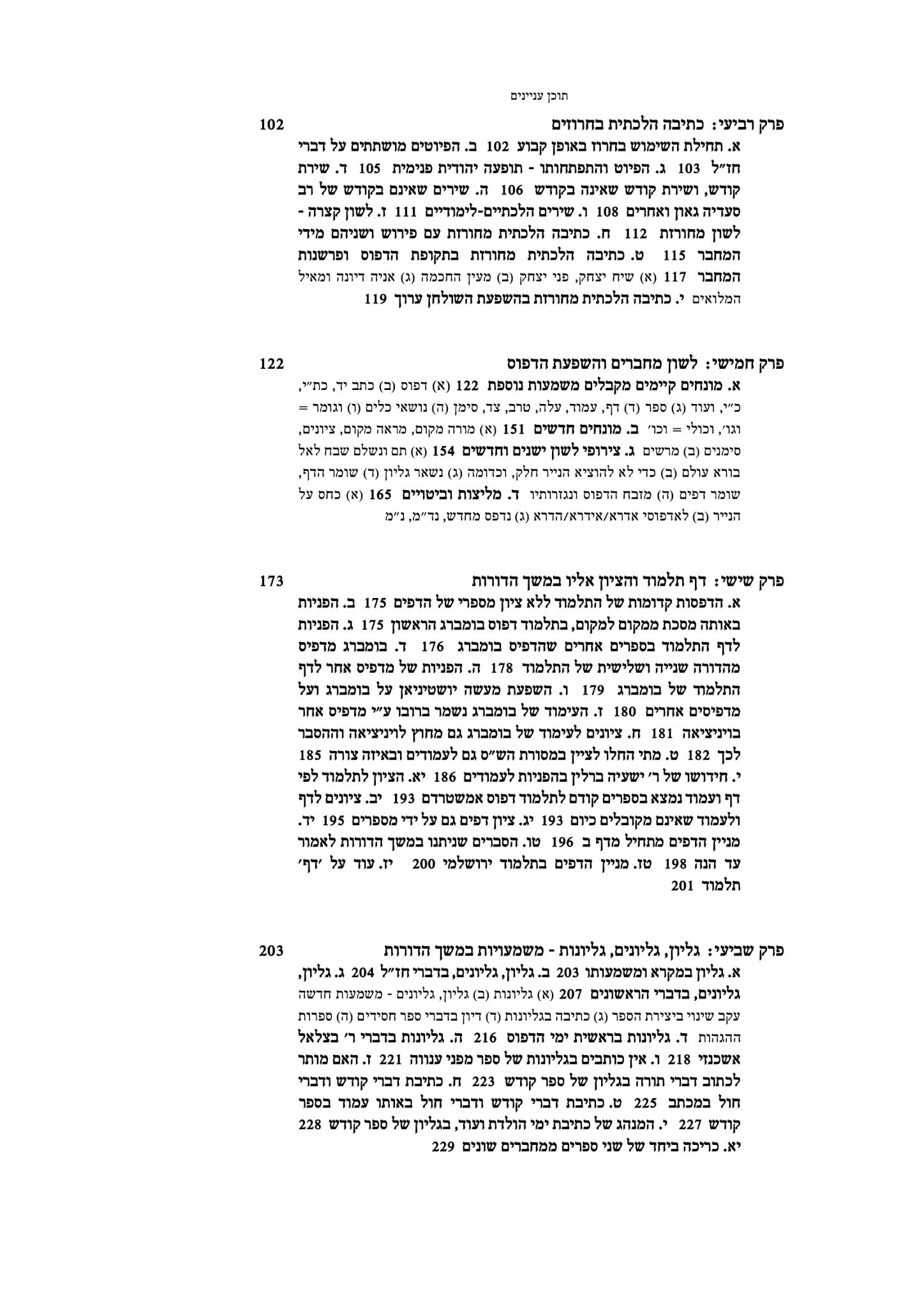
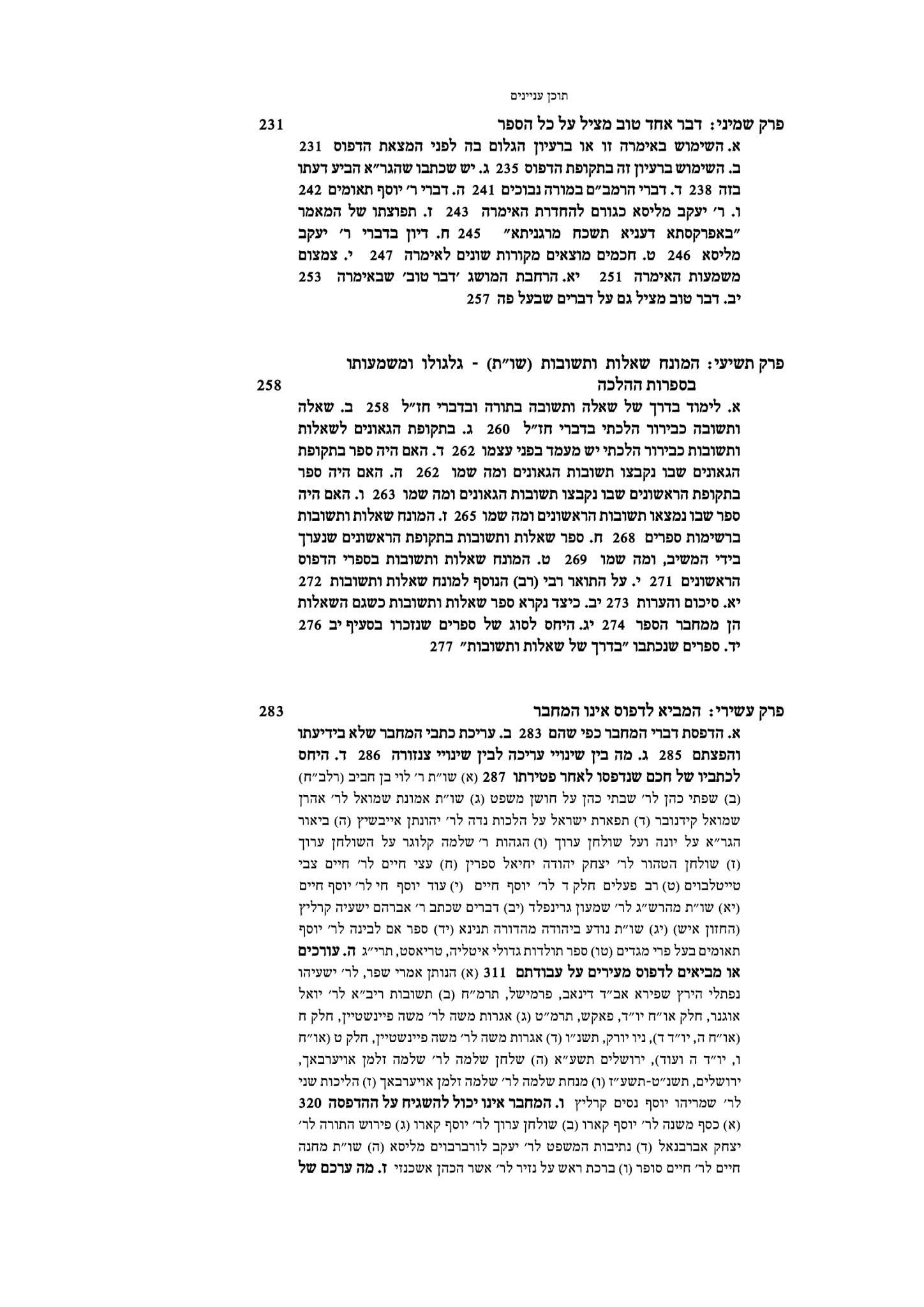
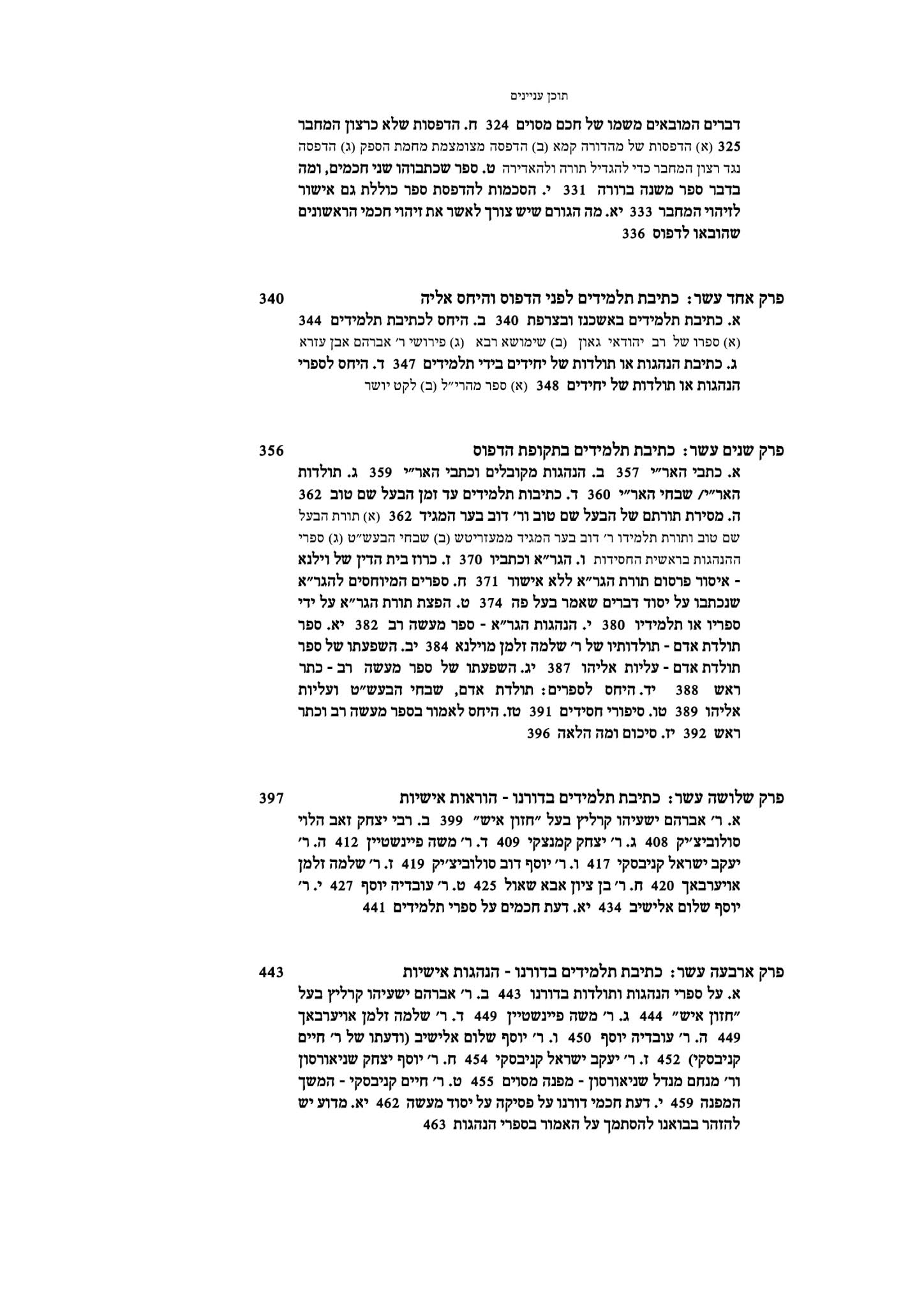
Wine Strength and Dilution

Wine Strength and Dilution
by Isaiah Cox
June 2009

Isaiah Cox trained as an historian at Princeton, and conducted postgraduate work in medieval history at King’s College London. He is also a technologist, with over 50 patents pending or issued to date. iwcox@alumni.princeton.edu

There is a common understanding among rabbonim that wines in the time of the Gemara were stronger than they are today.[1] This is inferred because we know from the Gemara that wine was customarily diluted by at least three-to-one, and as much as six-to-one, without compromising its essence as kosher wine, suitable for hagafen.  While repeated by numerous sources and rabbonim, the earliest suggestion that wines were stronger appears to be Rashi himself.[2]
[3]
In the Torah, wine is mentioned many times, though there is no mention of diluting it. The only clear reference to diluted wine in ancient Jewish sources is negative: “Your silver has become dross, your wine mixed with water.”[4] In ancient Israel, wine was preferred without water.[5]  Hashem would provide “a feast of fats, and feast of lees — rich fats and concentrated lees,”[6] ‘lees’ being shmarim, the sediment
from fermentation. Lees are the most flavorful and strong part of the wine, particularly sweet and alcoholic – more like a fortified port than a regular wine.[7]
Yet if we jump forward to the time of the Mishna and Gemara: wine was considered undrinkable unless water was added?!
In Rashi’s world, wine was drunk neat, and he concludes that wine must have been stronger in the past. We could work with this thesis, except that there is a glaring inconsistency: the Rambam a scant hundred years later shared the opinion of the Rishonim: we require wine for the Arba Kosot to be diluted “in order that the drinking of the wine should be pleasant, all according to the wine and the taste of the consumer.”[8][9] We need not believe that wine was stronger both during the time of the Gemara, and in Rambam’s day — but not for Rashi sandwiched between them.  Indeed, Rambam seems to put his finger on the nub of the issue: the preferences of the consumer.[10]
Today we drink liquors that are far more powerful than wine (distillation as we know it was not known in Europe or the Mediterranean until centuries after the Rambam): cask strength whiskies can be watered down by 4:1 and achieve the same alcoholic concentration as wine – but we like strong whiskies. Wine itself can be distilled into grappa, and we enjoy that drink without adding water. Given sweet and potent liqueurs like Drambuie, it seems quite logical that if wine could be made more alcoholic, we would enjoy it that way as well.
While the Mishnah and Gemara are clear that wine should be drunk diluted, the opinion that wine was too strong to drink came from later
commentators, writing hundreds of years later. In the Gemara itself, Rav Oshaya says that the reason to dilute wine is because a mitzvah must be done in the choicest manner.[11] Indeed, the Gemara itself seems to allow that undiluted wines were drinkable – it was just
not considered civilized behavior. A ben sorer umoreh, a rebellious son, is one who drinks wine — wine which is insufficiently diluted, as gluttons drink.[12] In other words, undiluted wine was drinkable, but it was not the civilized thing to do.
A review of the history of civilizations reveals the origin of the preference for diluting wine: Greek culture. The first mention of diluted wine in Jewish texts is found in the apocrypha: about 124 BCE, “It is harmful to drink wine alone, or again, to drink water alone, while wine mixed
with water is sweet and delicious and enhances one’s enjoyment,”[13] The source, it is critical to point out, was written in Greek, outside the land of Israel.
Greek culture and practices started being influential in the Mediterranean in the final two centuries BCE, and by the time of the Gemara, had become the dominant traditions for all “civilized” people in the known world. When the Mishna was written, for example, all educated Romans spoke Greek, and Latin had become the language of the lower classes. Greek customs were the customs of all civilized people.
And Greeks loved to dilute their wine. Earlier in the latter part of the second century Clement of Alexandria stated:
It is best for the wine to be mixed with as much water as possible. . . . For both are works of God, and the mixing of the two, both of water and wine produces health, because life is composed of a necessary element and a useful element. To the necessary element, the water, which is in the greatest quantity, there is to be mixed in some of the useful element.[14]
Today, wine is not diluted; the very thought of it is repulsive to oenophiles. But just as in Isaiah’s day diluted wine was considered poor (and concentrated dregs were considered choice), the Greeks only liked their wine watered down.[15] We have hundreds of references to diluting wine in ancient Greece through the late Roman period – ancient Greeks diluted wine that Israelites preferred straight. In Greece, wine was always diluted with water before drinking in a vase called “kratiras,” derived from the Greek word krasis, meaning the mixture of wine and water.[16]   As early as the 10th Century BCE (the same time as Isaiah), Greek hip flasks had built-in spoons for measuring the dilution. [17]  Homer, from the 8th or 9th Century BCE, mentions a ratio of 20 to 1, twenty parts water to one part wine. But while their ratios varied, the Greeks most assuredly did not drink their wine straight.[18]  To Greeks, ratios of just 1 to 1 was called “strong wine.” Drinking wine unmixed, on the other hand, was looked upon as a “Scythian” or barbarian custom. This snobbery was not based solely on rumor; Diodorus Siculus, a Greek (Sicilian) historian and contemporary of Julius Caeser, is among the many Greeks who explained that exports of wine to places like Gaul were strong in part because the inhabitants of that region, like Rashi a millennium later, liked to drink the wine undiluted. This fact leads us to an inescapable conclusion: there is no evidence that Greek wine was any stronger than that of ancient Israel, Rome, Egypt, or anywhere else. Greeks and Romans liked their wine with water. Ancient Jews and Gauls liked the very same wine straight up.[19]  We know that it was the same wine, because wine was one of the most important trade products of the ancient world, traveling long distances from vineyard to market. A major trade route went from Egypt through ancient Israel to both northern and eastern climes.[20] Patrick McGovern, a senior research scientist at the University of Pennsylvania, and one of the world’s leading ancient wine experts, believes wine-making became established in Egypt due to “early Bronze Age trade between Egypt and Palestine, encompassing modern Israel, the West Bank and Gaza, and Jordan.”[21]
[22]
By the time of the Gemara, Hellenistic cultural preferences had become so common that nobody even thought of them as “Greek” anymore; civilized people acted in this way. Rambam would no more have thought having water with wine to be a specifically Greek custom than we would consider wearing a shirt with a collar to be the contamination of our Judaism by medieval English affectations.
Another possible reason why certain peoples preferred their wine watered down[23] is that ancient wine was more likely to cause a hangover. The key triggers for a hangover are identified as follows:
1. A bad harvest. If you are drinking wine that comes from a country where a small change in the climate can make a big difference to the quality of wine (France, Germany, New Zealand), then in a bad season the wine contains many more substances that cause hangovers.
2. Drinking it too young. Almost all red wines and Chardonnay are matured in oak barrels so that they will keep and improve. If you drink this wine younger than three years there will be a higher level of nasties that can cause hangovers. If left to mature these nasties change to neutral substances and don’t cause hangovers. As a rule of thumb, wine stored in oak barrels for six months should be acceptable to drink within the first year. If the wine is stored for twelve months or more in oak barrels, it should then be aged at least four years. Some winemakers have been known to add oak chips directly into the wine to enhance flavors (especially in a weak vintage and especially in cheaper wines); this can take years to become neutral.[24]
In other words, in the ancient world, with less precise agriculture, and minimal control over fermentation – and the common consumption of young wine that was not kept in barrels, the wine was surely “stronger” in the sense that the after-effects were far more potent, meriting dilution.
We can also explain the Rashi/Rambam difference of opinion using cultural norms. Greek culture, which dominated the Mediterranen  and Babylonia for hundreds of years, ceased to be dominant in Gaul and elsewhere in Northern Europe after the decline of the Roman Empire. But in the Mediterranean, region, Greek and Roman customs remained dominant in non-Muslim circles for far longer. Rashi was in France, where the natives had never preferred their wine diluted. The Rambam was in Alexandria, where wine, made anywhere in the Mediterranean region (including Israel) had been drunk with water for a thousand years.


Part II
A Brief History of Wine Technology and Dilution
Wine is one of mankind’s oldest inventions; the archaeological record shows wine dating back to at least 3000 BCE, and the Torah describes Noach consciously and deliberately planting a vineyard and getting inebriated. But technology has changed a great deal since then, not always for the better. For starters, wine was always basically made the same way: crush the grapes and let them ferment. Grapes are a wondrous food, in that they collect, on their outer skins, the agents for their own fermentation. Yeast, of various kinds, settle on the exterior skin, and as soon as the skin is broken (when the grape is crushed), the yeasts mix and start to react with the sweet juice inside.
The problem is that there are thousands of different yeasts, and while some of them make fine wine, many others will make an alcoholic beverage that tastes awful.[25] Additionally, there are many bacteria that also feast on grape juice, producing a wide range of compounds that affect the taste of the finished product.
The end result, in classic wine making, was that the product was highly unpredictable. Today, sulfites (sulphur dioxide compounds) are added as the grapes are crushed, killing the native yeast and bacteria that otherwise would have fermented in an unpredictable way. Then the winemaker adds the yeast combinations of his choice, yielding a predictable, and enjoyable product. Today, virtually every wine made in the world includes added sulfites for this very reason. Adding sulfites prior to fermentation was NOT employed in the ancient world, and was only pioneered two centuries ago. There is no mention of killing the native yeast in the Gemara or in the Torah, nor of adding sulfites.
With the advent of Pasteur  in the 19th century, and a new understanding of the fermentation process and of yeasts, the process of winemaking turned from an art to a cookbook science. Wines steadily improved as winemakers learned to add sulfites and custom yeasts, leading to today’s fine wines.
Ancient
Israel and Egypt
Ancient
Greece and Early Rome
Late
Roman – medieval
Europe,
16th Century onward
Europe
19th century to present
Controlled
fermentation
Poorly understood. Unstable results.[26]
Though when wine was boiled before fermentation, it allowed for a more
controlled product.[27]
Poorly understood, with unstable results. Salt-water was often added to the must to
control fermentation.[28]
Wine cellars were sometimes fumigated prior to crushing the grapes.[29]
Grape Juice was known, and could be made to keep.[30]
Poorly understood, with unstable results. Salt-water was often added to the must to control fermentation.[31]
Wine cellars were sometimes fumigated prior to crushing the grapes.[32]
Sulfides became known, and then consciously applied.
Controlled
environments became the norm.
Storage of wine was another matter. The ancient world was better at preserving wine after it was made. In the ancient world (from Egypt through Greece and early Rome), wine was kept in amphorae.
Amphorae are earthenware vessels, typically with a small mouth on top. The amphorae were sealed with clay, wax, cork or gypsum. The
insides of the amphorae, if made of clay, were sealed with pitch, to make them airtight. It was well understood that if air got in, the wine would turn bad, and eventually to vinegar. Some amphorae were even made of glass, and then carefully sealed with gypsum, specifically to preserve the wine.


Wine Strength and Dilution
With proper amphorae, if the wine was good when it went into the vessel, it was quite likely to be good when it was retrieved, even if it was years later. The Egyptians and Greeks and Romans had vintage wines – wines that they could pull out of the cellar decades after it had been made.


But amphorae represented the pinnacle of wine storage, unmatched until the glass bottle was invented in the 19th century.
Around the time of the destruction of the Second Beis Hamikdash, the technology shifted. Barrels became prevalent[33], and remained the standard until the advent of the glass bottle in the 19th century. Barrels are made of wood, and they breathe. Without proper sealing, wine that is uncovered, untopped or unprotected by insufficient sulfur dioxide has a much shorter shelf life. Once a wine goes still (stops fermenting), it’s critical to protect it.[34]
Ancient
Israel and Egypt
Ancient
Greece and Early Rome
Late
Roman – medieval
Europe,
16th Century onward
Europe
19th century to present
Storage
Sometimes sealed amphorae; sometimes poor ones.[35]
Amphorae with good seals.[36]
Sulfur candles were sometimes used. Romans and Greeks continued to add salt
water when the wine was sealed – as well as boiling and using pitch.[37]
Sealed wine is valued.[38]
Even so, amphorae fell out of use, and were replaced with wooden barrels,
which breathe.  But  Gemara forbids sulphur in korbanos.[39]
Wooden
barrels continue.
Wine bottles are used. For the first time since the time of the Beis Hamikdash,
wine can be safely stored for a long time.
Predictability proved to be another major problem for winemakers, especially in the ancient world.
Ancient
Israel and Egypt
Ancient
Greece and Early Rome
Late
Roman – medieval
Europe,
16th Century onward
Europe
19th century to present
Predictability
of product
If the wine was good when sealed, predictability was excellent.
But sulfides were not understood well enough to make the raw product consistently drinkable.
Unpredictable.
Very much a “buyer beware” market, with no warranty, and a belief in mazal to
keep wine good.[40]
Slightly more predictable, as sulfides were sometimes used.
Very good. Storage was good, in barrels.
Excellent. Advances in understanding the role of yeast and bacteria, and the addition of
selected wine yeasts means that wine is highly predictable.
Marcus Porcius Cato (234-150 B.C.), refers to some of the problems related to the preservation of fermented wine. In Cato alludes to such problems when he speaks of the terms “for the sale of wine in jars.” One of the conditions was that “only wine which is neither sour nor musty will be sold. Within three days it shall be tasted subject to the decision of an honest man, and if the purchaser fails to have this done, it
will be considered tasted; but any delay in the tasting caused by the owner will add as many days to the time allowed the purchaser.”[41] Pliny, for example, frankly acknowledges  that “it is a peculiarity of wine among liquids to go moldy or else to turn into vinegar; and whole volumes of instructions how to remedy this have been published.”[42]
Sulfites, which are used now for fermentation and also for stored wine, were in occasional (if not consistent) use in the ancient world as well. The Gemara speaks of “sulfurating baskets,” for example.[43] It is well-documented that by 100 B.C.E. Roman winemakers often burned
sulfur wicks inside their barrels to help prevent the wine from spoiling.[44] They also sealed barrels and amphorae with sulfur compounds, with the same goal. The practise was not universal, and it was not well understood, so results varied widely. Freshly pressed grape juice has a tendency to spoil due to contamination from bacteria and wild yeasts present on the grape skins. Not only does sulfur dioxide inhibit the growth of molds and bacteria, but it also stops oxidation (browning) and preserves the wine’s natural flavor.[45] From the Romans until the 16th Century, wine preservation in the barrel was not reliably achieved; throughout the medieval and early modern period all wine was drunk young, usually within a year of the vintage.[46]… wines kept in barrels generally lasted only a year before becoming unpalatable.
In the 16th century, Dutch traders found that only wine treated with sulfur could survive the long sea voyages without it turning to vinegar. [47] 15th  century German wine laws restored the Roman practise, with the decree that sulfur candles be burned inside barrels before filling them with wine, and by the 18th century sulfur candles were regularly used to sterilize barrels in Bordeaux. The sulfur dioxide left on the container would dissolve into the wine, becoming the preservative we call sulfites. Even then, they were clever enough to realize that the sulfur addition improved wine quality.[48]
Ancient
Israel and Egypt
Ancient
Greece and Early Rome
Late
Roman – medieval
Europe,
16th Century onward
Europe
19th century to present
Shelf
life
Boiled wine lasted a long time, making storage and exports less risky, at the cost
of reduced quality.[49]
Variable, but could be excellent. Vintage wines existed, and old wines were prized.[50]
There were no corks, so wine did not breathe in storage.[51]
By the time of the Gemara, wine only 3 years old was considered very old.   Wine aged very poorly. And the Romans
abandoned the use of sulfites in wine storage.[52]
Shelf life is somewhat longer, as sulfides are rediscovered.  Bottles were introduced in the late 17th
century. Corks also come into use.
Vintage wines once again exist. Corks allow for wine to age in a bottle – the
tradeoff is that shelf life is more limited than in the ancient world.[53]
In the ancient world, wine flavorings appear to be as old as wine itself! The oldest archaeological record of wine-making shows that figs
were used in the wine as well – as we have said, wine made without benefit of sulfites, will be unpredictable at best; fig juice would sweeten the wine and make it more palatable.[54] But with all the added flavorings in the world, the process itself often led to some pretty unattractive results.
The impregnation with resin has been still preserved, with the result of making some modern Greek wines unpalatable save to the modern Greeks themselves. … Ancient wines were also exposed in smoky garrets until reduced to a thick syrup, when they had to be strained before they were drunk. Habit only it seems could have endeared these pickled and pitched and smoked wines to the Greek and Roman palates, as it has endeared to some of our own caviare and putrescent game.[55]
When Hecamede prepares a drink for Nestor, she sprinkles her cup of Pramnian wine with grated cheese, perhaps a sort of Gruyere, and flour.[56] The most popular of these compound beverages was the  (mulsum), or honey wine, said by Pliny (xiv. 4) to have been invented by Aristaeus.
Ancient
Israel and Egypt
Ancient
Greece and Early Rome
Late
Roman – medieval
Europe,
16th Century onward
Europe
19th century to present
Flavorings
Highly variable, and usually added.[57][58]
Added in copious quantities and varieties, almost surely to cover odd tastes and oxidation caused by poor manufacture and storage techniques.[59]
Cornels, figs, medlars, roses, cumin, asparagus, parsley, radishes, laurels,
absinthium, junipers, cassia, peppers, cinnamon, and saffron, with many other particulars, were also used for flavouring wines.[60]
Greeks added grated goat’s milk cheese and white barley before consumption of wine.[61]
Discriminating Romans even kept flavor packets with them when they traveled, so they could flavour wines they were served in taverns along the way.
Became less common, as it is acknowledged that flavorings were to cover failings in
the wine.
Post fermentation,
flavorings are almost never used.
Wine from a bottle is consistently more pure in the modern age than it
ever was before.
Virtually unheard of; to add a flavour to wine would be considered a gross insult to
the winemaker, and the noble grape itself.
Trade also changed greatly over time.  The ancient Mediterranean was a hotbed of trade, and wine was also shipped overland. Many wine presses and storage cisterns have been found from Mount Hermon to the Negev. Inscriptions and seals of wine jars illustrate that wine was a commercial commodity being shipped in goatskin or jugs from ports such as Dor, Ashkelon and Joppa (Jaffa). The vineyards of Galilee and Judea were mentioned then; wines with names like Sharon, Carmel and from places like Gaza, Ashkelon and Lod were famous.[62] Wine was a major export from ancient Israel.
This situation was mirrored in Greece and Rome. Wine was traded throughout the Mediterranean (it was as easy to ship wine 100 miles by
ship as it was to haul it 1 mile across land). But Roman wines were popular, and were shipped overland to Gaul and elsewhere.
In the later Roman period, the spread of winemaking inland (away from the convenient Mediterranean) meant that wines were rarely shipped far. The wine trade remained for the benefit of the very wealthy for over a thousand years, only resuming in the 16th and 17th centuries. And today, of course, the wine trade is ubiquitous, with wines available from around the world.
Grape juice was almost always fermented; before Pasteur, avoiding the fermentation of wine was not well understood, and any grape juice
that is not sulfated will ferment if yeast is added to it. Still, the concept of grape juice was understood before wine – the butler squeezed grapes directly in Pharoah’s cup, after all.  And the Gemara calls it “new wine.”[63] It certainly could be drunk then, though it was far from achieving its full potency.
Ancient
Israel and Egypt
Ancient
Greece through medieval
Europe,
16th Century onward
Europe
19th century to present
Cultural
consumption
In Israel, wine was drunk straight.  Drunkenness was discouraged; self control
praised.
Drunkenness was http://seforim.blogspot.com/2012/10/wine-strength-and-dilution.html#_ftn64″ name=”_ftnref64″ title=””>[64]
wine was consumed in large quantities.
Dilution is seen as a way to cheat the consumer; common in lower class taverns.
Social drinking is praised; wine is drunk to achieve the same buzz the Greeks
praised.
It is evident that wine was seen in ancient times as a medicine (and as a solvent for medicines) and of course as a beverage. Yet as a beverage it was always thought of as a mixed drink. Plutarch (Symposiacs III, ix), for instance, states. “We call a mixture ‘wine,’ although the larger of
the component parts is water.” The ratio of water might vary, but only barbarians drank it unmixed, and a mixture of wine and water of equal parts was seen as “strong drink” and frowned upon. The term “wine” or  oinos in the ancient world, then, did not mean wine as we understand it today but wine mixed with water. Usually a writer simply referred to the mixture of water and wine as “wine.” To indicate that the beverage was not a mixture of water and wine he would say “unmixed (akratesteron) wine.”[65]
There is some question whether or not what “wine” and “strong drink” Leviticus 10:8, 9, Deuteronomy 14:26; 29:6; Judges 13:4, 7, 14; First Samuel 1:15: Proverbs 20:1; 31:4,6: Isaiah 5:11, 22; 28:7; 29:9; 56:12; and Micah 2:11. “Strong drink” is most likely another fermented product – beer. Beer can be made from any grain, and would be contrasted with wine most obviously because it was substantially less expensive  (typically 1/5th the cost, in ancient Egypt) while still offering about the same alcohol content.[66]  (Yeast works the same way in both).
Ancient
Israel and Egypt
Ancient
Greece through medieval
Europe,
16th Century onward
Europe
19th century to present
Watered
down
Isaiah refers to watered wine perjoratively.
Greeks watered down wine, as they preferred to drink large quantities. They knew of
people who drank undiluted wine, but considered it a barbaric practise.. Wine was customarily diluted with water in a
three-to-one ratio of water to wine during Talmudic times.[67]
Still even the famously strong Falernian wines were sometimes drunk straight.[68]
Wine is not diluted, at least not in better establishments
Consumer never drinks wine known to be diluted.
Why did people water down wine? One possibility, given in Section I is that certain wines were more likely to cause a hangover. [69] The more commonly suggested solution than the presence of hangover-inducing components, is that wine served as a disinfectant for water that itself might be unsafe.
Today, we know this is true. Drinking wine makes our water safer to drink, and it also helps sanitize the food we eat at meals when we
drink wine. Living typhoid and other microbes have been shown to die quickly when exposed to wine. [70] Research shows that wine (as well as grape juice)[71], are highly effective against foodborne pathogens[72] while not significantly weakening “good” probiotic bacteria.[73]
In one study, it was shown that wine that was diluted to 40% was still effective against foodborne pathogens, and drier wines were much better at killing dangerous bacteria.
The ancients believed that wine was good for one’s health[74], even if they didn’t have the faintest idea why this was so. Microbes were only discovered in the 19th century, and ancient medicine was in many respects indistinguishable from witchcraft.  Still, it seems hard to deny that Romans and Greeks at least grasped some of the medicinal value of the grape; wines were a common ingredient in many Roman medicines.[75] And given the antibacterial powers of wine, it is obvious that a patient who drank diluted wine instead of water would be helping his body by not adding dangerous microbes when the body was already weakened by something else.
Still, the evidence remains anecdotal. The Torah does not mention wine as having medicinal benefits, though the New Testament does suggest wine as a cure for poor digestion[76] – entirely consistent with what we know about wine’s antibacterial properties. And as noted by the Jewish Encyclopedia, the Gemara reflects many of Galen’s positions on the health-giving qualities of wine:
Wine taken in moderation was considered a healthful stimulant, possessing many curative elements. The Jewish sages were wont to say, “Wine is the greatest of all medicines; where wine is lacking, there drugs are necessary” (B. B. 58b).  …  R. Papa thought that when one could substitute beer for wine, it should be done for the sake of economy. But his view is opposed on the ground that the preservation of one’s health is paramount to considerations of economy (Shab. 140b). Three things, wine, white bread, and fat meat, reduce the feces, lend erectness to one’s bearing, and strengthen the sight. Very old wine benefits the whole body (Pes. 42b). Ordinary wine is harmful to the intestines, but old wine is beneficial (Ber. 51a). Rabbi was cured of a severe disorder of the bowels by drinking apple-wine seventy years old, a Gentile having stored away 300 casks of it (‘Ab. Zarah 40b). “The good things of Egypt” (Gen. xlv. 23) which Joseph sent to his father are supposed by R. Eleazar to have included “old wine,” which satisfies the elderly person (Meg. 16b).   Until the age of forty liberal eating is beneficial; but after forty it is better to drink more and eat less (Shab. 152a). R. Papa said wine is more nourishing when taken in large mouthfuls. Raba advised students who were provided with little wine to take it in liberal drafts (Suk. 49b) in order to secure the greatest possible benefit from it. Wine gives an appetite, cheers the body, and satisfies the stomach (Ber. 35b).[77]
Others have made the bolder argument  — that the core purpose of dilution was to purify water for drinking.[78]
The ancients began by adding wine to water (to decontaminate it) and finished by adding water to wine (so that they didn’t get too drunk too quickly). A letter, written in brownish ink on a pottery shard dating from the seventh century BC, instructs Eliashiv, the Judaean commander of the Arad fortress in southern Israel, to supply his Greek mercenaries with flour, oil and wine.
The [Israel Museum in Jerusalem] exhibition’s curator, Michal Dayagi-Mendels, explains that the oil and flour were for making bread; the wine was not for keeping them happy, but for purifying brackish water. To prove her point, she displays a collection of tenth-century BC hip flasks, with built-in spoons for measuring the dosage.[79]
While the archaeological record is strong in this respect, the lack of textual support, in this author’s opinion, means that there is more evidence that wine was diluted for cultural reasons than because there was a conscious understanding that wine made water safe to drink.
Ancient
Israel and Egypt
Ancient
Greece and Early Rome
Late
Roman – medieval
Europe
19th century to present
Used for health reasons
No direct evidence
Mainstay for medicine; perceived as valuable to health
With safer water, wine not as important.
Recently, wine is prized for its resveratrol for health and longevity, instead of anti-microbial properties as previously.
[1] “Up to and including the time of the Gemara, wines were so strong that they could not be drunk without dilution…. Nowadays, our wines are not so strong, and we no longer dilute them.” Rabbi Avraham Rosenthal (link), “During the time of the Talmud, wine was very concentrated, and was normally diluted with water before drinking. “Rav Ezra Bick (link), “In Talmudic times, wine was sold in a strong, undiluted form, which only attained optimal drinking taste after being diluted with water.” Rabbi Yonason Sacks,  (link), “Records indicate that the alcohol content of wine in the ancient days was very high. Therefore, it was a common practice to dilute the wine with water in order to make it drinkable.” (link), “In ancient times, wines were powerfully strong and adding water to dilute their taste and power was common. … Pure wine, undiluted with water, is highly concentrated and difficult to drink. Rabbi Gershon Tennenbaum, (link), “In the days of the Talmud the wine was so strong and concentrated that without dilution it was not drinkable.” Zvi Akiva Fleisher, (link), “During the time of the Talmud, wine was very concentrated, and was normally diluted with water before drinking.” Rav Yair Kahn, (link), “Our wines, which are considerably weaker than those used in the days of Chazal, are better if they are not diluted.” (link)
[2] Rashi on Berachos 50b
[3] Wine naturally ferments to no more than 16% alcohol (typically 12-14%) before the alcohol kills the yeast off. Alcohol boils away at a lower temperature than water, so boiling wine does not concentrate it. And without the technology of distillation (which was not known in the ancient world), the only practical method that might have concentrated the alcohol in a wine would be to add plaster of paris; water would be absorbed, and the alcohol would be concentrated. But we have no evidence that this was done; it would have been far more than a mere flavoring. (see)
[4] Isaiah 1:22
[5] Spices and flavorings, on the other hand, were considered fit for guests and offerings: Proverbs 9:2,5 and Isaiah 65:11 both refer to wine which is “mem-samech-ches”, meaning that it has been spiced and is ready to serve. This is the best of wine, though as warned in Proverbs 23:30, such wine has dangerous side effects. This is entirely consistent with what we know of wine flavorings in the ancient world (see Part II): spices made wine more palatable, so it could more easily be consumed to excess.
[6] Isaiah 25:6
[7] Dr. Uprichard adds: Fermentation is the conversion of complex sugars, via glucose and pyruvic acid into ethanol and CO2. Natural yeasts die when the alcohol content of their culture medium (i.e. the liquid that is being produced for human consumption) exceeds a certain limit. Limit varies depending on the yeast and other factors, but is generally somewhere between 12-15% alcohol by volume. For wine to be stronger, it has to be fortified. Fortification is a process in which spirit is added to the wine. There are many fortified wines made around the world. However there are only two basic ways of fortification:
1: The Sherry Method – the must, which is a mixture of juice, pulp, skins and seeds, is fermented out, leaving a dry wine. The spirit is then added. Consequently all sherry method wines are dry to begin with. If the final style of wine is other than dry, sweetening is added prior to bottling. Sherry was invented in the 8th Century, CE.
2: The Port Method – the must is only partly fermented, and the process is stopped by the addition of sufficient spirit to prevent the yeast working. ie the alcohol content is raised to a level which kills the yeasts and leaves much of the sugar unfermented. Consequently port-method wines are generally sweet. Adding sugar will feed the process but only until the yeasts (which are effectively the enzymes in the reaction) are used up (or in this case killed off). The Rambam, who diluted wine, did NOT consider fortified wine to be suitable for Kiddush; his wine was unfortified, and undistilled, and therefore could not exceed 15-16% alcohol.
[8] Hilchot Chametz UMatzah 7:9
[9] Rambam considered young new wine (presumably only lightly fermented) to be distinctly unhealthy (see).
[10] It is clear that personal and cultural preferences remain very important when talking about whether to use wine or grape juice for Kiddush or the Arba Kossos. Rav Soloveitichik writes that if one does not enjoy wine, he should use grape juice for the Arba Kosot, as that will be a pleasant drink according to his taste.
[11] Berachos, 50b
[12] Sanhedrin 70a. The Greeks had the same standard: to drink wine diluted 1:1 was repudiated as disgraceful (see).
[13] II Maccabees 15:39
[14] Instructor II, ii, 23.3—24.1
[15] Athenaeus quotes Mnesitheus of Athens: “The gods has revealed wine to mortals, to be the greatest blessing for those who use it aright, but for those who use it without measure, the reverse. For it gives food to them that take it and strength in mind and body. In medicine it is most beneficial; it can be mixed with liquid and drugs and it brings aid to the wounded. In daily intercourse, to those who mix and drink it moderately, it gives good cheer; but if you overstep the bounds, it brings violence. Mix it half and half, and you get madness; unmixed, bodily collapse.” [Odyssey IX, 232.]
[18] Pliny (Natural History XIV, vi, 54) mentions a ratio of eight parts water to one part wine. In one ancient work, Athenaeus’s The Learned Banquet, written around A.D.  200, we find in Book Ten a collection of statements from earlier writers about drinking practices. A quotation from a play by Aristophanes reads: “‘Here, drink this also, mingled three and two.’ Demus. ‘Zeus! But it’s sweet and bears the three parts well!’”
[19] http://www.mmdtkw.org/VRomanWine.html.  Why did the Greeks enjoy diluted wine, and the Jews of ancient Israel preferred it straight?  We cannot be certain of the answer, but it is clear that the Greeks praised drinking very large quantities; it was a feature of every meal, which regularly lasted for hours. For them, wine was a necessity, and the culture rotated around its unrestrained consumption – the Greeks drank by the gallon. Undiluted wine, however, cannot be drunk by the gallon. Greeks liked to get drunk, but they wanted it to take time. Ceremonious, sociable consumption of wine was the core communal act of the Greek aristocratic system. [http://tinyurl.com/cmlsbu].
By contrast, in the Torah wine is consistently praised – in moderation. Drunkenness is never a virtue in Judaism, and the shucking off of self control and loss of inhibitions that was part and parcel of Dionysian rites is considered unacceptable to G-d fearing Jews. So wine, in full strength, was praised and consumed, but consumption for its own sake was not encouraged.
[20] Hundreds of clay jars of wine (with a total volume of some 4,500 liters (118.78 gallons) were buried with one of the first Egyptian kings, Scorpion I (about 3150 B.C.E.). Analysis of the clay shows that the jars were made in the modern Israel-Palestine region. http://www.answers.com/topic/wine-in-the-ancient-world
[22] Had there been any significant qualitative difference between wine grown in one place as opposed to another, it would be apparent by the archaeological and written records we have; the ancient Greeks, for example, spent a lot of ink writing about wine, with no mention that any wine was significantly stronger than any other.
[23] Proposed by Brian Foont
[25] As written about a modern wine that is made without sulfides: “we had an organic, ‘no sulfite added’ chardonnay on the menu. It was an amazing wine to behold. That is when it wasn’t brown and vaguely reminiscent of sewage, which was about one out of every four bottles.” http://winekulers.com/11_1_08.htm . See http://en.wikipedia.org/wiki/Yeast#Wine for more information about the process in general. Ancient wineries, lacking modern sanitation, would have had a much lower “success” rate.
[26] Egyptian wines cannot have been very stable because the grapes were picked and crushed in August, then were slowly crushed and pressed and then rapidly fermented, all in the summer heat. http://www.answers.com/topic/wine-in-the-ancient-world
[27] http://tinyurl.com/dl5ypr . Though according to oeniphiles, boiling the wine at any time destroys the flavor. Boiled wine was not allowed as a korban, though it would have led to a more predictable (if mediocre) product. Terumos 11:1 – Rabbi Yehuda, in a minority opinion, considers boiled wine to be superior.
[28] “Some people—and indeed almost all the Greeks—preserve must with salt or sea-water.” Columella, On Agriculture 12.25.1. Columella recommended the addition of one pint of salt water for six gallons of wine.
[30] Fresh must, when boiled, could have been stored in amphorae and kept sweet, and this could be the boiled wine mentioned in the Gemara. Certainly we don’t need to speculate in the case of the Romans, as http://www.biblicalperspectives.com/books/wine_in_the_bible/3.html writes: Columella gives us an informative description of how they did it: “That must may remain always as sweet as though it were fresh, do as follows. Before the grape-skins are put under the press, take from the vat some of the freshest possible must and put it in a new wine-jar; then daub it over and cover it carefully with pitch, that thus no water may be able to get in. Then sink the whole flagon in a pool of cold, fresh water so that no part of it is above the surface. Then after forty days take it out of the water. The must will then keep sweet for as much as a year.”  [Columella, On Agriculture 12, 37, 1]… This method of preserving grape juice must have been in use long before the time of Pliny and Columella, because Cato (234-149 B.C.) mentions it two centuries before them: “If you wish to keep grape juice through the whole year, put the grape juice in an amphora, seal the stopper with pitch, and sink in the pond. Take it out after thirty days; it will remain sweet the whole year.” [Marcus Cato, On Agriculture 120, 1.]
[31] “Some people—and indeed almost all the Greeks—preserve must with salt or sea-water.” Columella, On Agriculture 12.25.1.
[33] Barrels have many advantages: they are less expensive and less prone to breakage; they stack and roll, and generally allow for easier transportation. The downside of a shortened shelf life for the wine was apparently considered an acceptable price to pay for these advantages.
[35] In Egypt, the clay jars were slightly porous (unless they were coated with resin or oil), which would have led to a degree of oxidation. There was no premium on aging wine here, and there are records of wine going bad after twelve to eighteen months. http://www.answers.com/topic/wine-in-the-ancient-world
[36] Jeremiah 48:11, Moab is compared to a container of fine wine that is not disturbed: “therefore its taste has stayed in it, and its scent was not diminished.” Unsealed wine in the ancient world was known to lose its essence.
[38] The foster-mother of Abaye is authority for the statement that a six-measure cask properly sealed is worth more than an eight-measure cask that is not sealed (B. ‑3. 12a)
[39] John Kitto’s Cyclopedia of Biblical Literature says: “When the Mishna forbids smoked wines from being used in offerings (Manachoth,
viii. 6, et comment.), it has chiefly reference to the Roman practice of fumigating them with sulphur, the vapor of which absorbed the oxygen, and thus arrested the fermentation. The Jews carefully eschewed the wines and vinegar of the Gentiles.” But presumably smoked wines were acceptable for consumption, even if not for offerings?
[40] Rab said that for three days after purchase the seller is responsible if the wine turns sour; but after that his responsibility ceases. R. Samuel declared that responsibility falls upon the purchaser immediately upon the delivery of the wine, the rule being “Wine rests on the owner’s shoulders.” R. ‑Hiyya b. Joseph said, “Wine must share the owner’s luck” (B. B. 96a, b, 98a). If one sells a cellarful of wine, the purchaser must accept ten casks of sour wine in every hundred (Tosef., B. B. vi. 6).
[41] On Agriculture, Chapter 148. http://penelope.uchicago.edu/Thayer/E/Roman/Texts/Cato/De_Agricultura/J*.html .  Cato shares the opinion of Rav: “For three days after purchase the seller is responsible if the wine turns sour; but after that his responsibility ceases.” B. B. 96a.
[43] Berachos 27b, line 14.
[46] Wine and the Vine: An Historical Geography of Viticulture and the Wine Trade Tim Unwin
[47] http://search.japantimes.co.jp/cgi-bin/fg20040813wc.html . Even snakes could recognize the dropoff in quality– only boiled wine, if it
were left uncovered, could be drunk the next morning (Avodah Zarah 30a).
[49] Yerushalmi, on Terumos 11:1 notes that cooked wine is inferior in quality to uncooked wine, but is superior in the sense that it lasts longer.
[50] “The good things of Egypt” (Gen. xlv. 23) which Joseph sent to his father are supposed by R. Eleazar to have included “old wine,” which satisfies the elderly person (Meg. 16b). At the great banquet given by King Ahasuerus the wine put before each guest was from the province whence he came and of thevintage of the year of his birth (Meg. 12a). In Rome, wines were preferred to  aged anywhere from 10 to 25 years. In fact, the Emperor Caligula was once presented with a 160 year old vintage that was considered a supreme treat. http://penelope.uchicago.edu/~grout/encyclopaedia_romana/wine/wine.html
[51] Vintage wines of the ancient world were lost when sealed amphorae were replaced with wooden barrels at the end of the second century, AD (Techernia, 1986), and their reappearance had to await the development in the 17th century of glass bottles stoppered with cork. From “Wine and the Vine: An Historical Geography of Viticulture and Wine Trade”
[52] If William Younger is to be believed, the Romans had entirely abandoned sulfites by the end of their millenium of winemaking. http://www.winecrimes.com/winecrimes/
[53] Singer, Holmyard, Hall et cie “History of Technology”
[55] http://chestofbooks.com/food/beverages/Drinks-Of-The-World/Roman-Wines.html
[57] To prevent wine from becoming acid, moldy, or bad-smelling a host of preservatives were used such as salt, sea-water, liquid or solid pitch, boiled-down must, marble dust, lime, sulphur fumes or crushed iris.
[58] The aroma, taste and texture of Egyptian wines are lost to us, but in any case the wine was often flavored with herbs and spices before being consumed. [http://www.answers.com/topic/wine-in-the-ancient-world]
[59] (1) “alun‑mit,” made of old wine, with a mixture of very clear water and balsam; used especially after bathing (Tosef., Dem. i. 24; ‘Ab. Zarah 30a); (2) “‑3afrisin” (caper-wine, or, according to Rashi, Cyprus wine), an ingredient of the sacred incense (Ker. 6a); (3) “yen ‑ìimmu‑3in” (raisin-wine); (4) “inomilin,” wine mixed with honey and pepper (Shab. xx. 2; ‘Ab. Zarah l.c.); (5) “ilyoston”, a sweet wine (“vinum dulce”) from grapes dried in the sun for three days, and then gathered and trodden in the midday heat (Men. viii. 6; B. B. 97b); (6) “me’ushshan,” from the juice of smoked or fumigated sweet grapes (Men. l.c.); not fit for libation; (7) “enogeron,” a sauce of oil and garum to which wine was added; (8) “api‑3‑mewizin,” a wine emetic, taken before a meal (Shab. 12a); (9) “‑3undi‑mon” (“conditum”), a spiced wine (‘Ab. Zarah ii. 3); (10) “pesinti‑mon” (“absinthiatum”), a bitter wine (Yer. ‘Ab. Zarah ii. 3);
[63] Rabbi Hanina B. Kahana answers the question: “How long is it called new wine?” by saying, “As long as it is in the first stage of fermentation . . . and how long is this first stage? Three days.” Sanhedrin 70a.
[64] The Greeks were aware of the results of excessive consumption of wine, and it was recommended that wine be diluted with water in order to avoid this. It was also seen as socially stigmatizing to drink undiluted wine, and this was often seen as “a habit confined to barbarians”. The Romans were also well aware of the results of drunkenness, and Pliny’s famous comment “in vino verias” is not to be a disinterested observation, but a chastisement of those who “do not keep to themselves words that will come back to them through a slit in their throat.” [http://www.mta.ca/faculty/humanities/classics/Course_Materials/CLAS3051/Food/Wine.html]
[66] Beer is typically less alcoholic than wine; typical brewing yeast cannot survive at alcohol concentrations above 12% by volume. http://en.wikipedia.org/wiki/Beer Wine can run to 15-16%.
[67] R. Eliezer says “boreh pri hagefen” is pronounced only when the wine has been properly mixed with water.
[68] Catullus wrote: Postumia more tipsy than the tipsy grape. But water, begone, away with you, water, destruction of wine, and take up abode with scrupulous folk. This is the pure Thyonian god. [http://ammonastery.wordpress.com/2008/03/16/wine-le-vin/ ] . Falernian wines were as strong as fifteen or sixteen percent alcohol. http://penelope.uchicago.edu/~grout/encyclopaedia_romana/wine/wine.html
[69] Proposed by Brian Foont
[70] http://tinyurl.com/cnzwes [The Origins and Ancient History of Wine By Patrick McGovern, Stuart James Fleming, Solomon H. Katz]
[71] Grape juice and wine are much more beneficial to health than beer with the same alcohol content – other properties of the grape, even before fermentation, are good for people. This means that diluted grape juice (and boiled grape juice or wine) also had health benefits even without alcohol.
[72] such as Helicobacter pylori, Listeria monocytogenes, Escherichia coli O157:H7, Salmonella Typhimurium and Shigella boydii,
[74] A passage in the Hippocratic writings from the section “regimen in Health” draws upon this basic assumption: “Laymen…should in winter…drink as little as possible; drink should be wine as undiluted as possible…when spring comes, increase drink and make it very diluted…in summer…the drink diluted and copious.” [http://www.mta.ca/faculty/humanities/classics/Course_Materials/CLAS3051/Food/Wine.html – Hippocrates dates from 400 BCE] Drugs such as horehound, squills, wormwood, and myrtle-berries, were introduced to wine to produce hygienic effects.
[75] http://en.wikipedia.org/wiki/Ancient_Rome_and_wine The Romans believed that wine had both healing and destructive powers. It could heal the mind from depression, memory loss and grief as well as the body from various ailments-including bloating, constipation, diarrhea, gout, halitosis, snakebites, tapeworms, urinary problems and vertigo. Cato wrote extensively on the medical uses of wine, including espousing a recipe for creating wine that could aid as laxative by using grapes whose vines were treated to a mixture of ashes, manure and hellebore. He wrote that the flowers of certain plants like juniper and myrtle could be soaked in wine to help with snakebites and gout. Cato believed that a mixture of old wine and juniper, boiled in a lead pot could aid in urinary issues and that mixing wines with very acidic pomegranates would cure tapeworms.[23]
The 2nd century AD Greco-Roman physician Galen provides several details about how wine was used medicinally in later Roman times. In Pergamon, Galen was responsible for the diet and care of the gladiator. He made liberal use of wine in his practice and boasted that not a single gladiator died in his care. For wounds, he would bath them in wine as an antiseptic. He would also use wine as analgesic for surgery. When Galen became the physician of Emperor Marcus Aurelius, he worked on developed pharmaceutical drugs and concoctions made from wine known as theriacs. The abilities of the these theriacs developed superstitious beliefs that lasted till the 18th century and revolved around their “miraculous” ability to protect against poisons and cure everything from the plague to mouth sores. In his work De Antidotis, Galen notes the trend of Roman tastes from thick, sweet wines to lighter, dry wines that were easier to digest.[14]
[76] Paul commands Timothy to use alcohol with his water due to his frequent illness (1 Timothy 5:23). Evidently Timothy had been drinking only water, and that was causing sickness.
[78] Inhibitory activity of diluted wine on bacterial growth: the secret of water purification in antiquity, International Journal of Antimicrobial Agents, Volume 26, Issue 4, Pages 338-340 P.Dolara, S.Arrigucci, M.Cassetta, S.Fallani, A.Novelli