Purim and Parodies

Purim and Parodies

by Eliezer Brodt

Happiness During the Month of Adar and its Discontents

The month of Adar begins a time of joy, as the mishna says “mi shenechnas Adar marbim b’simcha.” Interestingly, it’s been noted here that this halacha is not codified by either the Rambam or Shulchan Orach. R. Yissachar Tamar in his classic work on Yerushalmi, Ali Tamar, notes that some have suggested that this is the reason why many shuls in Europe hung signs proclaiming Mi Shenechnas Adar with pictures of bottles of wine and Jews happy was to announce this halacha! [1] Furthermore, the Ali Tamar provides additional sources that demonstrate that some were punctilious about in their observation of this halacha and would begin celebrating from rosh hodesh Adar. In light of this concept we could perhaps understand how many halchahos are relaxed during and around Purim-time. For example, after the destruction of the Bes HaMikdash, Chazal enacted a prohibition against “”.שחוק This is recorded in the Gemara (Berchos 31a):

אמר רבי יוחנן משום רבי שמעון בן יוחאי: אסור לאדם שימלא שחוק פיו בעולם הזה, שנאמר: ‘אז ימלא שחוק פינו ולשוננו רנה’, אימתי – בזמן שיאמרו בגוים הגדיל ה’ לעשות עם אלה. אמרו עליו על ריש לקיש, שמימיו לא מלא שחוק פיו בעולם הזה מכי שמעה מרבי יוחנן רביה.
This is codified in Shulchan Orach (O.C. siman 560, 5) to which the Taz (ibid) comments:
בשם רבינו יונה דמשמע גם שלא בזמן הגלות דלא כנוסח הטור שכתב בגלות הזה ונלע”ד שיש חילוק בזה דלענין שמחה שאינו של מצוה ודאי אסור אפי’ שלא בזמן הגלות למלא פיו שחוק אבל בשמחה של מצוה היה היתר בזמן שב”ה קיים כגון שמחת בית השואב’ ושמחת דוד שהיה מכרכר בכל עוז ובזמן הגלות ערב’ כל שמחה ואפי’ בשמחה של מצוה כגון בחתונה או פורים מ”מ לא ימלא פיו שחוק כנלע”ד נכון:
Thus, according to the Taz, even during happy events such as a wedding or Purim, there is a a restriction on שחוק. R. Yosef Engle in his Dershos Otzros Yosef (Vienna 1921, pg 36-37) and R. Teichtel author of the Aim Habonim Semechaih, in his Shu”t Mishnat Sachir (# 2) both justify the minhag of Klal Yisroel everywhere to be joyous at weddings and on Purim. [R. Yosef Engle seems to take this concept a bit further than R. Teichtel as he even justifies cross dressing].

In fact, we find times that chazal themselves allowed שחוק as we find מילתא דבדיחותא in Chazal. Those instances, however, appear to be limited to when the purpose was waking a sleeping or otherwise uninterested audience and involving them in Torah study.

Setting aside the opinion of the Taz who holds that שחוק is prohibited even on Purim, it appears that many disagreed with this position. This is borne out by various halachos that relate to Purim. For instance, the Rema in Hilchos Purim (696 end) writes some allow cross dressing and wearing shatnes d’rabanan. Additionally, if someone damaged his friends property due to simchas Purim they do not have to pay. And, perhaps most notable, getting drunk which in general is very much frowned upon. While the Rama and others seems to permit these actions many disagreed for example R. Shmuel Aboab in his Sefer Zichronos [2] writes very strongly against these actions.

Another Italian rabbi, R. Shmuel Me-Sha’ar Areyeh, who was a contemporary of the Rama Me-Fano, writes similarly in his (still in manuscript) commentary on the Bet Yosef [3] :

אין לסמוך על דברי זאת ההגהה לחטוא, לא לענין מלובשי איש ואשה, ולא בכלאים דרבנן, ולא בגזל אפילו כל שהוא, ושומר נפשו ירחקו מהם ולא יסמוך על המתיר כי אין בידו דבר ברור להיתר, ולא כתבו כן הפוסקים הראשונים ובמקום אחר הוא כתב: “מנהגים הללו בורות הם ויש להמנע מהם”.
And more recent the Orach Ha-shulchan writes:
ועכשיו בעונותינו הרבים ערבה כל שמחה ואין אנו נוהגים לשמוח כל כך עד שיבא להיזק ולכן עכשיו כשהזיק חייב לשלם ואפילו בזמן הקדמון חייב בנזק הגוף A bit later he elaborates:
ומה שנהגו בימים קדמונים בלבישת פרצופים משעטנז ושל איש לאשה עכשיו לא נהגו כן וכן מי שהזיק חייב לשלם דעתה בעונותינו הרבים ערבה כל שמחה ואין אנו במדריגה זו [ומ”ש הרמ”א בסעיף ח’ הוא לקיים מה שנהגו בימיו ולא עכשיו]: [4]
Parodies for Purim

In light of the above, we see that while there is some dispute about how far one can go on Purim, joyful acts (depending on their degree) are encouraged. Parodies and plays (this topic will be dealt with in my next post) which were written and some preformed during Purim-time.
Israel Davidson writes in the introduction to his classic work on this topic, Parody in Jewish Literature, [5] the following:

“The Range of Jewish parody is as wide as the range of general parody. The Jewish parodist has invaded every department of literature and every walk of life. He has drawn upon the various phases of Jewish life for his subject matter and upon the various forms of Jewish literature for his models. . . . It would indeed be easy to make a collection of representing the bible, Talmud, midrash liturgy zohar codes… It is equally no exaggeration to say almost all the great movements in modern Jewish history are reflected in Jewish parody . . . on the other hand the study of this branch of Jewish literature will also reveal the serious side of Jewish humor. . . . Tears and laughter lie very closely together in Jewish humor, and the Jewish parodist is not always a mere clown, but more often is a preacher disguised in the garb of a jester. Like general parody Jewish parody has a moral aim. It is opposed to every kind of untruth to bombast to hypocrisy.”

In this post I would like to point out a few such parodies to show some general customs which are mentioned in them, with a specific eye towards Purim. One of the earliest such pieces was a piyut printed in the Machzor Vitri (p. 583) to say during Ma’ariv of Purim. It starts out saying:
ליל שיכורים הוא זה הלילה, לשמוח ביין הטוב ולגילה… בליל הזה ישכרו כל יצורים…
This piece was authored by a Menachem ben Aron. It has been debated from exactly which time period this piece was written but Davidson believes that he was active as early as 1140 and as late as 1244. Rav Zevin and others note that it is quiet strange to allow such a crazy piyut to be said during Ma’ariv. But, Rav Zevin does point out that although the halacha is not to get drunk on Purim at night at least in the times of R Eliezer Fleckles people definitely did get drunk then.[6] A. Haberman reprinted a much lengthier version of a piuyt composed in 1695, by a dayan, for the whole Ma’ariv.[7]
Although there are no real sources that one has to get drunk on the night of Purim I did find Rav Nissim Goan writes:
ושנהגו בלילי פורים לעשות מדורות האש וקופצין עליהן אית ליה נמי עיקיר.
This seems to imply that there is a some notion of שחוק or שמחה on Purim night. This custom of Rav Nissim Goan is brought down by the Sefer Hamanhig, Avudraham and others.[8]

One of the most famous parodists in Jewish history was Emanuel HaRomi author of the infamous Machberes Emanuel (also called Sefer Hamachberes). Davidson calls him “the father of of exegetic parody and one of its best masters.” This work was written in circa 1321-28. This work includes a good bit of parodies. One of the parodies is a very detailed description of the excessive drinking and drunkenness of people in his time on Purim.[9] [10]

Just to quote one line from this particular parody as it is extremely graphic:
יצאתי אם השר בימי הנעורים אחר סעודת פורים, לראות בשחוק השכורים…ויאמר כי היא מצות עשה שהזמן גרמא והשכרות והפריצות ביום הזה ערמה וקצתם יחולו במחולות בחורים וגם בתולות…
As is very well known this work was banned by the Beis Yosef [11] who writes very strongly against it:
מליצות ומשלים של שיחת חולין ודברי חשק, כגון ספר עמנואל, וכן ספרי מלחמות, אסור לקרות בהם בשבת; ואף בחול אסור משום מושב לצים ועובר משום אל תפנו אל האלילים לא תפנו אל מדעתכם; ובדברי חשק, איכא תו משום מגרה יצר הרע; ומי שחיברן ומי שהעתיקן, וא”צ לומר המדפיסן, מחטיאים את הרבים.

Although the Beis Yosef wrote strongly against it R. Shmuel Askenazi pointed out to me a very interesting source. The Chida in his Shem Hagedolim [12] writes as follows:

שמעתי שאמרו בעל הפרשים שבאיוב יקרא האדם פ’ רלב”ג וירוה צמאוני ובמשלי יקרא פ’ עמנואל ובתהלים יקרא פ’ ר’ דוד קמחי ואתנח סימנא שפת אמת תכון לעד. אמת ר”ת איוב משלי תהלים. לעד ר”ת לוי עמנואל דוד והם כסדרן.
What the Chida is saying is that the best work on Mishlei was written by Emanuel!

One other point of interest about this work: I found in the list of works for students to learn thought out a new school system written by R. Meshulam Roth the great Galicianer posek at the request of R. Meir Shapiro amongst the many interesting things he wanted talmdim to read was the Sefer Machberes![13]

Another one of the earliest parodies written was called Mesechtas Purim, written by R. Kallonyms ben Kallonyms (1286-1328) a good friend of Emanuel Haromi.[14] This parody was perhaps the most famous one written on Purim which inspired many others especially of note was two others written a little later by the Ralbag.[15] Masechtas Purim was first written between 1319-1322 and printed in 1513, again in 1552 than again in 1871. This was written in the style of gemarah including drashos and everything found in regular sugyos – mimicking the talmudic style very well. Most of the humor is clean and not pocking fun at anyone. Davidson devotes a large part of his book to discussing the various editions of Masechtas Purim with many important notes. Haberman provides all the printings of this book in a facsimile edition of this sefer which he printed. As many other books this to was banned, by many, most notably R. Shmuel Aboab (siman 193). Others who opposed these works were authors of Chemdas Hayomim, Beris Mateh Moshe and the Chida.[16] At some points certain versions of Mesechtas Purim were even burned![17]

Haberman, however, points out a very interesting observation on all this and that is that this work of Mesechtas Purim was not banned immediately. Rather, it was only much later that any bans were directed at Mesechtas Purim. According to Haberman, this demonstrates that in the beginning there was no great opposition against it. He writes it is clear from the writings of R. Kalonymus and the Ralbag that it was just for Simchas Purim with no evil intent at all.[18] Besides for this both R. Kalonymus and the Ralbag were known as great people and not latzanim. To support this theory a bit one just has to read the end of the edition of R. Kalonymus where he writes:

ולמה השלים המסכתא בפרק אין קורין לפי שאין קורין בו אלא בשעה שאינו לא יום ולא לילה שלא נכתב אלא לשחוק בעלמא לשחוק האנשים ביום פורים והקורא בו לא הפסיד אלא כמי שקורא בספרי רפואות ובדברים המועלים לגוף ואינן מזיקין לנפש…
To support Haberman’s theory even more I quoted earlier that the Orach Hashulchan writes about all the actions permitted according to the Rema that nowadays we are not on the level of this and they are prohibited but in those days it appears they were on a higher level so it was permitted.

Be that as it may, these parodies are great sources for information of Purim in their respective author’s times as Davidson notes. Just to list some of the many things which Davidson notes we see described in them is gambling [19], playing backgammon,[20] , mock hanging of haman [21] excess drinking and eating all kinds of foods (in one list there is over twenty seven types) [22].

Another interesting thing we find in R. Kalonymus’ Mesechtas Purim is the making of a Purim King. It would seem that from here developed in many towns and yeshivas there was a concept called a Purim rav where a rav was hired who would make fun of the local rav or rosh yeshivah. One additional source of doing this can be found in the travelogue of the Chida.[23]

Another interesting point I think we see in R. Kalonymus’ Mesechtas Purim is the custom of dressing up more specifically cross dressing. Many of those who have discussed [24] this topic note an early source from the Sefer Hamaskil [25] a nephew of the Rosh who writes:

טובה תנחל ושלוה תירש אם תשמור מלאו דלא ילבש גבר שמלת אשה כגון בחורים הנותנים צעיך בראשיהם ולובשים בגדי נשים בחנוכה ובפורים ואל תהיה כאחד מהם בדבר הרע הזה ואפילו אם תעשהו לשם מצוה יצא השכר בהפסד.

Another early source which many have noted is from R. Kalonymus author of Mesechtas Purim in his work Even Bochen when talking about Purim he writes:

ובארבעה עשר לחודש אדר, בחורי ישראל לכבוד ולהדר… זה ילבש שמלת אשה ולגרגרותיו ענקים… וזה יתחקה כאחד הרקים תף ומחול שמחה ושלישים. אלו עם אלו אנשים עם נשים…

I think that in Mesechtas Purim there is another source on this which no one seems to have mentioned on this where R. Kalonymus writes:

רבי דניאל איש כפר … הוה יתיב בבי מדרשא שאלו מקמיה מהו למעבד מחולא בפורייא אמר להו אנשים לבד והנשים לבד מותר איתביה רבי שחקו והכתיב אז תשמח בתולה במחול בחורים וזקנים יחדו אמר ליה רבי דניאל האי קרא לעתיד לבא הוא דכתיב ולעתיד לבא אין יצר הרע שולט שנאמר והסירותי את לב האבן מבשרכם ונתתי לכם לב בשר.. אבל בזמן הזה יצר הרע שולט האנשים לבד והנשים לבד מותר אבל אנשים ונשים אסור שהרי אמרו חכמים זמרן גברי וענין נשי פריצותא זמרן ונשי וענין גברי כאש לנעורת כל שכן לחול במחול אנשים ונשים יחד שהוא אסור לימא מסייע ליה לא תלבש אשה לא בגדי צבעונין ולא כלי פשתן המגוהצין ולא תסור מראש חדש אדר עד ששה עשר בו טעמא מאי שלא תחול במחול אם האנשים…

One thing lacking when it comes to Mesechtas Purim is a critical edition. Although Davidson did an excellent job in general on Mesechtas Purim it could still use a critical edition explaining what each point in the meschtah is based on.

On the subject of parodies I would just like to mention one other parody. This parody is called the Sefer Hakundos, It was printed in Vilna in 1824. This parody was written by a maskil as a vicious attack on the Jews of the time pocking fun at many things. The plus about this parody is we get a very interesting glimpse into Jewish life in those days – very detailed. This parody was very rare and almost unknown except by a few scholars. Until recently in 1997 Professor M. Zalkin reprinted it in a critical edition by Mercaz Dinur, with an excellent introduction giving a complete historical background of who possibly wrote this work why it was written so sharply and about the different versions of this work that seemed to exist. The introduction by Zalkin is 30 pages and the actual text of the sefer is twenty seven pages. He includes over four hundred very helpful notes to the actual text to the work explaining many points. Although he did an excellent job I feel that he could have added even more sources and commented on points which for some reason he did not.

Zalkin notes how the authorship was debated and discusses all the possibilities offered to its authorship. [26] According to some scholars it was even banned and burned. [27] If one reads this whole work one can very well understand why it would have been burned as it was a very cynical work. I would just like to mention the style of this work briefly and give some samples of sources one can find in it especially in regard to Purim.

To begin with this work was titled Sefer Hakundaskundas means trickster. We find in different memoirs such as in Zecronot Av Ubno (p. 206) and in Eiryati Mottlee (pp. 178-179) such a term (see also Zalkin Introduction pp. 9-10) it was a kid who was a big trouble maker who was everywhere in everything. The style of this work is its eleven chapters written like a Shulchan Orach dealing with “halchos of the kundas” it goes thru his jobs where he hangs out how to identify one – from his clothes what he eats, which things he is from the first ten to do – what he does in shul and on yom tov.

Just to give some examples of what he did that help us get a glimpse into life in those days:

בימים שאומרים יעלה ויבא… כשמגיע באמצע התפלה למקום הכרזה מרים קולו באמירתו בכדי להשמיע לכל העם וכשסיים תפלתו מחוייב לסבב בבית המדרש אצל כל הנערים ולשאול מהם אם לא שכחו לאמרו. ואם הודה לו אחד מהם ששכח מיד הוא רץ לשואל את פי המורה שם ומעמידו לתפילתו. (עמ’ 52) Another Example:

פטרוהו מספירה. רק בשעת ספירה מחוייב להיות בבית המדרש והסופר ההולך לשאול מה שפגמתי בספירה, מחוייב להשיב לו תיכף ומיד. כי הקונדס מחוייב לידע היסוד והכלל. ובתוך כך מחוייב לשאול לבני אדם איזה יום היום הוא בספירה וכשיגידו לו מחוייב לצעוק בקול גדול עכשיו ספור בלא ברכה כי הגדת לי יום הספירה (עמ’ 57).
Another Example:
גם פרטוהו מקידוש לבנה. רק שמחוייב להיות בכל מקום שמקדשין ויקדים שלום עליכם לכל אדם (שם)
Another Example:

בשעה שהחכם יושב ודורש בבית המדר. אזי הוא נמצא אחורי בית המדרש בין בני גילו וקודם הדרשה כשבית המדרש מלא מפה לפה מחוייב הקונדס לדוחק את עצמו ביניהם להיות צופה ומביט בפני הדרשן וחוזר לעבודתו וכצאתו מבית המדרש הוא צועק בקול רק אל הנערים אשר בגילו אי איך האב אים שון גיזעהן עד שישמע הדרשן (עמ’ 62).
Specifically, discussing Purim it says:

בפורים מחוייב להכות המן בכל עת שיזכרוהו בבקעת של עץ בכל כחו עד משליכין אותו. או משתקין אותו. ואם הקונדס מאריך בהכאה עד שמשליכין אותו מבית המדרש לגמרי. אז אשרי לו ואשרי יולדתו. ובשעת קריאת המגילה כשהחזן קורא המן מחוייב לצעוק בכל כחו ברוך הבא (עמ’ 67).[28]
Just to conclude with one last parody as the famous expression goes ” As mein Ret shon vegen Korech.” This parody deals with drinking of wine called Hatikun. It was written in the form of a shulchan orach on the topic of the Chassidish custom of “tikkun.” In doing so it pokes lots fun at the Chasdic Minhag of observing tikun. The authorship of Hatikun has been debated. Davidson (p. 219) writes that it was written by a David Apotheker. But Rabbi B. Oberlander in his excellent series of articles on the infamous forgery Yerushalim al Seder Kodshim (that is being turned into a full length book) demonstrates that the author is none other than Friedlander the forger of the Yerushalmi on Kodshim. (Or Yisrael, no. 15, 1999, 174-75)
Notes:

[1] Alei Tamar, Megilah pg 3-4.

[2] Quoted by M Benayhu, Yosef Becherei, pp. 495, 483. On this very interesting personality see Benayhu, ibid pp. 415- 520.

[3] Sefer Zichronos pp. 61-64

[4] Aruch Ha-shulchan, 695:10 and 696:12.

[5] Israel Davidson, Parody in Jewish Literature, p. xix (available for free download here). [All of my quotes from Davidson are from this work]. This work is an incredible job on the topic of Jewish parodies. He does a terrific job of covering the entire history and pointing out many fascinating things in his many discussions. He also has an extensive section on the various parodies written for Purim especially Mesechtas Purim. Besides this he includes an excellent bibliography of all the various parodies that he tracked down four hundred and twenty one in total.

[6] Davidson, ibid pg 4; A. Haberman, Iyunim Bshira Ubpyuit, p. 311; Sperber, Minhagei Yisroel, 6, p. 211, Moadim Be-halacha, p. 246, see also Alei Tamar pp. 13-14 about eating seuda at night. Interestingly, it appears that in Otzar Yad Hayyim (p. 1) that he was unaware of this whole piece was a joke, as he uses this line to “prove” that drinking wine of Purim night will destroy our enemies.

[7] A. Haberman, Iyunim Bshira Ubpyuit, pp. 303-306.

[8] S. Abramson, Rav Nissim Goan, p. 278; Sefer haManhig, Mossad Harav Kook ed. vol. 1, p. 249 (see notes therein); Abudraham p. 209. It appears that this has to do with the custom of hanging of a mock Haman mentioned in note 21.

[9] See Machbres Emauel Haromi – Dov Yardan edition, machbres twenty five pp. 451-469. On this edition it is well worth reading the excellent review and notes from R. S. Askenazi printed in Kiryat Sefer 35, pp. 157 -162, omitted from the bibliography of R. Ashkenazi’s writings in Alpha Beta Kadmita deshmuel Zerah.

[10] On Emanuel Haromi in general see: M. Steinschneider, Jewish Literature, p. 176, Landshuth, Amudei Havodah pp. 304-305; Davidson, ibid, pp. 17-19; Y. Zinberg, Toldos Safrus Yisroel, 1, pp. 387-410; A. Haberman, Toldos Hapiyut Ve-hashira, vol. 2, pp. 43-61; Dov Yardan in his intorduction to his edition of Machbres Emauel Haromi pp. 11-18.

[11] On the banning of Machberes Emanuel see: Beis Yosef, (O. C. 307:16); Moshe Carmily, Sefer Ve-sayif pp. 40-44; A. Haberman, Toldos Hapiyut Ve-hashira, vol. 2, pp. 56-58.

[12] Shem Hagedolim, Marches Seforim: Kuntres Achron printed at the end of letter beis. This work on Misheli was one of the first books ever printed in Naples 1487. It was reprinted in a limited facsimile edition in 1981 with an excellent introduction.

[13] Printed in back of his R. M. Roth Mevaser Ezra on Ibn Ezra p. 176. To be sure R. Roth was not a liberal, as is well known with the incident when he was supposed to receive the Kook prize with Saul Lieberman and he refused. See: Igros of R. M. Roth recently printed; Marc B. Shapiro, Saul Lieberman and the Orthodox, pp. 27-36.

[14] On R. Kalonymus ben Kalonymus much has been written already see: Y. Zinberg, Toldos Safrus Yisroel, vol. 1, pp. 411-427; Uberto Cassuto in the intro of the facsimile edition of Mesechtas Purim printed by A. Haberman in 1978; A. Haberman, Toldos Hapiyut Ve-hashira, vol. 2, pp. 142-149; A. Haberman Iyunim Bshira Ubpyuit, pg 162-179; C. Shirman, Toldos Ha-shira Haivirit Be-sefard, pp. 514-541

[15] The author of the Megilat Setharim and Sefer Chabakuk was a mystery until Davidson correctly identified it to be none other than the famous Ralbag: Davidson, ibid 131-133. The Ralbag authored Megilat Setarim around the year 1332 and Sefer Chababkuk a little before. See also C. Shirman, Toldos Ha-shira Haivirit Be-sefard, pp. 527-528.

Another parody that Mesechtas Purim inspired was Mesechtas Chanuka. See Areshet, 3, page 173-192 (not the one mentioned by davidson on pg 39).

[16] Sources against Meschtas Purim See: Davidson ibid, xxi; A. Haberman, Iyunim Bshira Ubpyuit, p. 312; Sperber, Minhagei Yisroel,6, pp. 204-205, Maran V’Rabanan, 2, p. 90,

[17] See Steinschneider, Arshet, 4, p. 88, Moshe Carmily, Sefer Ve-sayif p. 248.

[18] A. Haberman, Iyunim Bshira Ubpyuit, pp. 273, 303.

[19] On gambling on Purim see Davidson, ibid pp. 31, 145; H. Pollack, Jewish Folkways in Germanic Lands (1648-1806), pp. 181, 329.

[20] On playing backgammon on Purim see Davidson, ibid p. 146.

[21] On mock hangings of Haman see; R. S. Schick, Sefer Haminhaghim p. 51 a; Davidson, ibid, p. 21-22; E. Horowitz, Reckless Rites, pp. 93-106.

[22] Davidson ibid, p. 22.

[23] On Purim Rav see: the account in Magel Tov of the Chida pp. 138- 139; A.S.Sachs, Worlds that Passed, pp. 232-234 has a very descriptive account of this; Davidson pp. 26-27, 30-31; Sperber, Minhagei Yisroel, 6, pp. 202-203. see also M. Breuer, Ohelei Torah, pp. 418-419; Pinchas Torborg in his memoirs also writes about the purim Rav in Volzhin but it was not around in his times he just said he heard about it from people from before his time. (Pirkei Zichronois p. 197). R Ovadih Yosef is very aginst this concept see Chazon Ovadia pp. 201-203.

[24] On cross dressing see: Aven Bochen, Haberman ed. p. 30; R. M. M. Honig, Yerushcanu, 1, p. 240; Professor Y.Speigel forthcoming article on the topic.

On dressing up on Purim in general see: Hyam Isaacs, Ceremonies Customs Rites and Traditions of the Jews, in 1836 (second edition) where he writes (p. 91) “Both male and female dress themselves in all kinds of Gaudy dress . . .”; Chida in his travels, Magel Tov, p. 139; The memoirs printed by M. Richarz, Jewish Life In Germany, pp. 83, 159; H. Pollack, Jewish Folkways in Germanic Lands (1648-1806), pp. 184, 331-332; Sperber, Minhagei Yisroel,6, pg 192-200; R. G. Oberlander, Minhag Avosenue Be-yadneu, vol. 1, pp. 293- 306; Moadim Le-simcha pp. 443- 458; R. Ovadih Yosef is very aginst this concept see Chazon Ovadia pp. 199-201.

[25] On the Sefer Hamaskil in general see R. M. M. Honig, Yerushcanu, vol. 1, pp. 196-240.

[26] On authorship of this work see; Y. Zinberg, Toldos Ha-safrus Be-yisroel, vol. 6, pp. 356-357; Davidson, ibid, p. 211; Zalkin intoduction pp. 15-21.

[27] On the banning of this work see; Y. Zinberg, Toldos Ha-safrus Be-yisroel, vol. 6, p. 226; Moshe Carmily, Sefer Ve-sayif p. 238; Zalkin intoduction pp. 21-22.

[28] On banging during Megilah at the mention of Haman’s name, see the following sources: In the sefer Eshkol Hakofer from Zeror Hamaor in his work on Megilat Esther:

ועל סמך זה יש היום מקומות יכו שתי אבנים זה על זה בהזכרת המן בקריאת המגלה בבית הכנסת (עמ’ צו)

R. Yehudah Aryeh Modean writes in his Shulchan Orach:

ונוהגים קצת בשמעם בקריאה השם המן לשקשק ולשרוק כעין סימן למחות זכרו (עמ’ 84)

In the Present State of the Jews written in 1675, Lancelot Addison (p. 182) writes: “both the women and children… at the naming of Haman make a hideous noise with their hands and stamping with their feet”. [Thanks to S. From on the Main line for this book]

In the Ceremonies of the Present Jews written in 1728 we find “and as often they hear the name of Haman pronounced they clap their hands or beat the benches to signify that they curse him.” (p. 44) [Thanks to S. From on the Main line for this book]

In the book of Religion Ceremonies And Prayers of the Jews by Gamaliel Ben Pedazhur written in 1738, he writes (p. 43), “and every time the reader pronounces the name haman in reading… all the jews young and old stamp their feet on the floor by the way of treading haman down and the children have generally Hammers with them at the Synagogue…”

Hyam Isaacs in Ceremonies Customs Rites and Traditions of the Jews, printed in 1836 (second edition) writes (p. 89) “and as often as the reader mentions the name Haman… it is customary for the children , who have little wooden hammers to knock against the wall as a memorial that they should endeavor to destroy the whole seed of Amalek.”

S. Ansky writes in his memoirs of World War One, The Enemy at his Pleasure (p. 284): “On purim I went to Synagogue to hear the reading of the book of Esther. At the the mention of Haman’s name the children traditionally make noise say by clapping but when these children tried to clap. Though very softly, their frightened parents hastily shushed them. Why didn’t they let the children make noise? I asked somebody afterword. Someone might object he stammered. Try and prove that they meant the ancient haman and not the present one.”

See also: D. Sperber’s book on the topic – Keisad Macim Es Haman 47 pages; Sperber, Minhagei Yisroel, vol. 3, pp. 156-159; Sperber, Minhagei Yisroel, vol. 6, pp. 244-256; E. Horowitz, Reckless Rites, pp. 274- 276; Moadim Le-simcha, pp. 299-323; Minhag Avosenue Be-yadneu, vol. 2, pp. 307-324.


Le-Tacen Olam (לתכן עולם): Establishing the Correct Text in Aleinu

Le-Tacen Olam (עולם לתכן): Establishing the Correct Text in Aleinu[1]
By Mitchell First (mfirstatty@aol.com)
 
                    The Jewish obligation of עולם תקון (=improving the world) is widely referred to and it is traditionally assumed that the Aleinu prayer is one of the texts upon which this obligation is based.
                    This article will show that a very strong case can be made that the original version of Aleinu read עולם לתכן (=to establish the world under God’s sovereignty), and not עולם לתקן (=to perfect/improve the world under God’s sovereignty[2]). If so, the concept of עולם תקון has no connection to the Aleinu prayer.[3]
—–
                    It is reasonable to assume that Aleinu was already included in the Amidah of Rosh ha-Shanah (=RH) by the time of Rav (early 3rd century C.E.).[4] But no text of Aleinu is included in the Talmud, nor is a text of Aleinu included in any of the classical midrashim.[5] Therefore, we must look to later sources for texts of Aleinu.
                     When we do, we find that the reading לתכן is found in the text of the RH Amidah in the Siddur Rav Saadiah Gaon (d. 942),[6] and in the text of the RH Amidah in the Mishneh Torah of the Rambam (d. 1204).[7] Moreover, it is found in numerous prayer texts from the Cairo Genizah that include this line of Aleinu.[8] For example, it is found in: 1) a fragment of the RH Amidah first published by Jacob Mann in 1925;[9] 2) a fragment of the RH Amidah first published by Richard Gottheil and William H. Worrell in 1927;[10] 3) a fragment of the RH Amidah first published by Mordecai Margaliot in 1973;[11] and 4) a fragment of Aleinu first published by Mann in 1925.[12] It is found in many other Aleinu prayer texts from the Cairo Genizah as well.[13] (In the fragment of Aleinu first published by Mann in 1925, Aleinu is included in the Pesukei de-Zimra section of the Palestinian shaḥarit ritual.[14])
                     Furthermore, the reading לתכן survives in Yemenite siddurim to this day. It was also the reading in the original tradition of the Jews of Persia.[15]
                    Admittedly, the reading in Europe since the time of the Rishonim has been לתקן. See, for example, the following texts of Aleinu:
                      – Maḥzor Vitry of R. Simḥah of Vitry (daily shaḥarit and RH);[16]
                      – Siddur Ḥasidei Ashkenaz (daily shaḥarit and RH);[17]
                      –Peirush ha-Tefillot ve-ha-Berakhot of R. Judah b. Yakar (RH);[18]
                      –Peirushei Siddur ha-Tefillah of R. Eleazar b. Judah of Worms (RH);[19] and
                      –Sefer Arugat ha-Bosem of R. Abraham b. Azriel (RH).[20]
                   The three main manuscripts of Seder Rav Amram Gaon also read לתקן.[21] But these manuscripts are not from the time of R. Amram (d. 875); they are European manuscripts from the time of the later Rishonim.[22]
                   Earlier than Maḥzor Vitry, we have circumstantial evidence for the reading לתקן in comments on Aleinu that were probably composed by R. Eliezer b. Nathan of Mainz (c. 1090-1170). Here, in Hamburg MS 153,[23] the following explanatory comment about Aleinu is expressed (without a text of the line itself): [24] …בשמך יקראו וכולם מלכותך מתקנים העולם כל ויהיו
                   Another manuscript also largely composed of the comments of R. Eliezer b. Nathan has essentially this same reading, in two places.[25] Another manuscript, which is probably the Siddur of R. Eliezer b. Nathan, has a similar reading: [26] …בשמך  יקראו  וכולם .במלכותך  מתקנים  העולם כל  ויהיו
                    Admittedly, it cannot be proven that לתכן was the original reading. But this seems very likely, as לתכן is by far the better reading in the context. This can be seen by looking at all the other scenarios that are longed for in this section:
                                 הארץ מן  גילולים להעביר עוזך בתפארת  מהרה לראות י-שד במלכות  עולם לתקן /לתכן  יכרתון כרות  והאלילים ארץ רשעי כל אליך  להפנותבשמך יקראו בשר בני וכל יכירו וידעו כל יושבי תבל כי לך תכרע כל ברך תשבע כל לשון ולכבוד שמך יקר יתנו יכרעו ויפולו אלקינו ה׳ לפניך   ותמלוך עליהם מהרה לעולם ועד עול מלכותך את ויקבלו כולם בכבוד תמלוך עד ולעולמי היא שלך  כי המלכות
             Beginning with the second line, להעביר, every clause expresses a hope for either the removal of other gods or the universal acceptance of our God. With regard to the first line, properly understood and its mystical and elevated language decoded,[27] it is almost certainly a request for the speedily rebuilding of the Temple.[28] Taken together, this whole section is a prayer for the rebuilding of the Temple and the establishment of God’s kingdom on earth. This fits the reading לתכן perfectly.[29]
             It is appropriate that this section of Aleinu is fundmentally a prayer for the establishment of God’s kingdom on earth. Most likely, this section was composed as an introduction to the malkhuyyot section of the RH Amidah.[30]
             Moreover, we can easily understand how an original reading of עולם לתכן might have evolved into עולם לתקן, a term related to the familiar term העולם תקון. The term העולם תקון (always with the definite article) is widespread in early rabbinic literature.[31] It is found thirteen times in the Mishnah, and seventeen times in the Babylonian Talmud.[32] The alternative scenario, that the original reading was עולם לתקן and that this evolved in some texts into the unusual reading עולם לתכן, is much less likely.[33]
              Finally, the ב of י-שד במלכות seems to fit better in י-שד במלכות עולם לתכן (=to establish the world under God’s sovereignty) than in either of the two ways of understanding י-שד במלכות עולם לתקן.[34] Also, the use of the word עולם instead of העולם and the lack of an את before the object עולם perhaps fit the reading לתכן better. I leave a detailed analysis of these aspects to grammarians.
                                                    Conclusion
             There is no question that social justice is an important value in Judaism.[35] Moreover, classical rabbinical literature includes many references to the concept of העולם תקון, both in the context of divorce legislation and in other contexts. The purpose of this article was only to show that is almost certainly a mistake to read such a concept into the Aleinu prayer, a prayer most likely composed as an introduction to the malkhuyyot section of the Amidah, and focused primarily on the goal of establishing God’s kingdom on earth. Even if we do not change the text of our siddurim, we should certainly have this alternate and almost certainly original reading in mind as we recite this prayer.[36]


[1]  This essay is a revision of Mitchell First, “Aleinu: Obligation to Fix the World or the Text,” Ḥakirah 11 (Spring 2011), pp. 187-197, available here.
   I would like to thank Yehiel Levy for showing me his Yemenite siddur which read לתכן and inspired this research. I would like to thank R. Moshe Yasgur for sharing his thoughts and for always being willing to listen to mine. I would also like to acknowledge the assistance of Dr. Ezra Chwat of the Institute of Microfilmed Hebrew Manuscripts at the Jewish National and Hebrew University Library, and the assistance of Binyamin Goldstein. Finally, I would like to dedicate this article to my beloved wife Sharon, whose name has the gematria of תקון and who needs no improvement.
[2] The above is how this phrase is usually translated. But The Complete ArtScroll Siddur, p. 161, translates: “to perfect the universe through the Almighty’s sovereignty.” Others adopt this translation as well. See e.g., J. David Bleich, “Tikkun Olam: Jewish Obligations to Non-Jewish Society,” in Tikkun Olam: Social Responsibility in Jewish Thought and Law, eds. David Shatz, Chaim I. Waxman, and Nathan J. Diament, Northvale, N.J.: Jason Aronson, 1997, p. 61.
[3] One scholar who intuited that the original reading may have been לתכן is Meir Bar-Ilan. See his “Mekorah shel Tefillat ‘Aleinu le-Shabeaḥ,’ ” Daat 43 (1999), p. 20, n. 72.
   The articles by Gerald Blidstein and J. David Bleich in Tikkun Olam: Social Responsibility in Jewish Thought and Law assume that the reading is לתקן (see pp. 26, 61 and 98). But the article in this volume by Marc Stern mentions the alternate reading of לתכן, citing R. Saadiah (see p. 165, n. 24).
    In 2005, Gilbert S. Rosenthal wrote a detailed article about the concept of tikkun olam throughout the ages and merely assumed that the reading in Aleinu is לתקן. See his “Tikkun ha-Olam: The Metamorphosis of a Concept,” Journal of Religion 85:2 (2005), pp. 214-40.
[4]  The Jerusalem Talmud, at Avodah Zarah 1:2, includes the following passage: א”ר יוסי בי רבי בון מאן סבר בראש השנה נברא העולם?  רב,  דתני בתקיעתא דבי רב זה היום תחילת מעשיך זכרון ליום ראשון וכו’.   A very similar passage is found at J. Talmud Rosh ha-Shanah 1:3 (where the reading is בתקיעתא דרב).
The sentence from the liturgy referred to (…זה היום) is from the introductory section to the ten verses of zikhronot. A reasonable inference from these Talmudic passages is that Rav composed (at least) the introductory sections to zikhronot, malkhuyyot and shofarot. Aleinu
is part of the introductory section to malkhuyyot. Since the sentence from the introduction to zikhronot quoted corresponds to the present
introduction to zikhronot, it is reasonable to assume that their introduction to malkhuyyot corresponded to the present introduction to malkhuyyot, i.e., that it included Aleinu. Admittedly, Rav could have made use of older material in the introductory sections he composed. The fact that Aleinu has been found (in a modified version) in heikhalot literature is some evidence for Aleinu’s existence in this early period, even though the prayer is not specifically mentioned in any Mishnaic or Talmudic source. (Regarding the dating of heikhalot literature, see below.) On the version of Aleinu in heikhalot literature, see Michael D. Swartz,  “ ‘Alay Le-Shabbeaḥ: A Liturgical Prayer in Ma‘aseh Merkabah,” Jewish Quarterly Review 77 (1986-1987), pp. 179-190. See also the article by Bar-Ilan cited above. For parallels in later sources to the two passages from the Jerusalem Talmud, see Swartz, p. 186, n. 20. See also Rosh ha-Shanah 27a.
      A statement that Aleinu was composed by Joshua appears in a collection of Geonic responsa known as Shaarei Teshuvah (responsum #44). But the statement was probably a later addition by the thirteenth century kabbalist Moses de Leon. See Elliot R. Wolfson, “Hai Gaon’s Letter and Commentary on ‘Aleynu: Further Evidence of Moses De León’s Pseudepigraphic Activity,” Jewish Quarterly Review 81 (1990-91),
pp. 379-380. Statements that Aleinu was composed by Joshua are found in various Ashkenazic Rishonim. This idea seems to have originated with R. Judah he-Hasid (d. 1217).  For the references, see Wolfson, pp. 380-381.
        There is much evidence that Aleinu could not have been composed by Joshua. For example: 1) Aleinu cites verses from the prophet Isaiah (this will be discussed below); 2) ha-kadosh barukh hu was not an appellation for God in Biblical times; and 3) terms are found in Aleinu that are characteristic of heikhalot literature. Also, for almost the entire Biblical period, the word olam is only a time-related word. It is not until Dan. 12:7 and perhaps Eccles. 3:11 that olam means “world” in the Bible. (Olam definitely means “world” at Ben Sira 3:18.) See Kirsten A. Fudeman and Mayer I. Gruber, “ ‘Eternal King/King of the World’ From the Bronze Age to Modern Times: A Study in Lexical Semantics,” Revue des études juives 166 (2007), pp. 209-242. See also Daat Mikra, comm. to Psalms 89:3 and Eccles. 3:11, and R. Abraham Ibn Ezra, comm. to Ex. 21:6 and Eccles. 3:11. (Based on the language of the book, it is
very clear that Ecclesiastes is a late Biblical book See EJ 2:349.)
         Regarding the roots תקן and תכן, the root תקן does not appear in Tanakh until the book of Ecclesiastes, and the root תכן probably did not mean “establish” in the period of the Tanakh (see below).
[5] As noted, Aleinu has been found (in a modified form) in heikhalot literature. There are five manuscripts that include the relevant passage. But four of these only include Aleinu in an abbreviated form and are not long enough to include the phrase עולם לתקן/לתכן. See Peter Schäfer, Synopse zur Hekhalot-Literatur, Tübingen: J.C.B. Mohr, 1981, sec. 551, pp. 206-207. The only manuscript that includes the phrase reads לתקן. But this manuscript, N8128, dates from around 1500. See Ra‘anan S. Boustan, “The Study of Heikhalot Literature: Between Mystical Experience and Textual Artifact,” Currents in Biblical Research 6.1 (2007), p. 137.
    Regarding the dating of heikhalot literature, Bar-Ilan (Mekorah, p. 22, n. 85) estimates this literature as dating from the third through fifth centuries. See also more recently his “Shalshelet ha-Kabbalah be-Sifrut ha-Heikhalot,Daat 56 (2005), pp. 5-37. Moshe Idel, in the second edition of the Encyclopaedia Judaica (11:592) summarizes the subject as follows: Even though it is quite possible that some of the texts were
not edited until this period [=the geonic era], there is no doubt that large sections originated in talmudic times, and that the central ideas, as well as many details, go back as far as the first and second centuries.
[6] Siddur Rav Saadiah Gaon, eds. Israel Davidson, Simḥah Assaf, and Yissakhar Joel, Jerusalem: Rubin Mass, 1941, p. 221. Admittedly, the manuscript which forms the basis for this edition was not composed by R. Saadiah himself. It is estimated to date to the twelfth or thirteenth century.
Neither R. Saadiah nor Rambam recited Aleinu in the daily service.
[7] See the Seder Tefillot Kol ha-Shanah section at the end of Sefer Ahavah. I have looked at the Or ve-Yeshuah edition, the Frankel
edition, the Mechon Mamre edition (www.mechon-mamre.org), and the editions published by R. Yitzḥak Sheilat and by R. Yosef Kafaḥ. All
print לתכן. (The Frankel edition does note that a small number of manuscripts read לתקן.)
    In the standard printed Mishneh Torah, in the al kein nekaveh section of the RH Amidah (Sefer Ahavah, p. 154), only the first ten words were included (up to עוזך),  followed by a וכו׳.
[8] Most of the texts from the Cairo Genizah date from the tenth through the thirteenth centuries. See Robert Brody, The Geonim of Babylonia and the Shaping of Medieval Jewish Culture, New Haven: Yale Univ. Press, 1998, p. 32. All of the texts from the Cairo Genizah that I refer to can be seen at genizah.org.
[9] See his “Genizah Fragments of the Palestinian Order of Service,” Hebrew Union College Annual 2 (1925), p. 329. The fragment
is known as Cambridge Add. 3160, no. 10. When Mann published the fragment, he erroneously printed לתקן.
[10] See their Fragments from the Cairo Genizah in the Freer Collection, New York: The MacMillan Company, 1927, plate XLIII (opposite p. 194). The fragment is labeled F42 at genizah.org.
[11] See his Hilkhot Ereẓ Yisrael min ha-Genizah, Jerusalem: Mossad Harav Kook, 1973, p. 148. The fragment is known as Cambridge T-S 8H23.1.
[12] See above, pp. 324-325. See also, more recently, Ezra Fleischer, Tefillah u-Minhegey Tefillah Ereẓ-Yisre’eliyyim bi-Tekufat ha-Genizah, Jerusalem: Magnes Press, 1988, p. 238. The fragment is known as Cambridge Add. 3160,  no. 5. Neither Mann nor Fleischer printed the full text of Aleinu in this fragment.
[13] See the following fragments: Cambridge Or. 1080 2.46; Cambridge T-S Misc. 10.27, 34.5, and 34.23; Cambridge T-S NS 150.235, 154.19, 155.23, 157.6, 157.37, 157.176, 158.69, 195.55, and 273.38; Cambridge T-S AS 101.64; and New York ENA 1878.8. I was able to find only one fragment that read לתקן: Cambridge T-S NS 122.33. (An interesting fragment is T-S NS 153.64, 8R. Here, only the top line of the letter remains and it is hard to determine if it is the top of a כ or the top of a ק.)
    I have been able to examine most of the Aleinu prayer text fragments from the Cairo Genizah. I would like to thank Prof. Uri Ehrlich of Ben Gurion University of the Negev for referring me to them. (Not all of these Aleinu prayer text fragments were long enough to include the relevant passage.)
[14] Since the second word of the Aleinu prayer is לשבח, it was probably seen as fitting to include this prayer in the Pesukei de-Zimra section. A main theme of both Barukh she-Amar and Yishtabaḥ, as well as of the entire Pesukei de-Zimra, is שבח. See also Ber. 32a: le-olam yesader adam shivḥo shel HKBH ve-aḥar kakh yitpallel.
     A Palestinian practice of reciting Aleinu in Pesukei de-Zimra may also explain a statement found in several Rishonim (e.g., Sefer ha-Maḥkim, Kol Bo, and Orḥot Ḥayyim) in the name of Pirkei de-Rabbi Eliezer (a work composed in eighth century Palestine): מעומד לאומרו צריך לכך לשבח בעלינו יש גדול שבח. The statement is obviously not giving an instruction regarding the RH Amidah recited by individuals. Nor does the language of the statement (לאומרו) fit as an instruction to individuals listening to the repetition of the RH Amidah. The recital of Aleinu in a context outside of the Amidah seems to be referred to. (The statement is not found in the surviving texts of Pirkei de-Rabbi Eliezer.)
[15] See Shelomoh Tal, Nusaḥ ha-Tefillah shel Yehudei Paras, Jerusalem: Makhon Ben Ẓvi, 1981, p. 154 (RH). The Persian-Jewish prayer ritual followed that of R. Saadiah in many respects. At the end of the eighteenth century the Persian Jews were influenced to adopt a Sefardic prayer ritual and their own ritual was forgotten.
[16] Ed. Aryeh Goldschmidt, Jerusalem: Makhon Oẓar ha-Poskim, 2004, pp. 131 (daily shaḥarit) and 717 (RH). The earliest surviving manuscript of Maḥzor Vitry dates to the first half of the 12th century.
[17] Ed. Moshe Hirschler, Jerusalem, 1972, p. 125 (daily shaḥarit), and p. 214 (RH). (This work was published by Hirschler together with another work, Siddur Rabbenu Shelomoh; both are integrated into the same volume.) Siddur Ḥasidei Ashkenaz was compiled by the students of R. Judah he-Hasid (d. 1217) and presumably reflects his text of Aleinu.  Hirschler’s edition of this siddur is based on several manuscripts.
[18] Ed. Samuel Yerushalmi, Jerusalem: Meorei Yisrael, 1979, sec. 2, pp. 91-92. R. Judah flourished in Spain and died in the early thirteenth century. Aside from the text of Aleinu in the manuscript published by Yerushalmi including the reading לתקן, it is also clear from the various explanatory comments by R. Judah that he was working with a text that read לתקן.
[19]Ed. Moshe Hirschler, Jerusalem: Makhon Harav Hirschler, 1992, p. 659. R. Eleazar died circa 1230. The text of Aleinu is found in his commentary to the Aleinu of RH. In his commentary on the daily shaḥarit, only the first two words of Aleinu and the last two (timlokh be-kavod) are recorded. In his Sefer ha-Rokeaḥ, his references to Aleinu in both the RH Amidah and the daily shaḥarit are similarly very brief.
[20] Ed. Ephraim E. Urbach, Jerusalem: Mekiẓei Nirdamim, 1963, vol. 3, pp. 469-470. Sefer Arugat ha-Bosem was composed in 1234, in Bohemia. Aside from the text of Aleinu published here including the word לתקן, it is clear from R. Abraham’s explanatory comment (p. 469, lines 8-9) that he was working with a text that read לתקן.
     Other early European texts of Aleinu include the three texts of Aleinu in manuscript Oxford, Corpus Christi College 133 (late twelfth century; daily, RH and one other) and the text of Aleinu in manuscript Cambridge Add. 667.1 (early thirteenth century, daily). The former has לתקן in the first two; the third Aleinu does not include the second paragraph. I have not been able to check the reading in Cambridge Add. 667.1.
[21] See Seder Rav Amram Gaon, ed. Daniel Goldschmidt, Jerusalem: Mossad Harav Kook, 1971, p. 142.
[22] Ibid., introduction, pp. 11-13. A few fragments of the Seder Rav Amram Gaon have been found in the Genizah, but these are very short and do not include our passage.
[23] This manuscript is generally considered to be largely composed of the comments of R. Eliezer b. Nathan.    See, e.g., Urbach, Sefer Arugat ha-Bosem, vol. 4, p. 24 and the facsimile edition of this manuscript published by Abraham Naftali Ẓvi Rot, Jerusalem: 1980, pp. 21-30. The manuscript itself is estimated to have been copied in the fourteenth century (Rot, p. 21).
[24] See Rot, p. 20a (comm. to RH Aleinu).
[25] See Alter Yehudah Hirschler, “Peirush Siddur ha-Tefillah ve-ha-Maḥzor Meyuḥas le-Rabbi Eliezer ben Natan mi-Magenza (ha-Ravan),” Genuzot vol. 3, Jerusalem:1991, pp. 1-128.  In this siddur commentary (pp. 78 and 114), בשמך  יקראו  וכלם  מלכותך ‘מתקני  העולם כל ויהיו is found in the commentary to daily Aleinu in shaḥarit, and בשמך  יקראו  וכלם מלכותך מתקנין העולם כל ויהיו is found in the commentary to RH Aleinu (One should not deduce from this manuscript that R. Eliezer b. Nathan recited Aleinu daily in shaḥarit.)
[26] See Siddur Rabbenu Shelomoh, p. 212 (commentary on RH Aleinu). Hirschler published this work as the siddur of Shelomoh b. R. Shimson of Worms (1030-1096), but it is probably that of R. Eliezer b. Nathan. See, e.g., Avraham Grossman, Ḥakhmei Ashkenaz ha-Rishonim, Jerusalem: Magnes Press, 2001, pp. 346-348.
[27] Gershom Scholem recognized long ago that Aleinu includes several terms that are not only post-Biblical, but are characteristic of heikhalot literature. See his Jewish Gnosticism, Merkabah Mysticism and Talmudic Tradition, New York: Jewish Theological Seminary, 1965 (2d. ed.), pp. 27-28. He points to the terms yoẓer bereshit, moshav yekaro, and shekhinat uzo. Meir Bar-Ilan (Mekorah, p. 8) also points to the term adon ha-kol. All of this suggests that Aleinu was composed by someone with some connection to heikhalot literature, or composed at a time after terms originating in heikhalot literature came to be in normative rabbinic use. This explains how Aleinu easily came to be borrowed into heikhalot literature. Due to the common terms, the authors of this literature probably saw Aleinu as a text “related to their own hymnology.” Scholem, p. 28.
     In heikhalot literature, Aleinu is found in the singular form לשבח עלי, as a prayer of gratitude purportedly recited by R. Akiva on return from a safe journey to heaven. See the article by Swartz referred to above. (R. Akiva and R. Ishmael serve as central pillars and chief mouthpieces in this pseudepigraphic literature. See EJ 11:591, 2d. ed.).
     Meir Bar-Ilan, Mekorah, pp. 12-24, argues that Aleinu originated in heikhalot literature in the singular, and was then changed to the plural and borrowed into the RH service. I disagree, as do many others. (Bar-Ilan does not claim that Aleinu originated as this prayer of gratitude purportedly recited by R. Akiva. This would be very unlikely. There are too many themes in Aleinu that are out of context and extraneous under the assumption that Aleinu originated as this prayer of gratitude.)
[28] The idiom is based on verses such as Psalms 78:60-61 (צר ויתן לשבי עזו ותפארתו ביד) and 96:6 (במקדשו ותפארת עז), and Isaiah 60:7 (אפאר תפארתי ובית) and 64:10 (ותפארתנו קדשנו בית). This interpretation is probably implicit in the commentary of R. Judah b. Yakar. On לראות מהרה בתפארת עוזך, he writes: פני לראות  ונזכה ,אתה  עוזמו  תפארת  כי  (שם על =) ע״ש  .אפאר תפארתך ובית דכתי׳  המקדש  בית  בתפארת  ולראות  שכינה  See the Peirush ha-Tefillot ve-ha-Berakhot of R. Judah b. Yakar, part II, p. 91. R. Judah’s statements are adopted by R. David Abudarham in his commentary to the Aleinu of RH. See also R. Shemtob Gaugine, Keter Shem Tov, Kėdainiai, 1934, p. 104. Unfortunately, this interpretation of the phrase תפארת עוזך has generally been overlooked. Numerous are scholars who have written that the prayer includes no request for the Temple’s rebuilding.
    Scholem (p. 28, n. 18) notes the following passage found in other heikhalot texts: .עזו בתפארת ומבורך הדרו במושב שמו ברוך The parallel to הדרו מושב strongly suggests that עזו תפארת represents the physical Temple in this passage. For heikhalot texts with this passage, see Mordecai Margaliot, Sefer ha-Razim, Jerusalem, 1966, pp. 107-09, and Martin Samuel Cohen, The Shi‘ur Qomah: Texts and Recensions, Tübingen: J.C.B. Mohr, 1985, pp. 173 and 175.
[29] The use of the root תכן to mean “establish” does require some explanation. In Tanakh, the root תכן means to “weigh,”
“examine,” “measure,” or “place in order.” (At Psalms 75:4, עמודיה תכנתי, the root is commonly translated as “establish,” but even here it probably means something like “properly apportion” or “place in order.” See, e.g., the commentary of S. R. Hirsch.) תכן with the meaning “establish” is not found in the Mishnah or Tosefta.  But תכן may mean “establish” in the Dead Sea text 4Q511: שנה למועדי תכן (DJD VII, p. 221), and perhaps in other Dead Sea texts as well.
     In paytanic literature, an early use of the root תכן to mean “establish” is found in the piyyut Emet Emunatkha (תכנת עולמך ימים בששת כי). This piyyut is preserved in the Siddur R. Saadiah Gaon (p. 110) and in several Genizah fragments. It has a tetrastichic structure (as does Aleinu), and is generally viewed as a pre-classical piyyut, i.e., a piyyut from the late Tannaitic/early Amoraic period. See, e.g., Ezra Fleischer, Ha-Yotzrot be-Hithavutam ve-Hitpaḥutam, Jerusalem: Magnes, 1984, p. 55, n. 47. The Academy of the Hebrew Language, in its Historical Dictionary Project database (Ma’agarim), estimates the date of composition of this piyyut as the late second century C.E.
      In the Musaf Amidah for shabbat, תקנת, not תכנת, may be the original reading. See, e.g., Siddur R. Saadiah Gaon, p. 112 and the Genizah fragment quoted by Fleischer, Tefillah u-Minhegey Tefillah, p. 52. (For more sources on this spelling issue, see Maḥzor Vitry, ed. Goldschmidt,  p. 199, n. 1.)
      Probably, the use of the root תכן to mean “establish” arose based on the usage of the root at Psalms 75:4, or perhaps from the words תכן and תכון (both from the root כון) found numerous times in the Tanakh (Jer. 30:20; Ps. 89:22, 93:1, 96:10, and 141:2; Prv. 12:19 and 20:18; I Kings 2:12; I Ch. 16:30; and II Ch. 8:16, 29:35, 35:10 and 35:16).
[30] Aside from the fact that the theme of the section fits as an introduction to verses of malkhuyyot, the section ends with four words from the root מלך: ותמלוך עליהם מהרה לעולם ועד עול מלכותך את ויקבלו כולם .בכבוד תמלוך עד ולעולמי היא שלך  כי המלכות
     I have little doubt that the first section of Aleinu (which includes the words melekh malkhei ha-melakhim and malkeinu) was also composed at the same time. This is contrary to the view of many scholars who point to the two separate themes in the two sections as evidence of different authors. Aleinu is a short prayer, and in the earliest texts of Aleinu there is no division into sections. Therefore, our
presumption should be one of unitary authorship. Close analysis of the verses cited shows that both sections quote or paraphrase from the same chapter of Isaiah (45:20: u-mitpallelim el el lo yoshia and 45:23: ki li tikhra kol berekh tishava kol lashon; there are quotes and paraphrases of other verses from chapter 45, and from 44:24 and 46:9 as well.) This strongly suggests that both sections were composed at the same time. (I have not seen anyone else make this point.) Terms characteristic of heikhalot literature are found in both sections as well.
        While it cannot be proven that Rav (early third century) was the author of Aleinu, it has been observed that “in some of Rav’s homilies a tendency to a certain mystical thinking is discernible.” See EJ 13:1578 and the citations there, as well as the following statement of Rav at Ber. 55a: .יודע היה בצלאל לצרף אותיות שנבראו בהן שמים וארץ  Also, several Talmudic passages record Rav’s authorship or contribution to the texts of other prayers. Most of these passages are collected at Ismar Elbogen, Jewish Liturgy: A Comprehensive History, tr. Raymond P. Scheindlin, New York: Jewish Publication Society and Jewish Theological Seminary, 1993, pp. 207-208. Most relevant is Ber.12b where the הקדוש המלך and המשפט המלך changes for the Ten Days of Repentance are recorded in the name of Rav.
       Most recently, Ruth Langer is another who believes that the evidence points to authorship of both paragraphs of Aleinu around the period of Rav. She writes: In literary style, it is consistent with the earliest forms of rabbinic-era liturgical poetry from the land of Israel… See Langer, “The Censorship of Aleinu in Ashkenaz and Its Aftermath,” in Debra Reed Blank, ed., The Experience of Jewish Liturgy: Studies Dedicated to Menahem Schmelzer, Leiden and Boston: Brill, 2011, pp. 148-149. As Langer points out, although Rav gained prominence in Babylonia, he had also been a student of R. Judah ha-Nasi in Israel.
[31] העולם תקון was the correct classical term, even though it has now been replaced in popular parlance by עולם תקון. Rosenthal, p. 214, n. 1.
[32] Rosenthal, p. 214, n. 1. It is also found eight times in the Jerusalem Talmud and four times in the Tosefta. Most of the time, the term is used in the context of the laws of divorce, but it is found in other contexts as well (e.g., Hillel’s enactment of prozbol at M. Gittin 4:3). Rosenthal suggests that the concept originated in the context of the laws of divorce, and was later expanded into the other contexts. See Rosenthal, pp. 217-219.
[33] Admittedly, the root תקן can often be translated as “established.” But in many of these cases the context is that of establishing a legal ordinance or procedure, and a better translation would be “instituted.” On the other hand, the musaf Amidah for festivals includes the phrase בתקונו ושמחנו (the subject being the beit ha-mikdash) and this seems to be an example of the root תקן meaning “establish” in a non-legal context. Another such example is the phrase…ממנו לו והתקין found in one of the sheva berakhot (Ketubbot 8a).
     Nevertheless, I strongly believe that לתכן was the original reading in Aleinu. It is easily understandable how an original reading of עולם לתכן might have evolved into עולם לתקן; the reverse scenario is much less likely. Moreover, R. Saadiah’s text in the musaf Amidah for shabbat read שבת תקנת. Yet he recorded לתכן in Aleinu.
[34] As mentioned earlier, in the reading עולם לתקן, there are two ways to translate במלכות: “under the sovereignty” or “through the sovereignty.” If the translation is “under,” establishing a world under the sovereignty of God is a simpler reading than perfecting a world under the sovereignty of God. If one wants to advocate for the translation “through,” it requires investigation whether the prefix ב could have been used to mean “through” in the Tannaitic and Amoraic periods.
[35] See, e.g., Shatz, Waxman, and Diament, eds., Tikkun Olam: Social Responsibility in Jewish Thought and Law, and Jacob J. Schacter, “Tikkun Olam: Defining the Jewish Obligation,” in Rav Chesed: Essays in Honor of Rabbi Dr. Haskel Lookstein, ed. Rafael Medoff, Jersey City: Ktav, 2009, vol. 2, pp. 183-204. For some citations to Biblical verses on justice, see Rosenthal, p. 215, n. 2.
[36] R. Chaim Brovender suggested to me that after Aleinu shifted to becoming primarily a daily prayer,   reciting a statement about perfecting/improving the world would have been seen as appropriate. By the twelfth century, Aleinu was being recited as a daily prayer in shaḥarit in parts of France (see above, n. 16) and probably in parts of Germany and England as well. (For Germany, see above, n. 17, and for England, see Ms. Oxford, Corpus Christi College 133.)
    The recital of Aleinu in the evening prayer in Europe is a slightly later development. For some early references to this practice, see Sefer ha-Minhagot of R. Moshe b. R. Shmuel of Marseilles (early thirteenth cent.), published in Kobeẓ Al Yad 14 (1998), pp. 81-176, at p. 103, and Kol Bo, sec. 11, citing R. Meir of Rothenberg (thirteenth cent.). The recital of Aleinu in the afternoon prayer is a later development.
    Regarding the recital of Aleinu as a daily prayer in Palestine, see above, n. 14.


R. David Nieto’s Matteh Dan, Life on Other Planets and Jewish Reactions to Copernicus

R. David Nieto’s Matteh Dan, Life on Other Planets and Jewish Reactions to Copernicus

by Eliezer Brodt


R. David Neito and the Mateh Dan

R. David Nieto was born in 1654 in Venice and died in England in 1728. Aside for being a tremendous talmid hakham, Nieto also had degrees in science, philosophy, and was a medical doctor. He was a Rav, Dayan and Darshan in Leghorn for a while. He then was hired to be Rav of the Sefardi Kehila in England in 1701. Besides for being a multi-talented Rav, he was a prolific writer authoring numerous works. Including on dealing with the calendar Pascologia, another work, De la divina Providencia was authored in his own defense after he gave a sermon claiming that G-d and nature are one, some people in the community called him a heretic for this. A copy of this sermon was sent to the Chacham Zvi who defended R. Nieto. This defense was printed in his Shu”t Chacham Zvi (#18). This incident is also mentioned in R. Jacob Emden’s autobiography Megilat Sefer (Bick Ed.),(p.55). See also Chida in Shem Hagedolim (Erech Mateh Dan) who quotes this; C. Dembeister, Klelas Yofee 1:95b; Cecil Roth, Essays and Portraits in Anglo Jewish History (Philadelphia: Jewish Publication Society, 1962), 118; Jacob J. Schacter, “Rabbi Jacob Emden: Life and Major Works,” (PhD dissertation, Harvard University, 1988), pp. 272 & 331; David B. Ruderman, Jewish Thought and Scientific Discovery in Early Modern Europe (New Haven: Yale University Press, 1995), 317-318]. See also here and here.

Another of R. Nieto’s works is Esh Dat which was written against Nechemiah Chiyyon. As far as halakhic literature we do not have any printed works but R. Nieto did produce works in this field yet they remain in manuscript until today (see Cecil Roth ibid.), one was recently auctioned off at a Asufa auction. Most of his works have never been translated into Hebrew.

Much has been written on R. Nieto in general, just to cite a few sources: see Moritz Steinschneider, Jewish Literature, (1967) p. 263; Israel Zinberg, Toledot Safrut Yisrael, vol. 3, pp. 243-44; especially Cecil Roth, Essays and Portraits in Anglo Jewish History, 113-29, later translated into Hebrew in the Mossad Rav Kook 1968 edition Mateh Dan; Raphael Loewe, “The Spanish Supplement to Nieto’s Esh Dath,” Proceedings of the American Academy for Jewish Research 48 (1981): 267-296; and David B. Ruderman, “Jewish Thought in Newtonian England: The Career and Writings of David Nieto (In Memory of Jacob J. Petuchowski),” Proceedings of the American Academy for Jewish Research 58 (1992): 193-219, later expanded in his work, Jewish Thought and Scientific Discovery in Early Modern Europe, 310-31; and the recently published article by Matt Goldish, “The Spirit of the Eighteenth Century in the Anti-Sabbatean Polemics of Hakham David Nieto,” in Jeremy D. Popkin, ed., The Legacies of Richard Popkin (=International Archives of the History of Ideas – Archives internationales d’ histoire des idées, no. 198 [2008]), 229-243. See, as well, Menachem Butler, “Hakham David Nieto and Hakham Zebi,” the Michtavim blog (14 November 2008), available here, which includes, as well, a picture of R. Nieto. Additionally, R. Nieto is mentioned in the excellent work of historical fiction by David Liss, A Conspiracy of Paper, pp. 109-10. David B. Ruderman shows in his Jewish Enlightenment in an English Key (Princeton Press, 2000), pp.185-86, that R. Nieto was the first Jewish thinker to grapple with Newton in his works although not by name.

R. Nieto is most well known for his Matteh Dan or the Kuzari Hashenei. First printed in 1714, this edition was issued in three versions at the same time, one in Hebrew one in Spanish and one in both Hebrew and Spanish. The Spanish only edition is exceedingly rare. According to one source there are but three complete copies of this edition extant. See Israel Solomons, “David Nieto and Some of his Contemporaries,” in Jewish Historical Society of England Transactions, vol. XII (1931) pp. 26-27. All of the various versions of the first edition include a drawing of Rabenu Hakodesh on the title page which some speculate was done by Nieto as he was an artist (see Roth, ibid, p. 128, but he is mistaken in claiming the drawing was of Moshe when the legend underneath the portrait states that is Rabbenu Hakodesh and the figure is pointing at a book that has the word “Mishna” in large letters). In 1779 the Matteh Dan was reprinted with a beautiful Haskama from the Shages Aryeh (also mentioned by the Chida in his Shem Hagedolim entry on R. Nieto). The title page of the 1884 edition of the Mateh Dan mentions these two Gedolim (Shages Aryeh and Chida) and the Chacham Zvi all endorsing this work. The Steipler (Chayhe Olam) includes the Mateh Dan in a small list of recommended reading material on emunah and refers to the Mateh Dan as “הספר הנפלא”. This work is quoted in many seforim just to cite a few: R. Y. Heller. Maoz Hadas, p. 35a, Meshiv Nefesh (p.18a), R. Kemlar in Talmud u-Maddah numerous times (pp. 16, 31, 58, 69) Shut Beis Mordecahei (#63) and even in some of the recent works on Bircas ha-Chammah, see, e.g., R. J. D. Bleich, Bircas Hachammah, p. 58; R. M.M. Gerlitz, Bircas Hachamah KeHilchosah,p.148; R. A. Brisk, Otzar Hazemanim, pp. 209, 225, 238. R. Meshulam Roth created a curriculum for his yeshiva, he included the Kuzari Hashnei as an essential sefer for his talmidim to read (among other interesting things in the program; see Mivasar Ezra, p.177, and Mivasar Vomer, p. 119); R. Meir Shapira even asked R. Roth if he could use the latter’s curriculum for Yeshivat Chachemei Lublin (see Mivasar Ezra, p. 172).
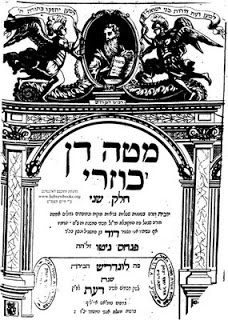


In 1968, Mossad ha-Rav Kook published an edition of the Mateh Dan based on the first printing. This edition is visually very nice, they did a nice job of laying out the sefer including a table of contents before each section of the sefer. But the notes although are helpful are very minimal [all quotes in this post are from this edition].

A few months ago a new English critical-edition of R. David Nieto’s Matteh Dan was translated from the Hebrew by Louis Loewe and completed by Raphael Loewe, published by the Spanish and Portuguese Jews’ Congregation of London, and Mechon Haktav of Jerusalem. This work was edited and prepared for publication by Yehuda Hershkowitz. This new edition is two volumes including a beautiful facsimile edition of the first printing on high quality paper leather bound. The facsimile volume reproduces the original edition of Hebrew with a Spanish translation on the side. The English translation had been done in 1845 by Louis Loewe. [I am aware that there is another English translation of this work published by Yashar Books, although it is only a partial translation and I never had a chance to see it.] This translation of L. Loewe was reprinted in this new set with some of the translation adjusted to our current English but as a whole remains the same. Many small useful notes were added in by the editors Raphael Loewe and Yehuda Hershkowitz. Besides for the nice interesting introduction by R. Loewe this new edition has an excellent overview by Yehuda Hershkowitz entitled “A Brief Survey of Calendar Making” (pp. 318-48). The purpose of Hershkowitz’s overview is to aid the reader in understanding the fifth section of Mateh Dan which deals with the calendar. Some other additions found in this edition were the many comments of R. Moshe Rimoni written in 1794 which were already included in the Mossad Rav Kook edition. In addition to this Yehuda Hershkowitz printed for the first time a manuscript from 1819 written by R. A. Lampronti about life on other planets.This manuscript comes from the now well known Valamadonna collection of Jack Lunzer.

I would like to highlight some of the very many points of interest in the Matteh Dan. The work pretty much starts where the Kuzari ends (hence the alternative title – Kuzari ha-Sheni), and the main focus of the Mateh Dan is to defend the legitimacy of Torah Shel bal Peh. It is written in debate format similar to the Kuzari. In the introduction of his work he writes:

ולפי שיש מחלוקות על מלך כוזר הראשון ועל מלכותו… יש אומרים שהרב המחבר המציא בדעתו מלך ומלכותו אשר לא היה ולא נברא. ויש אומרים שמעשה שהיה כך היה ככתוב בספר כדי שלא לאפושי במחלוקות על הכוזרי שלי אני מודיע נאמנה לכל קורא בספרי שלא נהיה כדברים האלה כי מלבני אני בודאם

The sefer is divided into five sections. In the first section he sets out to prove that the Jews always had Torah Shel Bal Peh from the times of Moshe and onwards. He shows how various Mitzvas its impossible to understand if we do not have Torah Shel Ba’al Peh. One of the many nice pieces in this section that he writes when dealing with the prohibition of carrying on Shabbas (p.12):

איסור משא קל כמעט שמפורש בתורה שהרי דוד המלך ע”ה אמר בדבר ה’ שמים נעשו ובכן היתה הבריאה ביום הראשון אמר השם יתברך יהי אור ויהי אור… ויכלו השמים והארץ וכל צבאם וכתבי וישבות ביום השביעי. נמצא שכששבת לא שבת אלא ממאמר בעלמא שהוא דבר שאינו יכול לגרום לו ליאות ויגעה משני טעמים חדא מפני שבו יתברך שהוא בלתי תכלית וכחו בלתי בעל תכלית לא יתכן ליאות ויגעה ב’ שאפילו תימה ח”ו שהיה ראוי לכך אי אפשר שייעף ויגע על הוצאת שתי מלות בכל יום בלבד נמצינו למדים שהקב”ה שבת ממה שלא היה יכול לייגעו בב’ טעמים, ולכן האיש הישראלי אשר ישבות ממשא כבד בלבד לא ישבות כמו ששבת הקב”ה אבל כשישבות אף ממשא קל אזי באמת שומר שבת מחללו ומחזיק בבריתו יתברך.

In section two he continues proving the truth of Torah Shel Bal Peh. A nice piece in this section is while proving that the esrog is the fruit the Torah requires one to take on Succos he writes (p.25):

בחג הסוכות אמר הכתוב ולקחתם… פרי עץ הדר… ואפשר שהכוונה היא על רמון נאה… אבל הם ז”ל פירשו שהוא אתרוג דווקא ופסלו כל מה שאינו אתרוג ממש כפי הסימנים אשר מסרונו אף על פי שיהיה מאותו המין, וזה גורם הוצאה רבה ועגמת נפש גדולה ליושבי ארצות ואקלים הקרים לפי שצריך שיביאו להם אתרוג מארץ הרחוקים לחוג בו את חג הסכות בהוצאה רבה. ולא עלתה תלונותי כי אין ציבור עני, אלא שלפעמים יש להם ההוצאה אבל לא השבח של המצוה כגון כשלא הגיע לידם אלא בתוך ימי החג או אחריו התאימין אדוני המלך שאנשים חכמים ונובנים בדו כל זה מלבם טעם ויסוד אחר אלא להתשרר על הצבור.

When dealing with the writing of the Mishnayos he writes (p.43):

אלא אפילו לאותן שנזכרו בהם תנאים באין חולק עליהם שכולם קבלה, לפי שרבינו הקודש לא היה אלא מלקט ומסדר ופוסק מה ששמע ואסף מימי התנאים אשר היו לפניו עד האחרונים אשר הוא אחד מהם.

When talking about asmactos he says (p.52):

אסמכתא… כח משפט חז”ל לסמוך העיקר המקובל על איזה פסוק אף על פי שהוא רחוק במטחוי קשתת מפשוטו, כי זה אינו אלא לעורר הזכירה. ובכן ברמז בעלמא סגי, כמו שעושין בני אדם, שקושרין קשר בסודר לזכור איזה דבר.

This understanding of asmactos follows the Rambam and other Rishonim yet there are other Rishonim disagree, at times rather sharply. For example, the Ritva who writes:

ומשום הכי קתני ר”ע שאמר הקב”ה אמרו לפני מלכיות זכרונות וכו’ שכל מה שיש לו אסמכתא מן הפסוק העיר הקב”ה שראוי לעשות כן אלא שלא קבעו חובה ומסרו לחכמים, וזה דבר ברור ואמת, ולא כדברי המפרשים האסמכתות שהוא כדרך סימן שנתנו חכמים ולא שכונת התורה לכך, חו ישתקע הדבר ולא יאמר שזו דעת מינות הוא, אבל התורה (העידה) [העירה] בכך ומסרה חיוב הדבר לקבעו [ל]חכמים אם ירצו כמו שנאמר ועשית על פי הדבר אשר יגידו לך, ולפיכך תמצא החכמים נותנין בכל מקום ראיה או זכר או אסמכתא לדבריהם מן התורה כלומר שאינם מחדשים דבר מלבם וכל תורה שבע”פ רמוזה בתורה שבכתב שהיא תמימה וח”ו שהיא חסירה כלום (ריטבא, ראש השנה דף טז ע”א).

This topic is dealt by many just to list some sources see: R. Yosef Engel, Beit Haotzar,1:190; R. Meshullam Roth, Shu”t Kol Mivasar, 2:21-22; Mivasar Ezra, 20-22; R. Yaakov Hayyim Sofer, Yeshurun 20:678; R. Yonah Martsbach, Aleh Yonah, 101-105; R. Gedaliah Nadel, Betorato Shel Rav Gedaliah, pp. 28-30; R. Gedaliah Nadel, Mila Dehespeda, pp. 130-31. In section three he discusses many specific points in regard to Torah Shel Bal Peh just to list some of the many interesting ones: When dealing with how exactly did arguments begin in Klal Yisrael in the times of the talmedei of Hillel and Shamaei he goes has a lengthy historical discussion of that period to explain what happened listing all the terrible decrees and persecutions that the Jews went through at that time. At the end the Kuzari asks him (p.65):

אבל מה תשיב על שכחת דברים הנוהגים בכל יום כגון קידוש והבדלה שמצינו בית שמאי ובית הלל חולקים בקידוש אם מברכין על היום תחילה או על היין וכן בהבדלה… וכי לא ראו ולא שמעו איך היו מקדשים אבותם ורבותם בשבתות וימים טובים, היאמן כי יספור ששכחו דברים כאלו שהם תמידים? אמר החבר: אין מקום לקושייתך משום דקי”ל סדר ברכות אין מעכבות… ולכן בראשונה כל אחד ואחד היה מקדים או מאחר שהיה רוצה, עד שבאו בית שמאי ובית הלל ועמדו למנין על סדר הברכות ונפסקו ההלכה. ואף על פי כן אם הקדים המאוחרת או איחר המוקדמת יצא. וכן יש לומר בכל המחלוקות שתמצא מזה המין…

[This answer applies to all such questions which others have dealt with at length like how did a argument between Rashi and Rabenu Tam evolve over the order of the Parshiyos in Tefilin why didn’t they check what previous generations did. The answer in short which is given is both were done by some.]

When dealing with the famous question dealt with by many of why can’t Amoraoim disagree with Tannoim he writes (p.68):

שלא חילקו האמוראים על התנאים מפני שהכירו שהיו גדולים מהם בכל הבחינות ודלא כמו שכתב הכסף משנה שקבלו על עצמם שלא לחלוק…

Then he writes that there is a constant yeridot ha-dorot when it comes to people’s knowledge (a point which not all agree with) so he wonders why do we say הלכה כבתראי. So he answers:

על דרך המשל הידוע שננס רוכב על גבי ענק רואה יותר ממה שרואה הענק אף על פי שהננס הוא כנמלה לגבי הענק.

Much has been written on this משל see the Alpha Beta Kadmita Deshmuel Zeriah from R. Shmuel Ashkenazi pp. 322-27; see also S. Leiman, “Dwarfs on the Shoulders of Giants,” Tradition 27:3, pp. 90-94 in both of these articles, the Kuzari Hashenei is not included. Just to add three more sources on the topic, not on either of the previously mentioned extensive lists see Simchat Hanefesh, p. 112; R. Y. Heller, Maoz Hadas, p.34b; A. Lipshitz, Avos Atorah Levonim. p. 175 n.6. On this topic in general see; I. Ta-Shmah, Halacha, Minhag Umitzyius Baskenaz, pp. 58-79; Daniel Sperber, Netivot Pesikah, p. 31 n.51, Joseph Davis, Yom-Tov Lipmann Heller Portrait of a Seventeenth- Century Rabbi, pp. 46-47, and A. Melamad, Al Kesefei Anakim. When listing the מצות דרבנן he writes that (p.72) they are:

מגלה, חנוכה, נר שבת ויום טוב, הלל , עירובין, נטילת ידים, יום טוב שני של גליות, שבעת ימי המשתה, שבעת ימי אבלות וארבע תעניות.

Not all agree with this listing as this topic has been discussed at great length in his usual incredible style by R. Shmuel Ashkanazi in Kovetz Beis Aron ve-Yisrael (issue # 35, pp. 97-114 and issue #38, pp.139-154). While discussing the reason why we do not blow Shofar when Rosh Hashonah falls out on shabas he writes about the masses of the Jews at the time (p.80):

שרוב עם בני ישראל היו עמי הארץ ומיעוטא דמיעוטא היו חכמים, וכיון שרובא היו עמי הארץ ממילא לא היו בקיאין בדוקדוקי מצות ולכן כשחל ראש השנה וסוכת בשבת ילך אצל בקי עם השופר או עם הלולב כדי שיתקע או יברך לו או כדי ללמוד נטילתו או ברכותו ויוליכנו ארבע אמות ברשות הרבים ויבוא לידי איסור סקילה ואף את יתרו בו לא ישמע לקול מוריו כי יאמר שאינו רוצה לבטל המצוה.

When discussing the topic of why we have two days of Yom Tov even thought we understand the calendar today he writes (p.83):

שאם מלך המושל בארץ ישראל קודם ביאת משיחנו ועודנו בגלות יתן רשות לישראל לשבת על אדמתם ולמנות עליהם סנהדרין יחזור העיבור ליושנו והיו מקדשין על פי הראיה כימי קדם קדמתה ואז לא היינו חוגגין לעולם יחד ביום אחד אלא לפעמים ג’ משום שכל דבר שבמנין צריך מנין אחר להתירו, וכיון שכל ישראל הרחוקים מארץ ישראל קבלו עליהם לעשות שני ימים להסתלק מן הספק, צריך שיסכימו כולם גם כן לבטל תקנה זו וזה איפשר דרך טבע מפני שאנו מפוזרים ומפורדים בין כל האומות העולם אחת הנה ואחת הנה ויש כמה וכמה מבני ישראל במדינות רחוקות, אשר אין אנו יודעים זה מזה ולא יש דרך הכרה ביניהם ובינינו בשום פנים, כגון במלכיות פרס והודו וכוש, ובמלכות גינה וטארטאריאה, כפי מה שמצאתי ראיתי בספרי המלחים והההלכים.

R. Menachem Kasher (Torah Shelemah, vol. 13, p. 129) already points out that the Meshech Chochma (Bo, 12:1) and others say the same thing. In section four he deals with many topics related to Chazal and their knowledge in science. He begins this section dealing with what exactly are the seforim chizonim that chazal prohibit one from learning and why are they prohibited (pp. 97-100). He is of the opinion as are many others that there is a connection between kabalah and philosophy (p. 98). He shows that chazal had great knowledge in philosophy (pp. 129-57), geometry, and mathematics including a whole lengthy discussion of the mathematical Gemaras in Succah (pp. 113-25). He also deals at great length showing there tremendous knowledge in understanding the calendar etc. (pp. 182-90). Many others have also shown Chazal knowledge in all areas of science just to mention one interesting work on the topic is R. Y. Kemhlar’s Hatalmud Vmadei Hatevel. In addition R. Nieto also has a lengthy discussion showing there expertise in the and anatomy of humans and animals (pp. 104-06). Others have also shown this for example see Meshiv Nefesh (p. 14b, 22a) R. Aron Marcus, Keses Hasofer (p. 78) and Hatalmud Vmadei Hatevel (p. 24). One additional source related to this is found in Chut Hamishulash (p.29a) where he writes about the Chasam Sofer:

לתכלית גדול הזה לברר הלכה לאמיתו ולהעמיד כל ענין על בוריו הי’ לו לכל שיעורי תורה כלים מיוחדים מדודים מאתו בדקדוק הדק היטב להראות לתלמידיו וכן הי’ לו בארגז מיוחד שני צורות תבנית זכר ונקבה מעשה אומן מופלא והיו נעשים פרקים פרקים וכל חלקי הפנימים מעשה חדש נפלא ללמוד וללמד חכמת הניתוח ולא הראה זה רק לתלמידים מובהקים אשר יראת ה’ אוצרם בעת למדו אתם הלכות נדה וכדומה.

After this R. Nieto brings that “the Kuzari asked him “(pp. 106-07) “I have no doubt that they knew science etc. but how did they have time to learn and time for the sciences”. To which R Nieto replied that they although some were real experts in science like Shmuel but most just knew what was necessary for them to understand those areas of Torah that required such knowledge.

R. David Nieto and life on other planets

He writes about life on other planets a very interesting thing (p. 128):

ר’ מאיר אגוז מצא תוכו אכל קליפתו זרק. וכן ראוי לנו לעשות בסברות חכמי האומות, שכל מה שהוא מנגד לתורתנו הקדושה והתמימה בין שבכתב בין שבעל פה שקץ תשקצנו ותעב תתעבנו כי חרם הוא, אבל מה שאינו נגד דבריה ולא נגד פירושה הרשות ביד כל איש ישראל להאמין או למאן בו לפי שכלו. ובכן כיון שאין שטן ואין פגע רע להאמין שכל הכוכבים בין המהלכים בין הקובעים בגלגל השמיני הם עולמות אשר בהם מכל בעלי חיים, בצדקתה החזקת ולא ארפה. ואפשר שלזה כיוונו רז”ל כשכתבו בסוף מסכת עוקצין עתיד הקבה הוא להנחיל לכל צדיק וצדיק שלש מאות ועשרה עולמו.

R. Pinchas Hurwitz in his Sefer Habris (pp.33-34) also says there could be life on other planets bringing proof from various Chazal and Zohar including the some of the same Chazal that R. Nieto uses.

However not everyone understands this Chazal literally just to list one other explanation R. A. Shor writes:

טעם מספר ש”י עולמות נראה לפי שעשרת הדברות יש בהן תר”ך אותיות נגד תרי”ג מצות ושבע מצות בני נח במספר כת”ר עליון ונראה שכנגדן יש לו לאדם תר”ך עולמות אלא לפי שהאדם נברא דו פרצופין זכר ונקבה ויקרא את שמם אדם וכן כל הנשמות זכר ונקבה נבראו ובין שניהם נשלם ונעשה האדם במלואו וטובו לשמור ולעשות את כל מצות ה’ לכך גם אותן תר”ך עולמות יחדיו יחלוקו מחציתן לזכר ומחציתן לנקבה והיינו ש”י עולמות לכל צדיק וצדיק (תורת חיים, סנהדרין, דף ק ע”א).

[On this Toras Chaim see R. S. Askanazi in Kovetz Beis Aron Vyisroel (issue #38, p.142)]. R. Yosef Zechariah Stern (Ma’amar Betalocas Aggaddos, p. 45) suggests even more that there is a printing mistake and it should say two (שני) not three hundred and ten (ש”י) worlds. [As an interesting bibliographical note R. Yakov Shor [Mishnat R. Yakov, p. 41] this chazal is not really the end of Ukztin rather it was stuck in from elsewhere because we like to end with something good]. This topic has been dealt with by many see for example the Ri Barcellona in his work on Sefer Yetzirah (pp.171-173) where he writes:

יח אלף עלמות שברא… שאפשר שזה העולם חביב לפניו יותר מכל שאר העלמות כי אולי באותן השאר עולמות לא נתן להם תורה… ואולי אפשר נמי לומר כי באותן היח עולמות אין בהם בריות בחטא ועון כמו באלה ואולי אותן הבריות מלאכים רוחות הן שברא המקום לכבודו או אולי קרובים להן והן בלא חטא שאין יצר הרע שולט בהן…

As mentioned earlier, Y. Hershkowitz printed for the first time a manuscript from R. Lampronti about life on other planets where the author deals with this topic at length. See also R. Chasdaei Crescas in Or Hashem (4:2), his rebbe, R. Albo in Ikryim (4:2); Ma’aseh Tuviyyah, 3:1; Sefer Elim, (p. 141a), Kol Yehudah (commentary on Kuzari 2:20 p. 68); Aryeh Kaplan, The Aryeh Kaplan Reader, pp. 170-75; A. Korman, Hemunah Hayisreleis, pp. 275-77; Evulutzyah ve-Yehadus pp.139-40; Y. Shabtei, Sha’ar Yosef vol. 1, p. 152; R. Kemeil, Shar Reveun, p. 269; N. Lamm in Challenge, pp. 354-98. When R. Nieto deals with the hard to understand famous Gemaras of Raba Bar Bar Chanah he writes (p.171):

שמא שנראה דבר תמוה ובלתי ראוי להאמין, כגון מה שסיפר רבה בר בר חנא מההוא טייעא, הוא דבר מורגל במקומות רחוקים מגלילותינו ואם נראה זר בעינינו הוא מפני חסרון ידיעתנו, לא מפני שהדבר בעצמו בלתי אפשר.

In section five he deals with explanation of how our calendar works very extensively and in depth. This section is not easy to understand if one does not have proper background.Just to mention one point from this section as its Inyana Deyomah and many are bothered with this issue – if the calendar according to Shmuel is off so why do we Pasken like him:

.(שמואל היה יודע שיעור שנת רב אדא ומכיר בו שהוא אמיתי ונכון, אך ביקש דרך קצרה וקלה להמון העם ואותה נתן להם למען ידעו בחשבון הגס שיעור השנה בקירוב בלי דקים וחלקים (ויכוח חמישי, אות קמו

[On this topic see: R. Alexander Moshe Lapides, Toras Hagoan R. Alexander Moshe pp.6-8; R. J. D. Bleich, Bircas Hachammah, pp.58-64; R. A. Brisk, Otzar Hazemanim, pp.223-226; R. M.M. Gerlitz, Bircas Hachamah KeHilchosah, pp. 145-59; R. Yehuda Hershkowitz, The Sun Cycle, pp. 137-38] Some other topics he deals with: are stars alive (pp. 125-26), how many Jews were there in the time of the second Beis ha-Mikdsash (pp. 79-80), the invention of the barometer and thermometer (p. 148) and a whole section on explaining the Thirteen Midos that we use to darshan (pp. 89-95). R. Nieto writes that R. Srug was a Talmid of Arizal (p. 99). This point has been dealt with by many, see the fabulous discussion by Y. Avivi in his recent classic work Kabballas ha-Ari (1:224-44); see also R. S. Deblitski, Benu Shenosu Dor Vedor, pp. 50-52; E. Katzman, Toldos Hamegalah Amukos, pp. 36-39; R. A. Marcus, Keses Hasofer, p.6. R. Nieto seems to hold that the Asra Harugei Malchus died during the same time frame (p. 64). This difficult historical riddle has been dealt with by many just to list some sources see Erchei Tanaim Vamorim, (Blau Ed.) vol. 2, pp. 708-15; S. Kraus in his series of articles in Hasholach 1925 (recently reprinted in Mered Bar Kochchba, pp. 239-76) and the recent book on the topic by E. Vilnar, Asreh Harugei Malchus printed by Mossad Rav Kook. R. Zev Rabanowitz writes when talking about this:

ובכלל רואים אנו, שמחברי אגדות כאלה לא היו בקיאים בדברי הימים ובסדרי הדורו, ורבותינו ז”ל הקדמונים בתמימותם האמינו לאגדות הכתובות וייסדו את פיוטיהם על פיהם למען עורר מספד והרבות בכי, ובזמננו מצוה להסירם מן המחזורים והקינות, כי דובר שקרים לא יכון נגד ה’ ותמה אני על הקדמונים שכבר ידעו ולא מחו מלומר פיוטים כאלה. ואולי מחו ולא נשמעו (שערי תורת בבל, עמ’ 410).

R. Nieto and Copernicus

One of the more famous things which R. Nieto is famous for is not accepting Nicolaus Copernicus‘s theories that the earth revolves around the sun and is not stationary.

He writes:

מיום ברוא אלהים אדם ועד קרוב לזמנו כל יושבי תבל ושוכני ארץ האמינו שהששה כוכבי לכת הם גופים חשוכים שמקבלים האור מהשמש, שהוא אחד מהם והגדול שבהם. ועתה האחרונים המציאו שהם ארצות ושהארץ אשר אנו יושבים היא אחת מהן, מפני שסוברים שהשמש באמצע בלי תנועה כמלך במסבו והששה מקיפים… ואם אדם ימאן בסברא הקודמת ויאמין בזאת תחזיקהו למין או אפיקורוס?… ודאי שמתקבלות על הסברא, אבל אין אנו יכולים להחזיק במונח הזה במה שהוא מבטל תנועת השמשף דביהושע כתיב שמש בגבעון דום … הרי שסובב והולך כשאר כוכבי לכת. ואף על פי שבעלי הסברא הזאת נתחבטו לתרץ הקושיא לריק יגיעו, כי אין תשובתם מספקת ולכן נטשתיה וגרשתיה מהסתפח בנחלת ה’… אמרו שהנביא אמר שמש בגבעון דום מפני המון העם דסבירא להו שהשמש מהלך ואינו יודע תנועת הארץ (כוזרי השני, ויכוח רביעי אות קי-קלב. וראה שם אות רנח, וויכוח חמישי אות ד).

The first reference to Copernicus, but not by name in Jewish literature, is by the Maharal who writes:

וכמו שבא אחד שהיה נקרא בעל תכונה חדשה, אשר נתן ציור אחר וכל אשר הבינו הראשונים אשר לפניהם ונתנו הראשונים ציור ומהלך לכוכבים ומזלות ולגרמים השמים סתר את כלם ונתן ציור חכמה חדשה רק שהוא עצמו כתב כי עדיין לא יוכל ליישב את הכל (נתיבות עולם, נתיב התורה, פרק יד).

[See Andre Neher in Jewish Thought and the Scientific Revolution of the Sixteenth Century (Littman Library, 1986), pp. 208-10]. The first reference to Copernicus by name in Jewish literature is by David Ganz in his small work Magen Dovid (of which only one known copy survives in Bodleian Library) first printed in Prague in 1612 (a year before he died). Quoted by Neher, idem p.1; see also, Y. Elbaum, Pseichot ve-Hestagrot, p. 250. What is even more interesting is this small work received Haskomos from R. Yom Tov Heller (author of the Tosfos Yom Tov), R. Ephraim Lenshitz (Klei Yakar) and R. Y. Cohen (son in law of Maharal) all these people were talmidim of the Maharal.[For a copy of this interesting and rare Haskamah of the Tosfos Yom Tov see; M. Hershkowitz, Shnei Kruvim, pp. 105-111; see also J. Davis, Yom-Tov Lipmann Heller Portrait of a Seventeenth- Century Rabbi, pp. 90-91. In Ganz’s other work, Nechmad Ve-Naim (which is really part of Magan Dovid), there is also reference to Copernicus but this work was first printed in 1743. Quoted by Neher, idem, p. 197. In both these works Ganz refers to Copernicus in a very positive light. Although, M.Steinschneider in Jewish Literature writes (p.262) that although Ganz was acquainted with the system of Copernicus Ganz follows the Ptolemaic system. But see the in depth discussion of Neher, idem, pp. 200-04, 224-28; see also A. Ziv, Ha-Ramah, p. 83. Another early reference to Copernicus is by R. Y. Delmedigo in Sefer Elim printed in 1629. In this work as well Copernicus is mentioned in a very positive light. What is even more significant about Ganz and Delmedigo endorsing of Copernicus is because besides for both of them being great Talmedei Chachamim they were both expert astronomers having trained by the worlds greatest experts of their times (Ganz by Tycho Brahe and Delmedigo by Galileo). [For more on Ganz in general see R. M. Strashun, Mivchar Kesavim pp. 234-42; A. Ziv, HaRamah, pp. 82-85;Y. Elbaum, Pseichos Vehestagros, pp. 250-52 and index]. However Nieto was not the only one to oppose Copernicus R. Tuviyyah Cohen did so earlier and much sharper as he writes in Masseh Tuviyyah first printed in 1707:

ראוי לכל פילסוף אלקי שיבטל דעת קופירניקוש ונלוים עליו כי כל אותן ראוי’ שהביא הוא וחבריו הם נגד כתבי הקדוש ודברי נבאי אמת הנאמנים בדבריהם מפני שכתוב בקהלת והארץ לעולם עומדת אבל כפי דעת קופירניקוש איננה עומדת כלל והשמש לא יזרח ולא ישקע… ואם כדבריו כן הוא למה כתוב וזרח השמש ובא השמש… הנך רואה שבכמה מקומות הפסוקים יתנו עידיהן ויצדקו שתשמש והלבנה יותר הכוכבים מסבבים סביב הארץ ולא שהארץ מסבבת סביב השמש ואם יבוא קופירניקוש בטענותיו וראיותיו ומופתיו כזביות אף אתה הקהה את שניו… ודע מה שתשיב לו כי בכור שטן הוא (מעשה טוביה, חלק ב, סוף פרק ג-ד).

[On R. Tuviyyah Cohen and Copernicus see David B. Ruderman, Jewish Thought and Scientific Discovery in Early Modern Europe, pp. 231 & 239-40.] Besides for these two Gedolim opposing Copernicus, R. Yonsan Eybshutz who was also knowledgeable in Astronomy was also opposed as he writes in 1779:

ועבור זה נתטפשו הרבה מתוכנ’ קופרניקוס וסעייתו באמרם שהארץ מסבב אבל שקר נחלו והאמת עד לעצמו כי הארץ לעולם עומדת… (יערות דבש, חלק א, דרוש ד, דף לו ע”א).

(Neher, idem, p. 253, is incorrect when he writes that Eybshutz was positive towards Copernicus’ theory). Here, again, we have Eybshutz’s antagonist, R. Yakov Emden, arguing and defending Copernicus as Emden writes:

ויקרא אלקים ליבשה ארץ… יש מפרשים מלשון רץ וכן פירשו רבותינו ז”ל שרצתה לעשות רצון קונה. ויהיה מזה גם כן סעד לדעת בעלי תכונה החדשה (קאפירניקוס) שהארץ סובבת, ולא תקשי מוהארץ לעולם עומדת [קהלת א’, ד’] כאשר מבואר במקום אחר בס”ד (סידור יעבץ, אשכול, ח”ב, מעמדות ליום שלישי, עמ’ תקפח).

As a bibliographical point the way R. Emeden concludes this piece is by saying כאשר מבואר במא בס”ד (and that is how it is in the first edition). For some reason some, (R. M.M. Gerlitz, Bircas Hachamah KeHilchosah, p. 31, Y. Bloch, Kuntres Hashemesh Begevorso, p.40 and some earlier prints of the siddur) understood this to be an abbreviation that R. Yakov Emden was referring to a work of his called מכתב אלקים which was never printed. While it true that he authored such a work it and it appears to have been lost but it does not talk about such topics based on the extant quotes [See Y. Rafel, Arshet, 3:276 & J. J. Schacter, “Rabbi Jacob Emden: Life and Major Works,” (PhD dissertation, Harvard University, 1988), p.143-144] we have from it from although one can never be sure for certain and the abbreviation could just mean simple כאשר מבואר במקום אחר בס”ד.

[On R. Emden comment see The Sun Cycle by R. Yehuda Hershkowitz p. 18 n.78; J. Elias edition of The Nineteen Letters, p.43]

Although R. Emden writes positively about Copernicus here elsewhere R. Emden writes very negatively about the science of astronomy on the whole including Copernicus:

חכמת התכונה של אומת העולם, רחוקה מכליותי לייחס דעת זו המגונה לרז”ל חלילה וחס להו לרבנן קדישי שיתפארו בחכמת הגויים. רעיוני אנשי העולם הבודים מלבם חכמה שאין לה עיקר ויסוד רק כפי העולה על רוחם נשענים על יסודות הנולדות במוחם לקרב כל דבר אל השכל להוליכו במנהגי הטבע המוחש. ועם כל זה הם עצמן נבוכים מאד. ומודים שאין מציאות אמתי לגלגל יוצא מרכז וגלגל נושא והדומה להם… והרבה כאלה קשות נמצאו באותה חכמה ונתחלקו לכתות כתות בהנחותיה ולא נחו ושקטו גלגלי רעיוניהם. עד שהמציאו תכונה חדשה לגמרי מקרוב באה לא שערוה ראשוניהם (וי”א שנמצא גם בקדמונים מאד מי שחשב עליה כזאת של קופירניקוס) יהי מה אינה ראויה להקרא חכמה כלל. אחר שאינה אל דמיונות ורעיונות ודתיה שונות כפי מחלוקת לבב בני אדם אשר חכמה מה להם… (עץ אבות, אבות פרק ג משנה יח).

[About R. Emden, Copernicus and astronomy in gerneral see: J. J. Schacter, “Rabbi Jacob Emden: Life and Major Works,” (PhD dissertation, Harvard University, 1988), p.620-621,685 nt.55].

André Neher, “Copernicus in the Hebraic Literature from the Sixteenth to the Eighteenth Century,” in Journal of the History of Ideas, Vol. 38, No. 2 (Apr. – Jun., 1977), pp. 211-26 and in his Jewish Thought and the Scientific Revolution of the Sixteenth Century (pp. 251-60) concludes (p. 253): “With the exception of the two earliest works, which we shall speak about in a moment, [Nieto and Cohen, E.B.] all the works on this list remained in the tradition of the pioneers of the sixteenth and seventeenth centuries: that is to say they were theologically positive towards Copernicus, even if they had practical reservations.” To demonstrate his point he lists many sources of mainstream Gedolim in favor of Copernicus.

Natan Slifkin writes in The Challenge of Creation (p.127): “It was not only the Church that strongly opposed the insights of Copernicus. With few exceptions, the rabbis of the seventeenth and eighteenth centuries condemned Copernican astronomy as being opposed to Scripture and as being scientifically flawed. It contradicted the simple meaning of the Scriptural statement that “the world stands forever”, as well as the account in Joshua of time halting by the sun miraculously standing still (as opposed to the earth standing still). “In a footnote listing sources for this statement, Slifkin also refers the reader to Neher; However, in reality, Neher concludes just the opposite. Another positive quote about Copernicus is found in the Yad HaKetnah first printed in 1800 anonymously:

לכת פילוסופים הקדמונים לפני שנים אלפים דעתם שכדור הארץ סובב תמיד. והשמים וכל צבאם עומדים. והפילוסופים שאחריהם קיימו וקבלו, שכל הגללים סובבים והארץ לעולם עומדת. ואחר כך בימים האחרונים זה קרוב לשלשה מאות שנים קם פילוסוף חכם מופלג והחזיק בדעת הקדמונים שהארץ סובבת והשמים עומדים. וחיבר על זה חיבר נפלא עמוק עמוק עד שמתקן כל דרכי התכונה לדעתו וכמובא בהקדמת הספר נחמד ונעים שחיבר בעל המחבר צמח דוד (יד הקטנה, שער י, שער דרכי הניסים, פרק ד).

There are those who show Copernicus theory is found in the Zohar:

ובספרא דרב המנונא סבא, פריש יתיר דהא כל ישובא מתגלגלא בעיגולא ככדור אלין לתתא ואלין לעילא וכל אינון בריין משניין בחזווייהו משינויא דאוירא כפום כל אתר ואתר וקיימין בקיומייהו כשאר בני נשא, ועל דא אית אתר בישובא כד נהיר לאלין חשיך לאלין לאלין יממא ולאלין ליליא, ואית אתר דכוליה יממא ולא אשתכח ביה ליליא בר בשעתא חדא זעירא )זוהר, ויקרא, דף י ע”א).

R. Herzog writes about this (translated from English):

תיאוריה הקשורה לשמו של קופרניקוס… הענין מוזכר באופן לא מפורש במקורות התנאיים. ניסוח מלא ישנו בזוהר בפסקה המצוטטת משמו של רב במנונא סבא. שאלת ייחוסו של ספר הזוהר אינה נוגעת לעניין כי רבי משה די לאון שאליו מייחסים המבקרים את החיבור הנפלא נפטר זמן רב לפני קופרניקוס… (יהדות חוק ומוסר, עמ’ 102)

R. Aron Marcus, writes about this:

יש לציין כי הזוהר מבטל את השיטה הפטולמאית, כבלתי מדעית ונוטה לצד השיטה הקופרניקאית, שהקדים אותה במאות שנים. נוסף על כך לפי דעתו של ר’ שמעון בר יוחאי, הרי השקפות של בני דורו בשטח התכונה, אינן אלא סברות של הדיוטות… (החסידות, תל אביב תשיד, עמ’ 78.).

Interestingly enough A. Neher claims in his Jewish Thought and the Scientific Revolution of the Sixteenth Century (pp. 104-05) that one could imagine that this was written by a pupil of Copernicus! The truth is that R. Yakov Emden on this Zohar writes

:כל ענין זה הולך על דרך חכמי מחקר לא על דרך רז”ל בתלמוד (מטפחת ספרים, עמ’ לז).

However R. Moshe Kuntz (Ben Yochai, p. 81) does not have a problem with Chazal saying this including the Zohar as he has other indications from Chazal like this. But others show that there might be a contradiction in the Zohar about this [see: R. Shpitzer, Nevrashet, Vol.2, p.18a; R. M.M. Gerlitz, Bircas Hachamah KeHilchosah, pp.29-30 and Y. Bloch, Kuntres Hashemesh Begevorso, pp.21-22]. C. Solonski in his introduction to his Kochva Deshvet, (p.14) also brings this Zohar to show that Chazal held like Copenicus. R. P. Hurwitz in his Sefer Habris (p.99) brings the Zohar when dealing with Copernicus but after a lengthy discussion he concludes by disagreeing with Copernicus (pp.98-102). [About this Zohar, See also R. Schick, Seder Haminhaghim, 2:24b; Y. Levi, The Science in Torah, pp.115]. The Chasam Sofer who was known for his knowledge in astronomy [see: Chut Hamishlush p. 29a & Zichronis Vmesoros Al Hachasam Sofer, pp. 58, 102, 305] writes about Copernicus in a work he started writing on astronomy (see ibid p.305) after quoting the Yavetz:

מעניני גלגלים וככבי לכת… . דמזה סיוע לכת קאפירניקוס שהארץ סובבת, ולא תקשי מוהארץ לעולם עומדת כאשר מבואר במקום אחר, עכ”ד. הנה במ”ש שאין קושיא מוהארץ לעולם עומדת, הדין עמו לפע”ד, לא דבר שם מסיבובי ארץ בגלגל, כי גם לדעת הזאת אין הכוונה שהארץ תסוב על צירה, אלא כל הכדור היסודות כמות שהוא, הוא מתגלגל, אשר הארץ באמצעי לו… מכל מקום אין בידי לדחות קופארניקוס ולא צד שכנגדו כי ראיותיהם עצומות משני הצדדים. ולדעת אותה הכת יש לנו תנועה חדשה, מלבד ג’ תנועות שהזכרתי בפרק דלעיל שסימנם אמ”י, ועתה יתחדש התנועה הסבובי’, אמנם אין לנו עסק בדעת זאת הכת, ונייח (ונייחס) תנועה הסבובי’ לגלגלים שאין להם תנועה אחרת זולתי הסבובים הלז (שות חתס, קובץ תשובות, סי’ כו, לאחרונה נדפס גם במאורות הסופר, עניני קידוש החמה, עמ’ צח).

[As an aside the Chasam Sofer was a very big fan of the Yavetz besides for what he writes about Mitpachat Seforim:

הנה נמצא בשכונתך ס’ מטפחת ספרים למהריעב”ץ תמצא שם כי דבר גדול דבר הנביא ז”ל בענין זה הלא ישתוממו רואיו וד”ל (שות חתס, חו”מ ליקוטים, סי’ נט)

See also B. Hamberger, Moriah, 17:1 pp.237-238 who cites many sources about the Chasam Sofer and Yavetz]. Elsewhere the Chasam Sofer writes about Copernicus:

אשר חלק ה’ אותם לכל העמים יש לפרש על פי דאיתא דקופערניקוס אחד מחכמי העמים אמר דהארץ סובבת לקבל אור השמש דאיך עצם השמים הטהורה יסבב וישמש את הארץ והאחרים הביאו ראייה כנכדו דאם הארץ מסבב איך אפשר שיזרוק חץ בעוף וישיגהו ויפול שם כיון שהארץ כבר השתנה מקומה ועל זה השיב די”ל דהארץ וכל אשר עליה וגם האויר מסבב האמנם ראייותיו מכח השכל שאינו רואי שישמש העליון לתחתון הוא רק לפי דיעות האומת העולם אבל לנו בני ישראל אדרבא הארץ אשר בה בני אדם וישראל עם קדושו הם תכלית הבריאה ובעבורם נברא העולם תבל וכל אשר בה וגלגלי השמים ושמי השמים לצורך האדם ואם כן ראוי שישמשו שאר חלקי העולם לעולם התחתון שבו ישראל וגם עי”ז כל העולמות הם אחד ולתכלית אחד נברא דלא כדעת האוה”ע שכל אחד הוא עולם בפני עצמו ולתכליתו נברא וזה שאמר אשר חלק ה’ אותם לכל העמים דאצלם הוא חלק משא”כ אצלנו הכל חד (תורת משה, פ’ ואתחנן, דף טו ע”א).

R. Y. Margolis a Talmid of the Chasam Sofer who also was an expert on astronomy (Zichronis Vmesoros Al Hachasam Sofer, p.305) writes:

אמנם מי שיאמן בה’ ובתורתו ויאמן כי הקב”ה בא במתן תורה ונגלה על סיני הר קטן לא יוקשה אם השמש שהיא א’ ממשרתיו תשמש את הארץ אשר עליה האדם הלומד התורה הזאת, וראי’ מבוררת ממה שאמר הכתוב ויתן אותם אלקים ברקיע השמים להאיר על הארץ הרי’ מבואר כי המאורות הגדולים נבראו להשתמש את הארץ (חזון למועד, סי’ א אות א, וראה גם סוף סי’ח וסי’ ט אות ד).

In 1889 R. Y Ginsburg, printed a sefer on astronomy called Ittim Levinah he endorses Copernicus theories in a few places in the sefer (pp. 7,9 & 409-10). The significance of this sefer is that it received many nice Haskomos from great Gedolim in Europe of the time (over twenty are printed and he received even more) amongst them the Adres, R. Eliezer Moshe Horowitz, R. Eliezer Gordon and R. Eliyhua Chaim Miesles.[See also Archos Rabenu, 1:282-283]. However a few years later a work was printed in Jerusalem called Nevrashet through out the work the author R. Shpitzer attempts to “prove” that Copernicus is wrong scientificaly and is against the Torah (see for example vol. 1, pp. 30b-36b, Vol.2, pp. 5a-12a,14b-17a). He goes so far as to write (1:31a) that none of the Rabonim who gave haskomos to the sefer Ittim Levinah noticed that he goes with Copernicus theories. He brings someone (2:17b) who says that R. Y. Leib Diskin was asked how does Copernicus work out with the Torah:

וזרח השמש ובא השמש וגו’ וענה לו שהכתוב אמר לפי ראות עיני האדם.

But he denies that R. Y. Leib Diskin ever said such a thing [see also Y. Bloch, Kuntres Hashemesh Begevorso p.40]. Even recently there are those who still say that Copernicus is Kefirah see here. Other recent source that do not appear to acknowledge Copernicus is Bircas Hachammah called Otzar Hazemanim by R. A. Brisk where he writes (p.3):

מעגל היומי של השמש: השמש סובבת את הארץ בכל יום… ובהערה 5: יש לציין כי לאסטרונמיה המודרנית ישנה הבנה אחרת בכל מהלכי גרמי השמים היא טעונת שהארץ סובבת סביב השמש ולא השמש סביב הארץ…

Even more recently Y. Bloch put out a booklet called Kuntres Hashemesh Begevorso, 56 pages long demonstrating that Copernicus besides for being against the Torah is false scientifically. In Bircat Hachamah Betekufoseah, R. Genot brings (p.131) from R. Chaim Kanievseky who says:

כי הנוקט כך הריהו כמכחיש מסורת וכופר באמונתנו.

On Copernicus see: Arshet, 2:190 it appears that there was an argument about this between R. A. Worms author of Meorei Or and E. Carmoly [thanks to Dan Rabinowitz for this source]; M. Steinschneider, Jewish Literature, p. 190; C. Solonski, Kochva Deshvet, pp.7-9; R. Zvi Cohen, Bircat Hachamah, pp. 65-68; A. Korman, Evulutzyah Vyehadus pp. 52; R. M.M. Gerlitz, Bircas Hachamah KeHilchosah, pp.26-34; see also N. Gutel in Hishtanyois Nateviyum Be-halacha pp. 172, 183 where he deals with R. Lampronti’s opinion in Pachad Yitzchack on this and p. 190 where he deals with R. Kook’s approach to this. See, David B. Ruderman, Jewish Thought and Scientific Discovery in Early Modern Europe, pp. 266-67 regarding R. Lampronti’s opinion; see also idem, p. 351; David B. Ruderman, Kabbalah, Magic and Science, pp. 99-100; J. Davis, Yom-Tov Lipmann Heller Portrait of a Seventeenth- Century Rabbi, p.167; see also the very recent excellent doctorate of Shua Englman, Harav Samuel Strashun (HaRaShaSh) VHaggahot Al Talmud Bavli, Bar Ilan 2009, p.223. [See also some comments in this thread.]

After completing this post R. Chaim Rapoport sent me an article of his on Jewish attitudes on Copernicus which will be published shortly, in the next Or Yisroel (I did not incorporate any of his sources into this post). See also his Bircat Hachamah Al Pei Minhag Chabad, pp.48-50. [My understanding of this topic in general was enhanced greatly from the work of André Neher, ‘Copernicus in the Hebraic Literature from the Sixteenth to the Eighteenth Century’ in Journal of the History of Ideas, Vol. 38, No. 2 (Apr. – Jun., 1977), pp. 211-226 and in his Jewish Thought and the Scientific Revolution of the Sixteenth Century especially pp. 169-228 & 251-60, but see Y. Tzvi Langerman’s reservations about Nehr’s work in Langerman’s review of Nehr’s work in Isis, vol. 81, no. 1, (Mar. 1990), pp. 105-07, (thanks to Dr. J. Brown for this source)]. In conclusion this sefer is full of important information it’s a shame that none of the editions I have seen have a proper index to the sefer. However as one can see from just from the few samples I brought this sefer has a wealth of material and should be studied. One only hopes that someone will collect all of R. Nieto’s writings translate them (both in other languages and from manuscript) into Hebrew and print a critical edition of these works including a real critical edition of this sefer Mateh Don. Until than one will have to do with this useful new edition. This edition is available for purchase by Biegeleisen, and for more information contact Yehuda Herskowitz at seforimlover-at-yahoo.com.

Kuntres Hashemesh Begevorso

I mentioned the recent booklet printed by R. Y. Bloch called Kuntres Hashemesh Begevorso, 56 pages long demonstrating that Copernicus besides for being against the Torah is false scientifically. I am not in any way qualified to deal with the scientific aspects of this booklet but I would like to point out some inaccuracies in the booklet not dealing with science. In the beginning he writes how the Rambam already writes not like Copernicus (pp. 9-11), that the earth is stationary and its Kefirah to go against this (I am just writing the gist as he builds it up much better but my point is still true) even though some say that the Rambam in the first four chapters of Hiclos Maadah is not Torah so one can argue on but he claims that this is a false Shita about the Rambam and it is against our Emunah to say such a thing he writes:

והגיד לי מרן הגאון רבי יהודה זאב סגל זצוקל המ”מ ממאנטשעסטר דאפילו הי’ אומר כן בעל החת”ם סופר או הנודע ביהודה לא היינו מקבלים דברים כאלה ממנו…

Now the first problem with this is that we have a very well known Godol who does say exactly what R. Bloch says is kefirah to say and that is R. Yakov Kamentsky who writes:

ודברי הרמב”ן אלה הם שעמדו לי בשעה שראינו איך שבני אדם יורדים מעל המטוס על ידי סולם על גלגל הלבנה וחשבתי בלבי מה יענה כעת הרמב”ם ז”ל שכתב שהלבנה היא בעלה צורה רוחנית… אבל כפי שאנחנו מתייחסים לדברי הראשונים שסוברים אנו בגדר של אלו ואלו דברי אלקים חיים אם כן אע”פ שבמקום זה אין הלכה כמותו אבל שיהיו דבריו דברי טעות לא יכלתי להשלים, ואם טעה הרמב”ם בהלכות יסודי התורה מדוע לא יטעה בהלכות שבת וכדומה? והנראה בזה דהנה לכאורה יש לתמוה על כל העינינם שכתב הרמב”ם בארבע הפרקים הראשונים של הלכות יסודי התורה…ובעל כרחנו אנו צריכין לומר שמה שמסר לנו הרמב”ם בפרקים אלו אין זה לא מעשה מרכבה ולא מעשה בראשית אלא כתב כל הד’ פרקים אלה מדעתו הרחבה מתוך ידיעות בחכמת חציונות כלומר שלא מחכמת התורה… ואין לדמות טעויות בהלכות אלו לטעויות בהלכות שבת וכדומה (אמת ליעקב על התורה, עמ’ טו-טז).

[He is not the only one to say such a thing see: Sefer Habris, pp.27-28 & my Bein Kesah L’Asur, p.182].

However, even if one does not want to side with R. Yakov Kamentsky, one can turn to the Rambam himself and what he writes about Chazal’s knowledge of astronomy:

לא תבקש ממני שיסכים כל מה שזכרוהו מענין התכונה למה שהענין נמצא, כי החכמות הלמודיות היו בזמנים ההם חסרות, ולא דברו בהם על דרך קבלה מן הנביאים, אבל מאשר הם חכמי הדורות בענינים ההם, או מאשר שמעום מחכמי הדורות ההם, ולא מפני זה אומר בדברים שאמצא להם שהם מסכימים לאמת שהם בלתי אמתיות או נפלו במקרה, אבל כל מה שאפשר לפרש דברי האדם עד שיסכים למציאות אשר התבאר מציאותו במופת, הוא יותר ראוי באדם המעולה המודה על האמת לעשותו (מורה נבוכים, חלק ג סוף פרק יד).

So if the Rambam could write such a thing on chazal so why can’t somone say the same about the Rambam’s knowledge of astronomy [See also R. Gedaliah Nadel, Betoroso Shel R’ Gedaliah, pp. 79-80].Another mistake in this work is on p. 42 R. Y. Bloch writes that Tycho Brahe was a friend of R. Yonsan Eybshutz. That is simply impossible as Tycho Brahe was born in 1546 and died in 1601 and R. Yonsan Eybshutz was born in 1690! Another inaccuracy in this work is that he claims that the Chasam Sofer was against Copernicus (pp. 32-34) but he fails to quote the statement of the Chasam Sofer in its entirety which is quoted above where the Chasam Sofer specifically writes about Copernicus:

דמזה סיוע לכת קאפירניקוס שהארץ סובבת, ולא תקשי מוהארץ לעולם עומדת כאשר מבואר במקום אחר, עכ”ד. הנה במ”ש שאין קושיא מוהארץ לעולם עומדת, הדין עמו לפע”ד, לא דבר שם מסיבובי ארץ בגלגל, כי גם לדעת הזאת אין הכוונה שהארץ תסוב על צירה, אלא כל הכדור היסודות כמות שהוא, הוא מתגלגל, אשר הארץ באמצעי לו… מכל מקום אין בידי לדחות קופארניקוס ולא צד שכנגדו כי ראיותיהם עצומות משני הצדדים. ..

He only quotes the last line which I put in bold but not the whole piece which shows the Chasam Sofer did not hold its in issue when it contradicts the possuk. Furthermore he gives much more weight to what I brought earlier from Chasam Sofer in Toras Moshe than this piece which is a work on the topic of astronomy. One last point about this work is that he says it is also very problematic to claim דברה תורה כלשון בני אדם to answer all the Pesokim against Copernicus (pp. 23-25). On this a great godol R. Yonah Martzbach who besides for being a Rosh Yeshiva of Kol Torah with R. Shlomo Zalman Aurbach, Martzbach was also a mathametician [On R. Yonah Martzbach see the excellent work from R. B. Hamberger, R. Yonah Martzbach Pirkei Chayov Darco Upolov], writes at length specifically when dealing with Copernicus and says it is not Kefirah and he specifically says that

דברה תורה כלשון בני אדם: לבעלי רוח הקדוש ולהם בלבד מתגלים דברי הטבע וחוקיו מתוך פסוקי המקרא בדברי חז”ל. אנשים אחרים עלולים לטעות בהם. לא נכתבה תורה להיות ספר מדעי הטבע ולא לשם כך אמרו חז”ל מה שאמרו. מי שרצה והיו אי פעם כאלה להוכיח שיש קצת לשמים ממזרח וממעריב, ושהאדמה שטח היא ולא כדורית, הסתמכו על מאמרי חז”ל וטעו, כי לא הבינו ש’דיברה תורה כלשון בני אדם’… וכן דיברו חז”ל, וכן מצוי במליצות תפלותינו ותשבחותינו, ואין המלים אלא לבוש חציוני לדברים עמוקים מאוד מאוד, וחידות להביע בהם סודות… ויש שדיברו בלשון ידיעות תקופתם אל בני דורם. וככל שאדם ירחיב ידיעותיו ישנה דיבורו, אלא שדבר ה’ יעמוד לנצח ודברו ניצב בהלכותיו וברעיונתיהם הנשגבים ומחשבותיהם הטמונות בלבוש דבריהם (עלה יונה, עמ’ עג-עד).

This Kuntres Hashemesh Begevorso is available for purchase at Biegeleisen and Girsa.


The Vilna Gaon, part 3 (Review of Eliyahu Stern, The Genius) by Marc B. Shapiro

The Vilna Gaon, part 3 (Review of Eliyahu Stern, The Genius)
by Marc B. Shapiro
In honor of Sean Penn and Mark Wahlberg, who understand what pidyon shevuyim is all about.
Continued from here.Returning to R. Sternbuch’s Ta’am ve-Da’at, vol. 1, earlier in this book, p. 88, we find the following passage.
שמעתי ממרן הגריז”ס זצ”ל (הגאב”ד דבריסק) שאברהם אבינו לא היה עצבני וחושש ומפחד שהולך לשחוט בנו יחידו, אלא היה לו הלילה שלפני העקדה ככל הלילות, ולא נתרגש מצווי זה וקם בבוקר לקיים המצוה כשם שמקיימים כל מצוה, והשכים כזריזין שמקדימים למצוות, ושש ושמח לקיים מצות בוראו
According to R. Velvel Soloveitchik, Abraham was not emotionally affected by the command  to sacrifice Isaac, and on the night before he was to go to Mt. Moriah he slept as well as on any other night. He approached this commandment like any other commandment, and was ready to do it with joy. It is hardly an accident that the Abraham described by R. Velvel very much resembles R. Velvel himself. See also my earlier post here. [1]

Yet doesn’t R. Velvel’s understanding conflict with the notion that the Akedah was a test or trial? What kind of test was it if Abraham related to this command just like any other?


The Gaon is quoted as having a different perspective on the Akedah.[2] According to him, since Abraham was engaged in acts of loving kindness all the time, this commandment was designed to develop in him the attribute of cruelty, which is also required at times.
וז”ש כאן בעקידה עתה ידעתי כי ירא אלקים אתה, לפי שקודם לכן לא היה אלא רחמן מאד שהיה מכניס אורחים וגומל חסדים. אבל המדה של אכזריות ולכוף א”ע ולקיים מצות הבורא ית’ עדיין לא היה ניכר בו והיו יכולים לומר שאברהם איננו צדיק גמור ח”ו. אבל בעקידה שעשה ג”כ מדת אכזריות שרצה בכל אות נפשו לקיים מצות הבורא ולשחוט את בנו יחידו אשר בו תלוי כל חיותו א”כ עתה נשלם וניכר שהוא צדיק גמור
The Gaon connects this to the commandment to send away the mother bird before taking the eggs. In the Guide 3:48, Maimonides understands this as designed to avoid cruelty to the mother bird. However, the Gaon has the exact opposite interpretation. He assumes that sending away the mother is very cruel, and that is the entire point of the commandment. He points out that in only two commandments does the Torah promise long life. One is respect for parents, which is about compassion. The other is sending away the mother bird, which is about cruelty, The complete personality, i.e., the tzaddik, needs to have both of these characteristics.
לפי שאין השלימות ניכר באדם אלא כשיש לו מדות הפוכות, כגון מדת רחמנות ואכזרות

As the Gaon explains, if someone had only one of these characteristics, you could say that this was just his nature. However, when you see in the same person the opposite characteristics of compassion and currently, applied at different times, this shows that the person is a tzaddik. This also explains why God gave commandments that are characterized by compassion as well as commandments that cause one to act with cruelty.(R. Moses Cordovero writes that “kindness is not valued in an individual who is naturally kind, only in a person who overcomes his inclination to act contrary [to the dictates of kindness].” See Or YakarHayyei Sarah, p. 110, translation in Paul B. Fenton, “The Banished Brother: Islam in Jewish Thought and Faith,” in Alon-Goshen-Gottstein and Eugene Korn, eds. Jewish Theology and World Religions [Oxford, 2012], p. 251.)

Directly before this explanation in Divrei Eliyahu, the Gaon discusses God’s commandment to Abraham to circumcise himself and every newborn boy. According to the Gaon, Abraham was in doubt whether he should fulfill the commandment, since the requirement of such a practice would discourage the pagans from conversion. He thought that perhaps it would be better for him to disobey God’s command, and give up his heavenly reward, in order to increase believers in the world.
נתיירא אאע”ה שמא עי”ז לא ימשכו אחריו הבאים להתגייר ונוח היה לו להפסיד לעצמו משכרו הטוב ורק לקבץ מאמינים בעולם
Not knowing what to do, Abraham consulted with Aner, Eshkol, and Mamre, and the first two advised not doing the circumcision, but Mamre advised him to listen to God and that is what he did.
This is a development of an older theme that appears in a number of midrashim and is alluded to in Rashi, Genesis 18:1. According to these sources, Abraham was indeed unsure whether to listen to God, but none of the midrashim offer a reason for Abraham’s hesitation. [3] The midrashic notion that Abraham hesitated over following God’s command is quite startling, and many commentators deal with it in all sorts of creative ways.[4] The Gaon softens the difficulty somewhat by explaining that Abraham was not in doubt regarding whether to follow God’s command because he was afraid of the procedure, but his motivation was much more exalted. Yet the Gaon’s explanation is somewhat difficult because the midrashim have Mamre convincing Abraham to do the procedure by reminding him how God saved him from the fiery furnace or how in general God has always watched over him, and there is thus no justification for ignoring His command. This implies that Abraham’s reason for hesitation was fear over the operation rather than concern that his proselytizing efforts would suffer.
I would love to know what R. Velvel would say about these midrashim, which show Abraham in a very different light than the way he describes the Patriarch.
Finally, let me mention a story famous in Habad and recorded by the Lubavitcher Rebbe in various places. It shows an attitude entirely at odds with the sort of piety we saw in the last post. Here is a selection from the Rebbe’s letter in Iggerot Kodesh, vol. 22, no. 8558 (p. 366). The translation is taken from here.
The Alter Rebbe shared his house with his oldest married son, Rabbi Dov Ber (who later succeeded him as the Mitteler Rebbe). Rabbi Dov Ber was known for his unusual power of concentration. Once, when Rabbi Dov Ber was engrossed in learning, his baby, sleeping in its cradle nearby, fell out and began to cry. The infant’s father did not hear the baby’s cries. But the infant’s grandfather, the Alter Rebbe, also engrossed in his studies in his room on the upper floor at the time, most certainly did. He interrupted his studies, went downstairs, picked the baby up, soothed it and replaced it in its cradle. Through all this Rabbi Dov Ber remained quite oblivious.
Subsequently, the Alter Rebbe admonished his son: “No matter how engrossed one may be in the loftiest occupation, one must never remain insensitive to the cry of a child.”[5]

In the last post I showed examples of removing material from the English translation of a Hebrew book, so as not to scandalize the English reader. Here is another example. The Hebrew text comes from Shimon Yosef Meller’s biography of R. Velvel Soloveitchik, Ha-Rav mi-Brisk (Jerusalem, 2006), vol. 2, pp. 546-547. I previously mentioned this passage here.

Here is the relevant page in the translation, The Brisker Rav (Jerusalem, 2009), vol. 2, p. 573, and you can see that the story I am referring to has been removed.


For another story about vomiting, see the following passage which comes from the introduction of the Gaon’s sons to his commentary on the Shulhan Arukh.


Here is a similar story recorded about R. Yisrael Salanter.[6]

Whether these stories actually happened is not important. What is important is that they were regarded as examples of piety in those days, while today if someone would act this way people would feel revulsion. In fact, since people had such a different response years ago, there is no need to assume that the stories did not happen simply because today the stories seem impossible. When it comes to what people regard as appropriate, one sees enormous changes between generations and cultures. An obvious example is the matter of homosexuality. While a century ago this was pretty much universally regarded as repulsive, among today’s younger generation of college educated people you would be hard pressed to find anyone to say this (as I can attest from interactions with hundreds of college-age students). Even among the halakhically observant, i.e., those who accept the prohibition on homosexuality, many do not regard it as inherently repulsive.

When it comes to The Brisker Rav, I have to confess that I was also certain that another passage would be removed, and it was not. I have in mind vol. 3, p. 428 n. 19 (the last paragraph).[7]

P. 140: Stern cites a comment that appears on every other page in R. Israel Salanter’s journal Tevunah:
All laws concerning monetary transactions have absolutely no practical authority. For we follow the law of the land. And this is the meaning of the great principle of “the law of the land is final.” We study, analyze, and debate monetary topics in the same way in which we study the laws of donations to the temple, tithes, sacrifices and purities, which are not practiced today. They are discussed only in terms of fulfilling our duty to study the Torah.
Upon this, Stern remarks, “While one cannot discount the pressures of governmental censorship that may have contributed to this position, still it marks an important development in rabbinic history. As Elchanan Reiner correctly notes, ‘Diverting attention from the actual ruling to the text itself, namely to the very practice of interpretation, constitutes a dramatic shift in the history of knowledge.’”
I don’t accept this at all. There is no question that the words quoted from Tevunah were directed towards non-Jewish governmental authorities, if not in Germany (where the journal was published), certainly in Russia, where the journal would find its major readership. How is this an important development, and how does it relate to Reiner’s point (made in an entirely different context) when every Jew who read these words understood that that they were not to be taken seriously, any more than the passages on the second page of many rabbinic books stating that all references to non-Jews only refer to pagans in places like China and India?
Let me make just a few more comments about the Gaon. Some people refer to him as Rabbi Elijah Kramer. When I first saw this name a number of years ago, I didn’t know who was being referred to since I had never heard of any Elijah Kramer. The first reference in print to Elijah Kramer (or Kremer) that I have been able to discover is Maurice Samuel’s 1963 book, Little Did I Know, p. 257. (If anyone is aware of an earlier reference, please let me know) The name was later made popular after appearing in the title of Yaacov Dovid Shulman’s 1994 book, The Vilna Gaon: The Story of Rabbi Eliyahu Kramer.[8]

If this post does nothing else, I hope it puts an end to this mistaken practice. The Vilna Gaon was not named Kramer! He was descended from someone named R. Moses Kramer (his great-great grandfather), but the Gaon never used this name and no one ever used it about him, so it is a mistake to call him this.[9] See also note 1 in S.’s post here.
The mistake of referring to the Gaon as Kramer appears in a 2012 book by Rabbis Berel Wein and Warren Goldstein, The Legacy: Teachings for Life from the Great Lithuanian Rabbis, p. 130. The particular chapter I refer to was written by Wein, and on the same page that he mentions Kramer he refers to the Gaon’s foremost student as “Rabbi Chaim Rabinowitz”. As far as I know, this is the first time R. Chaim of Volozhin has been given the last name Rabinowitz, and I have no idea what led Wein to write this. Perhaps there was some confusion between R. Chaim of Volozhin and R. Chaim Rabinowitz of Telz.
This book (which I do recommend) has an approbation by R. Shmuel Kamenetsky in which he writes that “everything in it is true.” I am inclined to think that R. Kamenetsky was only referring to the larger issues discussed in the book rather than attesting to the accuracy of every fact. There is an old saying
כשם שאין בר בלא תבן כך אין ספר ללא טעויות
We can update this saying by adding the word “blog post” after the word “sefer”.
Bezalel Naor has published the following letter he wrote to Elliot Wolfson.
Have you read the new book by Eliyahu Stern, The Genius: Elijah of Vilna and the Making of Modern Judaism (New Haven: Yale University Press, 2013)? In a lengthy endnote on pp. 196-198 (note 19), Stern polemicizes against your reading of the Vilna Gaon’s interpretation of “sefer ve-sefer ve-sippur” (Sefer Yetsirah 1:1). Stern refers to your essay “From Sealed Book to Open Text: Time, Memory, and Narrativity in Kabbalistic Hermeneutics,” Interpreting Judaism in a Postmodern Age, ed. Steven Kepnes (New York: New York University Press, 1996), pp. 145-178, especially footnote 14.
Not wishing to rely on memory alone, I consulted the beginning of the Bi’ur ha-GRA le-Sifra di-Tseni’uta:

Sifra–A book (sefer) is the revelation of the thought, for the thought is closed within man and is revealed only by his speech or by his writing. And so En Sof was revealed, and created the world for [the purpose of] revelation and to make Himself known, as it says in the Zohar, and so the tikkunim that are explained in the continuation [of Sifra di-Tseni’uta] also [come about] through these two things, as it says in Sefer Yetsirah (The Book of Creation), “and [He] created His world with book, book and narrative (sefer ve-sefer ve-sippur). The matter of the two books and [single] narrative is due to the fact that in speech, at one stroke his thought is revealed, whereas in a book it takes two times: once when he writes and his thought is revealed in the world, but the book is yet closed; and a second time when the book is read and then revealed. But in speech, both are included at one time.” (Elijah of Vilna, Bi’ur ha-GRA le-Sifra di-Tseni’uta, ed. Bezalel Naor [Jerusalem, 1997], 1a)Elliot, your understanding of the passage is sound. On the other hand, Stern’s translation of the first term ”sefer” (which he is forced to revocalize “sefar”) as “mathematics,” would appear to be without foundation. As for the revocalization from sefer to sefar, Stern has drawn on Yosef Avivi, whom he cites. (See Yosef Avivi, Kabbalat ha-GRA [Jerusalem: Kerem Eliyahu, 1993], pp. 32-35.) Yet even Avivi did not have the audacity to inject into the Gaon’s commentary the concept of “mathematics.” This mathematicization of Elijah’s worldview awaited Leibniz.

I am not qualified to express an opinion on the merit of Stern’s opinion vs. that of Wolfson when it comes to understanding what the Gaon says. However, when it comes to the Sefer Yetzirah text, we should not assume that Yosef Avivi and Stern are the first ones to revocalize ספר as sefar. This passage in Sefer Yetzirah appears in R. Judah Halevi, Kuzari 4:25, and Hartwig Hirschfeld, in his translation, writes “S’far Sefer, and Sippur.” Also, here is a page from the edition of the Kuzari with the commentary of R. David Cohen, the Nazir (Jerusalem, 2002), p. 227, and you can see this vocalization. (On the previous page, he, like Hirschfeld, vocalizes the word sefar in the text of the Kuzari).

R. Joseph Kafih also vocalizes the word as “sefar” in his edition of the Kuzari.Naor is mistaken when he states that understanding sefar as referring to “mathematics” is without foundation. While it is true that contrary to the implication of Stern, p. 196 n. 19, Avivi does not say anything about mathematics, there are others who do. Returning again to R. Judah Halevi, Kuzari 4:25, here is Hirschfeld’s translation:

As to sefar, it means the calculation and weight of the created bodies. The calculation which is required for the harmonious and advantageous arrangement of a body is based on a numerical figure. Expansion, measure, weight, relation of movements, and musical harmony, all these are based on the number expressed by the word sefar.

See also the page from R. David Cohen above, where he quotes R. Judah Barceloni who states: וספר – זה חשבון והוא המספרHere is another text woth noting. It is from R. Joseph Kimhi’s Sefer ha-Galui (Berlin, 1887) p. 3.

Kimhi tells us that he is going to let us into the secret of this text, which hasn’t yet been explained, and he writes: ספר חשבון ומניין. He then explains that this is one of the wisdoms that only humans are privy to. See also the anonymous commentary on Sefer Yetzirah, published by Israel Weinstock (Jerusalem, 1984), which explains ספר ספר וספור as follows:
לעיין תמיד בספרים, ולספור דרכי המספרים, ולחשוב בם תמיד
There are other sources that can be cited, but I think this suffices to show that Stern’s reading has to be taken seriously.
Let me conclude by mentioning something already well known, that the Gaon’s writings are full of original views. Stern deals with some of them, and there are many others. In The Limits of Orthodox Theology, p. 14 n. 55, I already note that the Gaon apparently believed that of the Thirteen Principles, only the first and second were real dogmas (in the Maimonidean sense).
Needless to say, each of the views I will now mention could have a detailed post of its own. There are obviously many other unique views of the Gaon, but for now I think these few will be of interest to readers as they are not that well known.
1. The Gaon did not wear R. Tam tefillin. We are told that he didn’t want to be without tefillin for even a small amount of time. Since the halakhah is in accordance with Rashi, the time spent wearing R. Tam tefillin would be regarded as bitul mitzvat tefillin.[10] R. Elijah Rabinowitz-Teomim writes[11]:
מתחרט אני כל פעם בלבי, על שהנהגתי בתפלין של רבנו תם, בראותי דעת רבינו הגר”א זצ”ל בזה, ככתוב בס’ שערי רחמים משמו, אך אי אפשר לי שלא להניח עוד
2. According to the Gaon, non-Jews in the Land of Israel have to observe all the mitzvot. I know this will be hard for people to believe, so here is the text to see with your own eyes. It comes from the first edition of Aderet Eliyahu (Halberstadt, 1859-1860), Deut. 32:9.This is a very unusual position, and I don’t know of any precedent for it.[12] It is so unusual, in fact, that the next printing, Warsaw 1887, simply cut this section out. Here is how the page looks in the Warsaw edition.

Raphael Shuchat notes that in a manuscript version of the Aderet Eliyahu text there is an important addition, which I have underlined:[13]

ואפילו הגוים הדרים בא”י צריכים לקיים כל המצוות, לפי שכל המצוות תלויים בארץ ישראל
But even with this addition the text is still very difficult, and no one has been able to find a source for the notion that Gentiles have to observe all the mitzvot in the Land of Israel, meaning that the idea is probably original to the Gaon. Shuchat offers two suggestions neither of which really fit with the Gaon’s words. One is that the Gaon means to say that since today there is no longer a law of ger toshav, any non-Jew who wishes to live in the Land of Israel has to convert. According to Shuchat, that is what he means when he says that non-Jews in the Land of Israel have to observe all the mitzvot. His other suggestion is that while there is no halakhic obligation for non-Jews to observe the mitzvot, by not doing so they are not respecting the sanctity of the Land.
שנכרי אינו חייב מצד ההלכה במצוות בארץ, אך מצד קדושת א”י הוא פוגם אם לא יקיים את המצוות בארץ
R. Eliezer Waldenberg also takes note of the passage in Aderet Eliyahu, and seeing no way to explain it assumes that the text is a mistake – מפי שמועה לא נכונה.[14]

Yet R. Waldenberg was unaware that in Aderet Eliyahu, Deut. 1:5, the Gaon says the exact same thing, namely, that in the Land of Israel non-Jews are obligated in all the mitzvot.[15]
ולכן נענשו אפי’ נכרים מפני שלא שמרו את התורה בארץ כמ”ש (מ”ב י”ז) לא ידעו את משפט א-להי הארץ, שישראל מצווה על כל התורה בח”ל ובארץ מצווה אפי’ נכרי
This text appears in full even in the second edition of Aderet Eliyahu, which is the edition that censored the comment to Deut. 32:9. R. Elijah Dessler used the censored Aderet Eliyahu so he didn’t know the Gaon’s comment to Deut. 32:9, but he noted the comment to Deut. 1:5 and expressed his great surprise.[16]
וזה דבר פלא לאמר דע”פ דין תורה כל נכרי הדר בא”י יהי’ מחוייב בכל המצוות כל זמן שבחפצו לדור בה, ותו מה יהי’ בדבר שמירת שבת, שהרי הגוי אסור בשמירתה, ומה יהי’ באכילת קרבן פסח, וכדומה.
While I don’t know of any talmudic or midrashic sources to support the Gaon’s position that a non-Jew in the Land of Israel has to observe all mitzvot,. there are some earlier texts that place additional obligations on non-Jews than what we normally assume.
Midrash Tanhuma (ed. Buber), Metzora 13, states that non-Jews are punished with karet if they violate the laws of Niddah.[17]

Ibn Ezra, Ex. 13:7, 20:8, Lev. 17:13-14, 20:25, states that a non-Jew living in the Land of Israel (i.e., a ger toshav) is obligated to observe Shabbat. He is also not to work on Yom Kippur, to refrain from eating hametz on Passover, and to only eat kosher food. This is Ibn Ezra’s understanding of the peshat of the Torah, but the Talmud records no such laws.The most significant of the sources I can cite, and the one closest to the Gaon’s position, is found in Avodah Zarah 64b. Here the Talmud quotes אחרים as saying that a ger toshav has to observe all the mitzvot with the exception of ritually slaughtered meat. The Hazon Ish, Yoreh Deah 65:6 wonders about this position, since does it mean that a non-Jew must wear tefillin and eat in a sukkah? He assumes that the talmudic passage means that non-Jews in the Land of Israel are only obligated in the negative commandments, and this is required so that Jews not be negatively influenced by their non-Jewish neighbors. See also R. Asher Weiss, Minhat Asher, Bereishit, p. 19.

Subsequent to the Gaon, the Hatam Sofer claims, based on a comment of Tosafot,[18] that when the Torah forbids something for Jews, it is praiseworthy for non-Jews to also abstain from this. See Hatam Sofer al ha-Torah, ed. Stern, vol. 1, p. 216:
דמה שהוא מדינא אסור לנו, נכנס עכ”פ בגדר החסידות גבי ב”נ
*******


1. If, after all I have written, people are still not motivated to read Stern’s book, or they simply don’t have the time, you can watch him discuss the topic here.

Quite apart from Stern’s work on the Gaon, Shlomo Pick wrote the following in his just published article, “Al Prof. Shaul Lieberman ve-ha-Makhon ha-Gavoah[19] le-Torah she-Al Yad Universitat Bar-Ilan – Perek me-Hashkafato,” Badad 28 (Kislev, 5744), p. 10 n. 10.


2. On a recent trip to Toronto I had the pleasure meeting the indefatigable Yehuda Azoulay. Anyone who is interested in the history of great Sephardic rabbis should check out his books here.
3. In the previous post I wrote about the title of the newspaper Yated Ne’eman, and how yated is actually a feminine noun. All that I wrote in that section was tongue in cheek, as I think readers realized, but by mistake I didn’t include a footnote that was supposed to go in. In that note I pointed out that despite what the grammarians might say about the word yated, there are plenty of sources, from long before the newspaper came into existence, that use yated as a masculine noun. The following passage, which has both masculine and feminine,[20] appears in Teshuvot ha-Rashba, ed. Dimitrovsky, vol. 2, p. 529:
ובמלאת הימים האלה יהיה היתד הנאמן תקועה בלבם יתד לא תמוט
4. In the last post I referred to R. Mordechai Agasi’s Asurei ha-Melekh, a recent book dealing with the halakhot of being in prison. One of the commenters noted that this is an example of “life imitating art”, and he referred to a parody of Artscroll available here here where you can see the imaginary new English sefer The Laws of Incarceration. (I recommend also clicking on the links at the bottom of phony Artscroll website.)
Yet what we see from Asurei ha-Melekh is that this is anything but a joke. The parody has as one of the questions answered by the fake Artscroll book, “What are the requirements for conducting Bedikas Chometz in one’s cell?” In Asurei ha-Melekh, vol. 1, pp. 161-162, Agasi, discusses this very case. (All references to Asurei Melekh will be to vol. 1 unless otherwise mentioned).
Believe me when I tell you that pretty much all the possible halakhic problems a prisoner can think of are dealt with in the book. He even deals with some very far-fetched cases. For example, on p. 17 he discusses how one is to put on tallit and tefillin if his hands are in chains. His answer is that a non-Jew can put them on the prisoner, and the prisoner can still make the blessing.
I know that many people have made a joke of Asurei ha-Melekh. But this is a very serious book that serves a real purpose. It also comes with a letter of approbation from R. Shalom Lipskar. He heads the Aleph Institute, one of whose purposes is to reach out to Jews in prison. With the great increase in haredi prisoners, it is important for them to be given halakhic guidance, and the way to do this is with a sefer. (The Modern Orthodox will need an English language book.) Just because someone makes a mistake and has to go to prison doesn’t mean that he should make matters worse and give up Torah observance. There are also new halakhic problems that have to be dealt with. For example, Agasi, p. 123, discusses the case of one who is under house arrest but is permitted to go to synagogue. To enforce the house arrest, the man has to wear an electronic monitor. Is one permitted to go to synagogue on the Sabbath with the electronic monitor since as soon as he leaves his house it starts to record his movements and causes various LED lights to go on? Agasi’s answer is that the man must not leave his house on the Sabbath.
The federal government has made matters easier for observant prisoners by turning Otisville Federal Penitentiary into the place where many non-violent haredim (and other Orthodox Jews) are sent if they are convicted of a federal crime. It has a full-time Jewish chaplain and kosher kitchen.[21] The prison commissary list of food[22] helpfully notes those that are kosher (regular hashgachah) and also those that are “super-kosher” under the hashgachah of the CRC (Central Rabbinical Congress, i.e., Satmar).
Returning to Agasi’s book, while it has certain value, as I indicated, it also has great problems. Let me begin, however, by noting something positive. On p. 42 he states in no uncertain terms that one must follow the Law of the Land, and this includes taxes, traffic, and building laws. He states that violation of the Law of the Land is a Torah prohibition.
Yet I must also state that the book is biased against the American justice system, which he thinks is putting away too many haredim. He tells us that Jewish law, unlike secular law, does not sentence people to prison as a punishment (p. 11). Historically this has been true, but that is because the Jewish communities didn’t have real prisons. At most they had small jails to keep people for limited periods of time. (See R. Ephraim ha-Cohen, Sha’ar Ephraim, no. 83, who discusses if the communal jail needs a mezuzah.) If they were dealing with a real criminal who had to be stopped, they turned him over to the non-Jewish authorities or they dealt with him through physical punishments. Jewish courts in Spain would deal very harshly with those they wanted to punish. They even cut off tongues and  noses as forms of punishment. Considering the alternative, one would think that Agasi would be happy that we have progressed to prisons, which seem much more humane than how medieval Jews dealt with troublemakers. Yet from Agasi’s standpoint, long prison sentences are what he regards as cruel and unusual punishment.
מאסר למשך זמן רב הינו עונש עינוי אכזרי מתמשך ביותר
He also states that prison is not a deterrent. But his real problem with prison is that the Jewish prisoner, once he is incarcerated, can’t fulfill his appropriate spiritual tasks (p. 12).
המאסר שולל ממנו את החירות הדרושה לו כדי למלא את תפקידו הרוחני בעולם הזה, וכיון שכך, הינו מעכב את טובתו
Agasi contrasts the moral bankruptcy of prison with the Jewish approach, which doesn’t sentence a thief to jail but forces him to become a slave. And when someone kills accidentally, he is not sent to jail but instead has to live in a City of Refuge.[23] Agasi tells those unfortunate enough to be sentenced to prison that they should reflect on the fact that this is not the Torah way (p. 23):
אם חלילה נגזר עלינו לשהות בו תקופה ממושכת, בגין כל סיבה שרק תהיה, יש לנו להתבונן בהבדל המשמעותי שבין תורת ישראל לבין חוקי כל עם ולשון, בבחינת “ראו מה בין בני לבן חמי.”
In order that the prisoner not feel alone in his predicament, Agasi includes a long list of stories so the prisoner can read about how others had also been improperly incarcerated. Among the figures to read about include Joseph, Samson, R. Meir of Rothenburg, R. Yom Tov Lippman Heller, R. Shneur Zalman of Lyady, R. Yehezkel Abramsky, and many others.
At the beginning of vol. 2, pp. 1-2, he notes that many of those sitting in prison are wondering what they are doing there when lots of non-Jews who did worse are free. Agasi’s response is to blame anti-Semitism. The non-Jews have it in for the haredim and that is why they are putting them in jail.
מאז ומקדם היו אומות העולם שונאים לבני יעקב. . . . נהנים ומתענגים לראות את בני ישראל שבורים ברוחם ורצוצים בגופם
His reply to the anti-Semites is that while they can imprison the Jew’s body, they can’t destroy his soul  (p. 4):
עם ישראל לכל אורך הדורות תמיד ידע דבר אחד: אפשר לכלוא את גופם בתא מאסר, אפשר להצר את רגליהם מלכת, אפשר לאסור באזיקים את ידיהם, אפשר להשליכם אל צינוק חסר אוויר, אך, אי אפשר לכלוא את רוחם ונשמתם של בני מלכים הדבוקה בחי העולמים, אי אפשר להגיע אל נקודתם הפנימית המקושרת תמיד בבורא כל עולמים.
On p. 43 he states that according to Jewish law you can’t punish someone without two witnesses, even if you have clear proofs: הוכחות אפילו ברורות ביותר
Since the U.S. government is not obligated to operate according to Jewish law, I don’t know why this is relevant (unless he assumes that lacking witnesses the government only has the right to charge non-Jews). I have said it before, and let me now say it again. The Torah obligation for two witnesses was never how Jewish society operated. As has been pointed out by many, it is impossible to run a society that would require two male witnesses – not to mention the requirement of warning a perpetrator – in order to punish criminals, as such a system would not be able to convict anyone and thus would not have any power of deterrence. (Why the Torah has rules and procedures for criminals that can’t be implemented in the pre-Messianic world is a topic for a future post.) Jewish courts always did what they thought was necessary in order to secure order, and halakhah gives them this authority. To say otherwise is itself a hillul ha-shem because it means that when it comes to dealing with crime Jewish law is unworkable, while the truth is that Jewish law can deal with every possible situation.
Here is what the Rashba says on this issue  (Teshuvot vol. 3, no. 393), and his words have been quoted again and again. Note expecially his strong language that insisting on Torah requirements will “destroy the world”.
ורואה אני שאם העדים נאמנים אצל הברורים רשאים הן לקנוס קנס ממון או עונש גוף, הכל כפי מה שיראה להם, וזה מקיום העולם, שאם אתם מעמידין הכל על הדינין הקצובים בתורה ושלא לענוש אלא כמו שענשה התורה בחבלות וכיוצא בזה נמצא העולם חרב, שהיינו צריכים עדים והתראה, וכמו שאמרו ז”ל לא חרבה ירושלים אלא שהעמידו דיניהם על דין תורה, וכ”ש בחוצה לארץ שאין דנין בה דיני קנסות ונמצאו קלי דעת פורצין גדרו של עולם ונמצא העולם שמם

See also R. Hayyim Ozer Grodzinski, Iggerot R. Hayyim Ozer, vol. 2 nos. 833, 837.On p. 58, Agasi writes:

הנוגע בנכרי ובכל חפץ של עבודה זרה או הנוגע בישראל מומר יש להחמיר ליטול ידיו
Something tells me that this is not exactly the type of “humra” to be adopted when one goes to prison. Heaven help the Jewish prisoner if the non-Jew or non-observant Jew figures out what’s going on. To put it another way, I wouldn’t want to be in the prison yard when the good ol’ boys hear that Yankel has a problem shaking their hands.
I also wonder how smart it is for Agasi to tell the haredi prisoner the following:
אוכל נבילות להכעיס הרי הוא אפיקורס, והאפיקורס או ישראל המחלל שבת בפרהסיא אסור להחזיר להם אבידה, כעובד כוכבים.
Agasi does add that there are times when the lost object should be returned, but still, why even create the possibility that someone might want to be mahmir? Again, I wouldn’t want to be there when the non-Jew or non-observant Jew figures out who has taken their lost property.
I also don’t know how practical the following halakhah is, since prisoners don’t get to choose who their cellmate is (p. 58).
לא יתייחד ישראל עם נכרי, מפני שחשודים על שפיכות דמים
Finally, on p. 184 he gives us the following halakhah:
 אסיר שברח מבית הסוהר, מברך ברכת הגומל, שאף אם ייתפס וייאסר פעם נוספת אין זה המשך המאסר הקודם אלא מאסר חדש, ואין לומר דכיון שיש חשש שמא ייתפס עדיין לא מקרי שישתחרר לגמרי.
When I told a friend this halakhah, he assumed that I was pulling his leg, just like the story of the man who had to be unburied since his tachrichin were made of sha’atnez, which was around the same time as the sha’atnez in the baseball gloves.

[1] Among the stories I record in this post is that when one of R. Velvel Soloveitchik’s sons died shortly after birth, and the family was crying, R. Velvel insisted that they stop their tears, since there is no avelut before thirty days. This sort of response can also be found in medieval times. In thirteenth-century England, R. Moses the Pious’s son hanged himself before Shavuot. R. Moses “did not leave his room nor did he shed a tear, but studied in his library as if no evil had befallen him, asserting that his son had caused his own death.” See Elliot Horowitz, Reckless Rites (Princeton, 2006), p. 154.
[2] See Divrei Eliyahu (Israel, n.d.), parashat Va-Yera. The two passages I quote also appear in Kol Eliyahu (Petrokov, 1905)
[3] See Torah Shelemah, Genesis, chs. 14 no. 56, 17 no. 173, 18 no. 17.
[4] For one creative solution, see R. David Halevi (the Taz), Divrei David to Gen. 18:1, that Abraham was never actually commanded to circumcise himself!
אין מצוה זו לאברהם דרך צווי כשאר מצות, אלא נתן לאברהם הברירה אם חפץ הוא שיתקיים העולם ימול, ואם לאו שאינו חפץ לימול לא יתקיים העולם, וא”כ אין הכרח שימול עצמו, לזה ביקש עצה מג’ אוהביו מה יבחר לו
R. Judah Kahana (died 1819), Terumat ha-Kari (Jerusalem, 1997), Introduction, claims that Abraham never had any doubt that he would follow God’s command. However, he wanted his companions to attempt to convince him not to circumcise himself, as his fulfillment of the commandment in the face of such arguments would therefore be a higher level of service of God, as the Sages tell us: לפום צערא אגרא. This is a strange position, since when is one supposed to purposely test oneself in such a way? Just as strange is R. Yisrael Yaakov Fisher, Even Yisrael al ha-Torah (Jerusalem, 2007), pp. 19-20. He argues in a similar fashion as R. Kahana and claims that just as Maimonides in Shemonah Perakim, ch. 6, tells us that the highest level is one who desires to commit (certain) sins but overcomes his inclination, so too one should feel a desire not to observe positive commandments and nevertheless overcome this desire. Since Abraham had no evil inclination, and was obviously going to observe God’s command, he wished to create the equivalent of an evil inclination by having his colleagues argue against circumcision.
מעתה מבואר היטב הא דנטל אברהם אבינו עצה על המילה, דהרי אמרו חז”ל בב”ב (יז ע”א) שלשה לא שלט בהן יצה”ר אברהם יצחק ויעקב, וא”כ כשנצטוה על המילה לא היה לו יצה”ר להסיתו שלא יעשה ויהיה כוסף שלא לעשות, ואח”כ יעשה, כי הוא המעולה והמשובח כמש”כ הרמב”ם, ולכן הלך אצל ג’ אוהביו כדי שהם יסיתוהו שלא יעשה ואח”כ יעשה כי הוא המשובח והמעולה.
Try to imagine going through life thinking that the positive commandments you do (wearing tzitzit, eating matzah, taking a lulav, etc.) you really don’t want to do but only do so because you are commanded. This is not exactly a recipe for making Judaism appealing, however much it might please Yeshayahu Leibowitz.
[5] One day during the forced evacuation of Amona, R. Avraham Shapiro was unable to deliver his shiur. He told the story of R. Shneur Zalman and his son and concluded, “I too cannot teach at a time when children in Israel are crying from the cruel blows delivered by their brothers.” Yitzhak Dadon, Rosh Devarkha, p. 160. See also Daniel Sperber, On the Relationship of Mitzvot Between Man and His Neighbor and Man and His Maker (Jerusalem, 2014), pp. 57-58.
[6] The story appears in R. Ephraim Zaitchik, Ha-Meorot ha-Gedolim (Jerusalem, 1969), p. 38 (no. 108).

[7] This last paragraph brings up an issue that I have discussed quite a bit on this blog. Recently, the news was awash with the great kiddush ha-shem performed by Rabbi Noah Muroff when he returned a bag containing nearly $100,000 to its rightful owner. I then listened to his talk at the Agudah convention here.

I am curious if anyone else had my reaction. While his return of the money was definitely a kiddush ha-shem, I think that his speech has the potential to be a hillul ha-shem, nullifying the kiddush ha-shem. First of all, he lets the world know that there are those who told him that it was forbidden (!) to return this money. He then tells the audience that his justification of returning the money was in order to make a kiddush ha-shem. This approach, which received applause at the convention (but not from those on the dais!), is not what he explained in a prior interview with the Los Angeles Times that his reason was “to do what is right, and thinking about the feelings of others. It’s looking out for one’s fellow man, and not just for one’s self.” (I assume this is how he really feels, not how he expressed himself at the convention.)

Let’s leave aside the point that as best as I can determine, according to secular law one is indeed obligated to return lost property of this sort. I understand that for those who don’t accept the Meiri, the halakhah Muroff is discussing can be quite a challenge in modern times. But I wonder what is going through the heads of the Agudah leadership. Do they really want the entire world to know that their approach in this matter has nothing to do with helping one’s fellow man, but is about doing what will make Jews look good in people’s eyes? Isn’t this the sort of thing that would be best not spoken about in public?
[8] R. Nathan Kamenetsky, Making of a Godol, vol. 2, p. 1261, refers to R. Eliyahu “Kremmer”.
[9] A great nephew of the Gaon was named Elijah Kramer. See R. Avraham Benedikt, “Ha-Gaon Rabbi Yaakov Zvi Neiman,” Moriah 10 (Heshvan 5742), p. 82.
[10] See R. Asher ha-Kohen, Keter Rosh (Jerusalem, 2012), no. 13. See the discussion of the Gaon’s opinion in R. Hayyim Eleazar Shapira, Divrei Torah, vol. 7, p. 865, and in Ot Hayyim ve-Shalom 34:2.
[11] Nefesh David, p. 123, published with Seder Eliyahu (Jerusalem, 1983).
[12] For Karaites who held this position, see David Sklare, “Are the Gentiles Obligated to Observe the Torah,” in Jay M. Harris, ed., Be’erot Yitzhak (Cambridge, MA, 2005), pp. 311-346.
[13] “Eretz Yisrael be-Mishnat ha-Gra,” Ha-Ma’ayan (Tamuz 5758), p. 16.
[14] Tzitz Eliezer, vol. 16, no. 60. (In Hilkhot Medinah, vol. 3, p. 6, R. Waldenberg quotes this text of the Gaon and doesn’t raise any questions about its authenticity.)
This is the exact sort of approach that R. Waldenberg criticized R. Moshe Feinstein for adopting when confronted with a difficult Tosafot. R. Moshe argued that the text should be emended. R. Waldenberg responded forcefully (Tzitz Eliezer, vol. 14, no. 100):
והנה עם כל הכבוד, לא אדוני, לא זו הדרך, וחיים אנו עפ”ד גאוני הדורות, והמה טרחו כל אחד ואחד לפי דרכו לבאר ולהעמיד כוונת דברי התוס’ בנדה וליישבם, ואף אחד מהם לא עלה על דעתו הדרך הקלה והפשוטה ביותר לומר שיש ט”ס בדברי התוס’ ובמקום מותר צריך להיות אסור.
I have earlier commented on how on a number of occasions R. Moshe discarded sources that did not fit in with his understanding. See The Limits of Orthodox Theology, p. 101 n. 73. See also R. Yehoshua Mondshine’s discussion in Beit Aharon ve-Yisrael 21 (Tishrei-Heshvan 5766), pp. 150-151. Mondshine discusses a text of R. Jacob Emden that R. Moshe declared inauthentic, yet we have the text in question in Emden’s own handwriting.
New information on R. Moshe’s outlook can be found in the recently published Mesorat Moshe (Jerusalem, 2013). Not only was R. Moshe’s approach in this area not scientific, but it is quite untraditional, even radical. See ibid., pp. 506, 507, 508, 520, 522, 525, 590, where R. Moshe rejects the authenticity of comments of Rashbam, “Rashi” on Chronicles, Ramban, and Sforno. Regarding the Ramban, he thought that real heresy had maliciously been inserted into the commentary, a view that as far as I know has never before been suggested. In other cases where he rejected the authenticity of comments of Rashbam and Or ha-Hayyim, he only retracted his view when he saw that there was midrashic support for these comments.
After seeing all this, I think it is impossible to take seriously R. Betzalel Deblitsky’s assumption that when R. Moshe referred to a text as inauthentic, it is likely that he didn’t mean this literally but was merely adopting a respectful way of disagreeing with an earlier authority. See Deblitsky, Beit Aharon ve-Yisrael 21 (Kislev-Tevet 5766), p. 170:
והכל יודעים שברוב המקומות אין לשון זו אמורה אלא כלפי דברים הדחוים מחמת עצמם אם מסברא ואם ממשנה. ולשון כבוד הוא, כאומר שאין לתלות האשמה במחבר עצמו ובודאי תלמיד טועה כתבו. הנסיון לאמת קביעה זו של “תלמוד טועה כתבו” בבדיקה בכת”י, משול כמעט למי שילקט לשונות “כי ניים ושכיב אמרה”, ויברר ע”פ מקורות נאמנים כי אותו חכם אשר עליו נאמר לשון זה, אמר לההיא שמעתתא בשעת צילותא ולא כמתנמנם.

See also the discussion here.Finally, R. Hillel Goldberg called my attention to the Gaon’s commentary to Yoreh Deah 201:1 where he writes: וכתבו בספרי הטבע. This is further evidence that the Gaon read scientific works. Goldberg also called my attention to the Hazon Ish, Mikvaot 7:4 (first series) who refers to the Gaon’s commentary ad loc., and writes: ונראה שאין זה ממשנת הגר”א ז”ל. Yet this is incorrect as the Gaon’s commentary was printed from his manuscript without any changes being inserted. Goldberg discusses the Hazon Ish’s comment in his Hallel ha-Gadol (Denver, 2008), p. 20. See also Betzalel Landau, Ha-Gaon he-Hasid mi-Vilna (Jerusalem, 1978), p. 220, who cites a hasidic author, R. Abraham Joshua Freund, who stated that this passage was not written by the Gaon, “but some mistaken student wrote it in his name.”

[15] For earlier statements regarding Aderet Eliyahu, and the assumption that certain passages were actually authored by his son R. Avraham and others, see Dovid Kamenetsky, “Kitvei ha-Gra bi-Defus u-vi-Khetav Yad,” Yeshurun 24 (2011), pp. 940-951. R. Avraham denied the accusation that his words are included in the commentary. See Yeshurun 4 (1998), pp. 2-3. Regarding the general issue of citations of the Gaon in later works, including their reliability, see Yaakov Shmuel Spiegel, “Kuntres Amar Eliyahu,” Yeshurun 6 (1999), pp. 734-762, ibid., 7 (2000), pp. 707-734. (Here is good place to note that many writers use Spiegel’s research without acknowledgment.)
[16] Sefer ha-Zikaron le-Ba’al Mikhtav me-Eliyahu (Bnei Brak, 2004), vol. 1, p. 45. R. Dessler mentions which edition of Aderet Eliyahu he used.
[17] See R. Yaakov Hayyim Sofer, Kerem Yaakov (Jerusalem, 1989), pp. 92-93.
[18] Ta’anit 11a s.v.אסור
[19] According to some, including the Gaon, this is how the word גבוה is pronounced. See the Gaon’s Dikdukei Eliyahu (Lodz, 1939), p. 22. Others think it should be pronounced “gavowah”. See R. Ben Zion Cohen, Sefat Emet (Jerusalem, 1987), p. 59. It is a mistake to pronounce it “govoha” (as in the official name of the Lakewood yeshiva, Beth Medrash Govoha).
[20] It is corrected to all masculine in one of the manuscripts. See Dimitrovsky’s note, ad loc.
[21] See here.
[22] See here here.
[23] R. Yissocher Frand has a similar approach to that of Agassi. See his essay here where he writes:
Torah justice differs significantly from today’s legal systems. Modern justice attempts to go beyond the actual crime, into the mind of the criminal, to determine why he committed the crime. Was he abused as a youngster? Perhaps the discrimination suffered by people of his race caused him to commit the crime? Was he fully coherent when he committed the crime? Maybe he was insane at the time… Hundreds of criminals are freed each year because the jury or judge trying their case felt that they were able to evaluate the motives of the criminal, and based on their evaluation, the criminal should not be punished for his crime.
Truthfully, however, we mortals have no way of determining most people’s motives. In the Torah justice system, the dayanim (judges) are required to rule cases based on cool, calculated examination of the evidence, with absolutely no leniency for what they might consider to be extenuating circumstances.
This is a complete distortion of how Jewish courts operated. There was a reason why it was so rare that the courts executed someone. It was precisely because they did not rule cases “based on cool, calculated examination of the evidence.” Based on what I have quoted, it appears that Frand believes that Jewish courts are supposed to execute someone even if he was not fully coherent. Some people assume that the reason the Sages set up so many roadblocks in the way of executing someone was because they wanted to prevent possible execution of an innocent man. Yet Gerald Blidstein suggests that it might be because they didn’t want to execute a guilty man. See his “Capital Punishment – The Classic Jewish Discussion,” in Menachem Kellner, ed., Contemporary Jewish Ethics (New York, 1978), p. 316.


The Twice Told Tale of R’ Yonasan Eybeshutz and the Porger

The Twice Told Tale of R’ Yonasan Eybeshutz and the Porger[1]

Moshe Haberman

Moshe Haberman currently lives in Los Angeles and is a businessman. Originally from New York, he learned in Brisk and publishes the Torah journal Chitzei Giborim.

Introduction

The only Halachic sefer[2] published in the lifetime of R’ Yonasan Eybeshuts was the ספר כרתי ופלתי which is a פירוש on Shuchan Aruch Yoreh Deah, dealing with issues of treifos, basar b’chalav, taaruvos, etc. The sefer was published in 1763, a year before his death in 1764 in Altona, which at that time was in the dominion of the King of Denmark.

In his preface to כרתי ופלתי, R’ Yonasan explains that he had already written other seforim, including Urim Vtumin, B’nei Ahuva, and Ya’aros Dvash. However due to the difficult situation he found himself in over the controversies regarding Kameos ascribed to him, that were allegedly Sabbatean in nature, he felt it was impolitic to publish his works earlier in his lifetime. He also shied away from getting the approbations customary upon the publication of a work, and כרתי ופלתי was published without any haskamos.

Despite the seriousness of the Sabbatean allegations, there is no doubt that he was considered to be a genius in Torah, and his influence over his many students was immense. His works are widely used by later generations of Halachic decisors; in many halachic issues, his views are considered normative.

In סוף סימן ס’ה, which is focused on the issur of Gid Hanasheh, the “displaced” nerve that is not allowed to be eaten, he discusses a story illustrative of how difficult the removal of the nerve can be, ie. Porging. There was someone considered to be a Talmud Chochom and expert in porging that claimed that the nerve that the general practice to remove was in actuality the wrong one, and he was being taken seriously in the German communities. When he came to Prague, he met with R’ Yonasan, who was the acknowledged Posek in this field, and (as R’ Yonasan relates the story) he was told by R’ Yonasan that he was wrong, the nerve that this expert was referencing was only found in male animals and not in female animals. R’ Yonasan showed him in the Semag[3] that Gid Hanashe applies to males and females. Apparently this expert accepted this authority and stopped his agitation.

The problem with this is that there is no such סמ”ג. The סמ”ג does not mention anything about males or females in his section on Gid Hanashe at all.

Worse, due to the fact that the סמ”ג is a sefer that counts and expounds on the 613 Mitzvos, many understood the structure of the סמ”ג to be similar to other Sifrei Hamtizvos (such as the Chinuch) where there is a listing of who the Mitzva applies to. Therefore, it was understood that what R’ Yonasan was actually saying was that since the Mitzva applies to male and female people, it should also apply to male and female animals.

This is a strange logic to say the least. It almost seems that he made a mistake where he fundamentally does not understand the issues.

This was the conclusion of R’ Yechezkel Feivel in his sefer, Toldos Adam[4] that R’ Yonason Eybeshutz just made a mistake and that mistakes just sometimes happen, and he goes on to discuss a number of mistakes that he found in Rabbinic literature.

In his article on this subject, R’ Shnayer Leiman[5] lists a number of Maskilim that used the list of mistakes that are mentioned in Toldos Adam to undermine the authority of the rabbinical leadership, stating surprise how one that studies these texts day and night could possibly make such a grave error, one that a child should be able to spot.

Many other authorities discuss this issue. Some take the approach that an emendation is needed, and that the reference is meant to be to a different sefer with a similar acronym such as Semak[6] or possibly Behag.[7]

Most prominently among these rabbinic authorities, the Chasam Sofer[8] grapples with this issue. He also seems to understand the issue as described, that the סמ”ג does make mention of males and females, however referring to male and female people. He also contemplates the possibility that since the proof that R’ Yonason provided was not correct, maybe we should be careful and not eat the other nerve as well.

Based on this question the Chasam Sofer states that as a general rule men and women are included in any מצות לא תעשה as there is no reason to exclude them, however when there is a reason to exclude women, there would need to be some kind of extra לימוד to include them. Therefore if the nerve is particular to the male animal then that would serve as a reason to exclude women, and there would need to be a לימוד to include them, which we do not have.

I believe that the proper understanding of the Chasam Sofer requires one to look at the source of the reasoning behind why the Gid Hanashe is proscribed in the first place. Yaakov was fighting with the angel of Esav, his brother, and his nerve was displaced due to a blow from that angel. The Torah then states, therefore B’nei Yisroel do not eat the Gid Hanashe (עַל־כֵּ֡ן לֹֽא־יֹאכְל֨וּ בְנֵֽי־יִשְׂרָאֵ֜ל אֶת־גִּ֣יד הַנָּשֶׁ֗ה אֲשֶׁר֙ עַל־כַּ֣ף הַיָּרֵ֔ךְ עַ֖ד הַיּ֣וֹם הַזֶּ֑ה כִּ֤י נָגַע֙ בְּכַף־יֶ֣רֶךְ יַעֲקֹ֔ב בְּגִ֖יד הַנָּשֶֽׁה). If this nerve was only in males (animals and people), it would make sense that women would be excluded, as the whole reasoning has nothing to do with them.

This logic was disputed by R’ Shlomo Kluger[9] for a couple of reasons. One, he doesn’t believe that the type of logic is appropriate to apply to R’ Yonason, who would have explained his thought process more clearly, and second, the logic of the Chasam Sofer should also apply to Shabbos, for example, as it is a Mitzvas Aseh with a set time, which as a general rule women are excluded from, women should not be included in the negative prohibitions of Shabbos without a limud, based on the principle explained by the Chasam Sofer. Especially as in the prohibition regarding Shabbos it also says “speak to the Bnei Yisroel” why would we not exclude the women?

In 1930 in a publication from Chicago known as Hapardes[10], there was an article written by R’ Shlomo Michoel Neches of Los Angeles. He writes that in his possession (אצלי) he has a first print of the כרתי ופלתי, and R’ Yonasan, the author, emends the סמ”ג to סה”נ and then writes Seder Hilchos Nikkur. It is not entirely clear which Sefer this refers to, as there is no sefer of that exact name.

This answer was picked up by the Pardes Yosef[11], and it appeared to be the final word on the matter. As a matter of clarity, this answer rings true as to what the author’s original intent was, for the following reasons;

  1. This “expert” that came to Prague appeared to be satisfied with the answer given to him by R’ Yonason. It is doubtful that someone that went through all that trouble would accept a source that is non-existent, or logic that appears to be dubious.

  2. It is clear that R’ Yonasan himself was not the one that prepared the text for printing. It was a student named R’ Ahron Katz[12] .I have in my possession a 1763 Altona edition, and there are many annotations that would point out where there is a good question or a good answer. Here is an example:

It is highly unlikely that R’ Yonasan himself would write in his own sefer “good answer”.

Rabbi Neches was born in Jerusalem and came to Los Angeles in 1910. He was the Rabbi of the famous Breed Street Shul in Boyle Heights (now listed on the national register of historic places) and was the founder of what is now Sharei Tfilah, a shul in the Hancock park area of Los Angeles. He was a collector of seforim and he published articles in Torah journals.

When I moved to Los Angeles it became a mission of mine to track down this volume of the כרתי ופלתי with emendations in R’ Yonasan’s own hand. I spoke with those that had attempted to find this sefer and had been unsuccessful. Apparently Rabbi Neches’s collection was auctioned off after his death and parts of it were donated to the Jewish Federation. No records of this volume were found.

I was able to track down one of the old librarians of the Federation and she told me that most of what they had went to AJU, but she did remember there were boxes of notebooks and other items that were never cataloged. I went to the AJU library and indeed they had boxes that appeared to be never opened. I spent an afternoon going through everything they had, and alas, no כרתי ופלתי.

However, I did find a handwritten catalog of the seforim that Rabbi Neches had in his collection, it was hard to tell if there were more pages due to the degraded condition, however there was no Kreiti Upleiti listed. Not only that but I started to notice that there were no first prints or older seforim on the list. It appeared to be that he was primarily collecting seforim that were printed contemporaneously.

This got me thinking, what if he never had it in his collection? Maybe he saw it in someone else’s collection? There weren’t too many seforim collectors in Los Angeles in the 1920’s but maybe someone had it in his possession as a family heirloom. I decided to look at the academic libraries in California and see if they had a 1763 edition of the Kreiti Uplaiti. With the help of R’ Yaakov Yitzchak Miller, we found it in the Theodore E. Cummings Collection in UCLA[13].

Just as advertised, the Shaar Blat showed the signature of R’ Yonasan Eybushutz, and the emendation was there in siman 65. However, something was wrong. The signature was from R’ Yonasan Halevy Eybeshutz of Leshitz. The author of כרתי ופלתי wasn’t a Levi, nor was he from Leshitz.

This volume wasn’t the personal property of the author of כרתי ופלתי, who fixed an unintentional error, it was the property of an entirely different person, albeit with the same name, that lived 150 years later.

This information, that Rabbi Neches provided was wrong, and therefore the issue of R’ Yonason’s mistake was back in play, was made public a few years back[14], and it would appear that we are back to square one, that this apparent mistake has other potential answers, including that of the Chasam Sofer.

Is it possible that Rabbi Neches simply made a mistake? It did not appear likely to me as it is pretty clear what it says, and he would know that R’ Yonasan, the author, was not a Levi.

Furthermore, in the private collection of Dr. Steven Weiss, there is a sefer, Shaar Yonason written by R’ Yonasan Eybeshutz of Leshits, that was acquired from the collection of Rabbi Neches, and it has the distinctive binding that Rabbi Neches would put on his seforim, so Rabbi Neches clearly knew of that there was another R’ Yonasan Halevi Eybesutz of Leshitz.(See Appendix B)

Rabbi Neches was right.

Rabbi Neches did not make a mistake. Incredibly, this particular volume that was owned by Rabbi Yonasan Halevi Eybeshutz of Leshitz, was also owned by Rabbi Yonason Eybeshutz, the author of כרתי ופלתי.

The odds would appear to be stacked against this, however if you look at the Shaar Blatt of the volume, reproduced here you can see two distinct handwritings, both say “Yonason Eybeshutz”, one appear to be more elongated and cursive and the other more rounded and of an older type, where each letter was not formed in one continuous stream.

Towards the top middle you can see under the first signature reproduced here

And on the left side center you can see a very different autograph, reproduced here

I was able to obtain with the kind assistance of R’ Shnayer Leiman images of signatures that have been verified to be R’ Yonasan Eybeshutz (see Appendix A), and if you put them together, the conclusion is inescapable.

From a receipt for money received that is verified to be R’ Yonason Eybeshutz, the author. (Appendix A)

From the Shaar Blatt of the כרתי ופלתי in UCLA.

This is clear evidence that this volume was the personal copy of the author himself.

Now let’s turn to the emendation, reproduced here

The letters are the rounder letters that are consistent with the author’s writing than the angular writing of the other R’ Yonason Eybeshutz.

It turns out that my thought process in tracking down this volume was actually wrong. The Cummings collection in UCLA was not donated by a local collector, it was actually purchased in 1963 from Israel, from the defunct publishing firm of Bamberger and Wahrman.[15] Mrs. Cummings merely footed the bill for the acquisition in honor of her husband.[16] I corresponded with Arnold Band, who was in charge of the acquisition, and he confirmed that it only made it to Los Angeles in 1963, and he had personal knowledge that the Kreiti Upleiti was part of the acquired collection. As Rabbi Neches moved to Los Angeles in 1910 and his article was published in 1931, he must have been working off of memory or notes that he took from when he saw it in Israel.

The only issue with that is the language Rabbi Neches used in the article, which that it was in his possession (אצלי), which it clearly wasn’t.

Sefer Hilchos Nikkur

There are a number of candidates for this sefer. Although there are no seforim with this exact title, Leiman[17] makes a persuasive case that the reference is to a 1577 volume printed in Cracow with the title הלכות הניקור , with the section title of סדר הניקור . With the conflation of the two titles, this is probably what R’ Yonason is referring to. The annotations were made by Rabbi Zvi Bochtner, who states that he consulted with Rabbi Moshe Isserles, the Rema, on his conclusions.[18]

This is a sefer that is unusual in that it is highly focused on one area of halacha, annotated by someone that wrote no other sefer and is not a well-known Rav, yet has authority. This sefer would be familiar to those that were in the practical business of porging, however would be unknown to the general learned public. The Rema’s endorsement, of course as the Posek of the German communities would be accepted by the expert as dispositive.

Conclusion

Despite the many twists and turns of this tale, it appears that R’ Yonason Eybeshutz did not make a mistake. The person that prepared the manuscript for printing made an understandable error due to the very unique nature of this particular sefer, and misunderstood which sefer the author was referencing, and subsequently the author himself fixed the issue. Rabbi Neches also did not make a mistake, although some confusion still exists how he actually saw this volume. To use the phrase that Rabbi Neches wrote in his article regarding his discovery of the emendation in R’ Yonason’s own hand, it is a mitzva to publicize this fact.

Appendix A


Appendix B


[1] Porging, or the act of removal of a nerve to make an animal kosher, is actually an English word, it is both in the Oxford English dictionary and Merriam-Webster. The source given is based on Judeo-Spanish. It appears to be highly unusual that a word would be extant in the English language that is specifically related to Jewish halacha, yet does not derive from either Yiddish (טרייבער) or Hebrew (מנקר).
[2] There was a sefer published to defend his case against R’ Yakov Emden called Luchot Edut, published in Altona 1755, and another called V’evoh Hayom El Ha’ayin which had disputed authorship.
[3] Rabbi Moshe of Coucy’s (d.1260) ספר מצוות גדול.
[4] Feivel, Rabbi Yechezkel, “Toldos Adam Chelek Bais”, Vilna 1884, pg. 43.
[5] Leiman, Rabbi Dr. Shnayer Z. “Judaic Studies” No. 4 Fall 2004, “Rabbi Jonathan Eybeshuetz and the Porger” pg. 16.
[6] Rabbi Isaac of Corbeil’s (d. 1280)’s ספר מצוות קטן.
[7] Rabbi Simon Kayyara’s  (d. 8th Century) הלכות גדולות, known in halachic literature as the בעל הלכות גדולות.
[8] In שו”ת חתם סופר סימן ס”ט.
[9] In ‘שו”ת טוב טעם ודעת סימן ק.
[10] Hapardes No. 4 Vol 1 (1930) pg. 18-19.
[11] Pozonovsky, Rabbi Yosef, פרדס יוסף פרשת וישלח.
[12] Introduction to the Kreiti Upleiti, Altona, 1763.
[13] Charles E. Young Research Library, UCLA, “Kereti U’Feleti”, Eybeschuetz, Jonathan, H0000017129.
[14] Wild Wild West-Orthodox Jewish Pioneers in LA, https://youtu.be/LEysLjApKOU ; “Kovetz Hama’eyan” (vol. 215; Tishrei 5776, pg 100 – 102).
[15] https://www.jta.org/1963/04/19/archive/university-of-california-gets-collection-of-33520-books-from-israel
[16] Her son Theodore Cummings served as Ambassador to Austria in the Reagan administration.
[17] Ibid, pg. 27,
[18] Valmadonna Trust London England 4822, שחיטות / של מוהר”ר יעקב ווייל, עם ההגהות והחדושים שליקט ואסף הר”ר צבי בר יצחק יעקב, ממה שבא לידו ובדק ונסה זה כמה שנים, והוגה אות באות על פי מוהר”ר משה איסרליס, בי הירש בן יצחק יעקב, מקראקא.


Review of Ha-Sefer ha-Kollel (Kitāb al-Ḥāwī) by Rabbi David ben Saʿadya al-Ger

Review of Ha-Sefer ha-Kollel (Kitāb al-Ḥāwī) by Rabbi David ben Saʿadya al-Ger

Marc Herman

Marc Herman is an assistant professor in the Department of Humanities and a core member of the Centre for Jewish Studies at York University. His research focuses on Jewish and Islamic intellectual history in the medieval Mediterranean. He is the coeditor of Accounting for the Commandments in Medieval Judaism: Studies in Law, Philosophy, Pietism, and Kabbalah (Brill, 2021) and his monograph, titled After Revelation: The Rabbinic Past in the Islamic World, is under contract with the University of Pennsylvania Press.

The study of medieval halakhah was recently enriched by the long-awaited publication of The Comprehensive Book (Kitāb al-Ḥāwī) by David ben Saʿadya al-Ger,[1] one of the earliest legal compendia that survives from Sefarad. Pieced together from Genizah fragments, other manuscripts, and citations in later medieval works, and comprising much of the original text, this new edition of Kitāb al-Ḥāwī recovers a once-prominent halakhist who fell into obscurity in the centuries after his death. Its publication is a landmark in the study of Jewish al-Andalus and Judeo-Arabic law. Not only does this volume recover a mostly lost, early rishon, it also bears witness to the reception of the last geonim in the Islamic West and it provides a new window into the beginnings of Iberian halakhic culture.

Next to nothing is known with certainty about the life of David ben Saʿadya, author of the Kitāb al-Ḥāwī and other halakhic works. David’s period of activity can be fixed sometime after the death of Hayya Gaon (d. 1038), who David cited with some frequency, and before the death of Isaac Ibn al-Bālīya (d. 1094), who mentioned David as deceased.[2] This might place David in the circle of Samuel ha-Nagid. In fact, the twentieth-century scholar, Mordecai Margaliot (1909-1968), suggested that David was the subject of a laudatory poem in the Dīwān of the Nagid, where a certain “Rabbi David” is praised for his persuasive knowledge and keen abilities.[3] But what about the uncommon appellation אלגר? Some historians have understood that David descended from converts, but others have connected this word to the Arabic muhājir, i.e., migrant. (The latter would imply that David’s father, or an earlier family member, was not native to al-Andalus.) David Sklare noticed that one Genizah fragment vocalizes this word as אלגֵר (al-ger, i.e., the convert), supporting the view that David ben Saʿadya was the descendant of proselytes.[4]

ENA 2859.7v, Courtesy of the Library of the Jewish Theological Seminary, The National Library of Israel. “Ktiv” Project, The National Library of Israel.

This reading coincides with the sole appearance of David’s name in the writings of Abraham Ibn Ezra, who called David “Rabbi David the judge, son of the convert (ha-dayyan ben ha-ger), Sefardi, from the city of Granada.”[5] The editor of this new edition, Y. Zvi Stampfer, who is a lecturer and researcher in the Department of Talmud and Halakha at Hebrew University of Jerusalem, accepts this interpretation of אלגֵר, noting that Jews in the medieval Islamic world had few qualms about such ancestry. Stampfer even proposes that David proudly announced his forebearer’s conversion (as did other converts).[6]

David ben Saʿadya composed several works. In addition to the Kitāb al-Ḥāwī, written in a mixture of Judeo-Arabic and Aramaic, they include Judeo-Arabic volumes on the laws of oaths and on the laws of bequests, as well as commentaries on the Talmud and, according to Ibn Ezra, a work on Hebrew grammar. Of these additional writings, only the one on the laws of oaths survives. This work was translated into Hebrew by Isaac ben Reuven of Barcelona and printed, since 1521, in standard editions of tractate Shavuot bearing the title שערי שבועות. Unfortunately for David’s legacy, it has long been incorrectly ascribed to Isaac al-Fāsī.[7]

The ascription of this last work to al-Fāsī is something of an irony, as al-Fāsī was wont to criticize David ben Saʿadya.[8] In a responsum about the distinctions between biblically and rabbinically mandated oaths, al-Fāsī declared that David was wrong and would have been better off following the view of Hayya Gaon.[9] This may have been more than a straightforward halakhic disagreement. If David did travel in the circle of Samuel ha-Nagid, the charge that Hayya was correct would have had particular potency, as the Nagid and his faction sought to downplay—and thereby surpass—geonic expertise and hegemony, and they were especially wary of Hayya. Solomon Ibn Gabirol, whom the Nagid supported, praised his patron with the phrase וְַרב הָאיָי כְּלֺא הָיָה לְפָנָיו—it was as if Hayya was nothing compared to him![10] Al-Fāsī might have been hinting, then, that a whole generation of Andalusi scholars were betraying their shortcomings when they veered too far from the geonim. Stampfer himself suggests that al-Fāsī’s attacks on David may have been part of a larger program to disparage earlier Sefardic tamludists.[11] Indeed, Abraham Ibn Dāʾūd reported that al-Fāsī entered into debates with both Isaac al-Bālīya and Isaac Ibn Ghiyāth, two of the leading figures in eleventh-century Sefarad.[12]

Did al-Fāsī’s criticisms play a role in consigning David and his works to obscurity? It is hard to know. But before the advent of critical scholarship, David’s writings were mostly known only through brief citations by later rishonim, mostly of Sefardic extraction. These include al-Fāsī, Maimonides, and Abraham Maimonides. The last figures to have been familiar with texts by David ben Saʿadya were David ben ʿAmram ha-ʿAdani (fourteenth century), in his Midrash ha-Gadol, and Bezalel Ashkenazi (sixteenth century), who probably knew of David’s writings indirectly, in his Shittah mequbeset.[13] Most of the manuscripts of the Kitāb al-Ḥāwī are no later than the thirteenth century, apparently when this work fell out of circulation. A single manuscript is later, from seventeenth-century Yemen.[14]

David’s Kitāb al-Ḥāwī and other writings were first noticed by Samuel Poznański, B.M. Lewin, and Simḥa Assaf, scholars who pioneered the recovery of geonim and rishonim, especially from Arabic-speaking lands. As a student at the Jewish Theological Seminary of America in the early 1950s, Shraga Abramson submitted a doctoral thesis, written for Saul Lieberman,[15] on David ben Saʿadya,[16] though this project did not see the light of day until now.[17] Stampfer has helpfully included the first five chapters of Abramson’s thesis as an appendix in this volume (pp. 363-399); the remaining six will hopefully be published alongside a new edition of David’s work on the laws of oaths. Sklare was the next scholar to identify major pieces of David’s work, dedicating an important article to David’s identity, corpus, and thought, and Stampfer added many previously unidentified manuscripts to reconstruct a large portion of the Kitāb al-Ḥāwī.

The Kitāb al-Ḥāwī follows a unique arrangement, perhaps unparalleled in the writings of the rishonim.[18] Its structure is worth reviewing. David ben Saʿadya began this book with a sizeable consideration of jurisprudential topics. He followed this with three sections dedicated to practical law: section two treats holidays and the calendar; section three treats the laws of marriage (this is the only section that survives only in a medieval Hebrew translation, not in the Judeo-Arabic original); and section four treats monetary law. The fifth section provides perhaps the longest early medieval analysis of the thirteen hermeneutical middot. And the sixth section presents a series of challenges to Halakhot Gedolot. (Was this part of eleventh-century Sefardic attempts to move away from geonic-era works? Al-Fāsī, in another responsum, defended Halakhot Gedolot from one of David’s attacks.[19]) Stampfer shows that at least some of these sections were originally independent works.[20]

The sections on applied law suggest that, in part, David intended the Kitāb al-Ḥāwī to be a practical manual. Sklare proposed that this work was meant to be a handbook for judges or for second-tier rabbinic leadership who offered rulings in smaller Jewish communities.[21] This might even explain why some of this book was written in Aramaic, a curious feature that is shared by Samuel ha-Nagid’s mostly lost Hilkheta Gavratta.[22] Sklare suggested that some Sefardic readership may have been more comfortable with Aramaic than Judeo-Arabic—a fascinating possibility in light of the usual emphasis on the Arabization of Jewish elites in al-Andalus.[23]

The other parts of Kitāb al-Ḥāwī, however, clearly had other goals in mind. David’s decision to open with a discussion of the sources of the law was undoubtedly stimulated by the attention that this topic received among both Jewish and Muslim writers of his day. David was an innovative theorist regarding the sources of halakhic authority. The geonim, especially Saʿadya, generally portrayed revelation as all-encompassing, and they tended to downplay or even deny that the talmudic-era rabbis created new law. (This is usually, though not always, understood as a defense of the Oral Torah from Qaraite criticisms.[24]) David, on the other hand, expressed no qualms with the rabbinic innovation of norms. He even took many of the Arabic terms that Saadia had associated with the accursed jurisprudence of the Qaraites and applied them to the late antique rabbis.

David’s consideration of the thirteen hermeneutical middot might be thought of in this vein as well. In the tenth century, Saʿadya Gaon rejected the idea that the rabbis had created new law using the middot. He instead insisted that they just matched up received oral traditions with the text of the Torah.[25] David, by contrast, saw the middot as tools for generative and novel interpretations. Thus, when the Torah does not explicate the law, David asserted that the rabbis created it through legal reasoning (using the Arabic term qiyās).

David ben Saʿadya, of course, was only the first of many figures to break with the geonim on the question of how Jewish law developed. Among Andalusi Jews, Maimonides proposed the most powerful alternative to the ideas of Saʿadya Gaon. Even if Maimonides did not know much of the Kitāb al-Ḥāwī directly, there are distinct parallels between the Maimonidean picture of the Oral Torah and David’s. Maimonides, like David, fiercely rejected the Saadianic approach to the rabbis. Both Andalusis instead celebrated rabbinic legal creativity, and both did so by way of similar Arabic concepts.[26]

Stampfer’s edition of the Kitāb al-Ḥāwī is handsomely produced. It begins with a detailed introduction to David ben Saʿadya and presents the text in the Judeo-Arabic original with facing Hebrew translation. Stampfer provides learned notes with detailed references to relevant passages in the writings of the geonim and rishonim. He cites many unpublished geonic texts, suggesting that this is the first of many such books in the works. Anybody interested in medieval Jewish law should await further contributions with much anticipation.

Notes:

[1] Ha-Sefer ha-Kollel (Kitāb al-Ḥāwī) by Rabbi David ben Saʿadya al-Ger, ed. and trans. Y. Zvi Stampfer, incorporating work by David E. Sklare, Nissim Sabato, and Eliezer Reif (Jerusalem: The Ben-Zvi Institute for the Study of Jewish Communities in the East and The Rabbi Moses and Amalia Rosen Foundation, 2024; Hebrew), available here.
[2] For the latter, see Yaakov Miller, “Responsa of Our Rabbi Isaac son of Rabbi Baruch on the Matter of Collecting Debts from Orphaned Estates,” Kovetz Hitzei Giborim, vol. 7 (2014): 18-34, esp. 30 (Hebrew), available here.
[3] Mordecai Margaliot, ed., Hilkhot ha-Nagid (Jerusalem: American Academy for Jewish Research, 1962), 63 (Hebrew); see David Sklare, “R. David Ben Seʿadya al-Ger and His Work al-Ḥāwī,” in Joshua Blau, Haggai Ben-Shammai, Mordecai A. Friedman, and Joel L. Kraemer, eds., Encounters in Medieval Judaeo-Arabic Culture [=Teʿuda, no. 14] (Tel-Aviv: Tel-Aviv University, 1998), 103-123, esp. 115n40 (Hebrew), available here; for the poem, see Dov Yarden, ed., Dīwān Shmuel ha-Nagid: Ben Tehillim (Jerusalem, 1985), 151-53 (Hebrew), available here.
[4] David Sklare, “R. David Ben Seʿadya,” 111-12.
[5] Abraham Ibn ‘Ezra’, Sefer Moznayim, ed. Ángel Sáenz-Badillos (Madrid: Ediciones El Almendro, 2000), 6* (the editio princeps is available here. As Stampfer notes (32n85), some manuscripts of this passage read “Rabbi Judah,” however.
[6] David ben Saʿadya, Ha-Sefer ha-Kollel (Kitāb al-Ḥāwī), 21-24.
[7] David ben Saʿadya, Ha-Sefer ha-Kollel (Kitāb al-Ḥāwī), 27-32.
[8] David ben Saʿadya, Ha-Sefer ha-Kollel (Kitāb al-Ḥāwī), 79-82.
[9] Isaac Rothstein, ed., Shut ha-Rif (New York, 1977), 156-57 (#51); noted in Shraga Abramson, “Two Chapters from a Study on the Book ‘Sha‘are Shevuot’,” Sinai, vol. 104, no. 3-4 (1989): 122 (Hebrew).
[10] Ḥayim Brody and Ḥayim Schirmann, eds., Shelomoh Ibn Gabirol: Shire Ḥol (Jerusalem: Schocken, 1975), 47 (#85) line 53.
[11] David ben Saʿadya, Ha-Sefer ha-Kollel (Kitāb al-Ḥāwī), 82.
[12] Gerson D. Cohen, A Critical Edition with a translation and Notes of ‘The Book of Tradition (Sefer ha-qabbalah) by Abraham Ibn Daud (Philadelphia: Jewish Publication Society of America, 1967), 86 (English), 64 (Hebrew).
[13] David ben Saʿadya, Ha-Sefer ha-Kollel (Kitāb al-Ḥāwī), 68-90.
[14] The one seventeenth-century manuscript is described in David ben Saʿadya, Ha-Sefer ha-Kollel (Kitāb al-Ḥāwī), 107.
[15] For Abramson on Lieberman, see his “R. Saul Lieberman’s Method of Investigating Talmudic Literature,” in Researches in Memory of Saul Lieberman (Jerusalem: The Israel Academy of Sciences and Humanities, 1983), 23-33 (Hebrew).
[16] Y. Zvi Stampfer, “Introduction,” in David ben Saʿadya, Ha-Sefer ha-Kollel (Kitāb al-Ḥāwī), 100-101 (Hebrew):

“In the years 1950 or 1951, the student (later Professor) Shraga Abramson, at the Jewish Theological Seminary of America in New York, submitted a doctoral dissertation to Professor Saul Lieberman titled “Rabbi David ben Saadia ben ha-Ger: His Works and Times.” In his research, Abramson examined references to Rabbi David’s works in Talmudic and halakhic literature, along with various Genizah fragments, and discussed the question of Rabbi David’s era, location, and writings.”

[17] Y. Zvi Stampfer, “Introduction,” in David ben Saʿadya, Ha-Sefer ha-Kollel (Kitāb al-Ḥāwī), 9-10 (Hebrew):

“Professor Shraga Abramson z”l laid a broad foundation for research into Rabbi David ben Saadia and his works in his doctoral dissertation on the book Sha‘are Shevuot, its author, its era, and its location. He submitted this research to Rabbi Professor Saul Lieberman in the early 1950s as a doctoral thesis. However, this work was never published, except for two brief articles derived from it. Mrs. Araleh Abramson z”l transferred a typed copy of the dissertation to Professor Haggai Ben-Shammai when he headed the Ben-Zvi Institute and co-directed of the Center for the Study of Judaeo-Arabic Culture and Literature, who then forwarded it to me.

The first part of the dissertation, which deals with the figure of Rabbi David and his writings, is included as an appendix at the end of this edition. The second part, which involves the study of Sha‘are Shevuot, I hope to publish along with an annotated edition of that work. Abramson’s research was not prepared for publication, and the primary challenge in preparing it for publication was identifying the references he alluded to. Since his writing was essentially directed at Lieberman, a scholar of unparalleled expertise, Abramson often sufficed with general references or vague hints to sources in rabbinic literature or scholarly works, mostly published in Hebrew and German. I have endeavored to locate the sources mentioned in his research as far as I could. To remain faithful to Abramson’s original manuscript and his research style, when he referred to editions published up to his time, I indicated, as much as possible, the editions that were in his library. However, in cases where he referred to rabbinic literature sources that have more accessible editions published after his death, I noted the newer editions. I also expanded the abbreviations and corrected typographical errors and incorrect references.”
[18] Another somewhat later, but still pre-Maimonidean, Andalusi work is even more diverse in its contents; see Y. Tzvi Langermann, “The Topic of Rosh Chodesh—Chapter 18 from the Composition ‘Issur ve-Heter’,” Kobez al yad 24 (34) (2016): 161-180, esp. 165-166 (Hebrew).
[19] See Abraham Harkavy, Teshuvot ha-Geonim (Berlin, 1887), 301 (Hebrew), available here.
[20] Y. Zvi Stampfer, “Introduction,” in David ben Saʿadya, Ha-Sefer ha-Kollel (Kitāb al-Ḥāwī), 32-37 (Hebrew).
[21] David Sklare, “R. David Ben Seʿadya,” 119, 123.
[22] See Shraga Abramson, “From the Teaching of R. Samuel ha-Nagid of Spain,” in Yitzhak Rafael, ed., Sinai Centenary Volume [=Sinai, vol. 100] (Jerusalem: Mosad ha-Rav Kook, 1987), 7-73, esp. 13 (Hebrew), available here, and Shraga Abramson, Perush Rabbenu Ḥananel la-Talmud (Jerusalem: Wagshal, 1995), 55-56.
[23] David Sklare, “R. David Ben Seʿadya,” 116-122.
[24] See Marc Herman, “Prophetic Authority in the Legal Thought of Saadia Gaon,” Jewish Quarterly Review, vol. 108, no. 3 (Summer 2018): 271-294, available here.
[25] See most recently Y. Zvi Stampfer, “Saʿadia Gaon’s Interpretation of the Thirteen Hermeneutical Principles according to the Arabic Source Commentary, Tendencies, and Unknown Sources,” Tarbiz, vol. 87, no. 4 (July – September 2020): 655-660 (Hebrew), available here.
[26] See Marc Herman, “Situating Maimonides’s Approach to the Oral Torah in Its Andalusian Context,” Jewish History, vol. 31, no. 1-2 [=Special Issue: New Perspectives on Jewish Legal History] (December 2017): 31-46.