“Did The Bach Really Draw a Cow?” Eruvin 20 b – Hagahot HaBach on Rashi “הא אתמר עלה”

“Did The Bach Really Draw a Cow?” Eruvin 20 b – Hagahot HaBach on Rashi “הא אתמר עלה

Eli Genauer

Summary

The diagram in the first edition of the Bach (1824) is much more accurate than how it is depicted in later editions, especially the Vilna Shas. The Bach’s picture features a long feeding trough, (an אבוס), whereas Vilna and others show it looking more like something attached to the animal. The Zhitomir Shas compounds the error by leaving out an essential characteristic of the situation under discussion. The new editions of the Talmud get it much better. The one diagram I found in a manuscript and the diagram in the Soncino Pesaro edition of 1515 (which was based on a manuscript) are very close to the drawing in the Bach (1824).

The picture in the Bach focuses on the relationship between an animal, its feeding trough and a well. One of the key words here is אבוס which is the feeding trough.[1]

מסכת עירובין :משנה י״ז׃

[2]משנה: עושין פסין לביראות …… From Sefaria

MISHNA: One may arrange upright boards [פסין] around a well (in the Reshut Harabim in order to permit drawing water from the well on Shabbat.) [A well is usually at least four Tefachim wide and ten Tefachim deep. Therefore, it is considered a Reshut HaYachid, and it is Asur to draw water from it on Shabbat, as that would constitute a violation of the prohibition to carry from a Reshut HaYachid into a Reshut HaRabim. The Chachamim therefore sometimes made a Kulah that a virtual partition may be built in the area surrounding the well, so that the enclosed area could be considered a Reshut HaYachid.]

Perush Chai (see here):

Gemara on 20b

The Gemara discusses a case where the owner fills a bucket and gives water to an animal or fills a bucket and then pours water into a trough from which the animal then drinks

לא ימלא אדם מים ויתן בשבת לפני בהמתו, אבל ממלא הוא ושופך והיא שותה מאיליה

A person may not fill a bucket with water and hold it before his animal on Shabbat; but he may fill it and pour it out (into a trough.) The animal then drinks of its own accord.

הא אתמר עלה אמר אביי הכא באבוס העומד ברשות הרבים גבוה עשרה טפחים ורוחב ארבעה וראשו אחד נכנס לבין הפסין

The Gemara qualifies the case of pouring water into a trough by saying that the above Baraita is dealing with a cow standing inside a house with windows open to the Reshut HaRabim, eating from a trough that stands in the Reshut HaRabim that is ten tefachim high and four tefachim wide, ( meaning it is a Reshut HaYachid), and one end of this trough extends into the area between the upright boards surrounding a well. Here is what it looks like.

Source: Chavruta English (see here, p. 14).

רש״י הא איתמר עלה כו

הא איתמר עלה כו‘ – כלומר כי בעינן ראשה ורובה בדלא נקיט לה וכי הוי ראשה ורובה שרי וברייתא דקתני לא ימלא ויתן הוא עצמו לבהמתו הא תרצה אביי לקמן דלאו בבהמה העומדת ברהר וראשה ורובה בין הפסין עסקינן אלא בבהמה העומדת בבית וחלונות פתוחות לה לרהר ואיבוס מתוקן לה )ב”ח( לפניה ברהר גבוה יורחב דדהוי רהי ונותן לה שם תבן ומספוא מרהי וראש האיבוס נכנס לבין הפסין ואשמעינן דלא ימלא מן הבור ויגביה הדלי על ראש האיבוס וילך דרך רהר ויטלטל הדלי על האיבוס לפני בהמה ואעג דקייל עומד אדם ברהר ומטלטל ברהי בהמוצא תפילין (לקמן עירובין דצח:). הכא אסור:

The portion of Rashi relevant to the diagram in the Bach is in bold.

בבהמה העומדת בבית – It is a case where the animal is standing in the house which has windows open to the Reshut HaRabim and a trough is positioned in front of it in the Reshut HaRabim and it is 10 tefachim high and 4 tefachim wide which makes it a Reshut HaYachid, and the owner puts animal feed(תבן ומספוא) into the trough in the Reshut HaYachid and the front portion of the trough enters into the area between the upright boards (בין הפסין)

In the Vilna Shas (Eruvin,1881) in the middle of this description in Rashi, there is an indication to look at the Hagahot HaBach.

The Hagahot HaBach are suggestions for textual emendations in the Talmud and Rashi, copied from the notes that the author added to his copy of the Talmud. The Bach died in 1640 but these suggested emendations were not printed until 1824. Here is the title page of this original edition:

The picture is in the bottom right corner of the Daf and looks like this:

Here it is straightened out:

It has all the elements mentioned in Rashi…an animal standing in a house (with a window) connected in some way to an אבוס which extends through the Reshut HaRabim and into the area between the upright posts surrounding the well. Nevertheless, I had two issues with this depiction

  1. Did the Bach really draw a picture of an animal in his Gemara?

  2. The אבוס does not look like a trough positioned on the ground that has substantial dimensions. (10 tefachim high and 4 tefachim wide).

In the first edition of the Hagahot HaBach ( Warsaw 1824), the picture looks like this:[3]

We have all the elements described in Rashi, but the house and animal are depicted by words rather than pictures. The crucial אבוס could easily be a feeding trough which stands on the ground and has significant enough dimensions to make it a Reshut HaYachid. I find this depiction a more accurate one than what appeared in the Vilna Shas.

What was the origin of the depiction in the Bach? We know that the Bach emended the text based on manuscripts he had, or by using his logic to arrive at the proper text.[4] It would be nice if we could find a manuscript with a similar depiction, as this might give us a clue to the source of the Bach. Fortunately, there are two such sources.[5] 

Source #1- Rashi-Commentary on Talmud Bavli (Eruvin and Betsah)

The Bodleian Libraries, University of Oxford Oxford England Ms. Opp. Add. Qu. 23 –15th century (1426-1475), online here.

Emphasis:

Compared to printed Bach:

There is no indication of where the animal is standing, but otherwise it is quite similar, especially its depiction of the אבוס.

Source #2:

Soncino Pesaro 1511(?) – First printed edition of Eruvin.[6] Its source was from manuscripts.

Compared to printed Bach:

There are some differences with the depiction of the Bach, mainly in the positioning of the animal, but this depiction also shows the אבוס being a long substantial structure.[7]

After the printed edition of the Hagahot HaBach appeared in 1824, those Hagahot began to be included in printed Gemarot.[8] I was able to find a number of editions containing this diagram which were printed between 1824 and 1881 when the Vilna edition was published.

The first I examined was Vilna/Horodna 1836 which included the Hagahot Ha’Bach after the Peirush Mishnayot of the Rambam. It was the first printed edition to include these Hagahot on Eruvin after 1824.[9] We already see major changes from the first edition, including the picture of the animal and the change to the depiction of the אבוס. [10]

The second printing I examined was Chernowitz 1847. This printing retained the exact diagram of the 1824 edition:

The third is in the normally reliable Zhitomir edition of 1862.[11] It completely misplaces the אבוס by not having it extend into the area surrounding the well.

It turns out that the depiction attributed to the Bach appearing in the first printed edition of Hagahot HaBach is more in line with the words of Rashi than the “improvements” to that depiction made in subsequent editions.[12]

[1] Manger is defined as a “long open box or trough for horses or cattle to eat from”. I use “trough” as a definition for אבוס. Jastrow ( 1926 edition, page 4)defines it as either a feeding receptacle, bowl for working men, manger, stall or stable. Manger/trough seems to be what is meant here because the dimensions are given as at least ten Tefachim high and four Tefachim wide and it is stated that it is standing on the ground

Steinsaltz English translation renders our case (available on Sefaria) “….eating from a manger or trough that stands in the public domain that is ten handbreadths high and four handbreadths wide.”

[2] All translations are based on Sefaria.org, the William Davidson Talmud based on the Steinsaltz English Talmud.

[3] While there are a few Gemarot at the NLI which were hand copied from the actual Gemara of the Bach, there is not one for Eruvin. Therefore, the first edition of the Bach is our only source for what the Bach’s diagram actually looked like.

[4] Amudim B’Toldot Sefer HaIvri, Hagahot U’Magihim , Spiegel p. 366 , (Ramat Gan, 2005) the paragraph beginning with the words “Sof Davar…”

[5] I examined four other Rashi manuscripts on this Daf and none had a diagram. Also, none of them, nor any other Rashi text I saw include the word “Kazeh”. That would indicate there most likely was no diagram in the original Rashi work. However, we do have one manuscript with a diagram, and more importantly the Soncino Pesaro edition which contains quite a complex diagram. The editors of this edition worked from multiple manuscripts and often decided the text based on a majority. They did not add diagrams on their own and therefore they included this depiction based on the manuscript(s) they had.

[6] After Soncino, until much later, empty spaces were left where Soncino had included a diagram. This Soncino diagram was the reason why an empty space existed in this Rashi in subsequent editions of the Talmud until Amsterdam 1717 which eliminated the empty space. It has stayed that way until today.

Here is Bomberg 1522:

Amsterdam 1646:

Amsterdam 1717:

[7] One possible source for diagrams was the Chochmat Shlomo of the Maharshal which was printed in 1580 in Prague. It included many diagrams left out of the Bomberg Shas. It, however, has no diagram of this case.

[8] The first time it was included in a printed edition of a Gemara was Fuerth 1829 (Maamar al Hadpasat ha-Talmud with Additions, ed. A.M. Habermann. Jerusalem, 1952 [Hebrew] p.132). However, it was only included for Masechet Berachot and Seder Zeraim. In 1832, Masechet Shabbat was printed without the Hagahot Ha’Bach. The rest of the Talmud was not printed there.

[9] See footnote above on the Fuerth edition which did not include Eruvin. There was an edition printed in Vienna from 1830-1833 but according to Maamar al Hadpasat ha-Talmud, it did not include the Hagahot Ha’Bach. There was also an edition of the Talmud printed in Prague between 1830-1835, but it also did not contain the Hagahot Ha’Bach. This makes the Vilna/Horodna edition of 1836 the first to include the Hagahot Ha’Bach on Eruvin. (See pages 133-134 of Maamar al Hadpasat ha-Talmud).

[10] Warsaw 1860 is exactly the same as Vilna/Horodna 1836.

[11]  Maamar al Hadpasat ha-Talmud….p.142 writes”תבניתו פוליו גדול ויפה מאד.”

[12] I examined three of the newer editions of Shas; Vilna HaChadash, Oz Vehdar and Vagshal Nehardea. They all had improved substantially on the picture depicted in the Vilna Shas.

Vagshal can be seen here.


Further Comments by Marc Shapiro

Further Comments
By Marc B. Shapiro
I had thought that this would be my last post of the current batch, but it turned out to be too long. So I have divided it into two parts. Here is part no. 1.
The volumes Shomrei Mishmeret ha-Kodesh, by R. Natan Raphael Auerbach, have just appeared. Here is the cover.

This book is devoted to the Auerbach family, which was one of the great rabbinic families in Germany. They were the “A” in what was known as the ABC rabbinic families (the others being Bamberger and Carlebach). Over 150 pages are devoted to R. Zvi Benjamin Auerbach, who was the most prominent of the Auerbach rabbis. He was also the publisher of Sefer ha-Eshkol, to which he added his commentary Nahal Eshkol. In a number of posts I dealt with Auerbach’s edition of Sefer Ha-Eshkol, and discussed how both academic scholars and traditional talmidei hakhamim have concluded that the work is a forgery.1 Readers who are interested in the details can examine the earlier posts. In this newly published volume, which was called to my attention by Eliezer Brodt, the author speaks briefly about the Sefer ha-Eshkol controversy and responds to those who, in his words, continue to defame a gadol be-Yisrael (p. 382):
הממשיכים לבזות גדול בישראל ולהכפישו באופן אישי

In the note the author refers to Moshe Samet, who earlier had dealt with Sefer ha-Eshkol, and also to one of my posts on the Seforim Blog. While Seforim Blog posts have been cited in English scholarly writings, as far as I know this is the first time that there has been citation in a Hebrew volume.

I understand why members of the Auerbach family might feel obliged to defend him. (Yet one of my college suitemates was a descendant of Auerbach, and it didn’t seem to trouble him when I told him about the controversy.) Why a respected rabbi would forge a book is not something I want to get into now. In the earlier post I assumed that he was schizophrenic, as when it comes to Sefer ha-Eshkol I can’t think of any ideological reason for his actions. (Samet, He-Hadash Assur min ha-Torah [Jerusalem, 2005], p. 152 n. 235, identifies as one of Auerbach’s motivations: מגמה אורתודוקסית).

As for the argument that since he was a leading rabbi we must therefore assume that he couldn’t have done such a thing, this is disproven by all  the recent examples of well-known rabbis who were involved in a variety of types of improper behavior. Before they were exposed, no one could ever have imagined what we learnt, and everyone would have been 100 percent sure that these rabbis could not possibly have been involved in such activities. This simply shows that that just because someone is a well-known rabbi we don’t have to automatically conclude that he is innocent no matter what the evidence says.

In many of the recent cases, at least the ones dealing with sexual abuse, the rabbis no doubt suffered from some sort of mental illness, as I can’t imagine that men who did so much to influence people positively and help them were complete frauds. I think that Auerbach must also have had some psychological issues, and this is actually the best limud zekhut. For once we assume this, it means that we don’t have to view the rest of his illustrious career and achievements as fraudulent. In short, he had a problem and it manifested itself in his forgeries. Yet I admit that I can’t prove my supposition, and at the end of the day we will probably never be able to explain definitively why Auerbach would forge the text any more than we can explain how another great figure, Erasmus, forged a patristic work and attributed it to Saint Cyprian.2 Anthony Grafton, who has written an entire book on the subject, sums up the matter as follows: “The desire to forge, in other words, can infect almost anyone: the learned as well as the ignorant, the honest person as well as the rogue.”3

Unfortunately, Shomrei Mishmeret ha-Kodesh does not seriously deal with any of the evidence that has led to the conclusion that we are dealing with a forgery. (For reasons I can’t get into now, I find it completely implausible that someone in medieval times forged the work and Auerbach was duped. But let me make one point: Auerbach claimed to be working from a very old manuscript, and yet this “manuscript” contains material from the 17th and 18th centuries.). Since the author mentions Sefer ha-Eshkol vol. 4, which was published in 1986 together with the Nahal Eshkol, I once again renew my call for this manuscript to be made public and for some explanation to be given as to where it comes from, since Auerbach’s many defenders were unaware of it. The fact that a portion of Auerbach’s manuscript (i.e. his copy of the supposed medieval manuscript) mysteriously surfaced so many decades after Auerbach’s death, and that we are told nothing about it or even shown a picture of it, certainly raises red flags. As I noted in one of my previous posts, the Nahal Eshkol published here has a reference to a book that only appeared after Auerbach died. This means that quite apart from Sefer ha-Eshkol, we also have to raise questions about whether the Nahal Eshkol published here is itself authentic. It could be that it is indeed genuine, and the reference to the later book is an interpolation, but that is why we have to see the manuscript. After all, if the manuscript is written in one hand, and it includes the reference to the later book, then there is no doubt that it too is a forgery. So let the evidence about Sefer ha-Eshkol vol. 4, together with the manuscript, be placed on the Seforim Blog for all to see. Perhaps then we can begin to understand the mystery of this volume.

As long as the topic has been brought up, let me call attention to Shulamit Elitzur’s new book, Lamah Tzamnu (Jerusalem, 2007). On p. 115 n. 2, she gives an example where the Sefer ha-Eshkol forgery was perpetrated by using a quotation from the Shibolei ha-Leket, and cites a comment in this regard from the noted scholar Simhah Emanuel. On p. 235 n. 3,8 she mentions another example of forgery in the Auerbach Sefer Ha-Eshkol. For further instance, see Israel Moshe Ta-Shma’s posthumously published Keneset Mehkarim, vol. 4 (Jerusalem, 2010), p. 183 n. 28.4 In an article in Atarah le-Hayyim (Jerusalem, 2000), p. 292, Neil Danzig also points to a non-authentic interpolation in Auerbach’s Sefer ha-Eshkol. Yet I am surprised to see that he follows Ta-Shma in thinking that R. Moses De Leon might have had something to do with this.

In terms of traditional Torah scholars, I came across a comment by R. Avigdor Nebenzahl in R. Yaakov Epstein’s recently published Hevel Nahalato, vol. 7, p. 157. (Epstein is the grandson of Prof. Jacob Nahum Epstein.5) Nebenzahl comes from a German Orthodox background, so one might expect him to come to the defense of Auerbach, as did a number of prominent German Orthodox figures. Yet that is not what we find. Epstein had cited a passage from Auerbach’s Sefer ha- Eshkol to which Nebenzahl added that it is well known that some question the authenticity of this edition and claim that it is a forgery. In case you are looking for any non-scholarly motivations for this comment, I should mention that Nebenzahl’s sister was Plia Albeck (died 2005), the daughter-in-law of Hanokh Albeck and a significant person in her own right. (She paved the way for most of the Jewish settlements in the West Bank.) Hanokh Albeck, together with his father, Shalom Albeck, published the authentic Sefer ha-Eshkol, and were both very involved in exposing Auerbach’s forgery. In other words, Nebenzahl’s comment shows that families stick together. (Just out of curiosity, does anyone know if there have been any marriages between the two important families, the Auerbachs and the Albecks?)

In a previous post, I mentioned R. Yehiel Avraham Zilber’s belief that the Auerbach Sefer ha-Eshkol is forged. To the sources I referred to, we can add Birur Halakhah, Orah Hayyim 75. Also, R. Yisrael Tuporovitz, who has written many volumes of Talmudic commentaries, is not shy about offering his opinion. Here is what he writes in Derekh Yisrael: Hullin (Bnei Brak, 1999), p. 8:

וכבר נודע שספר האשכול הנדפס עם ביאור נחל אשכול הוא מזוייף ואין לסמוך עליו כלל

He repeats this judgment on pages 38, 53 and 345.

In one of the earlier posts I mentioned that R. Yitzhak Ratsaby denies the authenticity of Auerbach’s edition. I also quoted from his letter to me. At the time,  I was unaware that portions of this letter also appear in his haskamah to R. Moshe Parzis’ Taharat Kelim (Bnei Brak, 2002). Another new source in this regard from Ratsaby is his Shulhan Arukh ha-Mekutzar (Bnei Brak, 2000), Yoreh Deah 138:3 (p. 287), where he accuses Auerbach of taking something from the Peri Hadash and placing it in Sefer ha-Eshkol

Ratsaby discussed the Sefer ha-Eshkol in his haskamah to Parzis’ book because the latter had called attention to the defense of Auerbach in Tzidkat ha-Tzaddik. Here is the title page of the latter work.

Among the defenders of Auerbach was R. Jacob Schorr of Kuty, Galicia. Schorr was a genius and is best known for his edition of the Sefer ha-Itim.6 He also wrote the responsa volume Divrei Yaakov (Kolomea, 1881), and a second volume, culled from various sources, both published and manuscript, appeared in 2006.  Here is his picture, taken from Aharon Sorasky’s Marbitzei Torah me-Olam ha-Hasidut, vol. 3, p. 11.

It is an unfortunate oversight that this incredible scholar does not have an entry in the Encyclopaedia Judaica. A list of all of his works can be found in the introduction to his Mavo al ha-Tosefta (Petrokov, 1930). This introduction also contains R. Zvi Ezekiel Michaelson’s biography of Schorr. As with everything written by this amazing bibliophile,7 one learns a great deal, not only about the subject he focuses on, but about all sorts of other things.8 Michaelson was killed in the Holocaust and numerous unpublished manuscripts of his were lost. His grandson was Prof. Moshe Shulvass, and a responsum is addressed to him in Michaelson’s Tirosh ve-Yitzhar, no. 158.

Schorr’s son was Dr. Alexander Schorr, who translated many classic Greek and Latin texts into Hebrew.9 Alexander Schorr’s grandson is the well-known Israeli film director, Renen Schorr.10

Since Prof. Leiman has just written about the Maharal, it is worth noting that Schorr tells an incredibly far-fetched story, which he actually believed, about the Maharal and Emperor Rudolph. According to the tale, Rudolph’s biological father was a Jewish man. What happened was that Rudolph’s mother, the queen, could not have children with the Emperor. She therefore asked a Jewish man to impregnate her or else she would unleash persecution on the Jews in the kingdom. Upon hearing this, the beit din gave the man permission to accede to her wishes. I don’t want to repeat any more of this nonsensical story, but those who are interested can find it in R. Abraham Michaelson’s Shemen ha-Tov (Petrokov, 1905), pp. 60a-b. (R. Abraham was R. Zvi Ezekiel’s son.)

Returning to Schorr, one of the most astounding examples of self-confidence—others will no doubt call it arrogance or foolishness—ever stated by a rabbi (in print, at least) was penned by him. In his Meir Einei Hakhamim, reprinted in Kitvei ve-Hiddushei ha-Gaon Rabbi Yaakov Schorr (Bnei Brak, 1991), p. 177, we find the following:

ואני מעיד עלי שמים וארץ כי לא היה ולא יקום עוד אחרי שום חכם אשר יהי’ בקי בטוב [!] בפלפול תנאים ואמוראים כמותי

This text is often quoted by R. Yaakov Hayyim Sofer in his various works.11 This is not the only time Schorr expressed himself this way. On page 129 he writes
ודע דהופיע רוח הקודש בבית מדרשי

(This expression can also be found in other books, and originates in Rabad’s hassagah to Hilkhot Lulav 8:5. But to see this type of language in a sefer written by a someone very young [see below], even a genius like Schorr, is a bit jarring.) Sofer, Shem Betzalel, p. 28, also points to Meir Einei Hakhamim, p. 209, where Schorr writes about one of his ideas:

וזה נכון יותר מפירוש רש”י

(On this page, Schorr alludes to R Zvi Hirsch Chajes, referring to him as אחד מחכמי הזמן. Sofer claims that Schorr’s general practice is to not mention Chajes by name. Sofer wants the reader to think that he doesn’t know why Schorr acts this way. Yet the reason is obvious, and Sofer himself certainly knows that some talmudists were not fans of Chajes.)

Perhaps we can attribute Schorr’s over-the-top comments to his own immaturity. After all, as Sofer, Shem Betzalel, p. 29, points out, Schorr began writing the book  I am quoting from at age thirteen, and completed it by the time he was sixteen. A genius he certainly was, yet I think we should assume that his excessive comments were the product of youthful exuberance. Sofer sees Schorr’s youthfulness as also responsible for the very harsh way he criticizes the writings of various gedolim, which is something that is more understandable, and forgivable, in a teenager than in a mature scholar. I think all writers are embarrassed of things their penned in their youth, and that is to be expected.12 An example I often mention in this regard (when not referring to myself) is Hirsch’s harsh criticism of Maimonides. This appeared in Hirsch’s first book, the Nineteen Letters, published when he was 28 years old. Never again in Hirsch’s many writings does he ever express himself this way. My assumption is that he regretted what he wrote, and in his mature years he would not have used such strong language. Similarly, I wonder if in his mature years R. Soloveitchik would have commented to R. Weinberg—as he did in his twenties—that his grandfather had a greater understanding than even the Vilna Gaon. (I have printed Weinberg’s letter where this appears in a few different places, most recently on the Seforim Blog and in the Hebrew section to my Studies in Maimonides.)

In terms of young achievers in the Lithuanian Torah world, I wonder how many have ever heard of R. Meir Shafit. He lived in the nineteenth century and wrote a commentary on the Jerusalem Talmud, when not many were studying it. Here is the title page of one of the volumes, where it tells us that he became rav of a community at the age of fifteen. 

The Hazon Ish once remarked that the young Rabbi Shafit would mischievously throw pillows at his gabbaim!13

Returning to Schorr and Sefer ha-Eshkol, Ratsaby is not impressed by Schorr’s defense. He notes that in R. Yaakov Hayyim Sofer’s Torat Yaakov, Sofer states that the ideas of Schorr “צריכים בדיקה.”

I found the comment in Torat Yaakov (2002 edition) p. 880. Here Sofer claims that despite his brilliance, Schorr often puts forth unsustainable suppositions, and he calls attention to R. Reuven Margaliot, Ha-Mikra ve-ha-Mesorah, ch. 12. Here Margaliot cites a suggestion by Schorr that the text of Kiddushin 30a should be emended because the vav of גחון is not the middle letter of the Torah. Schorr further states that the editor of Masekhet Sofrim was misled by the error in the Talmud. The implication of Schorr’s comment is that all of our sifrei Torah are mistaken, for they mark this letter as special. Margaliot responds:
ותמה אני על תלמיד חכם מובהק כמוהו איך הרשה לעצמו לחשוב על מסדר מסכת סופרים שהוא טועה ומטעה וגם בודה מלבו מנהגים בכתיבת ס”ת. ב”הגהות” כאלו יכולים לעשות כל מה שרוצים, וכאשר כתב הגר”א [אליהו] פוסק בפסקי אליהו שם: רעדה אחזתני לעשות טעות כזה בגמרא ולחשוב על כל הס”ת שגיונות בדקדוקים דו’ דגחון ודרש דרש.

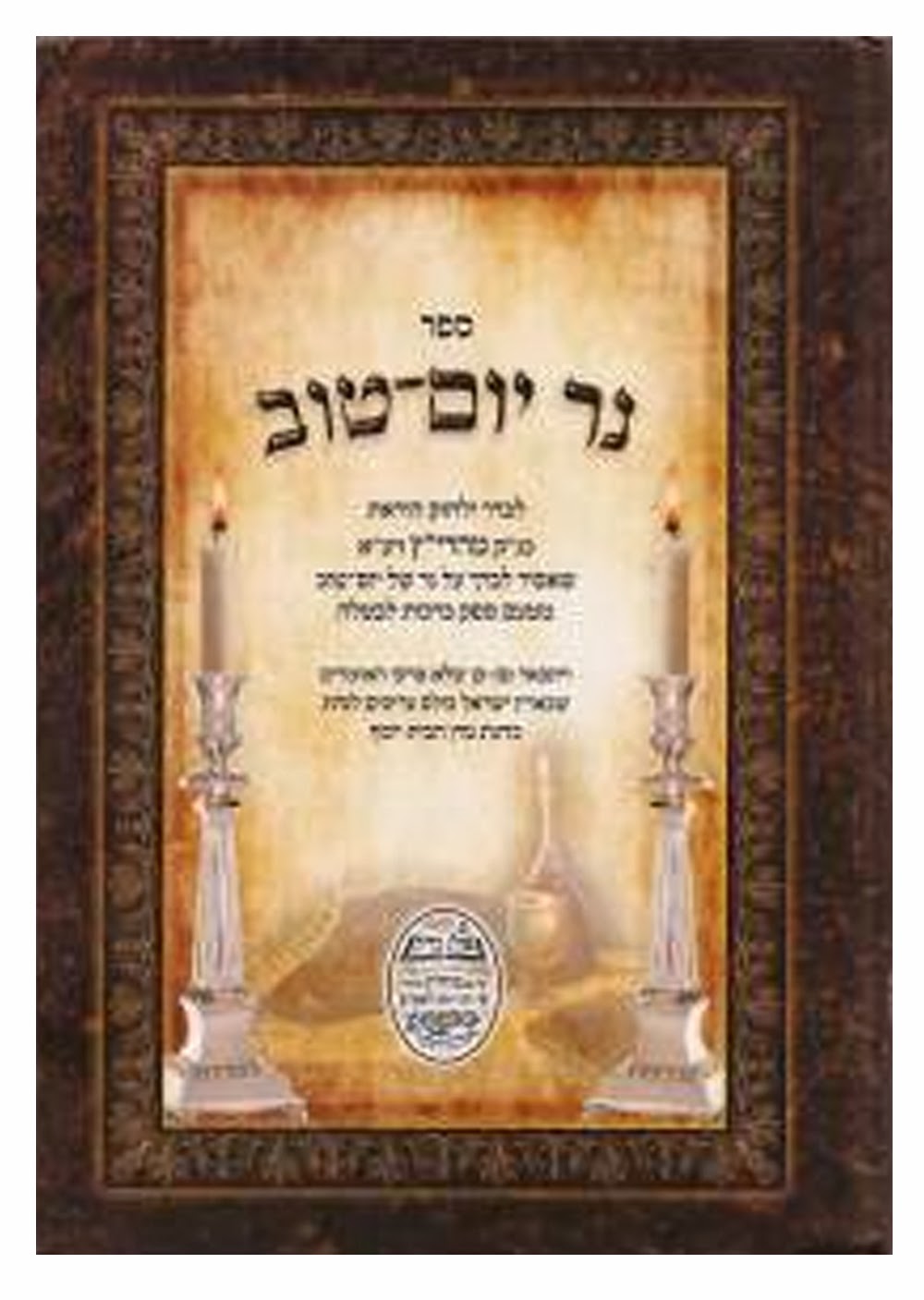
With regard to Ratsaby, I should also note that his dispute with R. Ovadiah Yosef continues unabated. In his recent Ner Yom Tov (Bnei Brak, 2008), pp. 20-21, he goes so far as to accuse R. Ovadiah of plagiarism.

He also states, with regard to R. Ovadiah (p. 100):

 שכבוד התורה אצלו, הוא רק למי שמסכים לדבריו

Ratsaby’s book was written to defend the Yemenite practice of not making a blessing on Yom Tov candles against the criticism of R. Ovadiah. He also deals with R. Ovadiah’s larger point that the Yemenites must embrace the Shulhan Arukh’s rulings now that they are in the Land of Israel. The entire Yemenite rabbinate agrees with Ratsaby’s position, but upon seeing how he attacked R. Ovadiah, the condemnation of him from other Yemenite rabbis was swift. All I can say in defense of Ratsaby is that R. Ovadiah has been criticizing him in a less than respectful way for some time now. But in a sense, Ratsaby got what was coming to him, because for many years he has been writing very disrespectfully about R. Kafih.

In this new book, p. 98, Ratsaby goes so far as to repeat the legend that when Kafih was appointed a dayan in Jerusalem he swore to R. Ovadiah that he accepted the Zohar, and Ratsaby claims that Kafih swore falsely. Kafih, however, denied that he ever took such an oath.14 For a long time Ratsaby has been proclaiming that it forbidden to use Kafih’s books, as he is a member of the kat, i.e., the Dardaim who don’t accept the Zohar or Kabbalah in general. Yet R. Ovadiah has declared that the Dardaim are not to be regarded as heretics.15 This is in contrast to R. Chaim Kanievsky who holds that the Dardaim are heretics who cannot be counted in a minyan.16  R. David Teherani states that since the Dardaim reject the Zohar, their wine is yein nesekh.17 According to Aaron Abadi, R. Shlomo Zalman Auerbach also ruled that rejection of the Zohar and Kabbalah is heresy.18

I can understand those who assert that one must believe that the Zohar was written by Rashbi or at the very least that it was written be-ruah ha-kodesh, and if you deny this it is heresy. Yet what is one to make of the following statement, which greatly enlarges the realm of heresy (R. Menasheh Klein, Mishneh Halakhot, vol. 7, no. 160):
ואם הוא אינו מאמין שהמ”ב [משנה ברורה] נכתב ברוה”ק אזי הוא בכלל אפיקורוס וכופר בתורת ה’ . . . יש בזמן הזה שאין מאמינים שגם בדורינו אנו ישנם חכמי הזמן שיש להם רוה”ק . . . ומי שלא מאמין בזה הרי הוא אפיקורוס וכופר בלי ספק.

Based on this definition, I think the entire Lithuanian rabbinate until World War II would be regarded as heretics. Would such a statement even have been imaginable before twenty years ago? It is, of course, no secret that the Lithuanian rabbinate has been transformed along hasidic lines. This change is undeniable and I can point to many examples of this. Here is one (which was sent to me by R. Yitzhak Hershkowitz).

Would any Jew in Lithuania ever fall for such a thing as magic (or holy) wine? Anyone who tried to peddle this stuff would have been thrown out of the beit midrash. I was actually told an anti-hasidic joke with regard to this picture. I ask all Hasidim not to be offended as neither I nor the management endorse the joke. Yet it deserves to be recorded for posterity, for as we all know, jokes are simply jokes, but the history of jokes (even bad ones), well that is scholarship. The joke goes as follows: “It is incredbible. We now see great Lithuanian Torah scholars doing things that until now only hasidic rebbes did. But even more incredible would be to see the reverse, that is, to see hasidic rebbes write seforim on Shas and poskim.”

With regard to the Zohar, I must mention an amazing point called to my attention by David Zilberberg, from which we see that R. Joseph B. Soloveitchik did not believe that R. Simeon bar Yohai wrote the Zohar, or at least that he didn’t write all of it. I always assumed as much, but as far as I know there was never any proof, until now. In The Lord is Righteous in All His Ways, pp. 206-207, the Rav discusses the Western Wall and says that there is no mention of it in Chazal and very little mention in rishonim. The Wall is mentioned in Shir ha-Shirim Rabbah 2:2219, where it states that the Kotel will never be destroyed, but the Rav says about this Midrash:

I will tell you frankly that I am always suspicious about this midrash, because the classical sources, the Bavli and the Yerushalmi, do not mention the Kotel ha-Ma’aravi. The midrash cited earlier is, perhaps, a later insert. Apparently, Rabbi El’azar ha-Kalir knew the midrash. To my mind, this kinah of Rabbi Elazar ha-Kalir is one of the earliest documents to mention the Kotel ha-Ma’aravi.

Earlier in this book the Rav tells us when Kalir lived:

I do not know why historians have to explore when Kalir lived when he himself states that nine hundred years have passed and the Messiah has not yet arrived. It means that Kalir lived in the tenth century.

Yet as Zilberberg correctly points out, the Western Wall is seen as quite significant in the Zohar (II, 5b), and is referred to as Rosh Amanah.20 The Rav knew the Zohar very well, and therefore, when he tells us that Chazal do not mention the Western Wall, and it is only during the time of the rishonim that we begin to see references to it, he is also telling us that the Zohar (or at least this section of the Zohar) was written in the days of the rishonim.

Returning to Auerbach, let me add in conclusion that he is not the only great rabbi and Torah scholar who was involved in forgery. An earlier case is R. Benjamin Ze’ev of Arta (sixteenth century), author of the well known responsa volume Teshuvot Binyamin Zeev. Here is the title page from the first edition (Venice, 1539):

In the midst of a dispute he was involved in, he forged the signature of the Venetian rabbi, R. Baruch Bendit Axelrad, placing it on a document that supported himself. He also forged an entire letter in R. Baruch Bendit’s name. When all this was discovered, it helped lead to R. Benjamin’s downfall.21

Quite apart from the forgery, R. Solomon Luria, Yam Shel Shlomo, Bava Kamma, ch. 8 no. 72, also accuses R. Benjamin Zev of plagiarism. Here are some his words: 
כל דבריו גנובים וארוכים בפלפול שאינו לצורך וכנגד פנים מראה אחור . . . ושרי לי מרי אם הוא צדיק למה הביא הקב”ה תקלה על ידו הלא הוא היה הכותב ונתן לדפוס הספר מידו ומפיו.
One big question that needs to be considered is how far removed is forgery from false attribution? When it comes to false attribution there is a long rabbinic tradition supporting it, and in the book I am currently working on I deal with this in great detail. If you can falsely attribute a position to a sage, perhaps you can forge a document in his name as well (assuming it is not done for personal gain). Could that be what was driving Auerbach?
*        *        *

A few people have sent me a question about my Monday night Torah in Motion classes, so I assume that there are others who have the question as well. Here is the answer: If you cannot be with us at 9PM and you are signed up, the classes are sent to you so that you can watch or listen at your convenience. This is much cheaper than downloading the classes individually.

Notes

1 From my post here you can find all the links.
2 See Anthony Grafton, Forgers and Critics: Creativity and Duplicity in Western Scholarship (Princeton, 1990), pp. 44-45.
3 Ibid., p. 48.
4 As has been noted by many, Auerbach’s edition of Sefer Ha-Eshkol has misled countless talmidei hakhamim. There is another way in which Auerbach misled a scholar, but in this case it was accidental. In the introduction to his edition, p. xv note 9, Auerbach reports in the name of a supposedly reliable person that the Yerushalmi Kodashim was to be found in the Vatican library. This false report led R. Mordechai Farhand to travel there from Hungary in search of this treasure, and he describes his journey. See Farhand, Beer Mordechai (Galanta, 1927), pp. 154ff. Farhand was a gullible fellow. See ibid. p. 152, where even though it had been a number of years since Friedlaender’s Yerushalmi forgery had been established, he didn’t want to take sides. The legend that there was a copy of the Yerushalmi Kodashim in the Vatican had been disproven already in the nineteenth century. See R. Baruch Oberlander in Or Yisrael (Tamuz 5761),  p. 220.
5 In his review of my edition of Kitvei ha-Rav Weinberg, vol. 2, R. Neriah Guttel, Ha-Maayan (Nisan 5764), pp. 82-83, writes that it was improper for me to publish Weinberg’ judgment of Epstein (p. 430). Although they were friends, and Weinberg thought that Epstein was a great scholar, he also pointed out that that Epstein wasn’t a lamdan. What Weinberg meant is that Epstein wasn’t a traditional talmid hakham but an academic Talmudic researcher. As such, while his publications had great value, in Weinberg’s eyes they didn’t get to the heart of what Talmudic scholarship should be about. In Weinberg’s words:
סוכ”ס אפשטיין אינו למדן, ואיננו אלא פילולוג בעל חוש חד. בלא לומדות אי אפשר לחקור לא את המשנה ולא התלמוד.
Statements like these are vital for evaluating Weinberg’s approach to academic scholarship, and I never would dream of censoring such things.
6 In his Shaar Yaakov (Petrokov, 1922), no. 16, there is a responsum to “Abraham Joshua Heschel.” Shmuel Glick, Kuntres ha-Teshuvot he-Hadash, vol. 3, s.v. Shaar Yaakov, assumes that this is the famous A. J. Heschel, but I don’t think we can conclude this based only on the name, which was shared by a number of others.
7 Eleh Ezkerah (New York, 1957), vol. 2, p. 196 (repeated in the Encylopaedia Judaica entry on Michaelson), states that in Michaelson’s Degan Shamayim (Petrokov, 1901), there are responsa written when he was twelve and thirteen years old. This is a mistake. The earliest responsa dates from when he was seventeen years old. See pp. 10a, 11a.
8 On p. 23 he prints a letter that Schorr wrote to Michaelson’s son, who wanted to translate the Sefer ha-Hinukh into Yiddish. Schorr was strongly opposed to this. He explained as follows, using words that won’t make the women very happy:
רבינו הרמב”ם והחינוך אחריו שהודיעו ברבים טעמי מצות וכו’ יכשלו בזה קלי הדעת לבטל המצוה כפי סכלות דעתם אשר לפי הטעם אין לחוש עוד בזמנינו וכיוצא שבטל בהם טעם זה וכו’ איך ניתן לגלות טעמי מצות גם בפני נשים ועמי הארץ אשר יקראו בו, חלילה לרו”מ לעבור על לפני עור.
9 See here
10 See here
11 Sofer often refers to a similar type of comment by R. Shlomo Kluger, Ha-Elef Lekha Shlomo, Orah Hayyim 367:
אם הייתי זוכר כל מה שכתבתי מעולם לא הי’ שום הערה בעולם שלא הרגשתי בזה.
(I cited both Schorr and Kluger in a footnote in my article on the Hatam Sofer in Beerot Yitzhak: Studies in Memory of Isadore Twersky. Although other writers also cite this comment of Kluger, as with much else, I believe that I first saw the reference in one of Sofer’s writings.) Kluger wrote so many thousands of responsa, that it is not uncommon for him to contradict himself and forget what he wrote previously. See R. Yehudah Leib Maimon, ed., Sefer ha-Gra (Jerusalem, 1954), p. 99 in the note. R. Solomon Schreiber, Hut ha-Meshulash (Tel Aviv, 1963), p. 19, claims that R. Nathan Adler’s reason for not recording his Torah teachings was due to a belief that the permission to put the Oral Law into writing only applies if one is not able to remember this information. Since, according to Schreiber, R. Nathan claimed that he never forgot any Torah knowledge, he was not permitted to take advantage of this heter.
12 Regarding Schorr being a childhood genius, this letter from him to R. Shlomo Kluger appeared in Moriah, Av 5767. 

As you can see, the letter was written in 1860 (although I can’t make out what the handwriting says after תר”ך). We are informed, correctly, that Schorr was born in 1853, which would mean that he was seven years old when he wrote the letter. This, I believe, would make him the greatest child genius in Jewish history, as I don’t think the Vilna Gaon could even write like this at age seven. Furthermore, if you read the letter you see that two years prior to this Schorr had also written to Kluger. Are there any other examples of a five-year-old writing Torah letters to one of the gedolei ha-dor? Furthermore, from the letter we see that the seven-year-old Schorr was also the rav of the town of Mariompol! (The Mariompol in Galicia, not Lithuania.) I would have thought that this merited some mention by the person publishing this letter. After all, Schorr would be the only seven-year-old communal rav in history, and this letter would be the only evidence that he ever served as rav in this town. But the man who published this document and the editor of the journal are entirely oblivious to what must be one of the most fascinating letters in all of Jewish history. Yet all this assumes that the letter was actually written by Schorr. Once again we must thank R. Yaakov Hayyim Sofer for setting the record straight. In his recently published Shuvi ha-Shulamit (Jerusalem, 2009), vol. 7, p. 101, he calls attention to the error and points out, citing Wunder, Meorei Galicia, that the rav of Mariampol was another man entirely, who was also named Jacob Schorr.
13 A. Horowitz, Orhot Rabbenu (Bnei Brak, 1991), vol. 1, p. 364.
14 See Avivit Levi, Holekh Tamim (Jerusalem, 2003), p. 133 n. 161.
15 See R. Yosef Pinhasi, Yefeh Toar, p. 116.
16 See his response in Mordechai Alemkayas, Va-Yikhtov Mordechai (Jerusalem, 2009), p. 340.
17 Yayin le-Nesekh (Betar Ilit, 1996), p. 70.
18 See here.  According to Abadi, R. Shlomo Zalman’s decision was made with regard to a well-known scholar who is very involved with Artscroll.
19 The Rav doesn’t note that there is a mention of the Wall in Shemot Rabbah 2:2 as well, but his judgment would no doubt be the same. Contrary to the Rav, since these midrashim are found in so many parallel sources, I don’t think there is any question that they indeed originate with Chazal.
20 See Pinchas Giller, Reading the Zohar (Oxford, 2001), pp. 12-13.
21 The event is described in Meir Benayahu, Mavo le-Sefer Binyamin Zeev (Jerusalem, 1989),  pp. 120ff. Once the dispute got going, all sorts things were said. R. Benjamin was even accused of purchasing his semikhah. See ibid., p.140. The source for this is R. Elijah ha-Levi,  Zekan Aharon (Constantinople, 1534), no. 184.


Book review: Asaf Yedidya, Criticized Criticism – Orthodox Alternatives to Wissenschaft des Judentums 1873 – 1956

אסף ידידיה, ביקורת מבוקרת: אלטרנטיבות אורתודוקסיות ל’מדע היהדות’ 1956-1873, 415 עמודים, ירושלים תשע”ג
Asaf Yedidya, Criticized Criticism – Orthodox Alternatives to Wissenschaft des Judentums 1873 – 1956
By Ezra Brand
Criticized Criticism is a book which I think would greatly interest any reader of the Seforim Blog. It deals with the history of the Orthodox “alternatives” to secular Jewish Studies, as well as many important issues that religious Jewish Studies scholars face.[1]  In this, it fills a definitely felt lack in Jewish historiography.  It follows a trend of recent works devoted to the history of specific aspects of Jewish Studies.[2]  The book is especially important since we do not yet have a complete history of Jewish Studies, but rather many works that focus only on slices of it.  For example, there are a number of works on the history of research into the Cairo Genizah, as well as numerous books and articles on individual researchers and institutions.[3] This is part of a larger trend in academia – the study of the history of academic disciplines themselves. Given its scholarship and readability, Criticized Criticism is likely to take a deserved place with other important works on the history of Jewish Studies.
The book does not try to encompass the entire history of the phenomenon it studies. As stated on the cover, it covers an 83-year period, from 1873 until 1956. The significance of the year 1873 is that this is the year that the Rabbinical Seminary in Berlin was opened by R’ Ezriel Hildesheimer. With the establishment of the Seminary, an “alternative,” Orthodox, Jewish Studies had an institutional home.  1956 is the year that Bar-Ilan University was opened. As Yedidya explains, Bar-Ilan was intended by its founders to continue the tradition of providing an “alternative” form of Jewish Studies, but ended up producing scholarship with essentially the same assumptions as mainstream Jewish Studies, for various reasons. The Orthodox alternative tradition no longer had an institutional home.[4]
The book begins with a general overview of the early development of Jewish Studies, starting from the early nineteenth century in Berlin (including a description of what Jewish Studies then entailed, and how it was different from traditional Jewish scholarship), and its subsequent spread to Eastern Europe. In Chapter Two, a short history of early Orthodox reactions to Jewish Studies is given.[5] At the end of this chapter, the program of the book is stated: To analyze Orthodox reactions to secular Jewish Studies, which on the one hand accept the scientific method, and on the other hand accept Orthodox principles of faith as a given. Yedidya states (pg. 72): “The first real attempt in this direction was the establishment of the Rabbinical Seminary headed by R’ Ezriel Hildesheimer in Berlin, which devoted itself among other things to Jewish Studies.” [6] In Chapter Three, the book begins its discussion of the Seminary.
The book discusses many other major figures, such as R’ Yitchak Isaac Halevi and Ze’ev Ya’avetz. Yedidya carefully analyzes their methodology and their underlying ideology.
A major portion of the book is devoted to discussing Orthodox Jewish Studies in Eretz Yisrael in the early twentieth century. Many of the scholars in this group were greatly influenced by R’ Kook, and his influence is discussed extensively. R’ Kook supported studying texts scientifically, and expanding the range of texts studied. However, R’ Kook is portrayed by Yedidya as doing so only in order to counter heretical scholarship: “R’ Kook supported the Orthodox study of ‘Jewish Studies’, as an alternative to the non-Orthodox study” (pg. 273, my
italics). Again: “R’ Kook sought to widen the scope of limmud hatorah […] and to add additional Torah subjects, which would prepare Talmidei Chachamim for intellectual creativity which would allow them to confront with the litereature of Haskalah and secular nationalism” (pg. 282, my italics). However, it appears that in fact R’ Kook believed that scientific Jewish Studies is important for its own sake. R’ Ari Shvat, in a series of articles, shows that R’ Kook had great respect for Jewish Studies, and felt that it inherently had great religious worth.[7] R’ Kook writes: “Subjecting the intellect and causing it to slumber […] is the destruction of the world […] therefore, when the attempt to cause the intellect to sleep comes in the name of ‘faith’, in the name of ‘fear of Heaven’, in the name of ‘diligence in Torah study’ and ‘doing mitzvos’, it is a terrible falsehood […] the hatred of haskalah[8] because of a faith-based bias (הנטיה האמונית) comes from the poison of heresy, which divides the domains (המחלקת את הרשויות)”.[9]
At the end of the book, Yedidya summarizes the common denominator among all the scholars attempting to defend their beliefs and create an “Orthodox alternative.” In the beginning of the book, we are told that the book will discuss scholars who are between two opposite extremes: On one side, traditional Orthodox scholars who refuse to accept the legitimacy, or usefulness, of the scientific method, and on the other side, scholars who look at the discipline of Jewish Studies as they would any other subject. Yedidya explains very nicely how the scholars about whom he writes are different from both of these extremes. Three differences – numbered – are listed for differences from the former, and six for differences from the latter. I’d like to make two observations.
In the enumeration of differences from traditional Orthodox scholars, the second difference listed is the following (pg. 372): “Secondly, from a thematic perspective, they dealt with a wide range of disciplines – Tanach, literature of Chazal, Jewish history, and Jewish philosophy, and did not focus only on specific debates with ‘problematic’ works or with introspective inner-gazing at the roots of the specific movement they are part of.” This may be meant to be implied by Yedidya, but it is important enough that it should have been mentioned explicitly: The scholars discussed by Yedidya wrote almost exclusively on Jewish history, the history of Torah Sheba’al Peh; and Tanach. (These are the titles in Critized Criticism of chapters four, five, and six, respectively. Of course, these scholars also researched traditional Jewish literature, such as R’ Chaim Heller’s edition of Sefer HaMitzvos.) Which of these scholars researched Kabbalah as did Graetz, Shadal, Jellenick, Franck, and later Scholem? Which of these scholars wrote on Jewish philosophy and science in the Middle Ages, as did Steinschneider? Which of them researched piyyutim (Zunz, Shadal, Brody), Karaism (Poznanski), or magic (Blau and Trachtenberg)? It would appear that, in fact, these scholars did not write on any subject that touched on Jews, except in one of three cases: one, if they felt they had to defend something; two, if it was important for educational purposes; three, if it was part of Talmud Torah.
The attempt at creating religious “alternatives” to secular Jewish Studies mostly ended in the 1950s, as pointed out by Yedidya. However, this is not true for the study of Tanach. Defense of the traditional understanding of Revelation, against academic Bible Studies, was relaunched with full force by R’ Mordechai Breuer in 1960. Breuer’s idea of “Bechinot” caused great controversy, but he continued to publish and teach his ideas. The yeshiva that he became associated with, Yeshivat Har Etzion in Alon Shvut, or “The Gush” as it is colloquially known, is now synonymous with an entire method of Biblical hermeneutics, known as the “The Gush method.” R’ Amnon Bazak’s pioneering book, Ad Hayom Hazeh (Tel Aviv 2013), systematically lays out for the first time possible flexibility in the traditional understanding of the Bible. “Orthodox alternatives” are alive and well.[10]
That Criticized Criticism can prompt such lively discussion is a tribute to its author and his presentation of his subject.  The book is an enjoyable and informative read, and I heartily recommend it.


[1] “Jewish Studies” meaning the critical, historical research into Jewish sources, using all tools and methods available, whether
history, philology, realia, or comparison to non-Jewish sources. Recently, a number of religious Jewish Studies scholars have discussed the differences between traditional methods of study and the scientific method. See, for example, the important article by Menachem Kahana (מנחם כהנא, “מחקר התלמוד באוניברסיטה והלימוד המסורתי בישיבה”, בחבלי מסורת ותמורה, רחובות
תש”ן, עמ’ 113-142), and the articles mentioned in the introduction to Sperber’s Neitvot Pesikah (דניאל שפרבר, נתיבות פסיקה, ירושלים תשס”ח). See also further, footnote 10.
[2] One of the first to study at length the history of research in Jewish Studies is the great Jewish historian Salo Baron. His essays on this topic are collected in History and Jewish Historians, Philadelphia 1964.
[3] Some of the researchers have full-length academic monographs devoted to them, usually including both a biography as well as an analysis of their works and methods.  Examples are the following (authors of the biographies in parenthesis; more information can easily be found in online catalogs): Nachman Krochmal (Jay Harris), Shlomo Yehuda Rapoport (Isaac Barzilay), Heinrich Graetz (ראובן מיכאל), Gershom
Scholem (David Biale). Others have only non-academic, popular biographies: Isaac Halevy (O. Asher Reichel), Louis Ginzberg (Eli Ginzberg), Saul Lieberman (Schochet and Spiro). Articles on individual scholars can be found in all the Jewish enyclopedias (Jewish Encyclopedia, both editions of Encyclopedia Judaica, and in the Hebrew Encyclopedia Ha’Ivrit), as well as in the following works: Getzel Kressel, Lexicon Hasifrut Ha’ivrit Bedorot Ha’achronim,  Tidhar, Encyclopedia Lechalutzei Hayishuv Ovonav, S. Federbush, Chochmat Yisrael B’Ma’arav
Eiropa
, 1–3, Jerusalem 5719-5725; Encyclopedia shel HaTziyonut Hadatit, 1-5, Jerusalem 5718-5743. These last two works are the ones usually used in the work under review for biographies of people mentioned in the book; numerous other works can be found in the bibliography. Another important resource is of course Jubilee volumes, memorial volumes, and tribute articles.
[4] This is no longer completely true. The Gush Yeshiva can currently be considered an institution that offers a consistent alternative methodology, at least in regards to Tanach. See later.
[5] For some reason, Maharatz Chajes is not mentioned at all in this section.
[6] My translation of the book’s Hebrew.
[8]  This can be translated either as “Haskalah” (as in the movement) or as “education.”  R’ Kook may have been intentionally ambiguous.
[9] Orot Haemunah, ed. 5745, pg. 98. Quoted by Shvat, “Chochmat Yisrael”, near footnote 88.
[10] There is also a nascent interest in yeshivos in the academic study of Talmud and Rambam. The academic study of Talmud was experimented with by R’ Shagar, and continued in the yeshiva of Otniel, especially by R’ Yakov Nagen (Genack) and R’ Meir Lichtenstein. However, as far as I know it has not produced any “school” of methodology. R’ Shagar ultimately rejected the academic method. See the collection of his essays, B’toraso Yehege (הרב שמעון גרשון רוזנברג – שג”ר, בתורתו יהגה : לימוד גמרא כבקשת אלוקים, בעריכת זוהר מאור, אלון שבות תשס”ט). R’ Nagen discusses the religious advantages and disadvantages of the academic method in his fine article, “Scholarship Needs Spirituality, Spirituality Needs Scholarship: Challenges for Emerging Talmudic Methodologies”, Torah u-Madda Journal 16 (2012-2013), pg. 101-133 . The academic study of Rambam was pioneered by R’ Rabinowitz and R’ Sheilat in Ma’aleh Adumim. R’ Rabinowitz’s commentary on Rambam is in the same tradition as the works described by Yedidya, but is not properly an alternative, as it is not guided by a reaction to the secular, scientific study of Rambam. (The main “secular” academic expositors of Rambam’s Mishneh Torah are David Henshke and Yaakov Blidstein. Henshke used to teach in Ma’aleh Adumim.) An extension of Yedidya’s research past 1956 is desideratum. In addition, it would be interesting to analyze the relationship of the traditional Orthodox (i.e., those who not consider themselves to be participating in scientific study of texts), and especially Chareidim, to academic scholarship. In the past few decades, we have seen a phenomenon of traditional scholars being aware of academic scholarship, and even using it, but not acknowledging it. (For those interested in examples, please contact me.) For a similar phenomenon in regards to popular Chareidi literature, see the fascinating study by Yoel Finkelman, Strictly Kosher Reading: Popular Literature and the Condition of Contemporary Orthodoxy, Boston 2011.


The Vilna Gaon’s Talmud

Mississippi Fred McDowell, has posted re: the Vilna Gaon’s Yerushalmi edition. However, I would like to discuss which edition of the Bavli the Vilna Gaon had. This is a rather important especially in light of the numerous emendations to the text the Vilna Gaon made. As when one is amending something it is important to know what exactly they have amended.

Every morning Birkat HaShahar are recited. Among these blessings are three anomalous ones. These there, as opposed to the rest, are in the negative. Specifically, these blessing are for ones legal status, gender, and religion. It is the last one, religion is the one we will focus on.

The Talmud has these blessing, however, there is some difficulty with the text of the religion one. Some editions have this blessing in the positive, i.e. “thank you for making me a Jew,” and some have it in the negative, “thank for not making me a non-Jew.” This confusion prevailed into the medieval period, with some texts containing one iteration of the blessing and some the other. What is unclear, however, is whether this change to the positive was wrought due to censorship or is there some reason this blessing should be in the positive.

R. Yom Tov Lipmann Heller, in his Ma’adani Melekh, claims any passage which is in the positive (“thank you for making me a Jew”) is due solely to censorship. And with this, we get to the crux of our discussion here – the Vilna Gaon’s edition of the Talmud.

The Vilna Gaon, in his commentary on Shulhan Orach says that one should say this blessing in the positive form. He comes to this conclusion because “our editions of the Talmud have the blessing for ‘making me a Jew.'” In theory, the Vilna Gaon’s conclusion is dependent upon whether “our editions” are corrupted or not. That is, if “our editions” are censored then they prove nothing. This contention, that the Vilna Gaon used a corrupted edition is noted by R. Shmuel Feigenshon in the Otzar HaTefilot. Specifically, R. Feigenshon claims that had the Vilna Gaon seen the Amsterdam 1644 edition he would never made this mistake. [Additionally, based in part upon this, Y.S. Speigel notes the Vilna Gaon did not use manuscripts or earlier printed editions when he amended the text.]

It is worthwhile noting that R. Raphael Natan Rabinowich, in his Ma’amar ‘al HaDpasat haTalmud (which has just been reprinted by Mosad HaRav Kook) claims that the Vilna Gaon used the 1644 edition of the Talmud, the very one if he had used it would have avoid this error!!

In the end, we don’t know exactly which edition the Vilna Gaon used and according to Speigel, it is likely that the Vilna Gaon did not use one edition. Instead, it is likely the edition was dependent on the particular volume of the Talmud he had and for each volume it may have been a different edition.

Sources on the blessing: T.B. Menachot 43,b; Dikdukei Sofrim ad. loc.; Rosh, Berakot chapt. 9; Ma’dani Melekh id. at note 24; Tur Orakh Hayyimno. 46:4; id. Bach; Shulchan Orakh and Rama id.; see also, first edition of Rama Prague, 1588 for the proper placement of his comments available here; Biur HaGra id.; see also R. Y. Satnow, Va’yetar Yitzhak, no. 44; R. Jacob Emden, Luach Eres Toronto, p. 24 no. 64; Siddur Otzar haTeffilot, on the blessing in question; On the Vilna Gaon’s edition of the Talmud: Y.S. Speigel, Amudim b’Toldotha Sefer HaIvri: Haga’ot U’Magim, 404-405, 416 and the sources cited therein.


Shaving on Chol HaMo’ad the Never-ending Controversy

While we are generally aware that denominations other than Orthodox changes and adapt to the times, in reality Orthodoxy has also made significant changes. Of course, these changes are all within the parameters of Halakah, but they are in part concession to the times.

By way of example, the Mishha and in turn the Gemera record various practices when a person is an אבל (mourner). One such practice is עטיפת הראש winding or wrapping of the head. Tosefot, however, note that although this practice is recorded without controversy – in their time, as it was uncommon to wrap one’s head there is no longer an obligation to do so.

At the time Tosefot offered this decision – a decision which took into account then modern sensibilities – it was fairly unremarkable. This would change significantly when a movement sprung up which took conforming Judaism to modernity to the extreme. The Reform movement which altered numerous, significant practices precipitated a greater hesitancy to effect change – even legitimate change within Orthodoxy.
One example of the battle over changing long established practices relates to Hol haMo’ad. The Mishna in Mo’ad Koton [1] enumerates but a small class of people who are permitted to shave on Hol haMoad. This class is comprised of people, who for reasons out of their control were unable to shave before the holiday. One who is released from prison on the Holiday is one example. But, anyone other than this small class of persons according to the Mishna, are prohibited from shaving on Hol haMo’ad. The Gemera explains the restriction in light of human nature. One, in theory, has more free time on Hol HaMo’ad (assuming one is not working) thus one may procrastinate to shave and get a haircut until Hol HaMo’ad. This would mean that they would begin the holiday unkempt, unshaven. Thus, to avoid this sort of procrastination, one is prohibited from shaving on Hol haMo’ad thus removing any temptation to delay until Hol HaMo’ad.

The question which we will now turn out focus to – is whether this reason is dispositive. That is, assuming one did in fact shave before the holiday can he then shave on Hol HaMo’ad as he did comply with the law.

For hundreds of years the answer to this question was no. Rabbenu Tam (1100-1171) did allow for someone who shaved before the holiday to do so on hol haMoad. This position, however, was uniformly rejected by everyone who voiced an opinion on this matter until the 18th century. The 18th century, however, saw an increase in emancipation and closer contact between Jews and non-Jews. This was on an unprecedented level, Jews did not want to appear strange and thus many Jews began, what is common today, dressing in contemporary style and the like. Jews also, although there were also examples earlier, began to appear clean shaven. Now, during the rest of the year, maintaining a clean shaven look did not pose too significant of a problem. But, there was one time where, based upon precedent, it would be difficult to remain clean shaven – during Hol HaMo’ad.

The first to readdress this issue was R. Yehezikel Landau, the author of the Noda B’Yehuda and one of the greatest Rabbis of his time. In approximately, 1775, R. Landua was asked (O.C. Tinyaha, no. 101) if there was any way for those who shave year round, and did so prior to the holiday, to do so on Hol HaMo’ad. R. Landau ruled in the affirmative, with one important condition – that it be done with a poor barber. This condition was an attempt to conform with the various prior opinions. Namely, R. Landau understood the rejection of Rabbenu Tam’s opinion limited to instances which the person would shave themselves. But, a poor person who needed this to survive and thus was able to do work on Hol HaMo’ad anyways, everyone would agree shaving would be permitted. As R. Landau was highly respected his opinion did not go unnoticed. With the publication of this responsa in his work Noda B’Yehuda, the reaction was almost immediate and negative. From all over Europe various people either directly addressed R. Landau or wrote their own private responses expressing their opinion to maintain the status quo. In the end, R. Landau included four responsa on this topic. The reaction was summed up by R. Hayim Yosef Azulai, the Hida (Yosef Ometz, no. 7),

ואולם בו בפרק ראיתי אשר תיכף אזרו חיל הגאונים רב של ברלין ורב של אמשטרדם וחלקו עליו, ונדפס בספר בינן אריאל. גם ידעתי נאמנה שרבני גאוני פולין ואשכנז היטב חרה להם היתר זה וכמעט נגעו בכבוד הרב. ואין ספק כי רבני ארץ ישראל . . וכל טורקיאה ומצרים . . . וערי המערב . . . כולם יסמכו עם רבני אשכנז ופולין

“During that time I heard immediately they quickly girded themselves, the great ones, the Rabbi of Berlin, the Rabbi of Amsterdam and they disagreed [with R. Landau] and this was printed in Binyan Areiel. I also heard from trustworthy sources that the Rabbis of Poland and Germany were extremely disturbed by this leniency and they went so far as to disparage R. Landau. And I have no doubt that the Rabbis in Israel, Turkey, Egypt, and all the Eastern lands agree with the Rabbis of Poland and Germany.”

There were those, who could not reconcile their high esteem of R. Landau with his permissive stance on shaving, and thus made the claim (which has no support) that R. Landau retracted his statement. [Such a claim – that the author retracted or an errant student was the author of a controversial respona – is rather common. See Speigel, cited below, pp. 271-75 for other examples.]

One particularly fantastic (and well-known) explanation attempting to reconcile the R. Landau’s position was offered by R. Moshe Sofer, the author of Hatam Sofer. R. Sofer (Shu”t Hatam Sofer O.C. no. 154) wants to understand R. Landau’s position in light of another shaving question. One is prohibited from using a straight edge razor on their face. But, as this was before electric shavers many of the other options for shaving were not appealing to some and they used a straightedge anyways. R. Landau was offered a possible justification for this practice, which R. Landau in turn rejected. The justification was one is prohibited from removing “hair” with a straight edge. Hair is only hair, for many other laws, if it is long enough to turn back on itself. Thus, if one shaved every day or so, even with a straightedge they would not be removing hair as it was too short. Now, as I mentioned R. Landau rejected this, however, R. Sofer claims as this position was perhaps the only available understanding of what many did to not consider them sinners, R. Landau in fact accepted this. But, R. Landau also knew that if he came out that shaving was prohibited on Hol HaMo’ad many people even those who use a straightedge will follow that opinion. Thus, at the end of the holiday they would have long enough facial hair to be shaving “hair.” While ascribing such motivation to R. Landau is somewhat far-fetched, it does demonstrate how far people would go to reconcile their views of R. Landau with this position.

This, as would be expected was not the end of this issue. Soon after the Noda B’Yehuda was published, another book – which was controversial in its entirety – was published. This book, Besamim Rosh, (previous discussions here) was published in 1793 but attributed to R. Asher b. Yehiel who lived at the end of the thirteenth and beginning of the fourteenth centuries. Almost immediately after its publication there were those who questioned this attribution and instead said it was not the RoSH who wrote this but instead it was the publisher, R. Saul Berlin. Although there were many controversial statements in this book, R. Saul Berlin retracted only one – his statement regarding shaving on Hol HaMo’ad (no. 40). This was the only pronouncement R. Saul agreed was not from the RoSH.

Thus far, this discussion was limited to single or a few responsa, however, in the 19th century we have the battle of the books. Isaac Samuel Reggio (1784-1855) (mentioned previously here), an Italian Rabbi and admitted maskil, devoted an entire work, Ma’amar HiTeglachat (Vienna, 1835), to the issue of shaving on Hol HaMoad. Reggio was one of the most accomplished Rabbis of his day, he was fluent in numerous languages, founded the Rabbinic Seminary in Padua and was an amazingly prolific writer (and he also went clean-shaven as is evidenced by the portrait accompanying the article on him in the Jewish Encyclopedia here). Perhaps his most accessible book is a translation in Italian and commentary in Hebrew (titled Torat HaElokim, Vienna, 1818)of the bible based upon the simple meaning (pehsat)was recently reprinted. [It appears the sponsor of this reprint was unaware of Reggio’s maskilik leanings and – as the story was related to me – was horrified to find this out and thus this edition is now difficult to obtain.]

Reggio takes the position of R. Landau one step further. You will recall that R. Landau allowed for a poor Jew to cut one’s beard but not the person himself. Reggio, however, offers that even the person themselves can shave. This is so, as he understands that in the time of the original enactment, it was highly uncommon to shave weekly and certainly daily. From this assumption Reggio notes that (1) those who shave more often the hair returns quicker and thus before it was no big deal not to shave over 8 days but today, even in such a short time the hair returns too quickly and (2) since everyone now shaves often this is not the set of circumstances the original enactment was aimed at. That is, only for those for whom shaving was infrequent was there a true fear of forgetting or pushing off shaving but today that is not nearly as much of a consideration. Of course, Reggio notes that if one did not shave prior to the holiday he can not shave on Hol HaMa’od.

This being the most sweeping ruling on this issue and the most comprehensive, an immediate reaction was not short in coming. In fact, there were two books written for the sole purpose of refuting Reggio’s position. The first, a play on Reggio’s title was Tegalachat haMa’amar (Livorno, 1839), was published anonymously. However, we now know that in fact the author was R. Avrohom Reggio, R. Yitzhak’s father!

To this day, shaving on Hol HaMoad remains a contentious issue. R. Moshe Feinstein one of the greatest American Rabbis post-Holocaust allowed for similar reasons to Reggio, one to shave on Hol HaMo’ad. R. Feinstein explains (O.C. vol. 1 no. 163) that “today for those who shave daily, they can shave on Hol HaMo’ad.” Although there is again a permissive opinion, one from a highly respected person it still did not end this issue. In the Shmerat Shabbat K’Helchata (vol. 1 p. 274), on the top portion of the text he records that it is prohibited to shave on Hol HaMo’ad. Then in a footnote he is willing to only cite to R. Feinstein’s responsa without explaining what it contains.

Additionally, in an English book devoted to the laws of Hol HaMo’ad [2] they have taken it one step further by judiciously quoting R. Feinstein to give a different impression than the actual respona. As is provided in this book, R. Feinstein concludes his responsa with “I only offer this permissive opinion to those who have a great need or are in pain from not shaving.” (p. 26 n. 7). This is where the quote ends in the English book [of course, this does not actually appear in the English section, rather this is all relegated to a Hebrew footnote – in the English portion, the authors only allow that if refraining from shaving would result in a loss – davar ha’avod – only then is it permitted]. But R. Feinstein actually continues with “if one wishes to rely upon my permissive stance for appearances sake only [i.e. not only for ‘great need’ or ‘pain’] there is no need to stop him as in reality this is permitted.”

אבל מ”מ איני נוהג להתיר אלא למי שיש לו צורך ביותר או מצטער ביותר, ואם אחד ירצה לסמוך ע”ז גם בשביל היפוי לבד אין למחות בידו כי מעצם הדין הוא מותר לע”ד

Sources: The vast majority of the above comes from M. Samet article on the topic of shaving on Hol HaMo’ad. This article appears in M. Benayhu, Tegalachat B’Holo shel HaMo’ad, Jerusalem, 1995. Benayhu’s book also reprints both Reggio’s books as well as a significant amount of material from manuscript and he provides a history as well. Interestingly, Benayahu attempted to convince R. Shlomo Zalman Aurebach that today it would be permissable to shave on Hol HaMo’ad. Benayahu, however, notes that right when he finished this book, he was planning on showing it to R. Aurebach for his thoughts and comments but R. Aurebach passed away.
[Of course, the primary material contains additional important information]. This book is the most comprehensive discussion on the topic. Samet’s article has now been reprinted in his Hadash Assur min HaTorah, Jerusalem, 2005. Samet, among other things, discusses R. Feinstein and the controversy over his opinion. There are others who discuss this topic, however, as they mainly use the two above sources (with and without attribution), and they do not add much of anything I have not provided additional citations.

I want to thank M. Solomson for providing both editorial corrections and material for this post.

Notes
[1] On the name of this Mescheta and whether it is Mashkim or Mo’ad Koton, see Y. S. Speigel, Amudim b’Toldot Sefer HaIvri, Kitvah v’HaTakah, pp. 326-27; 348-56 (discussing which rishonim referred to it as Mashkim and which referred to it as Mo’ad Koton and whether any conclusions can be drawn from that data).

[2] D. Zucker & M. Francis, Chol HaMoed, Brooklyn, NY, 1981. The book even contains an approbation from R. Feinstein, although R. Feinstein says he did not look in great detail at the book and instead his approbation is based upon the reputation of the authors.


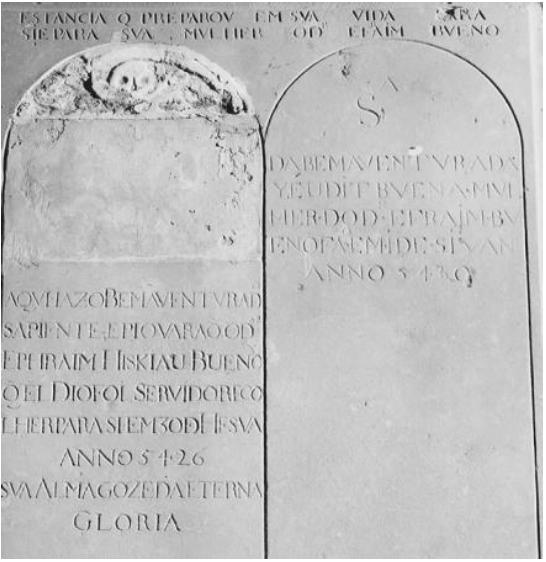
The “Doctored” Medical Diploma of Samuel, the Son of Menasseh Ben Israel: Forgery or “For Jewry”?

The “Doctored” Medical Diploma of Samuel, the Son of Menasseh Ben Israel:[1] Forgery or “For Jewry”?

Rabbi Edward Reichman, MD

Menasseh ben Israel is a prominent figure in Jewish history known for his role in the return of the Jews to England in the time of Oliver Cromwell, as well being the first to establish a Hebrew printing press in Holland.[2] Menasseh had two sons and a daughter. His son Samuel, born in 1625, was a Hebrew printer,[3] publishing a number of his father’s works, and also assisting his father with his diplomatic endeavors in England. Here we focus on another aspect of Samuel’s life- his medical career.

In a correspondence dating from the mid seventeenth century, we find information about Samuel’s medical training and degree. The letter, dated Tammuz, 5416 (1655), is from Yehuda Heller Wallerstein to Samuel Ben Israel. Yehuda writes from Salonica and reports how he encountered Jan Nicholas, the brother of Sir Edward Nicholas, British politician and advocate for the resettlement of the Jews in England, who enlightened him as to Samuel’s recent activities: “He informed me that in a short period of time you achieved great success in your study of the sciences and merited, with the assistance of Edward his brother, to present for examination before the professors of the University of Oxford, and to obtain the distinction, ‘Doctor of Medicine and Philosophy’.”[4]

There would appear to be no reason to doubt this account. Menasseh was certainly connected to the influential Sir Edward Nicholas, whose work advocating for the Jews return to England he translated. Samuel is in fact known to have been a physician. However, this account is found in the writings of Abraham Shalom Friedberg, master of historical fiction. While Samuel is an historical figure, Heller Wallerstein is a likely a figment of the author’s imagination and the letters are primarily a vehicle to explore the historical chapter of Shabbetai Zevi, the false messiah, for which this account of the diploma is only peripheral.

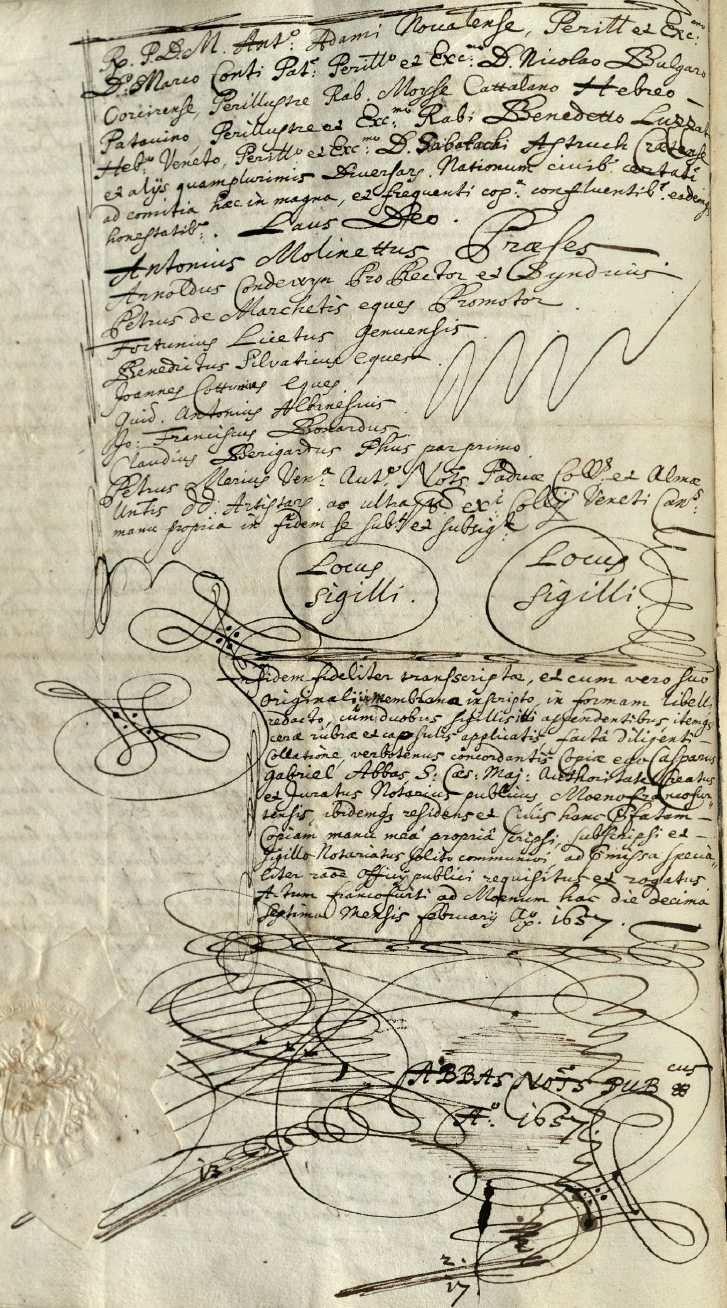
The only historical source, upon which the remainder of this fanciful account revolves, is a medical diploma from the University of Oxford granted to Samuel ben Israel on May 6, 1655,[5] and even the veracity of this document is suspect. A number of historians have discussed this diploma, primarily through the lens of Samuel’s famous father Menasseh, and have concluded that it is a forgery. Here we introduce a new perspective to this discussion and view the diploma from the vantage point of Jewish medical history, an aspect strikingly absent from previous discussions. It is only through this lens that we can gain an accurate assessment of its content and context. Was it really a forgery, or merely a product of the historical realities of its age?

A Word on the Medical Training of Menasseh ben Israel, Samuel’s Father

As a backdrop to our discussion about Samuel’s medical training, it is instructive to analyze the medical qualifications and practice of his father. Aside from his activities as a rabbi, statesman and author, Menasseh was also a physician.[6] The medical face of Menasseh has received scant treatment by historians, and perhaps for good reason. It was clearly not a major aspect of his daily life or contribution to Jewish history. His medical personality was manifest only peripherally or secondarily, and inconsistently as well. Nonetheless, understanding Menasseh’s medical identity sheds light not only on Jewish medical history in general, but also on his son’s medical training.

In a number of published works Menasseh refers to himself as a physician. In his letter to the Lord Protector of the Commonwealth, published in 1655, the very same year as Samuel’s diploma, he is identified as a “Doctor of Physick.”

In the work below from 1656 he is called a physician:
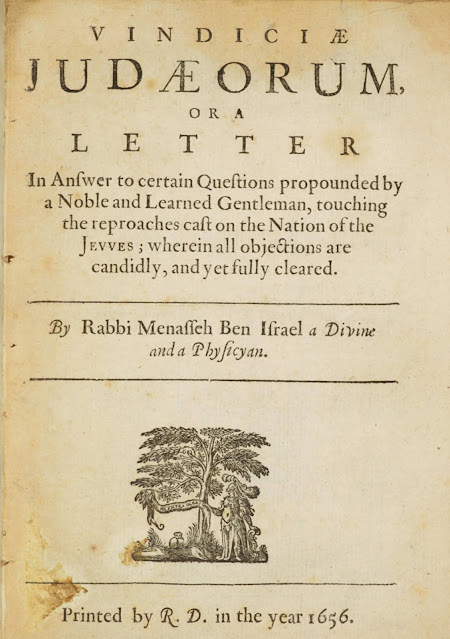
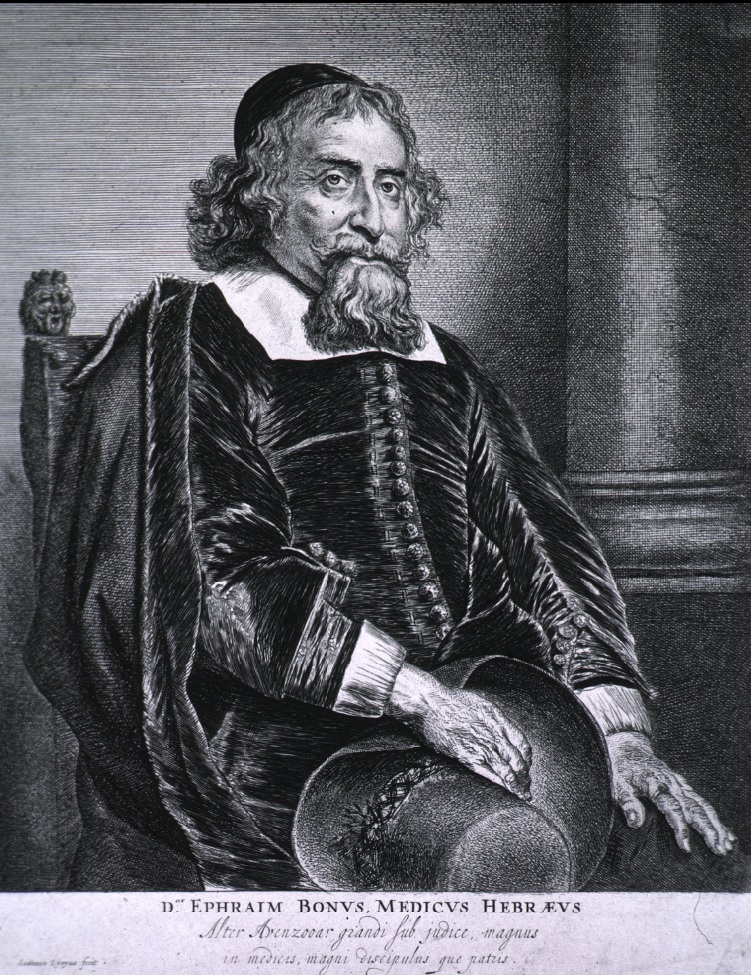
Menasseh also referred to himself as “Medicus Hebraeus.”[7] This title was also used to describe Ephraim Bueno, a prominent Amsterdam physician, as well as a friend and supporter of Menasseh.[8] Furthermore, his connection to medicine is reflected in his translation of the aphorisms of Hippocrates into Hebrew [9] and his relationships with a number of physicians.[10]

To my knowledge there is no record of Menasseh obtaining a medical diploma or graduating from a university. One scholar writes, without reference, that he attended medical school at the University of Groningen for a short time, though apparently did not complete his degree.[11] I have seen no evidence to corroborate this assertion and the university has no record of his matriculation in their archives.[12]

Menasseh’s identification as a physician was not consistent. In some works, the medical title is omitted:
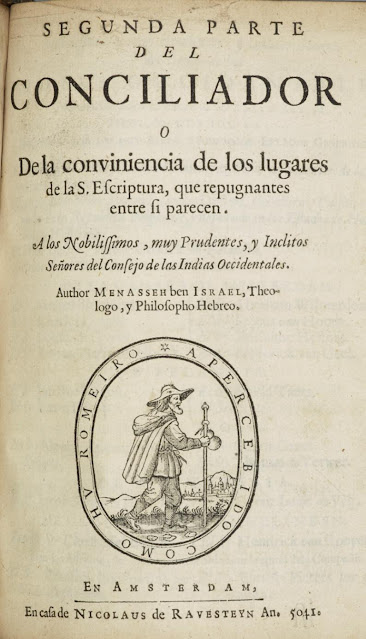
Another curious fact is that Menasseh’s Hebrew writings make no mention whatsoever of his role or title as a physician, nor have I seen him identified as a rofeh in any Hebrew literature. Roth suggests that he may have practiced, though evidence is lacking, and that he included his address when he identified as a physician in his English works as a form of advertising.[13] The tombstone of Menasseh in the Ouderkerk Cemetery does not bear the title doctor or physician.[14]

While historians are wont to call Samuel’s diploma a forgery, his own father considered himself a physician without obtaining a degree or diploma. Should we not, to be consistent, consider Menasseh an imposter physician?

Essential to our assessment of the medical titles and careers of both Menasseh and his son is an understanding of the training of Jewish physicians at this period in history. While today the notion of a physician without formal university training culminating in a diploma is anathema, not to mention criminal, this was simply not the case in the Middle Ages and Renaissance, particularly for the Jew. In fact, Jews were universally barred from attending or graduating universities, which were invariably under the auspices of the Catholic Church. Graduation from universities, such as Oxford, included and required statements or oaths avowing one’s belief in Christianity.

This did not prevent Jews from becoming physicians. They pursued an alternate medical educational pathway comprised of independent learning and clinical training through apprenticeship.[15] This enabled them to take licensing exams and earn the title doctor. Some simply self-identified as a physician or rofeh by virtue of their extensive training. The overwhelming majority of Jewish physicians trained through this alternate pathway, and it is likely that Menasseh is counted amongst them. Once universities began to open their doors to Jewish students,[16] a number of academically motivated students chose this conventional pathway. These university-trained physicians initially accounted for only a small percentage of the health professionals in the Jewish community. Thus, the title “rofeh” or “doctor” in this period was not specifically associated with a university degree.[17]

The Medical Diploma of Samuel ben Israel

The full text of Samuel’s medical diploma was first printed by Koenen in 1843.[18] Koenen raises no doubts whatsoever as to the veracity of the document and publishes it, without discussion, comment or context, as part of a collection of important documents in Dutch Jewish history. Through what training or means Samuel attained this diploma is entirely omitted.

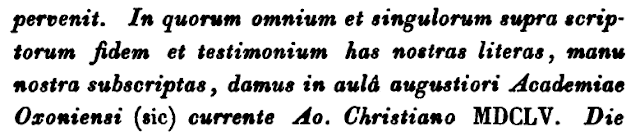
After its publication, the diploma was initially accepted by historians and scholars without question. For example, G. I. Polak wrote that Samuel, through extraordinary skill and acumen, was able to obtain his degree in medicine and philosophy from Oxford.[19] Some even took the liberty to provide additional details. For example, Graetz writes in his classic History of the Jews:[20]

Samuel ben Israel … was presented by the University of Oxford, in consideration of his knowledge and natural gifts, with the degree of Doctor of Philosophy and Medicine, and according to custom, received the gold ring, the biretta, and the kiss of peace.[21]

Where could Graetz have derived this detailed information? It actually appears in the Latin text of Samuel’s diploma, which describes the features of the classic graduation ceremony for European universities during this period. The biretta, often called the Oxford Cap, is the ancestor of our contemporary four-cornered graduation cap.

The scholar Adolph Neubauer appears to have been the first person to suspect something was not kosher with Samuel’s credentials, and at his behest, in 1876, Richard Griffith, the Keeper of the Archive at the University of Oxford reviewed the text of the diploma.[22] The following are the summary points of his analysis:[23]

  • Samuel is not mentioned in the Registers of the university as having ever attended or received a degree.
  • Degrees from Oxford were not issued in the month of May, the date of the diploma.
  • The diploma is signed by two specific people, while the typical Oxford degree is conferred by the university and bears a seal, without the signature of any specific person.
  • The degree is granted in both philosophy and medicine, and Oxford never granted degrees in philosophy, either alone or combined with medicine.
  • There are multiple phrases not used in the Oxford diploma and multiple procedural aspects referred to that simply were not part of Oxford’s protocols.

Griffith’s inescapable conclusion is that this is unequivocally not a genuine Oxford diploma. His analysis is unassailable. Griffiths was certainly familiar with the text of the medical degrees from Oxford during Samuel’s time; indeed, he literally wrote the book on the subject.[24]

Based on Griffith’s analysis, Samuel’s diploma is so fundamentally different than the standard Oxford diploma, there would seem to be no reason to obtain an actual Oxford diploma from that time to further compare the two. Even if one were to consider such a comparison, it would be challenging if not impossible to find an extant diploma from Oxford contemporary with Samuel. In response to my query, the Oxford Archives today responded that they do not possess any diplomas from this period, nor, for that matter, are they aware of any held elsewhere. The archivist added that they cannot be sure that diplomas or degree certificates, in the sense we understand the term, were even created or issued at Oxford from the 15th to the 17th centuries. As mentioned, there was however a specific template and wording associated with the granting of degrees at Oxford,[25] and the graduate would receive some confirmation of their degree, albeit perhaps not a formal diploma in the classic sense. The document did however bear the university seal. It is upon this Oxford template that Griffith based his analysis.

After negating any connection to Oxford, Griffith adds that the diploma was rather an adaptation of a form then used by the University of Padua, “with alterations willfully and insufficiently made.” Griffith was familiar with the Padua diploma template from his Oxford position for a curious reason. In the seventeenth century many graduates in medicine desiring to practice in England obtained their degrees outside of the United Kingdom, often at the University of Padua. In order to practice in England, the graduate had to be “incorporated” into either the University of Oxford or Cambridge. As a prerequisite to incorporation the students were required to present their diplomas/degrees from the granting institution.[26]

The Location of the “Original” Diploma

While Koenen published the full text of Samuel’s diploma, he makes no reference as to the location of the original document. Roth notes that he received a photo of the diploma from the Montezinos Library (known today as Ets Haim- Livraria Montezinos) in Amsterdam. A catalogue of the library holdings from 1927[27] states that the library possessed copies of the first and last pages of the diploma, though not the original.[28] The Ets Haim Library today does not have a record of the diploma photographs.[29] I reached out as well to the Bibliotheca Rosenthaliana, the other major Jewish historical collection in Amsterdam, to see if perhaps the diploma ended up there, which it did not.[30] I also contacted the Roth Collection at the University of Leeds to see if perhaps Roth’s copies of the diploma are kept there, and to my dismay, they likewise have no record of Samuel’s diploma.[31]

Without the actual document, it is impossible to definitively comment on its veracity. Access to the original would allow analysis of the ink and paper for dating. Even access to the copies would be useful. For example, the diploma contains signatures of two faculty members of the University of Oxford. A comparative graphological analysis with known signatures of these men could easily confirm the document’s origin. Regretfully, I have access to neither the “original,” nor the copies. I nonetheless offer additional information and analysis in defense of a Jewish physician accused of forgery in the hopes of restoring his reputation. Absent such essential material information for my case, you may feel free to conclude that my diploma (analysis) is a forgery of sorts. I hope to nonetheless persuade you to drop the charges of forgery, though definitive proof beyond a shadow of a doubt awaits the discovery of the “original” diploma.

Was the diploma a forgery?[32]

Samuel’s diploma was beyond doubt not an official Oxford-issued document, as Griffith details, but was it necessarily a forgery? All historians to date familiar with Griffith’s analysis assume the answer to be a resounding yes, some even labelling it a “brazen” forgery.[33] There is no evidence of any suspicion of the document’s veracity during the lifetime of its bearer. As to when the document was supposedly forged, while the theoretical possibility exists that the diploma was a product of the nineteenth century, Roth convincingly dismisses this theory. He concludes, “The hypothesis of a nineteenth-century fabrication may thus be definitely ruled out.”[34] We are thus left with the universally accepted belief that Samuel forged his own diploma.

Kayserling notes that Menasseh, and thus Samuel, had not yet visited England in May of 1655, the date of the document. This would seemingly conclude the case for forgery and leave little room for discussion. Roth however subsequently rejected this assertion upon finding record in the Calendar of State Papers of the period (documents not accessible to his predecessors and only then recently made available) that Samuel had been sent ahead to England prior to his father and was indeed there at that time.[35] 

The accumulated evidence is certainly suggestive of forgery, but is it dispositive? Could there be another plausible explanation behind this diploma? I would like to suggest that its rejection as an official Oxford diploma does not inexorably lead to a verdict of forgery. By placing this diploma into the larger context of Jewish medical training and diplomas, as well as comparing Samuel’s diploma to other known medical diploma forgeries of the time, specifically for the universities of Padua and Oxford, we may be able to offer another alternative to criminality for one not known to be inclined to such behavior, not to mention being the son of a prominent Jewish rabbi and statesman. I endeavor at minimum, to prove reasonable doubt regarding the accusation of forgery.

Griffith’s Omission and the “Jewish” Diploma

Griffith correctly asserts that Samuel’s diploma is modeled after that of Padua. There is however, a key aspect of this supposed forgery that has previously gone unnoticed. What Griffith did not mention, nor was he likely aware, is that the diplomas issued to Jewish students in Padua often differed in a number of ways from the standard university issue. While there was no specific Jewish diploma template per se, as the standard diploma contained a number of Christian references, the diplomas of Jewish graduates invariably contain some combination of omissions or emendations to the standard text.

As part of our investigation into the diploma’s possible forgery, it is important to ascertain whether Samuel’s diploma is a copy of a standard Padua diploma or one of the Jewish variety. Below we list a few of the typical changes found in Padua diplomas of Jewish medical graduates of Samuel’s period, providing examples of each. We then compare them to Samuel’s diploma.

  1. The Headline of the Diploma

The most obvious change to the Jewish diploma meets the eye of the reader immediately upon viewing the document. The headline of the typical diploma reads, “In Christi Nomine Amen” (in the name of Christ, Amen), and it usually appears in larger decorative font, occasionally occupying an entire page.

William Harvey’s Medical Diploma (Padua 1602)
This would clearly have been objectionable to the Jewish student. The diplomas of the Jewish students were therefore usually emended to read, “In Dei Aeterni Nomine” (in the name of the eternal God), or some variation thereof.

Below are a number of emended diplomas of Jewish students:

Diploma of Isaac Hellen (Padua, 1649)[36]

Diploma of Emanuel Colli (Padua, 1682)[37]
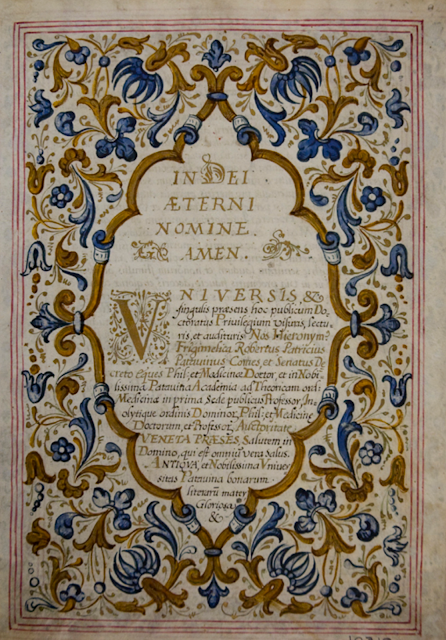
  1. The Date

There are number of ways the year of the degree could appear on the typical diploma, and all of them include Christian reference. Examples include Anno Domini, Anno a Christi Nativitate, and Anno Christiano. Two typical examples are below.

Diploma of Giulio Antonio (1679)[38]

Diploma of John Wallace (around 1618)[39]

The date was unaltered for many Jewish diplomas

Diploma of Jacob Levi (Padua, 1684)[40]

Diploma of Isaac Hellen (Padua, 1649)

In some Jewish diplomas however, the Christian reference is omitted, and the date is listed as “currente anno,” current year.

Diploma of Moise Tilche (Padua, 1687)[41]

Diploma of Lazzaro De Mordis (Padua, 1699)[42]

The date alone is not a reliable indicator of the “Jewishness” of the diploma.

  1. The Location of the Graduation Ceremony

The graduation ceremony for the Catholic medical students was held in the Episcopal Palace and this was recorded in the diploma:

Diploma of Giulio Antonio (Padua, 1679)

The degrees of the Jewish students were not granted in the Episcopal Palace, but rather in non-ecclesiastical venues. As such, the words “Episcopali Palatio” are omitted, leaving the phrase “in loco solito examinu,” (in the usual place of examination).[43]

Diploma of Isaac Hellen (Padua, 1649)

This is the case in virtually all Jewish diplomas.

  1. Hebreus or Iudeus

There is one feature of the typical Jewish diploma that is not an emendation or omission, but rather an addition. With few exceptions, the Jewish students were identified as Hebreus or Iudeus. This was the convention in Padua for centuries and was found in other Italian universities as well.[43]

Diploma of Isaac Hellen (Padua, 1649)

Diploma of Emanuel Colli (Padua, 1682)

Diploma of Moise Tilche (Padua, 1687)

There are a few exceptions:

Diploma of Moysis Crespino (Padua, 1647)[45]

Notarized Copy of Diploma of Abraham Wallich (Padua, 1655)[46]

Abraham Wallich graduated Padua in 1655, the same year as Samuel’s diploma. His original diploma is not extant, though we have a notarized copy that he presented to the Jewish community of Frankfurt as proof of his credentials. In this copy, the identifiers of Hebreus or Iudeus do not appear. I suggest that “Iudeus” could have in fact appeared in his original diploma and was possibly omitted here by the copyist. As Wallich was a religious Jew applying to a Jewish institution, it would have been superfluous to add “Hebreus.”

  1. The Details of the Graduation Ceremony.

The standard Padua diploma also included a description of the graduation ceremony. This was not altered in the Jewish diplomas as the Jewish students participated in this ceremony, albeit with some changes. While the location may have been different, and perhaps the oath would have been tailored for the Jewish student, the core of the ceremony for the Jewish student otherwise remained the same. A remarkable pictorial testimony to this fact is the diploma of Moise di Pellegrino (AKA Moshe ben Gershon) Tilche, who graduated Padua in 1687.[47]

Underneath the portrait of the graduate is the illustration, represented with putti, of the features of the graduation ceremony of Padua.
This ceremony involved a golden ring, a wreath and a hat, known as a biretta (though not the four-cornered variety). The opening and closing of books as a representation of the transmission of knowledge was also a part of the ceremony.

Was Samuel’s Diploma modeled after a standard or “Jewish” Diploma from Padua?

In review of the Jewish diplomas from Padua of Samuel’s day, the headline was consistently altered, as was the location of the graduation. The typical Christian recording of the year of graduation was occasionally, though not uniformly altered. The majority of the Jewish graduates, with few exceptions, were identified as either Iudeus or Hebreus.

Which of these additions, omissions or alterations appear in Samuel’s diploma?

  1. The Headline

In his article republishing the existing material on Samuel’s diploma, Neubauer writes, “in order to make the documents concerning this degree accessible to the Anglo-Jewish public, I shall reproduce here the Latin diploma line by line (Neubauer’s emphasis) as given by Koenen.” The text of the diploma he provides begins as follows:

In the original publication by Koenen however, the diploma begins with a short phrase:

Neubauer omitted the introductory words, “In Nomine Dei, Amen,” perhaps assuming they were not part of the diploma, or simply noncontributory to the text. In fact, these four words are crucial in identifying the nature of Samuel’s diploma and reflect one of the major differences found virtually ubiquitously in the Jewish diplomas of Padua.

  1. Date

A typical Christian date is used.

  1. Location of Graduation

The location of the ceremony is given as the Academy of Oxford.

  1. Hebreus or Iudeus

The identifier Hebreus or Iudeus is not found in Samuel’s diploma.

The headline in Samuel’s diploma is clearly consistent with the Jewish form of diploma. The date is of a Christian format, Anno Christiano, and the location is listed simply as Oxford with no reference to an ecclesiastical venue.

The identifier “Hebreus” is conspicuously absent. To be sure, there were certainly other examples where this was true. However, the omission in Samuel’s case is noteworthy, as his own father, Menasseh, self-identified as Medicus Hebreus, as did other Jewish physicians in Amsterdam, such as Ephraim Bueno. Surely the son would have adopted the title of the father.

In sum, the headline of Samuel’s diploma, a crucial element in determining its style, conforms to the Jewish Padua diploma, as does the venue for the degree, which is non-ecclesiastic. While the date retains the Christian reference, this is non-contributory. Samuel’s diploma does however omit the typical Jewish identifier of Hebreus, a title specifically used by his own father, a fact that begs explanation.

Other Medical Diploma Forgeries of the Seventeenth Century

If Samuel’s diploma were indeed a forgery, it would be the only known case of a forged medical diploma by a Jewish physician in the pre-Modern era. To be sure, there have been numerous forgeries of diplomas, including the medical variety, throughout history. Below we discuss two forgeries of the same historical period as Samuel and purported to be from the two very institutions with which Samuel’s diploma is associated. These may shed light on our forgery discussion.

A Forged Medical Diploma from Padua 1628

The diploma of John Wallace sat in the Royal College of Physicians for centuries, assumed to be genuine. It was only recently that Dr. Fabrizio Bigotti took a closer look at the diploma, revealing that it was a clear forgery.[48] Below you see the latinized name of Wallace clearly written in a different pen and different hand than that of the original diploma.

The year of graduation, 1628, was also altered.

The date was proven to be fake, as the authentic signatures at the end of the diploma include Fabrici d’Acquapendente and Adrian van de Spiegel, both of whom had died by 1628. The true date is assumed to be around 1618.

In this case of forgery, Wallace procured an existing diploma and replaced the name and date with his own. There is apparently no record of his medical practice, so it is unclear if his forgery was successful. Perhaps he forged this diploma with intent to present to Oxford for incorporation. I do not know if the RCP checked the Oxford Register of Congregation for the relevant years.[49]

The Frankland Forgery of an Oxford Diploma[50]

In the diary entry for Anthony Wood, Oxford antiquary, for November 15, 1677, we find the following:[51]

Frankland first presented his false credentials in 1667.[52] He was apparently a haughty and disagreeable man disliked by his colleagues at the college. It was his juniors who raised suspicion about his credentials and privately inquired of Dr. Hyde, King’s Professor of Physic, as well as the registrar, to verify his documents. The forgery was confirmed by Oxford in November 1677,[53] when it was determined that Frankland was not listed in the Medical School Register and that he had forged the university seal.[54] Furthermore, Frankland defrauded Cambridge University, which granted him a medical degree solely on the basis of his previously obtained Oxford diploma. Frankland not only forged the university seal of Oxford, which was an integral part of the official document, he seems to have added an element to the diploma which was a tip off as to its forgery. Dr. Brady of Cambridge reported:[55]
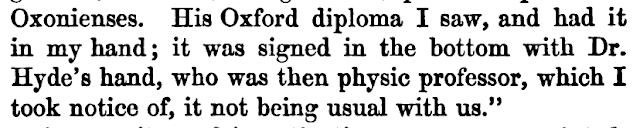
This exact issue was also identified by Griffith as one of the elements of Samuel’s diploma that deviated from Oxford protocols. Of course, with Samuel’s diploma, this was one of many deviations from Oxford’s template; for Frankland, this was more essential in identifying the forgery.

These two forgeries from Samuel’s period, and from the very institutions associated with his diploma are instructive. If Samuel was truly a forger, could or should he have pursued the methods of Wallace or Frankland?

A Padua Diploma Forgery ala Wallace

Forging a genuine Padua diploma would have been more challenging than one from Oxford for a number of reasons, both technical and cultural. While objectively few Jewish students attended the University of Padua Medical School,[56] it was the main address for Jewish students wishing to obtain a university medical degree. While far from Amsterdam, the Jews of Europe were all connected. In addition, Amsterdam was a hub of Jewish printing and a number of works by Italian authors were printed there. A forged medical diploma could possibly have been detected by Italian visitors. It would have been risky.

From a technical perspective, the Padua diploma, in Italian Renaissance fashion, was copiously illustrated and meticulously calligraphed, often including a portrait of the graduate. A number of these diplomas are extant in libraries and private collections.[57] It would have been exceedingly difficult to replicate the diploma itself, not to mention that it was typically bound in a gilded leather binding with official wax seals attached by thread.

Picture Courtesy of Professor Fabrizio Bigotti

All these accoutrements would have made the endeavor of forgery prohibitive from the outset.

There could have been another option for a Padua diploma forgery. Abraham Wallach had a notarized copy of his 1655 Padua diploma made for his job application as a community physician in Frankfurt.[58]

Beginning of the copy of the diploma:

Notarization of the diploma:
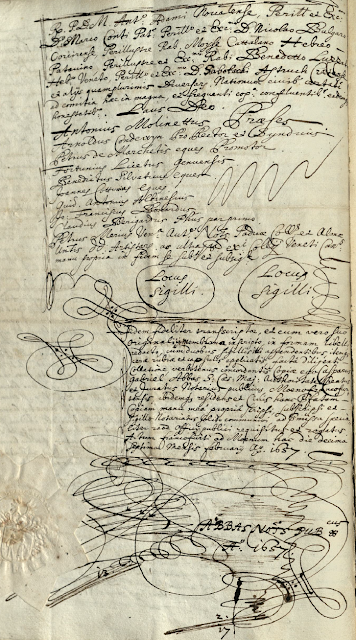
Perhaps Samuel could have created a similar “notarized” copy, which would not have required the artistry or associated binding and seals. This option would likely not have sufficed for Samuel, who as the “graduate,” would have been expected to possess and present the original.

Could Samuel have obtained an existing Padua diploma and simply replaced the name of the graduate with his own, as Wallace had done? This would certainly have been easier than forging the diploma de novo. However, recall that the Padua diplomas of the Jewish students had some alterations, the most obvious one being the headline change from In Christi Nomine to In Dei Aeterne Nomine, not to mention other more subtle, less noticeable changes. Samuel would have had to procure an old diploma that previously belonged to a Jewish student, an impossible task.

An Oxford Diploma ala Frankland

Should Samuel have created a diploma more in line with the actual Oxford model, as Frankland, whose forged university seal and diploma were sufficient to fool even the Royal College of Physicians and Cambridge University? Had he produced a Frankland-esque diploma no one would have suspected otherwise, as no Jew had ever obtained or presented an Oxford diploma before. While this could have been an ideal forgery,[59] I suggest below why this may not have served Samuel’s needs.

The Medical Training and Practice of Samuel ben Menasseh

Irrespective of the veracity of his diploma, Samuel appears to have been a practicing physician. Samuel is listed as a physician by both Steinschneider[60] and Koren,[61] each of whom provides additional references. He is also listed in an early twentieth century work among a group of exceptionally prominent Jewish physicians across the ages.[62] Moreover, his tombstone identifies him as a physician. To my knowledge we do not have any specific account of his clinical practice.

As we have no direct evidence as to how Samuel trained in medicine, we can only surmise based on the general climate of Jewish medical training at the time, coupled with whatever fragmentary evidence we have of Samuel’s personal medical exposure.

Samuel had personal exposure to both the apprenticeship and university pathways of medical training. His father most likely obtained his education through the apprenticeship pathway. Samuel certainly could have learned the medical art from his father Menasseh, though the biographies of Menasseh reveal that he had little time, if any, for the practice of medicine. It would have been difficult for Samuel to acquire comprehensive medical knowledge without prolonged extensive clinical exposure, something his father could not provide.

Though Menasseh himself may not have had the time to mentor his son, he could have delegated the task to one of his physician colleagues.[63] Ephraim Bueno, for example, was a prominent physician in Amsterdam with whom Menasseh had a relationship.[64] Bueno supported Menasseh’s first publication.[65] They also both shared the distinction of having their portraits drawn by Rembrandt.[66] Perhaps Samuel apprenticed with, or at the very least, was inspired by Bueno.

Had he desired, Samuel could have obtained a formal university medical degree. In the early part of the seventeenth century, this would only have been possible in Italy, and primarily at the University of Padua. Traveling to Padua, however, would entail leaving the family and other potential hardships, such as the language barrier. Fortunately, beginning in the mid-century universities in the Netherlands (primarily Leiden), following in the footsteps of Padua, began opening their doors to Jewish medical students for the first time.[67] In fact, Samuel’s cousin Josephus Abarbanel, who also lived in Amsterdam, graduated from the University of Leiden on June 2, 1655, just a few weeks after Samuel received his Oxford diploma.[68]

Which option/pathway did Samuel choose? Though his diploma is Padua-esque, there is no record of Samuel attending the University of Padua. There is also no record of his attendance or graduation from any school in the Netherlands.

Samuel certainly would not have attended the University of Oxford as a student. Professing Jews were not allowed there. Moreover, it would also have required his presence in England for a prolonged period, which, by all accounts was not the case. Roth writes regarding the likelihood of Samuel obtaining an Oxford degree, “it was as difficult for a Jew to be graduated from it (Oxford) as it would have been for an anthropoid ape.”[69] This unwelcoming climate for the Jews persisted even long after the return of the Jews to England.[70] In fact, in Herman Adler’s lecture on the Jews of England in the late nineteenth century, he comments on the medical degree of Samuel, which he assumed to be authentic: “This fact (granting a medical diploma to the Jew Samuel ben Israel) would seem to show that the university was more enlightened in the year 1655 than it is in 1870.”[71]

Samuel’s “For Jewry” Diploma

I suggest that Samuel trained primarily through the apprenticeship pathway but requested and received university acknowledgement or imprimatur of his medical education and knowledge. The diploma was thus an affirmation of Samuel’s expertise attested to by members of the Oxford faculty. As opposed to today, when a student must attend a certain number of years in a university as a prerequisite to obtaining a degree, universities often gave exams and imprimatur to those who studied elsewhere, either formally or not, but passed the required examination demonstrating the required knowledge and competence. This could explain the unusual nature of the diploma he procured from Oxford.

While many Jewish physicians in this period practiced freely without university education or diplomas, there may have been an additional impetus for Samuel to procure this affirmation from Oxford. The Dutch were generally known for their tolerance, but this apparently did not extend to the Jews and the practice of medicine. According to historians, “Although Jews with foreign degrees were permitted to engage in medicine as general practitioners, tolerance was not extended to tertiary education.”[72] Thus, even though Samuel may have been qualified to practice by virtue of his apprenticeship, and could have practiced freely in other European countries, his practice in the Netherlands would have been limited without a foreign degree.[73]

Do the existing facts and diploma support this theory?

The Signatories

The two signatories on Samuel’s diploma were Dr. John Owen and Dr. Clayton at Oxford. Owen was a friend of Cromwell and Vice Chancellor of the University at that time. Thomas Clayton was Regius Professor of Medicine at Oxford from 1647 to 1665. These were not fictional characters, and if one were to obtain an affirmation of medical knowledge or education, these would be the perfectly appropriate people to attest to such a document. Given Menasseh’s connections, it is not inconceivable that he utilized his influence to arrange for his son’s exams, or that they acceded to Samuel’s request out of deference to Menasseh.

The Absence from the Oxford Register

Griffith highlights the fact that Samuel’s degree is not found in the Oxford Register. Indeed, no professing Jews were listed in the register at Oxford at that time. According to our theory, this absence from the Register is no proof of forgery. There was not the slightest thought of entering this exchange into the official university Register, as not only did it not meet the standard protocols, the recipient was also of the Jewish faith and expressly precluded from such a privilege. Samuel may have assured the examiners that he had no intention of practicing in the United Kingdom, a fact that would have made it easier for them to feel comfortable affixing their names to the document.

Likelihood of Exposure

If indeed Samuel were prone to deceit, what is the likelihood his rouse would have been discovered? His father would certainly have realized.[74] The very purpose of Samuel’s trip was to pave the path for his father’s visit. Samuel was thus expecting his father to later visit England and likely interact with the very same people he did. Indeed, Menasseh appears to have visited Oxford.[75] Surely Samuel’s diploma would have come up in conversation, if only peripherally. This alone could have served as a deterrent for forgery. Additionally, John Owen, a signatory on the diploma, was a close friend of Cromwell’s, and a forgery could have been revealed through this avenue. If one were to arbitrarily choose Oxford faculty for a fake diploma, better not to choose someone whose trail could ultimately lead to disclosure.

A forgery would have been suspected, if not revealed, from another source. Samuel’s cousin Joseph Abarbanel completed his medical training in Leiden at the very same time as Samuel’s diploma was issued, and also lived in Amsterdam. He surely would have been suspicious if Samuel suddenly started practicing medicine after a forged Oxford diploma emerged de novo and appeared, metaphorically, framed on Samuel’s office wall.

The Text of the Diploma- An Oxford-Padua Synthesis ala Samuel ben Menasseh

Working with our new theory, which type of diploma would Samuel have procured or designed had he genuinely presented to Oxford and successfully passed oral exams from the university faculty? This would not have been an official, formal process, but rather a unique private opportunity to confirm his medical expertise with the Oxford faculty. As this was a personalized, non-institutional diploma, the examiners would not have much cared or paid attention as to the diploma’s format and could have left the document particulars to Samuel.

I suggest, therefore, that Samuel designed the document in a way that would best serve his needs and would be well-received by his Jewish clientele in the Netherlands. A brief informal text with attestation from the Oxford professors would have been unfamiliar and unimpressive to his Jewish patients.[76] Virtually the only diploma a Jewish university-trained physician would have possessed in this period is a diploma from the University of Padua.[77] He therefore utilized the familiar Padua template, as awkward and inconsistent with Oxford’s typical diploma it may have been. Furthermore, he made sure to use the emended headline and non-ecclesiastic venue consistent with the “Jewish” diploma.

Why did Samuel not include the term “Hebreus,” which would surely have been familiar to the Jewish viewers of the diploma, not to mention following in the path of his father, who was known as “Medicus Hebraeus?” It is possible that Samuel would have specifically omitted this title given the history of the degree-granting institution. Professing Jews were categorically precluded from attending or graduating Oxford. While the signators may not have paid close attention to the details of the diploma, the word Hebreus after Samuel’s name would likely have caught their eye, especially as it appears adjacent to the graduate’s name.

There are numerous elements in the diploma that were simply untrue. For example, included is a description of the graduation, as cited by Graetz. Did Samuel actually participate in a formal graduation from Oxford? Whether Samuel obtained a genuine diploma of some sort from Oxford can be debated, but there is no doubt that as a professing Jew in England at this time he would never have participated in any formal graduation ceremony. Samuel may have disregarded these details favoring style over substance in order to achieve his objective. The signators would likely not have bothered to analyze the text.

Not a single Jew would have known the difference, let alone read the Latin document, nor would they have questioned further.[78] They would have seen a document that appeared in style and largely in substance similar to the diplomas they had seen previously. Samuel’s father would have been proud of his son’s accomplishment, as would his cousin Josephus Abrabanel, who later graduated from Leiden. Menasseh could also have personally thanked Drs. Owens and Clayton for their kindness when he visited Oxford a short time later. If this construct is true then Samuel’s diploma would not have been a forgery, but rather “for Jewry,” being designed intentionally with the Jewish community in mind, and in the context of Jewish medical history.

Postscript

Whether forged on not, Samuel sadly had but little time to utilize the Oxford diploma dated May 1655. Later that month he returned to Amsterdam, diploma in hand, to persuade his father to go to England and personally lay his case before Cromwell. Two years later, Manasseh ben Israel arrived in London, accompanied by Samuel. Samuel tragically died during their stay. In accordance with Samuel’s dying wish, Manasseh ben Israel conveyed his son’s corpse back to Holland where he was buried on 2 Tishrei, 5418. Below is a picture of the grave of Samuel ben Israel in the Middleburg Cemetery, 1912, shortly after it was renovated.[79]

Here is a picture of the grave and tombstone today:[80]

His medical identity is forever enshrined on his tombstone, where he is referred to as “Doctor Semuel.”[81]
Roth writes, “It seems obvious that the honorific description (on the tombstone) has its basis the supposed Oxford degree.”[82] I beg to differ. Many Jewish physicians were trained through apprenticeship and never obtained university degrees, Samuel’s own father being a case in point, and they were nonetheless known as physicians. I believe Samuel could have been such a physician.

Menasseh himself died shortly thereafter on Nov. 20, 1657, before reaching his home at Middelburg, Zealand.

Which account is closer to the truth? Was Samuel an ambitious and accomplished student of medicine, honestly earning some form of an Oxford diploma, perhaps not unlike Friedberg’s description at the beginning of this article; or was he an unabashed imposter possessing no medical training, brazenly forging a medical diploma, and practicing medicine without proper training? Historians have been quick to condemn Samuel, though they have neglected to incorporate the history of Jewish medical training into their analyses. Ultimately, I suggest that the truth lies in the chasm between these two polar extremes. Closer to which one? I leave to the reader to decide. At the very minimum I believe we have provided enough evidence to at least create reasonable doubt as to whether Samuel the son of the right honorable Menasseh ben Israel committed willful forgery of his medical diploma.

[1] Also known as Samuel Abravanel Soeyro. See Moritz Steinschneider “Judische Aertze,” Zeitschrift fur Hebraeische Bibliographie 18: 1-3 (January-June, 1915), p. 45, n. 1923. Abravanel is taken from his mother’s family and Soeyro from his father’s family. Both names have multiple variant spellings.
[2] Cecil Roth, A Life of Menasseh Ben Israel: Rabbi, Printer, and Diplomat (Jewish Publication Society, 1945); Jeremy Nadler, Menasseh ben Israel: Rabbi of Amsterdam (Yale University Press, 2018). See also the wonderful online exhibit, “Menasseh ben Israel, rabbi, scholar, philosopher, diplomat and Hebrew printer, 1604-1657,” curated by Dr. Eva Frojmovic of the University of Leeds.
[3] For a history of Jewish physicians as printers, see J. O. Leibowitz, “Jewish Physicians Active as Printers,” (Hebrew) Harofe Haivri Hebrew Medical Journal 1 (1952), 112-120; Hindle Hes, “The Van Embden Family as Physicians and Printers in Amsterdam,” (Hebrew) Koroth 6:11-12 (August, 1975), 719-723.
[4] https://benyehuda.org/read/3230#fn:173, Zichronot LiBeit David vol 4 (Achiasaf Publications, Warsaw, 1897).
[5] Friedberg himself references the mention of the diploma in Meyer Kayserling’s The Life and Labours of Menasseh Ben Israel (London, 1877). 63 and 92, n. 241.
[6] Friedenwald mentions Menasseh, but as opposed to his other entries, adds justification for his inclusion in his work: “He is included in this list because several of his works bear his name with the title Medicus Hebraeus,” as well as his identifying as a Doctor of Physick in his letter to the Lord Protector. See Harry Friedenwald, The Jews and Medicine vol. 2 (Johns Hopkins Press: Baltimore, 1944), 739. Menassah is also is listed in Koren under the spelling Manasseh ben Israel. See Nathan Koren, Jewish Physicians: A Biographical Index (Israel Universities Press: Jerusalem, 1973), 89.
[7] Roth, op. cit., Menasseh, 109.
[8] While Bueno is famous for his portrait drawn by Rembrandt, his portrait was also drawn later in life by another Dutch artist, Jan Lievens. The description underneath the painting, Dor Ephraim Bonus Medicus Hebraeus, found in the collection of Joods Historisch Museum Amsterdam, can be seen below:

[9] This work is not extant. See Roth, op. cit., Menasseh, 314, n. 17.
[10] I. M. Librach, “Medicine and Menasseh Ben Israel,” Medical History 4:3 (July, 1960), 256-258 discusses Menasseh’s connection to physicians. Librach suggests that the close relationship between religion and medicine among the Jews has led some historians, notably Henry Milman (1863) to regard Menasseh as a physician as well as a rabbi. For further reference to Menasseh’s physician friends see Ernestine G.E. Van Der Wall, “Petrus Serrarius and Menasseh ben Israel: Christian Millenarianism and Jewish Messianism in Seventeenth Century Amsterdam,” in Yosef Kaplan, et. al., eds., Menasseh Ben Israel and His World (E. J. Brill: Leiden, 1989), 172; George M. Weisz and William Albury, “Rembrandt’s Jewish Physician- Dr. Ephraim Beuno (1599-1665): A Brief Medical History,” Rambam Maimonides Medical Journal 4:2 (April, 2013).
[11] Van Der Wall, op. cit., 165.
[12] Personal communication with Hans Froon of the Central Medical Library in Groningen (December, 2020).
[13] Roth, op. cit., Menasseh, 42, 109, 314, 341
[14] This picture of the epitaph appears in Cecil Roth, “New Light on the Resettlement,” Transactions of the Jewish Historical Society 11 (1924-1927), facing p. 118.
[15] For articles on the training of Jewish medical students, see Harry Friedenwald, “The Jewish Medical Student of Former Days,” Menorah Journal 7:1 (February, 1921), 52-62; Cecil Roth, “The Medieval University and the Jew,” Menorah Journal 19:2 (November-December, 1930), 128-141; Idem, “The Qualification of Jewish Physicians in the Middle Ages,” Speculum 28 (1953), 834-843; Joseph Shatzmiller, “On Becoming a Jewish Doctor in the High Middle Ages,” Sefarad 43 (1983), 239-249. Idem, Jews, Medicine and Medieval Society (University of California Press: Berkeley, 1994), esp. 14-27; John Efron, “The Emergence of the Medieval Jewish Physician,” in his Medicine and the German Jews: A History (Yale University Press: New Haven, 2001), 13-33; Edward Reichman,  “From Maimonides the Physician to the Physician at Maimonides Medical Center: The Training of the Jewish Medical Student throughout the Ages,” Verapo Yerape: The Journal of Torah and Medicine of the Albert Einstein College of Medicine 3 (2011), 1-25; Nimrod Zinger, Ba’alei haShem vihaRofeh (Haifa University, 2017), 242-251.
[16] The University of Padua was the first to formally allow admission of Jews to its medical school.
[17] It is possible that there were titles that distinguished between university and non-university trained physicians, such as rofeh mumheh, but this requires further study.
[18] H. J. Koenen, Geschiedenis der Joden in Nederland (Utrecht, 1843), 440-444.
[19] Gabriel Isaac Polak, Seerith Jisrael: Lotgevallen der Joden in alle werelddeelen van af de verwoesting des tweeden tempels tot het jaar 1770 (Amsterdam, 1855), 549.
[20] Heinrich Graetz, History of the Jews vol. 5 (Jewish Publication Society: Philadelphia, 1956), 38.
[21] Herman Nathan Adler clearly follows Graetz in his, The Jews of England A Lecture (Longmans, Green and Co.: London, 1870), 23.
[22] Since the initial publication of Griffith’s letter was in an obscure inaccessible journal, both the transcription of the diploma as well as Griffith’s letter were later republished. All the documents and articles are reproduced in Rev. Dr. Adler, “A Homage to Menasseh ben Israel,” Transactions of the Jewish Historical Society of England 1 (1893-1894), 25-54, esp. 48-54. This explains why some scholars were unaware of Griffith’s conclusions until years later. For additional comments and analysis, see Cecil Roth, A Life of Menasseh Ben Israel (Jewish Publication Society: Philadelphia, 1934), 221-222 and 337-339; Idem, “The Jews in English Universities,” Miscellanies of the Jewish Historical Society of England 4 (1942), 102-115, esp. 105, n. 14.
[23] Griffith lists fifteen differences in the form of the diploma from that of Oxford.
[24] Statutes of the University of Oxford codified in the year 1636, under the authority of Archbp. Laud, Chancellor of the University, with an introduction on the history of the Laudian Code by C.L. Shadwell, ed. by John Griffiths, 1888. See p. 126. For the study of medicine at Oxford in the seventeenth century see chapter by Robert G Frank Jr. entitled “Medicine” in The History of the University of Oxford, volume IV: Seventeenth Century Oxford (ed. N Tyacke, Clarendon Press, 1997). For a more general study of the period, see Phyllis Allen, “Medical Education in 17th Century England” Journal of the History of Medicine and Allied Sciences 1:1 (January 1, 1946), 115-143.
[25] G. R. M. Ward, Oxford University Statutes (1845), 53-54, 117-118, 128-131.
[26] Oxford’s Register of Congregation during this period contains numerous examples of Padua students applying for incorporation.
[27] Alphei Menasheh Catologus of J. S. Da Silva Rosa (Portugeesch Israelietische Seminarium: Amsterdam, 1927), 25, no. V. lists a picture of the first and last pages of the diploma in the possession of the Montezinos Library.
[28] Roth did not mention if he possessed copies of the entire text of the diploma.
[29] I thank Heide Warncke, Curator of the Ets Haim Library for her assistance.
[30] I thank Rachel Boertjens, Curator of the Bibliotheca Rosenthaliana for her assistance.
[31] I thank Eva Frojmovic and the staff of the Roth Collection at University of Leeds for their assistance. The cataloguing of the Roth Collection is an ongoing process and there is a fair amount of material still uncatalogued. I am hopeful the copies of the diploma will one day surface there.
[32] In the interest of full disclosure, I recently wrote an article entitled, “Confessions of a Would-be Forger: The Medical Diploma of Tobias Cohn (Tuvia Ha-Rofeh) and Other Jewish Medical Graduates of the University of Padua.” I am not however personally inclined to forgery. I would be happy to send the reader a copy of my medical diploma upon request, once I am able to locate it.
[33] David S. Katz, Philo-Semitism and the Readmission of the Jews to England, 1603-1655 (Oxford University Press, 1982), 197.
[34] Roth, op. cit., Menasseh, 338-339
[35] Roth, op. cit., Menasseh, 338-339.
[36] Germanisches Nationalmuseum, reference no. HA, Pergamenturkunden, Or. Perg. 1649 Juli 09.
[37] A copy of the full diploma is accessible through the Magnes Online Collection, http://magnesalm.org (accessed January 5, 2021).
[38] See G. Baldissin Molli, L. Sitran Rea, and E. Veronese Ceseracciu, Diplomi di Laurea all’Università di Padova (15041806) (Padova: Università degli studi di Padova, 1998), diploma C21, p. 151.
[39] See below for further discussion of this diploma, which is a forgery. The body of the diploma, including the relevant phrase cited here, is original and dates to around 1618.
[40] This diploma is housed in the Umberto Nahon Museum of Italian Jewish Art in Jerusalem. See http://www.museumsinisrael.gov.il/en/items/Pages/ItemCard.aspx?IdItem=ICMS-EIT-0076. The museum website provides a description of the diploma and a picture of the outer cover. I thank Dr. Andreina Contessa, former Chief Curator of the U. Nahon Museum, for kindly furnishing me with pictures of the entire diploma. I thank Sharon Liberman Mintz for bringing this diploma to my attention.
[41] The diploma is in the William Gross Collection and is available for viewing at the website of the National Library of Israel, system number 990036743400205171 (accessed January 3, 2021). I thank Sharon Liberman Mintz for bringing this diploma to my attention.
[42] NLI, system number 990035370060205171.
[43] Of course it was not “the usual place of examination,” but this text allowed for the least amount of deviation from the diploma template.
[44] See, for example, the diploma of Chananya Modigliani from Siena, 1628 in the Jewish Theological Seminary Library, MS 8519.
[45] NLI, system number 990034232880205171.
[46] Stadt Frankfurt am Main, Altes Archiv – Städtische Überlieferung bis 1868, Medicinalia, Akten, Nr. 250 (fol. 51-52v).
[47] For an expansive discussion on the diplomas of Jewish medical students from the University of Padua, see Edward Reichman, “Confessions of a Would-be Forger: The Medical Diploma of Tobias Cohn (Tuvia Ha-Rofeh) and Other Jewish Medical Graduates of the University of Padua,” in Kenneth Collins and Samuel Kottek, eds., Ma’ase Tuviya (Venice, 1708): Tuviya Cohen on Medicine and Science (Jerusalem: Muriel and Philip Berman Medical Library of the Hebrew University of Jerusalem, 2019), in press.
[48] Pamela Forde, “Power and Beauty: Fakes and Forgeries,” (December 11, 2015) Royal College of Physicians Museum. I thank Dr. Bigotti of Centre for the Study of Medicine and the Body in the Renaissance, Domus Comeliana Pisa (Italy) for providing me the images of this diploma.
[49] I do not have access to the relevant years.
[50] For the most expansive discussion of the Frankland affair see William Munk, The Roll of the Royal College of Physicians of London vol 1, 1518-1700 (Longman: London, 1861), 358ff.
[51] Andrew Clark, The Life and Times of Anthony Wood, Antiquary, of Oxford, 1632-1695, Described by Himself vol. 2 (Clarendon Press: Oxford, 1892), 392-393.
[52]  Munk, op. cit., 359.
[53] Munk, op. cit., 360.
[54] Munk, op. cit., 363.
[55] Munk, op. cit., 362.
[56] For a list of the Jewish students attending the University of Padua during Samuel’s time, see Abdelkader Modena and Edgardo Morpurgo, Medici E Chirurghi Ebrei Dottorati E Licenziati Nell Universita Di Padova dal 1617 al 1816 (Bologna, 1967). This list has been supplemented over the years, but the overall numbers are not significantly different.
[57] For a collection of diplomas from the University of Padua, see G. Baldissin Molli, L. Sitran Rea, and E. Veronese Ceseracciu, Diplomi di Laurea all’Università di Padova (15041806) (Padova: Università degli studi di Padova, 1998). Only a very small percentage of the diplomas in this book are from the medical school. For examples of diplomas from other Italian universities, see Honor et Meritus: Diplomi di Laurea dal XV al XX Secolo, ed. F. Farina and S. Pivato (Rimini: Panozzo Editore, 2005), a catalogue of an exhibition held in 2006 to mark the 500th anniversary of the founding of the University of Urbino.
[58] For more on Abraham Wallich and other physician family members of the Wallich family, see, Edward Reichman, “The Medical Training of Dr. Isaac Wallich: A Thrice-Told Tale in Leiden (1675), Padua (1683) and Halle (1703),Hakirah, in press.
[59] It is possible that Samuel was simply unaware of the composition and protocols of the Oxford degree, as he would not have had occasion to see one. Perhaps he was attempting to mimic a genuine Oxford diploma, but just erroneously assumed it was similar to that of Padua.
[60] Moritz Steinschneider “Judische Aertze,” Zeitschrift fur Hebraeische Bibliographie 18: 1-3 (January-June, 1915), p. 45, n. 1923. He is listed as “Samuel (b. Menasseh) b. Israel Abravanel-Soeyro (Suerus).”
[61] Nathan Koren, Jewish Physicians: A Biographical Index (Israel Universities Press: Jerusalem, 1973), 126. He is listed as “Soeiro Samuel Abrabanel of Amsterdam, son of Menasseh ben Israel, grad. in Oxford.”
[62] Dov Bear Turis, Shiva Kokhvei Lekhet (Warsaw, 5687), 16. Menasseh is not mentioned in this list.
[63] I thank Heidi Warncke for this suggestion.
[64] On Bueno, see, for example, George Weisz and William Albury, “Rembrandt’s Jewish Physician Dr. Ephraim Beuno (1599-1665): A Brief Medical History,” Rambam Maimonides Medical Journal 4:2 (April 2013), 1-4.
[65] Sefer Penei Rabah (Amsterdam, 1628)
[66] See Steven Nadler, Rembrandt’s Jews (University of Chicago, 2003). Nadler discusses the debate as to whether Rembrandt actually painted a portrait of Menasseh ben Israel. In either case, both Bueno and Menasseh were well acquainted with Rembrandt, who lived in the Jewish quarter of Amsterdam.
[67] Hindle S. Hes, Jewish Physicians in the Netherlands (Van Gorcum, Assen, 1980); Kenneth Collins, “Jewish Medical Students and Graduates at the Universities of Padua and Leiden: 1617-1740,” Rambam Maimonides Medical Journal 4:1 (January, 2013), 1-8; M. Komorowski, Bio-bibliographisches Verzeichnis jüdischer Doktoren im 17. und 18. Jahrhundert (K. G. Saur Verlag: Munchen, 1991). Komorowski, p. 33, lists the dissertations of a handful of Jewish graduates of Netherland universities prior to 1650.
[68] Hes, op. cit., 3, Komorowski, op. cit., 33. Josephus was Menasseh’s first cousin. His dissertation was entitled “De Phthisi.” Joseph’s father, Jonah, joined Bueno in supporting Menasseh ben Israel’s book, Penei Rabah. Joseph Abarbanel was later excommunicated by the Sephardic community for rejecting the prohibition against buying poultry from Ashkenazi Jews. See Yosef Kaplan, An Alternative Path to Modernity: The Sephardic Diaspora in Western Europe (Brill, 2000), 136.
[69] Roth, op. cit., Menasseh, 221. The only Jews who would have attended Oxcam at this time would have been converts to Christianity, though Jews from birth. See Cecil Roth, “The Jews in English Universities,” Miscellanies of the Jewish Historical Society of England 4 (1942), 102-115. This is why Roth comments that the diploma is a “not too skillful forgery of an inherently improbable doctorate.” Roth adds that into the eighteenth century the climate for Jews at the universities in England was so unwelcoming that even native English Jews travelled abroad to Germany, Netherlands, Scotland, or Italy to obtain their medical degrees.
[70] Until the 1800’s Jews could not graduate Oxford or Cambridge unless they professed their belief in Christianity. See Joseph L. Cohen, “The Jewish Student at Oxford and Cambridge,” Menora Journal 3 (1917), 16-23.
[71] Graetz, op. cit., also wrote, “It was no insignificant circumstance that this honor should be conferred upon a Jew by a university strictly Christian in conduct.”
[72] Weisz and Albury, op. cit.
[73] Admittedly, this is also a strong motivation for forgery, but I shall leave this line of argument for the prosecution.
[74] Roth comments that, “it is impossible to believe that Menasseh ben Israel can have been a party to the deception. One can only imagine that he was a victim of it.”
[75] Roth, op. cit., Menasseh, 251-252.
[76] It likely would not have sufficed for the Dutch government either.
[77] While the universities of the Netherlands had begun issuing diplomas to Jewish students, the Padua diploma would still have been far more common.
[78] Would the Dutch government have accepted such a document? The record is silent on this question.
[79] https://www.zeeuwseankers.nl/verhaal/portugese-joden-in-zeeland. In 1911/1912 English Jews visited Middelburg and found the grave in decay. They told the city that a very important person is buried there who played a vital role (together with his father of course) in the readmission of the Jews in England. The gravestone was renovated, and possibly raised at that stage, and a chain was put around it. I thank Heide Warncke, Curator of the Ets Haim Library in Amsterdam for the information and references.
[80] https://www.omroepzeeland.nl/nieuws/100031/Joodse-begraafplaatsen-verstopt-in-Middelburg.
[81] Ephraim Bueno is also identified as a physician on his tombstone. Picture in Weisz and Albury, op. cit.

On the tombstone on the left, the end of the second line reads, Dor (doctor).

Joseph Abarbanel, while identified in the Ouderkerk Cemetery record as a physician, is not identified as such on his tombstone (inscription at the bottom of the document).

I thank Heide Warnicke for her assistance with the translation of these tombstones.

[83] Roth, op. cit., Menasseh, 139. Nadler echoes the same sentiment, adding that no one suspected the ruse in his lifetime as his gravestone identifies him as a doctor. See Nadler, op. cit., 263.